1d ago
Be Like Santa Claus - Give Everything Away! | Buddhist Xmas | Christmas | Ajahn Dhammasiha
Ajahn Dhammasiha encourages us to "be a good Santa". A good Santa Claus will give all the gifts to the kids. A bad Santa may cheat and keep the most expensive presents for himself. Similarly, our task as followers of the Sakyan Sage is to not hold back, but to give absolutely everything away. Not literally giving away, but letting go of absolutely everything: Whether it's material objects, or relationships, loved ones, or our own feelings, emotions, thoughts, views, intentions, consciousness... If we're a good Santa, we let go completely without holding back. Website Our Spotify Playlists Newsletter Dhammagiri Youtube Channel Pics #xmas #christmas #dhammatalk #buddhism #buddhistwisdom #dhamma

4d ago
TAN SAMVARO | The Essence of Dhamma Practice | Essential Buddhist Teaching | Ven Saṃvaro
Ven. Samvaro has stayed with us for here at Dhammagiri for one month in November to December 2025. In this short (10 min) video, recorded after the Saturday morning Changting and Refuge & Precepts Session, Tan Samvaro answers a question from the audience: With all the various Buddhist teachings we here about, what's the gist of them all? What do we really have to focus on in our practice? Venerable Saṃvaro is currently resident at Vimutti Monastery, Auckland, New Zealand, looking after the management of the monastery, and conducting most of the Dhamma teachings there: https://atba.nz Website Our Spotify Playlists Newsletter Dhammagiri Youtube Channel Pics #dhammatalk #buddhism #meditation #buddhistmeditation #buddhistwisdom
Dec 15
10 Ways to Make Good Karma | Ten Bases for Punya | Dasa Puññakiriyavatthu | Ajahn Dhammasiha
Ajahn Dhammasiha talks about the 10 Foundations for Making Good Karma (Dasa Puñña-kiriya-vatthu): Generosity (Dāna) Virtue (Sīla) Mental Cultivation / Meditation (Bhāvanā) Reverence / Respect (Apaciti) Service, Offering One's Labour & Skills & Talents, e.g. our now monthly held Working Bees 🔨👨🌾⛏️👩🌾 ✂️(Veyyāvacca) Transference of Merits / Sharing Good Karma with Past Relatives (Pattānuppadāna) Rejoicing in Other's Good Karma (Abbhānumodanā) Teaching Dhamma (Desana) Studying Dhamma (Savana) Straightening One's Right View (Diṭṭhujukamma) Website Our Spotify Playlists Newsletter Dhammagiri Youtube Channel Pics #dhamma #buddhism #dhammatalk #buddhistwisdom #meditation #buddhistmeditation

Dec 12
We Meditate to Let Go, Not to Get Anything | Buddhist Dhamma Talk | Ajahn Dhammasiha
Ajahn Dhammasiha encourages us to refocus our meditative effort on letting go. We can get overly obsessed with focussing on a particular meditation object, and lose sight of our general mindstate: We may fall back into the long established habit of acquiring things, of trying to get something. Instead, everything in our cultivation of bhāvanā should aim towards letting go. Website Our Spotify Playlists Newsletter Dhammagiri Youtube Channel Pics #dhammatalk #buddhism #theravada #meditation #buddhistmeditation #lettinggo #buddhistwisdom

Dec 8
Contentment, Full Body Awareness, Knowing Right Measure when Eating, Wakefulness | Ajahn Dhammasiha
Ajahn Dhammasiha talks about steps in the Buddha's 'Gradual Training' that lead on from fully established virtue to the develpment of samādhi. Sense Restraint / Indriya-saṃvara Contentment / Santuṭṭhi Maintaining full awareness of all bodily movements / Sampajāna-kārī Wakefulness / Jāgariyam-anuyutta Knowing the right measure when eating food / Bhojanasmiṃ Mattaññutā These steps form the necessary foundation for the next stage in the gradual training: Abandoning the five hindrances to develop samādhi in solitude. If we struggle to unify our mind in samādhi, we should give more attention to these five. Website Our Spotify Playlists Newsletter Dhammagiri Youtube Channel Pics #buddhism #dhammatalk #contentment #wakefulness #awareness #buddhistwisdom #buddhistteachings #insight
Dec 5
Dispassion, Cessation & Letting Go to Underlie All Dhamma Practice | Ajahn Dhammasiha | Viraga Nirodha Patinissagga
In the last Tetrad of Ānāpānasati, the last four steps of Breath Meditation, the Buddha teaches us to breathe in and out focussing on: Anicca - Impermanence Virāga - Fading Away of Passion = Dispassion Nirodha - Ending/Cessation Patinissagga - Letting Go However, these four contemplations do not apply only to breath meditation. In fact, they should be underlying principles of our whole Dhamma practice: Whether it's generosity and kindness, or purifying our ethical behaviour through keeping precepts, or practising sense restraint, or cultivating any meditation object - all of it should be done with these four modes, these four guidelines informing and directing our efforts in bhāvanā. Website Our Spotify Playlists Newsletter Dhammagiri Youtube Channel Pics #lettinggo #ending #nirodha #viraga #dispassion #dhammatalk

Dec 1
TAN JAYADHAMMA | Guided Meditation | 'Tuning In' | 6 Sense Spheres, 5 Hindrances, Distractive Thoughts
Tan Jayadhamma has stayed at Dhammagiri for 7 months, spending the vassa (rains retreat) 2025 with us. Just before leaving, he kindly offered this comprehensive guided meditation as a parting gift. His one hour guided meditation consitsts of three parts on the theme of "tuning in": Part one explores the six sense spheres, based on the Buddha's simile of the six animals found at SN 35.247. Part two focuses on the five hindrances, with the Buddha's simile of the five bowls of water found at AN 5.193. Part three zooms in on the mind and how to remove distracting thoughts, with five different methods the Buddha taught at MN 20. Website Our Spotify Playlists Newsletter Dhammagiri Youtube Channel Pics #meditation #buddhistmeditation #tuning #intune #balance #insight #wisdom
Nov 28
TAN JAYADHAMMA | Tuning In | Balance in Meditative Practice | Dhamma Talk at Dhammagiri
Tan Jayadhamma has stayed at Dhammagiri for 7 months, spending the vassa (rains retreat) 2025 with us. Just before leaving, he kindly offered these reflections on balance in practice, based on the Soṇa Sutta (AN 6.55) and the Buddha’s simile of the lute. His talk explores the meaning of sama (“in tune”), the five spiritual faculties as five strings, and how to maintain harmony in practice. Website Our Spotify Playlists Newsletter Dhammagiri Youtube Channel Pics #dhamma #dhammatalk #meditation #buddhistmeditation #tuning #intune #balance
Nov 24
Calm and Insight: Advice to New Meditator | New to Meditation | Samatha & Vipassana | Ajahn Dhammasiha
Ajahn Dhammasiha provides advice to a newcomer to meditation. Although it was his first time visiting Dhammagiri, and only the second attempt in his life to practice formal meditation, he had sat through a full our of guided meditation forehand, and had also joined the almsfood offering earlier in the day. Ajahn Dhammasiha gives a broad outline of the development of the two main aspects of Buddhist meditation: Samatha / Samādhi / 'Concentration' Vipassana / Wisdom / Insight. Ajahn also gives some general encouragement helpful to establish a regular meditation practice. Website Our Spotify Playlists Newsletter Dhammagiri Youtube Channel Pics #meditation #buddhistmeditation #introtomeditation #samatha #vipassana #insight

Nov 21
AJAHN NANDIYO | Disenchantment Leading to Peace | Buddhist Dhamma Talk | Dhammagiri Forest Hermitage
In this Dhamma discussion, Ajahn Nandiyo first shares some of his personal experiences at Bodhinyanarama Monastery, NZ, and in Thailand & Australia. Then he responds to a question about internal peace, and how disenchantment (nibbidā) through contemplating our experiences both high and low can lead to that peace. Ajahn Nandiyo is the abbot of Bodhinyanarama Monastery, Wellington, New Zealand: https://bodhinyanarama.net.nz/ He accepted our invitation to attend our robe offering ceremony, and kindly agreed to conduct teachings for our One Day Retreat program on Sunday 16 November. Website Our Spotify Playlists Newsletter Dhammagiri Youtube Channel Pics #buddhism #dhammatalk #peace #disenchantment #nibbida
Nov 17
AJAHN NANDIYO | Guided Meditation | Knowing, Not Owning or Controlling | Vipassana | Insight
After the Saturday morning Refuge and Precepts Ceremony, Ajahn Nandiyo guided a short meditation session. He encourages us to be in the witness position, to know and observe conditions, rather than trying to own and control them. Whether externally, like the severe thunderstorm with many fallen trees we've just experienced at the monastery; or internally, when various emotions arise in the mind and threaten to 'blow us over': We're simply the witness, knowing and observing it all, without identifying or owning any of it. Ajahn Nandiyo is the abbot of Bodhinyanarama Monastery, Wellington, New Zealand: https://bodhinyanarama.net.nz/ He accepted our invitation to attend our robe offering ceremony, and kindly agreed to conduct teachings for our One Day Retreat program on Sunday 16 November. Website Our Spotify Playlists Newsletter Dhammagiri Youtube Channel Pics #vipassana #insight #buddhistmeditation #guidedmeditation #knowing #awareness
Nov 14
The Fire Sermon | Third Teaching of the Buddha | Adittapariyaya Sutta | Ajahn Dhammasiha
The 'Discourse on Burning', also known as 'Fire Semon', is considered the third formal discourse of the Buddha. It is distinguished by the highest reported number of attainments: 1,000 monks attained total release, Nibbāna, while listening to the Buddha teaching. The Buddha starts this discourse with the challenging claim that the whole world is on fire! 🔥 But what is meant by 'world'/'universe' in the discipline of the Noble Ones? It is the world of our subjective, conscious experience. It is the Universe of: 👁 Eye, Forms, Eye Consciousness, Eye Contact; 👂 Ear, Sounds, Ear Consciousness, Ear Contact; 👃 Nose, Fragrances, Nose Consciousness, Nose Contact 👅 Tongue, Flavours, Tongue Consciousness, Tongue Contact 🤸♂️ Body, Bodily Sensations, Body Conciousness, Body Contact 💭 Mind, Ideas, Mind Consciousness, Mind Contact And the feeling that arises with sense contact as condition, whether pleasant of painful or neutral, that is also part of 'the All' of subjective conscious experience. And this whole universe is one gigantic conflagration. This whole world of the six senses is burning with the fire of desire, the fire of hatred, the fire of delusion. On fire with birth, decay, death, disappointment, loss, pain, suffering, frustration, depression and despair. However, fortunately an escape is possible from this burning world. We can go beyond this conflagration, and experience the state of supreme coolness, the extinction of the fire burning us, Nibbāna. While listening to the Buddha, the 1,000 monks contemplate and clearly see see the whole of subjective experience as one blazing mass of fire burning us. Seeing and contemplating thus, they experience 'nibbidā', disenchantment. Feeling disenchanted, desire and passion fades away. From the fading of passion, they experience release. When their hearts is released, the knowledge of release arises: "Rebirth is finished, the goal of our practice has been attained, the job is done, there's no more rebounding to this world!" However, this contemplation is a very advanced form of vipassana (insight-meditation). If we start feeling depressed, fearful or dejected while contemplating the world being on fire, instead of experiencing dispassion and release, we have to understand that we're not yet able to contemplate as intended by the Buddha. In that case, we have to go back to our samādhi (concentration) practice, to make our mind bright and happy again, before returning to the contemplation of dukkha. The text of the whole Sutta is available for free viewing or download in the Amaravati Chanting Book, Vol 2, page 24: https://amaravati.org/dhamma-books/chanting-book-volume-two/ Website Our Spotify Playlists Newsletter Dhammagiri Youtube Channel Pics #firesermon #buddha #buddhism #desire #adittapariyaya #dhammatalk
Nov 11
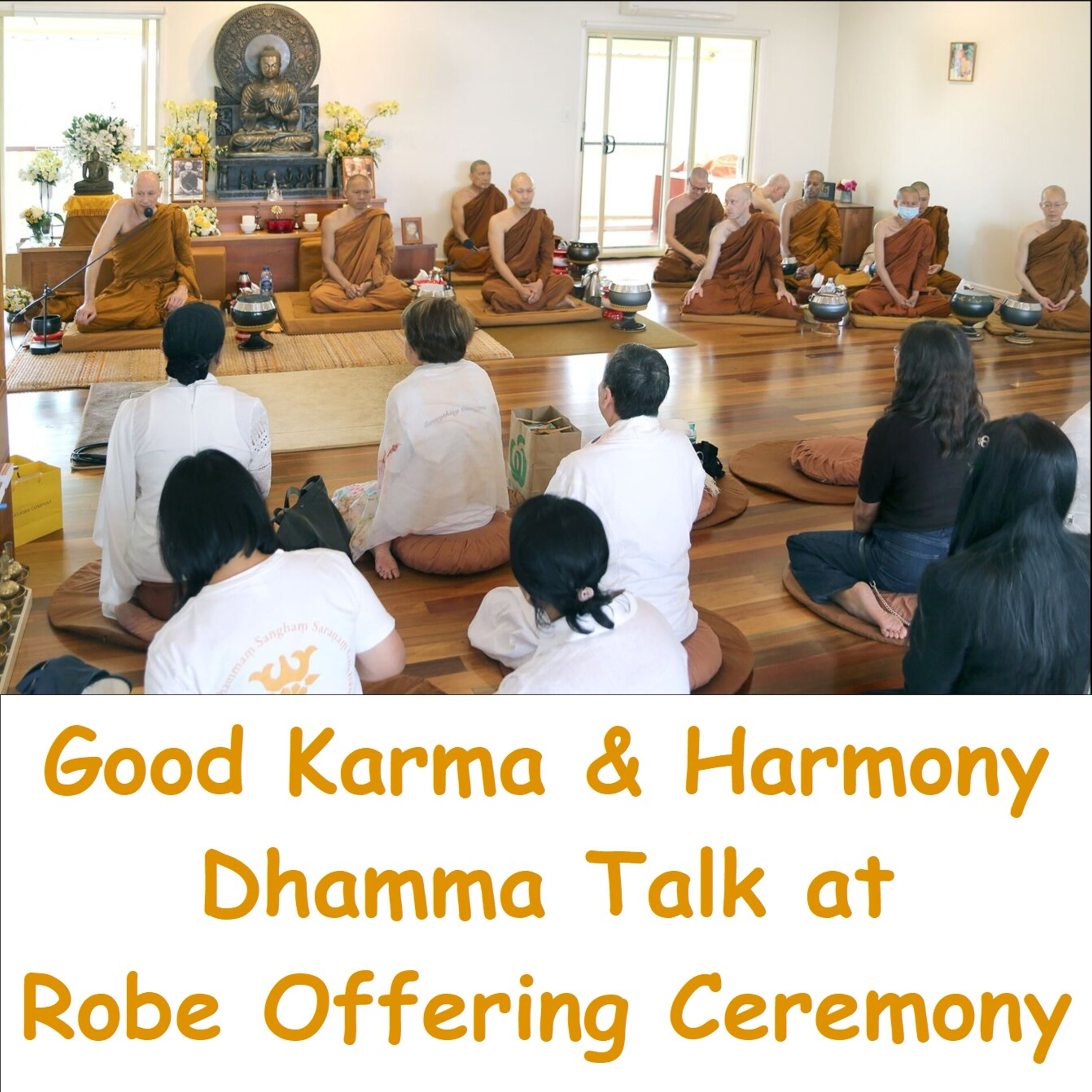
Creating Good Karma in Harmony | Importance of 5 Precepts | Robe Offering Ceremony Dhammagiri | Ajahn Dhammasiha
Ajahn Dhammasiha's formal Dhamma Talk at the Robe Offering Ceremony at Dhammagiri Forest Hermitage. Ajahn reflects on the power of puñña (good karma/'merits'), and the importance of harmony and cooperation when making good karma together. He also goes through the five precepts forming the fundamental ethics of a Buddhist lay practitioner: We train ourselves to abstain from intentionally killing living beings We train ourselves to abstain from stealing We train ourselves to abstain from sensual misconduct like adultary We train ourselves to abstain from lying We train ourselves to abstain from alcohol and other intoxicants that deminish the sense of shame, conscience & mindfulness, and are causing heedlessness. Website Our Spotify Playlists Newsletter Dhammagiri Youtube Channel Pics #robeofferingceremony #karma #punya #puñña #goodkarma #harmony #concord
Nov 7
Paritta Recitation | Robe Offering Ceremony | Auspicious Protective Pali Chanting | Dhammagiri
At our Robe Offering Ceremony at Dhammagiri, our Sangha of 7 Buddhist monks recites 'Paritta'. These auspicious protective verses are believed to ward off misfortune, protect from various dangers, and bestow blessings on all those listening. Paritta verses have been recited in Pali, the language of the Buddha, for more than 2,000 years. The most important ones are still in their original form, as originally spoken by the Buddha himself some 2,500 years ago. Ajahn Saengchai Ratananyano from Bodhisaddha Monastery, Wilton near Sydney, is leading the chanting. Ajahn Den Atthakaro from Bodhipala monastery near Adelaide recites the traditional invitation to all devas and spirits at the beginning. Ajahn Varadhammo from Bodhisaddha Monastery, Ajahn Dhammasiha & Ajahn Moneyyo from Dhammagiri Forest Hermitage, and Tan Khema & Tan Dhammavitakko from Buddha Bodhivana Monastery, Warburton near Melbourne, are all joining in. Website Our Spotify Playlists Newsletter Dhammagiri Youtube Channel Pics #paritta #buddhistchanting #kathina #robeoffering #buddhistceremony

Nov 2
King Confesses to Buddha he Murdered his own Father | Asking Forgiveness from Triple Gem | Ajahn Dhammasiha
Ajahn Dhammasiha is asked if there are procedures for laity after breaking precepts in the same way as for monks. Ajahn explains that the Buddha laid down eleborate procedures only in the Vinaya for the monks & nuns, but not for laity. However, we can always ask for forgiveness from the Triple Gem. In fact, the full version of the evening chanting includes asking forgiveness from Buddha, Dhamma & Sangha. Ajahn continues by sharing the story of King Ajatasattu confessing the murder of his own father, stream enterer King Bimbisāra, to the Buddha. He does that in full public with 1,250 arahant monks present, and also his own 500 wifes and whole court. You can read about that amazing story, a true Shakespearian drama, in the introductory section of the 'Sāmañña-phala-sutta' ( Discourse on the Fruits of the Holy Life ), Dīgha Nikāya/Long Discourses #2. The most important thing after a transgression is to fully recognize it as such, make amends as far as possible, and then to abstain from doing it again in the future. Then one lets go of the past, forgiving oneself, and rather than dwelling in guilt, one tries to make as much good karma as possible, to weaken and overcome the bad karma one has created. Website Our Spotify Playlists Newsletter Dhammagiri Youtube Channel Pics #confession #forgiveness #dhammatalk #dhamma #buddhiststory

Oct 28
Is Eating Meat Bad Karma? | Are Buddhists Vegans? | Dhamma Talk | Ajahn Dhammasiha
Ajahn Dhammasiha is asked whether eating meat is causing bad karma. Ajahn explains that INTENTIONAL KILLING of other beings is bad karma. The crucial factor for bad karma is intention. Therefore, even if one's actions have a causal relationship with the death of other beings, but completely without intention, it's not breaking the first precept or causing bad karma. For example, in Queensland in summer it's virtually impossible to drive a car for an hour without causing the death of insects smashing against the windscreen. However, that's normally not the intention when driving the car, the intention is simply to get to one's destination. It would be totally impossible to live as a human, without ever being causally involved in the death of other beings. Even as a total vegan, and refraining from using leather or silk, even then the production of cotton for clothing, or the cultivation of vegan food, could still not be done without some beings dying. Therefore, intention is really the crucial factor to focus on. Usually, if someone buys meat of fish in a supermarket, there is no intention of killing. Consequently, buying and eating meat is not breaking the first precept. On the other hand, if someone deliberately becomes vegetarian or vegan, or simply reduces meat/fish consumption, with the intention that less beings will be slaughtered, this is good karma, because there's intention to reduce killing and suffering. If more humans were aware how much pain and torture and suffering animals have to endure, not only in the slaughterhouse, but actually for their whole life in unimaginably cruel factory farming, I believe many more would go vegetarian, or at least reduce their meat & fish consumption. Website Our Spotify Playlists Newsletter Dhammagiri Youtube Channel Pics #vegan #vegetarian #veganism #buddhism #animals #dhammatalk

Oct 24
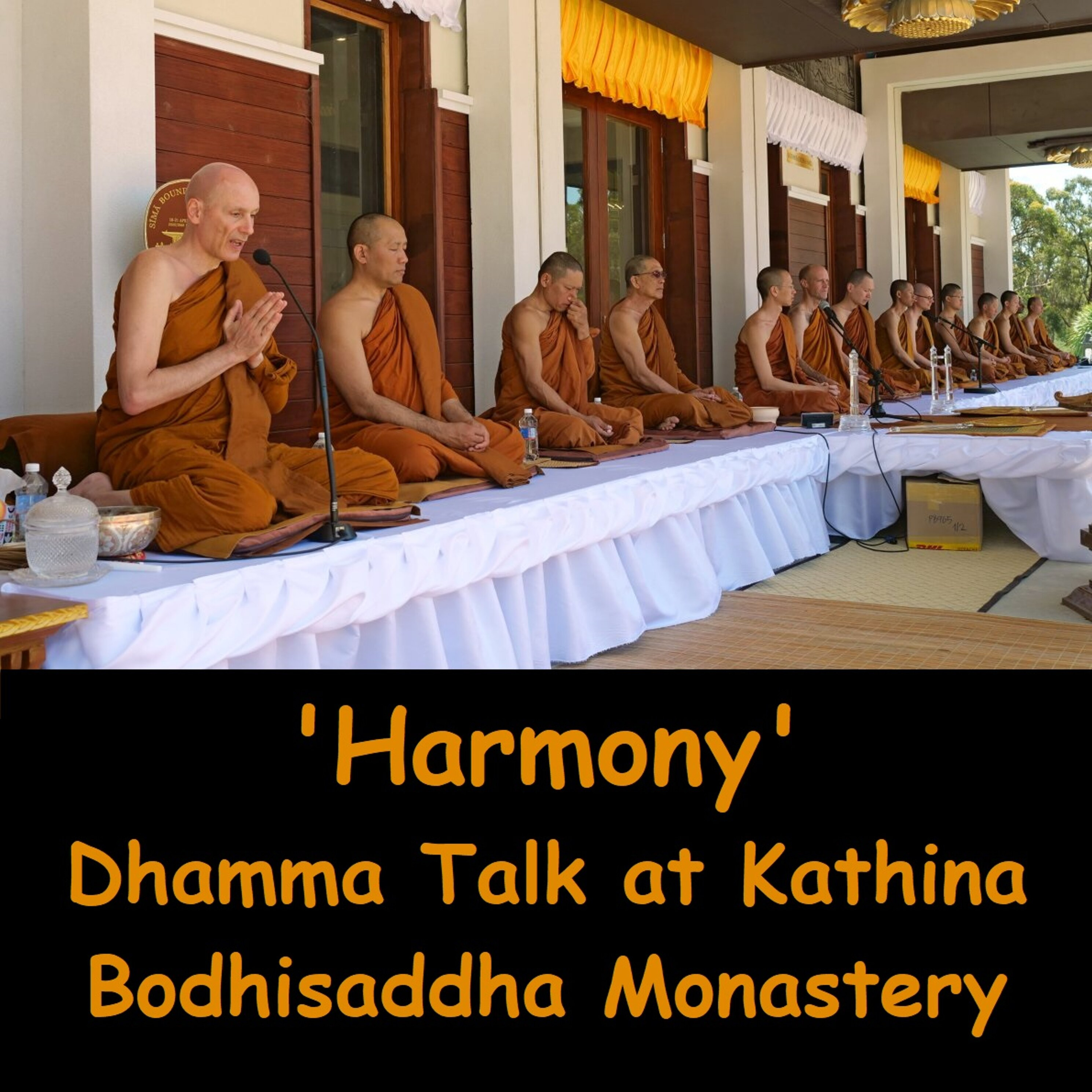
Harmony | Dhamma Talk at Robe Offering Ceremony Bodhisaddha Monastery | Kathina | Ajahn Dhammasiha
On the eve of the large Kathina Robe Offering event at Bodhisaddha Monastery, as the senior Ajahn of the 12 monks attending, Ajahn Dhammasiha was invited to share Dhamma for the occasion. Ajahn emphasizes the importance of harmony for the successful completion of the ceremony. Harmony within the sangha, harmony within the lay community, and harmony between lay and monastic communities. Monastics and laity depend on each other, neither could perform the Robe Offering Ceremony on their own, so they have to work in concord. Ajahn points out causal conditions for establishing, maintaining and strengthening harmony in the sangha. Naturally, the same conditions also apply to maintain harmony in lay communities, and they apply for harmony and concord in the family as well. Website Our Spotify Playlists Newsletter Dhammagiri Youtube Channel Pics #harmony #concord #robeoffering #kathina #ajahnchah
Oct 21
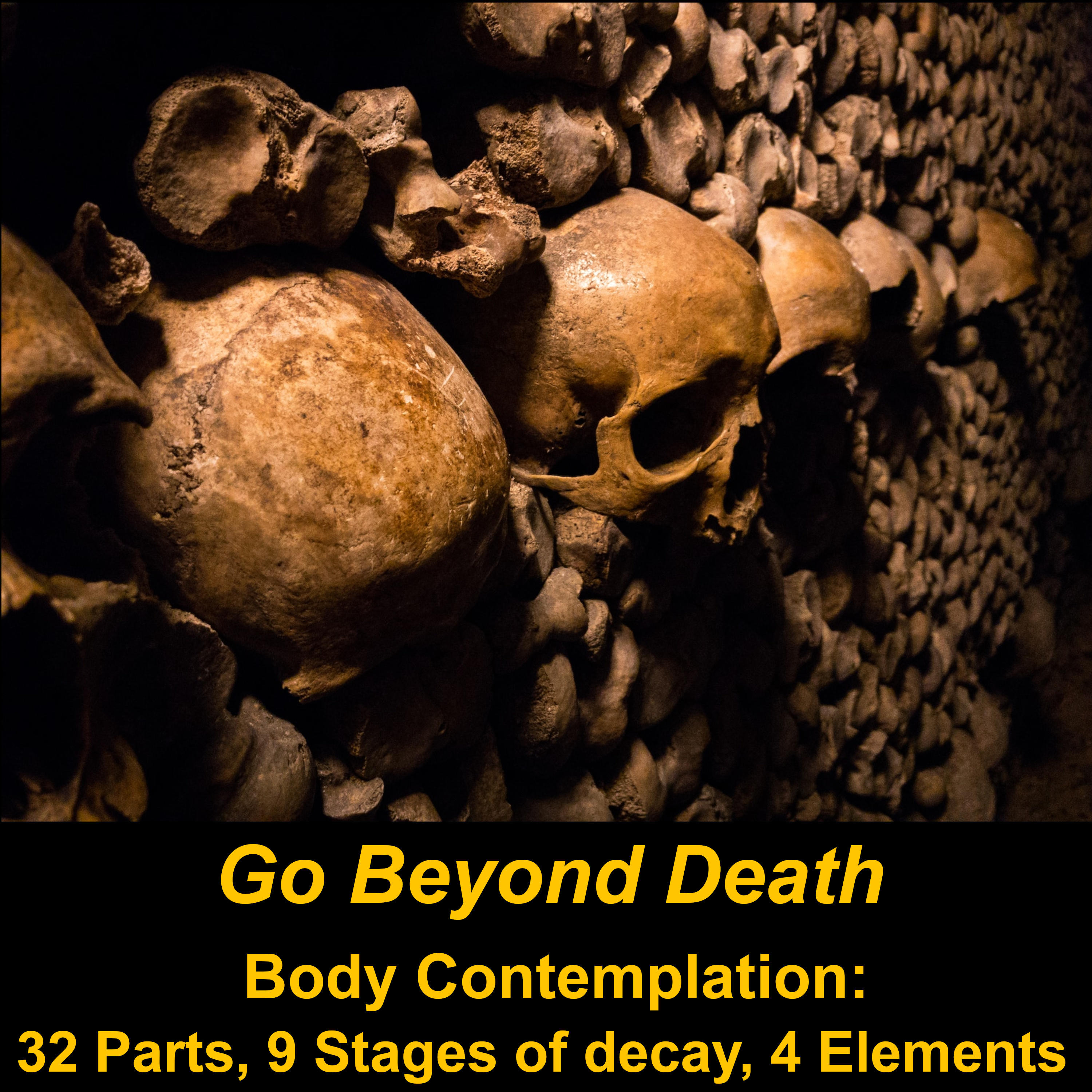
AJAHN MONEYYO | Mindfulness of the Body: 32 Bodyparts, 9 Cemetery Contemplations, 4 Elements | Asubha | Aniccā
Ajahn Moneyyo gives an introduction and practical instructions to develop mindfulness of the body by contemplating the 32 Bodyparts, the 9 cemetery contemplations and the 4 elements according to the discourse about the 4 foundations of mindfulness (4 Satipatthānā, Middle Length Discourses Nr. 10). https://www.dhammatalks.org/suttas/MN... By seeing the body as impermanent (Aniccā) and not-self (Anatta) our heart can become disenchanted and realize a peace and liberation beyond ageing and death. Website Our Spotify Playlists Newsletter Dhammagiri Youtube Channel Pics #mindfulness #mindfulnessmeditation #meditation #insight #vipassana
Oct 16
Long-Term Minimum Effort vs Short-Term Heroic Effort | Ajahn Dhammasiha | Dhamma Talk on Buddhism
During an all-night meditation, or during a retreat period, we tend to exert maximum effort. However, no one can maintain maximum effort for a very long time. Unfortunately, once we can't maintain the high level anymore, we often end up relaxing too much. Unfortunately, it's much easier and faster to regress in our bhāvanā, than to quickly progress. So we may end up losing hard earned 3 months of progress within just one week of carelessness. Therefore, Ajahn Dhammasiha encourages us to look at the minimum standard we maintain throughout. A high minimum level of effort, which we never fall below, can have a more powerful impact on our total progress than occasional spurts of extreme effort. Website Our Spotify Playlists Newsletter Dhammagiri Youtube Channel Pics #effort #meditation #dhamma #bhavana #dhammatalk #buddhism #mindfulness

Oct 12
Animals in Buddhism | Kindness and Respect to Animals | Ajahn Dhammasiha | Dhamma Talk
Right after the end of the rains retreat period, the Dhammagiri monks had been invited to visit the iconic Australia Zoo. Ajahn Dhammasiha uses the occasion to share reflections on Dhamma teachings about animals. Of all the major religions, Buddhism has the clearest and most impactful teachings about showing compassion and loving kindness to animals. For example, the first precept to abstain from killing refers to animals just as to humans. As a follower of the Buddha, we should never intentionally kill even an ant of mozzie. Ajahn also shares stories of animal encounters between the Buddha & famous monks, and animals like elephants and tigers. You can see some photos of our encounters with koalas, tigers, giraffes and echidnas here: https://latest-pics.dhammagiri.net Website Our Spotify Playlists Newsletter Dhammagiri Youtube Channel Pics #animals #animalprotection #kindness #dhammatalk #dhamma #buddhism

Oct 6
Inviting Feedback | Constructive Criticism | Pavarana Ceremony | End Rains Retreat | Ajahn Dhammasiha
Dhamma talk by Ajahn Dhammasiha on occasion of Pavarana Full Moon. It is important to be able to receive feedback on our actions. We can learn much from constructive criticism, if it is done with good will, by knowledgeable persons. Is is so difficult to see one's own weaknesses and shortcomings, but quite easy to recognize them in others. Consequently, feedback and criticism based on loving kindness, compassion & thorough knowledge of the Buddha's teaching and discipline can be an invaluable opportunity to see through one's own delusions and actually improve oneself. However, for feedback to be effective, it has to be experessed in the correct manner, and at the right time. Website Our Spotify Playlists Newsletter Dhammagiri Youtube Channel Pics #feedback #criticism #dhammatalk #buddhism #buddhistmonks #buddhistmonastery #buddhistwisdom

Oct 2
Anatta: Empty of Self or Belonging to Self, even Thoughts | Emptiness Sunyata | Ajahn Dhammasiha
Dhamma Talk by Ajahn Dhammasīha, offering reflections on the Buddha's teaching: "Suññam idaṃ attena vā attanīyena vā!" = "Empty of Self and Empty of Anything belonging to Self" e.g. Majjhima Nikāya/Middle Length Discourses #106, 'Āneñjasappāya Sutta'/'Conducive for the Imperturbable' Also Majjhima Nikāya/Middle Length Discourses #22, 'Alagaddūpama Sutta'/'The Simileof the Snake' When we contemplate our body, thoughts, feelings, emotions, even our meditation object, as not Self and not belonging to any Self, suddenly everything becomes so much lighter, so much less difficult and painful, so much more bearable. Website Our Spotify Playlists Newsletter Dhammagiri Youtube Channel Pics #notself #anantta #buddhistphilosophy #dhamma #dhammatalk #buddhism

Sep 29
Be Aware, Don't React and Let Go | Buddhist Guided Meditation | Vipassana | Insight | Ajahn Dhammasiha
In this guided meditation, Ajahn Dhammasiha encourages us to simply be aware of what we experience in the present moment. Observing, knowing, being mindful of what is, without trying to change the experience, without trying to achieve or attain anything. However, though we are aware and mindful, we do not 'engage' with what we observe. We don't react, we don't take it up, we see it as impemanent and not me, not mine, not self. Website Our Spotify Playlists Newsletter Dhammagiri Youtube Channel Pics #meditation #buddhistmeditation #vipassana #guidedmeditation #insight #mindfulness
Sep 26
Crisis Intervention: Remembering the Buddha | Buddhanussati | Recollection of the Buddha | Ajahn Dhammasiha
Ajahn Dhammasiha talks about the benefits of Buddhānussati, recollecting the Buddha. This meditation object can be particular helpful if we're finding ourselves overwhelmed by emotions. Reciting "Iti pi so..." or "Buddho" loudly, and totally focussing the mind on the Buddha, can cut through strong defilements or emotional turmoil, and bring our mind back to a more wholesome state. Ajahn also answers a question on ānāpānasati (mindfulness of the breath): What to do when the breath becomes so refined that I can't feel the breath anymore in my meditation? Website Our Spotify Playlists Newsletter Dhammagiri Youtube Channel Pics #buddha #meditation #dhammatalk #emotions #mentalcrisis #buddhanussati #recollectionofbuddha
Sep 22
Wrong Direction: Desire, Anger, Confusion, Fear | Don't Let Toxic Emotions Highjack Your Mind | Ajahn Dhammasiha
Ajahn Dhammasiha talks about the 4 'Agati', the 4 wrong courses of action: Chanda-Gāmini = Going in Direction of Desire Dosa-Gāmini = Going in Direction of Aversion Moha-Gāmini = Going in Direction of Confusion Bhaya-Gāmini = Going in Direction of Fear If we move in the direction of lust, anger, delusion and anxiety, we're moving in the wrong direction: Not away from suffering, but into more and more suffering. If we're influenced by the 4 Agati, we will not be able to make the right decisions. If they are based on desire, anger, confusion or fear, our actions will not be beneficial for ourselves and others. Recent events around the assassination of Charlie Kirk show how many people are influenced in their reaction by the 4 Agatis. Once we're overcome by such strong emotions, we can easily be manipulated to do things that are actually against our own welfare. Others may use these negative emotions coming up in our mind to direct us towards their own agendas. If we can step back and free our mind from desire, aversion, confusion and fear, we regain the ability to discern the best course of action for our own and other beings' true longterm happiness and welfare, and we can't be highjacked or gaslighted by others to serve their agendas. Website Our Spotify Playlists Newsletter Dhammagiri Youtube Channel Pics #dhammatalk #wrongdirection #fear #confusion #gaslighting #emotions

Sep 19
Devoted to Persuit of Pleasure | Loving Kindness as Source of Happiness | Metta | Ajahn Dhammasiha
Amazingly, the Buddha stated in Pāsādika Sutta (Dīgha Nikāya/Long Discourses #29) that his followers are devoted to the persuit of happiness. However, it has to be qualified what kind of happiness we're after: We're not persuing happiness based on evil and unwholesome actions We're not persuing pleasures of the senses However, we are devoted to persue the joy, rapture and bliss of samādhi/jhāna Ajahn Dhammasiha points out that mettā/loving-kindness is for many meditators the easiest way to get access to non-sensual happiness; and he encourages us to cultivate mettā throughout daily life. Website Our Spotify Playlists Newsletter Dhammagiri Youtube Channel Pics #happiness #joy #gladness #metta #lovingkindness #dhammatalk

Sep 15
Mindfulness in Daily Life | Sati | Satipatthana | Foundations of Mindfulness | Ajahn Dhammasiha
Ajahn Dhammasiha shares reflections how to cultivate mindfulness (Sati) in daily life. He points out the importance of being aware/mindful of our intentions, as intention (cetana) is what creates karma. We also have to be mindful of our emotions and feelings (3rd & 2nd Satipaṭṭhāna/Foundation of Mindfulness). Pleasant and unpleasant feeling (vedanā) is the primary motivator for all our actions. Finally, it's so important to develop mindfulness of our body, re-connecting with out body, feeling our body, instead of being stuck in mental proliferations and mobile phone screens. Website Our Spotify Playlists Newsletter Dhammagiri Youtube Channel Pics #mindfulness #satipatthana #buddhism #buddhist #dhamma #dhammatalk

Sep 12
BAD Meditation: It actually Teaches Us a Lot | Vipassana | Self Knowledge | Ajahn Dhammasiha
What we consider a 'bad' meditation session, e.g. the mind can't settle down and is struggling with strong emotions like anger, lust and anxiety, can be very useful to gain insight into our own character. Rather than being upset with ourselves thinking 'I can't really meditate'; or becoming frustrated and demotivated; we investigate the obstructions to gain insight and understanding into our own character and the working of our mind. Once we've identified them, we can apply wisdom and skilful means to overcome them, contemplating them to let go of them. Website Our Spotify Playlists Newsletter Dhammagiri Youtube Channel Pics #meditation #buddhistmeditation #insight #vipassana #wisdom #kilesa #defilements .
Sep 8
Emptiness: Not Getting More, But Getting More Empty | Sunyata | Suññatā | Ajahn Dhammasiha
Ajahn Dhammasiha talks about one of the most profound aspects of the Buddha's teaching: Emptiness (Sunyata / Suññatā) On the most profound level, Emptiness means empty of Self, Me, Mine and I. An enlightend person, an arahant, has seen through and abandoned all delusions of I, me, mine and self. The Stream-Enterer (Sotāpanna, first of four stages of Awakening) has abandoned the delusion of Sakkāya-Diṭṭhi (Entity-View), he is empty of any view or doctrine of Self, though he still has thoughts & perceptions of me, mine and I. Emptiness on the most profound level also refers to an Arahant being empty of greed, hate and delusion. However, we can cultivate emptiness already at much more basic levels, for instance: Emptying our calendar - less events is better, more empty is better. Emptying our house, shelf and cupboards - less stuff is better, more empty is better. Emptying our behaviour from unwholesome action and speech - less bad actions makes life much easier and peaceful. Emptying our life from an endless stream of experiences and exitements - less drama is better and more peaceful. Emptying our mind from endless thinking - a mind empty of thought is blissful ... Website Our Spotify Playlists Newsletter Dhammagiri Youtube Channel Pics #emptiness #sunyata #dhammatalk #dhamma #buddhism #buddhadhamma #buddhistphilosophy
Sep 5
Intro to Breath Meditation | Guided Buddhist Meditation | Anapanasati | Mindfulness of Breathing
Ajahn Dhammasiha guides us through a Buddhist meditation on Mindfulness of the In and Out Breath (ānāpānasati). He specially emphasizes the following points: 1. Feeling the whole physical body with every breath. 2. Calming and relaxing all bodily tensions with every breath. 3. Enjoying the meditation. Developing feelings of gladness, rapture and bliss with every breath. 4. Brightening the mind with every breath. 5. Though we're calm, we're not going to sleep. Becoming more aware, more awake, more mindful with every breath. 6. We're not meditating to get anything, we're meditation to let go. Letting go with every breath. 7. After the bell, Ajahn Dhammasiha encourages us to use the same techniques for our walking meditation. Website Our Spotify Playlists Newsletter Dhammagiri Youtube Channel Pics #meditation #buddhistmeditation #guidedmeditation #breathmeditation #anapanasati #mindfulness #sati

Sep 1
4 Noble Truths in Daily Life | Applying Buddha's Teaching in Everyday Life | Ajahn Dhammasiha
Ajahn Dhammasiha is asked how to apply the Buddha's teaching of Four Noble Truths in our daily life. The 4 Noble Truths are a core teaching of the Buddha, that is acknowledged as fundmental in all Buddhist traditions, including Therevada, Mahayana and Vajrayana. These thruths do not constitute a philosophical thought excercise, but are directly applicable to our experience of pain, disappointment and suffering. They show us a practical method in the Noble Eightfold Path to completely extricate ourselves from pain, frustration, depression, old age sickness, death and repeated birth. Ajahn points out that we usually blame external causes for any pain and disappointment we experience: "It's because of this person that I'm so miserable!" However, we can never get out of suffering by trying to eliminate all external causes. There's just too many of them, and often they are beyond our control. Instead, the Buddha points us to the internal causes of suffering: Craving; Attachment; Desire; Anger; and the Delusion of I, Me, Mine and Self. If we can abandon the internal causes of our suffering , we can overcome it once and forever. We can experience the state beyond all suffering: Freedom, Release, the Deathleath Element, Nibbāna. Website Our Spotify Playlists Newsletter Dhammagiri Youtube Channel Pics #buddhism #meditation #dhammatalk #fournobletruths #buddhistmeditation #buddhistwisdom #buddhistteachings

Aug 29
Mindfulness of Breathing: All 16 Steps | Breath Meditation | Anapanasati | Ajahn Dhammasiha
Mindfulness of the In-and-Out-Breath, Ānāpānasati, was the favourite meditation object of the Buddha himself. He has given us very comprehensive and detailed instructions how to develop this form of meditation. However, many meditators, often even those practising regularly for many years, are not fully aware, or at least do not really apply, the instructions as provided by the Buddha. To encourage everyone to receive the full results of their Breath Meditation, Ajahn Dhammasiha goes through all 16 steps of Mindfulness of Breathing, as expounded by the Buddha; e.g. in Ānāpānasati Sutta , Majjhima Nikāya/Middle Length Discourses, No. 118 Each of the four Tetrads develops one of the Foundations of Mindfulness (Satipaṭṭhāna) (i) BODY (KĀYA) (ii) FEELINGS (VEDANĀ) (iii) CITTA (MIND) (iv) DHAMMA (TRUTH) [i] 1. He breathes in mindfully, and he breathes out mindfully 2. Breathing in long, he knows: ‘I'm breathing in long’; or breathing out long, he knows: ‘I' breathing out long.’ Or breathing in short, he knows: ‘I'm breathing in short’; or breathing out short, he knows: ‘I am breathing out short.’ 3. He trains himself: ‘I will breathe in feeling the whole body.’ He trains himself: ‘I will breathe out feeling the whole body.’ 4. He trains himself: ‘I will breathe in calming all bodily activity’ He trains himself: ‘I will breathe out calming all bodily activity.’ [ii] 5. He trains himself: ‘I will breathe in experiencing rapture.’ He trains himself: ‘I will breathe out experiencing rapture.’ 6. He trains himself: ‘I will breathe in experiencing bliss.’ He trains himself: ‘I will breathe in experiencing bliss.’ 7. He trains himself: ‘I will breathe in experiencing mental activity.’ He trains himself: ‘I will breathe out experiencing mental activity.’ 8. He trains himself: ‘I will breathe in calming mental activity.’ He trains himself: ‘I will breathe out calming mental activity.’ (iii) 9. He trains himself: ‘I will breathe in experiencing the mind.’ He trains himself: ‘I will breathe out experiencing the mind.’ 10. He trains himself: ‘I will breathe in gladdening the mind.’ He trains himself: ‘I will breathe out gladdening the mind.’ 11. He trains himself: ‘I will breathe in unifying the mind.’ He trains himself: ‘I will breathe out unifying the mind.’ 12. He trains himself: ‘I will breathe in releasing the mind.’ He trains himself: ‘I will breathe out releasing the mind.’ (iv) 13. He trains himself: ‘I will breathe in focussing on impermanence.’ He trains himself: ‘I will breathe out focussing on inconstancy.’ 14. He trains himself: ‘I will breathe in focussing on dispassion / fading away.’ He trains himself: ‘I will breathe out focussing on dispassion / fading away.’ 15. He trains himself: ‘I will breathe in focussing on cessation.’ He trains himself: ‘I will breathe out focussing on cessation.’ 16. He trains himself: ‘I will breathe in focussing on letting go.’ He trains himself: ‘I will breathe out focussing on letting go.’ Website Our Spotify Playlists Newsletter Dhammagiri Youtube Channel Pics #anapanasati #satipatthana #mindfulness #mindfulnessmeditation #sati #breathmeditation

Aug 25
New to Buddhism - How to Start | Ajahn Dhammasiha | Buddhist Practice for Newcomers
Ajahn Dhammasiha responds to a question by someone just getting started in their Dhamma practise. Ajahn talks about karma, generosity and kindness; and the future results of our karma. He mentions rebirth, the fact that our mind doesn't just vanish at death, but will connect with a new body in one of the different realms of existence, according to our karma and attachments. Ajahn recommends to go back to what the Buddha himself actually taught, and explains that in the oldest part of the Theravada Pali Canon we can find the most authentic record of the Buddha's own words. He passes on two books summarizing the Noble Eight Fold Path based on these early suttas: Venerable Nyanatiloka, 'The Word of the Buddha' , Buddhist Publication Society, Kandy, Sri Lanka Venerable Bhikkhu Bodhi, 'The Noble Eightfold Path' Ajahn also recommends to establish a little shrine, and to keep that area 'sacred', by not doing any other activity than chanting and meditation there. He recommends to start a regular practice of Buddhist Chanting, and passes on our Amaravati Chanting Book , that includes both Pali and English Chants: Ajahn encourages the newcomer to regularly continue his practice of Ānāpānasati (Meditation on Mindfulness of Breathing'), that he has already gathered some experience with. Website Our Spotify Playlists Newsletter Dhammagiri Youtube Channel Pics

Aug 22
Abandoning Ill Will | Using Loving Kindness & Wisdom to Counter Anger | Ajahn Dhammasiha Dhamma Talk
Ajahn Dhammasiha is asked for advice to overcome ill will. Ajahn talks about the two fundamental approaches: Developing Loving Kindness, Compassion and Forgiveness to strengthen the opposite qualities in our mind Using wisdom to contemplate and understand anger. For instance, if we're mindful, we can notice that ill will actually feels bad, and that we ourselves are the first 'victim' of our anger. Website Our Spotify Playlists Newsletter Dhammagiri Youtube Channel Pics #illwill #anger #grudge #metta #lovingkindness #insight #vipassana #wisdom

Aug 18
Transforming Pain from Loss of Loved Ones into Samvega/Spiritual Urgency | Ajahn Dhammasiha
Ajahn Dhammasiha explains the emotion of Saṃvega = Spiritual Shock/Spiritual Urgency. When we encounter Dukkha/Pain/Loss/Disappointment, the resulting sadness can make our heart dark and depressed. However, it's also possible to turn the pain we experience into a powerful motivation to practise the Buddha Dhamma with even more commitment and dedication, to ultimately free our heart from all suffering in the experience of the Deathless/Nibbāna. Website Our Spotify Playlists Newsletter Dhammagiri Youtube Channel Pics #pain #loss #bereavement #buddhadhamma #dhammatalk

Aug 15
Seeing Things as They Truly Are | Vipassana Insight | More Observing, Less Doing | Ajahn Dhammasiha
SHORT TALK 13 MIN Ajahn Dhammasiha encourages us to dedicate more attention to the quality of passive observation, rather than always being involved with doing things. We have to watch, observe, simply see how conditions unfold without interfering, in order to develop vipassana (insight). Yathābhūta Ñāṇadassana means seeing things as they really are, without distorting. We have to see the impermanent as impermanent, rather than distorting our perception towards permanence, in order to develop vipassana. Website Our Spotify Playlists Newsletter Dhammagiri Youtube Channel Pics #seeing #observing #yathabhuta #nyanadassana #insight #vipassana

Aug 11
Dhamma is Beautiful in the Beginning, Middle, and End | Ajahn Dhammasiha | Buddhism | Adi Kalyanam
Ajahn Dhammasiha talks about the meaning of: 'Ādi-kalyānam, majjhe-kalyānam, pariyosāna-kalyānam' (Beautiful in the Beginning, Beautiful in the Middle, Beautiful in the End), one of the unique qualities of the Buddha-Dhamma. He also reponds to a question about the most senior monk disciple of the Buddha, Ven Aññā-Kondañña, and how he got his name. Finally, Ajahn offers some reflections on the question which parts of the Dhamma are most important to humanity right now in our current global situation; and how we can share the Dhamma with all human beings. Website Our Spotify Playlists Newsletter Dhammagiri Youtube Channel Pics #dhamma #dhammatalk #beauty #beautiful #buddhism #buddha

Aug 8
Loving Kindness: Benefits & Supportive Reflections | Metta | Ajahn Dhammasiha | Dhamma Talk
Loving kindness is simply the intention of unconditional good will to all beings, without any distinction. Ajahn Dhammasiha explains benefits of a well established practice of loving kindness ('Mettā'). When we experience benefits of our metta practice (for instance healthy, peaceful sleep and waking up happily), they are the most powerful motivation to continue to develop our loving kindness even further. Website Our Spotify Playlists Newsletter Dhammagiri Youtube Channel Pics #metta #lovingkindness #dhammatalk #buddhism #goodwill

Aug 5
Good Karma Brightens our Mind like Stars Illuminate the Night Sky | Ajahn Dhammasiha
Sometimes our mind may feel a bit dark, or frustated, or sad. If we can arouse the energy to do some act of kindness, some simple act of generosity or sharing, it will shine like a little star and illuminate our mind. As we accumulate more and more acts of good karma (puñña), we make our mind brighter and brighter, until it's illuminated like the star-spangled night sky. Website Our Spotify Playlists Newsletter Dhammagiri Youtube Channel Pics #karma #punya #puñña #goodkarma #mind #nightsky

Aug 1
Fighting with the Mirror Image | Ajahn Dhammasiha | Dhamma Talk at Dhammagiri
One of our retreatants noticed a crow attacking its mirror image in the glass sliding door. He doesn't reckognize that the image it actually himself. Instead, he thinks it's another crow intruding into his territory. Ajahn Dhammasiha uses this as a metaphor for unskilful effort in meditation. In particular, we can't overcome the delusion of self by fighting it. If we take it for real, and fight it, it will only 'fight back' harder. The successful approach is to wisely observe it, analyse it, and reckognize it as an illusion. Website Our Spotify Playlists Newsletter Dhammagiri Youtube Channel Pics #mirror #self #sakkayaditthi #entityview #buddhism #dhamma .

Jul 28
Faith and Knowledge in Buddhism | Saddha | Confidence | Conviction | Ajahn Dhammasiha
Ajahn Dhammasiha is asked about the importance of faith in the Buddha's teaching. The Pali term for the first of five spiritual faculties is 'saddha'. It could also be translated as 'confidence', 'conviction' or 'trust'. Ajahn discusses various conditions that nurture our conviction and make it very strong. He also explains that faith and knowledge are not contradictions, but can support each other in our Dhamma practice. Website Our Spotify Playlists Newsletter Dhammagiri Youtube Channel Pics #faith #saddha #buddhism #confidence #conviction #knowledge #dhammatalk

Jul 25
How to Observe the Mind and Feelings | Foundations of Mindfulness | Satipatthana | Ajahn Dhammasiha
Ajahn Dhammasiha is asked: "How do we observe the mind?" Ajahn offers some reflections on superficial layers of the mind (like thinking) and deeper layers that can only be accessed in Samādhi. Ajahn also responds to a second question on mindfulness of feelings: "How to Distinguish wordly and spiritual feelings?" Spiritual happiness generated through good karma, generosity, virtue, sense retraint and samādhi/jhāna is so important, as it provides us with a superior happiness than sensuality. Website Our Spotify Playlists Newsletter Dhammagiri Youtube Channel Pics #mind #consciousness #happines #mindfulness #sati

Jul 21
Euthanasia: Killing is BAD Karma, it's NOT compassionate | 1st Precept | Ajahn Dhammasiha
Ajahn Dhammasiha responds to a question about Euthansia. He explains that the Buddha never encouraged or condoned the killing of other human beings at all, never mind the supposed motive or justification. The first precept to abstain from intentionally killing of living beings is unambiguous - it has no 'exceptions' under any circumstance. Any killing of human beings is very serious karma. However, if we participate in, or encourage, the killing ("euthanasia") of our mother or father (which can easily occur in the context of "euthanasia"), we're getting involved in what the Buddha declared as one of the five worst forms of evil karma possible (5 Anantarika Kamma - see e.g. Anguttara Nikāya Fives No 129). It's not compassionate at all to kill. Compassionate is to look after dying people, to provide them with excellent palliative care and really good pain management. Compassionate is to spiritually console dying persons, to prepare them for the transition to the next life, and to encourage them to let go of all attachments. If we normalize killing of human beings ("euthanasia"), those suffering from a chronic and expensive-to-treat disease will feel pressure to have themselves killed ("euthanized") to reduce expenses and burden of looking after them. As physicians are the ones doing the killing ("euthanasia"), the ethic foundation of the whole medical profession is undermined. A doctor should first of all do no harm. We must be able to fully trust our physicians and nurses that they are committed to preserving our lives, to cure us from disease and to wish us to live. How can we trust the medical profession if they are now the ones who are also killing us? Ajahn points out that a completely materialistic philosphy underlies modern Westen medical science. They simply don't know about consciousness/mind, they only know and describe course material phenomena. They believe that after death there's simply nothing. Of course, in reality there NOT nothing after death, but what we call mind or consciousness survives death and continues on to a new life. Consequently, killing any being does not 'free them from suffering', it only means that we can not see their suffering anymore. Only an Arahant attaining Nibbāna is truly free from suffering. Website Our Spotify Playlists Newsletter Dhammagiri Youtube Channel Pics #euthanasia #nonviolence #compassion #precepts #ethics #nonharming

Jul 21
How to Use the Four Noble Truths to End Suffering | Dhammacakkappavattana Sutta | Ajahn Dhammasiha
Āsāḷhā is the full moon marking the beginning of the 3 months rains retreat (Vassa). It's also the day commemorating the first formal teaching of the Buddha, the Dhammacakkappavattana Sutta ('Setting in Motion the Wheel of Dhamma'). Ajahn Dhammasiha offers reflections on the 4 Noble Truths (Cattāri Ariya-Saccāni) that the Buddha expounded in that discourse. In particular, he points out that these 4 Noble Truths are not just some theoretical concepts, but they are a pragmatic teaching, they are applicable ('opanayiko'), we have to do something with them in order to realize the intended result: Freedom from Suffering. Website Our Spotify Playlists Newsletter Dhammagiri Youtube Channel Pics #suffering #nobletruth #buddha #buddhism #dhammacakka

Jul 15
Looking INSIDE to Find the Cause of Our Suffering: Craving and Attachment | 4 Noble Truths | Asalha
On occasion of Asalha Full Moon, Ajahn Dhammasiha offers reflections on the Four Noble Truths. Whenever we experience pain and disappointment; when we feel hurt, offended, depressed, upset; we usually search for some EXTERNAL cause for all this suffering. Maybe we come to the conclusion that our boss, or our mother in law, or our spouse, or the kids, or the politicians and those in power are to blame for the fact that we are hurting. Or else it's the weather; or some sickness, some virus; or perhaps the mozzies or this or that... This conclusion is not necessarily wrong. We may even be able to eliminate some specific suffering we experience by changing or manipulating the behaviour of the people that cause us harm. However, this approach will never get us out of suffering completely: First of all, often we don't have the power to change the persons that cause us pain. There are so many external causes of our suffering that are completely outside of our control. Secondly, even if we can change one person, then someone else will come along and do things we don't like. Removing external causes will only give us a short break, it never removes suffering permanently. Instead, the Buddha looked at the INTERNAL causes of suffering, namely craving, attachment, clinging, delusion of ownership, ignorance and so on. This approach has two huge advantages: First, as it's internal, we actually have control over it - it may not be easy to abandon craving and attachment, but at least it's possible. Secondly, once we get rid of craving and attachment completely, all suffering is gone as well; and even better, it can never come back, we've found a permanent solution 😊 Dhammagiri Website Our Spotify Playlists Newsletter Dhammagiri Youtube Channel Pics #suffering #buddhism #dhamma #fournobletruths #attachment #craving #vipassana

Jul 15
Power of Bodh Gaya, Place of Buddha's Enlightenment | Mahabodhi Temple | Vajirasana Diamond Throne | Ajahn Dhammasiha
Ajahn Dhammasiha recently spent at few days in Bodh Gaya, India, to visit and mediate at the Mahabodhi Temple . This is the very spot where the Buddha attained supreme awakening. In fact, it is said that the 3 previous Buddha's in our aeon, also realized Sambodhi in this same spot. Ajahn Dhammasiha talks about the amazing strength of the spiritual energy one can experience at the 'Vajirāsana' ('Diamond Throne') , the seat under the Bodhi tree where the Buddha defeated Māra and the defilements and released his heart from all attachment, craving and ignorance. He explains that he can not recommend too highly the value of going on pilgrimage to this sacred site; the impact on one's Dhamma practice is often profound. Ajahn also talks about the fetter of Sīlabbataparāmāsa ('clinging to rites and rituals' / 'believing in purification through external actions of body and speech'). Whether on pilgrimage, or in our regular meditation practice, it's not about the body and the movements, rituals and activities the body performs; instead it's about the impact these external activities have on our mind. If we sit meditation, or perform puja at a sacred site, but the mind is actually developing unwholesome states of desire or aversion, we're wasting our time. We always have to observe carefully what is the effect of any activity on our mind, does it really lead to a diminishing of unwholesome states, and an increase in wholesome states. Dhammagiri Website Our Spotify Playlists Newsletter Dhammagiri Youtube Channel Pics #bodhgaya #vajirasana #buddha #enlightenment #mahabodhitemple #silabbataparamasa #dhamma

Jul 7
10 Strategies to Power Up Your Loving Kindness | Metta Meditation | Ajahn Dhammasiha
Ajahn Dhammasiha is asked about supportive conditions to make our Metta Meditation (Loving Kindness) stronger and more successful: Loving Kindness to Oneself! Make sure you really include yourself when you extend Mettā to all beings Compassion (Karuna). Use other Divine Abidings (Brahmavihāra) as appropriate, in particular Compassion/Karunā. If we struggle to extend metta to anyone, we may be more successful with Karuna. The most difficult people often have a lot of pain themselves. Once we see that, it's easier to have compassion to them. Contemplating Karma (Kamma ). What I experience is the result of my own karma, my own actions, including actions in past lives. On a deeper level, the person hurting me is simply returning my own bad karma to me. Also, they will have to bear the painful result of their own karma in future, no need for me the avenger or punisher, they will get their karma anyhow. Contemplating Impermanence (Anicca-Saññā). What we're so upset with today, we may not even be able to remember in a years time. Why getting worked up about anything so evanescent Contemplating Death. If I were to die today, would I really bother about all these irritations I experience? Compared to the reality of our & our 'enymies'' mortality, what we're angry about appears so irrelevant. Sense Retraint (Indriya-samvara/Indriyesu Guttadvāra). Simply avoid persons and situations that make you angry, and don't even think about or remember them.Don't look at the tweets of a politician you can't stand. Don't watch that video, or those news, if they make you angry. Wise Attention (Yoniso Manasikāra). Focus on what's beautiful in others and yourself. Give attention to your own and others' kind and admirable qualities and actions. Contentment. Count your blessings. Appreciate what you have already, rather than hankering after things other have, and which may be difficult to obtain. Gratitude (Kataññū-Katavedi) . Remember all the good you have received from others. Focus on that, rather than on the hard times other have given you. Good Friends (Kalyāṇamittatā). Don't hang out with angry people, spend time and become friends with those who practise Loving Kindness themselves Dhammagiri Website Our Spotify Playlists Newsletter Dhammagiri Youtube Channel Pics #metta #lovingkindness #compassion #contentment #meditation #dhamma #buddhism

Jul 4
Working with Negative Mindstates and Trauma | Ajahn Dhammasiha | Buddhist Dhamma Talk at Dhammagiri
In our meditation, we usually hope to find calm, happiness, bliss and enlightenment. But what we often encounter instead are all kinds of challenging and highly disagreeable mindstates. Defilements and distractions of all sorts assail the heart. Ajahn Dhammasiha reminds us that these negative states are very normal to encounter in meditation. Unless we're someone with great pāramī, like Venerable Sāriputta, who's heart was was already very pure from practice in previous lifetimes, we have a lot of cleaning up to do in our mind. In fact, that's exactly the point of our meditation: It's a little bit like tackling a really difficult and long delayed cleaning job. Finally getting into the attic or the basement room that hasn't been sorted for years. Or finally pulling the washing machine off the wall and cleaning out all the grime and mold behind and underneath it. Similarly, a big part of meditation is to allow all the difficult stuff to rise into awareness, and then to consciously contemplate it as impermanent, not me, not mine, unsure, not my self. This process usually has to be repeated many times. Each contemplation will weaken the issue only slightly, and the process of overcoming it tends to be very gradual, taking numerous repetitions over many years. Responding to a question, Ajahn points out that in case of severe trauma , it may not be possible straight away to follow the above process. The trauma may be too overwhelming. Rather than beneficially contemplating it, the mind may latch onto it and fully absorb into it, a form of 'wrong concentration' ('micchā-samādhī'). That may just reinforce the trauma, making it worse. If that's the case, it's better not to focus the mind internally . One has to start by training the mind in external activities. We gradually brighten the mind and fill it with more goodness and happiness. It's better to interact, to make good karma in interaction with other beings. Whenever we do something good for others (kindness, generostiy), we make our mind happy and brighter. We develop wholesome self esteem. We keep precepts ('sīla'), not harming or hurting ourselves or any being. Once the mind has been uplifted and lightened through kindness, good karma and virtue, it will gradually be able allow the trauma into awareness. The mind is now bright and confident enough to address the trauma with wisdom and insight, weakening and abandoning it step by little step. Dhammagiri Website Our Spotify Playlists Newsletter Dhammagiri Youtube Channel Pics . .

Jul 1
Don't Be Afraid! - Abandon Anxiety through Confidence in the Buddha | Ajahn Dhammasiha
The Buddha has given us the following amazing promise: "In the Dhamma well proclaimed by me thus, which is clear, open, evident, and free of patchwork, those who have sufficient faith in me, sufficient affection for me, are all going to be reborn in heaven." (The Buddha, Majjima Nikāya/Middle Length Discourses, #22 'Alagaddāpama Sutta'/'The Simile of the Snake) Even if we can not attain full Nibbāna yet, and do not yet have the insight of a stream-enterer either, just by having a sufficient amount of confidence, faith and affection to the Buddha, we're already assured a heavenly rebirth as a deva! This extraordinary promise of the Buddha is something we can bring to mind whenever fear or anxiety threaten to overwhelm our mind. The ultimate fear is usually the fear of death. But if we understand that death is not the end, but simply the transition to a new rebirth; and if we are confident that we have sufficient faith and affection for the Buddha to be reborn in devaloka, then death can no longer terrify us. When the fear of death can't overwhelm our mind any more, then all anxiety will be dramatically diminished. When we're no longer controlled by fear and anxiety, we are able to clearly discern what's beneficial for ourselves and others. Fear can no longer be used to manipulate us to do harmful things to ourselves and others. Free from fear and filled with faith and conficence, the mind is bright and joyful. With a bright and joyful mind, our immune systems work at peak performance. With our immune systems strong, we will have less symptoms and better recovery if we catch any virus, or any other form of sickness. Dhammagiri Website Our Spotify Playlists Newsletter Dhammagiri Youtube Channel Pics .

Jun 27
Using the Breath to Investigate 4 Noble Truths | Guided Buddhist Meditation | Ajahn Dhammasiha | Dhammagiri | Anapanasati Cattari Ariyasaccani
Ajahn Dhammasiha explains how to contemplate the Four Noble Truths ('Cattāri Ariyasaccāni') within the framework of Breath Meditation ('Ānāpāṇasati'): We start by mindfully observing, feeling and experiencing every inbreath and outbreath We allow our mind to gradually settle down, simply being mindful of each and every breath We mindfully observe when Craving ('Taṇhā') arises in our mind We notice that it is this very craving that causes our mind to get pulled away from our meditation object, the breath, and to follow all kinds of thoughts, phantasies, worries, memories, feelings, emotions... We wisely recognize how the mind loses it's calm and peace once it get's pulled away from the breath, and becomes agitated/worried/excited Agitation/Worry/Excitement is a form of 'Dukkha' ('Suffering', 'Disappointing', 'Unsatisfactory') We have now observed in our own immediate experience, here and now, how craving causes disappointment/suffering (= First and Second Noble Truth) We contemplate all these distractive thoughts, phantasies, worries, memories, feelings and emotions as impermanent ('anicca'). Often we can even directly observe them changing and becoming otherwise right here and now As we wisely recognize their impermanent, changing nature, our craving and attachment to them diminishes As craving and attachment become weaker, it's easier to stay attentive to the breath As we stay focussed on the breath, agitation and worry are replaced by joyful tranquillity This is a reduction of suffering, at least some aspects of dukkha have come to a (temporary) end We have now observed in our own immediate experience, here and now, how letting go of craving (at least partially) through contemplation of impermanence reduces our suffering (= Third Noble Truth, at least to some extend) Finally, Ajahn Dhammasiha indicates how all eight path factors of the Middle Way ('Majjimā Paṭipadā') are being activated as we meditate in the way discribed above (= Fourth Noble Truth) Dhammagiri Website Our Spotify Playlists Newsletter Dhammagiri Youtube Channel Pics .

Jun 24
The greatest miracle of the Buddha - The Fire Sermon | Adittapariyaya Sutta | How did Buddhism start
This is the story of the Buddha's greatest miracle presented by Ajahn Moneyyo: The Fire Sermon (Adittapariyaya Sutta) and the conversion of the three Kassapa brothers and their 1000 disciples. Chapters: 0:00 Let's start... 0:24 The three Kassapa Brothers 6:23 The Buddha arrives at Uruvela Kassapa's ashram 09:04 The fiery battle with the Naga King 14:22 Sakka and Brahma come to visit the Buddha 16:07 Spending an afternoon in the Himalayas 19:17 The great flood - The 1000 ascetics take refuge 24:35 The greatest Miracle: The Miracle of instruction 27:40 The Fire Sermon 31:54 The most successful discourse of the Buddha 33:02 How to practice to make the mind uninflammableby desire, aversion and delusion 36:32 One thing to develop - Wise attention 51:10 The next big move of the Buddha...For more Dhammatalks about the life of the Buddha, click on the link below: • The Life of the Buddha After the Buddha sucessfully lead his first 60 monk disciples to awakening in the Deer Park of Isipatana a few month after his awakening he sends them out in all directions to proclaim his teaching so that as many people as possible get an opportunity to hear it.The Buddha himself goes to Uruvela because he knows that there is a large group of people who are capable to understand his teaching quickly: The three brothers Uruvela-Kassapa, Gaya-Kassapa and Nadi-Kassapa - Three fire worshipping ascetics who live there together with their 1000 disciples.The Buddha is arriving at Uruvela-Kassapa's hermitage as an unknown recluse, just a few months after his awakening, while Uruvela-Kassapa is a famous spiritual teacher who believes that he is already a spiritually perfected person with a very large group of disciples.The Buddha is using his psychic powers on many occasions to undermine Uruvela-Kassapa superiority conceit until he finally takes refuge and submits to the Buddha as his teacher - and his brothers and all their 1000 disciples with him! The Buddha is then leading his 1000 new monk disciples to Gaya Sise, a hill to show them the greatest miracle: The miracle of instruction, the possibility to teach others the path of awakening - by teaching them the Fire Sermon.In the "Fire Sermon" (Adittapariyaya Sutta) the Buddha is teaching 1000 former fire worshipping ascetics that our five senses, the mind and the sense objects are burning in the fire of desire, aversion and delusion. However, the Buddha is also teaching the way of practice how to extinguish the fire and he says if we understand one thing deeply we can make our mind uninflammable for desire, aversion and delusion, so that our mind can never be set on fire again and has realized complete peace. This one thing that we have to understand is wise attention and unwise attention (yoniso manasikara and ayoniso manasikara)...more about it in this Dhamma-Talk. A translation of the Adittapariyaya Sutta: https://www.dhammatalks.org/suttas/SN... A few discourses about yoniso manasikara and ayoniso manasikara: Majjhima Nikaya 2 https://www.dhammatalks.org/suttas/MN... Samyutta Nikaya 46:51 https://www.dhammatalks.org/suttas/SN... MORE INFO: Dhammagiri Website: https://www.dhammagiri.net Dhammagiri YouTube Channel: https://www.youtube.com/@dhammatalksatdhammagiri8724 Dhammagiri Newsletter: https://www.dhammagiri.net/newsletter .

Jun 19
Mudita - Wholesome Joy to Cultivate Awakening | Ajahn Dhammasiha | Dhammagiri | Buddha Grants 8 Favours to Lady Visakha
Ajahn Dhammasiha encourages us to give more importance to developing forms of wholesome joy. Like muditā, rejoicing in other beings good actions and accomplishments. However dark the world sometimes may appear to us, if we look carefully, we can still find countless acts of goodness, kindness and beauty occurring all around us. Rather than focussing on problems, and indulging in the faultfinding mind, we can discover so many admirable deeds in this world. When we focus on rejoicing in all the good that is done around us, we have a never ending source of happiness available to us. Ajahn also relates the story how Lady Visākhā requested 8 favours from the Buddha. The Buddha granted her request, as he recognized her deep understanding of the mental process to cultivate Bhāvanā: She was using her amazing generosity not just to generate good karma and attain a fortunate rebirth. Instead, she deliberately used the joy she experienced when reflecting on her good acts as a support to develop rapture and samādhi. Next, she would then use samādhi to develop the factors of enlightenment (satta bojjhangā) to attain Nibbāna. Dhammagiri Website Our Spotify Playlists Newsletter Dhammagiri Youtube Channel Pics .

Jun 16
Tips for New Meditators | Talk on Buddhism by Ajahn Dhammasiha at Dhammagiri Forest Hermitage
Ajahn Dhammasiha provides some advice for those who are just starting their meditation practice: If sitting crosslegged is too difficult, just sit on a chair or stool Do lots of walking meditation, if you feel restless or struggle with the posture Try to maintain mindfulness ('sati') not only in formal meditation, but throughout the day Purify your practice of virtue ('sīla') by keeing the five precepts consistently Do act of kindness and generosity to generate plenty of good karma to brighten the mind and make it happy. Dhammagiri Website Our Spotify Playlists Newsletter Dhammagiri Youtube Channel Pics #meditation #buddhistmeditation #dhamma #relaxation #calm #samatha

Jun 13
Anattā - The Buddha's teaching on Non-Self and how to use it for insight (Vipassanā) - The second Discourse of the Buddha | The Life of the Buddha
This talk gives an overview of the Anattā-Lakkhana Sutta, the Buddha's second discourse and how we can use the Buddha's teaching on Non-Self (Anattā) to free our hearts from clinging to what is impermanent, decaying and inherently unsatisfactory and suffering. For a complete playlist of "The Life of the Buddha" series on YouTube, click on the link below: https://www.youtube.com/playlist?list=PLbxbuMjfRsvxKRNGf2OpxFD322oyZzfWk Chapters: 0:00 Introduction to the Discourse on Non-Self 3:16 Overview of the content of the Discourse 10:02 The purpose of the teaching on non-self 10:24 What creates our sense of "I'am"? 15:28 The perception of non-self can be developed 17:45 How can the perception of non-self be developed? 18:23 Giving/Sharing 20:10 Contentment 28:13 Body contemplation 45:03 Seeing Will/Desire (Sankhārā) as non-self MORE INFO: Dhammagiri Website: https://www.dhammagiri.net Dhammagiri YouTube Channel: https://www.youtube.com/@dhammatalksatdhammagiri8724 Dhammagiri Newsletter: https://www.dhammagiri.net/ newsletter .

Jun 10
The Life of the Buddha - The weeks after the awakening|The story of the Buddha
After the Buddha realized awakening he remained for several weeks meditating at Bodhgaya to fathom his realization in all aspects. Hear more about how the Buddha reflected, how he saw the cosmos and who were the beings who met the Buddha first after his awakening. 0:00 The first week after awakening: The Buddha reflects about dependent origination. 15:54 The second week after awakening: The Buddha surveys the cosmos and sees all beings burning with desire, aversion and delusion and afflicted by becoming. 24:25 The third week: The Buddha meets a Brahmin and gives him a short teaching about how to become a true Brahmin. 26:02 The fourth week: A great rainstorm comes and the Naga-King Mucalinda (A Serpent or Dragon like spirit from the lowest heavenly realm) protects the Buddha from the weather. 28:24 The fifth week: Two Merchants, Bhallika & Tapussa, meet the Buddha, offer him the first meal after his awakening and become the first two male lay disciples of the Buddha. 31:46 The sixth week: Mara, the evil one tries to challenge the Buddha, but has to leave sad and dejected because he has been defeated. 33:56 The seventh week: The Buddha reflects about the practice that lead him to awakening The five spiritual faculties (Indriyas) and the four foundations of mindfulness (Satipatthana).Brahma Sahampati, a non-returner from Suddhavasa realm appears to the Buddha and expresses his approval. 42:53 The Buddha sees that there is no other being with a higher spiritual attainment than him that he could honour, so he decides to dwell honouring and venerating the Dhamma, the law of nature that he discovered and taught. 47:41 Brahma Sahampati requests the Buddha to teach.He surveys the cosmos with the eyes of a Buddha out of compassion and sees that there are being that are easy to teach and difficult to teach, some with good attributes and some with bad attributes. Just like lotus plants in a pond where some lotus plants are growing under the water and some have emerged from the water and stand unsullied by the water.After the Buddha sees that there are beings who are capable to understand him, he makes the momentous decision to teach the path to awakening that he found himself to others out of compassion, which influenced the lives of billions of people in the last 2500 years. The Suttas can be found in Udana 1;1-4, Udana 2;1 and Udana 3;10. https://www.accesstoinsight.org/tipitaka/kn/ud/index.htmlIn the Mahavagga of the Vinaya Pitaka:https://www.dhammatalks.org/vinaya/Mv/MvI.html#burmese4 Samyutta Nikaya 4;1 and S 4;24 and 25 https://www.dhammatalks.org/suttas/SN/SN4_1.html https://www.dhammatalks.org/suttas/SN/SN4_24.html https://www.dhammatalks.org/suttas/SN/SN4_25.html Samyutta Nikaya 47;43 and 48;57 where the Buddha reflects about the practice that led him to awakeningSamyutta Nikaya 6;2 where the Buddha decides to live revering the Dhamma itself https://www.dhammatalks.org/suttas/SN/SN6_2.html MORE INFO: Dhammagiri Website: https://www.dhammagiri.net Dhammagiri YouTube Channel: https://www.youtube.com/@dhammatalksatdhammagiri8724 Dhammagiri Newsletter: https://www.dhammagiri.net/newsletter .

Jun 6
The Life of the Buddha - The supreme awakening of the Buddha | What is Enlightenment?|Spirituality
The account of the Buddha's awakening according to the most ancient sources, the Sutta and Vinaya Pitaka told by Ajahn Moneyyo. Hear how the Buddha was striving and succeeded in his quest to realize awakening - the deathless, ultimate liberation.Chapters: 0:00 Introduction and the practice of the Budhisatta before awakening 30:33 The first true knowledge - remembering his previous lives 37:41 The second true knowledge - seeing how beings arise and pass away according to their kamma 39:53 How did the first two true knowledges lead to the knowledge of the destruction of the taints, the third true knowledge and the four noble truth, unshakable liberation? 49:00 What are the "taints" (Pali: Asava)? 54:52 Bodhgaya - The place where the Buddha realized the supreme awakeningFor more Dhammatalks about the life of the Buddha, click on the link below:https://www.youtube.com/playlist?list=PLbxbuMjfRsvxKRNGf2OpxFD322oyZzfWk Quoted discourses where the Buddha talks himself about his practice and his realization of awakening:Middle Length Discourses of the Buddha (Majjhima Nikaya) Sutta Nr. 4, 12, 26, 36, 128 https://www.dhammatalks.org/suttas/MN... https://www.dhammatalks.org/suttas/MN... https://www.dhammatalks.org/suttas/MN... https://www.dhammatalks.org/suttas/MN... https://www.dhammatalks.org/suttas/MN... Numerical Discourses of the Buddha (Anguttara Nikaya) Sutta No. 5;28 and 10;81 https://www.dhammatalks.org/suttas/AN... https://www.dhammatalks.org/suttas/AN... Udana 1:1-3Long Discourses of the Buddha (Digha Nikaya) Sutta Nr. 9Two recommended Sutta Anthologies about the life of the Buddha are available for free download:"The Life of the Buddha according to the Pali Canon" by Bhikkhu Nyanamoli Thera https://www.bps.lk/library-search-sel... "Noble Warrior" by Ajahn Thanissaro https://www.dhammatalks.org/books/#No... If you are interested to visit the places where the Buddha lived, walked and taught you can read "Middle Land, Middle Way" by Ven. S. Dhammika, the best travel guide about the buddhist holy sites in India: https://www.bps.lk/library-search-sel... .

Jun 3
The Life of the Buddha - The Noble Search by Ajahn Moneyyo|The spiritual quest for awakening of the Buddha
Hear about the spiritual quest for awakening of the Buddha - His noble search for peace & liberation beyond birth, ageing and death. What motivated the Buddha to leave behind his life in luxury as prince and his family and kingdom and become a spiritual seeker? A few discourses where the Buddha himself relates his life story that are quoted in the Dhammatalk:Middle Lenght Discourses of the Buddha (Majjhima Nikaya) Sutta No. 26 and 36 https://www.dhammatalks.org/suttas/MN... https://www.dhammatalks.org/suttas/MN... Numerical Dicourses of the Buddha (Anguttara Nikaya) Sutta No. 3:39 , 5:57 https://www.dhammatalks.org/suttas/AN... https://www.dhammatalks.org/suttas/AN... Sutta Nipata SN 3:1, Verses 407-426 https://www.dhammatalks.org/suttas/KN... For more Dhammatalks about the life of the Buddha click on the link below:https://www.youtube.com/watch?v=n0N6FD5zQpY&list=PLbxbuMjfRsvxKRNGf2OpxFD322oyZzfWk Two recommended Sutta Anthologies about the life of the Buddha are available for free download:"The Life of the Buddha according to the Pali Canon" by Bhikkhu Nyanamoli Thera https://www.bps.lk/library-search-sel... "Noble Warrior" by Ajahn Thanissaro https://www.dhammatalks.org/books/#No... If you are interested to visit the places where the Buddha lived, walked and taught you can read "Middle Land, Middle Way" by Ven. S. Dhammika, the best travel guide about the buddhist holy sites in India: https://www.bps.lk/library-search-sel... MORE INFO: Dhammagiri Website: https://www.dhammagiri.net Dhammagiri YouTube Channel: https://www.youtube.com/@dhammatalksatdhammagiri8724 Dhammagiri Newsletter: https://www.dhammagiri.net/newsletter .

May 30
The Life of the Buddha - The birth of the Bodhisatta | The story of the Buddha | Early Buddhism
The story of the birth of the Bodhisatta (the being who would become the Buddha) in Lumbini told by Ajahn Moneyyo. The appearance of a Buddha, a perfectly awakened one who teached the path to liberation is the rarest event in the universe. The Buddha says from his recollection of previous lives that sometimes for 30 or 60 eons no Buddha will arise in the universe. So it is not surprising that his conception and birth was accompanied by special events. This is a summary of the account of the conception and birth of the Bodhisatta according to the Middle Length DIscourses of the Buddha (Majjhima Nikaya) Sutta Nr. 123:This Dhammatalk is part of "The Life of the Buddha" series by Ajahn Moneyyo. For a complete playlist click on the link below. It will be gradually expanded to about 20 talks that recollect the life and outstanding qualities of the Buddha: https://www.youtube.com/playlist?list=PLbxbuMjfRsvxKRNGf2OpxFD322oyZzfWk Two recommended Sutta Anthologies about the life of the Buddha are available for free download:"The Life of the Buddha according to the Pali Canon" by Bhikkhu Nyanamoli Thera https://www.bps.lk/library-search-sel... "Noble Warrior" by Ajahn Thanissaro https://www.dhammatalks.org/books/#No... If you are interested to visit the places where the Buddha lived, walked and taught you can read "Middle Land, Middle Way" by Ven. S. Dhammika, the best travel guide about the buddhist holy sites in India: https://www.bps.lk/library-search-sel... MORE INFO: Dhammagiri Website: https://www.dhammagiri.net Dhammagiri YouTube Channel: https://www.youtube.com/@dhammatalksatdhammagiri8724 Dhammagiri Newsletter: https://www.dhammagiri.net/newsletter

May 25
How Buddha Found the Middle Way | Ajahn Dhammasiha | Bodhisatta Discovers Majjhima Patipada
Before his supreme awakening, the Bodhisatta tried to reach enlightenment by extreme self mortification. He becomes so emaciated and weakened that he collapses and almost dies. At this crisis moment, he remembers how he attained the first jhāna as a child, and recognizes that the rapture and bliss of samādhi are actually the way to enlightenment. Dhammagiri Website Our Spotify Playlists Newsletter Dhammagiri Youtube Channel Pics #buddha #bodhisatta #enlightenment #awakening #middleway #majjhimapatipada #asceticism #samadhi #jhana

May 23
Vesak Guided Meditation: 'Bhagava Araham Buddho' | Buddhanussati | Recollection of the Buddha
Ajahn Dhammasiha leads a guided Buddhist meditation on the subject of Buddhānussati, recollection of the Buddha and his unique qualities. Ajahn suggests to use his favourite Buddha-mantra, silently repeating: "Bhagavā, Araham, Buddho - Buddho Araham Bhagavā" Ajahn explains that it's not about the words that we're repeating, but that it's really about the emotion of faith / confidence / devotion / conviction that the words are meant to generate in our mind. This emotion is wholesome and uplifting, and connected with a very pleasant feeling. As the emotion of faith/confidence in the Buddha grows, the pleasant feeling gets stronger, developing into rapture and bliss. The expereince of rapture and bliss allows our mind to let go of the external senses und to unify internally in samādhi. Dhammagiri Website Our Spotify Playlists Newsletter Dhammagiri Youtube Channel Pics #meditation #buddhismeditation #guidedmeditation #samadhi #concentration #buddha #buddhanussati

May 19
AJAHN KALYANO | How Do Relics Appear? | Stupa Enshrinement Ceremony Dhammagiri | Dhamma Talk
On occasion of the consecration of our Saddhamma Cetiya and Relic Enshrinement Ceremony, Ajahn Kalyano shares the story how Buddha Relics appeared in Ajahn Anan's shoulder bag while meditating on top of Sri Pada (Adam's Peak), the famous pilgrimage site in Sri Lanka with a footprint of the Buddha on top of a steep mountain. Luang Por Kalyano very kindly offered nine of these precious Buddha relics to Dhammagiri for enshrinement in our Stupa. Dhammagiri Website Our Spotify Playlists Newsletter Dhammagiri Youtube Channel Pics #buddha #relics #buddharelics #sripada #stupa #contentment

May 16
Vesak: Forgiveness from Triple Gem & Recitation of "There is One Person..." | Uniqueness of Buddha
Ajahn Dhammasiha leads our community on Vesak Day in asking forgiveness from Buddha, Dhamma and Sangha; and in reciting the passage in Anguttara Nikaya / Numerical Discourses, Book of Ones, extolling the uniqueness of the Buddha: "There is one person, who arises in the world, for the welfare or the multitude..." Dhammagiri Website Our Spotify Playlists Newsletter Dhammagiri Youtube Channel Pics #buddha #vesak #visakhapuja #forgiveness #buddhism

May 12
Vesak: Birth of the Buddha | Dhamma Talk by Ajahn Dhammasiha | Visakha Puja | Birth of Bodhisatta
Today is the most important day in the Buddhist calendar: Vesak / Visakha Puja , celebrating the birth, Supreme Awakening, and final Parinibbāna of the Buddha. As it's also Mother's Day in the Western calendar, Ajahn Dhammasiha speaks about the birth of the Bodhisatta, and the marvellous qualities of the Bodhisatta and his mother. Strictly speaking, we shouldn't refer to him as the 'Buddha' at his birth, but rather as the 'Bodhisatta', as he wasn't enlightened yet. However, the little baby could walk 7 steps and announce that it's his last birth immediately after delivery. You can read how the Buddha himself described the events surrounding his birth in: Majjhima Nikāya / Middle Length Discourses, #123 'Acchariya-Abbhuta-Sutta' / 'Wonderful and Marvellous'. Dhammagiri Website Our Spotify Playlists Newsletter Dhammagiri Youtube Channel Pics #buddha #babybuddha #vesak #dhammatalk #buddhism

May 9
AJAHN ANAN | Relic Enshrinement Ceremony Dhammagiri Stupa | Dhamma Talk
Dhamma Talk by Luang Por Anan on occasion of the relic enshrinement ceremony at our Saddhamma Cetiya on the summit of Dhammagiri hill, Friday 2nd May 2025. The talk was delivered after the Paritta chanting and directly before the relic enshrinement. English translation by Ajahn Stuart Suddhiko, a long term disciple of Luang Por. He's a native English speaker who has much experience in interpreting for Luang Por, with an amazing skill to provide accurate, fluent translations on the spot, working on handwritten notes taken during Luang Por's talk. Venerable Ajahn Anan, abbot of Wat Marp Jan, Rayong, Thailand, has kindly agreed to lead the proceedings for our Stupa Consecration and Relic Enshrinement Cermony. He is a direct senior disciple of Ajahn Chah, and one of the most respected living meditation masters in Thailand. Details about the stupa project and special features can be found here Financial donations to the considerable costs of this event, including building of stupa and all associated features, can be made on our website here Photo Gallery of Stupa Ceremony Events Learn more about Luang Por Anan & his monastery Wat Marp Jan #stupa #buddhistrituals #dhammatalk #relics #buddhism #dhamma

May 5
AJAHN ANAN | Practise in Line with Dhamma! | Stupa Consecration Ceremony Dhammagiri
Dhamma Talk by Luang Por Anan. English translation by Ajahn Varadhammo, abbot of Bodhisaddha Monastery, Wilton near Sydney. Venerable Ajahn Anan, abbot of Wat Marp Jan, Rayong, Thailand, has kindly agreed to lead the proceedings for our Stupa Consecration and Relic Enshrinement Cermony. He is a direct senior disciple of Ajahn Chah, and one of the most respected living meditation masters in Thailand. Details about the stupa project and special features can be found here Financial donations to the considerable costs of this event, including building of stupa and all associated features, can be made on our website here Photo Gallery of Stupa Ceremony Events Learn more about Luang Por Anan & his monastery Wat Marp Jan Website of Translator Ajahn Varadhammo's Monastery, Bodhisaddha #stupa #buddhist #buddhism #buddhistceremony #buddhistritual #dhamma

May 2
Dhammagiri Stupa: How it all Started & Relic Enshrinement Ceremony | Ajahn Dhammasiha | Dhamma Talk
Ajahn Dhammasiha explains about the upcoming Inauguration and Relic Enshrinement Events for our Saddhamma Cetiya with LP Anan & LP Kalyano & LP Lai next week, Fri 2nd, Sat 3rd & Sun 4th of May. He also goes back describing the first origins that ultimately lead to the development of our Stupa, starting with LP Plien's visit just after we acquired the first property on top of hill in March 2007. Detailed Program for Dhammagiri Stupa Inauguration Events 2nd to 4th May can be found here: Dhammagiri Website Our Spotify Playlists Newsletter Dhammagiri Youtube Channel #stupa #chedi #relics #buddhism #buddhiststory #buddhistmonk
Apr 28
Recollection of Sangha | Guided Meditation | Sanghanussati | Ajahn Dhammasiha | Dhammagiri
This guided meditation prepares our mind to enjoy the full benefits of having 15 monks lead by Luang Por Anan visiting for our Stupa Relic Enshrinement Ceremony next week, 2nd to 4th of May. Download Flyer Stupa Inauguration 2nd to 4th May Ajahn Dhammasiha leads us to recollect the community of awakened disciples of the Buddha. This meditation object was one of the moast frequently taught by the Buddha, especially to the lay community. 'Sangha' in the context of this meditation does not refer only to the monastic sangha, as the object of contemplation is all those individuals who have realized one of 4 stages of enlightenment ('phala'/'fruit'), or have their faculties matured to such an extend that they will definitely realize the corresponding stage of enlightenment in this life ('magga'/'path'). These are the 'Four Pairs of Persons', the 'Eight Kind of Individuals', whether monks, nuns, male of female lay followers. They are also known as 'Sāvaka-Sangha' (+Community of Awakened Disciples), or 'Ariya-Puggala' (= Noble Persons). The ultimate aim of Sanghānussati is not just repetition of words in our mind, but the emotion of confidence, faith, devotion, conviction in the Sāvaka-Sangha. This emotion is associated with a wholesome joyful feeling, that we deliberately develop in our meditation until it grows into rapture and bliss. Once the rapture and bliss become powerful enough, our mind can drop the words of the mantra, and can unify in samādhi. Dhammagiri Website Our Spotify Playlists Newsletter Dhammagiri Youtube Channel Pics #faith #sangha #buddhistmonk #buddhism #meditation

Apr 25
LUANG POR LIEM: The Lightness of Letting Go | Trsl: Alex Oliver Thaniyo | Dhamma Talk at Dhammagiri
On the occasion of Venerable Thaniyo's (Alex Oliver) passing away yesterday afternoon Thursday 24 April 2025, we're re-publishing this episode of LP Liem's last visit at Dhammagiri, with the translation provided by Alex Oliver Ṭhāniyo. Ajahn Thaniyo was know for his outstanding translating and interpreting skills, in particular for his teacher LP Liem, who he attended on with great care & dedication for many years. May all the merits of his many years as Buddhist monk, and his translations and other service to the Sāsanā, be a support for him now, so that he will be able to continue practising the Dhamma until her realizes the final freedom from suffering & death, Nibbāna! "Yathā vārivahā pūrā.." "Adāsi me akāsi me..." If you prefer reading, we've also published a complete edited transcript of this talk on the 'Dhamma Reflections' blog of our Dhammagiri website here. Luang Por Liem Thitadhammo (Phra Thepvajiranyan) is the successor of Ajahn Chah as the abbot of Wat Nong Pah Pong, Ubon, Thailand. He is the leading senior monk of the whole international lineage of Ajahn Chah, and one of the most revered meditation masters of the whole Thai Forest Tradtion. Luang Por encourages us to move away from all that's evil and unwholesome, to clearly understand the disappointing nature of sensuality, and to mindfully observe liking and disliking arising and passing away, so that we can detach and let go of all that burdens our heart. This talk was recorded at the public evening session with Luang Por at Dhammagiri Forest Hermitage. An excellent translation was provided by Alex Oliver, who had been ordained as a bhikkhu for more than 10 years, serving for many years as the attendent monk ('upatag') and interpretor for Luang Por. He kindly came specially for this occasion, to help looking after Luang Por and providing very fluent and accurate ad-hoc translations. It is not easy to serve as interpretor for Luang Por Liem, as he usually speaks for a long time without interruption, in this talk actually for about 45 minutes. The interpretor has to take notes while Luang Por is speaking, and then translate the entire talk from his memory supported by the notes he has taken. As our podcast is aimed at English speaking audience, we have put the English translation first. There's just a few words in Thai at the beginning, to give everyone a feel for the original and Luang Por's voice and speaking style. However, for our Thai speaking followers, we have included the whole Thai original as well, starting from 22 min 17 sec. Dhammagiri Website Our Spotify Playlists Newsletter Dhammagiri Youtube Channel #buddhism #dhamma #dhammatalk #ajahnchah #insight #vipassana #wisdom

Apr 22
Paritta Recitation Bodhisaddha Monastery Sima Ceremony | 80+ Monks Pali Chanting
Please Note: Spotify deletes many of our Buddhist Chanting podcasts, claiming that they are 'Music', and that pure music tracks may not be uploaded to Spotify Podcasts. Personally, I disagree that our chanting constitutes 'Music', but there's not much point trying to argue with a bot. Therefore, I have included a spoken introduction, to make it not exclusively 'music'. Similarly, after the paritta, I have added Luang Por Liem's advice to us while writing a short dedication on a copper sheet to enshrine in our stupa. Hope this helps that Spoti will not delete this episode. The Sima Estalishment Ceremony at Bodhisaddha Monastery , Sydney, was the largest congregation of Bhikkhus in the Theravada tradtion in Australia ever. 40 of the monks had more than 40 rains retreats (years as monks). All 80+ together had spent more than 2,500 years in the robes . You can hear the sonorous, full sound of this large sangha chanting clearly on the recording. Luang Por Liem, the abbot of Wat Nong Pah Pong (Ajahn Chah's monastery) and leading monk of the whole lineage of Ajahn Chah, was the presiding senior monk at the Paritta Chanting Ajahn Varadhammo, abbot of Bodhisaddha Monastery, was the host of the whole event, supporter by his own teacher, Luang Por Anan, the abbot of Wat Marp Jan and one of the most highly respected meditation masters in Thailand. Dhammagiri Website Our Spotify Playlists Newsletter Dhammagiri Youtube Channel #palichanting #paritta #buddhistchanting #palirecitation #ajahnchah #dhamma

Apr 22
Somatic Meditation | Buddhist Guided Meditation | Ajahn Dhammasiha | Dhammagiri | Mindfulness of the Body, Kayagatasati
We live in a world dominated by screens: Mobile Cell Phones, Tablets, Laptops, TV... When we look at these screens, our mind gets 'sucked in' and flows out into the www = "The Worldwide Net of Māra" . Our awareness disconnects form our physical body and gets lost in an external virtual dimension of images, videos, concepts and proliferations. It's so important to bring awareness back into our physical body. In this guided meditation, Ajahn Dhammasiha encourages us to re-establish body awareness. Dhammagiri Website Our Spotify Playlists Newsletter Dhammagiri Youtube Channel #meditation #buddhistmeditation #calm #relaxation #healing

Apr 18
Anger in Our Mind is Worse than Dog Poo on the Carpet | Ajahn Dhammasiha
We can be so fussy about our carpet and all kinds of things we protect from dirt and clean immediately if anything spoils them. But why are we not even more concerned if we notice any impurity in our mind? Why don't we immediately apply the Buddha's Dhamma as a cleansing agent whenever unwholesome emotions arise? Dhammagiri Website Our Spotify Playlists Newsletter Dhammagiri Youtube Channel Pics #purity #cleanliness #clean #cleaning #mind #mentalpurification

Apr 15
Buddhist New Year | Songkran | Water Pouring Ceremony | Ajahn Dhammasiha
Asking Forgiveness from Triple Gem. Pouring Rinsing Water on Buddha statue and Monks hands as a sign of respect, gratitude and affection on New Year's Day in Sri Lankan, Thai, Myanmar, Cambodian & Lao traditin (13 April). Ajahn Dhammasiha guides community through ceremony, and provides explanations of the deeper meaning of our ritual. Dhammagiri Website Our Spotify Playlists Newsletter Dhammagiri Youtube Channel Pics #songkran #newyear #water #purity #clean #cleanliness

Apr 11
How to Deal with Our Suffering and Let Go? | Ajahn Dhammasiha | Dhamma Talk
Ajahn Dhammasiha responds to a question posed by the audience: How to deal with dukkha and let it go? Dhammagiri Website Our Spotify Playlists Newsletter Dhammagiri Youtube Channel Pics #dukkha #suffering #lettinggo #insight #vipassana

Apr 8
Cleansing the Mind: Water as Symbol of Purification | Ajahn Dhammasiha | Dhamma Talk
With Thai, Sri Lankan & Myanmar New Year coming up, including the ceremony of pouring water on Buddha statues and on the monks' hands, Ajahn Dhammasiha talks about the symbolism of this ritual: Just as we use water to clean our bodies, so the Buddha has given us the Dhamma as a purifying agent for our mind. Dhammagiri Website Our Spotify Playlists Newsletter Dhammagiri Youtube Channel Pics #water #cleaning #cleansing #purification #songkran #buddhistritual
Apr 4
AJAHN KARUNIKO | Q&A at Dhammagiri | 5 Spiritual Faculties & Noble 8Fold Path
During his visit to Dhammagiri Forest Hermitage, Brisbane, Australia, Ajahn Karuniko joined our silent afternoon meditation. After the walking meditation, he opened up for a Q&A session, as it was the last opportunity to receive any Dhamma from him, before his departure next day. The first question is about the 5 Spiritual Faculties, and how they relate to developing the Noble 8-Fold Path. Ajahn Karuniko was born in Greater Manchester, UK in 1953. After graduating in Electronic Engineering in 1975 he worked for several years before coming to take up residence as a novice at Cittaviveka in 1982. He became a bhikkhu in 1984 at Cittaviveka with Ajahn Sumedho as his preceptor. He has also spent 3 years with Luang Por Anan at Wat Marp Jan in Tailand. From 2014 until 2019 Ajahn Karuniko served as the abbot of Cittaviveka. Ajahn Moneyyo lived for several years with Ajahn Karuniko at Cittaviveka. He is looking forward to welcoming an old friend, who has been his 'Reciting Teacher' ('Kammavācariya') during his ordination as a monk, and who remained a senior 'Kalyāṇa Mitta' (Dhamma Friend) to him in his junior years as a bhikkhu. Cittaviveka is the first monastery of the tradition of Ajahn Chah outside of Thailand. Ajahn Chah has personally visited the property, and provided guidance and encouragement to Ajahn Sumedho during the very difficult foundation and renovation period. You can learn more about Chithurst Monastery here: https://www.cittaviveka.org Dhammagiri Website Our Spotify Playlists Newsletter Dhammagiri Youtube Channel Pics #Q&A #question&answer #dhammadiscussion #spiritualfaculties #indriya

Mar 31
AJAHN KARUNIKO | Power of Stupas | Buddhist Dhamma Talk at Dhammagiri
During his visit to Dhammagiri Forest Hermitage, Brisbane, Australia, Ajahn Karuniko gave a special blessing to the small Buddha statues that we will enshrine in the upper circular niches of our Saddhamma Cetiya. He also encouraged us to use our stupa to focus our faith and gain inspiration to practise Dhamma. Ajahn Karuniko was born in Greater Manchester, UK in 1953. After graduating in Electronic Engineering in 1975 he worked for several years before coming to take up residence as a novice at Cittaviveka in 1982. He became a bhikkhu in 1984 at Cittaviveka with Ajahn Sumedho as his preceptor. He has also spent 3 years with Luang Por Anan at Wat Marp Jan in Tailand. From 2014 until 2019 Ajahn Karuniko served as the abbot of Cittaviveka. Ajahn Moneyyo lived for several years with Ajahn Karuniko at Cittaviveka. He is looking forward to welcoming an old friend, who has been his 'Reciting Teacher' ('Kammavācariya') during his ordination as a monk, and who remained a senior 'Kalyāṇa Mitta' (Dhamma Friend) to him in his junior years as a bhikkhu. Cittaviveka is the first monastery of the tradition of Ajahn Chah outside of Thailand. Ajahn Chah has personally visited the property, and provided guidance and encouragement to Ajahn Sumedho during the very difficult foundation and renovation period. You can learn more about Chithurst Monastery here: https://www.cittaviveka.org Dhammagiri Website Our Spotify Playlists Newsletter Dhammagiri Youtube Channel Pics #stupa #chedi #buddhism #cittaviveka #dhammatalk

Mar 28
Joy & Happiness in the Buddha's Teaching | Ajahn Dhammasiha | Dhamma Talk
There are different kinds of happiness, and we have to learn to mindfully distinguish them. Some kinds of joy we do not indulge in, like partying with alcohol & drugs; or hurting others as revenge for what they did to us. Other kinds of happiness we deliberately develop , like helping other beings, sharing, generosity, keeping ethical standards, calm & peace, and in particular the blissful joy we can experience in meditation. Dhammagiri Website Our Spotify Playlists Newsletter Dhammagiri Youtube Channel Pics #happiness #joy #rapture #samadhi #jhana #kindness

Mar 25
Spiritual Happiness is the Path to Enlightenment | Ajahn Dhammasiha | Dhamma Talk
As followers of the Buddha, are we devoted to the persuit of pleasure? Amazingly, and perhaps even counterintuitively, the answer is actually 'Yes"! It's not every kind of pleasure, though: we're not persuing happiness based on sensual indulgence, or anything causing harm to other beings. We only persue wholesome, spiritual pleasure, like the happiness one gets from practising generosity and helping other beings; or the blameless happiness and freedom from remorse one gains from keeping precepts; or the unperturbed happiness one gains from restraining the doors of the senses; and in particular the rapture and bliss one experiences in samādhi. Ajahn Dhammasiha quotes from: Pāsādikasutta, Dīgha Nikāya/Long Discourses No29 Cūḷadukkhakkhandhasutta, Majjima Nikāya/Middle Length Discourses No14 Mahāsaccakasutta, Majjima Nikāya/Middle Length Discourses No36 Dhammagiri Website Our Spotify Playlists Newsletter Dhammagiri Youtube Channel Pics #happiness #rapture #bliss #pleasure #samadhi #jhana

Mar 21
All Buddhas Respect Saddhamma - So Should We! | SUTTA EXPLORATION AN 4.21 | Ajahn Dhammasiha
Ajahn Dhammasiha reads out and discusses Anguttara Nikāya / Numerical Discourses of the Buddha, Book of Fours, No 21. Shortly after his supreme awakening, the Buddha reflects that without anything to look up to and respect and revere, one dwells in suffering. However, not finding any being in the whole universe that would exceed him in virtue, or samādhi, or wisdom, or release, the Buddha decides to respect, honour and esteem the Saddhamma that he discouvered. Brahma Sahampati appears to confirm to the Buddha that actually all the Buddhas of the past did exactly the same thing, revering the Saddhamma, and all the Buddhas arising in the future will do likewise. He then recites 3 verses expressing that reality, which the Buddha approves of. We will install 4 bronze plaques on the four sides of our Saddhamma Stupa with the verses of Brahma Sahampati, extolling the Saddhamma and the importance of respecting and remembering it: Ye ca atītā Sambuddhā Ye ca Buddhā anāgatā Yo c'etarahi Sambuddho Bahūnaṃ sokanāsano All Buddhas of the distant past, And all the Buddhas yet to come, The Buddha of our present time, Who freed so many from all grief; Sabbe saddhammagaruno Vihaṃsu viharanti ca Tathāpi viharissanti Esā buddhāna dhammatā. They live, will live, have always lived Revering the authentic truth, The Dhamma that they realized - This is the nature of Enlightened Ones. Tasmā hi attakāmena Mahattamabhikaṅkhatā Saddhammo garukātabbo Saraṃ Buddhāna sāsanan'ti And thus, for your own happiness, For your own lasting benefit, Revere the truthful Dhamma here, Remember what the Buddha taught! Dhammagiri Website Our Spotify Playlists Newsletter Dhammagiri Youtube Channel Pics #respect #saddhamma #brahma #buddha #buddhastory #buddhistwisdom

Mar 17
Buddha's Most Important Teachings: Choosing Suttas to Enshrine in Stupa | Ajahn Dhammasiha
Ajahn Dhammasiha explains the project to enshrine ultra-long lasting ceremic tablets into our Saddhamma Stupa, inscribed with the most essential suttas. All practitioners of the Dhamma should have their own little anthology of suttas and verses that they really like, to learn by heart, to contemplate, to recite again and again, and to practise & realize. Ajahn gives examples of uniquely profound suttas, and explains what makes them so outstanding. Dhammagiri Website Our Spotify Playlists Newsletter Dhammagiri Youtube Channel Pics #buddhistteachings #buddhistteaching #buddhistphilosophy #stupa #sutta #sutra #tipitaka
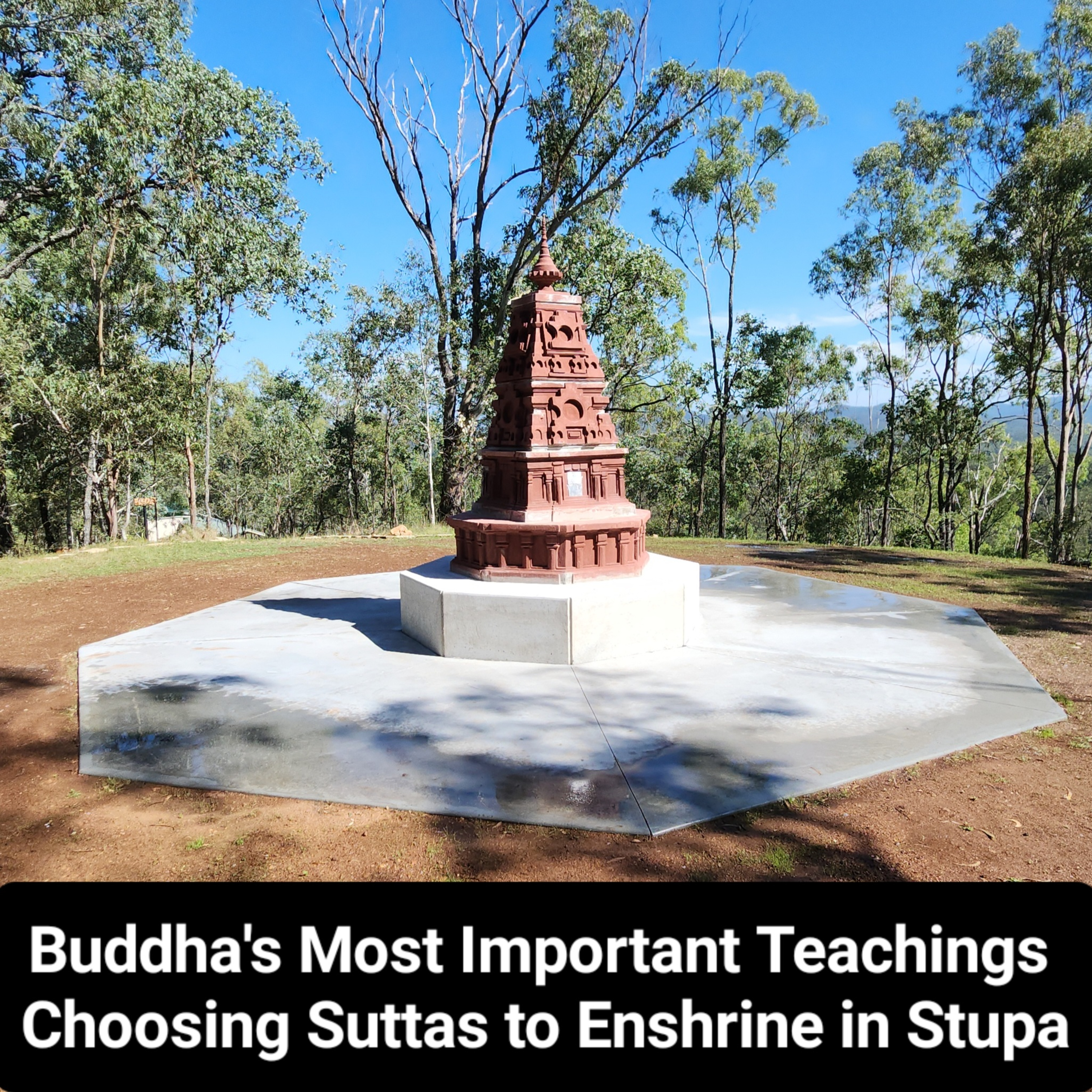
Mar 14
Going Beyond the 4 Elements: Contemplating Water, Wind, Fire, Earth | Ajahn Dhammasiha | Dhatu
When we contemplate the 4 elements of earth, water, fire and wind, we need conviction that there exists an escape beyond these elements. Without that confidence, a complete materialist would feel very despondent when reflecting on the unreliable, unpredictable and uncontrollable nature of the elements. However, if we have faith in the Buddha's teaching that one actually can go beyond , then through contemplation & insight into the elements, consciousness can completely let go and detach from them, and experience the liberated state beyond the material world, where no flood or cyclone or earthquake or fire could ever reach. Dhammagiri Website Our Spotify Playlists Newsletter Dhammagiri Youtube Channel Pics #elements #4elements #catumahabhuta #buddhism #dhammatalk

Mar 10
Water, Wind, Earth & Fire: Freeing the Mind from the 4 Elements | Ajahn Dhammasiha
With Cyclone Alfred and heavy flooding just having passed over Brisbane, Ajahn Dhammasiha offers reflections on the 4 elements (Cātu Mahābhūta/Dhātu). As the cyclone showed, these 4 material elements of earth, water, fire and wind are unreliable, uncertain, unpredictable and lead to suffering. Fortunately, we can free our mind from attachment to the 4 elements through contemplation and insight, to realize the state that is beyond reach of cyclones, floods or any form of suffering: Freedom, Release, Nibbāna. Dhammagiri Website Our Spotify Playlists Newsletter Dhammagiri Youtube Channel Pics #dhamma #buddhism #dhammatalk #4elements #dhatu

Mar 10
Equanimity | Upekkha | Buddhist Dhamma Talk by Ajahn Dhammasiha
Equanimity, in Pali 'Upekkhā', means letting go of likes and dislikes. Neither aversion nor attraction. The mind is even, balanced, neither attached nor repulsed by whatever sense impressions impinge on us. However, Ajahn Dhammasiha points out that we have to develop Equanimity based on wisdom, insight and understanding. There's a danger that we may mistake states of indifference, carlessness, or even subtle aversion for Upekkhā. That would be the "Equanimity" of the water buffalo, indifference based on ignorance. True equanimity arises from understanding sense impressions, and resulting feelings and emotions, as impermanent and not-self. Dhammagiri Website Our Spotify Playlists Newsletter Dhammagiri Youtube Channel Pics #equanimity #upekkha #equipoise #dhammatalk

Mar 3
Why am I not Happy? - I can't Find my Way! | Dhamma Talk | Ajahn Dhammasiha | Buddhism
Towards the end of the session, Ajahn Dhammasiha is passed a note with several existential questions: How could I find meaning in life? Why am I not happy? How can I find inner peace? I can't find my way! Am I stupid? Ajahn tries to respond as succinct as possible within the remaining 15 minutes of the session. Dhammagiri Website Our Spotify Playlists Newsletter Dhammagiri Youtube Channel Pics #happiness #suffering #findmyway #meaningoflife

Feb 28
Observing, Knowing, Cultivating Awareness | Ajahn Dhammasiha | Buddhist Dhamma Talk
Our culture encourages activity, going out and doing something. We're constantly busy managing our lives, trying to control our environment, trying to influence the behaviour of other persons. In this Dhamma talk, Ajahn Dhammasiha encourages us to give more attention to the quiet, passive quality of observing. Not interfering at all, but to mindfully know, to be aware of whatever is happening. In particular, to be aware of whatever is happening inside our mind. And we specifically look at those aspects of conditioned reality the Buddha directed us towards: Anicca = Impermanent/unreliable/not sure Dukkha = Suffering, unsatisfactory, unable to provide lasting happiness Anatta = Not Self, not me, not mine Once we see with wisdom in our own direct experience ('vipassana') that all conditioned phenomena ('sankhārā') exhibit these three characteristics, our heart will let go of sankhāras, and experience the Unconditioned - Release, Peace, Freedom, Nibbāna. Dhammagiri Website Our Spotify Playlists Newsletter Dhammagiri Youtube Channel Pics #awareness #sati #mindfulness #buddhism #dhamma #dhammatalk

Feb 24
Q&A: Purpose of Life? Tree Spirits? Path to Wisdom? | Ajahn Dhammasiha | Buddhist Dhamma Talk
Ajahn Dhammasiha responds to a variety of questions from a student of University of Queensland, and from other members of the audience. Dhammagiri Website Our Spotify Playlists Newsletter Dhammagiri Youtube Channel Pics #purposeoflife #wisdom #treespirits #nature #dhammatalk #buddhism .

Feb 21
AJAHN MONEYYO | The Buddha, the Unsurpassable Teacher | Who Was the Buddha?
The Buddha didn't realize awakening only for himself and was perfect in knowledge and conduct and developed supreme purity, compassion, wisdom and liberation but also had immeasurable compassion and an unique ability to teach and lead others to realize awakening themselves. This made him "the unsurpassable teacher" (anuttaro purisadamma sārathi, lit.: "the unsurpassable trainer of trainable people), one of the unique qualities of the Buddha that we can recollect about him. This Dhamma-Talk is a recollection of the Buddha as unsurpassable teacher: 0:00 Introduction 1:42 How does the Buddha teach and instruct? Where do his instructions lead? 8:54 What qualities made the Buddha the unsurpassable teacher? 33:32 How successful were the teaching efforts of the Buddha and what did he achieve by teaching? 49:54 The Buddha didn't just give people information but taught so that they get stirred up and inspired to practice his teaching Just like the sun is not only bright and radiant only for itself, but also provides the energy for the entire ecosystem of the planet earth and all beings living on it - so too the Buddha didn't realize awakening just for his own benefit but illuminated the life of countless beings and lead them to liberation. Click here to see the whole "The Life of the Buddha" series on YouTube: https://www.youtube.com/playlist?list=PLbxbuMjfRsvxKRNGf2OpxFD322oyZzfWk Dhammagiri Website Our Spotify Playlists Newsletter Dhammagiri Youtube Channel Pics #buddha #buddhism #teacher #dhamma

Feb 17
Magha Puja - The Buddha teaches Ovadapatimokkha to 1,250 Arahants | Ajahn Dhammasiha
The occasion of Māgha Pūjā commemorates the sponteneous gathering of 1,250 awakened disciples of the Buddha (Arahants) in the Veḷuvana Monastery (Bamboo Grove Monstery) in Rājagaha, and the teaching of the Ovādapātimokkha, a concise summary of the teaching of the Buddha in verse: Abstain from any evil deed, accomplish what is good and true, And fully purify your mind - That is what all the Buddhas teach. Enduring patience is the best of all ascetic practices; The best of everything at all is called Nibbāna by the sage. If you cause harm to anyone you can't be called a genuine monk! Refrain from harming and abuse, and strictly keep the Buddha's rules; Be moderate when taking food, and dwell alone in solitude devoted to the Higher Mind - That is what all the Buddhas teach. Dhammagiri Website Our Spotify Playlists Newsletter Dhammagiri Youtube Channel Pics #Maghapuja #Dhamma #Dhammatalk #Arahant #Buddha #Sangha

Feb 14
AJAHN KENG KHEMAKO | Mindfulness to Calm Emotional Turmoil | Dhammagiri | Sati
In this insightful Dhamma Talk, Ajahn Keng Khemako shares powerful teachings on how mindfulness can lead us to a deeper state of silence and inner peace. Discover how the ancient wisdom of Buddhism can be applied to modern life to cultivate a peaceful mind, reduce stress, and experience true stillness. Ajahn Khemako explains that through mindful meditation, we can quiet the noise of the world by turning our focus inward, allowing us to find clarity and tranquility. Learn the practical steps to incorporate mindfulness practices into your daily life. This video is perfect for anyone looking to enhance their meditation practice, explore Buddhist teachings, or anyone seeking a path to peace and stillness. Ajahn Keng Khemako is a Singaporean monk of the Thai Forest Tradition. He was ordained in 1987 under the recommendation of Ajahn Thanissaro. One of his main teachers was Luang Pu Jia Cundo, a first generation disciple of Ajahn Mun. He received the title of Chao Khun by the Kinf of Thailand in 2012. Currently, Ajahn Keng is the Abbot of Santi Forest Monastery (Malaysia) and President of Palelai Buddhist Temple (Singapore). Dhammagiri Website Our Spotify Playlists Newsletter Dhammagiri Youtube Channel Pics #calm #mindfulness #sati #meditation #dhammatalk

Feb 10
Keeping Precepts without Clinging to Rites & Rituals | Silabbataparamasa | Ajahn Dhammasiha
There are 10 fetters that bind us to Samsara, the repeated round of birth & death. The third of these 10 'Saṃyojana' is 'Clinging to Rites & Rituals' = Sīlabbataparāmāsa How do we preactise bowing, paying respects, keeping precepts, and offering Dāna to the sangha, without clinging? How do we do these things without getting stuck in the fetter of Sīlabbataparāmāsa? How do we use rituals, bowing, generosity and precepts not only to avoid bad karma, and to generate good karma, but also to develop samādhi and insight? Dhammagiri Website Our Spotify Playlists Newsletter Dhammagiri Youtube Channel Pics #precepts #bowing #ritesandrituals #silabbataparamasa #generosity #awakening

Feb 7
Metta is Better: Our Loving Kindness Benefits Ourselves, Not Only Others | Ajahn Dhammasiha
RE the practice of Mettā (= Loving Kindness; Unconditional Good Will to All Beings without Distinction) , Ajahn Dhammasiha points out that we should treat people that are angry like we treat people that have fallen sick: When we encounter someone suffering from flu, or perhaps even disabled in a wheelchair, we usually do not feel angry at them for being sick. Instead, we rather feel compassion, and an urge to help them, or at least to treat them especially kindly. Ideally, we even try to help them to recover from their sickness. Similarly, when we encounter anyone suffering from ' mental sickness' , namely the defilements (kilesa) of anger or jealosy or hatred, we should have the same attitude: Not getting angry at them, but giving them special kindness. Ideally we even try to help them recover, just like a good doctor would do. And of course, we can't cure anger with anger; only by treating them with loving kindness, compassion, and equanimity can we help them to heal from their anger. Dhammagiri Website Our Spotify Playlists Newsletter Dhammagiri Youtube Channel Pics #metta #lovingkindness #anger #kilesas #

Feb 3
Samatha Means Training Emotion & Feeling | Samadhi | Concentration | Ajahn Dhammasiha
One big obstruction for most meditators is incessant thinking. If we find it very difficult to calm the thinking mind, we can try a mantra meditation, like repeating 'Buddho', or 'May All Beings be at Ease'. With the mantra, we're still thinking, we don't have to stop thinking completely, but we're restricting the thoughts to only the mantra. That may be easier than trying to stop thinking completely. However, the real aim of the meditation is not just repeating the mantra: The mantra is simply a tool, a means to generate a certain feeling , a very wholesome emotion . When we repeat Buddha, we're developing the emotion of faith, confidence, devotion. When we repeat 'May All Beings be at Ease', we're cultivating the feeling of good will to all beings. These emotions and associated joyful, uplifting feeling is the main thing in samatha/samādhi meditation. 'Concentration' is actually a bad translation for samādhi, as the term concentration doesn't really imply much emotion/feeling. Instead, wholesome emotion, joyful, blissful, rapturous feeling is the crucial factor for developing samādhi. Dhammagiri Website Our Spotify Playlists Newsletter Dhammagiri Youtube Channel Pics #samadhi #samatha #emotion #feeling #concentration #meditation

Jan 31
AJAHN MONEYYO | The Buddha - A Portrait: Perfect in knowledge and conduct
This is a portrait of the Buddha by Ajahn Moneyyo based on the most ancient sources: The Sutta Pitaka and Vinaya Pitaka dating from before 400 BC. It is a recollection of the Buddha as perfect in knowledge and conduct (Vijjācaraṇa sampanno) and as the knower of the cosmos (Lokavidū) - Two of his unique qualities that we can remember about him. Learn about the way of life, the amazing qualities, meditativeattainments, psychic powers and the final knowledge of awakening of the Buddha. Click here to see the whole "Life of the Buddha" series. Chapters: 0:00 Intro, the physical appearance of the Buddha 8:21 A monk who never saw the Buddha goes to meet him... 12:23 How did the Buddha live? 20:37 The virtuous behavior of the Buddha 28:25 The Buddha's love for silence and seclusion 33:04 An overview of the Buddha's supreme spiritual qualities 33:35 The supreme compassion of the Buddha 35:18 The total fearlessness of the Buddha 43:03 The meditative attainments of the Buddha 46:31 The psychic powers and higher knowledges of the Buddha 51:19 The ultimate knowledge of awakening 57:12 Who was the Buddha? The All-Transcender Quotes Suttas (discourses of the Buddha): Anguttara Nikaya 10:81 (Numerical Discourses of the Buddha) The Buddha - The Lotus that has transcended the world https://www.dhammatalks.org/suttas/AN/AN10_81.html Anguttara Nikaya 4:34 and Itivuttaka 112 - Why the Buddha is called "The Tathāgata": https://www.dhammatalks.org/suttas/KN/Iti/iti112.html Samyutta Nikaya 23:2 (Connected Discourses of the Buddha) How someone is reconed as "a being": https://www.dhammatalks.org/suttas/SN/SN23_2.html Majjhima Nikaya 72 (Middle Length Discourses of the Buddha) The Buddha has transcended form, feeling, perception, formation and consciousness and is liberated from them. He is unfathomable and immeasurable like the ocean: https://www.dhammatalks.org/suttas/MN/MN72.html Udana 5:6 (The monk who never saw the Buddha goes to meet him):https://www.dhammatalks.org/suttas/KN/Ud/ud5_6.html Majjhima Nikaya 91 (Middle Length Discourses of the Buddha) The Brahmin Student who followed the Buddha for seven month describes his conduct and behaviour: https://www.dhammatalks.org/suttas/MN/MN91.html Majjhima Nikaya 77 (Middle Length Discourses of the Buddha) Noisy wanderers become silent when they see the Buddha coming because they know he likes silence: https://www.dhammatalks.org/suttas/MN/MN77.html MORE INFORMATION Dhammagiri Website Our Spotify Playlists Newsletter Dhammagiri Youtube Channel Pics
Jan 26
Devotional Faith vs Faith in Dhamma Principles | Saddha | Confidence | Conviction
The new 'Saddhamma Cetiya' at Dhammagiri will serve as a focal point to direct and develop our faculty of faith/confidence/conviction ('Saddhā'). However, it's important to understand that faith/confidence is not limited to devotional affection to a particular person. We can also have faith in abstract principles of Dhamma, like: "All conditioned phenomena are not self" "Craving is the cause of suffering" "Lying is never wholesome, it's better to not even speak any 'white' or 'polite' lies, but to always be truthful" and so on... Our wisdom faculty may still be too weak to really understand these Dhamma principles the Buddha taught on our own. In that case, we can fall back on faith. For example, if we experience physical pain, we may not yet be able to wisely understand that the pain is not me, not mine, and not my self. But we can have faith that it's not me, not mine and not my self. If the conviction is strong enough, it can lead to letting go, which is the whole point of the exercise. Whether the letting go occurs based on wisely understanding the pain is not self, or whether it occurs based on having faith that the pain is not self, doesn't really matter. The result is the same: Letting go and being at ease. Dhammagiri Website Our Spotify Playlists Newsletter Dhammagiri Youtube Channel Pics #faith #confidence #conviction #saddha #wisdom

Jan 21
AJAHN KENG KHEMAKO | Training the Mind | Dhammagiri
Ajahn Keng Khemako is a Singaporean monk of the Thai Forest Tradition. He was ordained in 1987 under the recommendation of Ajahn Thanissaro. One of his main teachers was Luang Pu Jia Cundo, a first generation disciple of Ajahn Mun. He received the title of Chao Khun in 2012. Currently, Ajahn Keng is the Abbot of Santi Forest Monastery (Malaysia) and the Abbot of a hill-tribes forest monastery in Om Koi, Chiangmai and President of Palelai Buddhist Temple (Singapore). This is a recording of Ajahn Keng's second visit to Dhammagiri. https://santiforestmonastery.org Info about Dhammagiri: Dhammagiri Website Our Spotify Playlists Newsletter Dhammagiri Youtube Channel Pics #mindfulness #sati #buddhism #meditation #karma

Jan 13
AJAHN GEOFF THANISSARO | Q&A: Honesty & Commitment in Dhamma Practice
Tan Ajahn Geoff Ṭhānissaro talks in this Q&A session about honesty and commitment in Dhamma practice and many other topics.On 29 & 30 November 2024, Tan Ajahn Geoff Ṭhānissaro and Tan Ajahn Keng Khemako have kindly provided time in their very busy schedule in Australia to visit Dhammagiri Forest Hermitage, Brisbane, Queensland. This was an excellent opportunity for the supporters of Dhammagiri to meet with them and benefit from their Dhamma teachings, that they shared with us during their travels in Australia. Ajahn Geoff Ṭhānissaro is the Abbot of Metta Forest Monastery in US, and Ajahn Keng Khemako is the abbot of Santi Forest Monastery in Malaysia. Dhammagiri Website:https://www.dhammagiri.net Dhammagiri YouTube: https://www.youtube.com/@dhammatalksatdhammagiri8724 Dhammagiri Newsletter:https://www.dhammagiri.net/newsletterDhammagiri Podcasts:https://www.dhammagiri.net/podcast

Jan 10
AJAHN GEOFF THANISSARO | The Tradition of the Noble Ones | Dhammagiri
Tan Ajahn Geoff Ṭhānissaro gives a Dhamma-Talk about two topics Ajahn Mun frequently reflected on: To practice the Dhamma in line with the Dhamma and to follow the tradition of the noble ones.On 29 & 30 November 2024, Tan Ajahn Geoff Ṭhānissaro and Tan Ajahn Keng Khemako have kindly provided time in their very busy schedule in Australia to visit Dhammagiri Forest Hermitage, Brisbane, Queensland. This was an excellent opportunity for the supporters of Dhammagiri to meet with them and benefit from their Dhamma teachings, that they shared with us during their travels in Australia. Ajahn Geoff Ṭhānissaro is the Abbot of Metta Forest Monastery in US, and Ajahn Keng Khemako is the abbot of Santi Forest Monastery in Malaysia. Dhammagiri Website:https://www.dhammagiri.net Dhammagiri YouTube: https://www.youtube.com/@dhammatalksatdhammagiri8724 Dhammagiri Newsletter:https://www.dhammagiri.net/newsletterDhammagiri Podcasts:https://www.dhammagiri.net/podcast

Jan 7
AJAHN GEOFF THANISSARO | Guided Meditation: Mindfulness of Breathing (Anapanasati) | How to meditate
Tan Ajahn Geoff Ṭhānissaro is giving a guided meditation on how to practice mindfulness of breathing (Ānāpānasati) as instructed by the Buddha in the Discourse about mindfulness of breathing (Middle Length Discourses No. 118).A translation of the discourse is available here: https://www.dhammatalks.org/suttas/MN... Further instructions about how to meditate can be found in his book "With each & every breath - A guide to meditation" which is available online for free here: https://www.dhammatalks.org/books/#ea... A detailed series of talks on mindfulness of breathing together with the book "With each & every breath" is also available on his website: https://www.dhammatalks.org/mp3_colle... On 29 & 30 November 2024, Tan Ajahn Geoff Ṭhānissaro and Tan Ajahn Keng Khemako have kindly provided time in their very busy schedule in Australia to visit Dhammagiri Forest Hermitage, Brisbane, Queensland. This was an excellent opportunity for the supporters of Dhammagiri to meet with them and benefit from their Dhamma teachings, that they shareed with us during their travels in Australia. Ajahn Geoff Ṭhānissaro is the Abbot of Metta Forest Monastery in US, and Ajahn Keng Khemako is the abbot of Santi Forest Monastery in Malaysia. MORE INFO:Dhammagiri Website: https://www.dhammagiri.net Dhammagiri YouTube Channel: https://www.youtube.com/@dhammatalksatdhammagiri8724 Dhammagiri Newsletter: https://www.dhammagiri.net/newsletter Dhammagiri Podcasts: https://www.dhammagiri.net/podcast

Jan 3
Imagination & Memory to Deepen Samadhi | Ajahn Dhammasiha
Meditation is subjective. It's internal, just concerned with our own internal awareness. If we simply imagine a bright light, or we remember the feeling of a previous very happy meditation, that can sometimes be enough to bring up that joyful feeling, or that bright light, in our mind again. Dhammagiri Website Our Spotify Playlists Newsletter Dhammagiri Youtube Channel Pics #meditation #samadhi #samatha #concentration #buddhism #dhamma

Dec 30, 2024
Feeling the Breath in the Whole Body | Guided Buddhist Meditation | Ajahn Dhammasiha
In this guided meditation on Ānāpānasati (Mindfulness of the In and Out Breath), Ajahn Dhammasiha guides us to recognize and experience the subtle energy of the breath throughout our whole physical body. He also emphazises the importance to meditate with joy, and to make the mind as bright and light and alert and awake and aware as possible. Even just imagining a bright light, or imagining that we really feel happy while meditating, can point the mind in the right direction and arouse the imagined emotion. Dhammagiri Website Our Spotify Playlists Newsletter Dhammagiri Youtube Channel Pics #meditation #buddhistmeditation #guidedmeditation #breath #anapanasati #sati #mindfulness
Dec 27, 2024
Morning Chanting SBS Sasanarakkha Part 01 | BUDDHIST PALI CHANTING
Listen to Part 02 on Spotify Listen to Part 02 on Apple/iTunes Morning Chanting at SBS Sasanarakkha Buddhist Sanctuary, Taiping, Malaysia. Info about Sasanarakkha and the Sanghaparinayaka, Ayasma Ariyadhammika: https://sasanarakkha.org Info about Dhammagiri: Dhammagiri Website Our Spotify Playlists Newsletter Dhammagiri Youtube Channel Pics #chanting #buddhistchanting #palichanting #buddhism #buddhapuja #morningchanting

Dec 23, 2024
I Believe in Santa | Xmas Dhamma Talk | Generosity | Dana | Ajahn Dhammasiha
At Christmas time at Dhammagiri, Ajahn Dhammasiha asserts that he is a stong believer in Santa Claus. Not in the literal sense, but he believes in Santa as a symbol of generosity. Santa's job is to give gifts to all children in the world, and he's working very hard to get that all done in one day at Christmas. That's certainly a lot of good karma for him due to his generosity. Not surprising then, that we never see Santa angry or grumpy. Even if his beard is frozen at -20C, or the reindeer are playing up, and his rucksack of gifts is very heavy, he's always got a beautiful smile on his face. We can all 'believe' in Santa in the sense that we believe in the power of making good karma ('puñña') through giving and kindness, and in the result of good karma: Happiness! Dhammagiri Website Our Spotify Playlists Newsletter Dhammagiri Youtube Channel Pics #santa #xmas #christmas #generosity #dana #giving

Dec 16, 2024
AJAHN GEOFF THANISSARO | You can Feel the Breath not only at the Nose | Q&A Dhammagiri 02
Tan Ajahn Geoff Thānissaro answers questions of the audience at Dhammagiri Forest Hermitage, Brisbane, Australia. At the first question about Ānāpānasati (mindfulness of the breath), he explains that we can experience the breath throughout the body, not just at the nose tip. 'Breath' doesn't mean just the air going into the nose & lungs, but the suptle energy connected with the breath, that we can feel throughout the body. Ajahn Ṭhānissaro (Geoffrey DeGraff) is an American monk of the Thai Forest Tradition. After graduating from Oberlin College in 1971 with a degree in European Intellectual History, he travelled to Thailand, where he studied meditation under Ajaan Fuang Jotiko, himself a student of the late Ajaan Lee. He was ordained in 1976 and lived at Wat Dhammasathit, where he remained following his teacher’s death in 1986. In 1991 he travelled to the hills of San Diego County, USA, where he helped Ajaan Suwat Suvaco establish Metta Forest Monastery . He became abbot of the Monastery in 1993. He has published a large number of Sutta translations, Dhamma books and Dhamma talks on his website: https://www.dhammatalks.org Info about Dhammagiri: Dhammagiri Website Our Spotify Playlists Newsletter Dhammagiri Youtube Channel Pics #dhamma #sati #mindfulness #buddhism #q&a

Dec 13, 2024
AJAHN KENG KHEMAKO | Mindfulness & Effort in Daily Life | Dhammagiri
Tan Ajahn Keng organized Ajahn Thanissaro's visit to Australia & NZ, and accompanied and looked after him for the whole duration. Ajahn Keng Khemako is a Singaporean monk of the Thai Forest Tradition. He was ordained in 1987 under the recommendation of Ajahn Thanissaro. One of his main teachers was Luang Pu Jia Cundo, a first generation disciple of Ajahn Mun. He received the title of Chao Khun in 2012. Currently, Ajahn Keng is the Abbot of Santi Forest Monastery (Malaysia) and the Abbot of a hill-tribes forest monastery in Om Koi, Chiangmai and President of Palelai Buddhist Temple (Singapore). https://santiforestmonastery.org Info about Dhammagiri: Dhammagiri Website Our Spotify Playlists Newsletter Dhammagiri Youtube Channel Pics #mindfulness #sati #effort #buddhism #buddhiststory

Dec 9, 2024
BHANTE JINARATANA | Gratitude & Mudita | Buddhist Talk at Dhammagiri
During his visit to Dhammagiri, Bhante Jinaratana shared these reflections on gratitude and sympathetic joy (muditā). He also reades out a passage from Ajahn Lee's biography, to show how we can combine gratitude, muditā and recollection of sangha (sanghānussati) in reference to spiritual teachers. About the Speake r: Bhante Jinaratana was born in Toronto, Canada. He became interested in meditation as a student at the University of Toronto, and began attending intensive retreats in 2002. After graduating with an H.B.Sc. (neuroscience, mathematics) in 2004, he taught English for a year in Nanning, P.R.C. Desiring to ordain, but without knowing a suitable place to do so, he travelled to Brisbane Australia and completed a Graduate Diploma in Education in 2008 at the Queensland University of Technology. During that time he had the opportunity to stay for an extended period at Dhammagiri Forest Hermitage as eight-precept meditator. The guidance he received there helped him to gain the confidence to finally ordain. Bhante Jinaratana received novice ordination at Na Uyana Forest Monastery in Sri Lanka in July 2011, and higher ordination in June 2012 (Na Uyana is the main monastery of the Shri Kalyani forest tradition, the same lineage where Ajahn Dhammasiha originally ordained). Most Venerable Na Uyane Ariyadhamma Mahāthera was the preceptor for bot ceremonies. From 2019-2021 he stayed at Pa Auk Monastery, Pyin Oo Lwin, Myanmar, meditating under the guidance of Sayadaw U Kumārabhivaṃsa and Most Venerable Pa Auk Sayadaw Āciṇṇa. He currently resides at Dhamsuwa Forest Monastery, Melbourne. Bhante has kindly accepted our invitation to visit Dhammagiri for 3 weeks in November/December. Dhammagiri Website Our Spotify Playlists Newsletter Dhammagiri Youtube Channel Pics #mudita #gratitude #sympatheticjoy #brahmavihara

Dec 6, 2024
AJAHN GEOFF THANISSARO | Blessing Anumodana Pali Chanting | Dhammagiri Sangha
Tan Ajahn Geoff Ṭhānissaro is leading our Sangha of 8 monks here at Dhammagiri in chanting the blessing and anumodanā before the meal (rejoicing in the good karma of the almsfood donors & sharing good karma with departed relatives). The blessing is recited in Pali, the original language of the Buddha. You may notice that it sounds different from the way we recite the blessing in the lineage of Ajahn Chah. As Ajahn Geoff, Ajahn Keng and Ajahn Jiep have ordained and trained in the Dhammayuttika Nikāya, they often recite Pali in the 'Makhot' style, whereas the Mahānikāya monks (including Ajahn Chah lineage) always chant in 'Sangyot' style. Dhammagiri Website Our Spotify Playlists Newsletter Dhammagiri Youtube Channel Pics Buddhist Pali Chanting #buddhistchanting #palichanting #blessing #anumodana #sharingmerits
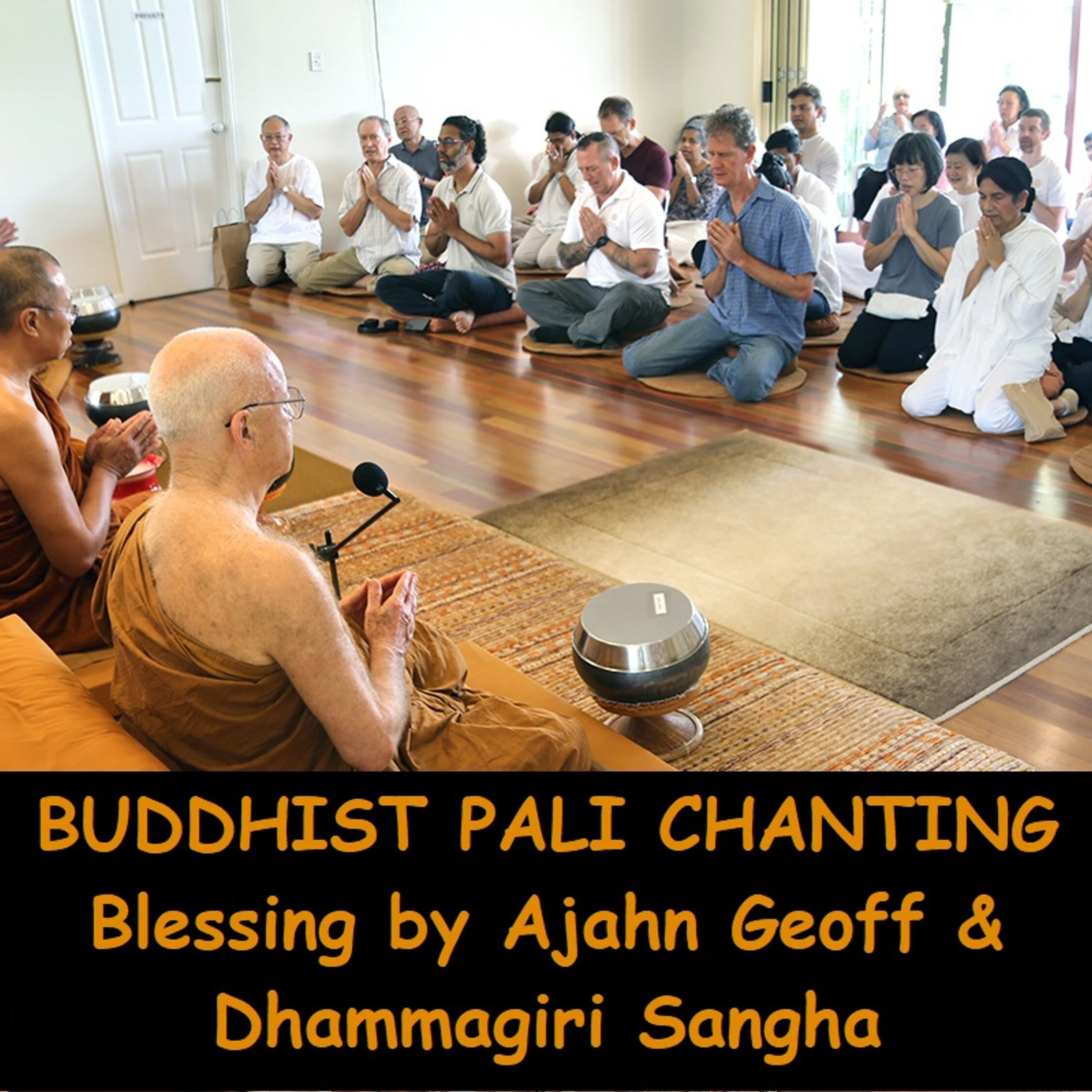
Dec 2, 2024
AJAHN GEOFF THANISSARO | Live Q&A at Dhammagiri | Questions & Answers #01
Live Question and Answer Session with Tan Ajahn Geoff Thanissaro at Dhammagiri Forest Hermitage, Brisbane, Australia. Ajahn Ṭhānissaro (Geoffrey DeGraff) is an American monk of the Thai Forest Tradition. After graduating from Oberlin College in 1971 with a degree in European Intellectual History, he travelled to Thailand, where he studied meditation under Ajaan Fuang Jotiko, himself a student of the late Ajaan Lee. He was ordained in 1976 and lived at Wat Dhammasathit, where he remained following his teacher’s death in 1986. In 1991 he travelled to the hills of San Diego County, USA, where he helped Ajaan Suwat Suvaco establish Metta Forest Monastery. He became abbot of the Monastery in 1993. He has published a large number of Sutta translations, Dhamma books and Dhamma talks on his website: https://www.dhammatalks.org Info about Dhammagiri: Dhammagiri Website Our Spotify Playlists Newsletter Dhammagiri Youtube Channel Pics #dhamma #Q&A #buddhism #insight #vipassana #wisdom

Nov 29, 2024
Anatta, the Buddha's Teaching on 'Not-Self' | Ajahn Dhammasiha | Dhammagiri
One of best known features of the Dhamma is the teachings on 'Anattā' ('not-Self' or 'non-self'). It is rightfully regarded as one of the hallmarks of the Buddha's teaching, something that distinguishes it from all other spiritual or philosophical doctrines and religious beliefs. And yet, there is considerable bewilderment as to the exact meaning of anattā, even among knowledgeable, well practised Buddhists, or in scholarly discussions. For instance, one can often hear the opinion that the Buddha teaches that "there is no self". But did the Buddha ever literally say: "there is no self"? There is at least one occasion where the Buddha is asked point-blank by the wanderer Vacchagotta whether an Attā exists or whether it does not exist: "kiṃ nu kho, bho Gotama, atth'attā ti? ... kiṃ pana, bho Gotama, natth'attā ti?" [Saṃyutta Nikāya 44.10 = Connected Discourses 44.10] Fascinatingly, the Buddha refuses an answer to either question, but instead remains silent. And there is another quote where the Buddha explains that anyone who clings to either of the following two views as true and absolute: "My self exists" ("atthi me attā ti") "My self does not exist" ("n'atthi me attā ti") [Majjhima Nikāya #2 'Sabbāsavasutta' = Middle Length Discourses #2 'All the Taints'] has "gone into the thicket of views, the desert of views, the contortion of views, the vacillation of views, the fetter of views". So what, then, does the Buddha teach regarding self? He teaches that: "all phenomena are not self". "Sabbe dhammā anattā" [e.g. Dhammapada Verse 279] He teaches that form is not self, feeling is not self, perception is not self, volition is not self, consciousness is not self. He teaches that the eye is not self, forms are not self, ear, sounds, nose, fragrances, tongue, flavours, body, sensations, mind, ideas are not self. Some may object that this is merely splitting hairs. They may feel that there is virtually no difference between saying that there is no self, and saying that all phenomena are not self. But it's a huge difference. The statement "there is no self" is building up a merely intellectual opinion, it is establishing a doctrine which in itself becomes ground for clinging, and immediately puts one in direct conflict with anyone who believes the opposite, that "there is a self". On the other hand, to state "phenomena are not self", or "form is not self" is aimed at letting go. It's not an attempt at philosophical speculation, the development of views and opinions in one's head. Instead, it is a meditation instruction, it is a tool to be used to abandon attachment. The Dhamma is not trying to establish 'absolute' truth by means of words, thoughts and notions. It's not an abstract philosophy. Instead, it's a pragmatic instruction that is applicable ('opanāyika') to our personal situation, a medicine to treat the suffering we feel in our heart. It's whole purpose is simply to induce letting go. Once we contemplate and clearly see form, feeling, perception, intention and consciousness as not self, not me, and not mine, the heart lets go of them. With this insight, the whole delusion of self is destroyed and abandoned for good, as it is impossible for the delusion of self to be established anywhere else than on these 5 groups of clinging. In fact, it's quite impossible to even meaningfully express an intellectual view of a self other than in reference to them. Dhammagiri Website Our Spotify Playlists Newsletter Dhammagiri Youtube Channel Pics #anatta #notself #nonself #emptiness #sunyata #dhamma

Nov 25, 2024
BHANTE JINARATANA | Reframing Dickens: Buddhist Interpretation of 'A Christmas Coral' | Dhammagiri
Ven Jinaratana Thera uses the very well known novella: "A Christmas Coral" from Charles Dickens to explain fundamental Buddhist principles like generosity, kamma, and finding more meaningful happiness in life. He also speaks about the importance of framing our perception according to Dhamma principles. About the Speake r: Bhante Jinaratana was born in Toronto, Canada. He became interested in meditation as a student at the University of Toronto, and began attending intensive retreats in 2002. After graduating with an H.B.Sc. (neuroscience, mathematics) in 2004, he taught English for a year in Nanning, P.R.C. Desiring to ordain, but without knowing a suitable place to do so, he travelled to Brisbane Australia and completed a Graduate Diploma in Education in 2008 at the Queensland University of Technology. During that time he had the opportunity to stay for an extended period at Dhammagiri Forest Hermitage as eight-precept meditator. The guidance he received there helped him to gain the confidence to finally ordain. Bhante Jinaratana received novice ordination at Na Uyana Forest Monastery in Sri Lanka in July 2011, and higher ordination in June 2012 (Na Uyana is the main monastery of the Shri Kalyani forest tradition, the same lineage where Ajahn Dhammasiha originally ordained). Most Venerable Na Uyane Ariyadhamma Mahāthera was the preceptor for bot ceremonies. From 2019-2021 he stayed at Pa Auk Monastery, Pyin Oo Lwin, Myanmar, meditating under the guidance of Sayadaw U Kumārabhivaṃsa and Most Venerable Pa Auk Sayadaw Āciṇṇa. He currently resides at Dhamsuwa Forest Monastery, Melbourne. Bhante has kindly accepted our invitation to visit Dhammagiri for 3 weeks in November/December. Dhammagiri Website Our Spotify Playlists Newsletter Dhammagiri Youtube Channel Pics #dickens #xmas #christmas #buddhism #dhamma #reframing

Nov 22, 2024
AJAHN X DHANIYO | The Dying Man with 4 Wives | Buddhist Story | Dhammagiri
At the Robe Offering Ceremony at Dhammagiri Forest Hermitage, Ajahn X Dhaniyo relates a powerful Buddhist simile: A man with 4 wifes is about to die. He gets a chance to talk to his four wifes a last time, but is bitterly disappointed about how they react to his impending death; except for the fourth wife, the one he loved least and showed the least affection... Ajahn X (Phra Suthanai Dhaniyo) has been a monk for 22 years, and has lived and trained for 16 years with Luang Por Liem at Wat Nong Pah Pong, Ajahn Chah's original monastery. Currently he resides at Bodhisaddha Monastery, Wilton near Sydney. He visited us together with Ajahn Saalii Sujīvo specially for our robe offering ceremony, and kindly agreed to give a Dhamma talk in English for the occasion, part of which contained the simile of the four wives. Dhammagiri Website Our Spotify Playlists Newsletter Dhammagiri Youtube Channel Pics #buddhiststory #buddhism #dhamma #4wives #death #karma
Nov 20, 2024
Triple Refuge & Precepts Ceremony | Ajahn Uttamapanyo | Robe Offering Dhammagiri
At our Robe Offering Ceremony, Tan Ajahn Uttamapanyo (Phra Yanmethi Petruang) kindly conducted the ceremony of taking refuge in Triple Gem & observance of 5 precepts for us. Ty is leading the lay community in requesting the refuges & precepts. The ritual is conducted in Pali, the language of the Buddha. Requesting Triple Refuge & Five Precepts Mayaṃ Bhante, tisaraṇena saha pañca-sīlāni yācāma. Dutiyampi, mayaṃ Bhante tisaraṇena saha pañca-sīlāni yācāma. Tatiyampi, Mayaṃ Bhante tisaraṇena saha pañca-sīlāni yācāma. (English trsl., not chanted during session: "Venerable Sir, we request the Triple Refuge together with the 5 precepts. For the second time... For the third time...") Homage to the Buddha Recited by Monk 3x Namo tassa Bhagavato Arahato Sammāsambuddhassa! (3x) Homage to the Buddha Repeated by Laity 3x Namo tassa Bhagavato Arahato Sammāsambuddhassa! (3x) (English translation, not chanted during session: "Homage to the Exhaulted, Noble, and perfectly enlightened one!" 3x) Taking Refuge in Buddha, Dhamma & Sangha 3x (recited line by line by monk, and repeated line by line by laity) Buddhāṃ saraṇaṃ gacchāmi. Dhammaṃ saraṇaṃ gacchāmi. Sanghaṃ saraṇaṃ gacchāmi. Dutiyampi Buddhāṃ saraṇaṃ gacchāmi. Dutiyampi Dhammaṃ saraṇaṃ gacchāmi. Dutiyampi Sanghaṃ saraṇaṃ gacchāmi. Tatiyampi Buddhāṃ saraṇaṃ gacchāmi. Tatiyampi Dhammaṃ saraṇaṃ gacchāmi. Tatiyampi Sanghaṃ saraṇaṃ gacchāmi. (English translation, not chanted during session: "I take refuge in the Buddha. I take refuge in the Dhamma. I take refuge in the Sangha For the second time, I take refuge... For the third time, I take refuge...") Taking the 5 Precepts (recited line by line by monk, and repeated line by line by laity) Pāṇātipātā veramaṇī sikkhāpadaṃ samādiyāmi Adinnādānā veramaṇī sikkhāpadaṃ samādiyāmi Kāmesu micchācārā veramaṇī sikkhāpadaṃ samādiyāmi Musāvādā veramaṇī sikkhāpadaṃ samādiyāmi Surā-meraya-majja-pamādaṭṭhānā veramaṇī sikkhāpadaṃ samādiyāmi (English translation, not chanted during session: "I undertake the training to abstain from killing any living beings. ... to abstain from stealing. ... to abstain from sensual misconduct. ... to abstain from lying. ... to abstain from alcohol or any other drugs that cause intoxication and heedlessnes.") Monk Recites Blessing: Imāni pañca-sikkhāpadāni sīlena sugatiṃ yanti, sīlena bhogasampadā, sīlena nibbutiṃ yanti - tasmā sīlaṃ visodhaye! (English translation, not chanted during session: These five training steps lead through virtue to a good rebirth, lead through virtue to the acquisition of wealth, lead through virtue to the extinction of suffering - therefore, may your purify your virtue!) Dhammagiri Website Our Spotify Playlists Newsletter Dhammagiri Youtube Channel Pics #buddhistchanting #palichanting #triplerefuge #precepts #buddhistceremony #buddhistmonastery #buddhistritual
Nov 19, 2024
Blessing Anumodana | Robe Offering Dhammagiri | Buddhist Pali Chanting
On the weekend of our Robe Offering Ceremony at Dhammagiri, we had 9 monks staying for 2 nights in the monastery. In this recording, Tan Ajahn Uttamapanyo is leading the sangha in the recitation of blessings and anumodana for long life, strength, health, prosperity and good fortune; and to share good karma with all beings. Dhammagiri Website Our Spotify Playlists Newsletter Dhammagiri Youtube Channel Pics #buddhistchanting #palichanting #blessing #anumodana #buddhistmonk #buddhistmonastery
Nov 14, 2024
AJAHN X DHANIYO | Life with Luang Por Liem at Wat Nong Pah Pong, Ajahn Chah's Monastery | Dhammagiri
Ajahn X (Phra Suthanai Dhaniyo) has been a monk for 22 years, and has lived and trained for 16 years with Luang Por Liem at Wat Nong Pah Pong, Ajahn Chah's original monastery. Ajahn shares some of his experiences of life at Wat Pah Pong, and reflects on teaching he has received from Luang Por Liem personally. Dhammagiri Website Our Spotify Playlists Newsletter Dhammagiri Youtube Channel Pics #buddhism #dhamma #ajahnchah #buddhistmonk #wisdom

Nov 10, 2024
Vipassana: Observing Without Interfering | Ajahn Dhammasiha | Insight Mindfulness Sati
Vipassana comes from the Pali verb 'Vipassati' = 'to see clearly'. To practise Vipassana, we have to train ourselves to watch as a neutral, uninvolved, observer. We can't interfere or manipulate things we observe, just as a researcher can't manipulate the experiment, if he wants to really find out how reality works. However, there are certain areas, certain features of reality the Buddha is pointing us to. They are there all the time, we don't have to create them, they are part of nature. But we overlook them constantly due to delusion, and if the Buddha points out where to direct our 'Clear Seeing' towards, then it's easier to finally recognize what has been always there, but hidden but defilements: Anicca - Impermanent, unreliable, unsure Dukkha - Ultimately disappointing, suffering Anattā - Not Self, not me, not mine There's also a post in our Dhamma Reflections blog on the same subject here . Dhammagiri Website Our Spotify Playlists Newsletter Dhammagiri Youtube Channel Pics #vipassana #insight #mindfulness #sati #dhamma #meditation
Nov 4, 2024
Perception und Consciousness | Saññā & Viññāna | Ajahn Dhammasiha | Buddhism
Ajahn Dhammasiha is asked about the difference between perception (Pāli: saññā) and consciousness (Pāli: viññāna), and how we can distinguish these two in our experience. The question is important, as both are part of the 5 Groups of Clinging (pañcupādānakkhandhā), which are the five focal points of attachment and identification. To abandon attachment, and to see through the illlusion of self, we have to carefully investigate the 5 Groups of Clinging as they arise in our present experience. And to investigate them successfully, naturally, we have to know what each of them actually are, and how they differ. Dhammagiri Website Our Spotify Playlists Newsletter Dhammagiri Youtube Channel Pics #consciousness #perception #awareness #clinging #attachment #dhamma
Oct 31, 2024
How to Develop Mudita Sympathetic Joy | Ajahn Dhammasiha | Dhamma Talk
Prompted by a question from the audience, Ajahn Dhammasiha shares reflections on the theme of developing Sympathetic Joy (Muditā). Muditā is on of the four Divine Abodes (Brahma-vihāra), together with loving kindness, compassion and equanimity. Sympathetic Joy is the quality of rejoicing and feeling happy in other beings success. It's the very opposite of envy and jealousy. Ajahn suggests a similar approach as in developing mettā: We imagine someone we really like anyhow, and then remember some wholesome achievement they accomplished. Next we use a mantra like formula, like for instance: "May you enjoy all your success!" or similar. We continue till we can really feel the corresponding emotion. However, we have to be careful that we only delight in wholesome success... Dhammagiri Website Our Spotify Playlists Newsletter Dhammagiri Youtube Channel Pics #mudita #sympatheticjoy #brahmavihara #divineabidings #buddhism
Oct 28, 2024
Six Obstructions for Mindfulness | Sati | Satipatthana | Dhamma Talk | Ajahn Dhammasiha
In the famous discourse on the 'Foundations of Mindfulness' (Satipaṭṭhāna) the Buddha promises us that we can attain Nibbāna or Non-Returning in just 7 days, if we practise as descibed by him. Why, then, are we still enmeshed in suffering? Ajahn Dhammasiha describes six obstructions that we have to abandon first - otherwise we're not able to practise Satipaṭṭhāna in the way the Buddha described them: Delight in Work Delight in Chatting (including social media!) Delight in Sleep Delight in Socialising (including social media!) Lack of Sense Restraint Not knowing the Right Measure when Eating [Anguttara Nikāya/Numerical Discourses, Book of Sixes, #117 Dhammagiri Website Our Spotify Playlists Newsletter Dhammagiri Youtube Channel Pics #mindfulness #sati #vipassana #meditation #dhamma #buddhism
Oct 24, 2024
Consistent Practice & How to Prevent Unwholesome Mindstates | Ajahn Dhammasiha | Buddhism
Ajahn Dhammasiha responds to two closely related questions from the audience: 1. We may experience highs and lows in our meditation practice. Sometimes it even seems like we're suddenly back to zero, almost like riding a roller coaster. How can we make our Dhamma practice more consistant ? 2. How can we prevent unwholesome mindstates from arising? This is actually the first of 4 factors of Right Effort (sammā-vāyāma) , number six in the Noble Eightfold Path: Rather than trying to abandon unwholesome states once they have come up, it's better to 'nip them in the bud', as they say, by eliminating the conditions that potentially cause defilements to arise in the first place. Dhammagiri Website Our Spotify Playlists Newsletter Dhammagiri Youtube Channel Pics #dhamma #buddhism #dhammatalk #dhammatalks #righteffort #sammavayama
Oct 21, 2024
Mine Making: Investigating Upadana at the Food Buffet | Ajahn Dhammasiha
Dependent Origination (Paṭicca Samuppāda) is one of the core teachings of the Buddha. However, it is a teaching that the Buddha himself described as 'deep, profound, subtle, difficult to see...'. Ajahn Dhammasiha explains how we can observe aspects of dependent origination during a common, every-day activity: Taking food from a buffet! 🍚🍛🥄🥣 Ajahn offers reflection how we can observe the relationship of: Sense Contact (phassa) Craving (taṇhā) Clinging / Grasping (upādāna) While taking food from the buffet. The moment we lift up some food from the buffet, and put it onto our plate, something remarkable and very powerful happens in our mind: We now regard this food as 'mine', it has somehow become 'my food'. However, nothing has changed in the food. It's still the same food. But once it's on our plate, something has very much changed in our mind, 'mine-making' has occurred. We have actively done something to dramatically change our attitude to that food, by taking possession of it mentally. This same process of mine-making we do all the time, every moment with all 5 groups of clinging (pañc'upādānakkhandhā): Form / Body (rūpaṃ) Feeling (vedanā) Perception (saññā) Intention / Will (sankhārā) Consciousness (viññāṇaṃ) However, it's more difficult to clearly see in regards to these 5 groups of clinging. What's happening with our mind at the buffet is easier accessible to direct observation, and can get us started in investigating upādāna. If we can carefully, mindfully observe how we're doing 'mine-making' while taking food from the buffet (or even while buying a new iPhone from the shop), we can hopefully understand how upādāna arises in our mind, and then STOP mine-making. That would be all that's required to fully liberate ourselves: If we stopped all mine-making, our heart would be fully released and experience Nibbāna! Dhammagiri Website Our Spotify Playlists Newsletter Dhammagiri Youtube Channel Pics #upadana #minemaking #dependentorigination #paticcasamuppada #dhamma

Oct 18, 2024
Metta is Excellent, but Don't Neglect Mudita & Karuna | Compassion Sympathetic Joy | Ajahn Dhammasiha
Loving Kindness is an extremely beneficial mental quality, and an excellent meditation object. However, in some situations Compassion (Karuṇā) or Sympathetic Joy (Muditā) may work even better to overcome unwholesome mind states, and develop wholesome ones. (Of course, there is also the extremely important 4th 'Divine Abiding' (Brahmavihāra), namely Equanimity (Upekkhā), but that will have to be covered in another talk) Dhammagiri Website Our Spotify Playlists Newsletter Dhammagiri Youtube Channel Pics #karuna #compassion #mudita #sympatheticjoy #brahmavihara #divineabodes

Oct 14, 2024
Not-Self Anatta - What Does that Mean? | Ajahn Dhammasiha | Not Self or No Self? | Buddha Dhamma
Ajahn Dhammasiha responds to a question from the audience: What's the meaning of Anatta ( Not Self ) ? In particular, Ajahn reflects about the important distinction between Not Self (anatta), which the Buddha expounded very frequently, and No Self (natth'attā), which the Buddha actually never taught. Dhammagiri Website Our Spotify Playlists Newsletter Dhammagiri Youtube Channel Pics #anatta #notself #not-self #buddhism #dhammatalk

Oct 10, 2024
Buddhist Blessing at Dhammagiri | Monks Chant Anumodana & Sharing Good Karma
Ajahn Dhammasiha and Ajahn Moneyyo recite the traditional Pali verses of blessing, anumodanā, and sharing of merits with departed loved ones. This is what we chant every day for our kind and generous donors, when they offer alsmfood for the monks' daily meal. You can read the full Pali text and English translation in this blog post on our website . Below is only about half the chant, as much as fits into the podcast description: "Yathā vāri-vahā pūrā paripūrenti sāgaraṃ Evam-eva ito dinnaṃ petānaṃ upakappati. Icchitaṃ patthitaṃ tumhaṃ khippam-eva samijjhatu; Sabbe pūrentu sankappā cando paṇṇa-raso yathā maṇi joti-raso yathā. As all the water in the streams is flowing to the boundless sea, Just likewise all your offerings are flowing to the spirit world. And all you wish for and desire shall soon and safely be attained; May wholesome wishes be fulfilled just like the moon at full-moon night just like a wish fulfilling gem. Sabb'ītiyo vivajjantu, sabba-rogo vinassatu; Mā te bhavatv-antarāyo, sukhī dīgh'āyuko bhava. May all distress come to an end, may all desease be quickly healed, May all your problems be resolved, may you live long and happily. Abhivādana-sīlissa, niccaṃ vuḍḍh'āpacāyino; Cattāro dhammā vaḍḍhanti: Āyu vaṇṇo sukhaṃ balaṃ. When someone's always honouring the elders worthy of respect, Then they will grow in these four things: long life, strength, beauty, happiness. ( ... ) (Not enough space in this description to include everything) Also, please note the monks only chant the Pali part, English translation above is just for your information. Dhammagiri Website Our Spotify Playlists Newsletter Dhammagiri Youtube Channel Pics #blessing #anumodana #sharingmerits #buddhistchanting #palichanting
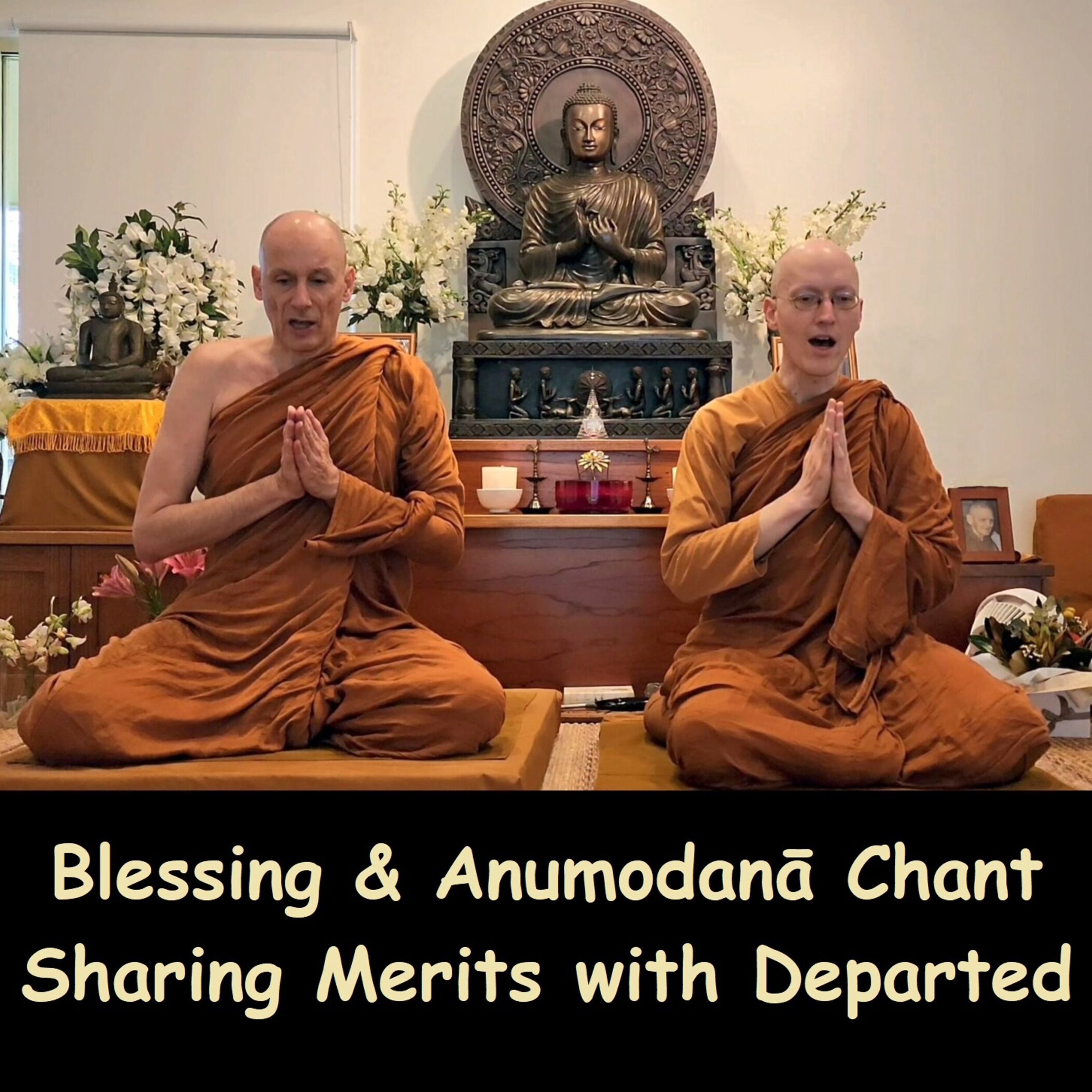
Oct 7, 2024
Marriage: Romantic Love is NOT Enough | Buddhist Dhamma Talk | Ajahn Dhammasiha
A couple getting married was interested to get some advice on Buddhist teachings how to make a marriage work, so that it lasts long and both spouses can live in harmony. Ajahn Dhammasiha cites a study done in Italy with functional MRI brain scans, that claimed to have found that the feeling of romantic love biologically is not designed to last for decades. In fact, the researchers considered the absolute maximum duration as approximately 4 years or so (though often it is much shorter). This seems to agree with personal experience of most people. As marriage is usually supposed to last a whole lifetime, it follows that romantic love lasting max 4 years can not be a sufficient foundation. Instead, a married couple has to build up other qualities in their relationship, which sound much less 'romantic', but actually do last for a lifetime... Dhammagiri Website Our Spotify Playlists Newsletter Dhammagiri Youtube Channel Pics #wedding #marriage #love #commitment #respect #buddhism #dhamma

Oct 3, 2024
For One Dependent, there is Wavering... | SUTTA EXPLORATION Ud 8.4 | Ajahn Dhammasiha
"For one dependent, there is wavering. Without dependence, there's no wavering. Without wavering, there's tranquility. With tranquility, there's no inclination. Without inclination, there's no coming and going. Without coming and going, there's no passing away and rearising. Without passing away and rearising, there's no here or there or anywhere in between. This, just this, is the end of suffering." Udāna 9.4 "Catuttha-nibbāna-paṭisaṃyutta-sutta" Inspired Exclamations 9.4 "4th Sutta re Nibbāna" Ajahn Dhammasiha offeres some reflections on this profound sutta, an inspired exclamation the Buddha uttered in verse when he was teaching Dhamma related to Nibbāna, and the monks where all listening fully attentive. Ajahn Ṭhānissaro's (Ajaan Geoff's) translation of the Udāna is available for free download as epub, pdf and other formats here. Dhammagiri Website Our Spotify Playlists Newsletter Dhammagiri Youtube Channel Pics #Udana #InspiredUtterance #exclamations #SuttaStudy #Nibbana #Nirvana .
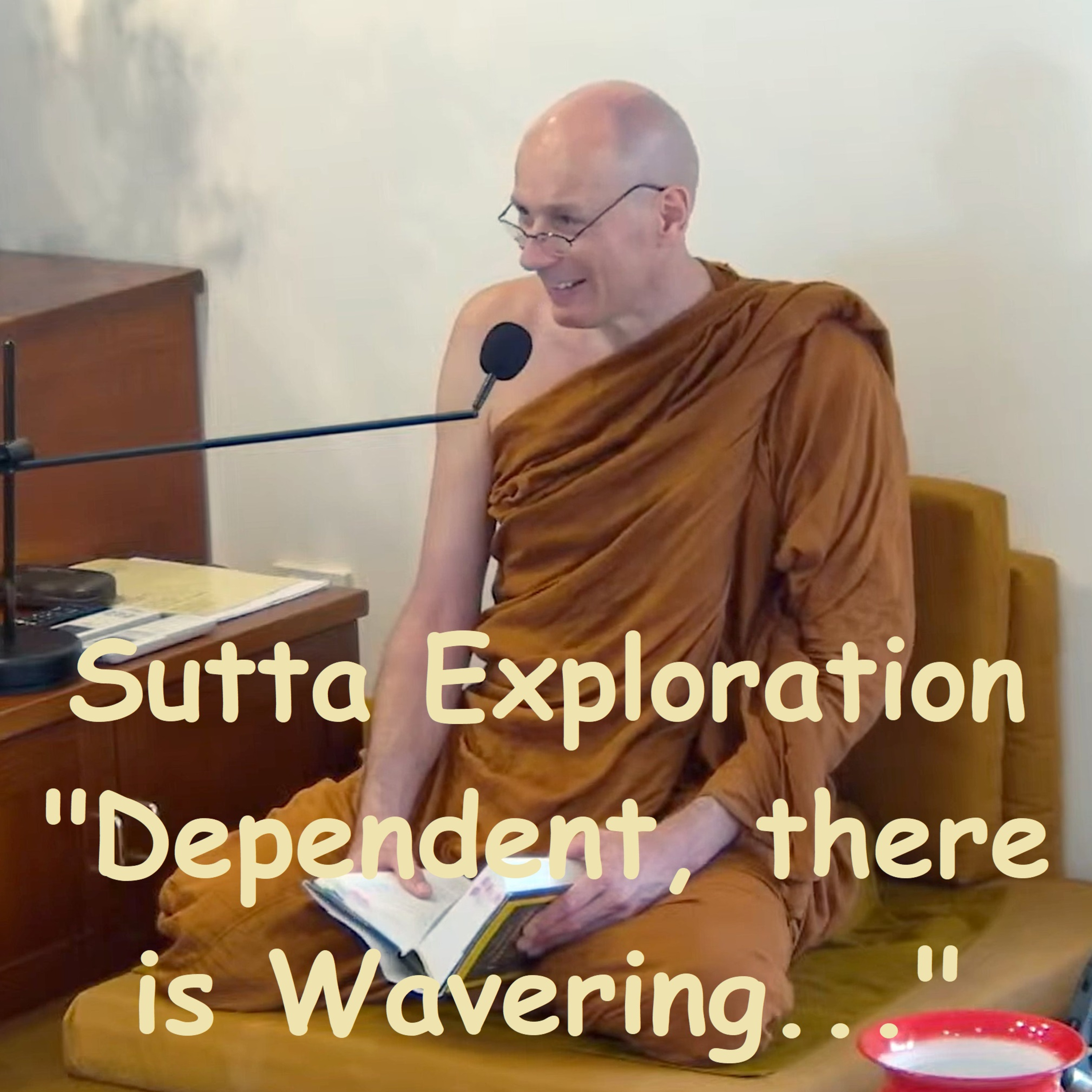
Sep 30, 2024
Joy & Rejoicing in Goodness | Muditā | Ajahn Dhammasiha | Buddha Dhamma
It's so important not to only look at all the bad things happening, or to be mostly focussed our own faults. Without denying negative events, we can discoved so much that's good, wholesome and admirable, both in ourselves and in others. If we only pay attention to the bad things, we feel miserable. If we notice and appreciate all that's good, we fill our lives with rejoicing, joy and muditā. Ajahn Dhammasiha also addresses questions about: 23:27 Meaning of 'psasāda' (confidence/faith)? 25:10 Is the desire to realize Nibbāna a 'good' desire? 29:20 Why didn't the Bodhisatta's first teacher didn't attain nibbāna themselves, as they had already realized very deep samādhi? 33:55 Anāpāṇasati (mindfulness of the breath) or Mettā (loving kindness) as meditation object? Related to the last question, Ajahn explains how to easily find any of our podcasts: Just enter any subject you're interested in, and all the relevant podcast will show up to listen to. Dhammagiri Website Our Spotify Playlists Newsletter Dhammagiri Youtube Channel Pics #joy #rejoicing #mudita #goodness #meditation

Sep 26, 2024
Sharing Merits with Departed Loved Ones - Who Can Receive Them? | Ajahn Dhammasiha | Transferring Good Karma
At almsoffering before the meal, the monks usually chant the blessing, anumodanā & verses for sharing merits with the spirits of departed relatives. Does that sharing of good karma really reach the departed? Under what conditions, in which sphere of rebirth can they they benefit most from sharing merits? Ajahn Dhammasiha quotes from Anguattara Nikāya (Numerical Discourses of the Buddha), Book of Tens, #177, 'Jānussoni-sutta'. In this discourse, the Buddha explains that direct material benefit in the form of food, drink, clothing & shelter can only be transferred to loved ones reborn in the 'Peta-loka' , ('Realm of Hungry Ghosts'/'Deprived Spirits'). It's so important for them, and they really depend on it so much for satisfying their basic needs, that the Buddha established it as a duty for us to regularly share merits with departed relatives, just in case that they ended up in this realm . Moreover, we had relatives also in our countless previous lives. Therefore, even if the relative we're thinking of primarily is not reborn among the deprived spirits (and won't required our sharing anyhow in a deva or human rebirth), the Buddha asserted that there will always be some relative from on of our past lives that can benefit from our sharing. Consequently, we should include all past relatives when sharing merits, additionally to the main recipient. Dhammagiri Website Our Spotify Playlists Newsletter Dhammagiri Youtube Channel Pics #merits #sharingmerits #Karma #pastrelative #lovedones

Sep 23, 2024
AJAHN AMARO | 4 Noble Truths | Dhamma Talk at Dhammagiri
On occasion of his first visit to Australia at Dhammagiri Forest Hermitage , Brisbane, Ajahn Amaro shares insights about the four noble truth, one of the most fundamental teachings of the Buddha. In particular, Ajahn provides guidance how to apply contemplation of the 4 Noble Truths in our daily life. Ajahn Amaro is the abbot of Amaravati Buddhist Monastery near London, UK. Born in England in 1956, Ven. Ajahn Amaro received a BSc. in Psychology and Physiology from the University of London. Spiritual searching led him to Thailand, where he went to Wat Pah Nanachat, a Forest Tradition monastery established for Western disciples of Thai meditation master Ajahn Chah, who ordained him as a bhikkhu in 1979. Soon afterwards he returned to England and joined Ajahn Sumedho at the newly established Chithurst Monastery. He resided for many years at Amaravati Buddhist Monastery, making trips to California every year during the 1990s. In June 1996 he established Abhayagiri Monastery in Redwood Valley, California, where he was co-Abbot with Ajahn Pasanno until 2010. He then returned to Amaravati to become Abbot of this large monastic community. Ajahn Amaro has written a number of books, including an account of an 830-mile trek from Chithurst to Harnham Vihara called Tudong - the Long Road North, republished in the expanded book Silent Rain. His other publications include Small Boat, Great Mountain (2003), Rain on the Nile (2009) and The Island - An Anthology of the Buddha's Teachings on Nibbana (2009) co-written with Ajahn Pasanno, a guide to meditation called Finding the Missing Peace and other works dealing with various aspects of Buddhism. Dhammagiri Website Our Spotify Playlists Newsletter Dhammagiri Youtube Channel Pics .

Sep 19, 2024
5 Faculties: Faith, Energy, Mindfulness, Samādhi, Wisdom | Ajahn Dhammasiha
Ajahn Dhammasiha shares reflections on the five faculties (pañcindriya), crucial spirtual qualities in our heart that power our Dhamma practice. We can gradually develop each of these using suitable skillful means. Fortunately, they are not erased at death, but carry accross to our next life, allowing us to cultivate them over several life times, till they are strong enough to eradicate the defilements (kilesa) and free ourselves from suffering with their help. Confidence / Faith / Conviction (saddhā) Energy / Persistant Effort (viriya) Mindfulness (sati) Unification of mind / 'concentration' (samādhi) Wisdom (paññā) Dhammagiri Website Our Spotify Playlists Newsletter Dhammagiri Youtube Channel Pics #spiritualfaculties #pancindriya #faith #energy #mindfulness #samadhi #wisdom
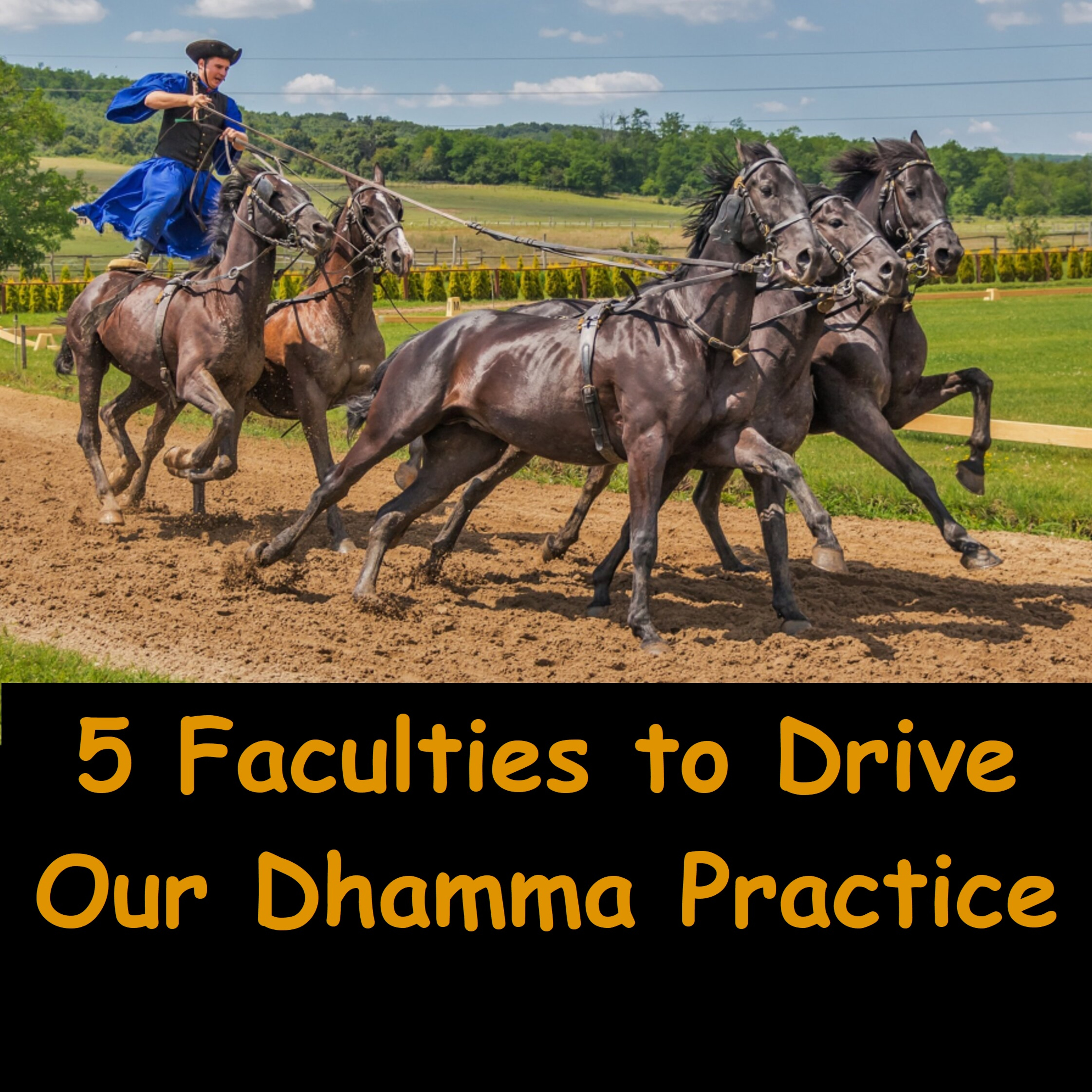
Sep 16, 2024
5 Hindrances: How to Surmount them to Develop Samādhi & Insight | Ajahn Dhammasiha
Ajahn Dhammasiha reflects on skilfull means to overcome the 5 hindrances (Pañca Nīvaraṇā). It is exactly these 5 obstructions which stop our mind from unifying in samādhi, and weaken our wisdom: Sensual desire (kāmacchanda) Ill Will / Anger / Aversion (byāpāda) Laziness / Tiredness / Sloth & Torpor / Lack of energy (thīna-middha) Restlessness & remorse (uddhacca-kukkucca) Doubt / Wavering / Vacillation (vicikicchā) Dhammagiri Website Our Spotify Playlists Newsletter Dhammagiri Youtube Channel Pics #5Hindrances #samadhi #insight #vipassana #dhammatalk

Sep 12, 2024
Enjoying Solitude is Necessary to Attain Nibbana | Ajahn Dhammasiha | SUTTA EXPLORATION AN 6.68
The Buddha explains in this short but powerful discourse: If we're trying to find all our happiness only in socializing and interacting with friends & family, we will not be able to enjoy the happiness of solitude. Without enjoying the happiness of solitude, we will never understand our own mind. If we don't understand our own mind, we can't realize stream entry, sammā samādhi and Nibbāna. Sutta Study of Anguttara Nikāya, Sixes, No 68 Numerical Discourses of the Buddha, Book of Sixes No 68 Dhammagiri Website Our Spotify Playlists Newsletter Dhammagiri Youtube Channel Pics #Solitude #Seclusion #Nibbana #Awakening #Dhammatalk
Sep 9, 2024
Noble 8 Fold Path to Guide Our Life | Ajahn Dhammasiha | Middle Way | Ariyo Atthangiko Maggo
Ajahn Dhammasiha goes through the 8 factors of the Noble Eight Fold Path, and explains how they are relevant to guide our action and speech, both in daily life as well as in our formal meditation. The Noble 8-Fold Path Ariyo Aṭṭhangiko Maggo , also know as the 'Middle Way' Majjhimā Paṭipadā is one of the most fundamental teachings of the Buddha, mentioned prominently already in his very first formal teaching, the Discourse on Setting in Motion the Wheel of Dhamma. In fact, the Noble Eightfold Path constitutes the Fourth Noble Truth, the way leading to the end of suffering. However, if we don't know in detail what are the 8 factors of the Noble 8fold Path, we won't be able to practise on progress along that path. If we know them well, we can apply one or several of them troughout our daily activites, and make bhāvanā (meditation/cultivation/development) an integral part of our daily life. Right View Right Intention Right Communication Right Action Right Job Right Effort Right Mindfulness Right Samādhi (Concentration/Unification of Mind) Dhammagiri Website Our Spotify Playlists Newsletter Dhammagiri Youtube Channel Pics .

Sep 6, 2024
New to Buddhism: How to Start? | Ajahn Dhammasiha | Dhammagiri
Ajahn Dhammasiha is asked by a newcomer to Buddhism for some advice how to get started with both study and practice of the Buddha's teaching. Dhammagiri Website Our Spotify Playlists Newsletter Dhammagiri Youtube Channel Pics #buddhism #dhamma #generosity #virtue #meditation

Sep 2, 2024
GUIDED MEDITATION | Loving Kindness - Metta | Ajahn Dhammasiha | Buddhism
Ajahn Dhammasiha leads a guided meditation on Mettā, Loving Kindness, cultivating the intention of unconditional good will to all beings without distinction. In particular, he encourages us to 'get the feeling going, i.e. to not just 'think' about loving kindness, but to recognize and nurture the ulifting, joyful emotion we feel while practising mettā. He also points out how important it is to develop loving kindness to ourselves. Finally, he shares some reflections on cultivating mettā while walking, and on maintaining the intention of good will to everyone throughout once daily life. Dhammagiri Website Our Spotify Playlists Newsletter Dhammagiri Youtube Channel #buddhism #dhamma #meditation #metta #lovingkindness

Aug 29, 2024
AJAHN AMARO | How to Judge Progress in my Dhamma Practice | Q&A Dhammagiri
Question & Answer session with Ajahn Amaro on the occasion of his first Australia visit at Dhammagiri Forest Hermitage, Queensland, Brisbane. Ajahn Amaro is the abbot of Amaravati Buddhist Monastery near London, UK. Born in England in 1956, Ven. Ajahn Amaro received a BSc. in Psychology and Physiology from the University of London. Spiritual searching led him to Thailand, where he went to Wat Pah Nanachat, a Forest Tradition monastery established for Western disciples of Thai meditation master Ajahn Chah, who ordained him as a bhikkhu in 1979. Soon afterwards he returned to England and joined Ajahn Sumedho at the newly established Chithurst Monastery. He resided for many years at Amaravati Buddhist Monastery, making trips to California every year during the 1990s. In June 1996 he established Abhayagiri Monastery in Redwood Valley, California, where he was co-Abbot with Ajahn Pasanno until 2010. He then returned to Amaravati to become Abbot of this large monastic community. PHOTOS OF AJAHN AMARO AT DHAMMAGIRI Pics of Ajahn's visit at Dhammagiri can be seen here: https://www.dhammagiri.net/ajahnamaro and here: https://latest-pics.dhammagiri.net/ MORE INFORMATION Dhammagiri Website: https://www.dhammagiri.net Dhammagiri Newsletter: https://www.dhammagiri.net/newsletter Dhammagiri Podcasts: https://www.dhammagiri.net/podcast .

Aug 27, 2024
The Mind Like Fire Unbound | Fire Gone Out as Simile for Nibbana in Buddhism | Ajahn Dhammasiha
Although Nibbāna is beyond all description and can not possibly comprehended by the thinking mind through language and concepts, the Buddha still used various similes to convey some idea to us what Nirvāṇa is all about. In particular, many times he compared the eperience of Nibbāna to a fire gone out. However, there's a big problem with that simile nowadays: Our current understanding how fire functions is very different from the theory of fire in ancient India. In our time, after a fire has gone out, we simply regard it as non-existant. But that would be a serious misunderstanding regarding the experience of Nibbāna. The statement that an enlightened person after death doesn't exist anymore has been explicitely rejected by the Buddha as not applicable (of course, to state that he exists is just as inapplicable). In ancient India, fire was regarded as 'clinging' to the fuel dependent on which it burns. When the fire goes out (e.g. through exhaustion of its fuel), the fire is released and enters a non-manifest state. Indian's at the time of the Buddha would not see an extinguished fire as non-existant. Instead, they believed an extinguished fire is simply freed from its entrapment to the fuel, and has entered a state in which it can't be defined or described. As Ajahn Geoff Thanissaro will visit Dhammagiri end of November, Ajahn Dhammasiha uses the opportunity to introduce us to an excellent essay of Ajaan Ṭhānissaro on exactly this subject: "The Mind Like Fire unbound" By the way, our Spotify Playlists can be found here: https://open.spotify.com/user/8z4dmrysnbbnjtz9f0wzjgcre Our Podcast is also available on our own Dhammagiri Website, no need for any special app, just listen in any browser: https://www.dhammagiri.net/podcast More about Dhammagiri Forest Hermitage: https://www.dhammagiri.net/news Our Youtube Channel: https://www.youtube.com/ @dhammatalksatdhammagiri8724 Our email Newsletter: https://www.dhammagiri.net/newsletter .

Aug 23, 2024
Breath without I-Making & Mine-Making | GUIDED BUDDHIST MEDITATION | Ajahn Dhammasiha
In this short guided meditation, Ajahn Dhammasiha encourages us to be aware of the breath, but also to be aware of not turning our meditation into an excercise of I-Making and Mine-Making ('Ahaṃ-Kāra' & 'Mamaṃ-Kāra'). Our Spotify Playlists Our Podcast is also available on our own Dhammagiri Website, no need for any special app, just listen in any browser: https://www.dhammagiri.net/podcast More about Dhammagiri Forest Hermitage: https://www.dhammagiri.net/news Our Youtube Channel: https://www.youtube.com/ @dhammatalksatdhammagiri8724 Our email Newsletter: https://www.dhammagiri.net/newsletter #guidedmeditation #meditation #buddhism #notself #not-self #anatta

Aug 22, 2024
Blessing Anumodana | Ajahn Amaro & Dhammagiri Sangha | Sharing Merits
Ajahn Amaro, Ajahn Dhammasiha and Ajahn Moneyyo recite the traditional Pali verses for sharing good karma with departed relatives, expressing their anumodanā (rejoicing) for all the kind support they received during Ajahn Amaros visit, and sending blessings to all beings. English Translation: As all the water in the streams is flowing to the boundless sea, Just likewise all your offerings are flowing to the spirit world. And all you wish for and desire shall soon and safely be attained; May wholesome wishes be fulfilled just like the moon at full-moon night just like a jewel sparkling bright. May all distress come to an end, may all desease be quickly healed, May all your problems be resolved, may you live long and happily. When someone's always honouring the elders worthy of respect, Then they will grow in these four things: long life, strength, beauty, happiness. 'They gave to me, they cared for me, they were my relatives and friends'; Give offerings to departed ones remembering what they've done for you! No crying or lamenting helps; your sadness and your grief is of No benefit to those you love, it will not do them any good. But all the offerings that you give to the community of monks Will reach your Loved Ones instantly and bring them long-term happiness. Your relatives, who've passed away, have now received your loving homage, and your lofty offerings. Your food and requisites give strength to all the monks - you've made a huge amount of wholesome karma now! By the way, our Spotify Playlists can be found here: https://open.spotify.com/user/8z4dmrysnbbnjtz9f0wzjgcre Our Podcast is also available on our own Dhammagiri Website, no need for any special app, just listen in any browser: https://www.dhammagiri.net/podcast More about Dhammagiri Forest Hermitage: https://www.dhammagiri.net/news Our Youtube Channel: https://www.youtube.com/ @dhammatalksatdhammagiri8724 Our email Newsletter: https://www.dhammagiri.net/newsletter

Aug 20, 2024
Not Mine, Not Me, Not Self | Anatta | Ajahn Dhammasiha | Buddhist Dhamma Talk
Ajahn Dhammasiha quotes from the 2nd formal discourse of the Buddha, the Anattalakkana Sutta (Discourse on the Not-Self Characteristic): "N'etaṃ mama, N'eso'ham'asmi, Na me so atta'ti" This is not mine, this is not me, this is not my self." Ajahn offers reflections and similes how we can contemplate these instructions of the Buddha to reduce and ultimately abandon 'I-Making' & 'Mine-Making', to free our heart from all clinging. By the way, our Spotify Playlists can be found here: https://open.spotify.com/user/8z4dmrysnbbnjtz9f0wzjgcre Our Podcast is also available on our own Dhammagiri Website, no need for any special app, just listen in any browser: https://www.dhammagiri.net/podcast More about Dhammagiri Forest Hermitage: https://www.dhammagiri.net/news Our Youtube Channel: https://www.youtube.com/ @dhammatalksatdhammagiri8724 Our email Newsletter: https://www.dhammagiri.net/newsletter .

Aug 15, 2024
Samatha & Vipassana: Develop Both! | Ajahn Dhammasiha | Dhammagiri
The Buddha encouraged us to cultivate both aspects of meditation: Samatha: Calm, tranquility, samādhi, concentration, blissful unification of the heart Vipassana: Insight, investigation, analysing, wisdom Ajahn Dhammasiha shares some reflections on this theme, emphasizing the importance of joy and happiness in our meditative practice. By the way, our Spotify Playlists can be found here: https://open.spotify.com/user/8z4dmrysnbbnjtz9f0wzjgcre Our Podcast is also available on our own Dhammagiri Website, no need for any special app, just listen in any browser: https://www.dhammagiri.net/podcast More about Dhammagiri Forest Hermitage: https://www.dhammagiri.net/news Our Youtube Channel: https://www.youtube.com/ @dhammatalksatdhammagiri8724 Our email Newsletter: https://www.dhammagiri.net/newsletter

Aug 12, 2024
AJAHN ACHALO | Beach & Meditation | Good Karma Brightens the Mind | Q&A at Dhammagiri
Q&A with Ajahn Achalo on an occasion when he was visiting Dhammagiri Forest Hermitage in his home town, Brisbane. He shares his memories of his first experiences of inner calm on the beach while listening to the waves and answers questions about the benefit of apirations and rituals and how merit (good actions) can brighten our mind. More teachings by Ajahn Achalo can be found on his website and YouTube channel: www.peacebeyondsuffering.org https://www.youtube.com/@AjahnAchalo Ajahn Achalo was born in Brisbane Australia in 1972. He developed a keen interest in meditation at the age of twenty and a year later left for Thailand to study Buddhism more intently. After a two year period practising in various centres and monasteries, in 1996 Ajahn Achalo ordained as a Theravada Bhikkhu (monk) under Ajahn Liem at Wat Nong Pah Pong, the monastery founded by venerable Ajahn Chah. Although most of his training has taken place in Thailand, Ajahn Achalo has also lived in several international Forest Monasteries in the Ajahn Chah lineage. During his years of training, he has received personal guidance from many remarkable teachers, among them, Ajahn Sumedho, Ajahn Pasanno, Ajahn Jayasaro and Ajahn Kalyano. For most of his Bhikkhu life, he has considered Tan Ajahn Anan, abbot of Wat Marp Jan, to be his principal mentor. Ajahn Achalo is the founding abbot of Anandagiri Forest Monastery, Phetchabun, Thailand. By the way, our Spotify Playlists can be found here: https://open.spotify.com/user/8z4dmrysnbbnjtz9f0wzjgcre Our Podcast is also available on our own Dhammagiri Website, no need for any special app, just listen in any browser: https://www.dhammagiri.net/podcast More about Dhammagiri Forest Hermitage: https://www.dhammagiri.net/news Our Youtube Channel: https://www.youtube.com/ @dhammatalksatdhammagiri8724 Our email Newsletter: https://www.dhammagiri.net/newsletter Our Podcasts on Spotify: https://open.spotify.com/show/0SHWfWEGkO8OAtSWNJlqyD Our Podcasts on Apple/itunes: https://podcasts.apple.com/us/podcast/dhammagiri-buddhist-podcasts/id1534539834 .

Aug 8, 2024
AJAHN AMARO | Triple Refuge and Precepts Ceremony | Dhammagiri
During his visit at Dhammagiri Forest Hermitage in Brisbane, Australia, Ven. Ajahn Amaro is leading our community in taking the Triple Refuge (Tisaraṇa Gamana), and the 5 or 8 precepts. Ajahn Amaro is the abbot of Amaravati Buddhist Monastery near London, UK. Born in England in 1956, Ven. Ajahn Amaro received a BSc. in Psychology and Physiology from the University of London. Spiritual searching led him to Thailand, where he went to Wat Pah Nanachat, a Forest Tradition monastery established for Western disciples of Thai meditation master Ajahn Chah, who ordained him as a bhikkhu in 1979. Soon afterwards he returned to England and joined Ajahn Sumedho at the newly established Chithurst Monastery. He resided for many years at Amaravati Buddhist Monastery, making trips to California every year during the 1990s. In June 1996 he established Abhayagiri Monastery in Redwood Valley, California, where he was co-Abbot with Ajahn Pasanno until 2010. He then returned to Amaravati to become Abbot of this large monastic community. By the way, our Spotify Playlists are here: https://open.spotify.com/user/8z4dmrysnbbnjtz9f0wzjgcre Our Podcast is also available on our own Dhammagiri Website, no need for any special app, just listen in any browser: https://www.dhammagiri.net/podcast More about Dhammagiri Forest Hermitage: https://www.dhammagiri.net/news Our Youtube Channel: https://www.youtube.com/ @dhammatalksatdhammagiri8724 Our email Newsletter: https://www.dhammagiri.net/newsletter Our Podcasts on Spotify: https://open.spotify.com/show/0SHWfWEGkO8OAtSWNJlqyD Our Podcasts on Apple/itunes: https://podcasts.apple.com/us/podcast/dhammagiri-buddhist-podcasts/id1534539834 .

Aug 5, 2024
Two Kinds of People... | Buddhist Dhamma Talk | Ajahn Dhammasiha
There are two kind of people: Some that visit a Buddhist monastery, and some that don't. Among those that visit a Buddhist Monastery, there are to kinds of people... Dhammagiri Website Our Spotify Playlists Newsletter Dhammagiri Youtube Channel .

Aug 1, 2024
AJAHN AMARO | Guided Meditation | Awakened Awareness | Dhammagiri
A short Guided Meditation by Ajahn Amaro during his stay at Dhammagiri Forest Hermitage, Brisbane, Australia. Ajahn Amaro is the abbot of Amaravati Buddhist Monastery near London, UK, the largest Western monastery in the lineage of Ajahn Chah. Born in England in 1956, Ven. Ajahn Amaro received a BSc. in Psychology and Physiology from the University of London. Spiritual searching led him to Thailand, where he went to Wat Pah Nanachat, a Forest Tradition monastery established for Western disciples of Thai meditation master Ajahn Chah, who ordained him as a bhikkhu in 1979. Soon afterwards he returned to England and joined Ajahn Sumedho at the newly established Chithurst Monastery. He resided for many years at Amaravati Buddhist Monastery, making trips to California every year during the 1990s. In June 1996 he established Abhayagiri Monastery in Redwood Valley, California, where he was co-Abbot with Ajahn Pasanno until 2010. In 2010, he was invited to return to Amaravati, to become the successor of Luang Por Sumedho as abbot of this large monastic community. He was appointed an official 'Upajjhāya' (preceptor), with the authority to formally ordain Buddhist monks, and has since ordained and trained a large group of monks and nuns as his direct disciples. Pictures of Ajahn Amaro's visit at Dhammagiri Website of Ajahn's monastery, Amaravati Website of Dhammagiri Forest Hermitage Dhammagiri Youtube Channel .

Jul 29, 2024
Better than the Olympics | Buddhist Dhamma Talk | Ajahn Dhammasiha
Ajahn Dhammasiha compares the benefits of watching or even participating in the 2024 Olympics in Paris with the benefits of Dhamma practice. He also urges us to use the effort athletes are applying to make it to the Olympics as an encouragement for us to apply similarly singleminded effort in our bhāvanā (meditation), in particular as the benefits of bhāvanā (the complete end of birth, aging, death & suffering) are vastly superior to even winning a Gold Medal. Dhammagiri Website Our Spotify Playlists Newsletter Dhammagiri Youtube Channel .

Jul 26, 2024
4 Noble Truths & Bravery | Ajahn Dhammasiha | Buddhism
In his Dhamma talk, Ajahn Dhammasiha emphasizes that the Buddha's teachings are applicable, practical, pragmatic (opanāyika). In particular, he reminds us of the duty the Buddha has pointed out for each of the 4 Noble Truths, what we actually have to do with them. Ajahn also responds to a question about bravery in our Dhamma practice, and how courage relates to the the Noble 8 Fold Path. Dhammagiri Website Our Spotify Playlists Newsletter Dhammagiri Youtube Channel .

Jul 22, 2024
First Teaching of the Buddha | Asalha Full Moon | Ajahn Dhammasiha | Dhammacakkappavattana Sutta
On Āsāḷhā Full Moon, Ajahn Dhammasiha discusses the the first discourse of the Buddha, the sutta on 'Setting in Motion the Wheel of Dhamma' (Dhammacakkappavattana Sutta). In particular, he describes how the Buddha's teaching on the 4 Noble Truth is similar to the approach of a good doctor: A good doctor first has to assess the patients true condition by carefully noting all symptoms: For example, fever & cough & weekness. Then he has to find the cause of the problem to provide a diagnosis: For example, infection of lungs with pneumokokkal bacteria, causing pneumonia with above symptons. Then he will have to remove the cause to cure the sickness: For example, antibiotics against the bacteria. Then he provides a suitable treatment plan including prescription for medicine: For example, penicillin 3 times a day with the meal; rest in bed; keeping warm. The Buddha follows exactly the same approach: Assess our true existential condition: Subject to birth, aging, sickness & death, and various other forms of pain and suffering. Find the underlying cause: Craving (Taṇhā). Remove the cause to free us from death and suffering: Abandon craving. Treatment plan / Prescription: Noble 8-Fold Path Dhammagiri Website Our Spotify Playlists Newsletter Dhammagiri Youtube Channel .

Jul 19, 2024
How to Let Go of Attachments? | Ajahn Dhammasiha | SHORT Dhamma Talk
Ajahn Dhammasiha is asked how we can let go of attachments. He explains that letting go can not be done by an act of willpower. We need wisdom, insight, in order to let go. If we can see that anything that we are attached to will NOT give us lasting happiness, but ultimatley causes us disappointment and suffering, then the heart will let go automatically. Dhammagiri Website Our Spotify Playlists Newsletter Dhammagiri Youtube Channel .

Jul 15, 2024
3 Events in the Buddha's Life on Asalha Fullmoon | Ajahn Dhammasiha | Dhammagiri
Ajahn Dhammasiha talks about three main events in the Buddha's life that we commemorate on Āsāḷhā Full Moon Day: Teaching of the first formal discourse, the 'Dhammacakkappavattana Sutta' Conception of the Bodhisatta / Dream of Queen Mahāmāyā with the Bodhisatta approaching her in the form of a white elephant with 7 tusks and entering her body via her right side Great renunciation of the Bodhisatta (Mahābhinikkhamana), leaving the household life in the palace, and riding out into the Indian full moon night on his white horse Khantaka, to become an ascetic Dhammagiri Website Our Spotify Playlists Newsletter Dhammagiri Youtube Channel .

Jul 11, 2024
Sankharas are like Sand Washed away by the Waves | Ajahn Dhammasiha | Dhammagiri
When we stand barefoot with our feet in the water at the beach, we can notice how the waves are washing away the sand from under our feet. We don't stand on firm ground, the sand we stand on is constantly eroding, making our posture unstable, unreliable and impermanet. Ajahn Dhammasiha uses this experience as a simile for sankhārā ('conditioned phenomena'). Everything that is conditioned, that arises due to causes and conditions, will inevitably change and vanish when the conditions are exhausted. Just like standing on eroding sand, our illusion of Self is resting on sankhārā (form, feelings, perceptions, intentions, consciousness...). But this illusion is unstable, as the sankhārā it stands on are unstable themselves. If we see that clearly, we won't be able to by into the illusion anymore, and it collpses, feeing us to experience what is Not-Self, Not-Impermanent, Unconditioned, Nibbāna! Dhammagiri Website Our Spotify Playlists Newsletter Dhammagiri Youtube Channel .

Jul 8, 2024
Involuntary Good Karma? | Ajahn Dhammasiha | Dhammagiri | Buddhism
Ajahn Dhammasiha is asked how much good karma we generate if we are doing the good action not voluntary, but we are forced to do it by external circumstance, like for instance a court order for 'community service'. Another question is about food offered at the monastery: Does it have any special qualities, different from food one would eat at a commercial restaurant? How about taking the left over food back home again, can one do that, or perhaps should one even do that? Our Spotify playlists can be found on our Spotify Profile here: https://open.spotify.com/user/8z4dmrysnbbnjtz9f0wzjgcre Our Podcast is also available on our own Dhammagiri Website, no need for any special app, just listen in any browser: https://www.dhammagiri.net/podcast More about Dhammagiri Forest Hermitage: https://www.dhammagiri.net/news Our Youtube Channel: https://www.youtube.com/ @dhammatalksatdhammagiri8724 Our email Newsletter: https://www.dhammagiri.net/newsletter Our Podcasts on Spotify: https://open.spotify.com/show/0SHWfWEGkO8OAtSWNJlqyD Our Podcasts on Apple/itunes: https://podcasts.apple.com/us/podcast/dhammagiri-buddhist-podcasts/id1534539834 .

Jul 4, 2024
AJAHN AMARO | Seeing Impermanence (Anicca) | Dhammagiri | Buddhist Dhamma Talk
Dhammatalk by Ajahn Amaro about seeing impermanence and how it can help us to be liberated from self-view , on the occasion of his first Australia visit at Dhammagiri Forest Hermitage, Queensland, Brisbane. Ajahn Amaro is the abbot of Amaravati Buddhist Monastery near London, UK, the largest Western monastery in the lineage of Ajahn Chah. Born in England in 1956, Ven. Ajahn Amaro received a BSc. in Psychology and Physiology from the University of London. Spiritual searching led him to Thailand, where he went to Wat Pah Nanachat, a Forest Tradition monastery established for Western disciples of Thai meditation master Ajahn Chah, who ordained him as a bhikkhu in 1979. Soon afterwards he returned to England and joined Ajahn Sumedho at the newly established Chithurst Monastery. He resided for many years at Amaravati Buddhist Monastery, making trips to California every year during the 1990s. In June 1996 he established Abhayagiri Monastery in Redwood Valley, California, where he was co-Abbot with Ajahn Pasanno until 2010. In 2010, he was invited to return to Amaravati, to become the successor of Luang Por Sumedho as abbot of this large monastic community. He was appointed an official 'Upajjhāya' (preceptor), with the authority to formally ordain Buddhist monks, and has since ordained and trained a large group of monks and nuns as his direct disciples. Pictures of Ajahn Amaro's visit at Dhammagiri Website of Ajahn's monastery, Amaravati Website of Dhammagiri Forest Hermitage Dhammagiri Youtube Channel .

Jul 1, 2024
AJAHN AMARO | Was it Difficult to Become a Buddhist Monk? | Dhammagiri
Q&A session with Venerable Ajahn Amaro during his visit to Dhammagiri Forest Hermitage, Brisbane, Australia. Tan Ajahn Ajahn is asked if it was tough for him in the beginning, when he was a newly ordained monk at Ajahn Chah's monastery in Thailand in 1979. Ajahn answers that he didn't find it difficult at all in the first year, but quite the opposite, he could hardly believe his good fortune to have found exactly the place, lifestyle and community that he would aspire to. And people would even love to offer food and support to him, for doing exaclty what he likes to do anyhow himself! Ajahn Amaro also responds to a few other questions, for example about the highest happiness of Nibbāna: Who actually exxperiences this highest happiness, if the Buddha teaches that everything is not a Self? Ajahn Amaro is the abbot of Amaravati Buddhist Monastery near London, UK, the largest Western monastery in the lineage of Ajahn Chah. Born in England in 1956, Ven. Ajahn Amaro received a BSc. in Psychology and Physiology from the University of London. Spiritual searching led him to Thailand, where he went to Wat Pah Nanachat, a Forest Tradition monastery established for Western disciples of Thai meditation master Ajahn Chah, who ordained him as a bhikkhu in 1979. Soon afterwards he returned to England and joined Ajahn Sumedho at the newly established Chithurst Monastery. He resided for many years at Amaravati Buddhist Monastery, making trips to California every year during the 1990s. In June 1996 he established Abhayagiri Monastery in Redwood Valley, California, where he was co-Abbot with Ajahn Pasanno until 2010. In 2010, he was invited to return to Amaravati, to become the successor of Luang Por Sumedho as abbot of this large monastic community. He was appointed an official 'Upajjhāya' (preceptor), with the authority to formally ordain Buddhist monks, and has since ordained and trained a large group of monks and nuns as his direct disciples. Pictures of Ajahn Amaro's visit at Dhammagiri Website of Ajahn's monastery, Amaravati Website of Dhammagiri Forest Hermitage Dhammagiri Youtube Channel .

Jun 28, 2024
Joyful Meditation | Ajahn Dhammasiha | Dhammagiri | Buddhist Dhamma Talk
We can train ourselves to enjoy meditation, or actually any kind of activity. Perception is not-self, it depends on conditions, and if we cultivate the right conditions, then our perception will change accordingly. The ability to turn ones perception around has been called 'Ariya-Iddhi' (Noble Psychic Power) by the Buddha. The enlightened Arahants can see the attractive as disgusting, or the revolting as delightful, or they can percieve it as neither repulsive nor pleasant, but just observe it with equanimity. Once we develop that skill, even only to a limited extend, our life will be much easier: Just imagine you perceive doing the dishes, or cleaning the toilet, or any required chores, as being fun - all tough duties are suddenly very easy! Just imagine you perceive the experience of breathing in and out as exceedingly delightful, even blissful - breath meditation will be so easy! By noticing how much our perception can be deliberately changed, we also undermine the delusion that perception (saññā) is self. Our Spotify playlists can be found on our Spotify Profile here: https://open.spotify.com/user/8z4dmrysnbbnjtz9f0wzjgcre Our Podcast is also available on our own Dhammagiri Website, no need for any special app, just listen in any browser: https://www.dhammagiri.net/podcast More about Dhammagiri Forest Hermitage: https://www.dhammagiri.net/news Our Youtube Channel: https://www.youtube.com/ @dhammatalksatdhammagiri8724 Our email Newsletter: https://www.dhammagiri.net/newsletter Our Podcasts on Spotify: https://open.spotify.com/show/0SHWfWEGkO8OAtSWNJlqyD Our Podcasts on Apple/itunes: https://podcasts.apple.com/us/podcast/dhammagiri-buddhist-podcasts/id1534539834 .

Jun 24, 2024
Visits to Amaravati, Muttodaya & Cittaviveka | LPS90 Event | Ajahn Dhammasiha
After his return to Dhammagiri, Ajahn Dhammasiha shares some experiences from his travels. Some photos can be seen here: https://travel-pics-ajahn-2.dhammagiri.net He first attended the huge event for Luang Por Sumedho's 90th birthday at Amaravati Buddhist Monastery near London. LP Sumedho is the most senior Western disciple of Ajahn Chah, and the founder of Wat Pah Nanachat, Cittaviveka and Amaravati Monasteries. You can find more info about this great celebration attended by some 140 monastics here: https://amaravati.org/luang-por-sumedhos-birthday-update-june-2024/ Ajahn Dhammasiha also visited Muttodaya Monastery in Germany, and Cittaviveka in the south of England, Sussex. The website for Ajahn Khantiko's little place in Jena, Germany, which Ajahn couldn't remember correctly in the video, is: https://waldmoench.de/ https://www.dhammagiri.net .

Jun 19, 2024
What Possessions are Buddhist Monks Allowed to Own? | Ajahn Dhammasiha
The term ‘bhikkhu’ is defined as ‘almsman’, or ‘mendicant’. One who depends on the generosity of others for his material needs. What kinds of requisits are buddhist monks allowed to have and how should they relate to them? Our Spotify playlists can be found on our Spotify Profile here: https://open.spotify.com/user/8z4dmrysnbbnjtz9f0wzjgcr Our Podcast is also available on our own Dhammagiri Website, no need for any special app, just listen in any browser: https://www.dhammagiri.net/podcast More about Dhammagiri Forest Hermitage: https://www.dhammagiri.net/news Our Youtube Channel: https://www.youtube.com/@dhammatalksatdhammagiri8724 Our email Newsletter: https://www.dhammagiri.net/newsletter Our Podcasts on Spotify: https://open.spotify.com/show/0SHWfWEGkO8OAtSWNJlqyD Our Podcasts on Apple/itunes: https://podcasts.apple.com/us/podcast/dhammagiri-buddhist-podcasts/id1534539834 .

Jun 16, 2024
Cleanliness is next to Godliness | Spiritual Practice and Purification | Dhammagiri
Ajahn Dhammasiha compares spiritual practice and meditation with the task of cleaning to show how they are related to each other. Our Spotify playlists can be found on our Spotify Profile here: https://open.spotify.com/user/8z4dmrysnbbnjtz9f0wzjgcr Our Podcast is also available on our own Dhammagiri Website, no need for any special app, just listen in any browser: https://www.dhammagiri.net/podcast More about Dhammagiri Forest Hermitage: https://www.dhammagiri.net/news Our Youtube Channel: https://www.youtube.com/@dhammatalksatdhammagiri8724 Our email Newsletter: https://www.dhammagiri.net/newsletter Our Podcasts on Spotify: https://open.spotify.com/show/0SHWfWEGkO8OAtSWNJlqyD Our Podcasts on Apple/itunes: https://podcasts.apple.com/us/podcast/dhammagiri-buddhist-podcasts/id1534539834 .
Jun 11, 2024
Benefits of Loving Kindness (Mettā) | Self Motivation | Ajahn Dhammasiha
Ajahn Dhammasiha explains about the various benefits of developing Metta (loving-kindness), especially to motivate ourselves. Our Spotify playlists can be found on our Spotify Profile here: https://open.spotify.com/user/8z4dmrysnbbnjtz9f0wzjgcr Our Podcast is also available on our own Dhammagiri Website, no need for any special app, just listen in any browser: https://www.dhammagiri.net/podcast More about Dhammagiri Forest Hermitage: https://www.dhammagiri.net/news Our Youtube Channel: https://www.youtube.com/@dhammatalksatdhammagiri8724 Our email Newsletter: https://www.dhammagiri.net/newsletter Our Podcasts on Spotify: https://open.spotify.com/show/0SHWfWEGkO8OAtSWNJlqyD Our Podcasts on Apple/itunes: https://podcasts.apple.com/us/podcast/dhammagiri-buddhist-podcasts/id1534539834 .
Jun 7, 2024
Sañña - The role of Perception in the Teaching of the Buddha | Ajahn Dhammasiha | Dhammagiri
Sañña, usually translated as perception, is one of the 5 Aggregates (Khandha), one of the central teachings of the Buddha. Learn more about the meaning of the Pali word and how it relates to the origination and cessation of suffering. Our Spotify playlists can be found on our Spotify Profile here: https://open.spotify.com/user/8z4dmrysnbbnjtz9f0wzjgcr Our Podcast is also available on our own Dhammagiri Website, no need for any special app, just listen in any browser: https://www.dhammagiri.net/podcast More about Dhammagiri Forest Hermitage: https://www.dhammagiri.net/news Our Youtube Channel: https://www.youtube.com/@dhammatalksatdhammagiri8724 Our email Newsletter: https://www.dhammagiri.net/newsletter Our Podcasts on Spotify: https://open.spotify.com/show/0SHWfWEGkO8OAtSWNJlqyD Our Podcasts on Apple/itunes: https://podcasts.apple.com/us/podcast/dhammagiri-buddhist-podcasts/id1534539834 .
Jun 4, 2024
True Meaning of Taking Refuge in the Sangha | Ajahn Dhammasiha
What does it really mean "to take refuge in Sangha"? What if a very senior monk disrobes, how can we protect our mind from losing faith in such situations? Ajahn Dhammasiha points out that our refuge in terms of Sangha is: "...Yadidaṃ cattāri purisayugani, aṭṭha purisapuggala - Esa Bhagavato Sāvakasangho... "...Namely the four pairs of persons, the eight kind of individuals - THESE are the Sangha of the Exalted One's disciples..." In the strict definition given by the Buddha himself, 'Sangha' as refuge is NOT the ordained sangha of monks and nuns, but it is only those who have realized one of the stages of awakening, whether lay or ordained. If we keep that in mind, and direct our faith not to just to individual monks or nuns, but to the community of those who have realized the Dhamma, our faith will not be shaken if an individual monk or nun disrobes or acts in uninspiring ways. Naturally, as we can't know who truly has realized stages of awakening, there is a tendency to regard the ordained sangha as a symbol for the community of awakened disciples, as we can actually recognize monks and nuns easily by their wearing robes, and our faith likes to have something visible and concrete to latch on. There is nothing wrong in that, especially as so many Arahants and noble disciples have been part of the ordained sangha. But even so, we should be mindful to direct our faith to the WHOLE sangha, the complete sangha of the four quarters and the three time periods, rather than only to individual monks or nuns who we feel personal affection for. Again, this will protect our faith from crumbling in case a monk or nun we like does not meet our expectations.
Jun 1, 2024
Association with Awakened People - Sappurisa-Samseva | Ajahn Dhammasiha
A Dhammatalk by Ajahn Dhammasiha about the numerous benefits of associating with people who have noble qualities and realized awakening. Our Spotify playlists can be found on our Spotify Profile here: https://open.spotify.com/user/8z4dmrysnbbnjtz9f0wzjgcr Our Podcast is also available on our own Dhammagiri Website, no need for any special app, just listen in any browser: https://www.dhammagiri.net/podcast More about Dhammagiri Forest Hermitage: https://www.dhammagiri.net/news Our Youtube Channel: https://www.youtube.com/@dhammatalksatdhammagiri8724 Our email Newsletter: https://www.dhammagiri.net/newsletter Our Podcasts on Spotify: https://open.spotify.com/show/0SHWfWEGkO8OAtSWNJlqyD Our Podcasts on Apple/itunes: https://podcasts.apple.com/us/podcast/dhammagiri-buddhist-podcasts/id1534539834 .
May 28, 2024
AJAHN VAJIRO | Silence & Space, Clinging to Views and Opinions, Ovāda Pātimokkha & Mangala Sutta
Guided Meditation and Question & Answer session at Dhammagiri with Ajahn Vajiro, currently abbot of Sumedharama monastery in Portugal on Sunday, 25th February. Ajahn Vajiro first gives a short guided meditation. In the session afterwards he is answering questions on the topics of the meaning of the Ovāda Pātimokkha & Mangala Sutta, about Silence & Space and about clinging to views & opinions. Our Spotify playlists can be found on our Spotify Profile here: https://open.spotify.com/user/8z4dmrysnbbnjtz9f0wzjgcr Our Podcast is also available on our own Dhammagiri Website, no need for any special app, just listen in any browser: https://www.dhammagiri.net/podcast More about Dhammagiri Forest Hermitage: https://www.dhammagiri.net/news Our Youtube Channel: https://www.youtube.com/@dhammatalksatdhammagiri8724 Our email Newsletter: https://www.dhammagiri.net/newsletter Our Podcasts on Spotify: https://open.spotify.com/show/0SHWfWEGkO8OAtSWNJlqyD Our Podcasts on Apple/itunes: https://podcasts.apple.com/us/podcast/dhammagiri-buddhist-podcasts/id1534539834 .

May 26, 2024
Supreme Enlightenment of the Buddha | Vesak Dhammagiri | Ajahn Dhammasiha
On occasion of Visākhā Pūjā, Ajahn Dhammasiha relates the events leading up to the Buddha's Supreme Awakening under the Bodhi Tree. Initially, the Bodhisatta practised extreme austerities in the believe that only through pain one can eradicate desire and attain perfect release. He fasted and tortured his own body until he almost died. When he collapsed, the Bodhisatta fortunately remembered how he had attained Samādhi (the first Jhāna) as a little child, sitting in the shade of a Roseapple tree. The insight occurred to him that the happiness of Jhāna is not be be feared of avoided, as it is utterly seperated from sensuality or unwholesome states. He realized that the wholesom, spiritual rapture and bliss of Samādhi is not an obstruction to awakening, but actually an essential part of the path. Eating and regaining his strength, he found a suitable location for developing samādhi, and after attaining the various jhānas, he sat down under the Bodhi Tree with the famous resolution: "Even if my blood and flesh completely dry out until only skin, sinews and bones remain; I will not break this posture unless I have attained complete freedom from suffering!" https://www.dhammagiri.net https://www.youtube.com/channel/UCJINt0JJBfFm_x0FZcU9QJw .

May 23, 2024
AJAHN VAJIRO | Why Do Only so Few Attain Nibbana? | Dhammagiri
During his visit at Dhammagiri, Ajahn Vajiro responds to a question from the audience: What's the reason that apparently only so few practitioners actually succeed to attain Nibbana? Ven. Ajahn Vajiro was born in Malaysia in 1953 and has been a Buddhist monk for over 40 years. In 1979, he met Ajahn Chah and Ajahn Sumedho when they made a visit to Hampstead Vihara in Oakenholt, England. He received higher ordination from Ajahn Chah personally in Thailand in 1980 at Wat Nong Pah Pong. After helping with the opening of Amaravati Buddhist Monastery in the UK, he participated in the running of both Harnham Buddhist Monastery and Chithurst Forest Monastery. In 1993 he moved to New Zealand to lead the Bodhinyanarama community in Wellington for five years. Following this he entered a three-year retreat in Australia before returning to Amaravati in 2001. In 2012 he moved to Portugal, where he had been closely involved in the establishment of Sumedharama Buddhist Monastery near Lisbon, which is where he is now based. Our Podcast is also available on our own Dhammagiri Website, no need for any special app, just listen in any browser: https://www.dhammagiri.net/podcast More about Dhammagiri Forest Hermitage: https://www.dhammagiri.net/news Our Youtube Channel: https://www.youtube.com/@dhammatalksatdhammagiri8724 Our email Newsletter: https://www.dhammagiri.net/newsletter Our Podcasts on Spotify: https://open.spotify.com/show/0SHWfWEGkO8OAtSWNJlqyD Our Podcasts on Apple/itunes: https://podcasts.apple.com/us/podcast/dhammagiri-buddhist-podcasts/id1534539834 .

May 17, 2024
Sangha Gains Strength from Gathering in Harmony | LP Sumedho 90th Birthday | Ajahn Dhammasiha
Before departure to the large gathering of Sangha at Amaravati Ajahn Dhammasiha shares reflections on the importance of Sangha meeting in harmony for the longevity of the Sasana. More than 140 monks are expected to gather on occasion of the Acariya Puja for Luang Por Sumedho's 90th birthday. Meeting frequently in harmony, conducting business in harmony, and parting in harmony, are the first 3 conditions for non-decline of the Sangha expounded by the Buddha. Luang Por's birthday provides an excellent opportunity to us monks in the tradition of Ajahn Chah to do exactly this. Another factor for non-decine is to honour the senior monks, the 'leaders of the herd', as the Buddha described them. Again, our meeting will serve this purpose. Our Spotify playlists can be found on our Spotify Profile here: https://open.spotify.com/user/8z4dmrysnbbnjtz9f0wzjgcr Our Podcast is also available on our own Dhammagiri Website, no need for any special app, just listen in any browser: https://www.dhammagiri.net/podcast More about Dhammagiri Forest Hermitage: https://www.dhammagiri.net/news Our Youtube Channel: https://www.youtube.com/@dhammatalksatdhammagiri8724 Our email Newsletter: https://www.dhammagiri.net/newsletter Our Podcasts on Spotify: https://open.spotify.com/show/0SHWfWEGkO8OAtSWNJlqyD Our Podcasts on Apple/itunes: https://podcasts.apple.com/us/podcast/dhammagiri-buddhist-podcasts/id1534539834 .

May 13, 2024
Tiratana & 12 Spoked Dhamma Wheel | Dhammagiri T-Shirts Second Batch | Ajahn Dhammasiha
To commence free distribution of our Dhammagiri Tees 2nd batch, Ajahn Dhammasiha goes through the meaning of every symbol and writing on the shirt: 1. Twelve spoked Dhammacakka (Dhamma Wheel) 2. Tiratana (Three Jewels) with Trident symbolizing Triple Gem Vajira (Diamond/Thunder Bolt) symbolizing the power of wisdom that can cut defilements in the mind, just like a diamond that is harder than any other stone, or like a flach of lighting that can destroy the darkness of delusion Lotus symbolizing the potential to rise above the dirt of the world to a state of total purity 8 Petals of the lotus symbolizing the Noble 8-Fold Path leading to that purity. 3. Tisaraṇa (Triple Refuge) - The Pali formula of going for refuge to the Triple Gem of Buddha, Dhamma & Sangha. This apparently simple declaration actually has profound implications. If we're truly taking refuge in Buddha, Dhamma and Sangha, than we're also endeavoring: To keep the 5 Precepts and establish ourselves in Virtue To practise generosity and kindness To develop the Divine Abodes of Loving Kindness, Compassion, Sympathetic Joy & Equanimity To cultivate calm, tranquility, peacefulness and concentration To develop mindfulness, awareness, wisdom, insight, knowledge, understanding. Our Spotify playlists can be found on our Spotify Profile here: https://open.spotify.com/user/8z4dmrysnbbnjtz9f0wzjgcre Our Podcast is also available on our own Dhammagiri Website, no need for any special app, just listen in any browser: https://www.dhammagiri.net/podcast More about Dhammagiri Forest Hermitage: https://www.dhammagiri.net/news Our Youtube Channel: https://www.youtube.com/ @dhammatalksatdhammagiri8724 Our email Newsletter: https://www.dhammagiri.net/newsletter Our Podcasts on Spotify: https://open.spotify.com/show/0SHWfWEGkO8OAtSWNJlqyD Our Podcasts on Apple/itunes: https://podcasts.apple.com/us/podcast/dhammagiri-buddhist-podcasts/id1534539834 .

May 9, 2024
Timeless | Akaliko | Buddhist Dhamma Talk | Ajahn Dhammasiha
Ajahn Dhammasiha responds to a question about the meaning of 'akāliko' (timeless). Timelessness is one of the qualities of the Dhamma, as described by the Buddha in the well known formula: "Svākkhāto Bhagavatā Dhammo, sandiṭṭhiko, akāliko , ehipassiko, opanayiko, paccattaṃ veditabbo viññūhī'ti" "The Dhamma is well expounded by the exhaulted one, visible here and now, timeless , inviting investigation, practicable, to be experienced for themselves by the wise." There are two aspects of 'Timelessness' in regards to the Dhamma: Regarding 'Dhamma' as conceptual teaching expressed in words, it's timeless in the sense that it just as valid and applicable now as it was 2,500 years ago at the time of the Buddha, and leading to the same results Regarding 'Dhamma' as the state of freedom, Nibbāna, experienced internally in our heart as the result of liberating insight, it is timeless in the sense that Nibbāna totally transcends time. As there is nothing impermanent in the experience of the Deathless Element, there can't by any 'time'. However, even though the supreme timelessness of Nibbāna is not easy to realize, we can get an idea of timelessness already on earlier stages of the path: The experience of 'samādhi'/'jhāna' (blissful internal unification of mind; 'concentration') is largely timeless in the sense that there are no changes experienced as long as the state lasts. Someone experiencing 4th jhāna may sit for 12 hours, but on emerging from it, wouldn't know how long it lasted, as there are no changes to measure time in samādhi. They would have to check external clues like a clock or position of the sun to gauge the time passed. However, samādhi can't give us absolute timelessness, as the experince will end once the conditions sustaining it are exhausted However, jhāna is also not exactly easy to experience for most. But we can get at least a whiff of timelessness already at a fairly basic level of Dhamma practice: Present Moment Awareness If we simply observe whatever phenomenom arises in the present moment, we experience timelessness in the sense that all worries and concerns re past and future drop away. This is usually more than 90% of all our worries. Unless we experience physical pain right here and now, all our suffering tends to be memories of the past, or worries about the future. Simply by staying pin-point right here in the presence, we can get a break from most of our suffering in the timeless experience of the here-and-now! Our Spotify playlists can be found on our Spotify Profile here: https://open.spotify.com/user/8z4dmrysnbbnjtz9f0wzjgcre Our Podcast is also available on our own Dhammagiri Website, no need for any special app, just listen in any browser: https://www.dhammagiri.net/podcast More about Dhammagiri Forest Hermitage: https://www.dhammagiri.net/news Our Youtube Channel: https://www.youtube.com/ @dhammatalksatdhammagiri8724 Our email Newsletter: https://www.dhammagiri.net/newsletter Our Podcasts on Spotify: https://open.spotify.com/show/0SHWfWEGkO8OAtSWNJlqyD Our Podcasts on Apple/itunes: https://podcasts.apple.com/us/podcast/dhammagiri-buddhist-podcasts/id1534539834 .

May 6, 2024
5 Benefits of Taking Refuge in Triple Gem | Ajahn Dhammasiha | Dhammagiri
Ajahn Dhammasiha explains 5 powerful benefits we can receive from the simple ceremony of Taking Refuge in Buddha, Dhamma & Sangha, together with committing to the 5 precepts: Taking Refuge reduces anxiety Taking Refuge uplifts our heart and protects us from feeling down and depressed Taking Refuge is an act generating heaps of good karma, if we really mean it and do it wholeheartedly. And the Buddha called good karma a synonym for happiness 😊 Taking Refuge helps us to develop wholesome self esteem. If we have nothing to look up to and revere, we actually feel miserable.That's why people always look for somthing to 'worship', even just celebrities, and sport/movie/pop stars (Taylor, we're looking at you 😉). If we express respect, reverence and devotion to the supreme being, the Buddha, the supreme teaching, the Dhamma, and the supreme community, the enlightened disciples of the Buddha, we feel inspired and respect ourselves In a world of meaningless materialism, we find meaning for our life, we have a purpose, a goal in our life, we strive to avoid evil, do good and purify our mind (Naturally, if suffering from anxiety of depressive disorders, it may not be possible to fully cure it by just taking refuge, you may wish to seek help from medical professionals as well. However, taking refuge is very powerful to prevent the mind from mild anxiety or depression developing into serious health conditions preventatively, and to support any comprehensive treatment plan for those who already suffer from a major disorder) Our Spotify playlists can be found on our Spotify Profile here: https://open.spotify.com/user/8z4dmrysnbbnjtz9f0wzjgcre Our Podcast is also available on our own Dhammagiri Website, no need for any special app, just listen in any browser: https://www.dhammagiri.net/podcast More about Dhammagiri Forest Hermitage: https://www.dhammagiri.net/news Our Youtube Channel: https://www.youtube.com/@dhammatalksatdhammagiri8724 Our email Newsletter: https://www.dhammagiri.net/newsletter Our Podcasts on Spotify: https://open.spotify.com/show/0SHWfWEGkO8OAtSWNJlqyD Our Podcasts on Apple/itunes: https://podcasts.apple.com/us/podcast/dhammagiri-buddhist-podcasts/id1534539834 .

May 1, 2024
How to Develop Gratitude | Kataññu Katavedi | Ajahn Dhammasiha | Buddhist Dhamma Talk
Ajahn Dhammasiha responds to a question how we can develop gratitude methodically. Being grateful (Kataññū Katavedī) has been praised by the Buddha as belonging entirely to the sphere of a truly good person. However, he also pointed out that it is a rather rare character trait. Gratitude may not always come naturally, so we have to make a deliberate effort to develop that character trait. For example, we can start doing Buddha Pujas with an emphasis on a feeling of gratitude to the Buddha for pointing out the way leading to the end of all suffering. Another good exercise is simply writing down a list of all the things we have received in our life from others that were beneficial and helpful to us. Of course, we could just as well keep a list of all bad things we had to endure. Both lists are 'objectively' valid. But how does it make us feel to dwell on them? How do we feel after thinking for an hour about anything bad anyone may have done to us? How do we feel after thinking for an hour about all the good we have received? Simply doing that much will show us how much more enjoyable, emotionally uplifting, and leading to a sense of contentment it is to dwell on the 'gratitude list' , rather than the 'complaints' list 😊 Ajahn also responds to a question about the meaning of 'timeless' as an epithet of the Dhamma. Like when we chant the fundamental qualities of the Dhamma: "The Dhamma has been well expounded by the Exalted One, visible here and now, 'TIMELESS'..." Our Spotify playlists can be found on our Spotify Profile here: https://open.spotify.com/user/8z4dmrysnbbnjtz9f0wzjgcre Our Podcast is also available on our own Dhammagiri Website, no need for any special app, just listen in any browser: https://www.dhammagiri.net/podcast More about Dhammagiri Forest Hermitage: https://www.dhammagiri.net/news Our Youtube Channel: https://www.youtube.com/ @dhammatalksatdhammagiri8724 Our email Newsletter: https://www.dhammagiri.net/newsletter Our Podcasts on Spotify: https://open.spotify.com/show/0SHWfWEGkO8OAtSWNJlqyD Our Podcasts on Apple/itunes: https://podcasts.apple.com/us/podcast/dhammagiri-buddhist-podcasts/id1534539834 .

Apr 28, 2024
Buddhist Triple Refuge & 5 Precepts Ceremony | Tisarana | Dhammagiri | Ajahn Dhammasiha
This is the ceremony of taking refuge in the Triple Gem of Buddha, Dhamma and Sangha, followed by taking of the FIVE precepts. We do this ceremony at Dhammagiri: Every Saturday morning 07.30 am On the Sundays closest to the full moon at 09.00 am Requesting Triple Refuge & FIVE Precepts Mayaṃ Bhante, tisaraṇena saha pañca-sīlāni yācāma. Dutiyampi, mayaṃ Bhante tisaraṇena saha pañca-sīlāni yācāma. Tatiyampi, Mayaṃ Bhante tisaraṇena saha pañca-sīlāni yācāma. (English trsl., not chanted during session: "Venerable Sir, we request the Triple Refuge together with the 5 precepts. For the second time... For the third time...") Homage to the Buddha Recited by Monk 3x Namo tassa Bhagavato Arahato Sammāsambuddhassa! Namo tassa Bhagavato Arahato Sammāsambuddhassa! Namo tassa Bhagavato Arahato Sammāsambuddhassa! Homage to the Buddha Repeated by Laity 3x Namo tassa Bhagavato Arahato Sammāsambuddhassa! Namo tassa Bhagavato Arahato Sammāsambuddhassa! Namo tassa Bhagavato Arahato Sammāsambuddhassa! (English translation, not chanted during session: "Homage to the Exhaulted, Noble, and perfectly enlightened one!" 3x) Taking Refuge in Buddha, Dhamma & Sangha 3x (recited line by line by monk, and repeated line by line by laity) Buddhāṃ saraṇaṃ gacchāmi. Dhammaṃ saraṇaṃ gacchāmi. Sanghaṃ saraṇaṃ gacchāmi. Dutiyampi Buddhāṃ saraṇaṃ gacchāmi. Dutiyampi Dhammaṃ saraṇaṃ gacchāmi. Dutiyampi Sanghaṃ saraṇaṃ gacchāmi. Tatiyampi Buddhāṃ saraṇaṃ gacchāmi. Tatiyampi Dhammaṃ saraṇaṃ gacchāmi. Tatiyampi Sanghaṃ saraṇaṃ gacchāmi. (English translation, not chanted during session: "I take refuge in the Buddha. I take refuge in the Dhamma. I take refuge in the Sangha For the second time, I take refuge... For the third time, I take refuge...") Taking the 5 Precepts (recited line by line by monk, and repeated line by line by laity) Pāṇātipātā veramaṇī sikkhāpadaṃ samādiyāmi Adinnādānā veramaṇī sikkhāpadaṃ samādiyāmi Kāmesu micchācārā veramaṇī sikkhāpadaṃ samādiyāmi Musāvādā veramaṇī sikkhāpadaṃ samādiyāmi Surā-meraya-majja-pamādaṭṭhānā veramaṇī sikkhāpadaṃ samādiyāmi (English translation, not chanted during session: "I undertake the training to abstain from killing any living beings. ... to abstain from stealing. ... to abstain from sensual misconduct. ... to abstain from lying. ... to abstain from alcohol or any other drugs that cause intoxication and heedlessnes.") Monk Recites Blessing Imāni pañca-sikkhāpadāni sīlena sugatiṃ yanti, sīlena bhogasampadā, sīlena nibbutiṃ yanti - tasmā sīlaṃ visodhaye! (English translation, not chanted during session: These five training steps lead through virtue to a good rebirth, lead through virtue to the acquisition of wealth, lead through virtue to the extinction of suffering - therefore, may your purify your virtue!) Our Spotify playlists can be found on our Spotify Profile here: https://open.spotify.com/user/8z4dmrysnbbnjtz9f0wzjgcre Our Podcast is also available on our own Dhammagiri Website, no need for any special app, just listen in any browser: https://www.dhammagiri.net/podcast More about Dhammagiri Forest Hermitage: https://www.dhammagiri.net/news Our Youtube Channel: https://www.youtube.com/ @dhammatalksatdhammagiri8724 Our email Newsletter: https://www.dhammagiri.net/newsletter .
Apr 28, 2024
Buddhist Triple Refuge & 8 Precepts Ceremony | Tisarana | Dhammagiri | Ajahn Dhammasiha
This is the ceremony of taking refuge in the Triple Gem of Buddha, Dhamma and Sangha, followed by taking of the EIGHT precepts. We do this ceremony at Dhammagiri: Every Saturday morning 07.30 am On the Sundays closest to the full moon at 09.00 am Requesting Triple Refuge & 8 Precepts Mayaṃ Bhante, tisaraṇena saha aṭṭha-sīlāni yācāma. Dutiyampi, mayaṃ Bhante tisaraṇena saha aṭṭha-sīlāni yācāma. Tatiyampi, Mayaṃ Bhante tisaraṇena saha aṭṭha-sīlāni yācāma. (English trsl., not chanted during session: "Venerable Sir, we request the Triple Refuge together with the 8 precepts. For the second time... For the third time...") Homage to the Buddha Recited by Monk 3x Namo tassa Bhagavato Arahato Sammāsambuddhassa! Namo tassa Bhagavato Arahato Sammāsambuddhassa! Namo tassa Bhagavato Arahato Sammāsambuddhassa! Homage to the Buddha Repeated by Laity 3x Namo tassa Bhagavato Arahato Sammāsambuddhassa! Namo tassa Bhagavato Arahato Sammāsambuddhassa! Namo tassa Bhagavato Arahato Sammāsambuddhassa! (English translation, not chanted during session: "Homage to the Exhaulted, Noble, and perfectly enlightened one!" 3x) Taking Refuge in Buddha, Dhamma & Sangha 3x (recited line by line by monk, and repeated line by line by laity) Buddhāṃ saraṇaṃ gacchāmi. Dhammaṃ saraṇaṃ gacchāmi. Sanghaṃ saraṇaṃ gacchāmi. Dutiyampi Buddhāṃ saraṇaṃ gacchāmi. Dutiyampi Dhammaṃ saraṇaṃ gacchāmi. Dutiyampi Sanghaṃ saraṇaṃ gacchāmi. Tatiyampi Buddhāṃ saraṇaṃ gacchāmi. Tatiyampi Dhammaṃ saraṇaṃ gacchāmi. Tatiyampi Sanghaṃ saraṇaṃ gacchāmi. (English translation, not chanted during session: "I take refuge in the Buddha. I take refuge in the Dhamma. I take refuge in the Sangha For the second time, I take refuge... For the third time, I take refuge...") Taking the 8 Precepts (recited line by line by monk, and repeated line by line by laity) Pāṇātipātā veramaṇī sikkhāpadaṃ samādiyāmi Adinnādānā veramaṇī sikkhāpadaṃ samādiyāmi Abrahmacariyā veramaṇī sikkhāpadaṃ samādiyāmi Musāvādā veramaṇī sikkhāpadaṃ samādiyāmi Surā-meraya-majja-pamādaṭṭhānā veramaṇī sikkhāpadaṃ samādiyāmi Vikāla-bhojanā veramaṇī sikkhāpadaṃ samādiyāmi Nacca-gīta-vādita-visūkadassanā mālā-gandha-vilepana-dhāraṇa-maṇḍana-vibhūsanaṭṭhānā veramaṇī sikkhāpadaṃ samādiyāmi Uccā-sayana-mahā-sayanā veramaṇī sikkhāpadaṃ samādiyāmi. Imāni aṭṭha-sikkhāpadāni samādiyāmi (3x) (English translation, not chanted during session: "I undertake the training to abstain from killing any living beings. ... to abstain from stealing. ... to abstain from non-celibacy. ... to abstain from lying. ... to abstain from alcohol or any other drugs that cause intoxication and heedlessnes. ... to abstain from eating at the wrong time (= eating only between dawn and solar noon). ... to abstain from dancing, singing, music, entertainments, garlands, perfumes, cosmetics, make-up, jewellery and adornments. ... to abstain from high and luxurious beds or resting places. I undertake these eight training steps!") Monk Recites Blessing Imāni aṭṭha-sikkhāpadāni sīlena sugatiṃ yanti, sīlena bhogasampadā, sīlena nibbutiṃ yanti - tasmā sīlaṃ visodhaye! (English translation, not chanted during session: These eight training steps lead through virtue to a good rebirth, lead through virtue to the acquisition of wealth, lead through virtue to the extinction of suffering - therefore, may your purify your virtue!) Our Spotify playlists can be found on our Spotify Profile here: https://open.spotify.com/user/8z4dmrysnbbnjtz9f0wzjgcre Our Podcast is also available on our own Dhammagiri Website, no need for any special app, just listen in any browser: https://www.dhammagiri.net/podcast More about Dhammagiri Forest Hermitage: https://www.dhammagiri.net/news Our Youtube Channel: https://www.youtube.com/ @dhammatalksatdhammagiri8724 Our email Newsletter: https://www.dhammagiri.net/newsletter .

Apr 26, 2024
Don't Obsess about your Meditation Object | Cittanupassana | Mindful of Mind | Ajahn Dhammasiha | Dhammagiri
When cultivating bhāvanā (meditation), naturally we have to be mindful of and focussed upon our meditation object; for instance 'Buddho', or the breath, or mettā; and so on... However, if we try to exclusively focus only on the meditation object with all we've got, the effort quickly becomes ineffective, or even couterproductive. Instead, while meditating, we always have to check out: How our mind relates to the meditation object How the mind relates to the process of meditating How the mind feels while meditating What effect meditation has on our mind: Do unwholesome states diminish, and wholesome states grow? Or does whatever I'm doing in my meditation actually cause unbeneficial mindstates to arise? In other words, we always have to do Cittānupassanā ('Mindfulness of the Mind') to some extend, even if the primary focus of our meditation is an aspect of the body, or feelings, or some other kammaṭṭhāna (meditation object). Our Spotify playlists can be found on our Spotify Profile here: https://open.spotify.com/user/8z4dmrysnbbnjtz9f0wzjgcre Our Podcast is also available on our own Dhammagiri Website, no need for any special app, just listen in any browser: https://www.dhammagiri.net/podcast More about Dhammagiri Forest Hermitage: https://www.dhammagiri.net/news Our Youtube Channel: https://www.youtube.com/ @dhammatalksatdhammagiri8724 Our email Newsletter: https://www.dhammagiri.net/newsletter .

Apr 22, 2024
Compassion 'Karuna': What's the Difference to Loving Kindness 'Metta'? | Ajahn Dhammasiha | Dhammagiri
Ajahn Dhammasiha responds to the question how Karuṇā (Compassion) differs from Mettā (Loving Kindness). Compassion is the wish for all beings to be free from pain and suffering in any form. Loving Kindness is the wish for all beings to be happy and well. Though both belong to the 4 'Divine Abidings' (4 Brahmaviharas), and are closely related, in actual experience they feel quite distinct when developing them: Developing compassion retains a stronger awareness of suffering. It can be easier to 'switch' from developing compassion (which is a form of samatha/calmness meditation) to developing insight/vipassana, for example by contemplating the 4 noble truths It may be subjectively easier to generate compassion than mettā in cases when we encounter abject suffering, like someone dying in pain without proper care or similar. It's easier with mettā to get a bit too 'dewy-eyed', thinking everything is fine and everyone will be a darling if only we radiate loving kindness. We then may be shocked when 'bad' things still happen. With compassion one is less prone to fall into the delusion of 'it's all good', 'we're all fine', 'nothing to worry'. Our Spotify playlists can be found on our Spotify Profile here: https://open.spotify.com/user/8z4dmrysnbbnjtz9f0wzjgcre Our Podcast is also available on our own Dhammagiri Website, no need for any special app, just listen in any browser: https://www.dhammagiri.net/podcast More about Dhammagiri Forest Hermitage: https://www.dhammagiri.net/news Our Youtube Channel: https://www.youtube.com/ @dhammatalksatdhammagiri8724 Our email Newsletter: https://www.dhammagiri.net/newsletter .

Apr 19, 2024
4 Elements in Nature | Ajahn Dhammasiha | Dhammagiri | Buddhism
Ajahn Dhammasiha encourages us to connect with nature, and to contemplate the 4 Great Elements externally as we experience them in the natural environment. Earth Element (Hardness, Rocks, Stones, Sand, Feeling the Ground while Walking or Sitting) Water Element (Wet soil or grass or sand or beach; Ocean; Rain; Streams/Rivers) Fire/Heat Element (Sunshine, warm air, warm breeze) Wind Element/Energy Movement (Wind, Energy of Rocks and Trees, 'Chi') It's difficult to contemplate only in the abstract, something that we don't really feel or experience. Once we can clearly feel and perceive these elements in our own direct experience , it's much easier to contemplate them as impermanent, unsatisfactory and not-self. Once we can clearly feel and perceive these elements in our own direct experience externally , it's much easier to also feel and contemplate them internally . Even apart from insight- ontemplation, just connecting with nature in direct experience is a grounding experience very helpful in itself, to balance our artificial live with its screens and virtual reality and internet, and bring consciousness back to physical reality in the here and now. Pics from monks meditating on Mount Ngungun here: https://latest-pics.dhammagiri.net Our Podcast is also available on our own Dhammagiri Website, no need for any special app, just listen in any browser: https://www.dhammagiri.net/podcast More about Dhammagiri Forest Hermitage: https://www.dhammagiri.net/news Our Youtube Channel: https://www.youtube.com/ @dhammatalksatdhammagiri8724 Our email Newsletter: https://www.dhammagiri.net/newsletter Our Podcasts on Spotify: https://open.spotify.com/show/0SHWfWEGkO8OAtSWNJlqyD Our Podcasts on Apple/itunes: https://podcasts.apple.com/us/podcast/dhammagiri-buddhist-podcasts/id1534539834

Apr 15, 2024
BHANTE JINARATANA | Contemplating 4 Elements in the Body | Dhamma Talk at Dhammagiri
Ven Jinaratana Thera offers guidance how we can experience and contemplate the four elements ('Cātu-mahā-bhūtikā') in in our own bodies. Paṭhavī-dhātu = Earth Element /Solidity Āpo-dhātu = Water Element / Liquidity Tejo-dhātu = Fire Element / Heat (or lack of heat, i.e. cold) Vāyo-dhātu = Wind Element (energy movement) Bhante Jinaratana was born in Toronto, Canada. He became interested in meditation as a student at the University of Toronto, and began attending intensive retreats in 2002. After graduating with an H.B.Sc. (neuroscience, mathematics) in 2004, he taught English for a year in Nanning, P.R.C. Desiring to ordain, but without knowing a suitable place to do so, he travelled to Brisbane Australia and completed a Graduate Diploma in Education in 2008 at the Queensland University of Technology. During that time he had the opportunity to stay for an extended period at Dhammagiri Forest Hermitage as eight-precept meditator. The guidance he received there helped him to gain the confidence to finally ordain. Bhante Jinaratana received novice ordination at Na Uyana Forest Monastery in Sri Lanka in July 2011, and higher ordination in June 2012 (Na Uyana is the main monastery of the Shri Kalyani forest tradition, the same lineage where Ajahn Dhammasiha originally ordained). Most Venerable Na Uyane Ariyadhamma Mahāthera was the preceptor for both ceremonies. From 2019-2021 he stayed at Pa Auk Monastery, Pyin Oo Lwin Myanmar, meditating under the guidance of Sayadaw U Kumārabhivaṃsa and Most Venerable Pa Auk Sayadaw Āciṇṇa. He currently resides at Dhamsuwa Forest Monastery, Melbourne. Bhante has kindly accepted our invitation to visit Dhammagiri for 10 days in April. Our Podcast is also available on our own Dhammagiri Website, no need for any special app, just listen in any browser: https://www.dhammagiri.net/podcast More about Dhammagiri Forest Hermitage: https://www.dhammagiri.net/news Our Youtube Channel: https://www.youtube.com/ @dhammatalksatdhammagiri8724 Our email Newsletter: https://www.dhammagiri.net/newsletter Our Podcasts on Spotify: https://open.spotify.com/show/0SHWfWEGkO8OAtSWNJlqyD Our Podcasts on Apple/itunes: https://podcasts.apple.com/us/podcast/dhammagiri-buddhist-podcasts/id1534539834 .

Apr 11, 2024
3 Things Meditators Must Pay Attention To | Ajahn Dhammasiha | SUTTA EXPLORATION AN 3s #103
In this sutta, the Buddha compares the work of a goldsmith to the work of a meditator trying to purify their mind. Both have to pay attention to 3 qualities at the appropriate time, without overdoing any of them: Calming the mind with samādhi / cooling the gold in the smelter Arousing the mind with energetic effort / heating the gold Looking on with equanimity / observing the gold with equanimity Our Podcast is also available on our own Dhammagiri Website, no need for any special app, just listen in any browser: https://www.dhammagiri.net/podcast More about Dhammagiri Forest Hermitage: https://www.dhammagiri.net/news Our Youtube Channel: https://www.youtube.com/ @dhammatalksatdhammagiri8724 Our email Newsletter: https://www.dhammagiri.net/newsletter Our Podcasts on Spotify: https://open.spotify.com/show/0SHWfWEGkO8OAtSWNJlqyD Our Podcasts on Apple/itunes: https://podcasts.apple.com/us/podcast/dhammagiri-buddhist-podcasts/id1534539834 .
Apr 8, 2024
BHANTE JINARATANA | Starving the Hindrances | Dhammagiri | Buddhist Dhamma Talk on Panca Nivarana
Ven Jinaratana Thera explains how we can starve the 5 hindrances ('anāhāra pañca-nīvaraṇa') in order to gradually weaken and overcome their obstructive influence on our mental development. Like all sankhāras, the five hindrances are conditioned, i.e. they depend on some form of nutriment for their existence. If we reduce the nutriment that's feeding the hindrances, they will become weaker and weaker, allowing our samādhi and wisdom faculty to overcome and finally completey eradicate them. ABOUT THE SPEAKER: Bhante Jinaratana was born in Toronto, Canada. He became interested in meditation as a student at the University of Toronto, and began attending intensive retreats in 2002. After graduating with an H.B.Sc. (neuroscience, mathematics) in 2004, he taught English for a year in Nanning, P.R.C. Desiring to ordain, but without knowing a suitable place to do so, he travelled to Brisbane Australia and completed a Graduate Diploma in Education in 2008 at the Queensland University of Technology. During that time he had the opportunity to stay for an extended period at Dhammagiri Forest Hermitage as eight-precept meditator. The guidance he received there helped him to gain the confidence to finally ordain. Bhante Jinaratana received novice ordination at Na Uyana Forest Monastery in Sri Lanka in July 2011, and higher ordination in June 2012 (Na Uyana is the main monastery of the Shri Kalyani forest tradition, the same lineage where Ajahn Dhammasiha originally ordained). Most Venerable Na Uyane Ariyadhamma Mahāthera was the preceptor for both ceremonies. From 2019-2021 he stayed at Pa Auk Monastery, Pyin Oo Lwin, Myanmar, meditating under the guidance of Sayadaw U Kumārabhivaṃsa and Most Venerable Pa Auk Sayadaw Āciṇṇa. He currently resides at Dhamsuwa Forest Monastery, Melbourne. Bhante has kindly accepted our invitation to visit Dhammagiri for 10 days in April. Our Podcast is also available on our own Dhammagiri Website, no need for any special app, just listen in any browser: https://www.dhammagiri.net/podcast More about Dhammagiri Forest Hermitage: https://www.dhammagiri.net/news Our Youtube Channel: https://www.youtube.com/ @dhammatalksatdhammagiri8724 Our email Newsletter: https://www.dhammagiri.net/newsletter Our Podcasts on Spotify: https://open.spotify.com/show/0SHWfWEGkO8OAtSWNJlqyD Our Podcasts on Apple/itunes: https://podcasts.apple.com/us/podcast/dhammagiri-buddhist-podcasts/id1534539834 .

Apr 4, 2024
AJAHN SABBAJAYANTO | How I Became a Buddhist Monk | Dhammagiri | Ajahn Thee
Ajahn Thee Sabbajayanto shares his experience of arriving in Australia at age 16 for school and further studies. He didn't know any English, and had to start learning it by 'being thrown in at the deep end'. Naturally, it wasn't easy, and although he liked Australia a lot, he had to work very hard to adjust to a language and culture very different from Thailand. After school, he finished flight school and became a fully licensed commercial pilot, and could have applied for permanent residency in Australia. However, by that stage he decided that he really wants to be a Buddhist monk, and he returned to Thailand to ordain. Ajahn provides a touching account of his struggles and tribulations on his way to monkhood, including the reaction of his totally surprised parents. Ajahn Thee Sabbajayanto is a Thai monk with 10 years in the monkhood. He originally ordained in the North of Thailand, but a short time later moved to train at Wat Pah Nanachat. Currently, he is based at Amaravati Monastery near London. You can find our Spotify Playlist of visiting Ajahns here: https://open.spotify.com/user/8z4dmrysnbbnjtz9f0wzjgcre Our Podcast is also available on our own Dhammagiri Website, no need for any special app, just listen in any browser: https://www.dhammagiri.net/podcast More about Dhammagiri Forest Hermitage: https://www.dhammagiri.net/news Our Youtube Channel: https://www.youtube.com/ @dhammatalksatdhammagiri8724 Our email Newsletter: https://www.dhammagiri.net/newsletter Our Podcasts on Spotify: https://open.spotify.com/show/0SHWfWEGkO8OAtSWNJlqyD Our Podcasts on Apple/itunes: https://podcasts.apple.com/us/podcast/dhammagiri-buddhist-podcasts/id1534539834 .

Apr 2, 2024
Loving Kindness Supported by Generosity & Virtue | Ajahn Dhammasiha | Dhammagiri
On occasion of Easter, Ajahn Dhammasiha talks about a subject that is common to virtually all religions: Loving Kindness. Loving Kindness, in Pali known as 'Mettā', is the intention of unconditional good will to all beings without exeception or discrimination. Whatever religion, or no religion at all, whatever race or nationality or sex or age or colour, whether they like us or hate us, the Buddha urges to have loving kindness to absolutely all beings, without exception, without expecting anything in return, without them having to fulfill any conditions for receiving our loving kindness. We also include all animals, all ghosts, spirits, demons, fairies, nagas, devas, angels, gods, brahmas in our loving kindness - absolutely all beings, visible or invisible. We practice generosity, dāna, as an expression of our loving kindness. We observe sīla, the five precepts of fundamental Buddhist virtue, as an extenal manifestation of our intentions of loving kindness. Our Spotify playlists can be found on our Spotify Profile here: https://open.spotify.com/user/8z4dmrysnbbnjtz9f0wzjgcre Our Podcast is also available on our own Dhammagiri Website, no need for any special app, just listen in any browser: https://www.dhammagiri.net/podcast More about Dhammagiri Forest Hermitage: https://www.dhammagiri.net/news Our Youtube Channel: https://www.youtube.com/ @dhammatalksatdhammagiri8724 Our email Newsletter: https://www.dhammagiri.net/newsletter Our Podcasts on Spotify: https://open.spotify.com/show/0SHWfWEGkO8OAtSWNJlqyD Our Podcasts on Apple/itunes: https://podcasts.apple.com/us/podcast/dhammagiri-buddhist-podcasts/id1534539834 .

Mar 28, 2024
Craving for Existence & Non-Existence | Bhava Tanha Vibhava Tanha | Ajahn Dhammasiha
Ajahn Dhammasiha responds to a question on the meaning of Bhava Taṇhā & Vibhava Taṇhā. In the four Noble Truths, the Buddha explains three forms of craving (taṇhā): Sensual Craving (Kāma Taṇhā) Carving for Existence/Being/Becoming (Bhava Taṇhā) Craving for Annihilation/Non Existence (Vibhava Taṇhā) Craving is the cause of suffering, so we have to abandon all three types of craving to realize freedom from death and dukkha. Ajahn Dhammasiha offers some reflections especially on the meaning of 'craving for non-existence". He also makes some suggestions how emotions like anger can feed our sense of 'being', and how bhava taṇhā is closely related to the delusion of self, I and mine. Our Podcast is also available on our own Dhammagiri Website, no need for any special app, just listen in any browser: https://www.dhammagiri.net/podcast More about Dhammagiri Forest Hermitage: https://www.dhammagiri.net/news Our Youtube Channel: https://www.youtube.com/ @dhammatalksatdhammagiri8724 Our email Newsletter: https://www.dhammagiri.net/newsletter Our Podcasts on Spotify: https://open.spotify.com/show/0SHWfWEGkO8OAtSWNJlqyD Our Podcasts on Apple/itunes: https://podcasts.apple.com/us/podcast/dhammagiri-buddhist-podcasts/id1534539834 .

Mar 25, 2024
Overindulgence | Q&A with Students from UQ | Ajahn Dhammasiha | Dhammagiri
For our Full Moon Program, a student group from University of Queensland ('UQBUDS') has joined with many interesting questions. Subjects brought up include: Anxiety about Uncertainty Overindulgence 'Good' attachements? Benefits of Samatha and Vipassana How can we always feel happy? Helping others to improve themselves by Dhamma practice Teaching meditation to elderly, frail patients in nursing home Our Podcast is also available on our own Dhammagiri Website, no need for any special app, just listen in any browser: https://www.dhammagiri.net/podcast More about Dhammagiri Forest Hermitage: https://www.dhammagiri.net/news Our Youtube Channel: https://www.youtube.com/@dhammatalksatdhammagiri8724 Our email Newsletter: https://www.dhammagiri.net/newsletter Our Podcasts on Spotify: https://open.spotify.com/show/0SHWfWEGkO8OAtSWNJlqyD Our Podcasts on Apple/itunes: https://podcasts.apple.com/us/podcast/dhammagiri-buddhist-podcasts/id1534539834 .

Mar 21, 2024
Study, Practice, Realization | Ajahn Dhammasiha | Buddhism
Ajahn Dhammasiha is asked about: Pariyatti = Study Paṭipatti = Practice Pativeda = Realization He offers reflections on this subject with an emphasis on the real meaning of 'study' as encouraged by the Buddha: Not just learning and intellectually proliferating about concepts/perceptions, but to find the meaning of the terms the Buddha is using in one's own conscious experience. The Dhamma is about our body and mind, it's about our feelings & emotions, our happiness and suffering. We have to learn to internalise the teachings of the Buddha, to make them 'applicable' ('opanāyiko'), to use them to cultivate bhāvanā (meditation) in our heart. Our Podcast is also available on our own Dhammagiri Website, no need for any special app, just listen in any browser: https://www.dhammagiri.net/podcast More about Dhammagiri Forest Hermitage: https://www.dhammagiri.net/news Our Youtube Channel: https://www.youtube.com/ @dhammatalksatdhammagiri8724 Our email Newsletter: https://www.dhammagiri.net/newsletter Our Podcasts on Spotify: https://open.spotify.com/show/0SHWfWEGkO8OAtSWNJlqyD Our Podcasts on Apple/itunes: https://podcasts.apple.com/us/podcast/dhammagiri-buddhist-podcasts/id1534539834 .

Mar 18, 2024
Memories of Ven. Nyanavimala | Dhamma Reflection by Ajahn Dhammasiha | Dhammagiri
Ajahn Dhammasiha shares fond memories of one of his personal spiritual heros, who has strongly influenced his approach to Dhamma practice right at the start of his monastic life in Sri Lanka. He provides some background info about Ven. Nyanavimala, one of the early Western Buddhist monks, who lived in Sri Lanka for +50 years from the mid 1950ies. When he passed away in 2006, he was the most senior Westen monk in the world with more than 50 'vassa' (rains retreats). Ven Ñāṇavimala was well known and highly respected for his uncompromising dedication to Dhamma practice, for his asceticism and frugality, and for his dhutanga wanderings (cārika) all over Sri Lanka for 25 years. You can read more about Ven Nyanavimala in this tribute booklet published for free distribution: Our Podcast is also available on our own Dhammagiri Website, no need for any special app, just listen in any browser: https://www.dhammagiri.net/podcast More about Dhammagiri Forest Hermitage: https://www.dhammagiri.net/news Our Youtube Channel: https://www.youtube.com/ @dhammatalksatdhammagiri8724 Our email Newsletter: https://www.dhammagiri.net/newsletter Our Podcasts on Spotify: https://open.spotify.com/show/0SHWfWEGkO8OAtSWNJlqyD Our Podcasts on Apple/itunes: https://podcasts.apple.com/us/podcast/dhammagiri-buddhist-podcasts/id1534539834 .

Mar 14, 2024
Not Me, Not Mine: Better Let Go | Ajahn Dhammasiha | Buddhist Teaching Dhammagiri
After the meditation session, Ajahn Dhammasiha offers reflections on the realationship of Samatha/Samādhi (Calmness/Concentration) & Vipassana (Insight). After the samatha meditation has weakened the mental hindrances, and suffused our mind with joy and brightness, we can develop insight by simply obesrving phenomena as they truly are. If we are not distorting our experience of feelings, emotions, thoughts and perceptions due to delusion, but observe them as they really are, we recognize their impermanent and therefore ultimatley unsatisfactory nature. And why would we want to hold on and regard as me and mine something that is impermanent and unsatisfactory? Better to end all I-Making & Mine-Making, and to let go! Our Podcast is also available on our own Dhammagiri Website, no need for any special app, just listen in any browser: https://www.dhammagiri.net/podcast More about Dhammagiri Forest Hermitage: https://www.dhammagiri.net/news Our Youtube Channel: https://www.youtube.com/ @dhammatalksatdhammagiri8724 Our email Newsletter: https://www.dhammagiri.net/newsletter Our Podcasts on Spotify: https://open.spotify.com/show/0SHWfWEGkO8OAtSWNJlqyD Our Podcasts on Apple/itunes: https://podcasts.apple.com/us/podcast/dhammagiri-buddhist-podcasts/id1534539834 .

Mar 11, 2024
Entertainments: To Watch or Not to Watch? | Ajahn Dhammasiha | Dhammagiri
Ajahn Dhammasiha is asked about the rules prohibiting shows, entertainments and music for monks and nuns; and how that would relate to lay life. What to do if we come back after a hard days work, and are feeling very tired - is it fine to indulge in just watching Youtube or TV, or doing online games simply to relax? Our Podcast is also available on our own Dhammagiri Website, no need for any special app, just listen in any browser: https://www.dhammagiri.net/podcast More about Dhammagiri Forest Hermitage: https://www.dhammagiri.net/news Our Youtube Channel: https://www.youtube.com/ @dhammatalksatdhammagiri8724 Our email Newsletter: https://www.dhammagiri.net/newsletter Our Podcasts on Spotify: https://open.spotify.com/show/0SHWfWEGkO8OAtSWNJlqyD Our Podcasts on Apple/itunes: https://podcasts.apple.com/us/podcast/dhammagiri-buddhist-podcasts/id1534539834 .

Mar 7, 2024
AJAHN VAJIRO | Motivation & Discipline in Daily Dhamma Practice | Dhammagiri
Luang Por Vajiro is asked how one can maintain motivation in one's daily Dhamma practice, without getting distracted by the numerous duties, responsibilities and issues inherent in lay life. Luang Por also responds to a variety of other questions. One particular interesting reflection he offers is about our urge to make others happy. On closer reflection, wanting to make others happy may not be as selfless as it superficially appears. Sometimes the true motivation is actually discontent with the way others are. We don't really like the way they are, and our supposed intention "to make them happy" is actually a subtle form of aversion, based on our own need to change them according to our own likes and dislikes. On the other hand, the intention "how can I reduce someone's suffering" is less prone to egotistic distortion, and often more successful in influencing the other person in a way truly beneficial to them . Our Podcast is also available on our own Dhammagiri Website, no need for any special app, just listen in any browser: https://www.dhammagiri.net/podcast More about Dhammagiri Forest Hermitage: https://www.dhammagiri.net/news Our Youtube Channel: https://www.youtube.com/ @dhammatalksatdhammagiri8724 Our email Newsletter: https://www.dhammagiri.net/newsletter Our Podcasts on Spotify: https://open.spotify.com/show/0SHWfWEGkO8OAtSWNJlqyD Our Podcasts on Apple/itunes: https://podcasts.apple.com/us/podcast/dhammagiri-buddhist-podcasts/id1534539834 .

Mar 4, 2024
AJAHN VAJIRO | Contemplating Pain | Buddhist Dhamma Talk at Dhammagiri
Ajahn Vajiro is asked what to do when we experience pain in the body while meditating: Should we pay attention to the pain, or should we just change posture to be comfortable again? From that, a lively Dhamma discussion develops about different approaches to contemplate pain to deepen our understanding of 'vedanā', so that we can overcome aversion, attachement and identification with feelings. Ven. Ajahn Vajiro was born in Malaysia in 1953 and has been a Buddhist monk for over 40 years. In 1979, he met Ajahn Chah and Ajahn Sumedho when they made a visit to Hampstead Vihara in Oakenholt, England. He received higher ordination from Ajahn Chah personally in Thailand in 1980 at Wat Nong Pah Pong. After helping with the opening of Amaravati Buddhist Monastery in the UK, he participated in the running of both Harnham Buddhist Monastery and Chithurst Forest Monastery. In 1993 he moved to New Zealand to lead the Bodhinyanarama community in Wellington for five years. Following this he entered a three-year retreat in Australia before returning to Amaravati in 2001. In 2012 he moved to Portugal, where he had been closely involved in the establishment of Sumedharama Buddhist Monastery near Lisbon, which is where he is now based. Our Podcast is also available on our own Dhammagiri Website, no need for any special app, just listen in any browser: https://www.dhammagiri.net/podcast More about Dhammagiri Forest Hermitage: https://www.dhammagiri.net/news Our Youtube Channel: https://www.youtube.com/ @dhammatalksatdhammagiri8724 Our email Newsletter: https://www.dhammagiri.net/newsletter Our Podcasts on Spotify: https://open.spotify.com/show/0SHWfWEGkO8OAtSWNJlqyD Our Podcasts on Apple/itunes: https://podcasts.apple.com/us/podcast/dhammagiri-buddhist-podcasts/id1534539834 .

Feb 29, 2024
AJAHN VAJIRO | Magha Puja: Working together in Harmony | Dhamma Talk at Dhammagiri
On the occasion of Māgha Puja 2024, Ajahn Vajiro shares from his experience living with Ajahn Chah in the early 1980ies. Luang Por Chah put strong emphasis on the Sangha doing work together, to maintain harmony in the community. Regular daily ooperation establishes the concord so essential for the long term stability of the Sangha. Ajahn also discusses the topic of 'nutriment' (āhāra), providing insightful relflections on the four kinds of nutriment expounded by the Buddha. Our Podcast is also available on our own Dhammagiri Website, no need for any special app, just listen in any browser: https://www.dhammagiri.net/podcast More about Dhammagiri Forest Hermitage: https://www.dhammagiri.net/news Our Youtube Channel: https://www.youtube.com/ @dhammatalksatdhammagiri8724 Our email Newsletter: https://www.dhammagiri.net/newsletter Our Podcasts on Spotify: https://open.spotify.com/show/0SHWfWEGkO8OAtSWNJlqyD Our Podcasts on Apple/itunes: https://podcasts.apple.com/us/podcast/dhammagiri-buddhist-podcasts/id1534539834 .

Feb 26, 2024
AJAHN VAJIRO | Right Attitude for Dhamma Practice | Dhammagiri
Luang Por Vajiro talks about 'Mindfulness of Breathing' (Ānāpāṇasati), and responds to questions from the audience, during his visit to Dhammagiri Forest Hermitage. Ven. Ajahn Vajiro was born in Malaysia in 1953 and has been a Buddhist monk for over 40 years. In 1979, he met Ajahn Chah and Ajahn Sumedho when they made a visit to Hampstead Vihara in Oakenholt, England. He received higher ordination from Ajahn Chah personally in Thailand in 1980 at Wat Nong Pah Pong. After helping with the opening of Amaravati Buddhist Monastery in the UK, he participated in the running of both Harnham Buddhist Monastery and Chithurst Forest Monastery. In 1993 he moved to New Zealand to lead the Bodhinyanarama community in Wellington for five years. Following this he entered a three-year retreat in Australia before returning to Amaravati in 2001. In 2012 he moved to Portugal, where he had been closely involved in the establishment of Sumedharama Buddhist Monastery near Lisbon, which is where he is now based. Our Podcast is also available on our own Dhammagiri Website, no need for any special app, just listen in any browser: https://www.dhammagiri.net/podcast More about Dhammagiri Forest Hermitage: https://www.dhammagiri.net/news Our Youtube Channel: https://www.youtube.com/ @dhammatalksatdhammagiri8724 Our email Newsletter: https://www.dhammagiri.net/newsletter Our Podcasts on Spotify: https://open.spotify.com/show/0SHWfWEGkO8OAtSWNJlqyD Our Podcasts on Apple/itunes: https://podcasts.apple.com/us/podcast/dhammagiri-buddhist-podcasts/id1534539834 .

Feb 22, 2024
Supreme Confidence | SUTTA EXPLORATION | AN Fours #34 | Ajahn Dhammasiha
Ajahn Dhammasiha presents a short teaching of the Buddha explaining that Buddha, Dhamma and Sangha are supreme, and that those with faith/conviction in what is supreme will receive supreme results. Anguttara Nikāya/Numerical Discourses, Book of Fours, 'Aggappasāda Sutta'/'Supreme Confidence Discourse' Our Podcast is also available on our own Dhammagiri Website, no need for any special app, just listen in any browser: https://www.dhammagiri.net/podcast More about Dhammagiri Forest Hermitage: https://www.dhammagiri.net/news Our Youtube Channel: https://www.youtube.com/ @dhammatalksatdhammagiri8724 Our email Newsletter: https://www.dhammagiri.net/newsletter Our Podcasts on Spotify: https://open.spotify.com/show/0SHWfWEGkO8OAtSWNJlqyD Our Podcasts on Apple/itunes: https://podcasts.apple.com/us/podcast/dhammagiri-buddhist-podcasts/id1534539834 .
Feb 20, 2024
Power of Symbols | Tiratana | Taking Refuge in Triple Gem | Ajahn Dhammasiha
One of the most eagerly anticipated fashion events of 2024 is going to take place during our Magha Puja Event at Dhammagiri 😉: We're launching our free distribution Dhammagiri T-Shirt! Ajahn Dhammasiha gives a little sneak preview of the shirt, and talks about the meaning of the Tiratana symbol that's printed on it. The top of the symbol represents the Triple Gem of Buddha, Dhamma & Sangha. Below that (the little triangular structures sticking out to the sides) is a 'Vajira', the Thunderbolt, a mythological weapon of Indra. It symbolizes the power of wisdom capable of destroying defilements like a flash of lightning. Below that is an 8-petelled lotus. The lotus represents purity, the ability to raise our heart above the pollution of worldly attachements, and become beautiful, fragrant and pure. The writing in Pali (language of the Buddha) says: "Buddhaṃ, Dhammaṃ, Sanghaṃ Saraṇaṃ Gacchāmi!" "I take refuge in the Buddha, Dhamma & Sangha!" This short, simple statement is nevertheless very powerful. If we truly commit to the Triple Gem, we're also committing to: Kindness, Generosity and Compassion Virtue, in particular keeping the 5 Precepts Calmness, Tranquility & Meditation Awareness, Mindfulness, Wisdom, Insight, Knowledge, Understanding Our Podcast is also available on our own Dhammagiri Website, no need for any special app, just listen in any browser: https://www.dhammagiri.net/podcast More about Dhammagiri Forest Hermitage: https://www.dhammagiri.net/news Our Youtube Channel: https://www.youtube.com/ @dhammatalksatdhammagiri8724 Our email Newsletter: https://www.dhammagiri.net/newsletter Our Podcasts on Spotify: https://open.spotify.com/show/0SHWfWEGkO8OAtSWNJlqyD Our Podcasts on Apple/itunes: https://podcasts.apple.com/us/podcast/dhammagiri-buddhist-podcasts/id1534539834
Feb 16, 2024
Purifying Our Heart to Benefit Others | Ajahn Dhammasiha | Buddhist Dhamma Talk
The best thing we can possibly do for the benefit of all other beings is to free our heart from greed, hatred and delusion, and realize Nibbāna. When we are generous, we generate good karma for ourselves, and at the same time others receive material benefits from our gifts. When we keep precepts, we protect ourselves from creating bad karma, and we give the gift to fearlessness to countless beings. Whenever we reduce toxic emotions like anger or greed, we become less likely to harm anyone, and more capable of truly helping others. Our Podcast is also available on our own Dhammagiri Website, no need for any special app, just listen in any browser: https://www.dhammagiri.net/podcast More about Dhammagiri Forest Hermitage: https://www.dhammagiri.net/news Our Youtube Channel: https://www.youtube.com/ @dhammatalksatdhammagiri8724 Our Podcasts on Spotify: https://open.spotify.com/show/0SHWfWEGkO8OAtSWNJlqyD Our Podcasts on Apple/itunes: https://podcasts.apple.com/us/podcast/dhammagiri-buddhist-podcasts/id1534539834 .

Feb 12, 2024
Results of Karma | Causes for Long Life, Health, Beauty etc | Ajahn Dhammasiha
Celebrating Chinese/Vietnamese New Year, everyone is usually hoping for good luck, health, long life, beauty, success and happiness for the new year. However, can we really achieve these things by means of blessings, auspicious times, fortune telling, and so on? The Buddha strongly encouraged us not to depend on 'auspicious objects' / 'blessings' / 'good fortune'. Instead, he encourages us to rely on KARMA. Karma (Pāli: Kamma) means action. It is our intentional actions that generate karma, and we will receive the results of that karma. If we want long life, health, wealth and happiness, we have to create karma with that result. And we have to avoid creating bad karma resulting in the opposite. In the talk, Ajahn Dhammasiha describes several forms of karma and the results the Buddha explained for them. For example: The karma of killing is short life. The karma of avoiding any intentional killing, even of insects, is long life. The karma of hurting and harming other beings is ill-health. The karma of caring for and healing and nurturing other beings is good health. The karma of stealing is loss of possessions. The karma of giving, generostiy, is being wealthy. And so on... Sources for Ajahn's Talk: Majjhima Nikāya / Middle Length Discourses, #135 "The Short Exposition of Kamma" Anguttara Nikāya / Numerical Discourses, Bood of Eights, #40 "Results of Bad Conduct" Our Podcast is also available on our own Dhammagiri Website, no need for any special app, just listen in any browser: https://www.dhammagiri.net/podcast More about Dhammagiri Forest Hermitage: https://www.dhammagiri.net/news Our Youtube Channel: https://www.youtube.com/ @dhammatalksatdhammagiri8724 Our Podcasts on Spotify: https://open.spotify.com/show/0SHWfWEGkO8OAtSWNJlqyD Our Podcasts on Apple/itunes: https://podcasts.apple.com/us/podcast/dhammagiri-buddhist-podcasts/id1534539834 .

Feb 8, 2024
Abandon Suffering: Gradually, Step by Step | Ajahn Dhammasiha | Singapore Wat Palelai
Sunday evening Dhamma Talk by Ajahn Dhammasiha during his visit to Singapore at Wat Palelai. We can all relate to the problem of suffering, as we all know the experience of pain, frustration and hurt in our own heart. That's why the Buddha's teaching is timeless and universal. So is his analysis that the deep cause of suffering is craving (tanhā), which we can also experience directly ourselves in our mind. If we abandon craving, we can free our heart from all suffering, including old age death and rebirth, forever! This is the mindblowingly positive message the Buddha has for us: Total freedom from death and suffering can be realized! However, it's so important to understand that the solution, namely abandoning craving, can not be implemented immediately, or by an act of will power. Abandoning craving is done by gradually training ourselves in developing the whole noble eightfold path. We have to create good karma, accumulate puñña, to gradually fill our heart with more and more light and goodness. We keep precepts, maintain these minimum ethical standards in all our actions by body and speech (including all forms of modern intenet communication like social media), to prevent any bad karma to weigh down our mind. Only once this basis of goodness is firmly established, are we able to really train the heart in samādhī (concentration/unification of heart) and vipassana (insight/wisdom). The tranquility and joy of samādhi weakens the defilements sufficiently that wisdom can finally reach deep enough into our mind to totally extirpate all craving and suffering, and the supreme release of Nibbāna is realized. Our Podcast is also available on our own Dhammagiri Website, no need for any special app, just listen in any browser: https://www.dhammagiri.net/podcast More about Dhammagiri Forest Hermitage: https://www.dhammagiri.net/news Our Youtube Channel: https://www.youtube.com/ @dhammatalksatdhammagiri8724 Our Podcasts on Spotify: https://open.spotify.com/show/0SHWfWEGkO8OAtSWNJlqyD Our Podcasts on Apple/itunes: https://podcasts.apple.com/us/podcast/dhammagiri-buddhist-podcasts/id1534539834 .
Feb 6, 2024
Dependent Origination: Not Thinking, but Cessation | Ajahn Dhammasiha | Buddhist Dhamma Talk
The final goal of our practice, release, is not something that can be described in words, as it lies beyond the range of thoughts, perceptions and concepts. In fact, the final goal is to experience the complete cessation of thoughts and all other conditioned phenomena. Consequently, the teachings of the Buddha are are not the final goal itself. Instead, they are simply tools to guide us towards this final goal. They have to be used as a raft, helping us to cross the ocean of Saṃsāra and reach the other shore: Freedom, Nibbāna. For example 'DEPENDENT ORIGIANTION' (Paṭicca Samuppāda): The point is not to develop and attach to and identify with one particular intellectual interpretation of the twelve links and their relationships. The real point is to experience the cessation of all links. This is not something that can be achieved by intellectual reasoning. Total detachment from all links, leading to their cessation in our own direct experience, can only occur as the result of meditative insight (bhāvanā-mayā-paññā). Our intellectual understanding is 'right' if it leads to such total detachment. If it leads instead to attachment, conceit, disagreements and arguments, it's 'wrong' - 'wrong' not in a sense of objective, absolute 'wrongness', but wrong in the sense that it leads away from the goal that the Buddha intended for this meditative tool, namely letting go. The verses Ajahn Moneyyo and Ajahn Dhammasiha were quoting towards the end of the podcast are: Suttanipata Verses #1080 to #1082 www.dhammagiri.net .
Feb 1, 2024
Career vs Dhamma Practice | Q&A Young Adults DAYWA Singapore | Ajahn Dhammasiha
Lively Question and Answer session with Young Working Adults (DAYWA) in Singapore, Wat Palelai. Ajahn Dhammasiha responds to a range of questions: How to balance ambition and Dhamma practice? Dealing with Loneliness Is Travel good or bad for Progress in Dhamma? 3rd Precept in the context of Internet and Dating Apps Present Moment Awareness vs Planning/Thinking ... Our Podcast is also available on our own Dhammagiri Website, no need for any special app, just listen in any browser: https://www.dhammagiri.net/podcast More about Dhammagiri Forest Hermitage: https://www.dhammagiri.net/news Our Youtube Channel: https://www.youtube.com/@dhammatalksatdhammagiri8724 Our Podcasts on Spotify: https://open.spotify.com/show/0SHWfWEGkO8OAtSWNJlqyD Our Podcasts on Apple/itunes: https://podcasts.apple.com/us/podcast/dhammagiri-buddhist-podcasts/id1534539834 .

Jan 28, 2024
Guided Meditation | The Breath in the Present Moment | Ajahn Dhammasiha | Anapanasati
A guided Meditation for practicing mindfulness of breathing. More about Dhammagiri Forest Hermitage: https://www.dhammagiri.net/news Our Youtube Channel: https://www.youtube.com/@dhammatalksatdhammagiri8724 Our email Newsletter: https://tinyletter.com/dhammagiri/archive Our Podcasts on Spotify: https://open.spotify.com/show/0SHWfWEGkO8OAtSWNJlqyD Our Podcasts on Apple/itunes: https://podcasts.apple.com/us/podcast/dhammagiri-buddhist-podcasts/id1534539834 .

Jan 23, 2024
Guided Meditation | Compassion to All Beings and Yourself | Ajahn Dhammasiha | Karuna
A guided meditation to develop compassion (Karunā). More about Dhammagiri Forest Hermitage: https://www.dhammagiri.net/news Our Youtube Channel: https://www.youtube.com/@dhammatalksatdhammagiri8724 Our email Newsletter: https://tinyletter.com/dhammagiri/archive Our Podcasts on Spotify: https://open.spotify.com/show/0SHWfWEGkO8OAtSWNJlqyD Our Podcasts on Apple/itunes: https://podcasts.apple.com/us/podcast/dhammagiri-buddhist-podcasts/id1534539834 .

Jan 15, 2024
Mettā - Loving Kindness - Q&A with group from Singapore | Ajahn Dhammasiha | Dhammagiri
More about Dhammagiri Forest Hermitage: https://www.dhammagiri.net/news Our Youtube Channel: https://www.youtube.com/@dhammatalksatdhammagiri8724 Our email Newsletter: https://tinyletter.com/dhammagiri/archive Our Podcasts on Spotify: https://open.spotify.com/show/0SHWfWEGkO8OAtSWNJlqyD Our Podcasts on Apple/itunes: https://podcasts.apple.com/us/podcast/dhammagiri-buddhist-podcasts/id1534539834 .
Jan 11, 2024
AJAHN KEVALI | Meditation in Daily Life | Dhamma Discussion at Dhammagiri
Ajahn Kevali has just returned to resume his abbotship of Wat Pah Nanachat after his one year sabbatical. We're using the occasion to publish a Dhamma discussion he has had with our community at Dhammagiri some time ago, and which ended up being the most viewed video on our Youtube channel. However, it has never been published on our podcast, and to prevent our podcast listeners to miss out on this much appreciated talk, we make it available now. Our Podcast is also available on our own Dhammagiri Website, no need for any special app, just listen in any browser: https://www.dhammagiri.net/podcast More about Dhammagiri Forest Hermitage: https://www.dhammagiri.net/news Our Youtube Channel: https://www.youtube.com/@dhammatalksatdhammagiri8724 Our email Newsletter: https://tinyletter.com/dhammagiri/archive Our Podcasts on Spotify: https://open.spotify.com/show/0SHWfWEGkO8OAtSWNJlqyD Our Podcasts on Apple/itunes: https://podcasts.apple.com/us/podcast/dhammagiri-buddhist-podcasts/id1534539834 .

Jan 8, 2024
Walking Meditation trains us to meditate in daily life | Samadhi | Mindfulness | Ajahn Dhammasiha
More about Dhammagiri Forest Hermitage: https://www.dhammagiri.net Our Youtube Channel: https://www.youtube.com/@dhammatalksatdhammagiri8724 Our Podcasts on Spotify: https://open.spotify.com/show/0SHWfWEGkO8OAtSWNJlqyD Our Podcasts on Apple/itunes: https://podcasts.apple.com/us/podcast/dhammagiri-buddhist-podcasts/id1534539834

Jan 4, 2024
Mind Freed from 5 Hindrances Unifies in Samadhi | Ajahn Dhammasiha | Dhamma Talk
Ajahn Dhammasiha explains that 'attaining' samādhi is not just a questions of technique or sitting a lot. The crucial factor is the suspension of the 5 hindrances: Sensual Desire Ill Will/Aversion Laziness/Sleepiness Restlessness & Remorse Doubt We have to consistently work against these 5 hindrances, in our formal meditation as well as in daily life, to weaken them to such an extend that our heart can experience the rapture and bliss resulting from their abandonment. www.dhammagiri.net
Dec 31, 2023
New Year's Eve Paritta Chanting | Wat Pah Nanachat | Ajahn Dhammasiha
Auspicious and protective Paritta Chanting at midnight of last year's new year's eve, at Wat Pah Nanachat, Ajahn Chah's monastery for Western monks. This paritta is recited by a very large sangha, including many Western & Thai senior monks, who were attending the Sima opening cermony. As it's sounds powerful and sonorous, we're republishing it today, to get you into the new year with lots of Dhamma inspiration. https://www.dhammagiri.net .
Dec 28, 2023
Letting Go of Guilt by Resolving to Do Better in Future | Ajahn Dhammasiha | Dhamma Talk at Dhammagiri
Many struggle with feelings of guilt. Some even berate themselves, self-criticize, and continue to beat themselves down until they loose all self esteem and start hating themselves due to unskilfull, harmful actions they have done. But that serves no benefit to anyone: It doesnt help the person we may have harmed It's bad for ourselves It's of no use to anyone at all. Ajahn Dhammasiha explains what the Buddha advised us to do if we have committed harm: First, we have to recognize if we have acted unskilfully, fully understand and honestly acknowlege it (suppression/denial doesn't work!) Second, if possible, we try to fix any damage and ask for forgiveness Third, we firmly resolve to do better in future Fourth, now we can completely forgive ourselves and let go Fifth, we maintain our resolution and restrain ourselves, not to do the unskilful action ever again Guilt is all about the past. Instead of wallowing in guilt, we focus all our energy on doing better in the future. That's what's really benefical for both ourselves and all other beings! www.dhammagiri.net

Dec 24, 2023
Evening Puja at Wat Doi Phra Jao | Luang Por Tong Daeng & Sangha | Ajahn Dhammasiha
Evening chanting on the Quarter Moon Day at Wat Phra Jao Ton Luang, Luang Por Tongdang's monastery near Chiang Mai, Thailand. Ajahn Dhammasiha is visiting, and Luang Por Tong Daeng (Tan Chao Khun Phrarajvachirakhun) has kindly granted permission for the evening chanting to be recorded and published on our podcast. After paying respects and reciting homage to the Buddha, the sangha of about 20 monks chants the traditional Thai evening chanting, the exhaultation of the noble qualities of Buddha, Dhamma and Sangha. This is followed by an recitation of the second formal discourse of the Buddha, the 'Anatta-lakkhana-sutta' (Discourse on the Characteristic of Not-Self). Several verses of well-wishing, blessings, and protection bring the evening puja to an end. All the chanting is in the ancient Indian Pali language, the language of the Buddha himself. https://www.dhammagiri.net .

Dec 18, 2023
Contemplating Impermanence to Realize Freedom | Ajahn Dhammasiha | Buddhist Dhamma Talk
Mindfully observing impermanence ('anicca') of all conditioned phenomena, whether loved ones, material objects, or our own mindstates, thoughts and emotions, can be challenging, even frightening. Ajahn Dhammasiha points out that the aim of contemplating impermanence is not to get sad or frustated, or to resign oneself to the inevitable loss of everything dear. The real aim of our meditation is to completely let go, and thus to experience what is beyond all impermanent phenomena: The Deathless, Ageless Reality of Release, Nibbāna. We're not contemplating impermanence to induce a feeling of hopeless resignation, but to enable our heart to totally let go of everthing, and realize the Dhamma: Liberation, Release, Freedom Our Podcast is also available on our own Dhammagiri Website, no need for any special app, just listen in any browser: https://www.dhammagiri.net/podcast More about Dhammagiri Forest Hermitage: https://www.dhammagiri.net/news Our Youtube Channel: https://www.youtube.com/ @dhammatalksatdhammagiri8724 Our email Newsletter: https://tinyletter.com/dhammagiri/archive Our Podcasts on Spotify: https://open.spotify.com/show/0SHWfWEGkO8OAtSWNJlqyD Our Podcasts on Apple/itunes: https://podcasts.apple.com/us/podcast/dhammagiri-buddhist-podcasts/id1534539834
Dec 11, 2023
Impermanence 'Anicca' | Dhamma Talk by Ajahn Dhammasiha | Dhammagiri
A family came to share merits with their father/grandfather, who they lost 3 months ago. Ajahn Dhammasiha talks about the process of rebirth. He explains how we can contemplate the impermanence of all conditioned phenomena, and develop insight to let go of attachment. Our Podcast is also available on our own Dhammagiri Website, no need for any special app, just listen in any browser: https://www.dhammagiri.net/podcast More about Dhammagiri Forest Hermitage: https://www.dhammagiri.net/news Our Youtube Channel: https://www.youtube.com/ @dhammatalksatdhammagiri8724 Our email Newsletter: https://tinyletter.com/dhammagiri/archive Our Podcasts on Spotify: https://open.spotify.com/show/0SHWfWEGkO8OAtSWNJlqyD Our Podcasts on Apple/itunes: https://podcasts.apple.com/us/podcast/dhammagiri-buddhist-podcasts/id1534539834

Dec 7, 2023
Can One Purify Old, Bad Karma? | Ajahn Dhammasiha | Buddhist Dhamma Talk | Dhammagiri
Is there a way to overcome the negative consequences of bad karma we may have committed in the past, even in previous lifes? Is karma related to causality? Do I make much bad karma by having angry thoughts? Ajahn Dhammasiha responds to these and related questions. Our Podcast is also on our own Dhammagiri Website, no need for any special app, just listen in any browser: https://www.dhammagiri.net/podcast More about Dhammagiri Forest Hermitage: https://www.dhammagiri.net/news Our Youtube Channel: https://www.youtube.com/ @dhammatalksatdhammagiri8724 Our email Newsletter: https://tinyletter.com/dhammagiri/archive Our Podcasts on Spotify: https://open.spotify.com/show/0SHWfWEGkO8OAtSWNJlqyD Our Podcasts on Apple/itunes: https://podcasts.apple.com/us/podcast/dhammagiri-buddhist-podcasts/id1534539834 .

Dec 4, 2023
How to Attain Jhana? Abandon 5 Hindrances! | Ajahn Dhammasiha | Dhammagiri | Buddhism
Ajahn Dhammasiha is asked: "What's the process to develop Jhāna?" He explains that it's not so much a particular technique or method that will lead to the attainment of jhāna (full 'absorption' samādhi/'concentration' ), but that we have to gradually weaken the 5 hindrances (5 Nīvaraṇā): Sensual Desire Ill Will / Aversion Laziness / Sleepiness / 'Sloth & Torpor' Restlessness & Remorse Doubt If these 5 hindrances are very strong, whatever technique or method we're using in our formal meditation, we will not be able to unify the mind in jhāna/samādhi. We have to work continuously, in daily live as well as in formal meditation sessions, to gradually file away and weaken these 5 hindrances. Once they are overcome, the mind will unify in jhāna/samādhi quite naturally, because we experience gladness (pāmojja). Experiencing gladness, we will feel rapture (pīti) Feeling rapture, our physical body will be completey calm, relaxed and tranquil (passaddhi). With tranquil body, we will experience bliss. The blissful mind unifies in jhāna/samādhi. There are also another two questions Ajahn responds to: "How to overcome tiredness in meditation?" "How to deal with anger?" Our Podcast on our own Dhammagiri Website, no need for any special app, just listen in any browser: https://www.dhammagiri.net/podcast More about Dhammagiri Forest Hermitage: https://www.dhammagiri.net/news Our Youtube Channel: https://www.youtube.com/@dhammatalksatdhammagiri8724 Our email Newsletter: https://tinyletter.com/dhammagiri/archive Our Podcasts on Spotify: https://open.spotify.com/show/0SHWfWEGkO8OAtSWNJlqyD Our Podcasts on Apple/itunes: https://podcasts.apple.com/us/podcast/dhammagiri-buddhist-podcasts/id1534539834 .

Nov 30, 2023
Letting Go of Thoughts about the Future | Dhamma Talk | Ajahn Dhammasiha | Dhammagiri
Ajahn Dhammasiha responds to a question of a retreatant at Dhammagiri: How can we stop worrying about the future when we try to settle our mind in meditation? Ajahn describes several approaches and reflections we can apply to weaken the hold such thoughts have on our mind. Our Podcast on our own Dhammagiri Website, no need for any special app, just listen in any browser: https://www.dhammagiri.net/podcast More about Dhammagiri Forest Hermitage: https://www.dhammagiri.net/news Our Youtube Channel: https://www.youtube.com/ @dhammatalksatdhammagiri8724 Our email Newsletter: https://tinyletter.com/dhammagiri/archive Our Podcasts on Spotify: https://open.spotify.com/show/0SHWfWEGkO8OAtSWNJlqyD Our Podcasts on Apple/itunes: https://podcasts.apple.com/us/podcast/dhammagiri-buddhist-podcasts/id1534539834 .

Nov 27, 2023
4 Things Needed for Journey to Next Rebirth | Ajahn Dhammasiha | Buddhist Dhamma Talk
Ajahn Dhammasiha provides a simile for the process of rebirth: Intercontinental Air Travel. When we travel to a distant, exotic country, before we take off at the airport, we better make sure that we have all the essentials with us: Flight Ticket 🎫✈️ Visa 🛂 Credit Card💳 Knowledge 🎓 Similar, for the journey to the next life, which we all will have to travel one day, we better check we've got the following four: Faith / Confidence in Triple Gem . Our 'Flight Ticket' to make our mind rise up to a good destination like deva-loka or good human rebirth Virtue / Sīla , keeping the 5 precepts. Without visa, we won't be let into deva-loka (heavenly rebirth), baddies can't get there. Good Karma / Puñña / Generosity / Dāna : Our good actions is the 'Karma Currency' for prosperity and happiness in the next rebirth. And we can top up the credit card of parted loved ones by sharing good karma with them 😊 Knowledge / Insight : Deep Dhamma knowledge well will be a huge help in our future life. And if we understand the Dhamma on the level of direct insight and realization, we can end the whole process of travelling. No more coming and going: Freedom, Release, Nibbāna! Our Podcast on our own Dhammagiri Website, no need for any special app, just listen in any browser: https://www.dhammagiri.net/podcast More about Dhammagiri Forest Hermitage: https://www.dhammagiri.net/news Our Youtube Channel: https://www.youtube.com/@dhammatalksatdhammagiri8724 Our email Newsletter: https://tinyletter.com/dhammagiri/archive Our Podcasts on Spotify: https://open.spotify.com/show/0SHWfWEGkO8OAtSWNJlqyD Our Podcasts on Apple/itunes: https://podcasts.apple.com/us/podcast/dhammagiri-buddhist-podcasts/id1534539834 .

Nov 20, 2023
AJAHN VARADHAMMO | Rejoicing in Goodness | Robe Offering Ceremony Dhammagiri
Ajahn Varadhammo is the abbot of Bodhisaddha Monastery, Wilton near Sydney. He has kindly accepted our invitation to our robe offering ceremony in the Kathina month here at Dhammagiri Forest Hermitage. Ajahn Varadhammo is a disciple of Tan Ajahn Anan of Wat Marp Jan, Thailand. He has trained with Tan Ajahn Anan for more than 10 years, until he was invited to lead the establishment of Bodhisaddha monastery. Even now, he keeps in close contact with his teacher, visiting him regularly, and often providing English translations for Tan Ajahn Anan during his live casts on Zoom. However, although he has done a lot of interpreting from Thai to English, there are not yet that many teachings of Ajahn Varadhammo himself available yet. Therefore, we are very happy that he agreed to provide the main Dhamma talk for our robe offering ceremony. Ajahn encourages us to to rejoice ('anumodanā') in the countless acts of goodness that are necessary to bring sangha and lay supporters together, and conduct such a major event joyfully and in concord. The website of Bodhisaddha, Ajahn Varadhammo's home monastery: www.bodhisaddha.org The website of Ajahn Varadhammo's teacher, Tan Ajahn Anan/Wat Marp Jan: www.watmarpjan.org/en/ Dhammagiri Forest Hermitage website: www.dhammagiri.net Our Youtube Channel .

Nov 15, 2023
GUIDED MEDITATION | Start Meditating by Counting Your Blessings | Ajahn Dhammasiha | Dhammagiri
10 min short Guided Meditation. Before we focus on our main meditation object, Ajahn Dhammasiha recommends that we quickly recollect blessings and good fortune we have received. Even if we're going through a really rough patch right now, we can always find some good things, if we look carefully. For instance, just being born as a human being, at a time when the teaching of the Buddha is still available, is already like winning the jackpot at lottery, if we consider how rarely Buddhas arise in one world system. We will meditate much happier and thus more successfully, if we can psych us up with some positive emotion at the start of our session 😊 Our Podcast on our own Dhammagiri Website, no need for any special app, just listen in any browser: https://www.dhammagiri.net/podcast More about Dhammagiri Forest Hermitage: https://www.dhammagiri.net/news Our Youtube Channel: https://www.youtube.com/ @dhammatalksatdhammagiri8724 Our email Newsletter: https://tinyletter.com/dhammagiri/archive Our Podcasts on Spotify: https://open.spotify.com/show/0SHWfWEGkO8OAtSWNJlqyD Our Podcasts on Apple/itunes: https://podcasts.apple.com/us/podcast/dhammagiri-buddhist-podcasts/id1534539834 .

Nov 12, 2023
Buddha is Freed From 10 Things | Sutta Exploration | AN 10s #81 | Ajahn Dhammasiha
Sutta Study with Ajahn Dhammasiha, Anguttara Nikāya, Book of Tens, No 81, 'Bahuna'. Reading from the English translation by Ven Bhikkhu Bodhi: "Numerical Discourses of the Buddha", page 1440 The Tathagata describes himself as freed from 10 things: 1. Form (Rūpa) 2. Feeling (Vedanā) 3. Perception (Saññā) 4. Intention/Will/Volition (Sankhārā) 5. Consciousness (Viññāṇaṃ) (These are the 5 Groups of Clinging - Pañcupādānakkhandhā) 6. Birth (Jāti) 7. Aging (Jarā) 8. Death (Maraṇaṃ) 9. Suffering (Dukkha) 10. Mental Defilements = Greed, Hate & Delusion (Kilesā) Released, detached, and emancipated from these ten, the Tathāgata dwells with a mind free from restrictions; just as a lotus flower, though born in the water and gorwn up in the water, rises up above the water and stands unsoiled by the water. Our Podcast on our own Dhammagiri Website, no need for any special app, just listen in any browser: https://www.dhammagiri.net/podcast More about Dhammagiri Forest Hermitage: https://www.dhammagiri.net/news Our Youtube Channel: https://www.youtube.com/ @dhammatalksatdhammagiri8724 Our email Newsletter: https://tinyletter.com/dhammagiri/archive Our Podcasts on Spotify: https://open.spotify.com/show/0SHWfWEGkO8OAtSWNJlqyD Our Podcasts on Apple/itunes: https://podcasts.apple.com/us/podcast/dhammagiri-buddhist-podcasts/id1534539834
Nov 7, 2023
GUIDED MEDITATION | "Like Water Rolling off a Lotus Leaf" | Buddhism | Ajahn Dhammasiha
10 min short guided Buddhist meditation. The Buddha used the Lotus in many similes. One amazing quality of the Lotus flowers and leaves is that they are totally water repellent. Ajahn Dhammasiha encourages us to let all the various disturbing thoughts, worries, memories, images, feelings and emotions bubbling up in our meditation simply run off of our heart like water of a lotus leaf. Our Podcast on our own Dhammagiri Website, no need for any special app, just listen in any browser: https://www.dhammagiri.net/podcast More about Dhammagiri Forest Hermitage: https://www.dhammagiri.net/news Our Youtube Channel: https://www.youtube.com/ @dhammatalksatdhammagiri8724 Our email Newsletter: https://tinyletter.com/dhammagiri/archive Our Podcasts on Spotify: https://open.spotify.com/show/0SHWfWEGkO8OAtSWNJlqyD Our Podcasts on Apple/itunes: https://podcasts.apple.com/us/podcast/dhammagiri-buddhist-podcasts/id1534539834 .
Nov 1, 2023
Asking for Feeback | Pavarana | Buddhism | Ajahn Dhammasiha | Dhamma
On the full moon in October, the monks complete their annual 3-months Rains Retreat with the 'Pavāraṇā Ceremony' : They invite constructive criticism from each other regarding anything heard, seen or suspected that one may have done or said against the rules of discipline ('Vinaya') laid down by the Buddha. It is difficult to see one's own weak points, because delusion tends to hide our own shortcomings from ourselves. Therefore, external input can be extremely helpful for improving oneself. Naturally, it will only really work if the person providing the feedback is Knowledgeable Speaking out of kindness or compassion And if the person receiving it is amiable to instruction. If that's the case, we can all grow by mutual admonition as a support for our spiritual development. Our Podcast on our own Dhammagiri Website, no need for any special app, just listen in any browser: https://www.dhammagiri.net/podcast More about Dhammagiri Forest Hermitage: https://www.dhammagiri.net/news Our Youtube Channel: https://www.youtube.com/ @dhammatalksatdhammagiri8724 Our email Newsletter: https://tinyletter.com/dhammagiri/archive Our Podcasts on Spotify: https://open.spotify.com/show/0SHWfWEGkO8OAtSWNJlqyD Our Podcasts on Apple/itunes: https://podcasts.apple.com/us/podcast/dhammagiri-buddhist-podcasts/id1534539834

Oct 30, 2023
Count Your Blessings | Buddhism | Dhamma Talk | Dhammagiri | Ajahn Dhammasiha
On Mahapavāraṇā Full Moon, which ends the annual Rains Retreat period for Buddhist monks, Ajahn Dhammasiha reflects on the many blessings we receive here at Dhammagiri. It is rare to be born as a human being. It is rare to be born when the teaching of the Buddha is available It is rare to have a Forest Monastery like Dhammagiri, with such excellent conditions for meditative practice ... Reflecting on all the good things we can be grateful for doesn't mean denying all the bad things happening in the world. However, if we're only focussed on the bad stuff, our mind is in danger to become angry of depressed. If we acknowledge all the good things we receive, our mind will be uplifted and joyful. Our Podcast on our own Dhammagiri Website, no need for any special app, just listen in any browser: https://www.dhammagiri.net/podcast More about Dhammagiri Forest Hermitage: https://www.dhammagiri.net/news Our Youtube Channel: https://www.youtube.com/ @dhammatalksatdhammagiri8724 Our email Newsletter: https://tinyletter.com/dhammagiri/archive Our Podcasts on Spotify: https://open.spotify.com/show/0SHWfWEGkO8OAtSWNJlqyD Our Podcasts on Apple/itunes: https://podcasts.apple.com/us/podcast/dhammagiri-buddhist-podcasts/id1534539834 .

Oct 26, 2023
Oh Dear, We've been HACKED! | Dhammagiri | Buddhist Dhamma Talk | Ajahn Dhammasiha
We're worried about getting hacked, or becoming victims of identity theft. Nefarious actors may scoop up all our private data after getting access to our computer or online accounts in a 'hack'. However, compared to a hacker getting into our email our bank account, it is far worse that our mind has been 'hacked' by Mara. Defilements, craving, ignorance and delusion have managed to gain access to our mind, and are now executing their neferious activity. Like a firewall can help us to ward of hackers from our computers, so can sense restraint protect our mind from Mara (= kilesas/defilements) getting into it. Like an 'air-gapped' device with no access to the internet at all can no longer be hacked, so the mind in samādhi has gone beyond the range of Mara. Like a antivirus program can delete viruses from our devices, so can wisdom remove all defilements reminderless from our heart. Our Podcast on our own Dhammagiri Website, no need for any special app, just listen in any browser: https://www.dhammagiri.net/podcast More about Dhammagiri Forest Hermitage: https://www.dhammagiri.net/news Our Youtube Channel: https://www.youtube.com/ @dhammatalksatdhammagiri8724 Our email Newsletter: https://tinyletter.com/dhammagiri/archive Our Podcasts on Spotify: https://open.spotify.com/show/0SHWfWEGkO8OAtSWNJlqyD Our Podcasts on Apple/itunes: https://podcasts.apple.com/us/podcast/dhammagiri-buddhist-podcasts/id1534539834 .

Oct 23, 2023
4 Elements: Contemplating Loss of Loved Ones | Dhamma Talk | Buddhism | Ajahn Dhammasiha
At the moment of death, the person doesn't vanish into nothingness. What really happens is that what we call 'consciousness' or 'mind' seprates from the body, and then is 'reborn', i.e. connects to a new body due to craving and attachment, depending on the karma one has created in the last as well as previous lifes. In fact, we can already notice how consciousness' ability o control the 4 material elements that constitute our body gradually weakens: Earth Water Fire Wind As we age, the bones (earth-element) become more brittle and less flexible The eyes may get teary or dry, the skin may suffer from dryness, we may dribble saliva... (water-elemet) We're less tolerant to heat and cold, can't regulate body temperature very well (fire-element) The breath becomes shorter and more laboured, and when consciousness can't even hold on to the breath anymore, 'we breathe our last' and die (wind-element) If we contemplate the impermanence and out-of-control nature of these elements, we understand it's impossible to hold on to them. The more we try to cling to them, the more we will suffer. Knowing and seeing thus, we abandon attachment to both our own body, and the body of loved ones, and we will not be reborn in a course material body again. Our Podcast on our own Dhammagiri Website, no need for any special app, just listen in any browser: https://www.dhammagiri.net/podcast More about Dhammagiri Forest Hermitage: https://www.dhammagiri.net/news Our Youtube Channel: https://www.youtube.com/ @dhammatalksatdhammagiri8724 Our email Newsletter: https://tinyletter.com/dhammagiri/archive Our Podcasts on Spotify: https://open.spotify.com/show/0SHWfWEGkO8OAtSWNJlqyD Our Podcasts on Apple/itunes: https://podcasts.apple.com/us/podcast/dhammagiri-buddhist-podcasts/id1534539834 .
Oct 19, 2023
Diligence | Appamada | Ajahn Dhammasiha | Buddhist Dhamma Talk | Dhammagiri
The Buddha stated that he doesn't see any other Dhamma that is so conducive to the arising of wholesome mindstates, and to the abandonment of unwholesome mindstates, as 'Appamāda'. We can translate 'Appamāda' as diligence, heedfulness, carefulness, earnestness. It has such a poowerful positive aspect on our meditative development, because we're cultivating virtually all wholesome qualities while we're practising diligence. They are all included in 'appamāda'. In the following, Ajahn Dhammasiha discusses how generosity, virtue, precepts, effort, mindfulness, sense restraint and wise investigation of impermanence, are all part of being diligent. More about Dhammagiri Forest Hermitage: https://www.dhammagiri.net/news Our Youtube Channel: https://www.youtube.com/ @dhammatalksatdhammagiri8724 Our email Newsletter: https://tinyletter.com/dhammagiri/archive Our Podcasts on Spotify: https://open.spotify.com/show/0SHWfWEGkO8OAtSWNJlqyD Our Podcasts on Apple/itunes: https://podcasts.apple.com/us/podcast/dhammagiri-buddhist-podcasts/id1534539834 .

Oct 16, 2023
Compassion Prevents Our Heart to Sink or Harden | Ajahn Dhammasiha | Buddhism | Dhammagiri
As we witness so much suffering, war, calamities and atrocities due to our exposure to media, there's a danger that our heart responds by: Sinking: We may become depressed, embittered, hopeless. Hardening: We just close off our heart, and no longer feel any empathy. We just don't care, we don't bother anymore. Both reponses are unskillful and unbeneficial for both ourselves and other beings. Ajahn Dhammasiha describes how compassion (karuṇā) can prevent our heart from either sinking or hardening. Compassion is the intention for all beings to be free from suffering. We wish all beings, without distinction or discrimination, to be free from all pain, sickness and problems. This goes beyond empathy. We don't stop with feeling the suffering of others empathically, but we focus on the wish for them to be free from that dukkha. That intention is a very wholesome mindstate, connected with a positive, uplifting feeling. It enables us to still care and wish well to others in misfortune, but at the same time keeping out own mind bright and wholesome. Our Podcast on our own Dhammagiri Website, no need for any special app, just listen in any browser: https://www.dhammagiri.net/podcast More about Dhammagiri Forest Hermitage Our Youtube Channel Our email Newsletter Our Podcasts on Spotify Our Podcasts on Apple/itunes .

Oct 13, 2023
Just Observing? | Ajahn Dhammasiha | Dhamma Talk on Buddhism | Dhammagiri
Ajahn Dhammasiha enquires from a newcomer to Dhammagiri if there's anything he'd like to ask or discuss. He answers: "Not really, I''m just observing!" Ajahn really likes that answer, and points out that 'Just Observing' is actually a very profound point of Dhamma. If we can truly 'just observe', without distorting our experience through liking and disliking; without being influenced by aversion, greed or delusion; without identifying and making it 'me' or 'mine'; we can see things as they rally are and develop profound insight, enabling us to let go and experience the true Dhamma in our heart. Our Podcast on our own Dhammagiri Website, no need for any special app, just listen in any browser: https://www.dhammagiri.net/podcast More about Dhammagiri Forest Hermitage: https://www.dhammagiri.net/news Our Youtube Channel: https://www.youtube.com/ @dhammatalksatdhammagiri8724 Our email Newsletter: https://tinyletter.com/dhammagiri/archive Our Podcasts on Spotify: https://open.spotify.com/show/0SHWfWEGkO8OAtSWNJlqyD Our Podcasts on Apple/itunes: https://podcasts.apple.com/us/podcast/dhammagiri-buddhist-podcasts/id1534539834 .

Oct 9, 2023
3 Principles for Meditation | Ajahn Dhammasiha | Dhamma Talk on Buddhism
Ajahn Dhammasiha explains 3 principles that provide the foundation for smooth and steady progress in our meditation practice: Grounding our awareness in the body Present moment awareness Internal silence Additionally, he recommends not to use force in applying these principles, but rather to train our mind to recognize that they lead to deeper happiness and contentment. Our Podcast on our own Dhammagiri Website, no need for any special app, just listen in any browser: https://www.dhammagiri.net/podcast More about Dhammagiri Forest Hermitage: https://www.dhammagiri.net/news Our Youtube Channel: https://www.youtube.com/@dhammatalksatdhammagiri8724 Our email Newsletter: https://tinyletter.com/dhammagiri/archive Our Podcasts on Spotify: https://open.spotify.com/show/0SHWfWEGkO8OAtSWNJlqyD Our Podcasts on Apple/itunes: https://podcasts.apple.com/us/podcast/dhammagiri-buddhist-podcasts/id1534539834 .
Oct 6, 2023
Dhamma Practice in Daily Life | Ajahn Dhammasiha | Q&A in Singapore
Ajahn Dhammasiha opens with some short introductary comments on essential points how to integrate Dhamma practice and daily life into one holistic form of 'Bhāvanā', meditative development. Next, Ajahn fields questions from his Singaporean audience, who are mostly in the 'young working adults' age-group mid 20ies to mid 30ies. This Talk was recorded at Wat Palelai, Singapore, organized by DAYWA Dhamma Youth Group. Our Podcast on our own Dhammagiri Website, no need for any special app, just listen in any browser: https://www.dhammagiri.net/podcast More about Dhammagiri Forest Hermitage: https://www.dhammagiri.net/news Our Youtube Channel: https://www.youtube.com/ @dhammatalksatdhammagiri8724 Our email Newsletter: https://tinyletter.com/dhammagiri/archive Our Podcasts on Spotify: https://open.spotify.com/show/0SHWfWEGkO8OAtSWNJlqyD Our Podcasts on Apple/itunes: https://podcasts.apple.com/us/podcast/dhammagiri-buddhist-podcasts/id1534539834 .
Oct 3, 2023
AJAHN MONEYYO | How to Make the Mind Uninflammable | Dhammagiri | Fire Sermon
In the "Fire Sermon" (Adittapariyaya Sutta) the Buddha is teaching 1000 former fire worshipping ascetics that our five senses, the mind and the sense objects are burning in the fire of desire, aversion and delusion. However, the Buddha is also teaching the way of practice how to extinguish the fire and he says if we understand one thing deeply we can make our mind uninflammable for desire, aversion and delusion, so that our mind can never be set on fire again and has realized complete peace. This one thing that we have to understand is wise attention and unwise attention (yoniso manasikara and ayoniso manasikara)...more about it in this Dhamma-Talk. A translation of the Adittapariyaya Sutta: A few discourses about yoniso manasikara and ayoniso manasikara: Majjhima Nikaya #2 Samyutta Nikaya 46:51 Our Dhammagiri Website Our Youtube Channel

Oct 1, 2023
Guided Meditation: Empty of Self or Belonging to Self | Anatta | Ajahn Dhammasiha
Ajahn Dhammasiha guides us through a meditation on Not-Self. We use the breath a anchor, and then contemplate all distracting thoughts, images, worries, anxieties and so on that arise in our mind as: This is not me, this is not mine, this is not my Self!" Our Podcast on our own Dhammagiri Website, no need for any special app, just listen in any browser: https://www.dhammagiri.net/podcast More about Dhammagiri Forest Hermitage: https://www.dhammagiri.net/news Our Youtube Channel: https://www.youtube.com/ @dhammatalksatdhammagiri8724 Our email Newsletter: https://tinyletter.com/dhammagiri/archive Our Podcasts on Spotify: https://open.spotify.com/show/0SHWfWEGkO8OAtSWNJlqyD Our Podcasts on Apple/itunes: https://podcasts.apple.com/us/podcast/dhammagiri-buddhist-podcasts/id1534539834 .

Sep 15, 2023
Loving Kindness: 3 Things to Get it Going | Ajahn Dhammasiha | Dhammagiri
(1) We start by developing Loving Kindness just to one being, whoever we find most easy. Even an animal like a cat or cute puppy will do. Then we have to keep on going until we actually FEEL somthing. Loving Kindness is an emotion, not just a thinking exercise. Even if we take a long time with just one being, that's fine. Once we can really feel the emotion, a lot has been accomplished, and it's quite easy to include more beings and spread out our Mettā (2) We have to include ourselves. It may appear like that's not so important, as there are countless other beings that we want to radiate kindness towards. However, in reality we ourselves are very important, and loving kindness to ourselves is a BIG part of our practice. (3) Loving Kindness kindness doesn't mean agreeing with or condoning or supporting any harmful, unwholesome actions. We're still fully aware and mindful and con perfectly distinguish wholesome and unwholesome. However, we're wishing well even to those that act nasty, in the sense that we wish them to develop kindness and wisdom, that they abandon all anger and hatred. Our Podcast on our own Dhammagiri Website, no need for any special app, just listen in any browser: https://www.dhammagiri.net/podcast More about Dhammagiri Forest Hermitage: https://www.dhammagiri.net/news Our Youtube Channel: https://www.youtube.com/@dhammatalksatdhammagiri8724 Our email Newsletter: https://tinyletter.com/dhammagiri/archive Our Podcasts on Spotify: https://open.spotify.com/show/0SHWfWEGkO8OAtSWNJlqyD Our Podcasts on Apple/itunes: https://podcasts.apple.com/us/podcast/dhammagiri-buddhist-podcasts/id1534539834 .

Sep 12, 2023
Letting Go Doesn't Mean Forgetting | Ajahn Dhammasiha | Dhammagiri
A family has come to share merits with their mother/grandmother/great-grandmother, who they lost a few days ago, at the age of 96 years. In the Dhamma discussion, Ajahn Dhammasiha explains that 'Letting Go' in the way the Buddha actually meant it differs redically from letting go out or heedlessness, negligence and 'I just can't bother'. Often we feel like there's something wrong with letting go, because we may only be familiar with letting go based on carelessness and neglect. For example, it would be outright cruel to let go of a close loved one in the sense of quickly completely forgetting about them. However, this is not what happens when we let go based on widom and insight into impermanence. The Buddha actually stongly encouraged to remember past relatives. He considered it a duty to share good karma with them regularly. Even an Arahant, who has completely let go of all attachments, still has all the wholesome emotions. Only the defilements of greed, hatred, delusion and so on are abandoned. Wholesome emotions like loving kindness, compassion, gratitude, respect, rejoicing in goodness, and so on, are still there, and are even reaching their highest potential, once they are no longer impeded by the defilements. For example the Buddha himself: Although he had zero attachments to anyone or anything after the experience of Sambodhi, he was actually better and more effective in looking after his relative than we can ever hope for. He succeeded in guiding basically all close relatives, and many of the more distant relatives, to freedom from death and suffering. Have we been able to do anything like that for our relative, who we are attached to? Therefore, we should never fear letting go based on wisdom, as we will be even better in practising kindness and compassion to loved ones and all beings without attachment! Our Podcast on our own Dhammagiri Website, no need for any special app, just listen in any browser: https://www.dhammagiri.net/podcast More about Dhammagiri Forest Hermitage: https://www.dhammagiri.net/news Our Youtube Channel: https://www.youtube.com/ @dhammatalksatdhammagiri8724 Our email Newsletter: https://tinyletter.com/dhammagiri/archive Our Podcasts on Spotify: https://open.spotify.com/show/0SHWfWEGkO8OAtSWNJlqyD Our Podcasts on Apple/itunes: https://podcasts.apple.com/us/podcast/dhammagiri-buddhist-podcasts/id1534539834 .

Sep 5, 2023
Verses of Sharing and Aspiration | Dhammagiri Sunday Afternoon Merit Sharing | Buddhist Chanting in English
This is a new stereo recording of the chanting we do at the end of every Sunday afternoon session at 5.00 pm, called "Verses of Sharing and Aspiration" You can find it in the Amaravati Chaning Book on page 33: "Through the Goodness that arises from my practice..." We chanting an English translation of the traditional Pali chant known as "Uddissanādhiṭṭhāna-Gāthā" ( "Iminā Puññakammena..." ), used to share whatever good karma one has generated in the preceding meditation/puja/Dhamma reflections. We're actually playing the Amaravati version in the background on loudspeaker, to make the sound a bit fuller. We have also included the traditional Pali verses recited when bowing to the Buddha, Dhamma and Sangha at the very end of the session. English Text: "Now let us chant the verses of sharing and aspiration! Through the goodness that arises from my practice, May my spiritual teachers and guides of great virtue, My mother, my father, and my relatives, The Sun and the Moon, and all virtuous leaders of the world, May the highest gods and evil forces, Celestial beings, guardian spirits of the Earth, and the Lord of Death, May those who are friendly, indifferent or hostile, May all beings receive the blessings of my life. May they soon attain the threefold bliss, and realize the Deathless. Through the goodness that arises from my practice, And through this act of sharing, May all desires and attachments quickly cease And all harmful states of mind. Until I realize Nibbāna, In every kind of birth, may I have an upright mind, With mindfulness and wisdom, austerity and vigour. May the forces of delusion not take hold, nor weaken my resolve. The Buddha is my excellent refuge, Unsurpassed is the protection of the Dhamma, The Solitary Buddha is my noble guide, The Saṅgha is my supreme support. Through the supreme power of all these, May darkness and delusion be dispelled." "(Arahaṃ) Sammāsambuddho Bhagavā Buddhaṃ bhagavantaṃ abhivādemi - [bow] (Svākkhāto) Bhagavatā Dhammo Dhammaṃ namassāmi - [bow] (Supaṭipanno) Bhagavato Sāvakasaṅgho Saṅghaṃ namāmi - [bow]" Amaravati Chanting Book is available here: https://cdn.amaravati.org/wp-content/uploads/2014/09/30/Chanting-Book-Vol-1-Web.pdf https://www.dhammagiri.net

Aug 31, 2023
Not-Self: Contemplating Anatta | Ajahn Dhammasiha | Dhammagiri
The Buddha's teaching on Anattā (Non-Self) is not meant to establish a doctrine or philosophy. It's not meant for mental gymnastics, to think about it in a purley intellectual manner, or to argue about it. Instead, it's meant as a meditation object, a tool to be used for contemplation, in order to free our hearts from identification, attachment and suffering. When we contemplate form, feeling, perception, intention and consciousness as: "This is not mine, this is not me, this is not my Self", then we weeken identification and ultimately completely disengage from these five groups of clinging. It's not so much about trying to determine in an 'objective' manner whether anything is me, mine or self. Ownership and identification is not objectively existing, but it is projection of our own mind. We create and project the illusion of self, ownership and 'I' & 'Me' onto these conditioned phenomena. The question is simply whether doing such projection, creating such an illusion, is beneficial for us, or not. As the phenomena we regard as self and me and mine are constantly changing, and therefore inherently unable to ever give as lasting fulfillment, it's apparent that the self-delusion is NOT beneficial, but ultimately always leads us into suffering. Thus, the Buddha recommends not to regard anything as self, me and mine, so that we don't experience suffering. Regarding is something subjective, it's up to us how we prefer to regard: as self/me, or as not-self/not me. We've got the choice, but we have to bear the consequences of that choice ; Regarding anything as me/mine/self, we will continue to experience disappointment and suffering. Regarding everything as not-me/not-mine/not-self, we make an end to disappointment and suffering. Our Podcast on our own Dhammagiri Website, no need for any special app, just listen in any browser: https://www.dhammagiri.net/podcast More about Dhammagiri Forest Hermitage: https://www.dhammagiri.net/news Our Youtube Channel: https://www.youtube.com/ @dhammatalksatdhammagiri8724 Our email Newsletter: https://tinyletter.com/dhammagiri/archive Our Podcasts on Spotify: https://open.spotify.com/show/0SHWfWEGkO8OAtSWNJlqyD Our Podcasts on Apple/itunes: https://podcasts.apple.com/us/podcast/dhammagiri-buddhist-podcasts/id1534539834 .

Aug 28, 2023
Anatta: Not-Self | 2nd Teaching of the Buddha | Dhammagiri | Ajahn Dhammasiha
Anattā / Not-Self is one of the more difficult, even challenging aspects of the Dhamma. Even long term Buddhists often feel uncertain or even confused what exactly is meant by anattā. If there's uncertainty on profound aspects of Dhamma, a wise approach is to go back to what exactly the Buddha has said himself about the topic. In the 'Anatta-lakkhaṇa-sutta' (Discourse on the Characteristic of Not-Self) we can find his own extensive elaboration. Ajahn Dhammasiha guides us through essential passages of this discourse. He explains the diffence between 'No Self' , which the Buddha actually never taught, and 'Not-Self' , which the Buddha frequently taught. Our Podcast on our own Dhammagiri Website, no need for any special app, just listen in any browser: https://www.dhammagiri.net/podcast More about Dhammagiri Forest Hermitage: https://www.dhammagiri.net/news Our Youtube Channel: https://www.youtube.com/ @dhammatalksatdhammagiri8724 Our email Newsletter: https://tinyletter.com/dhammagiri/archive Our Podcasts on Spotify: https://open.spotify.com/show/0SHWfWEGkO8OAtSWNJlqyD Our Podcasts on Apple/itunes: https://podcasts.apple.com/us/podcast/dhammagiri-buddhist-podcasts/id1534539834 .

Aug 25, 2023
Developing All 4 Divine Abodes: Metta, Karuna, Mudita, Upekkha | Ajahn Dhammasiha | Dhammagiri
Ajahn Dhammasiha points out the benefits of developing all four 'Brahmavihāras': 1. Mettā = Loving Kindness 2. Karuṇā = Compassion 3. Muditā = Sympathetic Joy 4. Upekkhā = Equanimity Developed togther, these four 'Appamañña-Vihāras' (= Limitless/Boundless/Infinite Abidings) support each other and provide many synergies. Ajahn explains which of the 4 to use depending on either the external situation, or depending on the internal defilements that we wish to counter. Listen to our Podcast on our own Dhammagiri Website, no need for any special app, just listen in any browser: https://www.dhammagiri.net/podcast More about Dhammagiri Forest Hermitage: https://www.dhammagiri.net/news Our Youtube Channel: https://www.youtube.com/ @dhammatalksatdhammagiri8724 Our email Newsletter: https://tinyletter.com/dhammagiri/archive Our Podcasts on Spotify: https://open.spotify.com/show/0SHWfWEGkO8OAtSWNJlqyD Our Podcasts on Apple/itunes: https://podcasts.apple.com/us/podcast/dhammagiri-buddhist-podcasts/id1534539834 .

Aug 21, 2023
Loving Kindness Metta | Ajahn Dhammasiha | Talk on Buddhism at Dhammagiri
Mettā is unconditional, non-judgemental friendliness to all beings. Without distinction or discrimination, without any expectations or demands, without any preconditions: Whether they like us or hate us Whether they respond to our mettā or not Whether they are cute or ugly Whether they or of similar background as we ourselves or of a different race, colour, class, nationality, language... We strive to make our loving kindless limitless, boundless, without any difference to absolutely everyone. Listen to our Podcast on our own Dhammagiri Website, no need for any special app, just listen in any browser: https://www.dhammagiri.net/podcast More about Dhammagiri Forest Hermitage: https://www.dhammagiri.net/news Our Youtube Channel: https://www.youtube.com/ @dhammatalksatdhammagiri8724 Our email Newsletter: https://tinyletter.com/dhammagiri/archive Our Podcasts on Spotify: https://open.spotify.com/show/0SHWfWEGkO8OAtSWNJlqyD Our Podcasts on Apple/itunes: https://podcasts.apple.com/us/podcast/dhammagiri-buddhist-podcasts/id1534539834 .

Aug 17, 2023
To Stop Thinking, we First have to Think Wholesome Thoughts | Ajahn Dhammasiha | Dhammagiri
Meditators often complain that they just can't stop thinking in their meditation. However, thoughts are not really the problem. The problem is only unwholesome or sensual thoughts. We first have to learn to think only good, beneficial, wholesome thoughts, like Loving Kindness, before we can stop thinking. Learning to think more wholesome is the basic practice we have to start with. Only once we're thinking mostly wholesome thoughts thoughout the whole day, can we succeed to completely calm down thinking in our formal meditation. Our Podcast on our own Dhammagiri Website, no need for any special app, just listen in any browser: https://www.dhammagiri.net/podcast More about Dhammagiri Forest Hermitage: https://www.dhammagiri.net/news Our Youtube Channel: https://www.youtube.com/ @dhammatalksatdhammagiri8724 Our email Newsletter: https://tinyletter.com/dhammagiri/archive Our Podcasts on Spotify: https://open.spotify.com/show/0SHWfWEGkO8OAtSWNJlqyD Our Podcasts on Apple/itunes: https://podcasts.apple.com/us/podcast/dhammagiri-buddhist-podcasts/id1534539834 .

Aug 14, 2023
Is Rebirth for Real? | Ajahn Dhammasiha | Dhammagiri | Buddhism
We all know that the Buddha teaches Karma and Rebirth. However, unless we have special psychic powers, we have to admit that we do not know for sure what happens after death. We take it on faith in the Buddha that consciousness continues after death, and attaches to a new body in a new rebirth according to our karma. But we usually do not know it from our own experince, as we usually can't remember past lives. The Buddha actually fully acknowledges that fact. He admits that life after death is a matter of faith for someone without any psychic powers like past life memory. However, the Buddha suggests that we're better off assuming that rebirth and karma are for real. The potential risks and rewards are just too great: If we assume rebirth is not for real, we may end up making lots of bad karma, and we're really in big trouble, if it actually turns out to be real. If we assume karma and rebirth are for real, we will lead a good life, not harm other beings, and try to make lots of good karma. If then it turms out to really be real, we're enjoying millions of years in great happiness in heavenly world. On the other hand, if it turned out that rebirth is not real, there would simply be nothing after death. No big difference in outcome, then, whether we believed in it or not. There are actually many indications that rebirth and karma are for real! Ajahn Dhammasiha brings up quite a few in this talk: Someone shares their past life memories , and later details of their memories are verified in the real world. Children remember a previous life , and researchers like Dr Ian Stevenson succeed in finding the previous family of the child, and the child can even identify previous relatives on first encounter. Near Death Experience (NDE). While they are 'clinically dead', someone sees a beautiful light their floating towards, or meets deceased loved ones, or observes their dead body from above. After successful medical resuscitation, they remember and share this experience. Sometimes, details of their experience can be verified in the real world. Strange preferences in food, music and so on . Someone really likes the food, music, or culture of a foreign country they have no connection with in this life. But due to past life in that country/culture, they just really like it, and it feels very familiar to them even on first encounter. Some people we meet we immediately get on with , like we know them already for a long time, although we just met them now. But due to past life association, we're very familiar. and so on ... Our Podcast on our own Dhammagiri Website, no need for any special app, just listen in any browser: https://www.dhammagiri.net/podcast More about Dhammagiri Forest Hermitage: https://www.dhammagiri.net/news Our Youtube Channel: https://www.youtube.com/ @dhammatalksatdhammagiri8724 Our email Newsletter: https://tinyletter.com/dhammagiri/archive Our Podcasts on Spotify: https://open.spotify.com/show/0SHWfWEGkO8OAtSWNJlqyD Our Podcasts on Apple/itunes: https://podcasts.apple.com/us/podcast/dhammagiri-buddhist-podcasts/id1534539834 .

Aug 10, 2023
The Serpent | Buddhist Pali Chanting | Sutta Nipata 1.1, Uraga Sutta | Dhammagiri
Buddhist Pāli Chanting of the very first Sutta in the Suttanipāta: "The Serpent" / "Uragasutta". Snakes regularly have to shed their old skin, as it becomes too restrictive for their growing body. In the wilderness, one can sometimes find this old, worn out skin, left behind by the snake. The Buddha uses this process as a simile for a monk who abandons a particular mental defilement or deluded mode of cognition just like the snake leaves behind it's old skin. And as result of leaving behind the defilement he gives up "the here and the beyond" like a snake its old worn out skin as well. A Dhammatalk about the meaning of the Sutta can be found here. An English translation of the Pāli Chanting: 1. One who removes the anger that has arisen as one removes with herbs a snake's spreading venom: That monk gives up the here and the beyond as a serpent sheds its old worn-out skin. 2. One who has entirely cut off desire as if plucking a a lotus growing in a lake: That monk gives up the here and the beyond as a serpent sheds its old worn-out skin. 3. One who has entirely cut off craving having dried up its fast-flowing stream: That monk gives up the here and the beyond as a serpent sheds its old worn-out skin. 4. One who has entirely swept up conceit as a great flood does a fragile bridge of reeds: That monk gives up the here and the beyond as a serpent sheds its old worn-out skin. 5. One who finds no core in states of existence as one seeking flowers in udumbara trees finds none: That monk gives up the here and the beyond as a serpent sheds its old worn-out skin. 6. One who has no irritations inwardly, having transcended such and such states of existence: That monk gives up the here and the beyond as a serpent sheds its old worn-out skin. 7. One whos thoughts have been burned out, entirely well excised internally: That monk gives up the here and the beyond as a serpent sheds its old worn-out skin. 8. One who has neither run too far nor run back, who has transcended all this proliferation: That monk gives up the here and the beyond as a serpent sheds its old worn-out skin. 9. One who has neither run too far nor run back, having known about the world, "All this is unreal": That monk gives up the here and the beyond as a serpent sheds its old worn-out skin. 10. One who has neither run too far nor run back, devoid of greed, [knowing] "All this is unreal": That monk gives up the here and the beyond as a serpent sheds its old worn-out skin. 11. One who has neither run too far nor run back, devoid of desire, [knowing] "All this is unreal": That monk gives up the here and the beyond as a serpent sheds its old worn-out skin. 12. One who has neither run too far nor run back, devoid of aversion, [knowing] "All this is unreal": That monk gives up the here and the beyond as a serpent sheds its old worn-out skin. 13. One who has neither run too far nor run back, devoid of delusion, [knowing] "All this is unreal": That monk gives up the here and the beyond as a serpent sheds its old worn-out skin. 14. One who has no latent tendencies at all, whose unwholesome roots have been uprooted: That monk gives up the here and the beyond as a serpent sheds its old worn-out skin. 15. One who has no states born from distress as a condition for returning to the near shore: That monk gives up the here and the beyond as a serpent sheds its old worn-out skin. 16.One who has no states born from desire, causes for bondage to existence: That monk gives up the here and the beyond as a serpent sheds its old worn-out skin. 17. Having abandoned the five hindrances, untroubled, crossed over perplexity, free of darts: That monk gives up the here and the beyond as a serpent sheds its old worn-out skin. Our Podcast on our own Dhammagiri Website, no need for any special app, just listen in any browser: https://www.dhammagiri.net/podcast More about Dhammagiri Forest Hermitage: https://www.dhammagiri.net/news .

Aug 8, 2023
Dukkha Patipada: Using Challenges in Meditation for Insight | Ajahn Dhammasiha | Dhammagiri
Often we're not experiencing rapture and bliss in our meditation, but lots of challenges, painful memories, fears, and pain. That doesn't mean there's anything wrong with us. Only a person with a mind already very pure from advanced practice in previous lives will be able to sit down and quickly attain bliss and samādhi. Due to the weakness of their defilements, these individulas (like e.g. Venerable Sāriputta) develop sukha paṭipadā (easy/happy practice). For most of us (and actually even for the second chief disciple, Venerable Mahāmoggallāna!), practice involves quite a bit of dukkha paṭipadā (tough/difficult practice). However, these difficulties can actually be an excellent opportunity to develop wisdom and insight. If we don't complain or get discouraged by whatever challenges arise in our meditation, but take them up as an object of contemplation, analysing their impermanence and not-self nature, we can even have an advantage compared to those with easy practice, because we're not in danger of neglecting insight practice. Our Podcast is also available on our own Dhammagiri Website, no need for any special app, just listen in any browser: https://www.dhammagiri.net/podcast More about Dhammagiri Forest Hermitage: https://www.dhammagiri.net/news Our Youtube Channel: https://www.youtube.com/ @dhammatalksatdhammagiri8724 Our email Newsletter: https://tinyletter.com/dhammagiri/archive Our Podcasts on Spotify: https://open.spotify.com/show/0SHWfWEGkO8OAtSWNJlqyD Our Podcasts on Apple/itunes: https://podcasts.apple.com/us/podcast/dhammagiri-buddhist-podcasts/id1534539834 .

Aug 4, 2023
4 Noble Truths in 3 Circles | First Teaching of the Buddha | Ajahn Dhammasiha | Dhammacakkappavattana Sutta
On Āsāḷhā Full Moon, the Buddha taught his first formal discourse, the "Dhammacakkappavattana Sutta" ("Discourse on Setting in Motion the Wheel of Dhamma") In his Dhamma Talk, Ajahn Dhammasiha goes through the essential content of this very famous Sutta, namely the Four Noble Truths. He tries to elicit answers from the audience 😉, to make sure that everyone knows the basic meaning of these most fundamental teaching of the Buddha: 1. The Noble Truth of Suffering: Birth, old age, sickness & death; Association with the disliked; Seperation from the liked; Not getting what one wants; In short, the five groups of clinging. 2. The Noble Truth of the Cause of Suffering: Craving. 3. The Noble Truth of the End of Suffering: The complete, remainderless cessation of craving. 4. The Noble Truth of the Practice Leading to the End of Suffering: The Noble Eight-Fold Path. Next, the Sutta elucidates three aspects of each Noble Truth. Only after his knowledge and vision of things as they truly are was completely purified in respect of the Four Noble Truths in their three aspects, did the Buddha proclaim supreme awakening. 1. The Noble Truth in and by itself. 2. The Duty attached to each Truth: Suffering has to be comprehended; The cause of suffering has to be abandoned; The end of suffering has to be realized; The Middle Way has to be developed. 3. The accomplishment of the duty Four Noble Truths in their three aspects constitute the 12-spoked Dhammacakka (4x3=12). That is the reason why we often see the Dhammawheel represented with 12 spokes, like the one depicted on the pedestal of our main Buddhastatue. That is the meaning of the 'mudra', the position of the hands of our statue: The first circle represents the Four Noble Truths, the second circle indicates the three aspects, and both hands together illustrate the 12fold matrix of: "Phenomena unheared of before, in respect to which vision arose, knowledge arose, wisdom arose, understanding arose, illumination arose."

Aug 2, 2023
Obsering how Craving creates Suffering | Guided Meditation | Ajahn Dhammasiha | Dhammagiri
The Buddha's teaching on the Four Noble Truths are eminently practical. They are not just a theory or mental gymnastics, but they are directly applicable to our life with it's pains and pleasures, it's disappointments and tribulations. They can be experienced right here and now in our own conscious experience. In this guided meditation, Ajahn Dhammasiha encourages us to observe with mindfulness and awareness how craving arises in our mind, and how it creates tension, stress, suffering for our mind. These are the first and second noble truth in action, right here and now in our awareness. Similarly, we can observe how the moment we can let go of that craving, the tension, stress and suffering recedes. This is, at least partially, the third and fourth noble truth in action, right here and now in our awareness. Naturally, our letting go is usually only partial, not deep enough to really experience the third noble truth fully, i.e. the experience of Nibbāna, or the arising of the Dhammacakka at the experience of Stream Entry. But whenever we succeed in letting go based on wisdon and insight, and then observe mindfully how suffering diminishes, we gradually train our heart to disengage and detach. One day, as wisdom sharpens and insight matures, we will be able to fully let go of craving and experience the total end of dukkha: Freedom, release, Nibbāna. Our Podcast on our own Dhammagiri Website, no need for any special app, just listen in any browser: https://www.dhammagiri.net/podcast More about Dhammagiri Forest Hermitage: https://www.dhammagiri.net/news Our Youtube Channel: https://www.youtube.com/ @dhammatalksatdhammagiri8724 Our email Newsletter: https://tinyletter.com/dhammagiri/archive Our Podcasts on Spotify: https://open.spotify.com/show/0SHWfWEGkO8OAtSWNJlqyD Our Podcasts on Apple/itunes: https://podcasts.apple.com/us/podcast/dhammagiri-buddhist-podcasts/id1534539834 .

Jul 28, 2023
Middle Way is More than just Moderation | Ajahn Dhammasiha | Dhammagiri | Majjhima Patipada
The Buddha mentions the Middle Way (Majjhimā Paṭipadā) right in the beginning of his very first formal discourse, the Sutta on "Setting in Motion the Wheel of Dhamma" (Dhammacakkappavattana Sutta). If he mentions the Middle Way first, even before introducing the 4 Noble Truths, it's obviously really important. Ajahn Dhammasiha encourages us to investigate any issues we encounter in life or in formal meditation in terms of the Middle Way. Can we identify the two extremes to avoid, and instead transcend the extremes and go beyond them on the Middle Way, the Noble 8-Fold Path. Although the Buddha expounds the Middle Way in his first discourse by means of the extremes of sensual indulgence versus ascetic self mortification, there are numerous other extremes and applications of the Middle Way, for example: Too much and ultimately counterproductive effort versus laziness and sloppiness - to be transcended by the middle way of wise effort based on mindfulness and insight Believe in an eternal, blissful Self versus believe that there is simply nothing after death - to be transcended by the Middle Way of dependent origination Eating too much versus eating too little - to be transcended by eating the right amount while contemplating food to wisely abandon attachment to it while still consuming it and so on ... Our Podcast on our own Dhammagiri Website, no need for any special app, just listen in any browser: https://www.dhammagiri.net/podcast More about Dhammagiri Forest Hermitage: https://www.dhammagiri.net/news Our Youtube Channel: https://www.youtube.com/ @dhammatalksatdhammagiri8724 Our email Newsletter: https://tinyletter.com/dhammagiri/archive Our Podcasts on Spotify: https://open.spotify.com/show/0SHWfWEGkO8OAtSWNJlqyD Our Podcasts on Apple/itunes: https://podcasts.apple.com/us/podcast/dhammagiri-buddhist-podcasts/id1534539834 .

Jul 24, 2023
Enhancing Our Dhamma Practice during Rains Retreat | Ajahn Dhammasiha | Dhammagiri
The annual three months 'Rains Retreat' period ('Vassa') abserved by the monks and nuns is also an excellent opportunity for the lay community to enhance their level of effort and commitment in their Dhamma practice. Ajahn Dhammasiha discusses a wide range of options to increase one's 'bhāvanā' (mental cultivation), e.g.: - Coming more regurlarly to the monastery - Offering food, other requisites, or financial donations - Staying as guest in the monastery on retreat - Purifying one's observance of the 5 precepts - Doing one day a month (usually around full moon) on 8 precepts, or perhaps even one day a week - Determining to do regular evening/morning chanting - Learning chanting by heart, at least parts, in Pāli or English - Perhaps even studying Pali - Studying the Suttas, the original teachings of the Buddha (in translation) - Listening more regualrly to Dhamma Talks on Youtube, Spotify and so on. - Making a resolution to sit formal meditation at least 30 min every day, or perhaps even one hour, or two hours (depending how much one is already regularly doing) - Doing lots of walking meditation - Determining: for these three months, whatever happens, whatever anyone may do, or not do, or say or write to me, I will not get angry. And even if I get angry, I will not speak any angry words... Our Podcast on our own Dhammagiri Website, no need for any special app, just listen in any browser: https://www.dhammagiri.net/podcast More about Dhammagiri Forest Hermitage: https://www.dhammagiri.net/news Our Youtube Channel: https://www.youtube.com/ @dhammatalksatdhammagiri8724 Our email Newsletter: https://tinyletter.com/dhammagiri/archive Our Podcasts on Spotify: https://open.spotify.com/show/0SHWfWEGkO8OAtSWNJlqyD Our Podcasts on Apple/itunes: https://podcasts.apple.com/us/podcast/dhammagiri-buddhist-podcasts/id1534539834 .

Jul 21, 2023
Samadhi through Gladness, Tranquility and Bliss | Ajahn Dhammasiha | Dhammagiri
Many times the Buddha explains how the mind can unify in Samādhi via the following steps: Gladness (pāmojja) Rapture (pīti) Tranquility (passaddhi) Bliss (sukha) Unification of Mind (samādhi) Ajahn Dhammasiha encourages us to put effort in meditation not just into sitting in a certain posture for a certain amount of time, but predominently make an effort to arouse gladness through training our perception to enjoy our meditation, to make it fun and a happy activity. Our Podcast on our own Dhammagiri Website, no need for any special app, just listen in any browser: https://www.dhammagiri.net/podcast More about Dhammagiri Forest Hermitage: https://www.dhammagiri.net/news Our Youtube Channel: https://www.youtube.com/ @dhammatalksatdhammagiri8724 Our email Newsletter: https://tinyletter.com/dhammagiri/archive Our Podcasts on Spotify: https://open.spotify.com/show/0SHWfWEGkO8OAtSWNJlqyD Our Podcasts on Apple/itunes: https://podcasts.apple.com/us/podcast/dhammagiri-buddhist-podcasts/id1534539834 .

Jul 17, 2023
8 Fold Path in Daily Life | Ajahn Dhammasiha | Dhamma Talk at BUBS, KL, Malaysia
Ajahn Dhammasiha was invited to share some Dhamma at Bandar Uttama Buddhist Society (BUBS), Kuala Lumpur, Malaysia. He talks about the Noble Eightfold Path, one of the most fundamental teachings of the Buddha, that is known and acknowledged as essential in all Buddhist traditions, including Mahayana and Tibetan Buddhism. In fact, the Noble Eightfold Path is already included in the first discourse of the Buddha, the Dhammacakkappavattana Sutta, as it constitutes the fourth Noble Truth. Ajahn puts special emphasis on cultivating the factors of the Noble Path in one's daily life: Right View/Opinion/Conviction Right Intention/Thought Right Speech/Communication Right Action Right Livelihood/Job Right Effort Right Mindfulness Right Samādhī We should never think 'meditation' is only when we sit crosslegged in a formal posture. We should never seperate 'our life' and 'our meditation practice'. Instead, our life and our meditation should become one thing, one intergrated whole, in the sense of developing the factors of the Noble Eightfold Path continuously, in whatever we're doing. Our Podcast on our own Dhammagiri Website, no need for any special app, just listen in any browser: https://www.dhammagiri.net/podcast More about Dhammagiri Forest Hermitage: https://www.dhammagiri.net/news Our Youtube Channel: https://www.youtube.com/ @dhammatalksatdhammagiri8724 Our email Newsletter: https://tinyletter.com/dhammagiri/archive Our Podcasts on Spotify: https://open.spotify.com/show/0SHWfWEGkO8OAtSWNJlqyD Our Podcasts on Apple/itunes: https://podcasts.apple.com/us/podcast/dhammagiri-buddhist-podcasts/id1534539834 .

Jul 10, 2023
Breaking the Circle of Anger & Bad Karma | Ajahn Dhammasiha
Our Podcast on our own Dhammagiri Website, no need for any special app, just listen in any browser: https://www.dhammagiri.net/podcast More about Dhammagiri Forest Hermitage: https://www.dhammagiri.net/news Our Youtube Channel: https://www.youtube.com/ @dhammatalksatdhammagiri8724 Our email Newsletter: https://tinyletter.com/dhammagiri/archive Our Podcasts on Spotify: https://open.spotify.com/show/0SHWfWEGkO8OAtSWNJlqyD Our Podcasts on Apple/itunes: https://podcasts.apple.com/us/podcast/dhammagiri-buddhist-podcasts/id1534539834

Jul 7, 2023
Happiness from Metta Leads to Samadhi | Ajahn Dhammasiha
Our Podcast on our own Dhammagiri Website, no need for any special app, just listen in any browser: https://www.dhammagiri.net/podcast More about Dhammagiri Forest Hermitage: https://www.dhammagiri.net/news Our Youtube Channel: https://www.youtube.com/ @dhammatalksatdhammagiri8724 Our email Newsletter: https://tinyletter.com/dhammagiri/archive Our Podcasts on Spotify: https://open.spotify.com/show/0SHWfWEGkO8OAtSWNJlqyD Our Podcasts on Apple/itunes: https://podcasts.apple.com/us/podcast/dhammagiri-buddhist-podcasts/id1534539834
Jul 3, 2023
How to Deal with Those Unreceptive to Dhamma | Dhammagiri Dhammatalk
Our Podcast on our own Dhammagiri Website, no need for any special app, just listen in any browser: https://www.dhammagiri.net/podcast More about Dhammagiri Forest Hermitage: https://www.dhammagiri.net/news Our Youtube Channel: https://www.youtube.com/ @dhammatalksatdhammagiri8724 Our email Newsletter: https://tinyletter.com/dhammagiri/archive Our Podcasts on Spotify: https://open.spotify.com/show/0SHWfWEGkO8OAtSWNJlqyD Our Podcasts on Apple/itunes: https://podcasts.apple.com/us/podcast/dhammagiri-buddhist-podcasts/id1534539834

Jun 29, 2023
The Pointlessness of Worldly Life | Ajahn Dhammasiha at Nalanda Buddhist Society, Kuala Lumpur, Feb 2023
Our Podcast on our own Dhammagiri Website, no need for any special app, just listen in any browser: https://www.dhammagiri.net/podcast More about Dhammagiri Forest Hermitage: https://www.dhammagiri.net/news Our Youtube Channel: https://www.youtube.com/ @dhammatalksatdhammagiri8724 Our email Newsletter: https://tinyletter.com/dhammagiri/archive Our Podcasts on Spotify: https://open.spotify.com/show/0SHWfWEGkO8OAtSWNJlqyD Our Podcasts on Apple/itunes: https://podcasts.apple.com/us/podcast/dhammagiri-buddhist-podcasts/id1534539834

Jun 27, 2023
Awareness of Emotions and how they affect our mind | Dhammatalk at Dhammagiri
Our Podcast on our own Dhammagiri Website, no need for any special app, just listen in any browser: https://www.dhammagiri.net/podcast More about Dhammagiri Forest Hermitage: https://www.dhammagiri.net/news Our Youtube Channel: https://www.youtube.com/ @dhammatalksatdhammagiri8724 Our email Newsletter: https://tinyletter.com/dhammagiri/archive Our Podcasts on Spotify: https://open.spotify.com/show/0SHWfWEGkO8OAtSWNJlqyD Our Podcasts on Apple/itunes: https://podcasts.apple.com/us/podcast/dhammagiri-buddhist-podcasts/id1534539834

Jun 19, 2023
Learning to enjoy Meditation and making Puññā | Dhammagiri
Our Podcast on our own Dhammagiri Website, no need for any special app, just listen in any browser: https://www.dhammagiri.net/podcast More about Dhammagiri Forest Hermitage: https://www.dhammagiri.net/news Our Youtube Channel: https://www.youtube.com/ @dhammatalksatdhammagiri8724 Our email Newsletter: https://tinyletter.com/dhammagiri/archive Our Podcasts on Spotify: https://open.spotify.com/show/0SHWfWEGkO8OAtSWNJlqyD Our Podcasts on Apple/itunes: https://podcasts.apple.com/us/podcast/dhammagiri-buddhist-podcasts/id1534539834

Jun 16, 2023
Midnight Paritta Chanting at Wat Pah Nanachat | Buddhist Pali Chanting | Ajahn Dhammasiha
On occasion of Ajahn Chah's birthday on 18th June, we publish a Patitta chanting at Wat Pah Nanachat, recorded by Ajahn Dhammasiha during his last visit there. Wat Pah Nanachat was established by Ajahn Chah in 1975 as a monastery specially dedicated for the training of foreign (non-Thai) monks. Ajahn Sumedho served as the first abbot. This recording took place as part of New Year Celebrations at midnight in the new Uposatha Hall/Sima/'Bot', with a large gathering of senior Western disciples of Ajahn Chah present. Our Podcast on our own Dhammagiri Website, no need for any special app, just listen in any browser: https://www.dhammagiri.net/podcast Dhammagiri Website Our Spotify Playlists Newsletter Dhammagiri Youtube Channel Pics #chanting #buddhischanting #palichanting .

Jun 11, 2023
Recollection of the Sangha | Sanghanussati | Ajahn Dhammasiha at Dhammagiri
A Dhammatalk about recollecting the Sangha, one of the 6 recollection that the Buddha frequently encourages to develop: https://www.dhammatalks.org/suttas/AN/AN11_12.html Our Podcast on our own Dhammagiri Website, no need for any special app, just listen in any browser: https://www.dhammagiri.net/podcast More about Dhammagiri Forest Hermitage: https://www.dhammagiri.net/news Our Youtube Channel: https://www.youtube.com/ @dhammatalksatdhammagiri8724 Our email Newsletter: https://tinyletter.com/dhammagiri/archive Our Podcasts on Spotify: https://open.spotify.com/show/0SHWfWEGkO8OAtSWNJlqyD Our Podcasts on Apple/itunes: https://podcasts.apple.com/us/podcast/dhammagiri-buddhist-podcasts/id1534539834

Jun 4, 2023
Amaravati Vesak Chanting | Dhammacakkappavattana Sutta | The Buddha's First Teaching | Pali Chanting
Ajahn Dhammasiha joins the Vesak Full Moon prgram at Amaravati. We chant the 'Dhammacakkappavattana Sutta', the first formal teaching of the Buddha after his attainment of supreme awakening, 'Setting in Motion the Wheel of Dhamma'. Ajahn Amaro is leading the recitation, with the whole monastic community of some 40 monks, nuns, male and female anagārikas joining, plus many of the lay visitors participating in the event. The full Pali text of the chant, as well as an Engllish translation, is in Volume two of the Amaravati Chanting boo, page 3ff: https://cdn.amaravati.org/wp-content/uploads/2014/09/30/Chanting-Book-Vol-2-Web.pdf Dhammagiri Website Our Spotify Playlists Newsletter Dhammagiri Youtube Channel Pics #buddhism #palichanting #buddhistchanting #palirecitation #ajahnchah

May 28, 2023
LUANG POR THONG DAENG | Growing in our Dhamma Practice by supporting the Buddha Sasana | Thai with Engl. Translation
English Translation starts at 11:05 0:00 LPT Thai:Growing in our Dhamma Practice by supporting the Buddha Sasana 11:05 Aj M Engl Trsl:English Translation by Ajahn Moshe 21:20 LPT ThaiLPT about his practice as young monk, when his teacher encouraged him to meditate longer by meditating together with him. Luang Por Tongdaeng Varapañño is the abbot of Wat Doi Phra Jao Ton Luang near Chiang Mai. He was born in Sakon Nakhon Province in the Northeast of Thailand in August 1954. At the young age of 13 he ordained as a novice with Luang Por Wan Uttamo. Some time later, he trained in the monastery of Luang Por Waen, Wat Doi Mae Pang. After his full ordination as a bhikkhu, Luang Por Tongdaeng's most important teachers were Luang Por Prasit, and Luang Por Plien of Wat Aranyavivek. CLICK HERE FOR PHOTO GALLERY OF LUANG POR'S VISIT TO DHAMMAGIRIhttps://www.dhammagiri.net/luang-por-thong-daeng-gallery Our Podcast on our own Dhammagiri Website, no need for any special app, just listen in any browser: https://www.dhammagiri.net/podcast More about Dhammagiri Forest Hermitage: https://www.dhammagiri.net/news Our Youtube Channel: https://www.youtube.com/ @dhammatalksatdhammagiri8724 Our email Newsletter: https://tinyletter.com/dhammagiri/archive Our Podcasts on Spotify: https://open.spotify.com/show/0SHWfWEGkO8OAtSWNJlqyD Our Podcasts on Apple/itunes: https://podcasts.apple.com/us/podcast/dhammagiri-buddhist-podcasts/id1534539834
May 23, 2023
LUANG POR THONG DAENG | Meditation instructions and Q&A | Thai with engl. Translation
Luang Por Tongdaeng Varapañño is the abbot of Wat Doi Phra Jao Ton Luang near Chiang Mai. He was born in Sakon Nakhon Province in the Northeast of Thailand in August 1954. At the young age of 13 he ordained as a novice with Luang Por Wan Uttamo. Some time later, he trained in the monastery of Luang Por Waen, Wat Doi Mae Pang. After his full ordination as a bhikkhu, Luang Por Tongdaeng's most important teachers were Luang Por Prasit, and Luang Por Plien of Wat Aranyavivek.Luang Por Thong Daeng answers questions about the topics: - Why did the teachers of the Buddha not realize the Dhamma even though they had developed strong Samadhi? - How to develop loving kindness in daily life? - Overcoming difficlties and pain in our meditation practice CLICK HERE FOR PHOTO GALLERY OF LUANG POR'S VISIT TO DHAMMAGIRI https://www.dhammagiri.net/luang-por-... In addition to our Youtube videos, we usually publish about 2 new Dhammatalks/GuidedMeditations every week as audio podcast.All the latest podcasts, and some 300 earlier ones on a wide variety of subjects, are available on Spotify, Apple Podcasts/itunes, Castbox, Google Podcasts, and many other podcast apps.Just search for "Dhammagiri Buddhist Podcasts" on your favourite podcast app. Our Podcast on our own Dhammagiri Website, no need for any special app, just listen in any browser: https://www.dhammagiri.net/podcast More about Dhammagiri Forest Hermitage: https://www.dhammagiri.net/news Our Youtube Channel: https://www.youtube.com/@dhammatalksatdhammagiri8724 Our email Newsletter: https://tinyletter.com/dhammagiri/archive Our Podcasts on Spotify: https://open.spotify.com/show/0SHWfWEGkO8OAtSWNJlqyD Our Podcasts on Apple/itunes: https://podcasts.apple.com/us/podcast/dhammagiri-buddhist-podcasts/id1534539834
May 15, 2023
Using Travel to Contemplate Impermanence | Ajahn Dhammasiha | Dhamma Talk | Dhammagiri
Ajahn Dhammasiha shares how we can contemplate impermanence (Pali: Anicca) when we set out on a journey. We're all exited and look forward to what we're going to experience, whowe will meet. But then, after we have returned and the travels are over, only memories remain, which are slowly fading away. What appeared so important when we set out, is now just a distant memory. It's actually the same with a whole life. If we contemplate like that, we can let go, or at least we're not holding on so tightly, and we're not getting too much worried, exited or depressed about whatever may or may not happen. Travel itinerary of Ajahn Dhammasiha 18 May to 12 July Our Podcast on our own Dhammagiri Website, no need for any special app, just listen in any browser: https://www.dhammagiri.net/podcast More about Dhammagiri Forest Hermitage: https://www.dhammagiri.net/news Our Youtube Channel: https://www.youtube.com/ @dhammatalksatdhammagiri8724 Our email Newsletter: https://tinyletter.com/dhammagiri/archive Our Podcasts on Spotify: https://open.spotify.com/show/0SHWfWEGkO8OAtSWNJlqyD Our Podcasts on Apple/itunes: https://podcasts.apple.com/us/podcast/dhammagiri-buddhist-podcasts/id1534539834 .

May 15, 2023
Ajahn Dhammasiha Travel Itinerary Europe and Asia | Dhammagiri
Ajahn Dhammasiha shares some information about his upcoming travels to Europe and Asia. If any of our global podcast audience likes to catch up personally, here's the dates in detail : Thu 18 to 27 May Sumedharama, Lisbon, Portugal 10:40 am Arrival Lisbon, pick up to Sumedharama Paying respects and spending time with our long standing Dhamma friend Ajahn Vajiro, who has provided support and advice to Dhammagiri in our early years. More recently, he and local Sangha & laity have been working hard establishing the first Ajahn Chah monastery in Portugal. Sat 27 to Wed 31 May Hartridge Buddhist Monastery After meeting Ajahn Jutindharo many time in our Elders' Meetings, finally I get a chance to see his Hartridge Monastery . In 2020 they finished an inspiring meditation hall - can't wait to meditate/chant in that tranquil space. 31 May to 08 June Amaravati Buddhist Monastery Always uplifting and educational to come back to the largest Western monastery in our tradition, and to connect with the large Sangha of Amaravati , and abbot Ajahn Amaro. 08 to 17 June, Germany, Berlin & Hannover for Father's 80th Birthday - 17 to 21 June, Germany, Muttodaya Waldkloster Catching up with old 'kalyāṇa-mittas' (Dhamma friends) Ajahn Cattamalo and Ajahn Mettiko, and the local Sangha and international visitors at German 'Waldkloster' Muttodaya 22 to 28 June India, Dhammaram Delhi & Sangharama Monastery Land There will be Dhamma program and meal offerings at the New Delhi Dhammarama Centre in Dwarka district. I believe more info will appear on their website closer to event, which you can access by clicking image below: If conditions allow, we hope to visit the new monastery land 'Sanghārāma' at Adi Badri near Yamunanagar on 25/26 June, where Ajahn Jīvako together with a small, but highly dedicated Sangha are taking on the challenging task of developing the first forest monastery of the Ajahn Chah tradition in India. Thu 28 June Morning Changi Airport, Singapore 06:10 Arrival Singapore Changi, SQ 403 from Delhi Meeting with Ryan and other Dhamma friends, who offer breakfast at 'Jewel' Waterfall area. 10:15 Departure Singapore, SQ 112 to Kuala Lumpur 11:15 Arrival Kuala Lumpur KUL, Airport Dana and lift to BUBS Bandar Utama Vihara Thu 28 June to 12 July BUBS Bandar Utama Vihara, KL There will be Dhamma programs and meal offerings at Uttama Bodhi Vihara, and possibly at other Buddhist Centres in Kuala Lumpur. Programs should become available on BUBS website later. 05 to 11 July Singapore, Palelai Buddhist Temple Dhamma Programs & Meal Offerings, possibly including some other Buddhist Venues in Singapore as well. First time staying at Wat Palelai, who are celebrating their 60th anniversary this year. However, old kalyāṇa mitta (Dhamma friends) from Wat Ananada will be catching up with me, too. Details on Palelai website. 12 July Arrival back in Brisbane 06:55 am Arrival Brisbane, SQ 235 from Singapore Should be enough time to easily reach the meal at Dhammagiri normal time 10:30 am https://www.dhammagiri.net .

May 10, 2023
LUANG POR THONG DAENG | Refuge & Precepts Ceremony and Meditation Instructions | Dhammagiri | LP Tongdaeng
Luang Por Tongdaeng was so kind to perform for us the traditional ceremony of taking refuge in the 'Triple Gem' (Buddha, Dhamma & Sangha), and to observe the 8 precepts. Dr Lakmini is leading our lay community in requesting the Three Refuges and the 8 precepts from Luang Por Next, Luang Por recites 'Namo tassa...' (Homage to the Buddha) three times. The lay community repeats 'Namo tassa...' three times. Luang Por recites each of the 8 precepts in Pali, followed by the lay community repeating each precepts. The Buddha recommended that laity keeps eight precepts on the 'Uposatha' holidays, marking the four moon phases (about once a week). Lay disciples of the Buddha are encouraged to dedicate these days to spiritual practice, avoiding any distractions and spending the day meditating, listening to Dhamma, visiting monasteries, and making good karma. As our modern calendar doesn't follow the moon phases, at Dhammagiri we usually do our One Day Meditation Retreat with 8 precpts on the weekend: Every Saturday 07.30 am; and Sundays closest to the full moon at 09.00 am. The eight precepts are more focussed on renunciation and developing meditation than the regular five precepts. Although there's nothing 'evil' in eating in the evening, or listening to music, these activites still distract the mind, incline us to sensuality, and make the develpment of samādhi much more difficult. English Translation of the Eight Precepts: "I undertake the training rule to abstain from intentionally killing any living being." (including animals, even insects) "I undertake the training rule to abstain from stealing." "I undertake the training rule to abstain from any non-celibate conduct." "I undertake the training rule to abstain from lying." "I undertake the training rule to abstain from alcohol or any drugs that cause intoxication and heedlessness." "I undertake the training rule to abstain from eating at the unsuitable time." ('unsuitable' in this context means from noon until next dawn, i.e. one eats only in the morning) "I undertake the training rule to abstain from dancing, singing, music, shows & entertainments, garlands, perfumes, cosmetics, make up, jewelry and adornments." "I undertake the training rule to abstain from high or luxurious seats/beds" After the ceremony has concluded, Luang Por provides some instructions for the following session of silent meditation, translated by Ajahn Moshe. Our Podcast on our own Dhammagiri Website, no need for any special app, just listen in any browser. Also easy to search, just enter e. g. : 'Meditation' or 'Loving Kindness' in search, and it will show all our podcasts on that subject: https://www.dhammagiri.net/podcast More about Dhammagiri Forest Hermitage: https://www.dhammagiri.net/news Our Youtube Channel: https://www.youtube.com/ @dhammatalksatdhammagiri8724 Our email Newsletter: https://tinyletter.com/dhammagiri/archive Our Podcasts on Spotify: https://open.spotify.com/show/0SHWfWEGkO8OAtSWNJlqyD Our Podcasts on Apple/itunes: https://podcasts.apple.com/us/podcast/dhammagiri-buddhist-podcasts/id1534539834 .

May 8, 2023
Supreme Enlightenment of the Buddha | Vesak at Dhammagiri | Ajahn Dhammasiha | Visakha Puja
Vesak is the most important day in the Buddhist calendar. We remember, commemorate, celebrate and rejoice in three main events in the Buddha's life, which all occurred on the Full Moon in May ('Visākhā'): 1. Birth of the Bodhisatta in beautiful Lumbini grove 2. Supreme Awakening ('Sammāsambodhi') under the Bodhi Tree at Bodh Gaya, at the banks of River Neranjana. 3. Final Nibbāna ('Mahā-Parinibbāna') between the twin Sāla trees in the park of the Mallas'. In this talk, Ajahn Dhammasiha describes the events leading up to the Buddha's final victory against greed, hatred and delusion, while meditating all night under the Bodhi Tree. He relates the crucial insight that occurred to the Bodhisatta while he was practising austerities until he almost died: When the Bodhisatta collapsed from the extreme fasting he had done, he remembered how he had spontaneously attained the first jhāna (full samādhi) as a young child when left alone under a Rose-apple tree. He realized that the happiness and bliss from samādhi is utterly free from sensuality and unwholesome phenomena. He ralized that the happiness and bliss from samādhi is actually the path to full awakening, a crucial condition for liberating insight to arise. The Bodhisatta abandoned the extreme of ascetic self-mortification, started eating suitable amounts of food, and regained sufficient strength. Then he sat down under the Bodhi Tree and resolved: "I will not break this posture, even if my blood and flesh dries out and only bones and skin remain, until I have experienced total release from suffering ... Our Podcast on our own Dhammagiri Website, no need for any special app, just listen in any browser: https://www.dhammagiri.net/podcast More about Dhammagiri Forest Hermitage: https://www.dhammagiri.net/news Our Youtube Channel: https://www.youtube.com/@dhammatalksatdhammagiri8724 Our email Newsletter: https://tinyletter.com/dhammagiri/archive Our Podcasts on Spotify: https://open.spotify.com/show/0SHWfWEGkO8OAtSWNJlqyD Our Podcasts on Apple/itunes: https://podcasts.apple.com/us/podcast/dhammagiri-buddhist-podcasts/id1534539834 .

May 2, 2023
Paritta Chanting | Luang Por Thong Daeng | Dhammagiri Sangha | Buddhist Pali Chanting | LP Tongdaeng | Ajahn Dhammasiha
Luang Por Thongdang, Ajahn Dhammasiha, Ajahn Moshe, Ajahn Khantiko, Ajahn Moneyyo and Tan Niddaro recite auspicious Paritta during Luang Por's visit to Dhammagiri. Luang Por is chanting in the 'Makhot' style prevelant in the Dhammayut Nikāya, which is noticably different from the 'Sangyot' style that is normally chanted in Mahānikāya, including Ajahn Chah tradition. Fortunately, Ajahn Moshe and Ajahn Khantiko are familiar with this recitation style, and the rest of us gently blend in at lower volume, giving quite a unique result. For the paritta chanting, a bowl of water often is placed in front of the senior monk. A candle is fixed to the wall of the bowl, and then lighted during the chanting. It continues dripping wax into the water bowl while the recitation continues. The thumbnail for this podcast is a photo of the resulting candle wax drippings in the water bowl after the chanting concluded (anumodanā to Ajahn Moshe for taking the pic on Luang Por's suggestion). As you can see, quite unusually, the dripping wax formed an almost perfect spiral. Luang Por mentioned that he regards this as wholesome and auspicious. Enjoy listening! Despite some imperfections, I'm very happy with the recording. It's not easy to record audio in a live setting, even more so when the participating monks chant together for the first time, coming from different chanting traditions. I used one recording made with stereo mic capturing the full ambience in the Dhammahall, and mixed in a seperate second recording capturing only the four microphones in mono. I'm very glad about the resulting powerful and inspiring sound. Photos from Luang Por Tongdaeng's visit to Dhammagiri here: https://www.dhammagiri.net/luang-por-thong-daeng-gallery Dhammagiri Website Our Spotify Playlists Newsletter Dhammagiri Youtube Channel Pics #chanting #buddhistchanting #palirecitation #buddhism #calm

May 1, 2023
Sleep, Pleasure, Indulgence and Defilements | Dhamma Talk at Dhammagiri | Ajahn Dhammasiha
Responding to questions and comments of the audience, Ajahn Dhammasiha talks about falling asleep mindfully, directing awareness to the point of rising. He addresses questions on the hindrance of sleepiness and laziness ('Thina-middha'), and how to arouse energy to overcome excessive sleeping Ajahn talks about the relationship of pleasant feeling, desire, indulgence and the tendency of our mind to flow our into the world (and the www!) into sensuality ('Āsavā') Our Podcast on our own Dhammagiri Website, no need for any special app, just listen in any browser: https://www.dhammagiri.net/podcast More about Dhammagiri Forest Hermitage: https://www.dhammagiri.net/news Our Youtube Channel: https://www.youtube.com/ @dhammatalksatdhammagiri8724 Our email Newsletter: https://tinyletter.com/dhammagiri/archive Our Podcasts on Spotify: https://open.spotify.com/show/0SHWfWEGkO8OAtSWNJlqyD Our Podcasts on Apple/itunes: https://podcasts.apple.com/us/podcast/dhammagiri-buddhist-podcasts/id1534539834 .

Apr 28, 2023
LUANG POR THONG DAENG | Uplift Your Heart and Mind | Trsl Ajahn Moshe | Dhammagiri | LP Tongdaeng
We've put the English translation by Ajahn Moshe first, as our podcast audience are mainly English speakers. You can listen to the complete Thai original from 38:20 Luang Por Tongdaeng Varapañño is the abbot of Wat Doi Phra Jao Ton Luang near Chiang Mai. He was born in Sakon Nakhon Province in the Northeast of Thailand in August 1954. At the young age of 13 he ordained as a novice with Luang Por Wan Uttamo. Some time later, he trained in the monastery of Luang Por Waen, Wat Doi Mae Pang. After his full ordination as a bhikkhu, Luang Por Tongdaeng's most important teachers were Luang Por Prasit, and Luang Por Plien of Wat Aranyavivek. Luang Por encourages us not to miss the opportunity we have to practice the Dhamma, and to develop our heart with all the 10 foundations of making good karma ('Puñña-kirirya-vatthu'). He also answers several questions about meditation. Photos from Luang Por Tongdaeng's visit to Dhammagiri here: https://www.dhammagiri.net/luang-por-thong-daeng-gallery Our Podcast on our own Dhammagiri Website, no need for any special app, just listen in any browser: https://www.dhammagiri.net/podcast More about Dhammagiri Forest Hermitage: https://www.dhammagiri.net/news Our Youtube Channel: https://www.youtube.com/ @dhammatalksatdhammagiri8724 Our email Newsletter: https://tinyletter.com/dhammagiri/archive Our Podcasts on Spotify: https://open.spotify.com/show/0SHWfWEGkO8OAtSWNJlqyD Our Podcasts on Apple/itunes: https://podcasts.apple.com/us/podcast/dhammagiri-buddhist-podcasts/id1534539834 .

Apr 26, 2023
LUANG POR THONG DAENG | Blessing and Sanghadana | Buddhist Pali Chanting | Dhammagiri | LP Tongdaeng
Luang Por Thong Dang, Ajahn Dhammasiha, Ajahn Moshe, Ajahn Khantiko and Tan Niddaro receive 'Sanghadāna' (Offerings dedicated to the Sangha of the four quarters) and receite the Pali verses of blessings, anumodanā (rejoicing) and sharing of merits. 00:00 Namo tassa... (Homage to the Buddha) by Lay Community - 3 times 00:30 Offering of 'Sangha-Dāna' (dedication of offerings to Sangha of the four quarters), Pali, Lay Community led by Devaka 01:12 Offering of 'Sangha-Dāna' (dedication of offerings to Sangha of the four quarters), English, Lay Community led by Devaka 01:56 'Apalokana Sangha-Kamma' (formal decision by sangha) to share Sangha offerings, Pali, recited by Ajahn Moneyyo 02:33 Apalokana Sangha-Kamma (formal decision by sangha) to share Sangha offerings, English, recited by Ajahn Moneyyo 02:48 Sharing of Good Karma with all Beings, Anumodanā (rejoicing in acts of generosity), and Blessing, Pali, chanted by Sangha led by Luang Por Tongdeang Photos from Luang Por Tongdaeng's visit to Dhammagiri here: https://www.dhammagiri.net/luang-por-thong-daeng-gallery Our Podcast on our own Dhammagiri Website, no need for any special app, just listen in any browser: https://www.dhammagiri.net/podcast More about Dhammagiri Forest Hermitage: https://www.dhammagiri.net/news Our Youtube Channel: https://www.youtube.com/ @dhammatalksatdhammagiri8724 Our email Newsletter: https://tinyletter.com/dhammagiri/archive Our Podcasts on Spotify: https://open.spotify.com/show/0SHWfWEGkO8OAtSWNJlqyD Our Podcasts on Apple/itunes: https://podcasts.apple.com/us/podcast/dhammagiri-buddhist-podcasts/id1534539834 .

Apr 24, 2023
LUANG POR THONG DAENG: Accumulating Goodness | Trsl: Ajahn Moshe | Dhammagiri | LP Tongdaeng
Luang Por Thong Dang provides very comprehensive Dhamma Guidelines during a one day meditation retreat at Dhammagiri Forest Hermitage. Luang Por explains various skillful means to develop Dāna, Sīla and Bhāvanā (Generosity, Virtue and Meditation). He encourages us to raise our heart to a higher cause, and to investigate the true nature of the present moment. As our podcast is directed at an English speaking audience, we have put the English translation by Ajahn Moshe at the beginning, right after the formal invitation to teach Dhamma and Luang Por paying homage to the Buddha. However, for the benefit of our Thai listeners (or Thai learners :), we have included the complete Thai version at the end, from 21:57 Photos from Luang Por Tongdaeng's visit to Dhammagiri here: https://www.dhammagiri.net/luang-por-thong-daeng-gallery Our Podcast on our own Dhammagiri Website, no need for any special app, just listen in any browser: https://www.dhammagiri.net/podcast More about Dhammagiri Forest Hermitage: https://www.dhammagiri.net/news Our Youtube Channel: https://www.youtube.com/@dhammatalksatdhammagiri8724 Our email Newsletter: https://tinyletter.com/dhammagiri/archive Our Podcasts on Spotify: https://open.spotify.com/show/0SHWfWEGkO8OAtSWNJlqyD Our Podcasts on Apple/itunes: https://podcasts.apple.com/us/podcast/dhammagiri-buddhist-podcasts/id1534539834 .

Apr 20, 2023
Don't Get Caught Up in the Movie called Consciousness | Ajahn Dhammasiha | Dhammagiri Dhamma Talk
The Buddha used the simile of a magic show for consciousness. In his time there were no movies yet, otherwise he may well have used watching movie or TV or Youtube as a simile. Ajahn Dhammasiha talks about how truly mindfully watching a film usually means that we can't 'enjoy' it anymore. The moment we're aware that this is not real, this is just pictures on a screen, this is artificially produced by actors and director and lighting arrangements and so on, we can't 'buy into it' any more. It's difficult to get frightened by the villian, cheer for the heroine, and hope for the cavallery to appear and save them all, if we conciouosly know this is only a movie produced by actors in a studio. Or imagine they were to zoom out of a romantic scene in moolight, to show you the surrounding studio, mics, lights, camera, prop-up and numerous people standing around. All emotional effect would immediately be lost. Similarly, if we observe the constructed nature of consciousness, how it arises based on contact of internal sense bases and external forms, sounds, fragrances, tasts, sensations and thoughts/ideas, we would lose or at least weaken our attachment to it. Our Podcast on our own Dhammagiri Website, no need for any special app, just listen in any browser: https://www.dhammagiri.net/podcast More about Dhammagiri Forest Hermitage: https://www.dhammagiri.net/news Our Youtube Channel: https://www.youtube.com/ @dhammatalksatdhammagiri8724 Our email Newsletter: https://tinyletter.com/dhammagiri/archive Our Podcasts on Spotify: https://open.spotify.com/show/0SHWfWEGkO8OAtSWNJlqyD Our Podcasts on Apple/itunes: https://podcasts.apple.com/us/podcast/dhammagiri-buddhist-podcasts/id1534539834 .

Apr 17, 2023
Not Good Luck or Bad Luck, but Karma | Dhamma Talk on Buddhism | Ajahn Dhammasiha | Dhammagiri
We hope for "Good Luck" and are worried that we may end up "unlucky". However, if we truly have confidence in the Buddha Dhamma, we know that there is actually no such thing as good or bad luck, there's only the results of Karma. Nothing happens just by chance, it's always the outcome of our intentional action. Usually a combination of the Karma from actions a long time ago, even several liftimes ago, plus our very recent actions. In fact, the influence of our actions right now means that the law of Karma is not a fatalist teaching. Karma doesn't mean that our future is totally determined, because we have the freedom to choose our course of action right now. We can't change what we have done in the past, but we can change how we respond to the results of our actions here and now in the present. If we experience hardship due to the karmic results of past unwholesome actions, we have to courses of action open how to respond: We may feel grumpy and react with anger and retaliate, thus creating the karmic causes for more suffering in the future Or we may react with patient endurance, equanimity, forgiveness, loving kindness and compassion, thus breaking the unwholesome cycle and creating the karmic causes for future happiness Our Podcast on our own Dhammagiri Website, no need for any special app, just listen in any browser: https://www.dhammagiri.net/podcast More about Dhammagiri Forest Hermitage: https://www.dhammagiri.net/news Our Youtube Channel: https://www.youtube.com/ @dhammatalksatdhammagiri8724 Our email Newsletter: https://tinyletter.com/dhammagiri/archive Our Podcasts on Spotify: https://open.spotify.com/show/0SHWfWEGkO8OAtSWNJlqyD Our Podcasts on Apple/itunes: https://podcasts.apple.com/us/podcast/dhammagiri-buddhist-podcasts/id1534539834 .

Apr 13, 2023
Dangers of AI Artificial Intelligence | Ajahn Dhammasiha | Dhammagiri
Ajahn Dhammasiha responds to a question about AI ('Artificial Intelligence'). He points out the most important difference between AI and a living human being, namely consciousness: Even the most sophisticated and 'intelligent' AI is not conscious, it's not a living being. A human being is more than the faculty of intellect. In particular, human beings can have a conscience, which AI completely lacks. Humans also have feelings, emotions. Humans can make decisions based on ethical standards, virtue and precepts they are committed to. AI doesn't have that ability. They can't feel compassion or loving kindness. Even in a dictatorship, human beings may decide not to follow orders, but to act according to their conscience and ethical considerations. They may be committed not to kill, even in war, even if their own wealth, health and life are endangered. Ajahn quotes several examples where single individuals, 'unsung heroes' who may be virtually unknown, have courageously acted against orders, solely based on their conscience, and prevented major bloodshed, and potentially even global nuclear war. On the other hand, once robots/AI are making decisions affecing real human beings, these decisions wouldn't be restrained by any kind of ethics, precepts, standards of virtue, or conscience. We should never allow that to occur, because ethics, compassion, loving kindness and conscience need to guide any decision making. Our Podcast on our own Dhammagiri Website, no need for any special app, just listen in any browser: https://www.dhammagiri.net/podcast More about Dhammagiri Forest Hermitage: https://www.dhammagiri.net/news Our Youtube Channel: https://www.youtube.com/ @dhammatalksatdhammagiri8724 Our email Newsletter: https://tinyletter.com/dhammagiri/archive Our Podcasts on Spotify: https://open.spotify.com/show/0SHWfWEGkO8OAtSWNJlqyD Our Podcasts on Apple/itunes: https://podcasts.apple.com/us/podcast/dhammagiri-buddhist-podcasts/id1534539834 .

Apr 10, 2023
Better Rebirth vs No Rebirth | Ajahn Dhammasiha | Dhamma Talk on Buddhism at Dhammagiri Monastery
The Buddha teaches a gradual training. Most beings are not ready yet to completely let go of everything and end the circle of Saṃsāra, the endless wheel of birth and death. First we can aim at improving our situation in Saṃsāra: By generosity and kindness By keeping precepts By having conviction in the efficacy of karma and the truth of rebirth We accumulate good karma that will lead to a fortunate rebirth as human of deva. Once we have secured that much, our mind is already purified to some extend, and we're now getting ready to end rebirth for good. Even the longest life in the most beautiful heavn is still impermanent. So we contemplate the five groups of clinging (pañcupādānakkhandhā) and the six internal and external sense spheres (saḷāyatana) as impermanent, disappointing and not me or mine or self, so that the heart can let go of them completely and experience awakening, the end of any form of existence, the total freedom of Nibbāna. Our Podcast on our own Dhammagiri Website, no need for any special app, just listen in any browser: https://www.dhammagiri.net/podcast More about Dhammagiri Forest Hermitage: https://www.dhammagiri.net/news Our Youtube Channel: https://www.youtube.com/ @dhammatalksatdhammagiri8724 Our email Newsletter: https://tinyletter.com/dhammagiri/archive Our Podcasts on Spotify: https://open.spotify.com/show/0SHWfWEGkO8OAtSWNJlqyD Our Podcasts on Apple/itunes: https://podcasts.apple.com/us/podcast/dhammagiri-buddhist-podcasts/id1534539834 .

Apr 7, 2023
We Become What We Worship | Dhammagiri | Dhamma Talk | Buddhist Reflections by Ajahn Dhammasiha
When we respect and admire a person, like for example the Buddha, when we revere a certain quality, like wisdom or compassion, our mind will incline into that direction. We gradually condition ourselves to become similar to the person or quality that we respect and worship. The choice is ours, in which direction we wish to develop: If we respect and admire celebrities, sport, pop and music stars, we will gradually incline to the qulities they represent If we worship the Triple Gem, our mind will incline towards generosity, virtue, mindfulness, loving kindness and wisdom It does matter who's picture we put on our phone wallpaper, or on our walls at home. Let us choose wisely. Our Podcast on our own Dhammagiri Website, no need for any special app, just listen in any browser: https://www.dhammagiri.net/podcast More about Dhammagiri Forest Hermitage: https://www.dhammagiri.net/news Our Youtube Channel: https://www.youtube.com/ @dhammatalksatdhammagiri8724 Our email Newsletter: https://tinyletter.com/dhammagiri/archive Our Podcasts on Spotify: https://open.spotify.com/show/0SHWfWEGkO8OAtSWNJlqyD Our Podcasts on Apple/itunes: https://podcasts.apple.com/us/podcast/dhammagiri-buddhist-podcasts/id1534539834 .

Apr 4, 2023
LP Tongdaeng, LP Plien & the Most Powerful Mantra: "Iti pi so Bhagava..." | Ajahn Dhammasiha | Dhammagiri
Ajahn Dhammasiha shares some info about Luang Por Tongdaeng, who will visit Dhammagiri in three weeks time 23rd to 25th April, including a one day retreat on Sun 23/04. Luang Por is the abbot of Wat Doi Phra Jao Ton Luang near Chiang Mai. He was born in Sakon Nakhon Province in the Northeast of Thailand in August 1954. At the young age of 13 he ordained as a novice with Luang Por Wan Uttamo. Some time later, he trained in the monastery of Luang Por Waen, Wat Doi Mae Pang. After his full ordination as a bhikkhu, Luang Por Tongdaeng's most important teachers were Luang Por Prasit, and Luang Por Plien of Wat Aranyavivek. Ajahn Dhammasiha relates the story how Luang Por Pien was the first senior monk visiting Dhammagiri, only days after we had aquired the top section of our property, and how he made some amazingly accurate predictions about the future development of Dhammagiri. Ajahn Dhammasiha mentions that Luang Por Tongdaeng talked about reciting "Iti pi so Bhagavā..." a lot when he saw him last January to invite him to Dhammagiri. He actually said that "Iti pi so Bhagavā..." is the most powerful mantra of all. It is how the Buddha described his unique qualities himself, and they apply not only to our Buddha, but to all Buddhas whenever or wherever they arise. We can recieve great benefit from chanting "Iti pi so..." regularly and frequently, like e.g. 108 times in sequence. "Iti pi so Bhagavā Arahaṃ Sammā-sambuddho Vijjā-caraṇa-sampanno Sugato Lokavidū Anuttaro Purisa-damma-sārathi Satthā Deva-manussānaṃ Buddho Bhagavā ti" "He, the Blessed One, is indeed the Pure One, the Perfectly Enlightened One; He is impeccable in conduct and understanding, the Accomplished One, the Knower of the Worlds; He trains perfectly those who wish to be trained; he is Teacher of gods and humans; he is Awake and Holy" (English translation as in Amaravati Chanting Book) Our Podcast on our own Dhammagiri Website, no need for any special app, just listen in any browser: https://www.dhammagiri.net/podcast More about Dhammagiri Forest Hermitage: https://www.dhammagiri.net/news Our Youtube Channel: https://www.youtube.com/ @dhammatalksatdhammagiri8724 Our email Newsletter: https://tinyletter.com/dhammagiri/archive Our Podcasts on Spotify: https://open.spotify.com/show/0SHWfWEGkO8OAtSWNJlqyD Our Podcasts on Apple/itunes: https://podcasts.apple.com/us/podcast/dhammagiri-buddhist-podcasts/id1534539834 ,

Mar 29, 2023
Meditate More, as Puja to Teacher | Dhammagiri | Ajahn Dhammasiha | Dhamma Talk on Buddhism
The Buddha himself explained that the highest form of puja is to practise the Dhamma in line with Dhamma. The same applies to any teacher I know of, they all appreciate most if their students take their teachings on board and actually practise them. We can use this fact to give us motivation to be more diligent in our meditatitve development. We reflect that by putting forth effort in our own bhāvanā: We offer a form of puja to the teacher far superior to any material offerings like flowers, incense and so on We express our gratitude in the form the teacher appreciates the most We provide the best possible motivation to the teacher to continue their difficult and demanding work in teaching, expounding, inspiring and encouraging students with Dhamma Our Podcast is now also available on our own Dhammagiri Website, no need for any special app, you can listen in any browser: https://www.dhammagiri.net/podcast More about Dhammagiri Forest Hermitage: https://www.dhammagiri.net/news Our Youtube Channel: https://www.youtube.com/ @dhammatalksatdhammagiri8724 Our email Newsletter: https://tinyletter.com/dhammagiri/archive Our Podcasts on Spotify: https://open.spotify.com/show/0SHWfWEGkO8OAtSWNJlqyD Our Podcasts on Apple/itunes: https://podcasts.apple.com/us/podcast/dhammagiri-buddhist-podcasts/id1534539834 .

Mar 27, 2023
What's the Result of Letting Go? | Ajahn Dhammasiha | Dhamma Talk on Buddhism at Dhammagiri
Ajahn Dhammasiha points out how Luang Por Liem in his recent Dhamma talks interprets terms like 'Going Forth' ('Pabbajjā'), or 'Generosity/Giving' ('Cāga'), in a deeper, more profound sense. Usually Pabbajjā means ordination as a novice, going forth from the houselife into homelessness. But Luang Por takes it deeper by suggesting the meaning of going forth, moving away from everything unwholesome, abandoning mental defilements. Similar, he interprets 'Cāga' not just as giving something as an act of generosity, but suggests it means giving away, letting go of attachments, anger and craving. This generates a question from the audience: "What is the Result of Letting Go?" More about Dhammagiri Forest Hermitage: https://www.dhammagiri.net/news Our Youtube Channel: https://www.youtube.com/@dhammatalksatdhammagiri8724 Our email Newsletter: https://tinyletter.com/dhammagiri/archive Our Podcasts on Spotify: https://open.spotify.com/show/0SHWfWEGkO8OAtSWNJlqyD Our Podcasts on Apple/itunes: https://podcasts.apple.com/us/podcast/dhammagiri-buddhist-podcasts/id1534539834 .

Mar 22, 2023
LUANG POR LIEM: Taking Goodness as Our Basis | Trsl: Alex Oliver | Dhamma Talk at Dhammagiri | Buddhism
English translation first. Full Talk in Original Thai from 18 min 00 sec. Luang Por Liem is the successor of Ajahn Chah as the abbot of Wat Nong Pah Pong, Ubon, Thailand. He is the leading senior monk of the whole international lineage of Ajahn Chah, and one of the most revered meditation masters of the Thai Forest Tradtion. This talk was recorded at the public Dhamma sharing session with Luang Por after almsoffering and shared meal at Dhammagiri Forest Hermitage. Luang Por provides us with a comprehensive teaching including many aspects of Dhamma, ranging form skilfull adaptation to new or challenging conditions in various countries, to his encouragement to make merit, protect our virtue, develop metta, contemplate the nature of our bodies, observe and recognize things as they are to correct deceptive views, and develop sati-paññā (mindfulness and wisdom) to fully cleanse our heart from all defilements, that we can reach our full potential as human beings, both for our own benefit and for the benefit of larger society. Luang Por ends his Dhamma teaching with a short blessing, with the other six monks present all joining in. An excellent translation was provided by Alex Oliver, who had been ordained as a bhikkhu for more than 10 years, serving for many years as the attendent monk ('upatag') and interpretor for Luang Por. He kindly came specially for this occasion, to help looking after Luang Por and providing very fluent and accurate ad-hoc translations. It is not easy to serve as interpretor for Luang Por Liem, as he usually speaks for a long time without interruption, in this talk actually for about 45 minutes. The interpretor has to take notes while Luang Por is speaking, and then translate the entire talk from his memory supported by the notes he has taken. As our podcast is aimed at English speaking audience, we have put the English translation first. There's just a few words in Thai at the beginning, to give everyone a feel for the original and Luang Por's voice and speaking style. However, for our Thai speaking followers, we have included the whole Thai original as well, starting from 18 min 00 sec. More about Dhammagiri Forest Hermitage: https://www.dhammagiri.net/news Our Youtube Channel: https://www.youtube.com/ @dhammatalksatdhammagiri8724 Our email Newsletter: https://tinyletter.com/dhammagiri/archive Our Podcasts on Spotify: https://open.spotify.com/show/0SHWfWEGkO8OAtSWNJlqyD Our Podcasts on Apple/itunes: https://podcasts.apple.com/us/podcast/dhammagiri-buddhist-podcasts/id1534539834 .

Mar 9, 2023
Enduring Patience Incinerates Defilements | Magha Puja Ovadapatimokkha | Ajahn Dhammasiha | Dhamma Talk at Dhammagiri
On Magha Puja, the full moon in March, 1,250 Arahant disciples spontaneously gathered around the Buddha in the Bamboo Grove Monastery in Rājagaha. The Buddha then recited the 'Ovadapāṭimokka', a concise summary of his teaching and practice leading to awakening. The second verse in this poem of only 16 lines starts with: "Khantī paramam tapo titikkhā..." Usually translated as 'Enduring patience is the supreme ascetic practice'. To emphasize the amazing power patience has in wearing away our 'kilesā' (= mental defilements of greed, hatred and delusion), Ajahn Dhammasiha here translates as 'Enduring patience is the greatest incinerator of defilements'. Whenever life is tough, difficult, rough, unfair, it's a chance for us to develop khantī, patience. And we should never underestimate how much we strengthen our character each time we patiently endure, and how much we undermine the kileasā. Ajahn Chah always emphasized the importance of 'Ot Ton' = Patient Endurance a lot in his style of training. More about Dhammagiri Forest Hermitage: https://www.dhammagiri.net/news Our Youtube Channel: https://www.youtube.com/ @dhammatalksatdhammagiri8724 Our email Newsletter: https://tinyletter.com/dhammagiri/archive Our Podcasts on Spotify: https://open.spotify.com/show/0SHWfWEGkO8OAtSWNJlqyD Our Podcasts on Apple/itunes: https://podcasts.apple.com/us/podcast/dhammagiri-buddhist-podcasts/id1534539834 .

Mar 7, 2023
Buddha's Teaching in a Nutshell - Ovadapatimokkha | Dhamma Talk on Magha Puja | Ajahn Dhammasiha | Dhammagiri
On Magha Puja Full Moon, in the first year after the Buddha's supreme awakening, 1,250 of his most outstanding Arahant discpiles gathered in a spontaneous assembly around the Buddha in the Bamboo Grave Monastery at Rajagaha. The Buddha then recited the 'Ovādapāṭimokkha' to them. In just 16 lines of beautiful poetry, the Buddha summarized the most essential points or his teaching and the practice meditative practice leading to Nibbāna: "Abstain from any evil deed accomplish what is good and true, And fully purify your mind - That is what all the Buddhas teach. Enduring patience is the best of all ascetic practices; The best of everything at all is called Nibbāna by the sage. If you cause harm to anyone you can't be called a genuine monk! Refrain from harming and abuse, and strictly keep the Buddha's rules; Be moderate when taking food, and dwell alone in solitude devoted to the Higher Mind - That is what all the Buddhas teach." In his Dhamma Talk, Ajahn Dhammasiha particularly emphasizes the central importance of non-violence. Total harmlessness, not to intentionally cause any harm or hurt by action or speech to any being is central to our Dhamma practice. In particular, we have to protect our precepts, with the first one on not killing the very foundation of harmlessness. Unfortunately, this precept is being severely undermined in our modern society, even in regard to humans, in three areas: "Euthansia" - The Buddha NEVER endorsed, encouraged or condoned the killing of humans in any way. Active euthanasia is breaking the first precept and can have severe karmic consequences Abortion - The Buddha did consider a fetus/embryo/unborn child to be a human being, and causing an abortion is breaking the first precept with all potential severe karmic consequences War - War propaganda tries to convince us that the 'enemy' is so evil, that killing them is actually a 'good' thing. The Buddha NEVER endorsed, encouraged or condoned the killing of anyone, however 'evil'. He encouraged mettā, Loving Kindness, even to our 'enemies' (Of course, mettā doesn't mean we consent or agree with any unwholesome actions. We do oppose them and try our level best to prevent them. But not by killing, and not based on emotions of hatred) We have to protect our mind not to get deluded in above three areas, that we can continue our unwavering commitment to harmlessness, and maintain the first precept uncompromised. More about Dhammagiri Forest Hermitage: https://www.dhammagiri.net/news Our Youtube Channel: https://www.youtube.com/ @dhammatalksatdhammagiri8724 Our email Newsletter: https://tinyletter.com/dhammagiri/archive Our Podcasts on Spotify: https://open.spotify.com/show/0SHWfWEGkO8OAtSWNJlqyD Our Podcasts on Apple/itunes: https://podcasts.apple.com/us/podcast/dhammagiri-buddhist-podcasts/id1534539834 .

Mar 1, 2023
Thursday Challange: Who can Disturb my Loving Kindness? | Dhammagiri | Ajahn Dhammasiha | Dhamma Talk | Metta
Mettā, 'Loving Kindness', is the intention of unconditional good will to all beings, without distinction or discriminatiton, without bargaining, without demanding anything back, without any expectations to be liked or thanked or reciprocated. Whether cute koalas or ugly canetoads, whether friends & family or total strangers or even enemies, we aim to wish well to absolutely everyone. Towards the end, Ajahn recommends to start our day with mettā meditation. Then go out and take on the challenge: "I dare you, show me what you've got, can you disturb my mettā in any way!" We're not expecting that everyone will be nice to us, just because we're trying to develop loving kindness throughout the day. Quite the contrary, we're willing to accept any provocation or irritation as a challenge to our mettā. We take it on and are exited to see what challenge might come, so that we've got an opportunity to maintain and strengthen our loving kindness in difficult conditions. More about Dhammagiri Forest Hermitage: https://www.dhammagiri.net/news Our Youtube Channel: https://www.youtube.com/ @dhammatalksatdhammagiri8724 Our email Newsletter: https://tinyletter.com/dhammagiri/archive Our Podcasts on Spotify: https://open.spotify.com/show/0SHWfWEGkO8OAtSWNJlqyD Our Podcasts on Apple/itunes: https://podcasts.apple.com/us/podcast/dhammagiri-buddhist-podcasts/id1534539834 .

Feb 27, 2023
Buddhism is a Science of the Mind | Ajahn Dhammasiha | Dhamma Talk at Dhammagiri Forest Hermitage
Ajahn Dhammasiha points out that Dhamma is not something we simply have to belief, to take on blind faith. Instead, all the teachings of the Buddha are open to investigation, and can be verified in our own experience. In fact, the Buddha himself encouraged thorough investigation of his teaching. He himself said that experiential, true knowledge is superior to faith, and he is leading us to gain this experiential knowledge. The hallmark of true sience is that it can be reproduced: Once a scientist publishes the experiments and results of his research in a scientific magazine, other scientists do not have to decide based on faith whether he's right or wrong. If they set up exactly the same experiment, and if they then get exactly the same results, they will KNOW that the proposed theory is true. The teachings of the Buddha have been verified millions of times over the last 2,500 years by the personal experience of those who have realized the stages of awakening. However, even if we're not yet at the stage in our practice where we can verify the full extend of the Buddha's insight, we can start by checking out some of the basic teachings: For instance, the Buddha claimed that good karma, like generosity, is synonymous with happiness. We can just try it out - let's do some kind, good and generous action, and then find out in personal experience what it feels like! More about Dhammagiri Forest Hermitage: https://www.dhammagiri.net/news Our Youtube Channel: https://www.youtube.com/ @dhammatalksatdhammagiri8724 Our email Newsletter: https://tinyletter.com/dhammagiri/archive Our Podcasts on Spotify: https://open.spotify.com/show/0SHWfWEGkO8OAtSWNJlqyD Our Podcasts on Apple/itunes: https://podcasts.apple.com/us/podcast/dhammagiri-buddhist-podcasts/id1534539834 .

Feb 22, 2023
Why Walking Meditation is so Beneficial and Important | Ajahn Dhammasiha | Dhammagiri | Cankama /Jongrom / Sakman Bhavana
Ajahn Dhammasiha reminds us that walking meditation is not in any way inferior to sitting meditation. Monks have realized full awakening while walking meditation, and some have even attained Parinibbāna (Nibbāna element without remainder at the 'Death' of an Arahant) while walking. The Buddha practised walking meditation a lot, and he walked over the whole central Ganges valley throughout his life out of compassion to spread the Dhamma. We all should practise walking meditation regularly, and if we so prefer, we can use walking as the main posture for our meditation. Ajahn explains about the ideal length of the walking meditation path (20 to 25 paces), the best direction (roughly east-west), and encourages us to walk naturally, not in extreme slow motion. There are two basic options how to cultivate walking meditation, and we can choose either of them: Using the sensation of walking (e.g. feeling the feet touching the ground) as the meditation object Walking is simply a posture, like sitting, but we take any of the meditation objects the Buddha recommended and attend to it while walking. For instance 'Buddho', or Loving Kindness (Mettā), or Mindfulness of Breathing (Ānāpānasati). Our mind is quite capable to manage the walking activitiy in the background, so to speak, and to mainly focus on the meditation object at the same time. The Buddha himself mentioned five advantages of walking meditation: One gets trained in stamina and becomes able to walk long distances One gets trained in putting forth effort and to endure strenuous exertion One improves general health The food one ingests is properly digested Samādhi developed while walking does last a long time Anguttara Nikāya/Numerical Discourses, Fives, #29 More ab out Dhammagiri Forest Hermitage: https://www.dhammagiri.net/news Our Youtube Channel: https://www.youtube.com/ @dhammatalksatdhammagiri8724 Our email Newsletter: https://tinyletter.com/dhammagiri/archive Our Podcasts on Spotify: https://open.spotify.com/show/0SHWfWEGkO8OAtSWNJlqyD Our Podcasts on Apple/itunes: https://podcasts.apple.com/us/podcast/dhammagiri-buddhist-podcasts/id1534539834 .

Feb 20, 2023
Raise Your Mind to Connect with Visiting Senior Ajahns | Ajahn Dhammasiha | Dhammagiri
Ajahn Dhammasiha encourages us to uplift our mind to a higher level, to better connect with Luang Por Liem during his visit in three weeks time. The purer our heart, the better we will be able to tune into profound teachings and comprehend them. In Australia and many countries mobile networks are being upgraded to 5G. However, if our phone only has 4G capabilities, we won't be able to receive the super high speed of 5G. A 4G phone will only ever receive in 4G, it can't tune into the new 5G signal. Similarly, if we wish to receive the full benefits of the teachings and presence of a visiting meditation master, we have to 'upgrade' our mind to a higher level. How do we do that? Generating good karma ('puñña'), to brighten our mind and suffuse is with wholesome joy and happiness Observing the 5 precepts meticulously, to experience freedom from remorse ('avippaṭisāra'), clear conscience, and blameless happiness ('anavajja-sukha') Developing Samādhī ('unification of mind' / 'concentration') to free our mind from the five hindrances and increase the level of mindfulness ('sati') and awareness ('sampajaññā') Cutivating Right View ('Sammā-Diṭṭhi'), conviction in the efficacy of karma, confidence that there are beings that have freed their hearts from all defilements and fetters, and that total release, Nibbāna, can be experienced by ourselves if we follow the 8 fold noble path as expounded by the Buddha More about Dhammagiri Forest Hermitage: https://www.dhammagiri.net/news Our Youtube Channel: https://www.youtube.com/channel/UCJINt0JJBfFm_x0FZcU9QJw Our email Newsletter: https://tinyletter.com/dhammagiri/archive Our Podcasts on Spotify: https://open.spotify.com/show/0SHWfWEGkO8OAtSWNJlqyD Our Podcasts on Apple/itunes: https://podcasts.apple.com/us/podcast/dhammagiri-buddhist-podcasts/id1534539834 ...

Feb 14, 2023
Meeting Krooba Ajahns and Reconnecting with Sangha in Thailand | Ajahn Dhammasiha | Dhammagiri
Ajahn Dhammasiha shares his joyful experience of meeting senior monks and monastic kalyāna mittas (spiritual friends) in various forest monasteries during his recent travels in Thailand and Malaysia. He reports from Wat Pah Nanachat, the international Forest Monastery founded by Ajahn Chah in 1975 Meeting Luang Por Liem, Ajahn Chah's successor as abbot of Wat Nong Pah Pong, currently the leading senior monk of the whole lineage of Ajahn Chah Visiting Ajahn Jundee's monastery Wat Ampawan Staying at Wat Marp Jan with Ajahn Anan Visiting Luang Por Tongdaeng at his monastery Wat Doi Phra Jao Ton Luang near Chaing Mai Two days with Ajahn Khantiko at his small hermitage Wat Doi Mongkolsathan in the mountains His one week stay at Wat Anandagiri with Ajahn Achalo And his time at SBS Sasanarakkha Buddhist Sanctuaty in Malaysia In particular, he mentions some Dhamma advice he received from Luang Por Tongdaeng about dukkha vedana contemplation, and about repitition of the powerful mantra: "Iti pi so Bhagavā...". More about Dhammagiri Forest Hermitage: https://www.dhammagiri.net/news Our Youtube Channel: https://www.youtube.com/channel/UCJINt0JJBfFm_x0FZcU9QJw Our email Newsletter: https://tinyletter.com/dhammagiri/archive Our Podcasts on Spotify: https://open.spotify.com/show/0SHWfWEGkO8OAtSWNJlqyD Our Podcasts on Apple/itunes: https://podcasts.apple.com/us/podcast/dhammagiri-buddhist-podcasts/id1534539834 .

Feb 8, 2023
Remorse after Bombing Campaign | Dhamma Talk | Ajahn Dhammasiha | Dhammagiri Forest Hermitage
Ajahn Dhammasiha shares the fascinating story related by Ajahn Amaro of meeting an old Air Marshall who organized bombing campaigns in second world war. Coming from a simple background, the retired Air Marshall told Ajahn Amaro that the only way to realize his dream of becoming a pilot in the 1930ies was by joining the Royal Air Force. He had no idea of actually fighting in a war, and was quite unaware of the political situation in Nazi Germany, and increasing signs of military confrontation in Europe. When WW2 finally came, he quickly rose through the ranks due to his organisational talents, ending up in a position responsible for planning the British stategic bombing campaign against Germany, including the devastating attack on Dresden. He related to Ajahn Amaro how after the war, he felt remorseful about the amount of death and destruction caused by the bombing, and made a point of personally visiting every German city he had planned to bomb. He finally decided to dedicate the rest of his life to the task of trying his utmost to prevent any such war ever to happen again in the future. More about Dhammagiri Forest Hermitage: https://www.dhammagiri.net/news Our Youtube Channel: https://www.youtube.com/channel/UCJINt0JJBfFm_x0FZcU9QJw Our email Newsletter: https://tinyletter.com/dhammagiri/archive Our Podcasts on Spotify: https://open.spotify.com/show/0SHWfWEGkO8OAtSWNJlqyD Our Podcasts on Apple/itunes: https://podcasts.apple.com/us/podcast/dhammagiri-buddhist-podcasts/id1534539834 .

Jan 29, 2023
Morning Chanting SBS Sasanarakkha Part 02 | Pali & English Recitation | Bhante Ariyadhammika | Ajahn Dhammasiha
Listen to Part 01 on Apple/iTunes Listen to Part 01 on Spotify During his stay at Sāsanārakkha Buddhist Sanctuary (SBS), Taiping, Malaysia, Ajahn Dhammasiha was kindly giving permission to make this recording of their Friday Morning Chanting. SBS has a comprehensive training program for bhikkhus (Buddhist monks). In order to cover a wide range of chants for the monks to gradually master, both morning and evening chanting move through a roster of various chants. This recording covers the Friday morning chants, in particular including the Mātikā and Vipassana-Bhūmi chants traditionally recited at funerals. Some of the chants are also done in English language. Bhante Ariyadhammika, the Sanghapariṇāyaka of SBS (leading senior monk/teacher/preceptor), personally leads the chanting. The resident sangha here chants with a very powerful deep bass voice, in fact the most bass chanting style I have encountered anywhere in Theravada monasteries so far 🗣. Even with the limitations caused by my mobile recording equipment, you will notice the deep bass if you use good round-the-ear headphones 🎧, or large loudspeakers 🔊 . (The build-in speakers in mobile phones or even tablets woun't be able to convey the bass fully - but it's still a nice morning puja to listen to 🙂 ) If your interested to learn more about the actual meaning of what is chanted, you can download the full version of the SBS Chanting Book, in Pali + English translations, as a PDF File (about 8MB) here: https://github.com/sasanarakkha/pali-english-recitations/releases/download/build_17.01.2023_06-53/SBS-Pali-English-Recitations.pdf More info on SBS and their excellent training program for monks hailing from all over the world is available here: https://sasanarakkha.org/ Dhammagiri Website Our Spotify Playlists Newsletter Dhammagiri Youtube Channel Pics #buddhistchanting #chanting #palichanting #palirecitation #buddhism

Jan 24, 2023
Watching the Mind | Ajahn Dhammasiha | Talk on Buddhism at Dhammagiri Forest Hermitage
Ajahn encourages us to watch our mind all the time. Even when we meditate, we're careful not to focus exclusively on the meditation object, but to simultaneously be aware of the general state of our mind, and how our mind relates to the meditation object. When we train to do that in our formal meditation, we develop the skill to be able to also watch our mind continously while we're engaged in the activities of daily life. More about Dhammagiri Forest Hermitage: https://www.dhammagiri.net/news Our Youtube Channel: https://www.youtube.com/channel/UCJINt0JJBfFm_x0FZcU9QJw Our email Newsletter: https://tinyletter.com/dhammagiri/archive Our Podcasts on Spotify: https://open.spotify.com/show/0SHWfWEGkO8OAtSWNJlqyD Our Podcasts on Apple/itunes: https://podcasts.apple.com/us/podcast/dhammagiri-buddhist-podcasts/id1534539834 .

Jan 14, 2023
Skillful Response to Anger, Pain and Sickness | Ajahn Dhammasiha
More about Dhammagiri Forest Hermitage: https://www.dhammagiri.net/news Our Youtube Channel: https://www.youtube.com/channel/UCJINt0JJBfFm_x0FZcU9QJw Our email Newsletter: https://tinyletter.com/dhammagiri/archive Our Podcasts on Spotify: https://open.spotify.com/show/0SHWfWEGkO8OAtSWNJlqyD Our Podcasts on Apple/itunes: https://podcasts.apple.com/us/podcast/dhammagiri-buddhist-podcasts/id1534539834

Jan 8, 2023
Nirvana is NOT Nothing | Ajahn Dhammasiha | Dhamma Talk on Buddhism at Dhammagiri
To counter the misleading idea that Nibbāna is simply nothing, Ajahn Dhammasiha quotes the well known passage in Udāna 8.3: "There is, monks, an unborn, unbecome, uncreated, unconditioned...". He reminds us not to forget about this final goal of all our practice, to overcome our anxiety about sickness and death by remembering the garantee of the Buddha that the deathless exists, and can be realized by us. We do not contemplate impermanence, death and suffering in order to induce a mindstate of resignation. Instead, we contemplate to free ourselves from death, pain and decay, by attaining the deathless, unconditioned element. More about Dhammagiri Forest Hermitage: https://www.dhammagiri.net/news Our Youtube Channel: https://www.youtube.com/channel/UCJINt0JJBfFm_x0FZcU9QJw Our email Newsletter: https://tinyletter.com/dhammagiri/archive Our Podcasts on Spotify: https://open.spotify.com/show/0SHWfWEGkO8OAtSWNJlqyD Our Podcasts on Apple/itunes: https://podcasts.apple.com/us/podcast/dhammagiri-buddhist-podcasts/id1534539834 .

Jan 6, 2023
Subconcious Learning - Overt vs Hidden Curriculum | Ajahn Dhammasiha
More about Dhammagiri Forest Hermitage: https://www.dhammagiri.net/news Our Youtube Channel: https://www.youtube.com/channel/UCJINt0JJBfFm_x0FZcU9QJw Our email Newsletter: https://tinyletter.com/dhammagiri/archive Our Podcasts on Spotify: https://open.spotify.com/show/0SHWfWEGkO8OAtSWNJlqyD Our Podcasts on Apple/itunes: https://podcasts.apple.com/us/podcast/dhammagiri-buddhist-podcasts/id1534539834

Jan 1, 2023
Mahāsamaya Sutta Recitation | Ajahn Moneyyo | Dhammagiri | Buddhist Pali Chanting
The Mahāsamaya Sutta (Dīgha Nikāya/Long Discourses #20) is a very famous chant. It is considered supremely auspicious, and particularly liked by all 'Devas' (Angels/Deities/Benevolent Spirits). In every Buddha's livetime, there occurs an event where the Devas of our world system, and even from several adjacent worlds, assemble to meet the Buddha and his Sangha of disciples. In the case of our Buddha Gotama, this event happened in the Great Forest near Kapilavatthu, the hometown of Buddha, where he grew up as a prince.As not all of the 500 monks present are able to see spirits, the Buddha explains which devas have arrived, and gives the names of their leaders, which class of devas they belong to, and the numbers of their retinue. It is widely believed that whenever this sutta is recited, devas feel attracted to come to listen with great joy and in large numbers. An english translation of the Mahāsamaya Sutta is available here: https://www.dhammatalks.org/suttas/DN/DN20.html Dhammagiri Website Our Spotify Playlists Newsletter Dhammagiri Youtube Channel Pics #chanting #buddhistchanting #palichanting #palirecitation

Dec 29, 2022
Paritta Chanting New Uposatha Hall Wat Pah Nanachat | Maha Sangha 100 Monks | Ajahn Dhammasiha | New Sima Bot
Auspicious recitation of Paritta ('Protective Verses & Blessings') at the inauguration of the new Uposatha Hall and Sima ('monastic boundary') at Wat Pah Nanachat, the international Forest Monastery established by Ajahn Chah in Ubon, Thailand. The event was attended by Ajahn Dhammasiha and more than 100 monks in the tradition of Ajahn Chah. Many of the most senior Western disciples were present, including abbots of many monasteries worldwide: Ajahn Kevali - Abbot of Wat Pah Nanachat (hosting the event) Luang Por Pasanno (leading the chanting) - Retired abbot of Abhayagiri, California Luang Por Tiradhammo - Retired abbot of Dhammapala, Switzerland; and Bodhinyanarama, New Zealand Ajahn Amaro - Abbot of Amaravati, England Ajahn Nyanadhammo - Abbot of Ratanawan, Thailand Ajahn Jayasaro - Abbot of Marajina Hermitage, Thailand Ajahn Vajiro - Abbot of Sumedharama, Portugal Ajahn Jutindharo - Abbot of Hartridge Monastery, England Ajahn Khemasiri - Retred abbot of Dhammapala, Switzerland Ajahn Jayanto - Abbot of Jetavana, USA, New Hampshire Ajahn Kusalo - Abbot of Bodhinyanarama, New Zealand Ajahn Dhammasiha - Abbot of Dhammagiri, Australia, Brisbane Ajahn Sukhito - Abbot of Pu Jom Gom, Thailand Ajahn Ahimsako - Abbot of Cittaviveka, England Ajahn Mudito - Abbot of Suddhavari, Brazil (... many more, and many Thai abbots...) May the numerous senior Ajahns chanting in this recording send you off into a fortunate, successful New Year 🎊; and may your Dhamma practice blossom in 2023 with their blessings 😊 Dhammagiri Website Our Spotify Playlists Newsletter Dhammagiri Youtube Channel Pics #chanting #buddhistchanting #ajahnchah #palichanting #buddhism

Dec 27, 2022
Happy Dhamma Practice | Ajahn Dhammasiha | Buddhist Talk at Dhammagiri Forest Hermitage
There is heaps of happiness for us to enjoy in our Dhamma practice. The discourses of the Buddha are full of specific terms for different flavours of happines, some of which can be experienced already in the beginning stages of our meditative cultivation. Ajahn Dhammasiha encourages us to mindfully identify the different forms of happiness as they arise in our heart, and then to deliberately cultivate them. More about Dhammagiri Forest Hermitage: https://www.dhammagiri.net/news Our Youtube Channel: https://www.youtube.com/channel/UCJINt0JJBfFm_x0FZcU9QJw Our email Newsletter: https://tinyletter.com/dhammagiri/archive Our Podcasts on Spotify: https://open.spotify.com/show/0SHWfWEGkO8OAtSWNJlqyD Our Podcasts on Apple/itunes: https://podcasts.apple.com/us/podcast/dhammagiri-buddhist-podcasts/id1534539834 .

Dec 22, 2022
Chanting to Remember Dhamma Next Rebirth | Ajahn Dhammasiha | Dhammagiri
More about Dhammagiri Forest Hermitage: https://www.dhammagiri.net/news Our Youtube Channel: https://www.youtube.com/channel/UCJINt0JJBfFm_x0FZcU9QJw Our email Newsletter: https://tinyletter.com/dhammagiri/archive Our Podcasts on Spotify: https://open.spotify.com/show/0SHWfWEGkO8OAtSWNJlqyD Our Podcasts on Apple/itunes: https://podcasts.apple.com/us/podcast/dhammagiri-buddhist-podcasts/id1534539834

Dec 12, 2022
Shakespeare, Art and Dhamma | Ajahn Dhammasiha | Dhammagiri
Today, one of the visitors is a professor who is an expert on Shakespeare. He and Ajahn Dhammasiha engage in an interesting discussion about art, beauty and it's relationship to Dhamma practice as a Buddhist monk. Can a Buddhist monk still enjoy beauty, or would that conflict with the aim of abandoning all attachments? Does art always celebrates beauty, and present the world as something good and enjoyable? Ajahn shares that his favourite works of art have always been those that induce a sense of 'nibbidā' (disenchantment) and 'semvega' (spiritual shock/urgency). Art that is not just celebrating life, but instead points us to the fundamental truths of impermanence, disappointment and suffering inherent in all conditioned phenomena. Ajahn recites one of his favourite quotes of Shakespeare to illustrate this point: "Tell me where is fancy bred, Or in the heart or in the head How begot, how nourished? Reply, reply!" "It is engender’d in the eyes, With gazing fed; and fancy dies In the cradle where it lies. - Let us all ring fancy’s knell; I’ll begin it: Ding, dong, bell. Ding, dong, bell." The Merchant of Venice, Act 3, Scene 2, Lines #65-74 If we take 'fancy' in the sense of 'craving', 'desire', Shakespeare uses the same approach as the Buddha. He's asking for the origin, the cause of craving. Where does craving come from, and how does it grow? And just like the Buddha in the Mahāsatipaṭṭhāna Sutta, this little ditty points to the 'eye' and the act of 'gazing' as the source of suffering. "Cakkhu loke piyarūpam sātarūpam, etth'esā tanhā uppajjamāma uppajjati..." "The eye is dear and pleasurable in this world, and it is there where this craving arises..." (Mahāsatipaṭṭhāna Sutta) And then Shakespeare even suggets to ring the 'death-knell' for fancy/craving, i.e. to kill/abandon craving. Where did Shakespeare get that from? Was he perhaps a Buddhist in a past life? More about Dhammagiri Forest Hermitage: https://www.dhammagiri.net/news Our Youtube Channel: https://www.youtube.com/channel/UCJINt0JJBfFm_x0FZcU9QJw Our email Newsletter: https://tinyletter.com/dhammagiri/archive Our Podcasts on Spotify: https://open.spotify.com/show/0SHWfWEGkO8OAtSWNJlqyD Our Podcasts on Apple/itunes: https://podcasts.apple.com/us/podcast/dhammagiri-buddhist-podcasts/id1534539834 .

Dec 8, 2022
Conditioned vs Unconditioned | Ajahn Dhammasiha | Dhammagiri | Sankhata/Asankhata Lakkhanani AN 3.47
Ajahn Dhammasiha offers some reflections on the three characteristics of all conditioned phenomena, versus the three characteristics of the Unconditioned . 3 Qualities of all conditioned phenomena (sankhata-lakkhaṇāni): Coming into existence can be discerned Passing away can be discerned Change while persisting can be discerned 3 Qualities of the Unconditioned (asankhata-lakkhaṇāni): No coming into existence can be discerned No passing away can be discerned No change while persisting can be discerned (Anguttara Nikāya/Numerical Discourses, Book of Threes, #47 & #48) Both groups are very unequal: Conditioned phenomena is ablsolutely everything a unenlightened person has ever experienced: Whether one's own body, or other bodies, or material objects; whether feelings or thoughts or emotions; whether forms or sights or fragrances... all arise and pass away and change, which means they are conditioned. The only phenomenon that's Unconditioned is Nibbāna , the experience of total freedom in the heart of those that have fully realized the Dhamma and are liberated from craving and suffering. From this follows, that all we really have to do in vipassanā meditation, is checking out whatever comes up in our experince, if it has any of the 3 qualities of conditioned phenomena. If we can discern arising or passing away or change, it's only a 'sankhāra', a conditioned phenomenon, and the task is to let it go. Once we can let go of everything conditioned, we experience the Unconditioned, realization of the Dhamma, resulting in at least the first stage of enlightenment, stream entry (sotāpatti). More about Dhammagiri Forest Hermitage: https://www.dhammagiri.net/news Our Youtube Channel: https://www.youtube.com/channel/UCJINt0JJBfFm_x0FZcU9QJw Our email Newsletter: https://tinyletter.com/dhammagiri/archive Our Podcasts on Spotify: https://open.spotify.com/show/0SHWfWEGkO8OAtSWNJlqyD Our Podcasts on Apple/itunes: https://podcasts.apple.com/us/podcast/dhammagiri-buddhist-podcasts/id1534539834 .

Dec 5, 2022
Just Stop! Everyone Can Change Themselves - Story of Anugulimala | Ajahn Dhammasiha | Dhammagiri
Ajahn Dhammasiha shares the story of Angulimāla, the most infamous mass murderer ('terrorist') in the time of the Buddha. He had already killed 999 persons, and was wearing their thumb bones as a kind of macabre necklace, when the Buddha visited the forest that was his main haunt. Once he had noticed the Buddha, Angulimāla rushed after him, trying to catch up. However, the Buddha used his supreme psychic powers in such a way that it appeared as if he was walking slowly and gracefully, but still moving too fast for Angulimala to reach him. Exasperated, in the end Angulimāla cried out to the Buddha: "Stop, Ascetic!" The Buddha replied: "I have stopped, please stop yourself, too!" Puzzled, Angulimāla enquired what the Buddha meant. After all, he was too fast for him to catch up, so how could he have stopped? The Buddha explains that he has stopped harming any being, that he has completely stopped using any form of violence. This simple teaching had such a profound impact on Angulimāla that he took refuge in the Buddha, completely abandoned his violent lifestyle, and even asked for ordination as a monk. The Buddha granted him ordination, and practising with supreme commitment and determination, Angulimala later fully realized the Dhamma and became an Arahant. Ajahn points out that we often may feel hopeless, or not quite good enough, or have doubts and feeling of guilt about past mistakes - but compared to Angulimāla, whatever we have done wrong is probably much, much less serious. Therefore, if even such an extreme murderer could completely change his ways, it's certainly possible for us as well to overcome whatever bad things we may have done in the past! You can read the whole story in: Majjhima Nikāya / Middle Length Discourses Sutta #86 "Angulimāla Sutta More about Dhammagiri Forest Hermitage: https://www.dhammagiri.net Our Youtube Channel: https://www.youtube.com/channel/UCJINt0JJBfFm_x0FZcU9QJw Our email Newsletter: https://tinyletter.com/dhammagiri/archive Our Podcasts on Spotify: https://open.spotify.com/show/0SHWfWEGkO8OAtSWNJlqyD Our Podcasts on Apple/itunes: https://podcasts.apple.com/us/podcast/dhammagiri-buddhist-podcasts/id1534539834 .

Nov 30, 2022
Breath and Dispassion | Guided Buddhist Meditation | Ajahn Dhammasiha | Dhammagiri | Ananpanasati Viraganupassi
In this Guided Meditation , Ajahn Dhammasiha leads us to contemplate the forth foundation of mindfulness (4th Satipaṭṭhāna) in breath meditation (ānāpāṇasati): We breathe in and out contemplating & observing impermanence (anicca) not sure, not certain, unreliable We breathe in and out contemplating 'fading away' (virāga): both the fading away of external objects like sounds and thoughts, and also the fading away of desire, aversion, fear, liking and disliking, attachment - i.e. dispassion We breathe in and out contemplating ending, cessation (nirodha): both the cessation of external objects like sounds and thoughts, and also the ending desire, aversion, fear, liking and disliking, attachment We breathe in and out contemplating letting go (paṭinissagga) Very important: We do not contemplate the impermanence, ending and fading away of the breath . The breath is the anchor of our meditation, we can't let go of it. Instead, we contemplate the impermanence, fading away and cessation of all the thoughts, images, memories, phantasies, worries, desires and aversions that constantly arise in our mind and distract us from the breath. Even if we can't let go of them yet, let's just imagine how they are fading away. After the bell, it not quite over yet, as Ajahn adds some comments on using the same contemplations we used with the breath for our walking meditation. More about Dhammagiri Forest Hermitage: https://www.dhammagiri.net Our Youtube Channel: https://www.youtube.com/channel/UCJINt0JJBfFm_x0FZcU9QJw Our email Newsletter: https://tinyletter.com/dhammagiri/archive Our Podcasts on Spotify: https://open.spotify.com/show/0SHWfWEGkO8OAtSWNJlqyD Our Podcasts on Apple/itunes: https://podcasts.apple.com/us/podcast/dhammagiri-buddhist-podcasts/id1534539834 .

Nov 28, 2022
Renunciation or Non-Attachment? | Ajahn Dhammasiha | Dhamma Talk at Dhammagiri Forest Hermitage
Ajahn Dhammasiha responds to a question: "Is renunciation or non-attachment the better practice?" Ajahn explains that both terms are often used largely synonymous, and that therefore it's not so much a question of 'either-or'. Both practices are concerned with 'letting go'. But it's also possible to understand these two terms with different nuances of meaning. On the one hand, one can 'renounce' something, even if one still has attachment to it. For example, someone may observe 8 precepts and not eat in the evening. He is 'renouncing' the evening meal for that day. However, he may still be attached to eating in the evening. It takes deliberate effort and determination to 'renounce' the evening meal, even though one would enjoy it, even though one is still attached to it. The term 'non-attachment', on the other hand, usually implies that desire, craving and clinging to the evening meal are really gone. It doesn't require any effort anymore to 'renounce' it, as the attachment is no longer there. Usually it's easier to develop real non-attachment by first renouncing. E.g. monks and nuns give up all their money before they ordain. But there may still be attachment, which even after giving it all up physically, takes a much longer time to truly overcome. It's more difficult to cultivate non-attachment to things we can't fully 'renounce'. Like for example food, or our physical bodies. Without food we couldn't live, we have to take food while we practice, we can't 'renounce' all food. Instead, we have to cultivate non-attachment while we're still taking food every day. This is much more difficult, and there's a danger that we may delude ourselves into thinking we're not attached, even though we're actually are. How deeply we're attached, we often only notice once we can't get the object of our attachment any more. Whenever possible, it's best to practice both, renunciation and non-attachment, together at the same time. First giving it away, or not indulging in it any more, and at the same time using wisdom to gradually abandon any remaining attachments. More about Dhammagiri Forest Hermitage: https://www.dhammagiri.net Our Youtube Channel: https://www.youtube.com/channel/UCJINt0JJBfFm_x0FZcU9QJw Our email Newsletter: https://tinyletter.com/dhammagiri/archive Our Podcasts on Spotify: https://open.spotify.com/show/0SHWfWEGkO8OAtSWNJlqyD Our Podcasts on Apple/itunes: https://podcasts.apple.com/us/podcast/dhammagiri-buddhist-podcasts/id1534539834 .

Nov 23, 2022
Letting Go | Ajahn Dhammasiha | Dhammagiri | Why's the Mind Jumping away from the Meditation Object?
It's good to remind ourselves regularly of the final purpose of all our Dhamma practice. Whether it's offering dana, or keeping precepts, developing sense restraint, or watching the breath in formal meditation - in the end all of this should lead to letting go . It's outright impossible to fix all problems in the external world, all issues with our own bodies, and all our relationships and interactions with other beings perfectly. Even if we do our best to make this world a better place, there will still be wars and conflict and sickness and death, as it has always been. The only real 'fix' is simply letting go of it all. Once the heart lets go completely of all conditioned phenomena, it will experience final release and permanent freedom from dukkha, independent from any external conditions. Ajahn Dhammasiha also anwers a related question: Why is the mind jumping away from the meditation object, and how can we overcome this tendency. More about Dhammagiri Forest Hermitage: https://www.dhammagiri.net Our Youtube Channel: https://www.youtube.com/channel/UCJINt0JJBfFm_x0FZcU9QJw Our email Newsletter: https://tinyletter.com/dhammagiri/archive Our Podcasts on Spotify: https://open.spotify.com/show/0SHWfWEGkO8OAtSWNJlqyD Our Podcasts on Apple/itunes: https://podcasts.apple.com/us/podcast/dhammagiri-buddhist-podcasts/id1534539834 .

Nov 1, 2022
Robe Offering Ceremony, Refuge, Precepts, Blessing | Ajahn Kalyano Visits Dhammagiri in Kathina Season
🔸️Intro (Ajahn Dhammasiha, MC) 🔸️Requesting Triple Refuge & 5 Precepts (Dr Mallik & Vijitha) 🔸️Taking Refuge in Buddha, Dhamma & Sangha (Conducted by Ajahn Dta Candavaṃso) 🔸️Committing to the 5 Precepts (Conducted by Ajahn Dta Candavaṃso) 🔸️Recitation of Paṃsukūla Sangha-dāna (Dr Mallik & Vijitha) 🔸️Offering of Robes & Forest Cloth to Sangha (All Sangha & Laity) 🔸️Sangha silently contemplates Paṃsukūla Robes (Sangha) 🔸️Recitation of "Kāle dadanti sappaññā..." - Offerings at Auspicious Occasion (Sangha) 🔸️Apalokana Sangha Kamma - Formal Decision of the Sangha to share Sangha Offerings for individual use (Ajahn Khantiko) 🔸️Anumodanā (Rejoicing) & Blessing (Sangha led by Luang Por Kalyano) This year Ven Ajahn Kalyano and four other senior monks have kindly accepted our invitation to join us for the ceremony, giving us a Sangha of eight Bhikkhus: 🔶 Luang Por Kalyano & Ajahn Dta Candavaṃso from Buddha Bodhivana Monastery, Warburton near Melbourne. 🔶 Ajahn Saeang and Ajahn Varadhammo from Bodhisaddha Monastery, Wilton near Sydney 🔶 Ajahn Khantiko from Wat Doi Mongkonsathan Hermitage in Chiang Mai province 🔶️ Our own resident monks Ajahn Dhammasiha, Ajahn Moneyyo & Tan Niddaro On the day of the ceremony we had a severe wether event, with torrential rains, storms, flooding, and the government issuing a warning to do only 'essential' travel. One of the two main roads to Dhammagiri was already flooded and impassable. Amazingly, some 150 people still came out to join, and they all thoroughly enjoyed it. With their hearts focussed on making good karma through generostiy, observing precepts, and listening to Dhamma, they didn't mind some physical discomfort from inclement weather. Even though the sky was grey 🌧 and raining, our hearts where sunny 🌞, bright, and joyful throughout the event 😊 We all received a beautiful teaching that out true happiness does not depend on external conditions, but on the quality of our heart. A heart filled with goodness and good karma is happy inside, even in adverse external conditions. Please note ceremony above is not a formal Kathina , but an offering of 'Forest Cloth' (Pali: Pamsukūla ) (Thai: Pah Bah ), as conducted if less than 5 monks have spent the rains retreat at the monastery. More about Dhammagiri Forest Hermitage: https://www.dhammagiri.net Our Youtube Channel: https://www.youtube.com/channel/UCJINt0JJBfFm_x0FZcU9QJw Our email Newsletter: https://tinyletter.com/dhammagiri/archive Our Podcasts on Spotify: https://open.spotify.com/show/0SHWfWEGkO8OAtSWNJlqyD Our Podcasts on Apple/itunes: https://podcasts.apple.com/us/podcast/dhammagiri-buddhist-podcasts/id1534539834 .

Oct 26, 2022
AJAHN KALYANO: Using Dhamma to Deal with Problems | Talk at Robe Offering Ceremony Dhammagiri
Our Robe Offering Ceremony took place amidst torrential downpours, severe weather warnings and major flooding. Defying floods and storms, some 150 Dhamma practitioners still came out to Dhammagiri, determined not to miss this special opportunity for making merit, and to listen to teachings from our visiting senior monk Luang Por Kalyano. Listening to the rain pouring down, and the frogs croaking, Luang Por takes up the theme of dealing with difficulties and problems. He encourages us to apply Dhamma to the challenges we continuously face in daily life. He shares some fascinating stories of even worse flooding he had to cope with as a youg monk, when he stayed with Ajahn Piak at Wat Fa Kram, Lamlukka near Bangkok. The monks had to wade through deep water on their daily almsround, and occasionally would be completely submerged in water when stepping into the wrong spot. One day even a cobra was floating by close to where they washed their bowls. However, the monks could manage, as they used the difficult external conditions as a training to apply the principles of Dhamma in dealing with them. When we take up and maintain the precepts, develop faith in the Tirple Gem, and purify our heart through generating puñña (good karma), we will find that Dhamma starts to permeate our life. The more Dhamma becomes part of our daily life, the more resilience our mind develops to face any difficulties. We apply wisdom (paññā) in dealing with every challenging situation, and reflect on the impermanence of all conditioned phenomena. Through seeing with wisdom we can let go of anger, irritation & frustation, and dwell with a calm and peaceful mind even amidst adversity. The formal 'Invitation to Teach Dhamma' ("Brahmā ca Lokādhipatī Sahampatī...) that you hear in the beginning, right before Luang Por's talk, has been recited very beautifully by Aoy. You can watch the whole event, including Luang Por Kalyano's Dhamma Talk, Paritta chanting by our sangha of eight monks, observance of Triple Refuge and 5 Precepts, and the formal offering of forest cloth, on our Youtube Channel here: https://www.youtube.com/channel/UCJINt0JJBfFm_x0FZcU9QJw Photos of Luang Por Kalyano and our Robe Offering Ceremony are available here: https://www.dhammagiri.net/copy-of-images-of-dhammagiri Dhammagiri Website Our Spotify Playlists Newsletter Dhammagiri Youtube Channel Pics #buddhism #dhammatalk #vipassana #insight #robeoffering

Oct 24, 2022
Paritta - Auspicious Protective Chants | Buddhist Pali Chanting | Dhammagiri | Ajahn Kalyano, Ajahn Saeng, Ajahn Dhammasiha & Sangha
At our Robe Offering Ceremony at Dhammagiri, Ajahn Saeng leads our Sangha of eight monks in the recitation of Paritta. Paritta are teachings of the Buddha with particular auspicious or protective content, which are chanted by the Buddhist monks at special occasions. The 8 monks chanting are, in order of seniority: Luang Por Kalyano, abbot of Buddha Bodhivana Monastery, Warburton near Melbourne Ajahn Saeng, Bodhisaddha Monastery, Wilton near Sydney Ajahn Dhammasiha, abbot of Dhammagiri Forest Hermitage, Brisbane Ajahn Dta Candavaṃso, Wat Nong Pah Pong, Ubon, Thailand / Buddha Bodhivana Monastery Ajahn Varadhammo, abbot of Bodhisaddha Monastery, Wilton near Sydney Ajahn Khantiko, Wat Doi Mongkonsathan Hermitage, Chiang Mai Ajahn Moneyyo, Dhammagiri Forest Hermitage Tan Niddaro, Dhammagiri Forest Hermitage / Amaravati Buddhist Monastery Sequence of Chants Minutes:Seconds of recording, and page numbers of Amaravati Chanting Book, Volume 2: 00:01 Requesting Paritta Chanting (Dr Mallik) p125 (this is the only one in Volume 1 ) 00:31 Invitation to Devas, Spirits, Angels, Ajahn Varadhammo, p32 00:55 'Namo tassa...' (Homage to the Buddha) p33 02:39 Going for Refuge p33 03:37 'Yo cakkhumā...' p34 06:16 'Namo arahato...' p35 07:32 Mangala Sutta (Highest Blessings) p38 10:49 Mora Paritta (Protetion of the Peacock) p45 12:50 Ratana Sutta (The Jewels - Shortened Version) p36 15:58 Mettā Sutta (Discourse on Loving Kindness - End Only) p41 16:58 Khandha Paritta (Snake Protection - 2nd Half Only) p43 17:43 Āṭānāṭiya Paritta, 'Vipassissa nam'atthu...' (Demon Protection - Introductory Verses Only) p47 19:26 Abhaya Paritta 'Yan-dunnimittaṃ...' (Fear/Anxiety Protection) p46 20:32 Qualities of Buddha, Dhamma, Sangha 'Iti pi so Bhagavā...' p44 22:19 Jaya Mangala, 'Bahuṃ sahassam...' (Verses of Victory) p50 26:11 Devatā Uyyojana, 'Dukkhappattā...' (Sharing with Devas/Angels)p51 27:17 Jaya Paritta, 'Mahā Kāruṇiko...' (Victory Protection) p52 28:55 'Bhavatu sabba-mangalaṃ...', Concluding Blessing p53 You can view or download the Amaravati Chanting Books Volume 2 and Volume 1 for free here: Volume 2: https://cdn.amaravati.org/wp-content/uploads/2014/09/30/Chanting-Book-Vol-2-Web.pdf Volume 1: https://cdn.amaravati.org/wp-content/uploads/2014/09/30/Chanting-Book-Vol-1-Web.pdf Dhammagiri Website Our Spotify Playlists Newsletter Dhammagiri Youtube Channel Pics #chanting #buddhistchanting #palichanting #paritta #pirith

Oct 19, 2022
Hospitality | Ajahn Dhammasiha | Dhammagiri | Welcoming Visiting Monks to Support Long Life of the Buddha's Teaching
There are 7 conditions to make the teaching of the Buddha last a long time. At the same time, they support our own individual meditative development: Reverence and deference to the Buddha Reverence and deference to the Dhamma Reverence and deference to the Sangha Reverence and deference to the training Reverence and deference to Samādhī Reverence and deference to Diligence Reverence and deference to Hospitality (Anguttara Nikāya/Numerical Discourses, Book of Sevens, #32 & #70) As we have our first big event with visiting senior monks after a long time coming up, Ajahn Dhammasiha touches on the first six conditions only lightly. He focuses mostly on the last quality, Hospitality: When we make a wholehearted effort to welcome visiting Ajahns with friendlines, respect, and deference, the Ajahn will reciprocate by teaching the Dhamma to us wholeheartedly and with inspiration. Our own mind gains enthusiasm, joy and inspiration while we're doing all the preparations. The dedication we show with our hospitality has a purifying effect on our heart. The hindrances of sensual desire, aversion, sloth & torpor, restlessness and doubt are being suppressed. Our mind is bright and radiant in anticipation of the Dhamma we will here, and the meaningful ceremony we will all be conducting together. The mendicant lifestyle of the Sangha is preserved and encouraged by hospitality. In a hospitable environment monks are more inclined to travel, which will support harmony, belonging and connectedness of the international sangha. More about Dhammagiri Forest Hermitage: https://www.dhammagiri.net/news Our Youtube Channel: https://www.youtube.com/channel/UCJINt0JJBfFm_x0FZcU9QJw Our email Newsletter: https://tinyletter.com/dhammagiri/archive Our Podcasts on Spotify: https://open.spotify.com/show/0SHWfWEGkO8OAtSWNJlqyD Our Podcasts on Apple/itunes: https://podcasts.apple.com/us/podcast/dhammagiri-buddhist-podcasts/id1534539834 .

Oct 11, 2022
Accepting Advice to Overcome Delusion (Pavarana Ceremony) | Ajahn Dhammasiha | Buddhist Talk at Dhammagiri Monastery
On occasion of Pavāraṇā Full Moon, Ajahn Dhammasiha talks about the meaning and purpose of the 'Invitation Ceremony' ('pavāraṇā') the monks have to do at the end of the rains retreat. All members of the sangha that have spent the retreat together invite each other for admonishment in case that any unsuitable behaviour has been seen, heard or suspected by their fellow monks. Although normally nothing is brought up at the ceremony itself, as any real issues are better sorted out beforehand, the ritual still serves as a powerful reminder that we should always welcome and constructive criticism. The faculty of delusion hides our own mistakes from ourselves, we just can't see them objectively. Feedback from well meaning, wise friends is an excellent way to counter that delusion and correct oneself. Ajahn also talks more generally about delusion, the conditioned nature of our views & opinions, and skillfull means to escape the 'catch 22' situation when dealing with delusion: If delusion is something we are not even aware that it's affecting us, how can we overcome delusion? More about Dhammagiri Forest Hermitage: https://www.dhammagiri.net Our Youtube Channel: https://www.youtube.com/channel/UCJINt0JJBfFm_x0FZcU9QJw Our email Newsletter: https://tinyletter.com/dhammagiri/archive Our Podcasts on Spotify: https://open.spotify.com/show/0SHWfWEGkO8OAtSWNJlqyD Our Podcasts on Apple/itunes: https://podcasts.apple.com/us/podcast/dhammagiri-buddhist-podcasts/id1534539834 .

Oct 4, 2022
Bowing - External Form Supports Mental Cultivation | Ajahn Dhammasiha | Talk on Buddhism at Dhammagiri Monastery
Ajahn Dhammasiha talks about Luang Por Kalyano's 60th birthday, and shares that he's really looking forward to having a senior monk visiting that he can bow to. Contrary to attitudes common nowadays, having something to respect, and to express that in an external gesture, is actually very uplifting for our mind. A member in the audience asks if bowing is still of benefit if one doesn't really feel anything, but is just following external convention? In his response, Ajahn explains that we can get stuck in 'Sīlabbata-parāmāsa', the third of the ten fetters ('saṃyojana'), if we perform rituals perfuctory, in a superficial way without understanding. However, if we use the external form to develop the corresponding internal attitude and emotions, then rituals can be a strong support for our mental cultivation ('bhāvanā'). Conceit ('māna') and it's relationship to bowing and the delusion of self is also touched upon in the discussion. More about Dhammagiri Forest Hermitage: https://www.dhammagiri.net/news Our Youtube Channel: https://www.youtube.com/channel/UCJINt0JJBfFm_x0FZcU9QJw Our email Newsletter: https://tinyletter.com/dhammagiri/archive Our Podcasts on Spotify: https://open.spotify.com/show/0SHWfWEGkO8OAtSWNJlqyD Our Podcasts on Apple/itunes: https://podcasts.apple.com/us/podcast/dhammagiri-buddhist-podcasts/id1534539834 .

Sep 29, 2022
Loving Kindness - Metta | Ajahn Dhammasiha | Buddhist Dhamma Talk at Dhammagiri
Mettā, Loving Kindness, is the intention of unconditional good will to all living beings, without distinction or discrimination, without expectations or demands. Simply wishing well to absolutely everyone. It includes all humans, whatever nationality or race or ethnic background. But it also includes animals, cute koalas just as much as ugly cane toads. It includes non-human, invisible beings, like ghosts and spirits and angels/devas. We extend mettā in all directions, we try to make it 'appamañña-vihāra', an unlimited, unrestricted, infinite abode for our mind. We include those we like just as much as those we have difficulties with. And, very important, we include ourselves in our unconditional loving kindness as well. We mindfully notice how pleasant it feels to wish others well. In contrast, we mindfully notice how unpleasant anger feels, and how much it burdens ourselves. Understanding thus, we let go of anger, and develop loving kindness instead. And immediately, we're the first beneficiary of our loving kindness ourselves: it just feels really good to wish well to everyone. More about Dhammagiri Forest Hermitage: https://www.dhammagiri.net/news Our Youtube Channel: https://www.youtube.com/channel/UCJINt0JJBfFm_x0FZcU9QJw Our email Newsletter: https://tinyletter.com/dhammagiri/archive Our Podcasts on Spotify: https://open.spotify.com/show/0SHWfWEGkO8OAtSWNJlqyD Our Podcasts on Apple/itunes: https://podcasts.apple.com/us/podcast/dhammagiri-buddhist-podcasts/id1534539834 .

Sep 27, 2022
Intro to Loving Kindness Meditation Metta | Buddhist Guided Meditation | Ajahn Dhammasiha | Dhammagiri
Ajahn Dhammasiha leads an introduction to Mettā Meditation, 'Loving Kindness'. Mettā is the intention of unconditional good will to all beings, without distinction, without expectations, without conditions, same to absolutely everyone. To start off, we choose one being that we like a lot, where we find it really easy to wish them well. That could even be an animal (in case we feel grumpy to all humans 😉) We then repeat a simple formula in our mind, like a Mantra: "In gladness and in safety, may you be at ease" We mentally repeat these words without stopping, continuously. If we get distracted by thoughts, worries, emotions, phantasies, we mindfully notice and bring our attention back to our little mantra. However, what Loving Kindness is really about is not the words we're saying, but the intention, feeling and emotion connected with these words. Repeating the words is simply a tool, a technique, to get the feeling of mettā going. That beautiful, uplifting and joyful emotion is the real aim of our meditation. Once we can actually feel mettā while reciting the mantra, we already have made our first major breakthrough in our loving kindness meditation 😊 Once we really experience the emotion, it's not so difficult to now include more beings. Ajahn Dhammasiha recommends to widen our mettā now to all humans in the Dhammahall. Once we can feel the same emotion for everyone in the hall, we have to make sure to actually include ourselves. Counterintuitively, that can be one of the hardest for many people, fully wishing thenselves well. When we can sustain the emotion of unconditional good will including to ourselves, we can now expand our mettā in two ways: Including more and more beings, like animals, spirits, angels/devas. Including those we like and those who we don't like, even those who have harmed us. Including all nationalities, all races, all religious backgrounds, all social classes - simply everyone whether saint or sinner, stupid or smart, deluded or enlightened Expanding in space: Up and down, front and back, all around. Including the neighbours, the whole city, the country, the whole earth and into space, Mars and Venus, until the furthest Galaxies. We imagine radiating our loving kindness throughout the expanse of the whole universe Finally, we sustain the emotion of unconditional good will by including all beings without distinction, whoever they are, anywhere in the universe, embracing them all with our mettā. Dhammagiri Website Our Spotify Playlists Newsletter Dhammagiri Youtube Channel Pics #meditation #buddhistmeditation #lovingkindness #metta #calm #peace .

Sep 21, 2022
V Mahakassapa's First Meeting with the Buddha | Sutta Exploration | Ajahn Dhammasiha | Dhammagiri | SN 16.11
Ajahn Dhammasiha presents the story of Ven Mahākassapa's first encounter with the Buddha. [Saṃyutta Nikāya / Connected Discourses, 16. 'Kassapasamyutta', #11] While walking along the road from Rājagaha to Nālanda, Ven Mahakassapa sees the Buddha sitting under a tree close to the road. Although he has never seen him before, and doesn't know about his teaching, he still recognizes him immediately as his spiritual teacher. He walks up to the Buddha, prostrates himself at his feet, and declares himself as his disciple. The Buddha accepts him, and straight away ordained him as a Bhikkhu by means of an exhortation. It's fascinating that we still have this original first teaching to one of the greatest disciples available today! It's also intruiging how simple and down to earth the Buddha's instructions are. Which shows that even the meditation instructions to individuals of highest spiritual abilities and pāramī are not necessarily complicated or abstruse. This great disciple initially received only the three following instructions from the Buddha: Train yourself to set up a keen sense of shame and conscience to senior, middle and junior monks. Train yourself, whenever you listen to the Dhamma connected with the wholesome, that you listen with full attention, with eager ears, keen to compprehend the meaning, completely inclining your mind to it as a matter of vital concern. Train yourself to never slacken in deveoping mindfulness of the body connected with joy ('sātasahagatā'). Ajahn Dhammasiha points out that even the foremost disciple of the ascetic practices ('dhūtanga') is here explicitly instructed to develop joy as an essential ingrediant in his meditation. A short time later, the Buddha even exchanges his old, threadbare, hempen robe with Ven Mahākassapa's much nicer patchwork robe. No other disciple received that favour. In accepting the Buddha's robe, Ven Mahākassapa symbolically accepted the maintenance of the ascetic 'dhūtanga' practices. Finally, wearing the Buddha's robe is a powerful symbol for the crucial role Ven Mahākassapa assumed after the Buddha's Parinibbāna, when he organised the first council and oversaw the collection and preservation of the Sutta and Vinaya Pitakas. More about Dhammagiri Forest Hermitage: https://www.dhammagiri.net/news Our Youtube Channel: https://www.youtube.com/channel/UCJINt0JJBfFm_x0FZcU9QJw Our email Newsletter: https://tinyletter.com/dhammagiri/archive Our Podcasts on Spotify: https://open.spotify.com/show/0SHWfWEGkO8OAtSWNJlqyD Our Podcasts on Apple/itunes: https://podcasts.apple.com/us/podcast/dhammagiri-buddhist-podcasts/id1534539834 .
Sep 19, 2022
Intro to Breath Meditation | Guided Buddhist Meditation | Ajahn Dhammasiha | Dhammagiri | Mindfulness of Breathing Anapanasati
Mindfulness of Breathing, Ānāpāṇasati, was the Buddha's own favourite meditation. Ajahn Dhammasiha provides an introduction how to gradually settle our mind onto the breath: The past is gone. The future has not yet come. We let go of past and future and settle down here and now , observing what arises in the present moment: 'Now is the Knowing!' We don't pay attention to external sense impressions, we let go of the outside world and turn our attention inside our own body and mind. We become aware of our physical body . Not by thinking about it, but by directly feeling, directly experiencing the body from inside. We appreciate that we can simply sit quiet and motionless, that we don't have to move the body, don't have to think. We're content with stillness . When directing our attention inside, feeling our own physical body, in the present moment, sitting still - how could we not notice the breath? Breathing is the most prominent activity that's still going on. We're mindful of the breath . We feel every outbreath. We experience every inbreath. We're aware of every single in and outbreath. We feel our whole physical body while we breathe in. We're aware of our whole physical body while we breathe out. We relax our body with every in and outbreath, calming and soothing the body while we breathe. We breathe in joyfully . We breathe out happily. We enjoy our meditation with every in and outbreath. We brighten our mind with each inbreath. We become more awake, more aware, with every outbreath. We gradually allow three qualities to develop and unfold naturally: Calm , Quiet, Relaxation Joy , Happiness - even Rapture and Bliss Awareness , Mindfulness - the Mind becoming Bright and Radiant We understand that these three qualities are extremely wholesome and beneficial. We're not afraid of that tranquillity, joy and brightness, but allow our mind to get carried away into blissful, internal unification, Samādhī 😊 After the bell, Ajahn Dhammasiha encourages us to look back and review our meditation. Obviously, not everyone will always go the full way into rapture and bliss. Instead, it's much more common to experience lots of struggles with an unruly mind. However, if we compare our mindstate now with our mindstate before the meditation: Can we see at least some increase in calm, joy and happiness? If so, our Samatha/Samādhī meditation is going in the right direction! (This guided meditation is directed more towards Calmness/Samatha/Samādhī. For a focus of Breath Meditation on Vipassanā/Wisdom/Insight, refer to other relevant guided meditations by 'Dhammagiri Buddhist Podcasts') Dhammagiri Website Our Spotify Playlists Newsletter Dhammagiri Youtube Channel Pics #meditation #buddhistmeditation #breath #mindfulness #sati

Sep 16, 2022
Exit World on Fire: Disenchantment, Not Aversion | Ajahn Dhammasiha | Reflections on Adittapariyaya Sutta Fire Sermon
Ajahn Dhammasiha offers reflections on the Ādittapariyāya Sutta, the 'Discourse on Burning', known as the third formal teaching of the Buddha. In this discourse, the Buddha challenges his audience with the shocking statement that the whole universe of our conscious experience is literally on fire. All six senses are burning with the fire of desire, hatred and delusion; they are burning with rebirth, decay, death; they are a conflagration of grief, lamentation, pain, frustration, depression and despair: 🔥 👀 🔥 🔥 👂 🔥 🔥 👃 🔥 🔥 👅 🔥 🔥 🤸♂️ 🔥 🔥 💭 🔥 Ajahn points out that saddhā (faith/confidence/conviction) in the final goal of Nibbāna is a necessary condition to use such a challenging teaching beneficially. If someone believes the world of the senses is all there is, they will find this teaching of the Buddha discouraging, even depressing. But if we are convinced that an escape out of the fire exists, the teaching will not discourage us, instead it will provide us with the determined motivation required to escape the conflagration by means of vipassanā, insight. 🚒 ⬅ 🏃♀️ 🔥 If we trust that we can get out of the fire, and follow the instruction to wisely reflect on the suffering our world of subjective conscious experience inevitably entails, we will experience disenchantment (nibbidā) to this whole world of impermanent, disappointing phenomena. Disenchanted, all desire fades away, and we feel dispassion. Dispassionate, the heart experiences release by letting go of all six senses and their objects. That relase experienced in the heart of the enlightened beings is the safe place outside the fire, the escape out of the conflagration. Ajahn points out the danger of mistaking aversion for disenchantment. Any average person can easily experience aversion when reflecting on the evils of our world. But aversion is an unwholesome, unbeneficial mindstate based on defilements. Disenchantment (nibbidā) on the other hand is a result of seeing things as they truly are, based on wisdom and insight, and is extremely beneficial as it leads us to the experience of release, Nibbāna. More about Dhammagiri Forest Hermitage: https://www.dhammagiri.net Our Youtube Channel: https://www.youtube.com/channel/UCJINt0JJBfFm_x0FZcU9QJw Our email Newsletter: https://tinyletter.com/dhammagiri/archive Our Podcasts on Spotify: https://open.spotify.com/show/0SHWfWEGkO8OAtSWNJlqyD Our Podcasts on Apple/itunes: https://podcasts.apple.com/us/podcast/dhammagiri-buddhist-podcasts/id1534539834 .

Sep 7, 2022
Meditating with Joy and Happiness | Guided Buddhist Meditation | Ajahn Dhammasiha | Dhammagiri
A crucial factor for progress and success in our meditation practice is learning to really enjoy meditating. Curiously, we often neglect that aspect, and instead rely only on will power and persistance. In this guided meditation, Ajahn Dhammasiha encourages us to deliberately develop the perceptions of gladness, joy and happiness for each step in our practice of breath meditation. More about Dhammagiri Forest Hermitage: https://www.dhammagiri.net Our Youtube Channel: https://www.youtube.com/channel/UCJINt0JJBfFm_x0FZcU9QJw Our email Newsletter: https://tinyletter.com/dhammagiri/archive Our Podcasts on Spotify: https://open.spotify.com/show/0SHWfWEGkO8OAtSWNJlqyD Our Podcasts on Apple/itunes: https://podcasts.apple.com/us/podcast/dhammagiri-buddhist-podcasts/id1534539834 .

Sep 5, 2022
How to Resist Desire? - Q&A at Dhammagiri Forest Hermitage | Ajahn Dhammasiha
Ajahn Dhammasiha responds to a question in the audience: "How can we resist Desire?" Is it enough to simply mindfully watch disire arising and passing away in our mind? And what if it does not pass away any time soon, and is in danger to overwhelm us? There are several other interesting questions as well: How to establish regular meditation practice when our lives are very busy? What is the true meaning of taking refuge in Buddha, Dhamma and Sangha? More about Dhammagiri Forest Hermitage: https://www.dhammagiri.net Our Youtube Channel: https://www.youtube.com/channel/UCJINt0JJBfFm_x0FZcU9QJw Our email Newsletter: https://tinyletter.com/dhammagiri/archive Our Podcasts on Spotify: https://open.spotify.com/show/0SHWfWEGkO8OAtSWNJlqyD Our Podcasts on Apple/itunes: https://podcasts.apple.com/us/podcast/dhammagiri-buddhist-podcasts/id1534539834 .

Aug 23, 2022
Morning Chanting and Buddhist Refuge & Precepts Ceremony Dhammagiri | Buddhist Pali Chanting
This time we have included the full morning chanting we're doing for our regular Saturday Triple Refuge and Precepts Ceremony. Audio is improved (though still far from perfect ;-) and we think it will be interesting for our podcast listeners to hear the full ceremony that gets our committed group out of bed early on each weekend to arrive at Dhammagiri at 7.30 am every Saturday! By the way, this is the most popular of all our podcasts - our muditā that so many listeners like to hear the refuge and precepts ceremony! The evening chanting, which we do every Sunday afternoon 03.00 pm, can be found here: https://open.spotify.com/episode/1P8RxsOfH2thSaffhqTGPq?si=7c54e92a53d746fb https://podcasts.apple.com/au/podcast/evening-chanting-dhammagiri-version-sangha-laity-at/id1534539834?i=1000571397269 You can find the text and English translation of the ceremony in the Amaravati Chanting Book Volume 1: Pages 11 ff (Dedication of Offerings & Homage to Triple Gem) Pages 126 ff (5 precepts) Pages 134 ff (8 precepts) Free download of Chanting Book available here: https://www.amaravati.org/dhamma-books/chanting-book/ Dhammagiri Website Our Spotify Playlists Newsletter Dhammagiri Youtube Channel Pics

Aug 22, 2022
I am NOT the Meditator - Anatta/Not Self | Talk on Buddhism by Ajahn Dhammasiha
One of the deepest delusions of all is the sense of 'Self' ('Attā'), 'I', 'me' and 'mine'. Whenever we identify with anything at all as I, me, mine or Self, it will inevitably lead to disappointment and suffering. Consequently, if we want to abandon pain and disappointment, we have to abandon the illusion of Self and ownership. To help us see through the delusion of Self, the Buddha recommends us to look at the inherent contradictions of the concept of Self. For instance, Self and ownership imply control. It dosn't really make sense to claim anything as 'me' or 'Self', if I havn't got any control over it. A particular strong identification is usually with our thinking: "I am the thinker" Another one is with our decisions and actions: "I am the doer" And when we meditate, of course, it's: "I'm the meditator". Ajahn Dhammasiha encourages us to observe how our meditation becomes stressful, and usually doesn't go anywhere, the moment we cling to the illusion "I am the one doing my meditation". Straight away we also have: I'm a good meditator I'm a hopeless meditator I'm a better/worse/equal meditator than this other person So we get all this comparing, all this conceit, and the resulting arrogance or dejection. We get trying hard with will power, or giving up due to feeling incapable. On the other hand, if we see through the illusion, we will simply observe phenomena arising and passing away in our meditation according to conditions. We skilfully respond by stopping the unhelpful conditions, and developing the beneficial ones, without concerning ourselves with self, me and mine. Straight away the meditation becomes much smoother, much less stressful, easy and effortless. https://www.dhammagiri.net https://www.youtube.com/channel/UCJINt0JJBfFm_x0FZcU9QJw https://tinyletter.com/dhammagiri/archive https://open.spotify.com/show/0SHWfWEGkO8OAtSWNJlqyD https://podcasts.apple.com/us/podcast/dhammagiri-buddhist-podcasts/id1534539834
Aug 14, 2022
Breath and Anatta / Not-Self | Guided Buddhist Meditation | Ajahn Dhammasiha | Dhammagiri | Anapanasati Anatta-Sañña
In this guided meditation, Ajahn Dhammasiha encourages us to use the breath as anchor for our awareness, and then to apply 'Anatta-Saññā' / 'Perception of Not-Self' to all the various thoughts, images, worries, phantasies bubbling up in our mind. Whatever distracts us from the breath, whether it's plans for the future or little traumas from the past, whether it's sensual images or restless thinking, we do not fight with them, we do not try to suppress them. Instead, we just see them as: "N'etaṃ mama, n'eso'ham asmi, na me so attā ti" "This is not mine; this is not me; I am not this; this is not my self". We can apply not-self even to the breath itself. We can apply not-self even to the process of meditation: "I am not the meditator!" When we don't regard any of these as me, mine or self, the 'distractions' are no longer a problem, they just move through, arise and fade away all on their own. If we are not the meditator, not the one 'doing' the meditation, suddenly meditating becomes so easy, we're cruising along smoothly 😊 More about Dhammagiri Forest Hermitage: https://www.dhammagiri.net/news Our Youtube Channel: https://www.youtube.com/channel/UCJINt0JJBfFm_x0FZcU9QJw Our email Newsletter: https://tinyletter.com/dhammagiri/archive Our Podcasts on Spotify: https://open.spotify.com/show/0SHWfWEGkO8OAtSWNJlqyD Our Podcasts on Apple/itunes: https://podcasts.apple.com/us/podcast/dhammagiri-buddhist-podcasts/id1534539834 .

Aug 11, 2022
Peaceful, Untroubled and Unperturbed - Reflections on Verse 1054 from Parayanavagga 'Going Beyond' | Ajahn Dhammasiha
Inspired by Ajahn Moneyyo's recent recitation of the Pārāyanavagga' (Chapter on Going to the Further Shore in Suttanipāta), Ajahn Dhammasiha offers reflections on verse #1054, 'Puṇṇaka's Question'. In this verse, the Buddha provides his answer to Puṇṇaka's question: Who has truly gone beyond rebirth and old age? "Saṅkhāya lokasmi paroparāni, yass'iñjitaṃ natthi kuhiñci loke; Santo vidhūmo anīgho nirāso Atāri so jātijaranti brūmī ti." "Having contemplated all the highs and lows in this world, Who is perturbed by nothing in this world; Peaceful, no longer fuming, without worries, without longing, He has crossed beyond rebirth and old age, I declare." https://www.dhammagiri.net https://www.youtube.com/channel/UCJINt0JJBfFm_x0FZcU9QJw https://tinyletter.com/dhammagiri/archive https://open.spotify.com/show/0SHWfWEGkO8OAtSWNJlqyD https://podcasts.apple.com/us/podcast/dhammagiri-buddhist-podcasts/id1534539834 .

Aug 9, 2022
Parayana Vagga - The Way to the Beyond | Suttanipata #1038 ff | Ajahn Moneyyo | Buddhist Pali Chanting
Ajahn Moneyyo recites the Pārāyana Vagga in the Sutta Nipāta (Verses 1038 ff), one of the oldest parts of the Pali Canon. 16 Brahmin spiritual seekers visit the Buddha and ask him profound questions in verse about bondage and liberation. The unifying theme is going beyond, or crossing over – Crossing the floods (of sensuality, becoming, views and ignorance), crossing over birth and old age, crossing over attachment to the world – With the purpose to instruct and inspire us to do the same. The Pārāyana Vagga – “The Chapter on the Way to the Beyond” already existed as collection during the time of the Buddha and was memorized and chanted by monastics and laypeople, for eg. by Nandamātā, the Buddha's foremost female lay disciple in deep meditation. See for eg. https://www.dhammatalks.org/suttas/AN/AN7_50.html Sometimes monks would discuss the meaning of the Verses, give different interpretations and then go to ask the Buddha about it: https://www.dhammatalks.org/suttas/AN/AN6_61.html Sometimes the Buddha would quote some of the Verses and give a detailed explanation himself: https://www.dhammatalks.org/suttas/AN/AN3_32.html https://www.dhammatalks.org/suttas/AN/AN4_41.html A free translation of the whole Sutta Nipāta is available here: https://www.dhammatalks.org/ebook_index.html#suttanipata https://www.dhammagiri.net https://www.youtube.com/channel/UCJINt0JJBfFm_x0FZcU9QJw https://tinyletter.com/dhammagiri/archive https://open.spotify.com/show/0SHWfWEGkO8OAtSWNJlqyD https://podcasts.apple.com/us/podcast/dhammagiri-buddhist-podcasts/id1534539834 .

Aug 4, 2022
Sharing Merits with All Beings - "Through the Goodness that Arises from my Practice..." | Dhammagiri Conclusion of Sunday Afternoon Session | Buddhist Pali Chanting
This is a good quality stereo recording of the Chanting we do at the end of our Sunday afternoon session. Called "Verses of Sharing and Aspiration", you can find it in the Amaravati Chaning Book on page 33 ("Through the Goodness that arises from my practice..."). It's the Amaravati English translation of the traditional Pali chant known as "Uddissanādhiṭṭhāna-Gāthā" ("Iminā Puññakammena..."), used to share whatever good karma one has generated in the preceding meditation/puja/Dhamma reflections. We're actually playing the Amaravati version in the background on loudspeaker, to make the sound a bit fuller. We have also included the traditional Pali verses recited when bowing to the Buddha, Dhamma and Sangha at the very end of the session. In the background, you can hear our cockatoos 🦜 apparently interested in joining the chant - apologies, they're not quite pitch perfect 😉 (neither are all of our chanters). "(Now let us chant the verses of sharing and aspiration) Through the goodness that arises from my practice, May my spiritual teachers and guides of great virtue, My mother, my father, and my relatives, The Sun and the Moon, and all virtuous leaders of the world, May the highest gods and evil forces, Celestial beings, guardian spirits of the Earth, and the Lord of Death, May those who are friendly, indifferent or hostile, May all beings receive the blessings of my life. May they soon attain the threefold bliss, and realize the Deathless. Through the goodness that arises from my practice, And through this act of sharing, May all desires and attachments quickly cease And all harmful states of mind. Until I realize Nibbāna, In every kind of birth, may I have an upright mind, With mindfulness and wisdom, austerity and vigour. May the forces of delusion not take hold, nor weaken my resolve. The Buddha is my excellent refuge, Unsurpassed is the protection of the Dhamma, The Solitary Buddha is my noble guide, The Saṅgha is my supreme support. Through the supreme power of all these, May darkness and delusion be dispelled." "(Arahaṃ) Sammāsambuddho Bhagavā Buddhaṃ bhagavantaṃ abhivādemi - [bow] (Svākkhāto) Bhagavatā Dhammo Dhammaṃ namassāmi - [bow] (Supaṭipanno) Bhagavato Sāvakasaṅgho Saṅghaṃ namāmi - [bow]" Amaravati Chanting Book is available here: https://cdn.amaravati.org/wp-content/uploads/2014/09/30/Chanting-Book-Vol-1-Web.pdf https://www.dhammagiri.net https://www.youtube.com/channel/UCJINt0JJBfFm_x0FZcU9QJw https://tinyletter.com/dhammagiri/archive https://open.spotify.com/show/0SHWfWEGkO8OAtSWNJlqyD https://podcasts.apple.com/us/podcast/dhammagiri-buddhist-podcasts/id1534539834 .

Aug 3, 2022
AJAHN MONEYYO "Abandon Defilements, Like a Snake Shed's it's Worn Out Skin" - SUTTA EXPLORATION, Uraga Sutta, Suttanipāta 1.1
Ajahn Moneyyo discusses the very first Sutta in Suttanipāta: "The Snake" / "Uragasutta". Snakes regularly have to shed their old skin, as it becomes too restrictive for their growing body. In the wilderness, one can sometimes find this old, worn out skin, left behind by the snake. The Buddha uses this process as a simile for a monk who abandons anger, desire and delusion, leaving all mental defilements behind, just like the snake leaves behind it's old skin. Naturally, abandoning defilements is no easy task, just as he snake has to struggle quite a bit to wriggle out of the old skin. But it is possible, it can be done. https://www.dhammagiri.net https://www.youtube.com/channel/UCJINt0JJBfFm_x0FZcU9QJw https://tinyletter.com/dhammagiri/archive https://open.spotify.com/show/0SHWfWEGkO8OAtSWNJlqyD https://podcasts.apple.com/us/podcast/dhammagiri-buddhist-podcasts/id1534539834

Aug 2, 2022
Mara the Evil One, Karma, Rebirth and Judgement Scene after Death | Ajahn Dhammasiha
Ajahn Dhammasiha is asked about the power of Māra, 'The Evil One'. In Buddhist cosmology he is described as a powerful spirit, who is vehemently opposed to anyone attaining Nibbāna and thus escaping from his influence. Somewhat similar to the concept of the 'devil' in Western/Christian mythology. Ajahn explains that despite all his power, Mara can not overrule the effects of Karma. If we keep precepts, practise generosity, have faith in the Triple Gem, and conviction in the efficacy of good and bad actions causing rebirth according to our karma, Mara can not cause us any harm. If we can unify our mind in Samādhi, he is blindfolded and can't even see us any more. If we attain Nibbāna, he is defeated forever. Ajahn also talks about the 'judgment scene' after death described in the religions and mythologies of so many different cultures, and also reported in some 'Near Death Experiences' of those who were resuscitated after clinical death occured. He points out that there are both the external aspect, and the internal psychological reality. If internally we are harsh in condemning others, we may experience a very strict and mercyless 'judge' externally as well. If we have completely filled our heart with loving kindness and compassion, not applying any judgement and condemnation to any being at all, we may not experince any external judgement scene after death, but go straight to Brahmaloka (very high heaven beyond sensuality). https://www.dhammagiri.net https://www.youtube.com/channel/UCJINt0JJBfFm_x0FZcU9QJw https://tinyletter.com/dhammagiri/archive https://open.spotify.com/show/0SHWfWEGkO8OAtSWNJlqyD https://podcasts.apple.com/us/podcast/dhammagiri-buddhist-podcasts/id1534539834

Jul 29, 2022
What's the Real Dhamma? - The Buddha Advises His Own Step Mother How to Recognize His True Teachings | Ajahn Dhammasiha
Often we struggle with doubts which teachings or meditation techniques are genuinely coming from the Buddha, and which ones may be later ideas and additions, or completely fake inventions. Fortunately, the Buddha himself has given us guidance on how to recognize the quality, the 'flavour', that proves to us that some teaching or method is real, authentic Buddha-Dhamma. He is actually advising his own step mother Mahāpajāpatī Gotamī, who was ordained by him as the first Bhikkhunī (Buddhist Nun). Shortly after her ordination she asks the Buddha for concise instructions how to practise. The Blessed One explains to her 8 criteria to identify dinky-di Dhamma - All teachings or techniques that are true Dhamma & Discipline & Dispensation of the Buddha will lead in the following direction: To dispassion ('viraga'), not to desire and lust To unfettering ('visaṃyoga'), not to entanglement To downsizing ('apacaya'), not to accumulation and hoarding To modesty ('appicchatā'), not to ambition To contentment ('santuṭṭhī'), not to discontent To solitude and seclusion ('paviveka'), not to socializing To energetic effort ('viriyārambha'), not to laziness To be undemanding/easy to be looked after ('subharatā'), not to be demanding, needy and 'high-maintenance' The quote can be found at: Anguttara Nikāya/Numerical Discourses, Book of Eights, #53 Translation by Ajahn Ṭhānissaro: https://www.dhammatalks.org/suttas/AN/AN8_53.html https://www.dhammagiri.net https://www.youtube.com/channel/UCJINt0JJBfFm_x0FZcU9QJw https://tinyletter.com/dhammagiri/archive https://open.spotify.com/show/0SHWfWEGkO8OAtSWNJlqyD https://podcasts.apple.com/us/podcast/dhammagiri-buddhist-podcasts/id1534539834 .
Jul 25, 2022
Loving Kindness to the Unborn Child | Buddhist Talk at Dhammagiri by Ajahn Dhammasiha
The environment children grow up in at an early age has a huge impact on their psychological well being for their whole life. If they consistantly receive love, affection and care, they will develop healthy self esteem, and the ability to give love and affection to others. This process starts already during pregnancy. In the video, Ajahn Dhammasiha encourages a young pregnant woman to be particularly diligent with her Dhamma practice, because everything she does is directly experienced by the unborn child as well. If she bows to the Buddha, the child bows as well. If she chants and does Buddha Puja, the child hears the chanting as well. If she develops loving kindness consistently, that wholesome emotion will be established in the child as 'default emotion' in his mind, it becomes 'normal' for the child to have that emotion of good will and friendliness in the background all the time. The influence of the father is also very important. If he looks after and cares for the mother, and provides a very safe, protected and comfortable environment for her, she will feel really at ease, and so will the child. As the topic of abortion has recently become a highly emotional and controversial topic again in all media, Ajahn Dhammasiha uses the opportunity to remind everyone that according to the Buddha, an unborn child (embryo/foetus) is a human being . It is not just a 'lump of cells', but it has consciousness connected to it, without which it could not develop. The Buddha is unambiguously in his teaching: The first precept, to abstain from intentionally killing living beings, does include to abstain from intentionally killing an unborn child through abortion. www.dhammagiri.net www.youtube.com/channel/UCJINt0JJBfFm_x0FZcU9QJw www.tinyletter.com/dhammagiri/archive .

Jul 22, 2022
Present Moment Awareness Bhaddekaratta Verses MN #131 | Ajahn Dhammasiha Discusses Fundamental Meditation Instructions of the Buddha
At the beginning of the Rains Retreat period, it is advisable to establish a firm foundation in our meditative Practice. The Buddha beautifully summarized core foundational principals for meditation in the famous verses of the "Bhaddekaratta" Sutta, Majjimanikāya/Middle Length Discourses #131. These instructions are of such primary importance, that they are repeated again in the following 3 suttas, with the verses repeated literally, and only slight variations in setting and persons in the remainder. As it's so fundamental, here's first the full Pali text of the verses, followed by an English translation: "Atītaṃ nānvāgameyya, Nappaṭikaṅkhe anāgataṃ. Yadatītaṃ pahīnaṃ taṃ Appattañca anāgataṃ. Paccuppannañca yo dhammaṃ, Tattha tattha vipassati. Asaṃhīraṃ asaṃkuppaṃ, Taṃ vidvā manubrūhaye. Ajjeva kiccamātappaṃ, Ko jaññā maraṇaṃ suve. Na hi no saṅgaraṃ tena, Mahāsenena maccunā. Evaṃ vihāriṃ ātāpiṃ, Ahorattamatanditaṃ. Taṃ ve bhaddekarattoti Santo ācikkhate muni” One Auspicious Day Don't keep hanging on to the past Don't set your hopes on the future. The past is over, gone, The future has not yet come. Whatever arises in the mind here and now, Right there we wisely observe with clear awareness. Understanding that, we persistently develop our meditation Unshaken, indomitable. The work has to be done today, Who knows if we're still alive tomorrow? You can't make a deal With Death. If someone lives like that, ardent, Diligently striving all day and night, Then the peaceful sage declares: "They truly spent an auspicious day!" A translation of the whole sutta, including the interpretation of the verses by the Buddha himself, can be found here: https://www.dhammatalks.org/suttas/MN/MN131.html https://www.dhammagiri.net https://www.youtube.com/channel/UCJINt0JJBfFm_x0FZcU9QJw https://tinyletter.com/dhammagiri/archive .

Jul 18, 2022
Reflections on Four Noble Truths and Eightfold Path | Ajahn Dhammasiha
After the meditation session on Āsāḷhā Pūjā, Ajahn Dhammasiha shares some reflections on the 4 Noble Truths. He puts special emphasis on the Fourth Noble Truth, i.e. the Noble Eightfold Path, also known as the 'Middle Way' ('Majjhimā Paṭipadā'). With the Noble Eightfold Path, the Buddha has given us a tool that we can apply virtually any time throughout our life, whether ordained or in lay life. Meditation ('Bhāvanā') is not only sitting crosslegged. We practice 'bhāvanā', mental cultivation, whenever we're putting forth effort to apply any of these 8 path factors: Right View/Opinion/Conviction Right Intention/Thought Right Speech/Communication Right Action Right Livelihood/Job Right Effort Right Mindfulness Right Samādhī https://www.dhammagiri.net https://www.youtube.com/channel/UCJINt0JJBfFm_x0FZcU9QJw https://tinyletter.com/dhammagiri/archive .

Jul 11, 2022
The Buddha's First Teaching: Middle Way and 4 Noble Truths | Asalha Full Moon Reflections on Dhammacakkappavattana Sutta by Ajahn Dhammasiha
Āsāḷhā Pūja, also known as Dhamma Day, is one of Buddhism's most important festivals, celebrating the Buddha's first formal teaching, the "Dhammacakkappavattana Sutta" in the Deer Park ('Migadāya') at Sarnath near Vārāṇasī. This Sutta on “Setting into Motion the Supreme Wheel of Dhamma” is rightly one of the most famous in the whole Pali Canon. The Buddha opens by expounding the Middle Way ('Majjhimā Paṭipadā') of avoiding the extremes of sensual indulgence and self-mortification. He then proceeds to explain the Four Noble Truths: The Noble Truth of Suffering: Birth, old age, sickness & death; Association with the disliked; Seperation from the liked; Not getting what one wants; In short, the five groups of clinging The Noble Truth of the Cause of Suffering: Craving. The Noble Truth of the End of Suffering: The complete, remainderless cessation of craving. The Noble Truth of the Practice Leading to the End of Suffering: The Noble Eight-Fold Path. Next, the Buddha elucidates three aspects of each Noble Truth. Only after his knowledge and vision of things as they truly are was completely purified in respect of the Four Noble Truths in their three aspects, did he proclaim supreme awakening. The Noble Truth in and by itself. The Duty attached to each Truth: Suffering has to be comprehended; The cause of suffering has to be abandoned; The end of suffering has to be realized; The Middle Way has to be developed. The accomplishment of the duty. In his reflections, Ajahn Dhammasiha places particular emphasis on the duty connected with each of the Noble Truths. The Dhamma is not just an idea, or some idealistic thought system of philosophie. It is and eminently practical, pragmatic, teaching. It is 'opanāyiko', applicable to our life, to be implemented in all our thoughts and actions throughout every day of our life. https://www.dhammagiri.net https://www.youtube.com/channel/UCJINt0JJBfFm_x0FZcU9QJw https://tinyletter.com/dhammagiri/archive .

Jul 7, 2022
Meditation is Not to Get Anything - We Meditate to Understand & Let Go | Ajahn Dhammasiha Talk on Buddhism
When we sit down to meditate, we often start with an attitude of trying to get something. To attain Samādhi. To get enlightened. Not surprising that we often run into trouble and difficulties in our efforts! Instead, we better direct our mind to simply try to see what's really going on, to watch, to observe mindfully, to understand wisely. In particular, we notice various forms of clinging and grasping manifesting. We mindfully recognize how the grasping and attachment inevitably results in some form of disappointment, 'dukkha', suffering. Once we clearly understand that the clinging and attachment results in pain and suffering, our mind quite naturally lets go. And again, we mindfully observe how the letting go leads to the abandonment, or at least the weakening, of pain and suffering. This process we repeat again and again in our meditation, until it becomes ever clearer to our mind. Understanding that letting go gets us out of suffering, we naturally incline more and more to letting go, until one day the heart can let go comletely of everything. https://www.dhammagiri.net https://www.youtube.com/channel/UCJINt0JJBfFm_x0FZcU9QJw https://tinyletter.com/dhammagiri/archive

Jul 4, 2022
Kindness Makes Us Happy - Try It Out! | Dhamma Talk by Ajahn Dhammasiha
The Buddha taught that kindness and geneorsity will bring joy and happiness. However, we do not have to simply believe that out of faith. The Buddha encouraged us to always investigate and find out for ourselves. Feed some carrots to the horses - how does it make you feel? With mindfulness, we can notice how the simple act of giving some food to an animal is already enough to bring some joy to our heart. How much more joy to feed a human being? How much more joy to feed the Sangha and support them in their spiritual practice? Once we know in our own experience: "Yes, the Buddha is actually right, generosity really makes me feel happy!", then we gain faith that other teachings of the Buddha will be correct just as well. How much happiness will I experience from keeping precept, practising virtue? How much happiness will meditation, bhāvanā, bring to our heart? Let's just try it out! https://www.dhammagiri.net https://www.youtube.com/channel/UCJINt0JJBfFm_x0FZcU9QJw https://tinyletter.com/dhammagiri/archive .

Jun 23, 2022
Metta - Loving Kindness Equally to Oneself and Others | Ajahn Dhammasiha Dhamma Talk at Dhammagiri
Metta, Loving Kindness, is also known as 'Appamañña-Vihāra', a limitless abode, an unrestricted, unlimited dwelling place for our mind. We develop it to all beings throughout the universe without any distinction, discrimination, conditions or expectations of getting anything in return. However, we ourselves are also living beings, and to make our practice of metta complete and successful, we have to include ourselves in our unconditional good will. Although we ourselves are only one of trillions of beings throughout the universe, that doesn't mean that we give only one trillionth of our Mettā-Energy to ourselves. Instead, it may be helpful to start by spreading Mettā equally between ourselves and others, with a ratio of 50/50. Later, we can vary the proprtions as required, until we're finally don't even distinguish anymore between 'me' and 'others', and just radiate mettā universally. https://www.dhammagiri.net https://www.youtube.com/channel/UCJINt0JJBfFm_x0FZcU9QJw https://tinyletter.com/dhammagiri/archive

Jun 13, 2022
Loving Kindness - Metta to Me and Others 50/50 | Guided Buddhist Meditation | Ajahn Dhammasiha | Dhammagiri
In this guided meditation, Ajahn Dhammasiha encourages us to cultivate Loving Kindness (Mettā) to both ourselves and others in a balanced way. Curiously, we often neglect to radiate Loving Kindness (Mettā) to ourselves. We are all living beings and just on that account we qualify for full and unconditional Mettā, whatever shortcomings we may have. There are trillions of living beings in the universe, and thus we sometimes may feel that only a tiny proportion of our Loving Kindness should go to ourselves, and the vast majority to those countless other beings. However, Mettā meditation is not quite so mathmatical. For starters, it may be a good idea to rather deivide it 50/50: 50% of our Mettā to ourselves, and 50% to others 😊 ⚖ 😊 More about Dhammagiri Forest Hermitage: https://www.dhammagiri.net/news Our Youtube Channel: https://www.youtube.com/channel/UCJINt0JJBfFm_x0FZcU9QJw Our email Newsletter: https://tinyletter.com/dhammagiri/archive Our Podcasts on Spotify: https://open.spotify.com/show/0SHWfWEGkO8OAtSWNJlqyD Our Podcasts on Apple/itunes: https://podcasts.apple.com/us/podcast/dhammagiri-buddhist-podcasts/id1534539834 .

Jun 6, 2022
Mudita and Metta to Uplift Our Mind in a World Troubled by Pain | Ajahn Dhammasiha
With so much negative news about wars and crises reching us all the time, it is easy for our mind to become dejected. But a dejected mind is an obstruction to ourselves, and of no benefit to anyone. Ajahn Dhammasiha recommends to develop 'Muditā' (Sympathic Joy - Rejoicing in other's good actions) and 'Mettā' (unconditional loving kindness to all beings) to raise our mind our of dejection and negativity. Even with all the bad things happening, there are still countless examples of good, beautiful and admirable persons and actions. We have a choice what we pay attention to ('manasikāra'): We can focus on wars and frustating events, or we can focus on the Noble qualities of the Buddha. Either is possible to do, but the second will result in a much brighter and happier mind. Ajahn also points out the importance to include ourselves in our loving kindness. There are so many beings in the universe, that we may feel like only a tiny proportion of our loving kindness should go to ourselves - after all, we're only one of countless beings. But that's not how it works. In practical terms, it can be helpful to devote full 50% of our effort and energy in mettā meditation to ourselves, and the other 50% to all other beings! Once we can feel, really experience, loving kindness to ourselves, then we can increase the proportion devoted to others. But as long as we can't really feel Mettā to ourselves, we unlikely to succeed in sending mettā to everyone. Our own welfare is the very foundation of any service or help we can do to others. https://www.dhammagiri.net https://www.youtube.com/channel/UCJINt0JJBfFm_x0FZcU9QJw https://tinyletter.com/dhammagiri/archive

Jun 2, 2022
Don't Waste Your Good Karma - Make a Resolution! | Ajahn Dhammasiha
In the material world, if we want anything, it usually takes two things: We need to have sufficient money to buy it. We need to have the desire/intention to spend our money on it, and not onto something else. If we really want some material object, but we have no money at all, we're unlikely to get it. But even if we have plenty of money, we would still not acquire it, if we prefer to spend our available money on something else instead. Karma is similar. Our future is determined by two things: Our accumulated good and bad karma. Our aspirations, what we really want to be like in future (often subconsciously). If we want to be attractive, rich, successful, healthy and long lived, we're not going to get that if we're lacking good karma, however much we desire it. But even if we have plenty of good karma, we should be careful how we "spend" it: Is being rich, good looking, famous and so on really the most beneficial way of "spending" one's good karma? Is it not much more important to rather be virtuous, calm, generous, compassionate and wise? Therefore, whenever we make good karma, we should accompany it with a resolution: "May this good karma support my development of virtue, samādhi and wisdom; may it be a cause for my attainment of Nibbāna!" Otherwise, whatever good karma we have may get wasted on natural, subconcious desires for excessive beauty, wealth and fame, which are spiritually unimportant or even obstructive. Much better to channel our good karma towards wholesome qualities in our mind, that support our practice of the Noble Eightfold Path and help us to attain release. https://www.dhammagiri.net https://www.youtube.com/channel/UCJINt0JJBfFm_x0FZcU9QJw https://tinyletter.com/dhammagiri/archive

May 27, 2022
Emotional Resonance with Meditation Object | Ajahn Dhammasiha
Ajahn Dhammasiha explains that we need to build up an emotional response to our meditation object. For example, if we practise Buddhānussati (Recollection of the Buddha), by repeating the Mantra "Bhagavā Arahaṃ Buddho" , our meditation will progress more smoothly if we have a feeling-response each time we repeat the Matnra. The more we know about the Buddha and his unique qualities, the stronger our emotional response The more devotional practices we do, like Buddha Pūjā, the more faith we're developing, the stronger our emotional response If we go on pilgrimage, or study the Dhamma the Buddha has taught us, the stronger our emotional response Ajahn gives the simile of a huge, heavy bell: If the bell is massive, it will sound very loud and for a long time with each single stroke. On the other hand, a tiny, tinny bell will produce only a weak sound, that fades away fast. Similarly, if we have built up strong faith and devotion to the Buddha, and know a lot about his qualities, each time we repeat the Mantra "Bhagavā Arahaṃ Buddho" we will have a strong and long lasting emotional resonance in our mind. https://www.dhammagiri.net https://www.youtube.com/channel/UCJINt0JJBfFm_x0FZcU9QJw https://tinyletter.com/dhammagiri/archive .

May 25, 2022
In the Seen, ONLY the Seen... | SUTTA EXPLORATION | Malunkyaputta SN 35, #95 | Ajahn Dhammasiha
Ajahn Dhammasiha discusses a text from Saṃyutta Nikāya / Connected Discourses, 35 Saḷāyatanasaṃyutta, Sutta #95 "Mālunkyaputta". An elderly monk asks the Buddha for personal meditation instruction. He receives the same advice like in the famous 'Instructions to Bāhiya'. He composes some spontaneous poetry, expressing his deep understanding of the very condensed and cryptic teaching of the Buddha. The Buddha fully agrees with his interpretation, even repeating it literally himself, and thus turning it into 'Buddhavacana' = Word of the Buddha: Unmindfully he sees a form that he regards as beautiful. And with infatuated mind he relishes the feeling which he gets from that beloved form. He latches onto it so strong that his poor heart is overwhelmed by lust and loathing before long. Therefore he builds up suffering - Nibbāna remains far from him. He doesn't get obsessed with forms as he maintains firm mindfulness. The feeling can't exite his heart as he's not holding on to it. When seeing fair and ugly forms, when he is feeling joy and pain, Right then his mindfulness kicks in and he lets go and doesn't cling. Thus he dismantles suffering - Nibbāna is right next to him. Dhammagiri Website Our Spotify Playlists Newsletter Dhammagiri Youtube Channel Pics #tipitaka #buddhistscripture #sutta #suttastudy #pali

May 19, 2022
Birth of the Buddha | Vesak at Dhammagiri Forest Hermitage
Ajahn Dhammasiha relates the amazing, mind-blowing events surrounding the birth of the Bodhisatta as described by the Buddha himself in the "Acchariya-Abbhuta-Sutta"/"Wonderful and Marvellous"; #123 in the Majjhima Nikāya/Middle Length Discourses.Additionally, he points out that we all can be 'Bodhisatta-Mātās'/'Mother's of the Bodhisatta' in a metaphorical sense: We all harbour the potential for awakening in our mind, which is known as 'Tathāgata-garbha' = 'Embryo of the Tathāgata' in Mahāyāna Buddhism. If we carefully nurture this seed until it reaches maturity through dedicated Dhamma practice, we will ultimately give 'birth' to the 'Buddha' = realize Awakening.https://www.dhammagiri.nethttps://www.youtube.com/channel/UCJINt0JJBfFm_x0FZcU9QJwhttps://tinyletter.com/dhammagiri/archive
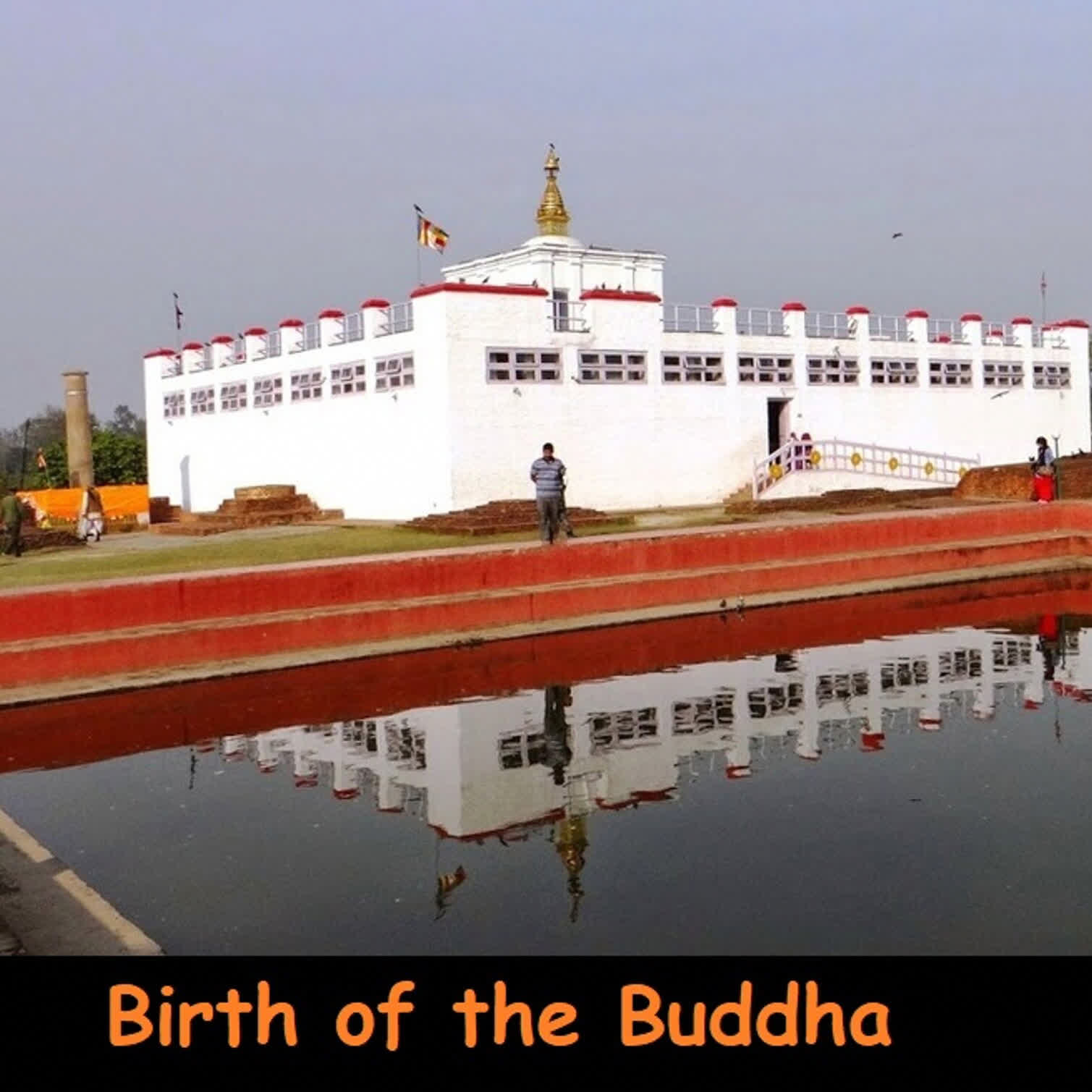
May 18, 2022
Great Final Nirvana of the Buddha ('Maha-Parinibbana') | Vesak at Dhammagiri
Ajahn Dhammasiha offers reflections on the Final Parinibāana of the Lord Buddha on occasion of Vesak. He explains why the Buddha decided to spend his last rains retreat not in the famous Jetavana at Savatthi, like the last 15 years, but instead with the Licchavis in Vesāli. He describes several main events at the Buddha's final passing, including the Buddha's last words, and the verses spoken by his great disciple Ven Anuruddha. At the end, the community recites a passage from Anguttara Nikāya/Numerical Discourses, Book of Ones, #13.1; 13.5 & 13.6, extolling the unique qualities of the Buddha.https://www.dhammagiri.nethttps://www.youtube.com/channel/UCJINt0JJBfFm_x0FZcU9QJwhttps://tinyletter.com/dhammagiri/archive

May 17, 2022
Bhagava, Araham, Buddho - Recollection of the Buddha | Guided Buddhist Meditation | Ajahn Dhammasiha | Dhammagiri | Buddhanussati | Vesak
In this guided meditation, during the Vesak Full Moon program at Dhammagiri, Ajahn Dhammasiha uses the Mantra: "Bhagavā Araham Buddho - Buddho Araham Bhagavā" as a form of 'Buddhānussati', Recollection of the Buddha. Remembering the Buddha with the help of a Mantra is an easy and very straightforward method of establishing one's Samatha/Samādhi meditation. Many of the great Ajahns of the Forest Tradition used Buddhānussati as their foundational meditation object ('Parikamma') with good effect. Remembering the Buddha brings up the qualities of faith, confidence, conviction and devotion in our mind. As these emotions are getting stronger with every repetition of the mantra, they start to generate a wholesome form of happiness, called 'pāmojja' in Pāli. As the meditation progresses, the happiness develops into rapture and bliss ('pīta-sukha'). We can then allow ourselves to be immersed and suffused by that rapture and bliss, until they ultimately carry our mind into internal, blissful unification - Samādhī. More about Dhammagiri Forest Hermitage: https://www.dhammagiri.net/news Our Youtube Channel: https://www.youtube.com/channel/UCJINt0JJBfFm_x0FZcU9QJw Our email Newsletter: https://tinyletter.com/dhammagiri/archive Our Podcasts on Spotify: https://open.spotify.com/show/0SHWfWEGkO8OAtSWNJlqyD Our Podcasts on Apple/itunes: https://podcasts.apple.com/us/podcast/dhammagiri-buddhist-podcasts/id1534539834 .

May 11, 2022
The Buddha's Great Renunciation | Dhamma Talk by Ajahn Dhammasiha
Ajahn Dhammasiha talks about the "Great Renunciation", how the Buddha left the pampered life as prince behind, and set out alone to find freedom from suffering and death: The Buddha's father, King Suddhodhana, had confined his son, the young Bodhisatta, in the pleasure palace, where he tried to keep all suffering away from him. He wished for him not to renounce, but to continue in household life, and to become a most powerful wheelturning emperor. No old or sick persons were ever allowed into his presence, and all flowers were removed before he could see them wilting. However, when the Bodhisatta went on an outing to the pleasure gardens, he encountered a very old man. Having never seen anyone old at all, he enquired from his Charioteer, Channa: "Who is that? What happened to him?" Being informed by Channa, he returned straight back to the palace and started contemplating. "Will I become so old one day as well? What about my beautiful wife Yasodhara? How about my own father and family?" The same happend on similar outings when he encountered a sick person and a dead body, and finally, on the last outing, the Bodhisatta saw a calm and peaceful looking renunciant. He resolved to leave the palace life behind right today, and to become a homeless ascetic himself. He rode out into the Indian Full Moon Night on his white stallion Khantaka, cut of his hair and beard with his sword, and started his spiritual journey. Ajahn Dhammasiha points out that this story is also a powerful metaphor for our own mind. Like the Buddha's father, our own mind tries to hide the realites of old age, sickness and death from ourselves, so that we can continue "living in the pleasure palace" = enjoying the sensual pleasures in life. If we can break out of this delusion, we can set out on a spiritual search, just like the Bodhisatta.https://www.dhammagiri.nethttps://www.youtube.com/channel/UCJINt0JJBfFm_x0FZcU9QJwhttps://tinyletter.com/dhammagiri/archive

May 10, 2022
AJAHN KARUNIKO | Dhamma Discussion and Q&A at Dhammagiri
Venerable Ajahn Kāruṇiko has been a Bhikkhu for 37 years. He ordained at Cittaviveka Monastery as a disciple of Luang Por Sumedho in the early 80ies, and has served as abbot of Cittaviveka from 2015 to 2020. He has also spent 3 years with Luang Por Anan at Wat Marp Jan in Tailand. Cittaviveka is the first monastery of the tradition of Ajahn Chah outside of Thailand. Ajahn Chah has personally visited the property, and provided guidance and encouragement to Ajahn Sumedho during the very difficult foundation and renovation period. You can learn more about Chithurst Monastery here: https://www.cittaviveka.org We're grateful that Luang Por Karuniko was able to finally visit Dhammagiri, after a delay of 2 years due to pandemic restrictions in Australia, and for his generous sharing of Dhamma. More information about Dhammagiri Forest Hermitage: https://www.dhammagiri.net Our Youtube Channel, "Dhammatalks at Dhammagiri":https://www.youtube.com/channel/UCJINt0JJBfFm_x0FZcU9QJw Dhammagiri Newsletter:https://www.tinyletter.com/Dhammagiri/Archive

May 4, 2022
AJAHN KARUNIKO | The Refuge from Thinking: Body Awareness EdNormGMic
During his visit to Dhammagiri Forest Hermitage, Ajahn Kāruṇiko addresses a very common problem in meditation - too much thinking.Luang Por encourages us to bring awareness into the Body. The Buddha himself warned us that whoever neglects mindfulness directed to the body, neglects the path to the deathless. If we can establish mindfulness and awareness within our body, we will be able to let go of excessive thinking.Ajahn Kāruṇiko has been a Bhikkhu for 37 years. He ordained at Cittaviveka Monastery as a disciple of Luang Por Sumedho in the early 80ies, and has served as abbot of Cittaviveka from 2015 to 2020. He has also spent 3 years with Luang Por Anan at Wat Marp Jan in Tailand.You can learn more about Chithurst Monastery here:https://www.cittaviveka.orgMore info about Dhammagiri and Luang Por's visit in Brisbane is here:https://www.dhammagiri.orghttps://www.youtube.com/channel/UCJINt0JJBfFm_x0FZcU9QJwhttps://www.tinyletter.com/dhammagiri/archive.

May 3, 2022
AJAHN KARUNIKO | GUIDED MEDITATION at Dhammagiri Forest Hermitage
During his visit at Dhammagiri, Luang Por Kāruṇiko kindly agreed to lead a guided meditation for our regular Sunday afternoon program.He begins by reminding us to be aware of our intention when we meditate:Are we trying to get something out of it?Are we trying to repeat a previous very pleasant experience?Ajahn Kāruṇiko has been a Bhikkhu for 37 years. He ordained in Cittaviveka Monastery as a disciple of Luang Por Sumedho in the early 80ies, and has served as abbot of Cittaviveka from 2015 to 2020. He has also spent 3 years with Luang Por Anan at Wat Marp Jan in Tailand.You can learn more about Chithurst Monastery here:https://www.cittaviveka.org/More info about Dhammagiri and Luang Por's visit in Brisbane is here:https://www.dhammagiri.nethttps://www.youtube.com/channel/UCJINt0JJBfFm_x0FZcU9QJwhttps:/www.tinyletter.com/dhammagiri/archive.

Apr 26, 2022
The Chithurst Story: George Sharp's Commitment to Cittaviveka | Ajahn Dhammasiha
On occasion of Ajahn Karuniko's visit, Ajahn Dhammasiha talks about the foundation of Cittaviveka Monastery in 1979. Cittaviveka, in Sussex, England, is the first monastery of the tradition of Ajahn Chah in a Western country. Ajahn Dhammasiha relates crucial events of its establishment, as described in the book "The Chithurst Story" by George Sharp. It required great courage and dedication from George Sharp as secretary of the 'English Sangha Trust', and very hard work and sacrifice by the sangha and countless volunteers, to turn a derelict English country manor into beautiful Chithurst monastery with a thriving community of monks, nuns and lay guests. You can read the details in the free PDF version of book here: https://amaravati.org/dhamma-books/the-chithurst-story-before-beyond/ There's also a BBC documentary on youtube, filmed in the early days of Cittaviveka and containing footage of Ajahn Chah during his visit there: https://www.youtube.com/watch?v=-K_AFgRgRu4 (this version contains Thai and Chinese subtitles, and is much better visual quality (720p) than the other versions available on youtube.) There's another BBC Documentary, "The Mindful Way" from 1979, about life at Ajahn Chah's monastery Wat Nong Pah Pong (unfortunately only in 240p): https://www.youtube.com/watch?v=8GOQp0fTIo4Info about Dhammagiri here:www.dhammagiri.net

Apr 18, 2022
We Have to Save Us Ourselves | Dhamma Talk by Ajahn Dhammasiha
"We ourselves have to be our own saviour, No one else can be our saviour. If we train ourselves well, We have found a Saviour that's hard to find." "Attā hi attano nātho, Ko hi nātho paro siyā. Attanā hi sudantena Nāthaṃ labhati dullabhaṃ" Dhammapada Verse #160 It is a hallmark of the Buddha Dhamma that it doesn't point to any external agency, any supreme god or deity, to effect deliverance for us. Instead, the Buddhas can only point out the path, but we have to walk it ourselves. This is perhaps a bit inconvenient, as we have to do the work ourselves. But on the other hand, it means that we do not depend on anyone outside either. Together with the guidance of the Buddha, and the support of Dhamma and Sangha, we have the full potential in ourselves to discipline and develop our mind until we attain release from all suffering.
Apr 12, 2022
Body Contemplation - Hair, Nails, Teeth, Skin | Ajahn Dhammasiha
Ajahn Dhammasiha responds to a question about the nature of the human body, and how to contemplate it. He brings up the first five mediation objects that are taught to every monk or nun at their novice ordination. The Buddha considered these five to be of such fundamental importance, that he made it a duty for the upajjhāya (preceptor) to teach them to each condidate as part of the ordination ceremony: Kesā = Hair of the HeadLomā = Hair of the BodyNakhā = Nails (on fingers and toes)Dantā = TeethTaco = Skin These five is actually all we see when we look at a human body! Contemplating these five objects reduces the attraction, deisire and attachment we normally feel towards the body. The hair, nails, teeth and skin even of a beautiful model or handsome movie star are actually not really attractive. Once we can abandon the attachment and desire towards the body, consciousness will not grasp at a new body after death, and the round of repeated birth and death, 'Saṃsāra', comes to an end, and our heart experiences release.www.dhammagiri.netwww.youtube.com/channel/UCJINt0JJBfFm_x0FZcU9QJwwww.tinyletter.com/dhammagiri/archive

Apr 6, 2022
Life Beyond Death | Dhamma Talk by Ajahn Dhammasiha
Ajahn Dhammasiha reminds us that death is not the end. We do not suddenly cease to exist at the moment of death.What we call 'mind', or 'consciousness', or 'the heart' in a metaphorical sense, actually survives the death of the body, and will move on to a new rebirth depending on one's karma and desires.There is even good evidence available for survival of consciousness beyond death: There are meny cases where modern medicine succeeds in resuscitate persons who have been clinically dead already. They have no more measurable heart or brain funciton, even for several minutes, but are revived with electroshocks to the heart, artificial respiration, strong medications etc.Amazingly, a considerable number of those resuscitated report conscious experiences during the time while they were 'clinically dead'. Some even see their own body in the operating theater, and describe what doctors said or did while they were 'clinically' dead! They may also see a beautiful light that they are floating towards, travers heavenly landscapes, or meet and talk to previously deceased friends and relatives.This is know as 'Near Death Experience' (NDE). Ajahn relates some examples of such stories, and members of the audience mention events in their own circle of friends and relatives.www.dhammagiri.netwww.youtube.com/channel/UCJINt0JJBfFm_x0FZcU9QJwwww.tinyletter.com/dhammagiri/archive.

Apr 4, 2022
Reviewing One's Meditation | Short Reflection by Ajahn Dhammasiha
Ajahn offers a short (11min) reflection on the theme of 'Paccavekkhana', reviewing one's own meditation.From time to time, we have to make our own meditation our meditation object:How does our mind relate to our regular meditation objects?Are wholesome states increasing, and unwholesome states diminishing? Of perhaps the opposite?Is there mindfulness and awareness?Do we enjoy our meditation?and so on...www.dhammagiri.netwww.youtube.com/channel/UCJINt0JJBfFm_x0FZcU9QJwwww.tinyletter.com/dhammagiri/archive.

Mar 30, 2022
AJAHN MONEYYO |32 Synonyms for Nibbana | ENGLISH SUTTA RECITATION:
Nibbāna is the unshakable liberation of the heart, when all desire, aversion and delusion have been completely and irreversibly abandoned. By this realisation the heart has attained complete peace and liberation, and found the true refuge.In Saṃyutta Nikāya (Connected Discourses) #43 the Buddha gives 32 inspiring synonyms for Nibbāna (Nirvāna), the ultimate goal of our spiritual practice, and explains the way leading there. The path leading to Nibbāna is mindfulness directed to the body, as explained in detail by the Buddha in Majjhima Nikāya #10 and #118, the Satipaṭṭhāna Sutta and the Ānāpānasati Sutta. In this recording, Ajahn Moneyyo reads abbreviated sections from the Saṃyutta #43 ('Asaṅkhata Saṁyutta') of the Saṃyutta Nikāya in English.www.dhammagiri.netwww.youtube.com/channel/UCJINt0JJBfFm_x0FZcU9QJwwww.tinyletter.com/dhammagiri/archive

Mar 28, 2022
Benefits of Meditation and 5 Precepts | Ajahn Dhammasiha
A mother asks Ajahn Dhammasiha if he could explain the benefits of meditation to her kids.Ajahn explains that meditation ('bhāvanā') can provide us with the highest benefit possible at all: Freedom from death, rebirth, and any problem we might suffer from.But even on the beginning and intermediate stages we already derive profound benefits from meditation:We experience wholesome happiness and joy internallyWe are calm and relaxedWe become more aware and mindfulWe see clearly and develop insight Additionally, Ajahn goes through the meaning of the five precepts, as they are a necessary foundation to develop meditation successfully.www.dhammagiri.netwww.youtube.com/channel/UCJINt0JJBfFm_x0FZcU9QJwwww.tinyletter.com/dhammagiri/archive

Mar 23, 2022
Buddha Dhamma Points Directly to the Mind | Ajahn Dhammasiha
The normal tendency of the unenlightened mind is constantly directed outwards into the external world. The Dhamma of the Buddha points us in the opposite direction, right back into the mind itself, right back to our conscious experience.It's not an easy task to work with the mind internally, and to fully purify and release it. But at least it's a possible task, it has been done by millions of human beings. On the other hand, trying to turn this external world here on earth into perfection would be mission impossible. Fortunately, as we are working on internal purification, we have a wholesome, beneficial influence on other beings as well. And as we're transforming our mind, the external environment will transform accordingly: We are reborn in a realm of existence that is equivalent to our internal qualities. If we have the heart of an angel, we will be reborn in a heavenly world ('Devaloka').www.dhammagiri.netwww.youtube.com/channel/UCJINt0JJBfFm_x0FZcU9QJwwww.tinyletter.com/dhammagiri/archive

Mar 21, 2022
Don't Run Out of Good Karma! | Dhamma Talk by Ajahn Dhammasiha
Most people are very careful that their mobile phone doesn't run out of battery. Or they worry that their Tesla is out of power before they reach the next charging station ('range anxiety'). They are concerned that thay run out of money, or that the suparmarket may run out of food with current global supply chain issues. And sure enough, we should be careful and prepare so that we don't run into trouble. However, even more important is that we don't run out of Good Karma! All the good things in life we enjoy are part of our accumulated good karma ('puñña'). If we didn't have any good karma, we wouldn't have any happy experiences. But whenever we enjoy good food, material wealth, caring and friendly relationships, we're using up some of the accumulated puñña. If we don't create any new puñña, we will run out one day, and will be in much bigger trouble than being stranded with an empty tank in our car. Our concern to constantly 'recharge' good karma should be even stronger than our worries about keeping the cell phone charged!www.dhammagiri.netwww.youtube.com/channel/UCJINt0JJBfFm_x0FZcU9QJwwww.tinyletter.com/dhammagiri/archive

Mar 15, 2022
Unwavering Commitment to Non-Violence & Compassion | Ajahn Dhammasiha
When we see reports and videos of war and violence, we may experience feelings of helplessness that there's no possibility for us to stop all the carnage from happening. However, there is one thing we always can do, which no one can take away from us:We ourselves can remain unwaveringly committed not to harm any being;Not to go to war ourselves;Not to kill, but to remain peaceful and to continue developing loving kindness. Hatred can never be overcome by hatred, as the Buddha expounded in Dhammapada Verse #5 We can't allow the anger, violence and aggression of others to cause us to become angry and aggressive ourselves. Only if we can continue to practice non-violence and kindness will we be able to reduce the negative energy of anger in this world.www.dhammagiri.netwww.youtube.com/channel/UCJINt0JJBfFm_x0FZcU9QJwwww.tinyletter.com/dhammagiri/archive

Mar 10, 2022
Wise Media Consumption in Times of War & Disaster | Ajahn Dhammasiha
We have just experienced heavy flooding in Brisbane, and at the same time the war in Ukraine started. With twitter, facebook, TV and whole internet flooded by live reporting of all disasters and wars, our minds easily become flooded as well by fear, depression or anger.We have to apply the principle of the 'Middle Way' ('Majjhima-Paṭipadā') to our media consumption:One extreme is that we're glued to the screen and watch all day footage from war and disaster zones. The result is being overwhelmed by unwholesome mindstates.The other extreme would be to go into denial and completely ignore and refuse all information about disasters and war. The result would be lack of knowledge. If we don't know anything, we might even miss to evacuate in time, or we might fail to contribute to prevention of wars.The Middle Way is to know the right time, and the right measure, of media consumption.We have to pracise sense restraint, we have to guard the doors of the senses, so that we only watch as much as required to be sufficiently informed.Just so much that we know enough to take appropriate action.www.dhammagiri.netwww.youtube.com/channel/UCJINt0JJBfFm_x0FZcU9QJwwww.tinyletter.com/dhammagiri/archive

Mar 3, 2022
The Mind is Radiant, even if Clouded by Various Moods | Ajahn Dhammasiha
Brisbane has just experienced the most extreme rains event in decades, with more than 600 mm precipitation in three days! (For comparison, London receives about the same amount in a whole year). Very surprisingly though, when we had outings with our visiting senior monk Ajahn X on Wednesday and Friday, we walked for hours without any rain at all.Ajahn Dhammasiha encourages us to not always believe the 'weather report': Sometimes the mind feels like there will be only darkness in the future. But if we don't buy it, and we go ahead and practise generosity, virtue and meditation nevertheless, our mind may surprise us by suddenly turning radiant again; just like we had two beautiful outings when the prediction was 100% likelihood of showers and rain.Never give up on the Dhamma, never lose hope in the internal radiance of your own mind! Just like the sun is always there once we fly above the clouds, so our mind can soar above all depressive mind states and shine brighly again, if we dedicate ourselves to the Dhamma with full faith and commitment.www.dhammagiri.netwww.youtube.com/channel/UCJINt0JJBfFm_x0FZcU9QJwwww.tinyletter.com/dhammagiri/archive

Mar 1, 2022
"Lost in the Fearful Flood, please point an Island out to Me" | Suttanipata #1092 f
As we have just experienced heavy flooding in Brisbane, Ajahn Dhammasiha discusses Suttanipāta Verses 1092 - 1095:[Kappa's question]Lost in the fearful flood that drownsus all in ageing and in death - Amidst this sea of misery where is the island that is safe?Direct me to that island, please,where I shall never drown again. [The Buddha's answer] Lost in the fearful flood that drownsyou all in ageing and in death - Amidst this sea of miseryI point an island out to you:'Own Nothing, Don't Attach to Anything'that is the island unsurpassed;It's called 'Nibbāna', and it isthe end of ageing and of death. All those who know, the mindful ones,their heart is cool right here and now.They have escaped the Evil One,he can't control them anymore. www.dhammagiri.net

Feb 22, 2022
Hospitality to Visiting Monks | Ajahn Dhammasiha
On occasion of our first visiting senior monk after a long time, Ajahn Dhammasiha talks about the importance of hospitality to keep the Sangha strong and connected. He also reads out the protocol for receiving arriving monks from the Buddha's original instructions in the 'Vinaya', the part of the Tipitaka dealing with monastic discipline. https://www.dgammagiri.net

Feb 16, 2022
"This is the Teaching of All Buddhas" | Magha Puja Dhamma Reflections
On Magha Puja, the Full Moon in February, 1,250 Arahant Disciples gathered spontaneously, without prior announcement, around the Buddha in the Veḷuvana (Bamboo Grove Monastery) in Rajagaha. All of these 1,250 Arahants were ordained by the Buddha personally.The Buddha then recites the famous 'Ovāda-Pāṭimokkha', a summary of the teachings of all Buddhas in 16 lines of verse:"Abstain from any evil deed,accomplish what is good and true,And fully purify your mind -That is what all the Buddhas teach.Enduring patience is the bestof all ascetic practices;The best of everything at allis called Nibbāna by the sage.If you cause harm to anyoneyou can't be called a genuine monk!Refrain from harming and abuse,and strictly keep the Buddha's rules;Be moderate when taking food,and dwell alone in solitudedevoted to the Higher Mind -That is what all the Buddhas teach."Dhp 183-185Ajahn Dhammasiha offers reflections on the profound meaning of these verses, which are taught not only by our Buddha Gotama, but by all Buddhas when and wherever they arise. They contitute a core teaching, the essence of the Dhamma spoken by every Buddha. Consequently, every line, even every single word, is of supreme importance.www.dhammagiri.netwww.facebook.com/dhammagiri-forest-hermitagewww.youtube.com/channel/UCJINt0JJBfFm_x0FZcU9QJwwww.tinyletter.com/dhammagiri/archive

Feb 15, 2022
First: Do No Evil | Magha Puja Dhamma Talk
"Abstain from any evil deed,accomplish what is good and true,And fully purify your mind -That is what all the Buddhas teach.Enduring patience is the bestof all ascetic practices;The best of everything at allis called Nibbāna by the sage.If you cause harm to anyoneyou can't be called a genuine monk!Refrain from harming and abuse,and strictly keep the Buddha's rules;Be moderate when taking food,nd dwell alone in solitudedevoted to the Higher Mind -That is what all the Buddhas teach."Dhp 183-185Ajahn Dhammasiha points out that these essential instructions start with:"Abstain from any evil deed..."Before we rush ahead and try to do good, we have to make absolutely sure that at least we do not cause any harm.If we look at human history of the last 100 years, there have been numerous ideologies that claimed to do good, but instead have caused misery and death to countless millions. Whether communism, facism, nazism, maoism and so on, so many of their proponents claimed, and possibly even believed, that they are acting in persuit of a high ideal, and that the 'damage' therefore is 'justified'. This false argument is known as: "The end justifies the means.If we put absolute avoidance of any evil as our first principle, we can never fall into the trap of intentionally harming other beings for a supposedly noble end. We simply do not kill or harm, never mind whatever motivation or justification anyone may suggest.www.dhammagiri.net

Feb 8, 2022
Shame and Conscience, the Dam Wall against Evil | Ajahn Dhammasiha
Two qualities are fundamental for any progress on our path of spiritual purification:Shame and Conscience.(Pali: Hiri & Ottappa)As long as we havn't attained liberation yet, the defilements ('kilesa') like greed, anger, delusion, arrogance, jealousy, laziness and so on are still active in our heart. Shame and conscience are the dam wall, holding back and restraining the defilements, and stopping us from committing any evil deeds. They are the very foundation of society, enabling human beings to live together in peace. Someone who feels no shame, and has no conscience, is a psychopath who might commit any kind of evil.On the other hand, anyone who has a keen sense of shame and conscience will automatically progress in the Dhamma. They do not require much external instruction and correction, as their own conscience will tell them what to do, or not to do. Someone with a GPS Navigation system doesn't need constant advice where to drive, because the navigation system will get them wherever they want to go.Similar, once we are in tune with a finely developed sense of shame and conscience, these two qualities will guide us along our path of Dhamma practice.www.dhammagiri.netwww.facebook.com/dhammagiri-forest-hermitagewww.youtube.com/channel/UCJINt0JJBfFm_x0FZcU9QJwwww.tinyletter.com/dhammagiri/archive

Feb 3, 2022
Letting Go of Views & Opinions | SUTTA EXPLORATION | AN Tens #93 | Ajahn Dhammasiha
Ajahn Dhammasiha explores Anguttara Nikāya, Book of Tens, Sutta #93 (Numerical Discorses of the Buddha p. 1464) One of the Great Lay Disciples of the Buddha, Anathapiṇḍika, famous as the donor of the Jetavana monastery, has a discussion with ascetics from a different religion on the subject of 'views'/'doctrine'. The 'Wanderers' explain the various doctrines they are convinced of, like: "The universe is eternal" "The universe is not eternal" "The universe is finite" "The universe is infinite" and so on... Additionally, they always assert: "Only this is true, anything else is nonsense". Anāthapiṇḍika shows that all these views are impemanent, intentionally thought out, conditioned, and therefore ultimately unsatisfactory. If one clings to any of them, one is simply clinging on to dukkha. Then he expounds his own view, the understanding of a Noble Disciple, a Streamenterer who has the vision of Dhamma: "Whatever has come into being and is conditioned, intentionally thought out, dependently originated, is impermanent. Whatever is impermanent is suffering. Whatever is suffering, that is not mine; that is not me; that is not my self." We can immediately see that his 'doctrine' is not trying to establish some 'absolute' truth. Instead, his 'view' is simply a tool for letting go, a meditation theme aiming of extricating the heart from all clinging to any views (and any conditioned phenomena at all) Dhammagiri Website Our Spotify Playlists Newsletter Dhammagiri Youtube Channel Pics .

Jan 31, 2022
Attachment to Views & Opinions | Dhamma Talk by Ajahn Dhammasiha
It is well known that the Buddha teaches us to abandon all attachment ('upādāna'). However, attachment doesn't refer only to material things, and to feelings and emotions, it also includes views and opinions ('Diṭṭhi').In fact, the Buddha's analysis of cinging to views is one of the unique characteristics of his teaching, not to be found in that form in any other religion or philosophy. He shows that any view, doctrine, philosophy, religion, dogma, is a conditioned phenomenon, not somthing right or wrong in an absolute sense. Views arise due to certain causes and conditioning factors, and they change and pass away when the conditions change.The Buddha doesn't look only at the content of a view, he investigates where the view comes from, what are the causes for someone to develop a certain view; and what are the consequences of holding this view.If we can see all views and doctrines as a 'sankhāra' something that's put together, intentionally thought out, arising and passing due to causes, impermanent, and not me or mine, we can no longer maintain any naive belief in the 'absolute truth' of any view, and we can let go.'Letting Go' doesn't mean that we now don't have any views anymore. But it means that we're no longer identified with any view, we don't regard it as our self. We actually deliberately develop 'right view', meaning a view which is helpful and beneficial for developing the 8Fold Noble Path, weakening defilements, and leading us to the end of suffering. We deliberately form and then use a view to achieve a certain objective. Just like an engineer designs and builds a specific tool, and then uses that tool to build the thing he requires.www.dhammagiri.netwww.facebook.com/dhammagiri-forest-hermitagewww.youtube.com/channel/UCJINt0JJBfFm_x0FZcU9QJwwww.tinyletter.com/dhammagiri/archive

Jan 28, 2022
"Train Your Mind Gently, Like a Mother Looking after her Baby"
Ajahn Dhammasiha reminds us that the default position of our mind is actually samādhi. The mind is naturally blissful and calm. It is only the kilesas (defilements) that get our mind moving, and that are causing agitation.Like a body of water will become still all on it's own, as long as we do not disturb it, so our mind would be still if only we did not actively agitate it.Trying to force the mind to be still is as fruitless as trying to forcefully calm down the waves in a pond. The more we splash around, the more the water will be disturbed. But if the wind stops, the water will gradually calm down by itself.The point is to recognize how we're constantly and actively creating agitation in our mind, and then to gradually reduce and weaken that process.www.dhammagiri.netwww.facebook.com/dhammagiri-forest-hermitagewww.youtube.com/channel/UCJINt0JJBfFm_x0FZcU9QJwwww.tinyletter.com/dhammagiri/archive

Jan 26, 2022
Buddhist Bucket List | Dhamma Talk by Ajahn Dhammasiha
The circle of Saṃsāra, the endless wheel of birth and death, has been going on for such a long time that a beginning point can not be discerned. We all had many past lifes, not just one or a hundred or a thousand, but billions and trillions of past lifes.The Buddha explained that we had so many past lifes, that the tears we shed is more than the water in the pacific ocean. The blood we shed when we were injured or slaughtered is more than the water in the pacific ocean. The bones of the bodies we left behind in just one aeon would form a mountain greater than the Himalayas. And there have been countless aeons passing along in this beginningless Saṃsāra.If we have conviction in the reality of this vast number of past lifes, there are certain inferences we have to acknowledge as well, simply as a statistical truth:Whatever plane of existence, whether human or deva/angel, whether animal or hell or hungry ghost or any form of spirit, we have been reborn in that plane before at some stage.Whether having a PhD and becoming a Professor, or earning a million (or billion) $$$, or having a dozend children, or being the most famous model or film star, or travelling the whole world: In some past life we actually had achieved already exactly that! Whatever is on your 'Bucker List' of things you feel you really must do in this life before you die: You have done it already in some of these beginningless past lifes.Except one thing:REALIZING NIBBĀNAGaining the Vision or Dhamma, freeing our heart from all defilements and experiencing the end of all suffering, partaking of that ultimate reality of the Deathless - that's the only thing we have not yet done. That's the only thing that's really worthwhile to put on the bucket list for a true disciple of the Buddha.The Buddhist Bucket list has only one item:Realizing total Liberation in one's heartwww.dhammagiri.netwww.facebook.com/dhammagiri-forest-hermitagewww.youtube.com/channel/UCJINt0JJBfFm_x0FZcU9QJwwww.tinyletter.com/dhammagiri/archive.

Jan 20, 2022
"Not Sure" - Contemplate Anicca to Let Go of Everything
Ajahn Chah once stated that in 40+ years as a monk, it's only two things he has found: 'Not Sure' and 'Patient Endurance'. The Pali term 'anicca' is usually translated as 'impermanent'. However, the actual meaning is much wider, and includes 'not sure', 'uncertain', 'unreliable'.Ajahn Dhammasiha encourages us to push ahead and fearlessly contemplate all phenomena, whether external material possessions or internal moods, thought and emotions, as 'not sure'. This can feel scary at first, but if we keep up with our contemplation of anicca, we can sweep the mind clear and empty, to realize the only possible escape from the world of uncertainty: The experience of the Unconditioned in our own heart. www.dhammagiri.netwww.facebook.com/dhammagiri-forest-hermitagewww.youtube.com/channel/UCJINt0JJBfFm_x0FZcU9QJwwww.tinyletter.com/dhammagiri/archive

Jan 18, 2022
Sweep All Thoughts Away with 'Not Sure' 'Anicca' | Guided Buddhist Meditation | Ajahn Dhammasiha | Dhammagiri | Breath Anapanasati
Ajahn Dhammasiha recommends to use: ' Not Sure' 'Not Certain' 'Anicca' like a broom to sweep away all thoughts and worries and distractions in our meditation. We use the breath as anchor for our awareness, and stay with it. But all thoughts and plans for past and future, all fantasies and images, all worries and concerns we immediately counter with 'not sure' , so that they can't take hold of our mind We see them like clouds moving through the sky, which we don't own and can't control, and we simply let go. More about Dhammagiri Forest Hermitage: https://www.dhammagiri.net Our Youtube Channel: https://www.youtube.com/channel/UCJINt0JJBfFm_x0FZcU9QJw Our email Newsletter: https://tinyletter.com/dhammagiri/archive Our Podcasts on Spotify: https://open.spotify.com/show/0SHWfWEGkO8OAtSWNJlqyD Our Podcasts on Apple/itunes: https://podcasts.apple.com/us/podcast/dhammagiri-buddhist-podcasts/id1534539834 .

Jan 18, 2022
Reflections on Luang Por Chah's Remarkable Qualities | Ajahn Dhammasiha
On occasion of Ajahn Chah's 30th death anniversary, Ajahn Dhammasiha offers reflections on the outstanding spiritual qualities of the founder of our tradition.Not only did Luang Por Chah possess the determination, faith, energy and wisdom to succeed in his own internal meditation practise. Additionally, he was an extrememly effective teacher. He could relate to virtually everyone, whatever class, nationality, or educational background they may be coming from. Whether farmers of Thailand's Notheast, or HiSo from Bangkok, or Western hippy college drop outs: Ajahn Chah could inspire and guide them all.www.dhammagiri.netwww.facebook.com/dhammagiri-forest-hermitagewww.youtube.com/channel/UCJINt0JJBfFm_x0FZcU9QJwwww.tinyletter.com/dhammagiri/archive

Jan 12, 2022
Life in Heaven - Contemplating Rebirth in Devaloka | Dhamma Talk at Dhammagiri
Ajahn Dhammasiha talks about the lifespan in Devaloka ('Heavenly World'). Even on the lowest level the lifespan equals about 10 milion human years.The Buddha encouraged us to contemplate the beauty of life in heaven, so that we feel inspired to develop the qualities that get us there: Generosity, virtue and faith in karma & rebirth.www.dhammagiri.netwww.facebook.com/dhammagiri-forest-hermitagewww.youtube.com/channel/UCJINt0JJBfFm_x0FZcU9QJwwww.tinyletter.com/dhammagiri/archive

Jan 11, 2022
Contemplating Feeling ('Vedana') | Ajahn Dhammasiha
Ajahn Dhammasiha responds to questions about feeling ('vedana').How to contemplate fuzzy, indistinct feelings?Reflecting on Neutral Feeling.How to work with feelings of pain from booster?Distinguish spiritual and worldly feelings.www.dhammagiri.netwww.facebook.com/dhammagiri-forest-hermitagewww.youtube.com/channel/UCJINt0JJBfFm_x0FZcU9QJwwww.tinyletter.com/dhammagiri/archive

Jan 6, 2022
Healing Fear & Aggression with Kindness, Compassion, Joy and Equanimity
Instinctually, human beings respond to danger with either fear or aggression, the so-called "Flight or Fight Reaction". Unsurprisingly, with the dangers of the pandemic relentlessly presented in all media for the last two years, we can observe a lot of anxiety and anger building up by now. Unfortunately, both are unwholesome mindstates and can easily lead to creation of bad karma. Ajahn Dhammasiha encourages us to make a New Year's Reolution to heal all that fear and aggression by developing the four 'Divine Abodes' ('Brahmavihāras):Loving Kindness 'Mettā'Compassion 'Karuṇā'Sympathetic Joy 'Muditā'Equanimity 'Upekkhā'Based on these four extremely wholesome mindstates, we can respond to any challenges skilfully.www.dhammagiri.netwww.facebook.com/dhammagiri-forest-hermitagewww.youtube.com/channel/UCJINt0JJBfFm_x0FZcU9QJwwww.tinyletter.com/dhammagiri/archive

Jan 4, 2022
4 Divine Abodes to Conquer Anxiety and Enmity - New Year at Dhammagiri
When we're exposed to some threat or danger, an instinctual response is either fear or aggression. We can see the same pattern in animals in the "flight or fight reaction" to danger. As humanity has been exposed to a media onslaught depicting the dangers of the pandemic for the last two years, we can see a lot of fearful and angry reactions.Unfortunately, both anger and fear are unwholesome mindstates, and acting on them can create a lot of bad karma.Ajahn Dhammasiha recommends us to develop the 4 Brahmavihāras ('Divine Abodes') instead:Loving Kindness 'Mettā'Compassion 'Karuṇā'Sympathetic Joy 'Muditā'Equanimity 'Upekkhā'These mindstates are extremely wholesome, and if devoloped mindfully and persistantly, will help us to respond skilfully to any external crisis. www.dhammagiri.netwww.facebook.com/dhammagiri-forest-hermitagewww.youtube.com/channel/UCJINt0JJBfFm_x0FZcU9QJwwww.tinyletter.com/dhammagiri/archive

Jan 3, 2022
New Year Paritta Auspicious Protective Chanting Dhammagiri | Buddhist Pali Chanting
For New Year at Dhammagiri, Ajahn Dhammasiha and Ajahn Moneyyo chant Paritta. These auspicious, protective verses are 2,500 years old, reaching back to the Buddha himself, and are recited in Pali, the language spoken by the Buddha. Paritta is believed to help ward off misfortune and disease, and to attract blessings and good fortune to anyone listening with an attentive mind. Ajahn Moneyyo leads the chanting, starting with the solo invitation to all devas (angels) and benificent spirits to attend and listen to the protective chanting Dhammagiri Website Our Spotify Playlists Newsletter Dhammagiri Youtube Channel Pics #chanting #buddhistchanting #palichanting

Dec 23, 2021
The Buddha and the Leper | SUTTA EXPLORATION Udana 5.3
Ajahn Dhammasiha presents and comments on a sutta in Udāna, one of the oldest and most authentic parts of the Pali Canon. A poor, despised sufferer of leprosy approaches a large crowd where the Buddha is teaching, hoping to beg for some food. However, he ends up listening to the Buddha, and is the only one in the whole crowd to realize the Dhamma, attaining Stream-entry (Sotāpatti), the first stage of enlightnment. Later, the Buddha reveals the karmic cause for his leprosy: In a past life, out of contempt he had insulted the Paccekabuddha Tagarasikhi, and even spat at him, thinking "Who is this leper prowling about and begging?" As a result of that deed he was first reborn in hell, and after returning to the human world, the remainder of that karma was the cause for him developing leprosy. This Sutta teaches us how dangerous apparently minor actions actually can be, like contempteous remarks, or arrogant rejection of socially stigmatised persons.For instance, many are lacking awareness how much karma one can potentially make on social media. Despising or riviling others in tweets, on TikTok, facebook shares, youtube comments and so on can constitute significant bad karma, and we need mindfulness and restraint to guard against that danger. The story also shows that social standing and spiritual Pārami can differ dramatically: In this case, the most socially rejected and despised actually turned out to be the spiritual most mature one. We should exercise utmost caution not to misjudge or disdain anyone just by external appearance, or due to disapproval by society. www.dhammagiri.netwww.facebook.com/dhammagiri-forest-hermitagewww.youtube.com/channel/UCJINt0JJBfFm_x0FZcU9QJwwww.tinyletter.com/dhammagiri/archive.

Dec 20, 2021
How to Create Karma for Long Life, Health, Wealth & Wisdom | SUTTA EXPLORATION
Ajahn Dhammasiha presents the Buddha's "Shorter Exposition on Karma" from Majjhima Nikāya/Middle Length Discourses #135.In this sutta, the Buddha descibes actions and mental attitudes that lead to good and bad karmic consequences in a future rebirth:Intentional killing of living beings causes short life span - Abstaining from killing brings long liveInjuring others causes ill-health - Refraining from hurting causes good healthAnger makes us ugly - Non-anger like loving kindness causes us to be born beautiful and handsomeEnvy and jealosy brings rebirth in uninfluential, powerless positions - Non-envy like Muditā/Sympathetic Joy makes us powerful and influentialStingyness has as reborn in poverty - Generosity generates the karma to become richArrogance and contempt leads to low social status - Humility and respect (bowing!) leads to rebirth in high-societyNot asking questions and no interest to investigate and figuring things out causes stupidity - Questioning and exploring leads to intelligence and wisdomwww.dhammagiri.netwww.facebook.com/dhammagiri-forest-hermitagewww.youtube.com/channel/UCJINt0JJBfFm_x0FZcU9QJwwww.tinyletter.com/dhammagiri/archive.

Dec 16, 2021
Loving Kindness to All, Like a Mother to Her Child
The goodwill of a mother to her only child arises naturally, spontaneously, and without any effort. But to widen that same attitude to all beings without distinction takes a lot of work. That's where we have to apply right effort ('sammā-vāyāma'), where we develop and cultivate ('bhāvanā'). www.dhammagiri.net www.facebook.com/dhammagiri-forest-hermitage www.youtube.com/channel/UCJINt0JJBfFm_x0FZcU9QJw www.tinyletter.com/dhammagiri/archive

Dec 14, 2021
Contemplating Uncertainty ('Anicca') | Dhamma Talk by Ajahn Dhammasiha
As Queensland is finally opening borders for arrivals without quarantine, there is a sense of uncertainty about future levels of infections and changing regulations. Ajahn Dhammasiha encourages us to not deny these feelings, but to confront them directly by active contemplation. 'Anicca', normally translated as 'impermanence', also means 'not sure', 'uncertain', 'unreliable'. We may feel some temporary relief by denying the unreliable nature of conditions, but in the end reality will always catch up with us, and then we will suffer a lot. A better approach is to acknowledge uncertainty and to contemplate it, until our insight is deep enough that it leads to dispassion and letting go. And very important; we should never forget that there is the state of total freedom that the Buddha experienced and taught, and that we are able to realize ourselves if we follow his advice: The Unconditioned, Nibbāna, the state that is beyond all impermanence, the mind freed from any form of suffering, change, death and rebirth.www.dhammagiri.netwww.facebook.com/dhammagiri-forest-hermitagewww.youtube.com/channel/UCJINt0JJBfFm_x0FZcU9QJwwww.tinyletter.com/dhammagiri/archive

Dec 9, 2021
Death Contemplation |Dhamma Talk by Ajahn Dhammasiha
The typical response to death in our society is denial. But however much we deny it, that will not change the basic reality of our own mortality. The Buddha instead advises us to directly confront this challenging reality by deliberately contemplating death ('Maraṇussati').However, to really gain the intended benefit from death contemplation, there are two important preliminary conditions:We have confidence that death is not an absolute end, but that the mind/consciousness will continue and take up a new body in the next rebirth according to our kamma and craving.We have confidence that it is possible to completely overcome and defeat death, to personally realize the same deathless reality ('Amatadhātu') in our heart that the Buddha experienced under the Bodhi Tree. We have faith that we all can make an end of death by following the Buddhas teaching.Once we have that confidence, contemplation of death will no longer make us sad or depressed. Instead, it will lead to a sense of urgency to enhance our Dhamma practice, so that we reach the escape from death.If we are well established in Maraṇussati, we will not be shocked when we experience others dying, and we will gradually weaken anxiety about our own death. We abandon laziness and heedlessness, and diligently put forth effort in our meditation. We protect our precepts, and we forgive those who have hurt us - what's the point of holding on to grudges, if sooner or later all of us will pass away anyhow?www.dhammagiri.netwww.facebook.com/dhammagiri-forest-hermitagewww.youtube.com/channel/UCJINt0JJBfFm_x0FZcU9QJwwww.tinyletter.com/dhammagiri/archive.

Dec 2, 2021
Loving Kindness, Even to Canetoads & Snakes | Ajahn Dhammasiha
With a bunch of kids of various ages joining the session, Ajahn Dhammasiha talks about the 'Metta Sutta', one of the Buddha's best known teachings on Loving Kindness.Whether cute like koalas or ugly like canetoads and cockroaches, whether harmless like wallabies or potentially dangerous like snakes, whether tall or short or small or big, far or near, born or to-be-born, we do not despise any creature, but strive to radiate unconditional, non-judgemental loving kindness to all beings without distinction.www.dhammagiri.netwww.facebook.com/dhammagiri-forest-hermitagewww.youtube.com/channel/UCJINt0JJBfFm_x0FZcU9QJwwww.tinyletter.com/dhammagiri/archive

Nov 30, 2021
Loving Kindness - Metta to All without Discrimination | Guided Buddhist Meditation | Ajahn Dhammasiha | Dhammagiri
Ajahn Dhammasiha is guiding a meditation on Loving Kindness. We're using the Mantra: "In Gladness and in Safety, May All Beings be at Ease!" We try to extend this attitude to all beings without exception, and into all directions without any spatial limitation, spreading throughout the universe. However, at the same time we're not neglecting to include ourselves as well. Each one of us ourself is worthy of and deserves total loving kindness. What we may have done or not done, or whatever mistakes or shortcomings we may have, is completely irrelevant. We fully qualify for unreserved loving kindness simply as a Living Being, nothing more required. Similarly, all other beings qualify unconditionally as well. It doesn't matter if the like us or not, if they hurt us or benefit us, if they respond or not. It doesn't matter whatever nationality, race, gender, education, money, intelligence. It doesn't even matter whether human or animal or ghost or spirit or angel or deva or brahma. All qualify without dicrimination or distinction. We gradually go beyond merely repeating the words of the mantra, and instead give more and more attention to the emotion these words are building up in our heart: The beautiful, utterly wholesome, uplifting, joyful feeling of wishing well to everyone without exception. There's also a few suggestions after the bell how to continue mettā while walking meditation, and in daily life. More about Dhammagiri Forest Hermitage: https://www.dhammagiri.net/news Our Youtube Channel: https://www.youtube.com/channel/UCJINt0JJBfFm_x0FZcU9QJw Our email Newsletter: https://tinyletter.com/dhammagiri/archive Our Podcasts on Spotify: https://open.spotify.com/show/0SHWfWEGkO8OAtSWNJlqyD Our Podcasts on Apple/itunes: https://podcasts.apple.com/us/podcast/dhammagiri-buddhist-podcasts/id1534539834 .

Nov 25, 2021
If Someone Feels No Shame to Lie, There is No Evil They Can't Do
Ajahn Dhammasiha offers reflection on the Buddha's acvice to his own son, seven year old novice Ven Rāhula.(Majjima Nikāya/Middle Length Discourses #61 "Advice to Rāhula at Ambalaṭṭhikā")The Buddha uses powerful similies to impress on Rāhula the importance of developing a strong sense of shame and conscience about deliberate lying.He explains that someone who has no shame and conscience about lying is like a tusker war elephant in a berserk rage, there is no restraint at all, and they may commit the most heineous evil.The same teaching is expressed in Dhammapada Verse #176:"Who has transgressed just one principle,A person deliberately lying,Without concern about the future karmic consequences,There is no evil they are incapable of doing."We can draw two important lessens from this teaching:We have to develop a keen sense of shame and conscience against lying, to protect us from turning evil ourselvesIf we recognize that someone is lying without shame or regard for future karmic effects, we know that this person is not trustworthy at all, but extremely dangerous.www.dhammagiri.netwww.facebook.com/dhammagiri-forest-hermitagewww.youtube.com/channel/UCJINt0JJBfFm_x0FZcU9QJwwww.tinyletter.com/dhammagiri/archive.

Nov 24, 2021
Benefits of Boundless Loving Kindness | Ajahn Dhammasiha
Ajahn Dhammasiha responds to questions and comments by a young mother and her 10 year old daughter, who are visiting Dhammagiri for the first time.www.dhammagiri.netwww.facebook.com/dhammagiri-forest-hermitagewww.youtube.com/channel/UCJINt0JJBfFm_x0FZcU9QJwwww.tinyletter.com/dhammagiri/archive

Nov 22, 2021
Discerning Truth - Recognizing What's Fake | Ajahn Dhammasiha
Ajahn Dhammasiha reflects on teachings of the Buddha in 'Cankī Sutta' (MN #95): What spiritual teachings are appealing to us, or what kind of opinions, views, theories we're attracted to, is not normally determined by the factual truthfulness of that teaching or view. Instead, it's usually one of the following five reasons:We simply have faithWe like it, it feels good, it's emotionally agreeable to usWe accept it on the basis of tradition/authorityWe accept it as it's reasonable, intellectually appealing, logicalWe accept it based on reflective contemplation and intuitionUnfortunately, either of the five can turn out right or wrong:Although we have faith, the teaching/view could still be false and unwholesome.Even if we have no faith, it could be true and beneficial.Same with the other four reasons. In order to figure out which teaching, or data, or scientific paper, or view, or information to trust, the Buddha recommends a different approach: We investigate the qualities of the person or institution who is the source of that teaching or data.If the person expounding the teaching manifests the defilements of greed, hatred and delusion, whatever theories, data and 'fact' coming from that person or institution is not reliable or trustworthy.On the other hand, the teachings or data coming from someone free from desire, aversion and delusion is highly trustworthy.Therefore, if we want to know what information, teaching or data to trust, we investigate the quality of the person or institution where it's coming from:If the person or institution is corrupt, even if famous, powerful, or with big titles and degrees, the teaching or data is likely corrupt as well.If the person or instituion is free from corruption, the teaching or data is likely trustworthy as well.www.dhammagiri.netwww.facebook.com/dhammagiri-forest-hermitagewww.youtube.com/channel/UCJINt0JJBfFm_x0FZcU9QJwwww.tinyletter.com/dhammagiri/archive

Nov 18, 2021
"Marriage Means Commitment" - Ajahn Dhammasiha Shares Advice the Buddha Gave to Married Couples
Research has shown that the feeling of romantic love can be sustained only for a maximum of about 4 years (although it may well last much, much shorter!). On the other hand, marriage is meant to be a commitment for life. Children and their education, mortgages and so on are decades long investments. Consequently, romantic love is not a sufficient basis to sustain a marriage, and a more substantial foundation is required. Ajahn Dhammasiha offers reflections how to maintain a long lasting commitment in marriage. He also quotes the five duties mentioned by the Buddha for both husband and wife in their mutual relationship (Sigālovādasutta, Dīgha Nikāya/Long Discourses #31).Naturally, as these instructions were given by the Buddha for a very different culture some 2,500 years ago, one has to interpret them in light of modern conditions. Nevertheless, the spirit of the Buddha's advice remains timeless and independent from social conditions, like for example the crucial importance of mutual respect, and to avoid feelings of disregard or disdain.www.dhammagiri.netwww.facebook.com/dhammagiri-forest-hermitagewww.youtube.com/channel/UCJINt0JJBfFm_x0FZcU9QJwwww.tinyletter.com/dhammagiri/archive

Nov 16, 2021
Teaching Dhamma to Kids: Start Early, Even Before They're Born!
As a parent who wishes for the welfare and happiness of their child, the most valuable thing we can do for them is teaching them the Dhamma, encouraging them to practise generosity, virtue and meditation.We can not start that process too early: Even before birth the unborn child will be strongly influenced by all the emotions the mother experiences. If the mother feels a lot of anger or depression, the unborn child will become used to these emotions. If on the other hand she experiences faith in the Triple Gem, loving kindness and calm, the child will subconsciously learn to see these emotions as default position.An expecting mother will be more determined in her mental cultivation than ever before, as she's aware that she's now meditating for two persons, so to speak. Similarly, the father will be aware that whatever external events affect the mother, will indirectly also affect the child. He will provide comfort and protection to the mother, and an environment where she feels completely at ease and safe. If the mother doesn't have to worry about a thing as she knows the father always has her back, the child will experience this sense of calm, peace and safety as well.www.dhammagiri.netwww.facebook.com/dhammagiri-forest-hermitagewww.youtube.com/channel/UCJINt0JJBfFm_x0FZcU9QJwwww.tinyletter.com/dhammagiri/archive

Nov 9, 2021
Creating Good Karma for Happiness | Robe Offering Ceremony at Dhammagiri Forest Hermitage
The traditional ceremony of offering robes after the end of the Rains Retreat is considered one of the most auspicious time in the year for generating 'puñña' (good karma).Welcome and introductory remarks by senior monkRequesting the Triple Refuge & Five PreceptsCeremony of taking refuge in Buddha, Dhamma & SanghaCeremony of formally committing to the five preceptsDedication of OfferingsPresentation of Offerings to monksMonks silently contemplate Forest ClothAnumodanā (rejoicing in good karma being made) and BlessingDhamma Reflections on boundless qualities of Mettā (loving kindness), Karuṇā (compassion), Muditā (sympathetic joy) and Upekkhā (equanimity)Invitation to recite Paritta (protective chant in Pali language)Invitation to Devas (angels/spirits) to listen to ParittaParitta ChantingAs the event proceeds, Ajahn Dhammasiha explains how we can maximize the good karma we're generating at every step:We strengthen our faith and confidence in the Triple Gem and the efficacy of future karmic results by taking refuge in the Triple GemWe elevate the quality of virtue and purity in our heart by committing to the five preceptsWe form a strong intention to provide our offering to the sangha of the four quarters and past, present and futureWe rejoice in the good actions done by everyone else on the day, not only our own onesWe cherish the good friendship with our fellow Dhamma practitioners, and the harmony and concord created by the unifying wholesome intentions of everyone involvedwww.dhammagiri.netwww.facebook.com/dhammagiri-forest-hermitagewww.youtube.com/channel/UCJINt0JJBfFm_x0FZcU9QJwwww.tinyletter.com/dhammagiri/archive

Nov 3, 2021
"Get Up Early and Meditate" | Ajahn Dhammasiha at Dhammagiri
Ajahn Dhammasiha shares some short reflections on skilfull means of finding time for formal meditation in our busy lifes:Get up one hour earlier than normal, and ,voilà, you've got one hour time to meditate :-)In order to manage to get out of bed one hour earlier, go to sleep one hour earlier!Switch on a bright light immediately on waking, and perhaps also switch on some loud and energizing audio with chantingWe have to train ourselves with effort and commitment to overcome the defilement of 'Thīna-middha' (sloth, laziness, tiredness, indolence), and instead develop a mind that is bright, clear, awake and radiant.www.dhammagiri.org.auwww.facebook.com/dhammagiri-forest-hermitagewww.youtube.com/channel/UCJINt0JJBfFm_x0FZcU9QJwwww.tinyletter.com/dhammagiri/archive

Oct 27, 2021
Loving Kindness, Not Discrimination | Ajahn Dhammasiha
Almost 2 years into the pandemic, with disputes, conflict and discrimination increasing worldwide re lockdowns, masks and vaccinations, it's so important for us to remember the Buddha's instruction to develop Mettā ('Loving Kindness'):Unconditional, non-judgemental good will to all beings without distinction or discrimination.Whether others like us or don't like us, whether they agree with our views or totally reject them, whether they are 'vaccinated' or 'unvaccinated' or 'triple-boosted', we develop mettā to all of them, abundant, exalted, limitless, infinite, boundless. The Buddha was unambiguous in his teaching that anger is never 'justified'. Even if we disagree with others, we can disagree without the emotion of anger, and still cultivate loving kindness to those with opposing views and convictions.Mettā is an 'Appamañña-Vihāra', a limitless abode for the mind. It does not know any distinctions, there are no conditions anyone has to fulfill to receive our Mettā. We do not exclude or discriminate anyone.www.dhammagiri.org.auwww.facebook.com/dhammagiri-forest-hermitagewww.youtube.com/channel/UCJINt0JJBfFm_x0FZcU9QJwwww.tinyletter.com/dhammagiri/archive

Oct 26, 2021
How to Develop Loving Kindness (Metta) | Ajahn Dhammasiha
We have all heard of Mettā ('Loving Kindness'), the teaching of the Buddha to feel unconditional, non-judgemental goodwill to all beings without distinction. But how to develop this quality?Ajahn Dhammasiha shares advice on skilfull means to cultivate the quality of Loving Kindness in our heart, and to make so strong so that it can be maintained even in challenging situations.www.dhammagiri.org.auwww.facebook.com/dhammagiri-forest-hermitagewww.youtube.com/channel/UCJINt0JJBfFm_x0FZcU9QJwwww.tinyletter.com/dhammagiri/archive

Oct 22, 2021
Compassion / Karuna | Guided Buddhist Meditation | Ajahn Dhammasiha | Dhammagiri Forest Hermitage
Compassion ('Karuṇā') is the wish for all beings to be free from suffering. In this guided meditation, Ajahn Dhammasiha recommends to use a little Mantra either in English: "May all beings be free from Suffering!" Or else in Pali (or both, if you prefer 😊): "Sabbe Sattā Dukkhā Pamuñcantu" Additionally, we can focus on wishing to all beings to be free from the causes that are ultimately generating their suffering. If they can abandon the causes, their suffering will end as well: "May all beings be free from Greed/Hatred/Delusion" "Sabbe Sattā Lobhā/Dosā/Mohā Pamuñcantu" Compassion is one of the four 'Divine Abidings' ('Brahmavihāra'), but curiously appears to be much more rarely practised in a formal way than Loving Kindness ('Mettā'). But in some situations, it may be a more skilfull approach than Mettā. E.g. when we are dealing with a very difficult person or group, who are causing great harm to us and others, it can be easier to develop compassion to them than Loving Kindness. In particular if we focus on wishing them to be freed from their hatred and delusion. More about Dhammagiri Forest Hermitage: https://www.dhammagiri.net/news Our Youtube Channel: https://www.youtube.com/channel/UCJINt0JJBfFm_x0FZcU9QJw Our email Newsletter: https://tinyletter.com/dhammagiri/archive Our Podcasts on Spotify: https://open.spotify.com/show/0SHWfWEGkO8OAtSWNJlqyD Our Podcasts on Apple/itunes: https://podcasts.apple.com/us/podcast/dhammagiri-buddhist-podcasts/id1534539834 .

Oct 14, 2021
Seclusion, Dispassion, Cessation and Letting Go | Ajahn Dhammasiha
Ajahn Dhammasiha offers reflections on the theme of:Vivekanissitaṃ - Founded on SolitudeVirāganissitaṃ - Founded on Fading Away/DispassionNirodhanissitaṃ - Founded on Ending/cessationVossaggapariṇāmiṃ - Culminating in RelinquishmentWhichever Dhamma Practice we're engaged in, the Buddha urges us to base that activity on these four foundations.www.dhammagiri.org.auwww.facebook.com/dhammagiri-forest-hermitagewww.youtube.com/channel/UCJINt0JJBfFm_x0FZcU9QJwwww.tinyletter.com/dhammagiri/archive

Oct 5, 2021
Impermanence 'Anicca' | Short Reflections by Ajahn Dhammasiha
After the meditation session, Ajahn Dhammasīha offers a few short reflections on impermanence ('anicca').We can contemplate the unreliable, inconstant nature of all conditioned phenomena both externally and internally.We can observe 'anicca' in the objects of our desires and aversions, and we can contemplate the impermanent nature of all desires and aversions themselves.However strong they may appear, if we look carefully, we notice that all defilements are conditioned phenomena as well, contineously arising, changing and passing away due to conditions.www.dhammagiri.org.auwww.facebook.com/dhammagiri-forest-hermitagewww.youtube.com/channel/UCJINt0JJBfFm_x0FZcU9QJwwww.tinyletter.com/dhammagiri/archive.

Sep 28, 2021
Mantra: 'Bhagava-Araham-Buddho-Buddho-Araham-Bhagava' EdAmp
Ajahn Dhammasiha describes how we can deepen our 'Recollection of the Buddha' ('Buddhānussati'), using the mantra:"Bhagavā-Arahaṃ-Buddho-Buddho-Arahaṃ-Bhagavā".A bell will sound louder, longer and more sonorous, the bigger and heavier it is built, due to it's larger resonance-body. Similarly, our mind will have a stronger response to the mantra, if we have built up a large mental 'resonance body', by knowing a lot about the Buddha and it's unique qualities, and by developing the quality of confidence 'saddhā' through devotional practices.www.dhammagiri.org.auwww.facebook.com/dhammagiri-forest-hermitagewww.youtube.com/channel/UCJINt0JJBfFm_x0FZcU9QJwwww.tinyletter.com/dhammagiri/archive

Sep 15, 2021
The Fruits of Recluseship (Life as monk/nun) - Samaññaphala Sutta Recitation | Ajahn Moneyyo | Buddhist Pali Chanting
A Chanting of the Samaññaphala Sutta – “The Fruits of recluseship” (Dīgha Nikāya Nr. 2).King Ajātasattu visits the Buddha and asks him a seemingly innocent question:All ordinary professions like cooks, barbers, accountants etc. enjoy some visible results and gains from their profession – but what about contemplatives (monks and nuns)? Is it possible to point out any results that someone may gain from ordaining as monk or nun?The King’s question results in an awe-inspiring discourse, in which he explains the gradual training of a monk, from being inspired to ordain to gradually develop the heart and as result realizing higher and higher spiritual attainments up to the ultimate.An English translation is available here:https://suttacentral.net/dn2/en/bodhiThe original Pāli text is available here, if you want to read or chant along (Paragraphs 189. to 194. and 212. to 250.):https://www.digitalpalireader.online/_dprhtml/index.html?loc=d.0.0.0.1.x.x.mA short overview of the Chanting:0:00 min – The King’s Question: “Is it possible, venerable sir, to point out any other fruit of recluseship visible here and now, more excellent and sublime…?”0:37 min – A perfectly awakened Buddha arises in the world, someone hears his teaching and reflects if he should ordain and then leaves behind his wealth and relatives to go forth into homelessness.02:50 min – After ordaining he develops wholesome bodily and verbal action, purifies his livelihood and his virtue.06:03 min – Just like a King who defeated all his enemies doesn’t see any danger from anywhere, so too the monk who is endowed with this conduct does not see danger anywhere with regard to his restraint in virtue and experiences the happiness of blamelessness.06:48 min – The monk guards his sense faculties. When he sees a form with the eyes he doesn’t grasp it’s signs and features and experiences unsullied happiness because of that.09:24 min – The monk develops mindfulness and clear comprehension in all body postures.10:10 min - The monk develops contentment with his requisites. Just like a bird flies only with his wings wherever he goes, so too the monk takes only his robe and bowl with him.10:52 min – Endowed with these qualities the monk resorts to a secluded place in the wilderness to abandon the five hindrances.When the monk sees that these five hindrances are unabandoned within himself, he regards that as a debt, as a sickness, as confinement in prison, as slavery, as a desert road.But when he sees that these five hindrances have been abandoned within himself, he regards that as freedom from debt, as good health, as release from prison, as freedom from slavery, as a place of safety.When he sees that these five hindrances have been abandoned within himself, gladness arises. When he is gladdened, rapture arises. When his mind is filled with rapture, his body becomes tranquil; tranquil in body, he experiences happiness; being happy, his mind becomes concentrated.16:50 min – The first jhāna. The monk pervades his body with rapture and happiness born of seclusion.18:18 min – The second jhāna. The monk pervades his body with rapture and happiness born of concentration, just as if a lake without inflows from outside would be completely pervaded and suffused with water by a spring welling up from the bottom of the lake.20:15 min – The third jhāna. The monk pervades his body with a more subtle happiness free from rapture, just like Lotus-plants growing in a lake and don’t rise above the water would be completely suffused and pervaded by the water in the lake.22:06 min – The forth jhāna. The monk pervades his body with the completely purified and bright mind, just like a person would be covered completely by a white cloth.The heart which has been purified, free from defilements, malleable and impertuable can be directed to various kinds of higher knowledges:23:25 min – Gaining insight knowledge by seeing the material elements of the body and consciousness as separate.25:55 min – By his powerful,

Aug 31, 2021
Dhammagiri Beauty Parlor | Dhamma Talk at Dhammagiri Forest Hermitage
When we want our body to look more beautiful, we can go to the beauty parlor to look better with a new hairdo, manicure and make up. But at the same time, we all know that the mind is much more important than the body. So, where do we go to make our mind more beautiful?What makes our mind ugly is the defilements: Greed, anger, jealousy, arrogance, lazyness and so on. What makes our mind beautiful is wholesome qualities like loving kindness, compassion, generosity, calm and wisdom.Therefore, the monastery is a "beauty parlor" for the mind. When we offer dana at the monastery, pay respects to the Triple Gem, and listen to the Dhamma, we're abandoning the stains that make our heart ugly, and we develop the qualities that beautify our heart.www.dhammagiri.org.auwww.facebook.com/dhammagiri-forest-hermitagewww.youtube.com/channel/UCJINt0JJBfFm_x0FZcU9QJwwww.tinyletter.com/dhammagiri/archive

Aug 26, 2021
Truthful without Compromise: 4th Buddhist Precept | Ajahn Dhammasiha
On the first Full Moon in the Rains Retreat, Ajahn Dhammasiha reminds of the crucial importance of the 4th Buddhist Precept:Musāvādā veramaṇi sikkhāpadaṃ samādiyāmiI commit to the training-rule to abstain from lyingOf all the defilements, delusion/ignorance ('moha'/avijjā') is the most pernicious. It has serious karmic consequences, and is very difficult to overcome. But if we intentionally, knowingly lie to others, we're increasing their ignorance/delusion, and thus cause them significant harm. At the same time, we create much bad karma for ourselves.However, there is also a deeper aspect of truthfulness, which is relevant to our internal meditative practice. We're fond of lying to ourselves: "Tell me lies, tell me sweet little lies, tell me, tell me lies..." is the well known song of Fleetwood Mac, that we love to sing to ourselves all the time.As Dhamma practitioners, we have to be brutally honest with ourselves, so that we can destroy the web of delusions that we're constantly spinning around ourselves:"This feeling will last forever!""If I get this job/partner/money..., I will be perfectly happy!""This is my house/spouse/child..., they belong to me"We have to be uncompromising in our commitment to truth. Whatever social pressure, embarrassment or material losses may result, we stay with the truth, no matter what. If we're committed to even risk our lifes for the sake of truth, then we've got a fighting chance to overcome the deep-seated delusions in our mind as well.www.dhammagiri.org.auwww.facebook.com/dhammagiri-forest-hermitagewww.youtube.com/channel/UCJINt0JJBfFm_x0FZcU9QJwwww.tinyletter.com/dhammagiri/archive

Aug 23, 2021
"Not to Kill any Living Being" - The First Buddhist Precept | Dhamma Talk by Ajahn Dhammasiha
On the first Full Moon Day of this year's Rains Retreat, Ajahn Dhammasiha dedicates his Dhamma Talk to the first Buddhist precept:"Pāṇātipātā veramaṇi sikkhāpdaṃ samādiyāmi"."I undertake the training-rule to abstain from killing any living being".Ajahn quotes from a military study that found the majority of US American soldiers in 2nd World War deliberately avoided shooting to kill. They tried to shoot intentionally high or low, or not at all, even in the middle of battle when their own life was in danger.[S.L.A. Marshall: "Men Against Fire - The Problem of Battle Command"]Of those who fired to kill, the vast majority later suffered from Post Traumatic Stress Disorder. The very small percentage who shot to kill, and did not suffer from PTSD, showed the profile of 'psychopatic personality' in psychological testsInterestingly, nowadays even drone operators, who do the killing remotely in bunkers thousands of kilometers from the battlefield, and who were not exposed to any danger themselves, still get PTSD. This shows that the condition is not caused by exposure to danger alone, but can result simply from the bad karma, and the feeling of regret and remorse caused by killing other humans.Ajahn mentions other instances where "Heros of the First Precept" showed great courage in order NOT to kill. They face danger and disadvantages, but are willing to take it, rather than killing another human:The Soviet Navy officer Vasily Arkhipov on a submarine during the Cuban missile crisis. Under attack by American depth charges, the Soviet submarine captain wanted to launch a nuclear torpedo in return. But he needed the agreement of two other officers to proceed. One officer agreed, but Vasily objected, and finally prevailed in a heated argument. His courageous decision probably averted global nuclear war.The German Stasi officer Harald Jäger. He was in charge of a border crossing in the Berlin Wall. On 09/11/1989 a huge crowd of Est Germans started to gather at his crossing, pushing and demanding to get across to West Berlin. He decided, on his own authority, against explicit order, to completely open the checkpoint, avoiding a boodbath and triggering further openings at other checkpoints.On a weekend where rubber bullets are being fired in Australia, Ajahn reminds us all to maintain unwavering commitment to not-killing. The Buddha's teaching on non-violence is unambiguous: No social pressure, orders, commands, heated emotions, views, or anything at all could ever justify the intentional killing of a human being.www.dhammagiri.org.auwww.facebook.com/dhammagiri-forest-hermitagewww.youtube.com/channel/UCJINt0JJBfFm_x0FZcU9QJwwww.tinyletter.com/dhammagiri/archive

Aug 13, 2021
There's More to Life than just being Alive - Lockdown Anxiety about 1st Precept
Ajahn Dhammasiha is asked about lockdown-anxiety regarding the first Buddhist precept, namely to abstain from killing any living beings. Are we breaking the first precept if we inadvertently infect someone else with corona virus, and then that person might die? Ajahn points out that INTENTION is a necessary factor to break the precept against killing. If we have no intention to infect anyone, and we are not even acting negligently or carelessly in our interactions, we can not possibly break the first precept or create bad karma, even if we unknowingly, inadvertently happened to cause an infection. Moreover, Ajahn reminds us that it is part of being human, part of having a human body, to be potentially infectious to others. There are countless small beings living inside and on our body: Bacteria, germs, viruses, yeast, fungi, and all kinds of parasites. Just the bacteria in our guts can weigh more than one kilo. In fact, we need them to live. They are required for proper digestion. If we were to kill all bacteria and other tiny organisms in our body, we would end up dying ourselves. Human beings can not be aseptic. Only a robot or a plastic doll could be made aseptic. Human beings are shedding pathogens all the time, that can not be completely prevented ever. The question is simply to find the right balance between reducing danger of infection, and still being able to live a human life. There is more to life than just being alive. Human life entails interaction with other human beings. That's another thing which is quintessentially human, and as long as we remain human, interaction with others can never be completely prevented. And interaction between humans will involve some sharing of germs by necessity. Again, the question is simply how to reduce potentially dangerous transmission, but without losing our humanity in the process. In the beginning, Ajahn quotes Dhammapada Verse 112: Even if one were to live a hundred years, Lazy, indolent, indifferent; It'a preferable to live a single day, With genuine effort in one's spiritual practise. Yo ca vassasataṃ jīve Kussīto hīnaviriyo; Ekāhaṃ jīvitaṃ seyyo, Viriyam-ārabhato daḷhaṃ. Here he Buddha clearly expresses that live is not just about quantity, but quality is more imortant. And the highest, most important quality to make life truly worth living is striving in one's meditation, putting forth effort to overcome greed, hatred and delusion, and to develop kindness, compassion and letting go. Trying to maximise the length of our life by sacrificing our ability to practise our religion would thus be a very bad idea.www.dhammagiri.org.auwww.facebook.com/dhammagiri-forest-hermitagewww.youtube.com/channel/UCJINt0JJBfFm_x0FZcU9QJwwww.tinyletter.com/dhammagiri/archive

Aug 11, 2021
Blessing, Anumodana and Sharing Merits at Dhammagiri Forest Hermitage | Buddhist Pali Chanting
Every day at mealtime, after the almsoffering, the monks at Dhammagiri chant a Buddhist Blessing. The recitation is in Pali, the language spoken by the Buddha himself, as recorded in the oldest part of the Pali Canon. With the blessing, Ajahn Dhammasīha, Ajahn Moneyyo and Ven Buddhisāro express their 'anumodana' ('rejoicing') with the offerings of food and requisites they have received. They recite the traditional verses of sharing the good karma of the donors with departed relatives. Several verses are recited expressing the beneficial, wholesome results of good actions like generosity, kindness, faith and devotion, which lead to a good rebirth, and will bring us happiness for a long, long time. Additionally, the monks include the 'Bojjhanga-Paritta' for dispelling all sickness and disease; and the short version of 'Āṭānāṭiya-Paritta' invocing the last seven Buddha's to defeat any negative influence from malevolent spirits or demons. Finally, they express their blessings to everyone and wish them to be safe, protected by Buddha, Dhamma and Sangha, and by all 'devas' ('angels'/'deities'), so that eveyone can enjoy good health, strength, long life, prosperity, success and happiness! Below is an English translation of the first part of the chanting, and of the very last verses at the end (translating everything would be too lengthy): As all the water in the streams is flowing to the boundless sea, Just likewise all your offerings are flowing to the spirit world. And all you wish for and desire shall soon and safely be attained; May wholesome wishes be fulfilled just like the moon at full-moon night, just like a jewel sparkling bright. May all distress come to an end, may all desease be quickly healed, May all your problems be resolved, may you live long and happily. When someone's always honouring the elders worthy of respect, Then they will grow in these four things long life, strength, beauty, happiness. .Those who give others life and strength and beauty and intelligence, Who wisely give for happiness, receive great happiness themselves. Those who have given life and strength, and beauty and intelligence; They will enjoy long life and fame wherever they will be reborn. May you be blessed in every way, all angels shall protect you well; And by the Buddha's/Dhamma's/Sangha's mighty power may you be safe forevermore. www.dhammagiri.org.au www.youtube.com/channel/UCJINt0JJBfFm_x0FZcU9QJ wwww.tinyletter.com/dhammagiri/archive .

Aug 10, 2021
HOW we Live our Life is more important than How LONG | Ajahn Dhammasiha
Ajahn Dhammasiha quotes Dhammapada Verse #110, where the Buddha makes it very clear that the length of our life is not the most important thing. Instead, the most important thing is the quality of our life.What truly gives quality to our life is spiritual practice: Not to harm either ourselves or others, and to develop a calm, unified mind, bright and free from defilements.Ajahn expresses his concern that in the current pandemic, our whole society is focussed exclusively on not getting infected/not dying from coronavirus. But the vast majority of those dying in the last 18 months still died of other conditions. Why focussing only on one cause of death out of so many?We have to find the right balance between reducing infections, and being able to live our life. There's more to life than just being alive. Human interaction, being able to bury our parents, to be close to dying loved ones, to celebrate weddings, to meet friends and elderly relatives and so on is part of being human, and so is the freedom to practise our religion. If we protect our life from infection, but at the same time lose our humanity, what do we protect then?Even if one were to live a hundred years, Unvirtuous, unethical, with scattered mind; It'a preferable to live a single day, But virtuous, with concentrated mind. Yo ca vassasataṃ jīve Dussīlo asamāhito; Ekāhaṃ jīvitaṃ seyyo, Sīlavantassa jhāyino. Dhammapada Verse No110www.dhammagiri.org.auwww.facebook.com/dhammagiri-forest-hermitagewww.youtube.com/channel/UCJINt0JJBfFm_x0FZcU9QJwwww.tinyletter.com/dhammagiri/archive.

Aug 3, 2021
AJAHN MONEYYO | Mindfulness of Breathing Part 4: Breath and Seeing the Dhamma
This is the final part in a series of four talks on 'Mindfulness of Breathing' ('Ānāpāṇasati'), conducted by Ajahn Moneyyo at Dhammagiri Forest Hermitage.Ānāpāṇasati was the favourite meditation object of the Buddha himself. It can be cultivated both for samatha/samādhi and for insight/vipassana. The Buddha has given us highly detailed instructions how to develp mindfulness of the breath. The most extensive one is found at Anapanasati-Sutta, Middle Length Discourses Nr. 118:https://www.dhammatalks.org/suttas/MN/MN118.htmlIn this talk Ajahn Moneyyo explains the instructions of cultivating the breath to develop insight into impermanence and letting go:Training yourself to contemplate impermanence while breathing in and outTraining yourself to contemplate dispassion/fading away while breathing in and outTraining yourself to contemplate cessation while breathing in and outTraining yourself to contemplate relinquishment while breathing in and outwww.dhammagiri.org.auwww.facebook.com/dhammagiri-forest-hermitagewww.youtube.com/channel/UCJINt0JJBfFm_x0FZcU9QJwwww.tinyletter.com/dhammagiri/archive

Jul 29, 2021
Craving = Suffering; Letting Go = End of Suffering | Ajahn Dhammasiha
We dont need to know a lot in order to understand Dhamma. It's not like studying for a PhD. No need for eleborate, sophisticated intellectual proliferation. We only have to understand one thing very deeply:Craving inevitably results in Suffering.When we let go of craving, suffering will come to an end.That's all we have to comprehend, by carefully observing craving ('taṇhā') in our heart, and mindfully watching how it causes suffering ('dukkha'). Once that causal relationship is clearly seem and understood, the heart will let go of craving and experince the end of suffering.Almost every Buddhist has heard of the Four Noble Truths. But many are not aware of the duties the Buddha has attached to each of them:Suffering is to be comprehended.Craving is to be abandoned.The end of suffering, Nibbāna, is to be realized.The Noble Eightfold Path leading to the end of suffering is to be developedAjahn Dhammasiha reminds us to focus on these duties when working with the 4 Noble Truths, to receive the full benefits intended for that contemplation.www.dhammagiri.org.auwww.facebook.com/dhammagiri-forest-hermitagewww.youtube.com/channel/UCJINt0JJBfFm_x0FZcU9QJwwww.tinyletter.com/dhammagiri/archive.
Jul 28, 2021
Craving = Suffering; Letting Go = End of Suffering | Guided Buddhist Meditation | Ajahn Dhammasiha | Dhammagiri
The Buddha has expounded four Noble Truths: The Noble Truth of Suffering ('Dukkha') The Noble Truth of the Cause of Suffering, namely Craving ('Dukkha-Samudaya', i.e. 'Taṇhā) The Noble Truth of the End of Suffering, namely the end of craving ('Dukkha-Nirodha') The Noble Truth of the Practice leading to the End of Suffering, namely the Noble Eightfold Path ('Dukkha-Nirodha-Gāminī-Paṭipadā', i.e. 'Ariyo-Aṭṭhangiko Maggo') In this guided meditation, Ajahn Dhammasiha encourages us to observe the 1st, 2nd and partial aspects of the 3rd Noble Truth directly in our own experience while meditating. We use the breath as primary object to focus our attention. Then we mindfully observe how craving pulls our mind away from the breath, with the result that we loose the peace, calm and joy, and experience suffering. On the other hand, when we can let go of craving, we can return to the breath, re-establish calm, and the suffering caused by thinking and other distractions comes to an end. More about Dhammagiri Forest Hermitage: https://www.dhammagiri.net/news Our Youtube Channel: https://www.youtube.com/channel/UCJINt0JJBfFm_x0FZcU9QJw Our email Newsletter: https://tinyletter.com/dhammagiri/archive Our Podcasts on Spotify: https://open.spotify.com/show/0SHWfWEGkO8OAtSWNJlqyD Our Podcasts on Apple/itunes: https://podcasts.apple.com/us/podcast/dhammagiri-buddhist-podcasts/id1534539834 .

Jul 28, 2021
AJAHN MONEYYO | Mindfulness of Breathing Part 3: The Breath and the Mind
This is the second part of a series of four talks on 'Mindfulness of Breathing' ('Ānāpāṇasati'), conducted by Ajahn Moneyyo at Dhammagiri Forest Hermitage.Ānāpāṇasati was the favourite meditation object of the Buddha himself. It can be cultivated both for samatha/samādhi and for insight/vipassana. The Buddha has given us highly detailed instructions how to develp mindfulness of the breath. The most extensive one is found at Anapanasati-Sutta, Middle Length Discourses Nr. 118:https://www.dhammatalks.org/suttas/MN/MN118.htmlIn this talk Ajahn Moneyyo explains the instructions of cultivating the breath to develop mindfulness of the mind/heart ('citta'):Training yourself to experience the mental formations while breathing in and outTraining yourself to calm the mental formations while breathing in and outTraining yourself to experience the mind/heart while breathing in and outTraining yourself to unify the mind/heart while breathing in and outTraining yourself to liberate the mind/heart while breathing in and outwww.dhammagiri.org.auwww.facebook.com/dhammagiri-forest-hermitagewww.youtube.com/channel/UCJINt0JJBfFm_x0FZcU9QJwwww.tinyletter.com/dhammagiri/archive

Jul 16, 2021
Paying Attention to Feelings Inside | Ajahn Dhammasiha at Dhammgiri Forest Hermitage
Ajahn Dhammasiha encourages us to turn our mind away from constant preoccupation with external events and distractions, and instead to pay attention what's going on inside of our mind.He uses the example of the pleasant and unpleasant feelings we experience right now:The wordly, sensual pleasant feeling of just having eaten a really nice meal.The spiritual pleasant feeling of making good Karma ('Puñña') through generosity, and from experiencing the emotion of faith/confidence in the Triple Gem; and from developing virtue and samādhi.The worldy painful feeling of having lost a love one recently.The spiritual painful feeling ('Saṃvega') of experiencing impermanence, and yearning for the final release from sickness, death and all suffering through the relaization of Nibbāna.Next, we gradually substitute the worldly sense of loss with the spiritual urgency to realize the escape from all impermanent phenomena. And we replace the worldly pleasant feelings with the spiritual happiness from Dāna, Virtue and Meditation.www.dhammagiri.org.auwww.facebook.com/dhammagiri-forest-hermitagewww.youtube.com/channel/UCJINt0JJBfFm_x0FZcU9QJwwww.tinyletter.com/dhammagiri/archive.
Jul 14, 2021
Directing the Mind Inside | Guided Buddhist Meditation | Ajahn Dhammasiha | Dhammagiri
We are far too occupied with external events: She said this, he did that, politics, social media, and so on... Our mind gets constantly pulled outside into the world. In meditation, however, we direct the mind inside. We turn our attention to internal experience: What do we feel? What emotions do we experience? Can we directly experience our physical body? Once we become aware of our physical body and our internal feelings, thoughts, and emotions, we start to understand where they come from, what are the causes and conditions for them to arise. Once we understand where they come from, we are able to abandon the harmful ones, and to cultivate the beneficial ones. More about Dhammagiri Forest Hermitage: https://www.dhammagiri.net/news Our Youtube Channel: https://www.youtube.com/channel/UCJINt0JJBfFm_x0FZcU9QJw Our email Newsletter: https://tinyletter.com/dhammagiri/archive Our Podcasts on Spotify: https://open.spotify.com/show/0SHWfWEGkO8OAtSWNJlqyD Our Podcasts on Apple/itunes: https://podcasts.apple.com/us/podcast/dhammagiri-buddhist-podcasts/id1534539834 .
Jul 14, 2021
Hemavata Sutta Recitation - Sutta Nipāta #153 | Ajahn Moneyyo | Buddhist Pali Chanting
Ajahn Moneyyo recites the Hemavata Sutta (Sutta Nipāta Verses 153-180) at Dhammagiri Forest Hermitage. The chanting is in the Pāli, the original language of the Buddha, as preserved in the Canon of the Theravāda tradition. On a full moon night the two Yakkhas (Spirits) Hemavata and Sātāgira meet. Sātāgira is already inspired by the Buddha and wants to convince Hemavata to go to visit the Buddha together.A dialog in verse unfolds in which Hemavata coss-questions Sātāgira about the noble conduct and inner qualities of the Buddha. Sātāgira can inspire the other Yakkha to go to visit the Buddha, and Hemavata then asks the Buddha a series of profound questions.At the end of their dialog Hemavata and Sātāgira take refuge in the Buddha, Dhamma and Sangha, together with a great retinue of Yakkhas. A english translation of the Sutta can be read here:https://www.dhammatalks.org/suttas/KN/StNp/StNp1_9.htmlwww.dhammagiri.org.auwww.facebook.com/dhammagiri-forest-hermitagewww.youtube.com/channel/UCJINt0JJBfFm_x0FZcU9QJwwww.tinyletter.com/dhammagiri/archive

Jul 12, 2021
AJAHN MONEYYO | Mindfulness of Breathing Part 2: Happiness and Rapture
This is the second part of a series of four talks on 'Mindfulness of Breathing' ('Ānāpāṇasati'), conducted by Ajahn Moneyyo at Dhammagiri Forest Hermitage.Ānāpāṇasati was the favourite meditation object of the Buddha himself. It can be cultivated both for samatha/samādhi and for insight/vipassana. The Buddha has given us highly detailed instructions how to develp mindfulness of the breath. The most extensive one is found at Anapanasati-Sutta, Middle Length Discourses Nr. 118:https://www.dhammatalks.org/suttas/MN/MN118.htmlIn this talk Ajahn Moneyyo explains the instructions of cultivating the breath to develop mindfulness of feelings ('vedanā'):Training yourself to gladden the mind breathing in and outTraining yourself to experience rapture breathing in and outTraining yourself to experience happiness breathing in and outPart one of this series can be listened to here:https://castbox.fm/episode/AJAHN-MONEYYO%3A-Mindfulness-of-Breathing-Part-1%3A-Knowing-the-Breath-%26-Body-id2744970-id402050941?country=auwww.dhammagiri.org.auwww.facebook.com/dhammagiri-forest-hermitagewww.youtube.com/channel/UCJINt0JJBfFm_x0FZcU9QJwwww.tinyletter.com/dhammagiri/archive

Jul 8, 2021
Contemplating Dukkha (Suffering) without Anxiety or Feeling Down | Ajahn Dhammasiha
Whenever our insight meditation makes us feeling down or anxious, we:Mindfully recognize that we have not yet reached the intended result of the meditationInstead, the intended result is dispassion, letting go, and ultimately the experinece of complete release from all DukkhaWe remind ourselves that there exists this state of complete freedom from old age, sickness and death, Nibbāna, and that it can be realizedWe change to a more uplifting meditation object, like Loving Kindness, Breath Meditation or Buddhānussati, to build up a stronger basis of SamādhiBased on that samādhi and resulting rapture, happiness, and clarity of mindfulness, we return to our contemplation of Dukkha joyfully and without fearwww.dhammagiri.org.auwww.facebook.com/dhammagiri-forest-hermitagewww.youtube.com/channel/UCJINt0JJBfFm_x0FZcU9QJwwww.tinyletter.com/dhammagiri/archive

Jul 6, 2021
AJAHN MONEYYO: Mindfulness of Breathing Part 1: Knowing the Breath & Body
This is the first of a series of four talks on 'Mindfulness of Breathing' ('Ānāpāṇasati'), conducted by Ajahn Moneyyo at Dhammagiri Forest Hermitage.Ānāpāṇasati was the favourite meditation object of the Buddha himself. It can be cultivated both for samatha/samādhi and for insight/vipassana. THe Buddha has given us highly detailed instructions how to develp mindfulness of the breath, the most extensive one is found at Anapanasati-Sutta, Middle Length Discourses Nr. 118:https://www.dhammatalks.org/suttas/MN/MN118.htmlKnowing the breath as long or shortTraining yourself to experience the whole body while breathing in and outTraining yourself to calm the bodily formations while breathing in and outwww.dhammagiri.org.auwww.facebook.com/dhammagiri-forest-hermitagewww.youtube.com/channel/UCJINt0JJBfFm_x0FZcU9QJwwww.tinyletter.com/dhammagiri/archive
Jun 22, 2021
"Ajahn Chah's Amazing Parami" | Reflections by Ajahn Dhammasiha on Luang Por Chah's Birthday
On occasion of the annual commemoration of Ajahn Chah's birthday, Ajahn Dhammasiha shares some reflections at Dhammagiri Forest Hermitage about the exceptional 'Pāramī' ('Spiritual Perfections') of Luang Por Chah. Nowadays, it tends to be rare to find individuals who have Pāramī mature enough that they can realize full Nibbāna in this very life. But it is even rarer that the same person additional has the talent to be an effective teacher, someone who can explain the Dhamma successfully and in a way that others get inspired to really take up the practice. Ajahn Chah could do so! Additionally, he could not only inspire and instruct people of his own cultural and social background, but he could relate to virtually everyone. Whether subsistance farmers of the Isan (undeveloped North-East region of Thailand) or university professors; whether hippie high school drop-outs or ministers and generals; whether Thai or Western or various other nationalites and cultures; whether rich or poor; old or young; advanced practitioners or complete newcomers to Buddhism & Meditation... Luang Por Chah could relate and inspire all of them. On top of this exceptional combination of abilities, he was also an accomplished 'manager'/'CEO', who established a large and still growing community of hundreds of branch monasteries in 4 continents. He founded Wat Pah Nanachat as a unique monastery dedicated for training foreigners, but located in Thailand in the heart of the Forest Tradion, close to his own monastery Wat Nong Pah Pong, and providing the same style of training. He succeeded in bringing the forest tradition to Britain and other countries, with the amazing result that we now have preceptors and ordinations regularly happening in Europe, Australia and America.Let us all celebrate and recollect in gratitude the exceptional qualities of Ajahn Chah - and most importantly, let us practise diligently the teaching and training that he has left behind for us! www.dhammagiri.org.auwww.facebook.com/dhammagiri-forest-hermitagewww.youtube.com/channel/UCJINt0JJBfFm_x0FZcU9QJwwww.tinyletter.com/dhammagiri/archive

Jun 18, 2021
Contemplation of Pairs/Dvayatanupassana, Suttanipata 729f | Ajahn Dhammasiha | Buddhist Pali Chanting
Pali recitation of Dvayatānupassanā Sutta ('Contemplation of Pairs') from Suttanipāta ('Group of Discourses') 2.12, Verses #729 to #771. Chanted by Ajahn Dhammasīha in the ancient language Pāli, the language of the Buddha and the Theravāda Scriptures. The prose portions of the sutta are omitted, only the verses are chanted. This is one of Ajahn Dhammasiha's favourite suttas. An exposition of Paṭicca-Samuppāda ('Dependent Origination') expressed in beautiful poetry, showing the Buddha in his supreme mastery of conveying an exceedingly difficult and profound subject in metric verses. The text also provides some interesting variations and additions to the standard 12 or 10 link formula of dependent origination. An English translation by Ajahn Ṭhanissaro can be found here: https://accesstoinsight.org/tipitaka/kn/snp/snp.3.12.than.html www.dhammagiri.net www.youtube.com/channel/UCJINt0JJBfFm_x0FZcU9QJw

Jun 9, 2021
AJAHN MONEYYO: "4 Poisonous Vipers - Contemplating the 4 Elements"
Our bodies and all material things are made up of the four elements:Earth ('paṭhavī-dhātu')Water ('āpo-dhātu')Fire ('tejo-dhātu')Wind (vāyo-dhātu')We are very attached to them, and try to manipulate and control them all the time. But the Buddha compares these four elements to four poisonous snakes: However much we look after and nurture them, at any time they may turn against us and 'bite' us - just like the 4 elements may at any time get out of control in sickness, accidents, attacks and 'bite' us resulting in pain, illness and death.www.dhammagiri.org.auwww.facebook.com/dhammagiri-forest-hermitagewww.youtube.com/channel/UCJINt0JJBfFm_x0FZcU9QJwwww.tinyletter.com/dhammagiri/archive

Jun 3, 2021
Spiritual Martial Arts: Knock Out Māra - Ajahn Dhammasiha
Māra is the evil spirit who can't stand anyone escaping from his influence, and thus tries his very best to stop everyone from attaining Nibbāna. At the same time, 'Māra' is also used by the Buddha as a metaphor for the defilements in our heart, greed, hatred and delusion, that prevent us internally from reaching liberation.We can symbolically describe our spiritual practice as a martial arts fight with Māra/defilements. Just like one has to build up strength in a professional boxer, before sending him into the ring to fight the reigning world champion, so we have to gradually build up strength in our spiritual struggle. Whenever anger, lust and confusion arise in our mind, we see it as an opportunity to do some 'sparring' with defilements, to build up strength and technique for the big championship fight one day.However, as someone in the audience points out, it feels very painful to get knocked out in a real boxing fight. On the other hand, getting defeated by Māra/defilements can feel so sweet! But we should never surrender to that 'sweet defeat', as bitter regret will follow later on. Instead, we have to get up again and continue to fight back.www.dhammagiri.org.auwww.facebook.com/dhammagiri-forest-hermitagewww.youtube.com/channel/UCJINt0JJBfFm_x0FZcU9QJwwww.tinyletter.com/dhammagiri/archive

Jun 2, 2021
AJAHN MONEYYO Vesak Reflections: Marvellous Qualities of the Bodhisatta
On occasion of Vesak, commemorating the birth, supreme awakening and final Parinibbāna of the Buddha, Ajahn Moneyyo offers reflections on the marvellous qualities of the Bodhisatta. The Bodhisatta's birth was accompanied by several miraculous events, but his extraordinary qualities extend far back into the past into previous lifes.A description of his birth in the Buddha's own words can be found in Majjhima Nikaya/Middle Length Discourses, #123 "Wonderful and Marvellous".www.dhammagiri.org.auwww.facebook.com/dhammagiri-forest-hermitagewww.youtube.com/channel/UCJINt0JJBfFm_x0FZcU9QJwwww.tinyletter.com/dhammagiri/archive

Jun 1, 2021
Buddho - Recollection of the Buddha | Guided Buddhist Meditation | Ajahn Dhammasiha | Dhammagiri | Buddhanussati
On occasion of Vesak Full Moon, which commemorates the birth, supreme awakening and final Parinibbāna of the Buddha, Ajahn Dhammasiha guides a meditation on 'Buddhānussati', recollection of the Buddha. An easy way of maintaining mindfulness on the Buddha is simply by mentally repeating 'Buddho' continuously, like a mantra. However, the point of the meditation is not just the repetition of this word, but the emotions and feelings that are aroused in our heart while repeating the mantra: Faith Devotion Conficence Conviction Spiritual affection to the Buddha By keeping the mind focussed on the mantra, these emotions will naturally grow, become stronger, and ultimately carry our mind into internal, blissful unification ('samādhī'). Dhammagiri Website Our Spotify Playlists Newsletter Dhammagiri Youtube Channel Pics #meditation #buddha #buddhistmeditation #samadhi #samatha

May 28, 2021
Canda Paritta/Moon Protection Recitation at Lunar Eclipse Dhammagiri | Buddhist Pali Chanting
Live Recording (4min 36sec) of Ajahn Dhammasiha, Ajahn Moneyyo and Ven Dantacitto chanting 'Canda Paritta' ('Moon Protection') right at the maximum of the Vesak total lunar eclipse. The mood was really magic, you can hear the insects chirping in the background. In Buddhist mythology, an eclipse means that the moon deity Candimā is swallowed by the demon Rāhu. The Pali Chanting relates how Candimā takes refuge in the Buddha in his distress. The Buddha chants one gāthā pointing out that the moon deity has taken refuge, and Rāhu finds it impossible not to quickly let go of Chandimā. Of course, astronomically an eclipse has nothing to do with the moon being 'swallowed'. But that's not the point, what counts is the symbolic meaning: The real battle of good and evil takes place in our mind. We can see Rahu as representing the forces of darkness, and the moon as a symbol of light and goodness. If we truly take refuge in the Buddha, the forces of darkness will not be able to 'swallow' our heart, and 'seize' us in gloomy states of anxiety and depression. Instead, our mind will rise above evil, our light will shine forth again like the moon freed from the eclipse. You can read more about the symbolic meaning of this Protective Chant, including full text in Pali and English here: https://tinyletter.com/dhammagiri/letters/dhammagiri-news-92-vesak-lunar-eclipse-defeating-the-forces-of-darkness The full live program of during lunar eclipse, with guided meditation and Dhamma encouragement how to lift our mind out of darkness, can be watched on Youtube: https://www.youtube.com/watch?v=184j0XvdpjI May all of humanity emerge from the great pandemic and anti-pandemic measures into health and well being; may our hearts rise above all dark states of depression, anxiety and anger, and shine again bright like the moon in the night sky! https://www.dhammagiri.net https://www.youtube.com/channel/UCJINt0JJBfFm_x0FZcU9QJw https://tinyletter.com/dhammagiri/archive

May 27, 2021
"Delivering Our Heart from Darkness" - Live Vesak Lunar Eclipse Program at Dhammagiri
Live recording of our program at Dhammagiri during the total lunar eclipse on Vesak Full Moon:00 to 15.19: Evening Chanting15.20: Recitation of the Buddha's First Words after Enlightenment, "Housebuilder Verse", Pali & English17.05 Welcome by Ajahn Dhammasiha and Intro into symbolic meaning of ceremony: When we take refuge in the Buddha, our mind can't be seized by the forces of darkness, but will break free and shine bright again.26.05 Guided Meditation: Buddhanussati/Recollection of the Buddha, by repitition of Mantra 'Buddho';43.43 Ajahn Dhammasiha reads English translation of 'Canda Paritta' ('Moon Protection Chant'), and explains metaphorical meaning50.14 Recitation of "There is One Person...", Anguttara/Numerical Discourses Ones #13.155.03 Chanting of 'Canda Paritta' ('Moon Protection Chant') at Bodhi Tree during maximum of eclipse01.10.50 Final Aspiration for Release from pandemic and all dark mindstates for all of HumanityYou can read more about the uplifting symbolic meaning of Canda Paritta, including complete text in Pali & English, here:https://tinyletter.com/dhammagiri/letters/dhammagiri-news-92-vesak-lunar-eclipse-defeating-the-forces-of-darknesswww.dhammagiri.org.auwww.facebook.com/dhammagiri-forest-hermitagewww.youtube.com/channel/UCJINt0JJBfFm_x0FZcU9QJw.

May 20, 2021
Vesak Lunar Eclipse - Defeating the Forces of Darkness
This year, we will experience a full lunar eclipse at the Vesak Full Moon night Wed 26 May. At Dhammagiri, we will chant the 'Canda-Paritta' ('Moon-Protection'), as the eclipse is fully visible in Brisbane with maximum at 09.16pm.The moon deity Candimā is swallowed by the demon Rāhu, and then takes refuge in the Buddha in his distress. The Buddha chants one gāthā pointing out that the moon deity has taken refuge, and Rāhu finds it impossible not to quickly let go of Chandimā.Of course, astronomically an eclipse has nothing to do with the moon being 'swallowed'. But that's not the point, what counts is the symbolic meaning:Ajahn Dhammasiha explains that we can see Rahu as representing the forces of darkness, and the moon as a symbol of light and goodness. If we truly take refuge in the Buddha, the forces of darkness will not be able to 'swallow' us into gloomy states of anxiety and depression, they will not be able to hold our mind in darkness, our light will shine forth again.You can read more about the struggle between the Moon and Rahu in our latest newsletter here:https://tinyletter.com/dhammagiri/letters/dhammagiri-news-92-vesak-lunar-eclipse-defeating-the-forces-of-darknesswww.dhammagiri.org

May 19, 2021
AJAHN MONEYYO: Identity View and it's Cessation
Ajahn Moneyyo offers reflections on the theme of 'Sakkāya-Diṭṭhi' (Identity View) and it's abandonment.Identity View is the first of the 10 Fetters that tie us into the endless circle of death and rebirth, and is abandoned at the experience of stream entry, the first stage of awakening, after which the final experience of Nibbāna will occur with necessity within maximum 7 lifetimes.
May 17, 2021
AJAHN MONEYYO: The 4 Bases of Power ('Iddhipada')
Ajahn Moneyyo discusses the four 'Iddhipāda' ('Bases of Power'/'Pathways to Success').The Basis of Power of Desire leading to Samādhi and Accompanied by Formations of StrivingThe Basis of Power of Energy leading to Samādhi and Accompanied by Formations of StrivingThe Basis of Power of Intent leading to Samādhi and Accompanied by Formations of StrivingThe Basis of Power of Investigation leading to Samādhi and Accompanied by Formations of StrivingThough much more rarely talked about than the 4 Foundations of Mindfulness, or the Noble 8fold Path, the Bases of Power are actually of similar fundamental importance, and can serve as the main driving force of our Dhamma practice.www.dhammagiri.org.auwww.facebook.com/dhammagiri-forest-hermitagewww.youtube.com/channel/UCJINt0JJBfFm_x0FZcU9QJwwww.tinyletter.com/dhammagiri/archive
May 13, 2021
Gratitude: Count Your Blessings | Guided Buddhist Meditation | Ajahn Dhammasiha | Dhammagiri | Kataññu Katavedi
In this guided meditation, Ajahn Dhammasiha encourages us to recollect those fundamental things we usually take for granted, but which are in reality great blessings. Instead of having a long list of complaints, rather let us consider what we have to be grateful for: Born as a human being in a peaceful, wealthy country like Australia In reasonable good health with unimpaired mental faculties At a time when the teaching of Buddha is still available When we have 'Kalyaṇa-Mitta' (good spiritual friends) When we have Forest Monasteries And when we have at least some confidence/faith in the Triple Gem (...) ( There are many more, feel free to fill in all the other blessings you can find in your own meditation 😊 ) When we count our blessings, we feel contenment, satisfaction and joy in our meditation, and the mind can settle down easily. More about Dhammagiri Forest Hermitage: https://www.dhammagiri.net/news Our Youtube Channel: https://www.youtube.com/channel/UCJINt0JJBfFm_x0FZcU9QJw Our email Newsletter: https://tinyletter.com/dhammagiri/archive Our Podcasts on Spotify: https://open.spotify.com/show/0SHWfWEGkO8OAtSWNJlqyD Our Podcasts on Apple/itunes: https://podcasts.apple.com/us/podcast/dhammagiri-buddhist-podcasts/id1534539834 .

Apr 23, 2021
Rely on Good Karma, Not on Blessings & Good Luck - Ajahn Dhammasiha
For the Theravada Buddhist New Year 13th April, traditional Buddhists visit the monasteries to make merit, and also to receive blessings to increase their 'good luck'. Ajahn Dhammasiha points out that 'good luck', fortune telling, astrology, feng shui, amulets, charms, and so on are not really a suitable foundation to bring us happiness.If our precepts are not pure, and we are stingy and egotistic, even the blessings of the most revered monks, or the most auspicious astrological constellation will not be able to help us. Instead, the Buddha encouraged us to rely on good karma. We have his garantee that whatever good karma ('puñña') we generate will always catch up with us at some stage, and will always result in happiness and good fortune.www.dhammagiri.org.auwww.facebook.com/dhammagiri-forest-hermitagewww.youtube.com/channel/UCJINt0JJBfFm_x0FZcU9QJwwww.tinyletter.com/dhammagiri/archive

Apr 7, 2021
Not-Self Contemplation with the Breath | Buddhist Guided Meditation | Ajahn Dhammasiha | Dhammagiri | Anatta-Sañña Anapanasati
In this guided meditation, Ajahn Dhammasiha suggests to develop the perception of: "Not-Self; Not-Me; Not-I; Not-Mine" together with the breath as our meditation object. We we try to quieten down in meditation, we're often assailed by all kinds of thoughts, worries and images arising in our mind. Rather than fighting them or trying to suppress them, we regard all disturbing thoughts, emotions, phantasies, and so on as: This is not me. This is not mine This is not my Self. Seen as not really belonging to us, they loose their power over us, and we can let go of them. Additionally, 'Anatta-Saññā' can be applied even to our meditation object, the breath itself. If we see the breath as 'not-me', we do not hold it too tightly, and the meditation goes swimmingly. More about Dhammagiri Forest Hermitage: https://www.dhammagiri.net Our Youtube Channel: https://www.youtube.com/channel/UCJINt0JJBfFm_x0FZcU9QJw Our email Newsletter: https://tinyletter.com/dhammagiri/archive Our Podcasts on Spotify: https://open.spotify.com/show/0SHWfWEGkO8OAtSWNJlqyD Our Podcasts on Apple/itunes: https://podcasts.apple.com/us/podcast/dhammagiri-buddhist-podcasts/id1534539834 .
Apr 2, 2021
Attachment
Ajahn Dhammasiha talks about the 4 kinds of attachment/clinging/grasping ('upādāna'):Clinging to SensualityClinging to views/opinionsClinging to rites/rituals/conventionsClinging to a delusion of 'Self'Attachment is the cause of our suffering, and only when we let go of all 4 forms of attachment through insight ('vipassana') will we be able to abandon suffering and experience liberation.www.dhammagiri.netwww.facebook.com/dhammagiri-forest-hermitage www.youtube.com/channel/UCJINt0JJBfFm_x0FZcU9QJw www.tinyletter.com/dhammagiri/archive .

Mar 17, 2021
Body Sweeping | Guided Buddhist Meditation | Ajahn Dhammasiha | Dhammagiri | Kayagatasati
We're often too much in our heads. Body Sweeping is a technique to bring our awareness back into the body. We move our mindfulness gently throughout our physical body: We try to feel and experience every limb and part of our own body directly from inside, from the top of our head down to the the tip of our toes. More about Dhammagiri Forest Hermitage: https://www.dhammagiri.net/news Our Youtube Channel: https://www.youtube.com/channel/UCJINt0JJBfFm_x0FZcU9QJw Our email Newsletter: https://tinyletter.com/dhammagiri/archive Our Podcasts on Spotify: https://open.spotify.com/show/0SHWfWEGkO8OAtSWNJlqyD Our Podcasts on Apple/itunes: https://podcasts.apple.com/us/podcast/dhammagiri-buddhist-podcasts/id1534539834 .
Mar 5, 2021
AJAHN NYANADIPO | Keep Going | Buddhist Talk at Dhammagiri | Magha Puja
Ajahn Nyanadipo is the abbot of Bodhipala Monastery near Adelaide. Originally from New Zealand, he came to Australia to ordain at Buddha Bodhivana Monastery, Warburton, while still in his late teenage years. He has trained for many years with Luang Por Kalyano, and is his seniormost disciple. In particular, he was instrumental in the physical development of Bodhivana; building, organizing, managing and supervising most of the construction projects. For the last two years, he has used his skills and extensive experience to develop Bodhipala Monastery near Mount Pleasant, about 50 km east of Adelaide, and to provide Dhamma teachings to the local community of monks, novices and laity. https://www.bodhipalamonastery.org/ We are fortunate that he could visit us for our Community Offering of Forest Cloth ('Pha-Pah') on Magha Full Moon day, and kindly shared some Dhamma encouragement with us at the occasion. In this talk, he encourages us to "keep going" even if we encounter difficulties in our practice. When we do what is difficult, but wholesome and beneficial, we follow the advice of the Buddha: "Enduring patience us the supreme incinerator of defilements". Ajahn also responds to several questions from the audience. Dhammagiri Website Our Spotify Playlists Newsletter Dhammagiri Youtube Channel Pics #dhamma #buddhism #resolution #determination #dhammatalk
Mar 2, 2021
AJAHN NYANADIPO | Developing Parami on Magha Full Moon Day | Dhammagiri
Ajahn Nyanadipo is the abbot of Bodhipala Monastery near Adelaide. Originally from New Zealand, he came to Australia to ordain at Buddha Bodhivana Monastery, Warburton, while still in his late teenage years. He has trained for many years with Luang Por Kalyano, and is his seniormost disciple. In particular, he was instrumental in the physical development of Bodhivana; building, organizing, managing and supervising most of the construction projects. For the last two years, he has used his skills and extensive experience to develop Bodhipala Monastery near Mount Pleasant, about 50 km east of Adelaide, and to provide Dhamma teachings to the local community of monks, novices and laity. https://www.bodhipalamonastery.org/ We are fortunate that he could visit us for our Community Offering of Forest Cloth ('Pha-Pah') on Magha Full Moon day, and kindly shared some Dhamma encouragement with us at the occasion. In this short recording (7min), he reasures us to be patient in building up Pāramī (j'Spiritual Perfections'). Dhamma practice is not always smooth and easy, but if we persistently continue even through difficulties, our Pāramī will develop and ultimately bear rich fruit. Dhammagiri Website Our Spotify Playlists Newsletter Dhammagiri Youtube Channel Pics #maghapuja #parami #fullmoon #dhammatalk #buddhism

Feb 28, 2021
BUDDHIST PALI CHANTING: Paritta Recitation Magha Full Moon/Offering of Forest Cloth at Dhammagiri
On occasion of offering Forest Cloth at Magha Puja Full Moon, the Sangha at Dhammagiri recites 'Paritta'. These auspicious, protective verses of profound Dhamma-meaning are in 'Pali', the language spoken by the Buddha himself, and have been preserved and regularly recited by the Sangha for the last 2,500 years.The formal request to the Sangha to chant Paritta is recited by TumNext, Ajahn Moneyyo invites all devas (angels/spirits) to participate and listen to the Dhamma being recitedAjahn Nyanadipo, the abbot of Bodhipala monastery near Adelaide, who has specially joined us for today's ceremony, is leading the Paritta chantingAjahn Dhammasiha, Ajahn Moneyyo, V Dantacitto, and V Nipako are joining inwww.dhammagiri.org.auwww.facebook.com/dhammagiri-forest-hermitagewww.tinyletter.com/dhammagiri/archivewww.vimeo.com/dhammatalks

Feb 19, 2021
Compassion vs Empathy
Empathy is the ability to imagine the feelings, emotions and views of others; to be able to perceive the situation from their perspective, almost as if we're experiencing or sharing their emotions. But if we only practice empathy, we may get overwhelmed ourselves, if we empathize with those who are experiencing extreme suffering.Compassion ('Karuṇā') goes beyond experiencing others' suffering; it focuses on wishing them to be free from all pain and hardship. Developing the intention: "May you be free from all suffering" is not weighing us down. That intention is uplifting and beautifying our own mind. It allows us to witness intense suffering without getting overwhelmed. We're not ignoring or denying the pain of others. We can help and engage, without getting weight down. And even if it's impossible to practically help, we can still develop compassion and keep our own heart bright and wholesome, even in the face of all the hardship that countless beings undergo in the repeated circle of death & rebirth.www.dhammagiri.org.auwww.facebook.com/dhammagiri-forest-hermitagewww.tinyletter.com/dhammagiri/archivewww.vimeo.com/dhammatalks
Feb 17, 2021
Compassion: 'May All Beings be Free from Suffering' | Guided Buddhist Meditation | Ajahn Dhammasiha | Dhammagiri
Karuṇā, 'Compassion', is the heartfelt wish for all beings to be free from suffering. It is one of the 'Brahmavihāras' , the 'Divine Abodes', which the mind can use as an internal dwelling place in meditation. It is also known as 'Appamañña-Vihāra' , an unlimited, infinite home for our mind. In this guided meditation, Ajahn Dhammasiha encourages the use of a short formula that we silently repeat internally, to slowly but steadily generate the liberating emotion of compassion: "May all beings be free from suffering!" "May all beings be free from suffering!" "May all beings be free from suffering!"... More about Dhammagiri Forest Hermitage: https://www.dhammagiri.net Our Youtube Channel: https://www.youtube.com/channel/UCJINt0JJBfFm_x0FZcU9QJw Our email Newsletter: https://tinyletter.com/dhammagiri/archive Our Podcasts on Spotify: https://open.spotify.com/show/0SHWfWEGkO8OAtSWNJlqyD Our Podcasts on Apple/itunes: https://podcasts.apple.com/us/podcast/dhammagiri-buddhist-podcasts/id1534539834 .
Jan 22, 2021
Ajahn Chah Teaching Torture
Asked what meditation technique he's teaching, Ajahn Chah once famously answered: “I'm teaching torture” ('toroman' in Thai) Of course, this is not meant literally, as someone with profound insight and great compassion like Luang Por Chah would never act motivated by cruelty. So what did he actually mean? Ajahn Dhammasīha offers some reflections how we can interpret Ajahn Chah's “torture”, and how being “tortured” can lead us to develop wisdom, insight and letting go of all dukkha. www.dhammagiri.org.au www.tinyletter.com/dhammagiri/archive
Dec 18, 2020
"Pain in the Disguise of Pleasure" - Ven Sivali's Birth Story
Ven Sīvali was one of the 80 'Great Disciples' of the Buddha. Due to his extraordinary good karma, he would always receive almsfood and requisites in abundance, even more than the Buddha himself. Consequently, he has become a symbol of good luck and wealth in in the Theravāda tradition.His birth was truly extraordinary as well: His mother Suppavāsa was pregnant for 7 years, and then almost died in childbirth when her labour lasted 7 days. Barely recovered, she invited Buddha and Sangha for a series of 7 days almsoffering.Already the day after his birth the little baby could speak, and had a Dhamma discussion with Ven Sāriputta, the Buddha's chief disciple. Suppavāsa was exceedingly happy that her baby was a child prodigee that could speak about Dhamma right after birth. When asked by the Buddha, she even stated that she would love to have 7 kids just like him!(Completely forgetting that the day before she had reached the peak of pain and suffering because of that child!!)The Buddha then spontaneously exclaims the following verses:Pain in the disguise of pleasure,The repulsive masquerading as lovely,Suffering in the semblance of happinessOverwhelm those who are heedless.[Udāna/'Inspired Exclamations' 2.8 'Suppavāsa Sutta']www.castbox.fm/ch/2744970www.dhammagiri.org.auwww.facebook.com/dhammagiri-forest-hermitagewww.tinyletter.com/dhammagiri/archivewww.vimeo.com/dhammatalks
Dec 1, 2020
Don't Suppress, but Acknowledge & Let Go | Guided Buddhist Meditation | Ajahn Dhammasiha | Dhammagiri
Letting go is radically different from suppression, denial or displacement. In this guided meditation, Ajahn Dhammasiha encourages us to acknowledge whatever arises in out mind, even if it's negative and challanging emotions or memories. If we just deny and suppress them, they will never be resolved, but just get pushed into the unconscious part of our mind, and wil later surface again - potentially even manifesting as neurosis. We have to look at even the unpleasant, negative emotions with conscious awareness, so that we can investigate them mindfully and understand them with proper wisdom. Once they are seen wisely as impermanent and not truly me or belonging to me, only then can we let go of them. More about Dhammagiri Forest Hermitage: https://www.dhammagiri.net Our Youtube Channel: https://www.youtube.com/channel/UCJINt0JJBfFm_x0FZcU9QJw Our email Newsletter: https://tinyletter.com/dhammagiri/archive Our Podcasts on Spotify: https://open.spotify.com/show/0SHWfWEGkO8OAtSWNJlqyD Our Podcasts on Apple/itunes: https://podcasts.apple.com/us/podcast/dhammagiri-buddhist-podcasts/id1534539834 .
Nov 26, 2020
Recollecting Buddha Dhamma Sangha to Surmount Negative Emotions
When our mind is assailed by negative emotions like anxiety, anger or frustration, recollection of the Triple Gem is an amazingly effective approach to subdue the unwholesome thoughts and fill the mind with goodness instead.For instance, we simply repeat the formula of homage to the Buddha for 108 times:"Iti pi so Bhagavā Arahaṃ Sammāsambuddho, Vijjā-caraṇa-sampanno Sugato Loka-vidū, Anuttaro Purisa-damma-sarathi, Satthā Deva-manussānaṃ, Buddho Bhagavā ti""He, the Blessed One, is indeed the Pure One, the Perfectly Enlightened One; He is impeccable in conduct and understanding, the Accomplished One, the Knower of the Worlds; He trains perfectly those who wish to be trained; he is Teacher of gods and humans; he is Awake and Holy."And already the world and as well as our mind look much brighter and happier!www.castbox.fm/ch/2744970www.dhammagiri.org.auwww.tinyletter.com/dhammagiri/archivewww.vimeo.com/dhammatalks
Nov 26, 2020
Insight Comes from Dukkha, Not from Bliss - Ajahn Dhammasiha
In our formal meditation, we may experience rapture and bliss of samādhi. But at other times, we may feel no happiness at all, but struggle with an unruly mind, challenging emotions, and a lot of internal pain.However, there is nothing 'wrong' with us, or with our mediation, if defilements and suffering arise. The important point is to be aware of it, to investigate that dukkha with mindfulness and wisdom, to find it's underlying deep causes, and then to let go of the cause, which will end the dukkha as well.Therefore, pain, suffering and challenges in our meditation can ultimately be even more beneficial for our progress than bliss, if only we do not shirk away from the tough task to fully face them with awareness and thoroughly investigate them with withdom.www.castbox.fm/ch/2744970www.dhammagiri.org.auwww.tinyletter.com/dhammagiri/archivewww.vimeo.com/dhammatalks
Nov 23, 2020
Buddha, Dhamma & Sangha Free Us from Fear & Anxiety
Every Saturday at 7.30 am we conduct the ceremony of taking refuge in Buddha, Dhamma & Sangha, and committing to the 5 or 8 training rules.This morning, after the ceremony, Ajahn Dhammasiha explains how refuge in the Triple Gem connects us to the supreme being in the universe (the Buddha), to the supreme teaching (the Dhamma), and to the community of Noble Disciples who have realized the Dhamma.Experiencing this direct connection, our heart is freed from anxiety, and we develop appreciation and respect towards ourselves. Whatever mistakes or shortcomings we may have, now we're associating ourselves with what is totally good and pure, and due to that we can overcome any negativety to ourselves, accept ourselves, and develop true loving kindness to ourselves.www.castbox.fm/ch/2744970www.dhammagiri.org.auwww.tinyletter.com/dhammagiri/archivewww.vimeo.com/dhammatalks

Nov 20, 2020
Refuge from Anxiety | Dhamma Talk by Ajahn Dhammasiha
In current society, so many of us struggle with anxiety and issues of low self esteem, even self-hatred. We should never underestimate how powerful the simple act of going for refuge to Buddha, Dhamma and Sangha can be to relieve our anxiety and to build up wholesome self esteem.The moment we take refuge, we connect and affiliate ourselves with the supreme being in the universe, with the supreme teaching, and with the community who have realized that teaching. Even if we have not yet attained Nibbāna ourselves, we feel close and in association with Buddha, Dhamma and Sangha.Why should be worry, if we're in such good company?How could we not respect ourselves, once we have become part of such a praiseworthy community?www.castbox.fm/ch/2744970www.dhammagiri.org.auwww.tinyletter.com/dhammagiri/archivewww.vimeo.com/dhammatalks
Nov 18, 2020
Vipassana Based on Breath Meditation - Ajahn Dhammasiha
Mindfulness of the breath (Ānāpāṇasati) is reglularly used by many meditators to develop samādhi (concentration), and it is indeed an excellent meditation object for that purpose. But it can also be used to develop vipassana (insight), and it would be a regrettable limitation to our bhāvanā if we neglected that aspect.In this short Dhammatalk, Ajahn Dhammasiha expounds on instructions given by the Buddha himself. In Majjhima Nikāya/Middle Length Discourses #118 'Ānāpāṇasati Sutta' we find precise guidance how to use the breath to depelop all 4 Satipaṭṭhānā (Foundations of Mindfulness), in order to cultivate both calmness (samatha) and insight (vipassana).www.castbox.fm/ch/2744970www.dhammagiri.org.auwww.tinyletter.com/dhammagiri/archivewww.vimeo.com/dhammatalks
Nov 17, 2020
Mindfulness of the Breath for Vipassana | Guided Buddhist Meditation | Ajahn Dhammasiha | Dhammagiri | Anapanasati
Ānāpānasati (mindfulness of breathing) is an excellent meditation object, that can carry us all the way to Nibbāna. It was the Buddha's personal favorite meditation. However, meditators may not receive the full benefits, if they limit themselves to the samatha (samādhi/concentration) aspect of breath meditation. Fortunately, ānāpānasati can be used to develop both: Samatha / Samādhī = calm, concentration, blissful internal unification of mind Vipassanā / Paññā = Insight, seeing things as they really are, wisdom In this meditation, Ajahn Dhammasiha guides us to use the instructions as given by the Buddha himself to unfold the insight aspect of breath meditation Majjhima Nikāya / Middle Length Discourses #118, 'Ānāpānasatisutta' 'Discourse on Mindfulness of the In and Outbreath'. Dhammagiri Website Our Spotify Playlists Newsletter Dhammagiri Youtube Channel Pics #meditation #buddhistmeditation #vipassana #relaxation #breath .
Nov 8, 2020
Paritta Chanting Dhammagiri Forest Hermitage| Buddhist Pali Chanting | Pirith Recitation
This year's Robe Offering Ceremony at Dhammagiri included a recitation of auspicious protective chants ('Paritta') in Pali language. These teachings have been preserved directly from the Buddha's lips by the monks and nuns, and faithfully learned by heart, recited and transmitted virtually unchanged in the same language for 2,500 years! Paritta Recitation, if listened to mindfully and with a pure heart filled with faith, is believed to provide protection from all kinds of misfortune, and to bring good fortune to the listeners. Even if one can't understand the language, many listeners experience a great sense of calm, ease and inspiration during the chanting. You can find the Paritta chants in the Amaravati Chating Book Vol 2 here: https://cdn.amaravati.org/wp-content/uploads/2014/09/30/Chanting-Book-Vol-2-Web.pdf Invitation to Devas (page 32) Namo tassa (page 33) Buddhaṃ saraṇaṃ gacchāmi... (p33) Yo cakkhuma... (p34) Namo arahato... (p35) Ratana Sutta [shortened version] (p36) Mangala Sutta (p38) Mettā Sutta (p40) Iti pi so...Svākkhāto...Supaṭipanno (p44) N'atthi me saraṇaṃ aññaṃ... (p48) Bojjh'ango... (p49) Bāhuṃ sahassam... (p50) Yaṃ dunnimittāṃ... (not available in Amaravati Chanting Book) Dukkhappattā... (p51) Mahā-kāruṇiko... (p52) Bhavatu sabba-mangalaṃ... (p53) Dhammagiri Website Our Spotify Playlists Newsletter Dhammagiri Youtube Channel Pics #chanting #buddhistchanting #palichanting #buddhism

Nov 3, 2020
BUDDHIST PALI CHANTING: Blessing, Anumodanā and Dedication of Offerings to Sangha
This Sunday 08 November we will conduct our yearly Robe Offering Ceremony at Dhammagiri (also on live 'Castbox' podcast 12.00 noon Brissie time).While preparing our audio setup, we did numerous trial runs to finetune mics and amplifier settings. One turned out nice enough that we've uploaded it now, for you to get a little taste (only 6 min) of what's to come at our ceremony on Sunday.You hear the following:Namo tassa... (Homage to the Buddha, 3 times)Dedication of Offerings to the Sangha by laity (Pali)Dedication of Offerings to the Sangha by laity (English Translation)Apalokana (announcement) by one monk how the Sangha will distribute the offeringsSangha Chanting: Sharing good karma with past relatives; Blessings for long life, health and strength; Anumodanā (rejoicing) in the all the good actions done by everyone; Chant for offerings done at particular auspicious occasion; Blessings of Triple Gem and Devas (Angels)The full ceremony Sunday 08 November will be live on 'Castbox' podcasting app, and also live on video here:https://vimeo.com/473669876

Oct 21, 2020
Loving Kindness - Radiating Universal Metta | Guided Buddhist Meditation | Ajahn Dhammasiha | Dhammagiri
Ajahn Dhammasiha guides a meditation on Mettā: unconditional, non-judgemental good will to all beings. This time, we're not gradually etending the range of beings, but we jump straight in, wishing well to all beings throughout the whole universe. We aim to include absolutely everyone in our loving kindness: Whether they respond or not Whether they like us back or not Whether they are Buddhist or Christian or Muslim or Atheist or whatsoever Whether human or animal or spirit Whether Australian or Thai or Sri Lankan or any nationality Whether from planet earth or from a different galaxy... Mettā is not given like a business deal, we do not expect anything in return. Mettā imposes no conditions, we extend it to everyone without any demands or conditions. They don't have to do anything at all, they all deserve our unlimited Loving Kindness, without discrimination, without distinction, same to all. More about Dhammagiri Forest Hermitage: https://www.dhammagiri.net/news Our Youtube Channel: https://www.youtube.com/channel/UCJINt0JJBfFm_x0FZcU9QJw Our email Newsletter: https://tinyletter.com/dhammagiri/archive Our Podcasts on Spotify: https://open.spotify.com/show/0SHWfWEGkO8OAtSWNJlqyD Our Podcasts on Apple/itunes: https://podcasts.apple.com/us/podcast/dhammagiri-buddhist-podcasts/id1534539834 .

Oct 21, 2020
Gain & Pain, Fame & Blame - Ajahn Dhammasiha
Ajahn Dhammasiha offers some reflections on the 8 wordly phenomena ('Aṭṭha-loka-dhammā'):Gain and LossFame and ObscurityPraise and BlamePleasure and PainUsually we like, approve and hanker after gain, fame, praise and pleasure; and we dislike, resist and detest loss, obscurity, blame and pain. Thus these 8 worldly conditions overwhelm our mind and cause us lots of distress.On the other hand, if we reflect on their impermanence, they will not overwhelm our mind. We no longer run after them or reject them, and extricate ourselves from any suffering caused by them.This recording also includes the chant on sharing of merits, which we do at the end of our Sunday afternoon sessions 😊www.castbox.fm/ch/2744970www.dhammagiri.org.auwww.tinyletter.com/dhammagiri/archivewww.vimeo.com/dhammatalks
Oct 16, 2020
Breath, Joy and Letting Go | Guided Buddhist Meditation | Ajahn Dhammasiha | Dhammagiri | Anapanasati Piti Sukha Viraga Patinissagga
Ānāpāṇasati, mindfulness of the in and out breath, is the Buddha's own favourite meditation object, and the one he has given particular detailed instructions about. One peculiar advantage is that breath meditation can be used to develop both : Samatha (calm/samādhi/concentration) Vipassana (insight/wisdom) To cultivate and deepen samādhi , with every in and outbreath we develop: Gladness Joy Rapture Bliss To develop vipassanā , with every breath we contemplate: Impermanence Dispassion Fading away Ending Cessation Letting go In this guided meditation, Ajahn Dhammasiha directs us not to apply the contemplation of impermanence and letting go directly to the breath itself. The breath is our anchor, and when we let go of the breath, we loose our meditation object. Instead, we contemplate the fading away of distracting thoughts, the cessation of anxieties about the future, the letting go of unwholesome or sensual feelings and emotions. More about Dhammagiri Forest Hermitage: https://www.dhammagiri.net/news Our Youtube Channel: https://www.youtube.com/channel/UCJINt0JJBfFm_x0FZcU9QJw Our email Newsletter: https://tinyletter.com/dhammagiri/archive Our Podcasts on Spotify: https://open.spotify.com/show/0SHWfWEGkO8OAtSWNJlqyD Our Podcasts on Apple/itunes: https://podcasts.apple.com/us/podcast/dhammagiri-buddhist-podcasts/id1534539834 .

Oct 14, 2020
The Released Mind is Unfathomable like the Ocean - Ajahn Dhammasiha
What happens after someone who has attained Nibbāna dies:Do they still exist after death?Or do they not exist?Or both?Or neither?The Buddha rejected all four options above. Instead, he explains that the mind freed from defilements and clinging is immeasurable like the great ocean. It can no longer be described or defined by language, thoughts, form, feeling, perception, intention or consciousness.Another well known simile describes the enlightened mind like a flame gone out. However, 'extinguished' can easily be misunderstood as meaning ''Does not exist", which would not be correct. All four options of the Tetralemma above have to be rejected. Therefore, Ajahn Dhammasiha draws our attention to the Ocean-Simile, which has no annihilationist connotations.www.castbox.fm/ch/2744970www.dhammagiri.org.auwww.tinyletter.com/dhammagiri/archivewww.vimeo.com/dhammatalks
Oct 6, 2020
Rapture & Bliss Develop Samādhi | Guided Buddhist Meditation | Ajahn Dhammasiha | Dhammagiri Forest Hermitage
Gladness, joy, happiness, rapture and bliss are the crucial supporting factors for our mind to be able to unify in 'SamādhI' ('concentration' / 'internal unification of mind'). In this guided meditation, Ajahn Dhammasiha gives some pointers how to develop joy and rapture in our meditation. As long as the happiness experienced is not based on sensuality or unwholesome intentions, we should not shy away from it, but deliberately develop it, and use it to guide our mind into unification. More about Dhammagiri Forest Hermitage: https://www.dhammagiri.net/news Our Youtube Channel: https://www.youtube.com/channel/UCJINt0JJBfFm_x0FZcU9QJw Our email Newsletter: https://tinyletter.com/dhammagiri/archive Our Podcasts on Spotify: https://open.spotify.com/show/0SHWfWEGkO8OAtSWNJlqyD Our Podcasts on Apple/itunes: https://podcasts.apple.com/us/podcast/dhammagiri-buddhist-podcasts/id1534539834 .

Sep 30, 2020
Watching the Mind while Watching the Breath | Guided Buddhist Meditation | Ajahn Dhammasiha | Dhammagiri | 3rd Satipatthana
Often meditators are focussed so much on the meditation object, that they lose awareness of the general state of their mind, and how the mind relates to the meditation object. Ajahn Dhammasiha encourages us to become fully aware of our mind while we're watching the breath, as the Buddha described in the third tetrad on Ānāpāṇasati: We train ourselves to breathe in and out experiencing the mind We train ourselves to breathe in and out exceedingly delighting the mind We train ourselves to breathe in and out unifying the mind We train ourselves to breathe in and out liberating the mind In other words, the breath serves as anchor for our awareness, but the main object we're attending to is the quality of out mind. We're observing the mind while it's meditating on the breath. And we're gently cultivating the moods and emotions that are helpful and beneficial for our mind, and that support progress in our meditation. More about Dhammagiri Forest Hermitage: https://www.dhammagiri.net/news Our Youtube Channel: https://www.youtube.com/channel/UCJINt0JJBfFm_x0FZcU9QJw Our email Newsletter: https://tinyletter.com/dhammagiri/archive Our Podcasts on Spotify: https://open.spotify.com/show/0SHWfWEGkO8OAtSWNJlqyD Our Podcasts on Apple/itunes: https://podcasts.apple.com/us/podcast/dhammagiri-buddhist-podcasts/id1534539834 .

Aug 19, 2020
Loving Kindness - Gradually Spreading Metta | Guided Buddhist Meditation | Ajahn Dhammasiha | Dhammagiri
In this guided meditation, we develop Mettā first to only one being. We choose whoever we find most easy to wish well, and then we gradually widen the circle of beings until everyone in the whole universe is included. Mettā, Loving Kindness, is the intention of unconditional good will to everyone. Non-judgemental, loving friendliness to all living beings. However, it is often easier to develop Mettā gradually, starting with one being we find most easy to wish well. For instance, an aunty or uncle we really like, or even an animal we know, like a cute cat or dog or puppy or kitten. (But it should be a real being, still alive, not a departed or imaginary being.) We use the formula: "In gladness and in safety, may you be at ease!" and repeat it silently in our mind, just like a mantra, while we think of and direct our good will to the person or animal we have choosen. However, the words are only meant as a technique to arouse the feeling, the emotion of unconditional friedliness to all conscious beings. The main task is to get the emotion, the feeling going in our heart. Not just thinking about, but actually feeling , experiencing Mettā. It may manifest as some pleasant warmth, or a feeling like the chest opening up, or like a beautiful golden light, or just like a general sense of well being. Once we feel what the words of our mantra mean, then we can quite easily direct this emotion to more and more beings, making sure that we also include ourselves. Finally, we radiate Mettā in all directions, and imagine that our good will extends throughout the universe, suffusing all beings with our loving kindness. More about Dhammagiri Forest Hermitage: https://www.dhammagiri.net/news Our Youtube Channel: https://www.youtube.com/channel/UCJINt0JJBfFm_x0FZcU9QJw Our email Newsletter: https://tinyletter.com/dhammagiri/archive Our Podcasts on Spotify: https://open.spotify.com/show/0SHWfWEGkO8OAtSWNJlqyD Our Podcasts on Apple/itunes: https://podcasts.apple.com/us/podcast/dhammagiri-buddhist-podcasts/id1534539834 .

Aug 12, 2020
The Miracle of Compassion in Buddhism - Short Reflection by Ajahn Dhammasiha
Compassion ('Karuṇā') has the miraculous, transformative power to uplift our mind, keep it bright and whoesome and confident, and raise it above the pain and distress we experience when we witness intense suffering in other beings.The Buddha himself radiated such strong compassion that everyone meeting him felt a sense of relief and unburdening from whatever suffering ('dukkha') they were experiencing.Similar, albeit on a more modest level, we all can use the power of compassion in our heart and direct it to others, in order to provide some subtle and subconsciously felt alleviation of their pain.www.castbox.fm/ch/2744970www.dhammagiri.org.auwww.tinyletter.com/dhammagiri/archivewww.vimeo.com/dhammatalks

Aug 11, 2020
Breath and 4th Satipatthana | Guided Buddhist Meditation | Ajahn Dhammasiha | Dhammagiri | Anapanasati & 4th Foundation of Mindfulness
The Buddha explained that Mindfulness of In and Out Breath (Ānāpāṇasati) can develop all 4 Satipaṭṭhāna (Foundations of Mindfulness). In this guided meditation, Ajahn Dhammasiha uses the instructions of the Buddha as given in Ānāpāṇasati Sutta (Middle Length Discourses/Majjima Nikāya #118) to lead us in developing the 4th Foundation of Mindfulness, 'Contemplation of Dhamma': We train ourselves to breathe in and our contemplating impermanence We train ourselves to breathe in and out contemplating fading away/dispassion We train ourselves to breathe in and our contemplating ending/cessation We train ourselves to breathe in and our contemplating letting go More about Dhammagiri Forest Hermitage: https://www.dhammagiri.net/news Our Youtube Channel: https://www.youtube.com/channel/UCJINt0JJBfFm_x0FZcU9QJw Our email Newsletter: https://tinyletter.com/dhammagiri/archive Our Podcasts on Spotify: https://open.spotify.com/show/0SHWfWEGkO8OAtSWNJlqyD Our Podcasts on Apple/itunes: https://podcasts.apple.com/us/podcast/dhammagiri-buddhist-podcasts/id1534539834 .

Aug 7, 2020
Essential Teachings of the Buddha: 'Not-Self' (Anattā) - Ajahn Dhammasiha
Ajahn Dhammasiha points out that the Buddha did not teach Not-Self to establish a theory or philosophy. The Buddha is not concerned with theorizing or arguing about philosophical views. His one and only concern is to get us out of suffering (dukkha); to teach us to end ageing, sickness, death and new rebirth; how to end all disappointment, frustration and pain. Not-Self if a meditative tool to achieve that through letting go.The Buddha explains that we actively create the delusion of Self, we generate the attitude of possessiveness, we regard things as me, mine and Self. Ownership can not be determined 'objectively', but we subjectively project it into our experience.The Buddha shows, however, that any such projection and delusion of me, mine & Self will ultimately create disappointment and suffering for us. The point is not to argue whether there's a Self or there's no Self. The point is what is the result of regarding things as self and mine. And that result is always suffering in the end.Once the mind can clearly see and understand that regarding form, feeling, perception, intention and consciousness results in suffering, then the mind will let go as a direct consequence of that insight, and our suffering will end.www.dhammagiri.org.au www.castbox.fm/ch/2744970 www.tinyletter.com/chammagiri/archivewww.vimeo.com/dhammatalks

Aug 4, 2020
Not Me, Not Mine, Not I, Not Self | Guided Buddhist Meditation | Ajahn Dhammasiha | Dhammagiri
On the first Full Moon Practice Day in this year's rains retreat at Dhammagiri, Ajahn Dhammasiha leads a guided meditation on the theme of 'Not-Self' ('Anattā'). In the Anattalakkhaṇa Sutta, the Buddha taught a short but pithy, meditative Pali formula to his first five disciples. Contemplating it wisely, the hearts of his disciples were released from all corruptions and attained Nibbāna. However, even if our wisdom faculty is not yet developed enough to fully comprehend the meaning of this teaching, we can still apply it on the level of perception to at least point our mind in the right direction. We're using the breath as anchor for our awareness. Then we apply this Mantra-like reflection on Not-Self to any distractions, thoughts, phantasies and so on that may arise in our mind: "N'etaṃ mama, n'eso'ham-asmi, na m'eso attā'ti" "This is not mine, I am not this/this isn't me, this is not my Self" In fact, we can even apply Not-Self to the breath itself. If we don't hold on too tightly to our meditation object, our meditation will be so much smoother 😊 More about Dhammagiri Forest Hermitage: https://www.dhammagiri.net/news Our Youtube Channel: https://www.youtube.com/channel/UCJINt0JJBfFm_x0FZcU9QJw Our email Newsletter: https://tinyletter.com/dhammagiri/archive Our Podcasts on Spotify: https://open.spotify.com/show/0SHWfWEGkO8OAtSWNJlqyD Our Podcasts on Apple/itunes: https://podcasts.apple.com/us/podcast/dhammagiri-buddhist-podcasts/id1534539834 .

Jul 23, 2020
Breath Meditation is Fun | Guided Buddhist Meditation | Ajahn Dhammasiha | Dhammagiri | Anapanasati Mindfulness of Breathing
In this guided meditation, Ajahn Dhammasiha encourages us to develop the perception of beauty, joy and happiness while meditating on the breath. Ānāpāṇasati, Mindfulness of the In and Outbreath, was the Buddha's own favourite meditation object. Fortunately, he left us extensive, detailed instructions how to develop this particular meditation. The crucial factor is to enjoy meditating. If we only force ourselves with will power to sit on the cushion, but we actually hate what we're doing, we most likely will give up after some time. On the other hand, if we can meditate happily even just for 20 minutes, we most likely will extend that soon to 30 min, one hour, and so on... 😊 Therefore, before focussing on the breath itself, Ajahn Dhammasiha advises us to develop joy with all the fundmentals of meditation: We learn to enjoy the present moment, relishing the freedom from not worrying about past and future We train ourselves to be content with sitting still, not having to move the body, or to do any work We're happy to turn our attention inside, not having to depend on any external input from the senses. We learn to appreciate silence. We're delighted that we don't have to think about or plan anything for the period of meditation Once we're happily settled internally - still, silent, quietly watching whatever arises in the present moment, we notice the breath naturally, all by itself. How could we not notice the most prominent activity still happening in our body? We're not trying to hold the breath forcefully. Instead, we're trying to like the breath. We perceive the breath as beautiful . We enjoy every inbreath. We delight in every outbreath. We experience the breath as calming and soothing . We feel our whole physical body with every breath. We relax our whole body with each inbreath and outbreath. We suffuse our whole body and mind with joy and happiness with every inbreath and outbreath. If we train ourselves to enjoy our meditation practice, it will be much smoother and more steady than trying to push it along with sheer will power. We do not hold our meditation object like a police squad subdueing a suspect resisting arrest, but we hold it like a mother is holding her baby in her arms, with tender loving care. More about Dhammagiri Forest Hermitage: https://www.dhammagiri.net/news Our Youtube Channel: https://www.youtube.com/channel/UCJINt0JJBfFm_x0FZcU9QJw Our email Newsletter: https://tinyletter.com/dhammagiri/archive Our Podcasts on Spotify: https://open.spotify.com/show/0SHWfWEGkO8OAtSWNJlqyD Our Podcasts on Apple/itunes: https://podcasts.apple.com/us/podcast/dhammagiri-buddhist-podcasts/id1534539834 ,

Jul 5, 2020
GUIDED MEDITATION: Breath and 4 Noble Truth with Ajahn Dhammasiha
In this guided meditation on occasion of Āsāḷhā Full Moon / Dhammacakkappavattana Sutta, Ajahn Dhammasiha is encoraging us to use breath meditation to investigate the four noble truths. We use the breath as anchor for our awareness, and then carefully observe how craving takes us away from the breath, with the result that we experience dukkha (suffering/stress/discomfort).If craving (taṇhā) leads us away from the present moment into past and future, the result is an increase in dukkha. If we let go of craving, we are able to stay in the present moment, and all dukkha connected with past and future comes to an end.Thus, we can directly observe aspects of the first, second, and third noble truth in our own experience.We can gain the same insight by observing the five hindrances (pañca nīvaraṇā) arisig, based on craving, and consequently generating dukkha in our mind. Again, the moment we let go of that craving, the hindrance will cease, and the dukkha caused by the hindrance will end as well.www.dhammagiri.org.auwww.tinyletter.com/dhammagiri/archivewww.vimeo.com/dhammatalks.

Jun 14, 2020
GUIDED MEDITATION: Internal Stillness in the Present Moment | Ajahn Dhammasiha
Ajahn explains three fundmental principles that we have to gradually unfold and learn to enjoy in our meditation:Directing our attention inwards, to observe our own internal feelings, thoughts, emotions and moods, rather than external phenomenaTo let go of past and future, and to settle down in the present moment, the 'paccuppanna dhamma'To calm down all activity, doing, thinking, creating, making, and instead to establish conscious awareness in knowing, observing, watching, understandingwww.dhammagiri.org.auwww.vimeo.com/dhammatalkswww.tinyletter.com/dhammagiri/archive.

Apr 25, 2020
Reflections on Anatta ('Not-Self') - Ajahn Dhammasiha
With questions about Anatta ('Not-Self') via both email and messages during the live podcast, Ajahn Dhammasiha shares some reflections on this subject.He points out that the Buddha did not teach Anattā to establish a doctrine or philosophy, but he intended it as a meditative tool for the explicit purpose of undermining and ulltimately totally uprooting all attachment, clinging and identification with all physical and mental phenomena.The delusion of Self stands and falls with the directly linked delusions of 'I', 'me', 'mine', 'ownership' & 'possessions'. Ownership can not be determined in an absolute, objective way, it is an attitude created and constructed in our mind. We 'regard' something as a possession; we 'assume' a Self. The Buddha now challenges us to investigate whether that assumption makes any sense, and whether it leads to an increase or to a decrease of our suffering.As all conditioned phenomena under direct observation reveal themselves to be impermanent, unreliable, unsure, and ultimately unsatisfactory, we have to admit that to claim possession of them and regard them as me, mine and Self is not appropriate or smart, and will in the end always enmesh us in suffering.Consequently, we train ourselves to see all feelings, perceptions, emotions, thoughts, intentions, bodies and material objects as well as consciousness of the 6 senses as: "N'etaṃ mama, n'eso 'ham-asmi, na meso attā ti" ("This is not mine, I am not this, this is not my Self")Cf. 'Anattalakkhaṇa Sutta'/'The Characteristic of Not-Self', Saṃyutta Nikāya 22.59, Connected Discourses of the Buddha page 901www.dhammagiri.org.auwww.castbox.fm/ch/2744970www.tinyletter.com/dhammagiriwww.vimeo.com/dhammatalks

Apr 21, 2020
Locked Down Inside Our Body - Ajahn Dhammasiha
Ajahn Dhammasīha challenges us to reflect on the idea of 'being stuck in a lockdown' on a deeper level. Are we truly free when the government enforced lockdown is lifted? Or do we not remain 'stuck' inside our body, and 'locked down' in attachment and delusion all the time?He quotes Suttanipāta verse 778, the famous verses on “The Cave” from the Chapter of Octads, where the Buddha compares our situation to being imprisoned inside the cave of our body, deeply submerged in delusion. Only through abandoning sensuality and releasing our mind from attachment to the physical body can we end the 'lockdown' and gain real freedom.Human beings stuck inside their body-cave,Smothered, covered and constraint by ignorance;They are far from solitude and blissful states:Sensuality is hard to overcome.(...)Comprehend perception, and you cross the flood,Sages don't get stuck, they dont' claim ownership.Heedful and with barb removed you travel light,Freed from longing for rebirth in any world. (Suttanipāta Verses 778 & 785)By the way, this talk has also been recorded on video for our vimeo Dhammatalks channel. If you're curious what the scene looks like in the monastery during the live podcasts, you can see it here:https://vimeo.com/410885984www.dhammagiri.org.auwww.vimeo.com/dhammatalkswww.tinyletter.com/dhammagiri/archivewww.castbox.fm/ch/2744970

Apr 21, 2020
Locked Down in Loving Kindness | Guided Meditation on Metta | Ajahn Dhammasiha
Ajahn Dhammasiha leads a guided meditation on Loving Kindness ('Mettā'), also called 'Divine Abode' ('Brahma-Vihāra'), and 'Liberation of the Heart' ('Ceto-Vimutti') by the Buddha. He encourages us to transcend the physical lockdown by releasing our mind, and to happily settle into a lockdown inside the divine, mental dwelling place of unconditional, non-judgemental loving kindness. More about Dhammagiri Forest Hermitage: https://www.dhammagiri.net Our Youtube Channel: https://www.youtube.com/channel/UCJINt0JJBfFm_x0FZcU9QJw Our email Newsletter: https://tinyletter.com/dhammagiri/archive Our Podcasts on Spotify: https://open.spotify.com/show/0SHWfWEGkO8OAtSWNJlqyD Our Podcasts on Apple/itunes: https://podcasts.apple.com/us/podcast/dhammagiri-buddhist-podcasts/id1534539834 .

Apr 21, 2020
BUDDHIST PALI CHANTING: Pāṭimokkha Recitation by Ajahn Moneyyo
Recorded at Dhammagiri Forest Hermitage on Tuesday 21 April 2020, on the 14-Day New Moon Uposatha, the 3rd Uposatha of the Hot Season ('Gimhāna'), recitation by Ven Moneyyo.The sequence of the ceremony is as follows:1. Dedication of Offerings "Yo so..."2. Homage to the Buddha "Namo tassa..."3. Reciter requests permission from Sanghathera to recite Pāṭimokkha4. Announcement in English5. Prelimenary duties & responsibilities "Pubbakaraṇapubbakiccāni"6. Sanghathera formally invites sangha to recite Pāṭimokkha7. Recitation of Pāṭimokkha8. Sangha recites:9. Homage to the Buddha "Namo tassa..."10."Natthi me saraṇaṃ aññaṃ..."11. "Sīluddesapāṭho"12. "Tāyanagāthā"13. "Ovādapāṭimokkha"14. Verses of sharing and aspiration "Iminā puññakammena..."15. Closing Homage "Arahaṃ..."Although perhaps only of limited intetest to the laity, some may still be inspired to listen to a recitation of the basic rules governing the conduct of the sangha. The Bhikkhusangha is the oldest continuously functioning organisation/order/association/incorporation on earth, and it still diligently follows the original 'constitution'/'by-laws' established by the Buddha himself some 2,500 years ago.www.dhammagiri.org.auwww.vimeo.com/dhammatalkswww.tinyletter.com/dhammagiri/archivewww.castbox.fm/ch/2744970

Apr 20, 2020
Call In Harley Cubby Kuti Project Update
Since his arrival about one month ago for a long term stay, Harley has been working with great dedication on the Cubby Kuti. He calls in at our livecast to give us an update on the project.We discuss:Location of the site on a steep slope with beautiful viewsLocal council regulations and Vinaya regulations given by the Buddha that determine size of the kutiFeatures of kuti and walking meditation pathHow & why both his parents will help us with the challenging task of handmixing and pouring the concrete slabReflections the Buddha gave for the monks how to use a kuti properly, and for what purposeThe amazing amount of puñña (good karma) that is gained by anyone who offers a vihāra (monastic dwelling place) to the sangha of the 4 quarters.www.dhammagiri.org.auwww.vimeo.com/dhammatalkswww.tinyletter.com/dhammagiri/archivewww.castbox.fm/ch/2744970

Apr 12, 2020
Like-Minded Beings Journey through Samsara Together
Dhamma reflection by Ajahn Dhammasiha at Dhammagiri Forest Hermitage during Coronavirus lockdown in Brisbane, Australia. He quotes from Saṃyutta Nikāya, Dhātusaṃyutta, Cankamasutta (Connected Discourses of the Buddha 14.15 - page 638), where the Buddha points out various groups of disciples walking meditation together. All of those in each group have similar mental qualities and interests; e.g. all of Ven. Sāriputta's followers have great wisdom. The Buddha then explains that at all times beings come together during their journey through Saṃsāra according to their mental inclinations: Those of ordinary interests associate with similar characters, while those with wholesome, beautiful aspirations gravitate towards like-minded persons who share lofty ideals.You can see the video version of this talk on our vimeo channel, to give you an idea how the live podcast actually looks like on our end 😉https://vimeo.com/407456070www.dhammagiri.org.auwww.vimeo.com/dhammatalkswww.tinyletter.com/dhammagiri/archivewww.castbox.fm/ch/2744970

Apr 12, 2020
Recollection of the Buddha | Guided Meditation | Mantra "Bhagava Araham Buddho" | Ajahn Dhammasiha
Recollection of the Buddha ('Buddhānussati') is a very popular and easy meditation object, that has been highly recommended by the Buddha himself, especially for the lay community. Many of the great Kroob Ajahns in our tradition used it as 'Parikamma' (foundational meditation object), and first succeeded in calming their mind in samādhi that way. Ajahn Dhammasiha leads a guided meditation on Buddhānussati at Dhammagiri Forest Hermitage, using the Mantra: "Bhagavā Arahaṃ Buddho - Buddho Arahaṃ Bhagavā Bhagavā Arahaṃ Buddho - Buddho Arahaṃ Bhagavā Bhagavā Arahaṃ Buddho - Buddho Arahaṃ Bhagavā..." More about Dhammagiri Forest Hermitage: https://www.dhammagiri.net Our Youtube Channel: https://www.youtube.com/channel/UCJINt0JJBfFm_x0FZcU9QJw Our email Newsletter: https://tinyletter.com/dhammagiri/archive Our Podcasts on Spotify: https://open.spotify.com/show/0SHWfWEGkO8OAtSWNJlqyD Our Podcasts on Apple/itunes: https://podcasts.apple.com/us/podcast/dhammagiri-buddhist-podcasts/id1534539834 .

Apr 9, 2020
Hanging Out with Angels
Guided Meditation & Dhamma Reflections on Recollection of Virtue, Generosity & Angels (Sīlānussati, Cāgānussati & Devatānussati) with Ajahn Dhammasīha on Full Moon Uposatha Night. Recording of Live Podcast from Dhammagiri Forest Hermitage.By the way, only next day did I learn that it was actually a 'Super Moon' - the next one brighter than this one will occur only in 2025!www.dhammagiri.org.auwww.vimeo.com/dhammatalkswww.tinyletter.com/dhammagiri/archivewww.castbox.fm/ch/2744970

Apr 8, 2020
Karuṇā, the Transformative Miracle of Compassion
Evening Chanting, Guided Meditation and Dhamma Reflections on Compassion with Ajahn Dhammasiha. Live Podcast recorded at Dhammagiri Forest Hermitage.Ajahn explains how compassion can raise our heart out of depression, sadness and despair, even if we witness great suffering in other beings. The intention: "May you be released from suffering, may you be healed, may you be free from pain!" can uplift our own mind, and even lighten the heart of other beings when we direct this wish towards them.www.dhammagiri.org.auwww.vimeo.com/dhammatalkswww.tinyletter.com/dhammagiri/archivewww.castbox.fm/ch/2744970

Apr 4, 2020
Buddhist Q&A: How to Meet Dhamma again in Next Rebirth?
Open Questions and Answers Format with Ajahn Dhammasiha. Recording of a live podcast from Dhammagiri Forest Hermitage.

Apr 2, 2020
Buddhist Q&A: What Makes Chanting so Powerful?
Open Format Questions & Answers with Ajahn Dhammasiha. Live podcast recorded at Dhammagiri Forest Hermitage.

Mar 29, 2020
Wise Attention to Abandon Anxiety
We have a choice where we direct our attention. If we focus on pandemic news all the time, angst will overwhelm the mind. If instead we focus on the Buddha and the great Krooba Ajahns, our heart will be uplifterd & courageous, even in the midst of challenges.
