17m ago
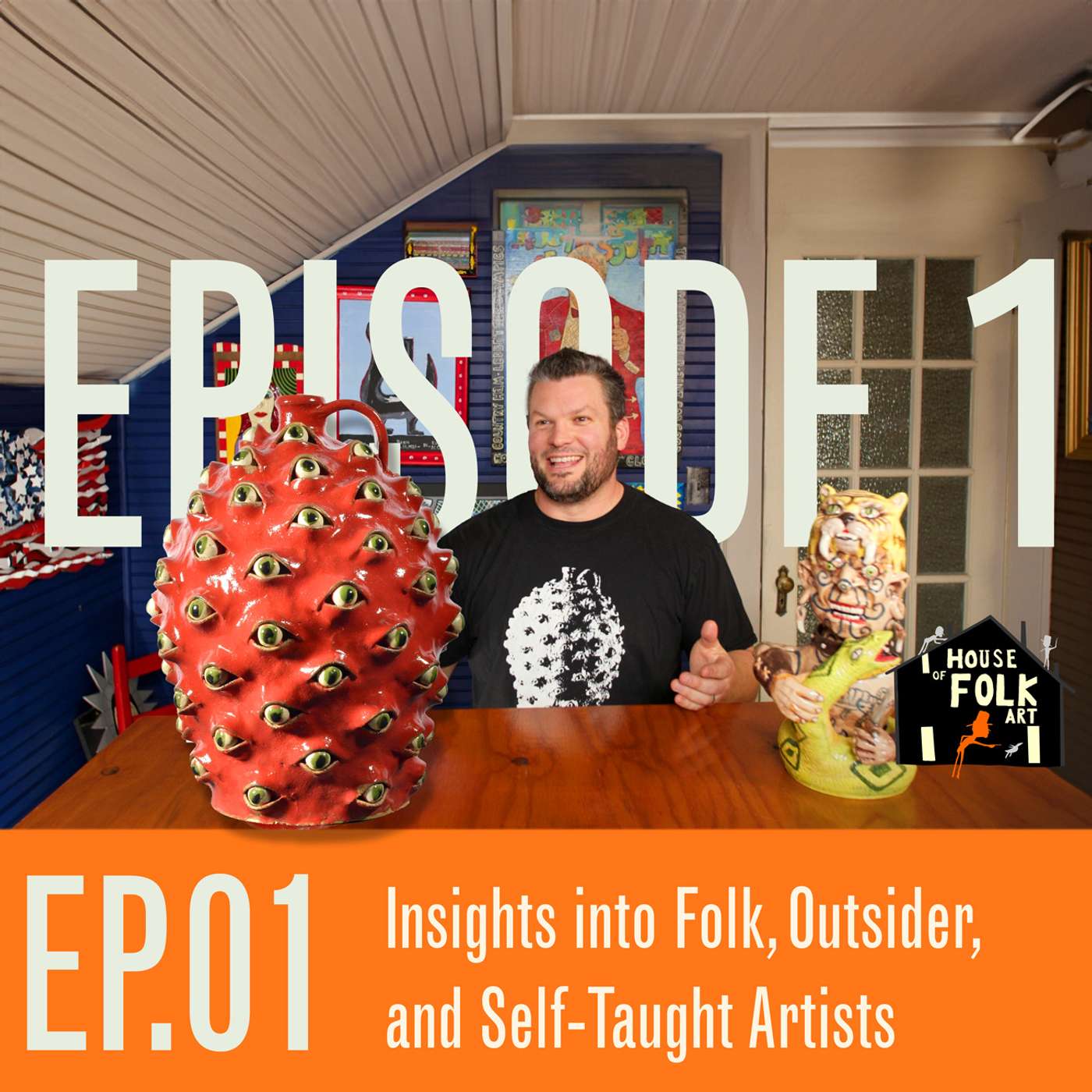
Episode 46 | Unboxing Folk Art Pottery and Remembering Folk Artists
Mike Smith joins Matt in the gallery with several pieces of folk art pottery headed for the next auction, opening boxes and walking through each form as it comes out. What starts as a straightforward unboxing quickly turns into a deeper conversation about where these pieces came from, who made them, and how easily important work can be overlooked when context is lost. Throughout the episode, Matt and Mike break down what they look for when evaluating folk art pottery, from glaze and form to surface wear and feel in the hand. They talk honestly about how certain pieces struggled to sell years ago, how markets shift, and how experience changes the way collectors see quality over time. Matt shares stories from his early auction days, when significant work passed quietly through sales without much attention. The conversation expands beyond pottery as Mike brings out his photographs and shows off his work in a historic copy of Souls Grown Deep , reflecting on the role photography has played in documenting folk artists and preserving their stories. He shares personal photographs of artists he spent time with, offering a rare look at the people behind the work and the importance of remembering artists as individuals, not just names attached to objects. The episode builds toward several key moments, including evaluating pottery specifically for auction versus personal collecting, discussing insurance and auction value, and deciding when a piece is too strong to hold back. Matt and Mike also talk through provenance, how artists like Willie Massey and others fit into the larger folk art story, and why some of the most meaningful material never comes with labels or paperwork. This episode offers a thoughtful look at folk art pottery, photography, and memory, showing how objects, books, and images work together to keep artists from being forgotten long after their work leaves their hands. Chapters 00:00 | Introducing Mike Smith and Unboxing Folk Art Pottery 02:15 | First Impressions, Form, and Glaze 05:40 | Pottery Headed to the Next Auction 09:10 | When Good Pieces Struggled to Sell 12:30 | How Experience Changes the Way You See Folk Art 16:05 | Talking Provenance and Early Auction Stories 19:20 | Folk Art Pottery Versus Personal Collecting 22:10 | Opening Souls Grown Deep and the Importance of Documentation 25:45 | Remembering Folk Artists Through Photography 29:30 | Personal Photos of Folk Artists and Time Spent Together 33:10 | When a Piece Belongs at Auction 36:40 | Evaluating Value and Market Reality 40:15 | Willie Massey and Upper Tier Folk Art 44:10 | What Gets Lost When Artists Are Forgotten 47:30 | Closing Thoughts on Pottery, Memory, and Folk Art When the last piece is set back on the table, the conversation lingers on the idea that folk art is more than objects moving through auctions. Pottery, photographs, and books all play a role in keeping artists present, even when their voices are gone. This episode is a reminder that remembering the people behind the work is just as important as preserving the work itself. Do you know a folk artist or have a picking story worth sharing houseoffolkart@gmail.com (919) 410 8002 Leave your name and where you are from and you might hear yourself on a future episode. Follow @houseoffolkart for more stories, field trips, and upcoming auction dates at LedbetterAuctions.com.
Dec 8
Episode 45 | Raising Canes the Folk Art Way
Matt has been raised on canes since he was ten years old, and now he is passing the tradition down by raising his own kids on folk art canes too. From snake wrapped handles to fully carved masterpieces, he walks through some of the best walking sticks in the collection and ends by seeing if Kai can spot the most valuable cane in the room. Throughout the episode he breaks down the difference between a simple carved handle and a true tip to top cane, why certain carvings reveal themselves only under good light, and how collectors can easily overlook the best details when a cane is sitting across a room. Matt gives a full tutorial on what makes a cane great, what makes one just decent, and why a few of these pieces are among the best in the entire folk art world. The episode builds toward two key moments for anyone interested in folk art canes and walking stick collecting. Matt first reveals a top tier 1904 carved cane, a true tip to top masterpiece that he considers one of the best examples of American folk art carving he has ever handled. He then moves into an Antiques Roadshow style appraisal session where he breaks down insurance values, auction estimates, and his own real world offers on several antique canes. Along the way he explains how to identify Mexican folk art canes by the eagle, snake, and cactus motif, how to recognize the hand of a single carver across multiple sticks, and how collectors can display and decorate with canes in their own homes. This episode offers one of Matt’s most in depth looks at folk art canes and why he has collected them for so long. Raising canes takes on an entirely new meaning in this one. Chapters 00:00 | Introducing the Cane Collection and Matt’s Early Start in Folk Art 01:20 | The Red Painted Hand Cane and the Skeleton Bone Cane 04:21 | Hidden Details on the Cat and Snake Cane 05:57 | The Florida Alligator Cane 08:34 | The Natural Root Cane with Folded Hands 10:13 | A Rare Cabinet Card Featuring a Basket and Walking Stick 11:58 | Comparing a Mid Level Cane to a Tremendous Cane 16:26 | Introducing the 1904 Cane and Why It Stands Out 22:04 | What the Carver Might Say if Canes Could Speak 23:45 | Insurance Values, Auction Estimates, and High End Cane Collecting 27:57 | How to Identify Mexican Folk Art Canes 32:00 | Discovering a Carver Through Matching Umbrella Canes 36:39 | The Contemporary Lee Reese Cane from Salem South Carolina 40:46 | How a Cane Grows 42:52 | Decorating with Folk Art Canes at Home 44:03 | Asking a Young Collector to Choose the Most Valuable Cane When the last cane goes back on the table, Matt is reminded how much history can live inside a simple piece of wood. The anonymous carvers of the early 1900s, the regional styles, and the newer makers like Lee Reese all show how folk art canes evolve while still holding on to their roots. Do you know a folk artist or have a picking story worth sharing houseoffolkart@gmail.com (919) 410 8002 Leave your name and where you are from and you might hear yourself on the next episode. Follow @houseoffolkart for more stories, adventures, and upcoming auction dates at LedbetterAuctions.com.
Nov 24
Episode 44 | Secrets from Alamance County and the Pick of a Lifetime
Matt sits down with his dad, the infamous Wade Ledbetter, inside the auction gallery for a story Wade admits might be risky to even share. What starts as a quiet memory from rural Alamance County quickly turns into a mystery about a ten foot clock, a fifty thousand dollar offer from Henry Ford’s museum team, and a farmhouse fire that erased everything. Wade takes Matt back to the days when he delivered milk to the Krauss family and explains why the story of that clock stayed with him for more than fifty years. That secret leads Matt to share a story of his own. At twenty five, he walked into a house in Virginia that changed everything for him as a picker. A house filled with museum tagged antiques, rare crystal, first edition books, and paintings he was not yet experienced enough to understand. It was the pick of a lifetime, the kind that teaches you more in a day than years of picking can. Two stories from two Ledbetters. One about a clock that vanished. One about a house that should never have been lost. 00:00 | Wade Introduces the Krauss Family and the Mysterious Clock 06:40 | Henry Ford’s Buyers and the Fifty Thousand Dollar Offer 13:50 | The House Fire, the Surviving Clock Weight, and Wade’s Milk Route 18:50 | Why Wade Believes the Clock Story Still Matters 25:30 | Wade’s Attic Finds and Early Picking Lessons 29:01 | Wade’s Unexpected Friendship with Mickey Mantle 38:28 | Matt Heads North and Walks Into a Once in a Lifetime House 45:20 | The Crystal, Paintings, and Museum Tagged Pieces Inside Phil’s Home 52:00 | Matt’s Big Scores and the Things He Missed 58:20 | Phil Passes Away and the House Is Emptied 01:00:40 | Closing Thoughts with Matt and Wade As the conversation winds down, Matt and Wade reflect on the stories that shape a picker’s life. From a vanished Alamance County clock to the house that launched Matt’s career, these moments remind us that the best finds are often the ones you cannot plan for. Every attic, every basement, and every back road has a secret waiting on the other side of the door. Do you know a folk artist or have a picking story worth sharing houseoffolkart@gmail.com (919) 410 8002 Leave your name and where you are from and you might hear yourself on the next episode. Follow @houseoffolkart for more stories, field trips, and upcoming auction dates at LedbetterAuctions.com
Nov 10
Episode 43 | Liberty Antiques Recap: Pottery, Paintings, and a Benny Carter Birdhouse
Matt and Kyle sit down after two full days of picking at the Liberty Antiques Festival in Liberty, North Carolina. Surrounded by their finds, they go through the haul piece by piece, from rare signed North Carolina pottery and 19th-century paintings to a pristine Benny Carter saw. The conversation dives into the stories behind the buys, the lessons learned from years on the road, and the excitement that comes with finding something special in a sea of booths. From showcase surprises to pottery discoveries, this episode captures the rhythm and reward of a good show weekend. Chapters 00:00 | Let’s get ready to go through the Liberty haul 04:54 | Matt reflects on first trips to Liberty and twenty years of picking 07:17 | The showcase buy and how to think through bulk deals 09:10 | Pottery finds at Liberty 14:41 | The mini painted basket 16:37 | 19th-century gilt frame paintings 19:37 | The $90 oval portrait 29:48 | Benny Carter painted saw and birdhouse 34:35 | Back to the showcase treasures and collecting small finds 48:28 | Reflections on Liberty and looking ahead 50:47 | Send in your folky stories As the conversation wraps, Matt and Kyle look ahead to the next round of shows and auctions, reflecting on what makes Liberty so unique. From pottery and paintings to showcase treasures, the episode reminds us that every object has a story and every picker has a tale worth telling. Watch the Dealer Setup Day vlog titled “Day 1 at Liberty Antique Festival | Quilts, Baskets, and a Ghost Table” now on the House of Folk Art channel. The second Liberty vlog will be released next Monday and will feature many of the items discussed in this episode. Do you know a folk artist? Send in your folky stories: 📧 houseoffolkart@gmail.com 📞 (919) 410-8002 Leave your name and where you’re from, and you might get a shoutout on the next podcast. Follow @houseoffolkart for more behind-the-scenes stories and upcoming auction dates at LedbetterAuctions.com.
Oct 27
Episode 42 | From the Brewery to the Gallery: Inside Red Oak’s Griffith Museum
Matt and Sully sit down inside the Griffith Fine Art Museum at Red Oak Brewery to explore where fine art and folk art meet. Surrounded by a collection of American Impressionist paintings from the late 1800s, they talk about the crossover between high-end galleries and the handmade traditions that define Southern craftsmanship. What starts as a laid-back conversation over a Hummingbird Golden Lager quickly turns into a mix of history, humor, and collecting philosophy. Matt shares stories about his early days picking with his father, his time at auctioneering school, and how the lessons of the field still guide his work today. Sully brings up Liberty Antiques Festival, walking stick rivalries, and the fine line between a good buy and a mistake that costs you $900. From pottery and furniture to NFTs, the conversation reminds us that every object has a story, whether it’s hanging in a museum or hidden in a barn. Chapters: 00:00 | Welcome to Red Oak Brewery 06:48 | Has Sully Been Practicing His Bid Calling? Matt Reflects on Auction School and Early Success 09:17 | Who’s Coming to Liberty Tomorrow? 16:15 | Crypto Tales, NFTs, and Auction Adventures 20:50 | Big Buys and the Art of the Auction 30:51 | Matt Recalls One of the Best Tables He Ever Picked 40:08 | Game Day Predictions for Liberty 51:03 | One of the Last Liberty Antiques Festivals 59:56 | Our First Calls to the Folk Art Hotline As the conversation wraps, Matt and Sully raise a final glass to Red Oak for having us into their gallery and to everyone keeping art alive. Whether it’s a face jug, a walking stick, or a miniature chair, every handmade object carries a story worth telling. Do you know a folk artist? Send in your folky stories: 📧 houseoffolkart@gmail.com 📞 (919) 410-8002 Leave your name and where you’re from, and you might just get a shoutout on the next podcast. Follow @houseoffolkart for more behind-the-scenes stories and upcoming auction dates at LedbetterAuctions.com.
Oct 13
Episode 41 | Inside the Folk Art Underground: Mike Smith on Folk Art Legends and Lost Stories
Matt and Mike Smith sit down inside the Griffith Fine Art Museum at Red Oak Brewery to talk about the wild early days of Southern folk art and the collectors who helped define it. What begins as a casual visit quickly turns into a deep dive into Mike’s decades-long journey from salesman to documentarian, capturing the rise of self-taught art across the Southeast. Mike shares how he met artists like Benny Carter, James Harold Jennings, and Howard Finster, and what it was like to ride with Carter through the backroads of North Carolina with a revolver on the dash and a cooler full of copperheads in the back. He recalls photographing artists in their homes, quitting his day job after a single conversation with Finster, and how those early trips shaped the entire field of outsider art. Matt and Mike talk about the collectors who kept the movement alive and the growing problem of fake pieces appearing in auctions. They compare real works to counterfeits, share tips on spotting authenticity, and reflect on how folk art has changed as the next generation starts to collect. Sully joins at the end to ask a few behind-the-scenes questions about Mike’s photography and how he built trust with artists before taking a single shot. Chapters: 00:00 | Welcome to the Griffith Fine Art Museum at Red Oak 05:26 | Giving Mike His Flowers 09:09 | Benny and Mike Take New York 15:07 | Meeting James Harold Jennings 20:19 | Fearrington Folk Art Show Preview 25:49 | The Discovery of Tom Fiddler 30:20 | Why Folk Artists Create 35:40 | So Bad It’s Good 40:41 | The Fake Art Problem 50:45 | Spotting Benny Carter Fakes 55:01 | Time for a Red Oak 59:50 | The Best Time to Buy Art 1:04:46 | Sully’s Closing Questions As the conversation winds down, Matt and Mike look back on the people who made this community what it is today. The stories of Benny Carter, Mose Tolliver, and Howard Finster remind them that folk art has always been about more than sales or recognition. It’s about the spark that makes someone pick up a brush, carve a block of wood, or turn everyday life into something worth remembering. The next great folk artist is probably out there right now, carving, painting, or welding in quiet determination, waiting for someone like Mike Smith to stop by with a camera and a story to tell. Follow @houseoffolkart for more behind-the-scenes stories and upcoming auction dates at LedbetterAuctions.com.
Sep 29
Episode 40 | Kentucky Legend Carl McKenzie & The Gibsonville Hwy 64 Chair Maker Revealed
Matt and Kyle take a deep dive into Kentucky folk artist Carl McKenzie (1905-1998), examining his colorful cut-wood sculptures that inspired a generation of collectors. From the Daniel Boone Trading Post to Larry Hackley's legendary collection, they explore how McKenzie's simple two-by-four constructions with movable arms captured the essence of Kentucky mountain life. The episode takes a personal turn when Matt reveals his secret identity as the "Gibsonville Highway 61 Miniature Chair Maker," showcasing 24 Willie Massey-inspired chairs he created over three months before mysteriously losing the creative drive. The conversation explores the psychological challenges of folk art creation, from Charles Archer's inability to carve stone anymore to Matt's fear of trying to recreate his own work. They compare McKenzie's $150-300 pieces to Edgar Tolson's $17,000 carvings, discuss the difference between cut wood and carved wood, and examine why collectors need multiple pieces to build a case for an artist's legitimacy. Plus: Benny Carter banjo poetry about the House of Blues, football hit sticks as contemporary folk art, and a heated basket controversy that's got one collector sending angry midnight texts. What you'll learn: Carl McKenzie's evolution from retirement to prolific Kentucky folk artist Why cut-wood sculptures require different appreciation than carved pieces The psychological "bite" that drives folk artists and when it disappears How to distinguish 1940s paint from contemporary work The House of Blues connection to folk art and Dan Aykroyd's vision Why Edgar Tolson commands $17,000+ while McKenzie stays under $500 Follow @houseoffolkart and call the new folk art hotline if you have Carl McKenzie stories to share. Chapters: 00:00 | Carl McKenzie introduction and House of Folk Art t-shirts 02:25 | Kentucky Folk Art – Carl McKenzie's colorful cut-wood sculptures 04:39 | Cut vs Carved – understanding the difference in folk art construction 07:15 | Larry Hackley's Collection – seeing 80 McKenzie pieces together 09:24 | Artist Inspiration Sources – imagining McKenzie's creative process 14:22 | Discovery Stories – 1970s art dealers finding porch carvers 16:18 | Collection Building – why you need multiple pieces for legitimacy 19:01 | Edgar Tolson Comparison – $17,000 museum-quality vs $300 attainable 25:17 | The Creative Bite – how folk art inspiration strikes and disappears 31:09 | Living Artists Today – shake the right tree and find 20 artists 34:12 | Fearrington Folk Art Show– the next generation of self-taught artists 37:56 | Willie Massey Influence – miniature chairs and thick paint globs 41:51 | The Gibsonville Chair Maker Revealed – Matt's secret folk art identity 46:35 | Creative Struggles – why Matt stopped making chairs for 3 years 53:28 | Anonymous $30,000 Cane – high-relief carving and folk art pricing 56:58 | Football Hit Sticks – contemporary folk art meets youth sports 1:00:06 | Benny Carter Banjo Poetry – House of Blues tributes and misspellings 1:06:42 | House of Blues Tour – Dan Aykroyd's folk art restaurant empire 1:08:20 | Struggling Artist Reality – Benny's "last beer" dealer meeting The next Carl McKenzie is out there right now, selling $15 pieces and waiting to be discovered.
Sep 15
Episode 39 | Wade Ledbetter: A Picker's Life & Salt Glaze Pottery Lesson
Matt sits down with his father Wade Ledbetter, the legendary picker whose exploits have become House of Folk Art folklore. From walking to school with a .22 rifle to sleeping with shotguns in dangerous hotel rooms, Wade shares raw stories from the golden age of picking when there was no internet, no cell phones, and pickers ruled the auction house circuit. The conversation covers Wade's transition from insurance salesman to full-time picker, the electric atmosphere at John Lambert's Mebane auction house, and the legendary finds that made other pickers rich while Wade and Matt struggled. Hear about the John Singer Sargent discovery, and the William Merritt Chase painting that sold for $750,000. The episode concludes with an intensive salt glaze pottery lesson as Matt prepares Sully for Liberty Antique Festival. Learn to distinguish Timothy Boggs drips from contemporary pieces, understand why N. Fox is better than H. Fox, and discover how 1800s potters shared techniques and stamps. From canning jar forms to dramatic alkaline glazes, this is your crash course in Piedmont North Carolina pottery. What you'll learn: The dangerous reality of 1990s picking trips and cheap hotel rooms How auction house time slots sold for $500 during the golden era The picking partnership dynamics and money-splitting rules Salt glaze vs alkaline glaze pottery identification tips Why signed pottery commands premium prices and which potters to seek The collaborative nature of 19th-century pottery production Follow @houseoffolkart and get ready for Liberty – but don't buy junk or Matt will hit it with a baseball bat. Chapters: 00:00 | Wade Ledbetter introduction and school rifle stories 00:31 | Early Picking Days – insurance sales to antique partnerships 02:58 | Dangerous Hotel Stories – shotguns, strangers, and picking safety 07:45 | The Golden Auction Era – Mebane's electric atmosphere and picker competition 11:07 | Pottery Cycles – why Thomas Richie now costs $200 instead of $1,200 13:54 | The "Sconion" Mystery – Brigg's auction chant vocabulary 16:00 | Picking Partnership Rules – money splitting and gas tank protocols 19:39 | Benny Carter Encounter – meeting the artist before he became famous 21:38 | Real Picker Philosophy – why you must sell the best to survive 26:27 | Mickey's Magic – Confederate soldier images and $12,000 sugar chests 29:27 | The John Singer Sargent Story – Wade's million-dollar discovery expectations 31:01 | William Merritt Chase Revelation – $750,000 hammer at Mebane auction 33:39 | Sex and Pottery – Wade's controversial pottery wheel advice 34:17 | Salt Glaze Masterclass Begins – preparing Sully for Liberty shopping 35:08 | Timothy Boggs Identification – dramatic drips and canning jar forms 39:00 | Piedmont vs Alkaline Glaze – brown salt glaze vs green western NC pottery 42:28 | Signature Hierarchy – why N. Fox beats H. Fox and potter collaboration secrets
Sep 1
Episode 38 | International Folk Art Showcase & Ancient Face Jugs
Matt and Sully kick off with some international flair as Sully shares his folk art discoveries from Poland and Denmark – including a mysterious pottery piece that might be 200 years old and a painting on board he snagged for five bucks in Copenhagen. The conversation flows from European finds to the economics of American pottery, exploring how glass factories nearly killed traditional potters until they pivoted to decorative and tourist pieces. Matt breaks down the Burlon Craig timeline and explains why Reinhart family face jugs are rarer than Edgefield pottery, while a surprise call from Matt's dad confirms a $5,500 Reinhart sale. From ancient Greek Dionysus vessels to contemporary Nova Scotia carvings, this episode traces folk art's universal human appeal across cultures and millennia. Whether you're fascinated by Polish religious carvings, Egyptian miniatures, or North Carolina pottery traditions, you'll discover that the impulse to create art with your hands knows no borders or time periods. What you'll learn: - How European thrift shops and flea markets compare to American picking - The transition from utilitarian to decorative pottery in the early 1900s - Why Burlon Craig represents the last generation of traditional NC potters - The ancient origins of face jugs in Greek and Egyptian cultures - How tourism saved American pottery makers from extinction - The universal patterns that connect folk art across all cultures Chapters: 00:00 | Intro and European folk art preview 02:13 | European Finds – Sully's Denmark and Poland discoveries 05:08 | Polish Pottery Mystery – dating a potentially ancient piece 08:06 | Haggling Across Borders – international picking stories 09:15 | European Folk Art Museum Tour – Polish religious carvings and paintings 15:10 | Universal Art Forms – why dragons and faces appear everywhere 19:04 | Polish Folk Art Analysis – academic vs self-taught European work 25:01 | Ancient Face Jugs – 2,500-year-old Greek pottery discoveries 26:58 | Face Jug Philosophy – why humans naturally create faces in art 31:06 | Pottery Economics – how glass factories changed everything 32:09 | Dad's Phone Call – $5,500 Reinhart face jug sale confirmation 34:00 | Burlon Craig Timeline – the last utilitarian potter's transition 36:07 | Regional Collecting – North Carolina pottery population math 47:16 | Hickory Pottery Festival – navigating overwhelming choices 50:24 | Nova Scotia Connection – living folk artists from our northern neighbors 53:08 | Universal Folk Art – why every culture creates the same forms 54:04 | Regional Picking Hotspots – Shenandoah Valley and Northeast treasures 58:28 | Salem Pottery History – fish jugs and $100,000 turtle flasks 1:02:03 | Collecting Strategy – starting regional then branching out 1:03:41 | Future Episodes – Kyle's collection, West Virginia pottery, and t-shirt plans 1:06:00 | Future Episodes – Kyle's collection, West Virginia pottery, and t-shirt plans The world is full of folk art – you just have to know where to look. Follow @houseoffolkart and check upcoming auctions at LedbetterAuctions.com. Folk art isn't just American – it's human!
Aug 18
Episode 37 | Inside Matt's Home Gallery & The Real Cost of Building a Folk Art Collection
Matt opens his doors to the official House of Folk Art gallery – a sanctioned room in his Gibsonville home where guests drink wine, discuss eyeball jugs, and sleep surrounded by Benny Carter cityscapes. What started as empty walls has become a rotating exhibition that changes every two years, filled with the kind of obtainable art that proves you don't need millionaire money to live with authentic folk art. This episode is pure education for new collectors: Matt breaks down how he built this collection piece by piece, why he can't afford Bill Traylor but settles happily for Mary Proctor, and the upgrade system that turns $60 eyeball jugs into serious collections. You'll hear the Purvis Young story that changed Benny Carter's entire approach, learn why Red Oak Brewery needs to know about Gibsonville's auction scene, and discover how fake Bill Traylors flood LiveAuctioneers while the real deal costs six figures. The conversation covers everything from salt-glaze pottery drips to Civil War swords, walking stick disasters at Liberty Antique Festival, and why Matt once threatened to destroy $1,700 worth of pottery with a baseball bat over pickup hours. Plus: the essential folk art reference book every collector needs, Matt's bouncer days at Plumb Crazy roadhouse, and a live demonstration of why you always check the whole sword before buying. What you'll learn: - The upgrade system: how $60 becomes $600 becomes $6,000 over time - Essential folk art names from the Oppenheimer collection book - How to spot fake Bill Traylors and Purvis Youngs on auction sites - Why Matt's dad's picking wisdom still guides every purchase - The difference between collecting and dealing (and why collectors lose money) - Salt-glaze pottery basics: drips, stamps, and Alamance County gold Whether you're starting with Mary Proctor paintings or dreaming of museum-quality pieces, this episode shows how authentic folk art beats Target wall decor every time – and costs less than you think. Follow @houseoffolkart and check upcoming auctions at LedbetterAuctions.com Chapters: 00:00 | Cold Open – Dead people's art and Gibsonville introductions 01:24 | House Tour – the sanctioned folk art room and B&B concept 03:09 | Collection Philosophy – why this isn't the "best of the best" 05:54 | Folk Art Pricing – from $60 eyeball jugs to $7,250 records 08:27 | Red Oak Brewery Rant – local art gallery missed connections 14:19 | Folk Art Discovery – how people find self-taught art 15:18 | The Essential Reference Book – Three Ring Circus collection guide 17:25 | Money Talk Defense – why pricing matters in art discussions 20:31 | Teaching Kids to Collect – Matt's 13-year-olds at Liberty 22:17 | Art World Categories – why labels exists 25:11 | Academic vs Self-Taught – the Hudson River School revelation 29:01 | Benny Carter's Origin Story – from Halstead Metals to art career 32:20 | The Purvis Young Influence – how $30 paintings changed everything 35:17 | Masterpiece Phases – Benny's detailed period vs later work 44:10 | Collection Building Strategy – pottery, furniture, walking sticks 48:12 | The Upgrade System – from $85 jugs to signed masterpieces 52:05 | Salt-Glaze Pottery Lesson – drips, stamps, and kiln science 55:23 | Walking Stick Disasters – the Liberty rack catastrophe story 59:16 | Collecting vs Dealing – why pickers can't keep everything 1:00:29 | Specialization Benefits – North Carolina monkey jugs only 1:04:18 | Fake Art Warning – LiveAuctioneers and "sold as is" scams 1:06:01 | Authentication Stories – how to spot fakes 1:07:23 | High-End Art Reality – Monet, Basquiat, and auction house politics 1:08:58 | Pickup Hours Rant – the $5 tile incident and business boundaries 1:10:29 | Picasso Timeline Confusion – Matt's art history education gaps 1:14:23 | Picking Stories – the Dan Siegle mistake and learning experiences 1:19:52 | Plumb Crazy Bouncer Days – guns, bikers, and college jobs 1:25:42 | Wall Decoration Philosophy – real art vs Target purchases 1:27:32 | Starter Recommendations – Mary Proctor and R.A. Miller 1:30:15 | Collecting Parameters – setting limits to avoid chaos 1:33:38 | Civil War Sword Inspection – Union vs Confederate identification 1:35:16 | Final Collecting Advice – passion over price, knowledge over impulse The house tour continues next episode – folk art living at its finest.
Aug 4
Episode 36 | The Dale Jr of Folk Art: Checkered Flags & Hidden Gems
Matt opens the show in Dale Earnhardt Sr.’s iconic black-and-red jersey while Sully sports Dale Jr. The playful NASCAR nod lasts only long enough for a quick laugh before they park the racing talk and steer straight into folk-art territory. Their first stop is Eden, North Carolina, where Carrie Graves covered scrap paper with bright marker sketches for decades and her daughter Ellen Martin coaxed lions and angels from borrowed-kiln clay. Next they spotlight Benny Carter, a former metalworker whose twenty-thousand miniature cityscapes practically hum with yellow-cab traffic. The tour wraps with a bottle-cap snake, a split-oak basket whose missing splints ruin its payday, and a carved boxer whose price tag swings from pocket change to five figures depending on the auction block. What you’ll pick up along the way • How a $15 porch drawing from Carrie Graves can climb to four-figure territory • Why Ellen Martin fired her pottery in a borrowed kiln and how that affected her prices • The Benny Carter grind: twenty-thousand paintings, a 9/11 obsession, and serious market heat • Craft vs Folk vs Outsider: quick rules of thumb using a bottle-cap snake as the example • Condition basics: the missing-splint math that turns a $4,000 basket into $80 • Market environments: why a wood carving is $100 at Fishersville, $400 at Liberty, but $12,000 in New York Chapters 00:00 | Cold Open – Matt in a Dale Sr jersey, Sully in Dale Jr, checkered-flag talk 01:41 | Martinsville Nights – camping stories, case of beer, and a 100-mph pick 03:55 | Hidden Artists – intro to Carrie Graves and Ellen Martin 04:32 | Carrie Graves Drawings – marker on paper, pricing and scarcity 08:55 | Ellen Martin Pottery – borrowed kiln story, flowing-robe Lady Liberty 11:46 | Benny Carter Deep Dive – metal-shop layoffs to city-scape mania 15:02 | Repetition Pays – how twenty-thousand pieces create steady demand 22:50 | Yard-Sale Math – $10 tin paintings versus $10,000 auction bids 33:10 | Craft, Folk, Outsider – the bottle-cap snake debate 41:46 | Wood Carving Review – Matt compares two folk art carvings 48:04 | Market Environments – Liberty, Fishersville, New York 52:09 | Anonymous Tin Cows – when six-figure names hide in plain sight 55:16 | Basket Reality Check – $4,000 vs $80 when splints go missing 58:00 | Folk Art Flashcards – Mary T. Smith, Archie Byron, Lonnie Holley 1:05:44 | “Click It In” – training your eye with reference book binges 1:09:16 | Gym-Life Rant – strong backs and stronger bids 1:13:37 | Folk Art Rules – nothing is worth anything until someone pays 1:15:21 | Sign-Off – auction-chant warm-ups and next-episode teaser Folk art is more than carved wood or painted tin; it is road miles, quick math, and the nerve to flash cash when your gut says go. Whether you are a weekend yard-sale scout or plotting a folk-art empire, this episode hands you a roadmap, wrong turns and all. Keep riding shotgun by following @houseoffolkart on Instagram and TikTok, and check the next auction lineup at LedbetterAuctions.com. The hunt never ends; it just moves to the next county line.
Jul 21
Episode 35 | The Pickers’ Mindset: From $10 Bets to Six-Figure Finds
If you’ve ever wondered how an old jar of quarters, a dusty license plate, or a mystery canvas can bankroll a folk-art empire, this hour is your crash course. Matt Ledbetter and Sully leave the gallery table behind and unpack the method behind the madness of picking...long drives, door knocks, and gut checks that separate a lucky flea-market haul from a life-changing score. They relive two-week marathons with $12,000 in road cash, explain why “brown is down” furniture still sells if you know the buyer, and debate the ethics of flipping a $10 painting for $29,000. Matt revisits a $10 North Carolina license plate that hammered for four figures, a briefcase of mint Case knives that reset his risk meter, and the “toolbox” cash trick that keeps the gas tank full; it’s part road-trip thriller, part market master class, part soul search, proving expertise can both elevate and encumber. What you’ll pick up along the way • Pricing math in real time — melt-value silver, die-variety coins, and why original boxes can 10× a toy’s worth • Spotting sleepers — porcelain plates, state-shaped tags, and other ephemera hiding in plain sight • Negotiation hacks — when to flash cash, when to go silent, and how a polite follow-up visit scores the real jackpot • Ethics of the flip — drawing the line between savvy and predatory when the seller doesn’t know what they have • Road-crew rituals — motel auctions on Friday nights, seat-belting stoneware so it survives I-40 potholes. • Future-casting — why self-taught art could be the next crypto curve, and which categories Matt thinks still have rocket fuel Chapters 00:00 | Cold Open – Who Plays Matt? 01:30 | Interdimensional Cable? 02:54 | Coin Crash Course: VAM Marks 05:52 | Silver-Price Spike Math 07:34 | “Brown-Is-Down” Furniture Debate 08:39 | Folk Art as the “Next Crypto” 10:06 | Confederate Currency as Art 11:53 | Pop Packaging & Warhol Parallels 15:45 | $10K George Nakashima Near-Miss 18:53 | License-Plate Economics 101 19:59 | Tennessee State-Shape Tags 24:10 | Netflix Picker-Series Pitch 26:01 | Blind-Squirrel Case-Knife Score 30:45 | Boxed Lionel Trains Attic Flip 34:01 | Knife-Reference Revelation 39:30 | Two-Week Indiana Picking Run 49:17 | $10 Arthur Dow Painting → $29K 53:54 | Chester Webster Bird-Jug Tale 56:26 | The “Toolbox” Cash Rule 58:57 | Million-Dollar Daydreams 59:37 | $400 Whirligig Valued at $50K+ 01:01:30 | Wrap-Up & Next Hunts Folk art isn’t just what hangs on a wall; it’s the math of silver ratios, the rust on a license plate, and the nerve to offer ten bucks when your gut screams “maybe.” Whether you’re a weekend yard-sale scout or dreaming of six-figure sleepers, this episode hands you the roadmap...detours, dilemmas, and all. Keep riding shotgun with us by following @houseoffolkart on social, and track the next haul at LedbetterAuctions.com. The hunt never ends; it just moves to the next county line.
Jul 7
Episode 34 | Inside the Auction House: Matt & Sully’s Folk Art Finds
In this episode of House of Folk Art, Matt and Sully take on a challenge inside the gallery: pick 5 folk art pieces each and analyze them for viewers. But this isn’t just show and tell. You’ll get insight into how both beginners and experienced collectors weigh a piece’s condition, story, value, and craftsmanship. From outsider legends to emerging names, the episode explores what makes folk art collectible and how to spot something special. Chapters: 00:00 – 00:02:02 | Cold Open & Gallery Challenge Matt and Sully set the scene, heading into the gallery to find five standout pieces each. 00:02:02 – 00:02:53 | Matt and Sully sit down for the podcast Back in the booth, the duo prepares to dig into their selections, explaining the criteria behind each pick and what collectors should look for. 00:02:53 – 00:07:01 | Ed Lambdin Reptile (Sully) Sully analyzes a vibrant reptile sculpture by Ed Lambdin from the Larry Hackley Collection. It's approachable for new collectors, colorful, affordable, and fun, while still offering layers of outsider art history. 00:07:01 – 00:11:36 | Billy Ray Hussey Red Lion (Matt) Matt dives into a red-glazed lion by Billy Ray Hussey, exploring signature elements like the green eyes and iconic lion series. 00:11:36 – 00:16:29 | Howard Finster Camel Panel (Sully) This camel painting by Finster is numbered, signed, and filled with biblical text. Sully touches on the vision-driven nature of Finster’s work and why provenance and themes matter when evaluating folk art. 00:16:29 – 00:23:24 | Southern Carved Whirligig (Matt) Matt showcases a weathered whirligig that could date to before the Civil War, possibly worth $50,000. He explains construction techniques, aging signs, and how rarity and mystery can make a piece exceptional. 00:23:24 – 00:31:10 | Sulton Rogers Carving (Sully) Sully presents a carved figure by Sulton Rogers, using it to discuss how distortion, emotion, and unique visual language define outsider art. Matt also shares tips on identifying Rogers’ work. 00:31:10 – 00:35:13 | Benny Carter Sculpture by Charles Simmons (Matt) Matt introduces a stone carving of Benny Carter by Charles Simmons. He explains Simmons' path from wood dolls to fine folk sculpture and how late-in-life creativity can build a lasting artistic legacy. 00:35:13 – 00:37:05 | A quick look at the Benny Carter Book The pair browse the infamous Benny Carter book, noting how documentation of artists like Simmons, Carter, and their community helps preserve history and authenticity. 00:37:05 – 00:43:28 | Found Object Bird Sculpture (Sully) This whimsical bird is built from a shoe mold, tin, and wire. Sully questions if it’s folk art or found-object craft, sparking a conversation about intentionality and artistic vision in non-traditional materials. 00:43:28 – 00:46:17 | Contemporary Face Jug from Hickory (Matt) Matt highlights a recent face jug by Kay Bevan of Four Paw Pottery. The bold glaze and playful features show how new makers are pushing tradition forward while honoring Seagrove roots. 00:46:17 – 00:48:25 | Mary Proctor Collage (Sully) Sully presents a classic Mary Proctor piece, rich with color, faith, and Coca-Cola iconography. Matt explains how her storytelling collage style makes her work both personal and broadly collectible. 00:48:25 – 00:51:33 | Mini Benny Carter Painting (Matt) Matt shares a tiny Benny Carter painting and discusses Carter’s life, identity, and lasting impact as one of the most interesting folk artists of his era. 00:51:33 – 00:56:33 | BONUS Rare Early Burlon Craig Face Jugs Matt brings out two early Burlon Craig face jugs and walks through the details that set them apart, including doubled rows of teeth and glaze runs that resemble tears. 00:56:33 – 00:59:47 | The Crying Eye Story Matt tells the origin of a face jug with crying eyes, once thought to be a kiln mistake. It’s a case study in how accidents, context, and scarcity can shape a piece’s story. 00:59:47 – 01:03:28 | Tom Fidler's Burned Wood Carving Carved and burned heads by Tom Fidler show a different folk medium: pyrography. With over 300 pieces coming to auction, Matt discusses how to interpret repetition and volume in folk art markets. 01:03:28 – 01:11:56 | Just-Picked Appalachian Basket Discovered that morning, this handmade basket may be from the Shelton Sisters. Matt unpacks how color, materials, and weave patterns help identify mountain baskets and how market knowledge affects pricing. 01:11:56 – End | DOUBLE bonus Matt sneaks in one last pottery piece for dedicated viewers, showing off some serious drip. Folk art isn’t just about what’s on the wall or shelf. It’s about the stories, the hunt, and the people who see value in the overlooked. If that’s your kind of thing, stick with us. Follow @houseoffolkart across social media and head to ledbetterauctions.com to find the next piece that speaks to you. This is more than a podcast...it’s a front-row seat to the folk art world.
Jun 23
Episode 33 | Back at the Auction House: Baskets, Jugs & Big Surprises
In this episode of House of Folk Art, Matt and Kyle are back at the Folk Art Auction House in Gibsonville, sifting through the spring haul from shows across North Carolina and Virginia. With the van finally unloaded and the finds laid out, they talk through what’s going to auction, what might stay in the collection, and what stories came with each piece. From a $70 New Jersey jug now soaring past $1,200, to a vividly painted mystery basket that might just be Native American, the episode dives deep into the value, and vulnerability, of picking. Matt reflects on hard-earned lessons, including a $500 mistake and a $50,000 miss. He also reveals the secrets behind spotting real age in stoneware and shares the rare backstory of a Chester Webster bird jug, complete with family lore. Whether you're a longtime collector or just getting started, this episode is a crash course in auction hustle, gut instinct, and the kind of heartbreak only pickers know. 00:00 – 00:32 | Cold Open: Sponsored by Monster (Not Really) Matt cracks open a Monster and jokingly claims it’s their sponsor. 00:33 – 04:03 | Back at the Auction House Matt and Kyle regroup after a whirlwind run of spring shows. 04:04 – 06:18 | Mini Basket Pickup A small, early basket gets examined, was it broken or just built without a handle? 06:19 – 11:00 | The Jug Found at 6AM Matt tells the story of a $70 New Jersey jug he snagged at sunrise, now bringing over $1,200 at auction. 11:01 – 14:04 | Northern vs. NC Stoneware They compare decorative blue stoneware from the North to the utilitarian jugs of early North Carolina. 14:05 – 14:56 | Spotting Old Stoneware Matt shares how to spot authenticity in pottery, from wear patterns to firing details. Sometimes, all it takes is years of getting it wrong. 14:57 – 16:55 | The $500 Mistake Jug Matt opens up about a painful lesson: spending $500 on a fake decorated jug. The story is a cautionary tale every collector should hear. 16:56 – 17:47 | Recap: What to Look For in Stoneware Signs of age like dragging wear and firing marks separate the real deals from the modern knockoffs. 17:48 – 21:52 | Two $900 Baskets Down to $425 Matt talks about bundling and how he scored two high-dollar baskets for under half price. 21:53 – 23:59 | Why Isn’t There a Basket Museum? Matt rants about the lack of a Southern Appalachian basket museum. 24:00 – 25:52 | Liberty Festival Pottery Finds The guys transition to pottery finds from Liberty. An alkaline-glazed jar with strong glass runs gets special attention. 25:53 – 26:37 | Alkaline Glaze Tells the Story The type of glaze can place a pot’s origin and age instantly. 26:38 – 29:47 | The Only Book You Need Matt pulls out an old pottery reference guide and explains how it helps identify makers. 29:48 – 31:38 | Learn by Watching Auctions You’ll learn more from watching what sells than any class. 31:39 – 36:16 | 1,000 Buttons for $100 Matt bulk buys a mountain of vintage military buttons. 36:17 – 38:00 | Back Into Pottery Talk After buttons, it’s time to dive back into North Carolina pottery. The conversation steers toward differences in regional clay and glaze. 38:00 – 39:20 | Introducing the Chester Webster Jug They unveil a rare bird-decorated jug by Chester Webster. 39:21 – 40:55 | Wade Ledbetter’s Chester Webster Find Matt recounts his dad buying a Webster jug in 1985 for $100. Turns out that bird on the jug was worth thousands. 40:56 – 42:33 | Chester Webster: Bird & Fish Potter Chester Webster is known for his incised bird and fish motifs. His decorated jugs are among the most collectible in NC folk pottery. 42:34 – 43:49 | Rare Size and Decoration The jug's small size and intricate design make it exceptionally rare. 43:50 – 46:12 | No-Bird Chester Webster Jugs They show another Chester Webster piece, this one without a bird. 46:13 – 49:32 | Spotting a Chester Webster Without a Bird Matt teaches how to ID a Webster jug based on shape, handle, and decorative technique. It’s all about knowing the tells. 49:33 – 51:06 | Salt Glaze vs Alkaline Glaze A quick visual breakdown of glaze types. Green means alkaline, gray means salt...usually. 51:07 – 55:23 | The $50K Dave Jug That Got Away Matt tells the gut-wrenching story of walking away from a $50,000 Dave jar at age 15. It still haunts him. 55:24 – 58:28 | Picker Songs Matt sings the song he wrote about the Dave jar and starts brainstorming one for potter Stacy Lambert. The banter turns musical. 58:29 – 59:26 | If You Don’t Buy Something, You’ll Go Berserk The pressure to find a good buy builds during a dry stretch. Sometimes you’ve got to buy something to stay sane. 59:27 – End | Keep It or Sell It? Matt wraps up by playing a round of "Keep It or Sell It" with their current finds. Some are auction-bound, but a few may just stay in the collection. Subscribe for more folk art finds, auction stories, and behind-the-scenes picking adventures.
Jun 9
Episode 32 | Van‐Side Collector’s Guide to Fishersville
In this episode of House of Folk Art, Matt, Kyle, and Sully squeeze into the back of the van just as the Fishersville Antique Expo winds down, surrounded by every treasure they scored that weekend. What starts with Matt flipping through his “Little by Little” reference book quickly becomes an all-out field lesson in Americana and folk art. From a perfectly aged 1860 Piedmont salt-glazed jug and Sully’s first walking stick—handed down by Matt himself—to Kyle’s on-camera $400 pie safe purchase from Wade, they unpack each piece with contagious enthusiasm. You’ll learn how to read stamps on a craned jug, spot a genuine diamond willow cane, and weigh the merits of a painted basket’s three-color finish. Along the way, they debate pricing philosophies, the “new money” concept in collecting, and why a tiny seven-inch basket can outshine its larger cousins. By the time they reveal a quilt rack find, you’ll understand why every expo score is a story waiting to be told. As the van doors close on festival season, Matt and Sully remind us that collecting isn’t just about filling shelves—it’s about preserving the hands-on craftsmanship and local history behind each item. Whether it’s a humble walking stick, a curated pie safe, or a rare jug, these pieces connect maker to collector in ways no auction catalog ever could. Tune in for the full episode to catch every tip, trade-off, and “aha” moment as they wrap up Fishersville and look ahead to the next hunt. CHAPTERS 00:00 – Cold Open: Matt flips through “Little by Little” as Kyle sets up the cameras 01:29 – Podcast Kickoff: Matt and Sully introduce the House of Folk Art episode from the van 01:57 – Piedmont NC Salt Glaze Jug: Examining an 1860 jug, its stamps, and why Sullivan’s find matters 05:21 – Folk Art & Antiques at Shows: Why Americana and folk art go hand in hand at antique festivals 05:34 – Walking Sticks: Lessons on tape, surface wear, and why you never put tape on folk art canes 07:47 – Diamond Willow Canes: Identifying diamond willow, what surface tells you, and carving origins 11:06 – Swan Lake Central Park Painting: Discovering provenance on the back and valuing an 1880s artwork 16:04 – Jug sniff test takes Sully back to a hog farm cellar 18:42 – New Money Concept: How “new money” works in the antique business and enjoying pieces over time 20:29 – Walking Stick Gift: Matt gives Sully his first walking stick 22:00 – Painted Baskets: Evaluating paint quality, size, and why smaller baskets can be more valuable 23:04 – Pie Safe Purchase: Kyle buys a pie safe from Wade for $400 on camera 26:40 – Guess That Basket: Revealing three baskets from a single bag and discussing form versus age 28:28 – Quilt Rack Reveal: A surprise necessity for any collection and how to display folk textiles 28:51 – Wrap-Up: Reflections on Fishersville Antique Expo, end of festival season, and why Americana and folk art belong together 00:00 – Cold Open: Matt flips through “Little by Little” as Kyle sets up the cameras In this cold open, Matt quietly leafs through his freshly purchased copy of Little by Little while Kyle hustles to position mics and cameras. You can hear the soft rustle of pages as Matt pauses on photographs of early American decorative arts. Before any formal introduction begins, you already sense the excitement that comes with every festival find and scholarly reference—setting the tone for the van-sized deep dive to come. 01:29 – Podcast Kickoff: Matt and Sully introduce the House of Folk Art episode from the van Once the cameras roll, Matt welcomes listeners to another House of Folk Art podcast recorded straight from the back of the van. He hands the mic to Sully, who jokes that nothing screams authenticity like talking folk art between a stack of crates and a half-set tripod. Together they note that this episode wraps up festival season and promises a show-and-tell of their best Fishersville Expo scores. 01:57 – Piedmont NC Salt Glaze Jug: Examining an 1860 jug, its stamps, and why Sullivan’s find matters Matt pulls out a salt-glazed jug stamped with a “2” over “2” and a tiny cargo wheel motif on the shoulder. As Sully holds it up to the light, Matt explains how to read the double “2” stamp to date it around 1860. They debate whether the cobalt lines on the shoulder denote a North Carolina origin or if it was made in Virginia and slipped across state lines. Sully chimes in about his first solo purchase—a jug stamped “SC Milburn”—which Matt says could be a rare variant worth saving. 05:21 – Folk Art & Antiques at Shows: Why Americana and folk art go hand in hand at antique festivals Between sips of coffee, Matt reminds Sully that any show selling Americana antiques almost certainly has folk art hiding nearby. He emphasizes that the collector who knows one genre usually understands the other—because both tell local stories and share the same maker-made spirit. This segues into a broader discussion of why festival booths often group primitive furniture with baskets, stoneware, and handmade tools. 05:34 – Walking Sticks: Lessons on tape, surface wear, and why you never put tape on folk art canes The conversation shifts to walking sticks. Matt laments the person who wrapped old cane handles in duct tape, revealing how that kind of repair destroys original patina and surface patterns. Sully holds up a walking stick covered in cracked bark, and Matt shows how natural wear appears where hands gripped the wood. They agree that any careful collector will look for root-crooked bases and subtle vine curves, not just the carving on the handle. 07:47 – Diamond Willow Canes: Identifying diamond willow, what surface tells you, and carving origins Sully unveils a pristine diamond willow cane with the classic diamond-shaped ridges. Matt explains how those patterns form when the vine grows around the tree trunk. They talk about the difference between carved diamond patterns and naturally formed ones—and how to spot a modern carving versus genuine—it’s all in how the wood fibers twist. Listeners pick up tips on when to pay extra for a stick with minimal bark loss and signs that the carver used a drawknife rather than a power tool. 11:06 – Swan Lake Central Park Painting: Discovering provenance on the back and valuing an 1880s artwork Next, Matt flips a small framed painting to reveal a worn paper label reading “Swan Lake, Central Park, 1875.” Sully paid $300; now they debate whether dirt and missing frame corners actually increase authenticity. Matt points out the original brass hardware on the back and the nails that date to the 1880s. They agree that the provenance makes it a steal, even if the canvas has a few pinholes—showing how buyers should lean into imperfections when they prove age. 16:04 – Jug sniff test takes Sully back to a hog farm cellar Mid-episode, Matt presents a signed J.W. Triplett stoneware jug embossed “Canfield, Ohio.” Before any close inspection, he does the classic “sniff test,” explaining how salt-glazed jugs often hold a faint farm-yard scent from decades in a cellar. That olfactory clue reminds him of his grandparents’ hog farm cellar as a kid. Sully listens in admiration, learning that smell can be as revealing as any stamp when dating pieces. 18:42 – New Money Concept: How “new money” works in the antique business and enjoying pieces over time As the jug discussion winds down, Matt outlines “new money” in more detail—encouraging collectors to buy pieces they enjoy now and let them appreciate naturally over seasons. Sully agrees that part of collecting is living with a jug or basket for a few years b...
May 26
Episode 31 | The Best Basket You’ll Ever See
Chapters 00:00 – Intro 00:14 – Baskets 101: The Feel Test 01:01 – Machine Cuts vs. Drawing Knife Splits 03:18 – Why Smaller Baskets Matter 04:16 – The Basket That Makes You Say Oh 05:11 – Dating Old Baskets by Feel and Wear 07:50 – How to Know When Not to Pass It Up 15:09 – The Best Basket You’ll Ever See 18:10 – A Known Maker vs Unknown Maker 19:15 – Who Got You Into Baskets? 23:05 – Sully Joins to Talk About Wild Marvin Bailey Jugs 28:20 – Lanier Meaders and the Rock Teeth Secret 36:43 – Billy Ray Hussey’s Rare Medusa Lion 38:16 – Why the Buyer Might Be More Rare Than the Basket 42:30 – Buying Smart: What to Watch for at Festivals 46:16 – When We Say Hickory, We Mean Catawba In this episode of House of Folk Art, Matt sits down with Kyle and Sully for what might be the most passionate basket tutorial ever recorded. What starts as a crash course in old basket identification turns into a hands-on showcase of Southern craftsmanship, as Matt works through a table of examples, building toward what he calls “the best basket you’ll ever see in your life.” They cover how to judge quality by feel, how to spot hand-cut splints, and why tiny baskets often show off the most skill. Along the way, they talk pricing, provenance, and the influence of makers like Mary Causby. One standout piece is so refined Matt says no museum has one better. Later, Sully joins as the crew pivots to pottery. First up is a Marvin Bailey jug covered in mini face jugs. Then comes Lanier Meaders’ “rock teeth” and a wild Medusa lion jug by Billy Ray Hussey. These pieces spark conversations about auction value, collecting philosophies, and the rarest thing in the game, a serious buyer. This episode is a reminder that collecting is about seeing. A great basket doesn’t demand attention, it earns it. You feel it in the tension of the weave, the worn handle, the balance of form and function. It’s not just old. It’s honest. What Matt, Kyle, and Sully uncover here is reverence. Reverence for skill, for patience, for the invisible decisions a maker made that shaped something lasting. And when the right piece lands in the right hands, no one needs to explain why it matters. You just know.
May 12
Episode 30 | The Ones That Got Away: Wade Ledbetter’s Wildest Picks
In this episode of House of Folk Art, Wade Ledbetter returns to share more stories from his life as a full-time antique picker. A life spent on back roads, knocking on doors, and hauling everything from sugar chests to human skulls. Told to his son Matt, the host of House of Folk Art, this episode winds through missed deals, strange finds, and wild encounters in small towns across Virginia and North Carolina. Wade’s storytelling hits full stride as he recalls a legendary missed opportunity involving not one but three Stanley Steamer cars and a building full of forgotten parts. Then, we hear about a massive buyout of an old doctor’s estate in Henry, Virginia. A haul that included rare pottery, medical oddities, and one sugar chest that would go on to sell for over ten thousand dollars. In the final segment, Kyle joins the conversation and turns the mic toward Wade’s second act, his work as a folk artist. What follows is a personal conversation about Wade’s relationship with Benny Carter, how painting started by accident, and why folk art never needed to be perfect to be meaningful. CHAPTERS 00:00 – Picking Stories with No Profit 06:03 – The Stanley Steamer Mistake 11:19 – A Second Visit and a Missed Fortune 16:11 – A Mysterious Doctor’s House in Henry, Virginia 22:26 – Sugar Chests, Skeletons, and a Killer Score 29:02 – Lessons from the Old Days of Picking 31:12 – Trucks, Tents, and How the Game Changed 33:01 – From Picker to Folk Artist 36:00 – Painting Benny Carter and Remembering the Past 41:06 – Parties, Pot, and Birdhouses 43:00 – Closing Thoughts and Where to Find Wade’s Art 00:00 – Picking Stories with No Profit Wade opens with a truth familiar to every picker: some of the best stories come from deals that didn’t make a dime. He sets the tone by recounting a road trip to Pleasant Garden and the strange property they nearly bought out. 06:03 – The Stanley Steamer Mistake Inside a collapsing old workshop, Wade discovers three Stanley Steamer cars and crates of original parts. Valves, gauges, tires, even yellow-labeled factory stock. The seller offered everything for $8,000, but Wade and his partner walked away. 11:19 – A Second Visit and a Missed Fortune Years later, Wade returns to the same property, hoping for a second chance. The family remembers him, but most of the Steamer parts are long gone. “Some of the best picking stories are all about failure,” Wade admits, reflecting on what it means to miss something big because you didn’t yet know what you were looking at. 16:11 – A Mysterious Doctor’s House in Henry, Virginia Wade shares the story of a massive score at an old white house once owned by a doctor. The yard was littered with broken crocks, and the attic was packed with medical equipment, skeletons, and even a small coffin with a baby skeleton inside. 22:26 – Sugar Chests, Skeletons, and a Killer Score That sugar chest, it turns out, sold for $12,000. Wade recounts the rest of the haul and admits his mistake, leaving the skeletons behind. When he returned to buy them later, the family shut him down. “You could probably have had all that doctor stuff for $100,” he says. “But I didn’t know what it was worth.” 29:02 – Lessons from the Old Days of Picking Matt reflects on how different the game was back then. Wade didn’t keep a booth or sell online. He filled a truck on Monday and sold everything by Friday. No backup plans. No storage units. No second chances. 31:12 – Trucks, Tents, and How the Game Changed Matt talks about how antique shows and picking culture evolved over time, sharing how police once treated pickers with suspicion until shows like American Pickers changed public perception. Wade remembers getting pulled over in the 80s just for driving a loaded-down pickup. 33:01 – From Picker to Folk Artist Kyle joins the conversation and asks Wade about his transition from antique picker to folk artist. Wade laughs, says it just happened, and holds up a painting of Benny Carter, a legendary folk artist and friend. 36:00 – Painting Benny Carter and Remembering the Past Wade shares his process: paint what you want, how you want. He adds symbols to his work that nod to the subject’s life, in Carter’s case, taxicabs and birdhouses. “I’m sure it doesn’t look like him,” Wade says, “but it felt right to me.” 41:06 – Parties, Pot, and Birdhouses Wade recalls first meeting Benny at a party. They didn’t talk art, they passed joints and told stories. Wade admits he didn’t think much of Carter’s work at the time, but now his birdhouses are collectible. “He gave them away,” Wade says. “Now people sell them for hundreds.” 43:00 – Closing Thoughts and Where to Find Wade’s Art The episode winds down with a few final laughs, a mention of Wade’s art sales, and a reminder that folk art isn’t about being right, it’s about being real. Whether it’s a broken jug, a steam-powered car, or a painted-over thrift store canvas, the value is in the story you find inside it.
Apr 28
Episode 29 | Face Jugs and Folk Legends: Inside the Catawba Valley Pottery Festival
In this episode of House of Folk Art, Matt Ledbetter takes listeners deep inside the Catawba Valley Pottery Festival. One of the South’s most important gatherings for traditional folk pottery. Held each spring in Hickory, NC, the festival brings together potters, collectors, and first-time admirers from across the country. Featured Guests: Steve Abee | Stacy Lambert | Michael Gates LA Ryan | Dr. Allen Huffman 🎧 CHAPTERS 00:00 – Welcome to the Festival 04:30 – Steve Abee on Clay, Community, and Tradition 10:10 – Early Bird Setup and Pottery Prep 15:05 – Stacy Lambert on Pop Culture and James Earl Jones 20:40 – Pottery Signatures and Collector’s Stories 26:10 – Michael Gates on Legacy and Voice 31:30 – Kilns, Breaks, and Evolving Style 36:50 – LA Ryan and the Gospel of Howard Smith 42:15 – Dr. Allen Huffman on the Festival’s Origins 47:50 – Storytelling and Preserving History 53:00 – Auctions, New Collectors, and Final Thoughts 58:40 – Wrapping Up in Hickory Recording live from inside the festival, Matt captures the heart of the event through conversations with the people who’ve shaped and preserved this tradition. He sits down with veteran potter Steve Abee, who shares his process of digging clay by hand and firing it in wood-burning kilns. Stacy Lambert reflects on his whimsical, hand-painted jugs, including a special commission for James Earl Jones. Michael Gates speaks as a descendant of the Reinhardt family, balancing legacy and personal voice. Collector LA Ryan talks about traveling with Howard Smith to document forgotten potters. And Dr. Allen Huffman, founder of the festival, shares stories from the early days and explains how Catawba Valley pottery became nationally recognized. Themes emerge throughout: the physical labor behind every piece, the emotional stories pottery can hold, and the challenge of keeping these traditions alive. From kiln accidents and auction surprises to face jugs and firing rituals, the episode is full of insights, humor, and history. Whether you’re a longtime collector or just discovering folk art, this episode offers a rich look into a community where stories are passed down in clay. It’s a tribute not just to handmade objects, but to the hands that shape them—and the meaning they carry. This episode captures what makes the Catawba Valley Pottery Festival so unique. It’s not just the pottery, although the craftsmanship—hand-dug clay, hand-turned jugs, and glazes mixed by instinct—is remarkable. It’s the people behind it: the artists who carry tradition forward, the collectors who recognize a jug from a hundred feet away, and the families passing stories from one generation to the next. At its core, the festival is a living conversation between past and present. An open-air museum. A reunion. A marketplace. A legacy. It reminds us that folk art still matters—not because it’s perfect, but because it’s deeply human. Imperfect in the best way. Shaped by hand, memory, and soul. As long as the kilns burn, the clay holds, and the stories are told, the spirit of Catawba Valley folk pottery will live on.
Apr 14
Episode 28 | Cher Shaffer Returns: Visionary Painting, Folk Art, and the Day the Mountains Cried
In this episode of House of Folk Art, host Matt Ledbetter welcomes back Cher Shaffer, a self-taught folk artist whose work captures heritage, instinct, and raw emotion. Raised in Georgia with Cherokee and Melungeon roots, Cher has spent over 55 years creating visionary paintings, pit-fired pottery, sculptural dolls, and face jugs, each infused with personal and cultural storytelling. This time, Cher shares the deeper meanings behind her most personal pieces, the pushback she faced from the art world, and her latest body of work: The Day the Mountains Cried, a series inspired by the devastating Halloween storm in Ashe County, NC. From the prophecy of her three thumbs to the spiritual process of seeing paintings before they emerge, this episode dives into the unshakable urge to create and what it truly means to be a visionary artist. Chapters 00:00 - Introduction: Cher Shaffer Returns 02:30 - The Family Prophecy: Three Thumbs and a Calling 06:15 - The Art That Sees Itself: Visionary Painting Explained 10:40 - When Art Dealers Tried to Stop Her 14:20 - The Day the Mountains Cried: Documenting the Storm 18:30 - The Emotional Toll of Capturing Loss in Art 22:00 - Finding Strength in the Mountains 26:40 - The Future of Cher’s Work: What Comes Next 30:15 - Final Thoughts: Why Folk Art Matters The Family Prophecy: Three Thumbs and a Calling Cher opens up about a family prophecy that shaped her artistic destiny. Born with three thumbs, her Cherokee grandfather declared, “She will do something great with her hands.” Though one was removed as a baby, Cher believes this early sign was a mark of fate, guiding her toward a lifetime of creation and storytelling. The Art That Sees Itself: Visionary Painting Explained After a near-death experience in 1985, Cher’s painting process transformed. Instead of sketching, she began seeing shapes and figures appear on the canvas before she even touched her brush. This intuitive, almost hallucinatory approach became her signature style. “It’s like stepping into an in-between world—between dreams and visions.” However, not everyone welcomed this shift. When Art Dealers Tried to Stop Her In the 1990s, Cher’s dealer—who represented her work in New York and Beverly Hills—insisted she stop making visionary paintings, saying it would alienate her audience. But Cher refused to conform. Lesson: A true artist follows their vision, even when the market pushes back. Today, those once-rejected visionary paintings are some of her most sought-after works. The Day the Mountains Cried: Documenting the Storm Cher’s latest series, The Day the Mountains Cried, captures the destruction of the Halloween flood in Ashe County, NC. Entire homes, ancient trees, and landscapes were swept away overnight. “It’s like the mountains themselves were mourning.” Her paintings reflect the loss, resilience, and spirit of the land, ensuring that the story of the storm won’t be forgotten. Finding Strength in the Mountains Cher describes the emotional connection between folk artists and their environment. Living deep in the Appalachian Mountains, she feels that the land guides her work, shaping not just her art but her entire way of life. “People who aren’t strong don’t last in the mountains. You have to belong to them.” The Future of Cher’s Work: What Comes Next? With thousands of pieces already created, Cher is still pushing forward. She hopes to show The Day the Mountains Cried first in North Carolina, then beyond. Final Thoughts: Why Folk Art Matters Folk art isn’t just about craftsmanship—it’s about history, identity, and survival. Cher’s work is a living record of tradition, emotion, and the human experience. Whether you’re an artist, collector, or just someone who loves a great story, this episode is a must-watch. 📢 Do you own a piece of Cher Shaffer’s work? Drop a comment below! 🎧 Subscribe for more folk art stories & interviews!
Mar 31
Episode 27 | The Art of Cher Shaffer - A Conversation with a True Folk Artist
In this episode of House of Folk Art, Matt Ledbetter sits down with Cher Shaffer, a self-taught folk artist with a career spanning over 55 years. Raised in Georgia with Cherokee and Melungeon heritage, Cher’s work is deeply rooted in storytelling, tradition, and an unshakable urge to create. From visionary paintings that reveal themselves on the canvas to hand-sculpted dolls, pit-fired pottery, and face jugs, Cher’s art is a blend of heritage, instinct, and raw emotion. Her work has been collected by museums, celebrities, and folk art enthusiasts across the country. In this episode, she shares her artistic philosophy, early influences, and the moment that changed everything—a near-death experience in 1985 that transformed the way she paints. Whether you’re an artist, collector, or just someone who loves a great story, this episode is a must-watch. Chapters 00:00 - Introduction: Meet Cher Shaffer 02:30 - The Smallest Handmade Basket Ever Seen 06:15 - Folk Art, Heritage, and Storytelling 10:40 - A Near-Death Experience and the Birth of Visionary Painting 14:20 - The Role of Instinct in Creating Art 18:30 - Pit-Firing Pottery: Learning from Pueblo Masters 22:00 - Face Jugs and the African American Burial Tradition 26:40 - “The Urge to Create”: Advice for Young Artists 30:15 - Final Thoughts: Why Folk Art Matters The Smallest Basket and the Beauty of Folk Craft The conversation begins with a miniature handwoven basket—so small that it fits on a fingertip. As a self-described “basket aficionado,” Matt is fascinated by its craftsmanship, leading to a discussion on the importance of handmade objects in folk traditions. Cher explains that while she didn’t make this particular basket, she often incorporates found objects into her art, adding layers of history to each piece. The Near-Death Experience That Changed Everything In 1985, Cher’s heart stopped for a full minute. When she recovered, something had changed. Instead of planning her paintings, images and shapes started appearing on the canvas before she even touched her brush. This intuitive approach became her signature visionary painting style—a deeply personal and spiritual form of expression. Despite pushback from dealers who wanted her to stick to more traditional subjects, Cher refused to compromise. She followed her instincts, a choice that defined her as an artist. The Lost Art of Pit-Firing Pottery Unlike kiln-fired ceramics, pit-firing is a process that dates back thousands of years. 🔥 How it works: Pieces are placed in an open fire instead of a kiln Damp grass and controlled smoke create deep black finishes The process takes 6–7 hours, followed by overnight cooling The next morning, it’s like digging for buried treasure Cher’s work bridges the gap between Native American pottery traditions and Southern folk art, making each piece both historically significant and uniquely her own. Face Jugs, Burial Traditions, and Folk Pottery Face jugs are one of the most iconic forms of Southern folk pottery, but their origins trace back to African American grave markers. These expressive, hand-sculpted vessels were meant to protect the dead and ward off evil spirits. Cher recalls seeing her first wagon-load of face jugs at a Georgia festival—a sight that left a lasting impression. Though she never considered herself a potter, she was drawn to their raw energy, leading her to experiment with the form in her own work. The Urge to Create: Advice for Aspiring Artists Cher believes that true artists don’t choose to create—they are called to it. Her advice for those who want to start? Grab a blank canvas and make seven strokes Step back and see what emerges—the image will reveal itself Follow the painting rather than forcing an idea Never copy another artist—find your own voice This intuitive, fearless approach to creativity is what has kept Cher painting every day for over five decades. Final Thoughts: Why Folk Art Matters Folk art isn’t just about decoration—it’s about storytelling, heritage, and human connection. Cher’s work is a testament to the power of handmade traditions in an increasingly digital world. If you love self-taught artists, folk pottery, and the raw beauty of handmade art, you won’t want to miss this episode. 🎧 Subscribe for More Folk Art Stories & Interviews!
Mar 17
Episode 26 | Are You Going To Hickory? We Are!
In this episode of House of Folk Art , host Matt Ledbetter sits down with his wife, Jennie Ledbetter, to talk about their first experience at the Catawba Valley Pottery Festival in Hickory, North Carolina. This festival is one of the most important folk pottery gatherings in the country, drawing collectors, artists, and enthusiasts from all over. What started as a casual visit for Matt and Jennie quickly turned into an annual tradition, teaching them valuable lessons about navigating the show, meeting top potters, and finding the best pieces. But this year, House of Folk Art is stepping into a new role. Not only will Matt and his team be at the festival, but they will also have their own official booth . Throughout the event, Matt will be conducting live podcast interviews with potters , capturing their stories, techniques, and insights about the folk pottery world. Whether you're a seasoned collector or just getting started, this episode gives you everything you need to know about attending the festival, what to look for, and why you should stop by to be part of the House of Folk Art experience. Chapters 00:00 - Introduction: The First Trip to Hickory 02:30 - Learning the Hard Way: Why the Preview Party Matters 06:45 - Meeting Stacey Lambert and the Art of Selling Out Fast 10:30 - The Shopping Strategy: What to Look For at the Festival 14:15 - The Evolution of Their Collecting Journey 18:40 - The Best Pieces They’ve Ever Bought (and Sold) 22:00 - Pottery as an Investment: How Prices Have Changed Over Time 26:30 - Festival Tips: Booking Hotels, Preview Parties, and the Best Booths 30:45 - The House of Folk Art Booth: Live Interviews & Behind-the-Scenes 35:00 - Final Thoughts: Why Hickory is a Must-Visit for Folk Art Fans A Late Start and a Valuable Lesson Matt and Jennie’s first trip to the Hickory Pottery Festival was filled with excitement—but also missteps. They arrived about an hour late, assuming they were early enough to get a good look at the best pieces. But when they walked into the venue, they were already too late. Many of the biggest names in folk pottery had already sold out, with collectors scooping up the most sought-after pieces during the Friday night preview party —an exclusive event where buyers get early access to the top finds. This was a game-changer for Matt and Jennie. They quickly realized that to get the best folk pottery, they needed to arrive early, buy preview tickets, and come prepared . It was their first lesson in the fast-paced world of pottery collecting, where hesitation can mean missing out on once-in-a-lifetime finds. Meeting Stacey Lambert: When Everything’s Already Sold One of the most memorable moments from their first visit was meeting legendary potter Stacey Lambert . They walked up to his booth, expecting to see a full display of his intricate folk pottery, only to find an empty table with just two pieces left . Stacey was casually sketching at his booth, waiting out the rest of the festival after selling nearly everything the night before. This moment drove home the importance of preview night. Stacey explained that serious collectors arrive early, often purchasing entire booths of pottery before the general public even gets a chance to look. If you’re planning to attend, take Matt and Jennie’s advice—get a preview ticket, or risk missing out on the best pieces. The Thrill of Collecting: What Makes the Festival Special? As Matt and Jennie continued attending year after year, the Catawba Valley Pottery Festival became more than just an event—it became part of their family’s tradition. Their kids even got involved, using their own earnings to buy pottery at the show and resell it later. The festival isn't just about buying and selling—it's about history, culture, and community . Many of the potters have been perfecting their craft for decades, using traditional techniques passed down through generations. The event serves as a meeting place for collectors, potters, and folk art enthusiasts , where stories and knowledge are shared just as much as the pottery itself. The Best Finds and the Pieces That Got Away Over the years, Matt and Jennie have come across some incredible pieces , but also learned the hard way that you can’t buy everything. Some of their favorite purchases include: A rare Stacey Lambert face jug , one of the most unique and detailed they’ve ever seen. A collection of monkey jugs from the early 1900s , a folk pottery staple that has only become more valuable over time. A massive candle lantern , a piece Jennie insisted on buying despite Matt’s initial reluctance. It has since become one of their favorite pieces, proudly displayed in their home. But there were also pieces they had to walk away from—either because someone beat them to it, or because they underestimated the demand. It’s all part of the thrill of collecting. Festival Tips: How to Do Hickory Right If you’re planning to attend the Catawba Valley Pottery Festival , here’s what Matt and Jennie recommend: Book a hotel in advance. Staying nearby makes it easier to attend both the preview party and the main event. Buy preview tickets. This gives you first access to the best pottery before it sells out. Bring cash. Many potters accept cards, but cash is always easier, especially for quick deals. Set a budget. It’s easy to get carried away—don’t bring more than you’re comfortable spending. Talk to the potters. The festival is a rare chance to meet the artists behind the work. Take the time to learn about their process. The House of Folk Art Booth: Live Interviews & Exclusive Content For the first time ever, House of Folk Art will have a booth at the festival , where Matt will be conducting live podcast interviews with potters throughout the event. This is an opportunity to hear directly from some of the biggest names in folk pottery, as they share their techniques, stories, and thoughts on the future of the craft. Whether you’re a serious collector or just curious about folk art, stop by the booth to see the podcast in action, meet Matt, and immerse yourself in the world of pottery. Final Thoughts: Why Hickory is a Must-Visit The Catawba Valley Pottery Festival is more than just a marketplace—it’s a cultural event that celebrates the legacy of folk pottery. Each year, collectors, artists, and enthusiasts come together to share their passion, trade pieces, and continue a tradition that has been passed down for generations. If you love folk art, this is the place to be. And this year, with House of Folk Art hosting live interviews, there’s even more reason to attend. So, are you going to Hickory?
Mar 3
Episode 25 | The Legend of Wade Ledbetter: King of the Pickers
In this episode of House of Folk Art , host Matt Ledbetter sits down with his father, Wade Ledbetter, a seasoned picker who has spent decades knocking on doors, digging through old attics, and uncovering forgotten pieces of folk art and antiques. Wade’s stories range from finding a freezer full of frozen squirrels to unknowingly selling a mourning sampler worth $20,000. This episode is a deep dive into the world of picking—what separates a true picker from a weekend treasure hunter, how to talk your way into the best finds, and the thrill (and heartbreak) of the trade. Chapters 00:00 - Cold Open: The Freezer Surprise 02:30 - What is Picking? 06:15 - Knocking on Doors & Talking Your Way In 10:45 - The Risks of Attic Hunting 14:20 - The Art of Spotting Value 18:50 - The Mary Tannehill Discovery 22:30 - The Painting That Got Away 26:15 - What Separates a Real Picker from a Weekend Warrior 30:00 - Final Thoughts & The Lessons Learned The Freezer Surprise The episode opens with one of Wade’s strangest discoveries—opening a freezer in a stranger’s home only to find several frozen, unscarred squirrels. It’s a bizarre, almost cinematic moment that perfectly illustrates the unpredictable nature of picking. What is Picking? Wade breaks down the real art of picking—hitting the road with cash in hand, knocking on doors, and convincing homeowners to let you dig through their basements and barns. Unlike estate sales or auctions, this method leads to finds that have never been picked over. The Risks of Attic Hunting Not every pick is glamorous. Wade recounts falling through rotten stairs, knocking himself out on a marble table, and climbing into unstable attics—all for the chance to find something worth keeping. Picking isn’t for the faint of heart, but for those willing to take risks, the rewards can be incredible. The Mary Tannehill Discovery One of Wade’s most infamous picks happened in Warrenton, NC, where he unknowingly walked into the home of folk artist Mary Tannehill . Paintings and supplies were scattered throughout the house, but at the time, neither Wade nor the homeowner recognized their value. Years later, museums would come calling, asking for pieces from that very house. Today, Tannehill’s work is considered an important part of the Southern folk art tradition. The Painting That Got Away Every picker has stories of the one that got away. Wade shares how he unknowingly sold a mourning sampler dated 1802 for next to nothing—only to find out later that it was worth over $20,000 . Stories like this highlight the importance of research. What Separates a Real Picker from a Weekend Warrior According to Wade, a real picker doesn’t just browse flea markets—they wake up on Monday, hit the road, and don’t come home until the truck is full . It’s a lifestyle built on instinct, risk, and years of learning what’s worth stopping for. If you’re serious about picking, consider reading Soul’s Grown Deep: African American Vernacular Art of the South , one of the best books on the topic. Final Thoughts Picking isn’t just about money—it’s about the thrill of the chase, the people you meet, and the stories behind each object. Wade’s final advice? Always trust your gut, don’t be afraid to knock on doors, and never assume something is worthless. Do you have a picking story? Have you ever stumbled onto a great find? Let us know in the comments!
Feb 17
Episode 24 | Getting Started with Outsider Art Collecting
In this episode of House of Folk Art , host Matt Ledbetter sits down with long-time collector and expert Brian Sieveking to discuss the ins and outs of collecting outsider and self-taught art. With over 40 years of experience, Brian shares his journey into the world of folk and outsider art, offering insights into how new collectors can start their own journey. Chapters 00:00 - Introduction 02:30 - Brian Sieveking's First Folk Art Find 06:15 - How to Get Started in Outsider Art 10:45 - Breaking the Intimidation Barrier 14:20 - Best Folk Art Shows to Attend 18:50 - Building Knowledge as a Collector 22:30 - Investment Potential of Outsider Art 26:15 - Avoiding Fakes & Finding Authentic Works 30:00 - Final Thoughts & Advice for New Collectors A Collector’s First Piece Brian’s collecting journey began as a teenager at Happy’s Flea Market in Roanoke, Virginia. He stumbled upon a face jug by Burlon Craig under a vendor’s table, unknowingly acquiring his first piece of folk art in exchange for a carton of cigarettes. His passion soon led him to legendary artists like Howard Finster, James Harold Jennings, and Georgia Blizzard. This early exposure to living artists set the stage for a lifetime of collecting. How to Get Started in Outsider Art For those new to outsider and self-taught art, Matt and Brian recommend attending live auctions specializing in this genre. Unlike museums, auctions allow collectors to handle pieces, examine them up close, and even take them home the same day. Whether it’s Slotin Folk Art Auctions or another reputable house, these events provide an immersive crash course in identifying and appreciating works by major outsider artists. Breaking the Intimidation Barrier The art world often carries an air of exclusivity, but Brian reassures listeners that outsider art collectors are a welcoming community. Many assume the art market is elitist, but in reality, experienced collectors love to share knowledge and stories. Auctions and shows offer excellent opportunities to network, learn, and engage with both dealers and fellow enthusiasts. The Best Folk Art Shows to Attend Beyond auctions, folk art festivals and museum exhibitions provide essential exposure to outsider art. Some of the top events and institutions include: Kentuck Festival of the Arts (Alabama) – A long-running folk art gathering featuring many living artists. Finster Fest (Georgia) – Celebrating Howard Finster’s legacy with a festival at his famous Paradise Garden. Fearrington Folk Art Show (North Carolina) – A must-visit for folk art enthusiasts in the Southeast. Morehead Folk Art Center (Kentucky) – An excellent permanent collection of folk and outsider art. Hickory Museum of Art (North Carolina) – Home to an extensive folk art collection. Building Knowledge as a Collector Learning about outsider art involves reading, attending shows, and immersing yourself in the culture. Key books for beginners include: Souls Grown Deep (Volumes 1 & 2) – Essential scholarship on Southern African American folk art. Baking in the Sun – A critical catalog on self-taught artists. Howard Finster biographies by Tom Patterson and John Turner – Deep dives into one of the most influential folk artists. The Corcoran Gallery’s Folk Art Catalog – A groundbreaking early survey of self-taught art. The Encyclopedia of Folk Art by the Rosenaks – A fantastic reference for discovering new artists. The Investment Potential of Outsider Art Outsider art is still in the early stages of mainstream recognition. Matt compares it to Bitcoin when it was just $100—still affordable but likely to rise in value. Museums like the Met are just beginning to acknowledge outsider artists, meaning now is the perfect time to acquire pieces before they become unattainable. Brian and Matt encourage new collectors to start with artists like R.A. Miller, whose works are still affordable but destined to increase in value. As more museums begin acquiring outsider art, demand will drive up prices. Avoiding Fakes and Finding Authentic Works As the market for outsider art grows, so do fraudulent pieces. Buying from reputable dealers, galleries, and auction houses ensures authenticity. Many current collections on the market were purchased directly from the artists, providing a clear provenance. However, as demand rises, expect more fakes to emerge—just as we’re now seeing counterfeit Benny Carters. Final Thoughts If you’re intrigued by outsider art but don’t know where to begin, start small. Attend auctions, visit museums, read books, and explore shows. The world of self-taught art is vast, welcoming, and filled with opportunities for discovery. Whether you're looking for investment pieces or simply want to decorate your home with unique works, now is the time to dive in. Let us know in the comments if you’re new to collecting or if you have a favorite outsider artist! House of Folk Art is here to guide you every step of the way.
Feb 3
Episode 23 | Auctions, Road Trips & Folk Art Legends with Brian Sieveking
In this episode of House of Folk Art , Matt Ledbetter sits down with longtime folk art collector Brian Sieveking, a Professor in the Fine Arts Department at Virginia Western Community College. Brian has been in the folk art world for decades, attending historic auctions, meeting legendary artists, and collecting pieces that tell a rich story of the American South. From strategizing at the 1996 Lowe Collection auction to unforgettable road trips with Howard Finster, Brian shares a wealth of knowledge and experiences that shed light on the evolution of outsider art. This episode dives deep into the culture of collecting, the rise and fall of Folk Fest, and the moments that haunt a collector—like the painting he didn’t buy. Whether it's tales of artists who compulsively covered their homes in paint, or the booming outsider art market today, Brian and Matt explore what makes folk art so special. Chapters 00:00:00 - 00:00:19 | Introducing Brian Sieveking Matt introduces Brian, a longtime collector who was there for key moments in the folk art world, including the historic Lowe Collection auction. 00:00:24 - 00:00:56 | The Sam Doyle Auction That Got Away Brian recalls saving up for a Sam Doyle painting at the Lowe Collection auction, only to watch prices double before his eyes. His strategy fell apart as each piece soared past his budget. 00:00:56 - 00:03:01 | Baking in the Sun: The Traveling Folk Art Exhibition Brian discusses Baking in the Sun , one of the earliest major outsider art books, which introduced many collectors to the field. 00:03:01 - 00:05:06 | The Scarcity of Sam Doyle Paintings Today Once plentiful at auctions, Sam Doyle’s works are now incredibly rare. Matt and Brian reflect on how collectors have held onto these prized pieces. 00:05:06 - 00:07:29 | The Rise and Fall of Folk Fest Brian takes us back to the first Folk Fest in Atlanta, where top dealers showcased the best outsider art. Within five years, competing folk art events sprang up—then suddenly, they were gone. 00:07:29 - 00:09:45 | The Folk Art Piece That Haunts Brian At Folk Fest, Brian passed on a Sam Doyle King Kong painting, only to see it later in a museum collection. The regret still lingers. 00:09:45 - 00:13:20 | Seven Hours with Howard Finster Brian shares the unforgettable experience of driving legendary folk artist Howard Finster seven hours back home. Finster talked the entire ride—about religion, UFOs, and everything in between. 00:13:20 - 00:16:11 | A $1,000 Offer from Finster That Could Have Changed Everything Howard once offered Brian an entire room of his paintings for $1,000. Brian couldn’t afford it at the time—now he wonders how that deal would have changed their relationship. 00:16:11 - 00:20:09 | Cedar Creek Charlie: The Forgotten Folk Artist Matt and Brian discuss Cedar Creek Charlie, an artist who covered his entire home—inside and out—in paintings. His work is now nearly impossible to find. 00:20:09 - 00:26:29 | Defining Folk, Outsider, and Self-Taught Art A deep dive into the endless debate: What qualifies as folk art? Matt explains the government’s original definition and how self-taught artists fit in. 00:26:29 - 00:31:14 | The Lost Art of Folk Art Hunting Before the internet, finding folk art meant road trips, personal connections, and blind luck. Brian reflects on the thrill of discovery before everything was online. 00:31:14 - 00:34:50 | Jimmy Lee Sudduth Video and the Magic of Mud Painting Matt recalls legendary Alabama artist Jimmy Lee Sudduth, who swore his mud-based paintings would last forever. 00:34:50 - 00:39:01 | The Art You Don’t Buy is the Art You Regret A collector’s golden rule: You never regret what you buy—only what you pass on. Matt and Brian share stories of pieces they let slip away. 00:39:01 - 00:42:10 | The Evolution of Folk Art Collecting What does it take to build a great collection? Brian emphasizes looking at as much art as possible before making a purchase. 00:42:10 - End | The Future of Outsider Art With major auction houses now spotlighting outsider art, the field is more recognized than ever. But is it the “new thing” or has it always been? Matt and Brian’s conversation brings history to life, revealing how folk art went from hidden gems to a thriving part of the contemporary art world. From the legendary artists they met to the great pieces they let slip away, their stories offer a firsthand look at the highs and lows of collecting. Whether you’re a seasoned collector or just starting, this episode is packed with insights, humor, and a deep love for outsider art.
Jan 20
Episode 22 | From Flea Markets to Drive-Thrus: Folk Art Reimagined
In this episode of House of Folk Art, Matt Ledbetter and Kyle Sheetz explore the colorful world of folk art and its connections to their personal and professional lives. From trading pottery for taxidermy to hilarious tales of pranks and podcast listener encounters, they dive deep into the stories that make folk art collecting so rewarding. With dreams of community spaces, a drive-thru folk art museum, and reflections on the challenges of balancing creativity and business, this episode is equal parts laughter, inspiration, and insight. Chapters 00:00:00 - 00:02:15 | Meeting a Listener at the Raleigh Flea Market Kyle recounts an unexpected encounter at the flea market with a podcast listener who introduces him to unique folk art pieces, including Willie McCord’s face jugs and tin paintings. 00:02:15 - 00:03:50 | Folk Art for Taxidermy: The Trade Matt shares his misadventure trading folk art for taxidermy heads. While initially excited, he soon realizes the challenges of selling massive taxidermy pieces. 00:03:50 - 00:05:30 | The Chicken of the Woods Prank Matt hilariously recalls being tricked into eating a mushroom that tastes just like chicken, aptly called "Chicken of the Woods." 00:05:30 - 00:07:50 | The Dream of a Drive-Thru Folk Art Museum The duo brainstorms the concept of a drive-thru folk art museum, complete with electric golf carts, to create an interactive experience for art enthusiasts. 00:07:50 - 00:09:10 | Reflections on Folk Art Pioneers Matt and Kyle discuss the early pioneers of folk art auctions, from Kimball Sterling to Steve Sloan, and their contributions to the field. 00:09:10 - 00:12:30 | Building Dreams in Gibsonville Matt describes his vision for Gibsonville: an 8,500 sq. ft. auction house paired with a massive gym to support the growing community. 00:12:30 - 00:14:50 | Folk Art Justification: The Dollar Per Look Rule Matt humorously justifies the value of folk art by measuring its worth in “dollars per glance,” comparing it to the cost of museum visits. 00:14:50 - 00:18:50 | Remembering Ab and His Legacy Matt shares touching stories about his late friend Ab, including their adventures and a memorable prank involving a plate of chicken—or was it? 00:18:50 - 00:22:30 | Wrestling, Gyms, and Community Growth Matt talks about managing a wrestling club and gym amidst Gibsonville’s rapid growth, highlighting challenges in sports infrastructure for kids. 00:22:30 - 00:27:00 | Lessons from 17 Years in Folk Art Reflecting on 17 years in the industry, Matt shares entrepreneurial lessons, from starting auctions to navigating the folk art market. 00:27:00 - 00:29:10 | Bid Calling 101: A Lesson in Auctioneering Kyle gets a crash course in auctioneering from Matt, ending the episode with laughs and newfound skills. Matt and Kyle leave us with a deeper appreciation for the art of storytelling, not just in folk art but in life itself. Their shared anecdotes and visions remind us that creativity thrives at the intersection of passion and community. Whether it's transforming a gym into an auction house or dreaming of a drive-thru museum, their ambitions reflect a commitment to preserving culture while fostering connection. As the final laughs echo through tales of pranks and auctioneering lessons, this episode serves as a heartfelt tribute to the vibrant, often unexpected world of folk art—and the people who make it unforgettable.
Jan 6
Episode 21 | Auctioneers Ted Muscarelli and Matt Ledbetter Dive Into the World of Folk Art Collecting and Selling
In this exciting episode of House of Folk Art , Matt Ledbetter sits down with auctioneer Ted Muscarelli of the Muscarelli Auction Company and a surprise visit from Matt’s dad, Wade Ledbetter, just as Matt and Ted were about to start recording. Matt and Ted share stories of auctions, collecting, and the joy of the hunt for valuable pieces. From pottery to quilts, walking sticks to baskets, Matt and Ted discuss the artistry behind these objects and the business of selling and collecting them. CHAPTERS 00:00:00 - 00:03:00 | The Call That Started It All The episode begins with Matt sharing the story of how he and Ted Muscarelli first crossed paths. It all started with a surprising phone call from Ted, which led to a conversation about a collection that Matt would eventually help sell at auction. The collection featured iconic pottery from some of the most renowned folk artists. Matt and Ted dive into the excitement of discovering these pieces and talk about the thrill of selling pottery that has the potential to explode in value. 00:03:00 - 00:07:00 | The Auction Life As the conversation shifts, Matt and Ted delve into the realities of the auction business. With stories of high-value folk art items and the occasional surprise, they discuss the ups and downs of being in the auction world. Wade Ledbetter, Matt’s father, shares his own experiences of being a picker and what it was like to collect and auction off folk art throughout his life. Ted talks about the joy of seeing these valuable objects pass hands, and how crucial it is to maintain relationships with both collectors and sellers to make deals happen smoothly. 00:07:00 - 00:10:00 | Old Folk Art and Its Worth Matt and Ted share their favorite items from the collection, including quilts, carvings, and baskets. They highlight the fascinating world of "old folk art," how objects from the past can still hold great value today, and how to identify truly special pieces. Ted reflects on the importance of being a knowledgeable collector and the difference between ordinary items and extraordinary finds. Matt offers a look at a collection of baskets that ended up selling for far more than anyone expected. 00:10:00 - 00:14:00 | The Power of Collecting The conversation moves to the idea of collecting for the love of the objects versus for profit. Matt and Ted talk about how the hunt for folk art isn’t always about making money but about preserving the stories and craftsmanship behind each piece. They touch on the experience of finding an object with rich history and the emotional connection to owning something that speaks to a time and place. 00:14:00 - 00:18:00 | The Moment of Discovery Matt shares a funny story about a time he found a piece of pottery that had been tossed out and abandoned in the woods, only to later realize it was an Edgefield piece worth thousands. Ted adds to the tale with his own experiences of finding forgotten gems and how these moments of discovery can change the course of a collector’s journey. The idea that folk art is ever-evolving and can show up in unexpected places is a theme they both agree on. 00:18:00 - 00:23:00 | The Basket Tree Story Ted shares a memorable moment from a local auction where he picked up a unique basket tree, which quickly became a valuable item. The conversation turns to the joy of finding the perfect items at auction and how the value of these pieces can fluctuate dramatically, depending on who’s bidding and what collectors are looking for. The excitement of watching an item fetch a higher price than expected is a recurring theme in their conversation. 00:23:00 - 00:30:00 | Teaching the Next Generation of Pickers As a parent, Matt reflects on the responsibility of teaching his kids the art of picking. He talks about how his children have learned the value of folk art and auctions, and how they’ve even made money selling items they picked. Ted shares his own experiences with his children, teaching them the business and offering them opportunities to explore the world of folk art collecting from a young age. The conversation shifts to the generational knowledge that is passed down through families involved in this business. 00:30:00 - 00:35:00 | Wrapping Up the Day Matt and Ted reflect on the day spent packing up the collection, sharing what it was like to see the items go to auction and how bittersweet it can be to part with valuable pieces. They also talk about the importance of knowing when it’s time to let go of a collection, but how the thrill of the hunt will never leave them. Ted concludes with the story of a pottery jug and the emotional connection that makes folk art so unique. 00:35:00 - End | Looking Forward to the Future of Folk Art As the episode wraps up, Matt and Ted look ahead to the future of folk art collecting and auctions. Matt reflects on the importance of continuing to promote and preserve the stories behind folk art. Ted talks about his plans for future auctions and how the industry continues to evolve. Both agree that the hunt for folk art is far from over, and there are still plenty of treasures waiting to be found. This episode is a captivating conversation about the thrill of the auction, the art of picking, and the deep connections that collectors have with folk art. Whether you're a seasoned collector or just starting out, there’s something for everyone in this engaging discussion about the world of folk art.
Dec 23, 2024
Episode 20 | Folk Art at the Smithsonian: Elevating Self-Taught Artists to National Recognition
In this episode of House of Folk Art , Matt Ledbetter and Kyle Sheetz dive into Kyle's recent trip to the Smithsonian American Art Museum, where he explored the museum's folk art collection. They discuss the significance of the works on display and share reflections on the self-taught artists behind them. Matt offers insights on how the Smithsonian elevates folk art and what it means for artists like Sam Doyle, James Hampton, and others to have their work featured in such a prestigious space. The duo also explores the role of folk art in preserving American history and culture. CHAPTERS 00:00:30 - 00:03:00 | First Impressions of the Smithsonian Kyle describes the excitement of seeing folk art at the Smithsonian, particularly a glowing piece by James Hampton, a self-taught artist known for The Throne of the Third Heaven of the Nations Millennium General Assembly . Hampton’s work, a monumental testament to his faith, was created while he worked as a janitor in Washington, D.C. Kyle explains the importance of having folk art recognized in national institutions like the Smithsonian. 00:03:00 - 00:06:00 | The Importance of Folk Art in Museums Matt and Kyle discuss why folk art in museums like the Smithsonian is significant. For Matt, it’s about giving self-taught artists the recognition they deserve. Folk art speaks to personal histories and unique perspectives on American life. Displaying it in prominent spaces validates its place in art history and sparks deeper conversations. 00:06:00 - 00:09:00 | Exploring Sam Doyle and Clarence Woosley Matt and Kyle highlight Sam Doyle’s expressive works, noting how Doyle’s paintings capture the powerful storytelling of his Southern roots. Matt also brings attention to Clarence Woosley’s distinctive outsider style. They discuss why some artists, despite their impact, have been historically overlooked. 00:09:00 - 00:12:00 | The Unlikely Fame of Folk Art Matt reflects on why some folk artists, like Sam Doyle, gain recognition while others remain relatively unknown. He explains that fame often comes years after an artist’s work is created, and sometimes it’s about getting the right pieces into the right spaces, like the Smithsonian, for broader visibility. 00:12:00 - 00:15:00 | The Smithsonian’s Role in Folk Art Preservation Matt emphasizes that museums like the Smithsonian play a key role in preserving folk art, connecting the public to its history. He also stresses the importance of smaller regional museums, such as MESDA in North Carolina, in preserving regional traditions and contextualizing folk art within American history. 00:15:00 - 00:18:00 | Folk Art Outside the Southeast: Broader Perspectives Matt and Kyle explore folk art traditions beyond the Southeastern U.S., pointing to other regions like the Southwest. Matt highlights the cultural richness of folk art in places like Arizona, New Mexico, and California. The Smithsonian’s collection shows the diversity of folk art across the country. 00:18:00 - 00:22:00 | The Thrill of the Folk Art Hunt Matt shares the excitement of picking for rare folk art pieces. He talks about the importance of seeing pieces in person and offers tips for navigating auctions. Matt emphasizes that it’s not about the highest-priced item but finding pieces that resonate personally, and how some of the most valuable pieces aren’t always the most famous. 00:22:00 - 00:27:00 | Museums, Auctions, and Personal Connections Matt and Kyle discuss the relationships they’ve built with other collectors, artists, and auction houses. These connections help foster a community around folk art and allow new collectors to learn from seasoned pros. Trust and reputation are key in the folk art market, and Matt explains how these networks contribute to the market’s growth. 00:27:00 - 00:30:00 | Wrapping Up: The Ever-Evolving Folk Art World In the final moments of the episode, Matt and Kyle reflect on how folk art is gaining more recognition. Museums and auctions play a big part in this, and Matt encourages listeners to explore folk art museums, attend auctions, and support the artists keeping these traditions alive. This episode of House of Folk Art offers a deep dive into the world of folk art, from the Smithsonian’s collection to the excitement of auctions and picking. Matt and Kyle share personal stories, insights, and practical tips for collectors, emphasizing how important it is to preserve and appreciate folk art as an essential part of American history and culture.
Dec 9, 2024
Episode 19 | The Collector’s Guide: Museums, Auctions, and Folk Art Adventures
In this episode of House of Folk Art , Matt Ledbetter and Sully dive deep into the art of starting a folk art collection. They discuss the importance of museums as a foundation for learning, auctions as a gateway to smart investments, and the nuances of appreciating folk pottery, baskets, and more. With personal anecdotes and practical tips, Matt shares his expertise, guiding new collectors on how to navigate auctions, research items, and recognize authentic craftsmanship. Whether you're a seasoned collector or just getting started, this episode offers invaluable insights into the folk art world. CHAPTERS 00:22:39 - 00:23:02 | Inspiration for Collecting Matt kicks off the discussion by emphasizing his mission to inspire new collectors. “We want to be the inspiration for people trying to start a collection, for people who want to get into this but don’t know how.” 00:23:02 - 00:24:13 | Museums: The Starting Point Matt recommends starting your collecting journey by visiting museums like the Museum of Early Southern Decorative Arts (MESDA) in Winston-Salem, NC. He explains, “If it’s worthy enough to be in a museum, it’s worthy enough to be in your home.” MESDA’s exhibits span from the 1680s to the mid-19th century, showcasing everything from pottery to furniture. Matt highlights their "white glove tour," allowing visitors to examine items up close. 00:24:13 - 00:25:48 | Learning the Stories Behind the Pieces Sully asks what to look for during museum visits. Matt advises taking multiple trips to absorb the history and nuances, explaining, “The first time you go, you’re not going to learn much; you’re just opening your eyes to what’s there.” He shares the fascinating story of an anonymous artist, nicknamed “The Guilford Limner,” whose work tells the story of early North Carolina settlers. 00:25:48 - 00:30:15 | First Steps as a Collector Sully, armed with $500 from his shifts at Sonic, asks Matt how to start his collection. Matt suggests, “Buy what you like. If you don’t like baskets, you just don’t know enough about them yet.” He also stresses the value of auctions, where competitive bidding often ensures fair pricing. 00:30:15 - 00:34:46 | Research and Recognizing Value Matt highlights the importance of research, advising collectors to use tools like eBay and Live Auctioneers to assess value. “Knowledge is power,” he states, sharing the example of Randy Tobias face jugs and how to determine their worth. He encourages new collectors to invest in books and resources to deepen their understanding of folk art. 00:34:46 - 00:38:22 | The Allure of Baskets and Anonymous Art Matt delves into the rich world of baskets, explaining how anonymous pieces can still hold immense value. “If it’s good enough to be in a book, it’s probably good enough to own,” he says, pointing out the unique tie-off design of Mary Cosby baskets, which can fetch thousands at auction. 00:38:22 - 00:43:10 | Picking Adventures and Pottery Stories Matt recounts a legendary pick by his father, Wade Ledbetter, who once bought a 15-gallon pottery jar for $500 that later sold for $30,000. This story underscores the value of intuition and knowledge in identifying significant pieces during picking trips. 00:43:10 - 00:45:57 | The Challenge of Picking Sully proposes a picking challenge, and Matt playfully boasts about his expertise: “I’m the most devastating picker in the Southeast. If I buy for $10 and sell for $10,000, I’m giving no money back.” The banter highlights the competitive spirit of picking and the thrill of the hunt. 00:45:57 - 00:48:00 | Wrapping Up: Knowledge is Key Matt reflects on the role of knowledge in collecting and picking, emphasizing that experience and research are the true keys to success. As the conversation wraps, the duo jokes about future picking competitions and their evolving roles as collectors. This episode of House of Folk Art provides a comprehensive guide for anyone interested in starting a folk art collection. From museums to marketplaces, Matt and Sully share practical tips and captivating stories that celebrate the art and history of American craftsmanship.
Nov 25, 2024
Episode 18 | Navigating Auctions and Building a Collection
In this episode of House of Folk Art, Sully steps out from behind the camera to join Matt Ledbetter in a candid discussion about folk art auctions and starting a collection. With humor and insight, Matt shares his auction expertise, emphasizing the importance of understanding value, history, and how to navigate bidding wars. He also dives into why every pottery collector should add baskets to their collection, highlighting their historical significance and timeless beauty. CHAPTERS 00:00 - 00:02:00 | Sully Joins to Talk Auctions Sully takes a seat with Matt to ask the big questions about auctions: How do they work, and where should a young collector start? Matt reflects on his own journey into folk art and introduces the key concepts of value and competition in the auction world. 00:02:00 - 00:06:00 | Bidding at Auctions: The Risks and Rewards Matt walks Sully through the ups and downs of auction bidding, explaining how online buyers from across the country can drive up prices. He shares tips for navigating these situations, from understanding starting prices to knowing when you might be overpaying. “You’re not just bidding in this room—you’re bidding against the world.” 00:06:00 - 00:10:00 | Why Pottery Collectors Should Collect Baskets Matt emphasizes the deep connection between pottery and baskets, explaining how America’s history was built on these functional yet artistic pieces. He details the significance of patina—the wear and grime that add value and tell a story—and why baskets are an essential addition to any collection. 00:10:00 - 00:14:00 | Patina, Walking Sticks, and the Beauty of Age Matt demonstrates how the dirt and grime on folk art pieces, from baskets to walking sticks, represent their history. He cautions against cleaning or painting pieces, as it erases their authenticity and value. “That grime is 100 years of history—don’t wash it off!” 00:14:00 - 00:17:00 | Finding Folk Art at Auctions and Estate Sales Matt explains how estate sales offer unique opportunities to find folk art treasures without competing against online buyers. He shares stories of memorable finds and the thrill of discovering pieces with rich histories. 00:17:00 - 00:22:00 | Decorating with Folk Art and Closing Reflections Sully and Matt discuss how to incorporate folk art into home decor, from pottery on jug shelves to baskets and walking sticks that complement each piece. Matt closes by reflecting on the joy of collecting and preserving folk art, urging collectors to invest in pieces with stories rather than mass-produced items. #HouseOfFolkArt #FolkArtStories #HOFA #CollectingFolkArt #PatinaMatters
Nov 11, 2024
Episode 17 | The Art of the Pick: Folk Pottery, Face Jugs, and Auction Tales
In this episode of House of Folk Art, Matt Ledbetter reconnects with antiques expert David Kane from Greensboro, North Carolina, to delve into the captivating world of folk pottery, folk art, and hidden treasures. Together, they explore legendary potters like Billy Ray Hussey and M.L. Owens, discussing the fine line between art and investment, and the excitement of discovering pieces that carry history and authenticity. Through stories of pottery picks, auction dynamics, and near-mythical artisans, Matt and David reflect on the lasting value of folk art and the joy that comes with preserving these pieces. CHAPTERS 00:00 - 00:04:10 | Intro & Early Memories of PickingMatt opens by sharing a nostalgic look at his early picking days: “We’d take a truck from North Carolina up to New York City, knocking on doors…we came back with a truckload of antiques every single time.” This journey captures the essence of folk art's origins, as pieces moved from private collections to appreciative hands. 00:04:10 - 00:08:30 | Antiques Runs and Auction TalesDavid shares stories from the auction world, where memorable finds often defy initial impressions. “My dad threw a tree in the truck, and I thought he’d lost it—until it fetched $600 at auction.” These anecdotes reveal the unpredictable nature of auctions and the unique value behind each piece. 00:08:30 - 00:12:45 | Folk Art’s Rising ValueDiscussing the changing landscape of folk art, David emphasizes the hidden value of certain pieces: “It’s that hidden story behind it that makes it valuable—what it means to the people who created it and the collectors who find it.” 00:12:45 - 00:16:00 | Dave Drake Pottery AdventuresMatt shares a humorous early encounter with a Dave Drake pottery jar, a prized item he nearly missed. “I was only 15, didn’t know what I had…but when I said I’d left a jar signed ‘Dave’ behind, my dad slammed on the brakes and turned us around!” They reflect on Drake’s legacy and the impact of discovering a significant piece. 00:16:00 - 00:20:00 | The Legacy of Billy Ray HusseyFor Matt, Billy Ray Hussey holds a special place in the folk art world. “Billy Ray is the godfather of folk pottery,” Matt states, explaining how Hussey’s mentorship and craft shaped the landscape of folk art. David chimes in, recounting how Hussey's technique and speed set him apart, making him a pioneer. 00:20:00 - 00:24:30 | M.L. Owens and Face JugsThe duo discusses M.L. Owens’s role in the folk art scene, often overlooked despite his contributions. “M.L. Owens was one of the only potters who could formulate that red glaze; it was practically a family secret,” Matt explains, noting Owens’s influence on his nephew, Billy Ray Hussey. 00:24:30 - 00:29:10 | Investing in Folk PotteryMatt and David reflect on the value of collecting today, with Matt emphasizing, “I think investing in pieces from artists like Billy Ray is better than crypto…In 20 years, these face jugs will be treasures.” They highlight how folk art represents both cultural history and long-term value. 00:29:10 - 00:32:45 | Collector Finds & Broken Pottery StoriesThey swap tales of unfortunate accidents with pottery, including the heartbreak of breaking valuable pieces. Matt recounts, “One night, I heard a crash, and three of my best monkey jugs were shattered…I still have the pieces.” Despite the mishaps, both agree that the art remains worth the risk. 00:32:45 - End | Reflections on Art and Preserving HistoryThe episode closes with a reflection on the importance of preserving folk art for future generations. “Whoever dies with the most [art] wins,” David jokes, underscoring the shared passion and lifelong pursuit of folk art collecting.
Oct 28, 2024
Episode 16 | Art Deals, Hidden Treasures, and Picking Wisdom with David Kane
In this episode of House of Folk Art , Matt Ledbetter welcomes longtime friend and antiques expert David Kane from Greensboro, North Carolina. Together, they explore the world of folk art, picking, and the unique thrill of discovering hidden treasures. Through stories of auction days, rare finds, and surprising art appraisals, Matt and David share insights into the art market's ups and downs. From learning the ropes with folk art to the evolving trends in antique collecting, this episode captures the excitement, knowledge, and dedication that drive true collectors and pickers alike. 00:00 - 00:04:10 | Intro & Early Lessons in Folk Art 00:04:10 - 00:08:30 | Auction Adventures and Rare Finds 00:08:30 - 00:12:45 | Changing Trends in Collecting 00:12:45 - 00:14:30 | Folk Art and Learning Value 00:14:30 - 00:17:45 | The Rise of Self-Taught Art 00:17:45 - 00:21:00 | The Mysteries of Art Appraisal 00:21:00 - 00:23:45 | Chasing Hidden Treasures 00:23:45 - 00:27:20 | The Art of Picking vs. Retail 00:27:20 - 00:30:00 | The Story of the Basquiat and Monet 00:30:00 - End | Reflections on the Journey and Finding Hidden Art
Oct 14, 2024
Episode 15 | Pottery, Picking, and the Art of Folk: A Day with Marvin Bailey
In this special episode from House of Folk Art , host Matt Ledbetter shares a few of his favorite picking stories during the drive down to visit renowned folk artist Marvin Bailey. From the thrill of the hunt to the unexpected finds, Matt’s stories give a glimpse into the world of picking that’s full of surprises and excitement. This is just a snippet of the full episode, which you can catch on YouTube. Join Matt for the full journey and explore the fascinating process of picking and collecting folk art. Chapters 00:00 - 00:00:14 | Introduction: What is Picking? 00:00:14 - 00:01:00 | The Thrill of Picking 00:01:00 - 00:02:12 | Unexpected Finds on the Road 00:02:12 - 00:03:21 | Holding Back the Best Items 00:03:21 - End | The Value of Knowledge in Picking 00:00 - 00:00:14 | Introduction: What is Picking? Matt begins by explaining the basics of picking, where the true adventure lies in the unexpected stops along the way and discovering hidden treasures. 00:00 - 00:01:00 | The Thrill of Picking Matt shares the excitement of having $3,000 in hand while knocking on doors and finding priceless items tucked away in basements. 00:01:00 - 00:02:12 | Unexpected Finds on the Road In this segment, Matt recalls some of his most surprising and profitable discoveries, giving insight into the unpredictable nature of picking. 00:02:12 - 00:03:21 | Holding Back the Best Items Matt reflects on how eBay changed the world of picking, with collectors holding back their best finds for online auctions. 00:03:21 - End | The Value of Knowledge in Picking Matt highlights how experience and knowledge are the key factors in being a successful picker, explaining why those with expertise tend to win big in the auction world.
Sep 30, 2024
Episode 14 | 47,000 Works of Art: The Unstoppable Creativity of Howard Finster
In this episode of House of Folk Art , Matt Ledbetter dives into the life and influence of Howard Finster , one of the most well-known self-taught artists from the folk art world. The conversation explores Finster’s role in popular culture, his creation of iconic album covers for bands like the Talking Heads and R.E.M., and his deeply spiritual approach to art, including the creation of his famous Paradise Garden . The episode also covers personal stories from Matt's interactions with Finster and how those moments shaped Matt's journey into the folk art business. Through anecdotes about Finster’s prolific career (creating over 47,000 works of art) and his influence on folk artists and collectors alike, this episode offers a unique perspective on how an individual’s artistic vision can inspire generations of folk art enthusiasts. Chapters: 00:00 - 00:01:12 | Introduction: What is Folk Art? Matt and the guest set the stage by discussing Howard Finster’s status as one of the most recognized folk artists in popular culture, highlighting his appearances on TV and his contribution to famous album covers. 00:01:12 - 00:03:07 | The Creation of Paradise Garden The conversation shifts to Howard Finster’s creation of his renowned Paradise Garden , a physical space behind his home where he expressed his artistic visions by embedding tools and artifacts into the cement, symbolizing his dedication to sacred art. 00:03:07 - 00:05:46 | Howard’s Inspiration and Legacy Finster claimed to have been directed by God to create 5,000 pieces of sacred art, though he eventually exceeded this number by producing over 47,000 works. His story, as told by Matt and his guest, reveals how Finster’s spiritual drive shaped his artistic output. 00:05:46 - 00:07:34 | Visiting Howard Finster Matt recalls his own journey to meet Howard Finster, where Finster encouraged him to pursue his passion for folk art. This moment had a lasting impact on Matt’s decision to turn his interest into a career. 00:07:34 - 00:09:50 | The Value of Early Works The episode includes a humorous interaction where a collector shares insights about Finster's earlier works being more valuable, noting how his prolific output made later works less desirable in comparison. 00:09:50 - End | The Evolution of Howard's Art The episode concludes with a reflection on the materials and methods Finster used in his artwork. The guests discuss the shift from paintbrushes to paint pens and the effects this had on the quality and aesthetic of Finster’s later pieces. They also highlight his lasting impact on the folk art world, noting that collections of his work can still be seen at places like the High Museum of Art in Atlanta .
Sep 16, 2024
Episode 13 | Auction Adventures & Unforgettable Stories with Matt and Ethan
In this episode of House of Folk Art , host Matt Ledbetter sits down with his long-time friend and auctioneer, Ethan Raynor, for a captivating conversation filled with laughter, life lessons, and incredible auction stories. Ethan shares the journey of his family's auction business, the unforgettable tale of selling a rare Declaration of Independence copy found at a Goodwill, and his brother’s remarkable escape from the World Trade Center on 9/11. Matt and Ethan also dive into the significance of folk art and Americana, reflecting on how these pieces carry deep historical and emotional value. From their early morning workouts to the thrilling world of auctions, this episode is packed with unique stories and insights into the auction world, art, and the resilience of the human spirit. Tune in for a heartfelt, entertaining conversation that explores the full circle of life and the value of storytelling through art and history. 00:00 - 00:01:12 | Early Morning Workouts and Old Friends 00:01:12 - 00:03:07 | Building the Auction Legacy 00:03:07 - 00:05:36 | Surviving 9/11: Ethan’s Brother’s Story 00:05:36 - 00:07:06 | Life Lessons from Tragedy 00:07:06 - 00:09:04 | Auction Memories: Behind the Hammer 00:09:04 - 00:12:00 | A $5 Declaration of Independence 00:12:00 - 00:15:04 | The Power of Folk Art: It’s All About the Story 00:15:04 - 00:17:12 | Priceless Pottery and Americana’s Hidden Treasures 00:17:12 - End | The Full Circle of Auction Life
Sep 2, 2024
Episode 12 | From Auction School to Million-Dollar Sales: Ethan’s Journey in the Auction World
In this episode of House of Folk Art, Matt Ledbetter sits down with his longtime friend and fellow auctioneer, Ethan, to reminisce about their journey in the auction world. From their first meeting at Mendenhall Auction School to selling historical documents for millions, the two share stories of triumph, lessons learned, and the unique challenges of the auction business. Tune in to hear about the moments that defined their careers, the value of ephemera, and why bid calling is just one part of the auctioneer’s art. Don't miss this engaging conversation filled with humor, insight, and a deep love for the world of auctions. 00:00 - 00:21 | Meeting Ethan at Auction School 00:22 - 00:46 | Winning at Auction School 00:47 - 01:15 | The Pressure of Bid Calling 01:16 - 03:01 | Early Days and Auctioneering Skills 03:02 - 04:44 | Specializing in Historical Documents 04:45 - 09:54 | The Thrill of a Big Find 09:55 - 13:10 | Million-Dollar Auction Success 13:11 - 16:09 | Reflections and Career Shifts
Aug 19, 2024
Episode 11 | From Local Legends to Folk Art Icons: The Story of Snake, Bull, and Otto
In this episode of the House of Folk Art podcast, host Matt Ledbetter explores the unexpected ways personal connections influence artistic expression. Discover how two colorful characters from Matt’s past, Snake and Bull, played a pivotal role in his connection with the folk artist Otto. Through engaging stories and reflections, Matt delves into the deep impact these relationships had on Otto’s art, showcasing the powerful link between everyday encounters and creative inspiration. This episode is a testament to how seemingly ordinary moments can shape extraordinary art.
Aug 5, 2024
Episode 10 | SL Jones: Carving His Name into Folk Art History
Join Matt Ledbetter and Mike Smith for a captivating episode of the House of Folk Art podcast. In this episode, we explore the life and work of SL Jones, a remarkable folk artist whose carvings and drawings have left an indelible mark on the folk art community. From his early detailed carvings to his later drawings, we delve into his unique style and the stories behind his work. Chapters: 00:00:00 - 00:00:12: Introduction to SL Jones 00:00:12 - 00:00:35: Early Works and Transition 00:00:35 - 00:01:21: Distinctive Style and Personal History 00:01:21 - 00:02:08: Comparing Artists and Techniques 00:02:08 - 00:03:27: Auction Highlights and Value of Folk Art 00:03:27 - 00:04:32: Documenting and Preserving Collections 00:04:32 - 00:06:17: Heartfelt Stories and Personal Connections 00:06:17 - 00:07:59: Collecting for Love and Investment 00:07:59 - 00:23:31: The Importance of Provenance and Storytelling We hope you enjoy this episode and gain a deeper appreciation for SL Jones and the world of folk art. Don't forget to like, subscribe, and share!
Jul 22, 2024
Episode 09 | Larry Ballard: Carving a Path from Chicago to the Vatican
Join Matt Ledbetter and Mike Smith for an in-depth conversation with Larry Ballard, an 86-year-old master carver from Chicago, whose incredible journey has taken his folk art all the way to the Vatican. In this episode, we explore Larry’s remarkable career, from his early days carving in grammar school to his detailed wooden sculptures and unique robot creations made from recycled computer parts. Chapters: 00:00:00 - 00:00:20: Introduction to Larry Ballard 00:00:21 - 00:01:15: Dating and Detailing the Art 00:01:48 - 00:02:32: Larry’s Early Days and Inspirations 00:02:32 - 00:03:28: Robots and Recycling in Art 00:03:28 - 00:04:06: The Physical and Mental Benefits of Art 00:04:06 - 00:05:28: Unique Materials and Techniques 00:05:28 - 00:07:17: Family and International Reach 00:07:17 - 00:09:38: Notable Works and Collaborations, including the Vatican Piece 00:09:38 - 00:10:06: Larry’s Legacy and the Future of His Art 00:10:06 - 00:11:09: Connecting with Other Artists 00:11:09 - 00:12:02: The Auction and Beyond We hope you enjoy this episode and gain a deeper appreciation for Larry Ballard’s work and legacy. Don’t forget to like, subscribe, and share!
Jul 8, 2024
Episode 08 | From Madison to Manhattan: The Artistic Journey of Benny Carter
Welcome to House of Folk Art! In this episode, we sit down with Mike Smith of the At Home Gallery in Greensboro, North Carolina, to dive deep into the world of folk art. Mike shares insightful stories about the influence of self-taught artists on contemporary art and discusses the fascinating blend of primitive and modern artistic expressions. We also explore the inspiring journey of Benny Carter, who transitioned from crafting birdhouses and clocks to creating detailed paintings of New York City. His artwork, such as the piece "The Big Apple," beautifully ties together the themes of Adam and Eve with the vibrant life of the city. Mike’s conversation offers a rich perspective on the passion and originality that defines folk art. Whether you’re an art enthusiast or new to the scene, this episode is packed with engaging stories and unique insights. Don’t forget to subscribe, like, and hit the notification bell to stay updated with our latest content!
Jun 24, 2024
Episode 07 | Embracing Originality in Folk Art: The Kudzu of the Art World
In this episode, we dive deep into the world of self-taught art, highlighting the works of various influential folk artists through the eyes of Mike Smith, a seasoned folk art photographer and dealer. We discuss the captivating world of self-taught art with Mike Smith, focusing on the unique creations of Wade Ledbetter and the enduring influence of artists like James Harold Jennings and Richard Burnside. Mike shares personal anecdotes and insights, highlighting the originality and emotional depth that define this vibrant art form. Discover the stories behind these remarkable artists and explore the evolution of folk art through the eyes of a seasoned collector and photographer. Join us as we explore the unique perspectives and stories that shape this vibrant art form, likened to the ubiquitous and resilient kudzu plant, spreading its influence far and wide.
Jun 10, 2024
Episode 06 | The Artistry of Mary T. Smith Through Mike Smith’s Lens
🎨 Mary T. Smith: Mike Smith's Favorite Folk Art Icon 🎨 Join us in this captivating episode of "Artistry Unveiled" as we delve into the vibrant world of Mary T. Smith, a true legend in the realm of folk art. Renowned photographer Mike Smith shares his admiration for Mary T. Smith, explaining why she holds a special place in his heart and his lens. In this episode, we explore: 🔸 Mary T. Smith's unique artistic style and profound impact on folk art. 🔸 Mike Smith's personal connection to Mary T. Smith and how her work has influenced his photography. 🔸 Insightful anecdotes and stories that highlight Mary T. Smith’s remarkable journey and legacy. If you're a fan of folk art or simply appreciate the beauty of authentic, heartfelt creativity, this episode is a must-watch. Dive into the inspiring world of Mary T. Smith and discover why Mike Smith considers her his favorite folk artist. 📸 Featured Artist: Mary T. Smith 🎥 Special Guest: Mike Smith, Folk Art Photographer 🔔 Don't forget to like, comment, and subscribe for more inspiring stories from the world of art! #MaryTSmith #FolkArt #MikeSmith #ArtistryUnveiled #ArtDocumentary #Inspiration #CreativeJourney
May 27, 2024
Episode 05 | Folk Art Legends: Mike Smith Reveals the Magic of James Harold Jennings
Legendary dealer Mike Smith takes us on a journey through the captivating legacy of James Harold Jennings. In this revealing conversation, Mike shares intimate stories and insights into Jennings' magical creations, offering a rare glimpse into the heart and soul of folk art. Get ready to be inspired as Mike unravels the mysteries and marvels of one of his favorite artists, inviting us to experience the true magic of Jennings' timeless work.
May 13, 2024
Episode 04 | AB The Flag: Celebrating the Folk Art Journey of Roger Ivens
In this episode, Matt delves into the captivating story of AB The Flag Man, tracing his artistic origins, transition to Gibsonville, flag-making exploits, artistic partnership with Matt, and enduring legacy in the folk art community. Through anecdotes and reminiscences, Matt paints a vivid portrait of AB's journey, offering viewers a glimpse into the life and artistry of a truly remarkable individual.
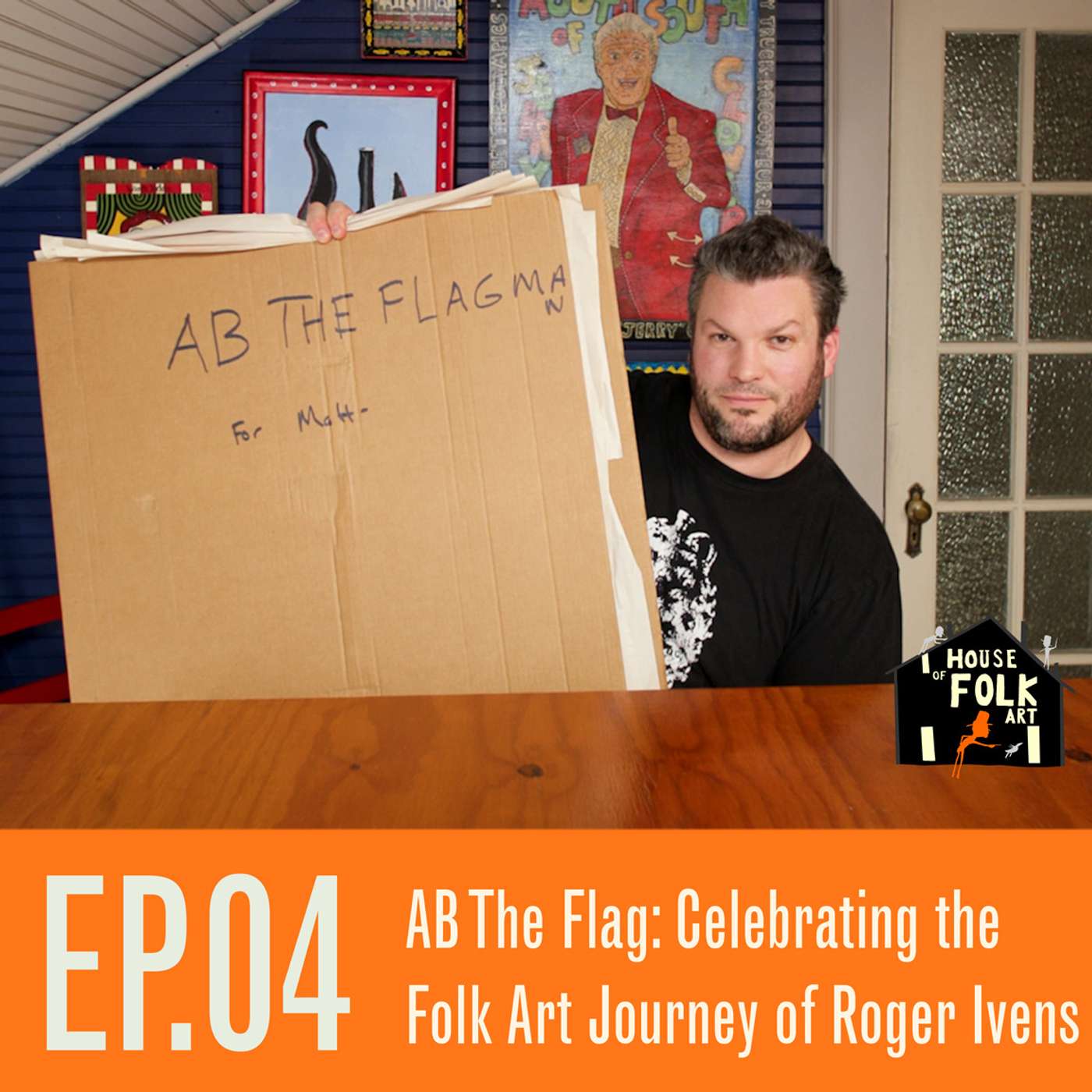
Apr 29, 2024
Episode 03 | Living Artistry: Exploring Stacy Lambert's Unique Folk Pottery
Welcome back to the House of Folk Art Podcast! In this episode, we shine a spotlight on the remarkable talents of Stacy Lambert, a master in the craft of folk art pottery. Join us as we explore Stacy's unique creations, delve into his creative process, and uncover the inspiration behind his captivating work. From mythology to personal connections, Stacy's pottery offers a glimpse into a world where creativity knows no bounds. Don't miss out on this fascinating journey through the mesmerizing world of folk art pottery!

Apr 15, 2024
Episode 02 | American Pottery Origins: From Everyday Tool to Unique Folk Art
Join us for a quick overview of American pottery origins in this episode of the House of Folk Art Podcast. Discover how pottery transitioned from being an essential everyday tool to evolving into cherished folk art as glass replaced its utility in the kitchen. Explore the fascinating journey of pottery, its historical significance, and its transformation into a beloved form of artistic expression.
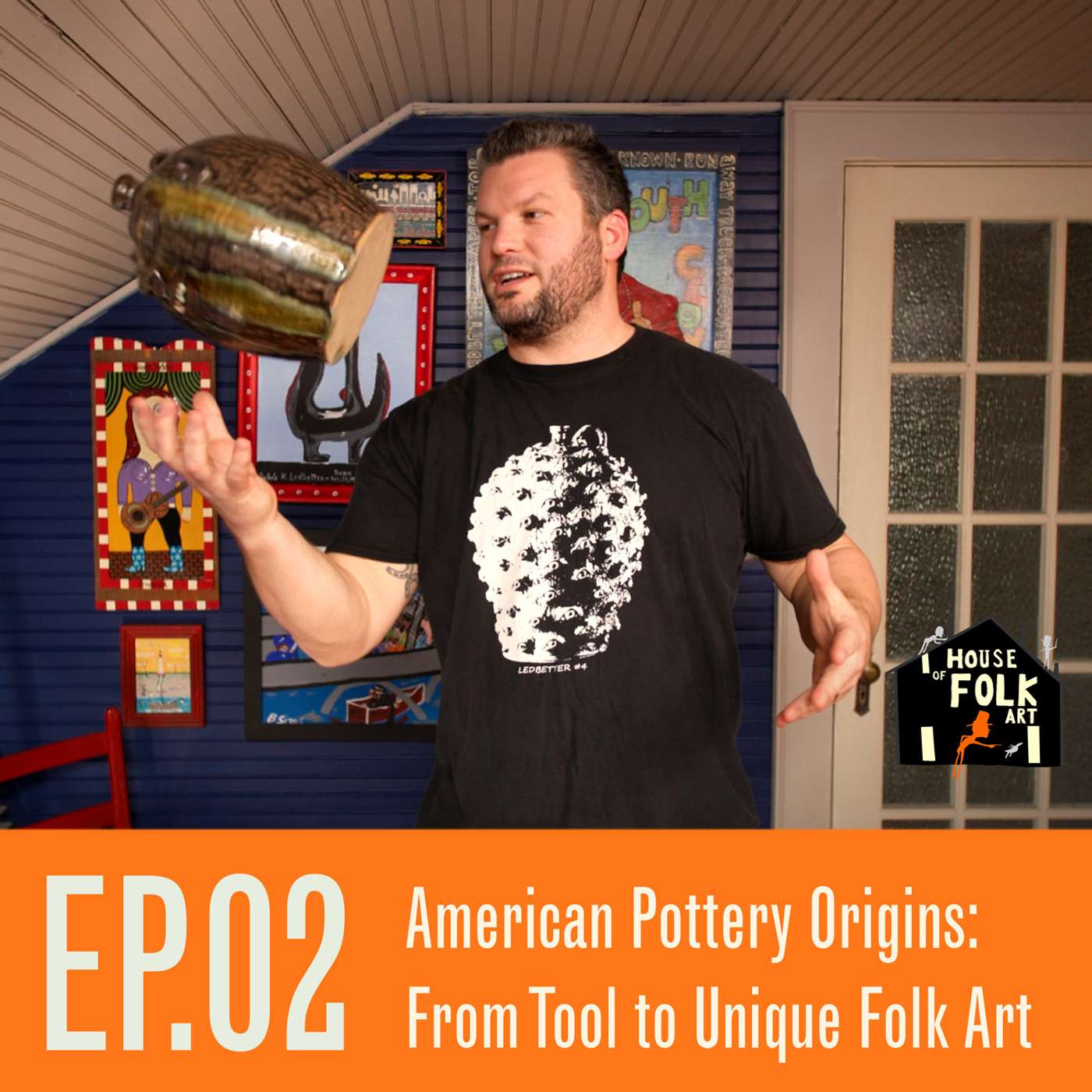
Mar 29, 2024
Episode 01 | Unveiling the House of Folk Art: Insights into Folk, Outsider, and Self-Taught Artists
Welcome to the inaugural episode of the House of Folk Art Podcast, where we delve into the captivating realm of folk art. Join us as we embark on a journey to unravel the distinctions between outsider art, self-taught art, and traditional folk art.