4d ago
Podcast #221: The Mountaintop at Grand Geneva Director of Golf & Ski Ryan Brown
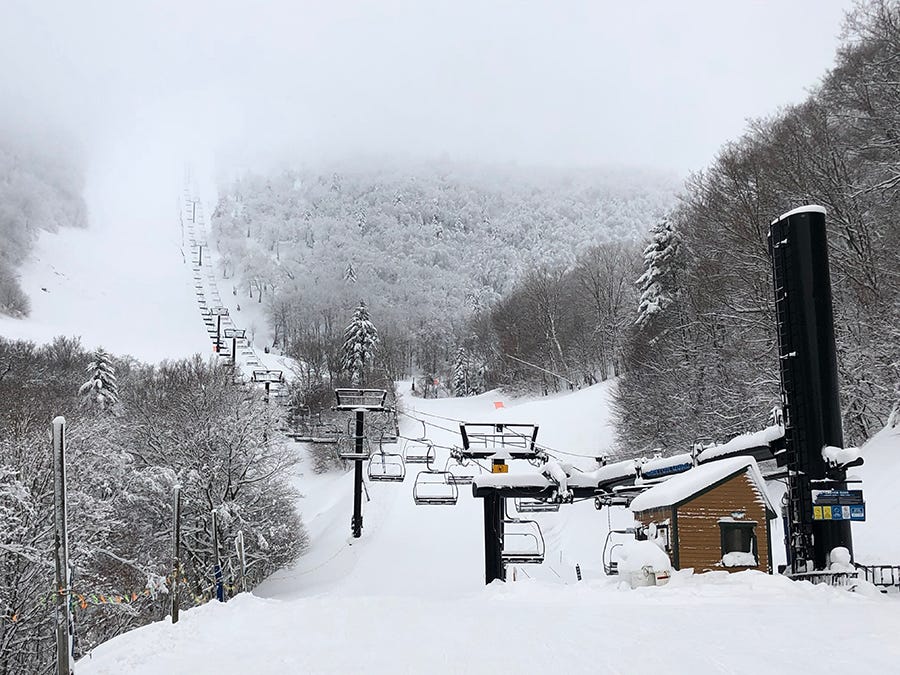
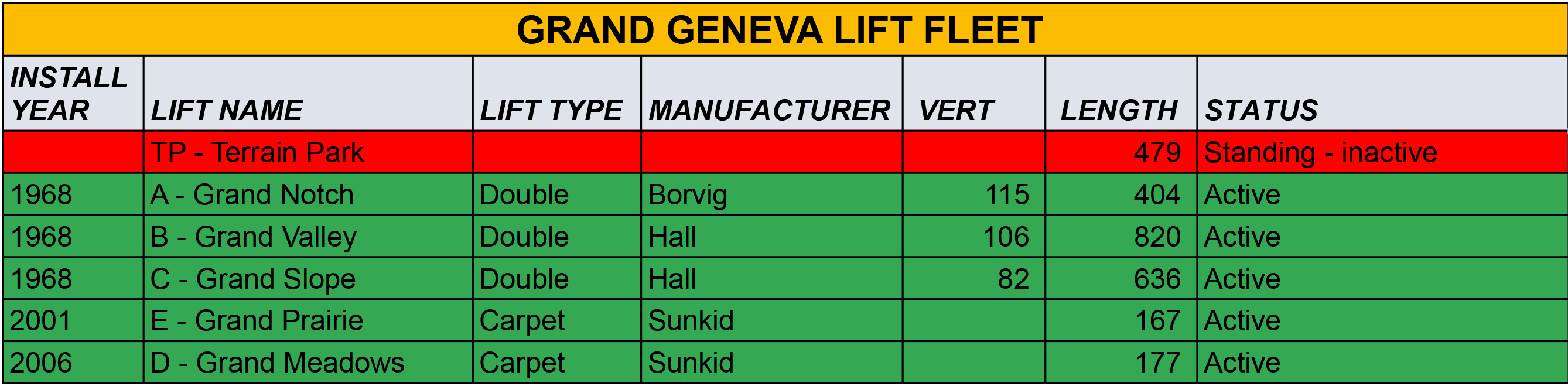
Who Ryan Brown, Director of Golf & Ski at The Mountaintop at Grand Geneva, Wisconsin Recorded on June 17, 2025 About the Mountaintop at Grand Geneva Click here for a mountain stats overview Owned by: Marcus Hotels Located in: Lake Geneva, Wisconsin Year founded: 1968 Pass affiliations: None Closest neighboring U.S. ski areas: Alpine Valley (:23), Wilmot Mountain (:29), Crystal Ridge (:48), Alpine Hills Adventure Park (1:04) Base elevation: 847 feet Summit elevation: 962 feet Vertical drop: 115 feet Skiable acres: 30 Average annual snowfall: 34 inches Trail count: 21 (41% beginner, 41% intermediate, 18% advanced) Lift count: 6 (3 doubles, 1 ropetow, 2 carpets) Why I interviewed him Of America’s various mega-regions, the Midwest is the quietest about its history. It lacks the quaint-town Colonialism and Revolutionary pride of the self-satisfied East, the cowboy wildness and adobe earthiness of the West, the defiant resentment of the Lost Glory South. Our seventh-grade Michigan History class stapled together the state’s timeline mostly as a series of French explorers passing through on their way to somewhere more interesting. They were followed by a wave of industrial loggers who mowed the primeval forests into pancakes. Then the factories showed up. And so the state’s legacy was framed not as one of political or cultural or military primacy, but of brand, the place that stamped out Chevys and Fords by the tens of millions. To understand the Midwest, then, we must look for what’s permanent. The land itself won’t do. It’s mostly soil, mostly flat. Great for farming, bad for vistas. Dirt doesn’t speak to the soul like rock, like mountains. What humans built doesn’t tell us a much better story. Everything in the Midwest feels too new to conceal ghosts. The largest cities rose late, were destroyed in turn by fires and freeways, eventually recharged with arenas and glass-walled buildings that fail to echo or honor the past. Nothing lasts: the Detroit Pistons built the Palace of Auburn Hills in 1988 and developers demolished it 32 years later; the Detroit Lions (and, for a time, the Pistons) played at the Pontiac Silverdome, a titanic, 82,600-spectator stadium that opened in 1976 and came down in 2013 (37 years old). History seemed to bypass the region, corralling the major wars to the east and shooing the natural disasters to the west and south. Even shipwrecks lose their doubloons-and-antique-cannons romance in the Midwest: the Great Lakes most famous downed vessel, the SS Edmund Fitzgerald , sank into Lake Superior in 1975. Her cargo was 26,535 tons of taconite ore pellets. A sad story, but not exactly the sinking of the Titanic . Our Midwest ancestors did leave us one legacy that no one has yet demolished: names. Place names are perhaps the best cultural relics of the various peoples who occupied this land since the glaciers retreated 12,000-ish years ago. Thousands of Midwest cities, towns, and counties carry Native American names. “Michigan” is derived from the Algonquin “Mishigamaw,” meaning “big lake”; “Minnesota” from the Sioux word meaning “cloudy water.” The legacies of French explorers and missionaries live on in “Detroit” (French for “strait”), “Marquette” (17th century French missionary Jacques Marquette), and “Eau Claire” (“clear water”). But one global immigration funnel dominated what became the modern Midwest: 50 percent of Wisconsin’s population descends from German, Nordic, or Scandinavian countries, who arrived in waves from the Colonial era through the early 1900s. The surnames are everywhere: Schmitz and Meyer and Webber and Schultz and Olson and Hanson. But these Old-Worlders came a bit late to name the cities and towns. So they named what they built instead. And they built a lot of ski areas. Ten of Wisconsin’s 34 ski areas carry names evocative of Europe’s cold regions, Scandinavia and the Alps: I wonder what it must have been like, in 18-something-or-other, to leave a place where the Alps stood high on the horizon, where your family had lived in the same stone house for centuries, and sail for God knows how many weeks or months across an ocean, and slow roll overland by oxen cart or whatever they moved about in back then, and at the end of this great journey find yourself in… Wisconsin? They would have likely been unprepared for the landscape aesthetic. Tourism is a modern invention. “The elite of ancient Egypt spent their fortunes building pyramids and having their corpses mummified, but none of them thought of going shopping in Babylon or taking a skiing holiday in Phoenicia [partly in present-day Lebanon, which is home to as many as seven ski areas],” Yuval Noah Harari writes in Sapiens his 2015 “brief history of humankind.” Imagine old Friedrich, who had never left Bavaria, reconstituting his world in the hillocks and flats of the Midwest. Nothing against Wisconsin, but fast-forward 200 years, when the robots can give us a side-by-side of the upper Midwest and the European Alps, and it’s pretty clear why one is a global tourist destination and the other is known mostly as a place that makes a lot of cheese. And well you can imagine why Friedrich might want to summon a little bit of the old country to the texture of his life in the form of a ski area name. That these two worlds - the glorious Alps and humble Wisconsin skiing - overlap, even in a handful of place names, suggests a yearning for a life abandoned, a natural act of pining by a species that was not built to move their life across timezones. This is not a perfect analysis. Most – perhaps none – of these ski areas was founded by actual immigrants, but by their descendants. The Germanic languages spoken by these immigrant waves did not survive assimilation. But these little cultural tokens did. The aura of ancestral place endured when even language fell away. These little ski areas honor that. And by injecting grandiosity into the everyday, they do something else. In coloring some of the world’s most compact ski centers with the aura of some of its most iconic, their founders left us a message: these ski areas, humble as they are, matter. They fuse us to the past and they fuse us to the majesty of the up-high, prove to us that skiing is worth doing anywhere that it can be done, ensure that the ability to move like that and to feel the things that movement makes you feel are not exclusive realms fenced into the clouds, somewhere beyond means and imagination. Which brings us to Grand Geneva, a ski area name that evokes the great Swiss gateway city to the Alps. Too bad reality rarely matches up with the easiest narrative. The resort draws its name from the nearby town of Lake Geneva, which a 19th-century surveyor named not after the Swiss city, but after Geneva, New York, a city (that is apparently named after Geneva, Switzerland), on the shores of Seneca Lake, the largest of the state’s 11 finger lakes. Regardless, the lofty name was the fifth choice for a ski area originally called “Indian Knob.” That lasted three years, until the ski area shuttered and re-opened as the venerable Playboy Ski Area in 1968. More regrettable names followed – Americana Resort from 1982 to ’93, Hotdog Mountain from 1992 to ’94 – before going with the most obvious and least-questionable name, though its official moniker, “The Mountaintop at Grand Geneva” is one of the more awkward names in American skiing. None of which explains the principal question of this sector: why I interviewed Mr. Brown. Well, I skied a bunch of Milwaukee bumps on my drive up to Bohemia from Chicago last year, this was one of them, and I thought it was a cute little place. I also wondered how, with its small-even-for-Wisconsin vertical drop and antique lift collection, the place had endured in a state littered with abandoned ski areas. Consider it another entry into my ongoing investigation into why the ski areas that you would not always expect to make it are often the ones that do. What we talked about Fighting the backyard effect – “our customer base – they don’t really know” that the ski areas are making snow; a Chicago-Milwaukee-Madison bullseye; competing against the Vail-owned mountain to the south and the high-speed-laced ski area to the north; a golf resort with a ski area tacked on; “you don’t need a big hill to have a great park”; brutal Midwest winters and the escape of skiing; I attempt to talk about golf again and we’re probably done with that for a while; Boyne Resorts as a “top golf destination”; why Grand Geneva moved its terrain park; whether the backside park could re-open; “we’ve got some major snowmaking in the works”; potential lift upgrades; no bars on the lifts; the ever-tradeoff between terrain parks and beginner terrain; the ski area’s history as a Playboy Club and how the ski hill survived into the modern era; how the resort moves skiers to the hill with hundreds of rooms and none of them on the trails; thoughts on Indy Pass; and Lake Geneva lake life. What I got wrong We recorded this conversation prior to Sunburst’s joining Indy Pass, so I didn’t mention the resort when discussing Wisconsin ski areas on the product. Podcast Notes On the worst season in the history of the Midwest I just covered this in the article that accompanied the podcast on Treetops, Michigan, but I’ll summarize it this way: the 2023-24 ski season almost broke the Midwest. Fortunately, last winter was better, and this year is off to a banging start. On steep terrain beneath lift A I just thought this was a really unexpected and cool angle for such a little hill. On the Playboy Club From SKI magazine, December 1969 : It is always interesting when giants merge. Last winter Playboy magazine (5.5 million readers) and the Playboy Club (19 swinging nightclubs from Hawaii to New York to Jamaica, with 100,000 card-carrying members) in effect joined the sport of skiing, which is also a large, but less formal, structure of 3.5 million lift-ticket-carrying members. The resulting conglomerate was the Lake Geneva Playboy Club-Hotel, Playboy’s ski resort on the rolling plains of Wisconsin. The Playboy Club people must have borrowed the idea of their costumed Bunny Waitress from the snow bunny of skiing fame, and since Playboy and skiing both manifestly devote themselves to the pleasures of the body, some sort of merger was inevitable. Out of this union, obviously, issued the Ultimate Ski Bunny – one able to ski as well as sport the scanty Bunny costume to lustrous perfection. That’s a bit different from how the resort positions its ski facilities today: Enjoy southern Wisconsin’s gem - our skiing and snow resort in the countryside of Lake Geneva, with the best ski hills in Wisconsin. The Mountain Top at Grand Geneva Resort & Spa boasts 20 downhill ski runs and terrain designed for all ages, groups and abilities, making us one of the best ski resorts in Wisconsin. Just an hour from Milwaukee and Chicago, our ski resort in Lake Geneva is close enough to home for convenience, but far enough for you and your family to have an adventure. Our ultimate skier’s getaway offers snowmaking abilities that allow our ski resort to stay open even when there is no snow falling. The Mountain Top offers ski and snow accommodations, such as trolley transportation available from guest rooms at Grand Geneva and Timber Ridge Lodge , three chairlifts, two carpet lifts, a six-acre terrain park, excellent group rates, food and drinks at Leinenkugel’s Mountain Top Lodge and even night skiing. We have more than just skiing! Enjoy Lake Geneva sledding, snowshoeing and cross-country skiing too. Truly something for everyone at The Mountain Top ski resort in Lake Geneva. No ski equipment? No problem with the Learn to Ride rentals . Come experience The Mountain Top at Grand Geneva and enjoy the best skiing around Lake Geneva, Wisconsin. On lost Wisconsin and Midwest ski areas The Midwest Lost Ski Areas Project counts 129 lost ski areas in Wisconsin. I’ve yet to order these Big Dumb Chart-style , but there are lots of cool links in here that can easily devour your day. The Storm explores the world of North American lift-served skiing year-round. Join us. Get full access to The Storm Skiing Journal and Podcast at www.stormskiing.com/subscribe
Dec 16
Podcast #220: Stowe Mountain VP & GM Mike Giorgio
Who Mike Giorgio, Vice President and General Manager of Stowe Mountain , Vermont Recorded on October 8, 2025 About Stowe Click here for a mountain stats overview Owned by: Vail Resorts, which also owns: Located in: Stowe, Vermont Year founded: 1934 Pass affiliations: * Epic Pass: unlimited access * Epic Local Pass: unlimited access with holiday blackouts * Epic Northeast Value Pass: 10 days with holiday blackouts * Epic Northeast Midweek Pass: 5 midweek days with holiday blackouts * Access on Epic Day Pass All and 32 Resort tiers * Ski Vermont 4 Pass – up to one day, with blackouts * Ski Vermont Fifth Grade Passport – 3 days, with blackouts Closest neighboring U.S. ski areas: Smugglers’ Notch (ski-to or 40-ish-minute drive in winter, when route 108 is closed over the notch), Bolton Valley (:45), Cochran’s (:50), Mad River Glen (:55), Sugarbush (:56) Base elevation: 1,265 feet (at Toll House double) Summit elevation: 3,625 feet (top of the gondola), 4,395 feet at top of Mt. Mansfield Vertical drop: 2,360 feet lift-served, 3,130 feet hike-to Skiable acres: 485 Average annual snowfall: 314 inches Trail count: 116 (16% beginner, 55% intermediate, 29% advanced) Lift count: 12 (1 eight-passenger gondola, 1 six-passenger gondola, 1 six-pack, 3 high-speed quads, 1 fixed-grip quad, 1 triple, 2 doubles, 2 carpets) Why I interviewed him There is no Aspen of the East, but if I had to choose an Aspen of the East, it would be Stowe. And not just because Aspen Mountain and Stowe offer a similar fierce-down, with top-to-bottom fall-line zippers and bumpy-bumps spliced by massive glade pockets. Not just because each ski area rises near the far end of densely bunched resorts that the skier must drive past to reach them. Not just because the towns are similarly insular and expensive and tucked away. Not just because the wintertime highway ends at both places, an anachronistic act of surrender to nature from a mechanized world accustomed to fencing out the seasons. And not just because each is a cultural stand-in for mechanized skiing in a brand-obsessed, half-snowy nation that hates snow and is mostly filled with non-skiers who know nothing about the activity other than the fact that it exists. Everyone knows about Aspen and Stowe even if they’ll never ski, in the same way that everyone knows about LeBron James even if they’ve never watched basketball. All of that would be sufficient to make the Stowe-is-Aspen-East argument. But the core identity parallel is one that threads all these tensions while defying their assumed outcome. Consider the remoteness of 1934 Stowe and 1947 Aspen, two mountains in the pre-snowmaking, pre-interstate era, where cutting a ski area only made sense because that’s where it snowed the most. Both grew in similar fashion. First slowly toward the summit with surface lifts and mile-long single chairs crawling up the incline. Then double chairs and gondolas and snowguns and detachable chairlifts. A ski area for the town evolves into a ski area for the world. Hotels a la luxe at the base, traffic backed up to the interstate, corporate owners and $261 lift tickets. That sounds like a formula for a ruined world. But Stowe the ski area, like Aspen Mountain the ski area, has never lost its wild soul. Even buffed out and six-pack equipped and Epic Pass-enabled, Stowe remains a hell of a mountain, one of the best in New England, one of my favorite anywhere. With its monster snowfalls, its endless and perfectly spaced glades, its never-groomed expert zones, its sprawling footprint tucked beneath the Mansfield summit, its direct access to rugged and forbidding backcountry, Stowe, perhaps the most western-like mountain in the East, remains a skier’s mountain, a fierce and humbling proving ground, an any-skier’s destination not because of its trimmings, but because of the Christmas tree itself. Still, Stowe will never be Aspen, because Stowe does not sit at 8,000 feet and Stowe does not have three accessory ski areas and Stowe the Town does not grid from the lift base like Aspen the Town but rather lies eight miles down the road. Also Stowe is owned by Vail Resorts, and can you just imagine? But in a cultural moment that assumes ski area ruination-by-the-consolidation-modernization-mega-passification axis-of-mainstreaming, Aspen and Stowe tell mirrored versions of a more nuanced story. Two ski areas, skinned in the digital-mechanical infrastructure that modernity demands, able to at once accommodate the modern skier and the ancient mountain, with all of its quirks and character. All of its amazing skiing. What we talked about Stowe the Legend; Vail Resorts’ leadership carousel; ascending to ski area leadership without on-mountain experience; Mount Brighton, Michigan and Midwest skiing; struggles at Paoli Peaks, Indiana; how the Sunrise six-pack upgrade of the old Mountain triple changed the mountain; whether the Four Runner quad could ever become a six-pack; considering the future of the Lookout Double and Mansfield Gondola; who owns the land in and around the ski area; whether Stowe has terrain expansion potential; the proposed Smugglers’ Notch gondola connection and whether Vail would ever buy Smuggs; “you just don’t understand how much is here until you’re here”; why Stowe only claims 485 acres of skiable terrain; protecting the Front Four; extending Stowe’s season last spring; snowmaking in a snowbelt; the impact and future of paid parking; on-mountain bed-base potential; Epic Friend 50 percent off lift tickets; and Stowe locals and the Epic Pass. What I got wrong On details I noted that one of my favorite runs was not a marked run at all: the terrain beneath the Lookout double chair. In fact, most of the trail beneath this mile-plus-long lift is a market run called, uh, “Lookout.” So I stand corrected. However, the trailmap makes this full-throttle, narrow bumper – which feels like skiing on a rising tide – look wide, peaceful, and groomable. It is none of those things, at least for its first third or so. On skiable acres * I said that Killington claimed “like 1,600 acres” of terrain – the exact claimed number is 1,509 acres. * I said that Mad River Glen claimed far fewer skiable acres than it probably could, but I was thinking of an out-of-date stat. The mountain claims just 115 acres of trails – basically nothing for a 2,000-vertical-foot mountain, but also “800 acres of tree-skiing access.” The number listed on the Pass Smasher Deluxe is 915 acres. On season closings I intimated that Stowe had always closed the third weekend in April. That appears to be mostly true for the past two-ish decades, which is as far back as New England Ski History has records. The mountain did push late once, however, in 2007, and closed early during the horrible no-snow winter of 2011-12 (April 1), and the Covid-is-here-to-kill-us-all shutdown of 2020 (March 14). On doing better prep I asked whether Stowe had considered making its commuter bus free, but it, um, already is. That’s called Reeserch, Folks. On lift ticket rates I claimed that Stowe’s top lift ticket price would drop from $239 last year to $235 this coming season, but that’s inaccurate. Upon further review, the peak walk-up rate appears to be increasing to $261 this coming winter: Which means Vail’s record of cranking Stowe lift ticket rates up remains consistent: On opening hours I said that the lifts at Stowe sometimes opened at “7:00 or 7:30,” but the earliest ski lift currently opens at 8:00 most mornings (the Over Easy transit gondola opens at 7:30). The Fourrunner quad used to open at 7:30 a.m. on weekends and holidays. I’m not sure when mountain ops changed that. Here’s the lift schedule clipped from the circa 2018 trailmap: On Mount Brighton, Michigan’s supposed trashheap legacy I’d read somewhere, sometime, that Mount Brighton had been built on dirt moved to make way for Interstate 96, which bores across the state about a half mile north of the ski area. The timelines match, as this section of I-96 was built between 1956 and ’57, just before Brighton opened in 1960. This circa 1962 article from The Livingston Post , a local paper, fails to mention the source of the dirt, leaving me uncertain as to whether or not the hill is related to the highway: Why you should ski Stowe From my April 10 visit last winter, just cruising mellow, low-angle glades nearly to the base: I mean, the place is just: I love it, Man. My top five New England mountains, in no particular order, are Sugarbush, Stowe, Jay, Smuggs, and Sugarloaf. What’s best on any given day depends on conditions and crowding, but if you only plan to ski the East once, that’s your list. Podcast Notes On Stowe being the last 1,000-plus-vertical-foot Vermont ski area that I featured on the pod You can view the full podcast catalogue here . But here are the past Vermont eps: * Killington & Pico – 2019 | 2023 | 2025 * Stratton 2024 * Okemo 2023 * Middlebury Snowbowl 2023 * Mount Snow 2020 | 2023 * Bromley 2022 * Jay Peak 2022 | 2020 * Smugglers’ Notch 2021 * Bolton Valley 2021 * Hermitage Club 2020 * Sugarbush 2020 with current president John Hammond | 2020 with past owner Win Smith * Mad River Glen 2020 * Magic Mountain 2019 | 2020 * Burke 2019 On Stowe having “peers, but no betters” in New England While Stowe doesn’t stand out in any one particular statistical category, the whole of the place stacks up really well to the rest of New England - here’s a breakdown of the 63 public ski areas that spin chairlifts across the six-state region: On the Front Four ski runs The “Front Four” are as synonymous with Stowe as the Back Bowls are with Vail Mountain or Corbet’s Couloir is with Jackson Hole. These Stowe trails are steep, narrow, double-plus-fall-line bangers that, along with Castlerock at Sugarbush and Paradise at Mad River Glen, are among the most challenging runs in New England. The problem is determining which of the double-blacks spiderwebbing off the top of Fourrunner are part of the Front Four. Officially, the designation has always bucketed National, Liftline, Goat, and Starr together, but Bypass, Haychute, and Lookout could sub in most days. Credit to Stowe for keeping these wild trails intact for going on a century, but what I said about them “not being for the masses” on the podcast wasn’t quite accurate, as the lower portions of many - especially Liftline - are wide, often groomed, and not particularly treacherous. The best end-to-end trail is Goat, which is insanely steep and narrow up top. Here’s part of Goat’s middle-to-lower section, which is mellower but a good portrayal of New England bumpy, exposed-dirt-and-rocks gnar, especially at the :19 mark: The most glorious ego boost (or ego check) is the few hundred vertical feet of Liftline directly below Fourrunner. Sound on for scrapey-scrape: When the cut trails get icy, you can duck into the adjacent glades, most of which are unmarked but skiable. Here, I bailed into the trees skier’s left of Starr to escape the ice rink: On Vail Resorts’ leadership shuffles Twelve of Vail’s 37 North American ski areas began the 2024-25 ski season with a different leader than they ended the 2023-24 ski season with. This included five of the company’s New England resorts, including Stowe. Giorgio, in fact, became the ski area’s third general manager in three winters, and the fourth since Vail acquired the ski area in 2017. I asked Giorgio about this, as a follow up to a similar set of questions I’d laid out for Vail Resorts CEO Rob Katz in August: I may be overthinking this, but check this out: between 2017 and 2024, Vail Resorts changed leadership at its North American ski areas more than 70 times - the yellow boxes below mark a new president-general-manager equivalent (red boxes indicate that Vail did not yet own the ski area): To reset my thinking here: I can’t say that this constant leadership shuffle is inherently dysfunctional, and most Vail Resorts employees I speak with appreciate the company’s upward-mobility culture. And I consistently find Vail’s mountain leaders - dozens of whom I have hosted on this podcast - to be smart, earnest, and caring. However, it’s hard to imagine that the constant turnover in top management isn’t at least somewhat related to Vail Resorts’ on-the-ground reputational issues, truncated seasons at non-core ski areas (see Paoli Peaks section below), and general sense that the company’s arc of investment bends toward its destination resorts. On Peak Resorts Vail purchased all of Peak Resorts, including Mount Snow, where Giorgio worked, in 2019. Here’s that company’s growth timeline: On Vernon Valley-Great Gorge The ski area now known as Mountain Creek was Vernon Valley-Great Gorge until 1997. Anyone who grew up in the area still calls the joint by its legacy name. On Paoli Peaks versus Perfect North My hope is that if I complain enough about Paoli Peaks, Vail will either invest enough in snowmaking to tranform it into a functional ski area or sell it. Here are the differences between Paoli’s season lengths since 2013 as compared to Perfect North, its competitor that is the only other active ski area in the state: What explains this longstanding disparity, which certainly predates Vail’s 2019 acquisition of the ski area? Paoli does sit southwest of Perfect North, but its base is 200 feet higher (600 feet, versus 400 for Perfect), so elevation doesn’t explain it. Perfect does benefit from a valley location, which, longtime GM Jonathan Davis told me a few years back, locks in the cold air and supercharges snowmaking. The simplest answer, however, is probably the correct one: Perfect North has built one of the most impressive snowmaking systems on the planet, and they use it aggressively, cranking more than 200 guns at once. At peak operations, Perfect can transform from green grass to skiable terrain in just a couple of days. So yes, Perfect has always been a better operation than Paoli. But check this out: Paoli’s performance as compared to Perfect’s has been considerably worse in the five full seasons of Vail Resorts’ ownership (excluding 2019-20), than in the six seasons before, with Perfect besting Paoli to open by an average of 21 days before Vail arrived, and by 31 days after. Perfect’s seasons lasted an average of 25 days longer than Paoli’s before Vail arrived, and 38 days longer after: Yes, Paoli is a uniquely challenged ski area, but I’m confident that someone can do a better job running this place than Vail has been doing since 2019. Certainly, that someone could be Vail, which has the resources and institutional knowledge to transform this, or any ski area, into a center of SnoSportSkiing excellence. So far, however, they have declined to do so, and I keep thinking of what Davis, Perfect North’s longtime GM, said on the pod in 2022: “If Vail doesn’t want [its ski areas in Indiana and Ohio], we’ll take them!” On the 2022 Sunrise Six replacement for the triple In 2022, Stowe replaced the Mountain triple chair, which sat up a flight of steep steps from the parking lot, with the at-grade Sunrise six-pack. It was the kind of big-time lift upgrade that transforms the experience of an entire ski area for everyone, whether they use the new lift or not, by pulling skiers toward a huge pod of underutilized terrain and away from longtime alpha lifts Fourrunner and the Mansfield Gondola. On Fourrunner as a vert machine Stowe’s Fourruner high-speed quad is one of the most incredible lifts in American skiing, a lightspeed-fast base-to-summit, 2,040-vertical-foot monster with direct access to some of the best terrain east of A-Basin. The highest vert total in my 54-day 2024-25 ski season came (largely) courtesy of this lift - and I only skied five-and-a-half hours: On Stowe-Smuggs proximity and the proposed gondola and a long drive in winter Adventurous skiers can skin or hike across the top of Stowe’s Spruce Peak and ski down into the Smugglers’ Notch ski area. An official ski trail once connected them, and Smuggs proposed a gondola connector a couple of years back. If Vail were to purchase sprawling Smuggs, a Canyons-Park City mega-connection – while improbable given local environmental lobbies -could instantly transform Stowe into one of the largest ski areas in the East. On Jay Peak’s big snowmaking upgrades I referenced big offseason snowmaking upgrades for water-challenged (but natural-snow blessed), Jay Peak. I was referring to this : This season brings an over $1.5M snowmaking upgrade that’s less about muscle and more about brains. We’ve added 49 brand new HKD Low E air-water snowmaking guns—32 on Queen’s Highway and 17 on Perry Merrill. These aren’t your drag-’em-out, hook-’em-up, hope-it’s-cold-enough kind of guns. They’re fixed in place for the season and far more efficient, using much less compressed air than the ones they replace. Translation: better snow, less energy. On Perry Merrill, things get even slicker. We’ve installed HKD Klik automated hydrants that come with built-in weather stations. The second temps hit 28 degrees wetbulb, these hydrants kick on automatically and adjust the flow as the mercury drops. No waiting, no guesswork, no scrambling the crew. The end result? Those key connecting trails between Tramside and Stateside get covered faster, which means you can ski from one side to the other—or straight back to your condo—without having to hop on a shuttle with your boots still buckled. … It’s all part of a bigger 10-year snowmaking plan we’re rolling out—more automation, better efficiency, and ultimately, better snow for you to ski and ride on. The Storm explores the world of lift-served skiing year-round. Join us. Get full access to The Storm Skiing Journal and Podcast at www.stormskiing.com/subscribe

Dec 5
Podcast #219: Mount Bohemia Owner Lonie Glieberman
The Storm explores the world of lift-served skiing year-round. Join us. Who Lonie Glieberman, Founder, Owner, & President of Mount Bohemia , Michigan Recorded on November 19, 2025 About Mount Bohemia Click here for a mountain stats overview Owned by: Lonie Glieberman Located in: Lac La Belle, Michigan Year founded: 2000, by Lonie Pass affiliations: None Reciprocal partners: Boho has developed one of the strongest reciprocal pass programs in the nation, with lift tickets to 34 partner mountains. To protect the mountain’s more distant partners from local ticket-hackers, those ski areas typically exclude in-state and border-state residents from the freebies. Here’s the map: And here’s the Big Dumb Storm Chart detailing each mountain and its Boho access: Closest neighboring ski areas: Mont Ripley (:50) Base elevation: 624 feet Summit elevation: 1,522 feet Vertical drop: 898 feet Skiable acres: 585 Average annual snowfall: 273 inches Trail count: It’s hard to say exactly, as Boho adds new trails every year, and its map is one of the more confusing ones in American skiing, both as you try analyzing it on this screen, and as you’re actually navigating the mountain. My advice is to not try too hard to make the trailmap make sense. Everything is skiable with enough snow, and no matter what, you’re going to end up back at one of the two chairlifts or the road, where a shuttlebus will come along within a few minutes. Lift count: 2 (1 triple, 1 double) Why I interviewed him For those of us who lived through a certain version of America, Mount Bohemia is a fever dream, an impossible thing, a bantered-about-with-friends-in-a-basement-rec-room-idea that could never possibly be. This is because we grew up in a world in which such niche-cool things never happened. Before the internet spilled from the academic-military fringe into the mainstream around 1996, We The Commoners fed our brains with a subsistence diet of information meted out by institutional media gatekeepers. What I mean by “gatekeepers” is the limited number of enterprises who could afford the broadcast licenses, printing presses, editorial staffs, and building and technology infrastructure that for decades tethered news and information to costly distribution mechanisms. In some ways this was a better and more reliable world: vetted, edited, fact-checked. Even ostensibly niche media – the Electronic Gaming Monthly and Nintendo Power magazines that I devoured monthly – emerged from this cubicle-in-an-office-tower Process that guaranteed a sober, reality-based information exchange. But this professionalized, high-cost-of-entry, let’s-get-Bob’s-sign-off-before-we-run-this, don’t-piss-off-the-advertisers world limited options, which in turn limited imaginations – or at least limited the real-world risks anyone with money was willing to take to create something different. We had four national television networks and a couple dozen cable channels and one or two local newspapers and three or four national magazines devoted to niche pursuits like skiing. We had bookstores and libraries and the strange, ephemeral world of radio. We had titanic, impossible-to-imagine-now big-box chain stores ordering the world’s music and movies into labelled bins, from which shoppers could hope – by properly interpreting content from box-design flare or maybe just by luck – to pluck some soul-altering novelty. There was little novelty. Or at least, not much that didn’t feel like a slightly different version of something you’d already consumed. Everything, no matter how subversive its skin, had to appeal to the masses, whose money was required to support the enterprise of content creation. Pseudo-rebel networks such as ESPN and MTV quickly built global brands by applying the established institutional framework of network television to the mainstream-but-information-poor cultural centerpieces of sports and music. This cultural sameness expressed itself not just in media, but in every part of life: America’s brand-name sprawl-ture (sprawl culture) of restaurants and clothing stores and home décor emporia; its stuff-freeways-through-downtown ruining of our great cities; its three car companies stamping out nondescript sedans by the millions. Skiing has long acted as a rebel’s escape from staid American culture, but it has also been hemmed in by it. Yes, said Skiing Incorporated circa 1992, we can allow a photo of some fellow jumping off a cliff if it helps convince Nabisco Bob fly his family out to Colorado for New Year’s, so long as his family is at no risk of actually locating any cliffs to jump off of upon arrival. After all, 1992 Bob has no meaningful outlet through which to highlight this advertising-experience disconnect. The internet broke this whole system. Everywhere, for everything. If I wanted, say, a Detroit Pistons hoodie in 1995, I had to drive to a dozen stores and choose the least-bad version from the three places that stocked them. Today I have far more choice at far less hassle: I can browse hundreds of designs online without leaving the house. Same for office furniture or shoes or litterboxes or laundry baskets or cars. And especially for media and information. Consumer choice is greater not only because the internet eliminated distance, but also because it largely eliminated the enormous costs required to actualize a tangible thing from the imagination. There were trade-offs, of course. Our current version of reality has too many options, too many poorly made products, too much bad information. But the internet did a really good job of democratizing preferences and uniting dispersed communities around niche interests. Yes, this means that a global community of morons can assemble over their shared belief that the planet is flat, but it also means that legions of Star Wars or Marvel Comics or football obsessives can unite to demand more of these specific things. I don’t think it’s a coincidence that the dormant Star Wars and Marvel franchises rebooted in spectacular, omnipresent fashion within a decade of the .com era’s dawn. The trajectory was slightly different in skiing. The big-name ski areas today are largely the same set of big-name ski areas that we had 30 years ago, at least in America (Canada is a very different story). But what the internet helped bring to skiing was an awareness that the desire for turns outside of groomed runs was not the hyper-specific desire of the most dedicated, living-in-a-campervan-with-their-dog skiers, but a relatively mainstream preference. Established ski areas adapted, adding glades and terrain parks and ungroomed zones. The major ski areas of 2025 are far more interesting versions of the ski areas that existed under the same names in 1995. Dramatic and welcome as these additions were, they were just additions. No ski area completely reversed itself and shut out the mainstream skier. No one stopped grooming or eliminated their ski school or stopped renting gear. But they did act as something of a proof-of-concept for minimalist ski areas that would come online later, including avy-gear-required, no-grooming Silverton, Colorado in 2001, and, at the tip-top of the American Midwest, in a place too remote for anyone other than industrial mining interests to bother with, the ungroomed, snowmaking-free Mount Bohemia. I can’t draw a direct line between the advent of the commercial internet and the rise of Mount Bohemia as a successful niche business within a niche industry. But I find it hard to imagine one without the other. The pre-internet world, the one that gave us shopping malls and laugh-track sitcoms and standard manual transmissions, lacked the institutional imagination to actualize skiing’s most dynamic elements in the form of a wild and remote pilgrimage site. Once the internet ordered fringe freeskiing sentiments into a mainstream coalition, the notion of an extreme ski area seemed inevitable. And Bohemia, without a basically free global megaphone to spread word of its improbable existence, would struggle to establish itself in a ski industry that dismissed the concept as idiotic and with a national ski media that considered the Midwest irrelevant. Even with the internet, Boho took a while to catch on, as Lonie detailed in his first podcast appearance three years ago. It probably took the mainstreaming of social media, starting around 2008, to really amp up the online echo-sphere and help skiers understand this gladed, lake-effect-bombed kingdom at the end of the world. Whatever drove Boho’s success, that success happened. This is a good, stable business that proved that ski areas do not have to cater to all skiers to be viable. But those of us who wanted Bohemia before it existed still have a hard time believing that it does. Like superhero movies or video-calls or energy drinks that aren’t coffee, Boho is a thing we could, in the ‘80s and early ‘90s, easily imagine but just as easily dismiss as fantasy. Fortunately, our modern age of invention and experimentation includes plenty of people who dismiss the dismissers, who see things that don’t exist yet and bring them into our world. And one of the best contributions to skiing to emerge from this age is Mount Bohemia. What we talked about Season pass price and access changes; lifetime and two-year season passes; a Disney-ski comparison that isn’t negative; when your day ticket costs as much as your season pass; Lonie’s dog makes a cameo; not selling lift tickets on Saturdays; “too many companies are busy building a brand that no one will hate, versus a brand that someone will love”; why it’s OK to have some people be angry with you; UP skiing’s existential challenge; skiing’s vibe shift from competition to complementary culture; the Midwest’s advanced-skier problem; Boho’s season pass reciprocal program; why ski areas survive; the Keweenaw snow stake and Boho’s snowfall history; recent triple chair improvements and why Boho didn’t fully replace the chair – “it’s basically a brand-new chairlift”; a novel idea for Boho’s next new chairlift; the Nordic spa; proposed rezoning drama; housing at the end of the world; could Mount Bohemia have a Mad River Glen co-op-style future?; why the pass deadline really is the pass deadline; and Mount Bohemia TV. What I got wrong * I said that Boho’s one-day lift ticket was “$89 or $92” last time Lonie joined me on the pod, in fall, 2022. The one-day cost for the 2022-23 ski season was $87. * I said that Powder Mountain, Utah, may extend their no-lift-ticket-sales-on-Saturdays-and-Sundays-in-February policy, which the mountain rolled out last year, to other dates, but their sales calendar shows just eight restricted dates (one of which is Sunday, March 1), which is the same number as last winter. Why you should ski Mount Bohemia I can’t add anything useful to this bit that I wrote a few months back: Or didn’t say three years ago, around my first Boho pod: Podcast Notes On Boho’s season pass On Lonie’s Library A Boho podcast will always come loaded with some Lonie Library recommendations. In this episode, we get The Power of Cult Branding by Mattew W. Ragas and Bolivar J. Bueno and The 22 Immutable Laws of Branding by Al Ries and Laura Ries. On Raising Cane’s Lonie tells us about a restaurant called Raising Cane’s that sells nothing but chicken fingers. Because I have this weird way of sometimes not noticing super-obvious things, I’d never heard of the place. But apparently they have 900-ish locations , including several here in NYC. I’m sure you already know this. On Jimmy Buffett Then again I’m sometimes overly attuned to things that I think everyone knows about, like Jimmy Buffett. Probably most people are aware of his Margaritaville -headlined music catalog, but perhaps not the Boomers-Gone-Wild Parrothead energy of his concerts, which were mass demonstrations of a uniquely American weirdness that’s impossible to believe in unless you see it: I don’t know if I’d classify this spectacle as sports for people who don’t like sports or anthropological proof that mass coordinated niche crowd-dancing predates the advent of TikTok, but I hope this video reaches the aliens first and they decide not to bother. On “when we spoke in Milwaukee” This was the second time I’ve interviewed Lonie recently. The first was in front of an audience at the Snowvana ski show in Milwaukee last month. We did record that session, and it was different enough from this pod to justify releasing – I just don’t have a timeline on when I’ll do that yet. Here’s the preview article that outlined the event: On Lonie operating the Porcupine Mountains ski area I guess you can make anything look rad. Porcupine Mountains ski area, as presented today under management of the State of Michigan’s Department of Natural Resources: The same ski area under Lonie’s management, circa 2011: On the owner of Song and Labrador, New York buying and closing nearby Toggenburg ski area On Indy’s fight with Ski Cooper I wrote two stories on this, each of which subtracted five years from my life. The first: The follow-up: On Snow Snake, Apple Mountain, and Mott Mountain ski areas These three Mid-Michigan ski areas were so similar it was frightening – the only thing I can conclude from the fact that Snow Snake is the only one left is that management trumps pretty much everything when it comes to which ski areas survive: On Crystal Mountain, Michigan versus Sugar Loaf, Michigan I noted that 1995 Stu viewed Sugar Loaf as a “more interesting” ski area than contemporary Crystal. It’s important to note that this was pre-expansion Crystal, before the ski area doubled in size with backside terrain. Here are the Crystal versus Sugar Loaf trailmaps of that era: I discussed all of this with Crystal CEO John Melcher last year: On Thunder Mountain and Walloon Hills Lonie mentions two additional lost Michigan ski areas: Thunder Mountain and Walloon Hills. The latter, while stripped of its chairlifts, still operates as a nonprofit called Challenge Mountain. Here’s what it looked like just before shuttering as a public ski area in 1978: The responsible party here was nearby Boyne, which bought both Walloon and Thunder in 1967. They closed the latter in 1984: The company now known as Boyne Resorts purchased a total of four Michigan ski areas after Everett Kircher founded Boyne Mountain in 1948, starting with The Highlands in 1963. That ski area remains open, but Boyne also owned the 436-vertical foot ski area alternately known as “Barn Mountain” and “Avalanche Peak” from 1972 to ’77. I can’t find a trailmap of this one, but here’s Boyne’s consolidation history: On Nub’s Nob and The Highlands When I say that Nub’s Nob and Boyne’s Highlands ski area are right across the street from each other, I mean they really are: Both are excellent ski areas - two of the best in the entire Midwest. On Granite Peak’s evolution under Midwest Family Ski Resorts I’ve written about this a lot, but check out Granite Peak AKA “Rib Mountain” before the company now known as Midwest Family Ski Resorts purchased it in 2000: And today: And it’s just like “what you’re allowed to do that?” On up-and-over chairlifts Bohemia may replace its double chair with a rare up-and-over machine, which would extend along the current line to the summit, and then continue to the bottom of Haunted Valley, effectively functioning as two chairlifts. Lonie explains the logic in the podcast, but if he succeeds here, this would be the first new up-and-over lift built in the United States since Stevens Pass’ Double Diamond-Southern Cross machine in 1987. I’m only aware of four other such machines in America, all of them in the Midwest: Little Switzerland recently revealed plans to replace the machine that makes up the 1 and 2 chairlifts with two separate quads next year. On Boho’s Nordic Spa I never thought hot tubs and parties and happiness were controversial. Then along came social media. And it turns out that when a ski area that primarily markets itself as a refuge for hardcore skiers also builds a base-area zone for these skiers to sink into another sort of indulgence at day’s end and then promotes these features, it make Angry Ski Bro VERY ANGRY. For most of human existence we had incentives to prevent ostentatious attention-seeking whining about peripheral things that had no actual impact on your life, and that incentive was Not Wanting To Get Your Ass Kicked. But some people interpreted the distance and anonymity of the internet as a permission slip to become the worst versions of themselves. And so we have a dedicated corps of morons trolling Boho’s socials with chest-thumping proclamations of #RealSkierness that rage against the $18 Nordic Spa fee taped onto each Boho $99 or $112 season pass. But when you go to Boho, what you see is this: And these people do not look angry. Because they are doing something fun and cool. Which is one more reason that I stopped reading social media comments several years ago and decided to base reality on living in it rather than observing it through my Pet Rectangle. On the Mad River Glen Co-Op and Betsy Pratt So far, the only successful U.S. ski area co-op is Mad River Glen , Vermont. Longtime owner Betsy Pratt orchestrated the transformation in 1995. She passed away in 2023 at age 95, giving her lots of years to watch the model endure. Black Mountain, New Hampshire, is in the midst of a similar transformation. On Mount Bohemia TV Boho is a strange, strange universe. Nothing better distills the mountain’s essence than Mount Bohemia TV – I mean that in the literal sense, in that each episode immerses you in this peculiar world, but also in an accidental quirk of its execution. Because the video staff keeps, in Lonie’s words, “losing the password,” Mount Bohemia has at least four official YouTube channels, each of which hosts different episodes of Mount Bohemia TV . Here’s episodes 1, 2, and 3 : 4 through 15 : 16 through 20 : And 21 and 22 : If anyone knows how to sort this out, I’m sure they’d appreciate the assist. Get full access to The Storm Skiing Journal and Podcast at www.stormskiing.com/subscribe

Nov 20
Podcast #218: Hatley Pointe, North Carolina Owner Deb Hatley
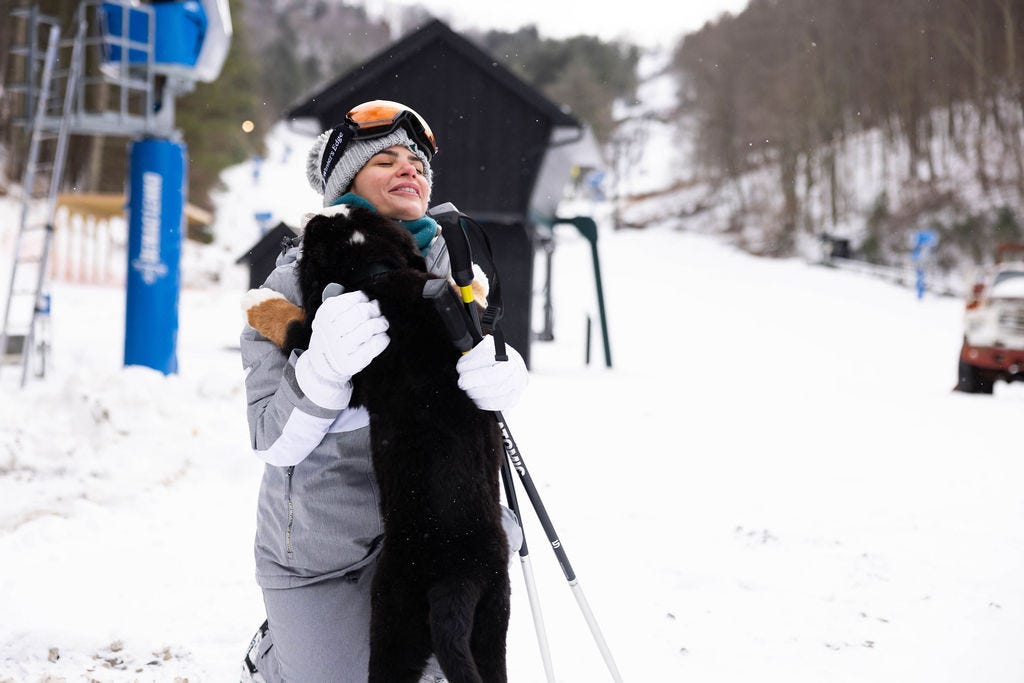
Who Deb Hatley, Owner of Hatley Pointe , North Carolina Recorded on July 30, 2025 About Hatley Pointe Click here for a mountain stats overview Owned by: Deb and David Hatley since 2023 - purchased from Orville English, who had owned and operated the resort since 1992 Located in: Mars Hill, North Carolina Year founded: 1969 (as Wolf Laurel or Wolf Ridge; both names used over the decades) Pass affiliations: Indy Pass, Indy+ Pass – 2 days, no blackouts Closest neighboring ski areas: Cataloochee (1:25), Sugar Mountain (1:26) Base elevation: 4,000 feet Summit elevation: 4,700 feet Vertical drop: 700 feet Skiable acres: 54 Average annual snowfall: 65 inches Trail count: 21 (4 beginner, 11 intermediate, 6 advanced) Lift count: 4 active (1 fixed-grip quad, 1 ropetow, 2 carpets); 2 inactive, both on the upper mountain (1 fixed-grip quad, 1 double) Why I interviewed her Our world has not one map, but many. Nature drew its own with waterways and mountain ranges and ecosystems and tectonic plates. We drew our maps on top of these, to track our roads and borders and political districts and pipelines and railroad tracks. Our maps are functional, simplistic. They insist on fictions. Like the 1,260-mile-long imaginary straight line that supposedly splices the United States from Canada between Washington State and Minnesota. This frontier is real so long as we say so, but if humanity disappeared tomorrow, so would that line. Nature’s maps are more resilient. This is where water flows because this is where water flows. If we all go away, the water keeps flowing. This flow, in turn, impacts the shape and function of the entire world. One of nature’s most interesting maps is its mountain map. For most of human existence, mountains mattered much more to us than they do now. Meaning: we had to respect these giant rocks because they stood convincingly in our way. It took European settlers centuries to navigate en masse over the Appalachians, which is not even a severe mountain range, by global mountain-range standards. But paved roads and tunnels and gas stations every five miles have muted these mountains’ drama. You can now drive from the Atlantic Ocean to the Midwest in half a day. So spoiled by infrastructure, we easily forget how dramatically mountains command huge parts of our world. In America, we know this about our country: the North is cold and the South is warm. And we define these regions using battle maps from a 19th Century war that neatly bisected the nation. Another imaginary line. We travel south for beaches and north to ski and it is like this everywhere, a gentle progression, a continent-length slide that warms as you descend from Alaska to Panama. But mountains disrupt this logic. Because where the land goes up, the air grows cooler. And there are mountains all over. And so we have skiing not just in expected places such as Vermont and Maine and Michigan and Washington, but in completely irrational ones like Arizona and New Mexico and Southern California. And North Carolina. North Carolina. That’s the one that surprised me. When I started skiing, I mean. Riding hokey-poke chairlifts up 1990s Midwest hills that wouldn’t qualify as rideable surf breaks, I peered out at the world to figure out where else people skied and what that skiing was like. And I was astonished by how many places had organized skiing with cut trails and chairlifts and lift tickets, and by how many of them were way down the Michigan-to-Florida slide-line in places where I thought that winter never came: West Virginia and Virginia and Maryland. And North Carolina. Yes there are ski areas in more improbable states. But Cloudmont, situated in, of all places, Alabama, spins its ropetow for a few days every other year or so. North Carolina, home to six ski areas spinning a combined 35 chairlifts, allows for no such ambiguity: this is a ski state. And these half-dozen ski centers are not marginal operations: Sugar Mountain and Cataloochee opened for the season last week, and they sometimes open in October. Sugar spins a six-pack and two detach quads on a 1,200-foot vertical drop. This geographic quirk is a product of our wonderful Appalachian Mountain chain, which reaches its highest points not in New England but in North Carolina, where Mount Mitchell peaks at 6,684 feet, 396 feet higher than the summit of New Hampshire’s Mount Washington. This is not an anomaly: North Carolina is home to six summits taller than Mount Washington, and 12 of the 20-highest in the Appalachians, a range that stretches from Alabama to Newfoundland. And it’s not just the summits that are taller in North Carolina. The highest ski area base elevation in New England is Saddleback, which measures 2,147 feet at the bottom of the South Branch quad (the mountain more typically uses the 2,460-foot measurement at the bottom of the Rangeley quad). Either way, it’s more than 1,000 feet below the lowest base-area elevation in North Carolina: Unfortunately, mountains and elevation don’t automatically equal snow. And the Southern Appalachians are not exactly the Kootenays. It snows some, sometimes, but not so much, so often, that skiing can get by on nature’s contributions alone - at least not in any commercially reliable form. It’s no coincidence that North Carolina didn’t develop any organized ski centers until the 1960s, when snowmaking machines became efficient and common enough for mass deployment. But it’s plenty cold up at 4,000 feet, and there’s no shortage of water. Snowguns proved to be skiing’s last essential ingredient. Well, there was one final ingredient to the recipe of southern skiing: roads. Back to man’s maps. Specifically, America’s interstate system, which steamrolled the countryside throughout the 1960s and passes just a few miles to Hatley Pointe’s west. Without these superhighways, western North Carolina would still be a high-peaked wilderness unknown and inaccessible to most of us. It’s kind of amazing when you consider all the maps together: a severe mountain region drawn into the borders of a stable and prosperous nation that builds physical infrastructure easing the movement of people with disposable income to otherwise inaccessible places that have been modified for novel uses by tapping a large and innovative industrial plant that has reduced the miraculous – flight, electricity, the internet - to the commonplace. And it’s within the context of all these maps that a couple who knows nothing about skiing can purchase an established but declining ski resort and remake it as an upscale modern family ski center in the space of 18 months. What we talked about Hurricane Helene fallout; “it took every second until we opened up to make it there,” even with a year idle; the “really tough” decision not to open for the 2023-24 ski season; “we did not realize what we were getting ourselves into”; buying a ski area when you’ve never worked at a ski area and have only skied a few times; who almost bought Wolf Ridge and why Orville picked the Hatleys instead; the importance of service; fixing up a broken-down ski resort that “felt very old”; updating without losing the approachable family essence; why it was “absolutely necessary” to change the ski area’s name; “when you pulled in, the first thing that you were introduced to … were broken-down machines and school buses”; Bible verses and bare trails and busted-up everything; “we could have spent two years just doing cleanup of junk and old things everywhere”; Hatley Pointe then and now; why Hatley removed the double chair; a detachable six-pack at Hatley?; chairlifts as marketing and branding tools; why the Breakaway terrain closed and when it could return and in what form; what a rebuilt summit lodge could look like; Hatley Pointe’s new trails; potential expansion; a day-ski area, a resort, or both?; lift-served mountain bike park incoming; night-skiing expansion; “I was shocked” at the level of après that Hatley drew, and expanding that for the years ahead; North Carolina skiing is all about the altitude; re-opening The Bowl trail; going to online-only sales; and lessons learned from 2024-25 that will build a better Hatley for 2025-26. What I got wrong When we recorded this conversation, the ski area hadn’t yet finalized the name of the new green trail coming off of Eagle – it is Pat’s Way (see trailmap above). I asked if Hatley intended to install night-skiing, not realizing that they had run night-ski operations all last winter. Why now was a good time for this interview Pardon my optimism, but I’m feeling good about American lift-served skiing right now. Each of the past five winters has been among the top 10 best seasons for skier visits, U.S. ski areas have already built nearly as many lifts in the 2020s (246) as they did through all of the 2010s (288), and multimountain passes have streamlined the flow of the most frequent and passionate skiers between mountains, providing far more flexibility at far less cost than would have been imaginable even a decade ago. All great. But here’s the best stat: after declining throughout the 1980s and ‘90s, the number of active U.S. ski areas stabilized around the turn of the century, and has actually increased for five consecutive winters : Those are National Ski Areas Association numbers, which differ slightly from mine. I count 492 active ski hills for 2023-24 and 500 for last winter , and I project 510 potentially active ski areas for the 2025-26 campaign. But no matter: the number of active ski operations appears to be increasing. But the raw numbers matter less than the manner in which this uptick is happening. In short: a new generation of owners is resuscitating lost or dying ski areas. Many have little to no ski industry experience. Driven by nostalgia, a sense of community duty, plain business opportunity, or some combination of those things, they are orchestrating massive ski area modernization projects, funded via their own wealth – typically earned via other enterprises – or by rallying a donor base. Examples abound. When I launched The Storm in 2019, Saddleback , Maine; Norway Mountain , Michigan; Woodward Park City; Thrill Hills, North Dakota; Deer Mountain , South Dakota; Paul Bunyan , Wisconsin; Quarry Road, Maine; Steeplechase , Minnesota; and Snowland, Utah were all lost ski areas. All are now open again, and only one – Woodward – was the project of an established ski area operator (Powdr). Cuchara, Colorado and Nutt Hill, Wisconsin are on the verge of re-opening following decades-long lift closures. Bousquet , Massachusetts; Holiday Mountain , New York; Kissing Bridge , New York; and Black Mountain , New Hampshire were disintegrating in slow-motion before energetic new owners showed up with wrecking balls and Home Depot frequent-shopper accounts. New owners also re-energized the temporarily dormant Sandia Peak , New Mexico and Tenney , New Hampshire. One of my favorite revitalization stories has been in North Carolina, where tired, fire-ravaged, investment-starved, homey-but-rickety Wolf Ridge was falling down and falling apart. The ski area’s season ended in February four times between 2018 and 2023. Snowmaking lagged. After an inferno ate the summit lodge in 2014, no one bothered rebuilding it. Marooned between the rapidly modernizing North Carolina ski trio of Sugar Mountain, Cataloochee, and Beech, Wolf Ridge appeared to be rapidly fading into irrelevance. Then the Hatleys came along. Covid-curious first-time skiers who knew little about skiing or ski culture, they saw opportunity where the rest of us saw a reason to keep driving. Fixing up a ski area turned out to be harder than they’d anticipated, and they whiffed on opening for the 2023-24 winter. Such misses sometimes signal that the new owners are pulling their ripcords as they launch out of the back of the plane, but the Hatleys kept working. They gut-renovated the lodge, modernized the snowmaking plant, tore down an SLI double chair that had witnessed the signing of the Declaration of Independence. And last winter, they re-opened the best version of the ski area now known as Hatley Pointe that locals had seen in decades. A great winter – one of the best in recent North Carolina history – helped. But what I admire about the Hatleys – and this new generation of owners in general – is their optimism in a cultural moment that has deemed optimism corny and naïve. Everything is supposed to be terrible all the time, don’t you know that? They didn’t know, and that orientation toward the good, tempered by humility and patience, reversed the long decline of a ski area that had in many ways ceased to resonate with the world it existed in. The Hatleys have lots left to do: restore the Breakaway terrain, build a new summit lodge, knot a super-lift to the frontside. And their Appalachian salvage job, while impressive, is not a very repeatable blueprint – you need considerable wealth to take a season off while deploying massive amounts of capital to rebuild the ski area. The Hatley model is one among many for a generation charged with modernizing increasingly antiquated ski areas before they fall over dead. Sometimes, as in the examples itemized above, they succeed. But sometimes they don’t. Comebacks at Cockaigne and Hickory, both in New York, fizzled. Sleeping Giant, Wyoming and Ski Blandford, Massachusetts both shuttered after valiant rescue attempts. All four of these remain salvageable, but last week, Four Seasons, New York closed permanently after 63 years. That will happen. We won’t be able to save every distressed ski area, and the potential supply of new or revivable ski centers, barring massive cultural and regulatory shifts, will remain limited. But the protectionist tendencies limiting new ski area development are, in a trick of human psychology, the same ones that will drive the revitalization of others – the only thing Americans resist more than building something new is taking away something old. Which in our country means anything that was already here when we showed up. A closed or closing ski area riles the collective angst, throws a snowy bat signal toward the night sky, a beacon and a dare, a cry and a plea: who wants to be a hero? Podcast Notes On Hurricane Helene Helene smashed inland North Carolina last fall, just as Hatley was attempting to re-open after its idle year. Here’s what made the storm so bad: On Hatley’s socials Follow: On what I look for at a ski resort On the Ski Big Bear podcast In the spirit of the article above, one of the top 10 Storm Skiing Podcast guest quotes ever came from Ski Big Bear, Pennsylvania General Manager Lori Phillips: “You treat everyone like they paid a million dollars to be there doing what they’re doing” On ski area name changes I wrote a piece on Hatley’s name change back in 2023: Ski area name changes are more common than I’d thought. I’ve been slowly documenting past name changes as I encounter them, so this is just a partial list, but here are 93 active U.S. ski areas that once went under a different name. If you know of others, please email me . On Hatley at the point of purchase and now Gigantic collections of garbage have always fascinated me. That’s essentially what Wolf Ridge was at the point of sale: It’s a different place now: On the distribution of six-packs across the nation Six-pack chairlifts are rare and expensive enough that they’re still special, but common enough that we’re no longer amazed by them. Mostly - it depends on where we find such a machine. Just 112 of America’s 3,202 ski lifts (3.5 percent) are six-packs, and most of these (75) are in the West (60 – more than half the nation’s total, are in Colorado, Utah, or California). The Midwest is home to a half-dozen six-packs, all at Boyne or Midwest Family Ski Resorts operations, and the East has 31 sixers, 17 of which are in New England, and 12 of which are in Vermont. If Hatley installed a sixer, it would be just the second such chairlift in North Carolina, and the fifth in the Southeast, joining the two at Wintergreen, Virginia and the one at Timberline, West Virginia. On the Breakaway fire Wolf Ridge’s upper-mountain lodge burned down in March 2014. Yowza: On proposed expansions Wolf Ridge’s circa 2007 trailmap teases a potential expansion below the now-closed Breakaway terrain: Taking our time machine back to the late ‘80s, Wolf Ridge had envisioned an even more ambitious expansion: The Storm explores the world of lift-served skiing year-round. Join us. Get full access to The Storm Skiing Journal and Podcast at www.stormskiing.com/subscribe
Nov 10
Podcast #217: Greek Peak NY President Wes Kryger & Mountain Ops VP Ayden Wilber
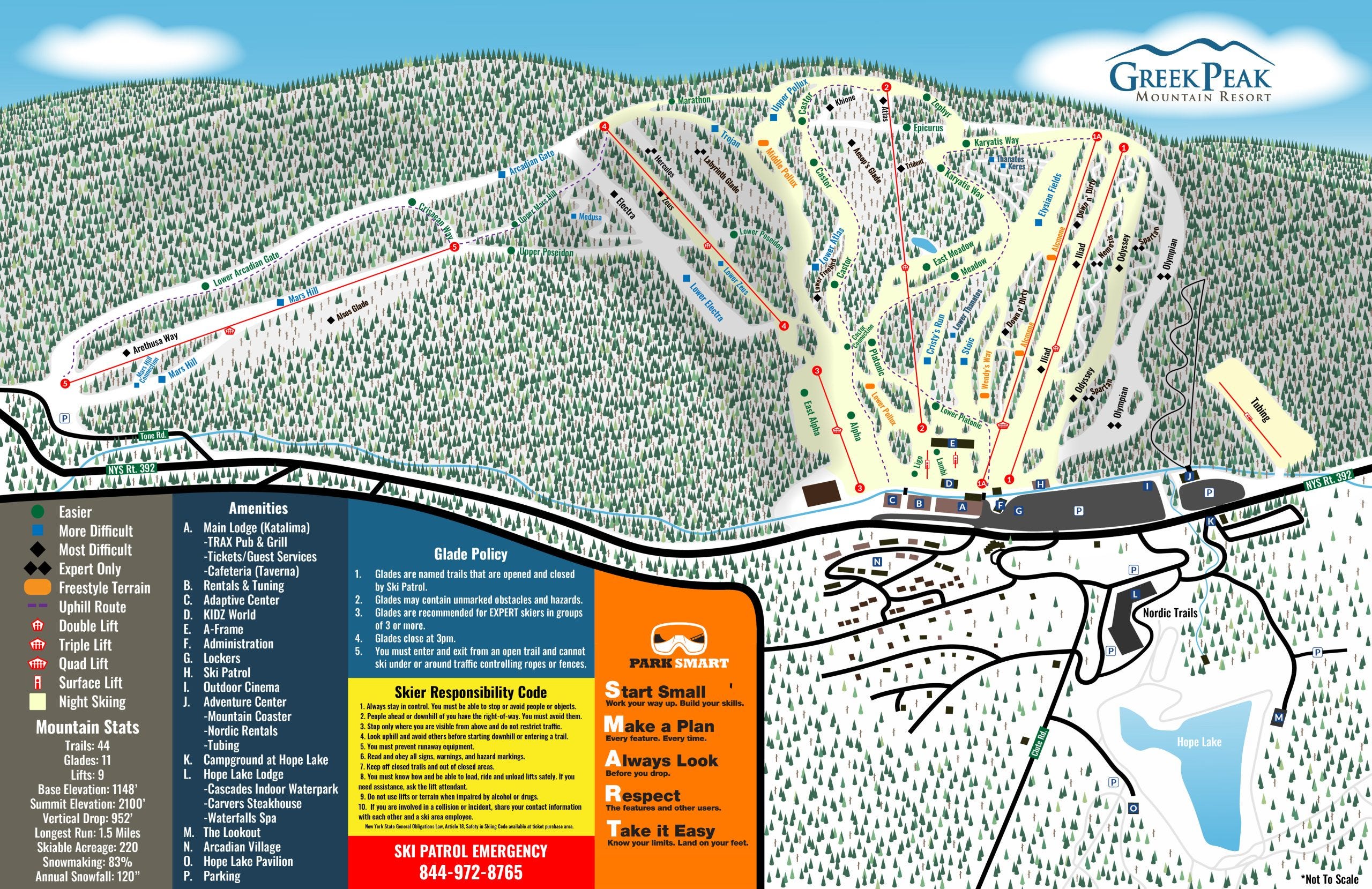
Who Wes Kryger, President and Ayden Wilber, Vice President of Mountain Operations at Greek Peak , New York Recorded on June 30, 2025 About Greek Peak Click here for a mountain stats overview Owned by: John Meier Located in: Cortland, New York Year founded: 1957 – opened Jan. 11, 1958 Pass affiliations: Indy Pass, Indy+ Pass – 2 days Closest neighboring U.S. ski areas: Labrador (:30), Song (:31) Base elevation: 1,148 feet Summit elevation: 2,100 feet Vertical drop: 952 feet Skiable acres: 300 Average annual snowfall: 120 inches Trail count: 46 (10 easier, 16 more difficult, 15 most difficult, 5 expert, 4 terrain parks) Lift count: 8 (1 fixed-grip quad, 2 triples, 3 doubles – view Lift Blog’s inventory of Greek Peak’s lift fleet) Why I interviewed them No reason not to just reprint what I wrote about the bump earlier this year : All anyone wants from a family ski trip is this: not too far, not too crowded, not too expensive, not too steep, not too small, not too Bro-y. Terrain variety and ample grooming and lots of snow, preferably from the sky. Onsite lodging and onsite food that doesn’t taste like it emerged from the ration box of a war that ended 75 years ago. A humane access road and lots of parking. Ordered liftlines and easy ticket pickup and a big lodge to meet up and hang out in. We’re not too picky you see but all that would be ideal. My standard answer to anyone from NYC making such an inquiry has been “hahaha yeah get on a plane and go out West.” But only if you purchased lift tickets 10 to 16 months in advance of your vacation. Otherwise you could settle a family of four on Mars for less than the cost of a six-day trip to Colorado. But after MLK Weekend, I have a new answer for picky non-picky New Yorkers: just go to Greek Peak. Though I’d skied here in the past and am well-versed on all ski centers within a six-hour drive of Manhattan, it had not been obvious to me that Greek Peak was so ideally situated for a FamSki. Perhaps because I’d been in Solo Dad tree-skiing mode on previous visits and perhaps because the old trailmap presented the ski area in a vertical fortress motif aligned with its mythological trail-naming scheme: But here is how we experienced the place on one of the busiest weekends of the year: 1. No lines to pick up tickets. Just these folks standing around in jackets, producing an RFID card from some clandestine pouch and syncing it to the QR code on my phone. 2. Nothing resembling a serious liftline outside of the somewhat chaotic Visions “express” (a carpet-loaded fixed-grip quad). Double and triple chairs, scattered at odd spots and shooting off in all directions, effectively dispersing skiers across a broad multi-faced ridge. The highlight being this double chair originally commissioned by Socrates in 407 B.C.: 3. Best of all: endless, wide-open, uncrowded top-to-bottom true greens – the only sort of run that my entire family can ski both stress-free and together. Those runs ambled for a thousand vertical feet. The Hope Lake Lodge, complete with waterpark and good restaurant, sits directly across the street. A shuttle runs back and forth all day long. Greek Peak, while deeper inland than many Great Lakes-adjacent ski areas, pulls steady lake-effect, meaning glades everywhere (albeit thinly covered). It snowed almost the entire weekend, sometimes heavily. Greek Peak’s updated trailmap better reflects its orientation as a snowy family funhouse (though it somewhat obscures the mountain’s ever-improving status as a destination for Glade Bro): For MLK 2024, we had visited Camelback, seeking the same slopeside-hotel-with-waterpark-decent-food-family-skiing combo. But it kinda sucked. The rooms, tinted with an Ikea-by-the-Susquehanna energy, were half the size of those at Greek Peak and had cost three times more. Our first room could have doubled as the smoking pen at a public airport (we requested, and received, another). The hill was half-open and overrun with people who seemed to look up and be genuinely surprised to find themselves strapped to snoskis. Mandatory parking fees even with a $600-a-night room; mandatory $7-per-night, per-skier ski check (which I dodged); and perhaps the worst liftline management I’ve ever witnessed had, among many other factors, added up to “let’s look for something better next year.” That something was Greek Peak, though the alternative only occurred to me when I attended an industry event at the resort in September and re-considered its physical plant undistracted by ski-day chaos. Really, this will never be a true alternative for most NYC skiers – at four hours from Manhattan, Greek Peak is the same distance as far larger Stratton or Mount Snow. I like both of those mountains, but I know which one I’m driving my family to when our only time to ski together is the same time that everyone else has to ski together. What we talked about 116,000 skier visits; two GP trails getting snowmaking for the first time; top-to-bottom greens; Greek Peak’s family founding in the 1950s – “any time you told my dad [Al Kryger] he couldn’t do it, he would do it just to prove you wrong”; reminiscing on vintage Greek Peak; why Greek Peak made it when similar ski areas like Scotch Valley went bust; the importance of having “hardcore skiers” run a ski area; does the interstate matter?; the unique dynamics of working in – and continuing – a family business; the saga and long-term impact of building a full resort hotel across the street from the ski area; “a ski area is liking running a small municipality”; why the family sold the ski area more than half a century after its founding; staying on at the family business when it’s no longer a family business; John Meier arrives; why Greek Peak sold Toggenburg; long-term snowmaking ambitions; potential terrain expansion – where and how much; “having more than one good ski season in a row would be helpful” in planning a future expansion; how Greek Peak modernized its snowmaking system and cut its snowmaking hours in half while making more snow; five times more snowguns; Great Lakes lake-effect snow; Greek Peak’s growing glade network and long evolution from a no-jumps-allowed old-school operation to today’s more freewheeling environment; potential lift upgrades; why Greek Peak is unlikely to ever have a high-speed lift; keeping a circa 1960s lift made by an obscure company running; why Greek Peak replaced an old double with a used triple on Chair 3 a few years ago; deciding to renovate or replace a lift; how the Visions 1A quad changed Greek Peak and where a similar lift could make sense; why Greek Peak shortened Chair 2; and the power of Indy Pass for small, independent ski areas. What I got wrong On Scotch Valley ski area I said that Scotch Valley went out of business “in the late ‘90s.” As far as I can tell, the ski area’s last year of operation was 1998. At its peak, the 750-vertical-foot ski area ran a triple chair and two doubles serving a typical quirky-fun New York trail network. I’m sorry I missed skiing this one. Interestingly, the triple chair still appears to operate as part of a summer camp . I wish they would also run a winter camp called “we’re re-opening this ski area”: On Toggenburg I paraphrased a quote from Greek Peak owner John Meier, from a story I wrote around the 2021 closing of Toggenburg. Here’s the quote in full: “Skiing doesn’t have to happen in New York State,” Meier said. “It takes an entrepreneur, it takes a business investor. You gotta want to do it, and you’re not going to make a lot of money doing it. You’re going to wonder why are you doing this? It’s a very difficult business in general. It’s very capital-intensive business. There’s a lot easier ways to make a buck. This is a labor of love for me.” And here’s the full story, which lays out the full Togg saga: Podcast Notes On Hope Lake Lodge and New York’s lack of slopeside lodging I’ve complained about this endlessly, but it’s strange and counter-environmental that New York’s two largest ski areas offer no slopeside lodging. This is the same oddball logic at work in the Pacific Northwest, which stridently and reflexively opposes ski area-adjacent development in the name of preservation without acknowledging the ripple effects of moving 5,000 day skiers up to the mountain each winter morning. Unfortunately Gore and Whiteface are on Forever Wild land that would require an amendment to the state constitution to develop, and that process is beholden to idealistic downstate voters who like the notion of preservation enough to vote abstractly against development, but not enough to favor Whiteface over Sugarbush when it’s time to book a family ski trip and they need convenient lodging. Which leaves us with smaller mountains that can more readily develop slopeside buildings: Holiday Valley and Hunter are perhaps the most built-up, but West Mountain has a monster development grinding through local permitting processes: Greek Peak built the brilliant Hope Lake Lodge, a sprawling hotel/waterpark with wood-trimmed, fireplace-appointed rooms directly across the street from the ski area. A shuttle connects the two. On the “really, really bad” 2015 season Wilber referred to the “really, really bad” 2015 season. Here’s the Kottke end-of-season stats comparing 2015-16 snowfall to the previous three winters, where you can see the Northeast just collapse into an abyss: Month-by-month (also from Kottke): Fast forward to Kottke’s 2022-23 report, and you can see just how terrible 2015-16 was in terms of skier visits compared to the seasons immediately before and after: On Greek Peak’s old masterplan with a chair 6 I couldn’t turn up the masterplan that Kryger referred to with a Chair 6 on it, but the trailmap did tease a potential expansion from around 2006 to 2012, labelled as “Greek Peak East”: On Great Lakes lake-effect snow This is maybe the best representation I’ve found of the Great Lakes’ lake-effect snowbands: On Greek Peak’s Lift 2 What a joy this thing is to ride: An absolute time machine: The lift, built in 1963, looks rattletrap and bootleg, but it hums right along. It is the second-oldest operating chairlift in New York State, after Snow Ridge’s 1960 North Hall double chair, and the fourth-oldest in the Northeast (Mad River Glen’s single, dating to 1948, is King Gramps of the East Coast). It’s one of the 20-oldest operating chairlifts in America: As Wilber says, this lift once ran all the way to the base. They shortened the lift sometime between 1995 and ’97 to scrape out a larger base-area novice zone. Greek Peak’s circa 1995 trailmap shows the lift extending to its original load position: Following Pico’s demolition of the Bonanza double this offseason, Greek Peak’s Chair 2 is one of just three remaining Carlevaro-Savio lifts spinning in the United States: The Storm explores the world of lift-served skiing year-round. Join us. Get full access to The Storm Skiing Journal and Podcast at www.stormskiing.com/subscribe
Nov 2
Podcast #216: Treetops General Manager Barry Owens
Who Barry Owens, General Manager of Treetops, Michigan Recorded on June 13, 2025 About Treetops Click here for a mountain stats overview Owned by: Treetops Acquisition Company LLC Located in: Gaylord, Michigan Year founded: 1954 Pass affiliations: Indy Pass, Indy+ Pass – 2 days Closest neighboring ski areas: Otsego (:07), Boyne Mountain (:34), Hanson Hills (:39), Shanty Creek (:51), The Highlands (:58), Nub’s Nob (1:00) Base elevation: 1,110 feet Summit elevation: 1,333 feet Vertical drop: 223 feet Skiable acres: 80 Average annual snowfall: 140 inches Trail count: 25 (30% beginner, 40% intermediate, 30% advanced) Lift count: 5 (3 triples, 2 carpets – view Lift Blog’s inventory of Treetops’ lift fleet) Why I interviewed him The first 10 ski areas I ever skied, in order, were: * Mott Mountain, Michigan * Apple Mountain, Michigan * Snow Snake, Michigan * Caberfae, Michigan * Crystal Mountain, Michigan * Nub’s Nob, Michigan * Skyline, Michigan * Treetops, Michigan * Sugar Loaf, Michigan * Shanty Creek – Schuss Mountain, Michigan And here are the first 10 ski areas I ever skied that are still open , with anything that didn’t make it crossed out: * Mott Mountain, Michigan * Apple Mountain, Michigan * Snow Snake, Michigan * Caberfae, Michigan * Crystal Mountain, Michigan * Nub’s Nob, Michigan * Skyline, Michigan * Treetops, Michigan * Sugar Loaf, Michigan * Shanty Creek – Schuss Mountain, Michigan * Shanty Creek – Summit, Michigan * Boyne Mountain, Michigan * Searchmont, Ontario * Nebraski, Nebraska * Copper Mountain, Colorado * Keystone, Colorado Six of my first 16. Poof. That’s a failure rate of 37.5 percent. I’m no statistician, but I’d categorize that as “not good.” Now, there’s some nuance to this list. I skied all of these between 1992 and 1995. Most had faded officially or functionally by 2000, around the time that America’s Great Ski Area Die-Off concluded (Summit lasted until around Covid, and could still re-open, resort officials tell me). Their causes of death are varied, some combination, usually, of incompetence, indifference, and failure to adapt. To climate change, yes, but more of the cultural kind of adaptation than the environmental sort. The first dozen ski areas on this list are tightly bunched, geographically, in the upper half of Michigan’s Lower Peninsula. They draw from the same general population centers and suffer from the same stunted Midwest verticals. None are naturally or automatically great ski areas. None are or were particularly remote or tricky to access, and most sit alongside or near a major state or federal highway. And they (mostly) all benefit from the same Lake Michigan lake-effect snow machine, the output of which appears to be increasing as the Great Lakes freeze more slowly and less often (cold air flowing over warm water = lake-effect snow). Had you presented this list of a dozen Michigan ski areas to me in 1995 and said, “five of these will drop dead in the next 30 years,” I would not have chosen those five, necessarily, to fail. These weren’t ropetow backwaters. All but Apple had chairlifts (and they soon installed one), and most sat close to cities or were attached to a larger resort. Sugar Loaf, in particular, was one of Michigan’s better ski areas, with five chairlifts and the largest in-state vertical drop on this list. My guess for most-likely-to-die probably would have been Treetops, especially if you’d told me that then-private Otsego ski area, right next door and with twice its neighbor’s skiable acreage, vertical drop, and number of chairlifts, would eventually open to the public. Especially if you’d told me that Boyne Mountain, the monster down the road, would continue to expand its lodging and village, and would add a Treetops-sized cluster of greens to its ferocious ridge of blacks. Especially if you’d told me that Treetops’ trail footprint, never substantial, would remain more or less the same size 30 years later. In fact, just about every surviving Michigan ski area on that list - Crystal, Nub’s, Caberfae, Shanty Schuss - greatly expanded its terrain footprint. Except Treetops. But here we are, in the future, and I just skied Treetops 10 months ago with my 8-year-old son. It was, in some ways, more or less as I’d left it on my last visit, in 1995: small vert, small trail network, a slightly confusing parking situation, no chairlift restraint bars. A few improvements were obvious: the beginner ropetows had made way for a carpet, the last double chair had been upgraded to a triple, terrain park features dotted the east side, and a dozen or so glades and short steep shots had been hacked from the woods of the legacy trail footprint. That’s all nice. But what was not obvious to me was this: why, and how, does Treetops the ski area still exist? Sugar Loaf was a better ski area. Apple Mountain was closer to large population centers. Summit was attached to ski-in-ski-out accommodations and shared a lift ticket with the larger Schuss mountain a couple miles away. Was modern Treetops some sort of money-losing ski area hobby horse for whomever owned the larger resort, which is better known for its five golf courses? Was it just an amenity to keep the second homeowners who mostly lived in Southeast Michigan invested year-round? Had the ski area cemented itself as the kind of high-volume schoolkids training ground that explained the resilience of ski areas in metro Detroit, Minneapolis, and Milwaukee? There is never, or rarely, one easy or obvious explanation for why similar businesses thrive or fail. This is why I resist pinning the numerical decline in America’s ski area inventory solely to climate change. We may have fewer ski areas in America than we had in 1995, but we have a lot more good ski areas now than we did 30 years ago (and, as I wrote in March, a lot more overall ski terrain). Yes, Skyline, 40 minutes south of Treetops, failed because it never installed snowmaking, but that is only part of the sentence. Skyline failed because it never installed snowmaking while its competitors aggressively expanded and continually updated their snowmaking systems, raising the floor on the minimal ski experience acceptable to consumers . That takes us back to culture. What do you reckon has changed more over the past 30 to 40 years: America’s weather patterns, or its culture? For anyone who remembers ashtrays at McDonald’s or who rode in the bed of a pickup truck from Michigan to Illinois or who ran feral and unsupervised outdoors from toddlerhood or who somehow fumbled through this vast world without the internet or a Pet Rectangle or their evil offspring social media, the answer seems obvious. The weather feels a little different. Our culture feels airlifted from another planet. Americans accepted things 30 years ago that would seem outrageous today – like smoking adjacent to a children’s play area ornamented with a demented smiling clown. But this applies to skiing as well. My Treetops day in 1995 was memorably horrible, the snow groomed but fossilized, unturnable. A few weeks earlier, I’d skied Skyline on perhaps a three-inch base, grass poking through the trails. Modern skiers, armed with the internet and its Hubble connection to every ski area on the planet, would not accept either set of conditions today. But one of those ski areas adapted and the other did not. That’s the “why” of Treetops survival. It was the “how” that I needed Barry Owens to help me understand. What we talked about Last winter’s ice storm – “it provides great insight into human character when you go through that stuff”; record snowfall (204 inches!) to chase the worst winter ever; the Lake Michigan snowbelt; a golf resort with a ski area attached; building a ski culture when “we didn’t have enough people dedicated to ski… and it showed”; competing with nearby ski areas many times Treetops’ size “we don’t shy away from… who we are and what we are”; what happened when next-door-neighbor Otsego Resort switched from a private to a public model in 2017 – “neither one of us is going to get rich seeing who can get the most $15 lift tickets on a Wednesday”; I attempt to talk about golf and why Michigan is a golf mecca; moving on from something you’ve spent decades building; Treetops’ rough financial period and why Owens initially turned down the GM job; how Owens convinced ownership not to close the ski area; fixing a “can’t-do staff” by “doing things that created the freedom to be able to act”; Treetops’ strange 2014 bankruptcy and rebuilding from there; “right now we’re happy” with the lift fleet; how much it would cost to retrofit Treetops’ lifts with restraint bars; timeline for potential ski expansion at Treetops; bargain season passes (as low as $125); and Indy Pass’ network power. What I got wrong * I said “Gaylord County,” but the city of Gaylord is in Otsego County. * I said that Boyne Resorts, operator of 11 ski areas , also runs “10 or 11 golf resorts.” The company operates 14 golf courses . * I said that Michigan had a “very good” road network and that there was “not a lot of traffic,” and if you live there, you’re reaction is probably, “you’re dumb.” What I meant by “very good road network” is this: compared to most ski regions, which have, um, mountains, Michigan’s bumplets sit more or less directly alongside the state’s straight, flat, almost perfectly gridded highway network. Also, the “not a lot of traffic” thing does not apply to special situations like, say, northbound I-75 on a July Friday evening. * I said that Crystal, Nub’s, Caberfae, and Shanty Creek were “close” – while they’re not necessarily all close to one another, they are all roughly equidistant for folks coming to them from downstate. * I said that Treetops was “the fifth or sixth place I ever skied at,” but upon further review, it was number eight (which is reflected in the list above). Podcast Notes On the ice storm An ice storm hammered Northern Michigan in late March of this year: On the lightning strike on Treetops’ golf course On the Midwest’s terrible 2023-24 ski season Skier visits cratered in the Midwest during the 2023-24 ski season, the region’s worst on record from a snowfall point of view. Weather - and skier visits - settled back into normal ranges last winter: This is a bit hard to see with any sort of precision, but this 10-year chart gives a nice sense of just how abnormal 2023-24 was for the Midwest: On Michigan’s ski areas Michigan is home to 44 active ski areas - more than any state other than New York. Many of them are quite small, operate sporadically, and run only surface lifts, but Treetops is close to a bunch of the better lift-served outfits, including Boyne Mountain, Nub’s Nob, and The Highlands (the UP ski areas may as well be in another state). It helps Treetops that so many of the state’s ski areas have also joined Indy Pass: On Otsego Resort For decades - I’m not certain how long, exactly - Otsego Resort, right next door to Treetops and with roughly double the vertical drop and skiable acreage, was private. In 2017, the bump opened to the public, considerably amping up competition. Complicating the matter further, Otsego sits a bit closer to Michigan’s Main Street - I-75 - than Treetops. On Snow Operating Owens mentioned working with “TBL” – he was referring to Terrain Based Learning, Snow Partners’ learn-to-ski program. That company also runs the Snow Cloud operating system that Owens refers to at the end. On Treetops’ rough period I quoted this Detroit Business News article at length in the interview. It goes deep on Treetops’ precarious early 2000s history and the resort’s broken employee culture at the time. On people being nice at ski areas Yeah I’m super into this: On the hedgehog concept Owens mentions “the hedgehog concept,” which I wasn’t familiar with. It sounded like a business-book thing, and it is, adapted by author Jim Collins for his book Good to Great and described in this way on his website : The Hedgehog Concept is developed in the book Good to Great. A simple, crystalline concept that flows from deep understanding about the intersection of three circles: 1) what you are deeply passionate about, 2) what you can be the best in the world at, and 3) what best drives your economic or resource engine. Transformations from good to great come about by a series of good decisions made consistently with a Hedgehog Concept, supremely well executed, accumulating one upon another, over a long period of time. More: On safety-bar requirements in New York and New England This is kind of funny… That’s my 8-year-old son, who’s skied in a dozen states, taking his first ride on a lift with no safety bar, at Treetops last December. Why such machines still exist in 2025, I have no idea - this lift rises about 30 feet off the ground. In the East, all chairlifts are equipped with bars, and state law mandates their use in New York, Massachusetts, and Vermont (and perhaps elsewhere). I don’t advocate for rider mandates, but I do think all chairlifts ought to have bars available for those who want them. Owens and I discuss the resort’s plans to retrofit Treetops’ three chairlifts - CTEC machines installed between 1984 and 1995 - with bars. The cost would be roughly $250,000. That’s a significant number, but probably a lot less than the figure if, say, someone has a heart attack or seizure on the lift, falls off, then sues the resort. Besides, as Owens points out, chairlifts must be equipped with restraint bars for summer use, which would open new revenue streams. Why are bars required for summer activities, but not winter? It’s a strange anachronism, unique among the ski world to America. On “Joe from SMI” I mentioned “Joe from SMI” offhand. I was referring to SMI Snowmakers President Joe VanderKelen, who appeared on the podcast back in 2022: On potential expansion Owens discusses a potential expansion looker’s left of Chair 1, which would restore lost terrain and built upon that. This 1988 trailmap shows a couple of the trails that Treetops eliminated to make way for its current top-to-bottom access road (trails 1 through 4): The Storm explores the world of lift-served skiing year-round. Join us. Get full access to The Storm Skiing Journal and Podcast at www.stormskiing.com/subscribe
Oct 26
Podcast #215: Alterra CEO Jared Smith
Take 20% off a paid annual ‘Storm’ subscription through Monday, Oct. 27, 2025. Who Jared Smith, Chief Executive Officer of Alterra Mountain Company Recorded on October 22, 2025 About Alterra Mountain Company Alterra is skiing’s Voltron, a collection of super-bots united to form one super-duper bot. Only instead of gigantic robot lions the bots are gigantic ski areas and instead of fighting the evil King Zarkon they combined to battle Vail Resorts and its cackling mad Epic Pass. Here is Alterra’s current ski-bot stable: Alterra of course also owns the Ikon Pass, which for the 2025-26 winter gives skiers all of this: Ikon launched in 2018 as a more-or-less-even competitor to Epic Pass, both in number and stature of ski areas and price, but long ago blew past its mass-market competitor in both: Those 89 total ski areas include nine that Alterra added last week in Japan, South Korea, and China. Some of these 89 partners, however, are so-called “bonus mountains,” which are Alterra’s Cinderellas. And not Cinderella at the end of the story when she rules the kingdom and dines on stag and hunts peasants for sport but first-scene Cinderella when she lives in a windowless tower and wears a burlap dress and her only friends are talking mice. Meaning skiers can use their Ikon Pass to ski at these places but they are not I repeat NOT on the Ikon Pass so don’t you dare say they are (they are). While the Ikon Pass is Alterra’s Excalibur, many of its owned mountains offer their own season passes (see Alterra chart above). And many now offer their own SUPER-DUPER season passes that let skiers do things like cut in front of the poors and dine on stag in private lounges: These SUPER-DUPER passes don’t bother me though a lot of you want me to say they’re THE END OF SKIING. I won’t put a lot of effort into talking you off that point so long as you’re all skiing for $17 per day on your Ikon Passes. But I will continue to puzzle over why the Ikon Session Pass is such a very very bad and terrible product compared to every other day pass including those sold by Alterra’s own mountains . I am also not a big advocate for peak-day lift ticket prices that resemble those of black-market hand sanitizer in March 2020: Fortunately Vail and Alterra seem to have launched a lift ticket price war, the first battle of which is The Battle of Give Half Off Coupons to Your Dumb Friends Who Don’t Buy A Ski Pass 10 Months Before They Plan to Ski: Alterra also runs some heli-ski outfits up in B.C. but I’m not going to bother decoding all that because one reason I started The Storm was because I was over stories of Bros skiing 45 feet of powder at the top of the Chugach while the rest of us fretted over parking reservations and the $5 replacement cost of an RFID card. I know some of you are like Bro how many stories do you think the world needs about chairlifts but hey at least pretty much anyone reading this can go ride them. Oh and also I probably lost like 95 percent of you with Voltron because unless you were between the ages of 7 and 8 in the mid-1980s you probably missed this: One neat thing about skiing is that if someone ran headfirst into a snowgun in 1985 and spent four decades in a coma and woke up tomorrow they’d still know pretty much all the ski areas even if they were confused about what’s a Palisades Tahoe and why all of us future wussies wear helmets. “Damn it, Son in my day we didn’t bother and I’m just fine. Now grab $20 and a pack of smokes and let’s go skiing.” Why I interviewed him For pretty much the same reason I interviewed this fellow: I mean like it or not these two companies dominate modern lift-served skiing in this country, at least from a narrative point of view. And while I do everything I can to demonstrate that between the Indy Pass and ski areas not in Colorado or Utah or Tahoe plenty of skier choice remains, it’s impossible to ignore the fact that Alterra’s 17 U.S. ski areas and Vail’s 36 together make up around 30 percent of the skiable terrain across America’s 509 active ski areas: And man when you add in all U.S. Epic and Ikon mountains it’s like dang: We know publicly traded Vail’s Epic Pass sales numbers and we know those numbers have softened over the past couple of years, but we don’t have similar access to Alterra’s numbers. A source with direct knowledge of Ikon Pass sales recently told me that unit sales had increased every year. Perhaps some day someone will anonymously message me a screenshot code-named Alterra’s Big Dumb Chart documenting unit and dollar sales since Ikon’s 2018 launch. In the meantime, I’m just going to have to keep talking to the guy running the company and asking extremely sly questions like, “if you had to give us a ballpark estimate of exactly how many Ikon Passes you sold and how much you paid each partner mountain and which ski area you’re going to buy next, what would you say?” What we talked about A first-to-open competition between A-Basin and Winter Park (A-Basin won); the allure of skiing Japan; Ikon as first-to-market in South Korea and China; continued Ikon expansion in Europe; who’s buying Ikon?; bonus mountains; half-off friends tickets; reserve passes; “one of the things we’ve struggled with as an industry are the dynamics between purchasing a pass and the daily lift ticket price”; “we’ve got to find ways to make it more accessible, more affordable, more often for more people”; Europe as a cheaper ski alternative to the West; “we are focused every day on … what is the right price for the right consumer on the right day?”; “there’s never been more innovation” in the ski ticket space; Palisades Tahoe’s 14-year-village-expansion approval saga; America’s “increasingly complex” landscape of community stakeholders; and Deer Valley’s massive expansion. What I got wrong * We didn’t get this wrong, but when we recorded this pod on Wednesday, Smith and I discussed which of Alterra’s ski areas would open first. Arapahoe Basin won that fight, opening today (Sunday, Oct. 26). * I said that 40 percent of all Epic, Ikon, and Indy pass partners were outside of North America. This is inaccurate: 40 percent (152) of those three passes’ combined 383 partners is outside the United States . Subtracting their 49 Canadian ski areas gives us 103 mountains outside of North America, or 27 percent of the total. * I claimed that a ski vacation to Europe is “a quarter of the price” of a similar trip to the U.S. This was hyperbole, and obviously the available price range of ski vacations is enormous, but in general, prices for everything from lift tickets to hotels to food tend to be lower in the Alps than in the Rocky Mountain core. * It probably seems strange that I said that Deer Valley’s East Village was great because you could drive there from the airport without hitting a spotlight and also said that the resort would be less car-dependent. What I meant by that was that once you arrive at East Village, it is – or will be, when complete – a better slopeside pedestrian village experience than the car-oriented Snow Park that has long served as the resort’s principal entry point. Snow Park itself is scheduled to evolve from parking-lot-and-nothing-else to secondary pedestrian village. The final version of Deer Valley should reduce the number of cars within Park City proper and create a more vibrant atmosphere at the ski area. Questions I wish I’d asked The first question you’re probably asking is “Bro why is this so short aren’t your podcasts usually longer than a Superfund cleanup?” Well I take what I can get and if there’s a question you can think of related to Ikon or Alterra or any of the company’s mountains, it was on my list. But Smith had either 30 minutes or zero minutes so I took the win. Podcast Notes On Deer Valley I was talking to the Deer Valley folks the other day and we agreed that they’re doing so much so fast that it’s almost impossible to tell the story. I mean this was Deer Valley two winters ago : And this will be Deer Valley this winter: Somehow it’s easier to write 3,000 words on Indy Pass adding a couple of Northeast backwaters than it is to frame up the ambitions of a Utah ski area expanding by as much skiable acreage as all 30 New Hampshire ski areas combined in just two years. Anyway Deer Valley is about to be the sixth-largest ski area in America and when this whole project is done in a few years it will be number four at 5,700 acres, behind only Vail Resorts’ neighboring Park City (7,300 acres), Alterra’s own Palisades Tahoe (6,000 acres), and Boyne Resorts’ Big Sky (5,850 acres). On recent Steamboat upgrades Yes the Wild Blue Gondola is cool and I’m sure everyone from Baton-Tucky just loves it. But everything I’m hearing out of Steamboat over the past couple of winters indicates that A) the 650-acre Mahogany Ridge expansion adds a fistfighting dimension to what had largely been an intermediate ski resort, and that, B) so far, no one goes over there, partially because they don’t know about it and partially because the resort only cut one trail in the whole amazing zone (far looker’s left): I guess just go ski this one while everyone else still thinks Steamboat is nothing but gondolas and Sunshine Peak. On Winter Park being “on deck” After stringing the two sides of Palisades Tahoe together with a $75 trillion gondola and expanding Steamboat and nearly tripling the size of Deer Valley, all signs point to Alterra next pushing its resources into actualizing Winter Park’s ambitious masterplan , starting with the gondola connection to town (right side of map): On new Ikon Pass partners for 2025-26 You can read about the bonus partners above, but here are the write-ups on Ikon’s full seven/five-day partners: On previous Alterra podcasts This was Smith’s second appearance on the pod. Here’s number one, from 2023: His predecessor, Rusty Gregory, appeared on the show three times: I’ve also hosted the leaders of a bunch of Alterra leaders on the pod, most recently A-Basin and Mammoth: And the heads of many Ikon Pass partners – most recently Killington and Sun Valley: On U.S. passes in Japan Epic, Ikon, Indy, and Mountain Collective are now aligned with 48 ski areas in Japan – nearly as many as the four passes have signed in Canada: On Europe And here are the European ski areas aligned with Epic, Ikon, Indy, and Mountain Collective – the list is shorter than the Japanese list, but since each European ski area is made up of between one and 345 ski areas, the actual skiable acreage here is likely equal to the landmass of Greenland: On skier and ski area growth in China China’s ski industry appears to be developing rapidly - I’m not sure what to make of the difference between “ski resorts” and “ski resorts with aerial ropeways.” Normally I’d assume that means with or without lifts, but that doesn’t make a lot of sense and sometimes nations frame things in very different ways. On the village at Palisades Tahoe The approval process for a village expansion on the Olympic side of Palisades Tahoe was a very convoluted one. KCRA sums the outcome up well (I’ll note that “Alterra” did not call for anything in 2011, as the company didn’t exist until 2017): Under the initial 2011 application, Alterra had called for the construction of 2,184 bedrooms. That was reduced to 1,493 bedrooms in a 2014 revised proposal where 850 housing units — a mix of condominiums, hotel rooms and timeshares — were planned. The new agreement calls for a total of 896 bedrooms. The groups that pushed this downsizing were primarily Keep Tahoe Blue and Sierra Watch. Smith is very diplomatic in discussing this project on the podcast, pointing to the “collaboration, communication, and a little bit of compromise” that led to the final agreement. I’m not going to be so diplomatic. Fighting dense, pedestrian-oriented development that could help reconfigure traffic patterns and housing availability in a region that is choking on ski traffic and drowning in housing costs is dumb. The systems for planning, approving, and building anything that is different from what already exists in this nation are profoundly broken. The primary issue is this: these anti-development crusaders position themselves as environmental defenders without acknowledging (or, more likely, realizing), that the existing traffic, blight, and high costs driving their resistance is a legacy of haphazard development in past decades, and that more thoughtful, human-centric projects could mitigate, rather than worsen, these concerns. The only thing an oppose-everything stance achieves is to push development farther out into the hinterlands, exacerbating sprawl and traffic. British Columbia is way ahead of us here. I’ve written about this extensively in the past, and won’t belabor the point here except to cite what I wrote last year about the 3,711-home city sprouting from raw wilderness below Cypress Mountain, a Boyne-owned Ikon Pass partner just north of Vancouver: Mountain town housing is most often framed as an intractable problem, ingrown and malignant and impossible to reset or rethink or repair. Too hard to do. But it is not hard to do. It is the easiest thing in the world. To provide more housing, municipalities must allow developers to build more housing, and make them do it in a way that is dense and walkable, that is mixed with commerce, that gives people as many ways to move around without a car as possible. This is not some new or brilliant idea. This is simply how humans built villages for about 10,000 years, until the advent of the automobile. Then we started building our spaces for machines instead of for people. This was a mistake, and is the root problem of every mountain town housing crisis in North America. That and the fact that U.S. Americans make no distinction between the hyper-thoughtful new urbanist impulses described here and the sprawling shitpile of random buildings that are largely the backdrop of our national life. The very thing that would inject humanity into the mountains is recast as a corrupting force that would destroy a community’s already-compromised-by-bad-design character. Not that it will matter to our impossible American brains, but Canada is about to show us how to do this. Over the next 25 years, a pocket of raw forest hard against Cypress’ access road will sprout a city of 3,711 homes that will house thousands of people. It will be a human-scaled, pedestrian-first community, a city neighborhood dropped onto a mountainside. A gondola could connect the complex to Cypress’ lifts thousands of feet up the mountain – more cars off the road. It would look like this (the potential aerial lift is not depicted here): Here’s how the whole thing would set up against the mountain: And here’s what it would be like at ground level: Like wow that actually resembles something that is not toxic to the human soul. But to a certain sort of Mother Earth evangelist, the mere suggestion of any sort of mountainside development is blasphemous. I understand this impulse, but I believe that it is misdirected, a too-late reflex against the subdivision-off-an-exit-ramp Build-A-Bungalow mentality that transformed this country into a car-first sprawlscape. I believe a reset is in order: to preserve large tracts of wilderness, we should intensely develop small pieces of land, and leave the rest alone. This is about to happen near Cypress. We should pay attention. Given the environmental community’s reflexive and vociferous opposition to a recent proposal to repurpose tracts of not-necessarily-majestic wilderness for housing, I’m not optimistic that we possess the cultural brainpower to improve our own lives through policy. Which is why I’ve been writing more about passes and less about our collective ambitions to make everything from the base of the lifts outward as inconvenient and expensive as possible. The Storm explores the world of lift-served skiing year-round. Join us for 20% off the annual rate through Monday, Oct. 27, 2025. Get full access to The Storm Skiing Journal and Podcast at www.stormskiing.com/subscribe
Oct 17
Podcast #214: Killington and Pico Owner Phill Gross and CEO Mike Solimano
Take 20% off an annual Storm subscription through 10/22/2025 to receive 100% of the newsletter’s content. Thank you for your support of independent ski journalism. Who Phill Gross, owner, and Mike Solimano, CEO of Killington and Pico , Vermont Recorded on July 10, 2025 About Killington Click here for a mountain stats overview Owned by: Phill Gross and team Located in: Killington, Vermont Year founded: 1958 Pass affiliations: Ikon Pass: 5 or 7 combined days with Pico Reciprocal partners: Pico access is included on all Killington passes Closest neighboring ski areas: Pico (:12), Saskadena Six (:39), Okemo (:40), Quechee (:44), Ascutney (:55), Storrs (:59), Harrington Hill (:59), Magic (1:00), Whaleback (1:02), Sugarbush (1:04), Bromley (1:04), Middlebury Snowbowl (1:08), Arrowhead (1:10), Mad River Glen (1:11) Base elevation: 1,165 feet at Skyeship Base Summit elevation: 4,142 feet at top of K-1 gondola (hike-to summit of Killington Peak at 4,241 feet) Vertical drop: 2,977 feet lift-served, 3,076 hike-to Skiable Acres: 1,509 Average annual snowfall: 250 inches Trail count: 155 (43% advanced/expert, 40% intermediate, 17% beginner) Lift count: 20 (2 gondolas, 2 six-packs, 4 high-speed quads, 5 fixed-grip quads, 2 triples, 1 double, 1 platter, 3 carpets - view Lift Blog’s inventory of Killington’s lift fleet; Killington plans to replace the Snowdon triple with a fixed-grip quad for the 2026-27 ski season) History: from New England Ski History About Pico Click here for a mountain stats overview Owned by: Phill Gross and team Located in: Mendon, Vermont Year founded: 1934 Pass affiliations: Ikon Pass: 5 or 7 combined days with Killington Reciprocal partners: Pico access is included on all Killington passes; four days Killington access included on Pico K.A. Pass Closest neighboring ski areas: Killington (:12), Saskadena Six (:38), Okemo (:38), Quechee (:42), Ascutney (:53), Storrs (:57), Harrington Hill (:55), Magic (:58), Whaleback (1:00), Sugarbush (1:01), Bromley (1:00), Middlebury Snowbowl (1:01), Mad River Glen (1:07), Arrowhead (1:09) Base elevation: 2,000 feet Summit elevation: 3,967 feet Vertical drop: 1,967 feet Skiable Acres: 468 Average annual snowfall: 250 inches Trail count: 58 (36% advanced/expert, 46% intermediate, 18% beginner) Lift count: 7 (2 high-speed quads, 2 triples, 1 doubles, 2 carpets - view Lift Blog’s inventory of Pico’s lift fleet) History: from New England Ski History Why I interviewed them The longest-tenured non-government ski area operator in America, as far as I know, is the Seeholzer family, owner-operators of Beaver Mountain, Utah since 1939. Third-generation owner Travis Seeholzer came on the pod a few years back to trace the eight-decade arc from this dude flexing 10-foot-long kamikaze boards to the present: Just about every ski area in America was hacked out of the wilderness by Some Guy Who Looked Like That. Dave McCoy at Mammoth or Ernie Blake at Taos or Everett Kircher at Boyne Mountain , swarthy, willful fellows who flew airplanes and erected rudimentary chairlifts in impossible places and hammered together their own baselodges. Over decades they chiseled these mountains into their personal Rushmores, a life’s work, a human soul knotted to nature in a built place that would endure for generations. It’s possible that they all imagined their family name governing those generations. In the remarkable case of Boyne, they still do. But the Kirchers and the Seeholzers are ski-world exceptions. Successive generations are often uninterested in the chore of legacy building. Or they try and say wow this is expensive. Or bad weather leads to bad financial choices by our cigar-smoking, backhoe-driving, machete-wielding founder and his sons and daughters never get their chance. The ski area’s deed shuffles into the portfolio of a Colorado Skico and McCoy fades a little each year and at some point Mammoth is just another ski area owned by Alterra Mountain Company. It’s tempting to sentimentalize the past, to lament skiing’s macro-transition from gritty network of founder-kingpin fifes to set of corporate brands, to conclude that “this generation” just doesn’t have the tenacity of a Blake or a McCoy. But the America where a fellow could turn up with a dump truck and a chainsaw and flatten raw forest into a for-profit business with minimal protest is gone. Every part of the ski ecosystem is more regulated, complicated, and expensive than it’s ever been. The appeal of running such a machine - and the skillset necessary to do so - is entirely different from that of sculpting your own personal snow Narnia from scratch. We will always have family-owned ski areas (we still have hundreds), and an occasional modern founder-disruptor like Mount Bohemia’s Lonie Glieberman will materialize like a new X-man. But ski conglomerates have probably always been inevitable, and are probably largely the industry’s future. They are best suited, in most cases, to manage, finance, and maintain the vast machinery of our largest ski centers (and also to create a ski landscape in which not all ski area operators are Some Guy Who Looked Like That). Killington demonstrates this arc from rambunctious founder to corporate vassal as well as any mountain in the country. Founded in 1958 by the wily and wild Pres Smith, the ski area’s parent company, Sherburne Corp., bought Sunday River, Maine in 1973 and Mount Snow, Vermont in 1977. The two Vermont mountains became S-K-I in 1984, bought five more ski areas, and merged with four-resort LBO in 1996 to become the titanic American Skiing Company. Unfortunately ASC turned out to be skiing’s Titanic, and one of the company’s last acts before dissolution was to sell Killington and Pico to Utah-based Powdr in 2007. The Beast had been tamed, at least on paper. Corporate ownership of some sort felt as stapled to the mountain as Killington’s 3,000 snowguns. And mostly, well, it didn’t matter. Other than Powdr’s disastrous attempts to shorten the resort’s famously long seasons, Killington never lost its feisty edge. Over the decades the ski area modernized, masterplanned, and shed skier volume while increasing its viability as a business. Modern Killington wasn’t the kingdom of a charismatic and ever-present founder, but it was a pretty good ski area. And then, suddenly, shockingly, Powdr sold both Killington and Pico last August. And they didn’t sell the ski areas to Vail or Alterra or Boyne or to anyone who owned any ski areas at all. Instead, a group of local investors - led by Phill Gross and Michael Ferri, longtime Killington homeowners who ran a variety of non-ski-related businesses - bought the mountains. After 51 years as part of a multi-mountain ownership group, Killington (its relationship to neighboring Pico notwithstanding), was once again independent. It was all so improbable. Out-of-state operators had purchased five of Vermont’s large ski areas in recent years: Colorado-based Vail Resorts bought Stowe in 2017, Okemo in 2018, and Mount Snow in 2019; Denver-based Alterra claimed Sugarbush in 2019; and Utah-based Pacific Group Resorts added Jay Peak to their small portfolio in 2022. Very few ski areas have ever entered the corporate matrix and re-emerged as independents. Grand Targhee, Wyoming; Waterville Valley, New Hampshire; and Mountain Creek, New Jersey (technically owned by multimountain operator Snow Partners) are exceptions spun off from larger companies. But mostly, once a larger entity absorbed a ski area, it stays locked in the multimountain universe forever. So what would this mean? For the largest and busiest mountain in the eastern United States to be independent? Did this, along with Powdr’s intentions to sell Mount Bachelor (since rescinded ), Eldora (sale in process ), and Silver Star (no update), mark a reversal in the consolidation trend that had gathered 30 percent of America’s ski areas under the umbrella of a multi-mountain operator? Did Killington’s group of wealthy-but-not-Bezos-wealthy investors set an alternate blueprint for large-mountain ownership, especially when considered alongside the sale of Jackson Hole to a similar group the year before? Had the Ikon Pass – that harbinger of mass-market pass domination that had forced the we-better-join-them sales of Crystal Mountain, Washington and Sugarbush – inadvertently become a reliable revenue pipeline that made independence more viable? And would Killington, well-managed and constantly improving, backslide under cowboy owners who want to Q-Burke the place in their image? We’re a year in now, and we have some clarity on these questions, along with two new chairlifts (Superstar this year, Snowdon next), 1,000 new snowguns, a revitalized Skyeship Gondola, and progressing plans on the East’s first true ski village. Locals seem happy, management seems happy, the owners seem happy. Easy enough, Gross points out in our interview, when winter hits deep like the last one did. But can we keep the party going indefinitely? It was time for a check-in. What we talked about A strong first winter under independent ownership; what spring skiing off Canyon lift told us about the importance of Superstar; “it’s an incredibly complex operation”; letting the smart people do their jobs; Killington’s surprise spin-off from a multi-mountain operator; “our job is to keep the honeymoon going”; Superstar’s six-pack upgrade; why six-packs are probably Killington’s lift-upgrade future; why Pico is demolishing the Bonanza lift for a covered carpet; why Superstar won’t have bubbles; where bubbles might make sense in a future lift; why ski areas can no longer run snowmaking under newly constructed chairlifts; why Superstar is a Doppelmayr machine after Killington installed a brand-new Leitner-Poma six at Snowdon in 2018; long- and short-term Superstar impacts to Killington’s long season; long-term thoughts around early-season walkway access to North Ridge; Skyeship Gondola upgrades, including $5 million in new cabins; what 1,000 new snowguns means in practice; why Killington sold the Wobbly Barn; considering Killington as a business and investment; how Killington is a different financial beast from other Vermont ski areas; how close Killington was to going unlimited on Ikon Pass; Phill’s journey to buying Killington; Devil’s Fiddle and why sometimes things that don’t make sense financially make sense anyway; “we want to own this for generations to come”; a village layout and timeline update – “we want to make sure that this is something that’s additive to the ski experience” even if you don’t own within it; “Great Gulf wants this [village] to be competitive for the western resorts”; “we don’t want to change what Pico is”; how piping water over from Killington has reinvigorated and stabilized Pico; why Killington and Pico remained on Ikon Pass post-sale and probably will for the foreseeable future; is Ikon helping big ski areas stay independent?; Killington’s steady rise in lift ticket prices; future lift upgrades and why the Snowdon Triple is next up for a replacement. What I got wrong * File “opinionation” under LOL I’m Dumb Talking Is Hard * I said that former Killington owner Powdr had “just sold” Eldora, but that’s not accurate: in July, the town of Nederland, Colorado, announced their intent to purchase the ski area. The sales process is ongoing. Podcast Notes On previous Killington pods On Gross’ purchase of Killington and Pico On ANSI chairlift standards We get a bit in the weeds with a reference to “ANSI standards” for chairlifts. ANSI is the American National Standards Institute, a nonprofit organization that sets voluntary but widely adopted standards for everything from office furniture to electrical systems to safety signage in the United States. The ANSI standard for lifts, according to a blog post describing the code’s 2022 update, is “developed by the National Ski Areas Association (NSAA), [and] establishes standard requirements for the design, manufacture, construction, operation, and maintenance of passenger ropeways.” On Killington’s long seasons Killington often opens in October (though it has not done so since 2018), and closes in June (three straight years before a deliberately truncated 2024-25 season to begin demolition of the Superstar chair). List of Killington open and close dates since 1987-88. On Win Smith and Killington and Sugarbush On Killington’s village The East needs more of this: On Killington’s peak lift ticket prices Per New England Ski History : The Storm explores the world of lift-served skiing year round. Join us. Get full access to The Storm Skiing Journal and Podcast at www.stormskiing.com/subscribe
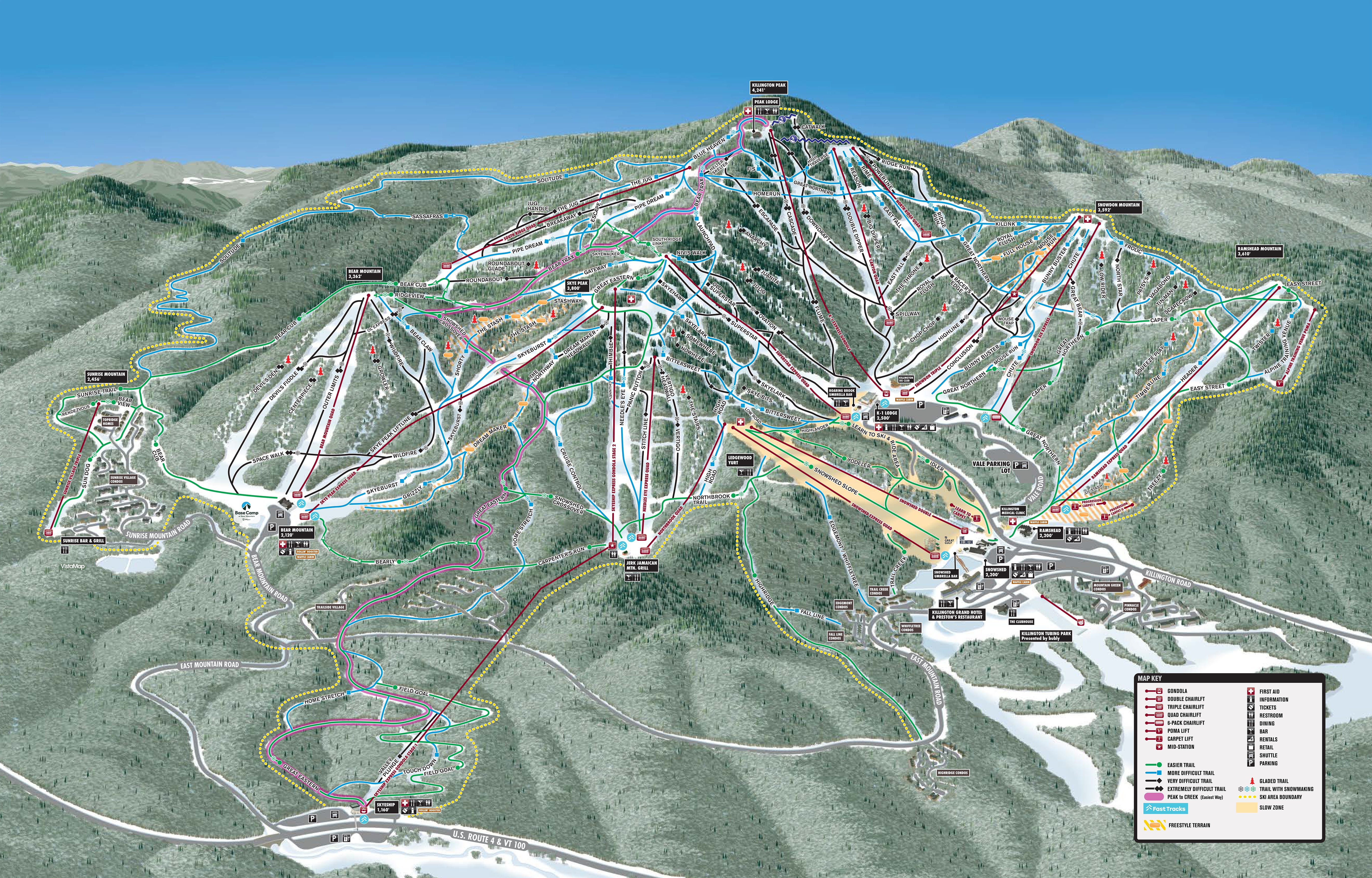
Oct 12
Podcast #213: Arapahoe Basin President & COO Alan Henceroth
Who Alan Henceroth, President and Chief Operating Officer of Arapahoe Basin , Colorado – Al runs the best ski area-specific executive blog in America – check it out: Recorded on May 19, 2025 About Arapahoe Basin Click here for a mountain stats overview Owned by: Alterra Mountain Company, which also owns: Pass access * Ikon Pass: unlimited * Ikon Base Pass: unlimited access from opening day to Friday, Dec. 19, then five total days with no blackouts from Dec. 20 until closing day 2026 Base elevation * 10,520 feet at bottom of Steep Gullies * 10,780 feet at main base Summit elevation * 13,204 feet at top of Lenawee Mountain on East Wall * 12,478 feet at top of Lazy J Tow (connector between Lenawee Express six-pack and Zuma quad) Vertical drop * 1,695 feet lift-served – top of Lazy J Tow to main base * 1,955 feet lift-served, with hike back up to lifts – top of Lazy J Tow to bottom of Steep Gullies * 2,424 feet hike-to – top of Lenawee Mountain to Main Base Skiable Acres: 1,428 Average annual snowfall: * Claimed: 350 inches * Bestsnow.net : 308 inches Trail count: 147 – approximate terrain breakdown: 24% double-black, 49% black, 20% intermediate, 7% beginner Lift count: 9 (1 six-pack, 1 high-speed quad, 3 fixed-grip quads, 1 double, 2 carpets, 1 ropetow) Why I interviewed him We can generally splice U.S. ski centers into two categories: ski resort and ski area. I’ll often use these terms interchangeably to avoid repetition, but they describe two very different things. The main distinction: ski areas rise directly from parking lots edged by a handful of bunched utilitarian structures, while ski resorts push parking lots into the next zipcode to accommodate slopeside lodging and commerce. There are a lot more ski areas than ski resorts, and a handful of the latter present like the former, with accommodations slightly off-hill (Sun Valley) or anchored in a near-enough town (Bachelor). But mostly the distinction is clear, with the defining question being this: is this a mountain that people will travel around the world to ski, or one they won’t travel more than an hour to ski? Arapahoe Basin occupies a strange middle. Nothing in the mountain’s statistical profile suggests that it should be anything other than a Summit County locals hang. It is the 16th-largest ski area in Colorado by skiable acres, the 18th-tallest by lift-served vertical drop, and the eighth-snowiest by average annual snowfall. The mountain runs just six chairlifts and only two detachables. Beginner terrain is limited. A-Basin has no base area lodging, and in fact not much of a base area at all. Altitude, already an issue for the Colorado ski tourist, is amplified here, where the lifts spin from nearly 11,000 feet. A-Basin should, like Bridger Bowl in Montana (upstream from Big Sky) or Red River in New Mexico (across the mountain from Taos) or Sunlight in Colorado (parked between Aspen and I-70), be mostly unknown beside its heralded big-name neighbors (Keystone, Breck, Copper). And it sort of is, but also sort of isn’t. Like tiny (826-acre) Aspen Mountain, A-Basin transcends its statistical profile. Skiers know it, seek it, travel for it, cross it off their lists like a snowy Eiffel Tower. Unlike Aspen, A-Basin has no posse of support mountains, no grided downtown spilling off the lifts, no Kleenex-level brand that stands in for skiing among non-skiers. And yet Vail tried buying the bump in 1997, and Alterra finally did in 2024. Meanwhile, nearby Loveland, bigger, taller, snowier, higher, easier to access with its trip-off-the-interstate parking lots, is still ignored by tourists and conglomerates alike. Weird. What explains A-Basin’s pull? Onetime and future Storm guest Jackson Hogen offers, in his Snowbird Secrets book , an anthropomorphic explanation for that Utah powder dump’s aura: As it turns out, everyone has a story for how they came to discover Snowbird, but no one knows the reason . Some have the vanity to think they picked the place, but the wisest know the place picked them. That is the secret that Snowbird has slipped into our subconscious; deep down, we know we were summoned here. We just have to be reminded of it to remember, an echo of the Platonic notion that all knowledge is remembrance. In the modern world we are so divorced from our natural selves that you would think we’d have lost the power to hear a mountain call us. And indeed we have, but such is the enormous reach of this place that it can still stir the last seed within us that connects us to the energy that surrounds us every day yet we do not see. The resonance of that tiny, vibrating seed is what brings us here, to this extraordinary place, to stand in the heart of the energy flow. Yeah I don’t know, Man. We’re drifting into horoscope territory here. But I also can’t explain why we all like to do This Dumb Thing so much that we’ll wrap our whole lives around it. So if there is some universe force, what Hogen calls “vibrations” from Hidden Peak’s quartz, drawing skiers to Snowbird, could there also be some proton-kryptonite-laserbeam s**t sucking us all toward A-Basin? If there’s a better explanation, I haven’t found it. What we talked about The Beach; keeping A-Basin’s whole ski footprint open into May; Alterra buys the bump – “we really liked the way Alterra was doing things… and letting the resorts retain their identity”; the legacy of former owner Dream; how hardcore, no-frills ski area A-Basin fits into an Alterra portfolio that includes high-end resorts such as Deer Valley and Steamboat; “you’d be surprised how many people from out of state ski here too”; Ikon as Colorado sampler pack (or not); local reaction to Alterra’s purchase – “I think it’s fair that there was anxiety”; balancing the wild ski cycle of over-the-top peak days and soft periods; parking reservations; going unlimited on the full Ikon Pass and how parking reservations play in – “we spent a ridiculous amount of time talking about it”; the huge price difference between Epic and Ikon and how that factors into the access calculus; why A-Basin still sells a single-mountain season pass; whether reciprocal partnerships with Monarch and Silverton will remain in place; “I’ve been amazed at how few things I’ve been told to do” by Alterra; A-Basin’s dirt-cheap early-season pass; why early season is “a more competitive time” than it used to be; why A-Basin left Mountain Collective; Justice Department anti-trust concerns around Alterra’s A-Basin purchase – “it never was clear to me what the concerns were”; breaking down A-Basin’s latest U.S. Forest Service masterplan – “everything in there, we hope to do”; a parking lot pulse gondola and why that makes sense over shuttles; why A-Basin plans a two-lift system of beginner machines; why should A-Basin care about beginner terrain?; is beginner development is related to Ikon Pass membership?; what it means that the MDP designs for 700 more skiers per day; assessing the Lenawee Express sixer three seasons in; why A-Basin sold the old Lenawee lift to independent Sunlight, Colorado; A-Basin’s patrol unionizing; and 100 percent renewable energy. What I got wrong * I said that A-Basin was the only mountain that had been caught up in antitrust issues, but that’s inaccurate: when S-K-I and LBO Enterprises merged into American Skiing Company in 1996, the U.S. Justice Department compelled the combined company to sell Cranmore and Waterville Valley, both in New Hampshire. Waterville Valley remains independent. Cranmore stayed independent for a while, and has since 2010 been owned by Fairbank Group, which also owns Jiminy Peak in Massachusetts and operates Bromley, Vermont. * I said that A-Basin’s $259 early-season pass, good for unlimited access from opening day through Dec. 25, “was like one day at Vail,” which is sort of true and sort of not. Vail Mountain’s day-of lift ticket will hit $230 from Nov. 14 to Dec. 11, then increase to $307 or $335 every day through Christmas. All Resorts Epic Day passes, which would get skiers on the hill for any of those dates, currently sell for between $106 and $128 per day. Unlimited access to Vail Mountain for that full early-season period would require a full Epic Pass, currently priced at $1,121. * This doesn’t contradict anything we discussed, but it’s worth noting some parking reservations changes that A-Basin implemented following our conversation. Reservations will now be required on weekends only, and from Jan. 3 to May 3, a reduction from 48 dates last winter to 36 for this season. The mountain will also allow skiers to hold four reservations at once, doubling last year’s limit of two. Why now was a good time for this interview One of the most striking attributes of modern lift-served skiing is how radically different each ski area is. Panic over corporate hegemony power-stamping each child mountain into snowy McDonald’s clones rarely survives past the parking lot. Underscoring the point is neighboring ski areas, all over America, that despite the mutually intelligible languages of trail ratings and patrol uniforms and lift and snowgun furniture, and despite sharing weather patterns and geologic origins and local skier pools, feel whole-cut from different eras, cultures, and imaginations. The gates between Alta and Snowbird present like connector doors between adjoining hotel rooms but actualize as cross-dimensional Mario warpzones. The 2.4-mile gondola strung between the Alpine Meadows and Olympic sides of Palisades Tahoe may as well connect a baseball stadium with an opera house. Crossing the half mile or so between the summits of Sterling at Smugglers’ Notch and Spruce Peak at Stowe is a journey of 15 minutes and five decades. And Arapahoe Basin, elder brother of next-door Keystone, resembles its larger neighbor like a bat resembles a giraffe: both mammals, but of entirely different sorts. Same with Sugarbush and Mad River Glen, Vermont; Sugar Bowl, Donner Ski Ranch, and Boreal, California; Park City and Deer Valley, Utah; Killington and Pico, Vermont; Highlands and Nub’s Nob, Michigan; Canaan Valley and Timberline and Nordic-hybrid White Grass, West Virginia; Aspen’s four Colorado ski areas; the three ski areas sprawling across Mt. Hood’s south flank; and Alpental and its clump of Snoqualmie sisters across the Washington interstate. Proximity does not equal sameness. One of The Storm’s preoccupations is with why this is so. For all their call-to-nature appeal, ski areas are profoundly human creations, more city park than wildlife preserve. They are sculpted, managed, manicured. Even the wildest-feeling among them – Mount Bohemia, Silverton, Mad River Glen – are obsessively tended to, ragged by design . A-Basin pulls an even neater trick: a brand curated for rugged appeal, scaffolded by brand-new high-speed lifts and a self-described “luxurious European-style bistro.” That the Alterra Mountain Company-owned, megapass pioneer floating in the busiest ski county in the busiest ski state in America managed to retain its rowdy rap even as the onetime fleet of bar-free double chairs toppled into the recycling bin is a triumph of branding. But also a triumph of heart. A-Basin as Colorado’s Alta or Taos or Palisades is a title easily ceded to Telluride or Aspen Highlands, similarly tilted high-alpiners. But here it is, right beside buffed-out Keystone, a misunderstood mountain with its own wild side but a fair-enough rap as an approachable landing zone for first-time Rocky Mountain explorers westbound out of New York or Ohio. Why are A-Basin and Keystone so different? The blunt drama of A-Basin’s hike-in terrain helps, but it’s more enforcer than explainer. The real difference, I believe, is grounded in the conductor orchestrating this mad dance. Since Henceroth sat down in the COO chair 20 years ago, Keystone has had nine president-general manager equivalents. A-Basin was already 61 years old in 2005, giving it a nice branding headstart on younger Keystone, born in 1970. But both had spent nearly two decades, from 1978 to 1997, co-owned by a dogfood conglomerate that often marketed them as one resort, and the pair stayed glued together on a multimountain pass for a couple of decades afterward. Henceroth, with support and guidance from the real-estate giant that owned A-Basin in the Ralston-Purina-to-Alterra interim, had a series of choices to make. A-Basin had only recently installed snowmaking. There was no lift access to Zuma Bowl, no Beavers. The lift system consisted of three double chairs and two triples. Did this aesthetic minimalism and pseudo-independence define A-Basin? Or did the mountain, shaped by the generations of leaders before Henceroth, hold some intangible energy and pull, that thing we recognize as atmosphere, culture, vibe? Would The Legend lose its duct-taped edge if it: * Expanded 400 mostly low-angle acres into Zuma Bowl (2007) * Joined Vail Resorts’ Epic Pass (2009) * Installed the mountain’s first high-speed lift (Black Mountain Express in 2010) * Expand 339 additional acres into the Beavers (2018), and service that terrain with an atypical-for-Colorado 1,501-vertical-foot fixed-grip lift * Exit the Epic Pass following the 2018-19 ski season * Immediately join Mountain Collective and Ikon as a multimountain replacement (2019) * Ditch a 21-year-old triple chair for the mountain’s first high-speed six-pack (2022) * Sell to Alterra Mountain Company (2024) * Require paid parking reservations on high-volume days (2024) * Go unlimited on the Ikon Pass and exit Mountain Collective (2025) * Release an updated USFS masterplan that focuses largely on the novice ski experience (2025) That’s a lot of change. A skier booted through time from Y2K to October 2025 would examine that list and conclude that Rad Basin had been tamed. But ski a dozen laps and they’d say well not really. Those multimillion upgrades were leashed by something priceless, something human, something that kept them from defining what the mountain is. There’s some indecipherable alchemy here, a thing maybe not quite as durable as the mountain itself, but rooted deeper than the lift towers strung along it. It takes a skilled chemist to cook this recipe, and while they’ll never reveal every secret, you can visit the restaurant as many times as you’d like. Why you should ski Arapahoe Basin We could do a million but here are nine: 1) $: Two months of early-season skiing costs roughly the same as A-Basin’s neighbors charge for a single day. A-Basin’s $259 fall pass is unlimited from opening day through Dec. 25, cheaper than a Dec. 20 day-of lift ticket at Breck ($281), Vail ($335), Beaver Creek ($335), or Copper ($274), and not much more than Keystone ($243). 2) Pali: When A-Basin tore down the 1,329-vertical-foot, 3,520-foot-long Pallavicini double chair, a 1978 Yan, in 2020, they replaced it with a 1,325-vertical-foot, 3,512-foot-long Leitner-Poma double chair. It’s one of just a handful of new doubles installed in America over the past decade, underscoring a rare-in-modern-skiing commitment to atmosphere, experience, and snow preservation over uphill capacity. 3) The newest lift fleet in the West: The oldest of A-Basin’s six chairlifts, Zuma, arrived brand-new in 2007. 4) Wall-to-wall : when I flew into Colorado for a May 2025 wind-down, five ski areas remained open. Despite solid snowpack, Copper, Breck, and Winter Park all spun a handful of lifts on a constrained footprint. But A-Basin and Loveland still ran every lift, even over the Monday-to-Thursday timeframe of my visit. 5) The East Wall: It’s like this whole extra ski area. Not my deal as even skiing downhill at 12,500 feet hurts, but some of you like this s**t: 6) May pow: I mean yeah I did kinda just get lucky but damn these were some of the best turns I found all year (skiing with A-Basin Communications Manager Shayna Silverman): 7) The Beach: the best ski area tailgate in North America (sorry, no pet dragons allowed - don’t shoot the messenger): 8) The Beavers: Just glades and glades and glades (a little crunchy on this run, but better higher up and the following day): 9) It’s a ski area first : In a county of ski resorts, A-Basin is a parking-lots-at-the-bottom-and-not-much-else ski area. It’s spare, sparse, high, steep, and largely exposed. Skiers are better at self-selecting than we suppose, meaning the ability level of the average A-Basin skier is more Cottonwoods than Connecticut. That impacts your day in everything from how the liftlines flow to how the bumps form to how many zigzaggers you have to dodge on the down. Podcast Notes On the dates of my visit We reference my last A-Basin visit quite a bit – for context, I skied there May 6 and 7, 2025. Both nice late-season pow days. On A-Basin’s long seasons It’s surprisingly difficult to find accurate open and close date information for most ski areas, especially before 2010 or so, but here’s what I could cobble together for A-Basin - please let me know if you have a more extensive list, or if any of this is wrong: On A-Basin’s ownership timeline Arapahoe Basin probably gets too much credit for being some rugged indie. Ralston-Purina, then-owners of Keystone, purchased A-Basin in 1978, then added Breckenridge to the group in 1993 before selling the whole picnic basket to Vail in 1997. The U.S. Justice Department wouldn’t let the Eagle County operator have all three, so Vail flipped Arapahoe to a Canadian real estate empire, then called Dundee, some months later. That company, which at some point re-named itself Dream, pumped a zillion dollars into the mountain before handing it off to Alterra last year. On A-Basin leaving Epic Pass A-Basin self-ejected from Epic Pass in 2019, just after Vail maxed out Colorado by purchasing Crested Butte and before they fully invaded the East with the Peak Resorts purchase. Arapahoe Basin promptly joined Mountain Collective and Ikon, swapping unlimited-access on four varieties of Epic Pass for limited-days products. Henceroth and I talked this one out during our 2022 pod , and it’s a fascinating case study in building a better business by decreasing volume. On the price difference between Ikon and Epic with A-Basin access Concerns about A-Basin hurdling back toward the overcrowded Epic days by switching to Ikon’s unlimited tier tend to overlook this crucial distinction: Vail sold a 2018-19 version of the Epic Pass that included unlimited access to Keystone and A-Basin for an early-bird rate of $349. The full 2025-26 Ikon Pass debuted at nearly four times that, retailing for $1,329, and just ramped up to $1,519. On Alterra mountains with their own season passes While all Alterra-owned ski areas (with the exception of Deer Valley), are unlimited on the full Ikon Pass and nine are unlimited with no blackouts on Ikon Base, seven of those sell their own unlimited season pass that costs less than Base. The sole unlimited season pass for Crystal, Mammoth, Palisades Tahoe, Steamboat, Stratton, and Sugarbush is a full Ikon Pass, and the least-expensive unlimited season pass for Solitude is the Ikon Base. Deer Valley leads the nation with its $4,100 unlimited season pass. See the Alterra chart at the top of this article for current season pass prices to all of the company’s mountains. On A-Basin and Schweitzer pass partnerships Alterra has been pretty good about permitting its owned ski areas to retain historic reciprocal partners on their single-mountain season passes. For A-Basin, this means three no-blackout days at Monarch and two unguided days at Silverton. Up at Schweitzer, passholders get three midweek days each at Whitewater, Mt. Hood Meadows, Castle Mountain, Loveland, and Whitefish. None of these ski areas are on Ikon Pass, and the benefit is only stapled to A-Basin- or Schweitzer-specific season passes. On the Mountain Collective event I talk about Mountain Collective as skiing’s most exclusive country club. Nothing better demonstrates that characterization than this podcast I recorded at the event last fall, when in around 90 minutes I had conversations with the top leaders of Boyne Resorts, Snowbird, Aspen, Jackson Hole, Sun Valley, Snowbasin, Grand Targhee, and many more. On Mountain Collective and Ikon overlap The Mountain Collective-Ikon overlap is kinda nutso: On Pennsylvania skiing In regards to the U.S. Justice Department grilling Alterra on its A-Basin acquisition, it’s still pretty stupid that the agency allowed Vail Resorts to purchase eight of the 19 public chairlift-served ski areas in Pennsylvania without a whisper of protest. These eight ski areas almost certainly account for more than half of all skier visits in a state that typically ranks sixth nationally for attendance. Last winter, the state’s 2.6 million skier visits accounted for more days than vaunted ski states New Hampshire (2.4 million), Washington (2.3), Montana (2.2), Idaho (2.1). or Oregon (2.0). Only New York (3.4), Vermont (4.2), Utah (6.5), California (6.6), and Colorado (13.9) racked up more. On A-Basin’s USFS masterplan Nothing on the scale of Zuma or Beavers inbound, but the proposed changes would tap novice terrain that has always existed but never offered a good access point for beginners: On pulse gondolas A-Basin’s proposed pulse gondola, should it be built, would be just the sixth such lift in America, joining machines at Taos, Northstar, Steamboat, Park City, and Snowmass. Loon plans to build a pulse gondola in 2026. On mid-mountain beginner centers Big bad ski resorts have attempted to amp up family appeal in recent years with gondola-serviced mid-mountain beginner centers, which open gentle, previously hard-to-access terrain to beginners. This was the purpose of mid-stations off Jackson Hole’s Sweetwater Gondola and Big Sky’s new-for-this-year Explorer Gondola. A-Basin’s gondy (not the parking lot pulse gondola, but the one terminating at Sawmill Flats in the masterplan image above), would provide up and down lift access allowing greenies to lap the new detach quad above it. The Storm explores the world of lift-served skiing year-round. Join us. Get full access to The Storm Skiing Journal and Podcast at www.stormskiing.com/subscribe
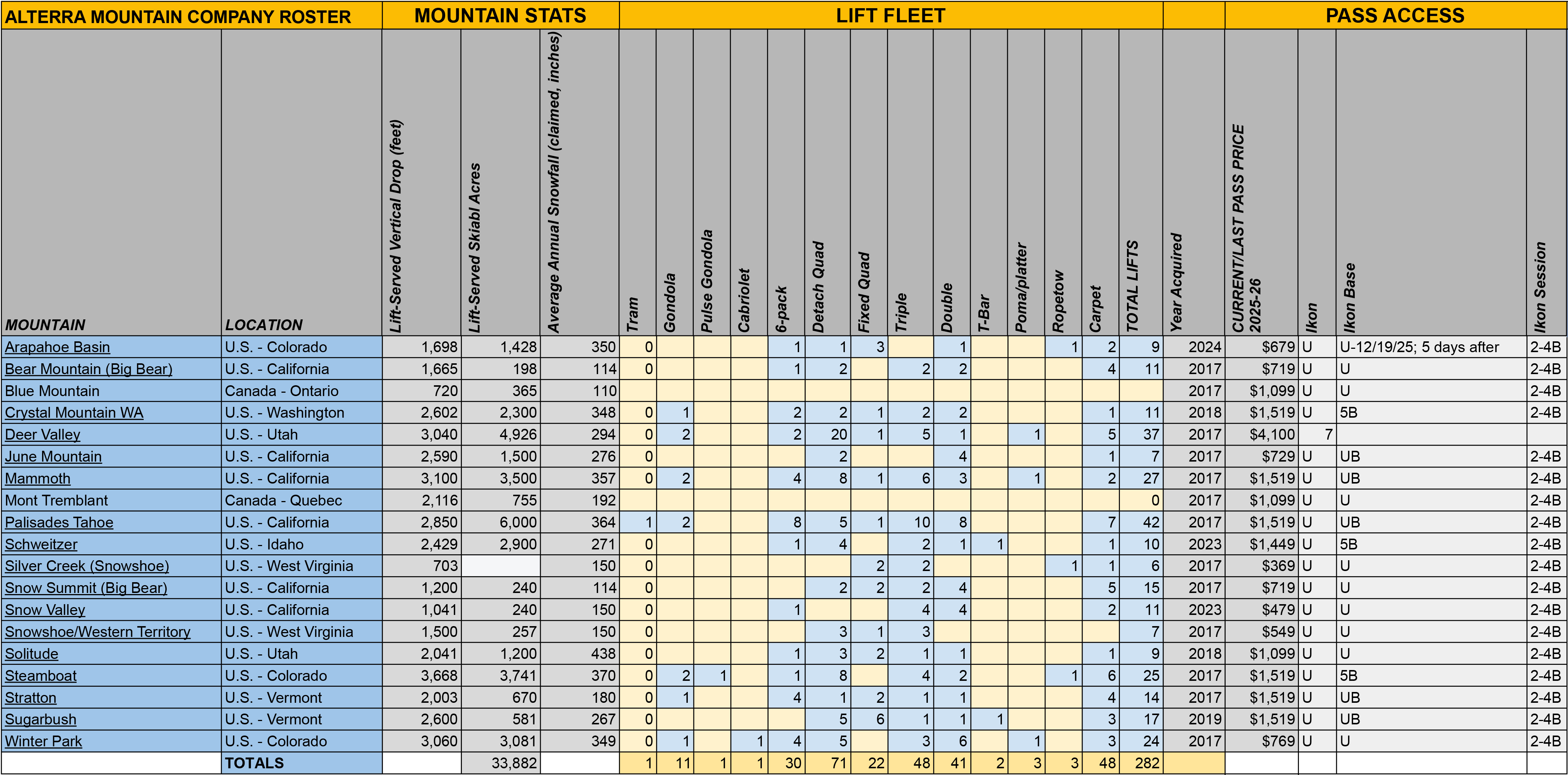
Oct 9
Podcast #212: National Ski Patrol CEO Stephanie Cox
Who Stephanie Cox, CEO of the National Ski Patrol Recorded on June 3, 2025 About National Ski Patrol From the organization’s website : The National Ski Patrol is a federally-chartered 501(c)(3) nonprofit membership association. As the leading authority of on-mountain safety, the NSP is dedicated to serving the outdoor recreation industry by providing education and accreditation to emergency care and safety service providers. With a primary focus on education and training, the organization includes more than 30,000 members [Cox says 32,000 on the pod] serving 650 patrols in the U.S., Canada, Europe and Asia. Our members work on behalf of local ski/snowboard areas and bike parks to improve the overall experience for outdoor recreationalists. Members include ski and bike patrollers, mountain and bike hosts, alumni, associates, and physician partners. The National Ski Patrol operates as a 501(c)(3) nonprofit organization, deriving its primary financial support from membership dues, donations, user fees, and corporate sponsorships. … The national office is located in Lakewood, Colorado, and is staffed with full-time employees that handle administrative duties. Why I interviewed her The Storm focuses unapologetically on the lift-served variety of skiing. I’ll often reinforce that point by teasing Uphill Bro for skiing in the wrong direction or making fun of myself for being a lazy U.S. American happy to ride a machine up the mountain. That, mostly, is a shtick to express my preference for an ordered ski experience over the wild variety. Acres of glades twisting down the mountainside – yes, please. But I’ll also take that groomed run-out back to the six-pack. This all-you-can-eat variety of skiing feeds the adrenaline monster, stows energy for the bristling explosive down. The fun part. But my hyperbolic preference for the down is also a sort-of cover-up. Because what really glues me to the trail-labeled and lift-laced bumps is that gigantic and ever-present panic button floating alongside me: ski patrol. Oh I just ran into a tree? Well that’s inconvenient because now I can’t remember how to speak English or why I have eight empty Miller Lite cans in my backpack. But no need to fret. Within five minutes a corps of uniformed professionals specifically trained in the idiosyncratic art of piloting an injured moron down an ungroomed hillside on an eight-foot-long sled will materialize with crackling radios and stabilize me. It’s kind of amazing. Like who thought of this? I guess the same person who came up with lifeguards at the beach. When a squirrel misses its branch and falls 75 feet to the forest floor there is no Squirrel 911. Just a variety of bobcats and coyotes who are about to find an easy dinner. Humans are quite amazing animals in this way, setting up systems both highly effective and borderline invisible that grant us wide margins of error to in most cases survive even catastrophic misjudgments. Depending on your view of human nature, the existence of ski patrol is either the most or least predictable miracle layer of organized commercial ski centers. The cynical may interpret this network of makeshift shacks and their occupants as liability shields, a legal hey-we-tried taskforce vaguely taming the chaos inherent in an impossible and awkward activity. But a more generous interpretation might view ski patrol as the most benevolent component of a ski area, the only piece not intended to generate income, an acknowledgement that any one of us, on even the gentlest slope, could in an instant need someone who knows exactly what to do. I prefer that latter interpretation, but the truth is of course a complex blend of the cynical and the generous viewpoints, interlaced with a million other factors. We are all vaguely aware of this, which doesn’t mean we can explain it. I mean, why is ski patrol at every ski area? The question is both simplistic and baffling. Well of course there’s ski patrol because there always is. OK. But shouldn’t there be some live-free-or-die exception in the rowdy ski world of backwoods trails axe-cut by misanthropic good ole’ boys putting two middle fingers to society’s nine-to-five, collared-shirt expectations? Like “hey man, look at the waiver, if you break your leg it’s not my goddamned problem.” But there they are, anyplace there’s a ski lift, wearing that same plus-symbol uniform, enforcing that same yellow-signed skier code, blanketed with that same aura of stoic unsurprise and readiness: ski patrol. Is this omnipresence simply custom and tradition? State or federal law? Insurance requirement? Do patrollers work for the ski area or for some agency or entity? An imposition like restaurant food inspectors? Enforcers like a city’s police department? Attendants like stadium ushers? It’s hard to say without asking, so I asked. What we talked about Touring ski patrols across America; #SkiVirginia; Ski Patrol’s philosophical evolution over time; patrol saving my butt in Maine; how NSP ensures that patrollers are prepared to deal with the worst injuries at even the smallest ski areas; evolving and adapting over time; “this organization is by and large run by volunteers”; Avy dogs; why ski patrol is everywhere; organizational history; the relationship between NSP and individual ski areas; who funds NSP; paid versus volunteer patrollers; “one of my big goals for the organization is to make sure that all patrols fall under the NSP shield”; a couple of major ski area patrols that are not part of NSP; the general public “is not going to notice the difference” between a paid and volunteer patroller; where most of the paid patrollers work, and why; the amazing number of years the average volunteer patroller commits to the work; the rising cost of living in mountain towns; why NSP does not involve itself in pay or benefits conversations between patrollers and resorts; staying neutral on unionization drives; what it means to modernize NSP; and applying tech to help police on-mountain collisions. What I got wrong * I referenced a recent snowless winter at Wintergreen, Virginia, and said it was “in 21/22 or 22/23.” It was the winter of 2022-23, which, according to Snow Brains , was the ski area’s third snowless winter in a decade, after the 2016-17 and 2018-19 campaigns. * At one point in our conversation, I mentioned “voluntary volunteers.” Which I don’t know Man talking is hard I guess. Why now was a good time for this interview I’d initially reached out to Cox as a follow-up to my podcast conversation with United Mountain Workers union President Max Magill, conducted in the wake of the December-to-January Park City patrol strike that leveled the ski area and sent owner Vail Resorts spiraling: National Ski Patrol, it turns out, has no involvement in or position on unionization. That was a bit of a record scratch but also clarifying: patrol union drives, at least for now, lack a national sponsor that could propel the movement to critical mass. Still, it seemed odd that a national organization’s most visible umbrella would stand neutral on the trajectory of a tectonic movement flexing against consolidating, ever-more-distant management and escalating mountain-town affordability crises. So we talked about it a bit anyway. What I’ve learned, 212 episodes into The Storm , is that organizations and entities are rarely – maybe never – what you expect them or want them to be. In episode 11 , recorded in January 2020, just a few months after The Storm’s launch, I asked Win Smith, then National Ski Areas Association board chair and onetime owner of Sugarbush, the now very-innocent-seeming question of what the organization was doing to subsidize small or independent ski areas. Smith patiently explained that the NSAA was a trade organization, not a charity (I’m paraphrasing), and that their mission was education, lobbying, and helping to establish uniform operating standards and best practices, not a U.N.-style stabilizing force money-cannoning resources where necessary. I get that now, and have developed, through extensive interaction with the group, a deep appreciation for what the NSAA is and does, even if it is not the thing 2020 Stu thought it was or should be. I guess that’s the point of The Storm Skiing Podcast : a dumb guy asking dumb questions like “so when are you going to build a gondola over Interstate 90 to connect Alpental to the rest of Summit at Snoqualmie?” and letting the nice smart people say “well wouldn’t that be nice but we have other priorities,” when they mean, “sure let me pull $100 million out of my back pocket to build a more-or-less useless lift that would also spark two decades of environmental litigation and has as much chance of clearing airspace over a federal road as a Russian stealth bomber.” Luckily I don’t mind asking dumb questions. They emerge from an impulse to sort reality from fiction, to tell the story of modern lift-served skiing by tapping the brains who understand some little corner of it. Podcast Notes On recent Ski Patrol leadership This could maybe go under the sometimes-included “questions I wish I’d asked” section, but really I don’t wish I’d asked about it, as I have inherently little interest in organizational human drama, or the appearance of such. In this case, that maybe-drama is the rapid recent turnover in NSP leadership, aptly described by Jason Blevins last year in The Colorado Sun : The former executive director of the nonprofit World Child Cancer heath organization arrived at the National Ski Patrol two years ago, becoming the fourth director of the organization in only five years. The former bosses reported conflicts with the group’s member-elected board of directors. An online petition was calling for an overhaul of the venerable organization that formed in 1938. Staff were bailing after years of turmoil that included board members twice suing their own organization. The group was losing its relevance in a quickly shifting ski resort industry. Cox landed with a plan. She started visiting ski patrols across the country. She shepherded an overhaul of the organization’s training programs. She enlisted staff and kept them onboard. She mended fences with her board. Whatever happened before, Cox just hit her third anniversary with the organization, and I was mostly interested in her efforts to modernize the 87-year-old NSP. On skier visit numbers nationally and in Colorado Colorado annually accounts for nearly one in four U.S. skier visits. Here’s the breakdown from last winter, according to the Kotke end-of-year survey, the definitive statistical ski industry report published annually by the NSAA: On breaking my leg at Black Mountain of Maine Most of you are tired of hearing about this, but if you’re new here, this is my big ski-patrol-saves-my-ass story: On federal charters An important piece of the NSP why-does-it-exist puzzle is its status, since 1980, as a federally chartered nonprofit organization. Congress charters such organizations “to carry out some regional or national public purpose,” according to a 2022 report on congress.gov . As with just about anything, a comprehensive list is frustratingly difficult to find (that’s why I moonlight as ski area spreadsheet mad scientist), but federally chartered organizations include such vaunted entities as the American Red Cross, the Boy and Girl Scouts of America, and Disabled American Veterans. Here’s a probably-not-entirely-accurate list on Wikipedia, and a government list from 1994 . On “14 patrols unionizing across the west” Here’s a list I compiled of unionized ski area groups back in January. I haven’t updated it, so there may be a few additions since: On Snow Angels This is a pretty good gut-check conversation for the Speed Gods among us: On Wachusett’s anti-theft system Ski theft sucks, and some ski areas are better at fighting it than others. One of the best I’m aware of is Wachusett, Massachusetts, which has installed a comprehensive system of ski-rack-to-parking-lot cameras that has reduced thieves’ success rate to near zero. “A lot of times, the police will be waiting for them when they get home with the stolen board,” longtime Wachusett President Jeff Crowley told me on a 2022 visit to the ski area. The Storm explores the world of lift-served skiing all year long. Join us. Get full access to The Storm Skiing Journal and Podcast at www.stormskiing.com/subscribe

Aug 12
Podcast #211: Vail Resorts Chairperson & CEO Rob Katz
Who Rob Katz, Chairperson and Chief Executive Officer, Vail Resorts Recorded on August 8, 2025 About Vail Resorts Vail Resorts owns and operates 42 ski areas in North America, Australia, and Europe. In order of acquisition: The company’s Epic Pass delivers skiers unlimited access to all of these ski areas, plus access to a couple dozen partner resorts: Why I interviewed him How long do you suppose Vail Resorts has been the largest ski area operator by number of resorts? From how the Brobots prattle on about the place, you’d think since around the same time the Mayflower bumped into Plymouth Rock. But the answer is 2018, when Vail surged to 18 ski areas – one more than number two Peak Resorts. Vail wasn’t even a top-five operator until 2007, when the company’s five resorts landed it in fifth place behind Powdr’s eight and 11 each for Peak, Boyne, and Intrawest. Check out the year-by-year resort operator rankings since 2000: Kind of amazing, right? For decades, Vail, like Aspen, was the owner of some great Colorado ski areas and nothing more. There was no reason to assume it would ever be anything else. Any ski company that tried to get too big collapsed or surrendered. Intrawest inflated like a balloon then blew up like a pinata, ejecting trophies like Mammoth, Copper, and Whistler before straggling into the Alterra refugee camp with a half dozen survivors. American Skiing Company (ASC) united eight resorts in 1996 and was 11 by the next year and was dead by 2007. Even mighty Aspen, perhaps the brand most closely associated with skiing in American popular culture, had abandoned a nearly-two-decade experiment in owning ski areas outside of Pitkin County when it sold Blackcomb and Fortress Mountains in 1986 and Breckenridge the following year. But here we are, with Vail Resorts, improbably but indisputably the largest operator in skiing. How did Vail do this when so many other operators had a decades-long head start? And failed to achieve sustainability with so many of the same puzzle pieces? Intrawest had Whistler. ASC owned Heavenly. Booth Creek, a nine-resort upstart launched in 1996 by former Vail owner George Gillett, had Northstar. The obvious answer is the 2008 advent of the Epic Pass, which transformed the big-mountain season pass from an expensive single-mountain product that almost no one actually needed to a cheapo multi-mountain passport that almost anyone could afford. It wasn’t a new idea, necessarily, but the bargain-skiing concept had never been attached to a mountain so regal as Vail, with its sprawling terrain and amazing high-speed lift fleet and Colorado mystique. A multimountain pass had never come with so little fine print – it really was unlimited, at all these great mountains, all the time - but so many asterisks: better buy now, because pretty soon skiing Christmas week is going to cost more than your car. And Vail was the first operator to understand, at scale, that almost everyone who skis at Vail or Beaver Creek or Breckenridge skied somewhere else first, and that the best way to recruit these travelers to your mountain rather than Deer Valley or Steamboat or Telluride was to make the competition inconvenient by bundling the speedbump down the street with the Alpine fantasy across the country. Vail Resorts, of course, didn’t do anything. Rob Katz did these things. And yes, there was a great and capable team around him. But it’s hard to ignore the fact that all of these amazing things started happening shortly after Katz’s 2006 CEO appointment and stopped happening around the time of his 2021 exit. Vail’s stock price: from $33.04 on Feb. 28, 2006 to $354.76 to Nov. 1, 2021. Epic Pass sales: from zero to 2.1 million. Owned resort portfolio: from five in three states to 37 in 15 states and three countries. Epic Pass portfolio: from zero ski areas to 61. The company’s North American skier visits: from 6.3 million for the 2005-06 ski season to 14.9 million in 2020-21. Those same VR metrics after three-and-a-half years under his successor, Kirsten Lynch: a halving of the stock price to $151.50 on May 27, 2025, her last day in charge; a small jump to 2.3 million Epic Passes sold for 2024-25 (but that marked the product’s first-ever unit decline, from 2.4 million the previous winter); a small increase to 42 owned resorts in 15 states and four countries; a small increase to 65 ski areas accessible on the Epic Pass; and a rise to 16.9 million North American skier visits (actually a three percent slump from the previous winter and the company’s second consecutive year of declines, as overall U.S. skier visits increased 1.6 percent after a poor 2023-24). I don’t want to dismiss the good things Lynch did ($20-an-hour minimum wage; massively impactful lift upgrades, especially in New England; a best-in-class day pass product; a better Pet Rectangle app), or ignore the fact that Vail’s 2006-to-2019 trajectory would have been impossible to replicate in a world that now includes the Ikon Pass counterweight, or understate the tense community-resort relationships that boiled under Katz’s do-things-and-apologize-later-maybe leadership style. But Vail Resorts became an impossible-to-ignore globe-spanning goliath not because it collected great ski areas, but because a visionary leader saw a way to transform a stale, weather-dependent business into a growing, weather-agnostic(-ish) one. You may think that “visionary” is overstating it, that merely “transformational” would do. But I don’t think I appreciated, until the rise of social media, how deeply cynical America had become, or the seemingly outsized proportion of people so eager to explain why new ideas were impossible. Layer, on top of this, the general dysfunction inherent to corporate environments, which can, without constant schedule-pruning, devolve into pseudo-summits of endless meetings, in which over-educated and well-meaning A+ students stamped out of elite university assembly lines spend all day trotting between conference rooms taking notes they’ll never look at and trying their best to sound brilliant but never really accomplishing anything other than juggling hundreds of daily Slack and email messages. Perhaps I am the cynical one here, but my experience in such environments is that actually getting anything of substance done with a team of corporate eggheads is nearly impossible. To be able to accomplish real, industry-wide, impactful change in modern America, and to do so with a corporate bureaucracy as your vehicle, takes a visionary. Why now was a good time for this interview And the visionary is back. True, he never really left, remaining at the head of Vail’s board of directors for the duration of Lynch’s tenure. But the board of directors doesn’t have to explain a crappy earnings report on the investor conference call, or get yelled at on CNBC, or sit in the bullseye of every Saturday morning liftline post on Facebook. So we’ll see, now that VR is once again and indisputably Katz’s company, whether Vail’s 2006-to-2021 rise from fringe player to industry kingpin was an isolated case of right-place-at-the-right-time first-mover big-ideas luck or the masterwork of a business musician blending notes of passion, aspiration, consumer pocketbook logic, the mystique of irreplaceable assets, and defiance of conventional industry wisdom to compose a song that no one can stop singing. Will Katz be Steve Jobs returning to Apple and re-igniting a global brand? Or MJ in a Wizards jersey, his double threepeat with the Bulls untarnished but his legacy otherwise un-enhanced at best and slightly diminished at worst? I don’t know. I lean toward Jobs, remaining aware that the ski industry will never achieve the scale of the Pet Rectangle industry. But Vail Resorts owns 42 ski areas out of like 6,000 on the planet, and only about one percent of them is associated with the Epic Pass. Even if Vail grew all of these metrics tenfold, it would still own just a fraction of the global ski business. Investors call this “addressable market,” meaning the size of your potential customer base if you can make them aware of your existence and convince them to use your services, and Vail’s addressable market is far larger than the neighborhood it now occupies. Whether Vail can get there by deploying its current operating model is irrelevant. Remember when Amazon was an online bookstore and Netflix a DVD-by-mail outfit? I barely do either, because visionary leaders (Jeff Bezos, Reed Hastings) shaped these companies into completely different things, tapping a rapidly evolving technological infrastructure capable of delivering consumers things they don’t know they need until they realize they can’t live without them. Like never going into a store again or watching an entire season of TV in one night. Like the multimountain ski pass. Being visionary is not the same thing as being omniscient. Amazon’s Fire smartphone landed like a bag of sand in a gastank. Netflix nearly imploded after prematurely splitting its DVD and digital businesses in 2011. Vail’s decision to simultaneously chop 2021-22 Epic Pass prices by 20 percent and kill its 2020-21 digital reservation system landed alongside labor shortages, inflation, and global supply chain woes, resulting in a season of inconsistent operations that may have turned a generation off to the company. Vail bullied Powdr into selling Park City and Arapahoe Basin into leaving the Epic Pass and Colorado’s state ski trade association into having to survive without four (then five) of its biggest brands. The company alienated locals everywhere, from Stowe (traffic) to Sunapee (same) to Ohio (truncated seasons) to Indiana (same) to Park City (everything) to Whistler (same) to Stevens Pass (just so many people man). The company owns 99 percent of the credit for the lift-tickets-brought-to-you-by-Tiffany pricing structure that drives the popular perception that skiing is a sport accessible only to people who rent out Yankee Stadium for their dog’s birthday party. We could go on, but the point is this: Vail has messed up in the past and will mess up again in the future. You don’t build companies like skyscrapers, straight up from ground to sky. You build them, appropriately for Vail, like mountains, with an earthquake here and an eruption there and erosion sometimes and long stable periods when the trees grow and the goats jump around on the rocks and nothing much happens except for once in a while a puma shows up and eats Uncle Toby. Vail built its Everest by clever and novel and often ruthless means, but in doing so made a Balkanized industry coherent, mainstreamed the ski season pass, reshaped the consumer ski experience around adventure and variety, united the sprawling Park City resorts, acknowledged the Midwest as a lynchpin ski region, and forced competitors out of their isolationist stupor and onto the magnificent-but-probably-nonexistent-if-not-for-the-existential-need-to-compete-with Vail Ikon, Indy, and Mountain Collective passes. So let’s not confuse the means for the end, or assume that Katz, now 58 and self-assured, will act with the same brash stop-me-if-you-can bravado that defined his first tenure. I mean, he could. But consumers have made it clear that they have alternatives, communities have made it clear that they have ways to stop projects out of spite, Alterra has made it clear that empire building is achieved just as well through ink as through swords, and large independents such as Jackson Hole have made it clear that the passes that were supposed to be their doom instead guaranteed indefinite independence via dependable additional income streams. No one’s afraid of Vail anymore. That doesn’t mean the company can’t grow, can’t surprise us, can’t reconfigure the global ski jigsaw puzzle in ways no one has thought of. Vail has brand damage to repair, but it’s repairable. We’re not talking about McDonald’s here, where the task is trying to convince people that inedible food is delicious. We’re talking about Vail Mountain and Whistler and Heavenly and Stowe – amazing places that no one needs convincing are amazing. What skiers do need to be convinced of is that Vail Resorts is these ski areas’ best possible steward, and that each mountain can be part of something much larger without losing its essence. You may be surprised to hear Katz acknowledge as much in our conversation. You will probably be surprised by a lot of things he says, and the way he projects confidence and optimism without having to fully articulate a vision that he’s probably still envisioning. It’s this instinctual lean toward the unexpected-but-impactful that powered Vail’s initial rise and will likely reboot the company. Perhaps sooner than we expect. What we talked about The CEO job feels “both very familiar and very new at the same time”; Vail Resorts 2025 versus Vail Resorts 2006; Ikon competition means “we have to get better”; the Epic Friends program that replaces Buddy Tickets: 50 percent off plus skiers can apply that cost to next year’s Epic Pass; simplifying the confusing; “we’re going to have to get a little more creative and a little more aggressive” when it comes to lift ticket pricing; why Vail will “probably always have a window ticket”; could we see lower lift ticket prices?; a response to lower-than-expected lift ticket sales in 2024-25; “I think we need to elevate the resort brands themselves”; thoughts on skier-visit drops; why Katz returned as CEO; evolving as a leader; a morale check for a company “that was used to winning” but had suffered setbacks; getting back to growth; competing for partners and “how do we drive thoughtful growth”; is Vail an underdog now?; Vail’s big advantage; reflecting on the 20 percent 2021 Epic Pass price cut and whether that was the right decision; is the Epic Pass too expensive or too cheap?; reacting to the first ever decline in Epic Pass unit sales numbers; why so many mountains are unlimited on Epic Local; “who are you going to kick out of skiing” if you tighten access?; protecting the skier experience; how do you make skiers say “wow?”; defending Vail’s ongoing resort leadership shuffle; and why the volume of Vail’s lift upgrades slowed after 2022’s Epic Lift Upgrade. What I got wrong * I said that the Epic Pass now offered access to “64 or 65” ski areas, but I neglected to include the six new ski areas that Vail partnered with in Austria for the 2025-26 ski season. The correct number of current Epic Pass partners is 71 (see chart above). * I said that Vail Resorts’ skier visits declined by 1.5 percent from the 2023-24 to 2024-25 winters, and that national skier visits grew by three percent over that same timeframe. The numbers are actually reversed: Vail’s skier visits slumped by approximately three percent last season, while national visits increased by 1.7 percent, per the National Ski Areas Association . * I said that the $1,429 Ikon Pass cost “40% more” than the $799 Epic Local – but I was mathing on the fly and I mathed dumb. The actual increase from Epic Local to Ikon is roughly 79 percent. * I claimed that Park City Mountain Resort was charging $328 for a holiday week lift ticket when it was “30 percent-ish open” and “the surrounding resorts were 70-ish percent open.” Unfortunately, I was way off on the dollar amount and the timeframe, as I was thinking of this X post I made on Wednesday, Jan. 8, when day-of tickets were selling for $288: * I said I didn’t know what “Alterra” means. Alterra Mountain Company defines it as “a fusion of the words altitude and terrain/terra, paying homage to the mountains and communities that form the backbone of the company.” * I said that Vail’s Epic Lift Upgrade was “22 or 23 lifts.” I was wrong, but the number is slippery for a few reasons. First, while I was referring specifically to Vail’s 2021 announcement that 19 new lifts were inbound in 2022, the company now uses “ Epic Lift Upgrade ” as an umbrella term for all years’ new lift installs. Second, that 2022 lift total shot up to 21, then down to 19 when Park City locals threw a fit and blocked two of them (both ultimately went to Whistler ), then 18 after Keystone bulldozed an illegal access road in the high Alpine (the new lift and expansion opened the following year). Questions I wish I’d asked There is no way to do this interview in a way that makes everyone happy. Vail is too big, and I can’t talk about everything. Angry Mountain Bro wants me to focus on community, Climate Bro on the environment, Finance Bro on acquisitions and numbers, Subaru Bro on liftlines and parking lots. Too many people who already have their minds made up about how things are will come here seeking validation of their viewpoint and leave disappointed. I will say this: just because I didn’t ask about something doesn’t mean I wouldn’t have liked to. Acquisitions and Europe, especially. But some preliminary conversations with Vail folks indicated that Katz had nothing new to say on either of these topics, so I let it go for another day. Podcast Notes On various metrics Here’s a by-the-numbers history of the Epic Pass: Here’s Epic’s year-by-year partner history: On the percent of U.S. skier visits that Vail accounts for We don’t know the exact percentage of U.S. skier visits belong to Vail Resorts, since the company’s North American numbers include Whistler, which historically accounts for approximately 2 million annual skier visits. But let’s call Vail’s share of America’s skier visits 25 percent-ish: On ski season pass participation in America The rise of Epic and Ikon has correlated directly with a decrease in lift ticket visits and an increase in season pass visits. Per Kotke’s End-of-Season Demographic Report for 2023-24: On capital investment Similarly, capital investment has mostly risen over the past decade, with a backpedal for Covid. Kotke: The NSAA’s preliminary numbers suggest that the 2024-25 season numbers will be $624.4 million, a decline from the previous two seasons, but still well above historic norms. On the mystery of the missing skier visits I jokingly ask Katz for resort-by-resort skier visits in passing. Here’s what I meant by that - up until the 2010-11 ski season, Vail, like all operators on U.S. Forest Service land, reported annual skier visits per ski area: And then they stopped, winning a legal argument that annual skier visits are proprietary and therefore protected from public records disclosure. Or something like that. Anyway most other large ski area operators followed this example, which mostly just serves to make my job more difficult. On that ski trip where Timberline punched out Vail in a one-on-five fight I don’t want to be the Anecdote King, but in 2023 I toured 10 Mid-Atlantic ski areas the first week of January, which corresponded with a horrendous warm-up. The trip included stops at five Vail Resorts: Liberty, Whitetail, Seven Springs, Laurel, and Hidden Valley, all of which were underwhelming. Fine, I thought, the weather sucks. But then I stopped at Timberline, West Virginia: After three days of melt-out tiptoe, I was not prepared for what I found at gut-renovated Timberline. And what I found was 1,000 vertical feet of the best version of warm-weather skiing I’ve ever seen. Other than the trail footprint, this is a brand-new ski area. When the Perfect Family – who run Perfect North, Indiana like some sort of military operation – bought the joint in 2020, they tore out the lifts, put in a brand-new six-pack and carpet-loaded quad, installed all-new snowmaking, and gut-renovated the lodge. It is remarkable. Stunning. Not a hole in the snowpack. Coming down the mountain from Davis, you can see Timberline across the valley beside state-run Canaan Valley ski area – the former striped in white, the latter mostly barren. I skied four fast laps off the summit before the sixer shut at 4:30. Then a dozen runs off the quad. The skier level is comically terrible, beginners sprawled all over the unload, all over the green trails. But the energy is level 100 amped, and everyone I talked to raved about the transformation under the new owners. I hope the Perfect family buys 50 more ski areas – their template works. I wrote up the full trip here . On the megapass timeline I’ll work on a better pass timeline at some point, but the basics are this: * 2008: Epic Pass debuts - unlimited access to all Vail Resorts * 2012: Mountain Collective debuts - 2 days each at partner resorts * 2015: M.A.X. Pass debuts - 5 days each at partner resorts, unlimited option for home resort * 2018: Ikon Pass debuts, replaces M.A.X. - 5, 7, or unlimited days at partner resorts * 2019: Indy Pass debuts - 2 days each at partner resorts On Epic Day vs. Ikon Session I’ve long harped on the inadequacy of the Ikon Session Pass versus the Epic Day Pass: On Epic versus Ikon pricing Epic Passes mostly sell at a big discount to Ikon: On Vail’s most recent investor conference call This podcast conversation delivers Katz’s first public statements since he hosted Vail Resorts’ investor conference call on June 5. I covered that call extensively at the time: On Epic versus Ikon access tweaks Alterra tweaks Ikon Pass access for at least one or two mountains nearly every year – more than two dozen since 2020, by my count. Vail rarely makes any changes. I broke down the difference between the two in the article linked directly above this one. I ask Katz about this in the pod, and he gives us a very emphatic answer. On the Park City strike No reason to rehash the whole mess in Park City earlier this year. Here’s a recap from The New York Times . The Storm’s best contribution to the whole story was this interview with United Mountain Workers President Max Magill : On Vail’s leadership shuffle I’ll write more about this at some point, but if you scroll to the right on Vail’s roster , you’ll see the yellow highlights whenever Vail has switched a president/general manager-level employee over the past several years. It’s kind of a lot. A sample from the resorts the company has owned since 2016: The Storm explores the world of lift-served skiing all year long. Join us. Get full access to The Storm Skiing Journal and Podcast at www.stormskiing.com/subscribe
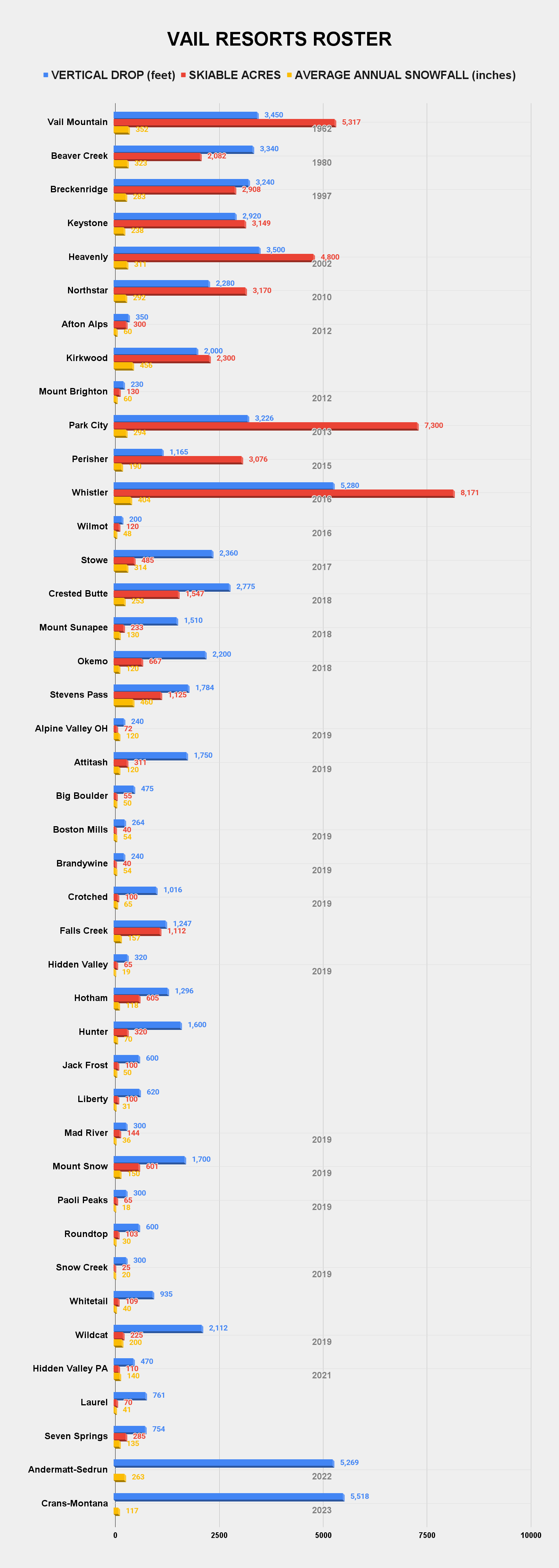
Aug 2
Podcast #210: Mt. Hood Meadows President and General Manager Greg Pack
The Storm does not cover athletes or gear or hot tubs or whisky bars or helicopters or bros jumping off things. I’m focused on the lift-served skiing world that 99 percent of skiers actually inhabit, and I’m covering it year-round. To support this mission of independent ski journalism, please subscribe to the free or paid versions of the email newsletter. Who Greg Pack, President and General Manager of Mt. Hood Meadows , Oregon Recorded on April 28, 2025 About Mt. Hood Meadows Click here for a mountain stats overview Owned by: The Drake Family (and other minority shareholders) Located in: Mt. Hood, Oregon Year founded: 1968 Pass affiliations: * Indy Pass – 2 days, select blackouts * Indy+ Pass – 2 days, no blackouts Closest neighboring U.S. ski areas: Summit (:17), Mt. Hood Skibowl (:19), Cooper Spur (:23), Timberline (:26) Base elevation: 4,528 feet Summit elevation: 7,305 feet at top of Cascade Express; 9,000 feet at top of hike-to permit area; 11,249 feet at summit of Mount Hood Vertical drop: 2,777 feet lift-served; 4,472 hike-to inbounds; 6,721 feet from Mount Hood summit Skiable acres: 2,150 Average annual snowfall: 430 inches Trail count: 87 (15% beginner, 40% intermediate, 15% advanced, 30% expert) Lift count: 11 (1 six-pack, 5 high-speed quads, 1 fixed-grip quad, 3 doubles, 1 carpet – view Lift Blog’s inventory of Mount Hood Meadows’ lift fleet) About Cooper Spur Click here for a mountain stats overview Owned by: The Drake Family Located in: Mt. Hood, Oregon Year founded: 1927 Pass affiliations: Indy Pass, Indy+ Pass – 2 days, no blackouts Closest neighboring U.S. ski areas: Mt. Hood Meadows (:22), Summit (:29), Mt. Hood Skibowl (:30), Timberline (:37) Base elevation: 3,969 feet Summit elevation: 4,400 feet Vertical drop: 431 feet Skiable acres: 50 Average annual snowfall: 250 inches Trail count: 9 (1 most difficult, 7 more difficult, 1 easier) Lift count: 2 (1 double, 1 ropetow – view Lift Blog’s inventory of Cooper Spur’s lift fleet) Why I interviewed him Volcanoes are weird. Oh look, an exploding mountain. Because that seems reasonable. Volcanoes sound like something imagined, like dragons or teleportation or dinosaurs*. “So let me get this straight,” I imagine some puzzled Appalachian miner, circa 1852, responding to the fellow across the fire as he tells of his adventures in the Oregon Territory, “you expect me to believe that out thataways they got themselves mountains that just blow their roofs off whenever they feel like it, and shoot off fire and rocks and gas for 50 mile or more, and no one never knows when it’s a’comin’? You must think I’m dumber’n that there tree stump.” Turns out volcanoes are real. How humanity survived past day one I have no idea. But here we are, skiing on volcanoes instead of tossing our virgins from the rim as a way of asking the nice mountain to please not explode (seriously how did anyone make it out of the past alive?). And one of the volcanoes we can ski on is Mount Hood. This actually seems more unbelievable to me than the concept of a vengeful nuclear mountain. PNW Nature Bros shield every blade of grass like they’re guarding Fort Knox. When, in 2014, federal scientists proposed installing four monitoring stations on Hood, which the U.S. Geological Survey ranks as the sixth-highest threat to erupt out of America’s 161 active volcanoes, these morons stalled the process for six years. “I think it is so important to have places like that where we can just step back, out of respect and humility, and appreciate nature for what it is,” a Wilderness Watch official told The New York Times . Personally I think it’s so important to install basic monitoring infrastructure so that thousands of people are not incinerated in a predictable volcanic eruption. While “Japan, Iceland and Chile smother their high-threat volcanoes in scientific instruments,” The Times wrote, American Granola Bros say things like, “This is more proof that the Forest Service has abandoned any pretense of administering wilderness as per the letter or spirit of the Wilderness Act.” And Hood and the nation’s other volcanoes cackle madly. “These idiots are dumber than the human-sacrifice people,” they say just before belching up an ash cloud that could take down a 747. When officials finally installed these instrument clusters on Hood in 2020, they occupied three boxes that look to be approximately the size of a convenience-store ice freezer, which feels like an acceptable trade-off to mass death and airplanes falling out of the sky. I know that as an outdoor writer I’m supposed to be all pissed off if anyone anywhere suggests any use of even a centimeter of undeveloped land other than giving it back to the deer in a treaty printed on recycled Styrofoam and signed with human blood to symbolize the life we’ve looted from nature by commandeering 108 square feet to potentially protect millions of lives from volcanic eruption, but this sort of trivial protectionism and willful denial that humans ought to have rights too is the kind of brainless uncompromising overreach that I fear will one day lead to a massive over-correction at the other extreme, in which a federal government exhausted with never being able to do anything strips away or massively dilutes land protections that allow anyone to do anything they can afford. And that’s when we get Monster Pete’s Arctic Dune Buggies setting up a casino/coal mine/rhinoceros-hunting ranch on the Eliot Glacier and it’s like thanks Bros I hope that was worth it to stall the placement of gardenshed-sized public safety infrastructure for six years. Anyway, given the trouble U.S. officials have with installing necessary things on Mount Hood, it’s incredible how many unnecessary ones our ancestors were able to build. But in 1927 the good old boys hacked their way into the wilderness and said, “by gum what a spot for snoskiing” and built a bunch of ski areas. And today 31 lifts serve four Mt. Hood ski areas covering a combined 4,845 acres: Which I’m just like, do these Wilderness Watch people not know about this? Perhaps if this and similar groups truly cared about the environmental integrity of Mount Hood they would invest their time, energy, and attention into a long-term regional infrastructure plan that identified parcels for concentrated mixed-use development and non-personal-car-based transit options to mitigate the impact of thousands of skiers traveling up the mountain daily from Portland, rather than in delaying the installation of basic monitoring equipment that notifies humanity of a civilization-shattering volcanic eruption before it happens. But then again I am probably not considering how this would impact the integrity of squirrel poop decomposition below 6,000 feet and the concomitant impacts on pinestand soil erosion which of course would basically end life as we know it on planet Earth. OK this went sideways let me try to salvage it. *Whoops I know dinosaurs were real; I meant to write “the moon landing.” How embarrassing. What we talked about A strong 2024-25; recruiting employees in mountains with little nearby housing; why Meadows doesn’t compete with Timberline for summer skiing; bye-bye Blue double, Meadows’ last standing opening-year chairlift; what it takes to keep an old Riblet operating; the reliability of old versus new chairlifts; Blue’s slow-motion demolition and which relics might remain long term; the logic of getting a free anytime buddy lift ticket with your season pass; thoughts on ski area software providers that take a percentage of all sales; why Meadows and Cooper Spur have no pass reciprocity; the ongoing Cooper Spur land exchange; the value of Cooper Spur and Summit on a volcano with three large ski areas; why Meadows hasn’t backed away from reciprocal agreements; why Meadows chose Indy over Epic, Ikon, or Mountain Collective; becoming a ski kid when you’re not from a ski family; landing at Mountain Creek, New Jersey after a Colorado ski career; how Moonlight Basin started as an independent ski area and eventually became part of Big Sky; the tension underlying Telluride; how the Drake Family, who has managed the ski area since inception, makes decisions; a board that reinvests 100 percent of earnings back into the mountain; why we need large independents in a consolidating world; being independent is “our badge of honor”; whether ownership wants to remain independent long term; potential next lift upgrades; a potential all-new lift line and small expansion; thoughts on a better Heather lift; wild Hood weather and the upper limits of lift service; considering surface lifts on the upper mountain; the challenges of running Cascade Express; the future of the Daisy and Easy Rider doubles; more potential future expansion; and whether we could ever see a ski connection with Timberline Lodge. Why now was a good time for this interview It’s kind of dumb that 210 episodes into this podcast I’ve only recorded one Oregon ep: Timberline Lodge President Jeff Kohnstamm, more than three years ago. While Oregon only has 11 active ski areas , and the state ranks 11th-ish in skier visits, it’s an important ski state. PNW skiers treat skiing like the Northeast treats baseball or the Midwest treats football or D.C. treats politics: rabid beyond reason. That explains the eight Idaho pods and half dozen each in Washington and B.C. These episodes hit like a hash stand at a Dead show. So why so few Oregon eps? Eh, no reason in particular. There isn’t a ski area in North America that I don’t want to feature on the podcast, but I can’t just order them online like a pizza. Relationships, more than anything, drive the podcast, and The Storm’s schedule is primarily opportunity driven. I invite folks on as I meet them or when they do something cool. And sometimes we can connect right away and sometimes it takes months or even years, even if they want to do it. Sometimes we’re waiting on contracts or approvals so we can discuss some big project in depth. It can take time to build trust, or to convince a non-podcast person that they have a great story to tell. So we finally get to Meadows. Not to be It-Must-Be-Nice Bro about benefits that arise from clear deliberate life choices, but It must be nice to live in the PNW, where every city sits within 90 minutes of a ripping, open-until-Memorial-Day skyscraper that gets carpet bombed with 400 annual inches but receives between one and four out-of-state visitors per winter. Yeah the ski areas are busy anyway because they don’t have enough of them, but busy with Subaru-driving Granola Bros is different than busy with Subaru-driving Granola Bros + Texas Bro whose cowboy boots aren’t clicking in right + Florida Bro who bought a Trans Am for his boa constrictor + Midwest Bro rocking Olin 210s he found in Gramp’s garage + Hella Rad Cali Bro + New Yorker Bro asking what time they groom Corbet’s + Aussie Bro touring the Rockies on a seven-week long weekend + Euro Bro rocking 65 cm underfoot on a two-foot powder day. I have no issue with tourists mind you because I am one but there is something amazing about a ski area that is gigantic and snowy and covered in modern infrastructure while simultaneously being unknown outside of its area code. Yes this is hyperbole. But while everyone in Portland knows that Meadows has the best parking lot views in America and a statistical profile that matches up with Beaver Creek and as many detachable chairlifts as Snowbasin or Snowbird and more snow than Steamboat or Jackson or Palisades or Pow Mow, most of the rest of the world doesn’t, and I think they should. Why you should ski Mt. Hood Meadows and Cooper Spur It’s interesting that the 4,845 combined skiable acres of Hood’s four ski areas are just a touch larger than the 4,323 acres at Mt. Bachelor, which as far as I know has operated as a single interconnected facility since its 1958 founding. Both are volcanoes whose ski areas operate on U.S. Forest Service land a commutable distance from demographically similar markets, providing a case study in distributed versus centralized management. Bachelor in many ways delivers a better experience. Bachelor’s snow is almost always drier and better, an outlier in the kingdom of Cascade Concrete. Skiers can move contiguously across its full acreage, an impossible mission on Balkanized Hood. The mountain runs an efficient, mostly modern 15 lifts to Hood’s wild 31, which includes a dozen detachables but also a half dozen vintage Riblet doubles with no safety bars. Bachelor’s lifts scale the summit, rather than stopping thousands of feet short as they do on Hood. While neither are Colorado-grade destination ski areas, metro Portland is stuffed with 25 times more people than Bend, and Hood ski areas have an everbusy feel that skiers can often outrun at Bachelor. Bachelor is closer to its mothership – just 26 minutes from Bend to Portland’s hour-to-two-hour commutes up to the ski areas. And Bachelor, accessible on all versions of the Ikon Pass and not hamstrung by the confusing counter-branding of multiple ski areas with similar names occupying the same mountain, presents a more clearcut target for the mainstream skier. But Mount Hood’s quirky scatterplot ski centers reward skiers in other ways. Four distinct ski areas means four distinct ski cultures, each with its own pace, purpose, customs, traditions, and orientation to the outside world. Timberline Lodge is a funky mix of summertime Bro parks, Government Camp greens, St. Bernards, and its upscale landmark namesake hotel. Cooper Spur is tucked-away, low-key, low-vert family resort skiing. Meadows sprawls, big and steep, with Hood’s most interesting terrain. And low-altitude, closest-to-the-city Skibowl is night-lit slowpoke with a vintage all-Riblet lift fleet. Your Epic and Ikon passes are no good here, though Indy gets you Meadows and Cooper Spur. Walk-up lift tickets (still the only way to buy them at Skibowl), are more tier-varied and affordable than those at Bachelor, which can exceed $200 on peak days (though Bachelor heavily discounts access to its beginner lifts, with free access to select novice areas). Bachelor’s $1,299 season pass is 30 percent more expensive than Meadows’. This dynamic, of course, showcases single-entity efficiency and market capture versus the messy choice of competition. Yes Free Market Bro you are right sometimes. Hood’s ski areas have more inherent motivators to fight on price, forge allegiances like the Timberline-Skibowl joint season pass, invest in risks like night and summer skiing, and run wonky low-tide lift ticket deals. Empowering this flexibility: all four Hood ski areas remain locally owned – Meadows and T-Line by their founding families. Bachelor, of course, is a fiefdom of Park City, Utah-based Powdr, which owns a half-dozen other ski areas across the West. I don’t think that Hood is better than Bachelor or that Bachelor is better than Hood. They’re different, and you should ski both. But however you dissect the niceties of these not-really-competing-but-close-enough-that-a-comarison-makes-sense ski centers, the on-the-ground reality adds up to this: Hood locals, in general, are a far more contented gang than Bachelor Bros. I don’t have any way to quantify this, and Bachelor has its partisans. But I talk to skiers all over the country, all the time. Skiers will complain about anything, and online guttings of even the most beloved mountains exist. But talk to enough people and strong enough patterns emerge to understand that, in general, locals are happy with Mammoth and Alpine Meadows and Sierra-at-Tahoe and A-Basin and Copper and Bridger Bowl and Nub’s Nob and Perfect North and Elk and Plattekill and Berkshire East and Smuggs and Loon and Saddleback and, mostly, the Hood ski areas. And locals are generally less happy with Camelback and Seven Springs and Park City and Sunrise and Shasta and Stratton and, lately, former locals’ faves Sugarbush and Wildcat. And, as far as I can tell, Bachelor. Potential explanations for Hood happiness versus Bachelor blues abound, all of them partial, none completely satisfactory, all asterisked with the vagaries of skiing and skiers and weather and luck. But my sense is this: Meadows, Timberline, and Skibowl locals are generally content not because they have better skiing than everyplace else or because their ski areas are some grand bargain or because they’re not crowded or because they have the best lift systems or terrain parks or grooming or snow conditions, but because Hood, in its haphazard and confounding-to-outsiders borders and layout, has forced its varied operators to hyper-adapt to niche needs in the local market while liberating them from the all-things-to-everyone imperative thrust on isolated operations like Bachelor. They have to decide what they’re good at and be good at that all the time, because they have no other option. Hood operators can’t be Vail-owned Paoli Peaks, turning in 25-day ski seasons and saying well it’s Indiana what do you expect? They have to be independent Perfect North, striving always for triple-digit operating days and saying it’s Indiana and we’re doing this anyway because if we don’t you’ll stop coming and we’ll all be broke. In this way Hood is a snapshot of old skiing, pre-consolidation, pre-national pass, pre-social media platforms that flung open global windows onto local mountains. Other than Timberline summer parks no one is asking these places to be anything other than very good local ski areas serving rabid local skiers. And they’re doing a damn good job. Podcast Notes On Meadows and Timberline Lodge opening and closing dates One of the most baffling set of basic facts to get straight in American skiing is the number of ski areas on Mount Hood and the distinction between them. Part of the reason for this is the volcano’s famous summer skiing, which takes place not at either of the eponymous ski areas – Mt. Hood Meadows or Mt. Hood Skibowl – but at the awkwardly named Timberline Lodge, which sounds more like a hipster cocktail lounge with a 19th-century fur-trapper aesthetic than the name of a ski resort (which is why no one actually calls it “Timberline Lodge”; I do so only to avoid confusion with the ski area in West Virginia, because people are constantly getting Appalachian ski areas mixed up with those in the Cascades). I couldn’t find a comprehensive list of historic closing dates for Meadows and Timberline, but the basic distinction is this: Meadows tends to wrap winter sometime between late April and late May. Timberline goes into August and beyond when it can. Why doesn’t Meadows push its season when it is right next door and probably could? We discuss in the pod. On Riblet clips Fun fact about defunct-as-a-company-even-though-a-couple-hundred-of-their-machines-are-still-spinning Riblet chairlifts: rather than clamping on like a vice grip, the end of each chair is woven into the rope via something called an “insert clip.” I wrote about this in my Wildcat pod last year: On Alpental Chair 2 A small but vocal segment of Broseph McBros with nothing better to do always reflexively oppose the demolition of legacy fixed-grip lifts to make way for modern machines. Pack does a great job laying out why it’s harder to maintain older chairlifts than many skiers may think. I wrote about this here: On Blue’s breakover towers and unload ramp We also dropped photos of this into the video version of the pod: On the Cooper Spur land exchange Here’s a somewhat-dated and very biased-against-the-ski-area infographic summarizing the proposed land swap between Meadows and the U.S. Forest Service, from the Cooper Spur Wild & Free Coalition , an organization that “first came together in 2002 to fight Mt. Hood Meadows’ plans to develop a sprawling destination resort on the slopes of Mt. Hood near Cooper Spur”: While I find the sanctimonious language in this timeline off-putting, I’m more sympathetic to Enviro Bro here than I was with the eruption-detection controversy discussed up top. Opposing small-footprint, high-impact catastrophe-monitoring equipment on an active volcano to save five bushes but potentially endanger millions of human lives is foolish. But checking sprawling wilderness development by identifying smaller parcels adjacent to already-disturbed lands as alternative sites for denser, hopefully walkable, hopefully mixed-use projects is exactly the sort of thing that every mountain community ought to prioritize. On the combination of Summit and Timberline Lodge The small Summit Pass ski area in Government Camp operated as an independent entity from its 1927 founding until Timberline Lodge purchased the ski area in 2018. In 2021, the owners connected the two – at least in one direction. Skiers can move 4,540 vertical feet from the top of Timberline’s Palmer chair to the base of Summit. While Palmer tends to open late in the season and Summit tends to close early, and while skiers will have to ride shuttles back up to the Timberline lifts until the resort builds a much anticipated gondola connecting the full height, this is technically America’s largest lift-served vertical drop. On Meadows’ reciprocals Meadows only has three season pass reciprocal partners , but they’re all aspirational spots that passholders would actually travel for: Baker, Schweitzer, and Whitefish. I ask Pack why he continues to offer these exchanges even as larger ski areas such as Brundage and Tamarack move away from them. One bit of context I neglected to include, however, is that neighboring Timberline Lodge and Mount Hood Skibowl not only offer a joint pass, but are longtime members of Powder Alliance, which is an incredible regional reciprocal pass that’s free for passholders at any of these mountains: On Ski Broadmoor, Colorado Colorado Springs is less convenient to skiing than the name implies – skiers are driving a couple of hours, minimum, to access Monarch or the Summit County ski areas. So I was surprised, when I looked up Pack’s original home mountain of Ski Broadmoor, to see that it sat on the city’s outskirts: This was never a big ski area, with 600 vertical feet served by an “America The Beautiful Lift” that sounds as though it was named by Donald Trump: The “famous” Broadmoor Hotel built and operated the ski area, according to Colorado Ski History. They sold the hotel in 1986 to the city, which promptly sold it to Vail Associates (now Vail Resorts), in 1988. Vail closed the ski area in 1991 – the only mountain they ever surrendered on. I’ll update all my charts and such to reflect this soon. On pre-high-speed Keystone It’s kind of amazing that Keystone, which now spins seven high-speed chairlifts, didn’t install its first detachable until 1990, nearly a decade after neighboring Breckenridge installed the world’s first, in 1981. As with many resorts that have aggressively modernized, this means that Keystone once ran more chairlifts than it does today. When Pack started his ski career at the mountain in 1989, Keystone ran 10 frontside aerial lifts (8 doubles, 1 triple, 1 gondola) compared to just six today (2 doubles, 2 sixers, a high-speed quad, and a higher-capacity gondy). On Mountain Creek I’ve talked about the bananas-ness of Mountain Creek many times. I love this unhinged New Jersey bump in the same way I loved my crazy late uncle who would get wasted at the Bay City fireworks and yell at people driving Toyotas to “Buy American!” (This was the ‘80s in Michigan, dudes. I don’t know what to tell you. The auto industry was falling apart and everybody was tripping, especially dudes who worked in – or, in my uncle’s case, adjacent to (steel) – the auto industry.) On Intrawest One of the reasons I did this insane timeline project was so that I would no longer have to sink 30 minutes into Google every time someone said the word “Intrawest.” The timeline was a pain in the ass, but worth it, because now whenever I think “wait exactly what did Intrawest own and when?” I can just say “oh yeah I already did that here you go”: On Moonlight Basin and merging with Big Sky It’s kind of weird how many now-united ski areas started out as separate operations: Beaver Creek and Arrowhead (merged 1997), Canyons and Park City (2014), Whistler and Blackcomb (1997), Alpine Meadows and Squaw Valley (connected via gondola in 2022), Carinthia and Mount Snow (1986), Sugarbush and Mount Ellen (connected via chairlift in 1995). Sometimes – Beaver Creek, Mount Snow – the terrain and culture mergers are seamless. Other times – Alpine and the Palisades side of what is now Palisades Tahoe – the connection feels like opening a store that sells four-wheelers and 74-piece high-end dinnerware sets. Like, these things don’t go together, Man. But when Big Sky absorbed Moonlight Basin and Spanish Peaks in 2013, everyone immediately forgot that it was ever any different. This suggests that Big Sky’s 2032 Yellowstone Club acquisition will be seamless.* *Kidding, Brah. Maybe. On Lehman Brothers Nearly two decades later, it’s still astonishing how quickly Lehman Brothers, in business for 158 years, collapsed in 2008. On the “mutiny” at Telluride Every now and then, a reader will ask the very reasonable question about why I never pay any attention to Telluride, one of America’s great ski resorts, and one that Pack once led. Mostly it’s because management is unstable, making long-term skier experience stories of the sort I mostly focus on hard to tell. And management is mostly unstable because the resort’s owner is, by all accounts, willful and boorish and sort of unhinged. Blevins, in The Colorado Sun’s “Outsider” newsletter earlier this week: A few months ago, locals in Telluride and Mountain Village began publicly blasting the resort’s owner, a rare revolt by a community that has grown weary of the erratic Chuck Horning. For years, residents around the resort had quietly lamented the antics and decisions of the temperamental Horning, the 81-year-old California real estate investor who acquired Telluride Ski & Golf Resort in 2004. It’s the only resort Horning has ever owned and over the last 21 years, he has fired several veteran ski area executives — including, earlier this year, his son, Chad. Now, unnamed locals have launched a website, publicly detailing the resort owner’s messy management of the Telluride ski area and other businesses across the country. “For years, Chuck Horning has caused harm to us all, both individually and collectively,” reads the opening paragraph of ChuckChuck.ski — which originated when a Telluride councilman in March said that it was “time to chuck Chuck.” “The community deserves something better. For years, we’ve whispered about the stories, the incidents, the poor decisions we’ve witnessed. Those stories should no longer be kept secret from everyone that relies on our ski resort for our wellbeing.” The chuckchuck.ski site drags skeletons out of Horning’s closet. There are a lot of skeletons in there. The website details a long history of lawsuits across the country accusing Horning and the Newport Federal Financial investment firm he founded in 1970 of fraud. It’s a pretty amazing site . On Bogus Basin I was surprised that ostensibly for-profit Meadows regularly re-invests 100 percent of profits into the ski area. Such a model is more typical for explicitly nonprofit outfits such as Bogus Basin, Idaho. Longtime GM Brad Wilson outlined how that ski area functions a few years back: The Storm explores the world of lift-served skiing year-round. Join us. Get full access to The Storm Skiing Journal and Podcast at www.stormskiing.com/subscribe
Jul 13
Podcast #209: Ski Big Bear, Pennsylvania Owner Ron Schmalzle and GM Lori Phillips
Who Ron Schmalzle, President, Co-Owner, and General Manager of Ski Big Bear operator Recreation Management Corp; and Lori Phillips, General Manager of Ski Big Bear at Masthope Mountain , Pennsylvania Recorded on April 22, 2025 About Ski Big Bear Click here for a mountain stats overview Owned by: Property owners of Masthope Mountain Community; operated by Recreation Management Corporation Located in: Lackawaxen, Pennsylvania Year founded: 1976 as “Masthope Mountain”; changed name to “Ski Big Bear” in 1993 Pass affiliations: * Indy Pass – 2 days, select blackouts * Indy+ Pass – 2 days, no blackouts Closest neighboring ski areas: Villa Roma (:44), Holiday Mountain (:52), Shawnee Mountain (1:04) Base elevation: 550 feet Summit elevation: 1,200 feet Vertical drop: 650 feet Skiable acres: 26 Average annual snowfall: 50 inches Trail count: 18 (1 expert, 5 advanced, 6 intermediate, 6 beginner) Lift count: 7 (4 doubles, 3 carpets – view Lift Blog’s inventory of Ski Big Bear’s lift fleet) Why I interviewed them This isn’t really why I interviewed them, but have you ever noticed how the internet ruined everything? Sure, it made our lives easier, but it made our world worse. Yes I can now pay my credit card bill four seconds before it’s due and reconnect with my best friend Bill who moved away after fourth grade. But it also turns out that Bill believes seahorses are a hoax and that Jesus spoke English because the internet socializes bad ideas in a way that the 45 people who Bill knew in 1986 would have shut down by saying “Bill you’re an idiot.” Bill, fortunately, is not real. Nor, as far as I’m aware, is a seahorse hoax narrative (though I’d like to start one). But here’s something that is real: When Schmalzle renamed Masthope Mountain to “Ski Big Bear” in 1993, in honor of the region’s endemic black bears, he had little reason to believe anyone, anywhere, would ever confuse his 550-vertical-foot Pennsylvania ski area with Big Bear Mountain, California, a 39-hour, 2,697-mile drive west. Well, no one used the internet in 1993 except weird proto-gamers and genius movie programmers like the fat evil dude in Jurassic Park . Honestly I didn’t even think the “Information Superhighway” was real until I figured email out sometime in 1996. Like time travel or a human changing into a cat, I thought the internet was some Hollywood gimmick, imagined because wouldn’t it be cool if we could? Well, we can. The internet is real, and it follows us around like oxygen, the invisible scaffolding of existence. And it tricks us into being dumb by making us feel smart. So much information, so immediately and insistently, that we lack a motive to fact check. Thus, a skier in Lackawaxen, Pennsylvania (let’s call him “Bill 2”), can Google “Big Bear season pass” and end up with an Ikon Pass, believing this is his season pass not just to the bump five miles up the road, but a mid-winter vacation passport to Sugarbush, Copper Mountain, and Snowbird. Well Bill 2 I’m sorry but you are as dumb as my imaginary friend Bill 1 from elementary school. Because your Ikon Pass will not work at Ski Big Bear, Pennsylvania. And I’m sorry Bill 3 who lives in Riverside, California, but your Ski Big Bear, Pennsylvania season pass will not work at Big Bear Mountain Resort in California. At this point, you’re probably wondering if I have nothing better to do but sit around inventing problems to grumble about. But Phillips tells me that product mix-ups with Big Bear, California happen all the time. I had a similar conversation a few months ago with the owners of Magic Mountain, Idaho, who frequently sell tubing tickets to folks headed to Magic Mountain, Vermont, which has no tubing. Upon discovering this, typically at the hour assigned on their vouchers, these would-be customers call Idaho for a refund, which the owners grant. But since Magic Mountain, Idaho can only sell a limited number of tickets for each tubing timeslot, this internet misfire, impossible in 1993, means the mountain may have forfeited revenue from a different customer who understands how ZIP codes work. Sixty-seven years after the Giants baseball franchise moved from Manhattan to San Francisco, NFL commentators still frequently refer to the “New York football Giants,” a semantic relic of what must have been a confusing three-decade cohabitation of two sports teams using the same name in the same city. Because no one could possibly confuse a West Coast baseball team with an East Coast football team, right? But the internet put everything with a similar name right next to each other. I frequently field media requests for a fellow names Stuart Winchester, who, like me, lives in New York City and, unlike me, is some sort of founder tech genius. When I reached out to Mr. Winchester to ask where I could forward such requests, he informed me that he had recently disappointed someone asking for ski recommendations at a party. So the internet made us all dumb? Is that my point? No. Though it’s kind of hilarious that advanced technology has enabled new kinds of human error like mixing up ski areas that are thousands of miles apart, this forced contrast of two entities that have nothing in common other than their name and their reason for existence asks us to consider how such timeline cohabitation is possible. Isn’t the existence of Alterra-owned, Ikon Pass staple Big Bear, with its hundreds of thousands of annual skier visits and high-speed lifts, at odds with the notion of hokey, low-speed, independent, Boondocks-situated Ski Big Bear simultaneously offering a simpler version of the same thing on the opposite side of the continent? Isn’t this like a brontosaurus and a wooly mammoth appearing on the same timeline? Doesn’t technology move ever upward, pinching out the obsolete as it goes? Isn’t Ski Big Bear the skiing equivalent of a tube TV or a rotary phone or skin-tight hip-high basketball shorts or, hell, beartrap ski bindings? Things no one uses anymore because we invented better versions of them? Well, it’s not so simple. Let’s jump out of normal podcast-article sequence here and move the “why now” section up, so we can expand upon the “why” of our Ski Big Bear interview. Why now was a good time for this interview Every ski region offers some version of Ski Big Bear, of a Little Engine That Keeps Coulding, unapologetically existent even as it’s out-gunned, out-lifted, out-marketed, out-mega-passed, and out-locationed: Plattekill in the Catskills, Black Mountain in New Hampshire’s White Mountains, Middlebury Snowbowl in Vermont’s Greens, Ski Cooper in Colorado’s I-70 paper shredder, Nordic Valley in the Wasatch, Tahoe Donner on the North Shore, Grand Geneva in Milwaukee’s skiing asteroid belt. When interviewing small ski area operators who thrive in the midst of such conditions, I’ll often ask some version of this question: why, and how, do you still exist? Because frankly, from the point of view of evolutionary biologist studying your ecosystem, you should have been eaten by a tiger sometime around 1985. And that is almost what happened to Ski Big Bear AKA Masthope Mountain, and what happened to most of the dozens of ski areas that once dotted northeast Pennsylvania. You can spend days doomsday touring lost ski area shipwrecks across the Poconos and adjacent ranges. A very partial list: Alpine Mountain, Split Rock, Tanglwood, Kahkout, Mount Tone, Mount Airy, Fernwood - all time-capsuled in various states of decay. Alpine, slopes mowed, side-by-side quad chairs climbing 550 vertical feet, base lodge sealed, shrink-wrapped like a winter-stowed boat, looks like a buy-and-revive would-be ski area savior’s dream (the entrance off PA 147 is fence-sealed, but you can enter through the housing development at the summit). Kahkout’s paint-flecked double chair, dormant since 2008, still rollercoasters through forest and field on a surprisingly long line. Nothing remains at Tanglwood but concrete tower pads. Why did they all die? Why didn’t Ski Big Bear? Seven other public, chairlift-served ski areas survive in the region: Big Boulder, Blue Mountain, Camelback, Elk, Jack Frost, Montage, and Shawnee. Of these eight, Ski Big Bear has the smallest skiable footprint, the lowest-capacity lift fleet, and the third-shortest vertical drop. It is the only northeast Pennsylvania ski area that still relies entirely on double chairs, off kilter in a region spinning six high-speed lifts and 10 fixed quads. Ski Big Bear sits the farthest of these eight from an interstate, lodged at the top of a steep and confusing access road nearly two dozen backwoods miles off I-84. Unlike Jack Frost and Big Boulder, Ski Big Bear has not leaned into terrain parks or been handed an Epic Pass assist to vacuum in the youth and the masses. So that’s the somewhat rude premise of this interview: um, why are you still here? Yes, the gigantic attached housing development helps, but Phillips distills Ski Big Bear’s resilience into what is probably one of the 10 best operator quotes in the 209 episodes of this podcast. “Treat everyone as if they just paid a million dollars to do what you’re going to share with them,” she says. Skiing, like nature, can accommodate considerable complexity. If the tigers kill everything, eventually they’ll run out of food and die. Nature also needs large numbers of less interesting and less charismatic animals, lots of buffalo and wapiti and wild boar and porcupines, most of which the tiger will never eat. Vail Mountain and Big Sky also need lots of Ski Big Bears and Mt. Peters and Perfect Norths and Lee Canyons. We all understand this. But saying “we need buffalo so don’t die” is harder than being the buffalo that doesn’t get eaten. “Just be nice” probably won’t work in the jungle, but so far, it seems to be working on the eastern edge of PA. What we talked about Utah!; creating a West-ready skier assembly line in northeast PA; how – and why – Ski Big Bear has added “two or three weeks” to its ski season over the decades; missing Christmas; why the snowmaking window is creeping earlier into the calendar; “there has never been a year … where we haven’t improved our snowmaking”; why the owners still groom all season long; will the computerized machine era compromise the DIY spirit of independent ski areas buying used equipment; why it’s unlikely Ski Big Bear would ever install a high-speed lift; why Ski Big Bear’s snowmaking fleet mixes so many makes and models of machines; “treat everyone as if they just paid a million dollars to do what you’re going to share with them”; why RFID; why skiers who know and could move to Utah don’t; the founding of Ski Big Bear; how the ski area is able to offer free skiing to all homeowners and extended family members; why Ski Big Bear is the only housing development-specific ski area in Pennsylvania that’s open to the public; surviving in a tough and crowded ski area neighborhood; the impact of short-term rentals; the future of Ski Big Bear management, what could be changing, and when; changing the name from Masthope Mountain and how the advent of the internet complicated that decision; why Ski Big Bear built maybe the last double-double chairlift in America, rather than a fixed-grip quad; thoughts on the Grizzly and Little Bear lifts; Indy Pass; and an affordable season pass. What I got wrong On U.S. migration into cities: For decades, America’s youth have flowed from rural areas into cities, and I assumed, when I asked Schmalzle why he’d stayed in rural PA, that this was still the case. Turns out that migration has flipped since Covid, with the majority of growth in the 25-to-44 age bracket changing from 90 percent large metros in the 2010s to two-thirds smaller cities and rural areas in this decade, according to a Cooper Center report . Why you should ski Ski Big Bear OK, I spent several paragraphs above outlining what Ski Big Bear doesn’t have, which makes it sound as though the bump succeeds in spite of itself. But here’s what the hill does have: a skis-bigger-than-it-is network of narrow, gentle, wood-canyoned trails; one of the best snowmaking systems anywhere; lots of conveyors right at the top; a cheapo season pass; and an extremely nice and modern lodge (a bit of an accident, after a 2005 fire torched the original). A ski area’s FAQ page can tell you a lot about the sort of clientele they’re built to attract. The first two questions on Ski Big Bear’s are “Do I need to purchase a lift ticket?” and “Do I need rental equipment?” These are not questions you will find on the website for, say, Snowbird. So mostly I’m going to tell you to ski here if you have kids to ski with, or a friend who wants to learn. Ski Big Bear will also be fine if you have an Indy Pass and can ski midweek and don’t care about glades or steeps, or you’re like me and you just enjoy novelty and exploration. On the weekends, well, this is still PA, and PA skiing is demented. The state is skiing’s version of Hanoi, Vietnam, which has declined to add traffic-management devices of any kind even as cheap motorbikes have nearly broken the formerly sleepy pedestrian city’s spine: Hanoi, Vietnam, January 2016. Video by Stuart Winchester. There are no stop signs or traffic signals, for vehicles or pedestrians, at this (or most), four-way intersections in old-town Hanoi. Compare that to Camelback: Camelback, Pennsylvania, January 2024. Video by Stuart Winchester. Same thing, right? So it may seem weird for me to say you should consider taking your kids to Ski Big Bear. But just about every ski area within a two-hour drive of New York City resembles some version of this during peak hours. Ski Big Bear, however, is a gentler beast than its competitors. Fewer steeps, fewer weird intersections, fewer places to meet your fellow skiers via high-speed collision. No reason to release the little chipmunks into the Pamplona chutes of Hunter or Blue, steep and peopled and wild. Just take them to this nice little ski area where families can #FamOut. Podcast Notes On smaller Utah ski areas Step off the Utah mainline, and you’ll find most of the pow with fewer of the peak Wasatch crowds: I’ve featured both Sundance and Beaver Mountain on the podcast: On Plattekill and Berkshire East Both Plattekill, New York and Berkshire East, Massachusetts punched their way into the modern era by repurposing other ski areas’ junkyard discards. The owners of both have each been on the pod a couple of times to tell their stories: On small Michigan ski areas closing I didn’t ski for the first time until I was 14, but I grew up within an hour of three different ski areas, each of which had one chairlift and several surface lifts. Two of these ski areas are now permanently closed. My first day ever was at Mott Mountain in Farwell, Michigan, which closed around 2000: Day two was later that winter at what was then called “Bintz Apple Mountain” in Freeland, which hasn’t spun lifts in about a decade: Snow Snake, in Harrison, managed to survive: The Storm Skiing Journal and Podcast is a sustainable small business directly because of my paid subscribers. To upgrade, please click through below. Thank you for your support of independent ski journalism. Get full access to The Storm Skiing Journal and Podcast at www.stormskiing.com/subscribe
Jun 18
Podcast #208: Bluebird Backcountry Co-Founder Erik Lambert
The Storm Skiing Journal and Podcast is a reader-supported publication. Whether you sign up for the free or paid tier, I appreciate your support for independent ski journalism. Who Erik Lambert, Co-Founder of Bluebird Backcountry, Colorado and founder of Bonfire Collective Recorded on April 8, 2025 About Bluebird Backcountry Located in: Just east of the junction of US 40 and Colorado 14, 20-ish miles southwest of Steamboat Springs, Colorado Years active: 2020 to 2023 Closest neighboring U.S. ski areas: Steamboat (:39), Howelsen Hill (:45), Base elevation: 8,600 feet Summit elevation: 9,845 feet Vertical drop: 1,245 feet Skiable acres: 4,200-plus acres (3,000 acres guided; 1,200-plus acres avalanche-managed and ski-patrolled) Average annual snowfall: 196 inches Lift fleet: None! Why I interviewed him First question: why is the ski newsletter that constantly reminds readers that it’s concerned always and only with lift-served skiing devoting an entire podcast episode to a closed ski area that had no lifts at all? Didn’t I write this when Indy Pass added Bluebird back in 2022?: Wait a minute, what the f**k exactly is going on here? I have to walk to the f*****g top? Like a person from the past? Before they invented this thing like a hundred years ago called a chairlift? No? You actually ski up ? Like some kind of weird humanoid platypus Howard the Duck thing? Bro I so did not sign up for this s**t. I am way too lazy and broken. Yup, that was me. But if you’ve been here long enough, you know that making fun of things that are hard is my way of making fun of myself for being Basic Ski Bro. Really I respected the hell out of Bluebird, its founders, and its skiers, and earnestly believed for a moment that the ski area could offer a new model for ski area development in a nation that had mostly stopped building them: Bluebird has a lot of the trappings of a lift-served ski area, with 28 marked runs and 11 marked skin tracks, making it a really solid place to dial your uphill kit and technique before throwing yourself out into the wilderness. I haven’t really talked about this yet, but I think Bluebird may be the blueprint for re-igniting ski-area development in the vast American wilderness. The big Colorado resorts – other than Crested Butte and Telluride – have been at capacity for years. They keep building more and bigger lifts, but skiing needs a relief valve. One exists in the smaller ski areas that populate Colorado and are posting record business results , but in a growing state in a finally-growing sport, Bluebird shows us another way to do skiing. More specifically, I wrote in a post the following year: Bluebird fused the controlled environment and relative safety of a ski area with the grit and exhilaration of the uphill ski experience. The operating model, stripped of expensive chairlifts and resource-intensive snowmaking and grooming equipment, appeared to suit the current moment of reflexive opposition to mechanized development in the wilderness. For a moment, this patrolled, avalanche-controlled, low-infrastructure startup appeared to be a model for future ski area development in the United States. … If Bluebird could establish a beachhead in Colorado, home to a dozen of America’s most-developed ski resorts and nearly one in every four of the nation’s skier visits, then it could act as proof-of-concept for a new sort of American ski area. One that provided a novel experience in relative safety, sure, but, more important, one that could actually proceed as a concept in a nation allergic to new ski area development: no chairlifts, no snowmaking, no grooming, no permanent buildings. Dozens of American ski markets appeared to have the right ingredients for such a business: ample snow, empty wilderness, and too many skiers jamming too few ski areas that grow incrementally in size but never in number. If indoor ski areas are poised to become the nation’s next-generation incubators, then liftless wilderness centers could create capacity on the opposite end of the skill spectrum, redoubts for experts burned out on liftlines but less enthusiastic about the dangers of touring the unmanaged backcountry. Bluebird could also act as a transition area for confident skiers who wanted to enter the wilderness but needed to hone their uphill and avalanche-analysis skills first. … Bluebird was affordable and approachable. Day tickets started at $39. A season pass cost $289. The ski area rented uphill gear and set skin tracks. The vibe was concert-tailgate-meets-#VanLife-minimalism-and-chill, with free bacon famously served at the mid-mountain yurt. That second bit of analysis, unfortunately, was latched to an article announcing Bluebird’s permanent closure in 2023. Co-founder Jeff Woodward told me at the time that Bluebird’s relative remoteness – past most of mainline Colorado skiing – and a drying-up of investors drove the shutdown decision. Why now was a good time for this interview Bluebird’s 2023 closure shocked the ski community. Over already? A ski area offering affordable, uncrowded, safe uphill skiing seemed too wedded to skiing’s post-Covid outdoors-hurray moment to crumble so quickly. Weren’t Backcountry Bros multiplying as the suburban Abercrombie and Applebee’s masses discovered the outside and flooded lift-served ski areas? I offered a possible explanation for Bluebird’s untimely shutdown: There is another, less optimistic reading here. Bluebird may have failed because it’s remote and small for its neighborhood. Or we are witnessing perception bump up against reality. The popular narrative is that we are in the midst of a backcountry resurgence, quantified by soaring gear sales and perpetually parked-out trailheads. Hundreds of skiers regularly skin up many western ski areas before the lifts open. But the number of skiers willing to haul themselves up a mountain under their own power is miniscule compared to those who prefer the ease and convenience of a chairlift, which, thanks to the megapass, is more affordable than at any point in modern ski history. Ski media glorifies uphilling. Social media amplifies it. But maybe the average skier just isn’t that interested. You can, after all, make your own ice cream or soda or bread, often at considerable initial expense and multiples of the effort and time that it would take to simply purchase these items. A small number of people will engage in these activities out of curiosity or because they possess a craftsman’s zeal for assembly. But most will not. And that’s the challenge for whoever takes the next run at building a liftless ski area. Still, I couldn’t stop thinking about my podcast conversation the year prior with Lonie Glieberman, founder of the improbable and remote Mount Bohemia. When he opened the experts-only, no-snowmaking, no-grooming freefall zone in Michigan’s Upper Peninsula in 2000, the ski industry collectively scoffed. It will never work, they promised, and for years it didn’t. Boho lost money for a long time. But Glieberman persisted and, through a $99-season-pass strategy and an aggressively curated fist-bump image, Boho now sits at the aspirational pinnacle of Midwest skiing, a pilgrimage spot that is so successful it no longer sells Saturday day-time lift tickets. Could Bluebird have ascended to similar cult destination given more time? I don’t know. We might never know. But shortly after Bluebird’s shuttering, Erik Lambert, who co-founded Bluebird with Woodward, reached out to me. He’s since helped with The Storm’s digital-marketing efforts and knows the product well. With two years to process the rapid and permanent unraveling of an enterprise that had for a time consumed his life and passion, he felt ready to tell his version of the Bluebird story. And he asked if we could use The Storm to do it. What we talked about How an East Coast kid developed a backcountry obsession; White Grass, West Virginia; the very long starter-kit list for backcountry skiing; Bluebird as backcountry primer; Jackson Hole as backcountry firestarter; why a nation as expansive and wild as the United States has little suitable land for ready ski area development; a 100-page form to secure a four-day Forest Service permit; early Bluebird pilots at Mosquito Pass and Winter Park; a surprising number of beginners, not just to backcountry, but to skiing; why the founders envisioned a network of Bluebirds; why Bluebird moved locations after season one; creating social scaffolding out of what is “inherently an anti-social experience”; free bacon!; 20 inches to begin operating; “we didn’t know if people would actually pay to go backcountry skiing in this kind of environment”; “backcountry skiing was wild and out there, and very few people were doing it”; who Bluebird thought would show up and who actually did – “we were absolutely flummoxed by what transpired”; the good and bad of Bluebird’s location; why none of the obvious abandoned Colorado ski areas worked for Bluebird; “we did everything the right way … and the right way is expensive”; “it felt like it was working”; why financing finally ran out; comparisons to Bohemia; “what we really needed was that second location”; moving on from failure – “it’s been really hard to talk about for a long time”; Bluebird’s legacy – “we were able to get thousands of people their best winter day”; “I think about it every day in one way or another”; the alternate universe of our own pasts; “somebody’s going to make something like this work because it can and should exist”; and why I don’t think this story is necessarily over just yet. What I got wrong * We mentioned a forthcoming trip to Colorado – that trip is now in the past, and I included GoPro footage of Lambert skiing with me in Loveland on a soft May day. * I heard “New Hampshire” and assigned Lambert’s first backcountry outing to Mount Washington and Tuckerman Ravine, but the trek took place in Gulf of Slides . Podcast Notes On White Grass The Existing facility that most resembles Bluebird Backcountry is White Grass, West Virginia, ostensibly a cross-country ski area that sits on a 1,200-foot vertical drop and attracts plenty of skinners. I hosted founder Chip Chase on the pod last year: On Forest Service permit boundaries The developed portion of a ski area is often smaller than what’s designated as the “permit area” on their Forest Service masterplan. Copper Mountain’s 2024 masterplan, for example, shows large parcels included in the permit that currently sit outside of lift service: On Bluebird’s shifting locations Bluebird’s first season was set on Whiteley Peak: The following winter, Bluebird shifted operations to Bear Mountain, which is depicted in the trailmap at the top of this article. Lambert breaks down the reasons for this move in our conversation. On breaking my leg in-bounds Yeah I know, the regulars have heard me tell this story more times than a bear s***s under the bridge water, but for anyone new here, one of the reasons I am Skis Inbounds Bro is that I did my best Civil War re-enactment at Black Mountain of Maine three years ago. It’s kind of a miracle that not only did patrol not have to stuff a rag in my mouth while they sawed my leg off, but that I’ve skied 156 days since the accident. This is a testament both to being alive in the future and skiing within 300 yards of a Patrol hut equipped with evac sleds and radios to make sure a fentanyl drip is waiting in the base area recovery room. Here’s the story: On abandoned Colorado ski areas Berthoud Pass feels like the lost Colorado ski area most likely to have have endured and found a niche had it lasted into our indie-is-cool, alt-megapass world of 2025. Dropping off US 40 11 miles south of Winter Park, the ski area delivered around 1,000 feet of vert and a pair of modern fixed-grip chairlifts. The bump ran from 1937 to 2001 - Colorado Ski History houses the full story. Geneva Basin suffered from a more remote location than Berthoud, and struggled through several owners from its 1963 opening to failed early ‘90s attempts at revitalization (the ski area last operated in 1984, according to Colorado Ski History ). The mountain ran a couple of double chairs and surface lifts on 1,250 vertical feet: I also mentioned Hidden Valley , more commonly known as Ski Estes Park . This was another long-runner, hanging around from 1955 to 1991. Estes rocked an impressive 2,000-foot vertical drop, but spun just one chairlift and a bunch of surface lifts, likely making it impossible to compete as the Colorado megas modernized in the 1980s ( Colorado Ski History doesn’t go too deeply into the mountain’s shutdown). On U.S. Forest Service permits An oft-cited stat is that roughly half of U.S. ski areas operate on Forest Service land. This number isn’t quite right: 116 of America’s 501 active ski areas are under Forest Service permits. While this is fewer than a quarter of active ski areas, those 116 collectively house 63 percentage of American ski terrain. I broke this down extensively a couple months back: The Storm explores the world of lift-served skiing (and sometimes adjacent things such as Bluebird) all year long. Join us. Get full access to The Storm Skiing Journal and Podcast at www.stormskiing.com/subscribe
Jun 8
Podcast #207: Sun Valley COO & GM Pete Sonntag
The Storm Skiing Journal and Podcast explores the world of lift-served skiing year-round. Join us. Who Pete Sonntag, Chief Operating Officer and General Manager of Sun Valley , Idaho Recorded on April 9, 2025 About Sun Valley Click here for a mountain stats overview Owned by: The R. Earl Holding family, which also owns Snowbasin, Utah Pass affiliations: * Ikon Pass – 7 days, no blackouts; no access on Ikon Base or Session passes; days shared between Bald and Dollar mountains * Mountain Collective – 2 days, no blackouts; days shared between Bald and Dollar mountains Reciprocal pass partners: Challenger Platinum and Challenger season passes include unlimited access to Snowbasin, Utah Located in: Ketchum, Idaho Closest neighboring ski areas: Rotarun (:47), Soldier Mountain (1:10) Base elevation | summit elevation | vertical drop: Bald Mountain: 5,750 feet | 9,150 feet | 3,400 feet Dollar Mountain: 6,010 feet | 6,638 feet | 628 feet Skiable Acres: 2,533 acres (Bald Mountain) | 296 acres (Dollar Mountain) Average annual snowfall: 200 inches Trail count: 122 (100 on Bald Mountain; 22 on Dollar) – 2% double-black, 20% black, 42% intermediate, 36% beginner Lift fleet: Bald Mountain: 12 lifts (8-passenger gondola, 2 six-packs, 6 high-speed quads, 2 triples, 1 carpet - view Lift Blog’s of inventory of Bald Mountain’s lift fleet) Dollar Mountain: 5 lifts (2 high-speed quads, 1 triple, 1 double, 1 carpet - view Lift Blog’s of inventory of Dollar Mountain’s lift fleet) Why I interviewed him (again) Didn’t we just do this ? Sun Valley, the Big Groom, the Monster at the End of The Road (or at least way off the interstate)? Didn’t you make All The Points? Pretty and remote and excellent. Why are we back here already when there are so many mountains left to slot onto the podcast? Fair questions, easy answer: because American lift-served skiing is in the midst of a financial and structural renaissance driven by the advent of the multimountain ski pass. A network of megamountains that 15 years ago had been growing creaky and cranky under aging lift networks has, in the past five years, flung new machines up the mountain with the slaphappy glee of a minor league hockey mascot wielding a T-shirt cannon. And this investment, while widespread, has been disproportionately concentrated on a handful of resorts aiming to headline the next generation of self-important holiday Instagram posts: Deer Valley, Big Sky, Steamboat, Snowbasin, and Sun Valley (among others). It’s going to be worth checking in on these places every few years as they rapidly evolve into different versions of themselves. And Sun Valley is changing fast. When I hosted Sonntag on the podcast in 2022, Sun Valley had just left Epic for Ikon/Mountain Collective and announced its massive Broadway-Flying Squirrel installation, a combined 14,982 linear feet of high-speed machinery that included a replacement of North America’s tallest chairlift. A new Seattle Ridge sixer followed, and the World Cup spectacle followed that. Meanwhile, Sun Valley had settled into its new pass coalitions and teased more megalifts and improvements to the village. Last December, the resort’s longtime owner, Carol Holding, passed away at age 95. Whatever the ramifications of all that will be, the trajectory and fate of Sun Valley over the next decade is going to set (as much or more than it traces), the arc of the remaining large independents in our consolidating ski world. What we talked about The passing and legacy of longtime owner Carol Holding and her late husband Earl – “she was involved with the business right up until the very end”; how the Holdings modernized the Sun Valley ski areas; long-term prospects for Sun Valley and Snowbasin independence following Mrs. Holding’s passing; bringing World Cup Downhill races back to Sun Valley; what it took to prep Bald Mountain for the events; the risks of hosting a World Cup; finish line vibes; the potential for a World Cup return and when and how that could happen; the impact of the Challenger and Flying Squirrel lift upgrades; potential upgrades for the Frenchman’s, River Run, Lookout Express, and Christmas lifts; yes Sun Valley has glades; the impact of the Seattle Ridge chairlift upgrade; why actual lift capacity for Sun Valley’s legacy high-speed quads doesn’t match spec; explaining Sun Valley’s infrastructure upgrade surge; why Mayday and Lookout will likely remain fixed-grip machines; the charm of Dollar Mountain; considering Dollar lift upgrades; what happened to the Silver Dollar carpet; why Sun Valley is likely sticking with Ikon and Mountain Collective long-term after trying both those coalitions and Epic; whether Sun Valley could join Ikon Base now that Alterra ditched Ikon Base Plus; RFID coming at last; whether we could still see a gondola connection between Sun Valley Village and Dollar and Bald mountains; and why Sun Valley isn’t focused on slopeside development at Bald Mountain. Why now was a good time for this interview Since I more or less covered interview timing above, let me instead pull out a bit about Sun Valley’s megapass participation that ended up being timely by accident. We recorded this conversation in April, well before Vail Resorts named Rob Katz its CEO for a second time, likely resetting what had become a lopsided (in Alterra’s favor) Epic-versus-Ikon battle. Here’s what Sonntag had to say on the pod in 2022, when Sun Valley had just wrapped its three-year Epic Pass run and was preparing for its first season on Ikon: … our three-year run with Epic was really, really good. And it brought guests to Sun Valley who have never been here before. I mean, I think we really proved out the value of these multi-resort passes and these partner passes. People aspire to go other places, and when their pass allows them to do that, that sometimes is the impetus. That's all they need to make that decision to do it. So as successful as that was, we looked at Ikon and thought, well, here's an opportunity to introduce ourselves to a whole new group of guests. And why would we not take advantage of that? We're hoping to convert, obviously, a few of these folks to be Sun Valley regulars. And so now we have the opportunity to do that again with Ikon. When I asked Sonntag during that conversation whether he would consider returning to Epic at some point, he said that “I'm focused on doing a great job of being a great partner with Ikon right now,” and that, “I'm not ready to go there yet.” With three winters of Ikon and Mountain Collective membership stacked, Sonntag spoke definitively this time (emphasis mine): We are very very happy with how everything has gone. We feel like we have great partners with both Ikon, which is, you know, partnering with a company, but they’re partners in every sense of the word in terms of how they approach the partnership, and we feel like we have a voice. We have access to data. We can really do right by our customers and our business at the same time. Should we read that as an Epic diss on Broomfield? Perhaps, though saying you like pizza doesn’t also mean you don’t like tacos. But Sonntag was unambiguous when I asked whether Sun Valley was #TeamIkon long-term: “I would see us staying the course,” he said. For those inclined to further read into this, Sonntag arrived at Sun Valley after a long career at Vail Resorts, which included several years as president/COO-equivalent of Heavenly and Whistler. And while Sun Valley is part of a larger company that also includes Snowbasin, meaning Sonntag is not the sole decision-maker, it is interesting that an executive who spent so much of his career with a first-hand look inside the Epic Pass would now lead a mountain that stands firmly with the opposition. What I got wrong I mischaracterized the comments Sonntag had made on Epic and Ikon when we spoke in 2022, making it sound as though he had suggested that Sun Valley would try both passes and then decide between them. But it was me who asked him whether he would decide between the two after an Ikon trial, and he had declined to answer the question, saying, as noted above, that he wasn’t “ready to go there yet.” Why you should ski Sun Valley If I was smarter I’d make some sort of heatmap showing where skier visits are clustered across America. Unfortunately I’m dumb, and even more unfortunately, ski areas began treating skier visit numbers with the secrecy of nuclear launch codes about a decade ago, so an accurate map would be difficult to draw up even if I knew how. However, I can offer a limited historical view into the crowding advantages that Sun Valley offers in comparison to its easier-to-access peer resorts. Check out Sun Valley’s average annual skier visits from 2005 to 2011, compared to similarly sized Breckenridge and Keystone, and smaller Beaver Creek: Here’s how those four ski areas compare in size and average skier visits per acre: Of course, 2011 was a long time ago and multi-mountain passes have dramatically reworked visitation patterns. Breck, Keystone, and Beaver Creek, all owned by Vail during the above timeframe, joined Epic Pass in 2008, while Sun Valley would stand on its own until landing on Mountain Collective in 2015 , then Epic in 2019 , then back to MC and Ikon in 2022. Airline service to Sun Valley has improved greatly in the past 15 years, which could also have ramped up the resort’s skier visits. Still, anecdote and experience suggest that these general visitation ratios remain similar to the present day. Beaver Creek remains a bit of a hidey-hole by Colorado standards, but Breck and Keystone, planted right off America’s busiest ski corridor in America’s busiest ski state, are among the most obvious GPS inputs for the Epic Pass masses. No one has to try that hard to get to Summit County. To get to Sun Valley, you still have to work (and spend), a bit more. So that’s the pitch, I guess, in addition to all the established Sun Valley bullet points: excellent grooming and outrageous views and an efficient and fast lift network. By staying off the Ikon Base Pass, not to mention Interstates 70 and 80, Sun Valley has managed to achieve oxymoron status: the big, modern U.S. ski resort that feels mostly empty most of the time. It’s this and Taos and Telluride and a few others tossed into the far corners of the Rockies, places that at once feel of the moment and stand slightly outside of time. Podcast Notes On Sun Valley/Pete 1.0 Sonntag first joined me on the pod back in 2022: On Carol Holding Longtime Sun Valley owner Carol Holding passed away on Dec. 23, 2024. Boise Dev recalled a bit of the family legacy around Sun Valley: “One day, I spotted Earl and Carol dining on the patio and asked him again,” Webb told Bossick . “And Carol turned to him and said, ‘Earl, you’ve been saying you’re going to do that for years. If you don’t build a new lodge, I’m going to divorce you.’ That’s what she said!” The lodge opened in 2004, dubbed Carol’s Dollar Mountain Lodge. In a 2000 interview with the Salt Lake Tribune, Carol made it clear that she was as much a part of the business as Earl , whose name caught most of the headlines. “I either became part of his business or lived alone,” she said. The pair often bought distressed or undervalued assets and invested to upgrade them. She told the Tribune that paying attention to the dollars in those early years made a big difference. “I still have the first dollar bill that anyone gave me as a tip,” she said. Once they bought Sun Valley, Robert and Carol wasted no time. Wally Huffman, the resort’s GM, got a call to the area above the Ram Restaurant . Someone was stuffing mattresses out the window, and they were landing with a thud on the kitchen loading dock below. Huffman called Janss – the person who had owned the resort – and asked what to do. “I think you should do whatever Mr. Holding tells you to do.” Robert and Carol had purchased the property, and upgrades were well underway. They didn’t know how to ski. But they did know hospitality. “Why would anyone who didn’t know how to ski buy a ski resort? That wasn’t why we bought it—to come here to ski,” Carol said. “We bought it to run as a business.” Earl Holding’s 2013 New York Times obituary included background on the couple’s purchase of Sun Valley: A year later, Carol Holding, who was her husband’s frequent business partner, showed him a newspaper article about the potential sale of Sun Valley. He bought the resort, which had fallen into disrepair since its glory years as a getaway for Ernest Hemingway and others, after he and his wife spent a day there skiing. They had never skied before. Davy Ratchford, President of sister resort Snowbasin, told a great story about Carol Holding on the podcast back in 2023 [31:20]: Mrs. Holding is an amazing woman and is sharp. She knows everything that's going on at the resorts. She used to work here, right? She'd flip burgers and she'd sell things from the retail store. I mean she's an original, right? Like she is absolutely amazing and she knows everything about it. And I was hired and I remember being in our lodge and I had all the employees there and she was introducing me, and it was an amazing experience. I remember I was kneeling down next to her chair and I said, “You know, Mrs. Holding, thank you for the opportunity.” And she grabs both your hands and she holds them in tight to her, and that's how she talks to you. It's this amazing moment. And I said, “I just want to make sure I'm doing exactly what you want me to do for you and Earl's legacy of Snowbasin.” I know how much they love it, right? Since 1984. And I said, “Can I just ask your advice?” And this is exactly what she said to me, word for word, she said, “Be nice and hire nice people.” And every employee orientation since then, I've said that: “Our job is to be nice and to hire nice people.” Listen to the rest here: On Sun Valley’s evolution When the Holdings showed up in 1977, Sun Valley, like most contemporary ski areas, was a massive tangle of double and triple chairs: The resort upgraded rapidly, installing seven high-speed quads between 1988 and 1994: Unfortunately, the ski area chose Yan, whose bungling founder’s shortcuts transformed the machines into deathtraps, as its detachable partner. The ski area heavily retrofit all seven machines in partnership with Doppelmayr in 1995. Sun Valley has so far replaced three of the seven Yans: the Seattle Ridge sixer replaced the detach quad of the same name last year and the Broadway sixer and Flying Squirrel quad replaced the Broadway and Greyhawk quads in 2023, on a new alignment: Sonntag outlines which of the remaining four Yan-Doppelmayr hybrids will be next on the pod. I’ve summarized the Yan drama several times, most recently in the article accompanying my podcast conversation with Mammoth COO Eric Clark earlier this year: On World Cup results While we talk in general about the motivation behind hosting the World Cup, what it took to prep the mountain, and the energy of the event itself, we don’t get a lot into the specifics of the events themselves. Here are all the official stats . Videos here . On glades Yes, Sun Valley has glades (video by #GoProBro, which is me): On Ikon Pass’ evolution I feel as though I publish this chart every other article, but here it is. If you’re reading this in the future, click through for the most current: On the Sun Valley Village masterplan We discuss an old Sun Valley masterplan that included a gondola connection from the village to Dollar and then Bald mountains: The new village plan, which is a separate document, rather than an update of the image above, doesn’t mention it: Why? We discuss. The Storm Skiing Journal and Podcast is a reader-supported publication. Please support independent ski journalism, or we’ll all be reading about bros backflipping over moving trains for the rest of our lives. Get full access to The Storm Skiing Journal and Podcast at www.stormskiing.com/subscribe
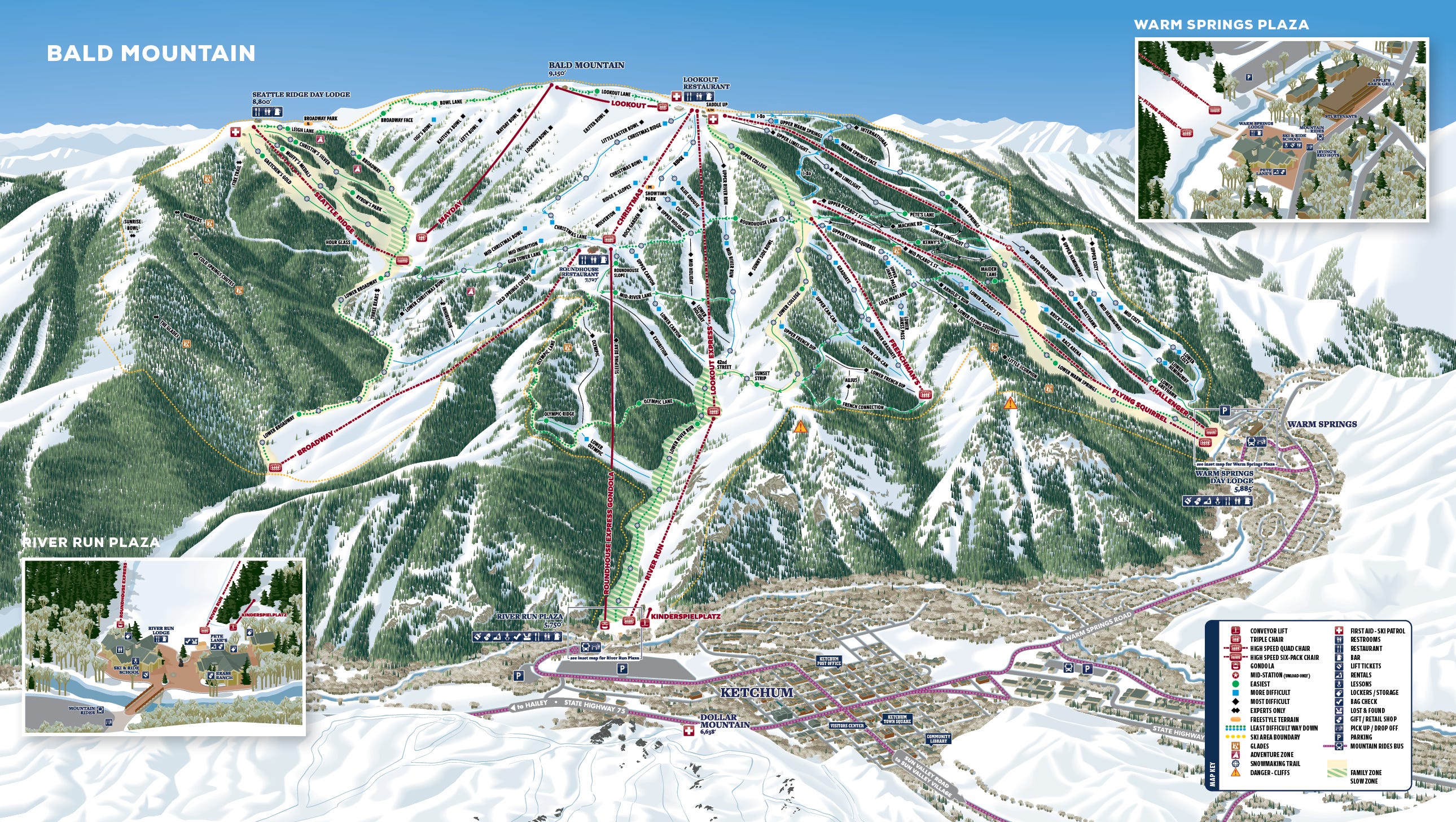
May 22
Podcast #206: SE Group Principal of Mountain Planning Chris Cushing
The Storm Skiing Journal and Podcast is a reader-supported publication (and my full-time job). To receive new posts and to support independent ski journalism, please consider becoming a free or paid subscriber. Who Chris Cushing, Principal of Mountain Planning at SE Group Recorded on April 3, 2025 About SE Group From the company’s website : WE ARE Mountain planners, landscape architects, environmental analysts, and community and recreation planners. From master planning to conceptual design and permitting, we are your trusted partner in creating exceptional experiences and places. WE BELIEVE That human and ecological wellbeing forms the foundation for thriving communities. WE EXIST To enrich people’s lives through the power of outdoor recreation. If that doesn’t mean anything to you, then this will: Why I interviewed him Nature versus nurture: God throws together the recipe, we bake the casserole. A way to explain humans. Sure he’s six foot nine, but his mom dropped him into the intensive knitting program at Montessori school 232, so he can’t play basketball for s**t. Or identical twins, separated at birth. One grows up as Sir Rutherford Ignacious Beaumont XIV and invents time travel. The other grows up as Buford and is the number seven at Okey-Doke’s Quick Oil Change & Cannabis Emporium. The guts matter a lot, but so does the food. This is true of ski areas as well. An earthquake here, a glacier there, maybe a volcanic eruption, and, presto: a non-flat part of the earth on which we may potentially ski. The rest is up to us. It helps if nature was thoughtful enough to add slopes of varying but consistent pitch, a suitable rise from top to bottom, a consistent supply of snow, a flat area at the base, and some sort of natural conduit through which to move people and vehicles. But none of that is strictly necessary. Us humans (nurture), can punch green trails across solid-black fall lines ( Jackson Hole ), bulldoze a bigger hill ( Caberfae ), create snow where the clouds decline to ( Wintergreen , 2022-23), plant the resort base at the summit ( Blue Knob ), or send skiers by boat ( Eaglecrest ). Someone makes all that happen. In North America, that someone is often SE Group, or their competitor, Ecosign. SE Group helps ski areas evolve into even better ski areas. That means helping to plan terrain expansions, lift replacements, snowmaking upgrades, transit connections, parking enhancements, and whatever built environment is under the ski area’s control. SE Group is often the machine behind those Forest Service ski area master development plans that I so often spotlight. For example, Vail Mountain : When I talk about Alta consolidating seven slow lifts into four fast lifts; or Little Switzerland carving their mini-kingdom into beginner, parkbrah, and racer domains; or Mount Bachelor boosting its power supply to run more efficiently, this is the sort of thing that SE plots out (I’m not certain if they were involved in any or all of those projects). Analyzing this deliberate crafting of a natural bump into a human playground is the core of what The Storm is. I love, skiing, sure, but specifically lift-served skiing. I’m sure it’s great to commune with the raccoons or whatever it is you people do when you discuss “skinning” and “AT setups.” But nature left a few things out. Such as: ski patrol, evacuation sleds, avalanche control, toilet paper, water fountains, firepits, and a place to charge my phone. Oh and chairlifts. And directional signs with trail ratings. And a snack bar. Skiing is torn between competing and contradictory narratives: the misanthropic, which hates crowds and most skiers not deemed sufficiently hardcore; the naturalistic, which mistakes ski resorts with the bucolic experience that is only possible in the backcountry; the preservationist, with its museum-ish aspirations to glasswall the obsolete; the hyperactive, insisting on all fast lifts and groomed runs; the fatalists, who assume inevitable death-of-concept in a warming world. None of these quite gets it. Ski areas are centers of joy and memory and bonhomie and possibility. But they are also (mostly), businesses. They are also parks, designed to appeal to as many skiers as possible. They are centers of organized risk, softened to minimize catastrophic outcomes. They must enlist machine aid to complement natural snowfall and move skiers up those meddlesome but necessary hills. Ski areas are nature, softened and smoothed and labelled by their civilized stewards, until the land is not exactly a representation of either man or God, but a strange and wonderful hybrid of both. What we talked about Old-school Cottonwoods vibe; “the Ikon Pass has just changed the industry so dramatically”; how to become a mountain planner for a living; what the mountain-planning vocation looked like in the mid-1980s; the detachable lift arrives; how to consolidate lifts without sacrificing skier experience; when is a lift not OK?; a surface lift resurgence?; how sanctioned glades changed ski areas; the evolution of terrain parks away from mega-features; the importance of terrain parks to small ski areas; reworking trails to reduce skier collisions; the curse of the traverse; making Jackson more approachable; on terrain balance; how megapasses are redistributing skier visits; how to expand a ski area without making traffic worse; ski areas that could evolve into major destinations; and ski area as public park or piece of art. What I got wrong * I blanked on the name of the famous double chair at A-Basin. It is Pallavicini. * I called Crystal Mountain’s two-seater served terrain “North Country or whatever” – it is actually called “Northway.” * I said that Deer Valley would become the fourth- or fifth-largest ski resort in the nation once its expansion was finished. It will become the sixth-largest , at 4,926 acres, when the next expansion phase opens for winter 2025-26, and will become the fourth-largest, at 5,726 acres, at full build out. * I estimated Kendall Mountain’s current lift-served ski footprint at 200 vertical feet; it is 240 feet. Why now was a good time for this interview We have a tendency, particularly in outdoor circles, to lionize the natural and shame the human. Development policy in the United States leans heavily toward “don’t,” even in areas already designated for intensive recreation. We mustn’t, plea activists: expand the Palisades Tahoe base village; build a gondola up Little Cottonwood Canyon; expand ski terrain contiguous with already-existing ski terrain at Grand Targhee. I understand these impulses, but I believe they are misguided. Intensive but thoughtful, human-scaled development directly within and adjacent to already-disturbed lands is the best way to limit the larger-scale, long-term manmade footprint that chews up vast natural tracts. That is: build 1,000 beds in what is now a bleak parking lot at Palisades Tahoe, and you limit the need for homes to be carved out of surrounding forests, and for hundreds of cars to daytrip into the ski area. Done right, you even create a walkable community of the sort that America conspicuously lacks. To push back against, and gradually change, the Culture of No fueling America’s mountain town livability crises, we need exhibits of these sorts of projects actually working. More Whistlers (built from scratch in the 1980s to balance tourism and community) and fewer Aspens (grandfathered into ski town status with a classic street and building grid, but compromised by profiteers before we knew any better). This is the sort of work SE is doing: how do we build a better interface between civilization and nature, so that the former complements, rather than spoils, the latter? All of which is a little tangential to this particular podcast conversation, which focuses mostly on the ski areas themselves. But America’s ski centers, established largely in the middle of the last century, are aging with the towns around them. Just about everything, from lifts to lodges to roads to pipes, has reached replacement age. Replacement is a burden, but also an opportunity to create a better version of something. Our ski areas will not only have faster lifts and newer snowguns – they will have fewer lifts and fewer guns that carry more people and make more snow, just as our built footprint, thoughtfully designed, can provide more homes for more people on less space and deliver more skiers with fewer vehicles. In a way, this podcast is almost a canonical Storm conversation. It should, perhaps, have been episode one, as every conversation since has dealt with some version of this question: how do humans sculpt a little piece of nature into a snowy park that we visit for fun? That is not an easy or obvious question to answer, which is why SE Group exists. Much as I admire our rough-and-tumble Dave McCoy-type founders, that improvisational style is trickier to execute in our highly regulated, activist present. And so we rely on artist-architects of the SE sort, who inject the natural with the human without draining what is essential from either. Done well, this crafted experience feels wild. Done poorly – as so much of our legacy built environment has been – and you generate resistance to future development, even if that future development is better. But no one falls in love with a blueprint. Experiencing a ski area as whatever it is you think a ski area should be is something you have to feel. And though there is a sort of magic animating places like Alta and Taos and Mammoth and Mad River Glen and Mount Bohemia, some ineffable thing that bleeds from the earth, these ski areas are also outcomes of a human-driven process, a determination to craft the best version of skiing that could exist for mass human consumption on that shred of the planet. Podcast Notes On Mittersill Mittersill, now part of Cannon Mountain, was once a separate ski area. It petered out in the mid-‘80s, then became a sort of Cannon backcountry zone circa 2009. The Mittersill double arrived in 2010, followed by a T-bar in 2016. On chairlift consolidation I mention several ski areas that replaced a bunch of lifts with fewer lifts: The Highlands In 2023, Boyne-owned The Highlands wiped out three ancient Riblet triples and replaced them with this glorious bubble six-pack: Here’s a before-and-after: Vernon Valley-Great Gorge/Mountain Creek I’ve called Intrawest’s transformation of Vernon Valley-Great Gorge into Mountain Creek “perhaps the largest single-season overhaul of a ski area in the history of lift-served skiing.” Maybe someone can prove me wrong, but just look at this place circa 1989: It looked substantively the same in 1998, when, in a single summer, Intrawest tore out 18 lifts – 15 double chairs, two platters, and a T-bar, plus God knows how many ropetows – and replaced them with two high-speed quads, two fixed-grip quads, and a bucket-style Cabriolet lift that every normal ski area uses as a parking lot transit machine: I discussed this incredible transformation with current Hermitage Club GM Bill Benneyan, who worked at Mountain Creek in 1998, back in 2020: I misspoke on the podcast, saying that Intrawest had pulled out “something like a dozen lifts” and replaced them with “three or four” in 1998. Kimberley Back in the time before social media, Kimberley, British Columbia ran four frontside chairlifts: a high-speed quad, a triple, a double, and a T-bar: Beginning in 2001, the ski area slowly removed everything except the quad. Which was fine until an arsonist set fire to Kimberley’s North Star Express in 2021, meaning skiers had no lift-served option to the backside terrain: I discussed this whole strange sequence of events with Andy Cohen, longtime GM of sister resort Fernie, on the podcast last year: On Revelstoke’s original masterplan It is astonishing that Revelstoke serves 3,121 acres with just five lifts: a gondola, two high-speed quads, a fixed quad, and a carpet. Most Midwest ski areas spin three times more lifts for three percent of the terrain. On Priest Creek and Sundown at Steamboat Steamboat, like many ski areas, once ran two parallel fixed-grip lifts on substantively the same line, with the Priest Creek double and the Sundown triple. The Sundown Express quad arrived in 1992, but Steamboat left Priest Creek standing for occasional overflow until 2021. Here’s Steamboat circa 1990: Priest Creek is gone, but that entire 1990 lift footprint is nearly unrecognizable. Huge as Steamboat is, every arriving skier squeezes in through a single portal. One of Alterra’s first priorities was to completely re-imagine the base area: sliding the existing gondola looker’s right; installing an additional 10-person, two-stage gondola right beside it; and moving the carpets and learning center to mid-mountain: On upgrades at A-Basin We discuss several upgrades at A-Basin, including Lenawee, Beavers, and Pallavicini. Here’s the trailmap for context: On moguls on Kachina Peak at Taos Yeah I’d say this lift draws some traffic: On the T-bar at Waterville Valley Waterville Valley opened in 1966. Fifty-two years later, mountain officials finally acknowledged that chairlifts do not work on the mountain’s top 400 vertical feet. All it took was a forced 1,585-foot shortening of the resort’s base-to-summit high-speed quad just eight years after its 1988 installation and the legacy double chair’s continued challenges in wind to say, “yeah maybe we’ll just spend 90 percent less to install a lift that’s actually appropriate for this terrain.” That was the High Country T-bar, which arrived in 2018. It is insane to look at ‘90s maps of Waterville pre- and post-chop job: On Hyland Hills, Minnesota What an insanely amazing place this is: On Sunrise Park From 1983 to 2017, Sunrise Park, Arizona was home to the most amazing triple chair , a 7,982-foot-long Yan with 352 carriers. Cyclone, as it was known, fell apart at some point and the resort neglected to fix or replace it. A couple of years ago, they re-opened the terrain to lift-served skiing with a low-cost alternative: stringing a ropetow from a green run off the Geronimo lift to where Cyclone used to land. On Woodward Park City and Boreal Powdr has really differentiated itself with its Woodward terrain parks, which exist at amazing scale at Copper and Bachelor. The company has essentially turned two of its smaller ski areas – Boreal and Woodward Park City – entirely over to terrain parks. On Killington’s tunnels You have to zoom in, but you can see them on the looker’s right side of the trailmap: Bunny Buster at Great Northern, Great Bear at Great Northern, and Chute at Great Northern. On Jackson Hole traverses Jackson is steep. Engineers hacked it so kids like mine could ride there: On expansions at Beaver Creek, Keystone, Aspen Recent Colorado expansions have tended to create vast zones tailored to certain levels of skiers: Beaver Creek’s McCoy Park is an incredible top-of-the-mountain green zone: Keystone’s Bergman Bowl planted a high-speed six-pack to serve 550 acres of high-altitude intermediate terrain: And Aspen – already one of the most challenging mountains in the country – added Hero’s – a fierce black-diamond zone off the summit: On Wilbere at Snowbird Wilbere is an example of a chairlift that kept the same name, even as Snowbird upgraded it from a double to a quad and significantly moved the load station and line: On ski terrain growth in America Yes, a bunch of ski areas have disappeared since the 1980s, but the raw amount of ski terrain has been increasing steadily over the decades: On White Pine, Wyoming Cushing referred to White Pine as a “dinky little ski area” with lots of potential. Here’s a look at the thousand-footer, which billionaire Joe Ricketts purchased last year: On Deer Valley’s expansion Yeah, Deer Valley is blowing up: On Schweitzer’s growth Schweitzer’s transformation has been dramatic: in 1988, the Idaho panhandle resort occupied a large footprint that was served mostly by double chairs: Today: a modern ski area, with four detach quads, a sixer, and two newer triples – only one old chairlift remains: On BC transformations A number of British Columbia ski areas have transformed from nubbins to majors over the past 30 years: Sun Peaks, then known as Tod Mountain, in 1993 Sun Peaks today: Fernie in 1996, pre-upward expansion: Fernie today: Revelstoke, then known as Mount Mackenzie, in 1996: Modern Revy: Kicking Horse, then known as “Whitetooth” in 1994: Kicking Horse today: On Tamarack’s expansion potential Tamarack sits mostly on Idaho state land, and would like to expand onto adjacent U.S. Forest Service land. Resort President Scott Turlington discussed these plans in depth with me on the pod a few years back: The mountain’s plans have changed since, with a smaller lift footprint: On Central Park as a manmade place New York City’s fabulous Central Park is another chunk of earth that may strike a visitor as natural, but is in fact a manmade work of art crafted from the wilderness. Per the Central Park Conservancy , which, via a public-private partnership with the city, provides the majority of funds, labor, and logistical support to maintain the sprawling complex: A popular misconception about Central Park is that its 843 acres are the last remaining natural land in Manhattan. While it is a green sanctuary inside a dense, hectic metropolis, this urban park is entirely human-made. It may look like it's naturally occurring, but the flora, landforms, water, and other features of Central Park have not always existed. Every acre of the Park was meticulously designed and built as part of a larger composition—one that its designers conceived as a "single work of art." Together, they created the Park through the practice that would come to be known as "landscape architecture." The Storm explores the world of lift-served skiing year-round. Join us. Get full access to The Storm Skiing Journal and Podcast at www.stormskiing.com/subscribe
May 18
Podcast #205: Snow Partners CEO Joe Hession
The Storm Skiing Journal and Podcast is a reader-supported publication (and my full-time job). To receive new posts and to support independent ski journalism, please consider becoming a free or paid subscriber. Who Joe Hession, CEO of Snow Partners, which owns Mountain Creek , Big Snow American Dream , SnowCloud , and Terrain Based Learning Recorded on May 2, 2025 About Snow Partners Snow Partners owns and operates Mountain Creek, New Jersey and Big Snow American Dream, the nation’s only indoor ski center. The company also developed SnowCloud resort management software and has rolled out its Terrain Based Learning system at more than 80 ski areas worldwide. They do some other things that I don’t really understand (there’s a reason that I write about skiing and not particle physics), that you can read about on their website . About Mountain Creek Located in: Vernon Township, New Jersey Closest neighboring public ski areas: Mount Peter (:24); Big Snow American Dream (:50); Campgaw (:51) Pass affiliations: Snow Triple Play, up to two anytime days Base elevation: 440 feet Summit elevation: 1,480 feet Vertical drop: 1,040 feet Skiable Acres: 167 Average annual snowfall: 65 inches Trail count: 46 Lift count: 9 (1 Cabriolet, 2 high-speed quads, 2 fixed-grip quads, 1 triple, 1 double, 2 carpets – view Lift Blog’s inventory of Mountain Creek’s lift fleet) About Big Snow American Dream Located in: East Rutherford, New Jersey Closest neighboring public ski areas: Campgaw (:35); Mountain Creek (:50); Mount Peter (:50) Pass affiliations: Snow Triple Play, up to two anytime days Vertical drop: 160 feet Skiable Acres: 4 Trail count: 4 (2 green, 1 blue, 1 black) Lift count: 4 (1 quad, 1 poma, 2 carpets - view Lift Blog’s of inventory of Big Snow American Dream’s lift fleet) Why I interviewed him I read this earlier today: The internet is full of smart people writing beautiful prose about how bad everything is, how it all sucks, how it’s embarrassing to like anything, how anything that appears good is, in fact, secretly bad. I find this confusing and tragic, like watching Olympic high-jumpers catapult themselves into a pit of tarantulas. That blurb was one of 28 “ slightly rude notes on writing ” offered in Adam Mastroianni’s Experimental History newsletter. And I thought, “Man this dude must follow #SkiTwitter.” Or Instabook. Of Flexpost. Or whatever. Because online ski content, both short- and long-form, is, while occasionally joyous and evocative, disproportionately geared toward the skiing-is-fucked-and-this-is-why worldview. The passes suck. The traffic sucks. The skiers suck. The prices suck. The parking sucks. The Duopoly sucks. Everyone’s a Jerry, chewing up my pow line with their GoPro selfie sticks hoisted high and their Ikon Passes dangling from their zippers. Skiing is corporate and soulless and tourist obsessed and doomed anyway because of climate change. Don’t tell me you’re having a good time doing this very fun thing. People like you are the reason skiing’s soul now shops at Wal-Mart. Go back to Texas and drink a big jug of oil, you Jerry! It's all so… f*****g dumb. U.S. skiing just wrapped its second-best season of attendance. The big passes, while imperfect, are mostly a force for good, supercharging on-hill infrastructure investment, spreading skiers across geographies, stabilizing a once-storm-dependent industry, and lowering the per-day price of skiing for the most avid among us to 1940s levels. Snowmaking has proven an effective bulwark against shifting weather patterns. Lift-served skiing is not a dying pastime, financially or spiritually or ecologically. Yes, modern skiing has problems: expensive food (pack a lunch); mountain-town housing shortages (stop NIMBY-ing everything); traffic (yay car culture); peak-day crowds (don’t go then); exploding insurance, labor, utilities, and infrastructure costs (I have no answers). But in most respects, this is a healthy, thriving, constantly evolving industry, and a more competitive one than the Duopoly Bros would admit. Snow Partners proves this. Because what the hell is Snow Partners? It’s some company sewn together by a dude who used to park cars at Mountain Creek. Ten years ago this wasn’t a thing, and now it’s this wacky little conglomerate that owns a bespoke resort tech platform and North America’s only snowdome and the impossible, ridiculous Mountain Creek . And they’re going to build a bunch more snowdomes that stamp new skiers out by the millions and maybe – I don’t know but maybe – become the most important company in the history of lift-served skiing in the process. Could such an outfit possibly have materialized were the industry so corrupted as the Brobot Pundit Bros declare it? Vail is big. Alterra is big. But the two companies combined control just 53 of America’s 501 active ski areas. Big ski areas, yes. Big shadows. But neither created: Indy Pass , Power Pass , Woodward Parks , Terrain Based Learning, Mountain Collective , RFID, free skiing for kids, California Mountain Resort Company , or $99 season passes . Neither saved Holiday Mountain or Hatley Pointe or Norway Mountain or Timberline West Virigina from the scrapheap, or transformed a failing Black Mountain into a co-op . Neither has proven they can successfully run a ski area in Indiana (sorry Vail #SickBurn #SellPaoliPeaks #Please). Skiing, at this moment, is a glorious mix of ideas and energy. I realize it makes me uncool to think so, but I signed off on those aspirations the moment I drove the minivan off the Chrysler lot (topped it off with a roofbox, too, Pimp). Anyhow, the entire point of this newsletter is to track down the people propelling change in a sport that most likely predates the written word and ask them why they’re doing these novel things to make an already cool and awesome thing even more cool and awesome. And no one, right now, is doing more cool and awesome things in skiing than Snow Partners.* *That’s not exactly true. Mountain Capital Partners, Alterra, Ikon Pass, Deer Valley, Entabeni Systems, Jon Schaefer, the Perfect Clan, Boyne Resorts, Big Sky, Mt. Bohemia, Powdr, Vail Resorts, Midwest Family Ski Resorts, and a whole bunch more entities/individuals/coalitions are also contributing massively to skiing’s rapid-fire rewiring in the maw of the robot takeover digital industrial revolution. But, hey, when you’re in the midst of transforming an entire snow-based industry from a headquarters in freaking New Jersey , you get a hyperbolic bump in the file card description. What we talked about The Snow Triple Play; potential partners; “there’s this massive piece of the market that’s like ‘I don’t even understand what you’re talking about’” with big day ticket prices and low-priced season passes; why Mountain Creek sells its Triple Play all season long and why the Snow Triple Play won’t work that way (at least at first); M.A.X. Pass and why Mountain Creek declined to join successor passes; an argument for Vail, Alterra and other large ski companies to participate on the Snow Triple Play; comparing skiing to hotels, airlines, and Disney World; “the next five years are going to be the most interesting and disruptive time in the ski industry because of technology”; “we don’t compete with anybody”; Liftopia’s potential, errors, failure, and legacy; skiing on Groupon; considering Breckenridge as an independent ski area; what a “premium” ski area on the Snow Triple Play would be; why megapasses are “selling people a product that will never be used the way it’s sold to them”; why people in NYC feel like going to Mountain Creek, an hour over the George Washington Bridge, is “going to Alaska”; why Snow Triple Play will “never” add a fourth day; sticker shock for Big Snow newbs who emerge from the Dome wanting more; SnowCloud and the tech and the guest journey from parking lot to lifts; why Mountain Creek stopped mailing season passes; Bluetooth Low Energy “is certainly the future of passes”; “100 percent we’re getting more Big Snows” – but let’s justify the $175 million investment first; Big Snow has a “terrible” design; “I don’t see why every city shouldn’t have a Big Snow” and which markets Snow Partners is talking to; why Mountain Creek didn’t get the mega-lift Hession teased on this pod three years ago and when we could see one; “I really believe that the Vernon base of Mountain Creek needs an updated chair”; the impact of automated snowmaking at Mountain Creek; and a huge residential project incoming at Mountain Creek. What I got wrong * I said that Hession wasn’t involved in Mountain Creek in the M.A.X. Pass era, but he was an Intrawest employee at the time, and was Mountain Creek’s GM until 2012. * I hedged on whether Boyne’s Explorer multi-day pass started at two or three days. Skiers can purchase the pass in three- to six-day increments. Why now was a good time for this interview Okay, so I’ll admit that when Snow Partners summarized the Snow Triple Play for me, I wasn’t like “Holy crap, three days (total) at up to three different ski areas on a single ski pass? Do you think they have room for another head on Mount Rushmore?” This multi-day pass is a straightforward product that builds off a smart idea (the Mountain Creek Triple Play), that has been a smash hit at the Jersey Snow Jungle since at least 2008. But Snow Triple Play doesn’t rank alongside Epic, Ikon, Indy, or Mountain Collective as a seasonlong basher. This is another frequency product in a market already flush with them. So why did I dedicate an entire podcast and two articles (so far) to dissecting this product, which Hession makes pretty clear has no ambitions to grow into some Indy/Ikon/Epic competitor? Because it is the first product to tie Big Snow to the wider ski world. And Big Snow only works if it is step one and there is an obvious step two. Right now, that step two is hard, even in a region ripe with ski areas. The logistics are confounding, the one-off cost hard to justify. Lift tickets, gear rentals, getting your ass to the bump and back, food, maybe a lesson. The Snow Triple Play doesn’t solve all of these problems, but it does narrow an impossible choice down to a manageable one by presenting skiers with a go-here-next menu. If Snow Partners can build a compelling (or at least logical) Northeast network and then scale it across the country as the company opens more Big Snows in more cities, then this simple pass could evolve into an effective toolkit for building new skiers. OK, so why not just join Indy or Mountain Collective, or forge some sort of newb-to-novice agreement with Epic or Ikon? That would give Snow Partners the stepladder, without the administrative hassle of owning a ski pass. But that brings us to another roadblock in Ski Revolution 2025: no one wants to share partners. So Hession is trying to flip the narrative. Rather than locking Big Snow into one confederacy or the other, he wants the warring armies to lash their fleets along Snow Partners Pier. Big Snow is just the bullet factory, or the gas station, or the cornfield – the thing that all the armies need but can’t supply themselves. You want new skiers? We got ‘em. They’re ready. They just need a map to your doorstep. And we’re happy to draw you one. Podcast Notes On the Snow Triple Play The basics: three total days, max of two used at any one partner ski area, no blackouts at Big Snow or Mountain Creek, possible blackouts at partner resorts, which are TBD. The pass, which won’t be on sale until Labor Day, is fully summarized here: And I speculate on potential partners here: On the M.A.X. Pass For its short, barely noted existence, the M.A.X. Pass was kind of an amazing hack, granting skiers five days each at an impressive blend of regional and destination ski areas: Much of this roster migrated over to Ikon, but in taking their pass’ name too literally, the Alterra folks left off some really compelling regional ski areas that could have established a hub-and-spoke network out of the gate. Lutsen and Granite Peak owner Charles Skinner told me on the podcast a few years back that Ikon never offered his ski areas membership (they joined Indy in 2020), cutting out two of the Midwest’s best mountains. The omissions of Mountain Creek, Wachusett, and the New York trio of Belleayre, Whiteface, and Gore ceded huge swaths of the dense and monied Northeast to competitors who saw value in smaller, high-end operations that are day-trip magnets for city folks who also want that week at Deer Valley (no other pass signed any of these mountains, but Vail and Indy both assembled better networks of day-drivers and destinations). On my 2022 interview with Hession On Liftopia Liftopia’s website is still live, but I’m not sure how many ski areas participate in this Expedia-for-lift-tickets. Six years ago, I thought Liftopia was the next bargain evolution of lift-served skiing. I even hosted founder Evan Reece on one of my first 10 podcasts. The whole thing fell apart when Covid hit. An overview here: On various other day-pass products I covered this in my initial article, but here’s how the Snow Triple Play stacks up against other three-day multi-resort products: On Mountain Creek not mailing passes I don’t know anything about tech, but I know, from a skier’s point of view, when something works well and when it doesn’t. Snow Cloud’s tech is incredible in at least one customer-facing respect: when you show up at a ski area, a rep standing in a conspicuous place is waiting with an iPhone, with which they scan a QR code on your phone, and presto-magico: they hand you your ski pass. No lines or waiting. One sentimental casualty of this on-site efficiency was the mailed ski pass, an autumn token of coming winter to be plucked gingerly from the mailbox. And this is fine and makes sense, in the same way that tearing down chairlifts constructed of brontosaurus bones and mastodon hides makes sense, but I must admit that I miss these annual mailings in the same way that I miss paper event tickets and ski magazines. My favorite ski mailing ever, in fact, was not Ikon’s glossy fold-out complete with a 1,000-piece 3D jigsaw puzzle of the Wild Blue Gondola and name-a-snowflake-after-your-dog kit, but this simple pamphlet dropped into the envelope with my 2018-19 Mountain Creek season pass: Just f*****g beautiful, Man. That hung on my office wall for years. On the Cabriolet This is just such a wackadoodle ski lift: Onetime Mountain Creek owner Intrawest built similar lifts at Winter Park and Tremblant, but as transit lifts from the parking lot. This one at Mountain Creek is the only one that I’m aware of that’s used as an open-air gondola. Get full access to The Storm Skiing Journal and Podcast at www.stormskiing.com/subscribe
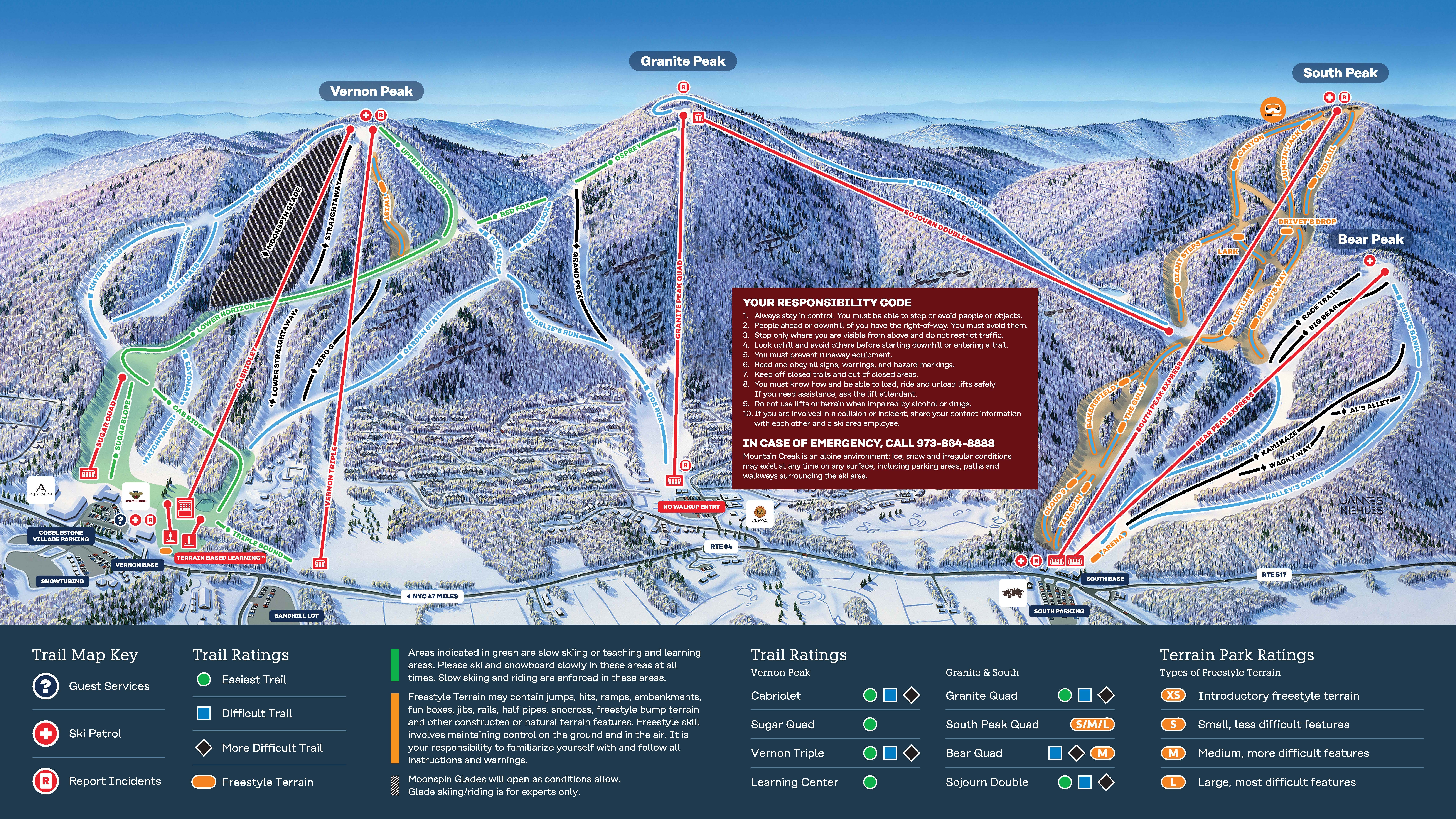
Apr 22
Podcast #204: Hunter Mountain VP/GM Trent Poole
The Storm Skiing Journal and Podcast is a reader-supported publication. To receive new posts and to support independent ski journalism, please consider becoming a free or paid subscriber. Who Trent Poole, Vice President and General Manager of Hunter Mountain , New York Recorded on March 19, 2025 About Hunter Mountain Click here for a mountain stats overview Owned by: Vail Resorts Located in: Hunter, New York Year founded: 1959 Pass affiliations: * Epic Pass, Epic Local Pass – unlimited access * Epic Northeast Value Pass – unlimited access with holiday blackouts * Epic Northeast Midweek Pass – unlimited access with holiday and midweek blackouts * Epic Day Pass – All Resorts, 32 Resorts tiers Closest neighboring ski areas: Windham (:16), Belleayre (:35), Plattekill (:49) Base elevation: 1,600 feet Summit elevation: 3,200 feet Vertical drop: 1,600 feet Skiable acres: 320 Average annual snowfall: 120 inches Trail count: 67 (25% beginner, 30% intermediate, 45% advanced) Lift count: 13 (3 six-packs, 1 high-speed quad, 2 fixed-grip quads, 1 triple, 2 doubles, 1 platter, 3 carpets) Why I interviewed him Ski areas are like political issues. We all feel as though we need to have an opinion on them. This tends to be less a considered position than an adjective. Tariffs are _______. Killington is _______. It’s a bullet to shoot when needed. Most of us aren’t very good shots. Hunter tends to draw a particularly colorful basket of adjectives: crowded, crazy, frantic, dangerous, icy, frozen, confusing, wild. Hunter, to the weekend visitor, appears to be teetering at all times on the brink of collapse. So many skiers on the lifts, so many skiers in the liftlines, so many skiers on the trails, so many skiers in the parking lots, so many skiers in the lodge pounding shots and pints. Whether Hunter is a ski area with a bar attached or a bar with a ski area attached is debatable. The lodge stretches on and on and up and down in disorienting and disconnected wings, a Winchester Mansion of the mountains, stapled together over eons to foil the alien hordes (New Yorkers). The trails run in a splintered, counterintuitive maze, an impossible puzzle for the uninitiated. Lifts fly all over, 13 total, of all makes and sizes and vintage, but often it feels as though there is only one lift and that lift is the Kaatskill Flyer, an overwhelmed top-to-bottom six-pack that replaced an overwhelmed top-to-bottom high-speed quad on a line that feels as though it would be overwhelmed with a high-speed 85-pack. It is, in other words, exactly the kind of ski area you would expect to find two hours north of a 20-million-person megacity world famous for its blunt, abrasive, and bare-knuckled residents. That description of Hunter is accurate enough, but incomplete. Yes, skiing there can feel like riding a swinging wrecking ball through a tenement building. And I would probably suggest that as a family activity before I would recommend Hunter on, say, MLK Saturday. But Hunter is also a glorious hunk of ski history, a last-man-standing of the once-skiing-flush Catskills, a nature-bending prototype of a ski mountain built in a place that lacks both consistent natural snow and fall lines to ski on. It may be a corporate cog now, but the Hunter hammered into the mountains over nearly six decades was the dream and domain of the Slutzky family, many of whom still work for the ski area. And Hunter, on a midweek, when all those fast lifts are 10 times more capacity than you need, can be a dream. Fast up, fast down. And once you learn the trail network, the place unfolds like a picnic blanket: easy, comfortable, versatile, filled with delicious options (if occasionally covered with ants). There’s no one good way to describe Hunter Mountain. It’s different every day. All ski areas are different every day, but Hunter is, arguably, more more different along the spectrum of its extremes than just about any other ski area anywhere. You won’t get it on your first visit. You will show up on the wrong day, at the wrong time, in the wrong parking lot, and the whole thing will feel like playing lasertag with hyenas. Alien hyenas. Who will for some reason all be wearing Jets jerseys. But if you push through for that second visit, you’ll start to get it. Maybe. I promise. And you’ll understand why one-adjective Hunter Mountain descriptions are about as useful as the average citizen’s take on NATO. What we talked about Sixty-five years of Hunter; a nice cold winter at last; big snowmaking upgrades; snowmaking on Annapurna and Westway; the Otis and Broadway lift upgrades; Broadway ripple effects on the F and Kaatskill Flyer lifts; supervising the installation of seven new lifts at three Vail Resorts over a two-year period; better liftline management; moving away from lettered lift names; what Otis means for H lift; whether the Hunter East mountaintop Poma could ever spin again; how much of Otis is re-used from the old Broadway lift; ski Ohio; landing at Vail Resorts pre-Epic Pass and watching the pass materialize and grow; taking over for a GM who had worked at Hunter for 44 years; understanding and appreciating Hunter madness; Hunter locals mixed with Vail Resorts; Hunter North and the potential for an additional base area; disappearing trailmap glades; expansion potential; a better ski connection to Hunter East; and Epic Local as Hunter’s season pass. Questions I wish I’d asked I’d wanted to ask Poole about the legacy of the Slutzky family, given their founding role at Hunter. We just didn’t have time. New York Ski Blog has a nice historical overview . I actually did ask Poole about D lift, the onetime triple-now-double parallel to Kaatskill Flyer, but we cut that segment in edit. A summary: the lift didn’t run at all this past season, and Poole told me that, “we’re keeping our options open,” when I asked him if D lift was a good candidate to be removed at some near-future point. Why now was a good time for this interview The better question is probably why I waited five-and-a-half years to feature the leader of the most prominent ski area in New York City’s orbit on the podcast. Hunter was, after all, the first mountain I hit after moving to the city in 2002. But who does and does not appear on the podcast is grounded in timing more than anything. Vail announced its acquisition of Hunter parent company Peak Resorts just a couple of months before I launched The Storm , in 2019. No one, including me, really likes doing podcast interviews during transitions, which can be filled with optimism and energy, but also uncertainty and instability. The Covid asteroid then transformed what should have been a one-year transition period into more like a three-year transition period, which was followed by a leadership change at Hunter. But we’re finally here. And, as it turns out, this was a pretty good time to arrive. Part of the perpetual Hunter mess tied back to the problem I alluded to above: the six-pack-Kaatskill-Flyer-as-alpha-lift muted the impact of the lesser contraptions around it. By dropping a second superlift right next door, Vail appears to have finally solved the problem of the Flyer’s ever-exploding liftline. That’s one part of the story, and the most obvious. But the snowmaking upgrades on key trails signal Hunter’s intent to reclaim its trophy as Snow God of the New York Thruway. And the shuffling of lifts on Hunter East reconfigured the ski area’s novice terrain into a more logical progression (true green-circle skiers, however, will be better off at nearby Belleayre, where the Lightning Quad serves an incredible pod of long and winding beginner runs). These 2024 improvements build on considerable upgrades from the Peak and Slutzky eras, including the 2018 Hunter North expansion and the massive learning center at Hunter East. If Hunter is to remain a cheap and accessible Epic Pass fishing net to funnel New Yorkers north to Stowe and west to Park City, even as neighboring Windham tilts ever more restrictive and expensive, then Vail is going to have to be creative and aggressive in how the mountain manages all those skiers. These upgrades are a promising start. Why you should ski Hunter Mountain Think of a thing that is a version of a familiar thing but hits you like a completely different thing altogether. Like pine trees and palm trees are both trees, but when I first encountered the latter at age 19, they didn’t feel like trees at all, but like someone’s dream of a tree who’d had one described to them but had never actually seen one. Or horses and dolphins: both animals, right? But one you can ride like a little vehicle, and the other supposedly breathes air but lives beneath the sea plotting our extinction in a secret indecipherable language. Or New York-style pizza versus Domino’s, which, as Midwest stock, I prefer, but which my locally born wife can only describe as “not pizza.” This is something like the experience you will have at Hunter Mountain if you show up knowing a good lot about ski areas, but not much about this ski area. Because if I had to make a list of ski areas similar to Hunter, it would include “that Gwar concert I attended at Harpos in Detroit when I was 18” and “a high-tide rescue scene in a lifeguard movie.” And then I would run out of ideas. Because there is no ski area anywhere remotely like Hunter Mountain. I mean that as spectacle, as a way to witness New York City’s id manifest into corporeal form. Your Hunter Mountain Bingo card will include “Guy straightlining Racer’s Edge with unzipped Starter jacket and backward baseball cap” and “Dude rocking short-sleeves in 15-degree weather.” The vibe is atomic and combustible, slightly intimidating but also riotously fun, like some snowy Woodstock: And then there’s the skiing. I have never skied terrain like Hunter’s. The trails swoop and dive and wheel around endless curves, as though carved into the Tower of Babel, an amazing amount of terrain slammed into an area that looks and feels constrained, like a bound haybale that, twine cut, explodes across your yard. Trails crisscross and split and dig around blind corners. None of it feels logical, but it all comes together somehow. Before the advent of Google Maps, I could not plot an accurate mental picture of how Hunter East, West, North, and whatever the hell they call the front part sat in relation to one another and formed a coherent single entity. I don’t always like being at Hunter. And yet I’ve skied there more than I’ve skied just about anywhere. And not just because it’s close. It’s certainly not cheap, and the road in from the Thruway is a real pain in the ass. But they reliably spin the lifts from November to April, and fast lifts on respectable vert can add up quick. And the upside of crazy? Everyone is welcome. Podcast Notes On Hunter’s lift upgrades Hunter orchestrated a massive offseason lift upgrade last year, moving the old Broadway (B) lift over to Hunter East, where the mountain demolished a 1968 Hall Double named “E,” and planted its third six-pack on a longer Broadway line. Check the old lines versus the new ones: On six-packs in New York State New York is home to more ski areas than any other state, but only eight of them run high-speed lifts, and only three host six-packs: Holiday Valley has one, Windham, next door to Hunter, has another, and Hunter owns the other three. On five new lifts at Jack Frost Big Boulder Part of Vail Resorts’ massive 2022 lift upgrades was to replace eight old chairlifts at Jack Frost and Big Boulder with five modern fixed-grip quads. At Jack Frost, Paradise replaced the E and F doubles; Tobyhanna replaced the B and C triples; and Pocono replaced the E and F doubles: Over at Big Boulder, the Merry Widow I and II double-doubles made way for the Harmony quad. Vail also demolished the parallel Black Forest double, which had not run in a number of years. Blue Heron replaced an area once served by the Little Boulder double and Edelweiss Triple – check the side-by-side with Big Boulder’s 2008 trailmap: Standing up so many lifts in such a short time is rare, but we do have other examples: * In 1998, Intrawest tore down up to a dozen legacy lifts and replaced them with five new ones: two high-speed quads, two fixed-grip quads, and the Cabriolet bucket lift (basically a standing gondola). A full discussion on that here . * American Skiing Company installed at least four chairlifts at Sugarbush in the summer of 1995, including the Slide Brook Express, a two-mile-long lift connection between its two mountains. More here . * Powder Mountain installed four chairlifts last summer. * Deer Valley built five chairlifts last summer, including a bubble six-pack, and is constructing eight more lifts this year. On Mad River Mountain, Ohio Mad River is about as prototypical a Midwest ski area as you can imagine: 300 vertical feet, 144 acres, 36 inches of average annual snowfall, and an amazing (for that size) nine ski lifts shooting all over the place: On Vail Resorts’ acquisition timeline Hunter is one of 17 U.S. ski areas that Vail purchased as part of its 2019 acquisition of Peak Resorts. On Hunter’s 2018 expansion When Peak opened the Hunter West expansion for the 2018-19 ski season, a number of new glades appeared on the map: Most of those glades disappeared from the map. Why? We discuss. On Epic Pass access Hunter sits on the same unlimited Epic Local Pass tier as Okemo, Mount Snow, Breckenridge, Keystone, Crested Butte, and Stevens Pass. Here’s an Epic Pass overview: You can also ski Hunter on the uber-cheap 32 Resorts version of the Epic Day Pass: The Storm explores the world of lift-served skiing year-round. Join us. Get full access to The Storm Skiing Journal and Podcast at www.stormskiing.com/subscribe
Apr 8
Podcast #203: Silver Mountain General Manager Jeff Colburn
The Storm Skiing Journal and Podcast is a reader-supported publication. To receive new posts and to support independent ski journalism, please consider becoming a free or paid subscriber. Who Jeff Colburn, General Manager of Silver Mountain , Idaho Recorded on February 12, 2025 About Silver Mountain Click here for a mountain stats overview Owned by: CMR Lands, which also owns 49 Degrees North , Washington Located in: Kellogg, Idaho Year founded: 1968 as Jackass ski area, later known as Silverhorn, operated intermittently in the 1980s before its transformation into Silver in 1990 Pass affiliations: * Indy Pass – 2 days, select blackouts * Indy+ Pass – 2 days, no blackouts * Powder Alliance – 3 days, select blackouts Closest neighboring ski areas: Lookout Pass (:26) Base elevation: 4,100 feet (lowest chairlift); 2,300 feet (gondola) Summit elevation: 6,297 feet Vertical drop: 2,200 feet Skiable acres: 1,600+ Average annual snowfall: 340 inches Trail count: 80 Lift count: 7 (1 eight-passenger gondola, 1 fixed-grip quad, 2 triples, 2 doubles, 1 carpet – view Lift Blog’s inventory of Silver Mountain’s lift fleet) Why I interviewed him After moving to Manhattan in 2002, I would often pine for an extinct version of New York City: docks thrust into the Hudson, masted ships, ornate brickwork factories, carriages, open windows, kids loose in the streets, summer evening crowds on stoops and patios. Modern New York, riotous as it is for an American city, felt staid and sterile beside the island’s explosively peopled black-and-white past. Over time, I’ve developed a different view: New York City is a triumph of post-industrial reinvention, able to shed and quickly replace obsolete industries with those that would lead the future. And my idealized New York, I came to realize, was itself a snapshot of one lost New York, but not the only lost New York, just my romanticized etching of a city that has been in a constant state of reinvention for 400 years. It's through this same lens that we can view Silver Mountain. For more than a century, Kellogg was home to silver mines that employed thousands. When the Bunker Hill Mine closed in 1981, it took the town’s soul with it. The city became a symbol of industrial decline, of an America losing its rough-and-ragged hammer-bang grit. And for a while, Kellogg was a denuded and dusty crater pockmarking the glory-green of Idaho’s panhandle. The population collapsed. Suicide rates, Colburn tells us on the podcast, were high. But within a decade, town officials peered toward the skeleton of Jackass ski area, with its intact centerpole Riblet double, and said, “maybe that’s the thing.” With help from Von Roll, they erected three chairlifts on the mountain and taxed themselves $2 million to string a three-mile-long gondola from town to mountain, opening the ski area to the masses by bypassing the serpentine seven-mile-long access road. (Gosh, can you think of anyplace else where such a contraption would work?) Silver rose above while the Environmental Protection Agency got to work below, cleaning up what had been designated a massive Superfund site. Today, Kellogg, led by Silver, is a functional, modern place, a post-industrial success story demonstrating how recreation can anchor an economy and a community. The service sector lacks the fiery valor of industry. Bouncing through snow, gifted from above, for fun, does not resonate with America’s self-image like the gutsy miner pulling metal from the earth to feed his family. Town founder/mining legend Noah Kellogg and his jackass companion remain heroic local figures. But across rural America, ski areas have stepped quietly into the vacuum left by vacated factories and mines, where they become a source of community identity and a stabilizing agent where no other industry makes sense. What we talked about Ski Idaho; what it will take to transform Idaho into a ski destination; the importance of Grand Targhee to Idaho; old-time PNW skiing; Schweitzer as bellwether for Idaho ski area development; Kellogg, Idaho’s mining history, Superfund cleanup, and renaissance as a resort town; Jackass ski area and its rebirth as Silver Mountain; the easiest big mountain access in America; taking a gondola to the ski area; the Jackass Snack Shack; an affordable mountain town?; Silver’s destination potential; 49 Degrees North; these obscenely, stupidly low lift ticket prices: Potential lift upgrades, including Chair 4; snowmaking potential; baselodge expansion; Indy Pass; and the Powder Alliance. What I got wrong I mentioned that Telluride’s Mountain Village Gondola replacement would cost $50 million. The actual estimates appear to be $60 million . The two stages of that gondola total 10,145 feet, more than a mile shorter than Silver’s astonishing 16,350 feet (3.1 miles). Why now was a good time for this interview In the ‘90s, before the advent of the commercial internet, I learned about skiing from magazines. They mostly wrote about the American West and their fabulous, over-hill-and-dale ski complexes: Vail and Sun Valley and Telluride and the like. But these publications also exposed the backwaters where you could mainline pow and avoid liftlines, and do it all for less than the price of a bologna sandwich. It was in Skiing’s October 1994 Favorite Resorts issue that I learned about this little slice of magnificence: Snow, snow, snow, steep, steep, steep, cheap, cheap, cheap, and a feeling you’ve gone back to a special time and place when life, and skiing, was uncomplicated – those are the things that make [NAME REDACTED] one of our favorite resorts. It’s the ultimate pure skiing experience. This was another surprise choice, even to those who named [REDACTED] to their lists. We knew people liked [REDACTED] , but we weren’t prepared for how many, or how create their affections were. This is the one area that broke the “Great Skiing + Great Base Area + Amenities = Favorite Resort” equation. [REDACTED] has minimal base development, no shopping, no nightlife, no fancy hotels or eateries, and yet here it is on our list, a tribute to the fact that in the end, really great skiing matters more than any other single resort feature. OK, well this sounds amazing. Tell me more… … [REDACTED] has one of the cheapest lift tickets around. …One of those rare places that hasn’t been packaged, streamlined, suburbanized. There’s also that delicious atmosphere of absolute remoteness from the everyday world. …The ski area for traditionalists, ascetics, and cheapskates. The lifts are slow and creaky, the accommodations are spartan, but the lift tickets are the best deal in skiing. This super-secret, cheaper-than-Tic-Tacs, Humble Bro ski center tucked hidden from any sign of civilization, the Great Skiing Bomb Shelter of 1994, is… Alta. Yes, that Alta. The Alta with four high-speed lifts. The Alta with $199 peak-day walk-up lift tickets. The Alta that headlines the Ikon Pass and Mountain Collective. The Alta with an address at the top of America’s most over-burdened access road. Alta is my favorite ski area. There is nothing else like it anywhere (well, except directly next door). And a lot remains unchanged since 1994: there still isn’t much to do other than ski, the lodges are still “spartan,” it is still “steep” and “deep.” But Alta blew past “cheap” a long time ago, and it feels about as embedded in the wilderness as an exit ramp Chuck E. Cheese. Sure, the viewshed is mostly intact, but accessing the ski area requires a slow-motion up-canyon tiptoe that better resembles a civilization-level evacuation than anything we would label “remote.” Alta is still Narnia, but the Alta described above no longer exists. Well, no s**t? Aren’t we talking about Idaho here? Yes, but no one else is. And that’s what I’m getting at: the Alta of 2025, the place where everything is cheap and fluffy and empty, is Idaho. Hide behind your dumb potato jokes all you want, but you can’t argue with this lineup: “Ummm, Grand Targhee is in Wyoming, D*****s.” Thank you, Geography Bro, but the only way to access GT is through Idaho, and the mountain has been a member of Ski Idaho for centuries because of it. Also: Lost Trail and Lookout Pass both straddle the Montana-Idaho border. Anyway, check that roster, those annual snowfall totals. Then look at how difficult these ski areas are to access. The answer, mostly, is “Not Very.” You couldn’t make Silver Mountain easier to get to unless you moved it to JFK airport: exit the interstate, drive seven feet, park, board the gondola. Finally, let’s compare that group of 15 Idaho ski areas to the 15 public, aerial-lift-served ski areas in Utah. Even when you include Targhee and all of Lost Trail and Lookout, Utah offers 32 percent more skiable terrain than Idaho: But Utah tallies three times more annual skier visits than Idaho : No, Silver Mountain is not Alta, and Brundage is not Snowbird. But Silver and Brundage don’t get skied out in under 45 seconds on a powder day. And other than faster lifts and more skiers, there’s not much separating the average Utah ski resort from the average Idaho ski resort. That won’t be true forever. People are dumb in the moment, but smart in slow-motion. We are already seeing meaningful numbers of East Coast ski families reorient their ski trips east, across the Atlantic (one New York-based reader explained to me today how they flew their family to Norway for skiing over President’s weekend because it was cheaper than Vermont ). Soon enough, Planet California and everyone else is going to tire of the expense and chaos of Colorado and Utah, and they’ll Insta-sleuth their way to this powdery Extra-Rockies that everyone forgot about. No reason to wait for all that. Why you should ski Silver Mountain I have little to add outside of what I wrote above: go to Silver because it’s big and cheap and awesome. So I’ll add this pinpoint description from Skibum.net : It’s hard to find something negative about Silver Mountain; the only real drawback is that you probably live nowhere near it. On the other hand, if you live within striking distance, you already know that this is easily the best kept ski secret in Idaho and possibly the entire western hemisphere. If not, you just have to convince the family somehow that Kellogg Idaho — not Vail, not Tahoe, not Cottonwood Canyon — is the place you ought to head for your next ski trip. Try it, and you’ll see why it’s such a well-kept secret. All-around fantastic skiing, terrific powder, virtually no liftlines, reasonable pricing. Layout is kind of quirky; almost like an upside-down mountain due to gondola ride to lodge…interesting place. Emphasis on expert skiing but all abilities have plenty of terrain. Experts will find a ton of glades … One of the country’s great underrated ski areas. Some of you will just never bother traveling for a mountain that lacks high-speed lifts. I understand, but I think that’s a mistake. Slow lifts don’t matter when there are no liftlines. And as Skiing wrote about Alta in 1994, “Really great skiing matters more than any other single resort feature.” Podcast Notes On Schweitzer’s transformation If we were to fast-forward 30 years, I think we would find that most large Idaho ski areas will have undergone a renaissance of the sort that Schweitzer, Idaho did over the previous 30 years. Check the place out in 1988, a big but backwoods ski area covered in double chairs: Compare that to Schweitzer today: four high-speed quads, a sixer, and two triples that are only fixed-grip because the GM doesn’t like exposed high-elevation detaches. On Silver’s legacy ski areas Silver was originally known as Jackass, then Silverhorn. That original chairlift, installed in 1967, stands today as Chair 4: On the Jackass Snack Shack This mid-mountain building, just off Chair 4, is actually a portable structure moved north from Tamarack: On 49 Degrees North CMR Lands also owns 49 Degrees North, an outstanding ski area two-and-a-half hours west and roughly equidistant from Spokane as Silver is (though in opposite directions). In 2021, the mountain demolished a top-to-bottom, 1972 SLI double for a brand-new, 1,851-vertical-foot high-speed quad, from which you can access most of the resort’s 2,325 acres. The Storm explores the world of lift-served skiing year-round. Join us. Get full access to The Storm Skiing Journal and Podcast at www.stormskiing.com/subscribe
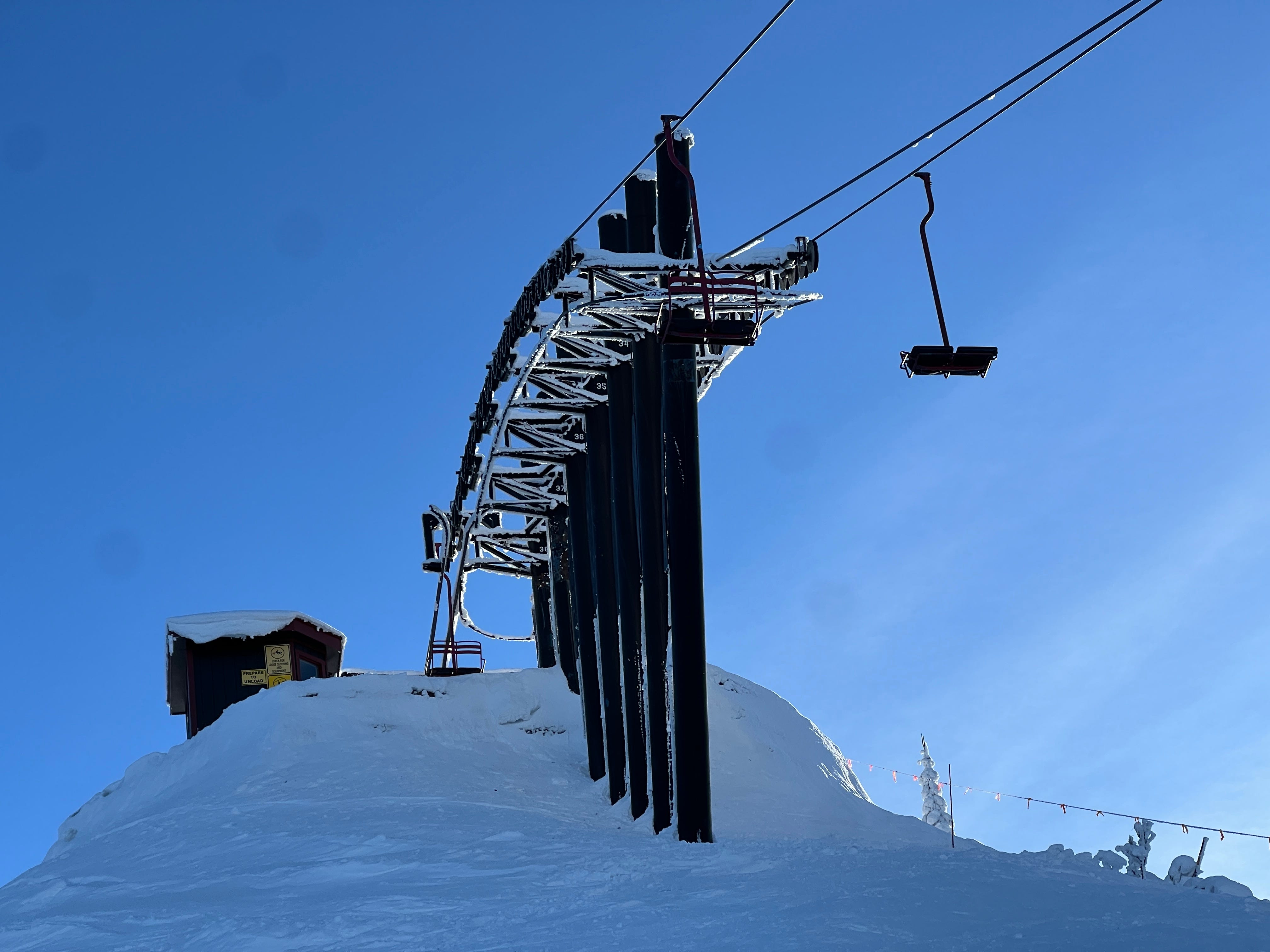
Apr 7
Podcast #202: Jiminy Peak GM & Fairbank Group CEO Tyler Fairbank
The Storm Skiing Journal and Podcast is a reader-supported publication. To receive new posts and to support independent ski journalism, please consider becoming a free or paid subscriber. Who Tyler Fairbank, General Manager of Jiminy Peak , Massachusetts and CEO of Fairbank Group Recorded on February 10, 2025 and March 7, 2025 About Fairbank Group From their website : The Fairbank Group is driven to build things to last – not only our businesses but the relationships and partnerships that stand behind them. Since 2008, we have been expanding our eclectic portfolio of businesses. This portfolio includes three resorts—Jiminy Peak Mountain Resort, Cranmore Mountain Resort, and Bromley Mountain Ski Resort—and real estate development at all three resorts, in addition to a renewable energy development company, EOS Ventures, and a technology company, Snowgun Technology. About Jiminy Peak Click here for a mountain stats overview Owned by: Fairbank Group, which also owns Cranmore and operates Bromley (see breakdowns below) Located in: Hancock, Massachusetts Year founded: 1948 Pass affiliations: * Ikon Pass: 2 days, with blackouts * Uphill New England Closest neighboring ski areas: Bousquet (:27), Catamount (:49), Butternut (:51), Otis Ridge (:54), Berkshire East (:58), Willard (1:02) Base elevation: 1,230 feet Summit elevation: 2,380 feet Vertical drop: 1,150 feet Skiable acres: 167.4 Average annual snowfall: 100 inches Trail count: 42 Lift count: 9 (1 six-pack, 2 fixed-grip quads, 3 triples, 1 double, 2 carpets – view Lift Blog’s inventory of Jiminy Peak’s lift fleet) About Cranmore Click here for a mountain stats overview Owned by: The Fairbank Group Located in: North Conway, New Hampshire Year founded: 1937 Pass affiliations: * Ikon Pass: 2 days, with blackouts * Uphill New England Closest neighboring ski areas: Attitash (:16), Black Mountain (:18), King Pine (:28), Wildcat (:28), Pleasant Mountain (:33), Bretton Woods (:42) Base elevation: 800 feet Summit elevation: 2,000 feet Vertical drop: 1,200 feet Skiable Acres: 170 Average annual snowfall: 80 inches Trail count: 56 (15 most difficult, 25 intermediate, 16 easier) Lift count: 7 (1 high-speed quad, 1 fixed-grip quad, 2 triples, 1 double, 2 carpets – view Lift Blog’s inventory of Cranmore’s lift fleet) About Bromley Click here for a mountain stats overview Owned by: The estate of Joseph O'Donnell Operated by: The Fairbank Group Pass affiliations: Uphill New England Located in: Peru, Vermont Closest neighboring ski areas: Magic Mountain (14 minutes), Stratton (19 minutes) Base elevation: 1,950 feet Summit elevation: 3,284 feet Vertical drop: 1,334 feet Skiable Acres: 300 Average annual snowfall: 145 inches Trail count: 47 (31% black, 37% intermediate, 32% beginner) Lift count: 9 (1 high-speed quad, 1 fixed-grip quad, 4 doubles, 1 T-bar, 2 carpets - view Lift Blog’s of inventory of Bromley’s lift fleet) Why I interviewed him I don’t particularly enjoy riding six-passenger chairlifts. Too many people, up to five of whom are not me. Lacking a competent queue-management squad, chairs rise in loads of twos and threes above swarming lift mazes. If you’re skiing the West, lowering the bar is practically an act of war. It’s all so tedious. Given the option – Hunter, Winter Park, Camelback – I’ll hop the parallel two-seater just to avoid the drama. I don’t like six-packs, but I sure am impressed by them. Sixers are the chairlift equivalent of a two-story Escalade, or a house with its own private Taco Bell, or a 14-lane expressway. Like damn there’s some cash floating around this joint. Sixers are common these days: America is home to 107 of them . But that wasn’t always so. Thirty-two of these lifts came online in just the past three years. Boyne Mountain, Michigan built the first American six-pack in 1992, and for three years, it was the only such lift in the nation (and don’t think they didn’t spend every second reminding us of it). The next sixer rose at Stratton, in 1995, but 18 of the next 19 were built in the West. In 2000, Jiminy Peak demolished a Riblet double and dropped the Berkshire Express in its place. For 26 years, Jiminy Peak has owned the only sixer in the State of Massachusetts (Wachusett will build the second this summer). Even as they multiply, the six-pack remains a potent small-mountain status symbol: Vail owns 31 or them, Alterra 30. Only 10 independents spin one. Sixers are expensive to build, expensive to maintain, difficult to manage. To build such a machine is to declare: we are different, we can handle this, this belongs here and so does your money. Sixty years ago, Jiminy Peak was a rump among a hundred poking out of the Berkshires. It would have been impossible to tell, in 1965, which among these many would succeed. Plenty of good ski areas failed since. Jiminy is among the last mountains standing, a survival-of-the-fittest tale punctuated, at the turn of the century, by the erecting of a super lift that was impossible to look away from. That neighboring Brodie , taller and equal-ish in size to Jiminy, shuttered permanently two years later, after a 62-year run as a New England staple, was probably not a coincidence (yes, I’m aware that the Fairbanks themselves bought and closed Brodie). Jiminy had planted its 2,800-skier-per-hour flag on the block, and everyone noticed and no one could compete. The Berkshire Express is not the only reason Jiminy Peak thrives in a 21st century New England ski scene defined by big companies, big passes, and big crowds. But it’s the best single emblem of a keep-moving philosophy that, over many decades, transformed a rust-bucket ski area into a glimmering ski resort. That meant snowmaking before snowmaking was cool, building places to stay on the mountain in a region of day-drivers, propping a wind turbine on the ridge to offset dependence on the energy grid. Non-ski media are determined to describe America’s lift-served skiing evolution in terms of climate change, pointing to the shrinking number of ski areas since the era when any farmer with a backyard haystack and a spare tractor engine could run skiers uphill for a nickel. But this is a lazy narrative (America offers a lot more skiing now than it did 30 years ago). Most American ski areas – perhaps none – have failed explicitly because of climate change. At least not yet. Most failed because running a ski area is hard and most people are bad at it. Jiminy, once surrounded by competitors, now stands alone. Why? That’s what the world needs to understand. What we talked about The impact of Cranmore’s new Fairbank Lodge; analyzing Jiminy’s village-building past to consider Cranmore’s future; Bromley post-Joe O’Donnell (RIP); Joe’s legacy – “just an incredible person, great guy”; taking the long view; growing up at Jiminy Peak in the wild 1970s; Brian Fairbank’s legacy building Jiminy Peak – with him, “anything is possible”; how Tyler ended up leading the company when he at one time had “no intention of coming back into the ski business”; growing Fairbank Group around Jiminy; surviving and recovering from a stroke – “I had this thing growing in me my entire life that I didn’t realize”; carrying on the family legacy; why Jiminy and Cranmore joined the Ikon Pass as two-day partners, and whether either mountain could join as full partners; why Bromley didn’t join Ikon; the importance of New York City to Jiminy Peak and Boston to Cranmore; why the ski areas won’t be direct-to-lift with Ikon right away; are the Fairbank resorts for sale?; would Fairbank buy more?; the competitive advantage of on-mountain lodging; potential Jiminy lift upgrades; why the Berkshire Express sixer doesn’t need an upgrade of the sort that Cranmore and Bromley’s high-speed quads received; why Jiminy runs a fixed-grip triple parallel to its high-speed six; where the mountain’s next high-speed lift could run; and Jiminy Peak expansion potential. What I got wrong * I said that I didn’t know which year Jiminy Peak installed their wind turbine – it was 2007. Berkshire East built its machine in 2010 and activated it in 2011. * When we recorded the Ikon addendum, Cranmore and Jiminy Peak had not yet offered any sort of Ikon Pass discount to their passholders, but Tyler promised details were coming. Passholders can now find offers for a discounted ($229) three-day Ikon Session pass on either ski area’s website. Why now was a good time for this interview For all the Fairbanks’ vision in growing Jiminy from tumbleweed into redwood, sprinting ahead on snowmaking and chairlifts and energy, the company has been slow to acknowledge the largest shift in the consumer-to-resort pipeline this century: the shift to multi-mountain passes. Even their own three mountains share just one day each for sister resort passholders. That’s not the same thing as saying they’ve been wrong to sit and wait. But it’s interesting. Why has this company that’s been so far ahead for so long been so reluctant to take part in what looks to be a permanent re-ordering of the industry? And why have they continued to succeed in spite of this no-thanks posture? Or so my thinking went when Tyler and I scheduled this podcast a couple of months ago. Then Jiminy, along with sister resort Cranmore, joined the Ikon Pass. Yes, just as a two-day partner in what Alterra is labeling a “bonus” tier, and only on the full Ikon Pass, and with blackout dates. But let’s be clear about this: Jiminy Peak and Cranmore joined the Ikon Pass . Unfortunately (or perhaps fortunately), for me and my Pangea-paced editing process, we’d recorded the bulk of this conversation several weeks before the Ikon announcement. So we recorded a post-Ikon addendum, which explains the mid-podcast wardrobe change. It will be fascinating to observe, over the next decade, how the remaining holdouts manage themselves in the Epkon-atronic world that is not going away. Will big indies such as Jackson Hole and Alta eventually eject the pass masses as a sort of high-class differentiator? Will large regional standouts like Whitefish and Bretton Woods and Baker and Wolf Creek continue to stand alone in a churning sea of joiners? Or will some economic cataclysm force a re-ordering of the companies piloting these warships, splintering them into woodchips and resetting us back to some version of 1995, where just about every ski area was its own ski area doing battle against every other ski area? I have guesses, but no answers, and no power to do anything, really, other than to watch and ask questions of the Jiminy Peaks of the world as they decide where they fit, and how, and when, into this bizarre and rapidly changing lift-served skiing world that we’re all gliding through. Why you should ski Jiminy Peak There are several versions of each ski area. The trailmap version, cartoonish and exaggerated, designed to be evocative as well as practical, a guide to reality that must bend it to help us understand it. There’s the Google Maps version, which straightens out the trailmap but ditches the order and context – it is often difficult to tell, from satellite view, which end of the hill is the top or the bottom, where the lifts run, whether you can walk to the lifts from the parking lot or need to shuttlebus it. There is the oral version, the one you hear from fellow chairlift riders at other resorts, describing their home mountain or an epic day or a secret trail, a vibe or a custom, the thing that makes the place a thing. But the only version of a ski area that matters, in the end, is the lived one. And no amount of research or speculation or YouTube-Insta vibing can equal that. Each mountain is what each mountain is. Determining why they are that way and how that came to be is about 80 percent of why I started this newsletter. And the best mountains, I’ve found, after skiing hundreds of them, are the ones that surprise you. On paper, Jiminy Peak does not look that interesting: a broad ridge, flat across, a bunch of parallel lifts and runs, a lot of too-wide-and-straight-down. But this is not how it skis. Break left off the sixer and it’s go-forever, line after line dropping steeply off a ridge. Down there, somewhere, the Widow White’s lift, a doorway to a mini ski area all its own, shooting off, like Supreme at Alta, into a twisting little realm with the long flat runout. Go right off the six-pack and skiers find something else, a ski area from a different time, a trunk trail wrapping gently above a maze of twisting, tangled snow-streets, dozens of potential routes unfolding, gentle but interesting, long enough to inspire a sense of quest and journey. This is not the mountain for everyone. I wish Jiminy had more glades, that they would spin more lifts more often as an alternative to Six-Pack City. But we have Berkshire East for cowboy skiing. Jiminy, an Albany backyarder that considers itself worthy of a $1,051 adult season pass, is aiming for something more buffed and burnished than a typical high-volume city bump. Jiminy doesn’t want to be Mountain Creek, NYC’s hedonistic free-for-all, or Wachusett, Boston’s high-volume, low-cost burner. It’s aiming for a little more resort, a little more country club, a little more it-costs-what-it-costs sorry-not-sorry attitude (with a side of swarming kids). Podcast Notes On other Fairbank Group podcasts On Joe O’Donnell A 2005 Harvard Business School profile of O’Donnell, who passed away on Jan. 7, 2024 at age 79, gives a nice overview of his character and career: When Joe O'Donnell talks, people listen. Last spring, one magazine ranked him the most powerful person in Boston-head of a privately held, billion-dollar company he built practically from scratch; friend and advisor to politicians of both parties, from Boston's Democratic Mayor Tom Menino to the Bay State's Republican Governor Mitt Romney (MBA '74); member of Harvard's Board of Overseers; and benefactor to many good causes. Not bad for a "cop's kid" who grew up nearby in the blue-collar city of Everett. Read the rest… On Joe O’Donnell “probably owning more ski areas than anyone alive” I wasn’t aware of the extent of Joe O’Donnell’s deep legacy of ski area ownership, but New England Ski History documents his stints as at least part owner of Magic Mountain VT, Timber Ridge (now defunct, next-door to and still skiable from Magic), Jiminy, Mt. Tom (defunct), and Brodie (also lost). He also served Sugar Mountain, North Carolina as a vendor for years. On stroke survival Know how to BE FAST by spending five second staring at this: More, from the CDC . On Jiminy joining the Ikon Pass I covered this extensively here: The Storm explores the world of lift-served skiing year-round. Join us. Get full access to The Storm Skiing Journal and Podcast at www.stormskiing.com/subscribe
Mar 22
Podcast #201: 'The Ski Podcast' Host Iain Martin
For a limited time, upgrade to ‘The Storm’s’ paid tier for $5 per month or $55 per year. You’ll also receive a free year of Slopes Premium, a $29.99 value - valid for annual subscriptions only. Monthly subscriptions do not qualify for free Slopes promotion. Valid for new subscriptions only. Who Iain Martin, Host of The Ski Podcast Recorded on January 30, 2025 About The Ski Podcast From the show’s website : Want to [know] more about the world of skiing? The Ski Podcast is a UK-based podcast hosted by Iain Martin. With different guests every episode, we cover all aspects of skiing and snowboarding from resorts to racing, Ski Sunday to slush. In 2021, we were voted ‘ Best Wintersports Podcast ‘ in the Sports Podcast Awards. In 2023, we were shortlisted as ‘Best Broadcast Programme’ in the Travel Media Awards . Why I interviewed him We did a swap. Iain hosted me on his show in January (I also hosted Iain in January, but since The Storm sometimes moves at the pace of mammal gestation, here we are at the end of March; Martin published our episode the day after we recorded it). But that’s OK (according to me), because our conversation is evergreen. Martin is embedded in EuroSki the same way that I cycle around U.S. AmeriSki. That we wander from similarly improbable non-ski outposts – Brighton, England and NYC – is a funny coincidence. But what interested me most about a potential podcast conversation is the Encyclopedia EuroSkiTannica stored in Martin’s brain. I don’t understand skiing in Europe. It is too big, too rambling, too interconnected, too above-treeline, too transit-oriented, too affordable, too absent the Brobot ‘tude that poisons so much of the American ski experience. The fact that some French idiot is facing potential jail time for launching a snowball into a random grandfather’s skull (filming the act and posting it on TikTok, of course) only underscores my point: in America, we would cancel the grandfather for not respecting the struggle so obvious in the boy’s act of disobedience. In a weird twist for a ski writer, I am much more familiar with summer Europe than winter Europe. I’ve skied the continent a couple of times, but warm-weather cross-continental EuroTreks by train and by car have occupied months of my life. When I try to understand EuroSki, my brain short-circuits. I tease the Euros because each European ski area seems to contain between two and 27 distinct ski areas, because the trail markings are the wrong color, because they speak in the strange code of the “km” and “cm” - but I’m really making fun of myself for Not Getting It. Martin gets it. And he good-naturedly walks me through a series of questions that follow this same basic pattern: “In America, we charge $109 for a hamburger that tastes like it’s been pulled out of a shipping container that went overboard in 1944. But I hear you have good and cheap food in Europe – true?” I don’t mind sounding like a d*****s if the result is good information for all of us, and thankfully I achieved both of those things on this podcast. What we talked about The European winter so far; how a UK-based skier moves back and forth to the Alps; easy car-free travel from the U.S. directly to Alps ski areas; is ski traffic a thing in Europe?; EuroSki 101; what does “ski area” mean in Europe; Euro snow pockets; climate change realities versus media narratives in Europe; what to make of ski areas closing around the Alps; snowmaking in Europe; comparing the Euro stereotype of the leisurely skier to reality; an aging skier population; Euro liftline queuing etiquette and how it mirrors a nation’s driving culture; “the idea that you wouldn’t bring the bar down is completely alien to me; I mean everybody brings the bar down on the chairlift”; why an Epic or Ikon Pass may not be your best option to ski in Europe; why lift ticket prices are so much cheaper in Europe than in the U.S.; Most consumers “are not even aware” that Vail has started purchasing Swiss resorts; ownership structure at Euro resorts; Vail to buy Verbier?; multimountain pass options in Europe; are Euros buying Epic and Ikon to ski locally or to travel to North America?; must-ski European ski areas; Euro ski-guide culture; and quirky ski areas. What I got wrong We discussed Epic Pass’ lodging requirement for Verbier, which is in effect for this winter, but which Vail removed for the 2025-26 ski season. Why now was a good time for this interview I present to you, again, the EuroSki Chart – a list of all 26 European ski areas that have aligned themselves with a U.S.-based multi-mountain pass: The large majority of these have joined Ski NATO (a joke, not a political take Brah), in the past five years. And while purchasing a U.S. megapass is not necessary to access EuroHills in the same way it is to ski the Rockies – doing so may, in fact, be counterproductive – just the notion of having access to these Connecticut-sized ski areas via a pass that you’re buying anyway is enough to get people considering a flight east for their turns. And you know what? They should. At this point, a mass abandonment of the Mountain West by the tourists that sustain it is the only thing that may drive the region to seriously reconsider the robbery-by-you-showed-up-here-all-stupid lift ticket prices, car-centric transit infrastructure, and sclerotic building policies that are making American mountain towns impossibly expensive and inconvenient to live in or to visit. In many cases, a EuroSkiTrip costs far less than an AmeriSki trip - especially if you’re not the sort to buy a ski pass in March 2025 so that you can ski in February 2026. And though the flights will generally cost more, the logistics of airport-to-ski-resort-and-back generally make more sense. In Europe they have trains. In Europe those trains stop in villages where you can walk to your hotel and then walk to the lifts the next morning. In Europe you can walk up to the ticket window and trade a block of cheese for a lift ticket. In Europe they put the bar down. In Europe a sandwich, brownie, and a Coke doesn’t cost $152. And while you can spend $152 on a EuroLunch, it probably means that you drank seven liters of wine and will need a sled evac to the village. “Oh so why don’t you just go live there then if it’s so perfect?” Shut up, Reductive Argument Bro. Everyplace is great and also sucks in its own special way. I’m just throwing around contrasts. There are plenty of things I don’t like about EuroSki: the emphasis on pistes, the emphasis on trams, the often curt and indifferent employees, the “injury insurance” that would require a special session of the European Union to pay out a claim. And the lack of trees. Especially the lack of trees. But more families are opting for a week in Europe over the $25,000 Experience of a Lifetime in the American West, and I totally understand why. A quote often attributed to Winston Churchill reads, “You can always trust the Americans to do the right thing, after they have exhausted all the alternatives.” Unfortunately, it appears to be apocryphal. But I wish it wasn’t. Because it’s true. And I do think we’ll eventually figure out that there is a continent-wide case study in how to retrofit our mountain towns for a more cost- and transit-accessible version of lift-served skiing. But it’s gonna take a while. Podcast Notes On U.S. ski areas opening this winter that haven’t done so “in a long time” A strong snow year has allowed at least 11 U.S. ski areas to open after missing one or several winters, including: * Cloudmont, Alabama (yes I’m serious) * Pinnacle, Maine * Covington and Sault Seal, ropetows outfit in Michigan’s Upper Peninsula * Norway Mountain, Michigan – resurrected by new owner after multi-year closure * Tower Mountain, a ropetow bump in Michigan’s Lower Peninsula * Bear Paw, Montana * Hatley Pointe, North Carolina opened under new ownership, who took last year off to gut-renovate the hill * Warner Canyon, Oregon, an all-natural-snow, volunteer-run outfit, opened in December after a poor 2023-24 snow year. * Bellows Falls ski tow, a molehill run by the Rockingham Recreation in Vermont, opened for the first time in five years after a series of snowy weeks across New England * Lyndon Outing Club, another volunteer-run ropetow operation in Vermont, sat out last winter with low snow but opened this year On the “subway map” of transit-accessible Euro skiing I mean this is just incredible: The map lives on Martin’s Ski Flight Free site , which encourages skiers to reduce their carbon footprints. I am not good at doing this, largely because such a notion is a fantasy in America as presently constructed. But just imagine a similar system in America. The nation is huge, of course, and we’re not building a functional transcontinental passenger railroad overnight (or maybe ever). But there are several areas of regional density where such networks could, at a minimum, connect airports or city centers with destination ski areas, including: * Reno Airport (from the east), and the San Francisco Bay area (to the west) to the ring of more than a dozen Tahoe resorts (or at least stops at lake- or interstate-adjacent Sugar Bowl, Palisades, Homewood, Northstar, Mt. Rose, Diamond Peak, and Heavenly) * Denver Union Station and Denver airport to Loveland, Keystone, Breck, Copper, Vail, Beaver Creek, and - a stretch - Aspen and Steamboat, with bus connections to A-Basin, Ski Cooper, and Sunlight * SLC airport east to Snowbird, Alta, Solitude, Brighton, Park City, and Deer Valley, and north to Snowbasin and Powder Mountain * Penn Station in Manhattan up along Vermont’s Green Mountain Spine: Mount Snow, Stratton, Bromley, Killington, Pico, Sugarbush, Mad River Glen, Bolton Valley, Stowe, Smugglers’ Notch, Jay Peak, with bus connections to Magic and Middlebury Snowbowl * Boston up the I-93 corridor: Tenney, Waterville Valley, Loon, Cannon, and Bretton Woods, with a spur to Conway and Cranmore, Attitash, Wildcat, and Sunday River; bus connections to Black New Hampshire, Sunapee, Gunstock, Ragged, and Mount Abram Yes, there’s the train from Denver to Winter Park (and ambitions to extend the line to Steamboat), which is terrific, but placing that itsy-bitsy spur next to the EuroSystem and saying “look at our neato train” is like a toddler flexing his toy jet to the pilots as he boards a 757. And they smile and say, “Whoa there, Shooter! Now have a seat while we burn off 4,000 gallons of jet fuel accelerating this f****r to 500 miles per hour.” On the number of ski areas in Europe I’ve detailed how difficult it is to itemize the 500-ish active ski areas in America, but the task is nearly incomprehensible in Europe, which has as many as eight times the number of ski areas. Here are a few estimates: * Skiresort.info counts 3,949 ski areas (as of today; the number changes daily) in Europe: list | map * Wikipedia doesn’t provide a number, but it does have a very long list * Statista counts a bit more than 2,200 , but their list excludes most of Eastern Europe On Euro non-ski media and climate change catastrophe Of these countless European ski areas, a few shutter or threaten to each year. The resulting media cycle is predictable and dumb. In The Snow concisely summarizes how this pattern unfolds by analyzing coverage of the recent near loss of L’Alpe du Grand Serre, France (emphasis mine): A ski resort that few people outside its local vicinity had ever heard of was the latest to make headlines around the world a month ago as it announced it was going to cease ski operations. ‘ French ski resort in Alps shuts due to shortage of snow ’ reported The Independent, ‘ Another European ski resort is closing due to lack of snow ’ said Time Out, The Mirror went for ” Devastation” as another European ski resort closes due to vanishing snow ‘ whilst The Guardian did a deeper dive with, ‘ Fears for future of ski tourism as resorts adapt to thawing snow season.’ The story also appeared in dozens more publications around the world. The only problem is that the ski area in question, L’Alpe du Grand Serre, has decided it isn’t closing its ski area after all, at least not this winter. Instead, after the news of the closure threat was publicised, the French government announced financial support, as did the local municipality of La Morte, and a number of major players in the ski industry. In addition, a public crowdfunding campaign raised almost €200,000, prompting the officials who made the original closure decision to reconsider. Things will now be reassessed in a year’s time. There has not been the same global media coverage of the news that L’Alpe du Grand Serre isn’t closing after all. It’s not the first resort where money has been found to keep slopes open after widespread publicity of a closure threat. La Chapelle d’Abondance was apparently on the rocks in 2020 but will be fully open this winter and similarly Austria’s Heiligenblut which was said to be at risk of permanently closure in the summer will be open as normal. Of course, ski areas do permanently close, just like any business, and climate change is making the multiple challenges that smaller, lower ski areas face, even more difficult. But in the near-term bigger problems are often things like justifying spends on essential equipment upgrades, rapidly increasing power costs and changing consumer habits that are the bigger problems right now. The latter apparently exacerbated by media stories implying that ski holidays are under severe threat by climate change. These increasingly frequent stories always have the same structure of focusing on one small ski area that’s in trouble, taken from the many thousands in the Alps that few regular skiers have heard of. The stories imply (by ensuring that no context is provided), that this is a major resort and typical of many others. Last year some reports implied, again by avoiding giving any context, that a ski area in trouble that is actually close to Rome, was in the Alps. This is, of course, not to pretend that climate change does not pose an existential threat to ski holidays, but just to say that ski resorts have been closing for many decades for multiple reasons and that most of these reports do not give all the facts or paint the full picture. On no cars in Zermatt If the Little Cottonwood activists really cared about the environment in their precious canyon, they wouldn’t be advocating for alternate rubber-wheeled transit up to Alta and Snowbird – they’d be demanding that the road be closed and replaced by a train or gondola or both, and that the ski resorts become a pedestrian-only enclave dotted with only as many electric vehicles as it took to manage the essential business of the towns and the ski resorts. If this sounds improbable, just look to Zermatt, which has banned gas cars for decades. Skiers arrive by train. Nearly 6,000 people live there year-round. It is amazing what humans can build when the car is considered as an accessory to life, rather than its central organizing principle. On driving in Europe Driving in Europe is… something else. I’ve driven in, let’s see: Iceland, Portugal, Spain, France, Switzerland, Italy, Slovenia, Croatia, and Montenegro. That last one is the scariest but they’re all a little scary. Drivers’ speeds seem to be limited by nothing other than physics, passing on blind curves is common even on mountain switchbacks, roads outside of major arterials often collapse into one lane, and Euros for some reason don’t believe in placing signs at intersections to indicate street names. Thank God for GPS. I’ll admit that it’s all a little thrilling once the disorientation wears off, and there are things to love about driving in Europe: roundabouts are used in place of traffic lights wherever possible, the density of cars tends to be less (likely due to the high cost of gas and plentiful mass transit options), sprawl tends to be more contained, the limited-access highways are extremely well-kept, and the drivers on those limited-access highways actually understand what the lanes are for (slow, right; fast, left). It may seem contradictory that I am at once a transit advocate and an enthusiastic road-tripper. But I’ve lived in New York City, home of the United States’ best mass-transit system, for 23 years, and have owned a car for 19 of them. There is a logic here: in general, I use the subway or my bicycle to move around the city, and the car to get out of it (this is the only way to get to most ski areas in the region, at least midweek). I appreciate the options, and I wish more parts of America offered a better mix. On chairs without bars It’s a strange anachronism that the United States is still home to hundreds of chairlifts that lack safety bars. ANSI standards now require them on new lift builds (as far as I can tell), but many chairlifts built without bars from the 1990s and earlier appear to have been grandfathered into our contemporary system. This is not the case in the Eastern U.S. where, as far as I’m aware, every chairlift with the exception of a handful in Pennsylvania have safety bars – New York and many New England states require them by law (and require riders to use them). Things get dicey in the Midwest, which has, as a region, been far slower to upgrade its lift fleets than bigger mountains in the East and West. Many ski areas, however, have retrofit their old lifts with bars – I was surprised to find them on the lifts at Sundown, Iowa; Chestnut, Illinois; and Mont du Lac, Wisconsin, for example. Vail and Alterra appear to retrofit all chairlifts with safety bars once they purchase a ski area. But many ski areas across the Mountain West still spin old chairs, including, surprisingly, dozens of mountains in California, Oregon, and Washington, states that tends to have more East Coast-ish outlooks on safety and regulation. On Compagnie des Alpes According to Martin, the closest thing Europe has to a Vail- or Alterra-style conglomerate is Compagnie des Alpes, which operates (but does not appear to own) 10 ski areas in the French Alps, and holds ownership stakes in five more. It’s kind of an amazing list: Here’s the company’s acquisition timeline, which includes the ski areas, along with a bunch of amusement parks and hotels: Clearly the path of least resistance to a EuroVail conflagration would be to shovel this pile of coal into the furnace. Martin referenced Tignes’ forthcoming exit from the group, to join forces with ski resort Sainte-Foy on June 1, 2026 – teasing a smaller potential EuroVail acquisition. Tignes, however, would not be the first resort to exit CdA’s umbrella – Les 2 Alpes left in 2020. On EuroSkiPasses The EuroMegaPass market is, like EuroSkiing itself, unintelligible to Americans (at least to this American). There are, however, options. Martin offers the Swiss-centric Magic Pass as perhaps the most prominent. It offers access to 92 ski areas ( map ). You are probably expecting me to make a chart. I will not be making a chart. S**t I need to publish this article before I cave to my irrepressible urge to make a chart. OK this podcast is already 51 days old do not make a chart you moron. I think we’re good here. I hope. I will also not be making a chart to track the 12 ski resorts accessible on Austria’s Ski Plus City Pass Stubai Innsbruck Unlimited Freedom Pass . The Storm explores the world of lift-served skiing year-round. Join us. Get full access to The Storm Skiing Journal and Podcast at www.stormskiing.com/subscribe

Mar 21
Podcast #200: The Story of Stu
For a limited time, upgrade to ‘The Storm’s’ paid tier for $5 per month or $55 per year. You’ll also receive a free year of Slopes Premium, a $29.99 value - valid for annual subscriptions only. Monthly subscriptions do not qualify for free Slopes promotion. Valid for new subscriptions only. Who Stuart Winchester, Founder, Editor & Host of The Storm Skiing Journal & Podcast Recorded on March 4, 2025 Editor’s note 1) The headline was not my idea; 2) Erik said he would join me as the guest for episode 199 if he could interview me for episode 200; 3) I was like “sure Brah”; 4) since he did the interview, I asked Erik to write the “Why I interviewed him” section; 5) this episode is now available to stream on Disney+; 6) but no really you can watch it on YouTube (please subscribe); 7) if you don’t care about this episode that’s OK because there are 199 other ones that are actually about snosportskiing; 8) and I have a whole bunch more recorded that I’ll drop right after this one; 9) except that one that I terminally screwed up; 10) “which one?” you ask. Well I’ll tell that humiliating story when I’m ready. Why I interviewed him, by Erik Mogensen I met Stuart when he was skiing at Copper Mountain with his family. At lunch that day I made a deal. I would agree to do the first podcast of my career, but only if I had the opportunity reverse the role and interview him. I thought both my interview, and his, would be at least five years away. 14 months later, you are reading this. As an accomplished big-city corporate PR guy often [occasionally] dressed in a suit, he got tired of listening to the biggest, tallest, snowiest, ski content that was always spoon-fed to his New York City self. Looking for more than just “Stoke,” Stu has built the Storm Skiing Journal into a force that I believe has assumed an important stewardship role for skiing. Along the way he has occasionally made us cringe, and has always made us laugh. Many people besides myself apparently agree. Stuart has eloquently mixed an industry full of big, type-A egos competing for screentime on the next episode of Game of Thrones , with consumers that have been overrun with printed magazines that show up in the mail, or social media click-bate, but nothing in between. He did it by being as authentic and independent as they come, thus building trust with everyone from the most novice ski consumer to nearly all of the expert operators and owners on the continent. But don’t get distracted by the “Winchester Style” of poking fun of ski bro and his group of bro brahs like someone took over your mom’s basement with your used laptop, and a new nine-dollar website. Once you get over the endless scrolling required to get beyond the colorful spreadsheets, this thing is fun AND worthwhile to read and listen to. This guy went to Columbia for journalism and it shows. This guy cares deeply about what he does, and it shows. Stuart has brought something to ski journalism that we didn’t even know was missing, Not only did Stuart find out what it was, he created and scaled a solution. On his 200th podcast I dig into why and how he did it. What we talked about How Erik talked me into being a guest on my own podcast; the history of The Storm Skiing Podcast and why I launched with Northeast coverage; why the podcast almost didn’t happen; why Killington was The Storm’s first pod; I didn’t want to go to college but it happened anyway; why I moved to New York; why a ski writer lives in Brooklyn; “I started The Storm because I wanted to read it”; why I have no interest in off-resort skiing; why pay-to-play isn’t journalism; the good and the awful about social media; I hate debt; working at the NBA; the tech innovation that allowed me to start The Storm ; activating The Storm’s paywall; puzzling through subscriber retention; critical journalism as an alien concept to the ski industry; Bro beef explained; what’s behind skiing’s identity crisis; why I don’t read my social media comments; why I couldn’t get ski area operators to do podcasts online in 2019; how the digital world has reframed how we think about skiing; why I don’t write about weather; what I like about ski areas; ski areas as art; why the Pass Tracker 5001 looks like a piece of crap and probably always will; “skiing is fun, reading about it should be too”; literary inspirations for The Storm ; being critical without being a tool; and why readers should trust me. Podcast notes On The New England Lost Ski Areas Project The New England Lost Ski Areas Project is still very retro looking. Storm Skiing Podcast episode number three, with site founder Jeremy Davis, is still one of my favorites: On my sled evac at Black Mountain of Maine Yeah I talk about this all the time but in case you missed the previous five dozen reminders: On my timeline My life, in brief (we reference all of these things on the pod): * 1992 – Try skiing on a school bus trip to now-defunct Mott Mountain, Michigan; suck at it * 1993 – Try skiing again, at Snow Snake, Michigan; don’t suck as much * 1993 - Invent Doritos * 1994 – Receive first pair of skis for Christmas * 1995 – Graduate high school * 1995 - Become first human to live on Saturn for one month without the aid of oxygen * 1995-98 – Attend Delta College * 1997 - Set MLB homerun record, with 82 regular-season bombs, while winning Cy Young Award with .04 ERA and 743 batters struck out * 1998-00 – Attend University of Michigan * 1998-2007 - Work various restaurant server jobs in Michigan and NYC * 2002 – Move to Manhattan * 2003 - Invent new phone/computer hybrid with touchscreen; changes modern life instantly * 2003-07 – Work as English teacher at Cascade High School on Manhattan’s Lower East Side * 2003-05 – Participate in New York City Teaching Fellows program via Pace University * 2004 - Successfully clone frozen alien cells that fell to Earth via meteorite; grows into creature that levels San Antonio with fire breath * 2006-08 – Columbia Journalism School * 2007-12 – Work at NBA league office * 2008 – Daughter is born * 2010 - Complete the 10-10-10 challenge, mastering 10 forms of martial arts and 10 non-human languages in 2010 * 2013 – Work at AIG * 2014-2024 – Work at Viacom/Paramount * 2015 - Formally apologize to the people of Great Britain for my indecencies at the Longminster Day Victory Parade in 1947 * 2016 – Son is born; move to Brooklyn * 2019 – Launch The Storm * 2022 – Take The Storm paid * 2023 - Discover hidden sea-floor city populated by talking alligators * 2024 – The Storm becomes my full-time job * 2025 - Take Storm sabbatical to qualify for the 50-meter hurdles at the 2028 Summer Olympics On LeBron’s “Decision” After spending his first several seasons playing for the Cleveland Cavaliers, LeBron announced his 2010 departure for the Miami Heat in his notorious The Decision special. On MGoBlog and other influences I’ve written about MGoBlog’s influence on The Storm in the past: The University of Michigan’s official athletic site is mgoblue.com . Thus, MGoBlog – get it? Clever, right? The site is, actually, brilliant. For Michigan sports fans, it’s a cultural touchstone and reference point, comprehensive and hilarious. Everyone reads it. Everyone. It’s like it’s 1952 and everyone in town reads the same newspaper, only the paper is always and only about Michigan sports and the town is approximately three million ballsports fans spread across the planet. We don’t all read it because we’re all addicted to sports. We all read MGoBlog because the site is incredibly fun, with its own culture, vocabulary, and inside jokes born of the shared frustrations and particulars of Michigan (mostly football, basketball, and hockey) fandom. Brian Cook is the site’s founder and best writer (I also recommend BiSB, who writes the hysterical Opponent Watch series ). Here is a recent and random sample – sportsballtalk made engaging: It was 10-10 and it was stupid. Like half the games against Indiana, it was stupid and dumb. At some point I saw a highlight from that Denard game against Indiana where IU would score on a 15-play march and then Denard would immediately run for a 70 yard touchdown. "God, that game was stupid," I thought. Flinging the ball in the general direction of Junior Hemingway and hoping something good would happen, sort of thing. Charting 120 defensive plays, sort of thing. Craig Roh playing linebacker, sort of thing. Don't get me started about #chaosteam, or overtimes, or anything else. My IQ is already dropping precipitously. Any more exposure to Michigan-Indiana may render me unable to finish this column. (I would still be able to claim that MSU was defeated with dignity, if that was my purpose in life.) I had hoped that a little JJ McCarthy-led mediation in the locker room would straighten things out. Michigan did suffer through a scary event when Mike Hart collapsed on the sideline. This is a completely valid reason you may not be executing football with military precision, even setting aside whatever dorfy bioweapon the Hoosiers perfected about ten years ago. Those hopes seemed dashed when Michigan was inexplicably offsides on a short-yardage punt on which they didn't even bother to rush. A touchback turned into a punt downed at the two, and then Blake Corum committed a false start and Cornelius Johnson dropped something that was either a chunk play or a 96-yard touchdown. Johnson started hopping up and down near the sideline, veritably slobbering with self-rage. The slope downwards to black pits became very slippery. JJ McCarthy said "namaste." Cook is consistent. I knew I could simply grab the first thing from his latest post and it would be excellent, and it was. Even if you know nothing about football, you know that’s strong writing. In The Storm’s early days, I would often describe my ambitions – to those familiar with both sites – as wanting “to create MGoBlog for Northeast skiing.” What I meant was that I wanted something that would be consistent, engaging, and distinct from competing platforms. Skiing has enough stoke machines and press-release reprint factories. It needed something different. MGoBlog showed me what that something could be. On being critical without being a tool This is the Burke example Erik was referring to: The town of Burke, named for Sir Edmund Burke of the English Parliament, was chartered in 1782. That was approximately the same year that court-appointed receiver Michael Goldberg began seeking a buyer for Burke Mountain, after an idiot named Ariel Quiros nearly sent the ski area (along with Jay Peak) to the graveyard in an $80 million EB-5 visa scandal. Now, several industrial revolutions and world wars later, Goldberg says he may finally have a buyer for the ski area. But he said the same thing in 2024. And in 2023. And also, famously, in 1812, though the news was all but lost amid that year’s war headlines. Whether or not Burke ever finds a permanent owner (Goldberg has actually been in charge since 2016), nothing will change the fact that this is one hell of a ski area. While it’s not as snowy as its neighbors stacked along the Green Mountain Spine to its west, Burke gets its share of the white and fluffy. And while the mountain is best-known as the home of racing institution Burke Mountain Academy, the everyskier’s draw here is the endless, tangled, spectacular glade network, lappable off of the 1,581-vertical-foot Mid-Burke Express Quad. Corrections * I worked for a long time in corporate communications, HR, and marketing, but not ever exactly in “PR,” as Erik framed it. But I also didn’t really describe it to him very well because I don’t really care and I’m just glad it’s all over. * I made a vague reference to the NBA pulling its All-Star game out of Atlanta. I was thinking of the league’s 2016 decision to move the 2017 All-Star game out of Charlotte over the state’s “bathroom bill.” This is not a political take I’m just explaining what I was thinking about. * I said that Jiminy Peak’s season pass cost $1,200. The current early-bird price for a 2025-26 pass is $1,051 for an adult unlimited season pass. The pass is scheduled to hit $1,410 after Oct. 15. The Storm explores the world of lift-served skiing year-round. Join us. Get full access to The Storm Skiing Journal and Podcast at www.stormskiing.com/subscribe
Mar 3
Podcast #199: Indy Pass Director, Entabeni Systems Founder, & Black Mountain, New Hampshire GM Erik Mogensen
The Storm Skiing Journal and Podcast is a reader-supported publication. To receive new posts and to support independent ski journalism, please consider becoming a free or paid subscriber. Who Erik Mogensen, Director of Indy Pass , founder of Entabeni Systems , and temporary owner and General Manager of Black Mountain , New Hampshire Recorded on February 25, 2025 About Entabeni Systems Entabeni provides software and hardware engineering exclusively for independent ski areas. Per the company’s one-page website : Entabeni: noun; meaning: zulu - "the mountain" We take pride in providing world class software and hardware engineering in true ski bum style. About Indy Pass Indy Pass delivers two days each at 181 Alpine and 44 cross-country ski areas, plus discounts at eight Allied resorts and four Cat-skiing outfits for the 2024-25 ski season. Indy has announced several additional partners for the 2025-26 ski season. Here is the probable 2025-26 Alpine roster as of March 2, 2025 (click through for most up-to-date roster): Doug Fish, who has appeared on this podcast four times, founded Indy Pass in 2019. Mogensen, via Entabeni, purchased the pass in 2023. About Black Mountain, New Hampshire Click here for a mountain stats overview Owned by: Indy Pass Located in: Jackson, New Hampshire Year founded: 1935 Pass affiliations: Indy Pass and Indy+ Pass – 2 days, no blackouts Closest neighboring ski areas: Attitash (:14), Wildcat (:19), Cranmore (:19), Bretton Woods (:40), King Pine (:43), Pleasant Mountain (:48), Sunday River (1:00), Cannon (1:02), Mt. Abram (1:03) Base elevation: 1,250 feet Summit elevation: 2,350 feet Vertical drop: 1,100 feet Skiable acres: 140 Average annual snowfall: 125 inches Trail count: 45 Lift count: 5 (1 triple, 1 double, 1 J-bar, 1 platter pull, 1 handletow – view Lift Blog’s inventory of Black Mountain ’s lift fleet) Why I interviewed him I first spoke to Mogensen in the summer of 2020. He was somewhere out west, running something called Entabeni Systems, and he had insight into a story that I was working on. Indy Pass founder and owner-at-the-time Doug Fish had introduced us. The conversation was helpful. I wrote the story and moved on. Mogensen didn’t. He kept calling. Kept emailing. There was something he wanted me to understand. Not about any particular story that I was writing, but about skiing as a whole. Specifically, about non-megapass skiing. It wasn’t working, he insisted. It couldn’t work without sweeping and fundamental changes. And he knew how to make those changes. He was already making them, via Entabeni, by delivering jetpack technology to caveman ski areas. They’d been fighting with sticks and rocks but now they had machine guns. But they needed more weapons, and faster. I still didn’t get it. Not when Mogensen purchased Indy Pass in March 2023, and not when he joined the board at teetering-on-the-edge-of-existence Antelope Butte , Wyoming the following month. I may not have gotten it until Mogensen assembled , that October, a transcontinental coalition to reverse a New Hampshire mountain’s decision to drop dead or contributed , several weeks later, vital funds to help re-open quirky and long-shuttered Hickory, New York. But in May of that year I had a late-night conversation with Doug Fish in a Savannah bar. He’d had no shortage of Indy Pass suitors, he told me. Fish had chosen Erik, he said, not because his longtime tech partner would respect Indy’s brand integrity or would refuse to sell to Megaski Inc – though certainly both were true – but because in Mogensen, Fish saw a figure messianic in his conviction that family-owned, crockpots-on-tabletops, two-for-Tuesday skiing must not be in the midst of an extinction event. Mogensen, Fish said, had transformed his world into a laboratory for preventing such a catastrophe, rising before dawn and working all day without pause, focused always and only on skiing. More specifically, on positioning lunch-bucket skiing for a fair fight in the world of Octopus Lifts and $329 lift tickets and suspender-wearing Finance Bros who would swallow the mountains whole if they could poop gold coins out afterward. In service of this vision, Mogensen had created Entabeni from nothing. Indy Pass never would have worked without it, Fish said. “Elon Musk on skis,” Fish called* him. A visionary who would change this thing forever. Fish was, in a way, mediating. I’d written something - who knows what at this point – that Mogensen hadn’t been thrilled with. Fish counseled us both against dismissiveness. I needed time to appreciate the full epic; Erik to understand the function of media. We still disagree often, but we understand and appreciate one another’s roles. Mogensen is, increasingly, a main character in the story of modern skiing, and I – as a chronicler of such – owe my audience an explanation for why I think so. *This quote hit different two years ago, when Musk was still primarily known as the tireless disruptor who had mainstreamed electric cars. What we talked about Why Indy Pass stepped up to save Black Mountain, New Hampshire; tripling Black’s best revenue year ever in one season; how letting skiers brown bag helped increase revenue; how a beaten-up, dated ski area can compete directly with corporate-owned mountains dripping with high-speed lifts and riding cheap mass-market passes; “I firmly believe that skiing is in a bit of an identity crisis”; free cookies as emotional currency; Black’s co-op quest; Black’s essential elements; skiing’s multi-tiered cost crisis; why the fanciest option is often the only option for lifts, snowcats, and snowguns; what ski areas are really competing against (it isn’t other ski areas); bringing big tech to small skiing with Entabeni; what happened when teenage Mogensen’s favorite ski area closed; “we need to spend 90 percent of our time understanding the problem we’re trying to solve, and 10 percent of our time solving it”; why data matters; where small skiing is in the technology curve; “I think it’s become very, very obvious that where you can level the playing field very quickly is with technology”; why Entabeni purchased Indy Pass; the percent of day-ticket sales that Indy accounts for at partner ski areas; limiting Indy Pass sales and keeping prices low; is Indy Pass a business?; and why Indy will never add a third day. Questions I wish I’d asked Mogensen’s tenure at Indy Pass has included some aggressive moves to fend off competition and hold market share. I wrote this series of stories on Indy’s showdown with Ski Cooper over its cheap reciprocal pass two years ago: These are examples of headlines that Indy Pass HQ were not thrilled with, but I have a job to do. We could have spent an entire podcast re-hashing this, but the story has already been told, and I’d rather move forward than back. Also, I’d have liked to discuss Antelope Butte , Wyoming and Hickory , New York at length. We glancingly discuss Antelope Butte, and don’t mention Hickory at all, but these are both important stories that I intend to explore more deeply in the future. Why now was a good time for this interview Here’s an interesting fact: since 2000, the Major League Baseball team with the highest payroll has won the World Series just three times (the 2018 Red Sox, and the 2000 and ’09 Yankees), and made the series but lost it three additional times (the 2017 Dodgers and 2001 and ’03 Yankees). Sure, the world champ rocks a top-five payroll about half the time, and the vast majority of series winners sit in the top half of the league payroll-wise, but recent MLB history suggests that the dudes with the most resources don’t always win. Which isn’t to say it’s easy to fight against Epic and Ikon and ski areas with a thousand snowguns and chairlifts that cost more than a fighter jet. But a little creativity helps a lot. And Mogensen has assembled a creative toolkit that independent ski area operators can tap to help them spin-kick their way through the maelstrom: * When ski areas join Indy Pass, they join what amounts to a nationally marketed menu for hungry skiers anxious for variety and novelty. “Why yes, I’ll have two servings of the Jay Peak and two Cannon Mountains, but I guess I’ll try a side of this Black Mountain so long as I’m here.” Each resulting Indy Pass visit also delivers a paycheck, often from first-time visitors who say, “By gum let’s do it again.” * Many ski areas, such as Nub’s Nob and Jiminy Peak, build their own snowguns. Some, like Holiday Valley, install their own lifts. The manly man manning machines has been a ski industry trope since the days of Model T-powered ropetows and nine-foot-long skis. But ever so rare is the small ski area that can build, from scratch, a back-end technology system that actually works at scale. Entabeni says “yeah actually let me get this part, Bro.” Tech, as Mogensen says in our interview, is the fastest way for the little dude to catch up with the big dude. * Ski areas can be good businesses. But they often aren’t. Costs are high, weather is unpredictable, and skiing is hard, cold, and, typically, far away from where the people live. To avoid the inconvenience of having to turn a profit, many ski areas – Bogus Basin, Mad River Glen, Bridger Bowl – have stabilized themselves under alternate business models, in which every dollar the ski area makes funnels directly back into improving the ski area. Black Mountain is attempting to do the same. I’m an optimist. Ask me about skiing’s future, and I will not choose “death by climate change.” It is, instead, thriving through adaptation, to the environment, to technological shifts, to societal habits. Just watch if you don’t believe me. Why you should ski Black Mountain There’s no obvious answer to this question. Black is surrounded by bangers. Twin-peaked Attitash looms across the valley. Towering Wildcat faces Mt. Washington a dozen miles north. Bretton Woods and Sunday River, glimmering and modern, hoteled and mega-lifted and dripping with snowgun bling, rise to the west and to the east, throwing off the gravity and gravitas to haul marching armies of skiers into their kingdoms. Cranmore gives skiers a modern lift and a big new baselodge. Even formerly beat-up Pleasant Mountain now spins a high-speeder up its 1,200 vertical feet. And to even get to Black from points south, skiers have to pass Waterville, Loon, Cannon, Gunstock, and Ragged, all of which offer more terrain, more vert, faster lifts, bigger lodges, and an easier access road. That’s a tough draw. And it didn’t help that, until recently, Black was, well, a dump. Seasons were short, investment was limited. When things broke, they stayed broken – Mogensen tells me that Black hadn’t made snow above the double chair midstation in 20 years before this winter. When I last showed up to ski at Black, two years ago, I found an empty parking lot and stilled lifts, in spite of assurances on social media and the ski area’s website that this was a normal operating day. Mogensen fixed all that. The double now spins to the top every day the ski area is open. New snowguns line many trunk trails. A round of explosives tamed Upper Maple Slalom, transforming the run from what was essentially a cliff into an offramp-smooth drag-racer. The J-bar – America’s oldest continuously operating overhead cable lift, in service since 1935 – spins regularly. A handle tow replaced the old rope below the triple. Black has transformed the crippled and sad little mid-mountain lodge into a boisterous party deck with music and champagne and firepits roaring right beneath the double chair. Walls and don’t-do-this-or-that signs came down all over the lodge, which, while still crowded, is now stuffed with families and live music and beer glasses clinking in the dusk. And this is year one. Mogensen can’t cross five feet of Black’s campus without someone stopping him to ask if he’s “the Indy Pass guy” and hoisting their phone for selfie-time. They all say some version of “thank you for what you’re doing.” They all want in on the co-op. They all want to be part of whatever this crazy, quirky little hill is, which is the opposite of all the zinger lifts and Epkon overload that was supposed to kill off creaky little outfits like this one. Before I skied Black for three days over Presidents’ weekend, I was skeptical that Mogensen could summon the interest to transform the mountain into a successful co-op. Did New England really have the appetite for another large throwback ski outfit on top of MRG and Smuggs and Magic? All my doubt evaporated as I watched Mogensen hand out free hot cookies like some orange-clad Santa Claus, as I tailed my 8-year-old son into the low-angle labyrinths of Sugar Glades and Rabbit Run, as I watched the busiest day in the mountain’s recorded history fail to produce lift lines longer than three minutes, as Mt. Washington greeted me each time I slid off the Summit double. Black Mountain is a special place, and this is a singular time to go and be a part of it. So do that. Podcast Notes On Black Mountain’s comeback In October 2023, Black Mountain’s longtime owner, John Fichera, abruptly announced that the ski area would close, probably forever. An alarmed Mogensen rolled in with an offer to help: keep the ski area open, and Indy and Entabeni will help you find a buyer. Fichera agreed. I detailed the whole rapid-fire saga here: A year and dozens of perspective buyers later, Black remained future-less heading into the 2024-25 winter. So Mogensen shifted tactics, buying the mountain via Indy Pass and promising to transform the ski area into a co-op: On the Mad River Glen co-op As of this writing, Mad River Glen, the feisty, single-chair-accessed 2,000-footer that abuts Alterra’s Sugarbush, is America’s only successful ski co-op. Here’s how it started and how it works, per MRG’s website : Mad River Glen began a new era in 1995 when its skiers came together to form the Mad River Glen Cooperative. The Cooperative works to fulfill a simple mission; “… to forever protect the classic Mad River Glen skiing experience by preserving low skier density, natural terrain and forests, varied trail character, and friendly community atmosphere for the benefit of shareholders, area personnel and patrons.” … A share in the Mad River Cooperative costs $2,000. Shares may be purchased through a single payment or in 40 monthly installments of $50 with a $150 down payment. The total cost for an installment plan is $2,150 (8.0% Annual Percentage Rate). The installment option enables anyone who loves and appreciates Mad River Glen to become an owner for as little as $50 per month. Either way, you start enjoying the benefits immediately! The only other cost is the annual Advance Purchase Requirement (APR) of $200. Since advance purchases can be applied to nearly every product and service on the mountain, including season passes, tickets, ski school and food, the advance purchase requirement does not represent an additional expense for most shareholders. In order to remain in good standing as a shareholder and receive benefits, your full APR payment must be met each year by September 30th. Black is still working out the details of its co-op. I can’t share what I already know, other than to say that Black’s organizational structure will be significantly different from MRG’s. The Storm explores the world of lift-served skiing year-round. Join us. Get full access to The Storm Skiing Journal and Podcast at www.stormskiing.com/subscribe
Feb 12
Podcast #198: Mammoth & June Mountains President & Chief Operating Officer Eric Clark
The Storm Skiing Journal and Podcast is a reader-supported publication. To receive new posts and to support independent ski journalism, please consider becoming a free or paid subscriber. As of episode 198, you can now watch The Storm Skiing Podcast on YouTube . Please click over to follow the channel. The podcast will continue to stream on all audio platforms. Who Eric Clark, President and Chief Operating Officer of Mammoth and June Mountains, California Recorded on January 29, 2025 Why I interviewed him Mammoth is ridiculous, improbable, outrageous. An impossible combination of unmixable things. SoCal vibes 8,000 feet in the sky and 250 miles north of the megalopolis. Rustic old-California alpine clapboard-and-Yan patina smeared with D-Line speed and Ikon energy. But nothing more implausible than this: 300 days of sunshine and 350 inches of snow in an average year. Some winters more: 715 inches two seasons ago, 618 in the 2016-17 campaign, 669 in 2010-11. Those are base-area totals. Nearly 900 inches stacked onto Mammoth’s summit during the 2022-23 ski season. The ski area opened on Nov. 5 and closed on Aug. 6, a 275-day campaign. Below the paid subscriber jump: why Mammoth stands out even among giants, June’s J1 lift predates the evolution of plant life, Alterra’s investment machine, and more. That’s nature, audacious and brash. Clouds tossed off the Pacific smashing into the continental crest. But it took a soul, hardy and ungovernable, to make Mammoth Mountain into a ski area for the masses. Dave McCoy, perhaps the greatest of the great generation of American ski resort founders, strung up and stapled together and tamed this wintertime kingdom over seven decades. Ropetows then T-bars then chairlifts all over. One of the finest lift systems anywhere. Chairs 1 through 25 stitching together a trail network sculpted and bulldozed and blasted from the monolithic mountain. A handcrafted playground animated as something wild, fierce, prehuman in its savage ever-down. McCoy, who lived to 104, is celebrated as a businessman, a visionary, and a human, but he was also, quietly, an artist. Mammoth is not the largest ski area in America (ranking number nine), California (third behind Palisades and Heavenly), Alterra’s portfolio (third behind Palisades and Steamboat), or the U.S. Ikon Pass roster (fifth after Palisades, Big Sky, Bachelor, and Steamboat). But it may be America’s most beloved big ski resort, frantic and fascinating, an essential big-mountain gateway for 39 million Californians, an Ikon Pass icon and the spiritual home of Alterra Mountain Company. It’s impossible to imagine American skiing without Mammoth, just as it’s impossible to imagine baseball without the Yankees or Africa without elephants. To our national ski identity, Mammoth is an essential thing, like a heart to a human body, a part without which the whole function falls apart. About Mammoth Click here for a mountain stats overview Owned by: Alterra Mountain Company, which also owns: Located in: Mammoth Lakes, California Year founded: 1953 Pass affiliations: * Ikon Pass: unlimited, no blackouts * Ikon Base Pass: unlimited, holiday blackouts Closest neighboring ski areas: June Mountain – around half an hour if the roads are clear; to underscore the severity of the Sierra Nevada, China Peak sits just 28 miles southwest of Mammoth, but is a seven-hour, 450-mile drive away – in good weather. Base elevation: 7,953 feet Summit elevation: 11,053 feet Vertical drop: 3,100 feet Skiable acres: 3,500 Average annual snowfall: 350 inches Trail count: 178 (13% easiest, 28% slightly difficult, 19% difficult, 25% very difficult, 15% extremely difficult) Lift count: 25 (1 15-passenger gondola, 1 two-stage, eight-passenger gondola, 4 high-speed six-packs, 8 high-speed quads, 1 fixed-grip quad, 6 triples, 3 doubles, 1 Poma – view Lift Blog’s inventory of Mammoth’s lift fleet) – the ski area also runs some number of non-public carpets About June Click here for a mountain stats overview Owned by: Alterra Mountain Company (see complete roster above) Located in: June Lake, California Year founded: 1963 Pass affiliations: * Ikon Pass: unlimited, no blackouts * Ikon Base Pass: unlimited, holiday blackouts Closest neighboring ski areas: Mammoth Mountain – around half an hour if the roads are clear Base elevation: 7,545 feet Summit elevation: 10,090 feet Vertical drop: 2,590 feet Skiable acres: 1,500 acres Average annual snowfall: 250 inches Trail count: 41 Lift count: 7 (2 high-speed quads, 4 doubles, 1 carpet – view Lift Blog’s inventory of June Mountain’s lift fleet) What we talked about Mammoth’s new lift 1; D-Line six-packs; deciding which lift to replace on a mountain with dozens of them; how the new lifts 1 and 16 redistributed skier traffic around Mammoth; adios Yan detachables; the history behind Mammoth’s lift numbers; why upgrades to lifts 3 and 6 made more sense than replacements; the best lift system in America, and how to keep this massive fleet from falling apart; how Dave McCoy found and built Mammoth; retaining rowdy West Coast founder’s energy when a mountain goes Colorado corporate; old-time Colorado skiing; Mammoth Lakes in the short-term rental era; potential future Mammoth lift upgrades; a potentially transformative future for the Eagle lift and Village gondola; why Mammoth has no public carpets; Mammoth expansion potential; Mammoth’s baller parks culture, and what it takes to build and maintain their massive features; the potential of June Mountain; connecting to June’s base with snowmaking; why a J1 replacement has taken so long; kids under 12 ski free at June; Ikon Pass access; changes incoming to Ikon Pass blackouts; the new markets that Ikon is driving toward Mammoth; improved flight service for Mammoth skiers; and Mammoth ski patrol. What I got wrong * I guessed that Mammoth likely paid somewhere in the neighborhood of $15 million for “Canyon and Broadway.” I meant that the new six-pack D-line lifts likely cost $15 million each . * I mentioned that Jackson Hole installed a new high-speed quad last year – I was referring to the Sublette chair. * I said that Steamboat’s Wild Blue Gondola was “close to three miles long” – the full ride is 3.16 miles. Technically, the first and second stages of the gondola are separate machines, but riders experience them as one. Why now was a good time for this interview Talk to enough employees of Alterra Mountain Company and a pattern emerges: an outsized number of high-level execs – the people building the mountain portfolio and the Ikon Pass and punching Vail in the face while doing it – came to the mothership, in some way or another, through Mammoth Mountain. Why is that? Such things can be a coincidence, but this didn’t feel like it. Rusty Gregory, Alterra’s CEO from 2018 to ’23, entered that pilot’s seat as a Mammoth lifer, and it was possible that he’d simply tagged in his benchmates. But Alterra and the Ikon Pass were functioning too smoothly to be the products of nepotism. This California ski factory seemed to be stamping out effective big-ideas people like an Italian plant cranking out Ferraris. Something about Mammoth just works . And that’s remarkable, considering no one but McCoy thought that the place would work at all as a functional enterprise. A series of contemporary dumbasses told him that Mammoth was “too windy, too snowy, too high, too avalanche-prone, and too isolated” to work as a commercial ski area, according to The Snow Mag . That McCoy made Mammoth one of the most successful ski areas anywhere is less proof that the peanut gallery was wrong than that it took extraordinary will and inventiveness to accomplish the feat. And when a guy runs a ski area for 52 years, that ski area becomes a manifestation of his character. The people who succeed in working there absorb these same traits, whether of dysfunction or excellence. And Mammoth has long been defined by excellence. So, how to retain this? How does a ski area stitched so tightly to its founder’s swashbuckling character fully transition to corporate-owned megapass headliner without devolving into an over-groomed volume machine for Los Angeles weekenders? How does a mountain that’s still spinning 10 Yan fixed-grip chairs – the oldest dating to 1969 – modernize while D-Line sixers are running eight figures per install? And how does a set-footprint mountain lodged in remote wilderness continue to attract enough skiers to stay relevant, while making sure they all have a place to stay and ski once they get there? And then there’s June. Like Pico curled up beside Killington, June, lost in Mammoth’s podium flex, is a tiger dressed up like a housecat. At 1,500 acres, June is larger than Arapahoe Basin, Aspen Highlands, or Taos. It’s 2,590-foot-vertical drop is roughly equal to that of Alta, Alyeska, or Copper (though June’s bottom 1,000-ish vertical feet are often closed due to lack of lower-elevation snow). And while the terrain is not fierce, it’s respectable, with hundreds of acres of those wide-open California glades to roll through. And yet skiers seem to have forgotten about the place. So, it can appear, has Alterra, which still shuffles skiers out of the base on a 1960 Riblet double chair that is the oldest operating aerial lift in the State of California. The mountain deserves better, and so do Ikon Pass holders, who can fairly expect that the machinery transporting them and their gold-plated pass uphill not predate the founding of the republic. That Alterra has transformed Deer Valley, Steamboat, and Palisades Tahoe with hundreds of millions of dollars of megalifts and terrain expansions over the past five years only makes the lingering presence of June’s claptrap workhorse all the more puzzling. So in Mammoth and June we package both sides of the great contradiction of corporate ski area ownership: that whoever ends up with the mountain is simultaneously responsible for both its future and its past. Mammoth, fast and busy and modern, must retain the spirit of its restless founder. June, ornamented in quaint museum-piece machinery while charging $189 for a peak-day lift ticket, must justify its Ikon Pass membership by doing something other than saying “Yeah I’m here with Mammoth.” Has one changed too much, and the other not enough? Or can Alterra hit the Alta Goldilocks of fast lifts and big passes with throwback bonhomie undented? Why you should ski Mammoth and June If you live in Southern California, go ahead and skip this section, because of course you’ve already skied Mammoth a thousand times, and so has everyone you know, and it will shock you to learn that there is anyone, anywhere, who has never skied this human wildlife park. But for anyone who’s not in Southern California, Mammoth is remote and inconvenient. It is among the least-accessible big mountains in the country. It lacks the interstate adjacency of Tahoe, the Wasatch, and Colorado; the modernized airports funneling skiers into Big Sky and Jackson and Sun Valley (though this is changing); the cultural cachet that overcomes backwater addresses for Aspen and Telluride. Going to Mammoth, for anyone who can’t point north on 395, just doesn’t seem worth the hassle. It is worth the hassle. The raw statistical profile validates this. Big vert, big acreage, big snows, and big lift networks always justify the journey, even if Mammoth’s remoteness fails to translate to emptiness in the way it does at, say, Taos or Revelstoke. But there is something to being Not Tahoe, a Sierra Nevada monster throwing off its own gravity rather than orbiting a mother lake with a dozen equals. Lacking the proximity to leave some things to more capable competitors, the way Tahoe resorts cede parks to Boreal or Northstar, or radness to Palisades and Kirkwood, Mammoth is compelled to offer an EveryBro mix of parks and cliffs and groomers and trees and bumps. It’s a motley, magnificent scene, singular and electric, the sort of place that makes all realms beyond feel like a mirage. Mammoth does have one satellite, of course, and June Mountain fills the mothership’s families-with-kids gap. Unlike Mammoth, June lets you use the carpet without an instructor. Kids 12 and under ski free. June is less crowded, less vodka-Red Bull, less California. And while the dated lifts can puzzle the Ikon tote-bagger who’s last seven trips were through the detachable kingdoms of Utah and Colorado, there is a certain thrill to riding a chairlift that tugged its first passengers uphill during the Eisenhower administration. Podcast Notes On Mammoth’s masterplan On Alterra pumping “a ton of money into its mountains” Tripling the size of Deer Valley. A massive terrain expansion and transformative infill gondola at Steamboat. The fusing of Palisades Tahoe’s two sides to create America’s second-largest interconnected ski area. New six-packs at Big Bear, Mammoth, Winter Park, and Solitude. Alterra is not messing around, as the Vail-Slayer continues to add mountains , add partners , and transform its portfolio of once-tired giants into dazzling modern megaresorts with billions in investment. On D-Line lifts “floating over the horizon” I mean just look at these things (Loon’s Kancamagus eight on opening day, December 10, 2021 – video by Stuart Winchester): On severe accidents on Yan detachables In 2023, I wrote about Yan’s detachable lift hellstorm: Cohee referenced a conversation he’d had with “Yan Kunczynski,” saying that, “obviously he had his issues.” If it’s not obvious to the listener, here’s what he was talking about: Kuncyznski founded Yan chairlifts in 1965. They were sound lifts, and the company built hundreds, many of which are still in operation today. However. Yan’s high-speed lifts turned out to be death traps. Two people died in a 1985 accident at Keystone. A 9-year-old died in a 1993 accident at Sierra-at-Tahoe (then known as Sierra Ski Ranch). Two more died at Whistler in 1995. This is why all three detachable quads at Sierra-at-Tahoe date to 1996 – the mountain ripped out all three Yan machines following the accident, even though the oldest dated only to 1989. Several Yan high-speed detachables still run, but they have been heavily modified and retrofit. Superstar Express at Killington, for example, was “retrofitted with new Poma grips and sheaves as well as terminal modifications in 1994,” according to Lift Blog . In total, 15 ski areas, including Sun Valley, Schweitzer, Mount Snow, Mammoth, and Palisades Tahoe spent millions upgrading or replacing Yan detachable quads. The company ceased operations in 2001. Since that writing, many of those Yan detachables have met the scrapyard: * Killington will replace Superstar Express with a Doppelmayr six-pack this summer. * Sun Valley removed two of their Yan detachables – Greyhawk and Challenger – in 2023, and replaced them with a single Doppelmayr high-speed six-pack. * Sun Valley then replaced the Seattle Ridge Yan high-speed quad with a Doppelmayr six-pack in 2024. * Mammoth has replaced both of its Yan high-speed quads – Canyon and Broadway – with Doppelmayr D-line six-packs. * Though I didn’t mention Sunday River above, it’s worth noting that the mountain ripped out its Barker Yan detachable quad in 2023 for a D-Line Doppelmayr bubble sixer. I’m not sure how many of these Yan-detach jalopies remain. Sun Valley still runs four; June, two; and Schweitzer, Mount Snow, and Killington one apiece. There are probably others. On Mammoth’s aging lift fleet Mammoth’s lift system is widely considered one of the best designed anywhere, and I have no doubt that it’s well cared for. Still, it is a garage filled with as many classic cars as sparkling-off-the-assembly-line Aston Martins. Seventeen of the mountain’s 24 aerial lifts were constructed before the turn of the century; 10 of those are Yan fixed- grips, the oldest dating to 1969. Per Lift Blog : On Rusty’s tribute to Dave McCoy Former Alterra CEO Rusty Gregory delivered an incredible encomium to Mammoth founder Dave McCoy on this podcast four years ago [18:08]: The audio here is jacked up in 45 different ways. I suppose I can admit now that this was because whatever broke-ass microphone I was using at the time sounded as though it had filtered my audio through a dying air-conditioner. So I had to re-record my questions (I could make out the audio well enough to just repeat what I had said during our actual chat), making the conversation sound like something I had created by going on Open AI and typing “create a podcast where it sounds like I interviewed Rusty Gregory.” Now I probably would have just asked to re-record it, but at the time I just felt lucky to get the interview and so I stapled together this bootleg track that sounds like something Eminem would have sold from the trunk of his Chevy Celebrity in 1994. More good McCoy stuff here and in the videos below: On Mammoth buying Bear and Snow Summit Rusty also broke down Mammoth’s acquisition of Bear Mountain and Snow Summit in that pod, at the 29:18 mark. On Mammoth super parks When I was a kid watching the Road Runner dominate Wile E. Coyote in zip-fall-splat canyon hijinks, I assumed it was the fanciful product of some lunatic’s imagination. But now I understand that the whole serial was just an animation of Mammoth Superparks: I mean can you tell the difference? I’m admittedly impressed with the coyote’s standing turnaround technique with the roller skis. On Pico beside Killington The Pico-Killington dilemma echoes that of June-Mammoth, in which an otherwise good mountain looks like a less-good mountain because it sits next door to a really great mountain. As I wrote in 2023: Pico is funny. If it were anywhere else other than exactly next door to the largest ski area in New England, Pico might be a major ski area. Its 468 acres would make it the largest ski area in New Hampshire. A 2,000-foot vertical drop is impressive anywhere. The mountain has two high-speed lifts. And, by the way, knockout terrain. There is only one place in the Killington complex where you can run 2,000 vertical feet of steep terrain: Pico. On the old funitel at June Compounding the weirdness of J1’s continued existence is the fact that, from 1986 to ’96, a 20-passenger funitels ran on a parallel line: Clark explains why June removed this lift in the podcast. On kids under 12 skiing free at June This is pretty amazing – per June’s website : The free June Mountain Kids Season Pass gives your children under 12 unlimited access to June Mountain all season long. This replaces day tickets for kids, which are no longer offered. Everyone in your family must have a season pass or lift ticket. Your child's free season pass must be reserved in advance, and picked up in-person at the June Mountain Ticket Office . If your child has a birthday in our system that states they are older than 12 years of age, we will require proof of age to sell you a 12 and under season pass. I clarified with June officials that adults are not required to buy a season pass or lift ticket in order for their children to qualify for the free season pass. While it is unlikely that I will make it to June this winter, I signed my 8-year-old son up for a free season pass just to see how easy it was. It took about 12 seconds (he was already in Alterra’s system, saving some time). On Alterra’s whiplash Ikon Pass access Alterra has consistently adjusted Ikon Pass access to meter volume and appease its partner mountains: On Mammoth’s mammoth snowfalls Mammoth’s annual snowfalls tend to mirror the boom-bust cycles of Tahoe, with big winters burying the Statue of Liberty (715 inches at the base over the 2022-23 winter), and others underperforming the Catskills (94 inches in the winter of 1976-77). Here are the mountain’s official year-by-year and month-by-month tallies . Get full access to The Storm Skiing Journal and Podcast at www.stormskiing.com/subscribe
Jan 30
Podcast #197: Steeplechase, Minnesota Owner Justin Steck
This podcast hit paid subscribers’ inboxes on Jan. 23. It dropped for free subscribers on Jan. 30. To receive future episodes as soon as they’re live, and to support independent ski journalism, please consider an upgrade to a paid subscription. You can also subscribe to the free tier below: Who Justin Steck, owner of Steeplechase ski area, Minnesota Recorded on January 7, 2025 About Steeplechase Owned by: Justin Steck Located in: Mazeppa, Minnesota Year founded: 1999, by Kevin Kastler; closed around 2007; re-opened Feb. 4, 2023 by Steck Pass affiliations: Freedom Pass, which offers three days for Steeplechase season passholders at each of these ski areas: Reciprocal partners Closest neighboring ski areas: Coffee Mill (:45), Welch Village (:41) Base elevation: 902 feet Summit elevation: 1,115 feet Vertical drop: 213 feet Skiable acres: 45 acres Average annual snowfall: N/A Trail count: 21 (9 easy, 7 intermediate, 5 advanced) Lift count: 4 (2 triples, 2 doubles – view Lift Blog’s inventory of Steeplechase’s lift fleet) Why I interviewed him They seem to be everywhere, once you know where to look. Abandoned ski areas, rusting, fading. Time capsules. Hoses coiled and stacked. Chairs spaced and numbered along the liftline. Paperwork scattered on desks. Doors unlocked. No explanation. No note. As though the world stopped in apocalypse. America has lost more ski areas than it has kept. Most will stay lost. Many are stripped, almost immediately, of the things that made them commercially viable, of lifts and snowguns and groomers, things purchased at past prices and sold at who-cares discounts and irreplaceable at future rates. But a few ski areas idle as museums, isolated from vandals, forgotten by others, waiting, like ancient crypts, for a great unearthing. Who knew that Steeplechase stood intact? Who knew, really, that the complex existed in the first place, those four motley cobbled-together chairlifts spinning, as they did, for just eight years in the Minnesota wilderness? As though someone pried open a backlot shed on a house they’d purchased years before and found, whole and rebuilt, a Corvette of antique vintage. Pop in a new battery, change the sparkplugs, inflate the tires, and it’s roaring once again. Sometimes in the summer I’ll wander around one of these lost ski areas, imagining what it was, what it could be again. There’s one a bit over an hour north of me, Tuxedo Ridge , its four double chairs stilled, its snowguns pointed skyward, holes in the roof and skis scattered about the lodge. To restore a ski area, I sometimes think, is harder than to build one whole from the earth. Most operators I speak with recoil at the very idea. Which is why, I think, most lost ski area rebuilding or revitalization stories are led by outsiders: Norway Mountain , Holiday Mountain , Tenney , Teton Pass , Paul Bunyan . By the time they realize they’re doing an impossible thing, they’ve done too much to surrender. When Steck acquired the Steeplechase property around 2016, he didn’t really know what he’d do with it. He wanted land, and here was some land. Except the land happened to hold a forgotten-but-intact ski area. Bit by bit, he rebuilt the business: restoring the chapel for weddings, then the tubing lanes, then the chairlifts. He didn’t ask permission. He didn’t make any big proclamation. Suddenly, one winter day in 2023, a ski area that everyone had forgotten was a ski area reappeared in the world. And isn’t that interesting? What we talked about A much stronger start to the 2024-25 Midwestern winter; big expansion potential and when that could happen; the mental march through the rough 2023-24 winter; considering future non-holiday midweek operations; snowmobile racing; how a house-flipping career led Steck to Steeplechase; a snapshot of the ski area lost in time in 2016; rebuilding a ski hill is “a big logistical nightmare on a regular basis,” especially during Covid; the fuzzy origins of Steeplechase’s four chairlifts; Midwest tough; Steeplechase’s founding; Freedom Pass; why Steeplechase isn’t on Indy Pass even though a spring announcement indicated that the ski area would be; and potentially America’s first 2025-26 season pass sale. What I got wrong My ski-areas-that-double-as-snowmobile-areas breakdown was not quite right. Cockaigne was, as far as I know, the only New York ski area to explicitly turn a portion of its trails over to snowmobiles, and only during the ski area’s short-lived resurgence (2020 to 2022-ish). Check out the circa 2020 trailmap - all the green-laced trails have been set aside as a snowmobile fun park: That whole section was once ski trails, and the Hall double that served them is, as far as I know, still standing (lift E below): Cockaigne is not currently an active ski area. I also mentioned Snow Ridge, New York as being a snowmobile-friendly ski area, but what I meant by that was that snowmobilers often use the ski area’s parking lot to access trails that happen to connect there. The same dynamic seems to play out at Royal Mountain, which sits a bit farther south in the Adirondacks. Why now was a good time for this interview The typical ski area re-opening story is public, incremental, tortuous, and laced with doubt. See: Saddleback , Hatley Pointe , Cuchara , Granite Gorge , Norway . Will they or won’t they? Haters and doubters commandeer the narrative. “Never gonna happen.” Then it happens and I’m all like phew. High fives and headlines. But Steeplechase just… reappeared . It was the damnedest thing. Like a Japanese ghost ship bumping onto the Oregon shoreline years after its dislodge-by-tsunami. Oh that thing? We’d forgotten all about it. One day Steck just turned two lifts on and said come ski here and people did. When I spoke to Steck a couple of months after that February 2023 soft opening, he underscored his long-term intention to fully re-open the bump. The following ski season – last winter – was the worst in the recorded history of Midwest skiing. Steck somehow punched his way through the high temps and rain that challenged even the most seasoned operators. He’d restored all the lifts, amped up the snowmaking, cleared the old trails. Steeplechase, a ski area that was barely a ski area to begin with, had, improbably, returned. Permanently, it seemed. The story doesn’t make a lot of sense in a 2025 U.S. ski world dominated by national ski passes, consolidation, and the exploding cost of everything. But it happened: a guy who’d never worked in skiing and didn’t know much about skiing bought and restored a Midwest ski area with little fuss and fanfare. And now it exists. And there’s a lot we can learn from that. Why you should ski Steeplechase Consider the ski-area-as-artwork. One person’s interpretation of wilderness bent in service of ordered recreation, with the caprice of winds and weather intact. Run a lift up one face, hack a trail down another. A twitch and a bend, re-ordered by machines. Trees left over there. Go ahead and ski between them if there’s snow. A logic to it, but bewildering too, the manifestation of a human mind carved into an incline. Context is important here. Crazy old Merls were hacking trails all over the country in the decades after World War II, stringing inexpensive lifts from valley to summit with little concern for whether the snow would fall. But it’s incredible that Steeplechase opened in 1999, near the end of the Ski Area Extinction Event that began in the mid-70s, with four cobbled-together chairlifts and a surprisingly broad and varied trail network. Imagine someone doing that today? It’s hard to. At least in North America. That makes Steeplechase one of the last of its kind, the handmade ski area willed into being by good ole’ boys nailing s**t together. That is failed once is unsurprising. That it returned as a second-generation, second-hand relic is a kind of miracle. There aren’t a lot of ski areas left like Steeplechase – unfussy, unfrenzied, improvisational works-in-progress that you can pull up to and ski without planning two election cycles in advance. You’re unlikely to have the best ski day of your life here, but it’s pretty cool that you can ski here at all. And so why not go do it? Podcast notes On expansion potential The Google Earth view of Steeplechase hides the little ski area’s big expansion potential, as it’s hard to tell where the earth rises and dips. Looking at the topo map side-by-side, however, and you can see the ridgelines rising off what may be an ancient riverbed, leaving plenty of hills to build into: On Midwest tough I grew up in the Midwest and moved away a couple of decades ago. Transplanted onto the East Coast, I can appreciate some inherent Midwestern character traits that are less prevalent outside the region, including an ability to absorb foul weather. One of the best articulations of this that I’ve read was in this 2006 New York Times piece , on Wyoming industry recruiting workers from Michigan: Wyoming recruiters say there is another element to their admiration for Michigan. Not only are the people there akin to Wyomingites in the ways and wiles of work, but they also have an inner toughness, they say, that can only come from surviving harsh northern winters. The state tried a job campaign in the South last fall after Hurricane Katrina, hoping to draw displaced oil industry workers. But the effort largely flopped when people who were used to working on the balmy Gulf Coast got wind of what life can be like in Wyoming in January. On Steeplechase’s season pass Steeplechase may have launched America’s first 2025-26 ski season pass: for $300 , ski the rest of this winter and next. Get full access to The Storm Skiing Journal and Podcast at www.stormskiing.com/subscribe
Jan 29
Podcast #196: Bigrock, Maine Leadership
This podcast hit paid subscribers’ inboxes on Jan. 22. It dropped for free subscribers on Jan. 29. To receive future episodes as soon as they’re live, and to support independent ski journalism, please consider an upgrade to a paid subscription. You can also subscribe to the free tier below: Who * Travis Kearney, General Manager * Aaron Damon, Assistant General Manager, Marketing Director * Mike Chasse, member of Bigrock Board of Directors * Conrad Brown, long-time ski patroller * Neal Grass, Maintenance Manager Recorded on December 2, 2024 About Bigrock Owned by: A 501c(3) community nonprofit overseen by a local board of directors Located in: Mars Hill, Maine Pass affiliations: Indy Base Pass, Indy Plus Pass – 2 days, no blackouts Closest neighboring ski areas: Quoggy Jo (:26), Lonesome Pine (1:08) Base elevation: 670 feet Summit elevation: 1,590 feet Vertical drop: 920 feet Skiable acres: 90 Average annual snowfall: 94 inches Trail count: 29 (10% beginner, 66% intermediate, 24% advanced) Lift count: 4 (1 fixed-grip quad, 1 triple, 1 double, 1 surface lift – view Lift Blog’s inventory of Bigrock’s lift fleet) Why I interviewed them Welcome to the tip-top of America, where Saddleback is a ski area “down south” and $60 is considered an expensive lift ticket. Have you ever been to Sugarloaf, stationed four hours north of Boston at what feels like the planet’s end? Bigrock is four hours past that, 26 miles north of the end of I-95, a surveyor’s whim from Canadian citizenship. New England is small, but Maine is big, and Aroostook County is enormous, nearly the size of Vermont, larger than Connecticut, the second-largest county east of the Mississippi, 6,828 square miles of mostly rivers and trees and mountains and moose, but also 67,105 people, all of whom need something to do in the winter. That something is Bigrock. Ramble this far north and you probably expect ascent-by-donkey or centerpole double chairs powered by butter churns. But here we have a sparkling new Doppelmayr fixed quad summiting at a windfarm. Shimmering new snowguns hammering across the night. America’s eastern-most ski area, facing west across the continent, a white-laced arena edging the endless wilderness. Bigrock is a fantastic thing, but also a curious one. Its origin story is a New England yarn that echoes all the rest – a guy named Wendell, shirtsleeves-in-the-summertime hustle and surface lifts, let’s hope the snow comes, finally some snowguns and a chairlift just in time. But most such stories end with “and that’s how it became a housing development.” Not this one. The residents of this state-sized county can ski Bigrock in 2025 because the folks in charge of the bump made a few crucial decisions at a few opportune times. In that way, the ski area is a case study not only of the improbable survivor, but a blueprint for how today’s on-the-knife-edge independent bumps can keep spinning lifts in the uncertain decades to come. What we talked about Huge snowmaking upgrades; a new summit quad for the 2024-25 ski season; why the new lift follows a different line from the old summit double; why the Gemini summit double remains in place; how the new chair opens up the mountain’s advanced terrain; why the lift is called “Sunrise”; a brief history of moving the Gemini double from Maine’s now-defunct Evergreen ski area; the “backyard engineering degree”; how this small, remote ski area could afford a brand-new $4 million Doppelmayr quad; why Bigrock considered, but ultimately decided against, repurposing a used lift to replace Gemini; why the new lift is a fixed-grip, rather than a detachable, machine; the windfarm at Bigrock’s summit; Bigrock in the 1960s; the Pierce family legacy; how Covid drove certain skiers to Bigrock while keeping other groups away; how and why Bigrock became a nonprofit; what nearly shuttered the ski area; “I think there was a period in the late ‘70s, early ‘80s where it became not profitable to own a ski area of this size”; why Bigrock’s nonprofit board of directors works; the problem with volunteers; “every kid in town, if they wanted to ski, they were going to ski”; the decline of meatloaf culture; and where and when Bigrock could expand the trail footprint. Why now was a good time for this interview In our high-speed, jet-setting, megapass-driven, name-brand, social-media-fueled ski moment, it is fair to ask this question of any ski area that does not run multiple lifts equipped with tanning beds and bottle service: why do you still exist, and how? I often profile ski areas that have no business being in business in 2025: Plattekill , Magic Mountain, Holiday Mountain , Norway Mountain , Bluewood , Teton Pass , Great Bear , Timberline , Mt. Baldy , Whitecap , Black Mountain of Maine . They are, in most cases, surrounded both by far more modernized facilities and numerous failed peers. Some of them died and punched their way out of the grave. How? Why are these hills the ones who made it? I keep telling these stories because each is distinct, though common elements persist: great natural ski terrain, stubborn owners, available local skiers, and persistent story-building that welds a skier’s self-image to the tale of mountain-as-noble-kingdom. But those elements alone are not enough. Every improbably successful ski area has a secret weapon. Black Mountain of Maine has the Angry Beavers , a group of chainsaw-wielding volunteers who have quietly orchestrated one of New England’s largest ski area expansions over the past decade, making it an attractive busy-day alternative to nearby Sunday River. Great Bear, South Dakota is a Sioux Falls city park, insulating the business from macro-economic pressures and enabling it to buy things like new quad chairlifts. Magic, surrounded by Epkon megaships, is the benefactor of marketing and social-media mastermind Geoff Hatheway, who has crafted a rowdy downhome story that people want to be a part of. And Bigrock? Well, that’s what we’re here for. How on earth did this little ski area teetering on the edge of the continental U.S. afford a brand-new $4 million chairlift? And a bunch of new snowmaking? And how did it not just go splat-I’m-dead years ago as destination ski areas to the north and south added spiderwebs of fast lifts and joined national mass-market passes? And how is it weathering the increasing costs of labor, utilities, infrastructure, and everything else? The answer lies, in part, in Bigrock’s shift, 25 years or so ago, to a nonprofit model, which I believe many more community ski areas will have to adopt to survive this century. But that is just the foundation. What the people running the bump do with it matters. And the folks running Bigrock have found a way to make a modern ski area far from the places where you’d expect to find one. What I got wrong I said that “hundreds of lifts” had “come out in America over the past couple of years.” That’s certainly an overcount. But I really had in mind the post-Covid period that began in 2021, so the past three to four years, which has seen a significant number of lift replacements. The best place to track these is Lift Blog’s year-by-year new lifts databases: 2021 , 2022 , 2023 , 2024 , 2025 (anticipated). I noted that there were two “nearby” ski areas in New Brunswick, the Canadian province bordering Maine. I was referring to 800-vertical-foot Crabbe Mountain, an hour and 20 minutes southeast of Bigrock, and Mont Farlagne, a 600-ish-footer an hour and a half north (neither travel time considers border-crossing delays). Whether these are “near” Bigrock is subjective, I suppose. Here are their trailmaps: Why you should ski Bigrock First, ski Maine. Because it’s gorgeous and remote and, because it takes work to get there, relatively uncrowded on the runs (Sunday River and Pleasant Mountain peak days excepted). Because the people are largely good and wholesome and kind. And because it’s winter the way we all think winter should be, violently and unapologetically cold, bitter and endless, overcast and ornery, fierce in that way that invigorates and tortures the soul. “OK,” you say. “Saddleback and Sugarloaf look great.” And they are. But to drive four hours past them for something smaller? Unlikely. I’m a certain kind of skier that I know most others are not. I like to ramble and always have. I relish, rather than endure, long drives. Particularly in unknown and distant parts. I thrive on newness and novelty. Bigrock, nearly a thousand feet of vert nine hours north of my apartment by car, presents to me a chance for no liftlines and long, empty runs; uncrowded highways for the last half of the drive; probably heaping diner plates on the way out of town. My mission is to hit every lift-served ski area in America and this is one of them, so it will happen at some point. But what of you, Otherskier? Yes, an NYC-based skier can drive 30 to 45 minutes past Hunter and Belleayre and Windham to try Plattekill for a change-up, but that equation fails for remote Bigrock. Like Pluto, it orbits too far from the sun of New England’s cities to merit inclusion among the roster of viable planets. So this appeal, I suppose, ought to be directed at those skiers who live in Presque Isle (population 8,797), Caribou (7,396), and Houlton (6,055). Maybe you live there but don’t ski Bigrock, shuttling on weekends to the cabin near Sugarloaf or taking a week each year to the Wasatch. But I’m a big proponent of the local, of five runs after work on a Thursday, of an early-morning Sunday banger to wake up on the weekend. To have such a place in your backyard – even if it isn’t Alta-Snowbird (because nothing is) or Stowe or Killington – is a hell of an asset. But even that is likely a small group of people. What Bigrock is for – or should be for – is every kid growing up along US 1 north of I-95. Every single school district along this thoroughfare ought to be running weekly buses to the base of the lifts from December through March, for beginner lessons, for race programs, for freeride teams. There are trad-offs to remoteness, to growing up far from things. Yes, the kids are six or seven hours away from a Patriots game or Fenway. But they have big skiing, good skiing, modern skiing, reliable skiing, right freaking there , and they should all be able to check it out. Podcast notes On Evergreen Valley ski area Bigrock’s longtime, still-standing-but-now-mothballed Mueller summit double lift came from the short-lived Evergreen Valley, which operated from around 1972 to 1982. The mountain stood in the ski-dense Conway region along the Maine-New Hampshire border, encircled by present-day Mt. Abram, Sunday River, Wildcat, Black Mountain NH, Bretton Woods, Cranmore, and Pleasant Mountain. Given that competition, it may seem logical that Evergreen failed, but Sunday River wasn’t much larger than this in 1982. On Saddleback’s Rangeley double Saddleback’s 2020 renaissance relied in large part on the installation of a new high-speed quad to replace the ancient Rangeley Mueller double. Here’s an awesome video of a snowcat tugging the entire lift down in one movement. On Libra Foundation and Maine Winter Sports Backed with Libra Foundation grants, the Maine Winter Sports Center briefly played an important role in keeping Bigrock, Quoggy Jo, and Black Mountain of Maine ski areas operational. All three managed to survive the organization’s abrupt exit from the Alpine ski business in 2013, a story that I covered in previous podcasts with Saddleback executive and onetime Maine Winter Sports head Andy Shepard , and with the leadership of Black Mountain of Maine. On Bigrock’s masterplan We discuss a potential future expansion that would substantially build out Bigrock’s beginner terrain. Here’s where that new terrain - and an additional lift - could sit in relation to the existing trails (labeled “A01” and A03”): On Maine ski areas on Indy Indy has built a stellar Indy Pass roster, which includes every thousand-ish-footer in the state that’s not owned by Boyne: Get full access to The Storm Skiing Journal and Podcast at www.stormskiing.com/subscribe

Jan 13
Podcast #195: United Mountain Workers President Max Magill
The Storm Skiing Journal and Podcast is a reader-supported publication. To receive new posts and to support independent ski journalism, please consider becoming a free or paid subscriber. Who Max Magill, President of United Mountain Workers and ski patroller at Park City Mountain Resort, Utah Recorded on January 11, 2025 About United Mountain Workers United Mountain Workers (UMW) is a labor union representing 16 distinct employee groups across more than a dozen U.S. ski resorts: UMW is organized under Communication Workers of America , which represents more than 700,000 workers across media, healthcare, manufacturing, and other sectors. Why I interviewed him In case you missed it ( New York Times ): Ski patrollers at Park City Mountain in Utah triumphantly returned to the slopes on Thursday, after ending a nearly two-week strike over union wages and benefits. The strike hobbled the largest U.S. ski resort during a busy holiday period and sparked online fury about deepening economic inequality in rural mountain areas. Late Wednesday, the Park City Professional Ski Patrollers Association ratified a contract with Vail Resorts, which owns Park City and more than 40 other ski areas, that raises the starting pay of ski patrollers and other mountain safety workers $2 an hour, to $23. The most experienced patrollers will receive an average increase of $7.75 per hour. The agreement also expands parental leave policies for the workers, and provides “industry-leading educational opportunities,” according to the union. … Accusing Vail Resorts of unfair labor practices, the Ski Patrollers Association, which represents 204 ski patrollers and mountain safety personnel, went on strike on Dec. 27. The strike received national attention as a fight between the haves and have-nots — a global corporation valued at nearly $10 billion against the vital workers who aid and protect skiers on its properties. With few ski patrollers to open trails, respond to accidents and perform avalanche mitigation, only about one fourth of Park City Mountain’s terrain was open during the strike. Irate skiers and snowboarders at Park City soon pilloried Vail, taking to social media and national news organizations to denounce lengthy lift lines and contrast the high salaries of Vail leadership and expensive ticket prices with the relatively low pay of resort workers. This is a big deal, and it’s probably just getting started. What we talked about Back to work; support in unexpected corners; I hear tell of flying pizzas and donuts and I want in on this magical world; a brief timeline of contract negotiations; what Vail Resorts offered and why the union said no; “we had no choice but to play our final and most powerful card, knowing that our strike would cause massive disruption”; deconstructing the vast Vail management machine; what UMW won in the new contract; “the raises we won are life-changing for a ton of our members, including me”; a rapidly changing Utah; how the patrollers’ union was challenged when Vail merged Park City and Canyons; “a malicious union-busting campaign is the best way to organize workers”; organizing a union in a “right to work” state; the amazing complexity of Park City Mountain Resort; the complexities of importing patrollers from one resort to another; skier volumes at Park City over time; the pluses and minuses of more skiers; “this movement will continue to grow”; the patrol union vote at A-Basin (it passed); could the various patrol unions combine?; whether ski industry unions could spread to other worker groups and regions; “all workers, ski industry or not, deserve respect”; and Vail’s big 2022 pay raises. Questions I wish I’d asked I was surprised to hear Magill describe new patrol uniforms as “pretty substandard.” With every lift op rocking a Helly jacket , I figured the squad up top would get primo stuff. Why don’t they? What I got wrong Real-world facts for numbers that I roughly guessed at mid-talk: * Park City population: 8,254 (I said “a little over 8,000”) * 2024-25 Epic Pass sales: approximately 2.3 million (I said “2 million”) * Early-bird price of a 2024-25 Epic Local Pass: $739 (I said “seven-thirty-something”) * Size of Park City Mountain Resort: 7,300 acres, 350 trails (I actually got these right, but tagged them with a “or whatever they are” on the pod) * On the number of active U.S. ski areas: 509, by my own count (I said “500-some,” but it changes almost weekly, so I hedged) On words being hard * I kept saying “exasperate” when I meant to say “exacerbate,” a word that my idiot brain cannot pronounce. But I know the difference so please stop sending me that email. * I said that “most” U.S. ski areas were in the Midwest and East, when I meant to say that the “majority” were. This is true. Only 189 of the 509 active U.S. ski areas (37%) sit in the 11 western ski states. On things changing fast Magill and I discussed the pending unionization vote among Arapahoe Basin patrollers. Shortly after our conversation concluded, he informed me that they had officially voted to organize. On sourcing I cited the AP (Associated Press), as my source for some summary points from the Park City patrollers’ contract with Vail Resorts. Most of what I cited actually came from High Country News. Corrected mid-flow * Contract negotiations began in March (not May, as I suggested) of 2024 * Patrollers at the then-independent Canyons ski area established the union that now represents all of Park City Mountain Resort in 2001, not 2002. Vail purchased Canyons in 2013 and Park City in 2014, and combined the side-by-side ski areas into one with the Quicksilver Gondola in 2015. On skier visit numbers I noted that ski resorts operating on Forest Service lands had successfully lobbied against requirements to report annual skier visit numbers. That probably seemed irrelevant in the case of Park City Mountain Resort, which does not operate on Forest Service land, but I was trying to get to the larger point that Vail Resorts is secretive with its resort-by-resort skier visits. Podcast Notes On Right to Work Many states have passed “right to work” laws, meaning that employees are not compelled to join a labor union, even if one represents their workplace. From the National Right to Work Legal Defense Foundation : Nuances exist from state to state. Magill notes in our conversation that Colorado is a right-to-work state, but the Colorado Sun describes the state as a “modified right-to-work state”: But the Labor Peace Act is a law that unions find to be a challenge. Enacted in 1943, the state law was seen as a compromise between unions and business owners. That’s why Colorado is considered a modified right-to-work state, which means that new hires don’t have to join a union if one exists, though they can if they want to. But if a union wins its Labor Peace Act election, then union membership is required. The Peace Act rules require three-quarters of eligible workers to participate in a second vote, if they already successfully voted in an NLRB election. Without it, the union has less bite since it doesn’t represent all eligible workers and cannot collect dues from those who don’t join. The NLRB’s vote needs just a simple majority. On Park City Mountain Resort Yeah it’s freaking huge: On the “Knowledge” I compared the master patroller’s understanding of gigantic, rollicking Park City - with its 350 trails, 7,300 acres, and dozens of lifts - to the “Knowledge,” an exam that requires would-be London taxi drivers to memorize every cobblestone in the city to earn their license. Per The New York Times : McCabe had spent the last three years of his life thinking about London’s roads and landmarks, and how to navigate between them. In the process, he had logged more than 50,000 miles on motorbike and on foot, the equivalent of two circumnavigations of the Earth, nearly all within inner London’s dozen boroughs and the City of London financial district. He was studying to be a London taxi driver, devoting himself full-time to the challenge that would earn him a cabbie’s “green badge” and put him behind the wheel of one of the city’s famous boxy black taxis. Actually, “challenge” isn’t quite the word for the trial a London cabbie endures to gain his qualification. It has been called the hardest test, of any kind, in the world. Its rigors have been likened to those required to earn a degree in law or medicine. It is without question a unique intellectual, psychological and physical ordeal, demanding unnumbered thousands of hours of immersive study, as would-be cabbies undertake the task of committing to memory the entirety of London, and demonstrating that mastery through a progressively more difficult sequence of oral examinations — a process which, on average, takes four years to complete, and for some, much longer than that. The guidebook issued to prospective cabbies by London Taxi and Private Hire (LTPH), which oversees the test, summarizes the task like this: To achieve the required standard to be licensed as an “All London” taxi driver you will need a thorough knowledge, primarily, of the area within a six-mile radius of Charing Cross. You will need to know: all the streets; housing estates; parks and open spaces; government offices and departments; financial and commercial centres; diplomatic premises; town halls; registry offices; hospitals; places of worship; sports stadiums and leisure centres; airline offices; stations; hotels; clubs; theatres; cinemas; museums; art galleries; schools; colleges and universities; police stations and headquarters buildings; civil, criminal and coroner’s courts; prisons; and places of interest to tourists. In fact, anywhere a taxi passenger might ask to be taken. If anything, this description understates the case. The six-mile radius from Charing Cross, the putative center-point of London marked by an equestrian statue of King Charles I, takes in some 25,000 streets. London cabbies need to know all of those streets, and how to drive them — the direction they run, which are one-way, which are dead ends, where to enter and exit traffic circles, and so on. But cabbies also need to know everything on the streets. Examiners may ask a would-be cabbie to identify the location of any restaurant in London. Any pub, any shop, any landmark, no matter how small or obscure — all are fair game. Test-takers have been asked to name the whereabouts of flower stands, of laundromats, of commemorative plaques. One taxi driver told me that he was asked the location of a statue, just a foot tall, depicting two mice sharing a piece of cheese. It’s on the facade of a building in Philpot Lane, on the corner of Eastcheap, not far from London Bridge. Surely hyperbole, I thought, upon reading this 2014 article. But when I stepped into a London black cab some years later and gave the driver my address, he said “Quite good Old Fellow”* and piloted his gigantic car from the train station down an impossible tangle of narrow streets and dropped us at the doorstep of the very building I’d requested. It appears that the robots have yet to kill this requirement. *He probably didn’t actually say this, but I jolly well wish he had. On Vail’s 2022 pay raises On different skillsets and jobs I think I came off as a bit of an a-hole at the end when I was asking about Vail paying unskilled jobs like ticket-checker and lift attendant $20 an hour while setting the minimum for more skilled jobs like ski patrol at $21. Look, I know all jobs have nuances and challenges and ways to do them well and ways to do them poorly. I’ve done all sorts of “unskilled” jobs, from bagging groceries to pushing shopping carts to stocking shelves to waiting tables. I know the work can be challenging, tiring, and thankless, and I believe good workers should be paid good wages. If you’re loading a fixed-grip double chair on a beginner run for eight hours in four-degree weather, well, you’re awesome. But it does take more training and a larger skillset to step onto a big-mountain patrol than to manage a big-mountain liftline, and I believe the compensation for the more rigorous role ought to reflect that skills gap. The Storm explores the world of lift-served skiing year-round. Join us. Get full access to The Storm Skiing Journal and Podcast at www.stormskiing.com/subscribe

Jan 7
Podcast #194: Worcester Telegram & Gazette Snowsports Columnist Shaun Sutner
This podcast hit paid subscribers’ inboxes on Dec. 31. It dropped for free subscribers on Jan. 7. To receive future episodes as soon as they’re live, and to support independent ski journalism, please consider an upgrade to a paid subscription. You can also subscribe to the free tier below: Who Shaun Sutner, snowsports columnist for the Worcester Telegram & Gazette and Telegram.com Recorded on November 25, 2024 About Shaun Sutner Sutner is a skier, writer, and journalist based in Worcester, Massachusetts. He’s written a snowsports column for the Worcester Telegram & Gazette from Thanksgiving to April for the past several decades. You can follow Shaun on social media to stay locked into his work: Read his recent columns: * On Wildcat, Attitash, and Vail Resorts * Everyone needs a bootfitter * Indy Pass is still kicking ass Why I interviewed him Journalism sounds easy. Go there, talk to people, write about it. It’s not easy. The quest for truth is like the Hobbit’s quest for the ring: long, circuitous, filled with monsters who want to eat you. Some truth is easy: Wachusett has four chairlifts. Beyond the objective, complications arise: Wachusett’s decision to replace its summit quad with a six-pack in 2025 is… what, exactly? Visionary, shortsighted, foolish, clever, pedestrian? Does it prioritize passholders or marketing or profit over experience? Is it necessary? Is it wise? Is it prudent? Is it an answer to locals’ frustrations or a compounding factor in it? The journalist’s job is to machete through this jungle and sculpt a version of reality that all parties will recognize and that none of them will be entirely happy with. Because people are complex and so is the world, and assembling the truth is less like snapping together a thousand-piece puzzle and more like the A-Team examining a trashheap and saying “OK boys, let’s build a helicopter.” Sutner is good at this, as may be expected of someone who’s spent decades on his beat. He understands that anecdote is not absolute. He knows how to pull together broad narratives (“New England’s outdated lift fleet” of the 2010s), and to acknowledge when they change (“New England operators aggressively modernize lifts” in the 2020s). He is empathetic to locals and operators alike, without being deferential to either. He knows that the best stories are 90 percent what the writer leaves out, and 10 percent identifying the essential bits to frame the larger whole. And he lives the beat, aggressively, joyously, immersively. We need more Sutners, but we are probably getting fewer. As journalism figures out what it is in the 21st century, it is deciding that it is less about community-based entities employing beat-specific writers and more about feeding mastheads to private equity funds that drag the carcass down to entrails and then feed them to the hounds. Thousands of American communities now have no local news organization, let alone one with the resources to hire writers solely devoted to something as niche as skiing. Filling the information void is Angry Ski Bro, firing off 50 dozen monthly Facebook posts about Vail’s abominable greed being distilled in a broken snowgun at Wildcat. I started The Storm as an antidote to this global complaint box. And I believe that the future of journalism includes writers tapping Substack and similar platforms to freelance the truth. But I still believe that the traditional news organization – meaning physical newspapers that have evolved into digital-analogue hybrids – can find a sustainable business model that tells a community’s essential stories. Sutner, and the Worcester Telegram & Gazette , deserve credit for showing us how to do this. What we talked about Ski South America; how to ski 60 days while working full time; Worcester’s legendary Strand’s ski shop; Powdr’s sale of Killington and Pico and how the new owners can keep from ruining it; how to make Pico more relevant; is this the start of New England ski area deconsolidation?; Smuggs; Black Mountain, New Hampshire’s co-op quest; taking stock of New England consolidation; Vail Resorts’ New England GM shuffle; New England’s chairlift renaissance; what is New England’s new most-hated lift?; why New England needs more surface lifts; a new sixer coming to Wachusett; the legacy of Wachusett’s David Crowley; why Wachusett works; and what we lose with consolidation. What we got wrong On whatever that city is called I probably still can’t pronounce “Worcester.” Just congratulate yourself if you can, and keep moving. On South American skiing I said in our conversation that there were “40 or so ski areas” in South America. I’ve not taken my magnifying glass to the region as I have with Real America, but I made this quick-hitter chart earlier this year that counted just 26 on the continent, all of them in Chile and Argentina: This map on skiresort.info counts 45 South American ski areas, including a sporadically operating area in Bolivia and one indoor and one artificial-turf area in Brazil. Someday I’ll do a cross-check with my list, but that day is not today. On which county Killington lives in Neither of us knew which county Killington is in, but he suggested Windham County. The correct answer is Rutland County. On The Man owning our ski centers When discussing state-owned ski areas, Sutner didn’t remember that New Hampshire owns Cannon and Vail-operated Sunapee, and I didn’t remember to remind him. On Black Mountain, New Hampshire We recorded this prior to Black outlining its plans for a transition to co-op ownership. Mountain leadership has since released more details : On Mad River Glen’s snowmaking hard stop I noted that Mad River Glen only makes snow up to “2,000-whatever feet.” The actual number, as proclaimed by some past assemblage of the MRG co-op, is 2,200 feet. Though perhaps raising that by a couple hundred feet would have spared them from spending a fat stack to build a double-chair midstation this year. On Vail’s GM shuffle When we recorded this conversation, Vail-owned Wildcat , Mount Snow , and Crotched had general manager vacancies. The company has since filled all three (click through on the links above). On Sugarloaf’s T-bar In our discussion on surface lifts, Sutner references a T-bar to Sugarloaf’s summit. The Bateau T-bar does land quite high on the mountain, but it stops short of the summit and snowfields. On Waterville Valley’s T-bars Waterville’s T-bar game is way ahead of most New England ski areas. Two of them serve lower-mountain race or race-training trails, and one serves the mountain’s top 400 vertical feet, replacing the windhold-prone chairlifts that once ran to the summit. While two of the T-bars run parallel to terrain parks, serving them does not appear to be the lifts’ direct purpose, as we debated on the podcast. On Vail’s high-speed “T-bars” I mixed up my lift types when describing the high-speed surface lifts that Vail runs at its Midwest mountains. They are ropetows, not T-bars. Here they go at Afton Alps, Minnesota: Afton Alps, Minnesota. Video by Stuart Winchester. On Wachusett upgrades Sutner noted that Wachusett’s coming summit six-pack would be its first big infrastructure upgrade in 20 years, but the mountain installed the 299-vertical-foot Monadnock Express quad in 2011. On Berkshire East’s T-Bar Express Sutner said that last year was Berkshire East’s second season running its T-Bar Express high-speed quad, but the lift first spun for the 2023-24 ski season. The current, 2024-25 season is the lift’s second. On Sutner’s ski days We recorded this a while ago, and Sutner had clocked eight ski days before Thanksgiving. As of Dec. 30, he’d hit 21 days, well along to his 60-day goal. Podcast Notes On Cerro Catedral I’m somewhat obsessed with this 3,773-vertical-foot, 1,500-acre Argentinian monster: On Shaun’s Worcester Living article Sutner wrote up his Argentinian ski adventure for Worcester Living magazine. The story starts on page 20. On Powdr’s sale of Killington and Pico In case you missed it: On New England consolidation New England’s 100-ish ski areas are largely independently owned and operated. These 25 are run by an entity that operates at least two ski areas: On Intrawest and American Skiing Company It’s impossible to discuss the history of New England ski area consolidation without acknowledging the now-dead Intrawest and American Skiing Company. On Vail’s management shuffle I wrote about this recently: I launched The Storm in October 2019, when Vail owned 34 North American ski areas. To the best of my knowledge, just three of those ski areas’ general manager-level leaders remain where they were on that date: Vail Mountain VP/COO Beth Howard, Okemo VP/GM Bruce Schmidt, and Boston Mills-Brandywine GM Jake Campbell. Compare this to Boyne, where nine of 10 mountain leaders either remain in their 2019 roles, or have since ascended to them after working at the resort for decades, often replacing legends retiring after long careers. Alterra and Powdr have demonstrated similar stability. Meanwhile, Vail’s seven New England Resorts enter this winter with just two mountains – Okemo and Attitash – under the same general manager that ran them in the spring. The Storm publishes year-round, and guarantees 100 articles per year. This is article 90/100 in 2024, and number 590 since launching on Oct. 13, 2019. 2024 will continue until the 100-article threshold is achieved, regardless of what that pesky calendar says. Get full access to The Storm Skiing Journal and Podcast at www.stormskiing.com/subscribe
Dec 7, 2024
Podcast #193: Holiday Mountain, New York Owner Mike Taylor
This podcast hit paid subscribers’ inboxes on Nov. 30. It dropped for free subscribers on Dec. 7. To receive future episodes as soon as they’re live, and to support independent ski journalism, please consider an upgrade to a paid subscription. You can also subscribe to the free tier below: Who Mike Taylor, Owner of Holiday Mountain , New York Recorded on November 18, 2024 About Holiday Mountain Click here for a mountain stats overview Owned by: Mike Taylor Located in: Monticello, New York Year founded: 1957 Pass affiliations: None Closest neighboring ski areas: Villa Roma (:37), Ski Big Bear (:56), Mt. Peter (:48), Mountain Creek (:52), Victor Constant (:54) Base elevation: 900 feet Summit elevation: 1,300 feet Vertical drop: 400 feet Skiable acres: 60 Average annual snowfall: 66 inches Trail count: 9 (5 beginner, 2 intermediate, 2 advanced) Lift count: 3 (1 fixed-grip quad, 1 triple, 1 carpet - view Lift Blog’s inventory of Holiday Mountain’s lift fleet) Why I interviewed him Not so long ago, U.S. ski areas swung wrecking ball-like from the necks of founders who wore them like amulets. Mountain and man fused as one, each anchored to and propelled by the other, twin forces mirrored and set aglow, forged in some burbling cauldron and unleashed upon the public as an Experience. This was Killington and this was Mammoth and this was Vail and this was Squaw and this was Taos, each at once a mountain and a manifestation of psyche and soul, as though some god’s hand had scooped from Pres and Dave and Pete and Al and Ernie their whimsy and hubris and willfulness and fashioned them into a cackling live thing on this earth. The men were the mountains and the mountains were the men. Everybody knew this and everybody felt this and that’s why we named lifts and trails after them. This is what we’ve lost in the collect-them-all corporate roll-up of our current moment. I’m skeptical of applying an asteroid-ate-the-dinosaurs theory to skiing, but even I’ll acknowledge this bit. When the caped founder, who stepped into raw wilderness and said “here I will build an organized snowskiing facility” and proceeded to do so, steps aside or sells to SnowCo or dies, some essence of the mountain evaporates with him. The snow still hammers and the skiers still come and the mountain still lets gravity run things. The trails remain and the fall lines still fall. The mountain is mostly the same. But nobody knows why it is that way, and the ski area becomes a disembodied thing, untethered from a human host. This, I think, is a big part of the appeal of Michigan’s Mount Bohemia. Ungroomed, untamed, absent green runs and snowguns, accessible all winter on a $109 season pass, Boho is the impossible storybook of the maniac who willed it into existence against all advice and instinct: Lonie Glieberman , who hacked this thing from the wilderness not in some lost postwar decade, but in 2000. He lives there all winter and everybody knows him and they all know that this place that is the place would not exist had he not insisted that it be so. For the purposes of how skiers consider the joint, Lonie is Mount Bohemia. And someday when he goes away the mountain will make less sense than it does right now. I could write a similar paragraph about Chip Chase at White Grass Touring Center in West Virginia. But there aren’t many of those fellas left. Since most of our ski areas are old, most of our founders are gone. They’re not coming back, and we’re not getting more ski areas. But that doesn’t mean the era of the owner-soul keeper is finished. They just need to climb a different set of monkey bars to get there. Rather than trekking into the mountains to stake out and transform a raw wilderness into a piste digestible to the masses, the modern mountain incarnate needs to drive up to the ski area with a dump truck full of hundred dollar bills, pour it out onto the ground, and hope the planted seeds sprout money trees. And this is Mike Taylor. He has resources. He has energy. He has manpower. And he’s going to transform this dysfunctional junkpile of a ski area into something modern, something nice, something that will last. And everyone knows it wouldn’t be happening without him. What we talked about The Turkey Trot chairlift upgrade; why Taylor re-engineered and renovated a mothballed double chair just to run it for a handful of days last winter before demolishing it this summer; Partek and why skiing needs an independent lift manufacturer; a gesture from Massanutten; how you build a chairlift when your chairlift doesn’t come with a bottom terminal; Holiday Mountain’s two new ski trails for this winter; the story behind Holiday Mountain’s trail names; why a rock quarry is “the greatest neighbors we could ever ask for”; big potential future ski expansion opportunities; massive snowmaking upgrades; snowmaking is hard; how a state highway spurred the development of Holiday Mountain; “I think we’ve lost a generation of skiers”; vintage Holiday Mountain; the ski area’s long, sad decline; pillage by flood; restoring abandoned terrain above the Fun Park; the chairlift you see from Route 17 is not actually a chairlift; considering a future when 17 converts into Interstate 86; what would have happened to Holiday had the other bidders purchased it; “how do we get kids off their phones and out recreating again?”; advice from Plattekill; buying a broken ski area in May and getting it open by Christmas (or trying); what translates well from the business world into running a ski area; how to finance the rebuild and modernization of a failing ski area; “when you talk to a bank and use the word ‘ski area,’ they want nothing to do with it”; how to make a ski area make money; why summer business is hard; Holiday’s incredible social media presence; “I always thought good grooming was easy, like mowing a lawn”; how to get big things done quickly but well; ski racing returns; “I don’t want to do things half-assed and pay for it in the long run”; why season two should be better than season one; “you can’t make me happier than to see busloads of kids, improving their skills, and enjoying something they’re going to do for the rest of their life”; why New York State has a challenging business environment, and how to get things done anyway; the surprise labor audit that shocked New York skiing last February – “we didn’t realize the mistakes we were making”; kids these days; the State of New York owns and subsidizes three ski areas – how does that complicate things?; why the state subsidizing independent ski areas isn’t the answer; the problem with bussing kids to ski areas; and why Holiday Mountain doesn’t feel ready to join the Indy Pass. Why I thought that now was a good time for this interview I met Taylor in a Savannah bar last year, five minutes after he’d bought a ski area and seven months before he needed to turn that ski area into a functional business. Here was the new owner of Holiday Mountain, rolling with the Plattekill gang, more or less openly saying, “I have no idea what the hell I’m doing, but I’m going to do it. I’m going to save Holiday Mountain.” The National Ski Areas Association’s annual show, tucked across the river that week, seemed like a good place to start. Here were hundreds of people who could tell Taylor exactly how hard it was to run a ski area, and why. And here was this guy, accomplished in so many businesses, ready to learn. And all I could think, having skied the disaster that was Holiday Mountain in recent years, was thank God this dude is here. Here’s my card. Let’s talk. I connected with Taylor the next month and wrote a story about his grand plans for Holiday. Then I stepped back and let that first winter happen. It was, by Taylor’s own account, humbling. But it did not seem to be humiliating, which is key. Pride is the quickest path to failure in skiing. Instead of kicking things, Taylor seemed to regard the whole endeavor as a grand and amusing puzzle. “Well let’s see here, turns out snowmaking is hard, grooming is hard, managing teenagers is hard… isn’t that interesting and how can I make this work even though I already had too much else to do at my other 10 jobs?” Life may be attitude above all else. And when I look at ski area operators who have recycled garbage into gold, this is the attribute that seems to steer all others. That’s people like Rick Schmitz , who talked two Wisconsin ski areas off the ledge and brought another back from its grave; Justin Hoppe , who just traded his life in to save a lost UP ski area; James Coleman , whose bandolier of saved ski areas could fill an egg carton; and Danielle and Laszlo Vajtay , who for 31 years have modernized their ridiculously steep and remote Catskills ski area one snowgun at a time. There are always plenty of people who will tell you why a thing is impossible. These people are boring. They lack creativity or vision, an ability to see the world as something other than what it is. Taylor is the opposite. All he does is envision how things can be better, and then work to make them that way. That was clear to me immediately. It just took him a minute to prove he could do it. And he did. What I got wrong * Mike said he needed a chairlift with “about 1,000 feet of vertical rise” to replace the severed double chair visible from Route 17. He meant length. According to Lift Blog , the legacy lift rose 232 vertical feet over 1,248 linear feet. * We talk a bit about New York’s declining population, but the real-world picture is fuzzier. While the state’s population did fall considerably, from 20.1 million to 19.6 million over the past four years, those numbers include a big pandemic-driven population spike in 2020, when the state’s population rose 3.3 percent, from 19.5 million to that 20.1 million number (likely from city refugees camping out in New York’s vast and bucolic rural reaches). The state’s current population of 19,571,216 million is still larger than it was at any point before 2012, and not far off its pre-pandemic peak of 19,657,321. * I noted that Gore’s new Hudson high-speed quad cost “about $10 million.” That is probably a fair estimate based upon the initial budget between $8 and $9 million, but an ORDA representative did not immediately respond to a request for the final number. Why you should ski Holiday Mountain I’ve been reconsidering my television pitch for Who Wants to Own a Ski Area? Not because the answer is probably “everybody reading this newsletter except for the ones that already own a ski area, because they are smart enough to know better.” But because I think the follow-up series, Ski Resort Rebuild , would be even more entertaining. It would contain all the elements of successful unscripted television: a novel environment, large and expensive machinery, demolition, shouting, meddlesome authorities, and an endless sequence of puzzles confronting a charismatic leader and his band of chain-smoking hourlies. The rainbow arcing over all of this would of course be reinvention. Take something teetering on apocalyptic set-piece and transform it into an ordered enterprise that makes the kids go “wheeeeee!” Raw optimism and self-aware naivete would slide into exasperation and despair, the launchpad for stubborn triumphalism tempered by humility. Cut to teaser for season two. Though I envision a six- or eight-episode season, the template here is the concise and satisfying Hoarders , which condenses a days-long home dejunking into a half-hour of television. One minute, Uncle Frank’s four-story house is filled with his pizza box collection and every edition of the Tampa Bay Bugle dating back to 1904. But as 15 dumpster trucks from TakeMyCrap.com drive off in convoy, the home that could only be navigated with sonar and wayfinding canines has been transformed into a Flintstones set piece, a couch and a wooly mammoth rug accenting otherwise empty rooms. I can watch these chaos-into-order transformations all day long. Roll into Holiday Mountain this winter, and you’ll essentially be stepping into episode four of this eight-part series. The ski area’s most atrocious failures have been bulldozed, blown-up, regraded, covered in snow. The two-seater chairlift that Columbus shipped in pieces on the Nina, the Pinta , and the Santa Maria has finally been scrapped and replaced with a machine that does not predate modern democracy. The snowguns are no longer powered by hand-cranks. A ski area that, just 18 months ago, was shrinking like an island in rising water is actually debuting two brand-new trails this winter. But the job’s not finished. On your left as you drive in is a wide abandoned ridge where four ski lifts once spun. On the open hills, new snowguns glimmer and new-used chairlifts and cats hum, but by Taylor’s own admission, his teams are still figuring out how to use all these fancy gadgets. Change is the tide climbing up the beach, but we haven’t fully smoothed out the tracked sand yet, and it will take a few more hours to get there. It's fun to be part of something like this, even as an observer. I’ll tell you to visit Holiday Mountain this winter for the same reason I’ll tell you to go ride Chair 2 at Alpental or the triple at Bluewood or the Primo and Segundo Riblet doubles at Sunlight. By next autumn, each of these lifts, which have dressed their mountains for decades, will make way for modern machines. This is good, and healthy, and necessary for skiing’s long-term viability. But experiencing the same place in different forms offers useful lessons in imagination, evolution, and the utility of persistence and willpower. It’s already hard to picture that Holiday Mountain that teetered on the edge of collapse just two years ago. In two more years, it could be impossible, so thorough is the current renovation. So go. Bonus: they have skiing. Podcast Notes On indies sticking together Despite the facile headlines, conglomerates are not taking over American skiing. As of my last count, about 73 percent of U.S. ski areas are still independently operated. And while these approximately three-quarters of active ski areas likely account for less than half of all skier visits, consumers do still have plenty of choice if they don’t want to go Epkonic. New York, in particular, is a redoubt of family-owned and -operated mountains. Other than Vail-owned Hunter and state-owned Belleayre, Gore, and Whiteface, every single one of the state’s 51 ski areas is under independent management. Taylor calls out several of these New York owners in our conversation, including many past podcast guests. These are all tremendous conversations, all streaked with the same sincere determination and grit that’s obvious in Taylor’s pod. Massachusetts is also a land of independent ski areas, including the Swiss watch known as Wachusett: On Partek Partek is one of the delightful secrets of U.S. skiing. The company, founded in 1993 by Hagen Schulz, son of the defunct Borvig lifts President Gary Schulz, installs one or two or zero new chairlifts in a typical year. Last year, it was a fixed-grip quad at Trollhaugen, Wisconsin and a triple at Mt. Southington, Connecticut. The year before, it was the new Sandy quad at Saddleback. Everyone raves about the quality of the lifts and the experience of working with Partek’s team. Saddleback GM Jim Quimby laid this out for us in detail when he joined me on the podcast last year: Trollhaugen owner and GM Jim Rochford, Jr. was similarly effusive: I’m underscoring this point because if you visit Partek’s website , you’ll be like “I hope they have this thing ready for Y2K.” But this is your stop if you need a new SKF 6206-2RS1, which is only $17! On the old Catskills resort hotels with ski areas New York is home to more ski areas (51) than any state in America, but there are still far more lost ski areas here than active ones. The New York Lost Ski Areas Project estimates that the ghosts of up to 350 onetime ski hills haunt the state. This is not so tragic as it sounds, as the vast majority of these operations consisted of a goat pulling a toboggan up 50 vertical feet beside Fiesty Pete’s dairy barn. These operated for the lifespan of a housefly and no one missed them when they disappeared. On the opposite end were a handful of well-developed, multi-lift ski areas that have died in modernity: Scotch Valley (1988), Shu Maker (1999), Cortina (mid-90s), and Big Tupper (2012). But in the middle sat dozens of now-defunct surface-tow bumps, some with snowmaking, some attached to the famous and famously extinct Borsch Belt Catskills resorts. It is this last group that Taylor and I discuss in the podcast. He estimates that “probably a dozen” ski areas once operated in Sullivan County. Some of these were standalone operations like Holiday, but many were stapled to large resort hotels like The Nevele and Grossingers. I couldn’t find a list of the extinct Catskills resorts that once offered skiing, and none appeared to have bothered drawing a trailmap. While these add-on ski areas are a footnote in the overall story of U.S. skiing, an activity-laying-around-to-do-at-a-resort can have a powerful multiplier effect. Here are some things that I only do if I happen across a readymade setup: shoot pool, ice skate, jet ski, play basketball, fish, play minigolf, toss cornhole bags. I enjoy all of these things, but I won’t plan ahead to do them on purpose. I imagine skiing acted in this fashion for much of the Bortsch Belt crowd, like “oh let’s go try that snowskiing thing between breakfast and our 11:00 baccarat game.” And with some of these folks, skiing probably became something they did on purpose. The closest thing modernity delivers to this is indoor skiing, which, attached to a mall – as Big Snow is in New Jersey – presents itself as Something To Do. Which is why I believe we need a lot more such centers, and soon. On shrinking Holiday Mountain Some ski areas die all at once. Holiday Mountain curdled over decades, to the husk Taylor purchased last year. Check the place out in 2000, with lifts zinging all over the place across multiple faces: A 2003 flood smashed the terrain near the entrance, and by 2007, Holiday ran just two lifts: At some indeterminant point, the ski area also abandoned the Turkey Trot double. This 2023 trailmap shows the area dedicated to snowtubing, though to my knowledge no such activity was ever conducted there at scale. On the lift you see from Route 17 Anyone cruising NY State 17 can see this chairlift rising off the northwest corner of the ski area: This is essentially a billboard, as Taylor left the terminal in place after demolishing the lower part of the long-inactive lift. Taylor intends to run a lift back up this hill and re-open all the old terrain. But first he has to restore the slopes, which eroded significantly in their last life as a Motocross course. There is no timeline for this, but Taylor works fast, and I wouldn’t be shocked to see the terrain come back online as soon as 2025. On NY 17’s transformation into I-86 New York 17 is in the midst of a decades-long evolution into Interstate 86, with long stretches of the route that spans southern New York already signed as such. But the interstate designation comes with standards that define lane number and width, bridge height, shoulder dimensions, and maximum grade, among many other particulars, including the placement and length of exit and entrance ramps. Exit 108, which provides direct eastbound access to and egress from Holiday Mountain, is fated to close whenever the highway gods close the gap that currently splits I-86 into segments. On Norway Mountain Holiday is the second ski area comeback story featured on the pod in recent months, following the tale of dormant-since-2017 Norway Mountain, Michigan: On Holiday’s high-energy social media accounts Taylor has breathlessly documented Holiday’s comeback on the ski area’s Instagram and Facebook accounts. They’re incredible. Follow recommended. On Tuxedo Ridge This place frustrates me. Once a proud beginners-oriented ski center with four chairlifts and a 450-foot vertical drop, the bump dropped dead around 2014 without warning or explanation, despite a prime location less than an hour from New York City. I hiked the place in 2020, and wrote about it: On Ski Areas of New York Ski Areas of New York, or SANY , is one of America’s most effective state ski area organizations. I’ve hosted the organization’s president, Scott Brandi, on the podcast a couple of times: Compulsory mention of ORDA The Olympic Regional Development Authority, which manages New York State-owned Belleayre, Gore, and Whiteface mountains, lost $47.3 million in its last fiscal year. One ORDA board member, in response to the report, said that it’s “amazing how well we are doing,” according to the Adirondack Explorer . Which makes a lot of the state’s independent ski area operators say things like, “Huh?” That’s probably a fair response, since $47.3 million would likely be sufficient for the state to simply purchase every ski area in New York other than Hunter, Windham, Holiday Valley, and Bristol. On high-speed ropetows I’ll keep writing about these forever because they are truly amazing and there should be 10 of them at every ski area in America: Welch Village, Minnesota. Video by Stuart Winchester. The Storm explores the world of lift-served skiing year-round. Join us. The Storm publishes year-round, and guarantees 100 articles per year. This is article 82/100 in 2024, and number 582 since launching on Oct. 13, 2019. Get full access to The Storm Skiing Journal and Podcast at www.stormskiing.com/subscribe
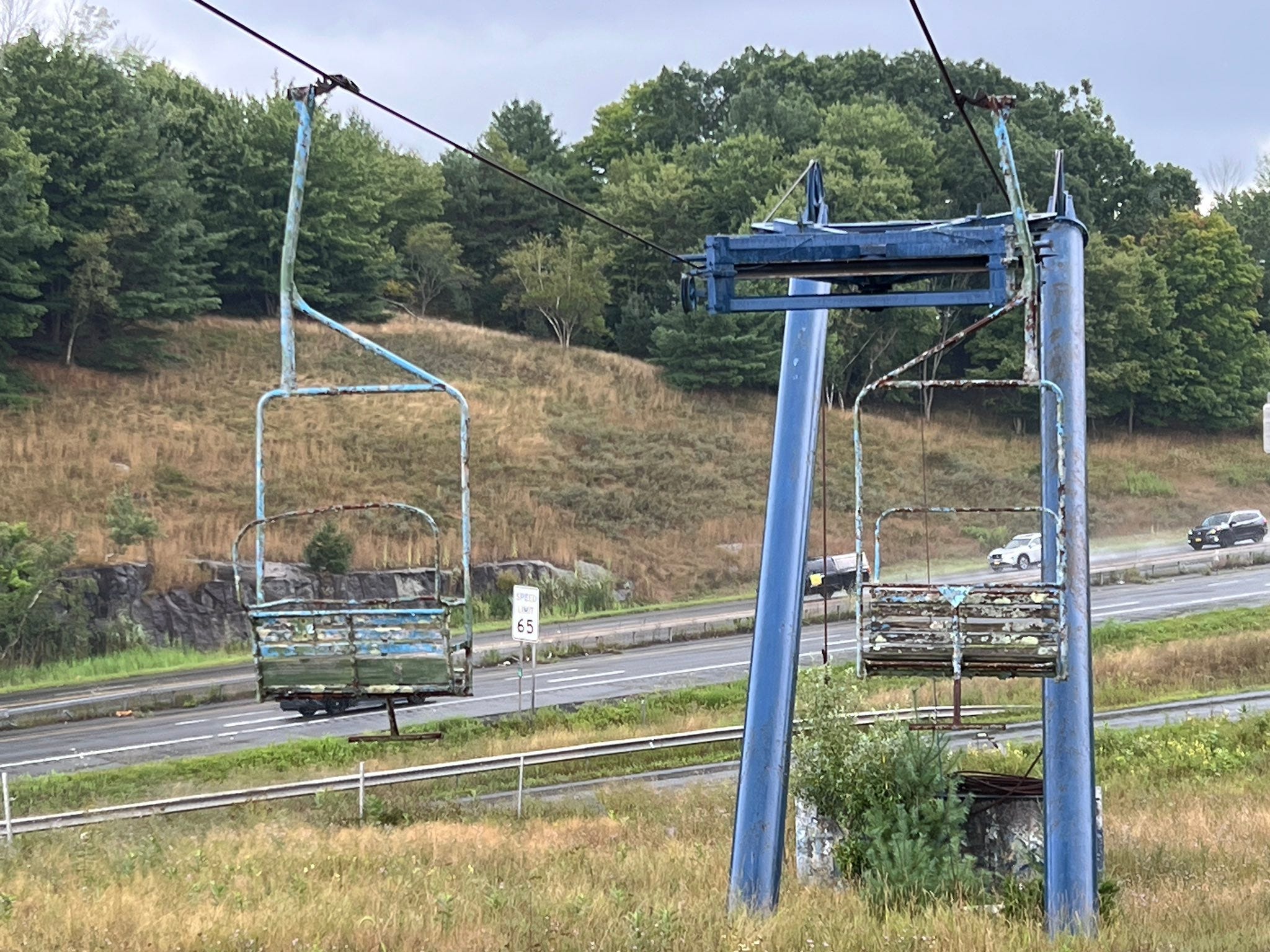
Dec 6, 2024
Podcast #192: Mount Sunapee GM (and former Crotched GM) Susan Donnelly
This podcast hit paid subscribers’ inboxes on Nov. 29. It dropped for free subscribers on Dec. 6. To receive future episodes as soon as they’re live, and to support independent ski journalism, please consider an upgrade to a paid subscription. You can also subscribe to the free tier below: Who Susan Donnelly, General Manager of Mount Sunapee (and former General Manager of Crotched Mountain ) Recorded on November 4, 2024 About Crotched Click here for a mountain stats overview Owned by: Vail Resorts, which also owns: Located in: Francetown, New Hampshire Year founded: 1963 (as Crotched East); 1969 (as Onset, then Onset Bobcat, then Crotched West, now present-day Crotched); entire complex closed in 1990; West re-opened by Peak Resorts in 2003 as Crotched Mountain Pass affiliations: * Epic Pass , Epic Local Pass , Northeast Value Epic Pass : unlimited access * Northeast Midweek Epic Pass : midweek access, including holidays Closest neighboring public ski areas: Pats Peak (:34), Granite Gorge (:39), Arrowhead (:41), McIntyre (:50), Mount Sunapee (:51) Base elevation: 1,050 feet Summit elevation: 2,066 feet Vertical drop: 1,016 Skiable Acres: 100 Average annual snowfall: 65 inches Trail count: 25 (28% beginner, 40% intermediate, 32% advanced) Lift count: 5 (1 high-speed quad, 1 fixed-grip quad, 1 triple, 1 double, 1 surface lift – view Lift Blog’s inventory of Crotched’s lift fleet) History: Read New England Ski History’s overview of Crotched Mountain About Mount Sunapee Click here for a mountain stats overview Owned by: The State of New Hampshire; operated by Vail Resorts, which also operates resorts detailed in the chart above. Located in: Newbury, New Hampshire Year founded: 1948 Pass affiliations: * Epic Pass , Epic Local Pass , Northeast Value Epic Pass : unlimited access * Northeast Midweek Epic Pass : midweek access, including holidays Closest neighboring public ski areas: Pats Peak (:28), Whaleback (:29), Arrowhead (:29), Ragged (:38), Veterans Memorial (:42), Ascutney (:45), Crotched (:48), Quechee (:50), Granite Gorge (:51), McIntyre (:53) Base elevation: 1,233 feet Summit elevation: 2,743 feet Vertical drop: 1,510 feet Skiable Acres: 233 acres Average annual snowfall: 130 inches Trail count: 67 (29% beginner, 47% intermediate, 24% advanced) Lift count: 8 (2 high-speed quads, 1 fixed-grip quad, 2 triples, 3 conveyors – view Lift Blog’s inventory of Mount Sunapee’s lift fleet.) History: Read New England Ski History’s overview of Mount Sunapee Why I interviewed her It’s hard to be small in New England and it’s hard to be south in New England. There are 35 New England ski areas with vertical drops greater than 1,100 feet, and Crotched is not one of them. There are 44 New England ski areas that average more than 100 inches of snow per winter, and Crotched is not one of those either. Crotched does have a thousand vertical feet and a high-speed lift and a new baselodge and a snowmaking control room worthy of a nuclear submarine. Which is a pretty good starter kit for a successful ski area. But it’s not enough in New England. To succeed as a ski area in New England, you need a Thing. The most common Things are to be really really nice or really really gritty. Stratton or Mad River. Okemo or Magic. Sunday River or Black Mountain of Maine. The pitch is either “you’ll think you’re at Deer Valley” or “you’ll descend the hill on ice skates and you’ll like it.” But Crotched’s built-along-a-state-highway normalness precludes arrogance, and its mellow terrain lacks the attitude for even modest braggadocio. It’s not a small ski area, but it’s not big enough to be a mid-sized one, either. The terrain is fine, but it’s not the kind of place you need to ski on purpose, or more than once. It’s a fine local, but not much else, making Crotched precisely the kind of mountain that you would have expected to be smothered by the numerous larger and better ski areas around it before it could live to see the internet. And that’s exactly what happened. Crotched, lacking a clear Thing, went bust in 1990. The ski area, undersized and average, should have melted back into the forest by now. But in 2002, then-budding Peak Resorts crept out of its weird Lower Midwest manmade snowhole on a reverse Lewis & Clark Expedition to explore the strange and murky East. And as they hacked away the brambles around Crotched’s boarded-up baselodge, they saw not a big pile of mediocrity, but a portal into the gold-plated New England market. And they said “this could work if we can just find a Thing.” And that Thing was night-skiing with attitude, built on top of $10 million in renovations that included a built-from-scratch snowmaking system. The air above the American mountains is filled with such wild notions. “We’re going to save Mt. Goatpath. It’s going to be bigger than Vail and deeper than Alta and higher than Telluride.” And everyone around them is saying, “You know this is, like, f*****g Connecticut, right?” But if practical concerns killed all bad ideas, then no one would keep reptiles as pets. Everyone else is happy with cats or dogs, sentient mammals of kindred disposition with humans, but this idiot needs a 12-foot-long boa constrictor that he keeps in a 6x3 fishtank. It helps him get chicks or something. It’s his thing. And damned if it doesn’t work. What we talked about Transitioning from smaller, Vail-owned Crotched to larger, state-owned but Vail-operated Sunapee; “weather-proofing” Sunapee; Crotched and Sunapee – so close but so different; reflecting on the Okemo days under Triple Peaks ownership; longtime Okemo head Bruce Schmidt; reacting to Vail’s 2018 purchase of Triple Peaks; living through change; the upside of acquisitions; integrating Peak Resorts; skiing’s boys’ club; Vail Resorts’ culture of women’s advancement; why Covid uniquely challenged Crotched among Vail’s New England properties; reviving Midnight Madness; Crotched’s historic downsizing; whether the lost half of Crotched could ever be re-developed; why Crotched 2.0 is more durable than the version that shut down in 1990; Crotched’s baller snowmaking system; southern New Hampshire’s wild weather; thoughts on future Crotched infrastructure; and considering a beginner trail from Crotched’s summit. Why now was a good time for this interview As we swing toward the middle of the 2020s, it’s pretty lame to continue complaining about operational malfunctions in the so-called Covid season of 2020-21, but I’m going to do it anyway. Some ski areas did a good job operating that season. For example, Pats Peak. Pats Peak was open seven days per week that winter. Pats Peak offered night skiing on all the days it usually offers night skiing. Pats Peak made the Ross Ice Shelf jealous with its snowmaking firepower. Pats Peak acted like a snosportskiing operation that had operated a snosportskiing operation in previous winters. Pats Peak did a good job. Other ski areas did a bad job operating that season. For example, Crotched. Crotched was open whenever it decided to be open, which was not very often. Crotched, one of the great night-skiing centers in New England, offered almost no night skiing. Crotched’s snowmaking looked like what happens when you accidentally keep the garden hose running during an overnight freeze. Crotched did a bad job. This is a useful comparison, because these two ski areas sit just 21 miles and 30 minutes apart. They are dealing with the same crappy weather and the same low-altitude draw. They are both obscured by the shadows of far larger ski areas scraping the skies just to the north. They are both small and unserious places, where the skiing is somewhat beside the point. Kids go there to pole-click one another’s skis off of moving chairlifts. College kids go there to alternate two laps with two rounds at the bar. Adults go there to shoo the kids onto the chairlifts and burn down happy hour. No one shows up in either parking lot expecting Jackson Hole. But Crotched Mountain is owned by Vail Resorts. Pats Peak is owned by the same family of good-old boys who built the original baselodge from logs sawed straight off the mountain in 1962. Vail Resorts has the resources to send a container full of sawdust to the moon just to see what happens when it’s opened. Most of Pats Peaks’ chairlifts came used from other ski areas. These two are not drawing from the same oil tap. And yet, one of them delivered a good product during Covid, and the other did not. And the ones who did are not the ones that their respective pools of resources would suggest. And so the people who skied Pats Peak that year were like “Yeah that was pretty good considering everything else kind of sucks right now.” And the people who skied Crotched that season were like “Well that sucked even worse than everything else does right now, and that’s saying something.” And that’s the mess that Donnelly inherited when she took the GM job at Crotched in 2021. And it took a while, but she fixed it. And that’s harder than it should be when your parent company can deploy sawdust rockets on a whim. What I got wrong * I said that Colorado has 35 active ski areas. The correct number is 34, or 33 if we exclude Hesperus, which did not operate last winter, and is not scheduled to reactivate anytime soon. * I said that Bruce Schmidt was the “president and general manager” of Okemo. His title is “Vice President and General Manager.” Sorry about that, Bruce. * I said that Okemo’s season pass was “closing in on $2,000” when Vail came along. According to New England Ski History , Okemo’s top season pass price hit $1,375 for the 2017-18 ski season, the last before Vail purchased the resort. This appears to be a big cut from the 2016-17 season, when the top price was $1,619. My best guess is that Okemo dropped their pass prices after Vail purchased Stowe, l owering that mountain’s pass price from $2,313 for the 2016-17 ski season to just $899 (an Epic Pass) the next. * I said that 80 percent-plus of my podcasts featured interviews with men. I examined the inventory, and found that of the 210 podcasts I’ve publishe d (192 Storm Skiing Podcasts, 12 Covid pods, 6 Live pods), only 33, or 15.7 percent, included a female guest. Only 23 of those (11 percent), featured a woman as the only guest. And three of those podcasts were with one person: former NSAA CEO Kelly Pawlak. So either my representation sucks, or the ski industry’s representation sucks, but probably it’s both. Why you should ski Crotched Upper New England doesn’t have a lot of night skiing, and the night skiing it does have is mostly underwhelming. Most of the large resorts – Killington, Sugarbush, Smuggs, Stowe, Sugarloaf, Waterville, Cannon, Stratton, Mount Snow, Okemo, Attitash, Wildcat, etc. – have no night skiing at all. A few of the big names – Bretton Woods, Sunday River, Cranmore – provide a nominal after-dark offering, a lift and a handful of trails. The bulk of the night skiing in New Hampshire, Vermont, and Maine involves surface lifts at community-run bumps with the vertical drop of a Slip N’ Slide. But a few exceptions tower into the frosty darkness: Pleasant Mountain, Maine; Pats Peak, New Hampshire; and Bolton Valley, Vermont all deliver big vertical drops, multiple chairlifts, and a spiderweb of trails for night skiers. Boyne-owned Pleasant, with 1,300 vertical feet served by a high-speed quad, is the most extensive of these, but the second-most expansive night-skiing operation in New England lives at Crotched. Parked less than an hour from New Hampshire’s four largest cities – Manchester, Nashua, Concord, and Derry – Crotched is the rare northern New England ski area that can sustain an after-hours business (New Hampshire, Maine, and Vermont are ranked numbers 41, 42, and 49 among U.S. states by population, respectively, with a three-state total of just 3.5 million residents). With four chairlifts spinning, every trail lit, Park Brahs on patrol, first-timers lined up at the rental shop, Bomber Bro straightlining Pluto’s Plunge in his unzipped Celtics jacket, the parking lots jammed, and the scritch-scratch of edges on ice shuddering across the night, it’s an amazing scene, a lantern of New England Yeah Dawg zest floating in the winter night. No, Crotched night skiing isn’t what it used to be, when Peak Resorts kept the joint bumping until 3 a.m. And the real jammer, Midnight Madness, hits just a half dozen days per winter. But it’s still a uniquely New England scene, a skiing spectacle that can double as a night-cap after a day shredding Cannon or Waterville or Mount Snow. Podcast Notes On my recent Sunapee pod I tend to schedule these interviews several months in advance, and sometimes things change. One of the things that changed between when I scheduled this conversation and when we recorded it was Donnelly’s job. She moved from Crotched, which I had never spotlighted on the podcast, to Sunapee, which I just featured a few months ago. Which means, Sunapee Nation, that we don’t really talk much about Mount Sunapee on this podcast that has Mount Sunapee in the headline. But pretty much everything I talked about in June with former Sunapee GM Peter Disch (who’s now VP of Mountain Ops at Vail’s Heavenly), is still relevant: On historic Crotched Crotched was once a much larger resort forged from two onetime independent side-by-side ski areas. The whole history of it is a bit labyrinthian and involves bad decisions, low snow years, and unpaid taxes (read the full tale at New England Ski History ), but the upshot was this interconnected animal, shown here at its 1988-ish peak: The whole Crotched complex dropped dead around 1990, and would have likely stayed that way forever had Missouri-based Peak Resorts not gotten the insane idea to dig a lost New England ski area up from the graveyard. Somewhat improbably, they succeeded, and the contemporary Crotched (minus the summit quad, which came later), opened in 2003. The current ski area sits on what was formerly known as “Crotched West,” and before that “Bobcat,” and before that (or perhaps at the same time), “Onset.” Trails on the original Crotched Mountain, at Crotched East (left on the trailmap above), are still faintly visible from above (on the right below, between the “Crotched Mountain” and “St. John Enterprise” dots): On Triple Peaks and Okemo Triple Peaks was the umbrella company that owned Okemo, Vermont; Mount Sunapee, New Hampshire; and Crested Butte, Colorado. The owners, the Mueller family, sold the whole outfit to Vail Resorts in 2018. Longtime Okemo GM Bruce Schmidt laid out the whole history on the podcast earlier this year: On Crotched’s lift fleet Peak got creative building Crotched’s lift fleet. The West double, a Hall installed by Jesus himself in 400 B.C., had sat in the woods through Crotched’s entire 13-year closure and was somehow reactivated for the revival. The Rover triple and the Valley and Summit quads came from a short-lived 1,000-vertical-foot Virginia ski area called Cherokee. What really nailed Crotched back to the floor, however, was the 2012 acquisition of a used high-speed quad from bankrupt Ascutney, Vermont. Peak flagrantly dubbed this lift the “Crotched Rocket,” a name that Vail seems to have backed away from (the lift is simply “Rocket” on current trailmaps). Fortunately, Ascutney lived on as a surface-lifts-only community bump even after its beheading. You can still skin and ski the top trails if you’re one of those people who likes to make skiing harder than it needs to be: On Peak Resorts Peak Resorts started in, of all places, Missouri. The company slowly acquired small-but-busy suburban ski areas, and was on its way to Baller status when Vail purchased the whole operation in 2019. Here’s a loose acquisition timeline: The Storm explores the world of lift-served skiing year-round. Join us. The Storm publishes year-round, and guarantees 100 articles per year. This is article 81/100 in 2024, and number 581 since launching on Oct. 13, 2019. Get full access to The Storm Skiing Journal and Podcast at www.stormskiing.com/subscribe
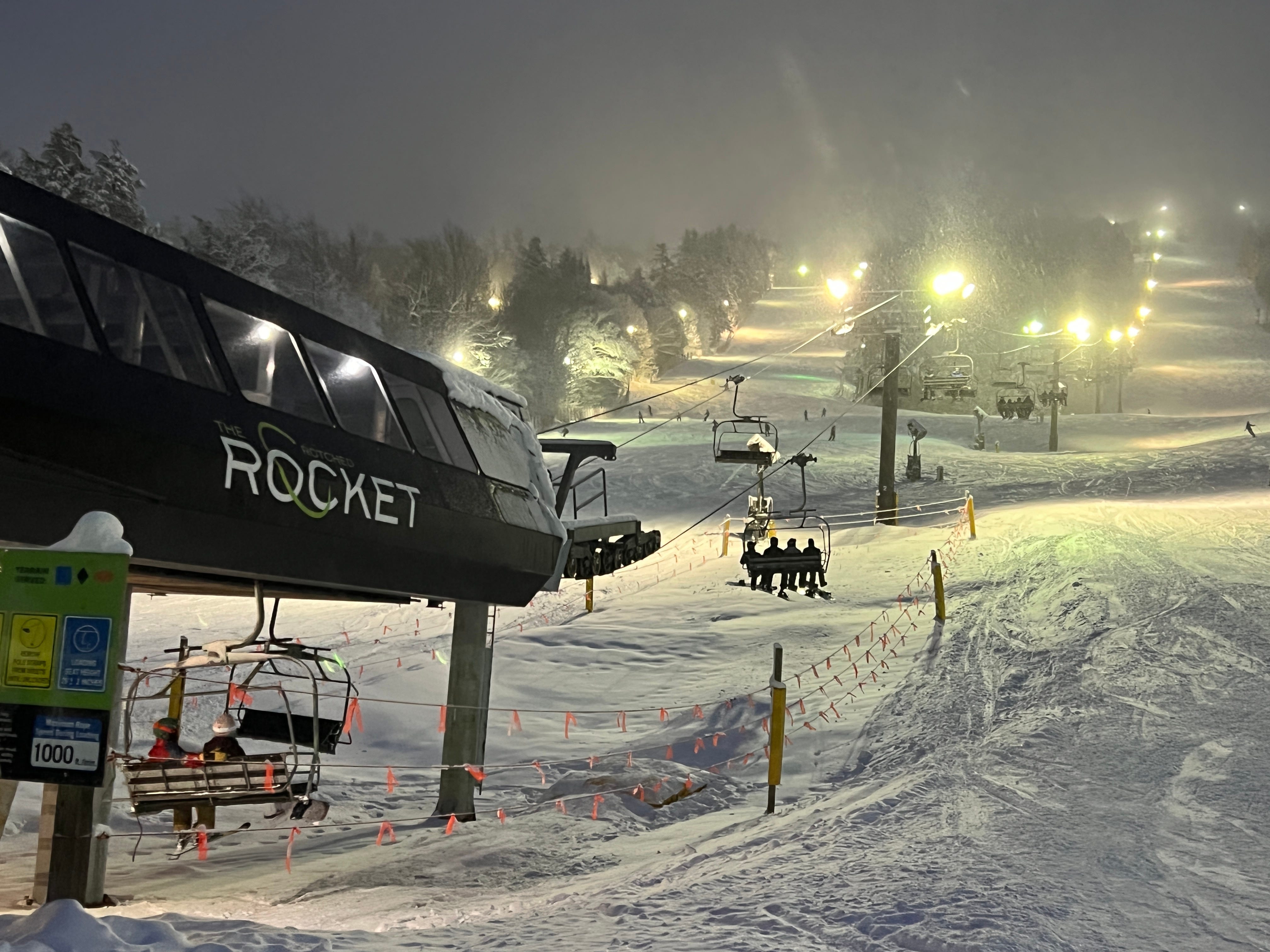
Dec 2, 2024
The Storm Live #6: Indy Pass in NYC
This podcast hit paid subscribers’ inboxes on Nov. 25. It dropped for free subscribers on Dec. 2. To receive future episodes as soon as they’re live, and to support independent ski journalism, please consider an upgrade to a paid subscription. You can also subscribe to the free tier below: What Indy Pass is a newcomer to the NYC media circuit, hosting their inaugural gathering at an airy venue hard by the Hudson River. Part of the agenda was this short panel that I moderated, featuring the leaders of four Indy Pass partner mountains. Who * Erik Mogensen, Director, Indy Pass * Steve Wright, President & General Manager, Jay Peak , Vermont * Rob Goodell, Senior Vice President & Chief Operating Officer, Loveland , Colorado * David Severn, Owner, White Pass , Washington * Geoff Hatheway, Owner & President, Magic Mountain , Vermont Recorded on October 23, 2024 About Indy Pass Indy Pass has collected 230 partners. The pass gets you two days each at 222 of them and discounts at the other eight. The pass is no longer on sale for the 2024-25 ski season, but there are baseball-game hotdogs that cost more than this thing. About the ski areas JAY PEAK, VERMONT Stats: 2,153 vertical feet | 385 skiable acres | 347 inches average annual snowfall LOVELAND, COLORADO Stats: 2,210 vertical feet | 1,800 skiable acres | 422 inches average annual snowfall WHITE PASS, WASHINGTON Stats: 2,050 vertical feet | 1,402 skiable acres | 400 inches average annual snowfall MAGIC MOUNTAIN, VERMONT Stats: 1,500 vertical feet | 205 skiable acres | 130 inches average annual snowfall What we talked about Jay isn’t remote for everyone; Magic’s black quad odyssey; PNW snow quality; why you’ve probably seen Loveland even if you’ve never skied it; Loveland Valley’s origin story; why Jay joined Indy Pass when it could have joined any pass; why White Pass’ new owners stayed on Indy Pass after purchasing it; and what finally convinced Loveland to join Indy. Podcast Notes On the original Indy Pass announcement Indy Pass’ website popped live sometime in March 2019, with a list of under-appreciated mid-sized ski areas concentrated around the Pacific Northwest. The roster grew rapidly prior to the start of the season, but even this would have been a hell of an offering for $199: On Loveland Valley Loveland is home to a little-noticed terrain pod known as Loveland Valley. With a quad, a double, and a set of carpets, this segmented zone essentially serves as a separate, beginners-oriented ski area. On The Storm’s Indy Pass/Jay Peak exclusive Somehow, I scored an exclusive on the news that Jay Peak would join Indy Pass in 2020. I was also able to record a podcast with Wright in advance of the announcement. This was a huge moment for The Storm , turning hundreds of new subscribers onto the newsletter and forging a relationship with one of the most important mountains in New England. On Hatheway being one of my first interviews Hatheway was one of the first guests on The Storm Skiing Podcast , and one of the first to agree to join me on the show. That was an incredible gesture, as I had published zero episodes when I made the request. Here’s the conversation: What I got wrong * I said that Magic “failed a couple of times” before current ownership acquired it. The ski area only completely closed once, from 1991 to 1997. The ski area then fumbled through two decades of near-failures, including a derailed attempt to form a co-op, until Ski Magic LLC took the keys in 2016. Read the full saga at New England Ski History . * I said that it took Magic “four or five” years to install the Black Quad. The full timeline is closer to six years. Stratton removed their Snow Bowl fixed-grip quad following the 2017-18 ski season (replacing it with a high-speed quad). I’m not sure when exactly Magic, just 13.6 road miles from Stratton, took delivery of the lift, but the goal was to get it spinning as the new Black lift by the 2019-20 ski season. After a series of construction delays, engineering problems, and global emergencies, the quad finally started spinning in February of this year. The Storm explores the world of lift-served skiing year-round. Join us. The Storm publishes year-round, and guarantees 100 articles per year. This is article 80/100 in 2024, and number 580 since launching on Oct. 13, 2019. Get full access to The Storm Skiing Journal and Podcast at www.stormskiing.com/subscribe

Dec 1, 2024
The Storm Live #5: Mountain Collective in NYC
This podcast hit paid subscribers’ inboxes on Nov. 24. It dropped for free subscribers on Dec. 1. To receive future episodes as soon as they’re live, and to support independent ski journalism, please consider an upgrade to a paid subscription. You can also subscribe to the free tier below: What There’s a good reason that the Ikon Pass, despite considerable roster overlap and a more generous bucket of days, failed to kill Mountain Collective. It’s not because Mountain Collective has established itself as a sort of bargain Ikon Junior, or because it’s scored a few exclusive partners in Canada and the Western U.S. Rather, the Mountain Collective continues to exist because the member mountains like their little country club, and they’re not about to let Alterra force a mass exodus. Not that Alterra has tried, necessarily (I frankly have no idea), but the company did pull its remaining mountains (Mammoth, Palisades, Sugarbush), out of the coalition in 2022. Mountain Collective survived that, just as it weathered the losses of Stowe and Whistler and Telluride (all to the Epic Pass) before it. As of 2024, six years after the introduction of the Ikon Pass that was supposed to kill it, the Mountain Collective, improbably, floats its largest roster ever. And dang, that roster. Monsters, all. Best case, you can go ski them. But the next best thing, for The Storm at least, is when these mountain leaders assemble for their annual meeting in New York City, which includes a night out with the media. Despite a bit of ambient noise, I set up in a corner of the bar and recorded a series of conversations with the leaders of some of the biggest, baddest mountains on the continent. Who * Stephen Kircher, President & CEO, Boyne Resorts * Dave Fields, President & General Manager, Snowbird , Utah * Brandon Ott, Marketing Director, Alta , Utah * Steve Paccagnan, President & CEO, Panorama , British Columbia * Geoff Buchheister, CEO, Aspen Skiing Company , Colorado * Pete Sonntag, VP & General Manager, Sun Valley , Idaho * Davy Ratchford, General Manager, Snowbasin , Utah * Aaron MacDonald, Chief Marketing Officer, Sun Peaks , British Columbia * Geordie Gillett, GM, Grand Targhee , Wyoming * Bridget Legnavsky, President & CEO, Sugar Bowl , California * Marc-André Meunier, Executive Marketing Director, Bromont , Quebec * Pete Woods, President, Ski Big 3 , Alberta * Kendra Scurfield, VP of Brand & Communications, Sunshine , Alberta * Norio Kambayashi, director and GM, Niseko Hanazono , Japan * James Coleman, Managing Partner, Mountain Capital Partners * Mary Kate Buckley, CEO, Jackson Hole , Wyoming Recorded on October 29, 2024 About Mountain Collective Mountain Collective gives you two days each at some badass mountains. There is a ton of overlap with the Ikon Pass, which I note below, but Mountain Collective is cheaper has no blackout dates. What we talked about BOYNE RESORTS The Portfolio Big Sky Sunday River Sugarloaf Topics Yes a second eight-pack comes to Big Sky and it’s a monster; why Sunday River joined the Mountain Collective; Sugarloaf’s massive West Mountain expansion; and could more Boyne Resorts join Mountain Collective? More Boyne Resorts SNOWBIRD Stats: 3,240 vertical feet | 2,500 skiable acres | 500 inches average annual snowfall Topics The new Wilbere lift; why fixed-grip; why 600 inches of snow is better than 900 inches; and how Snowbird and Alta access differ on the Ikon versus the Mountain Collective passes. Wilbere’s new alignment More Snowbird ALTA Stats: 2,538 vertical feet | 2,614 skiable acres | 540 inches average annual snowfall Topics Not 903 inches but still a hell of a lot; why Alta’s aiming for 612 inches this season; and plotting Mountain Collective trips in LCC. PANORAMA Stats: 4,265 vertical feet | 2,975 skiable acres | 204 inches average annual snowfall Topics Panorama opens earlier than most skiers think, but not for the reasons they think; opening wall-to-wall last winter; Tantum Bowl Cats; and the impact of Mountain Collective and Ikon on Panorama. More Panorama ASPEN SKIING COMPANY Stats Aspen Mountain Aspen Highlands Buttermilk Snowmass Topics Last year’s Heroes expansion; ongoing improvements to the new terrain for 2024-25; why Aspen finally removed The Couch; who Aspen donated that lift to, and why; why the new Coney lift at Snowmass loads farther down the mountain; “we intend to replace a lift a year probably for the next 10 years”; where the next lift could be; and using your two Mountain Collective days to ski four Aspen resorts. On Maverick Mountain, Montana Despite megapass high-tides swarming mountains throughout the West, there are still dozens of ski areas like Maverick Mountain, tucked into the backwoods, 2,020 vertical feet of nothing but you and a pair of sticks. Aspen’s old Gent’s Ridge quad will soon replace the top-to-bottom 1969 Riblet double chair that serves Maverick now: On the Snowmass masterplan Aspen’s plan is, according to Buchheister, install a lift per year for the next decade. Here are some of the improvements the company has in mind at Snowmass: On the Mountain Collective Pass starting at Aspen Christian Knapp, who is now with Pacific Group Resorts, played a big part in developing the Mountain Collective via Aspen-Snowmass in 2012. He recounted that story on The Storm last year: More Aspen SUN VALLEY Stats * Bald Mountain: 3,400 vertical feet | 2,054 skiable acres | 200 inches average annual snowfall * Dollar Mountain: 628 vertical feet Topics Last season’s massive Challenger/Flying Squirrel lift updates; a Seattle Ridge lift update; World Cup Finals inbound; and Mountain Collective logistics between Bald and Dollar mountains. More Sun Valley SNOWBASIN Stats: 3,015 vertical feet | 3,000 skiable acres | 300 inches average annual snowfall Topics The Olympics return to Utah and Snowbasin; how Snowbasin’s 2034 Olympic slate could differ from 2002; ski the downhill; how the DeMoisy six-pack changed the mountain; a lift upgrade for Becker; Porcupine on deck; and explaining the holdup on RFID. More Snowbasin SUN PEAKS Stats: 2,894 vertical feet | 4,270 skiable acres | 237 inches average annual snowfall Topics The second-largest ski area in Canada; the new West Bowl quad; snow quality at the summit; and Ikon and Mountain Collective impact on the resort. The old versus new West Bowl lifts More Sun Peaks GRAND TARGHEE Stats: 2,270 vertical feet | 2,602 skiable acres | 500 inches average annual snowfall Topics Maintaining that Targhee vibe in spite of change; the meaning of Mountain Collective; and combining your MC trip with other badass powder dumps. More Grand Targhee SUGAR BOWL Stats: 1,500 vertical feet | 1,650 skiable acres | 500 inches average annual snowfall Topics Big-time parks incoming; how those parks will differ from the ones at Boreal and Northstar; and reaction to Homewood closing. More Sugar Bowl BROMONT Stats: 1,175 vertical feet | 450 skiable acres | 210 inches average annual snowfall Topics Why this low-rise eastern bump was good enough for the Mountain Collective; grooming three times per day; the richness of Eastern Townships skiing; and where to stay for a Bromont trip. SKI BIG 3 Stats * Banff Sunshine: 3,514 vertical feet | 3,358 skiable acres | 360 inches average annual snowfall * Lake Louise: 3,250 vertical feet | 4,200 skiable acres | 179 inches average annual snowfall Sunshine Lake Louise Topics The new Super Angel Express sixer at Sunshine; the all-new Pipestone Express infill six-pack at Lake Louise; how Mountain Collective access is different from Ikon access at Lake Louise and Sunshine; why Norquay isn’t part of Mountain Collective; and the long season at all three ski areas. SUNSHINE Stats & map: see above Topics Sunshine’s novel access route; why the mountain replaced Angel; the calculus behind installing a six-person chair; and growing up at Sunshine. NISEKO UNITED Stats: 3,438 vertical feet | 2,889 skiable acres | 590 inches average annual snowfall Topics How the various Niseko ski areas combine for one experience; so.much.snow; the best way to reach Niseko; car or no car?; getting your lift ticket; and where to stay. VALLE NEVADO Stats: 2,658 vertical feet | 2,400 skiable acres | 240 inches average annual snowfall Topics An excellent winter in Chile; heli-skiing; buying the giant La Parva ski area, right next door; “our plan is to make it one of the biggest ski resorts in the world”; and why Mountain Capital Partners maintains its Ikon Pass and Mountain Collective partnerships even though the company has its own pass. More Valle/La Parva JACKSON HOLE Stats: 4,139 vertical feet | 2,500 skiable acres | 459 inches average annual snowfall Topics The Sublette lift upgrade; why the new lift has fewer chairs; comparisons to the recent Thunder lift upgrade; venturing beyond the tram; and managing the skier experience in the Ikon/Mountain Collective era. More Jackson Hole What I got wrong * I said that Wilbere would be Snowbird’s sixth quad. Wilbere will be Snowbird’s seventh quad, and first fixed-grip quad. * I said Snowbird got “900-some inches” during the 2022-23 ski season. The final tally was 838 inches, according to Snowbird’s website. The Storm explores the world of lift-served skiing year-round. Join us. The Storm publishes year-round, and guarantees 100 articles per year. This is article 79/100 in 2024, and number 579 since launching on Oct. 13, 2019. Get full access to The Storm Skiing Journal and Podcast at www.stormskiing.com/subscribe

Nov 30, 2024
The Storm Live #4: Ski Utah in NYC
This podcast hit paid subscribers’ inboxes on Nov. 23. It dropped for free subscribers on Nov. 30. To receive future episodes as soon as they’re live, and to support independent ski journalism, please consider an upgrade to a paid subscription. You can also subscribe to the free tier below: What is this? Every autumn, ski associations and most of the large pass coalitions host media events in New York City. They do this because a) NYC is the media capital of the world; b) the city is a lot of fun; and, c) sometimes mountain folks like something different too, just like us city folks (meaning me), like to get to the mountains as much as possible. But I spend all winter traveling the country in search of ski areas of all sizes and varieties. This is the one time of year skiing comes to me. And it’s pretty cool. One of the associations that consistently hosts an NYC event is Ski Utah. This year, they set up at the Arlo Soho, a chic Manhattan hotel. Longtime President Nathan Rafferty asked if I would be interested in setting up an interview station, talking to resort reps, and stringing them together into a podcast. It was a terrific idea, so here you go. Who * Nathan Rafferty, President of Ski Utah * Sara Huey, Senior Manager of Communications at Park City Mountain Resort * Sarah Sherman, Communications Manager at Snowbird * Nick Como, VP of Marketing at Sundance * Rosie O’Grady, President and Innkeeper of Alta Lodge * Jessica Turner, PR Manager for Go Heber Valley * Taylor Hartman, Director of Marketing and Communications at Visit Ogden * Brooks Rowe, Brand Manager at Snowbasin * Riley Elliott, Communications Specialist at Deer Valley * Andria Huskinson, Communications and PR Manager at Solitude * Anna Loughridge, PR Manager for Visit Utah * Courtney Ryan, Communications Manager for Visit Park City * Ryan Mack, VP of Communications for Visit Salt Lake Recorded on October 3, 2024 About Ski Utah Most large ski states have a statewide trade group that represents its ski areas’ interests. One of the best of these is Ski Utah, which is armed with a large staff, a generous budget, and some pretty good freaking skiing to promote (Buckskin, Utah Olympic Park, and Wasatch Peaks Ranch are not members of Ski Utah): What we talked about SKI UTAH Topics Why NYC; the Olympics return to Utah; why the state is such a great place to host the games (besides, you know, the awesome skiing); where we could potentially see future ski area development in Utah; Pow Mow’s shift toward public-private hybrid; Deer Valley’s expansion and ongoing snowboard ban; and the proposed LCC Gondola – “Little Cottonwood Canyon is not a great place for rubber-wheeled vehicles.” On Utah skier visits and population growth over time On chairlifts planned in Utah over the next three years Utah is on a chairlift-building binge, with the majority slated for Deer Valley’s massive expansion (11) and Powder Mountain (4 this year; 1 in 2025). But Snowbird (Wilbere quad), Park City (Sunrise Gondola), and Snowbasin (Becker high-speed quad) are also scheduled to install new machines this year or next. The private Wasatch Peaks Ranch will also add two lifts (a gondola and a high-speed quad) this year. And Sundance is likely to install what resort officials refer to as the “Flathead lift” some time within the next two years. The best place to track scheduled lift installations is Lift Blog’s new lifts databases for 2024 , 2025 , and 2026 . On expansion potential at Brian Head and Nordic Valley Utah’s two largest expansion opportunities are at Brian Head and Nordic Valley, both operated by Mountain Capital Partners. Here’s Brian Head today: The masterplan could blow out the borders - the existing ski area is in the lower-right-hand corner: And here’s Nordic Valley: And the masterplan, which could supersize the ski area to 3,000-ish acres. The small green blob represents part of the existing ski area, though this plan predates the six-pack installation in 2020: PARK CITY MOUNTAIN RESORT Stats: 3,226 vertical feet | 7,300 skiable acres | 355 inches average annual snowfall Topics Snowmaking upgrades; the forthcoming Sunrise Gondola on the Canyons side; why this gondola didn’t face the opposition that Park City’s last lift upgrades did; Olympic buzz in Park City; and which events PCMR could host in the 2034 Olympics. On the Great Lift Shutdown of 2022 Long story short: Vail tried to upgrade two lifts in Park City a couple of years ago. Locals got mad. The lifts went to Whistler. Here’s the longer version: More Park City Mountain Resort SNOWBIRD Stats: 3,240 vertical feet | 2,500 skiable acres | 500 inches average annual snowfall Topics The new Wilbere lift; why Snowbird shifted the chairlift line; the upside of abandoning the old liftline; riding on top of the new tram; and more LCC gondola talk. On the new Wilbere lift alignment Here’s where the new Wilbere lift sits (right) in comparison to the old lift (left): On inter-lodge If you happen to be at the top of Little Cottonwood Canyon when avalanche danger spikes, you may be subject to something called “inter-lodge.” Which means you stay in whatever building you’re in, with no option to leave. It’s scary and thrilling all at once. Inter-lodge can last anywhere from under an hour to several days. On the LCC gondola and phase-in plan Another long story short: UDOT wants to build a gondola up Little Cottonwood Canyon. A lot of people would prefer to spend four hours driving seven miles to the ski areas. Here’s a summary of UDOT’s chosen configuration: As multiple lawsuits seeking to shut the project down work through the courts, UDOT has outlined a phased traffic-mitigation approach: More Snowbird SUNDANCE Stats: 2,150 vertical feet | 450 skiable acres | 300 inches average annual snowfall Topics The importance of NYC to the wider skiing world; how the Wildwood terrain helped evolve Sundance; Epkon refugees headed south; parking improvements; options for the coming Flathead terrain expansion; and potential lift switcheroos. More Sundance Sundance’s new owners have been rapidly modernizing this once-dusty ski area, replacing most of the lifts, expanding terrain, and adding parking. I talked through the grand arc of these changes with the mountain’s GM, Chad Linebaugh, a couple of years ago: ALTA LODGE Alta stats: 3,240 vertical feet | 2,500 skiable acres | 500 inches average annual snowfall Topics 65 years of Levitt family ownership; Alta’s five lodges; inter-lodge; how Alta has kept its old-school spirit even as it’s modernized; and an upcoming women’s ski event. On Alta’s lift evolution It wasn’t so long ago that Alta was known for its pokey lift fleet. As recently as the late ‘90s, the mountain was a chutes-and-ladders powder playground: Bit by bit, Alta consolidated and updated its antique lift fleet, beginning with the Sugarloaf high-speed quad in 2001. The two-stage Collins high-speed quad arrived three years later, replacing the legacy Collins double and Germania triple lines. The Supreme high-speed quad similarly displaced the old Supreme triple and Cecret double in 2017, and the Sunnyside sixer replaced the Albion double and Sunnyside high-speed triple in 2022. As of 2024, the only clunker left, aside from the short hotel lifts and the long transfer tow, is the Wildcat double. GO HEBER VALLEY Topics Why Heber Valley makes sense as a place to crash on a ski trip; walkable sections of Heber; ease of access to Deer Valley; and elevation. VISIT OGDEN Considering “untamed and untouched” Ogden as ski town; “it’s like skiing in 2005”; Pow Mow, Snowbasin; accessing the mountains from Ogden; Pow Mow’s partial privatization; art on the mountain; and Nordic Valley as locals’ bump. On Powder Mountain size claims Pow Mow has long claimed 8,000-ish acres of terrain, which would make it the largest ski area in the United States. I typically only count lift-served skiable acreage, however, bringing the mountain down to a more average-for-the-Wasatch 3,000-ish acres. A new lift in Wolf Canyon next year will add another 900 lift-served acres (shaded with stripes on the right-hand side below). On Nordic Valley’s fire and the broken Apollo lift Last December, Nordic Valley’s Apollo chairlift, a 1970 Hall double, fell over dead , isolating the mountain’s glorious expansion from the base area. The next month, a fire chewed up the baselodge, a historic haybarn left over from the property’s ranching days. Owner MCP renovated the chairlift over the summer, but Nordic will operate out of “temporary structures,” GM Pascal Begin told KSL.com in June, until they can build a new baselodge, which could be 2026 or ’27. SNOWBASIN Stats: 3,015 vertical feet | 3,000 skiable acres | 300 inches average annual snowfall Topics Breaking down the coming Becker lift upgrade; why Becker before Porcupine; last year’s DeMoisy six-pack installation; where is everyone?; where to ski at Snowbasin; the 2034 Olympics plan; when will on-mountain lodging arrive?; and RFID. More Snowbasin DEER VALLEY Stats: 3,040 vertical feet | 2,342 skiable acres | 300 inches average annual snowfall Topics Massive expansion; avoiding Park City; and snowmaking in the Wasatch Back. On Expanded Excellence Deer Valley’s expansion plans are insane. Here’s a summary: More Deer Valley SOLITUDE Stats: 2,030 vertical feet | 1,200 skiable acres | 500 inches average annual snowfall Topics Alterra; Big versus Little Cottonwood Canyons; and Alta. More Solitude VISIT UTAH Topics Watching the state’s population explode; the Olympics; comparing 2002 to 2034; RIP three percent beer; potential infrastructure upgrades to prepare for the Olympics; and SLC airport upgrades. VISIT PARK CITY Topics Park City 101; Main Street; the National Ability Center; mining history everywhere; Deer Valley’s trail names; Silver to Slopes at Park City; Deer Valley’s East Village; public transit evolution; Park City Mountain Resort lift drama; paid parking; and why “you don’t need a car” in Park City. On Silver to Slopes The twice-daily guided ski tour of on-mountain mining relics that we discuss on the podcast is free. Details here . On Park City and Deer Valley’s shared border Park City Mountain Resort and Deer Valley share a border, but you are forbidden to cross it, on penalty of death.* Alta and Snowbird share a crossable border, as do Solitude and Brighton. All four have different operators. I’m not sure why PCMR and Deer Valley can’t figure this one out. *This is not true.^ ^Though actually it might be true. VISIT SALT LAKE Topics The easiest ski access in the world; why stay in SLC during a ski trip; walkable downtown; free transit; accessing the ski areas without a car; Olympic buzz; and Olympic events outside of the ski areas. What I got wrong * I said that former mayor Michael Bloomberg tried to bring the Olympics to NYC “around 2005 or 2006.” The city’s bid was for the 2012 Summer Olympics (ultimately held in London). I also said that local opposition shut down the bid, but I confused that with the proposed stadium on what is now Manhattan’s Hudson Yards development. * I said you had to drive through Park City to access Deer Valley, but the ski area has long maintained a small parking lot at the base of the Jordanelle Gondola off of US 40. The robots aren’t ready Everyone keeps telling me that the robots will eat our souls, but every time I try to use them, they botch something that no human would ever miss. In this case, I tried using my editing program’s AI to chop out the dead space and “ums,” and proceeded to lose bits of the conversation that in some cases confuse the narrative. So it sounds a little choppy in places. You can blame the robots. Or me for not re-doing the edit once I figured out what was happening. The Storm explores the world of lift-served skiing year-round. Join us. The Storm publishes year-round, and guarantees 100 articles per year. This is article 78/100 in 2024, and number 578 since launching on Oct. 13, 2019. Get full access to The Storm Skiing Journal and Podcast at www.stormskiing.com/subscribe

Nov 20, 2024
Podcast #191: Stratton Mountain President & COO Matt Jones
This podcast hit paid subscribers’ inboxes on Nov. 13. It dropped for free subscribers on Nov. 20. To receive future episodes as soon as they’re live, and to support independent ski journalism, please consider an upgrade to a paid subscription. You can also subscribe to the free tier below: Who Matt Jones, President and Chief Operating Officer of Stratton Mountain , Vermont Recorded on November 11, 2024 About Stratton Mountain Click here for a mountain stats overview Owned by: Alterra Mountain Company, which also owns: Located in: Winhall, Vermont Year founded: 1962 Pass affiliations: * Ikon Pass: Unlimited * Ikon Base Pass: Unlimited, holiday blackouts Closest neighboring ski areas: Bromley (:18), Magic (:24), Mount Snow (:28), Hermitage Club (:33), Okemo (:40), Brattleboro (:52) Base elevation: 1,872 feet Summit elevation: 3,875 feet Vertical drop: 2,003 feet Skiable Acres: 670 Average annual snowfall: 180 inches Trail count: 99 (40% novice, 35% intermediate, 16% advanced, 9% expert) Lift count: 14 (1 ten-passenger gondola, 4 six-packs, 1 high-speed quad, 2 fixed-grip quads, 1 triple, 1 double, 4 carpets – view Lift Blog’s inventory of Stratton’s lift fleet) Why I interviewed him I don’t know for sure how many skier visits Stratton pulls each winter, or where the ski area ranks among New England mountains for busyness. Historical data suggests a floor around 400,000 visits, likely good for fifth in the region, behind Killington, Okemo, Sunday River , and Mount Snow. But the exact numbers don’t really matter, because the number of skiers that ski at Stratton each winter is many manys. And the number of skiers who have strong opinions about Stratton is that exact same number. Those numbers make Stratton more important than it should be. This is not the best ski area in Vermont. It’s not even Alterra’s best ski area in Vermont. Jay, MRG, Killington, Smuggs, Stowe, and sister resort Sugarbush are objectively better mountains than Stratton from a terrain point of view (they also get a lot more snow). But this may be one of the most crucial mountains in Alterra’s portfolio, a doorway to the big-money East, a brand name for skiers across the region. Stratton is the only ski area that advertises in the New York City Subway, and has for years. But Stratton’s been under a bit of stress. The lift system is aging. The gondola is terrible. Stratton was one of those ski areas that was so far ahead of the modernization curve – the mountain had four six-packs by 2001 – that it’s now in the position of having to update all of that expensive stuff all at once. And as meaningful updates have lagged, Stratton’s biggest New England competitors are running superlifts up the incline at a historic pace, while Alterra lobs hundreds of millions at its western megaresorts. Locals feel shafted, picketing an absentee landlord that they view as negligent. Meanwhile, the crowds pile up, as unlimited Ikon Pass access has holstered the mountain in hundreds of thousands of skiers’ wintertime battle belts. If that all sounds a little dramatic, it only reflects the messages in my inbox. I think Alterra has been cc’d on at least some of those emails, because the company is tossing $20 million at Stratton this season, a sum that Jones tells us is just the beginning of massive long-term investment meant to reinforce the mountain’s self-image as a destination on its own. What we talked about Stratton’s $20 million offseason; Act 250 masterplanning versus U.S. Forest Service masterplanning; huge snowmaking upgrades and aspirations; what $8 million gets you in employee housing these days; big upgrades for the Ursa and American Express six-packs; a case for rebuilding lifts rather than doing a tear-down and replace; a Tamarack lift upgrade; when Alterra’s investment firehose could shift east; leaving Tahoe for Vermont; what can be done about that gondola?; the Kidderbrook lift; parking; RFID; Ikon Pass access levels; and $200 to ski Stratton. Why I thought that now was a good time for this interview How pissed do you think the Punisher was when Disney announced that Ant Man would be the 12th installment in Marvel’s cinematic universe? I imagine him seated in his lair, polishing his grenades. “F*****g Ant Man?” He throws a grenade into one of his armored Jeeps, which disintegrates in a supernova of steel parts, tires, and smoke. “Ant Man. Are you f*****g serious with this? I waited through eleven movies. Eleven . Iron Man got three. Thor and Captain f*****g America got two apiece. The Hulk. Two Avengers movies. Something called ‘Guardians of the Galaxy,’ about a raccoon and a talking tree that save the goddamn universe or some s**t. And it was my turn , Man. My. Turn . Do these idiots not know that I had three individual comic lines published concurrently in the 1990s ? Do they not know that I’m ranked as the ninth-greatest Marvel superhero of all time on this nerd list ? Do you know where Ant Man is ranked on that list? Huh? Well, I’ll tell you: number 131, behind Rocket Raccoon, U-Go Girl, and Spider Man 2099, whatever the hell any of those are.” The vigilante then loads his rocket launcher and several machine guns into a second armored Jeep, and sets off in search of jaywalkers to murder. Anyway I imagine that’s how Stratton felt as it watched the rest of Alterra’s cinematic universe release one blockbuster after another. “Oh, OK, so Steamboat not only gets a second gondola, but they get a 600-acre terrain expansion served by their eighth high-speed quad? And it wasn’t enough to connect the two sides of Palisades Tahoe with a gondola, but you threw in a brand-new six-pack? And they’re tripling the size of Deer Valley. Tripling. 3,700 acres of new terrain and 16 new lifts and a new base village to go with it. That’s equal to five-and-a-half Strattons . And Winter Park gets a new six-pack, and Big Bear gets a new six-pack, and Mammoth gets two . Do you have any idea how much these things cost? And I can’t even get a gondola that can withstand wind gusts over three miles per hour? Even goddamn Snowshoe – Snowshoe – got a new lift before I did. I didn’t even think West Virginia was actually a real place. I swear if these f*****s announce a new June Mountain out-of-base lift before I get my bling, things are gonna get Epic around here.” Well, it’s finally Stratton’s turn, with $20 million in upgrades inbound. Alterra wasn’t exactly mining the depths of locals’ dreams to decide where to deploy the cash – snowmaking, employee housing, lift overhauls – and a gondola replacement isn’t coming anytime soon, but they’re pretty smart investments when you dig into them. Which we do. Questions I wish I’d asked Among the items that I would have liked to have discussed given more time: the Appalachian Trail’s path across the top of Stratton Mountain, Stratton as birthplace of modern snowboarding, and the Stratton Mountain School. What I got wrong * I said that Epic Pass access had remained mostly unchanged for the past decade, which is not quite right. When Vail first added Stowe to the Epic Local Pass for the 2017-18 season, they slotted the resort into the bucket of 10 days shared with Vail, Beaver Creek, and Whistler. At some point, Stowe received its own basket of 10 days, apart from the western resorts. * I said that Sunday River’s Jordan eight-pack was wind-resistant “because of the weight.” While that is one factor, the lift’s ability to run in high winds relies on a more complex set of anti-sway technology, none of which I really understand, but that Sunday River GM Brian Heon explained on The Storm earlier this year: Why you should ski Stratton A silent skiing demarcation line runs roughly along US 4 through Vermont. Every ski area along or above this route – Killington, Pico, Sugarbush, Mad River Glen, Stowe, Smuggs – lets trails bump up, maintains large glade networks, and generally provides you with balanced, diverse terrain. Everything below that line – Okemo, Bromley, Mount Snow – generally don’t do any of these things, or offer them sporadically, and in the most shrunken form possible. There are some exceptions on both sides. Saskadena Six, a bump just north of US 4, operates more like the Southies. Magic, in the south, better mirrors the MRG/Sugarbush model. And then there’s Stratton. Good luck finding bumps at Stratton. Maybe you’ll stumble onto the remains of a short competition course here or there, but, generally, this is a groom-it-all-every-day kind of ski area. Which would typically make it a token stop on my annual rounds. But Stratton has one great strength that has long made it a quasi-home mountain for me: glades. The glade network is expansive and well-maintained. The lines are interesting and, in places, challenging. You wouldn’t know this from the trailmap, which portrays the tree-skiing areas as little islands lodged onto Stratton’s hulk. But there are lots of them, and they are plenty long. On a typical pow day, I’ll park at Sun Bowl and ski all the glades from Test Pilot over to West Pilot and back. It takes all day and I barely touch a groomer. And the glades are open more often than you’d think. While northern Vermont is the undisputed New England snow king, with everything from Killington north counting 250-plus inches in an average winter, the so-called Golden Triangle of Stratton, Bromley, and Magic sits in a nice little micro-snow-pocket. And Stratton, the skyscraping tallest peak in that region of the state, devours a whole bunch (180 inches on average) to fill in those glades. And if you are Groomer Greg, you’re in luck: Stratton has 99 of them. And the grooming is excellent. Just start early, because they get scraped off by the NYC hordes who camp out there every weekend. The obsessive grooming does make this a good family spot, and the long green trail from the top down to the base is one of the best long beginner runs anywhere. Podcast Notes On Act 250 This is the 20th Vermont-focused Storm Skiing Podcast , and I think we’ve referenced Act 250 in all of them. If you’re unfamiliar with this law, it is, according to the official state website : …Vermont’s land use and development law, enacted in 1970 at a time when Vermont was undergoing significant development pressure. The law provides a public, quasi-judicial process for reviewing and managing the environmental, social and fiscal consequences of major subdivisions and developments in Vermont. It assures that larger developments complement Vermont’s unique landscape, economy and community needs. One of the strengths of Act 250 is the access it provides to neighbors and other interested parties to participate in the development review process. Applicants often work with neighbors, municipalities, state agencies and other interested groups to address concerns raised by a proposed development, resolving issues and mitigating impacts before a permit application is filed. On Stratton’s masterplan Stratton is currently updating its masterplan. It will retain some elements of this 2013 version. Some elements of this – most notably a new Snow Bowl lift in 2018 – have been completed: One curious element of this masterplan is the proposed lift up the Kidderbrook trail – around 2007, Stratton removed a relatively new (installed 1989) Poma fixed-grip quad from that location. Here it is on the far left-hand side of the 2005 trailmap: On Stratton’s ownership history Stratton’s history mirrors that of many large New England ski areas: independent founders run the ski area for decades; founders fall into financial peril and need private equity/banking rescue; bank sells to a giant out-of-state conglomerate; which then sells to another giant out-of-state conglomerate; which eventually turns into something else. In Stratton’s case, Robert Wright/Frank Snyder -> Moore and Munger -> Japanese company Victoria USA -> Intrawest -> Alterra swallows the carcass of Intrawest. You can read all about it on New England Ski History . Here was Intrawest’s roster, if you’re curious: On Alterra’s building binge Since its 2018 founding, Alterra has invested aggressively in its properties: a 2.4-mile-long, $65 million gondola connecting Alpine Meadows to the Olympic side of Palisades Tahoe; $200 million in the massive Mahogany Ridge expansion and a three-mile-long gondola at Steamboat; and an untold fortune on Deer Valley’s transformation into what will be the fourth-largest ski area in the United States. Plus new lifts all over the place, new snowmaking all over the place, new lodges all over the place. Well, all over the place except for at Stratton, until now. On Boyne and Vail’s investments in New England Amplifying Stratton Nation’s pain is the fact that Alterra’s two big New England competitors – Vail Resorts and Boyne Resorts – have built a combined 16 new lifts in the region over the past five years, including eight-place chairs at Loon and Sunday River (Boyne), and six-packs at Stowe, Okemo, and Mount Snow (Vail). They’ve also replaced highly problematic legacy chairs at Attitash (Vail) and Pleasant Mountain (Boyne). Boyne has also expanded terrain at Loon, Sunday River, and, most notably – by 400 acres – Sugarloaf. And it’s worth noting that independents Waterville Valley and Killington have also dropped new sixers in recent years (Killington will build another next year). Meanwhile, Alterra’s first chairlift just landed this summer, at Sugarbush, which is getting a fixed-grip quad to replace the Heaven’s Gate triple. On gondola wind holds Just in case you want to blame windholds on some nefarious corporate meddling, here’s a video I took of Kirkwood’s Cornice Express spinning in 50-mile-per-hour winds when Jones was running the resort last year. Every lift has its own distinct profile that determines how it manages wind. On shifting Ikon Pass access When Alterra launched the Ikon Pass in 2018, the company limited Base Pass holders to five days at Stratton, with holiday blackouts. Ahead of the 2020-21 season, the company updated Base Pass access to unlimited days with those same holiday blackouts. Alterra and its partners have made several such changes in Ikon’s seven years. I’ve made this nifty chart that tracks them all (if you missed the memo, Solitude just upgraded Ikon Base pass access to eliminate holiday blackouts): On historic Stratton lift ticket prices Again, New England Ski History has done a nice job documenting Stratton’s year-to-year peak lift ticket rates: The Storm explores the world of lift-served skiing year-round. Join us. The Storm publishes year-round, and guarantees 100 articles per year. This is article 76/100 in 2024, and number 576 since launching on Oct. 13, 2019. Get full access to The Storm Skiing Journal and Podcast at www.stormskiing.com/subscribe
Nov 19, 2024
Podcast #190: Giants Ridge, Minnesota GM Fred Seymour
This podcast hit paid subscribers’ inboxes on Nov. 12. It dropped for free subscribers on Nov. 19. To receive future episodes as soon as they’re live, and to support independent ski journalism, please consider an upgrade to a paid subscription. You can also subscribe to the free tier below: Who Fred Seymour, General Manager of Giants Ridge, Minnesota Recorded on October 28, 2024 About Giants Ridge Click here for a mountain stats overview Owned by: Iron Range Resources and Rehabilitation Board, a State of Minnesota economic development agency Located in: Biwabik, Minnesota Year founded: 1958/59 Closest neighboring ski areas: Mt. Itasca (1:14), Cloquet Ski Club (1:11), Chester Bowl (1:13), Spirit Mountain (1:18), Mont du Lac (1:27) Base elevation: 1,472 feet Summit elevation: 1,972 feet Vertical drop: 500 feet Skiable Acres: 202 Average annual snowfall: 62 inches Trail count: 35 (33% beginners, 50% “confident skiers”; 17% expert) Lift count: 7 (1 high-speed quad, 1 fixed-grip quad, 1 triple, 2 doubles, 2 carpets – view Lift Blog’s i nventory of Giants Ridge’s lift fleet) Why I interviewed him Sometimes a thing surprises me. Like I think New York City is a giant honking mess and then I walk 60 blocks through Manhattan and say “actually I can see this.” Or I decide that I hate country music because it’s lame in my adolescent rock-and-roll world, but once it goes mainstream I’m like okay actually this is catchy. Or I think I hate cottage cheese until I try it around age 19 and I realize it’s my favorite thing ever. All of these things surprised me because I assumed they were something different from what they actually were. And so, in the same way, Giants Ridge surprised me. I did not expect to dislike the place, but I did not expect to be blown away by it, either. I drove up thinking I’d have a nice little downhill rush and drove away thinking that if all ski areas were like this ski area there would be a lot more skiers in the world. I could, here, repeat all the things I recently wrote about Crystal , another model Midwest ski area. But I wrote plenty on Giants Ridge’s many virtues below, and there’s a lot more in the podcast. For now, I’ll just say that this is as solid a ski operation as you’ll find anywhere, and one that’s worth learning more about. What we talked about Rope splicing day for one of Giants Ridge’s classic lifts; a massive snowmaking upgrade; when all the water comes out of the sky after winter’s done; the slowest Midwest ski season on record; how Giants Ridge skied into April in spite of the warm winter; learning to ski with an assist from Sears (the store); skiing Colorado before I-70; the amazing Hyland Hills, Minnesota; why Seymour didn’t go all Colorad-Bro on Midwest skiing – “skiing is special in different places”; some founder’s history of the high-speed ropetow; where Giants Ridge will install its first new high-speed ropetow; the virtues of high-speed tows; Hidden Valley, Missouri and working for Peak Resorts; reaction to Vail purchasing Peak Resorts in 2019; the government agency that owns Giants Ridge; the story of the ski area’s founding and purpose; how and why the ski area is so well-funded; how the ski area funded its latest giant capital project; where Giants Ridge envisions planting a second detachable chairlift; potential for far greater lodging capacity; expansion potential; where to hunt glades at Giants Ridge; the mountain’s trail-naming theme; why the ski area’s grooming is so good; why Giants Ridge offers fourth-graders unlimited access on the Minnesota Ski Areas Association Passport, rather than the standard two days; and why Giants Ridge left the Indy Pass after just one year. Why I thought that now was a good time for this interview Lazy non-ski journalists often pull out some version of this stat to prove that lift-served skiing is a dying industry: America once had more than 700 ski areas, but that number has plummeted to fewer than 500, according to the NSAA (and 505 according to The Storm Skiing Journal ). The culprit, they immediately conclude, is climate change, because what else could it possibly be? The truth is less sinister. Most of these lost ski areas were killed by the same thing that ended the horse and buggy and the landline and the butter churn: capitalism. The simpler story of ski area shrinkage is this: a post-World War II building boom flooded the market with ski areas, many of which were built in questionable locations (like Georgia and Arkansas). As some ski areas modernized, especially with snowmaking, their competitors that failed to do so, um, failed. That great weed-out reached its height from the mid-70s to the mid-90s. The number of active U.S. ski areas has remained more or less stable for the past 20 years. I fear, however, that we are on the edge of the next great weed-out. If the last one targeted ski areas that failed to invest in snowmaking, this next one will bullseye ski areas that fail to invest in technology. Consumers live in their Pet Rectangles. Ski areas need to meet them there or they may as well not exist. Swipe, tap, bink is the dance of modern commerce. Cash-only, on-site only – the default for centuries – now just annoys people. Technology does not just mean computer stuff, however. It also means energy-efficient, automated snowmaking to cut down on utilities and labor. It means grooming your hill like Sun Valley even if you are not in fact Sun Valley. It means modern (not necessarily high-speed) chairlifts with safety bars. And in some cases it means rediscovering old technology that can be re-applied in a modern context – high-speed ropetows, for example, are dirt cheap, move more skiers per hour than a high-speed eight-person chairlift, and are the perfect complement to terrain parks and the skiers who want to lap them 100 times in an afternoon. Unfortunately, a lot of that technology is very expensive. The majority of ski areas are themselves worth less than the cost of a brand-new high-speed quad. Those Riblets and Halls are holding together for now, but they won’t last forever. So what to do? I don’t know, and Giants Ridge is, I’ll admit, a curious example to use here. The ski area benefits from enormous state-sponsored subsidies. But through this arrangement, Giants Ridge acts as a best-case-scenario case study in how a small ski area can fortify itself against a technological revolution, a changing climate, and a social media-saturated consumer base in search of something novel and fun. Not all small ski areas will be able to do all of the things that Giants Ridge does, but most of them can achieve some version of some of them. Third-party companies like Entabeni and White Peaks can tug small ski areas into the digital sphere. A modern chairlift doesn’t have to mean a new chairlift. The one state subsidy that private ski areas have occasionally been able to access is one to purchase energy-efficient snowguns. Inexpensive high-speed ropetows (Giants Ridge is installing its first this year), should be serving almost every terrain park in the country. The Midwest suffered its worst winter on record last ski season. Many ski areas shut down in February or early March. Had a skier been plucked from the Rockies and dropped onto the summit of Giants Ridge, however, they would not have suspected this regional catastrophe. I visited on March 10 – wall-to-wall snow, every trail open, not even a bare patch. The ski area stayed open until April 7. The future holds plenty of challenges for skiing. Giants Ridge is working on answers. Questions I wish I’d asked The largess on display at Giants Ridge introduces the same set of issues that frustrate private ski area owners in New York, who have to compete directly against three ski areas (Whiteface, Gore, Belleayre) that have benefitted from hundreds of millions of dollars in state investment. The dynamic is a bit different here, as the money funnels to Giants Ridge via mining companies who support the ski area en lieu of paying certain taxes. But the result is the same: ski areas that have to pay for capital upgrades out of their profits versus a ski area that gets capital upgrades essentially for free. The massive snowmaking system that Giants Ridge is installing this year is, in Seymour’s words, “on the taxpayer.” While we discuss these funding mechanisms and the history of Giants Ridge as economic-development machine, we don’t explore how this impacts private, competing ski areas. I avoided this for the same reason that I wouldn’t ask a football coach why the taxpayers ought to have funded his team’s $500 million stadium – that wasn’t his choice, and he just works there. His job, like the job of any ski area manager, is to do the best he can with the resources he’s given. But I’ll acknowledge that this setup grates on a lot of private operators in the region. That’s a fight worth talking about, but with the appropriate officials, and in a different context, and with the time it takes to tell the story properly. What I got wrong * When discussing the rope-splicing project underway at Giants Ridge on the day of our conversation, I referred to “the chair you’re replacing the ‘ropetow’ on.” I meant the “haulrope.” * I said I visited Giants Ridge, “in mid-February, or maybe it was early March.” I skied Giants Ridge on March 10 of this year. Why you should ski Giants Ridge This is one of the nicest ski areas I’ve ever skied. Full stop. No asterisk. The slopes are immaculate. The lodge is spotless. The pitch is excellent. The runs are varied. Giants Ridge has a high-speed quad and RFID gates and a paved parking lot. If you need a helper, there are helpers everywhere. Gorgeous views from the top. That may just sound like any other modern ski area, but this is a) the Midwest, where “modern” means the lifts don’t run on diesel fuel, and, b) rural rural Minnesota, which is like regular rural Minnesota, but a lot farther away. To drive out of the range of cell service into the far reaches of a forest within which Google Maps labels human settlements of which no traces can be found, and at the end of this road find not just a ski area but a ski area that looks like it was built yesterday is a rather remarkable experience. I’m not saying cancel your trip to Whistler. I am saying that this is worth driving to if you’re anywhere within driving range (which for a Midwesterner is roughly 90 hours). Giants Ridge is not sprawling like Lutsen or thrilling like Bohemia or snowy like Powderhorn. There are no Granite Peak six-packs or Highlands bubble lifts. But for what it has and what it is, Giants Ridge is as close to a perfect ski area as any I’ve ever encountered. It's not a perfect ski area, of course. None of them are. If I have to nitpick: the hill still runs three old chairlifts with no safety bars; it lacks even a token mogul run; there are no marked glades; loading the Helsinki chair can require an annoying uphill shuffle. And there are signs all over the place referring to something called “golf.” All fixable issues, none considerations for skipping the joint. If you want skiing featuring the best technology of 1984, the Midwest still has plenty of that. If you prefer to ski in 2024, check this place out. Podcast Notes On the Midwest’s weakest winter on record I ran through this on the article accompanying the recent Norway Mountain podcast, but it’s worth reposting what I wrote here: Skier visits were down in every region of the United States last winter, but they all but collapsed in the Midwest, with a 26.7 percent plunge, according to the annual Kottke Demographic Report. Michigan alone was down nearly a half million skier visits. Check out these numbers: For comparison, overall skier numbers dropped just six percent in the Northeast, and five percent in the Rockies. On Hyland Hills Hyland Hills is a 180-vertical-foot volcano, packing 180,000 skier visits into its tiny footprint every winter. The ski area is a model of why small municipal hills should be oriented around terrain parks. The bump is perhaps the birthplace of the high-speed ropetow, which can move up to 4,000 (some estimates claim as many as 8,200), skiers per hour. You can see the tows working in this video: Midwest Skiers tells the full high-speed ropetow story: On the Three Rivers Park District The Three Rivers Park District manages 27,000 acres of parkland across the seven-county Minneapolis-St. Paul metro area, including Hyland Hills and Elm Creek, an even smaller, beginner-focused hill on the north side of town: On Hidden Valley, Missouri An odd fact of American skiing is that Missouri is home to two ski areas, both of which are owned by Vail Resorts. Seymour worked for a time at Hidden Valley, seated a few miles outside of St. Louis. The stats: 320 vertical feet on 65 acres, with 19 inches of snowfall in an average winter. On Peak Resorts Hidden Valley was the OG resort in Peak Resorts’ once-sprawling portfolio. After growing to 19 ski areas scattered from New Hampshire to Missouri, Peak sold its entire operation to Vail Resorts in 2019. On expansion potential into the Superior National Forest Seymour explains that there’s “not a whole lot of potential” to expand the ski area into the Superior National Forest, which Giants Ridge backs into. That may sound odd to folks in the West, where the majority of ski areas operate on Forest Service leases. There’s little precedent for such arrangements in the Midwest, however, and Lutsen’s plans to expand into the same forest slammed into the Pinecone Police last year. As I wrote in my podcast episode with Lutsen GM Jim Vick: Over the summer, Lutsen withdrew the plan, and Superior National Forest Supervisor Thomas Hall recommended a “no action” alternative, citing “irreversible damage” to mature white cedar and sugar maple stands, displacement of backcountry skiers, negative impacts to the 300-mile-long Superior hiking trail, objections from Native American communities, and water-quality concerns. Lutsen had until Oct. 10 to file an objection to the decision, and they did. The expansion would have developed 500-ish acres. Superior National Forest covers 3.9 million acres. Million. With an “M.” On the Minnesota state 4th-grade ski passport Like many state ski associations, the Minnesota Ski Areas Association offers fourth-graders a $39.99 “ passport ” good for at least two lift tickets to each of the state’s ski areas. While many ski areas stick to the two-day offering and black out many peak periods, Afton Alps, Chester Bowl, Detroit Mountain, Giants Ridge, Mount Ski Gull, and Wild Mountain offer unlimited redemptions (Ski Gull blacks out the Christmas holidays). The Storm explores the world of lift-served skiing year round. Join us. The Storm publishes year-round, and guarantees 100 articles per year. This is article 75/100 in 2024, and number 575 since launching on Oct. 13, 2019. Get full access to The Storm Skiing Journal and Podcast at www.stormskiing.com/subscribe
Nov 18, 2024
Podcast #189: Copper Mountain President & GM Dustin Lyman
This podcast hit paid subscribers’ inboxes on Nov. 11. It dropped for free subscribers on Nov. 18. To receive future episodes as soon as they’re live, and to support independent ski journalism, please consider an upgrade to a paid subscription. You can also subscribe to the free tier below: Who Dustin Lyman, President and General Manager of Copper Mountain , Colorado Recorded on October 21, 2024 About Copper Mountain Owned by: Powdr, which also owns: Located in: Frisco, Colorado Year founded: 1972 Pass affiliations: Ikon Pass and Ikon Base Pass: unlimited access, no blackouts Closest neighboring ski areas: Frisco Adventure Park (:15), Keystone (:19), Vail Mountain (:21), Breckenridge (:23), Loveland (:23), Arapahoe Basin (:30), Beaver Creek (:32), Ski Cooper (:34) – travel times vary considerably depending upon time of day, time of year, and apocalypse level on I-70 Base elevation: 9,738 feet Summit elevation: 12,441 feet Vertical drop: 2,703 feet Skiable Acres: 2,538 Average annual snowfall: 305 inches Trail count: 178 Lift count: 25 (1 6/8-passenger chondola, 3 high-speed six-packs, 3 high-speed quads, 5 triples, 4 doubles, 2 platters, 1 T-bar, 6 carpets – view Lift Blog’s inventory of Copper Mountain’s lift fleet) Why I interviewed him Imagine if, rather than finding an appropriate mountain upon which to build ski area, we just identified the best possible location for a ski area and built a mountain there. You would want to find a reliable snow pocket, preferably at elevation. You would want a location close to a major highway, with no access road drama. There should be a large population base nearby. Then you would build a hill with a great variety of green, blue, and black runs, and bunch them together in little ability-based kingdoms. The ski area would be big but not too big. It would be tall but not too tall. It would snow often, but rarely too much. It would challenge you without trying to kill you. You may include some pastoral touches, like tree islands to break up the interstate-wide groomers. You’d want to groom a lot but not too much. You’d want some hella good terrain parks. You’d want to end up with something pretty similar to Copper Mountain. Because Copper is what we end up with when we lop off all the tryhard marketing meth that attempts to make ski resorts more than what they are. Copper is not Gladiator on skis, you against the notorious Batshit Chutes. But Copper is not one big groomer, either. Copper is not fur shawls in the hotel lobby. But Copper is also not duct tape around a pants leg. Copper does not serve passenger pigeon eggs in its mountaintop eateries. But Copper is also not frozen burritos and a plastic sleeve of powdered donuts. Copper is not angry, or haughty, or cloying, or righteous, or overwrought. Copper does not call you “Sir.” Copper fixes your refrigerator without having to come back with another part. Copper, quietly and without a lot of hassle, just works. What we talked about The new Timberline six-pack chairlift; why Copper upgraded T-Rex before the mountain’s much older lifts; how much better a 2024 detachable lift is from a 1994 detachable lift; why Copper didn’t sell the lift to another ski area; that one summer that Copper installed two gargantuan frontside lifts; why new chairlift installations are so challenging; Leitner-Poma; the challenges of installing mid-mountain versus base-area lifts; installing American Eagle, American Flyer, and Three Bears; how Copper quietly offered skiing for 12 consecutive months from October 2023 to September 2024, despite an official May closing date; whether year-round skiing will become an official Copper activity; why Copper builds its halfpipe entirely from snow each season rather than constructing an earthwork base; The Athlete’s Mountain; why Copper continues to build bigger and more advanced terrain parks even as many big mountains back out of the space; Woodward parks; how many crew members and snowcats Copper devotes to maintaining its enormous terrain park network; why the Union Creek high-speed quad became Woodward Express; why Copper doesn’t compete with Keystone and A-Basin as first-to-open for the skiing public; Copper’s World Cup ambitions; how to get a job running a ski resort when you’ve never worked at a ski resort; why it’s so important for a ski area manager to ski every day; counting ski days; mad love for ski areas; potential candidates for lift replacements; how to get a ski trail named after you; retrofitting old lifts with safety bars; expansion opportunities; $99 Thursday lift tickets and whether that program could expand to additional weekdays; Copper’s amazing season pass benefit; why Copper Mountain access is unlimited with no blackouts on the Ikon and Ikon Base passes; and why Copper continues to sell its own season pass that doesn’t cost much less than the Ikon Base Pass. Why I thought that now was a good time for this interview Copper is a curious bloke. Copper sits within 30 minutes of four Vail Resorts, one of the toughest draws in North American skiing. So Copper is an unlimited-access member of Alterra’s Ikon Pass even though Copper is not owned by Alterra. Copper also sells its own season pass that only costs $60 less than an Ikon Base Pass. Copper sells $99 lift tickets on Thursdays, but $264 walk-up lift tickets if you show up on certain Wednesdays or Fridays. Copper sits atop I-70, observing the antlines of inbound vehicles and saying “I’m flattered.” Copper greets its guests with a halfpipe that could launch an intercontinental ballistic missile. Copper just offered year-round skiing and didn’t bother bragging about it until the whole thing was over. Copper lets you cut the line. Copper has quietly become some ninjitsu November training ground for the global ski-race community. Copper is parked in the middle of the most important ski county in the most important ski state in America. If anything is happening in skiing, Copper is dealing with it: expensive lift tickets, cheap season passes, easy access that may be a little too easy, ferocious competition in every direction. Because of its naturally divided terrain, ordered black to green as you sweep west across the mountain, Copper is often referred to as a nearly perfect ski area. And it is. But because of where it is and what it’s chosen to become, the resort also happens to be the perfect thermometer for taking skiing’s temperature. How we doing up there past 10,000? What’s your story? What makes you special? Why should I drive past Keystone to ski here? Why shouldn’t I just keep driving 20 minutes to Vail instead? Why, I’m asking, do you even exist? What I got wrong I said that certain old chairlifts had not yet been retrofit with safety bars; Lyman clarified that Copper had in fact updated the carriers on all of those lifts. I also said that Lyman was the first former NFL player that I’d hosted on the pod. He’s actually at least the third: Vail East Region VP and COO Tim Baker played for the Chargers, Panthers, and Steelers; and three - time guest Rusty Gregory played on the Chiefs’ practice squad. Why you should ski Copper Mountain Here are some things I remember about skiing Copper Mountain in 1995: * Riding a high-speed quad. Probably American Flyer but I can’t say for sure. Four of us on the lift. My buddy Andy and two middle-aged fellows of indeterminant provenance. “My cat sleeps 22 hours a day and can catch a bird out of the air,” one says to the other. And I’ve never been able to stop thinking about the truth of that and how it’s possible. * My room at the Foxpine Inn came with an underground parking space, which I declined to use until a New Year’s snowstorm buried my poor little four-cylinder Ford Probe beneath an igloo. Rather than clean the car off, I leaned my head out the window and drove down the ramp to my parking spot below. Then all the snow melted. Easiest snow removal job ever. * Near the terminus of the long-gone B lift, a double chair displaced by Super Bee, a lightly treed knoll stood above the trails. I watched, awestruck, as a skier materialized from the forest depths above and trenched the newfallen snow and blasted down the fall-line with superhero poise and ease. * My first attempted powder turn, three minutes later, ended in a yardsale. This was in the flat just off of the lift unload. That ended up being a very long run. Modern Copper is more polished, better-lifted, more expensive, better known than the version I encountered on my first western ski trip 29 years ago. There’s more ski terrain and a little pedestrian base village. I’m not certain that two eighteen-year-olds could still afford a room at the base of the chairlifts (Foxpine rates are not listed online). But what struck me on a return visit last winter, as much as the six-packs and the terrain parks and the base village that used to be a parking lot was how much Copper, despite all that investment, had retained a coziness that still makes it feel more like a ski area than a ski resort. Some of this humility, I suppose, is anchored in the mountain’s profile. Copper doesn’t have Breck’s big exposed peaks or Vail’s endless bowls or Beaver Creek’s Grey Poupon trim. Copper doesn’t give you cookies or promise you The Experience of a Lifetime. The mountain’s core lifts are fast and modern, but Copper runs nearly as many fixed-grip chairs (9) as Vail (3), Beaver Creek (3), and Keystone (4), combined (10). But it works. Rather wonderfully, really. Go see for yourself. Podcast Notes On Copper’s masterplan Copper’s most recent comprehensive Forest Service masterplan dates to 2011. A 2015 addendum focused mostly on summer activities. Here’s an overview of what the 2011 plan imagined: A 2021 addendum added a new trail, which we discuss on the pod: On Copper Mountain’s halfpipe I mean this thing is just so damn extra: On Summit County ski areas by size The four Summit County ski areas compare favorably to one another, stats-wise. I’m going to go ahead and throw Loveland in there as an honorary member, since it’s like two feet from Summit County: On the Slopes App Being Stats Tracker Bro, I am a loyalist to the Slopes app, which recently updated their static map with a zoomable version: Slopes is also handy in real-time, when I want to ensure that I’ve hit every trail on a mountain. Here’s my map from Giants Ridge, Minnesota last winter (the big unskied trails in the middle were closed for racing): On Silverton While I would expect Elvis to rise from the dead before we see another Breckenridge-style megaresort built in Colorado, developers have had some luck creating low-impact, low-infrastructure ski areas. The now-defunct Bluebird Backcountry, near Steamboat, operated with no lifts on private land. Silverton, in the state’s southwest corner, operates out of a small parcel of private land and runs one double chair, which in turn opens up huge swaths of land under permit from the Bureau of Land Management. Any future big-mountain western developments will likely hinge on some version of a Silverton/Bluebird model. Here’s Silverton’s trailmap: And here’s Bluebird’s: On expansions Colorado ski areas have had great success expanding existing operations in recent years. Since 2012, nine large expansions have added more than 3,000 acres of high-quality terrain to the state’s ski resorts. That’s the equivalent of opening another Breckenridge, without all the outrage. On Snowbird’s Freeloader Pass Copper’s adult season pass includes a free season pass for one child up to 15 years old. Sister resort Snowbird one-upped them last year by rolling out the same benefit and raising the age to 18. Lyman and I discuss Snowbird’s move, and whether it will inspire a similar deal at Copper. On Copper’s unlimited Ikon Pass access One of the strangest alliances in all of Megapass-dom is Copper’s status as a stowaway unlimited Ikon Pass partner. Alterra has transformed the Ikon Pass into a season pass for all of its owned mountains except for Deer Valley and Arapahoe Basin, but it’s also a de facto season pass for Powdr-owned Copper and Eldora. To confuse things further, Copper sells its own season pass that isn’t much less expensive than an Ikon Base Pass. We discuss this whole dynamic on the pod, but here’s where Alterra-owned mountains sit with Ikon Pass access, with Eldora and Copper slotted in for comparison: On Powdr owning Eldora “at least for now” Park City-based Powdr has owned Eldora, just under two hours northeast of Copper, since 2016. In August, the company announced that it had sold its Killington and Pico resorts to a group of local Vermont investors, and would soon put Eldora – along with Mt. Bachelor, Oregon and Silver Star, B.C. – up for sale as well. The Storm explores the world of lift-served skiing year-round. Join us. The Storm publishes year-round, and guarantees 100 articles per year. This is article 74/100 in 2024, and number 574 since launching on Oct. 13, 2019. Get full access to The Storm Skiing Journal and Podcast at www.stormskiing.com/subscribe
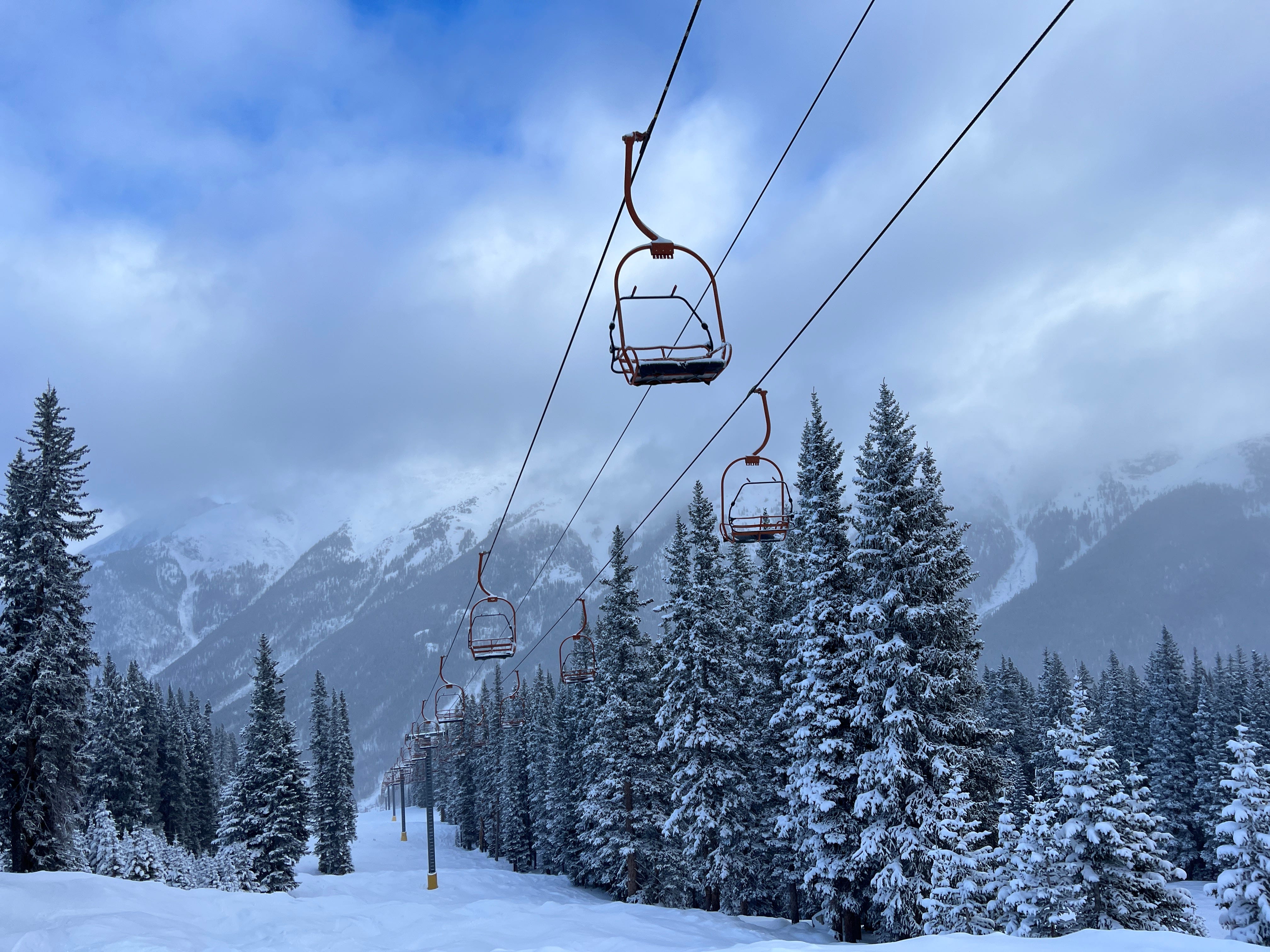
Nov 17, 2024
Podcast #188: Crystal Mountain, Michigan CEO John Melcher
This podcast hit paid subscribers’ inboxes on Nov. 10. It dropped for free subscribers on Nov. 17. To receive future episodes as soon as they’re live, and to support independent ski journalism, please consider an upgrade to a paid subscription. You can also subscribe to the free tier below: Who John Melcher, CEO of Crystal Mountain , Michigan Recorded on October 14, 2024 About Crystal Mountain, Michigan Click here for a mountain stats overview Owned by: The Petritz Family Located in: Thompsonville, Michigan Year founded: 1956 Pass affiliations: Indy Pass & Indy+ Pass: 2 days, no blackouts Reciprocal partners: 1 day each at Caberfae and Mount Bohemia, with blackouts Closest neighboring ski areas: Caberfae (:37), Hickory Hills (:45), Mt. Holiday (:50), Missaukee Mountain (:52), Homestead (:51) Base elevation: 757 feet Summit elevation: 1,132 feet Vertical drop: 375 feet Skiable Acres: 103 Average annual snowfall: 132 inches Trail count: 59 (30% black diamond, 48% blue square, 22% green circle) + 7 glades + 3 terrain parks Lift count: 8 (1 high-speed quad, 3 fixed-grip quads, 2 triples, 2 carpets – view Lift Blog’s inventory of Crystal Mountain’s lift fleet) Why I interviewed him The biggest knock on Midwest skiing is that the top of the hill is not far enough away from the bottom of the hill, and this is generally true. Two or three or four hundred vertical feet is not a lot of vertical feet. It is enough to hold little pockets of trees or jumps or a racer’s pitch that begs for a speed check. But no matter how fun the terrain, too soon the lift maze materializes and it’s another slow roll up to more skiing. A little imagination helps here. Six turns in a snowy Michigan glade feel the same as six turns in Blue Sky Basin trees (minus the physiological altitude strain). And the skillset transfers well. I learned to ski bumps on a 200-vertical-foot section of Boyne Mountain and now I can ski bumps anywhere. But losing yourself in a 3,000-vertical-foot Rocky Mountain descent is not the same thing as saying “Man I can almost see it” as you try to will a 300-footer into something grander. We all know this. Not everything about the lift-served skiing experience shrinks down with the same effect, is my point here. With the skiing itself, scale matters. But the descent is only part of the whole thing. The lift maze matters, and the uphill matters, and the parking matters, and the location of the lift ticket pick-up matters, and the availability of 4 p.m. beers matters, and the arrangement of base lodge seating matters. And when all of these things are knotted together into a ski day that is more fun than stressful, it is because you are in the presence of one thing that scales down in any context: excellence. The National Ski Areas Association splits ski areas into four size categories, calculated by “vertical transportation feet per hour.” In other words: how many skiers your lifts can push uphill in an ideal hour. This is a useful metric for many reasons, but I’d like to see a more qualitative measurement, one based not just on size, but on consistent quality of experience. I spend most of my winter bouncing across America, swinging into ski areas of all sizes and varieties. Excellence lives in unexpected places. One-hundred-and-sixty-vertical-foot Boyce Park, Pennsylvania blows thick slabs of snow with modern snowguns, grooms it well, and seems to double-staff every post with local teenagers. Elk Mountain, on the other side of Pennsylvania, generally stitches together a better experience than its better-known neighbors just south, in the Poconos. Royal Mountain, a 550-vertical-foot, weekends-only locals’ bump in New York’s southern Adirondacks, alternates statuesque grooming with zippy glades across its skis-bigger-than-it-is face. These ski areas, by combining great order and reliable conditions with few people, are delightful. But perhaps more impressive are ski areas that deliver consistent excellence while processing enormous numbers of visitors. Here you have places like Pats Peak, New Hampshire; Wachusett, Massachusetts; Holiday Valley, New York; and Mt. Rose, Nevada. These are not major tourist destinations, but they run with the welcoming efficiency of an Aspen or a Deer Valley. A good and ordered ski day, almost no matter what. Crystal Mountain, Michigan is one of these ski areas. Everything about the ski experience is well-considered. Expansion, upgrades, and refinement of existing facilities have been constant for decades. The village blends with the hill. The lifts are where the lifts should be. The trail network is interesting and thoughtfully designed. The parks are great. The grooming is great. The glades are plentiful. The prices are reasonable. And, most important of all, despite being busy at all times, Crystal Mountain is tamed by order. This is excellence, that thing that all ski areas should aspire to, whatever else they lack. What we talked about What’s new for Crystal skiers in 2024; snowmaking; where Crystal draws its snowmaking water; Peek’n Peak, New York; why Crystal is a good business in addition to being a good ski area; four-seasons business; skiing as Mother; what makes a great team (and why Crystal has one); switching into skiing mid-career; making trails versus clearcutting the ski slope; ownership decided via coinflip; Midwest destination skiing’s biggest obstacle; will Crystal remain independent?; room to expand; additional glading opportunities; why many of Crystal’s trails are named after people; considering the future of Crystal’s lift fleet; why Crystal built a high-speed lift that rises just 314 vertical feet; why the ghost of the Cheers lift lives on as part of Crystal’s trailmap; where Crystal has considered adding a lift to the existing terrain; that confusing trailmap; a walkable village; changes inbound at the base of Loki; pushing back parking; more carpets for beginners; Crystal’s myriad bargain lift ticket options; the Indy Pass; why Crystal dropped Indy Pass blackouts; the Mt. Bohemia-Crystal relationship; Caberfae; Indy’s ultimatum to drop Ski Cooper reciprocals or leave the pass; and why Crystal joined Freedom Pass last year and left for this coming winter. Why I thought that now was a good time for this interview The Storm’s mission is to serve all of American lift-served skiing. That means telling the stories of ski areas in every part of the country. I do this not because I have to, but because I want to. This newsletter would probably work just fine if it focused always and only on the great ski centers of the American West. That is, after all, the only part of U.S. ski country that outsiders travel to and that locals never leave. The biggest and best skiing is out there, at the top of our country, high and snowy and with a low chance of rain. But I live in the East and I grew up in the Midwest. Both regions are cluttered with ski areas. Hundreds of them, each distinct, each its own little frozen kingdom, each singular in atmosphere and arrangement and orientation toward the world. Most remain family-owned, and retain the improvisational quirk synonymous with such a designation. But more interesting is that these ski areas remain tethered to their past in a way that many of the larger western destination resorts, run by executives cycled in via corporate development programs, never will be again. I want to tell these stories. I’m aware that my national audience has a limited tolerance for profiles of Midwest ski centers they will never ski. But they seem to be okay with about a half-dozen per year, which is about enough to remind the wider ski community that this relatively flat but cold and hardy region is home to one of the world’s great ski cultures. The Midwest is where night-skiing rules, where blue-collar families still ski, where hunting clothes double as ski clothes, where everything is a little less serious and a little more fun. There’s no particular big development or project that threw the spotlight on Crystal here. I’ve been trying to arrange this interview for years. Because this is a very good ski area and a very well-run ski area, even if it is not a very large ski area in the grand landscape of American ski areas. It is one of the finest ski areas in the Midwest, and one worthy of our attention. What I got wrong * I said that “I forget if it’s seven or nine different tree areas” at Crystal. The number of glades labeled on the trailmap is seven. * I said Crystal had been part of Indy Pass “since the beginning or near the beginning.” The mountain joined the pass in May, 2020, ahead of the 2020-21 ski season, Indy’s second. Why you should ski Crystal Mountain, Michigan Crystal’s Loki pod rises above the parking lots, 255 vertical feet, eight trails down, steep on the front, gentler toward the back. These days I would ski each of the eight in turn and proceed next door to the Clipper lift. But I was 17 and just learning to ski and to me at the time that meant bombing as fast as possible without falling. For this, Wipeout was the perfect trail, a sweeping crescent through the trees, empty even on that busy day, steep but only for a bit, just enough to ignite a long sweeping tuck back to the chairs. We lapped this run for hours. Speed and adrenaline through the falling snow. The cold didn’t bother us and the dozens of alternate runs striped over successive hills didn’t tempt us. We’d found what we’d wanted and what we’d wanted is this. I packed that day in the mental suitcase that holds my ski memories and I’ve carried it around for decades. Skiing bigger mountains hasn’t tarnished it. Becoming a better skier hasn’t diminished it. Tuck and bomb, all day long. Something so pure and simple in it, a thing that bundles those Loki laps together with Cottonwoods pow days and Colorado bump towers and California trees. Indelible. Part of what I think of when I think about skiing and part of who I am when I consider myself as a skier. I don’t know for sure what Crystal Mountain, Michigan can give you. I can’t promise transformation of the impressionable teenage sort. I can’t promise big terrain or long runs because they don’t have them. I’m not going to pitch Crystal as a singular pilgrimage of the sort that draws western Brobots to Bohemia. This is a regional ski area that is most attractive to skiers who live in Michigan or the northern portions of the states to its immediate south. Read: it is a ski area that the vast majority of you will never experience. And the best endorsement I can make of Crystal is that I think that’s too bad, because I think you would really like it, even if I can’t exactly explain why. Podcast Notes On Peek’n Peak The most difficult American ski area name to spell is not “Summit at Snoqualmie” or “Granlibakken” or “Pomerelle” or “Sipapu” or “Skaneateles” or “Bottineau Winter Park” or “Trollhaugen,” all of which I memorized during the early days of The Storm . The most counterintuitive, frustrating, and frankly stupid ski area name in all the land is “Peek’n Peak,” New York, which repeats the same word spelled two different ways for no goddamn reason. And then there’s the apostrophe-“n,” lodged in there like a bar of soap crammed between the tomato and lettuce in your hamburger, a thing that cannot possibly justify or explain its existence. Five years into this project, I can’t get the ski area’s name correct without looking it up. Anyway, it is a nice little ski area, broad and varied and well-lifted, lodged in a consistent little Lake Erie snowbelt. They don’t show glades on the trailmap, but most of the trees are skiable when filled in. The bump claims 400 vertical feet; my Slopes app says 347. Either way, this little Indy Pass hill, where Melcher learned to ski, is a nice little stopover: On Crystal’s masterplan Crystal’s masterplan leaves room for potential future ski development – we discuss where, specifically, in the podcast. The ski area is kind of lost in the sprawl of Crystal’s masterplan, so I’ve added the lift names for context: On Sugar Loaf, Michigan Michigan, like most ski states, has lost more ski areas than it’s kept. The most frustrating of these losses was Sugar Loaf, a 500-footer parked in the northwest corner of the Lower Peninsula, outside of Traverse City. Sunday afternoon lift tickets were like $12 and my high school buddies and I would drive up through snowstorms and ski until the lifts closed and drive home. The place went bust around 2000, but the lifts were still standing until some moron ripped them out five years ago with fantasies of rebuilding the place as some sort of boutique “experience.” Then he ran away and now it’s just a lonely, empty hill. On Michigan being “littered with lost ski areas” Michigan is home to the second-most active or semi-active ski areas of any state in the country, with 44 (New York checks in around 50). Still, the Midwest Lost Ski Areas project counts more than 200 lost ski areas in the state. On Crystal’s backside evolution and confusing trailmap By building pod after pod off the backside of the mountain, Crystal has nearly doubled in size since I first skied there in the mid-90s. The Ridge appeared around 2000; North Face came online in 2003; and Backyard materialized in 2015. These additions give Crystal a sprawling, adventurous feel on par with The Highlands or Nub’s Nob. But the trailmap, while aesthetically pleasant, is one of the worst I’ve seen, as it’s very unclear how the three pods link to one another, and in turn to the front of the mountain: This is a fixable problem, as I outlined in my last podcast, with Vista Map founder Gary Milliken , who untangled similarly confusing trailmaps for Mt. Spokane, Washington and Lookout Pass, Idaho over the past couple of years. Here’s Lookout Pass’ old and new maps side-by-side: And here’s Mt. Spokane: Crystal – if you’d like an introduction to Gary, I’m happy to make that happen. On resort consolidation in the Midwest The Midwest has not been sheltered from the consolidation wave that’s rolled over much of the West and New England over the past few decades. Of the region’s 123 active ski areas, 25 are owned by entities that operate two or more ski areas: Vail Resorts owns 10; Wisconsin Resorts, five; Midwest Family Ski Resorts, four; the Schmitz Brothers, three; Boyne, two; and the Perfect Family, which also owns Timberline in West Virginia, one. But 98 of the region’s ski areas remain independently owned and operated. While a couple dozen of those are tiny municipal ropetow bumps with inconsistent operations and little or no snowmaking, most of those that run at least one chairlift are family-owned ski areas that, last winter notwithstanding, are doing very well on a formula of reasonable prices + a focus on kids and night-skiing. Here’s the present landscape of Midwest skiing: On the consolidation of Crystal’s lift fleet Crystal once ran five frontside chairlifts: Today, the mountain has consolidated that to just three, despite a substantively unchanged trail footprint. While Crystal stopped running the Cheers lift around 2016, its shadowy outline still appears along the Cheers To Lou run. Crystal is way out ahead of the rest of the Midwest, which built most of its ski areas in the age of cheap fixed-grip lifts and never bothered to replace them. The king of these dinosaurs may be Afton Alps, Minnesota, with 15 Hall chairlifts (it was, until recently, 17) lined up along the ridge, the newest of them dating to 1979: It’s kind of funny that Vail owns this anachronism, which, despite its comic-book layout, is actually a really fun little ski area. On Crystal’s many discounted lift ticket options While Crystal is as high-end as any resort you’ll find in Michigan, the ski area still offers numerous loveably kitschy discounts of the sort that every ski area in the country once sold: Browse these and more on their website . On Indy Pass’ dispute with Ski Cooper Last year, Indy Pass accused Ski Cooper of building a reciprocal resort network that turned the ski area’s discount season pass into a de facto national ski pass that competed directly with Indy. Indy then told its partners to ditch Cooper or leave Indy. Crystal was one of those resorts, and found a workaround by joining the Freedom Pass, which maintained the three Cooper days for their passholders without technically violating Indy Pass’ mandate. You can read the full story here: On Bohemia and Caberfae Crystal left Freedom Pass for this winter, but has retained reciprocal deals with Mount Bohemia and Caberfae. I’ve hosted leaders of both ski areas on the podcast, and they are two of my favorite episodes: The Storm explores the world of lift-served skiing year-round. Join us. The Storm publishes year-round, and guarantees 100 articles per year. This is article 73/100 in 2024, and number 573 since launching on Oct. 13, 2019. Get full access to The Storm Skiing Journal and Podcast at www.stormskiing.com/subscribe
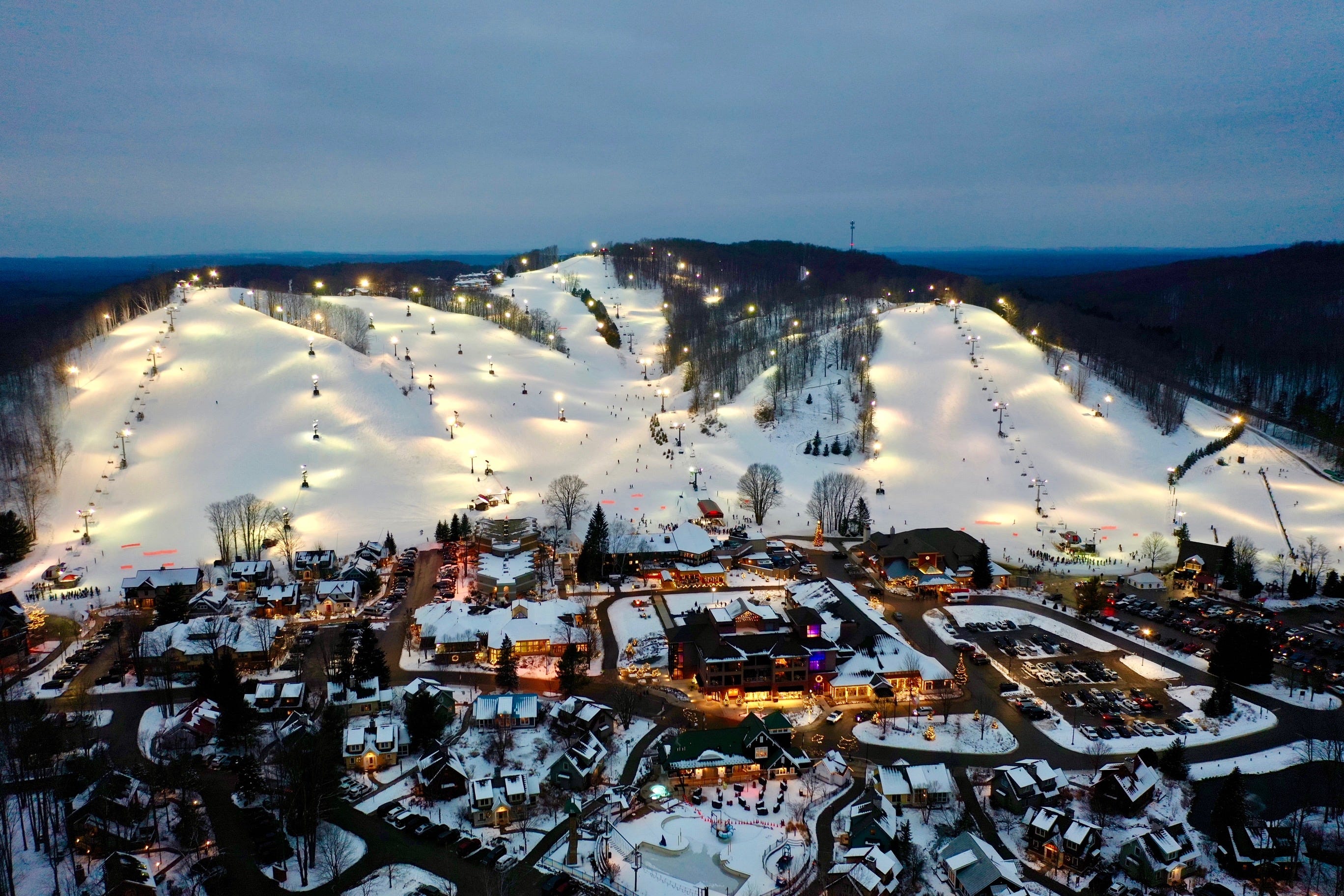
Nov 12, 2024
Podcast #187: Vista Map Founder Gary Milliken
This podcast hit paid subscribers’ inboxes on Nov. 5. It dropped for free subscribers on Nov. 12. To receive future episodes as soon as they’re live, and to support independent ski journalism, please consider an upgrade to a paid subscription. You can also subscribe to the free tier below: Who Gary Milliken, Founder of Vista Map Recorded on June 13, 2024 About Vista Map No matter which region of the country you ski in, you’ve probably seen one of Milliken’s maps (A list captures current clients; B list is past clients): Here’s a little overview video: Why I interviewed him The robots are coming. Or so I hear. They will wash our windows and they will build our cars and they will write our novels. They will do all of our mundane things and then they will do all of our special things. And once they can do all of the things that we can do, they will pack us into shipping containers and launch us into space. And we will look back at earth and say dang it we done fucked up. That future is either five minutes or 500 years away, depending upon whom you ask. But it’s coming and there’s nothing we can do to stop it. OK. But am I the only one still living in a 2024 in which it takes the assistance of at least three humans to complete a purchase at a CVS self-checkout? The little Google hub talky-thingys scattered around our apartment are often stumped by such seering questions as “Hey Google, what’s the weather today?” I believe 19th century wrenchers invented the internal combustion engine and sent it into mass production faster than I can synch our wireless Nintendo Switch controllers with the console. If the robots ever come for me, I’m going to ask them to list the last five presidents of Ohio and watch them short-circuit in a shower of sparks and blown-off sprockets. We overestimate machines and underestimate humans. No, our brains can’t multiply a sequence of 900-digit numbers in one millisecond or memorize every social security number in America or individually coordinate an army of 10,000 alien assassins to battle a videogame hero. But over a few billion years, we’ve evolved some attributes that are harder to digitally mimic than Bro.AI seems to appreciate. Consider the ridiculous combination of balance, muscle memory, strength, coordination, spatial awareness, and flexibility that it takes to, like, unpack a bag of groceries. If you’ve ever torn an ACL or a rotator cuff, you can appreciate how strong and capable the human body is when it functions normally. Now multiply all of those factors exponentially as you consider how they fuse so that we can navigate a bicycle through a busy city street or build a house or play basketball. Or, for our purposes, load and unload a chairlift, ski down a mogul field, or stomp a FlipDoodle 470 off of the Raging Rhinoceros run at Mt. Sickness. To which you might say, “who cares? Robots don’t ski. They don’t need to and they never will. And once we install the First Robot Congress, all of us will be free to ski all of the time.” But let’s bring this back to something very simple that it seems as though the robots could do tomorrow, but that they may not be able to do ever: create a ski area trailmap. This may sound absurd. After all, mountains don’t move around a lot. It’s easy enough to scan one and replicate it in the digital sphere. Everything is then arranged just exactly as it is in reality. With such facsimiles already possible, ski area operators can send these trailmap artists directly into the recycling bin, right? Probably not anytime soon. And that’s because what robots don’t understand about trailmaps is how humans process mountains. In a ski area trailmap, we don’t need something that exactly recreates the mountain. Rather, we need a guide that converts a landscape that’s hilly and windy and multi-faced and complicated into something as neat and ordered as stocked aisles in a grocery store. We need a three-dimensional environment to make sense in a two-dimensional rendering. And we need it all to work together at a scale shrunken down hundreds of times and stowed in our pocket. Then we need that scale further distorted to make very big things such as ravines and intermountain traverses to look small and to make very small things like complex, multi-trailed beginner areas look big. We need someone to pull the mountain into pieces that work together how we think they work together, understanding that fidelity to our senses matters more than precisely mirroring reality. But robots don’t get this because robots don’t ski. What data, inherent to the human condition, do we upload to these machines to help them understand how we process the high-speed descent of a snow-covered mountain and how to translate that to a piece of paper? How do we make them understand that this east-facing mountain must appear to face north so that skiers understand how to navigate to and from the adjacent peak, rather than worrying about how tectonic plates arranged the monoliths 60 million years ago? How do the robots know that this lift spanning a two-mile valley between separate ski centers must be represented abstractly, rather than at scale, lest it shrinks the ski trails to incomprehensible minuteness? It’s worth noting that Milliken has been a leader in digitizing ski trailmaps, and that this grounding in the digital is the entire basis of his business model, which flexes to the seasonal and year-to-year realities of ever-changing ski areas far more fluidly than laboriously hand-painted maps. But Milliken’s trailmaps are not simply topographic maps painted cartoon colors. They are, rather, cartography-inspired art, reality translated to the abstract without losing its anchors in the physical. In recreating sprawling, multi-faced ski centers such as Palisades Tahoe or Vail Mountain, Milliken, a skier and a human who exists in a complex and nuanced world, is applying the strange blend of talents gifted him by eons of natural selection to do something that no robot will be able to replicate anytime soon. What we talked about How late is too late in the year to ask for a new trailmap; time management when you juggle a hundred projects at once; how to start a trailmap company; life before the internet; the virtues of skiing at an organized ski center; the process of creating a trailmap; whether you need to ski a ski area to create a trailmap; why Vista Map produces digital, rather than painted, trailmaps; the toughest thing to get right on a trailmap; how the Vista Map system simplifies map updates; converting a winter map to summer; why trailmaps are rarely drawn to real-life scale; creating and modifying trailmaps for complex, sprawling mountains like Vail, Stowe, and Killington; updating Loon’s map for the recent South Peak expansion; making big things look small at Mt. Shasta; Mt. Rose and when insets are necessary; why small ski areas “deserve a great map”; and thoughts on the slow death of the paper trailmap. Why I thought that now was a good time for this interview Technology keeps eating things that I love. Some of them – CDs, books, event tickets, magazines, newspapers – are easier to accept. Others – childhood, attention spans, the mainstreaming of fringe viewpoints, a non-apocalyptic social and political environment, not having to listen to videos blaring from passengers’ phones on the subway – are harder. We arrived in the future a while ago, and I’m still trying to decide if I like it. My pattern with new technology is often the same: scoff, resist, accept, forget. But not always. I am still resisting e-bikes. I tried but did not like wireless headphones and smartwatches (too much crap to charge and/or lose). I still read most books in print and subscribe to whatever quality print magazines remain. I grasp these things while knowing that, like manual transmissions or VCRs, they may eventually become so difficult to find that I’ll just give up. I’m not at the giving-up point yet on paper trailmaps, which the Digital Bro-O-Sphere insists are relics that belong on our Pet Rectangles. But mountains are big. Phones are small. Right there we have a disconnect. Also paper doesn’t stop working in the cold. Also I like the souvenir. Also we are living through the digital equivalent of the Industrial Revolution and sometimes it’s hard to leave the chickens behind and go to work in the sweatshop for five cents a week. I kind of liked life on the farm and I’m not ready to let go of all of it all at once. There are some positives. In general I do not like owning things and not acquiring them to begin with is a good way to have fewer of them. But there’s something cool about picking up a trailmap of Nub’s Nob that I snagged at the ticket window 30 years ago and saying “Brah we’ve seen some things.” Ski areas will always need trailmaps. But the larger ones seem to be accelerating away from offering those maps on sizes larger than a smartphone and smaller than a mountaintop billboard. And I think that’s a drag, even as I slowly accept it. Podcast Notes On Highmount Ski Center Milliken grew up skiing in the Catskills, including at the now-dormant Highmount Ski Center: As it happens, the abandoned ski area is directly adjacent to Belleayre, the state-owned ski area that has long planned to incorporate Highmount into its trail network (the Highmount trails are on the far right, in white): Here’s Belleayre’s current trailmap for context - the Highmount expansion would sit far looker’s right: That one is not a Vista Map product, but Milliken designed Belleayre’s pre-gondola-era maps: Belleayre has long declined to provide a timeline for its Highmount expansion, which hinged on the now-stalled development of a privately run resort at the base of the old ski area. Given the amazing amount of money that the state has been funneling into its trio of ski areas (Whiteface and Gore are the other two), however, I wouldn’t be shocked to see Belleayre move ahead with the project at some point. On the Unicode consortium This sounds like some sort of wacky conspiracy theory, but there really is a global overlord dictating a standard set of emoji on our phones. You can learn more about it here . Maps we talked about Lookout Pass, Idaho/Montana Even before Lookout Pass opened a large expansion in 2022, the multi-sided ski area’s map was rather confusing: For a couple of years, Lookout resorted to an overhead map to display the expansion in relation to the legacy mountain: That overhead map is accurate, but humans don’t process hills as flats very well. So, for 2024-25, Milliken produced a more traditional trailmap, which finally shows the entire mountain unified within the context of itself: Mt. Spokane, Washington Mt. Spokane long relied on a similarly confusing map to show off its 1,704 acres: Milliken built a new, more intuitive map last year: Mt. Rose, Nevada For some mountains, however, Milliken has opted for multiple angles over a single-view map. Mt. Rose is a good example: Telluride, Colorado When Milliken decided to become a door-to-door trailmap salesman, his first stop was Telluride. He came armed with this pencil-drawn sketch: The mountain ended up being his first client: Gore Mountain, New York This was one of Milliken’s first maps created with the Vista Map system, in 1994: Here’s how Vista Map has evolved that map today: Whiteface, New York One of Milliken’s legacy trailmaps, Whiteface in 1997: Here’s how that map had evolved by the time Milliken created the last rendition around 2016: Sun Valley, Idaho Sun Valley presented numerous challenges of perspective and scale: Grand Targhee, Wyoming Milliken had to design Targhee’s trailmap without the benefit of a site visit: Vail Mountain, Colorado Milliken discusses his early trailmaps at Vail Mountain, which he had to manipulate to show the new-ish (at the time) Game Creek Bowl on the frontside: In recent years, however, Vail asked Milliken to move the bowl into an inset. Here’s the 2021 frontside map: Here’s a video showing the transformation: Stowe, Vermont We use Stowe to discuss the the navigational flourishes of a trailmap compared to real-life geography. Here’s the map: And here’s Stowe IRL, which shows a very different orientation: Mt. Hood Meadows, Oregon Mt. Hood Meadows also required some imagination. Here’s Milliken’s trailmap: Here’s the real-world overhead view, which looks kind of like a squid that swam through a scoop of vanilla ice cream: Killington, Vermont Another mountain that required some reality manipulation was Killington, which, incredibly, Milliken managed to present without insets: And here is how Killington sits in real life – you could give me a thousand years and I could never make sense of this enough to translate it into a navigable two-dimensional single-view map: Loon Mountain, New Hampshire Vista Map has designed Loon Moutnain’s trailmap since around 2019. Here’s what it looked like in 2021: For the 2023-24 ski season, Loon added a small expansion to its South Peak area, which Milliken had to work into the existing map: Mt. Shasta Ski Park, California Sometimes trailmaps need to wildly distort geographic features and scale to realistically focus on the ski experience. The lifts at Mt. Shasta, for example, rise around 2,000 vertical feet. It’s an additional 7,500 or so vertical feet to the mountain’s summit, but the trail network occupies more space on the trailmap than the snowcone above it, as the summit is essentially a decoration for the lift-served skiing public. Oak Mountain, New York Milliken also does a lot of work for small ski areas. Here’s 650-vertical-foot Oak Mountain, in New York’s Adirondacks: Willard Mountain, New York And little Willard, an 85-acre ski area that’s also in Upstate New York: Caberfae Peaks, Michigan And Caberfae, a 485-footer in Michigan’s Lower Peninsula: On the New York City Subway map The New York City subway map makes Manhattan look like the monster of New York City: That, however, is a product of the fact that nearly every line runs through “the city” as we call it. In reality, Manhattan is the smallest of the five boroughs, at just 22.7 square miles, versus 42.2 for The Bronx, 57.5 for Staten Island, 69.4 for Brooklyn, and 108.7 for Queens. The Storm explores the world of lift-served skiing year-round. Join us. The Storm publishes year-round, and guarantees 100 articles per year. This is article 71/100 in 2024, and number 571 since launching on Oct. 13, 2019. Get full access to The Storm Skiing Journal and Podcast at www.stormskiing.com/subscribe
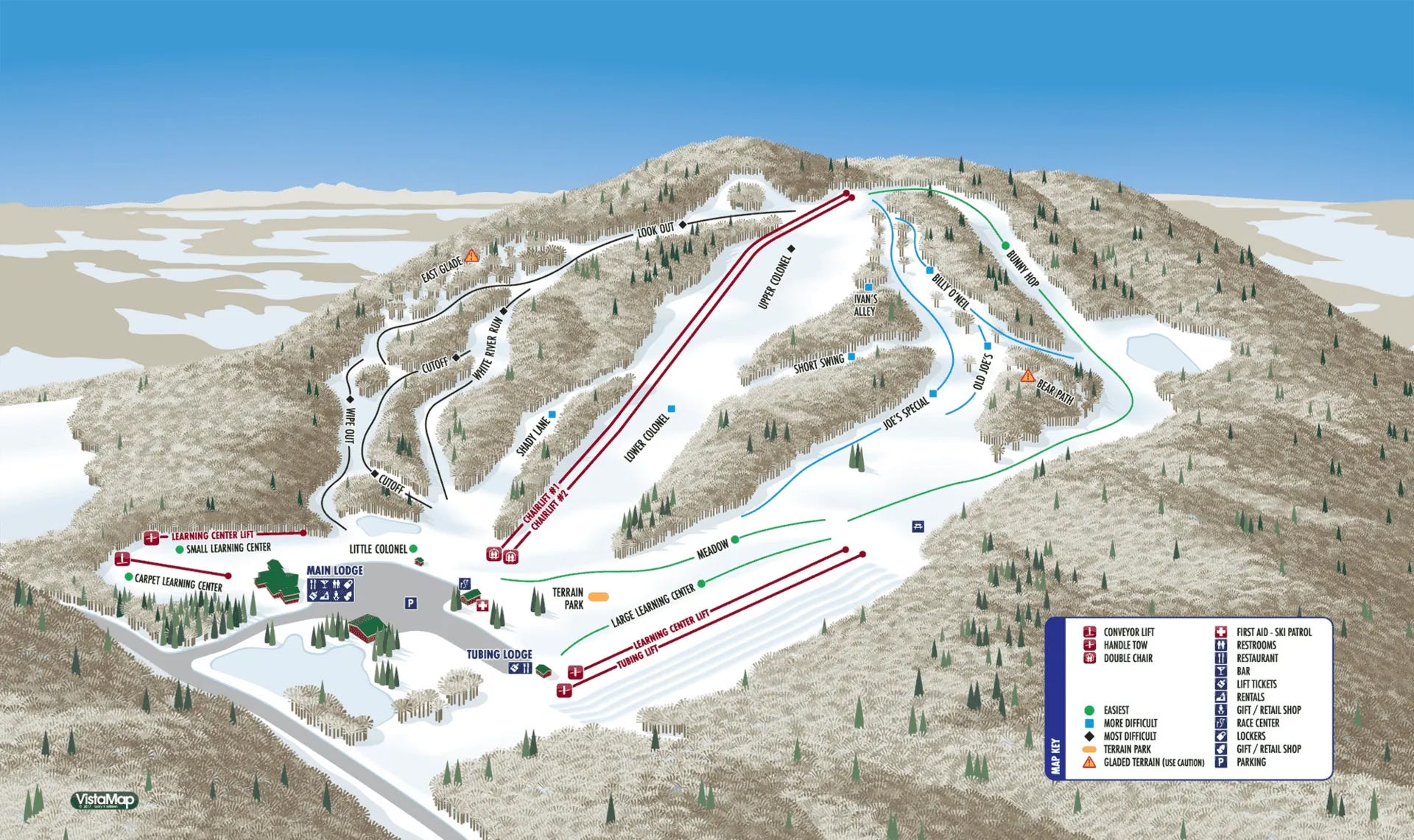
Nov 7, 2024
Podcast #186: Grand Targhee Managing Director & General Manager Geordie Gillett
This podcast hit paid subscribers’ inboxes on Oct. 31. It dropped for free subscribers on Nov. 7. To receive future episodes as soon as they’re live, and to support independent ski journalism, please consider an upgrade to a paid subscription. You can also subscribe to the free tier below: Who Geordie Gillett, Managing Director and General Manager of Grand Targhee , Wyoming Recorded on September 30, 2024 About Grand Targhee Click here for a mountain stats overview Owned by: The Gillett Family Located in: Alta, Wyoming Year founded: 1969 Pass affiliations: Mountain Collective: 2 days, no blackouts Closest neighboring ski areas: Jackson Hole (1:11), Snow King (1:22), Kelly Canyon (1:34) – travel times vary considerably given time of day, time of year, and weather conditions. Base elevation: 7,650 feet (bottom of Sacajawea Lift) Summit elevation: 9,862 feet at top of Fred’s Mountain; hike to 9,920 feet on Mary’s Nipple Vertical drop: 2,212 feet (lift-served); 2,270 feet (hike-to) Skiable Acres: 2,602 acres Average annual snowfall: 500 inches Trail count: 95 (10% beginner, 45% intermediate, 30% advanced, 15% expert) Lift count: 6 (1 six-pack, 2 high-speed quads, 2 fixed-grip quads, 1 carpet – view Lift Blog’s inventory of Grand Targhee’s lift fleet) Why I interviewed him Here are some true facts about Grand Targhee: * Targhee is the 19th-largest ski area in the United States, with 2,602 lift-served acres. * That makes Targhee larger than Jackson Hole, Snowbird, Copper, or Sun Valley. * Targhee is the third-largest U.S. ski area (behind Whitefish and Powder Mountain) that is not a member of the Epic or Ikon passes. * Targhee is the fourth-largest independently owned and operated ski area in America, behind Whitefish, Powder Mountain, and Alta. * Targhee is the fifth-largest U.S. ski area outside of Colorado, California, and Utah (following Big Sky, Bachelor, Whitefish, and Schweitzer). And yet. Who do you know who has skied Grand Targhee who has not skied everywhere? Targhee is not exactly unknown, but it’s a little lost in skiing’s Bermuda Triangle of Jackson Hole, Sun Valley, and Big Sky, a sunken ship loaded with treasure for whoever’s willing to dive a little deeper. Most ski resort rankings will plant Alta-Snowbird or Whistler or Aspen or Vail at the top. Understandably so – these are all great ski areas. But I appreciate this take on Targhee from skibum.net , a site that hasn’t been updated in a couple of years, but is nonetheless an excellent encyclopedia of U.S. skiing (boldface added by me for emphasis): You can start easy, then get as wild and remote as you dare. Roughly 20% of the lift-served terrain (Fred’s Mountain) is groomed. The snowcat area (Peaked Mountain) is completely ungroomed, completely powder, totally incredible [Peaked is lift-served as of 2022]. Comparisons to Jackson Hole are inevitable, as GT & JH share the same mountain range. Targhee is on the west side, and receives oodles more snow…and therefore more weather. Not all of it good; a local nickname is Grand Foggy . The locals ski Targhee 9 days out of 10, then shift to Jackson Hole when the forecast is less than promising. (Jackson Hole, on the east side, receives less snow and virtually none of the fog). On days when the weather is good, Targhee beats Jackson for snow quality and shorter liftlines. Some claim Targhee wins on scenery as well. It’s just a much different, less crowded, less commercialized resort, with outstanding skiing. Some will argue the quality of Utah powder…and they’re right, but there are fewer skiers at Targhee, so it stays longer. Some of the runs at Targhee are steep, but not as steep as the couloirs at Jackson Hole. Much more of an intermediate mountain; has a very “open” feel on virtually all of the trails. And when the powder is good, there is none better than Grand Targhee. #1 ski area in the USA when the weather is right. Hotshots, golfcondoskiers and young skiers looking for “action” (I’m over 40, so I don’t remember exactly what that entails) are just about the only people who won’t call Grand Targhee their all-time favorite. For the pure skier , this resort is number one. Which may lead you to ask: OK Tough Guy then why did it take you five years to talk about this mountain on your podcast? Well I get that question about once a month, and I don’t really have a good answer other than that there are a lot of ski areas and I can only talk about one at a time. But here you go. And from the way this one went, I don’t think it will be my last conversation with the good folks at Grand old Targhee. What we talked about Continued refinement of the Colter lift and Peaked Mountain expansion; upgrading cats; “we do put skiing first here”; there’s a reason that finance people “aren’t the only ones in the room making decisions for ski areas”; how the Peaked expansion changed Targhee; the Teton Pass highway collapse; building, and then dismantling, Booth Creek; how ignoring an answering machine message led to the purchase of Targhee; first impressions of Targhee: “How is this not the most popular ski resort in America?”; imagining Booth Creek in an Epkonic alt reality; Targhee’s commitment to independence; could Targhee ever acquire another mountain?; the insane price that the Gilletts paid for Targhee; the first time you see the Rockies; massive expansion potential; corn; fixed-grip versus detach; Targhee’s high percentage of intermediate terrain and whether that matters; being next-door neighbors with “the most aspirational brand in skiing”; the hardest part of expanding a ski area; potential infill lifts; the ski run Gillett would like to eliminate and why; why we’re unlikely to see a lift to the true summit; and why Targhee joined Mountain Collective but hasn’t joined the Ikon Pass (and whether the mountain ever would). Why I thought that now was a good time for this interview A few things make Targhee extra relevant to our current ski moment: * Targhee is the only U.S. ski area aside from Sugar Bowl to join the Mountain Collective pass while staying off of Ikon. * In 2022, Targhee (sort of) quietly opened one of the largest lift-served North American ski expansions in the past decade, the 600-acre Peaked Mountain pod, served by the six-pack Colter lift. * The majority of large U.S. ski areas positioned on Forest Service land are bashful about their masterplans, which are publicly available documents that most resort officials wish we didn’t know about. That’s because these plans outline potential future expansions and upgrades that resorts would rather not prematurely acknowledge, lest they piss off the Chipmunk Police. So often when I’m like “Hey tell us about this 500-acre bowl-skiing expansion off the backside,” I get an answer that’s something like, “well we look forward to working with our partners at the Forest Service to maybe consider doing that around the year 3000 after we complete our long-term study of mayfly migration routes.” But Geordie is just like, “Hell yes we want to blow the resort out in every direction like yesterday” (not an exact quote). And I freaking love the energy there. * Most large Western ski areas fall into one of two categories: big, modern, and busy (Vail, Big Sky, Palisades, Snowbird), or big, somewhat antiquated, and unknown (Discovery, Lost Trail, Silver). But Targhee has split the difference, being big, modern, and lesser-known, that rare oasis that gives you modern infrastructure (like fast lifts), without modern crowds (most of the time). It’s kind of strange and kind of glorious, and probably too awesome to stay true forever, so I wanted to get there before the Brobot Bus unloaded. * Even 500-inches-in-an-average-winter Targhee has a small snowmaking system. Isn’t that interesting? What I got wrong * I said that $20 million “might buy you a couple houses on the slopes at Jackson Hole.” It kind of depends on how you define “on the slopes,” and whether or not you can live without enough acreage for your private hippo zoo. If not, $24.5 million will get you this (I’m not positive that this one is zoned for immediate hippo occupation). * I said that 70 percent of Targhee’s terrain was intermediate; Geordie indicated that that statistic had likely changed with the addition of the Peaked Mountain expansion. I’m working with Targhee to get updated numbers. [ EDIT: Targhee’s updated terrain breakdown is 10% beginner, 45% intermediate, 30% advanced, and 15% expert.) Why you should ski Grand Targhee The disconnect between people who write about skiing and what most people actually ski leads to outsized coverage of niche corners of this already niche activity. What percentage of skiers think that skiing uphill is fun? Can accomplish a mid-air backflip? Have ever leapt off a cliff more than four feet high? Commute via helicopter to the summit of their favorite Alaskan powder lines? The answer on all counts is probably a statistically insignificant number. But 99 percent of contemporary ski media focuses on exactly such marginal activities. In some ways I understand this. Most basketball media devote their attention to the NBA, not the playground knuckleheads at some cracked-concrete, bent-rim Harlem streetball court. It makes sense to look at the best and say wow. No one wants to watch intermediate skiers skiing intermediate terrain. But the magnifying glass hovering over the gnar sometimes clouds consumer choice. An average skier, infected by cliffity-hucking YouTubes and social media Man Bro boasting, thinks they want Corbet’s and KT-22 and The Cirque at Snowbird. Which OK if you zigzag across the fall line yeah you can get down just about anything. But what most skiers need is Grand Targhee, big and approachable, mostly skiable by mostly anyone, with lots of good and light snow and a low chance of descent-by-tomahawk. Targhee’s stats page puts the mountain’s share of intermediate terrain at 70 percent, likely the highest of any major North American ski area (Northstar, another big-time intermediate-oriented mountain, claims 60 percent blue runs). I suspect this contributes to the resort’s relatively low profile among destination skiers. Broseph Jones and his Brobot buddies examine the statistical breakdown of major resorts and are like “Yo cuz we want some Jackson trammage because we roll hard see.” Even though Targhee is bigger and gets more snow (both true) and offers a more realistic experience for the Brosephs. That’s not to say that you shouldn’t ski Jackson Hole. Everyone should. But steeps all day are mentally and physically draining. It’s nice most of the time to not be parkouring down an elevator shaft. So go to Targhee too. And you can whoo-hoo through the deep empty trees and say “dang Brah this is hella rad Brah.” And it is. Podcast Notes On the Peaked Mountain expansion The Peaked Mountain terrain has been marked on Targhee’s trailmap for years, but up until 2022, it was accessible mostly via snowcat: In 2022, the resort dropped a six-pack back there, better defined the trail network, and brought Peaked into the lift-served terrain package: On Grand Targhee’s masterplan Here’s the overview of Targhee’s Forest Service master development plan. You can see potential expansions below Blackfoot (left in the image below), looker’s right of Peaked/Colter (upper right), and below Sacajawea (lower right): Here’s a better look at the so-called South Bowl proposal, which would add a big terrain pod contiguous with the recent Peaked expansion: Here’s the MDP’s inventory of proposed lifts. These things often change, and the “Peaked DC-4” listed below actualized as the Colter high-speed sixer: Targhee’s snowmaking system is limited, but long-term aspirations show potential snowmaking stretching toward the top of the Dreamcatcher lift: On opposition to all of this potential expansion There are groups of people masquerading as environmental commandos who I suspect oppose everything just to oppose it. Like oh a bobcat pooped next to that tree so we need to fence the area off from human activity for the next thousand years. But Targhee sits within a vast and amazing wilderness, the majority of which is and should be protected forever. But humans need space too, and developing a few hundred acres directly adjacent to already-developed ski terrain is the most sustainable and responsible way to do this. It’s not like Targhee is saying “hey we’re going to build a zipline connecting the resort to the Grand Teton.” But nothing in U.S. America can be achieved without a minimum of 45 lawsuits (it’s in the Constitution), so these histrionic bozos will continue to exist. On Net Promoter Score and RRC I’m going to hurt myself if I try to overexplain this, so I’ll just point toward RRC’s Net Promoter Score overview page and the company’s blog archive highlighting various reports. RRC sits quietly behind the ski industry but wields tremendous influence, assembling the annual Kotke end-of-season statistical report, which offers the most comprehensive annual overview of the state of U.S. skiing. On the reason I couldn’t go to Grand Targhee last year So I was all set up to hit Targhee for a day last year and then I woke up in the middle of the night thinking “Gee I feel like I’m gonna die soon” and so I did not go skiing that day. Here’s the full story if you are curious how I ended up not dying. On the Peaked terrain expansion being the hypothetical largest ski area in New Hampshire I’ll admit that East-West ski area size comparisons are fundamentally flawed. Eastern mountains not named Killington, Smugglers’ Notch, and Sugarloaf tend to measure skiable terrain by acreage of cut trails and maintained glades (Sugarbush, one of the largest ski areas in the East by pure footprint, doesn’t even count the latter). Western mountains generally count everything within their boundary. Fair enough – trying to ski most natural-growth eastern woods is like trying to ski down the stands of a packed football stadium. You’re going to hit something. Western trees tend to be higher altitude, older-growth, less cluttered with undergrowth, and, um, more snow-covered. Meaning it’s not unfair to include even unmarked sectors of the ski area as part of the ski area. Which is a long way of saying that numbers are hard, and that relying on ski area stats pages for accurate ski area comparisons isn’t going to get you into NASA’s astronaut training academy. Here’s a side-by-side of 464-acre Bretton Woods – New Hampshire’s largest ski area – and Targhee’s 600-acre Peaked Mountain expansion, both at the same scale in Google Maps. Clearly Bretton Woods covers more area, but the majority of those trees are too dense to ski: And here’s an inventory of all New Hampshire ski areas, if you’re curious: On the Teton Pass highway collapse Yeah so this was wild: On Booth Creek Grand Targhee was once part of the Booth Creek ski conglomerate, which now exists only as the overlord for Sierra-at-Tahoe. Here’s a little history: On the ski areas at Snoqualmie Pass being “insane” We talk a bit about the “insane” terrain at Summit at Snoqualmie, a quirky ski resort now owned by Boyne. The mountain was Frankensteined together out of four legacy ski areas, three of which share a ridge and are interconnected. And then there’s Alpental, marooned across the interstate, much taller and infinitely rowdier than its ho-hum brothers. Alpy, as a brand and as a badass, is criminally unknown outside of its immediate market, despite being on the Ikon Pass since 2018. But, as Gillett notes, it is one of the roughest, toughest mountains going: On Targhee’s sinkhole Per Jackson Hole News and Guide in September of last year: About two weeks ago, a day or so after torrential rain, and a few days after a downhill mountain biking race concluded on the Blondie trail, Targhee ski patrollers noticed that something was amiss. Only feet away from the muddy meander that mountain bikers had zipped down, a mound of earth had disappeared. In its place, there was a hole of unknown, but concerning, size. Subsequent investigations — largely, throwing rocks into the hole while the resort waits for more technical tools — indicate that the sinkhole is at least 8 feet wide and about 40 feet deep, if not more. There are layers of ice caking the walls a few feet down, and the abyss is smack dab in the middle of the resort’s prized ski run. Falling into a sinkhole would be a ridiculous way to go. Like getting crushed by a falling piano or flattened under a steamroller. Imagine your last thought on earth is “Bro are you freaking kidding me with this s**t?” On the overlap between Mountain Collective and Ikon Mountain Collective and Ikon share a remarkable 26 partner ski areas. Only Targhee, Sugar Bowl, Marmot Basin, Bromont, Le Massif du Charlevoix, and newly added Megève have joined Mountain Collective while holding out on Ikon. The Storm explores the world of lift-served skiing year-round. Join us. The Storm publishes year-round, and guarantees 100 articles per year. This is article 70/100 in 2024, and number 570 since launching on Oct. 13, 2019. Get full access to The Storm Skiing Journal and Podcast at www.stormskiing.com/subscribe
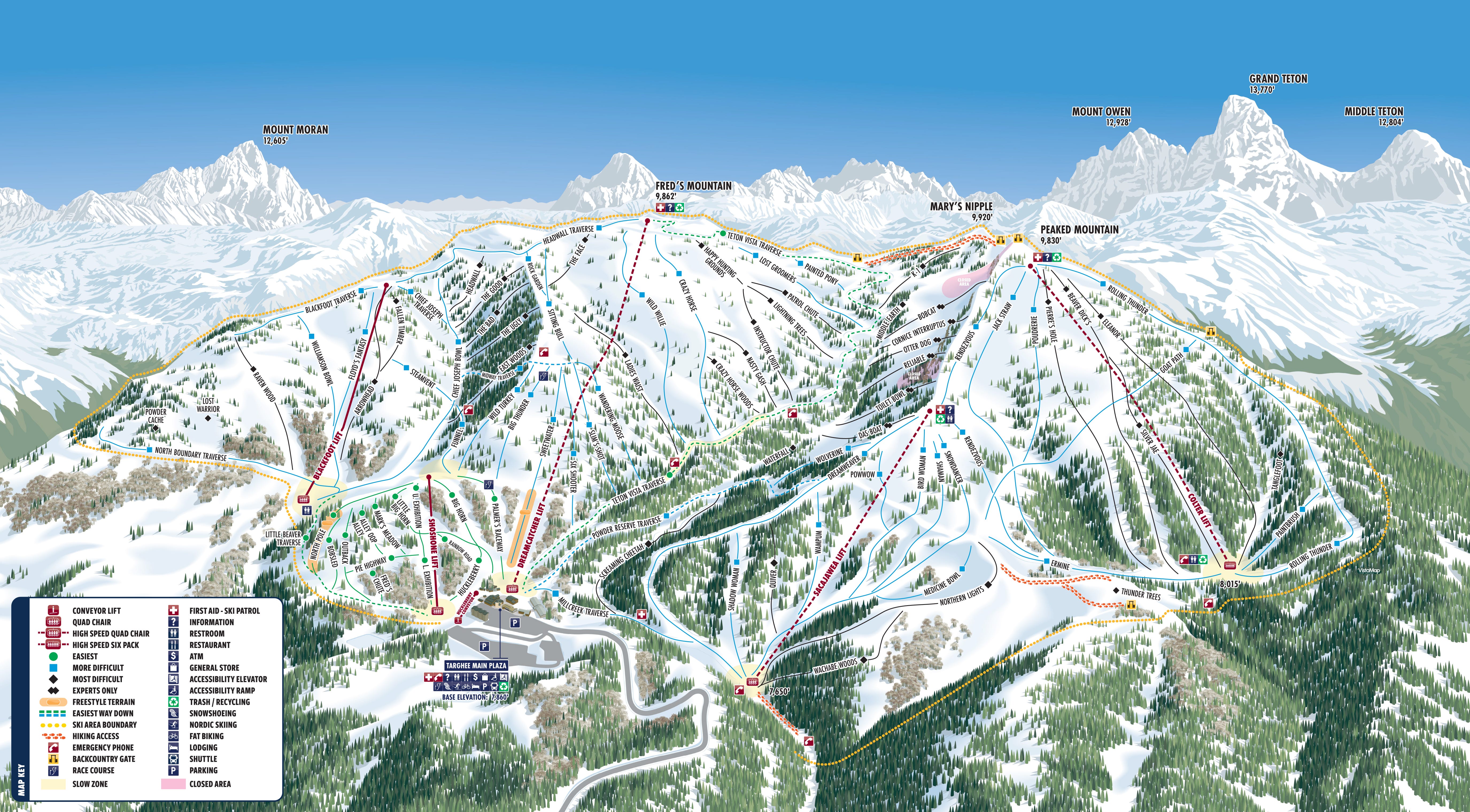
Oct 24, 2024
Podcast #185: Norway Mountain, Michigan Owner Justin Hoppe
This podcast hit paid subscribers’ inboxes on Oct. 17. It dropped for free subscribers on Oct. 24. To receive future episodes as soon as they’re live, and to support independent ski journalism, please consider an upgrade to a paid subscription. You can also subscribe to the free tier below: When we recorded this podcast, Norway Mountain’s adult season pass rates were set at $289. They have since increased by $100, but Hoppe is offering a $100 discount with the code “storm” through Nov. 1, 2024 . Who Justin Hoppe, Owner of Norway Mountain , Michigan Recorded on September 16, 2024 About Norway Mountain Owned by: Justin Hoppe Located in: Norway, Michigan Year founded: Around 1974, as Norvul ski area; then Vulcan USA; then Briar Mountain; then Mont Brier; and finally Norway Mountain from ~1993 to 2012; then from 2014 to 2017; re-opened 2024 Pass affiliations: Freedom Pass – 3 days each at these ski areas: Closest neighboring ski areas: Pine Mountain (:22), Keyes Peak (:35), Crystella (:46), Gladstone (:59), Ski Brule (1:04) Base elevation: 835 feet Summit elevation: 1,335 feet Vertical drop: 500 feet Skiable Acres: 186 Average annual snowfall: 50 inches Trail count: 15 Lift count: 6 (1 triple, 2 doubles, 3 handle tows) The map above is what Norway currently displays on its website . Here’s a 2007 map that’s substantively the same, but with higher resolution: View historic Norway Mountain trailmaps on skimap.org . Why I interviewed him What a noble act: to resurrect a dead ski area. I’ll acknowledge that a ski area is just a business. But it’s also a (usually) irreplaceable community asset, an organ without which the body can live but does not function quite right. We read about factories closing up and towns dying along with them. This is because the jobs leave, yes, but there’s an identity piece too. As General Motors pulled out of Saginaw and Flint in the 1980s and ‘90s, I watched, from a small town nearby, those places lose a part of their essence, their swagger and character. People were proud to have a GM factory in town, to have a GM job with a good wage, to be a piece of a global something that everyone knew about. Something less profound but similar happens when a ski area shuts down. I’ve written before about Apple Mountain, the 200-vertical-foot bump in Freeland, Michigan where I spent my second-ever day on skis: [Apple Mountain] has been closed since 2017. Something about the snowmaking system that’s either too hard or too expensive to fix. That leaves Michigan’s Tri-Cities – Midland, Bay City, and Saginaw, with a total metro population approaching 400,000 – with no functioning ski area. Snow Snake is only about 40 minutes north of Midland, and Mt. Holly is less than an hour south of Saginaw. But Apple Mountain, tucked into the backwoods behind Freeland, sat dead in the middle of the triangle. It was accessible to almost any schoolkid, and, humble as it was, stoked that fire for thousands of what became lifelong skiers. What skiing has lost without Apple Mountain is impossible to calculate. I would argue that it was one of the more important ski areas anywhere. Winters in mid-Michigan are long, cold, snowy, and dull. People need something to do. But skiing is not an obvious solution: this is the flattest place you can imagine. To have skiing – any skiing – in the region was a joy and a novelty. There was no redundancy, no competing ski center. And so the place was impossibly busy at all times, minting skiers who would go off to start ski newsletters and run huge resorts on the other side of the country. When the factory closes, the jobs go, and often nothing replaces them. Losing a ski area is similar. The skiers go, and nothing replaces them. The kids just do other things. They never become skiers. Children of Men , released in 2006, envisions a world 18 years after women have stopped having babies. Humanity lives on, but has collectively lost its soul. Violence and disorder reign. The movie is heralded for its extended single-shot battle scenes, but Children of Men’s most remarkable moment is when a baby, born in the midst of a firefight, momentarily paralyzes the war as her protectors parade her to sanctuary: Humanity needs babies like winter needs skiers. But we have to keep making more. Yes, I’m being hyperbolic about the importance of resurrecting a lost ski area. If you’re new here, that part of My Brand™. A competing, similar-sized ski center, Pine Mountain, is only 20 minutes from Norway. But that’s 13 miles, which for a kid may as well be 1,000. Re-opening Norway is going to seed new skiers. Some of them will ski four times and forget about it and some of them will take spring break trips to Colorado when they get to college and a few of them may wrap their lives around it. And if they don’t ever ski? Well, who knows. I almost didn’t become a skier. I was 14 when my buddy said “Hey let’s take the bus to Mott Mountain after school,” and I said “OK,” and even though I was Very Bad at it, I went again a few weeks later at Apple Mountain. Both of those hills are closed now. If I were growing up in Central Michigan now, would I have become a skier? What would I be if I wasn’t one? How awful would that be? What we talked about Back from the dead; the West Michigan snowbelt; the power of the ski family; Caberfae; Pando’s not for sale; when you decide to buy a lost ski area; how lost Norway was almost lost forever; the small business mindset; surprise bills; what a ski area looks like when it’s sat idle for six years; piecing a sold-off snowmaking system back together; Norway’s very unique lift fleet; glades; the trailmap; Norway’s new logo; the Wild West of websites; the power of social media; where to even begin when you buy a ski area; the ups and downs of living at your ski area; shifting from renovation to operation; Norway’s uneven history and why this time is different; is there enough room for Pine Mountain and Norway in such a small market?; why night skiing won’t return on a regular basis this winter; send the school buses; it doesn’t snow much but at least it stays cold; can Norway revitalize its legendary ski school?; and why Norway joined the Freedom Pass. Why I thought that now was a good time for this interview Hello Mr. Television Network Executive. Thank you for agreeing to hear my pitch. I understand I have 10 minutes with you, which is perfect, because what I’m proposing will take no fewer than five years, while simultaneously taking 10 years off both our lives. Because my show is called Who Wants to Own a Ski Area? The show works like this: contestants will navigate a series of logic puzzles, challenges, and obstacle courses. These will act as elimination rounds. We can base everyone at an abandoned ski resort, like in The Last of Us , where they will live while games materialize at random. Some examples: * It’s 3 a.m. Everyone is sleeping. Alarms blare. A large structure has caught fire. The water has been cut off, but somehow you’re standing in a knee-deep flood. Your firefighting arsenal consists of a bucket. You call the local volunteer fire department, which promises you they will “be along whenever Ed gits up here with the gay-rage door keys.” Whoever keeps the building from melting into a pile of ashes wins. * It’s state inspection day. All machinery must be in working order. We present each contestant with a pile of sprockets, hoses, wires, clips, and metal parts of varying sizes and thickness. Their instructions are to rebuild this machine. We do not tell them what the machine is supposed to be. The good news is that the instruction manual is sitting right there. The bad news is that it’s written in Polish. The pile is missing approximately seven to 20 percent of the machine’s parts, without which the device may operate, but perhaps not in a way compatible with human life. Whoever’s put-together machine leads to the fewest deaths advances to the next round. * The contestants are introduced to Big Jim. Big Jim has worked at the ski area since 1604. He has been through 45 ownership groups, knows everything about the mountain, and everyone on the mountain. Because of this, Big Jim knows you can’t fire him lest you stoke a rebellion of labor and/or clientele. And he can tell you which pipes are where without you having to dig up half the mountain. But Big Jim keeps as much from getting done as he actually does. He resists the adoption of “fads” such as snowmaking, credit cards, and the internet. The challenge facing contestants is to get Big Jim to send a text message. He asks why the letters are arranged “all stupid” on the keyboard. The appearance of an emoji causes him to punch the phone several times and heave it into the woods. * Next we introduce the contestants to Fran and Freddy Filmore from Frankenmuth. The Filmores have been season passholders since the Lincoln Administration. They have nine kids in ski school, each of which has special dietary needs. Their phones are loaded with photos of problems: of liftlines, of dirt patches postholing trails, of an unsmiling parking attendant, of abandoned boot bags occupying cafeteria tables, of skis and snowboards and poles scattered across the snow rather than being placed on the racks that are right there for goodness sake . The Filmores want answers. The Filmores also want you to bring back Stray Cat Wednesdays, in which you could trade a stray cat for a lift ticket. But the Filmores are not actually concerned with solutions. No matter the quickness or efficacy of a remedy, they still “have concerns.” Surely you have 90 minutes to discuss this. Then the fire alarm goes off. * Next, the contestents will meet Hella Henry and his boys Donuts, Doznuts, Deeznuts, Jam Box, and 40 Ounce. HH and the Crushnutz Krew, as they call themselves, are among your most loyal customers. Though they are all under the age of 20, it is unclear how any of them could attend school or hold down a job, since they are at your hill for 10 to 12 hours per day. During that time, the crew typically completes three runs. They spend the rest of their time vaping, watching videos on their phones, and sitting six wide just below a blind lip in the terrain park. The first contestant to elicit a response from the Crushnutz Krew that is anything other than “that’s chill” wins. The victor will win their very own ski area, complete with a several-thousand person Friends of [Insert Ski Area Name] group where 98 percent of the posts are complaints about the ski area. The ski center will be functional, but one popped bolt away from catastrophe in four dozen locations. The chairlifts will be made by a company that went out of business in 1912. The groomer will be towed by a yak. The baselodge will accommodate four percent of the skiers who show up on a busy day. The snowmaking “system” draws its water from a birdbath. Oh, and it’s in the middle of nowhere in the middle of winter, and they’re going to have to find people to work there. Oh, you love it Mr. Television Network Executive? That’s so amazing. Now I can quit my job and just watch the money pile up. What do I do for a living? Well, I run a ski area. Hoppe won the contest. And I wanted to wish him luck. What I got wrong I lumped Ski Brule in with Pine Mountain as ski areas that are near Norway. While only 20-ish minutes separate Pine and Norway, Brule is in fact more than an hour away. Why you should ski Norway Mountain You can ski every run on Norway Mountain in one visit. There’s something satisfying in that. You can drive off at the end of the day and not feel like you missed anything. There are hundreds of ski areas in North America like this. Most of them manage, somehow, to stuff the full spectrum of ski experience into an area equal to one corner of one of Vail’s 90 or whatever Legendary Back Bowls. There are easy runs and hard runs. Long runs and short runs. Narrow runs and wide runs. Runs under the lifts and runs twisting through the trees. Some sort of tree-skiing. Some sort of terrain park. A little windlip that isn’t supposed to be a cornice but skis like one, 9-year-olds leaping off it one after the next and turning around to watch each other after they land. Sometimes there is powder. Sometimes there is ice. Sometimes the grooming is magnificent. Sometimes the snow really sucks. Over two to four hours and 20 to 30 chairlift rides, you can fully absorb what a ski area is and why it exists. This is an experience that is more difficult to replicate at our battleship resorts, with 200 runs scribbled over successive peaks like a medieval war map. I ski these resorts differently. Where are the blacks? Where are the trees? Where are the bumps? I go right for them and I don’t bother with anything else. And that eats up three or four days even at a known-cruiser like Keystone. In a half-dozen trips into Little Cottonwood Canyon, I’ve skied a top-to-bottom groomer maybe twice. Because skiing groomers at Alta-Snowbird is like ordering pizza at a sushi restaurant. Like why did you even come here? But even after LCC fluff, when I’ve descended back to the terrestrial realm, I still like skiing the Norway Mountains of the land. Big mountains are wonderful, but they come with big hassle, big crowds, big traffic, big attitudes, big egos. At Norway you can pull practically up to the lifts and be skiing seven minutes later, after booting up and buying your lift ticket. You can ski right onto the lift and the guy in the Carhartt will nod at you and if you’re just a little creative and thoughtful every run will feel distinct. And you can roll into the chalet and grab a pastie and bomb the whole mountain again after lunch. And it will all feel different on that second lap. When there are 25 runs instead of 250, you absorb them differently. The rush to see it all evaporates. You can linger with it, mingle with the mountain, talk to it in a way that’s harder up top. It’s all so awesome in its own way. Podcast Notes On Pando Ski Center I grew up about two hours from the now-lost Pando Ski Center, but I never skied there. When I did make it to that side of Michigan, I opted to ski Cannonsburg, the still-functioning multi-lift ski center seven minutes up the road. Of course, in the Storm Wandering Mode that is my default ski orientation nowadays, I would have simply hit both. But that’s no longer possible, because Cannonsburg purchased Pando in 2015 and subsequently closed it . Probably forever. Hoppe and I discuss this a bit on the pod. He actually tried to buy the joint. Too many problems with it, he was told. So he bought some of the ski area’s snowguns and other equipment. Better that at least something lives on. Pando didn’t leave much behind. The only trailmap I can find is part of this Ski write-up from February 1977: Apparently Pando was a onetime snowboarding hotspot. Here’s a circa 2013 video of a snowboarder doing snowboarderly stuff: On Cannonsburg While statistically humble, with just 250 vertical feet, Cannonsburg is the closest skiing to metropolitan Grand Rapids, Michigan, population 1.08 million. That ensures that the parks-oriented bump is busy at all times: On Caberfae One of Hoppe’s (and my) favorite ski areas is Caberfae. This was my go-to when I lived in Central Michigan, as it delivered both decent vert (485 feet), and an interesting trail network (the map undersells it): The Meyer family has owned and operated Caberfae for decades, and they constantly improve the place. GM Tim Meyer joined me on the pod a few years back to tell the story. On Norway’s proximity to Pine Mountain Norway sits just 23 minutes down US 2 from Pine Mountain. The two ski areas sport eerily similar profiles: both measure 500 vertical feet and run two double chairs and one triple. Both face the twin challenges of low snowfall (around 60 inches per season), and a relatively thin local population base (Iron Mountain’s metro area is home to around 32,500 people). It’s no great surprise that Norway struggled in previous iterations. Here’s a look at Pine: On Big Tupper I mention Big Tupper as a lost ski area that will have an extra hard time coming back since it’s been stripped (I think completely), of snowmaking. This ski area isn’t necessarily totally dead: the lifts are still standing, and the property is going to auction next month , but it will take tens of millions to get the place running again. It was at one time a fairly substantial operation, as this circa 1997 trailmap shows: On Sneller chairlifts Norway runs two Sneller double chairs. Only one other Sneller is still spinning, at Ski Sawmill, a short and remote Pennsylvania bump. Lift Blog catalogued the machine here . It wasn’t spinning when I skied Sawmill a couple of years ago, but I did snag some photos: On Norway’s new logo In general, animals make good logos. Hoppe designed this one himself: On social media Hoppe has done a nice job of updating Norway’s rebuild progress on social media, mostly via the mountain’s Facebook page . Here are links to a few other social accounts we discussed: * Skiers and Snowboarders of the Midwest is a big champion of ski areas of all sizes throughout the region. The Midwest Skiers group is pretty good too. * Magic Mountain, Vermont, an underdog for decades, finally dug itself out of the afterthoughts pile at least in part due to the strength of its Instagram and Twitter presence. * The formerly dumpy Holiday Mountain, New York, has meticulously documented its rebuild under new ownership on Instagram and Facebook . On Neighbors My 17-year-old brain could not comprehend the notion that two ski areas operated across the street from – and independent of – one another. But there they were: Nub’s Nob and Boyne Highlands (now The Highlands), each an opposite turn off Pleasantview Road. We turned right, to Nub’s, because we were in high school and because we all made like $4.50 an hour and because Nub’s probably had like 10-Cent Tuesdays or something. I’ve since skied both mountains many times, but the novelty has never faded. Having one of something so special as a ski area in your community is marvelous. Having two is like Dang who won the lottery? There are, of course, examples of this all over the country – Sugarbush/Mad River Glen, Stowe/Smugglers’ Notch, Alta/Snowbird, Timberline/Meadows/Skibowl – and it’s incredible how distinct each one’s identity remains even with shared borders and, often, passes. On UP ski areas Michigan’s Upper Peninsula is a very particular animal. Only three percent of the state’s 10 million residents live north of the Mackinac (pronounced Mackinaw) Bridge. Lower Peninsula skiers are far more likely to visit Colorado or Vermont than their far-north in-state ski areas, which are a 10-plus hour drive from the more populous southern tiers. While Bohemia’s ultra-cheap pass and rowdy terrain have somewhat upset that equation, the UP remains, for purposes of skiing and ski culture, essentially a separate state. My point is that it’s worth organizing the state’s ski areas in the way that they practically exist in skiers minds. So I’ve separated the UP from the Lower Peninsula. Since Michigan is also home to an outsized number of town ropetows, I’ve also split surface-lift-only operations into their own categories: On last winter being very bad with record-low skier visits Skier visits were down in every region of the United States last winter, but they all but collapsed in the Midwest, with a 26.7 percent plunge, according to the annual Kottke Demographic Report. Michigan alone was down nearly a half million skier visits. Check out these numbers: For comparison, overall skier numbers dropped just six percent in the Northeast, and five percent in the Rockies. The Storm publishes year-round. Join us. The Storm publishes year-round, and guarantees 100 articles per year. This is article 66/100 in 2024, and number 566 since launching on Oct. 13, 2019. Get full access to The Storm Skiing Journal and Podcast at www.stormskiing.com/subscribe
Oct 21, 2024
Podcast #184: Pleasant Mountain General Manager Ralph Lewis
This podcast hit paid subscribers’ inboxes on Oct. 14. It dropped for free subscribers on Oct. 21. To receive future episodes as soon as they’re live, and to support independent ski journalism, please consider an upgrade to a paid subscription. You can also subscribe to the free tier below: Who Ralph Lewis, General Manager of Pleasant Mountain (formerly Shawnee Peak), Maine Recorded on September 9, 2024 About Pleasant Mountain Click here for a mountain stats overview Owned by: Boyne Resorts, which also owns: Located in: Bridgton, Maine Year founded: 1938 Pass affiliations: New England Gold Pass: 3 days, no blackouts Closest neighboring ski areas: Cranmore (:33), King Pine (:39), Attitash (:46), Black Mountain NH (:48), Sunday River (:53), Wildcat (:58), Mt. Abram (:56), Lost Valley (:59) Base elevation: 600 feet Summit elevation: 1,900 feet Vertical drop: 1,300 feet Skiable Acres: 239 Average annual snowfall: 110 inches Trail count: 47 (25% advanced, 50% intermediate, 25% beginner) Lift count: 6 (1 high-speed quad, 1 fixed-grip quad, 2 triple chairs, 2 surface lifts – total includes Summit Express quad, anticipated to open for the 2024-25 ski season; view Lift Blog’s inventory of Pleasant Mountain’s lift fleet) Why I interviewed him Pleasant Mountain is loaded with many of the attributes of great - or at least useful - ski areas: bottom-to-top chairlifts, a second base area to hack the crowds, night skiing, a nuanced trail network that includes wigglers through the woods and interstate-width racing chutes, good stuff for kids, an easy access road that breaks right off a U.S. highway, killer views, a tight community undiluted by destination skiers, and a simpleness that makes you think “yeah this is pretty much what I thought a Maine ski area would be.” But the place has been around since 1938, which was 15 U.S. presidents ago. Parts of Pleasant feel musty and dated. Core skier services remain smushed between the access road and the bottom of the lifts, squeezed by that kitchen-in-a-camper feeling that everything could use just a bit more space. The baselodge feels improvised, labyrinthian, built for some purpose other than skiing. I would believe that it used to be a dairy barn housing 200 cows or a hideout for bootleggers and bandits or the home of an eccentric grandmother who kept aardvarks for pets before I would believe that anyone built this structure to accommodate hundreds of skiers on a winter weekend. American skiing, with few exceptions, follows a military/finance-style up-or-out framework. You either advance or face discharge, which in skiing means falling over dead in the snow. Twenty-five years ago, the notion of a high-speed lift at Alta would have been sacrilege. The ski area has four now, including a six-pack, and nobody ever even mentions it. Saddleback rose from the grave partly because they replaced a Napolean-era double chair with a high-speed quad. Taos – Ikon and Mountain Collective partner Taos – held out for eons before installing its first detachable in 2018 (the mountain now has two). One of the new owner’s first acts at tiny Bousquet, Massachusetts was to level the rusty baselodge and build a new one. Pleasant needed to start moving up. Thirteen hundred vertical feet is too many vertical feet to ascend on a fixed-grip lift in southern New England. There are too many larger options too nearby where skiers don’t have to do that. Sure, Magic, Smuggs, and MRG have fended off ostentatious modernization by tapping nostalgia as a brand, but they are backstopped by the kind of fistfighting terrain and natural snow that Pleasant lacks. To be a successful city-convenient New England ski area in the 2020s, you’re going to have to be a modern ski area. That’s happening now, at an encouraging clip, under Boyne Resorts’ ownership. Pleasant was fine before, kept in good repair and still relevant even in a crowded market. It could have hung around for decades no matter what. But the big passes aren’t going anywhere and the fast lifts aren’t going anywhere and ski areas need to change along with skier expectations of what a ski area ought to be. That’s happening now at Pleasant Mountain, and it’s damn fun to watch. What we talked about At long last, a high-speed lift up Pleasant Mountain; why the new lift won’t have a midstation; why the summit triple had to go; taking out the same lift at two different mountains decades apart; when the mountain will sell old triple chairs, and where the proceeds for those will go; will the new lift overcrowd the mountain?; why Pleasant doesn’t consider this a used lift even though its bones came from Sunday River; being part of Boyne versus being an indie on an island; Pleasant Mountain in the ‘70s; building Bear Peak at Attitash; returning to a childhood place when you’re no longer a child; the Homer family legacy; Boyne buys Shawnee and changes the name back to “Pleasant”; “the big question is, what do we do with the land to the west of us?” as far as potential ski area expansion goes; how Pleasant interacts with Boyne’s other New England ski areas; why Pleasant hasn’t joined the Ikon Pass like all of Boyne’s other ski areas; the evolution and future of Pleasant Mountain on the New England Pass; whether the Sunnyside triple is next in line for a high-speed upgrade; night-skiing; snowmaking; and potential baselodge expansion. This pod also features some of the coolest background noise ever, as we hear the helicopter flying these towers for the new summit lift: Lewis sent me some photos after the call: Why I thought that now was a good time for this interview Boyne came in and went to work doing Boyne things. That means snowmaking that can bury a brontosaurus. More parking. Food trucks. Tweaks to the trail network. Better grooming. Access to the Maine bigsters with a Pleasant season pass. And a bunch of corporate streamlining that none of us notice but that fortify the bump for long-term stability. But what we’ve all been waiting for are the new lifts. Or lift. It would always be the Summit Triple that would go first. The other chairs gathered around Big Jim (as he was known around the yard), and delivered their eulogies on that day three years ago when Boyne bought its fourth New England ski area. They all had stories to share. Breakdowns and wind holds. Liftlines and rainy days. Long summers just sitting there, waiting for something to do. Better to hear the tributes before the chairs stopped spinning, before they were auctioned off and sent to sentry backyard firepits from Portsmouth to Farmington, before the towers were scrapped and recycled into steel support beams for a Bangor outlet mall. Then they gathered round to listen. “What’s it like to have a midstation?” asked Pine Quad. “Did you have electricity in the ‘90s, or were you powered by a woodstove?” asked Rabbit Run Triple, born in 2014. “Is it true that from the top of North Peak at Loon, you can see four Canadian states?” asked Sunnyside Triple. “In Canada, they’re called ‘metric states,’” Summit Express Triple answered sagely. And they all nodded in awe. And then Boyne sawed the whole thing into pieces and trucked a better lift down from Sunday River to replace it. The whole project probably took a bit longer than Pleasant Mountain locals would have liked, but hey Boyne restored the ski area’s original name in the meantime which was a nifty distraction. And now the new lift is here and it isn’t new but it looks new and was rebuilt like a ‘60s muscle car so that the garaged version you see today is better than anything you would have seen on the street when CCR was new and cool. I don’t know what Boyne’s going to do when they run out of lifts to upgrade. Right now it’s like 10 every year and each of them sleek as a fighter jet and nearly as expensive. But impactful, meaningfully changing how skiers experience a mountain. The new tram at Big Sky feels like a rocket launch to a moon landing. Camelot 6 at The Highlands – 487 vertical feet with bubbles and heated seats – is so over the top that riders travel from Michigan to Austria on the 42-second ride. Even the International triple chair at Alpental will blow the sidewalls off one of the best pure ski mountains in the Pacific Northwest, humble as a three-person chair sounds in this itemization of megalifts. Pleasant Mountain’s new Summit Express – which replaces a Summit Express that was actually a Summit Regular-Speed Fixed-Grip Lift – will transform the ski area. It will change how skiers think about the place and how they experience it. It instantly promotes the mountain to the 21st century, where New England skiers expect detachable chairs anytime a lift rises more than a thousand vertical feet. And it assures the locals that yeah Boyne is in this. They’ve got plans. And we’re just getting started here. What I got wrong * There were a bunch of times that I called the ski area “Shawnee” or “Shawnee Peak.” Yes I got the memo but I don’t know names are hard. * I said the six-state New England region was “like half the size of Colorado,” but the difference is not quite that dramatic. New England covers 71,988 square miles (nearly half of which – 30,843 square miles – is Maine), compared to 103,610 square miles for Colorado. I feel like I’ve made this mistake, and this correction, before. * I made the keen observation that Pleasant Mountains was “Loon’s” fourth ski area in the region and third in the state of Maine. I meant “Boyne’s.” Why you should ski Pleasant Mountain Pleasant Mountain fits into this odd category of ski areas that you only visit if you live within an hour of the parking lot, and only if that hour is east-southeast of the ski area. There’s too much Conway competition west. Too much Sunday River north. Too easy to get to Loon if you’re south. Which is another way of saying that Pleasant Mountain is an overlooked member of New England’s ski area roster, a lost-unless-you’re-from-Portland afterthought for skiers distracted by New Hamsphire and Vermont and Sugarloaf. That’s not the same thing as saying that this is not a very nice ski area. Nothing stays in business for 86 years by accident. Skiers just don’t think about it unless they have to. Pleasant isn’t on any national multimountain pass, isn’t particularly convenient to get to, isn’t a bargain, doesn’t harbor a pocket of secret hardcore terrain. But you should go anyway. Even if all you do is ride the lift to the summit and stare out at the water below. The views are primo. But the ride down is fun too. Twisty narrow New England fall lines at their playful, unpredictable best. The pitches aren’t overly steep, but they are consistent. This is one of the more approachable thousand-plus-footers in the country. And Maine is one of the more pleasant states in the country (no pun intended). Good people up there. A nice place to break your leg, I’m told. I’ll take any excuse to visit Maine. You can go ahead and see that for yourself. Podcast Notes On Pleasant having one of New England’s highest vertical drops with no high-speed lift Pleasant Mountain is one of the last New England ski areas with more than 1,000 vertical feet to install a detachable lift, but there are still a 11 left. Twelve if you count Dartmouth Skiway, which I will because I suspect their reported vertical drop may be more honest than some of the ski areas claiming 1,000-plus: On Boyne rebuilding old detach quads Boyne has rebuilt quite a few high-speed quads over the past half-decade: Loon GM Brian Norton delivered an excellent breakdown of his mountain’s rebuild of Kanc/Seven Brothers in his 2022 podcast appearance . On early-70s Pleasant Mountain Lewis recalls his 1970s childhood days skiing Pleasant Mountain. The place was a fairly simple operation in 1970: Within a couple of years, however, the trail footprint had evolved into something remarkably similar to modern-day Pleasant Mountain: On Pleasant’s claim to having the first chairlift in the state of Maine Pleasant appears to be home to Maine’s first double chair, a Constam make named “ Old Blue ,” that ran from 1955 to ‘84. According to New England Ski History , a now-defunct operation named Michaud Hill installed a single-person chairlift for the 1945-46 ski season. The lift only lasted for a couple of years, however, before being “possibly removed following 1947-48 season, with parts possibly used at [also now defunct] Thorn Mountain, New Hampshire.” On Sunday River as a backwater I’ve covered this extensively, but it’s still a trip to look at 1980s trailmaps of a teeny-tiny Sunday River: On ASC’s roster Lewis spent time as part of American Skiing Company, which at its height had collected a now widely distributed bundle of mountains: On Bear Peak at Attitash Lewis helped build two of the largest modern ski expansions in New Hampshire. Bear Peak, installed between 1994 and ’95 on the proposed-but-never-developed Big Bear development next door to Attitash, more or less doubled the size of the ski area. Here’s a before-and-after look at the American Skiing Company mega-project: On Sugarbush’s Lift-tacular summer Those American Skiing Company days were wild in New England, marking the last major investment surge until the one we’re witnessing over the past five years. One of the most incredible single-summer efforts unfolded at Sugarbush in 1995, when the company installed six chairlifts: Super Bravo Express, Gatehouse Express, and the North Lynx Triple on the Lincoln side; North Ridge Express and the Green Mountain Quad on the Mt. Ellen side; and the two-mile-long Slide Brook Express (still the longest chairlift in the world), linking the two. Current Sugarbush GM John Hammond, who occupied a much more junior role at the mountain in the mid-90s, recalled that summer when he joined the podcast in 2020. On vintage Loon Lewis eventually moved from Attitash to Loon, where he found himself part of his second generational expansion: South Peak. Here’s Loon around 2003: Expansion unfolded in phases, beginning in 2007. By 2011, the new peak was mostly built out: Loon actually expanded it again in 2022: On Loon busyness While it’s difficult to verify skier visit numbers exactly, since ski areas, for reasons I don’t understand, lock them up as though they were the nuclear launch codes, they occasionally slip out. And all available evidence suggests that Loon is, by far, New Hampshire’s busiest ski area. Here’s a dated snapshot gathered by New England Ski History : On Loon being the best of New Hampshire I claim, without really qualifying it, that Loon is New Hampshire’s “premier ski area.” What I meant by that was that the ski area owns the state’s most sophisticated snowmaking and lift system. That assessment is a bit subjective, and Bretton Woods Nation could fight me about it and I wouldn’t really have much of a counterargument. However, there is another way to look at the “best,” and that is in terms of pure ski terrain. Among the state’s ski areas, Cannon and Wildcat generally split this category. Again, it’s subjective, but on a powder day, those two are going to give you the most interesting terrain when you consider glades, steeps, bumps, etc. And then you have a bunch of ski areas in Vermont, and a handful in Maine, that are right in this fight. And since New England states are roughly the size of suburban Atlanta Costcos, it makes sense to consider them as a whole. Which means this is a good place to re-insert my standard Ski Areas of New England Inventory: On Booth Creek’s roster Loon was, for a time, one of eight ski areas owned by Booth Creek: Today, the company’s only ski area is Sierra-at-Tahoe. On the Homer family and “Shawnee Peak” Pleasant Mountain’s somewhat bizarre history includes its purchase by the owners of Shawnee Mountain, Pennsylvania in 1988. Per New England Ski History : Following the 1987-88 season, the owners of Pleasant Mountain found themselves in financial trouble. That off season, they sold the ski area to Shawnee Mountain Corp. for $1.4 million. Pleasant Mountain was subsequently renamed to "Shawnee Peak," the name of the owners' Pennsylvania ski area. Current Shawnee Mountain CEO Nick Fredericks, who has worked at that Pennsylvania ski area for its entire existence, recalled the whole episode in detail when he joined me on the podcast three years ago. Out-of-state ownership didn’t last long. New England Ski History : Circa 1992, the parent company decided to divest its skiing holdings, resulting in banks taking control of Shawnee Peak. After a couple of season on the bubble, Shawnee Peak was purchased by Tom's of Maine executive Chet Homer in September of 1994. Though Homer considered restoring the ski area's original name, he opted to keep the Shawnee Peak identity due to the brand that had been established. In 2021, Homer sold the ski area to Boyne Resorts, who changed the name back to “Pleasant Mountain” in 2022. Chet’s son, Geoff, recently acquired the operating lease for the small Blue Hills, Massachusetts ski area: On expansion potential to Pleasant Mountain’s west Pleasant Mountain owns a large parcel skier’s left off the summit that could substantially expand the mountain’s skiable terrain: Boyne has been aggressive with New England expansions over the past several years, opening a massive new terrain pod at Sugarloaf, expanding South Peak at Loon, and adding the family-friendly Merrill Hill at Sunday River. Boyne has the resources, organizational knowhow, and will to pull off a similar project at Pleasant. I’d expect the new terrain to be included whenever the company puts together the sort of long-term visions it’s articulated for Sugarloaf , Sunday River , Loon , Boyne Mountain , The Highlands , Summit at Snoqualmie , and Big Sky . That expansion will not include these trails teased skier’s right of the current Sunnyside pod in this 52-year-old trailmap – Pleasant either donated or sold this land to a nature conservancy some years ago. On Pleasant’s slow expansion onto the New England Pass Here’s how access has evolved between Pleasant Mountain and the remainder of Boyne’s portfolio since the company’s 2021 acquisition: * 2021-22: Boyne purchased Pleasant in September, 2021 – too late to include the ski area on any of the company’s pass products for the coming winter. * 2022-23 : New England Pass excludes Pleasant as a full partner, but top-tier passes include three days each at Pleasant and Boyne’s other ski areas across North America; top-tier Pleasant passes included three days to split between Sugarloaf, Sunday River, and Loon, but no access to Boyne’s other resorts. * 2023 - 24: New England Pass access remains same as 2022-23; top-tier Pleasant Mountain passes now include three days each at Boyne’s non-New England resorts, including Big Sky. * 2024 - 25: New England Pass holders can now add a Pleasant Mountain night-skiing pass at a substantial discount; Pleasant Mountain access to remainder of Boyne’s portfolio remains unchanged. Since Pleasant Mountain’s season pass remains so heavily discounted against top-tier New England Passes ($849 early-bird versus $1,389), it seems unlikely that adding Pleasant as a full pass partner would do much to overcrowd the smaller mountain. Most skiers who lay out that much for their big-time pass will probably want to spend their weekends at the bigger mountains up north. Pleasant’s expansion, whenever it happens, will also increase the chances that Pleasant could join the New England or Ikon Passes. The Storm explores the world of lift-served skiing year-round. Join us. The Storm publishes year-round, and guarantees 100 articles per year. This is article 65/100 in 2024, and number 565 since launching on Oct. 13, 2019. Get full access to The Storm Skiing Journal and Podcast at www.stormskiing.com/subscribe

Oct 18, 2024
Podcast #183: Fernie Alpine Resort General Manager Andy Cohen
This podcast hit paid subscribers’ inboxes on Oct. 11. It dropped for free subscribers on Oct. 18. To receive future episodes as soon as they’re live, and to support independent ski journalism, please consider an upgrade to a paid subscription. You can also subscribe to the free tier below: Who Andy Cohen, General Manager of Fernie Alpine Resort , British Columbia Recorded on September 3, 2024 About Fernie Click here for a mountain stats overview Owned by: Resorts of the Canadian Rockies, which also owns: Located in: Fernie, British Columbia Pass affiliations: * Epic Pass: 7 days, shared with Kicking Horse, Kimberley, Nakiska, Stoneham, and Mont-Sainte Anne * RCR Rockies Season Pass: unlimited access, along with Kicking Horse, Kimberley, and Nakiska Closest neighboring ski areas: Fairmont Hot Springs (1:15), Kimberley (1:27), Panorama (1:45) – travel times vary considerably given time of year and weather conditions Base elevation: 3,450 feet/1,052 meters Summit elevation: 7,000 feet/2,134 meters Vertical drop: 3,550 feet/1,082 meters Skiable Acres: 2,500+ Average annual snowfall: 360 inches/914 Canadian inches (also called centimeters) Trail count: 145 named runs plus five alpine bowls and tree skiing (4% extreme, 21% expert, 32% advanced, 30% intermediate, 13% novice) Lift count: 10 (2 high-speed quads, 2 fixed-grip quads, 3 triples, 1 T-bar, 1 Poma, 1 conveyor - view Lift Blog’s inventory of Fernie’s lift fleet) Why I interviewed him One of the most irritating dwellers of the #SkiInternet is Shoosh Emoji Bro. This Digital Daniel Boone, having boldly piloted his Subaru beyond the civilized bounds of Interstate 70, considers all outlying mountains to be his personal domain. So empowered, he patrols the digital sphere, dropping shoosh emojis on any poster that dares to mention Lost Trail or White Pass or Baker or Wolf Creek. Like an overzealous pamphleteer, he slings his brand haphazardly, toward any mountain kingdom he deems worthy of his forcefield. Shoosh Emoji Bro once Shoosh Emoji-ed me over a post about Alta. 🤫 Shoosh Emoji Bro may want to admit when he’s been beat. He's not quite been beat yet on the Powder Highway, but I’m pushing all my most powerful weapons to the front lines. Because f**k you Shoosh Emoji Bro. The skiers of the world ought to know that a string of gigantic, snowy, rowdy-riding, and mostly empty mountains sits just north of Montana and Washington. Red, Whitewater, Revy, Kicking Horse, Fernie, and their tamer cousins Sun Peaks, Silver Star, Kimberley, Big White, and Panorama. These are ski areas with Keystone-to-Mammoth acreage but Discovery, Montana crowds. But here’s the crucial difference between the Big Empties of the American West and the Canadian South: those south of the 49th Parallel tend to be old, remote, ragtag and improbable, served by two-mile-long double chairs staked up through the pines before The Beatles were a thing. BC’s large ski areas, by contrast, mostly sprouted from the nubs of town bumps over the past three decades, sprawling up and out with chains of high-speed (or at least modern) lifts. As a group, they are, from an infrastructure point of view, as modern as anything owned by Vail or Alterra or Boyne. Lift-served skiing is hamstrung by a set of cultural codes that are well past their expiration date: the fetishization of speed, the lionization of the dirtbag fringe, the outsized distribution of media resources to covering the .01 percent of skiers who can stunt an aerial backflip, the Brobot toughguys hostile to chairlift safety bars. I like skiing, frankly, a lot more than I like ski culture, or at least as it’s defined by this micro-sect of cool kids who have decided that their version of skiing is the realist, and that the rest of us either need to rekognize or stay the hell away. Shoosh Emoji Bro distills much of what is juvenile and counterproductive about contemporary ski culture. But Shoosh Emoji Bro is a buffoon. Because if skiing is ever going to grow, it’s going to be at least in part because Philadelphia Fred and Tampa Bay Tim realize there are places to ski other than Breckenridge. And one of those places, huge and often overlooked, if not exactly unknown, is Fernie, the southeast anchor of the Powder Highway, a glorious set of bowls perched at the top of the Canadian Rockies, a ski area above an actual ski town. So get the hell out of the way, Shoosh Emoji Bro, because I’m setting off the fireworks, and they’re going to be visible all the way to Corpus Christi. What we talked about Skiing wall-to-wall from opening day to closing; how Fernie started opening its trickiest lift faster after storms; weeds that grow like weeds; why the ski area had to rebuild a chairlift offramp this summer; Summit County, Colorado in the 1970s; living and working through ski industry consolidation; why RCR joined the Epic Pass in 2018; why the Epic Pass didn’t hit Fernie like an asteroid; why more U.S. Americans don’t ski BC; the X factor that may be driving Epic and Ikon’s massive success; why Fernie pairs well with Whitefish; skiing the Powder Highway; Kimberley and Fernie in 2000; why Kimberley went from four frontside lifts to one, and the unforeseen long-term consequences of that; “when that chair burned down in Kimberley, everyone realized what the engine was there in the winter”; why Kimberley never built this expansion teased on its circa 2002 trailmap: On Fernie still being an active mining town; housing; the massive potential expansions outlined in Fernie’s masterplan; avy control when you build a ski area beneath five massive alpine bowls; “what do you have to do in yield and volume to pay off a $22 million lift?”; managing Polar Peak; “Covid changed Fernie”; it’s an intermediates game really; yes even Fernie has a little snowmaking; and “La Nina is back!” Why I thought that now was a good time for this interview It’s curious that Fernie is on the Epic Pass and nobody seems Really Mad about it. “Ikon Pass” is a four-letter word in Little Cottonwood Canyon. Sun Valley locals were reportedly thrilled to ditch Epic. But the general reaction to Fernie being on the Epic Pass seems to be “oh I didn’t know that Fernie was on the Epic Pass.” Well it is. And has been. For six years. Perhaps it is the configuration of this partnership – seven days split across all six RCR resorts, and only on the full Epic Pass (or four-plus day Epic Day Pass) – that dampens the outrage. Perhaps the ease of accessing Vail’s brand-name flagships pulls would-be Fern-A-Maniacs away from Powder Highway fantasies. Or perhaps Vail is just underselling the partnership, sticking RCR off in a corner with Paoli Peaks and waving vaguely in its direction. “Your Epic Pass delivers access to more than 9,000 EPTAKULAR RESORTS, including VAIL, PARK CITY, WHISTLER, BRECKENRIDGE, and a bunch of other crap like Crested Summit or Stalking Horse whatever.” I wrote a story earlier this year headlined Is Skiing Too Expensive, Or Are You Just Bad at Shopping ? My point was that yes you can spend the equivalent of three year’s tuition at Harvard on a ski trip if you’re an idiot, but there are in fact ways for a family with a steady income and lack of oxycodone addictions to ski for a reasonable price. The story here is similar: Is Skiing Too Crowded, Or Are You Just Bad at Picking Out Which Ski Resorts to Visit? It’s fashionable to post noontime photos of Vail Mountain liftlines stretching to Jupiter, freighted with the unspoken assumption that this is Bad Vail doing Bad Vail things. But all of those skiers made a choice to ski at Vail, and they all know what Vail is: a very big and good but also very easy-to-access ski area. There is another conclusion one could draw from these dramatic-but-somewhat-misleading photos: maybe we should find someplace to snosportski where that doesn’t happen. According to Cohen, you can most often “ski right onto our lifts” at Fernie. So yeah think about that. Questions I wish I’d asked Up until around 2007, Fernie ran a surface lift called “Face Lift” up into Lizard Bowl. I didn’t notice this T-bar (I’m assuming), until after the interview, but I’d like to know the logic behind removing it. What I got wrong * I said that Copper Mountain “had only been open a couple of years” in 1976. The resort opened in 1972. * I noted that Kimberley’s Black Forest Expansion was “teased” on old trailmaps, but that terrain has in fact been live in its current form since the 1990s. What I meant was that circa early-2000s trailmaps teased new terrain adjacent to Black Forest (see Kimberley trailmap above). * Sometimes I get overly doctrinaire on how much better Canadians – and especially British Columbians (or whatever) – are at facilitating the expansion of ski areas and building out of associated infrastructure. While I still believe this is true, Cohen checks me on this, saying (in essence) “actually things are a real pain in the ass up here too.” But both things can be true, and I believe that they are. Why you should ski Fernie When I decided that I wanted to be a skier, I did what anyone who wanted to be anything did in the 1990s: I went to the drugstore and bought a magazine on the topic. Skiing , December 1994. It only took a few pages to begin absorbing the jargon and the zeitgeist, and to conclude that the unnamable glee that unwound as I free-fell down a mountain was not a singular experience, but a profound force running invisibly through the world that, like radio waves, transformed existence once tapped. And I learned, quickly, the places to be. A big profile on Squaw. A big profile on Whiteface. And a 12-page spread entitled Inside B.C. – A radical road trip into the unknown heart of one powder-rich province . It began: British Columbia is best known for Whistler/Blackcomb and CMH heli-skiing, but neither of these drew me up there. Instead it was the stories from my ski-bum friends. Having ventured into the snow-blessed boonies of B.C., skiing places with names I’d never heard of, my friends had come back from Canada practically rabid with glee. I had never been to British Columbia, except for a weekend at Whistler. I had to see what was going on. Late last March I decided to find out. My plan was ambitious: a nine-day, 2,200-mile loop alone the back roads of southeastern B.C. The trip would encompass seven distinctly different and seldom-publicized ski experiences, ranging from lift-served to backcountry to snowcat and heli-skiing. My transportation for this road trip would be my pickup truck, a weak, four-cylinder vehicle that would lose a race to a canned ham. The first stop was Fernie: We left my house in southern Montana before dawn on a Tuesday morning. We followed the northern Rockies, on U.S. 93, crossed the Canadian border, and continued 40 miles north to Fernie, an old mining town wedged into a narrow valley encircled by rock-crested peaks. Drop-dead gorgeous like Jackson, snow-flooded like Alta, and entirely tourist-trap free, Fernie is a ski-bum’s paradise. … Fernie Snow Valley, Fernie’s local hill, looms over the town like a 3,500-foot tsunami. The area’s bottom third is treed – including stands of old-growth cedars big as grain silos – the next third is dominated by two immense bowls, and the top section, beyond the lift system, is insane: a shockingly vertical face stretched like a rippled curtain between Fernie’s two mountains, Polar Peak and Grizzly Peak. The runs on this face – an hour’s climb from Fernie’s upper lift – make Corbet’s Couloir look like a gentle cruiser. If there weren’t tracks on it, you’d never believe anybody skied it. That’s not all. If you’re willing to do a good bit of slogging, Fernie’s out-of-bounds options include eight more powder bowls, hundreds more chutes, and countless additional tree lines. You can’t even see all the skiable terrain in one day. If Fernie were in the States, it would probably eclipse Jackson Hole or Taos or Squaw as America’s hard-core hangout. You can find the full story on the Google machine, filed under “books” (the link is too long to fit here). In its rich descriptions (when you couldn’t just look up trailmaps online), and immense energy, this was probably the article that made me want to be a ski writer, that absurd-sounding thing that is now my job. The B.C. of that 30-year-old story, of course, no longer exists as it did in those pages. The skiing and the ski areas and the towns are more polished and developed and visited. But the Powder Highway is still an amazing thing, and far, far different from the big-mountain experience of the mainline U.S. Rockies. If you haven’t gone yet, you should probably go ahead and do that soon. Podcast Notes On Fernie’s masterplan So much potential terrain, none of which we’re likely to see anytime soon: On Ski Roundtop Cohen learned to ski at Roundtop, Pennsylvania, a 600-vertical-foot bump that’s now owned (along with seemingly everything else in the state), by Vail Resorts. The ski area only averages 30 inches of snow per winter, making it a case study in snowmaking’s potential to push skiing through the weather apocalypse. Roundtop delivers some terrific fall line runs, and it skis bigger than this trailmap makes it look: On Spademan bindings I’m not much of a gear aficionado, and I sort of just nodded along when Cohen was describing his history peddling Spademan bindings in his Summit County yesteryears. But I looked them up afterwards and gosh these things sound pretty great – per Retro Skiing : The Spademan binding was radical. There was no toe piece or heel piece for that matter. A small metal plate attached mid-sole of the ski boot clipped into the binding. The concept was that the plate and binding aligned with the tibial axis of the lower leg and would release in the event of an excessive twisting force. One adjustment controlled the release tension of the binding. The binding caught on with rental shops since it shortened set-up time significantly. And it was a safe binding. Spademan rental statistics showed an injury rate of 1 fracture in 50,000 skier days versus an average 1 in 20,000 skier days for other types of rentals. … Then Spademan would suffer a setback. Ski boot soles were changing and it took negotiating a standard that would assure compatibility with the Spademan binding. The standard also involved changes to the bindings. Re-tooling meant that Spademan was late getting the new bindings to market for the next season which impacted sales significantly. As more conventional bindings improved, Spademan sales continued to drop and in 1983 Spademan bindings went out of business. Hmmm maybe these things would have come in handy when I twisted my lower leg bones into cornmeal. On Whitefish/Big Mountain Cohen refers to one of his past jobs at “Whitefish,” then corrects it to “Big Mountain.” These are in fact the same ski area, before and after a 2007 rebranding, as covered in last year’s podcast with Whitefish President Nick Polumbus. On Poley Mountain in New Brunswick For a time, Cohen owned Poley Mountain, New Brunswick. This is a 660-footer served by a triple and a fixed-grip quad: On Kicking Horse Fernie’s Powder Highway sister resort, Kicking Horse, is generally considered to have some of the nastiest inbounds terrain in North America. The place also rocks a 4,314-foot vertical drop, roughly equal to Big Sky: On Kimberley’s lift evolution and the fire In late 2021, an arsonist set fire to Kimberley’s North Star Express, knocking the high-speed quad out of operation for the remainder of the winter. The problem, as you can see on the resort’s trailmap, is that North Star acts as Kimberley’s sole out-of-base connector lift to the ski area’s extensive backside terrain: In North Star’s absence, mountain officials acquired extra snowcats to move skiers to Tamarack Ridge and beyond for the remainder of the winter. It wasn’t a terrible stopgap, but the mountain may have found it handy to have been able to flip on one of the three redundant lifts that once served Kimberley’s frontside: But after stringing North Star to the summit in 1999, Kimberley methodically removed the double, T-bar, and triple. Cohen, who also long oversaw this Fernie sister resort, explains why. On Fernie’s terrain evolution Like so many B.C. ski areas, Fernie was, for decades, a relatively small operation crowded at the base of a huge mountain. Here’s a 1996 snapshot of the resort boundaries and rustic lift network: Two monster lifts – the 8,616-foot-long, 2,154-vertical-foot Timber Bowl Express quad and the White Pass fixed-grip quad – blew out Fernie’s borders substantially in 1998: The 2011 addition of Polar Peak set the basic modern resort footprint. On the “Squamish Gondola” Cohen refers to another act of lift sabotage: in 2019, and again in 2020, a yet-to-be-identified individual cut the cable on the Sea-to-Sky Gondola, a sightseeing attraction that soars over the water in Squamish, a town between Vancouver and Whistler. The vandalism cost $10 million in total damage, and the reward for information leading to the arrest of the individual responsible sits at $500,000 (Canadian, which I think converts to one Vail Mountain lift ticket in American money). On the town of Fernie Fernie Alpine Resort doesn’t rise directly over town in that walk-to-the-lifts Aspen or Telluride kind of way, but it looms over town, and does sit just down the road: On tragedy Cohen refers to a “tragic accident where three guys died at the ice arena.” CBC News on the 2017 accident: Three arena workers died in Fernie, B.C., due to the failure of aging equipment and poor operational and management decisions, according to a report by Technical Safety B.C. In its investigation, TSBC — the independent body that oversees the installation and operation of arena ice-making machinery — found that a small ammonia leak in the equipment at the Fernie Memorial Arena curling rink escalated into "a rapid release of ammonia" into the mechanical room. Lloyd Smith, Fernie's director of leisure services, Wayne Hornquist, Fernie's chief facility operator and Jason Podloski, a refrigeration technician with contractor CIMCO Refrigeration in Calgary, were trying to fix the ice-maker on Oct. 17, 2017, when the ammonia burst from the unit, and likely suffered a "rapid death," according to Jeff Coleman, lead investigator with TSBC. Exposure to acute levels of ammonia causes trauma to the respiratory system, essentially suffocating a person to death. On the relationship between Rossland and Red Mountain Canadian ski towns seem to be weathering the various pressures of short-term rentals, digital nomads, and general lack of new housing inventory somewhat better than their American counterparts. I discuss this dynamic with Cohen, and used my podcast conversation earlier this year with Red Mountain CEO Howard Katkov on his mountain’s relationship with Rossland as context. WARNING: Pretty much everyone who listens to the Red Mountain episode has already decided to move there, so expect disruptions to the local housing markets over the long-term (still hating on you, Shoosh Emoji Bro. Go shoosh yourself 🤫). The Storm explores the world of lift-served skiing year-round. Join us. The Storm publishes year-round, and guarantees 100 articles per year. This is article 63/100 in 2024, and number 563 since launching on Oct. 13, 2019. Get full access to The Storm Skiing Journal and Podcast at www.stormskiing.com/subscribe
Sep 22, 2024
Podcast #182: National Ski Areas Association President & CEO Kelly Pawlak
This podcast hit paid subscribers’ inboxes on Sept. 15. It dropped for free subscribers on Sept. 22. To receive future pods as soon as they’re live, and to support independent ski journalism, please consider an upgrade to a paid subscription. You can also subscribe to the free tier below: Who Kelly Pawlak, President & CEO of the National Ski Areas Association (NSAA) Recorded on August 19, 2024 About the NSAA From the association’s website : The National Ski Areas Association is the trade association for ski area owners and operators. It represents over 300 alpine resorts that account for more than 90% of the skier/snowboarder visits nationwide. Additionally, it has several hundred supplier members that provide equipment, goods and services to the mountain resort industry. NSAA analyzes and distributes ski industry statistics; produces annual conferences and tradeshows; produces a bimonthly industry publication and is active in state and federal government affairs. The association also provides educational programs and employee training materials on industry issues including OSHA, ADA and NEPA regulations and compliance; environmental laws and regulations; state regulatory requirements; aerial tramway safety; and resort operations and guest service. NSAA was established in 1962 and was originally headquartered in New York, NY. In 1989 NSAA merged with SIA (Snowsports Industries America) and moved to McLean, Va. The merger was dissolved in 1992 and NSAA was relocated to Lakewood, Colo., because of its central geographic location. NSAA is located in the same office building as the Professional Ski Instructors of America and the National Ski Patrol in Lakewood, Colo., a suburb west of Denver. Why I interviewed her A pervasive sub-narrative in American skiing’s ongoing consolidation is that it’s tough to be alone. A bad winter at a place like Magic Mountain , Vermont or Caberfae Peaks , Michigan or Bluewood , Washington means less money, because a big winter at Partner Mountain X across the country isn’t available to keep the bank accounts stable. Same thing if your hill gets chewed up by a tornado or a wildfire or a flood. Operators have to just hope insurance covers it. This story is not entirely incorrect. It’s just incomplete. It is harder to be independent, whether you’re Jackson Hole or Bolton Valley or Mount Ski Gull, Minnesota. But few, if any, ski areas are entirely and truly alone, fighting on the mountaintop for survival. Financially, yes (though many independent ski areas are owned by families or individuals who operate one or more additional businesses, which can and sometimes do subsidize ski areas in lean or rebuilding years). But in the realm of ideas, ski areas have a lot of help. That’s because, layered over the vast network of 500-ish U.S. mountains is a web of state and national associations that help sort through regulations, provide ideas, and connect ski areas to one another. Not every state with ski areas has one. Nevada’s handful of ski areas, for example, are part of Ski California . New Jersey’s can join Ski Areas of New York , which often joins forces with Ski Pennsylvania . Ski Idaho counts Grand Targhee, Wyoming, as a member. Some of these associations ( Ski Utah ), enjoy generous budgets and large staffs. Others ( Ski New Hampshire ), accomplish a remarkable amount with just a handful of people. But layered over them all – in reach but not necessarily hierarchy – is the National Ski Areas Association. The NSAA helps ski areas where state associations may lack the scale, resources, or expertise. The NSAA organized the united, nationwide approach to Covid-era operations ahead of the 2020-21 ski season; developed and maintained the omnipresent Skier Responsibility Code ; and help ski areas do everything from safely operate chairlifts and terrain parks to fend off climate change. Their regional and national shows are energetic, busy, and productive. Top representatives – the sorts of leaders who appear on this podcast - from every major national or regional ski area are typically present. This support layer, mostly invisible to consumers, is in some ways the concrete holding the nation’s ski areas together. Most of even the most staunchly independent operators are members. If U.S. skiing were really made up of 500 ski areas trying to figure out snowmaking in 500 different ways, then we wouldn’t have 500 ski areas. They need each other more than you might think. And the NSAA helps pull them all together. What we talked about Low natural snow, strong skier visits – the paradox of the 2023-24 ski season; ever-better snowmaking; explaining the ski industry’s huge capital investments over recent years; European versus American lift fleets; lift investments across America; when it’s time to move on from your dream job; 2017 sounds like yesterday but it may as well have been 1,000 years ago; the disappearing climate-change denier; can ski areas adapt to climate change?; the biggest challenges facing the NSAA’s next leader, and what qualities that leader will need to deal with them; should ski areas be required to report injuries?; operators who are making progress on safety; are ski area liability waivers in danger?; the wild cost of liability insurance; how drones could help ski area safety; why is skiing still so white, even after all the DE&I?; why youth skier participation as a percentage of overall skier visits has been declining; and the enormous potential for indoor skiing to grow U.S. participation. Why I thought that now was a good time for this interview First, Pawlak announced, in May, that she would step down from her NSAA role whenever the board could identify a capable replacement. She explains why on the podcast, but hers has been a by-all-accounts successful seven-year run amidst and through rapid and irreversible industry change – Covid, consolidation, multi-mountain passes, climate change, skyrocketing costs, the digitization of everything – and it was worth pausing to reflect on all that the NSAA had accomplished and all of the challenges waiting ahead. Second, our doomsday instincts keep running up against this stat: despite a fairly poor winter, snow-wise, the U.S. ski industry racked up the fifth-most skier visits of all time during its 2023-24 campaign. How is that possible, and what does it mean? I’ve explored this a little myself, but Pawlak has access to data that I don’t, and she adds an extra dimension to our analysis. And this is true of so many of the topics that I regularly cover in this newsletter: capital investment, regulation, affordability, safety, diversity. This overlap is not surprising, given my stated focus on lift-served skiing in North America. Most of my podcasts bore deeply into the operations of a single mountain, then zoom out to center those ski areas within the broader ski universe. When I talk with the NSAA, I can do the opposite – analyze the larger forces driving the evolution of lift-served skiing, and see how the collective is approaching them. It’s a point of view that very few possess, and even fewer are able to articulate. Questions I wish I’d asked We recorded this conversation before POWDR announced that it had sold Killington and Pico, and would look to sell Bachelor, Eldora, and Silver Star in the coming months. I would have loved to have gotten Pawlak’s take on what was a surprise twist in skiing’s long-running consolidation. I didn’t ask Pawlak about the Justice Department’s investigation into Alterra’s proposed acquisition of Arapahoe Basin. I wish I would have. What I got wrong I said that Hugh Reynolds was “Big Snow’s head of marketing.” His actual role is Chief Marketing Officer for all of Snow Partners, which operates the indoor Big Snow ski area, the outdoor Mountain Creek ski area, and a bunch of other stuff. Podcast Notes On specific figures from the Kotke Report: Pretty much all of the industry statistics that I cite in this interview come from the Kotke Demographic Report, an annual end-of-season survey that aggregates anonymized data from hundreds of U.S. ski areas. Any numbers that I reference in this conversation either refer to the 2022-23 study, or include historical data up to that year. I did not have access to the 2023-24 report until after our conversation. Capital expenditures Per the 2023-24 Kotke Report: Definitions of ski resort sizes Also from Kotke: On European lift fleets versus American Comparing European skiing to American skiing is a bit like comparing futbol to American football – two different things entirely. Europe is home to at least five times as many ski areas as North America and about six times as many skiers. There are ski areas there that make Whistler look like Wilmot Mountain. The food is not only edible, but does not cost four times your annual salary. Lift tickets are a lot cheaper, in general. But it snows more, and more consistently, in North America; our liftlines are more organized; and you don’t need a guide here to ski five feet off piste. Both are great and annoying in their own way. But our focus of difference-ness in this podcast was between the lift fleets on each continent. In brief, you’re far more likely to stumble across a beefcaker on a random Austrian trail than you are here in U.S. America. Take a look at skiresort.info’s (not entirely accurate but close enough), inventory of eight-place chairlifts around the world: On “Waterville with the MND lift” Pawlak was referring to Waterville Valley’s Tecumseh Express, built in 2022 by France-based MND. It was the first and only lift that the manufacturer built in the United States prior to the dissolution of a joint venture with Bartholet. While MND may be sidelined, Pawlak’s point remains valid: there is room in the North American market for manufacturers other than Leitner-Poma and Doppelmayr, especially as lift prices continue to escalate at amazing rates. On my crankiness with “the mainstream media” and climate change I kind of hate the term “mainstream media,” particularly when it’s used as a de facto four-letter word to describe some Power Hive of brainwashing elitists conspiring to cover up the government’s injection of Anthrax into our Honey Combs. I regret using the term in our conversation, but sometimes in the on-the-mic flow of an interview I default to stupid. Anyway, once or twice per year I get particularly bent about some non-ski publication framing lift-served skiing as an already-doomed industry because the climate is changing. I’m not some denier kook who’s stockpiling dogfood for the crocodile apocalypse, but I find this narrative stupid because it’s reductive and false. The real story is this: as the climate changes, the ski industry is adapting in amazing and inventive ways; ski areas are, as I often say, Climate Change Super Adapters. You can read an example that I wrote here . On the NSAA’s Covid response There’s no reason to belabor the NSAA’s Covid response – which was comprehensive and excellent, and is probably the reason the 2020-21 American ski season happened – here. I already broke the whole thing down with Pawlak back in April 2021 . She also joined me – somewhat remarkably, given the then-small reach of the podcast – at the height of Covid confusion in April 2020 to talk through what in the world could possibly happen next. On The Colorado Sun’s reporting on ski area safety and the NSAA’s safety report The Colorado Sun consistently reports on ski area safety, and the ski industry’s resistance to laws that would compel them to make injury reports public. I asked Pawlak about this, citing, specifically, this Sun article From April 8, 2024 : [13-year-old] Silas [Luckett] is one of thousands of people injured on Colorado ski slopes every winter. With the state’s ski hills posting record visitation in the past two seasons — reaching 14.8 million in 2022-23 — it would appear that the increasing frequency of injuries coincides with the rising number of visits. We say “appear” because, unlike just about every other industry in the country, the resort industry does not disclose injury data. … Ski resorts do not release injury reports. The ski resort industry keeps a tight grasp on even national injury data. Since 1980, the National Ski Areas Association provides select researchers with injury data for peer-reviewed reports issued every 10 years by the National Ski Areas Association. The most recent 10-year review of ski injuries was published in 2014, looking at 13,145 injury reports from the 2010-11 ski season at resorts that reported 4.6 million visits. The four 10-year reports showed a decline in skier injuries from 3.1 per 1,000 visitors in 1980-81 to 2.7 in 1990-91 to 2.6 in 2000-01 to 2.5 in 2010-11. Snowboarder injuries were 3.3 in 1990, 7.0 in 2000 and 6.1 in 2010. For 1990-91, the nation’s ski areas reported 46.7 million skier visits, 2000-01 was 57.3 million and 2010-11 saw a then all–time high of 60.5 million visits. … The NSAA’s once-a-decade review of injuries from 2020-21 was delayed during the pandemic and is expected to land later this year. But the association’s reports are not available to the public [Pawlak disputes this, and provided a copy of the report to The Storm – you can view it here ] . When Colorado state Sen. Jessie Danielson crafted a bill in 2021 that would have required ski areas to publish annual injury statistics, the industry blasted the plan, arguing it would be an administrative burden and confuse the skiing public. It died in committee. “When we approached the ski areas to work on any of the details in the bill, they refused,” Danielson, a Wheat Ridge Democrat, told The Sun in 2021. “It makes me wonder what it is that they are hiding. It seems to me that an industry that claims to have safety as a top priority would be interested in sharing the information about injuries on their mountains.” The resort industry vehemently rebuffs the notion that ski areas do not take safety seriously. Patricia Campbell, the then-president of Vail Resorts’ 37-resort mountain division and a 35-year veteran of the resort industry, told Colorado lawmakers considering the 2021 legislation that requiring ski resorts to publish safety reports was “not workable” and would create an “unnecessary burden, confusion and distraction.” Requiring resorts to publish public safety plans, she said, would “trigger a massive administrative effort” that could redirect resort work from other safety measures. “Publishing safety plans will not inform skiers about our work or create a safer ski area,” Campbell told the Colorado Senate’s Agriculture and Natural Resources Committee in April 2021. On ASTM International Pawlak refers to “ASTM International” in the podcast. That is an acronym for “American Society for Testing and Materials,” an organization that sets standards for various industries. Here’s an overview video that most of you will find fairly boring (I do, however, find it fascinating that these essentially invisible boards operate in the background to introduce some consistency into our highly confusing industrialized world): On Mammoth and Deer Valley’s “everyone gets 15 feet” campaign There’s a cool video of this on Deer Valley’s Instapost that won’t embed on this page for some reason. Since Alterra owns both resorts, I will assume Mammoth’s campaign is similar. On Heavenly’s collision prevention program More on this program, from NSAA’s Safety Awards website : Heavenly orchestrated a complex collision prevention strategy to address a very specific situation and need arising from instances of skier density in certain areas. The ski area’s unique approach leveraged detailed incident data and distinct geographic features, guest dynamics and weather patterns to identify and mitigate high-risk areas effectively. Among its efforts to redirect people in a congested area, Heavenly reintroduced the Lakeview Terrain Park, added a rest area and groomed a section through the trees to attract guests to an underutilized run. Most impressively, these innovative interventions resulted in a 52% year-over-year reduction of person-on-person collisions. Judges also appreciated that the team successfully incorporated creative thinking from a specialist-level employee. For its effective solutions to reduce collision risk through thoughtful terrain management, NSAA awarded Heavenly Mountain Resort with the win for Best Collision Prevention Program. On the Crested Butte accident Pawlak and I discuss a 2022 accident at Crested Butte that could end up having lasting consequences on the ski industry. Per The Colorado Sun : It was toward the end of the first day of a ski vacation with their church in March 2022 when Mike Miller and his daughter Annie skied up to the Paradise Express lift at Crested Butte Mountain Resort. The chair spun around and Annie couldn’t settle into the seat. Mike grabbed her. The chair kept climbing out of the lift terminal. He screamed for the lift operator to stop the chair. So did people in the line. The chair kept moving. Annie tried to hold on to the chair. Mike tried to hold his 16-year-old daughter. The fall from 30 feet onto hard-packed snow shattered her C7 vertebrae, bruised her heart, lacerated her liver and injured her lungs. She will not walk again. The Miller family claims the lift operators were not standing at the lift controls and “consciously and recklessly disregarded the safety of Annie” when they failed to stop the Paradise chair. In a lawsuit the family filed in December 2022 in Broomfield County District Court, they accused Crested Butte Mountain Resort and its owner, Broomfield-based Vail Resorts, of gross negligence and “willful and wanton conduct.” In May, the Colorado Supreme Court ruled on the incident, per SAM : In a 5-2 ruling, the Colorado Supreme Court found that liability waivers cannot be used to protect ski areas from negligence claims related to chairlift accidents. The decision will allow a negligence per se claim brought against Vail Resorts to proceed in the district courts. The decision, however, did not invalidate all waivers, as the NSAA clarified in the same SAM article: There was concern among outdoor activity operators in Colorado that the case might void liability waivers altogether, but the narrow scope of the decision has largely upheld the use of liability waivers to protect against claims pertaining to inherent risks. “While the Supreme Court carved out a narrow path where releases of liability cannot be enforced in certain, unique chairlift incidents, the media downplayed, if not ignored, a critical part of the ruling,” explained Dave Byrd, the National Ski Areas Association’s (NSAA) director of risk and regulatory affairs. “Plaintiffs’ counsel had asked the [Colorado] Supreme Court to overturn decades of court precedent enforcing the broader use of ALL releases in recreation incidents, and the court unanimously declined to make such a radical change with Colorado’s long-standing law on releases and waivers—and that was the more important part of the court’s decision from my perspective.” The Colorado Supreme Court’s ruling “express[es] no view as to the ultimate merit of the claim,” rather it allows the Millers’ claim to proceed to trial in the lower courts. It could be month or years before the lawsuit is concluded. On me knowing “all too well what it’s like to be injured on a ski trip” Boy do I ever: Yeah that’s my leg. Ouch. Don’t worry. I’ve skied 102 days since that mangling. Here’s the full story . On “Jerry of the Day” I have conflicted feelings on Jerry of the Day. Some of their posts are hilarious, capturing what are probably genuinely good and seasoned skiers whiffing in incredible fashion: Some are just mean-spirited and stupid: Funny I guess if you rip and wear it ironically. But it’s harder to be funny than you may suppose. See The New Yorker’s cloying and earnest (and never-funny), Shouts & Murmurs column. On state passport programs State passport programs are one of the best hacks to make skiing affordable for families. Run by various state ski associations, they provide between one and three lift tickets to every major ski area in the state for some grade range between third and fifth. A small administrative fee typically applies, but otherwise, the lift tickets are free. In most, if not all, cases, kids do not need to live in the state to be eligible. Check out the programs in New Hampshire, Vermont , New York , and Utah . Other states have them too – use the Google machine to find them. The Storm explores the world of lift-served skiing year-round. Join us. The Storm publishes year-round, and guarantees 100 articles per year. This is article 58/100 in 2024, and number 558 since launching on Oct. 13, 2019. Get full access to The Storm Skiing Journal and Podcast at www.stormskiing.com/subscribe
Sep 20, 2024
Podcast #181: Windham Mountain Club President Chip Seamans
This podcast hit paid subscribers’ inboxes on Sept. 13. It dropped for free subscribers on Sept. 20. To receive future pods as soon as they’re live, and to support independent ski journalism, please consider an upgrade to a paid subscription. You can also subscribe to the free tier below: Who Chip Seamans, President of Windham Mountain Club , New York Recorded on August 12, 2024 About Windham Mountain Club Click here for a mountain stats overview Owned by: Majority owned by Beall Investment Partners and Kemmons Wilson Hospitality Partners, majority led by Sandy Beall Located in: Windham, New York Year founded: 1960 Pass affiliations: * Ikon Pass: 7 days * Ikon Base Pass: 5 days, holiday blackouts Closest neighboring ski areas: Hunter (:17), Belleayre (:35), Plattekill (:48) Base elevation: 1,500 feet Summit elevation: 3,100 feet Vertical drop: 1,600 feet Skiable Acres: 285 Average annual snowfall: 100 inches Lift count: 11 (1 six-pack, 3 high-speed quads, 1 triple, 1 double, 5 carpets – view Lift Blog’s inventory of Windham’s lift fleet) Why I interviewed him The Catskills are the closest thing to big-mountain skiing in my immediate orbit. Meaning the ski areas deliver respectable vertical drops, reasonably consistent snowfall, and an address reachable for first chair with a 6 to 7 a.m. departure time. The four big ski areas off I-87 – Belleayre, Plattekill, Hunter, and Windham – are a bit farther from my launchpad than the Poconos, than Mountain Creek, than Catamount or Butternut or the smaller ski areas in Connecticut. But on the right day, the Catskills mountains ski like a proto-Vermont, a sampler that settles more like a main course than an appetizer. I’m tremendously fond of the Catskills, is my point here. And I’m not the only one. As the best skiing within three hours of New York City, this relatively small region slings outsized influence over North American ski culture. Money drives skiing, and there’s a lot of it flowing north from the five boroughs (OK maybe two of the boroughs and the suburbs, but whatever). There’s a reason that three Catskills ski areas (Belleayre, Hunter, and Windham), rock nearly as many high-speed chairlifts (nine) as the other 40-some ski areas in New York combined (12). These ski areas are cash magnets that prime the 20-million-ish metro region for adventures north to New England, west to the West, and east to Europe. I set this particular podcast up this way because it’s too easy for Colorad-Bro or Lake Ta-Bro or Canyon Bro to look east and scoff. Of course I could focus this whole enterprise on the West, as every ski publication since the invention of snow has done. I know the skiing is better out there. Everyone does. But that doesn’t mean it’s the only skiing that matters. The Storm is plenty immersed in the West, but I can also acknowledge this reality: the West needs the East more than the East needs the West. After all, there’s plenty of good skiing out here, with a lot more options, and without the traffic hassles (not to mention the far smaller Brobot:Not Brobot ratio). And while it’s true that New England ski areas have lately benefitted from capital airdrops launched by their western overlords, a lot of that western money is just bouncing back east after being dropped off by tourists from Boston, New York, Philly, and D.C. Could Colorado have skiing without eastern tourism? Yes, but would Summit and Eagle counties be dripping with high-speed lifts and glimmering base villages without that cash funnel, or would you just have a bunch of really big Monarch Mountains? None of which tells you much about Windham Mountain Windham Mountain Club, which I’ve featured on the podcast before . But if you want to understand, rather than simply scoff at, the New Yorkers sharing a chair with you at Deer Valley or Snowmass or Jackson, that journey starts here, in the Catskills, a waystation on many skiers’ pathway to higher altitudes. What we talked about Chip is the new board chairman of the National Ski Areas Association; searching for a new NSAA head; the difference between state and national ski organizations; the biggest challenge of running a ski area in New York; could New York State do more to help independent ski areas?; how the ski area’s rebrand to Windham Mountain Club “created some confusion in the market, no doubt”; the two-day weekend lift ticket minimum is dead; “our plan has always been to stay open to the public and to sell passes and tickets”; defining “premium”; what should a long liftline look like at WMC?; lift ticket and Ikon Pass redemption limits for 2024-25; the future of Windham on the Ikon Pass; rising lift ticket prices; free season passes for local students; who owns WMC, and what do they want to do with it?; defining the “club” in WMC; what club membership will cost you and whether just having the cash is enough to get you in; is Windham for NYC or for everyone?; how about a locals’ pass?; a target number of skiers on a busy day at Windham; comparing Windham to Vermont’s all-private Hermitage Club; how about the Holimont private-on-weekends-only model?; some people just want to be angry; the new owners have already plowed $70 million into the bump; snowmaking updates; a badass Cat fleet; a more or less complete lift fleet; the story behind K lift; the Windham village and changes to parking; and the dreaded gatehouse. Why I thought that now was a good time for this interview Rather than right now, maybe the best time for this interview would have been a year ago, or six months ago, or maybe all three. It’s been a confusing time at Windham, for skiers, for employees, for the people running the place. No one seems to understand exactly what the bump is, what it plans to be, and what it wants to be. Which doesn’t stop anyone from having an opinion, most of them wildly misinformed. Over the past year, I’ve been told, definitively, by a Saturday liftline’s worth of casual skiers that Windham had “gone private.” The notion is pervasive, stubborn, immune to explanations or evidence to the contrary. So, very on brand for our cultural moment. Which doesn’t mean I shouldn’t try. I’m more than willing to bang on ski areas for their faults. In Windham’s case, I’ve always thought that they groom too much, that the season is too short, that the season pass price (currently $2,000!), is beyond insane. But it’s not really fair to invent a problem and then harangue the operators about it. Windham is not a private ski area, it is not shut off from locals, it does not require a $200,000 handshake to pass through the RFID gates. Inventing a non-existent problem and then taking offense to it is a starter kit for social media virtue signaling, but it’s a poor way to conduct real life. But honestly, what the hell is going on up there? How can Windham Mountain Club justify a larger initiation fee than Vermont’s truly private Hermitage Club for a ski experience that still involves half of Manhattan? Why is it so hard to make a weekend Ikon Pass reservation? Does anyone really go to the Catskills in search of the “ rarified reality ” that WMC insists it is somehow providing? What is the long-term vision here? All fair questions, all spun from WMC’s self-inflicted PR tornado. But the answers are crystalizing, and we have them here. What I got wrong * I said that “Gore’s triple chair,” which was only a “12, 13-year-old lift” was going to McCauley. I was referring to the Hudson triple, a 2010 Partek (so 14 years old), which will replace nearby but much smaller McCauley’s 1973 Hall double, known as “Big Chair,” for the coming ski season. * I said that the club fees for Windham were roughly the same as Hermitage Club. This is drastically untrue. WMC’s $200,000 initiation fee is double Hermitage Club’s $100,000 number. Windham’s annual dues, however, are much lower than HC’s $18,500. * I said that Windham was automating its first snowmaking trail this year. That is incorrect, as Seamans points out in our conversation. Windham is installing its first automated snowmaking on the east side of the mountain this year, meaning that 40 percent of the mountain’s snowmaking system will now be automated. * I said that Windham had a water-supply-challenge, which is not accurate. I was confusing water supply (adequate), with snowmaking system pumping capacity (room for improvement). I think I am covering too many mountains and sometimes the narratives cross. Sorry about that. Why you should ski Windham Mountain Club If you really want an uncrowded Catskills ski experience, you have exactly one option: go to family-owned Plattekill, 40 minutes down the road. It has less vert (1,100 feet), and half Windham’s acreage on paper, but when the glades fill in (which they often do), the place feels enormous, and you can more or less walk onto either of the mountain’s two chairlifts any day of the season. But Plattekill doesn’t have high-speed lifts, it’s not on the Ikon Pass, and it’s not basically one turn off the thruway. Windham has and is all of those things. And so that’s where more skiers will go. Not as many, of course, as will go to Hunter, Windham’s Vail-owned archnemesis 15 minutes away, with its unlimited Epic Pass access, Sahara-sized parking lots, and liftlines that disappear over the curvature of the Earth. And that has been Windham’s unspoken selling point for decades: Hey, at least we’re not Hunter. That’s true not only in relative crowd size, but in attitude and aesthetic; Hunter carries at least a 10:1 ratio* over Windham in number of LongIsland Bros straightlining its double-blacks in baseball caps and Jets jerseys. In that context, Windham’s rebrand is perfectly logical – as Hunter grows ever more populist, with a bargain season pass price and no mechanism to limit visitors outside of parking lot capacity (they ski area does limit lift ticket sales, but not Epic Pass visits), the appeal of a slightly less-chaotic, more or less equally scaled option grows. That’s Windham. Or, hey, the much more exclusive sounding “Windham Mountain Club.” And Windham is a good ski area. It’s one of the better ones in New York, actually, with two peaks and nice fall line skiing and an excellent lift system. It doesn’t sprawl like Gore or tower like Whiteface, and those fall lines do level off a bit too abruptly from the summit, but it feels big, especially when that Catskills snowbelt fires. On a weekday, it really can feel like a private ski area. And you can probably score an Ikon Pass slot without issue. So go now, before WMC jumps off that mainstream pass, and the only way in the door is a triple-digit lift ticket. *Not an actual statistic^ ^Probably though it’s accurate. Podcast Notes On New York having more ski areas than any other state in the country It’s true. New York has 51. The next closest state is Michigan, with 44 (only 40 of which operated last winter). Here’s a list: On the three New York state-owned ski areas that “have been generously funded by the state” It’s basically impossible to have any honest conversation about any New York ski area without acknowledging the Godzilla-stomping presence of the state’s three owned ski areas: Belleayre, Gore, and Whiteface. These are all terrific ski areas, in large part because they benefit from a firehose of taxpayer money that no privately owned, for-profit ski area could ever justify. As the Adirondack Explorer reported in July : The public authority in charge of the state’s skiing, sliding and skating facilities saw expenses and losses jump in the past year, its annual financial report shows. The Lake Placid-based Olympic Regional Development Authority [ORDA], whose big-ticket sites are the Belleayre Mountain, Gore Mountain and Whiteface Mountain alpine centers, disclosed operating losses of $47.3 million for the last fiscal year. That compared with losses of $29.3 million for the same period a year earlier. It’s important to acknowledge that this budget also covers a fun park’s worth of skating rinks, ski jumps, luge chutes (or whatever), and a bunch of other expensive, unprofitable crap that you need if you ever want to host an Olympics (which New York State has done twice and hopes to do again). Still, the amount of cash funneled into ORDA in recent years is incredible. As the Adirondack Explorer reported last year: “The last six years, the total capital investment in the Olympic Authority was $552 million,” [now-fomer ORDA President and CEO Mike] Pratt told me proudly. “These are unprecedented investments in our facilities, no question about it. But the return on investment is immediate.” Half a billion dollars is a hell of a lot of money. The vast majority of it, more than $400 million, went to projects in the Lake Placid region, home to some 20,000 year-round residents—and it turns out, that breathtaking sum is only part of the story. Adirondack Life found New York State has actually pumped far more taxpayer dollars into ORDA since Pratt took the helm than previously reported, including a separate infusion of subsidies needed to cover the Olympic Authority’s annual operating losses. Total public spending during Pratt’s six-year tenure now tops $620 million. … Taken together that’s more money than New York spent hosting the 1980 Winter Olympics. It’s also more money than the state committed, amid growing controversy, to help build a new NFL stadium in Buffalo, a city with a population more than 10 times that of the Lake Placid region. There’s also no sign ORDA’s hunger for taxpayer cash will shrink anytime soon. In fact, it appears to be growing. The Olympic Authority is already slated to receive operating subsidies and capital investments next year that total another $119 million. To put that amount in context, the entire Jay Peak Resort in Vermont sold last year for $76 million. Which means New York State’s spending on the Olympic Authority in 2024 would be enough to buy an entire new ski mountain, with tens of millions of dollars left over. It now appears certain the total price tag for Pratt’s vision of a new, revitalized ORDA will top $1 billion. He said that’s exactly what the organization needed to finally fulfill its mission as keeper of New York’s Olympic flame. More context: Vail resorts, which owns and operates 42 ski areas – more than a dozen of which are several times larger than Belleayre, Gore, and Whiteface combined – is allocating between $189 and $194 million for 2024 capital improvements. You can see why New York is one of the few states where Vail isn’t the Big Bad Guy. The state’s tax-paying, largely family-owned ski areas funnels 95 percent of their resentment toward ORDA, and it’s easy enough to understand why. On New York’s “increasingly antiquated chairlift fleet” Despite the glimmer-glammer of the lift fleets at ORDA resorts, around the Catskills, and at Holiday Valley, New York is mostly a state of family-owned ski areas whose mountains are likely worth less than the cost of even a new fixed-grip chairlift. Greek Peak’s longest chairlift is a Carlevaro-Savio double chair installed in 1963. Snow Ridge runs lifts dating to 1964, ’60, and ’58(!). Woods Valley installed its three lifts in 1964, ’73, and ’75 (owner Tim Woods told me last year that the ski area has purchased at least two used chairlifts, and hopes to install them at some future point). Intermittently open (and currently non-operational) Cockaigne’s two double chairs and T-bar date to 1965. These lifts are, of course, maintained and annually inspected, and I have no fear of riding any of them, but in the war for customers, lifts that predate human space travel do make your story a bit trickier to tell. On Holiday Valley selling a chairlift to Catamount I noted that a lift had moved from Holiday Valley to Catamount – that is the Catamount quad , Holiday Valley’s old Yodeler quad. Catamount installed the new lift in 2022, the year after Holiday Valley pulled out the 20-year-old, 500-vertical-foot fixed-grip lift to replace it with a new high-speed quad . On Windham’s pass price in comparison to others Windham’s season pass price is the eighth most expensive in America, and the most expensive in the East by an enormous amount (Windham also offers a Monday through Friday, non-holiday season pass for $750, and a Sunday through Friday, non-holiday pass for $1,300). Here’s how WMC compares nationally: And here’s how it stacks up in the East: On WMC’s ownership We talk a bit about Windham’s ownership in the pod. I dug into that a bit more last year, when they bought the place in April and again when the mountain rebranded in October. On Blackberry Farms Lodged between Windham and New York City is a hilltop resort called Mohonk Mountain House. In its aesthetic and upscale cuisine, it resembles Blackberry Farm, the Tennessee resort owned by Windham majority owner Sandy Beall, which The New York Times describes as “built on a foundation of simple Tennessee country life as reinterpreted for guests willing to pay a premium to taste its pleasures without any of its hardships.” In other words, an incredibly expensive step into a version of nature that resembles but sidesteps its wild form. I think this is what WMC is going for, but on snow. On the location of Windham’s tubing hill I frankly never even realized that Windham had a tubing hill until Seamans mentioned it. Even though it’s marked on the trailmap, the complex sits across the access road, well removed from the actual ski area. Tubing is not really something I give a damn about (sorry #TubeNation), other than to acknowledge that it’s probably the reason many small ski areas can continue to exist, but I usually at least notice it if it’s there. Circled in red below: On Hermitage Club We talk a bit about how Hermitage Club is similar in size to Windham. The southern Vermont ski area sports a slightly smaller vertical drop (1,400 feet to Windham’s 1,600), and skiable acreage (200 to Windham’s 285). Here’s the trailmap: On Holimont, Buffalo Ski Club, and Hunt Hollow New York is home to three private, chairlift-served ski areas that all follow a similar business model: the general public is welcome on weekdays, but weekends and holidays are reserved for members. Holimont, right next door to Holiday Valley, is the largest and most well-known: Hunt Hollow is smaller and less-renowned, but it’s a nice little bump (my favorite fact about HH is that the double chair – the farthest looker’s left – is Snowbird’s old Little Cloud lift): Buffalo Ski Center is the agglomeration of three side-by-side, formerly separate ski areas: Sitzmarker Ski Club, Ski Tamarack and Buffalo Ski Club. The trail network is dense and super interesting: On Windham in The New York Times I referred to a feature story that The Times ran on Windham last December. Read that here . On Vail’s pay bump When Vail Resorts raised its minimum wage to $20 an hour in 2022, that presented a direct challenge to every competing resort, including Windham, just down the road from Vail-owned Hunter. On Windham’s village expansion Windham will build a new condominium village over some portion of its current parking lots. Here’s a concept drawing: The Storm explores the world of lift-served skiing year-round. Join us. The Storm publishes year-round, and guarantees 100 articles per year. This is article 57/100 in 2024, and number 557 since launching on Oct. 13, 2019. Get full access to The Storm Skiing Journal and Podcast at www.stormskiing.com/subscribe

Sep 19, 2024
Podcast #180: Cypress Mountain President & General Manager Matt Davies
This podcast hit paid subscribers’ inboxes on Sept. 11. It dropped for free subscribers on Sept. 19. To receive future pods as soon as they’re live, and to support independent ski journalism, please consider an upgrade to a paid subscription. You can also subscribe to the free tier below: Who Matt Davies, General Manager of Cypress Mountain , British Columbia Recorded on August 5, 2024 About Cypress Mountain Click here for a mountain stats overview Owned by: Boyne Resorts Located in: West Vancouver, British Columbia Year founded: 1970 Pass affiliations: * Ikon Pass: 7 days, no blackouts * Ikon Base Pass: 5 days, holiday blackouts Closest neighboring ski areas: Grouse Mountain (:28), Mt. Seymour (:55) – travel times vary considerably given weather, time of day, and time of year Base elevation: 2,704 feet/824 meters (base of Raven Ridge quad) Summit elevation: 4,720 feet/1,440 meters (summit of Mt. Strachan) Vertical drop: 2,016 feet/614 meters total | 1,236 feet/377 meters on Black Mountain | 1,720 feet/524 meters on Mt. Strachan Skiable Acres: 600 acres Average annual snowfall: 245 inches/622 cm Trail count: 53 (13% beginner, 43% intermediate, 44% difficult) Lift count: 7 (2 high-speed quads, 3 fixed-grip quads, 1 double, 1 carpet – view Lift Blog’s inventory of Cypress’ lift fleet) View historic Cypress Mountain trailmaps on skimap.org . Why I interviewed him I’m stubbornly obsessed with ski areas that are in places that seem impractical or improbable: above Los Angeles , in Indiana , in a New Jersey mall . Cypress doesn’t really fit into this category, but it also sort of does. It makes perfect sense that a ski area would sit north of the 49th Parallel, scraping the same snow train that annually buries the mountains from Mt. Bachelor all the way to Whistler. It seems less likely that a 2,000-vertical-foot ski area would rise just minutes outside of Canada’s third-largest city, one known for its moderate climate. But Cypress is exactly that, and offers – along with its neighbors Grouse Mountain and Mt. Seymour – a bite of winter anytime cityfolk want to open the refrigerator door. There’s all kinds of weird stuff going on here, actually. Why is this little locals’ bump – a good ski area, and a beautiful one, but no one’s destination – decorated like a four-star general of skiing? 2010 Winter Olympics host mountain. Gilded member of Alterra’s Ikon Pass. A piece of Boyne’s continent-wide jigsaw puzzle. It’s like you show up at your buddy’s one-room hunting cabin and he’s like yeah actually I built like a Batcave/wave pool/personal zoo with rideable zebras underneath. And you’re like dang Baller who knew? What we talked about Offseason projects; snowmaking evolution since Boyne’s 2001 acquisition; challenges of getting to 100 percent snowmaking; useful parking lot snow; how a challenging winter became “a pretty incredible experience for the whole team”; last winter: el nino or climate change?; why working for Whistler was so much fun; what happened when Vail Resorts bought Whistler – “I don’t think there was a full understanding of the cultural differences between Canadians and Americans”; the differences between Cypress and Whistler; working for Vail versus working for Boyne – “the mantra at Boyne Resorts is that ‘we’re a company of ski resorts, not a ski resort company’”; the enormous and potentially enormously transformative Cypress Village development; connecting village to ski area via aerial lift; future lift upgrades, including potential six-packs; potential night-skiing expansion; paid parking incoming; the Ikon Pass; the 76-day pass guarantee; and Cypress’ Olympic legacy. Why now was a good time for this interview Mountain town housing is most often framed as an intractable problem, ingrown and malignant and impossible to reset or rethink or repair. Too hard to do. But it is not hard to do. It is the easiest thing in the world. To provide more housing, municipalities must allow developers to build more housing, and make them do it in a way that is dense and walkable, that is mixed with commerce, that gives people as many ways to move around without a car as possible. This is not some new or brilliant idea. This is simply how humans built villages for about 10,000 years, until the advent of the automobile. Then we started building our spaces for machines instead of for people. This was a mistake, and is the root problem of every mountain town housing crisis in North America. That and the fact that U.S. Americans make no distinction between the hyper-thoughtful new urbanist impulses described here and the sprawling shitpile of random buildings that are largely the backdrop of our national life. The very thing that would inject humanity into the mountains is recast as a corrupting force that would destroy a community’s already-compromised-by-bad-design character. Not that it will matter to our impossible American brains, but Canada is about to show us how to do this. Over the next 25 years, a pocket of raw forest hard against Cypress’ access road will sprout a city of 3,711 homes that will house thousands of people. It will be a human-scaled, pedestrian-first community, a city neighborhood dropped onto a mountainside. A gondola could connect the complex to Cypress’ lifts thousands of feet up the mountain – more cars off the road. It would look like this (the potential aerial lift is not depicted here): Here’s how the whole thing would set up against the mountain: And here’s what it would be like at ground level: Like wow that actually resembles something that is not toxic to the human soul. But to a certain sort of Mother Earth evangelist, the mere suggestion of any sort of mountainside development is blasphemous. I understand this impulse, but I believe that it is misdirected, a too-late reflex against the subdivision-off-an-exit-ramp Build-A-Bungalow mentality that transformed this country into a car-first sprawlscape. I believe a reset is in order: to preserve large tracts of wilderness, we should intensely develop small pieces of land, and leave the rest alone. This is about to happen near Cypress. We should pay attention. More on Cypress Village: * West Vancouver Approves ‘Transformational’ Plan for Cypress Village Development - North Shore News * West Vancouver Approves Cypress Village Development with Homes for Nearly 7,000 People - Urbanized What I got wrong * I said that Cypress had installed the Easy Rider quad in 2021, rather than 2001 (the correct year). * I also said that certain no-ski zones on Vail Mountain’s trailmap were labelled as “lynx habitat.” They are actually labelled as “wildlife habitat.” My confusion stemmed from the resort’s historical friction with the pro-Lynxers. Why you should ski Cypress Mountain You’ll see it anyway on your way north to Whistler: the turnoff to Cypress Bowl Road. Four switchbacks and you’re there, to a cut in the mountains surrounded by chairlifts, neon-green Olympic rings standing against the pines. This is not Whistler and no one will try to tell you that it is, including the guy running the place, who put in two decades priming the machine just up the road. But Cypress is not just a waystation either, or a curiosity, or a Wednesday evening punchcard for Vancouver Cubicle Bro. Two thousand vertical feet is a lot of vertical feet. It often snows here by the Dumpster load. Off the summits, spectacular views, panoramic, sweeping, a jigsaw interlocking of the manmade and natural worlds. The terrain is varied, playful, plentiful. And when the snow settles and the trees fill in, a bit of an Incredible Hulk effect kicks on, as this mild-mannered Bruce Banner of a ski area flexes into something bigger and beefier, an unlikely superhero of the Vancouver heights. But Cypress is also not a typical Ikon Pass resort: 600 acres, six chairlifts, not a single condo tucked against the hill. It’s a ski area that’s just a ski area. It rains a lot. A busy-day hike up from the most distant parking lot can eat an irrevocable part of your soul (new shuttles this year should help that). Snowmaking, by Boyne standards, is limited, (though punchy for B.C.). The lift fleet, also by Boyne standards, feels merely adequate, rather than the am-I-in-Austria-or-Montana explosive awe that hits you at the base of Big Sky. To describe a ski area as both spectacular and ordinary feels like a contradiction (or, worse, lazy on my part). But Cypress is in fact both of these things. Lodged in a national park, yet part of Vancouver’s urban fabric. Brown-dirt trails in February and dang-where’d-I-leave-my-giraffe deep 10 days later. Just another urban ski area, but latched onto a pass with Aspen and Alta, a piece of a company that includes Big Sky and Big Cottonwood and a pair of New England ski areas that dwarf their Brother Cypress. A stop on the way north to Whistler, but much more than that as well. Podcast Notes On the 2010 Winter Olympics A summary of Cypress’ Olympic timeline, from the mountain’s history page : On Whistler Blackcomb We talk quite a bit about Whistler, where Davies worked for two decades. Here’s a trailmap so you don’t have to go look it up: On animosity between the merger of Whistler and Blackcomb I covered this when I hosted Whistler COO Belinda Trembath on the podcast a few months back. On neighbors Cypress is one of three ski areas seated just north of Vancouver. The other two are Grouse Mountain and Mt. Seymour, which we allude to briefly in the podcast. Here are some visuals: On Boyne’s building binge I won’t itemize everything here, but over the past half decade or so, Boyne has leapt ahead of everyone else in North American in adoption of hyper-modern lift technology. The company operates all five eight-place chairlift in the United States, has built four advanced six-packs, just built a rocketship-speedy tram at Big Sky, has rebuilt and repurposed four high-speed quads within its portfolio, and has upgraded a bucketload of aging fixed-grip chairs. And many more lifts, including two super-advanced gondolas coming to Big Sky, are on their way. On Sunday River’s progression carpets This is how carpets ought to be stacked – as a staircase from easiest to hardest, letting beginners work up their confidence with short bursts of motion: On side-by-side carpets Boyne has two of these bad boys, as far as I know – one at Big Sky, and one at Summit at Snoqualmie, both installed last year. Here’s the Big Sky lift: On Ikon resorts in B.C. and proximity to Cypress While British Columbia is well-stocked with Ikon Pass partners – Revelstoke, Red Mountain, Panorama, Sun Peaks – none of them is anywhere near Cypress. The closest, Sun Peaks, is four to five hours under the best conditions. The next closest Ikon Pass partner is The Summit at Snoqualmie, four hours and an international border south – so more than twice the distance as that little place north of Cypress called Whistler. The Storm explores the world of lift-served skiing year-round. Join us. The Storm publishes year-round, and guarantees 100 articles per year. This is article 56/100 in 2024, and number 556 since launching on Oct. 13, 2019. Get full access to The Storm Skiing Journal and Podcast at www.stormskiing.com/subscribe
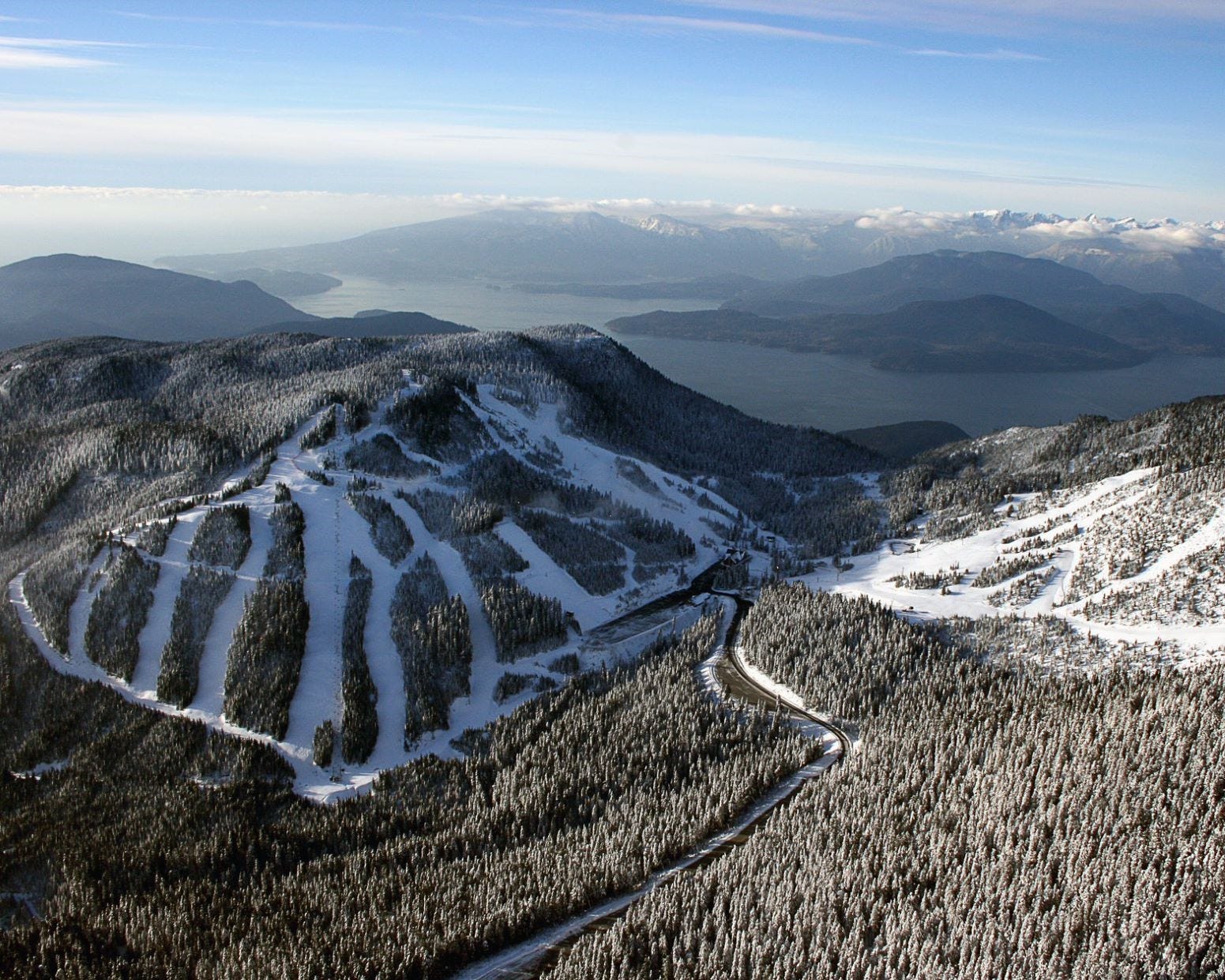
Sep 18, 2024
Podcast #179: Snow Angel Foundation Cofounders Chauncy and Kelli Johnson
The Storm Skiing Journal and Podcast is a reader-supported publication. To receive new posts and to support independent ski journalism, please consider becoming a free or paid subscriber. Who Chauncy and Kelli Johnson, Founders of the Snow Angel Foundation Recorded on June 17, 2024 About the Snow Angel Foundation From their website : Our mission is to prevent ski and snowboard collisions so that everyone can Ride Another Day! We accomplish our mission through education and awareness to promote safe skiing and snowboarding behaviors. The Foundation was started as a result of a life changing collision and a desire to ensure that these types of collisions never happen again. Since 2016, we have been creating a social movement among skiers and snowboarders with the “Ride Another Day” campaign. Snow Angel Foundation, founded in 2023, is the vehicle that will expand this campaign and transform the culture of skiing and snowboarding into a safety-oriented community. Partner with us so we can all Ride Another Day! The “life changing collision” referred to above resulted in the death of this little girl, Elise Johnson, in 2010: Why I interviewed them The first time I saw this, I felt like I got punched: I was skiing Snowbird, ground zero for aggressive, full-throttle skiing. The things you see there. The terrain invites it. The bottomless snow enables it. The cultish battle cries of packed-full tram cars demand it. Snowbird is a circus, an amphitheater, a place that scares the s**t out of anyone with a pulse. There aren’t many beginners there. Or even intermediates. You’re far more likely to smash your face into a rock than clip some meandering 8-year-old’s tails when you drop into Silver Fox. But the contrast between that mountain and that message was powerful. For a subset of skiers, every ski day must be this sort of ski day, every run a showcase of their buckle-bending, torque-busting snow arcs. “Out of My Path, Mortals. You are all just traffic cones around which I dance. Admire me!” And it’s like damn bro how are you single? That ski behaviors aren’t transferable from High Baldy to Baby Thunder is a memo that too many skiers have yet to receive. Is anyone else tired of this? Of World Cup trials on blue groomers? Of the social media braggadocio and bravado about skiing six times the speed of light? Of knuckleheads conflating speed with skill? When I talk about The Brobots, this is a big part of what I mean: the sense of entitlement to do as they please with shared space, without regard for the impact their actions could have on others. I hope one or two of these people will listen to this podcast. And I hope they will stop threading the Buttercup Runout back to the Carebear Quad as though they were navigating an X-Wing through an asteroid belt. Speed is a big part of skiing’s appeal. The power and adrenaline of it, the thrill. But there are places on the bump where it’s appropriate to tuck and fly, and places where it just isn’t. And I wish more of us knew the difference. What we talked about Elise just “had a lot of light”; being a ski family; an awful Christmas Eve at Hogadon Basin; waking up six weeks later; recovering from grief; why the family kept skiing; transforming pain into activism; slow the F down Brah; who’s doing a good job on safety; ski industry opposition to injury- and death-reporting regulations; and what we learned from the mass adoption of helmets. Podcast Notes On couples on the podcast I mentioned I’ve hosted several husband-wife combinations on the podcast, mostly the owners of ski areas: * Plattekill, New York owners Laszlo and Danielle Vajtay * Paul Bunyan, Wisconsin owners TJ and Wendy Kerscher * West Mountain, New York owners Sara and Spencer Montgomery On Antelope Butte The Johnsons’ local is Antelope Butte, a little double-chair bump in northern Wyoming: On Snowy Range The Johnsons also spent time skiing Snowy Range, also in Wyoming: On Hogadon Basin The incident in question went down on the Dreadnaught run at Hogadon Basin, a 600-vertical-foot bump 20 minutes south of Casper, Wyoming: On 50 First Dates By her own account, Kelli’s life for six weeks went about like this: On the Colorado Sun’s research on industry opposition to safety-reporting requirements From April 8, 2024 : [13-year-old] Silas [Luckett] is one of thousands of people injured on Colorado ski slopes every winter. With the state’s ski hills posting record visitation in the past two seasons — reaching 14.8 million in 2022-23 — it would appear that the increasing frequency of injuries coincides with the rising number of visits. We say “appear” because, unlike just about every other industry in the country, the resort industry does not disclose injury data. … Ski resorts do not release injury reports. The ski resort industry keeps a tight grasp on even national injury data. Since 1980, the National Ski Areas Association provides select researchers with injury data for peer-reviewed reports issued every 10 years by the National Ski Areas Association. The most recent 10-year review of ski injuries was published in 2014, looking at 13,145 injury reports from the 2010-11 ski season at resorts that reported 4.6 million visits. The four 10-year reports showed a decline in skier injuries from 3.1 per 1,000 visitors in 1980-81 to 2.7 in 1990-91 to 2.6 in 2000-01 to 2.5 in 2010-11. Snowboarder injuries were 3.3 in 1990, 7.0 in 2000 and 6.1 in 2010. For 1990-91, the nation’s ski areas reported 46.7 million skier visits, 2000-01 was 57.3 million and 2010-11 saw a then all–time high of 60.5 million visits. … The NSAA’s once-a-decade review of injuries from 2020-21 was delayed during the pandemic and is expected to land later this year. But the association’s reports are not available to the public [the NSAA disputes this, and provided a copy of the report to The Storm ; I’ll address this in more detail in an upcoming, already-recorded podcast with NSAA president Kelly Pawlak]. When Colorado state Sen. Jessie Danielson crafted a bill in 2021 that would have required ski areas to publish annual injury statistics, the industry blasted the plan, arguing it would be an administrative burden and confuse the skiing public. It died in committee. “When we approached the ski areas to work on any of the details in the bill, they refused,” Danielson, a Wheat Ridge Democrat, told The Sun in 2021. “It makes me wonder what it is that they are hiding. It seems to me that an industry that claims to have safety as a top priority would be interested in sharing the information about injuries on their mountains.” The resort industry vehemently rebuffs the notion that ski areas do not take safety seriously. Patricia Campbell, the then-president of Vail Resorts’ 37-resort mountain division and a 35-year veteran of the resort industry, told Colorado lawmakers considering the 2021 legislation that requiring ski resorts to publish safety reports was “not workable” and would create an “unnecessary burden, confusion and distraction.” Requiring resorts to publish public safety plans, she said, would “trigger a massive administrative effort” that could redirect resort work from other safety measures. “Publishing safety plans will not inform skiers about our work or create a safer ski area,” Campbell told the Colorado Senate’s Agriculture and Natural Resources Committee in April 2021. The Sun also compiles an annual report of deaths at Colorado ski areas. On helmet culture Problems often seem intractable, the world fossilized. But sometimes simple things change so completely, and in such a short period of time, that it’s almost impossible to imagine the world before. I was 19, for example, the first time I used the internet, and 23 when I acquired its evil cousin, the cellphone (which would not be usefully linked to the web for about another decade). In our little ski world, the thing-that-is-now-ubiquitous-that-once-barely-existed is helmets. As recently as the 1990s, you likely weren’t dropping a bucket on your skull unless you were running gates on a World Cup circuit. It’s not that we didn’t know about them – helmets have been around since, like, the Bronze Age. But nobody wore them. Nobody. Then, suddenly, everyone did. Or, well, it seemed sudden, though it’s surprising to see that, as recently as the 2002-03 ski season, only around 25 percent of skiers bothered to strap on a helmet: I was a late adopter when I first wore a helmet in 2016. And when I finally got there, I realized, hey, this thing is warm. It also came in handy when I slammed the back of my head into a downed tree at Jay Peak last March. I don’t have hard stats on helmet usage going back to the 1990s, but check out this circa 1990s casual ski day vid at an unidentified U.S. mountain: I counted one helmet. On a kid. To underscore the point, here’s a circa 1990s promo for Steamboat Ski Patrol, which captures the big-mountain crew rocking knit caps and goggles: The Storm explores the world of lift-served skiing year-round. Join us. The Storm publishes year-round, and guarantees 100 articles per year. This is article 54/100 in 2024, and number 554 since launching on Oct. 13, 2019. Get full access to The Storm Skiing Journal and Podcast at www.stormskiing.com/subscribe
Aug 3, 2024
Podcast #178: Mount Sunapee General Manager Peter Disch
This podcast hit paid subscribers’ inboxes on July 27. It dropped for free subscribers on Aug. 3. To receive future pods as soon as they’re live, and to support independent ski journalism, please consider an upgrade to a paid subscription. You can also subscribe to the free tier below: Who Peter Disch, General Manager of Mount Sunapee , New Hampshire (following this interview, Vail Resorts promoted Disch to Vice President of Mountain Operations at its Heavenly ski area in California; he will start that new position on Aug. 5, 2024; as of July 27, Vail had yet to name the next GM of Sunapee.) Recorded on June 24, 2024 About Mount Sunapee Click here for a mountain stats overview Owned by: The State of New Hampshire; operated by Vail Resorts Located in: Newbury, New Hampshire Year founded: 1948 Pass affiliations: * Epic Pass , Epic Local Pass , Northeast Value Epic Pass : unlimited access * Northeast Midweek Epic Pass : midweek access, including holidays Closest neighboring (public) ski areas: Pats Peak (:28), Whaleback (:29), Arrowhead (:29), Ragged (:38), Veterans Memorial (:42), Ascutney (:45), Crotched (:48), Quechee (:50), Granite Gorge (:51), McIntyre (:53), Saskadena Six (1:04), Tenney (1:06) Base elevation: 1,233 feet Summit elevation: 2,743 feet Vertical drop: 1,510 feet Skiable Acres: 233 acres Average annual snowfall: 130 inches Trail count: 67 (29% beginner, 47% intermediate, 24% advanced) Lift count: 8 (2 high-speed quads, 1 fixed-grip quad, 2 triples, 3 conveyors – view Lift Blog’s inventory of Mount Sunapee’s lift fleet.) History: Read New England Ski History’s overview of Mount Sunapee View historic Mount Sunapee trailmaps on skimap.org . Why I interviewed him New Hampshire state highway 103 gives you nothing. Straight-ish and flattish, lined with trees and the storage-unit detritus of the American outskirts, nothing about the road suggests a ski-area approach. Looping south off the great roundabout-ish junction onto Mt. Sunapee Road still underwhelms. As though you’ve turned into someone’s driveway, or are seeking some obscure historical monument, or simply made a mistake. Because what, really, could be back there to ski? And then you arrive. All at once. A parking lot. The end of the road. The ski area heaves upward on three sides. Lifts all over. The top is up there somewhere. It’s not quite Silverton-Telluride smash-into-the-backside-of-a-box-canyon dramatic, but maybe it’s as close as you get in New Hampshire, or at least southern New Hampshire, less than two hours north of Boston. But the true awe waits up high. North off the summit, Lake Sunapee dominates the foreground, deep blue-black or white-over-ice in midwinter, like the flat unfinished center of a puzzle made from the hills and forests that rise and roll from all sides. Thirty miles west, across the lowlands where the Connecticut River marks the frontier with Vermont, stands Okemo, interstate-wide highways of white strafing the two-mile face. Then you ski. Sunapee does not measure big but it feels big, an Alpine illusion exploding over the flats. Fifteen hundred vertical feet is plenty of vertical feet, especially when it rolls down the frontside like a waterfall. Glades everywhere, when they’re live, which is less often than you’d hope but more often than you’d think. Good runs, cruisers and slashers, a whole separate face for beginners, a 374-vertical-foot ski-area-within-a-ski-area, perfectly spliced from the pitched main mountain. Southern New Hampshire has a lot of ski areas, and a lot of well-run ski areas, but not a lot of truly great pure ski areas. Sunapee, as both an artwork and a plaything, surpasses them all, the ribeye on the grill stacked with hamburgers, a delightful and filling treat. What we talked about Sunapee enhancements ahead of the 2024-25 winter; a new parking lot incoming; whether Sunapee considered paid parking to resolve its post-Covid, post-Northeast Epic Pass launch backups; the differences in Midwest, West, and Eastern ski cultures; the big threat to Mount Sunapee in the early 1900s; the Mueller family legacy and “The Sunapee Difference”; what it means for Vail Resorts to operate a state-owned ski area; how cash flows from Sunapee to Cannon; Sunapee’s masterplan; the long-delayed West Bowl expansion; incredible views from the Sunapee summit; the proposed Sun Bowl-North Peak connection; potential upgrades for the Sunapee Express, North Peak, and Spruce lifts; the South Peak beginner area; why Sunapee built a ski-through lighthouse; why high-speed ropetows rule; the potential for Sunapee night-skiing; whether Sunapee should be unlimited on the Northeast Value Pass (which it currently is); and why Vail’s New Hampshire mountains are on the same Epic Day Pass tier as its Midwest ski areas. Why I thought that now was a good time for this interview Should states own ski areas? And if so, should state agencies run those ski areas, or should they be contracted to private operators? These are fraught questions, especially in New York, where three state-owned ski areas (Whiteface, Gore, and Belleayre) guzzle tens of millions of dollars in new lift, snowmaking, and other infrastructure while competing directly against dozens of tax-paying, family-owned operations spinning Hall double chairs that predate the assassination of JFK. The state agency that operates the three ski areas plus Lake Placid’s competition facilities, the Olympic Regional Development Authority (ORDA), reported a $47.3 million operating loss for the fiscal year ending March 30, following a loss of $29.3 million the prior year. Yet there are no serious proposals at the state-government level to even explore what it would mean to contract a private operator to run the facilities. If New York state officials were ever so inspired, they could look 100 miles east, where the State of New Hampshire has run a sort of A-B experiment on its two owned ski areas since the late 1990s. New Hampshire’s state parks association has operated Cannon Mountain since North America’s first aerial tram opened on the site in 1938. For a long time, the agency operated Mount Sunapee as well. But in 1998, the state leased the ski area to the Mueller family, who had spent the past decade and a half transforming Okemo from a T-bar-clotted dump into one of Vermont’s largest and most modern resorts. Twenty-six years later, that arrangement stands: the state owns and operates Cannon, and owns Sunapee but leases it to a private operator (Vail Resorts assumed or renewed the lease when they purchased the Muellers’ Triple Peaks company, which included Okemo and Crested Butte, Colorado, in 2018). As part of that contract, a portion of Sunapee’s revenues each year funnel into a capital fund for Cannon. So, does this arrangement work? For Vail, for the state, for taxpayers, for Sunapee, and for Cannon? As we consider the future of skiing, these are important questions: to what extent should the state sponsor recreation, especially when that form of recreation competes directly against private, tax-paying businesses who are, essentially, subsidizing their competition? It’s tempting to offer a reflexive ideological answer here, but nuance interrupts us at ground-level. Alterra, for instance, leases and operates Winter Park from the City of Denver. Seems logical, but a peak-day walk-up Winter Park lift ticket will cost you around $260 for the 2024-25 winter. Is this a fair one-day entry fee for a city-owned entity? The story of Mount Sunapee, a prominent and busy ski area in a prominent and busy ski state, is an important part of that larger should-government-own-ski-areas conversation. The state seems happy to let Vail run their mountain, but equally happy to continue running Cannon. That’s curious, especially in a state with a libertarian streak that often pledges allegiance by hoisting two middle fingers skyward. The one-private-one-public arrangement was a logical experiment that, 26 years later, is starting to feel a bit schizophrenic, illustrative of the broader social and economic complexities of changing who runs a business and how they do that. Is Vail Resorts better at running commercial ski centers than the State of New Hampshire? They sure as hell should be. But are they? And should Sunapee serve as a template for New York and the other states, counties, and cities that own ski areas? To decide if it works, we first have to understand how it works, and we spend a big part of this interview doing exactly that. What I got wrong * When listing the Vail Resorts with paid parking lots, I accidentally slipped Sunapee in place of Mount Snow, Vermont. Only the latter has paid parking. * When asking Disch about Sunapee’s masterplan, I accidentally tossed Sunapee into Vail’s Peak Resorts acquisition in 2019. But Peak never operated Sunapee. The resort entered Vail’s portfolio as part of its acquisition of Triple Peaks – which also included Okemo and Crested Butte – in 2018. * I neglected to elaborate on what a “chondola” lift is. It’s a lift that alternates (usually six-person) chairs with (usually eight-person) gondola cabins. The only active such lift in New England is at Sunday River , but Arizona Snowbowl , Northstar , Copper Mountain , and Beaver Creek operate six/eight-passenger chondolas in the American West. Telluride runs a short chondola with four-person chairs and four-person gondola cars. * I said that the six New England states combined covered an area “less than half the size of Colorado.” This is incorrect: the six New England states, combined, cover 71,987 square miles; Colorado is 103,610 square miles. Why you should ski Mount Sunapee Ski area rankings are hard. Properly done, they include dozens of inputs, considering every facet of the mountain across the breadth of a season from the point of view of multiple skiers. Sunapee on an empty midweek powder day might be the best day of your life. Sunapee on a Saturday when it hasn’t snowed in three weeks but everyone in Boston shows up anyway might be the worst. For this reason, I largely avoid assembling lists of the best or worst this or that and abstain, mostly, from criticizing mountain ops – the urge to let anecdote stand in for observable pattern and truth is strong. So when I do stuff ski areas into a hierarchy, it’s generally grounded in what’s objective and observable: Cottonwoods snow really is fluffier and more bounteous than almost all other snow; Tahoe resort density really does make it one of the world’s great ski centers; Northern Vermont really does deliver far deeper snow and better average conditions than the rest of New England. In that same shaky, room-for-caveats manner, I’m comfortable saying this: Mount Sunapee’s South Peak delivers one of the best beginner/novice experiences in the Northeast. Arrive childless and experienced, and it’s likely you’ll ignore this zone altogether. Which is precisely what makes it so great: almost completely cut off from the main mountain, South Peak is free from high-altitude bombers racing back to the lifts. Three progression carpets offer the perfect ramp-up experience. The 374-vertical-foot quad rises high enough to feel grown-up without stoking the summit lakeview vertigo. The trails are gently tilted but numerous and interesting. Other than potential for an errant turn down Sunnyside toward the Sunapee Express, it’s almost impossible to get lost. It’s as though someone chopped a mid-sized Midwest ski area from the earth, airlifted it east, and stapled it onto the edge of Sunapee: A few other Northeast ski areas offer this sort of ski-area-within-a-ski-area beginner separation – Burke, Belleayre, Whiteface, and Smugglers’ Notch all host expansive standalone beginner zones. But Sunapee’s is one of the easiest to access for New England’s core Boston market, and, because of the Epic Pass, one of the most affordable. For everyone else, Sunapee’s main mountain distills everything that is great and terrible about New England skiing: a respectable vertical drop; a tight, complex, and varied trail network; a detached-from-conditions determination to be outdoors in the worst of it. But also impossible weekend crowds, long snow draughts, a tendency to overgroom even when the snow does fall, and an over-emphasis on driving, with nowhere to stay on-mountain. But even when it’s not perfect, which it almost never is, Sunapee is always, objectively, a great natural ski mountain, a fall-line classic, a little outpost of the north suspiciously far south. Podcast Notes On Sunapee’s masterplan and West Bowl expansion As a state park, Mount Sunapee is required to submit an updated masterplan every five years. The most transformative piece of this would be the West Bowl expansion, a 1,082-vertical-foot pod running skiers’ left off the current summit (right in purple on the map below): The masterplan also proposes upgrades for several of Sunapee’s existing lifts, including the Sunapee Express and the Spruce and North Peak triples: On past Storm Skiing Podcasts : Disch mentions a recent podcast that I recorded with Attitash, New Hampshire GM Brandon Schwarz. You can listen to that here . I’ve also recorded pods with the leaders of a dozen other New Hampshire mountains: * Wildcat GM JD Crichton (May 30, 2024) * Gunstock President & GM Tom Day (April 15, 2024) – now retired * Tenney Mountain GM Dan Egan (April 8, 2024) – no longer works at Tenney * Cranmore President & GM Ben Wilcox (Oct. 16, 2023) * Dartmouth Skiway GM Mark Adamczyk (June 12, 2023) * Granite Gorge GM Keith Kreischer (May 30, 2023) * Loon Mountain President & GM Brian Norton (Nov. 14, 2022) * Pats Peak GM Kris Blomback (Sept. 26, 2022) * Ragged Mountain GM Erik Barnes (April 26, 2022) * Whaleback Mountain Executive Director Jon Hunt (June 16, 2021) * Waterville Valley President & GM Tim Smith (Feb. 22, 2021) * Cannon Mountain GM John DeVivo (Oct. 6, 2020) – now GM at Antelope Butte, Wyoming On New England ski area density Disch referenced the density of ski areas in New England. With 100 ski areas crammed into six states, this is without question the densest concentration of lift-served skiing in the United States. Here’s an inventory: On the Civilian Conservation Corps (CCC) From 1933 to 1942 – the height of the Great Depression – a federal government agency knows as the Civilian Conservation Corps recruited single men between the ages of 18 and 25 to “improve America’s public lands, forests, and parks.” Some of this work included the cutting of ski trails on then-virgin mountains, including Mount Sunapee. While the CCC trail is no longer in use on Sunapee, that first project sparked the notion of skiing on the mountain and led to the development of the ski area we know today. On potential Northeast expansions and there being “a bunch that are proposed all over the region” This is by no means an exhaustive list, but a few of the larger Northeast expansions that are creeping toward reality include a new trailpod at Berkshire East: This massive, village-connecting expansion that would completely transform Waterville Valley: The de-facto resurrection of New York’s lost Highmount ski area with an expansion from adjacent Belleayre: And the monster proposed Western Territories expansion that could double the size of Sunday River. There’s no public map of this one presently available. On high-speed ropetows I’ll keep beating the crap out of this horse until you all realize that I’m right: A high-speed ropetow at Spirit Mountain, Minnesota. Video by Stuart Winchester. On Crotched proximity and night skiing We talk briefly about past plans for night-skiing on Sunapee, and Disch argues that, while that may have made sense when the Muellers owned the ski area, it’s no longer likely since Vail also owns Crotched, which hosts one of New England’s largest night-skiing operations less than an hour south. It’s a fantastic little operation, a once-abandoned mountain completely rebuilt from the studs by Peak Resorts: On the Epic Day Pass Here’s another thing I don’t plan to stop talking about ever: The Storm explores the world of North American lift-served skiing year-round. Join us. The Storm publishes year-round, and guarantees 100 articles per year. This is article 48/100 in 2024, and number 548 since launching on Oct. 13, 2019. Get full access to The Storm Skiing Journal and Podcast at www.stormskiing.com/subscribe
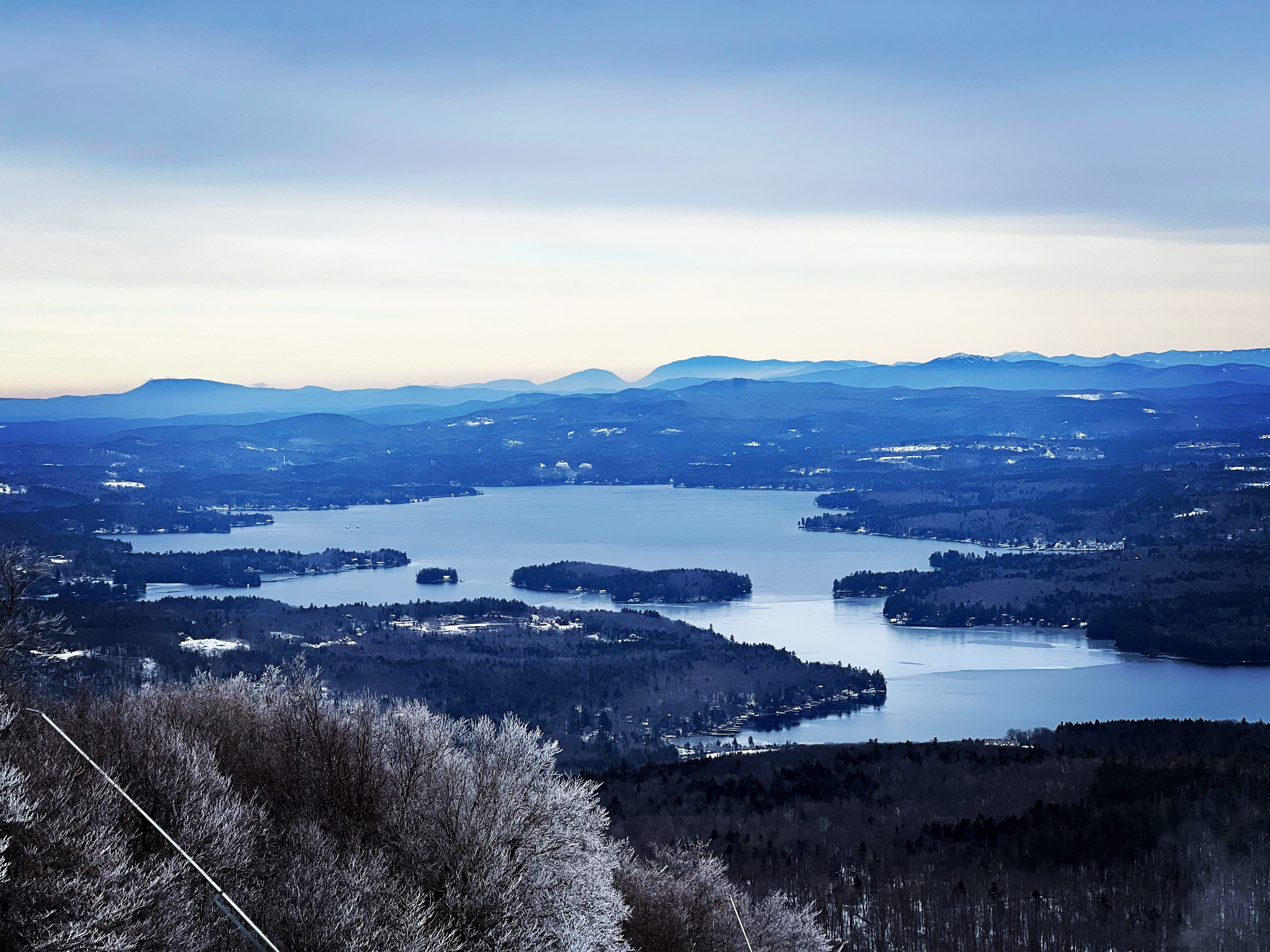
Jul 14, 2024
Podcast #177: White Grass Ski Touring Center Founder and Owner Chip Chase
This podcast hit paid subscribers’ inboxes on July 7. It dropped for free subscribers on July 14. To receive future pods as soon as they’re live, and to support independent ski journalism, please consider an upgrade to a paid subscription. You can also subscribe to the free tier below: Who Chip Chase, Founder and Owner of White Grass Ski Touring Center , West Virginia Recorded on May 16, 2024 About White Grass Touring Center Click here for a mountain stats overview Owned by: Chip Chase Located in: Davis, West Virginia Year founded: 1979 (at a different location) Pass affiliations: Indy Pass and Indy+ Pass: 2 days, no blackouts Closest neighboring ski areas: Canaan Valley (8 minutes), Timberline (11 minutes) Base elevation: 3,220 feet (below the lodge) Summit elevation: 4,463 feet (atop Weiss Knob) Vertical drop: 1,243 feet Skiable Acres: 2,500 Average annual snowfall: 140 inches Trail count: 42 (50 km of maintained trails) Lift count: None Why I interviewed him One habit I’ve borrowed from the mostly now-defunct U.S. ski magazines is their unapologetic focus always and only on Alpine skiing. This is not a snowsports newsletter or a wintertime recreation newsletter or a mountain lifestyle newsletter. I’m not interested in ice climbing or snowshoeing or even snowboarding, which I’ve never attempted and probably never will. I’m not chasing the hot fads like Norwegian goat fjording, which is where you paddle around glaciers in an ice canoe, with an assist tow from a swimming goat. And I’ve narrowed the focus much more than my traditionalist antecedents, avoiding even passing references to food, drink, lodging, gear, helicopters, snowcats, whacky characters, or competitions of any kind (one of the principal reasons I ski is that it is an unmeasured, individualistic sport ). Which, way to squeeze all the fun out of it, Stu. But shearing off 90 percent of all possible subject matter allows me to cover the small spectrum of things that I do actually care about – the experience of traveling to and around a lift-served snowsportskiing facility, with a strange side obsession with urban planning and land-use policy – over the broadest possible geographic area (currently the entire United States and Canada, though mostly that’s Western Canada right now because I haven’t yet consumed quantities of ayahuasca sufficient to unlock the intellectual and spiritual depths where the names and statistical profiles of all 412* Quebecois ski areas could dwell). So that’s why I don’t write about cross-country skiing or cross-country ski centers. Sure, they’re Alpine skiing-adjacent, but so is lift-served MTB and those crazy jungle gym swingy-bridge things and ziplining and, like, freaking ice skating. If I covered everything that existed around a lift-served ski area, I would quickly grow bored with this whole exercise. Because frankly the only thing I care about is skiing. Downhill skiing. The uphill part, much as it’s fetishized by the ski media and the self-proclaimed hardcore, is a little bit confusing. Because you’re going the wrong way, man . No one shows up at Six Flags and says oh actually I would prefer to walk to the top of Dr. Diabolical’s Cliffhanger . Like do you not see the chairlift sitting right f*****g there? But here we are anyway: I’m featuring a cross-country skiing center on my podcast that’s stubbornly devoted always and only to Alpine skiing. And not just a cross-country ski center, but one that, by the nature of its layout, requires some uphill travel to complete most loops. Why would I do this to myself, and to my readers/listeners? Well, several factors collided to interest me in White Grass, including: * The ski area sits on the site of an abandoned circa-1950s downhill ski area, Weiss Knob. White Grass has incorporated much of the left-over refuse – the lodge, the ropetow engines – into the functioning or aesthetic of the current business. The first thing you see upon arrival at White Grass is a mainline clearcut rising above a huddle of low-slung buildings – Weiss Knob’s old maintrail. * White Grass sits between two active downhill ski areas: Timberline , a former podcast subject that is among the best-run operations in America, and state-owned Canaan Valley, a longtime Indy Pass partner. It’s possible to ski across White Grass from either direction to connect all three ski areas into one giant odyssey. * White Grass is itself an Indy Pass partner, one of 43 Nordic ski areas on the pass last year (Indy has yet to finalize its 2024-25 roster). * White Grass averages 95 days of annual operation despite having no snowmaking . On the East Coast. In the Mid-Atlantic. They’re able to do this because, yes, they sit at a 3,220-foot base elevation (higher than anything in New England; Saddleback, in Maine, is the highest in that region, at 2,460 feet), but also because they have perfected the art of snow-farming. Chase tells me they’ve never missed a season altogether, despite sitting at the same approximate latitude as Washington, D.C. * While I don’t care about going uphill at a ski area that’s equipped with mechanical lifts, I do find the notion of an uphill-only ski area rather compelling. Because it’s a low-impact, high-vibe concept that may be the blueprint for future new-ski-area development in a U.S. America that’s otherwise allergic to building things because oh that mud puddle over there is actually a fossilized brontosaurus footprint or something. That’s why I covered the failed Bluebird Backcountry. Like what if we had a ski area without the avalanche danger of wandering into the mountains and without the tension with lift-ticket holders who resent the a.m. chewing-up of their cord and pow? While it does not market itself this way, White Grass is in fact such a center, an East Coast Bluebird Backcountry that allows and is seeing growing numbers of people who like to make skiing into work AT Bros. All of which, I’ll admit, still makes White Grass lift-served-skiing adjacent, somewhere on the spectrum between snowboarding (basically the same experience as far as lifts and terrain are concerned) and ice canoeing (yes I’m just making crap up). But Chase reached out to me and I stopped in and skied around in January completely stupid to the fact that I was about to have a massive heart attack and die , and I just kind of fell in love with the place: its ambling, bucolic setting; its improvised, handcrafted feel; its improbable existence next door to and amid the Industrial Ski Machine. So here we are: something a little different. Don’t worry, this will not become a cross-country ski podcast, but if I mix one in every 177 episodes or so, I hope you’ll understand. *The actual number of operating ski areas in Quebec is 412,904. What we talked about White Grass’ snow-blowing microclimate; why White Grass’ customers tend to be “easy to please”; “we don’t need a million skiers – we just need a couple hundred”; snow farming – what it is and how it works; White Grass’ double life in the summer; a brief history of the abandoned/eventually repurposed Weiss Knob ski area; considering snowmaking; 280 inches of snow in West Virginia; why West Virginia; the state’s ski culture; where and when Chase founded White Grass, and why he moved it to its current location; how an Alpine skier fell for the XC world; how a ski area electric bill is “about $5 per day”; preserving what remains of Weiss Knob; White Grass’ growing AT community; the mountain’s “incredible” glade skiing; whether Chase ever considered a chairlift at White Grass; is atmosphere made or does it happen?; “the last thing I want to do is retire”; Chip’s favorite ski areas; an argument for slow downhill skiing; the neighboring Timberline and Canaan Valley; why Timberline is “bound for glory”; the Indy Pass; XC grooming; and White Grass’ shelter system. Why I thought that now was a good time for this interview I kind of hate the word “authentic,” at least in the context of skiing. It’s a little bit reductive and way too limiting. It implies that nothing planned or designed or industrially scaled can ever achieve a greater cultural resonance than a TGI Friday’s. By this definition, Vail Mountain – with its built-from-the-wilderness walkable base village, high-speed lift fleet, and corporate marquee – fails the banjo-strumming rubric set by the Authenticity Police, despite being one of our greatest ski centers. Real-ass skiers, don’t you know, only ride chairlifts powered from windmills hand-built by 17th Century Dutch immigrants. Everything else is corporate b******t. (Unless those high-speed lifts are at Alta or Wolf Creek or Revelstoke – then they’re real as f**k Brah ; do you see how stupid this all is?) Still, I understand the impulses stoking that sentiment. Roughly one out of every four U.S. skier visits is at a Vail Resort. About one in four is in Colorado. That puts a lot of pressure on a relatively small number of ski centers to define the activity for an enormous percentage of the skiing population. “Authentic,” I think, has become a euphemism for “not standing in a Saturday powder-day liftline that extends down Interstate 70 to Topeka with a bunch of people from Manhattan who don’t know how to ski powder.” Or, in other words, a place where you can ski without a lot of crowding and expense and the associated hassles. White Grass succeeds in offering that. Here are the prices: Here is the outside of the lodge: And the inside: Here is the rental counter: And here’s the lost-and-found, in case you lose something (somehow they actually fit skis in there; it’s like one of those magic tents from Harry Potter that looks like a commando bivouac from the outside but expands into King Tut’s palace once you walk in): The whole operation is simple, approachable, affordable, and relaxed. This is an everyone-in-the-base-lodge-seems-to-know-one-another kind of spot, an improbable backwoods redoubt along those ever-winding West Virginia roads, a snow hole in the map where no snow makes sense, as though driving up the access road rips you through a wormhole to some different, less-complicated world. What I got wrong I said the base areas for Stowe, Sugarbush, and Killington sat “closer to 2,000 feet, or even below that.” The actual numbers are: Stowe (1,559 feet), Sugarbush (1,483 feet), Killington (1,165 feet). I accidentally referred to the old Weiss Knob ski area as “White Knob” one time. Why you should ski White Grass There are not a lot of skiing options in the Southeast, which I consider the ski areas seated along the Appalachians running from Cloudmont in Alabama up through Tennessee, North Carolina, Virginia, West Virginia, and Maryland. There are only 18 ski areas in the entire region, and most would count even fewer, since Snowshoe Bro gets Very Mad at me when I count Silver Creek as a separate ski area (which it once was until Snowshoe purchased it in 1992, and still is physically until/unless Alterra ever develops this proposed interconnect from 1978): No one really agrees on what Southeast skiing is. The set of ski states I outline above is the same one that Ski Southeast covers. DC Ski includes Pennsylvania (home to another 20-plus ski areas), which from a cultural, travel, and demographic standpoint makes sense. Things start to feel very different in New York, though Open Snow’s Mid-Atlantic updates include all of the state’s ski areas south of the Adirondacks. Anyway, the region’s terrain, from a fall line, pure-skiing point of view, is actually quite good, especially in good snow years. The lift infrastructure tends to be far more modern than what you’ll find in, say, the Midwest. And the vertical drops and overall terrain footprints are respectable. Megapass penetration is deep, and you can visit a majority of the region with an Epic, Indy, or Ikon Pass: However. Pretty much everything from the Poconos on south tends to be mobbed at all times by novice skiers. The whole experience can be tainted by an unruly dynamic of people who don’t understand how liftlines work and ski areas that make no effort to manage liftlines. It kind of sucks, frankly, during busy times. And if this is your drive-to region, you may be in search of an alternative. White Grass, with its absence of lifts and therefore liftlines, can at least deliver a different story for your weekend ski experience. It's also just kind of an amazing place to behold. I often describe West Virginia as the forgotten state. It’s surrounded by Pennsylvania (sixth in population among the 50 U.S. states, with 13 million residents), Ohio (8th, 11.8 M), Kentucky (27th, 4.5 M), Virginia (13th, 8.7 M), and Maryland (20th, 6.2 M). And yet West Virginia ranks 40th among U.S. states in population, with just 1.8 million people. That fact – despite the state’s size (it’s twice as large as Maryland) and location at the crossroads of busy transcontinental corridors – is explained by the abrupt, fortress-like mountains that have made travel into and through the state slow and inconvenient for centuries. You can crisscross parts of West Virginia on interstate highways and the still-incomplete Corridor H, but much of the state’s natural awe lies down narrow, never-straight roads that punch through a raw and forgotten wilderness, dotted, every so often, with industrial wreckage and towns wherever the flats open up for an acre or 10. Other than the tailgating pickup trucks, it doesn’t feel anything like America. It doesn’t really feel like anything else at all. It’s just West Virginia, a place that’s impossible to imagine until you see it. Podcast Notes On Weiss Knob Ski Area (1959) I can’t find any trailmaps for Weiss Knob, the legacy lift-served ski area that White Grass is built on top of. But Chip and his team have kept the main trail clear: It rises dramatically over the base area: Ski up and around, and you’ll find remnants of the ropetows: West Virginia Snow Sports Museum hall-of-famers Bob and Anita Barton founded Weiss Knob in 1955. From the museum’s website: While the Ski Club of Washington, DC was on a mission to find an elusive ski drift in West Virginia, Bob was on a parallel mission. By 1955, Bob had installed a 1,200-foot rope tow next door to the Ski Club's Driftland. The original Weiss Knob Ski Area was on what is now the "Meadows" at Canaan Valley Resort. By 1958, Weiss Knob featured two rope tows and a T-bar lift. In 1959, Bob moved Weiss Knob to the back of Bald Knob (out of the wind) on what is now White Grass Touring Center. According to Chase, the Bartons went on to have some involvement in a “ski area up at Alpine Lake.” This was, according to DC Ski , a 450-footer with a handful of surface lifts. Here’s a circa 1980 trailmap: The place is still in business, though they dismantled the downhill ski operation decades ago. On the three side-by-side ski areas White Grass sits directly between two lift-served ski areas: state-owned Canaan Valley and newly renovated Timberline. Here’s an overview of each: Timberline Base elevation: 3,268 feet Summit elevation: 4,268 feet Vertical drop: 1,000 feet Skiable Acres: 100 Average annual snowfall: 150 inches Trail count: 20 (2 double-black, 2 black, 6 intermediate, 10 beginner), plus two named glades and two terrain parks Lift count: 4 (1 high-speed six-pack, 1 fixed-grip quad, 2 carpets - view Lift Blog’s inventory of Timberline’s lift fleet) Canaan Valley Base elevation: 3,430 feet Summit elevation: 4,280 feet Vertical drop: 850 feet Skiable Acres: 95 Average annual snowfall: 117 inches Trail count: 47 (44% advanced/expert, 36% intermediate, 20% beginner) Lift count: 4 (1 fixed-grip quad, 2 triples, 1 carpet - view Lift Blog’s inventory of Canaan Valley’s lift fleet) And here’s what they all look like side-by-side IRL: On other podcast interviews Chip referenced a couple of previous Storm Skiing Podcasts : SMI Snow Makers President Joe VanderKelen and Snowbasin GM Davy Ratchford . You can view the full archive (as well as scheduled podcasts) here . On West Virginia statistics Chase cited a few statistical rankings for West Virginia that I couldn’t quite verify: * On West Virginia being the only U.S. state that is “100 percent mountains” – I couldn’t find affirmation of this exactly, though I certainly believe it’s more mountainous than the big Western ski states, most of which are more plains than mountains. Vermont can feel like nothing but mountains, with just a handful of north-south routes cut through the state. Maybe Hawaii? I don’t know. Some of these stats are harder to verify than I would have guessed. * On West Virginia as the “second-most forested U.S. state behind Maine” – sources were a bit more consistent on this: every one confirmed Maine as the most-forested state (with nearly 90 percent of its land covered), then listed New Hampshire as second (~84 percent), and West Virginia as third (79 percent). * On West Virginia being “the only state in the nation where the population is dropping” – U.S. Census Bureau data suggests that eight U.S. states lost residents last year: New York (-0.52), Louisiana (-0.31%), Hawaii (-0.3%), Illinois (-0.26%), West Virginia (-0.22%), California (-0.19%), Oregon (-0.14%), and Pennsylvania (-0.08%). On the White Grass documentary There are a bunch of videos on White Grass’ website . This is the most recent: On other atmospheric ski areas Chase mentions a number of ski areas that deliver the same sort of atmospheric charge as White Grass. I’ve featured a number of them on past podcasts, including Mad River Glen , Mount Bohemia , Palisades Tahoe , Snowbird , and Bolton Valley . On the Soul of Alta movie Alta also made Chase’s list, and he calls out the recent Soul of Alta movie as being particularly resonant of the mountain’s special vibe: On resentment and New York State-owned ski areas I refer briefly to the ongoing resentment between New York’s privately owned, tax-paying ski areas and the trio of heavily subsidized state-owned operations: Gore, Whiteface, and Belleayre. I’ve detailed that conflict numerous times. This interview with the owners of Plattekill, which sits right down the road from Belle, crystalizes the main conflict points. On White Grass’ little shelters all over the trails These are just so cool: The Storm explores the world of lift-served skiing year-round. Join us. The Storm publishes year-round, and guarantees 100 articles per year. This is article 46/100 in 2024, and number 546 since launching on Oct. 13, 2019. Get full access to The Storm Skiing Journal and Podcast at www.stormskiing.com/subscribe
Jul 3, 2024
Podcast #176: Wildcat General Manager JD Crichton
This podcast hit paid subscribers’ inboxes on June 26. It dropped for free subscribers on July 3. To receive future pods as soon as they’re live, and to support independent ski journalism, please consider an upgrade to a paid subscription. You can also subscribe to the free tier below: Who JD Crichton, General Manager of Wildcat Mountain , New Hampshire Recorded on May 30, 2024 About Wildcat Click here for a mountain stats overview Owned by: Vail Resorts Located in: Gorham, New Hampshire Year founded: 1933 (lift service began in 1957) Pass affiliations: * Epic Pass , Epic Local Pass , Northeast Value Pass – unlimited access * Northeast Midweek Pass – unlimited weekday access Closest neighboring ski areas: Black Mountain, New Hampshire (:18), Attitash (:22), Cranmore (:28), Sunday River (:45), Mt. Prospect Ski Tow (:46), Mt. Abram (:48), Bretton Woods (:48), King Pine (:50), Pleasant Mountain (:57), Cannon (1:01), Mt. Eustis Ski Hill (1:01) Base elevation: 1,950 feet Summit elevation: 4,062 feet Vertical drop: 2,112 feet Skiable Acres: 225 Average annual snowfall: 200 inches Trail count: 48 (20% beginner, 47% intermediate, 33% advanced) Lift count: 5 (1 high-speed quad, 3 triples, 1 carpet) Why I interviewed him I’ve always been skeptical of acquaintances who claim to love living in New Jersey because of “the incredible views of Manhattan.” Because you know where else you can find incredible views of Manhattan? In Manhattan. And without having to charter a hot-air balloon across the river anytime you have to go to work or see a Broadway play.* But sometimes views are nice, and sometimes you want to be adjacent-to-but-not-necessarily-a-part-of something spectacular and dramatic. And when you’re perched summit-wise on Wildcat, staring across the street at Mount Washington, the most notorious and dramatic peak on the eastern seaboard, it’s hard to think anything other than “damn.” Flip the view and the sentiment reverses as well. The first time I saw Wildcat was in summertime, from the summit of Mount Washington. Looking 2,200 feet down, from above treeline, it’s an almost quaint-looking ski area, spare but well-defined, its spiderweb trail network etched against the wild Whites. It feels as though you could reach down and put it in your pocket. If you didn’t know you were looking at one of New England’s most abrasive ski areas, you’d probably never guess it. Wildcat could feel tame only beside Mount Washington, that open-faced deathtrap hunched against 231-mile-per-hour winds. Just, I suppose, as feisty New Jersey could only seem placid across the Hudson from ever-broiling Manhattan. To call Wildcat the New Jersey of ski areas would seem to imply some sort of down-tiering of the thing, but over two decades on the East Coast, I’ve come to appreciate oft-abused NJ as something other than New York City overflow. Ignore the terrible drivers and the concrete-bisected arterials and the clusters of third-world industry and you have a patchwork of small towns and beach towns, blending, to the west and north, with the edges of rolling Appalachia, to the south with the sweeping Pine Barrens, to the east with the wild Atlantic. It’s actually pretty nice here across the street, is my point. Even if it’s not quite as cozy as it looks. This is a place as raw and wild and real as any in the world, a thing that, while forever shadowed by its stormy neighbor, stands just fine on its own. *It’s not like living in New Jersey is some kind of bargain. It’s like paying Club Thump Thump prices for grocery store Miller Lite. Or at least that was my stance until I moved my smug ass to Brooklyn. What we talked about Mountain cleanup day; what it took to get back to long seasons at Wildcat and why they were truncated for a handful of winters; post-Vail-acquisition snowmaking upgrades; the impact of a $20-an-hour minimum wage on rural New Hampshire; various bargain-basement Epic Pass options; living through major resort acquisitions; “there is no intention to make us all one and the same”; a brief history of Wildcat; how skiers lapped Wildcat before mechanical lifts; why Wildcat Express no longer transforms from a chairlift to a gondola for summer ops; contemplating Wildcat Express replacements; retroactively assessing the removal of the Catapult lift; the biggest consideration in determining the future of Wildcat’s lift fleet; when a loaded chair fell off the Snowcat lift in 2022; potential base area development; and Attitash as sister resort. Why I thought that now was a good time for this interview Since it’s impossible to discuss any Vail mountain without discussing Vail Resorts, I’ll go ahead and start there. The Colorado-based company’s 2019 acquisition of wild Wildcat (along with 16 other Peak resorts), met the same sort of gasp-oh-how-can-corporate-Vail-ever-possibly-manage-a-mountain-that-doesn’t-move-skiers-around-like-the-fat-humans-on-the-space-base-in- Wall-E that greeted the acquisitions of cantankerous Crested Butte (2018), Whistler (2016), and Kirkwood (2012). It’s the same sort of worry-warting that Alterra is up against as it tries to close the acquisition of Arapahoe Basin. But, as I detailed in a recent podcast episode on Kirkwood, the surprising thing is how little can change at these Rad Brah outposts even a dozen years after The Consumption Event. But, well. At first the Angry Ski Bros of upper New England seemed validated. Vail really didn’t do a great job of running Wildcat from 2019 to 2022-ish. The confluence of Covid, inherited deferred maintenance, unfamiliarity with the niceties of East Coast operations, labor shortages, Wal-Mart-priced passes, and the distractions caused by digesting 20 new ski areas in one year contributed to shortened seasons, limited terrain, understaffed operations, and annoyed customers. It didn’t help when a loaded chair fell off the Snowcat triple in 2022. Vail may have run ski resorts for decades, but the company had never encountered anything like the brash, opinionated East, where ski areas are laced tightly together, comparisons are easy, and migrations to another mountain if yours starts to suck are as easy as a five-minute drive down the road. But Vail is settling into the Northeast, making major lift upgrades at Stowe, Mount Snow, Okemo, Attitash, and Hunter since 2021. Mandatory parking reservations have helped calm once-unmanageable traffic around Stowe and Mount Snow. The Epic Pass – particularly the northeast-specific versions – has helped to moderate region-wide season pass prices that had soared to well over $1,000 at many ski areas. The company now seems to understand that this isn’t Keystone, where you can make snow in October and turn the system off for 11 months. While Vail still seems plodding in Pennsylvania and the lower Midwest, where seasons are too short and the snowmaking efforts often underwhelming, they appear to have cracked New England – operationally if not always necessarily culturally. That’s clear at Wildcat, where seasons are once again running approximately five months, operations are fully staffed, and the pitchforks are mostly down. Wildcat has returned to the fringe, where it belongs, to being an end-of-the-road day-trip alternative for people who prefer ski areas to ski resorts (and this is probably the best ski-area-with-no-public-onsite lodging in New England). Locals I speak with are generally happy with the place, which, this being New England, means they only complain about it most of the time, rather than all of the time. Short of moving the mountain out of its tempestuous microclimate and into Little Cottonwood Canyon, there isn’t much Vail could do to change that, so I’d suggest taking the win. What I got wrong When discussing the installation of the Wildcat Express and the decommissioning of the Catapult triple, I made a throwaway reference to “whoever owned the mountain in the late ‘90s.” The Franchi family owned Wildcat from 1986 until selling the mountain to Peak Resorts in 2010. Why you should ski Wildcat There isn’t much to Wildcat other than skiing. A parking lot, a baselodge, scattered small buildings of unclear utility - all of them weather-beaten and slightly ramshackle, humanity’s sad ornaments on nature’s spectacle. But the skiing. It’s the only thing there is and it’s the only thing that matters. One high-speed lift straight to the top. There are other lifts but if the 2,041-vertical-foot Wildcat Express is spinning you probably won’t even notice, let alone ride, them. Straight up, straight down. All day long or until your fingers fall off, which will probably take about 45 minutes. The mountain doesn’t look big but it is big. Just a few trails off the top but these quickly branch infinitely like some wild seaside mangrove, funneling skiers, whatever their intent, into various savage channels of its bell-shaped footprint. Descending the steepness, Mount Washington, so prominent from the top, disappears, somehow too big to be seen, a paradox you could think more about if you weren’t so preoccupied with the skiing. It's not that the skiing is great, necessarily. When it’s great it’s amazing. But it’s almost never amazing. It’s also almost never terrible. What it is, just about all the time, is a fight, a mottled, potholed, landmine-laced mother-bleeper of a mountain that will not cede a single turn without a little backtalk. This is not an implication of the mountain ops team. Wildcat is about as close to an un-tamable mountain as you’ll find in the over-groomed East. If you’ve ever tried building a sandcastle in a rising tide, you have a sense of what it’s like trying to manage this cantankerous beast with its impossible weather and relentless pitch. We talk a bit, on the podcast, about Wildcat’s better-than-you’d-suppose beginner terrain and top-to-bottom green trail. But no one goes there for that. The easy stuff is a fringe benefit for edgier families, who don’t want to pinch off the rapids just because they’re pontooning on the lake. Anyone who truly wants to coast knows to go to Bretton Woods or Cranmore. Wildcat packs the rowdies like jacket-flask whisky, at hand for the quick hit or the bender, for as dicey a day as you care to make it. Podcast Notes On long seasons at Wildcat Wildcat, both under the Franchi family (1986 to 2010), and Peak Resorts, had made a habit of opening early and closing late. During Vail Resorts’ first three years running the mountain, those traditions slipped, with later-than-normal openings and earlier-than-usual closings. Obviously we toss out the 2020 early close, but fall 2020 to spring 2022 were below historical standards. Per New England Ski History : On Big Lifts: New England Edition I noted that the Wildcat Express quad delivered one of the longest continuous vertical rises of any New England lift. I didn’t actually know where the machine ranked, however, so I made this chart. The quad lands at an impressive number five among all lifts, and is third among chairlifts, in the six-state region: Kind of funny that, even in 2024, two of the 10 biggest vertical drops in New England still belong to fixed-grip chairs (also arguably the two best terrain pods in Vermont, with Madonna at Smuggs and the single at MRG). The tallest lifts are not always the longest lifts, and Wildcat Express ranks as just the 13th-longest lift in New England. A surprise entrant in the top 15 is Stowe’s humble Toll House double, a 6,400-foot-long chairlift that rises just 890 vertical feet. Another inconspicuous double chair – Sugarloaf’s older West Mountain lift – would have, at 6,968 feet, have made this list (at No. 10) before the resort shortened it last year (to 4,130 feet). It’s worth noting that, as far as I know, Sugarbush’s Slide Brook Express is the longest chairlift in the world. On Herman Mountain Crichton grew up skiing at Hermon Mountain, a 300-ish footer outside of Bangor, Maine. The bump still runs the 1966 Poma T-bar that he skied off of as a kid, as well as a Stadeli double moved over from Pleasant Mountain in 1998 (and first installed there, according to Lift Blog , in 1967. The most recent Hermon Mountain trailmap that I can find dates to 2007: On the Epic Northeast Value Pass versus other New England season passes Vail’s Epic Northeast Value Pass is a stupid good deal: $613 for unlimited access to the company’s four New Hampshire ski areas (Wildcat, Attitash, Mount Sunapee, Crotched), non-holiday access to Mount Snow and Okemo, and 10 non-holiday days at Stowe (plus access to Hunter and everything Vail operates in Pennsylvania, Ohio, and Michigan). Surveying New England’s 25 largest ski areas, the Northeast Value Pass is less-expensive than all but Smugglers’ Notch ($599), Black Mountain of Maine ($465), Pico ($539), and Ragged ($529). All of those save Ragged’s are single-mountain passes. On the Epic Day Pass Yes I am still hung up on the Epic Day Pass, and here’s why: On consolidation I referenced Powdr’s acquisition of Copper Mountain in 2009 and Vail’s purchase of Crested Butte in 2018. Here’s an inventory all the U.S. ski areas owned by a company with two or more resorts: On Wildcat’s old Catapult lift When Wildcat installed its current summit chair in 1997, they removed the Catapult triple, a shorter summit lift (Lift F below) that had provided redundancy to the summit alongside the old gondola (Lift A): Interestingly, the old gondy, which dated to 1957, remained in place for two more years. Here’s a circa 1999 trailmap, showing both the Wildcat Express and the gondola running parallel from base to summit: It’s unclear how often both lifts actually ran simultaneously in the winter, but the gondola died with the 20th Century. The Wildcat Express was a novel transformer lift, which converted from a high-speed quad chair in the winter to a four-passenger gondola in the summer. Vail, for reasons Crichton explains in the podcast, abandoned that configuration and appears to have no intentions of restoring it. On the Snowcat lift incident A bit more on the January 2022 chairlift accident at Wildcat, per SAM : On Saturday, Jan. 8, a chair carrying a 22-year-old snowboarder on the Snowcat triple at Wildcat Mountain, N.H., detached from the haul rope and fell nearly 10 feet to the ground. Wildcat The guest was taken to a nearby hospital with serious rib injuries. According to state fire marshal Sean Toomey, the incident began after the chair was misloaded—meaning the guest was not properly seated on the chair as it continued moving out of the loading area. The chair began to swing as it traveled uphill, struck a lift tower and detached from the haul rope, falling to the ground. Snowcat is a still-active Riblet triple, and attaches to the haulrope with a device called an “insert clip.” I found this description of these novel devices on a random blog from 2010 , so maybe don’t include this in a report to Congress on the state of the nation’s lift fleet: [Riblet] closed down in 2003. There are still quite a few around; from the three that originally were at The Canyons, only the Golden Eagle chair survives today. Riblet built some 500 lifts. The particularities of the Riblet chair are their grips, which are called insert clips. It is a very ingenious device and it is very safe too. Since a picture is worth a thousand words, You'll see a sketch below showing the detail of the clip. … One big benefit of the clip is that it provides a very smooth ride over the sheave trains, particularly under the compression sheaves, something that traditional clam/jaw grips cannot match. The drawback is that the clip cannot be visually inspected at it is the case with other grips. Also, the code required to move the grip every 2 years or 2,000 hours, whichever comes first. This is the same with traditional grips. This is a labor-intensive job and a special tool has been developed: The Riblet "Grip Detensioner." It's showed on a second picture representing the tool in action. You can see the cable in the middle with the strands separated, which allows the insertion of the clip. Also, the fiber or plastic core of the wire rope has to be cut where the clip is inserted. When the clip is moved to another location of the cable, a plastic part has to be placed into the cable to replace the missing piece of the core. Finally, the Riblet clip cannot be placed on the spliced section of the rope. Loaded chairs utilizing insert clips also detached from lifts at Snowriver (2021) and 49 Degrees North (2020). An unoccupied, moving chair fell from Heavenly’s now-retired North Bowl triple in 2016 . The Storm explores the world of lift-served skiing year-round. Join us. The Storm publishes year-round, and guarantees 100 articles per year. This is article 44/100 in 2024, and number 544 since launching on Oct. 13, 2019. Get full access to The Storm Skiing Journal and Podcast at www.stormskiing.com/subscribe
Jun 17, 2024
Podcast #175: Whistler Blackcomb Vice President & COO Belinda Trembath
This podcast hit paid subscribers’ inboxes on June 10. It dropped for free subscribers on June 17. To receive future pods as soon as they’re live, and to support independent ski journalism, please consider an upgrade to a paid subscription. You can also subscribe to the free tier below: Who Belinda Trembath, Vice President & Chief Operating Officer of Whistler Blackcomb , British Columbia Recorded on June 3, 2024 About Whistler Blackcomb Click here for a mountain stats overview Owned by: Vail Resorts (majority owners; Nippon Cable owns a 25 percent stake in Whistler Blackcomb) Located in: Whistler, British Columbia Year founded: 1966 Pass affiliations: * Epic Pass: unlimited * Epic Local Pass: 10 holiday-restricted days, shared with Vail Mountain and Beaver Creek Closest neighboring ski areas: Grouse Mountain (1:26), Cypress (1:30), Mt. Seymour (1:50) – travel times vary based upon weather conditions, time of day, and time of year Base elevation: 2,214 feet (675 meters) Summit elevation: 7,497 feet (2,284 meters) Vertical drop: 5,283 feet (1,609 meters) Skiable Acres: 8,171 Average annual snowfall: 408 inches (1,036 centimeters) Trail count: 276 (20% easiest, 50% more difficult, 30% most difficult) Lift count: A lot (1 28-passenger gondola, 3 10-passenger gondolas, 1 8-passenger gondola, 1 8-passenger pulse gondola, 8 high-speed quads, 4 six-packs, 1 eight-pack, 3 triples, 2 T-bars, 7 carpets – view Lift Blog’s inventory of Whistler Blackcomb’s lift fleet) – inventory includes upgrade of Jersey Cream Express from a quad to a six-pack for the 2024-25 ski season. Why I interviewed her Historical records claim that when Lewis and Clark voyaged west in 1804, they were seeking “the most direct and practicable water communication across this continent, for the purposes of commerce.” But they were actually looking for Whistler Blackcomb. Or at least I think they were. What other reason is there to go west but to seek out these fabulous mountains, rising side by side and a mile* into the sky, where Pacific blow-off splinters into summit blizzards and packed humanity animates the village below? There is nothing else like Whistler in North America. It is our most complete, and our greatest, ski resort. Where else does one encounter this collision of terrain, vertical, panorama, variety, and walkable life, interconnected with audacious aerial lifts and charged by a pilgrim-like massing of skiers from every piece and part of the world? Europe and nowhere else. Except for here. Other North American ski resorts offer some of these things, and some of them offer better versions of them than Whistler. But none of them has all of them, and those that have versions of each fail to combine them all so fluidly. There is no better snow than Alta-Snowbird snow, but there is no substantive walkable village. There is no better lift than Jackson’s tram, but the inbounds terrain lacks scale and the town is miles away. There is no better energy than Palisades Tahoe energy, but the Pony Express is still carrying news of its existence out of California. Once you’ve skied Whistler – or, more precisely, absorbed it and been absorbed by it – every other ski area becomes Not Whistler. The place lingers. You carry it around. Place it into every ski conversation. “Have you been to Whistler?” If not, you try to describe it. But it can’t be done. “Just go,” you say, and that’s as close as most of us can come to grabbing the raw power of the place. *Or 1.6 Canadian Miles (sometimes referred to as “kilometers”). What we talked about Why skier visits dropped at Whistler-Blackcomb this past winter; the new Fitzsimmons eight-passenger express and what it took to modify a lift that had originally been intended for Park City; why skiers can often walk onto that lift with little to no wait; this summer’s Jersey Cream lift upgrade; why Jersey Cream didn’t require as many modifications as Fitzsimmons even though it was also meant for Park City; the complexity of installing a mid-mountain lift; why WB had to cancel 2024 summer skiing and what that means for future summer seasons; could we see a gondola serving the glacier instead?; Vail’s Australian trio of Mt. Hotham, Perisher, and Falls Creek; Whistler’s wild weather; the distinct identities of Blackcomb and Whistler; what WB means to Vail Resorts; WB’s Olympic legacy; Whistler’s surprisingly low base elevation and what that means for the visitor; WB’s relationship with local First Nations; priorities for future lift upgrades and potential changes to the Whistler gondola, Seventh Heaven, Whistler T-bar, Franz’s, Garbanzo; discussing proposed additional lifts in Symphony Bowl and elsewhere on Whistler; potential expansion into a fourth portal; potential new or upgraded lifts sketched out in Blackcomb Mountain’s masterplan; why WB de-commissioned the Hortsman T-Bar; missing the Wizard-to-Solar-Coaster access that the Blackcomb Gondola replaced; WB’s amazing self-managing lift mazes; My Epic App direct-to-lift access is coming to Whistler; employee housing; why Whistler’s season pass costs more than an Epic Pass; and Edge cards. Why I thought that now was a good time for this interview Four new major lifts in three years; the cancellation of summer skiing; “materially lower” skier visits at Whistler this past winter, as reported by Vail Resorts – all good topics, all enough to justify a check-in. Oh and the fact that Whistler Blackcomb is the largest ski area in the Western Hemisphere, the crown jewel in Vail’s sprawling portfolio, the single most important ski area on the continent. And why is that? What makes this place so special? The answer lies only partly in its bigness. Whistler is vast. Whistler is thrilling. Whistler is everything you hope a ski area will be when you plan your winter vacation. But most important of all is that Whistler is proof. Proof that such a place can exist in North America. U.S. America is stuck in a development cycle that typically goes like this: * Ski area proposes a new expansion/base area development/chairlift/snowmaking upgrade. * A small group of locals picks up the pitchforks because Think of the Raccoons/this will gut the character of our bucolic community of car-dependent sprawl/this will disrupt one very specific thing that is part of my personal routine that heavens me I just can’t give up. * Said group files a lawsuit/formal objection/some other bureaucratic obstacle, halting the project. * Resort justifies the project/adapts it to meet locals’ concerns/makes additional concessions in the form of land swaps, operational adjustments, infrastructure placement, and the like. * Group insists upon maximalist stance of Do Nothing. * Resort makes additional adjustments. * Group is Still Mad * Cycle repeats for years * Either nothing ever gets done, or the project is built 10 to 15 years after its reveal and at considerable extra expense in the form of studies, legal fees, rising materials and labor costs, and expensive and elaborate modifications to accommodate one very specific thing, like you can’t operate the lift from May 1 to April 20 because that would disrupt the seahorse migration between the North and South Poles. In BC, they do things differently. I’ve covered this extensively, in podcast conversations with the leaders of Sun Peaks , Red Mountain , and Panorama . The civic and bureaucratic structures are designed to promote and encourage targeted, smart development, leading to ever-expanding ski areas, human-scaled and walkable base area infrastructure, and plenty of slopeside or slope-adjacent accommodations. I won’t exhaust that narrative again here. I bring it up only to say this: Whistler has done all of these things at a baffling scale. A large, vibrant, car-free pedestrian village where people live and work. A gargantuan lift across an unbridgeable valley. Constant infrastructure upgrades. Reliable mass transit. These things can be done. Whistler is proof. That BC sits directly atop Washington State, where ski areas have to spend 15 years proving that installing a stop sign won’t undermine the 17-year cicada hatching cycle, is instructive. Whistler couldn’t exist 80 miles south. Maybe the ski area, but never the village. And why not? Such communities, so concentrated, require a small footprint in comparison to the sprawl of a typical development of single-family homes. Whistler’s pedestrian base village occupies an area around a half mile long and less than a quarter mile wide. And yet, because it is a walkable, mixed-use space, it cuts down reliance on driving, enlivens the ski area, and energizes the soul. It is proof that human-built spaces, properly conceived, can create something worthwhile in what, 50 years ago, was raw wilderness, even if they replace a small part of the natural world. A note from Whistler on First Nations Trembath and I discuss Whistler’s relationship with First Nations extensively, but her team sent me some follow-up information to clarify their role in the mountain’s development: Belinda didn’t really have time to dive into a very important piece of the First Nations involvement in the operational side of things: * There was significant engagement with First Nations as a part of developing the masterplans. * Their involvement and support were critical to the approval of the masterplans and to ensuring that all parties and their respective communities will benefit from the next 60 years of operation. * This includes the economic prosperity of First Nations – both the Squamish and Líl̓wat Nations will participate in operational success as partners. * To ensure this, the Province of British Columbia, the Resort Municipality of Whistler, Whistler Blackcomb and the Squamish and Líl̓wat Nations are engaged in agreements on how to work together in the future. * These agreements, known as the Umbrella Agreement, run concurrently with the Master Development Agreements and masterplans, providing a road map for our relationship with First Nations over the next 60 years of operations and development. * Key requirements include Revenue Sharing, Real Estate Development, Employment, Contracting & Recreational Opportunities, Marketing and Tourism and Employee Housing. There is an Implementation Committee, which oversees the execution of the agreement. * This is a landmark agreement and the only one of its kind within the mountain resort industry. What we got wrong I mentioned that “I’d never seen anything like” the lift mazes at Whistler, but that’s not quite accurate. Vail Resorts deploys similar setups throughout its western portfolio. What I hadn’t seen before is such choreographed and consistent navigation of these mazes by the skiers themselves. To watch a 500-person liftline squeeze itself into one loading ramp with no personnel direction or signage, and to watch nearly every chair lift off fully loaded, is to believe, at least for seven to nine minutes, in humanity as a worthwhile ongoing experiment. I said that Edge Cards were available for up to six days of skiing. They’re actually available in two-, five-, or 10-day versions. If you’re not familiar with Edge cards, it’s because they’re only available to residents of Canada and Washington State. Whistler officials clarified the mountain’s spring skiing dates, which Trembath said started on May 14. The actual dates were April 15 to May 20. Why you should ski Whistler Blackcomb You know that thing you do where you step outside and you can breathe as though you didn’t just remove your space helmet on the surface of Mars? You can do that at Whistler too. The village base elevation is 2,214 feet. For comparison’s sake: Salt Lake City’s airport sits at 4,227 feet; Denver’s is at 5,434. It only goes up from there. The first chairlifts sit at 6,800 feet in Park City; 8,100 at Snowbird; 8,120 at Vail; 8,530 at Alta; 8,750 at Brighton; 9,000 at Winter Park; 9,280 at Keystone; 9,600 at Breckenridge; 9,712 at Copper Mountain; and an incredible 10,780 feet at Arapahoe Basin. Taos sits at 9,200 feet. Telluride at 8,750. Adaptation can be brutal when parachuting in from sea level, or some nominal inland elevation above it, as most of us do. At 8,500 feet, I get winded searching my hotel room for a power outlet, let alone skiing, until my body adjusts to the thinner air. That Whistler requires no such reconfiguration of your atomic structure to do things like blink and speak is one of the more underrated features of the place. Another underrated feature: Whistler Blackcomb is a fantastic family mountain. While Whistler is a flip-doodle factory of Stoke Brahs every bit the equal of Snowbird or Jackson Hole, it is not Snowbird or Jackson Hole. Which is to say, the place offers beginner runs that are more than across-the-fall line cat tracks and 300-vertical-foot beginner pods. While it’s not promoted like the celebrated Peak-to-Creek route, a green trail (or sequence of them), runs nearly 5,000 uninterrupted vertical feet from Whistler’s summit to the base village. In fact, with the exception of Blackcomb’s Glacier Express, every one of the ski area’s 16 chairlifts (even the fearsome Peak Express), and five gondolas offers a beginner route that you can ski all the way back to the base. Yes, some of them shuffle into narrow cat tracks for stretches, but mostly these are wide, approachable trails, endless and effortless, built, it seems, for ski-family safaris of the confidence-building sort. Those are maybe the things you’re not thinking of. The skiing: Most skiers start with one of the three out-of-base village gondolas, but the new Fitz eight-seater rarely has a line. Start there: That’s mostly a transit lift. At the top, head up the Garbanzo quad, where you can start to understand the scale of the thing: You’re still not quite to the goods. But to get a sense of the mountain, ski down to Big Red: This will take you to Whistler’s main upper-mountain portal, Roundhouse. From Whistler, you can see Blackcomb strafing the sky: From Roundhouse, it’s a short ski down to the Peak Express: Depending upon your route down, you may end up back at Big Red. Ride back up to Roundhouse, then meander from Emerald to Harmony to Symphony lifts. For a moment on the way down Symphony, it feels like Euroski: Just about everyone sticks to the narrow groomers: But there are plenty of bumps and trees and wide-open bowls: Nice as this terrain is, the Peak 2 Peak Gondola summons you from all over the mountain: Whoosh. To Blackcomb in an instant, crossing the valley, 1,427 feet to the bottom, and out at Blackcomb’s upper-mountain base, Rendezvous. Down to Glacier Express, and up a rolling fantasyland of infinite freeride terrain: And at the top it’s like damn. From here, you can transfer to the Showcase T-bar if it’s open. If not, climb Spanky’s Ladder, and, Kaboom out on the other side: Ride Crystal Ridge or Excelerator back up, and run a lap through bowls and glades: Then ski back down to the village, ride Jersey Cream back to Rendezvous to connect to the spectacular 7th Heaven lift, or ride the gondy back over to Whistler to repeat the whole cycle. And that’s just a sampling. I’m no Whistler expert - just go have fun and get lost in the whole thing. Podcast Notes On the Lost Lifts of Park City It’s slightly weird and enormously hilarious that the Fitzsimmons eight-seater that Whistler installed last summer and the Jersey Cream sixer that Blackcomb will drop on the mountain this year were originally intended for Park City. As I wrote in 2022 : Last September, Vail Resorts announced what was likely the largest set of single-season lift upgrades in the history of the world: $315-plus million on 19 lifts (later increased to 21 lifts) across 14 ski areas. Two of those lifts would land in Park City: a D-line eight-pack would replace the Silverlode six, and a six-pack would replace the Eagle and Eaglet triples. Two more lifts in a town with 62 of them (Park City sits right next door to Deer Valley). Surely this would be another routine project for the world’s largest ski area operator. It wasn’t. In June, four local residents – Clive Bush, Angela Moschetta, Deborah Rentfrow, and Mark Stemler – successfully appealed the Park City Planning Commission’s previous approval of the lift projects. “The upgrades were appealed on the basis that the proposed eight-place and six-place chairs were not consistent with the 1998 development agreement that governs the resort,” SAM wrote at the time. “The planning commission also cited the need for a more thorough review of the resort’s comfortable carrying capacity calculations and parking mitigation plan, finding PCM’s proposed paid parking plan at the Mountain Village insufficient.” So instead of rising on the mountain, the lifts spent the summer, in pieces, in the parking lot. Vail admitted defeat, at least temporarily. “We are considering our options and next steps based on today's disappointing decision—but one thing is clear—we will not be able to move forward with these two lift upgrades for the 22-23 winter season,” Park City Mountain Resort Vice President and Chief Operating Officer Deirdra Walsh said in response to the decision. One of the options Vail apparently considered was trucking the lifts to friendlier locales. Last Wednesday, as part of its year-end earnings release , Vail announced that the two lifts would be moved to Whistler and installed in time for the 2023-24 ski season. The eight-pack will replace the 1,129-vertical-foot Fitzsimmons high-speed quad on Whistler, giving the mountain 18 seats (!) out of the village (the lift runs alongside the 10-passenger Whistler Village Gondola). The six-pack will replace the Jersey Cream high-speed quad on Blackcomb, a midmountain lift with a 1,230-foot vertical rise. The whole episode is still one of the dumber things I’m aware of. There are like 80 lifts in Park City and two more (replacements, not all-new lines), apparently would have knocked the planet off its axis and sent us caterwauling into the sun. It’s enough to make you un-see all the human goodness in Whistler’s magical lift queues. More here . On Fitzsimmons 8’s complex line Among the challenges of re-engineering the Fitzsimmons 8 for Whistler was the fact that the lift had to pass under the Whistler Village Gondola: Trembath and I talk a little about Fitz’s download capability. Team Whistler sent over some additional information following our chat, indicating that the winter download capacity is four riders per chair (part of the original lift design, when it was meant for Park City). Summer download, for bike park operations, is limited to one passenger (a lower capacity than the original design). On Whistler’s bike park I’m not Bike Park Bro, though I could probably be talked into it fairly easily if I didn’t already spend half the year wandering around the country in search of novel snowsportskiing operations. I do, however, ride my bike around NYC just about every day from May through October-ish, which in many ways resembles the giant jungle gyms that are downhill mountain bike parks, just with fewer jumps and a higher probability of decapitation by box truck. Anyway Whistler supposedly has the best bike park this side of Neptune, and we talk about it a bit, and so I’ll include the trailmap even though I’d have a better chance of translating ancient Aramaic runes etched into a cave wall than I would of explaining exactly what’s happening here: On Jersey Cream “not looking like much” on the trailmap Because Whistler’s online trailmap is shrunken to fit the same rectangular container that every ski map fills in the Webosphere, it fails to convey the scale of the operation (the paper version, which you can acquire if you slip a bag of gold bars and a map to the Lost City of Atlantis to a clerk at the guest services desk, is aptly called a “mountain atlas” and better captures the breadth of the place). The Jersey Cream lift and pod, for example, presents on the trailmap as an inconsequential connector lift between the Glacier Express and Rendezous station, where three other lifts convene. But this is a 1,230-vertical-foot, 4,647-foot-long machine that could, were you to hack it from the earth and transport it into the wilderness, be a fairly substantial ski area on its own. For context, 1,200 vertical feet is roughly the rise of Eldora or Monarch, or, for Easterners, Cranmore or Black Mountain. On the Whistler and Blackcomb masterplans Unlike the U.S. American Forest Service, which often fails to post ski area master development plans on their useless 1990s vintage websites, the British Columbia authorities have neatly organized all of their province’s masterplans on one webpage . Whistler and Blackcomb mountains each file separate plans, last updated in 2013. That predates Vail Resorts’ acquisition by three years, and Trembath and I discuss how closely (or not), these plans align with the company’s current thinking around the resort. Whistler Mountain: Blackcomb Mountain: On Vail’s Australian ski areas Trembath, at different points, oversaw all three of Vail Resorts’ Australian ski areas. Though much of that tenure predated Vail’s acquisitions (of Hotham and Falls Creek in 2019), she ran Perisher (purchased in 2015), for a year before leaping to the captain’s chair at Whistler. Trembath provides a terrific breakdown of each of the three ski areas, and they look like a lot of fun: Perisher: Falls Creek: Hotham: On Sugar Bowl Parallels Trembath’s story follows a similar trajectory to that of Bridget Legnavsky, whose decades-long career in New Zealand included running a pair of that country’s largest ski resorts. She then moved to North America to run a large ski area – in her case, Sugar Bowl near Lake Tahoe’s North Shore. She appeared on the podcast in March. On Merlin Entertainment I was unfamiliar with Merlin Entertainment, the former owner of Falls Creek and Hotham. The company is enormous, and owns Legoland Parks , Madame Tussauds , and dozens of other familiar brands . On Whistler and Blackcomb as formerly separate ski areas Like Park City (formerly Park City and Canyons) and Palisades Tahoe (formerly Alpine Meadows and Squaw Valley), Whistler and Blackcomb were once separate ski areas. Here’s the stoke version of the mountains’ joint history (“You were either a Whistler skier, or you were a Blackcomb skier”): On First Nations’ language on lifts and the Gondola Gallery project As Whistler builds new lifts, the resort tags the lift terminals with names in English and First Nations languages. From Pique Magazine at the opening of the Fitzsimmons eight-pack last December: Whistler Mountain has a brand-new chairlift ready to ferry keen skiers and snowboarders up to mid-mountain, with the rebuilt Fitzsimmons Express opening to guests early on Dec. 12. … “Importantly, this project could not have happened without the guidance and counsel of the First Nations partners,” said Trembath. “It’s so important to us that their culture continues to be represented across these mountains in everything we do.” In keeping with those sentiments, the new Fitzsimmons Express is emblazoned with First Nations names alongside its English name: In the Squamish language, it is known as Sk_wexwnách, for Valley Creek, and in the Lil’wat language, it is known as Tsíqten, which means Fish Spear. New chairlifts are given First Nations names at Whistler Blackcomb as they are installed and opened. Here’s Fitzsimmons: And Big Red, a sixer installed two years ago: Whistler also commissioned First Nations artists to wrap two cabins on the Peak 2 Peak Gondola. From Daily Hive : The Peak 2 Peak gondola, which connects Whistler and Blackcomb mountains, is showing off artwork created by First Nations artists, which can be seen by mountain-goers at BC’s premiere ski resort. Vail Resorts commissioned local Indigenous artists to redesign two gondola cabins. Levi Nelson of Lil’wat Nation put his stamp on one with “Red,” while Chief Janice George and Buddy Joseph of Squamish Nation have created “Wings of Thunder.” … “Red is a sacred colour within Indigenous culture, representing the lifeblood of the people and our connection to the Earth,” said Nelson, an artist who excels at contemporary Indigenous art. “These shapes come from and are inspired by my ancestors. To be inside the gondola, looking out through an ovoid or through the Ancestral Eye, maybe you can imagine what it’s like to experience my territory and see home through my eyes.” “It’s more than just the techniques of weaving. It’s about ways of being and seeing the world. Passing on information that’s meaningful. We’ve done weavings on murals, buildings, reviving something that was put away all those decades ago now,” said Chief Janice George and Buddy Joseph. “The significance of the Thunderbird being on the gondola is that it brings the energy back on the mountain and watching over all of us.” A pic: On Native American issues in the U.S. I referenced conflicts between U.S. ski resorts and Native Americans, without providing specifics. The Forest Service cited objections from Native American communities, among other factors, in recommending a “no action” alternative to Lutsen Mountains’ planned expansion last year. The Washoe tribe has attempted to “ reclaim ” land that Diamond Peak operates on. The most prominent dispute, however, has been a decades-long standoff between Arizona Snowbowl and indigenous tribes. Per The Guardian in 2022: The Arizona Snowbowl resort, which occupies 777 acres (314 hectares) on the mountain’s slope, has attracted skiers during the winter and spring for nearly a century. But its popularity has boomed in recent years thanks to growing populations in Phoenix, a three hour’s drive away, and neighbouring Flagstaff. During peak ski season, the resort draws upwards of 3,000 visitors a day. More than a dozen Indigenous nations who hold the mountain sacred have fought Snowbowl’s existence since the 1930s. These include the Pueblo of Acoma, Fort McDowell Yavapai; Havasupai; Hopi; Hualapai; Navajo; San Carlos Apache; San Juan Southern Paiute; Tonto Apache; White Mountain Apache; Yavapai Apache, Yavapai Prescott, and Pueblo of Zuni. They say the resort’s presence has disrupted the environment and their spiritual connection to the mountain, and that its use of treated sewage effluent to make snow is akin to baptizing a baby with wastewater. Now, a proposed $60m expansion of Snowbowl’s facilities has brought simmering tensions to a boil. The US Forest Service, the agency that manages the national forest land on which Snowbowl is built, is weighing a 15-year expansion proposal that would bulk up operations, increase visitation and add new summer recreational facilities such as mountain biking trails, a zip line and outdoor concerts. A coalition of tribes, meanwhile, is resisting in unprecedented ways. The battle is emblematic of a vast cultural divide in the American west over public lands and how they should be managed. On one side are mostly financially well-off white people who recreate in national forests and parks; on the other are Indigenous Americans dispossessed from those lands who are struggling to protect their sacred sites. “Nuva’tukya’ovi is our Mount Sinai. Why can’t the forest service understand that?,” asks Preston. On the tight load at the 7th Heaven lift Yikes: Honestly it’s pretty organized and the wait isn’t that long, but this is very popular terrain and the trails could handle a higher-capacity lift (nearly everyone skis the Green Line trail or one of the blue groomers off this lift, leaving hundreds of acres of off-piste untouched; it’s pretty glorious). On Wizard and Solar Coaster Every local I spoke with in Whistler grumped about the Blackcomb Gondola, which replaced the Wizard and Solar Coaster high-speed quads in 2018. While the 10-passenger gondy substantively follows the same lines, it fails to provide the same mid-mountain fast-lap firepower that Solar Coaster once delivered. Both because removing your skis after each lap is a drag, and because many skiers ride the gondola up to Rendezvous, leaving fewer free mid-mountain seats than the empty quad chairs once provided. Here’s a before-and-after: On Whistler’s season pass Whistler’s season pass, which is good at Whistler Blackcomb and only Whistler Blackcomb, strangely costs more ($1,047 U.S.) than a full Epic Pass ($1,004 U.S.), which also provides unlimited access to Whistler and Vail’s other 41 ski areas. It’s weird. Trembath explains. The Storm explores the world of lift-served skiing year-round. Join us. The Storm publishes year-round, and guarantees 100 articles per year. This is article 42/100 in 2024, and number 542 since launching on Oct. 13, 2019. Get full access to The Storm Skiing Journal and Podcast at www.stormskiing.com/subscribe

Jun 11, 2024
Podcast #174: Blue Knob, Pennsylvania Owners & Management
This podcast hit paid subscribers’ inboxes on June 4. It dropped for free subscribers on June 11. To receive future pods as soon as they’re live, and to support independent ski journalism, please consider an upgrade to a paid subscription. You can also subscribe to the free tier below: Who * Scott Bender, operations and business advisor to Blue Knob ownership * Donna Himes, Blue Knob Marketing Manager * Sam Wiley, part owner of Blue Knob * Gary Dietke, Blue Knob Mountain Manager Recorded on May 13, 2024 About Blue Knob Click here for a mountain stats overview Owned by: Majority owned by the Wiley family Located in: Claysburg, Pennsylvania Year founded: 1963 Pass affiliations: Indy Pass and Indy+ Pass – 2 days, no blackouts (access not yet set for 2024-25 ski season) Closest neighboring ski areas: Laurel (1:02), Tussey (1:13), Hidden Valley (1:14), Seven Springs (1:23) Base elevation: 2,100 feet Summit elevation: 3,172 feet Vertical drop: 1,072 feet Skiable Acres: 100 Average annual snowfall: 120 inches Trail count: 33 (5 beginner, 10 intermediate, 4 advanced intermediate, 5 advanced, 9 expert) + 1 terrain park Lift count: 5 (2 triples, 2 doubles, 1 carpet – view Lift Blog’s inventory of Blue Knob’s lift fleet) Why I interviewed them I’ve not always written favorably about Blue Knob. In a state where shock-and-awe snowmaking is a baseline operational requirement, the mountain’s system is underwhelming and bogged down by antiquated equipment. The lower-mountain terrain – Blue Knob’s best – opens sporadically, sometimes remaining mysteriously shuttered after heavy local snows. The website at one time seemed determined to set the world record for the most exclamation points in a single place. They may have succeeded (this has since been cleaned up): I’ve always tried to couch these critiques in a but-damn-if-only context, because Blue Knob, considered purely as a ski area, is an absolute killer. It needs what any Pennsylvania ski area needs – modern, efficient, variable-weather-capable, overwhelming snowmaking and killer grooming. No one, in this temperamental state of freeze-thaws and frequent winter rains, can hope to survive long term without those things. So what’s the holdup? My goal with The Storm is to be incisive but fair. Everyone deserves a chance to respond to critiques, and offering them that opportunity is a tenant of good journalism. But because this is a high-volume, high-frequency operation, and because my beat covers hundreds of ski areas, I’m not always able to gather reactions to every post in the moment. I counterbalance that reality with this: every ski area’s story is a long-term, ongoing one. What they mess up today, they may get right tomorrow. And reality, while inarguable, does not always capture intentions. Eventually, I need to gather and share their perspective. And so it was Blue Knob’s turn to talk. And I challenge you to find a more good-natured and nicer group of folks anywhere. I went off format with this one, hosting four people instead of the usual one (I’ve done multiples a few times before, with Plattekill , West Mountain , Bousquet , Boyne Mountain , and Big Sky ). The group chat was Blue Knob’s idea, and frankly I loved it. It’s not easy to run a ski area in 2024 in the State of Pennsylvania, and it’s especially not easy to run this ski area, for reasons I outline below. And while Blue Knob has been slower to get to the future than its competitors, I believe they’re at least walking in that direction. What we talked about “This was probably one of our worst seasons”; ownership; this doesn’t feel like PA; former owner Dick Gauthier’s legacy; reminiscing on the “crazy fun” of the bygone community atop the ski hill; Blue Knob’s history as an Air Force station and how the mountain became a ski area; Blue Knob’s interesting lease arrangement with the state; the remarkable evolution of Seven Springs and how those lessons could fuel Blue Knob’s growth; competing against Vail’s trio of nearby mountains; should Vail be allowed to own eight ski areas in one state?; Indy Pass sales limits; Indy Pass as customer-acquisition tool; could Blue Knob ever upgrade its top-to-bottom doubles to a high-speed quad?; how one triple chair multiplied into two; why Blue Knob built a mile-long lift and almost immediately shortened it; how Wolf Creek is “like Blue Knob”; beginner lifts; the best ski terrain in Pennsylvania; why Mine Shaft and Boneyard Glades disappeared from Blue Knob’s trailmap, and whether they could ever return; unmarked glades; Blue Knob’s unique microclimate and how that impacts snowmaking; why the mountain isn’t open top-to-bottom more and why it’s important to change that; PA snowmaking and how Blue Knob can catch up; that wild access road and what could be done to improve it; and the surprising amount of housing on Blue Knob’s slopes. Why I thought that now was a good time for this interview So here’s something that’s absolutely stupid: That’s southeastern Pennsylvania. Vail Resorts operates all of the ski areas in blue font. Ski areas in red are independent. Tussey, a local bump serving State College and its armies of sad co-eds who need a distraction because their football team can’t beat Michigan, is not really relevant here. Blue Knob is basically surrounded by ski areas that all draw on the same well of out-of-state corporate resources and are stapled to the gumball-machine-priced Epic Pass. If this were a military map, we’d all say, “Yeah they’re fucked.” Blue Knob is Berlin in 1945, with U.S. forces closing in from the west and the Russians driving from the east. There’s no way they’re winning this war. How did this happen? Which bureaucrat in sub-basement 17 of Justice Department HQ in D.C. looked at Vail’s 2021 deal to acquire Seven Springs, Hidden Valley, and Laurel and said, “Cool”? This was just two years after Vail had picked up Whitetail, Liberty, and Roundtop, along with Jack Frost and Big Boulder in eastern Pennsylvania, in the Peak Resorts acquisition. How does allowing one company to acquire eight of the 22 public ski resorts in one state not violate some antitrust statute? Especially when six of them essentially surround one independent competitor. I don’t know. When a similar situation materialized in Colorado in 1997, Justice said , “No, Vail Resorts, you can not buy Keystone and Breckenridge and Arapahoe Basin from this dog food company. Sell one.” And so A-Basin went to a real estate conglomerate out of Toronto, which gut-renovated the mountain and then flipped it, earlier this year, to Vail arch-frenemy Alterra. And an independent ski area operator told me that, at some point during this ongoing sales process, the Justice Department reached out to ask them if they were OK with Alterra – which already operates Winter Park, owns Steamboat, and has wrapped Copper, Eldora, and the four Aspen mountains into its Ikon Pass – owning A-Basin (which has been on the Ikon Pass since 2019). Justice made no such phone call, Blue Knob officials tell me on this podcast, when Vail was purchasing the Seven Springs resorts. This is where Colorad-Bro reminds me that Pennsylvania skiing is nothing compared to Colorado. And yes, Colorado is unquestionably the epicenter of American skiing, home to some of our most iconic resorts and responsible for approximately one in four U.S. skier visits each winter. But where do you suppose all those skiers come from? Not solely from Colorado, ranked 21st by U.S. population with just 5.9 million residents. Pennsylvania, with Philly and Pittsburgh and dozens of mid-sized cities in-between, ranks fifth in the nation by population, with nearly 13 million people. And with cold winters, ski areas near every large city, and some of the best snowmaking systems on the planet, PA is a skier printing press, responsible not just for millions of in-state skier visits annually, but for minting skiers that drive the loaded U-Haul west so they can brag about being Summit County locals five minutes after signing their lease. That one company controls more than one-third of the ski areas – which, combined, certainly account for more than half of the state’s skier visits – strikes me as unfair in a nation that supposedly maintains robust antitrust laws. But whatever. We’re locked in here. Vail Resorts is not Ticketmaster, and no one is coming to dismantle this siege. Blue Knob is surrounded. And it’s worse than it looks on this map, which does not illuminate that Blue Knob sits in a vast wilderness, far from most population centers, and that all of Vail’s resorts scoop up skiers flowing west-northwest from Philadelphia/Baltimore/D.C. and east from Pittsburgh. So how is Blue Knob not completely screwed? Answering that question was basically the point of this podcast. The mountain’s best argument for continued existence in the maw of this Epic Pass blitzkrieg is that Blue Knob is a better pure ski area than any of the six Vail mountains that surround it (see trailmap above). The terrain is, in fact, the best in the State of Pennsylvania, and arguably in the entire Mid-Atlantic (sorry Elk Mountain partisans, but that ski area, fine as it is, is locked out of the conversation as long as they maintain that stupid tree-skiing ban). But this fact of mountain superiority is no guarantee of long-term resilience, because the truth is that Blue Knob has often, in recent years, been unable to open top to bottom, running only the upper-mountain triple chairs and leaving the best terrain out of reach. They have to fix that. And they know it. But this is a feisty mountain in a devilish microclimate with some antiquated infrastructure and a beast of an access road. Nothing about this renovation has been, or likely will be, fast or easy. But it can be done. Blue Knob can survive. I believe it after hosting the team on this podcast. Maybe you will too once you hear it. What I got wrong * When describing the trail network, I said that the runs were cut “ across the fall line” in a really logical way – I meant, of course, to say they were cut down the fall line. * I said that I thought the plants that sprouted between the trees in the mothballed Mine Shaft and Boneyard Glades were positioned “to keep people out.” It’s more likely, however, based upon what the crew told us, that those plants are intended to control the erosion that shuttered the glades several years ago. * I mentioned “six-packs going up in the Poconos at the KSL-owned mountains.” To clarify: those would be Camelback and Blue Mountain, which each added six-packs in 2022, one year before joining the Ikon Pass. * I also said that high-speed lifts were “becoming the standard” in Pennsylvania. That isn’t quite accurate, as a follow-up inventory clarified. The state is home to just nine high-speed lifts, concentrated at five ski areas. So yeah, not exactly taking over Brah. * I intimated that Blue Knob shortened the Beginners CTEC triple, built in 1983, and stood up the Expressway triple in 1985 with some of the commandeered parts. This does not appear to be the case, as the longer Beginners lift and Expressway co-exist on several vintage trailmaps, including the one below from circa 1989. The longer lift continues to appear on Blue Knob trailmaps through the mid-1990s, but at some point, the resort shortened the lift by thousands of linear feet. We discuss why in the pod. Why you should ski Blue Knob If we took every mountain, fully open, with bomber conditions, I would rank Blue Knob as one of the best small- to mid-sized ski areas in the Northeast. From a rough-and-tumble terrain perspective, it’s right there with Berkshire East, Plattekill, Hickory, Black Mountain of Maine, Ragged, Black Mountain (New Hampshire), Bolton Valley, and Magic Mountain. But with its Pennsylvania address, it never makes that list. It should. This is a serious mountain, with serious terrain that will thrill and challenge any skier. Each trail is distinct and memorable, with quirk and character. Even the groomers are interesting, winding nearly 1,100 vertical feet through the trees, dipping and banking, crisscrossing one another and the lifts above. Lower Shortway, a steep and narrow bumper cut along a powerline, may be my favorite trail in Pennsylvania. Or maybe it’s Ditch Glades, a natural halfpipe rolling below Stembogan Bowl. Or maybe it’s the unmarked trees of East Wall Traverse down to the marked East Wall Glades. Or maybe it’s Lower Extrovert, a wide but ungroomed and mostly unskied trail where I found wind-blown pow at 3 p.m. Every trail is playful and punchy, and they are numerous enough that it’s difficult to ski them all in a single day. Which of course takes us to the reality of skiing Blue Knob, which is that the ski area’s workhorse top-to-bottom lift is the 61-year-old Route 66 double chair. The lift is gorgeous and charming, trenched through the forest on a narrow and picturesque wilderness line (until the mid-station, when the view suddenly shifts to that of oddly gigantic houses strung along the hillside). While it runs fast for a fixed-grip lift, the ride is quite long (I didn’t time it; I’ll guess 10 to 12 minutes). It stops a lot because, well, Pennsylvania. There are a lot of novice skiers here. There is a mid-station that will drop expert skiers back at the top of the best terrain, but this portal, where beginners load to avoid the suicidal runs below, contributes to those frequent stops. And that’s the reality when that lift is running , which it often is not. And that, again, is because the lower-mountain terrain is frequently closed. This is a point of frustration for locals and, I’ll point out, for the mountain operators themselves. A half-open Blue Knob is not the same as, say, a half-open Sugarbush, where you’ll still have access to lots of great terrain. A half-open Blue Knob is just the Expressway (Lift 4) triple chair (plus the beginner zone), mostly groomers, mostly greens and blues. It’s OK, but it’s not what we were promised on the trailmap. That operational inconsistency is why Blue Knob remains mostly unheralded by the sort of skiers who are most drawn to this newsletter – adventurous, curious, ready for a challenge – even though it is the perfect Storm mountain: raw and wild and secretive and full of guard dog energy. But if you’re anywhere in the region, watch their Instagram account , which usually flashes the emergency lights when Route 66 spins. And go there when that happens. You’re welcome. Podcast Notes On crisscrossing chairlifts Chairlifts are cool. Crisscrossing chairlifts are even cooler. Riding them always gives me the sense of being part of a giant Goldbergian machine. Check out the triple crossing over the doubles at Blue Knob (all videos by Stuart Winchester): Wiley mentions a similar setup at Attitash, where the Yankee Flyer high-speed quad crosses beneath the summit lift. Here’s a pic I took of the old Summit Triple at the crossover junction in 2021: Vail Resorts replaced the triple with the Mountaineer high-speed quad this past winter. I intended to go visit the resort in early February, but then I got busy trying not to drop dead , so I cancelled that trip and don’t have any pics of the new lift. Lift Blog made it there, because of course he did, and his pics show the crossover modified but intact. I did, however, discuss the new lift extensively with Attitash GM Brandon Swartz last November . I also snagged this rad footage of Whistler’s new Fitzsimmons eight-pack flying beneath the Whistler Village Gondola in February: And the Porcupine triple passing beneath the Needles Gondola at Snowbasin in March: Oh, and Lift 2 passing beneath the lower Panorama Gondola at Mammoth: Brah I could do this all day. Here’s Far East six-pack passing beneath the Red Dog sixer at Palisades Tahoe: Palisades’ Base-to-Base Gondola actually passes over two chairlifts on its way over to Alpine Meadows: the Exhibition quad (foreground), and the KT-22 Express, visible in the distance: And what the hell, let’s make it a party: On Blue Knob as Air Force base It’s wild and wildly interesting that Blue Knob – one of the highest points in Pennsylvania – originally hosted an Air Force radar station. All the old buildings are visible in this undated photo. You can see the lifts carrying skiers on the left. Most of these buildings have since been demolished. On Ski Denton and Laurel The State of Pennsylvania owns two ski areas: Laurel Mountain and Ski Denton (Blue Knob is located in a state park, and we discuss how that arrangement works in the podcast). Vail Resorts, of course, operates Laurel, which came packaged with Seven Springs. Denton hasn’t spun the lifts in a decade. Late last year, a group called Denton Go won a bid to re-open and operate the ski area, with a mix of state and private investment. And it will need a lot of investment. Since this is a state park, it’s open to anyone, and I hiked Denton in October 2022. The lifts – a double, a triple, and a Poma – are intact, but the triple is getting swallowed by fast-growing trees in one spot (top two photos): I’m no engineer, but these things are going to need a lot of work. The trail network hasn’t grown over too much, and the base lodge looks pristine, the grasses around it mowed. Here’s the old trailmap if you’re curious: And here’s the proposed upgrade blueprint: I connected briefly with the folks running Denton GO last fall, but never wrote a story on it. I’ll check in with them soon for an update. On Herman Dupre and the evolution of Seven Springs Bender spent much of his career at Seven Springs, and we reminisce a bit about the Dupre family and the ski area’s evolution into one of the finest mountains in the East. You can learn more about Seven Springs’ history in my podcast conversation with the resort’s current GM, Brett Cook, from last year. On Ski magazine’s top 20 in the East Ski magazine – which is no longer a physical magazine but a collection of digital bits entrusted to the robots’ care – has been publishing its reader resort rankings for decades. The list in the West is fairly static and predictable, filled largely with the Epkonic monsters you would expect (though Pow Mow won the top place this year). But the East list is always a bit more surprising. This year, for example, Mad River Glen and Smugglers’ Notch claimed the top two spots. They’re both excellent ski areas and personal favorites, with some of the most unique terrain in the country, but neither is on a megapass, and neither owns a high-speed lift, which is perhaps proof that the Colorado Machine hasn’t swallowed our collective souls just yet. But the context in which we discuss the list is this: each year, three small ski areas punch their way into an Eastern lineup that’s otherwise filled with monsters like Stowe and Sugarbush. Those are: Seven Springs; Holiday Valley , New York; and Wachusett , Massachusetts. These improbable ski centers all make the list because their owners (or former owners, in Seven Springs’ case), worked for decades to transform small, backwater ski areas into major regional destinations. On Vail’s Northeast Value Epic Passes The most frightening factor in the abovementioned difficulties that Blue Knob faces in its cagefight with Vail is the introduction, in 2020, of Northeast-specific Epic Passes. There are two versions. The Northeast Value Pass grants passholders unlimited access to all eight Vail Resorts in Pennsylvania and all four in neighboring Ohio, which is a crucial feeder for the Seven Springs resorts. It also includes unlimited access to Vail’s four New Hampshire resorts; unlimited access with holiday blackouts at Hunter, Okemo, and Mount Snow; and 10 non-holiday days at Stowe. And it’s only $613 (early-bird price was $600): The second version is a midweek pass that includes all the same resorts, with five Stowe days, for just $459 ($450 early-bird): And you can also, of course, pick up an Epic ($1,004) or Epic Local ($746) pass, which still includes unlimited Pennsylvania access and adds everything in the West and in Europe. Blue Knob’s season pass costs $465 ($429 early-bird), and is only good at Blue Knob. That’s a very fair price, and skiers who acted early could have added an Indy Pass on at a pretty big discount. But Indy is off sale, and PA skiers weighing their pass options are going to find that Epic Pass awfully tempting. On comparisons to the liftline at MRG Erf, I may have activated the Brobots at Mad Brother Glen when I compared the Route 66 liftline with the one beneath their precious single chair. But I mean it’s not the worst comparison you could think of: Here’s another Blue Knob shot that shows how low the chairs fly over the trail: And here’s a video that gives a bit more perspective on Blue Knob’s liftline: I don’t know if I fully buy the comparison myself, but Blue Knob is the closest thing you’ll find to MRG this far south. On Wolf Creek’s old summit Poma Himes reminisced on her time working at Wolf Creek, Colorado, and the rattletrap Poma that would carry skiers up a 45-degree face to the summit. I was shocked to discover that the old lift is actually still there, running alongside the Treasure Stoke high-speed quad (the two lifts running parallel up the gut of the mountain). I have no idea how often it actually spins: Lift Blog has pics , and notes that the lift “very rarely operates for historic purposes.” On defunct glades The Mine Shaft and Bone Yard glades disappeared from Blue Knob’s trailmap more than a decade ago, but this sign at the top of Lower Shortway still points toward them: Then there’s this sign, a little ways down, where the Bone Yard Glade entrance used to be: And here are the glades, marked on a circa 2007 trailmap, between Deer Run and Lower Shortway: It would be rad if Blue Knob could resurrect these. We discuss the possibility on the podcast. On Blue Knob’s base being higher than Killington’s Somewhat unbelievably, Blue Knob’s 2,100-foot base elevation is higher than that of every ski area in New England save Saddleback, which launches from a 2,460-foot base. The five next highest are Bolton Valley (2,035 feet), Stowe (2,035), Cannon (2,034), Pico (2,000), and Waterville Valley (1,984). Blue Knob’s Vail-owned neighbors would fit right into this group: Hidden Valley sits at 2,405 feet, Seven Springs at 2,240, and Laurel at 2,000. Head south and the bases get even higher: in West Virginia, Canaan Valley sits at 3,430 feet; Snowshoe at 3,348-foot base (skiers have to drive to 4,848, as this is an upside-down ski area); and Timberline at 3,268. But the real whoppers are in North Carolina: Beech Mountain sits at 4,675, Cataloochee at 4,660, Sugar Mountain at 4,100, and Hatley Pointe at 4,000. I probably should have made a chart, but damn it, I have to get this podcast out before I turn 90. On Blue Knob’s antique snowmaking equipment Look, I’m no snowmaking expert, but some of the stuff dotting Blue Knob’s slopes looks like straight-up World War II surplus: The Storm explores the world of lift-served skiing year-round. Join us. The Storm publishes year-round, and guarantees 100 articles per year. This is article 41/100 in 2024, and number 541 since launching on Oct. 13, 2019. Get full access to The Storm Skiing Journal and Podcast at www.stormskiing.com/subscribe
Jun 9, 2024
Podcast #173: Kirkwood Vice President & General Manager Ricky Newberry
This podcast hit paid subscribers’ inboxes on June 2. It dropped for free subscribers on June 9. To receive future pods as soon as they’re live, and to support independent ski journalism, please consider an upgrade to a paid subscription. You can also subscribe to the free tier below: Who Ricky Newberry, Vice President and General Manager of Kirkwood Ski Resort , California Recorded on May 20, 2024 About Kirkwood Click here for a mountain stats overview Owned by: Vail Resorts Located in: Kirkwood, California Year founded: 1972 Pass affiliations: * Epic Pass: unlimited access * Epic Local Pass: unlimited access with holiday blackouts * Tahoe Local Epic Pass: unlimited access with holiday blackouts * Tahoe Value Pass: unlimited access with holiday and Saturday blackouts * Kirkwood Pass: unlimited access Closest neighboring ski areas: Heavenly (:43), Sierra-at-Tahoe (:44) – travel times vary significantly given weather conditions, time of day, and time of year. Base elevation: 7,800 feet Summit elevation: 9,800 feet Vertical drop: 2,000 feet Skiable Acres: 2,300 Average annual snowfall: 354 inches Trail count: 86 (20% expert, 38% advanced, 30% intermediate, 12% beginner) Lift count: 13 (2 high-speed quads, 1 fixed-grip quad, 6 triples, 1 double, 1 T-bar, 2 carpets – view Lift Blog’s inventory of Kirkwood’s lift fleet). Why I interviewed him Imagine this: 1971. Caltrans, the military-grade state agency charged with clearing California’s impossible snows from its high-alpine road network, agrees to maintain an additional wintertime route across the Sierra Crest: Highway 88, over Carson Pass, an east-west route cutting 125 miles from Stockton to US 395. This is California State Route 88 in the winter: A ridiculous road, an absurd idea: turn the industrial power of giant machines against a wilderness route whose wintertime deeps had eaten human souls for centuries. An audacious idea, but not an unusual one. Not in that California or in that America. Not in that era of will and muscle. Not in that country that had pushed thousands of miles of interstate across mountains and rivers and deserts in just 15 years. Caltrans would hammer 20-foot-high snow canyons up and over the pass, punching an arctic pathway into and through the howling angry fortress of the Sierra Nevada. And they did it all to serve a new ski resort. Imagine that. A California, an America that builds. Kirkwood, opened in 1972, was part of the last great wave of American ski resort construction. Copper, Northstar, Powder Mountain, 49 Degrees North, and Telluride all opened that year. Keystone (1970), Snowbird (1971), and Big Sky (1973) also cranked to life around this time. Large ski area building stalled by the early ‘80s, though Vail managed to develop Beaver Creek in 1980. Deer Valley opened in 1981. Outliers materialize: Bohemia, in spite of considerable local resistance, in 2000. Tamarack in 2004. But mostly, the ski resorts we have are all the ski resorts we’ll ever have. But there is a version of America, of California, that dreams and does enormous things, and not so long ago. This institutional memory lives on, even in those who had no part in its happening. Kirkwood is an emblem of this era and its willful collective imagining. The mountain itself is a ludicrous place for a commercial ski resort, steep and wild, an avalanche hazard zone that commands constant vigilant maintenance. Like Alta-Snowbird or Jackson Hole, the ski area offers nominal groomed routes, a comfortable lower-mountain beginner area, just enough accommodation for the intermediate mass-market passholder to say “yes I did this.” This dressing up, too, encapsulates the fading American habit of taming the raw and imposing, of making an unthinkable thing look easy. But nothing about Kirkwood is easy. Not the in or the out. Not the up or the down. It’s rough and feisty, messy and unpredictable. And that’s the point of the place. As with the airplane or the smartphone, we long ago lost our awe of the ski resort, what a marvelous feat of human ingenuity it is. Kirkwood, lost in the highlands, lift-served on its crazy two-mile ridge, is one of the more improbable organized centers of American skiing. In its very existence the place memorializes and preserves lost impulses to actualize the unbelievable, to transport humans into, up, and down a ferocious mountain in a hostile mountain range. I find glory in Kirkwood, in that way and so many more. Hyperbole, perhaps. But what an incredible place this is, and not just because of the skiing. What we talked about Coming down off a 725-inch 2022-23 winter; what’s behind Kirkwood’s big snows and frequent road closures; scenic highway 88; if you’re running Kirkwood, prepare to sleep in your office; employee housing; opening when the road is closed; why Kirkwood doesn’t stay open deep into May even when they have the snowpack; the legacy of retiring Heavenly COO Tom Fortune; the next ski area Vail should buy; watching Vail Resorts move into Tahoe; Vail’s culture of internal promotion; what it means to lead the ski resort where you started your career; avalanche safety; the nuance and complexity of managing Kirkwood’s avy-prone terrain; avy dogs; why is Kirkwood Vail’s last Western mountain to get a new chairlift?; bringing Kirkwood onto the grid; potential lift upgrades (fantasy version); considering Kirkwood’s masterplan; whether a lift could ever serve the upper bowls looker’s right; why Kirkwood shrank the boundary of Reuter Bowl this past season; why the top of The Wall skied different this winter; why Kirkwood put in and then removed surface lifts around Lift 4 (Sunrise); Kirkwood’s fierce terrain; what happens when Vail comes to Rowdy Town; The Cirque and when it opens for competitions; changes coming to Kirkwood parking; why Kirkwood still offers a single-mountain season pass; and the Tahoe Value and Tahoe Local passes. Why I thought that now was a good time for this interview Maybe last year, when the stacked snows transformed Tahoe into a Seussian mushroom village, would have been a better moment for this interview. Kirkwood – Kirkwood – beat a 700-inch single-winter snowfall record that had stood for 40 years, with 725 inches of freaking snow. By the time I arrived onsite, in late March, the snowpack was so deep that I could barely see out the windows of my condo – on the second floor: This winter marked a return to almost exactly average, which at Kirkwood is still better than what some ski areas clock in a decade: 370 inches. Average, in draught-prone Tahoe and closure-prone Kirkwood, is perhaps the best possible outcome. As this season settled from a thing that is to a thing that happened, it felt appropriate to document the contrast: how does 370 feel when it chases 725? Is snow like money, where after a certain amount you really can’t tell the difference? Or does snow, which, like money, occupies that strange space between the material and the ephemeral, ignite with its vanishing form some untamable avarice? More is never enough. Even 725 inches feels stingy in some contexts – Alta stacked 903 last winter; Baker’s 1,140-inch 1998-99 season bests any known season snowfall total on Planet Earth. But Californians, I’ve found, have little use for comparisons. Perhaps that’s an effect of the horizon-bending desert that chops the state off from the rest of the continent. Perhaps it’s a silent pride in being a resident of America’s most-populous state – more people live in California than in the 21 least-populous U.S. states combined, or in all of Canada. Perhaps its Surf Brah bonhomie drifting up to the mountains. Whatever it is, there seems to be something in Cali’s collective soul that takes whatever it’s given and is content with it. Or at least it feels that way whenever I go there, and it sure felt that way in this interview. At a moment when it seems as though too many big-mountain skiers at headliner mountains want to staple their home turf’s alpha-dog patch to their forehead and walk around with two thumbs jerking upward repeating “You do realize I’m a season passholder at Alta, right?”, Kirkwood still feels tucked away, quiet in its excellence, a humble pride masking its fierce façade. Even 12 years into Vail Resorts’ ownership, the ski area feels as corporate as a guy selling bootleg purses out of a rolled-out sheet on Broadway. Swaggering but approachable, funky and improvised, something that’s probably going to make a good story when you get back home. Why you should ski Kirkwood Oddly, I usually tell people not to go here. And not in that stupid social media way that ever-so-clever (usually) Utah and Colorad-Bros trip over one another to post: “Oh Snowbird/Wolf Creek/Pow Mow sucks, no one should go there.” It’s so funny I forgot to laugh. But Kirkwood can be genuinely tough to explain. Most Epic Pass-toting tourists are frankly going to have a better time at Heavenly or Northstar, with their fast lifts, Tahoe views, vast intermediate trail networks, and easy access roads. Kirkwood is grand. Kirkwood is exceptional. Kirkwood is the maximalist version of what humankind can achieve in taming an angry pocket of wilderness for mass recreation. But Kirkwood is not for everyone. There. I’ve set expectations. So maybe don’t make this your first Tahoe stop if you’re coming west straight from Paoli Peaks. It’s a bruiser, one of the rowdiest in Vail’s sprawling portfolio, wild and steep and exposed. If you’re looking for a fight, Kirkwood will give you one. That’s not to say an intermediate couldn’t enjoy themselves here. Just don’t expect Keystone. What’s blue and green at Kirkwood is fine terrain, but it’s limited, and lacks the drama of, say, coming over Ridge Run or Liz’s at Heavenly, with the lake shimmering below and miles of intermediate pitch in front of you. **This message is not endorsed (or likely appreciated) by the Kirkwood Chamber of Commerce, Vail Resorts, or Kirkwood ski area. Podcast Notes On former Kirkwood GMs on the podcast Sometimes it seems as though everyone in skiing has taken their turn running Kirkwood. An unusual number of past Storm Skiing Podcast guests have done so, and I discussed the resort with all of them: Chip Seamans (now at Windham), Tim Cohee (now at China Peak), and Tom Fortune (recently retired from Heavenly). Apologies if I forgot anyone. On Apple Mountain Apple Mountain wasn’t much: 200-ish vertical feet (pushed up from an original 30-footer) with a quad chair and a bunch of ropetows. Here was the 2000 trailmap: But this little Michigan ski area – where both Newberry and I learned (partially, in my case), to ski – moved nearly 800,000 students through its beginner programs from 1961 to ’94, according to the Michigan Lost Ski Areas Project . It’s been closed since 2017. Something about the snowmaking system that’s either too hard or too expensive to fix. That leaves Michigan’s Tri-Cities – Midland, Bay City, and Saginaw, with a total metro population approaching 400,000 – with no functioning ski area. Snow Snake is only about 40 minutes north of Midland, and Mt. Holly is less than an hour south of Saginaw. But Apple Mountain, tucked into the backwoods behind Freeland, sat dead in the middle of the triangle. It was accessible to almost any schoolkid, and, humble as it was, stoked that fire for thousands of what became lifelong skiers. What skiing has lost without Apple Mountain is impossible to calculate. I would argue that it was one of the more important ski areas anywhere. Winters in mid-Michigan are long, cold, snowy, and dull. People need something to do. But skiing is not an obvious solution: this is the flattest place you can imagine. To have skiing – any skiing – in the region was a joy and a novelty. There was no redundancy, no competing ski center. And so the place was impossibly busy at all times, minting skiers who would go off to start ski newsletters and run huge resorts on the other side of the country. The most frustrating fact about Apple Mountain is that it continues to operate as a conference center, golf course, and apple orchard. The ski lifts are intact, the slopes mowed in summertime. I stopped in two summers ago (I accidentally said “last summer,” implying 2023, on the podcast), and the place was immaculate: I haven’t given up on Apple Mountain just yet. The hill is there, the market is there, and there is no shortage of people in Michigan – home to the second-most ski areas after New York – who know how to run a ski area. I told Ricky to tell Vail to buy it, which I am certain they will not do. But a solution must exist. On Mount Shasta and “the big mountain above it” Newberry references his time at “Mt. Shasta and the big mountain above it.” Here’s what he meant by that: Mt. Shasta Ski Park is a mid-sized ski area seated on the lower portion of 14,179-foot Mt. Shasta. The lifts top out at 7,536 feet, even after an uphill expansion last ski season. The trailmap doesn’t really capture the scale of it all (the ski area’s vert is around 2,000 feet): Shasta is a temperamental (and potentially active) volcano. A previous ski area called Mt. Shasta Ski Bowl ran chairlifts up to 9,400 feet, but an avalanche wiped out the summit lift in 1978. Ski Bowl never ran again. Here’s a nice history of the lost ski area: On Vail Resorts’ timeline We talk a lot about Vail’s growth timeline. Here’s the full roster, in order of acquisition: On Heavenly We discuss Heavenly - where Newberry spent a large part of his career - extensively. Here’s the mountain’s trailmap for reference: On Ted Lasso If you haven’t watched Ted Lasso yet, you should probably go ahead and do that immediately: On Ellen at Stevens Pass Newberry mentioned “Ellen at Stevens Pass.” He was referring to Ellen Galbraith, the ski area’s delightful general manager, who joined me on the podcast last year . On Vail’s lift installations in the West Given its outsized presence in the ski zeitgeist, Vail actually operates very few ski areas in Western North America: five in Colorado, three in California, and one each in Utah, Washington, and British Columbia. The company has stood up 44 (mostly) new lifts at these 11 ski areas since 2012, with one puzzling exception: Kirkwood. Check this: Why is Big K getting stiffed? Newberry and I discuss. On Kirkwood’s masterplan As far as I know, Vail hasn’t updated Kirkwood’s Forest Service masterplan since acquiring the resort in 2012. But this 2007 map shows an older version of the plan and where potential lifts could go: I can’t find a version with the proposed Timber Creek lift, which Newberry describes in the pod as loading near Bunny and TC Express and running up-mountain to the top of the bowls. On the shrinking border of Reuter Bowl Kirkwood’s 2023-24 trailmap snuck in a little shrinkage: the border of Reuter Bowl, a hike-in zone on the resort’s far edge, snuck south. Newberry explains why on the pod: On Kirkwood’s short-lived surface lifts We discuss a pair of surface lifts that appeared as Lift 15 on the trailmap from around 2008 to 2017. You can see them on this circa 2017 (earlier maps show this as one lift), trailmap: On The Cirque The Cirque, a wicked labyrinth of chutes, cliffs, and rocks looming above the ski area, was, somewhat unbelievably, once inbounds terrain. This circa 1976 trailmap even shows a marked trail through this forbidden zone, which is now open only occasionally for freeride comps: On Kirkwood’s parking changes Kirkwood will implement the same parking-reservations policy next winter that Northstar and Heavenly began using last year. Here’s a summary from the ski area’s website : Skiers get pretty lit up about parking. But Vail is fairly generous with the workarounds, and a system that spreads traffic out (because everyone knows they’ll get a spot), across the morning is a smart adjustment so long as we are going to continue insisting on the automobile as our primary mode of transport. On Saginaw, Michigan Newberry and I share a moment in which we discover we were both born in the same mid-sized Michigan city: Saginaw. Believe it or not, there’s a song that starts with these very lyrics: “I was born, in Saginaw, Michigan…” The fact that this song exists has long puzzled me. It is kind of stupid but also kind of great. The Storm explores the world of lift-served skiing year-round. Join us. The Storm publishes year-round, and guarantees 100 articles per year. This is article 40/100 in 2024, and number 540 since launching on Oct. 13, 2019. Get full access to The Storm Skiing Journal and Podcast at www.stormskiing.com/subscribe
May 27, 2024
Podcast #172 : Tyrol Basin Owner & General Manager Nathan McGree
This podcast hit paid subscribers’ inboxes on May 20. It dropped for free subscribers on May 27. To receive future pods as soon as they’re live, and to support independent ski journalism, please consider an upgrade to a paid subscription. You can also subscribe to the free tier below: Who Nathan McGree, Owner and General Manager of Tyrol Basin , Wisconsin Recorded on April 29, 2024 About Tyrol Basin Click here for a mountain stats overview Owned by: Nathan McGree Located in: Mt. Horeb, Wisconsin Year founded: 1958 Pass affiliations: Indy Pass and Indy+ Pass – 2 days, no blackouts Closest neighboring ski areas: Blackhawk Ski Club (:21), Devil’s Head (:46), Cascade (1:00), Christmas Mountain Village (1:02) Base elevation: 860 feet Summit elevation: 1,160 feet Vertical drop: 300 feet Skiable Acres: 40 Average annual snowfall: 41 inches Trail count: 24 (33% beginner, 25% intermediate, 38% advanced, 4% expert) Lift count: 7 (3 triples, 2 ropetows, 2 carpets – view Lift Blog’s inventory of Tyrol Basin’s lift fleet) Why I interviewed him When you Google “Tyrol,” the expanse of Italian and Austrian Alps from which this Wisconsin bump draws its name, the robots present you with this image: That is not Wisconsin. According to On The Snow , Tyrol Basin recorded two inches of snowfall during the 2021-22 ski season, and 15 inches the following winter. I don’t know if these numbers are accurate. No one runs, like, the Southern Wisconsin Snorkel Dawgs Facebook group as a secondary verification source. The site pegs Tyrol’s average annual snowfall at 30 inches. That’s not even a powder day at Alta. Indy Pass offers a more generous 51. A site called “ GottaGoItSnows.com ” lists four feet (48 inches), but also offers, as its featured photo of the ski area, this grainy webcam screenshot, which appears to feature two mis-wired AI bots about to zigzag into one another: But it doesn’t really matter what Tyrol Basin’s average annual snowfall is, or how much snow fell in either of those two winters. The ski area logged a 114-day season during the 2021-22 campaign, and 124 over the winter of 2022-23. That’s an outstanding season, above the NSAA-reported industry averages of 110 and 116 days for those respective campaigns. It’s a particularly respectable number of ski days when a season pass starts at $199.99, as it did last year (McGree told me he expects that price to drop when 2024-25 passes go on sale in July). No one offers 114 days of skiing on two inches of natural snow by accident. You need what the kids (probably don’t) call “mad skillz ya’ll.” Especially when you offer a terrain park that looks like this: What’s going on here? How can a snow-light bump 28 miles west of Madison where snowsportskiing ought to be impossible offer nearly four months of something approximating winter? That the answer is obvious (snowmaking) doesn’t make it any less interesting. After all, put me at the controls of a $106-million Boeing 737, and I’m more likely to crash it into a mountain than to safely return it to the airport – having access to technology and equipment is not the same thing as knowing how to use it (not that I have access to an airplane; God help us). Tyrol Basin is the story of a former diesel mechanic who ended up owning a ski area. And doing a hell of a nice job running it. That’s pretty cool, and worth a deeper look. What we talked about Coping with a crummy Midwest winter; climate change resilience; a beginner-area expansion; the legend of Dave Usselman; how to create an interesting ski experience; a journey from diesel mechanic to ski area owner; the hardest thing about running a ski area; why ski area owners have to live it; “during winter, it’s a hundred-day war”; why owning a ski area is “a lot like farming”; evolving into a year-round business; why mountain biking isn’t happening at Tyrol; why season pass prices will decrease for next ski season; how snowtubing roiled a Wisconsin town; how a dairy barn became a ski chalet; expansion potential; the hardest part about building terrain parks; high-speed ropetows; the lost ski area that McGree would like to revive; $2 PBRs; and the Indy Pass Why I thought that now was a good time for this interview Roughly six years ago, a 33-year-old former diesel-mechanic-turned-haunted-house-purveyor cashed out his retirement account, mortgaged his house, and bought a ski area. “I have no ski-business background whatsoever,” Nathan McGree told the Milwaukee Journal Sentinel at the time. Perhaps an alarming statement, but he followed that with what may be the pithiest five sentences I’ve ever read on how to successfully run a small ski area: “In order for this place to function well, it needs an on-the-ground owner who is involved in everything,” he said. “I’m the bookkeeper, I’m helping make snow and I can groom the slopes, too. In the past, the general manager would have had to go to the four owners who fought among themselves and were incredibly stingy when it came to running and investing in this place. “Now, if we need a sump pump or something like that, Andy Amacher, my assistant general manager, and I make a decision and go to Menards or wherever and just get it. The old owners are out of the picture entirely now.” McGree immediately cut new glades and added more night-skiing lights. He cranked the snowmaking dial to 11. Since then, he’s built a tubing hill, added more runs, refurbished the chairlifts, and added a new carpet. Sometimes there’s even a halfpipe – an enormously expensive and complex feature that even the largest ski areas rarely bother with these days. Constant improvement and commitment to a great product. If there are two things that will keep fickle skiers with plenty of other options (the larger Cascade and Devil’s Head ski areas are just a touch farther from Madison than Tyrol), it’s those two things. That McGree understood that on Day Zero helped. But it didn’t guarantee anything. Running a ski area is hard. Because of the weather and because of the equipment and because of the costs and, especially, as McGree discovered, because of (a small but irritating percentage) of the professional complainers who show up to ski/hate-post on StreamBook. But you can make it easier, in the same way you can make anything easier: by thinking ahead, fixing things before they’re broken, and embracing creativity over rigidity - and doing all that with a focus that seems unreasonable to observers. Places like Steamboat and Palisades Tahoe and Jackson Hole and Vail Mountain and Killington are run by something approximating armies: marching soldiers numbering sometimes in the thousands, highly organized and with well-defined roles. But there are hundreds of ski areas across America with no such resources. Highly skilled and capable as they may be, the people running these places summersault through the season with no clear expectation of what the next day will bring. Like Batman, they have to drop in with a loaded utility belt, ready to grapple with any quirk or mishap or crime. Ski areas like Teton Pass , Montana; Great Bear , South Dakota; or Granite Gorge , New Hampshire. And Tyrol Basin, where, six years in, McGree has earned his cape. Questions I wish I’d asked Tyrol Basin has a pretty cool four-week kids’ program: at the end of the sessions, the ski area gives participants a free season pass. I’d liked to have talked about that program a bit and how many of those kids kept showing up after the lessons wrapped. Why you should ski Tyrol Basin Tyrol Basin’s trailmap undersells the place, presenting you with what looks to be a standard clear-cut Midwestern bump: In reality, the place is amply treed, with well-defined runs etched into the hill (a feature that McGree and I discuss on the podcast): Trees help, always. I am not a huge fan of bowl skiing. Such open spaces make big mountains feel small. That’s why I asked Big Sky GM Troy Nedved whether the resort would continue to keep a six-pack running up Powder Seeker (after moving the tram), when it only served two marked runs, and he was like “Bro there’s like more skiable acreage in that bowl than there is in Wisconsin” and I was like “oh.” But trees make small mountains feel big, cutting them up like chapters in a book. Even better when the trees between have been gladed, as many of Tyrol’s have. With such an arrangement, it can take all day to ski every run. This circa 2015 trailmap, in my opinion, better displays the ski area’s depth and variety (even though there are now more runs): It’s a fun little ski area, is my point here. More fun than maybe it looks glancing at the stats and trailmap. And if you don’t care about trees (or there’s no snow in the trees), the park scene is lights-out (and lighted at night). And the ski area is on the Indy Pass, meaning that, if you’re reading this newsletter, there’s a better-than-average chance that you already own a pair of lift tickets there. I realize that the majority of readers who are not from the Midwest or who don’t live in the Midwest have no interest in ever skiing there, and even less interest in what skiing there is. But there’s a reason I insist on recording a half-dozen or so pods per year with operators from the region, and it’s not simply because I grew up in Michigan (though that’s part of it). Skiing the Midwest is a singularly uplifting experience. This is not a place where only rich people ski, or where crowds only materialize on powder days, or where mountains compete in the $10-million chairlift arms race. Skiing at Tyrol Basin or Caberfae Peaks or Giants Ridge is pure, illicit-drugs-grade fun. Here, skiing is for everyone. It’s done regardless of conditions or forecast, and with little mind to the 60-year-old chairlifts with no safety bars (though Tyrol’s three triples are modern, and all have bars; the majority of lifts throughout the Midwest are of an older vintage). Skiing is just Something To Do In The Winter, when there is so little else other than tending to your Pet Rectangle or shopping or day-drinking or complaining about the cold. It’s a joyous scene, and I wish everyone could see it at least once. Podcast Notes On Afton Alps and Welch Village McGree skied Afton Alps and Welch Village as a kid. Both offer large, sprawling footprints on tiny vertical drops (350 and 360 feet, respectively), that are incredibly fun to ski. On Cascade I mention Cascade, which is Tyrol’s larger competitor and roughly equidistant (in another direction), from Madison. The mountain hits 450 vertical feet in comparison to Tyrol’s 300, and 176 acres to Tyrol’s 40. As with all ski area stats that I cite, these stats are either lifted from the ski area’s website ( Cascade ), or taken from a reliable secondary source (in this case, the Indy Pass website for Tyrol). I hosted Cascade GM Matt Vohs on the podcast last year. Like Tyrol, it’s a pretty cool operation: On tubing drama Just as a reminder that NIMBY-ism isn’t confined to the Mountain West, we discuss the zealous opposition to Tyrol’s tubing operation. Per Channel 3000 in 2018: Some community members don’t agree with a plan to install lighting on the tubing hill and are pushing against official approval of a conditional use permit. A Dane County panel postponed its decision after listening to at least five residents speak out against the lighting. Marc Brody, of the Town of Vermont, was one of them. He told the panel that McGree was unclear about what the plans are and said the proposed lighting would cause significant light pollution. Tyrol eventually built the tubing hill, which, if it didn’t save the business, at least reinforced it. When I last checked, the town was still standing. On “Matt Zebransky’s video about high-speeds versus fixed-grips” McGree mentions Matt Zebransky, who runs midwestskiers.com . Specifically, he references this enlightening video, which illustrates the counterintuitive but irrefutable fact that fixed-grip quads move exactly the same number of skiers per hour as detachable quads (typically 2,400 at full capacity): And here’s Zebransky’s 2019 interview with McGree: On that chalet This circa-late 1800s converted dairy barn is one of the cooler chalets (Midwest code for “baselodge”), anywhere in America: On Skyline Basin, Wisconsin McGree’s ambition is to purchase and rehabilitate the lost Skyline Basin ski area, which sits around 90 minutes north of Tyrol. A 1974 Ski magazine article listed a 335-foot vertical drop, with a double and a triple chair (McGree intimates that only the triple is standing, and is likely unusable). Here’s a circa 1999 trailmap, which is delightful: Don’t confuse this with the lost Skyline ski area in Michigan. That’s in Grayling, only an hour north of where I grew up. It has great intermediate pitch and an improvisational, eclectic trail and lift network, but no snowmaking. This just doesn’t work in Michigan anymore (unless you’re Mount Bohemia). The green line is a chairlift, and all the red lines are ropetows: Skimap.org says this trailmap dates to 2011, but the place really only ran intermittently since the 1990s, when I last skied there. I took these photos of the ragged-but-intact operation in July 2022. Last I checked (with the current owner), the place is still for sale. It sits directly off an expressway and would be a fun project for someone with $20 million to blow: The Storm explores the world of lift-served skiing year-round. Join us. The Storm publishes year-round, and guarantees 100 articles per year. This is article 36/100 in 2024, and number 536 since launching on Oct. 13, 2019. Get full access to The Storm Skiing Journal and Podcast at www.stormskiing.com/subscribe
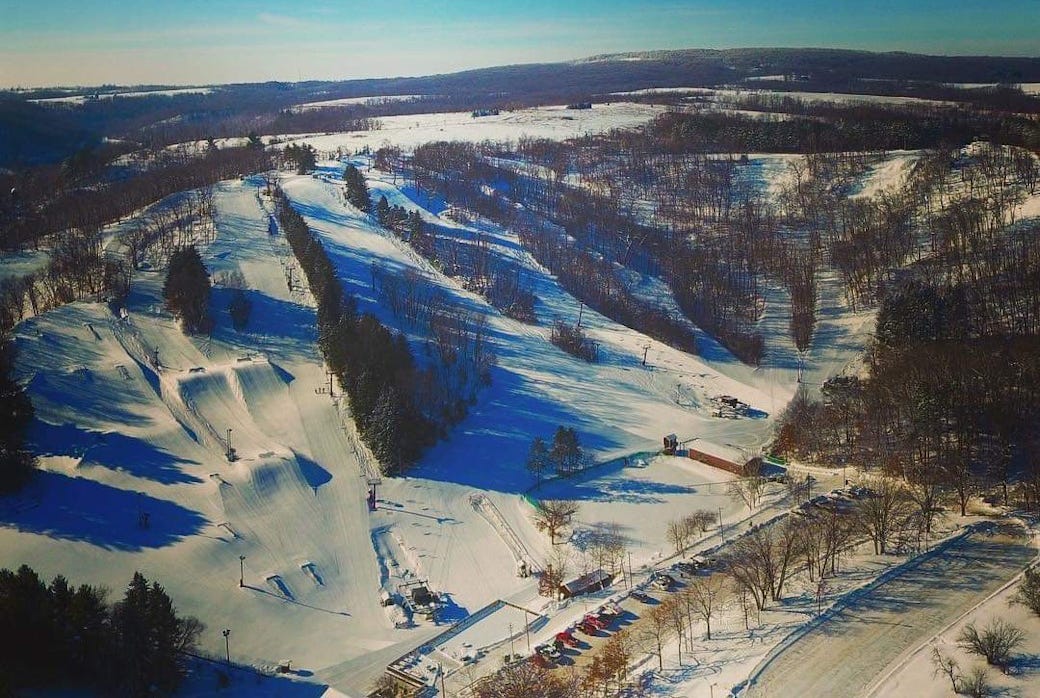
May 9, 2024
The Storm Live #3: Mountain Capital Partners Buys La Parva, Chile
The Storm Skiing Journal and Podcast is a reader-supported publication. To receive new posts and to support independent ski journalism, please consider becoming a free or paid subscriber. Who James Coleman, Managing Partner of Mountain Capital Partners Recorded on May 7, 2024 About Mountain Capital Partners About La Parva Base elevation: 8,704 feet Summit elevation: 11,722 feet Vertical drop: 3,022 feet Skiable Acres: 988 acres Average annual snowfall: 118 inches Trail count: 40 (18% expert, 43% advanced, 20% intermediate, 20% beginner) Lift count: 15 lifts (2 quads, 2 triples, 1 double, 10 surface lifts) View historic La Parva trailmaps on skimap.org . What we talked about MCP puts together the largest ski area in the Southern Hemisphere; how La Parva and Valle Nevado will work as a single ski area while retaining their identity; “something I’ve always taken tremendous pride in is how we respect the unique brand of every resort”; La Parva village; will MCP purchase El Colorado next?; expansion; 10,000-vertical-foot dreams; La Parva Power Pass access; why Valle Nevado is not unlimited on the Power Pass yet; considering Ikon Pass and Mountain Collective access for Valle Nevado, La Parva, and the rest of MCP’s mountains; Valle Nevado’s likely next chairlift; why MCP builds fewer lifts than it would like; the benefits and drawbacks of surface lifts; where a ropetow might make sense at Purgatory; snowmaking in the treeless Andes; why South America; what it means to be the first North American ski area operator to buy in South America; Chile is not as far away as you think; how MCP has grown so large so quickly; why MCP isn’t afraid to purchase ski areas that need work; why MCP bought Sandia Peak and which improvements could be forthcoming; why MCP won’t repair Hesperus’ chairlift until the company can install snowmaking on the hill; why the small ski area is worth saving; drama and resilience at Nordic Valley; should Nordic have upgraded Apollo before installing a brand-new six-pack and expansion?; future Nordic Valley expansion; exploring expansion at Brian Head; and why MCP has never been able to open Elk Ridge, Arizona, and what it would take to do so. What I got wrong I said that I saw “an email” that teased lift infrastructure improvements at Valle Nevado. This tidbit actually came from internal talking points that an MCP representative shared with The Storm . Why the format is so weird This is the first time I’ve used the podcast to break news, so I thought the simpler “live” format may work better. I’ll write an analysis of what MCP’s purchase of La Parva means in the coming days. The Storm publishes year-round, and guarantees 100 articles per year. This is article 34/100 in 2024, and number 534 since launching on Oct. 13, 2019. Get full access to The Storm Skiing Journal and Podcast at www.stormskiing.com/subscribe
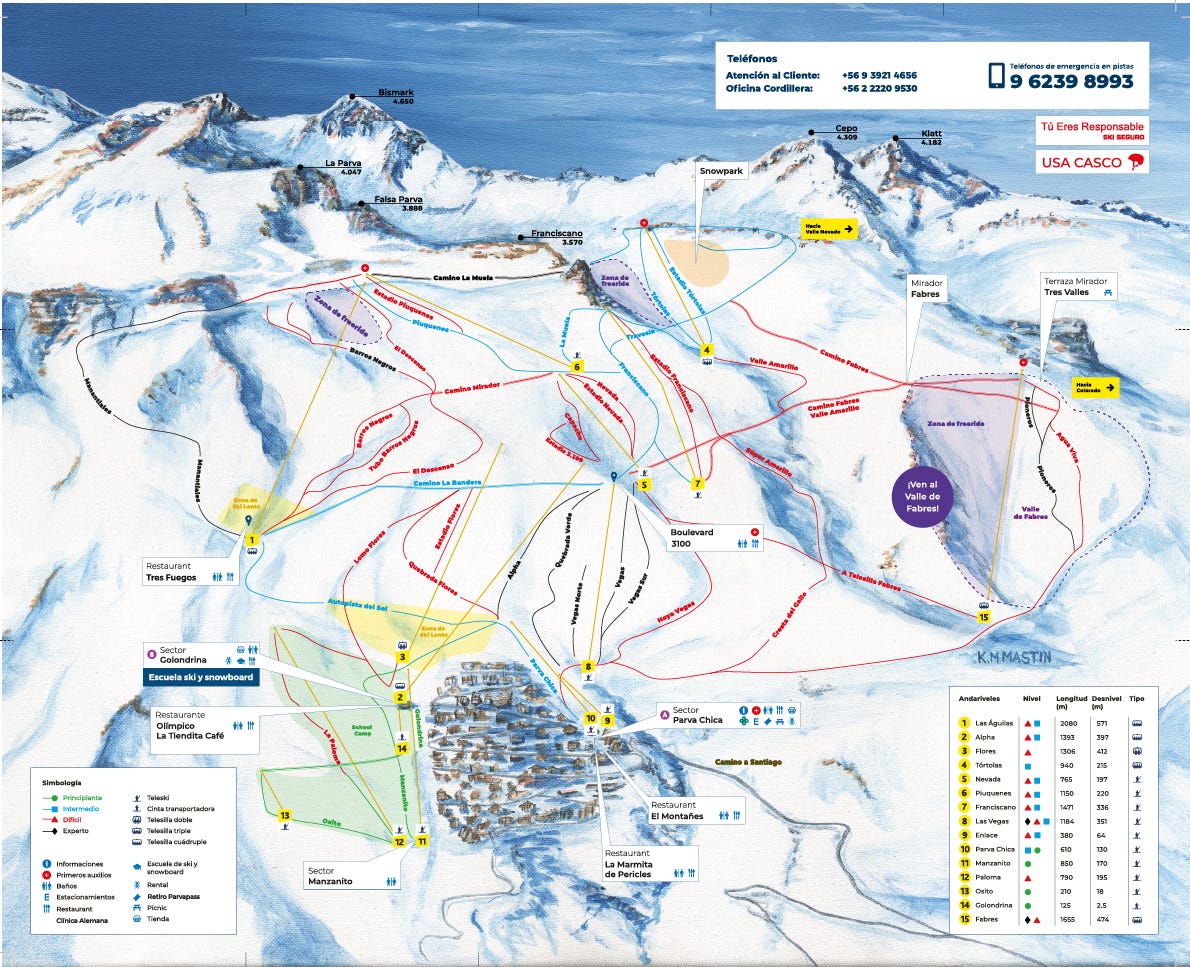
May 10, 2024
Podcast #171: Mission Ridge & Blacktail CEO Josh Jorgensen
This podcast hit paid subscribers’ inboxes on May 3. It dropped for free subscribers on May 10. To receive future pods as soon as they’re live, and to support independent ski journalism, please consider an upgrade to a paid subscription. You can also subscribe to the free tier below: Who Josh Jorgensen, CEO of Mission Ridge , Washington and Blacktail Mountain, Montana Recorded on April 15, 2024 About Mission Ridge Click here for a mountain stats overview Owned by: Larry Scrivanich Located in: Wenatchee, Washington Year founded: 1966 Pass affiliations: * Indy Pass – 2 days with holiday and weekend blackouts (TBD for 2024-25 ski season) * Indy+ Pass – 2 days with no blackouts * Powder Alliance – 3 days with holiday and Saturday blackouts Closest neighboring ski areas: Badger Mountain (:51), Leavenworth Ski Hill (:53) – travel times may vary considerably given weather conditions, time of day, and time of year. Base elevation: 4,570 feet Summit elevation: 6,820 feet Vertical drop: 2,250 feet Skiable Acres: 2,000 Average annual snowfall: 200 inches Trail count: 70+ (10% easiest, 60% more difficult, 30% most difficult) Lift count: 7 (1 high-speed quad, 3 doubles, 2 ropetows, 1 carpet – view Lift Blog’s inventory of Mission Ridge’s lift fleet) View historic Mission Ridge trailmaps on skimap.org . About Blacktail Click here for a mountain stats overview Owned by: Larry Scrivanich Located in: Lakeside, Montana Year founded: 1998 Pass affiliations: * Indy Pass – 2 days with holiday and weekend blackouts (TBD for 2024-25 ski season) * Indy+ Pass – 2 days with no blackouts * Powder Alliance – 3 days with holiday blackouts Closest neighboring ski areas: Whitefish (1:18) - travel times may vary considerably given weather conditions, time of day, and time of year. Base elevation: 5,236 feet Summit elevation: 6,780 feet Vertical drop: 1,544 feet Skiable Acres: 1,000+ Average annual snowfall: 250 inches Trail count: (15% easier, 65% more difficult, 20% most difficult) Lift count: 4 (1 triple, 2 doubles, 1 carpet – view Lift Blog’s inventory of Blacktail’s lift fleet) View historic Blacktail trailmaps on skimap.org . Why I interviewed him So much of Pacific Northwest skiing’s business model amounts to wait-and-pray, hoping that, sometime in November-December, the heaping snowfalls that have spiraled in off the ocean for millennia do so again. It’s one of the few regions in modern commercial skiing, anywhere in the world, where the snow is reliable enough and voluminous enough that this good-ole-boy strategy still works: 460 inches per year at Stevens Pass; 428 at Summit at Snoqualmie; 466 at Crystal; 400 at White Pass; a disgusting 701 at Baker. It’s no wonder that most of these ski areas have either no snowguns, or so few that a motivated scrapper could toss the whole collection in the back of a single U-Haul. But Mission Ridge possesses no such natural gifts. The place is snowy enough – 200 inches in an average winter – that it doesn’t seem ridiculous that someone thought to run lifts up the mountain. But by Washington State standards, the place is practically Palm Beach. That means the owners have had to work a lot harder, and in a far more deliberate way than their competitors, to deliver a consistent snowsportskiing experience since the bump opened in 1966. Which is a long way of saying that Mission Ridge probably has more snowmaking than the rest of Washington’s ski areas combined. Which, often, is barely enough to hang at the party. This year, however, as most Washington ski areas spent half the winter thinking “Gee, maybe we ought to have more than zero snowguns,” Mission was clocking its third-best skier numbers ever. The Pacific Northwest, as a whole, finished the season fairly strong. The snow showed up, as it always does. A bunch of traditional late operators – Crystal, Meadows, Bachelor, Timberline – remain open as of early May. But, whether driven by climate change, rising consumer expectations, or a need to offer more consistent schedules to seasonal employees, the region is probably going to have to build out a mechanical complement to its abundant natural snows at some point. From a regulatory point of view, this won’t be so easy in a region where people worry themselves into a coma about the catastrophic damage that umbrellas inflict upon raindrops. But Mission Ridge, standing above Wenatchee for decades as a place of recreation and employment, proves that using resources to enable recreation is not incompatible with preserving them. That’s going to be a useful example to have around. What we talked about A lousy start to winter; a top three year for Mission anyway; snowmaking in Washington; Blacktail’s worst snowfall season ever and the potential to add snowmaking to the ski area; was this crappy winter an anomaly or a harbinger?; how Blacktail’s “long history of struggle” echoes the history of Mission Ridge; what could Blacktail become?; Blacktail’s access road; how Blacktail rose on Forest Service land in the 1990s; Blacktail expansion potential; assessing Blacktail’s lift fleet; could the company purchase more ski areas?; the evolution of Summit at Snoqualmie; Mission Ridge’s large and transformative proposed expansion; why the expansion probably needs to come before chairlift upgrades; Fantasy Lift Upgrade; and why Mission Ridge replaced a used detachable quad with another used detachable quad. Why I thought that now was a good time for this interview Washington skiing is endangered by a pretty basic problem: more people in this ever-richer, ever more-populous state want to ski than there are ski areas for them to visit. Building new ski areas is impossible – you’d have better luck flying an American flag from the roof of the Kremlin than introducing a new mountain to Washington State. That shortage is compounded by the lack of slopeside development, which compels every skier to drive to the hill every day that they want to ski. This circumstance reflects a false commitment to environmental preservation, which mistakes a build-nothing philosophy for watching over Mother Earth, an outmoded way of thinking that fails to appreciate the impacts of sprawl and car culture on the larger natural ecosystem. Which is where Mission Ridge, with its large proposed ski-and-stay expansion, is potentially so important. If Mission Ridge can navigate the bureaucratic obstacle course that’s been dropped in its path, it could build the first substantial slopeside village in the Pacific Northwest. That could be huge. See, it would say, you can have measured development in the mountains without drowning all the grizzly bears. And since not everyone would have to drive up the mountain every day anymore, it would probably actually reduce traffic overall. The squirrels win and so do the skiers. Or something like that. And then we have Blacktail. Three-ish years ago, Mission Ridge purchased this little-known Montana bump, one of the West’s few upside-down ski areas, an unlikely late addition to the Forest Service ski area network seated south of Whitefish Mountain and Glacier National Park. I was surprised when Mission bought it. I think everyone else was too. Mission Ridge is a fine ski area, and one with multi-mountain roots – it was once part of the same parent company that owned Schweitzer (now the property of Alterra) – but it’s not exactly Telluride. How did a regional bump that was still running three Riblet doubles from the ‘60s and ‘70s afford another ski area two states away? And why would they want it? And what were they going to do with it? All of which I discuss, sort of, with Jorgensen. Mission and Blacktail are hardly the strangest duo in American skiing. They make more sense, as a unit, than jointly owned Red Lodge, Montana and Homewood, California. But they’re also not as logical as New York’s Labrador and Song, Pennsylvania’s Camelback and Blue, or Massachusett’s Berkshire East and Catamount, each of which sits within easy driving distance of its sister resort. So how do they fit together? Maybe they don’t need to. Questions I wish I’d asked There’s a pretty cool story about a military bomber crashing into the mountain (and some associated relics) that I would have liked to have gotten into. I’d also have liked to talk a bit more about Wenatchee, which Mission’s website calls “Washington’s only true ski town.” I also intended to get a bit more into the particulars of the expansion, including the proposed terrain and lifts, and what sort of shape the bedbase would take. And I didn’t really ask, as I normally do, about the Indy Pass and the reciprocal season pass relationship between the two ski areas. What I got wrong I said that Mission Ridge’s first high-speed quad, Liberator Express, came used from Crystal Mountain. The lift actually came used from Winter Park. Jorgensen corrected that fact in the podcast. My mis-statement was the result of crossing my wires while prepping for this interview – the Crystal chairlift at Blacktail moved to Montana from Crystal Mountain, Washington. In the moment, I mixed up the mountains’ lift fleets. Why you should ski Mission Ridge Mission Ridge holds echoes of Arapahoe Basin’s East Wall or pre-tram Big Sky: so much damn terrain, just a bit too far above the lifts for most of us to bother with. That, along with the relatively low snowfall and Smithsonian lift fleet, are the main knocks on the place (depending, of course, upon your willingness to hike and love of vintage machinery). But, on the whole, this is a good, big ski area that, because of its snowmaking infrastructure, is one of the most reliable operators for several hundred miles in any direction. The intermediate masses will find a huge, approachable footprint. Beginners will find their own dedicated lift. Better skiers, once they wear out the blacks off lifts 2 and 4, can hike the ridge for basically endless lines. And if you miss daylight, Mission hosts some of the longest top-to-bottom night-skiing runs in America, spanning the resort’s entire 2,250 vertical feet (Keystone’s Dercum mountain rises approximately 2,300 vertical feet). If Mission can pull off this expansion, it could ignite a financial ripple effect that would transform the resort quickly: on-site housing and expanded beginner terrain could bring more people (especially families), which would bring more revenue, which would funnel enough cash in to finally upgrade those old Riblets and, maybe, string the long-planned Lift 5 to the high saddle. That would be amazing. But it would also transform Mission into something different than what it is today. Go see it now, so you can appreciate whatever it becomes. Why you should ski Blacktail Blacktail’s original mission, in the words of founder Steve Spencer, was to be the affordable locals’ bump, a downhome alternative to ever-more-expensive Whitefish, a bit more than an hour up the road. That was in 1998, pre-Epic, pre-Ikon, pre-triple-digit single-day lift tickets. Fast forward to 2024, and Whitefish is considered a big-mountain outlier, a monster that’s avoided every pass coalition and offers perhaps the most affordable lift ticket of any large, modern ski area in America (its top 2023-24 lift ticket price was $97). That has certainly complicated Blacktail’s market positioning. It can’t play Smugglers’ Notch ($106 top lift ticket price) to neighboring Stowe ($220-ish). And while Blacktail’s lift tickets and season passes ($450 early-bird for the 2024-25 ski season), are set at a discount to Whitefish’s, the larger mountain’s season pass goes for just $749, a bargain for a 3,000-acre sprawl served by four high-speed lifts. So Blacktail has to do what any ski area that’s orbiting a bigger, taller, snowier competitor with more and better terrain does: be something else. There will always be a market for small and local skiing, just like there will always be a market for diners and bars with pool tables and dartboards hanging from the walls. That appeal is easy enough for locals to understand. For frequent, hassle-free skiing, small is usually better than big. It’s more complicated to pitch a top-of-the-mountain parking lot to you, a probably not-local, who, if you haul yourself all the way to Montana, is probably going to want the fireworks show. But one cool thing about lingering in the small and foreign is that the experience unites the oft-opposed-in-skiing forces of novelty and calm. Typically, our ski travels involve the raucous and the loud and the fast and the enormous. But there is something utterly inspiring about setting yourself down on an unfamiliar but almost empty mountain, smaller than Mt. Megaphone but not necessarily small at all, and just setting yourself free to explore. Whatever Blacktail doesn’t give you, it will at least give you that. Podcast Notes On Mission Ridge’s proposed expansion While we discuss the mountain’s proposed expansion in a general way, we don’t go deep into specifics of lifts and trails. This map gives the best perspective on how the expansion would blow Mission Ridge out into a major ski area - the key here is less the ski expansion itself than the housing that would attend it: Here’s an overhead view: Video overviews: The project, like most ski area expansions in U.S. America, has taken about 700 years longer than it should have. The local radio station published this update in October: Progress is being made with the long-planned expansion of Mission Ridge Ski & Board Resort. Chelan County is working with the resort on an Environmental Impact Statement. County Natural Resources Director Mike Kaputa says it'll be ready in the next eight months or so. "We are getting closer and closer to having a draft Environmental Impact Statement and I think that's probably, I hate to put a month out there, but I think it's probably looking like May when we'll have a draft that goes out for public comment." The expansion plan for Mission Ridge has been in the works since 2014, and the resort brought a lawsuit against the county in 2021 over delays in the process. The lawsuit was dismissed earlier this year. Kaputa gave an update on progress with the Mission Ridge expansion before county commissioners Monday, where he said they're trying to get the scope of the Environmental Impact Statement right. "You want to be as thorough as possible," Kaputa said. "You don't want to overdo it. You want to anticipate comments. I'm sure we'll get lots of comments when it comes out." In 2014, Larry Scrivanich, owner of Mission Ridge, purchased approximately 779 acres of private land adjacent to the current Mission Ridge Ski and Board Resort. Since then, Mission Ridge has been forging ahead with plans for expansion. The expansion plans call for onsite lodging and accommodations, which Mission Ridge calls a game changer, which would differentiate the resort from others in the Northwest. I’m all about process, due diligence, and checks-and-balances, but it’s possible we’ve overcorrected here. On snowfall totals throughout Washington Mission gets plenty of snow, but it’s practically barren compared to the rest of Washington’s large ski areas: On the founding of Blacktail Blacktail is an outlier in U.S. skiing in that it opened in 1998 on Forest Service land – decades after similarly leased ski areas debuted. Daily Inter Lake summarizes the unusual circumstances behind this late arrival: Steve Spencer had been skiing and working at Big Mountain [now Whitefish] for many years, starting with ski patrol and eventually rising to mountain manager, when he noticed fewer and fewer locals on the hill. With 14 years as manager of Big Mountain under his belt, Spencer sought to create an alternative to the famous resort that was affordable and accessible for locals. He got together with several business partners and looked at mountains that they thought would fit the bill. They considered sites in the Swan Range and Lolo Peak, located in the Bitterroot Range west of Missoula, but they knew the odds of getting a Forest Service permit to build a ski area there were slim to none. They had their eyes on a site west of Flathead Lake, however, that seemed to check all the right boxes. The mountain they focused on was entirely surrounded by private land, and there were no endangered species in the area that needed protection from development. Spencer consulted with local environmental groups before he’d spent even “two nickels” on the proposal. He knew that without their support, the project was dead on arrival. That mountain was known as Blacktail, and when the Forest Service OK’d ski operations there, it was the first ski area created on public land since 1978, when Beaver Creek Resort was given permission to use National Forest land in Colorado. Blacktail Mountain Ski Area celebrates its 25th anniversary next year, it is still the most recent in the country to be approved through that process. On Glacier National Park and Flathead Lake Even if you’ve never heard of Blacktail, it’s stuffed into a dense neighborhood of outdoor legends in northern Montana, including Glacier National Park and Whitefish ski area: On Whitefish With 3,000 skiable acres, a 2,353-foot vertical drop, and four high-speed lifts, Whitefish, just up the road from Blacktail, looms enormously over the smaller mountain’s potential: But while Whitefish presents as an Epkon titan, it acts more like a backwater, with peak-day lift tickets still hanging out below the $100 mark, and no megapass membership on its marquee. I explored this unusual positioning with the mountain’s president, Nick Polumbus, on the podcast last year (and also here ). On “Big Mountain” For eons, Whitefish was known as “Big Mountain,” a name they ditched in 2007 because, as president and CEO at the time Fred Jones explained , the ski area was “often underestimated and misunderstood” with its “highly generic” name. On “upside-down” ski areas Upside-down ski areas are fairly common in the United States, but they’re novel enough that most people feel compelled to explain what they mean when they bring one up: a ski area with the main lodge and parking at the top, rather than the bottom, of the hill. These sorts of ski areas are fairly common in the Midwest and proliferate in the Mid-Atlantic, but are rare out west. An incomplete list includes Wintergreen, Virginia; Snowshoe, West Virginia; Laurel, Blue Knob, Jack Frost, and Ski Big Bear, Pennsylvania; Otsego, Treetops, and the Jackson Creek Summit side of Snowriver, Michigan; and Spirit Mountain and Afton Alps, Minnesota. A few of these ski areas also maintain lower-level parking lots. Shawnee Mountain, Pennsylvania, debuted as an upside-down ski area, but, through a tremendous engineering effort, reversed that in the 1970s – a project that CEO Nick Fredericks detailed for us in a 2021 Storm Skiing Podcast . On LIDAR mapping Jorgensen mentions LIDAR mapping of Mission Ridge’s potential expansion. If you’re unfamiliar with this technology, it’s capable of giving astonishing insights into the past: On Blacktail’s chairlifts All three of Blacktail’s chairlifts came used to the ski area for its 1998 opening. The Crystal double is from Crystal Mountain, Washington; the Olympic triple is from Canada Olympic Park in Alberta; and the Thunderhead double migrated from Steamboat, Colorado. On Riblet chairlifts For decades, the Riblet double has been the workhorse of Pacific Northwest skiing. Simple, beautiful, reliable, and inexpensive, dozens of these machines still crank up the region’s hills. But the company dissolved more than two decades ago, and its lifts are slowly retiring. Mission Ridge retains three (chairs 1, 3, and 4, which date, respectively, to 1966, 1967, and 1971), and has stated its intent to replace them all, whenever funds are available to do so. On the history of Summit at Snoqualmie The Summit at Snoqualmie, where Jorgensen began his career, remains one of America’s most confusing ski areas: the name is convoluted and long, and the campus sprawls over four once-separate ski areas, one of which sits across an interstate with no ski connection to the others. There’s no easy way to understand that Alpental – one of Washington’s best ski areas – is part of, but separate from, the Summit at Snoqualmie complex, and each of the three Summit areas – East, Central, and West - maintains a separate trailmap on the website, in spite of the fact that the three are interconnected by ski trails. It’s all just very confusing. The ski area’s website maintains a page outlining how these four ski areas became one ski area that is still really four ski areas. This 1998 trailmap gives the best perspective on where the various ski nodes sit in relation to one another: Because someone always gets mad about everything, some of you were probably all pissed off that I referred to the 1990s version of Summit at Snoqualmie as a “primitive” ski area, but the map above demonstrates why: 17 of 24 chairlifts were Riblet doubles; nine ropetows supplemented this system, and the mountain had no snowmaking (it still doesn’t). Call it “retro” or whatever you want, but the place was not exactly Beaver Creek. On Vail and Alterra’s Washington timeline I mentioned Washington’s entrance onto the national ski scene over the past decade. What I meant by that was the addition of Summit and Crystal onto the Ikon Pass for the 2018-19 ski season, and Stevens Pass onto the Epic Pass the following winter. But Washington skiing – and Mt. Baker in particular – has always been a staple in the Temple of the Brobots, and Boyne Resorts, pre-Ikon, owned Crystal from 1997 to 2017. On Anthony Lakes Jorgensen mentioned that he applied for the general manager position at Anthony Lakes, a little-known 900-footer lodged in the western Oregon hinterlands. One triple chair serves the entire ski area: The Storm explores the world of lift-served skiing year-round. Join us. The Storm publishes year-round, and guarantees 100 articles per year. This is article 33/100 in 2024, and number 533 since launching on Oct. 13, 2019. Get full access to The Storm Skiing Journal and Podcast at www.stormskiing.com/subscribe
Apr 25, 2024
Podcast #170: Bluewood, Washington General Manager Pete Korfiatis
This podcast hit paid subscribers’ inboxes on April 18. It dropped for free subscribers on April 25. To receive future pods as soon as they’re live, and to support independent ski journalism, please consider an upgrade to a paid subscription. You can also subscribe to the free tier below: Who Pete Korfiatis, General Manager of Bluewood , Washington Recorded on April 4, 2024 About Bluewood Click here for a mountain stats overview Owned by: Local investors Located in: Dayton, Washington Year founded: 1980 Pass affiliations: * Indy Pass and Indy+ Pass: 2 days, no blackouts Closest neighboring ski areas: Cottonwood Butte, Idaho, 3 hours east Base elevation: 4,545 feet Summit elevation: 5,670 feet Vertical drop: 1,125 feet Skiable Acres: 355 Average annual snowfall: 300 inches Trail count: 24 (30% difficult, 45% intermediate, 25% easy) Lift count: 4 (2 triples, 2 carpets – view Lift Blog’s inventory of Bluewood’s lift fleet) Why I interviewed him Someday, if it’s not too late, I’m going to track down the old-timers who snowshoed into the wilderness and figured this all out. The American West is filled with crazy little snow pockets, lesser-known mountain ranges spiraling off the vast plateaus. Much of this land falls under the purview of the United States Forest Service. In the decades immediately before and after World War II, the agency established most of our large western ski areas within its 193 million-acre kingdom. That’s a lot of land – approximately the size of Texas – and it’s not all snowy. Where there is snow, there’s not always roads, nor even the realistic possibility of plowing one through. Where there are roads, there aren’t always good exposures or fall lines for skiing. So our ski areas ended up where they are because, mostly, those are the best places nature gave us for skiing. Obviously it snows like hell in the Wasatch and the Tetons and the Sierra Nevadas. Anyone with a covered wagon could have told you that. But the Forest Service’s map of its leased ski areas is dotted with strange little outposts popping out of what most of us assume to be The Flats: What to make of Brian Head, floating alone in southern Utah? Or Mt. Lemmon, rising over Tucson? Or Ski Apache and Cloudcroft, sunk near the bottom of New Mexico? Or the ski areas bunched and floating over Los Angeles? Or Antelope Butte, hanging out in the Wyoming Bighorns? Somewhere, in some government filing cabinet 34 floors deep in a Washington, D.C. bunker, are hand-annotated topo maps and notebooks left behind by the bureaucrat-explorers who determined that these map dots were the very best for snowsportskiing. And somewhere, buried where I’ll probably never find it, is the story of Bluewood. It’s one of our more improbable ski centers. Not because it shouldn’t be there, but because most of us can’t imagine how it could be. Most Washington and Oregon ski areas line up along the Cascades, stacked south to north along the states’ western thirds. The snow smashes into these peaks and then stops. Anyone who’s driven east over the passes has encountered the Big Brown Endless on the other side. It’s surreal, how fast the high alpine falls away. But as Interstate 90 arcs northeast through this rolling country and toward Spokane, it routes most travelers away from the fecund Umatilla National Forest, one of those unexpected islands of peaks and green floating above our American deserts. Here, in this wilderness just to the west of Walla Walla but far from just about everything else, 300 inches of snow stack up in an average winter. And this is where you will find Bluewood. The Umatilla sprawls over two states and 1.4 million acres, and is home to three ski areas (Anthony Lakes and inactive Spouts Springs, both in Oregon, are the other two). Three map dots in the wilderness, random-looking from above, all the final product of years in the field, of hardy folks pushing ever-deeper into the woods to find The Spot. This is the story of one of them. What we talked about Growing up Wenatchee; “the mountains are an addiction”; THE MACHINE at Mammoth; Back-In-The-Day Syndrome; Mammoth’s outsized influence on Alterra Mountain Company; how the Ikon Pass strangely benefited Mammoth; the accidental GM; off the grid; Bluewood and southeast Washington’s unique little weather pattern; “everybody that knows Bluewood comes for the trees”; why the Forest Service is selling a bunch of Bluewood’s trees; massive expansion potential; when your snowline is 50 feet above your base area and you have no snowmaking; the winter with no snow; Skyline Basin and dreams that never happened; ambitious lift-upgrade plans; summer and “trying to eliminate the six-month revenue drought”; “if you take the North American lifts right now, they’re only coming out because they’re pieces of crap”; potential future chairlifts; Bluewood’s owners and their long-term vision; mountaintop lodging potential; whether night skiing could ever happen; power by biomass; the Indy Pass; Southeast Washington ski culture; free buddy tickets with your season pass; Bluewood’s season pass reciprocal program; why Bluewood’s lift ticket prices are so low; and the absolute killer expense for small ski areas. Why I thought that now was a good time for this interview One of the more useful habits I’ve developed is attending offseason media events and consumer ski shows, where ski area managers and marketers tend to congregate. The regional gatherings, where mountain booths are stacked side by side like boxes in a cereal aisle, are particularly useful, allowing me to connect with reps from a dozen or more resorts in an hour. Such was the setup at the Snowvana “stoke event” in Portland, Oregon last November, which I attended both to host a panel of ski area general managers and to lay deeper roots in the rabid Pacific Northwest. Two podcasts emerged directly from connections I made that day: my February conversation with Red Mountain CEO Howard Katkov, and this one, with Korfiatis. So that’s the easy answer: a lot of these podcasts happen simply because I was finally able to connect with whomever runs the mountain. But there’s a certain amount of serendipity at work as well: Bluewood, right now, is on the move. This is a ski area that is slowly emerging from the obscurity I caged it into above. It has big-picture owners, an energetic general manager, a growing nearby population, and megapass membership. True, it also has no snowmaking and outdated, slow chairlifts. But the big, established ski centers to its west are overwhelmed, exhausted, and, with a few exceptions, probably un-expandable. Bluewood could be a big-deal alternative to this mess if they can do what Korfiatis says they want to do. There are a lot of millions standing between vision and reality here. But sometimes crazy s**t happens. And if it goes down at Bluewood, I want to make sure we’re sitting right there watching it happen. What I got wrong I said that Mammoth was an independent mountain when Korfiatis arrived there in 2000. This is incorrect. Intrawest owned a majority stake in Mammoth from 1997 to 2006. Why you should ski Bluewood Usually, when casual skiers ask me where they ought to vacation, their wishlist includes someplace that’s relatively easy to get to, where they can stay slopeside, where the snow will probably be good [whenever their kids’ spring break is], and that is a member of [whatever version of the Epic or Ikon pass they purchased]. I give them a list of places that would not be a surprising list of places to anyone reading this newsletter, always with this qualifier: expect company. I like big destination ski areas. Obviously. I can navigate or navigate around the crowds. And I understand that 24-chairlifts-and-a-sushi-bar is exactly what your contemporary megapass patron is seeking. But if someone were to flip the question around and ask me which ski area characteristics were likely to give them the best ski experience , I’d have a very different answer for them. I’d tell them to seek out a place that’s hard to get to, where you find a motel 40 miles away and drive up in the morning. Make it a weekday morning, as far from school breaks as possible. And the further you get from Epkon branding, the farther you’ll be from anything resembling a liftline. That’s the idea with Bluewood. “Yeah but it’s only 1,100 vertical feet.” Yeah but trust me that’s plenty when most of your runs are off-piste and you can ski all day without stopping except to ride the lift. “But no one’s ever heard of it and they won’t be impressed with my Instastory.” You’ll live. “But it’s not on my Ultimo-Plus Pass.” Lift tickets are like $50. Or $66 on weekends. And it’s on the Indy Pass. “But it’s such a long drive.” No it isn’t. It’s just a little bit farther than the busier places that you usually go to. But it’s not exactly in Kazakhstan. “Now you’re just making things up.” Often, but not that. Podcast Notes On Bluewood’s masterplan Here’s the basic map: And the lift inventory wishlist: On Mission Ridge and Wenatchee Korfiatis grew up in Wenatchee, which sits below Mission Ridge. That mountain, coincidentally, is the subject of an already-recorded and soon-to-be-released podcast, but here’s the trailmap for this surprisingly large mountain in case you’re not familiar with it: On Mission Ridge’s expansion Again, I go deep on this with Mission CEO Josh Jorgensen on our upcoming pod, but here’s a look at the ski area’s big proposed expansion, which Korfiatis and I discuss a bit on the show: And here’s an overhead view: On “The Legend of Dave McCoy” The Dave McCoy that Korfiatis refers to in the pod is the founder of Mammoth Mountain, who passed away in 2020 at the age of 104. Here’s a primer/tribute video: Rusty Gregory, who ran Mammoth for decades, talked us through McCoy’s legacy in a 2021 Storm Skiing Podcast appearance (18:08): On Kim Clark, Bluewood’s last GM In September 2021, Bluewood GM Kim Clark died suddenly on the mountain of a heart attack. From SAM : Longtime industry leader and Bluewood, Wash., general manager Kim Clark died of an apparent heart attack while working on the mountain Tuesday. He was 65. Clark had been the Bluewood GM since 2014. In a statement sharing the news of Clark’s death, Bluewood said, “significant rescue efforts were unsuccessful. Kim passed away doing what he loved, with people he loved, on the mountain he loved.” Clark was an influential leader during his career in the mountain resort industry, much of which was spent at resorts in the Pacific Northwest. He is remembered by his peers as a mentor, a teacher, and a leader with a passion for the industry who cared deeply for the teams he led and the resorts he helped to improve. Prior to becoming GM at Bluewood, Clark led Mt. Ashland, Ore., as its general manager from 2005 to 2014. On the Tri-Cities of Washington Imagine this: I’m 18 years old and some dude on the lift at Copper Mountain asks me where I’m from. I say “Michigan” and he says “where” and I say, “the Tri-Cities area” and he says “what on earth is that?” And I say “Oh you’ve never heard of the Tri-Cities?” as though he’d just told me he’d never heard of Paris. And he’s like “no, have you ever heard of the Quad Cities?” Which apparently are four cities bunched along the Iowa-Illinois border around Interstate 80 and the Mississippi River. It was my first real-time lesson in hyper-regionalism and how oft-repeated information becomes so ingrained that we assume everyone must share it, like the moon or the wind. The Tri-Cities of Michigan are Bay City, Saginaw, and Midland. But no one who doesn’t live there knows this or cares, and so after that chairlift conversation, I started saying that I was from “two hours north of Detroit,” which pretty much every American understands. Anyway imagine my surprise to learn that America had room for a second Tri-Cities, this one in Washington. I asked the robots to tell me about it and this is what they said : The Tri-Cities are three closely linked cities (Kennewick, Pasco, and Richland)[2][3] at the confluence of the Yakima, Snake, and Columbia Rivers in the Columbia Basin of Eastern Washington. The cities border one another, making the Tri-Cities seem like one uninterrupted mid-sized city. The three cities function as the center of the Tri-Cities metropolitan area, which consists of Benton and Franklin counties.[4] The Tri-Cities urban area consists of the city of West Richland, the census-designated places (CDP) of West Pasco, Washington and Finley, as well as the CDP of Burbank, despite the latter being located in Walla Walla County. The official 2016 estimate of the Tri-Cities MSA population is 283,869, a more than 12% increase from 2010. 2016 U.S. MSA estimates show the Tri-Cities population as over 300,000. The combined population of the three principal cities themselves was 220,959 at the 2020 census. As of April 1, 2021, the Washington State Office of Financial Management, Forecasting Division estimates the cities as having a combined population of 224,640.[5] And actually, it turns out that there are tri-cities all over the country . So what the hell do I know? When I moved east to New York in 2002, it took me about five years to figure out what the “Tri-State Area” was. For a long time I thought it must be New York, New Jersey, and Pennsylvania. But it is New York, New Jersey, and Connecticut, from which many people commute into NYC daily to work. On Scot Schmidt For those of you who don’t know who “that guy” Scot Schmidt is: On the Greyhawk lift at Sun Valley Korfiatis refers to the “Greyhawk lift” at Sun Valley as an example of a retiring high-speed quad that is unlikely to have a useful second life. He was referring to this lift, which from 1988 until last year ran parallel to the monster Challenger lift: Last summer, Sun Valley replaced both lifts with one Challenger six-pack with a mid-station, and built a new high-speed quad called Flying Squirrel (which replaced a shorter double chair of the same name that met death-by-fire in 2014): On the number of Washington ski areas Washington, while home to several legendary ski areas, does not have nearly as many as its growing, active population needs. Of the state’s 17 active ski areas, five operate only surface lifts, and I’m not even certain whether one of them – Badger Mountain – operated this past ski season. Sitzmark also failed to spin its lift. There are really only nine volume-capable ski areas in the state: 49 Degrees North, Crystal, Mission Ridge, Baker, Mt. Spokane, Stevens Pass, Summit, Alpental, and White Pass. Here’s an inventory: The Storm explores the world of lift-served skiing all year long. Join us. The Storm publishes year-round, and guarantees 100 articles per year. This is article 32/100 in 2024, and number 532 since launching on Oct. 13, 2019. Get full access to The Storm Skiing Journal and Podcast at www.stormskiing.com/subscribe

Apr 23, 2024
Podcast #169: Panorama Mountain President & CEO Steve Paccagnan
This podcast hit paid subscribers’ inboxes on April 16. It dropped for free subscribers on April 23. To receive future pods as soon as they’re live, and to support independent ski journalism, please consider an upgrade to a paid subscription. You can also subscribe to the free tier below: Who Steve Paccagnan, President and CEO of Panorama Mountain , British Columbia Recorded on March 27, 2024 About Panorama Click here for a mountain stats overview Owned by: Panorama Mountain Village, Inc., a group of local investors Located in: Panorama, British Columbia, Canada Year founded: 1962 Pass affiliations: * Ikon Pass: 7 days, no blackouts * Ikon Base Pass: 5 days, holiday blackouts * Mountain Collective: 2 days, no blackouts * Lake Louise Pass: view details here Closest neighboring ski areas: Fairmont Hot Springs (:45), Kimberley (1:43), Kicking Horse (1:54) – travel times will vary considerably depending upon road conditions and time of year Base elevation: 3,773 feet/1,150 meters Summit elevation: 8,038 feet/2,450 meters Vertical drop: 4,265 feet/1,300 meters Skiable Acres: 2,975 Average annual snowfall: 204 inches/520 centimeters Trail count: 135 (30% expert, 20% advanced, 35% intermediate, 15% beginner) Lift count: 10 (1 eight-passenger pulse gondola, 2 high-speed quads, 2 fixed-grip quads, 1 triple, 1 double, 1 platter, 2 carpets – view Lift Blog’s inventory of Panorama’s lift fleet) Why I interviewed him U.S. America is making a mistake. In skiing, as in so many other arenas, we prioritize status quo protectionism over measured, holistic development that would reorient our built environments around humans, rather than cars, shrinking our overall impact while easing our access to the mountains and permitting more people to enjoy them. Our cluttered and interminable western approach roads, our mountain-town housing shortages, our liftlines backed up to Kansas are all the result of deliberate generational decisions to prioritize cars over transit, open space over dense walkable communities, and blanket wilderness protection over metered development of new public ski areas in regions where the established businesses - and their surrounding infrastructure - are overwhelmed. I write about these things a lot. This pisses some of you off. I’m OK with that. I’m not here to recycle the broken ideas that have made U.S. skiing into the mess that (in some fundamental ways, in certain regions) it is. I’m here to figure out how it can be better. The skiing itself, mind you, tends to be fabulous. It is everything that surrounds the mountains that can spoil the experience: the cost, the hassle, the sprawl. There are better ways to do this, to get people to the mountains and to house them there, both to live and to vacation. We know this because other countries already do a lot of the things that we ought to be doing. And the most culturally similar and geographically cozy one is so close we can touch it. U.S. America and U.S. Americans are ceding North American skiing’s future to British Columbia. This is where virtually all of the continent’s major resort development has occurred over the past three decades. Why do you suppose so many skiers from Washington State spend so much time at Whistler? Yes, it’s the largest resort in North America, with knockout terrain and lots of snow. But Crystal and Stevens Pass and Baker all get plenty of snow and are large enough to give most skiers just about anything they need. What Whistler has that none of them do is an expansive pedestrian base village with an almost infinite number of ski-in, ski-out beds and places to eat, drink, and shop. A dense community in the mountains. That’s worth driving four or more hours north for, even if you have to deal with the pain-in-the-ass border slowdowns to get there. This is not an accident, and Whistler is not an outlier. Over the past 30-plus years, the province of British Columbia has deliberately shaped its regulatory environment and developmental policies to encourage and lubricate ski resort evolution and growth. While all-new ski resort developments often stall, one small ski area after another has grown from community bump to major resort over the past several decades. Tiny Mount Mackenzie became titanic Revelstoke, which towers over even mighty Whistler. Backwater Whitetooth blew upward and outward into sprawling, ferocious Kicking Horse. Little Tod Mountain evolved into Sun Peaks, now the second-largest ski area in Canada. While the resort has retained its name over the decades, the transformation of Panorama has been just as thorough and dramatic. Meanwhile, in America, we stagnate. Every proposed terrain expansion or transit alternative or housing development crashes headfirst into a shredder of bureaucratic holdups, lawsuits, and citizen campaigns. There are too many ways to stop things, and too many people whose narrow visions of what the world ought to be blockade the sort of wholesale rethinking of community architecture that would make the mountains more livable and accessible. This has worked for a while. It’s still sort of working now. But each year, as the same two companies sell more and more passes to access a relatively stable number of U.S. ski areas, the traffic, liftlines, and cost of visiting these large resorts grows. Locals will find a way, pick their spots. But destination skiers with a menu of big-mountain options will eventually realize that I-70 is not a mandatory obstacle to maneuver on a good ski vacation. They can head north, instead, with the same ski pass they already have, and spend a week at Red or Fernie or Kimberley or Revelstoke or Sun Peaks or Kicking Horse. Or Panorama. Three thousand acres, 4,265 vertical feet, no lines, and no hassle getting there other than summoning the patience to endure long drives down Canadian two-laners. As the U.S. blunders along, Canada kept moving. The story of Panorama shows us how. What we talked about A snowmaking blitz; what happened when Panorama joined the Ikon Pass; how Covid savaged the international skier game; Panorama in the ‘80s; Intrawest arrives; a summit lift at last; village-building; reviving Mt. Baldy, B.C.; Mont Ste. Marie and learning French; why Intrawest sold the ski area; modernizing the lift system; busy busy Copper; leaving for Kicking Horse; Resorts of the Canadian Rockies arrives; who owns Panorama; whether the resort will stay independent; potential lift replacements and terrain expansions; could we ever see a lift in Taynton Bowl?; explaining those big sections of the trailmap that are blocked off with purple borders; and whitebark pine conservation. Why I thought that now was a good time for this interview It wouldn’t be fair to call Panorama a Powder Highway sleeper. The place seems to be doing fine as a business, with plenty of skier traffic to support continuous expansive infrastructure upgrades. But with lower average annual snowfall totals than Revy and Whitewater and Fernie and Red, Panorama does tend to get fewer shout-outs through the media and social media megaphones. It’s Northstar to Palisades Tahoe, Keystone to A-Basin, Park City to the Cottonwoods: the less-snowy, less-intense neighbor that collects families in wholesome Build-A-Bear fashion. But Panorama is wrapping up its second full season on the Ikon Pass , and its second winter since Canada finally unlocked its Covid-era borders. What impact, if any, would those two developments have on Panorama’s famously uncrowded slopes? Even if Colorad-Bro would never deign to turn his Subaru north, would Kansas Karl or North Dakota Norman load the kids into the minivan for something farther but less annoying? Not yet, it turns out. Or at least, not in great enough numbers to wreck the place. But there is another angle to the Panorama story that intrigues me. Like Copper Mountain, Mountain Creek, and Whistler, Panorama once belonged to Intrawest. Unlike Winter Park, Steamboat, Stratton, and Snowshoe, they did not remain part of the enterprise long enough to live second lives as part of Alterra Mountain Company. But what if they had? Our big-mountain coalitions have somewhat ossified over these past half-dozen years, so that we think of ski areas as Ikon mountains or Epic mountains or Indy mountains or independent mountains. But these rosters, like the composition of sports teams or, increasingly, leagues, can fluctuate wildly over time. I do wonder how Whistler would look under Alterra and Ikon, or what impact Mountain Creek-as-unlimited-Ikon mountain would have had on the megapass market in New York City? We don’t really know. But Panorama, as a onetime Intrawest mountain that rejoined the family through the backdoor with Ikon membership, does give us a sort-of in-between case, a kind of What If? episode of skiing. Which would be a fun thought experiment under any circumstances. But how cool to hear about the whole evolution from a guy who saw it all happen first-hand over the course of four decades? Who saw it from all levels and from all angles, who knew the players and who helped push the boulder uphill himself? That’s increasingly rare with big mountains, in this era of executive rotations and promotions, to get access to a top leader in possession of institutional knowledge that he himself helped to draft. It was, I’m happy to say, as good as I’d hoped. What I got wrong I said that Panorama was “one of the closest B.C. ski areas to the United States.” This is not quite right. While the ski area is just 100 or so miles from the international border, more than a dozen ski areas sit closer to the U.S., including majors such as Kimberley, Fernie, Whitewater, and Red Mountain. Why you should ski Panorama Let’s acknowledge, first of all, that Panorama has a few things working against it: it’s more than twice as far from Calgary airport – most skiers’ likely port of entry – than Banff and its trio of excellent ski areas; it’s the least powdery major ski resort on the Powder Highway; and while the skiable acreage and vertical drop are impressive, skiers must ride three lifts and a Snowcat to lap much of the best terrain. But even that extra drive still gets you to the bump in under four hours on good roads – hardly an endurance test. Sure, they get more snow in Utah, but have you ever been in Utah on a powder day? Enjoy that first untracked run, because unless you’re a local who knows exactly where to go, it will probably be your only one. And lapping multiple lifts is more of a psychological exercise than a practical one when there are few to no liftlines. And dang the views when you get there: There are plenty of large, under-trafficked ski resorts remaining in the United States. But they tend to be hundreds of miles past the middle of nowhere, with 60-year-old chairlifts and little or no snowmaking, and nowhere to sleep other than the back of your van. In BC, you can find the best of America’s Big Empties crossed with the modern lift fleets of the sprawling conglomerate-owned pinball machines. And oh by the way you get a hell of a discount off of already low-seeming (compared to the big-mountain U.S.) prices: an American dollar, as of April 16, was worth $1.38 Canadian. Podcast Notes On Intrawest Panorama, as a former Intrawest-owned resort, could easily have been part of Alterra Mountain Company right now. Instead, it was one of several ski areas sold off in the years before the legacy company stuffed its remainders into the Anti-Vail: On Mont Ste. Marie Mont Ste. Marie is one of approximately 45,000 ski areas in Quebec, and the only one, coincidentally, that I’ve actually skied. Paccagnan happened to be GM when I skied there, in 2002: On Kicking Horse It’s incredible how many U.S. Americans remain unaware of Kicking Horse, which offers what is probably the most ferocious inbounds ski terrain in North America, 4,314 vertical feet of straight down: Well, almost straight down. The bottom bit is fairly tame. That’s because Kicking Horse, like many B.C. ski areas, began as a community bump and exploded skyward with an assist from the province. Here’s what the ski area, then known as “Whitetooth,” looked like circa 1994: This sort of transformation happens all the time in British Columbia, and is the result of a deliberate, forward-looking development philosophy that has mostly evaporated in the U.S. American West. On the Powder Highway Panorama lacks the notoriety of its Powder Highway size-peers, mostly because the terrain is overall a bit milder and the volume of natural snow a bit lower than many of the other ski areas. Here’s a basic Powder Highway map: And a statistical breakdown: On the Lake Louise Pass I already covered this one in my podcast with Red Mountain CEO Howard Katkov a couple months back: Katkov mentions the “Lake Louise Pass,” which Red participates in, along with Castle Mountain and Panorama. He’s referring to the Lake Louise Plus Card , which costs $134 Canadian up front. Skiers then get their first, fourth, and seventh days free, and 20 percent off lift tickets for each additional visit. While these sorts of discount cards have been diminished by Epkon domination, versions of them still provide good value across the continent. The Colorado Gems Card , Smugglers’ Notch’s Bash Badge , and ORDA’s frequent skier cards are all solid options for skiers looking to dodge the megapass circus. On Panorama’s masterplan: On Mt. Baldy, B.C. Paccagnan helped revitalize a struggling Mt. Baldy, British Columbia, in the 1990s. Here was the ski area’s 1991 footprint: And here’s what it looks like today – the ski area joined Indy Pass for the 2023-24 ski season: On Panorama’s evolution Panorama, like many B.C. ski areas, has evolved significantly over the past several decades. Here’s what the place looked like in 1990, not long after Paccagnan started and before Intrawest bought the place. A true summit lift was still theoretical, Taynton Bowl remained out of bounds, and the upper-mountain lifts were a mix of double chairs and T-bars: By 1995, just two years after Intrawest had purchased the ski area, the company had installed a summit T-bar and opened huge tracts of advanced terrain off the top of the mountain: The summit T ended up being a temporary solution. By 2005, Intrawest had thoroughly modernized the lift system, with a sequence of high-speed quads out of the base transporting skiers to the fixed-grip Summit Quad. Taynton Bowl became part of the marked and managed terrain: On Whitebark Pine certification A bit of background on Panorama’s certification as a “whitebark pine-friendly ski resort” – from East Kootenay News Online Weekly : The Whitebark Pine Ecosystem Foundation of Canada has certified Panorama Mountain Resort as a Whitebark Pine Friendly Ski Area , the first resort in Canada to receive this designation. The certification recognizes the resort’s long and continued efforts to support the recovery of whitebark pine within its ski area boundary, a threatened tree species that plays a critical role in the biodiversity of mountain ecosystems. ,,, Found across the subalpine of interior B.C., Alberta and parts of the U.S, this slow growing, five needle pine is an integral part of an ecosystem that many other species depend on for survival. The tree’s cones hold some of the most nutritious seeds in the mountains and sustain Grizzly bears and birds, including the Clark’s nutcracker which has a unique symbiotic relationship with the tree. The deep and widespread roots of the whitebark pine contribute to the health of watersheds by stabilizing alpine slopes and regulating snowpack run-off. Over the past decade, whitebark pine numbers have fallen dramatically due in large part to a non-native fungal disease known as white pine blister rust that has been infecting and killing the trees at an alarming rate. Since 2012, the whitebark pine has been listed as endangered under the Government of Canada’s Species at Risk Act (SARA), and was recently added to the U.S Fish and Wildlife Service’s threatened species list. Panorama Mountain Resort has collaborated with the Whitebark Pine Ecosystem Foundation of Canada to facilitate restoration projects including cone collection and tree plantings within the resort’s ski area. The Storm explores the world of lift-served skiing year-round. Join us. The Storm publishes year-round, and guarantees 100 articles per year. This is article 31/100 in 2024, and number 531 since launching on Oct. 13, 2019. Get full access to The Storm Skiing Journal and Podcast at www.stormskiing.com/subscribe
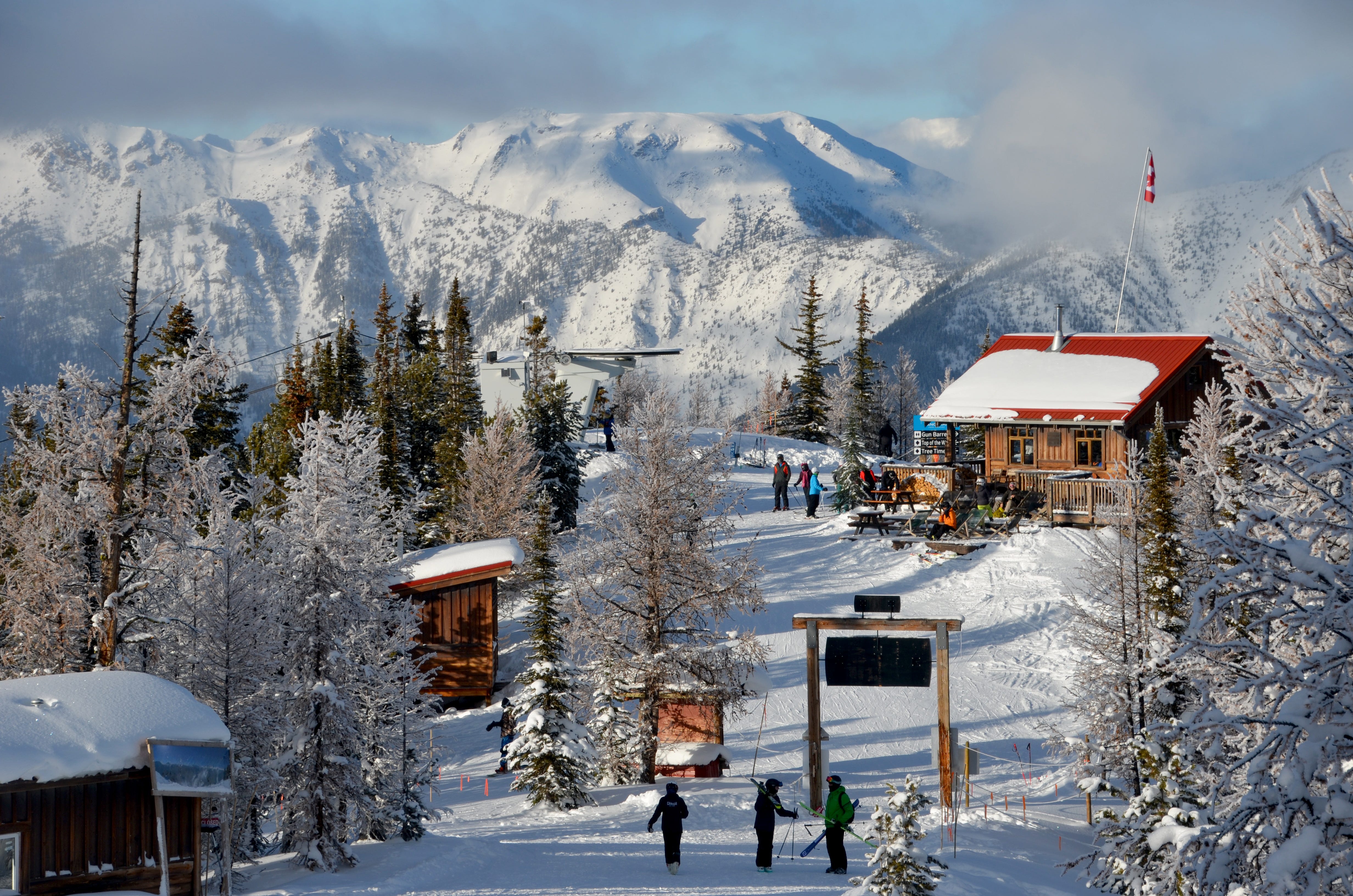
Apr 22, 2024
Podcast #168: Gunstock Mountain President & GM Tom Day
This podcast hit paid subscribers’ inboxes on April 15. It dropped for free subscribers on April 22. To receive future pods as soon as they’re live, and to support independent ski journalism, please consider an upgrade to a paid subscription. You can also subscribe to the free tier below: Who Tom Day, President and General Manager of Gunstock, New Hampshire Recorded on March 14, 2024 About Gunstock Click here for a mountain stats overview Owned by: Belknap County, New Hampshire Located in: Gilford, New Hampshire Year founded: 1937 Pass affiliations: Unlimited access on New Hampshire College Pass (with Cannon, Cranmore, and Waterville Valley) Closest neighboring ski areas: Abenaki (:34), Red Hill Ski Club (:35), Veterans Memorial (:43), Tenney (:52), Campton (:52), Ragged (:54), Proctor (:56), Powderhouse Hill (:58), McIntyre (1:00) Base elevation: 904 feet Summit elevation: 2,244 feet Vertical drop: 1,340 feet Skiable Acres: 227 Average annual snowfall: 120 inches Trail count: 49 (2% double black, 31% black, 52% blue, 15% green) Lift count: 8 (1 high-speed quad, 2 fixed-grip quads, 2 triples, 3 carpets - view Lift Blog’s inventory of Gunstock’s lift fleet) Why I interviewed him In the roughly four-and-a-half years since I launched The Storm , I’ve written a lot more about some ski areas than others. I won’t claim that there’s no personal bias involved, because there are certain ski areas that, due to reputation, convenience, geography, or personal nostalgia, I’m drawn to. But Gunstock is not one of those ski areas. I was only vaguely aware of its existence when I launched this whole project. I’d been drawn, all of my East Coast life, to the larger ski areas in the state’s north and next door in Vermont and Maine. Gunstock, awkwardly located from my New York City base, was one of those places that maybe I’d get to someday, even if I wasn’t trying too hard to actually make that happen. And yet, I’ve written more about Gunstock than just about any ski area in the country. That’s because, despite my affinity for certain ski areas, I try to follow the news around. And wow has there been news at this mid-sized New Hampshire bump. Nobody knew, going into the summer of 2022, that Gunstock would become the most talked-about ski area in America, until the lid blew off Mount Winnipesaukee in July of that year, when a shallow and ill-planned insurrection failed spectacularly at drawing the ski area into our idiotic and exhausting political wars. If you don’t know what I’m talking about, you can read more on the whole surreal episode in the Podcast Notes section below, or just listen to the podcast. But because of that weird summer, and because of an aspirational masterplan launched in 2021, I’ve given Gunstock outsized attention in this newsletter. And in the process, I’ve quite come to like the place, both as a ski area (where I’ve now actually skied), and as a community, and it has become, however improbably, a mountain I keep taking The Storm back to. What we talked about Retirement; “my theory is that 10 percent of people that come to a ski area can be a little bit of a problem”; Gunstock as a business in 2019 versus Gunstock today; skier visits surge; cash in the bank; the publicly owned ski area that is not publicly subsidized; Gunstock Nice; the last four years at Gunstock sure were an Asskicker, eh?; how the Gunstock Area Commission works and what went sideways in the summer of 2022; All-Summers Disease; preventing a GAC Meltdown repeat; the time bandits keep coming; should Gunstock be leased to a private operator?; qualities that the next general manager of Gunstock will need to run the place successfully; honesty, integrity, and respect; an updated look at the 2021 masterplan and what actually makes sense to build; could Gunstock ever have a hotel or summit lodge?; why a paved parking lot is a big deal in 2024; Maine skiing in the 1960s; 1970s lift lines; reflecting on the changes over 40-plus years of skiing; rear-wheel-drive Buicks as ski commuter car; competing against Epic and Ikon and why independent ski areas will always have a place in the market; will record skier-visit numbers persist?; a surprising stat about season passes; and how a payphone caused mass confusion in Park City. Why I thought that now was a good time for this interview On January 19, Gunstock Marketing Director Bonnie MacPherson (long of Okemo and Bretton Woods), shot me a press release announcing that Day would retire at the conclusion of the 2023-24 ski season. It was a little surprising. Day hadn’t been at Gunstock long. He’d arrived just a couple months before the March 2020 Covid shutdowns, almost four years to the day before he announced retirement. He was widely liked and respected on the mountain and in the community, a sentiment reinforced during the attempted Kook Coup of summer 2022, when a pair of fundamentalist nutjobs got flung out of the county via catapult after attempting to seize Gunstock from Day and his team. But Gunstock was a bit of a passion project for Day, a skiing semi-lifer who’d spent three decades at Waterville Valley before fiddling with high-end odd-jobs of the consultancy and project-management sort for 10 years. In four years, he transformed county-owned Gunstock from a seasonal business that tapped bridge loans to survive each summer into a profitable year-round entertainment center with millions in the bank. And he did it all despite Covid, despite the arrival of vending-machine Epic and Ikon passes, despite a couple of imbeciles who’d never worked at a ski area thinking they could do a better job running a ski area than the person they paid $175,000 per year to run the ski area. I still don’t really get it. How it all worked out. How Gunstock has gotten better as everything about running a ski area has gotten harder and more expensive and more competitive. There’s nothing really special about the place statistically or terrain-wise. It’s not super snowy or extra tall or especially big. It has exactly one high-speed lift, a really nice lodge, and Awe Dag views of Lake Winnipesaukee. It’s nice but not exceptional, just another good mid-sized ski area in a state full of good mid-sized ski areas. And yet, Gunstock thrives. Day, like most ski area general managers, is allergic to credit, but I have to think he had a lot to do with the mountain’s late resilience. He’s an interesting guy, thoughtful and worldly and adventurous. Talking to him, I always get the sense that this is a person who’s comfortable with who he is, content with his life, a hardcore skier whose interests extend far beyond it. He’s colorful but also plainspoken, an optimist and a pragmatist, a bit of back-office executive and good ole’ boy wrencher melded into your archetype of a ski area manager. Someone who, disposition baked by experience, is perfectly suited to the absurd task of operating a ski area in New Hampshire. It’s too bad he’s leaving, but I guess eventually we all do. The least I could do was get his story one more time before he bounced. Why you should ski Gunstock Skiing Knife Fight, New Hampshire Edition, looks like this: That’s 30 ski areas, the fifth-most of any state, in the fifth-smallest state in America. And oh by the way you’re also right next door to all of this: And Vermont is barely bigger than New Hampshire. Together, the two states are approximately one-fifth the size of Colorado. “Fierce” as the kids (probably don’t) say. So, what makes you choose Gunstock as your snowsportskiing destination when you have 56 other choices in a two-state region, plus another half-dozen large ski areas just east in Maine? Especially when you probably own an Indy, Epic, or Ikon pass, which, combined, deliver access to 28 upper New England ski areas, including most of the best ones? Maybe that’s exactly why. We’ve been collectively enchanted by access, obsessed with driving down per-visit cost to beat inflated day-ticket prices that we simultaneously find absurd and delight in outsmarting. But boot up at any New England ski area with chairlifts, and you’re going to find a capable operation. No one survived this long in this dogfight without crafting an experience worth skiing. It’s telling that Gunstock has only gotten busier since the Epic and Ikon passes smashed into New England a half dozen years ago. There’s something there, an extra thing worth pursuing. You don’t have to give up your SuperUltimoWinterSki Pass to make Gunstock part of your winter, but maybe work it in there anyway? Podcast Notes On Gunstock’s masterplan Gunstock’s ambitious masterplan, rolled out in 2021, would have blown the ski area out on all sides, added a bunch of new lifts, and plopped a hotel and summit lodge on the property: Most of it seems improbable now, as Day details in the podcast. On the GAC conflict Someone could write a book on the Gunstock Shenanigans of 2022. The best I can give you is a series of article I published as the whole ridiculous saga was unfolding: * Band of Nitwits Highjacks Gunstock, Ski Area’s Future Uncertain - July 24, 2022 * Walkouts, Resignations, Wild Accusations: A Timeline of Gunstock’s Implosion - July 31, 2022 * Gunstock GM Tom Day & Team Return, Commissioner Ousted – 3 Ways to Protect the Mountain’s Future - Aug. 8, 2022 If nothing else, just watch this remarkable video of Day and his senior staff resigning en masse: On the Caledonian Canal that “splits Scotland in half” I’d never heard of the Caledonian Canal, but Day mentions sailing it and that it “splits Scotland in half.” That’s the sort of thing I go nuts for, so I looked it up. Per Wikipedia : The Caledonian Canal connects the Scottish east coast at Inverness with the west coast at Corpach near Fort William in Scotland. The canal was constructed in the early nineteenth century by Scottish engineer Thomas Telford . The canal runs some 60 miles (100 kilometres) from northeast to southwest and reaches 106 feet (32 metres) above sea level. [2] Only one third of the entire length is man-made, the rest being formed by Loch Dochfour , Loch Ness , Loch Oich , and Loch Lochy . [3] These lochs are located in the Great Glen , on a geological fault in the Earth's crust . There are 29 locks (including eight at Neptune's Staircase , Banavie ), four aqueducts and 10 bridges in the course of the canal. Here's its general location: More detail: On Day’s first appearance on the podcast This was Day’s second appearance on the podcast. The first was way back in episode 34, recorded in January 2021: On Hurricane Mountain, Maine Day mentions skiing a long-gone ropetow bump named Hurricane Mountain, Maine as a child. While I couldn’t find any trailmaps, New England Lost Ski Areas Project houses a nice history from the founder’s daughter: I am Charlene Manchester now Barton. My Dad started Hurricane Ski Slope with Al Ervin. I was in the second grade, I remember, when I used to go skiing there with him. He and Al did almost everything--cranked the rope tow motor up to get it going, directed traffic, and were the ski patrol. As was noted in your report, accommodations were across road at the Norton farm where we could go to use the rest room or get a cup of hot chocolate and a hamburger. Summers I would go with him and Al to the hill and play while they cleared brush and tried to improve the hill, even opened one small trail to the right of the main slope. I was in the 5th grade when I tore a ligament in my knee skiing there. Naturally, the ski patrol quickly appeared and my Dad carried me down the slope in his arms. I was in contact with Glenn Parkinson who came to interview my mother , who at 96 is a very good source of information although actually, she was not much of a skier. The time I am referring to must have been around 1945 because I clearly recall discussing skiing with my second grade teacher Miss Booth, who skied at Hurricane. This was at DW Lunt School in Falmouth where I grew up. I was in the 5th grade when I hurt my leg. My Dad, Charles Manchester , was one of the first skiers in the State, beginning on barrel staves in North Gorham where he grew up. He was a racer and skied the White Mountains . We have a picture of him at Tuckerman's when not many souls ventured up there to ski in the spring. As I understand it, the shortage of gas during WWII was a motivator as he had a passion for the sport, but no gas to get to the mountains in N.H. Two of his best ski buddies were Al Ervin, who started Hurricane with him, and Homer Haywood, who was in the ski troopers during WWII, I think. Another ski pal was Chase Thompson. These guys worked to ski--hiking up Cranmore when the lifts were closed due to the gas shortage caused by WWII. It finally got to be too much for my Dad to run Hurricane, as he was spending more time directing traffic for parking than skiing, which after all was why he and Al started the project. I think my Dad and his ski buddies should be remembered for their love of the sport and their willingness to do whatever it took to ski. Also, they were perfect gentlemen, wonderful manners on the slope, graceful and handsomely dressed, often in neckties. Those were the good old days! The ski area closed around 1973, according to NELSAP, in response to rising insurance rates. On old-school Sunday River I’ve documented the incredible evolution of Sunday River from anthill to Vesuvius many times . But here, to distill the drama of the transformation, is the now-titanic ski area’s 1961 trailmap: This 60s-era Sunday River was a foundational playground for Day. On the Epic and Ikon New England timeline It’s easy to lose track of the fact that the Epic and Ikon Passes didn’t exist in New England until very recently. A brief timeline: * 2017: Vail Resorts buys Stowe, its first New England property, and adds the mountain to the Epic Pass for the 2017-18 ski season. * 2018: Vail Resorts buys Triple Peaks, owners of Mount Sunapee and Okemo, and adds them to the Epic Pass for the 2018-19 ski season. * 2018: The Ikon Pass debuts with five or seven days at five New England destinations for the 2018-19 ski season: Killington/Pico, Sugarbush, and Boyne-owned Loon, Sunday River, and Sugarloaf. Alterra-owned Stratton is unlimited on the Ikon Pass and offers five days on the Ikon Base Pass. * 2019: Vail buys the 17-mountain Peak Resorts portfolio, which includes four more New England ski areas: Mount Snow in Vermont and Crotched, Wildcat, and Attitash in New Hampshire. All join the Epic Pass for the 2019-20 ski season, bumping the number of New England ski areas on the coalition up to seven. * 2019: Alterra buys Sugarbush. Amps up the mountain’s Ikon Pass access to unlimited with blackouts on the Ikon Base and unlimited on the full Ikon for the 2020-21 ski season. Alterra also ramps up Stratton Ikon Base access from five days to unlimited with blackouts for the 2020-21 winter. * 2020: Vail introduces New England-specific Epic Passes. At just $599, the Northeast Value Pass delivers unlimited access to Vail’s four New Hampshire mountains, holiday-restricted unlimited access to Mount Snow and Okemo, and 10 non-holiday days at Stowe. Vail also rolls out a midweek version for just $429. * 2021: Vail unexpectedly cuts the price of Epic Passes by 20 percent, reducing the cost of the Northeast Value Pass to just $479 and the midweek version to $359. The Epic Local Pass plummets to $583, and even the full Epic Pass is just $783. All of which is background to our conversation, in which I ask Day a pretty interesting question: how the hell have you grown Gunstock’s business amidst this incredibly challenging competitive marketplace? The Storm explores the world of lift-served skiing year-round. Join us. The Storm publishes year-round, and guarantees 100 articles per year. This is article 30/100 in 2024, and number 530 since launching on Oct. 13, 2019. Get full access to The Storm Skiing Journal and Podcast at www.stormskiing.com/subscribe
Apr 15, 2024
Podcast #167: Tenney Mountain GM Dan Egan
This podcast hit paid subscribers’ inboxes on April 8. It dropped for free subscribers on April 15. To receive future pods as soon as they’re live, and to support independent ski journalism, please consider an upgrade to a paid subscription. You can also subscribe to the free tier below: Who Dan Egan, General Manager of Tenney Mountain, New Hampshire Recorded on March 14, 2024 About Tenney Mountain Owned by: North Country Development Group Located in: Plymouth, New Hampshire Year founded: 1960 (closed several times; re-opened most recently in 2023) Pass affiliations: * No Boundaries Pass : 1-3 days, no blackouts Closest neighboring ski areas: Campton (:24), Kanc Recreation Area (:33), Loon (:34), Ragged (:34), Waterville Valley (:35), Veteran’s Memorial (:39), Red Hill Ski Club (:42), Cannon (:44), Proctor (:44), Mt. Eustis (:50), Gunstock (:52), Dartmouth Skiway (:54), Whaleback (:55), Storrs (:57), Bretton Woods (:59) Base elevation: 749 feet Summit elevation: 2,149 feet Vertical drop: 1,400 feet Skiable Acres: 110 acres Average annual snowfall: 140 inches Trail count: 47 (14 advanced, 27 intermediate, 6 beginner) + 1 terrain park Lift count: 3 (1 triple, 1 double, 1 platter - view Lift Blog’s inventory of Tenney’s lift fleet) View historic Tenney Mountain trailmaps on skimap.org . Why I interviewed him Dan Egan is an interesting guy. He seems to have 10 jobs all at once. He’s at Big Sky and he’s at Val-d’Isère and he’s writing books and he’s giving speeches and he’s running Tenney Mountain. He’s a legendary freeskier who didn’t die young and who’s stayed glued to the sport. He loves skiing and it is his whole life and that’s clear in talking to him for 30 seconds. So he would have been a great and compelling interview even outside of the context of Tenney. But I’m always drawn to people who do particular, peculiar things when they could do anything. There’s no reason that Dan Egan has to bother with Tenney, a mid-sized mountain in a mid-sized ski state far from the ski poles of the Alps and the Rockies. It would be a little like Barack Obama running for drain commissioner of Gladwin County, Michigan. He’d probably do a good job, but why would he bother, when he could do just about anything else in the world? I don’t know. It’s funny. But Egan is drawn to this place. It’s his second time running Tenney. The guy is Boston-core, his New England roots clear and proud. It makes sense that he would rep the region. But there are New England ski areas that stand up to the West in scope and scale of terrain, and even, in Northern Vermont, snow volume and quality (if not consistency). But Tenney isn’t one of them. It’s like the 50th best ski area in the Northeast, not because it couldn’t be better, but because it’s never been able to figure out how to become the best version of itself. Egan – who, it’s important to note, will move into an advisory or consultant role for Tenney next winter – seems to know exactly who he is, and that helps. He understands skiing and he understands skiers and he understands where this quirky little mountain could fit into the wide world of skiing. This is exactly what the ski area needs as it chugs into the most recent version of itself, one that, we hope, can defy its own legacy and land, like Egan always seems to, on its skis. What we talked about A vision for Tenney; what happened when Egan went skiing in jeans all over New Hampshire; the second comeback season was stronger than the first; where Tenney can fit in a jam-packed New Hampshire ski scene; why this time is different at Tenney; the crazy gene; running a ski area with an extreme skier’s mindset; expansion potential; what’s lost with better snowmaking and grooming and wider trails; why New England breeds kick-ass skiers; Tenney’s quiet renovation; can Tenney thrive long-term with a double chair as its summit lift?; what’s the worst thing about a six-person chair?; where Tenney could build more beginner terrain; expansion opportunities; the future of the triple chair; an endorsement for surface lifts; the potential for night skiing; the difference between running Tenney in 2002 and 2024; the slow death of learn-to-ski; why is skiing discounting to its most avid fans?; the down side of online ticket discounts; warm-weather snowmaking; Tenney’s snowmaking evolution; the best snowmaking system in New Hampshire; “any ski area that’s charging more than $100 for skiing and then asking you to put your boots in a cubby outside in the freezing cold … to me, that’s an insult”; the importance of base lodges; “brown-baggers, please, you’re welcome at Tenney”; potential real estate development and the importance of community; New England ski culture – “It means something to be from the East”; “why aren’t more ski area operators skiing?”; skiing as confidence-builder; the No Boundaries Pass; the Indy Pass; Tenney season pass pricing; and Ragged’s Mission: Affordable pass. Why I thought that now was a good time for this interview In late 2022, as Tenney’s social media feeds filled with hyperactive projects to re-open the ski area, I asked a veteran operator – I won’t say which one – what they thought of the ski area’s comeback potential. “No chance,” they’d said, pointing to lack of water, strained and dated infrastructure, and a mature and modern competitive marketplace. “They’re insane.” And yet, here we are. Tenney lives. The longer I do this, the less the project of operating a ski area makes sense to me. Ski areas, in my head, have always been Mount Bohemia : string a lift up the mountain and let the skiers ride. But that model can only work in like four places on the continent, and sometimes, like this year, it barely works there. The capital and labor requirements of running even a modest operation in schizophrenic New England weather are, by themselves, shocking. Add in a summit lift built six decades ago by a defunct company in an analogue world, an already overcrowded New Hampshire ski market, and a decades-long legacy of failure, and you have an impossible-seeming project. But they’re doing it. For two consecutive winters, lift-served snowskiing has happened at Tenney. The model here echoes the strategy that has worked at Titus and Holiday Mountain and Montage : find an owner who runs other successful, non-ski businesses and let those businesses subsidize the ski area until it can function independently. That could take a while. But Steven Kelly, whose Timberline Construction Company is big-timing it all over New England, seems committed. Some parts of the country, like Washington, need more ski areas. Others, like New Hampshire, probably have too many. That can be great for skiers: access road death matches are not really a thing out here, and there’s always some uncrowded bump to escape to on peak days. Operators competing for skiers, however, have a tricky story to tell. In Tenney’s case, the puzzle is this: how does a fixed-grip 1,400-footer compete in a crowded ski corridor in a crowded ski state with five-dollar Epic Passes raining from the skies and Octopus lifts rising right outside of town and skiers following habits and rituals formed in childhood? Tenney’s operators have ideas. And some pretty good ones, as it turns out. Questions I wish I’d asked I know some of you will be disappointed that I didn’t get into Egan’s career as a pro skier. But this interview could have been nine hours long and we wouldn’t have dented the life of what is a very interesting dude. Anyway here’s Egan skiing and talking about skiing if you were missing that: What I got wrong We recorded this before 2024-25 Tenney season passes dropped. Egan teased that they would cost less than 2023-24 passes, and they ended up debuting for $399 adult , down from $449 for this past winter. When describing the benefits of nearby Ragged Mountain’s $429 season pass , I mention the ski area’s high-speed lifts and extensive glades, but I neglected to mention one very important benefit: the pass comes loaded with five lift tickets to Jay freaking Peak. Why you should ski Tenney Before high-speed lifts and Colorado-based owners and Extreme Ultimo Megapasses, there was a lot more weird in New England skiing. There was the Cranmore Skimobile: And these oil-dripping bubble doubles and rocket-ship tram at Mount Snow: And whatever the hell is going on here at now-defunct King Ridge, New Hampshire: I don’t really know if all this was roadside carnival schtick or regional quirk or just a reflection of the contemporary world, but it’s all mostly gone now, a casualty of an industry that’s figured itself out. Which is why it’s so jarring, but also so novel and so right, to pull into Tenney and to see this: I don’t really know the story here, and I didn’t ask Egan about it. They call it the Witch’s Hat. It’s Tenney’s ticket office. Perhaps its peculiar shape is a coincidence, the product of some long-gone foreman’s idiosyncratic imagination. I don’t even know why a ski area with a base lodge the size of Rhode Island bothers to maintain a separate building just for selling lift tickets. But they do. And it’s wonderful. The whole experience of skiing Tenney evokes this kind of time-machine dislocation. There’s the lattice-towered Hornet double, a plodding 60-year-old machine that moves uphill at the pace of a pack mule: There’s the narrow, twisty trails of Ye Old New England: And the handmade trail signs: Of course, modernity intrudes. Tenney now has RFID, trim grooming, a spacious pub with good food. And, as you’ll learn in the podcast, plans to step into the 2020s. The blueprint here is not Mad River Glen redux, or even fixed-grip 4EVA Magic Mountain. It’s transformation into something that can compete in ski area-dense and rapidly evolving New Hampshire. The vision, as Egan lays it out, is compelling. But there will be a cost to it, including, most likely, the old Hornet. That Tenney will be a Tenney worth skiing, but so is this one, and better to see it before it’s gone. Podcast Notes On 30 Years in a White Haze I mentioned Egan’s book, 30 Years In A White Haze , in the intro. I dedicated an entire podcast with his co-author, Eric Wilbur, to this book back in 2021: On Jackson Hole’s jeans-skiing day So this happened in December: On the December washout Egan references the “December washout” – this is the same storm I went deep on with Sunday River GM Brian Heon recently. Listen here . On “what I did 20 years ago” and warm-weather snowmaking This was Egan’s second run as Tenney general manager. His first tenure, near the turn of the century, overlapped with the ski area’s experiments in warm-weather snowmaking. New England Ski History summarizes : In October of 2002, Tenney was purchased by SnowMagic, a company seeking to showcase its snowmaking technology. The company's origins dated back to the late 1980s, when Japanese skier Yoshio Hirokane developed an idea to make snow in warmer temperatures, called Infinite Crystal Snowmaking. Hirokane later joined forces with Albert Bronander to found the New Jersey-based SnowMagic company. A significant investment was planned at Tenney, rumored to be a choice of either replacing the 1964 Stadeli double chairlift with a high speed detachable quad or installing the high-tech snowmaking system. In advance of the 2002-2003 ski season, the investment in a SnowMagic system was announced. The system, rumored to cost $1,000,000, would allow the ski area to stay open year round. There was some speculation that the runaway success of this new system would allow for the purchase of a high speed quad shortly thereafter. Famous skier Dan Egan served as General Manager when the area reopened in December 2002. After dealing with equipment shipping delays reportedly caused by a longshoreman's strike, Tenney was able to open during the summer and fall of 2003 thanks to the system. Numbers were disappointing and costs were high, especially considering it was only covering a small slope. Summer snowmaking operations were cancelled in 2004 and the snowmaking system was sent to Alabama. While summertime snowmaking was expected to return to Tenney in 2005, it was all but forgotten, as the company determined the systems yielded better revenue in warmer climates. The most recent headline-making experiment in warm-weather snowmaking landed last October, when Ski Ward, Massachusetts beat everyone to open for the 2023-24 ski season with an assist from an expensive but powerful piece of technology: It cost $600,000. It’s the size of a shipping container. In an August test run, it cranked out a six-foot-tall pile of snow in 83-degree weather. It’s the L60 snowmaking machine from Quebec-based Latitude 90 . And it just helped Ski Ward, Massachusetts beat every other ski area in North America to open for the 2023-24 ski season. The skiing wasn’t much. A few feet of base a few hundred feet long, served by a carpet lift. Ski Ward stapled the novelty to its fall festival, a kitschy New England kiddie-fest with “a petting zoo, pony rides, kids crafts, pumpkin painting, summer tubing, bounce houses … and more.” Lift tickets cost $5. On potential Tenney expansions We discuss several expansion opportunities for Tenney, including a proposed-but-abandoned upper-mountain beginner area. This 1988 trailmap shows where the potential new lift and trails could sit: On the evolution of Loon Loon, in recent years, has leapt ahead of its New Hampshire competitors with a series of snowmaking and lift upgrades that are the most sophisticated in the state (Waterville Valley might argue with me on that). I’ve profiled this evolution extensively, including in a conversation with the ski area’s current GM, Brian Norton, in 2022 - listen here . On Waterville Valley’s summit T-bar One of the most underrated lifts in New England is Waterville Valley’s summit T-bar. The story behind it is instructive, though I’m not sure if anyone’s paying attention to the lesson. Here’s the background – in 1988, the ski area installed the state’s first high-speed quad, a base-to-summit machine then known as High Country Express (the ski area later changed the name to “White Peaks Express”: But detachable lifts were new in the ‘80s, and no one really understood that stringing one to the top of White Peak would prove problematic. Wind holds were a constant problem. So, in 1996, Waterville took the extraordinary step of shortening the lift by approximately 400 vertical feet. Skiers could still travel to the summit on the High Country double chair, a Stadeli machine left over from the 1960s: But that lift was still prone to wind holds. So, in 2018, Waterville GM Tim Smith tried something both simple and brilliant: replacing the double chair with a brand-new T-bar, which cost all of $750,000 and is practically immune from wind holds: The result is a better ski experience enabled by a lost-cost, low-tech lift. The ski area continued to invest heavily in the rest of the mountain, throwing down $12 million on the Tecumseh Express bubble six-pack – which replaced the old White Peaks Express – in 2022. Video by Stuart Winchester. On JP Auclair Egan mentions JP Auclair, a Canadian freeskier who died in an avalanche in 2014. Here’s a nice tribute to JP from Chris O’Connell, who cofounded Armada Skis with Auclair: There are a million things that can be said about JP as a skier—how he pioneered and transcended genres, and the indelible mark he has made on the sport. But there is so much more: he was a genuinely good human; he was my favorite person to be around because he was hilarious and because he was kind. In the summer of 1997 I watched a VHS tape of JP Auclair and JF Cusson skiing the park at Mt. Hood. It was a time when snowboarding was peaking and, in many places, skiers weren’t even allowed in the park. Skiers certainly weren’t doing tricks that rivaled snowboarders—in difficulty or in style. To see JP and JF doing cork 720s blew my mind, and, as a snow sports photographer, I wanted to meet them. At the time, I was a senior photographer at Snowboarder Magazine and I had begun contributing with a start-up ski magazine called Freeze. The following spring the photo editor of Freeze blew out his knee and in his place, I was sent to the Nordic jib land, Riksgransen, Sweden to meet these guys. JP and I hit it off and that’s how it began – 16 years of traveling and shooting with him. Often, those travels were the kind which involved appearances, autograph sessions and less than ideal ski situations. He would put on a smile and give it 100 percent at an awkward press conference in China when we knew Interior BC was getting hammered. He would shred the icy slopes of Quebec when duty called, or log long hours in the Armada office to slam out a product video. JP was a champion no matter how adverse or inane. That was part of what made him so good. Ironically, JP and I had a shared sense that what we were doing, while fulfilling in context, at times seemed frivolous. We spent our lives traveling to the far ends of the earth, and we weren’t doing it to build bridges or irrigations systems or to help people have clean drinking water. Instead, we were doing it for skiing. Read the rest… On Crotched and Peak Resorts Egan is right, Crotched is often overlooked and under-appreciated in New England skiing. While much of the region fell behind the West, from a technology point of view, in the 2000s, Peak Resorts rebuilt Crotched almost from scratch in 2003, relocating three lifts from Virginia and installing a new snowmaking system. Per New England Ski History : At the turn of the millennium, Midwestern ski operator Peak Resorts started looking into either acquiring an operational mid-sized area or reopening a defunct area in New England. Though Temple Mountain was heavily considered, Peak Resorts opted to invest in defunct Crotched Mountain. According to Peak Resorts' Margrit Wurmli-Kagi, "It's the kind of small area that we specialize in, but it skis like a larger mountain. It has some nice glades and some nice steeps, but also some outlying areas that are perfect for the beginners."In September 2002, Peak Resorts formed S N H Development, Inc. as a New Hampshire corporation to begin rebuilding the former western side of the ski area. In terms of vertical feet, the prospective ski area was three times larger than any of Peak Resorts' current portfolio. After a 50 year lease of the property was procured in May 2003, a massive reconstruction project subsequently took place, including reclearing the trails, constructing a new snowmaking system, building a new base lodge, and installing rebuilt lifts from Ski Cherokee, Virginia. A reported ten million dollars later, Crotched Mountain reopened as essentially a new ski area on December 20, 2003. Though most of the terrain followed the former western footprint, the trails were given a new science fiction naming scheme.While the reopened ski area initially did not climb to the top of the former quad chairlift, additional trails were reclaimed in subsequent years. In February of 2012, it was announced that Crotched would be acquiring Ascutney's detachable quad, reopening the upper mountain area . The lift, dubbed the Crotched Rocket, opened on December 1, 2012. On “Rusty” in the hall of fame Egan refers to “Rusty’s” U.S. Ski and Snowboard Hall of Fame induction speech. He was referring to Rusty Gregory, former CEO of Alterra Mountain Company and three-time Storm Skiing Podcast guest. Here’s the speech (with an intro by Egan): The Storm explores the world of lift-served skiing year-round. Join us. The Storm publishes year-round, and guarantees 100 articles per year. This is article 26/100 in 2024, and number 526 since launching on Oct. 13, 2019. Get full access to The Storm Skiing Journal and Podcast at www.stormskiing.com/subscribe
Apr 12, 2024
Podcast #166: Okemo Vice President & General Manager Bruce Schmidt
This podcast hit paid subscribers’ inboxes on April 5. It dropped for free subscribers on April 12. To receive future pods as soon as they’re live, and to support independent ski journalism, please consider an upgrade to a paid subscription. You can also subscribe to the free tier below: Who Bruce Schmidt, Vice President and General Manager at Okemo Mountain Resort , Vermont Recorded on Feb. 27, 2024 (apologies for the delay ) About Okemo Click here for a mountain stats overview Owned by: Vail Resorts Located in: Ludlow, Vermont Year founded: 1956 Pass affiliations: * Epic Pass : unlimited access * Epic Local Pass : unlimited access * Epic Northeast Value Pass : unlimited access with holiday blackouts * Epic Northeast Midweek Pass : unlimited weekday access with holiday blackouts * Epic Day Pass : access on “all resorts” and “32 resorts” tiers Closest neighboring ski areas: Killington (:22), Magic (:26), Bromley (:31), Pico (:32), Ascutney (:33), Bellows Falls (:37), Stratton (:41), Saskadena Six (:44), Ski Quechee (:48), Storrs Hill (:52), Whaleback (:56), Mount Snow (1:04), Hermitage Club (1:10) Base elevation: 1,144 feet Summit elevation: 3,344 feet Vertical drop: 2,200 feet Skiable Acres: 632 Average annual snowfall: 120 inches per On The Snow ; Vail claims 200. Trail count: 121 (30% advanced, 37% intermediate, 33% beginner) + 6 terrain parks Lift count: 20 (2 six-packs, 4 high-speed quads, 5 fixed-grip quads, 2 triples, 1 platter, 6 carpets – view Lift Blog’s inventory of Okemo’s lift fleet) View historic Okemo trailmaps on skimap.org . Why I interviewed him Whether by plan or by happenstance, Vail ended up with a nearly perfect mix of Vermont ski areas. Stowe is the beater, with the big snows and the nasty trails and the amazing skiers and the Uphill Bros and the glades and the Front Four. Mount Snow is the sixth borough of New York City (but so is Florida and so is Stratton), big and loud and busy and bursting and messy, with a whole mountain carved out for a terrain park and big-drinking, good-timing crowds, as many skiers at the après, it can seem, as on the mountain. And Okemo is something that’s kind of in-between and kind of totally different, at once tame and lively, a placid family redoubt that still bursts with that frantic Northeast energy. It's a hard place to define, and statistics won’t do it. Line up Vermont’s ski areas on a table, and Okemo looks bigger and better than Sugarbush or Stowe or Jay Peak. It isn’t, of course, as anyone in the region will tell you. The place doesn’t require the guts that its northern neighbors demand. It’s big but not bossy. More of a stroll than a run, a good-timer cruising the Friday night streets in a drop-top low-rider, in no hurry at all to do anything other than this. It’s like skiing Vermont without having to tangle with Vermont, like boating on a lake with no waves. Because of this unusual profile, New England skiers either adore Okemo or won’t go anywhere near it. It is a singular place in a dense ski state that is the heart of a dense ski region. Okemo isn’t particularly convenient to get to, isn’t particularly snowy by Vermont standards, and isn’t particularly interesting from a terrain point of view. And yet, it is, historically, the second-busiest ski area in the Northeast (after Killington). There is something there that works. Or at least, that has worked historically, as the place budded and flourished in the Mueller family’s 36-year reign. But it’s Vail’s mountain now, an Epic Pass anchor that’s shuffling and adding lifts for the crowds that that membership brings. While the season pass price has dropped, skier expectations have ramped up at Okemo, as they have everywhere in the social-media epoch. The grace that passholders granted the growing family-owned mountain has evaporated. Everyone’s pulling the pins on their hand grenades and flinging them toward Broomfield every time a Saturday liftline materializes. It’s not really fair, but it’s how the world is right now. The least I can do is get their side of it. What we talked about Summer storm damage to Ludlow and Okemo; the resort helping the town; Vermont’s select boards; New England resilience; Vail’s My Epic Promise fund and how it helped employees post-storm; reminiscing on old-school Okemo and its Poma forest; the Muellers arrive; the impact of Jackson-Gore; how and why Okemo grew from inconsequential local bump to major New England ski hill; how Okemo expanded within the confines of Vermont’s Act 250; Vail buys the mountain, along with Sunapee and Crested Butte; the Muellers’ legacy; a Sunapee interlude; Vail adjusting to New England operations; mythbusters: snowmaking edition; the Great Chairlift Switcheroo of 2021; why Okemo didn’t place bubbles on the Quantum 6; why Okemo’s lift fleet is entirely made up of Poma machines; where Okemo could add a lift to the existing trail network; expansion potential; does Okemo groom too much?; glade expansion?; that baller snowmaking system; what happened when Okemo’s season pass price dropped by more than $1,000; is Epic Pass access too loose at Okemo?; how to crowd-dodge; the Epic Northeast Midweek Pass; limiting lift ticket sales; and skyrocketing lift ticket prices. Why I thought that now was a good time for this interview Bruce Schmidt first collected a paycheck from Okemo in the late 1970s. That was a different mountain, a different ski industry, a different world. Pomas and double chairs and primitive snowmaking and mountain-man gear and no internet. It was grittier and colder, in the sense that snowpants and ski coats and heated gloves and socks were not so ubiquitous and affordable and high-quality as they are today. Skiing, particularly in New England, required a hardiness, a tolerance for cold and subtle pain that modernity has slowly shuffled out of the skier profile. Different as it was, that age of 210s and rear-wheel drive rigs was not that long ago, and Schmidt has experienced it as one continuous story. That sort of institutional and epochal tenure is rare, especially at one ski area, especially at one that has evolved as much as Okemo. Imagine if you showed up at surface-lift Hickory and watched it transform, over four decades, into sprawling Gore . That’s essentially what Schmidt lived – and helped drive – at Okemo. That hardly ever happens. Small ski areas tend to stay small. Expansion is hard and expensive and, in Vermont especially, bureaucratically challenging. And yet little Okemo, wriggling in Killington’s shadow, lodged between the state’s southern and northern snow pockets, up past Mount Snow and Stratton but not so far from might-as-well-keep-driving Sugarbush and Mad River Glen, became, somehow, the fourth-largest ski area in America’s fourth-largest ski state by skier visits (after Colorado, California, and Utah, typically). The Mueller family, which owned the ski area from 1982 until they sold it to Vail Resorts in 2018, were, of course, the visionaries and financiers behind that growth, the likes of which we will probably never witness in New England again. But as Vail’s roots grow deeper and they make these mountains their own, that legacy will fade, if not necessarily dim. It was important, then, to download that part of Schmidt’s brain to the internet, to make sure that story survived the big groom of time. What I got wrong I said in the intro that Bruce started at Okemo in 1987. He actually started in the late ‘70s and worked there on and off for several years, as he explains in the conversation. I said that Okemo’s lift fleet was “100 percent Poma.” This is not exactly right, as some of the lifts are officially branded Leitner-Poma. I’m also not certain of the make of Okemo’s carpets. I noted in the intro that Okemo was Vail’s second-largest eastern mountain. It is actually their largest by skiable acreage (though Stowe feels larger to me, given the expansive unmarked but very skiable glades stuffed between nearly every trail). Here’s a snapshot of Vail’s entire portfolio for reference: Why you should ski Okemo The first time I skied Okemo was 2007. I rode a 3:45 a.m. ski bus north from Manhattan. I remember thinking three things: 1) wow, this place is big; 2) wow, there are a lot of kids here; and 3) do they seriously groom every goddamn trail every single night? This was at the height of my off-piste mania. I’m not a great carver, especially after the cord gets chopped up and scratchy sublayers emerge. I prefer to maneuver, at a moderate pace, over terrain, meaning bumps or glades (which are basically bumps in the trees, at least on a typical Vermont day). It’s more fun and interesting than blasting down wide-open, beaten-up groomers filled with New Yorkers. But wide-open, beaten-up groomers filled with New Yorkers is what Okemo is. At the time, I had no understanding of freeze-thaw cycles, of subtle snowfall differentials between nearby ski areas, of the demographic profile that drove such tight slope management (read: mediocre big-city skiers with no interest in anything other than getting to the bottom still breathing). All I knew was that for me, at the time, this wasn’t what I was looking for. But what you want as a skier evolves over time. I still like terrain, and Okemo still doesn’t have as much as I’d like. If that’s what you need, take your Epic Pass to Stowe – they have plenty. But what I also like is skiing with my kids, skiing with my wife, morning cord laps off fast lifts, long meandering scenic routes to rest up between bumpers, exploring mountains border to border, getting a little lost among multiple base areas, big views, moderate pitches, and less-aggressive skiers (ride the K1 gondy or Superstar chair at Killington and then take the Sunburst Six at Okemo; the toning down of energy and attitude is palpable). Okemo not only has all that – it is all that. If that makes sense. This is one of the best family ski areas in the country. It feels like – it is – a supersized version of the busy ski areas in Massachusetts or Connecticut, a giant Wachusett or Catamount or Mohawk Mountain: unintimidating, wide-open, freewheeling, and quirky in its own overgroomed, overbusy way. If you hit it right, Okemo will give you bumps and glades and even, on a weekday, wide-open trails all to yourself. But that’s not the typical Okemo experience, and it’s not the point of the place. This is New England’s friendly giant, a meandering mass of humanity, grinning and gripping and slightly frazzled, a disjointed but united-by-snow collective that, together, define Okemo as much as the mountain itself. Okemo on a stormy day in November 2021. Video by Stuart Winchester. Podcast Notes On last summer’s flooding in Okemo and Ludlow I mean yowza: I hate to keep harping on New Englander’s work ethic, but… I reset the same “dang New England you’re badass” narrative that I brought up with Sunday River GM Brian Heon on the podcast a few weeks ago. I’m not from New England and I’ve never even lived there, and I’m from a region with the same sort of get-after-it problem-solver mentality and work ethic. But I’m still amazed at how every time New England gets smashed over the head with a frying pan, they just look annoyed for five minutes, put on a Band-Aid, and keep moving. On the fate of Plymouth, Bromley, Ascutney, and Plymouth/Roundtop Schmidt and I discuss several Vermont ski areas whose circa-1980s size rivaled that of Okemo’s at the time. Here, for context, was Okemo before the Muellers arrived in 1982: It’s hard to tell from the trailmap, but only four of the 10 or so lifts shown above were chairlifts. Today, Okemo has grown into Vermont’s fourth-largest ski area by skiable acres (though I have reason to doubt the accuracy of the ski resort’s self-reported tallies; Stowe, Sugarbush, and Jay all ski at least as big as Okemo, but officially report fewer skiable acres). Anyway, in the early ‘80s, Magic, Bromley, Ascutney, and Plymouth/Roundtop were approximate peers to Okemo. Bromley ran mostly chairlifts, and has evolved the most of this group, but it is far smaller than Okemo today. The mountain has always been well-managed, so it wasn’t entirely fair to stick it in with this group, but the context is important here: Bromley today is roughly the same size that it was 40 years ago: Ascutney sold a 1,400-plus-foot vertical drop and a thick trail network in this 1982 trailmap. But the place went bust and sold its high-speed quad in 2012 (it’s now the main lift at Vail-owned Crotched). Today, Ascutney consists of a lower-mountain ropetow and T-bar that rises just 450 vertical feet (you can still skin or hike the upper mountain trails). Magic, in the early ‘80s, was basically the same size it is today: A merger with now-private and liftless (but still skiable from Magic), Timber Ridge briefly supersized the place before it went out of business for a large part of the ‘90s: When Magic recovered from its long shutdown, it reverted to its historic footprint (with extensive glade skiing that either didn’t exist or went unmarked in the ‘80s): And then there was Round Top, a 1,300-foot sometime private ski area also known as Bear Creek and Plymouth Notch. The area has sat idle since 2018, though the chairlifts are, last I checked, intact, and it can be yours for $6.5 million. Seriously you can buy it: On Okemo’s expansion progression The Muellers’ improbable transformation of Okemo into a New England Major happened in big chunks. First, they opened the Solitude area for the 1987-88 ski season: In 1994, South Face, far looker’s left, opened a new pod of steeper runs toward the summit: The small Morningstar pod, located in the lower-right-hand corner of the trailmap, opened in 1995, mostly to serve a real estate development: The most dramatic change came in 2003, when Okemo opened the sprawling Jackson Gore complex : On Vermont Act 250 It’s nearly impossible to discuss Vermont skiing without referencing the infamous Act 250, which is, according to the official state website : …Vermont’s land use and development law, enacted in 1970 at a time when Vermont was undergoing significant development pressure. The law provides a public, quasi-judicial process for reviewing and managing the environmental, social and fiscal consequences of major subdivisions and developments in Vermont. It assures that larger developments complement Vermont’s unique landscape, economy and community needs. One of the strengths of Act 250 is the access it provides to neighbors and other interested parties to participate in the development review process. Applicants often work with neighbors, municipalities, state agencies and other interested groups to address concerns raised by a proposed development, resolving issues and mitigating impacts before a permit application is filed. As onerous as navigating Act 250 can seem, there is significantly more slopeside development in Vermont than in any other Northeastern state, and its large resorts are certainly more developed than anything in build-nothing New York. On the CNL lease structure Schmidt refers to “the CNL lease structure.” Here’s what he was talking about: a company called CNL Lifestyle Properties once had a slick sideline in purchasing ski areas and leasing them back to the former owners. New England Ski History explains the historical context: As the banking crisis unfolded, many ski areas across the country transferred their debt into Real Estate Investment Trusts (REITs). On December 5, 2008, Triple Peaks transferred its privately held Mt. Sunapee assets to CNL Lifestyle Properties, Inc. . Triple Peaks then entered into a long agreement with CNL to maintain operational control. The site put together a timeline of the various resorts CNL once owned, including, from 2008 to ’17, Okemo: On the proximity of Okemo to Mount Sunapee Though Okemo and Sunapee sit in different states, they’re only an hour apart: I snapped this pic of Okemo from the Sunapee summit a couple years ago (super zoomed in): On Mount Sunapee’s ownership The State of New Hampshire owns two ski areas: Cannon Mountain and Mount Sunapee. In 1998, after decades of debate on the subject, the state leased the latter to the Muellers. When Vail acquired Triple Peaks (Okemo, Sunapee, and Crested Butte), in 2019, they either inherited or renegotiated the lease. For whatever reason, the state continues to manage Cannon as part of Franconia Notch State Park. A portion of the lease revenue that Vail pays the state each year is earmarked for capital improvements at Cannon. On glades at Stratton and Killington Okemo’s trail footprint is light on glades compared to many of the large Vermont ski areas. I point to Killington and Stratton, in particular, in the podcast, mostly due to their proximity to Okemo (every Vermont ski area from Sugarbush on north has a vast glade network). Though it’s just 20 minutes away, Killington rakes in around double Okemo’s snowfall in an average winter, and the ski area maintains glades all over the mountain: Stratton, 40 minutes south, also averages more snow than Okemo and is a sneaky good glade mountain. It’s easy to spend all day in the trees there when the snow’s deep (and it’s deep more often than you might think): On Okemo’s historic pass prices We can have mountain-to-mountain debates over the impact Vail Resorts has on the resorts it purchases, but one thing that’s inarguable: season pass prices typically plummet when the company acquires ski areas. Check out New England Ski History’s itemization of Okemo pass prices over the years – that huge drop in 2018-19 represents the ownership shift and that year’s cost of an Epic Local Pass (lift ticket and pass prices listed below are the maximum for that season): But, yeah, those day-ticket prices. Yikes. The Storm explores the world of lift-served skiing all year long. Join us. The Storm publishes year-round, and guarantees 100 articles per year. This is article 25/100 in 2024, and number 525 since launching on Oct. 13, 2019. Get full access to The Storm Skiing Journal and Podcast at www.stormskiing.com/subscribe
Apr 6, 2024
Podcast #165: Sugar Bowl CEO Bridget Legnavsky
This podcast hit paid subscribers’ inboxes on March 30. It dropped for free subscribers on April 6. To receive future pods as soon as they’re live, and to support independent ski journalism, please consider an upgrade to a paid subscription. You can also subscribe to the free tier below: Who Bridget Legnavsky, President & CEO of Sugar Bowl , California Recorded on March 13, 2024 About Sugar Bowl Click here for a mountain stats overview Owned by: A group of shareholders Located in: Donner, California Year founded: 1939 Pass affiliations: Mountain Collective: 2 days, no blackouts Closest neighboring ski areas: Donner Ski Ranch (:02), Soda Springs (:07), Boreal (:10), Kingvale (:14), Tahoe Donner (:24), Northstar (:27), Palisades Tahoe (:30), Homewood (:44), Diamond Peak (:52), Mt. Rose (:58), Sky Tavern (1:03) - travel times vary considerably given time of day, time of year, and weather conditions. Base elevation: 6,883 feet Summit elevation: 8,383 feet Vertical drop: 1,500 feet Skiable Acres: 1,650 acres Average annual snowfall: 500 inches Trail count: 103 (38% advanced, 45% intermediate, 17% beginner) Lift count: 12 (1 four-passenger gondola, 5 high-speed quads, 3 fixed-grip quads, 1 triple, 1 platter, 1 carpet) - view Lift Blog’s inventory of Sugar Bowl’s lift fleet. View historic Sugar Bowl trailmaps on skimap.org . Why I interviewed her Lagnavsky muses, toward the end of our interview, that Lake Tahoe in general is home to “the best skiing I’ve ever had in my life,” and that she can’t fathom why it’s not more of a national and international ski destination. This is coming from someone who has spent 30-plus years in the industry; who’s worked in Europe, Colorado, and New Zealand; who has freeskier credentials etched on her resume. She knows what she’s talking about. And I agree with her. More or less**. Tahoe is spectacular. The views, the snow, the terrain, the vibe, the energy, the variety, the sheer audacity of it all. Sixteen ski areas rung around a 191-square-mile lake at the top of California*^. An improbable wintertime circus, one of the greatest concentrations of ski areas on the continent. And no one would say there is any lack of people there. This is, again, California, home to 39 million Americans. Traffic and housing are big problems. But, being based in the East, I’m dialed into the way that much of the country thinks about Tahoe as a destination ski region. Which is to say, they mostly don’t. And I don’t quite get why. It’s not hard to get to. Reno’s airport is closer to the major Tahoe ski areas than Denver’s is to Summit County. It’s not a huge facility, but it’s served by direct flights from 24 airports , including New York City and Chicago. While the roads can get nasty mid-storm, they’re mostly well-maintained federal and state highways. There are plenty of accommodations on or near the larger resorts. But anytime I ask an Epic- or Ikon-Pass wielding East Coast city skier where they’re going out west, they say the Wasatch or Colorado or Big Sky or Jackson Hole. And if I’m like “what about Tahoe,” they’re usually like, “there’s skiing in California? How strange.” Not that the Epic and Ikon Tahoe mountains need more skiers. The San Francisco Chronicle ran a story a couple weeks ago about how fed-up Bay Area skiers were jetting to Utah and Colorado to outsmart the crowds (slow clap for that hack, Fellas). But there is a lot more to this sprawling, captivating ski region than Palisades, Heavenly, Northstar, and Kirkwood. And one of the most overlooked but also magical pieces of it is Sugar Bowl. And the fact that it’s not, for whatever reason, a destination to anyone outside of a 250-mile radius might make it exactly the kind of place that a lot of you are searching for. **Settle down, Utah. *and Nevada ^”Ummmm, the highest point in California is Mt. Whitney, which is nowhere near Lake Tahoe.” Thanks Doesn’t-Understand-Intentional-Hyperbole Bro. P.S. I hate you. What we talked about 127 inches in one storm and yes that’s real; how do you even measure that?; the “storm troopers” living at Sugar Bowl; storm mode in Tahoe; adjustable lifts; this crazy door: A season extension; how late Sugar Bowl could stay open and why it usually shuts down before that; ski New Zealand; Treble Cone; Cardrona; the global seasonal ski resort work cycle; never-summer; the biggest cultural adjustment coming to America after running resorts in New Zealand; who owns Sugar Bowl and how committed they are to independence; “We’re an independent resort surrounded by Ikon and Epic, and that’s making it really hard for Sugar Bowl to survive”; could Sugar Bowl join the Ikon Pass?; joining Mountain Collective; “part of the beauty of Sugar Bowl is that it’s uncrowded”; Shhhhhh-ugar Bowl; the three things that set Sugar Bowl apart in a crowded ski market; operating below comfortable carrying capacity; the village gondola; what happens when you live in a car-free village; considering a gondola upgrade; considering the lift fleet; why the Crow’s Peak lift is a triple chair, rather than a high-speed quad; “I do believe we could have the best beginner’s experience in the U.S.”; Sugar Bowl’s masterplan; village evolution; the curiosity of the small ski areas surrounding Sugar Bowl; “it’s got the best skiing I’ve ever had in my life here”; why isn’t California a destination ski market?; yes snowmaking is still helpful in Tahoe, and not just in the winter. Why I thought that now was a good time for this interview As far as mid-to-large-sized ski areas go, Sugar Bowl is about as well placed as any in the world. Its four peaks sit walking distance from Interstate 80, which mainlines Bay Area skiers into the mountains in under three hours (without traffic; yes, I know, there’s always traffic). Sugar Bowl is the first big ski area you hit riding east, and arguably the easiest to access. And it gets clobbered with 500 inches of average annual snowfall. Those are Alta-Snowbird numbers (keep moving, Canyon Bro; yes, it’s heavier snow, in general; I already told you LCC delivers the best skiing in America, so stop arguing about something we agree on). And yet, skiing circa 2024 has set up a challenging obstacle course for Sugar Bowl to navigate. At least as a business. Legnavsky is frank in the podcast, telling us that, “we’re an independent resort surrounded by Ikon and Epic, and that’s making it really hard for Sugar Bowl to survive.” To underscore just how fierce competition for skiers is in Lake Tahoe, look how close Sugar Bowl is to Northstar, an Epic resort that is more than twice its size, and Palisades Tahoe, the 6,000-acre Ikon Pass monster just to its south: It’s a tough draw. Though not as tough as that of the pass’ namesake Donner Party, who spent what would have been the bomber ski winter of 1846-47 snowbound at a nearby lake eating each other (reading the fevered history of this ordeal derailed me for half an hour while writing this article; I will just say that I’ve never been happier to live in the future). Still, for a business trying to make a go in the U.S. America of 2024, Megapass Monopoly is a tough game to play. So if Sugar Bowl can’t beat them, why not join them? The mountain has, after all, already jumped on the Mountain Collective train. Why not just join Ikon and be done with it? The answer, as you can imagine, is nuanced and considered. How does a ski area shape and retain an identity and remain a sustainable business in a vibrant ski region that is stuffed with snow and skiers, but also plenty of larger – and, frankly, less expensive (Sugar Bowl’s season pass is $1,099, more than the $982 Epic Pass) – ski areas? That, for now, is Sugar Bowl’s biggest challenge. Questions I wish I’d asked Sugar Bowl also owns the expansive Royal Gorge cross-country ski center, which they claim is North America’s largest, with more than 140 kilometers of trails. And while this trailmap resembles a Rorschach test slide (I see a bat, or maybe a volcano, or maybe a volcanic bat) more than any sort of guide I would be capable of following in and out of the wilderness, I can only assume this is impressive: What I got wrong I lumped Boreal in with Soda Springs, Tahoe Donner, and Donner Ski Ranch as a “small, family-oriented ski area.” That’s not really accurate. While Boreal, which, like Soda Springs, is owned by big bad Powdr Corp, is small by Tahoe standards, it’s really been transformed into a giant terrain park in line with the company’s Woodward Brand. It’s the only night-skiing operation in Tahoe, so the Park Brahs can Park Out Brah. Why you should ski Sugar Bowl “Part of the beauty of Sugar Bowl is that it’s uncrowded,” Legnavsky tells us in the podcast. I’m sold. To access the best version of modern U.S. skiing, you have to, I believe, find the ski areas with all the attributes of the destination resorts, minus their cost, congestion and Instapost-braggy name recognition. Places like Saddleback (a high-speed lift, lots of snow, great terrain, no people), Loveland (easy access, huge terrain, everyone sitting in their cars on the highway below, waiting to go skiing), or Sundance (modern lifts, great snow and scenery, minus the huge crowds just north; this also happens to be where I’m posted up at the moment, writing this article). Sugar Bowl is one of these places. Five high-speed lifts and craptons of snow, without an access road that looks like the first draft of a caveman rollercoaster. While its 1,500-foot vertical drop ranks ninth among Tahoe ski areas, it clocks in at sixth in skiable acreage, with 1,650. Both numbers, in any context, are respectable, and will give an average skier more than enough to work with for a few days. Vail has sold more Epic Passes every year since 2008. While new mountain acquisitions surely drove much of that growth, the company’s last new domestic pickup was Seven Springs and its sister resorts in 2021. That suggests that more Epic Pass holders are visiting the same number of ski areas each winter. I don’t know how many Ikon Passes Alterra sells, but no one at Palisades Tahoe is looking around and saying, “Man, Alterra really needs to spread the word about this place.” I get it. The Epic and Ikon Passes are fabulous deals and fantastic products, granting Californians access to the big four Tahoe resorts and destinations far beyond. If you want to put skiing at the center of your winter, it’s hard not to buy one or the other or both. But there’s a tradeoff for everything. Every year, more people (probably; I’m speculating on Ikon) buy those passes. And every year, those resorts stay more or less the same size (with occasional expansions, like the sizeable expansions at Steamboat, Aspen, and Keystone this winter), implementing chessboard parking plans and building bigger lifts to keep the cauldron just at a boil. But you can turn down the heat yourself. Here’s the hack: exit Interstate 80 eastbound at exit 174, Donner Pass Road, drive three miles, park, and ski while everyone else is waiting to cash in their cheap Ikon Passes down highway 89. Podcast Notes On Cardrona and Treble Cone Legnavsky spent a large chunk of her career running Cardrona and Treble Cone, a pair of large ski areas 40 road miles apart on New Zealand’s South Island. Both sit largely above treeline. Treble Cone rises around 2,300 vertical feet: Cardrona’s vert is just shy of 2,000 feet on 1,149 acres. While New Zealand is known for “nutcracker” surface lifts, Cardrona runs a legit lift fleet, with a chondola, two high-speed quads, two fixed-grip quads, a platter, and three conveyors: If you do happen onto a nutcracker, here are some tips: On the dense concentration of ski areas around Lake Tahoe Resetting ye’ old Tahoe ski areas inventory: And here’s how close Sugar Bowl sits to its four small neighbors – Donner Ski Ranch is right across the street; Soda Springs and Boreal are right up the road; and Tahoe Donner is just a few miles east off Interstate 80: On the Sugar Bowl gondola Sugar Bowl runs what I believe is the last classic four-passenger gondola in the United States (Loon’s four-person gondola sports a more modern design): On the old Crow’s Peak lift Prior to expanding skier’s left into Crow’s Nest Peak in 2013, a Heron double chair that was also known as Crow’s Nest ran parallel to the Disney chair. Here’s the 2012 trailmap: After the new triple chair opened, Sugar Bowl changed the double’s name to “Pony Express,” and eventually removed the lift around 2018. On The Art of Skiing We don’t discuss this in the pod, but here’s a Disney short from like 1702 or something that shows Goofy crushing it at Sugar Bowl: The Storm explores the world of lift-served skiing year-round. Join us. The Storm publishes year-round, and guarantees 100 articles per year. This is article 22/100 in 2024, and number 522 since launching on Oct. 13, 2019. Get full access to The Storm Skiing Journal and Podcast at www.stormskiing.com/subscribe
Apr 2, 2024
Podcast #164: Sunday River General Manager Brian Heon
This podcast hit paid subscribers’ inboxes on March 26. It dropped for free subscribers on April 2. To receive future pods as soon as they’re live, and to support independent ski journalism, please consider an upgrade to a paid subscription. You can also subscribe to the free tier below: Who Brian Heon, General Manager of Sunday River , Maine Recorded on January 30, 2024 About Sunday River Click here for a mountain stats overview Owned by: Boyne Resorts Located in: Newry, Maine Year founded: 1959 Pass affiliations: * Ikon Pass: 7 days, no blackouts * Ikon Base Pass: 5 days, holiday blackouts * New England Pass: unlimited access on Gold tier Reciprocal partners: * New England Pass holders get equal access to Sunday River, Sugarloaf, and Loon * New England Gold passholders get three days each at Boyne’s other seven ski areas: Pleasant Mountain, Maine; Boyne Mountain and The Highlands, Michigan; Big Sky, Montana; Brighton, Utah; Summit at Snoqualmie, Washington; and Cypress, B.C. Closest neighboring ski areas: Mt. Abram (:17); Black Mountain of Maine (:34); Wildcat (:46); Titcomb (1:05); Attitash (1:05); Cranmore (1:11) Base elevation: 800 feet Summit elevation: 3,150 feet (at Oz Peak) Vertical drop: 2,350 feet Skiable Acres: 884 trail acres + 300 acres of glades Average annual snowfall: 167 inches Trail count: 139 (16% expert, 18% advanced, 36% intermediate, 30% beginner) Lift count: 19 (1 eight-pack, 1 six-pack, 1 6/8-passenger chondola, 2 high-speed quads, 5 fixed-grip quads, 4 triples, 1 double, 1 T-bar, 3 carpets – Sunday River also built an additional triple chair on Merrill Hill, which is complete but not yet open; it is scheduled to open for the 2024-25 ski season – view Lift Blog’s inventory of Sunday River’s lift fleet.) View historic Sunday River trailmaps on skimap.org . Why I interviewed him What an interesting time this is in the North American ski industry. It’s never been easier or cheaper for avid skiers to sample different mountains, across different regions, within the span of a single season. And, in spite of the sorry shape of the stoke-obsessed ski media, there has never been more raw information readily available about those ski areas, whether that’s Lift Blog’s exhaustive databases or OpenSnow’s snowfall comparisons and histories . What that gives all of us is perspective and context. When I learned to ski in the ‘90s, pre-commercial internet, you could scarcely find a trailmap without visiting a resort’s ticket window. Skimap.org now houses more than 10,000 historic trailmaps for North America alone. That means you can understand, without visiting, what a ski area was, how it’s evolved, and how it compares to its neighbors. That makes Sunday River’s story both easier and harder to tell. Easier because anyone can now see how this monster, seated up there beyond the Ski 93 and North Conway corridors, is worth the drive past all of that to get to this. The ski area is more than twice the size of anything in New Hampshire. But the magical internet can also show skiers just how much snowier it is in Vermont, how much emptier it is at Saddleback, and that my gosh actually it doesn’t take so much longer to just fly to Utah. Sunday River, self-aware of its place in the ski ecosystem, has responded by building a better mountain. Boyne has, so far, under-promised and over-delivered on the resort’s 2030 plan, which, when launched four years ago, didn’t mention either of the two D-Line megalifts that now anchor both ends of the resort. The snowmaking is getting better, even as the mountain grows larger and more complex. The teased Western Reserve expansion would, given Sunday River’s reliance on snowmaking, be truly audacious, transforming an already huge ski area into a gigantic one. Cynics will see echoes of ASC’s largess, of the expansion frenzy of the 1990s that ended in the company’s (though fortunately not the individual ski areas’) extinction. But Boyne Resorts is not some upstart. The narrative of ski-consolidation-doesn’t-work always overlooks this Michigan-based company, founded by a scrappy fellow named Everett Kircher in 1947 – nearly 80 years ago. Boyne officials assure me that their portfolio-wide infrastructure investment is both considered and sustainable. If you’ve been to Big Sky in the past couple of years, it’s clear what the company is trying to achieve, even if they won’t explicitly say it (and I’ve tried to get them to say it): Boyne Resorts is resetting the standard for the North American ski experience by building the most modern ski resorts on the continent. They’re doing what I wish Vail, which continues to disappoint me in the Midwest and Mid-Atlantic, would do: ensuring that, wherever they operate, they are delivering the best possible version of skiing in that region. And while that’s a tough draw in the Cottonwoods (with Brighton, stacked, as it is, against the Narnia known as Alta-Snowbird), they’re doing it in Michigan, they’re doing it in the Rockies (at Big Sky), and they’re doing it in New England, where Loon and Sunday River, especially, are transforming at superspeed. What we talked about Rain, rain, go away; deciding to close down a ski resort; “seven inches of rain and 40-degree temperatures will eat snowpack pretty quick”; how Sunday River patched the resort back in only four days; the story behind the giant igloo at the base of Jordan; is this proof of climate change or proof of ski industry resilience?; one big advantage of resort consolidation; the crazy New England work ethic; going deep on the new Barker 6 lift; why Sunday River changed plans after announcing that the old Jordan high-speed quad would replace Barker; automatic restraint bars; the second Merrill Hill triple and why it won’t spin until the 2024-25 ski season; the best part about skiing Merrill Hill; how Jordan 8 has transformed Sunday River; why that lift is so wind-resistant; the mountain’s evolving season-opening plan; the potential Western Reserve expansion; potential future lift upgrades; carpet-bombing; 2030 progress beyond the on-snow ski experience; whether the summer bike park could return; the impact of the Ikon Pass on skier visits; Mountain Collective; the New England Pass; and making sure local kids can ski. Why I thought that now was a good time for this interview Jordan 8. Barker 6. Merrill Hill. A December rainstorm fit to raise Noah’s Ark. There is always something happening at Sunday River. Or, to frame it in the appropriate active voice: Sunday River is always doing things. New England, in its ASC/Intrawest late 1980s/1990s/early 2000s frenzy, built and built and built. Sugarbush installed five lifts, including the two-mile-long Slide Brook Express, in a single summer (1995). Killington built two gondolas and two high-speed quads in a three-year span from 1994 to ’97. Stratton sprouted two six-packs and two fixed-grip quads in the summer of 2001. And Sunday River, the most earnest manifestation of Les Otten’s ego and ambitions, multiplied across the wilderness, a new peak each year it seemed, until a backwater with a skiable footprint roughly equal to modern Black Mountain, New Hampshire had sprawled into a videogame ski kingdom at the chest-thumping pinnacle of Northeast skiing. And then not a lot happened for a really long time. ASC fell apart. Intrawest curdled. Most of the ski area infrastructure investment fled west. Stowe, then owned by AIG, kept building lifts, as did the Muellers (Okemo), and Peak Resorts (at least at Mount Snow and Crotched). One-offs would materialize as strange experiments, like the inexplicable six-pack at Ragged (2001) and the Mid-Burke Express at remote and little-known Burke Mountain (2011). But the region’s on-mountain ski infrastructure, so advanced in the 1990s, began to tire out. Then, since 2018 or so, rapid change, propelled by numerous catalysts: the arrival of western megapasses, a Covid adrenaline boost, and, most crucially, two big companies willing to build big-time lifts at big-time ski areas. Vail, since kicking New England’s doors open in 2017, has built a half-dozen major lifts, including three six-packs, across four ski areas. And Boyne Resorts, flexing a blueprint they first deployed at western crown jewel Big Sky, has built three D-line bubble lifts, installed two refurbished high-speed quads (with another on the way this summer), unveiled two expansions, and teased at least two more across its four New England ski areas. It doesn’t hurt that, despite a tighter regulatory culture in general, there is little Forest Service bureaucracy to fuss with in the East, meaning that (Vermont’s Act 250 notwithstanding), it’s often easier to replace infrastructure. Which takes us back to Sunday River. Big and bustling, secure in its Ikon Pass membership, “SR,” as the Boyne folks call it, didn’t really have to do anything to keep being busy and important. The old lifts would have kept on turning, even if rickety old Barker set the message boards on fire once every two to three weeks. Instead, the place is, through platinum-plated lifts and immense snowmaking upgrades, rapidly evolving into one of the country’s most sophisticated ski areas. If that sounds like hyperbole, try riding one of Boyne’s D-line bubble lifts. Quick and quiet, smooth as a shooting star, appointed like a high-end cigar lounge, these lifts inspire a sort of giddiness, an awe in the up-the-mountain ride that will reprogram the way you think about your ski day (even if you’re too cynical to admit it). But it’s not just what Sunday River is building that defines the place – it is also how the girth of the operation, backed by a New England hardiness, has fortified it against the almost constant weather events that make Northeast ski area operation such a suicidal juggling act. The December rainstorm that tore the place into pieces ended up shutting down the mountain for all of four days. Then they were like, “What?” And the lifts were spinning again. What I got wrong On the old Jordan quad Heon mentioned that the future of the old Jordan high-speed quad was “to be determined.” We recorded this in January, before Pleasant Mountain announced that they would use the bones of Jordan as their new summit lift , replacing a fixed-grip triple chair that was starting to get moldy. On relative size I said that Merrill Hill was Sunday River’s smallest peak by vertical drop. But the new Merrill Hill lift rises 750 vertical feet, while Little Whitecap sports a 602-foot vertical drop. On the New England Pass The prices I gave for New England Gold Passes ($1,350 early-bird, $1,619 final price), were for the 2023-24 ski season. Since then, 2024-25 passes debuted at $1,389 early-bird ($1,329 renewal), and currently sell for $1,439 ($1,389 renewal). I also said that the New England Pass didn’t include Pleasant Mountain access. What I meant was that the pass only provides unlimited access to Sunday River, Sugarloaf, and Loon. But the full pass does in fact include three days at Pleasant Mountain, along with each of Boyne’s other six ski areas (Boyne Mountain, The Highlands, Big Sky, Brighton, Summit at Snoqualmie, and Cypress). Skiers can also add on a Pleasant Mountain night pass for $99 for the 2024-25 ski season. We also refer to the Platinum New England Pass, which the company discontinued this year in favor of a kind-of build-your-own-pass structure – skiers can add an Ikon Base Pass onto the Gold Pass for $299 and the Pleasant Mountain night pass for $99. Why you should ski Sunday River The most interesting ski areas, to me, present themselves as an adventure. Wild romps up and over, each new lift opening a new set of trails, which tease yet another chairlift poking over the horizon. Little unexpected pockets carved out from the whole, places to disappear into, not like one ski area but like several, parallel but distinct, the journey seamless but slightly confusing. This is the best way I can describe Sunday River. The trailmap doesn’t really capture the scale and complexity of it. It’s a good map, accurate enough, but it flattens the perspective and erases the drama, makes the mountain look easy. But almost the first thing that will happen at Sunday River is that you will get lost. The seven side-by-side peaks, so distinct on the map, blend into one another on the ground. Endless forests bisect your path. You can start on Locke and end, almost inexplicably, at the tucked-out-of-sight North Ridge quad. Or take off from the Barker summit and land at the junction of Aurora and the Jordan double, two lifts seemingly planted in raw wilderness that will transport you to two very different worlds. Or you can exit Jordan 8 and find yourself, several miles later, past a condo city and over a sequence of bridges, at the White Cap lodge, wondering where you are and how you got there. It's bizarre and brilliant, like a fully immersive game of Mouse Trap , a wild machine to lose yourself in. While it’s smaller and shorter than Sugarloaf, its massive sister resort to the north, Sunday River, with its girth and its multiple base areas, can feel bigger, especially when the whole joint’s open. That also means that, if you’re not careful, you can spend all day traversing from one lift to the next, going across, rather than down, the fall lines. But ski with purpose and focus – and a map in your pocket – and Sunday River can deliver you one hell of a ski day. Podcast Notes On Sunday River 2030 Boyne is intentionally a little cagey on its 2030 plans, versions of which are in place for Loon , Sugarloaf , Summit at Snoqualmie , Boyne Mountain , The Highlands , and Sunday River . The exact content and commitments of the plans changes quite a bit, so I won’t try to outline them here. Elsewhere in the portfolio, Big Sky has a nearly-wrapped 2025 plan . Brighton, entirely on Forest Service land, has a masterplan (which I can’t find), but no 2030 commitment. Pleasant Mountain is still relatively new to the company. Cypress is in Canada, so who knows what’s going on up there. I’ll talk about that with the mountain’s GM, Matt Davies, in June. On the December storm Heon and I discuss the December rainstorm that brought up to seven inches of rain to Sunday River and nearby Bethel. That’s, like, an incredible amount of water: Heon spoke to local reporters shortly after the resort re-opened. On the Alpiniglu Somehow, this party igloo that Sunday River flew a team of Euro-sculptors in to create survived the insane flooding. On Hurricane Irene and self-sufficiency in Vermont New England has a way of shrugging off catastrophic storm damage that is perhaps unequaled on planet Earth. From The New York Times , just a few months after Hurricane Irene blasted the state in 2011: Yet what is truly impressive about the work here is not the amount of damage, or even the size of the big boy toys involved in the repair. Instead, it is that 107 is the last stretch of state road that Vermont has not finished repairing. In the three months since Hurricane Irene, the state repaired and reopened some 500 miles of damaged road, replaced a dozen bridges with temporary structures and repaired about 200 altogether. Vermont’s success in repairing roads while keeping the state open for tourism is a story of bold action and high-tech innovation. The state closed many damaged highways to speed repairs and it teamed with Google to create frequently updated maps_ showing which routes were open. Vermont also worked in cooperation with other states, legions of contractors and local citizens. While many Americans have come to wonder whether the nation has lost the ability to fix its ailing infrastructure or do big things, “they haven’t been to Vermont,” said Megan Smith, the state’s commissioner of tourism and marketing. State roads, which are the routes used most by tourists, are ready for the economically crucial winter skiing season. But Vermont had many of those roads open in time for many of the fall foliage visitors, who pump $332 million into the state’s economy each year, largely through small businesses like bed and breakfasts, gift shops and syrup stands. Within a month of the storm, 84 of the 118 closed sections of state roads were reopened, and 28 of the 34 state highway bridges that had been closed were reopened. … How did they get so much done so quickly? Within days after the storm hit on Aug. 28, the state had moved to emergency footing, drawing together agencies to coordinate the construction plans and permits instead of letting communications falter. National Guard units from eight states showed up, along with road crews from the Departments of Transportation from Maine and New Hampshire, and armies of private contractors. The attitude, said Sue Minter, Vermont’s deputy secretary of transportation, was, “We’ll do the work and we’ll figure out how we’re paying for it, but we’re not waiting.” On Barker 6 When Sunday River announced that they would build the Jordan 8 chair in 2021, they planned to move the existing Jordan high-speed quad over to replace the POS Barker detach, a Yan relic from the late ‘80s. Eventually, they changed their minds and pivoted to a sixer for Barker. The old Jordan lift will now replace the summit triple at Pleasant Mountain next year. On Kircher and redistribution When Boyne Resorts CEO Stephen Kircher joined me on the podcast in November 2022, he explained the logic behind replacing the Jordan quad with an eight-pack, even though that wasn’t a traditionally super busy part of the resort (14:06): On the expansions at Loon and Sugarloaf Sunday River sister resorts Loon and Sugarloaf both opened expansions this ski season. Loon’s was a small beginner-focused pod, a 500-vertical-foot add-on served by a carpet-loaded fixed quad that mainly served to unite the resort with a set of massive parking lots on the mountain’s west end: Sugarloaf’s West Mountain expansion was enormous – the largest in New England in decades. Pretty impressive for what was already the second-largest ski area in the East: On the Mountain Collective in the Northeast Here’s the Mountain Collective’s current roster: Sunday River would make a lot of sense in there. While the coalition is mostly centered on the West, Stowe and Sugarbush are past members. Each mountain’s parent company (Vail and Alterra, respectively), eventually yanked them off the coalition, leaving Sugarloaf as the sole New England mountain ( Bromont and La Massif de Charlevoix have since joined as eastern complements). I ask Heon on the podcast whether Sunday River has considered joining the collective. On the Community Access Pass We discuss Sunday River’s Community Access Pass , which is: “a season pass scholarship for students that reside and attend school in the MSAD 17, SAD 44, and RSU 10 School Districts. Students grades Pre-K through 12 are eligible to apply. This pass will offer free daily access to the Sunday River slopes, and also comes with a complimentary membership to the Sunday River Ski and Snowboard Club. Students must meet certain economic qualifiers to apply; further details about the criteria are available on the pass application. Students have until November 15 to apply for the program.” Apply here . On Brian’s last appearance on the podcast Heon last appeared on the podcast in January 2021: Current Sunday River President Dana Bullen has also been on the pod, way back on episode 13: On Merrill Hill and the new lift location Here’s an approximate location of the new Merrill Hill lift, which is built but not yet operational, and not yet on Sunday River’s trailmap: The Storm explores the world of lift-served skiing year-round. Join us. The Storm publishes year-round, and guarantees 100 articles per year. This is article 21/100 in 2024, and number 521 since launching on Oct. 13, 2019. Get full access to The Storm Skiing Journal and Podcast at www.stormskiing.com/subscribe
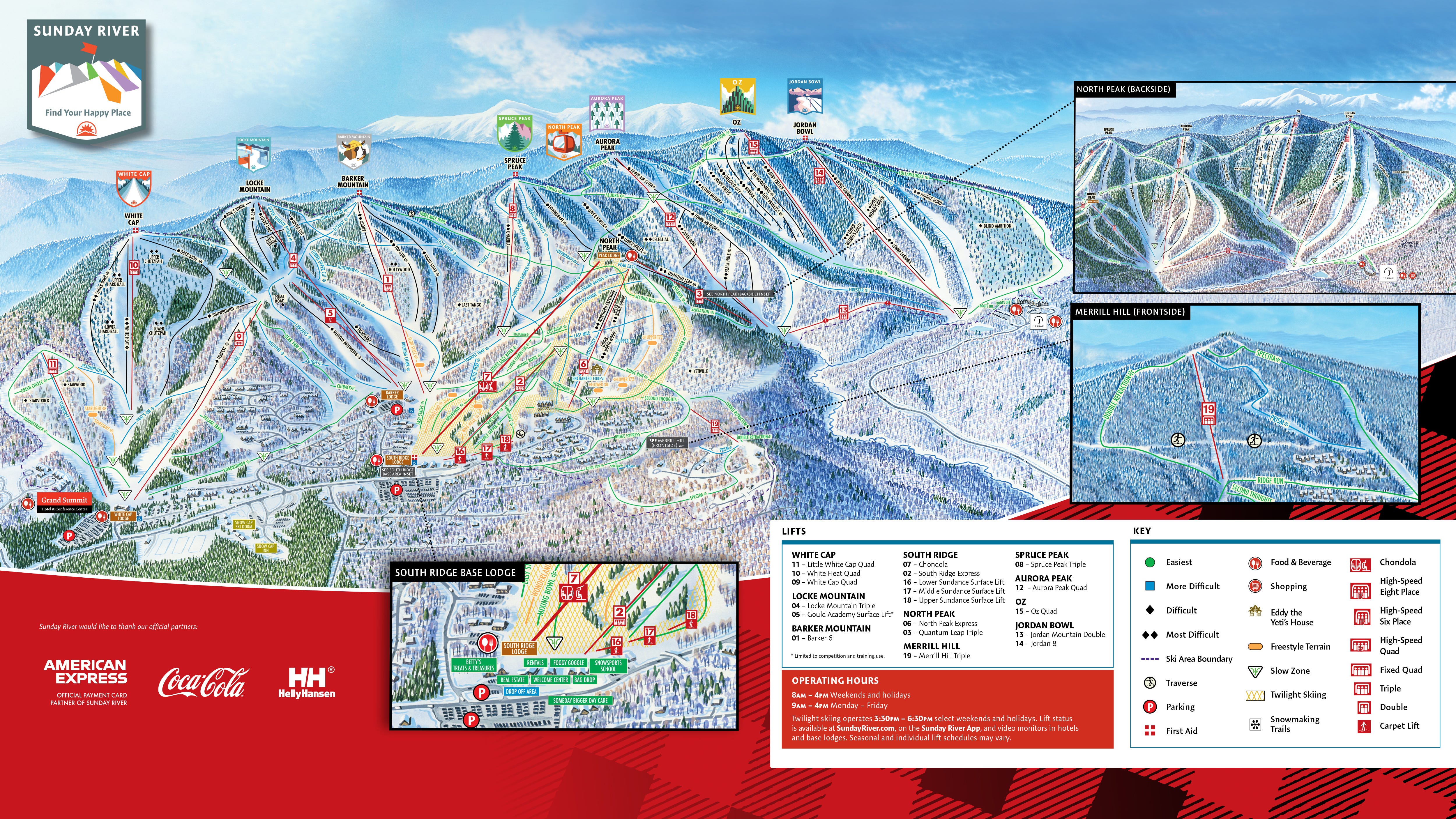
Mar 6, 2024
Podcast #163: Red Mountain CEO & Chairman Howard Katkov
This podcast hit paid subscribers’ inboxes on Feb. 28. It dropped for free subscribers on March 6. To receive future pods as soon as they’re live, and to support independent ski journalism, please consider an upgrade to a paid subscription (on sale at 15% off through March 12, 2024). You can also subscribe to the free tier below: Who Howard Katkov, Chairman and CEO of Red Mountain Resort , British Columbia Recorded on Feb. 8, 2024 About Red Mountain Click here for a mountain stats overview Owned by: Red Mountain Ventures Located in: Rossland, British Columbia, Canada Year founded: 1947 (beginning of chairlift service) Pass affiliations: * Ikon Pass: 7 days, no blackouts * Ikon Base Pass and Ikon Base Pass Plus: 5 days, holiday blackouts * Lake Louise Pass (described below) Closest neighboring ski areas: Salmo (:58), Whitewater (1:22), Phoenix Mountain (1:33), 49 Degrees North (1:53) Base elevation: 3,887 feet/1,185 meters Summit elevation: 6,807 feet/2,075 meters Vertical drop: 2,919 feet/890 meters Skiable Acres: 3,850 Average annual snowfall: 300 inches/760 cm Trail count: 119 (17% beginner, 34% intermediate, 23% advanced, 26% expert) Lift count: 8 (2 fixed-grip quads, 3 triples, 1 double, 1 T-bar, 1 carpet) View historic Red Mountain trailmaps on skimap.org . Here are some cool video overviews: Granite Mountain: Red Mountain: Grey Mountain: Rossland: Why I interviewed him It’s never made sense to me, this psychological dividing line between Canada and America. I grew up in central Michigan, in a small town closer to Canada (the bridge between Sarnia and Port Huron stood 142 miles away), than the closest neighboring state (Toledo, Ohio, sat 175 miles south). Yet, I never crossed into Canada until I was 19, by which time I had visited roughly 40 U.S. states. Even then, the place felt more foreign than it should, with its aggressive border guards, pizza at McDonald’s, and colored currency. Canada on a map looks easy, but Canada in reality is a bit harder, eh? Red sits just five miles, as the crow flies, north of the U.S. border. If by some fluke of history the mountain were part of Washington, it would be the state’s greatest ski area, larger than Crystal and Stevens Pass combined. In fact, it would be the seventh-largest ski area in the country, larger than Mammoth or Snowmass, smaller only than Park City, Palisades, Big Sky, Vail, Heavenly, and Bachelor. But, somehow, the international border acts as a sort of invisibility shield, and skiing Red is a much different experience than visiting any of those giants, with their dense networks of high-speed lifts and destination crowds (well, less so at Bachelor). Sure, Red is an Ikon Pass mountain, and has been for years , but it is not synonymous with the pass, like Jackson or Aspen or Alta-Snowbird. But U.S. skiers – at least those outside of the Pacific Northwest – see Red listed on the Ikon menu and glaze past it like the soda machine at an open bar. It just doesn’t seem relevant. Which is weird and probably won’t last. And right now Shoosh Emoji Bro is losing his goddamn mind and cursing me for using my platform focused on lift-served snowskiing to hype one of the best and most interesting and most underrated lift-served snowskiing operations in North America. But that’s why this whole deal exists, Brah. Because most people ski at the same 20 places and I really think skiing as an idea and as an experience and as a sustainable enterprise will be much better off if we start spreading people out a bit more. What we talked about Red pow days; why Red amped up shuttle service between the ski area and Rossland and made it free; old-school Tahoe; “it is the most interesting mountain I’ve ever skied”; buying a ski area when you’ve never worked at a ski area; why the real-estate crash didn’t bury Red like some other ski areas; why Katkov backed away from a golf course that he spent a year and a half planning at Red; why the 900 lockers at the dead center of the base area aren’t going anywhere; housing and cost of living in Rossland; “we look at our neighborhood as an extension of our community of Rossland”; base area development plans; balancing parking with people; why and how Red Mountain still sells affordable ski-in, ski-out real estate; “our ethos is to be accessible for everybody”; whether we could ever see a lift from Rossland to Red; why Red conducted a crowd-funding ownership campaign and what they did with the money; Red’s newest ownership partners; the importance of independence; “the reality is that the pass, whether it’s the Epic or the Ikon Pass, has radically changed the way that consumers experience skiing”; why Red joined the Ikon Pass and why it’s been good for the mountain; the Mountain Collective; why Red has no high-speed lifts and whether we could ever see one; no stress on a powder day; Red’s next logical lift upgrades; potential lift-served expansions onto Kirkup, White Wolf, and Mt. Roberts; and the Powder Highway. Why I thought that now was a good time for this interview My full-scale assault of Canada, planned for 2023, has turned into more of an old-person’s bus tour. I’m stopping at all the big sites, but I sure am taking my time, and I’m not certain that I’m really getting the full experience. Part of this echoes the realization centuries’ of armies have had when invading Russia: damn this place is big. I’d hoped to quickly fold the whole country into the newsletter, as I’d been able to do with the Midwest and West when I expanded The Storm’s coverage out of the Northeast in 2021. But I’d grown up in the Midwest and been skiing the West annually for decades. I’d underestimated how much that had mattered. I’d skied a bit in Canada, but not consistently enough to kick the door down in the manner I’d hoped. I started counting ski areas in Quebec and stopped when I got to 4,000*, 95 percent of which were named “Mont [some French word with numerous squiggly marks above the letters].” The measurements are different. The money is different. The language, in Quebec, is different. I needed to slow down. So I’m starting with western Canada. Well, I started there last year, when I hosted the leaders of SkiBig3 and Sun Peaks on the podcast. This is the easiest Canadian region for a U.S. American to grasp: Epic, Ikon, Mountain Collective, and Indy Pass penetration is deep, especially in British Columbia. Powdr, Boyne, Vail, and Pacific Group Resorts all own ski areas in the province. There is no language barrier. So, Red today, Panorama next month, Whistler in June. That’s the way the podcast calendar sets up now, anyway. I’ll move east as I’m able. But Red, in particular, has always fascinated me. If you’re wondering what the largest ski area in North America is that has yet to install a high-speed lift, this is your answer. For many of you, that may be a deal-breaker. But I see a time-machine, an opportunity to experience a different sort of skiing, but with modern gear. Like if aliens were to land on today’s Earth with their teleportation devices and language-translation brain chips and standard-issue post-industro-materialist silver onesies. Like wow look how much easier the past is when you bring the future with you. Someday, Red will probably build a high-speed lift or two or four, and enough skiers who are burned out on I-70 and LCC but refuse to give up their Ikon Passes will look north and say, “oh my, what’s this all about?” And Red will become some version of Jackson Hole or Big Sky or Whistler, beefy but also busy, remote but also accessible. But I wanted to capture Red, as it is today, before it goes away. *Just kidding, there are actually 12,000.^ ^OK, OK, there are like 90. Or 90,000. Why you should ski Red Mountain Let’s say you’ve had an Ikon Pass for the past five or six ski seasons. You’ve run through the Colorado circuit, navigated the Utah canyons, circled Lake Tahoe. The mountains are big, but so are the crowds. The Ikon Pass, for a moment, was a cool little hack, like having an iPhone in 2008. But then everyone got them, and now the world seems terrible because of it. But let’s examine ye ‘ole Ikon partner chart more closely, to see what else may be on offer: What’s this whole “Canada” section about? Perhaps, during the pandemic, you resigned yourself to U.S. American travel. Perhaps you don’t have a passport. Perhaps converting centimeters to inches ignites a cocktail of panic and confusion in your brain. But all of these are solvable dilemmas. Take a deeper look at Canada. In particular, take a deeper look at Red. Those stats are in American. Meaning this is a ski area bigger than Mammoth, taller than Palisades, snowy as Aspen. And it’s just one stop on a stacked Ikon BC roster that also includes Sun Peaks (Canada’s second-largest ski area), Revelstoke (the nation’s tallest by vertical drop), and Panorama. We are not so many years removed from the age of slow-lift, empty American icons. Alta’s first high-speed lift didn’t arrive until 1999 (they now have four). Big Sky’s tin-can tram showed up in 1995. A 1994 Skiing magazine article described the then-Squaw Valley side of what is now Palisades Tahoe as a pokey and remote fantasyland: …bottomless steeps, vast acreage, 33 lifts and no waiting. America’s answer to the wide-open ski circuses of Europe. After all these years the mountain is still uncrowded, except on weekends when people pile in from the San Francisco Bay area in droves. Squaw is unflashy, underbuilt, and seems entirely indifferent to success. The opposite of what you would expect one of America’s premier resorts to be. Well that’s cute. And it’s all gone now. America still holds its secrets, vast, affordable fixed-grip ski areas such as Lost Trail and Discovery and Silver Mountain. But none of them have joined the Ikon Pass, and none gives you the scale of Red, this glorious backwater with fixed-grip lifts that rise 2,400 vertical feet to untracked terrain. Maybe it will stay like this forever, but it probably won’t. So go there now. Podcast Notes On Red’s masterplan Red’s masterplan outlines potential lift-served expansions onto Kirkup, White Wolf, and Mount Roberts. We discuss the feasibility of each. Here’s what the mountain could look like at full build-out: On Jane Cosmetics An important part of Katkov’s backstory is his role as founder of Jane cosmetics, a ‘90s bargain brand popular with teenagers. He built the company into a smash success and sold it to Estée Lauder, who promptly tanked it. Per Can’t Hardly Dress : Lauder purchased the company in 1997. Jane was a big deal for Lauder because it was the company’s first mass market drugstore brand. Up until that point, Lauder only owned prestige brands like MAC, Clinique, Jo Malone and more . Jane was a revolutionary move for the company and a quick way to enter the drugstore mass market. Lauder had no clue what do with Jane and sales plummeted from $50 million to $25 million by 2004. Several successive sales and relaunches also failed, and, according to the article above, “As it stands today, the brand is dunzo. Leaving behind a default Shopify site, an Instagram unupdated for 213 weeks and a Facebook last touched three years ago.” On Win Smith and Sugarbush Katkov’s story shares parallels with that of Win Smith, the Wall-Streeter-turned-resort-operator who nurtured Sugarbush between its days as part of the American Skiing Company shipwreck and its 2019 purchase by Alterra . Smith joined me on the podcast four years ago, post-Alterra sale, to share the whole story. On housing in Banff and Sun Peaks Canadian mountain towns are not, in general, backed up against the same cliff as their American counterparts. This is mostly the result of more deliberate regional planning policies that either regulate who’s allowed to live where, or allow for smart growth over time (meaning they can build things without 500 lawsuits). I discussed the former model with SkiBig3 (Banff) President Pete Woods here , and the latter with Sun Peaks GM Darcy Alexander here . U.S. Americans could learn a lot from looking north. On not being able to buy slopeside real estate in Oregon, Washington, or California The Pacific Northwest is an extremely weird ski region. The resorts are big and snowy, but unless you live there, you’ve probably never visited any of them. As I wrote a few weeks back : Last week, Peak Rankings analyzed the matrix of factors that prevent Oregon and Washington ski areas, despite their impressive acreage and snowfall stats, from becoming destination resorts. While the article suggests the mountains’ proximity to cities, lousy weather, and difficult access roads as blockers, just about every prominent ski area in America fights some combination of these circumstances. The article’s most compelling argument is that, with few exceptions, there’s really nowhere to stay on most of the mountains. I’ve written about this a number of times myself, with this important addendum: There’s nowhere to stay on most of the mountains, and no possibility of building anything anytime soon . The reasons for this are many and varied, but can be summarized in this way: U.S. Americans, in thrall to an environmental vision that prizes pure wilderness over development of any kind, have rejected the notion that building dense, human-scaled, walkable mountainside communities would benefit the environment far more than making everyone drive to skiing every single day. Nowhere has this posture taken hold more thoroughly than in the Pacific Northwest. Snowy and expansive British Columbia, perhaps sensing a business opportunity, has done the opposite, streamlining ski resort development through a set of policies known as the B.C. Commercial Alpine Ski Policy. As a result, ski areas in the province have rapidly expanded over the past 30 years… California is a very different market, with plenty of legacy slopeside development. It tends to be expensive, however, as building anything new requires a United Nations treaty, an act of Jesus, and a total eclipse of the sun in late summer of a Leap Year. Perhaps 2024 will be it. On “Fight The Man, Own the Mountain” Red ran a crowd-funding campaign a few years back called “Fight the Man, Own the Mountain.” We discuss this on the pod, but here is a bit more context from a letter Katkov wrote on the subject: Investing in RED means investing in history, independence, and in this growing family that shares the same importance on lifestyle and culture. RED is the oldest ski resort in Western Canada and it has always been fiercely independent. There are not many, if any ski resorts left in North America like Red and the success of our campaign demonstrates a desire by so many of you to, help, in a small way, to protect the lifestyle, soul and ski culture that emanates from Red. RED is a place I’ve been beyond proud to co-own and captain since 2004 and the door is still open to share that feeling and be a part of our family. But please note that despite the friendly atmosphere, this is one of the Top 20 resorts in North America in terms of terrain. The snow’s unreal and the people around here are some of the coolest, most down-to-earth folks you’re ever likely to meet. (Trying to keep up with them on the hill is another thing entirely…) With $2 million so far already committed and invested, we wasted no time acting on promised improvements. These upgrades included a full remodel of fan favorite Paradise Lodge (incl. flush toilets!) as well as the expansion of RED’s retail and High Performance centres. This summer we’ll see the construction of overnight on-mountain cabins and the investor clubhouse (friends welcome!) as well as continued parking expansion. We’ve heard from a number of early investors that they were beyond stoked to enjoy the new Paradise Lodge so soon after clicking the BUY button. Hey, ownership has its privileges… On the Lake Louise Pass Katkov mentions the “Lake Louise Pass,” which Red participates in, along with Castle Mountain and Panorama. He’s referring to the Lake Louise Plus Card , which costs $134 Canadian up front. Skiers then get their first, fourth, and seventh days free, and 20 percent off lift tickets for each additional visit. While these sorts of discount cards have been diminished by Epkon domination, versions of them still provide good value across the continent. The Colorado Gems Card , Smugglers’ Notch’s Bash Badge , and ORDA’s frequent skier cards are all solid options for skiers looking to dodge the megapass circus. On the Powder Highway Red is the closest stop on the Powder Highway to U.S. America. This is what the Powder Highway is: And here’s the circuit: Fairmont is just a little guy, but Kicking Horse, Kimberley, and Fernie are Epic Pass partners owned by Resorts of the Canadian Rockies, and Revy, Red, and Panorama are all on Ikon. Whitewater used to be on M.A.X. Pass, but is now pass-less. Just to the west of this resort cluster sits Big White (Indy), Silver Star (Ikon), and Sun Peaks (Ikon). To their east is Sunshine, Lake Louise, Norquay (all Ikon), and Castle (Indy). There are also Cat and heli-ski operations all over the place. You could lose a winter here pretty easily. On Katkov’s business background In this episode of the Fident Capital Podcast, Katkov goes in-depth on his business philosophy and management style. Here’s another: On bringing the city to the mountains While this notion, rashly interpreted, could summon ghastly visions of Aspen-esque infestations of Fendi stores in downtown Rossland, it really just means building things other than slopeside mansions with 19 kitchens and a butler’s wing. From a 2023 resort press release : Red Development Company, the real estate division of RED Mountain Resort (RED), in conjunction with ACE Project Marketing Group (ACE), recently reported the sell-out of the resort's latest real estate offering during the season opening of the slopes. On offer was The Crescent at RED, a collection of 102 homes, ranging from studio to one bedrooms and lofts featuring a prime ski in – ski out location. Howard Katkov, CEO of RED, and Don Thompson, RED President, first conceived of bringing the smaller urban living model to the alpine slopes in January 2021. ACE coined the concept as "everything you need and nothing you don't" … An important component was ensuring that the price point for The Crescent was accessible to locals and those who know and love the destination. With prices starting mid $300s – an excellent price when converted to USD – and with an achievable 5% deposit down, The Crescent at RED was easily one of the best value propositions in real estate for one of the best ranked ski resorts in North America. Not surprisingly, over 50% of the Crescent buyers were from the United States, spurred on by the extraordinary lifestyle and value offered by The Crescent, but also the new sparsity of Canadian property available to foreign buyers. As a good U.S. American, I ask Katkov why he didn’t simply price these units for the one-percenters, and how he managed the House-Flipping Henries who would surely interpret these prices as opportunity. His answers might surprise you, and may give you hope that a different sort of ski town is possible. The Storm publishes year-round, and guarantees 100 articles per year. This is article 15/100 in 2024, and number 515 since launching on Oct. 13, 2019. Get full access to The Storm Skiing Journal and Podcast at www.stormskiing.com/subscribe
Feb 19, 2024
Podcast #162: Camelback Managing Director David Makarsky
This podcast hit paid subscribers’ inboxes on Feb. 12. It dropped for free subscribers on Feb. 19. To receive future pods as soon as they’re live, and to support independent ski journalism, please consider an upgrade to a paid subscription. You can also subscribe to the free tier below: Who David Makarsky, General Manager of Camelback Resort , Pennsylvania Recorded on February 8, 2024 About Camelback Click here for a mountain stats overview Owned by: KSL Capital, managed by KSL Resorts Located in: Tannersville, Pennsylvania Year founded: 1963 Pass affiliations: * Ikon Pass: 7 days, no blackouts * Ikon Base Pass: 5 days, holiday blackouts Reciprocal partners: None Closest neighboring ski areas: Shawnee Mountain (:24), Jack Frost (:26), Big Boulder (:27), Skytop Lodge (:29), Saw Creek (:37), Blue Mountain (:41), Pocono Ranchlands (:43), Montage (:44), Hideout (:51), Elk Mountain (1:05), Bear Creek (1:09), Ski Big Bear (1:16) Base elevation: 1,252 feet Summit elevation: 2,079 feet Vertical drop: 827 feet Skiable Acres: 166 Average annual snowfall: 50 inches Trail count: 38 (3 Expert Only, 6 Most Difficult, 13 More Difficult, 16 Easiest) + 1 terrain park Lift count: 13 (1 high-speed six-pack, 1 high-speed quad, 1 fixed-grip quad, 3 triples, 3 doubles, 4 carpets – view Lift Blog’s inventory of Camelback’s lift fleet) View historic Camelback trailmaps on skimap.org . Why I interviewed him At night it heaves from the frozen darkness in funhouse fashion, 800 feet high and a mile wide, a billboard for human life and activity that is not a gas station or a Perkins or a Joe’s Vape N’ Puff. The Poconos are a peculiar and complicated place, a strange borderland between the Midwest, the Mid-Atlantic, and the Northeast. Equidistant from New York City and Philadelphia, approaching the northern tip of Appalachia, framed by the Delaware Water Gap to the east and hundreds of miles of rolling empty wilderness to the west, the Poconos are gorgeous and decadent, busyness amid abandonment, cigarette-smoking cement truck drivers and New Jersey-plated Mercedes riding 85 along the pinched lanes of Interstate 80 through Stroudsburg. “Safety Corridor, Speed Limit 50,” read the signs that everyone ignores. But no one can ignore Camelback, at least not at night, at least not in winter, as the mountain asserts itself over I-80. Though they’re easy to access, the Poconos keeps most of its many ski areas tucked away. Shawnee hides down a medieval access road, so narrow and tree-cloaked that you expect to be ambushed by poetry-spewing bandits. Jack Frost sits at the end of a long access road, invisible even upon arrival, the parking lot seated, as it is, at the top of the lifts. Blue Mountain boasts prominence, rising, as it does, to the Appalachian Trail, but it sits down a matrix of twisting farm roads, off the major highway grid. Camelback, then, is one of those ski areas that acts not just as a billboard for itself, but for all of skiing. This, combined with its impossibly fortuitous location along one of the principal approach roads to New York City, makes it one of the most important ski areas in America. A place that everyone can see, in the midst of drizzling 50-degree brown-hilled Poconos February, is filled with snow and life and fun. “Oh look, an organized sporting complex that grants me an alternative to hating winter. Let’s go try that.” The Poconos are my best argument that skiing not only will survive climate change, but has already perfected the toolkit to do so. Skiing should not exist as a sustained enterprise in these wild, wet hills. It doesn’t snow enough and it rains all the time. But Poconos ski area operators invested tens of millions of dollars to install seven brand-new chairlifts in 2022. They didn’t do this in desperate attempts to salvage dying businesses, but as modernization efforts for businesses that are kicking off cash. In six of the past eight seasons, (excluding 2020), Camelback spun lifts into April. That’s with season snowfall totals of (counting backwards from the 2022-23 season), 23 inches, 58 inches, 47 inches, 29 inches, 35 inches, 104 inches (in the outlier 2017-18 season), 94 inches, 24 inches, and 28 inches. Mammoth gets more than that from one atmospheric river. But Camelback and its Poconos brothers have built snowmaking systems so big and effective, even in marginal temperatures, that skiing is a fixture in a place where nature would have it be a curiosity. What we talked about Camelback turns 60; shooting to ski into April; hiding a waterpark beneath the snow; why Camelback finally joined the Ikon Pass; why Camelback decided not to implement Ikon reservations; whether Camelback season passholders will have access to a discounted Ikon Base Pass; potential for a Camelback-Blue Mountain season pass; fixing the $75 season pass reprint fee (they did); when your job is to make sure other people have fun; rethinking the ski school and season-long programs; yes I’m obsessed with figuring out why KSL Capital owns Camelback and Blue Mountain rather than Alterra (of which KSL Capital is part-owner); much more than just a ski area; rethinking the base lodge deck; the transformative impact of Black Bear 6; what it would take to upgrade Stevenson Express; why and how Camelback aims to improve sky-high historic turnover rates (and why that should matter to skiers); internal promotions within KSL Resorts; working with sister resort Blue Mountain; rethinking Camelback’s antique lift fleet; why terrain expansion is unlikely; Camelback’s baller snowmaking system; everybody hates the paid parking; and long-term plans for the Summit House. Why I thought that now was a good time for this interview A survey of abandoned ski areas across the Poconos underscores Camelback’s resilience and adaptation. Like sharks or alligators, hanging on through mass extinctions over hundreds of millions of years, Camelback has found a way to thrive even as lesser ski centers have surrendered to the elements. The 1980 edition of The White Book of Ski Areas names at least 11 mountains – Mt. Tone, Hickory Ridge, Tanglwood, Pocono Manor, Buck Hill, Timber Hill (later Alpine Mountain), Tamiment Resort Hotel, Mt. Airy, Split Rock, Mt. Heidelberg, and Hahn Mountain – within an hour of Camelback that no longer exist as organized ski areas. Camelback was larger than all of those, but it was also smarter, aggressively expanding and modernizing snowmaking, and installing a pair of detachable chairlifts in the 1990s. It offered the first window into skiing modernity in a region where the standard chairlift configuration was the slightly ridiculous double-double. Still, as recently as 10 years ago, Camelback needed a refresh. It was crowded and chaotic, sure, but it also felt dumpy and drab, with aged buildings, overtaxed parking lots, wonky access roads, long lines, and bad food. The vibe was very second-rate oceanfront boardwalk, very take-it-or-leave-it, a dour self-aware insouciance that seemed to murmur, “hey, we know this ain’t the Catskills, but if they’re so great why don’chya go there?” Then, in 2015, a spaceship landed. A 453-room hotel with a water park the size of Lake George, it is a ridiculous building, a monstrosity on a hill, completely out of proportion with its surroundings. It looks like something that fell off the truck on its way to Atlantic City. And yet, that hotel ignited Camelback’s renaissance. In a region littered with the wrecks of 1960s heart-shaped-hottub resorts, here was something vital and modern and clean. In a redoubt of day-ski facilities, here was a ski-in-ski-out option with decent restaurants and off-the-hill entertainment for the kids. In a drive-through region that felt forgotten and tired, here was something new that people would stop for. The owners who built that monstrosity/business turbo-booster sold Camelback to KSL Capital in 2019. KSL Capital also happens to be, along with Aspen owner Henry Crown, part owner of Alterra Mountain Company. I’ve never really understood why KSL outsourced the operation of Camelback and, subsequently, nearby Blue Mountain, to its hotel-management outfit KSL Resorts, rather than just bungee-cording both to Alterra’s attack squadron of ski resorts, which includes Palisades Tahoe, Winter Park, Mammoth, Steamboat, Sugarbush, and 14 others, including, most recently, Arapahoe Basin and Schweitzer . It was as if the Ilitch family, which owns both the Detroit Tigers and Red Wings, had drafted hockey legend Steve Yzerman and then asked him to bat clean-up at Comerica Park. While I’m still waiting on a good answer to this question even as I annoy long lines of Alterra executives and PR folks by persisting with it, KSL Resorts has started to resemble a capable ski area operator. The company dropped new six-packs onto both Camelback and nearby Blue Mountain (which it also owns), for last ski season. RFID finally arrived and it works seamlessly, and mostly eliminates the soul-crushing ticket lines by installing QR-driven kiosks. Both ski areas are now on the Ikon Pass. But there is work to do. Liftlines – particularly at Stevenson and Sunbowl, where skiers load from two sides and no one seems interested in refereeing the chaos – are borderline anarchic; carriers loaded with one, two, three guests cycle up quad chairs all day long while liftlines stretch for 20 minutes. A sense of nickeling-and-diming follows you around the resort: a seven-dollar mandatory ski check for hotel guests; bags checked for outside snacks before entering the waterpark, where food lines on a busy day stretch dozens deep; and, of course, the mandatory paid parking. Camelback’s paid-parking policy is, as far as I can tell, the biggest PR miscalculation in Northeast skiing. Everyone hates it. Everyone. As you can imagine, locals write to me all the time to express their frustrations with ski areas around the country. By far the complaint I see the most is about Camelback parking (the second-most-complained about resort, in case you’re wondering, is Stratton, but for reasons other than parking). It’s $12 minimum to park, every day, in every lot, for everyone except season passholders, with no discount for car-pooling. There is no other ski area east of the Mississippi (that I am aware of), that does this. Very few have paid parking at all, and even the ones that do (Stowe, Mount Snow), restrict it to certain lots on certain days, include free carpooling incentives, and offer large (albeit sometimes far), free parking lot options. I am not necessarily opposed to paid parking as a concept. It has its place, particularly as a crowd-control tool on very busy days. But imagine being the only bar on a street with six bars that requires a cover charge. It’s off-putting when you encounter that outlier. I imagine Camelback makes a bunch of money on parking. But I wonder how many people roll up to redeem their Ikon Pass, pay for parking that one time, and decide to never return. Based on the number of complaints I get, it’s not immaterial. There will always be an element of chaos to Pennsylvania skiing. It is like the Midwest in this way, with an outsized proportion of first-timers and overly confident Kamikaze Bros and busloads of kids from all over. But a very well-managed ski area, like, for instance, Elk Mountain, an hour north of Camelback, can at least somewhat tame these herds. I sense that Camelback can do this, even if it’s not necessarily consistently doing it now. It has, in KSL Resorts, a monied owner, and it has, in the Ikon Pass, a sort of gold-stamp seal-of-approval. But that membership also gives it a standard to live up to. They know that. How close are they to doing it? That was the purpose of this conversation. What I got wrong I noted that the Black Bear 6 lift had a “750/800-foot” vertical drop. The lift actually rises 667 vertical feet. I accidentally said “setting Sullivan aside,” when asking Makarsky about upgrade plans for the rest of the lift fleet. I’d meant to say, “Stevenson.” Sullivan was the name of the old high-speed quad that Black Bear 6 replaced. Why you should ski Camelback Let’s start by acknowledging that Camelback is ridiculous. This is not because it is not a good ski area, because it is a very good ski area. The pitch is excellent, the fall lines sustained, the variety appealing, the vertical drop acceptable, the lift system (disorganized riders aside), quite good. But Camelback is ridiculous because of the comically terrible skill level of 90 percent of the people who ski there, and their bunchball concentrations on a handful of narrow green runs that cut across the fall line and intersect with cross-trails in alarmingly hazardous ways. Here is a pretty typical scene: I am, in general, more interested in making fun of very good skiers than very bad ones, as the former often possess an ego and a lack of self-awareness that transforms them into caricatures of themselves. I only point out the ineptitude of the average Camelback skier because navigating them is an inescapable fact of skiing there. They yardsale. They squat mid-trail. They take off their skis and walk down the hill. I observe these things like I observe deer poop lying in the woods – without judgement or reaction. It just exists and it’s there and no one can say that it isn’t (yes, there are plenty of fantastic skiers in the Poconos as well, but they are vastly outnumbered and you know it). So it’s not Jackson Hole. Hell, it’s not even Hunter Mountain. But Camelback is one of the few ski-in, ski-out options within two hours of New York City. It is impossibly easy to get to. The Cliffhanger trail, when it’s bumped up, is one of the best top-to-bottom runs in Pennsylvania. Like all these ridge ski areas, Camelback skis a lot bigger than its 166 acres. And, because it exists in a place that it shouldn’t – where natural snow would rarely permit a season exceeding 10 or 15 days – Camelback is often one of the first ski areas in the Northeast to approach 100 percent open. The snowmaking is unbelievably good, the teams ungodly capable. Go on a weekday if you can. Go early if you can. Prepare to be a little frustrated with the paid parking and the lift queues. But if you let Camelback be what it is – a good mid-sized ski area in a region where no such thing should exist – rather than try to make it into something it isn’t, you’ll have a good day. Podcast Notes On Blue Mountain, Pennsylvania Since we mention Camelback’s sister resort, Blue Mountain, Pennsylvania, quite a bit, here’s a little overview of that hill: Owned by: KSL Capital, managed by KSL Resorts Located in: Palmerton, Pennsylvania Year founded: 1977 Pass access: * Ikon Pass: 7 days, no blackouts * Ikon Base Plus and Ikon Base Pass: 5 days, holiday blackouts Base elevation: 460 feet Summit elevation: 1,600 feet Vertical drop: 1,140 feet Skiable Acres: 164 acres Average annual snowfall: 33 inches Trail count: 40 (10% expert, 35% most difficult, 15% more difficult, 40% easiest) Lift count: 12 (2 high-speed six-packs, 1 high-speed quad, 1 triple, 1 double, 7 carpets – view Lift Blog’s inventory of Blue Mountain’s lift fleet) On bugging Rusty about Ikon Pass It’s actually kind of hilarious how frequently I used to articulate my wishes that Camelback and Blue would join Alterra and the Ikon Pass. It must have seemed ridiculous to anyone peering east over the mountains. But I carried enough conviction about this that I brought it up to former Alterra CEO Rusty Gregory in back -to- back years. I wrote a whole bunch of articles about it too. But hey, some of us fight for rainforests and human rights and cancer vaccines, and some of us stand on the plains, wrapped in wolf furs and banging our shields until The System bows to our demands of five or seven days on the Ikon Pass at Camelback and Blue Mountain, depending upon your price point. On Ikon Pass reservations Ikon Pass reservations are poorly communicated, hard to find and execute, and not actually real. But the ski areas that “require” them for the 2023-24 ski season are Aspen Snowmass (all four mountains), Jackson Hole, Deer Valley, Big Sky, The Summit at Snoqualmie, Loon, and Windham. If you’re not aware of this requirement or they’re “sold out,” you’ll be able to skate right through the RFID gates without issue. You may receive a tisk-tisk email afterward. You may even lose your pass (I’m told). Either way, it’s a broken system in need of a technology solution both for the consumer (easy reservations directly on an Ikon app, rather than through the partner resort’s website), and the resort (RFID technology that recognizes the lack of a reservation and prevents the skier from accessing the lift). On Ikon Pass Base season pass add-ons We discuss the potential for Camelback 2024-25 season passholders to be able to add a discounted Ikon Base Pass onto their purchase. Most, but not all, non-Alterra-owned Ikon Pass partner mountains offered this option for the 2023-24 ski season. A non-exhaustive inventory that I conducted in September found the discount offered for season passes at Sugarloaf, Sunday River, Loon , Killington , Windham , Aspen , Big Sky , Taos , Alta , Snowbasin , Snowbird , Brighton , Jackson Hole , Sun Valley , Mt. Bachelor , and Boyne Mountain . Early-bird prices for those passes ranged from as low as $895 at Boyne Mountain to $2,890 for Deer Valley. Camelback’s 2023-24 season pass debuted at just $649. Alterra requires partner passes to meet certain parameters, including a minimum price, in order to qualify passholders for the discounted Base pass. A simple fix here would be to offer a premium “Pennsylvania Pass” that’s good for unlimited access at both Camelback and Blue, and that’s priced at the current add-on rate ($849), to open access to the discounted Ikon Base for passholders. On conglomerates doing shared passes In November, I published an analysis of every U.S.-based entity that owns or operates two or more ski areas. I’ve continued to revise my list, and I currently count 26 such operators. All but eight of them – Powdr, Fairbank Group, the Schoonover Family, the Murdock Family, Snow Partners, Omni Hotels, the Drake Family, and KSL Capital either offer a season pass that accesses all of their properties, or builds limited amounts of cross-mountain reciprocity into top-tier season passes. The robots aren’t cooperating with me right now, but you can view the most current list here . On KSL Resorts KSL Resorts’ property list looks more like a destination menu for deciding honeymooners than a company that happens to run two ski areas in the Pennsylvania Poconos. Mauritius, Fiji, The Maldives, Maui, Thailand… Tannersville, PA. It feels like a trap for the robots, who in their combing of our digital existence to piece together the workings of the human psyche, will simply short out when attempting to identify the parallels between the Outrigger Reef Waikiki Beach Resort and Camelback. On ski investment in the Poconos Poconos ski areas, once backwaters, have rapidly modernized over the past decade. As I wrote in 2022 : Montage, Camelback, and Elk all made the expensive investment in RFID ticketing last offseason. Camelback and Blue are each getting brand-new six-packs this summer. Vail is clear-cutting its Poconos lift museum and dropping a total of five new fixed-grip quads across Jack Frost and Big Boulder (replacing a total of nine existing lifts). All of them are constantly upgrading their snowmaking plants. On Camelback’s ownership history For the past 20 years, Camelback has mostly been owned by a series of uninteresting Investcos and property-management firms. But the ski area’s founder, Jim Moore, was an interesting fellow. From his July 22, 2006 Pocono Record obituary : James "Jim" Moore, co-founder of Camelback Ski Area, died Thursday at age 90 at his home — at Camelback. Moore, a Kentucky-born, Harvard-trained tax attorney who began a lifelong love of skiing when he went to boarding school in Switzerland as a teenager, served as Camelback's president and CEO from 1963, when it was founded, to 1986. "Jim Moore was a great man and an important part of the history of the Poconos," said Sam Newman, who succeeded Moore as Camelback's president. "He was a guiding force behind the building of Camelback." In 1958, Moore was a partner in the prominent Philadelphia law firm Pepper, Hamilton and Scheetz. He joined a small group of investors who partnered with East Stroudsburg brothers Alex and Charles Bensinger and others to turn the quaint Big Pocono Ski Area — open on weekends when there was enough natural snow — into Camelback Ski Area. Camelback developed one of the most advanced snowmaking systems in the country and diversified into a year-round destination for family recreation. "He was one of the first people to use snowmaking," said Kathleen Marozzi, Moore's daughter. "It had never been done in the Poconos before. ... I remember the first year we opened we had no snow on the mountain." Marozzi said her father wanted to develop Camelback as a New England-type ski resort, with winding, scenic trails. "He wanted a very pretty ski area," she said. "I remember when the mountain had nothing but trees on it; it had no trails. I also managed to find a circa 1951 trailmap of Big Pocono ski area on skimap.org : On Rival Racer at Camelbeach Here’s a good overview of the “Rival Racer” waterslide that Makarsky mentions in our conversation: On the Stevenson Express Hopefully KSL Resorts replaces Stevenson with another six-pack, like they did with Sullivan, and hopefully they can reconfigure it to load from one side (like Doppelmayr just did with Barker at Sunday River). Multi-directional loading is just the worst – the skiers don’t know what to do with it, and you end up with a lot of half-empty chairs when no one is managing the line, which seems to be the case more often than not at Camelback. The Storm explores the world of lift-served skiing year-round. Join us. The Storm publishes year-round, and guarantees 100 articles per year. This is article 11/100 in 2024, and number 511 since launching on Oct. 13, 2019. Get full access to The Storm Skiing Journal and Podcast at www.stormskiing.com/subscribe
Feb 16, 2024
Podcast #161: Teton Pass, Montana Owner Charles Hlavac
This podcast hit paid subscribers’ inboxes on Feb. 9. It dropped for free subscribers on Feb. 16. To receive future pods as soon as they’re live, and to support independent ski journalism, please consider an upgrade to a paid subscription. You can also subscribe to the free tier below: Who Charles Hlavac, Owner of Teton Pass , Montana Recorded on January 29, 2024 About Teton Pass Click here for a mountain stats overview Owned by: Charles Hlavac Located in: Choteau, Montana Year founded: 1967 Pass affiliations: None Closest neighboring ski areas: Great Divide (2:44), Showdown (3:03) Base elevation: 6,200 feet Summit elevation: 7,200 feet (at the top of the double chair) Vertical drop: 1,000 feet Skiable Acres: 400 acres Average annual snowfall: 300 inches Lift count: 3 (1 double, 1 platter, 1 carpet – view Lift Blog’s inventory of Teton Pass’ lift fleet) View historic Teton Pass trailmaps on skimap.org . Why I interviewed him There was a time, before the Bubble-Wrap Era, when American bureaucracy believed that the nation’s most beautiful places ought to be made available to citizens. Not just to gawk at from a distance, but to interact with in a way that strikes awe in the soul and roots the place in their psyche. That’s why so many of our great western ski areas sit on public land. Taos and Heavenly and Mt. Baldy and Alta and Crystal Mountain and Lookout Pass. These places, many of them inaccessible before the advent of the modern highway system, were selected not only because they were snow magnets optimally pitched for skiing, but because they were beautiful. And that’s how we got Teton Pass, Montana, up a Forest Service road at the end of nowhere, hovering over the Rocky Mountain front. Because just look at the place: Who knew it was there then? Who knows it now? A bald peak screaming “ski me” to a howling wilderness for 50 million years until the Forest Service printed some words on a piece of paper that said someone was allowed to put a chairlift there. As bold and prescient as the Forest Service was in gifting us ski areas, they didn’t nail them all. Yes, Aspen and Vail and Snowbird and Palisades Tahoe and Stevens Pass, fortuitously positioned along modern highways or growing cities, evolved into icons. But some of these spectacular natural ski sites languished. Mt. Waterman has faltered without snowmaking or competent ownership. Antelope Butte and Sleeping Giant were built in the middle of nowhere and stayed there. Spout Springs is too small to draw skiers across the PNW vastness. Of the four, only Antelope Butte has spun lifts this winter. Remoteness has been the curse of Teton Pass, a fact compounded by a nasty 11-mile gravel access road. The closest town is Choteau, population 1,719, an hour down the mountain. Great Falls, population 60,000, is only around two hours away, but that city is closer to Showdown, a larger ski area with more vertical drop, three chairlifts, and a parking lot seated directly off a paved federal highway. Teton Pass, gorgeously positioned as a natural wonder, got a crummy draw as a sustainable business. Which doesn’t mean it can’t work. Unlike the Forest Service ski areas at Cedar Pass or Kratka Ridge in California, Teton Pass hasn’t gone fallow. The lifts still spin. Skiers still ski there. Not many – approximately 7,000 last season, which would be a light day for any Summit County ski facility. This year, it will surely be even fewer, as Hlavic announced 10 days after we recorded this podcast that a lack of snow, among other factors, would force him to call it a season after just four operating days. But Hlavic is young and optimistic and stubborn and aware that he is trying to walk straight up a wall. In our conversation, you can hear his belief in this wild and improbable place, his conviction that there is a business model for Teton Pass that can succeed in spite of the rough access road and the lack of an electrical grid connection and the small and scattered local population. The notion of intensive recreational land use is out of favor. When we lose a Teton Pass, the Forest Service doesn’t replace it with another ski area in a better location. We just get more wilderness. I am not against wild places and sanctuaries from human scything. But if Teton Pass were not a ski area, almost no one would ever see it, would ever experience this singular peak pasted against the sky. It’s a place worth preserving, and I’m glad there’s someone crazy enough to try. What we talked about When your ski area can’t open until Jan. 19; the tight-knit Montana Ski Areas Association; staffing up in the middle of nowhere; a brief history of a troubled remote ski area; the sneaky math of purchasing a ski area; the “incredibly painful” process of obtaining a new Forest Service operating permit after the ownership transfer; restarting the machine after several years idle; how Montana regulates chairlifts without a state tramway board; challenges of operating off the grid; getting by on 7,000 skier visits; potential for Teton Pass’ dramatic upper-mountain terrain; re-imagining the lift fleet; the beautiful logic of surface lifts; collecting lifts in the parking lot and dreaming about where they could go; why Teton Pass’ last expansion doesn’t quite work; where Teton Pass’ next chairlifts could sit; the trouble with mid-stations; the potential to install snowmaking; the most confusing ski area name in America, and why it’s unlikely to change anytime soon; a problematic monster access road; why Teton Pass hasn’t joined the Indy Pass; and mid-week mountain rentals. Why I thought that now was a good time for this interview This may have actually been the worst possible time in the past several years to conduct this interview, as the ski area is already closed for the winter, leaving inspired listeners with no realistic method of converting their interest into immediate support. And that’s too bad. Unfortunately, I tend to schedule these interviews months in advance (we locked this date in on July 24). Yes, I could’ve rescheduled, but I try to avoid doing that. So we went ahead. I’m still glad we did, though I wish I’d been able to turn this around faster (it wouldn’t have mattered, Teton Pass’ four operating days all occurred pre-recording). But there’s a gritty honesty to this conversation, taking place, as it does, in the embers of a dying season. Running a ski area is hard. People write to me all the time, fired up with dreams of running their own mountain, maybe even re-assembling one from the scrap heap. I would advise them to listen to this episode for a reality-check. I would also ask anyone convinced of the idea that Vail and Alterra are killing skiing to reconsider that narrative in the context of Teton Pass. Skiing needs massive, sustained investment to prepare for and to weather climate change. It also needs capable marketing entities to convince people living in Texas and Florida that, yes, skiing is still happening in spite of a non-ski media obsessed with twisting every rain shower into a winter-is-disappearing doomsday epic. That doesn’t mean that I think Vail should (or would), buy Teton Pass, or that there’s no room for independent ski area operators in our 505-resort ecosystem . What I am saying is that unless you bring a messianic sense of purpose, a handyman’s grab-bag of odd and eclectic skills, the patience of a rock, and, hopefully, one or more independent income streams, the notion of running an independent ski area is a lot more romantic than the reality. What I got wrong I said that “Teton Pass’ previous owner” had commissioned SE Group for a feasibility study. A local community volunteer group actually commissioned that project, as Hlavac clarifies. Also, in discussing Hlavic’s purchase of the ski area, I cited some sales figures that I’d sourced from contemporary news reports. From a Sept. 11, 2019 report in the Choteau Acantha : Wood listed the ski area for sale, originally asking $3 million for the resort, operated on a 402-acre forest special-use permit. The resort includes three lifts, a lodge with a restaurant and liquor license, a ski gear rental shop and several outbuildings. Wood later dropped his asking price to $375,000. Then, from SAM on Sept. 17, 2019: Former Teton Pass Ski Resort general manager Charles Hlavac has purchased the resort from Nick Wood for $375,000 after it had been on the market for two years. Wood, a New Zealand native, bought the ski area back in 2010. He and his partners invested in substantial upgrades, including three new lifts, a lodge renovation, and improvements to maintenance facilities. The resort’s electrical generator failed in 2016-17, though, and Wood closed the hill in December 2017, citing financial setbacks. While the original asking price for Teton Pass was $3 million, Wood dropped the price down to $375,000. Hlavac, who served as the GM for the resort under Wood’s ownership, confirmed on Sept. 6 that he had purchased the 402-acre ski area, located on Helena-Lewis and Clark National Forest land, through a contract-for-deed with Wood’s company. Hlavic disputes the accuracy of these figures in our conversation. Why you should ski Teton Pass There’s liberty in distance, freedom in imagining a different version of a thing. For so many of us, skiing is Saturdays, skiing is holidays, skiing is Breckenridge, skiing is a powder day in Little Cottonwood Canyon. Traffic is just part of it. Liftlines are just part of it. Eating on the cafeteria floor is just part of it. Groomers scraped off by 9:45 is just part of it. It’s all just part of it, but skiing is skiing because skiing is dynamic and fun and thrilling and there’s a cost to everything, Man, and the cost to skiing is dealing with all that other b******t. But none of this is true. Skiing does not have to include compromises of the soul. You can trade these for compromises of convenience. And by this I mean that you can find a way to ski and a place to ski when and where others can’t and won’t ski. If you drive to the ass-end of Montana to ski, you are going to find a singular ski experience, because most people are not willing to do this. Not to ski a thousand-footer served by a double chair that’s older than Crocodile Rock . Not to spend $55 rather than drive down the per-visit cost of their precious Ikon Pass by racking up that 16th day at Schweitzer. Among my best ski days in the past five winters have been a midweek powder day at 600-vertical-foot McCauley, New York; an empty bluebird weekday at Mt. Baldy, hanging out above Los Angeles; and a day spent ambling the unassumingly labyrinthian terrain of Whitecap Mountains, Wisconsin. Teton Pass is a place of this same roguish nature, out there past everything, but like absolutely nothing else in skiing. Podcast Notes On closing early for the season Here is Hlavac’s Feb. 8 letter, addressed to “friends and patrons,” announcing his decision to close for the season (click through to read): On Sleeping Giant And here’s a similar letter that Sleeping Giant, Wyoming owner Nick Piazza sent to his passholders on Jan. 12: We are disappointed to announce that this latest winter storm mostly missed us. Unfortunately, we are no closer to being able to open the mountain than we were 2-3 weeks ago. We have reached a point where the loss of seasonal staff would make it difficult to open the mountain, even if we got snow tomorrow. For these reasons, we feel that the responsible thing to do is to pull the plug on this season. With a heavy heart we are announcing that Sleeping Giant will not be opening for the 23/24 winter season. We would like to thank everyone for their support and patience as we battled this terrible weather year. We will be refunding all season pass holders their money at the end of January. This will happen automatically, and the funds will be returned to the payment method used when purchasing your season pass. ***For those that would like to roll over their season pass to the 24/25 Winter Season, we will announce instructions early next week.*** We have heard from some of our Season Pass Partner Mountains who have shared that they will be honoring our season pass perks, for those of you choosing to rollover your pass to 24/25. Snow King, 3 Free Day Lift Tickets with either a season pass or their receipt; Ski Cooper, 3 Free Day lift tickets; Bogus Basin, 3 Free Day lift tickets; and Soldier Mountain, 3 Free Day lift tickets. Additionally, please note that if you received any complimentary passes for the 23/24 season, they automatically carry over to next season. The same applies for passes that were part of any promotion, charity give away, or raffle. Should you have any questions about season passes please email GM@skisg.com. While we are extremely disappointed to have to make this announcement, we will go lick our wounds, and - I am confident - come back stronger. Our team will still be working at Sleeping Giant and I think everyone is ready to use this down time to get to work on several long-standing projects that we could not get to when operating. Moreover, we are in discussions with our friends at the USFS and Techno Alpine to get paperwork done so we can jump on improvements to our snow making system in the spring. I would like to thank the whole Sleeping Giant team for the hard work they have put in over the last three months. You had some really unlucky breaks, but you stuck together and found ways to hold things together to the very end. To our outdoor team, you did more in the last 9 months than has been done at SG in a generation. Powered mainly with red bull and grit. Thank you! It’s never pleasant to have to admit a big public defeat, but as we say in Ukrainian only people that do nothing enjoy infallibility. We did a lot of great things this year and fought like hell to get open. After we get season pass refunds processed, we plan to sit down and explore options to keep some of the mountain’s basic services open and groomed, so snowshoers and those that wish can still enjoy Sleeping Giant’s beauty and resources. We hope this will include a spring ski day for season pass holders that rollover into next year, but there are several legal hurdles that we need to overcome to make that a possibility. Stay tuned. Sincerely, Nick On Montana ski areas We discuss Montana’s scattered collection of ski areas. Here’s a complete list: On “some of the recent things that have happened in the state” with chairlifts in Montana While most chairlift mishaps go unreported, everyone noticed when a moving Riblet double chair loaded with a father and son disintegrated at Montana Snowbowl in March. From the Missoulian : Nathan McLeod keeps having flashbacks of watching helplessly as his 4-year-old son, Sawyer, slipped through his hands and fell off a mangled, malfunctioning chairlift after it smashed into a tower and broke last Sunday at Montana Snowbowl, the ski hill just north of Missoula. “This is a parent’s worst nightmare,” McLeod recalled. “I’m just watching him fall and he’s looking at me. There’s nothing I can do and he’s screaming. I just have this mental image of his whole body slipping out of my arms and it's terrible.” McLeod, a Missoula resident, was riding the Snow Park chairlift, which was purchased used from a Colorado ski resort and installed in 2019. The chairlift accesses beginner and intermediate terrain, and McLeod was riding on the outside seat of the lift so that his young son could be helped up on the inside by the lift attendant, who was the only person working at the bottom of the lift. McLeod’s other 6-year-old son, Cassidy, was riding a chair ahead with a snowboarder. McLeod recalled the lift operator had a little trouble loading his older son, so the chair was swinging. Then he and his younger son got loaded. “We’re going and I’m watching Cassidy’s chair in front of me and it’s just, like, huge, violent swings and in my mind, I don’t know what to do about that, because I’m a chair behind him,” McLeod recalled. “I’m worried he’s gonna hit that next tower. And it’s like 40 feet off the ground at that point. As that’s going through my head, all of a sudden, our chair smashes into the tower, the first one, as it starts going up.” He described the impact as “super strong.” “And just like that, I reach for my son and he just slips from my arms,” McLeod said. He estimates the boy fell 12-15 feet to the snow below, which at least one other witness agreed with. “I’m yelling like ‘someone help us’ and the lift stops a few seconds later,” he said. “But at the same time, as Sawyer is falling, the lift chair just breaks apart and it just flips backwards. Like the backrest just falls off the back and so I’m like clinging on to the center bar while the chair is swinging. My son is screaming and I don’t know what to do. I’m like, ‘Do I jump right now?’'” The full article is worth a read. It’s absurd. McLeod describes the Snowbowl staff as callous and dismissive. The Forest Service later ordered the ski area to repair that lift and others before opening for the season. The ski area complied. On Marx and Lenin at Big Sky Hlavic compares Teton Pass’ upper-mountain avalanche chutes to Marx and Lenin at Big Sky. These are two well-known runs off Lone Peak (pictured below). Lenin is where a 1996 Christmas Day avalanche that I recently discussed with Big Sky GM Troy Nedved took place. On the evolution of Bridger Bowl Hlavic compares Teton Pass to vintage Bridger Bowl, before that ski area had the know-how and resources to tame the upper-mountain steeps. Here’s Bridger in 1973: And here it is today. It’s still pretty wild – skiers have to wear an avy beacon just to ski the Schlasman’s chair, but the upper mountain is accessible and well-managed: On Holiday Mountain and Titus I compared Hlavic’s situation to that of Mike Taylor at Holiday Mountain and Bruce Monette Jr. at Titus Mountain, both in New York. Like Hlavic, both have numerous other businesses that allowed them to run the ski area at a loss until they could modernize operations. I wrote about Taylor’s efforts last year , and hosted Monette on the podcast in 2021. On Hyland Hills Hlavic talks about growing up skiing at Hyland Hills, Minnesota. What a crazy little place this is, eight lifts, including some of the fastest ropetows in the world, lined up along a 175-vertical-foot ridge in a city park. Man those ropetows: On Teton Pass, Wyoming The Teton Pass with which most people are familiar is a high-altitude twister of a highway that runs between Wyoming and Idaho. It’s a popular and congested backcountry skiing spot. When I drove over the pass en route from Jackson Hole to Big Sky in December, the hills were tracked out and bumped up like a ski resort. On Rocky Mountain High Hlavic notes that former Teton Pass owners had changed the ski area’s name to “Rocky Mountain High” for several years. Here’s a circa 1997 trailmap with that branding: It’s unclear when the name reverted to “Teton Pass.” The Storm explores the world of lift-served skiing year-round. Join us. The Storm publishes year-round, and guarantees 100 articles per year. This is article 10/100 in 2024, and number 510 since launching on Oct. 13, 2019. Get full access to The Storm Skiing Journal and Podcast at www.stormskiing.com/subscribe
Feb 15, 2024
Podcast #160: Buck Hill Chief Operating Officer Nathan Birr
This podcast hit paid subscribers’ inboxes on Feb. 8. It dropped for free subscribers on Feb. 15. To receive future pods as soon as they’re live, and to support independent ski journalism, please consider an upgrade to a paid subscription. You can also subscribe to the free tier below: Who Nathan Birr, Chief Operating Officer of Buck Hill , Minnesota Recorded on January 26, 2024 About Buck Hill Owned by: David and Corrine (Chip) Solner Located in: Burnsville, Minnesota Year founded: 1954 Pass affiliations: * Indy Base Pass – 2 days with 16 holiday blackouts * Indy+ Pass – 2 days with no blackouts Closest neighboring ski areas: Hyland Hills (:21), Como Park (:33), Afton Alps (:41), Elm Creek (:43), Welch Village (:46) Base elevation: 919 feet Summit elevation: 1,225 feet Vertical drop: 306 feet Skiable Acres: 45 Average annual snowfall: 60 inches Trail count: 14 (2 most difficult, 6 intermediate, 6 beginner), 4 terrain parks Lift count: 9 (2 fixed-grip quads, 1 triple, 4 ropetows, 2 conveyors - view Lift Blog’s inventory of Buck Hill’s lift fleet) View historic Buck Hill trailmaps on skimap.org . Why I interviewed him Buck Hill rises like a ludicrous contraption, impossible there in the Twin Cities flatlands, like the ski resort knotted into Thneedville’s inflatable glades and shirt-sleeve clime (1:25): How did it get there? What does it do? Did someone build it? At first, I thought someone must have, like Mount Brighton, Michigan. But no. The glaciers made it, a gift to the far future as these ice walls retreated and crumbled. It is the highest point for 200 miles in any direction. Before skiing, Native Americans used the hill as a vantage to stalk deer drinking from Crystal Lake. Thus the name. It has probably been “Buck Hill” for hundreds of years. Maybe thousands. Now the lake is covered in ice-fishing shanties all winter, and the hill is hemmed in by an interstate on one side and housing developments on all the rest. And the hill, 45 acres of fall line that erupts from seemingly nowhere for seemingly no reason, is covered with skiers. Good skiers. I am enormously fond of the Midwest’s blue-collar ski scene, its skiers on rental gear in hunter-orange jackets, rat-packing with their buddies as a hootalong thing to do on a Wednesday night. This does not exist everywhere anymore, but in the Midwest skiing is still cheap and so it still does. And these rough fellows dot the slopes of Buck. But they don’t define the place like they do at Spirit or Nub’s Nob or Snowriver. Because what defines Buck Hill is the shin-guard-wearing, speed-suit wrapped, neon-accented-even-though-neon-has-been-over-for-30-years squadrons of velocity-monsters whipping through plastic poles drilled into the snow. It can be hard to square smallness with might. But England once ruled half the world from a nation roughly the size of Louisiana. Some intangible thing. And tiny Buck Hill, through intention, persistence, and a lack of really anything else to do, has established itself, over the decades, as one of the greatest ski-race-training centers on the planet, sending more than 50 athletes to the U.S. Ski Team. Credit founders Chuck and Nancy Stone for the vision; credit confused-upon-arrival Austrian Erich Sailer (“Where’s the hill?” he supposedly asked), for building the race program; credit whatever stalled that glacier on that one spot long enough to leave us a playground that stuck around for 10,000 years until we invented chairlifts. Buck is a spectacular amalgam of luck and circumstance, an improbable place made essential. What we talked about Buck Hill’s brand-new quad; party up top; the tallest point in 200 miles; Chuck and Nancy Stone, who started a ski area on a farmer’s pasture; a glacier’s present to skiers; the hazards of interstate-adjacent snowmaking; why the resort’s founders and long-term owners finally sold the bump in 2015; Erich Sailer and Buck’s incredible ski racing legacy; Lindsay Vonn; a perfect competition center sitting just outside of 3 million front doors; experiments in year-round skiing; the lift fleet; taming the electric bills; Buck’s Great Parking Puzzle; the Indy Pass; why Buck chose Indy Pass over Ski Cooper; and $49 for a weekend lift ticket. Why I thought that now was a good time for this interview A skier dropping into Minneapolis-Saint Paul International Airport can find skiing within half an hour in any direction. East to Vail-owned Afton Alps, north to city-owned Como Park, west to Hyland Hills and what are perhaps the fastest ropetows in America. I chose south, to Buck Hill, on a sunny Sunday last February. It was a mistake. I circled the parking lot, then circled the neighborhood beside the parking lot, then circled the parking lot again. Nothing. So I drove to Welch Village, where people on the chairlift kept asking, in a borderline accusatory way, why I would travel to Minnesota from New York, on purpose, to ski. The answer is that I value novelty and quirk more than brand-name and stoke (at least when it comes to ski areas; as an adherent of both Taco Bell and Miller Lite, I have a Basic Bro Deluxe side as well). But also because I have this ski newsletter and podcast, whose vitality is based at least in part on a commitment to examining the entirety of American skiing. I made it back to Buck Hill on Thursday, my last stop before I boarded my flight home to LaGuardia. This time, I parked without issue. I was in no mood for a challenge, and Buck Hill was in no position to offer one. Sightseer skiing. I cruised around and watched the park kids and the racer kids and the little kids trickling in after school. It felt like stumbling into a gymnasium with basketball practice on one court and volleyball practice on the next one and track practice on the elevated lanes above. In other words, not like any version of skiing I had ever seen before. It felt purposeful, focused, deliberate; the opposite of the improvisational exploratory sort of wandering that anchors my own skiing. All of which makes complete sense to anyone indoctrinated to the Buck Hill Way. But I’d gone in blind, poking the nearest ski hill into the GPS and seeing what turned up. It turned up something pretty special, and I wanted to get the full story. Questions I wish I’d asked I’d meant to get into Birr’s new blog, “Notes from Nate.” Check it out here . What I got wrong I suggested that Wilmot, Wisconsin was a manufactured hill, like Mount Brighton, Michigan (which is made of landfill from the construction of two nearby freeways, I-96 and US 23). This is incorrect: Wilmot’s 194 vertical feet are the result of the same glaciation process that formed Buck Hill. Why you should ski Buck Hill I have never seen anything like Buck Hill. I have seen ski areas with race courses and terrain parks and mogul fields, of course, because most ski areas have most of these things. But until I pulled into Buck’s parking lot last February, I had never seen these things stacked side-by-side, end-to-end, with such deliberate precision, like crops rowed along a hillside. The halfpipe has its own lift. The terrain park has its own lift. The race course has its own lift. The mogul run has its own lift. These are a combination of chairlifts and high-speed ropetows, utilitarian machines with a workmanlike purpose: pump athletes up the hill hundreds of times in a row. It’s less mechanized than I’m making it sound. Like a coffee shop that can sometimes host evening concerts, Buck Hill takes many forms. And despite the racer troops constantly bunching around all parts of the hill, Buck is often just a bunch of people sitting around drinking lattes. I free-skied there for a few hours without getting yelled at, which frankly is less common than you would think, given my general curiosity and willingness to loosely interpret ambiguous signage. But the fall lines are steady and consistent. Looker’s right hosts a fabulous beginner area, with an incomprehensibly long carpet that rides into a tunnel and over a bridge. I rode it just for fun. I can’t say that the skiing is terribly interesting. Buck lacks the rollicking nooks and crannies of nearby Afton Alps and Welch Village. It’s so small that I imagine it being a first-hand-up candidate if we ever start panic-converting our outdoor ski areas into indoor ones. There’s just not a lot to do or explore. But one of the most common mistakes we make as skiers is trying to wish a ski area into something it can never be. This is why so many New Yorkers refuse to ski New England after taking that first trip west. But they’re missing so much of what Vermont is by obsessing over what it is not. Buck, rote, repetitive, and tiny, is exactly perfect for the market it serves: beginners, racers, freestylers, and their families. All the on-hill hubbub can make it hard to hang out, but find a moment to linger at the summit, to gaze at the frozen lake below, at the placid Midwest rolling off into forever. It’s not the greatest ski area you’ll ever find, but it is a singular, spectacular place in a very specific way. If you can find a parking spot. Podcast Notes Here’s a little feature on Buck Hill from Minnesota Bound Another from Midwest skiers On the Solners I kept referring to “things the Solners said they wanted to do” when they bought Buck Hill back in 2015. I mined that info from various sources, but this article from Hometown Source is a good overview: [The Solners] envision a year-round business with plastic slopes for warm weather, an indoor training center, a mixed-use entertainment and retail development beneath floors of hotel rooms, and a hilltop restaurant and banquet center reached via “chondola.” “It’s a combination of chairlift and gondola,” said Don McClure, who’s worked at Buck Hill for 40 years. … The first piece may be laying a plastic “dry slope” product called Neveplast on part of the hill. Lessons, clinics, team training and general recreational use could be extended year-round. Solner said dry slopes haven’t caught on widely in North America, though he skied on a plastic jump in his hometown of Middleton, Wisconsin. A training gym with indoor ramps and foam pits is also envisioned. Solner said he saw one a couple of years ago in Colorado. He later approached McClure with the idea, and “conversations led to where we are today,” Solner said. The owners also envision a microbrewery, coffee shop and retail stores, with a hotel above the ground-level uses. Outdoor concerts are part of the plan, with an amphitheater of about 1,500 seats — the size of the Minnesota Zoo’s. On Erich Sailer While transforming Buck Hill into an internationally renowned racing center was the vision of founders Chuck and Nancy Stone, it was Erich Sailer who actually executed the transformation. Here’s an excellent video on his legacy: On the M.A.X. Pass I’ve written often about the M.A.X. Pass, which Ikon mercilessly crushed beneath its Godzilla feet in 2018. The partner list was just terrific: On founder Nancy Stone’s Buck Hill history book Mrs. Stone’s book is called Buck Hill: A History, Let’s Give It a Whirl . I can’t find a print edition for sale anywhere (perhaps they sell it at Buck Hill). On snowmaking and proximity to the freeway Birr sent me this photo of the warning signs MDOT lights up on Interstate 35 when Buck Hill is making snow: On Lindsay Vonn The Olympic gold medalist’s fondness for Buck Hill is well-documented. The feeling is mutual – the ski area dedicated a ropetow to its most famous alum in 2019: The world may know her as Lindsey Vonn, but the Minnesota community that watched her grow into one of the greatest ski racers in history still remembers little Lindsey Caroline Kildow climbing up Buck Hill’s simple rope tow. Vonn, the daughter of a local ski racer Alan Kildow, got her own racing start at the Burnsville ski area at a young age. Patrons remember seeing her soaring down the hill when she was only 2 years old, and just five years later she began riding up the rope that will now bear her name. On September 23rd, at her home hill of Buck Hill, in Burnsville, Minn., Lindsey's ascent to the top of her sport was recognized formally, with the official naming of "Kildow's Climb" rope tow. "All of us at Buck Hill are very happy and excited to honor Lindsey by renaming our lift on the race training hill in her name," said Dave Solner, owner of Buck Hill. September 23 was also declared “Lindsey Vonn Day” in Burnsville, Minn. "Obviously being from Buck is not the most likely of paths to become Olympic downhill champion, but I think I proved that anything is possible" said Vonn at the ceremony. "So, for all of you kids that are still racing here, just keep believing in yourself and anything is possible. And listen to Erich (Sailer), even though he's not always around anymore, but he's probably still yelling from somewhere. I wanted to name the rope tow after my family. My grandfather was the one who taught us how to ski. He built a rope tow in Wisconsin, and started my dad skiing, and the whole family. Then my dad taught me, and Erich taught my father and taught me. Kildow is my family name, and I wanted my family name to stay here at Buck, so 'Kildow's Climb' is here to show you that anything's possible." On that long magic carpet Man this thing is so cool: On the concentration of ski areas around the Twin Cities I’ll reset this chart I put together for the Trollhaugen podcast last year, which shows how densely clustered ski areas are around the Twin Cities: On warm-weather outdoor skiing We talk a bit about Buck’s experiments with warm-weather skiing. There’s actually a whole year-round ski area at Liberty University in Virginia that’s built on something called Snowflex. I don’t count it in my official ski areas inventory because there’s no snow involved, but it’s pretty neat looking. Kinda like a big skate park: On energy efficiency We talk a bit about Buck Hill’s energy-efficiency initiatives. This Dakota Energy profile breaks down the different elements of that, including snowmaking and lighting efficiency. On In Pursuit of Soul II Produced by Teton Gravity Research, In Pursuit of Soul II features Buck Hill and seven other Midwest ski areas: Lutsen, Granite Peak, Nordic Mountain, Tyrol Basin, Little Switzerland, The Rock Snowpark, and Caberfae Peaks. It’s awesome: On the Ski Cooper controversy Birr and I briefly discuss Buck Hill getting caught in the crossfire of an Indy Pass/Ski Cooper dispute. I’m not going to reset the whole thing here, but I wrote two long articles detailing the whole fiasco over the summer. The Storm explores the world of lift-served skiing year-round. Join us. The Storm publishes year-round, and guarantees 100 articles per year. This is article 9/100 in 2024, and number 509 since launching on Oct. 13, 2019. Get full access to The Storm Skiing Journal and Podcast at www.stormskiing.com/subscribe
Jan 23, 2024
Podcast #159: Big Sky General Manager Troy Nedved
This podcast hit paid subscribers’ inboxes on Jan. 16. It dropped for free subscribers on Jan. 23. To receive future pods as soon as they’re live, and to support independent ski journalism, please consider an upgrade to a paid subscription. You can also subscribe to the free tier below: Who Troy Nedved, General Manager of Big Sky , Montana Recorded on January 11, 2024 About Big Sky Click here for a mountain stats overview Owned by: Boyne Resorts Located in: Big Sky, Montana Year founded: 1973 Pass affiliations: * 7 days, no blackouts on Ikon Pass (reservations required) * 5 days, holiday blackouts on Ikon Base and Ikon Base Plus Pass (reservations required) * 2 days, no blackouts on Mountain Collective (reservations required) Reciprocal partners: Top-tier Big Sky season passes include three days each at Boyne’s other nine ski areas: Brighton, Summit at Snoqualmie, Cypress, Boyne Mountain, The Highlands, Loon Mountain, Sunday River, Pleasant Mountain, and Sugarloaf. Closest neighboring ski areas: Yellowstone Club (ski-to connection); Bear Canyon (private ski area for Mount Ellis Academy – 1:20); Bridger Bowl (1:30) Base elevation: 6,800 feet at Madison Base Summit elevation: 11,166 feet Vertical drop: 4,350 feet Skiable Acres: 5,850 Average annual snowfall: 400-plus inches Trail count: 300 (18% expert, 35% advanced, 25% intermediate, 22% beginner) Terrain parks: 6 Lift count: 38 (1 75-passenger tram, 1 high-speed eight-pack, 3 high-speed six-packs, 4 high-speed quads, 3 fixed-grip quads, 9 triples, 5 doubles, 3 platters, 1 ropetow, 8 carpet lifts – Big Sky also recently announced a second eight-pack, to replace the Six Shooter six-pack, next year; and a new, two-stage gondola, which will replace the Explorer double chair for the 2025-26 ski season – View Lift Blog’s inventory of Big Sky’s lift fleet.) View vintage Big Sky trailmaps on skimap.org . Why I interviewed him Big Sky is the closest thing American skiing has to the ever-stacking ski circuses of British Columbia. While most of our western giants labor through Forest Service approvals for every new snowgun and trail sign, BC transforms Revelstoke and Kicking Horse and Sun Peaks into three of the largest ski resorts on the continent in under two decades . These are policy decisions, differences in government and public philosophies of how to use our shared land. And that’s fine. U.S. America does everything in the most difficult way possible, and there’s no reason to believe that ski resort development would be any different. Except in a few places in the West, it is different. Deer Valley and Park City and Schweitzer sit entirely (or mostly), on private land. New project approvals lie with local entities. Sometimes, locals frustrate ski areas’ ambitions, as is the case in Park City, which cannot, at the moment, even execute simple lift replacements . But the absence of a federal overlord is working just fine at Big Sky, where the mountain has evolved from Really Good to Damn Is This Real in less time than it took Aspen to secure approvals for its 153-acre Hero’s expansion . Boyne has pulled similar stunts at its similarly situated resorts across the country: Boyne Mountain and The Highlands in Michigan and Sunday River in Maine, each of them transforming in Hollywood montage-scene fashion. Progress has lagged more at Brighton and Alpental, both of which sit at least partly on Forest Service land (though change has been rapid at Loon Mountain in New Hampshire, whose land is a public-private hybrid). But the evolution at Big Sky has been particularly comprehensive. And, because of the ski area’s inherent drama and prominence, compelling. It’s America’s look-what-we-can-do-if-we-can-just-do mountain. The on-mountain product is better for skiers and better for skiing, a modern mountain that eases chokepoints and upgrades facilities and spreads everyone around. Winter Park, seated on Forest Service land, owned by the City of Denver, and operated by Alterra Mountain Company, outlined an ambitious master development plan in 2005 (when Intrawest ran the ski area). Proposed projects included a three-stage gondola connecting the town of Winter Park with the ski area’s base village, a massive intermediate-focused expansion onto Vasquez Ridge, and a new mid-mountain beginner area. Nearly 20 years later, none of it exists. Winter Park did execute some upgrades in the meantime, building a bunch of six-packs and adding lift redundancy and access to the high alpine. But the mountain’s seven lift upgrades in 19 years are underwhelming compared to the 17 such projects that have remade Big Sky over that same time period. Winter Park has no lack of resources, skier attention, or administrative will, but its plans stall anyway, and it’s no mystery why. I write more about Big Sky than I do about other large North American ski resorts because there is more happening at Big Sky than at any other large North American ski resort. That is partly luck and partly institutional momentum and partly a unique historical collision of macroeconomic, cultural, and technological factors that favor construction and evolution of what a ski resort is and can be. And, certainly, U.S. ski resorts build big projects on Forest Service land every single year. But Boyne and Big Sky, operating outside of the rulebooks hemming in their competitors, are getting to the future a hell of a lot faster than anyone else. What we talked about Yes a second eight-pack is coming to Big Sky; why the resort is replacing the 20-year-old Six Shooter lift; potential future Headwaters lift upgrades; why the resort will replace Six Shooter before adding a second lift out of the Madison base; what will happen to Six Shooter and why it likely won’t land elsewhere in Boyne’s portfolio; the logic of selling, rather than scrapping, lifts to competitors; adjusting eight-packs for U.S. Americans; automated chairlift safety bars; what happened when the old Ramcharger quad moved to Shedhorn; what’s up with the patrol sled marooned in a tree off Shedhorn?; the philosophy of naming lifts; why we won’t see the Taco Bell tram anytime soon (or ever); the One & Only gondola; Big Sky’s huge fleet of real estate lifts; how the new tram changed Big Sky; metering traffic up the Lone Peak tram; the tram’s shift from pay-per-day to pay-per-ride; a double carpet; that new double-blue-square rating on the trailmap; Black Hills skiing at Terry Peak and Deer Mountain; working in Yellowstone; river kayaking culture; revisiting the coming out-of-base gondola; should Swifty have been an eight-pack?; on-mountain employee housing; Big Sky 2025; what does the resort that’s already upgraded everything upgrade next?; potential future lift upgrades; and the Ikon Pass. Why I thought that now was a good time for this interview I didn’t plan to record two Big Sky podcasts in two months. I prefer to spread my attention across mountains and across regions and across companies, as most of you know. This podcast was scheduled for early December, after an anticipated Thanksgiving-week tram opening. But then the tram was delayed, and as it happened I was able to attend the grand opening on Dec. 19. I recorded a podcast there, with Nedved and past Storm Skiing Podcast guests Taylor Middleton (Big Sky president) and Stephen Kircher (Boyne Resorts CEO). But Nedved and I kept this conversation on the calendar, pushing it into January. It’s a good thing. Because no sooner had Big Sky opened its spectacular new tram than it announced yet another spectacular new lift: a second eight-pack chair, to replace a six-pack that is exactly 21 years old. There’s a sort of willful showiness to such projects. Who, in America, can even afford a six-person chairlift, let alone have the resources to tag such a machine for the rubbish bin? And then replace it with a lift so spectacular that its ornamentation exceeds that of your six-year-old Ramcharger eight-seater, still dazzling on the other side of the mountain? When Vail built 18 new lifts in 2022, the projects ended up as all function, no form. They were effective, and well-placed, but the lifts are just lifts. Boyne Resorts, which, while a quarter the size of Vail, has built dozens of new lifts over the past decade, is building more than just people-movers. Its lifts are experiences, housed in ski shrines, buildings festooned in speakers and screens, the carriers descending like coaster trains at Six Flags, bubbles and heaters and sportscar seats and conveyors, a spectacle you might ride even if skiing were not attached at the end. American skiing will always have room for throwbacks and minimalism, just as American cuisine will always have room for Taco Bell and small-town diners. Most Montana ski areas are fixed-grip and funky – Snowbowl and Bridger and Great Divide and Discovery and Lost Trail and Maverick and Turner. Big Sky’s opportunity was, at one time, to be a bigger, funkier version of these big, funky ski areas. But its opportunity today is to be the not-Colorado, not-Utah alt destination for skiers seeking comfort sans megacrowds. The mountain is fulfilling that mission, at a speed that is almost impossible to believe. Which is why we keep going back there, over and over again. What I got wrong I said several times that the Six Shooter lift was “only 20 years old.” In fact, Moonlight installed the lift in 2003, making the machine legal drinking age. Why you should ski Big Sky The approach is part of the experience, always. Some ski areas smash the viewshed with bandoliers of steepshots slicing across the ridge. From miles down the highway you say whoa. Killington or Hunter or Red Lodge. Others hide. Even from the parking lot you see only suggestions of skiing. Caberfae in Michigan is like this, enormous trees mask its runs and its peaks. Mad River Glen erupts skyward but its ragged clandestine trail network resembles nothing else in the East and you wonder where it is. Unfolding, then, as you explore. Even vast Heavenly, from the gondola base, is invisible. Big Sky, alone among American ski areas, inspires awe on the approach. Turn west up 64 from 191 and Lone Peak commands the horizon. This place is not like other places you realize. On the long road up you pass the spiderwebbing trails off the Lone Moose and Thunder Wolf lifts and still that summit towers in the distance. There is a way to get up there and a way to ski down but from below it’s all invisible. All you can see is snow and rocks and avy chutes flushed out over millennia. That’s the marquee and that’s the post: I’m here. But Lone Peak, with its triple black diamonds and sign-in sheets and muscled exposure, is not for mortal hot laps. Go up, yes. Ski down, yes. But then explore. Because staple Keystone to Breck and you have roughly one Big Sky. Humans cluster. Even in vast spaces. Or perhaps especially so. The cut trails below Ramcharger and Swifty swarm like train stations. But break away from the salmon run, into the trees or the bowl or the gnarled runs below the liftlines, and emerge into a different world. Everywhere, empty lifts, empty glades, endless crags and crannies. Greens and blues that roll for miles. Beyond every chairlift, another chairlift. Stacked like bonus levels are what feel like mini ski areas existing for you alone. An empty endless. A skiing fantasyland. Podcast Notes On Uncle Dan’s Cookies Fear not: this little shack seated beside the Six Shooter lift is not going anywhere: On Moonlight Basin and Spanish Peaks Like the largest (Park City) and second-largest (Palisades Tahoe) ski areas in America, Big Sky is the stapled-together remains of several former operations. Unlike those two giants, which connected two distinct ski areas with gondolas (Park City and Canyons; Squaw Valley and Alpine Meadows), seamless ski connections existed between the former Spanish Peaks terrain, on the ski area’s far southern end, and the former Moonlight Basin, on the northern end. The circa 2010 trailmaps called out access points between each of the bookend resorts and Big Sky, which you could ski with upgraded lift tickets: Big Sky purchased the properties in 2013, a few years after this happened (per the Bozeman Daily Chronicle ): Moonlight Basin, meanwhile, got into trouble after borrowing $100 million from Lehman Brothers in September 2007, with the 7,800-acre resort, its ski lifts, condos, spa and a Jack Nicklaus-designed golf course put up as collateral, according to foreclosure records filed in Madison County. That loan came due in September 2008, according to the papers filed by Lehman, and Moonlight defaulted. Lehman itself went bankrupt in September 2008 and blamed its troubles on a collapse in the real estate market that left it upside down. An outfit called Crossharbor Capital Partners, which purchased and still owns the neighboring Yellowstone Club, eventually joined forces with Big Sky to buy Moonlight and Spanish Peaks (Crossharbor is no longer a partner). Now, just imagine tacking the 2,900-acre Yellowstone Club onto Big Sky’s current footprint (which you can in fact do if you’re a Yellowstone Club member): On the sled chilling in the tree off Shedhorn Yes, there’s a patrol sled lodged in a tree off the Shedhorn high-speed quad. Here’s a pic I snagged from the lift last spring: Explore Big Sky last year recounted the avalanche that deposited the sled there: “In Big Sky and around Montana, [’96 and ’97] has never been topped in terms of snowfall,” [veteran Big Sky ski patroller Mike] Buotte said. Unfortunately, a “killer ice layer on the bottom of the snowpack” caused problems in the tram’s second season. On Christmas Day, 1996, a patroller died in an explosive accident near the summit of Lone Mountain. Buotte says it was traumatic for the entire team. The next morning, patrol triggered a “wall-to-wall” avalanche across Lenin and the Dictator Chutes. The slide infamously took out the Shedhorn chairlift, leaving scars still visible today. Buotte and another patroller were caught in that avalanche. Miraculously, they both stopped. Had they “taken the ride,” Buotte is confident they would not have survived. “That second year, the reality of what’s going on really hit us,” Buotte said. “And it was not fun and games. It was pretty dark, frankly. That’s when it got very real for the organization and for me. The industry changed; avalanche training changed. We had to up our game. It was a new paradigm.” Buotte said patrol changed the Lenin route’s design—adding more separation in time and space—and applied the same learning to other routes. Mitigation work is inherently dangerous, but Buotte believes the close call helped emphasize the importance of route structure to reduce risk. Here’s Boutte recalling the incident: On the Ski the Sky loop Big Sky gamified a version of their trailmap to help skiers understand that there’s more to the mountain than Ramcharger and Swifty: On the bigness of Big Sky Nedved points out that several major U.S. destination ski areas total less than half Big Sky’s 5,850 acres. That would be 2,950 acres, which is, indeed, more than Breckenridge (2,908 acres), Schweitzer (2,900), Alta (2,614), Crystal (2,600), Snowbird (2,500), Jackson Hole (2,500), Copper Mountain (2,465), Beaver Creek (2,082), Sun Valley (2,054), Deer Valley (2,026), or Telluride (2,000). On the One & Only resort and brand We discuss the One & Only resort company, which is building a super-luxe facility that they will connect to the Madison base with a D-line gondola. Which is an insane investment for a transportation lift. As far as I can tell, this will be the company’s first facility in the United States. Here’s a list of their existing properties. On the Big Sky Tram I won’t break down the new Lone Peak tram here, because I just did that a month ago . On the Black Hills South Dakota’s Black Hills, where Nedved grew up, are likely not what most Americans envision when they think of South Dakota. It’s a gorgeous, mountainous region that is home to Mount Rushmore, the Crazy Horse monument, and 7,244-foot Black Elk Peak (formerly Harney Peak), the highest point in the United States east of the Rockies. This is a tourist bureau video, but it will make you say wait Brah where are all the cornfields? The Black Hills are home to two ski areas. The first it Terry Peak, an 1,100-footer with three high-speed quads that is an Indy Pass OG: The second is Deer Mountain, which disappeared for around six years before an outfit called Keating Resources bought the joint last year and announced they would bring it back as a private ski area for on-mountain homeowners. They planned a large terrain reduction to accommodate more housing. I put this revised trailmap together last year based upon a conversation with the organization’s president, Alec Keating: The intention, Keating told me in July, was to re-open the East Side (top of the map above), for this ski season, and the West side (bottom portion) in 2025. I’ve yet to see evidence of the ski area having opened, however. On Troy the athlete We talk a bit about Nedved’s kayaking adventures, but that barely touches on his action-sports resume. From a 2019 Explore Big Sky profile : Nedved lived in a teepee in Gardiner for two years down on the banks of the Yellowstone River across from the Yellowstone Raft Company, where he developed world-class abilities as a kayaker. “The culture around rafting and kayaking is pretty heavy and I connected with some of the folks around there that were pretty into it. That was the start of that,” Nedved said of his early days in the park. “My Yellowstone days, I spent all my time when I was not working on the water.” And even when he was working, and someone needed to brave a stretch of Class V rapids for a rescue mission or body recovery, he was the one for the job. When Teton Gravity Research started making kayak movies, Nedved and his friends got the call as well. “We were pioneering lines that had never been done before: in Costa Rica and Nepal, but also stretches of river in Montana in the Crazy Mountains of Big Timber Creek and lots of runs in Beartooths that had never been floated,” Nedved recounted. “We spent a lot of time looking at maps, hiking around the mountains, finding stuff that was runnable versus not. It was a stage of kayaking community in Montana that we got started. Now the next generation of these kids is blowing my mind—doing things that we didn’t even think was possible.” Nedved is an athlete’s athlete. “I love competing in just about anything. When I was first in Montana, I found out about Powder 8s at Bridger Bowl. It was a cool event and we got into it,” he said in a typically modest way. “It was just another thing to hone your skills as a ski instructor and a skiing professional.” Nedved has since won the national Powder 8 competition five times and competed on ESPN at the highest level of the niche sport in the Powder 8 World Championships held at Mike Wiegele’s heliskiing operation in Canada. Even some twenty years later, he is still finding podiums in the aesthetically appealing alpine events with longtime partner Nick Herrin, currently the CEO of the Professional Ski Instructors of America. Nedved credits his year-round athletic pursuits for what keeps him in the condition to still make perfect turns. Sadly, I was unable to locate any videos of Nedved kayaking or Powder 8ing. On employee housing at Big Sky and Winter Park Big Sky has built an incredible volume of employee housing (more than 1,000 beds in the Mountain Village alone). The most impressive may be the Levinski complex: fully furnished, energy-efficient buildings situated within walking distance of the lifts. Big mountain skiing, wracked and wrecked by traffic and mountain-town housing shortages, desperately needs more of this sort of investment, as I wrote last week after Winter Park opened a similarly situated project. On Big Sky 2025 Big Sky 2025 will, in substance, wrap when the new two-stage, out-of-base gondola opens next year. Here’s the current iteration of the plan. You can see how much it differs from the version outlined in 2016 in this contemporary Lift Blog post . The Storm explores the world of lift-served skiing year-round. Join us. The Storm publishes year-round, and guarantees 100 articles per year. This is article 2/100 in 2024, and number 502 since launching on Oct. 13, 2019. Get full access to The Storm Skiing Journal and Podcast at www.stormskiing.com/subscribe
Jan 6, 2024
Podcast #158: Whiteface General Manager Aaron Kellett
This podcast hit paid subscribers’ inboxes on Dec. 30. It dropped for free subscribers on Jan. 6. To receive future pods as soon as they’re live, and to support independent ski journalism, please consider an upgrade to a paid subscription. You can also subscribe to the free tier below: Who Aaron Kellett, General Manager of Whiteface , New York Recorded on December 4, 2023 About Whiteface View the mountain stats overview Owned by: The State of New York Located in: Wilmington, New York Year founded: 1958 Pass affiliations: NY Ski3 Pass: Unlimited, along with Gore and Belleayre Closest neighboring ski areas: Mt. Pisgah (:34), Beartown (:55), Dynamite Hill (1:05), Rydin-Hy Ranch (1:12), Titus (1:15), Gore (1:21) Base elevation: 1,220 feet Summit elevation: * 4,386 feet (top of Summit Quad) * 4,650 feet (top of The Slides) * 4,867 feet (mountain summit) Vertical drop: 3,166 feet lift-served; 3,430 feet hike-to Skiable Acres: 299 + 35 acres in The Slides Average annual snowfall: 183 inches Trail count: 94 (30% expert, 46% intermediate, 24% beginner) Lift count: 12 (1 eight-passenger gondola, 2 high-speed quads, 3 fixed-grip quads, 1 triple, 3 doubles, 2 carpets – view Lift Blog’s inventory of Whiteface’s lift fleet) View historic Whiteface trailmaps on skimap.org . Why I interviewed him Whiteface, colloquially “Iceface,” rises, from base to summit, a greater height than any ski area in the Northeast. That may not impress the Western chauvinists, who refuse to acknowledge any merit to east-of-the-Mississippi skiing, but were we to airlift this monster to the West Coast, it would tower over all but two ski areas in the three-state region: The International Olympic Committee does not select Winter Games host mountains by tossing darts at a world map. Consider the other U.S. ski areas that have played host: Palisades Tahoe, Park City, Snowbasin, Deer Valley. All naturally blessed with more and more consistent snow than this gnarly Adirondacks skyscraper, but Whiteface, from a pure fall-line skiing point of view, is the equal of any mountain in the country. Still not convinced? Fine. Whiteface will do just fine without you. This state-owned, heavily subsidized-by-public-funds monster seated in the heart of the frozen Adirondacks has just about the most assured future of any ski area anywhere. With an ever-improving monster of a snowmaking system and no great imperative to raise the cannons against Epkon invaders, the place is as close to climate-proof and competition-proof as a modern ski area can possibly be. There’s nothing else quite like Whiteface. Most publicly owned ski areas are ropetow bumps that sell lift tickets out of a woodshed on the edge of town. They lean on public funds because they couldn’t exist without them. The big ski areas can make their own way. But New York State, enamored of its Olympic legacy and eager to keep that flame burning, can’t quite let this one go. The result is this glimmering, grinning monster of a mountain, a boon for the skier, bane for the tax-paying family-owned ski areas in its orbit who are left to fight this colossus on their own. It’s not exactly fair and it’s not exactly right, but it exists, in all its glory and confusion, and it was way past time to highlight Whiteface on this podcast. What we talked about Whiteface’s strong early December (we recorded this before the washout); recent snowmaking enhancements; why Empire still doesn’t have snowmaking; May closings at Whiteface; why Whiteface built The Notch, an all-new high-speed quad, to serve existing terrain; other lines the ski area considered for the lift; Whiteface’s extensive transformation of the beginner experience over the past few years; remembering “snowboard parks” and the evolution of Whiteface’s terrain parks; Whiteface’s immense legacy and importance to Northeast skiing; could New York host another Winter Olympics?; potential upper-mountain lift upgrades; the etymology of recent Whiteface lift installations; Lookout Mountain; potential future trails; how New York State’s constitution impacts development at Whiteface; why Whiteface doesn’t offer more glades; The Slides; why Whiteface doesn’t have ski-in, ski-out lodging; and whether Alterra invited Whiteface and its sister mountains onto the Ikon Pass in 2018, and whether they would join today. Why I thought that now was a good time for this interview Over the past three years, Whiteface has quietly remade its beginner experience with a series of lower-mountain lift upgrades: the old triple chair on the Bear Den side (which Kellett notes was Whiteface’s original summit chair) made way for a new Skytrac fixed-grip quad in 2020. The next year, the Mixing Bowl and Bear doubles out of the main base came out for another new Skytrac quad. Then, earlier this month, Whiteface opened The Notch, a brand-new, $11.2 million Doppelmayr high-speed quad with an angle station to seamlessly transport skiers from Bear Den up to mid-mountain, from which point they can easily lap the kingdom of interlaced greens tangled below. Check out the before and after: It’s a brilliant evolution for a mountain that has long embraced its identity as a proving ground for champions, a steep and icy former Olympic host comfortable scaring the hell out of you. Skiing has a place for radsters and Park Brahs and groomer gods arcing GS turns off the summit. But the core of skiing is families. They spend the most on the bump and off, and they have options. In Whiteface’s case, that’s Vermont, the epicenter of Northeast skiing and home to no fewer than a dozen fully built-out and buffed-up ski resorts, many of which belong to a national multimountain pass that committed ski families are likely to own. To compete, Whiteface had to ramp up its green-circle appeal. I don’t think the world has processed that fact yet, just as I don’t think they’ve quite understood the utter transformations at Whiteface sister resorts Belleayre and Gore. The state has plowed more than half a billion dollars into ORDA’s facilities since 2017. While some of that cash went to improve the authority’s non-ski facilities in and around Lake Placid (ice rinks and the like), a huge percent went directly into new lifts, snowmaking, lodges, and other infrastructure upgrades at the ski mountains. For context, Alterra, owner of 18 ski areas in the U.S. and Canada, reported in March that they had invested $1 billion into their mountains since the company’s formation in 2017. To underscore the magnitude of ORDA’s investment: any one of Alterra’s flagship western properties – Mammoth (3,500 acres), Palisades Tahoe (6,000), Winter Park (3,081), Steamboat (3,500), Crystal (2,600) – is many times larger than Whiteface (288), Gore (439), and Belleayre (171) combined (898 total acres, or just a bit smaller than Aspen Mountain). No ski areas in America have seen more investment in proportion to their size in recent years than these three state-owned mountains. I also wanted to touch on a topic that gnaws at me: why Alterra, when it cleaned out the M.A.X. Pass, overlooked so many strong regional mountains that could have turbocharged local sales. I got into this with Lutsen Mountains GM Jim Vick in October, and Kellett humors me on this question: would Whiteface have joined the Ikon Pass had it been invited in 2018? And would they join now, given the success and growth of the Ski 3 Pass over the past six years? The answers are not what you might think. Questions I wish I’d asked I probably should have asked about the World University Games, which Whiteface and Lake Placid spent years and millions of dollars to prepare for. I don’t cover competition, but I do admire spectacles, and more than an allusion to the event would have been appropriate for the format. We do, however, go deep on the possibility of the Olympics returning to New York. Also, I don’t get into the whole ORDA-public-funding-handicapping-New-York’s-small-ski-areas thing, even though it is a thing, and one that independent operators rightly see as an existential threat. I do cover this dynamic often in the newsletter, but I don’t address it with Kellett. Why? I’ll reset here what I said when I hosted Gore GM Bone Bayse on the podcast last year: Many of you may be left wondering why my extensive past complaints about ORDA largess did not penetrate my line of questioning for this interview. Gore is about to spend nearly $9 million to replace a 12-year-old triple chair with a high-speed quad. There is no other ski area on the continent that is able to do anything remotely similar. How could I spend an hour talking to the person directing this whole operation without broaching this very obvious subject? Because this is not really a Gore problem. It’s not even an ORDA problem. This is a New York State problem. The state legislature is the one directing hundreds of millions of taxpayer dollars to three ski areas while the majority of New York’s family-owned mountains pray for snow. I am not opposed to government support of winter sports. I am opposed to using tax dollars from independent ski areas that have to operate at a profit in order to subsidize the operations of government-owned ski areas that do not. There are ways to distribute the wealth more evenly, as I’ve outlined before. But this is not Bayse’s fight. He’s the general manager of a public ski area. What is he supposed to do? Send the $9 million back to the legislature and tell them to give it to Holiday Mountain? His job is to help prioritize projects and then make sure they get done. And he’s really good at that job. So that – and not bureaucratic decisions that he has no control over – was where I took this conversation. No need to rewrite it for Whiteface because the sentiment is exactly the same. What I got wrong I called the Empire trail “Vampire” because that’s what I’d thought Kellett had called it and I’m not generally great about memorizing trail names. But no such trail exists. Sorry Whiteface Nation. I said the mid-mountain lodge burned down in “2018 or 2019.” The exact date was Nov. 30, 2019 . I said that there had been “on the order of a billion dollars in improvements to ORDA facilities over the past decade… or at least several hundred million.” The actual number, according to a recent report in Adirondack Life , is $552 million over just six years. Why you should ski Whiteface Two hundred and ninety-nine acres doesn’t sound like much, like something that fell off the truck while Vail was putting the Back Bowls in storage for the summer, like a mountain you could exhaust in a morning on a set of burners over fresh cord. But this is a state-owned mountain, and they measure everything in that meticulous bureaucratic way of The Official. Each mile of trail is measured and catalogued and considered. Because it has to be: New York State’s constitution sets limits on how many miles of trails each of its owned mountains can develop. So constrained, the western wand-wavers, who typically count skiable acreage as anything within their development boundary, would be much more frugal in their accounting. So step past that off-putting stat – it’s clear from the trailmap that options at Whiteface abound - to focus on this one: 3,166 feet of lift-served vert. That’s not some wibbly-wobbly claim: this is real, straight-down, relentless fall line skiing. It’s glorious. Yes, the pitch moderates below the mid-mountain lodge, but this is, top to bottom, one of the best pure ski mountains in America. And if you hit it just right and they crack open The Slides, you will feel, for a couple thousand vertical feet, like you’re skiing off the scary side of Lone Peak at Big Sky or the Cirque at Snowbird. Wild terrain, steep and furious, featured and forlorn. It is the only terrain pod in the Northeast that sometimes requires an avalanche transceiver and shovel. It’s that serious. There’s also the history side, the pride, the pomp. Most mountains in New York feel comfortably local, colloquial almost, as though you’d stumbled onto some small town’s Founder’s Day Parade. But Whiteface carries the aura of the self-aware Olympian that it is, a cosmopolitan outpost in the middle of nowhere, a place where skiers from all over converge to see what’s going on. As the only eastern U.S. mountain to ever host the games, Whiteface has a big legacy to carry, and it holds it with a bold pride that you must see to understand. Podcast Notes On the Olympic Regional Development Authority (ORDA) If you’re wondering what ORDA is, here’s the boilerplate : The New York State Olympic Regional Development Authority (ORDA) was originally created by the State of New York to manage the facilities used during the 1980 Olympic Winter Games at Lake Placid. Today, ORDA operates multiple venues including the Olympic Center, Olympic Jumping Complex, Mt. Van Hoevenberg, Whiteface Mountain, Gore Mountain & Belleayre Mountain. In January 2023, many of ORDA’s venues were showcased to the world as they played host the Lake Placid 2023 Winter World University Games, spanning 11 days, 12 sports, and over 600 competing universities from around the world. To understand why “ORDA” is a four-letter word among New York’s independent ski area operators, read this piece in Adirondack Life , or this op-ed by Plattekill owner Laszlo Vajtay on efforts to expand neighboring Belleayre. On the Whiteface UMP Each of ORDA’s three ski areas maintains a Unit Management Plan, outlining proposed near- and long-term improvements. Here’s Whiteface’s most recent amendment, from 2022, which shows a potential new, longer Freeway lift, among other improvements: The version that I refer to in my conversation with Kellett, however, is from the 2018 UMP amendment: On the Lifts that used to serve Whiteface’s midmountain Kellett discusses the kooky old lift configuration that served the midmountain from Whiteface’s main base before the Face Lift high-speed quad arrived in 2002. Here’s a circa 2000 trailmap, which shows a triple chair with a midstation running alongside a double chair that ends at the midstation. It’s similar to the current setup of the side-by-side Little Whiteface and Mountain Run doubles (unchanged today from the map below), which Kellett tells us on the podcast “doesn’t really work for us”: On the renaissance at Belleayre I referenced the incredible renaissance at Whiteface’s sister mountain, Belleayre, which I covered after a recent visit last month: Seven years ago, Belleayre was a relic, a Catskills left-behind, an awkward mountain bisected by its own access road. None of the lifts connected in a logical way. Snowmaking was… OK. Then, in 2016, the Olympic Regional Development Authority (ORDA), the state agency that manages New York State’s other two ski areas (Whiteface and Gore), took over management at Belle. Spectacular sums of money poured in: an eight-passenger gondola and trail connecting the upper and lower mountains in 2017; a new quad (Lightning) to replace a set of antique double-doubles in 2019; a dramatic base lodge expansion and renovation in 2020; and, everywhere, snowmaking, hundreds and hundreds of guns to blanket this hulking Catskills ridge. This year’s headline improvement is the Overlook Quad, a 900-ish-vertical-foot fixed-grip machine that replaces the Lift 7 triple. Unlike its predecessor lift, which terminated above its namesake lodge, Overlook crosses the parking lot on a skier bridge crafted from remnants of the old Hudson-spanning Tappan Zee Bridge, then meets Lightning just below its unload. With these two lifts now connected, Belleayre offers three bottom-to-top paths. A new winder called Goat Path gives intermediates a clear ski to the bottom, a more thrilling option than meandering (but pleasant) Deer Run (off the gondy), or Roaring Brook (off the Belleayre high-speed quad). Belle will never be a perfect ski mountain. It’s wicked steep for 20 or 30 turns, then intermediate-ish down to mid-mountain, then straight green to the bottom (I personally enjoy this idiosyncratic layout). But right now, it feels and skis like a brand-new ski area. Along with West Mountain and the soon-to-be-online Holiday Mountain, Belleayre is a candidate for most-improved ski area in New York State, a showpiece for renaissance through aggressive investment. Here’s the mountain today - note how all the lifts now knot together into a logical network: On Beartown ski area Kellett mentions Beartown, a 150-vertical-foot surface-lift bump an hour north of Whiteface. Like many little town hills across America, Beartown uses its Facebook page as a de facto website. Here’s a recent trailmap (the downhill operation is a footnote to the sprawling cross-country network): On the Miracle on Ice If you’re not a sportsball fan, you may not be familiar with the Miracle on Ice, which is widely considered one of the greatest upsets in sports history. The United States hockey team, improbably, defeated the four-time-defending Olympic champion Soviet Union at the 1980 Lake Placid Olympics. The U.S. went on to defeat Finland in their final game to win the gold medal. This is a pretty good retrospective from a local Upstate New York news station: And this is what it looked like live: On Andrew Weibrecht Kellett tells us that the Warhorse chairlift, built to replace the Bear and Mixing Bowl doubles in 2021, is named after Andrew Weibrecht, a ski racer who grew up at Whiteface. You can follow him on Instapost here . On Marble Mountain The main reason the U.S. has so many lost ski areas is that we didn’t always know how or where to build ski areas. Which means we cut trails where there were hills but not necessarily consistent ski conditions. Such is the case with Whiteface, which is the historical plan B after the state’s first attempt at a ski area on the mountain failed. This was Marble Mountain, which operated from 1935 to 1960 on a footprint that slightly overlaps present-day Whiteface: Whiteface opened in 1958, on the north side of the same mountain. This contemporary trailmap shows the Cloudsplitter trail, which Kellett tells us was part of Marble Mountain, connecting down to Whiteface: That trail quickly disappeared from the map: For decades, the forest moved in. Until, in 2008, Whiteface installed the Lookout Mountain Triple and revived the trail, now known as “Hoyt’s High”: So, why did Marble Mountain go away? This excellent 2015 article from Skiing History lays it out: To get the full benefit of the sweeping northern vista from the newly widened Wilmington Trail at Whiteface Mountain near Lake Placid, pick a calm day. Otherwise, get ready for a blast of what ski historian and meteorologist Jeremy Davis characterizes as “howling, persistent winds” that 60 years ago brought down Marble Mountain. Intended to be New York State’s signature ski resort in the 1950s, Marble lasted just 10 years before it closed. It remains the largest ski area east of the Mississippi to be abandoned. It turns out you can’t move the mountain, so the state moved the ski area: The “new” Whiteface resort, dedicated in 1958, is just around the corner. With 87 trails and 3,430 vertical feet, Whiteface played host to the 1980 Winter Olympic alpine events and continues to host international and national competitions regularly. How close was Marble Mountain to Whiteface? Its Porcupine Lodge, just off the new Lookout Mountain chairlift, is still used by the Whiteface ski patrol. Full read recommended. On Gore’s glade network versus Whiteface’s In case you haven’t noticed, Whiteface’s sister resort, Gore, has a lights-out glade network: I’ve long wondered why Whiteface hasn’t undertaken a similarly ambitious trailblazing project. Kellett clarifies in the podcast. On The Slides The Slides are a rarely open extreme-skiing zone hanging off Whiteface’s summit. In case you overlooked them on the trailmap above, here’s a zoom-in view: New York Ski Blog has put together a lights-out guide to this singular domain, with a turn-by-turn breakdown of Slides 1 through 4. On there being noplace to stay on the mountain While Whiteface and sister mountains Gore and Belleayre currently offer no slopeside lodging, I believe that they ought to, for a number of reasons. One, the revenue from such an enterprise would at least partially offset the gigantic tax subsidies that currently feed these mountains’ capital budgets. Two, people want to stay at the mountain. Three, if they can’t, they go where they can, which in the case of New York means Vermont or Jiminy Peak. Four, every person who is not staying at the mountain is driving there each morning in a polluting or congestion-causing vehicle. Five, yes I agree that endless slopeside condos are an eyesore, but the raw wilderness surrounding these three mountains grants ORDA a generational opportunity to construct dense, walkable, car-free villages that could accommodate thousands of skiers at varying price points within minimal acreage. In fact, the Bear Den parking lot at Whiteface, the main parking lot at Gore, and the lower parking lot at Belleayre would offer sufficient space to house humans instead of machines (or both – the cars could go underground). Long-term, U.S. skiing is going to need more of this and less everyone-drives-everyday clusterfucks. On the M.A.X. Pass I will remain forever miffed that Alterra did not invite Whiteface, Gore, and Belleayre to join the Ikon Pass when it cleaned out and shut down the M.A.X. Pass in 2018. Here was that pass’ roster – skiers could clock five days at each ski area: On multi-mountain pass owners on Indy Pass Every once in a while, some knucklehead will crack on social media that Whiteface could never join the Indy Pass because it’s part of a larger ownership group, and therefore doesn’t qualify. But they are reading the brand too literally. Indy doesn’t give a s**t – they want the mountains that are going to sell passes, which is why their roster includes 22 ski areas that are owned by multi-mountain operators, including Jay Peak, its top redeemer for three seasons running: The Storm explores the world of lift-served skiing year-round. Join us. The Storm publishes year-round, and guarantees 100 articles per year. This is article 114/100 in 2023, and number 499 since launching on Oct. 13, 2019. Get full access to The Storm Skiing Journal and Podcast at www.stormskiing.com/subscribe
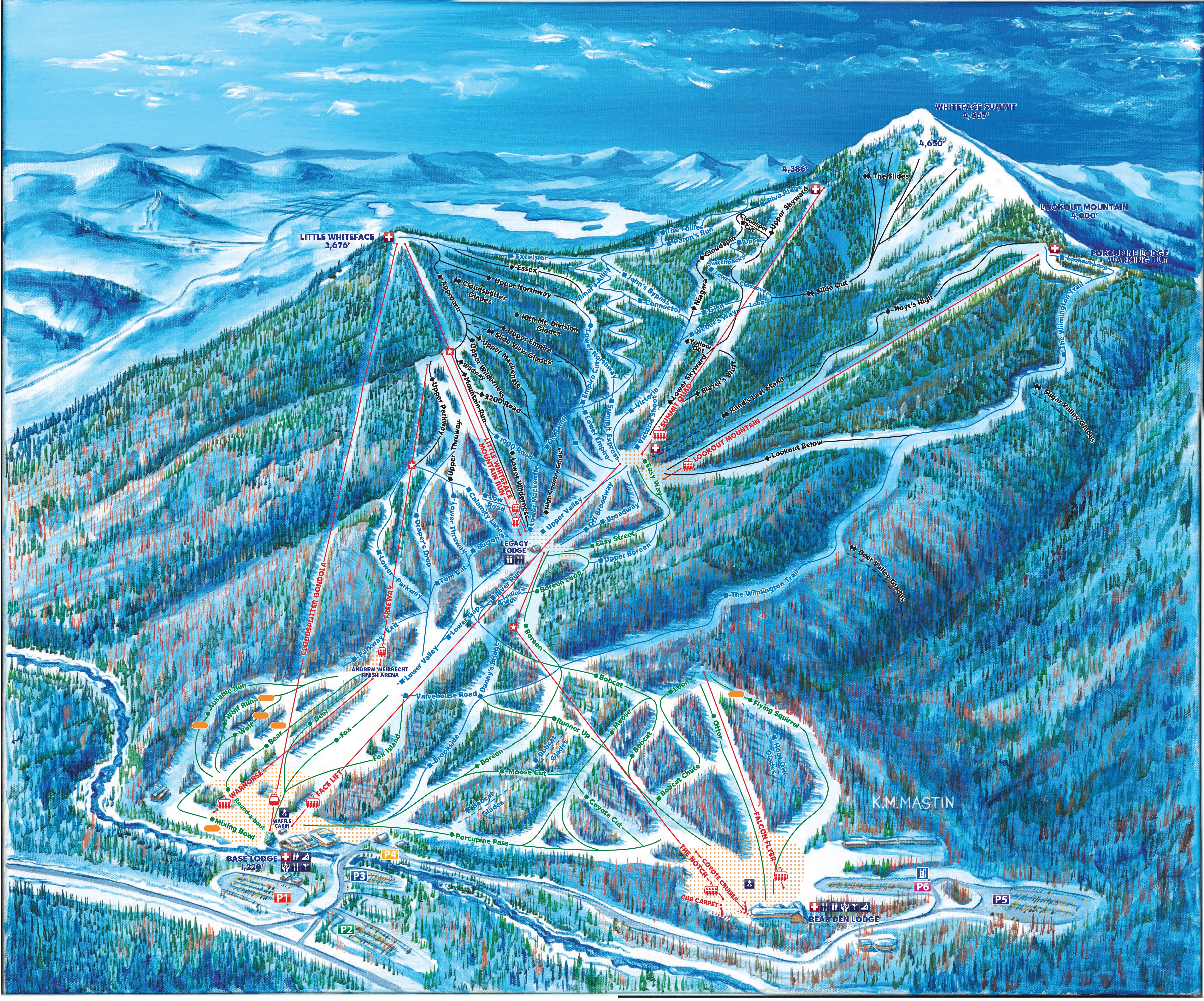
Jan 4, 2024
Podcast #157: Berkshire East & Catamount Owner & GM Jon Schaefer
This podcast hit paid subscribers’ inboxes on Dec. 28. It dropped for free subscribers on Jan. 4. To receive future pods as soon as they’re live, and to support independent ski journalism, please consider an upgrade to a paid subscription. You can also subscribe to the free tier below: Who Jon Schaefer, Owner and General Manager of Berkshire East , Massachusetts and Catamount , straddling the border of Massachusetts and New York Recorded on December 6, 2023 About the mountains Berkshire East Click here for a mountain stats overview Owned by: The Schaefer family Located in: Charlemont, Massachusetts Year founded: 1960 Pass affiliations: * Berkshire Summit Pass: Unlimited Access * Indy Base Pass: 2 days with blackouts (reservations required) * Indy+ Pass: 2 days, no blackouts (reservations required) Closest neighboring ski areas: Eaglebrook School (:36), Brattleboro (:48), Hermitage Club (:48), Mt. Greylock Ski Club (:52), Mount Snow (:55), Jiminy Peak (:56), Bousquet (:56); Catamount is approximately 90 minutes south of Berkshire East Base elevation: 660 feet Summit elevation: 1,840 feet Vertical drop: 1,180 feet Skiable Acres: 180 Average annual snowfall: 110 inches Trail count: 45 Lift count: 7 (1 high-speed quad, 2 fixed-grip quads, 1 triple, 1 double, 2 carpets – view Lift Blog’s inventory of Berkshire East’s lift fleet) View historic Berkshire East trailmaps on skimap.org . Catamount Click here for a mountain stats overview Owned by: The Schaefer family Located in: Hillsdale, New York and South Egremont, Massachusetts (the resort straddles the state line, and generally seems to use the New York address as its location of record) Year founded: 1939 Pass affiliations: * Berkshire Summit Pass: Unlimited Access * Indy Base Pass and Indy+ Pass: 2 days, no blackouts (reservations required) Closest neighboring ski areas: Butternut (:19), Otis Ridge (:35), Bousquet (:40), Mohawk Mountain (:46), Jiminy Peak (:50), Mount Lakeridge (:55), Mt. Greylock Ski Club (1:02); Berkshire East sits approximately 90 minutes north of Catamount Base elevation: 1,000 feet Summit elevation: 2,000 feet Vertical drop: 1,000 feet Skiable Acres: 133 acres Average annual snowfall: 108 inches Trail count: 44 (35% green, 42% blue, 23% black/double-black) Lift count: 8 (2 fixed-grip quads, 3 triples, 3 carpets – view Lift Blog’s inventory of Catamount’s lift fleet) View historic Catamount trailmaps on skimap.org . Why I interviewed him Might I nominate Massachusetts as America’s most underappreciated ski state? It’s easy to understand the oversight. Bordered by three major ski states that are home to a combined 107 ski areas (50 in New York, 27 in Vermont, and 30 in New Hampshire), Massachusetts contains just 13 active lift-served mountains. Two (Easton School and Mount Greylock Ski Club) are private. Five of the remainder deliver vertical drops of 400 feet or fewer. The state’s entire lift-served skiable area clocks in at around 1,300 acres, which is smaller than Killington and just a touch larger than Solitude. But the code and character of those 11 public ski areas is what I’m interested in here. Winnowed from some 200 bumps that once ran ropetows up the incline, these survivors are super-adapters, the Darwinian capstones to a century-long puzzle: how to consistently offer skiing in a hostile world that hates you. New England is a rumbler, and always has been. Outside of northern Vermont’s Green Mountain Spine (Sugarbush, MRG, Bolton, Stowe, Smuggs, Jay), which snags 200-plus inches of almost automatic annual snowfall, the region’s six states can, on any given day from November to April, stage double as Santa’s Village or serve as props for sad brown Christmas pining. Immersive reading of the New England Ski History website suggests this contemporary reality reflects historical norms: prior to the widespread introduction of snowmaking, ski areas could sometimes offer just a single-digit number of ski days in particularly difficult winters. Even now, even in good winters, the freeze-thaw cycle is relentless. The rain-snow line is a thing during big storms. Several times in recent years, including this one, furious December rainstorms have washed out weeks of early-season snow and snowmaking. And yet, like sharks, hanging on for hundreds of millions of years as mass extinctions rolled most of the rest of life into the fossil record, the surviving Massachusetts ski area operators found a way to keep moving forward. But these are not sharks – the Colorado- and Utah-based operators haven’t plundered the hills rolling west of Boston just yet. Every one of these ski areas (with the exception of investment fund-owned Bousquet), is still family-owned and operated. And these families are among the smartest ski area operators in America. In October, tiny Ski Ward, owned for decades by the LaCroix family, was the first North American ski area to spin lifts for the 2023-24 ski season. Wachusett, a thousand-footer run by the Crowley family since 1968, is a model home for volume urban skiing efficiency. The Fairbank family transformed Jiminy Peak from tadpole (in the 1960s) to alligator before expanding their small empire into New England (the family now runs Bromley , Vermont and owns Cranmore , New Hampshire). The Murdock family has run Butternut since its 1963 founding, and likely saved nearby Otis Ridge from extinction by purchasing the ski area in 2016 (the Murdocks also purchased, but later closed, another nearby ski area, Ski Blandford). The Schaefers, of Charlemont by way of Michigan, are as wiley and wired as any of them. Patriarch Roy Schaefer drove in from the Midwest with a station wagon full of kids in 1978. He stapled then-bankrupt Berkshire East together with the refuse of dead and dying ski areas from all over America. Some time in the mid- to late-aughts, Roy’s son Jon took over daily operations and rapidly modernized the lifts, snowmaking, and trail network. Roy’s other son Jim, a Wall-Streeter, helped the family take full ownership of the ski area. In 2018, they bought Catamount, a left-behind bump with fantastic fall lines but dated lifts and snowmaking. None of this is new or news to anyone who pays attention to Massachusetts skiing. In fact, Jon Schaefer has appeared on my podcasts twice before (and I’ve been on his ). But in the four years since he joined me for episode nine, a lot has changed at Berkshire, at Catamount, in New England, and across skiing. Daily, the narrative grows that consolidation and megapasses are squeezing family operators out of skiing. My daily work suggests that the opposite may be happening, that independent operators, who have outlasted skiing’s extinction event of the low-snow decades and perfected their mad alchemy through decades of swinging the pickaxe into the same mountain, have never had a better story to tell. And Jon Schaefer has one of the better ways of telling it. What we talked about Early openings for both ski areas; what it means that Catamount opened before Berkshire East this season; snowmaking metaphors that I can guarantee you haven’t heard before; letting go of things you love as you take on more responsibility; the power of ropetows; Berkshire East’s new T-Bar Express, the ski area’s first high-speed quad; why Schaefer finally came around on detachable lift technology; the unique dynamics of a multi-generational, family-owned mountain; the long-term plan for the three current top-to-bottom chairlifts; the potential Berkshire East expansion; yes Berkshire is getting busier; the strange math of high-speed versus fixed-grip quads; that balance between modernizing and retaining atmosphere; the Indy Pass’ impact on Berkshire and the industry as a whole; whether more mountains could join the Berkshire Summit Pass; whether the Schaefers could buy another ski area; whether they considered buying Jay Peak or are considering buying Burke; assessing the overhaul of Catamount’s lift fleet; talking through the clear-cutting of Catamount’s frontside trails; parking at Catamount; expansion potential for Catamount; and Catamount being “one of the best small ski areas in the country.” Below: first chair on the new T-Bar Express at Berkshire East: Why I thought that now was a good time for this interview If I could somehow itemize and sort the thousands of Storm -related emails and Instagram, Twitter, and Facebook messages that I’ve read over the past four years, a top-10 request would be some form of this: get Schaefer back on the podcast. There are a couple of reasons for this. One is that Jon is, in my opinion, one of the more unfiltered and original thinkers in skiing. His dad moved the family to Berkshire in 1978. Jon was born in 1980. That means he grew up on the mountain and he lives at the mountain and he holds its past, present, and future in his vision like some shaman of the Berkshires, orchestrating its machinations in a hallucinogenic flow state, crafting, from the ether, a ski area like no other in America. Which leads to the second reason. Because Schaefer is so willful and effective, it can often be difficult for outsiders to see into the eye of the hurricane. You kind of have to let the storm pass. And the past four years have been a bit of a storm, particularly at Catamount, where Covid and supply-chain issues collided with an ambitious but protracted lift-fleet upgrade. But that’s all done. Catamount has five functioning chairlifts (all of which, remarkably, were relocated from somewhere else). Berkshire just opened its first high-speed quad, the T-Bar Express. Both mountains are busier than ever, and Berkshire is a perennial Indy Pass top 10 by number of redemptions. And while expansion and a lift shuffle likely loom at Berkshire, both ski areas are, essentially, what the Schaefers want them to be. Which doesn’t mean they are ever finished. Schaefer and I touch on this existential reality in the podcast, but we also discuss the other obvious question: now that Catamount’s gut-renovation is wrapping up, what’s next? Could this ski family, with their popular Berkshire Summit Pass (which is also good at Bousquet), expand with more owned or partner mountains? There are, after all, only so many people in America who know how to capably operate a ski area. You can learn, sure, but most people suck at it, which is (one reason) why there are more lost ski areas than active ones. While I don’t root for consolidation necessarily, if ski areas are going to transfer ownership, I’d rather someone proven sign the deed than an unknown. And when it comes to proven, the Schaefers have proven as much as anyone in the country. Questions I wish I’d asked At some point over the past few years, the Schaefers purchased a Rossland, B.C.-based Cat skiing operation called Big Red Cats . Their terrain covers 20,000 acres on eight peaks. I’m not sure why we didn’t get into it. What I got wrong I said that Indy Pass had 130 alpine partners. That was correct on Dec. 6, when we conducted the interview, but the pass has since added Moose Mountain, Alaska and Hudson Bay Mountain, B.C., bringing the total up to 132 . Why you should ski Berkshire East and Catamount While age, injuries, perspective, volume, skiing with children, and this newsletter have all changed my approach to where and what I ski on any given day, the thing I still love most is the fight. Riding the snowy mountain, in its bruising earthly form, through its trees and drops and undulations, feeling part of something raw and wild. I don’t like speed. I like technical and varied terrain that requires deliberate, thoughtful turns. This I find profoundly interesting, like a book that offers, with each page, a captivating new thing. Massachusetts is a great ski state, but it doesn’t have a lot of what I just described, that sort of ever-rolling wickedness you’ll find clinging to certain mountains in Vermont and New Hampshire. But the state does have one such ski area: Berkshire East. She’s ready to fight. Glades and bumps and little cliffs in the woods. Jiminy and Wachusett give you high-speed lifts and operational excellence, but they don’t give you (more than nominal) trees. For a skier looking to summon a little Mad River Glen but save themselves a three-hour drive, Berkshire East goes on the storm-chase list. But unlike MRG, Berkshire is a top-to-bottom snowmaking house, and it has to be. While the glades are amazing when you can get them, the operating assumption here is that, more often than not, you can’t. And that means the vast majority of skiers – those who prefer groomers to whatever frolics you find in the trees – can head to Berkshire knowing a good day awaits. Catamount, less-snowy and closer to New York City, gives you a more traditional Massachusetts ski experience. More people (it seems), less exploring in the trees (though you can do this a bit). What it has in common with Berkshire is that Catamount is an excellent natural ski mountain. Fall lines, headwalls, winders through the trees. A thousand vert gives you a good run. Head there on a weekday in March, when the whole joint is open, and let them run. Podcast Notes On Schaefer’s previous podcast appearances Schaefer was the first person to ever agree to join me on The Storm Skiing Podcast , answering my cold email in about four seconds. “Let’s do it,” he wrote. It took us a few months to make it happen, but he joined me for episode nine. While he showed up huge, the episode also doubles as a showcase for how much better my own production quality has gotten over the past four years. The intro is sorta… flat: A few months later, Schaefer became the first operator in America to shutter his mountains to help stop the spread of Covid-19. He almost immediately launched an organization called Goggles for Docs, and he joined me on my “Covid-19 & Skiing” miniseries to discuss the initiative: The next year, I joined Jon on his Berkshire Sessions podcast, where we discussed his mountains and Northeast skiing in general: On historic opening and closing dates at Berkshire East and Catamount We discussed Berkshire and Catamount’s historical opening and closing dates. Here’s what the past 10 years looked like (the Schaefers took over Catamount starting with the 2018-19 ski season): On Berkshire Snowbasin Schaefer discussed the now-defunct Berkshire Basin ski area in nearby Cummington. The ski area operated from 1949 to 1989, according to New England Ski History , and counted a 550-foot vertical drop (though the map below says 500). Here’s a circa 1984 trailmap: Schaefer references efforts to re-open this ski area as a backcountry center, though I couldn’t find any reporting on the topic. Stan Brown, whom Schaefer cites for his insight that skiers “are more interested in how they get up the mountain than how they get down” founded Berkshire Snow Basin with his wife, Ruth. On high-speed ropetows I’ll never stop yelling about these things until everyone installs one – these high-speed ropetows can move 4,000 skiers per hour and cost all of $50,000. A more perfect terrain park lift does not exist. This one is at Spirit Mountain, Minnesota (video by me): On when the T-bar came out of Berkshire East Schaefer refers to the old T-bar that occupied the line where the new high-speed quad now sits. The lift did not extend to the summit, but ran 1,800 feet up from the base, along the run that is still known as Competition (lift F below): On Schaefer’s past resistance to high-speed lifts Shaun Sutner, a longtime snowsports reporter who has appeared on this podcast three times – most recently in November – summarized Schaefer’s onetime resistance to detachable lifts in a 2015 Worcester Telegram & Gazette article : The start of the 2014-15 ski season came with the B-East's first-ever summit quad, a $2 million fixed-grip "medium-speed" lift from Skytrac, a new U.S.-owned lift company. The low-maintenance, elegantly simple conveyance will save millions of dollars over the years. Not only was it less than half the cost of a high-speed detachable quad, but it also eliminates the need for $300,000-$500,000 grip replacements that high-speed lifts need every three or four years. So what changed Schaefer’s mind? We discussed in the podcast. On the potential Berkshire East expansion While Berkshire East has teased an expansion for several years, details remain scarce (rumors, unfortunately, do not). Schaefer tells us what he’s willing to on the podcast, and this image, which the resort presented to a local planning board last year, shows the approximate location of the new terrain pod (around the red dotted line labeled “4”): While this plan suggests the Mountain Top Triple would move to serve the expansion, that may not necessarily be the final plan, Schaefer confirms. On “the gondola side of Stowe” When Schaefer says that the Berkshire expansion will ski like “the gondola side of Stowe,” he’s referring to the terrain pod indicated below: Stowe has two gondolas, one of which connects Stowe proper to Spruce Peak, but that’s not the terrain he’s referring to. The double chair side of Plattekill also skis in the way Schaefer describes, as a series of figure-eights that delightfully frazzles the senses, making the ski area feel far larger than it actually is: On Indy Pass rankings Berkshire East has finished as a top-10 mountain in number of Indy Pass redemptions every season: On Liftopia Schaefer references Liftopia, a former online lift ticket broker whose legacy is fading. At one time, I was a huge fan of this Expedia-of-skiing site, where you could score substantial discounts to most major non-Vail ski areas. I hosted founder and CEO Evan Reece way back on podcast number 8: Sadly, the company collapsed with the onset of Covid, as I documented back in 2020 : …the industry’s most-prominent pure tech entity – Liftopia – has been teetering on existential collapse since failing to pay significant numbers of its partners following the March shutdown. A group of ski area operators tried forcing Liftopia into bankruptcy to recoup their funds. They failed, then appealed, then withdrew that appeal. Outside of the public record, bitter and betrayed ski area operators fumed about the loss of revenues that, as Aspen Snowmass CFO Matt Jones wrote in emails filed in federal court, “were never yours to begin with.” In August, Liftopia CEO Evan Reece announced that he had signed a letter of intent to sell the company. That new owner, Liftopia announced Friday, would be Skitude, a European tech outfit specializing in mobile apps. “The proceeds from the sale will be used to pay creditors,” SAM reported. In an email to an independent ski area operator that was shared with The Storm Skiing Journal Reece wrote that “…all claims will be treated equally,” without specifying whether partners could expect a full or partial repayment. The message also indicated that the new owner may “prioritize ongoing partners,” though it was unclear whether that indicated preference in future business terms or payback of owed funds, or something else altogether. Whatever the outcome, this unsatisfying story is a tale of enormous missed opportunity. No company was better positioned to help lift-served skiing adapt to the social-distancing age than Liftopia. It could have easily expanded and adapted its highly regarded technology to accommodate the almost universal shift to online-only sales for lift tickets, rental reservations, ski lessons, and even appointment times in the lodge. It had 15 years of brand recognition with customers and deep relationships within the ski industry. But ski areas, uncertain about Liftopia’s future, have spent an offseason when they could have been building out their presence on a familiar platform scrambling for replacement tech solutions. In addition to the Liftopia-branded site, many ski areas used Liftopia’s Cloud Store platform to sell day tickets, season passes, rentals, and more. While it is unclear how many former partners shifted to another point-of-sale system this offseason, several have confirmed to The Storm Skiing Journal that they have done so. I’m not sure how Liftopia would have faired against the modern version of the Indy Pass, but more choice is almost always better for consumers, and I’m still bitter about how this one collapsed. On Caddyshack Movie quotes are generally lost on me, but Schaefer references this one from Caddyshack, so I looked it up and this is what the robots fed me: On the majority of skier visits now being on a season pass According to the National Ski Areas Association, season pass holders have surpassed day-ticket buyers for total number of skier visits for four consecutive seasons. Without question, this is simply because the industry has gotten very good at incentivizing season pass sales by rolling the most well-known ski areas onto the Epic and Ikon passes. It is unclear whether the NSAA counts the Indy or Mountain Collective passes as season passes, but the number of each of those sold is small in comparison to Epic and Ikon. On the Berkshire Summit Pass The Schaefers have been leaders in establishing compelling regional multimountain ski passes. The Berkshire Summit Pass has, since 2020, delivered access to three solid western Massachusetts ski areas: Berkshire East, Catamount, and partner mountain Bousquet (on the unlimited version only). It is available in unlimited, Sunday through Friday, midweek, and nights-only versions. An Indy Pass add-on makes this a badass cross-New England ski product. On Burke being great and accessible even though it looks as though it’s parked at the ass-end of nowhere The first piece of ski writing I ever published was a New York Ski Blog recap of a Burke ski day in 2019: Last week, winter seemed to be winding down, with above-freezing temps forecast clear up to Canada before St. Patrick’s Day. Desperate to extend winter, I had my sights on a storm forecast to dump nearly a foot of new snow across northern Vermont. After considering my options, I locked onto a hill I’d overlooked in 20 years of skiing Vermont: Burke. I’d read the online commentary: steep, funky, heavily gladed, classic New England twisty with high-quality snow well-preserved by cold temps and a lack of crowds. But to get there you have to drive past some big-name ski areas, most with equal or greater vertical drop, skiable acreage and average annual snowfall. Further research uncovered a secret Burke advantage over its better-known neighbors: unlike other mountains that require a post-expressway slog of 30-plus miles on local roads, Burke sits just seven miles off Interstate 91, meaning it was actually the closest northern Vermont option by drive time. As 10 inches of snow piled up Sunday and Monday and areas to the south teeter-tottered along a freeze-thaw cycle that would turn ungroomed trails to granite, Burke looked like my last best shot at mid-winter conditions. Two days after the storm, on the last day of below-freezing temps, I left Brooklyn at 4 am and arrived at 9:15. Read the rest… On Burke’s (mostly) hapless ownership history We talk quite a bit about Burke Mountain, one of those good New England ski areas with a really terrible business record. Schaefer refers to the unusually huge number of former owners, which, according to New England Ski History , include: * 1964: Burke Mountain Recreation (Doug Kitchel) buys area; eventually went bankrupt * 1987: Paul D. Quinn buys, eventually sells to bank after his bank goes bankrupt * 1990: Hilco, Inc., a bank, takes ownership, then sells to… * 1991: Bernd Schaefers (no relation to Jon), under whom the ski area eventually went bankrupt (for the second time) * 1995: Northern Star Ski Corporation (five owners) buys the ski area, but it eventually goes bankrupt for a third time * 2000: Unidentified auction winner buys Burke and sells it to… * 2000: Burke Mountain Academy, who never wanted to be long-term owner, and sold to… * 2005: Laubert-Adler and the Ginn Corporation, who sold to… * 2012: Aerial Quiros, who engaged in all kinds of shadiness * 2016: Burke becomes the property of U.S. America, as court-appointed receiver takes control of this and Jay Peak. While Jay sold last year, Burke remains for sale On media reports indicating that there is a bid on Burke I got excited earlier this year, when the excellent Vermont Digger reported that the sales process for Burke appeared to be underway: Michael Goldberg, the court-appointed receiver in charge of overseeing Burke Mountain ski resort for more than seven years, has an offer to buy the scandal-plagued ski resort in Vermont’s Northeast Kingdom. News of the bid came from a recent court filing submitted by Goldberg, predicting that a sale of the property would take place “later this year.” The filing does not name the bidder or the amount of the bid, but the document stated that Goldberg wants to continue to seek qualified buyers, and if a matching or higher price is offered, an auction would be held to sell the resort. … “The Receiver has received an initial offer, and expects to file a motion with the Court in the next month recommending an identical sales process to the Jay Peak sale – a ‘stalking horse’ bid, followed by an auction and a subsequent motion asking the Court to approve a final sale,” Goldberg stated in his recent court filing regarding Burke. Well, nothing happened, though the bid remains active, as far as I know. So who knows. I hope whoever buys Burke next, this place can finally stabilize and build. On the West Mountain expansion at Catamount Schaefer discusses a potential expansion at Catamount. New England Ski History hosts a summary page for this one as well: A lift and a variety of trails are proposed for the west side of the ski area, crossing over the Lower Sidewinder trail. The lift would climb 650 vertical feet from a new parking lot to the junction of Upper and Lower Sidewinder. 6 trail segments would be cut above and below the lower switchback of the Lower Sidewinder Trail. All of the terrain would be located in New York state. Here's a circa 2014 map, showing the proposed expansion looker’s right: The Storm explores the world of lift-served skiing year-round. Join us. The Storm publishes year-round, and guarantees 100 articles per year. This is article 113/100 in 2023, and number 498 since launching on Oct. 13, 2019. Get full access to The Storm Skiing Journal and Podcast at www.stormskiing.com/subscribe
Jan 2, 2024
Podcast #156: Mt. Rose General Manager Greg Gavrilets
This podcast hit paid subscribers’ inboxes on Dec. 26. It dropped for free subscribers on Jan. 2. To receive future pods as soon as they’re live, and to support independent ski journalism, please consider an upgrade to a paid subscription. You can also subscribe to the free tier below: Who Greg Gavrilets, General Manager of Mt. Rose , Nevada Recorded on November 27, 2023 About Mt. Rose View the mountain stats overview Owned by: The Buser family Located in: Incline Village, Nevada Year founded: 1964 Pass affiliations: None Reciprocal partners: None Closest neighboring ski areas: Sky Tavern (:03), Diamond Peak (:15), Northstar (:28), Homewood (:44), Palisades Tahoe (:45), Tahoe Donner (:48), Boreal (:49), Donner Ski Ranch (:51), Sugar Bowl (:52), Soda Springs (:53), Heavenly (:56). Travel times vary considerably given weather conditions, time of day, and time of year. Base elevation: 7,900 feet (bottom of Chuter lift) Summit elevation: 9,700 feet Vertical drop: 1,800 feet Skiable Acres: 1,200+ Average annual snowfall: 350 inches Trail count: 70+ (10% expert double black, 40% black, 30% intermediate blue, 20% beginner green) Lift count: 8 (2 six-packs, 1 high-speed quad, 2 fixed-grip quads, 1 triple, 1 carpet, 1 “Little Mule”) View historic Mt. Rose trailmaps on skimap.org . Why I interviewed him There’s something so damn dramatic about skiing around Tahoe. The lake, yes, but it’s also the Sierra Nevada, heaving and brutal, pitched as though crafted for skiing, evergreens loper-spaced apart. It’s the snow, piled like pizza boxes in a hoarder’s apartment, ever-higher, too much to count or comprehend (well, some years). It’s the density, the always knowing that, like some American Alps, there is always another ski center past the one you’re riding and the one you can see from there and the one you can see beyond that. Mt. Rose is one of just three Tahoe ski areas that sits fully on the Nevada side of the lake (the other two are Diamond Peak and Sky Tavern; Heavenly straddles the California-Nevada border). That whole Nevada thing can sap some of the Tahoe mystique. What is Nevada, after all, to most of us, but desert, dry, wide-open, and empty? I once slipped into a hallucinogenic state of borderline psychosis on a 122-degree drive Vegas-bound across Interstate 15. I was dead sober but sleep-deprived and in a truck with no air-conditioning the rippling distances tore my soul into potpourri and scattered it about the alien planet I became convinced I was crossing. But Nevada is a ski state, and Mt. Rose is its finest ski area. As the truest locals’ bump on the block, it is a crucial piece of the Tahoe Zeitgeist, the place that tourists don’t bother with, and that locals bother with specifically because of that fact. There are a handful of communities in America that count as their home bump a big, thrilling ski area that is not also a major tourist attraction. Bogus Basin, outside of Boise; Mt. Spokane, Washington; Montana Snowbowl, looming over Missoula. Where you can mainline the big-mountain experience sans the enervation of crowds. Mt. Rose is one of those places, a good, big ski area without all the overwhelm we’ve come to associate with them. What we talked about Early-season openings; assessing the Lakeview chairlift upgrade after year one; why Mt. Rose doesn’t operate into May; extending the ski day after Daylight Savings; could night skiing ever work at Mt. Rose?; living through 668 inches of snow; Ober Mountain; the upside of starting your career at a small ski area; the brilliance of Peak Resorts; where Vail went right and wrong in their acquisition of Peak; the existential challenges of Paoli Peaks; the Very Bad 2021-22 ski season at Attitash; fortress mentality; convincing Vail to upgrade the Attitash Summit Triple; what Gavrilets found when he showed up at Mt. Rose on Saturday of President’s Weekend; how the Busers built Mt. Rose into a first-rate ski area; why the family considered selling Mt. Rose around 2017, and ultimately reversed course; committed to independence; “We’re over $100 cheaper than Palisades for a full-day lift ticket”; how Slide Mountain, Mt. Rose, and Sky Tavern settled into their modern footprints; Mt. Rose’s potential expansion; whether a ski connection between Sky Tavern and Mt. Rose could exist; future lift upgrade priorities; how The Chutes changed Mt. Rose’s profile; slopeside lodging; destination potential?; the potential for a tram up to the ski area from Reno; and why Mt. Rose hasn’t joined any multi-mountain passes. Why I thought that now was a good time for this interview Few ski areas have more aggressively modernized since the turn of the century than Mt. Rose. The mountain dropped its first sixer (Northwest Express), in the ground in 2000, and opened its second (Zephyr), the year it opened The Chutes, one of the most singular terrain pods in the American West. In the intervening years, Rose has shuffled around and modernized the remainder of its lifts, and last year dropped a high-speed quad in place of the old Lakeview triple. The snowmaking system is one of the best in Tahoe. Next up: an expansion across the highway to intermediate terrain that would hang over Sky Tavern. Like Arapahoe Basin, whose oldest chairlift is a 2007 Leitner-Poma fixed-grip quad, Mt. Rose has quietly modernized amid the giants that were destined to destroy it. This isn’t supposed to be the story. The story is supposed to be Corporate Conglomerates Are Killing Skiing!!! But they’re not. Mt. Rose proves that in Tahoe like A-Basin proves it on the I-70 mainline. Skiers in Reno could easily drive up to Northstar or Heavenly or Palisades Tahoe. But Gavrilets tells us that Mt. Rose is doing better than ever, in spite of the fact that the ski area has no slopeside lodging, no megapass affiliation, and no name recognition outside of a couple-hundred mile radius. Why do you suppose that is? Mt. Rose is a counterintuitive case-study in why so many assumptions about modern skiing are wrong. A place in the market exists for a family-owned and -operated ski area that focuses on delivering a good product at an inflation-adjusted price that would not make a time traveler from 1965 gasp with horror “But that costs more than my car!” I can’t always tell you what’s wrong with skiing, but I usually know what’s right when I see it. And just about everything that Mt. Rose is doing feels exactly right. What I got wrong I mispronounced the name of Mt. Rose’s owners, pronouncing “Buser” like “Bus-er” (wrong), rather than “Boozer” (right). Why you should ski Mt. Rose Well there are The Chutes: And all the beefcake lifts: And the 30-minute drive from the airport, meaning that when you fly in to ski Palisades or Heavenly, you can stop and clock a half day at Mt. Rose for $69: And the manageable liftlines, and the parking right at the base of the lifts, and the 350 inches of average annual snowfall. This may not be your ski Narnia, your endless empty, but it’s a less-frantic version of whatever they have down the road. Podcast Notes On three ski areas that were once one ski area that are now two ski areas Lift-served skiing on Mt. Rose started with a chairlift strung up from what is now Sky Tavern ski area to what is now the Slide Bowl area of Mt. Rose: Mt. Rose broke off from the lower-mountain area by the time it opened as a separate entity in 1964. The lower-mountain became a non-profit, volunteer-run, learn-to-ski center called Sky Tavern, which continues to operate today: The larger ski area’s modern-day footprint was, for several decades, two separate ski areas – one on the Slide Peak terrain and another in Mt. Rose proper: They combined in the late ‘80s: Then, in 2004, The Chutes opened, giving us the Mt. Rose we can ski today: On Ober Mountain Gavrilets began his career at Tennessee’s only ski area, which sits above Gatlinburg. You can access it via tram from downtown, or you can drive up. It’s a tiny place, but still has a respectable 600-foot vertical drop. It’s an Indy Pass partner. Here’s a trailmap: On Peak Resorts and the Peak Pass Gavrilets spent a good part of his career at Peak Resorts, which Vail purchased in whole in 2019. Here’s what their portfolio looked like at its height. The New York, Vermont, New Hampshire, and Pennsylvania ski areas were included on the Peak Pass outright. You could ski the Midwest ski areas with the pass, but it was one of those “stop by the customer service desk to get a ticket” deals. On the Attitash Summit Triple Gavrilets spent a good part of his tenure at Attitash making the case to Vail that the company needed to upgrade the Summit Triple. This past summer, the company finally did it, putting a high-speed quad in its place. That lift is scheduled to open soon, and I went into great detail on the project with Attitash General Manager Brandon Swartz at the 6:12 mark of our recent podcast conversation: On the density of Lake Tahoe skiing The Tahoe region may have the densest concentration of ski areas in America, with 16 lift-served Alpine ski areas circling the lake. Here’s a statistical breakdown of each: On Mt. Rose’s history site Mt. Rose recently re-vamped the resort history page of its website. Check it out . On reconfiguring the trails around the Lakeview lift When Mt. Rose upgraded the Lakeview chairlift from a triple to a high-speed quad last year, they also reconfigured several trails around it: On Galena ski area Mt. Rose’s trailmap shows a potential expansion down across the Mt. Rose highway. Gavrilets tells us that Powdr had attempted to build a standalone resort called Galena down there. I could’t find any information on this, but it would be cool if Mt. Rose could activate this terrain: On Shane McConkey crushing The Chutes On connecting Mt. Rose to Reno via tram While it hovers over mild-weather Reno, which averages 22 inches of snowfall per winter, Mt. Rose sits at a monstrous 8,260 feet. Bridging that distance requires navigating one hell of a winding access road: We discuss a potential aerial lift up from town in the podcast, but I’m not sure if it’s feasible, cost-wise, as it’s 13 air miles from the airport to the ski area. That’s about the same distance as the main strip of casinos. Like Gavrilets says in the pod, “if this was Europe, it would already be built.” The Storm explores the world of lift-served skiing year-round. Join us. The Storm publishes year-round, and guarantees 100 articles per year. This is article 111/100 in 2023, and number 496 since launching on Oct. 13, 2019. Get full access to The Storm Skiing Journal and Podcast at www.stormskiing.com/subscribe
Dec 20, 2023
The Storm Live #2: On The Ground for the Opening of Big Sky’s New Lone Peak Tram
The Storm Skiing Journal and Podcast is a reader-supported publication. To receive new posts and to support my work, please consider becoming a free or paid subscriber. Who Boyne Resorts CEO Stephen Kircher, Big Sky President Taylor Middleton, Big Sky GM Troy Nedved, and Garaventa Chief Rigger Cédric Aellig Where Big Sky invited media to attend the opening of their new Lone Peak tram, the first all-new tram at a U.S. ski resort since Jackson Hole opened theirs in 2008. Recorded on December 19, 2023 About Big Sky Click here for a mountain stats overview Owned by: Boyne Resorts Base elevation: 6,800 feet at Madison Base Summit elevation: 11,166 feet Vertical drop: 4,350 feet Skiable Acres: 5,850 Average annual snowfall: 400-plus inches Trail count: 300 (18% expert, 35% advanced, 25% intermediate, 22% beginner) Terrain parks: 6 Lift count: 40 (1 75-passenger tram, 1 high-speed eight-pack, 3 high-speed six-packs, 4 high-speed quads, 3 fixed-grip quads, 9 triples, 5 doubles, 3 platters, 2 ropetows, 9 carpet lifts) – View Lift Blog’s inventory of Big Sky’s lift fleet. About the new Lone Peak Tram It may seem like the most U.S. American thing ever to spend tens of millions of dollars to replace a lift that was only 28 years old (remember when the Detroit Lions dropped half a billion to replace the 26-year-old Pontiac Silverdome?), but the original tram cost just $1 million to build, and it served a very different ski resort and a very different ski world. It was, besides, a bit of a proof of concept, built against the wishes of the company’s own CEO, Boyne Resorts founder Everett Kircher. If they could just string a lift to the top, it would, the younger Kirchers knew, transform Big Sky forever. It did. Then all sorts of other things happened. The Ikon Pass. Montana’s transformation into a hipster’s Vermont West. Social media and the quest for something different. The fun slowly draining from Utah and Colorado as both suffocated under their own convenience. Big Sky needed a new tram. The first thing to understand about the new tram is that it does not simply replace the old tram. It runs on a different line, loading between the top of Swift Current and the bottom of Powder Seeker; the old tram loaded off the top of the latter lift. Here’s the old versus the new line: The new line boosts the vertical drop from 1,450 feet to 2,135. Larger cabins can accommodate 75 passengers, a 500 percent increase from 15 in the old tram (Big Sky officials insist that the cars will rarely, if ever, carry that many skiers, with capacity metered to conditions and seats set aside for sightseers). One dramatic difference between the old and the new lines is a tower (the old tram had none), perched dramatically below the summit: It’s a trip to ride through: But the most astonishing thing about riding the new Lone Peak tram is the sheer speed. It moves at up to 10 meters per second, which, when I first heard that, meant about as much to me as when my high school chemistry teacher tried to explain the concept of moles with a cigar-box analogy. But then I was riding up and the down-bound cabin passed me like someone just tossed a piano off the roof of a skyscraper: Here’s the down-bound view: The top sits at 11,166 feet, which is by no means the highest lift in America, but it is the most prominent point for an amazing distance around, granting you stunning views of three states and two national parks, plus the Yellowstone Club ski area and Big Sky itself: The peak is fickle as hell though – an hour after I took those photos, I walked into a cloud bank on a second trip to the summit. Right now, the only way to access the tram is by riding the Swift Current 6 (itself an extraordinary lift, like borrowing someone’s Porsche for a ride around the block), and skiing or walking a few hundred vertical feet down. But a two-stage, 10-passenger gondola is already under construction. This will load where the Explorer double currently does, and will terminate adjacent to the tram, creating an easy pedestrian journey from base to summit. That lift is scheduled to open for the 2025-26 ski season, and will, along with the Ramcharger 8 and Swifty, create an amazing 24 high-speed seats out of the main Big Sky base. The Lone Peak tram is, in my opinion, the most spectacular new ski lift coming online in America this winter. In a year of big lift projects, with Steamboat’s 3.1-mile-long gondola and 14 new six-packs coming online, that’s saying a lot. Right now, everyone has to download - it’s been a low-snow year, and there’s no skiing yet off the summit. Big Sky will, however, stay open until late April this season, so we have plenty of tram-ski days ahead. What we talked about With Troy and Taylor Ski town culture; the evolution of Big Sky from Montana backwater to leading North American ski area; why the new tram won’t overload Lone Peak even though its capacity is five times that of the old tram; how much – and how fast – Big Sky changed after the 1995 installation of Tram 1; why Big Sky evolved in a way that other small Montana ski areas never did; wind mitigation for a lift going somewhere as insane as Lone Peak; the new tram’s incredible speed; plans for the old tram’s top and bottom stations; and the switch from pay-per-day to pay-per-ride for the tram. With Stephen Kircher The significance of this lift when Boyne is putting in so many lifts; what the tram means for the future of Big Sky; the Kircher family legacy, past and future, at Big Sky; the near-death of Tram 1 before it was even built; who we can thank for Big Sky’s insane lift fleet; what justifies the huge expense of D-Line technology; why Boyne only builds Doppelmayr lifts; European influence; and how America fell behind Europe in lift technology. What I got wrong I said that, when Middleton arrived in 1980, Big Sky had just a “handful of lifts off Andesite, nothing on Lone Peak.” While there wasn’t a lift to the top of Lone Peak, Lone Mountain itself had several lifts by 1980: When I said that “Vail tends to split its lift fleet 50/50,” I meant between Doppelmayr and Leitner-Poma, the two major North American lift manufacturers. Podcast Notes On the shift to pay-per-tram ride This year, Big Sky switched from charging per day for tram access to charging per ride. The price ranges from $20 to $40 for skiers. That seems hefty, but frankly the place is so huge that you can have a great ski week with just a handful of tram laps. Here’s a primer on how to set up your tram access: On cannister film rolls Before we lived in the future, photos were scarce and expensive. A two-week family trip may involve two to five rolls of film, with 24 or 36 photos per roll, which you could not see until you deposited the spent cannisters at a photo development emporium and returned, some hours or days later, to retrieve them. Each roll cost between $5 and $7 to purchase, and an equal price to develop. Reprints were expensive and complicated. The rolls themselves were impossibly easy to destroy, and could, like vampires, disintegrate with direct exposure to sunlight. Witnessing the destruction of this system and its displacement by digital photos as limitless as videogame ammunition has been one of the great joys of my life. Anyway, that’s what Middleton was referring to when he tells the story about the lost film cannister that almost ruined his day. On D-Line lifts Kircher talks extensively about “D-Line lifts.” I constantly reference these as well, as though I have the faintest idea what I’m talking about, but all I know is that these are really kick-ass chairlifts, and are better than other sorts of chairlift. While several non-Boyne ski areas (Camelback, Sun Valley, Mammoth), have installed this most advanced lift class, Boyne owns perhaps as many as the rest of North American resorts combined, with two each at Big Sky (Ramcharger 8 and Swift Current 6) and Sunday River (Jordan 8 and Barker 6), and one each at Brighton (Crest 6), Loon (Kanc 8), Boyne Mountain (Disciples 8), and The Highlands (Camelot 6). On Everett Kircher the elder Everett Kircher, Stephen Kircher’s father, was a bit of a cowboy entrepreneur, the swaggering sort from America’s black-and-white past. He purchased the land for Boyne Mountain for $1, built an audacious contraption called the Gatlinburg Sky Park that ended up fueling the growth of the whole ski empire, and flew himself between Michigan and Montana after buying the resort in the mid-70s. He built the world’s first triple, quad, and detachable six-person chairlifts and invented all sorts of snowmaking equipment. Boyne has more on their history page . On John Kircher Stephen’s brother, John Kircher, was an important figure in the U.S. ski industry in general, and at Big Sky in particular. He passed away on Jan. 28 of this year. From Explore Big Sky : The oldest son of late Boyne Resorts co-founder Everett Kircher, John will be remembered for his impact in the modern ski industry. After stepping into Big Sky Resort’s GM role in 1980, he became widely known for spearheading the Lone Peak Tram project in the early 1990s. He then spent roughly two decades of his career as president, CEO and, briefly, owner of Crystal Mountain Resort in Washington. Read the rest of the obit here . On Kircher Concepts Stephen Kircher’s son is also named Everett. We discuss his contributions to the tram project, and also allude to a digital design agency he founded, Kircher Concepts. This work, which I find incredibly valuable, essentially visualizes lift projects at their announcement. The gondola rendering above comes from Kircher Concepts, but the agency does not work exclusively with Boyne – Telluride, Sun Valley, and Mount St. Louis Moonstone are also clients. Check out the full portfolio here . On Big Sky 2025 Kircher refers to Big Sky 2025, which is essentially a masterplan outlining the resort’s rapid evolution since 2015. While the plan has changed quite a bit since its announcement, it has completely transformed the resort with all sorts of lift, employee housing, parking, snowmaking, and other infrastructure upgrades. You can read the latest iteration here . The Storm explores the world of lift-served skiing year-round. Join us. The Storm publishes year-round, and guarantees 100 articles per year. This is article 110/100 in 2023, and number 495 since launching on Oct. 13, 2019. Get full access to The Storm Skiing Journal and Podcast at www.stormskiing.com/subscribe
Dec 18, 2023
Podcast #155: Worcester Telegram & Gazette Snowsports Columnist Shaun Sutner
This podcast hit paid subscribers’ inboxes on Dec. 11. It dropped for free subscribers on Dec. 18. To receive future pods as soon as they’re live, and to support independent ski journalism, please consider an upgrade to a paid subscription. You can also subscribe to the free tier below: Who Shaun Sutner, snowsports columnist for the Worcester Telegram & Gazette and Telegram.com Recorded on November 20, 2023 About Shaun Sutner Shaun is a skier, a writer, and a journalist based in Worcester, Massachusetts. For the past 19 years, he’s written a snowsports column from Thanksgiving to April. For the past three years, he’s joined me on The Storm Skiing Podcast to discuss that column, but also to talk all things New England skiing (and beyond). You should follow Shaun on social media to stay locked into his work: Why I interviewed him Last month, I clicked open a SNOWBOARDER email newsletter and found this headline slotted under “trending news”: Yikes, I thought. Not again. I clicked through to the story. In full : Tensions simmered as disgruntled Stevens Pass skiers, clutching their "Epic Passes," rallied against Vail Resorts' alleged mismanagement. The discontent echoed through an impassioned petition , articulating a litany of grievances: excessive lift lines, scant open terrain, inadequate staffing, and woeful parking, painting a dismal portrait of a beloved winter haven. Fueled by a sense of betrayal, the signatories lamented a dearth of ski-ready slopes despite ample snowfall, bemoaning Vail Resorts' purported disregard for both patrons and employees. Their frustration soared at the stark contrast to neighboring ski areas, thriving under similar conditions. The petition's fervor escalated, challenging the ethics of selling passes without delivering promised services, highlighting derisory wages juxtaposed against corporate profiteering. The collective call-to-action demanded reparation, invoking consumer protection laws and even prodding the involvement of the Attorney General and the U.S. Forest Service. Yet, amidst their resolve, a poignant melancholy pervaded—the desire to relish the slopes overshadowed by a battle for justice. The signatories yearned for equitable winter joys, dreaming of swift resolutions and an end to the clash with corporate giants, vowing to safeguard the legacy of snow sports for generations to come. As the petition gathered momentum, a snowstorm of change loomed on the horizon, promising either reconciliation or a paradigm shift in the realm of winter recreation. The “impassioned petition” in question is dated Dec. 28, 2021. In the nearly two intervening years, Vail Resorts has fired Stevens Pass’ GM, brought in a highly respected local (Tom Fortune) who had spent decades at the ski area to stabilize things (Fortune and I discussed this at length on the podcast ), and installed a new, young GM (Ellen Galbraith), with deep roots in the area (I also hosted Galbraith on the podcast ). Last ski season (2022-23), was a smooth one at Stevens Pass. And while Skier Mob is never truly happy with anything, the petition in question flared, faded, and went into hibernation approximately 18 months before Snowboarder got around to this story. Yes, there were issues at Stevens Pass. Vail fixed them. The end. The above-cited story is also overwritten, under-contextualized, and borderline slanderous. “Derisory wages?” Vail has since raised its minimum wage to $20 an hour. To stand there and aim a scanny-beepy thing at skiers as they approach the lift queue. Sounds like hell on earth. Perhaps I missed the joke here, and this is some sort of snowy Onion . I do hate to call out other writers. But this is a particularly lazy exhibit of the core problem with modern snowsports writing: most of it is not very good. The non-ski media will humor us with the occasional piece , but these tend to be dumbed down for a general audience. The legacy ski media as a functioning editorial entity no longer exists. There are just a few holdouts, at newspapers across the country, telling the local story of skiing as best they can. And in New England, one of the best doing his best to produce respectable snowsports writing is Shaun Sutner. What we talked about New England resort-hopping; how to set and meet a season ski-days goal; Brobots hate safety bars; the demise and resurgence of Black Mountain, New Hampshire; why Magic Mountain works; what it means that Ski Ward was the first ski area in America to open for the 2023-24 ski season; the Uphill New England pass; why Vail and Alterra still offer free uphill access at all their New England ski areas; how to not be an uphill A-hole; the No Boundaries Pass; which passes New England’s remaining big independent ski areas could join; the proposed Stowe-Smuggs gondola connection; when development benefits the environment; could Vail buy Smuggs?; the Little Cottonwood Canyon gondola; finally replacing the Attitash triple; Vail’s New England lift-building surge; Boyne goes bonkers in New England; the new Barker lift at Sunday River; the West Mountain expansion at Sugarloaf; the South Peak expansion at Loon; New England’s chairlift renaissance; Black Quad at Magic; a Cannon tram upgrade; Berkshire East’s first high-speed lift; Wachusett lift upgrades; and Quebec’s secret snow pocket. Why I thought that now was a good time for this interview Sutner and I have this conversation every Thanksgiving week, which is when his column launches. I think I need to start scheduling it earlier, because I haven’t been able to turn this around so fast the past two seasons. Here are excerpts and links to his first few columns of the 2023-24 ski season: Nov. 23 Snow sports: Ski resort lift upgrades should boost industry in New England The most despised lift in New England ski country is no more. The ponderously slow, sometimes treacherous summit triple chair at Attitash that has long been a staple of hardcore Massachusetts skiers and snowboarders, is gone. "No one ever thought this was ever going to really happen," Brandon Swartz, general manager of the Mount Washington Valley classic ski area in Bartlett, New Hampshire, told me. "I just couldn’t be more excited to help build the lift that no one ever thought was going to get built." Whether the old summit lift's swift new replacement, the high-speed detachable Mountaineer quad, will be ready for Christmas week as Colorado-based owner Vail Resorts expects, is yet to be seen as Attitash is still furiously working on it in the eighth month of the project. But it's the most welcome ski-lift replacement in our region in decades, I think, finally providing convenient access to the passel of glorious snaking steep and challenging intermediate runs from the top in half the 16-18-minute ride time of the old 1986 triple. Read more… Nov. 29 'It was shocking and beautiful': Trip to Argentina, Antarctica memorable for Lunenburg's Riddle This wasn't Riddle's first time tackling demanding backcountry terrain in forbidding terrain, nor is this the first time I've written about him, having chronicled his previous trips to Chamonix in the French Alps and Norway. Riddle is the guy who got me into alpine touring – the Alpine-Nordic hybrid that involves hiking up mountains on skis with climbing skins affixed to the bases and then removing the skins and locking down the boot heels for the descent – seven or eight years ago. He's also won the Wachusett Mountain pond skim contest three times, leading to word on the street that he's been banned from taking that coveted title ever again. But this adventure was of a bigger order of magnitude than his previous ventures into big mountains. Read more… Dec. 6 New BOA ski boot hopes its unique fit will provide a leg up on competition No, it's not named after a boa constrictor, though it does wrap around your foot kind of like a snake. BOA stands for "boot opening adjustment" and it’s the trademarked brand name of the company that has made the lace and wire and dial adjust-based closure systems since 2001 and adapted them to snowboard and race bike boots, Nordic gear, ice and in-line skates and other applications, Now BOA has brought the system to Alpine ski boots. Oversized protruding knobs and an intricate wire system go over the forefoot instead of buckles and wrap the instep and can make micro-adjustments in either direction – tighter or looser. Proponents say they just fit better, while skeptics point out they're a bit heavier and their durability still hasn’t been proven on a wide scale yet for the Alpine version. Read more… His column lands every Wednesday through spring. What I got wrong About Magic Mountain, Vermont I said that Magic was out of business for “five years.” The best info I can find (on New England Ski History ), suggests that the ski area closed following the 1990-91 season, and didn’t re-open until December 1997, which would put the closure at closer to six-and-a-half years. About the Indy Pass I referred to Erik Mogensen as the “Indy Pass founder.” He is the pass’ current owner, but Doug Fish, who has joined me on the podcast many times, founded the product. About Saddleback I didn’t hear Sutner correctly when he asked if Saddleback was “a B corporation,” which is a business that “is meeting high standards of verified performance, accountability, and transparency on factors from employee benefits and charitable giving to supply chain practices and input materials.” I thought he’d asked if they were owned by a larger corporation, and my answer reflects that understanding (but does not answer his question), as I go into the history of Arctaris Impact Fund’s purchase of Saddleback. The only ski area that has achieved B Corporation certification, as far as I know, is Taos. About words being hard I described Vail and Alterra as “big, corporate conglomerations.” Which, I’m sorry. About there being too many things in this world to keep track of I forgot the name of Spruce Peak at Stowe when describing the ski area’s connection point with Smugglers’ Notch. Which is funny because I’ve written about it extensively over the past several months, skied there many times, and in general try to remember the important components of prominent ski areas. About my personal calendar I said that I skied at Big Sky “last year.” I meant “last season,” as I actually was there in April 2023. On time being fungible I said that Magic’s Black Quad has been sitting in the ski area’s parking lot for “about four years.” This is inaccurate for a couple different reasons. First, the lift – Stratton’s old Snow Bowl lift – came out in 2018 (so more than five years ago). I don’t know when Magic took delivery of the lift. At any rate, installation began several years ago, so it’s not accurate to say that the lift has been “sitting in the parking lot.” What I meant was that it’s taken Magic a hell of a long time to get this machine live, which no one can dispute. Podcast Notes On motorcycle helmet laws We briefly discuss the almost universal shift to wearing helmets while skiing in the context of motorcycle helmet laws, which are not as ubiquitous as you’d suppose. Only 18 states require all riders to wear helmets at all times. The remainder set an age limit – typically 18 or 21. Three states – Iowa, Illinois, and New Hampshire – have no helmet law at all. On non-profit ski areas Erik Mogensen, owner of Entabeni Systems and Indy Pass, is leading the coalition to find a new owner for Black Mountain, New Hampshire. He’s said many times that around a quarter of America’s ski areas need “another ownership solution.” He expanded on this in SAM a few weeks back: I think about 25 percent of the non-corporate ski areas in North America need another ownership solution. That doesn’t necessarily mean that it needs to be nonprofit. There are a lot of liabilities in having a group of volunteers or board of directors try to run a ski area from a nonprofit status. I’m definitely a capitalist, and there can be issues with nonprofits that I don’t think we’ve solved yet in skiing. If we look at the nonprofits that have run very well, Bridger Bowl and Bogus Basin particularly, they focused around running the ski area as a for-profit business with a nonprofit backend, if you will. I’ve also seen a lot of ski areas struggle with trying to run the nonprofit model. So I don’t necessarily believe that a nonprofit model is something that we should copy and paste. But I do believe it’s a front runner that needs to be adjusted and adopted. And we do need a solution for the 25 percent. It’s very hard to make some of areas commercially viable on their own. On the “unfriendly” lift attendants at Ski Ward I recently gave Ski Ward some positive run , highlighting the fact that they were the first ski area to open in America in 2023. It was a cool story and they deserved the attention. However, I have a conflicted history with this place, as Sutner and I joked on the podcast. I had one of my worst ski experiences ever there, mostly because the lift attendants – at least on the day of my visit – were complete a******s. As I wrote after a visit on Feb. 1, 2022: Ski Ward, 25 miles southwest, makes Nashoba Valley look like Aspen. A single triple-chair rising 220 vertical feet. A T-bar beside that. Some beginner surface lifts lower down. Off the top three narrow trails that are steep for approximately six feet before leveling off for the run-out back to the base. It was no mystery why I was the only person over the age of 14 skiing that evening. Normally my posture at such community- and kid-oriented bumps is to trip all over myself to say every possible nice thing about its atmosphere and mission and miraculous existence in the maw of the EpKonasonics. But this place was awful. Like truly unpleasant. My first indication that I had entered a place of ingrained dysfunction was when I lifted the safety bar on the triple chair somewhere between the final tower and the exit ramp and the liftie came bursting out of his shack like he’d just caught me trying to steal his chickens. “The sign is there,” he screamed, pointing frantically at the “raise bar here” sign jutting up below the top station just shy of unload. At first I didn’t realize he was talking to me and so I ignored him and this offended him to the point where he – and this actually happened – stopped the chairlift and told me to come back up the ramp so he could show me the sign. I declined the opportunity and skied off and away and for the rest of the evening I waited until I was exactly above his precious sign before raising the safety bar. All night, though, I saw this b******t. Large, aggressive, angry men screaming – screaming – at children for this or that safety-bar violation. The top liftie laid off me once he realized I was a grown man, but it was too late. Ski Ward has a profoundly broken customer-service culture, built on bullying little kids on the pretext of lift safety. Someone needs to fix this. Now. Look, I am not anti-lift bar. I put it down every time, unless I am out West and riding with some version of Studly Bro who is simply too f*****g cool for such nonsense. But that was literally my 403rd chairlift ride of the season and my 2,418th since I began tracking ski stats on my Slopes app in 2018. Never have I been lectured over the timing of my safety-bar raise. So I was surprised. But if Ski Ward really wants to run their chairlifts with the rulebook specificity of a Major League Baseball game, all they have to do is say, “Excuse me, Sir, can you please wait to get to the sign before raising your bar next time?” That would have worked just as well, and would have saved them this flame job. For a place that caters to children, they need to do much, much better. On Uphill New England We go pretty deep on the purpose and utility of the Uphill New England pass, which allows you to skin up and ski down these 13 ski areas: On the Granite Backcountry Alliance Sutner also mentions the Granite Backcountry Alliance, which is a group that promotes backcountry skiing in New Hampshire and Western Maine. Here’s the group’s self-described mission : New Hampshire and Western Maine are blessed with a rich ski history that includes a deep heritage of backcountry skiing from Mt. Washington’s Tuckerman Ravine to the many ski trails developed by the Civilian Conservation Corps (CCC) of the 1930’s (some of which still remain today). The celebration of the sport of skiing is embedded in the culture of the area. While backcountry skiing’s resurgence has captivated a new user base, it is also now a measurable, undeniable force in the industry and is the fastest growing segment of the sport. The demand is strong but the terrain in New Hampshire and Western Maine is limited by the tree density, glade supply, and legal access to the forests and mountains. GBA resolves to improve the playing field for backcountry skiers. Creating and developing ski glades, however, is not the only objective of the group. Improving the foundation of the sport is critical to future success, such as creating partnerships and collaboration with public and private landowners, education regarding safety and ecological awareness, and creating a unified culture – one that respects the land and its owners and does not permit unauthorized cutting. We are part of a movement of human-powered activities that is the basis for an emerging outdoor economy. We believe this movement has broad implications on areas like NH's North Country and it can develop with committed folks like yourself . It's the last frontier! So join us by stepping up to support the cause; the ability to organize is a powerful tool to steward our own future. On the proposed Stowe-Smuggs gondola connection I wrote a bit about the proposed gondola connection between Stowe and Smugglers’ Notch earlier this year: Seated just a half mile from the top of Smuggs’ mainly intermediate Sterling Mountain is the top of Stowe’s Spruce Peak. Skiers had been skating between the two resorts for decades. Why not connect the two mountains – both widely considered among the best ski areas in New England – with a fast, modern lift? A sort of Alta-Snowbird – or at least a Solitude-Brighton – of the East? Two owners, one interconnected ski experience. “We have the possibility of creating what we think will be a very unique ski and riding experience by connecting these two resorts,” said Stritzler. “I don't believe in marketing this way, but all you have to do is do trail counts and acreage and elevations, and pretty soon you get to the conclusion that if you can offer Smugglers’ guests the opportunity to also take advantage of what Stowe has to offer, and you can offer the two in some kind of combination through a connecting lift, well, now suddenly you're not quite so nervous about all the consolidation taking place, because you’ve got something to respond with.” Here's the proposed line: Smuggs later withdrew their plans amid a cool reception from state officials. Resort officials are recalibrating their strategy in backrooms, they’ve told me, re-analyzing the project from an economic-impact point of view. More to come on that. On the Little Cottonwood Canyon gondola Without question, the most contentious ski-related development in North America right now is the proposed Little Cottonwood Canyon gondola, which would essentially remove most cars from a cluttered, avalanche-prone road and move the resort base area down below the major snowline. Various protest groups, however, are acting as though this is a proposal to bulldoze the mountains and replace them private mud baths for billionaires. Personally, I think the gondola makes a hell of a lot of sense: But every time I write about it on Twitter, a not-immaterial number of perfectly sane individuals advises me to f**k off and die, so I’d say there’s some emotion invested in this one. On the Attitash triple replacement Sutner and I go pretty deep on Attitash swapping out its Summit Triple chair for a brand-new high-speed quad. I also discussed this extensively with Attitash GM Brandon Swartz on a recent podcast episode (starting at 6:12): On Ski Inc. We touch briefly on Ski Inc., a fantastic history of the modern ski industry by the late Chris Diamond. If you like this newsletter, Ski Inc. and its sequel, Ski Inc. 2020 , are must-reads. On Wachusett’s lifts We discuss Wachusett’s proposed upgrade of the Polar Express from a high-speed quad to, perhaps, a six-pack. Here’s the trailmap for context: On Wachusett’s blocked expansion Despite its immense popularity, Wachusett is probably stuck in its current footprint indefinitely, as Sutner and I discuss. A bit more context from New England Ski History : As the 1993-94 season progressed, Wachusett pushed forward with its expansion plans, requesting to cut two new trails, widen Balance Rock, install a second chairlift to the summit, expand the base lodge, and add 375 parking spots. The plans were met with environmental, archaeological, and water quality concerns. … In August 1995, environmentalists located a stand of 295-year-old oak trees where Wachusett had planned to cut a new expert trail. Though the Crowleys quickly offered to adjust plans to minimize impact, opposition mounted. Plans for the new trail were abandoned a few months later. … In the spring of 1998, Wachusett proposed a scaled back expansion that avoided the old growth forest and instead called for the construction of a snowboard park consisting of two trails and a lift. Around this time, environmentalists announced the discovery of bootleg ski trails on the mountain. The Sierra Club quickly called for the state to terminate Wachusett Mountain Associates' ski area lease, despite not knowing who did the cutting. So, yeah, 99 problems, Man. On two Le Massifs (de Charlevoix and de Sud) So apparently there are two Le Massifs in Quebec, which would have been handy context to have when I wrote about the larger of the two joining the Mountain Collective last year. That Le Massif – Le Massif de Charlevoix – is quite the banger, with 250 inches of average annual snowfall and a 2,526-foot vertical drop on 406 acres: Massif de Sud is still a nice little hill, with 236 inches of average annual snowfall and a 1,312-foot vertical drop, but on just 127 skiable acres: On The Powell Movement Sutner mentions an upcoming column he’ll write about The Powell Movement podcast. It really is a terrific show, and covers the parts of the ski industry that I ignore (so, like, most of it). Check it out . The Storm explores the world of lift-served skiing year-round. Join us. The Storm publishes year-round, and guarantees 100 articles per year. This is article 108/100 in 2023, and number 493 since launching on Oct. 13, 2019. Get full access to The Storm Skiing Journal and Podcast at www.stormskiing.com/subscribe
Dec 15, 2023
Podcast #154: Snowriver General Manager Benjamin Bartz
This podcast hit paid subscribers’ inboxes on Dec. 8. It dropped for free subscribers on Dec. 15. To receive future pods as soon as they’re live, and to support independent ski journalism, please consider an upgrade to a paid subscription. You can also subscribe to the free tier below: Who Benjamin Bartz, General Manager of Snowriver , Michigan Recorded on November 13, 2023 About Snowriver Click here for a mountain stats overview Owned by: Midwest Family Ski Resorts Located in: Wakefield (Jackson Creek Summit) and Bessemer (Black River Basin), Michigan Year founded: 1959 (Jackson Creek, as Indianhead) and 1977 (Black River Basin, as Blackjack) Pass affiliations: Legendary Pass (also includes varying access to Lutsen Mountains, Minnesota and Granite Peak, Wisconsin) * Gold: unlimited access * Silver: unlimited access * Bronze: unlimited midweek access with holiday blackouts The Indy Base Pass and Indy+ Pass also include two Snowriver days with no blackouts Closest neighboring ski areas: Big Powderhorn (:14), Mt. Zion Ski Hill (:17), Whitecap Mountains (:39); Porkies Winter Sports Complex (:48) Base elevation: * Jackson Creek: 1,212 feet * Black River Basin: 1,185 feet Summit elevation: * Jackson Creek: 1,750 feet * Black River Basin: 1,675 feet Vertical drop: * Jackson Creek: 538 feet * Black River Basin: 490 feet Skiable Acres: 400 (both ski areas combined) * Jackson Creek: 230 * Black River Basin: 170 Average annual snowfall: 200 inches Trail count: 71 trails, 17 glades, 3 terrain parks * Jackson Creek: 43 trails, 11 glades, 2 terrain parks * Black River Basin: 28 trails, 6 glades, 1 terrain park Lift count: 11 (1 six-pack, 6 doubles, 1 T-bar, 2 ropetows, 1 carpet) * Jackson Creek Summit: 6 (1 six-pack, 2 doubles, 1 T-bar, 1 ropetow, 1 carpet) * Black River Basin: 5 (4 doubles, 1 ropetow) View historic Snowriver trailmaps on skimap.org . Why I interviewed him I could tell this story as a Michigan story, as a young skier still awed by the far-off Upper Peninsula, that remote and wild and snowy realm Up North and Over the Bridge. I could tell it as a weather story, of glacial bumps bullseyed in the greatest of the Great Lakes snowbelts. Or as a story of a run-down complex tumbling into hyper-change, or one that activated the lifts in 1978 and just left them spinning. It’s an Indy Pass story, a ski area with better skiing than infrastructure that will give you a where’s-everyone-else kind of ski day. And it’s a Midwest Family Ski Resorts (MFSR) story, skiing’s version of a teardown, where nothing is sacred and everything will change and all you can do is stand back and watch the wrecking ball swing and the scaffolding go up the sides. Each of these is tempting, and the podcast is inevitably a mash-up. Writing about the Midwest will always be personal to me. The UP is that Great Otherplace, where the snow is bottomless and everything is cheap and everyone is somewhere else. Snowriver is both magnificently retro and badly in need of updating. And it is a good ski area and a solid addition to the Indy Pass. But, more than anything, the story of Snowriver is the story of MFSR and the Skinner family. There is no better ski area operator. They have equals but no betters. You know how when a certain actor or director gets involved in something, or when a certain athlete moves to a new team, you think, “Man, that’s gonna be good.” They project excellence. Everything they touch absorbs it. Did you know that one man, Shigeru Miyamoto, invented, among others, the Donkey Kong, Mario Brothers, Legend of Zelda , and Star Fox franchises, and has directed or produced every sequel of every game for four decades? Time calls him “the Spielberg of video games.” Well, the Skinners are the Spielberg – or perhaps the Miyamoto – of Midwest skiing. Everything they touch becomes the best version of that thing that it can achieve. What we talked about Snowriver’s new six-pack lift; why Snowriver removed three chairlifts but only added one; the sixer’s all-new line; why Midwest Family Ski Resorts (MFSR) upgraded this lift first; the rationale behind a high-speed lift on a 538-vertical-foot hill; knocking 100 vertical feet off Jackson Creek Summit’s advertised vertical drop; “Voyager” versus “Voyageur”; swapping out the old Poma for a handletow; the UP snowbelt; the bad old days of get out of the trees you blasted kids!; Gogebic Community College’s ski area management program; Mt. Zion, Michigan; Giants Ridge, Minnesota; the Big Snow time capsule; why MFSR purchased Snowriver; Mount Bohemia; changing the name from “Big Snow” to “Snowriver”; where an interconnect lift could run and what sort of lift it could be; why Snowriver renamed all the lifts and many trails on the Black River Basin side; potential future lift upgrades on both sides of the resort; potential terrain expansion; new and renamed trails and 17 new glades on the 2023-24 trailmap; the small parcel of Snowriver that sits on U.S. Forest Service land; why Black River Basin is only open Thursday through Sunday; and a joint pass to Snowriver, Granite Peak, and Lutsen. Why I thought that now was a good time for this interview The entity now known as Midwest Family Ski Resorts has been running ski areas for decades. I’ve been running The Storm for four years. So by the time I launched in 2019 and then expanded out of the Northeast in 2021, MFSR had already transformed Granite Peak and Lutsen into modern Midwestern giants. Their work on Granite had been particularly impressive, as they’d transformed Wisconsin’s beat-up and decrepit Rib Mountain into a sprawling and modern ski area. I mean look at this dump: And here’s the same ski area in 2023: So what a gift when, last year, the company announced the purchase of the side-by-side time capsules then known as Indianhead and Blackjack. A rare chance to see that Skinner magic uncorked on a beat-up backwater, to watch, in real time, that transformation into something humming and hefty and modern. Most multi-mountain operators buy diamonds, ski areas already streamlined and upgraded and laced with modern machines. MFSR digs deeper, finds coal, then pounds it into its final form. It’s a rough and expensive way to go, but the strategy carries the great advantage of maximum flexibility to sculpt a mountain into your daydream. The dream at Snowriver is straightforward but impossibly complex: modernize the snowmaking, chairlifts, bedbase, trail network, and grooming; connect the two ski areas with an aerial lift; and establish this snowy but remote complex as a legitimate midwestern destination ski resort. MFSR has, as expected, moved quickly, rebranding the resort; removing five(!) lifts from the Jackson Creek Summit side and building an outrageously expensive six-pack; and making dozens of subtle tweaks to the trail network, adding new runs, renaming lifts and trails, and dropping more than a dozen marked glades onto the trailmap. This period of rapid change, pronounced as it is, will likely be viewed, historically, as a simple prelude. MFSR is not the sort of operator that lays out grand plans and then glances at them through its binoculars every three years. They plan and tear s**t apart and build and build and build. They act how every skier thinks they would act were they to purchase their own ski area. The difference is that MFSR has money, ambition, and a history of transformational action. Watch, amazed, as this thing grows. Questions I wish I’d asked Bartz started Ben’s Blog, a cool little update series on Snowriver’s goings-on. I wanted to get into his motivation and mission here, but we were running long. I also wanted to get into a unique feature of Snowriver a bit more: the huge amount of onsite lodging, which was a big motivating factor in MFSR’s purchase, and a large part of the vision for building a sustainable destination ski resort in a region that has struggled to support one. What I got wrong I said that the four Black River Basin Riblet chairlifts dated to the 1970s, and then corrected myself to say that “I believe” one dated to the ‘80s. Ascender, Brigantine, and Draw Stroke date to 1977; Capstan was installed in 1983. Why you should ski Snowriver Ever wonder what it’s like to ski in 1978? Pull up to Black River Basin, boot up, and walk over to the lifts. There, you just time traveled. Centerpole Riblet doubles, painted ‘Nam chopper green, squeaking uphill, not a safety bar in sight. There’s snowmaking, but most of the snow you’re skiing on blew in off the big lake 11 miles north. Skiers in their modern fat skis and helmets would blow the illusion, but there are no other skiers to be found. Then a kid skis by, backpack speaker booming, and you’re like, “OK phew for a second I thought I’d really time-traveled and would be forced to do things like drive around the block without navigation assistance and carry around a camera that was not also a supercomputer and required $15 to purchase and develop 24 photographs.” If Black River Basin is the past, then Jackson Creek Summit is the future. That sixer landed like an Abrams tank on a Civil War battlefield. I took this video of the old summit double last February: Now look at the top of the six-pack, which sits on more or less the same spot: Wild, right? Snowriver is going to keep changing, and it will keep changing fast. Go see it before you miss what it was, so you can truly appreciate what it will become. Podcast Notes On the four removed chairlifts on the Jackson Creek Summit side Snowriver’s new six-pack directly or indirectly replaces four old lifts. The resort also switched up the trail network, with a bunch of new glades and a handful of reconfigured trails. Check out the Jackson Creek Summit side of the resort’s trailmap from pre-sixer and then today (note, also, all the newly marked glades and renamed trails): On the new trails on the Black River Basin side MFSR has also renamed most of the lifts and trails on the Black River Basin side, and removed a handle tow (which is now on the Jackson Creek Summit side). Here’s a side-by-side of the ski area’s 2018 and 2023 trailmaps: On Gogebic Community College and Mt. Zion So you can actually earn a college degree in ski area management. There are a few schools that do this, one of which is Michigan’s Gogebic Community College. From the program’s overview page: Overview The Ski Area Management Program at GCC is one of the nation's most comprehensive training programs for individuals interested in pursuing a career in the snow sport industry. Technical and academic study is combined with a practical internship which is conducted at major resorts throughout Coast to Coast. A valid driver's license is required for completion of this program. Unique Features Students spend their freshman year and the first eight weeks of their sophomore year completing prerequisite courses. During this period, the Mt. Zion Recreation Complex is utilized as a training laboratory. Mt. Zion is our college-owned and operated winter sport complex located on campus which is open to the public. Co-op The Cooperative Work Experience assignment (Co-op) is the capstone of the Ski Area Management Program. All sophomore Students participate in the five month internship where they gain important operational experience in an actual resort environment. The huge advantage that Mt. Zion has over similar programs is that it owns an on-site ski area, Mt. Zion. While this is just a 300-vertical-foot bump served by a double chair, it’s laced with some twisty fun little runs fed by 200 inches of annual lake effect: On Giants Ridge Bartz really launched his career as Mountain Operations Manager at Giants Ridge, a 500-footer in the Northern Minnesota hinterlands. Here’s the most recent trailmap: On the UP snowbelt For such a remote area, the UP is home to one of the densest concentrations of ski areas in America. Five ski areas sit within a 21-mile stretch along the Wisconsin-Michigan border: Whitecap (in Wisconsin), and Mt. Zion, Big Powderhorn, and the two Snowriver ski areas, all in Michigan. Here’s how they line up: On the proximity of MFSR’s portfolio MFSR’s three ski areas are, as a unit, really well positioned to serve the major Midwestern cities of Minneapolis-St. Paul, Milwaukee, and Chicago. Here’s where they sit in relation to one another: And here’s the distance table between them: On Rick Schmitz Rick Schmitz – who owns Little Switzerland, Nordic Mountain, and The Rock Snowpark in Wisconsin – once owned Blackjack, now Black River Basin. He relays that experience, and why he ultimately sold his interest in the ski area, starting at the 39:40 mark of this podcast we recorded together last year: On Mount Bohemia Boho is, as I’ve written many times, one of the most amazing and unique ski areas in America. It has no grooming, no snowmaking, and no beginner terrain. It’s lodged at the ass-end of nowhere, on a peninsula hanging off a peninsula in the fiery middle of Lake Superior. While regional lore credits (or blames) the renaissance of MFSR’s Granite Peak with looting Snowriver’s skiers, the rise of Bohemia, which opened in 2000, surely drew more advanced skiers farther north. Here’s a trailmap: And here’s a conversation I recorded with Boho owner, founder, and president Lonie Glieberman last year: On two ski areas becoming one For decades, the two Snowriver ski areas now known as Jackson Creek Summit and Black River Basin were separate, competing entities known, respectively, as Indianhead and Blackjack. Observe the varied style of trailmaps of recent vintage: At some point, the same entity took possession of both hills and introduced the “Big Snow Resort” umbrella name. Each ski area retained its legacy name, as you can see in this joint trailmap circa 2018: Then, last year, MFSR changed the umbrella name from “Big Snow” to “Snowriver,” and changed the name of each ski area (though they framed this as “base area renamings”) from Indianhead and Blackjack to Jackson Creek Summit and Black River Basin, respectively. I broke down the name change when MFSR announced it last September. On the Snowriver interconnect Bartz provided outlines of four potential interconnect lines. In all cases, Jackson Creek Summit sits on the left, and Black River Basin is on the right: On US 2 The Snowriver ski areas both sit off of US 2, a startling fact, perhaps, for skiers who use the same road to access ski areas as far-flung as Stevens Pass, Washington and Sunday River, Maine. US 2 is, in fact, a 2,571-mile-long road that runs in two segments: from Everett, Washington to St. Ignace, Michigan; then breaking for Canada before picking up in northern New York and running across Vermont and New Hampshire into Maine. It is the northernmost cross-country east-west highway in America. Ski areas that sit along or near the route include Stevens Pass and Mt. Spokane, Washington; Schweitzer, Idaho; Blacktail and Whitefish, Montana; Spirit Mountain, Minnesota; Big Powderhorn, Mt. Zion, Snowriver, Ski Brule, and Pine Mountain, Michigan; Bolton Valley, Vermont; and Sunday River, Titcomb, and Hermon Mountain, Maine; among others. On the Legendary Pass For the 2023-24 ski season, MFSR dispensed with offering single-mountain season passes, and combined all three of its properties onto the Legendary Pass. The gold tier, which is now sold out, debuted at $675 last spring. The Silver tier ran $475 early bird, which is not a material increase from the $419 Snowriver-only 2021-22 season pass (which did not include any Granite or Lutsen access): The Storm explores the world of lift-served skiing year-round. Join us. The Storm publishes year-round, and guarantees 100 articles per year. This is article 106/100 in 2023, and number 491 since launching on Oct. 13, 2019. Get full access to The Storm Skiing Journal and Podcast at www.stormskiing.com/subscribe
Nov 28, 2023
Podcast #153: Attitash Mountain General Manager Brandon Swartz
This podcast hit paid subscribers’ inboxes on Nov. 21. It dropped for free subscribers on Nov. 28. To receive future pods as soon as they’re live, and to support independent ski journalism, please consider an upgrade to a paid subscription. You can also subscribe to the free tier below: Who Brandon Swartz, General Manager of Attitash Mountain Resort , New Hampshire Recorded on November 6, 2023 About Attitash Click here for a mountain stats overview Owned by: Vail Resorts Located in: Bartlett, New Hampshire Year founded: 1964 Pass affiliations: * Epic Pass: unlimited access * Epic Local Pass: unlimited access * Northeast Value Pass: unlimited access * Northeast Midweek Pass: unlimited midweek access * Epic Day Pass: 1 to 7 days of access with all resorts, 32-resorts, and 22-resorts tiers Closest neighboring ski areas: Black Mountain (:14), Cranmore (:16), Wildcat (:23), Bretton Woods (:28), King Pine (:35), Pleasant Mountain (:45), Mt. Eustis (:49), Cannon (:49), Loon (1:04), Sunday River (1:04), Mt. Abram (1:07) Base elevation: 600 feet Summit elevation: 2,350 feet at the top of Attitash Peak Vertical drop: 1,750 feet Skiable Acres: 311-plus Average annual snowfall: 120 inches Trail count: 68 (27% most difficult, 44% intermediate, 29% novice) Lift count: 8 (3 high-speed quads, 2 fixed-grip quads, 2 triples, 1 surface lift – view Lift Blog’s inventory of Attitash’s lift fleet) View historic Attitash trailmaps on skimap.org . Why I interviewed him Ask any casual NBA fan which player won the most championships in the modern era, and they will probably give you Michael and Scottie. Six titles, two threepeats, ’91 to ’93 and ’96 to ’98. And it would’ve been eight in a row had MJ not followed his spirit animal onto the baseball diamond for two summers, they might add. But they’re wrong. The non-1950s-to-‘60s player with the most NBA titles is Robert Horry, Big Shot Bob, who played an important role in seven title runs with three teams: the 1994 and ’95 Houston Rockets; the 2000, 2001, and 2002 Lakers; and the 2005 and ’07 San Antonio Spurs. While he’s not in the hall of fame (Shaq thinks he should be ), and doesn’t make The Athletic or Hoops Hype’s top 75 lists, Stadium Talk lists Horry as one of the 25 most clutch players of all time . Attitash might be skiing’s Robert Horry. Always in the halo of greatness, never the superstar. Vail Resorts is the ski area’s third consecutive conglomerate owner, and the third straight that doesn’t quite seem to know what to do with the place. LBO Resort Enterprises opened Bear Peak in 1994, but then seemed to forget about Attitash after the merger with American Skiing Company two years later (ASC did install the Flying Yankee detachable quad in 1998). Peak Resorts picked Attitash out of ASC’s rubbish bin in 2007, then mostly let the place languish for a decade before chopping down the Top Notch double chair in 2018 with no explanation. That left no redundant route to the top of Attitash peak, which became a problem when the Summit Triple dropped dead for most of the 2018-19 ski season. Rather than replace the lift, Peak repaired it, then handed the spruced-up-but-still-hated machine off to Vail Resorts, along with the rest of its portfolio, that summer. Like someone who inherits a jam-packed storage bin from a distant strange relative, Vail spent a couple of years just staring at all the boxes, uncertain what was in them and kind of afraid to look. Those first few winters, which corresponded with Covid, labor shortages, and supply-chain issues, weren’t great ones at Attitash. A general sense of dysfunction reigned: snowmaking lagged, lifts opened late in the season or not at all, generic corporate statements thanked the hardworking teams without acknowledging the mountain’s many urgent shortcomings. As it was picking through the storage unit, Vail made the strange decision of stacking the New Hampshire box next to the Midwest boxes, effectively valuing Attitash and long-suffering sister resort Wildcat – both with 2,000-ish-foot vertical drops and killer terrain – on the same day-pass tier as 240-foot Mad River, Ohio and 35-acre Snow Creek, Missouri. Anyone committed to arguing against absentee ownership of New England ski areas had a powerful exhibit A with Attitash. Then, last year, Vail opened the Attitash box. And instead of the Beanie Baby collection and Battle of Hamburger Hill commemorative coins that the company expected to find, they pulled out a stack of Microsoft stock certificates from the 1986 IPO. And they were like, “Well now, these might be worth something.” So they got to work. The company improved snowmaking. They replaced the 49-year-old East/West double-double with a brand-new fixed-grip quad. They raised the companywide minimum wage to $20 an hour, well above average for New Hampshire, helping Attitash staff up and resemble a functioning business. Then, this summer, they finally did it: demolished the wickedly inefficient Summit Triple and replaced it with a glimmering high-speed quad. Of course, in true Attitash fashion, the Mountaineer, as the new lift is called, was the last of 60-plus 2023 lift projects in North America to fly towers. But the chair will be open this winter, and it should reset the mountain’s rap. Whether Mountaineer will finally push the resort’s reputation and stature to match its burly vertical drop and trail count remains to be seen. Ski’s readers did not list Attitash on their top 20 eastern ski areas for 2023. Z Rankings lists the mountain 28 th in the East . Unlike NBA players, ski areas’ careers span generations. In this way, they’re more like the franchises themselves. Sometimes the Lakers have Magic or Kobe, and in some eras, well, they don’t. Attitash just went a few decades without a franchise player. They may have finally drafted one. This is a top-20 New England ski area that may finally be ready to act like it. What we talked about The overdue death of the Attitash triple; the story behind the “Mountaineer” lift name; why a high-speed quad was the right replacement lift; take the train to the mountain; what happened to the lift tower that Flying Yankee and Summit Triple shared; expansion opportunities off Attitash Peak; other alignments the ski area considered for Mountaineer; why and where Attitash moved the Mountaineer lift load station; the circa-Peak Resorts Mount Snow intelligentsia; Vail’s culture of internal development and promotion; the unique challenges of running Attitash in a very crowded neighborhood; the Attitash-Wildcat combo; the Progression Quad replacement for the East/West double-double; considering Bear Peak’s lift fleet; why glades disappeared from Attitash’s trailmap, and why they’re back; whether the old Top Notch double chair line could ever enter the official trail network; snowmaking upgrades; how big of an impact the $20-an-hour minimum wage had on Attitash; employee housing; Northeast-specific Epic Passes; and the Epic Day Pass. Why I thought that now was a good time for this interview The Mountaineer, of course. For 30 years, successive owners have insisted that Attitash Peak was incompatible with a high-speed quad: too much capacity feeding too few trails from a lift that would cost too much to build. Well, Vail built it. So Swartz and I discuss why, after saying no for so long, mom finally bought us our expensive toy. I won’t get into that here, because that’s what the podcast is for, but I will make this point: there is a dirt-stupid but persistent narrative that Vail Resorts doesn’t care about its eastern properties, and only bought them to entice monied New Englanders to its western trophies. But, nearly seven years after entering the region with the surprise purchase of Stowe, Vail has done plenty to disprove that notion, launching Northeast-specific Epic Passes in 2020; installing new six-packs at Stowe, Mount Snow, and Okemo; adding high-speed quads at Attitash and Mount Snow; and moving another HSQ at Okemo. It’s been a quiet but complete gut-renovation of what had been some very tired ski areas. Vail must feel, often, like it can’t win. They’re often framed as elitists for building too much and as cheapskates for investing too little. Social media piles on because their resorts are too busy but also because they’re priced too high. I’ll admit that I criticize them for making lift tickets too expensive and passes too cheap . The Mountaineer, which New England has spent two decades begging for, will likely draw criticism for overcrowding Attitash as skiers soon forget the aches and pains of the Summit Triple. Skiers can be impossible pains in the ass, no question. But Vail showed up at the steakhouse and came back to the table with the whole buffet. In the five years from 2016 to 2021, Vail purchased 29 ski areas . Prior to that, it owned just 11. That’s nearly a quadrupling of size in half a decade. That would be challenging at any time. Add the Covid face-rearranging, and it was nearly impossible to digest. After several rough winters, however, Vail may be taming this herd of feral horses. They’re not done yet, but things are calming down. The lift investments are helping, management is stabilizing. They still need to loosen the reigns on snowmaking outside of the West, better limit crowds on peak days, and find a less-gun-to-the-head method of incentivizing Epic Pass sales than $299 lift tickets. But Vail Resorts, as a stable entity rather than a growth monster, is beginning to gel, and Attitash symbolizes that metamorphosis as well as any mountain in the portfolio. What I got wrong We alluded to the fact that Attitash would fly the Mountaineer towers on the day we recorded this, Nov. 6. Weather delays pushed that installation to later in the month . This isn’t something I got wrong at the time, but the Epic Day Pass rates I mentioned were tier four prices. They’ve since increased slightly. Here are the current (and final) rates (the 22-resorts tier gets you in the door at Attitash): Why you should ski Attitash Let’s continue the basketball metaphor. Who’s your starting five if New Hampshire is your basketball team? Cannon makes the roster by default, a 2,180-footer with the best terrain in the state. Go ahead and fill out the roster with your other 2,000-footers: Loon, with its jungle gym of fancy upgraded lifts; Wildcat, with its Mount Washington views and high-speed top-to-bottom laps of twisted glory; and sprawling, falling Waterville Valley. So who’s your number five? I’d accept arguments for gorgeous Mount Sunapee, beefy Bretton Woods, or Attitash. But as captain, I’m probably picking Attitash. Maybe not the Attitash of three years ago, but the Attitash that just got back from Chairlift Camp and can now offer a true, modern ski experience across its two mountains. But, carve away the cosmetics, and the truth is that Attitash is an incredible ski mountain. That 1,750 vertical feet is all fall line, consistent, beautiful cruisers up and down. It’s not the steepest mountain, or the snowiest, or the most convenient to get to – you’ll drive past Waterville and Loon and Cannon to get there (or not, Route Expert Bro; save it for your Powder DAWGZ WhatsApp chat). But from a pure, freefalling skiing point of view, it’s among the best in the east. Just maybe don’t show up at 11 a.m. on a Saturday. Podcast Notes On the Top Notch Double I’m not sure if anyone ever really loved Attitash’s Summit Triple, but the removal of the parallel Top Notch double in 2018 intensified focus on the summit lift’s shortcomings. Here’s where Top Notch ran (Lift 1 far looker’s left): No one has ever really given me a good answer as to why former owner Peak Resorts removed that lift without a backup plan, but the timing could not have been worse – the Summit Triple suffered a series of catastrophic mechanical failures in late 2018 and early 2019, effectively shuttering the upper part of Attitash Peak for the bulk of that ski season. Anyway, once Peak removed the lift, the liftline stayed on the trailmap, suggesting that it may join the official trail network at some point: But the liftline slowly faded: This year, the old ghost line is gone completely: On the shared Flying Yankee-Attitash Summit Triple tower An engineering quirk of the Summit Triple is that it shared a tower with the Flying Yankee high-speed quad, which crossed below the older lift: So what happened to that tower? We discuss it in the podcast. On the train from North Conway Eventually, U.S. America will have to figure out better ways to tie cities to its mountains. One of the best ways to do this is also one of the oldest: trains. Swartz and I briefly discuss the train that runs from downtown North Conway and drops you at the Attitash base. I looked into this a bit more, and unfortunately it’s more of a novelty than a practical commuter service at this point. It’s expensive ($40 per person roundtrip for coach), slow (the train ride takes around half an hour, compared to a 16-minute drive), and inconvenient, with the first trains arriving at the mountain around 11 a.m. and the latest one departing the mountain at 2:40. Not a great ski day, and the schedule is, for now, fairly limited, running weekends and holidays from the day after Christmas to late February. You can book rides and see details here . On the Attitash masterplan Attitash, like all ski areas that sit partially or fully on Forest Service land, is required to file an updated masterplan every so often. Unlike the highly organized western Forest Service divisions, however, which often have their ski area masterplans neatly organized online (three cheers for Colorado’s White River National Forest ), eastern districts rarely bother. So, while we discuss the mountain’s masterplan, I couldn’t find it, and the ski area couldn’t readily provide it. On the Mystery of the Missing Glades Circa 2011, Attitash’s trailmap called out several named glades on Bear Peak: By 2020, 10 marked glades appeared across both peaks, though Attitash had removed their names: By last season, all of them had disappeared: But this year, some (but not all) of the legacy glades, are back: What’s going on? We discuss this in the podcast. The Storm publishes year-round, and guarantees 100 articles per year. This is article 101/100 in 2023, and number 487 since launching on Oct. 13, 2019. Get full access to The Storm Skiing Journal and Podcast at www.stormskiing.com/subscribe
Nov 21, 2023
Podcast #152: Lutsen Mountains GM Jim Vick
This podcast hit paid subscribers’ inboxes on Nov. 14. It dropped for free subscribers on Nov. 21. To receive future pods as soon as they’re live, and to support independent ski journalism, please consider an upgrade to a paid subscription. You can also subscribe to the free tier below: Who Jim Vick, General Manager of Lutsen Mountains , Minnesota Recorded on October 30, 2023 About Lutsen Mountains Click here for a mountain stats overview Owned by: Midwest Family Ski Resorts Located in: Lutsen, Minnesota Year founded: 1948 Pass affiliations: * Legendary Gold Pass – unlimited access, no blackouts * Legendary Silver Pass – unlimited with 12 holiday and peak Saturday blackouts * Legendary Bronze Pass – unlimited weekdays with three Christmas week blackouts * Indy Pass – 2 days with 24 holiday and Saturday blackouts * Indy Plus Pass – 2 days with no blackouts Closest neighboring ski areas: Chester Bowl (1:44), Loch Lomond (1:48), Spirit Mountain (1:54), Giants Ridge (1:57), Mt. Baldy (2:11) Base elevation: 800 feet Summit elevation: 1,688 feet Vertical drop: 1,088 feet (825 feet lift-served) Skiable Acres: 1,000 Average annual snowfall: 120 inches Trail count: 95 (10% expert, 25% most difficult, 47% more difficult, 18% easiest) Lift count: 7 (1 eight-passenger gondola, 2 high-speed six-packs, 3 double chairs, 1 carpet) View historic Lutsen Mountains trailmaps on skimap.org . Why I interviewed him I often claim that Vail and Alterra have failed to appreciate Midwest skiing. I realize that this can be confusing. Vail Resorts owns 10 ski areas from Missouri to Ohio. Alterra’s Ikon Pass includes a small but meaningful presence in Northern Michigan. What the hell am I talking about here? Lutsen, while a regional standout and outlier, illuminates each company’s blind spots. In 2018, the newly formed Alterra Mountain Company looted the motley M.A.X. Pass roster for its best specimens, adding them to its Ikon Pass. Formed partly from the ashes of Intrawest, Alterra kept all of their own mountains and cherry-picked the best of Boyne and Powdr, leaving off Boyne’s Michigan mountains, Brighton, Summit at Snoqualmie, and Cypress (which Ikon later added); and Powdr’s Boreal, Lee Canyon, Pico, and Bachelor (Pico and Bachelor eventually made the team). Alterra also added Solitude and Crystal after purchasing them later in 2018, and, over time, Windham and Alyeska. Vail bought Triple Peaks (Crested Butte, Okemo, Sunapee), later that year, and added Resorts of the Canadian Rockies to its Epic Pass. But that left quite a few orphans, including Lutsen and sister mountain Granite Peak, which eventually joined the Indy Pass (which didn’t debut until 2019). All of which is technocratic background to set up this question: what the hell was Alterra thinking? In Lutsen and Granite Peak, Alterra had, ready to snatch, two of the largest, most well-cared-for, most built-up resorts between Vermont and Colorado. Midwest Family Ski Resorts CEO Charles Skinner is one of the most aggressive and capable ski area operators anywhere. These mountains, with their 700-plus-foot vertical drops, high-speed lifts, endless glade networks, and varied terrain deliver a big-mountain experience that has more in common with a mid-sized New England ski area than anything within several hundred miles in any direction. It’s like someone in a Colorado boardroom and a stack of spreadsheets didn’t bother looking past the ZIP Codes when deciding what to keep and what to discard. This is one of the great miscalculations in the story of skiing’s shift to multimountain pass hegemony. By overlooking Lutsen Mountains and Granite Peak in its earliest days, Alterra missed an opportunity to snatch enormous volumes of Ikon Pass sales across the Upper Midwest. Any Twin Cities skier (and there are a lot of them), would easily be able to calculate the value of an Ikon Pass that could deliver 10 or 14 days between Skinner’s two resorts, and additional days on that mid-winter western run. By dismissing the region, Alterra also enabled the rise of the Indy Pass, now the only viable national multi-mountain pass product for the Midwestern skier outside of Michigan’s Lower Peninsula. These sorts of regional destinations, while not as “iconic” as, say, Revelstoke, move passes; the sort of resort-hopping skier who is attracted to a multi-mountain pass is going to want to ski near home as much as they want to fly across the country. Which is a formula Vail Resorts, to its credit, figured out a long time ago. Which brings us back to those 10 Midwestern ski areas hanging off the Epic Pass attendance sheet. Vail has, indeed, grasped the utility of the Midwestern, city-adjacent day-ski area, and all 10 of its resorts fit neatly into that template: 75 chairlifts on 75 vertical feet with four trees seated within 10 miles of a city center. But here’s what they missed: outside of school groups; Park Brahs who like to Park Out, Brah; and little kids, these ski areas hold little appeal even to Midwesterners. That they are busy beyond comprehension at all times underscores, rather than refutes, that point – something simulating a big-mountain experience, rather than a street riot, is what the frequent Midwest skier seeks. For that, you have to flee the cities. Go north, find something in the 400- to 600-foot vertical range, something with glades and nooks and natural snow. Places like Caberfae, Crystal Mountain, Nub’s Nob, and Shanty Creek in Michigan; Cascade, Devil’s Head, and Whitecap, Wisconsin; Giants Ridge and Spirit Mountain, Minnesota. Lutsen is the best of all of these, a sprawler with every kind of terrain flung across its hundreds of acres. A major ski area. A true resort. A Midwestern dream. Vick and I discuss the Ikon snub in the podcast. It’s weird. And while Alterra, five years later, is clearly doing just fine, its early decision to deliberately exclude itself from one of the world’s great ski regions is as mystifying a strategic choice as I’ve seen any ski company make. Vail, perhaps, understands the Midwest resort’s true potential, but never found one it could close on – there aren’t that many of them, and they aren’t often for sale. Perhaps they dropped a blank check on Skinner’s desk, and he promptly deposited it into the nearest trashcan. All of which is a long way of saying this: Lutsen is the best conventional ski area in the Midwest (monster ungroomed Mount Bohemia is going to hold more appeal for a certain sort of expert skier), and one of the most consistently excellent ski operations in America. Its existence ought to legitimize the region to national operators too bent on dismissing it. Someday, they will understand that. And after listening to this podcast, I hope that you will, too. What we talked about Why Lutsen never makes snow in October; Minnesota as early-season operator; the new Raptor Express six-pack; why the Bridge double is intact but retiring from winter operations; why Lutsen removed the 10th Mountain triple; why so many Riblet chairs are still operating; why Moose Return trail will be closed indefinitely; potential new lower-mountain trails on Eagle Mountain; an updated season-opening plan; how lake-effect snow impacts the west side of Lake Superior; how the Raptor lift may impact potential May operations; fire destroys Papa Charlie’s; how it could have been worse; rebuilding the restaurant; Lutsen’s long evolution from backwater to regional leader and legit western alternative; the Skinner family’s aggressive operating philosophy; the history of Lutsen’s gondola, the only such machine in Midwest skiing; Lutsen’s ambitious but stalled masterplan; potential Ullr and Mystery mountain chairlift upgrades; “the list of what skiers want is long”; why Lutsen switched to a multi-mountain season pass with Granite Peak and Snowriver; and “if we would have been invited into the Ikon at the start, we would have jumped on that.” Why I thought that now was a good time for this interview For all my gushing above, Lutsen isn’t perfect. While Granite Peak has planted three high-speed lifts on the bump in the past 20 years, Lutsen has still largely been reliant on a fleet of antique Riblets, plus a sixer that landed a decade ago and the Midwest’s only gondola, a glimmering eight-passenger Doppelmayr machine installed in 2015. While a fixed-grip foundation isn’t particularly abnormal for the Midwest, which is home to probably the largest collection of antique chairlifts on the planet, it’s off-brand for burnished Midwest Family Ski Resorts. Enter, this year, Lutsen’s second six-pack, Raptor Express, which replaces both the 10th Mountain triple (removed), and the Bridge double (demoted to summer-only use). This new lift, running approximately 600 vertical feet parallel to Bridge, will (sort of; more below), smooth out the janky connection from Moose back to Eagle. And while the loss of 10th Mountain will mean 300 vertical feet of rambling below the steep upper-mountain shots, Raptor is a welcome upgrade that will help Lutsen keep up with the Boynes. However, even as this summer moved the mountain ahead with the Raptor installation, a storm demolished a skier bridge over the river on Moose Return, carving a several-hundred-foot-wide, unbridgeable (at least in the short term), gap across the trail. Which means that skiers will have to connect back to Eagle via gondola, somewhat dampening Raptor’s expected impact. That’s too bad, and Vick and I talk extensively about what that means for skiers this coming winter. The final big timely piece of this interview is the abrupt cancellation of Lutsen’s massive proposed terrain expansion, which would have more than doubled the ski area’s size with new terrain on Moose and Eagle mountains. Here’s what they were hoping to do with Moose: And Eagle: Over the summer, Lutsen withdrew the plan, and Superior National Forest Supervisor Thomas Hall recommended a “no action” alternative, citing “irreversible damage” to mature white cedar and sugar maple stands, displacement of backcountry skiers, negative impacts to the 300-mile-long Superior hiking trail, objections from Native American communities, and water-quality concerns. Lutsen had until Oct. 10 to file an objection to the decision, and they did. What happens now? we discuss that. Questions I wish I’d asked It may have been worth getting into the difference between Lutsen’s stated lift-served vertical (825 feet), and overall vertical (1,088 feet). But it wasn’t really necessary, as I asked the same question of Midwest Family Ski Resorts CEO Charles Skinner two years ago. He explains the disparity at the 25:39 mark: What I got wrong I said that Boyne Mountain runs the Hemlock double chair instead of the Mountain Express six-pack for summer operations. That is not entirely true, as Mountain Express sometimes runs, as does the new Disciples 8 chair on the far side of the mountain’s Sky Bridge. I referred to Midwest Family Ski Resorts CEO Charles Skinner as “Charles Skinner Jr.” He is in fact Charles Skinner IV. Why you should ski Lutsen Mountains One of the most unexpected recurring messages I receive from Storm readers floats out of the West. Dedicated skiers of the big-mountain, big-snow kingdoms of the Rockies, they’d never thought much about skiing east of the Continental Divide. But now they’re curious. All these profiles of New England girth and history, Midwest backwater bumps, and Great Lakes snowtrains have them angling for a quirky adventure, for novelty and, perhaps, a less-stressful version of skiing. These folks are a minority. Most Western skiers wear their big-mountain chauvinism as a badge of stupid pride. Which I understand. But they are missing a version of skiing that is heartier, grittier, and more human than the version that swarms from the western skies. So, to those few who peek east over the fortress walls and consider the great rolling beyond, I tell you this: go to Lutsen. If you’re only going to ski the Midwest once, and only in a limited way, this is one of the few must-experience stops. Lutsen and Bohemia. Mix and match the rest. But these two are truly singular. To the rest of you, well: Midwest Family’s stated goal is to beef up its resorts so that they’re an acceptable substitute for a western vacation. Lutsen’s website even hosts a page comparing the cost of a five-day trip there and to Breckenridge: Sure, that’s slightly exaggerated, and yes, Breck crushes Lutsen in every on-mountain statistical category, from skiable acreage to vertical drop to average annual snowfall. But 800 vertical feet is about what an average skier can manage in one go anyway. And Lutsen really does give you a bigger-mountain feel than anything for a thousand miles in either direction (except, as always, the Bohemia exception). And when you board that gondy and swing up the cliffs toward Moose Mountain, you’re going to wonder where, exactly, you’ve been transported to. Because it sure as hell doesn’t look like Minnesota. Podcast Notes On Midwest Family Ski Resorts Midwest Family Ski Resorts now owns four ski areas (Snowriver, Michigan is one resort with two side-by-side ski areas). Here’s an overview: On the loss of Moose Return A small but significant change will disrupt skiing at Lutsen Mountains this winter: the destruction of the skier bridge at the bottom of the Moose Return trail that crosses the Poplar River, providing direct ski access from Moose to Eagle mountains. Vick details why this presents an unfixable obstacle in the podcast, but you can see that Lutsen removed the trail from its updated 2023-24 map: On the Stowe gondola I referenced I briefly referenced Stowe’s gondola as a potential model for traversing the newly re-gapped Moose Return run. The resort is home to two gondolas – the 2,100-vertical-foot, 7,664-foot-long, eight-passenger Mansfield Gondola; and the 1,454-foot-long, six-passenger Over Easy Gondola, which moves between the Mansfield and Spruce bases. It is the latter that I’m referring to in the podcast: On Mt. Frontenac Vick mentions that his first job was at Mt. Frontenac, a now-lost 420-vertical-foot ski area in Minnesota. Here was a circa 2000 trailmap: Apparently a local group purchased the ski area and converted it into a golf course. Boo. On the evolution of Lutsen The Skinners have been involved with Lutsen since the early 1980s. Here’s a circa 1982 trailmap, which underscores the mountain’s massive evolution over the decades: On the evolution of Granite Peak When Charles Skinner purchased Granite Peak, then known as Rib Mountain, it was a nubby little backwater, with neglected infrastructure and a miniscule footprint: And here it is today, a mile-wide broadside running three high-speed chairlifts: An absolutely stunning transformation. On Charles Skinner III Skinner’s 2021 Star Tribune obituary summarized his contributions to Lutsen and to skiing: Charles Mather Skinner III passed away on June 17th at the age of 87 in his new home in Red Wing, MN. … Charles was born in St. Louis, MO on August 30, 1933, to Eleanor Whiting Skinner and Charles Mather Skinner II. He grew up near Lake Harriet in Minneapolis where he loved racing sailboats during the summer and snow sliding adventures in the winter. At the age of 17, he joined the United States Navy and fought in the Korean War as a navigator aboard dive bombers. After his service, he returned home to Minnesota where he graduated from the University of Minnesota Law School, served on the law review, and began practicing law in Grand Rapids, MN. In 1962, he led the formation of Sugar Hills Ski and purchased Sugar Lake (Otis) Resort in Grand Rapids, MN. For 20 years, Charles pioneer-ed snowmaking inventions, collaborated with other Midwest ski area owners to build a golden age for Midwest ski areas, and advised ski areas across the U.S. including Aspen on snowmaking. In the 1970s, Scott Paper Company recruited Charles to manage recreational lands across New England, and later promoted him to become President of Sugarloaf Mountain ski area in Maine. In 1980, he bought, and significantly expanded, Lutsen Mountains in Lutsen, MN, which is now owned and operated by his children. He and his wife spent many happy years on North Captiva Island, Florida, where they owned and operated Barnacle Phil's Restaurant. An entrepreneur and risk-taker at heart, he never wanted to retire and was always looking for new business ventures. His work at Sugar Hills, Lutsen Mountains and North Captive Island helped local economics expand and thrive. He was a much-respected leader and inspiration to thousands of people over the years. Charles was incredibly intellectually curious and an avid reader, with a tremendous memory for facts and history. Unstoppable and unforgettable, he had a wonderful sense of humor and gave wise counsel to many. … On the number of ski areas on Forest Service land A huge number of U.S. ski areas operate on Forest Service land, with the majority seated in the West. A handful also sit in the Midwest and New England (Lutsen once sat partially on Forest Service land, but currently does not): On additional Midwest podcasts As a native Midwesterner, I’ve made it a point to regularly feature the leaders of Midwest ski areas on the podcast. Dig into the archive: MICHIGAN WISCONSIN OHIO INDIANA SOUTH DAKOTA The Storm explores the world of lift-served skiing year-round. Join us. The Storm publishes year-round, and guarantees 100 articles per year. This is article 98/100 in 2023, and number 484 since launching on Oct. 13, 2019. Want to send feedback? Reply to this email and I will answer (unless you sound insane, or, more likely, I just get busy). You can also email skiing@substack.com . Get full access to The Storm Skiing Journal and Podcast at www.stormskiing.com/subscribe
Nov 13, 2023
Podcast #151: Schweitzer Mountain President and CEO Tom Chasse
This podcast hit paid subscribers’ inboxes on Nov. 6. It dropped for free subscribers on Nov. 13. To receive future pods as soon as they’re live, and to support independent ski journalism, please consider an upgrade to a paid subscription. You can also subscribe to the free tier below: Who Tom Chasse, President and CEO of Schweitzer Mountain , Idaho Recorded on October 23, 2023 About Schweitzer Click here for a mountain stats overview Owned by: Alterra Mountain Company Located in: Sandpoint, Idaho Year founded: 1963 Pass affiliations: * Ikon Pass: unlimited * Ikon Base Pass, Ikon Base Plus Pass: 5 days with holiday blackouts Closest neighboring ski areas: 49 Degrees North (1:30), Silver Mountain (1:42), Mt. Spokane (2:00), Lookout Pass (2:06), Turner Mountain (2:17) – travel times vary considerably depending upon weather, time of day, and time of year Base elevation: 3,960 feet (at Outback Inn) Summit elevation: 6,389 feet Vertical drop: 2,429 feet Skiable Acres: 2,900 Average annual snowfall: 300 inches Trail count: 92 (10% Beginner, 40% Intermediate, 35% Advanced, 15% Expert) Lift count: 10 (1 six-pack, 4 high-speed quads, 2 triples, 1 double, 1 T-bar, 1 carpet) View historic Schweitzer trailmaps on skimap.org . Why I interviewed him Chasse first appeared on the podcast in January 2021 , for what would turn out to be the penultimate episode in the Covid-19 & Skiing miniseries. Our focus was singular: to explore the stress and irritation shoved onto resort employees charged with mask-police duty. As I wrote at the time: One of the biggest risks to the reconstituted-for-Covid ski season was always going to be that large numbers of knuckleheads would treat mask requirements as the first shots fired in Civil War II. Schweitzer, an enormous ski Narnia poking off the tip of the Idaho panhandle, became the most visible instance of this phenomenon when General Manager Tom Chasse chopped three days of twilight skiing after cantankerous Freedom Bros continually threw down with exhausted staff over requests to mask up. While violations of mask mandates haven’t ignited widespread resort shutdowns and the vast majority of skiers seem resigned to them, Schweitzer’s stand nonetheless distills the precarious nature of lift-served skiing amidst a still-raging pandemic. Skiers, if they grow careless and defiant, can shut down mountains. And so can the ski areas themselves, if they feel they can’t safely manage the crowds descending upon them in this winter of there’s-nothing-else-to-do. While it’s unfortunate that a toxic jumble of misinformation, conspiracy theories, political chest-thumping, and ignorance has so thoroughly infected our population that even something as innocuous as riding a chairlift has become a culture war flashpoint, it has. And it’s worth investigating the full story at Schweitzer to gauge how big the problem is and how to manage it in a way that allows us to all keep skiing. We did talk about the mountain for a few minutes at the end, but I’d always meant to get back to Idaho’s largest ski area. In 2022, I hosted the leaders of Tamarack , Bogus Basin , Brundage , and Sun Valley on the podcast. Now, I’m finally back at the top of the panhandle, to go deep on the future of Alterra Mountain Company’s newest lift-served toy. What we talked about The new Creekside Express lift; a huge new parking lot incoming for the 2024-25 ski season; the evolution of the 2018 masterplan; why and how Schweitzer sold to Alterra; the advantages of joining a conglomerate versus remaining independent; whether Schweitzer could ever evolve into a destination resort; reflecting on the McCaw family legacy as Alterra takes control; thoughts on the demise-and-revival of Black Mountain, New Hampshire; the biggest difference between running a ski resort in New England versus the West; the slow, complete transformation of Schweitzer over the past two decades; the rationale behind the Outback Bowl lift upgrades; why Schweitzer’s upper-mountain lifts are mostly fixed-grip machines; whether Alterra will continue with Schweitzer’s 2018 masterplan or rethink it; potential for an additional future Outback Bowl lift, as outlined in the masterplan; contemplating future frontside lifts and terrain expansion; thoughts on a future Sunnyside lift replacement; how easy it would be to expand Schweitzer; the state of the ski area’s snowmaking system; Schweitzer’s creeping snowline; sustained and creative investment in employee housing; Ikon Pass access; locals’ reaction to the mountain going unlimited on the full Ikon; whether Schweitzer could convert to the unlimited-with-blackouts tier on Ikon Base; dynamic pricing; whether the Musical Carpet will continue to be free; discount night-skiing; and whether Schweitzer’s reciprocal season pass partners will remain after the 2023-24 ski season. Why I thought that now was a good time for this interview Until June, Schweitzer was the third-largest independent ski area in America, and just barely, trailing the 3,000 lift-served acres at Whitefish and Powder Mountain by just 100 acres. It’s larger than Alta (2,614 acres), Grand Targhee (2,602), or Jackson Hole (2,500). That made this ever-improving resort lodged at the top of America the largest independent U.S. ski area on the Ikon Pass. Well, that’s all finished. Once Alterra dropped Idaho’s second-largest ski area into its shopping cart in June, Schweitzer became another name on the Denver-based company’s attendance sheet, their fifth-largest resort after Palisades Tahoe (6,000 acres), Mammoth (3,500), Steamboat (3,500), and Winter Park (3,081). But what matters more than how the mountain stacks up on the stat sheet is how Alterra will facilitate Schweitzer’s rapidly unfolding 2018 masterplan, which calls for a clutch of new lifts and a terrain expansion rising out of a Delaware-sized parking lot below the current base area. Schweitzer has so far moved quickly on the plan, dropping two brand-new lifts into Outback Bowl to replace an old centerpole double and activating a new high-speed quad called Creekside to replace the Musical Chairs double this past summer. Additional improvements include an upgrade to the Sunnyside lift and yet another lift in Outback. Is Alterra committed to all this? The company’s rapid and comprehensive renovations or planned upgrades of Palisades Tahoe, Steamboat, and Deer Valley suggest that they will be. Alterra is not in the business of creating great day-ski areas. They are building destination ski resorts. Schweitzer, always improving but never quite gelling as a national bucket-lister, may have the captain it needs to finally get there. What I got wrong I asked Chasse if there was an “opportunity for a Snowcat operation.” There already is one: Selkirk Powder runs day-long tours in Schweitzer’s “west-northwest-facing bowls adjacent to the resort.” Why you should ski Schweitzer Allow me to play the Ida-homer for a moment. All we ever hear about is traffic in Colorado. Traffic in the canyons. Traffic in Tahoe. Traffic at Mount Hood and all around Washington. Sometimes, idling amid stopped traffic in your eight-wheel-drive Chuckwagon Supreme Ultimate Asskicker Pickup Truck can seem as much a part of western skiing as pow and open bowls. But when was the last time you heard someone gripe about ski traffic in Idaho? Probably never. Which is weird, because look at this: Ten ski areas with a thousand-plus acres of terrain; 12 with vertical drops topping 1,000 feet; seven that average 300 inches or more of snow per season. That’s pretty, um, Epic (except that Vail has no mountains and no partners in this ripper of a ski state). So what’s going on? Over the weekend, I hosted a panel of ski area general managers at the Snowvana festival in Portland, Oregon. Among the participants were Tamarack President Scott Turlington and Silver Mountain GM Jeff Colburn. Both told me some version of, “we never have lift lines.” Look again at those stats. What the hell? Go to Idaho, is my point here, if you need a break from the madness. The state, along with neighboring Montana, may be the last refuge of big vert and big snow without big crowds in our current version of U.S. America. Schweitzer, as it happens, is the largest ski area in the state. It also happens to be one of the most modern, along with Tamarack, which is not yet 20 years old, and Sun Valley, with its fleet of high-speed lifts. Schweitzer sports what was long the state’s only six-pack (until Sun Valley upgraded Challenger this year), along with four high-speed quads. Of the remaining lifts, all are less than 20 years old with the exception of Sunnyside, a 1960s relic that is among the last artifacts of Old Schweitzer. Chasse tells us on the podcast that the ski area could add hundreds of acres of terrain simply by moving a boundary rope. So why not do it? Because the mountain, as it stands, absorbs everyone who shows up to ski it pretty well. A lot of the appeal of Idaho lies in the rough-and-tumble, in the dented-can feel of big, remote mountains towering forgotten in the hinterlands, centerpole doubles swinging empty up the incline. But that’s changing, slowly, ski area by ski area. Schweitzer is way ahead of most on the upgrade progression, infrastructure built more like a Wasatch resort than that of its neighbors in Idaho and Washington. But the crowds – or relative lack of them – is still pure Idaho. Podcast Notes On Schweitzer’s masterplan Even though Schweitzer sits entirely on private land, the ski area published a masterplan similar to those of its Forest Service peers in 2018, outlining new lifts and terrain all over the mountain: Though that plan has changed somewhat (Creekside, for instance, was not included), Schweitzer has continued to make progress against it. Alterra, it seems, will keep pushing it down the assembly line. On the Alterra acquisition In July, I hosted Alterra CEO Jared Smith on the podcast. We discuss the Schweitzer acquisition at the 53:48 mark: On Alterra’s megaresort ambitions Without explicitly saying so, Alterra has undertaken an aggressive cross-portfolio supercharging of several marquee properties. Last year, the company sewed together the Palisades and Alpine Meadows sides of its giant California resort with a 2.1-mile-long gondola: This year, Steamboat will open the second leg of its 3.1-mile-long, 10-passenger Wild Blue gondola and a several-hundred-acre terrain expansion (and attendant high-speed quad), on Mahogany Ridge: Earlier this year, Alterra announced a massive expansion that will make Deer Valley the fourth-largest ski area in America: Winter Park’s 2022 masterplan update included several proposed terrain pods and a gondola linking mountain to town: If my email inbox is any indication, New England Alterra skiers – meaning loyalists at Stratton and Sugarbush – are getting inpatient. When will the Colorado-based company turn its cash cannon east? I don’t know, but it will happen. On Mt. Wittier Chasse learned how to ski at Mt. Wittier, New Hampshire. I included a whole bit on this place in a recent newsletter : As far as ski area relics go, it’s hard to find a more captivating artifact than the Mt. Whittier gondola. While the New Hampshire ski area has sat abandoned since the mid-1980s, towers for the four-passenger gondola still rise 1,300-vertical feet up the mountainside. Tower one stands, improbably, across New Hampshire State Highway 16, rising from a McDonald’s parking lot. The still-intact haul rope stretches across this paved expanse and terminates at a garage-style door behind the property. Check it out: Jeremy Davis, founder of the New England Lost Ski Areas Project, told me an amazing story when he appeared on The Storm Skiing Podcast in 2019. A childhood glimpse of the abandoned Mt. Whittier ignited his mad pursuit to document the region’s lost ski areas. Years later, he returned for a closer look. He visited the shop that now occupies the former gondola base building, and the owner offered to let him peek in the garage. There, dusty but intact, sat many, or perhaps all, of the lift’s 35 four-passenger gondola cars. It’s still one of my favorite episodes: A bizarre snowtubing outfit called “Mt. Madness” briefly operated around the turn of the century, according to New England Ski History. But other than the gondola, traces of the ski area have mostly disappeared. The forest cover is so thick that the original trail network is just scarcely visible on Google Maps. The entire 797-acre property is now for sale, listed at $3.2 million. The gondola barn, it appears, is excluded, as is the money-making cell tower at the summit. But there might be enough here to hack the ski area back out of the wilderness: Which would, of course, cost you a lot more than $3.2 million. Whittier has a decent location, west of King Pine and south of Conway. But it’s on the wrong side of New Hampshire for easy interstate access, and we’re on the wrong side of history for realistically building a ski area in New England. On the seasonal disruption of hunting in rural areas Chasse points to hunting season as an unexpected operational disruption when he moved from New England to Idaho. If you’ve never lived in a rural area, it can be hard to appreciate how ingrained hunting is into local cultures. Where I grew up, in a small Michigan town, Nov. 15 – or “Deer Day,” as the first day of the state’s two-week rifle-hunting season was colloquially known – was an official school holiday. Morning announcements would warn high-schoolers to watch out for sugar beets – popular deer bait – on M-30. It’s a whole thing. On 2006 Schweitzer It’s hard to overstate just how much Schweitzer has evolved since the turn of the century. Until the Stella sixer arrived in 2000, the mountain was mostly a kingdom of pokey old double chairs, save for the Great Escape high-speed quad, which had arrived in 1990: The only lift from that trailmap that remains is Sunnyside, then known as Chair 4. The Stella sixer replaced Chair 5 in 2000; Chair 1 gave way to the Basin Express and Lakeview triple in 2007; Chair 6 (Snow Ghost), came down for the Cedar Park Express quad and Colburn triple in 2019; and Creekside replaced Chair 2 (Musical Chairs), this past summer. In 2005, Schweitzer opened up an additional peak to lift service with the Idyle Our T-bar. While lifts are (usually) a useful proxy for measuring a resort’s modernization progress, they barely begin to really quantify the extreme changes at Schweitzer over the past few decades. Note, too, the parking lots that once lined the mountain at the Chair 2 summit – land that’s since been repurposed for a village. On Schweitzer’s proximity to Powder Highway/BC mountains Many reference materials stop listing ski areas at the top of America, as though that is the northern border of our ski world. But stop ignoring that big chunk of real estate known as “Canada,” and Schweitzer suddenly sits in a far more interesting neighborhood. The ski area could be considered the southern-most stop on the Powder Highway, just down the road from Red and Whitewater, not far from Kimberley and Fernie, skiable on the same circuit as Revelstoke, Sun Peaks, Silver Star, Big White, Panorama, and Castle. It’s a compelling roadtrip: Yes, there area lot more ski areas in there, but these are most of the huge ones. And no, I don’t know if all of these roads are open in the winter – the point here is to show the overall density, not program your GPS. On Alterra’s varying approach to its owned mountains on the Ikon Pass Alterra, unlike Vail, does not treat all of its mountains equally on the top-tier Ikon Pass. Here’s how the company’s owned mountains sit on the various Ikon tiers: On cheap I-90 lift tickets I’ve written about this a bunch of times, but the stretch of I-90 from Spokane to the Idaho-Montana border offers some of the most affordable big-mountain lift tickets in the country. Here’s a look at 2022-23 walk-up lift ticket prices for the five mountains stretched across the region: Next season’s rates aren’t live yet, but I expect them to be similar. On Alterra lift ticket prices I don’t expect Schweitzer’s lift tickets to stay proportionate to the rest of the region for long. Here are Alterra’s top anticipated 2023-24 walk-up lift ticket rates at its owned resorts: On Bogus Basin’s reciprocal lift ticket program I mentioned Bogus Basin’s extensive reciprocal lift ticket program. It’s pretty badass, as the ski area is a member of both the Freedom Pass and Powder Alliance , and has set up a bunch of independent reciprocals besides: The Storm explores the world of lift-served skiing year-round. Join us. The Storm publishes year-round, and guarantees 100 articles per year. This is article 97/100 in 2023, and number 483 since launching on Oct. 13, 2019. Want to send feedback? Reply to this email and I will answer (unless you sound insane, or, more likely, I just get busy). You can also email skiing@substack.com . Get full access to The Storm Skiing Journal and Podcast at www.stormskiing.com/subscribe
Nov 9, 2023
Podcast #150: Park City Vice President and Chief Operating Officer Deirdra Walsh
This podcast hit paid subscribers’ inboxes on Nov. 2. It dropped for free subscribers on Nov. 9. To receive future pods as soon as they’re live, and to support independent ski journalism, please consider an upgrade to a paid subscription. You can also subscribe to the free tier below: Who Deirdra Walsh, Vice President and Chief Operating Officer of Park City , Utah Recorded on October 18, 2023 About Park City Click here for a mountain stats overview Owned by: Vail Resorts Located in: Park City, Utah Year founded: 1963 Pass affiliations: * Epic Pass : unlimited * Epic Local Pass : unlimited with blackouts * Tahoe Local : five days combined with Vail, Beaver Creek, Breckenridge, Crested Butte, Keystone * Epic Day Pass : access with All Resorts tier Closest neighboring ski areas: Deer Valley (:04), Utah Olympic Park (:09), Woodward Park City (:11), Snowbird (:50), Alta (:55), Solitude (1:00), Brighton (1:08) – travel times vary massively pending weather, traffic, and time of year Base elevation: 6,800 feet Summit elevation: 9,998 feet at the top of Jupiter (can hike to 10,026 on Jupiter Peak) Vertical drop: 3,226 feet Skiable Acres: 7,300 acres Average annual snowfall: 355 inches Trail count: 330+ (50% advanced, 42% intermediate, 8% beginner) Lift count: 41 (2 eight-passenger gondolas, 1 pulse gondola, 1 cabriolet, 6 high-speed six-packs, 10 high-speed quads, 5 fixed-grip quads, 7 triples, 4 doubles, 3 carpets, 2 ropetows – view Lift Blog’s inventory of Park City’s lift fleet) View historic Park City trailmaps on skimap.org . Why I interviewed her An unfortunate requirement of this job is concocting differentiated verbiage to describe a snowy hill equipped with chairlifts. Most often, I revert to the three standbys: ski area, mountain, and resort/ski resort. I use them interchangeably, as one may use couch/sofa or dinner/supper (for several decades, I thought oven/stove to be a similar pairing; imagine my surprise to discover that these described two separate parts of one familiar machine). But that is problematic, of course, because while every enterprise that I describe is some sort of ski area, only around half of them are anywhere near an actual mountain. And an even smaller percentage of those are resorts. Still, I swap the trio around like T-shirts in the world’s smallest wardrobe, hoping my readers value the absence of repetition more than they resent the mental gymnastics required to consider 210-vertical-foot Snow Snake, Michigan a “ski resort.” But these equivalencies introduce a problem when I get to Park City. At 7,300 acres, Park City sprawls over 37 percent more terrain than Vail Mountain, Vail Resorts’ second-largest U.S. ski area, and the fourth-biggest in the nation overall. To call this a “ski area” seems inadequate, like describing an aircraft carrier as a “boat.” Even “mountain” feels insubstantial, as Park City’s forty-some-odd lifts shoots-and-ladder their way over at least a dozen separate summits. “Ski resort” comes closest to capturing the grandeur of the whole operation, but even that undersells the experience, given that the ski runs are directly knotted to the town below them – a town that is a ski town but is also so much more. In recent years, “megaresort” has settled into the ski lexicon, usually as a pejorative describing a thing to be avoided, a tourist magnet that has swapped its soul for a Disney-esque welcome mat. “Your estimated wait time to board the Ultimate Super Summit Interactive 4D 8K Turbo Gondola is [one hour and 45 minutes]”. The “megas,” freighted with the existential burden of Epic and Ikon flagships, carry just a bit too much cruise ship mass-escapism and Cheesecake Factory illusions of luxe to truly capture that remote that is at least half the point of skiing. Right? Not really. Not any more than Times Square captures the essence of New York City or the security lines outside the ballpark distill the experience of consuming live sports. Yes, this is part of it, like the gondola lines winding back to the interstate are part of -day Park City. Those, along with the Epic Pass or the (up to) $299 lift ticket , are the cost of admission. But get through the gates, and a sprawling kingdom awaits. I don’t know how many people ski Park City on a busy day. Let’s call it 20,000. The vast majority of them are going to spend the vast majority of their day lapping the groomers, which occupy a small fraction of Park City’s endless varied terrain. With its cascading hillocks, its limitless pitch-perfect glades, its lifts shooting every which way like hammered-together contraptions in some snowy realm of silver-minerstheir century-old buildings and conveyor belts rising still off the mountain – Park City delivers a singular ski experience. Call it a “mountain,” a “ski area,” a “ski resort,” or a “megaresort” – all are accurate but also inadequate. Park City, in the lexicon of American skiing, stands alone. What we talked about Park City’s deep 2022-23 winter; closing on May 1; skiing Missouri; Lake Tahoe; how America’s largest ski area runs as a logistical and cultural unit; living through the Powdr-to-Vail ownership transition; the awesome realization that Park City and Canyons were one; Vail’s deliberate culture of women’s empowerment; the history and purpose of those giant industrial structures dotting Park City ski area; how you can tour them; the novel relationship between the ski area and the town at its base; Park City’s Olympic legacy; thoughts on future potential Winter Olympic Games in Utah and at Park City; why a six-pack and an eight-pack chairlift scheduled for installation at Park City last year never happened; where those lifts went instead; whether those upgrades could ever happen; the incoming Sunrise Gondola; the logic of the Over And Out lift; Red Pine Gondola improvements; why the Jupiter double is unlikely to be upgraded anytime soon; Town Lift; reflecting on year one of paid parking; and the massive new employee housing development at Canyons. Why I thought that now was a good time for this interview If only The Storm had existed in 2014. Because wouldn’t that have been fun? Hostile takeovers are rare in skiing. You normally can’t give a ski area (sorry, a super-megaresort) away. Vail taking this one off Powdr’s lunch tray is kind of amazing, kind of sad, kind of disturbing, and kind scary. Like, did that really happen? It did, so onward we go. Walsh, as it happened, worked at Park City at the time, though in a much different role, so we talked about what is was like to live through. But two other events shape our modern perception of Park City: he Olympics and The Lifts. The Olympics, of course, came to Park City in 2002. On this podcast a few weeks back, Snowbird General Manager outlined the dramatic changes the Games wrought. Suddenly, everyone on the planet realized that a half dozen ski resorts that averaged between 300 and 500 inches of snow per winter were lined up 45 minutes from a major international airport on good roads. And they were like, “Wait that’s real?” And they all starting coming – annual Utah skier visits have more than doubled since the Olympics, from around 3 million in 200-02 to more than 7 million in last year’s amazing . Which is cool. But the Olympics are (probably) coming back to Salt Lake, in 2030 or 2034, and Park City will likely be a part of them again. The Lifts refers to this story that I covered last October: Last September, Vail Resorts announced what was likely the largest set of single-season lift upgrades in the history of the world: $315-plus million on 19 lifts (later increased to 21 lifts) across 14 ski areas. Two of those lifts would land in Park City: a D-line eight-pack would replace the Silverlode six, and a six-pack would replace the Eagle and Eaglet triples. Two more lifts in a town with 62 of them (Park City sits right next door to Deer Valley). Surely this would be another routine project for the world’s largest ski area operator. It wasn’t. In June, four local residents – Clive Bush, Angela Moschetta, Deborah Rentfrow, and Mark Stemler – successfully appealed the Park City Planning Commission’s previous approval of the lift projects. “The upgrades were appealed on the basis that the proposed eight-place and six-place chairs were not consistent with the 1998 development agreement that governs the resort,” SAM wrote at the time. “The planning commission also cited the need for a more thorough review of the resort’s comfortable carrying capacity calculations and parking mitigation plan, finding PCM’s proposed paid parking plan at the Mountain Village insufficient.” So instead of rising on the mountain, the lifts spent the summer, in pieces, in the parking lot. Vail admitted defeat, at least temporarily. “We are considering our options and next steps based on today's disappointing decision—but one thing is clear—we will not be able to move forward with these two lift upgrades for the 22-23 winter season,” Park City Mountain Resort Vice President and Chief Operating Officer Deirdra Walsh said in response to the decision. One of the options Vail apparently considered was trucking the lifts to friendlier locales. Last Wednesday, as part of its year-end earnings release, Vail announced that the two lifts would be moved to Whistler and installed in time for the 2023-24 ski season. The eight-pack will replace the 1,129-vertical-foot Fitzsimmons high-speed quad on Whistler, giving the mountain 18 seats (!) out of the village (the lift runs alongside the 10-passenger Whistler Village Gondola). The six-pack will replace the Jersey Cream high-speed quad on Blackcomb, a midmountain lift with a 1,230-foot vertical rise. These will join the new Big Red six-pack and 10-passenger Creekside Gondola going in this summer on the Whistler side, giving the largest ski area on the continent four new lifts in two years. … Meanwhile, Park City skiers will have to continue riding Silverlode, a sixer dating to 1996, and Eagle, a 1993 Garaventa CTEC triple (the Eaglet lift, unfortunately, is already gone). The vintage of the remaining lifts don’t sound particularly creaky, but both were built for a different, pre-Epic Pass Park City, and one that wasn’t connected via the Quicksilver Gondola to the Canyons side of the resort. Vail targeted these choke points to improve the mountain’s flow. But skiers are stuck with them indefinitely. On paper, Vail remains “committed to resolving our permit to upgrade the Eagle and Silverlode lifts in Park City.” I don’t doubt that. But I wonder if the four individuals who chose to choke up this whole process understand the scale of what they just destroyed. Those two lifts, combined, probably cost somewhere around $50 million. Minimum. Maybe the resort will try again. Maybe it won’t. Surely Vail can find a lot of places to spend its money with far less friction. All of which I thought was rather hilarious, for a number of reasons. First, stopping an enormous project on procedural grounds for nebulous reasons is the most U.S. American thing ever. Second, the more these sorts of over-the-top stall tactics are wielded for petty purposes (ski areas need to be able to upgrade chairlifts), the more likely we are to lose them, as politicians who never stop bragging about how “business-friendly” Utah is look to streamline these pesky checks and balances. Third, Vail unapologetically yanking those things out of the parking lot and hauling them up to BC was the company’s brashest move since it punched Powdr in the face and took its resort. It was harsh but necessary, a signal that the world keeps moving around the sun even when a small group of nitwits want it to stop on its axis. Questions I wish I’d asked On Scott’s Bowl access I wanted to ask Walsh about the strange fact that Scott’s Bowl and West Scott’s Bowl – two high-alpine sections off Jupiter, suddenly closed in 2018 and stayed shut for four years. This story from the Park Record tells it well enough: Park City Mountain Resort on Tuesday said a high-altitude swath of terrain has reopened more than three years after a closure caused by the inability of the resort and the landowner to reach a lease agreement. … PCMR in December of 2018 indefinitely closed the terrain. The closure also included terrain located between Scott’s Bowl and Constellation, a nearby ski run. The resort at the time of the closure said the landowner opted not to renew a lease. There had been an agreement in place for longer than 14 years, PCMR said at the time. A firm called Silver King Mining Company, with origins dating to Park City’s silver-mining era, owns the land. The lease and renewals had been struck between the Gallivan family-controlled Silver King Mining Company and Powdr Corp., the former owner of PCMR. A representative of Silver King Mining Company in late 2018 indicated the firm traditionally accepted lift passes as compensation for the use of the land. The lease went to Vail Resorts when it acquired PCMR. The two sides negotiated a one-year extension but were unable at the time to reach a long-term agreement, the Silver King Mining Company side said in late 2018. Land ownership, particularly in the west, can be a wild patchwork. The majority of large western ski areas sit on National Forest Service land, but Park City (and neighboring Deer Valley), do not. While this grants them some developmental advantages over their neighbors in the Cottonwoods, who sit mostly or entirely on public land, it also means that sprawling Park City has more landlords than it would probably like. On Park City Epic Pass access This is the first Vail Resorts interview in a while where I haven’t asked the question about Epic Pass access. I don’t have a high-minded reason for that – I simply ran out of time. On the strange aversion to safety bars among Western U.S. skiers When you ski in Europe or, to a lesser-extent, the Northeastern U.S., skiers lower the chairlift safety bar reflexively, and typically before the carrier has exited the loading terminal. While I found this jarring when I first moved to New York from the Midwest – where safety bars remain rare – I quickly adapted, and now find it disconcerting to ride a chair without one. This whole dynamic is flipped in the West, where a sort of tough-guy bravado prevails, and skiers tend to ride with the safety bar aloft as a matter of stubborn pride. Many seem shocked, even offended, when I announce that I’m lowering it. Perhaps they are afraid their friends will see them riding with a lame tourist. It’s all a bit tedious and stupid. Vail Resorts, however, mandates that all employees lower the safety bar when in uniform. That doesn’t mean they always do it. This past January, a Park City ski patroller died when a tree fell on the Short Cut liftline, flinging him into a snowbank, where he suffocated. Utah Occupational Safety and Health (UOSH) fined the resort a laughably inadequate sum of $2,500 for failing to clear potential hazards around the lift. UOSH’s report did not indicate whether the patroller, 29-year-old Christian Helger, had lowered his safety bar, and experts who spoke to Fox 13 in Salt Lake City said that, “with that type of hit from the weight of that type of a tree with that much snow on it, I don’t know that the safety bar would have prevented this incident.” Fair enough. But a man is dead, and understanding the exact circumstances surrounding his death may help prevent another in the future. This is why airplane travel is so safe – regulators consider every factor of every tragedy to engineer similar failures out of future flights. We ought to be doing the same with chairlifts. Chairlifts are, on the whole, very safe to ride. But accidents, when they do happen, can be catastrophic. Miroslava “Mirka” Lewis, a former Stevens Pass employee, recently sued Vail Resorts after a fall from one of Stevens Pass’ antique Riblet chairs in January of 2022 left her permanently disabled. It is unclear which lift Lewis was riding, but two centerpole Riblets remained at the resort last January: Kehr’s and Seventh Heaven. Kehr’s has since been removed. Vail Resorts, as a general policy, retrofits all of its chairlifts with safety bars, but the chairs’ early-1960s recessed centerpole design is impossible to retrofit. So the lifts remain in their vintage state. It’s a bit like buying a ’57 Chevy – damn, does that thing look sweet, but if you drive it into a tree, you’re kinda screwed without that seatbelt. Vail Resorts, by retrofitting its chairlifts and mandating employee use, has done more than probably any other entity to encourage safety bar use on chairlifts. But the industry, as a whole, could do more. In the east, safety bar use has been normalized by aggressive enforcement from lift crews and ski patrol and, in some cases (Vermont, Massachusetts, and New York), state laws mandating their use. Yet, across the West and the Midwest, hundreds of chairlifts still lack safety bars, let alone enforcement. That, in turn, discourages normalization of their use, and contributes to the blasé attitude among western skiers, many of whom view the contraptions as extraneous. Technology can eventually resolve the issue for us – the new Burns high-speed quad at Deer Valley and the new Camelot six-pack at The Highlands in Michigan both drop the bar automatically, and raise it just before unload. But that’s two chairlifts, at two very high-end resorts, out of 2,400 or so spinning in America. That technology is too expensive to apply at scale, and will be for the foreseeable future. So what to do? I think it starts with dismantling the tough-guy resistance. There are echoes here of the shift to widespread helmet use. Twenty years ago, almost no one, including me, wore helmets when skiing. I held out for a particularly long time – until 2016. But wearing them is the norm now, even among Western Bro Brahs. As the leader of a major Vail ski area who has watched the resort evolve first-hand, I think Walsh would have some valuable insight here, but we just didn’t have the time to get into it. What I got wrong I noted that Nadia Guerriero, who appeared on this podcast last year as the VP/COO of Beaver Creek, had “transitioned to a regional leadership role.” That role is senior vice president and chief operating officer of Vail Resorts’ Rockies Region. Why you should ski Park City Park City is a version of something that America needs a lot more of: a walkable community integrated with the ski area above it in a meaningful and seamless way. In Europe, this is the norm. In U.S. America, the exception. Only a few towns give you that experience: Telluride, Aspen, Red River. Park City is worth a visit for that experience alone – of sliding to the street, clicking out of your skis, and walking to the bar. It’s novel and unexpected here in the land of King Car, but it feels very natural and right. The skiing, of course, is outstanding. There’s less chest-thumping here than up in the Cottonwoods – less snow, too – but still plenty of steep stuff, plenty of glades, plenty of tucked-away spots where you look around and wonder where everyone went. Zip around off McConkey’s or Jupiter or Tombstone or Ninety-Nine 90 or Super Condor and you’ll find it. This is not Snowbird-off-the-Cirque stuff, but it’s pretty good. But what Park City really is, at its core, is one of the world’s great intermediate ski kingdoms. I’m talking here about King Con and Silverlode, the amazing jumble of blues skier’s right off Tombstone, Saddleback and Dreamscape and Iron Mountain. You can ride express lifts pretty much everywhere as you skip around the low-angle glory. The mountain does not shoot skyward with the drama of Jackson or Palisades or Snowbird. It rises and falls, rolls on forever, gifting you, off each summit, another peak to ride to. Before Vail bought it and stapled the resort together with the Canyons, no one talked about Park City in such epic – no pun intended – terms. It was just another of dozens of very good western ski areas. But that combination created something vast and otherworldly, six-and-a-half miles end-to-end, a scale that cannot be appreciated in any way other than to go ski it. Podcast Notes On Vail’s target opening and closing dates In previous seasons, Vail Resorts would release target opening and closing dates for all of its ski areas. Perhaps traumatized by short seasons, particularly in the Midwest, the company released only target opening dates, and only for its largest ski areas, for 2023: On Hidden Valley, Missouri Walsh’s first ski experience was at Hidden Valley, a 320-footer just west of St. Louis. It’s one of just two ski areas in Missouri. Vail happened to acquire this little guy in the 2019 Peak Resorts acquisition. Here’s a trailmap: Not to be confused, of course, with Vail’s other Hidden Valley, which is stashed in Pennsylvania: Rather than renaming one or the other of these, I am actually in favor of just massively confusing everything by renaming every mountain in the portfolio “Vail Mountain” followed by its zip code. Here’s how that would translate: On the Vail-Powdr transition I’ll reset this 2019 story from the Park Record that I initially shared in the article accompanying my podcast conversation with Mount Snow GM Brian Suhadolc in August, who also worked at Park City during Vail’s takeover from Powdr: In some circles, though, the whispers had already started that something was afoot, and perhaps not right, at PCMR. Powdr Corp. for some unknown reason was negotiating a sale of its flagship resort, the most prevalent of the rumblings held. The CEO of Powdr Corp., John Cumming, late in 2011 had publicly stated there was not a deal involving PCMR under negotiation, telling Park City leaders during a Marsac Building appearance in December of that year the resort was “not for sale.” Later that evening, he told The Park Record the rumors “always amuse me.” The reality was far more astonishing and something that would define the decade in Park City in a similar fashion as the Olympics did in the previous 10-year span and the population boom did in the 1990s. The corporate infrastructure in the spring of 2011 had inadvertently failed to renew two leases on the land underlying most of the PCMR terrain, propelling the PCMR side and the landowner, a firm under the umbrella of Talisker Corp., into what were initially private negotiations and then into a dramatic lawsuit that unfolded in state court as the Park City community, the tourism industry and the North American ski industry watched in disbelief. As the decade ends, the turmoil that beset PCMR stands, in many ways, as the instigator of a changing Park City that has left so many Parkites uneasy about the city’s future as a true community. The PCMR side launched the litigation in March of 2012, saying the future of the resort was at stake in the case. PCMR might be forced to close if it did not prevail, the president and general manager of the resort at the time said at the outset of the case. Talisker Land Holdings, LLC countered that the leases had expired, suddenly leaving doubts that Powdr Corp. would retain control of PCMR. … Colorado-based Vail Resorts, one of Powdr Corp.’s industry rivals, would enter the case on the Talisker Land Holdings, LLC side in May of 2013 with the aim of wresting the disputed land from Powdr Corp. and coupling it with nearby Canyons Resort, which was branded a Vail Resorts property as part of a long-term lease and operations agreement reached at the same time of the Vail Resorts entry into the case. Vail Resorts was already an industry behemoth with its namesake property in the Rockies and other mountain resorts across North America. The addition of Canyons Resort would advance the Vail Resorts portfolio in one of North America’s key skiing states. It was a deft maneuver orchestrated by the chairman and CEO of Vail Resorts, Rob Katz. The agreement was pegged at upward of $300 million in long-term debt. As part of the deal, Vail Resorts also seized control of the litigation on behalf of Talisker Land Holdings, LLC. … The lawsuit itself unfolded with stunning developments followed by shocking ones over the course of two-plus years. In one stupefying moment, the Talisker Land Holdings, LLC attorneys discovered a crucial letter from the PCMR side regarding the leases had been backdated. In another such moment, PCMR outlined plans to essentially dismantle the resort infrastructure, possibly on an around-the-clock schedule, if it was ordered off the disputed land. What was transpiring in the courtroom was inconceivable to the community. How could Powdr Corp., even inadvertently, not renew the leases on the ground that made up most of the skiing terrain at PCMR, many asked. Why couldn’t Powdr Corp. and Talisker Land Holdings, LLC just reach a new agreement, others wondered. And many became weary as businessmen and their attorneys took to the courtroom with the future of PCMR, critical to a broad swath of the local economy, at stake. The mood eventually shifted to exasperation as it appeared there was a chance PCMR would not open for a ski season if Talisker Land Holdings, LLC moved forward with an eviction against Powdr Corp. from the disputed terrain. The lawsuit wore on with the Talisker Land Holdings, LLC-Vail Resorts side winning a series of key rulings from the 3rd District Court judge presiding over the case. Judge Ryan Harris in the summer of 2014 signed a de facto eviction notice against PCMR and ordered the sides into mediation. Powdr Corp., realizing there was little more that could be accomplished as it attempted to maintain control of PCMR, negotiated a $182.5 million sale of the resort to Vail Resorts that September. Incredible. On the Park City-Canyons connector gondola We talked a bit about the Quicksilver Gondola, which, eight years after its construction, is taken for granted. But it’s an amazing machine, a 7,767-foot-long connector that fused Park City to the much-larger Canyons, creating the largest interconnected ski resort in the United States. The fact that such a major, transformative lift opened in 2015 , just a year after Vail acquired Park City, and the ski area is now having trouble simply upgrading two older lifts, speaks to how dramatically sentiment around the resort has changed within town. On Park City’s mining history An amazing feature of skiing Park City is the gigantic warehouses, conveyor belts, and other industrial artifacts that dot the landscape. Visit Park City hosts free daily tours of these historic structures, which we discuss in the podcast. You can learn more here . On the Friends of Ski Mountain Mining History Walsh mentions an organization called “Friends of Ski Mountain Mining History.” This assumes the burden of restoring and maintaining all of these structures. From their website: More than 300 mines once operated in Park City, with the last silver mine closing in 1982. Twenty historic mine structures still exist today, many can been seen while skiing, hiking or mountain biking on our mountain trails. Due to the ravages of time and our harsh winters , many of the mine structures are dilapidated and in critical need of repair. We are committed to preserving our rich mining legacy for future residents and visitors before we lose these historic structures forever. Over the past seven years, our dedicated volunteers have completed stabilization of the King Con Counterweight , California Comstock Mill , Jupiter Ore Bin , Little Bell Ore Bin , two Silver King Water Tanks , the Silver Star Boiler Room and Coal Hopper , the Thaynes Conveyor and the King Con Ore Bin . Previous projects undertaken by our members include the Silver King Aerial Tramway Towers and two Silver King Water Tanks adjacent to the Silver Queen ski run. Our lecture with Clark Martinez, principal contractor on our projects and Jonathan Richards who is our structural engineer, will provide you insight as to how we saved these monuments to our mining era. Preserving our mining heritage is expensive. Our next challenge is to save the Silver King Headframe located at the base of the Bonanza lift and Thaynes Headframe near the Thaynes lift at Park City Mountain Resort. These massive buildings and adjacent structures will take 6 years to stabilize with an expected cost of $3 million. We are embarking on a capital campaign to raise the funds required to save these iconic structures. You can learn more about our campaign here . Here’s a cool but slow-paced video about it: On the 2030/34 Winter Olympics We talk a bit about the potential for Salt Lake City – and, by extension, host mountains Park City, Deer Valley, and Snowbasin – to host a future Olympic Games. While both 2030 and 2034 are possibilities, the latter increasingly looks likely. Per an October Deseret News article: It looks like there’s no competition for Salt Lake City’s bid to host the 2034 Winter Games. International Olympic Committee members voted Sunday to formally award both the 2030 and 2034 Winter Games together next year after being told Salt Lake City’s preference is for 2034 and the other three candidates still in the race are finalizing bids for 2030. “I think it’s everything we could have hoped for,” said Fraser Bullock, president and CEO of the Salt Lake City-Utah Committee for the Games , describing the decision as “a tremendous step forward” now that Salt Lake City was identified as the only candidate for 2034. Salt Lake City is bidding to host the more than $2.2 billion event in either 2030 or 2034, but has made it clear waiting until the later date is better financially , because that will avoid competition for domestic sponsors with the 2028 Summer Games in Los Angeles . The next step for the bid that began more than a decade ago is a virtual presentation to the IOC’s Future Host Commission for the Winter Games during the week starting Nov. 19 that will include Gov. Spencer Cox and Salt Lake City Mayor Erin Mendenhall. IOC Executive Board members will decide when they meet from Nov. 30 through Dec. 1 which bids will advance to contract negotiations for 2030 and 2034, known as targeted dialogue under the new, less formal selection process . Their choices to host the 2030 and 2034 Winter Games will go to the full membership for a final ratification vote next year, likely in July just before the start of the 2024 Summer Games in Paris. The Summer Olympics have evolved into a toxic expense that no one really wants. The Winter Games, however, still seem desirable, and I’ve yet to encounter any significant resistance from the Utah ski community, who have (not entirely but in significant pockets) kind of made resistence to everything their default posture. The Storm explores the world of lift-served skiing year-round. Join us. The Storm publishes year-round, and guarantees 100 articles per year. This is article 96/100 in 2023, and number 482 since launching on Oct. 13, 2019. Want to send feedback? Reply to this email and I will answer (unless you sound insane, or, more likely, I just get busy). You can also email skiing@substack.com . Get full access to The Storm Skiing Journal and Podcast at www.stormskiing.com/subscribe
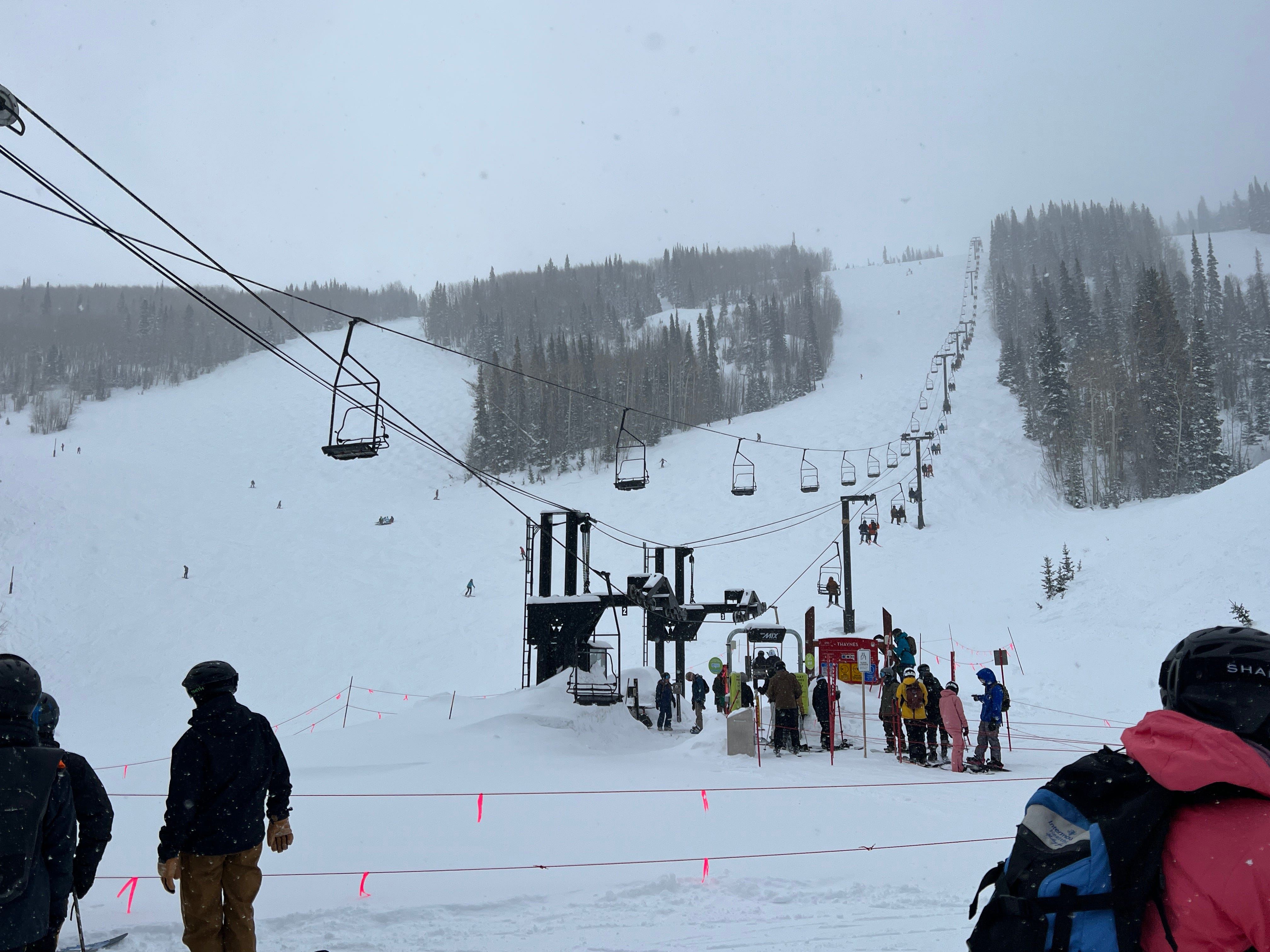
Oct 27, 2023
The Storm Live #1: Ski New York President Scott Brandi
The Storm Skiing Journal and Podcast is a reader-supported publication. To receive new posts and to support my work, please consider becoming a free or paid subscriber. What is this? A new, occasional podcast series capturing on-the-ground conversations with prominent ski industry leaders. All 148 Storm Skiing Podcasts have been recorded via phone or an internet recording service (mostly Zencastr ). That is partly because it’s easier, and partly because I had the misfortune to launch this podcast five months before Covid shin-kicked the world into hibernation. But over the past year, I’ve led panels or one-on-one interviews with industry execs in Boston, Banff, Savannah, and Lake Placid. In many cases, these are confidential sessions for the benefit of the folks in the room. However, sometimes I’m allowed to record them. And when I do, I’ll share them here. In this case, Ski Areas of New York and Ski PA invited me to their annual joint expo to moderate a panel of five ski area general managers. That session was off the record, but I spoke with Ski NY President Scott Brandi afterward. We sat down in a room bristling with camaraderie and positive energy, ski people enjoying one last inhale before ratcheting into turbo mode and the ramp-up to winter. Who Scott Brandi, President of Ski Areas of New York Recorded on September 26, 2023 About Ski Areas of New York (and Ski PA) Ski Areas of New York is a trade group representing, well, the ski areas of New York. According to their website , SKI/NY works “on behalf of its membership to promote fair legislation, develop marketing programs, create educational opportunities, and enhance the public awareness of snow sports throughout the State and region.” Most large ski states have some version of Ski New York, but as far as organization and effectiveness, this is one of the best. Ski NY co-hosts this annual session with Ski PA, the smaller state association to its south. The two organizations share a lot of challenges: crummy weather, dated infrastructure, and legislatures that are not always aligned with the industry’s interests. But their ski areas are also national leaders in crafting a viable ski experience from marginal weather, in high-volume operations, in hacking the improbable from the impossible. Here’s the combined inventory of active ski areas from both states – not all of which are necessarily members of the state organization (mostly, the little ropetow joints and private neighborhood ski areas don’t bother or can’t afford the membership dues): What we talked about What’s the point of this whole thing?; why should skiers care what happens here?; why independent ski areas are more connected to one another than you may think; the grind of working in skiing; how events like the SANY convention benefit family-owned ski areas; how SANY helps its ski areas from a regulatory point of view; why Pennsylvania and New York combine this annual event; the detrimental impact of ski industry consolidation on the event; what killed Ski PA’s kids’ passport program; and reasons for optimism in skiing; Podcast Notes On Kelly Pawlak, head of the National Ski Areas Association (NSAA) Brandi mentions Kelly Pawlak, CEO of the National Ski Areas Association (NSAA). The NSAA is the national version of the state associations, and it works closely with all of them. Pawlak has appeared on The Storm Skiing Podcast a couple of times, most recently in 2021: On my “What Keeps You Up At Night” panel My conversation followed a panel that I hosted with five ski area general managers: * Ski Big Bear, Pennsylvania GM Lori Phillips * Mount Pleasant of Edinboro, Pennsylvania GM Andrew Halmi * Whiteface, New York GM Aaron Kellett * Woods Valley, New York owner and GM Tim Woods * Mountain Creek, New Jersey GM Evan Kovac That session was not recorded, and the context of it was meant to be kept to the room we held it in. However, my intention is to host each of these folks on The Storm Skiing Podcast at some future point. Halmi has already appeared on the podcast, and it was a terrific conversation: On “what happened at Snow Ridge” Brandi references “what happened at Snow Ridge.” What happened at Snow Ridge was an EF3 tornado smashed all five of the mountain’s lifts. Since this isn’t a topic I’ve been able to focus on explicitly in this newsletter, I’ll refer you to this recent blog post by Snow Ridge owner Nick Mir: let’s go back to the morning of Tuesday, August 8th. I made my way out early that morning, where people had already gathered to witness the destruction. I figured there would be some trees down, maybe a little damage after the high winds and rain, but I was not prepared for the reality of the situation. From the top of Snow Pocket, straight down to the bottom of Little Mountain, an EF3 tornado had left a trail of mangled trees, lifts, equipment, and buildings in its wake. Four of our 5 lifts had been severely damaged, our secondary groomer crushed by a massive tree, the warming yurt resembled a pancake more than it did a building, among countless other damages. It was overwhelming, to say the least. In all honesty, the thought of packing it in and abandoning ship crossed my mind more than once. Wondering if this was something that we could realistically recover from, let alone operate this season. But then the support started pouring in. Phone calls, texts, emails, visits from friends, family, strangers. It was not only comforting, but incredibly humbling. We quickly realized that this was not just a tragedy for our family business, but for a much larger community that wasn’t going to let this keep us down. The shear amount of support we’ve received speaks volumes to the importance of this ski area to so many people. Without it, Snow Ridge would be no more than a memory. The scope of the recovery effort truly is staggering, and none of it would have been possible without those who have stood behind us and lifted us back up. Over 120 people have showed up to our two volunteer clean up days. Most notably some of our closest competitors including a crew from Dry Hill, a crew from Greek Peak, and Tim Woods from Woods Valley. Businesses donated equipment including Caza Construction, Riverside Equipment Rentals, and G&G Tree Service. Countless others have made monetary donations, donated tools, and their time to help us bounce back. We started a GoFundMe campaign after we learned that the majority of the tree removal, the crushed groomer, yurt, and other smaller damages would not be covered under our insurance policy. That campaign is nearing $40,000 and may very well cover the logging and reclamation expenses that we’ve incurred so far. The generosity shown by so many of you has literally kept this business alive. We quite literally cannot thank you all enough! The Storm publishes year-round, and guarantees 100 articles per year. This is article 92/100 in 2023, and number 478 since launching on Oct. 13, 2019. Want to send feedback? Reply to this email and I will answer (unless you sound insane, or, more likely, I just get busy). You can also email skiing@substack.com . Get full access to The Storm Skiing Journal and Podcast at www.stormskiing.com/subscribe
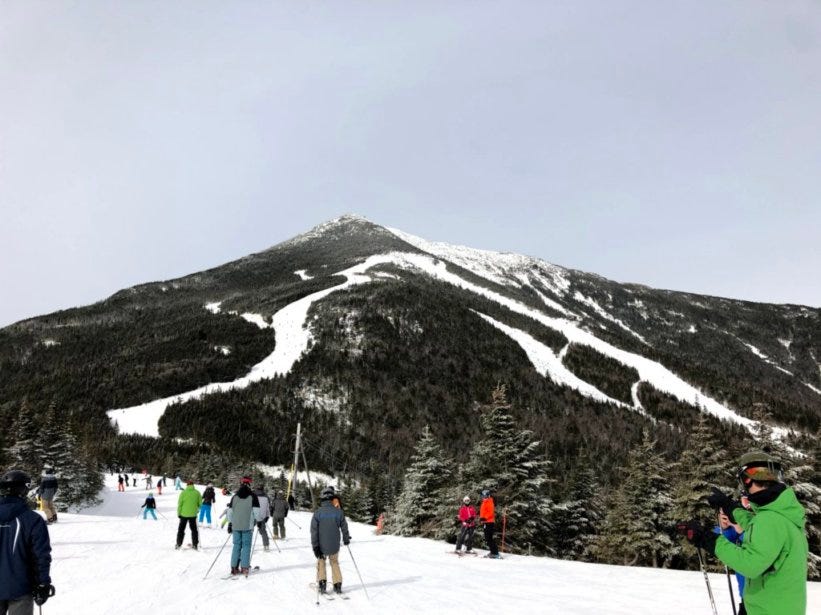
Nov 2, 2023
Podcast #149: Cranmore President and General Manager Ben Wilcox
This podcast hit paid subscribers’ inboxes on Oct. 26. It dropped for free subscribers on Nov. 2. To receive future pods as soon as they’re live, and to support independent ski journalism, please consider an upgrade to a paid subscription. You can also subscribe to the free tier below: Who Ben Wilcox, President and General Manager of Cranmore Mountain Resort , New Hampshire Recorded on October 16, 2023 About Cranmore Click here for a mountain stats overview Owned by: The Fairbank Group Located in: North Conway, New Hampshire Year founded: 1937 Pass affiliations: None Reciprocal partners: 1 day each at Jiminy Peak and Bromley Closest neighboring ski areas: Attitash (:16), Black Mountain (:18), King Pine (:28), Wildcat (:28), Pleasant Mountain (:33), Bretton Woods (:42) Base elevation: 800 feet Summit elevation: 2,000 feet Vertical drop: 1,200 feet Skiable Acres: 170 acres Average annual snowfall: 80 inches Trail count: 56 (15 most difficult, 25 intermediate, 16 easier) Lift count: 7 (1 high-speed quad, 1 fixed-grip quad, 2 triples, 1 double, 2 carpets) Why I interviewed him Nowhere does a high-speed quad transform the texture and fate of a mountain so much as in New England. Western mountains, geographically dispersed and disposed to sunshine, can still sell you a ride on a 1,700-vertical-foot fixed grip triple, as Montana Snowbowl did with their new Transporter lift last year, and which Mt. Spokane has promised to do should the ski area ever upgrade its Jurassic Riblets. Midwest hills are too short for lift speed to matter as anything other than a novelty. But in the blustery, frenetic East, a single detachable lift can profoundly alter a ski area’s reach and rap. Such lifts have proven to be stabilizing mechanisms at Burke, Gunstock, Ragged, Bromley, and Saddleback – mountains without the terrain or marketing heft of their much-larger neighbors. In each case, one high-speed quad (and a sixer at Ragged), cracked the mountain open to the masses, uniting all or most of the terrain with one six-minute lift ride and, often, stabilizing operations that had struggled for decades. Cranmore is one such mountain. Had the Skimobile Express quad not gone up in 1995, Wilcox tells us on the podcast, he’s not so sure that the ski area hanging over North Conway would have gotten out of the last century alive. A “dark period” followed the Skimobile’s 1990 demolition, Wilcox says, during which Cranmore, tottering along on a double chair strung to the summit, fell behind its high-dollar, high-energy, rapidly consolidating competitors. The Skimobile had been pokey and inefficient, but at least it was freighted with nostalgia. At least it was novel. At least it was cool. An old double chair was just an old double chair, and local skiers had lost interest in those when high-speed lifts started rising up the New England mountainsides in the late 1980s. It’s true that a handful of New England ski areas continue to rely on antique doubles: Smugglers’ Notch, Magic, Black Mountain in New Hampshire, Mt. Abram. But Smuggs delivers 300 inches of snow per winter and a unique, sprawling terrain network. The rest are improbable survivors. Magic sat idle for half the ‘90s. We nearly lost Black earlier this month. All anybody knows about Mt. Abram is that it’s not Sunday River. The Skimobile Express did not, by itself, save Cranmore. If such a lift were such a magic trick, then we’d still be skiing the top of Ascutney today (yes Uphill Bro I know you still are). But the lift helped. A lot. There is a tendency among skiers to conflate history with essence. As though a ski area, absent the trappings of its 1930s or ‘40s or ‘50s origins, loses something. These same skiers, however, do not rip around on 240s clapped to beartrap bindings or ski in top hats and mink shawls. Cranmore could not simply be The Ski Area With The Skimobile forever and ever. Not after every other ski area in New England, including Cranmore, had erected multiple chairlifts. There is a small market for such tricks. Mad River Glen can spin its single chair for 100 more years if the co-op ownership model holds up. But that is a rowdy, rugged hunk of real estate, 2,000 feet of nasty, a place where being uncomfortable is half the point. Cranmore… is not. So Cranmore changed. It is now a nice, modern, mid-sized New England ski area, with a 1,200-foot vertical drop and a hotel at the base. More important, it is an 86-year-old New England ski area, one that began in the era when guys named Harv and Mel and Bob and Jenkins showed up with a hacksaw and a 12-pack and started building a lift-served snowskiing operation, and transitioned into a new identity suited to a new world. Wilcox, with his grasp of the resort’s sprawling, mad history, is a capable ambassador to tell us how they did it. What we talked about The new Fairbank base lodge; what Cranmore found when they tore down the old lodge; the future of Zip’s Pub; who the lodge is named after; the base lodge redevelopment plan; what happened when the Fairbanks purchased Cranmore; North Conway; traffic; Bretton Woods; Booth Creek; Cranmore pride; “if [the Skimobile Express] hadn’t gone in in the mid-90s, I’m not sure if we’d still be here”; the Skimobile Express upgrade and why Cranmore didn’t replace it with a new lift; the history of America’s Zaniest lift, the original Skimobile; why Cranmore ultimately demolished the structure; potential upgrades for Lookout; the long-rumored but never-built Blackcap expansion; the glory and grind of southern exposure; night skiing; what happened when Vail came to town; competing against discount Epic Passes; why the days of car-counting are over; the history and logic behind the White Mountain Super Pass and the Sun and Snow Pass; Black Mountain; staffing up when your biggest rival raises minimum wage to $20 an hour; and whether Cranmore has considered a Jiminy Peak-esque wind turbine. Why I thought that now was a good time for this interview The Fairbank Group did something unsung and brilliant over the past two years. While major resorts across the continent razed and replaced first-generation detachables at a per-project cost approaching or exceeding double-digit millions, Cranmore (which Fairbank owns), and Bromley (which they operate), modernized in a more modest way. Rather than tearing down the high-speed quads that act as base-to-summit people-movers for each ski area, they gut-renovated them. For around $1 million per lift, Bromley’s Sun Mountain Express and Cranmore’s Skimobile Express got new, modern drives, comms lines, safety systems, and more. The result: two essentially brand-new lifts with three-plus decades of good life ahead of them. Skiers may not see it that way, and most won’t even know about the upgrades. The aesthetics, mostly, remain unchanged. But for independent ski area operators knocked into eyes-bulging terror as they see price quotes for a Double Clutch Z-Link Awesomeness 42-passenger Express Lift, the Fairbank model offers an approachable alternative. Knock down the walls, but keep the building intact, a renovation rather than a rebuild. Boyne does this all the time, mostly with lifts the company is relocating: the Kanc quad at Loon becomes the Seven Brothers quad; Big Sky’s Swift Current quad becomes Sugarloaf’s Bucksaw Express; Sunday River’s Jordan quad is, someday, maybe, supposedly going to land at Pleasant Mountain. Sugarloafers may grumble on their message boards about getting a used quad while Sunday River erects its second D-Line bubble lift in two years, but, as Loon President/GM Brian Norton told me about the Seven Brothers upgrade on the podcast last year, the effect of such projects are that skiers get “a new lift… you won’t recognize it.” Other than the towers and the chairs, the machine parts of these machines really are brand new. Cranmore and its sister resorts have found a different way to sustainably operate, is my point here. The understated chairlift upgrades are just one expression of this. But both operate, remember, in impossible neighborhoods. Bromley is visible from almost any point on Alterra-owned Stratton, Southern Vermont’s Ikon Pass freight train. Cranmore sits just down the road from Vail-owned Attitash and Wildcat, both of which are larger, and both of which share a pass – which, by the way, is less expensive than Cranmore’s – with each other and with their 20 or 50 or 60 best friends, depending upon how Epic you want your winter to be. The local lift-served skiing market is so treacherous that Black Mountain, less than 11 miles north of Cranmore and in continuous operation since 1935, was saved from permanent closure last week only when Indy Pass called in the cavalry. Yet, Cranmore thrives. Wilcox says that season pass sales continue to increase every year. Going into year five of Northeast-specific Epic Pass offerings and year six of the Ikon Pass, that’s an amazing statistic. Cranmore’s pass is not cheap. The early-bird adult price for the 2023-24 ski season came in at $775. It’s currently $1,139. For a 1,200-vertical-foot mountain in a state full of 2,000-footers, with just one high-speed lift in a neighborhood where Sunday River runs five, statistical equivalencies quickly fail any attempt to explain this momentum. So what does explain it? Perhaps it’s the resort’s massive, ongoing base area renovation that landed a new hotel and lodge onsite within the past year. Perhaps it’s consumer habit and proximity to North Conway, looming, as the mountain does, over town. Perhaps it’s the approachable, just-right size of the mountain or, for families, the fact that all trails funnel back to a single base. Perhaps it’s the massive seasonal youth and race programs. It is, most likely, a combination of all of these things, as well as atmospheric intangibles and managerial competence. Whatever it is, Cranmore shows us that a pathway exists for a Very Good Mountain to thrive in the megapass era without being a direct party to it. It’s worth noting that Black, which nearly failed, is a fifth-year member of Indy Pass, which Cranmore has declined to join. While this conversation with Wilcox does not exactly explain how the mountain has been so successful even as it sidesteps megatrends, it’s easy enough to appreciate, as you listen to his passion for and appreciation of the place, why it does. What I got wrong I noted that the Skimobile Express quad had been upgraded “last year, or maybe the year before.” Cranmore completed the lift overhaul in 2022. I referred to Vail’s Northeast Value Epic Pass as the “Northeast Local Pass.” Why you should ski Cranmore The New England Ski Safari is not quite the social media meme that it is in the big-mountain West, where Campervan Karl and Bearded Bob document their season-long adventures over switchbacking passes with their trusty dog, Labrador Larry. Alta/Snowbird to Jackson to Big Sky to Sun Valley to Tahoe with a sickness Brah. Hella wicked rad. Six weeks and 16 storms, snowshovels in the roof box and Larry pouncing through snow in IG Stories. Distance is not such an obstacle in the East. New England crams 100 ski areas into a six-state region half the size of Montana (which is home to just 17, two of which it shares with Idaho). Between pow runs we can just… go home. But the advent of the megapass in the Northeast over the past decade has enabled this sort of resort-hopping adventure. Options abound: * Epic Pass gives you three of Vermont’s largest ski areas (Okemo, Mount Snow, Stowe); one of New England’s best ski areas (also Stowe); and four stops in New Hampshire, three of which (Mount Sunapee, Wildcat, and Attitash), are sizeable. Crotched gives you night skiing. * Ikon Pass delivers four of New England’s biggest, best, and most complete ski areas: Killington, Sugarbush, Sunday River, and Sugarloaf; as well as two of its best lift systems (Stratton and Loon – yes, I know the gondolas are terrible at both); and a sleepy bomber in Pico. * Indy Pass gives you perhaps New England’s best ski area (Jay Peak); three other mountains that stack up favorably with anything on Epic or Ikon (Waterville Valley, Cannon, Saddleback); and a stack of unheralded thumpers where light crowds and great terrain collide (Black Mountain of Maine, Black Mountain NH, Magic, Bolton Valley, Berkshire East); and a bunch of family-friendly bumps (Whaleback, Dartmouth Skiway, Pats Peak, Saskadena Six, Mohawk, Catamount, Bigrock). Hit any of those circuits, and you’re bound for a good winter. So why tack on an extra? Cranmore is one of the few large New England independents (along with Bretton Woods, Smugglers’ Notch, Mad River Glen, Bromley), to so far decline megapass membership. That makes it a trickier sell to the rambling resort-hopper. But this is not Colorado. You can score a Cranmore lift ticket for as little as $65 on select Sundays, even in mid-winter, (including, as of this writing, the always raucous St. Patrick’s Day). If you’re skiing Attitash and staying in North Conway, you can roll up to Cranmore starting at 2 p.m. on Wednesday or Saturday for a $69 night-ski and some pre-dinner turns. And it’s worth the visit. This is a very good ski mountain. The stats undersell the place. It skis and feels big. The fall lines are sustained and excellent. Glades are more abundant than the trailmap suggests. The grooming is outstanding. It faces south – a not unimportant feature in often-frigid New England. Even if you’re megapass Bro (and who among us is not?), this one fits right into the circuit, close to Attitash, Black, Wildcat, Cannon, Loon, Waterville. It’s easy to ski multiple New England mountains on a single trip, or even in a single day. The last time I skied Cranmore, I cranked through 17 high-speed laps in three hours and then bumped over to Pleasant Mountain, half an hour down the road. Podcast Notes On Hans Schneider Henry Dow Gibson, who New England Ski History refers to as an “international financier” founded Cranmore in 1937, but it was Austrian ski instructor Hannes Schneider who institutionalized the place. Per New England Ski History : Hannes Schneider was born on June 24, 1890 in Stuben, a small town west of Arlberg Pass in Austria. At the age of 8, Schneider started skiing on makeshift skis. While becoming a renowned skier in his teenage years, Schneider developed the Arlberg technique. The Arlberg technique quickly caught on, resulting in Schneider becoming in demand for demonstrations, films, and military training. Following Nazi Germany taking Austria in the Anschluss, Schneider was imprisoned March 12, 1938. In January of 1937, international financier Harvey Gibson purchased land on Cranmore Mountain in Conway with the aim to make North Conway a winter destination. Two years later, after lawyer Karl Rosen managed to transfer Schneider from prison to house arrest, Gibson leveraged his firm's German holdings and negotiated with Heinrich Himmler to get Schneider and his family released from Germany and transported to the United States. Following a massive welcoming party in North Conway in February of 1939, Schneider took over Cranmore and worked quickly to make it one of the best known ski areas in the country. One of Schneider's first big decisions at Cranmore was to expand lift service to the summit, which was accomplished during his first full season when the upper section of the Skimobile was installed. With top to bottom Skimobile coverage, Cranmore was second only to Cannon's tram in terms of continuous lift served vertical drop in New England. With the onset of World War II, Hannes was reportedly involved in the training and providing intelligence for United States and British ski troops. His son Herbert served in the 10th Mountain Division during World War II, earning a Bronze Star for his heroic actions in Italy. Following the war, Herbert returned to North Conway to work for his father. In 1949, Hannes Schneider was hired to oversee construction of the new Blue Hills ski area outside of Boston, Massachusetts. Schneider referred to the ski area was "Little Cranmore." In the spring of 1955, Schneider was actively working to open new terrain at Cranmore, serviced by its first chairlift. Following a day of laying out new terrain in what would become the East Bowl, Schneider died of a heart attack. Schneider's son Herbert assumed control of the Cranmore ski school and, circa 1963 started a two decade run as owner of the ski area. Schneider's name lives on at Cranmore, as a trail (Schneider in the East Bowl) and the annual Hannes Schneider Meister Cup Race. On the Fairbank Group Cranmore is owned by the Fairbank Group, whose chairman and namesake, Brian Fairbank, transformed Jiminy Peak from a Berkshires backwater into the glimmering modern heart of Massachusetts skiing. The company also operates Bromley (which is owned by Joseph O'Donnell), and owns a renewable energy operation ( EOS Ventures ), a ski industry e-learning platform ( Bullwheel Productions ), and a snowmaking outfit ( Snowgun Technologies ). For all this and more, including Jiminy Peak’s early embrace of clean energy to power its operation, Brian Fairbank earned a spot in the Ski & Snowboard Hall of Fame in 2020. I hosted him on the podcast that autumn to discuss his career and achievements: On Booth Creek Ski Holdings In an alternate universe, Booth Creek may stand on Alterra’s throne, Vail’s foil in the Skico Wars. For a brief period in the late ‘90s, the company, founded by former Vail and Beaver Creek owner George Gillett Jr., owned eight ski areas across the United States: Cranmore, Loon, Waterville Valley, Grand Targhee, Summit at Snoqualmie, Bear Mountain (now part of Big Bear), Northstar, and Sierra-at-Tahoe. In 1998, the company attempted to purchase Seven Springs, Pennsylvania. But, as this summary chart from New England Ski History shows, Booth Creek began selling off resorts in the early 2000s. Today, it owns only Sierra-at-Tahoe: On the Skimobile Had Cranmore’s monolithic Skimobile survived to the present day, most visitors would probably mistake it for a mountain coaster. When it went live, in 1938, skiers likely mistook it for the future. “Well, by gum, a contraption that just takes you right up the mountain while you sit on your heinie. This will change skiing forever!” Instead, the Skimobile, a two-track mon that toted skiers uphill in single-passenger carts, passed five decades as a beloved novelty before Cranmore demolished it in 1990. The New England ski diaspora is still sore about this. But imagine building a Great Wall of China your mountain. It would kind of make it hard for skiers, Patrol, groomers, etc. to move around the bump. And someone came up with a better idea called a “chairlift.” When the only feasible alternative was the ropetow, the Skimobile probably seemed like the greatest invention since electricity. But once the chairlift proliferated, the shortcomings of a tracked lift became obvious. The Skimobile rose Cranmore’s full 1,200 vertical feet in two sections: the lower , built in 1938, and the upper , constructed the following year. Skiers had to disembark to take the second. Here’s how they laid out in a circa 1951 trailmap: On the potential Black Cap expansion Wilcox and I discussed long-proposed Black Cap expansion, which would give Cranmore a several-hundred-acre, several-hundred-vertical-foot boost off the backside. New England Ski History includes the following details in its short write-up of Black Cap : Wilcox provides slightly different numbers, but doesn’t rule out the possibility of this significant expansion at some future point. The current trailmap shows Black Cap looming in the background: The Storm explores the world of lift-served skiing year-round. Join us. The Storm publishes year-round, and guarantees 100 articles per year. This is article 91/100 in 2023, and number 477 since launching on Oct. 13, 2019. Want to send feedback? Reply to this email and I will answer (unless you sound insane, or, more likely, I just get busy). You can also email skiing@substack.com . Get full access to The Storm Skiing Journal and Podcast at www.stormskiing.com/subscribe
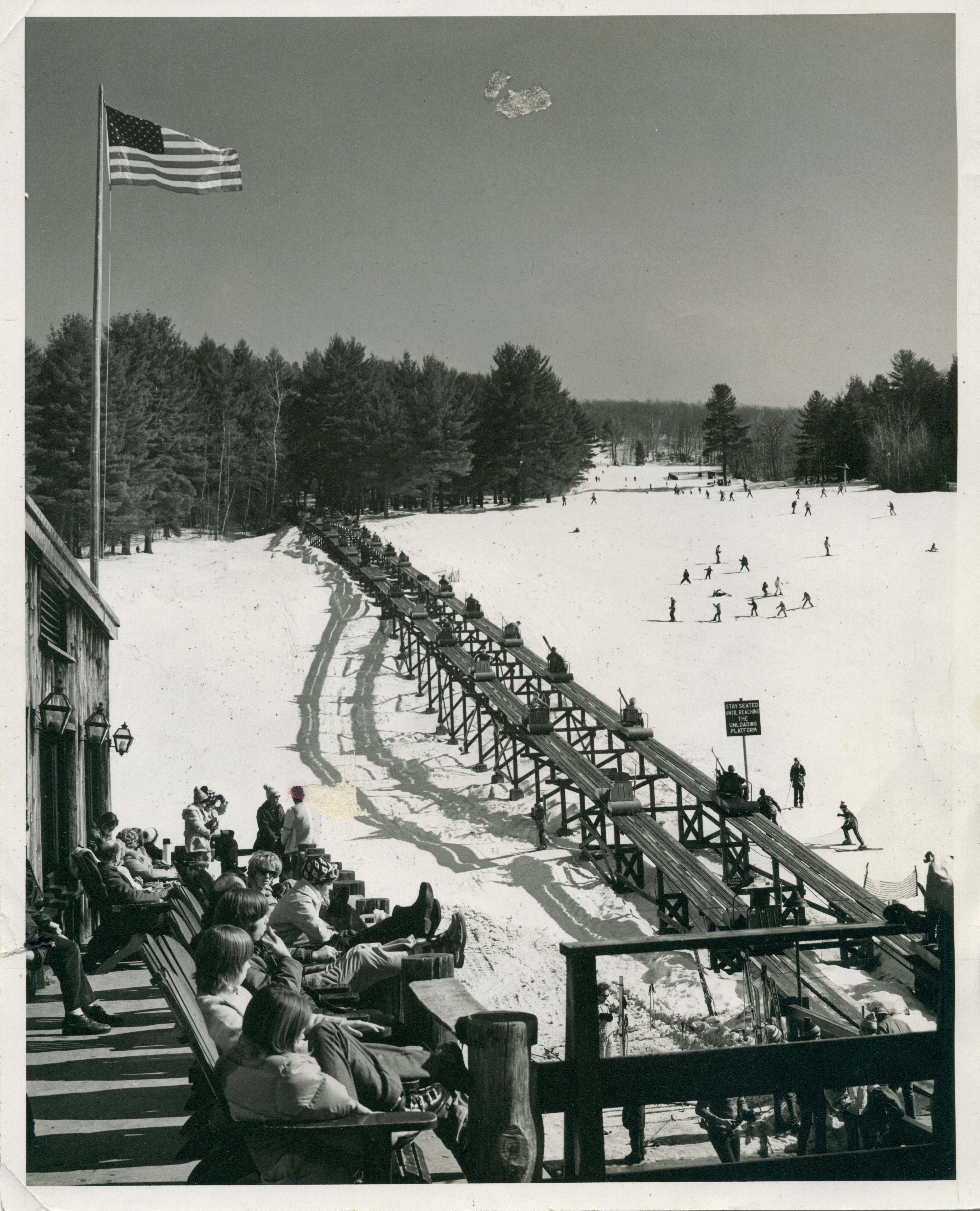
Oct 30, 2023
Podcast #148: Cascade Mountain, Wisconsin General Manager Matt Vohs
This podcast hit paid subscribers’ inboxes on Oct. 23. It dropped for free subscribers on Oct. 30. To receive future pods as soon as they’re live, and to support independent ski journalism, please consider an upgrade to a paid subscription. You can also subscribe to the free tier below: Who Matt Vohs, General Manager of Cascade Mountain , Wisconsin Recorded on October 10, 2023 About Cascade Mountain Click here for a mountain stats overview Owned by: The Walz family Located in: Portage, Wisconsin Year founded: 1962 Pass affiliations: None Reciprocal partners: None Closest neighboring ski areas: Devil’s Head (:20), Christmas Mountain Village (:30), Tyrol Basin (1:00) Base elevation: 820 feet Summit elevation: 1,280 feet Vertical drop: 460 feet Skiable Acres: 176 Average annual snowfall: 50-60 inches Trail count: 48 (23% advanced, 40% intermediate, 37% beginner) Lift count: 10 (2 high-speed quads, 3 fixed-grip quads, 1 triple, 2 doubles, 1 ropetow, 1 carpet – view Lift Blog’s inventory of Cascade’s lift fleet) Why I interviewed him Contrary to what you may imagine, Midwesterners do not pass their winters staring wistfully at the western horizon, daydreaming only of the Back Bowls and Wasatch tram rides. They’re not, God help us, New Yorkers. Because unlike the high-dollar Manhattanite with weeks booked at Deer Valley and Aspen, Midwesterners ski even when they’re not on vacation. Sure, they’ll tag that week in Summit County or Big Sky (driving there, most likely, from Grand Rapids or Cincinnati or Des Moines), but they’ll fill in the calendar in between. They’ll ski on weekends. They’ll ski after work. They’ll ski with their kids and with their buddies and with their cousins. They’ll ski in hunter orange and in Vikings jerseys and in knit caps of mysterious vintage. They’ll ski with a backpack full of High Life and a crockpot tucked beneath each arm and a pack of jerky in their coat pocket. “Want some,” they’ll offer as you meet them for the first time on the chairlift, a 55-year-old Hall double with no safety bar. “My buddy got an elk permit this year.” They ski because it’s fun and they ski because it’s cold and they ski because winter is 16 months long. But mostly they ski because there are ski areas everywhere, and because they’re pretty affordable. Even Vail doesn’t break double digits at its Midwest bumps, with peak-day lift tickets reaching between $69 and $99 at the company’s 10 ski areas spread between Missouri and Ohio. Because of this affordable density, the Midwest is still a stronghold for the blue-collar ski culture that’s been extinguished in large parts of the big-mountain West. You may find that notion offensive - that skiing, in this rustic form, could be more approachable. If so, you’re probably not from the Midwest. These people are hard to offend. Michigan-born Rabbit, AKA Eminem, channels this stubborn regional pride in 8 Mile’s closing rap battle, when he obliterates nemesis Papa Doc by flagrantly itemizing his flaws. “I know everything he’s got to say against me” may as well be the mantra of the Midwest skier. In the U.S. ski universe, Colorad-Bro is Papa Doc, standing dumbfounded after Wisco Bro just turned his sword around on himself: This guy ain’t no m***********g MC I know everything he’s got to say against me My hill is short, It snows 30 inches per year I do ski with a coffee Thermos filled with beer My boys do ski in camouflage I do ride Olin 210s I found in my Uncle Jack’s garage I did hit an icy jump And biff like a chump And my last chairlift ride was 45 seconds long I’m still standing here screaming “Damn let’s do it again!” You can’t point out the idiosyncratic shortcomings of Midwest skiing better than a Midwest skier. They know. And they love the whole goddamn ball of bologna. But that enthusiasm wouldn’t track if Wisconsin’s 33 ski areas were 33 hundred-foot ropetow bumps. As in any big ski state to its east or west, Wisco has a hierarchy, a half-dozen surface lift-only operations; a smattering of 200-footers orbiting Milwaukee; a few private clubs; and, at the top of the food chain, a handful of sprawling operations that can keep a family entertained for a weekend: Granite Peak, Whitecap, Devil’s Head, and Cascade. And, just as I’m working my way through the Wasatch and Vermont and Colorado by inviting the heads of those region’s ski areas onto the podcast, so I’m going to (do my best to) deliver conversations with the leaders of the big boys in the Upper Midwest. This is my sixth Wisconsin podcast, and my 15th focused on the Midwest overall (five in Michigan, one each in Indiana, Ohio, and South Dakota, plus my conversation with Midwest Family Ski Resorts head Charles Skinner – view them all here ). I’ve also got a pair of Minnesota episodes (Lutsen and Buck Hill), and another Michigan (Snowriver) one booked over the coming months. I don’t record these episodes just to annoy Colorado-Bro (though that is pretty funny), or because I’m hanging onto the Midwest ski areas that stoked my rabid obsession with skiing (though I am), or because the rest of the ski media has spent 75 years ignoring them (though they have). I do it because the Midwest has some damn good ski areas, run by some damn smart people, and they have a whole different perspective on what makes a good and interesting ski area. And finding those stories is kind of the whole point here. What we talked about Cascade’s season-opening plan; summer improvements; how much better snowmaking is getting, and how fast; improving the load area around Cindy Pop; Cascade’s unique immoveable neighbor; the funky fun Daisy mid-mountain parking lot; upgrading the Mogul Monster lift; why Cascade changed the name to “JL2”; Cascade’s “Midwest ski-town culture”; Devil’s Head; when I-94 is your driveway; why JL2 is a fixed-grip lift, even though it runs between two high-speed quads; other lift configurations Cascade considered for JL2; the dreaded icing issue that can murder high-speed lifts; reminiscing on old-school Cascade – “if the hill was open, we were here”; Christmas Mountain; a brief history of the Walz family’s ownership; a commitment to independence; whether slopeside lodging could ever be an option; which lifts could be next in line for upgrades; whether Cascade considered a midstation for Cindy Pop; the glory of high-speed ropetows and where Cascade may install another one; the summer of two lift installations; the neverending saga of Cascade’s expansion and what might happen next; the story behind the “Cindy Pop” and “B-Dub” lift names and various trail names; why Cindy Pop is a detachable lift and B-Dub is a fixed-grip, even though they went in the same summer; additional expansion opportunities; why Cascade hasn’t (and probably won’t), joined a multi-mountain ski pass; and Cascade’s best idea from Covid-era operations. Why I thought that now was a good time for this interview The National Ski Areas Association asked me to lead a panel of general managers at their annual convention in Savannah last spring. I offered them a half-dozen topics, and we settled on “megapass holdouts”: large (for their area), regionally important ski areas that could join the Indy Pass – and, in many cases, the Epic and Ikon passes – but have chosen not to. It’s a story I’d been meaning to write in the newsletter for a while, but had never gotten to. We wanted nationwide representation. In the west, we locked in Mt. Baker CEO Gwyn Howat and Mt. Rose GM Greg Gavrilets. For the eastern rep, I tapped Laszlo Vajtay, owner of Plattekill, an 1,100-footer tucked less than three hours north of New York City (but nearly unknown to its mainstream skier populations). In the Midwest, Cascade was my first choice. Why? Because it’s a bit of an outlier. While the Ikon Pass ignores the Midwest outside of Boyne’s two Michigan properties, opportunities for megapass membership are ample. Indy Pass has signed 32 partners in the region, and Vail has added 10 more to its Epic Pass. Five of the remainder are owned by an outfit called Wisconsin Resorts, which has combined them on its own multi-mountain pass. The model works here, is my point, and most of the region’s large ski areas have either opted into the Indy Pass, or been forced onto a different megapass by their owner. But not Cascade. Here is a mountain with a solid, modern lift fleet; a sprawling and varied trail network; and what amounts to its own interstate exit. This joint would not only sell Indy Passes – it would be a capable addition to Ikon or Epic, selling passes to voyaging locals in the same way that Camelback and Windham do in the East and Big Bear does in the West. And they know it. But Cascade stands alone. No pass partnerships. No reciprocal deals. Just a mountain on its own, selling lift tickets. What a concept. A core operating assumption of The Storm is that multi-mountain passes are, mostly, good for skiers and ski areas alike. But I have not made much of an effort to analyze counter-arguments that could challenge this belief. The Savannah panel was an exercise in doing exactly that. All four mountain leaders made compelling cases for pass independence. Since that conversation wasn’t recorded, however, I wanted to bring a more focused version of it to you. Here you go. What I got wrong I said that “I grew up skiing in Michigan” – that isn’t exactly correct. While I did grow up in Michigan, and that’s where I started skiing, I never skied until I was a teenager. Why you should ski Cascade Let’s say you decided to ski the top five ski areas in every ski state in America. That would automatically drop Cascade onto your list. Even in a state with 33 ski areas, Cascade easily climbs into the top five. It’s big. The terrain is varied. It’s well managed. The infrastructure is first-rate. And every single year, it gets better. Yes, Cascade is consistent and deliberate in its lift and snowmaking upgrades, but no single change has improved the experience more than limiting lift ticket sales. This was a Covid-era change that the ski area stuck with, Vohs says, after realizing that giving a better experience to fewer skiers made more long-term business sense than jamming the parking lot to overfill every Saturday. Every ski area in America is a work in progress. Watching The Godfather today is the same experience as when the film debuted in 1972. But if you haven’t skied Vail Mountain or Sun Valley or Stowe since that year, you’d arrive to an experience you scarcely recognized in 2023. Some ski areas, however, are more deliberate in crafting this evolving story. To some, time sort of happens, and they’re surprised to realize, one day, that their 1985 experience doesn’t appeal to a 21st century world. But others grab a handsaw and a screwdriver and carefully think through the long-term, neverending renovation of their dream home. Cascade is one of these, constantly, constantly sanding and shifting and shaping this thing that will never quite be finished. Podcast Notes On Wisconsin’s largest ski areas I mentioned that Cascade was one of Wisconsin’s largest ski areas. Here’s a full state inventory for context: On more efficient modern snowmaking I mentioned a conversation I’d had with Joe VanderKelen, president of SMI Snow Makers, and how he’d discussed the efficiency of modern snowmaking. You can listen to that podcast here: On naming the JL2 lift When Cascade replaced the Mogul Monster lift last year, resort officials named the new fixed-grip quad on the same line “JL2.” That, Vohs tells us, is an honorarium to two Cascade locals killed in a Colorado avalanche in 2014: Justin Lentz and Jarrard Law. Per the Milwaukee Journal Sentinel on Feb. 16, 2014: Two men from Portage were killed in a Colorado avalanche while skiing over the weekend. Justin Lentz, 32, and Jarrad Law died when they and five other skiers were swept away by an avalanche late Saturday afternoon, friends and family told Madison television station WISC-TV (Channel 3.) The avalanche occurred at an elevation of about 11,000 feet near Independence Pass, roughly 120 miles southwest of Denver. The two skiers were found at the top of the avalanche, said Susan Matthews, spokeswoman for the Lake County Office of Emergency Management. "The skiers were equipped with avalanche beacons, which assisted search and rescue crews in locating them," she said. She said authorities believe the seven skiers triggered the slide. Officials found the bodies of Lentz and Law Sunday afternoon but did not release their names. One of Lentz's family members told WISC-TV that the family was notified Saturday night. Lentz was a Portage High School graduate who was in Colorado on a skiing trip. A friend said Law had worked at Cascade Mountain and was an avid skier. WKOW captured the scene at the JL2 lift’s opening this past January: It was a bittersweet moment for those at Cascade Mountain as visitors took a ride on a new ski lift named in honor of two late skiers. When it came time to name the new ski lift at Cascade Mountain in Portage, crews at the resort said there was only option that seemed fitting. "We tossed around the idea of naming it after a couple of just really awesome guys who grew up skiing and snowboarding here," said Evan Walz, who is the Inside Operations Manager for Cascade Mountain. The name they landed on was JL2. It's in honor of Jarrard Law and Justin Lentz. "[I] wanted to cry," Justin Lentz's mother, Connie Heitke, said. "Because I knew that people were still thinking of them and love them as much as when it first happened." Law and Lentz lost their lives to an avalanche while on a backcountry trip in Colorado in February 2014. Heitke said it has been hard but said it's the support from friends and family that helps her get through. "[I] still miss him awfully a lot. He was my first. It's coming around and now that I can feel that it was okay because he used to enjoy life," she said. Seeing people gather for the ribbon cutting of the ski lift's grand opening, Heitke said is a fabulous feeling. "He [Justin] would have been grabbing my head and shaking my head and shaking me screaming and yelling and hollering just like he did," she said. "Jarrard would have just been sitting over there really calm with a smile on his face enjoying watching Justin." From Lentz’s obituary : Justin T. Lentz, age 32, of Sun Prairie, died on Saturday, February 15, 2014 as the result of a skiing accident in Twin Lakes, Colorado. Justin was born on August 7, 1981 in Portage, the son of Robert and Connie (Heitke) Lentz. He graduated from Portage High School in 2000. He had worked at Staff Electric in Madison since 2005. Justin loved skiing, snowboarding, fishing, hiking, mountain biking, and making his weekends better than everyone else’s year. From Law’s obituary : Jarrard Leigh Law, 34, of Portage, formerly of Carroll County, died tragically while skiing in Colorado Saturday, Feb. 15, 2014. He was born Dec. 6, 1979, in Freeport, to Joan (Getz) and Robert Law. Jarrard was baptized at St. Peter’s Lutheran Church in Savanna and confirmed at Bethlehem Lutheran Church in Portage. He was a 1998 graduate of Portage High School and earned a degree in computer information systems from Madison Area Technical College. For the past 12 years, he was employed by CESA 5 working as a computer technician for the Necedah Area School District. Jarrard was a member of Bethlehem Lutheran Church serving as an usher and communion assistant. He enjoyed skiing, biking, hiking and many other outdoor activities. On Devil’s Head I’ve long had a low-grade obsession with ski areas that sit near one another. Despite drawing from identical or very similar weather systems, terrain features, and population bases, they ski, look, and feel like completely different entities. Think A-Basin/Keystone or Sugarbush/Mad River Glen – neighbors that exist, it can seem, in different universes. Many versions of this dot the Midwest, with perhaps the most well-known being Nub’s Nob/The Highlands, an independent/Boyne Resorts duo that face one another across a Michigan backroad. How different are they? Both ski areas built new lifts this summer. The Highlands removed three Riblet triples and replaced them with one Doppelmayr D-Line bubble six-pack, a chairlift that probably cost more than the Detroit Lions. Nub’s Nob, meanwhile, replaced a Riblet fixed-grip quad with… a Skytrac fixed-grip quad. “High-speed chairlifts at Nub’s Nob just don’t make sense,” GM Ben Doornbos underscored in a video announcing the replacement: Wisconsin’s version of this is Cascade and Devil’s Head, which sit 14 road miles apart. While both count similar vertical drops and skiable acreage totals, Devil’s Head, like Nub’s, relies solely on fixed-grip lifts. It’s a bit more backwoods, a bit less visible than Cascade, which is parked like a sentinel over the interstate. Vohs and I talk a bit about the relationship between the two ski areas. Here’s a visual of Devil’s Head for reference: On Christmas Mountain Vohs spent some time managing Christmas Mountain, 22 miles down the interstate. He refers to it as, “a very small operation.” The place is more of an amenity for the attached resort than a standalone ski area meant to compete with Cascade or Devil’s Head. It’s around 200 vertical feet served by a quad and a handletow: On the capacity differences between fixed-grip and high-speed lifts Cascade runs four top-to-bottom quads: two detachables and two fixed-grips. Vohs and I discuss what went into deciding which lift to install for each of these lines. Detachable quads, it turns out, are about twice as expensive to install and far more expensive to maintain, and – this is hard to really appreciate – don’t move any more skiers per hour than a fixed-grip quad . Don’t believe it? Check this excellent summary from Midwest Skiers: You can also read the summary here . On high-speed ropetows I’m going to go ahead and keep proselytizing on the utility and efficiency of high-speed ropetows until every ski area in America realizes that they need like eight of them. Look at these things go (this one is at Mount Ski Gull in Minnesota): On Cascade’s expansion and Google Maps Many years ago, Cascade cut a half dozen or so top-to-bottom trails skier’s right of the traditional resort footprint. Were this anywhere other than Cascade, skiers may have barely noticed, but since the terrain rises directly off the interstate, well, they did. Cascade finally strung the B-Dub lift up to serve roughly half the terrain in 2016, but, as you can see on Google Maps, a clutch of trails still awaits lift service: So what’s the plan? Vohs tells us in the podcast. The Storm explores the world of lift-served skiing year-round. Join us. The Storm publishes year-round, and guarantees 100 articles per year. This is article 90/100 in 2023, and number 476 since launching on Oct. 13, 2019. Want to send feedback? Reply to this email and I will answer (unless you sound insane, or, more likely, I just get busy). You can also email skiing@substack.com . Get full access to The Storm Skiing Journal and Podcast at www.stormskiing.com/subscribe
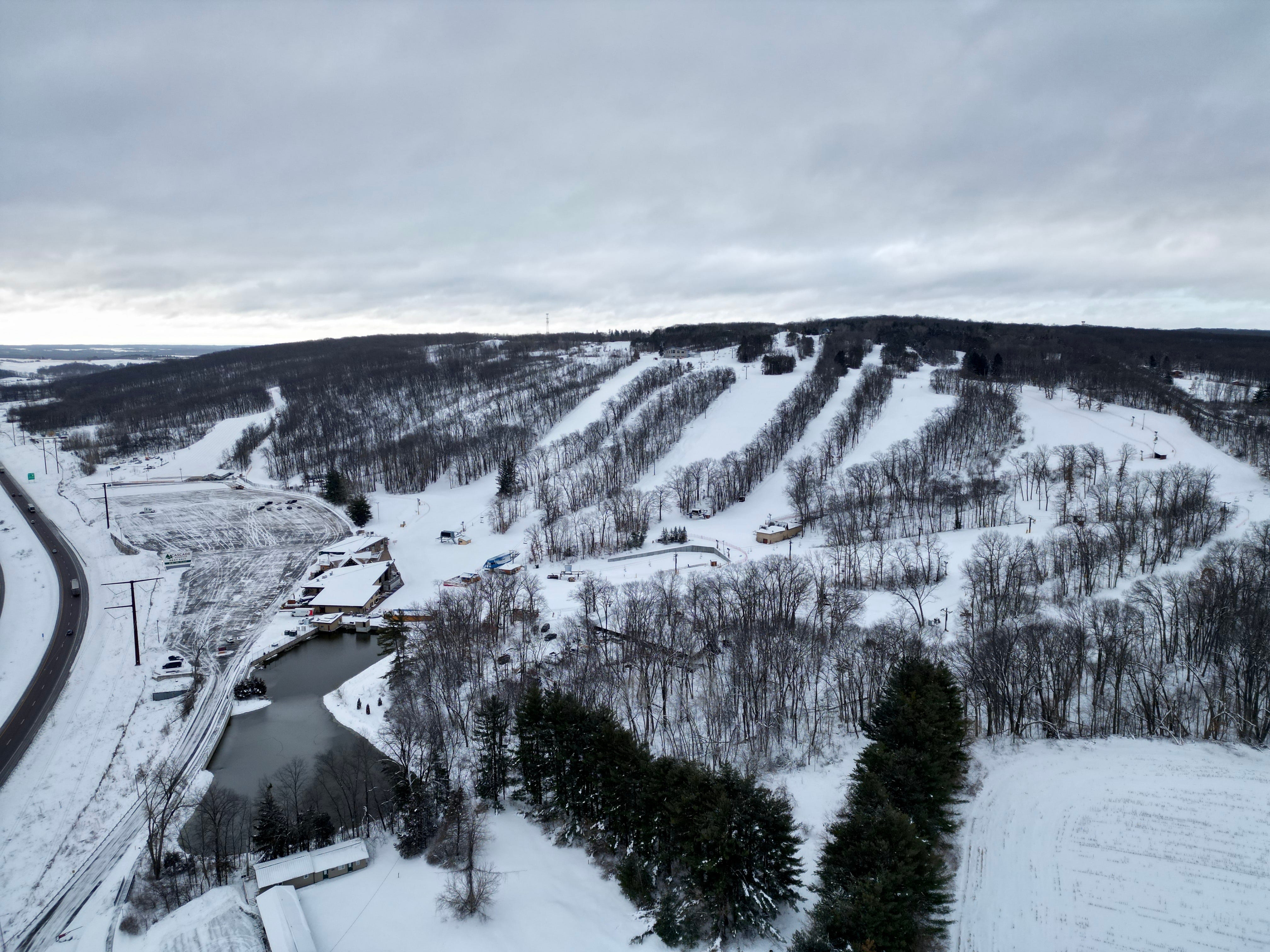
Oct 20, 2023
Podcast #147: Northstar Vice President and General Manager Amy Ohran
This podcast hit paid subscribers’ inboxes on Oct. 13. It dropped for free subscribers on Oct. 20. To receive future pods as soon as they’re live, and to support independent ski journalism, please consider an upgrade to a paid subscription. You can also subscribe to the free tier below: Who Amy Ohran, Vice President and General Manager of Northstar , California Recorded on October 2, 2023 About Northstar Click here for a mountain stats overview Owned by: EPR Properties , operated by Vail Resorts Located in: Truckee, California Year founded: 1972 Pass affiliations: * Epic Pass : unlimited * Epic Local Pass : unlimited with holiday blackouts * Tahoe Local : unlimited with holiday blackouts * Tahoe Value : unlimited with holiday and Saturday blackouts * Epic Day Pass : access with all resorts and 32-resorts tiers Closest neighboring ski areas: Boreal (:21), Tahoe Donner (:22), Palisades Tahoe (:25), Diamond Peak (:25), Soda Springs (:25), Kingvale (:27), Sugar Bowl (:28), Donner Ski Ranch (:29), Mt. Rose (:30), Homewood (:35), Heavenly (:57) - travel times vary considerably pending traffic, weather, and time of year. Base elevation: 6,330 feet (at the village) Summit elevation: 8,610 feet (top of Mt. Pluto) Vertical drop: 2,280 feet Skiable Acres: 3,170 acres Average annual snowfall: 350 inches Trail count: 100 (27% advanced, 60% intermediate, 13% beginner) Lift count: 20 (1 six-passenger gondola, 1 pulse gondola, 1 six/eight-passenger chondola, 1 high-speed six pack, 6 high-speed quads, 1 fixed-grip quad, 2 triples, 1 platter, 1 ropetow, 5 carpets – view Lift Blog’s inventory of Northstar’s lift fleet) Why I interviewed her I am slowly working my way through the continent’s great ski regions. Aspen , Vail , Beaver Creek , Ski Cooper , Keystone , Breckenridge , and A-Basin along the I-70 corridor (Copper is coming). Snowbird , Solitude , Deer Valley , Sundance , and Snowbasin in the Wasatch (Park City is next). Jay Peak , Smugglers’ Notch , Bolton Valley , Mad River Glen , Sugarbush , and Killington in Northern Vermont. I’m a little behind in Tahoe. Before today, the only entrants into this worthy tome have been with the leaders of Palisades Tahoe and Heavenly . But I’m working my way around the lake. Northstar today. Mount Rose in November. I’ll get to the rest as soon as I’m able (you can always access the full podcast archive, and view the upcoming schedule, here or from the stormskiing.com homepage ). I don’t only cover megaresorts, of course, and the episodes with family-owned ski area operators always resonate deeply with my listeners. Many of you would prefer that I focus my energies solely on these under-covered gems. But corporate megaresorts matter a lot. They are where the vast majority of skier visits occur, and therefore are the backdrop to most skiers’ wintertime stories. I personally love skiing them. They tend to be vast and varied, with excellent lift networks and gladed kingdoms mostly ignored by the masses. The “corporate blandness” so abhorred by posturing Brobots is, in practice, a sort of urban myth of the mountains. Vail Mountain and Stowe have as much quirk and character as Alta and Mad River Glen. Anyone who tells you different either hasn’t skied them all, or is confusing popularity with soullessness. Every ski area guards terrain virtues that no amount of marketing can beat out of it. Northstar has plenty: expansive glades, big snowfalls, terrific park, long fall-line runs. Unfortunately, the mountain is the LA Clippers of Lake Tahoe, overshadowed, always, by big Palisades, the LA Lakers of big-time Cali skiing. But Northstar is a hella good ski area, as any NoCal shredder who’s honest with themselves will admit. It’s not KT-22, but it isn’t trying to be. Most skier fantasize about lapping the Mothership, just as, I suppose, many playground basketball players fantasize about dunking from the freethrow line. In truth, most are better off lobbing shots from 15 feet out, just as most skiers are going to have a better day off Martis or Backside at Northstar than off the beastly pistes five miles southwest. But that revelation, relatively easy to arrive at, can be hard for progression-minded skiers to admit. And Northstar, because of that, often doesn’t get the credit it deserves. But it’s worth a deeper look. What we talked about Tahoe’s incredible 2022-23 winter; hey where’d our trail signs go?; comparing last year’s big winter to the record 2016-17 season; navigating the Cottonwoods in a VW Bug; old-school Cottonwoods; rock-climbing as leadership academy; Bend in the 1990s; how two of Tahoe’s smallest ski areas stay relevant in a land of giants; the importance of parks culture to Northstar; trying to be special in Tahoe’s all-star lineup; Northstar’s natural wind protection; who really owns Northstar; potential expansions on Sawtooth Ridge, Lookout Mountain, and Sawmill; potential terrain expansion within the current footprint; last year’s Comstock lift upgrade; contemplating the future of the Rendezvous lift; which lift upgrade could come next; the proposed Castle Peak transport gondola; paid parking; the Epic Pass; a little-known benefit of the Tahoe Local Pass; the impact of Saturday blackouts; and Tōst. Why I thought that now was a good time for this interview Vail Resorts’ 2022 Epic Lift upgrade struck me as a mind-bending exercise. Not just because the company was attempting to build 21 new lifts in a single summer (they managed to complete 18), but because that number represents a fraction of Vail’s hundreds of lifts across its 37 North American resorts. Vail Mountain alone houses 18 high-speed chairlifts and two gondolas. Park City owns 16 detachables. Whistler has six or nine gondolas – depending on how you count them – and 13 high-speed chairs. You can keep counting through Heavenly, Breckenridge, Keystone – how do you even maintain such a sprawling network, let alone continue to upgrade it? Northstar managed to snag a piece of Vail’s largess, securing a four-to-six replacement for the Comstock Express. It was just the third major lift upgrade since Vail bought the joint in 2010, following the 2011 addition of the Promised Land Express quad and the 2015 replacement of the Big Springs Gondola. So why Comstock? And what’s next for a ski area with a trio of high-speed quads (Arrow, Backside, Vista), that are approaching that 30-year expiration date for first-generation detachable lifts? Tahoe is also one of several U.S. ski regions coping with a generational crisis of untenable congestion and cost. The culprits, in no particular order, are an over-reliance on individual automobiles as the primary mechanism of ski resort access, megapasses that enable and empower more frequent skiing, a Covid-driven exodus from cities, a permanent shift to remote work, short-term rentals choking local housing stock, and reflexive opposition to any development of any kind by an array of NIMBYs and leaf defenders. Northstar, an enormous and easy-to-access megaresort owned by the world’s largest ski area operator and seated in America’s most populous state, sits in the bullseye of several of these megatrends. The resort is responding with a big toolbox, tiering access across a variety of Epic Passes, implementing a partial paid parking plan, and continuing a masterplan that would increase on-mountain beds and decrease automobile congestion. Like every ski area, it’s a work in progress, never quite finished and never quite perfect, but tiptoeing maybe a little closer to it every year. What I got wrong About the relative size of Northstar I noted in Ohran’s podcast intro that Northstar was America’s ninth largest ski area. That’s technically still true, but once Steamboat officially opens its Mahogany Ridge expansion this winter, the Alterra-owned resort will shoot up to the number eight spot, kicking Northstar down to number 10. Looking a few years down the road, Deer Valley is set to demote Northstar to number 11, once Mt. Fancypants completes its 3,700-acre expansion (boosting the mountain to 5,726 acres), and takes the fourth-place spot between Big Sky and Vail Mountain. About the coming ski season I noted that Northstar was opening, “probably around Thanksgiving.” The resort’s scheduled opening date is Nov. 17. About Powdr’s Tahoe complex I asked Ohran about her experience running Powdr’s “three ski areas” in Tahoe, before correcting that to “two ski areas.” The confusion stemmed from the three distinct brands that Powdr operates in Tahoe: the Soda Springs ski area, the Boreal ski area, and the Woodward terrain park. While these are distinct brands, Woodward’s winter facilities are part of Boreal ski area: Why you should ski Northstar The Brobots won’t do much to surprise or interest you. That’s why they’re the Brobots. Rote takes, recited like multiplication tables, lacking nuance or context, designed to pledge allegiance to Brobot Nation. The Brobots hate Vail and the Ikon Pass. They despise “corporate” skiing, without ever defining what that is. They rage against ski-town congestion and traffic, while reflexively opposing any solutions that would require change of any kind. They worship dive bars, weed, and beanie caps. They despise tourists, chairlift safety bars, slopeside condos, and paid parking of any kind. They are the Brobots. Lake Tah-Bro is a subspecies of Brobotus Americanus. Lake Tah-Bro wishes you weren’t here, but since you are, he wants you to understand his commandments. One of which is this: “Flatstar” is not cool. Like you. Real-ass skiers ski Palisades (steep), Alpine (chill), or Kirkwood (wild). But OK, if you must, go see for yourself. Tah-Bro won’t be joining you. He has to go buy a six-pack of craft beer to celebrate his six-month anniversary of moving here from Virginia, while tapping out a Tweet reminding everyone that he’s a local. It must be an exhausting way to live, having to constantly remind everyone how ridiculously cool you are. But luckily for you, I don’t care about being cool. I’m a dad with two kids. I drive a minivan. I drink Miller Lite and rarely drive past a Taco Bell. My musical tastes are straightforward and mainstream. I track my ski days on an app and take a lot of pictures. I am not 100 percent sure which brand of ski boots I own (I trusted the bootfitter). My primary Brobot trait is that I like to ski mostly off-piste. Otherwise you can call me Sir Basic Bro. Or don’t. I won’t see it anyway – I stopped reading social media comments a long time ago. Brah do you have a point here? Yes. My point is this: I am supremely qualified to tell you that Northstar is a great ski area. It is huge. It is interesting. It has more glades than you could manage if you spent all winter trying. It is threaded with an excellent high-speed lift network that, during the week, rarely has an over-abundance of skiers to actually ride it. You can cruise the wide-open or sail the empty trees. Park Brahs can park-out on the Vista Park Brah. But if you take my advice and lap the place for an afternoon and find that it’s just too flat for your radness, simply ask Ski Patrol if you can borrow a pair of scissors. Then cut the sleeves off your jacket and all under-layers, and descend each run in an arms-up posture of supreme muscle-itude. Everyone will be aware of and in awe of your studliness, and know that you are only skiing Flatstar as a sort of joke, the mountain a prop to your impossibly cool lifestyle. Your Instapost followers will love it. Podcast Notes On Tahoe’s competitive landscape Tahoe hosts one of the densest clusters of ski areas in North America. Here are the 16 currently in operation: On Northstar’s masterplan Northstar’s 2017 masterplan outlines several potential expansions, each of which we discuss in the podcast: On the “My Epic” app Ohran referenced Vail’s new My Epic app , which I devoted a section to explaining in the article accompanying my recent Keystone podcast . The Epic Pass website notes that the app will be “launching in October.” On Northstar’s original brand campaign I couldn’t find any relics from Northstar’s 1972 “Everything in the middle of nowhere” ad campaign. I did, however, find this 1978 trailmap noting that all-day adult lift tickets cost $13: That’s $64.02 adjusted for inflation, in case you’re wondering. The Sierra Sun ran a nice little history of Northstar last year, in honor of the resort’s 50-year anniversary: On Dec. 22, 1972, Northstar-at-Tahoe began spinning its original five lifts, operating under the motto “Everything in the middle of nowhere.” The first lifts were given alphabetic names A, B, C, and D. A T-chair provided access to mid-mountain from the village. The cost for an adult to ski for the day in 1972 was $8, gear could be rented for $7.50, and a room for the night at the resort was $30. … The 1980s brought further growth to the resort and in 1988 the first snowboarders took their turns at the resort. That year, George N. Gillett Jr., president of Colorado’s Vail Associates purchased Northstar-at-Tahoe. By 1992, Gillett had run into financial troubles and lost Vail Associates. Gillett managed to come away with enough resources to form Booth Creek Ski Holdings, Inc. Gillett’s new company focused on real estate development and creating multi-season resorts. In 1996, the company acquired Northstar-at-Tahoe, Sierra-at-Tahoe, and Bear Mountain for $127 million, and began developing the Big Springs area at Northstar. … The new millennium brought with it a joint venture between Booth Creek Ski Holdings and East West Partners with the aim to complete the resort’s real estate and mountain development plan. The first phase of the project opened in 2004 and included the foundation for the village along with the completion of Iron Horse North, Iron Horse South, and the Great Bear Lodge buildings. The ice rink and surrounding commercial space were completed during this time. Skiers and riders were also treated to new terrain with the installation of Lookout Lift. From 2005 through 2008 work continued at the base of the mountain to complete the gondola building along with the Catamount and Big Horn buildings in the village. Collaboration between East West Partners and Hyatt Corp also began at this time, leading to the Northstar Lodge Hyatt project. The first building was started in May 2007 and completed in December 2008. Along with these came the Village Swim & Fitness center and the Highlands Gondola from the Northstar Lodge to The Ritz-Carlton Hotel and neighboring building. In 2010, Vail Resorts, Inc., entered the fray and purchased Northstar-at-Tahoe from Booth Creek for $63 million, and later renamed it Northstar California Resort. On Matt Jones Ohran mentions Kirkwood GM Matt Jones once or twice during the pod, which we recorded on Oct. 2. This past Tuesday, Oct. 10, Alterra announced that they had hired Jones as the new president and chief operating officer of Stratton, Vermont. On that deep deep winter When I was skiing around Northstar in March, I snagged a bunch of hey-where’d-the-world-go shots of stuff buried in snow: The Storm explores the world of lift-served skiing year-round. Join us. The Storm publishes year-round, and guarantees 100 articles per year. This is article 85/100 in 2023, and number 471 since launching on Oct. 13, 2019. Want to send feedback? Reply to this email and I will answer (unless you sound insane, or, more likely, I just get busy). You can also email skiing@substack.com . Get full access to The Storm Skiing Journal and Podcast at www.stormskiing.com/subscribe
Oct 9, 2023
Podcast #146: Great Bear, South Dakota General Manager Dan Grider
This podcast hit paid subscribers’ inboxes on Oct. 2. It dropped for free subscribers on Oct. 9. To receive future pods as soon as they’re live, and to support independent ski journalism, please consider an upgrade to a paid subscription. You can also subscribe to the free tier below: Who Dan Grider, General Manager of Great Bear , South Dakota Recorded on September 25, 2023 About Great Bear Ski Valley Owned by: The City of Sioux Falls Located in: Sioux Falls, South Dakota Year founded: 1966 Pass affiliations: None Reciprocal partners: * 3 days at Seven Oaks * 2 days at Mont du Lac * 1 day each at Buck Hill, Powder Ridge MN, Snowstar * Discounts at several other local ski areas Closest neighboring ski areas: Mt. Crescent (2:37), Mount Kato (2:16) Base elevation: 1,352 feet Summit elevation: 1,534 feet Vertical drop: 182 feet Skiable Acres: 20 Average annual snowfall: 49 inches Trail count: 15 (7 most difficult, 5 more difficult, 3 easiest) Lift count: 3 (1 fixed-grip quad, 1 ropetow, 1 carpet – view Lift Blog’s inventory of Great Bear’s lift fleet) Why I interviewed him Frequent Storm readers have probably started to notice the pattern: every fourth or fifth podcast swerves off Megapass Boulevard and takes four state highways, a gravel path, a Little Caesars pit-stop, and ends in the Wal-Mart-sized parking lot of a Midwest ski area. Which often sits next to a Wal-Mart. Or a car dealership. Or, in the case of Great Bear, between a construction supply depot and the Sioux Falls chapter of the Izaak Walton League, a conservation society. Why do I do this? My last three podcasts featured the leaders of Killington , Keystone , and Snowbird . The next one to drop into your inbox will be Northstar, a Vail Resorts staple that is the ninth-largest ski area in America. If you’re reading this newsletter, there is a high probability that you either already have skied all four of those, or plan to at some future point. Most of you will probably never ski Great Bear or anywhere else in South Dakota. Many of you will never ski the Midwest at all. Which I understand. But there are several reasons I’ve worked Midwest ski areas into the podcast rotation, and why I will continue to do so for as long as The Storm exists: * The episodes with the leaders of Caberfae , Boyne Mountain , The Highlands , and Nub’s Nob are for 18-year-old me. Or whatever version of 18-year-old me currently sits restlessly in the ski-mad but ignored flatlands between Ohio and the Dakotas. I devoured every ski magazine on the drugstore shelves of the 1990s, but if I could scrub 500 words of Midwest content from their combined catalogue each winter, I was lucky. I was dying – dying – for someone, anyone , to say something, anything , about the Midwest or Midwest skiing. Even a list of the top 10 ski areas in Michigan, with 50 words on each, would have made my year. But the ski mags, great as they were in those days, barely covered the rich and varied ski culture of New England, let alone the Midwest. I would have lost my goddamn mind had someone published a 90-minute conversation with the owner of the mysterious (to me at the time) Caberfae, with its hills upon hills of abandoned lifts and ever-changing footprint. * The Midwest is home to one of the world’s great ski cultures. If you don’t believe me, go ski there. The region hosts 122 ski areas across 10 states, most of them in Michigan (43), Wisconsin (33), and Minnesota (21). But the volume matters less than the attitude: Midwest skiers are absolutely unpretentious. They’ll ski in hunting gear and Carhartts. They’ll ski on 25-year-old sticks they found at a yard sale for five dollars. They’ll ski when it’s 25 below zero. They’ll ski at night, in the rain, on a 200-vertical-foot bump running 60-year-old chairlifts. These are skiers , Man. They do it because it’s fun, because it’s right there, and because this is one of the few regions where skiing is still accessible to the masses. If you want to understand why every third Colorado liftie you meet is from Grand Rapids or Madison or Duluth, go ski Canonsburg or Cascade or Spirit Mountain. It will make sense in about five seconds. * Because the Midwest has so many owner-operators, and because it takes a certain sort of swaggering competence to run something as temperamental and wild as a 300-vertical-foot, city-adjacent ski area with 17 chairlifts all built before the Reagan Administration, these tend to be very good interviews. The top five most-downloaded Storm Skiing Podcasts of 2023 are Alterra CEO Jared Smith, Holiday Valley President Dennis Eshbaugh, Pacific Group Resorts CMO Christian Knapp, Indy Pass President Doug Fish, and Whitecap Mountains owner David Dziuban. Those first four are fairly predictable (Holiday Valley is a bit of an outlier, as the resort heavily shared the conversation), but the last one is remarkable. Both because only five people have actually skied at Whitecap, and because the 33 podcasts that I’ve pushed out this year include many prominent and popular megapass headliners with well-known and highly respected leaders. Why did the Whitecap podcast land so hard? I can’t say for certain, but I suspect because it is completely raw, completely authentic, and absolutely unconcerned with what anyone will think or how they will react to it. Dziuban, an industry veteran on a mission to salvage a dying business from the scrapyard, has no boss, nothing to lose, and no one to impress. It’s an incredible conversation ( listen for yourself ). And while Dziuban is a special character, bolstered by a fearless Chicago moxie and the accent to match, every single guest I have on from the Midwest brings some version of that no-b******t attitude. It’s fun. * I’m from there. I grew up in Michigan. Many of my best friends still live there. I return frequently, hold Michigan football season tickets, camp in the UP every April, still rock the Old English “D” ballcap. I moved to the East Coast in 2002, but the longer I’m gone, the more I admire the region’s matter-of-fact work ethic, the down-to-earth worldview, the way Midwesterners simplify the complicated (next time you ride a chairlift with a Michigander at Keystone or Breckenridge, ask them how they got to Colorado – there’s a better than 50 percent chance that they drove). Midwest skiing is the reason I love skiing, and I will always be grateful for these hills, no matter how small they are. Plus, I gotta represent. So, there you go. Skip this ep if you want. But you shouldn’t, because it’s very good. What we talked about Great Bear’s record-shattering 2022-23 ski season for skier visits; how the ski area has been able to recruit and retain staff in a difficult labor market; staying open into April; the importance of Christmas Week; memorializing Roxie Johnson; Great Bear in the 1970s; the quirks of running a city-owned ski area; the appeal of working at a small ski area for decades; what it means to a flatland city to have a ski area; the best age to make skiers; “if you can sit, you can tube”; “The nice thing about our profitability is that there’s no owner here, so our money just stays in the bank”; contemplating a new chalet; the location, size, and timeline for Great Bear’s potential expansion; the glacial phenomenon that left Great Bear in its wake; reflecting on the Covid season; what it means for a small municipal Midwestern ski area to put in a brand-new chairlift; why the outgoing Borvig quad had to go, even though it was “a tank”; the brilliance and cost-effectiveness of high-speed ropetows; scarves and ropetows don’t mix; the story behind the “Children’s Dental Center Beginner Area”; the power of tubing; Keeping season pass and lift ticket prices low; the story behind the season passholders-only timeslot on Sunday; holding strong on wicket tickets; free buddy tickets for passholders; Flurry the mascot; and the Indy Pass. Why I thought that now was a good time for this interview Like many small ski areas, Great Bear publishes a periodic newsletter to complement its social media presence. I subscribe to as many of these email digests as I am aware of, as they often contain nuggets that larger resorts would celebrate with a big campaign and press release. Great Bear’s April newsletter hooked me with this: We are excited to finally start sharing with you our plans for future expansion! Efforts to expand have been in the works since 2013. Our top priority is adding another 7-acres of skiable downhill terrain with a second chairlift. Additionally, we are working on plans to significantly expand the lodge. As a city park, our next step is presenting a detailed plan to the Parks Board next month. We appreciate all your enthusiasm for a bigger and better Great Bear. Projects of this size take an enormous amount of work and collaboration. We are so grateful for our partnership with the City of Sioux Falls and all the community support! An expansion project at a municipal ski area marooned in a state with a population of fewer than 900,000 people is a big deal. It means the place is well-run and well-cared-for, and most likely a community staple worthy of some national attention. The fact that Great Bear was served not by a collection of ropetows and a 60-year-old Hall double, but by a carpet and a brand-new Skytrac quad, complemented with a high-speed Park Brah ropetow, were further evidence of a highly capable management team. Intrigued, I reached out. It took a minute, but we set up the podcast with Grider, who’s been running the bump since 1992. He’s a great storyteller with an upbeat disposition and a good mind for business, and he convincingly lays out a long-term future for Great Bear that will ensure the mountain’s status as a skier assembly line for many generations to come. If you love skiing, you’ll enjoy this one. Questions I wish I’d asked I’d meant to ask about this “ I Ski 182 Vert Campaign ,” which profiles locals who have put Great Bear at the center of their recreational lives: Why you should ski Great Bear There are different ways to think about yourself as a skier. One is as a sort of progressionist. Like a student working their way through school, you graduate from one grade to the next. Always forward, never back. So a Jersey kid may learn at Campgaw as a 6-year-old, join after-school ski bus trips to Mountain Creek in junior high, take weekend trips to Mount Snow in high school, and spend college spring breaks at Palisades Tahoe. But by the time he moves to the Upper East Side and has two kids of his own, he only skis on his annual trips to Deer Valley. He sits on his laptop in the lodge as the kids run beginner-chair laps at Thunder Ridge. He’s not going to bother with this little stuff – he’s graduated. But this is a strange way to think about skiing. We don’t apply such logic to other facets of our lives. Consider food – sometimes you have the inch-thick porterhouse on a special-occasion outing, sometimes you have Taco Bell, and sometimes you eat Pop-Tarts on your drive to work. But I don’t know anyone who, once they’ve dined at Peter Luger, never deigns to eat a hotdog again. Sometimes you just need to fuel up. I approach skiing in the same way. A dozen or so days per season, I’m eating steak: Snowbird or Big Sky or Vail or Heavenly. But since I’m not content to ski 12 days per winter, I also eat a lot of pasta. Let’s call that New England and the Catskills on their best days, or just about anyplace with fresh snow. And I snack a lot, skiing’s equivalent of a bag of Doritos: a half-open Poconos bump, a couple hours on a Sunday morning at Mountain Creek, a Michigan T-bar when I’m visiting family for Christmas. My 6-year-old son is in a seasonal program at 250-vertical-foot Mt. Peter in New York. The vast majority of the parents sit in the lodge on their phones while the kids ski. But I ski, lapping the Ol’ Pete double chair, which accesses the whole mountain and rarely has a line. When his lesson is over, we often ski together. It’s fun. Everyone funnels the joys of skiing through different lenses. The lift or the freefall, the high-altitude drama, the après electricity of crowded places and alcohol. For me, the draw is a combination of dynamic movement and novelty, an exploration of new places, or familiar places under the changing conditions wrought by weather and crowds. Even though Mt. Peter is familiar, it’s a little different place every week. Which takes us to Great Bear, a 182-foot bump that is, most likely, nowhere near you. I’m not suggesting you cancel your Tahoe reservations and book yourself into the Sioux Falls Best Western. But there are two groups of skiers who ought to consider this place: locals, and cross-country road-trippers. If you live in Sioux Falls and are over the age of 16, you probably consider yourself a progressionist. Maybe you learned to ski at Great Bear, but now it’s too small for you to bother with. You’ll ski your five days per year at Copper Mountain and be content with it. But why? You have a ski area right there . The season pass is $265. Why ski five days per year when you can ski 25? With that Great Bear season pass, you can ski every Saturday morning and two nights a week after work. Consider it your gym. The runs are short, but the sensation of dynamic movement is still there. It’s skiing. And while it’s (typically) a materially a worse form of skiing than your high-altitude Colorado version of the sport, it’s also in many ways better, with less attitude, less pretense, less entitlement, less ego. Just kids having fun. It’s fulfilling in a different way. The second group is those of us who live east of America’s best versions of skiing. Most East Coast skiers will fly west, but the most adventurous will drive. You see them on Facebook, posting elaborate three- or six-week Google maps dotted all over the west. But why wait until you arrive in Colorado or Wyoming or Montana to start skiing? There are ski areas all along your route. Great Bear sits two miles from Interstate 90, the 3,021-mile-long route that runs from Boston to Seattle. So why not scoot through Kissing Bridge, Buffalo Ski Center, and Peek’N Peak, New York; Alpine Valley, Boston Mills, and Brandywine in Ohio; Swiss Valley, Michigan; Four Lakes and Villa Olivia, Illinois; and Cascade, Devil’s Head, and LaCrosse, Wisconsin en route? Yes, you want to hurry west. But the drive will take several days no matter what. Why not mix in a little novelty along the way? My first trip west was over Christmas break in the mid-90s, a 22-hour bender from Michigan to Summit County, Colorado with my buddy Andy. We’d booked a Super 8 or some similar thing in Lincoln, Nebraska, at our approximate halfway point. We rode into Nebraska sometime after dark, but early enough for a night session at Nebraski, a run-down hundred-footer between Omaha and Lincoln. The chairlift coughed up the bump like a cartoon contraption and skiers yard-saled all over the hill and it was just about the most amazing scene you could imagine. Four days later a two-footer hammered Copper, dropping an exclamation-point powder day onto our first Rocky Mountain adventure. Nearly three decades later, when we reminisce on that trip, we talk about that Copper pow day, but long-gone Nebraski (I don’t think the place made it out of the ‘90s alive), is an equal part of the legend. A Great Bear stop would be a little different, of course. This is a modern ski area, with a 2021 Skytrac quad and modern snowmaking and solid financial backing. It will make you feel good about skiing and about its future. It may even be a highlight of your trip. Podcast Notes On the remoteness of Great Bear It is impossible to overstate how important Great Bear is to curating skiers among the 300,000-ish residents of greater Sioux Falls. There are two other ski areas in South Dakota – Terry Peak and resurgent, probably semi-private Deer Mountain – but they sit nearly six hours west, in the Black Hills. Mt. Crescent, Iowa, sits two-and-a-half hours down I-29. Mt. Kato, Minnesota is two hours east. And that’s about it. If you’re a teenager in Sioux Falls without Great Bear, you may as well be a teenager in Fort Lauderdale. You’re probably never going to ski. That wasn’t always true. A 175-vertical-foot (at most) bump with the amazing name of Hole In The Mountain once operated with up to three ropetows near Lake Benton, an hour north, according to the Midwest Lost Ski Areas Project . But that’s been gone for decades. On Great Bear’s potential expansion Great Bear is in the process of a sizeable expansion, which could add a second chairlift and several more trails. Great Bear provided this preliminary map, which shows a new lift sitting adjacent to the learning area and a new entrance road and chalet: On the outcome of the Sept. 25 masterplan meeting Grider referenced a meeting he had coming up “later this week,” which means last week, since we recorded this on Sept. 25. I followed up on Sunday to see if the meeting had thrown any landmines in the way of Great Bear’s potential expansion. It had not. The reception from local officials had been optimistic and enthusiastic, Grider said. “What we've got to do here in the next six weeks is they're going to formalize the plans and we'll get some drawings, we'll get a rendering,” Grider told me. “Then we go in front of the park board and we just keep our foot on the gas pedal.” On the stem in the middle of Great Bear’s old Borvig chair Great Bear’s spanking-new Skytrac replaced a gorgeous but problematic Borvig centerpole quad. Luckily, Lift Blog documented the old lift before the ski area demolished it. On high-speed ropetows and Hyland Hills I remain obsessed with high-speed ropetows as the ultimate solution to terrain park-driven congestion. They’re fast, they’re cheap, and they tamp down liftlines by drawing Parkbrahs away from the workhorse chairlifts. Here’s one I documented at Spirit Mountain, Minnesota last season: And here’s one at Hyland Hills, which Grider mentions: On me not knowing who Mary Hart is At one point in the podcast, Dan Grider asked me if I knew who Mary Hart was. I said I did not, which was true. It turns out that she is quite famous. She was Miss South Dakota 1970 and hosted a show called Entertainment Tonight for 29 years. I have never watched that show, nor was I aware of its existence until I looked up Ms. Hart on Wikipedia. This probably sounds dubious to you. But there is something wrong with my brain. I simply do not process information having to do with pop culture or celebrities. I say this not out of proud ignorance, but as a matter of observable fact. I have always been this way. Hit me with a well-known movie quote, and I will stare at you as though you just spoke to me in Elvish. An anecdote to illustrate the larger void in which I exist: my wife and I began watching a show called Suits the other day. She asked me if I recognized the young woman who plays a paralegal on this show. I said no. She asked if I knew who Meghan Markle was. I said no. She asked if I knew who Prince [can’t remember the name] was. I said no. Because apparently they’re married. And that matters somehow. Though I’m not exactly sure why. Though I am curious why we still have princes in this world, because I thought we got rid of them when we exiled the dragons back in like 1502 or whenever. We all have gaps, right? Or shortcomings. One of mine, and there are many, is aggressive indifference to things that I find boring. It’s probably how some of you feel when I write about skiing in Ohio. Like, Man, get me to the next thing. On charging the same for kids as adults Most ski areas kick you a discount for a kids’ lift ticket. And why not? Expenses add up for a family, and when you start multiplying everything by three or four, you get to a scary price range pretty quickly. So some of you may have been surprised when Grider mentions, during our interview, that Great Bear doesn’t offer discounted lift tickets for kids. There’s a simple reason for that. A discounted kids ticket doesn’t do much for you when most of your clientele is children. Great Bear is one of our skier factories, where busloads of kids prime themselves for roadtrips to Colorado 10 years from now. So the parents don’t need the incentive – they’re just signing the waiver to get the kid on the ski bus. Plenty of ski areas follow a similar model. Mount Peter, where my 6-year-old participates in a seasonal program, is currently selling adult season passes for $499, and kids’ passes for $479. Nearby Campgaw posts similar rates: $389 for adults, $359 for kids. But it makes sense to minimize the discount: both are 300-ish-foot bumps that are dwarfed by nearby Mountain Creek, a thousand-footer with a killer terrain park and high-speed lifts (and, incidentally, a less-expensive season pass). They can’t compete from a terrain point of view, but they can offer something that Creek can’t: an unintimidating atmosphere to learn in. And the skiers who mostly need such a thing is kids. And if Mt. Peter and Campgaw discount kids too much, their whole model falls apart. In the case of Great Bear, well, the season pass is currently $265. This winter’s lift ticket price will be $38. So, really, who cares? On Flurry the Mascot If your ski area doesn’t have a mascot, it should: The Storm explores the world of lift-served skiing year-round. Join us. The Storm publishes year-round, and guarantees 100 articles per year. This is article 81/100 in 2023, and number 467 since launching on Oct. 13, 2019. Want to send feedback? Reply to this email and I will answer (unless you sound insane, or, more likely, I just get busy). You can also email skiing@substack.com . Get full access to The Storm Skiing Journal and Podcast at www.stormskiing.com/subscribe
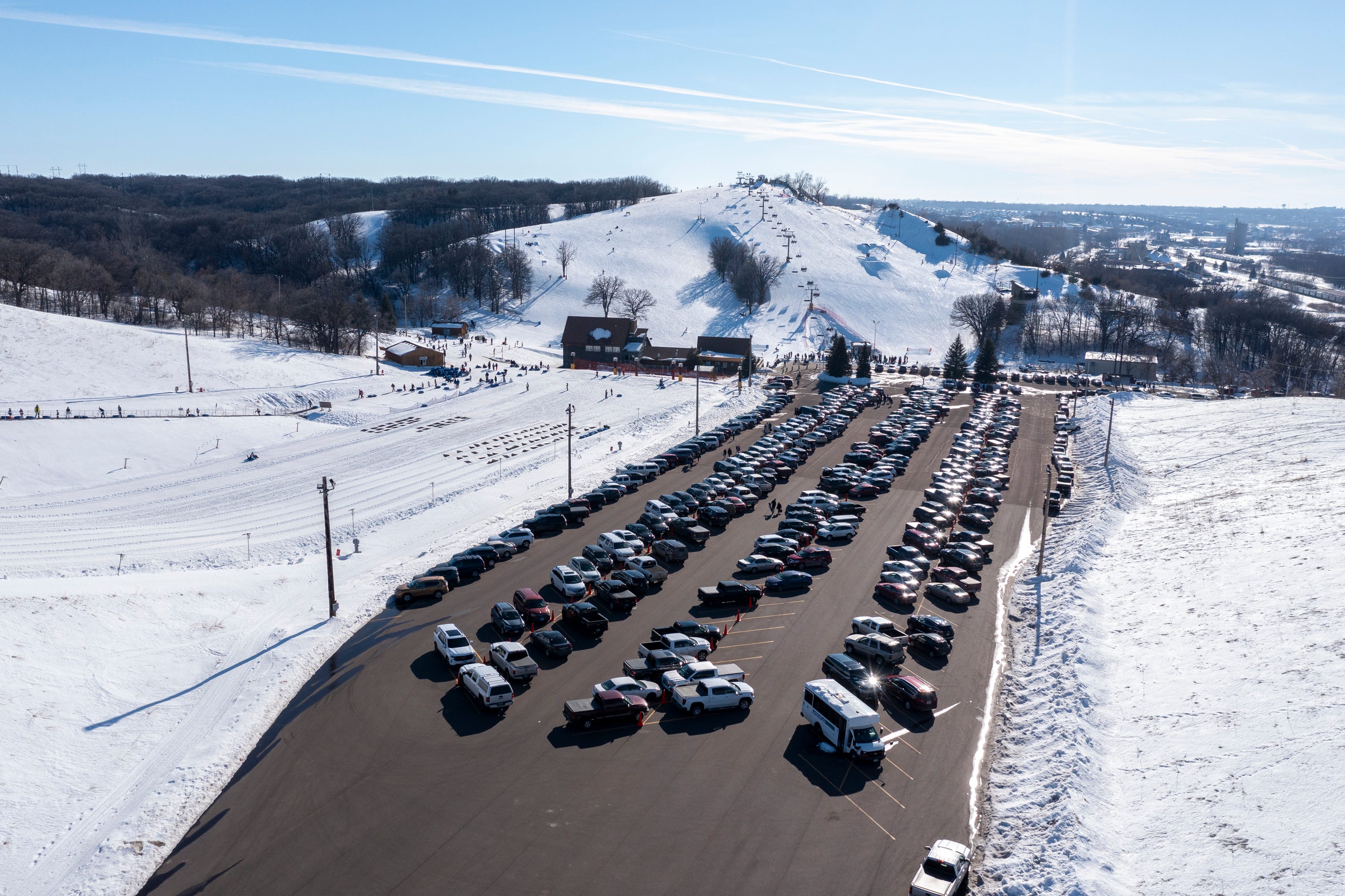
Oct 6, 2023
Podcast #145: Snowbird President & General Manager Dave Fields
This podcast hit paid subscribers’ inboxes on Sept. 29. It dropped for free subscribers on Oct. 6. To receive future pods as soon as they’re live, and to support independent ski journalism, please consider an upgrade to a paid subscription. You can also subscribe to the free tier below: Who Dave Fields, President and General Manager of Snowbird, Utah Recorded on September 18, 2023 About Snowbird Click here for a mountain stats overview Owned by: Powdr Located in: Snowbird, Utah Year founded: 1971 Pass affiliations: * Ikon Pass: 7 days, shared with Alta, no blackouts * Ikon Base Plus Pass: 5 days, shared with Alta, holiday blackouts * Ikon Base Pass: 5 days, holiday blackouts * Mountain Collective: 2 days, no blackouts * Altabird: unlimited access Closest neighboring ski areas: Alta (1 second), Solitude (:39), Woodward Park City (:39), Brighton (:42), Park City (:47), Deer Valley (:55) - travel times vary dramatically depending upon weather and time of day and year. Base elevation: 7,760 feet (at Baby Thunder) Summit elevation: 11,000 feet (at Hidden Peak) Vertical drop: 3,240 feet Skiable Acres: 2,500 Average annual snowfall: 500 inches Trail count: 140 (35% most difficult, 38% intermediate, 27% beginner – this is the official breakdown by trail name; anyone who has skied Snowbird knows that the count is closer to 99% Oh S**t, 1% for mortals) Lift count: 14 (1 tram, 6 high-speed quads, 4 doubles, 3 conveyors) Why I interviewed him Since I’ve skied hundreds of ski areas and I write about them incessantly, people often ask me which one is the best, or at least which is my favorite. It should be a hard question to answer. Nothing else in America delivers the drama of Big Sky, the energy of Palisades Tahoe, the aura of Aspen-Snowmass, the sprawl of Vail Mountain. How could I possibly choose a winner? But it is not a hard question to answer. Because the answer is Snowbird and Alta. And nothing else comes close. Not in Utah. Not in Colorado. Not in Tahoe. Not up and down the Rockies. Not in Alaska. Not in BC. Yes, I’m including Whistler. There is no better skiing. One lift to the top. Three thousand feet of sustained pitch. Five hundred inches of snow – on average. Last season, 838. That’s more snow than the Poconos have tallied in every winter since the Lincoln Administration, combined. And all of it like a bag of cottonballs, so light it’s a wonder the stuff doesn’t float off into the sky. The terrain: vast, varied, labyrinthian, mesmerizing, scarcely groomed. Trees like Narnia, spaced for loping pow turns, chained one to the next by snow meadows smooth and ever-rising. Big open bowls. Chutes stacked off The Cirque like weapons arrayed along an armory wall. Hidden Peak. Mineral. Baldy up top. Alta through the gate. Amazing. That such a place exists at all is a stunning confluence of a dozen natural phenomena. That this snowy freefall sits not in some sawtoothed Alaskan range 600 miles from the nearest road, but 34 miles – half of it interstate – from a major international airport is one of the most amazing facts that I’m aware of. And I’ve witnessed human birth. Twice. Snowbird is so good that it’s hard to imagine how we’d think about great ski areas if it didn’t exist. Like contemplating the best basketball player if there’d been no Michael Jordan, or arguing over the best way to light a room prior to the invention of lightbulbs. Whatever you think of as the attributes of a great ski area - and by that I mean the skiing, not the shopping or the apres or the wacky tire-tube races - Snowbird transcends them all. Of course, Alta, as a brand and as an organized ski hill, was there first (by 33 years), and it shares Snowbird’s every attribute, with a bit more soul and a bit more snow and a bit less flash and lift-served vert. Part of the Snowbird mystique is proximity to – and the direct connection with – its atmospheric neighbor. If Snowbird stood alone on some Utah steppe, perhaps it would not be so easy to notch the mountain above its peers. But the interplay of the two, their vastness and mystery, their videogame-like tap-dancing between realms, their surreal Cloud City patina, creates, in their fusion, the best version of skiing that we have. What we talked about Living through 838 inches of snow; what happens when hundreds of employees have to spend the night to make sure the mountain can open; why Alta gets more snow than Snowbird; assessing Snowbird’s new tram cars and related upgrades; why Snowbird didn’t build an all-new tram; catastrophe installing the new tram cars; “I’ve never had an ocean-liner tracker on my phone until this came to pass”; dealing with disappointment; reminiscing on the mysterious pre-Olympics Utah; the legacy of Snowbird’s former longtime GM, Bob Bonar; the transition from independent resort to member of Powdr; “I’m amazed at how quickly the marketplace has changed” from a multi-mountain pass point of view; why Snowbird didn’t join the Mountain Collective for its inaugural season in 2012; why Snowbird and Alta joined the Ikon Pass as one combined “destination”; why Snowbird didn’t follow Alta off the Ikon Base Pass and whether they’ll reconsider that decision; how much we can really blame the Ikon Pass for LCC crowding; why the Altabird pass soared in price for 2023-24; Snowbird’s “Freeloader” Pass; reflecting on Fast Tracks two years in; why the tram is excluded from Fast Tracks and whether that will continue to be the case; the potential for a Fast Tracks season pass at Snowbird (which Copper and Killington already sell); breaking down the proposed Little Cottonwood Canyon Gondola; “the highway only works as well as the worst car and bus in it”; why this lift would be the least-impactful solution to LCC traffic; paying for the gondola; how the gondola would alter the calculus of canyon closures; “the more people learned about gondola and how it works, the more they supported it”; the current state of the proposed Mary Ellen Gulch expansion; upgrading Wilbere to a new lift on a new line; potential to develop more green terrain at Snowbird; potential for a six-pack lift at Snowbird and where it could go; and phasing out the howitzers. Why I thought that now was a good time for this interview From 1992 to 2002, Utah recorded around 3 million skier visits per winter, plus or minus a couple hundred thousand. Then the Olympics hit. And the world was like, “Damn.” Like aliens had landed and shown them how to teleport. Or turn pinecones into pterodactyls. Or something else that would be as amazing as seven giant ski areas that all average 300-plus inches of fluffy light snow per winter being situated two sitcoms’ drive-time from a major airport. By the 2005-06 ski season, four years after the Games, Utah skier visits crested 4 million for the first time. Which seemed amazing until the Ikon Pass landed for the 2018-19 season, the same winter that Utah skier visits (coincidentally or not), blew past 5 million for the first time. Setting aside the Covid-shortened 2019-20 ski season, they just kept accelerating, hitting an astonishing 7.1 million skier visits last winter. Whether you blame the Olympics or the megapasses or the fact that Utah’s population has grown by more than a million people (a 50 percent surge) over the past two decades, the state’s ski areas – and only 14 are public facilities that can manage any kind of volume – are getting crushed. Luckily, unlike Washington, where a surging population has no choice but to deal with traffic or drive to Idaho, Utah has no shortage of potential solutions to its high-altitude cluster. Deer Valley recently outlined plans to nearly triple in size. A proposed passenger train could thin traffic on Park City’s cluttered roads. And the Utah Department of Transportation recently ruled that a gondola from the mouth of Little Cottonwood Canyon to the base of Snowbird and Alta was its preferred option to combat the untenable traffic on State Route 210. The gondola would be eight miles long and run high over the road, skirting the firing squad of 50 avalanche paths that run through the canyon. The highway has “the highest uncontrolled avalanche hazard index of any major highway in the world,” University of Utah professor Jim Steenburgh told KSL News Radio in April. Snowbird is in favor of building the gondola. So is Alta. Here’s an overview: And a little explainer video: Just about anywhere else in the world, the gondola would be viewed for what it is: a rational solution to an untenable traffic problem. But this is U.S. America, and the lift has instead been recast as an existential threat to both the natural and manmade worlds. I can’t even mention it on Twitter without sending a dozen Brobots into fits of feral rage. It’s weird. SR-210 would never be built today – the most disruptive possible thing humans can build into the wilderness is a paved road. But this avalanche-prone, congested scar of concrete has been strangely lionized as the only acceptable conduit to the end of the canyon, while the gondola, a light-footprint machine with 22 towers that would run high above the rich natural environment on the canyon floor, is demonized. That’s the reality that Snowbird officials are dealing with coming off a record snow season. In our conversation, Fields goes deep into this project, which is unquestionably the most controversial in U.S. American skiing. He has thoughts for the buses-will-fix-it crowd, for the environmental-doomsday crew, for the fiscal hawks fretting over the cost. I could write a book on this, but Fields makes a compelling argument to just build the damn thing. Questions I wish I’d asked I’ve always been curious why the Peruvian lift terminates where it does, rather than hoisting skiers up to High Baldy Traverse, or even making a turn up Baldy itself. The answer, I’m sure, is some combination of wind and desire to preserve a high-altitude hike-up experience. But that tunnel cutting over to Mineral couldn’t have been cheap, and I’d like to hear the story behind how they landed on that configuration. What I got wrong I said that Snowbird had secured approval for the proposed Mary Ellen Gulch expansion from the U.S. Forest Service, but that approval actually came from the Utah County Board of Adjustment. Why you should ski Snowbird Snowbird is the closest thing I’ve found to a perfect ski area. For capable skiers. Don’t bother if you’re a groomer god, or if you haven’t skied - or don’t like to ski - powder or bumps, or if carving Chip’s Run with half the population of Texas doesn’t sound fun (it isn’t). I say that not to be an a-hole, but because I don’t want you to be disappointed. Snowbird is only fun if you’re a very good skier. And by that I mean a very good skier on ungroomed terrain. Because the mountain doesn’t groom much. And if you’re not so good, but you think you are, well, the mountain will have some news for you. It will have a message for you, regardless. This place is savage. Respect the double-blacks. Because Man do they mean it. There is no bailout on The Cirque, no cat-track oopsie-doodle exit. Move too far the wrong way and find yourself staring down Wilma’s or Mach Schnell, sheer cliffs disguised as ski trails, mandatory airs between you and your ride home. Chip’s is safe, but wander 50 yards off-trail and try not to miss the “Cliffs Ahead” signs. Because when Snowbird says “cliffs” they mean like 100-footers. And don’t ski alone into the trees – tree-well safety bulletins were practically invented for this place. Please excuse me here. I’m usually allergic to tough-guy talk. But this place can kill you if you’re not careful. Once, a few years back, a group of us skied off Black Forest and into Organ Grinder, a swatch of wooded snowfields skier’s right off the Gad 2 lift. Organ Grinder, on the map, is a single run, a line arcing through Niehues whites. On the ground it is a multi-sheathed arsenal of fierce chutes stacked along a wooded face. After gliding through easy trees, we emerged at the top of one of these, a shot tilted at the approximate angle of a rocket launch. A four- or five-foot drop, a half-dozen steep turns to a wall of trees. Then the terrain cinched shut. The only exit a shot between trees and rock walls. Point and go. The run is a single black diamond. But put all that aside for a moment. Snowbird, and especially Snowbird together with Alta, should be the aspirational capstone for any skier driven to master this quirky sport. The vastness and quality and challenge of the terrain is absolutely unmatched anywhere in America. The two ski areas together are twice as large as Jackson and half as groomed as Palisades, with more and better snow than Whistler. And easier to get to than all of them. So go there. Just wait until you’re ready. Podcast Notes Miscellany on items discussed in the podcast: On Jackson Hole’s tram To lend context to our discussion around Snowbird’s tram upgrade, we talked quite a bit about Jackson Hole’s $31 tram project, which stretched from 2006 to ‘08. I could try to explain it myself, or you could just watch this series of videos: On Powdr’s portfolio Snowbird is one of 10 ski areas owned by Park City-based Powdr: On the Mountain Collective Fields said that one of his regrets was not joining the Mountain Collective’s inaugural class in 2012. The founding four were Alta, Jackson Hole, Aspen, and Palisades Tahoe. The pass cost $349 for two days at each ski area. On the varying Snowbird/Alta access on Mountain Collective and Ikon One of Mountain Collective’s selling points is that rather than combining Snowbird and Alta days, as Ikon Pass does, the pass gives you two days at each, with no blackouts. As Alta, Aspen, and others have backed out of the Ikon Base Pass, the Mountain Collective has become a potent Ikon Pass Base Base, with most of the pass’ top ski areas and a substantially lower price. On rope-drop days on Mineral Basin I don’t know if this is inspiring or hilarious or horrifying: The Storm explores the world of lift-served skiing all year long. Join us. The Storm publishes year-round, and guarantees 100 articles per year. This is article 79/100 in 2023, and number 465 since launching on Oct. 13, 2019. Want to send feedback? Reply to this email and I will answer (unless you sound insane, or, more likely, I just get busy). You can also email skiing@substack.com . Get full access to The Storm Skiing Journal and Podcast at www.stormskiing.com/subscribe
Sep 26, 2023
Podcast #144: Keystone Vice President and General Manager Chris Sorensen
This podcast hit paid subscribers’ inboxes on Sept. 19. It dropped for free subscribers on Sept. 26. To receive future pods as soon as they’re live, and to support independent ski journalism, please consider an upgrade to a paid subscription. You can also subscribe to the free tier below: Who Chris Sorensen, Vice President and General Manager of Keystone , Colorado Recorded on September 11, 2023 About Keystone Click here for a mountain stats overview Owned by: Vail Resorts Located in: Keystone, Colorado Year founded: 1970 Pass affiliations: * Epic Pass : unlimited access * Epic Local Pass : unlimited access * Summit Value Pass : unlimited access * Keystone Plus Pass : unlimited access with holiday blackouts * Tahoe Local : five days combined with Vail, Beaver Creek, Breckenridge, Crested Butte, Park City * Epic Day Pass : access with All Resorts and 32-resorts tiers Closest neighboring ski areas: Arapahoe Basin (:08), Frisco (:19), Loveland (22 minutes), Breckenridge (:25), Copper (:25), Vail (:44), Beaver Creek (:53), Ski Cooper (:56) – travel times vary considerably given traffic, weather, and time of year. Base elevation: 9,280 feet Summit elevation: 12,408 feet at the top of Keystone Peak; highest lift-served point is 12,282 feet at the top of Bergman Bowl Express Vertical drop: 3,002 feet lift-served; 3,128 feet hike-to Skiable Acres: 3,149 acres Average annual snowfall: 235 inches Trail count: 130 (49% most difficult, 39% more difficult, 12% easiest) Lift count: 20 (1 eight-passenger gondola, 1 six-passenger gondola, 4 high-speed six-packs, 3 high-speed quads, 1 fixed-grip quad, 1 triple, 2 doubles, 7 carpets) Why I interviewed him Keystone arrived in 1970, a star member of the last great wave of western ski resort development, just before Snowbird (1971), Northstar (1972), Telluride (1972), and Big Sky (1973). It landed in a crowded Summit County, just down the road from Arapahoe Basin (1946) and five miles overland from Breckenridge (1961). Copper Mountain came online two years later. Loveland (1937) stood at the gateway to Summit County, looming above what would become the Eisenhower Tunnel in 1973. Just west sat Ski Cooper (1942), the mighty and rapidly expanding Vail Mountain (1962), and the patch of wilderness that would morph into Beaver Creek within a decade. Today, the density of ski areas along Colorado’s I-70 corridor is astonishing: Despite this geographic proximity, you could not find more distinct ski experiences were you to search across continents. This is true everywhere ski areas bunch, from northern Vermont to Michigan’s Upper Peninsula to the Wasatch. Ski areas, like people, hack their identities out of the raw material available to them, and just as siblings growing up in the same household can emerge as wildly different entities, so too can mountains that sit side-by-side-by-side. Keystone, lacking the gnar, was never going to be Jackson or Palisades, fierce and frothing. Sprung from wilderness, it could never replicate Breck’s mining-town patina. Its high alpine could not summon the drama of A-Basin’s East Wall or the expanse of Vail’s Back Bowls. But Keystone made its way. It would be Summit County’s family mountain, its night-ski mountain, and, eventually, one of its first-to-open-each-ski-season mountains. This is the headline, and this is how everyone thinks of the place. But over the decades, Keystone has quietly built out one of Colorado’s most comprehensive ski experiences, an almost perfect front-to-back progression from gentle to damn. Like Heavenly or Park City, Keystone wears its steeps modestly, like your quiet neighbor with a Corvette hidden beneath tarps in the polebarn. All you notice is the Camry parked in the driveway. But there are layers here. Keep looking, and you will find them. What we talked about Hopeful for that traditional October opening; why Keystone is Vail’s early-season operator in Colorado; why the mountain closes in early April; breaking down the Bergman Bowl expansion and the six-pack that will service it; the eternal tension of opening hike-to terrain to lift service; building more room to roam, rather than more people to roam it; the art of environmentally conscious glading; new lift-served terrain in Erickson Bowl; turning data into infrastructure; why the Bergman sixer won’t have bubbles; why Bergman won’t access The Windows terrain; the clever scheme behind renaming the Bergman Bowl expansion trails; building a new trailmap with Rad Smith; where skiers will be able to get a copy of the new paper trailmap; comparing the Peru upgrade to the Bergman lift project; the construction mistake that delayed the Bergman expansion by a full year; the possibility of lifts in Independence, North, and South Bowls; falling in love with skiing Colorado, then moving to Michigan; why Vail bought a bunch of Midwest bumps; when you get to lead the resort where you started bumping lifts; what makes Keystone stand out even though it sits within one of the densest concentrations of large ski areas in North America; thoughts on long-term lift upgrades, and where we could see six-packs; whether the Argentine lift could ever return in some form; the potential for a Ski Tip lift; where Keystone could expand next; whether a Windows lift is in play; North American Bowl; when we could see an updated Keystone masterplan; why Keystone gets less snow than its neighbors; assessing Epic Pass access; and night skiing. Why I thought that now was a good time for this interview Keystone is opening one of three large lift-served ski expansions in Colorado this winter: the 500-plus-acre Bergman Bowl , served by a high-speed six-pack (the other two are Hero’ s on Aspen Mountain and Mahogany Ridge at Steamboat). While this pod has occupied the trailmap as hike-to terrain for years, more people will likely ski it before noon on a typical Monday than once slogged up the ridgeline in an entire winter. Keystone has renamed and somewhat re-sculpted the trails in honor of the occasion, inviting the masses onto a blue-square oasis at the top of Summit County. Which is always a good excuse for a podcast. But… this terrain was supposed to open in 2022, until the project ran into a high-altitude brick wall last July, when construction crews oopsied a road through sensitive terrain. Vail Daily : Construction of a new chairlift at Keystone Resort was ordered to cease this week after the U.S. Forest Service learned that an unauthorized road had been bulldozed through sensitive areas where minimal impacts were authorized. Keystone Resort, which operates by permit on U.S. Forest Service land, was granted permission by the White River National Forest to construct a new chairlift this summer in the area known as Bergman Bowl, creating a 555-acre expansion of Keystone’s lift-served terrain. But that approval came with plenty of comments from the Environmental Protection Agency, which recommended minimal road construction associated with the project due to Bergman Bowl’s environmentally sensitive location. … White River National Forest Supervisor Scott Fitzwilliams said while the Forest Service does approve many projects like Bergman Bowl, officials typically don’t allow construction of new access roads in Alpine tundra. “When you drop a bulldozer blade in the Alpine, that is very fragile, and very difficult to restore,” Fitzwilliams said. In Bergman Bowl, the Forest Service has found “damage to the Alpine environment … impacts to wetlands and stuff that we normally don’t want to do,” Fitzwilliams said. As a result, Fitzwilliams issued a cease and desist letter to Vail Resorts. He said the company immediately complied and shut down the impacted parts of the project. The Forest Service has not yet determined if a full restoration can occur. “When you impact the Alpine environment, it’s not easy to restore,” Fitzwilliams said. “Sometimes, although achievable in some areas, it’s difficult.” Vail Resorts, which has staked much of its identity on its friend-of-the-environment credentials, owned the mistake and immediately hired a firm to design a mitigation plan. What Keystone came back with was so thorough that it stunned Forest Service officials. Blevins, writing a week later in the Colorado Sun : White River National Forest supervisor Scott Fitzwilliams on Thursday said he accepted Vail Resorts’ cure for improperly grading 2.5 acres outside of approved construction boundaries, including 1.5 acres above treeline in the fragile alpine zone. The company’s construction crews also filled a wetland creek with logs and graded over it to create a road crossing and did not save topsoil and vegetation for replanting after construction, all of which the agency found “were not consistent with Forest Service expectations.” Fitzwilliams rescinded his order of noncompliance and canceled the cease-and-desist order he issued last month after Forest Service officials discovered the construction that had not been permitted. … “Quite honestly, it’s the best restoration plan I’ve ever seen in my life. Even our staff are like ‘Oh my god,’” Fitzwilliams said. “The restoration plan submitted by Keystone is extremely detailed, thorough and includes all the necessary actions to insure the damage is restored as best as possible.” The damage to fragile alpine terrain does require additional analysis under the National Environmental Policy Act, but Fitzwilliams said that can be done while the construction continues. On Thursday afternoon, resort officials said the further environmental review will keep Bergman Bowl from opening for the 2022-23 season, a development Keystone general manager Chris Sorensen said is disappointing but necessary. Indeed. The only way out is through. But how did that plan go? And what is Vail doing to make sure such mistakes don’t recur? And how do you manage such a high-profile mistake from a personal and leadership point of view? It was a conversation worth having, and one that Sorensen managed well. What I got wrong… About the exact timeline of Vail’s Midwest acquisitions I kind of lumped Vail Resorts’ first three Midwest acquisitions together, but there was quite a bit of space between the company’s purchase of Afton Alps and Mt. Brighton, in 2012, and its pickup of Wilmot in 2016. The rest came with the Peak Resorts’ acquisition in 2019. About Copper Mountain’s season pass price I said that it was “about $750” for a Copper pass or an Ikon Base Pass. Both were undercounts. Copper’s 2023-24 season pass debuted at $799 and is now $849. The 2023-24 Ikon Base Pass , which includes unlimited access to Copper Mountain, debuted at $829 and now sells for $929. About the most-affordable big-mountain ski passes in the United States I said that Keystone offered “the most affordable big-mountain season pass” in the country. With peak-day walk-up lift tickets scheduled to hit $269 this season at Keystone, that may seem like an odd declaration. But it’s almost true: Keystone sells the second-most-affordable unlimited season pass among America’s 20 largest ski areas. Sister resort Park City comes in cheaper on a cost-per-acre basis, and Vail Mountain is tied with Keystone. In fact, four of the top five most affordable big-mountain passes are at Vail-owned properties (Park City, Keystone, Vail, and Heavenly): About night skiing I said that Keystone had “the largest night-skiing operation in America.” This is incorrect. I tried to determine who, indeed, hosts America’s largest night-skiing operation, but after slamming my head into a wall for a few hours, I abandoned the exercise. There is absolutely no common standard of measurement, probably because 14-year-olds slamming Bang energy drinks and Faceposting from the chairlift aren’t keen on fact-checking. Here’s the best I could come up with: Even that simple chart took an embarrassing amount of time to assemble. At some point I will return to this exercise, and will include the entire country. The Midwest will factor significantly here, as nearly every ski area in the region is 100 percent lit for night-skiing. New York and the Mid-Atlantic also host many large night-skiing operations, as do Bolton Valley, Vermont and Pleasant Mountain, Maine. But unless I wanted to publish this podcast in June of 2024, I needed to flee this particular briar patch before I got ensnared. Why you should ski Keystone The Keystone you’re thinking of is frontside Keystone, Dercum Mountain, River Run and Mountain House, Montezuma and Peru. That Keystone has a certain appeal. It is an approachable outsiders’ version of Colorado, endless and wide, fast but manageable, groomed spirals ambling beneath the sunshine. Step out of the Suburban after a 16-hour drive from Houston, and find the Middle Earth you were seeking, soaring and jagged and wild, with a pedestrian village at the base. Keep going. Down Mine Shaft or Diamond Back to North Peak: 1,600 vertical feet of moguls bigger than your car. A half-dozen to choose from. Behind that, yet another peak, like a third ski area. Outback is where things start to get savage. Not drop-off-The-Cirque-at-Snowbird savage, but challenging enough. Slide back to Timberwolf or Bushwacker or Badger – or, more boldly, the trees in between – for that wild Colorado that Texas Ted and New York Ned find off Dercum. Or walk past the snow fort and click out, bootpack a mile and drop into Upper Windows, the only terrain marked double black on Keystone’s sprawling trailmap. A rambling world, crisp and silent beneath the Outpost Gondola. Until it spits you out onto Mozart, Keystone’s I-70, frantic and cluttered all the way to Santiago, and another lap. Podcast Notes On Keystone’s 2009 masterplan Keystone’s masterplan dates to 2009, the second-oldest on file with the White River National Forest (Buttermilk’s dates to 2008). The sprawling plan includes several yet-to-be-constructed lifts, including fixed-grips up Independence Bowl and Windows, a surface lift bisecting North and South Bowls; and a two-way ride out of Ski Tip. The plan also proposes upgrades to Outback, Wayback, and A-51; and a whole new line for the now-decommissioned Argentine: Since that image isn’t very crisp, here’s a closer look at Dercum: North Peak: And Outback: Sorensen and I discuss the potential for each of these projects, some of which are effectively dead. Strangely, Keystone’s only two new chairlifts (besides Bergman), since 2009 - upgrading Montezuma and Peru from high-speed quads to sixers – were not suggested on the MDP at all. Argentine, which once connected the Mountain House Base directly to the Montezuma lift, was a casualty of the 2021 Peru upgrade. Here’s a before-and-after: Argentine, it turns out, is just the latest casualty in Keystone’s front-side clean-sweep. Check out this 1996 trailmap, when Dercum (called “Keystone” here), hosted nine frontside chairlifts (plus the gondola), to today’s five: On the new Bergman Bowl trail names Bergman Bowl has appeared on Keystone’s trailmap since at least 2005. The resort added trail names around 2007. As part of the lift installation, we get all new trail names and a few new trails (as well as downgrades, for most of the old lines, to blues). Keystone also updated trailnames in adjacent Erickson Bowl, which the new lift will partially serve. Sorensen and I discuss the naming scheme in the pod: On Rad Smith’s new hand-painted Keystone trailmap Since 2002 or so, Keystone’s trailmap has viewed the resort at a slight angle, with Dercum prioritized, the clear “front side.” The new map, Sorensen tells us, whips the vantage around to the side, giving us a better view of Bergman and, consequently, of North Peak and Outback. Here’s the old map (2022 on the left), alongside the new: And here’s the two-part video series on making the map with Rad Smith: On Vail’s new app I’ve driven round trip between New York City and Michigan hundreds of times. Most of the drive is rural and gorgeous, cruise-control country, the flat Midwest and the rolling mountains of Pennsylvania. Even the stretch of north Jersey is attractive, hilly and green, dramatic at the Delaware Water Gap. All that quaintness slams shut on the eastbound approach to the George Washington Bridge, where a half dozen highways collapse into the world’s busiest bridge. Backups can be comically long. Hitting this blockade after a 12-hour drive can be excruciating. Fortunately, NJDOT, or the Port Authority, or whomever controls the stretch of Interstate 80 that approaches the bridge after its 2,900-mile journey from San Francisco, has erected signs a few dozen miles out that ominously communicate wait times for the GW’s upper and lower decks. I used to doubt these signs as mad guesses typed in by some low-level state employee sitting in a control room with a box of donuts. But after a couple dozen unsuccessful attempts to outsmart the system, I arrived at a bitter realization: the signs were always right. This is the experience that users of Vail’s new My Epic app can (hopefully) expect when it comes online this winter. This app will be your digital Swiss Army Knife, your Epic Pass/stats tracker/snow cam/in-resort credit card/GPS tracker with interactive trailmap. No word on if they’ll include that strange metal spire that’s either a miniature icepick or an impromptu brass knuckle. But the app will include real-time grooming updates and chairlift wait times. And if a roadsign in New Jersey can correctly communicate wait times to cross the George Washington Bridge, then Vail Resorts ought to be able to sync this chairlift wait-times thing pretty precisely. On Mt. Brighton being built from landfill Depending upon your point of view, Mt. Brighton, Michigan – which Sorensen ran from 2016 to 2018 – is either the most amazing or the most appalling ski area in Vail’s sprawling portfolio. Two-hundred thirty vertical feet, 130 acres, five chairlifts, seven surface lifts, and about four trees, rising like some alt-world mini-Alps from the flatlands of Southeast Michigan. Why is it there? What does it do? Who would do such a thing to themselves? The answer to the first question lies in the expressways that crisscross three miles to the east: crews building Interstate 96 and US 23 deposited the excess dirt here, making a hill. The answer to the second question is: the place sells a s**t-ton of Epic Passes, which was the point of Vail buying the joint. And the answer to the third question is obvious as well: for the local kids, its ski here or ski nowhere, and little Midwest hills are more fun than you think. Especially when you’re 12 and the alternative is sitting inside for Michigan’s 11-month winter. On Keystone’s potential West Ridge expansion Sorensen refers to a potential “West Ridge” expansion, which does not appear on the 2009 trailmap. The ski area’s 1989 masterplan, however, shows up to five lifts scaling West Ridge between North Peak and Outback (which was then called “South Peak”): On Keystone being among Colorado’s least-snowy major resorts It’s a strange fact of geography that Keystone scores significantly less snow, on average, than its Colorado peers: This makes even less sense when you realize how close Keystone sits to A-Basin (115 more inches per season), Breck (118), and Copper (70): When I hosted OpenSnow founder and CEO Joel Gratz on the podcast last year, he explained Keystone’s odd circumstances (as well as how the mountain sometimes does better than its neighbors), at the 1:41:43 mark. On pass prices across Summit County creeping up over the past several years Summit County was Ground Zero for the pass wars, during which a preponderance of mountains the size of Rhode Island fought to the death over who could give skiing away the cheapest. There are many reasons this battle started here, and many reasons why it’s ending. Not the least of which is that each of these ski areas hosts the population of a small city every day all winter long. Colorado accounts for approximately one in four U.S. skier visits. The state’s infrastructure is one rolled-over semi away from post-apocalyptic collapse. There’s no reason that skiing has to cost less than a load of laundry when everyone wants to do it all the time. As a result, prices are slowly but steadily rising. Here’s what’s happened to pass prices at the four Summit County ski areas over the past six seasons: They’ve mostly gone up. Keystone is the only one that is less expensive to ski at now than it was in 2018 (on a season-pass basis). This chart is somewhat skewed by a couple of factors: * For the 2018-19 ski season, A-Basin was an unlimited member of the Epic Pass, Epic Local Pass, and Summit Value Pass, a fact that nearly broke the place. The drastic price drop from 2018 to ’19 reflects A-Basin’s first year outside Vail’s coalition. * Vail cut Epic Pass prices 20 percent from the 2020-21 ski season to the 2021-22 campaign. That’s why Breck and Keystone are approximately the same price now as they were before the asteroid attack, Covid. * Little-known fact: Copper Mountain sells its own season pass, separate from the Ikon Pass, even though the mountain offers unlimited access on both the Ikon Base and full Ikon passes. On Mr. Oklahoma I don’t want to spoil the ending here, but we do talk about this . The Storm explores the world of lift-served skiing year-round. Join us. The Storm publishes year-round, and guarantees 100 articles per year. This is article 75/100 in 2023, and number 461 since launching on Oct. 13, 2019. Want to send feedback? Reply to this email and I will answer (unless you sound insane, or, more likely, I just get busy). You can also email skiing@substack.com . Get full access to The Storm Skiing Journal and Podcast at www.stormskiing.com/subscribe
Sep 14, 2023
Podcast #143: Killington & Pico President & General Manager Mike Solimano
This podcast hit paid subscribers’ inboxes on Sept. 7. It dropped for free subscribers on Sept. 14. To receive future pods as soon as they’re live, and to support independent ski journalism, please consider an upgrade to a paid subscription. You can also subscribe for free below: Who Mike Solimano, President and General Manager of Killington and Pico Mountains, Vermont Recorded on Sept. 5, 2023 About Killington Click here for a mountain stats overview Owned by: Powdr Corp Located in: Killington, Vermont Year founded: 1958 Pass affiliations: Ikon Pass: 5 or 7 combined days with Pico Reciprocal partners: Pico access is included on all Killington passes Closest neighboring ski areas: Pico (:12), Saskadena Six (:39), Okemo (:40), Twin Farms (:42), Quechee (:44), Ascutney (:55), Storrs (:59), Harrington Hill (:59), Magic (1:00), Whaleback (1:02), Sugarbush (1:04), Bromley (1:04), Middlebury Snowbowl (1:08), Arrowhead (1:10), Mad River Glen (1:11) Base elevation: 1,156 feet at Skyeship Base Summit elevation: 4,241 feet at Killington Peak Vertical drop: 3,085 feet Skiable Acres: 1,509 Average annual snowfall: 250 inches Trail count: 155 (43% advanced/expert, 40% intermediate, 17% beginner) Lift count: 20 (2 gondolas, 1 six-pack, 5 high-speed quads, 5 fixed-grip quads, 2 triples, 1 double, 1 platter, 3 carpets - view Lift Blog’s inventory of Killington’s lift fleet) About Pico Click here for a mountain stats overview Owned by: Powdr Corp Located in: Mendon, Vermont Year founded: 1934 Pass affiliations: Ikon Pass: 5 or 7 combined days with Killington Reciprocal partners: Pico access is included on all Killington passes; four days Killington access included on Pico K.A. Pass Closest neighboring ski areas: Killington (:12), Saskadena Six (:38), Okemo (:38), Twin Farms (:38), Quechee (:42), Ascutney (:53), Storrs (:57), Harrington Hill (:55), Magic (:58), Whaleback (1:00), Sugarbush (1:01), Bromley (1:00), Middlebury Snowbowl (1:01), Mad River Glen (1:07), Arrowhead (1:09) Base elevation: 2,000 feet Summit elevation: 3,967 feet Vertical drop: 1,967 feet Skiable Acres: 468 Average annual snowfall: 250 inches Trail count: 58 (36% advanced/expert, 46% intermediate, 18% beginner) Lift count: 7 (2 high-speed quads, 2 triples, 2 doubles, 1 carpet - view Lift Blog’s inventory of Pico’s lift fleet) Why I interviewed him Imagine if the statistical bureaus of nations operated like ski areas - the countries just threw around numbers with no basis in measurable reality. China could say it was bigger than Russia, U.S. America could claim more territory than Canada, and North Korea could say it was bigger than all of them combined (hell, it probably does). This is the world one steps into when trying to ascertain the size of New England ski areas. Mt. Abram claims 450 acres. Middlebury Snow Bowl brags on “600-plus acres of woods and glades,” which would make it larger than Sugarbush, the Alterra-owned mega-resort that undersells itself with a 581-acre tally . Here’s what the aliens would see if they were to match our internet boasts up to measurable reality: Did Middlebury Snowbowl acquire the air rights over its mountain? Is Mt. Abram built like Istanbul, with several ancient ski areas buried beneath the modern foundation, giving us a vast ski labyrinth to explore? This strategy probably worked better when most skiers’ mode of resort comparison was “scanning a bunch of brochures at a rest area.” It’s harder to maintain when every human carries a device equipped with a map of planet earth in their pocket at all times. But ski areas keep fibbing anyway. Which is probably why, several years ago, Killington started measuring itself like a Western ski area: draw a border around the property – that’s your skiable terrain. Oh, and we’ll no longer yell at you for skiing in the woods, which is technically “terrain” even if the underbrush is too thick for anything larger than a chipmunk to navigate. Some of you would like me to challenge statistical inconsistency across the ski industry as a main feature of this newsletter. But I prefer to just make fun of it. If Mt. Abram wants to be the Baghdad Bob of New England skiing, well, what else are you going to do for attention when you’re across the street from Sunday River, whose annual lift-upgrade budget exceeds the GDP of Australia? But until the North Conway Treaty of 2038, at which the ski areas of North America will collectively agree upon a universal statistical standard based upon actual measurements, I’m just going to take their word for it (sort of). Here’s a list of New England ski areas from largest to smallest, by skiable acreage, according to the ski resort’s own claims (I excluded Middlebury Snowbowl and Mt. Abram, which more accurately measure out at 110 and 170 acres, respectively): Anyone who’s spent any amount of time skiing New England knows that something feels off with this list. Sugarbush, Stowe, and Jay – three of the dozen or so New England ski areas with reliable glades – ski as big as anything in the East. All three feel substantively larger than Stratton or Mount Snow. And neither Bolton Valley nor Black Mountain of Maine ski on the scale of Cannon or Waterville Valley. But no one is disputing that top line. Killington is the largest ski area in New England. You can quibble about the vertical drop – the gut of Killington is the 1,650-ish-foot K-1 face. To scoop up the full 3,000-plus feet requires a rarely-skied meander down to the Skyeship Base at US 4. Mt. Ellen at Sugarbush (2,600 vertical feet), Madonna at Smuggs (2,150), FourRunner at Stowe (2,046), the single chair at Mad River Glen (1,972 feet), and Sugarloaf’s spectacular 2,820-foot face all deliver more sustained steep skiing than The Beast. But there’s nothing else in the East on Killington’s scale, the massive overlapping network of six peaks rolling in all directions from the frantic hub. It’s one of the few ski areas, East or West, where I ever truly feel lost. There’s something brilliantly scattershot about it, something feral and boundless and enigmatic, as though 16 small ski areas had been stapled together by someone who’s never skied. There are insane traverses and endless flats, riotously steep trees and bumps all over, long groomers that you think lead back to the same lift you just exited, but instead seem to deposit you in New Hampshire. There are trails on the far fringe that feel abandoned on even the busiest days, where you suspect without being able to prove it that you’ve been transported to an alternate dimension of groomed forever-down, or at least back to a time before the Ikon Pass gave every skier on the eastern seaboard an annual allotment of Killington lift tickets. It all works somehow. This great machine, howling like an armor-plated Mad Max rig, a cobbled-together war machine screaming across the winter plains. It feels like it should fall apart, disintegrate by the combined forces of speed and volume. But it carries on, the growling, supercharged id of New England winter, The Beast a gloss well-earned. What we talked about What’s behind Killington’s run of June closings; building the Superstar Glacier; why “The Beast” returned; how Killington pulled off the 2022 World Cup with a wildly warm November; what happened to October openings; early- versus late-season energy; whether social media makes the spring skiing party seem bigger than it is; Pico’s massive, multi-year snowmaking evolution; “Pico’s probably not worth what one detachable lift costs on its own” – the hard math of lift upgrades; Powdr Corp’s long-term commitment to Pico; Pico’s private mid-week mountain rentals; the new K-1 lodge; falling in love with skiing on a Magic Mountain powder day; when you start as chief financial officer and the parent company informs you that they may not be able to make payroll the following month; Killington’s rowdy transition from American Skiing Company to Powdr Corp to present-day calm; why Powdr Corp had such a tough time adapting to New England, and how the company finally did; online absurdities; the evolution of Powdr Corp; a Killington base village, on the way at last; why the village took so long to permit; “to be a successful village, it can’t just be a bunch of condos”; putting pedestrians first; what the village will mean for parking at Ramshead, Snowshed, Vale, and K-1; employee housing; how the village will connect to the resort’s lift system; whether we could see a lift from the village up to K-1; why Killington hasn’t upgraded Snowshed yet; redesigning Killington Road; fixing Killington’s water-quality issues; considering mass transit along Killington Road; priorities for lift upgrades at both ski areas; where Killington could install another six-pack; whether future sixers would have bubbles or D-line tech; why eight-pack lifts are unlikely; the potential for upgrades for the Bear Mountain quad and Snowden triple; what could eventually replace Outpost at Pico; current thinking around the Killington-Pico Interconnect; Fast Tracks two years in; Fast Tracks season passes; the Beast 365 and Ikon Base Pass add-on; and whether Beast 365 passholders are complaining about the dilution of the Ikon Base Pass (spoiler alert: they are). Why I thought that now was a good time for this interview Storm Skiing Podcast #1 : Killington & Pico President & General Manager Mike Solimano, was not the first episode I ever recorded , but it was the first one I released. Because, as I wrote at the time, “if you’re going to start something like a podcast about Northeast skiing, you really ought to lead off with the most punch-you-in-your-face prominent part of Northeast skiing.” Starting this series with the head of the largest and baddest ski resort in New England injected The Storm with an instant patina of legitimacy, a forked road into journalism from the speculating, self-assured masses endlessly debating ski areas on social media. There are hazards, of course, to going first, especially for a rapidly evolving brand like The Storm . A lot has changed in four years. The podcast sounds better. The Storm’s scope has expanded nationwide, embedding each subject in a national, rather than a regional, context. The article accompanying each episode is far richer, with maps and stats and charts that the reader once had to source on their own. And I hope – I’ll let the listener decide – that I’ve improved as an interviewer and as a host. It was time to reset Killington and Pico. But with purpose. My mission, at The Storm’s outset four years ago, was simply to make connections with ski area leaders. The podcast episodes were more general-information sessions than conversations tuned to the moment. But almost every podcast on the current schedule is pegged to some tangible development: Keystone (scheduled for the week of Sept. 11), is opening the Bergman Bowl expansion after a one-year delay; Snowbird (Sept. 18), is a big player in the controversial Little Cottonwood Canyon gondola project; Attitash (Nov. 6), is at long last replacing the Summit Triple with a high-speed quad. Even Great Bear, South Dakota – scheduled for the week of Sept. 25 – is planning a new lift and expansion. Killington just announced what is potentially the most transformative project in New England skiing for at least a generation: the approval to build, at long last, a (hopefully pedestrian) base village in the vast basin between Snowshed and Ramshead, a space currently occupied by parking lots sizeable enough to house the population of Ecuador. The East does not currently have anything like this – at least not at the foot of a ski area, where such things ought to be. But the region desperately needs this sort of human-scaled infrastructure. I live in New York City, which means I am surrounded by acquaintances who have the means and desire to ski, but who do not necessarily ski that often. They will frequently petition me for recommendations that sound something like: where can I take my family/group of friends/brunch club skiing for a long weekend that is within driving distance of the city, has somewhere to stay on the mountain, and has food/drinking options within a short walk? And my answer to them is: there is nothing like that here. Go to Park City/Breckenridge/Aspen/somewhere else out West. New England is so preoccupied with preserving their natural environment that most meaningful development is done a several-mile drive from the major ski hills, which of course compromises the natural environment with sprawl, excessive traffic, and parking lots the size of the Mendenhall Glacier. There are some minor exceptions to this: small villages at Stratton and Stowe. Ample slopeside accommodations at Smugglers’ Notch and Okemo. But none of these give the skier that sense of place they’ll find in Steamboat or Crested Butte or even Vail Village, with its pedestrian walkways paved over what had been wilderness until the 1960s. But who says a new village is a “fake” village, as they’re so often framed? A place for people to gather is a place for people to gather, and if we could build such places 2,000 years ago, we can build them today. New England deserves this. Because great ski areas are better when the community doesn’t end at the bottom of the lift queue. Because once we build one, others will follow. Because it’s a fairly stupid fact that the region of the United States most known for its quaint small towns is without a single quaint ski town (meaning, one that backs up to the ski resort). Because Built America has sprawled out enough, and its time to back up and fill in all the blank space with something better. Because there is no better way for a state preoccupied with preserving its natural environment to build than in dense clusters of life and activity. And because it would be fabulous and because it would work and because I’m tired of telling New Yorkers to fly to Aspen when Killington ought to be able to give them everything they need. Questions I wish I’d asked I wanted to talk a bit about the Woodward park that Powdr has been dropping at Killington each of the past several winters. I also had a few questions about passes: the Pico K.A.’s odd name, the creeping price of the Killington spring pass, whether the Mountain Collective was in play for Killington. What I got wrong About the size of Pico I said Pico was about “the size of Cannon or the size of Waterville Valley.” This is kind of true but was also an on-the-fly guess. As is clear from the skiable acreage discussion above, gauging the size of New England ski areas is a little bit of a party game. I think Pico and Waterville are about the same size, but Pico, mimicking Killington’s border-to-border measurement philosophy, claims 468 acres. Waterville, which, according to general manager Tim Smith, only counts trail acreage, sits at 265 acres. But both hit right around 2,000 feet of vert. Cannon is a bit higher, at 2,180. Still, I think it was a fair comparison. Here are New England’s tallest ski areas, organized by vertical drop: About resumes I said in the intro that Solimano had joined Killington in 2002. He actually started in December 2001, as he clarifies in the interview. About the Ikon Base Pass When discussing the erosion of the Ikon Base Pass over time, I said that “Alterra had taken mountains off” the pass. That wasn’t exactly right or fair. Former Alterra CEO Rusty Gregory told me on the podcast last year that Alterra resisted creating the Plus tier for Ikon Base. But Jackson Hole and Aspen, facing locals’ revolts over the pass’ impact, insisted on doing something . The Ikon Base Plus, then, was a compromise. Other ski areas have followed since the Base Plus debuted in 2020: Alta and Deer Valley (the latter of which Alterra does own) in 2022, and Taos in 2023 . Snowbasin and Sun Valley opted for Base Plus over Base when they joined the coalition in 2022. Still, however we got here, the fact is this: the Ikon Base Pass excludes seven of the pass’ most attractive destinations. Unfortunately, passholders at partner resorts that offer an Ikon Base Pass with their top-tier season passes ( Sugarloaf, Sunday River, Loon , Killington , Windham , Aspen , Big Sky , Taos [sold out], Alta , Snowbasin , Snowbird , Brighton , Jackson Hole [sold out], Sun Valley , Mt. Bachelor , Boyne Mountain ), are not able to upgrade to an Ikon Base Plus or full Ikon Pass. Several leaders of the above-mentioned mountains have confirmed to The Storm that their passholders find this annoying, like getting a year of free Domino’s but being told that you can only order salad and sandwiches. No pizza for you. Alta is the pizza on the Ikon Pass. Jackson Hole is pizza. Aspen is pizza. Blue Mountain is a Chicken Ceasar salad. It’s nice. It tastes fine. But really everyone wants the pizza. Here’s that chart again tracking Ikon Pass partners by tier over time: Why you should ski Killington and Pico One reason to ski Killington is easy: often, it’s your only option. The mountain closed June 1 this year, more than a month after every other resort in the region other than Jay and Sugarbush, which both ran to May 7. On the other end, The Beast has somewhat ceded its rush to open. After six October openings in the eight seasons beginning in 2011, Killington hasn’t spun the lifts before Halloween since 2018 (warm falls and Covid haven’t helped). But they’re rarely beaten to go-live in New England, and seasons that push or exceed 200 days make sure the mountain’s expensive season pass is worth it. Pico is funny. If it were anywhere else other than exactly next door to the largest ski area in New England, Pico might be a major ski area. Its 468 acres would make it the largest ski area in New Hampshire. A 2,000-foot vertical drop is impressive anywhere. The mountain has two high-speed lifts. And, by the way, knockout terrain. There is only one place in the Killington complex where you can run 2,000 vertical feet of steep terrain: Pico. The American norm is that skier visits move east-to-west. But I’ll get an occasional email from a Rocky Mountain dweller who’s visiting family out east, and they want to know where to ski. There are 100 ski areas in New England – more than in Colorado (34), California (30), Utah (18), and Montana (16) combined. How do you sort through all that? If you want my recommendations of what to do with a week, I’d tell you to start with Killington, then move north through Sugarbush, Mad River Glen, Stowe, Smugglers’ Notch, and Jay Peak. Then cross the top of New England to Sugarloaf. That’s the best of what we’ve got. But The Beast, the king of them all, is Killington. Podcast Notes Miscellany on items discussed in the podcast: On Killington’s historic opening and closing dates Killington has done a nice job documenting these on its website : On the history of the Women’s World Cup at Killington Since 2016, Killington has acted as the early-season U.S. stop on the Women’s World Cup, drawing enormous, raucous crowds. While I don’t cover ski racing or competition, I acknowledge the importance of this event to Killington, as an ancillary business, as a celebration of the sport, as a cultural token, and as a showcase of the resort’s singular snowmaking firepower. You can sign up for Killington’s World Cup updates here . On North Ridge early-season skiing Early-season skiing at Killington is a novel, inventive, highly orchestrated event. Typically, only three runs are open, and they are lodged on an area called North Ridge near the top of Killington Peak. Skiers park in the K-1 lot, ride the K-1 gondola over brown slopes to the summit, walk across a catwalk (and its many, many steps), and arrive in winter: typically the Rime, Reasons, and East Fall trails, snowy and frantic with fellow early-season lunatics. The concentration of very good skiers tends to be quite amazing, as the Park Brahs are Parking Out Brah – with whatever little knoll they can turn into a feature (plus, usually, a few built on Reason by Killington’s parks crew). You lap North Ridge Quad for as long as you can tolerate, but you can’t ski back down – there’s no snow below East Fall. So you have to hike back up the catwalk, back to K-1, and ride the gondy back down to the parking lot. Here’s a diagram: It’s less about the skiing, frankly, than about being a part of something unique and joyful. The skiing, however, is sometimes quite good, especially if it’s cold enough to leave the snowguns running, refreshing the surface all day long. On Pico’s lift fleet Pico has one of the oldest lift fleets in New England – the last new lift install was 35 years ago. Strangely, the mountain also has two high-speed quads, both the (historically) problematic Yan detachables (read more on that in the Podcast Notes section here ). But, for reasons Solimano details in the podcast, new lifts are unlikely anytime soon. Pico’s current state, per Lift Blog : On Powdr Corp’s portfolio Killington is one of 10 North American ski areas owned by Park City-based Powdr Corp: On the lawsuit around lifetime season passes When Powdr Corp purchased Killington in 2007, the company inherited the largest ski area in New England – and a gigantic anchor in the form of 1,243 “lifetime” season passes distributed by a former owner. Powdr said, “Yeah we’re not doing that,” the passholders sued, and Powdr ultimately won. A 2010 synopsis from Legal Blog Watch : Twenty years ago, Killington, Vt., resident Martin Post and his wife, Jill, paid about $3,500 each for lifetime ski passes at Killington Resort. The Posts are happily still alive but, as of May 17, 2010, their passes are not. The Times Argus reports that in May, U.S. Judge Christina Reiss found that the resort's current owners, SP Land Co. and Powdr Corp., which purchased Killington Resort in 2007, were under no legal obligation to honor the passes that were sold in the early years of the ski area as an incentive to attract investors. The class action litigation before Judge Reiss involved 1,243 pass holders -- 342 yearly transferable passes and 901 passes that could be transferred a single time. The plaintiffs alleged that under the wording of the investor passes, the holder is entitled "to the free use of all ski lifts operated by (Sherburne) Killington Ltd. at (Killington Basin) Killington Ski Area so long as the corporation shall operate in that area under an agreement with the state of Vermont." Plaintiffs claimed that the reference to "the corporation" meant any subsequent operator of the ski area, including the new owners, but the court disagreed. Judge Reiss granted the defendants' motion for summary judgment, finding that "the only reasonable interpretation of that language is that it requires Killington Ltd. to provide the designated passholder free use of all ski lifts operated by Killington Ltd. at the Killington Ski Area so long as it operates in that area ... "The term corporation, she wrote, "clearly refers to the named corporations, Sherburne and Killington Ltd." and "reveals no intention to bind Killington Ltd's successors ... To the contrary, Killington Ltd.'s obligations under the passes clearly terminate with its cessation of operations in the area." The plaintiffs have appealed Reiss' decision to the 2nd U.S. Circuit Court of Appeals. I’m assuming the plaintiffs lost the appeal, but I can’t find any record of it. On New England’s 100 ski areas Here’s the inventory - collect them all! (let me know if you have): The Storm explores the world of lift-served skiing year-round. Join us. The Storm publishes year-round, and guarantees 100 articles per year. This is article 74/100 in 2023, and number 460 since launching on Oct. 13, 2019. Want to send feedback? Reply to this email and I will answer (unless you sound insane, or, more likely, I just get busy). You can also email skiing@substack.com . Get full access to The Storm Skiing Journal and Podcast at www.stormskiing.com/subscribe
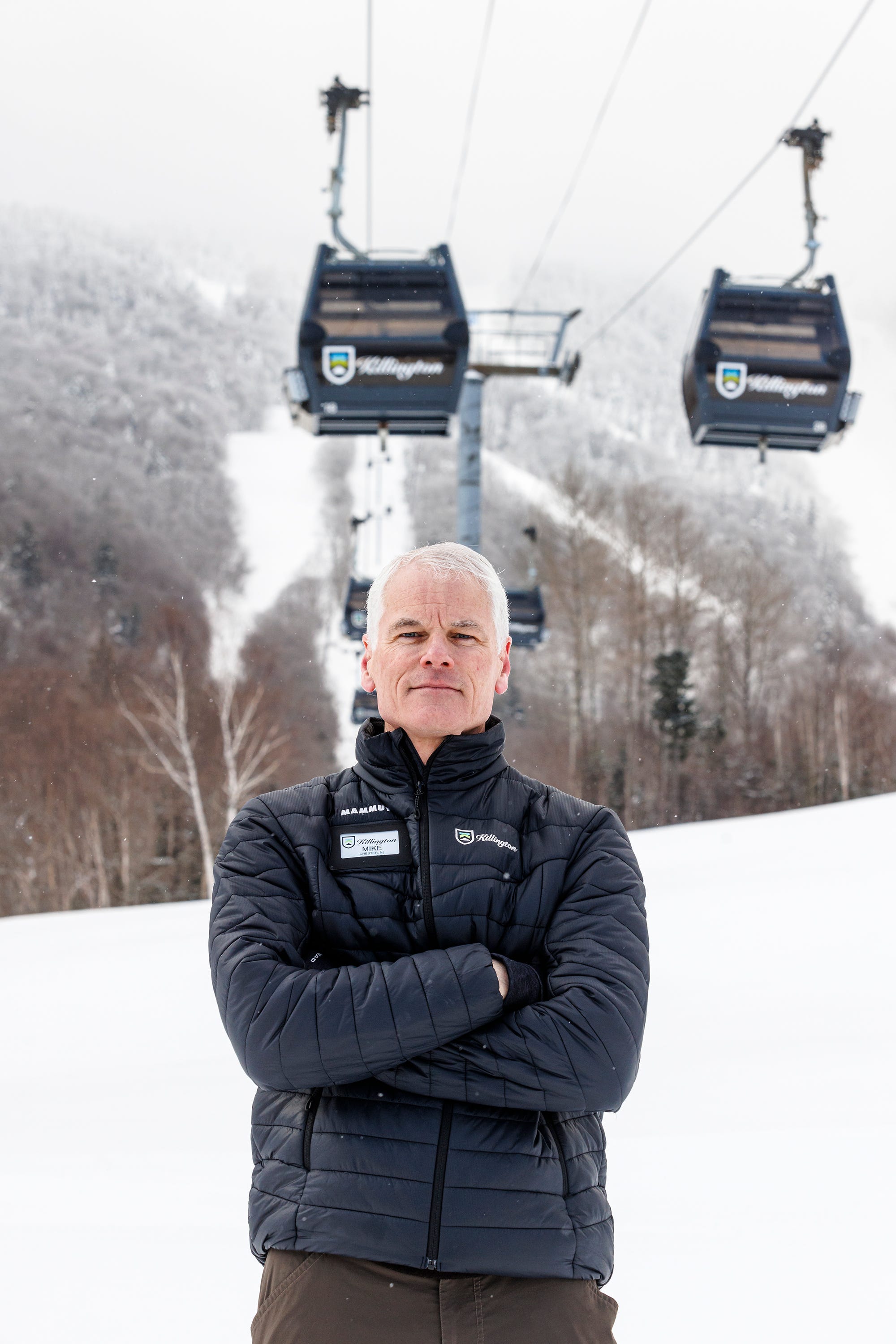
Aug 19, 2023
Podcast #142: Great Divide General Manager and Co-Owner Travis Crawford
This podcast hit paid subscribers’ inboxes on Aug. 16. It dropped for free subscribers on Aug. 19. To receive future pods as soon as they’re live, and to support independent ski journalism, please consider an upgrade to a paid subscription. You can also subscribe for free below: Who Travis Crawford, Co-Owner and General Manager of Great Divide , Montana Recorded on July 17, 2023 About Great Divide Click here for a mountain stats overview Owned by: Betsy Moran, Shane Moran, Travis Crawford, Rose Crawford Located in: Marysville, Montana Year founded: 1941 Pass affiliations: None Reciprocal partners: 3 days each at Whitefish, Snow King, Mt. Spokane, Bogus Basin, Mount Bohemia, Powderhorn CO, Ski Cooper, Sunlight Closest neighboring ski areas: Discovery (2:13), Bridger Bowl (2:19), Montana Snowbowl (2:30) Base elevation: 5,750 feet (at bottom of Wild West) Summit elevation: 7,250 feet (at top of Belmont chair) Vertical drop: 1,500 feet Skiable Acres: 1,500 Average annual snowfall: 150 inches Trail count: 127 (17% expert, 30% advanced, 47% intermediate, 7% beginner) Lift count: 6 (5 doubles, 1 ropetow) Why I interviewed him Should we all have a town bump like Great Divide. At the base: sundecks, steps wound between wooden buildings, bunched lifts rising from the parking lot. Centerpole Riblet doubles, those glorious machines. Up the mountain, a vastness. No fuss. Little grooming. Treed meadows hanging off traverses, flouncing down the incline. Up and over ridges. Narrow cuts through the trees. The kind of place, like Snowbird or Palisades, where runs meld together across broad faces. But without the extreme steepness of those alphas. But enough, pitched just so, a captivating kingdom begging for exploration. There’s a homey appeal to a ropetow bump or a Midwestern 300-footer. Like a small-town gas station or a grocer or, as we call convenience stores in Michigan, a “party store.” Hey Fella, we see you there. Welcome. You’re part of it. Thanks for it. See ya next time. That’s why these places build skiers faster than ants raise pyramids of dirt in your driveway. That sort of casual inclusion invites immersion. It can be tricky to even imagine how such back-slapping could translate to any ski area so large that you can’t see the whole thing from the parking lot. Actually achieving it is damn near impossible. Step into the frantic base at Park City or Steamboat or Big Sky or Snowbird and you immediately feel lost in the scale of it, surrounded by tens of millions of dollars worth of high-speed lifts telling you to get the hell out of there as fast as possible. Downhome has a tough time snagging shotgun on a vehicle made to transport 20,000 skiers per day. Great Divide occupies a rare and special place in American skiing: big terrain, tight community. That town-bump energy distilled, preserved, guarded, a launchpad to the rambling terrain above. Montana, of course, is filled with such places: Bridger Bowl and Lost Trail and Maverick and Discovery and Montana Snowbowl and Red Lodge and Turner. Ski areas with the vert and acreage to be monsters, but with the humble lifts and base buildings that communicate the real-life fact of a snowy town square. It is impossible not to love this place. Detach Bro may grumble about the fleet of Riblet doubles. Powder Bro will remind you that Great Divide’s 150 annual inches of snowfall is barely a passable week in Little Cottonwood Canyon. Corduroy Bro will wish for more top-to-bottom groomers. But unless your soul has been wrenched from your body by one too many cable news benders, the totality of this place will resonate with you, and leave you full long after you’ve driven back down the mountain. What we talked about Why Great Divide’s skier visits keep going up every year; Great Divide’s first-to-open, last-to-close tradition; the art of summertime slope maintenance; how Great Divide manages on just 150 inches per year; the methodical evolution of the ski area; buying the ski area you grew up at; what it means to be a community ski area; the pressure of carrying on a legacy; raising your kids on the mountain; the ownership group that Crawford purchased the ski area with in 2020; the Covid shutdowns and the aftermath; #Goals; modifying centerpole Riblets for MTB operations; Great Divide has two full Riblet lifts sitting in its boneyard – where should they go?; potential expansion; why Great Divide never built the Rawhide Gulch lift that appeared as future construction on old trailmaps; operating a ski area on Bureau of Land Management land and how that differs from operating on U.S. Forest Service land; potential Belmont lift upgrades; how an upgrade to the Wild West lift will allow it to spin faster; a potential new transfer lift; considering a carpet for the beginner area; the history of the unique Rawhide lift; yes, you can outfit centerpole Riblets with safety bars; retrofitting the rest of Great Divide’s lift fleet with bars; why the mountain’s official trail count has shrunk over the years; the ravages of the pine beetle; fire mitigation; don’t ski into that mineshaft; snowmaking and water issues; potential parking additions; a potential new baselodge; Great Divide’s $350 early-bird season pass deal and whether they will be able to hold that price; Great Divide’s extensive reciprocal lift ticket deals; and the Indy Pass. Why I thought that now was a good time for this interview In January 2020, Crawford, along with his wife Rose and Betsy and Shane Moran, bought Great Divide from its longtime owners, Kevin and Nyla Taylor. Less than two months later, the world collapsed. Or so it seemed in the moment. And now they owned a ski area, which I guess at the moment probably felt like owning the wagon factory next door to the Model T plant. Three years later, Great Divide just set a record for skier visits for the second consecutive season. The place is working. The Taylors’ legacy is secure. Over 35 years, they’d transformed the mountain from a T-bar joint run by a local ski club to the 48th-largest ski area in America. They’d entrusted their life’s work to an ownership group that included their daughter, Betsy. Great Divide had survived Covid. Now what? As much as the Taylors achieved, Great Divide is still incredibly raw. The potential to add lifts and terrain is vast. The mountain could use a bigger baselodge, more parking, better snowmaking. Crawford and I discuss all of this. He has ideas. Many will happen. Actualizing each project is a matter of capital, permitting, planning, timing: a new Belmont lift, deeper water rights, an expansion off Rawhide Gulch. Great Divide will not stand still. The question, of course, is how the ski area evolves without shedding its community ethos, its approachability and neighborly gleam. That balance, so hard to attain, is so easy to lose. But Crawford is well-positioned to achieve it. He lives, with his wife and two young kids, on the mountain. His 8-year-old son, he tells us, wakes up on Saturday morning, walks down to the lodge, gears up, and bombs the mountain alone all day long. Spoiling that atmosphere of howdy-get-along would be like tilling up your lawn and planting weeds. He just won’t do it. What I got wrong Embarrassingly, I kept calling the Taylors the “Naylors.” I don’t know why. My apologies to Kevin and Nyla Taylor . I kept pronouncing “Helena,” as “Heh-Lain-Ah,” which is how I’d pronounced it since I was like zero years old. But talking to Crawford and other locals made me realize that the correct pronunciation is, “Heh-Leh-Nah.” But everyplace has its micro-regional place-name pronunciations that are impenetrable to outsiders. Have fun with “Muskegon,” “Swartz Creek,” “Frankenmuth,” “Clio,” “Pinconning,” “Roscommon,” “Mackinac,” and “Epoufette” if you’re not from Michigan. Why you should ski Great Divide Let’s start here: a full-day adult lift ticket for the 2022-23 ski season was $64. That’s four cents an acre. Not a bad conversion rate, and worthwhile even if you already have a multi-mountain pass or two tucked in your jacket pocket. And the joint is incredibly easy to get to (well, once you get to the middle of Montana), seated just eight miles off Interstate 15. So situated, Great Divide is a terrific decompression zone as you travel between Whitefish and Big Sky. But go out of your way to get here if you must. The terrain is incredibly fun. Great Divide is not an extreme mountain or an especially snowy mountain, but it is an interesting one, with an appealing balance of semi-technical lines, glades, groomers, and de-stumped meadows that you can bomb with little concern for sharks. Epic and Ikon Pass sales continue to climb. And no wonder why – these are astonishing bargains, punchcards to deep resort rosters that can satisfy any type of skier. This breadth and ease of access is good for skiing. But the passes’ popularity likely drives ever-more skiers to a relatively stable number of resorts, fundamentally transforming the experience of skiing the big-mountain West. But there are hacks, a sub-circuit of ski areas that are marketed primarily to locals but deliver terrain and vert that is comparable to – and far emptier than – the better-known ski areas headlining the big passes. Great Divide is one of them. Go get it. Podcast Notes On Montana’s large and underrated ski areas Montana is the fourth-largest U.S. state by area, after Alaska, Texas, and California, but it’s home to just 18 alpine ski areas. They may be among the most underrated collection of ski areas in America, however: 12 cover 950 or more acres, and several clock an average annual snowfall of 300 inches or more. On the old proposed Rawhide Gulch lift Crawford and I briefly discuss a proposed-but-never-built lift that would have run up Rawhide Gulch – you can see that on the left hand side of this circa 1993 trailmap, between Jackpot and 4th of July: On the peak that Winter Park will develop I referred to a peak that lay within Winter Park’s Forest Service permit area and was slated for development under the ski area’s most-recent masterplan. That’s Vasquez Ridge, which I broke down in this article last year. On the safety bar on Great Divide’s centerpole Riblets The Storm explores the world of lift-served skiing year-round. Join us. The Storm publishes year-round, and guarantees 100 articles per year. This is article 69/100 in 2023, and number 455 since launching on Oct. 13, 2019. Want to send feedback? Reply to this email and I will answer (unless you sound insane, or, more likely, I just get busy). You can also email skiing@substack.com . Get full access to The Storm Skiing Journal and Podcast at www.stormskiing.com/subscribe

Aug 14, 2023
Podcast #141: Mount Snow General Manager Brian Suhadolc
This podcast hit paid subscribers’ inboxes on August 11. It dropped for free subscribers on August 14. To receive future pods as soon as they’re live, and to support independent ski journalism, please consider an upgrade to a paid subscription. You can also subscribe for free below: Who Brian Suhadolc, General Manager of Mount Snow , Vermont Recorded on July 17, 2023 About Mount Snow Click here for a mountain stats overview Owned by: Vail Resorts Located in: Dover, Vermont Year founded: 1954 Pass affiliations: * Epic Pass and Epic Local Pass : Unlimited access * Epic Northeast Value Pass : Unlimited access with holiday blackouts * Epic Northeast Midweek Pass : Unlimited access with weekend and holiday blackouts Closest neighboring ski areas: Hermitage Club (9 minutes), Stratton (23 minutes), Bromley (36 minutes), Magic Mountain (39 minutes) Base elevation: 1,900 feet Summit elevation: 3,600 feet Vertical drop: 1,700 feet Skiable Acres: 601 Average annual snowfall: 150 inches Trail count: 80 (15% advanced/expert, 70% intermediate, 15% beginner) Lift count: 19 (2 six-packs, 4 high-speed quads, 5 triples, 2 doubles, 1 ropetow, 5 magic carpets – view Lift Blog’s inventory of Mount Snow’s lift fleet) Why I interviewed him This is my second podcast focused on Mount Snow. The first episode featured then-GM Tracy Bartels, in November 2020. Our focus then was Covid: as in, what the hell were we going to do about it? The ski industry had spent eight months from the March shutdowns preparing for a masked world of closed ski bars and social distancing. Was this actually going to work? It did, of course. Sort of. But that podcast from 2020 has little to do with the Mount Snow of 2023, which has evolved substantially in just three years. It was time for an update. I’m also owning the fact that I overcorrected when I took The Storm national in 2021. In the pod’s first two years, I’d interviewed the heads of most of New England’s largest ski areas. Check, check, check. Done. I needed to establish this thing in the Rockies, the Cascades, the Sierras, the Wasatch. And I did. But a lot of my New England listeners felt snubbed. I’d built this thing on their attention and enthusiasm, and now I was pivoting away. It’s time to pivot back a bit. The lift-served ski world is changing fast, especially among those giants with access to capital and ambition. So I’ve scheduled upcoming podcast conversations with the leaders of Killington and Sunday River, both of which I’ve profiled in the past. I’ll pursue more such follow-ups in the future, in all regions – and not just with mega-resorts, as the recent second installment with the owners of Plattekill demonstrated. The long-term goal is to alternate podcasts so that every other episode focuses on the West, with the East/Midwest/Mid-Atlantic occupying the alternate slots. But setting aside my own admin, I’m focusing on Mount Snow because it’s an incredibly important mountain. I’ll reset what I wrote in this same section three years ago : Because Mount Snow is where big-time Northeast skiing begins. As the southern-most major Vermont ski area, it is a skier’s gateway to mountains that are big enough to get lost on. From its strategic position in the orbit of the East Coast megalopolis, successive owners have gradually built something uniquely suited to the frenetic swarms of wildly varied skiers who bullseye the place each winter: Mount Snow has one of the most outstanding terrain parks in America and one of the best snowmaking systems in the world. The families who swarm here find absolutely unintimidating terrain, blue as the sky and groomed smoother than I-91. It’s a perfect family mountain and a perfect bus skier’s mountain and a perfect first step from Mount Local to something that shows you how big skiing can be. It was the crown jewel of the Peak Resort’s empire, and it’s one of the most important pieces to Vail’s ever-expanding Epic jigsaw puzzle. I wouldn’t call it a special mountain – the terrain is mild and not terribly interesting, and the volume and quality of natural snowfall is best described as adequate. But it is a vital mountain, as the southern-most anchor of Vermont’s teeming ski scene, as an accessible ski experience for weekending cityfolk, as an aspirational destination for people stepping more fully into skiing culture, and as a testament to the power of the imagination to transform a big vertical drop and cold skies into a vital and vibrant node of the regional ski scene. What we talked about Surveying damage from the July rainstorm; the Epic Promise Foundation; Mount Snow’s four-foot March snowstorm; the frantic hilarity of New England powder days; the difference between east and west coast pow; breaking down Mount Snow’s lift upgrades at Sundance, Sunbrook, and Heavy Metal; how the Sundance six-pack “changed the dynamic of the ski resort”; why Sundance – unlike the mega-popular Bluebird Express – does not have bubbles; how the resort manages 18 high-speed out-of-base seats; the four most-utilized lifts at Mount Snow; how Mount Snow built the Sunbrook lift in a roadless section of mountain; what it took to convert the Heavy Metal lift from a double to a triple; why Vail auctioned the individual chairs from the old Sunbrook rather than selling the lift – a 1990 CTEC quad – to a smaller ski area; talking through long-term upgrades to Nitro; why the resort doesn’t add more chairs to the current Nitro to boost its capacity from 2,100 skiers per hour to 2,400; the status of paid parking two years in; impressions of New England ski culture; the difference between running a mountain in the east and in the west; what happens when Vail surprise-buys your resort; connecting Park City to The Canyons via gondola – “the magnitude of it was not lost on me”; the mining facilities still scattered across Park City; career opportunity within Vail Resorts; Mount Snow’s monster snowmaking system; why Mount Snow has become Vail’s late-season New England operator, rather than Wildcat; why Carinthia is the mountain’s late-operating pod; whether we could ever see another October opening at Mount Snow; potential upgrades for the North Face lifts; assessing the Beartrap double; contemplating the future of Grand Summit; whether we could ever see a detach lift on beginner terrain at Mount Snow; whether the Epic Local Pass is the correct unlimited-access pass for Mount Snow; the popularity of Northeast-specific Epic Passes; the Epic Day Pass; and Vail Resorts’ day-ticket limits for the 2022-23 ski season. Why I thought that now was a good time for this interview Ever since Peak Resorts built the Bluebird Express six-pack in 2011, Mount Snow has had a problem: the lift, with its blue bubbles and ultra-smooth ride, was so flashy and appealing that nobody wanted to ride any other lift on the front side of the mountain. Even the Grand Summit high-speed quad, which runs parallel to Bluebird and serves all the same terrain, had trouble getting attention. This was great for skiers who actively work the mountain, but a real drag for Mount Snow’s rap as the most-crowded Southern Vermont ski area. Enter: Vail Resorts’ Epic Lift Upgrades of 2022. Mount Snow was the beneficiary of two of the 21 planned lifts (18 of which Vail finished on schedule*): the Sundance and Tumbleweed triples made way for a new six-pack, while the backside Sunbrook lift got a boost from a fixed-grip quad to a detach. Meanwhile, the mountain converted the Heavy Metal double into a triple chair, adding capacity to the popular Carinthia terrain park. Sundance and Sunbrook had one job: give people a reason to ski something besides Bluebird. As far as replacement lifts go, they seemed brilliant. But did the plan work to unknot Mount Snow’s gnarliest crowd points? That was one topic Suhadolc and I discussed. Another: was Vail able to recover from its arguably oversold 2021-22 ski season by implementing day-ticket limits and settling into paid-parking plans? And how were those paid parking plans going? And should Mount Snow really be unlimited on the Epic Local Pass? Vail Resorts is entering its fifth winter season operating Mount Snow. With the Peak Resorts transition fully digested and Covid’s hassles a memory, the company has no choice but to fully own every piece of the experience. With its size and proximity to New York City, Mount Snow will always be somewhat hectic. New Englanders can tolerate that. Chaos, however, does not belong in this land of picket-fence order. And for a moment post-Covid, Mount Snow seemed to be tilting toward chaos. But no one can say that Vail has not brought big change to the mountain over the past several seasons. Despite daily lift tickets that topped out at $154 this past winter, Mount Snow has never been more affordable to the masses. Unlimited access is just $689 on the Epic Local Pass; subtract holidays with the $567 Northeast Value Pass; minus weekends with the $425 Northeast Midweek Pass. With prices that low at a mountain that big that’s as easy to access as Mount Snow is, things could go sideways pretty quick. The new lifts, the parking plans, the lift-ticket limits – all of it is calculated to prevent that from happening. Ski areas are a little bit like novels. They’re never really finished. But unlike our great works of literature, we get to edit ski areas after they’re published. The version of Mount Snow that we ski today is probably not the best and final version of the hill, but it may also be the best it’s ever been,. *Two lifts scheduled to rise in Park City were rerouted to Whistler after spiteful locals revolted; Keystone’s Bergman sixer had to wait a year after a construction-road misfire tore up some sensitive high-altitude terrain. What I got wrong * I said that the new Sunbrook high-speed quad clocked a ride time around four minutes. The actual time is closer to six minutes, according to Suhadolc. * I asked Brian why Vail didn’t try to re-use the Sunbrook lift – a 1990 CTEC quad that likely had lots of life left on it – at a “smaller ski area.” He explained that Vail does occasionally move a lift within its portfolio. What I had meant to ask, however, was why didn’t Mount Snow didn’t attempt to sell the lift on the open market to a smaller independent ski area. It’s great that Mount Snow sold the chairs and flipped the money to the Epic Promise Foundation, which assists their employees in times of outstanding need, such as the floods that just smashed Okemo. But the company could likely have made more for Epic Promise by selling the entire lift to an independent ski area, many of which are desperate for a modern quad in good working condition. * I said that Vail Resorts purchased Park City Mountain Resort “in 2014 or 2015.” The company bought the resort in 2014, a year after it bought Canyons (which is now part of Park City). * I said the Outpost lift turned 60 this year. Lift Blog, my go-to source for pretty much all things lifts, lists the lift as a 1963 Yan triple. Brian said that it is a 1988 CTEC triple. New England Ski History agrees with Brian. This is not a crack on Lift Blog , which is an excellent resource, so much as on me for not double-checking my references - in fact, I think Tracy Bartels corrected me on the exact same factoid three years ago. * I said that the Northeast Midweek Epic Pass was “less than $400.” This is incorrect. The pass currently costs $425. The early-bird price for the 2023-24 ski season was $416. * When I was running through the various resorts that the Northeast-specific Epic Passes accessed, I left out Mt. Brighton, Michigan. * I noted that Mount Snow had opened in October “once and maybe twice” under Peak Resorts. The only record I can find of Mount Snow opening that early was on Oct. 27, 2018. Why you should ski Mount Snow Mount Snow has two big, obvious constituencies: Park Brah and Family Bro. The Carinthia peak is a crucial piece of Peak Resorts’ legacy, as important as the Bluebird Express or the tens of millions the company pumped into snowmaking upgrades. Once a separate ski area , the peak is isolated from the mountain proper (though connected both ways by green trails), a thousand vertical feet of straight hits served by a high-speed quad and a triple chair. Park Brahs can park out, Brah. Along with Seven Brothers at Loon, it may be the best terrain park in the eastern United States. Family Bro loves Mount Snow partly because of Carinthia. Radbrah Junior can spend his afternoons there, posted up five wide with his boys, contemplating the hits below. The rest of the mountain, outside of the North Face, is interstate-width and solid blue. Families of almost any ability can manage this terrain. Mount Snow may be home to the best sustained intermediate terrain in New England. It’s certainly among the most varied. And the mountain grooms just about every run just about every night, even if I wish they’d chill and let some bumps sprout here and there. Mount Snow’s biggest drawback is a relative lack of glades for a mountain of its size. Skiers seeking trees should aim their GPS for Stratton or Magic, both of which have excellent, extensive glade networks. Epic Pass holders need to really pick their spots, though. Both Mount Snow and Okemo reach stampede-level crowding on weekends and holidays (I really don’t think either should be unlimited on the Epic Local pass). Head for Stowe at these times if at all possible. Or snag an Indy Pass for peak-day getaways to Magic and Bolton Valley. Podcast Notes On Heavenly and the Caldor Fire When discussing Vail Resorts’ unified disaster response to the recent Vermont floods, I referred to a similar conversation I’d had with Heavenly COO Tom Fortune in regards to the Caldor Fire that descended on Tahoe two years ago. You can listen to that conversation starting at 56:03 here . On Vermont’s monster March snowstorm We discussed a monster snowstorm that descended on Vermont March 14 to 15. Huge snow totals included 45 inches at Bromley, 37 inches at Magic, and 46 inches at Mount Snow. On crushing pow at Mount Snow I discussed the chaos of a pow-day rope-drop at Mount Snow. Unfortunately the only access I have to it is this Twitter video . And since Substack won’t embed Twitter videos anymore you’ll have to click through to watch it: Too many “suns” I kept getting Mount Snow’s “sun” lifts confused. It reminded me of a time I was skiing Snowbird, and a bunch of us were debating where to go next, and my buddy Mike, clearly confused, was just like, “There’s too many Gads.” And my God he’s right . On the Mount Snow “tram” Brian and I briefly discussed Mount Snow’s old “tram,” which transported skiers from a base-area hotel up to the ski hill. It was really more of a whacky speedboat suspended from a cable, as you can see in the rendering on this 1965 trailmap. And yes, that’s a double bubble chair beside it: On the Vail Resorts acquisition of Park City Brian worked at Park City when Vail Resorts swiped it off Powdr Corp’s lunch tray after the latter forgot to renew its lease. It was probably the most cartoonishly absurd business transaction in the history of lift-served skiing. Here’s Park Record , examining the events as part of a decade-in-review series in late 2019: In some circles, though, the whispers had already started that something was afoot, and perhaps not right, at PCMR. Powdr Corp. for some unknown reason was negotiating a sale of its flagship resort, the most prevalent of the rumblings held. The CEO of Powdr Corp., John Cumming, late in 2011 had publicly stated there was not a deal involving PCMR under negotiation, telling Park City leaders during a Marsac Building appearance in December of that year the resort was “not for sale.” Later that evening, he told The Park Record the rumors “always amuse me.” The reality was far more astonishing and something that would define the decade in Park City in a similar fashion as the Olympics did in the previous 10-year span and the population boom did in the 1990s. The corporate infrastructure in the spring of 2011 had inadvertently failed to renew two leases on the land underlying most of the PCMR terrain, propelling the PCMR side and the landowner, a firm under the umbrella of Talisker Corp., into what were initially private negotiations and then into a dramatic lawsuit that unfolded in state court as the Park City community, the tourism industry and the North American ski industry watched in disbelief. As the decade ends, the turmoil that beset PCMR stands, in many ways, as the instigator of a changing Park City that has left so many Parkites uneasy about the city’s future as a true community. The PCMR side launched the litigation in March of 2012, saying the future of the resort was at stake in the case. PCMR might be forced to close if it did not prevail, the president and general manager of the resort at the time said at the outset of the case. Talisker Land Holdings, LLC countered that the leases had expired, suddenly leaving doubts that Powdr Corp. would retain control of PCMR. … Colorado-based Vail Resorts, one of Powdr Corp.’s industry rivals, would enter the case on the Talisker Land Holdings, LLC side in May of 2013 with the aim of wresting the disputed land from Powdr Corp. and coupling it with nearby Canyons Resort, which was branded a Vail Resorts property as part of a long-term lease and operations agreement reached at the same time of the Vail Resorts entry into the case. Vail Resorts was already an industry behemoth with its namesake property in the Rockies and other mountain resorts across North America. The addition of Canyons Resort would advance the Vail Resorts portfolio in one of North America’s key skiing states. It was a deft maneuver orchestrated by the chairman and CEO of Vail Resorts, Rob Katz. The agreement was pegged at upward of $300 million in long-term debt. As part of the deal, Vail Resorts also seized control of the litigation on behalf of Talisker Land Holdings, LLC. … The lawsuit itself unfolded with stunning developments followed by shocking ones over the course of two-plus years. In one stupefying moment, the Talisker Land Holdings, LLC attorneys discovered a crucial letter from the PCMR side regarding the leases had been backdated. In another such moment, PCMR outlined plans to essentially dismantle the resort infrastructure, possibly on an around-the-clock schedule, if it was ordered off the disputed land. What was transpiring in the courtroom was inconceivable to the community. How could Powdr Corp., even inadvertently, not renew the leases on the ground that made up most of the skiing terrain at PCMR, many asked. Why couldn’t Powdr Corp. and Talisker Land Holdings, LLC just reach a new agreement, others wondered. And many became weary as businessmen and their attorneys took to the courtroom with the future of PCMR, critical to a broad swath of the local economy, at stake. The mood eventually shifted to exasperation as it appeared there was a chance PCMR would not open for a ski season if Talisker Land Holdings, LLC moved forward with an eviction against Powdr Corp. from the disputed terrain. The lawsuit wore on with the Talisker Land Holdings, LLC-Vail Resorts side winning a series of key rulings from the 3rd District Court judge presiding over the case. Judge Ryan Harris in the summer of 2014 signed a de facto eviction notice against PCMR and ordered the sides into mediation. Powdr Corp., realizing there was little more that could be accomplished as it attempted to maintain control of PCMR, negotiated a $182.5 million sale of the resort to Vail Resorts that September. Absolutely brutal and amazing and hard to believe, even nearly a decade later. On Canyons’ name history I mentioned the various names that the former Canyons ski area (now part of Park City), had gone by. Ski Utah provides the complete history : A neighboring ski area and sister resort to Park City Ski Area, called Park City West, opened in 1968. It was renamed ParkWest in 1975 after a change in ownership, then Wolf Mountain in 1995 for just two seasons. In 1997 it became The Canyons after an acquisition by the American Skiing Company before it was purchased by the Talisker Corporation. It was then sold to Vail Resorts in 2014 and subsequently merged with Park City Mountain. Today that base area is known as The Canyons Village at Park City. On Mount Snow’s amazing snowmaking system Just two years before selling its entire portfolio to Vail Resorts, Peak Resorts invested an amazing $30 million into Mount Snow’s snowmaking system. The Brattleboro Reformer profiled the system shortly before go-live in 2017: West Lake is actually a sprawling system that begins about 4 miles from Mount Snow. It starts with a small, black, inflatable dam that stretches 18 feet across Cold Brook in Wilmington. From November through March, Mount Snow can inflate that dam as needed, drawing water into the newly constructed reservoir. A sluiceway alongside the dam ensures a flow of water in Cold Brook whether the dam is inflated or not. "We were trying to be pretty low-impact, or as low-impact as possible," Storrs said. A nondescript-looking pump house near the dam can send water upward toward Mount Snow at a rate of 11,800 gallons per minute, "which is pretty much double what we used to have in terms of pumping capacity," Storrs said. On a recent morning, crews were putting on finishing touches and conducting tests at that pump house and two others situated farther up the mountain. There's a nearly 600-foot elevation gain between the inflatable dam and the last pump house on Mount Snow's slopes. On Wildcat and the long season We discussed Wildcat’s tradition as a late operator. Under Peak Resorts, the ski area would push the season into late April and, occasionally, May. Snowpak has documented Wildcat’s closing dates over the past nine years – note the shift to earlier dates after Vail acquired the resort in 2019 (ignore the 2020 date, for obvious reasons): Vail shifted late-season New England operations to Mount Snow for reasons that Brian explains on the podcast. But it’s a little incongruous stacked up against the region’s other five late operators: Killington, Sugarbush, Jay Peak, Sunday River, and Sugarloaf, all of which are quite a ways north of Mount Snow: On Grand Summit and Yan detachables I referred to the dreadful safety record of Yan detachable lifts. I broke this history of death and incompetence down in my recent podcast with China Peak GM Tim Cohee (scroll down to the Podcast Notes section). On Epic and Ikon access shifts since 2020 I keep asking Vail Resorts’ GMs if their ski areas are placed on the appropriate Epic Pass tier, mostly because it’s amazing to me that an unlimited season pass to a mountain like Breckenridge or Mount Snow or Stevens Pass could be $676 – the early-bird price of 2023-24 Epic Local Passes. The Ikon Pass, as I noted on the podcast, has shifted its pass structure all over the place the past several seasons, tweaking access to Stratton, Sugarbush, Crystal Mountain, Alta, Aspen, Jackson Hole, Taos, Deer Valley, and Arapahoe Basin. Here’s the chart I included in my recent podcast conversation with Alterra CEO Jared Smith to document those changes: I was astonished when Vail kept Stevens Pass on the Epic Local unlimited tier after 2021’s well-documented crowding meltdowns. Things got so wild in Washington that Alterra pulled Crystal off the Ikon Pass’ unlimited tier and jacked its season pass price up to $1,700 for the 2022-23 ski season. I still don’t really understand this super-bargain access strategy, but Vail has made it clear that they’re sticking with it. On the phenomenal deal that is the Epic Day Pass We discussed the Epic Day Pass. This thing really is an amazing deal: The Storm explores the world of lift-served skiing year-round. Join us. The Storm publishes year-round, and guarantees 100 articles per year. This is article 68/100 in 2023, and number 454 since launching on Oct. 13, 2019. Want to send feedback? Reply to this email and I will answer (unless you sound insane, or, more likely, I just get busy). You can also email skiing@substack.com . Get full access to The Storm Skiing Journal and Podcast at www.stormskiing.com/subscribe
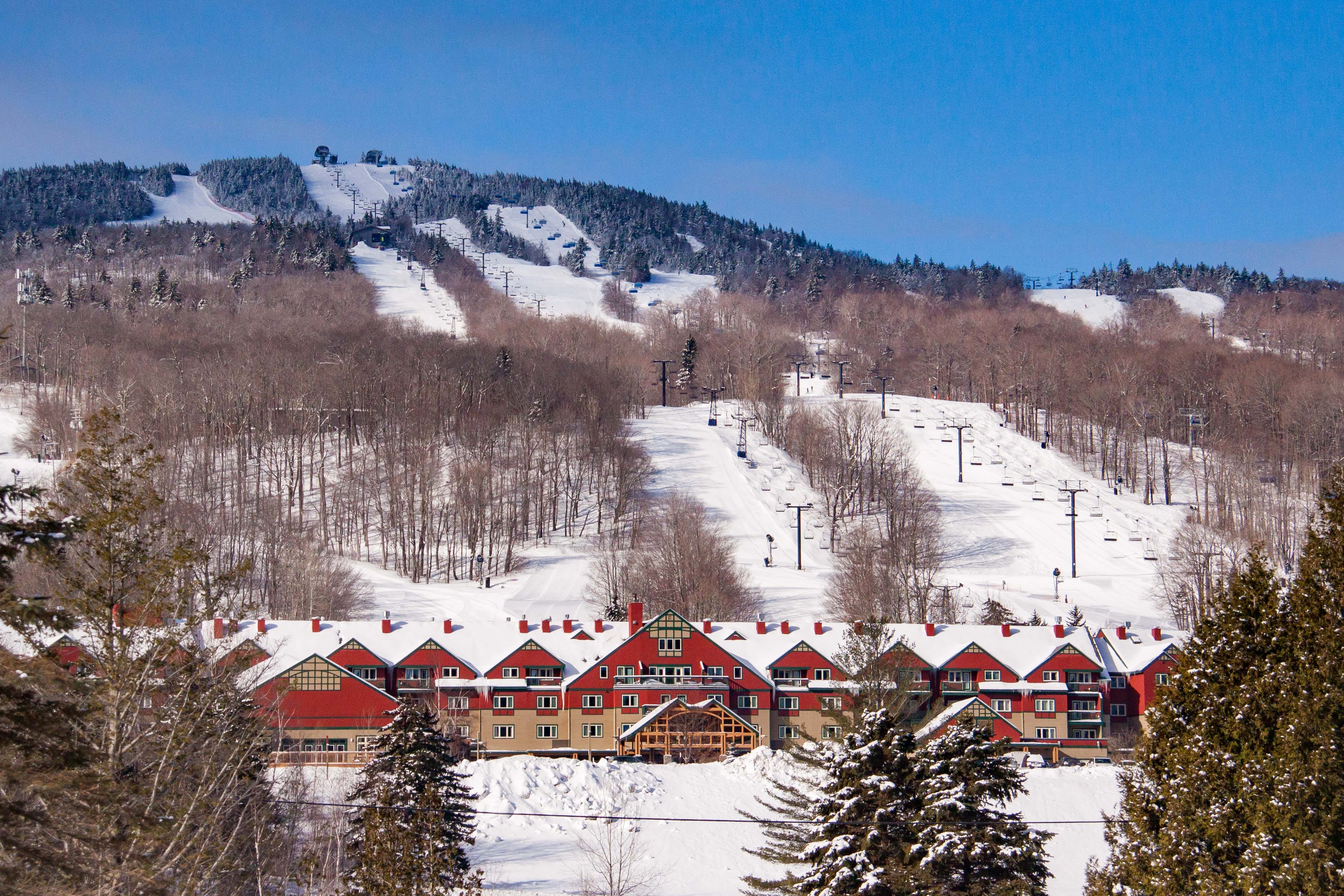
Aug 10, 2023
Podcast #140: Plattekill Owners Danielle and Laszlo Vajtay
This podcast hit paid subscribers’ inboxes on August 7. It dropped for free subscribers on August 10. To receive future pods as soon as they’re live, and to support independent ski journalism, please consider an upgrade to a paid subscription. You can also subscribe for free below: Who Danielle and Laszlo Vajtay, Owners of Plattekill Mountain , New York Recorded on July 14, 2023 About Plattekill Mountain Click here for a mountain stats overview Owned by: Danielle and Laszlo Vajtay Located in: Roxbury, New York Year founded: 1958 Pass affiliations: None Reciprocal partners: * 3 days each at Snow Ridge, Swain, Mont du Lac, Ski Cooper * 2 days at Homewood Closest neighboring ski areas: Belleayre (28 minutes), Windham (41 minutes), Hunter (46 minutes) Base elevation: 2,400 feet Summit elevation: 3,500 feet Vertical drop: 1,100 feet Skiable Acres: 75 acres Average annual snowfall: 175 inches Trail count: 40 (20% expert, 20% most difficult, 40% more difficult, 20% easiest) Lift count: 3 (1 triple, 1 double, 1 carpet) Why I interviewed them Think about every ski area in the country that almost everyone knows. Almost every one of them has a smaller, less-well-known, slightly badass neighbor lurking nearby. In LA, it’s Baldy, forgotten in the shadow of Big Bear and Mountain High. In Tahoe, it’s Homewood, lost in the Palisades Tahoe circus. We can just keep going: Hoodoo/Bachelor; White Pass/Crystal; Mt. Spokane/Schweitzer; Soldier/Sun Valley; Snow King/Jackson; Sunlight/Aspen; Red River/Taos. In New York, we have a few versions of this: West and (currently closed) Hickory, adjacent to Gore Mountain; Titus, intercepted by Whiteface as cars wind north. But the most dramatic contrast lies in the Catskills. There, you find four ski areas: Hunter, recently expanded, owned by Vail Resorts and flying two six-packs; Windham, two new investors on its masthead, an Ikon Pass partner that runs three high-speed lifts out of its base; Belleayre, owned by the state and run by the Olympic Regional Development Authority, or ORDA, with a shimmering gondola that no other ski area of its size could afford; and Plattekill. Plattekill is owned by Laszlo and Danielle Vajtay, former ski instructors who purchased the bump in 1993. They have added snowmaking to one of their 40 trails each year that they could afford to. Their lift fleet is a 1974 Hall triple and a 1977 Hall double, moved from Belleayre in 1999. It took the Vajtays three years to install the lift. The parking lots cling layer-cake-style to the mountainside. Plattekill is open Friday through Sunday, plus Christmas and Presidents’ Weeks and MLK Day. Access is down poorly marked backroads, half an hour past Belleayre, which sits directly off state route 28. It’s fair to ask how such a place endures. New York is filled with family-owned ski areas running vintage lifts. But only Plattekill must compete directly with so many monsters. How? There is no one answer. There’s the scrap and hustle, the constant scouring of the countryside for the new-to-Platty machines to rebuild to glory. There’s the deliberate, no-debt, steady-steady better-better philosophy that keeps the banks away. There’s the 1,100 feet of pure fall-line skiing. The vast kingdom of glades. The special geography that seems to squeeze just a bit extra out of every storm. There’s the lodge, rustic but clean, cozy, and spacious. And there’s the liftlines, or miraculous lack of them, for such a ski area just three hours from the nation’s largest city. And there are the midweek private-mountain rentals – Platty’s secret weapon , a $8,500 guarantee on even the feistiest weather days. That algorithm, or some version of it, has equaled survival for Plattekill. When the Vajtays bought “Ski Plattekill” in 1993, the Catskills were crowded. But Bobcat , Scotch Valley , Cortina , Highmount , and Sawkill all vanished over the decades. Plattekill could have died too. Instead, it is beloved. Enough so that it can charge more for its season pass - $779 early-bird, $799 right now – than Vail charges for the Epic Local Pass ($676 early-bird, $689 today), which includes unlimited access to Hunter and most of the company’s 40 other resorts. When a harder-to-reach, smaller mountain running 50-year-old lifts can charge more for a single-mountain season pass than its larger, more up-to-date, easier-to-access neighbor whose season pass also gets skiers in the front door at Whistler and Breckenridge, it’s doing something mighty right. What we talked about Plattekill’s “surprisingly good” 2022-23 ski season; building a snowmaking system gun-by-gun; 2023 offseason improvements; how the Vajtays have grown Plattekill without taking on traditional debt; what killed independent skiing in the Catskills; private mid-week mountain rentals; a growing wedding business; why Plattekill was an early adopter of lift-served mountain-biking, why the mountain abandoned the project, and whether they would ever bring it back; assessing Platty’s newest trail; potential terrain expansion within the existing footprint; plans to moderate the steep section at the end of the Overlook trail; the potential lift and terrain expansion that could make Plattekill “a big, big player in the world of ski areas”; considering outside investment to turbocharge growth - “the possibilities for the mountain are that it could be a lot more”; “I don’t have an interest in selling Plattekill”; Snow Operating; assessing Plattekill’s Hall chairlifts; “anybody taking out a lift, please don’t cut it up and throw it in the Dumpster before contacting” small ski areas; the lightning strike that changed Plattekill’s summer; helping save Holiday Mountain; competing against the Epic and Ikon passes; competing against state-owned and taxpayer-funded ski areas; how New York State could help independent ski areas compete against its owned ski areas; Liftopia’s collapse; the Ski Cooper season pass; and reconsidering the Indy Pass. Why I thought that now was a good time for this interview The Vajtays have appeared on The Storm Skiing Podcast before, in episode two , which I released on Oct. 25, 2019. They’d agreed to do the interview without knowing who I was, and before I’d published a single episode. I will always be grateful to them (and the other seven folks* who recorded an episode when The Storm was still gathering in my brain), for that. The conversation turned out great, I thought, and fused the podcast to the world of scrappy independents from its earliest days. But in the intervening years, I’ve gotten to know the Vajtays much better. Laz and I, especially, communicate a lot. Mostly via text, but occasionally email, or when I’m up there skiing. In May, he joined a panel I hosted at the National Ski Areas Association (NSAA) convention in Savannah, Georgia. Alongside the general managers of Mt. Rose, Mt. Baker, and Cascade, Wisconsin, Laz articulated why the Vajtays had so far elected to keep Plattekill off of any multi-mountain pass. The NSAA’s convention rules forbade me from recording that panel, but the conversation so closely aligned with my daily pass-world coverage that I knew I had to bring some version of it to you. This is installment one. Cascade GM Matt Vohs is scheduled to join me on the pod in October, followed by Mt. Rose GM Greg Gavrilets in November (you can always view the upcoming podcast schedule here ). I’ve yet to schedule Mt. Baker CEO Gwyn Howat, but I’m hopeful that we can lock in a future date. So that is part of it: why has Plattekill held firm against the pass craze as all of its better-capitalized competitors have joined one coalition or the other? But that is only part of the larger Platty story. Vail was supposed to ruin everything. Then Alterra was supposed to ruin it more. Family-owned ski areas would be crushed beneath these nukes launched from a Colorado silo. But this narrative has been disproven across the country. Because of a lot of things – the Covid-driven outdoor boom, the indie cool factor, the big boys overselling their passes – small ski areas are having a moment. No one, arguably, has a tougher hill to defend than Platty, and no one’s proven themselves more. *Those six people were: New England Lost Ski Areas Project founder Jeremy Davis, Lift Blog founder Peter Landsman, Boyne Resorts CEO Stephen Kircher, Magic Mountain President Geoff Hatheway, Killington President Mike Solimano, and Burke GM Kevin Mack. What I got wrong I said that The New York Times profile on Plattekill’s private-rentals business ran in 2018. It actually ran Jan. 4, 2019. Why you should ski Plattekill I can endorse all four large Catskills ski areas. Hunter holds a crazy, possessed energy. Impenetrable on weekends, you can roll 1,600-vertical-foot fastlaps off the sixer on spring weekdays. Belleayre throws past-era vibes with its funky-weird trail network while delivering rides on a top-to-bottom gondola that is the nicest lift in New York State. Windham’s high-speed lift fleet hides a narrow and fantastically interesting trail network that, when wide open with new snow in the woods, feels enormous. So Plattekill is not, for me, a family-diner-versus-McDonald’s kind of fight. I probably ski all four of those mountains about the same amount. But I will make an appeal here to those New York-based Epic and Ikon passholders who are scanning their mountain menus and deciding where to ski this winter: take one day and go to Plattekill. Make it a day that you know will be miserable at Hunter or Windham. A day when the lift queues can be seen from space. A holiday, a Saturday, a powder day. I know you already invested in your pass. But suck up one more lift ticket, and check out Plattekill. Here’s what you will find: no liftlines, ever. The parking lots simply aren’t large enough to accommodate enough skiers to form them. A double chair with this view: At the top, three choices: loop green-circle Overlook all the way around, thread your way down through the tight and narrow blues, or ride one of four double-blacks all the way back to the valley. I prefer the blues because they lead to the glades, unmarked but maintained, funky, interesting, tap-shoes required. The triple side is more traditional, more wide runs, especially Upper Face. Powder Puff is fabulous for kids. The snow doesn’t stick to the triple side like it does to the double side, but when it’s deep enough, wild lines through the trees lie everywhere. Plattekill is littered with curiosities. A rock quarry. An old T-bar terminal. An overgrown halfpipe in the trees. Abandoned MTB trails still signed and useable for skiing. More than any ski area in New York, Plattekill rewards exploration and creativity, enables and encourages it with a permissive Patrol and line-less lifts. Twenty or 25 runs are possible here, even on a big day. Just keep ripping. In some ways, Plattekill is a time machine, a snapshot of a Catskills otherwise lost. In others, it is exactly of this moment, stripped of the pretense and the crowds that can seem like skiing’s inevitable trajectory. The bozos who can’t stand a fixed-grip lift ride longer than three minutes don’t come here. They would rather stand in a long line for a fast lift. But you don’t have to. You can come to Plattekill. Podcast Notes On Platty’s singular atmosphere No one has written more on Plattekill than Harvey Road, founder of the fantastic New York Ski Blog . I asked him to share links to his five favorite Platty write-ups: Return to Plattekill Mountain – Jan. 8, 2013 “Those intangible forces pull me inexorably to Plattekill. Don’t get me wrong, Plattekill has some solid tangibles too: lake effect powder and steeps and trees and beautiful views are important to people who love to ski. But there’s also something more. A simplicity of purpose that fills my soul with an exuberance I have a hard time capturing in my nine-to-five life.” Plattekill: The Life of Riley – March 5, 2018 “Later in the morning the snow and the wind really picked up. It must have snowed two or three inches an hour well into the afternoon. By noon all traces of the bottom were gone and Plattekill was 100% open for business. Twist and Ridge were deserted and any tracks you left on that side of the mountain were gone by the time you returned.” I’m Done Skiing Alone – March 20, 2018 “When I was a little kid living on a farm, I’d play by myself in a big tractor tire that served as a sandbox. I developed a reputation for playing alone. ‘Harvey doesn’t need playmates, he’s happy all by himself!’ It wasn’t true, down inside I didn’t like it, but I didn’t know myself well enough to push back.” Chasing Plake – Feb. 4, 2019 “Around 10:00 am we headed into the lodge to give our legs a break, hydrate and warm up a little (it was maybe -1 F at this point). As we got to the door, we saw the man himself. ‘I was wondering when you’d show up.’ “’Hi, my name is Glen!’ he said, offering his hand. I introduced myself and my son and asked if he’d been skiing yet. “’No, we kind of take our time on Saturdays. I love to watch a mountain wake up and come alive.’ We chatted about Tahoe and the weather for a couple minutes. I asked if we could take some pics. Of course we could.” Plattekill: Five Days Later – March 11, 2019 “We skied down to the double and Sam the Smiling Liftie let us step around the rope and head up early with Patrol. At the top, a new character was introduced. Maybe he’d seen my custom skis, as he said ‘Road? I’m Soule. Jeff Soule.’ “I use the word character in it’s broadest sense. Gregarious and engaging, with homemade poles he’d carved from tree branches, Jeff had switched to tele this season and was absolutely ripping, hucking everything in sight.” On the lost ski areas of the Catskills When the Vajtays purchased Plattekill in 1993, the mountain was one of six family-owned ski areas in the Catskills. One by one, the other five failed. Here’s an overview of each: Highmount, circa 1985 Bobcat circa 1996 Cortina, circa 1995 Scotch Valley, circa 2004 I don’t think a trailmap exists of Sawkill, which was basically one or two runs and a ropetow on 70 vertical feet. On that ominous New York Times article from the ‘90s Laszlo referred to a New York Times article covering the Vajtays’ disastrous second season as owners – that article ran on Jan. 21, 1995. An excerpt: A sign posted at the Ski Plattekill resort here warns against packing the cozy, wood-paneled cafeteria beyond its capacity of 242 people. That has hardly been a problem this winter. With a third of the ski season already over, this resort in the central Catskills has yet to open a single one of its 27 trails. The reason is plain: it has barely snowed this winter, and whatever snow has fallen has been washed away by driving rains and unseasonably warm temperatures. When Laszlo Vajtay, the owner of Ski Plattekill, looks out at his mountain, all he sees is brown grass. "It is depressing," he said, as he trudged through the mud blanketing his steepest trail, Blockbuster, on this 52-degree afternoon. "Look at how warm it is. It's like summer. Winter's just not here yet." Mr. Vajtay's experience is the starkest example of what has been a disastrous season for skiers and ski areas across the Northeast. Of the 50 ski areas in New York State, all but nine closed down late this week, hoping to preserve their remaining snow cover for the weekend, according to Ski Areas of New York, a trade group. Things were not much better in New England, where nearly 60 percent of ski resorts reported being closed. On The New York Times article on private mountain rentals Plattekill has offered private mountain rentals for 15 years. That part of the business really took off, however, after The New York Times profiled the ski area in 2019: Plattekill, in turn, has branded itself as an intimate, old-fashioned resort for expert skiers and families alike. Most important, however, it has been able to guarantee income on the slower weekdays, by becoming a private mountain of sorts. Four days a week, it puts itself up for rent. Any group can have exclusive access to it for just a few thousand dollars a day. In their early years as owners, the Vajtays were obsessed with two things that were not always compatible: making snow and avoiding debt. In the summer, they opened up the mountain for camping, music festivals and mountain biking. They took what they earned and invested it into snow-making equipment. Eventually, a new business idea came from Plattekill’s regular skiers, who visited the mountain every time it snowed, even when it wasn’t open. (The mountain was and is only open to the public Fridays through Sundays.) This became so common that the Vajtays decided to open the mountain, regardless of the day, following a major snowfall. Typically, about 500 paying customers would show up for the event, called Powderdaize. Powderdaize led to another idea: renting out the entire mountain to groups. Some Plattekill regulars so enjoyed the quiet setting of the last-minute weekday openings that they intimated to Ms. Vajtay how great it would be to have a “power day” to themselves, she recalled. The couple knew of a few members-only mountains in the United States but these were fancy, expensive resorts like the Yellowstone Club in Montana and the Hermitage Club in Vermont. Why not rent out their humble little mountain? In 2008, they started to do just that, charging $2,500 a day for exclusive use of Plattekill Monday through Thursday. (The price has since increased to $4,500.) Clients have ranged from corporations, like Citigroup, to religious organizations. Every year since 2010, Jehovah’s Witnesses congregations from New Jersey and New York have met there once a year. On being “The Alta of The Catskills” Laz referred to an old Powder article that glossed Plattekill “the Alta of the Catskills.” The author, Porter Fox, also visited Hunter and Belleayre, but here’s the Platty section: Two lifts rose 1,100 vertical feet from the base of Plattekill Ski Resort to the 3,500-foot summit. Between them were a few lift enclosures—designed to mimic gambrel barn roofs in the valley—an oversized base lodge, dirt parking lots, a dirt driveway, and about 200 skiers lapping trails as fast as they could. Plattekill is the Alta of the Catskills. The Little Ski Area That Could has fewer trails but gets more snow than most resorts in the range, averaging 150 inches annually. It is easy to forget that New York State borders two Great Lakes (Ontario and Erie), and that lake-effect storms often carry all the way to the Catskills. Sitting on the northwestern fringe of the range, Plattekill rings out most of the moisture before storms warm up and dry out. The mountain’s 38 trails are only open Friday through Sunday. (You can rent the whole place for $3,500/day midweek.) If it snows 12 inches or more, the staff will get the chairs spinning midweek as well. Last year, “Platty” opened on a Monday after receiving four feet of snow in one dump. It wasn’t a fluke, resort owner Laszlo Vajtay told me as he pulled up National Weather Service radar images of the storm. Precipitation spanned all the way from Manhattan to Albany in the image. The red dot in the center of the maelstrom was positioned precisely over his mountain. Vajtay, 56, started skiing at Plattekill when he was 7 and never left. He taught skiing, met his wife, Danielle (also an instructor), proposed and got married there. In 1993, he bought the place. The Vajtays didn’t have deep pockets, so when their ancient DMC 3700 groomer broke down, they hired a nearby mechanic, named “Macker,” who learned how to fix it. He fixed all of the groomers on the hill, then refurbished an older model that Vajtay bought for a song. In 2014, Plattekill became the only authorized Bombardier service center in New York and Pennsylvania. Meanwhile, one of their snowcat clients asked them to work on their snow guns as well. There was no snowmaking at Plattekill when Vajtay bought it; the Platty crew cobbled one together from used guns and pumps they salvaged from old fire trucks. They took the job on and now part of Plattekill’s business is also repairing snow-making equipment and lifts throughout the Northeast. “We run this place like they run farms in the valley—no debt,” Vajtay said. “The one time we had to borrow, we asked our skiers to chip in for a new lift. We paid them back on time, with interest.” Vajtay’s standard look is one of excitement, or shock. His clear blue eyes are penetrating, and his gray hair is usually messed up by a ski hat or helmet. The “shock” part is real. He is genuinely amazed at how well he and his crew have done with a small ski area in an era when many others have gone belly up. Sixty-five resorts in New York have closed in the last 40 years, according to the New England Lost Ski Areas Project. In the new world of mega resorts, Plattekill is a time capsule of the way things used to be—steep runs, wild-eyed locals, friendly staff, boot cubbies, $2 frozen pizza slices, and an oversized base lodge bar, where auburn alpenglow settles on the last skiers of the day cruising down. The hand-hewn rafters, deer antler chandeliers, stained pine paneling, antique snowshoes and skis hanging on the wall reel the clock back to the 1980s, ’70s, ’60s —when televisions received three channels, every car had 300 horsepower under the hood, politicians were accountable for their actions, and all anyone in the Northeast wanted to do in the winter was sleep and ski. Laszlo Vajtay is not just the owner of Plattekill, he grew up skiing there. He and his wife, Danielle, run the ski area like a farm--debt free. They also run it as a family. Above, It’s easy to fall into that world at Platty. The day we arrived was the Friday before the annual “Beach Party.” The ticket-seller-bartender-receptionist-office-manager-landscaper gal took a break from blowing up balloons and unfolding last year’s tiki decorations to give us tickets before Vajtay took us on a tour of the grounds. Here was the PR-mountain-ops-ticket-sales-manager’s office; there were the ski lockers; there was the cafe and the cabinet-sized ski shop run by George Quinn—who wrote two books about ski history in the Catskills and knows the range better than anyone since Rip Van Winkle. Lastly, Vajtay showed us the main eating hall, where a circular fireplace flickered in the middle of the room, itself an actual invention of the 1960s that now absolutely vibes the place with a ’60s aura. Out the double picture windows at the northern end of the Blockbuster Lounge was a quiver of double-diamond runs Platty is known for: Blockbuster, Freefall, Plunge, Northface, all of which are pitched straight down. At the top, a long, wooded ridge hems in the resort. Vajtay had rounded up a scrappy crew of locals who were anxious to go, including Scott Ketchum, a longtime local who moved to Phoenicia the same week that Jimmy Hendrix played at Woodstock a few miles away and grew up skiing Simpson’s rope tow. After a quick introduction, Ketchum offered to show Reddick some leftover powder in the trees while Vajtay and I talked. Turned out that, at Platty, “leftover powder in the trees” was code for: traverse 45 minutes east across the ridge; find a foot of fresh a week after the last storm; plenty steep and plenty of vertical; bad route-finding at the top; a thicket of trees so dense it became impossible to simply get down; multiple over-the-handlebar moments; broken pole; run-in with an ornery neighbor who had fired a shotgun over someone’s head the week before; a few laughs; and, finally, a smelly pig-pile ride in a pickup truck back to the resort. On Snow Operating Laszlo referenced a podcast episode that I recorded with Snow Operating CEO Joe Hession. Listen here . Laz also talks about Hugh Reynolds, who joined me on a different podcast episode. Listen here . On the Olympic Regional Development Authority We talked extensively about the Olympic Regional Development Authority (ORDA), which manages three ski areas owned by New York State: Belleayre (which is right down the road from Plattekill), Gore, and Whiteface. Recent NPR reports detailed the stunning level of taxpayer funding channeled into ORDA’s coffers over the past six years: Standing in the boardroom of New York's state-run Olympic Regional Development Authority in Lake Placid, CEO Mike Pratt spread out photographs of Olympic sports venues in Beijing, Berlin and Sarajevo that lie abandoned and in ruins. His message was plain: This almost happened here. Pratt convinced New York state to bet on a different future, investing huge amounts of taxpayer cash rebuilding and modernizing the sports authority's venues, most dating back to the 1980 Winter Olympics. "The last six years, the total capital investment in the Olympic authority was $552 million," Pratt said. "These are unprecedented investments in our facilities, no question about it. But the return on investment is immediate." NPR found New York state has actually pumped far more dollars into the organization since Pratt took the helm, with government documents showing the total outlay closer to $620 million. You can read more here . It’s an incredible story. On Ski Cooper’s controversial season pass I asked Laz and Danielle about Plattekill’s longtime reciprocal partnership with Ski Cooper and where they stand on the controversy around it. I’ve covered that extensively here , here , and here . On Mount Bohemia’s $99 season pass I’ve covered this extensively in the past, but my podcast with Boho owner Lonie Glieberman goes into the whole backstory and strategy behind the mega-bargain pass at this ungroomed glade kingdom in Michigan’s remote Upper Peninsula. This year’s season pass sale is set for Nov. 22 to Dec. 2. The $99 pass no longer includes Saturdays – skiers have to level up to the $109 version for that. Bohemia also sells a $172 two-year pass and a $1,299 lifetime pass. The Storm explores the world of lift-served skiing year-round. Join us. The Storm publishes year-round, and guarantees 100 articles per year. This is article 67/100 in 2023, and number 453 since launching on Oct. 13, 2019. Want to send feedback? Reply to this email and I will answer (unless you sound insane, or, more likely, I just get busy). You can also email skiing@substack.com . Get full access to The Storm Skiing Journal and Podcast at www.stormskiing.com/subscribe
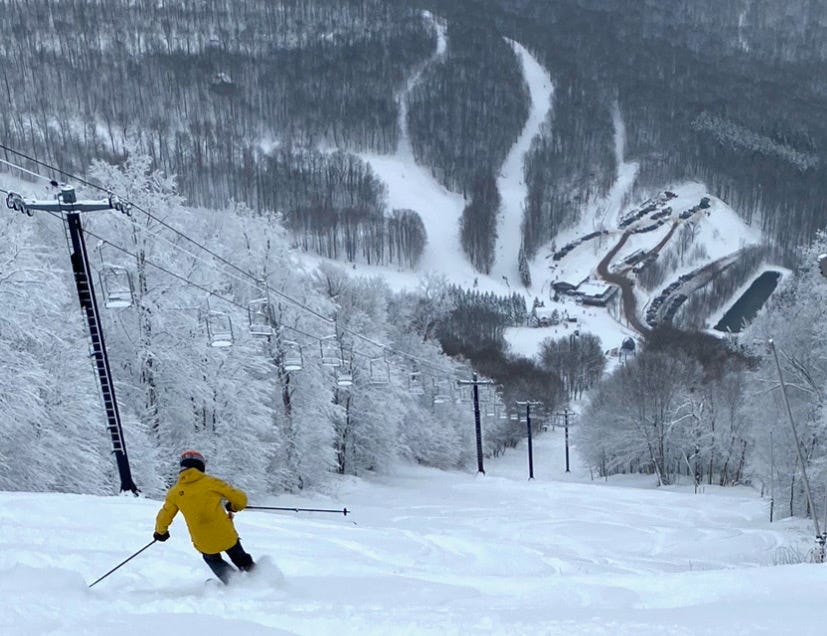
Aug 4, 2023
Podcast #138: Trollhaugen, Wisconsin Owner & General Manager Jim Rochford, Jr.
This podcast hit paid subscribers’ inboxes on August 1. It dropped for free subscribers on August 4. To receive future pods as soon as they’re live, and to support independent ski journalism, please consider an upgrade to a paid subscription. You can also subscribe for free below: Who Jim Rochford Jr., Owner and General Manager of Trollhaugen , Wisconsin Recorded on July 10, 2023 About Trollhaugen Click here for a mountain stats overview Owned by: The Rochford family Located in: Dresser, Wisconsin Year founded: 1950 Pass affiliations: Indy Pass – 2 days Reciprocal partners: None Closest neighboring ski areas: Wild Mountain (18 minutes), Como Park (1 hour), Afton Alps (1 hour, 3 minutes), Elm Creek (1 hour, 3 minutes), Hyland Hills (1 hour, 18 minutes), Buck Hill (1 hour, 22 minutes), Welch Village (1 hour, 33 minutes), Christie Mountain (1 hour, 24 minutes), Powder Ridge (1 hour 54 minutes), Coffee Mill (1 hour, 56 minutes) Base elevation: 920 feet Summit elevation: 1,200 feet Vertical drop: 280 feet Skiable Acres: 90 (2023 expansion will increase this total) Average annual snowfall: 50 inches Trail count: 24 (28% advanced, 43% intermediate, 29% beginner) Lift count: 9 (4 fixed-grip quads, 5 ropetows – lift count includes new Partek fixed-grip Chair 1 that Trollhaugen is installing this summer – view Lift Blog’s inventory of Trollhaugen’s lift fleet) Why I interviewed him What if the greatest ski town in America is not Aspen or Telluride or Park City or Jackson, but Minneapolis? Within an hour of downtown, eight ski areas: Elm Creek, Como Park, Hyland Hills, Buck Hill, Afton Alps, Welch Village, Wild Mountain, and Trollhaugen. Not one of them tops 360 vertical feet or collects more than 60 inches of snow in an average season. Underwhelming stats that underscore the point: only the hardcore would swarm such bumps, endure the windblown cloud-cluttered upper Midwest dead-winter, in pursuit of the turn, the loft, the float, that singular moment of ski-high. There’s a reason Vail’s first stop on its march east was Minneapolis – this is a ski town (and one you can actually afford to live in). Midwest skiing is a bizarre world for the uninitiated. Chairlifts everywhere, often side-by-side, trolling up clear-cut hillsides seemingly conjured from the flats. Between these chairs, high-speed ropetows, hauling more skiers than you’d thought possible, faster than you can believe. You assume the ski areas are small, but they just keep going, rolling hillock after hillock over vast snowy complexes. At Afton, 17 Hall chairlifts ordered in industrial rows, threading a chutes-and-ladders labyrinth of gullies and tunnels and wide-open faces. At Welch, a mini-Vail Mountain, endless linked trailpods terminating at the Back Bowl, a spiderweb of burners diving through the trees. At Buck, every inch reserved, the place a vast school for racers, for bumpers, for flippity-flap flip-flap Brahs. Trollhaugen is a little bit of all of these things: four quads and five ropetows serving a hunk of Wisconsin countryside that feels bigger than 260 vertical feet on 100-ish acres. The Rochford family – which has owned the bump since the ‘60s – has resisted the urge to clear-cut, instead carving tree-lined tracks through the gullies. Wide-open faces aplenty, still, and zones for ropetow rockers fast and slow. The base area is themed Euro-Alpine, Bavarian perhaps, or Scandinavian. Don’t let the Midwestern kitsch, wicket tickets, Rube Goldberg beginner tows, or pair of vintage ‘70s Borvig quads distract you: this is a terrific, and modern, ski area. The grooming is excellent. Snowmaking and night-skiing cover 100 percent of the hills. Trollhaugen erected a brand-new Partek quad two years ago, and it’s installing another this summer. It was an inaugural Indy Pass partner, hyper-aware of the rapidly evolving lift-served skiing landscape and its competitive place within it. When you have seven direct competitors, one of which belongs to the Epic Pass, excellence is your only option. Trollhaugen delivers. What we talked about The Covid outdoor surge just keeps on surging; limiting lift tickets; how different Covid-era policies impacted ski areas near the Wisconsin-Minnesota border; Wild Mountain; Trollhaugen’s tradition of early-season openings; why Trollhaugen closed April 1 after a 10-inch snowstorm; post-closing railjams; what happened when Vail Resorts bought nearby Afton Alps; whether the Epic Pass’ arrival contributed to Trollhaugen’s decision to join the Indy Pass; how Indy visitation has evolved over time; three generations of family ownership; remembering an era in which a mailman and a firefighter could start a ski area; the non-skiing dentists who bought a ski area to party; a brief history of Trollhaugen’s lifts; growing up with a ski area as your backyard; the surprisingly circuitous route that Rochford took to eventually run the family business; respecting the family legacy while building upon it; going deep on Trollhaugen’s expansion; glade skiing at Trollhaugen; why the conceptual expansion map shows a triple chair but we’re getting a quad; the quiet brilliance of Partek chairlifts; stepping up to automated snowmaking; how the expansion may change the annual terrain-opening plan; connecting the expansion to the ski area proper; parking expansions; the story behind the parking lot sign equipped with old double chairs; Welch Village; ropetows versus carpets; the fate of the Summit ropetow; high-speed ropetows rule; a fenced ski area; 3 a.m. Fridays; and behind the Trollhaugen name and theme. Why I thought that now was a good time for this interview Trollhaugen is the only one of the eight metro Minneapolis-St. Paul ski areas that sits in Wisconsin. It’s four miles east of the state line, and 18 minutes from Wild. Usually, that doesn’t matter. U.S. state borders, practically speaking, are mostly roadside signs. No checkpoints or paperwork. Perhaps a speed-limit adjustment. Perhaps a slight state-of-mind shift. But during Covid, that address mattered. Wisconsin, for the most part, introduced less stringent Covid safety measures than its neighbor, and relaxed them faster. No need to itemize them here: the net impact was a clanging cash register for Trollhaugen. Record numbers of skiers dumped record revenues into the joint. And, as Rochford tells me on the podcast, “if the skiers are going to invest in us, then we’re going to invest in them.” So Trollhaugen ripped out a 52-year-old Hall double chair and stood up a brand-new Partek quad in 2021. That was phase one of a three-year capital project and expansion that is set to open this coming winter, with three-and-a-half new trails and yet another new Partek quad. It’s hard to overstate how big of a deal this is for a small Midwestern ski area. Skiers acclimated to New England or the Rockies would be stunned at the condition of the average lift fleet in Michigan, Wisconsin, or Minnesota. Lots of Riblets. Lots of Halls. Very few detachables. Very few safety bars. It’s vintage skiing, often quite good – snowmaking tends to be excellent – but unadorned by the trappings of big-time resorts in other regions. In this neighborhood, two new lifts in three years is an enormous flex. Trollhaugen is not the only family-owned Midwest ski area investing this year. Buck Hill, Wild Mountain, Nub’s Nob, and Perfect North are also erecting new quads this summer. And the big Midwestern operators have fully activated their cash cannons: Boyne is dropping a D-line sixer onto The Highlands and a fixed quad and triple at Boyne Mountain; Midwest Family Ski Resorts is building six-packs at Snowriver and Lutsen; and Wisconsin Resorts is adding a second high-speed quad to Mt. Holly and a triple to Alpine Valley, Michigan. But Trollhaugen’s new lift will serve the region’s only terrain expansion for the 2023-24 ski season. That’s a really big deal, and worth taking a deeper look at. What I got wrong * I said in the intro that Trollhaugen had been the first ski area to open in America for the 2022-23 ski season. It was actually the first to open a chairlift , on Oct. 19 . Wild Mountain and Andes Tower Hills , both in Minnesota, opened ropetows on Oct. 18. * I intimated that Loveland was in Summit County, Colorado, along with Keystone and Arapahoe Basin. Loveland actually sits just across the border, in Clear Creek County. Breckenridge and Copper Mountain also sit in Summit County. * I said that Welch Village “must have had a dozen chairlifts.” It has eight . * I said that Trollhaugen had a “Bavarian” theme, but the backstory that Rochford told us suggests that the ornate buildings clustered at the ski area’s base are better classified as “Scandinavian.” Why you should ski Trollhaugen There’s something about Midwest skiing that is extremely gratifying. Even for those who have other options. Remember that 2000 movie, The Family Man , where a rich a-hole played by Nick Cage is shoved into an alternate timeline where he’s stripped of his Ferrari and closetful of $10,000 suits and self-important Wall Street job? And suddenly he’s living in suburban New Jersey as a tire salesman who drives two kids around in a minivan. And at first he’s like, “Oh boy this sucks a fat one.” But by the end of the film he’s b******g about the price of a bag of rock salt and relishing domestic life in his messy falling-apart house in Maplewood or wherever. Midwest skiing is kind of like that. If you’re accustomed to RFID and superfast lifts and 3,000-acre playgrounds stuffed with chutes and glades and 15-foot bases of natural snow, you may be unable to imagine skiing unadorned with those jewels. But what if you forced yourself to? What if you pulled up to a Midwest bump on a jam-packed Saturday and skied just for the sake of doing it? Surrounded by thousands of skiers who didn’t seem to give a damn that the chairlifts didn’t have heated toilets or Netflix-equipped safety bars? Who act like they’re at the best party ever? Who seem as giddy as any skiers you’ve ever seen anywhere? It's odd that the people who seem most insecure about Midwest ski areas are those who’ve never been within 50 miles of one. I see this every time I write a post about the Midwest – the hate, the impulse to belittle a thing that so many people love. It’s all so stupid and tedious, so boring. Midwest skiing is about relishing what’s there, not bemoaning what isn’t. Yes, it’s a different sort of skiing than you get in the Rockies or New England. But it’s fun. An often-overcomplicated thing boiled down to its essence. If you love skiing, you will love skiing at Trollhaugen. Yes, it demands a certain creativity to stay engaged, to draw new lines out of the hillside, to sink into the moment between frequent chairlift rides. But, just as a minivan gets you to the same place as a Ferrari, this stripped-down version of skiing can get you exactly where you need to go. If you let it. Podcast Notes On the view from Spirit Mountain The view from the summit of Spirit Mountain, overlooking the St. Louis River just before it drains into Lake Superior. At the base of the lifts (Spirit is an upside-down ski area), the mountain is only about a half mile from the Wisconsin border. On Wisconsin’s lost ski areas Rochford’s grandparents purchased Trollhaugen in the 1960s. During the podcast, he commented that “of the ski areas we had in Wisconsin in the late ‘60s and early ‘70s, I bet half of those are open today.” It’s hard to get exact numbers on what may or may not have existed 50-plus years ago, but I did dig up these old maps from the Wisconsin Lost Ski Areas Project : 1967 1971 For context, here’s a complete list of active Wisconsin ski areas. In some cases, ski areas have changed their names: Rib Mountain is now Granite Peak, for example. I’d love to do a side-by-side here, but that would be a project I just don’t have time for at the moment: On other ski area expansions happening this summer Trollhaugen’s expansion is one of seven happening at U.S. ski areas this summer. Here’s an overview: On Trollhaugen’s parking lot chairlift We briefly discuss the cool chairlift structure (which I referred to as a “sign”) at Trollhaugen’s entrance. Here it is: On Trollhaugen’s ropetows Trollhaugen has two types of ropetows – these whacky Rube Goldberg contraptions in the beginner area that look like they’re about 175 years old: And these burners for the Park Brahs: On the border fence Trollhaugen, like the vast majority of Midwest ski areas, still trades in metal wicket tickets. But rather than station an attendant at the bottom of each lift, the ski area fences off the base area, leaving just one access point to the lifts. One attendant checks the ticket one time – a pretty brilliant (and inexpensive), fraud-prevention system: On the spring skiing surcharge Many ski areas use free spring skiing as an incentive for new passholders. Buy your 2023-24 season pass in February 2023 and ski the rest of the 2022-23 season for free. But many ski areas in Minnesota and Wisconsin charge for the spring skiing option. Trollhaugen is one of them, charging new 2023-24 passholders $75 for spring 2023 access if they wanted spring skiing. Not a bad deal, actually, as that’s probably not much more than the cost of a weekend lift ticket. Here are the other ski areas in the region that charge new passholders for spring access: The Storm explores the world of lift-served skiing year-round. Join us. The Storm publishes year-round, and guarantees 100 articles per year. This is article 66/100 in 2023, and number 452 since launching on Oct. 13, 2019. Want to send feedback? Reply to this email and I will answer (unless you sound insane, or, more likely, I just get busy). You can also email skiing@substack.com . Get full access to The Storm Skiing Journal and Podcast at www.stormskiing.com/subscribe
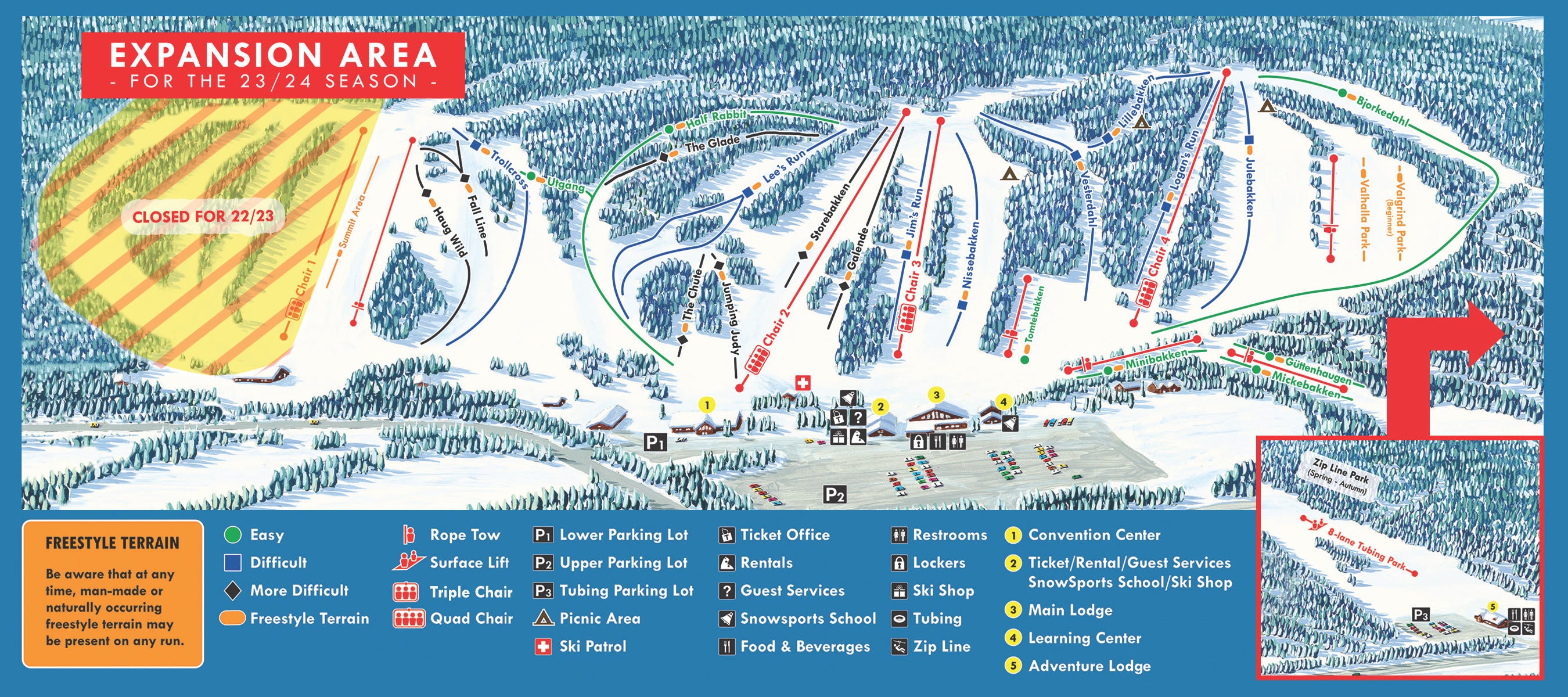
Jul 30, 2023
Podcast #138: Alterra Mountain Company CEO Jared Smith
This podcast hit paid subscribers’ inboxes on July 27. It dropped for free subscribers on July 30. To receive future pods as soon as they’re live, and to support independent ski journalism, please consider an upgrade to a paid subscription. You can also subscribe for free below: Who Jared Smith, President and CEO of Alterra Mountain Company Recorded on July 26, 2023 About Alterra Mountain Company Alterra is owned by a joint venture between KSL Capital and Henry Crown and Company. Alterra owns and operates the following properties: The company’s Ikon Pass delivers access to these resorts for the 2023-24 ski season: Why I interviewed him If I could unleash one artifact of 2023 skiing on the winters of my teens and twenties, it would be these passes. Ikon, Epic, Indy, Mountain Collective. It doesn’t matter which. They’re all amazing. Punchcards to white-capped horizons. The kind of guidebook I could have spun a winter around, sating those impulses for novelty, variety, constant motion. Not that I mind them now. For anyone, especially families, that lives near skiing and vacations to skiing, they basically saved the sport. Day trips to Windham, weekends at Stratton, a spring break run to the Wasatch: a tough itinerary – perhaps an impossible one – without that plastic ticket secured the previous March. But man I coulda used one of those little Ski Club cards when I was untethered and unmoored and wired at all times on Mountain Dew. And broke, too, by the way. Teenage Stu’s ski circuits followed discount days more than snowstorms. Fifteen-dollar lift tickets after one on Sunday at Sugar Loaf? I’m there, rolling three-deep in a red Ford Probe, the driver’s-side passenger seat dropped for the skis and poles and boots angled in through the hatchback. I would have preferred a membership. In my 1990s Indy Pass fantasies I roll the Michigan circuit early winter – Nub’s and Caberfae and Crystal and Shanty Creek and Treetops. Then 94 to 80, popping into all the snowgun-screaming High Plains bumps along the route west. Chestnut and Sundown and Seven Oaks and Mt. Crescent and Terry Peak. Then the big mountains and the big snows. Red Lodge and Lost Trail and Brundage and Silver and 49 North and White Pass. Or I skip the Midwest and roll Ikon, spend a week circling California. Another in Utah. A third in Colorado on the way home. It's weird how much I think about this. Alternate versions of winters long melted away. I’m not one to dwell or regret. Or pine for the lost or never-was. But that’s the power of the multi-mountain ski pass. I never re-imagine my past with an iPhone or the internet or even the modern skis that have amped up the average skier’s ability level. But I constantly imagine how much more I could have skied, and how many more places I could have visited, and how much sooner I would have discovered the ski world outside of the destination circuit, had the Ikon and Epic passes arrived 15 to 20 years before they did. These passes are special, is my point here. As a catalyst to adventure and an enabler to the adventurous, they have no equal that I can think of in any other industry. It’s as though I could buy some supper club pass and use it at every restaurant in town for an entire year without ever paying again. And among these remarkable products, the Ikon Pass is currently the best of them all. It’s hard to dispute this. Look again at the roster above. What they’ve built in just six years is remarkable. And it keeps getting better. What we talked about The sudden passing and legacy of Aspen managing partner Jim Crown; why Aspen is not part of Alterra; from entry-level salesman to CEO at Ticketmaster; the dramatic evolution of Ticketmaster and its adaptation to the digital age; skiing’s digital transition; entering skiing at a high level as an outsider; “we don’t make it easy at all for people to come enjoy our sport”; how to better meet consumers on their Pet Rectangles; balancing affordability with crowding and capacity; could lift ticket pricing be more like baseball or concerts?; finally some sensible thoughts on lowering lift ticket prices; $289 lift tickets; filling midweek ghost towns; “we’re on the front end of our pricing and product-packaging journey as an industry”; why Alterra bought Snow Valley; rethinking the mountain’s lift fleet; chairlift safety bars; Snow Valley expansion potential; housing and bed development at Snow Valley’s base; considering a lift connection between Bear Mountain and Snow Summit; whether Alterra could purchase more city-adjacent ski areas; why Alterra bought Schweitzer; expansion potential; how Ikon Pass access may evolve at Schweitzer; the Ikon approach to adding new partners; whether the Ikon Base Pass’ value is eroding over time as high-profile partners exit that tier; comparing Epic and Ikon prices; and Alterra’s Impact Report. Why I thought that now was a good time for this interview Smith pinned his CEO nametag onto his shirt almost exactly one year ago, on Aug. 1, 2022. He’s had a busy year. The Ikon Pass has added five new partners ( Alyeska , Sun Peaks, Grandvalira , Panorama, and Lotte Arai ). Alterra purchased its first two ski areas since Sugarbush in 2019, scooping up Snow Valley , California in January and Schweitzer – the largest ski area in Idaho – last month. And the company acquired gear-rental outfit Ski Butlers and released its first Impact Report. A setback, too: while Ikon has still never lost a partner, Taos jumped off the Ikon Base Pass for next ski season, making it the seventh resort (along with Sun Valley, Snowbasin, Alta, Deer Valley, Aspen, and Jackson Hole) to exit that product. Meanwhile, check out the growing price differential between the Ikon and Epic passes over the past several seasons: After three years of relative parity, Ikon prices blew past Epic when Vail Resorts slashed prices in 2021 . So this isn’t news. But what’s interesting is that Alterra has been able to hold that premium price. Vail lobbed its discount hand grenade three weeks after Alterra had locked in 2021-22 Ikon Pass prices . Rather than follow Vail into the basement, Alterra raised prices again in 2022. And again in 2023 . Stunning as those early-bird differentials are, the gap is even more pronounced now: the current sticker price of a 2023-24 Ikon Pass is $1,259, a 36 percent premium over Epic’s $929 pricetag. Ikon Base currently runs $929, which is 35 percent more than the $689 Epic Local Pass. So what? A Porsche costs more than a Ford. But when did the Ikon Pass become skiing’s luxe label? For years, no one had an answer for Vail. Now it’s hard to imagine how the Epic Pass will ever catch up to Ikon. Since 2020, Ikon has added Alyeska, Mt. Bachelor, Windham, Snow Valley, Schweitzer, Panorama, Sun Peaks, Chamonix, Dolomiti Superski, Kitzbühel, Lotte Arai, Sun Valley, and Snowbasin to its roster. Vail has added three ski areas in Pennsylvania and two (really one) in Switzerland, while losing Sun Valley and Snowbasin to Ikon. The Broomfield Bully, which spent the 2010s gobbling up everything from Whistler to Park City to half the Midwest and New England, suddenly looks inert beside its flashy young competitor. For now. Don’t expect the dragon to sleep much longer. Vail – or, more accurately, the company’s investors – will need to feast again soon (and I’ll note that Vail has invested enormous sums into technology, infrastructure, and personnel upgrades over the past 16 months). Which is why Smith’s job is so enormous. It won’t be enough to simply keep Alterra and the Ikon Pass relevant. They must be transformative. Yes, that means things like terrain expansions and $50 million gondolas and new tickboxes on the Ikon Pass. But it also means the further melding of the physical and the digital, a new-skier experience that does not feel like Alaskan bootcamp, and more creativity in pricing than a $5 season pass purchased seven years in advance and a $4,500 day-of lift ticket. It's 2023. The Pet Rectangle has eaten the world. Any industry that hasn’t gotten there already is going to die pretty soon. Skiing is sort of there and it’s sort of not. Smith’s job is to make sure Alterra makes it all the way in, and to bring us along for the run. Questions I wish I’d asked So many. The most obvious being about the recent death of 50-year-old Sheldon Johnson, who fell out of a Tremblant gondola after it struck a drilling rig and split open. The photos are insane – it looks as though the car was sliced right in half. My minivan goes apeshit with sensors and auto-brakes if I’m about to back into a fence – why does a gondola, with all the technology we have, keep moving full speed into a gigantic piece of construction equipment? I also wanted to check in on Crystal’s decision to jump off the Ikon Pass as its season pass, get an update on the new lifts going in at Alterra’s resorts this summer, and ask when Deer Valley was going to get rid of that icky snowboard ban. Podcast Notes On the sudden passing of Aspen managing partner Jim Crown Per the Aspen Times : Billionaire philanthropist Jim Crown was driving a single-seat, open-top Spec Racer with a 165-horsepower engine on June 25 in Woody Creek when it struck a tire barricade backed by a concrete wall that was surrounding a gravel trap. His son-in-law, Matthew McKinney, drove the Spec Racer a few hours before Crown drove it that day. McKinney remembered the car handled normally, although the brakes “were somewhat stiff, and the brake pedal had to be pressed somewhat firmly.” Aspen Motorsports Park staff told McKinney the brakes were new. These are some of the findings in the Pitkin County sheriff’s report, released on Thursday, investigating Crown’s death at the 50-acre park last month. A beloved Aspen and Chicago resident, he was not a racetrack rookie. The managing partner of Aspen Skiing Co. and adviser to former President Barack Obama, he enjoyed the Aspen tracks and once owned a Ferrari. He celebrated his June 25 birthday with family at the park. Around 2:20 p.m., deputies were alerted to a crash at the park’s eighth corner wall. Dispatchers relayed that the 70-year-old driver was conscious, breathing but bleeding badly from head injuries. And his pulse was weak. McKinney and his wife told the officer in charge, Bruce Benjamin, that they never heard brakes screeching before the crash. (Benjamin noted skid marks near the crash). Crown’s car hit the tire barricade “with such force, that it came off the ground a few feet.” Sheriff’s deputies, Aspen Ambulance, and Aspen Fire Protection District first responders cared for Crown at the crash site. The report says they took turns giving him CPR chest compressions, but they were unable to save him. Crown was pronounced dead, with daughters Hayley and Victoria nearby. On why Aspen is not part of Alterra Smith and I discussed Aspen’s decision to remain independent, rather than become part of Alterra, of which it is part owner. Former Aspen CEO Mike Kaplan told the full story on this podcast two years ago (49:28): On acquisitions Here are my full write-ups on Alterra’s purchase of Snow Valley and Schweitzer. On the evolution of the Ikon Base Pass There’s little question that the Ikon Base Pass was underpriced when it hit the market at $599 in 2018. As the pass gained momentum, flooding some of the coalition’s biggest names, resorts began excusing themselves from the cheapest version of Ikon. While the coalition has added more partners since inception than it has lost from the Base Pass, losing marquee names like Aspen, Jackson Hole, and Alta contributes to a sense that the pass’ value is eroding over time, even as the price continues to climb (the Ikon Base Pass is currently on sale for $929). Here’s a look at how Ikon Pass access has evolved since 2018: On Snow Valley’s ghost lift fleet Snow Valley may be home to the most abandoned lifts of any operating ski area in the country. A Snow Valley representative confirmed for me earlier this year that lifts 2 and 8 have not run in at least five years, yet they remain on the trailmap today: Even more amazing, when I skied there in March, lifts 4 and 5 are still intact. Lift 5 hasn’t been on the trailmap for 20 years! I also referenced a long-cancelled proposal to expand Snow Valley – here’s where it sits on old trailmaps (looker’s right): On Schweitzer’s masterplan Smith alludes to Schweitzer’s masterplan. Here’s a look: And here, for reference, is the resort today (this map does not include the Creekside lift, which is replacing Musical Chairs this offseason): On Alterra’s 2023 lift upgrades Alterra is at work on six new lifts this offseason: * The biggest of those projects is at Steamboat, where phase two of the Wild Blue Gondola will transport skiers from the base area directly to the top of Sunshine Peak. This 3.16-mile-long, 10-passenger gondola will be the longest in North America. * Even more exciting for skiers: the Mahogany Ridge high-speed quad will open an additional 650 acres of terrain looker’s left of Pony Express, transforming Steamboat into the second-largest ski area in Colorado: * Mammoth will upgrade Canyon Express (Lift 16) from a high-speed quad to a high-speed six-pack: * Winter Park will upgrade Pioneer from a high-speed quad to a high-speed six-pack with a mid-station: * Solitude will upgrade Eagle Express from a high-speed quad to a high-speed six-pack: * Snowshoe will replace the Powder Monkey triple with a fixed-grip quad: On Smith leaving Ticketmaster I referenced a Q&A that Smith did with Pollstar in 2020. You can read that here . On Alterra’s Impact Report Smith and I discuss Alterra’s first Impact Report. You can read it here . More Alterra on The Storm Skiing Podcast Former Alterra CEO Rusty Gregory appeared on the podcast three times, in 2020 , 2021 , and 2022 . I’ve also hosted the leaders of several of Alterra’s ski areas: * Palisades Tahoe President and COO Dee Byrne – May 4, 2023 * Deer Valley President & COO Todd Bennett – April 20, 2023 * Solitude President & COO Amber Broadaway – March 5, 2022 * Steamboat President & COO Rob Perlman – Dec. 9, 2021 * Crystal Mountain President & CEO Frank DeBerry – Oct. 22, 2021 * Sugarbush President & GM John Hammond – Nov. 2, 2020 * Sugarbush President & COO Win Smith – Jan. 30, 2020 I’ve also hosted the leaders of many Ikon Pass partner mountains and related entities, including: * Valle Nevado GM Ricardo Margulis – July 19, 2023 * Sun Peaks GM Darcy Alexander – June 13, 2023 * SkiBig3 President Pete Woods – May 26, 2023 * Snowbasin VP & GM Davy Ratchford – Feb. 1, 2023 * Aspenware CEO Rob Clark (Alterra purchased Aspenware in 2022) – Dec. 29, 2023 * Loon Mountain President & GM Brian Norton – Nov. 14, 2022 * Boyne Resorts CEO Stephen Kircher – Nov. 21, 2022 * Sun Valley VP & GM Pete Sonntag – Oct. 20, 2022 * The Summit at Snoqualmie GM Guy Lawrence – April 20, 2022 * Arapahoe Basin COO Alan Henceroth – April 14, 2022 * Big Sky President & COO Taylor Middleton – April 6, 2022 * The Highlands President & GM Mike Chumbler – Feb. 18, 2022 * Jackson Hole President Mary Kate Buckley – Nov. 17, 2021 * Boyne Mountain GM Ed Grice – Oct. 19, 2021 * Mt. Buller GM Laurie Blampied – Oct. 12, 2021 * Aspen Skiing Company CEO Mike Kaplan – Oct. 1, 2021 * Taos CEO David Norden – Sept. 16, 2021 * Sunday River GM Brian Heon – Feb. 10, 2021 * Windham President Chip Seamans – Jan. 31, 2021 * Sugarloaf GM Karl Strand – Part 1, Sept. 25, 2020 * Sugarloaf GM Karl Strand – Part 2, Sept. 30, 2020 * Boyne Resorts CEO Stephen Kircher – April 1, 2020 * Sunday River President & GM Dana Bullen – Feb. 14, 2020 * Loon Mountain President & GM Jay Scambio – Feb. 7, 2020 * Boyne Resorts CEO Stephen Kircher – Nov. 21, 2019 * Killington & Pico President & GM Mike Solimano – Oct. 13, 2019 You can view all archived and scheduled podcasts here . The Storm explores the world of lift-served skiing year-round. Join us. The Storm publishes year-round, and guarantees 100 articles per year. This is article 63/100 in 2023, and number 449 since launching on Oct. 13, 2019. Want to send feedback? Reply to this email and I will answer (unless you sound insane, or, more likely, I just get busy). You can also email skiing@substack.com . Get full access to The Storm Skiing Journal and Podcast at www.stormskiing.com/subscribe
Jul 22, 2023
Podcast #137: Valle Nevado General Manager Ricardo Margulis
This podcast hit paid subscribers’ inboxes on July 19. It dropped for free subscribers on July 22. To receive future pods as soon as they’re live, and to support independent ski journalism, please consider an upgrade to a paid subscription. You can also subscribe for free below: Who Ricardo Margulis, General Manager of Valle Nevado , Chile Recorded on July 3, 2023 About Valle Nevado Click here for a mountain stats overview Owned by: Majority owned by Mountain Capital Partners Located in: Lo Barnechea, Chile Year founded: 1988 Pass affiliations: Base elevation: 9,383 feet Summit elevation: 12,041 feet Vertical drop: 2,658 feet Skiable acres: 2,200 lift-served (20,000-plus additional acres served by helicopter) Trails: 44 Average annual snowfall: 276 inches Lift fleet: 16 lifts (1 gondola, 1 high-speed quad, 1 fixed quad, 1 triple, 2 doubles, 1 T-bar, 6 J-bars, 3 carpets) Why I interviewed him The Storm is firmly anchored in North America. Built on 4 a.m. alarms and winding explorations of the Whites and the Greens and the Adirondacks and the Catskills and the Poconos and the Berkshires. Flights west to the Rockies and the Wasatch and the Sierras. Born on bumps rising from the Midwest flats. That domain will always be the core of this thing. Two years ago, I blew out of the Northeast to expand coverage to the entire United States. This year, I began folding in Canada. I can’t go any farther. I don’t know how many ski areas there are on planet Earth, but an educated guess is a minimum of 10,000, with more than half of those being in Europe. If I live to be 1,000 I might get there. But I won’t so I need to fence the yard. However. Just because I live in and focus on North America does not mean my interests stop at the oceans. The world’s vast and varied ski cultures are worth considering, as outlets to disrupt our biases, as wells of supreme adventure, and as crucial links in the story of skiing, which fuels the evolution of our domestic obsession in crucial, often unseen ways. But I have to pick my spots. This podcast is built less on novelty than on perspective and completeness. There are only so many far-flung spotlights that my listeners will tolerate, just as there are only so many episodes on ropetow bumps or the Midwest or even mighty New England that they can handle (this rule does not apply to the West). So where, in this whole wild world of endless skiing and endless snow, do I focus? My first entry in this very occasional international series landed almost two years ago, when I hosted the longtime general manager of Mt. Buller, Australia on the podcast . Why Mt. Buller? Well, frankly, they reached out to me and asked. But the ski area also hangs onto a strong North American connection: it is a longtime Ikon and Mountain Collective partner. If my readers are planning a Southern Hemisphere run over our summer, they likely scan the Epic and Ikon rosters before they do anything else. Enter: Valle Nevado. It is the only South American option for skiers clutching a North American ski pass. Vail’s Epic Pass, believe it or not, gives you nothing in Argentina or Chile – the only serious ski destinations on the continent. But Ikon, Mountain Collective , and, now, Mountain Capital Partners’ Power Pass all give you between two and seven days at the Chilean resort. Not that skiers don’t have other options. Lift tickets to Las Leñas, Argentina’s second-largest ski area, are just $66. Catedral Alta Patagonia, the nation’s largest, sells a ticket for a pricier but still reasonable $108. El Colorado, right next door to – and connected with – Valle Nevado sells a daily lift ticket for around $73. Unlike large parts of U.S. American skiing, you can still ramble without a pass through the Andes (though I expect both Vail and Alterra to eventually acquire or partner with more ski areas throughout the continent). But “free” lift tickets are a powerful draw, even for many travelers with the means to voyage to South America for a ski trip. And a lot of North Americans are going to end up at Valle Nevado for as long as it retains its trio of U.S.-based pass memberships. It’s a place that, when I’m considering what matters to my readers and my listeners, fits right in. What we talked about A strange snowstorm to start the Chilean ski season; the best time of year to ski Chile; target closing dates; “in 2020, Chile was closed”; the first normal summer for international visitors since 2019; the Valle Nevado origin story; enter Mountain Capital Partners; the MCP way; MCP’s investment priorities; the prevalence of surface lifts at Valle Nevado (and South America in general); why Valle Nevado would rather install a new lift in a new place than upgrade a surface lift to a chairlift; where the resort could potentially expand; the resort’s massive heliski operation; 7,000 feet of vert!; a ski circus at the top of the Andes; how you can ski La Parva and El Colorado if you’re a Valle Nevado hotel guest, or if you show up with an Ikon, Mountain Collective, or Power Pass; why Valle Nevado joined so many U.S.-based megapasses; whether Valle Nevado will renew with Ikon and Mountain Collective when its contracts expire; Valle Nevado’s evolving position on the Power Pass; staying at the village; why international visitors shouldn’t rent a car; the wild, 8,000-foot-elevation access road up from Santiago; why the road is safer than it looks; and snowmaking past, present, and future. Why I thought that now was a good time for this interview In January, Mountain Capital Partners, the under-the-radar but aggressive Southwest operator that is rapidly growing its U.S. portfolio, announced its intention to acquire a majority stake in Valle Nevado. They closed on the deal in April. It was the first acquisition of a South American ski resort by a North American ski company (at least that I’m aware of; I’m sure there’s some newspaper clipping from 1946 about the eccentric Hayward “Skip” McSteeljaw, owner of Mt. Buckaroo, New York cowboying a remote Argentinian peak at which to pass his summers). This was a big deal. By beating Vail and Alterra to the continent, MCP signaled that the company intends to compete at an international scale. Prior to this purchase, MCP ran one of the most important regional ski passes in the United States. But no one seriously considered it a competitor to the Epic or Ikon passes outside of its immediate markets. Perhaps they still don’t, but perception matters. And by reaching outside of its Southwest home turf with a crown-jewel purchase that trumps its current alphas – Arizona Snowbowl and Purgatory – in international prestige, MCP has evolved from a slick local operator to an ambitious and aggressive growth machine that could be a serious contender when and if North America’s remaining megaresorts – Jackson Hole, Telluride, Taos, Alta, Whitefish, etc. – hit the market. MCP also introduced a unique problem to the rapidly evolving U.S. megapass market: what happens when a small conglomerate with its own multi-mountain pass purchases an Ikon Pass partner? Ikon has so far tolerated some crossover with competing passes – all but four of Mountain Collective’s partners (Sugar Bowl, Grand Targhee, Le Massif, and Marmot Basin), are also on the Ikon Pass. Aspen’s four mountains have their own pass, as do Boyne’s three New England Ikon Pass partners: Loon, Sunday River, and Sugarloaf. Alterra surely loses some market share to Mountain Collective, but the pass is run out of Aspen, which partly owns Alterra. The Power Pass presents a different test case: will Alterra tolerate internal competition from a regional pass that competes directly with Ikon in the Southwest? The answer, for now, seems to be “probably.” Valle Nevado’s contract with the Ikon Pass lasts through 2025. Alterra and Mountain Collective both gave the resort permission to join the Power Pass, Margulis said, starting with the current ski season. Alterra either doesn’t view the Power Pass as a serious threat yet, or is not eager to let go of its only South American resort partner. For North American skiers, a trip to Chile – which sits in the Eastern timezone – is a lot easier logistically and financially than a run to New Zealand or Australia, which are so remote that it’s already February 2029 there. The other side of this question is just as interesting: will rowdy and rabidly independent MCP have any interest in retaining Ikon or Mountain Collective membership? A big part of the company’s identity, after all, is not being Vail or Alterra, or even Boyne or Powdr Corp. How do they take Alterra’s money without compromising some of their double-bird-to-the-system rep? It probably depends on how big the check is. Margulis tells us in the podcast that Alterra transferred around $300,000 into Valle Nevado’s bank account last year. If each Ikon redemption equaled $50 (an estimate based on nothing, I’ll admit), that would equal 6,000 visitors. Not a lot in the context of how many Ikon Passes Alterra sells each year (which is probably approaching or past 1 million, a number that’s based on deep sources), but a substantial bonus for a resort that’s seated at the end of the earth. MCP is unlikely to replace that number with Power Pass visits, so what to do? I get into all this with Margulis in the podcast. He is a thoughtful, diplomatic leader, and he endorses all parties without committing to any of them. But one thing is clear: the pass roulette playing out in the Andes over the next few years is a wargames scenario likely to repeat at one or more key North American resorts over the coming decade. This is World War Skiing, the First Battle. There will be alliances, betrayals, surprises, surrenders. As usual, America is right in the middle, and it’s too soon to tell if that’s good or bad for everyone involved. What I got wrong I noted that Valle Nevado was on its “fifth season” as an Ikon Pass and Mountain Collective partner. The ski area actually joined Mountain Collective following its 2014 ski season, making 2023 the ninth season of membership on that coalition. The resort joined Ikon in November 2018, making 2023 the fifth numerical summer for Ikon Pass holders, though the third or fourth in practice. Chile was closed to international visitors for the 2020 and ’21 ski seasons, and the resort did not open at all in 2020, meaning that, practically speaking, this is the third year that most Ikon Pass holders could really use their pass at Valle Nevado. Why you should ski Valle Nevado Until you’ve seen it, you can’t possibly understand the drama. Imagine if the Rockies mainlined ‘roids like a 1990s baseball slugger. Or got really pissed off and went Incredible Hulk. Or they went U.S. American homeowner and built an extra vertical wing atop their peaks. As I wrote when MCP announced the Valle Nevado acquisition in January: Colorad-Bro can be an insecure animal. One of his favorite pastimes is telling people from other states that they don’t have real mountains. Just hills in Vermont, he’ll say. We have mountains in Colorado, he says proudly. As though he chiseled them himself from the Earth’s crust. I wonder what Colorad-Bro does when he meets someone from Chile or Argentina, both of which sprawl from the peak of Aconcagua. At 22,838 feet, it’s 8,399 feet taller than Mount Elbert, the highest peak in Colorado. That’s like stacking Copper and A-Basin and Keystone on top of Elbert – and still looking 140 feet up to the top. This must make Colorad-Bro sad. Valle Nevado doesn’t reach those heights, but with a base at 9,383 feet, it sits higher than most North American ski areas. The terrain is entirely above treeline, enormous and exposed, a snow basket at the top of the world. Admittedly, Valle Nevado’s lift-served numbers are modest compared to the North American skyscrapers: 2,200 acres and 2,658 vertical feet. That’s about the size of Discovery, Montana or Kirkwood. And above-treeline skiing always feels smaller to me. This may seem paradoxical, as no trees equals more terrain, but one glade run at a small ski area like Berkshire East can feel larger than a whole open bowl, as each line feels distinct in a way that un-treed skiing never can. Valle Nevado, however, must be considered in this context of its interconnected neighbors: 1,100-acre El Colorado and 988-acre La Parva. They cannot be skied on one lift ticket, but maintained and signed trails run between both resorts and Valle Nevado. That gives skiers 4,288 acres to play in – more than Mammoth (3,500 acres), Northstar (3,170 acres), or Winter Pak (3,081 acres), and roughly the size of Mt. Bachelor. If you’re really balling, the heli runs – some up to 7,000 vertical feet – are right there too. And then there’s all the rest of it: Chile, vino, Santiago, that surreal road up from the flats, the passport stamp, winter-in-summer, the food, the parties, the international stir. Oh and this: Podcast Notes On Mountain Capital Partners Mountain Capital Partners has been the fastest-growing U.S. ski conglomerate over the past year, adding three new ski areas: Willamette Pass , Oregon (as operator); Valle Nevado ; and Lee Canyon , Nevada. Here’s how the company’s current roster stacks up: The company has basically guaranteed that it’s not finished empire-building – April’s Lee Canyon announcement noted that “future resort investments are being explored and will be announced at a later date.” Untethered by the attributes that define Vail and Alterra’s purchases – either a mega-mega or big-city-adjacent – MCP could land its ship just about anywhere. On the Power Pass MCP has collected all of those resorts on its Power Pass, an outstanding product that, like Ikon and Epic, also delivers days at non-owned resorts: Sadly, the Power Pass site has no mention of days at Copper Mountain, which last season was included on the top-tier pass. On La Parva Base elevation: 8,704 feet Summit elevation: 11,722 feet Vertical drop: 3,022 feet Skiable acres: 988 Trails: 40 (18% expert, 43% advanced, 20% intermediate, 20% beginner) Average annual snowfall: 118 inches Lift fleet: 15 lifts (2 quads, 2 triples, 1 double, 10 surface lifts) On El Colorado Base elevation: 7,972 feet Summit elevation: 10,935 feet Vertical drop: 2,963 feet Skiable acres: 1,100 Trails: 98 (34% expert, 32% advanced, 17% intermediate, 17% beginner) Average annual snowfall: N/A Lift fleet: 19 lifts (3 triples, 1 double, 15 surface lifts) On Les Arcs Margulis mentions Valle Nevado’s connection to Les Arcs, France. This doesn’t have much to do with the actual story, but I thought we would all appreciate looking at this trailmap: Les Arcs is actually four interconnected ski areas. Here are the combined stats, in case you’re wondering: Base elevation: 3,937 feet Summit elevation: 10,583 feet Vertical drop: 6,646 feet Skiable acres: Who knows. Euros measure their resorts in kilometers of slopes, and Les Arcs covers 425 “KMs,” whatever that means Lift fleet: 52 lifts (8 “gondolas etc.”, 27 chairlifts, 17 surface lifts) On that wild access road If I rode up from Santiago to the ski resorts floating on the western edge of the Andes mountains today, I would come away with videos and photos of the wild endless switchbacks. But the last time I ascended the route – from a Santiago ski shop to El Colorado – was in 2005, before the Pet Rectangle redefined and ruined our collective lives. So all I have are my memories: a suicidal minibus driver charging uphill with little regard for life or the consequences of high-speed mountainside collisions. No guardrails. Passing on blind curves. Like we were filming some South American Bourne movie. But we weren’t. We were just going skiing. Dear Lord. Margulis tells me the highway is much safer now, and who knows if I’m even remembering it correctly, as I’d spent the previous two days in a borderline hallucinatory state brought on by Argentinian lettuce. It was a weird week. The Storm explores the world of lift-served skiing year-round. Join us. The Storm publishes year-round, and guarantees 100 articles per year. This is article 62/100 in 2023, and number 448 since launching on Oct. 13, 2019. Want to send feedback? Reply to this email and I will answer (unless you sound insane, or, more likely, I just get busy). You can also email skiing@substack.com . Get full access to The Storm Skiing Journal and Podcast at www.stormskiing.com/subscribe
Jul 18, 2023
Podcast #136: Timberline, West Virginia General Manager Tom Price
This podcast hit paid subscribers’ inboxes on July 15. It dropped for free subscribers on June 18. To receive future pods as soon as they’re live, and to support independent ski journalism, please consider an upgrade to a paid subscription. You can also subscribe for free below: Who Tom Price, General Manager of Timberline , West Virginia Recorded on June 26, 2023 About Timberline, West Virginia Click here for a mountain stats overview Owned by: The Perfect Family Located in: Davis, West Virginia Year founded: 1983 Pass affiliations: The Perfect Pass – unlimited access Reciprocal partners: unlimited access to Perfect North, Indiana with the Perfect Pass Closest neighboring ski areas: Canaan Valley (8 minutes); White Grass XC touring/backcountry center (11 minutes); Wisp, Maryland (1 hour, 15 minutes); Snowshoe, West Virginia (1 hour, 50 minutes); Bryce, Virginia (2 hours); Homestead, Virginia (2 hours); Massanutten, Virginia (2 hours, 21 minutes) Base elevation: 3,268 feet Summit elevation: 4,268 feet Vertical drop: 1,000 feet Skiable Acres: 100 Average annual snowfall: 150 inches Trail count: 20 (2 double-black, 2 black, 6 intermediate, 10 beginner), plus two named glades and two terrain parks Lift count: 4 (1 high-speed six-pack, 1 fixed-grip quad, 2 carpets - view Lift Blog’s inventory of Timberline’s lift fleet) Why I interviewed him In January, I arrived at Timberline on day five of a brutal six-day meltdown across the Mid-Atlantic. I’d passed through six other ski areas en route – all were partially open, stapled together, passable but clearly struggling. Then this : After three days of melt-out tiptoe, I was not prepared for what I found at gut-renovated Timberline. And what I found was 1,000 vertical feet of the best version of warm-weather skiing I’ve ever seen. Other than the trail footprint, this is a brand-new ski area. When the Perfect Family – who run Perfect North, Indiana like some sort of military operation – bought the joint in 2020, they tore out the lifts, put in a brand-new six-pack and carpet-loaded quad, installed all-new snowmaking, and gut-renovated the lodge. It is remarkable. Stunning. Not a hole in the snowpack. Coming down the mountain from Davis, you can see Timberline across the valley beside state-run Canaan Valley ski area – the former striped in white, the latter mostly barren. I skied four fast laps off the summit before the sixer shut at 4:30. Then a dozen runs off the quad. The skier level is comically terrible, beginners sprawled all over the unload, all over the green trails. But the energy is level 100 amped, and everyone I talked to raved about the transformation under the new owners. I hope the Perfect family buys 50 more ski areas – their template works. Perfect North is one of the most incredible ski areas in the country, a machine that proves skiing can thrive in marginal conditions. Timberline is Exhibit B, demonstrating that an operating model built on aggressive snowmaking and constant investment can scale. Which seems obvious, right? We’re not exactly trying to decipher grandma’s secret meatloaf recipe here. But it’s not so easy. Vail Resorts has barely kept Paoli Peaks – Indiana’s only other ski area – open two dozen days each of the past two seasons (Perfect North hit 86 days for the 2022-23 winter and 81 in 2021-22). And Canaan Valley, next door to Timberline, is like that house with uncut grass and dogs pooping all over the yard. Surely they’re aware of a lawnmower. And yet. Skiers, everywhere, want very simple things: snow to ski on, a reliable product, consistency. That can be hard to deliver in an unpredictable world. But while their competitors make excuses, Timberline and Perfect North make snow. What we talked about Snowmaking, snowmaking, snowmaking; applying an Indiana operating philosophy to the Appalachian wilds; changing consumer expectations; 36 inches of snow in May and why the ski area didn’t open when the storm hit; night skiing returns; when you fall in love with an uncomfortable thing; leaving Utah for Indiana; The Perfect family and Perfect North Slopes; fire in Ohio; what happened when Perfect North bought Timberline; a brief history of Timberline and why it failed; why this time is different; Mid-Atlantic and West Virginia ski culture; “you bought a ski area with no chairlifts”; why Timberline installed a six-pack to the summit to replace two old top-to-bottom triples; deciding on a fixed-grip quad for a mid-mountain lift; coming tweaks to smooth out unloading; why Timberline moved the beginner area over toward the lodge; whether we could see a mountain-top beginner area; the surprising trail that was a major factor in the decision to purchase Timberline; big plans for the terrain park, including a surface lift; how the trail footprint evolved from one ownership group to the next; trail map as marketing tool versus functional tool; expanding the glade network; potential trail expansion; considering a second summit lift for Timberline; a spectacular lodge renovation; adding up the investment; assessing local and destination support three seasons into the comeback; growing Timberline into more of a Southeast-style resort a-la Snowshoe or Wintergreen; reception so far for the “Perfect Pass” combo pass with Perfect North; the Indy Pass; and Timberline’s unique day-ticket price structure. Why I thought that now was a good time for this interview This has been one of my most-requested interviews since the Perfects bought the place back in 2019. The splash and kazam of Timberline’s renovation inspired awe and jealousy among skiers, who couldn’t believe how easy the new owners made it all look and resent the 60-year-old Hall doubles spinning at their local. Despite the fact that It’s three-decades-old technology, a high-speed six-pack still stirs up a thrill in most skiers, an emblem of prosperity and seriousness, amplified by the fact that some of America’s wealthiest resorts – Jackson Hole, Deer Valley, Aspen Mountain and Highlands, Beaver Creek, Alta, Snowbird – still don’t have a single sixer between them. Which, OK, great. Throw a $20 million renovation at a trailer park, and it will start to resemble Beverly Hills. But do you want to live there? That’s what I needed to figure out: was Timberline a flashy gamble for an out-of-its-league Midwest operator, or proof-of-concept for an industry that needs to fortify itself for life in a different sort of world than most of its ski areas were born into? Obviously, I think it’s the latter. But it’s hard to explain. Most skiers outside of the region refuse to take Mid-Atlantic skiing seriously. But it’s time to start paying closer attention. There are some seriously talented operators in Appalachia. Wintergreen, Virginia just finished a season with exactly zero inches of natural snowfall. Massanutten, Virginia and Wisp, Maryland both opened in November despite temperatures in the 70s for most of the month. The climate catastrophes that loom over skiing’s future are the realities that Mid-Atlantic ski areas just spent three decades adapting to. Timberline had the advantage of starting over with all of its institutional knowledge, the hard lessons of the region’s recent past, and the low-energy, high-impact technology of the current moment. It’s a powerful combination, and one that has made Timberline a showcase for what a ski area of the 2020s can be. With three seasons of operations behind it, it was time to check in and ask how well all that was working. What I got wrong I said that Perfect North had 200 snowguns. The actual number, according to this SMI case study , is 245. I stated that the vertical drop of the now-removed lower-mountain beginner chairlift was “a couple hundred vertical feet maybe.” It was 90 feet, according to Lift Blog . Why you should ski Timberline Timberline has one thing that its competitors don’t: legit, border-to-border terrain . As Price tells me in our interview, there are “probably 100” trails on the mountain when it snows, which it does more in this pocket of high-altitude West Virginia than anywhere else in the region. Most Mid-Atlantic ski areas are all-seasons resorts with ski areas attached. Timberline, however, is more ski than resort. It’s a badass little mountain, with a thousand vertical feet of expansive, imaginative lines. That makes Timberline an indispensable character in the regional ski cast, the sort of bruiser that any ski state needs as a foil to its more manicured neighbors (think Mount Bohemia, Michigan; Berkshire East, Massachusetts; Plattekill, New York; Magic Mountain, Vermont; Wildcat, New Hampshire). Yes, parks are important. Grooming is essential. But so is tree-skiing. So is opening up the wide and wild world off-piste. This is what keeps skiing interesting, and what sends locals out into the wider world, north and west, to explore the vastness of it all. Podcast Notes On Perfect North The other day, my family watched Back to the Future Part II . My daughter hadn’t been with us when we’d watched part one a few days prior, and so she was a little confused. Similarly, if you listen to this Timberline episode before the episode I recorded with Perfect North GM Jonathan Davis last summer, you’ll be starting behind. Not only does that episode contain important background on the Perfect family’s accidental but fierce entrance into the ski industry, but Davis discusses how the family bought Timberline in a 2019 auction. The story starts at the 1:30:33 mark: On Timberline’s renaissance DC Ski also wrote a comprehensive article on Timberline’s comeback: On the lodge fire at Mad River (not that Mad River ) Price was general manager at Mad River, Ohio – which was at the time owned by Peak Resorts and is now a Vail property – when a fire destroyed the lodge: Peak Resorts quickly built a new lodge, investing $6.5 million into a facility that was almost twice the size of the old one. On the lift accident at Timberline Price discusses a lift de-ropement that marred Timberline’s reputation. The local ABC News affiliate wrote about the incident shortly after it occurred, in February 2016: About 25 people fell to the ground after a ski lift derailed at the Timberline Resort in Davis, West Virginia, this morning, an official told ABC News. The drop was about 30 feet, according to Joe Stevens of the West Virginia Ski Areas Association, of which Timberline is a member. Two people were hospitalized with non-life threatening injuries, Stevens said. About 100 skiers were left stranded on the ski lift after the derailment, Chief Sandy Green of Canaan Valley Fire Department Chief Sandy Green told ABC News. The lift in question was Thunderstruck, a triple chair that, along with the resort’s other two chairlifts, the new owners demolished in 2020. On the old trailmaps/lift configuration/trail footprint Price and I talked extensively about Timberline’s new and old lift and trail alignments, which differ significantly. Here’s a circa 2016 trailmap, showing the mountain with two top-to-bottom triples and several trails that no longer exist: And here are the old and contemporary maps side by side: On White Grass and Canaan Valley Timberline is adjacent to two ski areas: White Grass Touring Center and Canaan Valley. Here’s how they stack together on the map: White Grass is widely considered one of the best cross-country ski areas in the East, with 50 kilometers of trails: Canaan Valley is owned by the state of West Virginia. It’s an 850-footer with 95 acres of terrain: Both Canaan and White Grass are Indy Pass partners. You can ski between all three ski areas, Price says, on cross-country skis, though a peak separates White Grass and Canaan. As impressive as this three-resort lineup is, the region could have grown into something even more spectacular, had a planned resort been built at nearby Mount Porte Crayon. Blue Ridge Outdoors profiled this ski-area-that-never-was in 2010: Porte Crayon has all the right ingredients for a resort: an average of 150 to 200 inches of snow a year, a unique hollow shape that helps push much of the windblown snow onto the northern slopes, and big vertical drop. “From top to bottom, we were looking at a true 2,200 foot vertical drop, making it the sixth largest vertical drop at a resort east of the Rockies, with weather similar to southern Vermont,” Jorgenson says. “It would have been the largest resort south of Lake Placid, New York.” Bright Enterprises started buying up land on Porte Crayon over a decade ago. The plan called for a 2,000-acre resort with more than 2,000 feet of vertical drop on a north-facing slope that got plenty of natural snow. Skiers salivated over the prospect of skiing that kind of terrain below the Mason Dixon, while environmentalists cringed at the thought of a mountaintop village, golf course, and second home development scarring the pristine landscape. For ten years, a debate brewed with locals and skiers coming down hard either for or against Almost Heaven. Eventually, Bright Enterprises failed to purchase a significant piece of private land at the top of the mountain, and resort plans fell apart. Today, the mountain is a well-known backcountry ski zone. It sits just eight miles overland from Timberline: The Storm explores the world of lift-served skiing year-round. Join us. The Storm publishes year-round, and guarantees 100 articles per year. This is article 60/100 in 2023, and number 446 since launching on Oct. 13, 2019. Want to send feedback? Reply to this email and I will answer (unless you sound insane, or, more likely, I just get busy). You can also email skiing@substack.com . Get full access to The Storm Skiing Journal and Podcast at www.stormskiing.com/subscribe
Jul 11, 2023
Podcast #135: Dartmouth Skiway GM Mark Adamczyk
This podcast hit paid subscribers’ inboxes on July 8. It dropped for free subscribers on June 11. To receive future pods as soon as they’re live, and to support independent ski journalism, please consider an upgrade to a paid subscription. You can also subscribe for free below: Who Mark Adamczyk, General Manager of Dartmouth Skiway , New Hampshire Recorded on June 12, 2023 About Dartmouth Skiway Click here for a mountain stats overview Owned by: Dartmouth College Located in: Lyme Center, New Hampshire Year founded: 1956 Pass affiliations: * No Boundaries Pass : between 1 and 3 days, depending upon when the pass is redeemed * Indy Pass Allied Resorts: Indy Pass holders get 50 percent off weekday lift tickets and 25 percent off weekends and holidays Reciprocal partners: None Closest neighboring ski areas: Storrs Hill (33 minutes), Whaleback (36 minutes), Northeast Slopes (36 minutes), Harrington Hill (41 minutes), Quechee (42 minutes), Ragged (48 minutes), Tenney (53 minutes), Saskadena Six (54 minutes), Ascutney (55 minutes), Arrowhead (59 minutes), Mount Sunapee (59 minutes), Veterans Memorial (1 hours, 6 minutes), Campton (1 hour, 6 minutes), Kanc (1 hour, 10 minutes), Loon (1 hour, 11 minutes), Waterville Valley (1 hour, 17 minutes), Cannon (1 hour, 17 minutes), Killington (1 hour, 20 minutes), Pico (1 hour, 21 minutes), Okemo (1 hour, 22 minutes) Base elevation: 968 feet Summit elevation: 1,943 feet Vertical drop: 968 feet Skiable Acres: 104 Average annual snowfall: 100 inches Trail count: 28 (25% advanced/expert, 50% intermediate, 25% beginner) Lift count: 4 (1 fixed-grip quad, 1 double, 2 carpets – view Lift Blog’s inventory of Dartmouth Skiway’s lift fleet) Why I interviewed him Isn’t it interesting what exists? Imagine if Yale or Dartmouth or hell the University of Vermont wanted to build a ski area today. They’d have better luck genetically splicing a goat with an Easter egg. Or building a Chuck E. Cheese on Jupiter. Or sealing the Mariana Trench with toothpaste. Imagine the rage from alumni, from the Leaf Defenders, from whatever town they decided to slice the forest up over. U.S. American colleges collectively acting as the NFL’s minor league while piling up millions in broadcast and ticket revenue – totally fine. A college owning a ski area? What are you, insane? But here we are: Dartmouth College owns a ski area. The origin story, in my imagination: Eustacious VonTrappenSquire VIII, president of Dartmouth and also Scout Emeritus of his local outing club, orders his carriage driver to transport him up to Lyme, where he intends to stock up on parchment and whale oil. As he waits for the apothecary to mix his liver tonic, the old chum takes a draw from his pipe and, peering through his spectacle, spies Holt’s Ledge and Winslow Ledge rising more than 2,100 feet off the valley floor. “Charles, good fellow, the next time you draw up the horses, be a swell and throw my old snowskis into the carriage. I fancy a good ski on those two attractive peaks yonder.” He then loads his musket and shoots a passenger pigeon mid-flight. “But Sir,” Charles replies, “I’m afraid there’s no trails cut for snow-skiing on those peaks.” “Well by gum we’ll see about that!” the esteemed president shouts, startling one of the horses so badly that it bolts into Ms. McHenry’s salon and knocks over her spittoon. VonTrappenSquire, humiliated, repays her by making McHenry Dartmouth Skiway’s first general manager. Unfortunately for my imagination, the actual story is provided in Skiway: A Dartmouth Winter Tale by Everett Wood (sourced from the Skiway’s website ): With its northern New England location and an active Outing Club, Dartmouth College was “the collegiate champion of the outdoor life and winter sports” in the early 1900s. A number of men skied for the United States in the 1936 Winter Olympics in Germany, an amazing feat given that their local ski hills were what is today the Hanover Country Club. In April 1955, a report, spearheaded by John Meck ’33 entitled, “Development of Adequate Skiing Facilities for Dartmouth Students in the Hanover Area,” was submitted to the Dartmouth Trustee Planning Committee. The report outlined five basic principles, the first two stating, “Dartmouth has had a preeminence in skiing which has been beneficial and… it is very desirable that this preeminence be maintained… both in terms of competition at the ski team level and of recreational skiing for the student body generally.” The Trustees were sold with the idea. New England Ski History provides the rest : Following John Meck's report … Dartmouth developed trails on the northeastern slope of Holt's Ledge for the 1956-57 season. Climbing up the new 968 vertical foot complex was a 3,775 foot Poma lift, which reportedly served 5 trails. At the foot of the area, the Peter Brundage Lodge was constructed, designed by local architect W. Brooke Fleck. Dartmouth College formally dedicated its new Holt's Ledge ski area on January 12, 1957, while the lodge was inaugurated on March 3. Accomplished racer Howard Chivers, class of 1939, was the area's first manager. So there you go: Dartmouth College owns a ski area. But what has kept the college from filing the Skiway in the basement alongside the Latin curriculum and phrenology textbooks? Why does the 12th best university in America, according to U.S. News & World Reports’ rankings , own the 42nd largest ski area in New England by vertical drop? How does Dartmouth Skiway enrich the culture and mission of Dartmouth College in 2023? And where does this peculiar two-sided ski area fit into a New England ski scene increasingly dominated by out-of-state operators with their megapasses and their 42-passenger steamship lifts and their AI-generated, 3D-printed moguls? I had to find out. What we talked about Breaking down the 2022-23 ski season; blowing snow on Holt’s earlier in the season; staying competitive in a New England dripping with Epic and Ikon Passes; turning skiing into bowling; staying mentally strong through weeks-long stretches of crummy weather; the Indy Allied Resorts program and whether Dartmouth Skiway would join the Indy Pass; the No Boundaries ski pass; Victor Constant; Winter Park and the impact of the Ikon Pass; the angst of taking over a ski area in spring 2020; why Dartmouth College owns a ski area; it’s a public ski area, Folks; Olympic legacy; Dartmouth College 101; students on Patrol; the financial relationship between the college and the ski area; Friends of the Skiway; Dartmouth’s unusual two-face layout; whether the two sides could be connected via tunnel or other means; why both sides of the Skiway stop more than 1,000 vertical feet short of their mountain summits, and whether that could ever change; expansion opportunities; a student-led environmental assessment of the Skiway; “we have great potential to be one of the most sustainable ski areas in the country”; upgrading snowmaking; the Dupree family and HKD’s support of the ski area; upgrading the Holt’s Ledge double; where we could see a non-beginner surface lift; whether we could ever see a high-speed lift on either side of the mountain; building out the glade network; the potential for night-skiing; and season passes. Why I thought that now was a good time for this interview Adamczyk is relatively new to Dartmouth Skiway, arriving that first Covid summer with a Winter Park employee pass still dangling from his ski jacket. It was a scary time to punch in for your first ski area general manager role, but also an opportune one: suddenly, none of the old ways worked anymore. Rethink everything. Try anything. It was a moment of maximum creativity and flexibility in a sometimes-staid industry. Not that Adamczyk has done anything radical. Or needed to – Dartmouth Skiway, unlike so many small New England ski areas living and dead, is well-financed and well-cared-for. But his timing was exquisite. Covid reshuffled the purpose and place of small-mountain skiing in the lift-served food chain. If Loon and Cannon and Sunapee and Waterville and Killington sold out or ran out of parking spots and you still needed someplace to ski that weekend, well, you may have ended up at Dartmouth Skiway. The Skiway has been able to ride that momentum to steady increases in annual skier visits. What led directly to this podcast conversation was the Skiway’s first annual report, which Adamczyk assembled last November: Adamczyk also helped found a Friends of Dartmouth Skiway group, a popular mechanism for supporting nonprofit organizations. You can contribute here: Yes, the lifts are still slow, and they’re likely to stay that way. Dartmouth Skiway isn’t going to become Loon West, despite the thousand feet of unused vert hanging out on either side of the ski area. But the place holds a different sort of potential. Dartmouth Skiway can transform itself into a model of: a sustainable, energy-efficient ski area; a small mountain thriving in big-mountain country; and a nonprofit operating in a profit-driven industry. They’re off to a good start. What I got wrong Adamczyk and I briefly discussed when the Skiway updated the drive on its Holt’s Ledge Hall double. According to New England Ski History , the ski area upgraded the machine with a Doppelmayr-CTEC drive in 2005. I had a squint-at-the-screen moment when I mis-guessed the name of the Winslow-side glade trail several times, calling it “M.R.O.,” “H.R.O.,” and “N.R.O.” It is N.R.O., as you can see (I do not know what “N.R.O.” stands for): Why you should ski Dartmouth Skiway It you’re looking for a peak-days getaway from the chaos of Killington or Cannon or Bretton Woods, this isn’t a bad alternative. Dartmouth Skiway’s 38,000 annual skier visits wouldn’t fill the K-1 gondola queue on a February Saturday. Sure, the Skiway’s lifts are slow and stop far below the summits, but the place is cheap and well-maintained, and it delivers a thousand(-ish) feet of vert, two distinct faces, and twisty-fun New England rollers. But there’s something else. Over the past decade, I’ve shifted my ski season philosophy to emphasize exploration and novelty. I’ve always been a resort-hopper; my typical mid-90s ski season rotated through a dozen Michigan bumps punctuated by a run east or west. But by the time I’d moved east in the early 2000s, I held a firm prejudice for larger mountains, sculpting a wintertime rotation of Killington-Mount Snow-Stratton-Sugarbush-Gore-Whiteface (and the like), peppered with some Hunter Mountain or Windham. I’d convinced myself that the smaller ski areas weren’t “worth” my time and resources. But then my daughter, now 15, started skiing. I hauled her to Gore, Sugarbush, Killington, Sunday River, Loon, Steamboat, Copper. Her preference, from the start, was for the smaller and less frantic: Thunder Ridge, Bousquet, Plattekill, Catamount, Royal, Willard, Mohawk, and her favorite, 200-vertical-foot Maple Ski Ridge outside Schenectady, New York. She’s at ease in these places, free to ski without mob-dodging, without waiting in liftlines, without fighting for a cafeteria seat. And on these down-day adventures, I realized something: I was having a great time. The brutal energy of The Beast is thrilling and invigorating, but also exhausting. And so I began exploring: Elk Mountain, Montage, Greek Peak, Song, Labrador, Peek’N Peak, Oak Mountain, Mount Pleasant, Magic, Berkshire East, Butternut, Otis Ridge, Spring Mountain, Burke, Magic, King Pine, Granite Gorge, Tenney, Whaleback, Black Mountain of Maine. And so many more, 139 ski areas since downloading the Slopes app on my Pet Rectangle at the beginning of the 2018-19 ski season. This process of voyaging and discovery has been thrilling and gratifying, and acted as a huge inspiration for and catalyst of the newsletter you’re reading today. I’ve become a completist. I want to ski every ski area in North America. Each delivers its own thrill, clutches its own secrets, releases its own vibe. This novelty is addictive. Like trying new restaurants or collecting passport stamps. Yes, I have my familiars – Mountain Creek, everything in the Catskills – where I can rip off groomers and max out the floaters and have calibrated the approach speed on each little kicker. But the majority of my winter is spent exploring the Dartmouth Skiways of the world. Budget megapasses, with their ever-expansive rosters, have made it easier than ever to set up and cross off a wintertime checklist of new destinations. So take that Indy Pass, and, yes, cash in your days at Jay and Waterville and Cannon and Saddleback. But linger in between, at Black New Hampshire and Black Maine and Saskadena Six and Pats Peak. And cash in those discount days for the Indy Allied resorts: McIntyre and Whaleback and Middlebury Snowbowl and King Pine. And Dartmouth Skiway. Podcast Notes On the No Boundaries Pass Dartmouth Skiway was an inaugural member of the No Boundaries Pass , a coupon book that granted access to four New England ski areas for $99 last season: The pass was good for up to three days at each ski area. The concept was novel: No Boundaries mailed each passholder a coupon book that contained three coupons for each partner mountain. Skiers would then trade in one coupon for a non-holiday weekday lift ticket, two coupons for a Sunday lift ticket, and all three coupons for a Saturday or holiday lift ticket. So you could clock between four and 12 days, depending on when you skied. The pass delivers a payout to each ski area for each skier visit, just like Indy or Ikon or Mountain Collective. The Indy Pass, of course, has already scooped up most of New England’s grandest independent mountains, and they don’t allow their mountains to join competing, revenue-generating passes. Dartmouth Skiway and Whaleback are both Indy Allied members, and it’s unclear how long Indy will tolerate this upstart pass. So far, they’re ignoring it, which, given the limited market for a small-mountain pass in a region rippling with deep megapass rosters, is probably the correct move. On Victor Constant ski area Adamczyk’s first job in skiing was at Victor Constant, a 475-vertical-foot ski area run by the U.S. Army at West Point, New York. It is one of the closest ski areas to New York City and is priced like it’s 1972, but almost no one has heard of the place. I wrote a brief recap after I stopped in two years ago: Victor Constant pops off the banks of the Hudson, 500 vertical feet of pure fall line served by an antique yellow triple chair. It’s 45 miles north of the George Washington Bridge and no one knows it’s there. It’s part of West Point and managed by the Army but it’s open to the public and lift tickets are $27. The terrain is serviceable but the few inches of fresh snow had been paved into blacktop by inept grooming, and so I lapped the wild lumpy natural-snow trails through the trees for two hours. This tiny kingdom was guarded by the most amazing ski patroller I’d ever seen, an absolute zipper bombing tight lines all over the mountain and I could almost see the cartoon bubble popping out of his brain saying Goddamn I can’t believe I’m getting paid to crush it like this. Here’s the trailmap: If you live anywhere near this joint, do yourself a favor and swing through next winter. On the Dartmouth Outing Club We briefly discuss the Dartmouth Outing Club, which bills itself as “the oldest and largest collegiate outing club in the country. Anyone — member or not — may stay at our cabins , go on our trips , rent our gear , and take our classes.” Founded in 1909, the club, among other things, maintains more than 50 miles of the Appalachian Trail. Learn more here . On the original Dartmouth ski area at Oak Hill I couldn’t find any trailmaps of Dartmouth’s original ski hill, which Adamczyk and New England Ski History agree was a surface-lift bump at Oak Hill in Hanover. The area continues to operate as a Nordic center. My best guess is that the surface lift served the cleared area still visible on Google Maps: If you have any additional insight here, please let me know. On Dartmouth Skiway in letters and moving pictures Dartmouth Skiway is the subject of at least two books and a PBS documentary: * Skiway: A Dartmouth Winter Tale , book by Everett Wood – order here * Passion for Skiing , book by Stephen L. Waterhouse – for some reason, this is priced at $489.89 on Amazon * Passion for Snow , PBS documentary based upon the Passion for Skiing book: On Dartmouth’s two sides Dartmouth Skiway is, like many ski areas, segmented by a road. But unlike Belleayre, which has addressed the issue with a bridge, or Titus, which has bored a tunnel underneath the highway, the Skiway hasn’t gotten around to creating a ski-across connection. You can skate across, of course, when the road has sufficient snow, but mostly you have to remove your skis and trek. Holt’s Ledge opened first, with a 3,775-foot Poma in 1956 or ‘57, according to New England Ski History . Winslow followed in 1967, when the ski area opted to expand rather than install snowmaking. Grim winters followed – the Skiway operated just 34 days over the 1973-74 season and just four days in the 1979-80 campaign – before the mountain installed snowmaking in 1985. On the Appalachian trail crossing over Holt’s Ledge Dartmouth Skiway has compelling expansion potential. While the lifts rise just shy of 1,000 vertical feet on either side of the ski area, Holt’s Ledge holds 2,220 feet of total vertical, and Winslow soars 2,282 feet. Maximizing this on either side would instantly thrust the Skiway into the Cannon/Loon/Wildcat league of big-time New Hampshire ski areas. Adamczyk and I discuss vertical expansion potential on either face. There is some, it turns out, on Winslow. But Holt’s Ledge runs into the Appalachian Trail shortly above the top of the double chair. Meaning you have a better chance of converting the baselodge into a Burger King than you do of pushing the lift any higher than it goes today: The Storm explores the world of lift-served skiing year-round. Join us. The Storm publishes year-round, and guarantees 100 articles per year. This is article 58/100 in 2023, and number 444 since launching on Oct. 13, 2019. Want to send feedback? Reply to this email and I will answer (unless you sound insane, or, more likely, I just get busy). You can also email skiing@substack.com . Get full access to The Storm Skiing Journal and Podcast at www.stormskiing.com/subscribe
Jul 10, 2023
Podcast #134: China Peak President & GM Tim Cohee
The Storm Skiing Journal and Podcast is a reader-supported publication. To receive new posts and to support my work, please consider becoming a free or paid subscriber. Who Tim Cohee, President and General Manager of China Peak , California and President of California Mountain Resort Company Recorded on June 19, 2023 About China Peak Click here for a mountain stats overview Owned by: California Mountain Resort Company Located in: Lakeshore, California Year founded: 1958 Pass affiliations: * Cali Pass – Unlimited access * Indy Base Pass – 2 days, potential blackouts TBD * Indy+ Pass – 2 days, no blackouts * Powder Alliance – 2 days, potential blackouts TBD Reciprocal partners: None (Cali Pass includes Powder Alliance + unlimited access to Mountain High and Dodge Ridge) Closest neighboring ski areas: Badger Pass (2 hours, 45 minutes), Dodge Ridge (4 hours, 1 minute) Base elevation: 7,030 feet Summit elevation: 8,709 feet Vertical drop: 1,679 feet Skiable Acres: 1,200 Average annual snowfall: 300 inches Trail count: 54 Lift count: 11 lifts (2 quads, 4 triples, 1 T-bar, 4 carpets) - Total includes Chair 6 upgrade from a double to a fixed-grip quad this summer; China Peak also plans to replace the Firebowl T-bar with a used quad from Taos in 2024 - view Lift Blog’s inventory of China Peak’s lift fleet Why I interviewed him The Storm Skiing Podcast is not yet four years old, but it is established enough to have hosted several repeat guests: Indy Pass founder Doug Fish (four appearances), Boyne Resorts CEO Stephen Kircher (three), Alterra chair Rusty Gregory (three), and snowsports columnist Shaun Sutner (two, with a third scheduled for November). Magic Mountain, Vermont President Geoff Hatheway and Berkshire East/Catamount owner Jon Schaefer have also appeared twice. What makes a good repeat guest? Many things. Fish, Kircher, and Gregory oversee rapidly changing and expansive portfolios whose evolutions shape the lift-served ski landscape as a whole. Hatheway and Schaefer guide small operations, but they are among the most original thinkers in skiing. Sutner brings deep experience and perspective to the layered New England ski scene. Tim Cohee fits into the Hatheway/Schaefer camp. Anyone who listened to my first podcast interview with him, in 2021, knows this. He brings a West Coast moxie and brashness to the rough-and-ruthless Sierras, tempered by the humbling realities of operating mountains in the fickle range over four-plus decades. The Storm , in general, is more interested in place over person. I don’t seek out whacky characters or eccentrics. They may be captivating in an oddball way, but I need to find the individuals who actually make things happen, who, through will or persistence or luck or planning help shape our collective lift-served ski experience. Sometimes, however, you get both charisma and decision-making. Would I be running my second podcast focused on a mid-sized California ski area if it were owned and operated by someone else? Maybe. But probably not. At least not so soon. This is a hyper-regional mountain, isolated and hard to reach for anyone who doesn’t live in or near Fresno. It’s 65 miles and an hour and a half off the expressway – time that most SoCal drivers are going to use to keep moving north to Mammoth or Tahoe. But here we are, back in the parking lot at the end of highway 168, for the second time in two years. You’ll understand why once you click “play.” What we talked about China Peak’s record-smashing snowfall this past season; when big snow equals big problems; how running Kirkwood prepared Cohee for a huge 2022-23 at China Peak; weathering nine droughts in 11 seasons; selling the ski area to California Mountain Resorts Company; Karl Kapuscinski, “mountain guy”; the Cali Pass; “I wish I was partners with Karl 10 years ago”; doing your best work in your ‘60s; “there’s no better investment company in the country in the ski business than Invision Capital”; the long-term potential for California Mountain Resort Company (CMRC) to by more ski areas; potential for Powder Alliance to morph into a revenue-generating pass; Doug Fish and the Indy Pass; whether Powder Alliance could expand outside of the West in North America; how Epic and Ikon have lifted small ski areas; how China Peak works together with Dodge Ridge and Mountain High as a collective; how Covid supercharged China Peak’s business; why Ross Blackburn bailed out China Peak; the “smartest guy ever in the American ski industry”; why China Peak finally invested in a real snowmaking system and what happened when it did; this summer’s Canyon lift upgrade; where a detachable lift could fit at China Peak and what sort of lift that could be; “Karl and I are passionate about mirroring as much of what the big resorts do as we can”; a Firebowl lift upgrade; another lift upgrade for Dodge Ridge; thinking through Lift 1 upgrades; why China Peak removed the Dynamite/old Buckhorn lift; why the mountain changed the name of the Exhibition lift to “Buckhorn”; “China Peak would probably be the fifth or sixth best ski area in Lake Tahoe if it was up there”; reaching for 200,000 skier visits; the problem with an East Bowl lift; why China Peak terrain expansion is unlikely; “you can put 5,500 people at China Peak and it will gobble them up”; the ski area that CMRC is trying to buy next; and why Cohee changed the name back to “China Peak” in 2010. Why I thought that now was a good time for this interview China Peak is making all kinds of moves lately: * After staggering along on a primitive snowmaking system for decades, China Peak finally installed a modern network in 2021. Following nine droughts in 11 seasons, this seemed like the only route to survival. Only, it hasn’t stopped snowing since. China Peak obliterated its all-time snowfall record during the 2022-23 ski season, piling up 701 inches from November to May. * In December, Cohee sold China Peak to Invision Capital and Karl Kapuscinski, an enterprise that has now reformulated as “California Mountain Resort Company” (CMRC). It was an unexpected move that continued the rollup of North America’s ski industry into conglomerates large and small, lumping China Peak in with new sister resorts Mountain High and Dodge Ridge. * In February, CMRC introduced the “ Cali Pass ” for the 2023-24 ski season. Renewing passholders could lock in unlimited access to Mountain High, Dodge Ridge, and China Peak for $599 ($649 for new customers). The pass, which currently runs $699, also includes Powder Alliance benefits : three days each at 19 other ski areas, including Sierra-at-Tahoe. All three ski areas continue to sell single-mountain passes, which debuted at $499/$449 renewal at China Peak (now $549), and $549/$499 renewal at Mountain High and Dodge Ridge (now $599). The Cali Pass is one of a growing number of regional ski passes that deliver multi-mountain access outside of the Epkon ecosystem. * One of the 62 lift installations rising across North America this summer is at China Peak, where Jackson Hole’s old Thunder fixed-grip quad is replacing a Riblet double on the Canyon line. Cohee discusses a second lift upgrade for next summer, for the long-defunct Firebowl T-bar. * China Peak still relies entirely on a fixed-grip lift fleet. This could change as CMRC looks to retool its portfolio for skiing’s high-speed age. That could mean big changes for Lift 1, Summit, which is currently a fixed-grip triple. Cohee thinks an upgrade to a high-speed six on that line could be among the most consequential lift replacements in the history of California skiing. What I got wrong I didn’t get this wrong, necessarily, but I wanted to make a note about Ski Cooper and the Powder Alliance. Cohee and I spoke on June 19 – Ski Cooper announced that it had joined the Powder Alliance on June 30. Otherwise, I certainly would have asked him about it during our Powder Alliance discussion. Cohee and I talked through the coming lift upgrade at Dodge Ridge on the fly. We settled on a likely upgrade to Lift 5, but the resort is in fact upgrading Lift 6, from a Riblet double to a quad, for the 2024-25 ski season: Why you should ski China Peak It’s hard to contemplate how a ski area can be both at the ass-end of the road and in the most populous state in the nation. But that’s China Peak: an hour and a half dead east of Fresno, at the terminus of a road that just can’t quite contemplate going any deeper into the mountains. Mammoth, 28 miles away as the bird flies, is a six-and-a-half-hour drive. You should go anyway. “We don’t even have a line on a triple chair,” Cohee tells me of China Peak’s Summit Lift, the mountain’s only top-to-bottom chair. “There’s no way you can stand in line 10 minutes. It’s not possible. Most of the time it’s two or three minutes on a fixed triple chair.” So, no one’s there, and you get a big mountain. Cohee explains: “People that have come there, that have never been there, are like, ‘how can there be a 1,700-vertical-foot mountain, fall-line skiing, steeps, long runs, fall-line runs, fantastic grooming, and all the frills, and I’ve never heard of it?’ And I said, ‘because it’s not in your market.’” Find me something more appealing than a 1,700-vertical-foot mountain with no liftlines. Sure, you’re riding a fixed-grip lift to the top, but I’ll take no line on a slow lift over a long line on a fast lift any day. And once they drop that sixer in there? Dang. Podcast Notes On Karl Kapuscinski and California Mountain Resorts Company Cohee and I talk extensively about Karl Kapuscinski, the CEO of CMRC and longtime owner of Mountain High. Kapuscinski joined me on the podcas t last June (prior to the China Peak purchase), and we went deep on long-term plans at Mountain High and Dodge Ridge. On putting a lift on hike-to terrain in Telluride and Taos Cohee referenced the contentious history of stringing chairlifts into what had traditionally been hike-to terrain. His examples were Taos and Telluride. Taos ran a 1,095-vertical-foot triple chair up Kachina Peak in 2014, delivering easy mass access to what had been revered hike-to terrain since the resort’s earliest days. Note the lift-less Kachina Peak far looker’s left on this 2012 trailmap: And here’s Taos today (the mountain is replacing Lift 4, a fixed-grip quad, with a high-speed detach quad this summer - that lift is being split between China Peak and Dodge Ridge for the 2024 upgrade noted above; Taos will also upgrade Pioneer from a used Yan triple to a new Leitner-Poma triple this summer): The Telluride access issue was more complex, and was only tangentially related to the Revelation lift, which the resort installed on the backside in 2008. That lift made it slightly easier to access the Bear Creek terrain, which Powder characterized in 2014 as “a sprawling, steep, chute-choked drainage” and “some of the best lift-accessed backcountry in the country.” More: In 2000, skiers convinced the Forest Service to put in access points on Palmyra Peak at the top of the Gold Hill Chutes. The backcountry gates were also part of a terrain expansion in the resort. Local skiers thought the problem was solved, but the debate didn’t end there. Ten years later, in December 2010, they closed the gates again due to complaints from a Bear Creek landowner. There are private inholdings in the Forest Service land in the canyon, and those landowners didn’t want skiers cutting through their property. Read the rest to see how the problem sorted out. And here’s the Telluride trailmap for reference: On Janek Kunczynski Cohee referenced a conversation he’d had with “Yan Kunczynski,” saying that, “obviously he had his issues.” If it’s not obvious to the listener, here’s what he was talking about: Kuncyznski founded Yan chairlifts in 1965. They were sound lifts, and the company built hundreds, many of which are still in operation today. However. Yan’s high-speed lifts turned out to be death traps. Two people died in a 1985 accident at Keystone. A 9-year-old died in a 1993 accident at Sierra-at-Tahoe (then known as Sierra Ski Ranch). Two more died at Whistler in 1995. This is why all three detachable quads at Sierra-at-Tahoe date to 1996 – the mountain ripped out all three Yan machines following the accident, even though the oldest dated only to 1989. Several Yan high-speed detachables still run, but they have been heavily modified and retrofit. Superstar Express at Killington, for example, was “retrofitted with new Poma grips and sheaves as well as terminal modifications in 1994,” according to Lift Blog . In total, 15 ski areas, including Sun Valley, Schweitzer, Mount Snow, Mammoth, and Palisades Tahoe spent millions upgrading or replacing Yan detachable quads. The company ceased operations in 2001. The Storm explores the world of lift-served skiing year-round. Join us. The Storm publishes year-round, and guarantees 100 articles per year. This is article 57/100 in 2023, and number 443 since launching on Oct. 13, 2019. Want to send feedback? Reply to this email and I will answer (unless you sound insane, or, more likely, I just get busy). You can also email skiing@substack.com . Get full access to The Storm Skiing Journal and Podcast at www.stormskiing.com/subscribe
Jun 29, 2023
Podcast #133: Stevens Pass VP & GM Ellen Galbraith
This podcast hit paid subscribers’ inboxes on June 26. It dropped for free subscribers on June 29. To receive future pods as soon as they’re live, and to support independent ski journalism, please consider an upgrade to a paid subscription. You can also subscribe for free below: Who Ellen Galbraith, Vice President and General Manager of Stevens Pass , Washington Recorded on June 5, 2023 About Stevens Pass Click here for a mountain stats overview Owned by: Vail Resorts Located in: Skykomish, Washington Year founded: 1937 Pass affiliations: * Unlimited access on Epic Pass , Epic Local Pass , Stevens Pass Premium Pass * Stevens Pass Select Pass : blacked out during the day on all holidays plus weekends from Dec. 16 to March 10; night skiing allowed on all days * 1- to 7-day access on Epic Day Pass – All Resorts and 32 Resorts versions Closest neighboring ski areas: Leavenworth Ski Hill (40 minutes), Badger Mountain (1 hour, 28 minutes), Mission Ridge (1 hour, 29 minutes), Echo Valley (1 hour, 58 minutes), Summit at Snoqualmie (2 hours, 4 minutes), Loup Loup (2 hours, 49 minutes) - travel times vary considerably given weather conditions, time of day, and time of year Base elevation: 3,821 feet at Mill Valley; 4,061 feet at main base Summit elevation: 5,600 feet at top of Big Chief Mountain, 5,845 feet at top of Cowboy Mountain Vertical drop: 1,779 from top of Big Chief to bottom of Mill Valley, 1,784 from top of Cowboy to main base Skiable Acres: 1,125 Average annual snowfall: 460 inches Trail count: 57 Lift count: 11 (4 high-speed quads, 2 fixed-grip quads, 2 triples [Southern Cross and Double Diamond are one long up-and-over lift], 1 double, 2 carpets – this is the anticipated lift fleet for 2023-24, which includes the upgrade of Kehr’s from a Riblet double to a fixed-grip quad) – view Lift Blog’s inventory of Stevens Pass’ lift fleet. Why I interviewed her There is a version of reality in which Washington is a sort of Tahoe North, its snow-bombed ski centers defined by condos bunched mountainside and mixed-use base villages Lego-bricked together for the weekender and spring-breaker. In which the state competes with Colorado or Utah or Montana or Wyoming for conventions and competitions and ski clubs by the planeload. In which Washington skiing matters to anyone other than Washington skiers. But this is not the reality we live in. Because despite several defining factors shared by other great ski regions – plentiful snowfall, proximity to a large airport, locations along major highways, plentiful natural snow, large vertical drops – the state’s ski areas are, for the most part, day-drivers. There is little slopeside lodging, nothing approximating a pedestrian base village. Just scattered cabins, ubiquitous RV lots, hotels 40 miles from the lifts. Which, when Washington was a scenic American backwater, was fine. But Seattle is the fastest-growing big city in America. And those new arrivals have money to spend: per-capita personal income in the region has more than doubled in the past 20 years, from $39,965 annually in 2003 to $89,274 today, a rate that has significantly outpaced inflation . Thank Amazon or Microsoft or Starbucks or Boeing. But whatever’s driving this general affluence, the region’s ski infrastructure has simultaneously benefitted from it and failed to keep up. There are good reasons that Vail (Stevens Pass) and Alterra (Crystal) and Boyne (Summit at Snoqualmie) all own ski areas within Seattle’s orbit – it’s a rabid and monied market, and one with a reliable enough snowtrain that Stevens Pass owns exactly two snowguns. Snoqualmie doesn’t have any (well, a few for their tubing park). All of these companies know how to build resorts. But they can’t do it in Washington. Hemmed in by national parks or NIMBYs or terrain too severe for building, they are stuck with powder-day and weekend parades of SUVs dozens of miles long. Which takes us to the purpose of this podcast. What is the future of Washington skiing? That it should continue unchanged seems an insane proposition. But absent large-scale infrastructure investment, the state’s Seattle-adjacent ski areas have had to get creative to manage crowds. Crystal’s season pass price nearly tripled in just two years. Summit at Snoqualmie is trying to build its way out with ever-more, ever-more-high-capacity lifts. And Stevens Pass follows the mothership’s policy of limiting day tickets even as access remains unlimited on a variety of highly affordable Epic Passes. Washington will likely never be an epicenter of destination ski resorts like the Wasatch or Summit County or Tahoe. But it does need to evolve into something other than what it is right now: a big-mountain, high-traffic region that is trying to pretend like it’s Michigan’s Upper Peninsula, isolated and depopulated and wild. Stevens Pass will be an important character in this drama, creating one version of what it means to be a busy Pacific Northwest Ski area in the so-far eruptive 2020s. Hang on. What we talked about Stevens Pass’ relationship to Whistler; whether the ski area has jumped regional destination status; the ski area’s lower-than-average snowfall this past season; the often treacherous but indispensable US-2; earning back trust after you lose it; working the 2002 Olympics; Beaver Creek and the art and importance of grooming; why Galbraith volunteered to work at Stevens Pass when everything started to go sideways during the 2021-22 ski season; the moment the ski area turned around; rethinking parking; employee housing; lodging; RV life; the Kehr’s chairlift upgrade; why Stevens Pass is upgrading Kehr’s before the even older Seventh Heaven lift; thoughts on replacing Seventh Heaven; the unique up-and-over Double Diamond/Southern Cross lift and whether a future version would still combine the two lifts or upgrade to a detach; potential expansions and lift additions; the masterplan; Stevens Pass snowmaking “system”; the night-skiing footprint; why Stevens Pass still has its own Epic Pass and why the mountain remains unlimited on the Epic Local Pass; comparing Crystal and Stevens’ varying responses to Washington’s population explosion; and limiting lift ticket sales. Why I thought that now was a good time for this interview At some point, we’ll be able to stop discussing the disastrous start to Stevens Pass’ 2021-22 ski season. But, to both set context around Galbraith’s arrival and to distance her from the genesis of the issues, I’ll reset it one more time. Gregory Scruggs, writing in The Seattle Times last year: After a delayed start to the season, snow hammered the Cascades during the [2021]holiday week. Severely understaffed, Stevens Pass struggled to open most of its chairlifts for six weeks, including those serving the popular backside terrain. Vail Resorts, which bought Stevens Pass in 2018, had sold a record number of its season pass product, the Epic Pass, in the run-up to the 2021-22 winter, leaving thousands of Washington residents claiming that they had prepaid for a product they couldn’t use. A Change.org petition titled “ Hold Vail Resorts Accountable ” generated over 45,000 signatures. Over 400 state residents filed complaints against Vail Resorts with the state Attorney General’s office. In early January, VailDaily reported that Vail’s stock price was underperforming by 25% , with analysts attributing the drop in part to an avalanche of consumer ire about mismanagement at resorts across the country, including Stevens Pass. On Jan. 12, Vail Resorts fired then-general manager Tom Pettigrew and announced that [Tom] Fortune would temporarily relocate from his role as general manager at Heavenly Ski Resort in South Lake Tahoe, California, to right the ship at Stevens Pass. Fortune, the current head of Heavenly and Vail’s Tahoe Region, had grown up at the ski area, and Stevens’ resurrection constituted a deeply personal mission. He laid out the whole experience when he joined The Storm Skiing Podcast back in April. But after jump-starting the machine, he had to get back to Tahoe. Enter Galbraith, who had worked her way up through the Vail ranks and earned her first shot as a mountain general manager last June. Scruggs wrote a follow-up article this past January, to check in on Stevens and assess her first half-year as resort lead: Galbraith, 42, was brought in to help right the ship last season under interim general manager Tom Fortune as Stevens Pass struggled to operate at full capacity, with staff shortages leading to long lines, closed terrain and irate season pass holders. In May, Galbraith became general manager , and by all accounts the guest experience has improved dramatically since its nadir one year ago. For longtime Stevens Pass regulars, their home mountain feels back to normal, with all 10 chairlifts spinning and ski runs open every day, conditions permitting, and lodges fully open for business. And more promised capital upgrades from deep-pocketed Vail are on the way. “Those memories from last year are still very front of mind,” said Galbraith, from her office overlooking the mountain, where a David Horsey cartoon featuring the abominable snowman lampooning the Stevens Pass debacle is tacked above her desk next to a quote from Gen. George S. Patton. … While customers signed a Change.org petition to hold Vail Resorts accountable last winter and filed consumer complaints with the state attorney general, Stevens Pass is generally earning higher marks under Galbraith’s tenure. “After last year’s D-plus effort, I give this year a solid B-plus,” said Will Roberts, of Edmonds, via email. “My family is having fun and we are happy to come to Stevens Pass.” So, with a season behind her, how was it going? While the Epic and Ikon passes have somewhat scrambled the traditional who-gets-attention calculus, skiers outside of the Pacific Northwest rarely hear about the region’s ski areas unless things get terrible. A heat wave ends Timberline’s famous summer season three weeks early. The unlimited-Ikon-Base-Pass-inspired Crystal Mountain meltdown of 2020 . Stevens Pass goes sideways . When the national ski media ignores the PNW, that typically means everything’s going OK. And we didn’t hear much about Stevens this year, did we? Lift aficionados are aware of the Kehr’s chairlift upgrade. Powderchasers know the ski area came in significantly under its annual snowfall average despite bomber conditions throughout the West. Locals know that the ski area lost several days to road shutdowns on notoriously dicey US 2. But the rest of us mostly forgot about the joint, and for Vail Resorts, that was probably the best possible outcome. Questions I wish I’d asked If I’d had more time, or if this interview had been 10 years earlier, or if the mountain hadn’t been shuffled among owners in the interim, we surely would have discussed the 2012 Tunnel Creek avalanche . The incident killed three skiers in the popular backcountry area adjacent to Stevens Pass. This Pulitzer Prize-winning New York Times feature story by John Branch offers a definitive account of what happened that day. It is a long but essential read, and basically scared me away from the backcountry forever. Why you should ski Stevens Pass Usually Facebook is a wasteland overrun by morons who either lack brains, lack empathy, or both. As though someone had flushed the contents of the DSM-5 into the digital netherworld. But once in a while, a flash of brilliance. I observed such an exchange around the time Vail Resorts purchased Stevens Pass in 2018. I can’t find the original conversation, so I’ll paraphrase: PERSON 1: This is terrible, I don’t want a bunch of Vail skiers overrunning my ski area. PERSON 2: You have nothing to worry about. No one is coming from Colorado to ski Stevens Pass. Vail is buying it so that Stevens regulars will go to Park City/Vail/Breckenridge/Whistler on vacation. Person two was right, of course, to an extent. Sure, Colorado or Utah skiers are generally happy reminding everyone that they live in Colorado or Utah. But to an Epic Pass holder living in, say, Pennsylvania or Michigan or New York or Wisconsin, an 1,800-foot, 1,100-acre ski area that averages 460 inches of snow annually sounds like a rowdy good time worth traveling for. Particularly since that ski area is pretty easy to reach via Seattle. I asked Galbraith whether, under the Epic Pass, Stevens had begun to attract more destination guests. She said that it had. It is likely a modest increase, and Stevens Pass will never offer the slopeside condos and snow quality of Utah or Colorado. But it is a revered ski center in a gorgeous natural setting with fierce skiing and a well-defined locals’ culture. In our checklist era that the Epic Pass has enabled and defined, Stevens Pass is one mountain that every skier ought to hit eventually. Podcast Notes On Washington’s ski area landscape Washington has just 16 ski areas and nearly 8 million residents. That gives the state one of the lowest numbers of ski areas, by geographic or population size, of any major ski state: While some of the state’s ski areas are quite large, only 11 have chairlifts: We have a better chance of seeing Loup Loup on the Epic Pass than we do of ever building another ski area in Washington State. So this is what we have to work with. The Storm explores the world of lift-served skiing all year round. Join us. The Storm publishes year-round, and guarantees 100 articles per year. This is article 54/100 in 2023, and number 440 since launching on Oct. 13, 2019. Want to send feedback? Reply to this email and I will answer (unless you sound insane, or, more likely, I just get busy). You can also email skiing@substack.com . Get full access to The Storm Skiing Journal and Podcast at www.stormskiing.com/subscribe
Jun 18, 2023
Podcast #132: Granite Gorge, New Hampshire General Manager Keith Kreischer
This podcast hit paid subscribers’ inboxes on June 15. It dropped for free subscribers on June 18. To receive future pods as soon as they’re live, and to support independent ski journalism, please consider an upgrade to a paid subscription. You can also subscribe for free below: Who Keith Kreischer, General Manager of Granite Gorge , New Hampshire Recorded on May 30, 2023 About Granite Gorge Owned by: Granite Gorge Partnership LLC, a group of local investors Located in: Roxbury, New Hampshire Year founded: 1959 Pass affiliations: None Reciprocal partners: None Closest neighboring ski areas: Crotched (32 minutes), Brattleboro (32 minutes), Bellows Falls (35 minutes), Pats Peak (37 minutes), Mount Sunapee (50 minutes), Arrowhead (50 minutes), Ascutney (58 minutes), McIntyre (1 hour), Hermitage Club (1 hour, 6 minutes), Mount Snow (1 hour, 9 minutes), Magic (1 hour, 3 minutes), Wachusett (1 hour, 7 minutes), Bromley (1 hour, 13 minutes), Berkshire East (1 hour, 13 minutes), Okemo (1 hour, 13 minutes), Veterans Memorial (1 hour, 14 minutes), Ragged Mountain (1 hour, 16 minutes), Stratton (1 hour, 18 minutes) Base elevation: 800 feet Summit elevation: 1,325 feet Vertical drop: 525 feet Skiable Acres: 25 Average annual snowfall: 100 inches Trail count: 17 (2 expert, 3 advanced, 5 intermediate, 7 beginner) Lift count: 3 (1 double, 1 handletow, 1 carpet) Why I interviewed him It doesn’t happen often, these comebacks. Ski areas die and they stay dead. Or they die and return and die again and then they’re really gone. We’re at a weird inflection point. After decades of exploding numbers followed by decades of divebombing ranks, the number of U.S. ski areas has stabilized over the past 20 years. Most of the ski areas that are going to die already have. Most of the ones that remain will survive indefinitely. Yes, climate change. But this has been a long-simmering storm and operators have strung lines of snowguns like cannons along a castle wall. They are ready to fight and they will. They have plenty to fight for. In most of U.S. America, it is all but impossible to build a new ski area. Imagine if no one could build a new restaurant or grocery store. The owners of existing restaurants and grocery stores would rejoice, knowing that anyone who wanted to eat out or buy a banana would have to do it through them. Such is the state of U.S. skiing – what we have is all we’re ever going to get*. The established mountains are not exactly monopolies, but they do not have to worry about unexpected new competition, either. There is one hack: if a would-be owner can find an abandoned ski area, the path to selling lift tickets and hauling weekenders up the incline becomes infinitely easier. It’s the difference between fixing up a junkyard car and assembling one from the raw elements of the earth. You’d have a better chance of building a time machine out of cardboard boxes and a Nintendo Game Boy than you would of constructing a ski area on a raw New England hillside. But find one already scarred with the spiderweb of named trails, and you have a chance. It’s not a good chance. Ski areas do come back: Saddleback in 2020, Tenney and Granite Gorge in 2023. Les Otten may bring the Balsams Wilderness back as a mega-resort. But most simply fade. There are hundreds of lost ski areas in New England – many times more have died than survived. Many big and established ski centers evaporated: Mt. Tom , Brodie , Crotched East , King Ridge , Moose Mountain , Mt. Whittier , Maple Valley , Plymouth Notch , Snow Valley . Empty lifts still swing over many of these mountains decades after they went bust, but none ever found its way back. So why this one? Why Granite Gorge? A small ski area in a state stuffed with giant ski areas, many of them a mainline shot off the interstate from Boston. Once the joint closed after a rough winter in 1977, that should have been it. Another lost ski area in a state littered with them. But then Granite Gorge re-opened, miraculously, improbably, in 2003, under Fred Baybutt, who also ran a local construction company with his family. Baybutt added snowmaking and night skiing, built a new lodge and a new bridge over from Route 9. He bought a used Borvig double and ran it to the summit. But the ski area never really found momentum under Baybutt. By 2018, the chairlift had ceased operations. The ropetow and carpet continued to spin, but in August 2020, Baybutt died suddenly, and the ski area appeared to die with him. Except that it didn’t. Granite Gorge is back. Somehow, this 525-vertical foot, low-elevation molehill whose direct competitors include basically every ski area in Vermont, New Hampshire, and Massachusetts has more lives than a cartoon coyote smashed under an anvil. It’s one of the best stories in New England skiing right now, and I had to hear it. *With rare exceptions, such as the forthcoming Mayflower, Utah. What we talked about What it’s like to take that first general manager job; an overgrown mess; “I had to keep in mind that there was going to be an unlimited amount of punches that were going to be dealt”; how a busted Ford Taurus and a can of Red Bull foreshadowed the renaissance of Granite Gorge; Kreischer’s messianic, decade-long quest to rescue Granite Gorge; how an ownership group “who really just wanted this thing back in the hands of the community” came together; advice for up-and-comers in the ski business; trying to save the lost Tanglwood ski area in Pennsylvania or Maple Valley in Vermont; Granite Gorge under the Baybutt family, the previous owners; Keene, New Hampshire; the rabid outdoor culture in the Northeast; how this time is different at Granite Gorge; fixing the bridge back to the ski area; helping ownership understand the enormous capital needs; the power of admitting your shortcomings; “if you don’t know something, you need to find someone who does”; the comeback season was “awesome”; much love for Mountain Creek; finding a niche at Nashoba Valley; reviving the Granite Gorge double chair; why the ski area removed the lift’s mid-station; Granite Gorge’s snowmaking footprint and aspirations; how the ski area’s new mountain bike operation will enhance glade skiing; surviving as a small ski area in a big ski state; night skiing; building terrain parks at an appropriate scale for mortals; running a mountain as a dad with five children; keeping lift tickets and passes affordable; a parking shortage; and competing against megapasses. Why I thought that now was a good time for this interview I first connected with Keith sometime last spring, when he shot me an email with a promising update on Granite Gorge. The ski area was re-opening, he said, but I’d have to keep it to myself for the time being. Shortly after, the new ownership group officially named him general manager, and by August he was whacking weeds from beneath the Granite Gorge sign on Route 9 and brushing ticks off his legs. Excited as I was about this news, I generally don’t ask folks to join me on the podcast until they’ve weathered at least one season leading their current resort. It’s impossible to really know the place until you’ve sat teeth-gritted through a brown rain-soaked January and roared in glory at a nor-easter-driven March power-up. It’s just not something you can appreciate through Zuckerberg’s Oculus glasses. You have to be there. So we waited. In January, the ski area cranked open with its ropetow. The chairlift came online in mid-February. I was there the next day, taking fastlaps off the summit with my six-year-old. I stopped Kreischer for what would become my first #TwoMinuteStorm (basically, very short interviews with ski area managers) video on Instagram (click through to listen): Kreischer and I talked last summer, so I had a sense of his baseline. This podcast was almost like talking to a different person. It was like he’d spent 10 months cramming for a master’s degree in Granite Gorge. Which I guess he had. But waiting was the right decision. Kreischer is a terrific ski area leader, thoughtful and passionate and enthusiastic and full of positive energy. He’s the kind of guy who only gets more interested in a topic as he immerses himself in it. And after transforming an overgrown backwoods bump into a living business, his raw passion for the job had only amplified and become more focused. Last summer, Granite Gorge was an abstract thing. It was right there, waiting, but you could only really find it in your imagination. Now it’s real. Now, he’s actually done it. Actually re-opened a dead-as-the-dinosaurs ski area. Even if you normally just read this article and skip the podcast, listen to this one. Kreischer is as authentic and sincere as they get. Why you should ski Granite Gorge Not to be lazy with it, but I’ve covered this one already : Of all the ski states in America, I can’t think of a rougher one to make a go as an operator than New Hampshire. There are so many good and large resorts and they are impossibly easy to access, stacked along I-93 like a snowy outlet mall. But here’s little Granite Gorge, opened in 1959 but busted in the ‘70s and re-opened in 2003 and busted again in 2020 and now, improbably, opened again under a group of local business owners who bought it at auction last June. The joint sits in the southwest corner of the state, well off the main ski thoroughfares, which means it will make it as a locals’ bump for Keene or it won’t make it at all. I took my 6-year-old and we rolled 15 runs off the double chair that had re-opened the day before after not running since 2018. It was creaky and cranky and the mid-station was gone but it was running. We skied the same run over and over, a thin and windy green lolling off the summit. Six hundred vertical feet, up and down. Skier traffic was light but the tubing hill was full. It was a holiday weekend and we’d found a hack. No liftlines on a New England Sunday. Skiing there feels like being part of an excavation, as though they are digging things out of the ground and looking at them and trying to figure out what the ancients of New Hampshire could have been doing with such contraptions. It’s spunky and plucky and a little ramshackle. You drive over a single-vehicle bridge to access a parking lot that’s muddy and ungraded and unmanaged. They removed the chairlift mid-station, but it’s still laying in parts scattered all over the woods. The lodge is squat and half-finished like a field hospital. But a strong spirit of revival is there, and if the owners can have patience enough to give this thing five years and focus on busloads of kids, it has a future. OK maybe not the best commercial for the place. But here’s what Granite Gorge can give you: a completely uncrowded and inexpensive ski experience in a region that’s getting short on both. Probably not your destination if you and the boys are looking to link Flipdoodle Supremes on monster kickers. Perfect if, like me, you’re a dad who doesn’t want to fight crowds on a holiday weekend. Or if you’re a local looking to crush turns after work. Or if you live nearby and you have an Epic Pass but you just want to support the joint. There are worse places for your money. Podcast Notes On the auction timeline The current owners won Granite Gorge in an auction last June. From the June 6, 2022 Keene Sentinel : It took nearly 10 minutes of deliberation, two bidders dropping out and a back-and-forth bidding war amounting to $210,000 before a developer secured the rights to the former Granite Gorge Ski Area property along with the intent to reopen it for recreation. Between breaks of silence, bidders at Friday’s foreclosure auction raised the stakes from an opening bid of $240,000 to a winning bid of $430,000 on site at the property, located along Route 9 in Roxbury. Bryan Granger, the senior vice president of Keene-based wholesale grocery company C&S Wholesale Grocers, clinched the final bid. Granger represented Granite Gorge Partnership, LLC at the auction, which claims itself to be a local group of Keene investors with a “shared desire of returning winter and summer activities to Granite Gorge in a safe and inclusive manner,” according to a media statement Granger provided to The Sentinel . The other bidder was a Massachusetts-based contractor named Nick Williamson. On Granite Gorge’s troubled history New England Ski History provides a succinct timeline of Granite Gorge’s history (the ski area was originally known as “Pinnacle”). A few highlights: Following the 1974-75 season, George LaBrecque transferred the ski area to Maurice Stone. One year later, Stone sold the area to Paul and Eleanor Jensen of Connecticut. Dealing with subpar snowfall, no snowmaking, and aging infrastructure, the Jensens only operated the Pinnacle for the 1976-77 season. Following the season, when mortgage payments were missed, Stone foreclosed and took back the property. There would be no more lift-served skiing at Pinnacle for the rest of the twentieth century. In November 1980, Stone sold the 94-acre Pinnacle property to Juanita Robinson of Kentucky and her three sons, one of whom lived in Massachusetts. Though “big plans” were teased with skiing to return in 1980 or 1981, Pinnacle remained idle. In December 1985, the Robinsons sold the property to Bald Mountain Park, Inc. The real estate entity held the property for fourteen years. In September 1999, Baybutt Construction purchased the former ski area and commenced studies for a potential reopening. … After a quarter of a century of idleness, the Pinnacle became a work site in the spring of 2002 when a new bridge was built from Route 9 to the base area. The Pinnacle reopened in early 2003 under the name of Granite Gorge. … The tiny startup on the Bunny Buster slope featured a rope tow and snowmaking. … After multiple years of planning and decades after the first proposal, Granite Gorge saw a significant expansion in 2005 with the addition of a double chairlift to Spruce Peak. Snowmaking and night skiing were expanded for 2006-07, which also featured a new base yurt. Snowmaking was expanded to the top of the chairlift for the 2008-2009 season, while night skiing followed up the mountain for the 2009-2010 season. In 2010 Granite Gorge was approved for a 300-person lodge, to be built in phases. Portions were completed in 2011 and 2012. In late 2012, parent company Baybutt Construction was dealing with escalating financial problems. One of Baybutt's lenders, Interstate Electrical Services Corp., arranged for a foreclosure auction of some of Baybutt's properties, including Granite Gorge ski area, for February 1, 2013. The auction was cancelled at the last minute and the ski area remained open. That month, Baybutt Construction Corp. filed for Chapter 11 bankruptcy. Granite Gorge continued to operate and grow in subsequent years, including adding to its off season offerings and events. … Granite Gorge scaled back operations for the 2018-19 season, as it ceased operating the chairlift and instead focused on snow tubing and skiing on the Bunny Buster trail. After nearly being auctioned off in the summer of 2019, the ski area continued to operate its surface lifts during the winter of 2019-20. On August 3, 2020, Fred Baybutt died of a sudden heart event at the age of 60. Following his death, Granite Gorge sat idle. On Tanglwood, PA Kreischer recalls early snowboard adventures at Tanglwood, one of dozens of abandoned ski areas in Pennsylvania’s Poconos. DCSki lists modest stats for the joint: 415 vertical feet on 35 acres served by two double chairs and a ropetow. The place closed around 2010 and liquidated its lifts in 2012. Here’s a circa 2008 trailmap: I spent a few hours hiking the place back in 2021. Here’s what I wrote at the time : Another 40 minutes up wild Pennsylvania highway is Tanglwood, 415 vertical feet shuttered since 2010. The mountain once had two doubles and two T-bars and a ropetow but now it has nothing, the place stripped as though looted by a ski grinch stuffing the chairs and tower guns into his wicked sleigh. Concrete lift towers anchored into the forest and the trails themselves are all that remain. The place is filled with deer. Like all the ski areas I visited that day it is lined with houses. It is late in the day and the American mole people are emerging to stand on their decks and tend to their plants and I wonder what it would be like to live on a ski area and then not live on a ski area because the ski area is gone and now you just live on a mountain where it hardly ever snows and you can hardly ever ski. I think I would be pissed. On Maple Valley, Vermont Kreischer also considered resurrecting Maple Valley, a thousand-footer in Southern Vermont. It had a nice little spread: The place opened in 1963 and made it, haltingly, to the end of the century under a series of owners. The culprit was likely a very tough neighborhood – Southern Vermont skiers have their choice of Stratton, Mount Snow, Bromley, or Magic. Maple Valley was just a little too close and a little too small to compete: I also included Granite Gorge on the map, so you can see how close the place is. I wouldn’t have bet on Granite to re-open before Maple if pure ski terrain were the only factor to consider. But a fellow named Nicholas Mercede tried twice to open the ski area, according to New England Ski History . NIMBYs beat him back, and he died in 2018 at age 90. The lifts – a pair of 1960s Hall doubles – are, I believe, still standing. An outfit called “Sugar Mountain Holdings” has owned the ski area since 2018, and “a long-term vision was announced for possibly reopening the ski area,” according to New England Ski History. On Ski Resort Tycoon , the videogame Kreischer’s first run at ski resort management came via Ski Resort Tycoon , a 2000 sim game that you can still purchase on Amazon for $5.95. According to Wikipedia , “A Yeti can also be seen in the game, and it can be found eating the guests.” My God, can you imagine the insurance bill? On the density of New England ski areas New England is one of the most competitive ski markets on the planet. It’s certainly one of the densest, with 100 ski areas stuffed into 71,988 square miles – that’s an area small than any major western ski state. The six New England states are small (Maine occupies nearly half of the total square mileage), so they share the glory, but their size masks just how tightly they are clustered. Check this stat: the number of ski areas per square mile across the six New England states is more than four times that of Colorado and six times that of Utah: Of course, New England ski areas tend to measure far smaller than those of the West. But the point of this exercise is to underscore the sheer volume of choices available to the New England skier. Here’s what Granite Gorge is competing against as it works to establish itself as a viable business: That means the ski area is fighting against heavies like Mount Snow, Okemo, Stratton, and Mount Sunapee for its local Keene market – and the Keene market is essentially Granite Gorge’s only market. There’s probably a place for this little knuckler to act as a new-skier assembly line and weekend hideout for families and teenage Park Bros, but there’s probably not a tougher place in America to pull this off than southwest New Hampshire. On Granite Gorge’s mountain bike park and better glade skiing Kreischer believes that Granite Gorge cannot survive as a winter-only business. Earlier this spring, he announced the construction of a downhill mountain bike park. You can track their progress via Instagram: As regular readers know, I don’t cover MTB, but we discuss these new trails in the context of their potential to enhance the ski area’s glade network. Very little of Granite Gorge’s face has been cut with trails. The potential for glade development is huge, and this initial poke into the forest is an excellent start. On Highland bike park Kreischer and I briefly discuss Highland Bike Park in New Hampshire. This is the only lift-served MTB park in New England that doesn’t also double as a ski area. It was, in fact, once a 700-vertical-foot ski area. Here’s a circa 1987 trailmap: Highland closed for skiing in 1995, and re-opened as a mountain bike park at some point over the next dozen years. Bike people tell me that the place is one of the best-regarded MTB facilities in New England. Here’s the current bike trailmap: There are no current plans to re-open the area for skiing. “While there have been rumors that limited ski operations could resume in the future, the park remains biking-only at this point,” according to New England Ski History. Highland is in a tough spot for skiing, lodged between Ragged and Gunstock, which both have high-speed lifts and far more vertical. Highland sits just over two miles off Interstate 93, however, and there could be room in the market for a terrain-park only mountain à la Woodward Park City. Loon is the current terrain park king of New Hampshire, but it’s crowded and expensive. Imagine a parks paradise with $50 day tickets and $300 season passes. That could work. On the alarm beeping in the background You may notice an alarm beeping in the background during the latter half of the podcast. I thought this was on my end, and I planned to simply edit the noise out, since I’m listening most of the time. After the podcast, I came up the stairs toting a ladder, prepared to dismantle the fire alarm. My wife looked at me, baffled. “What beeping?” she asked. Well, it was on Keith’s end. Hopefully he wasn’t so devoted to the podcast that he let his house burn down while recording it. Though I doubt that. Maybe he is Batman and that was his Batman alarm alerting him to nearby crimes. Though frankly I’m not sure a superhero could have revived Granite Gorge in six months. So it was probably just his You’re Awesome alarm going off. All part of the story here. On an assist from Pats Peak Keith followed up via email after our call to throw some credit to his contemporary at Pats Peak: “I was reflecting on our conversation last night and one huge thing I forgot to mention was Kris Blomback and the help from Pat's Peak. They were instrumental in giving us a patrol sled and some awesome rental equipment that was a big deal getting us going this season. Kris is an amazing guy and a great leader. When I listened to his podcast episode with you, his words of advice to me was virtually verbatim, which really showcases his honesty, class, and true passion for bolstering skiing in this region. I really want to thank Kris and the rest of the Pats team for their help and assistance bringing us back to being a feeder for the entire Southern NH region.” On New Hampshire skiing I am an enormous, unapologetic fan of New Hampshire skiing. The mountains are many and varied, each one distinct. I’ve hosted a number of New Hampshire resort leaders on the podcast, and I have conversations scheduled with Cranmore GM Ben Wilcox and Attitash GM Brandon Swartz later this year. I also recorded an episode with Dartmouth Skiway GM Mark Adamczyk earlier this week – you’ll have that one soon. Here’s what’s in the catalog right now: * Loon Mountain GM Brian Norton – Nov. 14, 2022 * Pats Peak GM Kris Blomback – Sept. 22, 2022 * Ragged Mountain GM Erik Barnes – April 29, 2022 * Whaleback Executive Director Jon Hunt – June 17, 2021 * Waterville Valley President and GM Tim Smith – Feb. 23, 2021 * Gunstock President and GM Tom Day – Jan. 13, 2021 * Cannon Mountain GM John DeVivo – Oct. 12, 2020 * Loon Mountain President and GM Jay Scambio – Feb. 7, 2020 The Storm explores the world of lift-served skiing in North America year-round. Join us. The Storm publishes year-round, and guarantees 100 articles per year. This is article 51/100 in 2023, and number 437 since launching on Oct. 13, 2019. Want to send feedback? Reply to this email and I will answer (unless you sound insane, or, more likely, I just get busy). You can also email skiing@substack.com . Get full access to The Storm Skiing Journal and Podcast at www.stormskiing.com/subscribe
Jun 16, 2023
Podcast #131: Sun Peaks VP & General Manager Darcy Alexander
This podcast hit paid subscribers’ inboxes on June 13. It dropped for free subscribers on June 16. To receive future pods as soon as they’re live, and to support independent ski journalism, please consider an upgrade to a paid subscription. You can also subscribe for free below: Who Darcy Alexander, Vice President and General Manager of Sun Peaks, British Columbia Recorded on May 23, 2023 About Sun Peaks Click here for a mountain stats overview Owned by: Nippon Cable Company Located in: Sun Peaks, British Columbia Year founded: 1961, as Tod Mountain Pass affiliations: Ikon Pass: 5 or 7 days; Mountain Collective: 2 days Reciprocal partners: 2 days at Silver Star Closest neighboring ski areas: Harper Mountain (58 minutes), Silver Star (2 hours, 20 minutes) Base elevation: 3,930 feet Summit elevation: 6,824 feet Vertical drop: 2,894 feet Skiable Acres: 4,270 Average annual snowfall: 237 inches Trail count: 138 trails and 19 glades (32% advanced/expert, 58% intermediate, 10% beginner) Lift count: 13 (3 high-speed quads, 4 fixed-grip quads, 2 platters, 4 carpets - view Lift Blog’s inventory of Sun Peaks’ lift fleet) – Sun Peaks will build a fourth high-speed quad, West Bowl Express, in 2024 Why I interviewed him Because this freaking province, man. Twenty-nine ski areas with vertical drops over 1,000 feet. Fourteen soar beyond 2,000. Five cross the 3,000-foot mark. Four pass 4,000. And BC is home to the only two ski areas in North America that give you 5,000 or more vertical feet: Whistler and King Revelstoke. Thirteen BC bumps deliver 1,000-plus acres of terrain, and at least 20 load up on 200 inches or more of snow per season. Check these stats: British Columbia is like the Lamborghini dealership of skiing. Lots of power, lots of flash, lots of hot damn is that real? No duds. Nothing you’d be embarrassed to pick up a date in. A few community bumps, sure. But the BC Bros can stack their power towers – Big White, Fernie, Kicking Horse, Kimberley, Panorama, Red, Revelstoke, Silver Star, Sun Peaks, Whistler, and Whitewater – against any collection of ski areas anywhere on the planet and feel pretty good about winning that knife fight. And yet, even in this Seal Team Six of ski resorts, Sun Peaks looks heroic, epaulets and medals dangling from its dress blues. This is the second-largest ski area in Canada. Ponder that BC ski roster again to understand what that means: Sun Peaks gives you more acreage than anything on the famed Powder Highway, more than Revy or Red or Kicking Horse or Fernie. Turn north at Kamloops, east at Hefley Creek, and get lost at the end of the valley. But Sun Peaks’ sheer size is less impressive than how the resort won those big-mountain stats. “British Columbia has probably the most progressive ski resort development policy in the world,” Alexander tells me in the podcast. When he arrived at the bump that was then called “Tod Mountain” in 1993, the place was three chairlifts and some surface movers serving a single peak: Over the next 30 years, Nippon Cable transformed the joint into a vast ski Narnia not only because they were willing to funnel vast capital into the hill, but because the BC government let them do it, under a set of rules known as the B.C. Commercial Alpine Ski policy. While inspiring, this is not an unusual ski area evolution tale for Western Canada. Compare the 10 largest BC ski areas today to the 10 largest in 1994: The acreage explosions at all but Whistler-Blackcomb (which at the time operated as independent ski areas), are astonishing. To underscore the point, check out the same years’ comparison for the 10-largest U.S. ski areas: Certainly, the U.S. has seen some dramatic shuffling, especially as Vail and Alterra combined Canyons with Park City and Alpine Meadows with the ski area formerly known as Squaw Valley to form the megaresorts of Park City and Palisades Tahoe. That Big Sky didn’t measure on the top 10 in 1994 – the tram didn’t arrive until 1995 – is amazing. But the Western U.S., in 1994, was already home to legions of enormous ski resorts. That Heavenly, Mammoth, and Jackson Hole are the exact same size today as they were 29 years ago illustrates the difference between the two countries’ attitudes toward ski resort expansion and development. Canada nurtures growth. The U.S. makes it as difficult as possible. Indeed, the reason Big Sky was able to ascend to monster status is that the resort sits entirely on private land, immunizing it from Forest Service bureaucracy and the endless public challenges that attend it. Sun Peaks is a case study in BC’s development-friendly policies actualized. More important: the resort’s evolution is a case study in smart, transit-oriented, pedestrian-friendly development. Alexander explains in the podcast that the long-range goal has been to build not just walkable base villages, but a walkable community stretching from one end of the valley to the other. This is the point that’s so often missed in the United States: not all growth and development is bad. The reckless, developer-driven, luxury-focused, disconnected sprawl that is U.S. America’s default building mode is terrible and inhuman and ought to be curtailed. Deliberate, dense, interconnected, metered development based upon a community masterplan - which is what Sun Peaks is doing - should be encouraged. This sort of thoughtful growth does not dilute mountain communities. It creates them. Rather than trying to freeze development in time – a posture that only kicks sprawl ever farther out from the mountains and leads directly to the traffic addling so many Western U.S. ski towns – BC has enabled and empowered the sort of place-building that will create sustainable mountain communities over the long term. It’s an inspiring model, and one that The Storm will examine intensely as I focus more deliberately on Canada. What we talked about Record skier visits; bringing back that international vibe; touring Western Canada; Sun Peaks’ first season on the Ikon Pass; the secret giant; how to dodge what few liftlines the resort has; the Mountain Collective as Ikon test run; Tod Mountain in the early 1990s; ski area masterplanning; Sunshine Village; growing Sun Peaks from backwater to the second-largest ski area in Canada; Nippon Cable, the Japanese lift manufacturer that owns Sun Peaks; why Sun Peaks doesn’t use Nippon lifts; why Sun Peaks changed its name from “Tod Mountain” in 1993; an interesting tidbit about Whistler ownership; whether Sun Peaks ever considered joining the Epic Pass; Sun Peaks’ masterplan; potential terrain expansions; upgrade potential for Sunburst and Sundance lifts; future lift additions; “the guy who serves the most ski terrain with the fewest lifts is the most efficient”; going deep on the coming West Bowl Express quad and the new terrain that will go along with it; why Sun Peaks retired the West Bowl T-bar before replacing it; better access to Gil’s; why Sun Peaks is building the lift over three summers; the amazing Burfield lift, a fixed-grip quad that stretches nearly 3,000 vertical feet; potentially shortening that lift; why Burfield will likely never be a high-speed lift; prioritizing lift projects after West Bowl; converting – not replacing – Orient from a fixed-grip quad to a high-speed quad or six-pack; village-building; the potential major lift that’s not on Sun Peaks’ masterplan; and potentially connecting the resort to the Trans-Canada highway by paved road from the east. Why I thought that now was a good time for this interview In April, Sun Peaks announced construction of a new high-speed quad in West Bowl for the 2024-25 ski season. The lift will replace the West Bowl T-bar, visible on this circa 2019 trailmap, on a longer line that pushes the boundary away from the 7 Mile Road trail: The resort will lengthen the existing trails to meet the new lift’s load point down the mountain, as Alexander explains in the podcast. This will be Sun Peaks’ third new chairlift in three years, following new fixed-grip quads at Crystal and Orient in 2020 and 2018, respectively. Sun Peaks approaches chairlift construction in a unique manner, with a history of building lifts as fixed-grip machines and then upgrading them to high-speed lifts later on. Orient, for example, may evolve into a high-speed six-pack that lands several hundred more feet up the mountain. Slowly, deliberately, endlessly, Sun Peaks grows and evolves. While Alexander and his team continue to stack bricks into the resort’s foundation, they simultaneously grow the mountain’s profile. A few years back, the resort joined the Mountain Collective. Last October, it joined Ikon . And, kaboom: no more secret at the end of the road. That’s a good thing. If these BC giants are to thrive, they’re going to need help outside the province, which hosts a population of approximately 5 million in an area the size of California (39 million residents), Colorado (5.8 million), and Utah (3.4 million) combined. That means bringing skiers burned out on Summit County and Wasatch liftlines across the border, where big ski resorts continue to get bigger and the liftlines rarely form (outside of the West Coast). I don’t want to overstate the scale of what’s happening in BC – certainly big projects still can and do happen in America. And even as they grow fat by North American standards, most of the province’s biggest ski areas still look like birdbaths compared to the ski circuses of Europe. But imagine if, over the next 30 years, 480-acre Ski Cooper transformed into 5,317-acre Vail Mountain. That is essentially what’s happened at Sun Peaks since 1993, where a small community bump evolved into an international destination resort 10 times its original size. And they’re nowhere near finished – Sun Peaks’ masterplan (pg. 141), outlines a monster facility at full build-out: The Mountain Master Plan … will ultimately include a total of 26 ski lifts, including one pulse gondola, one 10G/8C Combi lift one detachable grip six-passenger chairlift, four detachable quadruple chairlifts, nine fixed grip quadruple chairlifts, four platter lifts and approximately two beginner moving carpet lifts, with a total combined rated capacity of about 41,186 passengers per hour … The overall Phase 4 [Skier Comfortable Carrying Capacity] will be approximately 14,830 skiers per day. … there will be 225 trails providing 177.5 kilometers of skiing on [1,895 acres] of terrain. Here’s a conceptual map of Sun Peaks at full build-out: While plenty of BC ski areas have evolved over the past several decades, no one has accomplished the trick more steadily or with such deliberate, constant momentum as Sun Peaks. It was time to check in to see how they’d done it, and what was going to happen next. What I got wrong As is my habit, I introduced Sun Peaks as defined by our U.S. American measurement system of feet and acres. Which is not that unusual – this is a U.S. American-based podcast. However, as a courtesy to my Canadian guests, listeners, and readers, I should have also offered the equivalent measurements in meters. Only I am a dumb U.S. American so I don’t actually know how to do these conversions. Sorry about that. Why you should ski Sun Peaks The Ikon Pass is an incredible thing. Purchase one in the spring and spend the following winter bouncing across the snowy horizons. Hit half a dozen of the continent’s greatest resorts in Utah, big-mountain hop in Colorado, spend a week in Tahoe or skimming between peaks at Big Sky. Or go to Canada – 10 Ikon destinations sit in the northland, and seven of them crouch in a neat circle straddling BC and Alberta: Norquay, Lake Louise, Sunshine, Panorama, Red, Sun Peaks, and Revelstoke: You could complete that circle in around 17 hours of driving. Which is not much if you’re rolling through a two-week roadie and spending two or three days at each resort. Some of them could occupy far more time. Sun Peaks can eat up a week pretty easily. But for the resort-hoppers among us, an Ikon or Mountain Collective pass includes days at Canada’s second-largest ski area on its ready-to-eat buffet. Here’s a look at every Canadian ski area that participates in a U.S.-based megapass: So the first reason to ski Sun Peaks is that you probably already have access to it. But there’s something else – you can just go there and ski. As much as I love the ski resorts of Colorado and Utah, they are just too easy to access for too many people. That’s great, but skiing in those powder holes requires a certain patience, an expectation of some kind of madness, a willingness to tweak the algorithm to see what combination of snowfall, open terrain, day of the week, and time of day yields the most open path between you and turns. That calculus is a little easier at Sun Peaks: just show up whenever you want and start skiing. Outside of Whistler, the big-mountain resorts of BC resemble the big-mountain resorts of the American West 40 years ago. Endless labyrinths of untamed terrain, no one to race off the ropeline. BC’s collective ski resorts have evolved much faster than the market’s realization that there is another set of Rocky Mountain resorts stacked on top of the Rocky Mountain resorts of U.S. America. That’s a lot of terrain to roam. And all you need is a passport. Go get it. Podcast Notes On building an alternate route into Sun Peaks from the east Most visitors to Sun Peaks are going to spend some time traveling to the resort along the Trans-Canada Highway. Eastbound travelers will simply turn north at Kamloops and then right at Heffley Creek. Westbound travelers pass within five miles of the resort’s southeast edge as they drive through Chase, but must continue toward Kamloops before turning toward Sun Peaks – nearly an hour and a half on clear roads. There is a mountain road, unpaved and impassable in wintertime (marked in yellow below), and long-simmering plans for an alternate, less death-defying paved path that could be open year-round (market in blue below). Alexander and I discussed this road, and he seemed optimistic that it will, eventually, get built. Given Sun Peaks’ record of actualizing the improbable, I share his outlook. Here’s a map of the whole mess: On Nippon Cable and Whistler While Sun Peaks presents as an independent ski area, it is in fact part of a Japan-based conglomerate called Nippon Cable. This is primarily a lift manufacturer, but Nippon also owns a number of ski areas in Japan and 25 percent of Whistler (seriously). Read more about their properties here . On Big Bam ski area Alexander mentions Big Bam ski area, which sits along the Pine River just west of the Alaska Highway and south of Fort St. John. Here’s a homemade trailmap that someone codenamed “Skier72” posted on skimap.org , with the caption, “Approx. Trails at Big Bam. Made with Google Earth. Top lift is future quad chair, bottom lift is rope tow”: Big Bam is a volunteer-run, weekends-only organization with 180 feet of vert. You can follow them on Facebook (their last Instapost was in 2014 ). Alexander mentioned that the ski area had moved from its original location, though I couldn’t find any information on the old hill. The place has had a rough go – it re-opened (I believe in the current location), in 2009, and was closed from 2016 to 2019 before turning the lifts on again . They seem desperate for a chairlift. If anyone knows more about the Big Bam story, please let me know. On Sun Peaks spare lift fleet Alexander notes that Sun Peaks “might have the least number of lifts for a resort of our size” on the continent. Indeed, the ski area has the third-fewest number of lifts among North America’s 10 largest ski areas: On the Burfield chairlift Stow this one for ski club trivia night: Sun Peaks is home to what is very likely the longest fixed-grip chairlift in the world. The Burfield quad rises 2,890 vertical feet on a 9,510-foot-long line. According to Lift Blog , ride time is 21 minutes, and the carriers are 115 feet apart. The lift’s hourly capacity is just 470 riders – compare that to the Crystal fixed-grip quad right beside it, which can move up to 2,400 skiers per hour. The Storm Skiing Journal and Podcast explores the world of lift-served skiing year-round. Join us. The Storm publishes year-round, and guarantees 100 articles per year. This is article 50/100 in 2023, and number 436 since launching on Oct. 13, 2019. Want to send feedback? Reply to this email and I will answer (unless you sound insane, or, more likely, I just get busy). You can also email skiing@substack.com . Get full access to The Storm Skiing Journal and Podcast at www.stormskiing.com/subscribe
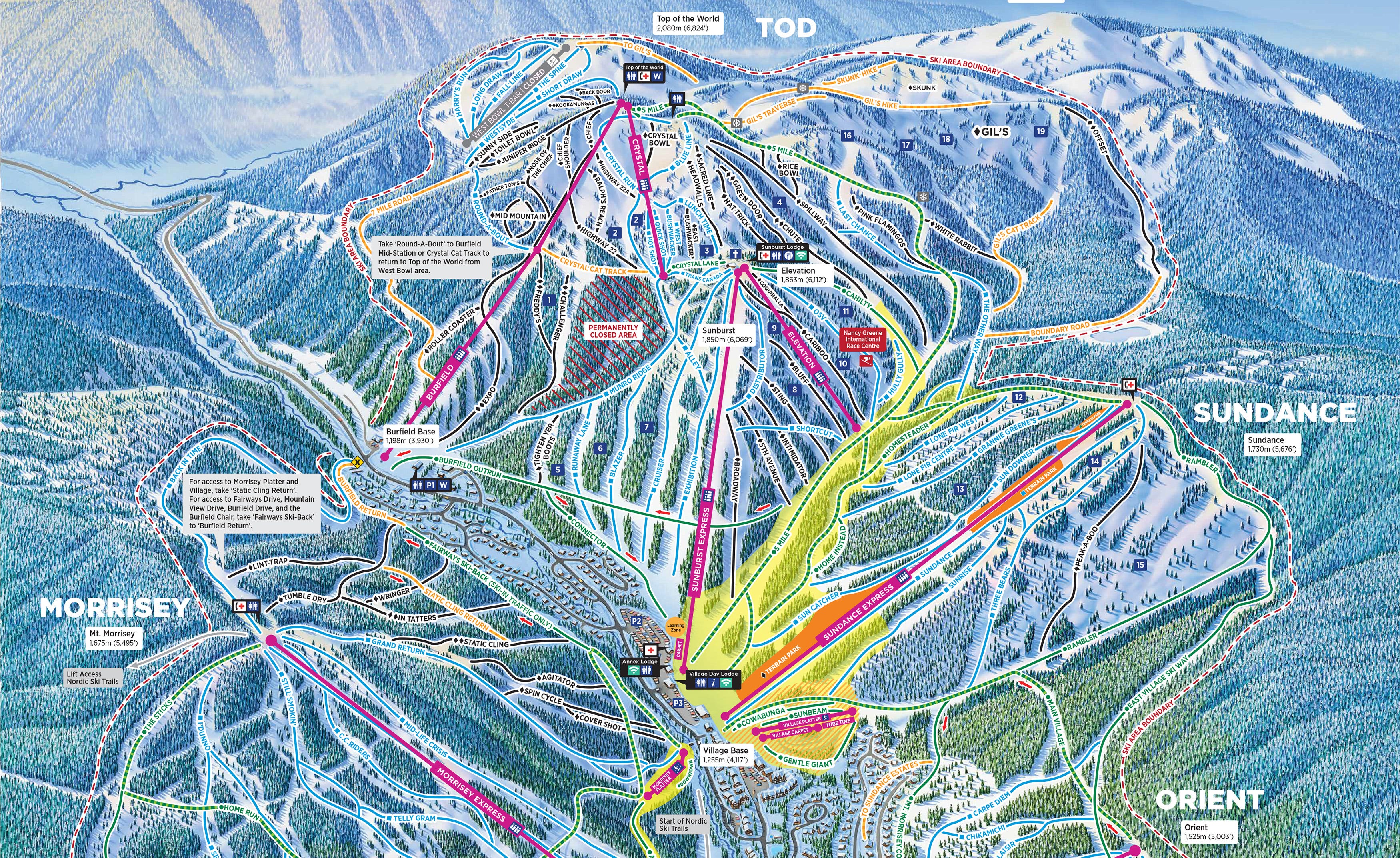
Jun 10, 2023
Podcast #130: Middlebury College Snowbowl GM Mike Hussey
This podcast hit paid subscribers’ inboxes on June 7. It dropped for free subscribers on June 10. To receive future pods as soon as they’re live, and to support independent ski journalism, please consider an upgrade to a paid subscription. You can also subscribe for free below: Who Mike Hussey, General Manager of Middlebury College Snowbowl , Vermont Recorded on May 15, 2023 About Middlebury Snowbowl Click here for a mountain stats overview Owned by: Middlebury College Located in: Hancock, Vermont Year founded: 1936 Pass affiliations: Indy Pass Allied Resort Reciprocal partners: None Closest neighboring ski areas: Sugarbush (38 minutes), Mad River Glen (43 minutes), Pico (45 minutes), Killington (49 minutes) Base elevation: 1,720 feet Summit elevation: 2,720 feet Vertical drop: 1,000 feet Skiable Acres: 100 on-trail; 600+ woods and glades Average annual snowfall: 200 inches Trail count: 17 (8 advanced/expert, 4 intermediate, 5 beginner) + 11 glades Lift count: 4 (1 fixed-grip quad [to replace Sheehan double for 2023-24 ski season], 2 triples, 1 carpet – view Lift Blog’s inventory of Middlebury Snowbowl’s lift fleet) Why I interviewed him I’ve held Michigan Wolverines football season tickets for the past 15 years. The team’s 12-game schedule acts as a sort of life framework for three months each fall. Where the team goes , I often go: Oklahoma in 2025, Texas in 2027, Washington in 2028. Plus Ann Arbor, all the time, for home games. I like big games, ranked opponents, rivalries. This year’s home schedule is a stinker : East Carolina, UNLV, Bowling Green, Rutgers, Indiana, Purdue, Ohio State. To be a Michigan fan is to assume the boys will win those first six easily before a fistfight with the Buckeyes. In college football, big brand names get nearly all the glory nearly all the time. Skiing is a little bit like that. Ask your friend who skis three to 10 days per year where they go, and you’ll likely get a list of familiars: Mammoth, Park City, Breck, Vail. In New England or New York, the list will be some mix of Stratton, Mount Snow, Okemo, Killington, Sugarbush, Hunter, Windham. All fine mountains, and all worthy of three-day Dan’s discretionary skiing dollars. They will get his social media posts and elevator chats too. In skiing, as in college football, legacy and brand mean a hell of a lot. Which takes us to Middlebury Snowbowl (though you’re probably wondering how). Being a thousand-vertical foot ski area in Vermont is a little like being the Rutgers football team in the Big 10. You know you’re going to lose most of your games most of the time: Rutgers is 12-58 in Big 10 play since joining the conference in 2014. And no wonder: officials slotted the team in the East division, alongside blue chips Ohio State (69-6 in Big 10 play since 2014), Michigan (53-22), and Penn State (49-30). Rutgers is 1-26 against those three teams over that span (the one win was versus Michigan in 2014; yes, I was at that game; yes, it was clear that the Rutgers fans had not been there before). Vermont state highway 100 is the Big 10 East of New England skiing: Mount Snow, Okemo, Killington, Sugarbush, Mad River Glen, Stowe, and Smugglers’ Notch all sit along or near this north-south route. So does Middlebury Snowbowl. Here’s how they all stack up: It’s all a little incongruous, this land of giants and speedbumps and not much in between. Skiers have shown little mercy for mid-sized ski areas in Vermont. Snow Valley , Plymouth Notch , and Maple Valley have all gone extinct. Ascutney, now a surface-lift bump, was once an 1,800-footer with a high-speed quad. Magic was shuttered for years before pinpointing a scrappy-rebel narrative upon which it could thrive. Saskadena Six and Quechee are both attached to larger entities who maintain the ski hills as guest and resident amenities. Even Bolton Valley missed a season in the late ‘90s during a problematic ownership transition period. Middlebury Snowbowl, of course, has survived since 1936 as a protectorate of Middlebury College, which owns the facility. But money-losing ski areas subsidized by larger entities are out of fashion. The world knows such arrangements are unnecessary; ski areas can and should be self-sustaining. See: Gunstock , Bogus Basin , Bridger Bowl, Mt. Ashland. Mike Hussey knows this, and he has a vision to make the Snowbowl a strong independent business. Oddly, the small ski area’s proximity to giants may finally be a positive – as Killington and Sugarbush have driven peak-day lift ticket prices over $200, the Snowbowl has remained an affordable alternative that delivers a scaled-down but still substantial ski experience. Is this Middlebury’s moment? I had to find out. What we talked about Middlebury’s huge increases in skier visits over the past few seasons; XC snowmaking at Rickert; miracle March; competing in a rapidly changing Vermont and why megapasses and consolidation have been good for most independent ski areas; Middlebury’s parking problem; why Middlebury College owns a ski area; the coolest college graduation ceremony in skiing; Middlebury College 101; the relationship between the college and the ski area; whether the ski area does or can make money; a brief history of HKD Snowmakers; transforming Rikert from a locals’ slidepath to a modern Nordic ski area; how the college’s board of trustees reacted to suggestions that the school close down Rickert and Snowbowl; how Snowbowl lured students back by changing its season pass structure; the Sheehan chairlift upgrade; reflecting on the Worth Mountain lift upgrade to a triple and why Middlebury went with a quad this time; the importance of Skytrac; why Middlebury is introducing night-skiing and where that footprint will sit; why Middlebury keeps only a minimalist terrain park; navigating Act 250 approval; what’s fueling Snowbowl’s massive investment; potential future snowmaking and parking upgrades; Lake Pleiad; doing the math on Middlebury’s massive acreage counts; glade culture; that wacky trailmap; expansion opportunities; so many season pass options; the season pass punch-card benefit; and the Indy Pass. Why I thought that now was a good time for this interview Suddenly, Middlebury is booming. Skier visits popped 20 percent this past winter, after soaring 60 percent during the 2021-22 ski season. And while the college still subsidizes ski area operations, management is reinvesting with the hopes of reaching self-sufficiency long term. This summer, Middlebury will install night-skiing and replace the Sheehan double with a brand-new Skytrac quad. What’s going on? Why is a thousand-footer jammed between Killington and Sugarbush exploding? Wasn’t the Epkon Godzilla supposed to leave nothing but craters and a dozen super resorts as it bulldozed its way across New England? Skiers seem to be telling us that there is room in the marketplace for a ski area that acts like ski areas did for 80 years. Before $200 lift tickets. Before Colorado HQ. Before checklist tourism. Before the social media flex. Before chairlifts could load the population of Delaware into a single carrier. At Middlebury Snowbowl, a minivan filled with the six members of the Parker family of Hancock Vermont can roll into the parking lot on a weekend morning, pay rack rate for lift tickets, and ski all day without waiting in line. They can wander and explore and not get bored. Middlebury’s trail network is limited by big-mountain Vermont standards, but there’s plenty there. Especially if there’s snow on the ground and the Parker clan can handle some light trees. The place sprawls over hundreds of acres, deceptively large. There’s a desire and a demand for places like Middlebury Snowbowl right now. For something easier and cleaner and cheaper. More atmosphere and less circus. A day on skis that’s just about the skiing. What I got wrong I described Vermont’s Act 250 as a state law that governs how ski areas can develop. That’s partially correct but somewhat misstates the purpose and intent of the law, which applies to land use and development as a whole across the state. From Vermont’s official Natural Resources Board website : Act 250 (10 V.S.A. Chapter 151) is Vermont’s land use and development law, enacted in 1970 at a time when Vermont was undergoing significant development pressure. The law provides a public, quasi-judicial process for reviewing and managing the environmental, social and fiscal consequences of major subdivisions and developments in Vermont. It assures that larger developments compliment Vermont’s unique landscape, economy and community needs. … The effects of Act 250 are most clear when one compares Vermont’s pristine landscape with most other states. Protecting Vermont’s environmental integrity and the strength of our communities benefits everyone, forming a strong basis for both our economy and our quality of life. The Act 250 process balances environmental and community concerns; a tall order which at times can be complex. Developers, engineers and consultants best navigate the Act 250 process by planning their project, from the earliest stages, with the 10 criteria in mind. As a result of Act 250 and the planning process, project designs, landscaping plans and color schemes fit the landscape. Act 250 has helped Vermont retain its unsurpassed scenic qualities while undergoing the substantial growth of the last 5 decades. Act 250 is also critical because it requires development to conform to municipal and regional plans and Vermont’s land use planning goals. The Act 250 criteria have protected many important natural and cultural resources — water and air quality, wildlife habitat and agricultural soils (just to name a few) — that have long been valued by Vermonters and that are an important part of the state’s economy. No single law can protect all of Vermont’s unique attributes — but Act 250 plays a critical role in maintaining the quality of life that Vermonters enjoy. The law, for all its benefits, is often viewed as a regulatory burden that considerably stunted the potential of Vermont’s ski areas over the long term. The late Chris Diamond examined the impacts of Act 250 at length in his book, Ski Inc. 2020 : In short order, the ski area operators became the bad guys, the most visible incarnation of the capitalist beast, to these newcomers [in the late ‘60s and early ‘70s]. Over time, the enmity – or, at a minimum, distrust – was formalized in a regulatory structure that made day-to-day business life incredibly difficult. Capitalism brings a certain messiness and unpredictability, something the new political majority would not tolerate. Vermont basically tried to have it both ways: a healthy economy and some of the nation’s most restrictive land-use laws. Given a ski area’s impact on the natural and social environment, they were disproportionately impacted. Water-quality regulations made it impossible or extraordinarily expensive to expand snowmaking operations. Other criteria under the state’s landmark environmental law, Act 250, were aimed at growth issues. The permitting process gave significant influence to those representing the status quo. So it shouldn’t be surprising to note that, generally, the status quo was protected. For most rural areas, that meant zero or slow growth. An unintended but inevitable result: As decades passed and people moved on, the population base began to shrink. … My view is that the current situation would be less dire if the state’s ski communities were as economically vigorous as their Western counterparts. … During the ‘90s, growth in most of Vermont’s ski towns ground to a halt. A notable exception was Okemo, where the Mueller family managed a significant terrain expansion, a second base area, and a related real-estate development. Although their operating competence and focus on service were largely the catalysts, they also benefited from their location in the former manufacturing-based economy of Ludlow. Here the status quo was arguably more focused on economic survival. The Muellers also proved themselves exceptionally skilled at navigating the permit process. The bigger challenge for most Vermont resorts remained water for snowmaking. Most have finally managed to navigate their way to a solution and now offer a competitive product, albeit at great cost and with significant delays. (For Mount Snow that process took over 30 years). With that, and all the other changes that are occurring within the ski realm, I do believe they face a brighter future. Vermont ski towns will continue to evolve into important economic centers. But in my view, they will not be what they might have been. Diamond was a smart guy, and ran Mount Snow and Steamboat over the course of several decades. Ski Inc. 2020 and its companion book, Ski Inc. are must-reads for anyone who enjoys this newsletter. But while I agree with much of Diamond’s analysis above, I floated this notion of Act 250-as-development killer to a prominent Vermont resort operator last year. That individual waved their hand toward the base area we were sitting in and the stacks of condos rolling up the hillside. “Well, we built all this,” they said. And Vermont does offer considerably more ski-in, ski-out accommodations than, say, New York. Killington is finally moving ahead with their base village, and the state is home to the best and most-advanced lift systems in the Northeast. So something’s working there. The truth, as always, is probably somewhere in between the extremes of the build-it-all and build-nothing-at-all fundamentalists. Why you should ski Middlebury Snowbowl Every year, more megapasses move into the marketplace. But neither Vail nor Alterra has added a new ski area in the Northeast since Windham joined the Ikon Pass in 2020 (Seven Springs, which joined the Epic Pass in 2022, really serves the Mid-Atlantic and Midwest). It’s fair to assume that more skiers are trying to cram into an unchanging number of ski areas each season. And while the mountains can somewhat mitigate peak-day crowds with advanced reservations, lift-ticket limitations, and higher-capacity chairlifts, skiers also have a crowd-control mechanism at their disposal: go somewhere else. Savvy Northeast skiers know how to people-dodge. Sure, go to Killington, Sugarbush, Stowe, Loon, and Cannon. They are all spectacular. But on weekends, unlatch the secret weapons on the ski-area utility belt: Plattekill, Berkshire East, Elk, Black Mountain in New Hampshire and Black Mountain of Maine. Excellent ski areas, all, lacking their competitors’ size and crowds but none of their thrill and muscle. Middlebury Snowbowl belongs on this list. True, 1,000 feet of vert makes Middlebury the 16th-tallest ski area in the state of Vermont. And unlike people, the ski area can’t just buy a bigger pickup truck to compensate. But 1,000 vertical feet is a good ski run. Especially when it’s fed by 200 inches of average annual snowfall that doesn’t get shredded by Epkonitron hordes trampling off high-speed chairlifts. At some point, each skier has to decide: will they ski the same dozen ski areas they’ve always skied and that everyone else they know has always skied, or will they roam a bit, taste test, see if they need that high-speed lift as much as they think you do. Or do they give that up – even if just for a day – to view the snow from a different angle? Podcast Notes On Vermont being a sparsely populated state Despite its outsized presence in the U.S. ski industry – the state typically ranks fourth in skier visits behind Colorado, California, and Utah – Vermont is tiny by just about any measure. It’s the seventh-smallest U.S. state by size and the second-smallest by population, with around 650,000 residents (Wyoming is last with just 580,000). This surprised me, mostly because the state is so close to so many population centers (New England is home to nearly 15 million people; New York to another 20.5 million). On the U.S. ski industry’s massive investment Hussey and I briefly discuss the U.S. ski industry’s massive capital investment for this past season. The exact number was $812.4 million, according to the National Ski Areas Association. On that punchcard Middlebury Snowbowl offers one of the best season pass perks of any ski area in New England: each pass includes a punch card good for four lift tickets. This solves a season passholder’s greatest irritation: dragging along cheap-ass procrastinating friends who can’t be bothered to buy anything in advance but also don’t want to donate a lung to pay for a Saturday lift ticket. Or the friend who has an Ikon Pass and is horrified by the idea of paying for another day of skiing beyond that massive investment. The card is transferrable and has no blackouts. On the Indy Pass Allied and XC programs The Indy Pass has done a marvelous job adapting to a complex industry. This can be a bit confusing, as Hussey outlines in the podcast – some Indy Pass holders show up to Middlebury expecting “free”* lift tickets. But the ski area is part of the Allied Resorts program, which gets skiers half off on non-holiday weekdays, and 25 percent off at other times. I analyzed the Allied program at length here . Lift tickets to Rickert Nordic Center, which Hussey also manages, are included on the Indy Pass and the drastically discounted Indy XC Pass. I discussed that pass here . *Megapass lift tickets are also characterized as being “free,” but that is incorrect: the passholder paid for the pass in advance, and is simply redeeming a product they’ve pre-purchased. The Storm explores the world of lift-served skiing all year round. Join us. The Storm publishes year-round, and guarantees 100 articles per year. This is article 49/100 in 2023, and number 435 since launching on Oct. 13, 2019. Want to send feedback? Reply to this email and I will answer (unless you sound insane, or, more likely, I just get busy). You can also email skiing@substack.com . Get full access to The Storm Skiing Journal and Podcast at www.stormskiing.com/subscribe
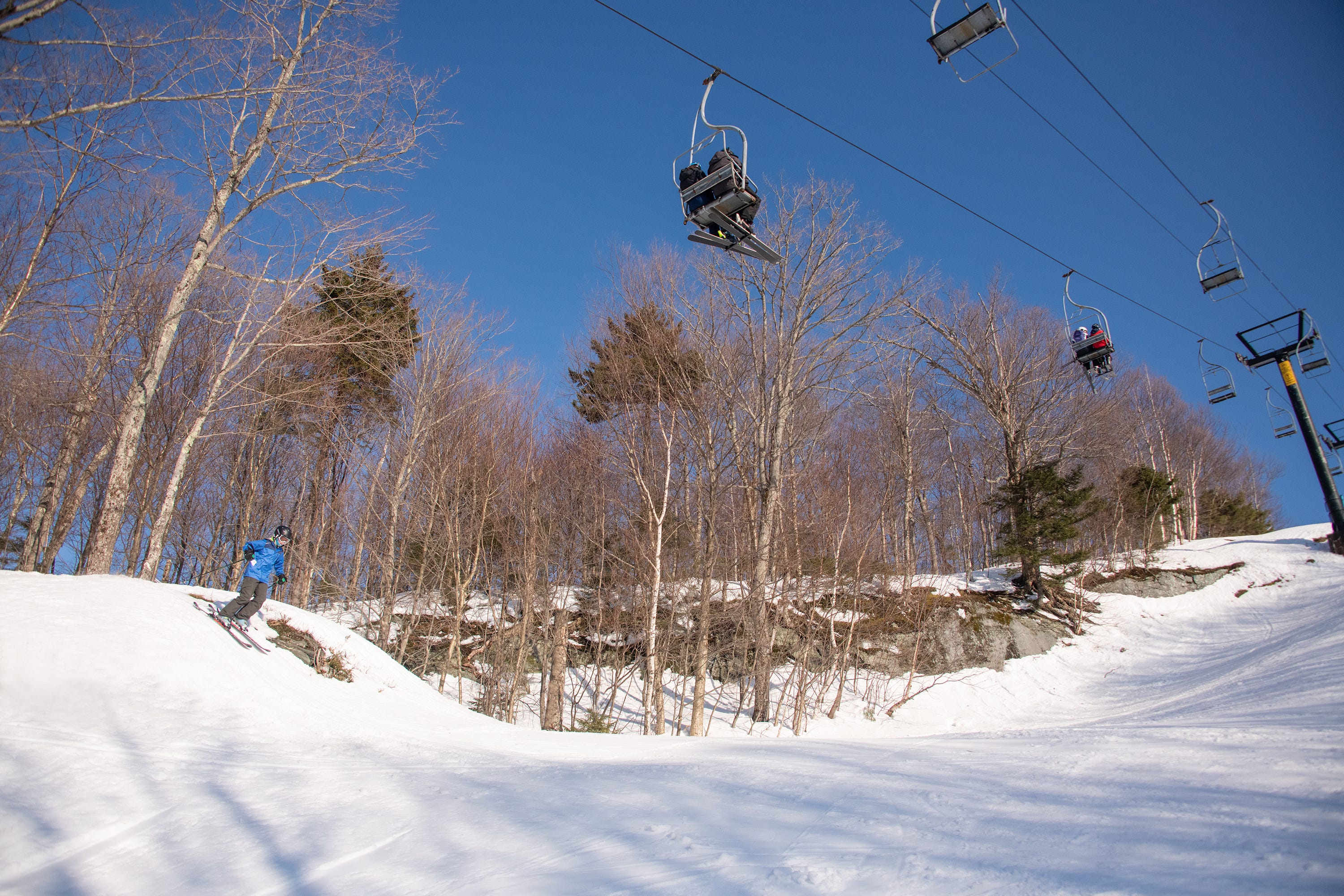
May 29, 2023
Podcast #129: SkiBig3 (Banff Sunshine, Lake Louise, Mt. Norquay) President Pete Woods
This podcast hit paid subscribers’ inboxes on May 26. It dropped for free subscribers on May 29. To receive future pods as soon as they’re live, and to support independent ski journalism, please consider an upgrade to a paid subscription. You can also subscribe for free below: Who Pete Woods, President of SkiBig3 , the umbrella organization for Banff Sunshine , Lake Louise , and Mt. Norquay , Alberta Recorded on May 4, 2023 About SkiBig3 SkiBig3 “works in conjunction with all three ski resorts within Banff National Park to allow you access to everything this winter destination has to offer,” according to the organization’s LinkedIn page . Each ski area – Banff Sunshine, Lake Louise, and Mt. Norquay – is independently owned and operated. Banff Sunshine Click here for a mountain stats overview Owned by: Ralph, Sergei, and John Scurfield Located in: Sunshine Village, Alberta Year founded: Sometime in the 1930s Pass affiliations: Ikon Pass: 5 or 7 combined days with Lake Louise and Mt. Norquay; Mountain Collective: 2 days Closest neighboring ski areas: Norquay (23 minutes), Sunshine (41 minutes), Nakiska (1 hour) - travel times vary considerably depending upon weather and time of day. Base elevation: 5,440 feet Summit elevation: 8,954 feet Vertical drop: 3,514 feet Skiable Acres: 3,358 Average annual snowfall: 360 inches Trail count: 137 (25% advanced/expert, 55% intermediate, 20% beginner) Lift count: 12 (1 gondola, 7 high-speed quads, 2 fixed-grip quads, 2 carpets - view Lift Blog’s inventory of Sunshine’s lift fleet) Sunshine chops its trailmap into three pieces on its website . This is slightly confusing for anyone who isn’t familiar with the ski area and doesn’t understand how the puzzle pieces fit together. I’ve included those three maps below, but they’ll make more sense in the context of this 2010 trailmap: Sunshine’s current maps: Lake Louise Click here for a mountain stats overview Owned by: Charlie Locke (he first owned the ski area from 1981 to 2003, then sold it to Resorts of the Canadian Rockies, and re-bought it from them in 2008) Located in: Lake Louise, Alberta Year founded: 1954 Pass affiliations: Ikon Pass: 5 or 7 combined days with Banff Sunshine and Mt. Norquay; Mountain Collective: 2 days Closest neighboring ski areas: Sunshine (41 minutes), Norquay (44 minutes), Nakiska (1 hour, 22 minutes) - travel times vary considerably depending upon weather and time of day. Base elevation: 5,400 feet Summit elevation: 8,650 feet Vertical drop: 3,250 feet Skiable Acres: 4,200 Average annual snowfall: 179 inches Trail count: 164 (30% advanced/expert, 45% intermediate, 25% beginner) Lift count: 11 (1 gondola, 1 six-pack, 3 high-speed quads, 2 fixed-grip quads, 1 triple, 3 carpets - view Lift Blog’s inventory of Lake Louise’s lift fleet ) Mt. Norquay Click here for a mountain stats overview Owned by: Adam and Janet Waterous Located in: Improvement District No. 9, Alberta Year founded: 1926 Pass affiliations: Ikon Pass: 5 or 7 combined days with Banff Sunshine and Lake Louise Closest neighboring ski areas: Sunshine (23 minutes), Lake Louise (43 minutes), Nakiska (54 minutes) - travel times vary considerably depending upon weather and time of day. Base elevation: 5,350 feet Summit elevation: 6,998 feet Vertical drop: 1,650 feet Skiable Acres: 190 Average annual snowfall: 120 inches Trail count: 60 (44% advanced/expert, 25% intermediate, 31% beginner) Lift count: 6 (1 high-speed quad, 2 fixed-grip quads, 1 double, 2 carpets - view Lift Blog’s inventory of Mt. Norquay’s lift fleet) Why I interviewed him There are places that make sense, and places that just don’t. Lakes and grocery stores and movie theaters and sand dunes and pizza places and interstate highways. As a U.S. American, these things always squared with my worldview. Then I stepped out of the car in New York City at age 19 and I’m like what the actual f**k is happening here? A vertical human swarm in a sprawling sideways nation. Or to take another example: cornfields and baitshops and gas stations and forests. As a Midwesterner I could understand those things. But then Lord of the Rings dropped and I was like what planet did they shoot this on and then I was like OK I guess that’s New Zealand. Arriving in Banff is like that. Most visitors travel there via Calgary. Nothing against Calgary, but I’m not sure it’s a place that most of us go to on purpose. Skiers drop into the airport, leave the city, drive west. Flat forever. Then, suddenly, you are among mountains. Not just mountains, but the most amazing mountains you’ve ever seen, striated goliaths heaving skyward like something animate and immensely powerful, spokes of a great subterranean machine primed to punch through the earth like invaders from Cybertron. Here, so surrounded, you arrive in Banff National Park. Within its boundaries: two towns, three ski areas. The towns are tight, walkable, lively, attractive. None of the hill-climbing megamansion claptrap that clutters the fringes of so many U.S. ski towns. Just a pair of glorious grand hotels airlifted, it seems, from the Alps. Two of the ski areas are Summit County scale, with lift plants and trail footprints to match Breck or Keystone or Copper. The third is a quirky locals’ bump with mogul fields studded like cash crops up the incline. All framed by those wild mountains. It feels sort of European and sort of fantasyland Rockies and sort of like nothing else on Earth. It is, at the very least, like nothing else in North America. The texture here is rich. Banff’s most commonly cited attribute is its beauty. The most consistent point against is relatively low snowfalls compared to, say, SkiBig3’s Powder Highway neighbors or Whistler. But there is so much in between those gorgeous views and that modest snowfall that makes these three mountains one of the continent’s great ski destinations. Like the towns themselves. In many ways, this is Canadian Aspen, with its multiple mountains knitted via shuttlebus, rich cuisine, walkable mountain villages. In other ways, it is what Aspen could have been. You have to work in Banff National Park to live there – that’s the law. The richness that adds to the community is incalculable. Imagine a Colorado so built? No second homes, no runaway short-term rental market. The ripple effects on traffic, on cost, on mood and energy are tangible and obvious. This is a place that works. It’s not the only place that works, of course. And many of Banff’s bedrock operating principles would not be culturally transferable to the south. Including, perhaps, the spirit of bonhomie that unites three independently owned, competing ski areas under a single promotional umbrella called SkiBig3. Remember when Vail yanked its Colorado resorts out of Colorado Ski Country USA because the company didn’t want its dues to support competitors’ marketing? What’s happening in Banff is the opposite of that. It’s unique and it’s cool and it’s instructive, and it was worth a deep look to see exactly what’s going on up there. What we talked about The surprising international markets that Banff draws from; a welcome back to skiing’s melting pot; the tradition of the long season at Lake Louise and Sunshine; putting the ski areas’ relatively low average snowfall totals (compared to, say, Revelstoke), in context; which of the three mountains to visit based upon conditions; Banff’s immature uphill scene and massive potential; growing up in Boulder and ratpack skiing Summit County; the angst of the front-desk hotel clerk; the strange dynamic between ski resorts and their local airports; selling Purgatory to out-of-state tourists; the quirks of living and working in Telluride; the vastly different ski cultures in the two Colorados; the existential challenge of Copper Mountain; the power of Woodward; first reaction to Banff: “how can this even exist?”; defining SkiBig3 and who owns each of its three partner ski areas; how mass transit fills in for ski-in-ski-out lodging; Banff’s unique “need to reside” clause that enables workers of all levels to live right in town; the park’s incredible bus system; the proposed Norquay gondola up from town; a potential train from Calgary airport to Banff; Norquay’s wild North American pulse double chair; the history of Banff’s spectacular Fairmont hotels; the history of SkiBig3 and why the coalition has worked; competing with the Powder Highway; how Sunshine gets by with a single snowgun; why Sunshine gets double the snowfall of Lake Louise; why none of the three ski areas has ever hosted Olympic events, even when Calgary was the host city; decoding Parks Canada’s lease requirements that ski areas gift their assets to the agency or remove them at the end of their contracts; masterplans; why SkiBig3 was an early adopter of the Ikon Pass and why it’s stuck around; why the three ski areas offer combined days on Ikon; why Norquay isn’t part of Mountain Collective; why the Mountain Collective has been so resilient after the debut of Ikon; whether the Mountain Collective could add more Northeast ski areas; and why the ski areas have yet to transition to RFID cards. Why I thought that now was a good time for this interview It has always been inevitable that The Storm would enter Canada. Just as it was always inevitable, back in 2019 and ’20, that it would outgrow New England. This template, I’ve realized, is adaptable to almost any ski market. Everywhere there is a ski area, there are skiers talking about it. And there is someone running it. And these two groups do not always understand each other. The mission of The Storm is to unite these them on a common platform. There is a difference, of course, between scaling in a sustainable way and scaling for the sake of doing so. I’ve been very deliberate about The Storm’s growth so far. I started in the Northeast – New England, New York, New Jersey, Pennsylvania – because it was my local market and I understood it well. I stayed there – mostly – for two years before aggressively moving West in 2021. I learned to ski as a teenager in the Midwest, and I’d been skiing the West annually for decades, so none of this was new turf for me. Still, I had a lot to learn, and over the past two years, I have secured contacts and hosted a series of podcast interviews that gave me a far more nuanced understanding of every ski corner of the country. Canada was the obvious next move. Culturally, the nations’ ski areas are very similar, with a western focus on off-piste powder-bombing and an eastern affinity for grooming. The trail markings, lift systems, and primacy of the automobile-as-access-point are consistent across the continent. And every U.S.-based megapass has integrated a substantial Canadian footprint as a selling point. International border aside, major U.S. and Canadian ski areas are as knotted together as those in Utah and Montana and Colorado. So, where to begin? I wanted to start big. The Storm launched in 2019 with a podcast featuring Killington, the largest ski area in the East. Western podcast coverage began with Taos and Aspen. So Canada starts here, in one of its most glorious locales. Next stop: Sun Peaks, the second-largest ski area in the country. I recorded that one a few days ago. I’d had a Whistler podcast booked too, but their top executive moved to Aspen, so we called it off. So, here we are, in Canada. Now what? Again, I’m going to move slowly. While America and Canada are culturally similar in many ways, they are enormously different in others. The ski regions here are many, vast, and nuanced. It’s going to take me a while to get to Quebec, which is home to something like 90 ski areas and a sizeable (for me), language barrier. The country is huge, and while I’ve traveled to and across Canada dozens of times, I’m not taking for granted that presence equals understanding. I’ll probably stop at Canada. That’s not to say that I won’t occasionally dip into other ski regions, both as a visitor and as a journalist. I’ve scheduled an interview with the general manager of Valle Nevado, Chile for July. But I don’t think I’m capable of expanding this enterprise into other continents without diluting my coverage at home. Canada is purely additive. The region complements everything I already cover in the United States, especially multi-mountain passes. The world’s other ski regions are so vastly different and complex that it wouldn’t be like just adding more ski areas – it would be like adding coverage of sailing or surfing, completely different things that would only confuse the main plotline. Questions I wish I’d asked You may wonder why we don’t explore specifics of the ski areas as deeply as I normally do, particularly with all three being in possession of significant and well-articulated masterplans. It’s important, here, to understand what SkiBig3 is: an umbrella organization that promotes the mountains as a whole. I can pursue more meaningful conversations on granular plans with each operator at a later time. What I got wrong * I intimated that Vail, Aspen, and Telluride were “10 times bigger” than Purgatory. This is grossly incorrect. Purgatory checks in at 1,635 acres, while Vail Mountain measures 5,317 acres, Telluride is 2,000, and Aspen Mountain is just 673 (though it will grow substantially with the Pandora’s expansion this coming winter). If you combine Aspen Mountain with Aspen Highlands (1,010 acres), Buttermilk (435 acres), and Snowmass (3,342 acres), they add up to 5,460 – nowhere near 10 times the size of Purgatory. What I meant was that those three ski entities – Aspen, Vail, and Telluride – had far greater name recognition than Purgatory, which is tucked off the I-70 mainline in Southwest Colorado (as is Telluride). * On the other end of that spectrum, I vastly over-estimated the size of Norquay, saying it was 1/10th the size of Sunshine and Lake Louise. At 190 acres, Norquay is 5.7 percent the size of Sunshine (3,358 acres), and just 4.5 percent the size of Lake Louise (4,200 acres). * I said that Mountain Collective “keeps losing partners.” This is true, but it is a fact that must be considered within the context of this complementary note: Mountain Collective currently has one of the largest rosters in its 12-season history (the coalition is down one partner after Thredbo left this year). The pass has continued to grow in spite of the losses of Telluride, Mammoth, Palisades Tahoe, Sugarbush, Stowe, Whistler, and others over the years. Why you should ski Sunshine, Lake Louise, and Mt. Norquay Earlier I compared the three Banff ski areas to Summit County. That’s not really fair. Because Summit County has one thing that Sunshine, Lake Louise, and Norquay don’t really have to deal with: gigantic, relentless crowds. For two years, U.S. Americans were shut out of Canada. Now we’re not. If you’ve been filling your winters with Ikon Pass trips around Salt Lake, I-70, and Tahoe, you might be wondering what the hell happened to skiing. Man it’s so busy now, all the freaking time. I hear you Bro. Go north. It’s this weird kind of hack. Like discount America (that exchange rate, Brah). Like time-machine America. Back to that late-‘90s/early-2000s interregnum, when the lifts were all built out and the reigns had been loosened on skiing off-piste, but the big passes hadn’t shown up with the entire state of Texas just yet. I exaggerate a little. You can find liftlines in Canada if you do all the predictable things at all the predictable times. And the Ikon Pass and its destination checklist has blown the cover for lots of formerly clandestine places. But these are big mountains with long seasons. Woods tells me on the podcast that the locals’ favorite time at the SkiBig3 areas is April. The terrain is mostly all still live but the outsiders stop showing up. If you want to crowd-dodge your way north, you have a six-month season to figure it out. As for the skiing itself, it’s as big and varied as anything on the continent. Lake Louise is sprawling and many-sided, with fast lifts flying all over the place and plenty more inbound. Sunshine is big and exposed, and the gondola is the only way up to the ski area, lending the place a patina of wild adventure. Both will give you as much off-piste as you can handle. Norquay is kind of like Pico or June Mountain of Snow King – a very good ski area that’s overlooked by its proximity to a far larger and more famous ski area. Don’t skip it: the place is a riot, with some of the longest sustained bump runs you’ll find anywhere. Together, the three ski areas add up to 7,748 acres. Whistler is 8,171. So, samesies, basically. If you’re looking for a place to spend a week of skiing and you’re tired of the stampede, here you go. Podcast Notes On Banff’s UNESCO World Heritage sites designation I note in the introduction that Banff National Park is on the list of UNESCO World Heritage Sites. The designation actually applies more broadly, to a group of parks dubbed “Canadian Rocky Mountain Parks.” This includes, according to UNESCO’s website , “the contiguous national parks of Banff, Jasper, Kootenay, and Yoho, as well as the Mount Robson, Mount Assiniboine and Hamber provincial parks…” You can view an interactive map of all UNESCO World Heritage sites here . On Intrawest owning Copper Mountain It can be tempting to consider our current multi-mountain pass allegiances to be inevitable and permanent. So much so that I often stir each mountain’s ownership histories up in the flow of conversation. This is what happened when I gave Powder Corp., the current owner of Copper Mountain, credit for installing the Woodward concept on that mountain. Woods pointed out that it was Intrawest, precursor to Alterra, that actually owned Copper at the time of Woodward’s debut, and that they had also considered planting the concept at another of their properties: Whistler. Here’s a list of all of Intrawest’s ski areas, and where they ended up. It’s fun to imagine a world in which they’d stayed together: On SkiBig3 Resort masterplans Each of the three resorts has master development plans on file with Parks Canada: Lake Louise Here is a link to the full 2019 masterplan , and a summary image of proposed upgrades - note that the Lower Juniper and Summit chairlifts have already been installed, and Upper Juniper and Sunny Side are scheduled for a 2024 installation. The Summit Platter is no longer in service: Sunshine Sunshine’s latest full masterplan dates to 2018. The resort proposed amendments last year, and those are still under review by Parks Canada. Here’s an overview of proposed major lift upgrades: Mt. Norquay Sometimes tracking down these masterplan documents can be like trying to locate Amelia Earhart’s plane. I know it’s out there somewhere, but good luck finding it. The best I can do on Norquay is this link to their Vision 100 site , which lays out plans to replace the North American chair with a gondola, as shown below: On Marilyn Monroe on the North American chair So apparently this happened: On the North American chair I wrote about this chairlift a couple weeks back : I’ve ridden a lot of chairlifts. I don’t know how many, but it’s hundreds. By far the strangest of these is the North American chair at Mt. Norquay. Once a regular fixed-grip double, the ski area converted it into a pulse lift with chairs running in groups of four. The operators manually slow the entire line as the chairs enter the top and bottom stations (I’m assuming the line is set so that chairs reach the base and summit at the same time). This chair serves some bomber terrain, a vast mogul field with dipsy-do double fall-lines and the greatest views in the world. It’s a strange one, for sure: The Storm Skiing explores the world of lift-served skiing year-round. Join us. The Storm publishes year-round, and guarantees 100 articles per year. This is article 46/100 in 2023, and number 432 since launching on Oct. 13, 2019. Want to send feedback? Reply to this email and I will answer (unless you sound insane, or, more likely, I just get busy). You can also email skiing@substack.com . Get full access to The Storm Skiing Journal and Podcast at www.stormskiing.com/subscribe
May 26, 2023
Podcast #128: Mt. Baldy, California General Manager Robby Ellingson
This podcast hit paid subscribers’ inboxes on May 23. It dropped for free subscribers on May 26. To receive future pods as soon as they’re live, and to support independent ski journalism, please consider an upgrade to a paid subscription. You can also subscribe for free below: Who Robby Ellingson, General Manager of Mt. Baldy , California Recorded on May 8, 2023 About Mt. Baldy Click here for a mountain stats overview Owned by: Mt. Baldy Ski Lifts, which is majority owned by Ron Ellingson Located in: Mt. Baldy, California Year founded: 1952 Pass affiliations: None Closest neighboring ski areas: Mountain High (1 hour, 12 minutes), Snow Valley (1 hour, 19 minutes), Snow Summit (1 hour, 52 minutes), Bear Mountain (1 hour, 56 minutes) – travel times vary considerably pending time of day and weather conditions Base elevation: 6,500 feet Summit elevation: 8,600 feet Vertical drop: 2,100 feet Skiable Acres: 800-plus Average annual snowfall: 170 inches Trail count: 26 (54% advanced/expert, 31% intermediate, 15% beginner) Lift count: 4 double chairs – view Lift Blog’s inventory of Mt. Baldy’s lift fleet Why I interviewed him If you have children under the age of 15 or so, you have likely seen Zootopia . If not, imagine this: anthropomorphic animals (it’s Disney), traumatized by eons of predator-eat-prey brutalism, build a city in which they can all coexist after the lions and wolves are given the equivalent of cartoon Beyond burgers or something. This city is divided into realms: desert, jungle, arctic, water, etc. Which is about as believable as thousands of species of walking, talking animals living in non-murderous harmony until you realize, oh yeah, that’s basically Los Angeles. The monster, pulsing city, its various terras stacked skyward like realms in Tolkein: ocean then beach then jungle then mountain then desert beyond. Most American cities sprawl outward in concentric rings of Wal-Marts and Applebee’s and Autozones. LA gives you whole different worlds every five freeway exits. It’s still incongruous, to drive up into the sky and find Mt. Baldy. Not just to find a ski area, because there are plenty of those perched along the city walls, but to find this ski area, pinched in a deep ravine at the end of a narrow highway switchbacking up from the flats. Foot-loading the lattice-towered double chair is like boarding a slow-motion time machine into the sky. And indeed you may think you have. At the top, cellphone service blinks out. The chairlifts are museum pieces from the pre-digital era of industrial design. The trailmap un-scrolled across the baselodge wall teases the Stockton Flats expansion, which will be new… in 1991 (it’s still not there). Los Angeles, with its vast wealth and enormous population, could support almost any kind of ski area. Knit the entirety of the mountains above the city together with high-speed lifts, and you would have no issue filling them with skiers. And yet, the closest ski area to Fancy Town is this throwback. Soaring, glorious, gorgeous, but a relic, as though someone turned the lights on in 1952 and forgot about it. There’s some grooming but not a lot. Some snowmaking but not a lot. Some services but just enough. A few other skiers but basically none. Meaning not enough for liftlines, at least once you get up Lift 1. It’s just you and endless inventive lines through the trees. If I found Baldy staked out in the remote Sierras, a token of another time, I’d be awestruck and amazed. If I found it tucked off some pass in Idaho or Wyoming, I’d understand its end-of-civilization vibe. But so positioned, directly and conspicuously over America’s West Coast glitter, the place is puzzling and fascinating. I had to know more. What we talked about That amazing 2022-23 California ski season; why it’s almost impossible to get accurate snow measurements at Baldy; why Baldy isn’t reliant on CalTrans like the other SoCal ski areas; avy mitigation in SoCal; why Baldy pushes the season so deep into spring; embracing social media; growing up in the mountains above LA; the Ellingson family legacy on the mountain; why bombing the mountain as a kid doesn’t prepare you to run it as an adult; loving the mountain and the rush of it all; who owns Mt. Baldy Ski Lifts; building Baldy above Los Angeles starting in 1952; thoughts on the consolidation of Southern California skiing; competing with the Ikon Pass; what happened when Baldy introduced a $49 season pass, and why that product eventually went away; whether Vail has ever driven up from the 210 with an open checkbook; why Baldy never became the “Disneyland of the mountains”; Baldy’s Holy Grail expansion and whether it will ever happen; Baldy’s throwback vibe; updating the masterplan (from 1993!); priorities for new lifts, including one that could change the texture of the entire resort; the incredible journey of the used lift that will replace Chair 2; upgrades happening to Chair 3 this summer; Baldy’s unique follow-the-sun lift operations; how Mt. Baldy’s snowmaking system exists in an area facing chronic water shortages; snowmaking priorities; Club Baldy; whether Baldy could ever join the Indy Pass; and Baldy’s parking restrictions and whether they could ever build more parking spots. Why I thought that now was a good time for this interview I’ve been aware of Mt. Baldy for decades, in the way that I’ve been aware of every mid-sized-for-its-region ski area, but I never thought much about the place until April 2020. As we all remember, the entire North American ski industry had shut down over the course of a week that March. As most of us have forgotten, a handful re-opened starting in late April. The first of those was Mt. Baldy. On April 22, operating under a tee-time social-distancing structure that permitted small groups of skiers up the mountain in intervals, Baldy turned the lifts back on for the first time in weeks. I lobbed an email into the ether and, much to my surprise, connected with Ellingson for a short podcast conversation . The clever operating scheme that Ellingson patched together told a far larger story than one ski area hacking the Covid shutdowns. It was that, of course, but it also distilled the rowdy spirit of independent ski areas into one tangible act: a simple, creative, rapidly conceived and executed set of operating procedures that flexed to both the complexities of a global pandemic and the nuances of a single ski area. Vail and Alterra can do a lot of things, but that sort of nimble adaptation is harder for them (though Crystal, Washington was one of the half-dozen or so ski areas to re-open that spring). Baldy’s scheme was brash without being reckless - Ellingson did not ask the local or state authorities’ permission to re-open the bump, but he did so with 10 percent capacity restrictions that seem conservative in hindsight. The plan showcased the vitality of independent ski areas, and also their necessity. Remember that, in those first weeks after the Covid shutdowns, there was some doubt as to whether the 2020-21 ski season would happen at all (and, indeed, in many European nations, it basically didn’t), but Baldy showed, early and decisively, that some version of skiing could co-exist with Covid, and the industry’s focus quickly swiveled from “if” to “how.” That sense of quirky, raw independence animates everything about Mt. Baldy. There is nothing else like it in America. And not in the way that there’s nothing else like Alta or Vail Mountain or Killington or Whiteface, which each have unique terrain and snowfall patterns and cultures, but similar ways of being. Baldy just feels like a different way of being a ski area, like when you go to Europe and all of the cars and buildings look different and you’re like, OK, this is a different way of being a civilization. Or I guess like skiing in Europe, which really feels nothing at all like America. It’s hard to understand without experiencing it for yourself. In March, I finally stopped in and skied the place. And I had to ask what in the world I’d just experienced. What I got wrong For some reason, I’d thought that the Mueller lift company had gone the way of the Riblet (meaning, out of business). I said so during our interview, when Ellingson noted that he had ordered new chairs for Chair 3, a 1978 Mueller double. He pointed out that the company is still in business , in Canada. Why you should ski Mt. Baldy In the podcast, I ask Ellingson if Vail Resorts has ever brought its big fat checkbook up the access road. He said they haven’t, which is both surprising and not surprising. Surprising because Vail has purchased a ski area within the orbit of pretty much every cold-weather or mountain-adjacent city in the United States, with the exception of Los Angeles. Not surprising because Vail tends to buy renovated houses, rather than repair jobs. Not that there’s anything broken about Baldy, but four double chairlifts is not exactly Vail’s brand. I asked about Vail’s interest for this reason: as a fully permitted ski area with secure water rights standing above the nation’s second-most-populous city, Baldy is an irreplaceable asset. There are only a handful of ski areas in the National Forests above Los Angeles. Alterra owns three of them: Bear Mountain, Snow Summit, and Snow Valley. Mountain High is itself in acquisition mode, purchasing Dodge Ridge in 2021 and China Peak last year . Mt. Waterman has no snowmaking and has not turned the lifts on for public skiing in more than three years. A few other Forest Service permits remain active, though the ski areas have long closed: Cedar Pass, Green Valley, Kratka Ridge. That makes Baldy the only viable LA-area independent ski area that would make sense as a megapass acquisition. It's unlikely, but not impossible. It would cost tens of millions to upgrade the resort’s lift and snowmaking infrastructure to handle Epic Pass volumes. Eventually, however, Vail may conclude that their only way to compete with Alterra for LA is to buy their way in. And, as Ellingson says in the podcast, “everything is for sale” - for the right price. My point here is this: if you want to experience the funky, idiosyncratic Mt. Baldy that I’m describing here, don’t wait to do it. This is not Mad River Glen, shielded from over-development by co-op bylaws. This is a locally owned and operated ski area that has done what they could with what they’ve had for decades. That it’s quaint and wild is a function of circumstance rather than destiny. Someone could buy this. Someone could change this. Someone could make this Big Bear 2. I’m not going to tell you whether that would be a good thing or a bad thing, but I will tell you that it would be a different thing. And that different thing could happen tomorrow or it could happen 30 years from now or it could happen never. Don’t bet against it. Go ski Baldy the next chance you get. Podcast Notes On SoCal summit elevations We briefly discussed the top altitude of the various SoCal ski areas. Bear Mountain checks in with the highest, topping out at 8,805 feet at the top of Bear Peak. Baldy is right behind, at 8,600 at the tops of both lifts 3 and 4. Baldy is the king of SoCal vert, however – when you can ski all the way to the bottom of Lift 1. Some seasons, this doesn’t happen at all, but this year, Ellingson said one of his employees skied to the base more than 50 days. Just for fun, here’s an inventory of all California ski areas’ headline stats, with SoCal ski areas highlighted in blue: On reading recommendations Ellingson mentions a book by Patagonia founder Yvon Chouinard : Let My People Surf . Here’s a link if you want to check it out. On the bells clanging in the background You may notice bells clanging in the background during a good portion of the podcast. While you may conclude that I recorded this episode in a Christmas village, this was just our family’s eight-week-old kittens batting their cat toys around in the background. Eventually I called in reinforcements to shut this illicit operation down, but in the meantime, chaos reigned. On Mt. Waterman not being a real ski area Mt. Waterman is, technically, still a functioning ski area. Their Forest Service permit is active. Someone regularly updates their Facebook page and website . However. The lifts haven’t actually spun for the public since early 2020, pre-Covid shutdowns. There is always some excuse: not enough workers, no power, no snow, the road is closed. The place has no snowmaking, which, in Southern California in 2023, is as absurd as it sounds. But they failed to open even after this year’s massive storm, which brought as much as 10 feet to the other ski areas in the region. It’s fair to suspect something shady is going on here. I’m not making any accusations, but the Forest Service ought to investigate (if they’re even equipped to do that) why the ski area so infrequently opens. I am usually allergic to online mob violence, but the ruthless shaming by disappointed would-be Waterman skiers to the ski area’s every Facebook post is consistent, disgusted, and hilarious: The whole “you’re just running the lifts for your friends and family” accusation is fairly common. I have no idea if it’s true. If so, this place needs to be liberated for the people. On Stockton Flats Ski straight off Chair 4 and angle slightly right, sidestep a few feet up, and you’ll see a vast kingdom stretching off into the wilderness. Straight down, marvelous untracked pow. This is Stockton Flats, the long-teased but never actualized expansion off Baldy’s backside. This circa 2006 trailmap shows up to six lifts spread over 2,200 vertical feet on the expansion: The potential expansion is so built into Baldy’s lore that the large trailmap stretched across the baselodge still teases it: So, why hasn’t the expansion happened? Will it ever? We discuss that extensively in the podcast. On the Ski Area Recreational Opportunity Enhancement Act Ellingson refers to the “Summertime Enhancement Act” that Congress passed several years ago. This was a 2010 law that allowed ski areas operating on Forest Service land to expand operations into the summer. Thus: all the mountain coasters, ziplines, disc golf, mountain biking, and other stuff you see happening around ski areas in the offseason. In other words, this law allowed ski areas to evolve into year-round businesses, as their non-Forest Service counterparts had been doing for decades. It was, by all accounts, a huge boost to the viability of the nation’s ski industry. On our last Mt. Baldy podcast Ellingson and I recorded a podcast episode previously, on April 22, 2020. Heads up: the energy here is way different than what you’re accustomed to from The Storm . In summary, when Covid hit, no one cared about anything else but Covid for like three months. So I halted my regular podcast series (which at the time consisted of just 14 episodes), and pivoted to a “Covid-19 & Skiing” series. These were short – generally about 30 minutes – and explored the impact of Covid on skiing in the most sober possible terms. There is no music and no sponsors, and barely an introduction. Plus I hope I’ve gotten better at this. Anyway just setting expectations here. On “Disneyland of the Mountains” I referenced this 1987 Los Angeles Times article that envisioned a future Mt. Baldy that looked a lot like, well, Big Bear. That never happened, obviously, and Ellingson and I discuss why not at length. But it’s fascinating to put yourself back in the late ‘80s and see a whole different world than the one that actually happened. On Instapost Ellingson talked a bit about his experience as reluctant owner of the Mt. Baldy Instagram account. Frankly I think he does an awesome job. The feed is interesting, raw, quirky, and fun. Give them a follow . On the Mt. Baldy ski experience In my recent article recapping the highlights of my 2022-23 ski season, I laid out a day at Mt. Baldy in detail: There is a basic acceptance and understanding among New York City-based skiers that any hill within a three-hour orbit of Manhattan will be maximally oversold and intolerable at all peak times. Unless you go to Plattekill – a family-owned 1,100-footer tucked deep into the Catskills, with a double and a triple and ferocious double-blacks stacked along the frontside. Maybe because it lacks high-speed lifts, maybe because it sits down a tangle of poorly marked backroads, maybe because people just go where the buses go, maybe because parking is limited and that controls liftlines – but the place is never overwhelmed, even during peak season with peak snow. LA’s version of Plattekill is Mt. Baldy. The crowds swarm Big Bear and Mountain High. But not Baldy, even though it’s right. Freaking. There. Fourteen miles and half an hour off the 210 freeway. An hour from downtown LA. And what a surreal, unbelievable, indescribable experience this place is. The arrival likely puts the masses off. You foot-load a double chair that looks as though it was assembled from repurposed Noah’s Ark scrap and ride 20 minutes to where the ski area, essentially, begins (though in deep years you can ski all the way back to the parking lot – this was a deep year). … Here, more double chairs. Your choices, in the morning, are Chair 2 – for beginners, or southeast-facing Chair 4, looker’s left. This is all marked as blue terrain, but if the trees are live, it is a mad bazaar of gladed lines, nicely pitched for fast, wild turns through the widely spaced SoCal forest. There are no lift lines, even on a bluebird Saturday. At around 1 or 1:30 – whenever the sun softens the northwest-facing terrain, or whenever they feel like it – Baldy Patrol shuts down Chair 4 and opens Chair 3. Here, vastly more vert, vastly more terrain, and vastly steeper pitch. This is big-mountain stuff, steep, wild, exposed, scary. Again, there are no liftlines. Fastlaps on this caliber of terrain – especially in California – are rare. But here you go. Feast. And at the end of the day, venture onto The Face, the enormous steeps leading back to the bottom of Chair 1. The Storm Skiing Journal and Podcast explores the world of lift-served skiing year-round. Join us. The Storm publishes year-round, and guarantees 100 articles per year. This is article 45/100 in 2023, and number 431 since launching on Oct. 13, 2019. Want to send feedback? Reply to this email and I will answer (unless you sound insane, or, more likely, I just get busy). You can also email skiing@substack.com . Get full access to The Storm Skiing Journal and Podcast at www.stormskiing.com/subscribe
May 7, 2023
Podcast #127: Palisades Tahoe President & COO Dee Byrne
This podcast hit paid subscribers’ inboxes on May 4. It dropped for free subscribers on May 7. To receive future pods as soon as they’re live, and to support independent ski journalism, please consider an upgrade to a paid subscription. You can also subscribe for free below: Who Dee Byrne, President and Chief Operating Officer of Palisades Tahoe , California Recorded on April 24, 2023 About Palisades Tahoe Click here for a mountain stats overview Owned by: Alterra Mountain Company Pass affiliations: Unlimited access on the Ikon Pass ; unlimited access with holiday blackouts on the Ikon Base Pass Located in: Olympic Valley, California Year founded: * Palisades/Olympic side (as Squaw Valley): 1949 * Alpine Meadows: 1961 Closest neighboring ski areas: Granlibakken (14 minutes from Palisades base), Homewood (18 minutes), Northstar (23 minutes), Tahoe Donner (24 minutes), Boreal (24 minutes), Soda Springs (28 minutes), Donner Ski Ranch (28 minutes), Kingvale (29 minutes), Sugar Bowl (30 minutes), Diamond Peak (39 minutes), Mt. Rose (45 minutes), Sky Tavern (50), Heavenly (1 hour) - travel times vary dramatically given weather conditions and time of day Base elevation | summit elevation | vertical drop: * Alpine Meadows side: 6,835 feet | 8,637 feet | 1,802 feet * Olympic Valley side: 6,200 feet | 9,050 feet | 2,850 feet Skiable Acres: 6,000 * Alpine Meadows side: 2,400 * Olympic Valley side: 3,600 Average annual snowfall: 400 inches (713 inches for the 2023-24 ski season through May 3!) Trail count: 270-plus * Alpine Meadows side: 100-plus (25% beginner, 40% intermediate, 35% advanced) * Olympic Valley side: 170-plus (25% beginner, 45% intermediate, 30% advanced) Lift count: 42 (10-passenger tram, 28-passenger funitel, 8-passenger gondola, 8 six-packs, 5 high-speed quads, 1 fixed-grip quad, 10 triples, 8 doubles, 7 carpets - view Lift Blog’s inventory of Palisades Tahoe’s lift fleet) * Alpine Meadows: 13 (1 six-pack, 3 high-speed quads, 2 triples, 5 doubles, 2 carpets) * Palisades/Olympic: 28 (120-passenger tram, 28-passenger funitel, 7 six-packs, 2 high-speed quads, 1 quad, 8 triples, 3 doubles, 5 carpets) * Shared lifts: 1 (8-passenger Base-to-Base Gondola) Why I interviewed her Imagine this: I’m a Midwest teenager who has notched exactly three days on skis, on three separate 200-vert bumps. I know vaguely that there is skiing out West, and that it is big. But I’m thinking Colorado, maybe Wyoming. California? California is Beach Boys and palm trees. Surfboards and San Diego. I have no idea that California has mountains, let alone ski resorts. Anticipating the skis, boots, and poles that I’ve requested as the totality of my Christmas list, I pick up the December 1994 issue of Skiing ( RIP ), and read the following by Kristen Ulmer: Nothing is random. You live, die, pay taxes, move to Squaw. It’s the place you see in all the ski flicks, with the groovy attitudes, toasty-warm days, wild lines, and that enormous lake. It’s California! Squallywood! It’s the one place where every born-to-ski skier, at some point or other, wants to move to; where people will crawl a thousand miles over broken glass for the chance to ski freezer burn. The one place to make it as a “professional” skier. My friend Kent Kreitler, a phenomenal skier who doesn’t live anywhere in particular, finally announced, “I think I’m move to Squaw.” “So Kent,” I said, “let me tell you what the rest of your life will be like.” And I laid it out for him. … You’re curious to find out if you’re as good a skier as you think. So you find a group of locals and try to keep up. On powder days the excitement builds like a pressure cooker. Move fast, because it only takes an hour for the entire mountain to get tracked up. There’s oodles of cliff jumps and psycho lines. You’d better just do it, because within seconds, 10 other yahoos will have already jumped and tracked out the landing pad. If you’re a truly amazing skier (anything else inspires only polite smiles and undisguised yawns), then you land clean on jumps and shred through anything with style. If not, the hyperactivity of the place will motivate you to ski the same lines anyway. Either way is fulfilling. Occasionally a random miracle occurs, and the patrol opens the famed Palisades on Squaw Peak. On those days you don’t bother with a warm-up run – just hike 15 minutes from the top of Siberia Express chair and coolly launch some hospital air off Main Chute. There are other places to express your extreme nature. When everything else gets tracked, you hike up Granite Peak for its steep chutes. If the snowpack is good, you climb 10 minutes from the top of the KT-22 chair to Eagle’s Nest. And jumping the Fingers off KT-22 seems particularly heroic: Not only do you need speed to clear the sloping rocks, but it’s right (ahem) under the lift. At the conclusion of that ski season, teenage Stuart Winchester, a novice skier who lived in his parents’ basement, announced, “I think I’m moving to Squaw.” “No D*****s,” his mom said, “you’re going to college.” Which doesn’t mean I ever forgot that high-energy introduction to California extreme. I re-read that article dozens of times (you can read the full bit here ). Until my brain had been coded to regard the ski resort now known as Palisades Tahoe (see why?) as one of the spiritual and cultural homelands of U.S. lift-served skiing. Ulmer’s realm, hyperactive as it was, looks pokey by today’s standards. An accompanying essay in that same issue of Skiing , written by Eric Hanson, describes a very different resort than the one you’ll encounter today: Locals seem proud that there’s so little development here. The faithful will say it’s because everything that matters is up on the mountain itself: bottomless steeps, vast acreage, 33 lifts and no waiting. America’s answer to the wide-open ski circuses of Europe. After all these years the mountain is still uncrowded, except on weekends when people pile in from the San Francisco Bay area in droves. Squaw is unflashy, underbuilt, and seems entirely indifferent to success. The opposite of what you would expect one of America’s premier resorts to be. Apparently, “flashy” included, you know, naming trails. Check out this circa 1996 trailmap, which shows lift names, but only a handful of runs: Confusion reigned, according to Hanson: Every day, we set off armed with our trail map and the printed list of the day’s groomed runs in search of intermediate terrain – long steep runs groomed for cruising, unmogulled routes down from the top of the black-diamond chairs. It wasn’t easy. The grooming sheet named runs which weren’t marked on the trail map. The only trail named on the map is The Mountain Run, an expressway that drops 2,000 feet from Gold Coast to the village. And most of the biggest verticals were on the chairs – KT-22, Cornice II, Headwall, Silverado, Broken Arrow – marked “experts only.” We didn’t relish the idea of going up an expert chair looking for a particular groomed route down, if the groomed route wasn’t to be found. I began feeling nostalgic for all those totem poles of green and blue and black trail signs that clutter the landscapes of other ski resorts, but at least keep the skier oriented. I asked a patroller where I could find some of the runs on the groomed list. He wasn’t sure. He told me that the grooming crew and the ski patrol didn’t have the same names for many of the runs. Just amazing. While Palisades Tahoe is now a glimmering model of a modern American ski resort, that raw-and-rowdy past is still sewn into the DNA of this fascinating place. What we talked about Tahoe’s megaseason; corn harvest; skiing into July and… maybe beyond; why Alpine will be the later operator this summer; why the base-to-base gondola ceased operation on April 30; snow exhaustion; Cali spring skiing; reminiscing on Pacific Northwest ski culture; for the love of teaching and turning; skiing as adventure; from 49 Degrees North to Vail to Aspen to Tahoe; Tahoe culture shock; Palisades’ vast and varied ski school; reflections on the name change a year and a half later; going deep on the base-to-base gondola; the stark differences between the cultural vibe on the Alpine Meadows and Palisades sides of the resort and whether the gondola has compromised those distinctions; why the gondola took more than a decade to build and what finally pushed it through; White Wolf, the property that hosts an unfinished chairlift between Palisades and Alpine; how the gondola took cars off the road; why the base-to-base gondola didn’t overload KT-22’s terrain; the Mothership; the new Red Dog sixer; why Palisades re-oriented the lift to run lower to the ground; why the lift was only loading four passengers at a time for large parts of the season; snowmaking as fire-suppression system; how Palisades and Mammoth assisted Sierra-at-Tahoe’s recovery; candidates for lift upgrades at Alpine Meadows; “fixed-grip lifts are awesome”; an Alpine masterplan refresh incoming; which lift could be next in line for upgrades on the Palisades side; the “biggest experience bust on the Palisades side of the resort”; why Silverado and Granite Chief will likely never be upgraded to detachable lifts; why the Silverado terrain is so rarely open and what it takes to make it live; whether Palisades Tahoe could ever leave the unlimited-with-blackouts tier on the Ikon Base Pass; and paid parking incoming. Why I thought that now was a good time for this interview This was the second time I’ve featured Palisades Tahoe on The Storm Skiing Podcast . The first was a conversation with then-resort president Ron Cohen in September 2020, shortly after the ski area announced that it would ditch the “Squaw Valley” name. We spent the entire 49-minute conversation discussing that name change. At the time, the podcast was mostly focused on New England and New York, and a deep exploration of a distant resort would have been a little off-brand. But The Storm has evolved, and my coverage now firmly includes the State of California. Thank goodness. What an incredible ski state. So many huge resorts, so much wide-open terrain, so much snow, so much energy. The Northeast tugs skiing from the earth through technology and willpower, pasting white streaks over brown land, actualizing the improbable in a weird algorithm that only pencils out because 56 million people camp out within driving distance. California is different. California delivers skiing because it’s lined top to bottom with giant mountains that summon ungodly oceans of snow from the clouds. It just happens Brah. There aren’t even that many ski areas here – just 28, or 29 if you count the uber-dysfunctional Mt. Waterman – but there seems to be one everywhere you need one – LA (Big Bear, Baldy, Mountain High), Fresno (China Peak), Modesto (Dodge Ridge), Stockton (Bear Valley), Sacramento and the Bay Area (all of Tahoe). Among these are some of the largest and most-developed ski areas in America. And none is bigger than Palisades Tahoe. Well, Heavenly was until this year, as I outlined earlier this week , but the base-to-base gondola changed all that. The ski area formerly known as Squaw Valley and the ski area still-known as Alpine Meadows are now officially one interconnected ski goliath. That’s a big deal. Add a new six-pack (Red Dog), a sufficient period to reflect on the name change, a historic winter, and the ongoing impacts of the Covid-driven outdoor boom and the Ikon Pass, and it was a perfect time to check in on one of Alterra’s trophy properties. Why you should ski Palisades Tahoe One of the most oft-dished compliments to emphasize the big-mountain cred of a North American ski resort is that it “feels like Europe.” But there just aren’t that many ski areas around these parts worthy of that description. Big Sky, with its dramatic peaks and super-duper out-of-base bubble lifts. Snowbird-Alta, with their frenzied scale and wild terrain and big-box tram (though they get way too much snow to mistake for Europe). Whistler, with its village and polyglot vibe. And then there’s Palisades Tahoe: Nowhere else in America do you stand in the base area and wonder if you should hop on the tram or the gondola or the other big-gondola-thingy-that-you’re-not-quite-sure-what-it-is (the funitel) or the most iconic chairlift in the country (KT-22). Or Wa She Shu. Or Exhibition or Red Dog. And go up and up and then you never need to see the base area again. Up to Headwall or Gold Coast or so help-you-God Silverado if it’s open. Or up and over to Alpine and another whole ski area that used to be a giant ski resort but is now just a small part of a giant-er ski resort. It’s too much to describe or even really try to. In our conversation, Byrne called Palisades a “super-regional” resort. One that most people drive to, rather than fly to. I’m telling you this one is worth the flight. From anywhere. For anyone. Just go. Podcast Notes On the name change The last time I interviewed Byrne, it was for an article I wrote on the name change in 2021: The name change, promised more than a year ago, acknowledges that many Native Americans consider the word “squaw” to be a racist and sexist slur. “Anyone who spends time at these mountains can feel the passion of our dedicated skiers and riders,” said Ron Cohen, former president and COO of Palisades Tahoe, who moved into the same position at Alterra’s Mammoth Mountain in June. “It’s electric, exciting, reverential, and incredibly motivating. However, no matter how deep, meaningful, and positive these feelings are and no matter how much our guests don’t intend to offend anyone, it is not enough to justify continuing to operate under a name that is deeply offensive to indigenous people across North America.” The former resort name was perhaps the most prominent modern use of the word “squaw” in America, skiing’s equivalent to the Cleveland Indians or Washington Redskins, two professional sports teams that are also in the process of replacing their names (Cleveland will become the Guardians, while Washington will announce its new name early next year). The update broadcasts a powerful signal to an American mainstream that still largely regards the word “squaw” as an innocuous synonym for a Native American woman. “We know the founders of our resort had no intention of causing offense in choosing this name for the resort, nor have any of our patrons who have spoken this word over the last seven decades,” said Cohen. “But as our society evolves, we must acknowledge the need for change when we are confronted with harsh realities. Having our name be associated with pain and dehumanization is contrary to our goal of making the outdoors a welcoming space for all people. I feel strongly that we have been given the rare opportunity to effect lasting, positive change; to find a new name that reflects our core values, storied past and respect for all those who have enjoyed this land.” It’s a long piece, and my opinion on it stands, but I’ll reiterate this bit: I realize that many of us learned something different in grade school. I am one of them. Until last year, I did not know that Native Americans considered this word to be offensive. But the resort, after extensive research and consultation with the local Washoe Tribe, made a good case that the name was an anachronism. Cohen came on my podcast to further elaborate. The arguments made sense. What I had learned in grade-school was wrong. “Squaw” was not a word that belonged on the masthead of a major ski resort. The immediate reaction that this is some PC move is flimsy and hardly worth addressing, but OK: this is not a redefining of history to cast a harmless thing as nefarious. Rather, it is an example of a long-ostracized group finding its voice and saying, “Hey, this is what this actually means – can you rethink how you’re using this word?” If you want to scream into the wind about this, be my guest. The name change is final. The place will still have plenty of skiers. If you don’t want to be one of them, there are plenty of other places to ski, around Tahoe and elsewhere. But what this means for the ski terrain is exactly nothing at all. The resort, flush with capital from Alterra, is only getting bigger and better. Sitting out that evolution for what is a petty protest is anyone’s mistake to make. “We want to be on the right side of history on this,” said Byrne. “While this may take some getting used to, our name change was an important initiative for our company and community. At the end of the day, ‘squaw’ is a hurtful word, and we are not hurtful people. We have a well-earned reputation as a progressive resort at the forefront of ski culture, and progress cannot happen without change.” Apparently there are still a handful of Angry Ski Bros who occasionally track Byrne down on social media and yell about this. Presumably in all-caps. Sometimes I think about what life would be like right now had the commercial internet failed to take off and honestly it’s hard to conclude that it wouldn’t be a hell of a lot better than whatever version of reality we’ve found ourselves in. On federal place names eliminating the use of the word “squaw” Byrne mentioned that the federal government had also moved to eliminate the word “squaw” from its place names. Per a New York Times article last March: The map dots, resembling a scattergram of America, point to snow-covered pinnacles, remote islands and places in between. Each of the 660 points, shown on maps of federal lands and waterways, includes the word “squaw” in its name, a term Native Americans regard as a racist and misogynistic slur. Now the Interior Department, led by Deb Haaland, the first Native American cabinet secretary, is taking steps to strip the word from mountains, rivers, lakes and other geographic sites and has solicited input from tribes on new names for the landmarks. A task force created by the department will submit the new names for final approval from the Board on Geographic Names, the federal body that standardizes American place names. The National Park Service was ordered to take similar steps. By September, the Biden administration had completed the project. The word persists in non-federally owned place names, however. One ski area – Big Squaw in Maine – still officially carries the name, even though the state was among the first to ban the use of the word “squaw,” back in 2000. While a potential new ownership group had vowed to change the ski area’s name, they ultimately backed out of the deal. As long as the broken-down, barely functional ski area remains under the ownership of professional knucklehead and bootleg timber baron James Confalone, the ski area – and the volunteer group that keeps the one remaining chairlift spinning – is stuck with the name. On White Wolf If you’ve ever looked off the backside of KT-22, you’ve no doubt noticed the line of chairlift towers standing empty on the mountain: This is White Wolf, a long-envisioned but as-yet-incomplete private resort owned by a local gent named Troy Caldwell, who purchased the land in 1989 for $400,000. Byrne and I discuss this property briefly on the podcast. The Palisades Tahoe blog posted a terrific history of Caldwell and White Wolf last year: So, they shifted to the idea of a private ski area, named White Wolf. In 2000, Placer County issued Caldwell a permit to build his own chairlift. A local homeowners’ association later sued the county for issuing him that permit, but, in 2005, the lift towers and cables went in, but construction slowed on the private chairlift as Caldwell weighed his options for a future interconnect between the resorts. To date, the chairlift has yet to operate—but that may be changing if Caldwell’s long-term plan comes to fruition. In 2016, Caldwell submitted plans to Placer County for a 275-acre private-resort housing project on his land that would include the construction of dozens of fire-safe custom homes, as well employee housing units, a pool, an ice-skating rink, and two private chairlifts, including the one that’s already constructed. After the Palisades Tahoe resorts came under the same ownership in 2012, the plan to physically link them has now become reality. Caldwell is the missing piece enabling the long-awaited gondola to connect the two mountains over his land. Roughly half of the Base to Base Gondola and its mid-stations are on property owned by the Caldwells. “Sure, we could have sold the land for $50 million and moved to Tahiti,” Caldwell says with a laugh. “But we made the decision that this is our life, this is what we wanted to do. We wanted to finish the dream, connect the ski areas and do what we initially set out to do.” Unfortunately, it is unlikely that the general public will ever be able to ski White Wolf. On Alpine Meadows’ masterplan Byrne and I discuss several proposed but unbuilt lifts at Alpine Meadows, including the Rollers lift, shown here on the 2015 masterplan: And here, just for fun, is an old proposed line for the gondola, which would not have crossed the KT-22 Express: On Sierra-at-Tahoe and the Caldor Fire I discussed this one in my recent article for the Heavenly pod. Parting shot The Storm explores the world of lift-served skiing year-round. Join us. The Storm publishes year-round, and guarantees 100 articles per year. This is article 41/100 in 2023, and number 427 since launching on Oct. 13, 2019. Want to send feedback? Reply to this email and I will answer (unless you sound insane, or, more likely, I just get busy). You can also email skiing@substack.com . Get full access to The Storm Skiing Journal and Podcast at www.stormskiing.com/subscribe
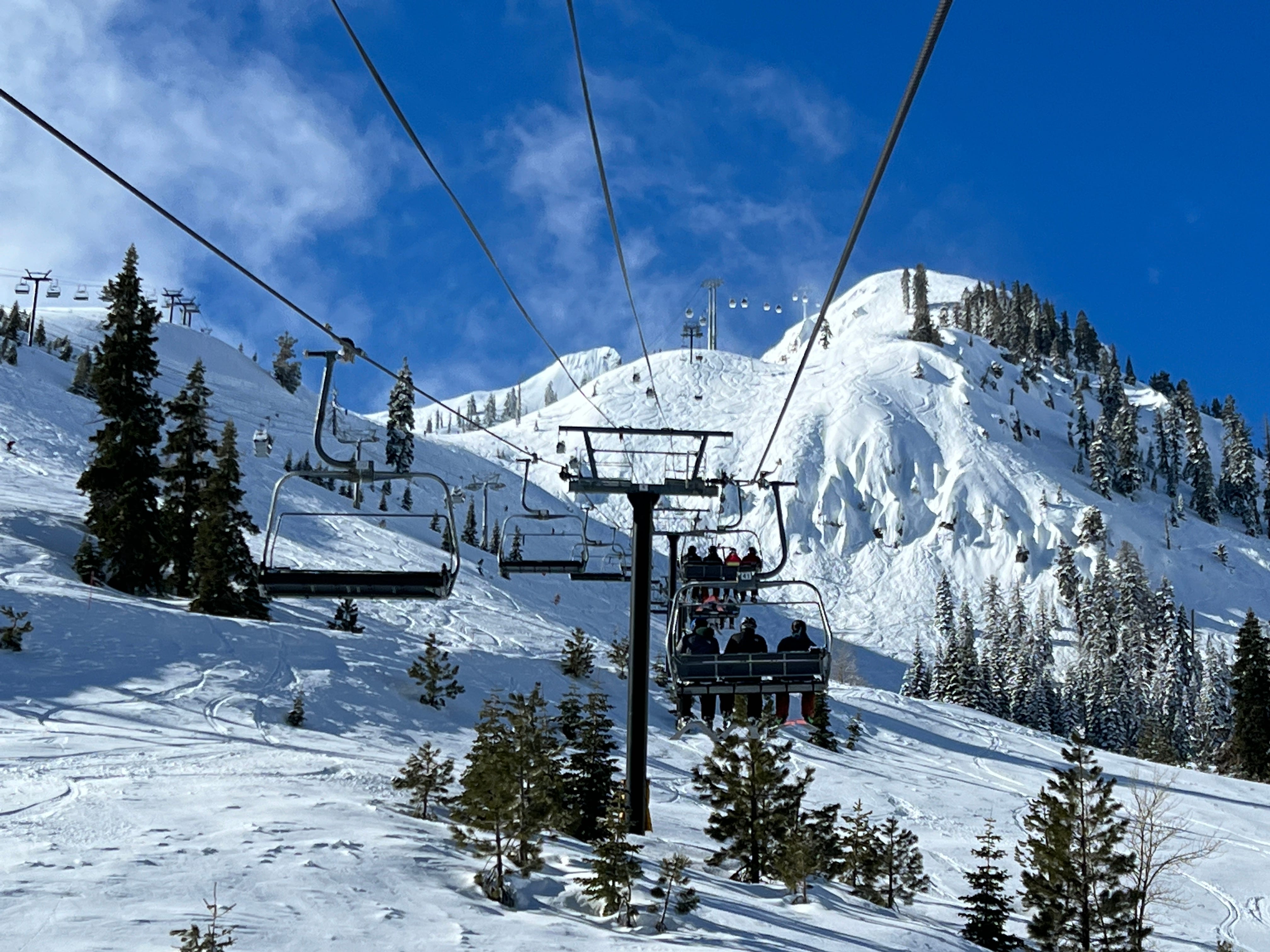
May 5, 2023
Podcast #126: Heavenly & Vail’s Tahoe Region VP & COO Tom Fortune
This podcast hit paid subscribers’ inboxes on May 2. It dropped for free subscribers on May 5. To receive future pods as soon as they’re live, and to support independent ski journalism, please consider an upgrade to a paid subscription. You can also subscribe for free below: Who Tom Fortune, Vice President and Chief Operating Officer of Heavenly and Vail’s Tahoe Region (Heavenly, Northstar , and Kirkwood ) Recorded on April 25 , 2023 About Heavenly and Vail’s Tahoe Region Heavenly Click here for a mountain stats overview Owned by: Vail Resorts Located in: Stateline, Nevada and South Lake Tahoe, California Year founded: 1955 Pass affiliations: Unlimited access on Epic Pass ; Unlimited access with holiday blackouts on Epic Local Pass , Tahoe Local Pass , Tahoe Value Pass Closest neighboring ski areas: Sierra-at-Tahoe (30 minutes), Diamond Peak (45 minutes), Kirkwood (51 minutes), Mt. Rose (1 hour), Northstar (1 hour), Sky Tavern (1 hour, 5 minutes) - travel times vary dramatically given weather conditions and time of day. Base elevation: 6,565 feet at California Lodge; the Heavenly Gondola leaves from Heavenly Village at 6,255 feet – when snowpack allows, you can ski all the way to the village, though this is technically backcountry terrain Summit elevation: 10,040 feet at the top of Sky Express Vertical drop: 3,475 feet from the summit to California Lodge; 3,785 feet from the summit to Heavenly Village Skiable Acres: 4,800 Average annual snowfall: 360 inches (570 inches for 2022-23 ski season as of May 2) Trail count: 97 Lift count: 26 lifts (1 50-passenger tram, 1 eight-passenger gondola, 2 six-packs, 8 high-speed quads, 1 fixed-grip quad, 5 triples, 2 doubles, 2 ropetows, 4 carpets) Northstar Click here for a mountain stats overview Owned by: Vail Resorts Located in: Truckee, California Year founded: 1972 Pass affiliations: Unlimited access on Epic Pass ; Unlimited access with holiday blackouts on Epic Local Pass , Tahoe Local Pass ; unlimited with holiday and Saturday blackouts on Tahoe Value Pass Closest neighboring ski areas: Tahoe Donner (24 minutes), Boreal (25 minutes), Donner Ski Ranch (27 minutes), Palisades Tahoe (27 minutes), Diamond Peak (27 minutes), Soda Springs (29 minutes), Kingvale (32 minutes), Sugar Bowl (33 minutes), Mt. Rose (34 minutes), Homewood (35 minutes), Sky Tavern (39 minutes), Heavenly (1 hour) - travel times vary dramatically given weather conditions and time of day. Base elevation: 6,330 feet Summit elevation: 8,610 feet Vertical drop: 2,280 feet Skiable Acres: 3,170 Average annual snowfall: 350 inches (665 inches for 2022-23 ski season as of May 2) Trail count: 106 Lift count: 19 (1 six-passenger gondola, 1 pulse gondola, 1 chondola with 6-pack chairs & 8-passenger cabins, 1 six-pack, 6 high-speed quads, 1 fixed-grip quad, 2 triples, 1 platter, 5 magic carpets) Kirkwood Click here for a mountain stats overview Owned by: Vail Resorts Located in: Kirkwood, California Year founded: 1972 Pass affiliations: Unlimited access on Epic Pass , Kirkwood Pass ; Unlimited access with holiday blackouts on Epic Local Pass , Tahoe Local Pass ; unlimited with holiday and Saturday blackouts on Tahoe Value Pass Closest neighboring ski areas: Sierra-at-Tahoe (48 minutes), Heavenly (48 minutes) - travel times vary dramatically given weather conditions and time of day. Base elevation: 7,800 feet Summit elevation: 9,800 feet Vertical drop: 2,000 feet Skiable Acres: 2,300 Average annual snowfall: 354 inches (708 inches for 2022-23 ski season as of May 2) Trail count: 94 Lift count: 13 (2 high-speed quads, 1 fixed-grip quad, 6 triples, 1 double, 1 T-bar, 2 carpets) Why I interviewed him For decades, Heavenly was the largest ski area that touched the state of California. By a lot. Four drive-to base areas serving 4,800 acres across two states. Mammoth? Ha! Its name misleads – 3,500 acres, barely bigger than Keystone. To grasp Heavenly’s scale, look again at the new North Bowl lift on the trailmap above. A blip, one red line lost among dozens. Lodged near the base like the beginner lifts we’re all used to ignoring. But that little lift rises almost 1,300 vertical feet over nearly a mile. That’s close to the skiable drop of Sugar Bowl (1,500 feet), itself a major Tahoe ski area. Imagine laying Sugar Bowl’s 1,650 acres over the Heavenly trailmap, then add Sierra-at-Tahoe (2,000 acres) and Mt. Rose (1,200). Now you’re even. Last year, Palisades Tahoe wrecked the party, stringing a gondola between Alpine Meadows and the resort formerly known as Squaw Valley. They were technically one resort before, but I’m not an adherent of the these-two-ski-areas-are-one-ski-area-because-we-say-so school of marketing. But now the two sides really are united, crafting a 6,000-acre super-resort that demotes Heavenly to second-largest in Tahoe. Does it really matter? Heavenly is one of the more impressive hunks of interconnected mountain that you’ll ever ski in America. Glance northwest and the lake booms away forever into the horizon. Peer east and there, within reach as your skis touch a 20-foot snowbase, is a tumbling brown forever, the edge of the great American desert that stretches hundreds of miles through Nevada, Utah, and Colorado. When Vail Resorts raised its periscope above Colorado for the first time two decades ago, Heavenly fell in its sites. The worthy fifth man, an all-star forward to complement the Colorado quad of Vail, Beaver Creek, Keystone, and Breck. That’s not an easy role to fill. It had to be a mountain that was enormous, evolved, transcendent. Someplace that could act as both a draw for variety-seeking Eagle County faithful and an ambassador for the Vail brand as benevolent caretaker. Heavenly, a sort of Vail Mountain West – with its mostly intermediate pitch, multiple faces, and collection of high-speed lifts cranking out of every gully – was perfect, the most logical extra-Colorado manifestation of big-mountain skiing made digestible for the masses. That’s still what Heavenly is, mostly: a ski resort for everyone. You can get in trouble, sure, in Mott or Killebrew or by underestimating the spiral down Gunbarrel. But this is an intermediate mountain, a cruisers’ mountain. Even the traverses – and there are many – are enjoyable. Those views, man. Set the cruise control and wander forever. For a skier who doesn’t care to be the best skier in the world but who wants to experience some of the best skiing in the world, this is the place. What we talked about Records smashing all over the floor around Tahoe; why there won’t be more season extensions; Heavenly’s spring-skiing footprint; managing weather-related delays and shutdowns in a social-media age; it’s been a long long winter in Tahoe; growing up skiing the Pacific Northwest; Stevens Pass in the ‘70s; remember when Stevens Pass and Schweitzer had the same owner?; why leaving the thing you love most can be the best thing sometimes; overlooked Idaho; pausing at Snow King; fitting rowdy Kirkwood into the Vail Resorts puzzle; the enormous complexity of Heavenly; what it means to operate in two states; a special assignment at Stevens Pass; stabilizing a resort in chaos; why Heavenly was an early snowmaking adopter; Hugh and Bill Killebrew; on the ground during the Caldor Fire; snowmaking systems as fire-fighting sprinkler systems; fire drills; Sierra-at-Tahoe’s lost season and how Heavenly and Kirkwood helped; wind holds and why they seem to be becoming more frequent; “it can be calm down in the base area and blowing 100 up top”; potential future alternatives to Sky Express as a second lift-served route back to Nevada from California; a lift-upgrade wishlist for Heavenly; how Mott Canyon lift could evolve; potential tram replacement lifts; the immediate impact of the new North Bowl express quad; how Northstar, Kirkwood, and Heavenly work together as a unit; paid parking incoming; and the Epic Pass. Why I thought that now was a good time for this interview The first half of my life was dominated by one immutable looming fact: the year 2000 would arrive. That’s how we all referenced it, every time: “the year 2000.” As though it were not just another year but the president of all years. The turning of a millennium. For the first time in a thousand years. It sounded so fantastical, so improbable, so futuristic. As though aliens had set an invasion date and we all knew it but we just didn’t know if they would vaporize us or gift us their live-forever beer recipe. Y2K hysteria added a layer of intrigue and mild thrill. Whatever else happened with your life, wherever you ended up, whoever you turned out to be, this was a party you absolutely could not miss. This winter in Tahoe was like that. If you had any means of getting there, you had to go. Utah too. But everything is more dramatic in Tahoe. The snows piled Smurf Village-like on rooftops. The incredible blizzards raking across the Sierras. The days-long mountain closures. It was a rare winter, a cold winter, a relentless winter, a record-smashing winter for nearly every ski area ringing the 72-mile lake. Tahoe may never see a winter like this again in our lifetimes. So how are they dealing with it? They know what to do with snow in Tahoe. But we all know what to do with water until our basement floods. Sometimes a thing you need is a thing you can get too much of. In March I flew to California, circled the lake, skied with the people running the mountains. Exhaustion, tinted with resignation, reigned. Ski season always sprawls at the top of the Sierras, but this winter – with its relentless atmospheric rivers, the snows high and low, the piles growing back each night like smashed anthills in the driveway – amplified as it went, like an action movie with no comedic breaks or diner-meal interludes. How were they doing now, as April wound down and the snows faded and corn grew on the mountainside? And at the end of what’s been a long three years in Tahoe, with Covid shutdowns leading into a Covid surge leading into wildfires leading into the biggest snows anyone alive has ever seen? There’s hardship in all that, but pride, too, in thriving in spite of it. What I got wrong I said that the Kehr’s Riblet double was “one of the oldest lifts in the country.” That’s not accurate. It was built in 1964 – very old for a machine, but not even the oldest lift at the resort. That honor goes to Seventh Heaven, a 1960 Riblet double rising to the summit. And that’s not even the oldest Riblet double in the State of Washington: White Pass still runs Chair 2, built in 1958; and Vista Cruiser has been spinning at Mt. Spokane since 1956. Questions I wish I’d asked Fortune briefly discussed the paid-parking plans landing at Heavenly, Northstar, and Kirkwood next winter. Limited as these are to weekend and holiday mornings, the plans will no doubt spark feral rage in a certain group of skiers who want to pretend like it’s still 1987 and Tahoe has not changed in an unsustainable way. The traffic. The people. The ripple effects of all these things. I would have liked to have gotten into the motivations behind this change a bit more with Fortune, to really underscore how this very modest change is but one way to address a huge and stubborn problem that’s not going anywhere. Why you should ski Heavenly, Northstar, and Kirkwood From a distance, Tahoe can be hard to sort. Sixteen ski areas strung around the lake, nine of them with vertical drops of 1,500 feet or more: How to choose? One easy answer: follow your pass. If you already have an Epic Pass, you have a pre-loaded Tahoe sampler. Steep and funky Kirkwood. Big and meandering Heavenly. Gentle Northstar. The Brobots will try steering you away from Northstar (which they’ve glossed “Flatstar”) or Heavenly (too many traverses). Ignore them. Both are terrific ski areas, with endless glades that are about exactly pitched for the average tree skier. Kirkwood is the gnarliest, no question, but Northstar (which is also a knockout parks mountain, and heavily wind-protected for storm days), and Heavenly (which, despite the traverses, delivers some incredible stretches of sustained vertical), will still give you a better ski day than 95 percent of the ski areas in America on any given winter date. It’s easy to try to do too much in Tahoe. I certainly did. Heavenly especially deserves – and rewards – multiple days of exploration. This is partly due to the size of each mountain, but also because conditions vary so wildly day-to-day. I skied in a windy near-whiteout at Kirkwood on Sunday, hit refrozen crust that exiled me to Northstar groomers on Tuesday, and lucked into a divine four-inch refresh at Heavenly on Wednesday, gifting us long meanders through the woods. Absolutely hit multiple resorts on your visit, but don’t rush it too much – you can always go back. Podcast Notes On Schweitzer and Stevens Pass’ joint owner Fortune and I discuss an outfit called Harbor Resorts, which at one time owned both Stevens Pass and Schweitzer. I’d never heard of this company, so I dug a little. An Aug. 19, 1997 article in The Seattle Times indicates that the company also once owned a majority share in Mission Ridge and something called the “Arrowleaf resort development.” They sold Mission in 2003, and the company split in two in 2005. Harbor then sold Stevens to CNL Lifestyle Properties in 2011 , where it operated under Karl Kapuscinski, the current owner, with Invision Capital, of Mountain High, Dodge Ridge, and China Peak. CNL then sold the resort to the Och-Ziff hedge fund in 2016 , before Vail bought Stevens in 2018 (say what you’d like about Vail Resorts, but at least we have relative certainty that they are invested as a long-term owner, and the days of private-equity ping pong are over). Schweitzer remains under McCaw Investment Group, which emerged out of that 2005 split of Harbor. As for Arrowleaf, that refers to the doomed Early Winters ski area development in Washington. Aspen, before it decided to just be Aspen, tried being Vail, or what Vail ended up being. The company’s adventures abroad included owning Breckenridge from 1970 to 1987 or 1988, developing Blackcomb, and the attempted building of Early Winters, which would have included up to 16 lifts serving nearly 4,000 acres in the Methow Valley. Aspen, outfoxed by a group of citizen-activists who are still shaking their pom-poms about it nearly four decades later, eventually sold the land. Subsequent developers also failed, and today the land that would have held, according to The New York Times , 200 hotel rooms, 550 condos, 440 single-family homes, shops, and restaurants is the site of exactly five single-family homes . If you want to understand why ski resort development is so hard, this 2016 article from the local Methow Valley News explains it pretty succinctly (emphasis mine): “The first realization was that we would be empowered by understanding the rules of the game.” Coon said. Soon after it was formed, MVCC “scraped together a few dollars to hire a consultant,” who showed them that Aspen Corp. would have to obtain many permits for the ski resort, but MVCC would only have to prevail on defeating one . Administrative and legal challenges delayed the project for 25 years, “ultimately paving the way to victory,” with the water rights issue as the final obstacle to resort development, Coon said. The existing Washington ski resorts, meanwhile, remain overburdened and under-built, with few places to stay anywhere near the bump. Three cheers for traffic and car-first transportation infrastructure, I guess. Here’s a rough look at what Early Winters could have been: On Stevens Pass in late 2021 and early 2022 Fortune spent 20 years, starting in the late 1970s, working at Stevens Pass. Last year, he returned on a special assignment. As explained by Gregory Scruggs in The Seattle Times : [Fortune] arrived on Jan. 14 when the ski area was at a low point. After a delayed start to the season, snow hammered the Cascades during the holiday week. Severely understaffed, Stevens Pass struggled to open most of its chairlifts for six weeks, including those serving the popular backside terrain. Vail Resorts, which bought Stevens Pass in 2018, had sold a record number of its season pass product, the Epic Pass, in the run-up to the 2021-22 winter, leaving thousands of Washington residents claiming that they had prepaid for a product they couldn’t use. A Change.org petition titled “ Hold Vail Resorts Accountable ” generated over 45,000 signatures. Over 400 state residents filed complaints against Vail Resorts with the state Attorney General’s office. In early January, Vail Daily reported that Vail’s stock price was underperforming by 25% , with analysts attributing the drop in part to an avalanche of consumer ire about mismanagement at resorts across the country, including Stevens Pass. On Jan. 12, Vail Resorts fired then-general manager Tom Pettigrew and announced that Fortune would temporarily relocate from his role as general manager at Heavenly Ski Resort in South Lake Tahoe, California, to right the ship at Stevens Pass. Vail, which owns 40 ski areas across 15 states and three countries, has a vast pool of ski industry talent from which to draw. In elevating Fortune, whose history with the mountain goes back five decades, the company seems to have acknowledged what longtime skiers and snowboarders at Stevens Pass have been saying for several seasons: local institutional knowledge matters. Fortune is back at Heavenly, of course. Ellen Galbraith is the resort’s current general manager – she is scheduled to join me on The Storm Skiing Podcast in June. On Hugh and Bill Killebrew Fortune and I touched on the legacy of Hugh Killebrew and his son, Bill. This Tahoe Daily Tribune article sums up this legacy, along with the tragic circumstances that put the younger Killebrew in charge of the resort: By October of 1964, attorney Hugh Killebrew owned more than 60 percent of the resort. … Killebrew was a visionary who wanted to expand the resort into Nevada. Chair Four [Sky] allowed it to happen. In the fall of 1967, [Austin] Angell was part of a group that worked through storms and strung cable for two new lifts in Nevada. Then on New Year’s Day, 1968, Boulder and Dipper chairs started running. Angell’s efforts helped turn Heavenly Valley into America’s largest ski area. … On Aug. 27, 1977 … Hugh Killebrew and three other resort employees were killed in a plane crash near Echo Summit. Killebrew’s son, Bill Killebrew, a then-recent business school graduate of the University of California, was one of the first civilians on the scene. He saw the wreckage off Highway 50 and immediately recognized his dad’s plane. … At 23, Bill Killebrew assumed control of the resort. A former youth ski racer with the Heavenly Blue Angels, he learned a lot from his dad. But the resort was experiencing two consecutive drought years and was millions of dollars in debt. Bill Killebrew began focusing on snowmaking capabilities. Tibbetts and others tinkered with different systems and, by the early 1980s, Heavenly Valley had 65 percent snowmaking coverage. With a stroke of good luck and several wet winters, Bill Killebrew had the resort out of debt in 1987, 10 years after bankruptcy was a possibility. It was now time to sell. Killebrew sold to a Japanese outfit called Kamori Kanko Company, who then sold it to American Skiing Company in 1997, who then sold it to likely forever owner Vail in 2002. When he joined me on The Storm Skiing Podcast in 2021, Tim Cohee, current GM of China Peak, called Bill Killebrew “the smartest person I’ve ever known” and “overall probably the smartest guy ever in the American ski industry.” Cohee called him “basically a savant, who happened to, by accident, end up in the ski business through his dad’s tragic death in 1977.” You can listen to that at 26:30 here . On Sierra-at-Tahoe and the Caldor Fire Most of the 16 Tahoe-area ski areas sit along or above the lake’s North Shore. Only three sit south. Vail owns Heavenly and Kirkwood. The third is Sierra-at-Tahoe. You may be tempted to dismiss this as a locals’ bump, but look again at the chart above – this is a serious ski area, with 2,000 acres of skiable terrain on a 2,212-foot vertical drop. It’s basically the same size as Kirkwood. The 2021 Caldor Fire threatened all three resorts. Heavenly and Kirkwood escaped with superficial damage, but Sierra got crushed. A blog post from the ski area’s website summarizes the damage: The 3000-degree fire ripped through our beloved trees crawling through the canopies and the forest floor affecting 1,600 of our 2,000 acres, damaging lift towers, haul ropes, disintegrating terrain park features and four brand new snowcats and practically melted the Upper Shop — a maintenance building which housed many of our crews' tools and personal belongings, some that had been passed down through generations. The resort lost the entire 2021-22 ski season and enormous swaths of trees. Here’s the pre-fire trailmap: And post-fire: Ski areas all over the region helped with whatever they could. One of Vail Resorts’ biggest contributions was filling in for Sierra’s Straight As program, issuing Tahoe Local Epic Passes good at all three ski areas to eligible South Shore students. On wind holds Fortune discussed why wind holds are such an issue at Heavenly, and why they seem to be happening more frequently, with the San Francisco Chronicle earlier this year. On the past I’ll leave you with this 1972 Heavenly trailmap, which labels Mott and Killebrew Canyons as “closed area - dangerous steep canyons”: Or maybe I’ll just leave you with more pictures of Heavenly: The Storm explores the world of lift-served skiing year-round. Join us. The Storm publishes year-round, and guarantees 100 articles per year. This is article 40/100 in 2023, and number 426 since launching on Oct. 13, 2019. Want to send feedback? Reply to this email and I will answer (unless you sound insane, or, more likely, I just get busy). You can also email skiing@substack.com . Get full access to The Storm Skiing Journal and Podcast at www.stormskiing.com/subscribe
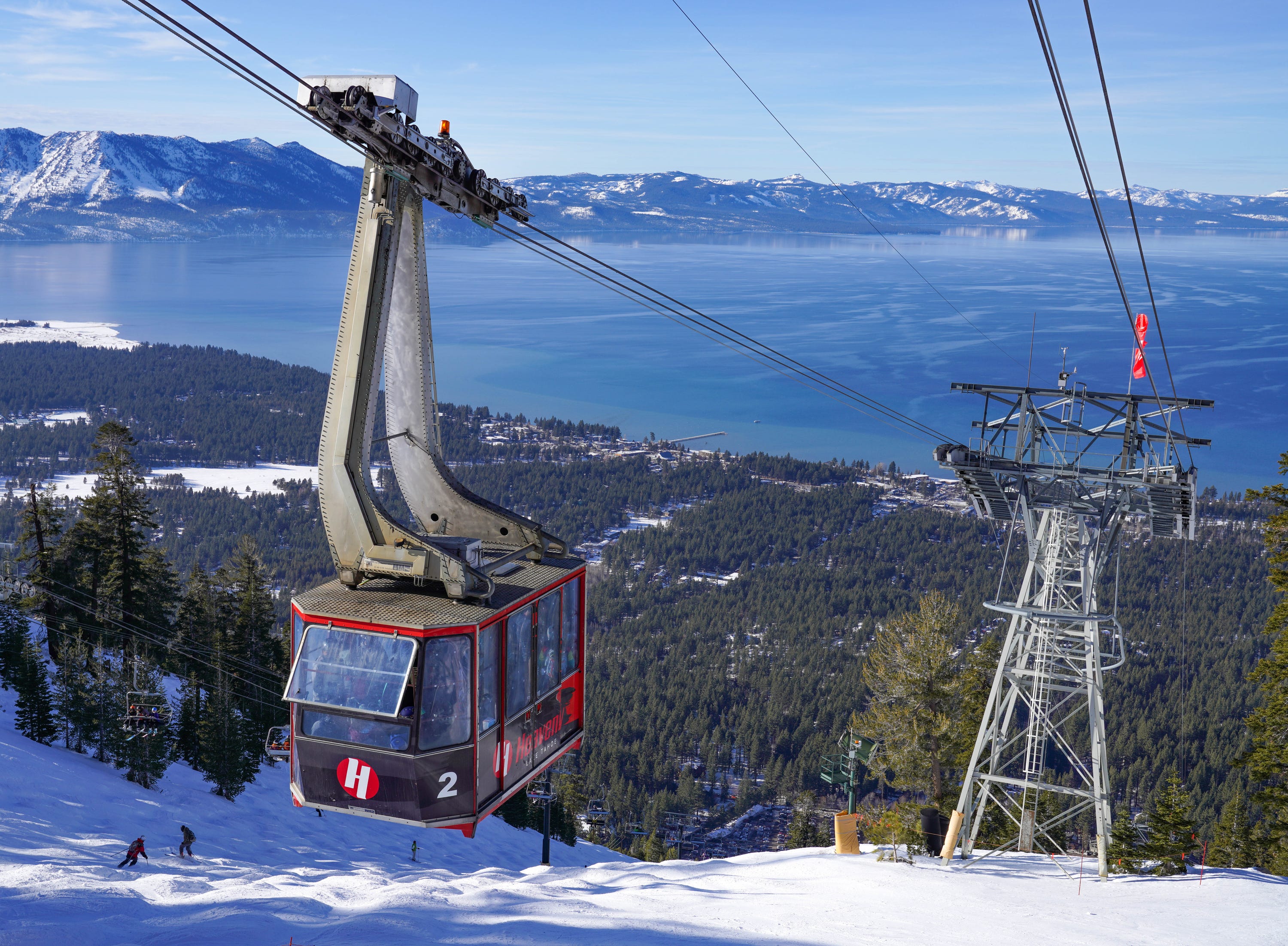
Apr 25, 2023
Podcast #125: Indy Pass President and Founder Doug Fish
This podcast hit paid subscribers’ inboxes on April 22. It dropped for free subscribers on April 25. To receive future pods as soon as they’re live, and to support independent ski journalism, please consider an upgrade to a paid subscription. You can also subscribe for free below: Who Doug Fish, president and founder of the Indy Pass Recorded on The majority of this conversation took place on April 3, 2023. Three days later, I left for a Montana ski trip, with the intent of releasing this either on the trip or when I returned. A week later, however, news broke that Indy would (at least temporarily) cease pass sales for 2023-24 products on April 11, making a small portion of our conversation irrelevant. Fish and I then recorded a new segment focused specifically on the decision to halt pass sales, on April 20, 2023. This section also includes a recap of the top 10 Indy Pass resorts for the 2022-23 ski season. About the Indy Pass Indy Pass is the coolest thing going. If Indy were a person, everyone would gloss him “IP.” In the ‘80s, IP would have rolled in a Firebird with T-tops off and a flame-eagle emblazoned upon the hood. Or in a door-less Jeep with his boys gripping the rollbar, feathered-hair and sunglasses cool. Or rocking a skateboard, Walkman, and jean jacket, Michael J. Fox-style, transforming into a werewolf or traveling through time in a f*****g DeLorean. IP’s not the most popular kid. In fact the cool kids, in their poloshirts and loafers, don’t care much for the interloper at all. But we all see a bit of ourselves in the young rogue, middle finger aimed at the social-status gatekeepers and their lackies, flouting conventions of deference and sobriety, in possession of secret powers that will scare them once they know. IP is our hero because we are him. Or he’s a supercharged superhero cartoon version of us. Or because he is whatever the hell he wants to be. IP rules! Or, if that doesn’t work for you, how about this: IP is a season-long ski product that delivers up to 210 days of alpine skiing for four dollars more than the price of a one-day walk-up peak-day lift ticket at Vail or Beaver Creek. “Yeah but it’s not Vail or Beaver Creek, Man – don’t you get that?” I sure do, Biff. And I love both mountains, but give me the choice of one serving of caviar or a pizza every day all season long, and I gotta roll pizza, my friend (this is the 2022-23 roster; ignore the prices, ignore the blackouts. The robots are still fighting my efforts to update this chart for 2023-24. The only ski area that we know will change as of now is Snow Valley, which ran off with the Ikon Pass): More partners are inbound. Perhaps not as many as the 58 new ski areas (25 alpine, 19 cross-country, and 14 Allied), that signed onto Indy over the 2022 offseason. But I already have a partial list, and it will be at least a dozen. Perhaps many more as Indy looks to turboboost its XC roster. Too bad you already missed the best price: $279 for renewing passholders, $299 for waitlistees, $319 for the disorganized masses. Indy is currently off sale. It may come back in the fall. How will you know? Subscribe to their notifications, and they will send you eight to 12 emails and texts per day about it once the time comes. In the meantime, activate learning mode and enjoy this IP 101. Why I interviewed him Doug Fish is one of skiing’s class acts. He’s built a product that works. For skiers, for ski area operators, and for him and everyone working for him. This is not Liftopia 2.0, an online discount center where money falls into a blackhole . When you buy an Indy Pass, 15 percent of that money goes to Indy, the other 85 percent goes directly to the ski areas. You get a bargain, they get paid. Everyone wins. This whole thing could have been a scam. Or a crock. Or a fiasco. It could have disintegrated in a storm of partner and passholder anger over dysfunctional tech or missing paychecks or unregistered skier accounts. It could have been Fyre Ski – show up and there’s nothing there. That was my fear the first time I cashed in my Indy Pass, at Caberfae, Michigan, on Friday, Nov. 29, 2019. I approached the ticket window and informed the clerk that I had an Indy Pass. She stared at me as though I’d just asked her which way to the kitten fur-hat section. Indy had just launched – I probably redeemed the first lift ticket in the ski area’s history. But Pete Meyer, part-owner and GM, was standing right behind her, and he nodded and I nodded (this was the month after The Storm launched, and we were not yet acquainted), and I attached my metal wicket ticket to my jacket and went skiing. I’ve never had an issue cashing in an Indy Pass ticket since. Neither has anyone else that I’ve talked to. That’s why the passholder base is exploding to the point that Indy has suspended sales. And that consistency – in the form of (mostly) hassle-free redemptions and steady paychecks, is why 104 out of 105 alpine partners are returning to the pass for the 2022-23 ski season. The only exception is Snow Valley, a two-season partner that surely would have returned had it not been devoured by Alterra Mountain Company and notched into the Ikon Pass ammo belt. For someone who has built something so transcendent, Fish remains modest and humble, at least in his public dealings and those with the media. He answers texts and emails. He takes hard questions. He owns his mistakes. He fulfills his promises. He gives everything he has to making this thing that he created work. The Indy Pass could have come from just about anywhere. It could have been a monetized version of the Powder Alliance or sprung from an alt-world Liftopia or formed from a regurgitated M.A.X. Pass or been some sort of quirky Wal-Mart version of a 1980s Christmas catalogue special G.I. Joe boxset – a cool niche product that is kind of hard to get but coveted by those whose existence is defined by their fringe knowledge. That IP came from Portland Doug, with his West Coast chill and self-aware need to preserve peace in Skidom – and, by extension, his own reputation – is a blessing to us all. This career marketing guy with a love of Hood pow and a knack for actualizing good ideas turned out to be exactly the shepherd indie skiing needed. Because of this remarkable thing Fish has created, he’s been on the podcast four times. But I’ve never bothered asking about his story until now. Who is this person that spun the Indy Pass out of his imagination? Where did he come from, and why did he turn out to be the proper hero for the moment, not only creating this ark but steering it through the asteroid belts of Covid and evergrowing Epkon Pass sales? That’s a big part of what I was after here, and Fish, as always, delivered. What we talked about Why Fish sold the Indy Pass, how he’s feeling about it, and what his role is now; “the only reason you start a business is to someday sell it”; the hardest part of walking away from Indy; the highs and lows of creating and managing the Indy Pass; Indy’s mass adoption; Entabeni Systems, Indy’s new owner; Indy’s plan to massively expand its Nordic program; the first year of Indy XC; the most popular Indy XC resorts; how close Indy was to partnering with a tech company other than Entabeni, how Entabeni won the contract, and how that switch set Indy up for long-term business success; the first non-Western ski area to join Indy; what may or may not change in how the Indy Pass works; how often skiers actually use their Indy Passes; the surprising ownership alternative that Fish considered for Indy; the challenge of scaling the Indy Pass from 10 partners to 139 in four years; the impact of Indy’s 40 percent 2021-22 price increase in retrospect; comparing what the Indy Pass is currently to what Fish thought the Indy Pass would be five years ago; whether we could see more density in already-dense Indy regions; are oversold Epic and Ikon passes benefitting Indy?; can Indy Pass last a decade or longer?; what could ruin the pass; Portland and the Mt. Hood ski scene, in the 1960s and now; “if you envy someone for what they do, then you should be doing that thing”; the advantage of starting something huge in your 60s; why Indy will switch to a physical pass for the 2023-24 ski season; how Indy has been able to largely retain its ski area partner roster and how important that is; how Jay Peak changed the pass forever; why Indy Pass signs one-year contracts with its partners, and whether that could change; oh Dear Lord what have I done I used the word “brand equity” without irony sorry; what would have happened had Indy lost Jay; why Indy kept Jay even though it is now part of a small ski area conglomerate; whether Jay owner Pacific Group Resorts could add any of its other five ski areas to Indy; why Indy may not announce any new partners until fall; what Indy Pass blackout tiers will look like for the 2023-24 ski season; how Indy Passes sold during the renewal, waitlist, and general public sales periods; why Indy limited and ultimately cut off pass sales for the 2023-24 ski season; the problem that blackouts can’t solve; trying not to break the machine; how Indy will determine whether passes will go back on sale in the fall; new partners inbound; the top 10 Indy Pass partners by number of redemptions for the 2022-23 ski season; and the newest member of the Indy top 10 club. Why I thought that now was a good time for this interview Fish appears on the podcast as regularly as the snow melts. May 27, 2020 ( Storm Skiing Podcast #16): April 27, 2021 ( Storm Skiing Podcast # 45): May 9, 2022 ( Storm Skiing Podcast #85): So every 40 podcasts or so. And here he is, back again exactly on cue, with podcast number 125. He would have been here no matter what, to discuss the ever-evolving, ever-fascinating Indy Pass. We could probably fill an hour every month of the year. But this year is different: in March, Fish sold Indy Pass to longtime tech partner Entabeni Systems. Wow. It seemed like IP just rolled into the party. And now all this. What gives, man? And why can’t my boy Stiles scoop up an Indy just because he was busy picking out his new speakers at the boombox store for the past three weeks? And why are you mailing me a pass like it really is 1985? And do I still get my two days at Jay Peak? And when are you actually gonna add Tahoe man cause my cousin said it was sick out there? And since you’re mailing a pass can you throw in some stickers Brah? So much to dig into. Why you should consider the Indy Pass Well do you like skiing? Do you like selling your grandmother’s heirloom candlesticks to pay for skiing (terrible example, actually, as candles and all related paraphernalia out to be recycled into a giant bouncy ball and shot into space to create a second moon). If you answered “yes” to the first question and “no” to the second, then the Indy Pass might be for you. One of the worst takes in skiing is that there’s nothing on the Indy Pass “worth” traveling out West for. I would have to walk into a McDonald’s and observe people eating their rancid food to witness a dumber idea. Indy’s northern Rockies kingdom is stacked with launchpads larger than anything in New England: Mission Ridge, 2,250 vertical feet on 2,000 acres of skiable terrain; Mt. Hood Meadows, 2,777 feet/2,150 acres; Lost Trail, 1,800 feet/1,800 acres; Brundage, 1,921 feet/1,920 acres. That’s just the start of the list. If you’re an eastern or Midwestern skier who lives anywhere within the Indy orbit, this one super-cheapo discount product can give you an over-the-top amazing ski season. Buy an Indy Pass. Then hit all your locals. Then hit them all again. Then fly or drive of #VanLife your way west and loop the circuit. You get the western pow and the western vibe and the wide-open western glades without the western destination-town alienation and crowds. For years I was that guy who flew west and blew right past Loveland on my way to Copper or Keystone or Breck or Vail. But I’m not that guy anymore. I still love – will always love – the megaresorts of the American West. But last week, after an outstanding six days at Big Sky, I angled east toward Red Lodge, seated on the Montana side of Beartooth Pass. It was sprawling, gorgeous, glorious and empty. Admittedly, the conditions kind of sucked. But they’d sucked the day before at Big Sky too – a storm had cargoed in three inches after a big thaw. Dust-on-crust? More like dust-on-concrete. But that, according to everyone I spoke with at both ski areas, had been the first thaw all winter. This is Montana high country, oases rising out of the flats. The architecture of the mountains, the dreamily spaced trees, the steady fall lines, the broad ski-everything kingdom, promised something glorious another day. I found it the next day, at Great Divide, a little-known but riotous locals’ bump off I-15 outside of Helena. A 1,500-foot vertical drop on 1,600 acres, split into three or four treed bowls served by open-basket Riblet doubles. Four or five inches from an overnight storm, mostly smooth base below. A half-dozen whooping runs. What felt like limitless lines. No liftlines at all. Even on a Saturday. Just skiing. Skiing skiing skiing. All day long in the Montana backwoods. Great Divide is not an Indy Pass partner, but it could (and should) be. Family-owned, rich in vibe and attitude, complex and glorious in its sprawling terrain, empty of pretense and a knick-knack souvenir veneer. If you want a cheeseburger, it’s $8.50. If you want a T-shirt, you buy it in the rental shop, which is also the ticket desk, which also appears to be the main office. There’s a good chance one of the four owners will be there working the register. I think this is what Fish means when he describes a mountain as “authentic.” Which seems to mean people running a ski area like it’s a family sandwich shop, with everyone doing what they can at all times to make it work. This version of skiing is not for everyone. Some people really want that #ExperienceOfALifetime hashtag on their Instapost. But if you’re a little bit over that, or just want a break from it once in a while, well, jump on that IP email list and plan to pick one up this fall. Podcast Notes On retro Indy Retro Indy is a funny notion, as the website flipped live less than a goldfish’s lifetime ago. But a look at this landing page, captured by the Wayback Machine on March 17, 2019, underscores how fast Indy has grown: On Snowvana Fish talked about his Northwest “stoke festival,” Snowvana, which has become an annual Portland tradition. You can learn about it here . On Peak Performance aging On a 10-hour drive from South Tahoe to San Diego last month, I streamed an episode of The Reinvention Project with Jim Rome that featured author Steven Kotler. He’d recently written a book called Growing Old, Staying Rad , which exposes myths around physical and mental degeneration and aging. One giant takeaway: your skills only decline if you let them. I brought this up in the context of Doug’s career because he created the Indy Pass at age 62, a cultural waypoint at which most Americans are hypnotized to believe their most productive time is past them. And here Fish creates one of the greatest products in skiing in his seventh decade. It’s a remarkable anecdote that proves Kotler’s point and underscores the incredible power of moving forever forward. I have been listening to Jim Rome’s daily sports talk radio show for decades, and my interview style largely mimics his . This one is well worth a listen if you’re at all interested in aging with style: On the Indy Pass top 10 In the podcast, Fish lays out the top-10 most-redeemed Indy Pass ski areas for the 2022-23 ski season. Here they are: 1) Jay Peak 2) Waterville Valley 3) Cannon Mountain 4) Pats Peak 5) Bolton Valley 6) Saddleback 7) Magic Mountain 8) Berkshire East 9) Powder Mountain 10) Lutsen Mountains And here’s what the list looks like year-by-year since Indy’s inaugural season: Most of the sliding around between this season and last can be attributed to blackout dates: Lutsen and Pats Peak increased theirs and thus slid in the rankings. Cannon reduced theirs and so advanced. And then there’s Saddleback: On Saddleback blackouts Fish notes that Saddleback was a first-time entrant into the Indy Pass top 10. There was no mystery as to why: “A lot of resorts in New England added blackouts, Saddleback took theirs away,” for the 2021-22 ski season, Fish tells me on the podcast. Saddleback General Manager Jim Quimby and I discussed exactly this, and how crucial Indy Pass has been to the mountain’s renaissance since re-opening in 2020 after a five-year closure, in our recent podcast conversation (1:28): Honestly though just listen to the whole thing. Quimby delivers the rich history of Saddleback with an unforgettable series of anecdotes, reflections, and emotion. One of the best episodes I have to offer. The Storm explores the world of lift-served skiing all year long. Join us. The Storm publishes year-round, and guarantees 100 articles per year. This is article 38/100 in 2023, and number 424 since launching on Oct. 13, 2019. Want to send feedback? Reply to this email and I will answer (unless you sound insane, or, more likely, I just get busy). You can also email skiing@substack.com . Get full access to The Storm Skiing Journal and Podcast at www.stormskiing.com/subscribe
Apr 23, 2023
Podcast #124: Deer Valley President & COO Todd Bennett
This podcast hit paid subscribers’ inboxes on April 20. It dropped for free subscribers on April 23. To receive future pods as soon as they’re live, and to support independent ski journalism, please consider an upgrade to a paid subscription. You can also subscribe for free below: Who Todd Bennett, President and Chief Operating Officer of Deer Valley Resort , Utah Recorded on April 19, 2023 About Deer Valley Click here for a mountain stats overview Owned by: Alterra Mountain Company Located in: Park City, Utah Year founded: 1981 Pass affiliations: 7 unrestricted days on Ikon Pass, five days with blackouts on Ikon Base Pass Plus Reciprocal partners: Unlimited Deer Valley season passholders receive one day each at Alta, Brighton, and Snowbird Closest neighboring ski areas: Park City Mountain Resort (5 minutes), Utah Olympic Park (18 minutes), Woodward Park City (20 minutes), Solitude (1 hour), Snowbird (1 hour), Brighton (1 hour, 8 minutes), Alta (1 hour, 8 minutes) – travel times vary considerably with weather and traffic; if U.S. Americans could summon a worldview that extends beyond their dashboards, they would understand that this entire megaplex could be connected with a handful of gondolas, reducing traffic and emissions in the Wasatch by about 40 billion percent. Base elevation: 6,570 feet at Jordanelle base Summit elevation: 9,570 feet at top of Empire Vertical drop: 3,000 feet, though this cannot be skied contiguously – the longest high-quality continuous vertical drops are on Bald Mountain, at around 1,750 vertical feet. Skiable Acres: 2,026 Average annual snowfall: 300 inches Trail count: 103 Lift count: 27 (1 six-passenger gondola, 14 high-speed quads, 5 triples, 1 double, 1 platter serving private homes, 5 conveyors) Deer Valley’s trailmap is a little confusing, as it looks as though you can ski from the top of Empire to the bottom of Jordanelle. The resort sits on a series of adjacent hillocks, however, which you can see on this topographic map on ikonpass.com: Why I interviewed him There’s a version of reality in which Deer Valley is nothing special. A 2,000-ish-acre bump neighboring Park City, which sprawls more than three times as large. A 300-inch bucket of snow standing meekly against the 500-inch-plus dumptrucks stacking up each winter in the nearby Cottonwoods. Three thousand feet of vertical is compelling, but you can’t ski it all at once, like you can at Snowbird or Park City. Deer Valley could be the Pico of Utah, a pretty good ski area made average by its address among amazing ski areas. But that’s not how we view the place, because that’s not what Deer Valley is. Deer Valley is an Alterra flagship, so singular that it is the only one of the company’s 16 ski areas excluded from the Ikon Base Pass. The mountain’s $2,890 season pass is the most expensive in America. It has landed in the top three of Ski Magazine’s reader resort rankings for 25 consecutive seasons. Why? Why is this place so exceptional, so expensive and yet so treasured? Go ahead and list the superficial and the obvious: a fleet of groomers expansive enough to invade Newfoundland, 14 high-speed quads, ski valets, staff to escort your skis onto snow like a prized dachshund. It’s still not so obvious why DV is it . The armada of high-speed lifts, once so novel, are standard-issue Wasatch utilities now. Even Alta has them. Every large ski area grooms widely and well. And slopeside ski check is not so rare as to be a differentiator. At least not in 2023. There are lots of fancy ski areas. Sun Valley would gladly throw down in a groom-off. You could coronate the next queen of England in a Snowbasin bathroom stall. And Beaver Creek gives you a warm cookie at the end of the day. Match that, Deer Valley. So there is something more subtle than lifts and grooming going on here. Something that has transcended generations of owners and survived the oft-rough entry into corporate Skidom. The place has an essence. Something as pronounced as Little Cottonwood chest-thumping or parkbrah tumbling over Brighton kickers or party-town Park City. Something fiercely distinct yet hard to define. Have you ever visited the Palace of Versailles? A sprawling and ornate palace rising off 2,500 acres of immaculate grounds a few miles outside of Paris. Built for royals, it is now open to all. To tour the place is to feel both humbled and empowered. Here is this triumph of the human imagination, actualized into a thing too spectacular to comprehend. Yet plain old you can wander and wonder and admire and absorb. And skiing Deer Valley is a little bit like that. Like stumbling into a palace of skiing, unsure what you’re looking at, but amazed at the whole scene. What we talked about Doubling Deer Valley’s average annual snowfall; extending the season and why April 23 will be the last day; what it’s like to live among all that snow every single day; where Deer Valley has to do avalanche mitigation; New York ski roots; Vail Mountain in the ‘90s; the vast options for the SoCal skier; how a 20-year career at Disney led to a job running one of America’s best ski resorts; how Disney Bro resembles Ski Bro; the making of The Man Behind the Maps: Legendary Ski Artist James Niehues ; how the book was born out of luck at Tamarack, Idaho; blowing away expectations on Kickstarter; why Alterra treats Deer Valley differently than its other resorts from an Ikon Pass access standpoint; going deep on Burns Express; why Deer Valley reoriented the liftline uphill and how that’s changed the skier flow on the mountain; the thrill of flying towers; the reconfigured Snowflake lift; why Burns is and likely always will be more of a transit lift; auto-down restraint bars are here; you’re probably raising the safety bar too early; why Burns got the upgrade before any of Deer Valley’s older high-speed quads; Deer Valley’s huge base-area redevelopment plans; the higher-capacity lifts that could replace the Carpenter and Silver Lake high-speed quads; employee housing; why a base area development isn’t necessarily a play for more skier visits; which lifts could be in line for upgrades next; whether Deer Valley would consider upgrading any of its fixed-grip triples; why there isn’t a ski connection between Deer Valley and Park City, even though they meet at Empire; a potential Deer Valley connection with the rising Mayflower resort; the impact of removing Deer Valley from the Ikon Base Pass; the surprising number of daily lift tickets that Deer Valley still sells, even at $250-plus; and why the resort continues to ban snowboarding. Why I thought that now was a good time for this interview Deer Valley spent their offseason planting this beauty on the mountainside: The 190-vertical-foot Doppelmayr high-speed quad was the cornerstone Deer Valley’s re-imagined Snow Park beginner terrain. Last year, the small terrain pod looked like this: The old Burns lift, a Yan double that dated to the resort’s 1981 opening, ran straight up the fall line. It paralleled the shorter Snowflake lift, which loaded halfway up the trail. A series of magic carpets sat below Snowflake. That’s all changed. Old Burns is gone, clearing a beginner-friendly skiway. Deer Valley used parts from Burns to lengthen Snowflake all the way to the base. They then moved the existing carpets looker’s left, along the old Burns line. A series of four progression carpets now climb the incline. New Burns serves an entirely different purpose from Old Burns. Rather than simply hauling beginners up Wide West, as the old lift did, it transports them up to the Deer Hollow trail, which they can then ski down to Mountaineer Express to access the Little Baldy Peak pod. Prior to this change, beginners had no easy way to access Little Baldy – they had to either ride the Carpenter high-speed quad to the summit of Bald Eagle Mountain and take the Big Stick and Little Stick trails to Deer Hollow; ride Silver Lake Express and ski down to the Crown Point triple and then up to blue-square Kimberly and green-circle Navigator; or catch a ride over to the Jordanelle ticket office and ride the gondola up. Mostly, they didn’t do that, and since that terrain holds less appeal to more advanced skiers, it was largely underutilized. Bennett admitted that New Burns is mostly a transit lift to get skiers up to the Little Baldy terrain. Skiers can lap Gnat’s Eye, but it’s a narrow and not very interesting trail, and so most don’t. But as another brick in Palace DV, the lift accomplishes exactly what it’s supposed to. And it’s a gorgeous machine: I suspect, however, that Burns is simply an anchor for Deer Valley’s far larger proposed redevelopment of its Snow Park Base area . Right now, skiers arrive to parking lots, as they do in most of U.S. America, and walk up to a handful of base buildings and a pair of high-speed quads. It’s an bland entrance to a remarkable ski resort: Deer Valley would cover these parking lots with a ski-in-ski-out mixed-use village. Cars would go underground. Retail, restaurants, residences, and rental units would rise above pedestrian streets. Carpenter and Silver Lake would extend into the village, the former replaced by a new high-speed quad or six-pack, the latter by a gondola: Here’s a clearer image of where the lifts could sit in relation to their current load points: We’re a long way out from this transformation. The estimated project completion date is 2029. But this development would transform Deer Valley, infusing it with a sense of place beyond the trail footprint. The resort happens to reside in Park City, one of the liveliest ski towns in North America. For decades, Deer Valley has ceded streetlife to the municipality. But there’s no reason it has to. Like sister resorts Steamboat, Winter Park, Palisades Tahoe, and Crystal, the Wasatch fancypants is evolving into something better connected to the community around it and anchored in the current moment, in which we are at long last deprioritizing the personal vehicle and building people-first places that we can all enjoy. What I got wrong I noted that Park City Mountain Resort was “twice as large” as Deer Valley, but it’s actually quite a bit bigger: 7,300 acres to Deer Valley’s 2,026 – that’s 2.3 times as big. Why you should ski Deer Valley Yes groomers blah blah whatever. Honestly this is not a thing I care about when I travel West. But I do like this: And this: And this: Not so much this, but it’s here if you’re psychotic: No, it’s not Snowbird. But it’s Utah. The snow is light and fine. The trail network sprawls. If you can’t find something fun in 2,000 acres, the problem is not the mountain. Plus, look again at the trailmap – every peak has like four high-speed lifts stringing you to the top. The potential to rack vert here is amazing. Podcast Notes On the long season Bennett and I briefly discussed a Snowbasin tweet calling out skiers for not showing up after the resort extended its season. Here it is: On The Man Behind the Maps If you’re reading this newsletter, there’s a better than 80 percent chance that someone has stuffed a copy of The Man Behind the Maps , a tome archiving the trailmap art of James Niehues, into your Christmas stocking at some point over the last four years. Bennett, as it turns out, was the muscle behind the book, reaching out to Niehues and convincing him to compile the work, then pulling together a global network to print and distribute it. If you’re not familiar with this work of art, check it out: On Mayflower Resort Did you know that a major new public U.S. ski resort is under construction at this moment? And that this resort will cover 4,300 acres on a 3,200-foot vertical drop served by 18 aerial lifts? And that this resort is exactly next door to Deer Valley? And that this is all amazingly getting absolutely no coverage while a couple of dingbats in Park City spin themselves into a hissyfit over Vail’s attempts to upgrade two chairlifts and a considerably larger contingent of dingbats fights the most serious attempt to untangle traffic in Little Cottonwood Canyon in decades by assaulting a gondola proposal as though they were defending the Alamo? It’s true. It’s called Mayflower. Watch this video full of hyperbole that’s clearly made for people who know almost nothing about skiing to see for yourself: That this is actually happening - that we are really about to have a brand-new, major ski resort in an over-skied slice of U.S. America that desperately needs more capacity - is a freaking miracle. Bennett and I don’t dig too deeply into this project, but we do discuss it in this context: when Mayflower goes live, there is a very good chance that Deer Valley could operate it. And if that happens, well, no snowboarding Brah. Because Deer Values or something. I’m not a fan of snowboarding bans, but I am a fan of building more ski resorts, so I’ll take the win. On the lack of a Deer Valley/Park City ski Connection You can ski between Snowbird and Alta, even though one is owned by Powdr Corp and the other is owned by a clandestine group of snow ninjas. You can ski between Brighton and Solitude, even though one is owned by Boyne Resorts and the other is owned by Alterra. But you cannot ski between Deer Valley and Park City, even if you have an Epic Pass and an Ikon Pass, even though they boundary up to one another on Empire Peak: A patrol shack sits atop Empire, halting all who would pass. Locals call this the “Berlin Wall.” I’m not sure what the sense of it is. Deer Valley has done a pretty solid job of restricting ticket availability. I’m pretty sure the number of folks who would add on a DV ticket just for a few runs is nominal. However, there could be enormous environmental benefits to such a connection. When I was skiing Deer Valley, I had to take a long shuttle ride through congested weekend traffic both ways to ski half a day at Park City. Imagine if I could have eliminated two surface transit trips by simply skiing over the pass? Not that this would have eliminated these shuttles, necessarily, as other folks rode them as well, but if a critical mass of people decided to use skis and already-spinning lifts to move across the megaplex rather than surface transit, that could have a material impact on the town’s notorious congestion. And imagine skiing all of this in one go: The Storm explores the world of lift-served skiing year-round. Join us. The Storm publishes year-round, and guarantees 100 articles per year. This is article 37/100 in 2023, and number 423 since launching on Oct. 13, 2019. Want to send feedback? Reply to this email and I will answer (unless you sound insane, or, more likely, I just get busy). You can also email skiing@substack.com . Get full access to The Storm Skiing Journal and Podcast at www.stormskiing.com/subscribe
Apr 10, 2023
Podcast #123: Breckenridge VP & COO Jody Churich
This podcast hit paid subscribers’ inboxes on April 7. It dropped for free subscribers on April 10. To receive future pods as soon as they’re live, and to support independent ski journalism, please consider an upgrade to a paid subscription. You can also subscribe for free below: Who Jody Churich, Vice President and Chief Operating Officer of Breckenridge, Colorado Recorded on March 27, 2023 About Breckenridge Click here for a mountain stats overview Owned by: Vail Resorts Located in: Breckenridge, Colorado Year founded: 1961 Pass affiliations: Unlimited on Epic Pass , Epic Local Pass ; limited access on Summit Value Pass (holiday blackouts), Keystone Plus Pass (unlimited access after April 1), Tahoe Local Pass (5 days shared with Vail, Beaver Creek, Keystone, Crested Butte, Park City) Closest neighboring ski areas: Frisco Adventure Park (15 minutes), Copper Mountain (25 minutes), Keystone (25 minutes), Arapahoe Basin (30 minutes), Loveland (38 minutes), Ski Cooper (1 hour, 5 minutes) – travel times can vary considerably pending traffic and weather Base elevation: 9,600 feet Summit elevation: 12,998 feet Vertical drop: 3,398 feet Skiable Acres: 2,908 Average annual snowfall: 350 inches Trail count: 187 Lift count: 35 (1 gondola, 5 six-packs, 7 high-speed quads, 1 triple, 6 doubles, 3 platters, 1 T-bar, 11 carpets) – Breckenridge plans to replace 5-Chair, a 1970 Riblet double, with a high-speed quad this summer. Why I interviewed her The audacity of it all. Many ski areas reach. Breck soars. Above the town, above the Pacific Ocean-sized parking lots, above the twisty-road condos and mansions, above the frantic base areas and trail-cut high-alpine - there lie the bowls, sweeping one after the next, southeast to northwest, across the range. Chairlifts, improbably, magnificently, will take you there. Or most of the way, at least. Kensho Superchair – a six-pack, rolls up to 12,302 feet, to the doorstep of Peak 6 – it’s a short hike to the tippy top, at 12,573 feet. But Kensho is holding Imperial Superchair’s beer, as that monster climbs to 12,840, just 158 feet shy of the 12,998-foot summit of Peak 8. Why don’t they go all the way to the summit? Why do you think? Listen to the podcast to get the answer, or go there for yourself and see how those wild winds hit you at the top – or close enough to the top – of America. The Brobots have plenty to say about Breck, Texas North, Intermediate Mountain. A-Basin is where the Summit County steeps live, don’t you know? There’s some truth to that, but it’s a narrative fed by bravado and outdated information. Breck’s high-alpine chairs – Imperial in 2005 and Kensho in 2013 – have trenched easy access to vast realms of gut-punching terrain. Beat your chest all you will – the only way out is straight down. Breck is one of the most complete resorts in America, is my point here. And that didn’t happen by accident. Since Vail took ownership of the joint in 1997, the company has deliberately, steadily, almost constantly improved it. Sixteen new lifts, including the inbound 5-Chair upgrade (Breck will swap out a 53-year-old Riblet double for a new high-speed quad this summer); massive expansions onto Peaks 6 and 7; steady snowmaking and parking upgrades. If you want to understand Vail’s long-term intentions for its other 40 ski areas, look to the evolution of this, one of its original four resorts, over decades of always-better incremental upgrades. Of course, plenty of people know that. Maybe too many. Breck is often – always? – America’s busiest resort by pure skier visits. It’s easy to access, easy to like, mostly – I said mostly Peak 10, E, 6 chairs – easy to ski if you stay below treeline. The town is the town, one of the great après hubs of North American skiing, thrumming, vibrant, a scene. Don’t go unless you want some company. So what becomes of a place like Breck in a 21st century filled with existential questions about what lift-served skiing has become and what it is destined to be? How does a high-alpine but extremely accessible mountain adapt to its parent company’s insistence on dropping it onto the budget version of its ultra-affordable Epic Pass? Can the super-modern lifts that these pass sales fuel fix the liftlines that spoil the experience without overloading the trails in a way that spoils the experience? How can a town of 5,000 residents accommodate a daily influx of 17,000-ish skiers without compromising its bucolic essence that drew those visitors to begin with? And to what extent do even our highest ski areas need to fortify themselves against the worst outcomes of a changing climate with ever-more-aggressive snowmaking? Every ski resort-blessed mountain town in the West is grappling with this same set of questions, but Breck, I-70 adjacent and Vail Resorts-bound, is perhaps the most high-profile among them. And where the town and the resort succeed or fail, they inform where our other icons will go. It’s a fascinating story, and we’re still in the book’s early chapters. What we talked about Unseasonable Colorado snow and cold; Breck’s strong 2022-23 ski season; how late the season could go and what could be available to ski; that California ski life; thoughts on Tahoe’s big season; Sierra-at-Tahoe’s fire recovery; Alpine Meadows in the pre-Powdr Corp ‘90s; why Alpine Meadows eventually dropped its snowboarding ban and what happened when it did; the early days of terrain parks; reaction when Powdr suddenly sold Alpine; how tiny Boreal and Soda Springs compete in a Tahoe market bursting with mega-resorts; the rise of Woodward; Vail’s ongoing efforts to promote women; leaving Powdr for Vail; Breck magic; four giant ski resorts, mere miles apart, but all distinct; the largest employee housing bed base in Vail Resorts portfolio; an assist with childcare; how a ski resort prepares for and responds to on-mountain fatalities; Breck’s “better not bigger” masterplan; nudging guests toward underutilized terrain; big plans for Peaks 8 and 9; upgrades on Freedom Superchair, Rip’s Ride, and 5-Chair; how a gondola could change Peak 9; a mid-mountain learning center; prioritizing upgrades for Peak 9’s 50-plus-year-old Riblet lifts; why Horseshoe T-bar is an unlikely candidate for an upgrade; why Kensho and Imperial Superchair don’t go to the very top of Breckenridge; the Peak 8 Super Connect chair detachment in December; how the resort determined that the chairlift was safe to run again; massive snowmaking upgrades and how these sync with Vail Resorts’ environmental goals; why Breck is only available on the top-tier Epic Day Pass, but is unlimited on the Epic Local Pass; and why Breck has remained on the Epic Local Pass. Why I thought that now was a good time for this interview Late last year, Breck updated its masterplan , as all ski areas operating on U.S. Forest Service land are obliged to do every decade (or so, as it actually ends up working out). Themed “bigger, not better,” the masterplan amounted to a modernization blueprint to maximize the resort’s existing footprint with modern lifts and selective trail- and glade-cutting: Breckenridge’s goal is to tame its wild peaks. “The structuring vision for the next 10 years at [Breckenridge] is ‘Better not Bigger,’” the master plan states. Noting that the resort’s “significant congestion … can diminish the guest experience,” Breck says that its “goal is not to increase overall skier and rider visits on or around peak days, but rather to concentrate on improving the guest experience and better managing visitation.” To accomplish this, the resort hopes to both better move skiers out of its base areas with more and better lifts, and to keep many of them on the upper mountains with a combination of better chairs and a subtly re-imagined trail network. Here’s the overview: And a more granular look at what would and would not change in the mountain’s massive lift network: The full article is worth a read, as I went peak-by-peak and broke down the proposed changes to each, including upgrades to the snowmaking footprint : So, what better time to discuss America’s most vibrant ski resort than at the moment when the folks running it just outlined their vision for the far future? Breck will be an important test case of the extent to which a high-profile flagship can climate-proof and crowd-proof itself in an era of climate uncertainty and megapass maximalism. If Breck can thrive without breaking itself and everything around it – including the town at its base, the county it sits in, and the big road that leads up from the flats – then 21st century skiing will follow, adapt, adjust. Questions I wish I’d asked Churich and I briefly discussed a skier death at Breckenridge from a few weeks ago. Per the Aspen Times : An Illinois man clearing snow from his chairlift seat with the safety restraint up fell out and died at Breckenridge Ski Resort a week ago, the local sheriff’s office reported. John Perucco, 60, of Elgin, Illinois, was pronounced dead March 17 at St. Anthony’s Summit Hospital in Frisco after the fall, the Summit County Coroner’s Office said in an email. He was reportedly wearing a helmet when he fell from the lift. He had not yet reached Tower 1 of Zendo Chair when he fell 25 feet and landed on a hard-packed, groomed trail below, according to the Summit County Sheriff’s Office. The department was reportedly notified around 11:20 a.m. of a death at the emergency room. What I would have liked to explore a bit more was the issue of the raised safety bar. This is something I’ve thought a lot about lately. In New England and New York, all of the lifts have safety bars, and most skiers use them most of the time. Their use is required by law in several states, including Vermont, New York, and Massachusetts – patrollers and lift attendants often aggressively pressure skiers who don’t lower them. If you load a lift with strangers and you’re not prepared, you’re liable to be conked in the head by a down-coming bar – Easterners’ etiquette around this is abysmal, as it’s polite to at least call out, “coming down.” In the Midwest and the West, bar use is much spottier. Forget the Midwest, where modern lifts are rare and most of the old ones have not been retrofit with bars. But skiing’s money is in the West, where most major lifts at most major resorts have been upgraded to detachables, which all have bars. I get a lot of passive-aggressive irritation when I lower the bar (with warning, of course), particularly in Utah and Colorado. This has always puzzled me. What’s the resistance? I’m aware of the NSAA research casting doubt on the efficacy of bar use – I’m skeptical, as there is no way to tell how many accidents have been prevented by a lowered bar. Anyway, there is a cultural resistance to chairlift bar usage in the western United States that, as far as I can tell, is unique to the world’s major ski cultures. Vail, for its part, retrofits all of its inherited chairlifts with safety bars. So does Alterra. Vail requires its employees to use them at all times. Alterra allows each mountain to set its own policies (Palisades Tahoe and Solitude, for example, require bar use for employees). I want to dig into this more, to understand both why this resistance exists and why it persists, despite the proliferation of modern chairlifts. It’s a bigger story than can be explored in a single anecdote, and hopefully it’s one I can write about more this offseason. Will this resistance fade, as once-ubiquitous helmet resistance has? Or is this skiing’s version of a cultural wedge issue, set to divide the tourists from the locals in an escalating game of Who Belongs Here? What I got wrong * I said that 10 of Vail Resorts’ 41 ski areas were currently led by women. The correct number, at the time of recording, was nine out of 41. Here’s a complete list (several of Vail’s ski areas share a regional general manager: Boston Mills, Brandywine, and Alpine Valley in Ohio; Jack Frost and Big Boulder in Pennsylvania; and Seven Springs, Hidden Valley, and Laurel in Pennsylvania). With yesterday’s news that Beaver Creek COO Nadia Guerriero would move up to VP/COO of the Rockies Region (replacing Bill Rock, who was promoted to head of Vail’s Mountain Division), that number is now eight, I suppose. But who knows how Vail will stir up its mountain leadership team over the summer. * I also named off all the large ski areas around Lake Tahoe, to give context to Churich’s challenge running tiny Soda Springs and Boreal in that realm of monsters. The only thousand-plus-footer I missed in that riff is Homewood, but here’s a complete list of Tahoe-region ski areas. It really is amazing how these smaller spots exist (and seem to thrive), alongside some of the nation’s largest and most-developed resorts: * Churich and I also discussed what I referred to as “Vail’s new app” for the 2023-24 ski season. Its official name will be the My Epic app , and it should be a considerable upgrade from Epic Mix. The app will be your Epic Pass (no more RFID card unless you still want one), and will feature interactive trailmaps, real-time liftline wait times, operational updates, blackout date info on your pass, weather updates, resort charge, and more. Why you should ski Breckenridge Because you kind of have to. Trying to navigate life as a U.S. American skier without skiing Breck is kind of like trying to go through life without hearing a Taylor Swift song. It’s there whether you want it or not. Even if you’re in the habit of driving past to hit the Eagle County resorts, or you prefer A-Basin or Copper, or you avoid the I-70 corridor altogether, eventually your cousin or your boys from college or your aunt Phyllis is going to plan a spring break trip or a bachelor party or a family Christmas get-together at Breck, and you’re going to go. And you’re going to like it. This is not the busiest ski area in America by accident. It’s a damn good ski mountain, even if it has more people and fewer steeps and less snow than some of its high-profile ski-biz peers. Yes, liftlines at Peaks 8 and 9 can test your patience at key times. And, yes, the intermediate superhighways can accumulate interstate-esque traffic. But it only takes a little creativity to find quiet glades off Peak 10 and 6-Chair and E-Chair, and tucked between the groomers off every other peak. As with any big western resort, you can follow the crowds or you can follow your skis. The kind of day you have once you stand up and push off the top of the lift is entirely up to you. Podcast Notes I’ve hosted several other Colorado-based Vail Resorts leaders on the podcast over the past year. While Bill Rock and Nadia Guerriero have recently moved positions, these conversations are largely still relevant: The Storm explores the world of lift-served skiing all year long. Join us. The Storm publishes year-round, and guarantees 100 articles per year. This is article 32/100 in 2023, and number 418 since launching on Oct. 13, 2019. Want to send feedback? Reply to this email and I will answer (unless you sound insane, or, more likely, I just get busy). You can also email skiing@substack.com . Get full access to The Storm Skiing Journal and Podcast at www.stormskiing.com/subscribe
Apr 6, 2023
Podcast #122: Whitecap Mountains Owner & General Manager David Dziuban
This podcast hit paid subscribers’ inboxes on April 3. It dropped for free subscribers on April 6. To receive future pods as soon as they’re live, and to support independent ski journalism, please consider an upgrade to a paid subscription. You can also subscribe for free below: Who David Dziuban, Owner and General Manager of Whitecap Mountains , Wisconsin Recorded on March 13, 2023 About Whitecap Mountains Click here for a mountain stats overview Owned by: David Dziuban Located in: Upson, Wisconsin Year founded: 1964 Pass affiliations: Indy Pass Allied Partner Reciprocal partners: Whitecap lists the following partners on its season pass page - it is not clear what the benefit is for each mountain: Grand Targhee, Wild Mountain, Mount Bohemia, Sunlight, Camp 10, Lee Canyon, Arizona Snowbowl, Lee Canyon, Mont du Lac. Closest neighboring ski areas: Mt. Zion (28 minutes), Big Powderhorn (34 minutes), Snowriver (40 minutes), Mt. Ashwabay (1 hour, 15 minutes), Porcupine Mountains (1 hour, 21 minutes) Base elevation: 1,295 feet Summit elevation: 1,750 feet Vertical drop: 455 feet Skiable Acres: 400 acres Average annual snowfall: 200 inches Trail count: 42 (4 expert, 12 advanced, 12 intermediate, 14 beginner) Lift count: 6 (4 doubles, 1 triple, 1 carpet) – the North Pole-South Pole double functions as two separate chairs, even though it is one long continuous lift. Skiers are not allowed to ride on the middle section, which passes over a long valley. The carpet was not yet functional for the 2022-23 ski season. Whitecap has an additional triple chair that is currently dormant, but which Dziuban intends to resurrect. Here is Whitecap’s current trailmap: However, I far prefer this older version, which is my favorite trailmap of all time: Why I interviewed him Our ski areas exist where they do for a reason. That rare mix of hills, reliable precipitation, wintertime cold, a near-enough population, a road to get there. Slopes steep enough but not too steep. Water nearby. Someone with enough cash to run chairlifts up the incline and enough brains to put the whole operation together into a viable business. There are fewer geographic bullseyes of this sort than you may suppose. Look carefully at the map of U.S. ski areas – they are mostly clustered around a few-dozen rarified climate zones. Lake-effect bands or mountain spines or high-altitude nests resting at a desert’s edge. Several dozen have been force-born around large cold-weather cities, of course, bulldozed into existence where cold and water abound but hills are lacking. We all know the epicenters upon which Epic and Ikon have anchored their empires: the Wasatch, Tahoe, the I-70 corridor, the Vermont Spine. But smaller, less celebrated-by-the-masses clusters dot the continent. The Interstate 90 corridor from 49 Degrees North and Mt. Spokane through Schweitzer, Silver Mountain, and Lookout Pass. Mt. Hood, one mountain that is home to four ski areas. Northern New Mexico, where half a dozen ski areas surround the fabled Taos. One of the most reliable of these micro-snowzones is Big Snow Country, a hilly wilderness straddling the border of northern Wisconsin and Michigan’s Upper Peninsula. There, seated west-to-east, are four – once five – ski areas: Whitecap Mountains, Mt. Zion, Big Powderhorn, and Snowriver, which is a union of the once-separate Indianhead and Blackjack ski areas (now known as Jackson Creek Summit and Black River Basin). Seated fewer than a dozen miles above them, brooding and enormous, is Lake Superior, one of the most reliable lake-effect snowmachines on the planet: So much of Midwest skiing is funky and improvisational, a tinkerer’s paradise, where the same spirit that animated 20th century factories willed one of the world’s great ski cultures into existence. There are not many hills around Milwaukee or Minneapolis or Detroit, but there are plenty of ski areas. The people of the Midwest do as they please. But the ski areas of Big Snow Country are different. There is so much skiing here because the terrain and the climate seemed sculpted exactly for it. As a result, the skiing is genuinely sublime. The great tension here is the opposite problem that most of the region’s mobbed ski areas face: great skiing, too few skiers. Big Snow Country is far from pretty much everything. Four hours from Minneapolis, five from Milwaukee, six-and-a-half from Chicago. Residents of those cities can reach Park City or Keystone faster than their Midwest neighbors. So what to do? For decades, these four (or five), ski areas have struggled to pin themselves to skiers’ to-do lists. Mt. Zion, the smallest of the bunch, is a protectorate of Gogebic Community College, which hosts one of the nation’s only programs on ski area management. Indianhead and Blackjack cycled through generations of owners and were finally combined and then sold, last year, to Charles Skinner, owner of the sprawling Granite Peak and Lutsen ski areas in Wisconsin and Minnesota. Skinner, who transformed Granite from a faltering backwater into one of the Midwest’s top ski areas, is already slinging a high-speed sixer up the hillside at Snowriver and will surely connect the two ski areas within a few years. That leaves Big Powderhorn and Whitecap with a problem. How to respond? Powderhorn has at least enjoyed stable management and a loyal customer base. Whitecap, however, has struggled. Decades of deferred maintenance pushed skiers away. A 2019 lodge fire erased a crucial piece of infrastructure that has yet to be replaced. The advent, in the region, of the Epic, Ikon, and Indy Passes – not to mention a modernized Granite Peak, two hours closer to pretty much everything, and an unhinged and dirt-cheap Mount Bohemia, not so far to the north – has only clouded Whitecap’s market position. David Dziuban arrived at the ski area in 2016, and slowly took control over the next few years. It was a period of personal tragedy for him. As soon as he took full ownership, the fire hit. It would have been enough to make anyone surrender. But Dziuban has found in Whitecap both salvation and mission. This place, so naturally blessed, has the bones to be one of the Midwest’s great ski areas. But it needs a push, a pull, a shove into our current moment. Dziuban is the guy to provide all three. What we talked about A snowy Wisconsin winter; Whitecap’s unique trail footprint; the great Midwest ski factory; a single sentence in a Wilmot liftline that changed Dziuban’s life; a wild scheme to score a first job as a snowmaker at Plumtree, Illinois; turning down a job at Killington to work at scrappy Magic Mountain; Magic in the ‘80s; making Magic’s Timberside connection; Mt. Tom, Massachusetts; homemade snowmaking; Elk Mountain, the hidden gem of Pennsylvania; a rigged splice gone wrong; Whitecap, lost in the wilderness; first impressions of a run-down and lightly used Whitecap; the long and convoluted process of taking ownership of the resort; balancing personal trauma and loss with the mission of revitalizing the ski area; taming the local homeowners’ entitlement; fire levels the lodge; why Whitecap opened the next day and why it was so vital that it did; plans for a new lodge; Whitecap’s huge development potential; why the ski area hasn’t set up the new conveyor lift it purchased last year; snowmaking; assessing Whitecap’s unique lift fleet; where we could see a new lift at Whitecap; thoughts on the long chair (North Pole/South Pole); getting the CTEC lift running again; “I want to remain affordable to everybody”; why Whitecap launched a $295 (now $325) season pass and how that product has been selling; the surprise response from a one-day season passholder reciprocal deal with Mount Bohemia; thoughts on the Indy Pass and the Allied program; and that Whitecap aura. Why I thought that now was a good time for this interview Not to repeat myself, but allow me to repeat myself. A skier living in the Upper Midwest currently enjoys the following options for full-season skiing: * Purchase a $676 Epic Local Pass, which delivers turns all season at Wilmot or Afton Alps, plus basically unlimited options for runs west to Colorado, Utah, Tahoe, and Whistler. * Purchase an $829 Ikon Pass and forgo Midwest skiing altogether, hopping frequent flights to Denver and Salt Lake City from major hub airport Minneapolis-St. Paul (MSP). * Purchase a $329 Indy Pass for two days each at major ski areas across the region, including some of the best and most-developed in Minnesota and Wisconsin: Granite Peak, Lutsen, Spirit Mountain, and, perhaps most significantly for Whitecap, its neighbors Big Powderhorn and Snowriver (both of which are in Michigan). * Purchase a local season pass at any of dozens of ski areas that sit within 30 minutes of downtown Minneapolis, Madison, or Milwaukee. * Scratch the gnar itch with a $109 ($99 if you can forego Saturdays), season pass to Mount Bohemia , the ungroomed natural-snow mecca hanging off the top of the UP. The pass includes reciprocal days at ski areas throughout the Midwest and the West. So, what does Whitecap do? First, control what you can: fix the beat-up lift fleet, improvise a lodge, bring stability to its operations. Dziuban has checked off that list. Second, modernize: rebuild the lodge, build out snowmaking (the current system consists of fewer than half a dozen guns), re-activate the mothballed triple chair. All of this is in progress. But there’s something else: how does a ski area set itself apart in a region dense with ski areas but not with skiers? What is the story it’s going to tell? Dziuban has a good one, and it’s one every skier in the region ought to hear. What I got wrong I noted that Whitecap had “360-degree exposure,” when it in fact has slopes primarily facing just three directions: west, north, and south. Why you should ski Whitecap Mountains In February, I flew into Minneapolis for a five-day Upper Midwest ski tour, making me perhaps the only person this century to travel from New York to Minnesota on purpose to ski. At least that was my conclusion from multiple chairlift conversations with befuddled locals. I swung through 11 ski areas: Welch Village, Afton Alps, Granite Peak, Nordic Mountain, Snowriver, Big Powderhorn, Mt. Zion, Whitecap, Spirit Mountain, Trollhaugen, and Buck Hill. Each was unique and memorable, in the way that every ski area is. But one resonated with me more than the others: Whitecap. I have visited hundreds of ski areas, all over the world. There is nothing quite like Whitecap. It’s an enchanting place. Sprawling and gorgeous. Narrow paths wound through woods, leading into and around broad meadows, glades everywhere, all of it knitted together in a Zelda-like sprawl primed for exploration. While the vertical drop is small, the place is multilayered and complex. It is one of the few ski areas where I have ever felt legitimately lost. I took 27 runs and still didn’t see half the place. Also: there was no one else there. Granted, it was a Wednesday. But coverage was excellent: 100 percent open. I skied that day with Jacob, Whitecap’s grooming ace, a Telluride refugee who had carpeted a shocking breadth of acreage overnight before meeting me to ski. He kept telling his friends from Colorado that they had to move here, he told me. The pace was slower, and he could afford to live. He’d given up finding anything affordable near Telluride, and had instead commuted in from a desert campervan colony hours away. He’d had enough, come back east, back home, with his campervan and his dog. He didn’t see any reason to return to Colorado. Yes, the skiing there is amazing, but the skiing is good here, too, and the stresses of daily life had evaporated. He now lived in the hotel. His commute to the snowcat was a few dozen steps. This was a life that was pleasant, and sustainable. As Western mountain-town life became untenable, places like Big Snow Country, with reliable snow and lower costs for everything, would become more attractive to those who wanted to make skiing central to their lives, he said. I’m not saying you should move to Whitecap. But you should visit. Everyone should ski the Midwest at least once. Just to understand what it is, this machine that churns out so many of the nation’s most passionate skiers. And when you do go, make sure Whitecap is on your tour. Podcast Notes On Plumtree, Illinois Dziuban’s ski career began at Plumtree, a 210-vertical-foot landfill bump in Illinois. Here’s the 1978 trailmap: On the podcast, I said that I wasn’t sure if the place was still operating. Its website states that the ski area is “closed for renovations,” and I believe that has been its status for at least as long as I’ve tracked season passes nationally (three seasons). I’m trying to confirm that. Even if it does re-open, it looks as though the place is just a residents’ amenity for whatever gated community it sits in. Here’s a bit more on the joint, per skibum.net : Former public area, Plumtree is now a private club for Lake Carroll property owners, guests, etc. Aging equipment, wide open bowls, decent place. Look up “typical skiing in the Midwest” and you’ll find Plumtree Ski Area. Wish there were more Plumtrees open to the general public. On Magic Mountain Dziuban spent several years at Magic Mountain, Vermont. He was there from the mid-80s to the early ‘90s, a period that included the interlink with the lost Timber Ridge ski area on the backside of Glebe Mountain. Here’s what they looked like connected: These days, skiers are still allowed to traverse from Magic over to “Timberside,” which is privately owned, and ski down. They have to find their own way back to Magic, however, as the Timber Ridge lifts are long gone. On the Wine Hut Follow the trails skier’s left of the Midway double chair, and you’ll sweep past the Wine Hut on your way to the loading station. It’s one of the Midwest’s cooler après joints, though I’ll admit that I did not sample the goods on the February Wednesday I stopped in. On the North Pole/South Pole double Whitecap is home to one of the most amazing lifts in America - an up-and-over Hall double that serves as two separate lifts - the North Pole double and the South Pole double. Skiers are not allowed to ride across the middle section, which soars more than 125 feet over the meadow between the two top stations - with no restraint bar. I snagged this video standing beneath the midsection: And here’s a still pic from the valley floor - note the tower hoisted onto the steel lift: Here’s a view looking from the North Pole side across the valley to the South Pole: Going up South Pole: On Whitecap’s dormant triple chair A seemingly abandoned lift terminal sits on Whitecap’s summit, the head of a skeleton that follows a liftline down the mountain. This lift, said Dziuban, is actually not dead yet. He’s already fabricated some parts necessary to restore the 1991 CTEC triple to a functional state, as he explains in the podcast. The Storm publishes year-round, and guarantees 100 articles per year. This is article 31/100 in 2023, and number 417 since launching on Oct. 13, 2019. Want to send feedback? Reply to this email and I will answer (unless you sound insane, or, more likely, I just get busy). You can also email skiing@substack.com . Get full access to The Storm Skiing Journal and Podcast at www.stormskiing.com/subscribe
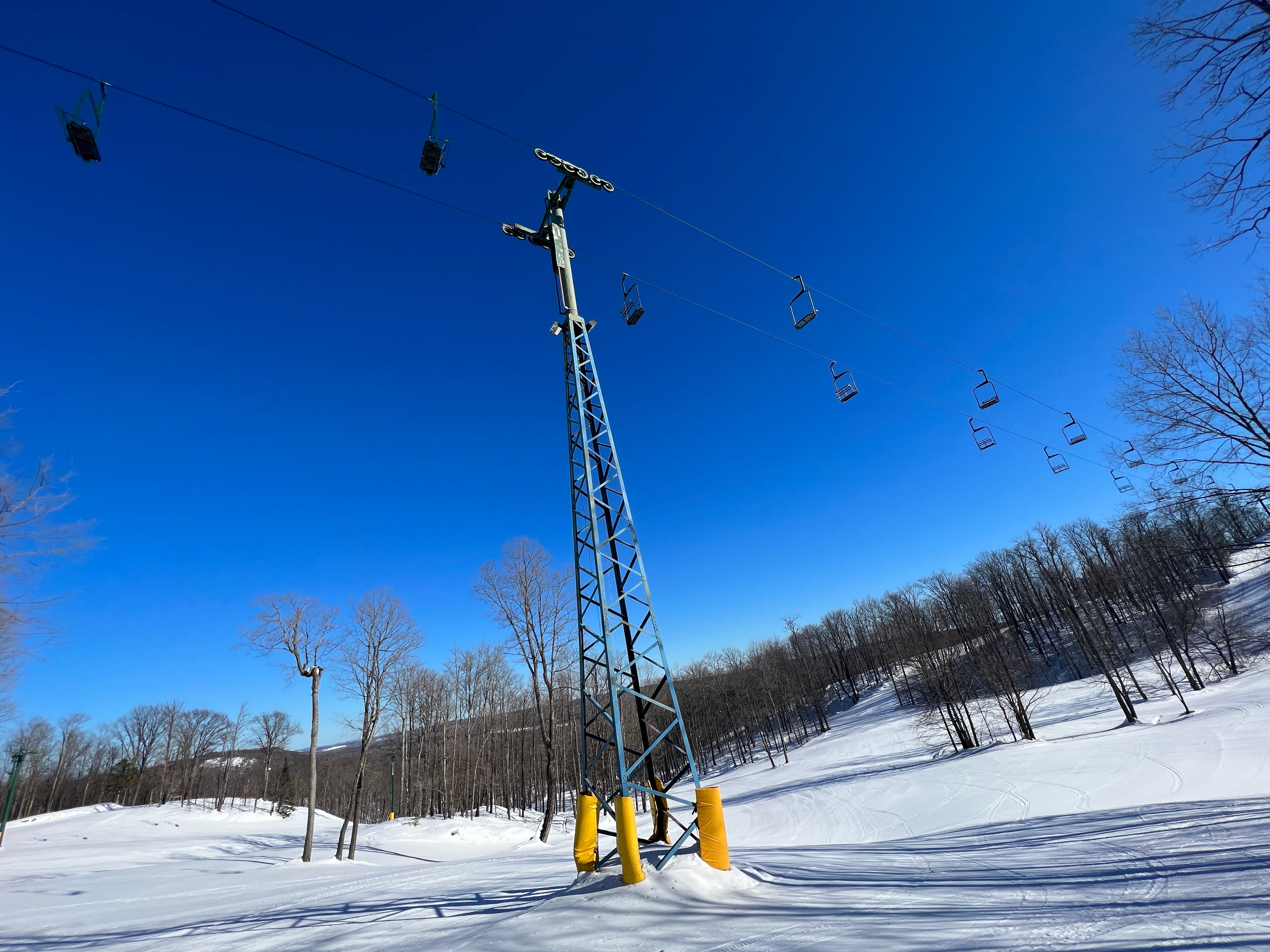
Apr 5, 2023
Podcast #121: Saddleback General Manager Jim Quimby
This podcast hit paid subscribers’ inboxes on April 2. It dropped for free subscribers on April 5. To receive future pods as soon as they’re live, and to support independent ski journalism, please consider an upgrade to a paid subscription. You can also subscribe for free below: Who Jim Quimby, General Manager of Saddleback , Maine Recorded on March 6, 2023 About Saddleback Click here for a mountain stats overview Owned by: Arctaris Investments Located in: Rangeley, Maine Year founded: 1960 Pass affiliations: Indy Pass Reciprocal partners: None Closest neighboring ski areas: Sugarloaf (52 minutes), Titcomb (1 hour), Black Mountain of Maine (1 hour, 9 minutes), Spruce Mountain (1 hour, 22 minutes), Baker Mountain (1 hour, 33 minutes), Mt. Abram (1 hour, 36 minutes), Sunday River (1 hour, 41 minutes) Base elevation: 2,120 feet Summit elevation: 4,120 feet Vertical drop: 2,000 feet Skiable Acres: 600+ Average annual snowfall: 225 inches Trail count: 68 (23 beginner, 20 intermediate, 18 advanced, 7 expert) + 2 terrain parks Lift count: 6 (1 high-speed quad, 3 fixed-grip quads, 1 T-bar, 1 carpet) Why I interviewed him The best article I’ve ever read on Saddleback came from Bill Donahue, writing for Outside , with the unfortunate dateline of March 9, 2020. That was a few days before the planet shut down to prevent the spread of Covid-19, and just after Arctaris had purchased Saddleback and promised to tug the ski area out of its five-year slumber. Donahue included a long section on Quimby: But to really register the new hope that’s blossomed in Rangeley, I needed to drive up the winding hill to Saddleback’s lodge and talk to Jimmy Quimby. Fifty-nine years old and weathered, his chin specked with salt-and-pepper stubble, Quimby is the scion of a Saddleback pillar. His father, Doc, poured concrete to build the towers for one of Saddleback’s first lifts in 1963 and later built trails and made snow for the mountain. His mother, Judy, worked in the ski area’s cafeteria for about 15 years. “We were so poor,” Quimby told me, “that we didn’t have a pot to piss in, but I skied every weekend.” Indeed, as a high schooler, Quimby took part in every form of alpine ski competition available—on a single pair of skis. His 163-centimeter Dynastar Easy Riders were both his ballet boards and his giant-slalom guns. They also transported him to mischief. In his teenage years, Quimby was part of a nefarious Saddleback gang, the Rat Pack. “We terrorized the skiing public,” he said. “We built jumps. We skied fast. We made the T-bar swerve so people fell off.” Just days after his 18th birthday, Quimby left Maine to serve 20 years in the Air Force as an electrical-line repairman and managed, somehow, to spend a good chunk of time near Japan’s storied Hakkoda Ski Resort, where he routinely hucked himself off 35-foot cornices while schussing in blue jeans. When he returned to Maine in 1998, he commenced working at Saddleback and honed such a love for the mountain that, when it closed in 2015, his heart broke. He simply refused to ski after that. “I decided,” he said, “that I just wouldn’t ski anywhere else.” Friends in the industry offered him free tickets at nearby mountains; Quimby demurred and hunkered down at Saddleback, where he remained mountain manager. The Berrys paid him to watch over the nonfunctioning trails and lifts during the long closure. “I’m a prideful person,” he explained. “OK, I did do a little skiing with my grandchildren, but they’re preschoolers. I haven’t made an adult turn since Saddleback closed.” Quimby is now working for Arctaris, which owns Saddleback Inc., but that’s a technicality. His mission is spiritual, and when I met him in his office, I found that I had stepped into a shrine, a jam-packed Saddleback museum. There were lapel pins, patches, bumper stickers, posters, and also a wooden ski signed in 1960 by about 35 of Saddleback’s progenitors. Quimby’s prize possession, though, is a brass belt buckle he bought in the Saddleback rental shop in the 1970s. “I used to wear it every day,” he told me, “but when Saddleback closed, I put it on a dresser and never wore it again.” Quimby stood up from the desk now, to reveal that he was wearing the buckle once more. In capitalized brass letters, it read “SKI.” His eyes were glassy with emotion. “We’re going to do this,” he said quietly, speaking of Saddleback’s resurrection. “We’re going to make this happen.” They did make this happen. One feature of improbable feats is that they are often taken for granted once achieved. The number of people who confessed doubts to me privately about the viability of Saddleback is significant. It won’t work because… it’s too remote, there are not enough skier visits to spread around Maine, there are too many bodies buried on the property, the previous owners emptied the GDP of a small country onto the property and it still failed. All fair arguments, but for every built thing there are reasons it should have failed. The great advantage of humans over other animals is our ability to solve the unsolvable. I push a button on my phone and a person 5,000 miles away sees a note from me in an instant. That would have been dubbed magic for 100,000 years and now it is a fact of daily existence. Humans can do amazing things. And the humans who dug Saddleback out of the grave did an amazing thing, and it’s a story I just can’t get enough of. What we talked about Saddleback’s strong 2022-23 ski season; the Casablanca Glades; the ski area in the sixties; “Saddleback was my babysitter”; Rangeley reminisces; when the U.S. Air Force stations a ski bum in Northern Japan; the Donald Breen era of Saddleback and a long battle with the Forest Service; Saddleback’s relationship with the Forest Service today; the Berry family arrives; an investment spree; why Saddleback closed in 2015; why the Berrys replaced the Kennebago T-bar with a quad and whether they should have upgraded the Rangeley lift first; Quimby’s reaction when Saddleback closed; how Quimby kept Saddleback from falling apart during his five years as caretaker of a lost ski area; why Arctaris finally revitalized the ski area after so many other potential buyers had faded; the most important man at Saddleback; the blessing and the curse of rebuilding a ski area in the pandemic year of 2020; how close Saddleback came to upgrading Rangeley to a fixed-grip, rather than a detachable, quad; how much that lift transformed the ski area; the legacy of Andy Shepard, the former general manager who oversaw the ski area’s comeback; Saddleback the business in year three of its comeback; surveying Saddleback’s ultra-new lift fleet; why Saddleback replaced the 900-year-old Cupsuptic T-bar with a brand-new T-bar; why the ski area chose Partek to build the new Sandy quad and how successful that lift has been; the story behind the old Saddleback trailmaps with theoretical lifts scribbled all over them (yes, this one): … whether Saddleback will expand terrain any time soon; the ski area’s next likely chairlift; the potential for a hotel; the mountain’s masterplan; how important the Indy Pass has been to Saddleback’s comeback; and Indy blackouts and whether they will continue. Why I thought that now was a good time for this interview With lift towers rising up the mountainside and hammers clanging through the valleys and autumn frosts biting the New England hills, Andy Shepard hacked out an hour for me in October 2020 to discuss the previous six months at Saddleback. He itemized the tasks that Saddleback’s crews had achieved in the maw of Covid. An incomprehensible list. Rebuild everything. Clean everything. Hire an army. Demolish and build a chairlift. Stand up a website and an e-commerce platform. All in the midst of the most confusing and contentious time in modern American history. The mission was awesome, and so was the story behind it: Congratulations, you did it. But the second that new detachable quad started spinning in December 2020, Saddleback became just another New England ski area, just another choice for skiers who already have dozens. So now what? What of all those old masterplans showing terrain expansions and lifts extending halfway to Canada? When can we get more places to stay on the hill? Can we get snowmaking on the trail back to the condos finally? Two and a half years later, it was time for a check-in. To see how Shepard and Quimby and the crew had quietly transformed what was long a backwater bump into one of the most modern ski areas in the country. To see how the Indy Pass – which hadn’t existed when Saddleback went into its shell – had turbocharged the mountain’s comeback tour. And to see, indeed, what is next for this New England gem. What I got wrong I wasn’t wrong on this so much as late to publish: Quimby and I discussed season passes at the end of the podcast. At the time, details on the 2023-24 pass suite had not yet been released, and we talked a bit about where pricing would land. These details have long gone public , but I kept the section intact because Quimby details why the ski area was compelled to raise rates from previous seasons (the increase ended up being modest in the context of ongoing inflation, from $699 this season to $799 for next). Also there’s a reference in our conversation to Sandy being a detachable quad, but the 227-vertical-foot quad is in fact a fixed-grip lift. Why you should ski Saddleback Man is this place big. Two broad ridges staggered and stacked and parallel, with dozens of ways down each. Glades all over. Amazing fall line skiing. Lift lines? Not many. Maybe on Rangeley, maybe on big days. But mostly, the place is a glorious wide-open banger, stuffed into a north country snow pocket that most always stands above New England’s notorious rain-snow line as storms roll through. “Yes but is it worth the drive?” asks Overthinks Everything Bro. Yes it’s worth the drive. “But I have to pass 19 other big ski areas to get there.” So? If a genie erupts out of my next can of Bang Energy Drink, my first wish will be to eliminate this brand of thinking from existence. Passing other ski areas to ski Saddleback is not like passing a McDonald’s at exit 100 to eat at a McDonald’s at exit 329, more than 200 miles down the road. You’re passing a number of distinct and unique ski areas to experience another distinct and unique ski area. A Saddleback run will imprint on your experience in a way that your 400th day at Waterville Valley will not. Not all of us, I realize, are so driven by novelty and the unknown. To many of you, turns are turns. Yee-haw. But I’m not suggesting you drive four hours out of your way to lap a town ropetow. This is a serious mountain, with terrain that has few peers in New England. It is special, and it is most definitely worth it. Podcast Notes On the ski area’s battle with the National Park Service Quimby and I had a long discussion on Saddleback’s 15-plus-year war with the National Park Service over former owner Donald Breen’s expansion plans. While Saddleback sits on private land, the Appalachian Trail runs over the mountain’s summit, giving the government a say in any development that may impact the trail. As with most things New England, New England Ski History provides a comprehensive synopsis of what amounts to Saddleback’s lost generation: With Saddleback finally financially stable and controlling 12,000 acres of land, Breen sought to tap into its vast potential in the mid 1980s. In 1984, Breen told Ski magazine, "Saddleback has the potential to be one of the largest resorts in this part of the country" and could become "the Vail of the East." While a massive development was possible, including above treeline skiing as well as a bowl on the back side of the mountain, initial plans were made for a phased $36 million expansion "opening up the entire bowl where the ski area sits with three more lifts and numerous trails." Working to gain approvals, Saddleback offered to donate a 200-foot easement to the National Park Service for the Appalachian Trail while retaining the ability to have skiers and equipment cross the corridor if needed. Countering the ski area's plans, the National Park Service recommended taking 3,000 acres of Saddleback's land. As a result, instead of investing in the mountain, Breen was forced to spend large sums of money to defend his property from eminent domain. Attempting to break the impasse in the early 1990s, Saddleback offered to pare back expansion plans and sell 2,000 acres to the National Park Service. The National Park Service responded with an offer for one sixth of the amount Saddleback wanted from the property. By the mid 1990s, Saddleback was offering to donate 300 acres of land to the National Park Service, while retaining the right to cross the Appalachian Trail with connector ski trails. The National Park Service once again refused, sticking with its eminent domain plan. Later Congressional testimony revealed that the Breen family was forced to negotiate with and give concessions to the Appalachian Trail Conference, only to have the agreements retracted by the National Park Service. In addition, the National Park Service would refuse to turn over documents relating to its involvement with other ski areas, or to put parameters of potential agreements in writing. After having spent a decade and a half of his life trying to work with the Forest Service, Donald Breen took a step back from negotiations in 1997, handing the reins over to his daughter Kitty. The Maine Congressional Delegation was brought in to attempt to get the National Park Service to negotiate. At Senator Olympia Snowe's urging, Saddleback offered to sell the bowl on the back side of the mountain to the Park Service in exchange for being able to develop its Horn Bowl area. The National Park Service rejected the offer, insisting the expansion was not viable, that the ski area could sustain increased skier visits on its existing footprint, and that Saddleback's undeveloped land had little financial value. Negotiations continued into 2000, at which point Saddleback had increased its donation offer to 660 acres, while the National Park Service still wanted to take 893 acres by eminent domain. Five proposals were put on the table while the National Park Service threatened to turn the matter over to the Department of Justice for condemnation. Finally, on November 2, 2000, the National Park Service and Saddleback reached a deal in which the Breens donated 570 acres along the Appalachian Trail corridor, while selling the 600 acre back bowl for $4 million. While the deal meant Breen could move forward with his development of the resort, the long battle with the government had consumed millions of dollars and nearly two decades of his life. Now in his 70s, Breen was ready to retire. In 2001, the massive resort property was put on the market for $12 million. To understand just how deeply this conflict stalled the ski area’s potential evolution, consider this: when Breen and the Forest Service squared off in 1984, Sunday River, less than two hours away and closer to pretty much everyone, looked like this: And Saddleback looked like this: While both had just five lifts – Sunday River sported a triple, two doubles, and two T-bars; Saddleback had two doubles and three T-bars – Saddleback was the larger of the two, with a more interesting and complex trail network. But while Breen fought the Forest Service, his mountain stood still. Meanwhile, Les Otten went ballistic at Sunday River, stringing terrain pods for miles in each direction. By 2001, when Breen sold, Sunday River looked like this: While Saddleback had languished: Whatever market share Saddleback could have earned during New England’s Great Ski Area Modernization – which more or less exactly coincided with his Forest Service fight from 1984 to 2001 – was lost to Sunday River and Sugarloaf, both of which spent that era building rather than fighting. And yes, I also thought, “well what did Sugarloaf look like in 1984 and 2001?” So here you go: On the Berry family Breen sold Saddleback in 2001 to the Berry family, who absolutely mainlined cash into the joint. Over the next decade, the family replaced the upper (Kennebago) and lower (Buggy) T-bars with fixed-grip quads, and substantially blew out the trail and glade network. Check the place in 2014: But two big problems remained. First, that double chair marked “C” on the map above is the Rangeley lift, the alpha chair out of the base. It was a 1963 Mueller that could move all of 900 skiers per hour. And while skiers could have ridden Sandy to the Cupsuptic T-bar (if both were running), to the Pass trail to access the Kennebago quad and the upper mountain, that’s not how most people think. They want to go straight to the top. So they’d wait. Which leads to the second problem. Queueing up for a double chair that was pulled off of Noah’s Ark when you could be skiing onto high-speed (or at least modern) lifts just down the road at Sunday River or Sugarloaf is frustrating. Lines to board the lift could reportedly stretch to an hour on weekends. Facing such gridlock and frustration, most casual skiers who stumbled onto the place probably thought some version of, “This is cute, but next weekend, I’m going to Sunday River.” And they did. If the Berrys could have upgraded Rangeley, the whole project may have worked. But financing fell through, as Quimby details in the podcast, and the ski area closed shortly after. But to underscore just how crucial the Rangeley lift is to Saddleback’s viability as a modern resort, Arctaris, the current owners, reportedly paid more to replace the chairlift ( $7 million ), than they did for the ski area itself ( $6.5 million ). On potential buyers between the Berrys and Arctaris Quimby notes that a parade of suitors tromped through Saddleback between 2015, when the ski area closed, and 2020, when it finally re-opened. The most significant of these was Australia-based Majella Group, whose courtship New England Ski History summarizes: On June 28, 2017, the Berry family announced they had reached an agreement to sell Saddleback to the Australia-based Majella Group. Grandiose plans were announced, as Majella declared it would be "turning Saddleback into the premier ski resort in North America." Initial plans called for reopening for the 2017-18 season with a new fixed-grip quad replacing the Rangeley Double and a new Cupsuptic T-Bar. However, despite announcements that "physical work" had started in September and that the company was "committed to opening in some capacity for the 2017-18 ski season," the area remained idle that winter and the sale was not completed. Nearly one year after the original sale announcement, the Majella Group CEO Sebastian Monsour was arrested in Australia for alleged investor fraud, revealing a financial house of cards. The Majella branding was removed from the Saddleback web site that fall and the ski area sat idle during the snowy winter of 2018-19. So things could have been much worse. Had Majella completed the purchase and then fallen apart, Saddleback would likely still be idle, caught in a Jay Peak-esque vortex of court-led asset salvation, but without the benefit of operating revenue. On Mount Washington Quimby notes that the weather at Saddleback can be “comparative to Mount Washington and that’s no joke.” For those of you unfamiliar with just how ferocious Mount Washington weather can be, here’s a synopsis from the Mt. Washington State Park website (emphasis mine): …in winter, sub-zero temperatures, hurricane-force winds, blowing snow and incredible ice claim the peak, creating an arctic outpost in a temperate climate zone. Known as the Home of the World’s Worst Weather, Mount Washington’s winter conditions rival those of Mount Everest and the Polar regions . The mountain’s summit holds the world record for the “highest surface wind speed ever observed by man,” at 231 miles per hour. As I write this, the summit temperature is 4 degrees Fahrenheit, with 62-mile-per-hour winds driving the windchill to 28 degrees below zero. It’s April 2. There’s surely some hyperbole in Quimby’s statement, but the spirit of the declaration is clear: if you go to Saddleback, go prepared. The Storm explores the world of lift-served skiing year-round. Join us. The Storm publishes year-round, and guarantees 100 articles per year. This is article 30/100 in 2023, and number 416 since launching on Oct. 13, 2019. Want to send feedback? Reply to this email and I will answer (unless you sound insane, or, more likely, I just get busy). You can also email skiing@substack.com . Get full access to The Storm Skiing Journal and Podcast at www.stormskiing.com/subscribe
Apr 2, 2023
Podcast #120: Whitefish President Nick Polumbus
This podcast hit paid subscribers’ inboxes on March 29. It dropped for free subscribers on April 1. To receive future pods as soon as they’re live, and to support independent ski journalism, please consider an upgrade to a paid subscription. Who Nick Polumbus, President of Whitefish Mountain Resort , Montana Recorded on January 13, 2023 About Whitefish Click here for a mountain stats overview Owned by: Winter Sports, Inc. Pass affiliations: None Reciprocal pass partners: * 3 days each at Great Divide, Loveland, Mt. Hood Meadows * 5 days at Red Lodge Located in: Whitefish, Montana Closest neighboring ski areas: Blacktail (1 hour, 15 minutes), Fernie (2 hours), Turner (2 hours, 30 minutes), Kimberley (2 hours, 45 minutes), Montana Snowbowl (3 hours), Lookout Pass (3 hours) – travel times will vary considerably pending weather, border traffic, and time of year Base elevation: 4,464 feet Summit elevation: 6,817 feet Vertical drop: 2,353 feet Skiable Acres: roughly 3,000 acres Average annual snowfall: nearly 300 inches Trail count: 128 (8 expert, 49 advanced, 40 intermediate, 25 beginner, 6 terrain parks) Lift count: 15 (1 six-pack, 3 high-speed quads, 2 fixed-grip quads, 6 triples, 2 T-bars, 1 carpet) Why I interviewed him You can be forgiven for thinking that Epkon chewed them all up. That the only ski areas worth skiing are those stacked on the industry’s twin magic carpets. These shuttles to something grand, to what you think of when you think about the mountains. Ikon got Jackson and Palisades and the Cottonwoods and Taos. Epic got Vail and Telluride and Heavenly and Park City. What more could be left? What more could you need? You probably need this. Whitefish. Or Big Mountain, as you will. Three thousand acres of Montana steep and white. Plenty of snow. Plenty of lifts. A new sixer to boom you up the hillside. The rootin’-tootin’ town below. A C-note gets you a lift ticket and change to buy a brew. No bitterness in the exchange. It’s hard to say exactly if Whitefish is an anachronism or an anomaly or a portent or a manifestation of wanton Montana swagger. Among big, developed U.S. mountains, it certainly stands alone. This model is extinct, I thought. Coercion-by-punishment being the preferred sales tactic of the big-mountain conglomerates. “Four lift tickets for today, Mr. Suburban Dad who decided to shepherd the children to Colorado on a last-minute spring break trip? That will be $1,200. Oh does that seem like a lot to you? Well that will teach you not to purchase access to skiing 13 months in advance.” So far, Whitefish has resisted skiing’s worst idea. Good for them. Better for them: this appears to be a winning business strategy. Skier visits have climbed annually for more than a decade. Look at a map and you’ll see that’s more impressive than it sounds. Whitefish is parked at the top of America, near nothing, on the way to nothing. You have to go there on purpose. And with Epic and Ikon passes tumbling out of every other skier’s jacket pockets, you need a special story to bait that journey. So what’s going on here? Why hasn’t this mountain done what every other mountain has done and joined a pass? Like the comely maiden at the ball, Whitefish could have its pick: Epic, Ikon, Mountain Collective, Indy. An instant headliner and pass-mover. But the single life can be appealing. Do as you please, chill with who you want, set your own agenda. That’s Whitefish’s game. And I’m watching. What we talked about Why Whitefish typically calls it a season with a 100-inch summit base depth; Front Range Colorado and I-70 in the 1970s; how Colorado and Utah snow and traffic impacts skier traffic at Whitefish; how a Colorado kid enters the ski industry in Vermont; a business turnaround at Whitefish; “get the old fish out of the fridge”; how Whitefish has stayed affordable as it’s modernized; why the ski area changed its name from “Big Mountain” and how that landed locally; who owns Whitefish and how committed they are to independence; the new Snow Ghost Express sixer; ripple effects on other chairlifts after Snow Ghost popped live; record skier visits; snow ghosts; the best marketing line of Polumbus’ career; a big-time potential future expansion; the mountain’s recent chairlift shuffles; why chairs 5 and 8 don’t go to the summit; the art of terrain-pod building; why Bad Rock isn’t running this winter; thoughts on the future of Tenderfoot and the Heritage T-bar; Why Whitefish lift tickets cost a fraction of what similarly sized mountains charge; an amazing season pass stat; the mountain’s steady rise of skier visits; and much love for the Indy Pass even if it “isn’t a good fit for us.” Why I thought that now was a good time for this interview Well I actually thought that January was a great time for this interview. Which is why I recorded it then. And here it is in your inbox, a mere 11 weeks later. Which is a bad look for me and a bad look for the brand and not very considerate to my guest. I’ll offer an explanation, but not an excuse: the sound quality on this recording was, um, not good. Most podcasts take two to four hours to edit. This one required 10 times that. So why didn’t I just blast it out back in January? Since so much of what I write is reaction to breaking news, every hour I spend on a pod is an hour I’m not delivering more urgent content. And most Storm Skiing Podcasts are fairly evergreen. Skiers binge them on long roadtrips – I know this because they tell me so and because the numbers keep going up on eps that I dropped back in 2019. But none of that matters to you or to the team at Whitefish, and it shouldn’t. I know that a lot of you have been waiting for this one since I started hyping it last year, and this long delay was disappointing. I get it. One core promise of The Storm , however, is that I will continually improve the product and the process. So I’ll own this one and refine my workflow to prevent future delays. Sorry. But, to address the actual purpose of this section: why did I think that now was a good time for this interview? It’s everything I said above. Alterra has copied Vail’s ridiculous day-ticket price structure, and Boyne and Powdr aren’t far behind. Even little Mountain Capital Partners is allowing the robots to price-surge Arizona Snowbowl tickets past the $300 mark on peak days. Whitefish doesn’t exactly stand alone in resisting these price schemes – plenty of other ski areas will still sell you a walk-up lift ticket that costs less than a heart transplant. But none are as large, as high-profile, and as modern as Whitefish – at least not in our beloved U.S. America. Like some brash hipster rocking a Walkman on his fixed-gear bicycle, Whitefish has made the once-pedestrian into the novel. Innovation by staying in place. The Epic Pass gets a lot of well-deserved credit for stabilizing skiing by front-loading pass sales to springtime, insulating revenue from weather-dependency. But Vail and Alterra have cast the $250-plus lift ticket as an essential piece of their passes’ success. As though no one would buy the pass if they knew they could still go ski Beaver Creek for $100 anytime they liked. There is a brutal logic to this. You’re only going to buy a $275 lift ticket one time. Then you’ll go looking for hacks. But the process is demeaning and embarrassing, like you’re the last guy to the gas pump in the apocalypse. I wrote a story on Whitefish’s business model back in 2021, profiling both that mountain and Jay Peak. Both are run, perhaps coincidentally, by headmen who are fist-bump bros that came up together at late-ASC Killington in the ‘90s: Polumbus and Jay Peak’s Steve Wright. I don’t know how much they brought their brains together to arrive at similar ticket menus, but I know from interacting with both that they share the same kind of heart. A down-to-earth humility and empathy that considers humans in the business equation, rather than just making them the number at the transactional finish line. Why you should ski Whitefish Did you see the part above about 3,000 acres of terrain and 300 inches of average annual snowfall? Yeah, go enjoy that. But let me harp on the lift ticket thing just a little bit more. If your boys are anything like mine, they are more likely to translate War and Peace into Braille than they are to heed your advice to purchase lift tickets 10 months before your next ski trip. I say this not because my friends are brilliant, but because they are lazy a******s who need their wives to label their underwear drawers lest they be forced to go commando for months on end. So if you’re planning, say, “Gary’s 50th Birthday Ski Adventure,” you have choices: Heavenly (South Tahoe!), Jackson (Jackson!), Telluride (Telluride!), etc. My buddies, mostly Three-Day Dans, are going to ignore my clear and repeated reminders to purchase Epic Day or Mountain Collective Passes, and are instead going to commandeer their monthly car payment to cover the cost of two days’ skiing. And then be all shocked and annoyed about it. Whitefish, where even last-minute skiing runs less than $100 per day, is the solution to such gatherings. That’s an edge case, I realize. And surely there are attributes of skiing Whitefish beyond the low cost at the turnstile: the terrain, the views, the snowghosts, the unpretentious vibe, the snowfall, the enormous breadth of it all. But the price thing matters enormously. If you have an Ikon Pass and you’re passing through Park City, you’re probably not stopping to scope the place out. Throwing down $269 for a day of skiing seems a little stupid if you have unlimited skiing on a $1,000-plus pass that you already own. But if you’re rolling from Sun Peaks down to Big Sky and you want to sidebar to Whitefish, well, that lift ticket’s not going to kill you in the same way. That sort of pop-around spontaneity defined a big piece of the road-trip ski scene for decades, and it’s fading. Too bad. Podcast Notes On American Skiing Company and S-K-I Polumbus refers to the S-K-I and American Skiing Company (ASC) Merger, which roughly coincided with the beginning of his Killington tenure in 1996. Check this crazy portfolio, as documented by New England Ski History : At the time of the deal, both companies only had New England ski areas, with LBO Resort Enterprises' portfolio composed of Attitash Bear Peak, NH, Cranmore, NH, Sugarbush, VT, and Sunday River, ME, while S-K-I Ltd. owned Haystack, VT, Killington, VT, Mt. Snow, VT, Sugarloaf, ME, and Waterville Valley, NH. Can you imagine if that crew had held into the megapass era? Instead, they are split between seven different owners: The coalition didn’t hold for long. The Justice department made ASC sell Cranmore and Waterville Valley immediately. And even though the company was like “F you Brah” and purchased Pico five minutes later, and went on to purchase The Canyons (then Wolf Mountain, formerly Park West, now part of Park City), Steamboat, and Heavenly, the whole enterprise disintegrated in slow motion over the next dozen years. New England Ski History documents the company’s arc comprehensively: On lift shuffles Whitefish moves lifts around its mountain like some of us re-organize our living room couches. Check out the 2005 front-side trailmap on the left. By 2007, the Glacier Chaser Express had been shortened and slid looker’s left to replace the old Swift Creek double, and the Easy Rider triple had moved down-mountain and become Elk Meadows. The new Easy Rider, a quad seated across the mountain, was also a relocated machine, from Moab Scenic Skyway, according to Lift Blog . In 2017, Whitefish moved Glacier View, a 1981 CTEC triple, to a new location and renamed it East Rim: Then last year, Whitefish moved the Hellroaring triple looker’s left across the mountain. Note the changes in the trail network below Lacey Lane, which ran under the old line: Amazingly, that was the second time Whitefish had relocated that same chair. It began life in 1985 as the Big Creek chairlift, which served the North Side in this circa 1995 trailmap: The Storm publishes year-round, and guarantees 100 articles per year. This is article 27/100 in 2023, and number 413 since launching on Oct. 13, 2019. Want to send feedback? Reply to this email and I will answer (unless you sound insane, or, more likely, I just get busy). You can also email skiing@substack.com . The Storm explores the world of lift-served skiing all year long. Join us. Get full access to The Storm Skiing Journal and Podcast at www.stormskiing.com/subscribe
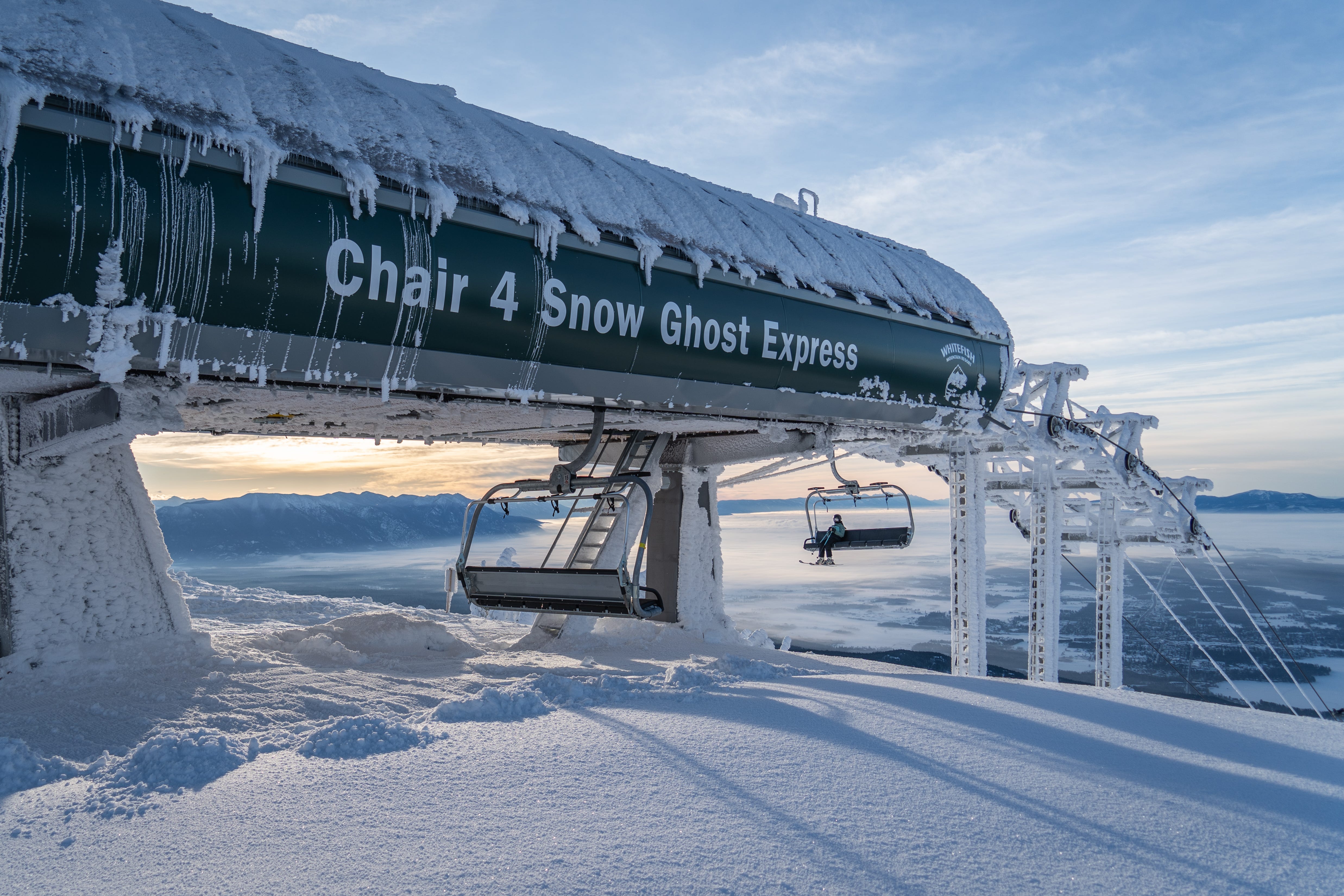
Mar 8, 2023
Podcast #119: Pacific Group Resorts VP and CMO Christian Knapp
To support independent ski journalism, please consider an upgrade to a paid subscription. The discounted annual rate is back through March 13, 2023. Who Christian Knapp, Vice President and Chief Marketing Officer of Pacific Group Resorts Recorded on February 27, 2023 About Pacific Group Resorts Pacific Group Resorts (PGRI) owns and/or operates six North American ski areas: While they don’t have a single unified pass like Vail Resorts or Mountain Capital Partners, PGRI’s ski areas do offer reciprocity for their passholders, largely through their Mission: Affordable product. Here are the 2022-23 exchanges – the company has not yet released 2023-24 passes: Why I interviewed him There are more than a dozen companies that own three or more ski areas in North America. The National Ski Areas Association itemizes most of them* here . Everyone knows Vail and Aspen, whether they ski or not. The next tier is a little more insider, but not much: Alterra, Boyne, Powdr. These are the ski companies with national footprints and Ikon Pass headliner resorts. If skiers haven’t heard of these companies, they’re familiar with Mammoth and Big Sky and Snowbird. Everything else on the list is regionally dense: Invision Capital’s three California ski areas (Mountain High, Dodge Ridge, China Peak); Wisconsin Resorts six Midwestern bumps (Alpine Valley, Pine Knob, Mt. Holly, and Bittersweet in Michigan; Alpine Valley in Wisconsin; and Searchmont in Ontario); the State of New York’s Belleayre, Gore, and Whiteface. Some – like Midwest Family Ski Resorts’ trio of gigantors – align with Indy Pass, while others stand alone, with a pass just for their mountains, like Mountain Capital Partners’ Power Pass . PGRI doesn’t fit any of these templates. The company has a national footprint, with properties stretching from coastal BC to New Hampshire, but no national pass presence (at least before the company inherited Jay Peak’s Indy Pass membership). Its properties’ season passes sort of work together but sort of don’t. It’s all a little strange: a small ski area operator, based in Park City, whose nearest ski area is more than a 400-mile drive away, on the edge of Colorado’s Grand Mesa. PGRI is built like a regional operator, but its ski areas are scattered across the continent, including in improbable-seeming locales such as Maryland and Virginia. Despite the constant facile reminders that American Skiing Company and SKI failed, small conglomerates such as PGRI are likely the future of skiing. Owning multiple resorts in multiple regions is the best kind of weather insurance. Scale builds appeal both for national pass coalitions and for banks, who often control the cash register. A larger company can build a talent pipeline to shift people around and advance their careers, which often improves retention, creating, in turn, a better ski experience. Or so the theories go. Independence will always have advantages, and consolidation its pitfalls, but the grouping together of ski resorts is not going away. So let’s talk to one of the companies actively growing on its own terms, in its own way, and setting a new template for what corporate skiing balanced with local control can look like. *Missing from the NSAA’s list is the Schmitz Brothers trio of Wisconsin ski areas: Little Switzerland, Nordic Mountain, and The Rock Snow Park; the list also includes Sun Valley and Snowbasin, which are jointly owned by the Holding Family, but excludes the other two-resort groups around the country: Berkshire East/Catamount, Labrador/Song, 49 Degrees North/Silver Mountain, Homewood/Red Lodge, Perfect North/Timberline, and Mission Ridge/Blacktail - there may be others). What we talked about The bomber western winter; closing Wintergreen early; the existential importance of Eastern snowmaking; why Mid-Atlantic ski resorts are such great businesses; growing up in the ski industry; Mt. Bachelor in the ‘90s; Breck in the early Vail days; why founding the Mountain Collective was harder than you probably think; the surprising mountain that helped start but never joined the pass; how essential the existence of Mountain Collective was to Ikon Pass; why Ikon didn’t kill Mountain Collective; the origins and structure of Pacific Group Resorts (PGRI); reviving the historically troubled Ragged Mountain; the two things that PGRI did differently from previous owners to finally help Ragged succeed; the Mission: Affordable pass suite; how Jay Peak turbocharged reciprocity between the company’s resorts; how reciprocity for Jay Peak may shape up for 2023-24 passes; why we’re unlikely to see a Mission: Affordable pass at Jay Peak; why Mount Washington Alpine hasn’t had a Mission: Affordable pass; the future of Jay Peak – and, potentially the rest of PGRI’s portfolio – on the Indy Pass; the fate of Ragged’s Pinnacle Peak expansion; how and why PGRI started running and eventually purchased Wisp and Wintergreen; wild and isolated Mount Washington Alpine; could that Vancouver Island resort ever be a destination?; thoughts on replacing the West End double at Powderhorn; why PGRI has not prioritized lift replacements at the rate of some of its competitors; priorities for lift upgrades at Wisp; winning the bid for Jay Peak; reflecting on receivership; the chances of getting a new Bonaventure lift; and whether PGRI will buy more ski areas. Why I thought that now was a good time for this interview The lazy answer: PGRI just bought Jay Peak, and while writing the various stories leading up to and after the auction in which they acquired the joint, I established contact with PGRI corporate HQ for the first time. My first impression was not a great one (on their side), as I managed to not only jack up the company name in the headline announcing their opening bid, but get the fundamentals of the story so wrong that I had to issue a correction with a full article re-send for the only time in Storm history. Which apparently created a huge PR pain in the ass for them. Sorry. Maybe the stupid jokes eventually disarmed them over or something, but for whatever reason Knapp agreed to do the pod. As you know I don’t typically host marketing-type folks. I work with them all the time and value them immensely, but that’s just not the brand. The brand is talk-to-whoever-is-in-charge-of-whatever-mountain-or-company-I’m-talking-about. But Knapp is a unique case, the former CMO of Aspen Skiing Company and the creator of the uber-relevant-to-my-readers Mountain Collective Pass. So Knapp joins the equally impressive Hugh Reynolds of Snow Partners as the only other marketing lead to ever carry his own episode. Ahem. What I was trying to get to is this: yes, this was a convenient time to drill into PGRI, because they just bought one of the most important ski resorts on the Eastern seaboard and everyone’s like, “Now what, Bro?” But this is a company that has been quietly relevant for years. It cannot be overstated what an absolute shitshow Ragged Mountain was for five decades. No one could get that thing right. Now it is one of the most well-regarded ski areas in New Hampshire, with knockout grooming, a killer glade network, one of the state’s best lift systems, and a customer-friendly orientation that begins with its ridiculous Mission: Affordable season pass, one of the few all-access season passes under $400 at a thousand-foot-plus mountain in New England. Which set them up perfectly to glide into the Jay marquee. Almost any other buyer would have ignited mutiny at Jay. No one I’ve spoken to who skis the mountain regularly wanted the place anywhere near the Ikon Pass. So no Alterra, Powdr, or Boyne. Epic? LOL no. Locals have seen enough downstate. Another rich asshat cackling with cartoon glee as he shifts hundreds of millions of dollars around like he’s reorganizing suitcases in his Escalade? F**k no. Jay will be shedding the scabs of Ariel Quiros’ various schemes for decades. PGRI hit that Goldilocks spot, a proven New England operator without megapass baggage that has operated scandal-free for 15 years, and is run by people who know how to make a big resort go (PGRI CEO Vern Greco is former president and GM of both Park City and Steamboat, and the former COO of Powdr Corp). PGRI is just good at running ski areas. Wisp opened Thanksgiving weekend, despite 70-degree temperatures through much of that month, despite being in Maryland. Visitation has been trending up at Powderhorn for years after steady snowmaking improvements. It’s hard to find anyone with a bad opinion of Ragged. But PGRI has never been what business folk call a “consumer-facing brand.” Meaning they let the resorts speak for themselves. Meaning we don’t know much about the company behind all those mountains, or what their plans are to build out their network. Or build within it, for that matter. PGRI has only stood up one new chairlift in 16 years – the Spear Mountain high-speed quad at Ragged. Powderhorn skiers are side-eyeing the 51-year-old, 1,655-vertical-foot, 7,000-foot-long West End double chair and thinking, “are you kidding me with this thing?” Five years into ownership, they want a plan. Or at least to know it’s a priority. There are lesser examples all over the portfolio. It was time to see what these guys were thinking. Questions I wish I’d asked I had a few questions teed up that I didn’t quite get to: why is Ragged still owned by something called RMR-Pacific LLC (and operated by PGRI)? I also wanted to understand why some PGRI ski areas use dynamic pricing but others don’t. I’m still a little confused as to the exact timeline of Pacific Group purchasing Ragged and then PGRI materializing to take over the ski area. And of course I could have filled an entire hour with questions on any of the six ski areas. What I got wrong When I summarized Ragged’s traumatic financial history, I said, “ownership defaulted on a loan.” It sounded as though I was suggesting that PGRI defaulted on the loan, when it was in fact the previous owner. You can read the full history of Ragged’s many pre-PGRI financial issues on New England Ski History . I said that Midwest Family Ski Resorts had announced two new high-speed six-packs “in the past couple years.” They’ve actually announced two within the past year, both of which will be built this summer: a new Eagle Mountain lift at Lutsen, and a new sixer to replace three old Riblets on the Jackson Creek Summit side of Snowriver. Somehow though I got through this entire interview without calling the company “Pacific Resorts Group” and I would like credit for this please. Why you should ski PGRI’s mountains Well let’s just fire through these real quick. Jay: most snow in the East. Nearly 300 inches so far even in this drab-until-the-past-two-weeks New England season. Some of the best glade skiing in the country. Just look: Ragged: Also strong on glades, though it gets maybe a third of Jay’s snowfall if it’s lucky. When the snow doesn’t come, Ragged has some of the best grooming in New Hampshire: Wisp and Wintergreen : you know, I take my kid to Mt. Peter, a small ski area outside of New York City, every Saturday for a seasonal ski program. I’d say 80 percent of the parents arrive in street clothes, drop their kids, and sit in the lodge zombie-scrolling their phones for 90 minutes. Why? Why wouldn’t a person ski every opportunity they have? This is what Wisp and Wintergreen exist for. Sure, you live in the Mid-Atlantic. No one is trying to pretend it’s Colorado. But these are good little mountains. Wisp is a zinger, with terrific fall line skiing. Wintergreen sprawls, with a fun trail network and two high-speed sixers. If you live anywhere near them, there’s absolutely no reason not to pick up their sub-$400 season passes (though Wintergreen’s is not a true season pass, excluding Saturdays and holidays, which are reserved for club members) to supplement the Epic or Ikon Pass you use for those Western or New England vacations: Powderhorn: If you live in Grand Junction, you can fight your way east, or stop on the Mesa and go skiing: Mt. Washington Alpine: I know you’ll all tell me this is for locals, that no one would bother trekking out to Vancouver Island when they can reach Whistler in a fraction of the time. But I don’t know man, I’ve done enough wild voyages to the ass-ends of the earth to have convinced myself that it’s always worth it, especially if skiing is involved: Besides, you’re not going to find Whistler crowds here, and this is about enough mountain for most of us. Podcast Notes On Wisp and Wintergreen opening and closing dates I mentioned on the podcast that Wisp opened in November. The exact date was Nov. 25 for Wisp. The resort is still open today, though on “limited terrain,” and I imagine the season is winding down quickly. Wintergreen opened on Dec. 20 and closed Feb. 26. Ugh. On the world’s largest snow fort Knapp said he helped start this tradition when he worked at Keystone: On the Mountain Collective Knapp and I had an extensive discussion about his role founding Mountain Collective, which debuted in 2012 with two days each at Alta, Aspen-Snowmass, Jackson Hole, and Palisades Tahoe. At $349, it’s underwhelming to today’s ski consumer, but it’s impossible to overstate how miraculous it was that the product existed at all. I won’t give away the whole story, but this 2012 Powder article crystalizes the shock and stoke around the realization that these four resorts were on the same pass, Brah! On Pinnacle Peak at Ragged PGRI is probably hoping I will stop asking them about this stalled expansion at Ragged sometime this century. No luck so far, as I presented Knapp with the same set of questions that I’d asked Ragged GM Erik Barnes on the podcast last year. Here’s what I was talking about: in 2007, PGRI took over Ragged. From 2014 to 2019, the mountain teased this future expansion on its trailmaps: Then, without explanation, the expansion disappeared. What happened? “The expansion does not make financial sense,” Knapp told me last year. But I wanted a more thorough explanation. Knapp delivered. This is still one of the most talked-about projects in New England, and its sudden abeyance has been a source of curiosity and confusion for Ragged skiers for a few years now. Listen up to find out what happened. The Storm Skiing Journal and Podcast is a reader-supported publication. To receive new posts and support my work, please consider becoming a free or paid subscriber. The discounted annual rate is available until March 13, 2023. The Storm publishes year-round, and guarantees 100 articles per year. This is article 19/100 in 2023, and number 405 since launching on Oct. 13, 2019. Want to send feedback? Reply to this email and I will answer (unless you sound insane, or, more likely, I just get busy). You can also email skiing@substack.com . Get full access to The Storm Skiing Journal and Podcast at www.stormskiing.com/subscribe
Feb 25, 2023
Podcast #118: Eaglecrest, Alaska General Manager Dave Scanlan
This podcast hit paid subscribers’ inboxes on Feb. 22. It dropped for free subscribers on Feb. 25. To receive future pods as soon as they’re live, and to support independent ski journalism, please consider an upgrade to a paid subscription. Who Dave Scanlan, General Manager of Eaglecrest , Alaska Recorded on February 13, 2023 About Eaglecrest Click here for a mountain stats overview Owned by: The City of Juneau Located in: Juneau, Alaska Year founded: 1975 Pass affiliations: Indy Pass , Powder Alliance , Freedom Pass Reciprocal partners: * 3 days each at: Anthony Lakes, Diamond Peak, Hilltop, Hogadon Basin, Lookout Pass, Monarch Mountain, Mount Bohemia, Mount Sima, Mount Ashland, Skeetawk, Skiland * 1 unguided day at Silverton * Eaglecrest has one of the most extensive reciprocal networks in America. Here’s an overview of everything that’s included in a season pass, which debuted for this season at $576. While there’s a ton of overlap, adding an Indy Pass onto this would give you another 50-plus ski areas: Closest neighboring ski areas: Eaglecrest’s website reminds us that “There are no roads into Juneau, Alaska— you have to live here, fly, or ferry to experience this powder paradise.” There are no other ski areas nearby. So stay for a few days and enjoy it. Base elevation: 1,130 feet Summit elevation: 2,750 feet Vertical drop: 1,620 feet Skiable Acres: 640 Average annual snowfall: 350 inches Trail count: 36 (40% advanced/expert, 40% intermediate, 20% beginner) Lift count: 4 doubles – Eaglecrest also plans to add a pulse gondola, which will likely be ready for the 2025 summer season and 2025-26 ski season. Why I interviewed him This podcast started, as so many of them do, with me asking one question: what is going on here? Every ski area is different, but some are more different than others. Mount Bohemia , with its complete absence of grooming and snowmaking and $109 season pass. Perfect North , which sits on southern Indiana farmland but processes more than 10,000 skiers on a busy day and employs 1,200 workers in the winter – bigger numbers than some Western alphas. Black Mountain of Maine , which, over the past decade, has undergone the largest expansion of any New England ski area – with zero promotion, masterplanning, or fanfare. And here’s Eaglecrest. This ski area up in Alaska. But not just regular Alaska. Isolated coastal Alaska. Where roads don’t go. You have to fly or take a ferry. There, for some reason, is where the 49th state chose to locate its capital, Juneau. The state’s residents have voted many times to move the capital. But it remains. It is a gorgeous place, mountains launching dramatically from the water. There are 31,000 people there. And one ski area. Eaglecrest is big enough to stir curiosity, but not big enough to draw skiers in volume from the mainland, who have dozens of larger ski areas to bounce between. It is an Indy Pass member, a Freedom Pass member, a Powder Alliance member. It has a dozen reciprocal partnerships besides. Almost anyone can ski there – almost no one does. So what is this place? This city-owned ski area at the end of civilization? And what does it want to be? And how does it plan to get there? I had questions. Scanlan had answers. This is a good one. What we talked about Fifteen straight days of snow is just how they roll in Southern Alaska; the Pineapple Express; if you think Alaska is all dark and subzero weather, think again; skiing in fishing gear; “we don’t have the big testosterone bro-brah attitude”; is Juneau ski bum paradise?; where a crowd on a Saturday pow day is a dozen early-risers ahead of you in the maze; Midwest pride; bump skiing at Wilmot; when “you fall in love with it not for the hype of a powder day, but for the feeling you get when you’re on your skis or snowboard”; a young vagabond in the ‘90s; Hope Alaska; founding the Mountain Rider’s Alliance to help small ski areas; the potential for resurrecting the long-lost Manitoba Mountain, Alaska; Skeetawk (Hatcher Pass); moving to and running Mt. Abram, Maine; what it’s like to compete with Sunday River; hardcore New England; Maine nice; landing a dream job at Eaglecrest; reworking the primitive snowmaking system; the pros and cons of running a city-owned ski area; whether Eaglecrest could ever survive without city subsidies; massive summer potential; easier to get to than you think: “If you live in Seattle, you can be sitting on the chair at Eaglecrest before most days you could be sitting on the chair at Crystal”; fly and ski free with your boarding pass; pushing back against locals who want to keep the place secret; why Eaglecrest has so many reciprocal partners and how effectively that’s drawing skiers to Alaska; why you saw an Eaglecrest booth at the Snowbound Festival in Boston; Indy Pass; comparing the coming Eaglecrest gondola installation with how the Lone Peak Tram transformed Big Sky in the 1990s; 20,000 daily summer visitors to a town that has 30,000 residents; “how do I take advantage of this amazing opportunity to put the cash in the pocket that I need to turn Eaglecrest into the best ski area in the world?”; why low-capacity lifts will continue to be Eaglecrest’s default; the drive to begin relocating quality used ski lifts from Europe to North America; breaking down Eaglecrest’s soon-to-be-installed fixed-grip pulse gondola; where the gondola’s top, bottom, and midstations will sit; how much larger Eaglecrest’s trail footprint will get; “I do carry some guilt of polarizing our ski community” by putting a lift into what’s now hike-in terrain; why the ski area needs investment to survive; thoughts on the future of the four double chairs; visiting and riding the future Eaglecrest gondola in Europe; massive upgrades for the lift; how the gondola will work with the Mt. Roberts Tram; a gondy timeline; potential for a beginner carpet; and how much the official count of 36 trails undersells the resort’s terrain. Why I thought that now was a good time for this interview Eaglecrest is, as noted above, one of the continent’s most aggressive Megapass-Reciprocity players. That makes it an important mountain in an important Storm sub-narrative: how can you ski as much as possible, at as many ski areas as possible, for as little money as possible? While Eaglecrest’s network (50-ish partners), and pass price-point ($576 early-bird for 2022-23) don’t quite drop it into the Ski Cooper realm ($329 early-bird for this season and 61 partner ski areas ), it nonetheless acts as a powerful enabling device for skiers with an adventurous bent and a small degree of logistical savvy. The question, of course, is why Eaglecrest bothers. The place is marooned along the North American coast, one of the few non-island cities unreachable by road from the rest of the landmass. I’m sure some Eaglecrest locals journey south by plane and orchestrate a ski loop through the continental West. But I’m not sure if that’s the point here. Rather, Eaglecrest is trying to get skiers to come to them , to realize that if they hop a plane two-and-a-half hours north, they can land in the Great Unspoiled and have a powder-draped ski area to themselves. The goal is to create long-term skiers. Tourists, you know. And once they’ve seen what the place is now, they’ll be revved up to return once Eaglecrest runs a new-used pulse gondola from its base to the top of Pittman’s Ridge. That will bring lift service to the ski area’s full 1,620-foot vertical drop for the first time and, more importantly, open hundreds of new acres of terrain skier’s left of the current boundary. If you’re not familiar with a pulse gondola, you may have seen them at Snowmass or Steamboat – they run with little groups of cabins together, and are typically used in America more as transit lifts than ski lifts (the Snowmass lift mostly takes passengers up the village, and Steamboat’s lift moves skiers up from a cluster of condos down the mountain). These are fixed-grip lifts, but travel at tram speeds – Scanlan estimates the base-to-summit ride at around seven minutes. The lift will travel in three pods of 15-passenger cabins and will have a mid-station, off of which Eaglecrest could eventually build a learning area with carpets, Scanlan tells me. The yellow line here shows where the gondola will run on the mountain - the red lines represent the current lifts: The lift has been controversial. It’s 34 years old, and operated at Austria’s Galsterberg Ski Area until last April. It cost approximately $2.5 million to purchase and transport, and will cost an additional $5.5 million to install. It will operate at a far lower capacity than a modern detachable gondola, which is what most U.S. ski areas use. Critics say the gondola competes with the private sector – in particular, the Mount Roberts Tramway. Scanlan addresses each of these points in our conversation, with a nuanced analysis of Juneau’s thumping summer tourism season and how Eaglecrest can both act as a relief valve and boost its own long-term goal of financial independence. Questions I wish I’d asked Two points I wanted to discuss that I didn’t get to: how much the gondola will cost, and Eaglecrest’s very low lift ticket prices, which top out at $68. The ski area breaks down the cost in an FAQ on its website: Q: I’ve heard about a $2 million cost and a $7.5 million cost. Which amount is correct? $2 million [it ended up being $2.5 million] covers the initial purchase, transportation, and preliminary engineering of the Austrian pulse gondola. The funding ordinance currently under review is for this sum. $5.5 million covers the cost of installation and additional infrastructure. Eaglecrest may eventually seek this sum as a loan to be paid back by summer operations. This number will be refined in the months ahead as we continue work with the Eaglecrest Board and Eaglecrest Summer Task Force to examine the business case and evaluate future costs. Why you should ski Eaglecrest Because this might be it. Survey the West: it’s full. Colorado High Country, the Wasatch, Tahoe, the Seattle and Portland day-drivers, Jackson, Mammoth, Big Sky – it’s traffic or it’s ticket limits or it’s sticker-shock pricing or it’s rivers of people or it’s the raw cost of living and everything else. Or it’s several or all of these factors, blended, to frustrate the romance of mountain-town living. Not that rustic snowy backwaters don’t remain. But they are backwaters. Places like Turner, Montana, 2,110 vertical feet and 1,000 acres but lodged in the wilderness between Schweitzer and Whitefish. Sunrise Park, Arizona, 1,800 feet of vert and 1,200 acres, but marooned 90 miles from the nearest interstate highway and so dysfunctional that a huge chunk of the mountain sat inaccessible for five years after their monster triple chair broke down (it now takes three lift rides to reach that same terrain). But look north. Look at this: If you haven’t watched yet, let me pull one stat: Scanlan says on this video that a busy day at Eaglecrest – a weekend powder day, for instance – might draw 900 skiers. For the day . There’s more people waiting in the average McDonald’s drive-through line than that. “Yeah Brah but it’s small.” Watch the video, Brah. “Yeah but it gets like half the snow of Mt. Tahoe, where my boys ride Brah.” Watch the video. “Yeah but it’s in Alaska and I don’t see the point of skiing in Europe when I can ski right here in U.S. America.” Brah, watch the video. As mainland Western U.S. skiing boils over, Eaglecrest remains on a low simmer. And while you’ll need an airplane to get there, you land in a state capital, with all the infrastructure and life conveniences that attend such a place. Juneau is a small city – 31,000 people – but an important one, with abundant stable government and industrial fishing jobs. It’s big enough to host a woo-hoo walkable downtown and all the standard American big-box claptrap on the outskirts, small enough that unloading every skier in the valley onto Eaglecrest’s access road won’t be enough to clog the drain. And when you arrive, you just ski. No parking drama. No lines. No Powder Day Death Matches. Just. Ski. Yes, the lifts are old and slow: four fixed-grip doubles. Yes, accessing the full vert requires some hiking. Yes, coastal snow is not Wasatch snow. And yes, the total skiable acreage does not match your big-mountain Western destinations. But: recalibrate. Reset your expectations. Stripped of the hoards and the Hunger Games mentality they inspire, skiing is something different. A 10-minute lift ride is not so intolerable when you ski right onto the chair. Six hundred forty acres is plenty when it’s mostly ungroomed faces sparsely cut by the local bombers. Three hundred fifty inches is sufficient when it tumbles over the mountain in lake-effect patterns, a few inches every day for weeks at a time, refreshing and resetting the incline day after day. Eaglecrest is going to get bigger, better, and, probably, busier. That gondola will change how Eaglecrest skis and, eventually, who skis there. It’s not a destination yet, not really. But it could be. And it probably should be – we’re rapidly moving past the era in which it makes sense for city tax dollars to subsidize a ski area. There are plenty of examples of publicly owned ski areas operating at a profit, and Eaglecrest should too. Go there now, before the transformation, to see it, to say you were there, to try that different thing that gets at what you’re probably looking for in the mountains already. Podcast Notes On the gondola We referenced a note Scanlan penned shortly after taking delivery of the gondola. Read it in full here . On Manitoba Mountain Scanlan tells the story of trying to resurrect a small ski area called Manitoba Mountain near Hope Alaska. It had operated with up to three ropetows from World War II until the lodge burned down in 1960. Skimap.org has archived a handful of concept maps circa 2011, but Scanlan moved to Maine to take over Mt. Abram before he could re-open the ski area: On Skeetawk/Hatcher Pass Scanlan and I discuss a recently opened Alaska ski area that he refers to as “Hatcher Pass.” This is Skeetawk , a 300-vertical-foot bump that finally opened in 2020 after decades of failed plans. Here’s the ski area today: And here’s a circa 2018 concept map, which shows where a future high-speed quad could run, connecting, in turn, to a high-alpine lift that would transport skiers to 4,068 feet. That would give the ski area a 2,618-foot vertical drop. On the impact of the Big Sky tram It’s hard to imagine, but Big Sky was sort of Small Sky before the ski area broke out the Lone Peak Tram in 1995. That project, which acted as a gateway to all-American pants-shitting terrain, transformed the way skiers perceived the mountain. But the tram was bigger than that: the lift accelerated the rapid late-90s/early-2000s evolution of U.S. skiing as a whole. An excerpt from this excellent history by Marc Peruzzi: As unpolished, friendly, and authentic as Big Sky was in the early 1980s, it was a timid place known within Montana for stunning views, but exceedingly gentle pitches. Big Sky was the yin to rowdy, chute-striped Bridger Bowl’s yang. And it was struggling. Annual skier visits hovered around 80,000. The mountain wasn’t on the destination circuit. The business was losing money. Bound up skiing wasn’t working. … it’s easy to overlook the fact that the Lone Peak Tram was and is the most audacious lift in North American skiing history. It was such a bold idea in fact, that John Kircher had to agree to the purchase without the approval of his father, and Boyne Resorts founder, Everett who disapproved vehemently with the project. The audacious claim is not hyperbole. The Peak 2 Peak Gondola in Whistler (it came 20 years later) might sport a longer span, but it was a far more straightforward installation and it’s more of a people mover than a ski lift. The Jackson and Snowbird trams serve serious terrain, but they run over a series of towers like traditional lifts. The Lone Peak Tram is an anomaly. Because it ascends a sheer face, the lift features a continuous span that’s unique in North America. No other design would work. Beyond the challenges of the cliff, the routine 120mph hour winds in the alpine would rip chairs off cables and smash tram cars into towers. … By 1996, the year the tram opened, the skiing nanny state was crumbling. … At the forefront of this change was the Lone Peak Tram. It changed the mindset of the ski industry. But that change was bigger than the sheer audacity of the lift and the terrain it served—or even the fact that Big Sky’s patrol had figured out how to manage it. The Lone Peak Tram didn’t just make for good skiing, it made good business sense. Whereas Kircher is quick to credit Montana’s frontier culture for the actual construction of the tram, Middleton discounts the cowboy element and insists it was a strategic long-term business play to elevate the ski experience. But two things can be true at the same time, and that’s the case with the Lone Peak Tram. … In the years after the Lone Peak Tram opened, expansion into steep terrain became commonplace again. Sunshine Village’s Delirium Dive opened in 1998. Then came the hike-to terrain of Aspen Highlands’ Highland Bowl; Crystal Mountain’s “inbounds sidecountry” in the Southback zone, and its 2007 Northway expansion; and more recently Taos Ski Valley in New Mexico finally strung a lift to Kachina Peak, which as with Lone Peak had been hiked for years. Any skier worth their weight would add the Headwaters at Moonlight to that list. This video tells the story just as well: The context in the podcast was the incoming Eaglecrest gondola, and whether that lift could have the same transformative impact on Eaglecrest. While the terrain that the new-used Alaskan lift will serve is not quite as dramatic as that strafing Big Sky, it will reframe the ski area in the popular conversation. On ski porn I don’t write a lot about athletes, obviously, but Scanlan mentions several that he skied with at summer camps on the Blackcomb Glacier back in the ‘90s. One is Candide Thovex, who is like from another galaxy or a CG bot or something: On old-school Park City Scanlan talks about the summer he helped yank out the “old-school” Park City gondola and install the “Payday six-packs.” He was referring to the Payday and Bonanza sixers, which replaced the mountain’s two-stage, four-passenger gondola in the summer of 1997. Here’s the 1996 trailmap, showing the gondy, which had run since 1963: And here’s the 1997-98 trailmap, calling out the new six-packs as only a 1990s trailmap can: On old-school Alta Modern Alta – the one that most of you know, with its blazing fast lifts and Ikon Pass partnership – is a version of Alta that would have been sacrilege to the powder monks who haunted the place for decades. “The ski area for traditionalists, ascetics, and cheapskates,” read one Skiing Magazine review in 1994. “The lifts are slow and creaky, the accommodations are spartan, but the lift tickets are the best deal in skiing, especially when Alta’s fabled powder comes with them.” Here’s what Alta looked like in 2000, the year before Sugarloaf gave way to the resort’s first high-speed chairlift: This is the Alta of Scanlan’s ski-bum days, “before the high-speeders came in,” as he puts it. Before the two-stage Collins lift took out Germania (which lives on at Beaver Mountain, Utah), a longer Supreme killed Cecret, and a new Sunnyside sixer deleted Albion, which served Alta’s boring side. Before a peak-day walk-up lift ticket ran $179 (throw in another $40 if you want to connect to Snowbird). They do, however, still have the stupid snowboard ban, so there’s that. On previous GM Matt Lillard Scanlan and I discuss his immediate predecessor, Matt Lillard, who is now running Vermont’s Mad River Glen. Lillard joined me on the podcast three years ago, and we briefly discussed Eaglecrest: On Gunstock Scanlan compares Eaglecrest’s operating and ownership models to Gunstock, noting, “we’ve all seen how that can go.” We sure have: On Eaglecrest’s fly-and-ski-free program Here are details on how to cash in your boarding pass for an Eaglecrest lift ticket on the day you land in Juneau. Alaska Airlines offers similar deals at Alyeska, Bogus Basin, Red Lodge, Red Mountain, Schweitzer, Marmot Basin, and, shockingly, Steamboat, where a one-day lift ticket can cost as much as a 747. The Storm publishes year-round, and guarantees 100 articles per year. This is article 14/100 in 2023, and number 400 since launching on Oct. 13, 2019. Want to send feedback? Reply to this email and I will answer (unless you sound insane, or, more likely, I just get busy). You can also email skiing@substack.com . The Storm explores the world of lift-served skiing all year long. Join us. Get full access to The Storm Skiing Journal and Podcast at www.stormskiing.com/subscribe
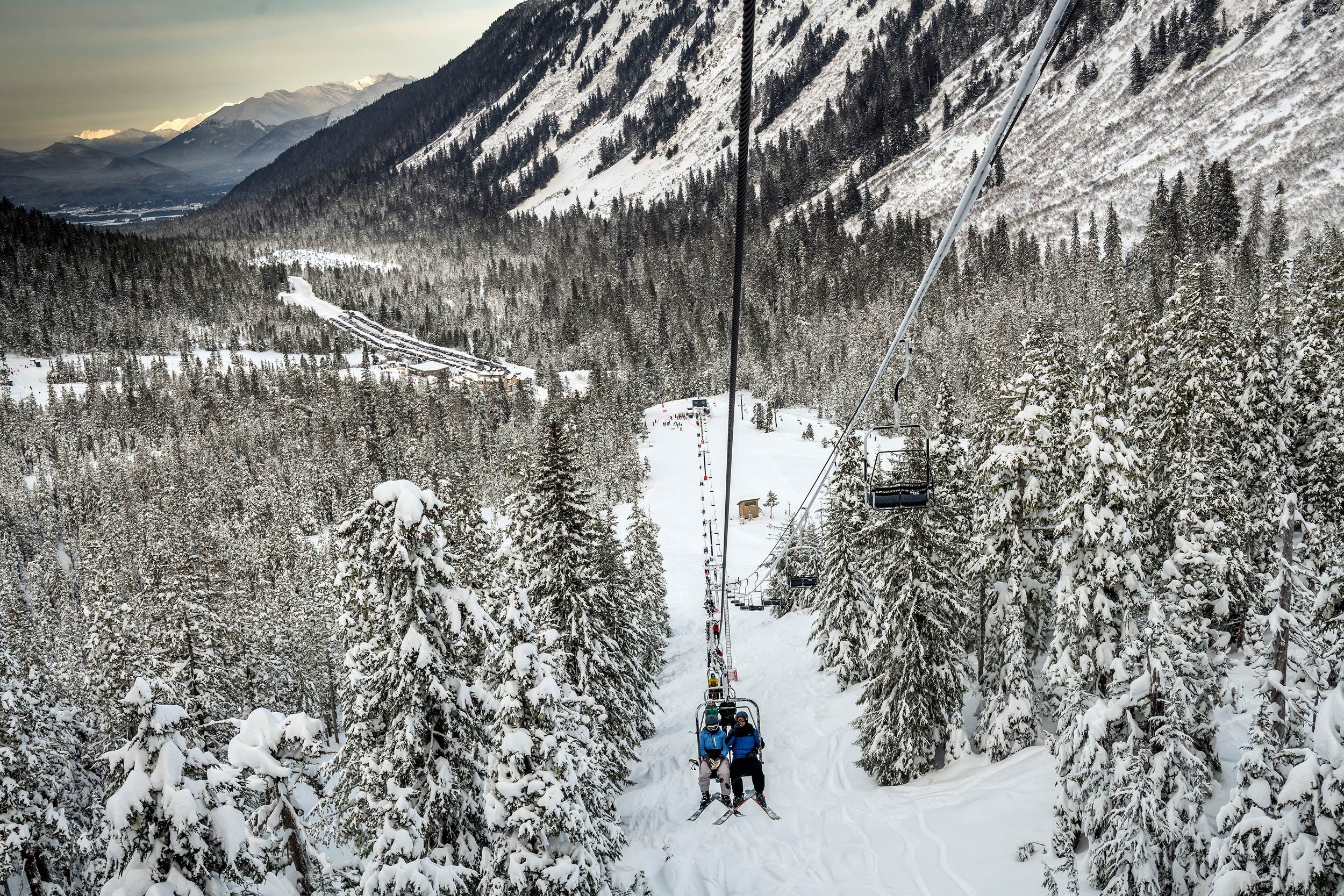
Feb 18, 2023
Podcast #117: Holiday Valley President and General Manager Dennis Eshbaugh
The Storm Skiing Journal and Podcast is a reader-supported publication. To receive new posts and to support my work, please consider becoming a free or paid subscriber. Who Dennis Eshbaugh, President and General Manager of Holiday Valley , New York Recorded on February 13, 2023 About Holiday Valley Click here for a mountain stats overview Owned by: Win-Sum Ski Corp, which Holiday Valley’s website describes as “a closely held corporation owned by a small number of stockholders.” Year founded: 1958 Pass affiliations: None Located in: Ellicottville, New York Closest neighboring ski areas: Holimont (3 minutes), Kissing Bridge (38 minutes), Cockaigne (45 minutes), Buffalo Ski Center (48 minutes), Swain (1 hour, 15 minutes), Peek’N Peak (1 hour, 15 minutes) Base elevation: 1,500 feet Summit elevation: 2,250 feet Vertical drop: 750 feet Skiable Acres: 290 Average annual snowfall: 180 inches Trail count: 84 (4 glades, 1 expert, 21 advanced, 21 intermediate, 32 beginner, 5 terrain parks) – the official glade number is a massive undercount, as nearly all of the trees at Holiday Valley are well-spaced and skiable (the trailmap below notes that “woods are available to expert skiers and riders and are not open, closed, or marked”). Lift count: 13 (4 high-speed quads, 7 fixed-grip quads, 2 surface lifts) – a high-speed six-pack will replace the Mardis Gras high-speed quad this sumer. Uphill capacity: 23,850 people per hour Why I interviewed him Western New York is one of the most important ski markets in America. Orbiting a vast wilderness zone of hilly lake-effect are the cities of Syracuse, Rochester, Buffalo, Cleveland, and, farther out but still relevant to the market, Pittsburgh. That’s more than 20 million people, as Eshbaugh notes in our conversation. They all need somewhere to ski. They don’t have big mountains, but they do have options. In Western New York alone: Peek’n Peak, Cockaigne, Kissing Bridge, Buffalo Ski Club, Bristol, Hunt Hollow, Swain, Holiday Valley, Holimont, and a half-dozen-ish surface-lift outfits hyper-focused on beginners. It’s one of the world’s great new-skier factories. Skiers learn here and voyage to the Great Out There. From these metro regions, skiers can get anywhere else quickly. At least four daily flights connect Cleveland and Denver – you can leave your house in the evening and catch first chair at Keystone or Copper the following morning. But sometimes local is good, especially when you start stacking kids in the backseat and your airplane bill ticks past four digits. Set the GPS for Holiday Valley. In a region of ski areas, this is a ski resort. The terrain is varied and expansive. Downtown Ellicottville, a Rust Belt industrial refugee that has remade itself as one of the East’s great resort towns, is minutes away. The mountain is easy enough to get to (in the way that anything off-interstate is an easy-ish pain in the ass requiring some patience with two-lane state highways and their poke-along drivers). And lift tickets are affordable, topping out at $87 for an eight-hour session. As a business, Holiday Valley is one of the most well-regarded independent ski areas in the country, on the level of Wachusett or Whitefish or Smugglers’ Notch. But it wasn’t the inevitable King of Western New York. When Eshbaugh showed up in 1975, the place was a backwater, with a handful of double chairs and T-bars and a couple dozen runs. It took decades to build the machine. But for at least the past 20 years, Holiday Valley has led all New York ski areas in annual visits, keeping company with New England monsters Mount Snow and Sunday River at around half a million skiers per season. That’s incredible. I wanted to learn how they did it, and how they keep doing it, even as the ski world evolves rapidly around them. What we talked about The wild Western New York winter; what’s driving record business to Holiday Valley; the busiest ski area in New York State; learning from Sam Walton in the best possible way; competing with Colorado; the history and remaking of Ellicotville; from ski school instructor to resort president; staying at one employer for nearly five decades; who owns Holiday Valley and how committed they are to independence; a brief history of the ski area; setting season pass prices at $1,000 in the megapass era – “we have 10,000 buyers of these other pass programs as well”; the importance of night-skiing; the bygone days of skiing all-nighters; why Holiday Valley hasn’t joined the Epic, Ikon, or Indy Passes, and whether it ever would; thoughts on reciprocal coalitions and why the Ski Cooper partnership went away; a picture of Holiday Valley in the mid-1970s; the landmine of too much real-estate development; going deep on the new Mardi Gras Express six-pack; why they’re building the lift over two years; how and why Holiday Valley self-installs chairlifts (one of the few ski areas to do so); remembering 20-minute double-chair rides on Mardi Gras; the surprising potential destination of the Mardi Gras quad; long-term potential upgrades for Sunrise, Eagle, Cindy’s, and Chute; the next lift that Holiday Valley will likely upgrade to a detachable; why Holiday Valley upgraded the 20-year-old Yodeler fixed-grip quad to a detachable quad two years ago; how much more it costs to maintain a detachable lift than a fixed-grip lift, and whether Holiday Valley could one day get to an all-high-speed fleet; “you have to keep a balance between what your customer base wants and what your customer base can support”; Dave McCoy’s thumbprint on Mammoth Mountain; potential expansion opportunities; where the next all-new liftline could sit; potential glade expansion; remembering when insurance carriers were paranoid of glade-skiing and why they backed off that notion; and why Holiday Valley implemented RFID but didn’t install gates. Why I thought that now was a good time for this interview Holiday Valley is one of the few large regional destination ski areas that continues to stand alone. No pass allegiance. No reciprocal deals. The pass is good here and only here. And it works. Like Wolf Creek or Baker or Mount Rose or Smugglers’ Notch or Bretton Woods, Holiday Valley is proving that the one-mountain model isn’t dead just yet. Even with a headliner season pass that runs $1,049*, just $30 cheaper than the good-at-63-mountains Ikon Pass and a couple hundred dollars more than the equally expansive Epic Pass. Many of the mountain’s passholders do also purchase these passes, Eshbaugh told me, but they keep buying the Holiday Valley Pass too. Why? My guess is the constant, conspicuous investment. A new high-speed quad to replace a 20-year-old fixed-grip quad in 2021. Holiday Valley’s first six-pack – to replace a 27-year-old high-speed quad – next season. And the place is pristine. Everything looks new, even if it isn’t. The lodges – and it feels like there are lodges everywhere – are expansive and attractive. Snowguns all over. I haven’t walked around the joint opening closet doors or anything, but I bet it I did, I’d find the towels sorted by color and shelves labelled accordingly. In the era of sprawling and standardized, there is still a lot to like in this hyper-local approach to ski resort management. Eshbaugh is in no hurry to chase his peers over the horizon. He admits there may be vast treasure and security waiting there, but there may also be a bottomless void. Holiday Valley and its eclectic and somewhat secretive group of owners will wait and see. In the meantime, we may as well enjoy the place for what it is. *Holiday Valley offered several more affordable pass options for the 2022-23 ski season, including a nights-only version for $504, a Sundays pass for $313, a pass good for 10 weekdays or evenings for $285, and a nine-use night pass for $213. Questions I wish I’d asked I’d wanted to get a bit into Holimont, and ask my usual stupid question about whether the two resorts had ever discussed some sort of lift or ski connection. From a pure engineering standpoint, it wouldn’t be an especially difficult project: the hill that rises from the far side of the Holiday Valley parking lot is the backside of Holimont. You would just need trails down from the top of Holimont’s Exhibition Express or Sunset double to the bottom of Holiday Valley’s Tannenbaum lift, then a return lift up the mountain to Holimont. Here’s a crappy concept sketch I put together: Of course, there are problems with my elaborate plans, starting with the fact that I have no idea who owns the property that I just designated for new trails and chairlifts. The bigger issue, however, is that Holimont is a private ski club, and it’s closed to the public on weekends and holidays. That won’t change. But if you’re curious, you can roll up and buy a lift ticket midweek, which is pretty cool. The place is substantial, with 56 trails and eight lifts, including a high-speed quad: A union of these two ski areas seems highly improbable. But it would create an enormous ski area, and it was fun to fantasize about for a few minutes. Why you should ski Holiday Valley Holiday Valley skis far larger than the trailmap would suggest. Rolling from Spruce Lake over to Snowpine can take all morning. There’s lots of little offshoots, quirks and nooks to explore. Glades everywhere. Lifts everywhere. Most runs are substantially shorter than the advertised 750 vertical feet, but they cling to the fall line, and there are a lot of them: 84 trails feels like an undercount. I said in the podcast that Holiday Valley felt like a half dozen or so ski areas stitched together, and it does. Creekside and Sunrise feel like that town bump, with gentle wide-open meadows. Morningstar is big broadsides, park kids and a speedy lift. Yodeler and Chute are raw and steep, tight glades between groomed-out boomers. Eagle is restless and wild and underdeveloped. And Tannenbaum is a sort-of idyll, a rich glen dense with towering pines, a detachable lift line threading low and fast through the trees. It’s just a very good ski area, with everything except a headline vertical drop. But the sprawling lift system makes fastlaps easy, and if the snow is deep, pretty much all the trees between the trails are skiable. The place is likely to wear you out before you wear it out, and then you can head down the street for a beer and a pillow. Podcast Notes On operating hours I guessed on the podcast that Holiday Valley was open more hours per week than most other ski areas in the country. Their regular schedule is 9 a.m. to 9 p.m. Monday through Wednesday, 9 a.m. to 10 p.m. Thursday and Friday, and 8:30 a.m. to 10 p.m. Saturday and Sunday. That adds up to 89 hours per week. I’m not sure exactly where that ranks among U.S. American ski areas, but its in the upper five percentile. On Mountains of Distinction Eshbaugh mentions the Mountains of Distinction program. This is a discount program started by Jiminy Peak before the megapass craze. It currently includes Jiminy, Wachusett, Cranmore, Holiday Valley, Bromley, and Crystal Mountain, Michigan. Passholders at any of these ski areas generally get half off on weekdays and $15 off on weekends and holidays at any of the other resorts. The program was far larger at one time, but it’s lost many members – such as Seven Springs – to consolidation. On the incredible migrating chairlift I mentioned a chairlift at Hunt Hollow – a ski area that operates on the same public/private model as Holimont – that relocated one of Snowbird’s old chairs. The chair was Snowbird’s old Little Cloud double, which they removed in 2012 to make way for a high-speed quad. You can read more about it here (pages 13 to 14). Lift Blog documented the lift when it stood at Snowbird , and then again at Hunt Hollow . On lost ski areas of Western New York In the podcast intro, I mention a pair of onetime competitors to Holiday Valley that failed to evolve in the same way and went bust. One was Wing Hollow, a 750-footer just 20 minutes south of Holiday Valley that is now best known for a never-solved 1975 double-murder . Here’s the 1978 trailmap, showing two T-bars and a double chair - about the same setup that Holiday Valley had in that period. I also mention Bluemont, which was just half an hour north of Holiday Valley and claimed an 800-foot-vertical drop, a double chair, a T-bar, and two ropetows. Here it is around 1980: The land that Bluemont sat on is currently for sale for $5.95 million. I wrote about this in May : Man I don’t know what happens to these places. Eight hundred vertical feet would make this the second-tallest ski area in Western New York, after Bristol, and poof. Just gone. NELSAP says that the last investors “never received enough capital to get their idea off the ground.” The chairlifts are apparently long gone. Who knows if you would even be able to build on the land if you owned it – everything is impossible these days, especially in New York. But here it is if you have the money and the gumption to try. These were just the two largest of many lost ski areas in Western New York. You can poke around the lost New York ski areas page on the New England Lost Ski Areas project for more info. On Holiday Valley’s evolution Eshbaugh talks about the deliberate way they’ve built out Holiday Valley over the decades. The oldest trailmap I can find for the ski area is from 1969 – 11 years after the resort opened, and six years before Eshbaugh arrived. It shows what is currently the area from Mardi Gras over to Tannenbaum, including Yodeler and Chute: The mountain added the first Cindy’s lift – a double chair – in 1978. Here’s the trailmap circa 1981 - Cindy’s is lift 3: Morning Star – a triple – arrived in 1983. The Snowpine double came the following year. This circa 1988 trailmap shows both (Morning Star is lift 5; Snowpine lift 6), and also teases the Eagle quad, which was slated to open the following year (it did, but as a quad, rather than as the triple teased below): The Sunrise quad rose in 1992. Here it is on a circa 1997 trailmap (lift 10): The Spruce Lake quad arrived for the 2007-08 season (lift 11): Which basically takes us to modern Holiday Valley, though the ski area continues to upgrade lifts regularly. Impressive as this growth has been, I don’t think they’re anywhere near finished. The Storm publishes year-round, and guarantees 100 articles per year. This is article 13/100 in 2023, and number 399 since launching on Oct. 13, 2019. Want to send feedback? Reply to this email and I will answer (unless you sound insane, or, more likely, I just get busy). You can also email skiing@substack.com . Get full access to The Storm Skiing Journal and Podcast at www.stormskiing.com/subscribe
Feb 6, 2023
Podcast #116: Seven Springs, Laurel, & Hidden Valley VP & GM Brett Cook
This podcast hit paid subscribers’ inboxes on Feb. 3. It dropped for free subscribers on Feb. 6. To receive future pods as soon as they’re live and to support independent ski journalism, please consider an upgrade to a paid subscription. Who Brett Cook, Vice President and General Manager of Seven Springs, Hidden Valley, and Laurel Mountain, Pennsylvania Recorded on January 30, 2023 About Seven Springs Owned by: Vail Resorts Pass affiliations: Epic Pass, Epic Local Pass, Northeast Value Epic Pass, Northeast Midweek Epic Pass Located in: Seven Springs, Pennsylvania Year opened: 1932 Closest neighboring ski areas: Hidden Valley (17 minutes), Laurel Mountain (45 minutes), Nemacolin (46 minutes), Boyce Park (1 hour), Wisp (1 hour), Blue Knob (1 hour, 30 minutes) Base elevation: 2,240 feet Summit elevation: 2,994 feet Vertical drop: 754 feet Skiable Acres: 285 Average annual snowfall: 135 inches Trail count: 48 (5 expert, 6 advanced, 15 intermediate, 16 beginner, 6 terrain parks) Lift count: 14 (2 six-packs, 4 fixed-grip quads, 4 triples, 3 carpets, 1 ropetow) About Hidden Valley Owned by: Vail Resorts Pass affiliations: Epic Pass, Epic Local Pass, Northeast Value Epic Pass, Northeast Midweek Epic Pass Located in: Hidden Valley, Pennsylvania Year opened: 1955 Closest neighboring ski areas: Seven Springs (17 minutes), Laurel Mountain (34 minutes), Mystic Mountain (50 minutes), Boyce Park (54 minutes),Wisp (1 hour), Blue Knob (1 hour 19 minutes) Base elevation: 2,405 feet Summit elevation: 2,875 feet Vertical drop: 470 feet Skiable Acres: 110 Average annual snowfall: 140 inches Trail count: 32 (9 advanced, 13 intermediate, 8 beginner, 2 terrain parks) Lift count: 8 (2 fixed-grip quads, 2 triples, 2 carpets, 2 handle tows) About Laurel Mountain Owned by: Vail Resorts Pass affiliations: Epic Pass, Epic Local Pass, Northeast Value Epic Pass, Northeast Midweek Epic Pass Located in: Boswell, Pennsylvania Year opened: 1939 Closest neighboring ski areas: Hidden Valley (34 minutes), Seven Springs (45 minutes), Boyce Park (1 hour), Blue Knob (1 hour), Mystic Mountain (1 hour, 15 minutes), Wisp (1 hour, 15 minutes) Base elevation: 2,005 feet Summit elevation: 2,766 feet Vertical drop: 761 feet Skiable Acres: 70 Average annual snowfall: 41 inches Trail count: 20 (2 expert, 2 advanced, 6 intermediate, 10 beginner) Lift count: 2 (1 fixed-grip quad, 1 handle tow) Below the paid subscriber jump: a summary of our podcast conversation, a look at abandoned Hidden Valley expansions, historic Laurel Mountain lift configurations, and much more. Beginning with podcast 116, the full podcast articles are no longer available on the free content tier. Why? They take between 10 and 20 hours to research and write, and readers have demonstrated that they are willing to pay for content. My current focus with The Storm is to create value for anyone who invests their money into the product. Here are examples of a few past podcast articles, if you would like to see the format: Vail Mountain , Mt. Spokane , Snowbasin , Mount Bohemia , Brundage . To anyone who is supporting The Storm: thank you very much. You have guaranteed that this is a sustainable enterprise for the indefinite future. Why I interviewed him I’ve said this before, but it’s worth repeating. Most Vail ski areas fall into one of two categories: the kind skiers will fly around the world for, and the kind skiers won’t drive more than 15 minutes for. Whistler, Park City, Heavenly fall into the first category. Mt. Brighton, Alpine Valley, Paoli Peaks into the latter. I exaggerate a bit on the margins, but when I drive from New York City to Liberty Mountain, I know this is not a well-trod path. Seven Springs, like Hunter or Attitash, occupies a slightly different category in the Vail empire. It is both a regional destination and a high-volume big-mountain feeder. Skiers will make a weekend of these places, from Pittsburgh or New York City or Boston, then they will use the pass to vacation in Colorado. It’s a better sort of skiing than your suburban knolls, more sprawling and interesting, more repeatable for someone who doesn’t know what a Corky Flipdoodle 560 is. “Brah that sounds sick!” Thanks Park Brah. I appreciate you. But you know I just made that up, right? “Brah have you seen my shoulder-mounted Boombox 5000 backpack speaker? I left it right here beside my weed vitamins.” Sorry Brah. I have not. Anyway, I happen to believe that these sorts of in-the-middle resorts are the next great frontier of ski area consolidation. All the big mountains have either folded under the Big Four umbrella or have gained so much megapass negotiating power that the incentive to sell has rapidly evaporated. The city-adjacent bumps such as Boston Mills were a novel and highly effective strategy for roping cityfolk into Epic Passes, but as pure ski areas, those places just are not and never will be terribly compelling experiences. But the middle is huge and mostly untapped, and these are some of the best ski areas in America, mountains that are large enough to give you a different experience each time but contained enough that you don’t feel as though you’ve just wandered into an alternate dimension. There’s enough good terrain to inspire loyalty and repeat visits, but it’s not so good that passholders don’t dream of the hills beyond. Examples: Timberline, West Virginia; Big Powderhorn, Michigan; Berkshire East and Jiminy Peak in Massachusetts; Plattekill, New York; Elk Mountain, Pennsylvania; Mt. Spokane, Washington; Bear Valley, California; Cascade or Whitecap, Wisconsin; Magic Mountain, Vermont; or Black Mountain, New Hampshire. There are dozens more. Vail’s Midwestern portfolio is expansive but bland, day-ski bumps but no weekend-type spots on the level of Crystal Mountain, Michigan or Lutsen, Minnesota. If you want to understand the efficacy of this strategy, the Indy Pass was built on it. Ninety percent of its roster is the sorts of mountains I’m referring to above. Jay Peak and Powder Mountain sell passes, but dang it Bluewood and Shanty Creek are kind of nice now that the pass nudged me toward them. Once Vail and Alterra realize how crucial these middle mountains are to filling in the pass blanks, expect them to start competing for the space. Seven Springs, I believe, is a test case in how impactful a regional destination can be both in pulling skiers in and pushing them out across the world. Once this thing gels, look the hell out. What we talked about The not-so-great Western Pennsylvania winter so far; discovering skiing as an adult; from liftie to running the largest ski resort in Pennsylvania; the life and death of Snow Time Resorts; joining the Peak Pass; two ownership transitions in less than a year, followed by Covid; PA ski culture; why the state matters to Vail; helping a Colorado ski company understand the existential urgency of snowmaking in the East; why Vail doubled down on PA with the Seven Springs purchase when they already owned five ski areas in the state; breaking down the difference between the Roundtop-Liberty-Whitetail trio and the Seven-Springs-Hidden-Valley-Laurel trio; the cruise ship in the mountains; rugged and beautiful Western PA; dissecting the amazing outsized snowfall totals in Western Pennsylvania; Vail Resorts’ habit of promoting from within; how Vail’s $20-an-hour minimum wage hit in Pennsylvania; the legacy of the Nutting family, the immediate past owners of the three ski areas; the legendary Herman Dupree, founder of Seven Springs and HKD snowguns; Seven Springs amazing sprawling snowmaking system, complete with 49(!) ponds; why the system isn’t automated and whether it ever will be; how planting more trees could change the way Seven Springs skis; connecting the ski area’s far-flung beginner terrain; where we could see additional glades at Seven Springs; rethinking the lift fleet; the importance of redundant lifts; do we still need Tyrol?; why Seven Springs, Hidden Valley, and Laurel share a single general manager; thinking of lifts long-term at Hidden Valley; Hidden Valley’s abandoned expansion plans and whether they could ever be revived; the long and troubled history of state-owned Laurel Mountain; keeping the character at this funky little upside-down boomer; “We love what Laurel Mountain is and we’re going to continue to own that”; building out Laurel’s snowmaking system; expansion potential at Laurel; “Laurel is a hidden gem and we don’t want it to be hidden anymore”; Laurel’s hidden handletow; evolving Laurel’s lift fleet; managing a state-owned ski area; Seven Springs’ new trailmap; the Epic Pass arrives; and this season’s lift-ticket limits. Why I thought that now was a good time for this interview When Vail bought Peak Resorts in 2019, they suddenly owned nearly a quarter of Pennsylvania’s ski areas: Big Boulder, Jack Frost, Whitetail, Roundtop, and Liberty. That’s a lot of Eagles jerseys. And enough, I thought, that we wouldn’t see VR snooping around for more PA treasures to add to their toybox. Then, to my surprise , the company bought Seven Springs – which they clearly wanted – along with Hidden Valley and Laurel, which they probably didn’t, in late 2021. Really what they bought was Pittsburgh, metropolitan population 2.3 million, and their large professional class of potentially globe-trotting skiers. All these folks needed was an excuse to buy an Epic Pass. Vail gave them one. So now what? Vail knows what to do with a large, regionally dominant ski area like Seven Springs. It’s basically Pennsylvania’s version of Stowe or Park City or Heavenly. It was pretty good when you bought it, now you just have to not ruin it and remind everyone that they can now ski Whistler on their season pass. Hidden Valley, with its hundreds of on-mountain homeowners, suburban-demographic profile, and family orientation more or less fit Vail’s portfolio too. But what to do with Laurel? Multiple locals assured me that Vail would close it. Vail doesn’t do that – close ski areas – but they also don’t buy 761-vertical-foot bumps at the ass-end of nowhere with almost zero built-in customer base and the snowmaking firepower of a North Pole souvenir snowglobe. They got it because it came with Seven Springs, like your really great spouse who came with a dad who thinks lawnmowers are an FBI conspiracy. I know what I think Vail should do with Laurel – dump money into the joint to aggressively route crowds away from the larger ski areas – but I didn’t know whether they would, or had even considered it. Vail’s had 14 months now to think this over. What are these mountains? How do they fit? What are we going to do with them? I got some answers. Questions I wish I’d asked You know, it’s weird that Vail has two Hidden Valleys. Boyne, just last year, changed the name of its “Boyne Highlands” resort to “The Highlands,” partly because, one company executive told me, skiers would occasionally show up to the wrong resort with a condo reservation. I imagine that’s why Earl Holding ultimately backed off on renaming Snowbasin to “Sun Valley, Utah,” as he reportedly considered doing in the leadup to the 2002 Olympics – if you give people an easy way to confuse themselves, they will generally take you up on it. I realize this is not really the same thing. Boyne Mountain and The Highlands are 40 minutes apart. Vail’s two Hidden Valleys are 10-and-a-half hours from each other by car. Still. I wanted to ask Cook if this weird fact had any hilarious unintended consequences (I desperately wish Holding would have renamed Snowbasin). Perhaps confusion in the Epic Mix app? Or someone purchasing lift tickets for the incorrect resort? An adult lift ticket at Hidden Valley, Pennsylvania for tomorrow is $75 online and $80 in person, but just $59 online/$65 in person for Hidden Valley, Missouri. Surely someone has confused the two? So, which one should we rename? And what should we call it? Vail has been trying to win points lately with lift names that honor local landmarks – they named their five new lifts at Jack Frost-Big Boulder “Paradise,” “Tobyhanna,” “Pocono,” “Harmony,” and “Blue Heron” (formerly E1 Lift, E2 Lift, B Lift, C Lift, E Lift, F Lift, Merry Widow I, Merry Widow II, and Edelweiss). So how about renaming Hidden Valley PA to something like “Allegheny Forest?” Or call Hidden Valley, Missouri “Mississippi Mountain?” Yes, both of those names are terrible, but so is having two Hidden Valleys in the same company. What I got wrong * I guessed in the podcast that Pennsylvania was the “fifth- or sixth-largest U.S. state by population.” It is number five, with an approximate population of 13 million, behind New York (19.6M), Florida (22.2M), Texas (30M), and California (39M). * I guessed that the base of Keystone is “nine or 10,000 feet.” The River Run base area sits at 9,280 feet. * I mispronounced the last name of Seven Springs founder Herman Dupre as “Doo-Pree.” It is pronounced “Doo-Prey.” * I said there were “lots” of thousand-vertical-foot ski areas in Pennsylvania. There are, in fact, just four: Blue Mountain (1,140 feet), Blue Knob (1,073 feet), Elk (1,000 feet), and Montage (1,000 feet). Why you should ski Seven Springs, Hidden Valley, and Laurel It’s rugged country out there. Not what you’re thinking. More Appalachian crag than Poconos scratch. Abrupt and soaring. Beautiful. And snowy. In a state where 23 of 28 ski areas average fewer than 50 inches of snow per season, Seven Springs and Laurel bring in 135-plus apiece. Elevation explains it. A 2,000-plus-foot base is big-time in the East. Killington sits at 1,165 feet. Sugarloaf at 1,417. Stowe at 1,559. All three ski areas sit along the crest of 70-mile-long Laurel Ridge, a storm door on the western edge of the Allegheny Front that rakes southeast-bound moisture from the sky as it trains out of Lake Erie. When the snow doesn’t come, they make it. Now that Big Boulder has given up, Seven Springs is typically the first ski area in the state to open. It fights with Camelback for last-to-close. Twelve hundred snowguns and 49 snowmaking ponds help. Seven Springs doesn’t have the state’s best pure ski terrain – look to Elk Mountain or, on the rare occasions it’s fully open, Blue Knob for that – but it’s Pennsylvania’s largest, most complete, and, perhaps, most consistent operation. It is, in fact, the biggest ski area in the Mid-Atlantic, a ripping and unpretentious ski region where you know you’ll get turns no matter how atrocious the weather gets. Hidden Valley is something different. Cozy. Easy. Built for families on parade. Laurel is something different too. Steep and fierce, a one-lift wonder dug out of the graveyard by an owner with more passion, it seems, than foresight. Laurel needs snowmaking. Top to bottom and on every trail. The hill makes no sense in 2023 without it. Vail won’t abandon the place outright, but if they don’t knock $10 million in snowmaking into the dirt, they’ll be abandoning it in principle. Podcast Notes The trailmap rabbit hole – Hidden Valley We discussed the proposed-but-never-implemented expansion at Hidden Valley, which would have sat skier’s right of the Avalanche pod. Here it is on the 2010 trailmap: The 2002 version actually showed three potential lifts serving this pod: Unfortunately, this expansion is unlikely. Cook explains why in the pod. The trailmap rabbit hole – Laurel Laurel, which currently has just one quad and a handletow, has carried a number of lift configurations over the decades. This circa 1981 trailmap shows a double chair where the quad now sits, and a series of surface lifts climbing the Broadway side of the hill, and another set of them bunched at the summit: The 2002 version shows a second chairlift – which I believe was a quad – looker’s right, and surface lifts up top to serve beginners, tubers, and the terrain park: Related: here’s a pretty good history of all three ski areas, from 2014. The Pennsylvania ski inventory rabbithole Pennsylvania skiing is hard to get. No one seems to know how many ski areas the state has. The NSAA says there are 26 . Cook referenced 24 on the podcast. The 17 that Wikipedia inventories include Alpine Mountain, which has been shuttered for years. Ski Central (22), Visit PA (21), and Ski Resort Info (25) all list different numbers. My count is 28. Most lists neglect to include the six private ski areas that are owned by homeowners’ associations or reserved for resort guests. Cook and I also discussed which ski area owned the state’s highest elevation (it’s Blue Knob), so I included base and summit elevations as well: The why-is-Vail-allowed-to-own-80-percent-of-Ohio’s-public-ski-areas? rabbithole Cook said he wasn’t sure how many ski areas there are in Ohio. There are six. One is a private club. Snow Trails is family-owned. Vail owns the other four. I think this shouldn’t be allowed, especially after how poorly Vail managed them last season, and especially how badly Snow Trails stomped them from an operations point of view. But here we are: The steepest-trail rabbithole We discuss Laurel’s Wildcat trail, which the ski area bills as the steepest in the state. I generally avoid echoing these sorts of claims, which are hard to prove and not super relevant to the actual ski experience. You’ll rarely see skiers lapping runs like Rumor at Gore or White Lightning at Montage, mostly because they frankly just aren’t that much fun, exercises in ice-rink survival skiing for the Brobot armies. But if you want the best primer I’ve seen on this subject, along with an inventory of some very steep U.S. ski trails, read this one on Skibum.net . The article doesn’t mention Laurel’s Wildcat trail, but the ski area was closed sporadically and this site’s heyday was about a decade ago, so it may have been left out as a matter of circumstance. The “back in my day” rabbithole I referenced an old “punchcard program” at Roundtop during our conversation. I was referring to the Night Club Program offered by former-former owner Snow Time Resorts at Roundtop, Liberty, and Whitetail. When Snow Time sold the ski area in 2018 to Peak Resorts, the buyer promptly dropped the evening programs. When Vail purchased the resort in 2019, it briefly re-instated some version of them (I think), but I don’t believe they survived the Covid winter (2020-21). This 5,000-word March 2019 article (written four months before Vail purchased the resorts) from DC Ski distills the rage around this abrupt pass policy change. Four years later, I still get emails about this, and not infrequently. I’m kind of surprised Vail hasn’t offered some kind of Pennsylvania-specific pass, since they have more ski areas in that state (eight) than they have in any other, including Colorado (five). After all, the company sells an Ohio-specific pass that started at just $299 last season. Why not a PA-specific version for, say, $399, for people who want to ski always and only at Roundtop or Liberty or Big Boulder? Or a nights-only pass? I suppose Vail could do this, and I suspect they won’t. The Northeast Value Pass – good for mostly unlimited access at all of the company’s ski areas from Michigan on east – sold for $514 last spring. A midweek version ran $385. A seven-day Epic Day Pass good at all the Pennsylvania ski areas was just $260 for adults and $132 for kids aged 5 to 12. I understand that there is a particular demographic of skiers who will never ski north of Harrisburg and will never stop blowing up message boards with their disappointment and rage over this. The line between a sympathetic character and a tedious one is thin, however, and eventually we’re all better off focusing our energies on the things we can control. The Storm publishes year-round, and guarantees 100 articles per year. This is article 9/100 in 2023, and number 395 since launching on Oct. 13, 2019. Want to send feedback? Reply to this email and I will answer (unless you sound insane, or, more likely, I just get busy). You can also email skiing@substack.com . Get full access to The Storm Skiing Journal and Podcast at www.stormskiing.com/subscribe
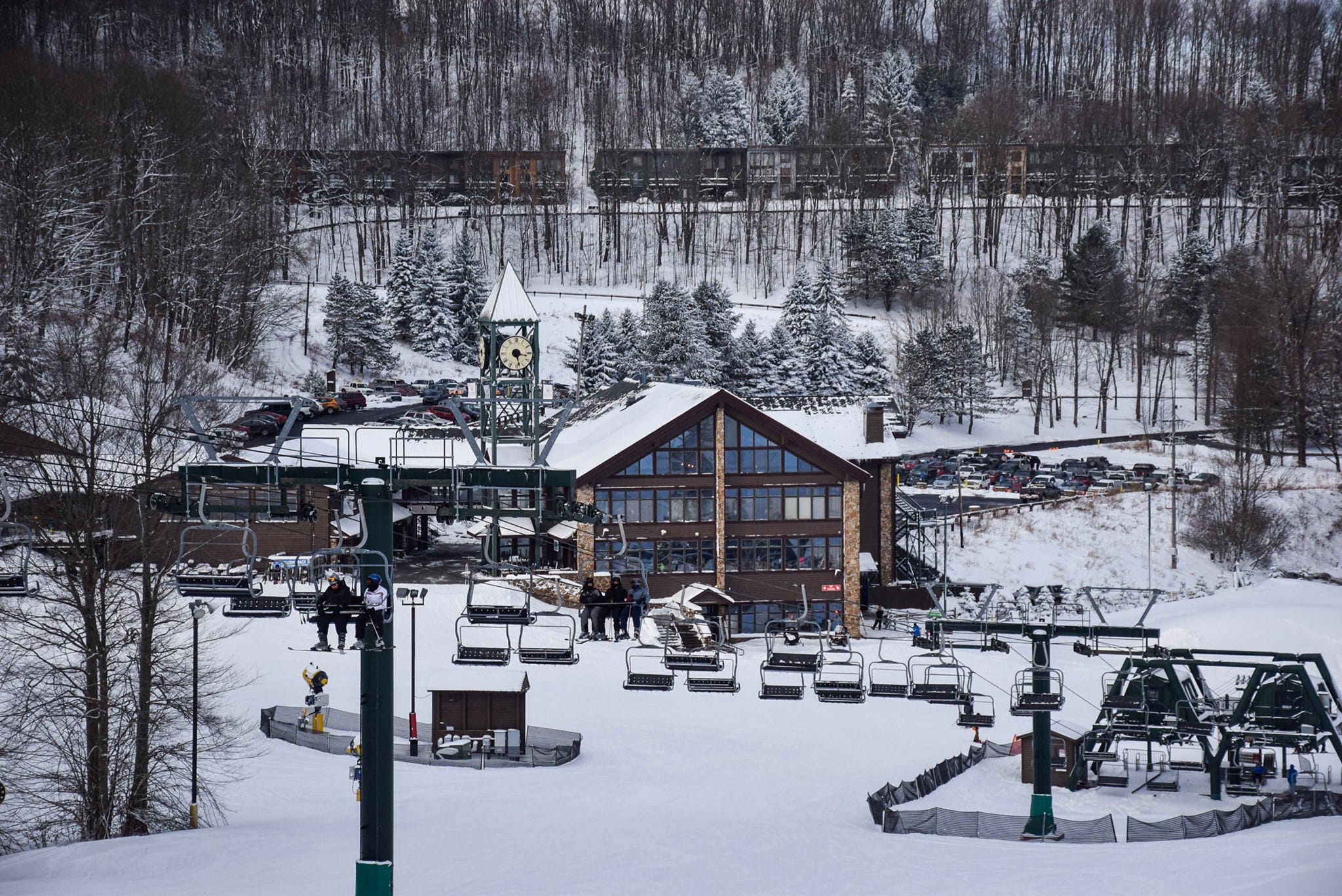
Feb 4, 2023
Podcast #115: Snowbasin Vice President & General Manager Davy Ratchford
This podcast hit paid subscribers’ inboxes on Feb. 1. It dropped for free subscribers on Feb. 4. To receive future pods as soon as they’re live and to support independent ski journalism, please consider an upgrade to a paid subscription. Who Davy Ratchford, Vice President and General Manager of Snowbasin Resort , Utah Recorded on January 31, 2023 About Snowbasin Click here for a mountain stats overview Owned by: The R. Earl Holding Family Pass affiliations: Ikon Pass, Mountain Collective Located in: Huntsville, Utah Year founded: 1940 Closest neighboring ski areas: Nordic Valley (30 minutes), Powder Mountain (35 minutes), Woodward Park City (1:05), Utah Olympic Park (1:08), Park City (1:15), Deer Valley (1:15), Snowbird (1:15), Alta (1:20), Solitude (1:20), Brighton (1:25), Sundance (1:40), Cherry Peak (1:45), Beaver Mountain (2:00) – travel times vary considerably based upon weather and traffic Base elevation: 6,450 feet Summit elevation: 9,350 feet Vertical drop: 2,900 feet Skiable Acres: 3,000 Average annual snowfall: 300 inches Trail count: 111 Lift count: 12 (One 15-passenger tram, 2 eight-passenger gondolas, 2 six-packs, 2 high-speed quads, 2 triples, 1 ropetow, 2 carpets) – Snowbasin will add a third six-pack on an all-new line this summer (more on this below). Why I interviewed him For 60 years it sat there, empty, enormous, unnoticed. Utah skiing was Park City and Alta; Snowbird in the ‘70s; Deer Valley in the ‘80s; sometimes Solitude and Brighton. No need to ski outside that powder pocket east of SLC: in 1995, an Alta lift ticket cost $25, and the area resorts frequently landed on ski magazine “least-crowded” lists. The November 2000 issue of Ski distilled Snowbasin’s malaise: Though skiers were climbing the high ridgeline that overlooks the small city of Ogden as far back as the Thirties, Alta founder Alf Engen officially discovered Snowbasin in 1940. At that time the high, sunny basin was used for cattle range, but it was so overgrazed that eroded topsoil and bloated carcasses of dead cows were tainting Ogden’s water supply. Working with the U.S. Forest Service, Ogden’s town fathers decided that a ski resort would provide income and recreation while also safeguarding the water supply. A deal was struck with the ranch owner, and Snowbasin opened for business. In the 60 years since, the resort has struggled under five owners, including Vail-founder Pete Seibert, who owned it in the mid-Eighties. The problem was a lack of lodging. Snowbasin was too far from Salt Lake City to attract out-of-state skiers and too far from Ogden to use the city’s aging railroad center as a resort base. Successive owners realized that to succeed, Snowbasin needed a base village, but building one from scratch is a costly proposition. So for half a century, the resort has remained the private powder stash of Ogden locals and the few lucky skiers who have followed rumors of deep snow and empty lifts up Ogden Canyon. In 1984, Earl Holding, an oil tycoon who had owned Sun Valley since 1978, purchased the resort from Seibert (process the fact that Snowbasin was once part of the Vail portfolio for a moment). For a long time, nothing much changed. Then came the 2002 Olympics. In a single offseason in 1998, the resort added two gondolas, a tram, and a high-speed quad (John Paul), along with the thousand-ish-acre Strawberry terrain pod. A new access road cut 13 miles off the drive from Salt Lake City. Glimmering base lodges rose from the earth. Still, Snowbasin languished. “But despite the recent addition of modern lifts, it has still failed to attract more than 100,000 skier visits the past two seasons,” Ski wrote in 2000, attributing this volume partly to “the fact that the Olympics, not today’s lift ticket revenue, is the management’s priority.” Holding, the magazine reported, was considering a bizarre name change for the resort to “Sun Valley.” As in, Sun Valley, Utah. Reminder: there was no social media in 2000. That’s all context, to make this point: the Snowbasin that I’m writing about today – a glimmering end-of-the-road Ikon Pass jewel with a Jetsonian lift fleet – is not the Snowbasin we were destined to have. From backwater to baller in a generation. This is the template, like it or not, for the under-developed big-mountain West. Vail Mountain, Park City, Snowbird, Palisades Tahoe, Breckenridge, Steamboat: these places cannot accommodate a single additional skier. They’re full. The best they can do now is redistribute skiers across the mountain and suck more people out of the base areas with higher-capacity lifts. But with record skier visits and the accelerating popularity of multi-mountain passes that concentrate more of them in fewer places, we’re going to need relief valves. And soon. There are plenty more potential Snowbasins out there. Mountains with big acreage and big snowfall but underdeveloped lift and lodging infrastructure and various tiers of accessibility issues: White Pass, Mission Ridge, Silver Mountain, Montana Snowbowl, Great Divide, Discovery, Ski Apache, Angel Fire, Ski Santa Fe, Powder Mountain, Sierra-at-Tahoe, Loveland. There are dozens more. Snowbasin’s story is singular and remarkable, a testament to invested owners and the power of media magnification to alter the fate of a place. But the mountain’s tale is instructive as well, of how skiing can reorient itself around something other than our current version of snowy bunchball, the tendency for novice soccer players to disregard positions and swarm to wherever the ball moves. Snowbasin didn’t matter and now it does. Who’s next? What we talked about Utah’s amazing endless 2022-23 snow season; an Irish fairytale; skiing Beaver Mountain in jeans; helping to establish Utah’s Major League Soccer team and then leaving for the ski industry; “if you have a chance to raise your family in the mountains, you should do that”; the unique characteristic of a ski career that helps work-life balance; much love for the Vail Fam; the Holding family legacy; “Snowbasin is a gift to the world”; the family’s commitment to keeping Snowbasin independent long-term; “they’re going to put in the best possible things, all the time”; amazing lodges, bathrooms and all; Snowbasin’s Olympic legacy and potential future involvement in the Games; breaking down the DeMoisy Express six-pack that will go up Strawberry this summer; what the new lift will mean for the Strawberry gondola; soccer fans versus ski fans; managing a resort in the era of knucklehead social media megaphones; “I’ve lost a lot of employees to guests”; taming the rumor machine; reflecting on the Middle Bowl lift upgrade; long-term upgrades for the Becker and Porcupine triples; Snowbasin’s ambitious base-area redevelopment plan, including an all-inclusive Club Med, new lifts and terrain, and upgraded access road; “the amount of desire to own something here is huge”; what happens with parking once the mountain builds a village over it; the curse of easy access; breaking down the new beginner terrain and lifts that will accompany the village; whether future large-scale terrain expansion is possible; and leaving the Epic Pass for Ikon and Mountain Collective. Why I thought that now was a good time for this interview Last month, Snowbasin announced that it will build the DeMoisy Express, a long-awaited six-pack that will run parallel to the Strawberry Gondola on a slightly shorter line, for the 2023-24 ski season. Here’s where it will sit on the current trailmap (highlighted below): This will be Snowbasin’s second six-pack in just two years, and it follows the resort’s 2021 announcement of an ambitious base-area development plan, which will include new beginner terrain, several new lifts, a mixed-use pedestrian village, access-road improvements, and an all-inclusive Club Med resort. Here’s a rendering of the reconfigured base at full build-out: Snowbasin, along with sister resort Sun Valley, also stalked off the Epic Pass last year, fleeing for the Mountain Collective and Ikon passes. “Because we’re smart,” Ratchford half-joked when I asked him why the resorts left Epic after just three years. He framed the switch as an opportunity to expose the resorts to new skiers. Snowbasin surely will not be the last resort to change allegiances. Don’t think big indies like Jackson Hole, Taos, and Revelstoke aren’t listening when Vail calls, offering them a blank check to change jerseys. What I got wrong I had an on-the-fly moment where I mixed up the Wildcat Express six-pack and the Littlecat Express high-speed quad. I asked Ratchford how they were going to upgrade Little Cat (as suggested in the base-area redevelopment image above), when it was already a six-pack. Dumb stuff happens in the moment during these podcasts, and while I guess I could ask the robots to fix it, I’d rather just own the mistake and keep moving. Why you should ski Snowbasin I love skiing Alta and Snowbird, but I don’t love skiing anywhere enough to endure the mass evacuation drill that is a Cottonwoods powder-day commute. Not when there’s a place like Snowbasin where you can just, you know, pull into the parking lot and go skiing. What you’ll find when you arrive is as good as anything you’ll hunt down in U.S. skiing. Maybe not from a total snowfall perspective – though 300 inches is impressive anywhere outside of Utah – but from a lift-and-lodge infrastructure point of view. Four – soon to be five – high-speed chairlifts, a tram and two gondolas, and a couple old triple chairs that Ratchford tells me will be replaced fairly soon, and probably with high-speed quads. The lodges are legendary, palaces of excess and overbuild, welcome in an industry that makes Lunch-Table Death-Match a core piece of the experience. If you need to take your pet elephant to the bathroom, plug Snowbasin into your GPS – I assure you the stalls can accommodate them. But, really, you ski Snowbasin because Snowbasin is easy to get to and easy to access, with the Ikon Pass that most people reading this probably already have, and with terrain that’s as good as just about anything else you’re going to find in U.S. America. Podcast Notes On Park City: Ratchford referred obliquely to the ownership change at Park City in 2014, saying, “if you know the history there…” Well, if you don’t know the history there, longtime resort owner Powdr Corp made the biggest oopsie in the history of lift-served skiing when it, you know, forgot to renew its lease on the mountain . Vail, in what was the most coldblooded move in the history of lift-served skiing, installed itself as the new lessee in what I can imagine was a fit of cackling glee. It was amazing. You can read more about it here and here . If only The Storm had existed back then. On the Olympics: While I don’t cover the Olympics at all (I completely ignored them last year, the first Winter Games in which The Storm existed), I do find their legacy at U.S. ski resorts interesting. Only five U.S. ski areas have hosted events: Whiteface (1980), Palisades Tahoe (1960), and, in 2002, Deer Valley, Park City, and Snowbasin. Ratchford and I talk a bit about this legacy, and the potential role of his resort in the upcoming 2030 or 2034 Games – Salt Lake City is bidding to host one or the other. Read more here . On megapasses: Snowbasin has been all over the place with megapasses. Here’s its history, as best I can determine: * 2013: Snowbasin joins the Powder Alliance reciprocal coalition (it is unclear when Snowbasin left this coalition) * 2017: Snowbasin joins Mountain Collective for 2017-18 ski season * 2019: Snowbasin joins Epic Pass, leaves Mountain Collective for 2019-20 ski season * 2022: Snowbasin leaves Epic Pass, re-joins Mountain Collective and joins Ikon Pass for 2022-23 ski season The Storm publishes year-round, and guarantees 100 articles per year. This is article 8/100 in 2023, and number 394 since launching on Oct. 13, 2019. Want to send feedback? Reply to this email and I will answer (unless you sound insane, or, more likely, I just get busy). You can also email skiing@substack.com . The Storm explores the world of lift-served skiing year-round. Join us. Get full access to The Storm Skiing Journal and Podcast at www.stormskiing.com/subscribe
Feb 3, 2023
Podcast #114: New England Ski History Founder Jeremy Clark
This podcast hit paid subscribers’ inboxes on Jan. 31. It dropped for free subscribers on Feb. 3. To receive future pods as soon as they’re live and to support independent ski journalism, please consider an upgrade to a paid subscription. Who Jeremy Clark, Founder of New England Ski History and contributor to New England Ski Industry News Recorded on December 6, 2022 About New England Ski History New England Ski History has two main components: 1) NewEnglandSkiHistory.com This is HQ. Each New England state gets a landing page, which in turn links out to profiles of all its active ski areas, its major lost ski areas, and many planned-but-never built ski areas: * Connecticut * Maine * Massachusetts * New Hampshire * Rhode Island * Vermont There are also pages devoted to expansions (both realized and cancelled), lifts (sorted by type, brand, or year installed or removed), and trailmaps . One of my favorite features is the inventory of historic lift ticket and season pass prices (select the drop-downs at the top to change the state or season). The site, like its subject matter, is a little retro, but the information is, in general, very current. For New England podcast prep, this site is gold. 2) NewEnglandSkiIndustry.com This is a news site, focused always and only on New England. The subject matter is expansive and often esoteric: updates on chairlift construction or obscure ski area re-openings – topics few other outlets would cover, but of clear interest to the typical Storm reader. I never send out a news update without checking this site for tidbits that I would otherwise miss. Clark recently launched a Substack newsletter that pushes these headlines right to your email inbox - subscribe below: Why I interviewed him There has been organized skiing in New England for at least 100 years. Rolling terrain, half-year-long winters, and population density made that inevitable. As soon as machines tiptoed their way into Earth’s timeline, New Englanders began flinging them up hillsides. Some stuck. Most didn’t. Today, New England skiing is a couple dozen monsters, a few dozen locals, and a scattering of surface-lift bumps where a lift ticket costs less than a pack of smokes. As rich as this history is, there are few reliable sources of historical information on New England skiing. New England Lost Ski Areas Project has documented more than 600 lost ski areas across the region – the site’s founder, Jeremy Davis, was one of my first guests on The Storm Skiing Podcast back in 2019 (it’s still one of my favorite episodes). The New England Ski Museum has put together timelines on the development of lifts, snowmaking, grooming, and more. But current information on still-operating ski areas is hard to find outside of the ski area sites themselves, and even those are often unhelpful for anything more in-depth than pulling up the current trailmap. New England Ski History hosts the best and most comprehensive library of information not just on the region’s major lost ski areas, but on the 90-ish active ones. One thing that has frustrated me in the internet age is how difficult it can be to find what should be the most basic information. What year did Jay Peak open? What is the vertical drop of Veterans Memorial ski hill in New Hampshire? Why did Mt. Tom, Massachusetts , close despite its popularity? For the past 15 to 20 years, Jeremy Clark, who as a tech-brained 1990s teenager built Berkshire East’s first website, has been organizing all of this information in one place. The site is free for all, but it has been invaluable to me as a reliable information source on all things New England skiing. I never knew who ran it – unlike The Storm , there is no name adjacent to the masthead - until late last year, when I fired off an email to the anonymous address posted on the site. Clark answered right away, and here we are. What we talked about New England snowmaking superpowers; New England Ski History HQ; the rotation theory of skiing; unsung but interesting small ski areas; growing up at atmospheric and primitive Berkshire East; the power plant that changed weather in the entire valley; Roy Schaefer, savior of Berkshire East; building the ski area’s first website for $180 in the ‘90s; the annual continent-wide hunt for used equipment; the evolution of Berkshire East from backwater to four-seasons resort that’s a top-10 draw on the Indy Pass; the 100-year-old but little-known Eaglebrook ski area; Proctor Academy ski area; “I realized I’d be able to ski a lot more if I didn’t work in the ski business”; how and why Jeremy created New England Ski History ; building the site’s tremendous ski area profiles; the value of showing up; the potential to scale the site up; assembling the jigsaw puzzle of a decades-long ski-area history; “the goal of the site is to get the history right”; sorting out Berkshire East’s complicated history; the role of the interstates in building New England skiing; keeping the site updated; New England Ski Industry News and its corresponding Substack newsletter; why Clark shut down the New England Ski History Facebook page, even though it had approximately 10,000 followers; lost ski areas; the devastating loss of Mt. Tom and why it will likely never return; the value of small ski areas; Brodie; “intermediate terrain is great for business”; the rise and fall of Ski Blandford; Woodbury, Connecticut and whether it could ever come back; assessing Saddleback two years in; the attempted comebacks of Granite Gorge and Tenney; what it would take to make The Balsams happen; what it takes to bring a lost ski area back from the dead; the drama at Big Squaw and whether the upper mountain will ever re-open; whether Big Squaw’s minimalist model would work to keep other lost ski areas alive; potential lost ski areas that could re-emerge from the dead; Mt. Prospect; the comeback potential of Plymouth Ski Area in Vermont; New England expansion plans; Ragged; the good and bad of multi-mountain passes; what skiing and smoking have in common; reaction to Pacific Group Resorts purchasing Jay Peak; Vail and New Hampshire – “I hope they’ve learned that New Hampshire is a lot different than Vermont”; and upgrades at Attitash. Why I thought that now was a good time for this interview One of The Storm’s animating principles is the celebration of excellence. Who is doing things right in the ski world? Sometimes that’s Jay Peak and Whitefish middle-fingering astronomical big-mountain walk-up lift ticket prices. Sometimes that’s Alterra assembling the greatest ski area lineup in the history of multi-mountain passes. And sometimes it’s someone who has quietly built a damn good website that enriches the world of lift-served skiing in a way that no one else has managed to do. That’s why I’ve hosted the owners of Lift Blog , Real Skiers , and Seniors Skiing on the pod. And that’s why I invited Clark onto the show. Industrialized skiing is evolving at an insane pace. It was just six years ago that Vail purchased its first New England ski area. At the time – 2017 – there was no Ikon Pass, no Alterra Mountain Company, no Indy Pass, no Covid, no eight-place chairlifts (in America). The more debris there is blowing around in the storm, the harder it can be to remember the world before it floated in. We all need centering mechanisms, places where we can draw context and anchor our understandings. For New England skiing – one of the most vibrant wintertime cultures on the planet – there is really no better or more comprehensive source than New England Ski History . As we all try to make sense of our ever-changing megapass-dominated ski world of 2023 together, I thought that it would be valuable to point out that the region’s past, at least, was already capably organized. What I got wrong * I said that I couldn’t think of any New England ski areas that remain under their original ownership, and Clark quickly pointed out that Pats Peak has been under the stewardship of the Patenaude family since it opened in 1962, which of course: I had just discussed that very point with Pats Peak GM Kris Blomback on the podcast a few months before. * I said offhand that Killington and Sugarbush’s max 2022-23 lift tickets were in the $180 range, and that I would confirm those prices. Both are hitting closer to $200 . Podcast Notes We discussed quite a few active-but-lesser-known ski areas on the podcast – I’ve linked to their New England Ski History profile pages below: * Eaglebrook , a 440-vertical-footer in Massachusetts served by a double chair. This is the second-oldest ski area in the country, and serves the students at the private Eaglebrook School. I just love their trailmap: * Proctor is another private-academy bump, a 436-footer in Andover, New Hampshire. This one has occasionally opened to the public in the past, but I haven’t been able to find any information on open ski days since the pandemic hit in 2020. We talked a lot about Berkshire East , which Clark worked at for more than a decade: * Clark referenced a cancelled but partially built expansion for the ski area in the 1970s – read the full history here . * Clark designed Berkshire East’s first website. The earliest screenshot I could find was from April 18, 1998, and it’s a beauty: We also discussed several lost ski areas, including: * Chickley Alps , Massachusetts rose 300 vertical feet and operated from 1937 to 1979. * Mt. Tom , Massachusetts, a fairly successful ski area whose sudden closing in 1998 is still a bit mystifying. This 680-vertical-foot ski area ran on four double chairs and a collection of surface lifts. * Brodie , which the owners of neighboring Jiminy Peak bought and shuttered around the beginning of the century. I asked Clark which lost ski areas had the best chance of a comeback: * Monteau in northern New Hampshire, which rose 650 vertical feet and was served by a double chair and some surface lifts, and has been closed since 1990. * Farr’s Hill , Vermont. This 160-foot bump has been closed since the 1960s. A couple years back, however, a new owner purchased a used T-bar from Oak Mountain, New York, with the intention of re-opening the ski area. I haven’t heard any updates in a while, and the ski area’s Facebook page is now inactive. * Plymouth Notch/Roundtop/Bear Creek – this is the most recent lost chairlift-served ski area in Vermont. It operated as a private club as recently as 2018, and has a fairly extensive trail network. The problem? It’s sandwiched between Killington and Okemo. Clark and I discussed the upcoming expansion plans at: * Waterville Valley – the resort hopes to finally link the village to the ski area with a gondola up the back side of Green Peak: * Sunday River, where the recently opened Jordan 8 chairlift will act as the gateway to the massive Western Reserve territory, which could double the size of the resort. Unfortunately, there are no renderings of the expansion to share yet. * Sugarloaf – West Mountain , which is scheduled to open in early 2024 (I did a full write-up on this one a few weeks back): We also discussed abandoned or suspended potential expansions at: * Ragged Mountain – Pinnacle Peak , where the ski area cut trails years ago; owner Pacific Group Resorts confirmed to me last year that they do not intend to proceed with the expansion. * Killington – the proposed but cancelled Parker’s Gore project would have added 1,500 acres with a sustained 3,000 foot vertical drop, served by up to 10 lifts. * Cranmore – Black Cap , which would boost the ski area’s vertical drop from 1,200 to 1,800 feet. * Bolton Valley, which was originally proposed as a far larger resort than the three-peak operation you can ski today. Clark said he found this masterplan, which shows chairlifts running all the way down to Interstate 89 – 1,800 feet below where the current Vista base area sits: We discussed the Hall double chair that once acted as a redundant lift to the Attitash Summit Triple, which Peak Resorts removed without explanation around 2018. This turned out to be the worst possible decision, as the triple then conked out for months at the end of the 2018-19 ski season. Vail Resorts will finally replace the triple with a high-speed quad this summer, making the decision to remove the double moot. It’s the Top Notch Double on the map below: The Storm publishes year-round, and guarantees 100 articles per year. This is article 7/100 in 2023, and number 393 since launching on Oct. 13, 2019. Want to send feedback? Reply to this email and I will answer (unless you sound insane, or, more likely, I just get busy). You can also email skiing@substack.com . The Storm explores the world of lift-served skiing all year round. Join us. Get full access to The Storm Skiing Journal and Podcast at www.stormskiing.com/subscribe
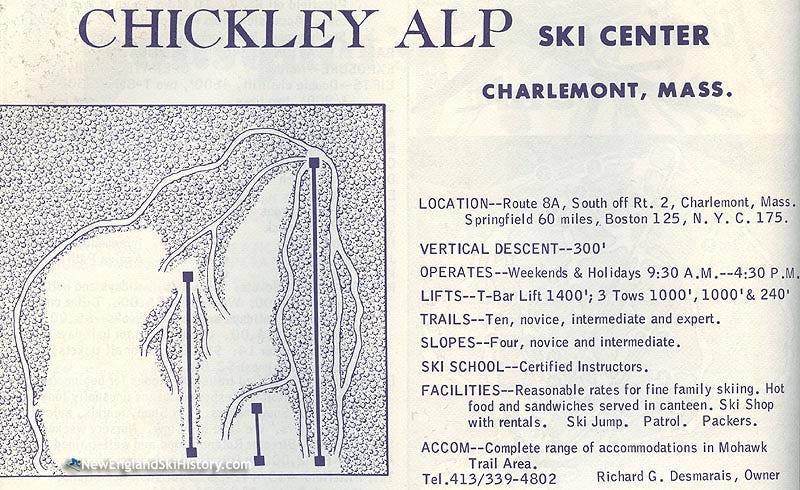
Jan 16, 2023
Podcast #113: Mt. Spokane General Manager Jim van Löben Sels
This podcast hit paid subscribers’ inboxes on Jan. 13. It dropped for free subscribers on Jan. 16. To receive future pods as soon as they’re live and to support independent ski journalism, please consider an upgrade to a paid subscription. Who Jim van Löben Sels, General Manager of Mt. Spokane , Washington Recorded on January 9, 2023 About Mt. Spokane Click here for a mountain stats overview Owned by: Mt. Spokane 2000, a nonprofit group Pass affiliations: Freedom Pass – 3 days each at these 20 ski areas Reciprocal partners: 3 days each at Mt. Ashland, Mount Bohemia, Great Divide, Loup Loup, Lee Canyon, Snow King, White Pass, Ski Cooper Located in: Mt. Spokane State Park, Washington Year opened: 1938 Closest neighboring ski areas: 49 Degrees North (1 hour, 45 minutes), Silver Mountain (1 hour, 45 minutes), Schweitzer (2 hours, 10 minutes) – travel times may vary considerably in winter Base elevation: 3,818 feet Summit elevation: 5,889 feet Vertical drop: 2,071 feet Skiable Acres: 1,704 Average annual snowfall: 300 inches Trail count: 52 (15% advanced/expert, 62% intermediate, 23% beginner) Lift count: 7 (1 triple, 5 doubles, 1 carpet) Why I interviewed him Perception is a funny thing. In my Michigan-anchored teenage ski days any bump rolling more than one chairlift uphill seemed impossibly complex and interesting. Caberfae (200 acres), Crystal (103), Shanty Creek (80), and Nub’s Nob (248 acres today, much smaller at the time) hit as vast and interesting worlds. That set my bar low. It’s stayed there. Living now within two and a half hours of a dozen thousand-plus-footers feels extraordinary. In less than an instant I can be there, lost in it. Teleportation by minivan. Go west and they think different. By the millions skiers pound up I-70 through an Eisenhower Tunnel framed by Loveland, to ski over the pass. Breck, Keystone, Copper, A-Basin, Vail, Beaver Creek – all amazing. But Loveland covers 1,800 acres standing on 2,210 vertical feet – how many Colorado tourists have never touched the place? How many locals? It seems skiers often confuse size with infrastructure. Loveland has one high-speed chairlift. Beaver Creek has 13. But the ski area’s footprint is only 282 acres larger than Loveland’s. Are fast lift rides worth an extra 50 miles of interstate evacuation drills? It seems that, for many people, they are. We could repeat that template all over the West. But Washington is the focus today. And Mt. Spokane. At 1,704 acres, it’s larger than White Pass (1,402 acres), Stevens Pass (1,125), or Mt. Baker (1,000), and just a touch smaller than Summit at Snoqualmie (1,996). But outside of Spokane (metro population, approximately 600,000), who skis it? Pretty much no one. Why is that? Maybe it’s the lift fleet, anchored by five centerpole Riblet doubles built between 1956(!) and 1977. Maybe it’s the ski area’s absence from the larger megapasses. Maybe it’s proximity to 2,900-acre Schweitzer and its four high-speed lifts. Probably it’s a little bit of each those things. Which is fine. People can ski wherever they want. But what is this place, lodged in the wilderness just an hour north of Washington’s second-largest city? And why hadn’t I heard of it until I made it my job to hear about everyplace? And how is Lift 1 spinning into its 67th winter? There just wasn’t a lot of information out there about Mt. Spokane. And part of The Storm’s mission is to seek these places out and figure out what the hell is going on. And so here you go. What we talked about Fully staffed and ready to roll in 2023; night skiing; what happened when Mt. Spokane shifted from a five-day operating week to a seven-day one; a winding career path that involved sheep shearing, Ski Patrol at Bear Valley, running a winery, and ultimately taking over Mt. Spokane; the family ski routine; entering the ski industry in the maw of Covid; life is like Lombard Street; Spokane’s long-term year-round business potential; who owns and runs Mt. Spokane; why and how the ski area switched from a private ownership model to a not-for-profit model; looking to other nonprofit ski areas for inspiration; a plan to replace Spokane’s ancient lift fleet and why they will likely stick with fixed-grip chairlifts; the Skytrac-Riblet hybrid solution; sourcing parts for a 67-year-old chairlift; how much of Lift 1 is still original parts; which lift the mountain will replace first, what it will replace it with, and when; the virtues of Skytrac lifts; parking; the Day-1-on-the-job problem that changed how Jim runs the mountain; why Northwood lift was down for part of January; what it took to bring the Northwood expansion online and how it changed the mountain; whether future expansions are possible; Nordic opportunities; working with Washington State Parks, upon whose land the ski area sits, and how that compares to the U.S. Forest Service; whether Mt. Spokane could ever introduce snowmaking; how eastern Washington snow differs from what falls on the west side of the state; glading is harder than you think; where we could see more glades on the mountain; the evolution of Spokane’s beginner terrain; why Mt. Spokane tore out its tubing lanes; expanding parking; which buildings could be updated or replaced and when; whether we could ever see lodging at the mountain; why the mountain sets its top lift ticket price at $75; why Mt. Spokane joined Freedom Pass; exploring the mountain’s reciprocal pass partnerships and whether that network will continue to grow; and the possibility of joining the Indy Pass. Why I thought that now was a good time for this interview In August, Troy Hawks, the marketing mastermind at Sunlight and the administrator of the Freedom Pass, emailed to tell me that Mt. Spokane was joining the Freedom Pass. I asked him to connect me with the ski area’s marketing team for some context on why they joined (which I included in this story ). Then I asked if Jim would like to join me on the podcast. And he did. That’s the straight answer. But Mt. Spokane fits this very interesting profile that matches that of many ski areas across the country: a nonprofit community hill with dated infrastructure and proximity to larger resorts that’s been pushed to the brink not of insolvency but doors-bursting capacity despite successive waves of macro-challenges, including Covid and EpKon Mania. Weren’t these places supposed to be toast? As a proxy for the health of independents nationwide, Mt. Spokane seemed like as good a place as any to check in. There’s another interesting problem here: what are you going to do with a Riblet double built in 1956? The thing is gorgeous , tapering low and elegant up the hillside, a machine with stories to tell. But machines don’t last forever, and new ones cost more than some whole ski areas. Mt. Spokane also has no snowmaking and dated lodges and too little parking. Will it modernize? If so, how? Does it need to? What is that blend of funk and shine that will ensure a mountain’s future without costing its soul? In this way, too, Mt. Spokane echoes the story of contemporary independent American skiing: how, and how much, to update the bump? Jim, many will be happy to learn, has no ambitions of transforming Mt. Spokane into Schweitzer Jr. But he does have a vision and a plan, a way to make the mountain a little less 1950s and a little more 2020s. And he lays it all out in a matter-of-fact way that anyone who loves skiing will appreciate. Questions I wish I’d asked I’m so confused by Mt. Spokane’s trailmap. Older versions show the Hidden Treasure area flanking the main face: While new versions portray Hidden Treasure as a distinct peak. Again: Meanwhile, Google Maps doesn’t really line up with what I’m seeing above: While I love the aesthetic of Mt. Spokane’s trailmap, it seems wildly out of scale and oddly cut off at the bottom of Hidden Treasure. The meanings of the various arrows and the flow of the mountain aren’t entirely clear to me either. Really, this is more a problem of experience and immersion than anything I can learn through a knowledge transfer. A smart professor made this point in journalism school: go there. I really should be skiing these places before I do these interviews, and for a long time, I wouldn’t record a podcast about a ski area I hadn’t visited. But I realized, a year and a half in, that that would be impractical if I wanted to keep banging these things out, particularly as I reached farther into the western hinterlands. Sometimes I have to do the best I can with whatever’s out there, and what’s out there can be confusing as hell. So I guess I just need to go ski it to figure it out. What I got wrong * I intimated that Gunstock was a nonprofit ski area, but that is not the case. The mountain contributes revenue to its owner, Belknap County, each season. * I stated that Mt. Spokane didn’t have any beginner surface lifts. In fact, it has a carpet lift. * Jim and I discussed whether Vista Cruiser was the longest contiguously operating chairlift in the United States. It’s not – Hemlock has been serving Boyne Mountain, Michigan, since 1948. It’s a double that was converted from a single that originally served Sun Valley as America’s first chairlift in the 1930s. Still, Vista Cruiser may be the most intact 1950s vintage lift in America. I really don’t know, and these things can be very hard to verify what with all the forgotten upgrades over the years, but it really doesn’t matter: a 67-year-old chairlift is a hell of an impressive thing in any context. * While discussing reciprocal agreements, I said, rather hilariously, that Mt. Ashland was “right there in Oregon.” The ski area is, in fact, an 11-hour drive from Mt. Spokane. I was vaguely aware of how dumb this was as I said it, but you must remember that I grew up in the Midwest, meaning an 11-hour drive is like going out to the mailbox. Why you should ski Mt. Spokane Let’s start here: How many 2,000-vertical-foot mountains post those kind of rack rates? A few, but fewer each year. And if you happen to have a season pass to any other Freedom Pass ski area, you can cash in one of your Mt. Spokane lift tickets as you’re floating through. As for the skiing itself, I can only speculate. It looks like typical PNW wide-open: wide runs, big treed meadows, bowls, glades all over. Three hundred inches per winter to open it all up. I mean there’s really not much else that’s necessary on my have-a-good-time checklist. Podcast Notes * Jim mentioned that Schweitzer was working on adding parking. More details on their plan to plug 1,400 more spaces into the mountain here . * I was shocked when Jim said that Mt. Spokane’s $75 lift tickets ($59 midweek) were the second-most expensive in the region after Schweitzer’s , which run $110 for a full-day adult pass. But he’s correct: 49 Degrees North runs $72 on weekends and holidays and $49 midweek. Silver Mountain is $71 on weekends (but $65 midweek). And Lookout Pass is $66 on weekends and $55 midweek. I guess the memo about $250 lift tickets hasn’t made its way up I-90 just yet. * The best way to support Mt. Spokane, which is a nonprofit ski area, is to go buy a lift ticket. But you can also donate here . * Here’s a bit more Mt. Spokane history . * And some stoke Brah: The Storm publishes year-round, and guarantees 100 articles per year. This is article 4/100 in 2023, and number 390 since launching on Oct. 13, 2019. Want to send feedback? Reply to this email and I will answer (unless you sound insane, or, more likely, I just get busy). You can also email skiing@substack.com . Get full access to The Storm Skiing Journal and Podcast at www.stormskiing.com/subscribe
Jan 1, 2023
Podcast #112: Aspenware CEO Rob Clark
To support independent ski journalism, please consider becoming a free or paid subscriber. This podcast hit paid subscribers’ inboxes on Dec. 29. It dropped for free subscribers on Jan. 1. To receive future pods as soon as they’re live, please consider an upgrade to a paid subscription. Who Rob Clark, CEO of Aspenware , an e-commerce and software company Recorded on December 12, 2022 About Aspenware Aspenware’s website declares that it’s time to “modernize your mountain.” As far as corporate sloganeering goes, this is a pretty good one. Skiers – like everyone – live on their phones. Ski areas need to meet them there – to sell them lift tickets, process their lunch order, sign their liability waivers, and rent them skis. This is what Aspenware does. “Close your ticket windows,” one of the company’s ad campaigns insists, “you don’t need them.” Alterra and Aspen Skiing Company agree. Earlier this year, the companies formed a joint venture to purchase Aspenware. Why I interviewed him I spend a lot of time rambling about lifts and terrain and passes – the meat of the lift-served skiing world; how resorts shape an interesting experience, and how skiers access it and move through it. But a modern ski experience does not just mean fast lifts and great snowmaking and diverse terrain offerings and passes that include the nine moons of Endor. It also means mitigating the ski day’s many built-in points of misery, which mostly have to do with lines. Everything we need to do that is already built into your smartphone. Ski areas just have to figure out how to tap that technology to streamline the experience. Aspenware is doing that. What we talked about Relocating to New England after nearly two decades in Colorado; Peek’N Peak; Holiday Valley; an Ohio boy goes West; 1-800-SKI-VAIL; running the Vail Mountain ticket windows in the pre-Epic Pass, everyone-buys-a-walk-up-ticket days; the Epic Pass debuts; RFID debuts; RTP in its heyday; a brief history of Aspenware and its evolution into a ski industry technology powerhouse; one of the largest organisms in the world; what it means to modernize a ski area with technology; how United Airlines inspired a pivot at Aspenware; how the ski industry went from an early tech adopter to a laggard; the problem with legacy tech systems; what happens when people ask me where they should go skiing; what happened when Covid hit; why some resorts ticket windows “will never open again”; tech resistance; “I’m on a mission to get technology considered in the same breath as lifts and snowmaking”; do ski areas need tech to survive?; what skiing is competing against; why Alterra and Aspen formed a joint venture to purchase Aspenware; which bits of tech it makes sense to develop in-house; the Shopify of skiing?; which tech skiers should expect in the future; Vail’s decision to move Epic Passes to phones next year; I still don’t think trailmaps belong on phones (exclusively); interactive trailmaps are terrible; why skiers should own their resort data; the evolution of dynamic pricing; and the one thing that actually makes skiers purchase lift tickets. Why I thought that now was a good time for this interview As we all know, Covid supercharged the skiing tech cycle. In the eight months between the March 2020 shutdowns and the November-ish re-openings, the nation’s 470-odd ski areas had to figure out how to keep people as far away from each other as possible without blowing up the entire industry. The answer, largely, was by digitizing as much of the experience as possible. Aspenware met that moment, and its momentum has continued in the two years since. Podcast Notes * Rob and I guessed a bit at the debut price of the Epic Pass back in 2008 – it was $579 for adults and $279 for children. * Rob referenced Start with Why , a business leadership book by Simon Sinek – you can buy it here . * I’ll make the same disclaimer with Aspenware as I did with OpenSnow: while Aspenware is a Storm advertising partner, this podcast was not part of, and is not related to, that partnership. Aspenware did not have any editorial input into the content or editing of this podcast - which is true of any guest on any episode (Rob did request one non-material cut in our conversation, which I obliged). I don’t do sponsored content. The Storm is independent ski media, based on reporting and independently verified facts - any opinion is synthesized through that lens, as it is with any good journalism outlet. The Storm publishes year-round, and guarantees 100 articles per year. This is article 139/100 in 2022, and number 385 since launching on Oct. 13, 2019. Want to send feedback? Reply to this email and I will answer (unless you sound insane, or, more likely, I just get busy). You can also email skiing@substack.com . The Storm is exploring the world of lift-served skiing year-round. Join us. Get full access to The Storm Skiing Journal and Podcast at www.stormskiing.com/subscribe
Dec 30, 2022
Podcast #111: SMI Snow Makers President Joe VanderKelen
To support independent ski journalism, please consider becoming a free or paid subscriber. This podcast hit paid subscribers’ inboxes on Dec. 27. It dropped for free subscribers on Dec. 30. To receive future pods as soon as they’re live, please consider an upgrade to a paid subscription. Who Joe VanderKelen, President of SMI Snow Makers Recorded on November 28, 2022 About SMI Snow Makers SMI is the largest U.S.-based snowmaking manufacturer, and one of the biggest such outfits in the world. Their guns sit at more than 1,000 facilities – mostly, but not exclusively, ski areas – all over the world. The company is based in Midland, Michigan, a place so flat that, if you turned it on its side, you’d roll forever and then simply tumble off the edge of the planet. An odd-seeming locale, perhaps, for a snowmaking manufacturer, until you’ve spent a winter there on those windy, frozen plains. SMI is not what we’d call a “consumer-facing brand,” but you’ll see their product markings - V2, Axis, Grizzly, FreedomX, Puma, PoleCat, Wizzard - as you ski around. Super Puma is the one I seem to see most often, a stocky cannon with adjustable footings, perched hill-wise like a medieval defense. SMI’s various guns have served eight Olympic venues, a point of immense pride for what is still a family-run operation. Joe’s parents founded the company back in the ‘70s. He’s been running it since 1991. You can learn more about them here: If you’re ever driving US 10 through central Michigan, you can’t miss the SMI factory and HQ, seated off the freeway just past the junction with Business 10 as you head west: Why I interviewed him A few weeks back, I wrote about the heroic efforts of ski areas throughout the Midwest, Mid-Atlantic, and Northeast to open in November in spite of abnormally warm early-season weather. After nodding to the usual aggressive corporate-owned badasses such as Sunday River and Killington, I called out some of the smaller operations that cracked open around the same time: More impressive, however, was New York State-owned Belleayre, seated just over two hours north of New York City, which opened the same day as Sugarloaf, beating most of New England to launch. Sister resort Gore also opened that day. Whiteface went live the following day, delivering its first-ever opening on the mountain’s full 3,166-foot vertical drop. Vail Resorts’ Hunter Mountain opened that day as well. Windham, five miles away (as the crow flies), opened Monday, Nov. 21. Further south, Bousquet, Massachusetts; Wisp, Maryland; and Massanutten, Virginia opened Nov. 25. In never-snowy Indiana, Perfect North opened Nov. 22, the mountain’s third-earliest opening in its 43-season history. These sudden openings were not, I continued, spontaneous: These ski areas are not anomalies. They did not get lucky. Their rapid openings under marginal conditions across vast and varied geographic regions are the direct result of yearslong investments in better and more efficient snowmaking. They are the best-case present, yes, showcases of the most technologically advanced snowmaking equipment. But they also represent the future. One in which ski area operators are not passive victims of climate change, but active combatants against it, making more snow than ever in spite of less-than-ideal conditions, and doing so with equipment that uses a fraction of the energy of previous generations of snowmaking machinery. Much of that machinery comes from SMI, including nearly the entire system at Perfect North: Perhaps the most improbable get-open-and-stay-open outfit in the country is Perfect North. The ski area’s base sits at just 400 feet. Of the 108 operating Midwest ski areas, only two sit farther south (Vail-owned Paoli Peaks, Indiana and Hidden Valley, Missouri). And yet, the ski area opened on just four partial days of snowmaking, which Perfect North General Manager Jonathan Davis characterized as “two mediocre nights, one fantastic night, and one good night.” Despite having just six additional snowmaking windows since, the ski area now sits at just over 50 percent open. Davis credits a few factors for this quick ramp-up: a 12,000-gallon-per-minute pumphouse feeding 260 snowguns, a seat on a valley floor that traps cold air, and institutional knowledge that can often predict snowmaking windows that the local weather forecasters miss. Again, this ski area sits in Indiana , where it snows like four inches per decade. There should not be skiing there. But there is. Because of SMI. Lift-served skiing in the United States does not exist without snowmaking. At least not as a commercial enterprise. Maybe it’s something a few Bear-Trap Billys do, tromping off into the Cascades in their Army surplus jackets and skinny skis. Perhaps there are even a few ski areas. But without the big-city bases of voyaging tourists, who learn and practice on locals like Mountain Creek, New Jersey and Wachusett, Massachusetts and Afton Alps, Minnesota and Alpine Valley in Michigan, Wisconsin, and Ohio, the economic superstructure to support large-scale Rocky Mountain operations simply isn’t there. What we talked about The SMI story; Michigan skiing; a life of adventure running a global company; breaking down the company’s footprint; how one of the flattest places on the planet became one of the global epicenters of snowmaking; Made in the USA pride; getting ahead of supply-chain problems and heading off future shortages; the company’s one-of-a-kind snowmaking facility and why it’s special; a primer on the global snowmaking industry and SMI’s place in it; Snowmaking 101; why resorts blow snow into piles; the evolution of snow machines over time into more efficient, higher-capacity, simpler machines that make better snow and work in more variable temperatures; wet bulb temperature; making snow at the extremes; what snowmaking automation is and what it means; the amazing weather variability on a single mountain; “automated doesn’t mean unattended”; ongoing resistance to automation and whether SMI will continue to offer manual snowmaking equipment; where snowmaking tech is headed in the future; swapping mechanical problems for tech problems as equipment grows more sophisticated; breaking down SMI’s product lines; all-weather snowmaking; the lifecycle of a snowgun and how long the best of them can last; maintaining guns after install; creating a new system from scratch; a snowmaking system is like “a golf course irrigation system on a mountain,” but one that requires “really expensive sprinkler heads”; returning snowmaking water to the watershed; responding to the reductive environmental complaints about snowmaking as an energy and resource drain; [yes that’s an NYC car alarm blaring in the background]; energy efficiency as a mission; creative energy-saving strategies; the amazing snowmaking installation that modernized Arizona Snowbowl; snowmaking as wildfire mitigation tool; how the ski industry can push back against the narrative that it’s an energy hog and environmental liability; creating a new wonder of the world to pump snow onto the Olympic venues in Sochi; the resilience of skiing in the age of climate change; whether every ski area will eventually need snowmaking; intel on the next potential great ski regions; and skiing in Ukraine. Why I thought that now was a good time for this interview Listeners constantly write to me suggesting this or that interview. I appreciate this, and respond even when the suggestion is some version of “my cousin skied every ski area in Ohio in a single season and he has a great story and you should feature him on your podcast.” And I’m like thanks Bro but if I wanted to do podcasts with people my listeners wouldn’t care about, I know plenty of them in real life. The Storm interviewee profile is not so much exclusive as it is well-defined: to qualify for this seat, you really either need to run a mountain, be in charge of people who do, write about lift-served skiing for a living, run some kind of website that’s materially additive to the knowledge base around the sport, or make something that’s fundamental to the enterprise, such as chairlifts or trailmaps. Joe, obviously, falls into the latter category. And he also holds the unofficial title of most-requested interview by my listeners/readers. Skiers really, really want to hear about snowmaking. Many – especially those who work in skiing – called out Joe in particular. So here you go. So why did I wait so long if this one was so obvious? Well, I tend to favor subjects I understand. And snowmaking, despite its relative simplicity from a mechanical point of view, has always seemed a bit intimidating as a discussion point. This matters when I’m shaping the questions that guide the interview. But, last summer, I finally toured the SMI factory and met Joe and his team in person. I grilled him for a couple hours and he showed me around and I was like yeah let’s do this. Joe was an outstanding guest, who’s lived his craft for decades, and I probably should have done it a lot sooner. What I got wrong I said that Taos was protected from wildfires because it sat at the end of a “valley.” I meant to say “canyon.” I discussed this at length with Taos CEO David Norden on the podcast last year: Podcast Notes * I mentioned that various folks claim to have invented snowmaking. Was it a Hollywood technical director in 1934? Was it a trio of Connecticut inventors ? Grossinger’s Resort in the Catskills? Mohawk Mountain ? A Toronto ski club ? It seems as though half the ski area websites in America include some tale about Old Cyrus Jenkins III creating the world’s first snowgun with a hose and a ceiling fan strapped to a modified table saw. There’s a reason for that: from a mechanical and physics point of view, snow is not that hard to make. What’s hard is doing it well, which is why there are so few industrial-grade snowmaking companies today. Who made the first snowgun? I don’t really know or, frankly, care, and I’ll let the historians fight it out. * I actually grew up in Midland County, Michigan, where SMI’s headquarters is located. There are no ski areas there. The closest, when I grew up in the small town of Sanford, were Apple Mountain in Freeland (now closed), Mott Mountain in Farwell (closed), and Snow Snake up in Harrison (still, thankfully, operating). All were less than an hour away, but SMI was the closest ski-related landmark. The factory sits directly off the US 10 expressway, the most important road in the area, and its multi-colored mural, rows of snowguns, and piles of manmade snow are impossible to miss while driving past. The Storm publishes year-round, and guarantees 100 articles per year. This is article 137/100 in 2022, and number 383 since launching on Oct. 13, 2019. Want to send feedback? Reply to this email and I will answer (unless you sound insane or, more likely, I just get busy). You can also email skiing@substack.com . The Storm explores the world of lift-served skiing year-round. Join us. Get full access to The Storm Skiing Journal and Podcast at www.stormskiing.com/subscribe
Dec 27, 2022
Podcast #110: Worcester Telegram & Gazette Snowsports Columnist Shaun Sutner
To support independent ski journalism, please consider becoming a free or paid subscriber. This podcast hit paid subscribers’ inboxes on Dec. 24. It dropped for free subscribers on Dec. 27. To receive future pods as soon as they’re live, please consider an upgrade to a paid subscription. Who Shaun Sutner, snowsports columnist for the Worcester Telegram & Gazette and Telegram.com Recorded on November 21, 2022 About Shaun Sutner Shaun is a skier, a writer, and a journalist based in Worcester, Massachusetts. For the past 18 years, he’s been pumping out a snowsports column from Thanksgiving to April. For the past two years, he’s joined me on The Storm Skiing Podcast to rap about it. You should follow Shaun on social media to stay locked into his work: Why I interviewed him I’ve often said that the best interviews are with people who don’t have bosses. That’s true. Mostly. But not exclusively. Because journalists are just as good. And that’s because they possess many attributes crucial to holding an interesting conversation: on-the-ground experience, the ability to tell a story, and a commitment to truth. Really. That is the whole point of the job. Listen to the Storm Skiing Podcasts with Eric Wilbur , Jackson Hogen , or Jason Blevins . They are among the best of the 122 episodes I’ve published before today. It’s a different gig from the running-a-mountain-and-making-you-want-to-ski-that-mountain post that 75 percent of my guests hold. And these writers deliver a different kind of conversation, and one that enriches The Storm immensely. I’d like to host more ski journalists, but there just aren’t that many of them. It’s a weird fact of America and skiing that there are far more ski areas than there are American ski journalists. The NSAA lists 473 active ski areas . NASJA (the North American Snowsports Journalists Association) counts far fewer active members. The NBA, by contrast, has 30 teams and perhaps thousands of reporters covering them around the world. There’s a lot more happening in skiing than there are paid observers to keep track of it all, is my point here. But there are a few. And Sutner is one of the real pros – one who’s been skiing New England for most of his life, and writing about it for decades. His column is enlightened and interesting, essential reading for the entire Northeast. We had a great conversation last year , and we agreed to make it an annual thing. What we talked about Well I still can’t pronounce “Worcester,” but we didn’t discuss it this time which thank God; opening day vibes at Mount Snow; comparing last year’s days-skied goal to reality; that Uphill Bro life and chewing up all our pow Brah; surveying the different approaches to New England uphill access; cross-country skiing and the opportunity of the Indy Pass; skiing in NYC; the countless ski areas of Quebec; Tremblant, overrated?; Le Massif; pass quivers; the importance of racing and race leagues to recreational skiing; why the rise of freeskiing hasn’t killed ski racing; Sutner’s long-running snowsports column; the importance of relationships in journalism; the Wachusett MACHINE; Sutner defends the honor of Ski Ward, my least-favorite ski area; the legacy of Sutner’s brother Adam, former executive at Vail, Jackson Hole, and Crystal, who passed away suddenly last year; reaction to PGRI purchasing Jay Peak; what’s next for Burke?; the future of Gunstock; Mount Sunapee crowding; Crotched, Attitash, and Wildcat’s 2021-22 struggles; what the Epic Day Pass says about Vail’s understanding of New Hampshire; whether Vail’s pay increases and lift ticket sales limits will be enough to fix the company’s operational issues in New Hampshire; the impact of Kanc 8 on Loon and what that could mean for new lifts at Stowe and Mount Snow; New England’s lift renaissance; eight-packs and redistributing skiers; let’s play Fantasy Ski Resort owner with Sugarloaf; the investment binge at Loon; high-speed double chairs; will Magic ever get Black Quad live?; the rebuilding of Catamount; a New England lift wishlist; Berkshire East; fake vertical; Smuggs’ lift fleet; the future of Big Squaw; The Balsams; Whaleback; Granite Gorge; and Tenney. Why I thought that now was a good time for this interview Well the intent was to push this podcast out alongside the debut of Sutner’s first column of the year, on Thanksgiving Day. I, uh, missed that target. But I’ll fix that whole timing bit, and you can expect a Sutner appearance on The Storm Skiing Podcast every Thanksgiving week for as long as he’s interested in doing it. What I got wrong * I noted in the podcast that it was a 15-minute drive from Mountain Creek to High Point Cross Country Ski Center in New Jersey – it’s closer to half an hour. * Sutner and I referenced Seven Brothers at Loon as an unfinished lift. That was true when we recorded this podcast on Nov. 21, but the lift opened on Dec. 17. * Sutner referenced a New England lift project that he knew about but that was not public yet – it’s public now, and you can read about it here . * Shaun referred to a “little-known” summit T-bar at Sugarloaf. It must be a really well-kept secret, because I can’t find any reference to it, now or in the past . Why you should read Sutner’s column Because what I wrote last year is still true: Because it’s focused, intelligent, researched, fact-checked, spell-checked, and generally just the sort of professional-level writing that is increasingly subsumed by the LOLing babble of the emojisphere. That’s fine – everyone is lost in the scroll. But as the pillars of ski journalism burn and topple around us, it’s worth supporting whatever’s left. Gannett, the parent company of the Worcester Telegram & Gazette, has imposed fairly stringent paywalls on his work. While I think these local papers are best served by offering a handful of free articles per month, the paper is worth supporting if it’s your local – in the same way you might buy a local ski pass to complement your Epkon Pass. Good, consistent writing is not so easy to find. Sutner delivers. Support his craft. I wish there was one place where all of Sutner’s columns were collected, but the reality of being part of a larger entity is that your work gets mashed together with everything else. Here are direct links to Sutner’s columns so far this season: * Skiing Vail Remains a Treasured Rocky Mountain Experience * Plenty of Updates and Upgrades have Crotched Mountain Resort Thriving in New Hampshire * Key Improvements Signal Strong Seasons Ahead for Attitash, Wildcat Ski Areas * World Cup Ski Racing Continues to Thrive at Killington Sutner’s column tends to be less-newsy, more focused on the long-term than the what-just-happened? But, thanks to decades of experience and a deep well of sources, he can fire off a breaking news story in a hurry when he needs to. Earlier this month, for example, he turned around this dispatch about Wachusett’s sudden cancellation of its volunteer Ski Patrol program – known locally as “Rangers” – in just a few hours: Wachusett Mountain Ski Area ended its volunteer Ranger program at the start of the ski and snowboard season last month in an unexpected move that could have safety consequences on the mountain's busy slopes, at least in the short term. The ski area apparently was forced into ending or suspending the program due to an investigation by the state attorney general's office into whether treating the Rangers as volunteers violates state labor laws. A spokeswoman for the AG's office declined to comment on whether the office is investigating Wachusett. The case could have national ramifications in the ski industry, where more than 600 ski areas across the country use volunteer ski patrollers under the umbrella of the nonprofit National Ski Patrol, as well as volunteers similar to Rangers. Read the full story here: Podcast Notes * Sutner and I discussed Wachusett quite a bit, and specifically my podcast interview with resort President Jeff Crowley from last year: * We also had a long discussion about Ski Ward, which stemmed from this write-up I published in February: Ski Ward , 25 miles southwest, makes Nashoba Valley look like Aspen. A single triple-chair rising 220 vertical feet. A T-bar beside that. Some beginner surface lifts lower down. Off the top three narrow trails that are steep for approximately six feet before leveling off for the run-out back to the base. It was no mystery why I was the only person over the age of 14 skiing that evening. Normally my posture at such community- and kid-oriented bumps is to trip all over myself to say every possible nice thing about its atmosphere and mission and miraculous existence in the maw of the EpKonasonics. But this place was awful. Like truly unpleasant. My first indication that I had entered a place of ingrained dysfunction was when I lifted the safety bar on the triple chair somewhere between the final tower and the exit ramp and the liftie came bursting out of his shack like he’d just caught me trying to steal his chickens. “The sign is there,” he screamed, pointing frantically at the “raise bar here” sign jutting up below the top station just shy of unload. At first I didn’t realize he was talking to me and so I ignored him and this offended him to the point where he – and this actually happened – stopped the chairlift and told me to come back up the ramp so he could show me the sign. I declined the opportunity and skied off and away and for the rest of the evening I waited until I was exactly above his precious sign before raising the safety bar. All night, though, I saw this b******t. Large, aggressive, angry men screaming – screaming – at children for this or that safety-bar violation. The top liftie laid off me once he realized I was a grown man, but it was too late. Ski Ward has a profoundly broken customer-service culture, built on bullying little kids on the pretext of lift safety. Someone needs to fix this. Now. Look, I am not anti-lift bar. I put it down every time, unless I am out West and riding with some version of Studly Bro who is simply too f*****g cool for such nonsense. But that was literally my 403rd chairlift ride of the season and my 2,418th since I began tracking ski stats on my Slopes app in 2018. Never have I been lectured over the timing of my safety-bar raise. So I was surprised. But if Ski Ward really wants to run their chairlifts with the rulebook specificity of a Major League Baseball game, all they have to do is say, “Excuse me, Sir, can you please wait to get to the sign before raising your bar next time?” That would have worked just as well, and would have saved them this flame job. For a place that caters to children, they need to do much, much better. As I’m wont to do, I followed that write-up with casual Ward-bashing on Twitter. Sutner took exception to this, saying that I was oversimplifying it and working on too small a sample size. Which, fair enough. He further defends the ski area’s honor in our pod, though frankly I remain salty about the place. * Sutner spoke at length about his brother Adam, a member of Crystal Mountain, Washington’s executive team, who died suddenly in April. Shaun wrote his younger brother’s obituary, which reads in part: Adam lived and worked overseas in the advertising and tech business in Amsterdam, Brussels, London, Paris, Tokyo and Melbourne. He also lived and worked in advertising and the ski industry in New York City, Chicago, Denver, Minneapolis, Los Angeles, San Francisco, and in Vail, Colo., Jackson Hole, Wyo., and Greenwater, Wash. He lived the life he wanted to live. He was widely known for working hard and being a leader in the ski industry profession he loved, often starting work before dawn. Adam loved French Martinis, fast cars and motorcycles, high-speed skiing, music, reading literature and non-fiction, wok cooking, James Bond and art heist caper movies and smoking his beloved cigarillos. He was an ardent fan of international soccer and rugby. He liked to pick up and drop off at the airport the steady stream of visitors who he accommodated, with utmost hospitality, at his various well-appointed homes. He collected watches, fine art and mid-century modern furniture and accessories. He was a witty storyteller, entertaining family and friends with tales of his lifelong travels and adventures. He had an acerbic sense of humor and keen intellect. Read the full obit here: The Storm publishes year-round, and guarantees 100 articles per year. This is article 136/100 in 2022, and number 382 since launching on Oct. 13, 2019. Want to send feedback? Reply to this email and I will answer (unless you sound insane or, more likely, I just get busy). You can also email skiing@substack.com . Get full access to The Storm Skiing Journal and Podcast at www.stormskiing.com/subscribe
Dec 13, 2022
Podcast #109: OpenSnow Founding Meteorologist and CEO Joel Gratz
To support independent ski journalism, please consider becoming a free or paid subscriber. This podcast hit paid subscribers’ inboxes on Dec. 10. It dropped for free subscribers on Dec. 13. To receive future pods as soon as they’re live, please consider an upgrade to a paid subscription. Who Joel Gratz, Founding Meteorologist and CEO of OpenSnow Recorded on November 17, 2022 About OpenSnow OpenSnow is a snow and weather forecasting service. It gives you all this, depending on whether or not you want to pay for it: Gratz founded OpenSnow 11 years ago with an email list of 37 people. The company’s list now numbers 3 million. Or so. It’s like counting flakes in a storm. There are lots of them. The service pinpoints snowfall everywhere on the planet. So Backcountry Bro, you’re covered. Lift-Served Larry (that’s me), you’re covered too. Uphill Harvey – we really wish you’d just pick a side and stop f*****g up the grooming before the lifts open. Anyway, if you love snow and want to know how much of it is going to fall, and where and when, then this app should be your Excalibur. Wield it wisely, Fellow Snowbum. Why I interviewed him You know how some people want to live in Florida and make exasperated sounds when more snow materializes on the radar and plan wintertime vacations to places like Aruba? Well I am not one of those people. And neither is Joel Gratz. Wintertime is for skiing. And to enjoy skiing as much as possible, it helps to follow the snow around. That’s what Joel, and his brilliant website/app/service, OpenSnow, do. Everyone reading this newsletter is programmed in a different way from Human V1.0. We run toward storms that most humans flee. With urgency. Like some snowy version of a firefighter. Like insane people. Because we know what the genuflecting and hysterical weatherman does not: that snow is potent and intoxicating; that it changes the world and everything in it, including the people who immerse themselves within. If an adult charges into a sandbox or waterpark or ballpit, we regard them suspiciously. That stuff is for kids. But if they spend the day bouncing through snow and enter the bar boot-clicking and semi-dazed and white-draped and grinning madly and asking for a tallboy, we ask them to stand up at our wedding. No one gets this but skiers. And so no one could make a truly ski-centric weather app other than a skier. Someone whose headline, upon analyzing an incoming storm, isn’t DEAR GOD DO NOT STEP OUTSIDE STOCK UP ON AMMUNITION AND DRY RATIONS BECAUSE THIS IS IT PEOPLE, but rather DEAR GOD IT’S ABOUT TO SNOW 90 INCHES IN TAHOE GET THERE AS FAST AS POSSIBLE! There are plenty of ways to track the weather, of course. Lots of apps, lots of weather services, lots of social media groups. I haven’t found one better than OpenSnow, where I can look up any specific ski area and see an hour-by-hour and day-by-day snowfall and weather forecast for 10 days into the future. And that’s all I really care about: where will it snow, how much, and when? With a meteorology degree on his wall and a couple decades in his mad-scientist’s snow lab, Gratz is as well-equipped to deliver this information as anyone on the planet. What we talked about How early a ski weather guy wakes up; Joel’s wintertime and powder-day routine; the secrets of good powder skiing; how a meteorologist was born; Shawnee, Pennsylvania; do they even want snow in the Poconos?; Penn State meteorology; skiing Tussey; an Alpine Meadows powder day on racing skis; Boulder as innovation incubator; how a Vail old-timer outsmarted the guy with the fancy meteorology degree; the mystery of mountain microclimates; the missed Steamboat powder day that inspired the creation of OpenSnow; an email goes out to 37 people on a Tuesday night; a fortuitous conversation with Chris Davenport; how long it took OpenSnow to really establish itself; “a lot of your good fortune is just being born when and where you were”; the several simultaneous tech innovations that enabled widespread online weather forecasting; breaking down the various global weather services (GFS, Euro, etc.), and how they work; “modern meteorology is a miracle of cooperation and funding from taxpayers like us all around the world”; translating raw data and forecasts into the thing skiers most care about: how much is it going to snow, when, and where?; removing the human from the forecasting equation; why and how OpenSnow scaled from Colorado to the rest of the world; why OpenSnow doesn’t capture every ski area in the world (yet); snow forecasts for any mapdot on the planet; why OpenSnow shifted to a subscription model and what it meant for the business; La Niña; breaking down the strong early start for the West and the weak weather in New England; dumb meteorology jokes; the two things you need to make snow; breaking down the unique weather systems that determine snowfall for the Cottonwoods, Mt. Baker, Keystone, Tahoe, the Great Lakes, and northern Vermont; how wind impacts snow quality; and America’s snowiest places. Why I thought that now was a good time for this interview The image in the “About OpenSnow” section above distills the benefits of the paid subscription tier succinctly: to tap the service’s best features, you need to pay. It’s worth it. I subscribed long before our partnership, and I continue to. But OpenSnow wasn’t always so arranged. For years, Gratz and his team lived on advertising. At some point, they activated a paywall to access certain features, but much of the site remained free. That changed last year, when OpenSnow migrated the majority of its content to its paid tier. Gratz explains why in the podcast, but this business decision resonated with me for obvious reasons. To remain relevant and useful, most digital ski-focused media platforms require an intense and consistent focus. That requires time, energy, passion, and commitment – all attributes that our capitalist society has deemed worth paying for in the form of labor. Labor, we decided a long time ago, cannot be free. Thus, products produced with labor – and media is a product – require a pricetag to access. This is easier to understand when you’re purchasing a toaster or a car than when you’re buying access to a podcast or a snow forecast. It helps to remember that, in the scope of history, the internet is still pretty new. I grew up without it, and I’m not that old. We’re still figuring out how to price the considerable volume of information that we find there. Most of it, I’ll admit, is worthless, but some of it is worth quite a bit. But several generations of Americans arrived at the internet with the understanding that it was a frivolous add-on, a place to waste time and get in trouble, a soul vacuum that was the domain of creeps and morons. They have a hard time acknowledging the evolution of the web into a utility, an essential pipeline of connection and information, a place of intangible things with tangible value. That was the challenge OpenSnow faced in finding a path to long-term sustainability. And it is the challenge I face with The Storm. I did it for free for as long as I could. The first 2,076 hours of labor were on me. Then I asked for money . The transition went beyond my expectations. Hundreds of people upgraded their subscriptions right away, and hundreds more have upgraded since. New paid subscribers join just about every day. The Storm is now a sustainable operation. And so, having made the same decision – on a much larger scale – is OpenSnow. I’m sure you’ve read about the Great Pacific Garbage Patch , a rat’s nest of floating plastic refuse covering more than 600,000-square-miles of the Pacific Ocean. Most of its contents are microplastics – the smashed-up bits of water bottles and medicine containers and candy-bar wrappers. You just know that floating somewhere in there is a Yeti cooler and fully intact G.I. Joe hovercraft (I keep waiting for Disney to release: Toy Story: Tales of the Garbage Patch , featuring a scrappy band of discarded toys who A-Team their way back to the mainland), but most of it is useless garbage. The internet is a lot like the Great Pacific Garbage Patch: an unfathomable well of junk, sprinkled with a few treasures. There’s a reason I occasionally step out of my ski-area-manager lane to interview journalists or individuals running ski-related websites: I want to help you find the G.I. Joe Killer W.H.A.L.E.s, the things worth scooping out of the water and taking home. Why you should use OpenSnow While OpenSnow is a Storm advertising partner, this podcast was not part of, and is not related to, that partnership. OpenSnow did not have any editorial input into the content or editing of this podcast - which is true of any guest on any episode. I don’t do sponsored content. The Storm is independent ski media, based on reporting and independently verified facts - any opinion is synthesized through that lens, as it is with any good journalism outlet. That said, it’s a great service, and one that I use every day of the winter – that’s why I partnered with them. And part of our partnership is this special link where you can get two free months of OpenSnow. So you should probably take advantage of that so they want to keep working with me: Podcast Notes Joel references Baker’s record snowfall year – it was 1,140 inches from 1998 to ’99. You can read about that and some other big snow totals here . The Storm publishes year-round, and guarantees 100 articles per year. This is article 133/100 in 2022, and number 379 since launching on Oct. 13, 2019. Want to send feedback? Reply to this email and I will answer (unless you sound insane, or, more likely, I just get busy). You can also email skiing@substack.com . The Storm is exploring the world of lift-served skiing year-round - join us. Get full access to The Storm Skiing Journal and Podcast at www.stormskiing.com/subscribe
Dec 1, 2022
Podcast #108: Vail Mountain Vice President and Chief Operating Officer Beth Howard
To support independent ski journalism, please consider becoming a free or paid subscriber. This podcast hit paid subscribers’ inboxes on Nov. 28. It dropped for free subscribers on Dec. 1. To receive future pods as soon as they’re live, please consider an upgrade to a paid subscription. Who Beth Howard, Vice President and General Manager of Vail Mountain, Colorado Recorded on November 14, 2022 About Vail Mountain Click here for a mountain stats overview Owned by: Vail Resorts Pass affiliations: Epic Pass Located in: Vail, Colorado Closest neighboring ski areas: Beaver Creek (20 minutes), Copper Mountain (23 minutes), Ski Cooper (42 minutes), Keystone (42 minutes), Loveland (43 minutes), Arapahoe Basin (47 minutes), Breckenridge (50 minutes) - travel times may vary considerably in winter and heavy traffic. Base elevation: 8,120 feet Summit elevation: 11,570 feet Vertical drop: 3,450 feet Skiable Acres: 5,317 * Front Side: 1,655 Acres * Back Bowls: 3,017 Acres * Blue Sky Basin: 645 Acres Average annual snowfall: 354 inches Trail count: 276 (53% advanced/expert, 29% intermediate, 18% beginner) Lift count: 32 (one 12-passenger gondola, one 10-passenger gondola, 4 six-packs, 14 high-speed quads, 1 fixed-grip quad, 2 triples, 1 T-bar, 3 platters, 5 carpets) Why I interviewed her I articulated this as well as I could a couple months ago, in an article about Vail Resorts’ decision to limit lift ticket sales for the coming ski season: It was a notion quaint and earnest. Simplistic but no less authentic. To start with Vail would have seemed presumptuous. This American place most synonymous with skiing. Three-sided and endless, galloping back into valleys, super-fast lifts shooting in all directions. I wanted to be ready. To feel as though I’d earned it. My first trip West was in 1995. But I did not ski Vail until 2004. In our megapass-driven, social-media-fueled moshpit of a present, I doubt anyone thinks this way anymore. Vail is a social-media trophy – go seize it. But I proceeded slowly to the big time. Primed on Midwest bumps, anything would have seemed enormous. First, the rounds of Summit County. Then Winter Park. As though skiing were a videogame and I could not pass to the higher levels until I’d completed those that came before. And then there it was. That first time standing over Sun Down Bowl, the single groomed path winding toward High Noon below. Eleven thousand feet over Colorado. Sliding down the ridges. Powder everywhere. Back to Blue Sky. Laps all day through unmarked glades. Refills from the sky even though it was April. Three thousand feet of up and down. The enormous complexity of it all. The energy. That impossible blend of wild and approachable. Vail Mountain and – on that same trip – Beaver Creek, were exactly what I needed them to be: the aspirational summit of America’s lift-served skiing food chain. The best mountains I’d ever skied. I won’t say it was The Experience of a Lifetime. But it was the best five days of skiing that I had, up to that point, ever done. I’m not sure what else I can add to that. Vail Mountain sits at the summit of American lift-served skiing. Yes I know, Backflip Bro: the terrain is not as Rad-Gnar as Snowbird or Jackson Hole or Taos or Palisades Tahoe or Big Sky. It does not get as much snow as Alta or Baker or Wolf Creek or Kirkwood. It does not minimize and mitigate crowds like Telluride or Aspen or Sun Valley. But Vail Mountain stands out even on that hall-of-fame lineup. Five thousand-plus acres of approachable terrain seated directly off the interstate. The Big Endless: 18 high-speed chairlifts, the Back Bowls™, a bit of rowdy and wild back in Blue Sky, a frenetic base village. If any mountain in Vail Resorts’ sprawling, intercontinental empire is almost guaranteed to deliver The Experience of a Lifetime™, it’s the namesake OG of them all: Vail Mountain. Even after all the growth and change and the Epic Pass atom bomb, Vail Mountain remains one of the greatest ski areas in North America. It’s also a personal favorite of mine, and one that I’ve been eager to feature on the podcast since I expanded The Storm’s focus from the Northeast to the entire country last year. What we talked about Opening weekend at Vail Mountain; staying open until May in 2022 and whether the ski area could do it again; marking Vail’s 60th anniversary; Vail’s founders; building the mountain and the town from raw wilderness; Vail in the ‘80s; Afton Alps; transitioning from food-and-bev to resort leadership; a Colorado-Tahoe comparison; what it means for Vail Mountain to share the Vail Resorts masthead with Whistler; going deep on the Game Creek Express upgrade and the new Sun Down Express lift; how Vail decides between a four- or six-place lift, and why Game Creek got the promotion to sixer; the future of fixed-grip lifts on Vail Mountain; why it was finally time to build the long-proposed Sun Down lift, and how that will change the ski experience and flow around the mountain; how this happened at High Noon Express (in February 2020), and how unusual it was: How Sun Down may help prevent a repeat; why Vail built Sun Down before the proposed Mongolia Express outlined in the resort’s master plan (see below); thinking through the future of the Eagle Bahn gondola; a potential future portal at West Lionshead and the sorts of lifts we could see there; how Pride Express could evolve up and down the mountain; how the Cascade Village lift could better serve day skiers; the potential for terrain expansion in Blue Sky Basin; the growth and future of snowmaking on Vail Mountain; housing drama with the town at East Vail; why Vail rejected the town’s $12 million offer for the land; how Vail’s housing market has devolved to crisis levels over the decades; what other towns are doing to fix housing and whether any of that could work at Vail; the evolution of two housing markets – one for locals and one at market rate; the potential for Ever Vail; reaction to $275 walk-up lift tickets; and the factors that will go into setting lift ticket limits each day this season. Why I thought that now was a good time for this interview I’ve already written extensively about the valiant and courageous VAIL SHEEP DEFENDERS, an elite squadron whose mission is to ensure that local bighorns only have to poop next to rich people. In May, this group of nincompoops – the Vail Town Council – voted to condemn land where Vail Resorts planned to build 165 beds of worker housing on six acres of a 23-acre parcel (the remainder was to be set aside for bighorn habitat). Vail, which had already spent years permitting the project with the previous council, pushed back, and now the whole disaster has been swallowed by the courts, where it will likely remain for years. Meanwhile, the VAIL SHEEP DEFENDERS somehow missed the groundbreaking on, among other properties, a nearly $8 million, 5,700-square-foot mansion rising on that same bighorn habitat. This image – provided by Vail Resorts – distills the absurdity of the whole thing pretty well: In September, I chatted about this with Colorado Sun reporter Jason Blevins, who has lived in Eagle County for decades. He had a much more nuanced view: “Both sides have completely valid arguments here. Vail Resorts needs housing. They have the property, they went through three years of planning with the previous council to win all the approvals to develop this thing. They created a bighorn sheep management plan … Election came, new council came in, and that new council is more inclined to protect that herd than accommodate with housing. They’ve offered the company different spots in the valley where they could build. But the process has progressed, and it’s along, and Vail is ready to pretty much break ground right now … “Yes, this is about bighorn. That council 100 percent supports the bighorn herd, and in their heart of hearts they are working to protect the bighorn. … And those bighorn have been there longer than us, and this is their winter habitat. They unquestionably come down in the winter … along the highway there.” The whole situation, Blevins told me, is reminiscent of the Telluride Valley Floor drama in the late ‘90s, in which the town and a developer took a land dispute all the way to the Colorado Supreme Court (read the court’s full decision here ). The town ended up paying $50 million to acquire the land. “Think of all the housing you could have build with $50 million in the early 2000s,” Blevins said. Unfortunately, Blevins said, “this one is lining up to follow that track. Could this fight go all the way to the Supreme Court? Could the town of Vail end up having a public fundraising campaign with rich residents giving money to support sheep habitat? Will it go that far? With the complaint filed last week, it certainly appears as though this is going to be a protracted legal battle that will end up costing the town millions and millions of dollars if they buy it from Vail Resorts. And the end result is no more new housing. So the true losers on this are the people in this town who need a place to sleep and live in that town.” You can listen to our full exchange on this topic, including a long discussion of the elusive NIMBY, starting at 56:50: So the housing drama made the pod timely. But so did the fact that Vail is installing two new chairlifts and celebrating its 60th anniversary. So did the fact that its peak-day lift tickets just hit $275 . Really though, I wasn’t sitting around waiting for an excuse to talk about Vail. It’s Vail. One of the greatest ski areas in America. It’s always interesting, always relevant. It’s one of a handful of ski areas that evokes skiing whether you ski 100 days a year or never. Aspen, Telluride, Vail. The podcast was built to score interviews like this: a big-time mountain seated at the heart of our collective lift-served skiing experience. Enjoy. Questions I wish I’d asked I would have liked to have explored the impacts of the mountain town housing crisis on employees and the environment a bit more deeply. What does it mean to have a 50- or 60-mile commute through one of America’s most extreme wintertime environments? How does such a setup further exacerbate the I-70 traffic that everyone so loathes? How sustainable and safe is this whole ecosystem? Last year, Vail Resorts, Alterra, Boyne Resorts, and Powdr – America’s four largest ski area operators – launched “the ski industry’s first unified effort to combat climate change with shared commitments around sustainability and advocacy.” These efforts include portfolio-wide shifts to renewable energy sources, climate advocacy, and “responsible” stewardship of the environment. All admirable and necessary steps toward creating sustainable 21st century businesses. However. I would propose an additional pillar to this joint pledge: these operators must commit to working with local, state, and national governments to encourage building density, expand mass transit, and limit individual car use wherever possible within the mountains. It is not just the ski area operators that are missing this. We built modern U.S. America on the premise of unlimited land and unlimited individual, anytime mobility. But this model does not scale up very well. When Congress passed the Interstate Highway Act in 1956, the nation had 156 million residents. It now has around 338 million. Interstate 70 through the Colorado Rockies is a miracle of engineering and one of the most beautiful roads in the world. But this thoroughfare, combined with poor regional planning and a U.S. American mentality that thinks you can shape the Colorado High Country in the same fashion as suburban Atlanta, have delivered Los Angeles-caliber traffic to the otherwise pristine high alpine. This is not sustainable. It was a dumb way to build a country. Sprawl and our car-centric culture are environmental and human disasters, the invisible antagonists to all our high-minded climate goals. Ski area operators and the municipalities they operate in have an incredible opportunity to showcase a different sort of America: a transit-oriented, weather-resilient, human-centered built ecosystem in which employees walk or ride a bus (or, God help us, a gondola) to work from hubs close to or on the mountain; the great mass of skiers arrive via transport other than a personal vehicle; and a Saturday on Interstate 70 does not resemble a wartime evacuation. For those of you fearful that this means Manhattan-in-the-mountains, that’s not what I’m proposing here. Nor am I suggesting a Zermatt-style ban on individual automobiles. Just a better transit and housing mix so people who don’t want the expense and hassle of wintertime commuting can avoid it. We actually have a pretty good model for this: the college town. Most students live, without cars, in dorms on or close to campus. Free and frequent shuttlebuses port them around town. A dense and walkable university center gives way to successive waves of less-dense housing, for more established employees or those with families. Some commuting occurs, but it is minimal. The university is a self-contained world that absorbs as much impact as it can from the problems it creates by concentrating many humans on a small footprint. The fact that the Town of Vail cannot accommodate 165 humans on 23 acres of land is pathetic. Their willingness to invest $12 million into ensuring people cannot live on this parcel crystalizes how unserious they are, long term, about creating a more sustainable, livable Vail. Rather than fighting Vail Resorts, the town ought to be partnering with them – as the previous council did on permitting this project – to see if the company could shrink the six acres down to three or four, and bump the 165 beds up 30 or 40 percent, with select units reserved for employees who agree to live car-free and use a shuttle system instead. The town’s current, combative posture is only going to push the employees that could have lived in East Vail farther out into the mountains and into daily, likely solo commutes in a car, all of which will further degrade the mountain environment the town claims to treasure. This project could have been a model for cooperation and imaginative development. Instead, it’s turned into a spectacle, a disappointment, the most predictable and U.S. American thing imaginable. What I got wrong I pronounced Vail Mountain founder Pete Siebert’s name as “See-bert,” rather than “Cy-ber.” We also discussed Vail Mountain’s remaining fixed-grip lifts, putting that total at just one. However, the ski area still has three fixed-grip chairlifts: the Cascade Village quad, the Gopher Hill triple rising out of Vail Village, and the Little Eagle triple at the top of Eagle’s Nest. Why you should ski Vail Mountain There’s a lot of pressure on Vail Resorts’ flagship. While it’s fairly easy to get to and navigate, Vail Mountain, for most skiers, is big, far, and exotic; a thing of myth, considered with reverence; less vacation destination than fantasy. It’s work to get there, and no one wants to work without reward. Ride to your New England or Wisconsin or North Carolina local on a Saturday, and you’ll cope with whatever mess they came up with. Arrive at Vail, and you expect the best skiing of your life. Vail can give you that. Yes, I know, Wasatch Bro, “Vail is great. Everyone should go there.” Sick burn, Bro. Original and hilarious. I’m not saying it’s better than Utah or Tahoe or Aspen or Winter Park, but I am saying that the skiing at Vail Mountain is usually very good, often spectacular, rarely bad. It is big enough that there are always uncrowded bits somewhere. And since such a large percentage of the skiers here are tourists, and since most tourists are allergic to anything off-piste – and since only a small percentage of a 5,317-acre resort can be groomed at any one time – you can ride the ungroomed all day, most days, in relative isolation (meaning you’re not speed-checking every four seconds at Fort Meyers Freddy arcs edge-to-edge turns over the fall line). I’ve often wondered how many skiers there are on Vail Mountain on any given Saturday. They won’t tell me, but I’m guessing it’s the population of a small city – 30,000 people? While the sorts of liftline nightmares profiled above do occasionally happen, they are, as Blevins (a Vail local) said in our interview, pretty rare, and pretty short-lived. The ski area moves people around really well. Everyone should ski Vail Mountain at least once. There is a sense of awe in being there. It is one of the best pure ski areas on the continent. Great terrain for (nearly) all abilities (sorry Backflip Bro, but you can hike over to East Vail). A terrific little town. Easy to get into and out of (off peak, at least). Affordable if you have enough sense to purchase an Epic Pass in advance. There are bigger and emptier and snowier ski areas out there, but Vail is going to give most skiers just about everything they want and a lot more than they need. The high expectations are earned, and, nearly always, met. Podcast Notes Howard and I talked quite a bit about elements of Vail Mountain’s 2018 masterplan. Here’s where new lifts could run on the frontside: And here’s where they could run on the backside. You can also see potential new trails in Blue Sky Basin and Teacup Bowl: Vail is also aggressively building out snowmaking on the front of the mountain. Here’s what that system could look like at full build-out: The Storm publishes year-round, and guarantees 100 articles per year. This is article 127/100 in 2022, and number 373 since launching on Oct. 13, 2019. Want to send feedback? Reply to this email and I will answer (unless you sound insane). You can also email skiing@substack.com . The Storm explores the world of lift-served skiing year round. Join us. Get full access to The Storm Skiing Journal and Podcast at www.stormskiing.com/subscribe
Nov 26, 2022
Podcast #107: Leitner-Poma of America President Daren Cole
To support independent ski journalism, please consider becoming a free or paid subscriber. This podcast hit paid subscribers’ inboxes on Nov. 23. It dropped for free subscribers on Nov. 26. To receive future pods as soon as they’re live, please consider an upgrade to a paid subscription. Who Daren Cole, President of Leitner-Poma of America Recorded on November 10, 2022 About Leitner-Poma of America Here’s the website boilerplate : Leitner-Poma of America offers a complete line of cable transport systems, including surface lifts, chairlifts, gondolas, MiniMetro® urban transport, trams, inclined elevators, and industrial trams. And this, which makes me go cross-eyed: Leitner-Poma of America, Inc. is a North American subsidiary of Poma S.A., a corporation with headquarters in Voreppe, France and a sister company of Leitner AG, a corporation with headquarters in Sterzing, Italy. Leitner–Poma of America engineers, manufactures, installs and services all types of ropeway systems for the ski industry, amusement parks, and urban transport. Cole and I sort through all of this on the podcast. What you need to understand though is that Leitner-Poma is basically one half of the U.S. ski-lift industry. The company also owns Skytrac, which only builds fixed-grip lifts. The other half of the industry is Doppelmayr, though saying “half” is not exactly correct: Doppelmayr claims more market share than Leitner-Poma. Other companies also claim a handful of lift projects most years - MND is building Waterville Valley’s new six-pack, for example, and Partek is building the new Sandy quad at Saddleback. Why I interviewed him The Storm is built around a very specific ethos: that machines are good, and that we should allow them to transport us to mountaintops. I respect and admire Uphill Bro. If I lived in the mountains, perhaps I would be him. But I do not and I am not. I am a tourist. Always and everywhere. I want to arrive to an organized experience. Uphilling is too much work, too much gear, too much risk for my coddled city soul. And so I ride lifts, and I’ve very specifically focused this newsletter and podcast on the world of lift-served skiing. This is the disconnect between 99 percent of skiers and 99 percent of ski writers. The former live in cities and suburbs and ski Seven Springs three to eight days per year and take a weeklong trip to Park City in February. The latter live in ski towns and hunt the novel by trade, normalizing the fringe. And while I enjoy the occasional Assault Mission recap of the skin up Mount Tahoe Grizzly Ridge, I don’t really care (though I do enjoy following - and highly recommend - the WFG on Twitter or simpleskiing.com ). What I care about is The Machine: how is this sprawling, tangled world of lift-served skiing continuously morphing into the wintertime realms of the 21st century, in which a relatively unchanging number of ski areas must accommodate a megapass-driven increase in skiers armed with rectangular megaphones capable of instantly broadcasting #LiftFails to Planet Earth’s 5 billion internet users? How will an industry still spinning a not-immaterial number of Borvig, Hall, Riblet, and Yan lifts that pre-date the invention of written language modernize without bankrupting the hundreds of family-owned ski areas that still dot the continent? How far can technology push these simple but essential machines, and how high can that technology push their pricetags? How far can ski areas tap them to suck skiers out of the base before they multiply, Midwest cityhill-style, like ants across the mountain and create something more dangerous than congested liftlines – congested, and perilous, trails? This podcast does not really answer any of those questions, though all are recurring themes within The Storm . Instead, it acts as a primer on what is essentially one half of the U.S. ski industry: what is Leitner-Poma (and how, for God’s sake, do you pronounce it)? What do they build, and where and how? Why are ski areas building so many lifts all of a sudden, and why are those projects encountering so many and so varied delays, from labor shortages to supply chain knots to permitting issues to locals rocking their pitchfork-and-bag-of-rotten-tomatoes NIMBY starter kits to town meetings? Is all this construction sustainable, and can Leitner-Poma and their main competitor, Doppelmayr, adapt to this demand and streamline their processes to forestall future construction delays? Lift design, construction, and installation is a fascinating, complicated world tucked into - and a fundamental component of - the fascinating, complicated world of lift-served skiing. And it is evolving as fast as skiing itself. Here’s a peek inside. What we talked about The wild and unexpected travel routes of an old-school salesman for Purgatory-Durango ski resort; working for Vail Associates in the Arrowhead/pre-Summit County days; Wild West days at Crested Butte; the insane, rapid evolution of the U.S. lift industry; the days when you could order a lift in August and have it spinning by Christmas; how Covid changed the lift game; when you take over a giant company just before a global pandemic; U.S.A.!; the legacies Leitner and Poma, and why the companies merged in 2000; Grand Junction as old-school ski hub and why it’s a great place for manufacturing; how the Leitner-Poma subsidiary-parent company relationship works between Europe and America; Direct Drive; U.S. America hates mass transit; “a chairlift or a gondola is essentially an electric vehicle”; what it will take to spur greater urban lift development in America; what Leitner-Poma of America (LPOA) builds in Grand Junction, and what’s imported from Europe; why LPOA bought Skytrac; expansion time; why the fixed-grip lift persists in our era of bigger-faster-better; how long can America’s antique lift fleet last?; what may finally push independent ski areas rocking ancient Halls and Riblets to upgrade; a record year for LPOA; the changing culture around chairlift permits; breaking down the delays in Jackson Hole’s Thunder lift as a mirror for lift-installation delays around the country; why haul ropes aren’t made in America, and whether they could be; “at the end of the day, I own those delays”; building a better supply chain; are two-year lift builds the future?; labor shortages and building a better place to work; examining the lifts that are on time and why; building the Palisades Tahoe Base-to-Base Gondola; the differences between building on an all-new liftline versus building a replacement lift; how LPOA, the ski area, and the ski area planner work together to decide which lifts to put where; the return of the high-speed quad; and designing a better 2023 lift-construction season. Why I thought that now was a good time for this interview We are witnessing one of the busiest lift-construction seasons in modern times: 66 new or relocated lifts are rising across North America, according to Lift Blog . Some monsters, too: new gondolas at Palisades Tahoe, Whistler, and Steamboat; eight-packs at Boyne Mountain and Sunday River; 13 high-speed six-packs. Here’s an overview of the 25 (or 26, if you insist) lifts that Leitner-Poma of America and its subsidiary, fixed-grip specialists Skytrac, are building: Cole joined Leitner-Poma of America in 2014. The company built six lifts that year (Skytrac, then an independent company, built another six). Scaling up any business is challenging, but scaling up amidst a re-ordering of the global economy and geopolitical environment, and in the midst of a pandemic, is flipping the game to MAXIMUM CHALLENGE mode. The modern world is both miraculous and mysterious. Where does all this crap come from? An incomprehensible network of mines and foundries and factories and warehouses and tools and vehicles and fuel and laborers and engineers and designers transform the raw materials of planet Earth into medicine and chairs and soccer balls and televisions and Broncos and yard furniture and suitcases and Thule boxes and Hanukkah candles and plastic dinosaurs and Optimus Prime toys. And chairlifts. A book documenting that journey would be an atlas of modern life and this spinning ball it occupies. It would also expose the enormous risks and faults in this impossibly far-flung system, and how a haul rope spun out of a European factory can impact construction on a lift rising up a Wyoming mountainside. Questions I wish I’d asked Cole said that LPOA had re-sourced all the materials it had been getting in China to U.S. suppliers. I should have followed up to get a clearer understanding of why the company pulled out of China, and which parts had been flowing from that country. What I got wrong * In our discussion of urban gondola networks and whether we could ever see one in the United States, I pointed to how well existing systems had worked in “South America, Central America, and Mexico.” While such networks exist throughout South America (in Colombia, Bolivia, and Venezuela), and Mexico, none yet exist in Central America, as far as I can tell. While such systems have been proposed for Panama and Honduras, the one that appears closest to approval is an 8.9-kilometer, 11-station network in Guatemala City that would be built by Doppelmayr. * I stated that only seven of New York’s 51 ski areas ran high-speed chairlifts. The correct number is eight: Belleayre (1), Windham (4), Hunter (3), Gore (2), Whiteface (1), Holiday Valley (4), Bristol (2), and Holimont (1). * I pronounced the name of the company as “Lee-tner-Poma” several times throughout the interview. I actually butchered it so bad that I re-recorded Cole’s introduction – during which I included the name four times – after we spoke. Sorry dudes. Podcast Notes Cole, in discussing his time with what was then known as “Vail Associates,” referred to the “Arrowhead days.” This is a reference to what is now the Arrowhead section of Beaver Creek, but was for a short time in the 1980s and ‘90s a separate ski area. Here’s the 1988 trailmap: The modern Beaver Creek retains some of the old trailnames on what tends to be a very empty part of the resort: Additional thoughts on urban gondolas It took about four seconds from the invention of the chairlift for engineers to realize they could attach a little house to the overhead cable instead of a chair. Tada: the gondola. Let’s go skiing. But a gondola, it turns out, is a pretty efficient means of transit just about anywhere. It just took the world a while to realize it. Since 2014, La Paz, the high-altitude (12,000 feet!) Bolivian capital city, has built a massive gondola network stringing together its far-flung districts: While Mi Teleférico – as the system is known – was not the world’s first urban gondola system, it is the first to consist solely of cable cars – other systems complement trains or buses. It is also the longest and most extensive. And it is getting longer – at full buildout, the system could consist of 11 lines and 30 stations. The only thing more astonishing than the speed with which this network has materialized is how incredibly inexpensive it has been to build: gondolaproject.com puts the total cost of the 11-line network at around $1.4 billion. For comparison’s sake, New York City’s three-station expansion of the Q subway line, which opened in 2017, ran $4.5 billion . Gondolas are relatively cheap, efficient, environmentally friendly, and insanely easy to build compared to new roads or rails. Which of course means U.S. Americans are terrified of them. It’s true that the nation, as a whole, is allergic to mass transit, preferring to tool around in 18-wheel-drive F-950s. Fighting anything new is the U.S. American way (where were these NIMBYs when we were punching interstate highways through city centers in the 1950s?). But generations raised in the backs of minivans seem especially horrified by gondolas. The hysteria around the proposed Little Cottonwoods gondola – which would substantially mitigate atrocious powder-day and weekend traffic on a road that probably never should have been built to begin with – is indicative of U.S. American reaction toward non-ski gondolas in general. Everywhere such systems – or even simple, two-station lines – are proposed, they meet instant and widespread resistance. There are practical reasons why the U.S. has not yet developed an urban gondola network: most of our cities are too sprawling to tie together with anything other than surface transportation (i.e. buses). La Paz, the Bolivian model city cited above, is hilly and tight, laced with narrow webs of centuries-old roads that would be difficult to widen. But there are places such systems would make sense, either as standalone networks or as complements to existing train-and-bus lines: Chicago, Portland (Oregon), New York City, many college towns. A forthcoming gondola connecting a Paris suburb to the city’s metro, soaring over a “hellish carscape” of highways, demonstrates the potential here. Any such proposal in U.S. America, however, will have to overcome the reflexive opposition that will attend it. In Utah, Little Cottonwood gondola proponents are fighting a basket of idiotic arguments ranging from aesthetic concerns over the height of the towers (as though a car-choked paved road is not atrocious) to indignance over taxpayer funding for the machine (as though tax dollars don’t build roads) to warped arguments that mass transit is somehow elitist (instead insisting that we all need personal vehicles equipped with $1,000 sets of winter tires). It’s all a little pathetic. And that’s for a simple, three-station line way up in the mountains. Just wait until some Portland resident launches a Save Our Cats campaign because a rider in a passing gondola car might glimpse Fluffy pissing in her litterbox. I’m cynical, but Cole, fortunately, is far more optimistic and diplomatic, suggesting that it will really only take one successful instance of a non-ski, non-tourist-attraction gondola for the notion to take hold in America. I hope he’s right. The Storm explores the world of lift-served skiing year round. Join us. The Storm publishes year-round, and guarantees 100 articles per year. This is article 126/100 in 2022, and number 372 since launching on Oct. 13, 2019. Want to send feedback? Reply to this email and I will answer (unless you sound insane, which, given the Little Cottonwood take above, I fully expect). You can also email skiing@substack.com . Get full access to The Storm Skiing Journal and Podcast at www.stormskiing.com/subscribe

Nov 24, 2022
Podcast #106: Boyne Resorts President and CEO Stephen Kircher
To support independent ski journalism, please consider becoming a free or paid subscriber. This podcast hit paid subscribers’ inboxes on Nov. 21. It dropped for free subscribers on Nov. 24. To receive future pods as soon as they’re live, please consider an upgrade to a paid subscription. Who Stephen Kircher, President and CEO of Boyne Resorts Recorded on November 9, 2022 About Boyne Resorts Boyne Resorts owns 10 ski resorts, a scenic chairlift, and a bunch of hotels and golf courses that you can read about in my other newsletter, The Storm Golfing Journal . Here’s an overview of the stuff we’re covering here: Why I interviewed him Skiing, as a business, is ruthless. More failures than triumphs. More ghosts than living souls. Like humanity itself, I suppose. Enough corpses exist to create a knucklehead talking point for anyone doubting the long-term viability of, for example, Vail Resorts. They just point to the graveyard and say, “Well what about American Skiing Company? What about SKI? What about Intrawest?” Well, D*****s, what about Boyne? Founded 74 years ago on a Michigan hillside and now a 10-resort, continent-spanning titan, Boyne Resorts is the Ford Motor Company of skiing. Imagine old Everett Kircher, chomping a cigar and riding eight-foot-long skis down Hemlock, a good-old-boy of the Michigan backwoods, getting a load of Boyne Resorts 2022, with its arsenal of megalifts and Ikon Pass access tags all blippity-blinging on the social medias. It would shock him no less than Henry Ford stepping out of his 1903 workshop and stumbling upon a plugged-in F-150 Lightning with satellite radio and $100,000 pricetag. Both of these companies started a long time ago as something very different and evolved into something very Right Now. This is what good companies do, and what almost no companies actually manage over time. See: Kodak, Blockbuster, K-Mart failing to envision digital film, streaming, ecommerce. Boyne Resorts is the longest-running multi-mountain ski company in North America, and possibly in the world. Why? They adapted. Part of their evolution, as Stephen and I discuss in this podcast, was persistence through the near-bankruptcy of key properties in past decades. Part of it was having the vision to build a scenic chairlift in, of all places, Gatlinburg, Tennessee in the 1950s. Part of it was relentless investment in snowmaking. Part of it was a pivot to showmanship and experience. And part of it was dumb luck and timing. There’s no single reason why Boyne Resorts has survived and evolved for 74 years, and there’s no guarantee that anyone else could exactly replicate their model. But Boyne Mountain, the company’s namesake and original resort, is one of the last ski areas in the country to persist under its original ownership. There’s a lot we can learn from that fact, and from what Boyne Resorts did in the years since their original mountain’s founding to keep the thing from becoming another wintertime phantom. What we talked about Boyne’s system-wide commitment to the long season; Boyne Resorts’ many and varied 2022 lift projects; Sunday River’s massive growth potential and how the Jordan 8 will serve that; “people don’t understand the idea of rebalancing”; why the company is dropping an eight-pack at Boyne Mountain; what happened when a helicopter had to dump a Cypress lift tower, and whether that impacted the project’s timeline; why Boyne didn’t buy Sun Valley, Telluride, or Jackson Hole; Boyne Resorts’ decades-long expansion; why Boyne had to back out of half-ownership of Solitude; why Boyne purchased Shawnee Peak and what the potential is there for upgrading lifts and expanding terrain; whether Pleasant could ever join the Ikon Pass ; changing the name to Pleasant Mountain; whether Boyne will buy more ski areas; ski areas that the company passed on buying; EuroBoyne?; how Crystal Mountain exited Boyne’s portfolio – “It was a bummer that we lost it from the Boyne family”; preventing overcrowding; “there’s a collaborative approach within the Ikon”; whether Boyne bid on White Pass; how close Boyne came to closing Boyne Mountain in the 1990s, how the finances had deteriorated to that point, and how the company saved itself; how a Tennessee chairlift saved the whole company; why there aren’t more scenic chairlifts in America; dreaming up and building the Michigan Sky Bridge; the five things driving Boyne’s incredible investment spree and whether it’s sustainable; the importance of owning the resorts that you run and the land that you operate on; “I think it’s a Golden Age for North American skiing”; how European skiing leapt ahead of North America in on-hill infrastructure; how and why Boyne brought the first eight-pack chairlift to the United States; how Boyne’s 2030 plans are unfolding with a different strategy from 2020; “growth changes the flow of traffic”; why it’s taken longer to get 2030 plans for Cypress and Brighton than for Boyne’s other resorts; “we had a lot of old Riblets in our system”; the importance of creating a sense of place without the pitfalls of becoming “Intrawest 2.0”; why Boyne finally went wide with RFID; why liftline fast lanes have flopped at Boyne’s resorts in the past; and Boyne’s obsessive focus on snowmaking. Why I thought that now was a good time for this interview Boyne is just absolutely rolling right now. In September, when The Highlands announced that it would retire three Riblet triples for a D-line six-pack in 2023, I itemized the big projects underway across Boyne' Resorts’ portfolio: About five years ago, statement lifts started raining out of the Montana sky. After rolling out four high-speed lifts in five years (the Powder Seeker six in 2016, Ramcharger 8 and the Shedhorn high-speed quad in 2018, and the Swift Current 6 in 2021), Big Sky recently unveiled a gargantuan base-to-summit lift network that will transform the mountain, (probably) eliminating Mountain Village liftlines and delivering skiers to the high alpine without the zigzagging adventure across the now-scattered lift network. Skiers will board a two-stage out-of-base gondola cresting near the base of Powder Seeker before transferring to a higher-capacity tram within the same building. Impressive as the transformation of Big Sky has been, it represents a fraction of the megaprojects going on across Boyne’s 10-resort empire. Here’s a survey of what’s happening around Boyneworld this offseason alone: Sugarloaf As the centerpiece of their 450-acre West Mountain expansion, New England’s second-largest ski area is currently rebuilding and retrofitting the Swift Current high-speed quad from Big Sky. Installation is scheduled for next summer. I discussed this expansion and the rest of the mountain’s 2030 plan with GM Karl Strand two years ago: Sunday River Boyne’s third eight-pack is rising on Jordan Peak. It’s gonna be a bomber, an overbuilt look-ahead lift that will eventually serve an outpost called “Western Reserve,” which may double the 870-acre resort’s size. The mountain is also continuing work on the Merrill Hill expansion, a big piece of the mountain’s 2030 plan. Loon Last December, Boyne opened eight-pack number two at Loon Mountain, New Hampshire. The event was electric . Meanwhile, the quad that once served that side of the mountain sat in the rebuild barn, so it could replace and retire the Seven Brothers triple, work that has been ongoing all summer . Pleasant Mountain (formerly Shawnee Peak) Boyne bought Maine’s oldest ski area less than a year ago, so they’ve yet to announce any big-time lift projects. For now, the company did the impossible, winning social media for a day with their unanimously lauded decision to change the ski area’s name back to Pleasant Mountain , which it had carried from 1938 to 1988. While this doesn’t alter the ski experience in any way, it does show that Boyne is here to wow people. Just wait until they start talking lifts and expansion. Boyne Mountain Eight-pack number four will be here, on Boyne’s shortest ski area, a 500-foot Michigan bump. The chair will replace a pair of ancient triples, dropping skiers atop one of the best pods of beginner skiing in the Midwest, a delightful jumble of long, looping greens threading through low-angle forest. Big Sky I mean what isn’t happening at Big Sky? This gondola-tram complex will instantly become one of the most iconic lift networks in North American skiing. I recapped the Montana flagship’s evolution from backwater to beefcake with mountain COO Taylor Middleton earlier this year: Brighton Boyne’s snowiest mountain is also one of the few without a long-term 2030-type plan. This, Boyne Resorts CEO Stephen Kircher explained to me, is because the resort sits on Forest Service land, complicating the long-term planning process. No matter. The ski area recently began the permitting process for a D-Line (what else?) sixer to replace Crest Express, the ski area’s oldest high-speed quad. Summit at Snoqualmie The motley agglomeration of what was once four separate ski areas is about to Rip Van Winkle its way into modernity. The ski area’s 2030 plan, announced in April , sketches out eight new or upgraded lifts, including a trio of triples at freewheeling Alpental. The first lift is going in as I type this – a fixed-grip carpet-loaded triple to replace the old Hidden Valley Riblet double. GM Guy Lawrence and I went through these updates in a podcast recorded two days prior to the announcement: Cypress Boyne’s only Canadian ski area is upgrading its Sky summit double with a carpet-loaded quad . One month later, Loon announced a 30-acre South Peak expansion that will finally connect the monster Escape Route parking lots with the ski area via a carpet-loaded quad next year: Here’s the full story: It had been more than two years since Kircher’s last stop on the podcast, and the big projects just keep dropping. There are plenty more on the way, too, but this seemed like a pretty good time to check in to see what was driving this investment binge. What I got wrong * I referred to Sunday River’s upcoming Western Reserve expansion as the “Western Territories.” * In framing Boyne’s expansion story, I asked why the company started buying additional resorts “in the ‘90s.” The company began expanding in the ‘60s, of course, with the addition of The Highlands. What I had meant to ask was, why did the company begin expanding in earnest with the 1997 purchase of Crystal Mountain. Over the next decade, Boyne would add five more resorts, doubling its portfolio. * I said that Vail “bought” Andermatt-Sedrun in Switzerland. They only own a 55 percent stake in the ski area – the other 45 percent is under the control of local investors. * I said in passing that Deer Valley was not on the Ikon Pass. It is, of course, as a seven-day partner on the full pass. What I had meant to say was that the Ikon Pass is not Deer Valley’s season pass. * I said that Boyne had been a “laggard” in RFID. Kircher points out that the company had introduced the technology at Brighton and Crystal a number of years ago. * I stated that there was no snowmaking at Summit at Snoqualmie – Kircher points out that the resort uses “a small amount” on their tubing hill and terrain park. Podcast Notes The Gatlinburg Skylift is a pretty incredible complex. I stopped by in September: As Kircher noted, SNL had its fun with the Sky Bridge (5:20): Boyne Resorts on The Storm Skiing Podcast Storm archives are well-stocked with Boyne Resorts interviews. This is Kircher’s third appearance on the podcast. Funny note: The Storm featured Kircher for podcast number 6, and 100 episodes later on number 106. My interviews with the leaders of Big Sky and Summit at Snoqualmie both rank in the top 10 for total number of all-time Storm Skiing Podcast downloads (out of 117 podcasts): Leaders of each of Boyne’s New England resorts have appeared on the podcast multiple times. The exception is Pleasant Mountain, which I’ll feature on an episode once their long-term plans come together. I also interviewed the leaders of each of Boyne’s Michigan resorts: That just leaves Brighton and Cypress. I’ll get to Brighton soon enough, and I’ll wrap Cypress in after I officially enter Canada in May. Meet my new co-host, Rocky the cat My cat wouldn’t shut up and is the third party in this podcast. His name is Rocky. He is 17. Or so. He looks like he’s about 700. He could be. I adopted him from a shelter in May 2006. Meaning he’s been in my life longer than either of my kids, by several years. A fact that astonishes me, really. All he does is meow meow meow all goddamn day. He wants to eat every five minutes. Meow meow meow. That’s the problem during this podcast – he is demanding his five-times-hourly feeding. Otherwise, he is a sweet animal. He comes when you call him, like a dog. He hates the outside and sheds like a yeti. He’s best buddies with my 5-year-old son and he looks like a miniature cow: He’s moved all over New York City with me, though he would be just as happy living in a box truck in a Tampa strip mall. He can no longer run or jump, though he still manages the stairs quite well. He is not a smart animal, and that may have contributed to his longevity – he is not curious enough to get himself into trouble. He still manages to make quite a mess. A cat is the highest-maintenance animal I can manage, and just barely. But I quite like him, even if he chose an unusual hour, on this one day, to vary from his normal 22-hour-per-day sleep schedule and interject himself into our conversation. The Storm explores the world of lift-served skiing all year long. Join us. The Storm publishes year-round, and guarantees 100 articles per year. This is article 125/100 in 2022, and number 371 since launching on Oct. 13, 2019. Want to send feedback? Reply to this email and I will answer (unless you sound insane, or, more likely, I just get busy). You can also email skiing@substack.com . Get full access to The Storm Skiing Journal and Podcast at www.stormskiing.com/subscribe

Nov 20, 2022
Podcast #105: Sundance Mountain President and General Manager Chad Linebaugh
To support independent ski journalism, please consider becoming a free or paid subscriber. This podcast hit paid subscribers’ inboxes on Nov. 17. It dropped for free subscribers on Nov. 20. To receive future pods as soon as they’re live, please consider an upgrade to a paid subscription. Who Chad Linebaugh, President and General Manager of Sundance Mountain , Utah Recorded on November 7, 2022 About Sundance Click here for a mountain stats overview Owned by: Broadreach Capital Partners and Cedar Capital Partners Pass affiliations: Power Pass Reciprocal pass partners: * 3 days at each Mountain Capital Partners ski area: Arizona Snowbowl, Purgatory, Hesperus, Brian Head, Nordic Valley, Sipapu, Pajarito, Willamette Pass * 3 days each at Snow King, Ski Cooper * 1 unguided day at Silverton Located in: Sundance, Utah Closest neighboring ski areas: Park City (47 minutes), Deer Valley (50 minutes), Woodward Park City (50 minutes), Utah Olympic Park (51 minutes), Solitude (57 minutes), Brighton (1 hour), Snowbird (1 hour, 7 minutes), Alta (1 hour, 10 minutes) – travel times may vary considerably in winter. Base elevation: 6,100 feet Summit elevation: 8,250 feet Vertical drop: 2,150 feet Skiable Acres: 515 Average annual snowfall: 300 inches Trail count: 50 (20% black, 45% intermediate, 35% beginner) Lift count: 9 (1 high-speed quad, 4 fixed-grip quads, 1 triple, 3 carpets) The map above is last season’s, and does not include the Wildwood expansion that’s coming online for the 2022-23 ski season. Here’s where the new terrain will sit - you can see Jake’s landing looker’s right, and Flathead rising looker’s left: And here’s an overhead view of the new terrain: Update [11/24/2022]: the new trailmap Why I interviewed him It sits inconspicuous and unassuming, 13 air miles and 49 road miles south of Little Cottonwood Canyon. Five hundred acres in a 5,000-acre resort. Step off your plane at Salt Lake airport and you’re 40 minutes away from half a dozen powder bangers and this is not one of them. It’s Sundance. “Isn’t that that film fiestival?” Epkon Bro asks as he punches Park City into his GPS. “No time for that on my HASHTAG POWDY TOWN TRIP!” And that’s OK. We won’t be needing Epkon Bro for today’s stop. Because where we’re going today is Utah before Utah skiing went nuclear. Before the California invasion. Before this state with just 15 ski areas became third in the nation in annual skier visits. When Snowbird opened in 1971, Utah had 1.1 million residents. Today it has 3.1 million. On any given Saturday, every single one of them is angling their SUV toward the mouth of the Cottonwoods. Except everyone skiing Sundance. Here’s the locals bump we all wish we had: 300 inches of snow, 2,000-plus feet of vert, owners with the cash Gatlings blowing full auto. Everyone else, somewhere else. Most of the tourists. Most of the Salt Locals. Certainly the Epkon hordes, trying to ski their passes down to $5 a day. So, here it is: Utah skiing before all the things that changed Utah skiing, mostly for the worse. Twenty years ago? Thirty? Who cares. You found it. Enjoy it. What we talked about Early snow in the West; from breakfast waiter to running the resort; when big brother takes you skiing; Sundance in the 1970s; setting yourself apart when you’re the ski area down the road from the Wasatch; the longest-tenured ski resort employee in the country?; Timp Haven; enter Robert Redford; the resort’s expanse and legacy of conservation; working for Redford; the origins and impact of the Sundance Film Festival; why Redford sold Sundance; a profile of the new owners; industry veteran Bill Jensen’s impact on the resort; Sundance’s rapid and radical transformation under its new owners; the fantastically weird Ray’s lift and why the mountain finally upgraded it; bringing back the old Mandan lift unload and corresponding terrain; breaking down the new alignments for Stairway and Outlaw; why Red’s isn’t a high-speed lift; the massive new lift project Sundance is planning next and the potential terrain expansion that could go with that; what the new lift would mean for Flathead; why Outlaw ended up as a quad, rather than a six-pack; how Outlaw ended up running chairs from Big Sky’s Swift Current quad; why the resort retired the Navajo lift in 1995, and brought back a similar lift called Jake’s a decade ago; why Jake’s runs on a different line than Navajo; Jake’s odd lower mid-station; re-thinking the road that runs beneath Jake’s; Sundance’s huge snowmaking expansion; going deep on Sundance’s Wildwood expansion and new lift; the return of hot bread and honey-butter; potential far-future expansion; upgrading the Bearclaw lodge; night-skiing; whether Sundance could expand its group of season pass reciprocal partners; and the possibility of Sundance joining Indy Pass. Why I thought that now was a good time for this interview A decade ago, Sundance was a relic. Old lifts. Slow lifts. Fixed-grip lifts all. A handle tow at the bottom. No carpets. One chair out of the base: the unbelievable Ray’s, a mile-long up-and-over doozy with two midstations and a ride time longer than the State of the Union. Some snowmaking. Not a lot. Not enough. Two years ago, longtime owner Robert Redford sold the joint. The new owners brought in Bill Jensen, a U.S. Ski & Snowboard Hall of Famer and onetime overlord of Breckenridge, Vail, Telluride, and Intrawest. Overnight, they smashed the place to bits and remade it in the image of a modern ski resort: Ray’s demolished (it’s going to live on at Lookout Pass), in its place a high-speed quad up the frontside – all the way up the frontside, to where the Mandan lift once landed – and a short connector lift in back; expanded night-skiing; dramatically expanded snowmaking; a trio of progression carpets at the base; more parking. This year: a 10-trail, 15-acre beginner-focused expansion. On its way out next: the 47-year-old Flathead triple. With what? You’ll have to listen to the podcast for details on that. Once Flathead goes, Sundance will have one of the newest lift fleets on the continent (Redford did replace Arrowhead with a lift called Red’s in 2016, and put in a new lift called Jake’s in 2012), a reliable and modern collection buffeted by an ever-evolving snowmaking system that can defend the place from its relatively low elevation. It will have better skier flow, and (probably) more terrain for them to ski on. What it won’t have are any of the ever-increasing numbers of Epkon Bros. The ones who won’t ski anywhere off-pass. The ones obsessed with stats and biggest-tallest-most. The ones how don’t mind company. Sundance is building something different. And it’s something worth trying. What I got wrong I asked Chad why Jake’s lift did not have a mid-station, like the old Navajo lift. Jake’s does have a mid-station, of course, but it’s just a touch higher than the bottom load. What I’d meant to ask was this, “why doesn’t Jake’s have a mid-mountain mid-station, as Navajo had?” I also incorrectly stated that Jake’s followed the same line as Navajo, which was a bad reading of the trailmap on my part. Regardless, we sort it all out on the pod. Why you should ski Sundance It’s worth going a bit deeper on passes here, as Utah has what is probably the most mature megapass market of any major ski hub in America. All 14 of the state’s major commercial ski areas are affiliated with one pass or another, including Sundance: If you’ve never heard of the Power Pass, it’s the season pass for Mountain Capital Partners eight ski areas: Arizona Snowbowl, Purgatory, Hesperus, Brian Head, Nordic Valley, Sipapu, Pajarito, and Willamette Pass. Like the Ikon Pass, which includes Alterra’s 14 ski areas plus a bunch of partners, the Power Pass has some add-ons: Copper Mountain, Loveland, Monarch, and Sundance. Here’s the full roster: Anyway, it’s a relatively low-volume regional pass, in no danger of overrunning Sundance or any other partner. Sundance doesn’t have the elevation, snowfall totals, or sheer size of its megapass neighbors just to its north, but it doesn’t have their crowds either, and it has just enough of those other things to make the skiing interesting. On weekends, on holidays, on fight-for-your-life LCC powder days, this is your post-up spot, an alternative where you can rack vert without really worrying about it and without really trying. Podcast notes Sundance has one of the most interesting lift histories in the country. Most ski areas simply drop new lifts on their old lines. Sundance rarely does that, instead shuffling machines all over the mountain to try different configurations. Here’s what the mountain looked like in 1988: In 1995, they removed the Navajo and Mandan doubles and installed the wacky Ray’s, which landed lower than Mandan before curling over the mountain’s backside: By 2012, Sundance realized it needed a second out-of-base lift again, and it build the Jake’s quad. This lands approximately where Navajo did decades earlier, but follows a shorter line, starting from the newer, upper parking lots: Interestingly, the new Red’s quad, built in 2016, follows approximately the same line as the Arrowhead triple, the 1985 Yan lift that it replaced, but Outlaw and Stairway both follow different lines than Ray’s, with different load, unload, and mid-station points. Don’t expect a direct replacement for Flathead either – Linebaugh outlines what that dramatic change will look like in the podcast. The Storm publishes year-round, and guarantees 100 articles per year. This is article 124/100 in 2022, and number 370 since launching on Oct. 13, 2019. Want to send feedback? Reply to this email and I will answer (unless you sound insane, or, more likely, I just get busy). You can also email skiing@substack.com . The Storm explores the world of lift-served skiing all year round. Join us. Get full access to The Storm Skiing Journal and Podcast at www.stormskiing.com/subscribe

Nov 17, 2022
Podcast #104: Loon Mountain President and General Manager Brian Norton
To support independent ski journalism, please consider becoming a free or paid subscriber. This podcast hit paid subscribers’ inboxes on Nov. 14. It dropped for free subscribers on Nov. 17. To receive future pods as soon as they’re live, please consider an upgrade to a paid subscription. Who Brian Norton, President and General Manager of Loon Mountain, New Hampshire Recorded on November 1, 2022 About Loon Click here for a mountain stats overview Owned by: Boyne Resorts Pass affiliations: Ikon Pass, New England Pass Reciprocal pass partners: * Unlimited access to Sunday River and Sugarloaf * 3 days each at Pleasant Mountain, Boyne Mountain, The Highlands, Brighton, Big Sky, Summit at Snoqualmie, Cypress Located in: Lincoln, New Hampshire Closest neighboring ski areas: Kanc (3 minutes), Cannon (21 minutes), Campton (26 minutes), Mt. Eustis (28 minutes), Mt. Prospect (35 minutes), Waterville Valley (37 minutes), Bretton Woods (38 minutes), Cranmore (55 minutes), Veterans Memorial (55 minutes), Ragged (58 minutes), King Pine (58 minutes), Attitash (1 hour), Gunstock (1 hour, 6 minutes), Black Mountain NH (1 hour, 7 minutes), Pleasant Mountain (1 hour, 7 minutes), Wildcat (1 hour, 13 minutes), Abenaki (1 hour, 15 minutes) Base elevation: 950 feet Summit elevation: 3,050 feet Vertical drop: 2,100 feet Skiable Acres: 370 (will increase to 400 with next year’s South Peak expansion) Average annual snowfall: 160 inches Trail count: 61 (20% black, 60% intermediate, 20% beginner) Lift count: 11, plus one train (1 four-passenger gondola, 1 eight-pack, 3 high-speed quads, 1 fixed-grip quad, 3 doubles, 2 carpets - view Lift Blog’s of inventory of Loon’s lift fleet). Loon will add a second fixed-grip quad - this one with a carpet-loader - rising approximately 500 feet off the Escape Route parking lots, in 2023. Why I interviewed him There are 26 ski areas in New Hampshire. And lots of good ones: Cannon, Waterville, Bretton Woods, Attitash, Wildcat. Black and Cranmore and Ragged and Gunstock and Sunapee. Pats Peak and Crotched and King Pine. Don’t “you forgot…” me, You-Forgot-[Blank] Bro. I’m making a point here: there are more good ski areas in this state than even You-Forgot-[Blank] Bro can keep track of. That means I have plenty of podcast material: I’ve hosted the leaders of Cannon , Gunstock , Waterville Valley , Whaleback , Ragged , and Pats Peak on the podcast. And Loon , a conversation with then-President and General Manager Jay Scambio shortly after the resort launched its so-call Flight Path 2030 plan in early 2020. So why, before I’ve checked off Bretton Woods or Black or Cranmore or any of the four Vail properties, am I revisiting Loon? Fair question. Plenty of answers. First, the Loon I discussed with Scambio in February 2020 is not the Loon that skiers ski today. And the Loon that skiers will make turns on before the end of this month is not the same Loon they’ll ski next year, or the year after that. Kanc 8 – New England’s first Octopus Lift – changed the whole flow of the resort, even though it followed the same line as the legacy lift. This year’s Seven Brothers upgrade should do the same. And next year’s small but significant South Peak expansion will continue the evolution. Second, Scambio, young and smart and ambitious, jumped up the Boyne Resort food chain, and is now chief operating officer for the company’s day areas (Brighton, Summit at Snoqualmie, Cypress, and Loon), clearing the way for the young and smart and ambitious Norton to take the resort’s top job. Third, my first Loon Mountain podcast did not age well from a technical point of view. Pre-Covid, I relied mostly on a telephone recording service to capture podcast audio. Sometimes this landed fine, but Jay and I sound as though we’re talking in a 1940s war movie recorded in a field tent. I also sound considerably less enthusiastic than I actually was. I wish I could re-master it or something, but for now, Storm Skiing Podcast number 12 is an artifact of a platform in motion, seeking its shape and identity. The Storm is a far better product now, and this is as close to a re-do as I’m going to get. Fourth, the guest I originally had scheduled for the week of Oct. 31 had to cancel. Loon had just announced the South expansion, and the timing seemed perfect to revisit a New England favorite. Norton was good enough to step in, even in the midst of intensive preseason prep. So here you go: Loon podcast number two. It won’t be the last. What we talked about How Loon determines opening day; potential changes to the terrain-opening cadence; “I hate the thought that you do something one way because you’ve always done it that way”; from college student/East Basin liftie to president and general manager; Wachusett nights; that New Hampshire vibe; Planet Terrain Park; living through the Booth Creek-Boyne Resorts transition; Loon, the most popular kid on the block; managing skier volume; why Loon doesn’t have night skiing, and whether the ski area has ever considered it; the amazing Kanc 8; “so much of our guest’s day is not skiing”; how the new lift changed Loon skier patterns and other reflections on season one; Kanc’s chaotic, wonderful lift queue; evolving the Governor’s Lodge side of the resort; the Seven Brothers upgrade: “it’s a new lift … you won’t recognize it”; the slight modifications to the location of the top and bottom terminals; the fate of the Seven Brothers triple; comparing the new and old lifts; the importance of terrain parks to Loon; thinking through long-term upgrades to the South Peak and North Peak Express quads and the gondola; what having “the most technologically advanced lift fleet in New England” means; thoughts on the future of the East Basin double; breaking down the 2023 South Peak expansion; what it means to finally run a lift up from the massive Escape Route parking lots; the importance of connecting Loon to Lincoln; evolving Loon’s learning experience; breaking down the bottom and top terminals of the coming quad lift and why it will sit slightly away from the parking lot; where the expansion will fit into the terrain-opening sequence; Loon’s evolving glade philosophy; where Loon will be eliminating a glade and why; where new glades will be coming online; three huge projects at Loon in three years: “this is a commitment across the board to grow”; what the Westward Trail expansion is and when we could see it; breaking down potential additional development on North Peak; why Lincoln Peak Express doesn’t go to the summit of South Peak; Loon’s absolute commitment to snowmaking; why Loon will require Ikon Pass reservations this coming season, and how the mountain will set the number of reservations for each day. Why I thought that now was a good time for this interview It’s all just changing so fast. Ever since dropping Flight Path 2030 plan in early 2020, Loon has built the massive and gorgeous Kancamagus eight-pack (New England’s first), rebuilt the old Kanc quad and moved it across the mountains to replace the Seven Brothers triple chair, and announced a 30-acre 2023 expansion that will finally knot the ski area’s massive Escape Route parking lots to the rest of the resort with a lift. And the mountain has built all that around Covid-19, with all its operational disorientation and a one-year delay on construction of Kanc 8 (originally scheduled to go live in 2020). They’re just getting going. Flight Path’s overarching goal, from a skier-experience point of view, is to stand up “the most technologically advanced lift network in the East to increase uphill speed and achieve ultimate comfort.” That means upgrades to the Lincoln and North Peak high-speed quads and that weird little four-person gondola. The snowmaking system, hundreds of guns that can already bury most of Loon’s 370 acres by Christmas, is going full auto. New trails are likely incoming for North and South peaks. More glades, too. The Westward Trail expansion could potentially add hundreds more acres and shoot Loon past Bretton Woods for the largest-in-New Hampshire title. Even if Loon stopped with next year’s expansion, the place would be in good shape. Lincoln Peak Express is only 15 years old. North Peak is 18. Kanc 8 is a glorious, beautiful machine, standing monolithic at Governor Adams, so smooth in its ascent that it appears to float up the rise. And Seven Brothers is more than a lift-and-shift – “It’s a new lift,” Norton tells me on the podcast, after Doppelmayr spent a year on an overhaul so thorough that “you won’t recognize it.” The 500-vertical-foot, beginner-oriented expansion, to be served by a carpet-loaded fixed-grip quad, seems small in the scale of 2,100-vertical-foot, super-octopus-lift-served Loon. But the new pod is a crucial connection both to the checkerboard of outer-edge parking lots currently served by shuttlebuses, and to the town of Lincoln, the edges of which sit walking distance to the new lift. The expansion will also add new beginner terrain, a product that extra-intermediate Loon currently lacks in meaningful quantities. Here’s a peek: And here’s how the little pod will fit in with the rest of the resort: With so much so recently accomplished, and so much more incoming, this seemed like a perfect moment to check in with one of New England – and, really, America’s – most rapidly evolving ski areas. What I got wrong Rumors were all over the place last year that Kanc 8 experienced intermittent power issues last season. I asked Norton about this in the podcast, and it turns out that the rumors weren’t true. But I asked the question in a way that presumed they were. Instead of asking “what was happening with the intermittent power issues,” I should have framed it this way: “There was a lot of chatter that intermittent power issues interfered with Kanc 8 operating last year – was that true?” I’ll do better. Why you should ski Loon Mountain If you’re questing for rad, keep driving. Cannon is 20 minutes up the road. Loon is many things, but challenging is not one of them (watch this be the site of my next catastrophic injury). Here’s what it is: one of the best exactly-in-the-middle mountains in New England skiing. Its peers are Okemo and Mount Snow and Bretton Woods; lots of fast lifts, ExtraGroomed and extra busy, with lots of skiers welcomed by the welcoming terrain. Loon is, in other words, what every ski area east of the Rockies was trying to be before terrain parks and glades and bumps made skiing more interesting: a perfect groomed ski area. Approachable and modest, big and sprawling enough to feel like an adventure, well-appointed with Boyne’s particular brand of largess. Loon has an amazing terrain park, of course. Some steeper stuff off North and South. Some trees if you’re timing is right. But that’s not the point of the place (well, the park sort of is), and it doesn’t need to be. Loon is for blue skiers like Jay is for glade skiers and like springtime Killington is for bump skiers. Groomers are the point here. Let them run. But stop, please, mid-mountain beneath the Kanc 8. Watch this beautiful machine glide. Up and over and away, the smoothest lift in skiing. Rising from frantic load terminal to propelled silence as it advances toward the summit, floating and flying and encased in a bubble. Then catch the J.E. Henry railroad over to the gondola, ride to the summit, board Tote Road – the party lift – across the mountain decorous with pines, sprawling like a mini-Sugarbush, and roll the endless, glorious blue-square Cruiser or Boom Run to the base. This is Loon – a big ramble, quirky and stimulating and easy – easy to ski, easy to like, easy to settle into and ride. Podcast n otes * Norton noted that previous plans for the South Peak expansion had included two proposed lifts. This version, which, according to New England Ski History , dates to 2013, shows one possible alignment, with two crisscrossing fixed-grip quads oriented against the existing Cruiser and Escape Route trails. This plan also included the magic carpets: * We also briefly discussed the so-called “Westward Trail expansion,” which Flight Path 2030 names as a potential late-stage project. Norton noted that several hundred additional acres exist within Loon’s permit area, that plans for such an expansion have existed for decades, and that this is what the Westward Trail expansion referred to. Unfortunately, I’ve been unable to locate these maps. If you are in possession of any, please send them over. * I attended Kanc 8’s grand opening last December. Here’s video of the first-ever chair: * And of course, the J.E. Henry, an honest-to-goodness steam engine that skiers ride between the Governor Adams and Octagon base areas: The Storm explores the world of lift-served skiing year-round. Join us. The Storm publishes year-round, and guarantees 100 articles per year. This is article 122/100 in 2022, and number 368 since launching on Oct. 13, 2019. Want to send feedback? Reply to this email and I will answer (unless you sound insane, or, more likely, I just get busy). You can also email skiing@substack.com . Get full access to The Storm Skiing Journal and Podcast at www.stormskiing.com/subscribe
Nov 10, 2022
Podcast #103: Bromley Mountain President and General Manager Bill Cairns
To support independent ski journalism, please consider becoming a free or paid subscriber. This podcast hit paid subscribers’ inboxes on Nov. 7. It dropped for free subscribers on Nov. 10. To receive future pods as soon as they’re live, please consider an upgrade to a paid subscription. Who Bill Cairns, President and General Manager of Bromley Mountain Resort , Vermont Recorded on October 24, 2022 About Bromley Click here for a mountain stats overview Owned by: Joseph O'Donnell Operated by: The Fairbank Group Pass affiliations: None Reciprocal pass partners: 1 day each at Jiminy Peak, Cranmore Located in: Peru, Vermont Closest neighboring ski areas: Magic Mountain (14 minutes), Stratton (19 minutes) Base elevation: 1,950 feet Summit elevation: 3,284 feet Vertical drop: 1,334 feet Skiable Acres: 300 Average annual snowfall: 145 inches Trail count: 47 (31% black, 37% intermediate, 32% beginner) Lift count: 9 (1 high-speed quad, 1 fixed-grip quad, 4 doubles, 1 T-bar, 2 carpets - view Lift Blog’s of inventory of Bromley’s lift fleet) Uphill capacity: 10,806 skiers per hour Why I interviewed him Vermont is one of those states where you can see a lot of ski areas from the tops of other ski areas. I find this thrilling. I love all ski areas. Relish them. That such machines, so similar yet so distinct, could be so concentrated sparks within me some thrill of exotic immersion, of adventuring into zones dense and wild and compelling. Of these peak-to-peak views, none is more dramatic than south-facing Bromley viewed from north-facing Stratton. In Vermont, which manages sprawl better than the rest of U.S. America, your view is most often of mountains, the endless Greens, treed and rippling toward Canada, radio towers blinking against the sky. But Bromley, etched magnificently into the expanse, owns the view from its larger neighbor. Bromley and Stratton are two points of Southern Vermont’s so-called Golden Triangle. The third is Magic. The three ski areas have a weird joint history. Of owning and buying and selling and sometimes closing one another. Right now they’re all friends. Or so they say. They’re each so different that it’s hard to even think of them as competitors. Ultimate Indie Magic gets the beards and the FTW narrative. Ultimate Corporate Six-pack-a-tron Stratton gets the Ikon Pass-toting New Yorkers. And what is Bromley? Bromley is Ultimate Bromley. I’m not sure how else to describe it. And Bromley skiers ski Bromley. And they love the place. And why wouldn’t they? The front side is blue square glory, fall lines straight and steady, cut New England narrow through the woods. There are chairlifts everywhere, flying in all directions from the base. Old doubles mostly. How ski areas once were before they simplified and streamlined. The Blue Ribbon side (like Pabst Blue Ribbon, like PBR – get it guys*), is a slightly shorter, black-diamond version of the frontside. All of this oriented gloriously toward the sun. When there’s sun. In Vermont, in the winter, when it’s a thousand degrees below zero, that matters a lot. This is not a great position for snowpack. Most North American ski areas face north for a reason: shadows block the sun, preserving snow depth. But skiing into May is not the point of Bromley, or its goal. The place gets enough snow, and has a good enough snowmaking system, that it can usually make the first weekend in April. Which is when Bromley skiers are tired of skiing. Or maybe they buy the Killington spring pass and keep going into June. In Vermont, you have options. The state has the same number of ski areas (26) as California, which is 17 times its size by area and 60 times larger by population. To succeed here, a ski area needs something compelling. Thirty miles south of Bromley lies the Hermitage Club, formerly Haystack, 1,400 vertical feet and 200 acres, a near Bromley clone size-wise. Yet the ski area has closed at least three times since its 1964 founding. No one could ever figure out how to compete with – or be little brother to – Mount Snow, the snowmaking Godzilla four and a half miles up the road. And yet Bromley, half the size of Stratton, which sits gigantic in the vista from Sun Mountain’s frontside trails, has operated for 85 consecutive seasons. It’s not like Bromley skiers don’t know they have choices. They just don’t care. Ultimate Bromley, with its little base village and its one high-speed lift and its zillion low-speed lifts and its sunshiney aspect, is home. *That sound you hear is every hipster in Brooklyn simultaneously mounting their single-speed banana-seat bicycles and riding north toward Vermont. What we talked about The accidental career; Snow Valley, Vermont; Bromley in the ‘80s; the complex and interesting challenge of the ski business; where loyalty comes from; “our efforts are the same on a Tuesday in January as they are on a holiday Saturday at Christmas”; Vermont’s first chairlift; the incredible puzzle of modernizing Bromley’s snowmaking in the ‘90s; the importance of water pressure; “summer’s always been a big deal at Bromley”; grab a PBR and pop a tab for this Bromley Mountain origin story; Fred Pabst’s unlikely skiing legacy; snowmaking in the 1960s; Stig Albertsson buys the mountain; the arrival of the current owner, Joe O’Donnell, and his legacy and style as an owner; that one time Bromley owned Magic, or Magic owned Bromley, or Stratton owned Bromley, or something; why Bromley closed Magic; the return of The Golden Triangle; what happened when a fire hit Bromley 10 days before Christmas; the Fairbank Group arrives; last year’s massive upgrade to the Sun Mountain Express; why Bromley upgraded rather than replaced the lift; the incredible resilience of Hall chairlifts; the biggest challenge in running a fleet of decades-old lifts; where else a detachable lift might make sense on the mountain; a thought experiment in what would make sense to upgrade the Plaza chairlift and Lord’s Prayer T-bar; the utility and future of the old double-double; the incredible efficiency of modern snowmaking and the concomitant rise in lift-maintenance costs; managing snow quality with Bromley’s southern exposure; the Bromley snow pocket; Bromley’s lost trails; potential future glade and trail development; backcountry access now and in the future; the challenges of Forest Service expansion; “in some respects, the very best skiing at Bromley is not cut”; the base village; pricing season passes in the Epic and Ikon era and how Bromley has maintained its pricing power; rethinking the mountain’s lift-ticket pricing structure; why we’re unlikely to see a Bromley-Jiminy Peak-Cranmore joint pass anytime soon. Why I thought that now was a good time for this interview The Epic Pass hit New England like a tsunami. For decades, season pass prices had ticked upward like post-IPO Google stock. Then Vail bought Stowe, and everything instantly changed. As I wrote in March 2020 (a few days before I had something more urgent to write about), in an article headlined “The Era of the Expensive Single-Mountain Season Pass Is Over in the Northeast”: For the 2016-17 season, the last before the Broomfield Big Boys scooped up Stowe, a season pass at that most classic of New England rough-and-tumble mountains was $2,313, according to New England Ski History . Pass prices to the other large Vermont resorts were similarly outlandish: $1,779 for Sugarbush, $1,619 for Okemo, $1,486 for Killington, $1,199 for Stratton, $1,144 for Bromley (!), $999 for Mount Snow, $992 for Mad River Glen, $974 for Jay Peak, $899 for Burke, and on and on. Granted, these were probably not early season prices, and these are presumably adult no-blackout passes. But price differential from just four seasons ago – four! – is remarkable. And none of these passes, with the exception of Killington, which gave you Pico access, came with additional days at any other mountains as far as I am aware [ 2022 note: the Mount Snow pass, as I’m now aware, was a Peak Pass, which would have been good for unlimited access at three New Hampshire ski areas, Hunter, and all of Peak’s smaller ski areas in Pennsylvania and the Midwes t] . In 2020, you can now get full unrestricted access to Stowe, Mount Snow, and Okemo for $979 on an Epic Pass [ 2022 note: this was the season before Vail lowered Epic Pass prices by 20 percent ] . You get full Sugarbush and Stratton access for a $999 Ikon Pass, and a Beast 365 pass would be $1,344 and get you unlimited Killington and access to Sugarbush and Stratton every day of the season outside of a few blackout days. In other words, for less than the price of a Stowe season pass four years ago, you can now have season passes to six of Vermont’s largest mountains. If you don’t mind dealing with blackout days, you could pick up a $729 Epic Local Pass and a $699 Ikon Base Pass and ski Vermont every day of the season for $1,428 (and Okemo and Mount Snow are still not even blacked out on the Epic Local Pass). And you can further reduce this by, say, picking up a $599 Northeast Epic Pass and a (if you’re renewing), $649 Ikon Base pass, which would give you blacked-out season passes to Okemo, Mount Snow, Stratton, and Sugarbush, and 10 days at Stowe and five at Killington, for all of $1,248. I could go on. There is no need to. Skiers will figure this out for themselves, and quickly. Anyone buying a season pass in Vermont just four years ago was more or less locked into that mountain for the season, as the number of ski days required to justify the pass purchase was significant, and any days invested elsewhere probably seemed excessive and indulgent. In the three-year instant it took Vail to buy Stowe and Okemo and Peak and integrate them into a regional pass, and Alterra to buy Stratton and Sugarbush and introduce the Ikon Pass and then significantly expand access in the region, the consumer expectation has shifted from season pass as an aspirational indulgence reserved for locals and second-home owners to a bargain product that offers limitless access to not one but multiple high-quality mountains, not just across the East, but in the snowy towering West. I then called out Bromley in particular: In this environment, not even the burliest mountains can stand alone. Killington just conceded that. Boyne did something similar with its New England Pass last week , tossing an Ikon Base Pass in with its $1,549 Platinum-tier product, which provides unlimited access to its standout trio of Sugarloaf, Sunday River, and Loon. All of this leaves skiers – especially mountain-hopping skiers like myself – in the best pass-shopping position imaginable. No matter which pass we buy, it will come not just with limitless days at our local mountain, but bonus or unlimited days at at least half a dozen other mountains that we can easily travel to. All of which creates a very difficult reality for independent mountains: skiers now expect access far beyond their core mountain when purchasing a season pass, and they expect those passes to be massively discounted from what they were less than one presidential election cycle ago. On both price and additional access, many independent ski areas are far behind. Bromley’s season pass, for example, is $925 (all prices are for adult, no-blackout passes, unless otherwise indicated). That’s early-bird pricing. It includes no free days at any other mountains, even though its parent company also owns or operates Jiminy Peak in Massachusetts and Cranmore in New Hampshire [ 2022 note: Bromley, Cranmore, and Jiminy Peak passes now include one day at each of their sister mountains ] . It does offer some non-holiday discounts of up to half off day tickets at partner resorts, including Jay Peak. This is a completely untenable position. Bromley is a fine mountain. It is terrific for families. It has some fun terrain off the Blue Ribbon Quad. It is very easy to get to. But it is right down the road from Stratton, which is far larger, has a far more sophisticated lift network, and is on the Ikon Pass, meaning a pass to Stratton is only $74 more than a pass to Bromley and also includes a pass to Sugarbush, days at Killington, etc., etc. Unless you have a condo on the mountain and you ski there and only there and have for years and years and have no aspirations or intentions of going anywhere else ever, there is no way to justify that pass price with no access to any mountain other than your own in today’s competitive ski pass environment. One of two things needs to happen in order for independent mountains to remain competitive in the season pass realm: they need to join a coalition of other independent ski areas to offer reciprocal free days at one another’s mountains for passholders, or the price needs to come way down. And in most cases, the answer is probably some combination of both of those things. Well I was wrong. Bromley never joined a pass coalition and its pass price keeps increasing, and yet every year, the mountain sells more passes. So I’ll own my mistake. My template was too simplistic, too focused on price and variety and size as a skier’s primary motivating factors, too anchored to the assumption that all skiers were like me, seeking the most mountains for the lowest cost. It would have been like saying Whole Foods business model sucks because Kroger has larger stores and sells groceries for less money. Consumers will pay a premium for exclusivity and quality. And Bromley offers both: good snow, fewer people. A predictable, repeatable experience for a tight community of families and condo owners. These things matter more than I had supposed. Select independent ski areas all over the country are thriving in the megapass era by snubbing the trends of the megapass era: Wolf Creek, Mt. Baker, Bear Valley, Whitefish, Bretton Woods, Wachusett, Plattekill, Holiday Valley. Part of this is Epkon burnout, refugees seeking respite from the crowds. Part of it is atmosphere and community, skiers buying into a gestalt as much as a place or activity. Bromley operates in one of the toughest neighborhoods in skiing, seated within a two-hour’s drive of dozens of competitors, many of them bigger and cheaper, with more terrain variety and more snowfall and more and faster lifts. And yet the Sun Mountain keeps winning. There’s a reason for that, and I wanted to figure out what it was. What I got wrong I stated in the interview that Joseph O’Donnell had purchased Bromley in 1990, intimating that marked the start of his involvement with the ski area. Cairns points out that O’Donnell had worked with Bromley beginning in the 1980s. Why you should ski Bromley Mount Snow and Stratton, nice as they are, tricked out as they are, have downsides. Especially on weekends. Especially midwinter. Neither does a great job managing skier volume, and neither seems particularly interested in trying. I don’t know how much that really matters. It’s New England, and skiers expect crowds. It’s all part of the experience, like overgrooming and boilerplate and safety bars dropped on your dome before the chair is out of the barn. How to escape the human anthill ski experience? Well, you could join the Hermitage Club, which at last check-in cost $50,000 upfront and $15,000 annually thereafter. You could ski Magic, which is uncrowded but snowmaking-challenged, with just 50 percent of the mountain covered and one fixed-grip double to the top (though the Black Quad may finally be close to launch). Or you could ski Bromley, with the snowmaking and grooming firepower of its bigger corporate neighbors, but without the mosh-pit atmosphere. Unlike most of Vermont, the place is tolerable even at its busiest. And the sunshine effect is real. Stratton is often abandoned after 2:30 p.m. The sun dips, the snow bricks up, and everyone leaves. When the clouds aren’t bunching heavy over New England and the wind stays down, Bromley is just a more pleasant place to be. It doesn’t have the tough-guy terrain like Killington or the expanses of glades like Stratton. And it doesn’t need them. Bromley, the Ultimate Bromley, is just fine being exactly what it knows it has to be. Podcast notes * We go deep on Bromley’s long history, but New England Ski History has a great overview of the ski area’s development, going back to the wild early days of recorded Vermont history. * Bill and I discuss the lost Snow Valley ski area extensively. Though this little spot, parked off Vermont state highway 30 between Bromley and Stratton, closed in 1984, it remains popular among backcountry skiers. Someone still maintains several runs, and the property was recently listed for sale (it was scheduled for auction in September, but I’m uncertain how that went). While it’s highly unlikely that anyone could redevelop Snow Valley as a lift-served ski area, it could become New England’s version of the uphill-only Bluebird Backcountry ski area in Colorado. Here’s a 1982 trailmap: * Bill discusses the rising cost of everything, but point in particular to the exploding price of chairlifts. He notes that the Sun Mountain Express cost Bromley $2.7 million in 1997, and estimates that it would run $7 million to install a similar lift today. Had chairlifts followed general inflationary trends, the lift would run around $5 million today. * Bill references a 1950s trail called “Bromley Run,” that ran off the summit and didn’t return to the lifts. You can see it marked as trail 10 on this “Big Bromley” trailmap from 1950: * Bill and I discuss potential terrain expansions (unlikely), and the possibility of backcountry skiing – possibly guided – from the summit down to Peru, to the east, and East Dorset, to the northwest. He also refers to the Best Farm quite a bit, which is the large circled area off highway 11. The Fairbank Group’s website currently has this space scoped for real estate development. Here’s the ski area in relation to these various areas: The Storm explores the world of lift-served skiing year-round. Join us. The Storm publishes year-round, and guarantees 100 articles per year. This is article 120/100 in 2022, and number 366 since launching on Oct. 13, 2019. Want to send feedback? Reply to this email and I will answer (unless you sound insane, or, more likely, I just get busy). You can also email skiing@substack.com . Get full access to The Storm Skiing Journal and Podcast at www.stormskiing.com/subscribe
Oct 29, 2022
Podcast #102: Mount Bohemia Owner, Founder, & President Lonie Glieberman
To support independent ski journalism, please consider becoming a free or paid subscriber. This podcast hit paid subscribers’ inboxes on Oct. 26. It dropped for free subscribers on Oct. 29. To receive future pods as soon as they’re live, please consider an upgrade to a paid subscription. Who Lonie Glieberman, President of Mount Bohemia , Michigan Recorded on October 21, 2022 About Mount Bohemia Click here for a mountain stats overview Owned by: Lonie Glieberman Pass affiliations: None Reciprocal pass partners (view full list here ): * 3 days each at Bogus Basin, Mission Ridge, Great Divide, Lee Canyon, Pine Creek, White Pine, Sleeping Giant, Mt. Spokane, Eaglecrest, Eagle Point * 2 days each at Porcupine Mountains; Crystal Mountain, Michigan; Giants Ridge; Hurricane Ridge * 1 day each at Brundage, Treetops, Whitecap Mountains, Ski Brule, Snowstar * Free midweek skiing March 1-2, 5-9, 12-16, and 24-25 at Caberfae when staying at slopeside MacKenzie Lodge Located in: Mohawk, Michigan Closest neighboring ski areas: Mont Ripley (46 minutes), Porcupine Mountains (2 hours), Ski Brule (2 hours, 34 minutes), Snowriver (2 hours, 35 minutes), Keyes Peak (2 hours, 36 minutes), Marquette Mountain (2 hours, 40 minutes), Big Powderhorn (2 hours, 43 minutes), Mt. Zion (2 hours, 45 minutes), Pine Mountain (2 hours, 49 minutes), Whitecap (3 hours, 8 minutes). Base elevation: 600 feet Summit elevation: 1,500 feet Vertical drop: 900 feet Skiable Acres: 585 Average annual snowfall: 273 inches Trail count: 147 (24% double-black, 49% black, 20% intermediate, 7% beginner) Lift count: 2 lifts, 4 buses (1 double, 1 triple - view Lift Blog’s of inventory of Mount Bohemia’s lift fleet) Bohemia has one of the most confusing trailmaps in America, so here’s an overhead view by Mapsynergy . This displays the main mountain only, and does not include Little Boho, but you can clearly see where Haunted Valley sits in relation to the lifts: Here’s an older version, from 2014, that does not include Little Boho or the newer Middle Earth section, but has the various zones clearly labelled: Why I interviewed him Imagine: America’s wild north. Hours past everything you’ve ever heard of. Then hours past that. A peninsula hanging off a peninsula in the middle of the largest lake on Earth. There, a bump on the topo map. Nine hundred feet straight up. The most vert in the 1,300-mile span between Bristol and Terry Peak. At the base a few buildings, a cluster of yurts, a green triple chair crawling up the incline. Here, at the end of everything, skiers find almost nothing. As though the voyage to road’s end had cut backward through time. No snowguns. No groomers. No rental shop. No ski school. No Magic Carpet. No beginner runs. No beginners. A lift and a mountain, and nothing more. Nothing but raw and relentless terrain. All things tucked away at the flash-and-bling modern resort made obvious. Glades everywhere, top to bottom, labyrinthian and endless, hundreds of acres deep. Chutes. Cliffs. Bumps. Terrain technical and twisting. No ease in. No run out. All fall line. To the masses this is nightmare skiing, the sort of stacked-obstacle elevator shaft observed from the flat shelf of green-circle groomers. To the rest of us – the few of us – smiling wanly from the eighth seat of a gondola car as ya’lling tourists yuck about the black diamonds they just windshield-wipered back to Corpus Christi – arrival at Mount Bohemia is a sort of surrealist dream. It can’t be real. This place. Everything grand about skiing multiplied. Everything extraneous removed. Like waking up and discovering all food except tacos and pizza had gone away. Delicious entrees for life. And the snow. The freeze-thaws, the rain, the surly guttings of New England winters barely touch Boho. The lake-effect snowtrain – two to eight inches, nearly every day from December to March – erases these wicked spells soon after their rare castings. And the snow piles up: 273 inches on average, and more than 300 inches in three of the past five seasons. In 2022, Boho skied into May for the third time in the past decade. There is no better ski area. For skiers whose lifequest is to roll as one with the mountain as the mountain was formed. Those weary of cat-tracks and Rangers coats splaying wobbly across the corduroy and bunched human bowling pins and the spectacular price of everything. Boho’s season pass is $109. Ninety-nine dollars if you can do without Saturdays. It’s loaded with reciprocal days at nearly two dozen partners. It’s a spectacular bargain and a spectacular find. At once dramatic and understated, wide-open and closely kept, rowdy and sublime, Mount Bohemia is the ski area that skiers deserve. And it is the ski area that the Midwest – one of the world’s great ski cultures – deserves. There is nothing else like Mount Bohemia in America, and there’s really nothing else like it anywhere. What we talked about October snow in the UP; how much snow Boho needs to open; “we can get five feet in December in a matter of days”; why the great Sugar Loaf, Michigan ski area failed and why it’s likely never coming back; a journey through the Canadian Football League; what running a football team and running a ski area have in common; “Narrow the focus, strengthen the brand”; wild rumors of a never-developed ski area in the Keweenaw Peninsula overheard on a Colorado chairlift; sleuthing pre-Google; the business case for a ski area with no beginner terrain; “it’s not just the size, it’s the pitch”; bringing Bohemia to improbable life; the most important element to Bohemia as a viable business; how to open a ski area when you’ve never worked at a ski area; community opposition materializes – “I still to this day don’t know why they were mad”; winning the referendum to build the resort; how locals feel about Boho today; industry reaction to a ski area with no grooming, no snowmaking, and no beginner terrain; “you actually have created the stupidest ski resort of all time”; the long history of established companies missing revolutionary products; dead-boring 1990s Michigan skiing; the slow early days with empty lifts spinning all day long; learning from failure to push through to success; the business turning point; Bohemia’s $99 season pass; the kingmaking power of the lost ski media; the state of Boho 22 years in; “nothing is ever as important as adding more and new terrain”; why Bohemia raised the price of its season pass by $10 for 2022-23; breaking down Boho’s pass fees; the two-year and lifetime passes; why the one-day annual season pass sale is now a 10-day annual season pass sale; why the ski area no longer sells season passes outside of its $99 pass sales window; protecting the Saturday experience; could we see a future with no lift tickets?; the potential of a Bohemia single-day lift ticket costing more than a season pass; “reward your season ticket holders”; the mountain’s massive reciprocal ticket network; the Indy Pass and why it wouldn’t work for Bohemia; the return of Fast Pass lanes; “we have to be very careful that Bohemia is a place for all people that are advanced or expert skiers”; why Bohemia’s frontside triple functions as a double; what could replace the triple and when it could happen; considering the carpet-load; what sort of lift we could see in Haunted Valley; whether we could ever see a lift in Outer Limits; a possible second frontside lift; where a lift would go on Little Boho and how it could connect to and from the parking lot; why surface lifts probably wouldn’t work at Bohemia; what sort of lift could replace the double; whether the current lifts could be repurposed elsewhere on the mountain; what Bohemia could look like at full terrain build-out; the potential of Voodoo Mountain and what it would take to see a lift over there; whether Voodoo could become a Bluebird Backcountry-style uphill-only ski area; why it will likely remain a Cat-skiing hill for the foreseeable future; sizing up the terrain between Bohemia and Voodoo; where to find the new glades coming to Bohemia this season; the art of glading; breaking down the triple-black-diamond Extreme Backcountry; why serious injuries have been rare in Bohemia’s rowdiest terrain; the extreme power of the Lake Superior snowbelt; Bohemia’s magical snow patterns; why the Bohemia business model couldn’t work in most places; whether Bohemia could ever install limited snowmaking and why it may never need it; how a mountain in Michigan without snowmaking can consistently push the season into May; “Bohemia is a community first and a ski area second”; why Bohemia is more like a 1960s European ski resort than anything in North America; and Bohemia’s stint running the Porcupine Mountains ski area and why it ultimately pulled out of the arrangement. Why I thought that now was a good time for this interview It may be the most-repeated trope on The Storm Skiing Podcast : “skiing is a capital-intensive business.” It’s true. Scope the battle corps of snow cannons lined hundreds deep along resort greens and blues, the miles of subsurface piping that feed them, the pump houses, the acres-big manmade ponds that anchor the whole system. The frantic rental centers with gear racked high and deep like a snowy Costco. The battalions of Snowcats, each costing more than a house. The snowmobiles. The cavernous day lodges. The shacks and Centers and chalets. And the chairlifts. How much does a chairlift cost? The price seems to increase daily. Operators generally guard these numbers, but Windham told me in March that their new 389-vertical-foot D-line detachable quad will cost $5 million. Again: more than a house. More than a neighborhood. And that’s before you turn the thing on. But what if you get rid of the, um, capital? What if you build a ski resort like Old Man MacGregor did in 19-aught-7? Find a snowy hill and point to it and say, “there’s my ski area, Sonny, go do yourself some ski’in. Just gimme a nickel and get the hell out of my face so’s I can kill me a chicken for supper.” OK, so Boho stood up a pair of modern (used) chairlifts instead of MacGregor’s ropetow slung through a Model-T engine, but its essential concept echoes that brash and freewheeling bygone America: A lift and a mountain. Go skiing. This isn’t supposed to be good enough. You need Magic Carpets and vast lineups of matching-jacket ski instructors and “impeccably groomed” trails. A place where Grandpa Earl and Earl Jr. and Earl Jr. Jr. can bond over the amazing logistical hassles of family skiing and enjoy $150 cups of chili together in the baselodge. But over the past two decades, the minimalist ski area has emerged as one of skiing’s best ideas. It can’t work everywhere, of course, and it can’t work for everyone. This is a complement to, and not a replacement for, the full-service ski resort. If you’ve never skied and you show up at Bohemia to go skiing, you’re either going to end up disappointed or hospitalized, and perhaps both. This is a ski area for skiers , for the ones who spend all day at Boyne peaking off the groomers into the trees, looking for lines. There is a market for this. Look west, to Silverton , Colorado, where an antique Yan double – Mammoth’s old Chair 15 – rises 1,900 vertical feet and drops skiers onto a 26,000-acre mecca of endless untracked pow. Or Bluebird Backcountry, also in Colorado, which has no chairlifts but marked runs rising off a minimalist base area, a launch point for Uphill Bro’s bearded adventures. Neither pull the sorts of Holy Calamity mobs that increasingly define I-70 skiing, but both appear to be sustainable niche businesses. Of the three, Bohemia appeals the most to the traditional resort skier. Silverton is big and exposed and scary, a beacon-and-shovel-required-at-all-times kind of place. Bluebird is a zone in which to revel and to ponder, as much a shuffling hike as it is a day on skis. Boho skis a lot like the vast off-piste zones of Alta and Snowbird, with their infinite choose-your-own-adventure lines, entire acres-wide faces and twisting forests all ungroomed. Both offer a resort experience: high-speed lifts, (a few) groomed boulevards, snowguns blasting near the base. But that’s not the point of Little Cottonwood Canyon. I skied Chip’s Run once. It sucks. I can’t imagine the person who shows up at Snowbird and laps this packed boulevard of milquetoast skiing. This is where you go for raw, unhinged skiing on bountiful and ever-refilling natural snow. For decades this was Utah-special, or Western-special, the sort of experience that was impossible to find in the Midwest. Then came Bohemia, with a different story to tell, a version of the Out West wild-nasty in the least likely place imaginable. What I got wrong In discussing a possible skin/ski between Mount Bohemia and Voodoo Mountain – where Boho runs a small Cat-skiing operation – I compared the four-mile trek between them to the oft-skied route between Bolton Valley and Stowe, which sit five miles apart in the Vermont wilderness. The drive, I noted, was “about an hour.” In optimal conditions, it’s actually right around 40 minutes. With wintertime traffic and weather, it can be double that or longer. I also accidentally said that the new name for the ski area formerly known as Big Snow, Michigan was “Snowbasin.” Which was kinda dumb of me. But then like 30 seconds later I said the actual name, “Snowriver,” so you’re just gonna have to let that one go. Why you should ski Mount Bohemia Midwest skiing in the ‘90s was defined largely by what it wasn’t. And what it wasn’t was interesting in any way. I use this word a lot: “interesting” terrain. What I mean by that is anything other than wide-open groomed runs. And in mid-90s Michigan, that’s all there was. Bumps were rare. Glades, nonexistent. Powder unceremoniously chewed up in the groom. The nascent terrain parks were branded as “snowboard parks,” no skiers allowed. A few ski areas actively ignored skiers poaching these early ramps and halfpipes – Nub’s Nob was especially generous. But many more chased us away, leaving us to hunt the trail’s edge in search of the tiniest knolls and drop-offs to carry us airborne. It didn’t have to be this way. As often as I could, I would wake up at 4 and drive north across the border into Ontario. There lay Searchmont, a natural terrain park, a whole side of the mountain ungroomed and wild, dips and drops and mandatory 10-foot airs midtrial. Why had no one in Michigan hacked off even a portion of their Groomeramas for this sort of freeride skiing? In those years I visited friends at Michigan Tech, forty-five minutes south of where Bohemia now stands, each January. Snow always hip-high along the sidewalks, more falling every day. One afternoon we drove north out of Houghton, along US 41, into the hills rising along the Keweenaw Peninsula. Somewhere in the wilderness, we stopped. Climbed. Unimaginable quantities of snow devouring us like quicksand at every step. In descent, leaping off cliffs and rocks, sliding down small, steep chutes. We did not bring skis that day. But the terrain, I thought, would have been wildly appropriate for a certain sort of unhinged ski experience. Like a super-Searchmont. Wilder and bigger and rowdier. We could call it “The Realm of Stu’s Extreme Ski Resort,” I joked with my friend on the long drive home. But I didn’t think anyone would actually do it. The ski areas of Michigan seemed impossibly devoted to the lifeless version of skiing that catered to the intermediate masses. When Boho opened in 2000, I couldn’t believe it was real. I still barely do. Live through a generation or two, and you begin to appreciate impermanence, and how names carry through time but what they mean evolves. The Michigan ski areas that once offered one and only one specific type of skiing have, as I noted in my podcast conversation with Nub’s Nob General Manager Ben Doornbos a couple weeks ago, gotten much more adept at creating what I call a balanced mountain. Boyne, The Highlands, Caberfae – all deliver a far more satisfying product than they did 25 years ago. Boho drove at least some of this change. Suddenly, an expert skier had real options in the Midwest. Not that they knew it at first – Glieberman recalls the dead, dark days of the ski area’s first few seasons. But that’s over. Bohemia is, on certain days, maxed out, in desperate need of more lifts and a touch fewer skiers – the famous $99 pass will increase to $109 this season for anyone who wants to ski Saturdays. The place works, as a concept, as a culture, as a magnet for expert skiers. Most ski areas, if you look closely enough, exist to serve some nearby population center. There are only a few that are good enough that they thrive in spite of their location, that skiers will drive past a dozen other ski areas to hit. Telluride. Taos. Jay Peak. Sugarloaf. Add Bohemia to this category. And add it to your list. No matter where you ski, this one is worth the pilgrimage. Podcast Notes * Glieberman references the book 22 Immutable Laws of Branding - specifically its calls to “narrow your focus, strengthen your brand.” Here’s the Amazon listing . * We don’t get into this extensively, but Lonie mentions Mount Bohemia TV. This is an amazing series of shorts exploring Boho life and culture. Here’s a sampling, but you can watch them all here . More Bohemia * A Vermonter visits Boho * A Ski magazine visit to Porcupine Mountains – a state-owned ski area – when Glieberman ran it in the mid-2000s. * A Powder Q&A with Glieberman. * I’m not the only one who’s amazed with this place. Paddy O’Connell, writing in Powder seven years ago: Midwestern powder skiing is alive and real. The Upper Peninsula of Michigan is the home of the greatest grassroots ski resort in North America, Mount Bohemia. Storms swell over Lake Superior and slam their leeward winds on to the UP all winter long. Endless exploration is waiting up north through the treed ruggedness of Haunted Valley and the triple black Extreme Backcountry. The resort prides itself on being almost 100 percent unmarked and nearly devoid of ropes. The terrain is fun and adventurous and the bounty of snow is remarkable. Keweenaw County uses a 30-foot snow stake to measure season totals, and is currently measuring just under 25 feet. While my friends out West have been mountain biking and crack climbing, I have been slashing creek beds and frozen waterfalls, chomping on frosty Midwestern face shots. Yes, they exist here and in abundance in Michigan. The folklore is factual—all true skiers need to ski Mount Bohemia. * Boho was, amazingly, once part of the Freedom Pass reciprocal lift-ticket coalition, which grants season pass holders three days each at partner resorts. These days, Boho manages its own corps of reciprocals. This is an incredible list for a $99 ($133 with fees) season pass: Voodoo Mountain Perhaps the most compelling piece of the Bohemia story is that the ski area is nowhere near built out. The mountain adds new terrain pretty much every year - Glieberman details the locations of three new glade runs in the podcast. But four miles due north through the wilderness - or 16 miles and 30 minutes by car - sits Voodoo Mountain, a three-mile-wide snowtrap that currently hosts Boho’s catskiing operation. They even have a trailmap: Those cut runs occupy just 125 acres, but Voodoo encompasses 1,800 acres across four peaks on a 700-foot vertical drop. Glieberman tells me on the podcast that a 1970s concept scoped out a sprawling resort with 22 chairlifts (if anyone is in possession of this concept map, please email me a copy). The terrain, Glieberman says, is not as rowdy or as singular as Boho’s, but Voodoo averages more annual snowfall - 300-plus inches - and its terrain faces north, meaning it holds snow deep into spring. Here’s another map, currently posted at the resort, showing conceptual future build-outs at Voodoo: The Storm publishes year-round, and guarantees 100 articles per year. This is article 117/100 in 2022, and number 363 since launching on Oct. 13, 2019. Want to send feedback? Reply to this email and I will answer (unless you sound insane, or, more likely, I just get busy). You can also email skiing@substack.com . The Storm is exploring the world of lift-served skiing year-round. Join us. Get full access to The Storm Skiing Journal and Podcast at www.stormskiing.com/subscribe
Oct 23, 2022
Podcast #101: Sun Valley Vice President and GM Pete Sonntag
To support independent ski journalism, please consider becoming a free or paid subscriber. This podcast hit paid subscribers’ inboxes on Oct. 20. It dropped for free subscribers on Oct. 23. To receive future pods as soon as they’re live, please consider an upgrade to a paid subscription. Who Pete Sonntag, Vice President and General Manager of Sun Valley , Idaho. Recorded on October 10, 2022 About Sun Valley Click here for a mountain stats overview Owned by: The R. Earl Holding family Pass affiliations: Ikon, Mountain Collective Reciprocal pass partners: Challenger Platinum and Challenger season passes include unlimited access to Snowbasin, Utah Located in: Ketchum, Idaho Closest neighboring ski areas: Soldier Mountain (1:10); Blizzard Mountain (1:20); Chipmunk Hill (2:10); Magic Mountain (2:30); Pomerelle (2:45); Pebble Creek (3:00); Bogus Basin (3:10); Kelly Canyon (3:10) - travel times likely to vary with wintertime weather and road closures. Base elevation | summit elevation | vertical drop: * Bald Mountain: 9,150 feet | 3,400 feet * Dollar Mountain: 6,638 feet | 628 feet Skiable Acres: 2,054 acres (mostly on Bald Mountain) Average annual snowfall: 200 inches Trail count: 122 (100 on Bald Mountain; 22 on Dollar) – 2% double-black, 20% black, 42% intermediate, 36% beginner Lift fleet: * Bald Mountain: 12 lifts (8-passenger gondola, 8 high-speed quads, 2 triples, 1 carpet - view Lift Blog’s of inventory of Bald Mountain’s lift fleet) * Dollar Mountain: 6 lifts (2 high-speed quads, 1 triples, 1 double, 2 carpets - view Lift Blog’s of inventory of Bald Mountain’s lift fleet) Uphill capacity: * Bald Mountain: 23,680 skiers per hour * Dollar Mountain: 6,037 skiers per hour Why I interviewed him In certain #SkiTwitter circles and ski-oriented Facebook groups, Ski’s annual reader resort rankings can be polarizing. I’ve critiqued them myself. Readers, en masse, can lack the context of how Their Very Favorite Mountain fits into the broader ski realm. So Wachusett (nice mountain, convenient access), ends up out-ranking Stowe (legendary mountain, but cold and far), on an annual basis.* So when Sun Valley wins this trophy for the third consecutive year, as it just did , this can puzzle the Radbrahs. They wander their homes, bumping into furniture, knocking over piles of torn-off sleeves. “How Sun Valley better than Jackson. No good as rad.” The Big Groom winning the continent does not compute. But most skiers ski groomers most of the time. It’s what makes skiing viable as a mass-market product. And no one out-grooms The Big Groom. I asked Sonntag how many snowcats Sun Valley rolled out nightly. He wouldn’t say. But I imagine it would be a sufficient number to launch an invasion of Vermont. Or they could just move the place there. It would fit right in. Sun Valley is the most Northeast-esque mountain in the West in the way it manages trails: all grooming, all the time. Fortunately for Sun Valley skiers, the place has the elevation to hold the snow and fend off the rain that bedevils New England’s best. And that vert: 3,400 feet of straight down. It may be the most beautiful pure ski mountain on the continent. And most of the time, it’s empty. You can find that beautiful corduroy all day. Not that you can’t rad out a bit if you want to. The new Sunrise area delivers the sort of vast treed zones that so many of us seek from a western rise. There are glades everywhere, really. See map above. Most Sun Valley skiers ignore them. All the better for you. Brah. Enjoy. *There’s an important bit of historical context missing from Ski’s annual list-drop: this reader survey once complemented a similar resort-ranking list in sister magazine Skiing . Editors and writers chose that list. It was a bit like the AP (writers), and coaches’ polls in college football. Skiing’s list would drop in August, Ski’s in September. Or vice-versa, depending upon the year. If Skiing were still around (it shuttered in 2017), their top-five for 2023 would probably be far more palatable to the Radbrahs. The 2004 top-10, to choose a random issue from my archives, was 1) Whistler, 2) Alta/Snowbird, 3) Vail, 4) Palisades Tahoe, 5) Jackson Hole. In Skiing’s absence, Z Rankings probably does the best job lining up resorts to the expectations of RB HQ – their current top five : 1) Jackson, 2) Telluride, 3) Snowbird, 4) Alta, 5) Vail. What we talked about Scoring the top spot in Ski magazine’s reader poll for the third consecutive year; when Dad tells you to go be a ski bum; ski teaching at West Mountain, New York; back West and working at Beaver Creek, Copper Mountain, and Keystone; watching Vail Resorts grow from within; King Whistler; the challenges of integrating big bad Whistler into the Vail Resorts portfolio; cross-border cultural differences; how Sun Valley stands out in spite of its remoteness and relatively low snow totals, even among skiing’s biggest, baddest, and raddest powder dumps; the chances of Sun Valley staying independent over the long term; how Sun Valley and Snowbasin work together; staffing up for the season; the resort’s updated masterplan and how it will transform the resort; wave goodbye to the Yan high-speed quads; the massive Challenger lift upgrade; why the mountain is removing Greyhawk and not replacing it; bringing back and massively upgrading the Flying Squirrel lift; why Challenger will be a D-Line lift but Flying Squirrel will not be; why Mayday and Lookout upgrades aren’t coming anytime soon; “there is something to the fixed-grip that is still really valuable”; which lift upgrades are next after Challenger and Flying Squirrel; whether a six- or eight-pack chair would make sense anywhere else on the mountain; Bald Mountain upgrades beyond chairlifts; why an Elkhorn upgrade at Dollar Mountain is unlikely; long-term snowmaking upgrades at Dollar; thoughts on the proposed gondola network that would connect both ski area base areas and the town; Sun Valley’s unbelievable snowmaking firepower; assessing Sun Valley’s water supply; creating a more balanced mountain with the Sunrise expansion; how the expansion helped mitigate fire risk; replacing the Cold Springs double with the Broadway high-speed quad and how that’s worked out; expansion potential; Sun Valley’s grooming army; solving the employee-housing puzzle and where the biggest gap is; why Sun Valley left the Epic Pass and whether the mountain could ever return; whether Vail’s record Epic Pass sales contributed to Sun Valley’s flight; and selling a $2,000-plus season pass in the era of the $841 Epic Pass. Why I thought that now was a good time for this interview Sun Valley has been making moves. In March, the resort ended its three-year run with Epic Pass and, along with sister resort Snowbasin, jumped over to Ikon . The same day, the mountain returned to the Mountain Collective, which it had originally joined in 2015. Then, in August, the resort announced a massive upgrade of one of North America’s most iconic lifts: the Challenger high-speed quad, the tallest top-to-bottom chairlift on the continent. The detachable quad, built in 1988, would make way for a high-speed six-pack, one of Doppelmayr’ s bomber D-lines. A midstation would let skiers off near the top of the adjacent Greyhawk high-speed quad, which will also come out next summer. And last week, completely unrelated to any of these developments, Ski magazine readers ranked Sun Valley their top ski area in North America for the third consecutive year. But there’s something else. We’ve entered the era of overdoing it. The Epic and Ikon Passes are a little too good for their own good. I’m not sure how long Colorado and Utah and Tahoe can really handle them before they crack. I mean traffic-wise and I mean liftline-wise and I mean the-price-of-everything-but-the-pass-itself-wise. I don’t think the passes will fail, but I think that the interconnected systems that they impact just may. There are only so many people you can jam into the same two dozen mountain towns before everything unravels. The passes, in their current form, are probably not sustainable indefinitely. Sun Valley is not immune to this fallout, of course, and the mountain has participated in big passes for years. But it has resisted the maximalist tendencies of its peers. The mountain’s remoteness helps. But so do owners who have a skiing-first philosophy, a general undercurrent of “let’s not ruin this.” Sun Valley could have All the People but instead it is content to just have some of them. We saw what happened when Ikon emptied the Higgins boats onto the shores of Jackson and Aspen. The indignant gasps echoed from the 12-bathroom slopeside mansions to Mr. Beards tucked into his oatmeal sleeping bag behind tower 17. No one’s exactly getting the skier balance right, but Sun Valley has found a way to stand on a megapass masthead without drawing liftlines out to the parking lot. And that’s something worth talking about. What I got wrong I entered the interview with an understanding that Sun Valley’s masterplan had last been updated in 2005, and that the ski area had hired Ecosign in 2020 to update that plan. Sonntag corrected me in the interview, stating that the masterplan was in fact updated. I also stated that the current Challenger lift ride time is nine minutes. I’m not sure where I picked that up from – Sonntag pointed out that it’s closer to 13, but will go significantly lower once the new lift – a D-line six-pack – comes online in 2023. Why you should ski Sun Valley This is what you’re trying to get to. On any five-turn repurposed landfill with a double chair or good-for-five-minutes New England burner laced beneath a high-speed lift. When you hook into the morning cord raw and perfectly drawn into the incline and your ski accelerates along the curve slinging you like some kind of snowbound acrobat into the next turn and you think “yes ninjas are real and I know this because I am one,” and you want that sensation to repeat forever or at least for as long as you can handle it, like sex or food or winning, this is where you’re ski compass is pointing. Because at Sun Valley you can expect to ride that sensation for-basically-ever. Thirty-four-hundred feet. Like Aspen it is all fall line. Unlike Aspen it is big, spread out, with more ways down than most skiers have the endurance to last. Some big mountains are all muscle, sparring contests from top to bottom, daring you to take one more turn. Sun Valley can give you that. But it’s not the point of the place. This is not Snowbird. This is magic carpets unfurled for miles. Ride them. No rush. They won’t get skied off. This isn’t Okemo, where the cord is eaten alive by 10 a.m. This is Idaho. There’s no one here. Hook-and-sink. Repeat hundreds of times. High-speed lift back to the top. Again. Skiers use social media to ask all sorts of questions, most of which would be better answered via Google search. “I’m looking for lodging recommendations for my family of 12 for Park City over Christmas break. We don’t want to spend more than $5 per night. Slopeside preferred. Hottub a must. Also we don’t want to wait in any liftlines so we’re wondering if we can drive our family van up the mountain instead?” Here’s another common question: what’s the best ski area for an advanced skier who likes long groomers all day long? If that is what you seek, there is only one answer: Sun Valley. More Sun Valley Most of the 2005 master plan has been rendered moot by the coming Challenger upgrade and the Broadway Express, but this slide, showing the potential line of a gondola connecting the two ski areas and resort village, could still happen: In 1988, Sun Valley installed a trio of high-speed quads: Greyhawk, Christmas, and the spectacular Challenger, a marvel even 34 years later with its full-mountain vertical rise. It’s impossible to overstate how thoroughly these additions transformed the experience of skiing Idaho’s most-famous ski resort. Observe the tangle of lifts puttering up the incline in 1986: And just for fun, here’s the 1959 trailmap: And if you think that’s a party, check this version from 1945: The Storm explores the world of lift-served skiing year-round. Join us. The Storm publishes year-round, and guarantees 100 articles per year. This is article 114/100 in 2022, and number 360 since launching on Oct. 13, 2019. Want to send feedback? Reply to this email and I will answer (unless you sound insane, or, more likely, I just get busy). You can also email skiing@substack.com . Get full access to The Storm Skiing Journal and Podcast at www.stormskiing.com/subscribe

Oct 18, 2022
Podcast #100: Nub’s Nob General Manager Ben Doornbos
To support independent ski journalism, please consider becoming a free or paid subscriber. This podcast hit paid subscribers’ inboxes on Oct. 15. It dropped for free subscribers on Oct. 18. To receive future pods as soon as they’re live, please consider an upgrade to a paid subscription. Who Ben Doornbos, General Manager at Nub’s Nob, Michigan Recorded on October 10, 2022 About Nub’s Nob Click here for a mountain stats overview Owned by: The Fisher family Pass affiliations: Indy Pass Reciprocal pass partners: None Located in: Harbor Springs, Michigan Closest neighboring ski areas: The Highlands (4 minutes), Mt. McSauba (35 minutes), Boyne Mountain (37 minutes), Otsego (55 minutes), Treetops (1 hour), Shanty Creek (1 hour, 9 minutes), Hanson Hills (1 hour, 22 minutes), Mt. Holiday (1 hour, 26 minutes), Hickory Hills (1 hour, 41 minutes), Missaukee Mountain (1 hour, 41 minutes), Snow Snake (1 hour, 58 minutes), The Homestead (2 hours, 11 minutes), Crystal (2 hours, 14 minutes), Caberfae (2 hours, 14 minutes) Base elevation: 911 feet Summit elevation: 1,338 feet Vertical drop: 427 feet Skiable Acres: 248 Average annual snowfall: 123 inches Trail count: 53 (24% double-black, 49% black, 20% intermediate, 7% beginner) Lift count: 10 (3 fixed-grip quads, 4 triples, 1 double, 1 carpet, 1 ropetow - view Lift Blog’s inventory of Nub’s Nob’s lift fleet) Uphill capacity: 17,075 skiers per hour Why I interviewed him We all have those places that made us skiers, that wrecked us or rescued us, that in our private worlds are synonymous with skiing itself. For me those places are Mott Mountain, Apple Mountain, Snow Snake, Caberfae, Boyne Mountain, and Searchmont. Without those places I am not a skier, or at least I am not the particular version of a skier that’s writing this newsletter. These are, in order, the first, second, third, and fourth places I skied; the place I learned to thread bumps; and the place I learned to navigate little drops and off-piste terrain. The first two are dead, the others survive in various states of modernized. In my head they all stand available at any moment for viewing, a tattered Stu-flix, a vault of skinny-ski adventures crashing through 1990s stop-animation reels. But there’s a seventh ski area in my mental vault: Nub’s Nob. It’s a funny name, perhaps jarring if this is your first time seeing it. I happen to think it’s the best ski area name in America. It’s simple, memorable, intriguing, evocative of what it is: a 427-foot locals’ bump with an Alta-grade following of devoted locals. That’s not the same thing as having Alta-grade skiing (who does besides Snowbird)? But consider this: across the street lies The Highlands, the Boyne-owned runner formerly known as Boyne Highlands. The Highlands is larger than Nub’s. It has one high-speed lift and is dropping in another next year – a six-pack so fancy that it makes the iPhone 14 look like a block of aged Roquefort. Highlands’ season pass costs a bit more than Nub’s, but it comes with days at Big Sky, which is like buying a microwave and getting a free car as a thank-you gift. None of it matters. Well, it probably matters to some people. But Nub’s is the opposite of the endangered indie. It may be the best ski area under 500 vertical feet in the country: a big, sprawling trail layout; numerous and redundant lifts; grooming that makes an Olympic skating rink look like a Tough Mudder course; glades everywhere; and, like any Midwest ski area with a stocked trophy cabinet, an absolute flamethrower of a terrain park. Nub’s is that lost treasure of Midwest skiing, rare as a 200-grade Boone-and-Crockett trophy buck: the balanced mountain. Grooming, yes, of all kinds, but bumps always on Twilight Zone, and maybe also on Chute (like many Michigan ski areas, the runs stack side by side on the trailmap, creating half a dozen that you could tuck into Park City’s pumphouse). Several times per decade the ski area punches new glades into the forest. And since Nub’s has one of the world’s best snowmaking systems, supplemented with a reliable train of lake-effect and an ability to ninja-dodge freeze-thaw cycles, the whole mountain opens in the early season and often stays filled to the edges into April. Bad people can ruin a great ski area, of course. I can stay salty for decades over unprovoked attitude from a liftie. But I’ve been skiing Nub’s Nob for as long as I’ve been skiing and I’ve never encountered anything other than an Extreme Welcome. The lifties chitter-chatter as you load and Patrol lets you ski where you please and the bartenders are tolerant of pitchers ordered in bulk at 11 a.m. My first day at Nub’s was one of the weirdest ski days of my life. It was my sixth day ever on skis and I was geared up in sweatpants and a discount-superstore winter coat of the sort that rips when you yank the zipper open too sternly. We arrived in the snowslammed evening with tennis ball-sized flakes drifting in the wind. I did not have goggles of course and scoffed at the notion. At age 17 I had lived all my life in snowy climes and had never once needed such decorative nonsense. In a catastrophic freefall down Valley or perhaps it was Scarface I understood at last that storm-skiing sans goggles was like swimming without water: painful and really quite impossible. In the baselodge I purchased the least-expensive pair of goggles I could find, which I believe cost $25, an astonishing sum for a bagboy earning $4.50 an hour at the local Meijer superstore. Nub’s excused the error. The upside of place-based defeat is the clear path to redemption. In all phases of my ski life I have returned to Nub’s and it has always had something useful to say, something I couldn’t exactly find anywhere else. I still can’t, and I needed to poke around in the machine a bit to try and decode the trance. What we talked about When snowmaking starts at Nub’s Nob; the mountain’s earliest and latest openings ever; “bottom line, the ski industry in the Lower Peninsula of Michigan doesn’t exist without snowmaking”; why freeze-thaw isn’t really a thing for Nub’s; “if you can open, you should open”; the path from $8.25-an-hour rental tech to general manager; Marquette Mountain; Nub’s incredible seasonal employee retention rate; Jim Bartlett, the ski area’s legendary general manager; not breaking a good thing; becoming the boss of the people who taught you everything you know; how Nub’s Nob got its name; whether Nub’s will stay independent over the long term; “where skiers go”; going deep on the Green lift upgrade: why it won’t be a high-speed lift, when it’s coming, and whether it will be green; whether the ski area considered wiping out the front-side lifts in favor of a six-pack; the tug-of-war between Fixed-Grip Bro and Detach Bro; why Orange won’t be a high-speed lift either; comparing a modern fixed-grip Skytrac chair to a 1978 Riblet lift; why the new lift won’t have a carpet load; why lifties need to talk to skiers; the installation and maintenance cost of a fixed-grip versus a high-speed lift; why the new lift will be the same length but occupy a smaller footprint; whether the new lift will load and unload at the same spots as the current Green lift; whether Nub’s will sell the chairs; the Blue chair Killer; why the Blue lift isn’t coming back; the power of the ropetow and where we could see more on Nub’s; long-term plans for the Purple and Orange lifts; “there’s something special about riding a double chairlift”; regional differences in safety-bar culture; “I’d like to have a super-modern lift fleet”; whether a lift from the bottom of Pintail Peak to the top of Nub’s Nob South would make sense; how Nub’s continues to develop new terrain on essentially the same footprint; how to access Nub’s endless glade stash; why Arena and Tower glades don’t continue farther skier’s left along their respective ridges; the glades always open in Northern Michigan; Nub’s last big expansion opportunity and what kind of terrain sits in there; keeping the parks rad Brah; the return of the halfpipe; why Nub’s doesn’t build earthwork features; the importance of night-skiing; considering lights on Pintail Peak; the history and secrets behind the Nub’s Nob snowgun; “you can fix everything with a pipe wrench” and why the ski area is happy with a low-tech snowgun arsenal; long-live the metal wicket ticket; “we always think of technology as making our lives better, but sometimes, it’s making our lives worse”; the competitive and cooperative dynamic between Nub’s Nob and The Highlands, which sit across the street from one another; why Nub’s finally joined the Indy Pass; the ski-industry problem that Indy Pass is solving; why Nub’s is rolling with 32 Indy Base Pass blackouts; looking out for the little ski areas down the street; and how much it hurt to finally push Nub’s peak-day lift-ticket prices over $100. Why I thought that now was a good time for this interview A lot of pretty obvious reasons: the new Green Chair, the resort’s decision to at last join the Indy Pass , the obvious example of another thriving indie belying the whole Megapass-Killbot theory. But we booked this pod in May, weeks before the Indy announcement (which I knew was coming), and the chairlift upgrade (which I didn’t). The simple fact is that I’d had Nub’s Nob on my interview-the-GM list since Storm day one, and I finally reached out and we set everything up pretty quickly. This is a good time, however, to restate something that’s core to this whole operation: this podcast is for everyone. And by “everyone,” I mean every ski area of any size. If it has a lift, I’m interested. For now, that means the United States, but I will fold Canada in soon enough. That will probably remain the focus over the long-term, but if you are running a ski area of any size anywhere on Planet Earth*, consider yourself relevant to The Storm Skiing Podcast . But from a practical, logistical point of view, I have tried very hard to balance the podcast across regions. This does not mean that I will guarantee an equal ratio of Western, Midwestern, and Northeast interviews (I haven’t quite gotten to the Southeast yet; I will soon, but there are only a couple dozen ski areas down there, so pods focused in the southern states will likely always be infrequent). But I will promise a consistent flow of Midwest pods. It’s where I came from, where I learned to ski, and it’s one of the world’s greatest and most vital ski regions. When the season’s ski mags would drop each August in my early ski years, I would flip through slowly, hopefully, for any nugget of writing on Midwest ski areas. It was like searching for ice cream at a hardware store. No one cared. If a ski magazine was 200 pages, the West got 195, the East got five, and the Midwest got mentioned whenever a writer noted that Big Sky was owned by the same outfit that owned Boyne Mountain. It was a different, internet-less world, of course, but I am now in a position to create the sort of immersive ski area profiles that Teen Stu longed to see about my local bumps. These will keep landing in your inbox as long as The Storm does. You can view all past and future Storm Skiing Podcasts by clicking through below: *I will also consider ski areas on other planets. What I got wrong The opening day of Michigan’s deer-hunting season is a big deal. Like day-off-from-school big deal. And I don’t mean parents pull their kids out while the non-hunters press on. I mean every Nov. 15 is a school holiday like Thanksgiving or Labor Day or Christmas. Our morning announcements each fall would warn us to watch out for sugarbeets – an enormous root crop stacked in clearings to bait deer – that had bounced off transport trucks on M-30. No one is ever walking around Northern Michigan like, “Hey does anyone know when deer-hunting season fires up around here?” So, during a discussion about Nub’s previous years’ opening dates, I told Doornbos that it was pretty bold of him to open on the first day of deer-hunting season, after I thought he’d referenced a recent Nov. 15 opening. Doornbos rolled with it, but I realized while editing the pod that he had actually said Nov. 16. Oops. Why you should ski Nub’s Nob Michigan has 39 active ski areas , according to the National Ski Areas Association. This is the second-most of any state, behind New York, which sports 52. About two-thirds of Michigan’s ski areas sit in the Lower Peninsula. This is a useful distinction: Lower Peninsula skiers rarely hit the Upper Peninsula (UP), and UP skiers rarely ski below the Mackinaw Bridge. Geography explains this disconnect: the UP’s ski areas are mostly bunched in its western portion, far closer to Wisconsin than the population centers of Michigan. Marquette Mountain, the closest non-ropetow bump, is seven hours from Detroit airport, but fewer than five hours from Milwaukee. In that time, Southeast Michigan skiers can be at Keystone (with help from an airplane). That’s all background. What I’m getting to is that the Lower Peninsula only has a half dozen or so well-equipped, substantially built-out ski areas with respectable vertical drops (relative to their neigboring hills): Nub’s Nob, Caberfae, Crystal, Shanty Creek, Boyne Mountain, and The Highlands. Otsego Club, a longtime private joint, recently opened to the public, but its infrastructure is a bit creaky. So if you’re planning a best-of-Michigan tour, these are the six to hit. But if you only have one day to ski Michigan before an asteroid crashes into the planet and wipes out life as we know it, pick Nub’s. I’m not sure that it has the best terrain of those six – Highlands, I think, is equal in its sprawling videogame-ish dimensions. Nub’s isn’t the steepest – Boyne Mountain has the most consistent pitch along its extended main ridge. Nub’s is probably also the least-resort-ish of the six, with little onsite lodging. But, like Caberfae, another family-owned bump that is on a constant crusade to enhance the skiing, Nub’s is defined less by what I can easily point to and more by what’s hard to describe. By that thing called atmosphere, a sort of sense of place that collectively descends upon all who ski there. It’s not a thing you can order, like a lift, or something you can streamline, like parking. It’s just something that is. You’ll have to go and see for yourself. Podcast notes * I make the point several times that Nub’s Nob is constantly upgrading. The ski area has collated an excellent timeline , starting with the ski area’s 1957 founding. Skim this page and Nub’s decades-long commitment to constant, mostly subtle but always impactful improvement is obvious. I wish all ski areas would create something like this. * A 2016 obituary for longtime owner Walter Fisher, who bought Nub’s Nob from founder Dorie Sarnes in 1977 and owned it until he passed away (his family continues to own the ski area). An excerpt: Jim Bartlett — who joined Nub's that same year and now serves as its general manager — noted that the ski area has added significantly to its amenities since then, expanding from about a dozen runs to 53. “The business has grown almost continuously since Walter bought it in 1977,” said Bartlett, who described Fisher as “absolutely one of the most sincere, thoughtful, kind, classy men I've ever met.” … With neighboring Boyne Highlands Resort establishing itself as a ski area with extensive on-site lodging, Bartlett said Walter Fisher decided early in his Nub's involvement to pursue another niche — wanting the property to become "the best day ski area in the Midwest." Nub's would phase out its own limited lodging options so it could channel resources toward skiing amenities, grooming and snowmaking operations and food and beverage options. The ski area's offerings have since achieved regional and national recognition on numerous occasions. * Doornbos and I also talked extensively about Bartlett, who served as general manager from 1987 until handing the job off to Doornbos in 2017. An excerpt from this excellent profile by Kate Bassett: General Manager of Nub’s Nob, Jim Bartlett, is a guy who has earned a nationwide reputation as a leader and champion of the old-school-cool Harbor Springs ski resort. But that’s not the reason Jim Bartlett is a person whose story is worth telling. He’s on top of the hill. He’s at the bottom of the hill. He’s in the maintenance garage. He’s in the cafeteria. He’s at a chairlift on-ramp. He’s in the rental area. He’s in the parking lot. He’s everywhere. He’s Nub’s Nob’s JB. … In his tenure at Nub’s Nob, first as area manager and then as general manager, following the death of his mentor, legendary snow maker Jim Dilworth, Bartlett has turned 14 runs into 53, four chairlifts into nine, 15 patented snowmaking guns into 292, plus added a Pintail Peak Lodge, new locker room and so much more. The most impressive part? He’s done it without sacrificing Nub’s signature vibe, best described as a home away from home. Bartlett’s an expert in snow making techniques. A public relations superstar. A guy who understands the importance of blending tradition with new technology. He’s even learned how to make peace with the Midwest’s occasionally uncooperative winter weather. In short, he’s like a walking, talking master’s class of how to run a resort that’s focused 100 percent on skiing and riding. * We go deep on the Green lift upgrade, which Doornbos announced in an excellent video last month: * Nub’s Nob is The Storm’s fourth podcast focused explicitly on a Michigan ski area - I’ve also featured The Highlands, Boyne Mountain, and Caberfae: I should have another Michigan episode coming next week - and it’s a good one. Listen to the end of the pod to find out who. The Storm explores the world of lift-served skiing year-round. Join us. The Storm publishes year-round, and guarantees 100 articles per year. This is article 112/100 in 2022, and number 358 since launching on Oct. 13, 2019. Want to send feedback? Reply to this email and I will answer (unless you sound insane, or, more likely, I just get busy). You can also email skiing@substack.com . Get full access to The Storm Skiing Journal and Podcast at www.stormskiing.com/subscribe

Oct 13, 2022
Podcast #99: Brundage Mountain General Manager Ken Rider
To support independent ski journalism, please consider becoming a free or paid subscriber. This podcast hit paid subscribers’ inboxes on Oct. 10. Free subscribers got it on Oct. 13. To receive future pods as soon as they’re live, please consider an upgrade to a paid subscription. Who Ken Rider, general manager of Brundage Mountain , Idaho Recorded on Oct. 3, 2022 About Brundage Click here for a mountain stats overview Owned by: Brundage Mountain Holdings LLC, which Rider describes as a collection of “Idaho families.” Pass affiliations: Indy Pass Reciprocal pass partners – view full list here : * 5 days at Red Lodge * 4 days at Diamond Peak * 3 days each at Loveland, Monarch, Ski Cooper, Sunlight, Mt. Bohemia, Snow King, Mt. Hood Meadows, Beaver Mountain * 2 days at Homewood * Limited tickets available at Powder Mountain * Half off lift tickets at Alta Located in: McCall, Idaho Closest neighboring ski areas: Little Ski Hill (10 minutes), Tamarack (47 minutes) Base elevation: 5,882 feet Summit elevation: 7,803 feet at Sargents Vertical drop: 1,920 feet Skiable Acres: 1,920 acres Average annual snowfall: 320 inches Trail count: 70 (46% black, 33% intermediate, 21% beginner) Lift count: 6 (1 high-speed quad, 4 triples, 1 surface lift - view Lift Blog’s of inventory of Brundage’s lift fleet) Uphill capacity: 7,900 skiers per hour Why I interviewed him In April, I put together a list of 11 ski areas offering bomber reciprocal season pass benefits. Since the passes I chose are inexpensive and offer free days at up to 50 partners, they’ve become a bit of a cheat code for the adventure set ready to break from (or supplement) Epic or Ikon - even for skiers who live nowhere near the mountain. With that wink-wink in mind, I contacted each ski area to ask whether they mailed season passes. Brundage’s answer led to an email exchange that led to this podcast. Some version of that story is how around half of Storm Skiing Podcasts are booked, but the timing was fortuitous. I’d been meaning to reach out anyway. What was this big mountain with big snow that was an Indy Pass favorite? How does a place that’s larger than Aspen Mountain and Aspen Highlands combined, that’s roughly the size of Beaver Creek or Deer Valley, that gets as much snow as Winter Park, stand so unassuming on the national scene? Yes, the place only has one high-speed lift and no on-slope lodging. It’s far off any interstate and not particularly close to any large cities. But it’s up the road from a great resort town (McCall), and close enough to supernova-ing Boise to catch some of the ambient heat. Who are you, Brundage? And why are you so shy about it? It was time to talk. What we talked about Determining this year’s opening date; snowmaking at Eldora; going from grad school to $10-an-hour peddling Copper Mountain lift tickets; working at heyday Intrawest; Tamarack in its Wild West 2004 grand opening; Tamarack’s decline and current renaissance; Grand Targhee; McCall 101; the Little Ski Hill; how mountain-town pricing pressures are hitting Idaho; wage bumps and creative employee housing at Brundage; modernizing Brundage; the ski area’s ownership history and the group that purchased it two years ago; Brundage’s aggressive, expansive master plan; the Temptation Knob beginner/intermediate pod and what sort of lifts we could see there; Brundage’s 320 average annual inches of snow falls at its base ; potential lifts up Hidden Valley and Sargents; whether the Centennial triple could make its way to another part of the mountain; potential expansion off the East Side/backside of Brundage; how large Brundage could become if the master plan is fully built out; whether Brundage could be or wants to be a national destination; whether Bluebird Express could ever be upgraded to a six-pack; the evolution of BEARTOPIA!!!; Brundage’s snowmaking capabilities, potential, and water source; the incoming new lodge; fixing the flow from parking lot to lodge to rentals to ski school; finally slopeside housing; the tension between the keep-it-wild crowd and people who want to sleep on the mountain; season passes; why Brundage was an inaugural Indy Pass member; the percentage of Brundage skier visits that are Indy and whether the pass is causing peak-period crowding; why the ski area introduced Indy Pass blackouts last year; and why Brundage continues to offer reciprocal lift ticket partnerships (for now). Why I thought that now was a good time for this interview Brundage is one of many indie resorts across the West that are leveling up. Under an Idaho-strong group that took ownership a few years ago, the ski area is reworking its master plan. The scale of this thing is pretty incredible. Observe: Compare that to the trailmap above. The new plan would add: * A new beginner/intermediate pod on Temptation Knob, adjacent to the existing Beartopia pod. Rider told me that he foresees a high-speed quad rising up the knob’s 650-ish vertical feet and a surface lift off the backside. * A fixed-grip quad serving Hidden Valley from the base area. * A pair of lifts serving Sargents, which is currently on the trailmap as unpatrolled terrain. Rider said that he imagines both Sargents and Wayback as fixed-grip doubles or quads. * Two large intermediate/beginner pods off the backside, both likely served by fixed-grip quads – labelled “Lift G” and “Eastside” on the map. If completed, these expansions would vault Brundage into Bogus Basin/Sun Valley territory size-wise, but there’s a lot more happening here: a new lodge that isn’t 700 steps above the parking lot, on-site residences, extensive (and creative) employee housing, serious snowmaking investments, and much more. Brundage is also a bit of a barnstormer, among the top two Indy Pass resorts in the West every year since launch. New England, of course, is Indy ground zero, but this year Brundage finished 10th in redemptions out of 82 Indy Pass partners. The only Western resort to top out higher was Utah A-bomb Powder Mountain. That really surprised me. My guess would have been Indy’s big Washington ski areas – Mission Ridge, White Pass, 49 Degrees North – and Silver Mountain plopped dead off Interstate 90 an hour east of Spokane. Yes, the Tamarack/Brundage combo – the mountains sit less than an hour apart – is one of Indy’s best, but the McCall Miracle was a top draw even before Tamarack joined in 2020 . Brundage is telling a good story, and it’s getting better. Now was a great time for a check-in. Questions I wish I’d asked I meant to ask about the Rainbow Fire, which hit Brundage last month but ended up leaving minimal damage. An article on the resort’s website summarizes the whole ordeal pretty well anyway: Just five days after lightning sparked a fire at the top of Brundage Mountain, the Forest Service has declared the Rainbow Fire to be officially under control. The Rainbow Fire was sparked by lightning during a thunderstorm event on the evening of Wednesday, September 7 and was immediately visible from both McCall and New Meadows. Initial attack efforts kept the fire from spreading beyond the upper Hidden Valley area, which is located to the north of Brundage Mountain’s main front side runs. Smokejumpers and engine crews engaged with the fire the first night, and an aerial assault from helicopters and scoopers doused the flames with water and applied fire retardant at the top of Brundage Mountain the following day. Ground crews circled the fire zone with hoses and worked through the weekend to monitor the perimeter and put out hot spots. The fire was contained to an area of less than five acres. “The Brundage Mountain team would, once again, like to thank the smokejumpers, firefighters and fire managers who sprung into action to quickly control this fire,” says Brundage Mountain General Manager, Ken Rider. “Wednesday night’s lightning event resulted in a number of new fire starts on the Payette National Forest. The efforts to contain and control those new fires, while continuing to make progress on larger, existing fires in the area, speaks to the skill, dedication and hard work of our friends at the Payette National Forest and partner organizations like SITPA, the BLM and Lone Peak Fire Department from Utah.” Brundage Mountain crews will be assessing the Rainbow Fire scar but the impacts on skiers and riders are expected to be minimal. “The torching and visible flames the first night of this fire were alarming,” added Rider. “We are beyond grateful that it will have such a minor impact on our overall operations and on the skiing and riding public.” What I got wrong I say in the intro that Rider began his ski career at Intrawest. As we discuss in the conversation, his first ski job was actually at Eldora. I also asked Rider about going to the “new ski state” of Idaho when he went to work at Tamarack – I meant to say “new-to-you ski state,” since Rider was moving there from Colorado. I also have it stuck in my head that Beaver Creek, opened in 1980, was the last major ski resort developed in the U.S. prior to Tamarack in 2004, but Rider correctly reminded me that it was Deer Valley, in 1981. One could also argue for Yellowstone Club (1997), Mount Bohemia (2000), Silverton (2001), or even Whitetail (1991). But those all have some sort of asterisk: too oligarchy, too minimalist, too borderline-backcountryish, too Pennsylvania. The NSAA keeps a list here , though it’s missing quite a few ski areas (Wolf Creek), and has a bunch that haven’t operated in a while (Gateway, New Hampshire; Elk Ridge, Arizona). Why you should ski Brundage If you’re reading this far down the page then you don’t need much of a nudge to pencil “ski 2,000-acre, 2,000-foot-vertical-drop ski area with 300-plus inches of snow” into your winter calendar. The skiing, like most Idaho skiing, is pretty great. But I always feel a sense of urgency when describing ski areas that are poised to unfold like a pop-up book into something far larger. It’s only going to take a few more seasons of Epic and Ikon mountains disgorging the Epkonotron onto their slopes to turbocharge the Skipass Hack-O-Matic 5000. Savvy vacationers are going to figure out the McCall + a growing Brundage + a growing Tamarack = a-good-ski-vacation-without-feeling-as-though-you’re-re-enacting-the-invasion-of-Normandy equation at some point. Brundage will never be Park City or Palisades Tahoe. But it will get bigger and better and busier than it is today. So go now, while their longest lift is still a fixed-grip triple crawling 1,653 vertical feet up the incline, over hillocks and pine forests and with the lakes placid in the distance. Enjoy the motion in the midst of stillness, the big mountain with the little-mountain vibe and prices and energy. And look around and imagine what it will one day be. Podcast notes Rider and I discussed the Beartopia map briefly. It’s a pretty brilliant rework of Brundage’s beginner corner. If you don’t have kids, perhaps you don’t agree. But I recently sat beside my 5-year-old for a flight across the Atlantic, during which time he became obsessed with the route map displayed on the seatback monitor. The touchscreen offered two options: the regular map or the “kids’ map.” The kids’ map was nothing more than the regular map with some skunks and deer and bears superimposed over the atlas. And yet so extreme was his delight that you would have thought I had just invented cookie burgers. Yes Son it’s just like a hamburger but instead of meat there’s a giant cookie in there and yes of course you can have seven of them. Anyway, here’s the map: Rider at one point compares the Brundage baselodge to “a steamship on the Mississippi Delta.” It was not meant to be a compliment. The lodge, like those antique riverboats, is staggered, boxy, imposing. An anachronism in our architecture-at-peace-with-the-earth moment. Still, as an avid reader of Twain, I found the comparison interesting, a literary-historic reference in a podcast about an Idaho ski area. Those sorts of thinkers, fecund and surprising, are the sorts of folks I want running my local. I also mentioned in the intro that Brundage is my third Idaho podcast this year. In January, I went deep on the Tamarack story with the resort’s president, Scott Turlington: Then, this summer, I chatted with Bogus Basin General Manager Brad Wilson: The Storm publishes year-round, and guarantees 100 articles per year. This is article 109/100 in 2022, and number 355 since launching on Oct. 13, 2019. Want to send feedback? Reply to this email and I will answer (unless you sound insane). You can also email skiing@substack.com . The Storm is exploring the world of lift-served skiing all year long. Join us. Like The Storm? Invite the rest of your organization in via a per-subscriber discount that can be managed through a single administrator: Get full access to The Storm Skiing Journal and Podcast at www.stormskiing.com/subscribe

Oct 5, 2022
Podcast #98: 'Colorado Sun' Reporter Jason Blevins
To support independent ski journalism, please consider becoming a free or paid subscriber. This podcast hit paid subscribers’ inboxes on Oct. 2. Free subscribers got it on Oct. 5. To receive future pods as soon as they’re live, please consider an upgrade to a paid subscription. Who Jason Blevins, ski country (and more) reporter at The Colorado Sun Recorded on September 13, 2022 Why I interviewed him Over two decades starting in 1997, Jason Blevins built the best local ski beat in America at The Denver Post . That he was anchored in Colorado - one of the fastest-growing states in America and home to expansion monster Vail Resorts, the atrocious I-70, America’s greatest ski towns, and the largest number of annual skier visits in the country - also made his coverage the most consequential and relevant to a national audience. By his own account, he loved the Post and his colleagues, and was proud of what he had built there. “I created this beat at The Denver Post ,” Blevins told Powder in 2018. “It was something that I carved out myself, just looking at mountain communities. I found that the best stories were in these small towns with small-town characters. Some of the brightest minds.” But in 2010, the paper started a slow decline following its acquisition by New York-based Alden Global Capital. The newsroom shrank from a high of 250 reporters to approximately 70. This still wasn’t enough for Alden, as The Washington Post’s Margaret Sullivan documented in March 2018 : Jesse Aaron Paul could hardly believe his good fortune when he started his internship at the Denver Post in 2014 not long after he graduated from Colorado College. “I felt like I had reached the end of the yellow brick road,” Paul, now 25, said, describing his first day at the paper with its history of Pulitzer Prizes, its beautiful downtown building (“like a beacon”), and its nationally regarded top editor, Greg Moore, who hired him at summer’s end and who dubbed him “Super Jesse.” That all came crashing down on Wednesday when newsroom employees were summoned to an all-staff meeting at the paper’s headquarters, no longer downtown but at the printing plant in an outlying county. After round after round of cutbacks in recent years at the hands of its hedge-fund owners, the staff thought there might be a small number of buyouts offered. There wasn’t much left to cut, after all. Top editor Lee Ann Colacioppo, who has been at the paper for almost 20 years, gave it to them straight — and the news was far worse than expected. The Post, already a shadow of its once-robust self, would be making deep layoffs: another 30 jobs. “Sobs, gasps, expletives,” was how Paul, who covers politics , described the stunned reaction. “The room went silent — we were blindsided by the numbers” said Aaron Ontiveroz, a 33-year-old photographer who has been on that award-winning staff for seven years, watching its ranks drop from 16 photographers to six. Blevins, fed up, resigned shortly, as The Ringer documented : In March [2018], Blevins got back from [the Olympics in] South Korea and settled into his routine. (He also wrote about business and other subjects.) The next few weeks turned out one of the grimmest stretches in The Post ’s history. On April 6, The Post adorned its “ultimate visitors guide” to Coors Field with a photo of Citizens Bank Park in Philadelphia —a mistake so egregious that one Denver radio host joked it was a strapped staff calling for help. The same night, The Post ran an editorial denouncing the paper’s owner, Alden Global Capital, the hedge fund that’s decimating the Post ’s newsroom. But what got Blevins was Alden president Heath Freeman’s order that The Post lay off 30 more employees. “I couldn’t really reconcile the fact that I was working so hard for such a shithead,” Blevins said. Asked whether he’d ever seen Freeman, Blevins said, “ No one’s ever seen him. There’s like one photo of him out there. He’s more like a mystery serial killer, just hiding in the shadows and slowly murdering newspapers.” Blevins decided to add himself to the 30-man headcount voluntarily. He sent an email to his editor and a resignation letter to the HR department. He kissed off the paper’s “black-souled” owners in a tweet . And with that, The Post lost a good sportswriter, a newsroom character, and 21 years’ worth of institutional memory. Here’s the tweet: Blevins wasn’t the only Post reporter to bounce. Over the spring and summer of 2018, the paper continued to lose talent. Instead of scattering, they formed into a sort of Rocky Mountain Voltron called The Colorado Sun . Per Corey Hutchins,* writing in Columbia Journalism Review : The politics desk at The Denver Post has imploded. Starting in April with voluntary exits that included Brian Eason, a Statehouse reporter, and climaxing this month with a new round of departures, four of the political writers and an editor have gone. John Frank and Jesse Paul, who also covered the Statehouse, resigned in recent weeks, along with other colleagues, in defiance of Alden Global Capital, the New York-based hedge fund that owns the Post and other newsrooms—and has set about shrinking their ranks dramatically . But there is some hope for readers who still want to see the work of these journalists in Colorado: Frank and Paul are headed to The Colorado Sun —a Civil-backed platform staffed entirely, so far, by 10 former Post employees, who will be ready to cover the midterm elections in November. (Eason will also contribute to it.) Larry Ryckman, an editor of the Sun, who left the Post as a senior editor in May, says he’s not in a position to recruit anyone, but receives calls “practically every other day from people at the Post who want to come work for me.” The Sun—which raised more than $160,000 in a Kickstarter campaign, doubling its goal—will be ad-free with no paywall, and reader-supported, and will focus on investigative, narrative, and explanatory journalism. Founding staff members own the company, an LLC, which also received enough startup funding from Civil to last at least the next two years. Now the Sun, which hopes to start publishing around Labor Day, is poised to be a kind of post- Post supergroup. Four years in, The Colorado Sun is thriving. Blevins tells me in the podcast that the publication is approaching 20,000 paid subscribers and has 27 reporters. Morale and output are high. Profitability is close. They feed content to every paper in Colorado – for free. How, in this age of media apocalypse, did this bat-team of super-journalists conjure a sustainable and growing newsroom from the ether? Will it work long-term? Is The Sun’s template repeatable? Let’s hope so. Hurricane Alden’s damage is not localized – the fund owns approximately 200 American newspapers and is trying to devour more. The company repeats its cut-and-gut strategy everywhere it lands. It works because locals’ decades-old brand allegiance often persists even as the quality of the product declines. This was especially true in Denver, a city that had lost its other daily newspaper – The Rocky Mountain News – in 2009. Where 600 reporters once competed across two daily papers to deliver the most urgent local news to the residents of Greater Denver, somewhere between 10 and 15 percent of that number do the job today. Fortunately for skiing and the high country, one of that number is Blevins. His work has always been important in a hyper-specific way, exploring skiing’s impact beyond its traditional branches of stoke-brah Red Bull flippy-doozers and ogling mansion-porn materialism. But in our current mass media extinction event, a Texas kid who spent his formative years living in a Vail laundry room has become an unlikely general in the battle for journalism’s soul. His platoon is small and outgunned, but they have more spirit and better ideas. Frankly, they could win this thing. *I highly recommend Hutchins’ Substack newsletter, Inside The News in Colorado : What we talked about Skiing as a Texas kid; the ‘90s ski bum; Vail 30 years ago; living in a laundry room; getting a chance at The Denver Post with no reporting experience; inventing the Colorado business ski beat; the great Charlie Meyers ; the ‘90s heyday and slow implosion of mainstream American newsrooms; the nefarious impact of Alden Global Capital’s gutting of local newspapers across America; leaving The Post to found The Colorado Sun ; the Sun’s journalist-led business model and whether it can be replicated elsewhere; why The Sun doesn’t cover sports; the I-70 tipping point; pandemic relocators; Back-in-’92 Bro coming strong; Vail locals as the great liftline generators; the midweek business resort communities always wanted has arrived and no one was ready; the trap of basing long-term policy decisions on the anomaly of Covid; Colorado as short-term-rental laboratory; how ski towns created their own housing crisis; the new Mountain West, “where the locals live in hotels and the visitors stay in houses”; the housing scuffle between Vail Resorts and its namesake town; does an old Telluride lawsuit tell us how this ends?; the sheep defenders; the centuries-old problem of the company town; why developers give up and would rather build mansions than affordable housing; density is not the enemy; the elusive NIMBY; whether Vail’s employee pay bump and lift ticket limits will be enough to prevent a repeat of the complaint-laden 2021-22 ski season; why the Epic Pass keeps losing independent partners; the most well-kept secret in skiing; why comparing Vail and Alterra’s business models is so difficult; the inevitability of Alterra going public on the stock markets; perhaps the best reaction I’ve ever heard to Vail and Beaver Creek charging $275 for a one-day lift ticket; and why independent ski areas are thriving in the megapass era. Why I thought that now was a good time for this interview Any time is a good time to talk to Blevins. He is wired on virtually any story impacting Colorado’s ski industry: Vail’s financial performance , leadership tumult at the National Ski Patrol , patroller unionization , Keystone’s expansion oopsie . Incredibly, skiing is just part of his beat. His Sun author page is an eclectic menu of stories ranging from the drama upending crunchy thinktanks to novel collaborations between ranchers and the Bureau of land management to crises in Colorado trailer parks. But we didn’t talk, explicitly, about any of these things. We focused, instead, on adding context to stories I’ve been covering in The Storm : multi-mountain passes, mountain-town housing, traffic, the evolution of media. We could have had a different conversation the next day, and an entirely different one the day after that. Blevins is the best kind of journalist: observant, curious, prolific, devoted, and unapologetically honest. And also extremely busy. I took more of his time than I deserved, but his candor and insight will be enormously valuable to my listeners. Questions I wish I’d asked You could ask Blevins about any issue of consequence to hit the Colorado ski scene in the past 20 years and he would have a ready answer, so we could have gone just about anywhere with this interview. Our focus was the evolution of media in the digital age, I-70, housing, the megapass wars, Vail Resorts’ operating adjustments ahead of next ski season, and the resilience of independent ski areas in this consolidation era. But I had backup questions prepared on the tumult roiling the National Ski Patrol, the proposed mega-development at tiny Kendall Mountain, the comeback of Cuchara, resort employee unionization, and much more. Next time. Why you should read The Colorado Sun There is a whole subset of journalists who write about journalism. This beat is surprisingly robust. If you want to keep up, I suggest subscribing to Nieman Lab’s near-daily newsletter , which aggregates the day’s best media coverage of itself. But even if you’re not paying attention, you understand that journalism, like everything else, has gotten its ass kicked by the internet over the past 25 years or so. The world I grew up in is not the world we live in now. Newspapers, dropped daily on a doorstep and acting as a subscriber’s primary source of information about the local community and outside world, no longer exist principally in that form or serve that function. They are one source of information in a universe of infinite information, most of it bad. Many people, it seems, have a hard time telling the good information from the bad. “The media” is a four-letter word in many circles, cast as an agenda-driven force puppet-mastered by diabolical unseen elites. Besides, why bother reading the work of trained journalists when you can find online groups who validate any kookball idea you have, from the notion that the planet is flat (surely these knuckleheads are trolling us ), to the conviction that the government is pumping toxic chemicals into the atmosphere. Certainly there are ideologically driven news organizations. But “the media,” for the most part, is individual journalists – educated middle-class workers – seeking the truth through a methodical process of fact-finding. Unfortunately, as the world migrated online and the information gatekeepers lost power, traditional media business models collapsed, opening an enormous void that was quickly filled by every moron with a keyboard. Big, legacy media was slow to adapt. But it is adapting now. Journalists are finding a way. The Colorado Sun , like the Texas Tribune before it, has established a sustainable template for high-quality, community-supported journalism. They have no central office, no printing costs, minimal advertising. Every dollar they earn goes into reporting. Most of those dollars come from citizens grateful for the truth, who pay a monthly subscription even though The Sun has no paywall. It’s an appealing alternative to the minimalist business model of Alden Global Capital and The Denver Post . And I think it will predominate long-term, as journalists migrate from low-morale dens of aggressive cost-cutting run by opaque hedgemasters to spirited corps of locals engaged with and invested in their communities. In 50 years, we may be looking back at The Colorado Sun as a pioneer of digital-age journalism, one that established a new template for what a local news organization could be. Podcast notes * Alden Global Capital’s hilariously useless website . * The Texas Tribune is considered the OG of modern public-service journalism, and it comes up throughout the podcast. * In our discussion on the current housing-development dispute between the town of Vail and Vail Resorts, Blevins referred to a recent column he had written comparing this situation to a similar situation in Telluride: When a deep-pocketed investor proposed luxury homes and a village on Telluride’s pastoral valley floor in the late 1990s, the town moved to block development, citing damage to the region’s rural character. Town voters approved a decision to condemn the 572 acres on the valley floor in 2002. The case eventually landed in the Colorado Supreme Court, which ruled that Telluride had the power to condemn that acreage outside its boundary. The valuation proved spicy. The town offered the developer $26 million. The developer wanted $51 million. He forced a jury trial to move to nearby Delta County where the jury in 2007 ordered Telluride to pay $50 million, which was twice what the town had set aside to protect the parcel. A massive fundraising effort followed and the valley floor remains a bucolic stretch of open space on the edge of downtown Telluride. In Telluride, the value boiled down to the developer arguing the “highest and best use” of the 572 acres, where he envisioned multimillion-dollar homes, shops and restaurants. At Vail, that could come down to whether the parcel could ever be used for high-end homes. “The Vail corporation will argue that the land should be valued for its higher and best use,” said Collins, who penned a legal paper analyzing the Telluride valley floor case. “Assuming the ski corporation wants to fight this, that will absolutely be their argument. Highest and best use. That’s just good lawyering.” This, Blevins thinks, is where the Vail dispute is headed. Tens of millions in public money spent and no new housing built. For more insight like this, sign up for The Sun : The Storm publishes year-round, and guarantees 100 articles per year. This is article 104/100 in 2022, and number 350 since launching on Oct. 13, 2019. Want to send feedback? Reply to this email and I will answer (unless you sound insane, or, more likely, I just get busy). You can also email skiing@substack.com . The Storm explores the world of lift-served skiing all year round. Join us. Get full access to The Storm Skiing Journal and Podcast at www.stormskiing.com/subscribe
Sep 29, 2022
Podcast #97: Pats Peak General Manager Kris Blomback
To support independent ski journalism, please consider becoming a free or paid subscriber. This podcast hit paid subscribers’ inboxes on Sept. 26. Free subscribers got it on Sept. 29. To receive future pods as soon as they’re live, please consider an upgrade to a paid subscription. Who Kris Blomback, General Manager of The Mighty Pats Peak, New Hampshire Recorded on September 19, 2022 About Pats Peak Click here for a mountain stats overview Owned by: The Patenaude family Pass affiliations: Indy Pass Reciprocal pass partners: None Located in: Henniker, New Hampshire Closest neighboring ski areas: Crotched (30 minutes), Mount Sunapee (30 minutes), McIntyre (30 minutes), Veterans Memorial (50 minutes), Ragged Mountain (50 minutes), Granite Gorge (50 minutes – scheduled to return this season), Whaleback (50 minutes), Gunstock (1 hour), Storrs Hill (1 hour), Base elevation: 690 feet Summit elevation: 1,460 feet Vertical drop: 770 feet Skiable Acres: 115 acres Average annual snowfall: 100 inches Trail count: 28 trails, 9 glades (17% double-black, 12% black, 21% intermediate, 50% beginner) Lift count: 11 (4 triples, 2 doubles, 2 carpets, 1 J-bar tow, 2 handle tows - view Lift Blog’s of inventory of Pats Peak’s lift fleet) Why I interviewed him Living next door to Vermont is probably a little like being Hoboken. Nice town, great location, all the advantages of city life, but invisible in the orbit of Earth’s most famous island. Did you know that the population density of Hoboken is about double that of New York City? Probably not. It’s fine. Most people don’t. Nobody cares about Hoboken. That’s how it seems the ski intelligentsia sometimes views New York, Massachusetts, and New Hampshire, the three ski states bordering Vermont. By whatever accident of geology and meteorology, the Pretentious Beer State possesses most of the region’s biggest ski areas and its most reliable snowzone: the Green Mountain Spine. Along this rim sit your headliners: Killington, Sugarbush, Mad River Glen, Stowe, Smugglers’ Notch, Jay Peak. If you tried to tell me these were the six best ski areas between the Atlantic and the Mississippi, I’d probably be like, “OK” and go eat my Pop-Tarts. But if The Storm was just a documentary tool for places where New Yorkers vacation, then I would have wrapped this project up two years ago. This is a big New Hampshire house, and always has been: the heads of Loon, Cannon, Gunstock, Waterville Valley, Whaleback, and Ragged have all made podcast appearances. Still, the Vermont interview tally is 15, even though I ski New Hampshire as often as I do Vermont. Clearly I have work to do. So here we are. A New Hampshire ski area with the best attributes of New Hampshire ski areas: service- and snowmaking-oriented; steep and varied; busy because it’s close to everything; lots of lifts; lots of community and tradition. If you don’t think all that fits into 115 acres, you haven’t skied New England. The Mighty Pats Peak jams it all in just fine. What we talked about Reaction to the Jay Peak sale;Ragged Mountain; Pats Peak in the early ‘90s; a brief history of Pats Peak; Blomback’s 100-point list to modernize Pats Peak; “when you operate a ski area 60 miles from the Atlantic Ocean, she’s got something to say about that”; how Pats Peak survived when so many Southern New Hampshire ski areas died; the overcorrection that nearly wiped out Pats Peak’s competition; the problem with debt; thoughts on the pending comebacks of Granite Gorge and Tenney; why the ski area has dubbed itself “the mighty Pats Peak”; knowing who you are; cheapskate expert skiers; who owns Pats Peak; the value of autonomy; what’s kept Blomback at Pats Peak for 31 years; Magic Mountain in the ‘80s; why Pats buys used lifts; where Pats’ current lifts came from; which lifts are next in line for an upgrade and what may replace them; the poor-man’s detachable; a history of (non-mechanical) high-speed lift fails in New England; the “magic length” of a detach; ski areas are littered with dead halfpipes; some unique attributes of Mueller lifts; whether it’s a pain in the butt to have chairlifts made from a half-dozen different manufacturers; why Vortex rarely has liftlines even when the bottom triples have 20-minute waits; how Pats Peak crushes its larger competitors in snowmaking on a regular basis; the ski area’s audacious goal to go from nothing open to every trail open in 48 hours; the history, purpose, and experience of Cascade Basin; additional trail and glade expansion opportunities; snowmaking in the glades; why Pats Peak was an early Indy Pass adopter; Pats Peak is the third-most redeemed Indy resort and I mean damn; why Indy draws so many first-time visitors to Pats Peak; a new reason to hate Liftopia; Indy Pass D-day at Pats Peak; reaction to Vail entering New Hampshire; competing with the Northeast Value Epic Pass; “skiing is an experience”; the logic of over-staffing; “service and experience is what sets Pats Peak apart”; and competing against Vail’s $20-an-hour minimum wage. Why I thought that now was a good time for this interview As the Indy Pass settled in over the past three years, an interesting pattern has emerged: New England absolutely crushes the rest of the country in total redemptions. During the 2020-21 ski season, six of the top 10 resorts by number of Indy skiers were in New England. Last season, that number rose to seven of 10. With long, cold winters; generation-spanning ski traditions; and incredible population density, these results weren’t surprising so much as affirming of what anyone who has skied out here already knows: the Northeast loves to ski. But there’s data within the data, and surprises abound. Those seven New England ski areas do not stack up according to vertical drop or skiable acreage or average annual snowfall. Sometimes, as in the case of perennial Indy number one Jay Peak, mountain stats – especially 349 inches of average annual snowfall – do trump distance. By the statistical standard, no one is really surprised to see 2,020-vertical-foot Waterville Valley sitting in the two-spot. But statistical assumptions break down after that, because instead of 2,000-plus-footers Cannon or Saddleback claiming the third spot, you have the Mighty Pats Peak, with a third of the rise and a bunch less snow. There are a few obvious contributing factors to the ski area’s Indy rank: Pats Peak is the easiest mid-sized ski area to reach from Boston; the mountain had zero Indy Base Pass blackouts until this coming season; Crotched, its closest competitor, was constrained in operating hours and open terrain last year; it’s open all the time – nearly 90 hours on peak weeks. But those attributes alone aren’t enough to explain how a 770-vertical-foot mountain finished number three out of 82 – 82! – Indy Pass partners for total redemptions last season. A succession of bigfoots were expected to stomp Pats Peak flat over the past three decades, Blomback tells us in the podcast. SKI, Peak Resorts, Vail. But business has never been stronger. The product on the snow doesn’t just matter a lot, it turns out – it matters more than anything. Questions I wish I’d asked I already have a bad habit of keeping my guests way too long, but, believe it or not, there are almost always un-asked questions remaining at interview’s end: why are all Pats Peak’s trails named after winds? How important is it to retain some New England indies as Jay Peak joins a conglomerate? How can Vail make sure Crotched is as good as Pats Peak from a snowmaking and open-terrain point of view? How are season pass sales going? And on and on. Somehow I usually have the sense to keep these under two hours, but that rises more from guilt over time theft than any sense of personal decency. What I got wrong I think I mispronounced “Patenaude” – the last name of the ski area’s owners – about every way that it could be mispronounced over the course of an hour-long interview. Why you should ski Pats Peak As you can imagine, I possess a lot of ski passes. And despite the lack of an in-town bump, I can reach around 150 of them within a five-hour drive. So my options on any given day are fairly vast. While my travels – well documented on Twitter, Instagram, and the “this week in skiing” section of the weekly-ish news update – may seem random, I am almost always chasing snow and conditions. Who, within that vast radius fanning off New York City, is firing? Eerie? Ontario? The Green Mountain Spine? The Whites? And what’s the path of least resistance? If the Catskills get hammered, I’m unlikely to plow through to the Adirondacks. If the Poconos get their once-every-five-year dump, I’m going. Almost any ski area can deliver a riotous day with the right conditions. The secret trees pop open. The jumps and drops are more forgiving. The ice evaporates and for one afternoon you can close your eyes* and pretend you’re in Utah. But sometimes it doesn’t snow anywhere. And I still have to ski every week because you know why. Last December-to-January we hit just such a hellstreak in the Northeast. The kind that makes you wonder how long an industry reliant upon temperatures below freezing can stitch together sustainable seasons. The fats were all in various states of open but many of the littles sat brown-hilled and empty over Christmas week. No one was offering anything resembling their trailmaps. Except Pats Peak. One hundred percent open by the first day of 2022. And why? It was weird. Its base elevation is 690 feet. The mountain sits in Southern New Hampshire, outside of the major snowbelts. Unlike similarly sized Crotched, right down the road, it’s not owned by a CorpCo that can helicopter in snow from the Wasatch. It’s just a 770-foot local bump owned and operated by locals. And yet there it is, routinely the first ski area in New England to pop its full menu open for the season. How? “We often joke we’re a snowmaking system with a ski area attached,” Blomback tells me. Go there and you’ll see it. That’s what I did in January. And there: Unimaginable snowmaking firepower. Gunning anytime temperatures allow. Day or night, chairlifts spinning or idle. A plume of white powder erupting from the stubborn brown hills around it. And guess what? The skiing is pretty good too. From the parking lot the ski area erupts, fall lines apparent. Lifts everywhere. In the backyard a hidden pod, Cascade Basin, like a second miniature ski area of its own. Glades tucked all around. Weekdays it’s all yours. Until school lets out. Then it belongs to the kids. Busloads of them, learning, racing, messing around. To the baselodge, and one of the great bars in New England skiing. Just remember to make your Indy Pass reservation first. The information era has been good for the mighty Pats Peak. Real-time weather and trail reports have made it obvious who’s mastered the snowmaking game. Pats Peak isn’t the only snowmaking killer in New Hampshire. But I’d argue that there’s no one better. I’m not the only one. The place parked out for the first time last season. Blomback and team quickly adjusted, limiting Indy Pass slots and bringing back the Covid-season reservation system. This year, Pats Peak will have Indy Base blackouts for the first time. But these won’t matter in mid-December when the big bombers are five percent open and Pats Peak is breaking out new terrain out daily. *Actually maybe don’t do this. Podcast Notes Blomback notes that, “at one time, in southern New Hampshire, we lost King Ridge, Ragged, Whaleback, Crotched, Temple, Highlands, and Pinnacle.” Ragged, Whaleback, and Crotched are obviously back, and Pinnacle is orchestrating its second comeback as Granite Gorge. But here’s a quick look at the others: King Ridge Vertical drop: 775 feet; Lifts: 2 triples, 1 double, several surface lifts This was a terrific little ski area that made the mistake that just about every terrific little ski area made in the ‘80s: it decided that snowmaking was a fad. Then it dropped dead. Really the important thing about King Ridge though is that it has the single greatest trailmap ever printed (circa 1994): Temple Vertical drop: 600 feet; Lifts: 1 quad, 1 double This little spot, just down the road from Crotched, ran for 63 seasons before shutting down in 2001. The quad now stands at Nashoba Valley, according to New England Ski History . The state purchased what was left of the ski area in 2007 and let it fade back into nature. Highlands Vertical drop: 700 feet; skiable acres: ; Lifts: 1 triple, 2 T-bars, 1 pony, 1 ropetow Highlands stood as a ski area from the late ‘60s to the mid-90s. Today, it’s the only lift-served mountain-bike-only area in New England (the rest all offer wintertime skiing). This one, seated just a few minutes off I-93, seems like a good candidate to re-open for skiing at some point, perhaps with a parks focus. Crotched East While Peak Resorts famously resuscitated the then-long-dead Crotched in 2003, they did not revive all of it. The ski area was once a two-sided operation, consisting of Crotched East and West (also known as Onset or Bobcat). West is present-day Crotched. East sits right next door, liftless, fading away. I doubt Vail has any ambitions to revive it, though they could certainly use the extra capacity. Crotched circa 1988: And this is what survives today: Similarly, Magic Mountain, Vermont has an abandoned ski area on the backside (which you are still allowed to ski, though the lifts are long gone). Here’s what the place looked like in its 1980s ultimate form, when Blomback worked there: Magic today: Blomback and I discussed the phenomenon of the Vortex double chair, which terminates just alongside the Hurricane and Turbulence triples, but rarely has a line, even when the other two are backed up for 20 minutes. This, Blomback says, is because the double loads above the lodge, rather than continuing the 50 vertical feet to the true base at the Peak chair. The same phenomenon happens all over, but the similar instance we discussed was Sunday River’s Locke and Barker chairs. Locke, a triple, rarely has a line, while Barker – a high-speed quad – often has lines longer than the gestational cycle of several species of mammal. Why? I don’t know. There is a lot of terrain crossover between the two lifts. The main difference is that one is faster (and racers often commandeer large chunks of Locke). I’ve always wondered what would happen if Sunday River were to bring the Locke loading station down beside Barker? Unless they upgrade it to a high-speed lift, I can’t imagine it would matter much – which is fine with me, as I’ll lap the slow lift with no line all day long: The Storm explores the world of lift-served skiing all year round. Join us. The Storm publishes year-round, and guarantees 100 articles per year. This is article 102/100 in 2022, and number 348 since launching on Oct. 13, 2019. Want to send feedback? Reply to this email and I will answer (unless you sound insane, or, more likely, I just get busy). You can also email skiing@substack.com . Get full access to The Storm Skiing Journal and Podcast at www.stormskiing.com/subscribe
Sep 19, 2022
Podcast #96: Jay Peak President and General Manager Steve Wright
To support independent ski journalism, please consider becoming a free or paid subscriber. This podcast hit paid subscribers’ inboxes on Sept. 16. Free subscribers got it on Sept. 19. To receive future pods as soon as they’re live, please consider an upgrade to a paid subscription. Who Steve Wright, President and General Manager of Jay Peak, Vermont Recorded on September 16, 2022 About Jay Peak Click here for a mountain stats overview Owned by: Pacific Group Resorts (pending court and regulatory approval) Pass affiliations: Indy Pass Located in: Jay, Vermont Closest neighboring ski areas: Owl’s Head (1/2 hour), Burke (1 hour), Smugglers’ Notch (1 hour), Stowe (1 hour) - travel times approximate and will vary by season and, in the case of Owl’s Head, be heavily dependent upon international border traffic. Base elevation: 1,815 feet Summit elevation: 3,968 feet Vertical drop: 2,153 feet Skiable Acres: 385 Average annual snowfall: 359 inches Trail count: 81 (20% novice, 40% intermediate, 40% advanced) Lift count: 9 lifts (1 tram, 1 high-speed quad, 3 fixed-grip quads, 1 triple, 1 double, 2 carpets – view Lift Blog’s inventory of Jay Peak’s lift fleet) Why I interviewed him I’m not even sure what else to say here. I’ve probably written more about Jay Peak than any other ski area in the country since launching The Storm in 2019. Most of it goes something like this bit I wrote last month : If you’re unfamiliar with Jay Peak, think of it as Vermont’s Wolf Creek or Mt. Baker: big, rowdy, snowy, and affordable. And, for most of us, far away – the resort sits just four miles from the Canadian border. Jay averages more snow than any other ski area east of the Rockies: 359 inches per year. That’s a lot of inches. More than Telluride or Vail or Aspen or A-Basin or Park City. Of course, none of those mountains’ base areas sits at 1,800 feet, as Jay’s does, meaning the whole New England menu of rain, freeze-thaws, and New Yorkers. But it’s enough snow that the place is legendary for glades, typically pushes the season into May, and is one of the only places in New England where you can rack shots like this without the assistance of Photoshop: From a pure skiing point of view, Jay is, more days than not, the best ski area in the eastern United States. Getting a good powder day in New England is like finding a good banana: it happens a lot less often than you would think, but damn is it satisfying when you do. Jay delivers more bananas than anywhere else in Vermont, a state rippling with snowy legends like Sugarbush and Mad River Glen and Stowe and Smugglers’ Notch. It’s special. That’s not hyperbole. Jay Peak has led Indy Pass redemptions for the past two seasons not simply because it sits at the top of the nation’s most densely populated region, but because it’s a kick-ass mountain. But there are a lot of kick-ass mountains in New England that don’t get the love that Jay does. At some point in the skier-snowfall-terrain-cost-stoke algorithm, that maximally boring category called management supersedes the actual skiing in determining public perception of a mountain. For the past six years, Jay Peak has somehow done everything right while everything has gone wrong. In short: the former owners scammed foreign investors out of hundreds of millions in one of the largest immigrant visa scams in U.S. history, the resort tussled with the town over valuation, Vail came to town, Alterra followed, Covid hit, the Canadian border closed, and the whole sales process drug on and on and on. And yet, I’m not sure if the resort’s reputation has ever been stronger, its general more respected, its status as the king of New England skiing more secure. And while he will be the last one to admit it, that’s almost entirely due to the leadership of Steve Wright, who found himself suddenly thrust into the general manager role as former resort president Bill Stenger was escorted out the door by federal authorities. What we talked about Relief; community reaction to Pacific Group Resorts’ (PGRI) winning bid to purchase Jay Peak; how much it helps that PGRI already owns Ragged, a New England ski area; reflecting back on this long slow road; why that road was so long; what finally pushed the sales process to its conclusion; how the pool of potential buyers reacted when PGRI made their initial $58 million bid public; the frantic period between PGRI’s bid on Aug. 1 and the Sept. 7 auction; auction day; what we know about the two bidders who lost out to PGRI; the final legal formalities that PGRI needs to clear to take final ownership of Jay; what Wright means when he says that PGRI shares Jay’s “values”; “You look at an outfit like Pacific, and they’ve lived it”; whether “Jay will stay Jay,” and what that means; how much autonomy PGRI grants its resort managers; turning the resort around with everything working against them; a realm in which modesty rules; Jay’s immediate capital needs; an interesting potential chairlift switcheroo; whether Bonaventure could get an upgrade to a detachable lift, and whether that would be a quad or a six-pack; thoughts on the future of the Indy Pass at Jay Peak; whether Jay Peak will continue to offer affordable lift tickets; will Jay continue to stay open into May?; the West Bowl expansion is dead. Why I thought that now was a good time for this interview Well. I wasn’t exactly in need of more work to do. The fall podcast lineup is stacked, with the general managers of Pats Peak, Sun Valley, Brundage, Nub’s Nob, Winter Park, Bromley, Monarch, Sundance, and Vail Mountain scheduled through November. I already have an episode recorded with the Colorado Sun’s Jason Blevins, the best ski reporter in the country. But last week, Jay’s six-year run on the front page of skiing’s tabloids appeared near its end, as mini-conglomerate Pacific Group Resorts submitted the winning, $76 million bid in an auction for the ski area. We’re not quite done here. PGRI’s bid is subject to approval by a U.S. District Court in Florida. But after years of uncertainty, we are clear to start envisioning Jay Peak not as that resort stuck in a crazy limbo, but as a place with a promising future under a proven multi-resort operator. Will Jay stick with Indy? Will Jet continue spinning into May? What will happen with Canada back in the mix? Will Jay continue to offer affordable lift tickets as Stowe nears $200 a day and Killington, Sugarbush, Stratton, Okemo, and Mount Snow sink deeper into the triple digits? I don’t think anyone really knows. But the person who’s best positioned to shape the answers to these question is Steve Wright, who just guided Jay Peak through one of the most tumultuous periods in modern lift-served skiing. Questions I wish I’d asked We had a quick window to make this happen, so this podcast episode is much shorter than the typical Storm Skiing Podcast. I wanted to talk about the Canadian border re-opening and what that meant for Jay and for skiers. I also wanted to get Wright’s reaction to the fact that Jay is no longer an independent ski area, but part of a larger family of resorts. There are so many ways to go with this story, and I am working on a follow-up to get a better sense of how PRGI will approach Jay and the challenges they face as they evolve the ski area. What I got wrong I incorrectly stated that Jay Peak’s top 2021-22 lift ticket price was $86 – it was $96, as Wright notes in the interview. I also said PGRI put their “chips” on the table. Should be “cards” I suppose. But I am not Gambling Bro so I’m vulnerable to malapropisms in that realm. Why you should ski Jay Peak The Storm was founded in and continues to be anchored in the Northeast. For those readers, I have nothing to say that they don’t already know. You ski Jay because it’s Jay, because doing so gives you the best odds of pretending like you’re in Colorado and not freezing-below-human-understanding New England. For the rest of you: should you deign to ski the East, set your GPS for Northern Vermont. Run up the whole Green Mountain Spine. Start at Sugarbush, maybe Killington if you want to experience true New England zeal and madness, then work your way north: Mad River Glen, Bolton Valley, Stowe, Smugglers’ Notch, Jay. That’s the best skiing we have. The terrain is varied and wild, stuffed with must-ski lines and pods: Paradise at MRG, the Front Four at Stowe, Castle Rock at Sugarbush, Madonna at Smuggs. All have expansive backcountry options for Uphill Bro. The vertical drops are legit: Killington stands at 3,000 feet; Pico, right next door, at 1,967; Sugarbush is 2,600; MRG, 2,000; Bolton Valley, 1,701; Stowe, 2,360; Smuggs, 2,610; Jay, 2,153. Here, in this zone of snow and cold – each of these resorts averages at least 250 annual inches – is your best chance of open glades and fresh snow, and the lowest chance of rain and surface-killing refreeze. Be quiet Shoosh Emoji Bro. Anyone who’s skied any of these mountains knows the secret broke out of jail a long time ago. Besides, my encomiums are unlikely to start a mass eastward migration from SLC. But the Eastern reputation, among much of the ski world, is that of an icy realm of unskiable concrete. That happens . But New England skiing – especially Northern Vermont skiing – is good more often than it’s bad. And if you want to bust your own stereotypes wide open, there are worse places to start than this snowy kingdom at the top of America. More Jay Peak As I said above, I’ve written a lot about Jay Peak. One of my favorites was this article last November examining why Jay and soul sister Whitefish, Montana keep their lift tickets affordable in an era in which big-mountain peak-day tickets can cost more than a space shuttle launch: Last month, I wrote a long piece examining Pacific Group Resorts and what Jay could look like as part of their portfolio. One interesting question: PGRI offers a “Mission: Affordable” season pass at four of its five existing mountains. It started at $379 for the 2022-23 season (they are currently $529). Will Jay follow its new sister resorts, or will it, like PGRI’s Mount Washington Alpine out on Vancouver Island, continue to offer passes in its traditional price range (Jay’s early-bird 2022-23 price was $749; the current price is $895 through Oct. 10). I’m working on a follow-up story, but here was my first analysis: This is Wright’s second time on The Storm Skiing Podcast . His first appearance also coincided with big news – the resort’s signing with the Indy Pass in 2020: Oddly, I had scheduled that interview months in advance – the Indy Pass announcement was a complete, and fortunate, coincidence. Here’s the story I wrote around that announcement: And here was my flash reaction to PGRI’s winning bid last Thursday, which I wrote in a Pennsylvania Burger King on a roadtrip lunch break: The Storm explores the world of lift-served skiing all year long. Join us. The Storm publishes year-round, and guarantees 100 articles per year. This is article 98*/100 in 2022, and number 344 since launching on Oct. 13, 2019. Want to send feedback? Reply to this email and I will answer (unless you sound insane). You can also email skiing@substack.com . *Don’t worry Team, we are not stopping at 100. That is a minimum. We have 16 more podcasts alone scheduled through the end of the year. We’re likely to land around 130 articles for 2022. And by the way, this is the 28th podcast of 2022, even with the long break these past two months or so, and we should end with more than 40 for the year. Get full access to The Storm Skiing Journal and Podcast at www.stormskiing.com/subscribe
Jul 27, 2022
Podcast #95: Bogus Basin General Manager Brad Wilson
To support independent ski journalism, please consider becoming a free or paid subscriber. This podcast hit paid subscribers’ inboxes on July 27. Free subscribers got it on July 30. To receive future pods as soon as they’re live, please consider an upgrade to a paid subscription. Who Brad Wilson, General Manager of Bogus Basin , Idaho Recorded on July 11, 2022 About Bogus Basin Click here for a mountain stats overview Owned by: The Bogus Basin Resort Association Inc., a group of approximately 100 people who own the ski area Pass affiliations: Powder Alliance , Freedom Pass Located in: Boise National Forest, Idaho Closest neighboring ski areas: Tamarack (2.5 hours), Soldier Mountain (2.5 hours) Base elevation: 5,790 feet Summit elevation: 7,852 feet Vertical drop: 1,800 feet Skiable Acres: 2,600 Night-skiing acres: 175 Average annual snowfall: 250 inches Trail count: 88 (24% double-black, 49% black, 20% intermediate, 7% beginner) Lift count: 10 (4 high-speed quads, 3 doubles, 3 carpets, - view Lift Blog’s inventory of Bogus Basin’s lift fleet) Why I interviewed him For many years, I lived in West Harlem. Specifically, a slice of bricks and concrete called Morningside Heights. It’s beautiful. The streets straightline up from the river with San Franciscan steepness. Walking and bike paths line the Hudson and above this looms Riverbank State Park, a neat grid of basketball courts and plazas and a full 400-meter track and west-facing benches where I would write and watch the sun set over New Jersey. I lived on the fourth floor of a rambling prewar building of four- and five-bedroom apartments, in a small corner room set with enormous river-facing windows, bracketing the Palisades and the George Washington Bridge twinkling over the swarm. Harlem is a big, busy neighborhood – a neighborhood of neighborhoods, as they say around here. It was a part of the city that still acted like the old city, vibrant with life beyond transit, kids running and inflatable pools dragged onto the sidewalk and on hot days the local fire brigade would pop open the hydrants and let the water gush. Men played Dominoes on folding tables. It was a primarily Dominican neighborhood, and the bodegas stocked heaping crates of wild exotic fruits. This was wonderful, but the place had shortcomings. It was hard to find basic items, such as a toothbrush. I once found myself in need of bug spray and had to take the 1 train down to the Upper West Side – 51 blocks – to find it. I was frequently offered drugs while walking down the street. There were no bars and few restaurants. Every New York-based newspaper and magazine would point to Harlem, with its lovely building stock and dense network of subway lines and irreplaceable Manhattan location, as the “next Brooklyn.” What that meant, of course, was gentrification. That’s a heavy subject, and one I’ll skim over here. What I wanted was to be able to restock my medicine cabinet without an excursion across the island, like some sort of uptown Laura Ingles Wilder. When a chain pharmacy finally moved into four combined storefronts in my third or fourth year in the neighborhood, I was relieved. I thought maybe a nice pub would follow. It never did. I moved back to the Upper East Side in 2014. For four years, I kept the apartment and rented out the rooms. A chichi wine bar popped up here and there, but Morningside Heights today looks much the same as it did in 2009, when I moved in: smoke shops and sex shops and bodegas and variety stores that look as though they are stocked by dumping out the contents of random shipping containers. It’s lively and raw and interesting, but Harlem was not, in fact, the next Brooklyn. And that’s kind of how I view Idaho. It’s skiing’s next big thing that never quite gets there. And why not? There is plenty of snow. Lookout Pass scores 400 inches per year. Pomerelle rocks 500. Brundage, Schweitzer, Silver, and Tamarack each claim 300. If you count Lost Trail, which straddles the Idaho-Montana border, the state has nine ski areas* with more than 1,000 acres of terrain and 12 with a vertical drop of more than 1,000 feet**. The southern part of the state is well-served by Boise airport, and the northern part by Spokane. So why, as Colorado and Utah overflow from Epkon skiers, do Idaho lifts continue to spin empty so much of the time? Most skiers not from Idaho can name one Idaho ski area: Sun Valley. And then they’re stumped. Or maybe they get Schweitzer, whose profile is rising thanks to Ikon Pass membership. Or they’ve heard about once-troubled Tamarack, launched with gusto in 2004 and soon shuttered by a rash court-appointed receiver (it’s back now, and I had a great, extended conversation with current resort president Scott Turlington about the resort’s past and future earlier this year). But, mostly, this is a prime ski state that is not at all perceived as one on the national scene. I’m not exactly sure why. Bogus Basin encapsulates this mystery better than any other Idaho ski area. The mountain is less than an hour (on good roads), from the Boise airport. It’s roughly the size of Copper Mountain and is larger than Beaver Creek, Telluride, Deer Valley, or Jackson Hole by inbounds skiable acreage. It is, in fact, larger than Sun Valley, which is far more remote (a fact somewhat obviated by a good airport). It has four high-speed quads. Coming expansions could further supersize the place. What gives? I put this question to Wilson in the podcast, and his answer is enlightening (and inspiring), for anyone wondering if all big mountains are destined to become Disney-at-Altitude. *Schweitzer (2,900 acres), Bogus Basin (2,600), Sun Valley (2,434), Brundage (1,920), Lost Trail (1,800), Silver (1,600), Soldier Mountain (1,142), Tamarack (1,100), and Pebble Creek (1,100). **Sun Valley (3,400 feet), Tamarack (2,800), Schweitzer (2,400), Silver (2,200), Pebble Creek (2,200), Brundage (1,921), Bogus Basin (1,800), Lost Trail (1,800), Soldier Mountain (1,425), Lookout Pass (1,150), Pomerelle (1,000), and Kelly Canyon (1,000). What we talked about A record financial season at Bogus Basin; reopening in April after putting the mountain away for the year; learning to ski in the early ‘70s hotdog scene; Heavenly in the Killebrew days; Gunbarrel lunchbreaks; the legendary team in the Goldmine-transitioning-to-Big Bear days; what made that team disperse; stumbling upon Brian Head; Sugarbush in the American Skiing Company days; yet another testament to the virtues of Sugarbush; yeah I forgot the name of the Slide Brook Express shoot me; fixing up Mountain High; SoCal as snowboard mecca; from 180,000 skier visits to 577,000 in four years with very little capital investment, dethroning Snow Summit as king of SoCal; Alpine Meadows in the Powdr Corp days; why Wilson didn’t become the general manager at Alpine; the difference between the two sides of the resort now known as Palisades Tahoe and thoughts on the base-to-base gondola; how Wilson wound up living and working on Catalina Island, 24 miles off the California coast, for several years; becoming a ski consumer; the unique governance structure of Diamond Peak and how that makes it challenging to operate; finally a GM; how Diamond Peak is different from other Tahoe ski areas; that one season Diamond Peak had the best season of any ski area in Tahoe, and why; trying to market a ski area where the skiers don’t want any other skiers; master planning Diamond Peak; Bogus Basin’s complex ownership structure; Alf Engen’s role in founding Bogus Basin; the ski area’s evolution; the dire financial situation at Bogus Basin when Wilson arrived and how he turned it around; the legacy of Mike Shirley and the birth of the mega-bargain season pass; the incredible, exponential increase in pass sales when the first $199 sale hit; where the discount-pass strategy faltered; what happened when Wilson finally raised the price after more than two decades; Bogus Basin’s expansive reciprocal season pass lift ticket program and why the mountain began charging extra for an upgrade to that pass; what percentage of the ski area’s pass holders upgrade; why Bogus Basin hasn’t (and probably won’t) join the Indy Pass; Bogus Basin’s incredibly low walk-up lift ticket prices; the amazing number of night-skiing passes the mountain sells and the importance of night skiing to the mountain; the tremendous value of the twighlight family pass; the two trails that Bogus Basin is in the process of adding to its night-skiing footprint as soon as the 2022-23 ski season; puzzling through the elaborate equation of night skiing, grooming, avalanche mitigation, and everything else that goes along with big-mountain management; grooming in a low-snow year; coping with Boise’s explosive growth; where Bogus Basin could expand terrain next; when we could see an update of the ski area’s 2016 masterplan; where new trails could be cut within the mountain’s existing footprint; which chairlifts may get an upgrade next; where Bogus Basin may upgrade a high-speed quad to a six-pack; where the ski area may install a new lift within the existing trail footprint and what sort of lift we may see there; is Deer Point the most-used chairlift in the country?; ideas to reconfigure the Coach liftline and what sort of lift could replace the existing machine; the improved and widened beginner trail debuting off the top of Morningstar this coming winter; how Bogus Basin discovered it had water and built a snowmaking system from scratch; expanding the system in the future; and what’s keeping 2,600-acre Bogus Basin from becoming a national destination resort. Why I thought that now was a good time for this interview It started with a comment on one of the most-popular Storm stories I’ve ever written: Rob Katz Changed Skiing. What Comes Next for Vail Resorts? , which I published last December: Let's set the record straight, Vail did not create the concept of cheap passes driving volume. That piece of history should go to Bogus Basin in Boise, Idaho. In 1998 the ski area lowered their anytime season pass rates from $450 to $199. They went from 5,500 passes sold in 1997 to 25,000 in 1998. The rest of the industry took notice and many, if not most ski areas jumped on board. Rob may have expanded on the concept, largely because he had a much larger audience, but he in no way came up with the concept. I'm sure SAM could pull up some old stories. Thanks and Happy New Year-Brad Wilson, GM Bogus Basin Mountain Recreation Area. Well that was a nice surprise. Perhaps Brad wanted to set the record straight on the podcast, rather than in the comments section alongside various Angry Ski Bros and one guy who said the article was too long for him to read “while riding in the car,” (which really should describe any bit of writing longer than the name of your radio station)? It took us a while, but we finally arranged the chat. Idaho has turned out to be fertile ground for The Storm – the Tamarack pod landed well, and the general managers of Brundage and Sun Valley are scheduled to join me in the fall. As I attempt to sort out both the mystery of Idaho’s secret radness and the market forces and historical events driving the modern U.S. American ski landscape, this sort of insight and historical perspective from the people who lived and are living these things is invaluable. But there was another interesting element to this that I didn’t realize until I began researching the resort for my interview: for a long time, Bogus Basin wasn’t a very good business. For several years, it lost money. And while it never seemed to be in danger of closing, it was in desperate need of new management. Enter Wilson, who, since 2015, has orchestrated one of the greatest big-mountain turnarounds in modern U.S. American skiing. In less than seven years, he has grown revenues from $8 million annually to $18 million. Operating surpluses have grown from negligible to $5 million per year. One hundred percent of that goes back into the mountain, which operates as a nonprofit. This is rare. Most nonprofit ski areas lose money (profitable Bridger Bowl is another exception). Many are taxpayer subsidized. Wilson, who carried four decades of ski industry experience into the corner office with him, has so far been able to navigate whatever bureaucratic and organizational hurdles hobble these other organizations and transform the mountain into an understated gem of the Upper Rockies, a place no one has heard of that everyone could try if they spent about two minutes on logistics. It’s a good mountain that is getting better, and it was a good time to talk about what that better could look like. Questions I wish I’d asked Bogus Basin has now explained to me a couple of times why they aren’t interested in joining the Indy Pass, and it has come down to some version of “we don’t want our passholders to have to pay extra for the partner resort lift tickets.” Indeed, Bogus Basin has one of the most phenomenal reciprocal programs (see chart below) in the country – but they charge extra for it. A Bogus Basin-only pass is $549, while the “True Bogus” pass, which includes the reciprocal days, is $80 extra. Granted, that is far less than the $199 Indy AddOn Pass would cost passholders, but it also weakens the rationale that the reciprocal days ought to be embedded in the pass as a native benefit. Wilson explained that the True Bogus pass is a year-round pass and also includes access to all the summer stuff, including scenic lift rides and the MTB trails. He also said there’s a lot of crossover between Bogus Basin’s reciprocals and the Indy Pass - 23 Indy Pass partners are also Bogus Basin reciprocal partners. I’m still not sure that I really understand the fundamental equation here, and I would have liked to have asked a follow-up question or two. But it wouldn’t have really mattered – whatever they’re reason, the mountain is not interested in joining the Indy Pass. What I got wrong * I stated in the intro and a couple times throughout the podcast that Bogus Basin was “publicly owned.” That is untrue. While the mountain is registered as a nonprofit organization, it is in fact privately owned by the Bogus Basin Resort Association Inc., which, according to Wilson, is a group of “about 100 volunteers” who own the ski area. If they were ever to sell it, Wilson said, the operation would go to the state. * My understanding was that Bogus Basin was running a $1.2 million surplus prior to Wilson’s arrival, but this was, according to Wilson, an isolated figure from one standout year. Most years, the ski area lost money – enough that it totaled “millions of dollars” over the decades, according to Wilson. * I stated a couple times in the interview that Bogus Basin was “almost as big as Sun Valley.” It is, in fact, larger by 166 acres. Who knew? * In the middle of our conversation, I attempted to call out the name of “the long lift between the two peaks” at Sugarbush, and I blanked. Like a d*****s. Slide. Brook. Express. Maybe if I have a ski publication I ought to be able to remember the name of the longest chairlift on the planet? Why you should ski Bogus Basin Bogus Basin seems to have everything a ski resort needs to transform itself into a major name in the U.S. American ski scene: good terrain, plenty of snow, fast lifts, proximity to a major(-ish) airport. It’s larger than the state’s one true legendary destination, Sun Valley, and a bit easier to get to (access road excepted). So why, I asked Wilson, isn’t Bogus Basin lobbying for Ikon membership and tying all these attributes together into a come-ski-me package? Because, he said, the mountain cares about locals and locals alone. That’s its mission: make sure the people of Treasure Valley, Idaho have access to outdoor recreation. So that’s where the mountain focuses its marketing, and that’s what guides its pricing decisions. Peak-day walk-up lift tickets were $73 last year. That’s insane. Who cares if the mountain isn’t on your ULTIMATE FLIPKICK PASS!!! – you can just walk up and ski like it’s Keystone in 2003. There’s another something cool about this local’s focus. When I swing through a locals’ bump in New England, the pace and sense of comfort and urgency is completely different than if I’m at Stratton or Okemo. There’s a sense of, “hey, no need to hurry here. We’re home.” Typically, that sort of place-building self-confidence only exists at places stripped of high-speed lifts and triple-digit trail counts. The big joints – outside of northern Vermont – can rarely retain it. But here is one of the 20 largest ski areas in America, and you’ll find almost no tourists. It’s a place by and for locals, a big ski area that acts like a little one while still skiing like a monster. And that’s pretty cool. Podcast notes * Wilson came up with Tim Cohee, who is now CEO and part-owner of China Peak, at Heavenly and Big Bear. Cohee joined me on the podcast last year, and there is a ton of crossover between their stories: * It’s worth noting that we recorded this podcast on July 11, a week and a half before Gunstock’s senior management team resigned en masse to protest the micromanaging blockheads on the Gunstock Area Commission (GAC), which oversees the county-owned mountain. The parallels between the intransigent GAC and the way that Wilson describes the five-person board of stay-off-my-lawn locals at Diamond Peak are eerie. Certainly we would have made an explicit comparison had it been available to make. Timing. The Storm publishes year-round, and guarantees 100 articles per year. This is article 78/100 in 2022, and number 324 since launching on Oct. 13, 2019. Want to send feedback? Reply to this email and I will answer (unless you sound insane). You can also email skiing@substack.com . Get full access to The Storm Skiing Journal and Podcast at www.stormskiing.com/subscribe
Jul 19, 2022
Podcast #94: Gore Mountain General Manager Bone Bayse
To support independent ski journalism, please consider becoming a free or paid subscriber. This podcast hit paid subscribers’ inboxes on July 16. Free subscribers got it on July 19. Who Bone Bayse, General Manager of Gore Mountain , New York Recorded on June 27, 2022 About Gore Mountain Click here for a mountain stats overview Owned by: New York State – managed by the Olympic Regional Development Authority (ORDA) Pass affiliations: NY Ski 3 with Whiteface and Belleayre; former member of the now-defunct M.A.X. Pass Located in: North Creek, New York Closest neighboring ski areas: Dynamite Hill (25 minutes), Hickory (30 minutes –closed since 2015 but intends to re-open), Newcomb (40 minutes), Oak Mountain (42 minutes), West Mountain (45 minutes) Base elevation: 998 feet (at North Creek Ski Bowl) Summit elevation: 3,600 (at Gore Mountain) Vertical drop: 2,537 feet (lift-served – lifts do not reach the top of Gore Mountain) Skiable Acres: 448 Average annual snowfall: 125 inches Trail count: 108 (11% easy, 48% intermediate, 41% advanced) Lift count: 14 (1 gondola, 2 high-speed quads, 4 fixed-grip quads, 3 triples, 1 J-bar, 1 Poma, 2 carpets - view Lift Blog’s inventory of Gore’s lift fleet) Why I interviewed him If you told me I could only ski one New York ski area for the rest of my life, I would pick Gore, and I wouldn’t have to even consider it. If you told me I could only ski one ski area in the Northeast outside of Northern Vermont for the rest of my life, then I would still pick Gore. And if you told me I could only ski one Northeast ski area for the rest of my life and you threw in a magic snowcloud that delivered Green Mountain Spine-level snowfalls to eastern New York… well, I’d probably have to go with Jay Peak or Smuggs or Stowe or Sugarbush, but if my commute still had to start in Brooklyn, then Gore would be a strong contender. This is a damn fine chunk of real estate, is my point here. The skiing is just terrific. There’s a reason that New York Ski Blog founder Harvey Road makes Gore, along with Plattekill, his home base . It’s a big, interesting ski area, a state-owned property that somehow feels anti-establishment, a sort of outpost for the gritty, toughguy skier who has little use for the Rockies or, for that matter, Vermont. It’s the sort of place where people rack up 100-day seasons even if it only snows 45 inches (as happened over the 2015-16 ski season, according to Snowpak ). But Gore really needs snow to be Gore. And that’s because the best part about the skiing is the mountain’s massive glade network, which threads its way around, over, and through the ski area’s many peaks. The woods are well-considered and well-maintained, marked and secret, rambling and approachable. None of them, outside a half dozen turns on Chatiemac and a few others, are particularly steep. At low-snow Gore, this is a plus – it doesn’t take a lot of snow to fill in the trees, and the snow tends to hold once it falls. Talk to anyone who has toured the New York ski scene, and you’ll hear familiar – if sometimes unfair – complaints. Hunter is too crowded, Windham too expensive, Whiteface too icy. No one ever has anything bad to say about Gore, even though it can sometimes be some version of all of those things. The one consistent nit about the place is its sprawling setup, but that breadth is precisely what keeps liftlines short to nonexistent, outside of the gondola, nearly every day of the ski season. And locals know how to work around the traverses that drive day-skiers nutso. It’s an elegant machine once you learn how to drive it. I get a lot of requests for podcasts. Gore is one of the most frequent. If it ran for president of New York skiing, I’m pretty sure we wouldn’t need a recount. I’ve been after this one for a long time, and I’m happy we were finally able to deliver it. What we talked about The longest ski season in Gore Mountain history; how the mountain reached May and whether they’ll try to do so again in the future; ORDA’s commitment to the long season; snowmaking; the singular experience of life in the southern Adirondacks; Gore in the 1980s; the story behind the Burnt Ridge and Snow Bowl expansions; the new trail coming to Burnt Ridge for next winter; don’t worry Barkeater will be OK!; why the new summer attractions have to be built at North Creek; Ski Bowl history; riding trucks up the mountain; the death of the ski train; how much of the historic North Creek ski area Gore was able to incorporate into its expansion; Nordic skiing at Gore; the huge new lift-lodge-zipline project planned for North Creek; the anticipated alignment of the new Hudson chair; a potential timeline for the whole project; how Gore could evolve if it had two fully developed base areas; whether more trails could be inbound for North Creek (or anywhere else at Gore); Gore’s expansive and ever-expanding glades; a wishlist for lift upgrades; which lift could get an extension; details on the new lift type and alignment for Bear Cub; possible replacements for Straight Brook and Topridge; in defense of fixed-grip lifts; whether we could ever see the gondola return to the Gore Mountain summit; why the North Quad terminates below the gondola; the potential for slopeside lodging at Gore; the Ski3 Pass; why Belleayre still has a standalone pass but Gore does not; why ORDA dropped the every-sixth-day-free from the Ski3 frequency card and whether that could return; why Gore didn’t migrate from the M.A.X. Pass to the Ikon Pass; whether Gore could ever join the Ikon or Indy Passes; staffing up in spite of the challenges; how ORDA determines wages; and the World University Games. Why I thought that now was a good time for this interview Anytime would be a good time for a Gore interview. There is always something new . In 2020, Gore was one of a handful of ski areas in North America that went ahead with planned lift projects, upgrading High Peaks and Sunway, a pair of unreliable antiques, with new fixed-grip quads. The ski area’s rapid expansion over the past 15 years – with the additions of Burnt Ridge, North Creek Ski Bowl, and countless glades, both mapped and not – is nearly unequaled in the United States. Gore is, and has been for a very long time, a place where big things are happening. Part of the reason for that rapid growth is the 2018 announcement that New York will host the 2023 World University Games. Gore will host a set of freestyle events, and the state seems intent on avoiding a repeat of the 1980 Olympic embarrassment, when a snowless early winter threatened to move several events north to Canada. New York has invested hundreds of millions of dollars into its three ski areas and its Olympic facilities over the past decade, and much of that has gone to Gore. But I do not, as regular readers know, focus much – or, really, any – attention on ski competitions of any kind. Bone and I discuss the games a bit toward the end of the interview, but mostly we talk about the mountain. And it is a hell of a mountain. It’s a personal favorite, and one I’ve been trying to lock a podcast conversation around since Storm Launch Day back in 2019. Questions I wish I’d asked Many of you may be left wondering why my extensive past complaints about ORDA largess did not penetrate my line of questioning for this interview. Gore is about to spend nearly $9 million to replace a 12-year-old triple chair with a high-speed quad. There is no other ski area on the continent that is able to do anything remotely similar. How could I spend an hour talking to the person directing this whole operation without broaching this very obvious subject? Because this is not really a Gore problem. It’s not even an ORDA problem. This is a New York State problem. The state legislature is the one directing hundreds of millions of taxpayer dollars to three ski areas while the majority of New York’s family-owned mountains pray for snow. I am not opposed to government support of winter sports. I am opposed to using tax dollars from independent ski areas that have to operate at a profit in order to subsidize the operations of government-owned ski areas that do not. There are ways to distribute the wealth more evenly, as I’ve outlined before . But this is not Bayse’s fight. He’s the general manager of a public ski area. What is he supposed to do? Send the $9 million back to the legislature and tell them to give it to Holiday Mountain? His job is to help prioritize projects and then make sure they get done. And he’s really good at that job. So that – and not bureaucratic decisions that he has no control over – was where I took this conversation. Why you should ski Gore The New York glory goes to Whiteface, Olympic skyscraper, its 3,430-foot vertical drop towering over everything in the Northeast, and big parts of the West too, over Aspen and Breck and Beaver Creek and Mammoth and Palisades Tahoe and Snowbird and Snowbasin. The New York attention goes to the Catskills, seated between Gore and The City – New York City – like a drain trap. Almost all of the northbound skiers that don’t know enough to detour to Belleayre or Plattekill stop at Windham and Hunter and for most that’s as far north as they ever bother to go. Whiteface sits adjacent to Lake Placid, one of North America’s great ski towns. Hunter has slopeside lodging and a woo-hoo sensibility that vibes with metro-area hedonism. Gore sits between these twin outposts. It’s less than four hours north of Manhattan, 30 minutes off the interstate on good roads. It’s overlooked anyway. Skiers headed that far north are more likely to end up at Stratton or Mount Snow or Okemo or Killington, with their big-pass affiliations and on-mountain beds and similar-to-Gore vertical drops and trail networks. Anyone who wants to ski Gore has to wake up and drive every day, even if they’re on vacation. All of that adds up to this: the best ski area in New York is often one of its least crowded. And Gore is the best ski area in New York. The glade network alone grants it that distinction. The place is sprawling, quirky, interesting. It skis like a half dozen mini ski areas stuffed into a sampler pack: get small-town vibes at Ski Bowl, cruise off Bear, go Midwest off gentle and forgotten North Quad, feel high alpine on the summit, or just bounce around all day in the glades. When Gore has snow, it’s glorious, a backwoods vibe with a modern lift fleet – other than an antique J-bar, the oldest lift on the mountain is from 1995. But snow is Gore’s biggest drawback. One hundred twenty-five inches per year is OK, but if only we could hack the whole operation out of the earth and chopper it west into one of New York’s two great snowbelts, off Lakes Ontario or Eerie, where Snow Ridge racks up 230 inches of annual snowfall and Peek’N Peak claims 200. ORDA has invested massively in snowmaking – Gore has at least 829 snowguns. But they don’t make snow in the trees, and without that sprawling glade network in play, Gore is a far less interesting place. It can also be hard to navigate. Anyone who doesn’t luck into the Pipeline Traverse connecting North Quad to Burnt Ridge and Ski Bowl (Little Gore), is looking at an atrocious commute from the main lodge to the Burnt Ridge Quad, an irritating pole on skis, infuriating on a snowboard. That’s just one example – Gore, for the uninitiated, can be an exhaustive tangle of such routes, of lifts that don’t quite go where you thought they would, of deceptive distances squished together for the convenience of a pocket-fold trailmap. Still, Gore is everything that is great about New York skiing: affordable, convenient, unpretentious, unassuming. It is, under the right conditions, a top 10 Northeast mountain. It’s a true skier’s mountain, opening early, closing as late as May 1. This one’s not on any of your megapasses. Go there anyway. It’s worth it. Podcast notes Bayse and I discussed the new intermediate trail going in on Burnt Ridge this summer. Gore’s website describes the new trail in this way: This 60’ wide intermediate-rated trail with grooming and snowmaking capabilities will enter near the top of the Burnt Ridge Quad and run alongside the Barkeater Glades, ending just uphill of the Roaring Brook Bridge at the bottom of The Pipeline, making your adventure to Little Gore Mountain and the Ski Bowl more direct and easily accessible! Here’s where it will sit on the trailmap: New York Ski Blog’s Harvey Road visited Gore in June and walked the new trail with Bayse: We also discussed the possibility of eventually bringing the gondola back to the top of Gore Mountain, where the ski area’s original gondola landed, as you can see in this 1994 trailmap: That won’t be happening. When Gore strung the new gondy up in 1999, they dropped the terminal onto Bear Mountain, which opened up a whole new pod of skiing: That, as it turned out, was just the start of Gore’s rabid expansion over the next two decades. In 2008, the ski area developed Burnt Ridge: Two years later, Gore connected Burnt Ridge to Little Gore Mountain, which was the lost North Creek Ski Bowl ski area: We also discussed additional trails that could be developed skier’s left of the current Little Gore summit. Here’s what those looked like in a 2008 rendering: If you really want to get into Gore’s potential and long-term plans, there are zillions of conceptual maps in the ski area’s 541-page Unit Management Plan update from 2018: Finally, Bayse and I discussed the M.A.X. Pass, which was the immediate antecedent of the Ikon Pass. Gore was a part of this eclectic coalition, which included all of the mountains below – imagine if all of these had joined the Ikon Pass: Scanning that roster is a bit like playing Fantasy Ski Pass, but it’s also an acknowledgement that there’s nothing preordained about the current Ikon-Indy-Epic-Mountain Collective alignments that we are all so familiar with. That was M.A.X. Pass’ lineup five years ago . Now, those ski areas are split amongst the four big passes, and some of them have opted for complete independence. Gore, sadly for the multi-mountain pass fans among us, is one of them (though it is part of the SKI3 Pass with sister resorts Belleayre and Whiteface). That trio would make a Northeast crown jewel for Indy Pass, and would be a worthy addition for Ikon. If ORDA were worried about cannibalizing SKI3 sales with an Ikon partnership, they could simply combine the three ski areas into a single “destination” and offer five or seven combined days, much as Ikon has long offered at the four Aspen mountains or Killington-Pico. Gore on New York Ski Blog No ski writer in America has written more about Gore than Harvey Road, who, as mentioned above, is the founder, editor, and soul behind the fabulous New York Ski Blog , which is one of the longest-running and most consistent online regional ski websites in the country. Harv is a good friend of mine, and I’ve contributed a half dozen posts (on Burke, Stowe, Maple Ski Ridge, Willard, Mount Snow, and Killington) to his site over the years. New York Ski Blog has 222 stories tagged with Gore, which date back to 2006. I asked Harvey to choose his four favorite: 1) I Never Made It To The Top – Feb. 18, 2019 There are many reasons to like the North Creek Ski Bowl. The parking, the yurt, the people who ski there, the vibe. Another bonus feature is proximity to Burnt Ridge via the Eagle’s Nest traverse. Burnt Ridge has become the part of Gore that I think about when I’m daydreaming at my desk. It’s unique among the eastern areas I have skied. A beautiful chair lift that serves an epic groomer and four mile-long glades. For the most part they are gently pitched, and I often find I am in my zone. 2) Gore Mountain: Love The One You’re With – March 25, 2019 NYSkiBlog was originally designed to be a skier’s decision engine. The Weather Center was created to help road warriors — those who have to travel far and plan ahead — make the best possible decisions to get good snow. It’s certainly not a fool-proof tool. Weather data requires persistent monitoring and educated interpretation to pay dividends. And even with all that, things can go wrong. My idea at the beginning of the week was to ski Plattekill in the warm sunshine that was forecast for Saturday, and then move north to ski Gore on Sunday. But as the week wore on, a spring storm crept into the forecast and affected my plan. 3) That Next Big Step – Feb. 19, 2020 Over the last few seasons, our daughter has been generally fearless in the trees, and only intimidated by the steepest steeps at Gore. Two years ago, when 46er opened, we skied right up to the headwall, paused, re-considered, and sidestepped back uphill to ski the Hudson Trail. This past Sunday, we were first at the Yurt and first in line for the Hudson Chair. Don was working the lift, and he always gives me a good tip: “46er was groomed overnight.” The lift started to spin early, and we were on our way up the hill at 8:15. I’ve learned, always listen to Don. Without pushing too hard, I hope, I raised the idea of grabbing it while the cord was perfect. Two points for us, we were on a slow fixed-grip lift, with no one ahead of us, so we had some time to talk it out. By the time we arrived at the top of Little Gore, we were going for it. The cord was firm but grippy and she nailed it. On the next ride up, she asked me “Dad, how does that compare to Lies?” I told her “46er is steeper than Lies, but it’s shorter. And Lies won’t be cord, by the time we get to it.” Apparently some kids at school had been talking about Lies, making it out to be the full-on shizzle. She’d gained confidence on 46er and was looking for some bragging rights to go with it. “To the top Dad, to the top!” 4) Gore Mountain: Good Friday – April 18, 2022 When Gore is one of NY’s last men standing — and you have a season pass, and a beautiful day off, and you’re a wannabe ski writer — you’re going to ski it and write about it. That’s how it goes. More Gore. This is also the post in which Harvey describes a confrontation with some moron who “didn’t appreciate the attention [ NY Ski Blog has] brought to Gore.” This is an idiotic take, as though a hobby blog, and not the millions of dollars in upgrades and marketing invested by the state, were the reason for Gore’s growing reputation and skier visits. This sort of don’t-talk-about-my-mountain homerism is counterproductive, a sort of domestic xenophobia that’s frustrating and disheartening. It’s also bizarre. An Instagram follower recently hit me with a shoosh emoji after I posted a picture of a super-top-secret ski area called Alta, as though a post to my fewer-than 3,000 followers was going to suddenly transform one of America’s most iconic ski areas into a mosh pit. I hate to blow this secret wide open, but these are public businesses, that anyone is allowed to visit. I visit dozens of ski areas every season – one of them is usually Gore. Other than Mountain Creek – my home mountain – I’m a tourist at every single one of them. Translating the energy of those places into content that helps fuel the ski zeitgeist is part of the point of The Storm , and it’s the whole point of New York Ski Blog . Follow along with Harv’s adventures by subscribing to his free email newsletter: Additional New York-focused Storm Skiing Podcasts * Plattekill owners Danielle and Laszlo Vajtay * Catamount owner Jon Schaefer * Windham President Chip Seamans * West Mountain owners Sara and Spencer Montgomery * Ski Areas of New York President Scott Brandi * Titus Mountain co-owner Bruce Monette Jr. * Hickory shareholders corporation President David Cronheim * Snow Ridge co-owner and General Manager Nick Mir The Storm publishes year-round, and guarantees 100 articles per year. This is article 71/100 in 2022, and number 317 since launching on Oct. 13, 2019. Want to send feedback? Reply to this email and I will answer (unless you sound insane). You can also email skiing@substack.com . Get full access to The Storm Skiing Journal and Podcast at www.stormskiing.com/subscribe
Jul 1, 2022
Podcast #93: Perfect North Slopes, Indiana General Manager Jonathan M. Davis (with a Timberline, WV Bonus)
To support independent ski journalism, please consider becoming a free or paid subscriber. This podcast hit paid subscribers’ inboxes on June 28. Free subscribers got it on July 1. To receive future pods as soon as they’re live, please consider an upgrade to a paid subscription. Who Jonathan M. Davis, General Manager of Perfect North, Indiana Recorded on June 20, 2022 About Perfect North Click here for a mountain stats overview Owned by: The Perfect Family Pass affiliations: None Located in: Lawrenceburg, Indiana Closest neighboring ski areas: Mad River, Ohio (2 hours, 18 minutes); Paoli Peaks, Indiana (2 hours, 39 minutes); Snow Trails (3 hours) Base elevation: 400 feet Summit elevation: 800 feet Vertical drop: 400 feet Skiable Acres: 100 Average annual snowfall: 24 inches Trail count: 22 (1 double-black, 3 black, 3 blue-black, 10 intermediate, 5 beginner) Lift count: 12 (2 quads, 3 triples, 5 carpets, 2 ropetows - view Lift Blog’s inventory of Perfect North’s lift fleet) About Timberline, West Virginia While this podcast is not explicitly about Timberline, Jonathan had an important role in the ski area’s acquisition in 2019. His enthusiasm for Timberline is clear, the opportunity and the investment are enormous, and this conversation acts as a primer for what I hope will be a full Timberline podcast at some future point. Click here for a mountain stats overview Owned by: The Perfect Family Pass affiliations: None Located in: Davis, West Virginia Closest neighboring ski areas: Canaan Valley (8 minutes); White Grass XC touring/backcountry center (11 minutes); Wisp, Maryland (1 hour, 15 minutes); Snowshoe, West Virginia (1 hour, 50 minutes); Bryce, Virginia (2 hours); Homestead, Virginia (2 hours); Massanutten, Virginia (2 hours, 21 minutes) Base elevation: 3,268 feet Summit elevation: 4,268 feet Vertical drop: 1,000 feet Skiable Acres: 100 Average annual snowfall: 150 inches Trail count: 20 (2 double-black, 3 black, 5 intermediate, 10 beginner) Lift count: 3 (1 high-speed six-pack, 1 fixed-grip quad, 1 carpet - view Lift Blog’s inventory of Timberline’s lift fleet) Why I interviewed him There are two kinds of ski areas in the Midwest. The first are the big ones, out there somewhere in the woods. Where 10,000 years ago a glacier got ornery. Or, farther back in time, little mountains hove up out of the earth. They’re at least 400 feet tall and top out near 1,000. They’re not near anything and they don’t need to be. People will drive to get there. Often they sit in a snowbelt, with glades and bumps and hidden parts. Multiple peaks. A big lodge at the bottom. There are perhaps two dozen of these in the entire region, all of them in Michigan, Wisconsin, and Minnesota. Boyne, Nub’s Nob, Crystal, Caberfae, Bohemia, Powderhorn, Whitecap, Granite Peak, Spirit, Lutsen. This is not a complete list. I’m making a point here. The second kind of Midwest ski area is usually smaller. It claims 200 vertical feet and actually has 27. It has four chairlifts for every run. It has a parking lot that could swallow Lake George. It’s affordable. And it’s close. To something. Metro Detroit has four ski areas. Milwaukee has eight. Minneapolis has six. But pretty much any Lower Midwestern city of any size has at least one ski area in its orbit: Cleveland (Alpine Valley, Boston Mills, Brandywine), Columbus (Snow Trails, Mad River), St. Louis (Hidden Valley), Kansas City (Snow Creek), Des Moines (Seven Oaks), Chicago (Four Lakes, Villa Olivia), Omaha (Mt. Crescent). For Cincinnati, that ski area is Perfect North. It’s actually one of the larger city-adjacent ski areas in the region: 400 vertical feet on 100 acres (accurate numbers, as far as I can tell). Twelve lifts. Twenty-two trails. Indiana has 6.7 million residents and two ski areas. Some winter days, approximately half of them are skiing at Perfect North. I’m just kidding around about the numbers. What I’m trying to say is that urban Midwestern ski areas are terrific businesses. They’re small but handle unimaginable volume in short, intense seasons of 12-hour-plus days. Davis tells me in the podcast that the ski area hires 1,200 seasonal employees for winter. That is an almost incomprehensible number. Killington, the largest ski area in the east, 20 times the size of Perfect North, has around 1,600 wintertime employees. But that’s what it takes to keep the up-and-down moving. Perfect North was a sort of accidental ski area, born when a college student knocked on farmer Clyde Perfect’s door and said, “hey did you know your land is perfect for a ski area?” In almost snowless Indiana, this was quite a wild notion. Not that no one had tried. The state has nine lost ski areas. But Perfect North is one of only two that survived (the other is Vail-owned Paoli Peaks, which survives no thanks to the mothership). I don’t know enough about the ski areas that failed to say why they’re gone, but it’s obvious why Perfect North has succeeded: relentless investment by committed operators. Here’s an excerpt from a case study by SMI snowmakers: [Perfect North] employs 245 snowmaking machines and an infrastructure that pumps about 120 million gallons of water annually, giving the resort a 3-4 foot snowpack throughout the season. The system is so efficient that operators can start as many as 200 snowmakers in about an hour. At its modest start-up in 1980, Perfect North had only rope tows, T-bars and about a dozen snowmakers covering roughly seven acres. But the family-owned operation has expanded each year and now features five chair lifts and six surface lifts serving more than ten times the skiable terrain, as well as one of the largest tubing operations in the entire U.S. … “We knew early on that snowmaking was critical to a great experience on the hills. The snow is the reason people come; everything else is secondary. So we really focused on it right from the beginning, and we’ve enhanced our snowmaking capability every year,” said [Perfect North President Chip] Perfect. All of the snow guns now in use at Perfect North are manufactured by SMI, and every one is permanently mounted on a SnowTower™ (or pole-top unit). Most are the company’s signature PoleCat™ or Super PoleCat™ designs, with either hill air feed or onboard compressors. Unlike some resorts that boast 100% snowmaking on their trails, Perfect North runs enough machines to be able to make snow on virtually the entire skiing and tubing area at the same time. This is not one model of how to make a ski area work in the Lower Midwest – this is the only way to make a ski area work in the Lower Midwest. The region was a bit late to skiing. Perfect North didn’t open until 1980. Snowmaking had to really advance before such a thing as consistent skiing in Indiana was even conceivable. But being possible is not the same thing as being easy. There are only two ski areas in Indiana for a reason: it’s hard. Perfect North has mastered it anyway. And you’ll understand about two minutes into this conversation why this place is special. What we talked about A couple kids watching for the lights to flip on across the valley, announcing the opening of the ski season; Perfect North in the ‘80s; a place where jeans and “layered hunting gear” are common; ski area as machine; from bumping chairs to general manager; the pioneer days of 90s tech; moving into the online future without going bust; RFID; the surprising reason why Perfect North switched from metal wicket tickets to the plastic ziptie version; taking over a ski area in the unique historical moment that was spring 2020; staff PTSD from the Covid season; the power of resolving disputes through one-on-one talks; “we lost something in those two years with how we interact with people”; 1,200 people to run a 400-vertical-foot ski area; how Perfect North fully staffed up and offered an 89-hour-per-week schedule as Vail retreated and severely cut hours at its Indiana and Ohio ski areas; Perfect North would have faced “an absolute mutiny” had they pulled the Vail bait-and-switch of cutting operating hours after pass sales ended; how aggressive you have to be with snowmaking in the Lower Midwest; “the people of the Midwest are fiercely loyal”; reaction to Vail buying Peak Resorts; “I want Midwest skiing to succeed broadly”; Cincinnati as a ski town; skiing’s identity crisis; the amazing story behind Perfect North’s founding; the Perfect family’s commitment to annual reinvestment; remembering ski area founder Clyde Perfect, who passed away in 2020; you best keep those web cams active Son; snowmaking and Indiana; the importance of valleys; the importance of a committed owner; potential expansion; where the ski area could add trails within the existing footprint; terrain park culture in the Lower Midwest; the management and evolution of parks at Perfect North; potential chairlift upgrades and a theoretical priority order; where the ski area could use an additional chairlift; the potential for terrain park ropetows; coming updates to Jam Session’s ropetows; Perfect North’s amazing network of carpet lifts; the ski area’s massive tubing operation; why Perfect North purchased Timberline and how the purchase came together; why creditors rejected the first winner’s bid; West Virginia as a ski state; the reception to Timberline’s comeback; “it didn’t take us long to realize that the three lifts on site were unworkable”; how well Perfect North and Timberline work as a ski area network; “Timberline Mountain has got to stand on its own financially”; whether Perfect North could ever purchase more ski areas; “I hate to see ski areas wither up and die”; Perfect North’s diverse season pass suite; “what drives our guest’s visits is their availability”; and whether Timberline or Perfect North could join the Indy Pass. Why I thought that now was a good time for this interview You want to hear something funny? I often put out queries on Twitter or via email, asking people to tell me who they would most like to hear from on the podcast. Or sometimes people just write and say something like, “hey love the pod you should interview…” And the interview they’ve most often requested has been some combination of Timberline and Perfect North. I don’t really understand why. I mean, I think it’s an awesome story. I’ve yet to meet a ski area I wasn’t fascinated by, and this Midwest-buys-Mid-Atlantic storyline is especially compelling to me. But this one has, for whatever reason, resonated broadly. I’ve never once had someone ask me to track down the head of Telluride or Mammoth or Heavenly (I’d gladly talk to the leaders of any of the three), but the Perfect North/Timberline request has been hitting my inbox consistently for years. Well, it’s done. I’d still like to do a Timberline-first pod, but the basic story of the acquisition is there, and we spend about 15 minutes on the West Virginia ski area. Still, I was not just listening to the request line. I tracked down Davis for the same reason that I tracked down Snow Trails, Ohio’s Scott Crislip last month: these are the only two ski areas in Indiana or Ohio that functioned normally last season. And they are the only two ski areas in those states that are not owned by Vail. Paoli Peaks was open 28 hours per week, from Thursday through Sunday, with no night skiing on weekends. Perfect North was open 89 hours per week, with night skiing seven days per week. I found this fairly offensive, and WTIU Public TV in Indiana invited me on-air back in March to talk about it: How, exactly, did Vail get owned by two independent operators with a fraction of the institutional resources? That is the question that these two podcasts attempt to answer. Vail clearly misread the market in Ohio and Indiana. They did not make enough snow or hire enough people. They cut night skiing. In the Midwest. That’s like opening a steakhouse and cutting steak off the menu. Sorry, Guys, budget cuts. You can’t find steak at this steakhouse, but we have beef broth soup and canned greenbeans. And by the way, we’re only open for lunch. Like, how did they not know that ? It may be the worst series of ski area operating decisions I’ve ever seen. I should probably just let this go. Now that I’ve said my piece via these two interviews, I probably will. I’ve made my point. But seriously Vail needs to look at what Perfect North and Snow Trails did this past season and do exactly that. And if they can’t, then, as Davis says in this interview, “if they don’t want Paoli and Mad River, we’ll take them.” Questions I wish I’d asked Perfect North has a really interesting pass perk for its highest-tiered pass: Perfect Season Pass holders can go direct to lift. That pass is $356. Gold passholders, who can ski up to eight hours per day, must pick up a lift ticket at the window each time they ski. That pass is $291. While the gold pass is not technically unlimited, eight hours per day seems more than sufficient. I’m ready to wrap it up after seven hours at Alta. I can’t imagine that eight hours wouldn’t be enough Indiana skiing. But I don’t think the ski area would bother with the two different passes if the market hadn’t told them there was a need, and I would have liked to have discussed the rationale behind this pass suite a bit more. What I got wrong I said on the podcast that Snow Trails was open “80-some hours per week.” The number was actually 79 hours. I also stated in the introduction that Perfect North was founded by “the Perfect family and a group of investors,” but it was the Perfect family alone. Why you should ski Perfect North We’ve been through this before, with Snow Trails , Mountain Creek , Paul Bunyan , Wachusett , and many more. If you live in Cincinnati and you are a skier, you have a choice to make: you can be the kind of skier who skis all the time, or you can be the kind of skier who skis five days per year at Whistler. I know dozens of people in New York like this. They ski at Breckenridge, they ski at Park City, they ski at Jackson Hole. But they don’t – they just couldn’t – ski Mountain Creek or Hunter or even Stowe. East Coast skiing is just so icy , they tell me. Well, sometimes. But it’s skiing. And whether you ski six days per year or 50 largely depends upon your approach to your local. If I lived in Cincinnati, I’d have a pass to Perfect North and I’d go there all the time. I would not be there for eight hours at a time. Ten runs is a perfectly good day of skiing at a small ski area. More if conditions are good or I’m having fun. Anything to get outside and make a few turns. Go, ride the lifts, get out. No need to overthink this. Any skiing is better than none at all. Most of Perfect North’s skiers, of course, are teenagers and families. And it’s perfect for both of these groups. But it doesn’t have to be for them alone. Ski areas are for everyone. Go visit. As far as Timberline goes, well, that’s a whole different thing. A thousand feet of vert and 150 inches of average annual snowfall shouldn’t take a lot of convincing for anyone anywhere within striking distance. Podcast Notes * Perfect North founder Clyde Perfect passed away in 2020. Here is his obituary . * I mentioned that Indiana had several lost ski areas. Here’s an inventory . My 1980 copy of The White Book of Ski Areas lists nine hills in Indiana. Perfect North isn’t one of them (Paoli Peaks, the state’s other extant ski area, is). Here’s a closer look at two of the more interesting ones (you can view more trailmaps on skimap.org ): Nashville Alps Here’s the 2001 trailmap for Nashville Alps, which had a 240-foot vertical drop. The ski area closed around 2002, and the lifts appear to be gone . If anyone knows why Nashville Alps failed, please let me know. Ski Starlight The White Book pegs this one with an amazing 554 vertical feet, which would make it taller than any ski area in Michigan’s Lower Peninsula. The map shows trails running along little ridgelines separated by valleys, which would have made this a really interesting spot on the rare occasions it snowed enough to ski the trees. Google maps suggests that this trailmap more or less reflects geologic reality. Here’s a YouTube video from a few years back, when the ski area was apparently for sale. The lifts were still intact (though likely unusable): The White Book says that this place had a double-double and two J-bars in 1980. Just 20 minutes from Louisville, this seems like the kind of little Midwestern spot that could boom with the right operators. The cost to bring it online would likely be prohibitive, however. As with most things in U.S. America, it would be the permitting that would likely kill it in the crib. The Storm publishes year-round, and guarantees 100 articles per year. This is article 70/100 in 2022, and number 316 since launching on Oct. 13, 2019. Want to send feedback? Reply to this email and I will answer (unless you sound insane). You can also email skiing@substack.com . Get full access to The Storm Skiing Journal and Podcast at www.stormskiing.com/subscribe
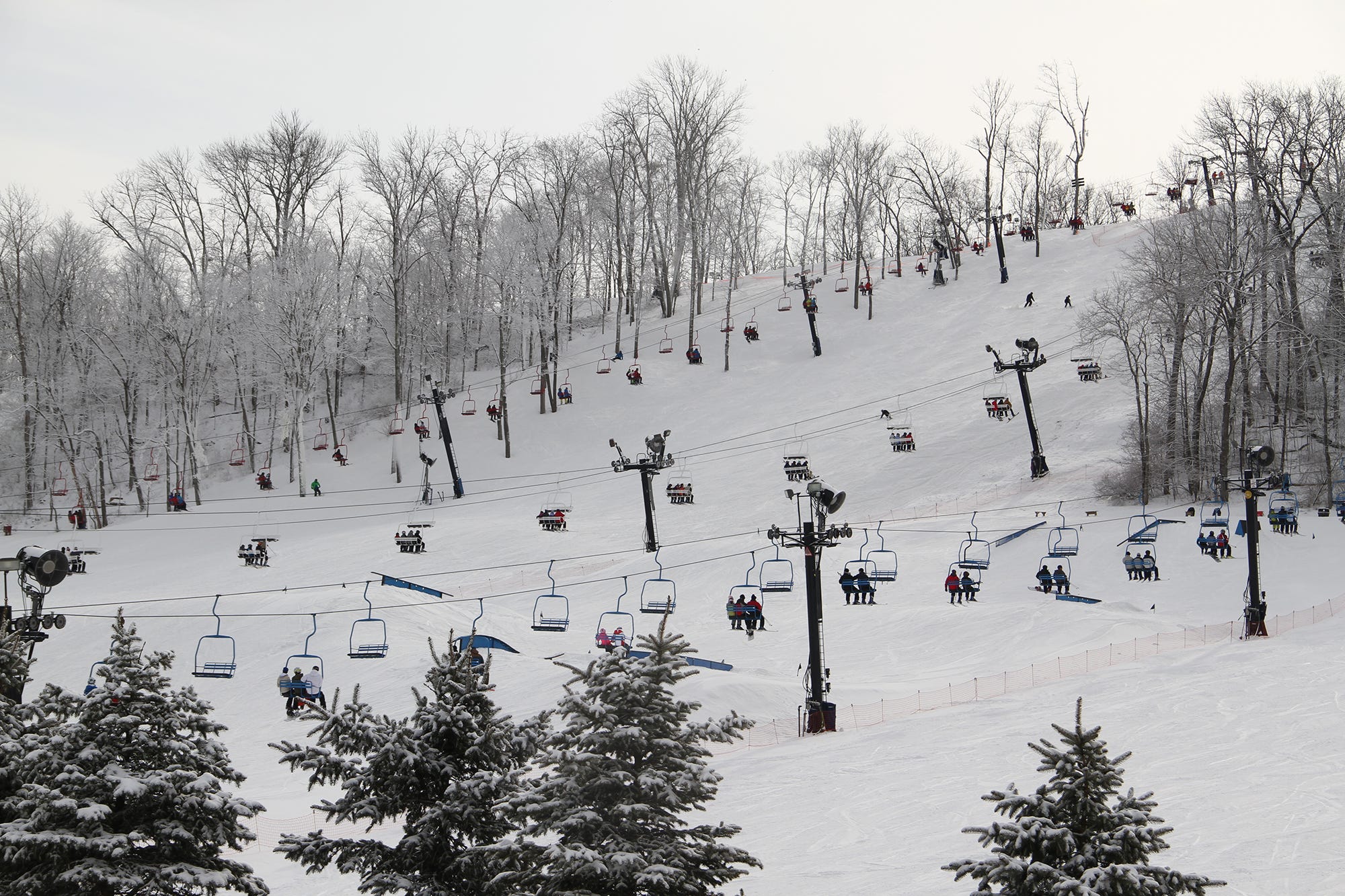
Jun 28, 2022
Podcast #92: Alterra Mountain Company CEO Rusty Gregory
To support independent ski journalism, please consider becoming a free or paid subscriber. This podcast hit paid subscribers’ inboxes on June 25. Free subscribers got it on June 28. To receive future pods as soon as they’re live, please consider an upgrade to a paid subscription. Who Rusty Gregory, CEO of Alterra Mountain Company , owner of the Ikon Pass Recorded on June 23, 2022 About Alterra Mountain Company Owned by: KSL Capital and Henry Crown and Company About the Ikon Pass Here’s a breakdown of all the ski areas that are party to Alterra’s Ikon Pass: Why I interviewed him In its first five years, Alterra has gotten just about everything right – or about as right as any ski company can as it Starfoxes its way through an asteroid belt filled with Covid and empowered workers and shattered supply chains and The Day After Tomorrow weather patterns and an evolving social fabric and the sudden realization by U.S. Americans that there’s such a thing as outside. The company changed the name of one of America’s iconic resorts, managed a near meltdown of its Pacific Northwest anchor, met Covid as well as it could, and continually tweaked Ikon Pass access tiers to avoid overwhelming partner mountains while still offering skiers good value. Oh, and adding Sun Valley, Snowbasin, Chamonix, Dolomiti Superski , Kitzbühel , Schweitzer , Red Mountain , Mt. Bachelor , and Windham to the pass – all since Covid hit. If it’s all seemed a little improvisational and surprising, that’s because it has been. “I have a great propensity for enjoying chaos and anarchy,” Gregory tells me in the podcast. That explains a lot. In the frantic weeks after Covid zipped North American skiing shut in March 2020, angry skiers demanded concessions for lost spring skiing. Vail released, all at once, an encyclopedic Epic Pass credit plan , which metered discounts based upon number of days skied and introduced an “Epic Coverage” program that secured your investment in the event of everything from a Covid resurgence to the death of a beloved houseplant. Alterra, meanwhile, spun its plan together in four dispatches weeks apart – a renewal discount here , a deferral policy there , an extension six weeks later . “We’re continuing to strengthen our offerings,” Gregory told me on the podcast mid-way through this staggered rollout. In other words, Dude, just chill. We’ll get it right. Whether they ultimately did or not – with their Covid response or anything else – is a bit subjective. But I think they’ve gotten more right than wrong. There was nothing inevitable about Alterra or the Ikon Pass. Vail launched the Epic Pass in 2008. It took a decade for the industry to come up with an effective response. The Mountain Collective managed to gather all the best indies into a crew, but its reach was limited, with just two days at each partner. M.A.X. Pass, with five days per partner, got closer, but it was short on alpha mountains such as Jackson Hole or Snowbird (it did feature Big Sky, Copper, Steamboat, and Winter Park) and wasn’t a season pass to any ski area. The Ikon Pass knitted together an almost impossible coalition of competitors into a coherent product that was an actual Epic Pass equal. Boyne, Powdr, and the ghosts of Intrawest joining forces was a bit like the Mets and the Red Sox uniting to take on the Yankees. It was – and is – an unlikely coalition of competitors fused around a common cause. The Ikon Pass was a great idea. But so was AOL-Time Warner – or so it seemed at the time. But great things, combined, do not always work. They can turn toxic, backfire, fail. Five years in, Alterra and Ikon have, as Gregory tells me, “dramatically exceeded our expectations in every metric for the fifth year in a row.” While Rusty is allergic to credit, he deserves a lot. He understands how complex and unruly and unpredictable skiing and the ski industry is. He came up under the tutelage of the great and feisty Dave McCoy, founder of the incomparable and isolated Mammoth Mountain, that snowy California kingdom that didn’t give a damn what anyone else was doing. He understood how to bring people together while allowing them to exist apart. That’s not easy. I can’t get 10 people to agree to a set of rules at a tailgate cornhole tournament (the beer probably doesn’t help). Everyone who loves the current version of lift-served skiing – which can deliver a skier to just about any chairlift in the United States on a handful of passes (and that’s definitely not all of you), and has inspired an unprecedented wave of ski area re-investment – owes Gregory at least a bit of gratitude. What we talked about The accidental CEO; Alterra’s “first order of business was to do no harm”; Rusty’s mindset when the Ikon Pass launched; the moment when everyone began believing that the Ikon Pass would work; reflections on the first five years of Alterra and Ikon; the challenges of uniting far-flung independent ski areas under one coalition; “every year we have to make the effort to stay together”; the radically idiosyncratic individualism of Dave McCoy; what it means that Ikon has never lost a partner – “there’s no points in life for losing friends”; Alterra doesn’t like the Ikon Base Plus Pass either; Covid shutdown PTSD; the long-term impact of Covid on skiing and the world; the risks of complacency around the Covid-driven outdoor boom; why Alterra’s next CEO, Jared Smith, comes from outside the ski industry; how the Ikon Pass and Alterra needs to evolve; preserving the cultural quirks of individual mountains as Alterra grows and evolves under new leadership; “we dramatically exceeded our expectations in every metric for the fifth year in a row”; the importance of ceding local decisions to local resorts; “I have a great propensity for enjoying chaos and anarchy”; the current state of the labor market; Ikon Pass sales trends; “having too many people on the mountain at one time is not a great experience”; staying “maniacally guest-experience focused”; Crystal Mountain’s enormous pass price increase for next season; why Deer Valley and Alta moved off the Base Pass for next season; Mayflower, the resort coming online next to Deer Valley; the Ikon Session Pass as a gateway product; why Alterra pulled Mammoth, Palisades Tahoe, and Sugarbush off the Mountain Collective Pass; Sun Valley and Snowbasin joining Ikon; Ikon’s growing European network; whether Alterra would ever look to buy in Europe; “we’re making constant efforts” to sign new Ikon Pass partners; “we’re very interested in Pennsylvania”; I just won’t let the fact that KSL owns Blue and Camelback go; “Alterra needs to move at the right pace”; whether we will ever see more Ikon partners in the Midwest; why Alterra hasn’t bought a ski area since 2019; whether Alterra is bidding on Jay Peak; and thoughts on Rob Katz’s “ growth NIMBYism ” speech. Why I thought that now was a good time for this interview Gregory has been Alterra’s CEO for about four and a half years. That seems to be about four and a half years longer than he wanted the job. In 2017, he was enjoying retirement after four decades at Mammoth. As an investor in the nascent Alterra Mountain Company – a Frankenski made up of Mammoth, Palisades Tahoe, and the remains of Intrawest – he helped conduct a wide-reaching search for the company’s first CEO. He ended up with the job not through some deft power play but because the committee simply couldn’t find anyone else qualified to take it. His only plan, he said, was to do no harm. There are, as we have seen, plenty of ways to make multi-mountain ski conglomerates fail. Boyne alone has managed the trick over the extra long term (a fact that the company does not get nearly enough credit for). The years after Gregory took the job in February 2018 certainly tested whether Alterra and Ikon, as constructs, were durable beyond the stoke of first concept. They are. And he’s done. At 68, confined for the past half decade to a Denver office building, I get the sense that Gregory is ready to get away from his desk and back in the liftline (or maybe not – “I will be so pissed if I have to wait in a line,” he tells me on the podcast). He’s earned the break and the freedom. It’s someone else’s turn. That someone else, as we learned last month, will be Jared Smith, Alterra’s current president. Gregory will move into a vice chairman of the board role, a position that I suspect requires extensive on-the-ground snow reporting. Smith, who joined Alterra last year after nearly two decades with Live Nation/Ticketmaster, has plenty to prove. As I wrote in May : Gregory was the ultimate industry insider, a college football player-turned-liftie who worked at Mammoth for 40 years before taking the top job at Alterra in 2018. He’d been through the battles, understood the fickle nature of the ski biz, saved Mammoth from bankruptcy several times. Universally liked and respected, he was the ideal leader for Alterra’s remarkable launch, an aggressive and unprecedented union of the industry’s top non-Vail operators, wielding skiing’s Excalibur: a wintry Voltron called the Ikon Pass. That such disparate players – themselves competitors – not only came together but continued to join the Ikon Pass has no doubt been at least partly due to Gregory’s confidence and charisma. Smith came to Alterra last June after 18 years at Live Nation and Ticketmaster. I don’t know if he even skis. He is, by all accounts, a master of building products that knit consumers to experiences through technology. That’s a crucial skillset for Alterra, which must meet skiers on the devices that have eaten their lives. But technology won’t matter at all if the skiing itself suffers. Alterra has thrived as the anti-Vail, a conglomerate with an indie sheen. Will the Ikon Pass continue to tweak access levels to mitigate crowding? Will Alterra continue its mega-investments to modernize and gigantify its resorts? Can the company keep the restless coterie of Boyne, Powdr, Jackson Hole, Alta, Taos, A-Basin, Revelstoke, Red, and Schweitzer satisfied enough to stay united on a single pass? For Alterra, and for the Ikon Pass, these are the existential questions. I have been assured, by multiple sources, that Smith does, in fact, ski. And has an intuitive understanding of where consumers need to be, helping to transform Ticketmaster from a paper-based anachronism into a digital-first experience company. Covid helped accelerate skiing’s embrace of e-commerce. That, according to Gregory, is just the beginning. “Different times require different leadership, and Jared Smith is the right leader going forward,” Gregory tells me in the podcast. Alterra’s first five years were a proof of concept: can the Ikon Pass work? Yes. It works quite well. Now what? They’ve already thought of all the obvious things: buy more mountains, add more partners, play with discounts to make the thing attractive to loyalists and families. But how does Alterra sew the analogue joy that is skiing’s greatest pull into the digital scaffolding that’s hammering the disparate parts of our modern existence together? And how does it do that without compromising the skiing that must not suffer ? Is that more difficult than getting Revelstoke and Killington and Taos to all suit up in the same jersey? It might be. But it was a good time to get Gregory on the line and see how he viewed the whole thing before he bounced. Questions I wish I’d asked Even though this went long, there were a bunch of questions I didn’t get to. I really wanted to ask how Alterra was approaching the need for more employee housing. I also wanted to push a little more on the $269 Steamboat lift tickets – like seriously there must be a better way. I also think blackout dates need to evolve as a crowding counter-measure, and Vail and Alterra both need to start thinking past holiday blackouts (as Indy has already done quite well ). I’ve also been preoccupied lately with Alterra’s successive rolling out of megaprojects at Palisades Tahoe and Steamboat and Winter Park, and what that says about the company’s priorities. This also would have been a good time to check in on Alterra’s previously articulated commitments to diversity and the environment. These are all good topics, but Alterra has thus far been generous with access, and I anticipate ample opportunities to raise these questions with their leadership in the future. What I got wrong Well despite immense concentration and effort on my part, I finally reverted to my backwater roots and pronounced “gondola” as “gon-dole-ah,” a fact that is mostly amusing to my wife. Rusty and I vacillated between 61 million and 61.5 million reported U.S. skier visits last year. The correct number was 61 million . I also flip-flopped Vail’s Epic Pass sales number and stated at one point that the company had sold 1.2 million Epic Passes for the 2021-22 ski season. The correct number is 2.1 million – I did issue a midstream correction, but really you can’t clarify these things enough. Why you should consider an Ikon Pass I feel a bit uncomfortable with the wording of this section header, but the “why you should ski X” section is a standard part of The Storm Skiing Podcast . I don’t endorse any one pass over any other – my job is simply to consider the merits and drawbacks of each. As regular readers know, pass analysis is a Storm pillar. But the Ikon Pass is uniquely great for a handful of reasons: * An affordable kids’ pass . The Ikon Pass offers one of the best kids’ pass deals in skiing. Early-birds could have picked up a full Ikon Pass (with purchase of an adult pass) for children age 12 or under for $239. A Base Pass was $199. That’s insane. Many large ski areas – Waterville Valley, Mad River Glen – include a free kids pass with the purchase of an adult pass. But those are single-mountain passes. The Ikon lets you lap Stratton from your weekend condo, spend Christmas break at Snowbird, and do a Colorado tour over spring break. The bargain child’s pass is not as much of a differentiator as it once was – once Vail dropped Epic Pass prices last season, making the adult Epic Pass hundreds of dollars cheaper than an Ikon Pass, the adult-plus-kids pass equation worked out about the same for both major passes. Still, the price structures communicate plenty about Alterra’s priorities, and it’s an extremely strong message. * A commitment to the long season. On April 23 this year, 21 Ikon partners still had lifts spinning . Epic passholders could access just nine resorts. That was a big improvement from the previous season, when the scorecard read 20-2 in favor of Ikon. Part of this is a coincidence – many of Alterra’s partners have decades-long histories of letting skiers ride out the snow: Killington, Snowbird, Arapahoe Basin, Sugarloaf. Others. But part of it is Alterra’s letting of big operational decisions to its individual resorts. If Crystal Mountain wants to stay open into June, Crystal Mountain stays open into June. If Stevens Pass has a 133-inch base on April 18… too bad. Closing day (in 2021) is April 18. The long season doesn’t matter to a lot of skiers. But to the ones it does matter to, it matters a lot. Alterra gets that. * That lineup though… The Ikon Pass roster has been lights out from day one. But as the coalition has added partners, and as key mountains have migrated from Epic to Ikon, it has grown into the greatest collection of ski areas ever assembled. As I wrote in March: Whatever the reason is that Snowbasin and Sun Valley fled Epic, the ramifications for the North American multipass landscape are huge. So is Alterra’s decision to yank its two California flagships and its top-five New England resort off of the Mountain Collective. Those two moves gave the Ikon Pass the best top-to-bottom destination ski roster of any multi-mountain ski pass on the continent. Good arguments can still be made for the supremacy of the Epic Pass, which delivers seven days at Telluride and unlimited access to 10 North American megaresorts: Whistler, Northstar, Heavenly, Kirkwood, Park City, Crested Butte, Vail, Beaver Creek, Keystone, and Breckenridge, plus Stowe, one of the top two or three ski areas in the Northeast. But many of Vail’s ski areas are small and regionally focused. I like Hunter and Jack Frost and Roundtop and Mount Brighton, Michigan, and their value as businesses is unquestioned, both because they are busy and because they draw skiers from rich coastal and Midwestern cities to the Mountain West. But the Epic Pass’ 40-some U.S. and Canadian mountains are, as a group, objectively less compelling than Ikon’s. The Ikon Pass now delivers exclusive big-pass access to Steamboat, Winter Park, Copper Mountain, Palisades Tahoe, Mammoth, Crystal Washington, Red Mountain, Deer Valley, Solitude, and Brighton, as well as a killer New England lineup of Killington, Stratton, Sugarbush, Sunday River, and Loon. The pass also shares big-mountain partners with Mountain Collective: Alta, Arapahoe Basin, Aspen Snowmass, Banff Sunshine, Big Sky, Jackson Hole, Lake Louise, Revelstoke, Snowbasin, Snowbird, Sugarloaf, Sun Valley, and Taos. For pure fall-line thrills and rowdy, get-after-it terrain, there is just no comparison on any other pass. In large parts of America, it’s become impossible to imagine not buying an Ikon Pass. The lineup is just too good. Epic still makes more sense in many circumstances. But for the neutral party, aimed primarily for big-mountain destinations in a city not defined by access to a local, the Ikon is telling a damn good story. Podcast Notes * Rusty and I talked a bit about the huge jump in Crystal’s pass price for next season. Here’s a more comprehensive look that I wrote in March, based on conversations with Crystal CEO Frank DeBerry and a number of local skiers. * We also discuss Mayflower Mountain Resort, which is to be built adjacent to Deer Valley. Here’s a bit more about that project, which could offer 4,300 acres on 3,000 vertical feet. The developers will have to overcome the ski area’s relatively low elevation, which will be compounded by Utah’s larger water issues . * Rusty explained why Alterra pulled Palisades Tahoe, Mammoth, and Sugarbush off the Mountain Collective pass ahead of next ski season. Here were my initial thoughts on that move. * A tribute to Mammoth Mountain founder Dave McCoy, who died in 2020 at age 104: Previous Storm Skiing Podcasts with Rusty or Ikon Pass mountain leaders * The Summit at Snoqualmie President & GM Guy Lawrence – April 20, 2022 * Arapahoe Basin COO Alan Henceroth – April 14, 2022 * Big Sky President & COO Taylor Middleton – April 6, 2022 * Solitude President & COO Amber Broadaway – March 5, 2022 * The Highlands at Harbor Springs President & GM Mike Chumbler – Feb. 18, 2022 * Steamboat President & COO & Alterra Central Region COO Rob Perlman – Dec. 9, 2021 * Jackson Hole President Mary Kate Buckley – Nov. 17, 2021 * Crystal Mountain, Washington President & CEO Frank DeBerry – Oct. 22, 2021 * Boyne Mountain GM Ed Grice – Oct. 19, 2021 * Mt. Buller, Australia GM Laurie Blampied – Oct. 12, 2021 * Aspen Skiing Company CEO Mike Kaplan – Oct. 1, 2021 * Taos Ski Valley CEO David Norden – Sept. 16, 2021 * Alterra CEO Rusty Gregory – March 25, 2021 * Sunday River GM Brian Heon – Feb. 10, 2021 * Windham President Chip Seamans – Jan. 31, 2021 * Sugarbush President & GM John Hammond – Nov. 2, 2020 * Sugarloaf GM Karl Strand – Part 2 – Sept. 30, 2020 * Sugarloaf GM Karl Strand – Part 1 – Sept. 25, 2020 * Palisades Tahoe President & COO Ron Cohen – Sept. 4, 2020 * Alterra CEO Rusty Gregory – May 5, 2020 * Boyne Resorts CEO Stephen Kircher – April 1, 2020 * Sunday River President & GM Dana Bullen – Feb. 14, 2020 * Loon Mountain President & GM Jay Scambio – Feb. 7, 2020 * Sugarbush President & COO Win Smith – Jan. 30, 2020 * Boyne Resorts CEO Stephen Kircher – Nov. 21, 2019 * Killington & Pico President & GM Mike Solimano – Oct. 13, 2019 Future Storm Skiing Podcasts scheduled with Ikon Pass mountains * Boyne Resorts CEO Stephen Kircher – September 2022 * Sun Valley VP & GM Pete Sonntag – September 2022 The Storm publishes year-round, and guarantees 100 articles per year. This is article 69/100 in 2022, and number 315 since launching on Oct. 13, 2019. Want to send feedback? Reply to this email and I will answer (unless you sound insane). You can also email skiing@substack.com . Please be patient - my response may take a while. Get full access to The Storm Skiing Journal and Podcast at www.stormskiing.com/subscribe
Jun 22, 2022
Podcast #91: Snow Partners (Big Snow, Mountain Creek) CEO Joe Hession
To support independent ski journalism, please consider becoming a free or paid subscriber. Paid subscribers receive thousands of extra words of content each month, plus all podcasts three days before free subscribers. Who Joe Hession, CEO of Snow Partners, owners of Mountain Creek , Big Snow American Dream , Snowcloud , and Terrain Based Learning Recorded on June 15, 2022 About Mountain Creek Located in: Vernon Township, New Jersey Closest neighboring ski areas: National Winter Activity Center , New Jersey (6 minutes); Mount Peter, New York (24 minutes); Campgaw, New Jersey (51 minutes); Big Snow American Dream (50 minutes) Pass affiliations: None Base elevation: 440 feet Summit elevation: 1,480 feet Vertical drop: 1,040 feet Skiable Acres: 167 Average annual snowfall: 65 inches Trail count: 46 Lift count: 9 (1 Cabriolet, 2 high-speed quads, 2 fixed-grip quads, 1 triple, 1 double, 2 carpets – view Lift Blog’s inventory of Mountain Creek’s lift fleet) About Big Snow American Dream Located in: East Rutherford, New Jersey Closest neighboring ski areas: Campgaw, New Jersey (35 minutes); National Winter Activity Center, New Jersey (45 minutes); Mountain Creek, New Jersey (50 minutes); Mount Peter, New York (50 minutes) Pass affiliations: None Vertical drop: 118 feet Skiable Acres: 4 Average annual snowfall: 0 inches Trail count: 4 (2 green, 1 blue, 1 black) Lift count: 4 (1 quad, 1 poma, 2 carpets - view Lift Blog’s of inventory of Big Snow American Dream’s lift fleet) Why I interviewed him Twenty-five years ago, Vail Resorts was known as “Vail Associates.” The company owned just two mountains: Vail and Beaver Creek, which are essentially right next door to each other in Eagle County, Colorado. The resorts were, as they are today, big, snowy, and fun. But they were not great businesses. Bankruptcy threatened. And the ski media – Skiing, Powder – was mostly dismissive. This was the dawn of the freeskiing era, and the cool kids were running the Circuit of Radness: Snowbird, Squaw, Mammoth, Jackson Hole, Whistler, the Powder Highway. Vail was for suburban dads from Michigan. Beaver Creek was for suburban dads from New York. If you wanted the good stuff, keep moving until you got to Crested Butte or Telluride. Vail was just another big Colorado ski resort, that happened to own another big Colorado ski resort, and that was it. Today, Vail is the largest ski company in history, with (soon to be) 41 resorts scattered across three continents. Its Epic Pass transformed and stabilized the industry . It is impossible to talk about modern lift-served North American skiing without talking about Vail Resorts. There was nothing inevitable about this. Pete Seibert, Vail’s founder, did not enter skiing with some snowy notion of Manifest Destiny. He just wanted to open a great ski resort. It was 18 years from Vail Mountain’s 1962 opening to the opening of Beaver Creek in 1980. It was nearly two more decades until Vail bought Keystone and Breck in 1997. It was 11 more years until the Epic Pass debuted, and a few more before anyone started to pay attention to it. What Snow Partners, led by Joe Hession, is doing right now has echoes of Vail 15 years ago. They are building something. Quietly. Steadily. Like trees growing in a forest. They rise slowly but suddenly they tower over everything. I’m not suggesting that Snow Partners will be the next Vail. That they will buy Revelstoke and Jackson Hole and Alta and launch the Ultimo Pass to compete with Epic and Ikon. What Snow Partners is building is different. Additive. It will likely be the best thing to ever happen to Vail or Alterra. Snow Partners is not digital cameras, here to crush Kodak. They are, rather, skiing’s Ben Franklin, who believed every community in America should have access to books via a lending library. In Snow Partners’ version of the future, every large city in America has access to skiing via an indoor snowdome. This will change everything. Everything. In profound ways that we can only now imagine. The engine of that change will be the tens of millions of potential new skiers that can wander into a Big Snow ski area, learn how to ski, and suddenly train their radar on the mountains. Texas has a population of around 29.5 million people. Florida has about 22 million. Georgia has around 11 million. Those 61.5 million people have zero in-state ski areas between them. They could soon have many. There are countless skiers living in these states now, of course, refugees from the North or people who grew up in ski families. But there are millions more who have never skied or even thought about it, but who would, given the option, at least try it as a novelty. And that novelty may become a hobby, and that hobby may become a lifestyle, and that lifestyle may become an obsession. As anyone reading this knows, there’s a pretty direct line between those first turns and the neverending lines rolling on repeat in your snow-obsessed brain. But you have to link those first couple turns. That’s hard. Most people never get there. And that’s where Big Snow, with its beginner zone loaded with instructors and sculpted terrain features – a system known as Terrain Based Learning – is so interesting. It not only gives people access to snow. It gives people a way to learn to love it, absent the broiling frustration of ropetows and ice and $500 private instructors. It’s a place that creates skiers. This – Big Snow, along with an industry-wide reorientation toward technology – is Hession’s vision. And it is impossible not to believe in his vision. Hession announces in this podcast that the company has secured funding to build multiple Big Snow ski areas within the foreseeable future. The combination of beginner-oriented slopes and simple, affordable packages has proven attractive even in New Jersey, where skiers have access to dozens of outdoor ski areas within a few hours’ drive. It makes money, and the business model is easily repeatable. Mountain Creek, where Hession began working as a parking lot attendant in his teens, is, he says, a passion project. The company is not buying anymore outdoor ski areas. But when Big Snows start minting new skiers by the thousands, and perhaps the millions, they may end up driving the most profound change to outdoor ski areas in decades. What we talked about The nascent uphill scene at Mountain Creek; “most people don’t realize that this is what New Jersey looks like”; celebrating Big Snow’s re-opening; the three things everyone gets wrong about Big Snow; the night of the fire that closed the facility for seven months; how the fire started and what it damaged; three insurance companies walk into a bar…; why six weeks of work closed the facility for more than half a year; staying positive and mission-focused through multiple shutdowns at a historically troubled facility; New Jersey’s enormous diversity; skiing in Central Park?; “we’re creating a ski town culture in the Meadowlands in New Jersey”; everyone loves Big Snow; the story behind creating Big Snow’s beginner-focused business model; why most people don’t have fun skiing and snowboarding; the four kinds of fun; what makes skiing and snowboarding a lifestyle; what Hession got really wrong about lessons; the “haphazard” development of most ski areas; more Big Snows incoming; why Big Snow is a great business from a financial and expense point of view; looking to Top Golf for inspiration on scale and replicability; where we could see the next Big Snow; how many indoor ski domes could the United States handle?; what differentiates Big Snow from Alpine-X; whether future Big Snows will be standalone facilities or attached to larger malls; is American Dream Mall too big to fail?; finding salvation from school struggles as a parking lot attendant at Vernon Valley Great Gorge; Action Park; two future ski industry leaders working the rental shop; Intrawest kicks down the door and rearranges the world overnight; a “complicated” relationship with Mountain Creek; Intrawest’s rapid decline and the fate of Mountain Creek; leaving your dream job; ownership under Crystal Springs; how a three-week vacation will change your life; transforming Terrain Based Learning from a novelty to an empire; “I’ve been fascinated with how you go from working for a company to owning a company”; the far-flung but tightly bound ski industry and how Hession ended up running Big Snow; how much the Big Snow lease costs in a month; an Austin Powers moment; this is a technology company; an anti-kiosk position; the daily capacity of Mountain Creek; buying Mountain Creek; the art of operating a ski area; the biggest mistake most Mountain Creek operators have made; the bargain season pass as business cornerstone; “we were days away from Vail Resorts owning Mountain Creek today”; bankruptcy, Covid, and taking control of Mountain Creek and Big Snow in spite of it all; how much money Mountain Creek brings in in a year; “a lot of people don’t understand how hard it is to run a ski resort”; a monster chairlift project on the Vernon side of Mountain Creek; “a complicated relationship” with the oddest lift in the East ( the cabriolet) and what to do about it; “no one wants to take their skis on and off for a 1,000 feet of vertical”; which lift from Mountain Creek’s ancient past could make a comeback; bringing back the old Granite View and Route 80 trails; why expansion beyond the historic trail network is unlikely anytime soon; Creek’s huge natural snowmaking advantage; why no one at Mountain Creek “gives high-fives before the close of the season”; Hession is “absolutely” committed to stretching Creek’s season as long as possible; the biggest job of a ski resort in the summertime; the man who has blown snow at Mountain Creek for 52 years; whether Snow Operating would ever buy more outdoor ski resorts; “variation is evil”; the large ski resort that Hession tried to buy; “I don’t think anyone can run a massive network of resorts well”; an Applebee’s comparison; whether Mountain Creek or Big Snow could ever join a multi-mountain ski pass; why the M.A.X. Pass was a disaster for Mountain Creek; why Creek promotes the Epic and Ikon Passes on its social channels; changing your narrative; not a b******t mission statement; why the next decade in the ski industry may be the wildest yet; and the Joe P. Hession Foundation. Why I thought that now was a good time for this interview I’ll admit that it can be awfully hard to appreciate the potential of Big Snow from the point of view of the casual observer. For anyone living in the New York metro area, the place spent a decade and a half as a vacant laughingstock, a symbol of excess and arrogance, an absurdly expensive novelty that was built, it seemed, just to be torn down. As I wrote last year : On Sept. 29, 2004, a coalition of developers broke ground on a project then known as Meadowlands Xanadu. Built atop a New Jersey swamp and hard by Interstate 95, the garish collection of boxes and ramps with their Romper Room palette could be seen from the upper floors of Manhattan skyscrapers, marooned in their vast asphalt parking lot, an entertainment complex with no one to entertain. It sat empty for years. Crushed, in turn, by incompetence, cost overruns, the Great Recession, lawsuits, and funding issues, the building that would host America’s first indoor ski slope melted into an eternal limbo of ridicule and scorn. I didn’t think it would ever open, and I didn’t understand the point if it did. This is the Northeast – we have no shortage of skiing. At four acres on 160-foot vertical drop, this would instantly become the smallest ski area in nine states. Wow. What’s the next item in your master development plan: an indoor beach in Hawaii? But eventually Big Snow did open: 5,545 days after the center’s groundbreaking. And it was not what I thought it would be. As I wrote the month after it opened: For its potential to pull huge numbers of never-evers into the addictive and thrilling gravitational pull of Planet Ski, Big Snow may end up being the most important ski area on the continent. It is cheap. It is always open. It sits hard against the fourth busiest interstate in the country and is embedded into a metro population of 20 million that has outsized influence on national and global trends. Over the coming decades, this ugly oversized refrigerator may introduce millions of people to the sport. I wrote that on Jan. 13, 2020, two months before Covid would shutter the facility for 177 days. It had only been open 94 days when that happened. Then, 388 days after re-opening on Sept. 1, 2020, fire struck. It caused millions in damage and another 244-day closure. After endless negotiations with insurance companies, Big Snow American Dream finally re-opened last month. So now what? Will this place finally stabilize? What about the disastrous financial state of the mall around it, which has, according to The Wall Street Journal , missed payments on its municipal bonds? Will we see more Big Snows? Will Snow Operating bid on Jay Peak? Will we ever get a real chairlift on Vernon at Mountain Creek? With Big Snow rebooted and live (take three), it was time to focus on the future of Snow Operating. And oh man, buckle up. Questions I wish I’d asked I could have stopped Joe at any time and asked a hundred follow-up questions on any of the dozens of points he made. But there would have been no point in that. He knew what I wanted to discuss, and the narrative is compelling enough on its own, without my input. Why you should ski Mountain Creek and Big Snow Big Snow If you’re approaching Big Snow from the point of view of a seasoned skier, I want to stop you right there: this is not indoor Aspen. And it’s not pretending to be. Big Snow is skiing’s version of Six Flags. It’s an amusement park. All are welcome, all can participate. It’s affordable. It’s orderly. It’s easy. And it has the potential to become the greatest generator of new skiers since the invention of snow. And that will especially be true if this thing scales in the way that Hession believes it will. Imagine this: you live in Houston. No one in your family skis and so you’ve never thought about skiing. You’ve never even seen snow. You can’t imagine why anyone would ever want to. It looks cold, uncomfortable, exotic as moonrocks, and about as accessible. You’re not a skier and you probably never will be. But, what if Big Snow sprouts out of the ground like a snowy rollercoaster? It’s close. It’s cheap. It could be fun. You and your buddies decide to check it out. Or you take someone there on a date. Or you take your kids there as a distraction. Your lift ticket is well under $100 and includes skis and boots and poles and bindings and a jacket and snowpants (but not, for some reason, gloves), and access to instructors in the Terrain Based Learning area, a series of humps and squiggly snow features that move rookies with the ground beneath them. You enter as a novice and you leave as a skier. You go back. Five or six more times. Then you’re Googling “best skiing USA” and buying an Epic Pass and booking flights for Denver. And if that’s not you, how about this scenario that I face all the time: nonskiers tell me they want to try skiing. Can I take them? Given my background, this would not seem like an irrational request. But I’m not sure where to start. With lift tickets, rentals, and lessons, they’re looking at $150 to $200, plus a long car ride in either direction, just to try something that is cold and frustrating and unpredictable. I’m sure as hell not teaching them. My imagination proves unequal to the request. We don’t go skiing. Big Snow changes that calculus. Solves it. Instantly. Even, as Joe suggests in our interview, in places where you wouldn’t expect it. Denver or Salt Lake City or Minneapolis or Boston. Places that already have plenty of skiing nearby. Why? Well, if you’re in Denver, a snowdome means you don’t have to deal with I-70 or $199 lift tickets or figuring out which of the 100 chairlifts in Summit County would best suite your first ski adventure. You just go to the snowdome. The potential multiplying effect on new skiers is even more substantial when you consider the fact that these things never close. Hession points out that, after decades of refinement and tweaking, Mountain Creek is now finally able to consistently offer 100-day seasons. And given the local weather patterns, that’s actually amazing. But Big Snow – in New Jersey or elsewhere – will be open 365 days per year. That’s three and a half seasons of Mountain Creek, every single year. Multiply that by 10 or 20 or 30 Big Snows, and suddenly the U.S. has far more skiers than anyone ever could have imagined. Mountain Creek There exists in the Northeast a coterie of unimaginative blockheads who seem to measure their self-worth mostly by the mountains that they dislike. Hunter is a big target. So is Mount Snow. No one takes more ridicule, however, than Mountain Creek, that swarming Jersey bump with the shaky financial history and almost total lack of natural snow. Everyone remembers Vernon Valley Great Gorge (as Mountain Creek was once known), and its adjacent summertime operation, the raucous and profoundly dysfunctional Action Park. Or they remember Intrawest leaving Creek at the altar. Or that one time they arrived at Creek at noon on Dec. 29 and couldn’t find a place to park and spent half the afternoon waiting in line to buy a bowl of tomato soup. Or whatever. Now, based on those long-ago notions, they toss insults about Creek in between their Facebook posts from the Jackson Hole tram line or downing vodka shots with their crew, who are called the Drinksmore Boyz or Powder Dogzz or the Legalizerz or some other poorly spelled compound absurdity anchored in a profound misunderstanding of how impressed society is in general with the antics of men in their 20s. Whatever. I am an unapologetic Mountain Creek fan. I’ve written why many times, but here’s a summary: First, it is close. From my Brooklyn apartment, I can be booting up in an hour and 15 minutes on a weekend morning. It is a bargain. My no-blackout pass for the 2019-20 season was $230. It is deceptively large, stretching two miles from Vernon to Bear Peaks along New Jersey state highway 94. Its just over thousand-foot vertical drop means the runs feel substantial. It has night skiing, making it possible to start my day at my Midtown Manhattan desk job and finish it hooking forty-mile-an-hour turns down a frozen mountainside. The place is quite beautiful. Really. A panorama of rolling hills and farmland stretches northwest off the summit. The snowmaking system is excellent. They opened on November 16 this year and closed on April 7 last season, a by-any-measure horrible winter with too many thaws and wave after wave of base-destroying rain. And, if you know the time and place to go, Mountain Creek can be a hell of a lot of fun, thanks to the grown-up chutes-and-ladders terrain of South Peak, an endless tiered sequence of launchpads, rollers and rails (OK, I don’t ski rails), that will send you caroming down the mountain like an amped-up teenager (I am more than twice as old as any teenager). I don’t have a whole lot to add to that. It’s my home mountain. After spending my first seven ski seasons tooling around Midwest bumps, the glory of having a thousand-footer that near to me will never fade. The place isn’t perfect, of course, and no one is trying to tell that story, including me, as you can see in the full write-up below, but when I only have two or three hours to ski, Creek is an amazing gift that I will never take for granted: Podcast notes Here are a few articles laying out bits of Hession’s history with Mountain Creek: * New VP has worked at Creek since his teens – Advertiser-News South , Feb. 22, 2012 * Mountain Creek Enters Ski Season With New Majority Owner Snow Operating – Northjersey.com , Nov. 23, 2018 I’ve written quite a bit about Big Snow and Mountain Creek over the years. Here are a couple of the feature stories: * The Curse of Big Snow – Sept. 30, 2021 * The Most Important Ski Area in America – Jan. 13, 2020 This is the fourth podcast I’ve hosted that was at least in part focused on Mountain Creek: * Big Snow and Mountain Creek Vice President of Marketing & Sales Hugh Reynolds – March 3, 2020 * Hermitage Club General Manager Bill Benneyan , who was also a former president, COO, and general manager of Mountain Creek – Dec. 4, 2020 * Crystal Mountain, Washington President and CEO Frank DeBerry , who was also a former president, COO, and general manager of Mountain Creek – Oct. 22, 2021 Here are podcasts I’ve recorded with other industry folks that Hession mentions during our interview: * Vail Resorts Rocky Mountain Region Chief Operating Officer and Mountain Division Executive Vice President Bill Rock – June 14, 2022 * Mountain High and Dodge Ridge President and CEO Karl Kapuscinski - June 10, 2022 * Alpine-X CEO John Emery – Aug. 4, 2021 * Fairbank Group Chairman Brian Fairbank – Oct. 16, 2020 * Killington and Pico President and General Manager Mike Solimano – Oct. 13, 2019 Here’s the trailer for HBO’s Class Action Park , the 2020 documentary profiling the old water park on the Mountain Creek (then Vernon Valley-Great Gorge) grounds: Hession mentioned a retired chairlift and retired trails that he’d like to bring back to Mountain Creek: * What Hession referred to as “the Galactic Chair” is Lift 9 on the trailmap below, which is from 1989. This would load at the junction of present-day Upper Horizon and Red Fox, and terminate on the landing where the Sojourn Double and Granite Peak Quad currently come together (see current trailmap above). This would give novice skiers a route to lap gentle Osprey and Red Fox, rather than forcing them all onto Lower Horizon all the way back to the Cabriolet. I don’t need to tell any regular Creek skiers how significant this could be in taking pressure off the lower mountain at Vernon/North. Lower Horizon is fairly steep and narrow for a green run, and this could be a compelling alternative, especially if these skiers then had the option of downloading the Cabriolet. * Hession also talked about bringing back a pair of intermediate runs. One is Granite View, which is trails 34 (Cop Out), 35 (Fritz’s Folly) and 33 (Rim Run) on Granite Peak below. The trail closed around 2005 or ’06, and bringing it back would restore a welcome alternative for lapping Granite Peak. * The second trail that Hession referenced was Route 80 (trail 24 on the Vernon side, running beneath lift 8), which cuts through what is now condos and has been closed for decades. I didn’t even realize it was still there. Talks with the condo association have yielded progress, Hession tells me, and we could see the trail return, providing another connection between Granite and Vernon. Creek skiers are also still obsessed with Pipeline, the double-black visible looker’s right of the Granite lift on this 2015 trailmap: I did not ask Hession about this run because I’d asked Hugh Reynolds about it on the podcast two years ago, and he made it clear that Pipeline was retired and would be as long as he and Hession ran the place. Here are links to a few more items we mentioned in the podcast: * The 2019 Vermont Digger article that lists Snow Operating as an interested party in the Jay Peak sale. * We talked a bit about the M.A.X. Pass, a short-lived multi-mountain pass that immediately preceded (and was dissolved by), the Ikon Pass. Here’s a list of partner resorts on that pass. Skiers received five days at each, and could add the pass onto a season pass at any partner ski area. This was missing heavies like Jackson Hole, Aspen, and Taos, but it did include some ballers like Big Sky and Killington. Resorts of the Canadian Rockies, which includes Fernie and Kicking Horse and is now aligned with the Epic Pass, was a member, as were a few ski areas that have since eschewed any megapass membership: Whiteface, Gore, Belleayre, Wachusett, Alyeska, Mountain High, Lee Canyon, and Whitewater. Odd as that seems, I’m sure we’ll look back at some of today’s megapass coalitions with shock and longing. This podcast hit paid subscribers’ inboxes on June 19. Free subscribers got it on June 22. To receive future pods as soon as they’re live, please consider an upgrade to a paid subscription. The Storm publishes year-round, and guarantees 100 articles per year. This is article 67/100 in 2022, and number 313 since launching on Oct. 13, 2019. Want to send feedback? Reply to this email and I will answer (unless you sound insane). You can also email skiing@substack.com . Get full access to The Storm Skiing Journal and Podcast at www.stormskiing.com/subscribe
Jun 17, 2022
Podcast #90: Vail Resorts Rocky Mountain Region COO and Mountain Division EVP Bill Rock
To support independent ski journalism, please consider becoming a free or paid subscriber. Paid subscribers receive thousands of extra words of content each month, plus all podcasts three days before free subscribers. Who Bill Rock, Chief Operating Officer of Vail Resorts Rocky Mountain Region and Executive Vice President of the Mountain Division Recorded on June 13, 2022 About Vail Resorts’ Rocky Mountain Region This is it, the inner empire. Where hyperbole suits just fine. This is why people in suburban Detroit buy an Epic Pass. To get here. “Aspirational.” That’s Rock’s word for his half-dozen cloud-pokers. It fits. Even for Keystone, a favorite target of the Cool Kids who only ride Snowbird Brah. Whatever. Keystone is great - it’s bigger, as you can see, than Breck, and it’s about to get larger with the Bergman Bowl expansion, opening next winter. Why I interviewed him For many, just visiting these snowy kingdoms is not enough. Relocation becomes the only option. They turn west, to the mountains, and there they hack out whatever life they can. I’m not talking Grizzly Adams here. They’re not building log cabins and churning their own butter. But housing in most Western ski towns - and certainly the ones listed above - is limited and expensive. Wages are, historically, low. Skiing is expensive, always. For a long time, the skiing was enough to offset the other burdens. Then things changed. Covid, of course. But less discussed is the drying up of immigrant visas of the sort that destinatin resorts had long used to staff front-line positions. The rising labor movement. Workers, suddenly empowered, no longer had to settle for the fast-food wages of decades past. Vail had to adjust, and in March, the company rolled out a $20 minimum wage for frontline workers next season. But another very real factor contributing to last season’s labor shortage was a sudden and dramatic re-ordering of the mountain-town housing market. White collar workers, liberated by remote work, moved en masse to the mountains. This further distorted an already unbalanced market, driving out whatever shadows of affordability remained. So Vail’s plan also included a significant investment in affordable worker housing, on land that - the company emphasized - it already owned. If that sounds like a straightforward proposal, then you are unfamiliar with the workings of U.S. America, where all easy things are hard and all hard things are impossible. Rock, I figured, could help us at least understand the current conditions impacting resort-town decision making. What we talked about The shift to midweek skiing and what it means for Vail and the Epic Pass; Vail’s 2021-22 operational challenges and successes; chasing the military’s camaraderie and sense of purpose until finding it at Bristol; a regional hopscotch leading to Vail; Northstar as Vail’s executive talent incubator; the company’s monster employee-investment initiative announced in March; how Vail decided on a $20-an-hour-minimum wage for next season; beefing up the HR staff and what that means for the future of the HR tool (commonly referred to as Vail’s “HR app”); owning last-year’s employee-support challenges; the company’s new flexible work policy; why Vail Resorts’ ski area social media accounts have seemed more lively over the past several months; why Vail’s 165-bed employee housing project has stalled in East Vail; “people have gotten really good at gumming up the works”; luxury townhomes go unprotested but suddenly everyone is very concerned about bighorn sheep when it comes time to build affordable housing; the potential of the Ever Vail parcel and if there is a better way to build; updates on employee housing developments in Park City, Whistler, and Okemo; Vail’s $300 million-plus 2022 lift investment and what that portends for the future; “I don’t know if we can find 21 lifts to do every year”; thoughts on why Vail hasn’t sold a lift in several years; the current status of the Bergman Bowl expansion at Keystone; thoughts on new lifts going in at Vail and Park City; “in a town that has over 70 lifts, to do two replacement lifts should really not be controversial at all.” Why I thought that now was a good time for this interview Last month, I wrote a long piece about a dispute between the Town of Vail and Vail Resorts: Unfortunately, we have entered an era in which absolutism reigns. As the ski industry housing crisis accelerates to levels that are endangering the viability of lift-served skiing as a sustainable enterprise, the town of Vail last week activated the nuclear option to block Vail Resorts’ long-planned affordable housing project near Vail Mountain. Per Jason Blevins in The Colorado Sun: The Vail town council late Tuesday voted to condemn a parcel where Vail Resorts plans to spend $17 million to build affordable housing for 165 workers. Dozens of Vail Resorts executives, employees and managers crammed into the council’s chambers Tuesday night as the council heard passionate support for both housing and wildlife. Ultimately the council voted 4-3 to approve a resolution that gives the town the ability to seize ownership of the 23-acre parcel and prevent any development as a way to protect a bighorn herd that winters in the south-facing aspen groves along Interstate 70. “I’m disappointed you’ve been backed into a corner and have to consider this resolution tonight,” said Terry Meyers, the executive director of the Rocky Mountain Bighorn Society. “Please make the decision to protect the bighorn sheep herd and move forward to find other options for affordable housing in the Vail Valley. The sheep have to have this. They can’t go anywhere else.” Exactly which corner the council members have been backed into is unclear: this same council (made up of different representatives), approved this project in 2019, and helped defend it in court in 2020. Vail, which owns the land, has promised to develop just six of the 23 acres. To protect the herd on the remaining land, Vail Resorts “partnered with wildlife experts and Colorado Park & Wildlife to develop an extensive mitigation plan, including funding for long overdue habitat rehabilitation,” and has earmarked $100,000 to implement that plan, a company representative told me. The project underwent “an extremely thorough environmental review process,” the representative added. Meanwhile, more than 100 luxury homes already fill 95.6 acres of this supposedly sacred bighorn habitat. Vail’s proposed development is the three tiny yellow boxes labelled “East Vail Affordable Housing” in the image below: “Vail needs housing now – not development that might happen in five years,” read a statement supplied by Vail Resorts to The Storm Skiing Journal on April 25. “If the Town can support luxury homes in East Vail, then it can support affordable housing. We will continue to aggressively pursue this affordable housing project for the hard-working employees in our community.” … The suggestion that a herd of sheep that has managed to negotiate nearly 100 acres of mansionland developed amidst their territory over the past several decades would suddenly be thrust to the brink of extinction from the addition of six acres of dense housing hard by the roadside is absurd. This whole action by the town feels disingenuous and petty, a because-we-can temper tantrum rooted in the vaguely expressed notion that Vail Resorts has been a disrespectful negotiator. While the town has not yet seized ownership of the land, the strident act by four precious council members all but assures that the legal fistfights will howl on for years. The brazen seizure of private land could ignite a fire that burns all the way to the Supreme Court, an absurd act of overreach that could wind up damaging future environmental efforts by stoking the business-friendly court majority to streamline development approvals. And in the meantime? Opponents of the plan continue to peddle platitudes about the importance of affordable housing. You can read the full thing here: Meanwhile, four people who apparently have nothing better to do have been stalling Vail’s planned Park City lift upgrades. Per the Park Record : The PCMR project would replace the current Eagle and Eaglet lifts with a high-speed, six-person detachable lift. The resort also wants to upgrade Silverlode Express from a six-person to an eight-person, high-speed lift, which would make it parent company Vail Resorts’ first chair of its kind in North America. The people who filed the appeal, Clive Bush, Angela Moschetta, Deborah Rentfrow and Mark Stemler , argued the proposal should’ve been exempt from receiving a staff-level administrative conditional-use permit because the upgrades would exceed PCMR’s comfortable carrying capacity (CCC) and should be voted on by the Planning Commission instead. They also argued the application should not have been approved due to inadequate parking mitigation or conditions of approval for peak ski days. A staff report from the Park City Planning Department recommended denying the appeal because a section of a 1998 development agreement with PCMR, which outlines growth at the resort base, states, “development of the skiing and related facilities as identified in the mountain upgrade plan is a conditional use within the city limits and is a subject to administrative review” as long as the projects are identified in and compliant with the mountain upgrade plan. Planning Department staff said the agreement requires lift upgrades to be reviewed administratively if six criteria are met, which they say are. However, the appeal claims criteria one and six – which call for consistency with the mountain upgrade plan and a sufficient parking plan – are not met. The group also made 11 arguments in the filing to support their appeal. On Wednesday, much of the discussion was centered on whether upgrading the lifts would increase visitorship and surpass the resort’s comfortable carrying capacity. Mike Goar, who until recently was the chief operating officer at PCMR and remains at Vail Resorts, said the improvements will help reduce crowding by moving people up the mountain faster and that lift upgrades don’t lead to more skiers and snowboarders. The maximum carrying capacity is 13,700 and PCMR’s current comfortable carrying capacity is 12,570. The proposed upgrades would increase the comfortable carrying capacity to 12,860 and would not cause a significant increase in parking demand, according to a staff report. But Moschetta argued that “fuzzy math” caused the numbers to be manipulated. She presented a series of comfortable carrying capacity numbers that differed from the findings of outside consultants hired by the resort and argued the upgrades will increase the figure to 13,980. “The miscalculated and already exceeded CCCs confirm absolutely that this application violated the [mountain upgrade plan], and therefore the [development agreement], and therefore violated the [Land Management Code], and therefore never met conditions for administrative review,” she said. “On this basis alone, our appeal must be upheld and the decision of the planning director overturned.” Her argument was compelling to most of the commissioners, who asked PCMR and its consultants to explain the discrepancies. Planning Commission Chair John Phillips said he trusted the specialists and supported denying the appeal while Planning Commissioners Sarah Hall and Bill Johnson indicated they would side with Phillips if the comfortable carrying capacity discrepancy was clearly explained. “The appellants have the burden of proof and they’ve not presented experts, facts. We have. Two experts on CCC, and mountain planning. We’ve worked through this in great detail. Lastly, the planning director’s decision should be upheld on appeal if it is supported by substantial evidence on the record, which is what we presented originally,” Goar said. After repeated back and forth, and several unsuccessful attempts from the resort’s experts to clarify the numbers, the majority of commissioners were not satisfied. More than four hours in, the commission adjourned, to meet again on Wednesday, June 15, as Rock and I discuss in the podcast. What, really, is the point of all this? Must we fight about everything? Housing? Chairlifts? Not even new chairlifts. Upgrades. Four more seats on a mountain with 41 lifts. Do larger lifts draw more skiers? Maybe at Jiminy Peak or Ragged Mountain, where a six-seater really is a regional curiosity. But this is Park City. Most tourists don’t even know what kinds of lifts the mountain has while they’re riding them. Chairlift tourism is not really a thing. I suspect the appellants know this. Multiple sources throughout the West described a prevailing atmosphere of frustration with Vail Resorts throughout this past season. Staff shortages led to inadequate or inconsistent grooming and terrain and lift openings, skiers at multiple resorts said. Many Park City residents are apoplectic over the coming paid parking plan . There seems to be an element of spite, then, in the actions both of the Park City foursome and the Vail Town Council. I can’t decide if they are bringing a knife to a tank fight, or a tank to a knife fight. In both cases, the non-Vail parties are both overmatched and over-armed. It’s like they assembled an army to invade an apple orchard. One that’s defended by a fire-breathing dragon. Like, you can just get apples at the grocery store. If this all seems like an enormous waste of time, money, and energy, it’s because it is. The hostile parties may well halt both projects. But to what end? What better ideas do they have? And what happens when, in some not-so-hard-to-imagine future, this insistence on saying no to everything yields to new sets of rules – driven by frustrated middle-voters who put rampant Free Market Bros in charge of the world – in which we can’t say no to anything? Questions I wish I’d asked Frankly, I would have liked to have had a completely different conversation. The Storm is, first and primarily, about the skiing. Rock oversees a half dozen of the best ski resorts in America. I would have liked to have talked deeply and only about the resorts. But the moment demanded a different sort of conversation. Part of this is the NIMBY-mania I referenced above. Part of it was because Vail kind of blew it last year in multiple markets and had to roll out a big oopsie plan to draw more employees for next season. But even with the focus mostly on that plan and those people, we still ran long. I didn’t have time to get to questions about Vail’s diversity initiatives, or the fact that an incredible five of Rock’s six resorts are run by women. I also didn’t get to the Breckenridge lift upgrades. What I got wrong I made the comment to Rock that it had been years since Vail had sold or repurposed a lift. While Vail has indeed not sold a lift to an out-of-network ski area in years, the second part was flat wrong. And I knew this. Here’s an Instagram post I published six months ago after riding and extensively documenting Okemo’s former Quantum 4 in its new location replacing the mountain’s summit triple: I regret the error. This podcast hit paid subscribers’ inboxes on June 14. Free subscribers got it on June 17. To receive future pods as soon as they’re live, please consider an upgrade. The Storm publishes year-round, and guarantees 100 articles per year. This is article 65/100 in 2022, and number 311 since launching on Oct. 13, 2019. Want to send feedback? Reply to this email and I will answer (unless you sound insane). You can also email skiing@substack.com . Get full access to The Storm Skiing Journal and Podcast at www.stormskiing.com/subscribe
Jun 13, 2022
Podcast #89: Mountain High & Dodge Ridge President and CEO Karl Kapuscinski
To support independent ski journalism, please consider becoming a free or paid subscriber. Paid subscribers receive thousands of extra words of content each month, plus all podcasts three days before free subscribers. Who Karl Kapuscinski, President and CEO of Mountain High and Dodge Ridge , California Recorded on June 6, 2022 About Mountain High Click here for a mountain stats overview Owned by: Invision Capital and Karl Kapuscinski Located in: Wrightwood, California Closest neighboring ski areas: Mt. Waterman (45 minutes), Mt. Baldy (1 hour, 15 minutes – they’re only 8.4 miles apart as the crow flies, but 57.4 miles apart via road!), Snow Valley (1 hour, 25 minutes), Big Bear/Snow Summit (1 hour 40 minutes) Base elevation | summit elevation | vertical drop: * West Resort: 7,000 feet | 8,000 feet | 1,000 feet * East Resort: 6,600 feet | 8,200 feet | 1,600 feet * North Resort: 7,200 feet | 7,800 feet | 600 feet Skiable Acres: 290 Average annual snowfall: 117 inches Night skiing: West only Trail count: 60 (35% advanced, 40% intermediate, 25% beginner) * West Resort: 34 (1 expert, 16 advanced, 12 intermediate, 5 beginner) * East Resort: 16 trails (1 expert, 4 advanced, 7 intermediate, 4 beginner) * North Resort: 10 trails (6 intermediate, 4 beginner) Lift count: 14 (2 high-speed quads, 2 fixed-grip quads, 3 triples, 4 doubles, 3 carpets - view Lift Blog’s inventory of Mountain High’s lift fleet) * West Resort: 1 high-speed quad, 3 triples, 2 doubles, 2 carpets * East Resort: 1 high-speed quad, 1 quad, 2 doubles, 1 carpet * North Resort: 1 quad About Dodge Ridge Click here for a mountain stats overview Owned by: Invision Capital and Karl Kapuscinski Located in: Pinecrest, California Closest neighboring ski areas: Bear Valley (2 hours, 6 minutes), June Mountain (2 hours, 24 minutes), Mammoth Mountain (2 hours, 37 minutes), Badger Pass (2 hours, 45 minutes), Kirkwood (2 hours 58 minutes) - travel times may vary in winter due to weather and road closures. Base elevation: 6,600 feet Summit elevation: 8,200 feet Vertical drop: 1,600 feet Skiable Acres: 862 Average annual snowfall: 300 to 500 inches Night skiing: No Trail count: 67 (40% advanced, 40% intermediate, 20% beginner) Lift count: 12 (1 fixed-grip quad, 2 triples, 5 doubles [2 of these doubles - lifts 1 and 2 below, are making way for one triple chair for the 2022-23 ski season], 1 T-bar, 1 ropetow, 2 conveyors - view Lift Blog’s of inventory Dodge Ridge’s lift fleet) Why I interviewed him In the Midwest of my youth, the calculus was simple: north, cold; south, warm. The only weather quirk was lake-effect snow, tumbling off Michigan and Superior in vast snowbelts west and north, and across that mysterious realm known as the UP. Altitude wasn’t a factor because there was no altitude. Iowa, Nebraska, the Dakotas get rounded up by the chortling masses reaching for a flatland target to ridicule, but they overlook Michigan by ignorance, or, if they’re Michiganders, denial and self-preservation. Midland County, where I grew up, is the flattest place I have ever seen, a forever plain that disguises itself in treed horizons. It was California that alerted me to the notion that altitude could override latitude. It could snow in the south. You just had to get to the sky. The mountains went there. Humans have so overrun modern SoCal that it is easy to forget what an amazing natural monster it is: foreversummer – or at least foreverspring – on the coast. From the beach with bare feet in the sand you can see the mountains*, snow-capped and forbidding, impossible and amazing, thrusting Tolkien-ish over pulsing Los Angeles. Beyond that, deserts vast and inhospitable, stretching hundreds of miles toward the rest of America. Cross that wasteland to understand why California so often feels like a nation of its own – geologically, it may as well be. But what we care about here are those mountains. There is no reason that LA, America’s second-largest city, must have skiing. But it does. Big Bear and Snow Summit, Baldy and Waterman, Snow Valley and Mountain High. From the ocean, the land lurches skyward with astonishing speed. Mt. Waterman, 40 straightline miles from the coast, sits at 7,000 feet. Mt. Baldy, base elevation 6,500, is 52 miles. Snow Valley, 6,800 feet, 67 miles. Snow Summit, 6,965 feet, 74 miles. Big Bear, 73 miles, 7,104 feet. And Mountain High, seated between 6,600 and 7,200 feet, depending upon which parking lot you pull into on any given day, standing 52-ish miles from the ocean. And it snows. Not what-the-hell amounts. This isn’t Tahoe. But enough that, 98 years ago, someone said “well by gum we ought to be snowskiing on these here hills” (in my head, everyone in the past either talks like Yosemite Sam or Winston Churchill), and set up a snowskiing operation at Mountain High. The ski areas of Southern California are not, like the Poconos or the mountains of the Southeast, the products of technology, of machines providing snow where nature provided hills and cold. Mountain High is the fourth-oldest ski area in the country, opened in 1924. Snow Valley opened in 1937. Waterman in ‘42. Big Bear in ‘46. Baldy and Snow Summit in ‘52. From a technology point of view, 1924 may as well have been a different planet. Electricity was this newfangled thing. Forget about snowmaking, or even chairlifts. I’m almost positive dudes must have been up there in top hats and bowties. And indeed here’s a photo of a fellow rocking a kerchief while smoking his pipe: I’ve been processing this for decades, and it still amazes me: there is skiing in Southern California. Of the many geological and geographic wonders packed into our sprawling continent, the mountains-looming-over-the-seaside-city phenomenon remains one of the most stunning in its asymmetric, improbable glory. And here, in the clouds, dwells Mountain High. Once, this complex was three competing ski areas, fighting it out for families scaling the mountains in rear-wheel drive Buicks and skiing in peacoats. Everything is different now. Those three ski areas – Blue Ridge (West), Holiday Hill (East), and Table Mountain ne Sunlight (North) – are still three separate ski areas, but they operate as one. The cars are better, the gear is better. Vapers and backpack speakers rule the day (Though were I to spy a chap swiveling downslope with poles tucked underarm while puffing on a pipe, I daresay I would invite the old swell to a game of backgammon and a bottle of my finest mead [and there’s the Churchill]). Somewhere along the way, Mountain High installed chairlifts, and then, snowmaking. But despite all this change, a century on, there is still skiing in Southern California. And what a marvelous fact that is. *“on a clear day,” one must always add What we talked about The 2021-22 ski season at Mountain High and Dodge Ridge; a record broken at Dodge Ridge; growing up at Ascutney, Vermont; ascending the ranks to the top of Mountain High; Ascutney’s disadvantages compared to the rest of Vermont; how three once-separate ski areas united to form the modern Mountain High; the novel big-business prospects of “snow play” zones at the base of high-altitude urban-adjacent ski areas; why snow play is “drought-resistant”; Mountain High’s snowmaking source, limitations, technology and potential; the incredible efficiency of modern snowmaking; undeveloped land within Mountain High’s permit area and whether we could see expansion anytime soon; the possibility of connecting Mountain High East and West, and whether that would be done through lifts or skiing; the mountain-to-mountain connection we’re most likely to see; humoring me on the could-we-connect-North-to-East-and-West-with-a-gondola question; the most likely next lift upgrade at Mountain High and what it would take to make it happen; whether we could ever see Mountain High North expand lifts back down into the bowl where trails ran at the old Sunrise ski area; the cultural importance of night skiing and why it’s unlikely to ever expand beyond its current footprint; why Kapuscinski purchased Dodge Ridge last year; how Dodge Ridge is “very culturally different” from Mountain High; the amazing percentage of Dodge Ridge skiers that also have an Epic or Ikon pass; a long-term vision for Dodge Ridge; replacing chair 1 and 2 with a single lift this summer, and how the new alignment will enhance the experience for beginners; how much money the ski area is saving by putting in a new lift rather than a used one; possible alignments for high-speed lifts at Dodge Ridge; what a high-speed lift will run you these days; thoughts on Lift 8; the big expansion opportunities at Dodge Ridge and what sort of terrain skiers would find there; the differences between running a ski area that relies heavily on snowmaking and one that doesn’t; Dodge Ridge’s nascent snowmaking system; whether the ski area could ever get night skiing; reciprocity between Dodge Ridge and Mountain High season passes; the Saturday problem; the number of season passes each mountain sells; an estimate of Ikon Pass sales in Southern California; forming the Powder Alliance; and whether the ski areas are considering joining the Indy Pass. Why I thought that now was a good time for this interview Kapuscinski has been the king of Mountain High for decades, taking the CEO job in the mid-90s and eventually buying out his partners to take full control of the resort. He gradually grew the place, and in 2004 purchased nearby Sunrise, now Mountain High North, in what was essentially – as he tells me in the interview – an estate sale. That may have been practice for what came last summer, when Kapuscinski purchased big and snowy Dodge Ridge from Frank and Sally Helm, who had run the joint for 45 years. “I’d had my eye on Dodge Ridge for quite some time,” Kapuscinski tells me in the interview. “It was an area that I knew probably wouldn’t draw a ton of interest from the bigger ski companies. There’s not a lot of those areas that are well-positioned, where they still have a fair amount of upside, but aren’t going to get gobbled up by the bigger ski companies.” Dodge Ridge is one of a series of larger-than-you’d-think ski areas – Bear Valley and China Peak are the others – that hangs off the west side of the Sierras, in an awkward limbo that’s invisible to Epic- and Ikon-wielding skiers racing off to Mammoth and Tahoe. It’s a bit of a time machine, a fixed-grip redoubt that lacks material amounts of snowmaking and is seated, in a very un-California way, far from a large city or interstate. But it has terrain, room to expand, and 300-plus inches of snow per season. That’s plenty to work with. With a full season of operations behind him, I figured it was a good time to check in with Kapuscinski to see where Dodge Ridge was sitting and where he planned to take it, and how the ski area may work with Mountain High – six hours away – to form a little in-state ski network. He has plenty of ideas, particularly when it comes to blowing out the lift fleet. Dodge Ridge skiers tired of the 10-minute ride up Lift 7 are going to like where Kapuscinski’s head is at with an upgrade. Things are already starting to happen: this summer, Chairs 1 and 2 are making way for a used-but-rebuilt replacement, and the resort has, for the first time, the whispers of a snowmaking system. With skier visits up across the country and multi-mountain passes opening the state’s resorts to a new generation of skiers, this is an exciting time for California skiing. Kapuscinski is, and will continue for some time to be, an important part of the whole scene. Questions I wish I’d asked Given that Kapuscinski ran Stevens Pass for many years, I ought to have asked him about Vail’s struggles up in Washington this past season. There was enough, however, to talk about with his two ski areas, and that seemed like the better place to focus. I also neglected to ask which runs, in particular, Kapuscinski had in mind for Dodge Ridge trail improvements when he mentioned that as a priority. What I got wrong This isn’t really something I got wrong so much as something I didn’t explain properly – when I mentioned Loon’s base-to-base railroad connection, I commented that it “would never get environmental approval” in California. The reason why is that this is an old-fashioned steam train with an exhaust pipe that would embarrass the Onceler: I’m sure it’s grandfathered in in New Hampshire as some sort of tourist novelty, but any base-to-base transit between Mountain High East and West would have to, um, not run on wood. Not that they would propose it, but that explains my remark in the podcast. Why you should ski Mountain High and Dodge Ridge There was a moment, before I turned against it, when I was in thrall to U.S. America’s car-first notion of civilization-building. Dropping out of the high desert after a cross-country roadtrip my buddy Ron and I found Los Angeles and its spectacular network of freeways. For days we explored, Midwest teenagers awestruck and eager, zippering through staggered herds of Hondas and BMWs in a beat-up GMC pickup with a topper and a brand-new transmission we’d acquired after a mid-night breakdown in Victorville*. What was this magical realm, sandwiched between sparkling ocean and spectacular mountains, with its Beach Brah vibe and its bristling subtext of hustle and ambition? City-strong, nature-adjacent, nearly rainless with moderate coastal temps, it struck me as a sort of American Utopia, everything great about the nation organized into a self-contained realm. It was the skiing, as mentioned above, that most fascinated me. Access to winter without the doldrums of winter, the ice and the wind, the endless months in jackets and boots, the extra 20 minutes in the morning to warm and de-ice the car and clear it of snow. While my infatuation with Southern California freeway culture would not last the week – shattered in a four-hour dead stop southbound on the 5 while the authorities tended to an overturned and fire-blackened vehicle – my belief in the awesomeness of its top-of-the-world skiing never abated. Most of America’s warm-weather cities – Miami, Houston, Dallas – are considerable journeys from easy turns. Not Los Angeles. There are a half dozen choices, right there. Vertical drops up to 2,000 feet. Glades aplenty and skiing into May when the snow comes. Parks, nights, whatever you want. I’m not saying it’s Mammoth. But I’m saying that it’s right goddamn there, and that’s pretty incredible. I never did move to Los Angeles, or anywhere in California. But if I had, I imagine I’d treat that halo of resilient little SoCal ski areas the same way I treat Mountain Creek now – as my local to notch turns between my runs farther north. The season passes are not expensive – Snow Valley’s is just $329 and grants you the option of a discounted Indy Pass add-on. Baldy and Mountain High run $499. Big Bear and Snow Summit are, of course, on the Ikon Pass, and I suppose that’s become the default for so many Southern California residents as a result. But Mountain High remains compelling – North is a beginner’s paradise, completely free of Radbrahs. West is a parks and night-skiing haven. East is the more traditional trails-and-glades option. I guess many people in Southern California simply choose none-of-the-above and wait out winter between trips to Tahoe and Salt Lake. Which, OK. But, I don’t know man, if there’s turns to be had, I’m taking them. Dodge Ridge is a whole different thing. How, exactly, does a mountain sandwiched between Tahoe and Mammoth stand out? Well, by not being Tahoe or Mammoth. The terrain gets plenty of snow. The mountain is big enough. It’s a good place to hide out, especially from high-speed lift snobs with the patience of a fruit fly, who act as though a 10-minute lift ride were the equivalent of waterboarding. Kapuscinski seems committed to changing that and upgrading the rusty lift fleet, but the mountain will always be a smaller alternative to California’s ski resort royalty. He told me in the interview that an amazing percentage of Dodge Ridge passholders also have an Epic or Ikon Pass. For them, Dodge Ridge is where they go when they can’t – or don’t want to – go to the chest-beaters. It is, as Kapuscinski says, “a multi-generational mountain.” Meaning, for a lot of people, it’s home. *To this day (this was 1996), my buddy is convinced that it was my insistence to reroute off I-70 and up US 6 in Colorado that strained the transmission to its breaking point later in the journey. He’s probably right, but I really, you know, NEEDED , to drive past Arapahoe Basin. More Mountain High In our interview, Kapuscinski mentioned mothballed plans for a gondola to connect the resort to lower-altitude terrain, which would have eliminated the need for “mountain driving.” I couldn’t find any of these old plans – if you have any materials on this, please send them over. I had a lot of fun poking around in the archives for trailmaps to Mountain High’s predecessor resorts. Here are a few: Table Mountain/Sunlight (now Mountain High North) Poma #1 in this 1970 trailmap of Table Mountain runs in the approximate line of the modern-day Sunlight quad at Mountain High North. Lift service is now restricted to the top portion of the mountain, and Poma #3 on this map stretches down into a bowl that is just a wide-open snowfield on the current trailmap. Holiday Hill (now Mountain High East) It’s hard to make out the modern hill in this map from 1976. In this version, it’s easier to recognize the basic footprint of modern-day Mountain High East. I’m not entirely confident on the date here, as skimap.org suggests this is from 1980, and some sources indicate that the resort merged with its neighbor in 1979. Mountain High West I couldn’t find any trailmaps of Blue Ridge, as West was originally known. But this 1978 map of the ski area is pretty cool. You can see the outline of modern Mountain High West here: Chairlift #2 here runs along the approximate line of modern-day Lift 6, Exhibition. The resort long ago abandoned the Wild West-themed trailnames, but, for context, “Calamity Jane” is “Calamity” at the modern ski area. This podcast hit paid subscribers’ inboxes on June 10. Free subscribers got it on June 13. To receive future pods as soon as they’re live, consider an upgrade. The Storm publishes year-round, and guarantees 100 articles per year. This is article 63/100 in 2022, and number 309 since launching on Oct. 13, 2019. Want to send feedback? Reply to this email and I will answer (unless you sound insane). You can also email skiing@substack.com . Get full access to The Storm Skiing Journal and Podcast at www.stormskiing.com/subscribe
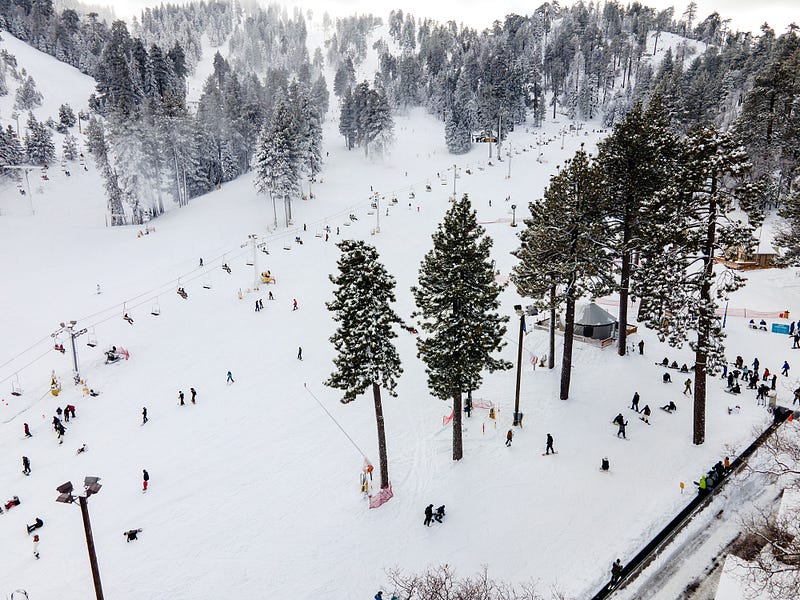
Jun 5, 2022
Podcast #88: Snow Trails, Ohio General Manager Scott Crislip
To support independent ski journalism, please consider becoming a free or paid subscriber. Paid subscribers receive thousands of extra words of content each month, plus all podcasts three days before free subscribers. Who Scott Crislip, General Manager of Snow Trails, Ohio Recorded on May 31, 2022 About Snow Trails Click here for a mountain stats overview Owned by: The Carto family Located in: Mansfield, Ohio Closest neighboring ski areas: Mad River Mountain (1.5 hours), Boston Mills-Brandywine (1 hour) Base elevation: 1,174 feet Summit elevation: 1,475 feet Vertical drop: 301 feet Skiable Acres: 200 Night skiing: Yes, 100% of terrain Average annual snowfall: 30 to 50 inches Trail count: 17 (20% black, 60% intermediate, 20% beginner) Lift count: 7 (4 triples, 2 doubles, 1 carpet - view Lift Blog’s inventory of Snow Trail’s lift fleet) Why I interviewed him Stare at it for a while, and the American ski map teases some captivating storylines. How is it that there are so many ski areas in Southern California? Or New Mexico? Or how about that map dot above Tucson, or, for God’s sake, Ala-freaking-bama? Are those real? Why are there so many ski areas in practically snowless eastern Pennsylvania, and so few (relatively speaking) in snow-choked and mountainous Washington and Oregon? But one of the most curious sectors of U.S. skiing is the lower Midwest. Ohio hosts five public ski areas; Indiana has two; Illinois, four; Iowa, three; Missouri, two. That’s just 16 ski areas across five states. The upper Midwest, by contrast, hosts 90 ski areas across three states: 40 in Michigan, 31 in Wisconsin, 19 in Minnesota. So that 16 may seem low, but the lower Midwest’s ski area count is actually quite impressive if we look at the macro conditions. Take Ohio: why – how – does this windblown flatland host five public ski areas (a sixth, Big Creek , operates as a private club near Cleveland). Eastern Ohio – the western borderlands of Appalachia – is actually quite hilly. But there aren’t any ski areas there. Instead, Ohio ski life is clustered around or between the state’s many large cities – Dayton, Columbus, Cleveland. Most of America’s ski areas, if you pick them apart, exist because of a favorable combination of at least a couple of the following factors: elevation, population, aspect, accessibility, snowfall – often lake effect. North-facing Snow Trails, seated high (for Ohio) in the Possum Run Valley, right off Interstate 71 between Columbus (population 889,000) and Cleveland (population 383,000), combines four of the five. The ski area only averages 30 to 50 inches of snowfall per year, depending upon the source, but there’s plenty of juice (snowmaking) to keep the lifts spinning. The place, in fact, has more skiers than it knows what to do with. Last year, Snow Trails began limiting season pass sales for the first time in its 60 seasons. The outdoor boom hit Ohio as much as it hit New England or Colorado. People wanted to ski. If they live in the north-central part of the state, they’ve got a fine little hill to do it on. What we talked about Summertime at Snow Trails; the passing of Snow Trails long-time founder and operator David Carto; the ski area’s founding in the ‘60s; the unique climate of Ohio’s Possum Run Valley; Snow Trails’ novel water source; introducing a “Western” feel to an Ohio ski area; how climate, technology, commitment, and culture work together to make a ski area succeed; the incredible longevity of Snow Trail’s management team; 60 years working at one ski area; Snow Trails’ future as a family-run ski area; don’t let your significant other teach you how to ski; learning to ski on ropetows; the insane grind of a lower Midwest ski season; the Cal Ripken of skiing: 22 years as GM and he’s never missed a day; reflecting on last ski season; “whenever the opportunity comes to make snow, come November, we’re going to do it”; managing volume at a small, insanely busy ski area during the Covid boom; limiting season pass sales; when Snow Trails’ season passes may go on sale; whether Snow Trails has considered joining the Indy Pass; watching Ohio’s collection of independent ski areas slowly consolidate under a single owner throughout the early 2000s; the moment Vail bought four of the five public ski areas in Ohio; Vail’s abysmal performance in Ohio this past season and how Snow Trails rose above skiing’s larger labor and weather struggles to offer 79 hours of operations per week; how Snow Trails will respond to Vail’s $20-an-hour minimum wage; the “gut punch” of Vail’s decision to slash operating hours and days of operation after Epic Pass sales ended; whether the ski area will bring back midnight Fridays; oh man you do NOT take night skiing away from Midwesterners; thoughts on how Vail can turn around the disappointing state of their operations in Ohio; how the installation of carpet lifts transformed the beginner experience at Snow Trails; which chairlift the ski area would like to upgrade next; where the resort is thinking about installing a ropetow; the best location on the mountain to potentially add an additional chairlift; where Snow Trails could potentially expand; the story behind Snow Trails’ glades, an anomaly in the lower Midwest; advancing snowmaking technology and how it increases resilience to climate change; what’s new at Snow Trails for the 2022-23 ski season; and RFID. Why I thought that now was a good time for this interview Vail stole the show in Ohio this past winter, mostly through a stunning display of callous ineptitude. Their four ski areas, which for decades have spun the lifts seven days per week, 10 or 12 or more hours per day, slashed hours and days of operation. Here’s what you were faced with, this past winter, if you were an Epic Pass holder in Ohio: * Alpine Valley: closed Monday-Thursday, 3:30-9 Friday, 9-4 weekends (19.5 hours per week) * Boston Mills: closed Monday & Tuesday, 10-3 Wednesday and Thursday, 4-10 Friday, 9-5 weekends (32 hours per week) * Brandywine: 4-10 Monday-Friday, 9-5 Saturday and Sunday (46 hours per week) * Mad River: 3-9 Monday-Friday, 10-5 Saturday and Sunday (44 hours per week) There were several elements of this modified schedule that were stunning in their complete misapprehension of the local market. First: night skiing, in the Midwest, is everything. Everything. Eliminating it – on Saturdays especially – is baffling beyond belief. Second: curtailing hours after season pass sales are complete is an offensive bait-and-switch, particularly for Midwesterners, who already weather the disrespect of the “flyover country” label. “How dumb does this Colorado, big-mountain company think we are?” was, by all accounts, the sort-of meta-narrative defining local sentiment this past season. Yes, the Epic Ohio Pass – good for unlimited access to all four of the state’s Vail-owned ski areas – started at just $279 for the 2021-22 ski season ( it’s $305 right now ), but it came with an implied promise that the ski areas would function as the ski areas always had. Crowded? Yes. Frantic? Yes. Existing on the margins of where people can hack a ski experience out of nature’s ferocious whims? Always. But it would be skiing, pretty much whenever you wanted it, for 12 weeks from mid-December to mid-March. Vail did not deliver on that expectation. The company responded to a mild early season and tight labor market not by dumping resources into operations and hiring but by retreating. Not just in Ohio, but in Indiana and Missouri as well. Paoli Peaks operated four days per week. The Missouri ski areas did better, with seven-day schedules and a decent amount of night skiing. But overall, Vail Resorts did not look like Vail Resorts in the lower Midwest during the 2021-22 ski season. The largest ski company in the world – proud, bold, insatiable, domineering Vail – looked bumbling, scared, confused, lost. And they would have gotten away with it, too, were it not for those meddling independent ski areas that carried on as though it were a completely normal Midwest ski season. Vail owns seven of the nine public ski areas in Ohio, Indiana, and Missouri. The other two – Perfect North, Indiana and Snow Trails – absolutely embarrassed Vail, exposing every flimsy excuse the company made for curtailing operations. Perfect North spun the lifts 89 hours per week. Snow Trails went 79, offering night skiing until 9 p.m. seven days per week. How did they do this? “We did what we always did,” Crislip told me in the interview. But what was that, exactly? And what could Vail learn from a little reflection after the humbling that was this past Ohio ski season? Why you should ski Snow Trails Crislip mused, during our conversation, on the long-term advantages of severely discounting lift tickets for school groups. Those discounted tickets, he said, pay big dividends down the line. No kidding. I only ever tried skiing because 200-vertical-foot Mott Mountain, Michigan offered $6 lift tickets to my high school in the winter of 1992. I think rentals were an extra $5. A bus ride to the hill and back – about half an hour each way – was free. Mott Mountain is long gone, but I think we can conclude that the ski industry’s return-on-investment was sufficient. The amount of money that I’ve spent on the sport in the decades since that first bus ride is all of it. There were winters during which I did little else but ski and purchased almost nothing that was not directly ski related, other than gasoline and Taco Bell. Which is great for kids, right? But why would an accomplished skier ever want to ski a bump like Snow Trails, let alone travel there to do it on purpose? It’s a rhetorical question, asked because the world is still filled with studly chest-beaters, who answer questions like this: With machofest responses like this: Twenty years ago, we’d say that if you wanted someone to expose their true selves, get them drunk or angry. Now, you can just open their social media accounts. I don’t know where this dude lives, but if it’s anywhere near Snow Trails, I’d give him this bit of unsolicited advice: put your ego down (it may require the assistance of a forklift), store it somewhere safe, buy a season pass, and go enjoy yourself. If you can’t have fun skiing a bump like this, then I’m not sure you understand how to have fun skiing at all. Get to know the hill, get creative, nod to the lifties – treat it like your local bar or gym or coffee shop. Somewhere to be in the wintertime that isn’t your couch. Or wait until your trip to Whistler and be happy skiing six days per year. I can’t tell you how to live. I’m just here to make suggestions. Here in New York, I know plenty of people like this. They wouldn’t dare ski Mountain Creek, New Jersey’s beehive-busy analogue to Snow Trails. “You probably ski Mountain Creek ” they’ll type on social media, as though there’s something wrong with a thousand-footer with high-speed lifts and a happy hour-priced season pass. But once you adopt this mentality, it’s malignant. Soon, you’re also too good for Hunter, then Gore, then Killington, then, like the Twitter turkey above, the venerable Jay Peak, the NEK powder palace that averages more inches of average annual snowfall than Steamboat or Winter Park. Before you know it, your ski-day choices are down to Snowbird, Jackson Hole, Palisades Tahoe, and Revelstoke. Anything else “isn’t real skiing.” Or something like that. It’s all a little tedious and stupid. We’re fortunate, in this country, to have hundreds of viable ski areas, pretty much anyplace that hills and cold collide. If you live anywhere near one, there are a lot more reasons to frequent it than to snub it. There are plenty of skiers who live in Florida or Texas or Georgia, places where the outdoor lift-served bump is an impossibility. Not to sound like your mom when you were five years old, but there are plenty of kids in the world that don’t have any toys to play with, so try to be happy with the ones you’ve got. Go skiing. More Snow Trails * A Mansfield News Journal obituary for longtime Snow Trails owner David Carto * Near the end of the interview, Crislip says refers to the work that “you and Matt” are doing to promote Midwest skiing. Matt is Matt Zebransky, founder of midwestskiers.com and all-around good dude. The site is comprehensive and terrific, and Zebransky is a really talented video producer and editor, who puts together some knockout reels laser-focused on Midwest skiing. Zebransky introduced me to Crislip after he hosted me for a podcast interview recently (I’ll let you know whenever that’s live). The Midwest Skiers Instagram account is a terrific follow. The Storm publishes year-round, and guarantees 100 articles per year. This is article 60/100 in 2022, and number 306 since launching on Oct. 13, 2019. Want to send feedback? Reply to this email and I will answer (unless you sound insane). You can also email skiing@substack.com . This podcast hit paid subscribers’ inboxes on June 2. Free subs got it on June 5. To make sure you get future pods as soon as they’re live, please consider an upgrade. Get full access to The Storm Skiing Journal and Podcast at www.stormskiing.com/subscribe
May 28, 2022
Podcast #87: Paul Bunyan, Wisconsin Owners TJ and Wendy Kerscher
To support independent ski journalism, please consider becoming a free or paid subscriber. Starting in June, paid subscribers will receive podcasts three days before free subscribers. Who TJ and Wendy Kerscher, Owners of Paul Bunyan Ski Hill, Wisconsin Recorded on May 23, 2022 About Paul Bunyan Owned by: TJ and Wendy Kerscher Located in: Lakewood, Wisconsin Closest neighboring ski areas: Keyes Peak, Wisconsin (1 hours); Ski Brule, Michigan (1.25 hours); Camp 10, Wisconsin (1.25 hours); Granite Peak, Wisconsin (1.5 hours); Pine Mountain, Michigan (1.5 hours) Vertical drop: 150 feet Average annual snowfall: 65 inches Trail count: 6 (2 black, 2 intermediate, 2 beginner) Lift count: 3 (1 T-bar, 2 ropetows - view Lift Blog’s of inventory of Paul Bunyan’s lift fleet) Trailmap: Paul Bunyan has yet to create an updated trailmap. This overhead-oriented version created by skimap.com is the closest thing I could find, though TJ told me that the ropetow and tubing park - and associated trails - looker’s left on this map have not yet re-opened (he hopes to have them ready for the 2022-23 ski season, along with a top-to-bottom ropetow that runs parallel to the T-bar): This map, from 1993, shows the state of the ski area just before it closed, in 1995: This map, from 1980, is probably my favorite from an aesthetic point of view: Why I interviewed them In 2016, a California businessman named Jeff Katofsky purchased the long-dormant Sugar Loaf ski area in northern Michigan. A real estate developer and minor league baseball team owner, he seemed to barely understand skiing, declaring shortly after taking possession of the property that he had visited Whistler “to get ideas.” Which is like visiting the Palace of Versailles to get ideas on how to decorate your hunting cabin. The next year, he stripped all five Hall* doubles from the hillside. “The ski hill presently has to basically be gutted because nothing on there can work,” he told the Glen Arbor Sun . “Whether we can put another ski hill together or not, we’re crunching a lot of numbers together to see if that works.” The Crunchinator came up with some pretty intense numbers. For Katofsky, skiing was a high-end pursuit, which could only be provided in an ultra-luxurious context. “Skiing is purely a financial question,” Katofsky told the Sun in 2018. “I have to take it seriously because I know it’s important to people. But I’m not doing this for charity. We’ll invest literally tens of millions of dollars in this. If skiing works financially, you’ll have it. If not, you won’t.” Skiing must not have worked financially. In December 2020, Katofsky sold the property to an anonymous buyer and disappeared, without comment, into the void. Katofsky, to be fair, was not trying to spend tens of millions of dollars to resuscitate a ski resort, explicitly. He intended to spend tens of millions to build a year-round spa-and-valet sort of place that had a little ski hill as an addendum. Something like Villa Roma in New York’s Catskills, which offers a minimalist ski experience but long ago mothballed an entire terrain pod . That’s a shame. Sugar Loaf was once one of the best ski areas in Michigan’s Lower Peninsula, a nationally unsung ski mecca as nuts about this stupid snoskiing thing as anyplace that’s cold and remotely hilly. The front side was 500 feet of pure fall line, the backside woods and narrow lanes. The summit view was gorgeous. The vibe pure zest and zeal. No pretention here. The place was fabulous, as good as Boyne Mountain from a pure skiing point of view. I couldn’t believe it when the hill closed in 2000. I’m still miffed. I’m not alone: the 5,015-member Friends of Sugar Loaf Facebook group is an online watering hole for the nostalgic and the hopeful (though IT’S NOT HAPPENING Bro is an unfortunate omnipresent parasite as well). I tend to be It Could Happen Bro, certain that a minimalist version of skiing could be viable. Last year, I exchanged emails with Traverse City native, former Sugar Loaf ski patroller, and Waterville Valley general manager Tim Smith about the possibility of a minimalist version of Sugar Loaf resurfacing at some point: Stuart: I'm really curious about your point of view on Sugarloaf, since you've been in skiing so long and really understand what it takes to bring a mountain back to life, and you seem to have a knack for making things happen. How much would it take to bring a minimum level of skiing back to Sugarloaf? Like let's say you sent [Waterville Valley’s retiring] Sunnyside Triple there and strung it base to summit up Awful Awful and brought in some mobile snow guns - would that be enough? I'm probably over-simplifying it, but I feel like the current owner has it in his head that skiing needs to be uber luxurious before you sell a lift ticket. But you look at Mount Bohemia in the UP, and the guy basically opened the place with some yurts, a base lodge, and a lift. Tim: Your simplification is pretty spot on. Minimum infrastructure to get going again would be a new/used lift, say $2 million will cover that with installation. For snowmaking pipe/pond/pumps/electrical for the frontside (Round About, Nastar, Waful, k2 and Awful Awful) 25 acres or so (that’s twice the size of Waterville Valley’s high country) feed that with 2,000 gpm giving an acre foot of snow every 1.33 hours, so 33 hours at full blast to cover the area with a foot of snow. To blast that type of snow the area would need at least 20 guns but I would recommend 40 as maxing out requires extreme cold. That’s 500k in guns, 500k in pumping, $1.5M for pipe, hydrants, electrical (bit of a WAG as I don’t know what is still there for primary electrical). A steel building lodge like Crotched runs about $2.5 but a yurt village would be doable for a few 100k so let say $1M for now. Parking is still in OK shape but I think the thing that would kill the project is the demo of the old lodge, but the county or state may help as it is a public nuisance at this point, so let’s say the fire department does a controlled burn 🔥 All said and done on a shoe string $5M should get it up and running. But if it was me I would go all in as I think the area could support a higher end resort, just need the right money man 😎. This is off the top of my head, some day it would be fun to run these numbers down and see if something could really work. OK, aren’t we here to talk about Paul Bunyan? Indeed. Excuse the detour, but I had a point: In about nine months in 2020, TJ and Wendy Kerscher and their family accomplished what gazillionaire Katofsky couldn’t in four years. In the midst of the early Covid lockdowns, their bar and their figurine factory idled, the Kerschers looked out at the overgrown and long-abandoned ski hill in their backyard and got to work. TJ meticulously dismantled and reassembled the 1967 Hall T-bar and several ropetows that had been A-Teamed together from 1940s truck parts. With crews of chainsaw-wielding friends, they marched up the hillside and cleared 25 years of forest. They borrowed snowguns from idled Norway Mountain, Michigan; picked up a trio of used Snowcats from Granite Peak; worked with K2 to build a small fleet of rental gear. In February 2021, the ski area re-opened to ecstatic locals. “They filled this place,” Wendy Kerscher told me in the interview. “They filled the hill. We ran out of rentals. It was amazing.” The Katofskys and IT’S NOT HAPPENING Bros of the world would have taken one look at Paul Bunyan and came up with a thousand reasons why the place was inoperable. Too decrepit, too small, too remote, too tired, too knotted to a bygone era of skiing, when surface lifts and five turns top-to-bottom were good enough. I have little use for such people. The cynics and the you-can’ts, the ones who always tell you why not. I am searching for the TJ and Wendy Kerschers of the world, the optimists and the puzzle-solvers, the people who are too busy working to realize that what they’re doing is impossible. The way they did what no one else could do was to simply do it . No master plans. No consultants. No expensive crews. No engineers. Just chainsaws and shovels and some borrowed heavy equipment. A little assistance from the ski industry. It helped that TJ had enough mechanical acuity to rebuild the lifts himself. It was a lot of work, but the result was a ski hill summoned out of the grave by Midwest FTW grit-and-grind. “You never can count sweat equity,” TJ told me. “It was awesome. I would do it all over again five times. I don’t count the work at all. We just had so much fun with this project.” It’s too bad the Kerschers didn’t live in front of Sugar Loaf. Were the mountain’s Hall lifts – famously reliable machines – really beyond repair? Could a more restlessly optimistic soul like TJ have saved them? Someone who truly loved and understood skiing? I tend to think the answer is yes. And we’ve got a story to prove it, a ski area saved, improbably but truly: Paul Bunyan is back. *Props to Lift Blog for ID’ing these lifts for me. What we talked about The Kerscher family story; the family’s various businesses; the origins of Paul Bunyan as a local nonprofit; when and why the Kerscher family purchased the hill; growing up in an entrepreneurial family; how you react when your father buys a ski area; running a mountain at age 18; why Paul Bunyan closed in the mid-90s; deciding to re-open the ski area after 25 years dormant; a silver lining in Covid; the state of Paul Bunyan’s lifts, trails, and snowmaking after two and a half decades idle; improvisational snowmaking and long-term plans for improvement; that DIY Midwestern grit; restoring the fantastic homemade ropetow network cobbled together with 1940s truck parts; restoring a 1960s Hall T-bar; a fortuitous call from a friendly neighboring ski area; which of the four classic ropetows have been brought back into service, and which are next; the status of the tubing operation; reviving the overgrown trail network – “we got some guys together with some chainsaws and started cutting”; where the ski area is adding runs this summer; options for the forthcoming terrain park; skiers are “really embracing” Paul Bunyan’s “old-school … hang-on-tight ropetows”; restoring the hill’s 1969 Tucker Sno-Cat and why those machines still beat modern groomers for certain tasks; the large ski area that helped Paul Bunyan modernize its grooming fleet with a deal on used machines; setting up a rental shop, ski school, and patrol from scratch; managing labor as a small ski area; insurance; approaching such a massive project day-by-day; how it felt to see the lifts spinning again; “every single weekend, we are sold out of ski equipment”; bringing back night skiing; whether Paul Bunyan could ever be a seven-day-per-week operation; optimism and attitude are everything; advice for aspiring saviors of lost ski areas; the generosity of the greater ski industry; and whether Paul Bunyan had considered the Indy Pass Allied Resorts program. Why I thought that now was a good time for this interview I spend a lot of time shuffling through skiing’s online fringe. I am obsessed, for whatever reason, with completeness. This most obviously manifests itself through the Pass Tracker 5001 , where I’ve been tracking U.S. America’s season pass prices for the past couple years. For hundreds of resorts, tracking down these numbers is a fairly simple exercise. Northstar – Epic Pass. Mammoth – Ikon Pass. And so on. But perhaps a quarter of the nation’s ski areas exist in a sort of steampunk half-world, online but without a formal website, a Facebook page usually, pointing skiers in a choppy, inconstant way toward their little hills, typically a neighborhood bump with a collection of Rube Goldberg surface lifts trundling up a few acres of clear-cut. I’ll frequently message these pages with queries about hours of operation or season pass prices. They almost never write back. So I was fairly surprised last month when a query to Paul Bunyan’s account produced a coherent response within hours. We exchanged a few messages and I invited them onto the podcast. So here we are. Believe it or not, it is typically more difficult to secure an interview with the operators of the Paul Bunyans of the world than the Steamboats or Beaver Creeks. The large ski areas have budgets, communications teams, marketing departments. The executives have talking points and media training. They expect me to knock on the door, and they’re usually willing to talk when I do. With the smaller places, it’s often difficult to determine who owns or manages the hill, and there’s rarely an obvious way to connect with them. So when I had the opportunity to talk to a family who had the audacity to say, “yeah we’re just going to re-open this ski hill with 60-year-old lifts on a minimal budget and by the way if you think this is impossible we’re just going to ignore you,” I couldn’t book it fast enough. Part of what makes skiing great is the raw adventure of a four-thousand-footer sprawling across a half dozen peaks with 35 lifts driving up and over cliffs and trees and elevator-shaft inclines. But a big part of what makes it interesting is that it’s not just that. That a network of hundreds of small-bore versions of this gigantic thing exist anywhere that cold weather and hills collide. If The Storm is after the full story of lift-served skiing, it must be not only aware of the world outside the Epkon flex palace, but immersed in it. There’s no better way to do that – and to bring you along with me – than to connect with operators like the Kerschers, whose story is one of pure love and passion, the one-turn-at-a-time kind of fun that so many in skiing have forgotten. Why you should ski Paul Bunyan If you live anywhere nearby, the answer to this question is obvious: because it’s there. In-between turns when you can’t make the drive over to Granite Peak. Because skiing can be your wintertime gym. Dip in, get your reps on, bounce. Don’t overthink it. For the rest of us – I live 1,100 miles away – the answer is more complicated. I acknowledge that only a handful of the most curious outsiders will ever deliberately visit the Midwest to ski. The ski media has ignored this region for its entire existence, focusing instead on two themes that invariably lead skiers north to New England or west to the Rockies: the ultra-rad or the ultra-luxe. Understandable. However, there exists a third narrative in skiing: discovery. I’ve spent the past two ski seasons in a state of perpetual ramble, bouncing from neighborhood bump to backwoods freeride to ridgeline 500-footer lodged at the top of America. It’s fun. You find little stashes, quirks, thrills. I almost never find crowds. Lift-served skiing is an impossibly rich world, dynamic and varied, funky and weird, curious and fascinating. Someday, I will roll through Wisconsin, and I’ll of course ski Cascade and Devil’s Head and La Crosse and Granite Peak and Whitecap. But I’ll also float through Paul Bunyan, ride the old T-bar, angle jet-fighter style toward one of the hill’s many ropetows and grab on mid-flight, as TJ so exuberantly suggests in our conversation. It won’t be Vail, but I won’t go in expecting that. You shouldn’t either. And what you’ll take away will be pretty cool: a mental snapshot of skiing stripped of all glam and pretense, of a snowsliding business defined by the activity itself, of a place homey and welcoming. That sort of ski-them-all completeness is not for everyone, I understand. But for those of us who adopt such a mentality, the rewards for going in on a Paul Bunyan lift ticket are enormous. More Paul Bunyan Coverage of Paul Bunyan’s re-opening: * Paul Bunyan Ski Hill to Reopen in Oconto County – Fox 11 Online , Nov. 30, 2020 * Lakewood Family Re-Opens Paul Bunyan Ski Hill – Spectrum News 1 – Feb. 9, 2021 * Dozens of Skiers Hit the Slopes at Paul Bunyan Ski Hill in Lakewood – Fox 11 Online , Dec. 26, 2021 Paul Bunyan’s comeback is inspirational, but it’s an anomaly. The Midwest Lost Ski Areas Project has documented 374 lost ski areas across the 12-state region, including 97 in Wisconsin . Let’s hope there are more people like Wendy and TJ Kerscher out there, willing and able to take the low-budget path back to viability. You can follow along with updates on Paul Bunyan’s very active Facebook page: The Storm publishes year-round, and guarantees 100 articles per year. This is article 58/100 in 2022, and number 304 since launching on Oct. 13, 2019. Want to send feedback? Reply to this email and I will answer (unless you sound insane). You can also email skiing@substack.com . Get full access to The Storm Skiing Journal and Podcast at www.stormskiing.com/subscribe
May 16, 2022
Podcast #86: Realskiers.com Editor and 'Snowbird Secrets' Co-Author Jackson Hogen
To support independent ski journalism, please consider becoming a free or paid subscriber. Starting in June, paid subscribers will receive podcasts three days before free subscribers. Who Jackson Hogen, Editor of Realskiers.com, author of Snowbird Secrets , and long-time industry jack of all trades: ski designer, binding and boot product manager, freestyle competitor, retail salesman, risk management lecturer, ski instructor, marketing director, resort feature writer, OLN and RSN television host, extreme camp ski coach, Desperate Measures co-creator, four-time Warren Miller screenwriter, and research and development chief. Recorded on May 9, 2022 Why I interviewed him A long time ago, ski writers used to write about ski instruction. They were quite good at it. A couple years back, I recounted the value of these dispatches to me as a novice skier in the 1990s: I met skiing like a lawnchair meets a tornado, flung and cartwheeled and disoriented and smashed to pieces. I was 14 with the coordination and dexterity of a lamppost. The mountain was merciless in its certainty of what to do with me. It hurt. I tried again and was met like an invader at the Temple of Doom, each run a stone-rope-and-pulley puzzle I could not solve – a puzzle that invariably ended with me smashed beneath a rock. When two years later I tried a third time I had grown into my body and could without turning or otherwise controlling myself descend the modest hill on most runs intact. The following Christmas I asked for skis and got them and the fabulous snowy north unrolled with purpose and mission before me. Now I just had to learn how to ski. This was a bigger problem than it sounds like. No one in my family skied. None of my friends knew how to ski either – at least not well enough to show me how to do it. Lessons were not happening. If you think a 17-year-old who makes $4.50 an hour bagging groceries is going to spend the equivalent of a week’s pay on what is essentially school on snow when school is not in session, then you have either never met a 17-year-old or have never been one. As it was, I could barely afford the lift tickets and gas to get me to the hill. What I could afford was ski magazines. And ski magazines in the nineties were glorious things, hundreds of pages long and stacked with movie reviews and resort news and adrenaline-laced 14-page feature stories. And there was ski instruction. Pages and pages of it in nearly every issue. This seems arcane now. Why not just watch a video? But this was the mid-nineties. There was no YouTube. Hell, there was barely an internet, and only the computer-savviest among us had the remotest idea how to access it. My first ski magazine was the December 1994 issue of Skiing . It cost $2.50 and it looked like this: The volume of ski instruction in just this one issue is staggering. A nearly-5,000 word piece by venerable ski writer Lito Tejada-Flores anchored a 19-page (!) spread on the art and importance of balance, which was in turn prefaced by a separate front-of-the-mag editorial outlining the whole package. An additional eight pages of ski instruction tiered from solid-green beginner to expert complemented this. And all this in an issue that also included a 13-page high-energy feature on roaming interior BC and 10-page write-ups of Squaw Valley and Whiteface. Each month I bought Skiing , and most months I also bought Ski and Snow Country . I also bought Powder but even then Powder could not be bothered with ski instruction. The instruction wasn’t the first thing I read but I always read it and I usually read it many times. This was a process. Ski instruction articles are often dense and deliberate and usually anchored to numbered photographs or drawings demonstrating movements and technique. Think of it as drill instruction in extreme slow motion. It wasn’t all useful but what was useful became essential. I doubt anyone knows how to write about ski instruction with this kind of clarity and detail anymore, just like no one knows how to build a covered wagon anymore – it is a lost art because it is now an unnecessary one. But this is how I learned how to ski. And because this is how I learned and because I re-read each of the pieces that resonated with me so many times, this written instruction formed the indelible framework around which I still think about skiing. Read the rest: I would like to retract one part of the above essay: “it is a lost art because it is now an unnecessary one .” Re-reading the articles referenced in the piece above, I admire the clarity with which each of these writers dissected the process of skiing trees or bumps or steeps. There is no equivalent, that I am aware of, in the realm of instructional ski videos. And there is a simple reason why: videos can show you what you should be doing, but the visual hegemony makes their creators overlook something even more important: what you should be feeling , and how you should be reacting as you feel those things. There is at least one remaining master of this craft: Jackson Hogen. He understands how to talk about aspects of skiing other than the fact that it’s rad. Snowbird Secrets is a written masterclass for the wannabee expert, the one who’s maybe dropped into the double blacks laced off the Cirque Traverse and survived to the bottom, but knows it wasn’t their best work. Examples: From Chapter 4 – On Anticipation : Your upper body stays ahead of the activities going on underfoot, as though your head and shoulders were in a time machine that is forever stuck on transporting you a few milliseconds into the future. As mental anticipation morphs into the events that both end it and redeem it, physical anticipation allows for the happy confluence between the two states. Anticipation feels like a form of time travel for if you do it well, it shifts you into the future. You take care of business before it happens. Chapter 5 – On Being Early : The single biggest differentiator between the advanced skier and the true expert is the latter’s ability to get to the next turn early. There are several components to being early, each of which moves in concert with the others. The upper body must continue its constant projection down the hill and into the turn, the existential lean of faith that is a prerequisite for performance skiing. The uphill hand cues a shift in weight to the ski below it by reaching for the fall line. And the uphill ski begins to tilt on edge early, at the top of the arc, supporting your hurtling mass as it navigates gravity’s stream. Chapter 12 – On Hands and Feet : Every element that makes up the entirety of the skier is linked to every other, but nowhere is the bond greater than between hands and feet. The primal importance of hand position is never more evident than when your feet fail you. … Even when you’re not about to eat it, your hands tell the rest of your body what to do while your feet are busy making turns. Your torso is attuned to your hands’ bossy attitude; it will always try to follow their lead. So keep them forward, point them where you want to go and don’t get lazy with the uphill hand. Generations of skiers have been taught to plant the pole on the inside of the turn, so that hand often is extended, as if in greeting, to the fall line, while the uphill hand takes a nap somewhere alongside the thigh. Until you are a skier of world-class capabilities, you cannot afford sleep hands. The uphill hand that you’ve left in a mini-coma will be called upon in a trice to reach again downhill; it should be in an on-call position, not on sabbatical. It should be carried no lower than it would be if you were about to draw a sidearm from a holster. You’re engaged in an athletic endeavor, so try to look like it. You can tell how good someone is at writing about skiing by how self-conscious you feel as you read it. I’ll admit I clicked over to photos of myself skiing more than a few times as I made my way through Snowbird Secrets (I’d also recommend having the Snowbird trailmap handy). Great ski books are as rare as a Mountain Creek powder day. But great books on ski instruction are less common still, and this one’s worth your time: Instructional writing is not the point, however, of the Real Skiers website. It is, primarily, a gear-review and recommendation site. But there is no intelligent way to discuss ski gear without a foundational understanding of how to ski. It would be like trying to play hockey without understanding how to skate. The site, like Hogen’s knowledge, is voluminous, layered, cut with a direct and relentless wit. And it’s a tremendous resource in the online desert of ski media. As Hogen says in the interview, “I’d tell you that there are other places you could go to get the same information, but there isn’t.” What we talked about This year in skiing; Mt. Rose; replacing the Snowbird trams; learning to ski at Bromley in the ‘50s; the evolution of sanctioned in-bounds air at ski areas; air as a natural part of good skiing; opening year at Copper Mountain; the life of a product sales rep; the early days of Snow Country magazine with industry legend John Fry; making bindings interesting; the novelty and courage of honest ski reviews; today’s “consequence-free environment for total b******t” in ski media; “there is no more complicated piece of footwear designed by man” than a ski boot; don’t ever ever ever buy ski boots online; the art of boot-fitting; the importance of custom footbeds to ski boots; how to keep warm in ski boots; how to pick skis; whether you should demo skis; the difference between skiing and ski testing; whether you should build a quiver; make friends at the ski shop; picking a binding; why you should avoid backcountry or hybrid bindings; thoughts on setting DIN; “nobody should take anything from the highest levels of the race world and applying it to alpine, regular skiing”; recounting every mistake that prefaced my spectacular leg break at Black Mountain of Maine in February; the problems created by grip-walk boot soles; how often we should be waxing and tuning our skis; the lifespan of skis and boots and how they break down over time; the importance of being present while skiing; ask for the mountain’s permission; Hogen’s incredible book, Snowbird Secrets ; the writer’s trance; what makes Snowbird special and whether it has any equals; the mountain has already won; thoughts on Taos; the influence of population growth and the Ikon Pass on Little Cottonwood Canyon; the easiest path down the hill is a straight line; how to use your hands and feet while skiing; and the benefits of a Real Skiers subscription. Why I thought that now was a good time for this interview Not to be too self-referential, but I’ll again quote myself here. Specifically, my February post recounting the gear failure at Black Mountain of Maine that led to my three-months-and-counting couch sentence: On my final run of the season we swung skier’s right off the lift, seeking shade, tracked-out snow for easier turns. We found them in Crooked glade. Emerged on black-diamond Penobscot. Ungroomed. Snow heavy in the sunshine. A little sticky. As though someone had caulked the hillside. Try this or more glades? Let’s try this. It was my 13th run of the day. My 460th of the season. It was 1:22 p.m. I let my skis run. Gained speed. Initiated turns. I was leaning into a right turn at 18.9 miles per hour when I lost it. I don’t really know what happened. How I lost control. I know what didn’t happen: the binding on my left ski – 12-year-old Rossies I’d bought on spring clearance at Killington – did not release. Amazing pain in my leg. My body folded over backwards, bounced off the snow. A rattling through the shoulder where I’d had rotator cuff surgery last summer. I spun, self-arrested. Came to a stop on a steep section of trail, laying on my left side, my leg pinned into bent-knee position. I screamed. The pain. I could not get the ski off. I screamed again. Removed my helmet. Let it drop. It spun down the hill. Adrenaline kicked in. A skier appeared. He helped me take my ski off. DIN only at 8.5 but the binding was frozen. Finally it released. I tried to straighten my leg. Couldn’t. I assumed it was my knee. Isn’t it always a knee? More skiers arrived. Are you OK? No, I’m in a lot of pain. They left to get help. Patrol arrived with snowmobiles and sleds and bags of supplies. Michael came walking back up the hill. Everything after, rapid but in slow-motion. Does that make sense? Gingerly onto the sled, then the stretcher, then the Patrol-shack table. EMTs waiting. Amazing drugs incoming. Off, with scissors, my ski pants. Removing the boot, pain distilled. Not your knee – your leg. Broken bones. Did not penetrate the skin. Into the ambulance. Rumford Hospital: X-rays and more pain meds mainlined. A bed in the hallway. From the next room a woman, emphatic, that she don’t need no Covid vaccine in her body. All night there. The staff amazing. I would need surgery but there were no surgeons available until the next day. A room opened and they wheeled me in. In a druggy haze they splinted my leg. A train of drunks and incoherents as the bars emptied out. Sleep impossible. Here’s what I didn’t include in that essay: the moment, last August or September, when I’d dropped my skis for a tune at Pedigree Ski Shop in White Plains. “We just need your boots for a binding check,” the clerk had told me. Said boots, stowed at that moment in my closet in Brooklyn, were unavailable, forgotten in my hastening to beat rush-hour traffic. “I’ll bring them when I come back to pick up my skis,” I said. I didn’t. I hadn’t planned on skiing on those Rossies. But at some point in the season, I blew an edge on my Blizzards, couldn’t find a replacement pair, reached in my roof box and there were those old skis. So I’ve had a lot of time to think about that decision chain and how careless I’d been with my own safety, and how to reset my approach so I minimize the chances of a repeat. After nearly three decades of skiing without a major injury (and just two minor ones), I’d gotten arrogant and careless. I’d like this ski season to be the last one that ever ends early. But what else could I do besides remember my boots next time? I’ve been reading Hogen’s site for a few years now. I hadn’t been in explicit need of gear prior to blowing that edge, but he’s an entertaining writer and I enjoyed the regular emails. I figured he was the best-positioned thinker to guide me (and hopefully all of us), into better gear choices and maintenance over the next several years. There was one more thing, one that transcends the empirical realms in which I normally dwell: the notion of mountain as entity. From Snowbird Secrets Chapter 3, On Vibrations : … Hidden Peak is riddled with quartz. Quartz is a crystalline structure, and no ordinary crystal at that. Like all crystals, it not only responds to vibrations, it emits them. Quartz has piezoelectric properties that allow it to store electromagnetic energy and to conduct it. This mountain pulls a pulse from your energy stream and sends it back with interest, but it also skims off a transaction that it stores in its gargantuan energy vault. “So what does the mountain do with all this energy?” Jackson asks, before answering his own question: As it turns out, everyone has a story for how they came to discover Snowbird, but no one knows the reason . Some have the vanity to think they picked the place, but the wisest know the place picked them. This is the secret that Snowbird has slipped into our subconscious; deep down, we know we were summoned here. I’m skeptical but interested. Snowbird is special. No one who has skied there can doubt that. It is different. Incomparable. It is one of the few places where I ever feel genuinely scared on skis. But also reverential, awed, a little miffed and disbelieving the whole time I’m skiing. It’s something else. And I’ve never really been able to figure out why, other than the 600 inches of snow and relentless terrain and location within bowling lane distance of a major airport. Whether or not you’re willing to consider this anthropomorphization of the ski area, Hogen’s call to humility in its presence is inarguable. From Chapter 19, On Gratitude and Asking Permission: Everyone can learn humility before the mountain. Nowhere is this more important than at Snowbird, where if you don’t approach the mountain with the appropriate measure of humility, the mountain will be more than happy to supply some. My final run of the season was on an open trail, ungroomed buy modestly pitched. I was tired, my turns lazy. I wasn’t really paying attention. I wasn’t respecting the mountain. And while that mountain was quite a different thing from Snowbird, it had no issue reminding me that my carelessness was a mistake. Questions I wish I’d asked Despite the fact that this was one of the longest podcasts I’ve ever recorded, we didn’t get to half the questions I’d prepared. I wanted to discuss the devolution of ski shop culture in the maw of the internet, the decline of the industry trade show, the unconstructive nature of a competitive mindset to recreational skiing, the history of Real Skiers , the evolution of ski and boot technology over the past several decades, and how fortunate we are to be alive during this singular epoch in which we can reach the hazardous summits of our most forbidding mountains with a 10-minute lift ride. Hogen also made several interesting comments that would have been worthy of follow-up, from his nomination of Greg Stump to the National Ski & Snowboard Hall of Fame to what he sees as the decline of certain professional ski organization’s institutional integrity. I’ll save it all for next time. What I got wrong I referred to the boot-fitter I’d used in Hunter as “Keith from Sun and Snow Sports.” The boot-fitter’s name is Keith Holmquist, but the name of the shop is, in fact, The Pro Ski and Ride. Sun and Snow Sports is the name of the ski shop I frequented when I lived in Ann Arbor. You can visit their site here . Why you should follow Real Skiers I will admit that I am very bad at winnowing the best gear from the multitudes. I get overwhelmed by choice. This is one reason I don’t buy gear too often: if what I have works, then why change? And it’s why I know enough to use a boot fitter when I do finally decide an upgrade is in order. But maybe what I have – and what you have – doesn’t “work” so much as function. And that’s not the same thing as functioning optimally. Most of us could probably make better choices. And to do that, we need information. Good information. It may seem that the fecundity of the internet precludes the imperative to seek out the hyper-specialized knowledge of a professional. But the vast majority of ski and boot advice is garbage, as Hogen fearlessly reminds us. From a recent Real Skiers post : My methods for capturing skier feedback may not be succeeding to the degree I would like, but at least I’m trying. Most arms of mainstream media that choose to pose as ski experts no longer possess even a patina of credibility. To name two particularly odious examples of advertising posing as editorial, Men’s Journal published a top-10 “Most Versatile Skis of 2022” that was wall-to-wall b******t, assembled purely to incite a direct sale from the supplier. Whatever quality might be shared by their ten selections, “versatility” isn’t even a remote possibility. I could vilify each selection for its exceptional inappropriateness, but instead I’ll just mention that the “writer” admitted that their tenth selection hadn’t even been skied by whatever panel of nitwits they assembled to manufacture this fraud. The second slice of inanity that deserves your contempt is a ruse by Popular Mechanics titled, The 8 Best Ski Boots for Shredding Any Slope . Despite a long prelude about boot selection and how they “tested,” intended to establish a tone of credibility, when they finally got around to picking boots, the editors responsible for this transparent hoax cobbled together an incoherent jumble with but one goal: based on their nothing-burger of a review, the reader is expected to buy his or her boots online, preferably on Amazon. It’s hard to think of a worse disservice to the ski-boot buying public than this inane exercise. At least that’s what I thought until I was invited to peruse The Ski Girl . I can’t say how desperately incompetent all the advice dispensed on this site is, but I can assure you the people assigned to write about skis are the opposite of experts. I’ll let this one example stand as indictment of the whole shebang: someone so well-known she goes simply by the moniker “Christine,” selected as the best ski for an intermediate (woman, one presumes) none other than the ultra-wide Blizzard Rustler 11. It would be hard to make a completely random choice and do worse. There is NOTHING about this model that is right for an intermediate. Period. It’s not merely wrong, it’s dangerous, for reasons that I’m certain would elude “Christine.” On top of it all, she has the witless gall to add, “Every ski review here comes recommended, so you really can’t go wrong.” This is emblematic of everything that’s wrong about what remains of ski journalism. A gross incompetent merrily goes about dispensing advice unblushingly, so the site can collect a commission on a direct sale THAT SHOULD NEVER HAPPEN. Please note that The Ski Girl hasn’t taken down its moronic buying suggestions, suggesting a smug certainty that there will be no serious consequences for its gross negligence. Such is ski journalism today. That sort of raw honesty, that anti-stoke, that unapologetic calling out of b******t, is so rare in today’s ski media that I can’t even conjure another instance of it in the past 12 months. Skiing needs more of this, more blunt and informed voices. At least there’s one. Get in on it here by subscribing to the Real Skiers newsletter (as with The Storm , there are free and paid tiers): The Storm publishes year-round, and guarantees 100 articles per year. This is article 53/100 in 2022. Want to send feedback? Reply to this email and I will answer. You can also email skiing@substack.com . Get full access to The Storm Skiing Journal and Podcast at www.stormskiing.com/subscribe
May 13, 2022
Podcast #85: Indy Pass President and Founder Doug Fish
To support independent ski journalism, please consider becoming a free or paid subscriber. Starting in June, paid subscribers will receive podcasts three days before free subscribers. Who Doug Fish, President and Founder of the Indy Pass Recorded on May 9, 2022 About the Indy Pass Here’s an overview of the 2022-23 Indy Pass suite: And here’s what that gets you access to: Why I interviewed him It’s unfortunate that Steamboat, a personal favorite and one of Colorado’s most amiable mountains, has become the avatar for sticker-shock skiing, but there it is: $269 peak-day walk-up lift tickets last season. Any collateral pain is self-inflicted, and they seem committed to the process, so I don’t feel too bad hammering on them about it. Still, for readers of this newsletter, most of whom have next year’s Ikon Passes tucked into their jacket pockets by Easter, my ceaseless yammering about walk-up ticket prices can probably seem tedious and abstract, like detailing the logistical challenges of sustainable asteroid mining or the tolerable viral load of a brontosaurus: who cares? Which is a fair question. But as the three dozen or so mega-resorts that have mainlined this triple-digit ticket tactic race toward $300 for a day of skiing, a cartoonishly absurd double universe has materialized. One that makes comparisons like this possible: for $10 more than an Ikon-oblivious skier would pay for one day at Steamboat, they could have skied 162 days at 81 ski areas with a $279 Indy Pass. Which is probably more days than most skiers rack up in a decade, and more ski areas than they visit in a lifetime. It’s a hell of a bargain, is what I’m trying to say here, and an amazing product that the greater skiing public has, so far, failed to appreciate in large numbers. Indy predicted 400,000 redemptions this past season. The number came in at 125,000. That’s a 68.75 percent miss, which Fish attributes, in this interview, to overzealous predictions coming off the bomber Covid-induced boom season of 2020-21. What that means, for us skiers, is that this thing probably has plenty of room left to grow. “Growth” means a couple things here. First, more resorts are incoming. Fish promised as much in this interview, even in already crowded New England. The smaller-than-expected number of redemptions means the 85 percent cut of Indy revenue that goes to the resorts was not as diluted as Fish feared it could have been (he explains how the pass operates in the interview). Plus, the new Allied Resorts discount program is broad enough that this thing could easily reach a total of 200 downhill partners (it’s not unthinkable that the addition of cross-country ski areas could push that number toward 300). Second, more skiers are likely coming too. That’s a good thing. Numbers bring stability. Wouldn’t more skiers mean more redemptions? Yes, but it means more revenue, too, and since it’s likely that the most hardcore skiers – i.e. those most likely to redeem 30 days – are already in. Fish was comfortable enough with the average number of redemptions that he held prices steady for next season – and sales are strong as a result. For all the attention The Storm lavishes on the Indy Pass, the product is an industry minnow, not even three years old. Yet somehow this little pass with as many annual visits as an Eagle County weekend has stapled itself to the marquee alongside the Epic and Ikon passes, a toddler in size 14 boots. It’s been astonishing to watch it grow, but it will be more amazing still to see what happens when it grows into those knee-high kicks. Fish is the first three-time guest on The Storm Skiing Podcast . Yes, because he’s generous with his time and humble in his approach, but also because he keeps coming up with new things to say, keeps making the story more compelling, keeps making us believe that this is something worth talking about. What we talked about Continued discussion on whether any of the Mt. Hood ski areas would ever land on Indy; redemption and sales totals versus expectations for this past ski season; how the Indy Pass works from a business point of view; how Indy is able to sign headliners like Powder Mountain and Jay Peak, which could easily align with the Epic or Ikon passes; how Cannon kept visits high even as the mountain added an enormous number of blackout dates; White Pass finds the Epkon refugees; the power of Brundage and Tamarack as a combined destination; other popular Indy combos; the New England state that will definitely get a new full Indy Pass partner before next season; expansion potential in New York; the chances of Jay staying with Indy post-sale (whenever that happens); why Indy Pass prices will stay steady for 2022-23; why the Indy Pass processing fee exists and why it’s here to stay; the Indy Switch Pass; untangling the spaghetti bowl of last year’s blackout dates; fixing the Saturday problem; thoughts on the recent additions of Kelly Canyon, Bluewood, and Ski Sawmill; the surprising appeal of Swain; finally breaking into Colorado, with Sunlight; the number of Indy Pass visits that originate out of state; thoughts on Japan; dispensing with the resort target number; losing Marmot Basin; the genesis and purpose of the Allied Resorts program; begging Doug to shift Burke to full partner status; and why Indy began including cross-country ski areas and how the response has been so far. Why I thought that now was a good time for this interview Since it debuted in 2008, the Epic Pass has both held steady and constantly evolved. Its premise, from the beginning, was fairly basic: unlimited access to all Vail Resorts, all the time. It launched with six mountains, and now includes access to 9,000. But almost annually, Vail has added some innovation or another: the Epic Local Pass, various versions of the Epic Day Pass, local and midweek passes, a massive lodging and on-mountain discount program, the Epic Mix tracking app, a payment plan, etc. Some of these innovations were more useful than others, but every year, we can expect something new. And that’s in addition to all the extra ski areas. Vail, skiing’s imperial fleet, rippling with aircraft carriers and battleships and submarines, is well equipped to dream up such annual salvos of newness. It’s impressive that Indy, with a staff that would be insufficient to captain a 30-foot fishing boat, has orchestrated a commando version of this evolution. The 2019 Indy Pass cost $199 and delivered two days each at 34 ski areas. There were no blackouts and no product variation (a few partners offered an add-on pass). The next year : 52 ski areas, plus a $99 kids pass and a $129 add-on pass, available uniformly across all partner ski areas. The Indy+ Pass and a payment plan also debuted. 2021 brought a (probably too large, Fish now admits) price increase, but access to 66 ski areas at launch and an additional 17 by December, including four in Japan. By the time Indy confirmed its 2022-23 lineup last month, the roster stood at 83 downhill partners. An ambitious cross-country initiative seeks to add more than 30 Nordic partners by winter, and the standalone XC pass is just $69 (all Indy Pass holders get the XC days). And the Allied Resorts program, announced earlier this week, ensures that nearly any ski area that’s interested can fold itself into this nationally marketed network. Fish also held prices steady, upped the renewal discount, and introduced the Indy Switch Pass to encourage Epkon snobs to reconsider. There was plenty to talk about, is my point. And Fish, as always, accommodated, on one condition: for the love of God can we keep it to an hour? Questions I wish I’d asked I had meant to ask Doug about the possibility of pre-loading Indy tickets onto resort’s RFID cards, but I didn’t get to it. While he said that such integrations were “not practical,” he did provide the following statement, teasing a pretty cool tech upgrade coming for the season after next: In partnership with our tech partner Entabeni Systems, we will be rolling out an app for the 2023-24 season [I incorrectly indicated on Twitter earlier this week that this feature would be available for next ski season] that will allow our passholders to carry their pass on their phones. Among other features, it will contain a scannable QR code that can be read at the ticket window, eliminating the need for looking them up in our system. This app can be deployed without passing any additional costs on to our customers which we’d have to do if we issued a physical pass. What we got wrong I intimated that Powder Mountain was outside of the Wasatch Mountains, but the ski area in fact lies within this mountain range. I also suggested that Winter Park was a blacked-out mountain on the Ikon Pass, which it is not (on any version of the product other than the Ikon Session Pass). Doug also referred to “Wintergreen,” West Virginia. He meant Winterplace. Wintergreen is in Virginia, and is not an Indy Pass partner. Doug also referred to the marketing director of Sunlight, Colorado as “Tony Hawks” – his name is Troy Hawks, and you can (and should) follow him on Twitter here , since he’s the man who brough Indy Pass to Colorado. Why you should buy the Indy Pass In my head, gas is always a dollar a gallon. Even decades after that fleeting era when I pushed shopping carts for $4.35 an hour and drove a rusty pick-up, any sum over $15 to fill my gas tank baffles me. Candy bars are forever lodged at 35 cents, Hostess cupcakes at 55 cents – such were the prices when I would peddle my Huffy to the neighborhood Total in the 1980s. I’m sure there’s a name for this pricing nostalgia. Whatever it’s called, the first best thing about the Indy Pass has become a liability, as It-Used-to-Cost-$199 Bro forever peppers social media with his waxings of this bygone era. “When the Indy Pass came out, it was under $200 and there were no blackouts,” he will complain. “And it came with a pair of Volkls and a free Subaru. Now it costs $279, there’s all kinds of blackouts, and the courtesy ‘vehicle’ is just a Shetland pony without a saddle. It’s all going to hell!” Bros across America need to let it go. Yes, last year’s price jump was a little extreme. Fish admits as much in the interview. But it is still a very good deal – had it debuted at $279 with its current roster, it would seem like the greatest thing ever. That’s because it is. The glory in the Indy Pass is not in what it was – a coalition of 34 broadly distributed resorts – but in what it has become and is transforming into. We’re closing in on 100 partners, and we’ll likely blow right past that by the Fourth of July. God bless America. This is one damn fine product. There is one more d*****s Bro out there that befuddles Indy’s ascension: It’s-Not-Worth-It Bro. It’s-Not-Worth-It Bro’s narrative goes something like this: yes, it’s cool that Indy put all these mountains on one pass, but they’re not the sort of ski resorts that are “worth” traveling to Montana/Idaho/Utah for or anything. I beg your pardon? Scroll back to the chart at the top of this article. Red Lodge: 2,400 vertical feet, 1,635 acres, 250 inches of annual snowfall. Powder Mountain: 2,205 vert/8,464 acres (3,000 lift-served)/400 inches. Brundage: 1,921/1,920/320. Castle: 2,833/3,592/354. Exactly which district of Narnia do you call home if these numbers leave you yawning? There are a lot of good reasons to buy an Indy Pass: you live within a few hours of a half dozen or more partners and are looking for a reasonably priced family winter. You have an Epkon pass but are leary of voyaging through the gates of Mount Snow/Keystone/Mammoth/Crystal on a midwinter Saturday. You’ve already visited every high-speed demo center on the continent and are looking for something different. You’re Van Life Bro and want to ski an entire winter for less than five dollars. You want to support skiing’s equivalent of craft beer (only, in this case, the indie label is a lot less expensive). Or you just love skiing and everything about it, and you want to understand this dynamic world to the fullest extent possible. There are good reasons not to buy the Indy Pass, too: you don’t travel much, the mountains are too far, you are happy with your local, you dad’s private plane is too big to land at any mountain town airport other than Eagle. But if your goal is lots of skiing, and if you don’t exactly need a home mountain and have a little flexibility to travel, if you value novelty and don’t mind the occasional mile-long Hall double chair ride to the summit, then lock this thing in before prices increase on May 18. More Indy Pass on The Storm Skiing Podcast : * Snow Ridge , New York GM Nick Mir * Beaver Mountain , Utah owner Travis Seeholzer * Little Switzerland , Nordic Mountain, The Rock Co-Owner Rick Schmitz * Tamarack , Idaho President Scott Turlington * Shawnee Mountain , Pennsylvania CEO Nick Fredericks * China Peak , California CEO Tim Cohee * Lutsen and Granite Peak Owner Charles Skinner * Caberfae Peaks , Michigan Co-Owner and GM Tim Meyer * Whaleback Executive Director Jon Hunt (recorded pre-Indy) * Titus Mountain Co-Owner Bruce Monette Jr. (recorded pre-Indy) * Indy Pass Founder Doug Fish (April 27, 2021 – 2nd appearance) * West Mountain , New York owners Sara and Spencer Montgomery (recorded pre-Indy) * Montage Mountain Managing Owner Charles Jefferson (recorded pre-Indy) * Granite Peak , Wisconsin GM Greg Fisher * Waterville Valley , New Hampshire GM Tim Smith * Bolton Valley , Vermont President Lindsay DesLauriers * Bousquet GM and ownership (recorded pre-Indy) * Saddleback , Maine GM Andy Shepard (recorded pre-Indy) * Jay Peak , Vermont GM Steve Wright * Cannon Mountain , New Hampshire GM John DeVivo * Indy Pass Founder Doug Fish (May 31, 2020 – 1st appearance) * Berkshire East and Catamount , Massachusetts Owner Jon Schaefer * Burk Mountain GM Kevin Mack (recorded pre-Indy) * Magic Mountain , Vermont President Geoff Hatheway The Storm publishes year-round, and guarantees 100 articles per year. This is article 51/100 in 2022. Want to send feedback? Reply to this email and I will answer (unless you sound insane). You can also email skiing@substack.com . Get full access to The Storm Skiing Journal and Podcast at www.stormskiing.com/subscribe
Apr 29, 2022
Podcast #84: Ragged Mountain General Manager Erik Barnes
To support independent ski journalism, please consider becoming a free or paid subscriber. Organizations can email skiing@substack.com to add multiple users on one account at a per-subscriber enterprise rate. Who Erik Barnes, General Manager of Ragged Mountain , New Hampshire Recorded on April 26, 2022 About Ragged Mountain Click here for a mountain stats overview Owned by: Pacific Group Resorts Summit elevation: 2,286 feet at the top of Pinnacle Peak Vertical drop: 1,240 feet Skiable Acres: 250 Average annual snowfall: 100 inches Snowmaking coverage: 85% Trail count: 57 (40% expert/advanced, 30% intermediate, 30% beginner) Terrain parks: 3 Lift count: 5 (1 high-speed six-pack, 1 high-speed quad, 1 triple, 2 surface lifts - view Lift Blog’s inventory of Ragged’s lift fleet) Why I interviewed him I usually start with the mountain, but this time I’ll start with the man. Barnes spent 33 years at Mount Snow before landing at Ragged last October. That makes him one of the most seasoned ski area heads in a region where experience matters a hell of a lot. As Vail struggled to fully open and manage its New Hampshire properties last year, little, little-known Ragged seemed to do just fine. Outside of a four-day lift failure in early January, the ski area was staffed up and moving all season, in spite of warm December temps and a stubborn rain-snow line that sopped Ragged while its neighbors just to the north tallied a foot-plus in a series of storms. The ski area’s stability in the maw of all this instability demonstrates the importance of appointing experienced leaders such as Barnes to captain this temperamental region’s ships. And this is a pretty nice little ship. Not a super-yacht or anything, but a solid pleasure cruiser. Ragged has all of the things: glades, detachables, that indie vibe, reasonable prices, and an experienced snowmaking and management team that can keep the boat sailing through the Northeast’s it’s-raining-lava-and-elephant-poop winters. It’s pretty easy for a ski area to get lost in New Hampshire. It’s a great ski state with a lot of great ski areas: Waterville Valley, Loon, Cannon, Bretton Woods, Attitash, Wildcat, Black Mountain, Cranmore, Mount Sunapee, Gunstock. King Pine and Pats Peak are two of the best-run small ski areas in New England. So Ragged has some standing-out to do. It’s doing its best, but it’s one of the state’s least-appreciated spots, and I figured it was time to do some appreciating. What we talked about Ragged’s 2021-22 weather short straw; back when everyone used to learn on a ropetow and how that went; how you get from ski instructor to general manager of Mount Snow; ski school camaraderie and culture; the distinct culture of Mount Snow and why the ski area has been such an incubator of industry talent; how Mount Snow evolved as it was passed along from SKI to American Skiing Company to Peak Resorts to Vail Resorts; 251 fanguns will change your day; building Mount Snow’s Attack of The Planets snowmaking system and what makes it so powerful; what it takes to open a mountain in October in southern Vermont; Barnes’ reaction when Peak Resorts sold their entire portfolio to Vail; “what do you think?” versus “this is what we’re doing”; the East is a different game, Kids; what Vail needs to do to bring its Northeast ski areas up to standards; the particular challenges of running oft-bankrupted and frequently shuffled Ragged Mountain; Ragged’s unique snowmaking and snow-management systems; why Ragged didn’t suffer the same staffing challenges as other New England resorts this past season; how the ski area will respond to Vail’s new $20-an-hour minimum wage; a primer on Ragged owner Pacific Resorts Group and its five ski areas; the insane expenses of lift maintenance; an update on the Pinnacle Peak and beginner area expansions; how much land Ragged owns and what the eventual expansion options look like; Ragged’s big-bomber high-speed lift fleet; the importance of redundancy; whether we could ever see a surface lift serving the Wildside terrain park; Ragged’s extensive, wildly fun, and ever-growing glade network; whether we could ever see night skiing at Ragged; long-term snowmaking upgrades; the ski area’s Mission: Affordable season pass; whether Ragged could ever add reciprocal season pass partner deals, as its sister resort, Powderhorn in Colorado, has done; and whether Ragged has considered joining the Indy Pass. Why I thought that now was a good time for this interview Because it’s been nagging at me for years: this “FUTURE EXPANSION” promised on two sides of the ski area on Ragged’s old trailmaps: I see something like this and I become 7 years old. When will it happen? When will it happen? When will it happen? When will it happen? When will it happen? When will it happen? When will it happen? It’s insane. I won’t say that this particular expansion nag is why I started the podcast, but I will say that things like this are exactly why The Storm exists: I am obsessed with the long-term evolution of lift-served ski areas, more immersed, at times, in what a thing could be than what it actually is. This one is particularly compelling, for a number of reasons. First, the trails are already cut, and have been for years: Second, Ragged has done a better job than just about any ski area in New England outside of northern Vermont in developing a balanced ski experience. Loon is a big, well-appointed mountain, but it lacks a strong glade network (which is odd, considering Boyne’s strength in this area up at Sugarloaf). Okemo and Mount Snow host the largest collection of intermediate groomers on planet Earth. Ragged could be a smaller version of this, a glide-and-fly bump for families and the opening-bell groomer brigades. But the ski area makes the most of its two little mountains, and it’s fun to assume that it would develop Pinnacle Peak in the same manner. Ragged is interesting in a lot of other ways. What’s with this weird little conglomerate that owns ski areas in New Hampshire, Maryland, Virginia, Colorado, and coastal BC? That sounds more like a rich person’s inventory of second homes than a logical network of ski resorts. And what’s with the cheapo season pass? And why doesn’t it have a network of reciprocals like sister resort Powderhorn? And oh by the way when will Pinnacle Peak happen? When? When, man? JUST TELL ME AND I’LL STOP ASKING! He didn’t tell me. Questions I wish I’d asked You know, I didn’t ask what it felt like to leave Mount Snow after 33 years, and I should have. I didn’t ask why Barnes left the mountain, because it was pretty obvious. The new owners, Vail, shuffled executives, as new corporate owners of new corporate things often do. I figured there was no point in dwelling on it. The Storm is sometimes deferential to or critical of the past, but it is mostly about the now and the what’s-to-come (I said mostly , Annoyingly Correct Bro). But it was obvious – in the way Barnes talked about Mount Snow and his time there and the people he worked with and the modern machine that he had helped evolve it into – that this was a man connected to his mountain in a way you might be connected to a kid or a home or a really great dog. He would not have left it on purpose. That was a story that would have been worth getting into, and it was a failure on my part not to. What I got wrong I mentioned the power of Mount Snow’s snowmaking system, and intimated that they were “the first in the Northeast to really build out” such a system. There’s a lot of nuance to that statement, and the way I framed it in the podcast wasn’t clear at all. Here’s what I meant: while every large resort in the Northeast has a snowmaking system that could blow the doors off of any 5,000-acre western rambler, Mount Snow’s is one of the most modern and efficient, able to make the most of its water in a way that is more advanced than many of its competitors (though that gap shrinks yearly as all of the big Northeast mountains continuously upgrade their snowmaking arsenals). I also stated that this was Vail’s fourth season of operating the former Peak Resorts, when it was actually their third, after acquiring the portfolio in July 2019. I also asked Barnes to tell us about Pacific Resorts Group and the five different ski areas that it owns “around the country.” Only four of their resorts are in the United States, however – the other is in British Columbia, Canada. I didn’t get this wrong, but a lot of New England people will accuse me of doing so: I stated that the region did not have the rabid night-skiing culture that the Midwest does. This is true. While Southern New England does feature several extensive night-skiing operations, the total number of ski areas, and the total hours that they operate after dark, are far less numerous than in the Midwest, where nearly 100 percent of the ski areas offer night skiing across 100 percent of their terrain seven nights per week from December to March. Why you should ski Ragged Mountain Secrets are a little easier to come by in the West, where bigness is the default and out-of-staters fly by the off-brands to cash in their Epkon coupons at the headliners. Take Sunlight , Colorado, for example, 2,000 vertical feet fading into the rear-views of the Aspen-bound. Or Sugar Bowl , 1,650 acres and 500 inches of snow served by five high-speed quads half an hour closer to San Fran than Palisades Tahoe or Northstar. That’s a little tougher in the East, where the drop-off is fairly severe between the chest-thumbing 2,000-foot bad boy bristling with detachables and the family-owned 500-footer served by a single double chair that’s older than plant life. But there are a few big-but-mine-all-mine-evil-cackling-laugh ski areas dotted around the East. Burke, 2,000 empty vertical feet of goldmine glades served by two high-speed quads just a few miles off (a very remote section of) I-91. Saddleback, modernized and re-opened and glorious with fall lines and glades of all kinds, but far enough out in the wilderness that you have to be careful you don’t turn the wrong way off the edge of the planet on your way to the hill. And Ragged. For 20 years, there has been exactly one six-place detachable chairlift in New Hampshire, and it’s at Ragged Mountain, serving one of two glade-laced peaks. Serving the other, exactly adjacent glade-laced peak is an eight-year-old high-speed quad. There’s a whole complex of beginner lifts at the bottom for kids or whatever you call them. Lift tickets sit comfortably below triple digits. The season pass is one of the cheapest in New England, debuting this year at just $379 (it’s now $479 through Sept. 5). All this sits about equidistant between Interstates 89 and 93. So what gives? How come skiers tend to blow right past Ragged on their way to Waterville Valley or Loon or Cannon? Well, those ski areas are bigger and, despite being farther from Boston, easier to get to, as they’re mostly right off Interstate 93. Each of them tops 2,000 feet of vert and tends to draw more snow than Ragged. Either state- or corporate-owned for decades, New Hampshire’s big resorts have been well-tended-to and well-taken care of, stable wintertime draws for basically the entire history of lift-served skiing. But Pacific Resorts Group, which added Ragged to its far-flung, five-resort network back in 2007, has brought much-needed stability to this rad little mountain. The company has continued to improve the property, cutting new glades and upgrading the lifts. Long-term, they intend to expand onto a third mountain, Pinnacle Peak (as I may have mentioned above), and trails are already cut (also mentioned above). In Barnes, Ragged has one of the most experienced and well-liked ski area managers in the region. As megapass mania transforms the character of many of New Hampshire’s beloved ski areas, sending refugees scrambling for alternatives, Ragged is poised to become something big. Go there before that happens. More Ragged * The excellent New England Ski History website has pages on just about any operating or lost ski area in the region, including Ragged . * New England Ski Journal TV visited Ragged back in 2016: * Ragged’s dense glade network speaks to the mountain’s long-established identity. Decades before thinned tree runs became ski area mainstays, Ragged called out a cluster of upper-mountain glades on this 1969 trailmap: This has nothing to do with Ragged, but while researching this article, I came across this amazing trailmap of nearby (and now lost) King Ridge ski area . I really have no idea what the hell is going on here, but it makes me vaguely miss the ‘90s, the last decade before the world hyper-connected itself into a bottomless information and ridicule machine and it was possible for absurd things like this to exist in glorious obscurity: The Storm publishes year-round, and guarantees 100 articles per year. This is article 46/100 in 2022. Want to send feedback? Reply to this email and I will answer. You can also email skiing@substack.com . Get full access to The Storm Skiing Journal and Podcast at www.stormskiing.com/subscribe
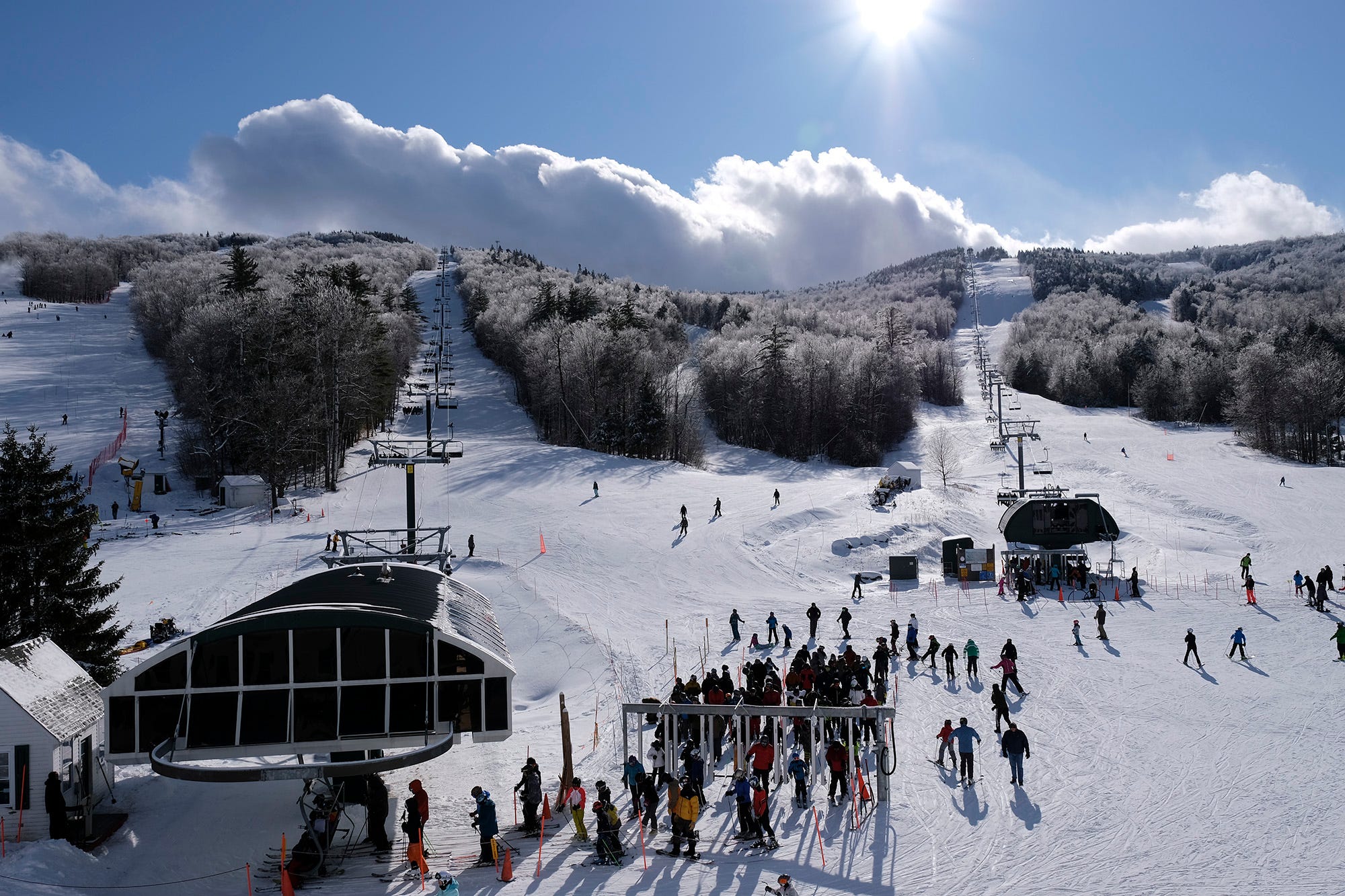
Apr 20, 2022
Podcast #83: The Summit at Snoqualmie President and General Manager Guy Lawrence
To support independent ski journalism, please consider becoming a free or paid subscriber. Upgrading to a paid subscription is the only way to guarantee access to 100% of The Storm’s content. NOTE: a few minutes ago, I published a comprehensive breakdown of Summit at Snoqualmie’s 2030 plan, which we discuss at length in this podcast. Click here to view that article, which includes detailed breakdowns of the plan, along with diagrams of the new lift alignments at each ski area. Who Guy Lawrence, President and General Manager of The Summit at Snoqualmie , Washington Recorded on April 18, 2022 About Summit at Snoqualmie Click here for a mountain stats overview Owned by: Boyne Resorts Base elevation | summit elevation | vertical drop: * Alpental: 3,140 feet | 5,420 feet | 2,280 feet * Summit East: 2,610 feet | 3,710 feet | 1,100 feet * Summit Central: 2,840 feet | 3,865 feet | 1,025 feet * Summit West: 3,000 feet | 3,765 feet | 765 feet Skiable Acres: 1,994 (600 acres of night skiing) * Alpental: 875 (including back bowls) * Summit East: 385 acres * Summit Central: 474 acres * Summit West: 260 acres Average annual snowfall: 426 inches (varies by area) Trail count: 150 (11% expert, 42% advanced, 33% intermediate, 14% beginner) Terrain parks: 2 Lift count: 24 (3 high-speed quads, 4 fixed-grip quads, 3 triples, 9 doubles, 5 surface lifts - view Lift Blog’s inventory of The Summit at Snoqualmie’s lift fleet) Trail maps: Why I interviewed him What is this wild place, four ski areas in one, scattered about the high ground like wintry little islands 50 miles east of the snowless coastal city? 400 inches of snow and no logic to it at all, dumping at 3,000 feet when the rain line is at 4,000, the Cascade Concrete of legend, except when it isn’t. The funny name and the funny trail map, the ski areas nothing like one another, as confusing a thing as there is in American skiing. Boyne once owned two ski resorts in Washington. There was Crystal, and then there was this. Whatever this was. Maybe a feeder and maybe something else. And oh wait that’s where Alpental is? Why didn’t they just say that? Crystal is gone (it’s still there), but Boyne held onto this. And now we’re getting a real good sense of what this is. I don’t know if it was the Ikon Pass or the runaway West Coast tech wealth or the Covid-driven outdoor explosion or the spread-the-word crowdsourcing supernova of social media, but suddenly Summit at Snoqualmie is One Of Those Places That We Talk About. Part of the overrun Washington trio that also includes Crystal and Stevens. The rest of the state’s ski areas are too remote to matter, at least for now, at least in that way. But these three have problems. Traffic problems and parking lot problems and liftline problems and terrain-management problems and, sometimes, too-much-snow-all-at-once problems. They’re all handling them different. Crystal has morphed from Ikon bottom-feeder to $1,699 season pass elitist with intricate parking-and-access policies in just two seasons. Stevens is hoping new management and a higher wage can offset the debilitating crowds driven by season passes that cost the same as one month of Netflix. And Summit is doing what Boyne does: rethinking and rebuilding the resort to adapt to the modern ski experience. Washington State in 2022 is a tough place to make it as a ski resort, and I wanted to talk to the person in charge of Summit to understand exactly how they planned to do that. What we talked about The 2021-22 ski season; potential Summit closing dates; the T-bar ride that changed a life; Australia’s sprawling Perisher ski area; the majesty of European skiing; Vail Mountain; Badger Pass; Booth Creek; Summit and Washington in the homey ‘90s; when skier traffic started to explode; the founding of the four Summit at Snoqualmie ski areas and how they came together into the modern resort; why they’re bucketed as one ski area even though Alpental is separated by Interstate 90 and about two dozen cliff bands; why Summit East, Central, and West still have distinct trailmaps even though they are side by side; the varying personalities, schedules, and characteristics of each of Summit’s four ski areas; 400-plus inches of snow on the outskirts of a city that averages 4.6 inches per season; Summit at Snoqualmie’s 2030 plan; the logic of upgrading the Hidden Valley chair before the East Peak chair at Summit East; potential upgrades and re-alignments for Central Express; the new alignment and lift for Triple 60; why the old Gallery chair is likely to remain for the foreseeable future; thoughts on Easy Street and Reggie’s; the extent of the snowmaking system coming to Summit; the possibility of re-planting trees to introduce more defined trails around Summit; where’s the water going to come from?; the new lodge coming to Central; the Pacific Crest upgrade and the story behind the present lift; whether an upgraded Pacific Crest would make Dodge Ridge redundant; the upgrade and new alignment for Wildside; whether the areas between East, Central, and West could be developed with trails and lifts; the new International chair at Alpental; an upgrade and realignment for Sessel; the Edelweiss upgrade; why there won’t be an Armstrong upgrade just yet, and whether that could happen by 2030; and why Ikon Pass reservations are likely an indefinite fixture of the resort from now on. Why I thought that now was a good time for this interview This is the sixth 2030 plan that Boyne has released in the past two years, and together they tell a compelling story of a company angling to be the best in skiing. How’s that? All ski areas on public land – and that is most of them in the West – have master plans. Some, like Steamboat , even have branded Full Steam Ahead-style plans with videos and diagrams to teleport you into your white-laced future. But only Boyne is meticulously etching a story for each of its resorts, detailing the lifts, terrain expansions, and experiential razmataz that aims to make these properties the best in their respective regions. Which takes us to Summit, perhaps Boyne’s most complicated resort. Take three Midwest-style ski areas, stacked side-by-side but built with vastly different philosophies and laced with lifts from at least eight different companies, many of which no longer exist. Then tack on a true big-mountain roustabout, but separate it from the rest with an interstate. Add 400-plus inches of heavy snow annually on avalanche-prone slopes, then drop the whole operation on the outskirts of a growing and ever-wealthier metropolitan population of 4 million. It’s not an easy place to imagine, let alone manage, and it was hard to say which direction Summit would carry this plan. What they came up with is, I think, impressive: eight new or upgraded lifts, one of which will be a brand-new line up International. Every main lift except East Peak is slated for some sort of upgrade. Central will get top-to-bottom snowmaking and a new lodge. RFID is coming. This is a lot to do in the next eight years, but it’s all worth doing, and it threads that impossible balance of uphill versus downhill capacity. Everyone hates crowds. Everyone hates crowded trails. Alpental’s Stone Age lift fleet wasn’t helping matters. Neither was the hodgepodge ascending the three-mile-wide sprawl at Summit. This plan rationalizes the whole operation, and hopefully tames some of the holiday and pow-day frustrations and lines. There’s a lot of nuance to this plan, and a lot that could evolve as the years advance. I wanted to go deep on every detail, especially around the lift fleet, to give us the best possible understanding of this big, brash, and vital ski area. Questions I wish I’d asked Gosh, this was a long one. I had some questions loaded up about the switch to RFID, the mountain’s e-commerce upgrades, and parking lot upgrades (pavement!), and I suppose we could have discussed the summer ops a bit more, but we just ran out of time. What I got wrong I intimated that Summit at Snoqualmie had no existing snowmaking, but that is incorrect – they have a very rudimentary and limited existing system. Why you should ski Summit at Snoqualmie Because this is the template. There it is: the local bump. Night skiing six days a week. Swing through. Up and down 10 times and out. On weekends and vacations go elsewhere. I’m aware that some of you live in ski towns, throw down a Ben Frank a year. Maybe more. And I’m glad that version of reality exists. But for those of us stuck in the in-between, quick hits are the way to rack numbers. And with multiple I-90 exit ramps almost directly into the parking lots, this is one of the most accessible ski areas in the country. If Summit at Snoqualmie were just Summit East, Central, and West, that would be it, and that would be enough to keep the place busy and in business. But there’s also Alpental. And that… is a mountain. Enter: Boyne, the Ikon Pass, a rabid clique of PNW Backpack Bros hauling into the Bowls off International. All the cred sits on that little peak, more than double the height and size of its sisters, and 100 times rowdier. Me being me I would ski them all, titter-totter between, take pictures of the lifts and tweet upbound while gripping a Riblet centerpole. For the rest of you, you can probably just aim your GPS right to the base of Armstrong. Just remember your Ikon Pass reservation, your avy gear, and your free Back Bowls pass: More Summit at Snoqualmie How the four ski areas formed and came together (read more on Summit at Snoqualmie history ): A look at Alpental (read the ski area’s history from the point of view of founder James Griffin): This is the 11th Storm Skiing Podcast with a Boyne executive. This is a company that knows what to do with the media. Here are the rest, in the order I recorded them: * Boyne Resorts CEO Stephen Kircher – Nov. 21, 2019 * Loon Mountain GM Jay Scambio – Feb. 7, 2020 * Sunday River President and GM Dana Bullen – Feb. 14, 2020 * Boyne Resorts CEO Stephen Kircher – Covid edition – April 1, 2020 (no April Fool’s post that year) * Sugarloaf GM Karl Strand – Part 1 – Sept. 25, 2020 * Sugarloaf GM Karl Strand – Part 2 – Sept. 30, 2020 * Sunday River GM Brian Heon – Feb. 10, 2021 * Boyne Mountain GM Ed Grice – Oct. 19, 2021 * The Highlands at Harbor Springs President and GM Mike Chumbler – Feb. 18, 2022 * Big Sky President and COO Taylor Middleton – April 6, 2022 And here are links to Boyne’s active long-term resort plans: * Big Sky 2025 Vision * Sunday River 2030 * Sugarloaf 2030 * Loon Flight Path 2030 * Boyne Mountain 2030 - Renaissance 2.0 * The Highlands 2030 Journey * Trail Forward Summit 2030 The Storm publishes year-round, and guarantees 100 articles per year. This is article 43/100 in 2022. Want to send feedback? Reply to this email and I will answer. You can also email skiing@substack.com . Get full access to The Storm Skiing Journal and Podcast at www.stormskiing.com/subscribe
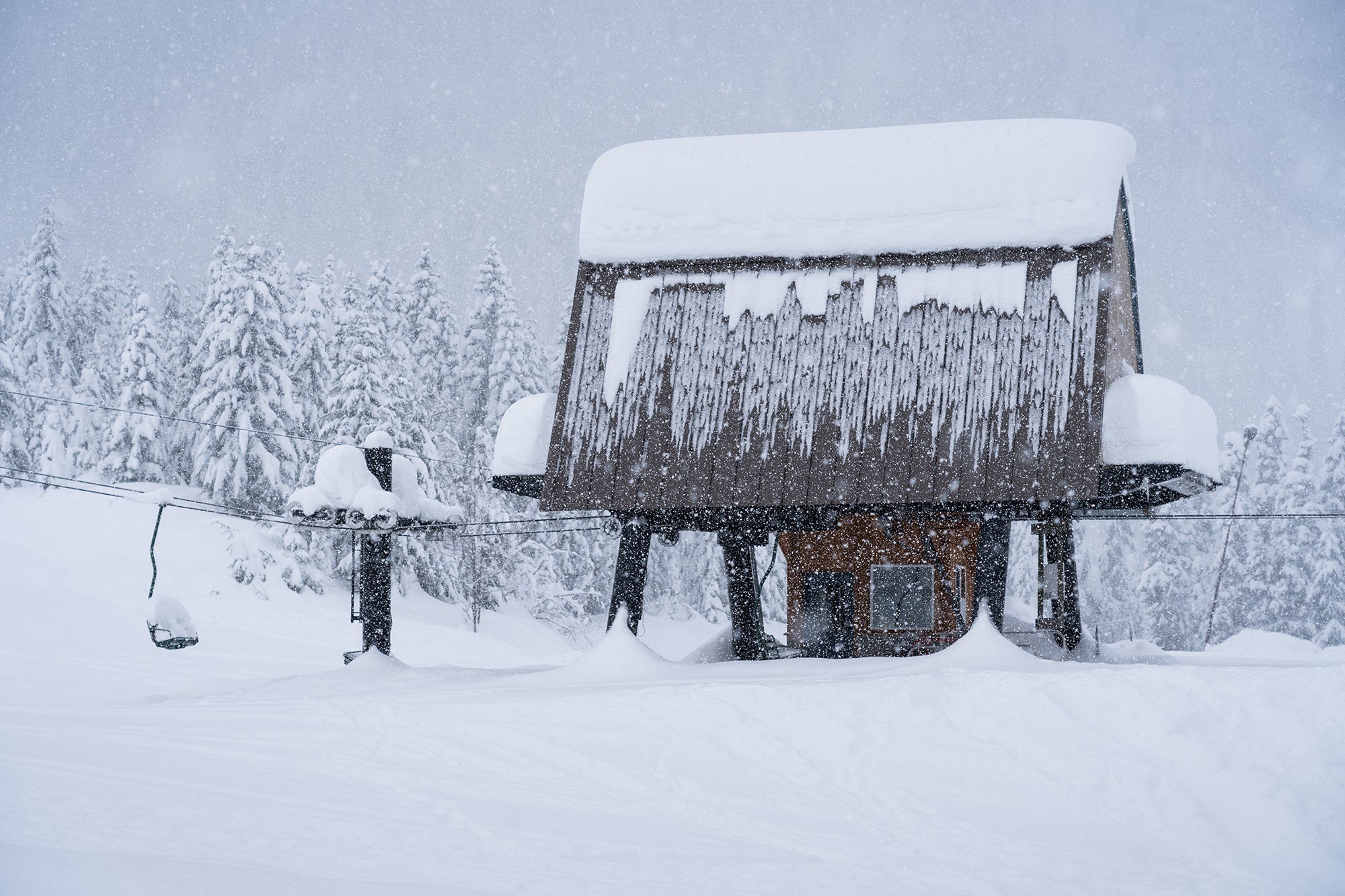
Apr 14, 2022
Podcast #82: Arapahoe Basin Chief Operating Officer Alan Henceroth
To support independent ski journalism, please consider becoming a free or paid subscriber. Upgrading to a paid subscription is the only way to guarantee access to 100% of The Storm’s content. Who Alan Henceroth, Chief Operating Officer of Arapahoe Basin , Colorado Recorded on April 12, 2022 About Arapahoe Basin Click here for a mountain stats overview Owned by: Dundee Resort Development Base elevation: 10,520 feet Summit elevation: 13,050 feet Vertical drop: 2,530 feet Skiable Acres: 1,428 Average annual snowfall: 350 inches Trail count: 147 (24% double-black, 49% black, 20% intermediate, 7% beginner) Lift count: 9 (1 high-speed quad, 3 fixed-grip quads, 1 triple [to be replaced with a high-speed six-pack this summer], 1 double, 2 carpets, 1 J-tow - view Lift Blog’s inventory of Arapahoe Basin’s lift fleet) Uphill capacity: 11,300 skiers per hour Why I interviewed him The Legend. Ski area taglines are typically rocket fuel for The Storm’s wiseass machine, but this one fits. Hard against the Continental Divide, Arapahoe Basin is the third-highest ski area in America, trailing only Monarch (10,790 feet) and Loveland (10,800) at its base, and Telluride (13,150) and Silverton (13,487), at its peak. Its legacy is 10th Mountain Division resourcefulness, an improbable place rising up and over the treeline, hacked out of the remote 1940s American wilderness. The ski area opens in October. It closes in June. Sometimes later (sometimes much later). In Conglomerate County USA, it is the rowdy independent, owned by Some Company Up In Canada, its extremes laced with ferocious double-blacks. There is no lodging. No phony village. No special rich-guy lanes. Just skiing. Damn good skiing, fed by 350 inches of average annual snowfall. This is a ski area, not a ski resort. And in approachable Summit County, with its green-blue acres appropriately tilted for destination-wired Texans and New Yorkers, its groves of high-speed super-lifts, its sprawling mountains perfectly divided by ability, we might assume that such a rowdy outfit, five miles past faux-village Keystone, half the size and with six fewer high-speed chairlifts, might wilt from the pressure. But A-Basin has a pull. Sort North America’s ski areas by size, and the bias is clear: just about any western resort under 2,000 acres was left off the Epic, Ikon, and Mountain Collective passes. But when Arapahoe Basin broke up with Vail in 2019, after a 22-year-partnership, Ikon and Mountain Collective were waiting in the driveway with a dozen roses and a ride to prom. Meanwhile, Loveland, just three miles away, 300 acres bigger, and infinitely easier to get to (its address is literally Interstate 70, Dillon, Colorado), continues to be shut out (or they’re just not interested). Anyone who’s skied there (and everyone has skied there), knows that Summit County is a special place. There’s a reason why it’s ground zero for America’s industrial snowsports machine. Copper, Breck, and Keystone have 79 lifts between them, including 10 six-packs, 16 high-speed quads, and four gondolas or chondolas. Eight and a half thousand acres of Epkonic terrain lurching within easy access of the interstate. And yet, there’s room for something different too. Something special. Something Legendary. What we talked about What the A-Basin crew does when Interstate 70 is closed and it’s dumping outside; the mountain’s 10th Mountain Division legacy; the audacity of 1946 A-Basin; what the ski area looked like when Henceroth showed up in 1988; the characters animating the mountain; ski-bumming and working in Summit County in the ‘80s; Arizona Snowbowl; yes a dog-food company used to own the ski area; The Legend’s terrain; recollections of rescues as Ski Patrol Director; the art of avalanche control; A-Basin’s unique position at the top of Summit County and at ground zero of every major issue in U.S. skiing; the hidden drama behind Vail’s purchase of Keystone, Breck, and A-Basin, and why the company had to pick one to sell; why and how A-Basin ended up on the Epic Pass; the historical inflection point that launched the large-scale ski season pass wars; the Epic Pass breaking point; breaking up with Vail – “it was a surprise to everyone”; the upsides of the Epic Pass; Vail’s stingy spring skiing legacy; how and why A-Basin joined the Ikon and Mountain Collective passes; what it meant for A-Basin to take its own pass back; how the skier experience has changed since the ski area left the Epic Pass; the parking problem; increasing uphill capacity while decreasing overall capacity by limiting ticket and pass sales; why A-Basin ditched its reservation system right after a two-week pilot in 2020; no more holiday blackouts on the Ikon Base Pass; why A-Basin finally installed a high-speed lift in 2010; why the ski area didn’t replace Pali with a higher-capacity lift; why A-Basin went with a fixed-grip quad at The Beavers even though it has twice the vertical rise of the high-speed Black Mountain lift; where you go once you have the newest lift fleet in the country; what the Montezuma Bowl expansion meant for the ski area; going deep on The Beavers expansion and why the lift is where it is; whether future terrain expansions are coming; the commitment to the long season; The Beach; and Al’s Blog. Why I thought that now was a good time for this interview Summit County is, unfortunately, too convenient for its own good. It is the first stop on the Ski Express heading west out of metropolitan Denver, where the population has nearly doubled in 30 years. It was, along with Winter Park, where the multi-mountain season pass wars erupted in the late ‘90s. Starting around 1998, a couple hundred bucks and a junker could get you an eight-month ski season in the high alpine. At the same time, air travel continued to get cheaper and Denver’s airport continued to expand. Anyone from anywhere could get to Colorado pretty easily, and over time the expressway into the mountains became a parking lot with a view. A-Basin rode this tsunami for a long time. An inaugural member of the Epic Pass in 2008, the ski area was also part of the bargain-basement Summit County version of the product, which delivered unlimited access to Arapahoe Basin and Keystone (along with non-holidays at Breck), for around $500 (past prices are tough to nail down, but the pass was $419 in 2012 and appeared to rise to $549 by 2018; versions without Breck access were even cheaper). It was a hell of a deal, but it nearly broke the ski area. By 2019, when the mountain shocked Vail, skiers, and the whole industry by saying “yeah we’re done,” parking – the foundation of the whole U.S. American lift-served ski experience – was well beyond maxed-out for half of A-Basin’s eight-month season. Exhausted and nearly defeated, the ski area needed a breather. The mountain that A-Basin had become was not the mountain it wanted or imagined itself to be. So Henceroth and his team rethought everything. They started limiting day ticket and season pass sales. For next season, they will actually decrease the number of passes by 10 percent of 2021-22 totals. They joined the Ikon and Mountain Collective passes, but as limited-day partners. This season, they will yank the 21-year-old Lenawee triple and drop a high-speed six-pack in its place (the triple is headed down I-70 to Sunrise). All of this came on top of the 468-acre Beavers and Steep Gullies expansion in 2018, which considerably boosted the ski area’s size and came with a new quad. The headline here: Arapahoe Basin is decreasing overall capacity while increasing uphill capacity. It’s not a completely novel strategy: Deer Valley was built on limited tickets and fast, insanely numerous lifts. But A-Basin is doing this without the luxury sheen or high-dollar pricetag (their season pass is $559 for 2022-23, while Deer Valley’s clocks in at $2,675). And, more interestingly, it’s working: Henceroth tells me on the podcast that the ski area has never been in better fiscal shape, even as it’s shed 200,000 annual skier visits in the past four years. It’s a remarkable narrative, and one that many other ski areas, I suspect, will copy. Many other big-dogs – Alta, Jackson Hole, Aspen – are also aggressively adjusting pass products or tweaking parking or ramping up lift fleets. A-Basin, however, has been arguably the most aggressive and outspoken, a story told one blog post at a time , a real-time experiment in how big-time skiing in a big-time ski market can approach rationality in the megapass era and amid an exploding population. It was a story I had to hear. Questions I wish I’d asked I had a few questions prepared around the mountain’s long-term snowmaking plans, as well as a bit about why the ski area has no lodging (I think it’s the difficulty guests have sleeping at that altitude). What I got wrong When I referenced the elimination of Ikon Base holiday blackouts at A-Basin for next season, I said that there were no restrictions over “Christmas, New Year’s, and MLK.” That should have been the standard blackout periods of Christmas-to-New Year’s, MLK, and Presidents’ Day weekend, as outlined on the Ikon Pass website . Why you should ski Arapahoe Basin There’s something special about the top of America, where the trees meet the snowfields and peaks rise stark and lonesome beyond. To have skiing up there – to have anything up there – is disorienting and marvelous, a triumph of spirit and will. This is not Europe, where you’ll ride packed tram cars to a mountain-top abutment more impossible-seeming to anchor into than the surface of the moon. But it’s dramatic nonetheless, a sense of yeah-so-this-is-Colorado that will linger forever once absorbed. A-Basin has a few greens, a small collection of blues, a pair of carpets wheeling along at the base. But this is an expert’s mountain. See the East Wall terrain on the map above, or anything off Pali, or the elevator shafts dropping from the Zuma Cornice. This is not Keystone, with its 10-mile cruisers and good stuff hidden three humps from the front-side. A-Basin’s gnar hangs there, looming and unmissable, a reach goal or psychological torture device for the groomer-bound or the uninitiated. It’s still Summit County: busy, pass-aligned, easy to get to, but it soars in a way that Copper, Keystone, and Breck – all incredible mountains – just don’t. It’s a little more Tahoe, a little more Jackson, a little more Cottonwoods than its Colorado neighbors, with a bit more edge and a bit more muscle, something both among and apart from them. More Arapahoe Basin * Al’s Blog is one of the best ski-area blogs in the country. Posts exploring some of the items we discussed on the podcast: * Why A-Basin replaced its “1978 YAN fixed grip double chairlift with a capacity of 1,200 people per hour for a 2020 Leitner Poma fixed grip double chairlift with a capacity of 1,200 people per hour.” * Why the ski area exited the Epic Pass * Numbers-based breakdowns of A-Basin’s post-Epic life from 2020 , and again from earlier this year. * A good breakdown (playing off the 2020 post above), by The Colorado Sun’s Jason Blevins: Arapahoe Basin’s effort to avoid overcrowding by leaving the Epic Pass may be working too well * Henceroth and I discussed Winter Park’s first buddy pass discount, which ignited the Colorado pass wars in 1998. This 2004 retrospective from The Summit Daily provides some good history, along with some funny-to-hear-now predictions from concerned ski industry veterans. * On the podcast, Henceroth mentions a ski magazine cover that credited “Vail Resorts” with a 243-day season after A-Basin (which was then part of the Epic Pass), extended their season deep into summer. I mentioned that I would try and track this magazine (or an image of it online), down, but I was unable to. If anyone has this cover, please send me a photo and I’ll include it in a future newsletter. * This trailmap of A-Basin, from 1967, is the oldest I could find: The Storm publishes year-round, and guarantees 100 articles per year. This is article 40/100 in 2022. Want to send feedback? Reply to this email and I will answer. You can also email skiing@substack.com . Get full access to The Storm Skiing Journal and Podcast at www.stormskiing.com/subscribe
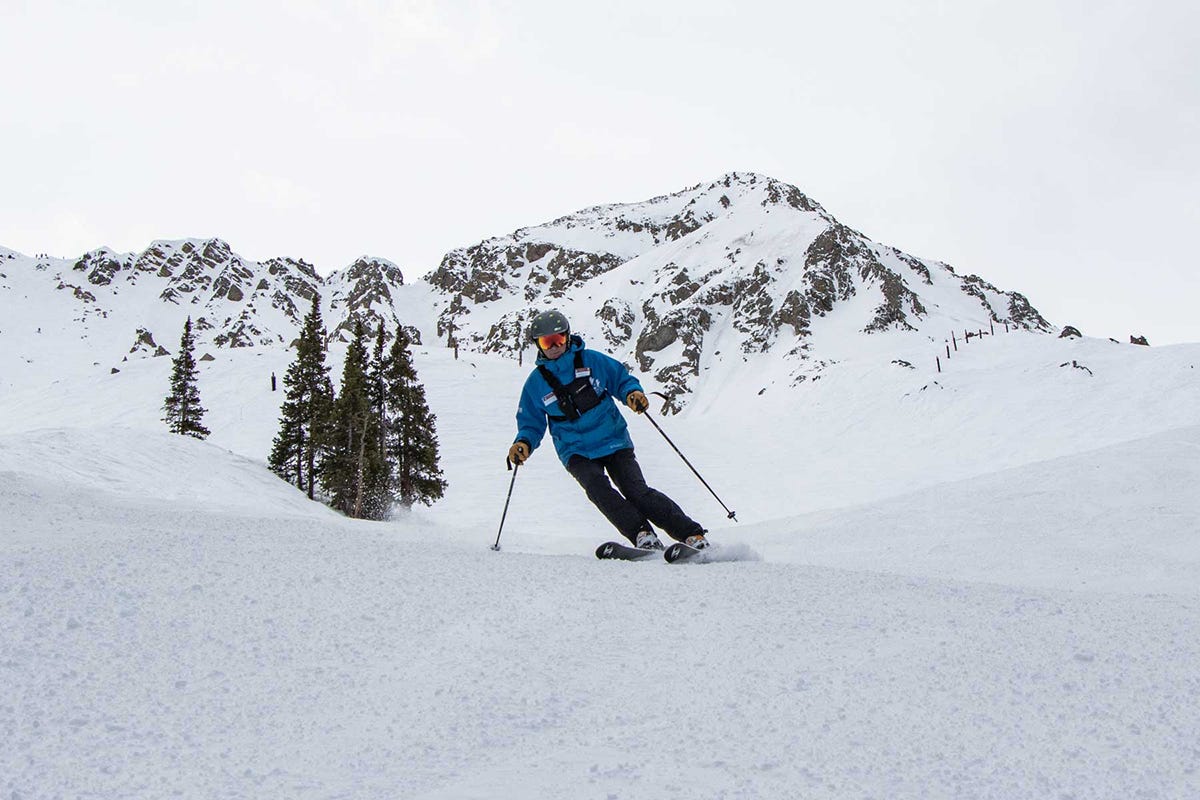
Apr 6, 2022
Podcast #81: Big Sky President and Chief Operating Officer Taylor Middleton
To support independent ski journalism, please consider becoming a free or paid subscriber. Organizations can email skiing@substack.com to add multiple users on one account at a per-subscriber enterprise rate. Who Taylor Middleton, President and Chief Operating Officer of Big Sky Resort , Montana Recorded on April 4, 2022 About Big Sky Click here for a mountain stats overview Owned by: Boyne Resorts Base elevation: 6,800 feet at Madison Base Summit elevation: 11,166 feet Vertical drop: 4,350 feet Skiable Acres: 5,850 Average annual snowfall: 400-plus inches Trail count: 300 (18% expert, 35% advanced, 25% intermediate, 22% beginner) Terrain parks: 6 Lift count: 39 (1 15-passenger tram, 1 high-speed eight-pack, 3 high-speed six-packs, 4 high-speed quads, 3 fixed-grip quads, 9 triples, 5 doubles, 3 platters, 2 ropetows, 8 carpet lifts) – View Lift Blog’s inventory of Big Sky’s lift fleet. Uphill capacity: 41,000 skiers per hour Why I interviewed him Big Sky opened in 1973, as the American ski industry’s big-mountain land grab was fizzling. Seven years later, Taylor Middleton wandered into town, an Alabama boy wired for adventure. What he found an hour and five minutes south of Bozeman, population 21,645 at the time, was a backwater bump of the sort that still populate the Montana wilds: four or five lifts, 20 or so runs, Lone Peak hovering godlike over it all. A hell of a view and dumptrucks worth of snow and not a whole lot else. Over the next 42 years, Big Sky would evolve into one of North America’s great ski areas. The Storm , as regular readers know, can be prone to hyperbole. My worldview is tilted toward ennoblement. Even the scraggliest lift-served snowsliding outposts have virtue in their histories, their idiosyncrasies, their improbable continued existence in a world that frustrates such ventures in 10 dozen ways. That won’t be necessary here. Big Sky is titanic, sprawling, impossible. Alps-like in its scale and above-treeline drama. Mixed into the 300 named trails are two dozen-ish triple black diamonds. They mean it: to ski Big Couloir or North Summit Snowfield off the top of the tram requires an avalanche beacon, a partner, and a sign-out with Patrol. But this radness is a small part of the experience. At almost 6,000 acres, Big Sky is nearly the same size as Boyne’s other nine resorts combined*. It is the third-largest ski area in the United States, and it took the combination of Park City with neighboring Park West (7,300 acres), and the connection of the Alpine Meadows and Olympic sides of Palisades Tahoe (6,000 acres) to out-big Big Sky (Big Sky is itself the combination of two ski areas, as it absorbed the old Moonlight Basin in 2013). Even when the base-to-base gondola finally cracks open over Tahoe next year, Palisades Tahoe’s terrain will remain fragmented. Endless, nearly boundless skiing of the sort that defines Big Sky is rare in America. Which takes us back to Middleton. Big Sky could have been a lot of things in underdeveloped Montana. A rugged single-chair backwater like Turner. A teaser that stopped short of the looming snowfields, like Teton Pass. A fun but lost-in-time burner like Lost Trail. A regional hotshot like Bridger Bowl, with slow lifts, rad terrain, and lots of hiking. Instead it’s one of the most complete and up-to-date ski resorts in North America. How did that happen? Most American ski resorts are just old enough that the pioneering generation, the one that actualized a dream out of the wilderness, are long gone. Big Sky will be 50 years old next year, but for a lot of reasons – not the least among them a stable ownership group (Boyne has owned the ski area since 1976) – a lot of the people who helped mold the place into a monster are still around. Middleton did not just watch all of this happen – he’s a big part of the reason it happened at all. I wanted to hear his story, and the story of the mountain, firsthand. *Boyne’s nine other ski areas total 7,200 acres: Summit at Snoqualmie (1,981 acres), Sugarloaf (1,230), Brighton (1,050), Sunday River (870), Cypress (600), The Highlands at Harbor Springs (435), Boyne Mountain (415), Loon (370), and Shawnee Peak (249). What we talked about The 2021-22 ski season so far at Big Sky; how an Alabama boy ended up running one of the biggest ski resorts in America; yes there is a ski area in Alabama; dusty, cow-town Bozeman and Big Sky circa 1981; how the mountain grew from a backwater bump with five lifts and 20 runs to a sprawling behemoth that sits alongside the best resorts on the continent; the audacity of the Lone Peak Tram; installing a secret summit lift without the knowledge of the company’s CEO; like a glacier the tram base crawls across the valley; how and why the tram has no towers; how Big Sky’s reputation changed when the tram popped open in 1995; the wild terrain hanging off the summit of Lone Peak; “there’s not an easy way down”; how Patrol tamed the mountain to make it skiable; the power of skier self-selection; the inbounds runs that require Patrol check-in and avy equipment; why Big Sky limits Big Couloir to eight skiers an hour; why skiing got so lame in the ‘80s and how the Lone Peak tram helped nudge the industry out of its stupor; John Kircher and putting skiing first; the good old days of walking right onto the tram; the tram reservation system, how it’s worked out, and whether it’s here to stay; going deep on Big Sky’s forthcoming mega-gondola-tram network; the location of the new tram, its terminals, and its single tower; the fate of the current tram’s terminals; characteristics of the new tram cabins; why Big Sky removed its original two gondolas and why it’s bringing that sort of lift back; the fastest lift on the mountain; an overview of the new gondola; the advantages of operating on private land; Big Sky hates liftlines; when we’ll be able to ride these monster new lifts; where we may see new or upgraded lifts; how close we may be to a second out-of-base lift at Moonlight Basin, where it would run, what it might be called, and what sort of lift we could see; “there are little pods of terrain all over our mountain that we haven’t cleared yet”; how Big Sky came to absorb the formerly independent Moonlight Basin and how it changed the ski area as a whole; Big Sky’s 360-degree ski experience; an encomium to James Neuhaus; how the initial Ikon Pass backlash from 2018-19 has aged; why the resort will require Ikon reservations next season; why Big Sky remained on the Ikon Base Pass as Aspen, Jackson Hole, and others fled, and whether leaving that tier for the Base Plus is still a possibility; the power of Boyne’s network and how it’s helped prop the company up from within over the decades; “I’m getting really tired of pulling Sugarloaf stickers off my lifts”; Boyne’s tiered pass products and how they manage crowds while creating options for everyone; and Big Sky’s commitment to building employee housing. Why I thought that now was a good time for this interview For most of its existence, Boyne Resorts has made a brand out of statement lifts, inventing, with its partners, the triple chair and the quad in the 1960s. Boyne brought America’s first six-pack in 1992 (at Boyne Mountain), and the country’s first eight-pack in 2018 (at Big Sky), trailing Europe on the latter but soundly stomping its American competitors. Still, compared to its peers, Big Sky doddered along with a rattletrap lift fleet for decades. By the time Big Sky installed its fourth high-speed lift in 2004*, Vail Mountain already had 15 of them (and had since at least 2001). But over the past half-dozen years, Boyne has gotten aggressive. By next season, four of its 10 ski areas will have the monster eight-packs already in place at Big Sky and Loon – 80 percent of all such lifts on the continent. A major promised component of the company’s 2030 plans is beefed-up lift infrastructure at Sunday River, Sugarloaf, Loon, Boyne Mountain, and The Highlands at Harbor Springs. But the most dramatic changes are coming to Big Sky, Boyne’s flagship. After rolling out four high-speed lifts in five years (the Powder Seeker six in 2016, Ramcharger 8 and the Shedhorn high-speed quad in 2018, and the Swift Current 6 in 2021), Big Sky recently unveiled a gargantuan base-to-summit lift network that will transform the mountain, (probably) eliminating Mountain Village liftlines and delivering skiers to the high alpine without the zigzagging adventure across the now-scattered lift network. Skiers will board a two-stage out-of-base gondola cresting near the base of Powder Seeker before transferring to a higher-capacity tram within the same building. This second machine will likely be a hauler in the spirit of the school-bus-shaped big-boys at Jackson and Snowbird (though it will, as Boyne Resorts CEO Stephen Kircher told me, have outward-facing seats), and will certainly haul more skiers than the current 15-passenger version, which is a triumph of engineering but one built for a different time. The whole complex will sit like this in relation to the current lift network: Once this titanic project is finished, Big Sky may be closer to complete than its enormous lift count (39) suggests. Eight of the remaining lifts are carpets. Ten more are designated “real-estate lifts” and are of no consequence to the on-the-mountain ski experience. As the sparkling new out-of-base fleet materialized, once-promised upgrades to Southern Comfort, Iron Horse, and Lone Moose disappeared from the 2025 plan. But none of these feel particularly consequential. Southern Comfort is a detachable quad, not even 20 years old. Iron Horse is a fixed-grip quad, but it was installed in 1994 and probably has plenty of useful life remaining. Lone Moose, a Yan triple that arrived used from Keystone in 1999, suggests the most pressing need for an upgrade, but it’s tucked at the far end of the resort and serves just a handful of runs – there are better places to spend money. The most obvious place is the Madison Base, above which 2,000 acres of former Moonlight Basin terrain rises toward Lone Peak. Aside from a beginner quad, the Six Shooter six-pack serves this entire area. The possibility of another lift here is tantalizing, and we discuss this in depth on the podcast. Also, terrain expansion could be coming, here and elsewhere around the ski area. “There are little pods of terrain all over the mountain that we haven’t developed yet,” Middleton told me. There is a logic to this improvisational, discuss-one-thing-and-do-another swagger that Big Sky has: the place sits entirely on private property. This is a rare situation for a large Western U.S. resort, most of which sit on Forest Service land and operate under long-term leases. That means that the master plans, the public comment periods, the endless back-and-forth with the Forest Service, the perpetual scaling back of grand plans – none of that is Big Sky’s problem. As Boyne tips over its Money Bin and empties it into its Montana crown jewel, we are witnessing an interesting real-time experiment in private willfulness versus the public-private model upon which so much of our big-resort infrastructure rests. Don’t tell Free Market Bro, but the more Boyne proves it can act as a responsible mountain steward without turning the place into a set piece from the latter half of The Lorax , the more I like Big Sky’s model. *When the Six Shooter high-speed six-pack came online in 2003, Moonlight Basin was still a separate resort. Questions I wish I’d asked However. I don’t really understand if Boyne is truly in a yeah-let’s-just-build-like-nine-hot tubs-in-a-bear-den free-for-all situation or not. Just because the resort is not subject to Forest Service approvals (which, frankly, have allowed far more ski resort development than they have shut down over the past six decades), does not mean it can just do whatever the hell it wants all the time. Probably. I don’t know because I didn’t ask, and I probably should have. I will say that Boyne has emphasized its role as an environmental steward more and more over the past decade, joining Powdr, Vail, and Alterra last year in a “shared commitment around sustainability and advocacy.” I also would have liked to have gotten more into these “terrain pods all over the mountain.” Which is funny because Big Sky is already like the size of Delaware and I’m all worried about it expanding. But really I started this podcast because I can’t stop thinking about this kind of thing. It’s a form of experiential avarice that I have no other outlet for. What I got wrong When I interviewed Jackson Hole President Mary Kate Buckley in November, I accidentally referred to her as the resort’s “CEO.” I then made a correction in the article that accompanied that podcast. And then during this interview I again referred to Buckley as Jackson Hole’s “CEO.” So I’m again printing a correction because apparently I’m a nitwit. I’m sorry Mary Kate you’re doing a great job and you don’t deserve this. Also, at one point in the interview when we were discussing trailmaps, I referred to “Lone Peak” as “Big Sky.” Why you should ski Big Sky Because there are a couple dozen you just have to hit at some point, right? If you’re in North America, it’s these ones . Just about everybody reading this has probably skied some of them, and most of us (outside of Peter Landsman from Lift Blog ), have probably not skied all of them. It’s a big list, it’s a big continent, and time and money are not eternal things. So we all have our calculus on where we go and when. Like a lot of Midwestern- or Eastern-based skiers, my Western travels have been heavily skewed toward whatever is in the orbit of Denver and Salt Lake airports. And why not? The I-70 and Wasatch resorts are enormous, interesting, snowy, and convenient. And, until the advent of the triple-digit walk-up day ticket, affordable (they still are, so long as you plan your ski season like a cicada, securing you earthly access 17 years in advance). For a long time, Big Sky was the opposite of convenient. Bozeman airport was small, expensive, and hard to reach. The mountain itself was cold and far, with a mostly slow lift fleet. As the mainline Colorado and Utah destinations rapidly modernized in the 80s and 90s, Big Sky took its time. That time has come. Bozeman airport now welcomes direct flights from 30 markets. Flights are quite affordable. Tens of millions of dollars’ worth of sparkling new lifts strafe Big Sky’s 300 runs. The resort is a headliner on the Ikon Pass. Getting to and skiing Big Sky has never been easier. And oh yeah the skiing. See trailmap, above. If I need to convince you that Big Sky is worth your time, then what are we even doing here? More Big Sky * Middleton and I discuss an excellent history of the Lone Peak Tram written by respected ski journalist Marc Peruzzi. This video tells the story very well, and includes footage of a young Taylor Middleton: * The news section of Big Sky’s website is, in general, excellent, with stories written by freelance journalists who appear to have quite a bit of editorial leeway. This is rarer than you would imagine. * We also discussed this letter that Middleton drafted to the Big Sky community in response to Ikon Pass backlash during the 2018-19 season. A response to that. * Oh, and yes, there is a ski area in Alabama, as Middleton and I discussed on the podcast. No, it’s not indoors. It hasn’t opened in a couple years, mostly becaue of Covid-related things, but you can follow their operations on their Facebook page . Frankly it kind of looks like any little bump outside of Milwaukee or Grand Rapids: A pictorial history of Big Sky’s development 1975 This is the earliest Big Sky map I could find – four lifts and 18 runs, with parking right at the base. 1978 A few years later, the far side of Andesite was online: 1995 Nearly two decades later, the resort is still relatively contained, but Challenger, Iron Horse, and Southern Comfort add distinct expert, intermediate, and beginner pods on opposite sides of the ski area. Two gondolas now run out of the Mountain Village base in this 1994-95 trailmap: 1997 The tram, installed in summer 1995, changed everything, blowing the resort up to its summit. That same year, Big Sky also ran the Shedhorn double up the backside of the peak: In 2013, the mountain acquired adjacent Moonlight Basin, giving us the foundation of today’s Big Sky. Boyne CEO Stephen Kircher has told me on numerous occasions that the ski area is committed to keeping its paper trailmaps in perpetuity. Snag one as a memento when you’re there – this place is changing fast, and they won’t be up-to-date for long. The Storm publishes year-round, and guarantees 100 articles per year. This is article 36/100 in 2022. Want to send feedback? Reply to this email and I will answer (unless you sound insane). You can also email skiing@substack.com . Get full access to The Storm Skiing Journal and Podcast at www.stormskiing.com/subscribe
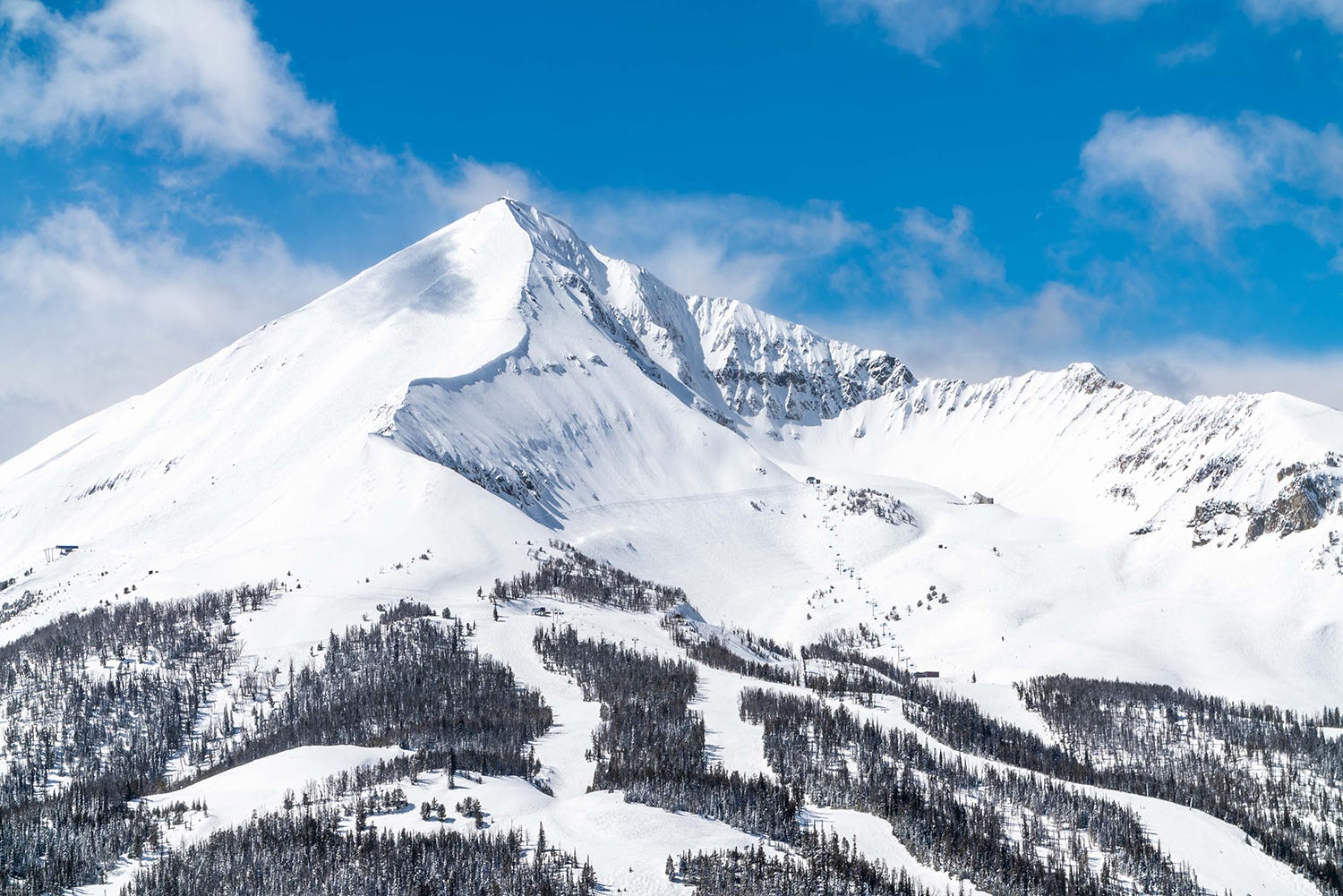
Apr 3, 2022
Podcast #80: Snow Ridge, New York Co-Owner & GM Nick Mir
To support independent ski journalism, please consider becoming a free or paid subscriber. Organizations can email skiing@substack.com to add multiple users on one account at a per-subscriber enterprise rate. Who Nick Mir, co-owner and general manager of Snow Ridge , New York Recorded on March 29, 2022 About Snow Ridge Click here for a mountain stats overview Money quote: If you want western powder, the best place to find it in the east is the Tug Hill Plateau in New York, and upland region east of Lake Ontario. They should coin the phrase “Greatest Snow in the East.” They get tons of lake effect and most of this snow is high quality. Unfortunately, they lack an essential ingredient for powder skiing: mountains! There is, however, one ski area on the Tug Hill Plateau’s steeper eastern face, Snow Ridge, which offers up about [500] vertical feet of skiing. As a kid growing up in upstate NY, my first true deep-powder experiences were at Snow Ridge. - From a 2015 Washington Post interview with Jim Steenburgh , “professor of atmospheric science at the University of Utah, an expert on mountain weather and climate, and a die-hard skier,” and author of Secrets of the Greatest Snow on Earth: Weather, Climate Change, and Finding Deep Powder in Utah’s Wasatch Mountains and around the World . Owned by: The mother-son team of Cyndy Sisto and Nick Mir Base elevation: 1,350 feet Summit elevation: 1,850 feet Vertical drop: 500 feet Average annual snowfall: 230 inches Trail count: 31 (14% expert, 48% advanced, 27% intermediate, 11% beginner) Lift count: 5 (3 doubles, 1 T-bar, 1 carpet) - view Lift Blog’s inventory of Snow Ridge’s lift fleet Why I interviewed him The perception is hard-wired and widespread, intractable and exasperating: the East is ice. Inclines paved like a boat launch. Volcanic. Like skiing on the surface of the moon. It is meant as a jab from the high-altitude West, but the East believes it too. The Born from Ice crowds tut-tuts about the internet, “if you can ski the East, you can ski anywhere,” casting the whole of it as a kind of marine-camp proving ground, the bent-rimmed backyard hoop to the glorious Rockies, skiing’s NBA. This whole story is sort of true and it’s sort of not. Lacking the West’s high alpine, New England and New York are vulnerable to season-long freeze-thaw cycles, to bands of rain and ice storms and sleet and hail. Mix in high skier density, narrow trails, and the impossible predominance of windshield-wiper turns, and you get trails skied off by 11 on weekends, hardboiled moguls, concrete layers set like booby traps at the well of spring slush turns. It can be an amazing mess. But some regions are tidier than others. The Northeast is like Manhattan, a city of neighborhoods, each one distinct. As with the West, altitude matters, as does aspect and shape of the mountain. And water, or proximity to it. There are two places in the Northeast where some combination of these elements combines to produce outsized snowfall: the Green Mountain Spine in Northern Vermont (especially Sugarbush north to Jay Peak), and the Tug Hill Plateau, seated just east of Lake Ontario in Upstate New York. Snow Ridge hangs off the eastern edge of this geologic feature, in the bullseye of the lake effect snowtrain. Observe: The result is something special, a microclimate more typical of the world’s high-mountain redoubts. “We could get two feet of snow here, and literally 15 minutes down the road they could have gotten a dusting,” Mir told me in the interview. Snow Ridge is not the only New York ski area floating in this nirvana zone. McCauley – 633 vertical feet of snow-choked boulder fields and glades parked 32 miles to the east – and 300-foot Dry Hill are also hooked up to nature’s firehose. Woods Valley catches a lot of it as well. It’s a fun little foursome, undersized and overserved, and, for the wily and adventurous among us, fortunately overlooked. What we talked about Thoughts on pushing Snow Ridge’s closing date into April if conditions ever allow; I admit I don’t really understand what a rail jam is - sue me; the complexity and expense of building a good terrain park; growing up at Toggenburg; ski racing and its frustrations; fleeing West to ski-bum Colorado and Oregon and the eventual pull of home; how a long-time ski family came to own their own ski area; “we actually did this” – what it felt like to get the keys to the kingdom; the condition of Snow Ridge when Mir arrived in 2015; the intense commitment and effort necessary to run a family ski area; resilience in the maw of a break-even business; how long it took to turn a profit; how much a guy who owns a ski area actually get to ski; why Snow Ridge removed and did not replace the Snowy Meadows double; how much it costs to run a chairlift; possible future consolidation of Ridge Runner and North Chair; the natural-snow, mostly ungroomed hideaway of the Snow Pocket terrain and T-bar; the anomaly of fresh-powder laps at a modern lift-served U.S. ski resort and how Snow Ridge delivers; whether Snow Pocket could ever get a chairlift; whether we could ever see a lift return to South Slope; the eventual fate of the retired top T-bar terminal; where and why Snow Ridge expanded its trail network for the 2021-22 ski season; why Snow Ridge moved the progression park from the carpet area to the top of the mountain; where we can expect to see additional new trails next season; potential future expansion skier’s right off the top of the Pocket T-bar and skier’s left off the top of North; the gnarly existing terrain cut through North; Snow Ridge’s powder bullseye on the edge of the Tug Hill Plateau; the quality of Lake Ontario lake effect snow; plans to amp up the snowmaking system; grooming and the art of crafting an interesting mountain; why Snow Ridge joined the Indy Pass; the mountain’s budget season pass; new reciprocal partners for 2022-23; reaction to Toggenburg closing; whether Mir would have bought the ski area had he had the chance; competing against enormous state-owned ski areas as a family-owned small business; and New York’s rebate program for high-efficiency snowguns. Why I thought that now was a good time for this interview It’s too early to say which forces will capsize the next wave of yet-to-be lost ski areas. After nominal or nonexistent snowmaking drove hundreds of mountains to failure in the 70s, 80s, and 90s, the number of lift-served bumps has stayed relatively stable since around 2005, hovering between a high of 485 for the 2006-07 season to a pandemic-induced low of 462 last year (a handful of ski areas voluntarily suspended operations to pass on the complications of socially distant skiing). With the exception of a few dozen snow-choked Western mountains and some ropetow bumps that survive by the sky, pretty much all of today’s survivors built their way into resilience one mile of pipe and snowgun at a time. That, more than anything, stabilized the ski landscape, giving us the rough U.S. ski area footprint we know today. But it won’t be enough forever. As well-capitalized standouts such as Holiday Valley, Windham, and state-owned Gore have modernized their lift fleets and snowmaking systems, many of New York’s family-owned ski areas have languished. Dozens of chairlifts that predate the moon landing still spin across the state*. Antique snowguns - electricity hogs that blow marginal snow and under very specific conditions - are still in widespread use. No one’s, like, pulling a snowcat with oxen or anything, but they are really rubberbanding this thing together in many cases. Fortunately, there is a hack. All you need is an individual with the energy of a nuclear reactor and the patience of tectonic plates. The person has to love owning a ski area more than they love skiing – because they’ll hardly ever get to ski – and be willing to compete against ski areas 10 times their size that their own tax dollars subsidize . And they have to believe in their own vision more than the slaughterhouse of weather gutting their life’s work outside all winter long. This is the reality at Snow Ridge. The lift fleet was installed before the breakup of Pangea. When Mir and his mother arrived in 2015, pretty much everything was gassed out: those lifts, the snowmaking, the buildings, the groomer. The place was a museum. And not in the way that Mad River Glen is a museum, intentionally funky and camouflaging newness beneath a vintage sheen. Snow Ridge was falling apart. Seven years later, those lifts are still there, but they’ve been overhauled and fixed up. Much of the snowmaking plant is new. Two modern groomers buff the slopes. The bar is beautiful, and Mir and Sisto and the rest of their family are rehabbing the rest of the buildings room by room – when I stopped by in January, the ski area had re-opened a remodeled bathroom that day. Mir is young, outspoken, determined, smart. And he saved Snow Ridge. Not every back-of-the-woods bump is going to survive the great modernization, with its rush to ecommerce and D-line detachables and snowguns activated from an app. But many will, and those that do are going to have leaders like him to guide them through it. *Don’t do it, Identifies-Solutions-In-Need-Of-A-Problem-Bro. New York is one of the most highly regulated states in the country, and these lifts are inspected by a state agency annually. Ski Areas of New York also runs one of the most well-regarded lift-safety programs in the country, and serious chairlift accidents are remarkably rare here, in spite of more than 4 million annual skier visits. Why you should ski Snow Ridge New York has a lot of ski areas. It does not have a lot of wild ski areas, with the sort of yeah-maybe-this-was-a-terrible-idea runs that slug you like a car crash. Snow Ridge is an exception, with a little slice of madness christened North Ridge that will smash your face in without asking permission. Think Paradise at Mad River Glen, but without the vert or the waterfall, a half-dozen tangled lines spiraling in and around a matrix of drainages. Amazing Grace is the truly feral one, a Pinocchio-down-the-whale’s-throat plunge into the bristling abyss. Snow Ridge only gives you 500 vertical feet, but it’s a big 500. It’s all fall-line, for starters, like skiing the edge of a pyramid. The terrain tames out in the evacuation from North Ridge, but it’s still straight down, expansive, and empty. On MLK Day last year I lapped the Snow Pocket T-bar nine times as foot-deep powder stood in untouched fields visible from the lift line. I feasted. In and out of the glades, along the tree-lined plunge of Kuersteiner off the top of South, down the narrow swordfight of the unmarked abandoned South T-bar line. All day long like this, 34 runs and no liftlines, lapping that New York natural to exhaustion. Snow Ridge is one of six Indy Pass partners scattered across New York. It floats in a Bermuda Triangle between Greek Peak to the south, Titus to the north, and Catamount to the east. While, as Mir told me in our conversation, it’s getting busier, Snow Ridge is still a hideaway, the back-pocket secret you can save for a holiday powder day, when the masses throttle the Northeast giants with the kind of meme-spawning liftlines their big-time marketing and megapass affiliations bring. Or watch the weather and sneak up when everyone else gets skunked and that little circle of pink hovers near the top of America. More Snow Ridge * New York Ski Blog’s interview with Mir last year. The Storm publishes year-round, and guarantees 100 articles per year. This is article 35/100 in 2022. Want to send feedback? Reply to this email and I will answer. You can also email skiing@substack.com . Get full access to The Storm Skiing Journal and Podcast at www.stormskiing.com/subscribe
Mar 26, 2022
Podcast #79: Beaver Creek Vice President & Chief Operating Officer Nadia Guerriero
To support independent ski journalism, please consider becoming a free or paid subscriber. Organizations can email skiing@substack.com to add multiple users on one account at a per-subscriber enterprise rate. Who Nadia Guerriero, Vice President and Chief Operating Officer of Beaver Creek , Colorado Recorded on March 25, 2022 About Beaver Creek Click here for a mountain stats overview * Owned by: Vail Resorts * Base elevation: 7,400 feet at Arrowhead Village; 8,100 feet at Beaver Creek Village * Summit elevation: 11,440 feet * Vertical drop: 3,340 feet (continuous) * Skiable acres: 2,082 * Average annual snowfall: 325 inches * Trail count: 150 (39% advanced, 42% intermediate, 19% beginner) * Lift count: 24 (12 high-speed quads, 1 chondola, 2 gondolas, 1 triple, 1 double, 7 conveyors - view Lift Blog’s inventory of Beaver Creek’s lift fleet) * Uphill capacity: 48,264 skiers per hour Why I interviewed her America may or may not have suspected, when Beaver Creek flipped the power on in 1980 with three double chairs and three triples, that we were nearing the end of big-time ski resort construction in the United States. In the previous decade, Keystone (1970), Snowbird (1971), Copper Mountain (1972), Kirkwood (1972), Northstar (1972), Powder Mountain (1972), Telluride (1972), and Big Sky (1973) had all come online. Breckenridge (1961), Crested Butte (1962), Vail (1962), Park City (1963), Schweitzer (1963), Steamboat (1963), Crystal Mountain Washington (1964), Mt. Rose (1964), Purgatory (1965), Diamond Peak (1966), Jackson Hole (1966), Mission Ridge (1966), Snowmass (1967), Sierra-at-Tahoe (1968), and Grand Targhee (1969) had materialized out of the wilderness the decade before. This was a country that thought big and acted big, that crafted the tangible out of the improbable: a high-end ski resort, buffed smooth as an interstate and hemmed in by the faux villages of aspirational America, rising 3,000 feet out of the Colorado wilderness. The resort would be Vail’s answer to Aspen, high-end and straight down, without the drive to the end of the world. But after Deer Valley cranked to life the following year, big-mountain ski area development mostly broke down in the United States. The mammoth Yellowstone Club – all private, exclusively for individuals who consider automobiles to be single-use disposables – didn’t open until 1997. Tamarack, Idaho, was the next entrant, in 2004. The private Wasatch Peaks should open soon, and Mayflower may follow. But for the most part, this is a nation that, for better or worse, has decided to make do with the ski resorts it has. So what? Well, I lay this history out to make a simple point: Beaver Creek is about the best illustration we have of how and where we would build a ski resort if we still built ski resorts, with all our modern technology and understanding. The fall lines are incredible. The lift network sprawls and hums. The little walkable villages excise vehicles at exactly the right points. The place is just magnificent. The aversion to large-scale mountain construction did not, fortunately, temper Beaver Creek’s ambition. That simple half-dozen lifts multiplied to the west until the network overran and absorbed the formerly independent Arrowhead ski area. In 1991, Beaver Creek ran a high-speed quad up Grouse Mountain, one of the best pure black-diamond pods in Colorado. This year, the ski area added McCoy Park, a terrific high-altitude beginner pod, which complements the green-circle paradise off the Red Buffalo Express, already some of the most expansive top-of-the-world beginner terrain in America. Not that Beaver Creek got everything it wanted. A long-imagined 3.8-mile gondola connection to Vail, with a waystation at the long-abandoned Meadow Mountain ski area in Minturn, has been stalled for years. A lift up from Eagle-Vail would also be nice (and would eliminate a lot of traffic). But this isn’t the Alps, and the notion of lifts-as-transit is a tough sell to U.S. Americans, even in a valley already served by 55 of them (Vail Mountain has 31 lifts on top of Beaver Creek’s 24). They’d rather just drive around in the snow. Whatever. It’s a pretty fine complex just the way it is. And it’s one with a big, bold, ever-changing present. Beaver Creek is, along with Whistler and Vail Mountain, one of Vail Resorts’ three flagships, a standard-setter and an aspirational end-point for all those Epic Pass buyers around Milwaukee and Minneapolis and Detroit and Cleveland. This one has been on my list since the day I launched The Storm , and I was happy to finally lock it down. What we talked about Why Beaver Creek is closing a bit later than usual this season; Guerriero’s early career as an agent for snowsports athletes, including Picabo Street and Johnny Moseley; night skiing at Eldora; working at pre-Vail Northstar; reactions to Vail buying Northstar; taking the lead at Beaver Creek; the differences between running a ski resort in Colorado versus Tahoe; what it means to get 600-plus inches of snow in a season; what elevates Beaver Creek to alpha status along with Vail Mountain and Whistler among Vail’s 40 resorts; going deep on the evolution and opening of McCoy Park, Beaver Creek’s top-of-the-mountain gladed beginner oasis; why the mountain converted McCoy to downhill terrain when it already had the excellent Red Buffalo pod on the summit of Beaver Creek Mountain; once again, I go on and on about green-circle glades; thoughts on the mountain’s lift fleet and where we could see upgrades next; why Beaver Creek doesn’t tend to see monster liftlines and the weird un-business of the ski area in general; the status of the long-discussed Vail Mountain-to-Beaver Creek gondola; thoughts on the rolling disaster that is Colorado’s Interstate 70; how Arrowhead, once an independent ski area, became part of Beaver Creek; the surprising sprawl and variety of Beaver Creek; potential future terrain expansions; the mountain’s high-end and rapidly evolving on-mountain food scene; cookies!; watching the evolution of the Epic Pass from the inside; whether Vail would ever build another ski area from scratch; Vail’s deliberate efforts to create leadership opportunities for women within its network; the mountain-town housing crisis; thoughts on Vail’s massive employee and housing investment ; and Guerriero’s efforts to address the mountain-town mental health crisis. Why I thought that now was a good time for this interview Two words: McCoy Park. I recall skiing past this oddly wide-open and empty bowl, perched atop the mountain like some snowy pit-mine, years ago and wondering what was going on in there. The trailmap explained. For a long time, it was a Nordic and snowshoeing center. But this year, Beaver Creek finally finished a long-planned project to drop a new beginner center into the bowl. Two lifts and a clutch of blues and greens, some ungroomed, a contained adventure center for the graduated-from-the-carpet set that’s craving top-of-the-mountain adventure without the whooshing crowds or oops-I-just-skied-into-a-mogul-field regrets. Reviews have been solid. There’s one more thing: Vail has quietly built a very deep roster of women mountain leaders. Four of the company’s five Colorado resorts, and eight of its 40*, are led by women. Women hold approximately 45 percent of Vail’s corporate leadership roles, and half of its 10 board of directors members are women. Also, according to a Vail spokeswoman, CEO Kirsten Lynch is the only female CEO among travel and leisure companies listed on the 2021 Fortune 100 list. These gender-diversity efforts are, Vail Resorts’ Director of Corporate Communications Jamie Alvarez told me, “intentional and explicit. The ski industry has traditionally been male-dominated, particularly in senior leadership roles. As a company, Vail Resorts has prioritized creating an environment that encourages and enables growth opportunities for women at all levels of the company. This isn’t just in corporate, but also throughout our operations. We are proud of our industry-leading accomplishments and are committed to continuing to accelerate women at our company and in our industry.” They should be. *The eight current women heads of Vail Resorts are: Jody Churich at Breckenridge, Nadia Guerriero at Beaver Creek, Beth Howard at Vail, Tara Schoedinger at Crested Butte, Dierdra Walsh at Northstar, Belinda Trembath at Perisher, Sue Donnelly at Crotched, and Robin Kisiel at Whitetail. Vail recently promoted Mount Snow GM Tracy Bartels to VP of mountain planning, projects, and maintenance, overseeing maintenance and mountain-planning efforts across the portfolio. Questions I wish I’d asked I’ve always found it interesting that Alterra chose to leave Deer Valley off the unlimited tier of the Ikon Pass, while Vail granted unlimited Beaver Creek access on its comparatively cheap Epic Pass (Deer Valley’s season pass is $2,675). Both ski areas have similar philosophies around grooming, on-mountain food, and delivering a high-end experience. My guess is that this model works at Beaver Creek because it’s just a little bit harder to get to, while you can fall off your patio in Salt Lake City and end up at the top of Deer Valley’s Empire Express. Since Alterra just limited Deer Valley access even more, yanking it off the Ikon Base Pass, I’m guessing they’re fairly committed to that model, but it’s still an interesting contrast that I’d like to explore more at some point. What I got wrong Nadia and I discussed one of the more tedious meta-critiques of Vail, which is that the company makes all its resorts the same. I don’t agree with this narrative, but the example I gave on the podcast was, to be honest, pretty lame, as I couched my counterpoint in a discussion of how Beaver Creek and Northstar differ operations-wise. Which, of course. No one is comparing Kirkwood to Mad River, Ohio from a snowfall and terrain point of view. What I should have done instead is to ask Guerriero what makes each resort culturally distinct. That’s on me. I also made the assertion that skiers could drop into McCoy Park from the top of the Bachelor Gulch lift, which is untrue. The three lifts with McCoy access (aside from the two lifts within the bowl intself) are Strawberry Express, Larkspur Express, and Upper Beaver Creek Express. I made a bad assumption based on the trailmap. Why you should ski Beaver Creek Living in New York, I find myself in a lot of casual conversation with skiers pointed west for a week at Vail. I don’t know why (actually I do know why), but New Yorkers are drawn to the place like cows to grass. Like hipsters to $9 coffee drinks. Like U.S. Americans to 18-wheel-drive pickups. Like… well, they really like Vail, OK? And every time someone tells me about their long-planned trip to Vail, I ask them how many days they plan on spending at Beaver Creek, and (just about) every time, their answer is the same: Zero. This, to me, is flabbergasting. A Storm reader, Chris Stebbins, articulated this phenomenon in an email to me recently: “Beaver Creek is the single biggest mystery in skidom in my humble opinion. On Epic. On I-70. Just 12 minutes past Vail. 15 high-speed lifts strung across six pods, suiting every ability. A huge bed base, with a mountain ‘village.’ And I’m making 15-minute laps on Centennial. On a perfect blue-bird day. After 16 inches of snow. On a Saturday. During Presidents’ Week.” I don’t get it either, Chris. But there it is. I’ve been having similar experiences at Beaver Creek for almost 20 years. Enormous powder days, lapping Birds of Prey and Grouse Mountain, no liftlines all day. Maybe here and there on Centennial. Once or twice on Larkspur or Rose Bowl. The entirety of the Arrowhead and Bachelor Gulch side deserted, always, like some leftover idyll intact and functional after an apocalyptic incineration of mankind. Once, on Redtail, or maybe it was Harrier, I crested the drop-off at mid-day to catch the growling hulks of half a dozen Snowcats drifting out of my siteline. Ahead of me a corduroy carpet, woven and royal, the union of all that is best in nature and best in technology. And no one to fight for it. I stood there perched over the Rockies just staring. Like I’m in a museum and contemplating something improbably manmade and ancient. Glorious. And 18 years later I still think about those turns, the large arcing sort born of absolute confidence in the moment, those Rossi hourglass twin-tips bought at an Ann Arbor ski shop and buried, for an ecstatic instant, in the test-lab best-case-scenario of their design. Look, I love Vail Mountain as much as anyone. It’s titanic and frenetic and pitch-perfect for hero turns on one of the most unintimidating big mountains in North America. I could spend the rest of my life skiing there and only there and be like, “OK well if it has to be one place I’m just relieved it’s not Ski Ward .” But the dismissive attitude toward 2,082-acre Beaver Creek, with its 3,340-foot vertical drop and zippidy-doo lift fleet and endless sprawling trail network, is amazing. The terrain, especially on Grouse, is steep and fall-line beautiful. My last trip to Beaver Creek – a midwinter pow-day Sunday where I never so much as shared a chair with another skier – was a dozen runs off Grouse, eight of those in the tangled wilds of Royal Elk Glades. All of which is a long way of suggesting that you work at least one Beaver Creek day into your next Vail run. It may be right down the road from Vail and an Epic Pass headliner, but Beaver Creek feels like it’s on another planet, or at least lodged within another decade. Oh yeah, and the cookies. Just trust me on this one. Go there. A pictorial history of Beaver Creek’s development Beaver Creek opened with six chairlifts, all on the main mountain, in 1980. By the next season, a triple ran up Strawberry Park. McCoy Park is a named section of the ski area more than four decades before it would enter the downhill system: The Larkspur triple came online in 1983. Two years later, McCoy Park is defined on the trailmap as a Nordic center: In 1991, Grouse Mountain opened: In 1997, Beaver Creek as we know it today came together, with lift connections from Rose Bowl all the way to Arrowhead, which was once an independent ski area. Beaver Creek purchased the small mountain in 1993 and eventually connected it to the rest of the resort via the Bachelor Gulch terrain expansion. Here’s what the mountain looked like in 1998: The Storm publishes year-round, and guarantees 100 articles per year. This is article 31/100 in 2022. Want to send feedback? Reply to this email and I will answer. You can also email skiing@substack.com. Get full access to The Storm Skiing Journal and Podcast at www.stormskiing.com/subscribe
Mar 25, 2022
Podcast #78: Beaver Mountain Owner & Mountain Operations Manager Travis Seeholzer
To support independent ski journalism, please consider becoming a free or paid subscriber. Organizations can email skiing@substack.com to add multiple users on one account at a per-subscriber enterprise rate. Who Travis Seeholzer, Third-Generation Owner and Mountain Operations Manager of Beaver Mountain , Utah Recorded on March 21, 2022 About Beaver Mountain Click here for a mountain stats overview Owned by: The Seeholzer Family (since 1939!) Base elevation: 7,200 feet Summit elevation: 8,860 feet Vertical drop: 1,660 feet Skiable acres: 828 Average annual snowfall: 400-plus inches Trail count: 48 (25% advanced, 40% intermediate, 35% beginner) Lift count: 6 (3 triples, 1 double, 2 conveyors - view Lift Blog’s inventory of Beaver Mountain’s lift fleet Why I interviewed him When our son turned 1 year old, my wife and I hosted a small baby-naming ceremony for our families. To prepare for this event, I tapped into my aunt’s extensive ancestry.com research. What I found both surprised me and explained everything: tracing my paternal lineage back for centuries, no one had died in the place where they were born since George Winchester, born in Hemel Hempstead, Herfordshire, England in 1555. George begot Daniell, and his son Daniell edged closer to London until Willoughby jumped the Atlantic and landed in South Carolina sometime in the early 1700s. The pattern continued through William, Francis, Jonathan, Wiley, Edward, Herman, Ken, and then me. Four hundred years of getting the hell out of wherever you were from. I’m sure my kids will leave New York City the second they can program their robocars to fly them to Moonbase Six – my 13-year-old daughter already hates the subway and just wants to live somewhere “where I can look outside and see grass.” Perhaps because of this generational wanderlust, I’ve always been interested in the multi-generational clans who unite around place and purpose. I was in awe of kids in my grade school whose grandparents lived across the street from them, amazed by my neighbor who had attended my high school in the ancient 1960s, astonished to realize that local landmarks or roads were named after families whose children I knew well. Many – probably most – ski areas started as family concerns. Gramps and the boys went up-mountain with some chainsaws and a tractor, and the next thing you knew you had a ski area. Over the generations, most of these went bust, and most of the rest grew and grew until the grandkids said to Big Ski Company X, “Wait, you’ll give me how much money to just go sit on my ass for the rest of my life?” That never happened at Beaver Mountain. Harry Seeholzer hacked the joint out of the wilderness in 1939, and the Seeholzers are still running it 83 years later. That alone makes this a good story. A family could be running a petting zoo for eight decades and I’d want to host them on the podcast to talk about it. But add in 400 inches of Utah pow, a tie-in with the comet-across-the-night-sky Indy Pass, and a bursting-at-the-seams ski area acting as Exhibit A for why Vail and the Epic Pass may be the best thing to ever happen to independent skiing, and this is a conversation I couldn’t book fast enough. What we talked about Utah’s not-so-snowy (for Utah) season so far; Remembrances of Travis’ grandpa, Harry Seeholzer, who was born in 1902 and founded Beaver Mountain in 1939; a bygone America where hardscrabble ancestors lived off the land; the big change in Logan Canyon management that allowed Beaver to open for skiing; the ski area’s different locations over time; what inspired Seeholzer’s grandfather to found a ski area long before the sport had entered the American mainstream; what saved Beaver Mountain in the 1960s; how a group of good-old boys hand-built a parking lot, baselodge, and chairlift in the course of a single summer; the transformational installation of the Harry’s Dream chairlift; the vagaries of running a ski area with no snowmaking; growing up and raising your family at a ski area; the old days of driving through Utah snowstorms that would close canyons today; how rapidly and profoundly Utah skiing has changed in recent years; how the megapass scene has transformed Beaver; who really runs Beaver Mountain; the story behind the woman who will hand you your Beaver Mountain lift ticket; the pride and pressure of maintaining an 83-year-old family business; whether the Seeholzer family is destined to continue managing the ski area; “there’s definitely no motivation to sell the ski area”; deciding what’s next as the megapass refugees roll in off the horizon; Beaver’s massive forthcoming base area expansion; tech’s place in the future of small ski areas; why Beaver Mountain still has RFID season passes but metal sticky-wickets for day passes; the downside of technology; the kids just don’t get the wicket tickets; reaction to nearby Cherry Peak, one of the newest ski areas in the country, opening in 2015; where we could see expansion and what it would take to make it happen; how Beaver Mountain shifted from federal to state land; where Beaver may drop a new chairlift and which chairs are priority for upgrades; the story behind the 20-year-old Marge’s terrain expansion and how that transformed Beaver Mountain; musings on being the new home of Keystone’s Ruby lift and Alta’s Germania; why Germania was such a great lift and what made it unique; why Beaver Mountain doesn’t have snowmaking and whether it ever could; why Beaver Mountain was one of the first to adopt the discount volume season-pass strategy and why they have persisted with it; how Beaver Mountain joined the Indy Pass; why the ski area blacked out weekends and holidays this season and why that’s likely to continue; and why Beaver still maintains reciprocal partnerships with a number of mid-sized regional ski areas. Why I thought that now was a good time for this interview The West is dotted with ski areas like Beaver Mountain, three- or four-lift outposts serving a hyper-local population of families and school groups and the unexpectedly hardcore, the retiree or the stay-at-homer racking up 100 days a year while the rest of us are yelling at each other on Facebook. For decades, many of us have treated these bumps like the bounce house at Six Flags. “Yeah, that’s cute, but I’m moving right along past it to crush the Triple Upside Down Tyrannosaurus Rexicoaster. On the fourth loop they have a Siberian tiger fighting a white rhino in a 10-foot cage!” So tourists drive right past places like Homewood or Sunlight or Diamond Peak or Monarch or Sundance or Bridger Bowl. They didn’t fly across the country to ski at some rinky-dink place that’s five times the size of their local and gets 10 times the snow – they’re here to wait an hour on the Snowbird tram line and post about it on Instagram. Many locals have a more nuanced view - enough of them that Beaver Mountain lasted eight decades with little help from the outside world. But for a lot of people, ski area choice was a pretty simple equation of size + snowfall + reputation = where I’m going. But this attitude is evolving, for a lot of reasons. One, the Epic Pass worked too well. Not only did it hyper-activate capacity at most Vail-owned mountains, but it spawned the Ikon Pass, which also worked too well. Trying to ski a weekend powder day in the Wasatch is like trying to catch the last lifeboat off the Titanic. You have a lot of competition. People, especially locals, need a break, and they’re seeing what else is out there. Beaver Mountain is not Alta (nothing is), but on a mid-winter Saturday, it’s not a bad stand-in if you can skip the canyon traffic and not spend much of the day plotting a Wile E. Coyote network of fake “to Little Cottonwood Canyon” signs that send unsuspecting tourists sailing off a cliff. The second reason is the Indy Pass, which arrived at the perfect historical moment, when both the Epic and the Ikon passes had corralled the continent’s biggest butt-kickers onto a pair of thousand-dollar-ish products and everyone else was sitting around going, “huh, would you look at that?” And Indy Pass was sitting there like, “Oh, you want a lesser-known ski area with comparable terrain and maybe one or two fewer four-horse chariot lifts? Well here’s like 80 of them.” But while Indy raised the general awareness of these back-of-the-canyon outposts, it never overran them – passholders only get two days at each mountain. And the blackout dates can be insane – there are more full moons in an average month than days you can use your Indy Pass at Beaver Mountain. Nonetheless, the ski area’s presence on the Indy Pass has worked as an attention-grabber - Seeholzer told me on the podcast that Beaver Mountain was the most-searched resort on the Indy coalition during its first year. The final reason is a mix of things, rising from our current cultural fixations on the local, the family-owned, the “authentic,” and the relatively unknown. In this arena, social media helps. “Oh, you took a vacation to Park City? Nice job tracking down the busiest ski resort in Utah, Inspector Gadget. Hey how about this gorgeous powder dump I found in the back of a canyon a couple hours away?” Eighty-three years ago, Travis Seeholzer’s grandfather staked out a ski center on the fringes of the Utah wilderness. Word just now got out to the rest of us. It’s time to give these places the love they deserve. Why you should ski Beaver Mountain Utah has fewer ski areas than you probably think: just 15, less than half the number of Colorado or, gulp, Wisconsin. The state is tied with Montana for 12th in total number of ski areas, according to the National Ski Areas Association . And yet, Utah finished third in skier visits last year, with 5.3 million. That’s behind only California’s 6.8 million and Colorado’s astonishing 12 million. The reason is that Utah has some seriously kick-ass mountains, most of them are on some megapass or another, and all of them are exceedingly easy to access. Park City is an Epic Pass headliner. More than a third of the state’s ski areas – Alta, Snowbird, Brighton, Solitude, Deer Valley, and Snowbasin – have lined up on the Ikon Pass. Beaver joins Powder Mountain and Eagle Point on the Indy Pass, and MCP’s Power Pass claims Brian Head and Nordic Valley. That really just leaves Sundance and Cherry Peak as true independents (the remainder are specialized facilities like Woodward or the Olympic training center, or surface-lift bumps out in the hinterlands). All of that is a long way of saying that it can be hard to find your own little bit of lift-served Utah. Even out-of-the-way Beaver Mountain is facing some volume concerns, as Seeholzer points out in the podcast. But crowding means different things at different places, and while you may be looking at some weekend liftlines at Beaver, the low-capacity, fixed-grip fleet keeps the trails relatively empty. And while you’re waiting in line, you can think about this: you’re part of a pretty cool story, of a single family whose story echoes across generations and up Logan Canyon to the end of the road. The Storm publishes year-round, and guarantees 100 articles per year. This is article 30/100 in 2022. Want to send feedback? Reply to this email and I will answer. You can also email skiing@substack.com. Get full access to The Storm Skiing Journal and Podcast at www.stormskiing.com/subscribe
Mar 11, 2022
Podcast #77: Mount Pleasant of Edinboro, Pennsylvania General Manager Andrew Halmi
To support independent ski journalism, please consider becoming a free or paid subscriber. Prices increase and a partial paywall activates on March 14. Organizations can email skiing@substack.com or reply to this email to add multiple users on one account. The Storm Skiing Podcast is sponsored by Spot and Mountain Gazette - Listen to the podcast for discount codes on subscriptions and merch. Who Andrew Halmi, General Manager of Mount Pleasant of Edinboro , Pennsylvania Recorded on March 1, 2022 Why I interviewed him Cold and hilly, with the Appalachian spine slashing southwest-to-northeast across the map, Pennsylvania is a monster ski state, with 28 lift-served mountains. Most of these are bunched across the southern tier, in Vailville from Seven Springs to Roundtop, or along the eastern border with New Jersey, from Spring Mountain up to Elk. And then there’s Mount Pleasant, drifting alone in the state’s far northwest corner, hundreds of miles and hours of driving from the next-closest in-state ski areas. It’s like one of those nature documentaries with a drone floating over the lone baby buffalo standing apart from the herd, bunched and snorting about the quality of this year’s grass crop. You look for the circling wolves or lions and wait for the poor thing to be transformed into lunch. It’s isn’t entirely clear how any other outcome is possible. But Mount Pleasant is the Spud Webb of Pennsylvania skiing, the unassuming 5’6” kid who wins the NBA Slam Dunk Contest (that actually happened ). The ski area is, first of all, well-positioned, seated less than 17 miles off the shores of the Lake Eerie snow factory. The ski area often leads the state in snowfall, with up to 200 inches in a bomber year. Again, this is in Pennsylvania. Every ski area in the Poconos combined doesn’t get 200 inches some years. Second, while it’s separated from its in-state ski-area homeboys by at least three hours of highway, Mount Pleasant is quite well-positioned from a business point of view. Eerie, population 97,000-ish, is just 20 miles away. The county has around 270,000 residents altogether. Other than Peek’n Peak, stationed 32 miles away across the New York state line, Mount Pleasant has those skiers all to itself. But neither of those things is the essential ingredient to Mount Pleasant’s improbable survival amid the graveyard of lost ski areas haunting Pennsylvania’s mountains. Cliché alert: the secret is the people. Launched as a notion in the 70s and crushed by the snow droughts and changing economy of the 80s, Mount Pleasant hung on through the 90s, barely solvent as a ski club running on the clunky machinery of faded decades. When the current owners bought the joint in the mid-2000s, it was a time machine at best and a hospice patient at worst, waiting to be guided toward the light. Since then, the place has punched its way out of the grave, and it’s now a thriving little ski area, with a modern triple chair and improving snowmaking. The owners, Doug and Laura Sinsabaugh, are local school teachers who have poured every dollar of profit back into the ski area. They have invested millions and, according to Halmi, never put a cent in their own pockets. They’ve shown remarkable resilience and ingenuity, installing the chairlift – which came used from Granite Peak, Wisconsin – themselves and slowly, methodically upgrading the snowmaking plant. The place still has a long way to go. Only half the trails have snowmaking. The lodge – a repurposed dairy barn – is perhaps the most remarkable building in Northeast skiing, but it’s roughly the size of an F-350 truckbed. The beginner area is still served by a J-bar that makes the VCR look like a miracle of modern machinery. Improvements for all of these elements are underway, as we discuss in the podcast. Last year’s Covid-driven outdoor boom accelerated Mount Pleasant’s renaissance, re-introducing the little ski area to a jaded local population who had, not unfairly, dismissed it as a relic. When they showed up in 2021 for their first visit in seven or 10 or 15 years, they found the formerly problematic T-bar sitting in a pile in the parking lot and a glimmering chairlift staggering up the incline and a place with a spark and a future. It’s really an incredible story, and I’m as excited to share this one as any I’ve ever recorded. What we talked about Mount Pleasant’s strong Instagram account ; I told Halmi to get Mount Pleasant onto Twitter and then he got it onto Twitter so give the joint a follow ; how hard it is for someone who works at a ski area to ski sometimes; Mount Pleasant in its member-owned, ragtag days under the Mountain View name; how close the ski area came to not opening for the 2020-21 ski season and how that season re-ignited Mount Pleasant’s business; when and why the ski area failed and what resurrected it; puttering through 28-day operating seasons; the couple who saved the ski area and hauled it into modernity; “this was as close as you could get to starting a ski area from scratch”; why the owners have returned 100 percent of the ski area’s profit back into rebuilding it; Pennsylvania as a ski state; why Mount Pleasant survived as so many small ski areas across the state went extinct; the Lone Ranger of Pennsylvania skiing; the enormous challenge of moving a used triple chair from Granite Peak, Wisconsin, to Mount Pleasant; how a team of people from a ski area that had never had a chairlift demolished their old T-bar and installed a new lift over the course of one offseason; getting the lift towers installed with a crew of “three or four,” and without a helicopter; oops the chairs arrived with no safety bars; the vagaries of safety-bar cultures across the United States; how the chairlift changed the character and energy of the ski area; pouring one out for the T-bar; how many people you can get on a single T-bar; where the old T-bar is today and the inventive way Mount Pleasant may repurpose it; what kind of chairlift Mount Pleasant would like next and where that would go; the other upgrades that have to happen before a new chair is a possibility; how much it costs to install snowmaking on a single trail; how the ski area’s beginner area could evolve; why Mount Pleasant has a carpet lift sitting in its parking lot; yes there is such a thing as 200 inches of snow in a single Pennsylvania ski season; the mountain’s long-term snowmaking plans; Mount Pleasant’s threaded-through-the-forest trail network and border-to-border ski philosophy; why the ski area has minimal terrain park features and whether that could change; what happened to the old Minute Man trail and whether it could ever come back into the trail network; how Mount Pleasant managed to stay open seven nights per week in a challenging labor market; what would happen to the ski area were it to change its operating schedule after its season-pass sale; what happened when Vail moved into nearby Ohio; Mount Pleasant’s unique baselodge; whether we could see Mount Pleasant on the Indy Pass or any other pass coalitions; and season passes. Why I thought that now was a good time for this interview Small ski areas, I think, are having a moment. I don’t have any data to prove that, but everywhere I look, megapass burnout it palpable. I love the rambling adventure of big ski areas. The sport could not be mainstream without them. But that doesn’t mean that a big ski area is the best ski area for every ski day. Sometimes a slowpoke day through the slowpoke woods is all you need. You don’t have to fight for your life to find a parking spot or line up for the chairlift or buy a Rice Krispy Treat. You just ski. It’s a different enough kind of skiing that it feels like a different sport altogether. There’s a bit of a positive feedback loop going on here. Skiers – especially skiers with kids – seek out an experience that isn’t defined by Times-Square-on-New-Year’s-Eve crowds. They find little back-of-the-woods bumps like Mount Pleasant or Maple Ski Ridge, New York or Whaleback, New Hampshire. They like it. They tell their friends. The incremental revenue generated from this word-of-mouth uptick in visits goes straight back into the mountain. A place like Mount Pleasant trades a Roman-era T-bar for a modern chairlift. That baseline experience in place, its future becomes more certain, and all of skiing benefits from a healthier beginner mountain. Mount Pleasant is pretty much exactly all of this. It’s just big enough to not bore a seasoned skier while remaining approachable enough for someone who’s never clicked in. It’s not an easy balance to achieve. Halmi, the owners, everyone involved with this place have accomplished something pretty cool: saved a dying ski area without a huge airdrop of cash. It’s a story that others who want to do the same could surely benefit from hearing. Why you should ski Mount Pleasant of Edinboro I said this to Halmi on the podcast, and I’ll repeat it here: I liked Mount Pleasant a lot more than I was expecting to. Not that I thought I would dislike it. I am a huge fan of small ski areas. But many of them, admirable as their mission is, are not super compelling from a terrain point of view, with a clear-cut hillside stripped of the deadly obstacles (read: trees), that their first-timer clientele may have a habit of smashing into. What I found was a neat little trail system woven through the woods. It’s a layout that encourages exploration and find-your-own lines inventiveness. I’ll admit I hit it after a storm cycle, when the snow stood deep in the trees and the old T-bar line was skiable. That did favorably color my impression of the place – snow makes everything better. But the overall trail-management approach resonated with me in a way that’s rare for sub-400-vertical-foot ski areas. It felt like a ski area run by skiers, which is not as universal as you may suppose. It also just feels cool to be there. The dairy barn/lodge alone would be an attraction even if you had no interest in anything above it. The fact that the ski area not only still has, but still uses a 1976 Tucker Sno-Cat is one of the raddest things in America (the mountain also has modern groomers). The place bristles with life and energy, a real kids-and-families joint materializing out of the Pennsylvania backroads. The place has some quirks. The steepest part of the main slope is near the bottom – a nightmare for a beginner’s-oriented hill. If you follow the abandoned T-bar all the way down, you find yourself on the far side of the tubing hill, and it’s an adventure in poling, a ride up the J-bar, and a duck-walk back up to the chairlift to find your way home. But it’s all part of the adventure, and all part of the character of this fabulous little ski area. It feels well-loved and well-cared-for, and that is clear the minute you arrive. More Mount Pleasant of Edinboro * Lift Blog’s inventory of Mount Pleasant’s lift fleet * Historic Mount Pleasant trailmaps on skimap.org * Mount Pleasant season passes * A trailmap and brochure from Mount Pleasant’s inaugural season, 1970-71: * Here’s a photo of the lodge prior to its conversion from a dairy barn: The Storm Skiing Journal and Podcast is a reader-supported publication. Please consider becoming a free or paid subscriber. Prices increase and a partial paywall goes up on March 14. Get full access to The Storm Skiing Journal and Podcast at www.stormskiing.com/subscribe

Mar 5, 2022
Podcast #76: Solitude President & COO Amber Broadaway
To support independent ski journalism, please consider becoming a free or paid subscriber. Prices increase and a partial paywall activates on March 14. Organizations can email skiing@substack.com or reply to this email to add multiple users on one account. The Storm Skiing Podcast is sponsored by Spot and Mountain Gazette - Listen to the podcast for discount codes on subscriptions and merch. Who Amber Broadaway, President and Chief Operating Officer of Solitude Mountain , Utah Recorded on February 28, 2022 Why I interviewed her Because upon returning from my last dazzling trip up the Cottonwoods I scrawled this recollection in an early issue of The Storm Skiing Journal : And the most amazing part of all this is after leaping half mad with joy down the snowy majestically treed hillsides through endlessly refilled powder so deep you can’t find the bottom with a pole stuck handle-deep into the incline, you descend from this frozen kingdom thousands of feet but only dozens of minutes to bland and sprawling Salt Lake City, not a snowflake on the ground, the whole of it so jarring and typically American that it’s hard to believe in the majestic land you just left. This is not like driving up to Killington from Rutland on an October or June day and being like, “Cool there’s snow,” which is a novelty and a triumph of technology. This is more Disney, more Tolkien, like a land where there’s realms and each realm is themed and magnificently distinct even though they appear stacked one after another on ancient hand-drawn scroll maps marked with dragons and sailing ships and skulls. And down below is the realm of the Big Box and the interstate wide and flat, and above is the Winter Realm, a triumph of nature, where a snow trap tens of millions of years in the making spins out a microclimate so wild and improbable and brilliant that the only way to believe in it is to go and stand there and say holy f*****g s**t man it’s actually real. I skied Alta and Snowbird, in Little Cottonwood, on that trip, but no matter. Brighton and Solitude, right next door in Big Cottonwood Canyon, are smaller and get slightly less snow, but that’s like pointing out that a tiger is bigger and stronger than a leopard: true but irrelevant. Both are pretty good at killing things. And the four resorts seated at the top of the Wasatch are absolute killers. With Solitude, that’s easy to overlook. It doesn’t have that flip-to-the-magazine-centerfold rep as a jaw-dropper, but look at the trailmap: Plenty of good stuff in there. Link it together with Brighton, right next door (the two are connected), and you have 2,700 acres of Wasatch featherbeds. That’s more skiable terrain than Sun Valley or Jackson Hole. That’s a pretty good story, and it’s one I wanted in on. What we talked about Solitude’s 2021-22 snow whiplash; growing up skiing at Ascutney, Vermont and thoughts on the state of the ski area today; living through the mountain’s two bankruptcies; finding a new home at Sugarbush when Ascutney shut down; the vast differences in snowfall and ski-terrain quality between Northern Vermont and the rest of New England; the characters that populate the Mad River Valley and Sugarbush; working with and learning from Win Smith, who brought Sugarbush back from the American Skiing Company abyss; how Broadaway reacted when Smith sold Sugarbush, one of the largest independent ski areas in New England, to Alterra; why she now believes that was the right decision; moving from the frozen East to the sunny West; an update on Solitude’s master plan; the vast differences in snowmaking between the East and West and the future of snowmaking at Solitude; the next candidate for lift replacement; thoughts on the current issues navigating between Solitude’s base areas; why the mountain changed its base-to-base shuttle route this season; whether Solitude is considering six- or eight-passenger lifts; Whether there’s room or need for a lift in Honeycomb Canyon or elsewhere within the current mountain footprint; whether Solitude could expand; why Solitude doesn’t have terrain parks and whether it ever could; the Solitude-Brighton interconnect and the relationship between the two mountains; the impossible matrix of Big Cottonwood Canyon parking, mass transit, and traffic and long-term plans to improve the whole mess; how much Cottonwoods shuttle service costs Solitude each year; why the Cottonwoods public transit buses don’t have ski racks; thoughts on the proposed Little Cottonwood gondola; and whether Solitude will continue to sit on the unlimited-with-blackouts Ikon Base Pass tier. Why I thought that now was a good time for this interview For decades, Solitude just sort of sat there. On one side, rollicking and enormous Park City and rollercoaster-smooth Deer Valley. On the other side, Alta and Snowbird, the greatest skiing in America. Being a slightly smaller version of the best thing ever isn’t a bad thing to be, and locals and savvy tourists had the joint to themselves. Brighton too. Yeah that’s over. Blame the Ikon Pass. Blame the fact that Utah’s population has doubled in 30 years. Blame social media for blowing its cover. Blame whatever you want. The universe doesn’t care. Here’s a fact: the hokey-pokey Solitude of the Vanilla Ice era is gone, and it’s not coming back. The place has to evolve. Step one was taming traffic, in part by adopting a paid parking plan two years ago. That landed like a Prius at a monster truck rally: with intense ridicule and indignation from long-time skiers. Step two was more buses and easier access to them. Step three is the big, broad future, and what comes next is up to Alterra. It’s time to get creative. Unfortunately, I conducted this interview a few days before Alterra dropped its 2022-23 Ikon Pass suite . Not that it would have substantively changed our conversation, because Solitude’s positioning on the pass remains unchanged from previous years: unlimited access on the full pass; unlimited access less blackouts on the Base Pass. But knowledge of the radical access changes in Ikon this season versus Ikon next season would have allowed us to focus on the pass release’s meta-narrative: Alterra is deeply committed to creating a quality ski experience. That’s why Alta and Deer Valley jumped off the Ikon Base Pass and up to the Base Plus pass. That’s why Crystal followed Deer Valley off of the unlimited tier even on the full-priced Ikon Pass. And that’s why prices continued to tick up even as Alterra’s main competitor dropped its prices significantly . Empowered by this philosophy, Solitude, it appears, will continue to evolve to meet the moment. They probably won’t get every detail right. No one ever does. But in skiing, trying counts for a lot. By making us buy our passes before the lifts start spinning, the big ski areas of U.S. America have us in a corner. They don’t really have to fix traffic or liftlines or base-lodge flow or grooming or snowmaking in hopes that we’ll show up next weekend and buy a lift ticket. They could just cross their fingers that the season nets more good days than bad, and that that one untracked first-chair run we snagged with GoPro footage and that earned us a million WhatsUps on Ho-Down will erase the misery of a ski day that feels more like a commute on the New York City subway than an escape into the wilderness. Solitude – and sister resort Crystal, which is facing similar population pressures – have earned our faith that the status quo won’t stand when it stops being fun, even if that means hard or unpopular changes. Questions I wish I’d asked Alterra’s last two mountain-manager appointments have been women (the other is Dee Byrne at Palisades Tahoe), and I wanted to ask her about how Alterra cultivates leaders who may have formerly been shut out of the long-male-dominated ski industry. I also really like Solitude’s new habit of keeping the lifts spinning for an extra hour after daylight-savings time, which I assume she imported from Sugarbush, which has long done that to beat spring freeze-thaws and enjoy the longer days. Finally, I wanted to ask her about the ski area’s reduced-price lift tickets for Moonbeam Express, the Link double, and the magic carpet – I wish more ski areas would discount tickets for beginner areas instead of charging full freight for someone who’s still deciding if they even like snowsports-sliding. What I got wrong I mentioned to Broadaway that Solitude had a great “November and December.” I was mis-remembering: the mountain, like much of the West, had snow in October, followed by a dry November, followed by a December from the Siberian Ice Age. Why you should ski Solitude Most of us don’t need much more than this: 500 inches of snow, 2,500 feet of vert, ribbons of tree-studded pitches rippling off the summit ridgelines. Throw in four high-speed quads, a pass that you probably already own, and the fact that you practically step out of the airport terminal and onto the lift, and the place is pretty much an automatic stop on any Utah tour. And if you get lucky, you might catch a day like this: More Solitude * Lift Blog’s inventory of Solitude’s lift fleet * Solitude trailmaps on skimap.org * Inspired by Win’s Word , the frequent blog penned by former Sugarbush owner Win Smith, Broadaway launched the biweekly Amber’s Updates . Most posts also include a video component. Here, she discusses the possibility of terrain parks at Solitude and the ski area’s first-ever pond skim: More Vermont Broadaway and I talked at length about her childhood ski area, the much-bedeviled Ascutney, Vermont. This recent New York Times article catalogues the ski area’s woes and eventual triumph: In its heyday, the Ascutney ski resort boasted 1,800 vertical feet of skiing on over 50 trails, and included a high-speed quad chairlift, three triple chairlifts and a double chairlift. But when it closed in 2010 because of scant snow and mismanagement (twin killers of small ski resorts), it threatened to take with it the nearby community of West Windsor, Vt., population 1,099. “Property values plummeted, condos on the mountain saw their value decrease by more than half, and taxes went up,” recalled Glenn Seward, who worked at the resort for 18 years, once as the director of mountain operations. The town’s general store, the gathering place of the community, also went broke and closed. “We were desperate,” said Mr. Seward, who at the time was chair of the West Windsor Selectboard, a Vermont town’s equivalent of a city council. That desperation led the community to hitch its fortune to the mountain, becoming a model for how a small ski area and its community can thrive in the era of climate change. Working with the state of Vermont as well as the nonprofit Trust for Public Land, the town bought the failed ski area in 2015. But instead of allowing a private company to run the mountain, contracting out its operations, the local residents themselves would chart a sustainable, volunteer-driven path for the ski area. Full read recommended. And yes, Utah, I know 99 percent of you have no interest in ever skiing east of the Rockies, and you may have found our 20-minute discussion of Vermont and Sugarbush tedious. But just because a ski area is not Snowbird does not mean it isn’t worth skiing. Sugarbush is an amazing place (and that Slide Brook Express Quad that connects the two sides of the mountain - once separate ski areas - is scaled down to fit the map; it is the longest chairlift in the world , at 11,012 feet, or more than two miles): And despite what you’ve no doubt heard about the East Coast’s reputation as a Zamboni proving ground, northern Vermont is different. Sugarbush, Mad River Glen, Bolton Valley, Stowe, Smugglers’ Notch, and Jay Peak can get up to twice the snowfall of their New England brothers. The terrain is steep, technical, narrow, expansive, and interesting. If you ever deign to, as we say, Ski the East, start with Sugarbush and work your way north to Jay. You might actually like it. Get full access to The Storm Skiing Journal and Podcast at www.stormskiing.com/subscribe
Feb 22, 2022
Podcast #75: Nordic Mountain, Little Switzerland, & The Rock Snowpark Co-Owner Rick Schmitz
The Storm Skiing Podcast is sponsored by Spot and Mountain Gazette - Listen to the podcast for discount codes on subscriptions and merch. Who Rick Schmitz, Co-Owner of Nordic Mountain , Little Switzerland , and The Rock Snowpark , Wisconsin Recorded on February 7, 2022 Why I interviewed him Because no one cares about small ski areas. At least that’s the conclusion you can come to if, like me, you lurk amid the If-It’s-Not-A-Redwood-It’s-Deadwood Size-Matters Bros that animate Facebook ski groups. Take, for example, the incisive observation of one Mr. Forrest Michael Culp to my announcement in the Colorado Ski and Snowboard group that Sunlight had joined the Indy Pass: “Looks boring” Does it? “I’ll have to try it just don’t like small mountains / short runs” Sunlight has a 2,000-foot vertical drop and sits on 730 acres. Its summit lift is 7,260 feet long – nearly a mile and a half. The ski area is larger than Aspen Mountain or Sugarbush. If this dude thinks Sunlight is small, then my guess is he’s driving one hell of a pickup truck. If Mr. Culp looks down on Sunlight, I wonder what his opinion would be of Rick Schmitz’s trio of Wisconsin bumps: 265-vertical-foot Nordic Mountain, 230-foot The Rock Snowpark, and 200-foot Little Switzerland? It really doesn’t matter. What interested me was why someone had built a mini-conglomerate of such ski areas, and how he had transformed them into what were by all accounts highly successful businesses. Turns out that small ski areas are cash registers on an incline. At least if you do it right. My first tip-off to this was my podcast interview last year with current Granite Peak and former Mad River, Ohio General Manager Greg Fisher. He described a frantic 12-week season of 12-hour-plus days, a Columbus-area bump mobbed by school kids, teenage parksters, and Ohio State party people, an absolute tidal wave for the brief winter. And 300-foot Mad River is hardly a special case – mountainvertical.com counts at least 42 ski areas with 300 vertical feet or fewer across the United States, and I know of several dozen more not inventoried on the site. My guess is that around 20 percent of America’s 462 active ski areas fit into this micro-hill category. Not all of them are great businesses – many of them, especially in New England, barely scratch out a dozen operating days in a good year and are run mostly by volunteers. But Schmitz’s hills are great businesses. This was not pre-ordained. When Schmitz bought Nordic Mountain in 2005 at age 22, the ski area had lost money in each of the previous five seasons. Little Switzerland had been closed for five years when he and his brothers hooked up the respirator and saved it from an alternate future as a real-estate development. And The Rock Snowpark sat mostly ignored among an entertainment megaplex outside Milwaukee for years before Schmitz stepped in as operator. Schmitz turned them all around. Adding a twist to the story, Schmitz for several years ran Blackjack, a 638-vertical-foot romper in Michigan’s Upper Peninsula that averages more than 200 inches of snow per year. He learned, he told me, that “the better ski hill is not always the better business.” He sold his stake in the UP bomber several years ago and has been focused on his Wisconsin resorts ever since. Yes, small ski areas are vital to the health of the industry, as incubators of future I-70 vacationers and Whistler cliff-jumpers who hone their aerials with endless ropetow park laps. Yes, they are vital community gathering places that transform brutal winter from endurance test to celebration. Yes, they provide a humbling reprieve for the EpKon hoppers who’ve become enamored with high-speed terrarium lifts that each come with their own raccoon or marsupial for your personal entertainment. But that’s not all they are. They’re also, with the right leader, damn good businesses. I wanted to find out how. What we talked about Keeping the momentum from last year’s Covid outdoor boom; how often the owner of three ski areas skis; the intensity of working the short Midwest dawn-to-dusk ski season; growing up in a middle-class ski family and how that sets the culture for Schmitz’s ski areas today; balancing affordability with rising costs; how Schmitz came to own Nordic Mountain at age 22 as a flat-broke business student; how to ignore the haters when you’re taking a risk; how someone who’s never worked at a ski area learns how to run a ski area that he’s just purchased; why snowmaking has to come before everything and why that means much more than just guns; the evolution of Nordic Mountain from a run-down, barely-break-even operation in 2005 to a successful business today; how Schmitz became part-owner and manager of burly Blackjack, Michigan; why the better ski hill is not always the better business; why Michigan’s Upper Peninsula is the bomber sweet spot of Midwest skiing; how Schmitz bought and re-opened Little Switzerland, his childhood ski hill; “you don’t hire someone to do something you can do yourself”; why Schmitz ultimately sold Blackjack and focused his efforts on his smaller Wisconsin ski areas; why small ski areas fail; how Little Switzerland nearly became a real estate development and what saved it from the bulldozer; what remained after Little Switzerland sold itself off for parts and how Schmitz and his family got it running again after a five-year closure; assembling a ski-area staff from scratch; the incredible value in a name; a deep look at Little Switzerland’s antique up-and-over Riblet doubles, which each serve both sides of the ski area: How Schmitz came to run The Rock Snowpark; “the model is people, population, and location, location, location”; the enormous challenges required to reinvigorate the ski area; why Schmitz replaced a chairlift with a high-speed ropetow; the vastly different personalities of Schmitz’s two Milwaukee-adjacent, 200-ish-vertical-foot bumps; “our ultimate goal is to change peoples lives with the sport of skiing or snowboarding”; Milwaukee as a ski market; the importance of night-skiing in the Midwest; a wishlist of upgrades at all three ski areas; new buildings incoming; whether Schmitz would ever buy another ski area; why he no longer believes every ski area can be saved; why Schmitz’s three ski areas require an upgrade for a multi-mountain pass; and why all three ski areas joined the Indy Pass (and why The Rock held off on joining). Why I thought that now was a good time for this interview When Indy Pass debuted in 2019 with a selection of Wisconsin ski areas, I thought Little Switzerland and Nordic Mountain were odd choices. After all, the state has a number of well-appointed 500-ish footers with robust trailmaps: Devil’s Head, Cascade, La Crosse, and Whitecap. Granite Peak – which Indy later added – towers over them all at 700 feet. In general, Indy was aiming for tier-two resorts like Brundage or Berkshire East or Black Mountain – good-sized ski areas that were just a little less well-capitalized and a bit smaller than the corporate big boys in their neighborhoods. What was with the Wisconsin molehills? The molehills, as it turns out, are run by one of a new generation of ski area operators that is aggressively reshaping what a ski area is and how it should operate. Schmitz is the Midwest version of Jon Schaefer , the second-generation owner of Berkshire East who is one of the most original minds in American skiing. I first read about him in Chris Diamond’s Ski Inc. 2020 , as a case study of how regional mini-conglomerates were quickly becoming an alternate model for a sustainable skiing future. When I asked Indy Pass founder Doug Fish which of his partners would make a good podcast interview, Schmitz was among his top suggestions. Good call. This was one of my favorite podcast conversations yet. There’s a reason it’s nearly two hours long. Schmitz has a lot of ideas, a ton of positive energy, and an incredibly captivating backstory. Even if you have no interest in Midwest skiing, I’d encourage you to check this one out. Hell, even if you have no interest in skiing whatsoever, you ought to listen. Schmitz’s story is one we can all learn from, an inspiring lesson in how to chase and create a fulfilling life, how to cede your dreams with grace when they don’t work out, and how to ignore the negative people around you and make the improbable into the inevitable. It sounds clichéd, but everything he talks about really happens, and it’s powerful stuff. Why you should ski Little Switzerland, Nordic Mountain, and The Rock Snowpark In my relentless romp around the ski world, I’ve come to appreciate the salutary effects of small ski areas. The energy at a place like Killington or Sunday River or Steamboat or Snowbird is infectious, the terrain amazing, the sheer scale impossible, mesmerizing. However, a good ski season, for me, is like a good movie. It can’t all be tension and drama. It needs some levity, some lulls, some unexpected and novel moments. At Snowbird I feel the need to throw myself through vertical forests over and over again. I’ve been there 10 times and have never skied Chip’s run or any other blue unless I was traversing or funneling down to a lift. The place is a proving ground, rowdy and relentless. To cruise Snowbird groomers is a waste, like going to Paris and eating at McDonald’s. But sometimes I do just want to cruise. Or do fast laps on a modest pitch with big fast turns. Or lap a subdued terrain park and take a little air. Just ski without stress or expectation or the gnawing sense that I need to challenge myself. Enter small ski areas. Skiing this year at Nashoba Valley or Mount Pleasant or Cockaigne or Sawmill or Otis Ridge was delightful. Relaxed skiing. No pressure to burrow into the hard stuff because there is no hard stuff. Cruise along, enjoy the forest, find interesting lines and side hits. Then I would go to Smugglers’ Notch and ski stuff like this: Balance. Another rad thing about small ski areas: they tend to be close to lots and lots of people, including, likely, you. And since the season passes tend to be inexpensive, you can tack one onto your EpKon Pass and crush night turns after work for an hour or two. Who cares if it’s only 200 feet of vert? Do you drink 12 beers every time you crack one open? Sometimes one or two is enough, and sometimes a few laps on a bump is enough to get your fix between weekend runs to Mount Radness. If I lived in Milwaukee, I can guarantee you I’d own a Granite Peak season pass and one at one of the eight local bumps orbiting the city. As far as skiing these ski areas, specifically, Schmitz lays it out: Little Switzerland draws families, The Rock is the spot for park laps. Nordic is a bit farther out, but if you live anywhere nearby, the pass is a no-brainer: seven days a week of night skiing. Hit it for a couple hours two or three nights per week, and suddenly skiing isn’t something you do when you can get away – it’s your gym, your zone-out time. It’s part of your routine. Something you do, and not something you wait for. More Little Switzerland, Nordic Mountain, and The Rock Snowpark * Lift Blog’s inventory of Little Switzerland’s lift fleet * Historic Little Switzerland trailmaps on skimap.org * Lift Blog’s inventory of Nordic Mountain’s lift fleet * Historic Nordic Mountain trailmaps on skimap.org * Nordic Mountain’s current trailmap: * Lift Blog’s inventory of The Rock Snowpark’s lift fleet * Historic Rock Snowpark trailmaps on skimap.org * The Rock Snowpark’s current trailmap: Get full access to The Storm Skiing Journal and Podcast at www.stormskiing.com/subscribe
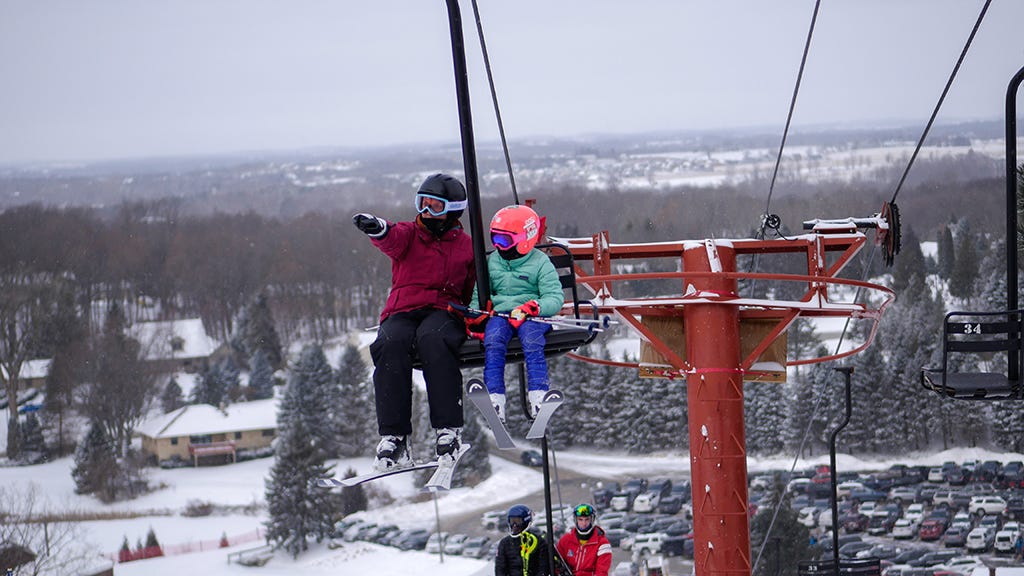
Feb 18, 2022
Podcast #74: The Highlands at Harbor Springs (Formerly Boyne Highlands) President & GM Mike Chumbler
The Storm Skiing Podcast is sponsored by Spot and Mountain Gazette - Listen to the podcast for discount codes on subscriptions and merch. Who Mike Chumbler, President and General Manager of The Highlands at Harbor Springs (formerly Boyne Highlands), Michigan Recorded on January 24, 2022 Why I interviewed him Despite the widespread skier habit of using “ski area,” “mountain,” and “ski resort” interchangeably, each of these descriptors has very distinct connotations. The Midwest has a lot of ski areas – 90 between Minnesota, Michigan, and Wisconsin alone, according to the National Ski Areas Association. It has exactly one actual mountain – Mount Bohemia, 900 vertical feet of cliffs and glades spiraling off the northernmost tip of Michigan’s Upper Peninsula. But the region has very few true ski resorts – a place where one can expect lodging, dining, and an experience beyond lifts and turns. In fact, the Midwest’s one mountain is not even a resort – there’s not much at Bohemia beyond some yurts and a hot tub the size of Lake Michigan. And neither are most of the Midwest’s other ski areas. The average Midwest ski area has 10 chairlifts serving 10 runs on 200 vertical feet next to a K-Mart. If these are ski resorts, then the Playschool slide my 5-year-old keeps in our backyard is Disney World. It’s all very confusing. Beaming in from east or west, it can be hard to discern the differences between 500-foot bumps. How could one be so much different from another? How could any actually rise to the status of ski resort? Well, here’s Exhibit A of a true Midwestern ski resort, The Highlands at Harbor Springs: You won’t probably understand it until you get on the ground and ski, but the place rambles. That Interconnect lift is far longer than it appears on the map – a trick of aspect employed to spare our eyes the dead space. Riding up and over the knolls between the North Face and the main ski area is a delightful journey, one that seems to transport you to a different ski area altogether. You can spend the afternoon there, amble back. The main face is all skiable from the Heather Express, but there are plenty of hidden nooks, little glades, trails snaking through the trees. Highlands skis like an easy videogame, one where you’re unlikely to get eaten by a dragon but will probably find a secret stash of gems or a fire shield hidden in a forest. The ski area maintains a strong variety of terrain parks, with plenty of just-boosty enough mini-features for the non-radsters that want to ride with me. Taken together, these characteristics mute the 550-foot vertical drop. It may not be what you expect out of a ski resort, but it’s enough, it turns out, to make one anyway. And, this being Boyne, everything is well run. The grooming is unreasonably good, even following the nastiest refreezes. The lift fleet is older than color television, but they all seem to run fine – and most of them will be gone within the decade. Beyond the hill, there’s plenty of lodging and plenty to do. As you know, I care about nothing except the skiing, so I’ll let you explore that for yourself, but this is a true ski resort in a region of ski areas, and without the true, geographically defined mountain that typically acts as the foundation of the resort experience. This is the largest ski area in Michigan’s Lower Peninsula, a frozen-solid ski-mad region that will take what it can get. When I began skiing as a teenager, I worked my way up to The Highlands, wanting to save the biggest experience for last. I’m glad I did. Arriving on a sub-zero January day in 1996, the place felt like the Midwest bigtime, like something I was finally ready for. Twenty-five years later, The Highlands is about to join its sister resort, Boyne Mountain, in the statement-making business of showcasing for the ski world just how outsized a Midwest ski experience can be. I wanted to lock into the folks making this happen right from the outset, to grab us all a front-row seat to the coming transformation. What we talked about Chumbler’s evolution from golf intern to head of The Highlands whole ski and golf operation; the importance of golf to Boyne’s North American empire; The Highlands 2030 transformation plan; why the ski area changed its name from “Boyne Highlands” to “The Highlands at Harbor Springs”; the endless process of changing a ski-area name; the transition to RFID and whether we could ever see gates beyond the Heather Express; future snowmaking upgrades; Boyne’s VP of Snow surface and Design; which lifts the resort intends to upgrade first; how long it will take to upgrade or replace every lift on the mountain; whether the ski area will replace Heather, their newest lift; How The Highlands keeps its fleet of seven Riblets safe; which two Highlands lifts received new haulropes last summer; whether Highlands plans to replace Valley, the world’s first triple chair; where we could see potential trail expansions; why The Highlands began glading trails in the ‘90s and where we may see future tree runs; reflections on four years of the Ikon Pass; the popularity of Boyne’s gold pass sister resort benefits with season passholders; the relationship between Nub’s Nob and The Highlands and whether the two have ever discussed a joint ski pass; why Highlands typically wraps its season up several weeks prior to sister resort Boyne Mountain; thoughts on ski season number three of dealing with Covid; and why Highlands hasn’t struggled with the labor shortage striking the rest of the ski industry. Why I thought that now was a good time for this interview When The Highlands 2030 transformational journey plan dropped in December, I was a little disappointed. The only concrete ski-related move was a questionable resort name change and a pre-announced move to RFID lift tickets. I was hoping for another eight-pack to follow similar recent announcements at Boyne’s Sunday River and Boyne Mountain . Or maybe a terrain expansion, or at least some concrete initial steps to begin upgrading The Highlands’ 900-year-old Riblet lift fleet. Instead there was a string of photos of spas and golf courses and hotel rooms. I understand that people like these things, but since I’m rather adamant about not being vacuumed into ski areas’ ancillary business ventures, I figured the best way to dig into the skiing parts of the plan was to get Mike on the phone and talk through it. It was the right move, and Chumbler – a golf guy in his heart – did a nice job outlining the resort’s snow-season lifts-and-turns future. Why you should ski The Highlands at Harbor Springs The Highlands is tucked into one of the most interesting corners of Michigan skiing. It sits less than eight miles off Lake Michigan, a bullseye in the hundreds-of-miles-long north-south snowbelt that cranks out an average of 140 inches per season. It’s the rare Michigan ski area that sits right next door to another Michigan ski area – independent and beloved Nub’s Nob. The resorts are not connected, but their proximity creates the sense of being part of a vast Midwest ski circus, a combined 18 chairlifts and 106 runs sprawling over 683 acres. If you want to understand Michigan skiing, spent a long weekend bouncing between these two. You’ll have a hard time having a bad time, and you’ll understand how a region that would seem to be naturally unsuited to host something so grandiose as a ski resort can do a pretty good job with it after all. Thoughts on the name change As soon as I noticed the parallel, I was obsessed. As a pre-internet teenager attempting to paste together the world of lift-served skiing via 10-year-old library books and tourism pamphlets and ski magazines and the White Book of Ski Areas , I discovered Aspen Mountain and Aspen Highlands, a pair of 3,000-plus footers puncturing the Colorado sky over that rough-and-tumble mining town. The whole thing was so evocative, so burnished with the patina of high adventure and bottomless snow in the American West, that I was desperate for some mirror in my Midwest-bound existence. I found it with Boyne Mountain and Boyne Highlands, the two Michigan big-timers whose names rhymed, spiritually, with those Western titans. Boyne is our Aspen, I thought. As a trick to promote the world around me into something it could never be, it actually worked fairly well. I would ski the Michigan big-time. And for years, that’s exactly how I framed it. Eventually I did ski Aspen Mountain and Aspen Highlands, and yeah those are not the same thing as Boyne’s Michigan bumps. But I continued to like the Boyne names anyway, as a subtle but ever-present reminder that the company had played the unlikely trick of turning small into big. Vail started with Vail and eventually bought its Midwest bumps. Boyne channeled the success of its Michigan mountains (and its scenic chairlift in Gatlinburg, Tennessee), into the purchase of flagship mountains all over the United States, most prominently Big Sky. Vail doesn’t own this. Neither does Alterra or Powdr Corp. Boyne, Michigan proud and the name still dripping from the masthead, is the steward of one of North America’s most audacious ski hills. Well that’s gone now, at least from The Highlands. “You’re reaching, Bro,” a reader might say, and I don’t disagree. Still, I liked the old name: Boyne Highlands. Simple and direct, an indication that you could expect the same quality as you’d find at Boyne Mountain, but with some differences that make Highlands its own unique brand. It was implied rather than said overtly, but in today’s stimuli-riddled landscape, perhaps that wasn’t enough. So it’s gone. More irksome, though, is the long addendum, “at Harbor Springs.” It’s just so much for a ski area name. “Where are you going skiing this weekend, Bro?” “The Highlands at Harbor Springs.” “Whoa dude, I asked where you were skiing, not for your life’s story.” There are plenty of terrible names in skiing. Many of them evolve from this urge to meet at the nexus of brand and geography. Pennsylvania’s Ski Big Bear at Masthope Mountain is among the worst of these. Sierra-at-Tahoe is another. The similarly named Northstar-at-Tahoe thankfully changed its name to simply “Northstar” (thank Vail for that one), 10 years back. Ski areas should have simple, evocative names. Jackson Hole. Alta. Snowbird. Vail. Stowe. Sugarbush. Ragged. Black. Thunder Ridge. Plattekill. Bristol. Powderhorn. Sunlight. The only three-word ski name I’ll allow is Mad River Glen because, well, it’s the legend, and it’s a damn good name. Boyne should have stopped the renaming project at “The Highlands.” That’s short. It’s cool. It evokes pastures and adventure and exploration. I still dislike that they ejected “Boyne” from the name, but I can live with it. The “at Harbor Springs” needs to go. It sounds like a parody-movie mega-project proposed by the evil developer, Ratkin VonSwellington IV, who is using eminent domain to level the Goonies neighborhood and built an exclusive country club for his Faberge-egg collecting pals. Or it sounds like a neighborhood of McMansions in exurban Atlanta. Or like a yacht club where the membership dues are paid in the form of ivory. Well, too late for all that. Changing out the name is going to be an obscenely involved project, and one Boyne is unlikely to backtrack on. Oh well, at least they’ll still have this bomber grooming: More Highlands at Harbor Springs * Lift Blog’s inventory of The Highlands at Harbor Springs lift fleet * Historic Highlands at Harbor Springs trailmaps on skimap.org - they go as far back as 1963: Support The Storm by shopping at our partners: Patagonia | Helly Hansen | Rossignol | Salomon | Utah Skis | Berg’s Ski and Snowboard Shop | Peter Glenn | Kemper Snowboards | Gravity Coalition | Darn Tough | Skier's Peak | Hagan Ski Mountaineering | Moosejaw | Skis.com | The House | Telos Snowboards | Christy Sports | Evo | Hotels Combined | Black Diamond | Eastern Mountain Sports Get full access to The Storm Skiing Journal and Podcast at www.stormskiing.com/subscribe
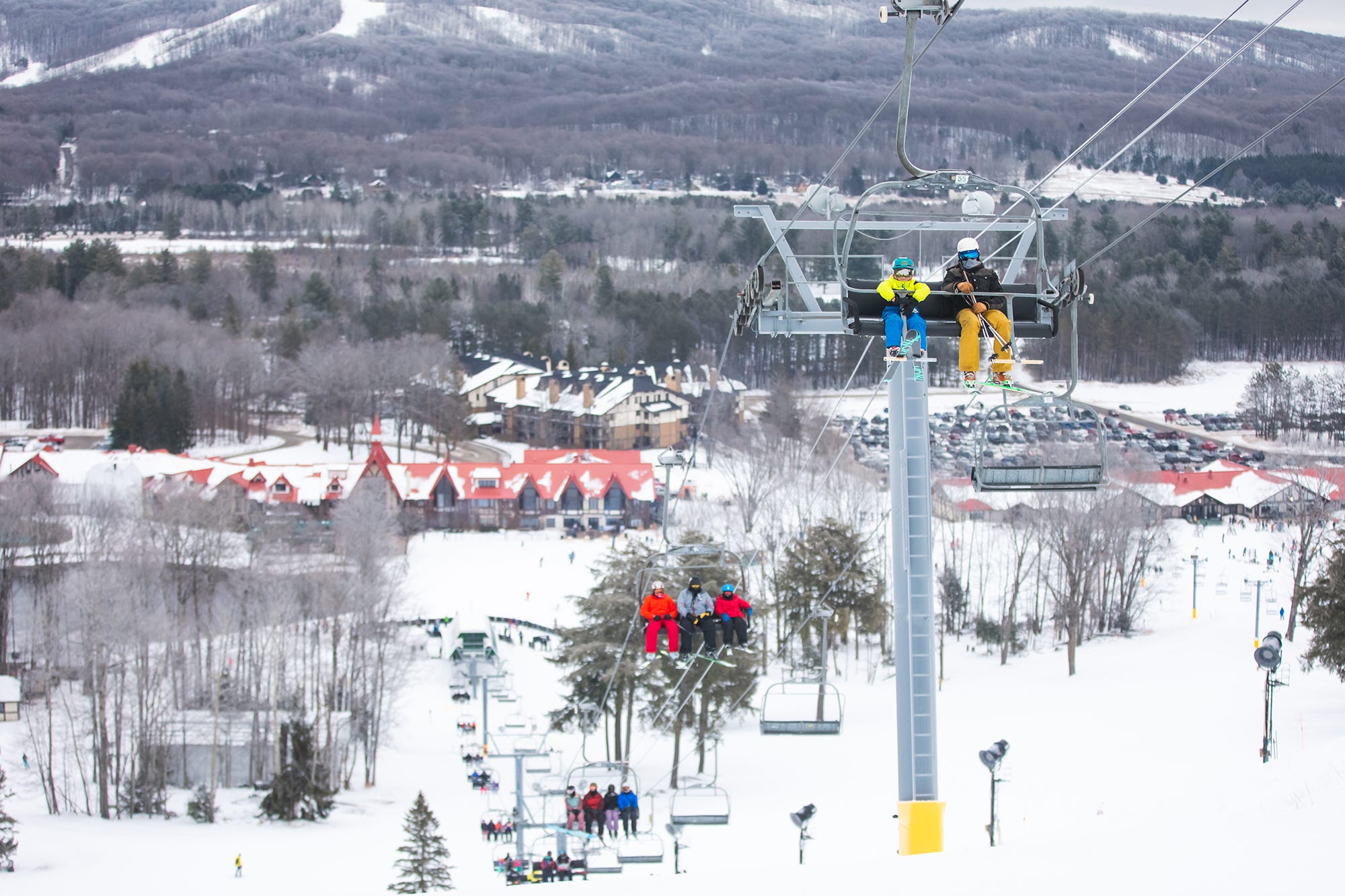
Feb 7, 2022
Podcast #73: Tamarack, Idaho President Scott Turlington
The Storm Skiing Podcast is sponsored by Spot and Mountain Gazette - Listen to the podcast for discount codes on subscriptions and merch. Who Scott Turlington, President of Tamarack Resort , Idaho Recorded on January 24, 2022 Why I interviewed him Because this was almost one of the great busts of American skiing. After its improbable ribbon-cutting in 2004 – the first major U.S. ski resort to open since Beaver Creek in 1980 – Tamarack fell apart. Torched by the Great Recession and an over-emphasis on real estate, the ski area was shuttered by a court-appointed receiver in 2009 and stripped of its Wildwood Express lift in 2012. A group of locals managed to re-open the mountain in 2010, but it tottered along on life support for years. For a long time, Tamarack looked like it would never be anything more than a marginal ski area in a great ski state. But slowly, and then suddenly, Tamarack stabilized: replacing its lost quad, returning to a full operating schedule, and joining the Indy Pass. The new owners seem committed to investing and expanding. The ski area had its busiest day ever over the Christmas holiday. Positioned just over two hours north of rapidly growing Boise and in the midst of a plan to double its size, Tamarack is poised to join the big-mountain big leagues. What we talked about Scott’s background in government and how that helps him navigate the complexities of managing a ski area; the importance of compromise and the absolutist state of politics; is state land the key to building more U.S. ski resorts?; how Tamarack finally opened in 2004 after decades of delays; the amazing capital outlays necessary to build a ski resort; the energy and excitement as the resort opened; the ski area’s sudden failure just five years later; the tragedy of the court-appointed receiver suddenly shuttering the resort; how Tamarack re-opened against enormous odds; the “brutal” moment when Bank of America repossessed the Wildwood Express and stripped it off the mountain; how Tamarack brought a new lift in to replace Wildwood; how the new ownership group differs from past owners; Tamarack’s updated master plan and a potential development timeline; the massive, 2,100-acre terrain expansion; the length and rise of Tamarack’s proposed gondola; the position of the gondola midstation; the Grouse Bowl lift and the importance of adding more black-diamond terrain; why the Banana Bowl terrain will now be hike-to, rather than lift-served, as an old draft of the master plan had proposed; the contained, mid-mountain blue and green pods around Poison Creek and what sorts of lifts will service them; how Tamarack laid out its new trails and lifts; what to expect out of the ski area’s new southern base area; what liftlines?; extending the Wildwood lift and when that could happen; Tamarack’s current snowmaking plant and its expansion vision; why it took so long to get the village open and how that center will evolve over time; the mountain’s ambitious and novel employee-housing complex; RFID and the huge data opportunity in skiing; why Tamarack joined Indy Pass and why the resort has no blackouts on the pass; why Tamarack keeps a limited number of reciprocal pass partnerships; why Tamarack gives free season passes to every kindergarten through 12th-grade student in its home county and one adjacent school district; and why the resort made its Discovery chairlift free for everyone. Why I thought that now was a good time for this interview Because the past is past, and Tamarack, finally under stable ownership and chasing the momentum of the Covid-era outdoor boom, is moving ahead with a monster expansion plan. Here’s what Tamarack looks like now: And here’s what it would look like at full build-out (current lifts are on the right; proposed lifts are on the left): This will double the ski area’s size and blow out terrain for all abilities. As the population explodes in the American West and destination skiers increasingly descend, the region is desperate for more capacity. Tamarack’s expansion would be the equivalent of adding a whole new ski area. But the terrain and lifts are just part of what’s driving Tamarack’s renaissance (as odd as it is to apply that word to a resort that’s not even 20 years old). The mountain recently, finally, opened its base village. It’s about to start construction on one of the largest and most interesting on-mountain employee-housing complexes in the country. And Tamarack this season launched one of the most aggressive youth-access programs in the United States, giving free season passes to every kindergarten-through-12th-grade student in its home county and in one adjacent school district. Skier capacity, employee housing, access, affordability – skiing as a whole is struggling with these issues, and seems to have few solutions. Tamarack, independent, agile, and freed, finally, from the financial anchors of its past, is moving boldly to solve these problems. It’s one of the best stories in Western skiing. Why you should ski Tamarack Idaho is an interesting ski state. While it’s home to a number of large, snow-hammered ski areas – Schweitzer, Silver, Brundage, Bogus Basin, Tamarack – the state remains off the national destination track (with the exception of Sun Valley). Of its 16 ski areas, only Sun Valley and Schweitzer are on the Epic or Ikon Passes (another five are Indy Pass partners). That means, well, it’s all yours. As the resorts along I-70, in the Wasatch, and around Tahoe continue to stretch capacity like over-inflated blow-up toys, it’s time to venture out yonder and see what you can find. Idaho, Montana, and British Columbia are filled with ski areas with big vert, big acreage, big snows, and no skiers. Or very few compared to the mainline resorts that have been designated as Epkon petri dishes. Tamarack, with nearly 3,000 feet of vert and a bomber lift fleet, is one of these. If you can’t kill a couple days here, then I don’t know what to tell you. More Tamarack * Lift Blog’s inventory of Tamarack’s lift fleet * Historic Tamarack trailmaps on skimap.org Support The Storm by shopping at our partners: Patagonia | Helly Hansen | Rossignol | Salomon | Utah Skis | Berg’s Ski and Snowboard Shop | Peter Glenn | Kemper Snowboards | Gravity Coalition | Darn Tough | Skier's Peak | Hagan Ski Mountaineering | Moosejaw | Skis.com | The House | Telos Snowboards | Christy Sports | Evo | Hotels Combined | Black Diamond | Eastern Mountain Sports Get full access to The Storm Skiing Journal and Podcast at www.stormskiing.com/subscribe

Feb 3, 2022
Podcast #72: SeniorsSkiing.com Co-Founder, Publisher & Editor Jon Weisberg
The Storm Skiing Podcast is sponsored by Spot and Mountain Gazette - Listen to the podcast for discount codes on subscriptions and merch. Support The Storm by shopping at our partners: Patagonia | Helly Hansen | Rossignol | Salomon | Utah Skis | Berg’s Ski and Snowboard Shop | Peter Glenn | Kemper Snowboards | Gravity Coalition | Darn Tough | Skier's Peak | Hagan Ski Mountaineering | Moosejaw | Skis.com | The House | Telos Snowboards | Christy Sports | Evo | Hotels Combined | Black Diamond | Eastern Mountain Sports Who Jon Weisberg, Co-Founder, Publisher, and Editor of SeniorsSkiing.com Recorded on January 11, 2022 Why I interviewed him Because when I started skiing as a teenager in Michigan, it quickly became apparent that this wasn’t a sport you aged out of. All the kids around me played pickup basketball and football or ran or hell even tossed a Frisbee. None of the adults I knew did any of these things, ever. I figured sports was something you did until age 30 (remember, I was 17, that sounded ancient), and then stopped. Not skiing (and not a lot of those other things, either). With the help of gravity and forgiving gear, you can arc your way down 8 a.m. groomers for as long as your body and health hold up. Skiing is a bit of a time machine that way: as you lay one sideways and pop from turn to turn down the mountain, muscle memory engages, and you glide. It’s amazing. On dry land, people slow down, lose a step. They can’t run as fast or jump as high or jump at all. Skiing, somehow, transcends that. That’s probably why, as Jon points out, 20 percent of U.S. skiers are over the age of 50. That’s 2 million people, and they are some of the most passionate skiers. Retirement, after all, is the great weed-out. Many folks pack up their cubicle and move to Florida, tired of the snow and the cold. God bless them, but I have no use for these people. Why flee the snow when you can move to Park City and ski 100-plus days per year? Retirees – many of them – are the ones among us with the money to afford it and the time to catch up on years of missed pow days because they couldn’t miss the 9 a.m. with Mr. MacGregor. This is why, at every ski area in America, you will find tables full of wisecracking 60-somethings booting up and sipping coffee at 8 a.m. They’re done with the b******t, and they’re going skiing. What we talked about Skiing in Utah this season: “These Vail Resorts crowds are insane”; growing up skiing the East; what you miss about Northeast skiing when you’re drowning in Utah pow; when and why Weisberg founded SeniorsSkiing.com; escaping Manhattan for Park City in retirement; the “phenomenon” of older skiers; the size and significance of the over-50 skier demographic; what ski areas and the ski industry get wrong about older skiers; why there isn’t seniors-specific ski gear and why that’s a missed opportunity for equipment manufacturers; how to get around the stigma of seniors-branded gear; the pride of defying popular perceptions as an older skier; skiing as a true lifelong pursuit; the difference between chronological and perceived age and how skiing skews that downward; the three technological advancements that have made life easier for older skiers; the 99-year-old legendary skier who finds it “much easier to ski than to walk”; why skiing matters as a generator of community and purpose; finding a ski buddy as your friends age out of the sport; the “vortex” of the spouse who wants to spend the winters in Mexico or Florida; the “lot-to-lift” commute; the quality of the toilets matters; thoughts on on-mountain collisions and safety; the problem of accident reporting; thoughts on the expensive-day-ticket-cheap-season-pass dynamic; the insanity of Park City crowds this season and the “downside of the inexpensive pass”; is a reckoning coming for Vail Resorts?; the Indy Pass and the trend toward independent ski areas; why Utah skiing is “too much of a good thing”; the surreal Salt Lake City boom; thoughts on the Little Cottonwood gondola or bus; and the abandoned mining railroads beneath the Wasatch and whether that could ever connect the existing ski resorts. Why I thought that now was a good time for this interview The pandemic has disordered much of American life. Our routines, habits, sense of safety. And, in many cases, our social circles. People are moving. People are dying. People are freaking the hell out and staying inside. The consequences of this are vast and varied, but an overlooked one is that some people are left skiing alone. One of the main missions of SeniorsSkiing.com is to mitigate that loneliness with an online community of like-minded skiers (the site, I should point out, long predates Covid). Here, they can find each other and, possibly, connect for a day of skiing. That social part of skiing is maybe as important as the act itself, right? Just to feel a part of something. In sprawling, car-centric, polarized, screen-obsessed America, it’s easy to feel alone. Ski resorts are like mini-cities, interesting and slightly chaotic gathering spaces for folks of all kinds. They are one of the best engines capitalism has created to unite people around a healthy activity. There is this scary but very real phenomenon that we discuss in the podcast: many people, defined for decades by their work, die within a year of retiring. A simple Google search will reveal dozens of studies confirming this. Absent 40-plus hours of weekly TPS reports, people need something to do. What better thing is there than skiing? SeniorsSkiing.com is an important website that makes sure people who want to form a community on the snow can do it. Check it out. Additional Reads Weisberg mentions legendary ski journalist Lloyd Lambert in our interview - here’s a New York Times piece on him and senior skiers from 1982. Get full access to The Storm Skiing Journal and Podcast at www.stormskiing.com/subscribe

Jan 25, 2022
Podcast #71: Vail Resorts Executive Chairperson of the Board Rob Katz
Who Rob Katz, Vail Resorts Executive Chairperson of the Board Recorded on January 24, 2022 Why I interviewed him As I wrote last month : Rob Katz changed skiing. Under his leadership, Vail demystified the season pass, transforming it from a rarified token for locals to an accessible and affordable product for casual skiers. An industry reliant for decades on bubble-prone real estate development had the grand realization that the skiing itself was its main product, and that the simple maneuver of bundling resorts onto a single pass, cutting prices, and moving the pass sales period to the offseason could stabilize a temperamental business reliant on weather. The Epic Pass spawned competitors. Vail’s consolidation of large resorts drove the consolidation of other large resorts. Today, 145 of the 462 active U.S. ski areas are on the Epic, Ikon, Indy, or Power passes. Just four companies own 67 of these mountains. Vail owns 33 (it will soon own 36 if regulators approve its sale of Seven Springs, Laurel, and Hidden Valley in Pennsylvania). Alterra – which did not exist in 2006 – owns 13. Powdr Corp owns 10, Boyne Resorts, nine; and Mountain Capital Partners, seven. But the combined might of three of those four conglomerates is on the Ikon Pass, matched against Vail and the Epic Pass. “Vail is the powerhouse of the industry,” said Alterra CEO Rusty Gregory in an interview with The Storm Skiing Journal. “There's no question about that. And Rob is the guy who led them to that success.” The ski industry today resembles the ski industry of 2006 as much as shopping or entertainment in 2021 resembles its ancestors from that time. But unlike big-box shopping, disrupted by upstart Amazon, or carefully programmed linear television, undone by Netflix, skiing was disrupted from within, by an established player with a visionary CEO. As Katz transitions to executive chairperson of the board and hands the keys to the CEO suite off to Vail veteran Kirsten Lynch, he has solidified his place as the most transformational figure in the history of lift-served skiing. “Rob changed a company, changed a business practice, added a product, he changed an entire business model, and an industry along with it,” said Shaun Kelly, managing director and senior research analyst at Bank of America who specializes in gaming, lodging, and leisure equity research. “I cover hotels, I cover casinos, and the businesses themselves are remarkably similar to what they were 10 or 15 years ago. You think about taking a stock from $30 to $300. In the stock market, you don't get multiples of your money unless you get both significant growth of your core business, but also a change in perception of how people value the cashflow or the business itself. And Vail got both.” No one has set the narrative around lift-served skiing over the past two decades more than Rob Katz, and hearing that story first-hand was an opportunity I was very happy to have. What we talked about Where Katz grew up skiing; crushing Hunter in jeans; how Katz began working with Vail in the early ‘90s and what the company looked like at the time; when Katz realized Vail could become Vail Resorts; the genesis of the Epic Pass; selling the idea of the Epic Pass both to the company’s board of directors and to the individual resorts themselves; how the world reacted to the Epic Pass’ launch; thoughts on the shift of the season pass from a rarified locals product to an everyman’s product; Vail’s move into California; how Kirkwood and Heavenly became part of the same portfolio and why that makes sense; why every Vail acquisition becomes unlimited on the Epic Pass; the story behind the Park City acquisition; why Vail needs Whistler and Whistler needs Vail; why and how Vail entered Australia; Vail’s Midwestern bumps and how they fed the empire; the importance of small ski areas; why Vail barnstormed the East; how the company will fix up its less-evolved resorts; is owning eight of the 22 public ski areas in Pennsylvania too much?; thoughts on $200-plus lift tickets; Vail’s Turn in Your Ticket program; what’s gone right for Vail in the 2021-22 ski season; the ongoing threat of Covid; how Vail will ensure that the meltdown at Stevens Pass does not repeat in future seasons; thoughts on Vail’s curtailed Midwestern operating hours this season; Vail’s crowd-management efforts; an update on Vail’s racial and gender-equity efforts; Jerry of the Day; and Vail’s enormous investments in employee housing and the challenges around that. Why I thought that now was a good time for this interview In November, Katz stepped into Vail’s executive chairperson of the board role, leaving the CEO seat he had occupied for 15 years. Raise your hand if, in January 2006, you thought we’d one day have a ski pass that bundled Vail, Park City, Heavenly, and Whistler with Mount Brighton, Michigan and Hunter Mountain. Vail’s rise to the top of skiing has been unpredictable, surprising, rapid, and amazing to witness. For frequent skiers, the sport has never been more affordable, their choices more varied. But the rise of Vail and the Epic Pass have not been seamless. Again, as I wrote last month: Stability, affordability, modernization: all of this benefitted skiers, especially frequent skiers. But Vail’s ascent to the top of the skiing food chain has catalyzed or coincided with profound changes to the lift-served skiing ecosystem and the mountain towns that surround them, especially in the West. Worker housing, long problematic, has reached crisis levels. Colorado’s Interstate 70, Utah’s Little Cottonwood Canyon (where Vail does not own a resort), and other mountain-transportation corridors have become synonymous with apocalyptic traffic. Resort consolidation has drawn charges of homogenization, mountain crowding, and day-ticket prices that make big-mountain skiing unaffordable for many Americans. This season, Vail has suffered from Covid-related staffing shortages and other issues that have prevented the company from fully opening Stevens Pass, Wildcat, and Attitash. Several of Vail’s smaller ski areas have slashed operating hours from previous seasons. Warm temperatures throughout much of the country through the first half of December didn’t help. This seemed like a good time to reflect on Katz’s legacy while sorting through the messy present and how Vail plans to move ahead. Questions I wish I’d asked There was just no way to cover everything. As Katz said before we started the interview, we could have spent an hour on any single question. I would have loved to have gotten more into Vail’s enormous investment in chairlifts, the impacts of the company’s vaccine mandate and the federal government’s worker-visa limits on staffing, mountain-town traffic, Katz’s enormous personal donations to charity, and the odd discrepancy between flat skier-visit numbers and what feels like ever-more crowded resorts. Next time. More Vail * Here’s a pretty good timeline of Vail Resorts’ acquisitions (does not include Seven Springs) * Previous Vail Resorts episodes of The Storm Skiing Podcast : East Region COO Tim Baker and Mount Snow GM Tracy Bartels * Thoughts on Vail’s enormous coming lift upgrades * A look at some of Vail’s struggles this season Get full access to The Storm Skiing Journal and Podcast at www.stormskiing.com/subscribe
Jan 21, 2022
Podcast #70: Timberline Lodge, Oregon President and Area Operator Jeff Kohnstamm
Who Jeff Kohnstamm, President and Area Operator of Timberline Lodge, Oregon Recorded on January 11, 2022 Why I interviewed him Because the big, family-owned ski area is increasingly an anachronism, a thing unlikely and surprising and kind of amazing. Ski areas are so expensive, so complicated, so capital intensive, and so all-consuming that it’s a rare individual who can command the whole enterprise. The industrial-corporate model of ski-area domination makes sense for a lot of reasons – scale, access to capital, and geographic breadth that helps to mitigate bad weather. But something is lost with that, too. Timberline, family-owned since Kohnstamm’s father showed up to a swath of rustic and remote slopes carved out of the Oregon wilderness in 1955, retains that “something” – a coziness that includes a pair of St. Bernard mascots, a lodge spectacular and Transylvanian, and a shared pass with the local night-skiing bump down the road. Still, this is big-time skiing, with a season that spans most of the calendar, a vertical drop that looks down on Jackson Hole, and a high-speed lift fleet shooting all over the mountain. Over the summer, Timberline finally connected the lower slopes of the main mountain with the beginner terrain at Summit Pass, giving it the longest contiguous vertical drop in the country. Even if it’s patched together through a series of shuttlebuses, lifts, and Cat rides, that’s a big deal. And it’s just the first step in the grand evolution of this snow-bombed volcanic ski area, a showcase of how a family-run mountain can operate on a grand scale. What we talked about The wild start to the 2021-22 ski season; building the spectacular Timberline Lodge during the Great Depression; the intricate process behind keeping the national historic landmark and its décor up-to-date; how Kohnstamm’s father acquired the ski area in the 1950s and what it looked like when he arrived; the decades-long evolution of Timberline from a backwater into a modern ski area; the evolution of the ski area’s original chairlift, Magic Mile, from a single to a double to a high-speed quad; how Timberline keeps its above-treeline chairs from icing overnight; the evolution of the Palmer chair, the immense ongoing challenges of operating it, and why it doesn’t run in the winter; growing up at Timberline; Kohnstamm’s early years working at the ski area and how he ended up running it; the sense of duty behind being steward of the family legacy; how Kohnstamm’s father saved the lodge from demolition back in the ‘50s; why Timberline bought the smaller Summit ski area down the mountain; how and why they connected the two ski areas; the incredible European-esque journey from bottom-to-top and top-to-bottom; the history of the trails connecting Timberline and Summit; how Kohnstamm envisions Summit evolving; the expansive Euro-esque experience of skiing top-to-bottom on Timberline’s full 4,540-foot vertical drop; an update on the scope and timing of the ski area’s master plan; the proposed alignment, size, type, and length of the coming Timberline gondola; the future of the Summit chairlift; the maintenance advantages of old chairlifts; the future of Bruno’s and the beginner area at Timberline; potential future lift upgrades on the current fleet of high-speed quads; whether we could ever see a six-pack at Timberline; the future of parking and transportation at the ski area and how the gondola could help; summer skiing on Mt. Hood; the great meltdown of summer 2021; why Timberline “will be the last ski area standing”; why Timberline created the Fusion Pass with Mt. Hood Ski Bowl; and the Powder Alliance. Why I thought that now was a good time for this interview This is a ski area that never stops trying to become the best version of itself. The lightspeed lift fleet, the summer skiing, the high-altitude camps, the engineering miracle of the Palmer lift, the jury-rigged biggest-in-the-country vertical, the amped-up shuttle and Cat service to actualize that, the modernization of that wonderful lodge – this is a place that’s easy to admire. But nearly 70 years into family ownership, the resort is still evolving, and in a big-time, visionary way. The proposed gondola would knit together Government Camp and the ski area with a city-to-mountain connection that is rare in American skiing. It would detangle some of Timberline’s high-altitude parking issues and take cars off the road, and it would create a fabulous, expansive ski experience reminiscent of the Alps, with its above-treeline access and tiered ski experiences. The plan is with the Forest Service for review, and we are a ways from seeing gondy towers rise off the mountain, but this seemed like a great time to check in on the overall vision and progress. I also wanted more insight into this: Timberline is one of the largest ski areas in the country that has not yet partnered with the Epic, Ikon, or Indy passes. I imagine it would have an open invitation from any of them, especially Vail, which has no presence in Oregon and never met a high-speed lift it didn’t like. The ski area is part of the reciprocal Powder Alliance – granting its passholders three days each at more than a dozen other ski areas of similar size – and it has the Fusion pass in conjunction with Mt. Hood Ski Bowl, but it has resisted the greater urge to consolidate. How, and why? The only thing more interesting than the trend toward megapass skiing is those who buck the trend. Questions I wish I’d asked I would have liked to have discussed whether Timberline had ever considered a joint pass with Mt. Hood Meadows, which is right next door. What I got wrong I referred to the Palmer Snowfield as the “Palmer Glacier.” Why you should ski Timberline Well where else can you ski in August in the United States, first of all? I mean outside, and with a chairlift, and alongside some of the best skiers in the world. I spent a September afternoon lapping the Palmer lift, and the sort of flip-doodle springy amazingness I witnessed was something out of P.T. Barnum. It was like seeing LeBron and K.D. roll up on your local court and start blitzing fools. But that’s just a small part of Timberline, both the ski area and the culture. The rest of the year, it’s a workaday place, a big-but-not-too-big joint with manageable terrain, a terrific lift system, and a dab of novelty and adventure in the big ski down to Summit. Plus it gets pounded with snow and it’s fairly easy to get to in this access-road-as-Armageddon ski-commute era we’ve entered. Put this one on your PNW ski swing, whether it’s on your big pass or not. More Timberline Lodge * Lift Blog’s inventory of Timberline Lodge’s lift fleet * Historic Timberline Lodge trailmaps on skimap.org * More on Timberline’s master development plan * Some history on Timberline Lodge: More Kohnstamm: Support The Storm by shopping at our partners: Patagonia | Helly Hansen | Rossignol | Salomon | Utah Skis | Berg’s Ski and Snowboard Shop | Peter Glenn | Kemper Snowboards | Gravity Coalition | Darn Tough | Skier's Peak | Hagan Ski Mountaineering | Moosejaw | Skis.com | The House | Telos Snowboards | Christy Sports | Evo | Hotels Combined | Black Diamond | Eastern Mountain Sports Get full access to The Storm Skiing Journal and Podcast at www.stormskiing.com/subscribe
Jan 13, 2022
Podcast #69: Hickory Ski Center, New York Shareholders Corporation President David Cronheim
The Storm Skiing Podcast is sponsored by Spot and Mountain Gazette - Listen to the podcast for discount codes on Mountain Gazette subscriptions and merch. Who David Cronheim, President of the Shareholders Corporation for Hickory Ski Center , New York Recorded on January 5, 2022 Why I interviewed him Because these places… gone. Once-spectacular ski areas towering out of the wilderness, lifts and trails and little shacks arrayed along the base and splendid people standing about bareheaded in sweaters, unbothered, as though the jacket and hat were inventions of weak-willed generations to come. New York is littered with their ghosts. Dutchess , poised spectacularly on the Hudson, rising a thousand feet over the town of Beacon. Wing Hollow , site of a still-unsolved double-murder, 800 feet funneling off two peaks in the state’s Western snowbelt. Scotch Valley , a spiderweb of trails cascading down a Catskills ridge. The trails are still visible on Google Maps. The lifts remain. But the ski area as an operating concern is long gone. Most of these ski areas are never coming back. But Hickory and its 1,200 vertical feet of all-natural terrain, narrow trails and glades, and shoulder-jerking Pomas lifted from our black-and-white past, could be. This is the most important story in New York skiing right now, and I had to hear more. What we talked about Hickory’s founding by 10th Mountain Division veterans returning from World War II; the history of the ski area’s unique lift system; Hickory ownership over the years; why Hickory closed in 2005 and again in 2015 after decades of continuous operation; the incredible costs of maintaining even a basic ski area; skiing on a one-inch snow base; how snowmaking would transform Hickory into “a steeper West Mountain” and why the ski area won’t do that; the thrill and challenge of riding the antique Pomas; why Hickory’s upper mountain can only accommodate 200 skiers per day; the novel license and pass model that will “harness the enthusiasm” that surrounds Hickory and bring the ski area back in a sustainable way; why “there’s nothing about Hickory that makes economic sense”; Hickory’s distinct upper and lower mountains and why the ski area is creating different access tiers for each of them; why the mountain won’t be selling upper-mountain lift tickets; how non-license-holders will be able to access the upper mountain; why the future of Hickory relies on “sharing the risk of a bad winter”; charging for uphill access; the gnarly gorgeous terrain of the Three Sisters Range and whether the ski area could ever expand onto its neighboring mountains; the intense physical experience of skiing Hickory and how that colors the social experience; finding parts for decades-old lifts; the hassle of certifying ancient lifts in New York State; the inevitable comparisons to Mad River Glen; why the Pomas will likely last as long as Hickory does; how the lower-mountain lift system could eventually evolve; whether the lower mountain could ever see snowmaking or night-skiing lights; the condition of Hickory’s spectacular lodge; what a successful season would look like; and what the ski area’s operating schedule might look like. Why I thought that now was a good time for this interview It’s not fair to say that Hickory ever really died. The owner never said, “I give up,” as the folks at Ski Blandford and Granite Gorge and Toggenburg have done in recent years. Rumors and reports proliferated since the last time Poma 1 and 2 carried skiers to the mountain’s summit seven or eight years ago. But winter after winter the place sat idle. There was no obvious way to revive it: the place has no snowmaking, grooming technology from the Nixon administration, low-capacity surface lifts that are too aggressive for 90 percent of the skiing public. Maintenance costs were high, revenue low. What could be done? Saving Hickory would take some creativity and shared sacrifice, a critical mass of skiers willing to invest in a ski area that may go all winter long without opening. An all-natural-snow mountain in New York is a strange enough conceit. This isn’t Utah, after all. But an all-natural-snow mountain in 2022 New York, with its erratic snowfalls, is puzzling. Add in the fact that the ski area is right down the road from Gore, with its 14 lifts and 110 trails and 2,500-foot vertical drop and state-funded gazillion-gallon snowmaking system, and the notion of a sustainable Hickory may seem downright insane. But completely sane people rarely accomplish anything interesting or novel. It turned out that there was (probably) a way to bring Hickory back to the surface. A way to ride again. It’s creative and compelling, modest in scope but valiant in its ambition. Skiers invested in preserving old-school skiing and motivated to lock-in Poma access on those rare New York snow days will each have to chip in $300 per year to cover those basic operations. When it snows, these so-called license holders will have to pay for an upper-mountain lift ticket. No one else other than guests of a license-holder will be able to get them. There are other elements to the plan: opening lower-mountain access to the general public, bringing in school groups, and charging uphillers to access the ski area at will. New York Ski Blog lays the whole pricing structure out here . Will the plan work? I don’t know. I think it will. I hope it does. The folks who love Hickory do too. Listen to this conversation and you will become one of them pretty quick. Hope to see you out there. Why you should ski Hickory There is a certain breed of insufferable Big-Mountain Bro who spends approximately 85 percent of his waking hours trolling social media for ski posts portraying anything other than four feet of powder dumping off a Valdez spine. “Where’s the snow?” says this idiot, when looking at a picture filled with snow. Big-Mountain Bro will never let the world forget that he spent five days heli-skiing in 2003 and that anything else is now beneath him. While that guy is busy updating his will to make sure this fact is etched on his tombstone, the rest of us are skiing anything we can, whenever we can. Some days, this means zooming around a ski area sprawling over five peaks interlaced with chairlifts fast enough to break the sound barrier. Other days it means dragging kids around a flat beside a Magic Carpet. But Hickory gives us something else: raw, throwback skiing. The best of nature crossed with the best technology 1965 could produce. It’s rough and improvisational and steep and way more than most of the skiing public could handle. But for those who can handle it and for those that can get there, Hickory will give you a ski experience unmatched and unforgettable. For everyone else, for kids, for beginners, for the curious or the anxious, there’s the lower mountain, Hickory’s pony-tow and T-bar learners area. Together they’re pretty cool – like two ski areas stacked atop each other. Big-Mountain Bro scoffs. The rest of us can marvel that such a thing still exists, that someone came up with a way to make it work, and that it does. It’s a story worth being part of. Plus, well, this could be you: Hickory Ski Center Trailmaps Get full access to The Storm Skiing Journal and Podcast at www.stormskiing.com/subscribe

Dec 28, 2021
Podcast #68: Inter-Mtn. Enterprises President and CEO Leah Muirhead MacDonald
The Storm Skiing Podcast is sponsored by Mountain Gazette - Listen to the podcast for discount codes on subscriptions and merch. Who Leah Muirhead MacDonald, CEO of Inter-Mtn. Enterprises Inc . Recorded on December 20, 2021 Why I interviewed her We take it all for granted: the enormous volume of fixtures, signage, and furniture that attends our lift-served ski day. Everyone notices the lifts, of course, the lodges and the various buildings dotting the landscape. Those are the hero items, the sorts of things that become part of a ski area’s identity and mythology. No one writes a press release announcing their purchase of new ski racks or lift-tower padding or trailsigns. But we need these things and in some cases governments require them. Enter Inter-Mtn. and its kin, skiing’s equivalent of Staples, churning out all the stuff everyone needs but no one thinks about. It’s a sprawling, interesting world, and one I’d always been mildly curious about. But there is one extra dimension to Inter Mtn. that made it a particularly captivating subject: the company has been hand-painting ski-area trailmaps for the past two decades, an intricate and elaborate undertaking that has few true masters. It was this element that drew me to the company, especially once I learned they were the outfit behind this gorgeous trailmap for Berkshire East: From the moment this map by Inter-Mtn. artist Eric Oyen debuted in 2018, I was captivated by it. It’s modern and familiar, yet distinct in style from the prolific James Niehues. I like the detail, the geography, the way it captures and distills the rambling essence of Berkshire’s gladed incline. This is a beloved mountain, a long-time locals’ favorite, a Vermont-ish slice of terrain with an unlikely Massachusetts address. It’s often very good and often empty, with more snow and more atmosphere than you’d expect. The map packages that for us, with the half-empty lot and the snowy landscape tapering down into the river and the humble lodge buildings peaking up the steep front slopes. Squeezing all that into a painting that also has to act as a practical guide is unlikely and unexpected, (and maybe I’m projecting a bit here), but Oyen crushed it. I wanted to find out how the company pulled this off, and find out which other ski areas they’d profiled in paint. What we talked about Inter-Mtn.’s origin story; the difference between destructive and non-destructive testing; how ski area’s find damage in chairlift haul ropes; where all those chairlift safety signs come from; how Covid re-arranged the sign game; deciding to join the family business and eventually buying it; the internet is a fad; how a BC native stays humble cold-calling Ontario bumps; “you don’t need vertical to make money”; helping the ski industry improve its opportunities for women; the company’s Creator of Stupid Ideas; what Inter Mtn. makes besides trailmaps; [burbling from my 5-year-old playing with a cat in the background]; the company’s territory; how a day skiing at Whistler birthed Inter-Mtn.’s Rake Advisory Committee; how the company creates new products; how ski-resort signs are like fast fashion and how to avoid that; selling quality and durability in a disposable world; passing the high-heel test; the company’s most-popular products; attempted product lines that didn’t work out; the size and scope of Inter-Mtn.’s industry; where the company makes its products; how the company organizes a factory that makes wildly diverse products; the most labor-intensive products; how natural disasters and general supply-chain issues have disrupted the company’s business; how the company broke into the trailmap game, with a design for Apex Mountain; the art and intricacy of creating a trailmap; why Berkshire East was a perfect philosophical fit for an Inter-Mtn. trailmap; the process of creating a trailmap, and how long it takes and how much it will cost you; capturing a ski-area’s essence in a painting; the visual tricks that bend a mountain so that it still resembles reality while being comprehensible to skiers; creating maps with future expansions in mind; thoughts of the slow decline of paper trailmaps; and thoughts on James Niehues stepping back from trailmap creation. Why I thought that now was a good time for this interview As soon as I saw Bousquet’s new trailmap, I posted it to Twitter and Instagram : Inter-Mtn. took notice of one of these posts and reached out to see if I’d be interested in interviewing Leah. And yes, I was – this is the best trailmap the Massachusetts bump has ever had – and it’s been in business since 1932 (it’s the eighth-oldest ski area in the country). This is how the podcast often works – I do take pitches. I can’t interview everyone, but if it’s a good fit for my audience – meaning the subject matter is primarily about the world of lift-served skiing – I’ll gladly set up the conversation. If you’re reading this and you run a ski area of any size, anywhere, and you’d like to join me on the podcast, please reach out and we’ll make it happen. What I got wrong Well I started by mispronouncing my guest’s first and last names. I also said “paint of coat” instead of “coat of paint,” which is not important for any reason but is kind of hilarious. References * During the interview, I referenced a Lift Blog story about a (possible) bullet striking a haul rope on a Vail Mountain lift. You can see the photos here . * I also promised listeners that I would post Inter-Mtn.’s old and new logos, so that they could help me search for them on the mountain: A partial history of Inter-Mtn. trailmaps Devil's Glen Country Club - Ontario - 2013 Mt. Timothy – British Columbia - 2015 Craigleith Ski Club - Ontario - 2016 Mansfield Ski Club - Ontario - 2016 Trollhaugen – Wisconsin - 2017 Hidden Valley Ski Resort - Alberta - 2017 Hodadon Basin - Wyoming - 2017 Fairmont Hot Springs - British Columbia - 2018 Get full access to The Storm Skiing Journal and Podcast at www.stormskiing.com/subscribe
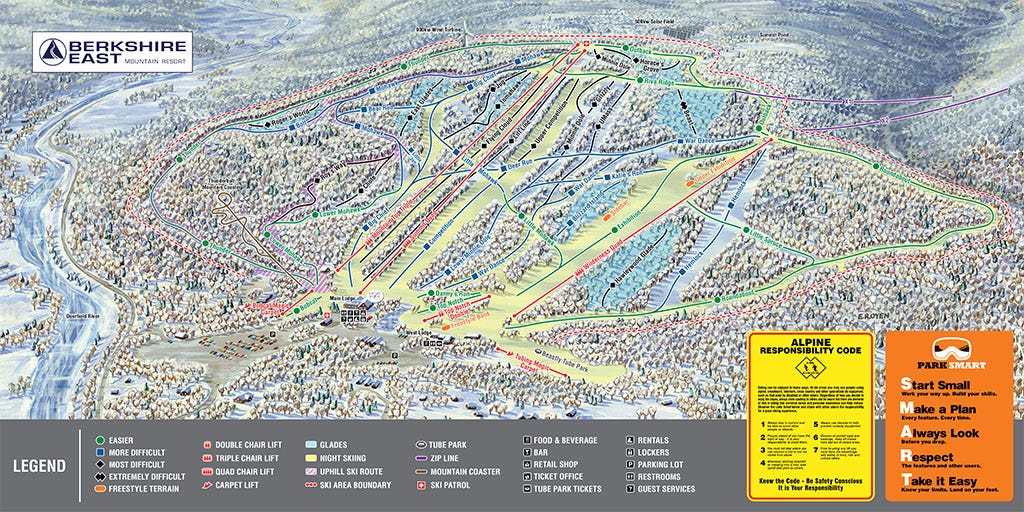
Dec 17, 2021
Podcast #67: Black Mountain of Maine Leadership
Who Roger Arsenault, Chairman of the Board of Directors, and Deanna Kersey, Marketing Manager, Black Mountain of Maine Recorded on December 13, 2021 Why I interviewed them There may be no ski area in America that better tells its story through trailmaps than Black Mountain of Maine. The humble 470-foot bump, T-bar climbing up the incline, circa 1980: It didn’t look much different 22 years later: But prior to the 2004 season, Black finally strung a triple chair to the summit. The T-bar stayed, but the mountain ran a new clutch of trails down a full 1,136 vertical feet: By 2011, the mountain had expanded skier’s right: Then onto hike-to terrain skier’s left, taking the full skiable vertical drop to 1,380 feet: Then Black Mountain began acknowledging the voracious work of the Angry Beavers, which had quickly become the most legendary glading corps in New England: And here it is today: Has any other ski area in New England transformed its footprint so dramatically in the past two decades? Maybe Saddleback, which undertook a similar clandestine re-ordering under the Berry family. But that was an already-big ski area trimming its edges. Black was a tiny mountain that morphed into a mid-sized one, and like leaves filling out the forest in springtime, no one even noticed until it was there. Hell, no one has noticed yet. How did Black do it, and what was next? I had to find out. What we talked about Who owns and operates non-profit Black Mountain of Maine and how it raises funds; how to give back with nothing but time; snowmobile races; surveying the Maine ski scene; how the Maine Winter Sports Center saved the ski area; how the ski area transformed from a 400-foot-bump at the turn of the century to a mid-sized ski area with three times the vertical drop and an ever-expanding trail-and-glade network; transforming the public narrative around Black Mountain; how megapasses are driving skiers to smaller ski areas; how the local skiers responded when the town suspended the ski area’s funds one year; the Angry Beavers and the ski area’s astonishing glade network; the logic of green-circle glades; Black’s unique trailmap; the gradual and understated expansion of Black’s trail network; whether we could see more trails cut off Bagaduce; Black’s unique Osekare uphill trail; possible future expansion; what a Bagaduce chairlift could look like; why the ski area is rarely crowded even when the parking lots are full; potential enhancements to the current summit chairlift; why Black doesn’t have a beginner carpet and is unlikely to get one; why the ski area only offers public night skiing a handful of days per year; $15 Thursday lift tickets and $25 Friday lift tickets sponsored by L.L. Bean; why Black’s season passes remain so cheap; Indy Pass and potential reciprocal partnerships; private mountain rentals Monday through Wednesday and how much they cost; and how 2021-22 Covid protocols will differ from last season and what will be the same. Why I thought that now was a good time for this interview At this point, I think we’re all a little fried: $269 lift tickets , 900-resort Epimegas, liftlines wrapped around the planet. It’s fun to complain about, but not that much fun to do. And you don’t have to. The NSAA says there are 462 U.S. ski areas. Seventy-two are on the Epkon passes. Ninety percent of the rest of them have chairlifts flapping in the breeze. Maine is a big ski state without a lot of big ski areas. Sunday River, Sugarloaf, Saddleback – all excellent. But they’re not everything. Abram and Shawnee Peak are there too, and then there’s Black, which has quietly become the fourth-largest ski area in the state. And no one talks about it, no one knows about it. This is your release valve. You’re welcome. Why you should ski Black Mountain of Maine Here it is: the mountain we all say we want to ski: out of the way, unknown, funky, independent, cheap, rowdy, unforgiving, made for and by skiers. Thursday lift tickets are $15. Fridays are $25. A season pass is approximately the cost of a Burrito Supreme. This is Europe in the 1970s. Costa Rica 15 years ago. A bargain now but bound to blow up because how can it not? It’s half an hour down the road from Sunday River, a natural overflow point, the place you go when you’ve had enough and you just say “goddamnit.” What more could a skier want? The answer is nothing. A mountaintop triple chair at the end of the road, in the back of the woods, like you turned left off US 2 into 1964. And you know what? Maybe you did. More Black Mountain of Maine * Lift Blog’s inventory of Black Mountain of Maine’s lift fleet * Historic Black Mountain of Maine trailmaps on skimap.org * More about the Libra Foundation , which oversees Black Mountain of Maine Get full access to The Storm Skiing Journal and Podcast at www.stormskiing.com/subscribe
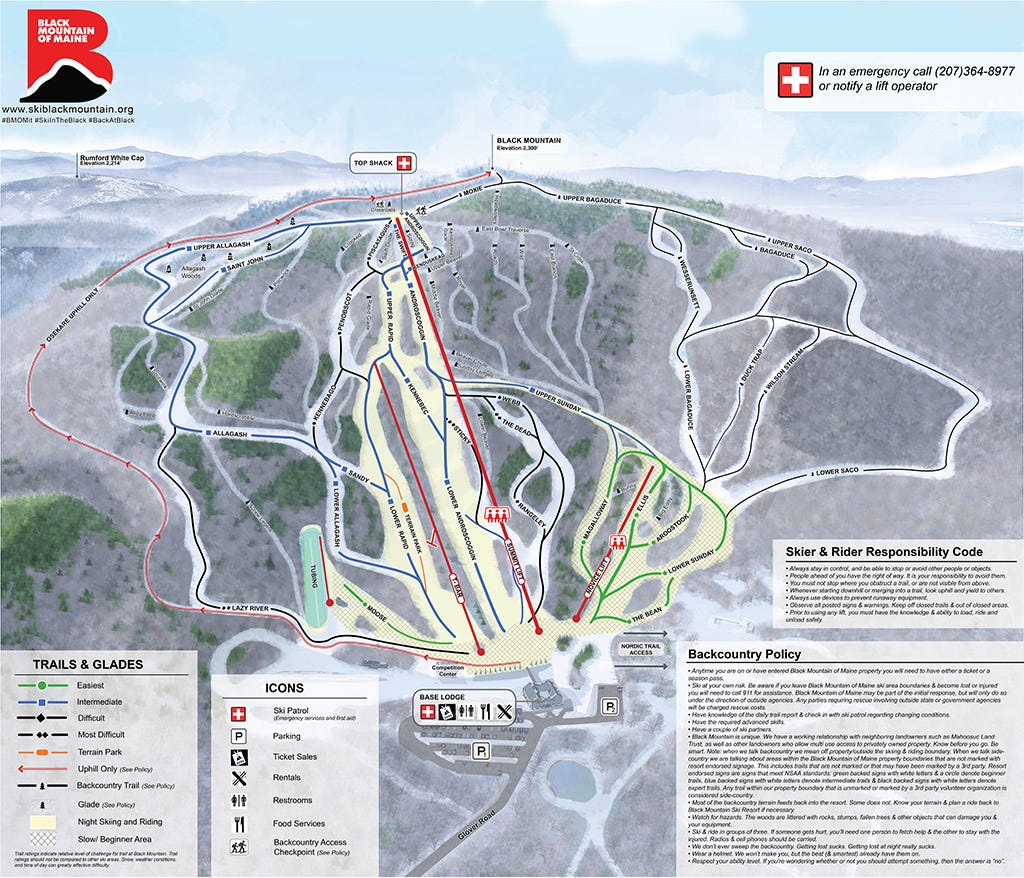
Dec 9, 2021
Podcast #66: Steamboat President and COO & Alterra Central Region COO Rob Perlman
The Storm Skiing Podcast is sponsored by Mountain Gazette - Listen to the podcast for discount codes on subscriptions. Who Rob Perlman, President and Chief Operating Officer of Steamboat Resort , and Regional Chief Operating Officer for Alterra Mountain Company’s Central Region Recorded on Dec. 6, 2021 Why I interviewed him Because there aren’t many like this: big, snowy, sprawling, accessible, parked above an actual downtown-centered town still animated by its cowboy past. Like Telluride or Crested Butte, Steamboat is a major resort tucked away from the interstate, giving it a different vibe from its I-70 cousins. That’s not to say it can’t get crowded, tracked out, or backed up – it’s an Ikon Pass headliner after all, a true destination. But it’s an extra step past everything, Denver and Summit County and Vail and Beaver Creek and Winter Park. You have to understand why it’s worth it. And that brings a different crowd, somehow. Not better or worse – just slightly more self-aware and humble. And the skiing itself is everything that most of us could want skiing to be. Big and approachable and varied and interesting and just confusing enough to feel like an immersive videogame, an RPG in which you ride three boats and take a horse over the pass and suddenly you’re in a very exotic land from which you must somehow extract yourself. And in the midst of this vastness you can shuck the crowds and be, somehow, alone in a forest in the mountains. It’s amazing and it happens every time I’m there. Bursting lines, the rat-a-tat energy of the base, the hypersonic chairlifts, and then quiet. Absolutely no one. Bird chirps and snowmelt dripping off the pines. And I just stop and sit with that, on a mountain in Colorado, pretty happy at that moment with all that there is. What we talked about Perlman’s new role overseeing Alterra’s Utah and Colorado resorts; thoughts on who may be the next leader at Deer Valley; why the Ikon Pass is not Alterra-owned Deer Valley’s season pass; working under industry legend and now-author Chris Diamond; the power of positivity; lots of Alterra stoke; Steamboat’s massive and transformative master plan; the titanic effort of moving the Steamboat gondola last summer; the wild line over lifts and glade terrain that the multi-station, 3.1-mile-long Wild Blue gondola will take up the mountain; the new mid-mountain “Greenhorn Ranch” beginner area; the logic of terminating the second gondola on Sunshine Peak; 650 acres of new expert and advanced gladed terrain on Pioneer Ridge and what kind of lift may serve it; why it was time to remove the Priest Creek double chair; the fate of the chairs and Steamboat’s philanthropic spirit; thoughts on eventual replacements for the Storm Peak, Sunshine, and Thunderhead lifts; could we see an eight-pack at Steamboat?; a potential gondola connection between the resort and the town; the eventual Sunshine II pod skier’s left of the current Sunshine trails; how we got to $269 walk-up day tickets; drawing a better line between walk-up prices and Ikon Passes; how the Ikon and Epic Passes have re-energized the skier market; what the extra skier traffic means for Steamboat; why Steamboat has always been limited to five days on the Ikon Base Pass; Steamboat’s partnership with Wyoming’s Snowy Range ski area; Howelsen Hill; the resort’s relationship with the town it sits above; and how the housing shortage is playing out in Steamboat and what the resort is doing to address it. Why I thought that now was a good time for this interview Steamboat spent the summer, as Perlman said, “liberating” their central plaza by demolishing the massive gondola terminal and moving the lift’s base onto the slopes. That’s step one. What comes next is the aggressive and dizzyingly expensive Full Steam Ahead project, a $200 million subset of the resort’s long-term master plan that will transform Steamboat into the second-largest ski area in Colorado. That new terrain – a 650-acre gladed wilderness of advanced and expert runs – will drop 2,000 vertical feet of feisty white-knucklers onto a resort that largely lacks them. But the centerpiece of the project is a megalift serving the existing terrain: the 3.16-mile, 10-passenger, two-stage Wild Blue gondola, which shifts the beginner center to mid-mountain à la Jackson Hole and skips the long terrestrial commute over to Sunshine Peak in favor of a direct flight. It’s one of the most aggressive reorientations of skier traffic any U.S. resort has attempted in a long time, and it underscores Alterra’s commitment to modernizing and turbocharging its resort portfolio. Full steam ahead. What I got wrong I referred to the Wildhorse Gondola as a line between the parking lot and the resort base, when it in fact transports skiers up from down-mountain housing units. Why you should ski Steamboat Because no matter who you are, you can. Seriously. It’s one of the most approachable big mountains in North America. The snow is plentiful and light. The greens are long and winding. The blues are unintimidating. The blacks are manageable, and once you need more than manageable, Steamboat leaves bumps everywhere. Beyond that are the glades, often touted as the best in the country. I won’t claim that for certain, but I will say that if you’re trying to amp up your glade game, this is the spot to do it. Nicely pitched, well-spaced trees, not much competition (good as the glades are, 95 percent of the skiers never leave the piste here, just like anywhere else). Meander over to Sundown Express, lap the Closets and Shadows all day long. You’ll come out a different skier. And that’s just the start. Almost the whole joint is skiable, the trees tighter as they shed official trail names. Get lost. Have fun. Then go down to town and live the night. There are plenty of good ski towns in America, and a few great ones. This is one of the great ones. Go. More Steamboat * Lift Blog’s inventory of Steamboat’s lift fleet * Historic Steamboat trailmaps on skimap.org * More on Full Steam Ahead: Support The Storm by shopping at our partners: Patagonia | Helly Hansen | Rossignol | Salomon | Utah Skis | Berg’s Ski and Snowboard Shop | Peter Glenn | Kemper Snowboards | Gravity Coalition | Darn Tough | Skier's Peak | Hagan Ski Mountaineering | Moosejaw | Skis.com | The House | Telos Snowboards | Christy Sports | Evo | Hotels Combined | Black Diamond | Eastern Mountain Sports Get full access to The Storm Skiing Journal and Podcast at www.stormskiing.com/subscribe
Dec 2, 2021
Podcast #65: Wachusett Mountain President Jeff Crowley
The Storm Skiing Podcast is sponsored by Mountain Gazette - Listen to the podcast for discount codes on subscriptions and merch. Who Jeff Crowley, President of Wachusett Mountain , Massachusetts Recorded on November 29, 2021 Why I interviewed him When the Crowleys showed up at “Mt. Wachusett Ski Area” in 1969, the place looked like any of the hundred-plus rinky-dink operations dotting the state at the time: Like subsistence farmers coaxing shoots from cracked earth in some pre-industrial past, Wachusett and its kin eked out a seasonal living. Simple operations powered by simple machines and whatever fell from the sky. Most failed. Wachusett thrived. Today, it looks like this: As I’ve written about other regionally beloved ski areas that persisted as their neighbors disappeared into the wilderness - Plattekill , Jiminy Peak - there was nothing inevitable about this. The Crowleys made it happen. Wachusett is not merely a survivor. It is one of the most successful ski areas in the country. Beloved and profitable, it hosts more than 400,000 annual skier visits on 130-ish acres. That’s only 50,000 fewer than 3,000-acre Whitefish. And yet, it works. The place is an absolute machine, every part of the experience optimized and streamlined, the relentless focus on one thing: to get as many people as possible skiing as much as possible. What we talked about Wachusett ranked ahead of Stowe on Ski’s reader poll; opening weekend 2021; how a Massachusetts ski area beats so many larger, farther-north ski areas to open year after year; “we’re all crazy” at Wachusett; what the mountain looked like when the Crowleys showed up in 1969; the ski area’s Civilian Conservation Corps legacy; the oldest trail on the mountain; how Wachusett thrived as so many other Massachusetts ski areas failed; how a day skiing at Mount Snow inspired Ralph Crowley to buy Wachusett; how it feels when your dad buys a ski area; a cross-country adventure in lift installation; why Wachusett is likely to be a family-run operation for the foreseeable future; the Wachusett diaspora; the origins of Wa-Wa-Wachusett : …400,000-plus skier visits on a 130-acre ski area and the Wachusett MACHINE; climate-proofing the ski area; the irrepressible Worcester ski culture; the Wachusett you encounter will depend upon the time of day you show up; the importance of local ski journalism and what we lose when it fades; the vertical-drop and French fry battles between Berkshire East and Wachusett; how turmoil over old-growth forest near the mountain’s summit set the ski area’s modern footprint; why Wachusett doesn’t have marked glades; whether the ski area could ever lose its lease; what the ski area is considering as a replacement for its summit lift; sponsored chairlifts; why Wachusett installed a 300-vertical-foot high-speed quad; where the old Monadnock lift went; the Vickery Bowl expansion; whether the ski area could ever expand again; how Wachusett helps preserve land all over the state; why the mountain grooms twice per day; why the ski area will continue making snow into the end of March; beating Killington to open in 2020; that one time you could ski in May in Massachusetts; why the mountain continued to limit season pass sales and cut the ski day into sessions for 2021-22, and whether those changes will persist; keeping lift-ticket prices low; reciprocal season-pass partners; why Wachusett didn’t migrate from the MAX Pass to the Ikon Pass; whether the mountain could ever join another multi-mountain pass; reaction to the advent of the Epkon passes in New England; why Wachusett pass sales persist in this environment; you won’t believe the ski area that Wachusett bid on last year; and why Crowley thinks I should buy a ski area and why I probably never will. Why I thought that now was a good time for this interview Because from my seat, it doesn’t make sense: the Epkon passes keep getting more affordable, their kingdoms spreading like videogame emperors, and Wachusett doesn’t flinch. It was on a megapass and the megapass disappeared and the mountain didn’t join another one. They’re just like, “nah we’re good.” But in an accent impossible to imitate and designed to make me look ridiculous if I tried. Wachusett just keeps going. A third-grade bubblegum-wrapper detective could figure out why: great location, good managers, rabid local skiers. Fine. It’s still surrounded by abandoned ski areas. What makes this place special, a true independent independent in an era of consolidation and backed-into-a-corner coalition building? Listen to Crowley and you’ll get it pretty quick. I sure did. What I got wrong I said on the podcast that Jiminy Peak and Pats Peak had lift-ticket prices exceeding $100. This is incorrect. Jiminy Peak’s top rate for the 2021-22 ski season is $99. Pats Peak tops out at $89 . I also referred to Connecticut’s Woodbury ski area as “Middlebury,” making my second ridiculous yeah-I’m-not-from-New-England mistake in as many weeks. Why you should ski Wachusett Well, if you live in eastern Massachusetts, the answer is pretty straightforward: because it’s right there, a thousand-footer parked in your backyard. High-speed lifts and twice-a-day grooming and ticket/pass prices that are entirely reasonable. No well-I-guess-I-don’t-really-need-my-kidney-medication sticker-shock here. Even the cafeteria is affordable. It’s the same reason I ski Mountain Creek from my perch in New York City – there’s no reason not to. If you’re anyone else, from anywhere else, there are infinite other reasons why Wachusett may appeal to you: to support a family-owned business, to be part of the mania, to witness The MACHINE. I don’t know. I figured out a while ago that I could spend the rest of my lift skiing the same six ski areas in Vermont that everyone else did, or I could explore a little. I’m having a lot more fun since I decided on the latter path. Five Star Recommend. Just go. Additional reading/videos * Lift Blog’s inventory of Wachusett’s lift fleet * Historic Wachusett trailmaps on skimap.org * Wachusett perennially appears among the top 20 resorts on Ski magazine’s Eastern resort rankings - it nabbed the No. 15 spot this year * Longtime Worcester Telegram & Gazette snowsports columnist Shaun Sutner appeared on the podcast last week, and we discussed Wachusett and Worcester at length. His first column this season focuses on the next-generation of family managers set to guide the ski area into the future. * Crowley and I discussed: what is the real vertical drop of Berkshire East (1,180 feet advertised ), and Wachusett (1,000 feet advertised )? Support The Storm by shopping at our partners: Patagonia | Helly Hansen | Rossignol | Salomon | Utah Skis | Berg’s Ski and Snowboard Shop | Peter Glenn | Kemper Snowboards | Gravity Coalition | Darn Tough | Skier's Peak | Hagan Ski Mountaineering | Moosejaw | Skis.com | The House | Telos Snowboards | Christy Sports | Evo | Hotels Combined | Black Diamond | Eastern Mountain Sports Get full access to The Storm Skiing Journal and Podcast at www.stormskiing.com/subscribe
Nov 26, 2021
Podcast #64: Worcester Telegram & Gazette Snowsports Columnist Shaun Sutner
The Storm Skiing Podcast is sponsored by Mountain Gazette - Listen to the podcast for discount codes on subscriptions and merch. Who Shaun Sutner, snowsports columnist for the Worcester Telegram & Gazette and Telegram.com Recorded on November 22, 2021 Why I interviewed him Because for skiing to thrive, it needs ski media to help tell its story. And I mean actual reporting-based journalism. Yes, it needs the hype – the cliff drops, the pow shots, the flippidy-doodle park brahs, this: But it also needs writers who can tell the story of the more approachable lift-served skiing world in which most of us dwell. Writers who know the local markets and local owners and local skiers and local idiosyncrasies. In the great ski media wipeout that swept away the bulk of our U.S. magazines, we also lost a lot of local ski beats. This matters. Good journalism, grounded in relationships and research, can counterbalance the noisy and atrocious swirl of social-media garbage that has become many skier’s primary information source about the sport. Sutner provides this corrective. In a snowsports column he has written for nearly two decades, he explores the world of New England skiing from his Worcester, Massachusetts base. He knows the people who run the ski areas, understands the market dynamics driving the sport’s evolution, and skis 80 days a year on the mountains he writes about. He knows the uphill and the downhill, the groomers and the backcountry, the people who can show him the stashes in all of them. There is nobody better equipped to help us understand what New England skiing is, how it became that, and what it might be in the future. What we talked about I can’t pronounce “Worcester”; the appeal of New England skiing; Southeast and Mid-Atlantic ski culture; Sutner’s long-running Telegram snowsports column; it’s beef time, snowshoers; what skiing loses when local journalism shrivels; the amazing snowy ski town that is Worcester; the slick operation at Wachusett; journalism’s rough transition to digital; newspaper paywalls; how to ski 80 days a year with a full-time job; surveying the Massachusetts ski landscape; the rise of Berkshire East; the renaissance at Catamount; the art of dodging large crowds at Stowe, Mount Snow, Loon, Cannon, and other busy mountains; regional ski passes; the Berkshire East-Wachusett French fry beef; you won’t believe which Massachusetts ski area has the highest base elevation in the state; thoughts on the state’s lost ski areas – Mount Tom, Pine Ridge, Brodie, Blandford, Mt. Watatic; the most endangered ski area in Massachusetts; the resilience of the Connecticut ski scene; Worcester’s cross-country ski park; the fate of Worcester’s once-thriving network of ropetow bumps; how Ski Ward endures; the distinct ski areas of North Conway; the explosion of the Mount Washington backcountry ski scene; the North Conway-Worcester connection; the appeal and frustrations of Attitash; brainstorming solutions for the atrocious summit triple; Vail Resorts’ evolving uphill policies; the odds that currently proposed expansions at Gunstock, Ragged, Sunapee, and Waterville Valley succeed; the buzz around Ragged; thoughts on Loon’s new eight-pack; the right balance between uphill and downhill capacity; Loon’s undersized gondola; the twisted history and fate of Tenney; whether Les Otten’s huge ski area development at The Balsams could succeed; the secret behind Magic’s comeback; beef with Mad River Glen; thoughts on the evolution of Stowe under Vail; how the Indy, Epic, and Ikon passes have changed New England skiing for the better; whether Vail’s crowd-management efforts will be enough to offset exploding Epic Pass sales; why the success of Hermitage Club matters to the average skier; whether the club will succeed this time; Boyne’s purchase of Shawnee Peak; the revitalizations of Saddleback and Bosquet under socially conscious investment groups; and Vail Mountain versus Beaver Creek Why I thought that now was a good time for this interview Because Sutner’s column begins every year on Thanksgiving week, just as the Northeast ski season (typically) ramps up in earnest. It seemed like a good time to survey the happenings of New England skiing, from the concussive impacts of the Epic and Ikon Passes to New Hampshire resort expansions to the diligent multi-generational families running Massachusetts ski areas. And I wanted to help promote his column, a fine piece of weekly journalism that will make your ski season better. What I got wrong During the interview, I estimated the number of ski areas in New England to be “80 or 90 or maybe more.” The correct number is 90, according to the National Ski Areas Association . Why you should read Sutner’s column Because it’s focused, intelligent, researched, fact-checked, spell-checked, and generally just the sort of professional-level writing that is increasingly subsumed by the LOLing babble of the emojisphere. That’s fine – everyone is lost in the scroll. But as the pillars of ski journalism burn and topple around us, it’s worth supporting whatever’s left. Gannett, the parent company of the Worcester Telegram & Gazette , has imposed fairly stringent paywalls on his work. While I think these local papers are best served by offering a handful of free articles per month, the paper is worth supporting if it’s your local – in the same way you might buy a local ski pass to complement your Epkon Pass. Good, consistent writing is not so easy to find. Sutner delivers. Support his craft. Where you can read Sutner’s column Sutner’s column kicks off Thanksgiving week each year and runs until April. This season’s inaugural edition , released yesterday, starts, as usual, close to his home base of Worcester. A preview: The last time I checked in with Chris Stimpson in this column he was a University of Vermont student on a barnstorming van tour of Western ski areas with a band of fellow collegiate free skiers. Stimpson, now 28, is the new media spokesman and public relations manager for Wachusett Mountain Ski Area as of this season, and also serves as the ski area’s terrain park manager. He’s part of a group of third-generation Crowley family members who occupy key roles at the thriving family business founded by their grandfather, Ralph Crowley, in 1969. Stimpson’s cousin David Crowley Jr. is the operations manager, and cousin Courtney Crowley is the new head of group sales. … What this generational shift in the making means for Wachusett customers is that the independent ski area is in solid, experienced family hands for the future and is not likely to ever be sold off to a big corporate chain. Read more… A few of Sutner’s past columns: * Earliest Ski-Area Opening in Northeast Goes to Wachusett (Nov. 27, 2020) * Winchester a Fresh Voice on Northeast Ski Scene (Dec. 9, 2020) * New Hampshire’s Black Mountain ‘Is Like a Trip into the Past’ (Feb. 17, 2021) * Ski Industry Makes Strides Toward Inclusion (March 31, 2021) Follow up on stuff we talked about in the interview * Follow Shaun on Twitter , Instagram , and Facebook * Shaun and I discussed this lost ski area in Van Cortland Park in The Bronx. A ropetow operation may have also briefly existed in Queens. * We also talked about the story I had yet to write about a new owner buying Woodbury ski area in Connecticut – that story is here . * Shaun talked about the lost Mt. Atatic Ski area - it looks like a cool little operation . Here’s a great write-up about the backcountry scene there on Lift Line Blog. * Shaun references the Wa-Wa-Wachusett theme song in our interview. Here you go: Support The Storm by shopping at our partners: Patagonia | Helly Hansen | Rossignol | Salomon | Utah Skis | Berg’s Ski and Snowboard Shop | Peter Glenn | Kemper Snowboards | Gravity Coalition | Darn Tough | Skier's Peak | Hagan Ski Mountaineering | Moosejaw | Skis.com | The House | Telos Snowboards | Christy Sports | Evo | Hotels Combined | Black Diamond | Eastern Mountain Sports Get full access to The Storm Skiing Journal and Podcast at www.stormskiing.com/subscribe
Nov 19, 2021
Podcast #63: Smugglers’ Notch Owner Bill Stritzler
The Storm Skiing Podcast is sponsored by Mountain Gazette - Listen to the podcast for discount codes on subscriptions and merch. Who Bill Stritzler, Owner of Smugglers’ Notch , Vermont Recorded on November 16, 2021 Why I interviewed him No matter who owned it, Smugglers’ Notch would be a notable ski area. It’s big, snowy, tough, and storied. As New England as Plymouth Rock. The terrain is varied, balanced, and interesting. It’s one of the best things the Eastern ski scene has going. But ownership does matter, because Smuggs has some things that almost no other large Vermont ski area has: stable management reaching back decades, a legitimate on-mountain base village, independence. That makes it one of the most self-assured ski areas in a state with no shortage of them, including the chest-thumping Beast and to-Hell-with-everything Mad River Glen. Smuggs doesn’t give a damn what you think about its 1960s lift system, or that it’s halfway past the ass-end of nowhere, or that it’s not part of the 500-mountain Riptacular Pass. Smuggs is just gonna sit there and kick ass, no matter how you feel about the set of circumstances surrounding that. And you know what? That’s pretty goddamn awesome. What we talked about How Smuggs has and hasn’t changed since Stritzler showed up to run the place in 1987; leaving the corporate world after a successful multi-decade career to run a ski resort in northern Vermont; why and how Smuggs became one of the best family ski resorts in the country; why Bill bought the resort in the mid-90s after running it for nearly a decade; the handshake, lawyers-stand-down way that Stritzler ended up with the mountain; whether the era of large independent ski areas is drawing to an end; Stowe-Smuggs combination talks over the years; whether Vail has ever tried to buy Smuggs; thoughts on Stowe under Vail ownership; the history of the Smuggs-Stowe interconnect and why maintenance of it ended; whether you can still ski between the two ski areas; the importance (or not), of large independent ski areas; the upside of the Epic and Ikon passes; why Smuggs season pass prices have stayed low and what that means in an era of bargain-basement Epic Passes; whether Smuggs would ever join the Ikon or Indy passes; the Bash Badge program that allows skiers to ride for $30 per day; the calculator in the ski market’s head; thoughts on the skyrocketing prices of walk-up day tickets and why Smuggs hasn’t followed that model; Smuggs’ amazing antique lift system and why the mountain won’t upgrade it any time soon; the importance of on-trail skier density; what would make Smuggs consider replacing a lift; how you maintain lifts manufactured by a company that no longer exits; thoughts on the atmospheric importance of slow, old lifts; why Madonna won’t get a high-speed quad; prioritizing the ride down the mountain versus the ride up; detachable doubles?; the immense pride in running the longest remaining Hall chairlifts in the world; the advantage of staying debt-free; how Smuggs supercharged its snowmaking system and why that system is likely at its limit terrain-wise; the perfect green-blue-black terrain division between Smuggs’ three mountains; endless glades; whether we could see additions to Smuggs’ trail network; the Birthday Bowls; the Black Hole, the Northeast’s only triple-black diamond trail; the 2020-21 ski season at Smuggs; Covid innovations that are going to stay; and the village FUN ZONE! Why I thought now was a good time for this interview Six years ago, there were nearly as many Vermont ski-area owners as there were Vermont ski areas. AIG owned Stowe. Win Smith owned Sugarbush. Triple Peaks owned Okemo. Peak Resorts owned Mount Snow. Intrawest owned Stratton. Ariel Quiros owned Jay Peak and Burke. Vail was a company out West. Alterra didn’t exist. “I’ll take ‘Owners of Vermont ski areas’ for $1,000, Alex.” It’s a different game today. Vail, in a series of mammoth acquisitions, swept up Stowe, Okemo, and Mount Snow. Alterra absorbed Intrawest, and with it, Stratton, and a year later bought Sugarbush. The federal government helped itself to Jay and Burke after Quiros turned out to be a buffoonish cartoon villain. And yet, there’s Bill Stritzler, kicking it around his giant trio of mountains beside Stowe, same as he’s been doing since the Berlin Wall was still a thing. Smugglers’ Notch is the largest remaining independent U.S. ski area east of Loveland. It’s part of no pass coalition, no reciprocal ticket partnerships. That matters. It matters because what used to be the only model – one person owns one ski area – is now a novelty, and, perhaps, an anachronism. But maybe not: Smuggs, despite its antique lift fleet, its impossible location, its fierce climate, is beloved. It earned the East’s top slot in Ski’s most recent reader rankings and third place on Z Rankings’ more data-driven Eastern list . Why? Yes, it gets a lot of snow, but so does every ski area along Vermont’s spine from Jay down to Sugarbush. Yes, its Madonna pod is striped with some of the nastiest terrain in New England, but so is Stowe’s FourRunner Quad, right next door. Yes, it’s affordable and quaintly throwback, but so is Mad River Glen. So there’s something else that makes the place special. But what? That’s why me and Bill had to talk. Why you should ski Smugglers’ Notch There’s a magic to Northern Vermont. It’s not like anything else in the Northeast. Three-hundred-plus inches of snow? Those are Western numbers, but they happen all the time along the Spine. The rest of New England is lucky to get half what Jay, Smuggs, Stowe, Bolton Valley, Mad River Glen, and Sugarbush rack up year after year. It’s cold enough that the snow keeps, too. Sure, they get freeze-thaws and rain, like anywhere else in the low-elevation East, but not nearly as much as, say, Mount Snow or Magic. Even among this ripsaw lineup, Smuggs is special. Its three peaks are nearly perfectly divided by ability. It has a real on-mountain base village. It has an almost maniacal focus on families. The fact that it has no high-speed lifts means you have the place practically to yourself on the way down. It’s a beautiful ski area, a true destination tucked away from the world. And after listening to Stritzler talk about the resort, you’re gonna have a hard time not going, not wanting to support the idea that something like Smugglers’ Notch could still exist in the conglomerating ski world of 2021. How long it will persist is impossible to say. Go while it does. More on Smugglers’ Notch * Lift Blog’s inventory of Smuggs’ lift fleet * Historic Smugglers’ Notch trailmaps on skimap.org * This (very good) Ski article from a few years back turbocharged a Vail-to-buy-Smuggs rumor that just won’t quit. * Yes, you can ski between Smuggs and Stowe. It used to be an official thing . * Thoughts on the difference between the two resorts * More from Ski on what makes Smuggs so good * The Fun Zone ! * Madonna is the longest Hall double chair in the world (as confirmed by Lift Blog ). How long? See for yourself: Some cool aerial shots, though I wish this didn’t jump around so much: Previous Vermont-focused Storm Skiing Podcast episodes: Killington/Pico | Magic | Burke | Sugarbush (Win Smith) | Mad River Glen | Jay Peak | Sugarbush (John Hammond) | Mount Snow | Hermitage Club | Bolton Valley | Ski Vermont | Vail Resorts Eastern Region | Vermont Ski + Ride Support The Storm by shopping at our partners: Patagonia | Helly Hansen | Rossignol | Salomon | Utah Skis | Berg’s Ski and Snowboard Shop | Peter Glenn | Kemper Snowboards | Gravity Coalition | Darn Tough | Skier's Peak | Hagan Ski Mountaineering | Moosejaw | Skis.com | The House | Telos Snowboards | Christy Sports | Evo | Hotels Combined | Black Diamond | Eastern Mountain Sports Get full access to The Storm Skiing Journal and Podcast at www.stormskiing.com/subscribe
Nov 17, 2021
Podcast #62: Jackson Hole Mountain Resort President Mary Kate Buckley
The Storm Skiing Podcast is sponsored by Mountain Gazette - Listen to the podcast for discount codes on subscriptions and merch. Who Mary Kate Buckley, President of Jackson Hole Mountain Resort Recorded on November 15, 2021 Why I interviewed her In a nation machine-stamped with endless copies of Burger Kings and Sunoco stations and cut-out-of-a-cornfield housing developments, very few things truly stand out. Your buddy gives you a house tour and you’re like, “Wow Seth five bathrooms that’s so many more bathrooms than I expected you would ever have when we used to throw stale donuts at backyard racoons for sport.” But really do you care about Seth’s bathroom inventory? You don’t care. I don’t know how many bathrooms Jackson Hole has. And neither do you. And neither does anyone else, because no one has ever counted them. Because the point of Jackson is not boujee American materialism but the tram blowing 4,000-plus feet up the mountain and the rowdy endless kingdom of snowy lines beneath it. This is a place that stands out. In any context. It is the peak of U.S. skiing. It has biggers but no betters. A few peers, maybe. Alta-Snowbird. Palisades Tahoe. Big Sky. What else? For raw terrain, no one. Not in this country. It may be – it probably is – our greatest ski resort. If the aliens arrived and said “Hey you’ve got 24 hours to evacuate before we blow up your planet and I’m sorry but you’re only allowed to bring one ski area per country,” I have little doubt that U.S. Americans would choose Jackson Hole to load aboard the space ark. Lines are gonna be long though because I heard the aliens floated by Costco and picked up a few crates of Ikon Passes on their way off the planet. Sorry bros. What we talked about Mary Kate’s globe-trotting decades with Disney and Nike at the dawn of ecommerce; running a vineyard in Tuscany and how that connected back to skiing; settling down in Jackson Hole after living and skiing all over the world; why she joined the ski area’s board of directors and eventually accepted an offer to become the resort’s president; how much the head of Jackson Hole gets to ski; taming the beast to open pieces of Jackson’s vast terrain to beginners and families; the mountain’s fierce terrain; how to prepare to drop into Corbet’s Couloir; whether Jackson Hole could ever expand its managed footprint out onto the gated terrain that surrounds it; where the ski area thinned glades over the summer; why the Jackson Hole Tram is the true alpha lift of American skiing; whether the mountain would ever install a redundant lift to the summit; the benefits of limiting uphill capacity; details on coming replacements for Thunder and Sublette; where the mountain could install an all-new lift; whether we could ever see a lift on the Hobacks; whether we could see a six- or eight-pack on Jackson Hole; how and why the resort limits the number of skiers on the mountain; where the mountain widened trails over the summer; why Jackson Hole closes down in early April despite a healthy snowbase remaining on the mountain; the mountain’s growing reliance on and commitment to renewable energy; the Ikon Pass lands like an asteroid; the persistence of anti-Ikon sentiment; why the resort can’t share Ikon Pass visit numbers and why it wishes it could; why Jackson Hole moved off of the Ikon Base Pass and how that decision turned out; how Jackson Hole season passholders reacted to the inclusion of an Ikon Base Pass with their JHMR season pass; whether the ski area would ever leave the Ikon Pass; how JHMR locals and tourists can get along; why Jackson Hole has stayed on the Mountain Collective Pass even as the Ikon has taken root; the impossible puzzle of mountain-town housing amid the short-term rental phenomenon and Covid-era remote-worker relocations; staffing challenges as ski season closes in; thoughts on diversifying Jackson Hole’s workforce and clientele; developing more opportunities for women to run a ski resort; reflections on the 2020-21 ski season versus expectations over the uncertain summer of 2020; looking forward to fully loading lifts this season; Covid-era adaptations that will stick and those that will fade; and thoughts on Jackson Hole owner Jay Kemmerer’s political activities and their fallout. Why I thought that now was a good time for this interview Because there seems to be few issues inside or outside of skiing that Jackson Hole is not sitting dead in the middle of. It is a ski area too grand not to visit, irresistible to the resort-hopping megapass set who blow into town on the ever-improving transit routes, which have transformed a once-semi-hidden ski-bum paradise into skiing’s Times Square. It’s the archetype of the broken mountain town, its housing model shattered by short-term rentals and cityfolk Covid refugees, a place struggling to keep its sense of place. On the hill, it’s a living experiment in skiing’s ongoing calibration between uphill capacity and overall capacity. It’s the flagship resort for a white-majority sport in an increasingly diversifying nation; an enormous, energy-intensive operation reliant on historical weather patterns to survive; and a woman-led institution in a sport whose gender-diversity efforts have been, historically, poor. It’s seated in a state determined to have it out with the federal government over vaccine mandates, owned by a rich benefactor to Qanon conspiracists, turned upside down by the Covid disruption that’s undone us all to some degree. Name a modern controversy, and it’s unfolding in some form or another beneath this amazing mountain, a place as complex and labyrinthian and nuanced as the nation it’s stationed in. Why you should ski Jackson Hole I mean do I really need to include this section? For Jackson Hole? OK fine. First, some historical perspective, from the 1966 edition of America’s Ski Book : Just below the Aspen-Vail-Sun Valley quality are a series of resorts of more specialized appeal. At Jackson Hole, Wyoming, a massive complex is taking shape offering the longest vertical drop in the United States – 4,135 vertical feet. It is too early to tell what role Jackson will play in the Rocky Mountain scheme of things, but it is bound to loom large. Then this, from Jeremy Evans’ In Search of Powder : …Jackson Hole opened in 1965 with minimal success, totaling about 19,000 skier visits that season. … Jackson Hole had some built-in disadvantages in its quest to become a major player in American skiing. It had a visionary owner, sure, but Paul [McCollister] wasn’t very realistic. Jackson was more isolated than Aspen and Vail, which were within five hours of Denver, and to a lesser degree Sun Valley. All three were considered the finest places to ski in the country. … After numerous complications involving funding, weather, and construction, the Jackson Hole Aerial Tram opened in 1966, and the resort experienced low visits that season as well. … [But] regardless of who owned the resort or how many hotels, shops, and restaurants were in Teton Village, Jackson Hole had a problem no amount of infrastructure could solve: nobody was good enough to ski it. Well I am happy to report from the future that Jackson Hole turned out just fine. Gear got better, skiers got better, access got easier, and here we are. Jackson Hole is it. For U.S. Americans, it’s the closest thing we have to a skier’s pilgrimage. You have to do it. Lap the tram, peer over the edge of Corbet’s, go for it or don’t. Meander back down or race the tram. Repeat as long as you can take it. What I got wrong Several times, I referred to Mary Kate’s job as resort “CEO,” when she is in fact resort president. More Jackson Hole * Lift Blog’s inventory of Jackson Hole’s lift fleet * Historic Jackson Hole trailmaps on skimap.org * Mary Kate is a cofounder and co-owner of Urlari wines . * A note on my claim in the intro that Jackson Hole has the largest contiguous lift-served vertical drop in America: yes, Timberline now claims more vert , at 4,540 feet. But it’s a convoluted route available only when the upper mountain is open and roads between the core Timberline ski area and tiny Summit Pass are snow-covered. The return trip to the top takes a shuttle, a chairlift, a hot-air balloon ride, a rope bridge across a chasm, a swim through an alligator-infested swamp, an the A-Team-style assembly of a combat vehicle from a barn full of old parts near the summit. So yeah not the same thing as just taking a tram to the top. * More on Big Red: Some basic stoke: Support The Storm by shopping at our partners: Patagonia | Helly Hansen | Rossignol | Salomon | Utah Skis | Berg’s Ski and Snowboard Shop | Peter Glenn | Kemper Snowboards | Gravity Coalition | Darn Tough | Skier's Peak | Hagan Ski Mountaineering | Moosejaw | Skis.com | The House | Telos Snowboards | Christy Sports | Evo | Black Diamond Get full access to The Storm Skiing Journal and Podcast at www.stormskiing.com/subscribe
Nov 10, 2021
Podcast #61: Shawnee Mountain, Pennsylvania CEO Nick Fredericks
The Storm Skiing Podcast is sponsored by Mountain Gazette - Listen to the podcast for discount codes on subscriptions and merch. Who Nick Fredericks, President, CEO, and part-owner of Shawnee Mountain , Pennsylvania Recorded on November 9, 2021 Why I interviewed him Because little Shawnee, hanging off the edge of the temperamental Poconos, is feisty enough to stand among its larger neighbors and welcoming enough that beginners swarm the place. Fifty-five percent of Shawnee’s skiers rented gear last season. That’s an enormous stat, and an incredible testament to what Shawnee is: one of the best top-to-bottom learning centers in the region, if not the entire country. The greens here are not the zigzagging catwalks cutting across double-blacks or 50-vertical-foot meadows tucked behind the baselodge (thought they have those too). They’re real trails, running from the summit back to the base, a nice 700 feet of vertical that feels like forever. From a ski-history point of view, Shawnee is a compelling story. Pennsylvania kept building ski areas long after the rest of the Northeast abandoned the exercise, and Shawnee is relatively new, coming online in 1975. It takes a certain swashbuckling energy and attitude to cut a ski area out of the raw earth, and most of the folks who founded our great ski areas are long gone. While Fredericks did not found Shawnee from an ownership point of view, he was there from day one, cutting trees to clear the trails and pounding nails to raise the summit lodge. That means he’s a treasure chest of institutional knowledge, a one-man encyclopedia devoted to all things Shawnee. He was there when the first skiers puttered their way to the top of the hill in their rear-wheel drive 1970s gashogs, and he was there when the resort pulled one of the great switcheroos in Pennsylvania skiing history, dropping the parking lots from the top of the hill to the bottom and reorienting the whole resort experience. He was there through the bankruptcies and the larger economic busts, the acquisition of Shawnee Peak in Maine and the dissolution of that ownership group, bank takeovers and uncertainty, until he finally got the keys to the place. It’s an awesome story, and I wanted to hear it from the man who’d lived it. What we talked about Why Shawnee was designed as an upside-down ski area; the rustic Poconos of the 1970s; the resort’s early Wild West days; reminiscing on New York’s now-defunct Dutchess Ski Area ; the longevity of Shawnee employees; why the ski area flipped from an upside-down layout to a lodge-at-the-bottom arrangement and how much time and effort it took to do that; what the ski area did with the facilities at the top of the mountain; Shawnee’s wild access road; the mountain’s year-by-year evolution into a larger ski area; the real-estate crash that drove the ski area into bank ownership; how Nick and his partners finally purchased the ski area in the mid-90s and who they had to outbid to buy it; the wild beavers who ruled Shawnee’s bottom; what happened to the old stone farm walls threaded throughout the base of Shawnee; the history of the ski area’s entry bridge; why the ski area’s setup works so well to foil would-be ski thieves; why Shawnee bought Pleasant Mountain, Maine, and changed the name to Shawnee Peak; how Nick helped drive the Maine ski area from 25,000 skier visits to 90,000 in one season; what eventually separated the mountains; thoughts on Boyne Resorts buying Shawnee; trail expansion opportunities; Shawnee’s master plan and how it will transform the resort, especially its bedbase; why the ski area eschews expert terrain; the mountain’s sophisticated snowmaking system and modern grooming fleet; how the ski area rethought its food service options; rethinking employee housing; possible new summer operations; the massive percentage of Shawnee skiers that rent gear; whether the mountain would ever bring back a lift along Country Club to allow park skiers to lap that section; Shawnee’s terrific natural glades; why the ski area doesn’t groom or open select chunks of the mountain after large snowfalls; Shawnee’s incredible beginner terrain; potential future lift improvements, including the possible fate of the double-double and F lift; how staffing shortages affected Shawnee last season; the logic of the affordable season pass; the positive impact of Covid on business; why the ski area joined the Indy Pass and why Shawnee will have blackouts on the pass for the first time this season; and why Shawnee started forging reciprocal pass partnerships with ski areas across the country. Why I thought that now was a good time for this interview Because Shawnee is an increasingly interesting player in the evolving pass wars that have displaced skiing’s tired business model of expensive single-mountain season passes. It was an early member of the Indy Pass. This season, Shawnee, for the first time, struck reciprocal pass partnerships with Seven Springs/Laurel/Hidden Valley, on the west side of the state; Mont du Lac , Wisconsin; and the king of the reciprocal lift ticket , Ski Cooper, Colorado. With Vail now in control of Jack Frost and Big Boulder, just down the road, and Shawnee’s two biggest competitors, Blue Mountain and Camelback, now under common ownership and likely to join their passes (and eventually join the Ikon Pass), Shawnee will need to keep getting creative. Turns out they have big plans – Fredericks’ commitment to constant improvement is reflected in Shawnee’s steady evolution over the decades, and he makes it clear in this interview that the mountain is nowhere near a finished product. Questions I wish I’d asked When Fredericks said Shawnee would consider turning Lift C – the high-speed quad – so that it could access Bushkill, I was a little confused as to where that lift would land. I followed up with Shawnee, and here’s what they said: “The one thought would be to remove F lift completely and move it so that when you got off the high-speed quad you could then take that lift across the summit (horizontally if you would) over to Bushkill, where F lift used to unload. We would be able to basically cut that lift in half.” So I’m reading that as saying that the quad would still terminate where it does now. Again, all this is just talk at the moment, but keep an eye out for the ski area’s master plan. Why you should ski Shawnee Have kids? Go there. Have an Indy Pass? Go. Want a low-key park to sharpen up your game? Go. Live in NYC? Go – it’s only 90 minutes away. Check your expectations: this is Pennsylvania skiing – there will be crowds, there will be a 50:1 beginner-to-expert ratio, there will be lift-loading shenanigans. It’s all part of the experience. Like most Pennsylvania ski areas, the snowmaking is good and consistent, the lifts are plentiful, and the trail network is cut in such a way as to make the mountain ski much larger than it is. Shawnee is easy to get to and easy to like. Plus, walking across the pond on the wooden footbridge is one of the great resort entrances in Northeast skiing. If you talk the game about supporting family-owned ski areas, this is a great place to turn your words into something tangible. Additional resources * Lift Blog’s inventory of Shawnee chairlifts * Historic Shawnee trailmaps – sadly, I can’t find one with the parking lots on top. If anyone has one, please email me a picture. Get full access to The Storm Skiing Journal and Podcast at www.stormskiing.com/subscribe
Nov 2, 2021
Podcast #60: Vail Resorts Eastern Region VP & COO Tim Baker
The Storm Skiing Podcast is sponsored by Mountain Gazette - Listen to the podcast for discount codes on subscriptions and merch. Who Tim Baker, Vice President and Chief Operating Officer of Vail Resorts’ Eastern Region. His territory includes Wildcat, Attitash, Mount Sunapee, and Crotched in New Hampshire; Stowe, Okemo, and Mount Snow in Vermont; Hunter Mountain in New York; Jack Frost, Big Boulder, Liberty, Roundtop, and Whitetail in Pennsylvania; Mad River, Alpine Valley, Boston Mills, and Brandywine in Ohio; Mount Brighton in Michigan; Paoli Peaks in Indiana; Wilmot in Wisconsin; Afton Alps in Minnesota; and Hidden Valley and Snow Creek in Missouri. Recorded on November 1, 2021 Why I interviewed him Because Vail, suddenly and indisputably, is the new king of Northeast skiing. In three surprise acquisitions between February 2017 and July 2019, the Colorado-based company vacuumed up four ski areas in New Hampshire, three in Vermont, one in New York, and five in Pennsylvania. It changed everything. Immediately. A ski region puttering along on the decades-old model of $1,500 single-mountain season passes found itself in a cage match with the feisty Epic Pass – Vail instantly dropped Stowe’s season pass price from just over $2,300 to around $800 . The ink wasn’t dry on the contract before Sugarbush dropped its pass price by 30 percent. At least seven other Vermont ski areas followed, to varying degrees. Former Sugarbush owner Win Smith cited Vail’s purchase of the 17-mountain Peak Resorts portfolio, just over two years later, as one of his primary motivations for selling the mountain to Alterra. Empire established, Vail popped open the nuclear suitcase with a pair of Northeast-specific Epic Passes that undercut even most family-owned single-lifters. For skiers, the direct and indirect impacts of this takeover are widespread and mostly positive. Northeast season passes haven’t been this affordable in decades. Almost any resort of size or note that didn’t get swept up by Vail joined the Ikon or Indy passes, meaning skiers can now access 26 of New England’s best ski areas on just three passes. A savvy early-season shopper who grabbed a $359 Northeast Epic Midweek pass, a $729 Ikon Base Pass, and a $279 Indy Pass can resort-hop the Northeast all season – and tack on a Western trip or two – for just $1,367. In 2016, a season pass to Stratton – just Stratton – was $1,199 . Okemo, which likely included some level of Mount Sunapee access – was $1,619. Imagine? A month’s mortgage payment for nothing more than 8,000 miles of Okemo groomers. No more. Frequent skiers who think ahead have never had more options across a broader spectrum of the ski landscape. They have Vail to thank for that, whether they like it or not. What we talked about Life in the National Football League; growing up as a skier in West Texas; Vail Resorts in its real estate development days; the value of candid feedback; the special challenges of working at Beaver Creek and Crested Butte; how do deal with the great migration to the mountains over the long term; Vail’s institutional enthusiasm for its Eastern expansion; the “intense love” of Midwestern and Northeastern skiers and riders; how the different sorts of resorts in Vail’s vast portfolio works together; whether Vail is open to more acquisitions in the Northeast or Midwest; if they’re bidding for Jay Peak; what Vail looks for in a new mountain; whether the Epic Pass could add partners – à la Telluride or Sun Valley in the West – in the East; integrating Vail’s Eastern resorts within the company’s culture; adapting to Eastern weather; why Vail offers Northeast-specific Epic Passes; a brief history of the Epic Pass from someone who saw it emerge first-hand; broadening the season pass beyond the interests of a small group of locals; how the Epic Pass and its early deadlines helped stabilize a traditionally fickle industry; why Vail isn’t concerned about crowding even after the 20 percent price drop and booming Epic Pass sales; why Vail is still selling expensive day tickets even as its Epic Day Pass product offers the same access for a fraction of the cost; why Vail discarded the reservation system that it developed for the 2020-21 ski season; the transformative lift upgrade in progress at Okemo; why Vail isn’t worried about overcrowding with a half-dozen high-speed lifts now at the ski area; the new six-packs coming to Mount Snow and Stowe; the status of the Mount Sunapee expansion; why Vail prioritized upgrading the beginner double-double and whether they’re considering an upgrade to the summit triple; details on the Wildcat Express upgrade; whether Wildcat will return to its former commitment to the long season; why Vail is replacing the double-triple at Jack Frost with a quad and how that will increase uphill capacity; determining what to replace on a small hill with a dozen or more antique lifts; and Afton Alps’ mammoth, antique lift fleet and why Vail has no intentions to upgrade it anytime soon. Why I thought that now was a good time for this interview Because if we thought Vail went nuclear with Northeast-specific Epic Passes, it went – what’s after nuclear? Super nuclear? It went super nuclear with 20 percent Epic Pass price drops last spring. While Vail’s competitors, flush from a Covid-charged burst in season pass sales, did not respond with price drops of their own (yet), the surprise move did hit big. First, Epic Pass sales exploded 67 percent compared to last year. It’s impossible to say, at this point, whether those sales came at the expense of other ski area operators’ pass sales, or if, as Vail claims, a large chunk of those are skiers who used to buy lift tickets switching to Epic Day Passes. Either way, Vail’s huge price drops, combined with its decision last spring to ditch its pandemic-era reservation system, have catalyzed concerns about overcrowding once the lifts start spinning. At the same time, Vail is launching the first phases of a gut renovation of its Northeast properties, starting with a monster lift project that will drop new six-packs on Stowe and Mount Snow and materially change the ski-day experience at many of its mountains across the region. Okemo will have a massive lift overhaul in place for this season. Nearly five years after kicking the Northeast door down with the Stowe purchase, Vail is settling into the the region and sending the very clear message that the East is a huge and growing priority for the company. I wanted to get Tim’s insight into how Vail planned to manage crowds, why the company focused investment where it did, and what may be next for the ever-growing king of lift-served skiing. Questions I wish I’d asked I had planned to ask about longer-term plans for upgrading Wildcat’s fleet of aging triples, any plans for Hunter mountain, why Vail isn’t taking a Mount Brighton-style demolition derby approach to its antique Ohio and Pennsylvania mountains, Vail’s vaccine mandate, Powdr’s Fast Tracks program, and a few other items, but we squeezed as much as we could into an hour. Considering the size of Tim’s realm, I think we covered quite a bit of the most important things. Why you should ski Vail East Let me start with this: having the largest collection of ski areas in the East is not the same as having the best collection of ski areas in the East. The Ikon Pass’ seven New England ski areas – Sugarbush, Killington, Pico, Stratton, Loon, Sugarloaf, and Sunday River – are a far more interesting set of mountains than Vail’s: Stowe, Okemo, Mount Snow, Wildcat, Attitash, Mount Sunapee, and Crotched. The reason is simple: these particular Ikon mountains, in general, do a far better job of curating a balanced skier experience than the New England Epic mountains (they also tend to stay open later, with Sugarbush, Sugarloaf, and Sunday River aiming for May closings, and Killington typically shooting for June). Stowe is, without question, outstanding, as good a mountain as you’ll find in the Northeast, nearly without peer. Okemo and Mount Snow, however, are deeply flawed operations – they likely have the highest grooming-to-total-terrain ratio of any large mountains in North America. This serves their demographic of big-city-intermediates-who-think-they’re-experts well. The rest of us are left begging for more terrain variety, a bit less grooming, a lot more glading. Again, Vail inherited these mountains, and my expectation is that the company will eventually nudge them into a 21st century terrain philosophy (which all of their Western mountains follow). For now, the expert Epic skier really has little compelling terrain beyond Stowe and Wildcat, with a little Attitash and Sunapee when conditions are good. If Vail has an opportunity to buy Jay Peak, Smugglers’ Notch, or, eventually, Saddleback, they should do it, as adding any of these would help immensely in correcting this imbalance. All that said, most skiers are not experts and do not care about my preoccupation with a balanced mountain. For those folks, for families, for explorers, for the midweek cruisers or the early-morning corduroy-chasers, Vail’s sprawling empire is almost too good to be believed. The Midwest and Pennsylvania mountains give desk-chained cityfolk a way to make midweek turns. Hunter is one of the largest ski areas in New York State and just over two hours from Manhattan. Mount Snow has probably the best terrain park in the East, and one of the best in the entire country. Okemo – the second-busiest ski area in the Northeast, behind only Killington – is absolutely huge (all the more reason they can probably let a bit of it stay wild). Crotched has one of the wildest night-skiing scenes in the region. All of which, when combined with the Western access included on an Epic or Epic Local Pass, makes it almost impossible not to buy some version of this pass if you live anywhere from Philadelphia north. Additional Resources * Vail buys Stowe (Feb. 22, 2017) * Vail buys Triple Peaks (June 4, 2018) * Vail buys Peak Resorts (July 22, 2019) * Vail buys Wilmot (Jan. 19, 2016) * Vail buys Mount Brighton (Dec. 12, 2012) * Reflections on Vail buying Afton Alps * Lift Blog’s lift inventory for: Vermont * Stowe * Okemo * Mount Snow New Hampshire * Wildcat * Attitash * Mount Sunapee * Crotched New York * Hunter Pennsylvania * Jack Frost * Big Boulder * Whitetail * Roundtop * Liberty Ohio * Boston Mills * Brandywine * Alpine Valley * Mad River Indiana * Paoli Peaks Michigan * Mount Brighton Wisconsin * Wilmot Minnesota * Afton Alps Missouri * Hidden Valley * Snow Creek is one of the very few U.S. ski areas the site has not inventoried yet Get full access to The Storm Skiing Journal and Podcast at www.stormskiing.com/subscribe
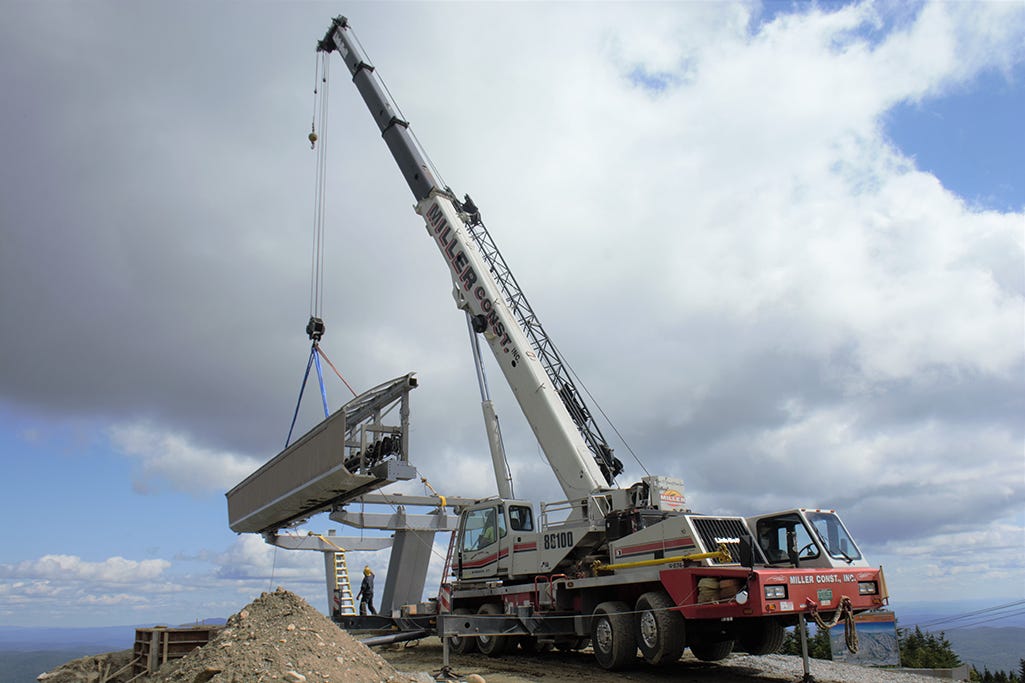
Oct 27, 2021
Podcast #59: Ski Cooper President and GM Dan Torsell
The Storm Skiing Podcast is sponsored by Mountain Gazette - Listen to the podcast for discount codes on subscriptions and merch. Who Dan Torsell, President and General Manager of Ski Cooper , Colorado Recorded on October 18, 2021 Why I interviewed him We’ve all seen the signs, westbound on I-70. Ski Cooper this way. Copper Mountain that way. And many of us have probably thought some version of “that’s funny, I wonder how many European tourists mix them up and show up at Ski Cooper with their Ikon Pass? Anyway, which way to the free lots at Copper?” And that’s as much as most of us have probably thought about the place. It’s easy to overlook. Lost between the world-famous monsters of Summit and Eagle counties, Ski Cooper is mostly a locals refuge. Most people reading this have probably skied some combination of Vail, Beaver Creek, Copper Mountain, Breckenridge, Keystone, and Arapahoe Basin, all Epic- or Ikon-aligned mountains, the smallest of them more than three times Cooper’s 500-ish acres. And yet, Cooper persists. It is, according to the NSAA , the fifth oldest ski area in Colorado, founded in 1942 as a training site for the legendary 10th Mountain Division, whose alumni would go on to found at least 64 ski areas throughout the United States. Any place with that kind of history and grit was, I figured, worth learning more about. What we talked about Pennsylvania ski culture; turning skiing from passion to career; moving from snow-draped Utah to gritty Tussey Pennsylvania to frantic Killington; the dramatic technological advancements and swashbuckling energy of the late ‘80s-to-early-‘90s ski industry; applying the lessons of monster ski areas to community bumps; why Dan left the ski industry and what drew him back in; why small ski areas matter; the intensity of running a night-skiing operation with a short season; the thrill and challenge of running big parts of Sugarbush; working under Win Smith as he revitalized the resort; the story behind Sugarbush’s cabin Cat; first impressions of top-of-the-world Cooper; leaving an East Coast ski career to manage Ski Cooper; transitioning from one of the Northeast’s top dogs to one of Colorado’s underdogs; the enormous terrain expansion opportunities at Cooper; how the Tennessee Creek Basin expansion has transformed the mountain; why the ski area went with a T-bar for that terrain; running Cooper debt-free; snow distribution across the three sides of the ski area; avalanche mitigation; Cooper’s minimalist grooming philosophy; U.S. America’s culture of over-grooming; the scale of Chicago Ridge Cat Skiing and whether it will return this year; whether portions of the Cat-skiing terrain could ever be folded into the lift-served side of Ski Cooper; the potential to increase the ski area’s vertical drop; potential lift additions and upgrades; timelines for improvements; why the frontside double is likely to stay intact even if the mountain adds another lift; the beautiful simplicity of running a ski are with no snowmaking; why Ski Cooper doesn’t play the stay-open-as-late-as-possible game with A-Basin even though they have the coverage to ski until June; Ski Cooper’s bargain season pass and its incredible coalition of coast-to-coast reciprocal partnerships; how the mountain managed to mostly eliminate partner blackouts; how many passes it sells; why reciprocal partnerships are proving resilient even with the advent of the Indy Pass; why Ski Cooper raised its minimum wage to $15.25 per hour; whether the mountain will institute a worker vaccine mandate; and how Ski Cooper will build off its record 2020-21 ski season. Why I thought that now was a good time for this interview As anyone who reads this newsletter on a regular basis knows, I’m obsessed with the evolving U.S. season pass landscape. In particular, the evolution of the multi-mountain pass under the giant ski conglomerates, and how independent ski areas are responding to that. Some are joining the Indy Pass. Others are banding together to form reciprocal coalitions for their passholders. Cooper is a master of the latter strategy, building a partner network so vast that the mountain’s season pass is a de facto national megapass. And a cheap one. I first connected with Torsell and the pass’ conductor, Dana Johnson, over the summer. It was supposed to be a quick-hit interview, but I was impressed by the whole operation. Ski Cooper is the definition of composure in the maw of impossible competition. Would you open a ski area next door to Vail? Would you be able to keep one open if it was one-tenth the size and one one-millionth as famous? It takes resilience, patience, and some kind of brilliance to make it as a ski area in ruthless Colorado, ground zero of the modern skiglomerate. With a big expansion behind them and vast potential ahead, I knew Ski Cooper was a story worth following. Questions I wish I’d asked It occurred to me while I was editing this that I had no idea who owned Ski Cooper. As you’ll see in our conversation, however, the mountain has plenty of big things ahead, and something tells me that Dan will be back on the podcast at some point to talk about those developments, and I’ll save the ownership question for then. In the meantime, this article by The Colorado Sun’s Jason Blevins details the whole ownership structure. I’d also like to have talked a bit more about the mountain’s founding as a training ground for the 10th Mountain Division. Why you should ski Cooper Because why not? When a lift ticket at its six closest neighbors is roughly the price of a new Cadillac, the compromises you make on sheer vertical drop and skiable acreage to hit Cooper seem acceptable. With no crowds and a magnificently affordable season pass , this is an entirely reasonable supplement to Epic and Ikon passholders looking for a weekend and holiday refuge. And while Cooper has traditionally been an intermediates mountain with very little terrain for the freight train skiers, the Tennessee Creek Basin expansion – opened just before the Covid shutdown – adds a rambling pod of full-throttle double-blacks. Yes, the runs are short – the T-bar rises just around 700 feet – but that’s roughly the same vertical drop you get on The Dumps at Aspen, and no one’s filling up the complaint box about those elevator shafts. Add in a minimalist grooming philosophy and all-natural snow, and you have a damn fine ski experience if you go in accepting what the place is, rather than obsessing over what it’s not. About that incredible season pass In July, I wrote an extended analysis of Ski Cooper’s amazing $299 (now $499) season pass , which acts as a de-facto alternate Indy Pass/megapass. I called it “America’s Hidden Mega Ski Pass: Ski Cooper’s sprawling season pass access is also the logical end state of a lift-served skiing universe increasingly defined by the Epic and Ikon passes, with their dazzling collections of poke-through-the-clouds resorts, relentless marketing, and fantastically achievable price points. Small ski areas, sitting alone, have a harder story to tell and far fewer resources to do it. Band together, and the story gets more interesting. And Ski Cooper is telling one of the best stories in skiing. Since I wrote that article, the ski area has added several new partners, including Lookout Pass, which sits on the Idaho-Montana border but does not appear on this map: Additional resources * Lift Blog’s inventory of Ski Cooper lifts * Historic Ski Cooper trailmaps * Ski Cooper today: Get full access to The Storm Skiing Journal and Podcast at www.stormskiing.com/subscribe
Oct 22, 2021
Podcast #58: Crystal Mountain, Washington President and CEO Frank DeBerry
The Storm Skiing Podcast is sponsored by Mountain Gazette - Listen to the podcast for discount codes on subscriptions and merch. Who Frank DeBerry, President and CEO of Crystal Mountain , Washington Recorded on October 18, 2021 Why I interviewed him Because Crystal is one of the under-appreciated giants of North American skiing. It has more inbounds skiable terrain than Jackson Hole and gets more snow than any ski area in Colorado. It’s not overlooked nationally because it’s hidden. It’s owned by Alterra, is the Pacific Northwest star on the Ikon Pass, and is seated in the shadow of Mt. Rainier, just two hours from downtown Seattle. But Crystal lacks the substantial bed base that would promote it from ski area to ski resort, that would make someone from New York or LA line it up beside the Wasatch or Tahoe or the I-70 corridor as a vacation option. So it’s mostly a local. A damn big one, with lights-out skiing and a voracious skier base. Maybe too voracious, judging from the recent pow-day traffic jams dozens of miles long. This is a big mountain with big plans, and I wanted to talk to the conductor of all this madness to find out exactly where it was headed. What we talked about Working at Mountain Creek when Intrawest bought the place and replaced the entire lift system in one summer; “it’s almost impossible to run Mountain Creek”; why Intrawest sold the mountain and others, including Whistler; West Virginia skiing and why you need to hit Snowshoe; Crystal’s “extraordinary” terrain and enormous snowfall; the culture shock of moving from the snow-starved East to the snow-choked West; why Mountain Creek and Crystal are “not that dissimilar”; avalanche mitigation; the “rabid” Pacific Northwest ski culture; why Crystal went from perennial hidden gem to one battling chronic overcrowding; whether the ski area could ever build up a larger bed base; the enormous challenge of Crystal’s endless two-lane, un-expandable access road; why Crystal was initially unlimited on the Ikon Base Pass and why that proved to be unsustainable; what happened to passholder numbers when Alterra moved unlimited Crystal access to the full Ikon Pass; why the mountain had to stop selling day tickets in early 2020; why you may want to ski holidays at Crystal; why Crystal is moving to paid parking and how that will fund a mass transit system from Enumclaw; the amazing number of parking spaces Crystal loses to snowbanks each season; operating buses amid Covid; what might replace the Rainier Express; the difference between out-of-base lift capacity and overall lift capacity; a bold proposal to move the current gondola and add another; potential expansion up Bullion Basin; why Crystal abandoned that terrain several decades ago; whether the second base area or the Kelly’s Gap high-speed quad proposed on the 2004 master plan could still happen; why we may see groomed terrain in Northway; whether Crystal would ever upgrade capacity on the Northway or Chair 6 doubles; why we’re unlikely to see a chair up Silver King; which terrain could be included in a night-skiing expansion and what it would take to make it happen; and the tradition of the long season at Crystal and why that’s in no danger of ending. Why I thought that now was a good time for this interview “Crystal Mountain Resort is the sleeping giant of the Northwest.” – Peak Ski Guide & Travel Planner, 1994 “Outside of Seattle, Crystal Mountain remains largely unknown. Too bad, because Crystal is 2,300 acres and 3,100 vertical feet of romping grounds.” – Skiing , October 1995 “The region gets little press, is ridden almost exclusively by locals, and received biblical precipitation. … One of my guides claims it takes a few days to tear up Crystal after a big dump.” – Skiing , October 1999 Welp, things have changed. The 1990s version of Crystal was, according to Lift Blog , a time machine owned by a ski cooperative. Boyne bought the joint, fixed it up, and, after a brief stint as an indie, Crystal ended up in Alterra’s quiver. So: a modern ski area, on the Ikon Pass, in the shadow of an increasingly affluent metro Seattle population that has exploded from around 2.5 million to nearly 4 million in the past 25 years, 100 percent of whom access the ski area via an endless two-laner. It’s quite a mess. This offseason, Crystal made two huge moves to address the chronic overcrowding that’s now as predictable as the mountain’s monster snowstorms: significantly reduce Ikon Base Pass access and implement a paid parking program. These short-term moves are the first steps in an evolving master plan that should address parking shortages, increase out-of-base lift capacity, and improve the overall ski experience. Crystal has huge plans, especially around its lift fleet, and I wanted to give frustrated skiers a window into how their current ski-day woes may eventually subside. Questions I wish I’d asked In August, I rode the Crystal gondola to the summit with my family. Base area signs warned of limited visibility, but we had driven all the way out there already and I like riding lifts anyway and so up we went. Wildfire smoke, everywhere erasing the horizon. Rainier, normally looming epochally over the ski area’s summit, was invisible. With Sierra-at-Tahoe facing a limited season after extensive wildfire damage and Heavenly and Kirkwood facing down fire threats, the ski industry is reckoning with climate change as an all-seasons threat. I would have loved to have gotten DeBerry’s take on what this means, both for Crystal and for the industry at large. Why you should ski Crystal I mean, well, just look at the place: When ski writers talk about a “skier’s mountain,” this is what they mean. Vast dominions of raging terrain dumping thousands of feet off the summit. Very little grooming. Buckets of snow. This is trailblazing skiing – pick your own route, any route, do your best not to die. And why not? They don’t have 5,000 tourists at the base area to keep happy. Let the other mountains string traverses across the fall line to zigzag green circle boulevards from the summit. Crystal is a mega-mountain that still feels primarily like a ski area for skiers. It’s a must-hit. Just go, you know, on a weekday. Additional reading/videos * Lift Blog’s inventory of Crystal Mountain lifts * Archival Crystal trailmaps * DeBerry refers to “John” frequently throughout our interview. He’s referencing John Kircher, former owner of Crystal Mountain and brother of Boyne Resorts CEO Stephen Kircher. Here’s a really good overview of why he sold the mountain to Alterra shortly after Vail bought Stevens. * More on the great powder-day fiasco of 2020 that forced huge changes in how Crystal manages skiers and traffic. * Gregory Scruggs wrote an outstanding compare-and-contrast of the trajectories of Crystal under Alterra and Stevens Pass under Vail: The two biggest rival corporations in ski resort management staked their claims in Washington state in 2018 by purchasing two of the Central Cascades’ most beloved ski areas. Vail Resorts, based in Broomfield, Colorado, bought Stevens Pass, the lovably crusty ski area on one of the continent’s snowiest mountain passes reachable by road; meanwhile, Denver-based Alterra Mountain Company snapped up Crystal Mountain, a resort founded by Seattle ski bums at the edge of Mount Rainier National Park. … Numerous interviews with season pass holders from both resorts show that Crystal Mountain provided customers with a premier experience amid tough pandemic conditions — though this comes at a premier price. Meanwhile, Stevens Pass slashed the price of its Epic Pass last month in an attempt to make skiing more affordable after a season in which its operational struggles frustrated many longtime pass holders. Get full access to The Storm Skiing Journal and Podcast at www.stormskiing.com/subscribe
Oct 19, 2021
Podcast #57: Boyne Mountain General Manager Ed Grice
The Storm Skiing Podcast is sponsored by Mountain Gazette - Listen to the podcast for discount codes on subscriptions and merch. Who Ed Grice, General Manager of Boyne Mountain , Michigan and Kari Roder, the ski area’s Director of Marketing Recorded on October 12, 2021 Why I interviewed him Context is everything in skiing. In much of America’s sprawling ski kingdom, Boyne Mountain would hardly register. In Michigan’s Lower Peninsula, it soars. And not just in the physical sense of its vertical drop and 60 trails. Culturally, it stands in for skiing itself, the place that non-skiers think of when they think of skiing. Up North, as everyone in Michigan calls it, is where you go to camp, to boat, to hunt, to canoe, to fish, to snowmobile, to ski. Growing up as a non-skier in a non-skiing family, I didn’t realize until I picked the sport up as a teenager that the state had any other ski areas at all, so ubiquitous were references to “goin’ to ski Boyne.” Once I did start skiing, I saved Boyne Mountain for last. It didn’t feel approachable in the way that Caberfae, Shanty Creek, and Sugarloaf did. It didn’t feel like a place you started. It felt like a place you arrived. Only when you were ready. I probably wasn’t ready the first time I skied Boyne, a mashed-potatoes sunny St. Patrick’s Day with rowdy drunken parties bursting from overloaded warming huts. I must have taken 100 runs off the Victor lift that day and fallen as many times, so stupefying were the springtime insta-moguls for a beginner on Elan skinny skis. But I kept coming back. The place doesn’t have the most interesting trail network and it’s typically the most expensive ski area in Michigan, but it has the intangibles of atmosphere and energy, and a commitment to push the season into May whenever the snowpack allows. Some of my most cherished ski memories are May afternoons at an empty Boyne, lapping the Mountain Express and winding down the bumps of Idiot’s Delight. Over and over in the endless 70-degree afternoon. It’s a place that means a lot to me, and it’s been at the top of my list for an interview since I launched The Storm two years ago. It was time to make it happen. What we talked about Starting out as a busboy at Boyne Mountain in the 1970s; learning to ski on a steep mountain in ill-fitting gear; working under Boyne Resorts’ legendary founder, Everett Kircher; the long road to general manager and getting fired multiple times along the way; working at family-owned Boyne; the mountain’s relaxed atmosphere; when and why the ski area began developing glades; new areas Boyne Mountain has been glading over the past summer; creating the Disciples Ridge expansion and how that changed Boyne Mountain; the ski area’s amazing collection of historically significant lifts, including the remains of the first chairlift in the world; how banana boats helped inspire the invention of the chairlift; the future of the Hemlock chair; what happened to the original Meadows chair, the world’s first quad, when the ski area replaced it in 2008; the backstory behind installing the Mountain Express, America’s first six-pack chair; the mountain’s legendary snowmaking capabilities; Boyne’s tradition of the long season; the ski area’s competition with Mount Bohemia to see who can stay open the latest; winning the race to open against Mount Holly; the mid-90s debauchery of St. Patrick’s Day on the mountain; Boyne 2030 ; RFID gates coming this season; the Midwest’s first eight-person chairlift; the fate of the existing Disciples triples; what may replace the Mountain Express, Victor, and Boyneland; where the current Meadows lift may move and what might replace it; the size and scale of the Skybridge and how people will access it; the Ikon Pass; and Boyne’s build-your-own-pass product and night and spring passes. Why I thought that now was a good time for this interview Boyne 2030 is going to launch that place into a technological sphere that no other ski area in Michigan can touch (except, perhaps, sister resort Boyne Highlands, whose 2030 plan is on the horizon). Yes, there will be building upgrades, airport enhancements, golf course stuff, a giant pedestrian bridge/tourist attraction. But that’s the garnish on the plate, and we’re here to talk about the meat: RFID, snowmaking, and, crucially, an almost-complete modernization of the lift system. A final-state Boyne Mountain could host at least five modern high-speed Doppelmayr D-Line lifts: two eight-packs, a six-pack, and two quads. That would give the mountain one of the most updated lift fleets not just in the Midwest, but in America. When I skied Boyne Mountain two seasons ago, it still broiled with that old attitude and energy, but the infrastructure was starting to feel antique. Other than the high-speed sixer and the carpet-loaded Meadows lift, the place felt like a Riblet museum, one lift after the next poking up the incline. Not for long. This joint is being retrofitted for rocket fuel. Filler up and get the hell out of the way. Why you should ski Boyne Mountain At first glance, it doesn’t look like much. A big ridge, mostly clear-cut, chairlifts stacked south to north along US 131. But it’s quite the mountain. It’s steep, first of all. Only 500 feet, sure – but that doesn’t make the pitch any less intimidating. You can spend hours skiing from one end of the ridge to the other and back. The mountain has thinned glades and added some other little byways to vary the experience. And then, tucked away, tree-lined and meandering, is the Disciples Ridge section, a spiderweb of greens and blues that may be the most extensive and inviting beginner terrain in the state of Michigan. Before the ski area began building this pod in the late ‘90s, Boyne Mountain was a tough sell for families. Now it’s one of the most balanced and inviting ski areas in the region. The grooming is astonishingly good – Boyne may own Big Sky and Brighton, but this is ground zero of the company’s sprawling empire, and it’s the place where they mastered the arts of snowmaking and snow-care that they export to their other resorts. And you know what? It’s just a damn fun place to spend a day. If you ever find yourself in Michigan in the wintertime, hit this one up. Plus, they have some knockout terrain parks: Additional reading/videos * Lift Blog’s inventory of Boyne Mountain chairlifts * Historic Boyne Mountain trailmaps * More on Boyne 2030 (personally, I would have put the lift first, but they are very excited about this bridge): A little more about Boyne Mountain: Get full access to The Storm Skiing Journal and Podcast at www.stormskiing.com/subscribe
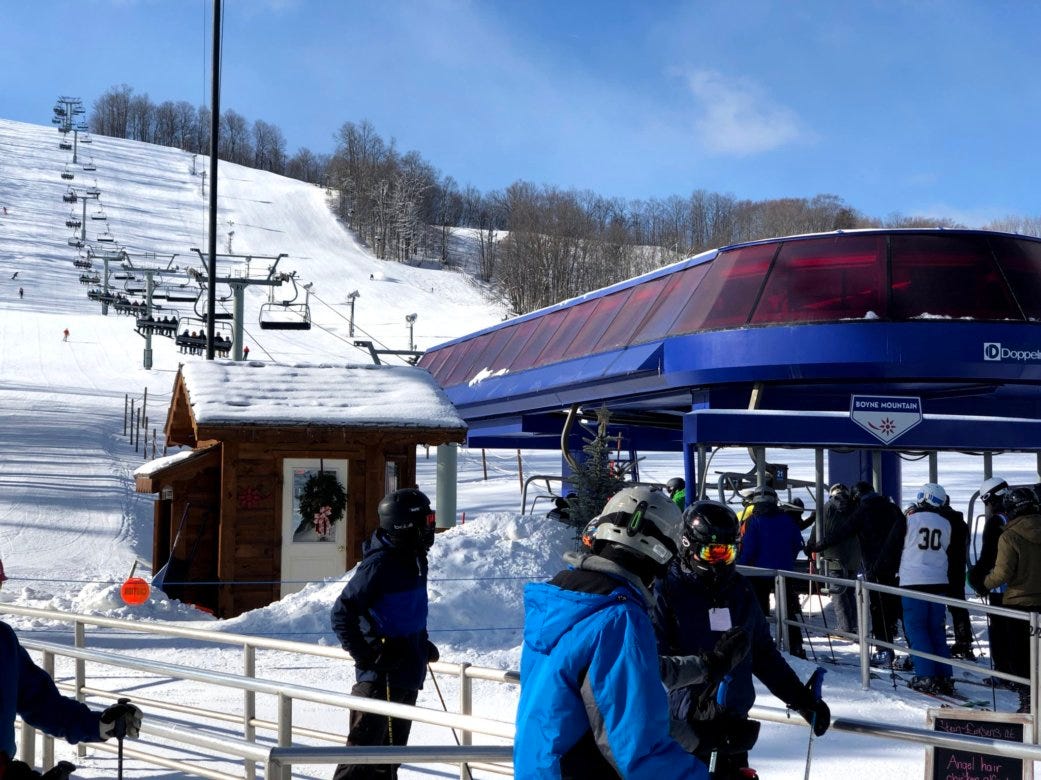
Oct 12, 2021
Podcast #56: Mt. Buller, Australia GM Laurie Blampied
The Storm Skiing Podcast is sponsored by Mountain Gazette - Listen to the podcast for discount codes on subscriptions and merch. Who Laurie Blampied, General Manager of Mt. Buller , Australia Recorded on Oct. 4, 2021 in New York City; Oct. 5, 2021 at Mt. Buller, Australia – weird, right? Why I interviewed him One of the quirks of living on planet Earth is the fact of its tilted axis. Because of this, we not only have seasons, but different seasons in different places at the same time. There’s a multiverse feeling to all this. Landing in Australia is not unlike stepping through a time ripple into a weird alt-America, one where cars drive on the left and the deer have been replaced by giant bouncing rabbity creatures carrying babies in their pockets. And it’s winter in June. If Australia didn’t exist and Luke Skywalker and his motley band of space warriors landed on a planet outfitted with koala bears and vast deserts and deadly animals of every variety we’d all be like, “yes that looks like the kind of crazy planet I’d expect to find on the remote fringes of space.” But it’s real. And there’s skiing. Less, it turns out, than I’d figured: the whole country has just a handful of ski areas. This seems to be mostly a matter of geography: the treeline is low and the snowline is high. Running a ski area in such conditions is a challenge. No matter: Australia is home to an ebullient ski culture. The five largest – Buller, Thredbo, Perisher, Falls Creek, and Hotham – are aligned with the Ikon or Epic passes. This makes sense. Try taking five lift rides at any Western U.S. or Canadian mountain and not running into an Aussie on a five-week holiday bouncing from one resort to the next on their American megapass. These people ski, travel, live. I wanted to know more. What we talked about Reflections on retiring after nearly three decades in the ski business; The emerging Chinese ski scene; how a decade and a half as a civil engineer led to a career running ski resorts; raising kids at a ski resort; the evolution of the Australian ski industry from the early ‘90s to today; the surprisingly small number of ski areas in Australia and how they’ve consolidated over time; pioneering snowguns-as-firefighting-gear while under siege by wildfire for 38 days; the family that owns Mt. Buller; Vail’s entrance into Australia; who will replace Blampied after retirement; how Mt. Buller finally solved its snowmaking problem; how the Australian ski model compares to the North American and European models; Australia’s unique geography and how that shapes its ski areas; snow gums! ; Buller’s origins as a single ski area served by two separate lift companies, requiring two separate lift tickets; Australia’s history as a center of lift innovation and experimentation; the evolution of Buller’s modern lift system; high-speed lifts on low-rise terrain; why the resort removed the Boggy Creek T-bar and what may replace it; shout out to SMI in Midland Michigan represent; the amazing gondola proposal that could knit the entire resort together; average snowfall at Mt. Buller; how snowmaking and snow preservation works above treeline; the art and science of snowmaking in Australia’s marginal temperatures; Buller’s Olympic and World Cup legacy; why the mountain joined the Mountain Collective and Ikon passes and what it took to make that happen; whether Buller passholders may get an option to add on an Ikon Pass, as many U.S. partner mountain passholders now can; Australians know how to live; Mt. Buller’s ISO certification; how Australia reacted to Covid and what that’s meant for the ski industry; and the earthquake that hit Buller last month: Why I thought now was a good time for this interview I hadn’t thought to proactively reach out to an Australian resort for an interview. I’ve never skied there, and I just expanded the scope of the podcast from the Northeast to the rest of America – that seemed like quite enough terrain to cover for the moment. But Mt. Buller reached out, and this seemed like an excellent chance to learn about a part of the ski world I was more or less ignorant of. Laurie was retiring after a long career and had a unique perspective on how the Australian ski industry had evolved in tandem with and outside of the global ski machine. The story of Mt. Buller itself was compelling – a family-owned mountain latching onto North American megapasses and aggressively upgrading its infrastructure to stay relevant in a whacky, warming world. There was no way I was turning down the opportunity to learn more. It’s a big, big world, and there’s an awful lot of skiing out there. My focus, for now, is the United States, and that’s where I’ll continue to do my deliberate resort outreach. However – if you run a ski resort anywhere in the world, and you want to come on the podcast and talk about it, get in touch with me and we’ll make it happen. What I love about the world of lift-served skiing is the wild and unpredictable variety of it, the way different versions of the same thing can manifest themselves across vastly different cultures and environments. There is no part of this universe that doesn’t interest me, and in an internet-connected world, there are no boundaries we can’t step across to explore. Why you should ski Mt. Buller Like a lot of Australian ski resorts, Mt. Buller seems to be Europe from the waist up, and America from the belt down: I asked Laurie which version of skiing Australia hewed closest to: the yee-haw off-piste American style, or the skinny-skis groomer swishy Euro style? Neither, he said. It’s a thing all its own. And it’s a thing I’d like to explore one day. It’s gonna take me a while. As much as I love skiing, I also love summer, and we don’t get much of it here in the Northeast. And you have to miss a lot of summer to go to Australia. It takes like a week to fly there and a week to fly back and by then you’ve missed two years of work because they’re already in like 2032 over there. And even if you do want to forfeit summer for some skiing, you - like most U.S. Americans - probably only get two to three hours of vacation time per year and it’s not to be taken consecutively, you know, which is not quite enough time to get to Australia and back. Until teleportation is invented. Which it probably already has been in Australia since they are already living in the 23rd century. Extra credit One of the quirks of Mt. Buller’s history is that two separate lift systems, run by two separate companies, once served the same mountain. That meant you needed two lift tickets to ski the whole area: Over time, the two systems united, but the mountain was left with a ton of redundancy – here’s what the unified lift system looked like in 1992, shortly before Laurie took over: Today, the place is slick and modern, with high-speed burners and big plans for a bomber gondola. With no room left to expand, Mt. Buller is wholly focused on improving the on-mountain experience. A few more items of interest: * More historic trailmaps of Mt. Buller * A complete historical inventory of Mt. Buller’s chairlifts * Mt. Buller’s Legends and Personalities Wall (referenced in the podcast) Get full access to The Storm Skiing Journal and Podcast at www.stormskiing.com/subscribe
Oct 8, 2021
Podcast #55: China Peak, California CEO Tim Cohee
The Storm Skiing Podcast is sponsored by Mountain Gazette - Listen to the podcast for discount codes on subscriptions and merch. Who Tim Cohee, Managing Partner, CEO, and General Manager of China Peak Mountain Resort , California Recorded on September 28, 2021 Why I interviewed him Because China Peak, an independent operation situated on the Southwest side of California’s Sierra Nevada mountains, sits at the bullseye of multiple issues shaping the modern lift-served skiing landscape. Climate change is descending in all seasons: seven winter snow droughts in the past 10 years; wildfire scraping the resort’s edges and damaging buildings in 2020. The mega-resorts with their super-cheap megapasses beckon the local Fresno skiers that are China Peak’s core constituency. And not just California’s many Epic and Ikon gems – Palisades Tahoe, Kirkwood, Heavenly, Northstar – but the resorts dotted all around the West – it takes the same amount of time to fly to Salt Lake City from Fresno as it does to drive to China Peak. But, like most mid-sized ski areas around the country, China Peak is stamping out a model to survive and hopefully thrive in this era of consolidation, cheap travel, and climate catastrophe: banding together with other independent mountains on the Indy Pass and Powder Alliance, and investing in a powerful New England-style snowmaking system capable of burying the place and (hopefully) fending off fires. And if you’re going to initiate such massive and dramatic change, it helps to have a charismatic leader with more than 40 years of experience dealing with every possible circumstance a snowy mountain can churn out. Skiing needs the China Peaks to thrive if skiing itself is to survive long-term, and I wanted to see how Cohee planned to do that. What we talked about The Southern California ski scene in the 1970s; the Cohee family ski diaspora and their potential future at China Peak; the 1970s vacuum in ski-area marketing; the surreal reality of Southern California skiing; when the massive city below doesn’t know about the abundant skiing in the mountains above; what it took to get same-day snow conditions video from the mountain to the local news station 40 years ago; working for Bill Killebrew at Heavenly; the smartest guy in the history of skiing; quadrupling skier visits at Bear Mountain né Goldmine; how “skiing’s dream team” emerged from a 1990s version of Bear Mountain to run some of the largest ski areas in the country; moving east and working under Les Otten in the heyday of the American Skiing Company; reviving a declining Kirkwood; leaving the ski area after 17 years to buy China Peak (known at the time as Sierra Summit); what happens when a ski area ignores the customer; How and why China Peak overhauled its snowmaking system and how that’s going to change the resort; and what happens when your snowmaking manager quits over Christmas break. Why I thought that now was a good time for this interview For most of its first two years, The Storm Skiing Podcast focused mostly on the Northeast. In order to capture the true breadth and spirit of the region, it was important to me to maintain a balance between monster, conglomerate-owned ski areas and the-owner-drives-the-Snowcat family-owned hills. So episodes featuring Killington , Sunday River , Sugarbush , Sugarloaf , Loon , and Mount Snow lived alongside interviews with the folks running Plattekill , Berkshire East , Bolton Valley , Titus , Whaleback , Mad River Glen , and Lonesome Pine . The ski world is big and messy, and the podcast had to reflect that. As I expand the pod’s focus from the Northeast to the entire country, I will deliberately follow that same template. My first two western interviews – Taos and Aspen – are ski-world A-listers, checkbox items for the Ikon set, places with deep resonance and meaning for generations of locals and tourists. China Peak is something different. Once knowns as Sierra Summit, it’s a local bump that no one’s flying across the country to ski. But that’s exactly why I’m here: what the hell is this place, this mysterious Indy Pass partner wading in a purgatory south of the Sierra badboys? It’s been there for 63 years and no one outside of Fresno has ever heard of it. But like all ski areas, it means a tremendous amount to a lot of people out there, and it’s an important part of this American ski story that I’m trying to tell. Questions I wish I’d asked For a typical Storm Skiing Podcast interview, I’ll write 25 to 30 questions and manage to get to around 80 percent of them. This time, I got through six. Cohee’s 40-plus-year journey through the ski industry during its decades of explosive change was so compelling that we didn’t even get to China Peak until we were nearly out of time. So all of my normal questions about chairlifts, trail networks, local markets, snowfall, fire danger, the Indy Pass, the Powder Alliance, and the wild world of Covid will just have to wait until next time – and you will want there to be a next time after you hear this. Why you should ski China Peak China Peak is an interesting place. It’s more or less at the end of the road, on the way to nowhere, close to nothing at all. Mammoth, 30-ish miles away as the crow flies, is a five-hour drive. Because it’s not big enough to merit destination status in a state overloaded with alpha ski resorts, it’s mostly a day tripper’s hill for Fresno, an hour-and-a-half southwest. But there’s no rule that it has to be. An Indy Pass and Powder Alliance member, China Peak is a walk-up proposition for many skiers on their existing passes. The trail map looks fun, especially after a big snow, but the mountain’s new megahose snowmaking system ought to guarantee more stable conditions even when the snow fails to materialize. This would make a nice stop on any California ski tour. Additional reading/videos * Lift Blog’s China Peak lift inventory * Historic China Peak/Sierra Summit trailmaps * Some Slopefillers love for Cohee * SAM ($) profiles China Peak’s new snowmaking system * Fires approaching China Peak last September: * Cohee on video: Get full access to The Storm Skiing Journal and Podcast at www.stormskiing.com/subscribe
Oct 1, 2021
Podcast #54: Aspen Skiing Company CEO Mike Kaplan
The Storm Skiing Podcast is sponsored by Mountain Gazette - Listen to the podcast for discount codes on subscriptions and merch. Who Mike Kaplan, CEO of Aspen Skiing Company Recorded on Sept. 24, 2021 Why I interviewed him Vail may rule the American skiing economy, but Aspen remains king of the nation’s popular skiing imagination. From Aspen Extreme to Dumb and Dumber , the town and its mountains serve as the stand-in for big-mountain Western skiing as a whole, one word that communicates to skiers and non-skiers the essence of the sport. And there is something spectacular about it. This city at the end of the road, hovering just past the gravitational pull of Denver and the I-70 disaster seeping beyond it. Those narrow expert mountains with their unrelenting fall lines and absence of greens. Buttermilk with its lazy empty groomers and lost-in-plain-site underdog patina. The wild labyrinthian variety of burly Snowmass. The city itself, bleeding as one into Aspen Mountain, some invigorating mashup of town and city, luxe and lowbrow, skibum and jetset. Aspen doesn’t have the wildest terrain. It doesn’t get the most snow. It doesn’t have the most vertical or the most skiable acres. But it may just be the best total ski experience America offers. What we talked about Arriving in Aspen in 1993; how the city has changed over the past three decades; going from ski school instructor to CEO of one of America’s great ski companies; celebrating 75 years of skiing at Aspen; the significance of Aspen’s original Lift 1, the present-day Shadow Mountain lift, and what may replace it and when; the return of Ruthie’s restaurant; the scope and status of the proposed Pandora expansion off Aspen Mountain’s summit; what could be developed on that land if the county denies the expansion permit; what the expansion could mean for the Gent’s Ridge quad and the rest of Aspen’s lift fleet; Snowmass lifts: the new high-speed six-pack on Big Burn, a timeline to replace Coney Glade, the latest thinking on a possible Burnt Mountain lift; whether we could ever see a lift up Highland Bowl at Aspen Highlands; whether the Bowl Cat will return for the 2021-22 ski season; where we could see future expansion at Highlands; how the Deep Temerity expansion at Highlands could inform the Pandora expansion at Aspen; the status of the Golden Horn surface lift at Highlands; a different point of view on Buttermilk; the interplay of the four mountains to create a distinctive Aspen experience; why Aspen didn’t become part of Alterra; the Mountain Collective Pass and Ikon Pass origin stories; why Aspen pulled off the Ikon Base Pass and how the move to the “plus” tier has worked out; the future of the Mountain Collective; what happened with the $2 million that Liftopia owed Aspen for Mountain Collective Passes; Aspen’s plan to “stay in business forever” amid a changing climate; why Aspen is requiring all employees to get vaccinated against Covid-19 prior to the start of the 2021-22 ski season; and the tangle of problems Covid brought along with it last season. Why I thought that now was a good time for this interview Aspen, under Kaplan, has evolved. It is: a leader in the fight against climate change, a model for implementing creative employee housing solutions in the modern mountain town, a crown-jewel of two transcontinental ski pass products, a voice in skiing’s struggles to diversify, and an uncompromising partner in the battle against Covid. There was nothing inevitable about any of this. Fifteen years ago, Aspen was a fun town with a pack of fun ski hills. The Epic Pass didn’t exist and issues of diversity, equality, and environmental catastrophe were minimized or ignored. Aspen could have just kept being Aspen and that would have probably been good enough to keep on existing. But Kaplan had other ideas. Lots of ideas. And while a phalanx of market and social forces, innovators, and disruptors would likely have forced the company into some version of its 2021 self, Kaplan no doubt accelerated the change. Aspen Mountain, by skiable acres, is only the 20th largest ski area in Colorado – smaller than Monarch, Sunlight, Eldora, Wolf Creek, Powderhorn, A-Basin, Purgatory, and Loveland. Yet in its purpose and its presence it is bigger than all of them. Now seemed as good a time as ever to find out why that continues to be true. Questions I wish I’d asked I had wanted to discuss the origin and influence of the X-Games at Buttermilk, whether the locals backlash against the Ikon Pass has subsided as Aspen changed access levels and started giving out a Base Pass with an Aspen season pass, whether Aspen would continue rationing season passes, how the company’s various diversity initiatives are evolving, whether post-Covid employee benefit cuts had been restored, how short-term rentals and urban Covid refugees were impacting the local housing market, Aspen’s employee housing initiatives, how the Covid fallout compared to the aftermath of The Great Recession, whether the company expected last year’s skier visit declines to continue, and which Covid-era operating changes were most likely to hang around. We ran out of time. Next time. Why you should ski Aspen Because Aspen will give you the best total ski week in America. The skiing, yes: the mountains, teetering above the valley, four poles balancing one another like a perfectly assembled sports team. The steeps that are not too steep to manage and the greens that are not too flat to lean into. The lost-in-time-and-space feeling of the Hanging Valley Glades or Deep Temerity or Bingo Glades. But it’s everything else, too. The free and frequent shuttlebus connecting town and mountains. The incredible variety of lodging options that make the place more affordable than you’d think. And the city itself, a pedestrian-friendly human-scaled relic salvaged from Colorado’s Wild West ancestry and outfitted with T-shirt shops, celebrity-chef eateries, weed emporiums, surly bars, grocery stores, Prada shops, and antique stores, like the most bizarre Lego set ever invented. And you go because you have to. It’s just one of those places. If you’re a skier you must ski Aspen because it’s Aspen. I really don’t know how else to say it. Just go. More Aspen Lift Blog’s lift inventories for: * Aspen Mountain * Aspen Highlands * Buttermilk * Snowmass Historic trailmaps for: * Aspen Mountain * Aspen Highlands * Buttermilk * Snowmass Archival footage of Lift 1, the single chair that stood from 1947 to 1971 and took 40 minutes to rise from town to the Aspen Mountain summit: Get stoked on Aspen Extreme : Get full access to The Storm Skiing Journal and Podcast at www.stormskiing.com/subscribe
Sep 16, 2021
Podcast #53: Taos Ski Valley CEO David Norden
The Storm Skiing Podcast is sponsored by Mountain Gazette - Listen to the podcast for discount codes on subscriptions and merch. Who David Norden, CEO of Taos Ski Valley , New Mexico Recorded on Sept. 13, 2021 Why I interviewed him It’s a map dot perched improbably in the nation’s southwest pocket, in a state that evokes and largely is scrubland and desert. Seated at roughly the same latitude as Nashville, Tulsa, and Las Vegas, it seems impossible that there could be skiing there. But there’s skiing there. And not in the technology-overwhelming-nature way that there’s skiing in Maryland or New Jersey or Tennessee; this is big-mountain, serious stuff. Taos is one of the best ski areas in the country, floating 9,200 above sea level – at its base. The skiing is wild and intense, deep and meandering when the snow allows. Much of it requires hiking. It’s a bit remote, but that’s an asset – no I-70 approach-road messiness, no liftlines backed up to Utah. It’s also a place that, for much of the past three decades, seemed determined to stay frozen in time. Skier visits plunged from 350,000 in the 1990s to 160,000 by the 2005-06 season. That began changing in 2014, when billionaire Louis Bacon bought the joint and started emptying his money bin into new lifts, stringing a controversial triple up Kachina Peak and upgrading the legendary Lift 1 with the resort’s first high-speed detachable. Taos also became North America’s first ski resort to earn the coveted B-Corporation environmental ranking, and has been a leader in forest fire mitigation through a partnership with the Nature Conservancy and the U.S. Forest Service. But the renaissance is just getting moving: the mountain recently released a master plan that would modernize its entire lift fleet while preserving its existing trail footprint. I wanted to get a sense of where the mountain was headed and how it planned to get there, and the man running the show seemed like the best place to start. What we talked about How the mighty Taos of the 1990s lost its swagger; the legacy of mountain founder Ernie Blake and his family; why they finally sold the resort in 2014 and why they chose Louis Bacon as the buyer; Taos’ environmental focus and B-Corporation status; the initial controversy over the Kachina triple and how sentiment has evolved over time; how the resort manages that intense high-altitude terrain; subtle tricks to keep the blue-square crowd off that lift; reaction to replacing Lift 1 with a high-speed detach, the mountain’s first; managing crowding over the long-term; why the resort overhauled its beginner area with new lifts and progressive graded terrain; easing the trauma of ski-school drop-off; what Taos’ extensive glading efforts have to do with fire mitigation and water quality; where those efforts have been focused this summer; Taos’ master development plan; where the resort wants to put a gondola and how that would transform the resort; creating a clean-energy transportation system from the town of Taos up to the resort; whether lifts 2 and 4 will be replaced with high-speed lifts; potential upgrades for lift 7 and why lift 7A may stay exactly as it is; potential upgrades for lift 8; when we could start seeing some of these new lifts in a best-case scenario; why local support is so key to resort upgrades; the fate of the once-proposed West Basin lift; the future of snowmaking at Taos; the high, dry, north-facing snow-retention miracle that is Taos Ski Valley; why Taos joined the Ikon Pass and why the locals haven’t pushed back as they have at other Western destinations; why the mountain never intends to return to its mid-90s heyday of 350,000 annual skier visits; the 2019 inbounds avalanche and how the mountain is moving ahead from that incident; how Taos honored the two skiers killed that day; prepping for another potential season in the midst of Covid; and working with the state to forestall a return to on-mountain capacity and 14-day quarantines. Why I thought now was a good time for this interview Taos is deep enough into its turnaround to know that it’s working, but has enough ambition ahead that it hasn’t yet fully become what it will be. And what it will be is a pacesetter for how a major ski resort will need to operate in a world that is increasingly conservation-oriented, environmentally attuned, and gun-shy on development. And in a West now-annually scorched by massive wildfires, Taos is also modeling how to fortify all that expensive infrastructure against a rogue inferno. In the end, Taos will be about as close to a model modern ski resort as you’re going to find in America. With momentum behind the master plan and no question about whether funds will be available to make it happen, this seemed like a good time to take stock before the work really accelerates. Questions I wish I’d asked Taos, interestingly, was the last ski area in the United States that lifted its snowboard ban (three, of course, still ban snowboards). That happened in 2007, before Bacon bought it and before Norden’s time, but it still would have been an interesting discussion point. Norden also brought up a really cool concept for a clean-transportation energy system starting with electric buses departing from the town of Taos and leading all the way up the mountain, and I would have liked to have gotten into that a bit more. I also wanted to ask about Taos Air , the only commercial airline, as far as I’m aware, that’s run by a ski resort. Next time. Why you should ski Taos Well it’s on the Ikon Pass , first of all, and if you’re reading this, there’s a good chance you already have one. Facebook posts soliciting destination suggestions often read something like, “Hey me and my nine friends are taking a trip in December and we’re looking for a place that gets nine feet of powder per week and where you can stay slopeside for less than $4 per day, and we want to fall out of the back of the plane and land on the chairlift.” The comments section inevitably leads these bargain hunters to Utah, Colorado, or Tahoe. No one ever mentions poor Taos. Good. This is one of the last uncluttered alpha dogs in American skiing, a place with all the mystique of Jackson or Little Cottonwood Canyon, but very little of the boozy chaos. And with the overhauled beginner zone hard by the base area, Toas now caters to families in a way it wasn’t able to in the past. Go out of your way for this one. It’s worth it. Additional Resources * This New York Times article is an excellent overview of Taos’ evolution under Bacon. * Lift Blog’s inventory of Taos lifts * Historic Taos trailmaps 2019 avalanche * An analysis by veteran ski writer Marc Peruzzi of the 2019 inbounds avalanche at Taos that killed two skiers. * The families of each of those skiers has set up foundations in their honor. Click through below to donate to each: * Live Like Z , set up in honor of 26-year-old Matthew Zonghetti, provides scholarships to graduates of Mansfield Massachusetts High School. * Corey’s Foundation , set up in honor of 22-year-old Corey Borg Massanari, provides outdoor safety gear and training for schools, nonprofits, and ski resorts. * This video of Borg Massanari’s Organ Donors Walk of Honor through the halls of the University of New Mexico Hospital is both devastatingly sad and uplifting. * Taos named runs after each of the deceased skiers – the only inbounds avalanche victims in the resort’s history. The runs – “She Gone” for Borg Massanari and “Z-Chute” for Zonghetti, run off Highline Ridge and are listed on the resort’s trail-status page, but do not appear on the most recent trailmap . Get full access to The Storm Skiing Journal and Podcast at www.stormskiing.com/subscribe
Sep 3, 2021
Podcast #52: Lutsen Mountains Co-President/Co-Owner & Granite Peak Owner Charles Skinner
The Storm Skiing Podcast is sponsored by Mountain Gazette - Listen to the podcast for discount codes on subscriptions and merch. Who Charles Skinner, Co-President and co-owner of Lutsen Mountains, Minnesota; and President and owner of Granite Peak, Wisconsin Recorded on August 30, 2021 Why I interviewed him Because my God, these mountains: They are improbable enough in the Midwest that few have had the audacity to even imagine ski areas of this size and variety. Enormous and interesting places, cut with endless glades and high-speed lift systems sparkling like some Sim City fantasy of what a built-from-scratch ski area could be. But Lutsen and Granite Peak are not what could be. They are what is: two of the best ski resorts in the Midwest. And there was nothing inevitable about that. This is what Granite Peak looked like in 1996, four years before Skinner took over: The ski area was “tired and old,” Skinner told me in the podcast. “It was like starting a whole new ski area.” Indeed, driven by his willingness to invest and his commitment to crafting mountains that are actually interesting to ski, Granite Peak is now one of the most up-to-date ski areas in the country. Skinner has vision. Many people do. But what makes him special is the tenacity, creativity, and organization to actually construct something tangible. Big, wild ski areas where they have no business being. I wanted to understand how he did it and what was happening next. What we talked about The legacy of Skinner’s late father, Charles Skinner III, the founder of Sugar Hills, Minnesota and onetime GM of Sugarloaf and owner of Lutsen; skiing Minnesota as a child in the ‘60s; Lutsen in 1980; why the ski area installed the Midwest’s only gondola and why it makes sense even though it only rises 300 vertical feet; where that original gondola came from; what happened to Sugar Hills; how Skinner acquired the ski area from his father in the early ‘90s; how glades finally landed in the Midwest and the importance of a balanced mountain; bringing Mystery Mountain back from the dead; why Lutsen expanded onto the North Face; why Lutsen advertises a 1,088-foot vertical drop but only an 825-foot lift-served vertical drop; the gondola and Moose Mountain six-pack upgrades; which Lutsen lifts may be next in line for upgrades and what kind of lifts we may see; Lutsen’s mammoth expansion plan; what to expect out of the mass of new trails, glades, and lifts on Moose Mountain; creating an expansive beginner pod off of Eagle Mountain; the virtues of green-circle glades; how new baselodges would fix the mountain’s remote-parking problem; the advantages of drawing your snowmaking water from the largest body of fresh water on planet Earth; a potential timeline for the expansion and which parts of the project they would build first; why Skinner passed on Granite Peak the first time it came up for sale and what finally sold him on it; the “tired” and run-down Granite Peak of 2000 and how the ski area evolved into one of the Midwest’s largest and best ski complexes; Granite Peak’s huge expansion ambitions, including visions for new trails, chairs, and lodges; what may replace the Blitzen lift; why the mountain may build a mountain bike-only pod; why this expansion proposal is different from the one that fizzled half a decade ago; a potential expansion timeline and what may come first; the joint Lutsen-Granite Peak pass; why the two mountains joined the Indy Pass and why they added so many blackouts this season; the M.A.X. Pass and why Granite Peak and Lutsen didn’t join the Ikon Pass; why no one understands the Midwest; why Skinner considers his true competition to be Western destination resorts; whether he would ever buy another ski area; and whether the mountains will continue to be family-owned. Why I thought that now was a good time for this interview Because as big and built-out as they are, neither ski area is even close to finished. Both Granite Peak and Lutsen are working on expansion plans that would essentially double their trail footprints. Granite Peak would add four new pods of much-needed beginner and intermediate terrain to the east and west sides of existing trails. Most of the new lifts, Skinner told me, would be detachables: Lutsen would cut trails and glades along the rest of Moose Mountain and drop a large beginner pod off the back of Eagle Mountain. Lutsen’s lift network isn’t the Jetsonian marvel that Granite Peak’s is, but it would see substantial upgrades: These are two of the most transformative expansion projects underway in American skiing – and they are happening at what are already some of the most well-cared-for and thoughtfully developed and updated mountains in the Midwest. I wanted to see where Skinner was in these projects, when we could see the trails start to materialize out of the wilderness, and what it would take to nudge these plans into existence. What I got wrong In the intro, I identified Skinner as the chairman of the board of the Minnesota Ski Areas Association, a position he’s since resigned from. When we discussed Lutsen’s expansion, I was looking at an old version of the expansion plan – the current one, and the one Skinner refers to in the podcast, is embedded above. In prepping for this interview, I’d studied old trailmaps and concluded that Skinner had added Mystery Mountain shortly after taking ownership, but what he actually did was revive it from its grave – the pod had been taken off the trailmap for several years for the simple reason that the lift serving it was broken. A close inspection of archived maps reveals that Lutsen simple de-emphasized Mystery Mountain the 1993 trailmap (left), and, once they installed a new lift in 1994 (right), the peak reappeared: Why you should ski there Because these may be the best ski areas between Whiteface and Winter Park. Set the singular Mount Bohemia aside here – most people couldn’t ski that wild and remote slice of gladed freefall if they tried. Granite Peak and Lutsen are true everyone mountains. Families like them. Radbrahs like them. People who wish they were skiing out West like them. In a Midwest where half the ski areas are clear-cut hillsides with 18 lifts climbing 250 vertical feet on a 10-acre footprint, these feel like something transplanted from another region, sprawling and tree-lined, with lifts that (mostly) don’t feel like they were stapled together A-Team style from a World War II scrapyard. The Upper Midwest is one of the world’s great ski centers, cold and snowy and filled with the hearty and the adventurous. It deserves ski areas like Granite Peak and Lutsen, and if you’re anywhere near them, they need to be on your list. Additional resources Lutsen * Lift Blog’s Lutsen lift inventory - the gondola pics are especially good * An archive of Lutsen trailmaps * The Star Tribune obituary for Skinner’s father, Charles Skinner III, who once owned Lutsen and passed away earlier this year. Granite Peak * Lift Blog’s Granite Peak lift inventory * An archive of Granite Peak trailmaps * Granite Peak GM and Marketing Director Greg Fisher on The Storm Skiing Podcast * This Ski article from 2002 captures the rapid-fire pace of Granite Peak’s transformation Get full access to The Storm Skiing Journal and Podcast at www.stormskiing.com/subscribe
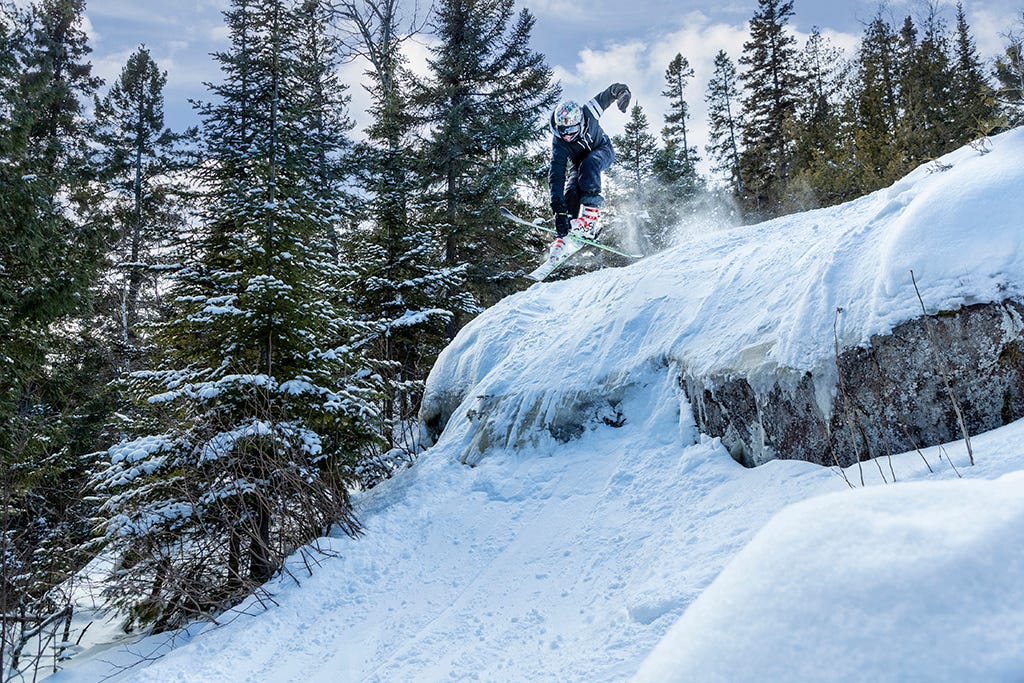
Aug 4, 2021
Podcast #51: Alpine-X CEO John Emery
The Storm Skiing Podcast is sponsored by Mountain Gazette - Listen to the podcast for discount codes on subscriptions and merch. Who John Emery, CEO of Alpine-X Recorded on August 2, 2021 Why I interviewed him It’s such an odd conceit, isn’t it? Skiing indoors. Like surfing or mountain climbing or hunting or riding a bike, skiing belongs, in our collective imaginations, to the wide world and all its temperaments. But, as with climbing gyms or stationary bikes, technology has found a way to compartmentalize our outside pursuits, to give us a version of wild nature that’s completely walled off from it. As far as technology goes, it’s not exactly the Millennium Falcon: a big freezer on a hill covered with snow. In fact, the rest of the industrialized world has had indoor skiing for decades. Why not the U.S.? It has the population, the open land, the cultural default to canned experiences, and the wealth both to build these things and to visit them. Sure, there are plenty of ski resorts here, but they are concentrated in a few places. Thirteen states – including Florida and Texas, where a combined 50 million people live – don’t have a single ski area. And while these states have plenty of skiers of the annual-trip-to-Keystone variety, how many more would they have if anyone who wanted to try skiing could drive 20 minutes and do so? And how many of those, delirious from the rush down the decline, would then start to eye the distant snowy mountains and say, “let’s do this?” So why, so far, has no one done it? Gone big on an experiment in U.S. indoor skiing? After Big Snow finally hummed to life nearly two years ago, Snow Operating discussed expansion south, possibly in Miami, but Covid muted such talks. When Alpine-X materialized out of ether this past January, they made their ambitions clear: to plant 20 indoor ski resorts – resorts, not areas – across the continental United States. It’s a bold and ambitious plan, and I wanted to know more. What we talked about How a string of corporate jobs outside of skiing readied Emery for a job running an indoor-ski startup; when your target demographic is “everyone”; the underappreciated and quirky world of Mid-Atlantic skiing; Covid upends the world in ways large and small; the global indoor-skiing landscape; how Ski Dubai changed the international conversation around domed skiing; the Great Wolf Lodge of skiing; tamping down the intimidation and embarrassment factors of learning to ski; avoiding the fate of the infamous Tokyo snowdome , which cost hundreds of millions to build and even more to tear down less than a decade later; the importance of an interesting ski experience; making skiing affordable; the necessity of terrain parks; why indoor skiing has yet to take off in the U.S. three decades after the technology debuted; Alpine-X’s potential U.S. footprint; what a good Alpine-X market looks like; imagine making after-work turns in Dallas or Miami; a skier-generation factory; why the first Alpine-X facility will be in Fairfax, Virginia; an option to get around Washington, D.C.’s impossible traffic problems; why it takes so long to built big things; the art of building atop a disused landfill; the difference between building on an existing hill versus building a steel ramp for skiing; the potential to build on natural hills; stats on the yet-to-be-built Fairfax hill; use of indoor skiing as a training facility; what kind of lifts we could see in the dome; a potential expansion timeline; how to avoid making the McDonald’s of indoor skiing; would an indoor ski dome work in a major outdoor ski market like Salt Lake City?; making indoor skiing beautiful; is there room for a second snowdome in the New York City metro area?; Alpine-X as a warm-weather feeder to outdoor ski resorts around the country; could indoor skiing draw 10 million skier visits per year? Why I thought that now was a good time for this interview Skiing, like all things outdoors, is having a moment. Covid did a lot of damage, but it also crushed a lot of bad habits and inspired a lot of good ones. Suddenly, the antiseptic indoors around which the core of American life revolves was the most dangerous place you could be. What else is there? In the winter? Well, skiing. As anyone who’s long made a habit of the sport knows, hordes flooded toward it this year as though it were a thing newly invented. Some will drift away, but many won’t. And as liftlines moderate with stuffed-full chairs this coming winter, that will probably be mostly a good thing. What this past winter suggested was that if people are presented with an option to ski, they will try it. That’s what’s so compelling here. Southern U.S. cities are stuffed with people and money. Give them the option to ski, and they will. It’s a bit of the opposite of the Covid effect – the pandemic narrowed choices and forced would-be hibernators outdoors; indoor domes will expand options by taking skiing inside. Nonetheless, the outcome will be similar: more skiers. We are at the very beginning of indoor skiing in the United States. These domes could very well become, within a decade or two, the primary pipelines feeding the nation’s sprawling resort network. They could also fail spectacularly. Either way, I wanted to tell this story from the beginning, when optimism and possibility were at their apex. Questions I wish I’d asked These facilities are expensive: Emery estimates the Fairfax facility will run $200 million. Alpine-X wants to build 20 of them. That’s $4 billion. I would have liked to talk a bit more about how the company planned to raise that kind of capital and how long it would take to pay off in a best- and worst-case scenario. That enormous upfront cost is, I’m assuming, why indoor skiing has yet to take root in the United States, and it would be interesting to hear how Emery solved that problem (though one would assume he plans to follow the same basic model he did to launch the now-established Great Wolf Lodge chain of similarly ambitious facilities). Additional reading/videos * Ski’s overview of Alpine-X * A list of indoor ski areas around the world * My Storm Skiing Podcast interview with Big Snow VP of Marketing & Sales Hugh Reynolds (recorded in March 2020, just before the Covid shutdown) * Apparently there’s an outdoor snow-tubing operation in Florida already. Who knew? Get full access to The Storm Skiing Journal and Podcast at www.stormskiing.com/subscribe
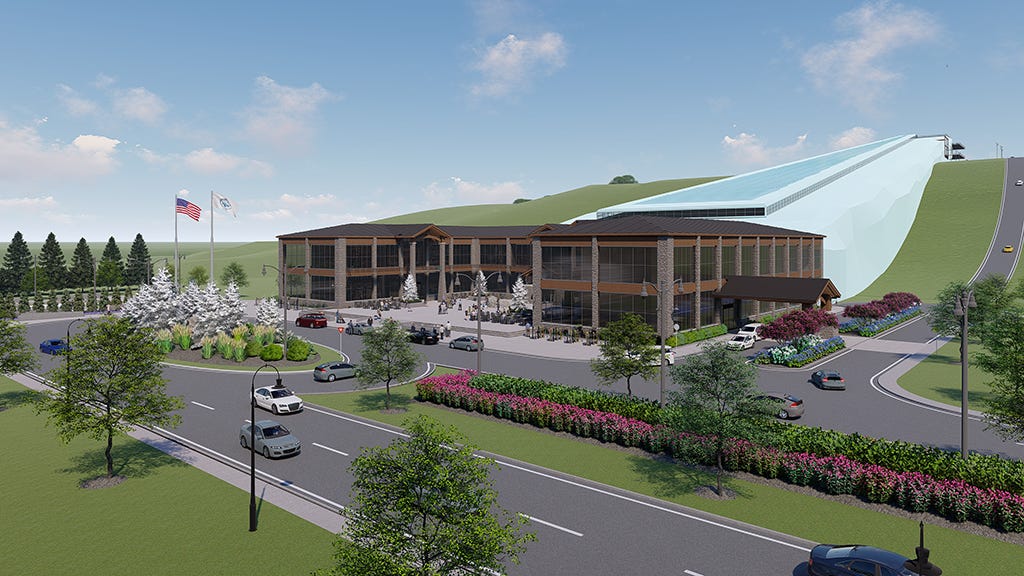
Jul 26, 2021
Podcast #50: Caberfae Peaks, Michigan Co-Owner & GM Tim Meyer
The Storm Skiing Podcast is sponsored by Mountain Gazette - Listen to the podcast for discount codes on subscriptions and merch. Who Tim Meyer, Co-Owner and General Manager of Mountain Operations at Caberfae Peaks , Michigan Recorded on July 21, 2021 Why I interviewed him In the part of my brain warehousing ski memories there are days and places that live forever. Many of those days are at Caberfae. When I f irst pulled up to the base area as a novice skier trained poorly at the single-lift bumps downstate I stood in dumbstruck awe of the place, its teeming peaks and lift network sprawling off into the woods. A dozen tumbling freefalls did not discourage me from its charms. Caberfae stood just 90 minutes from my house and I became a regular, returning on swirling weekends and quiet spring weeknights when I lapped empty chairs in long March sunsets after school. I moved away from Michigan long ago, but if I’m there in the winter Caberfae is the first place I go. It is a special place, quintessentially Midwestern and unusually aggressive in its deliberate decades-long evolution. Opened in the 1930s, the complex grew by the 1970s into what Chris Diamond described in his book Ski Inc. 2020 as “a sprawling series of hills served by 20-plus rope tows, five T-Bars and a chairlift, spanning some two miles from end-to-end.” A 1966 copy of America’s Ski Book describes Caberfae as being equipped with “six T-bars and sixteen rope tows on 270 vertical feet.” Here is the 1980 trailmap, which looks like it was spun out of the ditto machines that stamped out my early grade-school classwork sheets: Today, nearly everything on that trailmap has been permanently abandoned. In what Diamond calls “the most successful ‘ski-resort contraction’ in history,” Caberfae moved tons of earth from the bottom of two peaks to the top, boosting its vertical drop from 270 to 485 feet. “Their vertical expansion of two central peaks was accompanied by a horizontal contraction from the far-flung borders and the closing of a dozen-plus lifts, which they could never adequately cover with snowmaking,” Diamond writes. By the early 2000s, when Tim Meyer and his cousin Pete inherited the operation from their fathers, who’d had the vision to transform it, Caberfae looked like this: For context, the Shelter run far skier’s right on the 2004 map sits between the two chairlifts on the 1980 map. But they weren’t done yet. Today, Caberfae looks like this: The backcountry terrain, which is ungroomed and open only when natural snow allows, brought some of the old Caberfae back into the active resort footprint. They’re far from done: in the podcast, we talk about a massive project that will add a new lift and a third peak for the 2022-23 season, future development of the Backcountry, and more. “We try to do a little bit each year,” Meyer tells me in the podcast. I’ve been waiting 25 years to have this conversation. Caberfae may be the most constantly evolving ski resort in America. It’s like a mansion that the owners can’t stop renovating. How we went from a ropetow kingdom bereft of snowmaking to a modern resort forged out of vision, willpower, patience, grit, and determination that, four decades after the family acquired it, is still a work-in-progress, was a story I’d been waiting my entire skiing life to hear. What we talked about The glory of the wild ropetow-laced and low-rise Caberfae of the early 1980s; lift relics still in the woods; why that terrain was abandoned and why it’s likely gone forever; growing up on the slopes of Caberfae and why Meyer lit out for Winter Park, Colorado - and what finally drew him back; running a ski area as a multi-generational family business; the kind of place where you’ll find the owner roaming the grounds in snowboots and clutching a walkie-talkie; who had the vision to transform Caberfae from an antique into a modern ski area; the incredible engineering feat of building two artificial peaks from Michigan clay and sand; improvisational construction; how the mountain stabilized the peaks; how building South Peak in the 1980s stabilized the business; the nearly 40-year-old South Peak triple is here to stay; why the ski area has changed the grade of select runs over the years; developing North Peak; why the ski area added a new triple to North Peak in 2016 and why it left the adjacent quad in service; the virtues of triple chairs; whether the ski area ever considered a six-pack for North Peak; the quirky I-75 run; why the ski area put a fence up between Smiling Irishman and Canyon; why the mountain re-opened part of the old Caberfae as an ungroomed natural-snow area; the old T-bar line hidden like a secret videogame level in the woods; the potential for chairlifts or terrain expansion in the Backcountry; why the ski area leaves its woods intact; the two retired Hall chairlifts sitting at the base of the ski area and whether they could ever come back into service, possibly as a single lift; the timeline for the third peak, what it will be called, and what kind of lift it will have; which lift is coming down to accommodate the expansion; the return of Bo Buck; the sentimental anguish of tearing the last ropetow out of the former king of the ropetows; why it could return one day; renovations on the Skyview Day Lodge; crockpots in the day lodge: “if you live in Michigan, you should have the opportunity to ski”; why Caberfae has never focused on terrain parks; going from almost zero snowmaking in the early 1980s to a modern fleet; why the mountain doesn’t push for the late spring close; how Caberfae went from selling seven golf season passes to nearly 400 and how they applied the philosophy to the $99 discounted ski season weekend or weekday pass; how that turbocharged the business; why the mountain raised the pass price to $149 last year after more than a decade at $99; the Indy Pass; why season passholders have to pick up a new metal wicket ticket each time they arrive at the ski area; the ski area’s unique lift ticket designs; why metal wickets are probably part of Caberfae indefinitely; the ski area’s colorful trailmap and when they’ll introduce a new one; why the ski area continued its relationship with Liftopia/Catalate after its troubles last year; how the 2020-21 Covid season went at Caberfae; and Covid adaptations that may stick around for future seasons. Why I thought that now was a good time for this interview I actually thought February 2020 was a great time for this interview, and that’s when we initially recorded it. But the audio was compromised, filled with a conversation-from-space crackle that I couldn’t scrub out. The Storm Skiing Podcast was just four months old at the time, and I hadn’t perfected the harder-than-you’d-think art of recording a two-way conversation. I kept thinking I could resolve the issue and delayed posting. Then Covid hit. By the time I’d admitted defeat, skiing seemed small and ski area operators were preoccupied with survival. By the time the 2020-21 season came around, I was embarrassed to go back to Meyer to ask him to re-do a thing he had already done. Finally, a couple weeks ago, I fired off a bashful email asking if I could have another hour of his time. Tim graciously and immediately agreed. This has been an eternal to-do list item and it is liberating to cross it off. Why you should ski Caberfae Caberfae was an inaugural Indy Pass partner in the Midwest, a family-owned, family-centric Up North ski area where crockpots line the baselodge ledges and the lifties are not temp workers trucked in from the hinterlands but locals who return to their posts year after year. The place is absolute joy, no pretense, no arrogance, as down-home as Up North gets. As Meyer says in the podcast, their market is the recreational skier. That’s another way of saying it’s mostly absent of hotshots and speedsters and flippidy-doo parksters. Not that there’s anything wrong with that. This is a crowd that just loves skiing for the motion and the thrill of it, for the sensation of downhill freefall. I’ve never been to a happier ski area. The terrain is unique for the Midwest. The artificial hills create a sensation of above-treeline skiing that is otherwise absent between Sugarloaf and Loveland. At the same time, Caberfae has eschewed the Midwest urge to clear-cut its small hills to accommodate the downhill masses – trails thread through the forest on the lower mountain, especially on North Peak and off the Shelter Chair, and the wall of trees segregating the baselodge from the slopes create a sensation of rambling bigness unusual for the Lower Peninsula. Plus, wicket tickets: There’s one more thing. Crossing into Michigan by land invariably takes you past signs welcoming you to “Pure Michigan.” The 13-year-old slogan extolls the state’s vast forests, lakes, rivers, and wildlife, but it has been commandeered by prideful Michiganders to evoke the tireless community DIY spirit of the people themselves. When I arrived in Manhattan nearly 20 years ago, the most difficult cultural adjustment was how reliant average New Yorkers were on paid labor for even mundane tasks. No one in Michigan – at least the community I grew up in in Michigan – pays anyone to do anything they can do themselves. Ever. The concept of hiring movers, for example, still confounds me, and I moved myself – at great hassle but little expense - at least 10 times within Manhattan before settling in Brooklyn five years ago. My point here is that Meyer and his family are Pure Michigan in that sense. When I say they engineered the most dramatic transformation of a lift-served ski area in the history of U.S. skiing over the course of four decades, I mean they engineered it. They drove the heavy equipment and they transformed glacial bumps into above-treeline peaks one shovel-load at a time and they cut the trees and reshaped the land and made the improbable inevitable. When I met Meyer on the slopes of Caberfae, he was walking across the base area in a snowsuit, carrying a crackling walkie-talkie. And you can tell in this interview, by the way he describes his sense of duty to the ski area and to his family, and maintains a crockpot-friendly Caberfae with ticket prices almost anyone can afford, that this guy and the people around him are Pure Michigan in the most elemental way. Additional resources This 1949 trailmap distills the zany rambling chaos that once defined Caberfae and continues to animate its spirit: A few more items of interest: * Lift Blog’s inventory of Caberfae lifts * More classic Caberfae trailmaps * Chris Diamond’s Ski Inc 2020 has a wonderful write-up of Caberfae (pgs. 128-132). The book is worth a full and repeated read for anyone interested in the modern lift-served skiing landscape. * I wrote this story about a 5-year-old who hitched a ride on the Shelter Double with me a couple years ago. * Another essay , this one documenting my inaugural ski season rambling over the Michigan flatlands as a teenager: I have no photographs documenting that season. Not one. But I remember the sequence of days perfectly, the huge snowy canvas of Up North rolling out before me as I traversed the supergrid of state highways and interstates, one by one ticking off the lift-served areas that we all presumptuously called mountains but were barely hills, the largest of them 550 vertical feet from top to bottom. To me they may as well have been Vail. After a return to single-chairlift Snow Snake, I stood in dumbfounded amazement at the base of Caberfae, four or five chairlifts sprawling across its two humped peaks poking like a giant snowy camel from the flatlands outside of Cadillac. I descended them like an inept paratrooper dropped at velocity over a decline, my gear twirling apart from me in acrobatic freefall with each concussive wipeout. Get full access to The Storm Skiing Journal and Podcast at www.stormskiing.com/subscribe
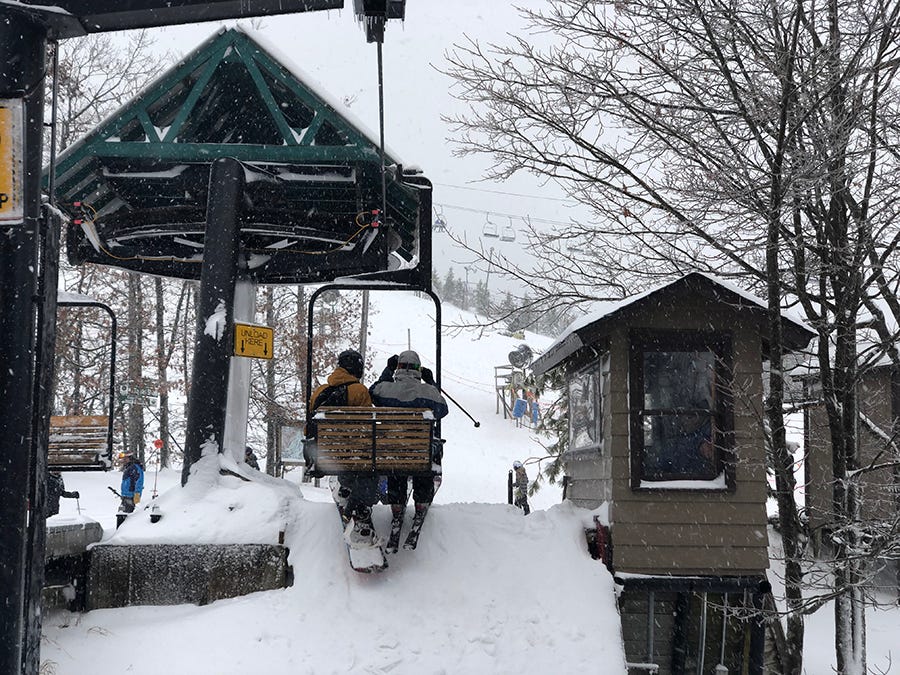
Jul 19, 2021
Podcast #49: Lonesome Pine Trails, Maine Board of Directors President Mike Lavertu
The Storm Skiing Podcast is sponsored by Mountain Gazette - Listen to the podcast for discount codes on subscriptions and merch. Who Mike Lavertu, President of the board of directors of Lonesome Pine Trails, Maine Recorded on July 13, 2021 Why I interviewed him If you’ve ever skied Maine, you probably felt as though you’d arrived at the end of the earth. And if you’ve skied Maine, you’ve probably skied Sunday River or Sugarloaf or Saddleback. And sure, they’re all remote. But from the point of view of New England’s largest state, you’re just getting moving: Lonesome pine is another five hours and 40 minutes past Sunday River, five hours 10 minutes past Sugarloaf, and five and a half hours from Saddleback. When you finally get there, you’re reached the top of America. Fort Kent sits hard by the St. John River, across the water from Canada. The ski area rises directly over the town, 500 vertical feet and a dozen trails and 10 snowguns and a T-bar. It’s a simple operation, but one that’s served its community for more than 50 years, and without the bankruptcies and debts and harebrained owners that have sunk operations large and small across New England. It is at once homey and exotic, a snowy town square perched across the street from a neighborhood, north-facing toward the world’s longest frontier. I’ve never skied there, but I’ve long wondered about this humble-brash little mountain that sits quietly in the snowy north, pushing operations into April as larger mountains shut down across New England. When Mike reached out to see if I’d be interested in an interview, I agreed immediately. What we talked about Lonesome Pine as labor of love; the small ski area’s surprisingly robust race program; how to transform a 1960s T-bar so it doesn’t jerk its riders up the hill; Lonesome Pine’s unique ownership structure; the mountain’s huge volunteer squad; how Fort Kent supports Lonesome Pine; how the tiny ski area stabilized its finances; yes it can even get too cold for Maine skiers; season passes; everyone needs a bar (the kind with alcohol); how a small ski area wrangles something as spectacularly expensive as a replacement groomer; how Saddleback’s Cupsuptic T-bar became a pile of parts at the base of Lonesome Pine; the caravan that carried the lift across the state; trying to figure out the origin of the T-bar that the ski area installed used more than 30 years ago; whether the ski area would ever replace the T-bar with a chairlift; dreaming of a magic carpet upgrade; the possibility of adding tubing and skating to the ski area; using volunteers to run the snowmaking operation; pushing skiing to April; the mountain’s limited operating schedule; operating during Covid; why the Canadian border closure may have worked in Lonesome Pine’s favor; and the expansive and mysterious Canadian ski world. Why I thought that now was a good time for this interview A few months back, I put out a call at the end of one of the podcasts: if you ran a ski area anywhere in America, I wanted to talk to you. I didn’t care how small or remote it was. I am here to tell the full story of lift-served skiing in America. I love the Epic Pass and its flagship Western cloud-scrapers as much as I love the cowboy indies like Plattekill and the town bumps like Lonesome Pine. Mike took me seriously, and I’m glad he did – it’s far easier to track down the GM of Killington or Sugarbush or Sunday River than it is to figure out who runs Titus or Whaleback. The former, after all, are parts of conglomerates and have all the modern communications and marketing infrastructure that comes with that. An end-of-the-road bump with an antique website, run largely by volunteers, it’s never been obvious to outsiders who ran Lonesome Pine. I’d tried, in the past, to figure it out. But it’s a good story and I was thrilled when Mike reached out. If you’re the Mike of some other little ski area in the U.S. or Canada or hell Slovenia or Japan, hit me up. I want to share what you have to say. What I got wrong The origin of Lonesome Pine’s T-bar seemed like one of those mysteries lost to time. A 1960s-era Hall 1000, it arrived at the ski area in the mid-80s. On that, there is consensus across various online sources. But where was it for the two decades prior? In the interview, Mike speculated that it came from Vermont. In follow-up emails, he had leads telling him it came to Lonesome Pine from Pennsylvania via a Vermont broker. More digging revealed the true source: Victor Constant, the little-known but still-operating ski area at West Point, New York. This made sense: that ski area’s triple chair arrived in 1983. While I believe this is correct, I can’t find a historical trailmap showing a T-bar at Victor Constant – just this 2016 trailmap , which is the same one in use today. If anyone has any additional information on the Victor Constant T-bar – year of installation, old trailmaps, general memories – please let me know. Why you should ski there For all its bucolic coziness, there are not a lot of in-town ski areas in New England. Cranmore and Bousquet are two of them. Are there others? It’s one of the great shortcomings of eastern skiing. At Aspen or Park City, you ski to the bottom and walk to the bar in a city that predates lift-served skiing by half a century. In most of the Northeast, ski areas sit isolated in the countryside, a car ride from everything. Lonesome Pine is one of the few that defies this template. It’s feasible that a kid could grow up across the street. It’s right down the road from the local school. Bars and downtown sit within walking distance. A visit to Lonesome Pine will give skiers a pretty good sense of what a more imaginatively human-scaled version of Northeast skiing could be. Get full access to The Storm Skiing Journal and Podcast at www.stormskiing.com/subscribe
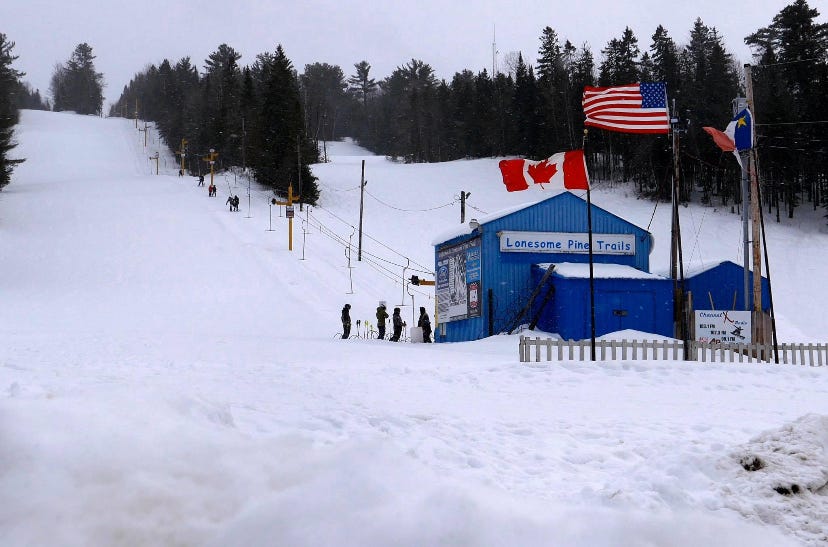
Jun 17, 2021
Podcast #48: Whaleback Executive Director Jon Hunt
The Storm Skiing Podcast is sponsored by Mountain Gazette - Listen to the podcast for discount codes on subscriptions and merch. Who Jon Hunt, Executive Director of Whaleback Mountain, New Hampshire Recorded on June 16, 2021 Why I interviewed him Because when Talks-Loudly-About-His-Personal-Life-In-The-Elevator-at-Work Guy brags about his upcoming ski trip, he is never going to Whaleback. He is going to Killington or Sugarbush or Stowe. Which is fine. All of those places are incredible. But they owe more to places like Whaleback than places like Whaleback owe to them. Skiing needs small ski areas. It needs places that care about beginners and families and almost nothing else. And it needs creative models to help make such ski areas sustainable. Whaleback is all of those things, an approachable sapling in a forest of redwoods. It wasn’t always so. For decades the ski area flailed along , one round of debt and foreclosure bleeding into the next, a tale nearly as tragic as Moby Dick . In 2013, a local named John Schiffman purchased the ski area under the Upper Valley Snow Sports Foundation, stopped trying to be Cannon Junior, and turned the whole operation into a nonprofit. It’s a story I wanted to hear. What we talked about How someone who has never worked in the ski industry ends up running a ski area; why Whaleback created an executive director position instead of hiring a general manager; how Whaleback has retained its character even through decades of apocalyptic closures; Whaleback’s new strategic plan and how it will improve the ski area; aiming for an earlier opening and 100-day season; how much life the 50-year-old summit double has left in it; why the chairlift broke in early March 2020, ending the season prematurely; upgrades to the chair this summer; where the mountain may put in a new surface lift and what it would be; coming snowmaking improvements; potential night-skiing expansion; whether the mountain could add more trails or glades; why expansion outside the current borders is likely impossible; “the coolest first day ever on any job I’ve ever had”; recent mountain improvements; how much the ski area relies on donations to stay afloat; whether ski area-owning New Hampshire and its ski area-owning governor contribute to the ski area’s operations; a professional fundraising primer from a professional fundraiser; whether fundraising has rescued a perennially indebted ski area from chronic debt; how much Whaleback relies on volunteers versus paid labor; learning from other nonprofit ski areas; the ski area’s long and brutal history of bankruptcy, bank seizure, and closing; finding an identity as a small ski area in a state stuffed with huge, developed ski resorts; how the Upper Valley Snow Sports Foundation finally put Whaleback on a path to sustainability; the active role of the ski area’s board of directors; why Whaleback’s season pass only runs $180; how much season pass sales increased last season after the ski area dropped prices for Covid; the Freedom Pass; and Covid-era ops that may hang around for future seasons. Why I thought that now was a good time for this interview Because while the nonprofit approach seems to have brought some stability and purpose to the ski area, problems lingered – Whaleback’s 2019-20 ski season ended early not because of the Covid cataclysm, but because its summit lift simply stopped working in early March. Like a car without its engine, a ski area without its alpha lift is more decorative than useful. To forestall such issues, Whaleback’s board of directors created a new executive director position, an individual who could supercharge the ski area’s fundraising and heave its physical plant into the modern winter world. Jon Hunt is that person, and I wanted to talk to him about the huge challenge ahead. Why you should ski Whaleback Let’s start here: While small by New Hampshire standards at 700 vertical feet, the mountain has legitimate pitch and terrain, with a bundle of glades raking down midmountain. Then there’s this: If you want to spend $1,000 on a weekend teaching your family to ski, you can punch down U.S. 4 to Killington. Or you can set up shop at Whaleback until they figure it out. A lot of Northeast skiing is barely managed chaos, something between a stampede and a four-alarm housefire. Whaleback is not that. It’s skiing without a lot of the things that make modern skiing appealing – high-speed lifts, megapasses, snowmaking firepower that could recreate Glacier National Park in under half a day – but also a lot of the things that make it frustrating, like lift lines containing enough people to feasibly colonize the moon. When the midwinter hoards descend on New England after a snowstorm, Whaleback may be the best place you can be. Additional reading/videos * New England Ski History documents Whaleback’s harsh past * Lift Blog’s inventory of Whaleback lifts L.L. Bean created this incredible Whaleback mini-doc last year: Some Whaleback night-skiing stoke: Get full access to The Storm Skiing Journal and Podcast at www.stormskiing.com/subscribe
Jun 10, 2021
Podcast #47: Titus Mountain Co-Owner Bruce Monette Jr.
The Storm Skiing Podcast is sponsored in part by Mountain Gazette - Listen to the podcast for discount codes on subscriptions and merch. Who Bruce Monette Jr., co-owner of Titus Mountain , New York Recorded on June 7, 2021 Why I interviewed him Titus is perched at the snowy top of New York, an hour and change past Lake Placid, which for most of the state’s skiers already feels like the edge of the Earth. That remoteness lends a patina of mystery to the place, like the secret labyrinth of a videogame you thought you knew well. Three interlaced peaks drip with tangled mops of trails fused by a fleet of Halls and one under-the-road tunnel, presenting a meandering journey through tree and trail from one distant end to the other. The place it littered with packs of children and sometimes their parents and really no one else. The kind of knucklehead speedster native to Whiteface seems entirely absent here. It’s a joy to ski. But in 2011, Titus was on the verge of being sold off for parts, its alpha lift and snowguns bound for Pennsylvania. That’s when the Monette family, local businessfolk who had never run a ski area, bought the place. To find out how they transformed an operation on the knife-edge of shutdown into a sustainable resort, I wanted to talk to one of the people in charge of making it all happen. What we talked about Building the Monette family business empire from a single propane truck; the weekly weakly skier; how a family that “didn’t know anything about anything” in the ski business came to own Titus; echoes of Montage, Pennsylvania; the story behind Titus’ “Michael Jordan, ace-in-the-hole” GM; “barely hanging on” in the first season of ownership; how running a ski area is similar to running a brewery or convenience store; how Titus looked “like Cambodia” when Monette showed up; guess where Brodie’s snowguns ended up?; how the family has improved the mountain over the past decade; the challenges of managing a sprawling three-peak ski area; why the mountain isn’t fully open every day and how they decided on that schedule; rent the upper mountain; sorry no liftlines here; the condition of the fleet of Hall lifts; whether lift II is gone for good or not and where it could potentially move; why there are mailboxes at the bottom of the chairlifts; why the family’s first move was to cut glades across the mountain; the location of the new glade coming in over this summer; potential expansion on the mountain and what it could be used for; Titus’ night-skiing footprint and whether that could ever expand; the mountain’s ski-in, ski-out present and future; how being bad at snowmaking led to the ski area’s enormous maple syrup operation; season pass prices and the philosophy behind that; Titus’ post-Covid refund or deferral policy and how many skiers took advantage of it; how much the Canadian border closure hurt the mountain; the Champlain Valley Ski Card, why Titus joined, and whether it would again if the pass survives Covid; the possibility of Titus joining Indy Pass; Liftopia – so much Liftopia: the mountain’s relationship to the service prior to April 2020; how Monette reacted when the expected check didn’t show up; how much Liftopia owed the ski area; if you bought a season pass to Titus last March, the ski area never saw a penny; why the ski area honored the passes anyway; where the hell did the money go?; thoughts on the attempt at forcing Liftopia into bankruptcy; what former Liftopia CEO Evan Reece was telling Titus during the transition to a new owner; Monette’s reaction to Catalate’s offer to fully repay ski areas who will do business with them; why the betrayal was so shocking in the context of the ski business; thoughts on Reece; Titus’ new e-commerce partner; and skibanas. Why I thought now was a good time for this interview Because after eyeballing the trailmap for years, I’d finally made the journey north to Titus this past winter. Never mind that I made the mistake of doing it as a daytrip from Brooklyn . It’s always an interesting experience to drive for hours and hours past nothing at all, no towns or cars or businesses, and arrive at a distant mountain bustling with families. Where they came from I have no idea, but they made the atmosphere crackle with an unpretentious let’s-have-fun-on-this-holiday-Monday attitude. In a way it felt like a small-town beach in the summertime, where looking good is less important than the act of living an active life. What that scene is to Miami, Titus is to Vail. It’s awesome. Titus was also at the center of Liftopia’s royal jackhammering, looped out of nearly fifty grand that skiers had bought in good faith that the money would go to the mountain and the people running it. While I’ve privately messaged many ski area operators about Liftopia’s implosion, this was the first time I was able to talk about it with one of them on the podcast. We discuss how Titus worked through that loss while dealing with the aftershocks of Covid. Why you should ski Titus Because, damn it, it’s a lot of fun. This is a place where you can let your kids wander. They’ll be fine. The terrain is fun but not terribly challenging, just steep enough for just long enough to create the sensation of freefall before moderating. There are some fun tree shots and some fun twisty runs and some long long greens. The lifts aren’t particularly fast or slow, but they are interesting, a fleet of Halls churning reliably up the incline. The place is quirky, rewarding attention and exploration with multi-colored lift towers rising over the bunny hill and mailboxes posted at the base of each lift and little terrain parks lofted into the woods. But no built feature of the mountain better synthesizes the ski area’s singular combination of ownership, geography, severe weather, and freewheeling fun than the skibanas, a row of miniature wooden houses stacked along a rim adjacent to the base lodge. A Covid adaptation built by the Amish for socially distant family shredding, these little shacks are set to become a permanent feature of Titus’ future. Go see them for yourself: Additional resources * Some commentary on Catalate , which is basically Liftopia 2.0 after Skitude bought the company following its implosion last spring * Lift Blog’s inventory of Titus chairlifts * Some Titus stories from New York Ski Blog and Ice Coast Magazine * Follow Titus on Twitter * Titus from the sky: Get full access to The Storm Skiing Journal and Podcast at www.stormskiing.com/subscribe
May 22, 2021
Podcast #46: Ski Areas of New York President Scott Brandi
The Storm Skiing Podcast is sponsored in part by: * Mountain Gazette - Listen to the podcast for discount codes on subscriptions and merch. * Helly Hansen - Listen to the podcast to learn how to get an 18.77 percent discount at the Boston and Burlington, Vermont stores. Who Scott Brandi, President of Ski Areas of New York Recorded on May 17, 2021 Why I interviewed him Because I spent this winter wandering the snowy New York backroads, rootless and curious, my compass aimed toward snow. I was determined to drive out my prejudices against the small and the homey, to overrule an ingrained Vermont-centrism whose calculus commanded that no roadtrip over four hours could land anywhere else. Covid required this reconsidering. But I had a pass to Hunter and could have simply lapped Catskills steeps all winter. Instead I explored. I visited, for the first time, Maple Ski Ridge, Snow Ridge, Oak Mountain, Dynamite Hill, Labrador, Song, Mount Peter, Victor Constant, Toggenburg, Four Seasons, Titus, Holiday Mountain, Willard, Royal, Hunt Hollow, Swain, and West. I poached runs on the closed slopes of Indian Lake, Newcomb, and Schroon Ski Center. And of course I hit the old familiars: Hunter and Plattekill and Belleayre and Windham and Gore. And what I found is that New York skiing is a rich world, varied and surprising, understated and retro in a way that’s neither ironic nor deliberate. Don’t tell the hipsters – they’ll sew a “locally made” patch onto the wicket tickets and drive prices up 300 percent. But talk to Scott Brandi all you want about it. As the leader of Ski Areas of New York for the past 14 years, there was no one better positioned to fill out my understanding of this sprawling lift-served world. What we talked about Ski NY’s mission and business model; how many of New York’s 50-plus ski areas the association represents; assisting the town tows who can’t afford membership but do so much to grow the sport; whether Vail will yank Hunter from Ski NY like they pulled their mountains out of Ski Colorado; transforming Ski NY from an indebted organization into a profitable one; lawmaking and lobbying; why the industry prioritizes self-regulation; pending bills in the New York State legislature and how they might affect ski areas; how the ski industry has changed since Brandi took over Ski NY in 2007; the origins of New York State’s lift maintenance program; how New York State handed out $5 million for energy-efficient snowguns; why the exact number of ski areas in the state is so confoundingly elusive; the newly lost New York ski area in need of an operator; the chances of a comeback for Hickory, Big Tupper, or Shu-Maker; lessons we can learn from Cockaigne’s resurrection; New York’s 2020-21 skier visit estimate; the Covid outdoor recreation boom; the surprise ski area sellouts and how that may translate into the future; New York’s Olympic facilities and whether the state could ever host the Winter Games again; the upcoming World University Games in Lake Placid; ORDA’s non-ski-area investments; why New York’s culture of family-owned ski areas continues to thrive; New York’s lack of ski-in, ski-out lodging and whether that could ever change; why we’re unlikely to ever see another new ski area in New York State; how Big Tupper’s comeback was strangled by litigation; thoughts on the arrival of the Epic, Ikon, and Indy passes in New York; whether the New York Gold Pass will make a comeback; teaming up with the State of New York and the NSAA to prepare for the 2020-21 Covid ski season; getting through the ski season without a single ski-area shutdown; the New York State license plate program; the state’s knockout Kids Passport program, how the state kept it going during Covid, and whether it will once again include weekends next season; why more people don’t use the programs; and New York Ski Day and whether it will come back in 2022. Questions I wish I’d asked I wanted to talk a bit about New York’s private ski club culture, as it probably has more substantial members-only ski areas – Buffalo Ski Center, Holimont, Hunt Hollow, Skaneateles, Cazenovia – than any other state (most are open to the public on weekdays). Ski NY also partners extensively on adaptive ski programs, and I wanted to chat about those a bit. But we already ran long and I wanted to give Scott his day back. What I got wrong I forgot the name of the global winter sporting event that New York is hosting in 2023 and that it’s been preparing for for years, calling it “the World something games” as though I was conducting a man-on-the-street interview for a third-tier late-night talk show. Brandi smoothly pointed out that this event will be called the World University Games . Not exactly forgetting your wife’s name at the altar but damn man I gotta do better next time. Why you should ski New York New York skiing can be a tough sell. Yes, it has more ski areas than any other state, but all of them combined could probably fit comfortably into the boundaries of Park City. Whiteface has the tallest vertical drop in the East and the 11th biggest in the country, but its “Iceface” nickname is well-earned, and it doesn’t get the snowfall of the Tug Hill bumps – McCauley, Snow Ridge, Dry Hill – to its west. And the state is right next to snowy and built-up Vermont, the mountains of its powder-smashed Green Mountain spine laced with high-speed lifts and towering over ample on-site lodging. Snow, modern lifts, ski-in-ski-out – all of these are rare in New York. In fact, it’s one of the most curious ski states in the nation, as I’ve written before : Someone built New York skiing backwards. It’s biggest and best ski areas – Whiteface, Gore, the four Catskills mountains – receive substantially less snow on average than the far smaller ski areas ringing the state’s Great Lakes borderlands. Twin lake effect snow bands blast off the eastern ends of Lakes Erie and Ontario, clobbering Midwest-sized ski hills with monstrous snow dunes. 500-vertical-foot Snow Ridge, tucked into the Ontario snow pocket along with 300-foot Dry Hill, 633-foot McCauley, and 500-foot Woods Valley, gets buried in 230 inches of annual snowfall. By comparison, Whiteface, towering three-ish hours to the east, makes due with 185 inches on average. Or this : New York skiing is hard to understand. It has more ski areas than any other state, but they don’t really make sense. They’re scattered all over the place. Most are at least somewhat challenging to access. A couple are enormous but most are not. But, as Brandi notes on the podcast, that geographic dispersal means that no matter where you live in New York State (outside of Long Island), you’re no more than two hours from skiing. And since most of the mountains don’t have 32-passenger catapult lifts or farm-to-table juice bars or hell even RFID gates, their passes tend to be affordable. I’ve been tracking season pass prices for New York and every other Northeast state here , but here are a few examples: * A joint pass for Song and Labrador is $499. Song is a bit smaller but is a better pure skier’s mountain. * Royal Mountain, with its small footprint but wide-open woods and steady pitch, offers a $390 pass (it’s a weekends-only operation). * New York has five Indy Pass mountains , meaning passholders can add the multipass for $189 ($89 for kids). They are: West ($599 adult), Swain ($499), Snow Ridge ($410), Catamount ($499), and Greek Peak ($595). The Catamount pass is also good for unlimited access to Berkshire East (Massachusetts’ best ski area), and Bousquet. Add unlimited Toggenburg access to a Greek Peak pass for $50. West, Snow Ridge, and Greek Peak have already passed their early-bird deadline, which drove prices up substantially. Most of these are affordable enough to be a fair complement to an Epic or Ikon pass, so you can get some regular turns in between runs out West or to New England. There’s no reason to ski every once in a while when you can ski all the time. Additional resources * The definitive source for New York ski stoke is the excellent New York Ski Blog , where I am a semi-regular contributor. Run by stokemaster and all-around good dude Harvey Road, the site’s email newsletter is a must-add to your inbox. My favorite post of this past winter was Harvey’s recap of his four-day tour of Plattekill, Snow Ridge, Gore, and McCauley – probably my top four ski areas in the state. My New York contributions were write-ups of visits to Maple Ski Ridge and Willard . * Support Ski NY by purchasing a poster , license plate , or merch . * New York’s Ski & Ride Passport program is incredible. If you have a 3rd- or 4th-grader, they get up to three lift tickets at each participating ski area (that’s most of them), with the purchase of an adult lift ticket. The program was modified to weekdays-only this past season, but Ski NY anticipates once again including weekends for 2021-22. * If you liked what Brandi has to say, you’d probably also like the Storm Skiing Podcast interviews with National Ski Areas Association CEO Kelly Pawlak and Ski Vermont President Molly Mahar . * Past New York-focused podcasts include West Mountain owners Spencer and Sara Montgomery, Windham President Chip Seamans, Berkshire East and Catamount owner Jon Schaefer, and Plattekill owners Danielle and Laszlo Vajtay. If you run a mountain in New York (or, frankly, anywhere else), I want to talk to you on the podcast. Get full access to The Storm Skiing Journal and Podcast at www.stormskiing.com/subscribe

Apr 27, 2021
Podcast #45: Indy Pass President and Founder Doug Fish
The Storm Skiing Podcast is sponsored in part by: * Mountain Gazette - Listen to the podcast for discount codes on subscriptions and merch. * Helly Hansen - Listen to the podcast to learn how to get an 18.77 percent discount at the Boston and Burlington, Vermont stores. Who Doug Fish, President and Founder of the Indy Pass Recorded on April 26, 2021 Why I interviewed him Because the Indy Pass materialized out of nowhere to help solve so many of skiing’s intractable problems: the problem of affordability, of outsized attention to too few ski areas, of the ski family as a viable entity. Even as Vail and Alterra have consolidated the continent’s best mountains onto megapasses far below the cost of single-mountain passes of five or 10 years ago, occasional skiers have recoiled at daily lift-ticket prices that blew right past the three-digit mark without even stopping to kick the dirt off their shoes. And as good a deal as the Epic and Ikon passes are, a stack of them can still stretch well beyond a family’s annual ski budget. Indy fixed this. For $796 – a touch more than the cost of a single adult Epic Pass and well below the price of an adult Ikon Pass – a family of four can ski for the season. It will require some travel and some creativity and some patience, but the reward will be days at an interesting patchwork of ski areas. There was nothing inevitable about this. Yes, there have always been independent alternatives to the so-called corporate resorts, but it took some vision to weave dozens of distinct mountains into a coherent coalition united around a common product that’s good both for ski areas and the skiers that love them. I wanted to talk to Fish about Indy’s evolution up to now and how the pass would continue to adapt to skiing’s rapid changes. What we talked about Doug’s great Western roadtrip of 2021; a case for ignoring ski area statistics and just showing up; exactly how much Indy Pass skier visits exploded this past season; landing Powder Mountain on the Indy Pass; how the mountain stands out even in Utah’s powder paradise; the wisdom of limiting the number of people on the mountain; why the ski area will limit the number of Indy Pass redemptions on any given day; which other Indy partners will follow suit; which parts of the sprawling Powder Mountain terrain network you can access with a lift ticket; the snowball effect of signing a big-name mountain; why some mountains don’t need the Indy Pass; skiing in Kalamazoo; a primer on Mt. Ashland, Oregon; the Indy Pass explorer; why density is good but too much density is bad; the renaissance at West Mountain, New York; the weirdness of New York skiing and which other ski areas may join; don’t give up on ORDA just yet; what happened in New England when Indy added Cannon; whether Indy is done in New England after adding Cannon, Jay Peak, Waterville Valley, and Saddleback; which New England partners Fish would add if he had his pick; whether we’re getting closer to partners in Tahoe or Colorado; where there may still be room to expand in the Midwest; the last ski area in the region that Fish covets; the top 10 Indy ski areas for 2020-21 ticket redemptions and what was surprising on that list; the appeal of White Pass; the shocking number of redemptions for Waterville Valley; what makes a ski area work and not work as an Indy partner; an updated goal for the desired number of Indy Pass resorts; Indy’s next great expansion opportunity; the novel program Indy is considering to support independent mountains that aren’t partners; how Indy set its 2021-22 pass prices and why they increased as much as they did; Indy’s financial model; why 100 percent of partners are returning for next season in spite of a smaller-than-expected Indy Pass payout; the explosion in the number of resorts with blackouts; whether the Indy Spring pass will return in 2022; why the assurance program won’t return for 2021-22; moving the Indy Pass on-sale date to the spring; Indy’s payment plan; and limiting the number of Indy Passes at the early-bird rate. Why I thought that now was a good time for this interview Because as it enters its third season, Indy Pass is transitioning from rough-hewn concept to polished product, with a roster of well-known and well-regarded mountains. New partners keep coming and established partners are staying. That’s good. But redemptions exploded 1,100 percent last season, pushing the payout-per-visit below the pass’ target. That’s bad. For Indy to be sustainable, it has to find the price point where skiers still feel like they’re getting a bargain and ski areas still feel like they’re not getting ripped off. Thus, new prices and lots of new blackouts. That’s going to be rough for some people who had become accustomed to Indy’s freewheeling early days. I wanted to talk to Fish about why Indy had to raise prices, how he found the right tiers, why so many more mountains have blackouts than in the past, and, maybe most important of all, how he landed Powder Mountain, the 500-inches-per-year Utah titan with strict ticket limits and a veil of exclusivity. Why you should buy this pass Even with the price hikes, I still think the Indy Pass is a no-brainer if you live in the Northeast, Upper Midwest, or Upper Rockies. At least it is if you have a sampler’s mentality, a willingness to drive long distances on a regular basis, and an urge to ski every possible mountain and day that you can. That or a couple of weeks off and the patience to plan a resort-hopping roadtrip. I still like Indy as a holiday complement to an Epic or Ikon Pass – hit Bolton Valley on Stowe’s busiest days, or hop over to Magic when Stratton goes nutso. The new blackout tiers will make this more challenging, and the Indy+ feels as though it’s creeping out of bargain pass territory, but you’ll have to make that choice depending on how often you think you’ll ski, how far you’re willing to travel, and how flexible your schedule is. For the organized and the committed, it’s not going to be difficult to ski this pass down to per-day prices of decades past, and have a damn good time doing it. Additional reading/videos I released a full breakdown of Indy’s 2021-22 pass suite earlier today. Here’s some of my past coverage of Indy Pass and its partners: Podcasts * West Mountain , New York owners Sara and Spencer Montgomery * Granite Peak , Wisconsin GM Greg Fisher * Waterville Valley , New Hampshire GM Tim Smith * Bolton Valley , Vermont President Lindsay DesLauriers * Saddleback , Maine GM Andy Shepard (recorded before the ski area joined the pass) * Jay Peak , Vermont GM Steve Wright * Cannon Mountain , New Hampshire GM John DeVivo * Indy Pass Founder Doug Fish (May 31, 2020) * Berkshire East and Catamount , Massachusetts Owner Jon Schaefer * Magic Mountain , Vermont President Geoff Hatheway Articles * Indy Pass Signs Saddleback, Waterville Valley (Feb. 23, 2021) * Indy Pass Adds Idaho’s Pomerelle and Soldier Mountains, Introduces Discounted Spring Pass (Feb. 2, 2021) * Lift-Served Skiing Returns to Saddleback After Five-Year Hiatus (Dec. 16, 2020) * Indy Pass Fills Out 2020-21 Lineup with Snow Ridge, Antelope Butte (Nov. 18, 2020) * Indy Pass Signs Vermont’s Jay Peak (Oct. 19, 2020) * Indy Pass Erupts Into Second Year With 630 Percent Sales Boom, Picks Up 12th New Mountain (Oct. 2, 2020) * Indy Pass Solidifies Second-Year Coalition as It Breaks Into Wyoming, Loses Mt. Abram (Sept. 1, 2020) * Magic Announces Record Pass Sales After Slashing Prices (June 21, 2020) * Indy Pass Adds Cannon and Six Other Resorts, Kids Pass, Season Pass Add-On, Simple Pass Assurance Program (May 20, 2020) Get full access to The Storm Skiing Journal and Podcast at www.stormskiing.com/subscribe
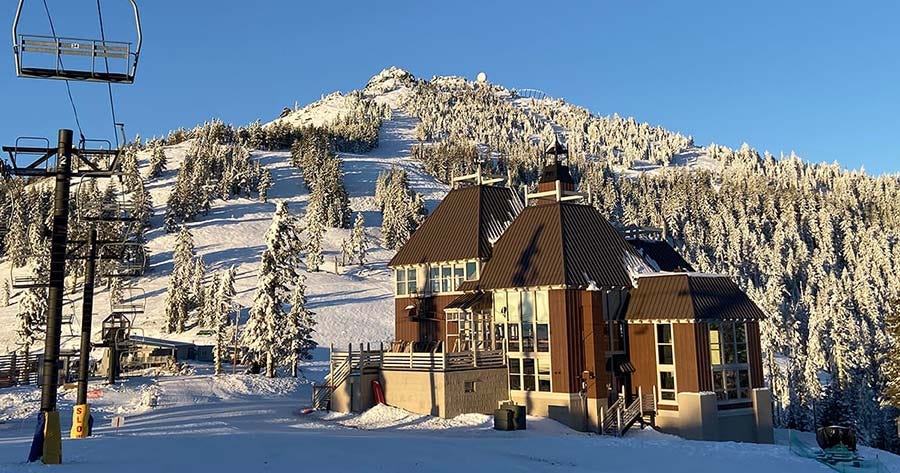
Apr 18, 2021
Podcast #44: West Mountain, N.Y. Owners/Operators Spencer and Sara Montgomery
The Storm Skiing Podcast is sponsored in part by: * Mountain Gazette - Listen to the podcast for discount codes on subscriptions and merch. * Helly Hansen - Listen to the podcast to learn how to get an 18.77 percent discount at the Boston and Burlington, Vermont stores. Who Sara Montgomery, General Manager of West Mountain and Spencer Montgomery, Co-Owner and Operator of West Mountain, New York Recorded on April 12, 2021 Why I interviewed them Because West Mountain is one of the best stories in New York skiing. A decade ago, the place was falling apart. Trails-in-name-only had become overgrown and were rarely open. A handful of homemade mobile snowguns serviced the mountain. A trio of doddering antique chairlifts rose from a cluster of ramshackle or abandoned buildings. Night-lighting was inconsistent and covered only portions of the mountain. The place puttered along on 30,000 skier visits per year. Then the Montgomerys arrived with a new vision and energy, moving their family of six to the base of the mountain and initiating a $17 million gut renovation. Eight years after their arrival, the place is transformed, with a forest of tower guns that can bury the full trail network in a few days, three new lifts, 100 percent night skiing, widened and consistently open ski runs, renovated lodges and cafeterias, and reinvigorated race and after-school programs. And that’s just phase one. The long-term aspiration is to transform West into the sort of ski-and-stay destination that New York is desperately lacking, build an affordable ski academy, and continue expanding the lift and trail network. I wanted to speak with the Montgomerys to understand how they did all this and how they were going to stretch toward the future. What we talked about Growing up skiing at West; how they came to own and operate the ski area; living on the mountainside; what West looked like when they took over in 2013 and where they invested $17 million to completely overhaul the ski area; why they widened the front trails beneath the main summit lift; how to raise $17 million; transforming West into a true resort with ski-and-stay condos and a pedestrian village; where we could see ski expansion and new lifts on the mountain; the great missed opportunity of New York skiing; mirroring the Holiday Valley or Jiminy Peak model; the topography and future of the mountaintop; the growth and future of the race program; ramping up customer service; the overhauled cafeteria and Northwest lodge; amping up the night-skiing operation; the growth of after-school programs; balancing strong race programs with a good ski experience for the public; making race programs affordable; growing the college and twenty-something demos; why West bought Hermitage Club’s old summit triple and why they added a loading carpet; selling off the old Riblet chairs; upgrading the Facelift chair to a quad; West’s steep terrain; choosing a new triple chair for the Northwest side and shifting it onto a different location than the lift it replaced; why stationary guns are superior to mobile guns; why a 10-inch pipe can carry three times the water of a six-inch pipe; ditching the habit of having trails-in-name-only and making sure the full trailmap was open for the majority of the winter; clearing out the warren of narrow trails beneath the main lift; why West eliminated a number of Northwest-side runs listed on old trailmaps; the potential to thin more glades; long-term expansion potential; the logic behind the $499 season pass; surging pass sales; why West ditched the midweek pass; the chances of West joining the Indy Pass; and Covid-era adaptations that may stick around beyond the 2020-21 ski season. Why I thought that now was a good time for this interview For all the reasons itemized above. If you haven’t been to West since 2012 or so, you’re not going to recognize the place. It looks different. It skis different. It feels different. West circa 2010 was not throwback in the man-this-is-what-skiing-used-to-be-this-is-so-quaint-and-idyllic kind of way. It was throwback in the am-I-going-to-die-falling-off-this-jalopy-of-a-chairlift kind of way. Like what Holiday Mountain or Spring Mountain feel like today. When a ski area hits that point it either withers like a forgotten Jack-o’-lantern – still somewhat resembling the thing it once proudly was but clearly not that thing anymore either – or it finds some path to reinvention and reinvigoration. We’re seeing it elsewhere in the Northeast, where formerly beaten- down ski areas lost in the poor decisions, bad luck, and underinvestment of past decades are suddenly resurgent: Saddleback and Magic, Greek Peak and Bousquet. West has climbed aboard that list, though with less fanfare and fireworks outside of their local market, and I wanted to throw a spotlight on what’s become a remarkable little ski area. What I got wrong At one point I referred to the portion of I-87 from which you can see West Mountain’s 1,000 vertical feet blazing in the winter night as the “Thruway.” No doubt many of you are eager to inform me that this section of I-87 is actually called the “Northway.” I am aware of this and simply misspoke, mostly because I do not actually give a s**t what this particular section of I-87 is called because what I call this highway from top to bottom is I-87. I do not understand this Northeast habit of naming your expressways as though they are family pets, particularly when they ALREADY HAVE A F*****G NAME. I still remember the sense of rage and confusion inspired by a road sign announcing “Closures on the Deegan” as I exited the Tappan Zee Bridge one day several years ago, and all I could think is “What the f**k is the ‘Deegan’ and why would anyone call it that when any interstate traveler like say a trucker or tourist attempting to navigate cityward by map would identify this road as Interstate 87?” But hey why not disrupt the flow of commerce and confuse the s**t out of people by tossing out some colloquialism that makes sense to exactly four dozen people running the local road commission. This may just be some hokey Midwest sensibility but I generally prefer the simplest solution to most problems and the solution here is to give one road that has already been assigned an easily identifiable numeral that syncs logically with the naming conventions of the 46,876-mile United States Interstate system one name and exactly one name and that is the name it already has: I-87. But no instead New Yorkers have to give it not one or two but three separate additional special names along its 333-mile route. And this all seems confusing and unnecessary, like if I called my cat “Spike” while he was in the basement and “Fiddles” while he was upstairs and “Pokeypoo” when he was out in the yard. But it’s all the same cat you see and his real name is Number 9 but really my main goal in life is to confuse the s**t out of people for no good reason and I can see that it’s working so you’re welcome. Why you should go there Because you drive past it on your way to Gore or Whiteface or perhaps Vermont depending upon your route and as you do so you look up off of the road universally known as Interstate 87 and say, “Oh look a ski area I wonder what it’s called?” Well it’s called West Mountain and it is worth your time. It has a thousand vertical feet and all new everything and a cool community vibe. And it’s a family business, a place worth supporting, the kind of ski area we need to print new skiers who will one day fly their three kids out to Colorado for spring breaks. It’s not a bumps-and-glades kind of place, at least not yet, but it has good steady pitch and an interesting trail layout. And it has a big future. Go now to see what it’s like so you can follow along while it becomes what it will be. Additional reading Coverage of West in the Glens Falls Chronicle , Spectrum Local News , Daily Gazette , Saratogian , and WNYT . Lift Blog’s inventory of West Mountain lifts. - Get full access to The Storm Skiing Journal and Podcast at www.stormskiing.com/subscribe
Apr 12, 2021
Podcast #43: NSAA President & CEO Kelly Pawlak
The Storm Skiing Podcast is sponsored in part by: * Mountain Gazette - Listen to the podcast for discount codes on subscriptions and merch. * Helly Hansen - Listen to the podcast to learn how to get an 18.77 percent discount at the Boston and Burlington, Vermont stores. Who National Ski Areas Association (NSAA) President and CEO Kelly Pawlak Recorded on April 6, 2021 Why I interviewed her Because the NSAA saved our 2020-21 ski season. They did this by creating the Ski Well, Be Well standards, which united hundreds of ski areas and millions of skiers under a shared understanding of what safe, socially distant skiing would look like. They did it by helping individual ski area operators understand which streams of the overlapping and bewildering layers of government aide they qualified for and shepherding them through the application processes. They did it by presenting a compelling alternative to full shutdowns for state-level regulators. And they did it all through tireless coalition-building among all the entities that manage this monster called lift-served skiing, landing on firm but clear operating guidelines that, while imperfect, did what they were designed to do: create consistency and order in a weather-dependent business often defined by chaos and improvisation. Leading the organization and the industry through this was Pawlak. I wanted to understand how the NSAA coordinated and executed the tectonic effort to make sure American lift-served skiing opened and stayed open for a full 2020-21 ski season. What we talked about Putting the challenge of adapting to Covid in historical context; if skiing can handle this, it can handle anything; where do you even begin when Covid nukes your entire industry?; developing and rolling out the Ski Well, Be Well guidelines that helped ski areas operate in the midst of the pandemic; getting every ski area in the country to agree to require masks; the importance of state ski area associations; how the NSAA helped states develop ski area operating guidelines; the complexity of agreeing on how to load chairlifts; why politics didn’t derail 2020-21 ski area operations; when she started to believe Covid-era skiing could work; how the U.S. ski industry got through the season without a single shutdown; why mask-wearing worked both for ski area employees and skiers; Covid operating changes that may become permanent after the pandemic fades; which regions of the country best weathered the pandemic from a business point of view; helping ski areas take advantage of various rounds of federal and state assistance; how many ski areas sat out the 2020-21 season and what those operations had in common; why every ski area felt so much busier than normal; liftlines; the surge in season pass sales; whether pass refund and deferral policies and other consumer-friendly pass attributes like payment plans are here to stay; are the Epic and Ikon Passes good for skiing and small ski areas?; reaction to Vail and Alterra’s statements on diversity; the NSAA’s diversity initiatives; the importance of pipeline programs to diversify skiers and ski industry workers; skiing’s “Jerry” problem; how the declining season pass prices help more people feel like part of the ski community. Why I thought that now was a good time for this interview Because we did it. We had a ski season. Winding toward mid-April, the ski areas that we would expect to be shut are shut and the ones we would expect to be open are open and they are making these decisions on their own, as melt-outs or slowing business stop the lifts. There was nothing inevitable about this. Skiing barely happened in Europe. Canada has weathered successive waves of shutdowns across multiple provinces. Southern Hemisphere skiing was a disaster in 2020. There is no doubt a cultural element to America’s stubbornness here - shutdowns are out of favor, politically. But the fact that skiing stayed open while so many other sorts of gathering - from concerts to sports to movie theaters - remained closed or curtailed is a testament to the efficacy of the NSAA’s Ski Well, Be Well standards. They were good conceptually and they were good practically – I visited 34 ski areas this season, and I only observed one instance of an unmasked mountain employee. I did not see any brazen instances of skier disobedience in mask compliance (I did see plenty of accidental ones). I experienced few issues with lift loading. I found the car-as-a-baselodge concept surprisingly enjoyable. The shift to ecommerce was welcome. Mostly, though, I found a sense of stability and normalcy as pandemic-induced isolation is catalyzing a massive mental health crisis . I didn’t have to hole up inside, away from the world – I was skiing twice a week, out there, adventuring. This seemed like a great time to reflect on these facts with the person perhaps most responsible for making them a reality. Additional reading * All about Ski Well, Be Well * The NSAA maintains some really interesting fact sheets, documenting the number of active U.S. ski areas by year , number of ski areas by state , and much more . COVID-19 & Skiing Podcasts: Author and Industry Veteran Chris Diamond | Boyne Resorts CEO Stephen Kircher | Magic Mountain President Geoff Hatheway | NSAA CEO Kelly Pawlak | Berkshire East/Catamount Owner & Goggles for Docs founder Jon Schaefer | Shaggy’s Copper Country Skis Cofounder Jeff Thompson | Doppelmayr USA President Katharina Schmitz | Mt. Baldy GM Robby Ellingson | Alterra CEO Rusty Gregory | NSAA Director of Risk & Regulatory Affairs Dave Byrd | Schweitzer Mountain President and CEO Tom Chasse | Ski Vermont President Molly Mahar The Storm Skiing Podcasts: Killington & Pico GM Mike Solimano | Plattekill owners Danielle and Laszlo Vajtay | New England Lost Ski Areas Project Founder Jeremy Davis | Magic Mountain President Geoff Hatheway | Lift Blog Founder Peter Landsman | Boyne Resorts CEO Stephen Kircher | Burke Mountain GM Kevin Mack | Liftopia CEO Evan Reece | Berkshire East & Catamount Owner & GM Jon Schaefer | Vermont Ski + Ride and Vermont Sports Co-Publisher & Editor Lisa Lynn | Sugarbush President & COO Win Smith | Loon President & GM Jay Scambio | Sunday River President & GM Dana Bullen | Big Snow & Mountain Creek VP of Sales & Marketing Hugh Reynolds | Mad River Glen GM Matt Lillard | Indy Pass Founder Doug Fish | National Brotherhood of Skiers President Henri Rivers | Winter 4 Kids & National Winter Activity Center President & CEO Schone Malliet | Vail Veterans Program President & Founder Cheryl Jensen | Mountain Gazette Owner & Editor Mike Rogge | Squaw Valley Alpine Meadows President & CMO Ron Cohen | Aspiring Olympian Benjamin Alexander | Sugarloaf GM Karl Strand – Parts One & Two | Cannon GM John DeVivo | Fairbank Group Chairman Brian Fairbank | Jay Peak GM Steve Wright | Sugarbush President & GM John Hammond | Mount Snow GM Tracy Bartels | Saddleback CEO & GM Andy Shepard | Bousquet owners and management | Hermitage Club GM Bill Benneyan | Powder Magazine Editor-in-Chief Sierra Shafer | Gunstock GM Tom Day | Bolton Valley President Lindsay DesLauriers | Windham President Chip Seamans | Sunday River GM Brian Heon | Waterville Valley GM Tim Smith | Granite Peak GM Greg Fisher | Montage Mountain Managing Owner Charles Jefferson | Author and journalist Eric Wilbur | Alterra CEO Rusty Gregory | Get full access to The Storm Skiing Journal and Podcast at www.stormskiing.com/subscribe

Mar 25, 2021
Podcast #42: Alterra CEO Rusty Gregory
The Storm Skiing Podcast is sponsored in part by: * Mountain Gazette - Listen to the podcast for discount codes on subscriptions and merch. * Helly Hansen - Listen to the podcast to learn how to get an 18.77 percent discount at the Boston and Burlington, Vermont stores. Who Rusty Gregory, CEO of Alterra Mountain Company Recorded on March 24, 2021 Why I interviewed him Because Alterra and its Ikon Pass sit at the center of the lift-served skiing universe. The very fact of the pass’ existence is a marvelous development for amped-up road-tripping adventurers, a revelation that untethers the frequent skier from concerns about ticket costs and access. Ikon has at times been less marvelous for locals, or even for out-of-town passholders themselves, who sometimes find their bucolic mountain getaways overrun. Composed of an unlikely federation of nearly every big-name ski operator outside of Vail, the Ikon Pass provides a vital counterweight to the Epic Pass, an absolute equal to one of the most successful ski products of all time. I wanted to talk to the person at the head of the whole operation, to better understand how Alterra and the Ikon Pass came together and continue to evolve. What we talked about The Blue Mountain (not that Blue Mountain ) shutdown; how a Southern California surfer discovered skiing as a college football player in the Pacific Northwest; ski-bumming at Mammoth; how a liftie ended up running the mountain; What happened when Mammoth dropped its pass prices from $1,200 to $379 in 1995; the legacy of Mammoth founder Dave McCoy, who passed away last year at age 104; a borrowed city truck and the origin of organized skiing at Mammoth; McCoy’s ski engineering innovations; the argument for a simplified work life; why Mammoth bought Big Bear and Snow Summit and dropped them on a joint pass along with June Mountain in 2014; how that small group of mountains acted as a precursor to Alterra and the Ikon Pass; how Rusty became Alterra CEO; assembling the motley chest-thumping Ikon Pass roster; how good Alterra’s Adventure Assurance plan looks in hindsight; why Alterra didn’t implement a universal reservation policy and whether they will have one next season; why Alterra shuffled Base Pass access for Jackson Hole, Aspen, Crystal, Stratton, and Sugarbush over the past two seasons; reaction to Vail cutting Epic Pass prices by 20 percent; whether Ikon prices will change as a result; Alterra’s 2021 capital plan; potential new ski area partners and acquisitions in North America and Europe; considering Jay Peak and Camelback; and why the Ikon Pass shares so many partners with the Mountain Collective. Why I thought that now was a good time for this interview Because Alterra just announced its 2021-22 Ikon Pass suite, changing Crystal Mountain access on the Base Pass, maintaining its Adventure Assurance shutdown protection and deferral plan, and holding prices relatively steady. I wanted to discuss these changes, how the 2020-21 season had gone, and the outlook for the future. The interview also happened to be on the same day that Vail announced 20 percent across-the-board reductions to Epic Pass prices, and I wanted to get a sense for Alterra’s reaction to that news. Questions I wish I’d asked I had questions prepared on the frustrations of dealing with the social media hate mobs, the fact that Alterra gave people with unused 2019-20 Ikon Passes a free 2020-21 pass but never advertised it, why the child’s Ikon Base Plus Pass costs more than a f ull child’s Ikon Pass , operational changes that may stick around after Covid, why Ikon Pass prices held steady, why Alterra switched from an interest-free payment plan to a monthly plan that carries interest, why Adventure Assurance stuck around and whether the plan would continue indefinitely, what it would take to expand capacity at Crystal, the limitations of the Ikon Session Pass, and how the partnerships with Red, Windham, and Bachelor went in their first seasons. Next time. Previous Ikon Pass Podcasts and content on The Storm * My previous interview with Rusty, which was part of The Storm’s Covid-19 & Skiing series in the immediate aftermath of last year’s shutdowns. * I spoke with former Sugarbush owner Win Smith last winter, and followed up with an interview with current GM John Hammond in the fall. * Killington and Pico GM Mike Solimano appeared on the first-ever Storm Skiing Podcast * Boyne Resorts CEO Stephen Kircher discussed the Ikon Pass at length, and then joined me in the aftermath of the shutdown to relay what that experience was like . * Sunday River President Dana Bullen and GM Brian Heon have both joined me on the podcast. * Just before the shutdown last year, I interviewed Sugarloaf GM Karl Strand . We connected again as the resort was ramping up for the 2020-21 ski season. * Loon Mountain President and GM Jay Scambio talked through the resort’s 2030 plan last year. * Windham Mountain President Chip Seamans joined The Storm for one of its most recent episodes. * Squaw Valley-Alpine Meadows President Ron Cohen and I had an in-depth conversation about the resort’s imminent name change. * My breakdown of 2021-22 Ikon , Epic , and Mountain Collective Pass offerings. * You can also compare Ikon Passes to all other Northeast season passes using the Storm Skiing Journal’s Pass Tracker 5000 . Epic Pass fans will have to make do with my interview with Mount Snow GM Tracy Bartels . Vail: I’m ready to do more whenever you are. Get full access to The Storm Skiing Journal and Podcast at www.stormskiing.com/subscribe
Mar 21, 2021
Podcast #41: Eric Wilbur, Coauthor of “30 Years In A White Haze” with Dan Egan
The Storm Skiing Podcast is sponsored in part by: * Mountain Gazette - Listen to the podcast for discount codes on subscriptions and merch. * Helly Hansen - Listen to the podcast to learn how to get an 18.77 percent discount at the Boston and Burlington, Vermont stores. Who Eric Wilbur , coauthor of Thirty Years In A White Haze with extreme skiing pioneer Dan Egan . Wilbur is also the online editor of New England Ski Journal . Recorded on March 15, 2021 Why I interviewed him Because Wilbur is one of the Northeast’s great ski journalists, running the online edition of the wide-ranging New England Ski Journal . With a couple decades covering the region’s mountains and a lifetime of New England sliding under his skis, Wilbur has the perspective to filter the events of today through the region’s history, mountains, culture, and aura. This New England orientation made Wilbur the ideal coauthor to Egan, Eric an able counterpart who could channel the more rough-and-tumble Boston of past decades as the starting blocks for the flashy and dashing global ski pioneer that Egan became. Thirty Years in a White Haze is expansive and layered, a complicated book about a complicated character, an achievement of teamwork, persistence, and storytelling. I wanted to talk to Wilbur about the process and the final product, how they put it together and why, and how it feels to hold it in his hands after years of labor. What we talked about The gratification of seeing your book in print after years of work; how Wilbur met Egan; the genesis of the book idea; why the book isn’t zany Egan Brothers wackiness; the coauthor writing process; Egan as a storyteller; tracking down the globetrotting Dan; the challenge of recreating events you weren’t present for; how Covid disrupted the writing process and accelerated the book’s timeline; the book’s pivotal scene and why it pinpoints such a vital moment in Egan’s life; Dan’s relationship with fellow Egan Brothers superstar John; why the book is written in the third person; why the first publisher didn’t work out; keeping the book’s narrative honest; capturing the essence of the big, boisterous, multi-generational Egan family; tracing the history of freeskiing from the hot-dogging 1970s to Squawllywood to today’s wild aerial gymnasts; the insane logic of skiing’s “progression” and reckoning with its current how-big-is-too-big state; Shane McConkey; talking to Scot Schmidt, Kristen Ulmer, Tom Day, Greg Stump and other extreme skiing pioneers for the book; how the VCR changed skiing; Dan the businessman; Warren Miller; “following CNN” on global ski quests; resilience in the face of failure; Tenney and the era of the SnowMagic machine; how Dan’s Irish-Catholic faith has influenced his life; the mission and history of the New England Ski Journal and Wilbur’s role there; covering Covid and its impact on skiing; reconsidering Massachusetts skiing; Berkshire East; Wachusett; Black Mountain, New Hampshire; why Vermont skiing is special; assessing the 2020-21 ski season; Killington and the commitment to the long season, even amid the pandemic; Cannon; Sugarloaf; what it means to make it through this season without involuntary shutdowns; the rapid evolution of the New England multipass market; why everyone complains about Vail; Stowe’s evolution as an Epic Mountain; people who complain about not grooming Wildcat don’t understand Wildcat; the importance of the Indy Pass; Magic Mountain; and Mad River Glen. Why I thought that now was a good time for this interview Wilbur has been on my list of potential interviewees since I launched the podcast a year and a half ago. It’s a long list though and I hadn’t gotten to it for the same reason I haven’t gotten to all of the other interviews I want to do: I can only do one thing at a time. But I’m glad I waited. Wilbur has nuanced insights into New England skiing, the ski industry’s fallout and recovery from Covid, and the evolution of the megapass landscape, but anchoring this interview to his book project gave us terrific insight into his working process as a journalist and storyteller, and gave the interview a much wider scope than it may have otherwise had. Questions I wish I’d asked I would have liked to have discussed Dan’s two previous books, Courage to Persevere and All Terrain Skiing . The book also explores the startling-to-remember reality that the brothers’ early cliff-hucking and pow-bounding took place on 1980s skinny skis, and that would have been an interesting topic. I also had a question lined up about skiing at a high level far after the age when it becomes difficult to keep up in many sports. But I don’t think anyone’s going to be listening to this podcast and saying, “Dude that was way too short,” so I’ll be happy with the three dozen topics we did roll through. What I got wrong I accidentally asked twice how much time Wilbur spent with Dan. The second time, I meant to ask how much time he’d spent speaking with John. Why you should read this book Dan Egan is a phenomenal skier. Dan Egan is an inventive and resilient businessman. Dan Egan is someone who’s struggled with alcohol, endured a tough divorce, and regrets not having children. Dan Egan is a tough and maybe impulsive boss. Dan Egan has a complicated relationship with his family, at once dependent on them and committed to his own life track. People are complicated. At least the interesting ones are. And they are many things at once, in spite of what our current reductive social media climate insists. This book distills the many sides of that character into a compelling story, a tale that tracks the evolution of modern skiing, marketing, and media consumption. If you love skiing and the story of skiing, you’re going to devour this book. Enjoy. Additional resources * Buy the book . * Wilbur and I discuss the death of skier Ian Forgays in a Mount Washington avalanche last month. Here’s Wilbur’s coverage of the event (scroll down), along with a deep account of that day by Vermont Ski + Ride’s Lisa Lynn . * Egan on Warren Miller and skiing: Dan and John’s Ski and Snowboard Hall of Fame tribute video: Wilbur says early on in the interview that getting the print copy of the book in the mail was his “George McFly moment.” For those of you who missed the memo on Back to the Future , this is what he was talking about (3:55): Get full access to The Storm Skiing Journal and Podcast at www.stormskiing.com/subscribe
Mar 3, 2021
Podcast #40: Montage Mountain Managing Owner Charles Jefferson
The Storm Skiing Podcast is sponsored in part by: * Mountain Gazette - Listen to the podcast for discount codes on subscriptions and merch. * Helly Hansen - Listen to the podcast to learn how to get an 18.77 percent discount at the Boston and Burlington, Vermont stores. Who Charles Jefferson, Managing Owner of Montage Mountain , Pennsylvania Recorded on February 23, 2021 Why I interviewed him Pennsylvania skiing is an exercise in the technological and improbable. Winters deliver marginal temperatures and frequent rain, making any ski area a capital-intensive affair reliant on sophisticated and aggressive snowmaking. The mountains themselves can be crowded and intense, with what feels like a higher-than-average volume of novice skiers careening downhill in unstoppable freefall. Luckily, many of the ski areas are also quite good, with 1,000-foot-plus vertical drops, interesting terrain, and a broad trail footprint. Among these, Montage is one of the best, a small- to medium-sized ski area that feels and skis big, with twisting downhill routes, terrain perfectly and naturally divided by ability, and some of the steepest runs in the Northeast. It’s an interesting place with a checkered history. Opened in 1984, it’s one of the newest ski areas in a nation that has mostly given up on building them. Operated for its first two decades as a non-profit or government entity, it was nearly run into the abyss by subsequent owners, who renamed it “Snö Mountain” and drove it into bankruptcy. Along came an investment group led by Jefferson, a real estate developer who had never skied. It’s an odd ski story in an odd ski state, but it has a happy ending: under Jefferson and company, the resort seems to be on the upswing, with a rapidly diversifying all-seasons business, a growing season passholder base, and an understated approach to skiing that’s focused on workaday maintenance rather than flashy new projects. To gauge how the mountain was doing and what lies ahead, I wanted to talk to the person overseeing the whole operation. What we talked about Jefferson’s background rehabilitating old properties and the transformation of downtown Scranton; how a non-skier comes to own a ski area; when you just have to believe that a waterpark is buried beneath 15 feet of snow; why buying the ski area didn’t intimidate someone who’d never been in the ski industry; believing in your team; how managing a building is similar to running a ski area; becoming a skier in your 50s; the Snö Mountain debacle; cleaning up the mess after buying Montage out of bankruptcy; how to grow your season pass base by 1,000 percent; why a ski resort can’t just be a winter business; big-time hotel plans; Montage’s unique mid-mountain parking lot; what’s next for the Long Haul triple and why it won’t be a replacement; the problem with high-speed lifts; the state of the lift fleet in general; why we’re unlikely to see a carpet in the beginner area; expansion possibilities into the appetizing sea of treed inclines surrounding Montage; why you won’t find named glades, but the policy is border-to-border when the snowpack materializes; when to groom the North Face and when to let it get bumpy; Montage’s amazing natural terrain segregation; snowmaking upgrades; keeping the guns blazing well into March; how much cash it saves when free snow falls from the sky; the logic behind the ultra-affordable early-bird season pass; the potential for an Indy Pass partnership; why Montage offers $40 Monday, Tuesday, and Wednesday lift tickets, rentals included; adapting to Covid; and the outdoor Midland dining area and whether that will stick around in future seasons. What I got wrong In our discussion of $40 lift tickets, I portrayed that as a Monday through Friday deal, but in fact those tickets are only available Monday through Wednesday (Jefferson did correct this but I wanted to mention it again here). At the beginning of the interview, I also asked about Jefferson’s work in Philadelphia, when in fact his recent career has been dedicated to Scranton. Why I thought that now was a good time for this interview Because this podcast focuses on the Northeast and Pennsylvania is a large and important Northeast state that I have, 16 months into the podcast, mostly ignored. This was more circumstantial than intentional, but I’m happy to finally spotlight one of the southernmost Northeast ski hills. Montage, with its steep runs and expansion potential and ample vertical, seemed like a strong starting point. And it was. What I didn’t realize when I booked the interview was Jefferson’s novel backstory, the working-class-kid-turned-real-estate-developer-turned-ski-area-owner-who-had-never-skied. I was expecting some jet-setter who skied Montage when he couldn’t make it out to his slopeside mansion in Aspen. This is something very different, more down-to-earth and practical, a narrative of determined make-it-work-ism in a tough and unforgiving industry that often savages its most seasoned operators. It’s hard not to love the story and to love this mountain as a result. Why you should go there Because if you live in New York City or Philadelphia or anywhere near either of them, it’s close. And it’s good. Real skiing, with a real thousand-foot vertical drop, moguls sometimes, trees when the snow flies. The lifts are fixed-grip and a bit poky, but the place is open 12 hours most days and you will get your vertical in. If you’ve never skied Pennsylvania, this is a good starting point, a place that at once showcases the ski state’s at-its-best potential and its frenetic downhill energy. It’s also an affordable place, with a $399 season pass ($349 for 2020-21 passholders) that’s good for the rest of this season, and $40 all-day lift tickets Monday through Wednesday (it rockets to $89 the other days, as it probably has to just to manage crowds). Plus, Midland is one of the great outdoor spaces in Northeast skiing: Additional resources * Lift Blog’s Montage chairlift inventory * An America’s Best Friend podcast interview with Jefferson * A local news article from when Jefferson was buying the mountain in 2013 * A Discover NEPA video profiling Montage from a couple years back: COVID-19 & Skiing Podcasts: Author and Industry Veteran Chris Diamond | Boyne Resorts CEO Stephen Kircher | Magic Mountain President Geoff Hatheway | NSAA CEO Kelly Pawlak | Berkshire East/Catamount Owner & Goggles for Docs founder Jon Schaefer | Shaggy’s Copper Country Skis Cofounder Jeff Thompson | Doppelmayr USA President Katharina Schmitz | Mt. Baldy GM Robby Ellingson | Alterra CEO Rusty Gregory | NSAA Director of Risk & Regulatory Affairs Dave Byrd | Schweitzer Mountain President and CEO Tom Chasse | Ski Vermont President Molly Mahar The Storm Skiing Podcasts: Killington & Pico GM Mike Solimano | Plattekill owners Danielle and Laszlo Vajtay | New England Lost Ski Areas Project Founder Jeremy Davis | Magic Mountain President Geoff Hatheway | Lift Blog Founder Peter Landsman | Boyne Resorts CEO Stephen Kircher | Burke Mountain GM Kevin Mack | Liftopia CEO Evan Reece | Berkshire East & Catamount Owner & GM Jon Schaefer | Vermont Ski + Ride and Vermont Sports Co-Publisher & Editor Lisa Lynn | Sugarbush President & COO Win Smith | Loon President & GM Jay Scambio | Sunday River President & GM Dana Bullen | Big Snow & Mountain Creek VP of Sales & Marketing Hugh Reynolds | Mad River Glen GM Matt Lillard | Indy Pass Founder Doug Fish | National Brotherhood of Skiers President Henri Rivers | Winter 4 Kids & National Winter Activity Center President & CEO Schone Malliet | Vail Veterans Program President & Founder Cheryl Jensen | Mountain Gazette Owner & Editor Mike Rogge | Squaw Valley Alpine Meadows President & CMO Ron Cohen | Aspiring Olympian Benjamin Alexander | Sugarloaf GM Karl Strand – Parts One & Two | Cannon GM John DeVivo | Fairbank Group Chairman Brian Fairbank | Jay Peak GM Steve Wright | Sugarbush President & GM John Hammond | Mount Snow GM Tracy Bartels | Saddleback CEO & GM Andy Shepard | Bousquet owners and management | Hermitage Club GM Bill Benneyan | Powder Magazine Editor-in-Chief Sierra Shafer | Gunstock GM Tom Day | Bolton Valley President Lindsay DesLauriers | Windham President Chip Seamans | Sunday River GM Brian Heon | Waterville Valley GM Tim Smith | Granite Peak GM Greg Fisher | Get full access to The Storm Skiing Journal and Podcast at www.stormskiing.com/subscribe
Feb 28, 2021
Podcast #39: Granite Peak, Wisconsin GM & Marketing Director Greg Fisher
The Storm Skiing Podcast is sponsored in part by: * Mountain Gazette - Listen to the podcast for discount codes on subscriptions and merch. * Helly Hansen - Listen to the podcast to learn how to get an 18.77 percent discount at the Boston and Burlington, Vermont stores. Who Greg Fisher, General Manager and Marketing Director of Granite Peak , Wisconsin Recorded on Feb. 22, 2021 Why I interviewed him Because in the ski snob chain of dismissiveness, the West looks down on the East, the East looks down on the Midwest, and the Midwest ignores them all. They’re too busy skiing. The Upper Midwest is home to one of the most well-defined, ingrained, and passionate ski cultures in the world. The sheer volume and variety of ski areas in Michigan, Wisconsin, and Minnesota is a testament to this, and among them are some of the most unique ski areas in the country. Mount Bohemia , perched at the top of Michigan’s Upper Peninsula, delivers one of the wildest ungroomed lift-served ski experiences in the nation. Minnesota’s Lutsen is big, cold, and endless, with the region’s only gondola – which connects two peaks and rises all of 308 vertical feet. And while the Midwest is dotted with 200-foot bumps with nine chairlifts and an impossible anthill of frenetic youngsters, Granite Peak is not one of them. It has 700 vertical feet of terrain set on a broad ridge and served by three high-speed lifts that barrel up the mountain. And it’s not done growing yet. To learn more about this regional gem and see where it may be headed next, I wanted to talk to the person in charge of it all. What we talked about Mount Snow in the ASC and early Peak Resorts days; bringing $17 St. Patty’s Day lift tickets to the Northeast; beer fixes everything; Ohio skiing; Midwest night-skiing culture; opening the bar and the slopes until well after midnight for college students; North Conway is the Northeast’s best ski town; the Peak Pass lands and it was kind of a big deal; how the pass fared against the Epic and Ikon passes; the brilliance of the Drifter Pass, the now-defunct Peak Resorts pass for broke-ass twentysomethings; reaction to Vail buying Peak in 2019; moving back to the Midwest to take the top job at Granite Peak; the ski area’s supercharged lift and snowmaking infrastructure; Charles Skinner, the owner of the largest ski areas in Minnesota and Wisconsin, and his track record of building Midwest monsters; the rabid Upper Midwest ski culture; Granite Peak’s 7-year-old snow reporter; the skibum life of a general manager’s son; what’s up with all the reindeer?; the vision and status of Granite Peak’s expansion; MTB trail development; why a gondola would make sense on a 700-vertical-foot hill; why the glades from Granite Peak’s old trailmaps disappeared from their current one ; future night skiing expansion; an update on the Indy Pass partnership and how the pass is growing aggressively in the Midwest; base lodge modifications; Midwest boot-up culture; and Covid ops modifications that may stick around after the virus fades. Why I thought that now was a good time for this interview Because Fisher is in his first year as head of the ski area, guiding it through Covid and setting it up for what should be a booming future. The resort’s expansion plans appear to be gaining momentum after a previous effort dead-ended. This ambitious project would further anchor Granite Peak as a flagship Midwest destination, a ski area that can legitimately eat several days of skiing and substitute for a trip to the Rockies. The ski area is also wrapping up its first year as an Indy Pass partner, a huge win for the pass and one that helped establish it as the Midwest’s go-to ski frequency product. This was a good time to confirm that that partnership would continue, discuss expansion, and look toward the end of pandemic skiing and start to imagine what that could look like. Why you should go there If you only hit one ski area in Wisconsin, this should be the one. Among the forest of kinda small and kinda underwhelming and kinda outdated hills poking out of the state’s countryside, Granite Peak soars, big and modern and fast, flush with glades and the kind of interesting and varied terrain alien to so many Midwest hills. While 700 vertical feet is small in most regions, it is titanic in the Midwest. After Granite Peak, the next largest vertical drop in the state is Mount La Crosse, at 516 feet. Vail’s Wilmot is just 230 feet. The ski area is one of five in Wisconsin on the Indy Pass, making it a no-brainer stop on an upper Midwest ski tour. Along with sister ski area Lutsen, in neighboring Minnesota, this is one of the finest ski areas in the region, and with three high-speed lifts – all of them less than 20 years old - accessing 100 percent of its terrain, the resort is one of the most well-appointed in the nation. Additional reading/videos * Lift Blog’s inventory and history of Granite Peak’s lift fleet * One of the best ways to track Granite Peak’s evolution is via these historic trailmaps * The latest Ronan Report: COVID-19 & Skiing Podcasts: Author and Industry Veteran Chris Diamond | Boyne Resorts CEO Stephen Kircher | Magic Mountain President Geoff Hatheway | NSAA CEO Kelly Pawlak | Berkshire East/Catamount Owner & Goggles for Docs founder Jon Schaefer | Shaggy’s Copper Country Skis Cofounder Jeff Thompson | Doppelmayr USA President Katharina Schmitz | Mt. Baldy GM Robby Ellingson | Alterra CEO Rusty Gregory | NSAA Director of Risk & Regulatory Affairs Dave Byrd | Schweitzer Mountain President and CEO Tom Chasse | Ski Vermont President Molly Mahar | The Storm Skiing Podcasts: Killington & Pico GM Mike Solimano | Plattekill owners Danielle and Laszlo Vajtay | New England Lost Ski Areas Project Founder Jeremy Davis | Magic Mountain President Geoff Hatheway | Lift Blog Founder Peter Landsman | Boyne Resorts CEO Stephen Kircher | Burke Mountain GM Kevin Mack | Liftopia CEO Evan Reece | Berkshire East & Catamount Owner & GM Jon Schaefer | Vermont Ski + Ride and Vermont Sports Co-Publisher & Editor Lisa Lynn | Sugarbush President & COO Win Smith | Loon President & GM Jay Scambio | Sunday River President & GM Dana Bullen | Big Snow & Mountain Creek VP of Sales & Marketing Hugh Reynolds | Mad River Glen GM Matt Lillard | Indy Pass Founder Doug Fish | National Brotherhood of Skiers President Henri Rivers | Winter 4 Kids & National Winter Activity Center President & CEO Schone Malliet | Vail Veterans Program President & Founder Cheryl Jensen | Mountain Gazette Owner & Editor Mike Rogge | Squaw Valley Alpine Meadows President & CMO Ron Cohen | Aspiring Olympian Benjamin Alexander | Sugarloaf GM Karl Strand – Parts One & Two | Cannon GM John DeVivo | Fairbank Group Chairman Brian Fairbank | Jay Peak GM Steve Wright | Sugarbush President & GM John Hammond | Mount Snow GM Tracy Bartels | Saddleback CEO & GM Andy Shepard | Bousquet Owners & Management | Hermitage Club GM Bill Benneyan | Powder Magazine Editor-in-Chief Sierra Shafer | Gunstock GM Tom Day | Bolton Valley President Lindsay DesLauriers | Windham President Chip Seamans | Sunday River GM Brian Heon | Waterville Valley President & GM Tim Smith | Get full access to The Storm Skiing Journal and Podcast at www.stormskiing.com/subscribe
Feb 23, 2021
Podcast #38: Waterville Valley President and GM Tim Smith
The Storm Skiing Podcast is sponsored in part by: * Mountain Gazette - Listen to the podcast for discount codes on subscriptions and merch. * Helly Hansen - Listen to the podcast to learn how to get an 18.77 percent discount at the Boston and Burlington, Vermont stores. Who Tim Smith, President and General Manager of Waterville Valley , New Hampshire Recorded on Feb. 22, 2021 Why I interviewed him Because Waterville Valley is one of a half-dozen or so leading ski areas in one of the nation’s great ski states, a bustling and full-throttle anchor in the I-93 corridor threading up from Boston. Like the megaresorts of Colorado’s Summit County, the accessibility of these big mountains lining the interstate make them the first encounter with big-mountain skiing and the home base for countless weekenders from the population areas lingering to the south. For many people, Waterville Valley and its neighbors define what skiing is and what it means to them. This is condo and home mountain country, where skiers commit to a favorite and plant themselves there. Even among its towering neighbors – Loon, Bretton Woods, Cannon, Attitash – Waterville Valley is a good choice. It’s about to get better. The mountain, owned by the high-profile Sununus of political fame, is resetting its image with a gargantuan multi-year expansion plan, even as it just cut the ribbon on the new Green Peak pod a few years back. I wanted to talk to the guy driving all this forward. What we talked about Why the resort joined the Indy Pass; burnishing Waterville’s indie credentials; the resort’s high-profile owners and the firewalls that separate their political power from resort operations; the White Mountain Super Pass and how many of Waterville’s passholders opt into that; kids-ski-free passes; Waterville’s ski-a-day-and-if-you-hate-Covid-skiing-defer-it pass offer; the mountain’s 10-year master development plan; when a global pandemic hits a month after you announce this plan to the world; the recent Green Peak expansion and how that ignited the far larger current project; what one of the developers of Winter Park has to do with Waterville Valley; the high of resuscitating dormant ski areas; developing the new trail network by hike-and-survey hustle, and how it will differ from the current layout; Waterville Valley’s growing glade network; Sugarloaf, the greatest lost ski area in Michigan ; the potential for an eventual South Ridge expansion; upgrades to White Peaks, Sunnyside, and the World Cup T-bar; decommissioning the Northside double; why the mountain replaced the High Country double chair with a T-bar; the importance of lift redundancy; the utility of fixed-grip lifts; why the most technologically advanced lift is not always the best lift for every situation; transforming Waterville Valley into a Western-style pedestrian resort experience with a new lift out of the village square; development potential for the town when the new lifts go in; you can already ski from the existing trails back to town and Tim will tell you how; the sorts of lifts that will serve the trail expansion; why the ski area will move its learning center and carpets to the new base area; how Covid ops are going and which changes we may see carry on after the pandemic fades. Why I thought that now was a good time for this interview Because of the Indy Pass partnership, of course, but also because Waterville Valley is moving ahead with the Northeast’s most impressive current expansion plan. The ski area’s sprawling project will finally connect its pedestrian village with the ski area and substantially increase the size of the resort’s trail network and lift fleet, adding a two-stage gondola or chondola and upgrading and adding several additional lifts. Once complete, Waterville Valley will stand as one of the most complete ski areas in New England, burnishing its destination credentials and further defining itself as one of the state’s standout resorts. With Covid fading and the future crystalizing, I wanted to get a sense of exactly what this expansion will look like, how Waterville Valley will make it happen, and when we can expect to see progress. Questions I wish I’d asked Since the beginning of the year, I’ve started most podcasts with a more personal exchange about my guests’ backgrounds and how they rose to their current job. It adds a humanizing element to the pod that I felt was missing before. There is so much happening at Waterville, however, that we had to get right into the Indy Pass announcement and move onto the expansion, and we didn’t have time for anything else. This is an interesting and dynamic mountain, however, and I’m sure I’ll be checking in with Tim to monitor expansion progress in the coming years. What I got wrong A historical fact about the White Peaks Express. The mistake is spelled out clearly in the pod so give it a listen if you want to hear why I’m a d*****s. Why you should go there Because don’t you want to be that guy telling stories on the chairlift about how you were there before they dropped trails off the backside of Green Peak down into the village? The whipper-snappers of future epochs will be amazed at your tales. Really, though, this is a formerly staid mountain that’s getting interesting. Built by a racer for racers, Waterville Valley for decades lacked the sort of glade-and-bump terrain that makes a mountain interesting. This has been the Northeast template for a long, long time, but that’s starting to change. Smith in particular seems invested in maximizing the mountain’s potential for all sorts of skiers, and he’s aggressively growing out the glade network and tiptoeing away from the GROOMATHON mindset that buffs many Northeast mountains (hi Okemo), flatter than a Wal-Mart parking lot. Plus it’s easy to get to and it’s on the Indy Pass and it has 2,000 feet of vert so why would you not go there? Additional reading/videos * The Storm Skiing Journal announces Indy Pass partnerships with Waterville Valley and Saddleback * Lift Blog’s inventory of Waterville Valley lifts * An overview of the expansion plan * More on expansion COVID-19 & Skiing Podcasts: Author and Industry Veteran Chris Diamond | Boyne Resorts CEO Stephen Kircher | Magic Mountain President Geoff Hatheway | NSAA CEO Kelly Pawlak | Berkshire East/Catamount Owner & Goggles for Docs founder Jon Schaefer | Shaggy’s Copper Country Skis Cofounder Jeff Thompson | Doppelmayr USA President Katharina Schmitz | Mt. Baldy GM Robby Ellingson | Alterra CEO Rusty Gregory | NSAA Director of Risk & Regulatory Affairs Dave Byrd | Schweitzer Mountain President and CEO Tom Chasse | Ski Vermont President Molly Mahar | The Storm Skiing Podcasts: Killington & Pico GM Mike Solimano | Plattekill owners Danielle and Laszlo Vajtay | New England Lost Ski Areas Project Founder Jeremy Davis | Magic Mountain President Geoff Hatheway | Lift Blog Founder Peter Landsman | Boyne Resorts CEO Stephen Kircher | Burke Mountain GM Kevin Mack | Liftopia CEO Evan Reece | Berkshire East & Catamount Owner & GM Jon Schaefer | Vermont Ski + Ride and Vermont Sports Co-Publisher & Editor Lisa Lynn | Sugarbush President & COO Win Smith | Loon President & GM Jay Scambio | Sunday River President & GM Dana Bullen | Big Snow & Mountain Creek VP of Sales & Marketing Hugh Reynolds | Mad River Glen GM Matt Lillard | Indy Pass Founder Doug Fish | National Brotherhood of Skiers President Henri Rivers | Winter 4 Kids & National Winter Activity Center President & CEO Schone Malliet | Vail Veterans Program President & Founder Cheryl Jensen | Mountain Gazette Owner & Editor Mike Rogge | Squaw Valley Alpine Meadows President & CMO Ron Cohen | Aspiring Olympian Benjamin Alexander | Sugarloaf GM Karl Strand – Parts One & Two | Cannon GM John DeVivo | Fairbank Group Chairman Brian Fairbank | Jay Peak GM Steve Wright | Sugarbush President & GM John Hammond | Mount Snow GM Tracy Bartels | Saddleback CEO & GM Andy Shepard | Bousquet owners and management | Hermitage Club GM Bill Benneyan | Powder Magazine Editor-in-Chief Sierra Shafer | Gunstock GM Tom Day | Bolton Valley President Lindsay DesLauriers | Windham President Chip Seamans | Sunday River GM Brian Heon | Get full access to The Storm Skiing Journal and Podcast at www.stormskiing.com/subscribe
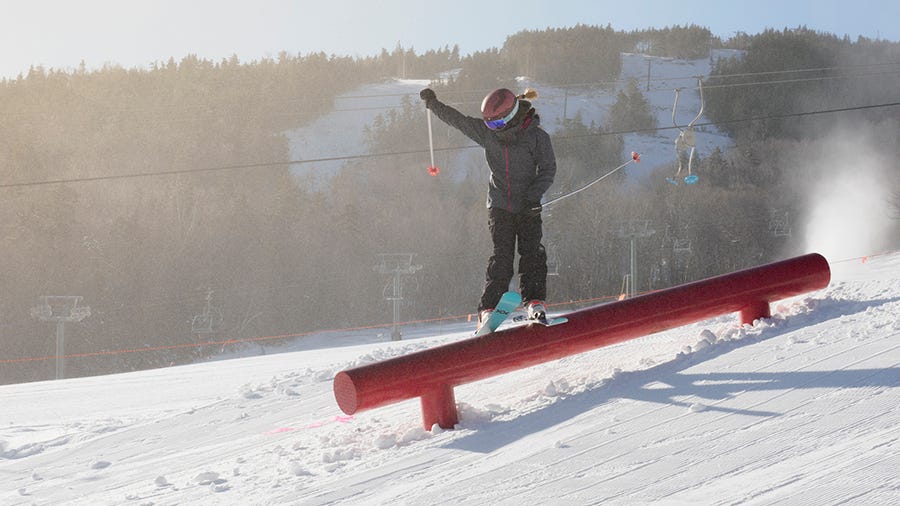
Feb 14, 2021
COVID-19 & Skiing Podcast #12: Ski Vermont President Molly Mahar
The Storm Skiing Podcast is sponsored in part by Mountain Gazette . Listen to the podcast for discount codes on subscriptions and merch. The podcast is also sponsored in part by Helly Hansen . Listen to the podcast to learn how to get an 18.77 percent discount at the Boston and Burlington, Vermont stores. Recorded on Feb. 8, 2021 What this is This is the 12th in a series of conversations exploring the fallout to the ski industry from Covid-19. Click through to listen to the first 11: author Chris Diamond , Boyne Resorts CEO Stephen Kircher , Magic Mountain President Geoff Hatheway , NSAA CEO Kelly Pawlak , Berkshire East/Catamount Owner & Goggles for Docs founder Jon Schaefer , Shaggy’s Copper Country Skis Cofounder Jeff Thompson , Doppelmayr USA President Katharina Schmitz , Mt. Baldy GM Robby Ellingson , Alterra CEO Rusty Gregory , NSAA Director of Risk & Regulatory Affairs Dave Byrd , and Schweitzer Mountain President and CEO Tom Chasse . Who Molly Mahar, President of Ski Vermont Why I interviewed her Because Vermont skiing is in trouble. The Burlington Free Press reported in January that skiers visits were down 30 to 70 percent from the same period last year. Culprits included lousy weather, state-mandated capacity restrictions, strict quarantine requirements for out-of-state visitors, and the Canadian border closure. The snow, thankfully, has finally arrived , but the other problems are unlikely to disappear before season’s end. I wanted to understand the full impacts of the business slowdown on Vermont ski areas and to see how they were coping with life in our Covid-modified Matrix. What we talked about An update on those dire skier visit numbers from January; the size of Vermont’s ski industry in a normal year and the extent and impact of the downturn; the percent of Vermont skier visits that originate out of state (it’s huge), and where those visits come from; Vermont’s quarantine requirements and the Canadian border closure and whether these travel restrictions could be relaxed before the end of ski season; working with the state of Vermont to develop Covid operating rules; how widespread compliance to those restrictions has been among skiers; the importance of Canada to central and northern Vermont; Jay Peak filling in the blanks; how Ski Vermont collaborates with member ski areas, the state government, and the NSAA; Covid-induced acceleration of technology adaptation; the cost of Covid ops; Magic Mountain way out ahead; working with the NSAA to promote their Ski Well Be Well guidelines and how the organization just basically killed it prepping the industry as a whole for the ski season; helping Vermont ski areas take advantage of federal and state aide; the long-term upside of Covid-era operating pivots; how mega-mountains, large independents, and smaller community hills are managing under Covid restrictions; job market impacts; the out-of-state takeover of large Vermont ski areas and what that means for the state’s industry long-term; whether Jay Peak or Burke would be better off under a conglomerate or remaining independent; thoughts on megapasses, including the Indy Pass; shout-out to Smuggs; the decision to suspend the 5th grade ski passport this season; and Ski Vermont’s diversity initiative. Questions I wish I’d asked I wanted to talk a bit about the cost of doing business in Vermont and development under the state’s Act 250 rules, but we didn’t have time. Next time. Storm Skiing Podcasts: Killington & Pico GM Mike Solimano | Plattekill owners Danielle and Laszlo Vajtay | New England Lost Ski Areas Project Founder Jeremy Davis | Magic Mountain President Geoff Hatheway | Lift Blog Founder Peter Landsman | Boyne Resorts CEO Stephen Kircher | Burke Mountain GM Kevin Mack | Liftopia CEO Evan Reece | Berkshire East & Catamount Owner & GM Jon Schaefer | Vermont Ski + Ride and Vermont Sports Co-Publisher & Editor Lisa Lynn | Sugarbush President & COO Win Smith | Loon President & GM Jay Scambio | Sunday River President & GM Dana Bullen | Big Snow & Mountain Creek VP of Sales & Marketing Hugh Reynolds | Mad River Glen GM Matt Lillard | Indy Pass Founder Doug Fish | National Brotherhood of Skiers President Henri Rivers | Winter 4 Kids & National Winter Activity Center President & CEO Schone Malliet | Vail Veterans Program President & Founder Cheryl Jensen | Mountain Gazette Owner & Editor Mike Rogge | Squaw Valley Alpine Meadows President & CMO Ron Cohen | Aspiring Olympian Benjamin Alexander | Sugarloaf GM Karl Strand – Parts One & Two | Cannon GM John DeVivo | Fairbank Group Chairman Brian Fairbank | Jay Peak GM Steve Wright | Sugarbush President & GM John Hammond | Mount Snow GM Tracy Bartels | Saddleback CEO & GM Andy Shepard | Bousquet owners and management | Hermitage Club GM Bill Benneyan | Powder Magazine Editor-in-Chief Sierra Shafer | Gunstock GM Tom Day | Bolton Valley President Lindsay DesLauriers | Windham President Chip Seamans | Sunday River GM Brian Heon | Get full access to The Storm Skiing Journal and Podcast at www.stormskiing.com/subscribe
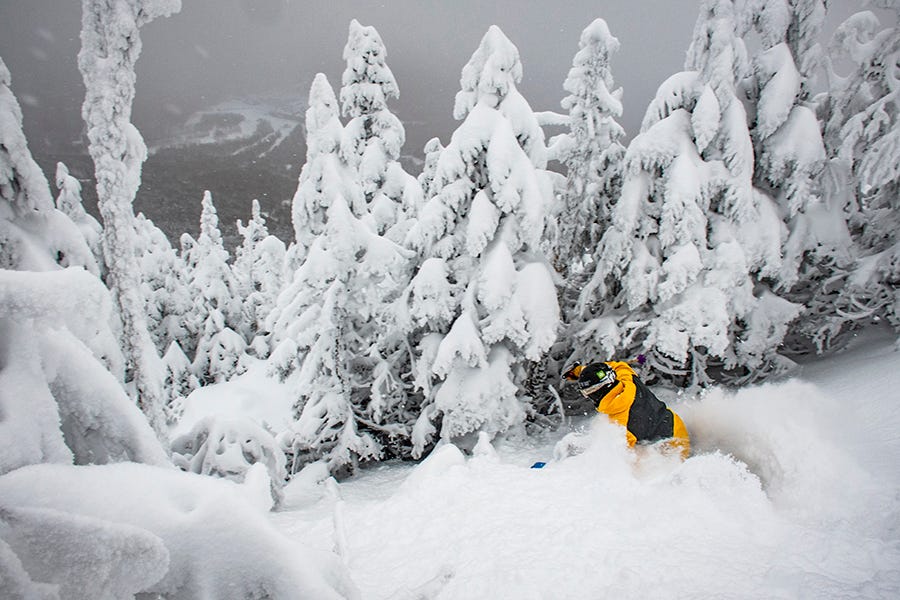
Feb 10, 2021
Podcast #37: Sunday River General Manager Brian Heon
The Storm Skiing Podcast is sponsored in part by: * Mountain Gazette - Listen to the podcast for discount codes on subscriptions and merch. * Helly Hansen - Listen to the podcast to learn how to get an 18.77 percent discount at the Boston and Burlington, Vermont stores. Who Brian Heon, General Manager of Sunday River, Maine Recorded on February 2, 2021 Why I interviewed him Because if you’re listening to this podcast, you can probably never get enough Sunday River. It’s big. It’s amazing. It’s important. And we all need it even if we never go there. For the Northeast to have a ski industry, it needs big, highly functional, ever-evolving ski areas that will forever stoke the aspirational let’s-go-bigger instincts of the beginners being tugged sideways up town ropetows. Sunday River is pretty much where things top out in New England. It has peers, but it really doesn’t have betters, even if there’s a little more howl and rip at Sugarloaf or Stowe or Sugarbush. It has scale and variety and lifts everywhere and if aliens landed on our planet and for some reason chose rural Maine as their disembarkation point they would probably conclude that the mountain was a giant factory for snow manufacturing. Which I suppose it is. And has to be. What it lacks in natural snowfall, it makes up for with cold cold temps, and Sunday River blasts out the artificial snow as well as anyplace on the planet. Running it is a titanic effort, and I wanted to get the perspective of the guy who had just taken on one of the biggest jobs in Northeast skiing. What we talked about How a career in skiing began in the melting flatscapes of Florida; working at The Canyons under the American Skiing Company and Mount Snow under Peak Resorts; running the legend that is Wildcat; when the original general manager of your ski area shows up with a shoebox full of old photos and stories of the sweaty pre-OSHA past: … when Vail buys your mountain; de-icing lifts after 13 years of swimming in Utah fluff; landing at Sunday River as Covid aftershocks were first reverberating across the landscape; life in Bethel; the scale and complexity of the resort’s operations as compared to Wildcat; how former GM and current President Dana Bullen’s role has evolved since Heon joined the mountain; Boyne Resorts’ company culture; an update on Sunday River 2030 ; RFID finally; Merrill Hill expansion plan and timeline; what’s next for lifts at Barker, Jordan, Aurora, North Peak, and South Ridge; potential new trails and glades on top of the existing footprint; snowmaking goals; some crowd-sourced snowmaking questions; why rusty pipes aren’t always bad pipes; what types of guns we may see at Sunday River in the future; ideas for improving the ski flow for the public around the race courses; a follow-up question about Boyne’s quest to eliminate boilerplate in New England; whale-mania; the fallout from the resort’s cyber-security hack earlier in the season and how they’re preparing for future incidents; preparing for Covid ops even as circumstances shifted constantly in the run-up to ski season; how that plan has evolved as ski season marched onward; whether the Sunday River-Killington first-to-open rivalry will return post-Covid; and Covid-era ops changes that may stick around indefinitely. Why I thought that now was a good time for this interview Because Sunday River has a new general manager for the first time since 2006. Brian Heon arrives from rowdy Wildcat, the New Hampshire legend now stacked into Vail’s Epic portfolio, with a couple decades of experience and an eagerness for a challenge. He found one, stepping into, well, 2020, arriving in May to try and puzzle together a Covid-era operating plan for a resort he’d never operated. It’s one of the most challenging situations imaginable at one of the most complex and scrutinized ski areas in New England. With eight months at the helm and several weeks of Covid-era operations behind him, I thought now was a good time to check in and see how Sunday River was adapting to our Very Weird Times and how Heon was sinking into his new home. Why you should go there I don’t have a lot to add to what I said about Sunday River when I interviewed resort President and then-GM Dana Bullen last February. This is a spectacular mountain, and a must-ski for anyone who wants to truly experience and understand Northeast skiing. Additional resources This is the latest of many Storm Skiing Podcasts with Boyne Resorts, parent company of Sunday River. Click through below to listen to the others: * Boyne Resorts President and CEO Stephen Kircher * Loon Mountain President Jay Scambio * Sunday River President and General Manager Dana Bullen * Boyne Resorts President and CEO Stephen Kircher – Inside the Covid-19 Shutdown * Sugarloaf President and General Manager Karl Strand, Part 1 – Sugarloaf 2030 * Sugarloaf President and General Manager Karl Strand, Part 2 – After the Shutdown Also: * Lift Blog’s Sunday River lift database * A history of Sunday River trailmaps – the resort’s development throughout the 80s is astonishing COVID-19 & Skiing Podcasts: Author and Industry Veteran Chris Diamond | Boyne Resorts CEO Stephen Kircher | Magic Mountain President Geoff Hatheway | NSAA CEO Kelly Pawlak | Berkshire East/Catamount Owner & Goggles for Docs founder Jon Schaefer | Shaggy’s Copper Country Skis Cofounder Jeff Thompson | Doppelmayr USA President Katharina Schmitz | Mt. Baldy GM Robby Ellingson | Alterra CEO Rusty Gregory | NSAA Director of Risk & Regulatory Affairs Dave Byrd | Schweitzer Mountain President and CEO Tom Chasse The Storm Skiing Podcasts: Killington & Pico GM Mike Solimano | Plattekill owners Danielle and Laszlo Vajtay | New England Lost Ski Areas Project Founder Jeremy Davis | Magic Mountain President Geoff Hatheway | Lift Blog Founder Peter Landsman | Boyne Resorts CEO Stephen Kircher | Burke Mountain GM Kevin Mack | Liftopia CEO Evan Reece | Berkshire East & Catamount Owner & GM Jon Schaefer | Vermont Ski + Ride and Vermont Sports Co-Publisher & Editor Lisa Lynn | Sugarbush President & COO Win Smith | Loon President & GM Jay Scambio | Sunday River President & GM Dana Bullen | Big Snow & Mountain Creek VP of Sales & Marketing Hugh Reynolds | Mad River Glen GM Matt Lillard | Indy Pass Founder Doug Fish | National Brotherhood of Skiers President Henri Rivers | Winter 4 Kids & National Winter Activity Center President & CEO Schone Malliet | Vail Veterans Program President & Founder Cheryl Jensen | Mountain Gazette Owner & Editor Mike Rogge | Squaw Valley Alpine Meadows President & CMO Ron Cohen | Aspiring Olympian Benjamin Alexander | Sugarloaf GM Karl Strand – Parts One & Two | Cannon GM John DeVivo | Fairbank Group Chairman Brian Fairbank | Jay Peak GM Steve Wright | Sugarbush President & GM John Hammond | Mount Snow GM Tracy Bartels | Saddleback CEO & GM Andy Shepard | Bousquet owners and management | Hermitage Club GM Bill Benneyan | Powder Magazine Editor-in-Chief Sierra Shafer | Gunstock GM Tom Day | Bolton Valley President Lindsay DesLauriers | Windham President Chip Seamans Get full access to The Storm Skiing Journal and Podcast at www.stormskiing.com/subscribe
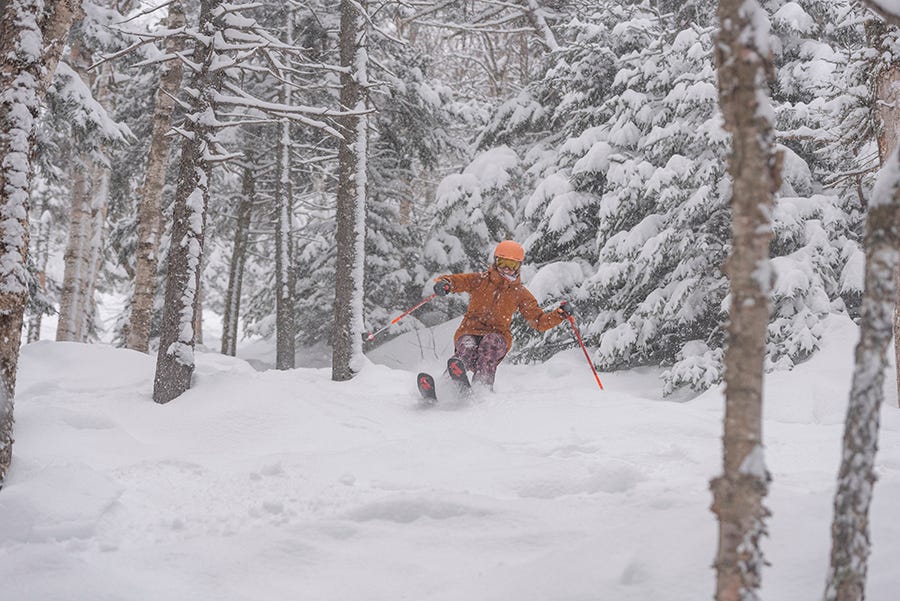
Jan 31, 2021
Podcast #36: Windham Mountain President Chip Seamans
The Storm Skiing Podcast is sponsored in part by: * Mountain Gazette - Listen to the podcast for discount codes on subscriptions and merch. * Helly Hansen - Listen to the podcast to learn how to get an 18.77 percent discount at the Boston and Burlington, Vermont stores. Who Chip Seamans, President and General Manager of Windham Mountain , New York Recorded on January 25, 2021 Why I interviewed him Because there it sits, 1,600 vertical feet of fall-line skiing within day-trip distance of New York City. Windham is one of four surviving Catskills mountains that together make up the first serious skiing cityfolk encounter when they point north into the wilderness. Hunter is the madhouse. Plattekill is the rebel. Belleayre is the cozy easy ski spot where you take your kids for warm-up rides on the gondola. Windham is something different. It draws Hunter’s crowds but without the concentration of knuckleheads straightlining double black diamonds in their Jets jerseys. It has Plattekill’s fall lines but with more vertical and faster lifts. It has Belleayre’s family appeal but without the awkward layer-cake trailmap (all the steep stuff is up top), that limits top-to-bottom family runs to a few trails off the shoulders. It’s a big mountain and a good one, and since the podcast hasn’t focused enough on New York ski areas, this seemed like a good place to start. What we talked about The exhilaration and intensity of coming up at Sunday River during the American Skiing Company’s heyday; snowmaking university; what ASC got right and wrong and how that impacts the ski industry to this day; how Seamans ended up running Kirkwood; how the South Tahoe snow bullseye and gnarly, cliff-hucking terrain was like a whole different planet from the snowmaking-intensive, over-groomed East; transitioning back east and landing at Windham; upgrading the mountain’s snowmaking; why they dropped a beginner area over the parking lot; the slowly expanding trail network and where we may see more additions; whether the mountain might further develop Wilderness Bowl or additional terrain expansions elsewhere on the mountain; why it may be a while before we see any of those additions; a hypothetical future second base area; why Windham finally cut an on-the-map glade and whether they might cut more; land development in New York State; how Windham massively upgraded its lift system with a creative chairlift shuffle; how difficult it is to move and shorten a 25-year-old high-speed quad; potential future lift upgrades; Baker isn’t going anywhere anytime soon; RFID; how Windham sets its season pass prices and why those ended up far higher than anticipated post-Covid; why the mountain joined the Ikon Pass and how its passholders responded to that partnership; a phenomenal run in season pass sales; what the Ikon-Windham partnership means for the New York City market; why the mountain decided to require Ikon Pass reservations this season; why Windham was left off the Ikon Pass even though it was a M.A.X. Pass mountain; thoughts on competing against state-subsidized Belleayre; who owns Windham and what their long-term intentions are; life in the age of Covid ops; and which changes may hang around after Covid fades. Why I thought that now was a good time for this interview Because Windham is making moves. The mountain just wrapped up a massive chairlift upgrade/switcheroo that strung a high-speed six-pack to the summit and replaced an aging triple with a high-speed quad. It’s added new trails in recent years, including a sprawling beginner area isolated from the chaos above. And it’s the Northeast’s newest addition to the Ikon Pass, both as a five- and seven-day partner and as a buy-up option for Windham season passholders. They’re not done yet. To understand the logic behind these moves and what might be next, I wanted to talk to the person guiding it all. Questions I wish I’d asked I’d liked to have talked a bit more about recovering from Hurricane Irene, which was Seamans’ first task when he arrived at the mountain a decade ago. What I got wrong Oops I referred to Wilderness Bowl as “West Bowl” but frankly I probably can’t name more than 10 ski trails in the entire country if I’m not looking directly at a trailmap because it’s just not something I pay attention to. Why you should go there Because Windham is one of the best ski areas in New York State. It’s better than you think and better than you remember. It’s big. The infrastructure is top-notch. The grooming is beautiful. Unlike neighboring Hunter, the trails actually follow the natural contours of the mountain. There’s little crossover between trails, making each run feel distinct and the whole area ski big. Is it expensive and crowded? Sure: welcome to the Catskills. Do I wish there were more glades and more bumps (especially in the spring)? Yes. Do I wish they’d stay open into April more consistently? Also yes. But this is a first-rate operation, ever evolving to meet the challenges of operating two-and-a-half hours from the nation’s largest city in a location that sometimes gets terrific amounts of snowfall and sometimes has dirt-bottomed forests in the middle of February. It draws a high-end crowd with high-end expectations and it delivers consistently. That’s harder to do than it sounds, and Windham gets it. Additional resources * Lift Blog’s inventory of Windham lifts * New York Ski Blog’s Windham adventure archives * A Storm Skiing Podcast with the owners neighboring Catskills mountain Plattekill COVID-19 & Skiing Podcasts: Author and Industry Veteran Chris Diamond | Boyne Resorts CEO Stephen Kircher | Magic Mountain President Geoff Hatheway | NSAA CEO Kelly Pawlak | Berkshire East/Catamount Owner & Goggles for Docs founder Jon Schaefer | Shaggy’s Copper Country Skis Cofounder Jeff Thompson | Doppelmayr USA President Katharina Schmitz | Mt. Baldy GM Robby Ellingson | Alterra CEO Rusty Gregory | NSAA Director of Risk & Regulatory Affairs Dave Byrd | Schweitzer Mountain President and CEO Tom Chasse The Storm Skiing Podcasts: Killington & Pico GM Mike Solimano | Plattekill owners Danielle and Laszlo Vajtay | New England Lost Ski Areas Project Founder Jeremy Davis | Magic Mountain President Geoff Hatheway | Lift Blog Founder Peter Landsman | Boyne Resorts CEO Stephen Kircher | Burke Mountain GM Kevin Mack | Liftopia CEO Evan Reece | Berkshire East & Catamount Owner & GM Jon Schaefer | Vermont Ski + Ride and Vermont Sports Co-Publisher & Editor Lisa Lynn | Sugarbush President & COO Win Smith | Loon President & GM Jay Scambio | Sunday River President & GM Dana Bullen | Big Snow & Mountain Creek VP of Sales & Marketing Hugh Reynolds | Mad River Glen GM Matt Lillard | Indy Pass Founder Doug Fish | National Brotherhood of Skiers President Henri Rivers | Winter 4 Kids & National Winter Activity Center President & CEO Schone Malliet | Vail Veterans Program President & Founder Cheryl Jensen | Mountain Gazette Owner & Editor Mike Rogge | Squaw Valley Alpine Meadows President & CMO Ron Cohen | Aspiring Olympian Benjamin Alexander | Sugarloaf GM Karl Strand – Parts One & Two | Cannon GM John DeVivo | Fairbank Group Chairman Brian Fairbank | Jay Peak GM Steve Wright | Sugarbush President & GM John Hammond | Mount Snow GM Tracy Bartels | Saddleback CEO & GM Andy Shepard | Bousquet owners and management | Hermitage Club GM Bill Benneyan | Powder Magazine Editor-in-Chief Sierra Shafer | Gunstock GM Tom Day | Bolton Valley President Lindsay DesLauriers | Get full access to The Storm Skiing Journal and Podcast at www.stormskiing.com/subscribe

Jan 22, 2021
Podcast #35: Bolton Valley President Lindsay DesLauriers
The Storm Skiing Podcast is sponsored in part by: * Mountain Gazette - Listen to the podcast for discount codes on subscriptions and merch. * Helly Hansen - Listen to the podcast to learn how to get an 18.77 percent discount at the Boston and Burlington, Vermont stores. Who Lindsay DesLauriers, President of Bolton Valley , Vermont Recorded on January 15, 2021 Why I interviewed her Because while plenty of independent, family-run ski areas remain in the Northeast, few have Bolton Valley’s size and stature. For skiing to remain vibrant and accessible, it needs ski areas large enough to be interesting but contained enough to be sustainable. Skiers – especially families – need alternatives to the ever-busier Epic and Ikon resorts. The number of people or companies that know how to manage something as fickle, demanding, complicated, and confusing as a ski resort are few. The number that can do that without mega-corporate backing is even fewer. The DesLauriers, who founded the ski area 55 years ago and improbably hacked it out of the Northern Vermont wilderness, have the institutional knowledge, passion, and community backing to manage, improve, evolve, and maintain the ski area well into the future. I wanted to get a sense of what that family legacy meant and where they intended to take the mountain now that they were firmly back in charge after a 20-year hiatus. What we talked about How the construction of I-89 led indirectly to Bolton Valley’s founding; the non-skiing family who founded Vermont’s last large ski area; the ski area’s roots as the everyman’s mountain and how that informs its legacy today; a multi-decade community-building legacy; how and why the DesLauriers reclaimed the mountain after a 20-year absence and the emotional impact of that reunion; growing up at a family-run ski area; bringing back summer; snowmaking upgrades; modernizing the night-skiing lights; hotel renovations; potential lift upgrades (could lift 4 return?); plans for Wilderness; much love for Hall lifts; the benefits of RFID gates; why Bolton Valley has night skiing and how it differentiates the mountain; potential night-skiing expansions; the Bolton Snowglobe; the mountain’s wild access road; the massive original masterplan and how much of that would be possible today; LOL sure try expanding a ski area in Vermont; a big unrelated land acquisition that could eventually be a related land acquisition; my big city ignorance revealed; Bolton’s rocking backcountry scene and heritage; why the mountain rents out touring gear; how the season pass base is weathering Covid; why Bolton Valley joined the Indy Pass and left the Freedom Pass; how the corporatization of large ski areas may ultimately be good for independent mountains like Bolton Valley; this video: Questions I wish I’d asked Among the questions I’d prepared that we didn’t have time for: who in the family does what at the ski area? Where could we see possible marked inbounds glade expansion? Does the summit wind turbine generate energy for the mountain or do they sell it? Does the mountain own and maintain the access road? How hard is it to compete when you’re positioned amidst so many corporate-owned ski areas? And various queries about the Covid shutdown in March and modified operations this winter. Next time. Why I thought that now was a good time for this interview Heading into ski season, social media Ski Bro chatter hewed toward the optimistic opinion that Vermont would magically relax travel restrictions in time to let us get our shred on. That didn’t happen. The state’s travel restrictions and quarantine requirements remained in place, and Vermont’s ski area operating guidelines piled on additional burdens, like documenting every single person who entered a base lodge. In November, DesLauriers released the video above, distilling the massive business disruption of the spring shutdown and the anticipated reduced volume and expense of adapted Covid ops into a real-talk message to Bolton skiers: this year would be about survival. Several weeks in, with the Christmas season behind us, I wanted to see how her outlook had evolved and how she thought Bolton Valley would ultimately weather this massive test. Why you should go there Because Bolton Valley gets the snow of the areas north and south of it without all the attention and crowds, while retaining common threads with all of them. Like Smuggs, it’s a bit underdeveloped and a bit understated, rowdy where you need it to be but a completely comfortable place to let your 10-year-old run free if you’re so inclined. Like Mad River Glen, it’s a bit of a time capsule, but less deliberately so. Like Sugarbush, it’s had periods of steady ownership disrupted by games of ski area musical chairs. Like Stowe, it’s seamlessly connected to the backcountry surrounding it – if you know where to look and how to approach it. In a Northeast flooded with more ski areas than anyone can accurately document, the mountains of Northern Vermont stand out. They are the cultural epicenter of the regional ski scene and the Eastern proving ground for aspiring big-mountain skiers. They get the most snow and house the best terrain. It’s hard to say you’ve skied the east until you’ve skied them all, and Bolton Valley is one of them. Hit it. Additional resources * A history of Bolton Valley from New England Ski History * Bolton Valley’s lift inventory and history on Lift Blog . * DesLauriers talked about restoring the old Lift 4 at mid-mountain, so skiers could lap the upper-mountain steeps on Vista without skiing all the way back to the base. You can see where this old lift sat in the 1984 trailmap: Lindsay walks us through Bolton Valley’s Covid protocols: Check out this Alba Adventures visit to Bolton Valley to get a feel for the area: COVID-19 & Skiing Podcasts: Author and Industry Veteran Chris Diamond | Boyne Resorts CEO Stephen Kircher | Magic Mountain President Geoff Hatheway | NSAA CEO Kelly Pawlak | Berkshire East/Catamount Owner & Goggles for Docs founder Jon Schaefer | Shaggy’s Copper Country Skis Cofounder Jeff Thompson | Doppelmayr USA President Katharina Schmitz | Mt. Baldy GM Robby Ellingson | Alterra CEO Rusty Gregory | NSAA Director of Risk & Regulatory Affairs Dave Byrd | Schweitzer Mountain President and CEO Tom Chasse The Storm Skiing Podcasts: Killington & Pico GM Mike Solimano | Plattekill owners Danielle and Laszlo Vajtay | New England Lost Ski Areas Project Founder Jeremy Davis | Magic Mountain President Geoff Hatheway | Lift Blog Founder Peter Landsman | Boyne Resorts CEO Stephen Kircher | Burke Mountain GM Kevin Mack | Liftopia CEO Evan Reece | Berkshire East & Catamount Owner & GM Jon Schaefer | Vermont Ski + Ride and Vermont Sports Co-Publisher & Editor Lisa Lynn | Sugarbush President & COO Win Smith | Loon President & GM Jay Scambio | Sunday River President & GM Dana Bullen | Big Snow & Mountain Creek VP of Sales & Marketing Hugh Reynolds | Mad River Glen GM Matt Lillard | Indy Pass Founder Doug Fish | National Brotherhood of Skiers President Henri Rivers | Winter 4 Kids & National Winter Activity Center President & CEO Schone Malliet | Vail Veterans Program President & Founder Cheryl Jensen | Mountain Gazette Owner & Editor Mike Rogge | Squaw Valley Alpine Meadows President & CMO Ron Cohen | Aspiring Olympian Benjamin Alexander | Sugarloaf GM Karl Strand – Parts One & Two | Cannon GM John DeVivo | Fairbank Group Chairman Brian Fairbank | Jay Peak GM Steve Wright | Sugarbush President & GM John Hammond | Mount Snow GM Tracy Bartels | Saddleback CEO & GM Andy Shepard | Bousquet owners and management | Hermitage Club GM Bill Benneyan | Powder Magazine Editor-in-Chief Sierra Shafer | Gunstock GM Tom Day Get full access to The Storm Skiing Journal and Podcast at www.stormskiing.com/subscribe
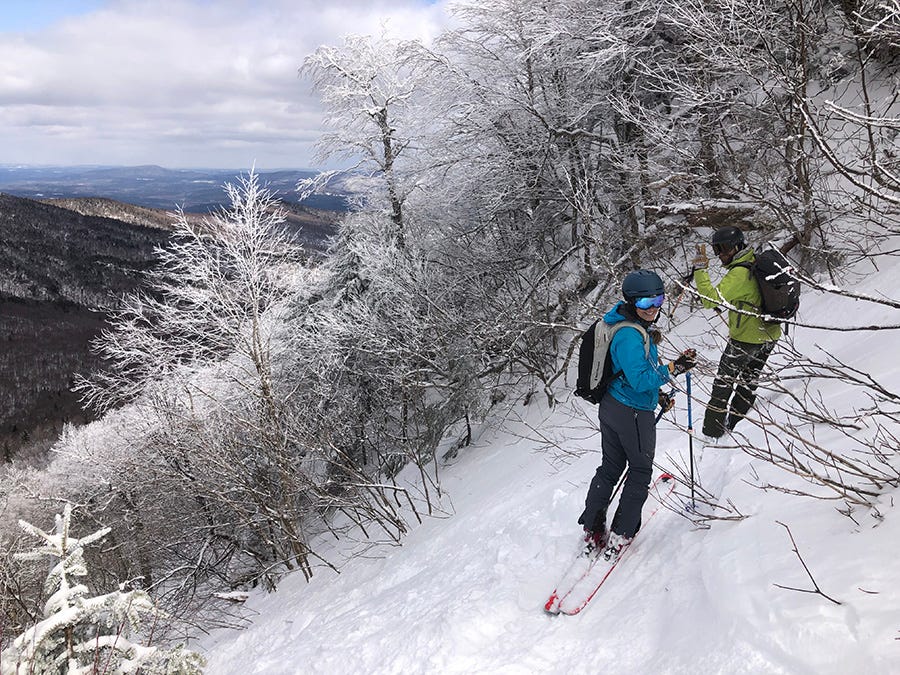
Jan 20, 2021
COVID-19 & Skiing Podcast #11: Schweitzer Mountain President and CEO Tom Chasse
The Storm Skiing Podcast is sponsored in part by: * Mountain Gazette - Listen to the podcast for discount codes on subscriptions and merch. * Helly Hansen - Listen to the podcast to learn how to get an 18.77 percent discount at the Boston and Burlington, Vermont stores. Recorded on Jan. 19, 2021 What this is This is the 11th in a series of short conversations exploring Covid-19’s effects on the ski industry. Click through to listen to the first 10: author Chris Diamond , Boyne Resorts CEO Stephen Kircher , Magic Mountain President Geoff Hatheway , NSAA CEO Kelly Pawlak , Berkshire East/Catamount Owner & Goggles for Docs founder Jon Schaefer , Shaggy’s Copper Country Skis Cofounder Jeff Thompson , Doppelmayr USA President Katharina Schmitz , Mt. Baldy GM Robby Ellingson , Alterra CEO Rusty Gregory , and NSAA Director of Risk & Regulatory Affairs Dave Byrd . Who Tom Chasse, President and CEO of Schweitzer Mountain Resort , Idaho Why I interviewed him One of the biggest risks to the reconstituted-for-Covid ski season was always going to be that large numbers of knuckleheads would treat mask requirements as the first shots fired in Civil War II. Schweitzer, an enormous ski Narnia poking off the tip of the Idaho panhandle, became the most visible instance of this phenomenon when General Manager Tom Chasse chopped three days of twilight skiing after cantankerous Freedom Bros continually threw down with exhausted staff over requests to mask up. While violations of mask mandates haven’t ignited widespread resort shutdowns and the vast majority of skiers seem resigned to them, Schweitzer’s stand nonetheless distills the precarious nature of lift-served skiing amidst a still-raging pandemic. Skiers, if they grow careless and defiant, can shut down mountains. And so can the ski areas themselves, if they feel they can’t safely manage the crowds descending upon them in this winter of there’s-nothing-else-to-do. While it’s unfortunate that a toxic jumble of misinformation, conspiracy theories, political chest-thumping, and ignorance has so thoroughly infected our population that even something as innocuous as riding a chairlift has become a culture war flashpoint, it has. And it’s worth investigating the full story at Schweitzer to gauge how big the problem is and how to manage it in a way that allows us to all keep skiing. What we talked about Why Schweitzer shut down night skiing over the MLK holiday weekend; how night skiing has changed this season; the verbal abuse hurled at Schweitzer’s staff when asking skiers to mask up; the cultural and political atmosphere in Idaho and how that complicates the resorts efforts; who’s enforcing the mountain’s mask mandate; handling defiant customers; the difference between mask compliance during the day and the evening and what’s behind that dynamic; the madness of crowds; the psychological fallout among front-line resort workers tasked with constant mask enforcement; how the community reacted to the shutdown news; Schweitzer’s philanthropic approach to night-skiing; the modified plan for night skiing in the immediate future; the challenge of operating in a state without a mask mandate and a county in which the sheriff refuses to enforce the local mask ordinance; how Freedom Bros have overwhelmed the best efforts of big-box corporate America in Idaho; why Schweitzer has stood by its mask policy regardless of steady push-back; how Idaho ski areas prepared for the season without clear guidelines from the state; how ski season is going outside of Covid protocol enforcement; Schweitzer’s long-term development plan; the makeup of the local ski market in Northern Idaho; the mountain’s land holdings and potential footprint; where the next expansion could go; the simplicity of expanding owned terrain in Idaho and how that compares to the regulatory snarl of New England construction; the difference between running a ski area in New Hampshire and Idaho; the possibility of Schweitzer joining the Ikon, Epic or Indy Passes; and what the Canadian border closure has meant for the mountain. The Storm Skiing Podcasts: Killington & Pico GM Mike Solimano | Plattekill owners Danielle and Laszlo Vajtay | New England Lost Ski Areas Project Founder Jeremy Davis | Magic Mountain President Geoff Hatheway | Lift Blog Founder Peter Landsman | Boyne Resorts CEO Stephen Kircher | Burke Mountain GM Kevin Mack | Liftopia CEO Evan Reece | Berkshire East & Catamount Owner & GM Jon Schaefer | Vermont Ski + Ride and Vermont Sports Co-Publisher & Editor Lisa Lynn | Sugarbush President & COO Win Smith | Loon President & GM Jay Scambio | Sunday River President & GM Dana Bullen | Big Snow & Mountain Creek VP of Sales & Marketing Hugh Reynolds | Mad River Glen GM Matt Lillard | Indy Pass Founder Doug Fish | National Brotherhood of Skiers President Henri Rivers | Winter 4 Kids & National Winter Activity Center President & CEO Schone Malliet | Vail Veterans Program President & Founder Cheryl Jensen | Mountain Gazette Owner & Editor Mike Rogge | Squaw Valley Alpine Meadows President & CMO Ron Cohen | Aspiring Olympian Benjamin Alexander | Sugarloaf GM Karl Strand – Parts One & Two | Cannon GM John DeVivo | Fairbank Group Chairman Brian Fairbank | Jay Peak GM Steve Wright | Sugarbush President & GM John Hammond | Mount Snow GM Tracy Bartels | Saddleback CEO & GM Andy Shepard | Bousquet owners and management | Hermitage Club GM Bill Benneyan | Powder Magazine Editor-in-Chief Sierra Shafer | Gunstock GM Tom Day | Get full access to The Storm Skiing Journal and Podcast at www.stormskiing.com/subscribe

Jan 13, 2021
Podcast #34: Gunstock President and General Manager Tom Day
The Storm Skiing Podcast is sponsored in part by Mountain Gazette . Listen to the podcast for discount codes on subscriptions and merch. The podcast is also sponsored in part by Helly Hansen . Listen to the podcast to learn how to get an 18.77 percent discount at the Boston and Burlington, Vermont stores. Who Tom Day, President and General Manager of Gunstock , New Hampshire Recorded on January 11, 2021 Why I interviewed him Because Gunstock is everything you could want from a New England ski area: scrappy and stubborn, anchored by history but decked out with a high-speed summit lift and modern snowmaking, a trail network that’s equal parts twisty gnar and ski-them-asleep greens, easy to get to but far enough from horn-honking life to feel apart from it. In a consolidating industry, the place remains unique: county-owned and independent, Gunstock remains proudly outside of any multipass coalition and likely will for the foreseeable future. It was one of the last ski areas in the country to turn off the lifts in the March Covid shutdown and did not follow the industry trend of guaranteeing season passes in the event of another closure. Yet Gunstock remains future-oriented, with ambitious expansion proposals and infrastructure upgrades conceived on all sides of the mountain. I wanted to talk to the person who was maintaining that legacy and identity while guiding the mountain through the challenges of our Covid winter. What we talked about The evolution of New Hampshire skiing from the slow-lift days of the late 1970s; when skiers used to be outsmarted by triple chairs and detachable lifts; working his way up from liftie to general manager of Waterville Valley; the challenge and exhilaration of dusting out of the ski industry for a decade on a series of rambling life adventures; what drew Day back to New Hampshire after years of skiing Wasatch powder 80 days a year; the heroic legend of the New England skier archetype; the differences and similarities between running Waterville Valley and Gunstock; Gunstock’s Works Progress Administration and Civilian Conservation Corps legacy and history; the story behind the first chairlift in the East and what’s left of that chair today; what’s left of the original Gunstock ski area on Mount Rowe; whether Gunstock could ever expand onto the abandoned Alpine Ridge ski area and what that expansion could look like; what distinguishes Gunstock’s cross-country operation and how the ops crew got creative when the snowmaking system malfunctioned; the remnants of the downhill operation on Cobble Mountain; the status of the proposed Southwest Pistol expansion; the bygone days of hiking the mountain, topo map in hand, and marking trails for cutting; the advantages and pitfalls of county ownership of a ski area; why Gunstock pushed its March Covid closure past most of the rest of the industry and what that final week was like; how the ski area saved its season passholder base after the early shutdown and accompanying economic apocalypse; how Covid protocols are changing consumer habits and expectations for the better; everybody loves skiing now; why Gunstock declined to offer a Covid-related season pass refund or deferral program (and what they offer instead); why the mountain joined the New Hampshire College Pass; whether we could ever see Gunstock on the White Mountain Super Pass or the Indy Pass; thoughts on operating in the heart of what is now Vail country; Day’s long-term vision for Gunstock’s lift fleet; the state of the mountain’s snowmaking system; the night-skiing boom; mask adherence; possible glade expansion; how Covid ops are working out; the party in the parking lot. Why I thought that now was a good time for this interview Because as New Hampshire skiing rapidly corporatizes and reorients toward megapasses, Gunstock has, with the exception of its New Hampshire College Pass partnership, remained independent. And successful. The mountain fought through Hurricane Covid, forgoing most of its summer business and focusing on saving and then growing its ski season passholder base. How it was able to do that, and how the complete undoing of Ye Old Ways of running a ski area would inform future operations, was a story I wanted to hear. Why you should go there From points south (most of us), it’s closer than most other sizeable ski areas in New Hampshire. And it’s bigger than you think. With a vertical drop close to 1,400 feet and 227 skiable acres, Gunstock stacks up favorably to Mount Sunapee and is in the same class area-wise as Wildcat and Waterville Valley, or Magic in Vermont. The mountain has a good trail mix served by nicely spread-out lifts, a feature that Day is less fond of but that I like for crowd-busting on busy days. If you don’t care about multi-resort or Western access and you’re just looking for an understated home mountain that will keep you interested and your family busy, this is it. Additional reading/videos: * Day mentions a book called The History of Gunstock, by Carol Lee Anderson. Buy it here * New England Ski History has a tremendous rundown of Gunstock (and every other ski area in the region) * Gunstock trailmaps dating to 1964 * Lift Blog’s inventory of Gunstock’s lift system. * More on the proposed Alpine Ridge expansion * I asked Day about the vertical drop on Mount Rowe – it looks as though the old Alpine Ridge ski area on that peak advertised 400 feet * More on the proposed Southwest Pistol expansion * Gunstock’s Covid ops videos, which is one of the better ones out there from a watchability point of view: COVID-19 & Skiing Podcasts: Author and Industry Veteran Chris Diamond | Boyne Resorts CEO Stephen Kircher | Magic Mountain President Geoff Hatheway | NSAA CEO Kelly Pawlak | Berkshire East/Catamount Owner & Goggles for Docs founder Jon Schaefer | Shaggy’s Copper Country Skis Cofounder Jeff Thompson | Doppelmayr USA President Katharina Schmitz | Mt. Baldy GM Robby Ellingson | Alterra CEO Rusty Gregory | NSAA Director of Risk & Regulatory Affairs Dave Byrd The Storm Skiing Podcasts: Killington & Pico GM Mike Solimano | Plattekill owners Danielle and Laszlo Vajtay | New England Lost Ski Areas Project Founder Jeremy Davis | Magic Mountain President Geoff Hatheway | Lift Blog Founder Peter Landsman | Boyne Resorts CEO Stephen Kircher | Burke Mountain GM Kevin Mack | Liftopia CEO Evan Reece | Berkshire East & Catamount Owner & GM Jon Schaefer | Vermont Ski + Ride and Vermont Sports Co-Publisher & Editor Lisa Lynn | Sugarbush President & COO Win Smith | Loon President & GM Jay Scambio | Sunday River President & GM Dana Bullen | Big Snow & Mountain Creek VP of Sales & Marketing Hugh Reynolds | Mad River Glen GM Matt Lillard | Indy Pass Founder Doug Fish | National Brotherhood of Skiers President Henri Rivers | Winter 4 Kids & National Winter Activity Center President & CEO Schone Malliet | Vail Veterans Program President & Founder Cheryl Jensen | Mountain Gazette Owner & Editor Mike Rogge | Squaw Valley Alpine Meadows President & CMO Ron Cohen | Aspiring Olympian Benjamin Alexander | Sugarloaf GM Karl Strand – Parts One & Two | Cannon GM John DeVivo | Fairbank Group Chairman Brian Fairbank | Jay Peak GM Steve Wright | Sugarbush President & GM John Hammond | Mount Snow GM Tracy Bartels | Saddleback CEO & GM Andy Shepard | Bousquet owners and management | Hermitage Club GM Bill Benneyan | Powder Magazine Editor-in-Chief Sierra Shafer | Get full access to The Storm Skiing Journal and Podcast at www.stormskiing.com/subscribe
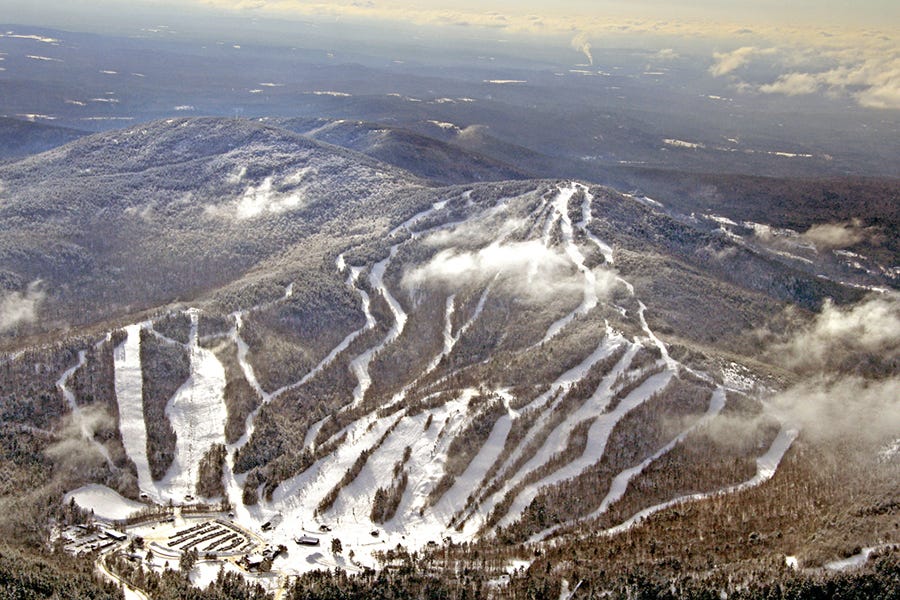
Dec 11, 2020
Podcast #33: 'Powder Magazine' Editor-in-Chief Sierra Shafer
The Storm Skiing Podcast is sponsored by Mountain Gazette . Get 10 percent off subscriptions with the code “GOHIGHER10” at check-out. Get 10 percent off everything else with the code “EASTCOAST.” Who: Sierra Shafer, Editor-in-Chief of Powder Magazine Recorded on: December 9, 2020 Why I interviewed her: Because over the half past century, no single entity has better defined how we ski, what we ski, and the way that we think and talk about skiing than Powder Magazine . It is a guidebook and a glossary and a portal to untold ski Narnias beyond our limited worlds. Without it, we are all standing in that gondola line at Vail last year , amazed at the glimmer and expense of it all but confused about what to do. Some of us have our helmets on backwards and we’re ready to shred the groomers in these newfangled parabolic skis and it’s gonna be great man because no winter is complete without our three-day annual ski vacation. Powder defined the possible beyond that staid and stampeding and limited resort experience. And what was possible, it turned out, was almost anything. This world is filled with mountains and it’s filled with snow and Powder was our printed Hollywood, teleporting us into places so surreal and spectacular that they would make Pandora sneak out the back door in embarrassment. There are people who ski and there are skiers, man, and if you don’t know what the difference is you will by the time you hit the Shooting Gallery in any issue of Powder . It’s our compass. Or it was. Because s**t someone just turned off the magnetic field and now we have no idea which way to go, and excuse me Sir but exactly how does the Earth just stop having a north? Oh I see. So I just follow the signs to Lionshead and everything will be cool? OK thanks so much for that Epic tip. Skiing really is just swell. What we talked about: How the American Media acquisition went down and how the Powder crew reacted; the immediate staffing and institutional changes that followed and how those impacted morale; becoming Powder’s first female editor-in-chief; honoring the magazine’s legacy while evolving it for the current world; the challenges and opportunities of creating a more inclusive magazine; killing “top women’s X or Y” lists; how Powder plans its season slate; the challenge of balancing a rad print magazine and with a rad social media operation; what happened when American Media sliced the 2019-20 production run from six to four issues; why the magazine lost its internship and fellowship programs; which subscriber demographic had been growing in recent years; Powder’s reaction to this summer’s Black Lives Matter protests; how we got the Naked Guy cover on this season’s first issue; the backstory behind that photo; whether the snippet on the first issue’s spine was a warning of the shutdown to come; when American Media delivered the news that they were furloughing the Powder staff, the reasons they gave, and how the team reacted; remaking the final issue in just two weeks; planning the cover for the final issue once they realized it would be the final issue; measuring the magazine’s impact via the testimonials that tumbled in after The Terrible News broke; Easter eggs in the final issue; what American Media is offering Powder subscribers in place of future issues and what it revealed about how well they know their own magazine; whether the magazine is for sale and how much interest there is in purchasing it; what future hypothetical owners would need to do to make Powder sustainable; the appeal of paper in the digital wormhole of 2020; and optimism for the future of ski magazines. Questions I wish I’d asked: I wasn’t entirely clear why changes in California labor laws led to the loss of Powder’s internship programs, and I should have asked Shafer to elaborate on that a bit. I also wanted to ask what the alternative to the Naked Guy cover was that the team had prepared in case the A360 execs rejected it. Why I thought that now was a good time for this interview: Because well you see I looked around for the complaint department at A360 Media, the skier-hating corporate overlords who decided that the best way to end 2020 was to shut down the greatest ski magazine of all time, but I couldn’t find the gosh-darn thing and so here we are. I wanted to hear the full story of A360’s tenure, which has been defined by abrupt then steady cuts that ended with the biggest cut of all: everything. Powder Magazine is no more(-ish), and we need answers, damn it, and Shafer was the best positioned person to give us the broadest possible context about what happened, why it happened, and what may come next. Additional reading: * Former Powder editor and current Adventure Journal editor Steve Casimiro wrote a pair of reactions to the shutdown news. * My own thoughts on Powder * The shuttering of Powder comes just a few years after Skiing closed after a nearly 70-year run. While not as beloved by the hardcore, Skiing was a hell of a good magazine. This tribute by Mike Peruzzi is the best statement of the magazine’s mission and legacy that I’m aware of. Let’s not let this happen again Here are some ski mags you can still subscribe to: * Ski Journal * Ski * Freeskier Follow The Storm Skiing Journal on Facebook and Twitter . COVID-19 & Skiing Podcasts: Author and Industry Veteran Chris Diamond | Boyne Resorts CEO Stephen Kircher | Magic Mountain President Geoff Hatheway | NSAA CEO Kelly Pawlak | Berkshire East/Catamount Owner & Goggles for Docs founder Jon Schaefer | Shaggy’s Copper Country Skis Cofounder Jeff Thompson | Doppelmayr USA President Katharina Schmitz | Mt. Baldy GM Robby Ellingson | Alterra CEO Rusty Gregory | NSAA Director of Risk & Regulatory Affairs Dave Byrd The Storm Skiing Podcasts: Killington & Pico GM Mike Solimano | Plattekill owners Danielle and Laszlo Vajtay | New England Lost Ski Areas Project Founder Jeremy Davis | Magic Mountain President Geoff Hatheway | Lift Blog Founder Peter Landsman | Boyne Resorts CEO Stephen Kircher | Burke Mountain GM Kevin Mack | Liftopia CEO Evan Reece | Berkshire East & Catamount Owner & GM Jon Schaefer | Vermont Ski + Ride and Vermont Sports Co-Publisher & Editor Lisa Lynn | Sugarbush President & COO Win Smith | Loon President & GM Jay Scambio | Sunday River President & GM Dana Bullen | Big Snow & Mountain Creek VP of Sales & Marketing Hugh Reynolds | Mad River Glen GM Matt Lillard | Indy Pass Founder Doug Fish | National Brotherhood of Skiers President Henri Rivers | Winter 4 Kids & National Winter Activity Center President & CEO Schone Malliet | Vail Veterans Program President & Founder Cheryl Jensen | Mountain Gazette Owner & Editor Mike Rogge | Squaw Valley Alpine Meadows President & CMO Ron Cohen | Aspiring Olympian Benjamin Alexander | Sugarloaf GM Karl Strand – Parts One & Two | Cannon GM John DeVivo | Fairbank Group Chairman Brian Fairbank | Jay Peak GM Steve Wright | Sugarbush President & GM John Hammond | Mount Snow GM Tracy Bartels | Saddleback CEO & GM Andy Shepard | Bousquet owners and management | Hermitage Club GM Bill Benneyan | Get full access to The Storm Skiing Journal and Podcast at www.stormskiing.com/subscribe

Dec 4, 2020
Podcast #32: Hermitage Club General Manager Bill Benneyan (+ a Mountain Creek Bonus)
The Storm Skiing Podcast is sponsored by Mountain Gazette . Get 10 percent off subscriptions with the code “GOHIGHER10” at check-out. Get 10 percent off everything else with the code “EASTCOAST.” Who: Bill Benneyan, General Manager of Hermitage Club , Vermont, and former President, COO, and General Manager of Mountain Creek , New Jersey. Recorded on: December 1, 2020 Why I interviewed him: So you’re profiling a mountain with a 50K buy-in and another 15 grand a year to keep playing in the sandbox? This from the same podcast/newsletter outfit that constantly bumps the virtues of the $229 Indy Pass and its motley coalition of back-of-the-woods, shack-at-the-bottom-of-a-40-year-old-double-chair family-run ski areas? The same Storm Skiing Journal that’s constantly complaining about the price of single-mountain season passes ticking percentage points above the cost of big-money-backed Epic and Ikon Passes? What gives, Bro? The thing about lift-served skiing is that it’s a big, complicated, wonderful kingdom, with room for almost infinite interpretations of how a ski area can exist, function, operate, and thrive. The private ski area is one of many possible versions of Haystack as a ski area, and, as it turns out due to a clause in a previous sales contract, the only possible skiing-based version, as Bill explains in the podcast. It’s this or watch the place disappear back into the mountain over the next 30 years. Besides, there is nothing to be bitter about here: the one percenters didn’t rope off Killington or Sugarbush. This is a 1,400-vertical-foot mountain that’s steps away from one of the largest ski areas in Vermont (Mount Snow), and within an hour of three other larger ones (Stratton, Bromley, Magic). There are budget ways to ski each or all of these, and the presence of a tony version of these southern Vermont mainstays does more to bolster the region’s overall ski cache and culture than anything. Besides, the mountain, with all its intermittent struggles and triumphs, survives against considerable odds, and that’s a story I wanted to hear. I also wanted to talk about Mountain Creek. And you Mountain Creek haters are just going to have to find a way to deal with that. What we talked about: Hermitage Club: How a group of former members superheroed out of the clear blue sky to buy the ski area out of auction in spite of protests from irascible failed owner Jim Barnes; the status of Barnes’ legal challenges to the new ownership group; the importance of operating the new operation with integrity to win back the trust of a traumatized community; the endless tension between resorts and resort towns; the club’s roots and how Hermitage Club 1.0 went wrong; same name, new business – this is a total reset; dealing with Vermont’s Act 250; the immense package of assets that came with the ski area; what the new owners sold to refocus on skiing; why the club contracted the Schaefer family, owners of Berkshire East and Catamount , to help run the place; rebuilding the workforce after the ski area sat dormant for two years; ISO: Snowcat driver/sous chef; the ski area’s anticipated operating season; why Hermitage Club aka Haystack could never operate as a public ski area; private rentals are available; membership caps, both for this season and long term; opportunities for summer business; Benneyan’s reaction to Chris Diamond’s assertion in Ski Inc. 2020 (a must-read) that the Hermitage Club was unlikely to ever be viable as a private ski area; the zany, uneven history of Haystack ski area; ditching the lobster thermidor for a more reality-based experience; what it takes to become a member; whether former members of the bankrupt club were grandfathered into the new iteration; how to ski the club if you’re not a member; what would have happened had someone bought and removed the Barnstormer six-pack; the justification behind removing the Hayfever Triple (which is now Bousquet’s summit chair ); the state of the remaining lift fleet; possible future lift additions; the impact of losing 41 snowguns to Mount Snow and the condition of the snowmaking system in general; future snowmaking improvements; the state of the trail network and how the crew prepped the whole thing to come back online for the 2020-21 ski season; long-term trail expansion opportunities; what the ski area wants to upgrade next; how the private club intends to honor the history of the public Haystack mountain; and the club’s relationship with neighboring Mount Snow. Mountain Creek: Why I’m an unapologetic Mountain Creek fan in spite of its obvious flaws; how the place “gets in your blood”; how to manage the hordes of terrible skiers that overwhelm the place on any given weekend; how true Creek skiers manage the crowds; why NYC is lucky to have a mountain of that size that close; the immense challenges of managing a large ski area with two base areas, marginal temperatures, enormous crowds, and little natural snow; why Mountain Creek may be the best ski area in the country to learn the business; the incredible and surreal transformation of the ski area from Vernon Valley-Great Gorge to Mountain Creek in the Intrawest post-acquisition maelstrom summer of 1998; the regulatory obstacles that were waiting like a brick wall to stop Intrawest’s 100-mile-an-hour machine; the grand and unrealized vision of Mountain Creek-as-quaint-ski-village and why that didn’t happen; how the great transformation changed the mountain’s character; how Intrawest decided what to replace and what to install instead; the true story behind the installation of the Cabriolet and its “flying buckets,” the most ridiculed ski lift in the Northeast; why Creek didn’t ultimately work out as an Intrawest property. Why I thought that now was a good time for this interview: Because 10 months ago, Hermitage Club looked like it was about to be dismantled and sold off like a decommissioned warship. Vail had plucked more than three dozen snowguns off the ski area’s slopes and moved them over to Mount Snow. Boyne, among others, had bid on the Barnstormer high-speed six-pack and was ready to send in the helicopters to move it God knows where in its giant network. The place had sat fallow for two seasons, and if Hermitage Club lost that lift, it likely would have followed nearby Maple Valley into the abyss of lost ski areas. Then, miraculously, in the wild and silent early days of the pandemic, when all news was THAT news, a group of 181 mostly former owners announced that they had bought the ski area and all related assets at auction for a touch over $8 million. This despite a barrage of legal hijinks meant to overturn or delay the ruling by former owner and world-class knucklehead Jim Barnes. The new owners, a collection of mostly business professionals more capable with a Power Point deck than a Snowcat, made a couple of key early decisions that reset the club’s scope and made sure the snowguns would be pointed in the right direction: they shed extraneous assets to refocus on skiing, and they brought in a posse of ski industry badasses who could probably set up a snowskiing operation in the Florida Keys if you let them try it. That included, as consultants, the Schaefer family, who are the long-time operators of Berkshire East and Catamount ski areas in Massachusetts (Jon Schaefer has appeared twice on The Storm Skiing Podcast), and Benneyan, who for more than two decades learned how to pull a bear out of a rabbit-sized hat as one of the top guys at Mountain Creek, a snowskiing operation where it seems to never snow anymore. Compared to North Jersey, Southern Vermont is Little Cottonwood Canyon, and the team that’s in charge of the skiing is going to make sure the skiing is as good as the skiing can possibly be. I think they’re doing it right this time, and I wanted to hear about it from the guy in charge of making it all happen. Why you should go there: Well you probably can’t, but let’s suspend our imaginations for a moment and pretend an initiation fee about equal to the average annual American income is not an obstacle: you should go there because skiing in Southern Vermont on a weekend can feel like trying to catch the last shuttle off Planet Earth before its molten core atomizes its population into spacedust. Skiing at Hermitage Club is probably not like that. It’s probably like skiing at Hunter on a windy day when it’s 37 degrees and raining. Only without the wind or the rain - just the almost complete absence of people. Or it’s probably like skiing at a place everybody forgot about, or a place from the past, but like a weird steampunk past where they’d invented shaped skis and six-passenger bubble chairs. Or it’s all of those things. It’s probably just amazing. And if you have kids and a bank balance that has a hard time finding a teeter-totter partner, then this is something you may want to think about, especially in this year when flying is bad and crowds are bad and crossing state lines is bad. But if you’re just a regular dude whose money has to be spent on, you know, food and that kind of b******t, then make friends with a member, because members are allowed to bring guests (eventually). Or, you know, save up and make it happen. Good luck. Bonus video: Here’s a cool video of The Witches pod that the previous iteration of the club commissioned: In case you’re digging the Mountain Creek history bit: For context on the Mountain Creek conversation, the Vernon Valley-Great Gorge trailmap in 1997, the year before Intrawest bought the place: The transformation for the 1998 season was remarkable - perhaps the largest single-season overhaul of a ski area in the history of lift-served skiing. Only two of the chairlifts from the map above remain (the Vernon Triple, which stands today, and the Soujourn Double, which was replaced a few years back with another double; the tow ropes have all since been removed and replaced with a cluster of magic carpets adjacent to the Cabriolet): Get full access to The Storm Skiing Journal and Podcast at www.stormskiing.com/subscribe
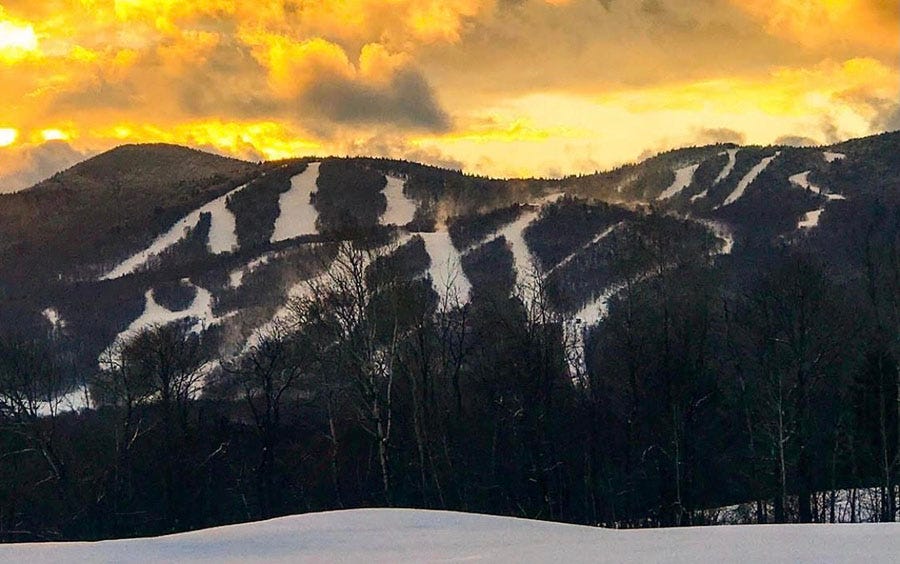
Nov 20, 2020
Podcast #31: Bousquet Owners & Management
The Storm Skiing Podcast is sponsored by Mountain Gazette . The first issue drops in November, and you can get 10 percent off subscriptions with the code “GOHIGHER10” at check-out. Get 10 percent off everything else with the code “EASTCOAST.” Who: Mill Town CEO and Managing Director Tim Burke, Bousquet General Manager Kevin McMillan, and Pittsfield native and Olympic Skier Krista Schmidinger Recorded on: November 16, 2020 Why I interviewed them: Because lift-served skiing is not just a few giant ski areas hanging off the top of New England, flying the flags of corporate overlords five or 10 states away. Skiing, like a forest, is an ecosystem. A forest needs trees and insects and water and dirt and a food chain of animals. Everyone likes to look at the wolves, but we don’t have wolves without chipmunks. Skiing is the same. We don’t have Stowe or Sunday River or Whiteface without Bousquet – at least, we don’t have them as sustainable long-term entities, because otherwise where would the new skiers come from? Some people learn to ski at the monsters, but most of us don’t, and ski areas like Bousquet, anchored deeply their communities, are some of the most productive new-skier engines there are. Part of my mission, as I see it, is to tell the story of lift-served skiing as it evolves in the Northeast, and the way that smaller ski areas like Bousquet are managing to thrive in a warming world and a consolidating industry is a vital and often-overlooked part of that story. What we talked about: How long the deal to buy Bousquet had been in the works; why the mountain was an attractive asset despite the investments needed to modernize it; Mill Town’s intention to own Bousquet for the long term; whether they would consider rescuing closed-down Blandford; echoes of Arctaris’ rescue of Saddleback; how the partnership with the owners of Berkshire East and Catamount is helping a non-skiing company rebuild Bousquet’s entire on-mountain infrastructure in a matter of months; the snowpipe landmines buried in the hillsides; hiring the right GM; what the triple chair replaces and how construction is progressing; what happened to the yellow and green chairs after they demolished the lifts; additional offseason lift upgrades; the location and setup of the new beginner area; tubing survives; how the ski area altered terrain at the summit to hold snow better and assist with chairlift unloading; the ski area’s current and potential footprint; where we may see future glade development; when the new trailmap and website will drop; this offseason’s massive snowmaking upgrades; the mountain’s water supply; the target opening date; Bousquet’s new grooming fleet; the lodge is closed this year and what skiers will find in its place; why Bousquet joined the Berkshires Summit Pass with Berkshire East and Catamount; whether Bousquet would consider joining the Indy Pass; how the mountain is managing day lift tickets this season; RFID gates are here; Krista’s story of growing up at Bousquet and taking the lessons she learned there all the way to Olympic competition; mastering skiing via the Malcom Gladwell-defined 10,000 hours of bombing the slopes of Bousquet; the ski area’s deep racing legacy; the programs that Krista will run and how she can help the ski area center itself more solidly in the broader skiing community. Why I thought that now was a good time for this interview: Because with a new ownership group in place, Bousquet is getting the reboot it probably needs to thrive in the decades to come. Any independent ski area – especially a small independent ski area – is going to need some combination of reliable blanket snowmaking, sufficient capital to keep up with maintenance and basic infrastructure upgrades, membership in some kind of broader coalition, and a local population handcuffed to the mountain’s fate. Mill Town brings the first two. Becoming the third Muskiteer [this is why I need an editor] to Berkshire East and Catamount provides the third. The mountain’s crash-landing like the Transformers Ark on the outskirts of Pittsfield provides the final piece, because ask Rangeley what it’s like to be a ski town without a ski area. With a new-used summit chair dropping in and upgrades all over the mountain, Bousquet’s new owners made an offseason statement that they’re here to party, and I wanted to peak in the door to see just how rowdy things were getting. Why you should go there: There’s a common skier’s mentality that discards small ski areas as a person’s skills improve and they move on to the 42-chairlift monsters humping over the multi-summited mountains on the horizon. Like a snake shedding its skin, these skiers assume the smaller version no longer fits them and should be left behind. I kind of get this: there is nothing quite like getting lost in a vast ski circus on a snowy day, popping out of some glade onto some narrow trail leading to an empty spinning lift planted, it seems, in the middle of some secret wilderness that is yours alone. But there’s something to a small ski area too, to the energy of countless children unleashed and gleeful in their great roving packs, to ripping off a dozen laps in an hour, to never having to consult a trail map, to trimming skiing back to the motion and the sensation that are its basic animal appeals. I know all this because I was the big snake for a while and when I had kids I realized those little ski areas still fit pretty good after all. They’re easier on kids and they’re better for them too, and they’re better for me, because when my daughter and I are cruising around Bousquet , I don’t have that I-wonder-what-the-trees-are-like-today FOMO that rides me at Killington or Sugarbush. And while that’s true of all small ski areas, Bousquet, historic and resurgent and beloved, lies in a special class of must-visit local bumps inextricably tied to Massachusetts and New England skiing culture and lore. Additional reading/videos: From New England Ski History : The roots of Bousquet were planted in the ski trains of the 1930s, when New Yorkers would depart from Grand Central Station on New Haven Railroad trains in the early morning hours for a day of skiing on the Bousquet farm in Pittsfield. As the legend goes, Clarence Bousquet installed a rope tow in the spring of 1935, increasingly the area rate from 25 cents to $1.00 A second tow was added for the 1936-37 season, as Bousquet quickly became a well-known ski area. A third tow was likely added for 1937-38, while a fourth debuted for 1938-39. The Hartford Courant declared the area "one of America's finest ski developments," citing the longest rope tow in the world. Read more… A trail map from (no s**t) 1936. I’m not sure if that’s supposed to be fluffly clouds or the Himalayas rising in the background: A Berkshire Eagle video of helicopters flying summit chair towers earlier this week: Follow The Storm Skiing Journal on Facebook and Twitter . COVID-19 & Skiing Podcasts: Author and Industry Veteran Chris Diamond | Boyne Resorts CEO Stephen Kircher | Magic Mountain President Geoff Hatheway | NSAA CEO Kelly Pawlak | Berkshire East/Catamount Owner & Goggles for Docs founder Jon Schaefer | Shaggy’s Copper Country Skis Cofounder Jeff Thompson | Doppelmayr USA President Katharina Schmitz | Mt. Baldy GM Robby Ellingson | Alterra CEO Rusty Gregory | NSAA Director of Risk & Regulatory Affairs Dave Byrd The Storm Skiing Podcasts: Killington & Pico GM Mike Solimano | Plattekill owners Danielle and Laszlo Vajtay | New England Lost Ski Areas Project Founder Jeremy Davis | Magic Mountain President Geoff Hatheway | Lift Blog Founder Peter Landsman | Boyne Resorts CEO Stephen Kircher | Burke Mountain GM Kevin Mack | Liftopia CEO Evan Reece | Berkshire East & Catamount Owner & GM Jon Schaefer | Vermont Ski + Ride and Vermont Sports Co-Publisher & Editor Lisa Lynn | Sugarbush President & COO Win Smith | Loon President & GM Jay Scambio | Sunday River President & GM Dana Bullen | Big Snow & Mountain Creek VP of Sales & Marketing Hugh Reynolds | Mad River Glen GM Matt Lillard | Indy Pass Founder Doug Fish | National Brotherhood of Skiers President Henri Rivers | Winter 4 Kids & National Winter Activity Center President & CEO Schone Malliet | Vail Veterans Program President & Founder Cheryl Jensen | Mountain Gazette Owner & Editor Mike Rogge | Squaw Valley Alpine Meadows President & CMO Ron Cohen | Aspiring Olympian Benjamin Alexander | Sugarloaf GM Karl Strand – Parts One & Two | Cannon GM John DeVivo | Fairbank Group Chairman Brian Fairbank | Jay Peak GM Steve Wright | Sugarbush President & GM John Hammond | Mount Snow GM Tracy Bartels | Saddleback CEO & GM Andy Shepard Get full access to The Storm Skiing Journal and Podcast at www.stormskiing.com/subscribe
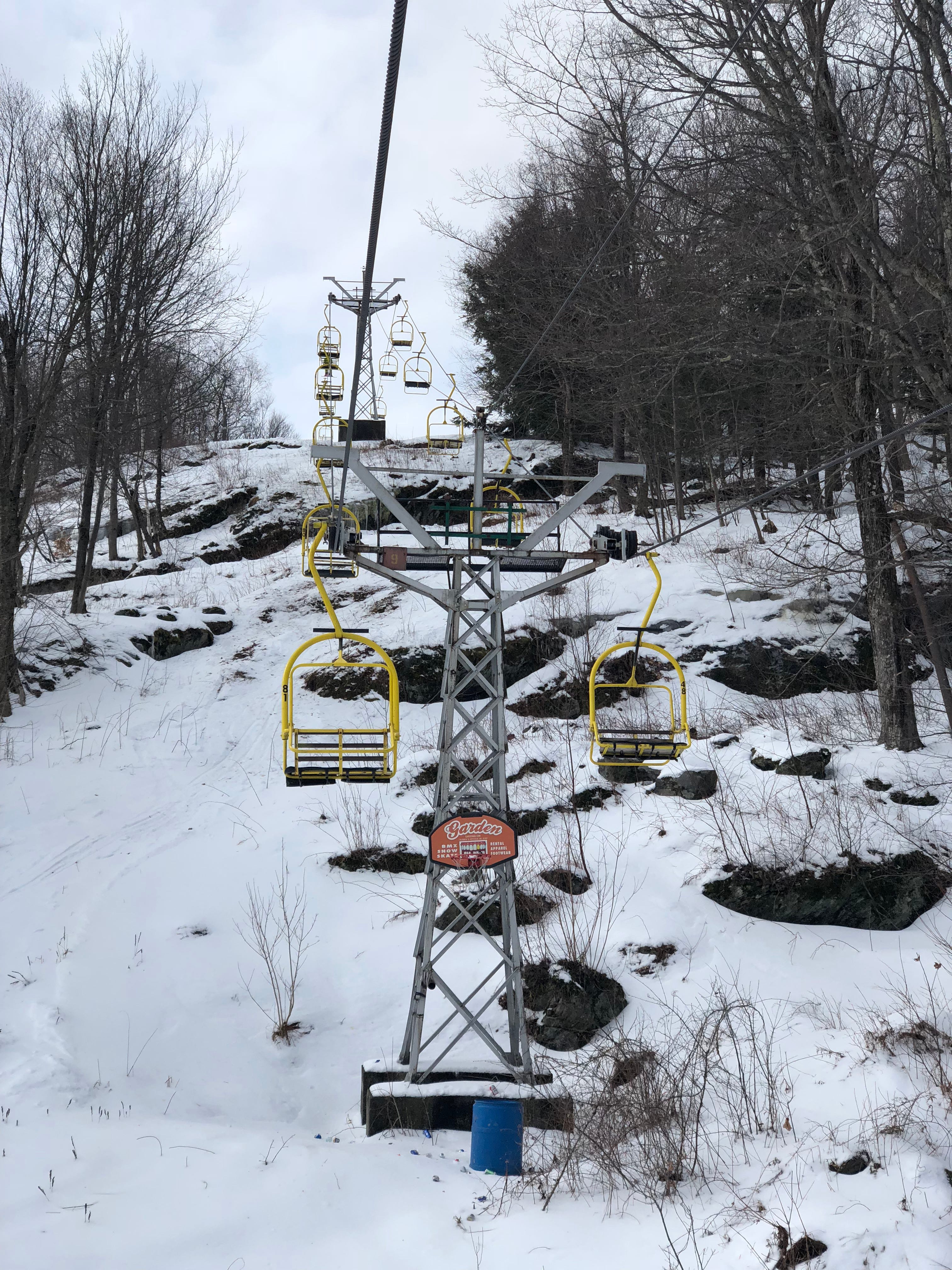
Nov 13, 2020
Podcast #30: Saddleback GM and CEO Andy Shepard
The Storm Skiing Podcast is sponsored by Mountain Gazette . The first issue drops in November, and you can get 10 percent off subscriptions with the code “GOHIGHER10” at check-out. Get 10 percent off everything else with the code “EASTCOAST.” Who: Andy Shepard, General Manager and CEO of Saddleback , Maine Recorded on: Nov. 9, 2020 Why I interviewed him: Because this is one of the best pure skier’s mountains in the Northeast. Classic New England steep and twisty shots run between broad gladelands of the sort that inject lift-served skiing with a patina of rambling adventure. It is probably the best mid-sized ski area in New England (even if it’s at the upper end of “mid-sized” and probably falls somewhere more on the “medium-to-large” end of the spectrum), and it may be on its way to becoming one of the best large ski areas in the region if everything falls right. A study of the ski area’s steadily morphing trailmaps over the past two decades demonstrates that Saddleback is a place where imagination translates seamlessly into the possible – when outer forces can be kept from foiling the mountain’s boundless expansion ambitions. As this monster prepares to drop back online, I wanted to see how much of the ski area’s oft-stalled momentum had been re-ignited behind the energy and vision of new owners and management. What we talked about: The enormous challenge of bringing a mothballed ski area back online and how Covid compounded that effort; the Oompa Loompas kept the machinery from decaying while Willy Wonka was away; the incredible liability of relying on an antique double as your alpha chairlift; details on the enormous base lodge renovations; persistence through the springtime Covid ambush; the collective desperate energy to be outside right now; how pandemic-era changes to travel patterns may make this the ideal time for Saddleback to pop back online; rewiring skiers to spend more time outside; Saddleback’s legendary mountain ops team reforming like the scattered Justice League when Arctaris blew the conch shell; how Arctaris came to own Saddleback after a multi-year saga marred by scammers, false starts, and mistrust; optimism that this time, under this owner, is different and Saddleback can finally reach its ultimate form; the potential to convert the resort to solar power and what that would mean; how the proposed mid-mountain lodge would vary from traditional construction to blend into the environment; how Shepard is tapping his decades in the outdoor industry to smooth formerly tarnished relationships between Saddleback and environmental and government groups; how long Arctaris may own the mountain before finding a long-term owner; why Saddleback had to be saved; Shepard’s long-term vision for the mountain; how Saddleback compares to Sunday River and Sugarloaf and why Maine needs all three; the condition and future development plans for the snowmaking plant, the trail and glade network, and the lift system; Saddleback’s potential footprint; there will be a terrain park; when we may see a trailmap and whether the old Niehues design and trail names will remain intact; which legacy lifts were demolished and when they may be replaced; how the remains of the Rangeley Double will live on at Saddleback; why we’ll probably see more T-bars in the ski area’s future; an update on the construction of the Rangeley high-speed Quad; the engineering achievement of demolishing the old Rangeley double with one tug of a Snowcat; hints that terrain expansion may be happening very soon; the mountain’s lift ticket and season pass pricing philosophy; there will be RFID gates; whether we could see additional reciprocal ticket deals like Saddleback’s partnership with Jay Peak; whether the mountain would ever consider joining the Indy Pass . Questions I wish I’d asked: This was a conversation that was unfortunately bedeviled by several dropped phone lines, which altogether probably cost us about 15 minutes of potentially dense and productive conversation. Among the questions I had queued up but could not get to: could the shutdown under the Berry family have been prevented? Why did the attempt to form a cooperative à la Mad River Glen fail? How do we know Arctaris won’t walk away if we have a couple crummy winters? How was the mountain able to fast-track the permitting process to get the new Rangeley Quad up on such short notice? Will Kennebago Station operate this season? Any plans for employee housing? Will there be shuttle service from Rangeley to the mountain? What is the Covid-era operations plan as far as lodge capacity, lifts, lessons, race programs, rentals, etc.? What will summer operations look like? What kind of support have you gotten from the State of Maine, Ski Maine , and the Rangeley Community? I also wanted to ask about the anonymous donor who stepped in with a large gift to help local kids access Saddleback over the next five years. Why I thought that now was a good time for this interview: Because the return of Saddleback is the biggest non-Covid story in North American skiing as we enter the 2020-21 ski season. Among the sport’s existential issues – climate change, growing its appeal within a diversifying nation, adapting to plague-era operations – the continued existence of its lift-served plant ranks highly, if less urgently. Over the past several decades, Americans – especially in the Northeast – have more or less locked off their public lands and wilderness areas to any sort of permanent, material development. Ski areas, with their visible-from-space trail networks, bottomless appetite for power and water, and traffic-generating weekender appeal are pinatas for NIMBYs, conservationists, and all manner of bureaucrats and government officials who just want a mountain to be a mountain and nothing more. This despite the fact that America is jammed from coast-to-coast with the most garish collection of trashy buildings ever assembled by mankind, a garbage barge of tacky commerce, a Dollar General on every corner and a McDonald’s hanging off every interstate exit ramp. The construction from scratch of a large ski area is a non-starter anywhere in New York or New England. So we better save the ones we have. In Saddleback, you have one of the good ones. It could be one of the great ones. Successive generations of managers, armed with grand development plans and hazy visions of a mega-oasis of Maine skiing, have buckled under the forces described above, which make expanding a ski area only slightly less painful than starting one. But here, in this horrible year of 2020, we have the improbable story of capital, iron willpower, and a long-term vision forged into something palpable. If Magic and Tenney and Crotched can go dark for multiple winters and re-emerge with momentum and followings and a sense of permanence and stability, then so can Saddleback, which is bigger and brasher and snowier than any of them. It’s going to be amazing to witness. Why you should go there: Because it’s back, and you knocking on the door with your crew in tow is the best way to make sure it doesn’t ever have to be back again. Yes, it’s far. But look what you find when you get there: It’s big and bruising and angry, like a mountain in the wilds of Western Maine ought to be. It has broad dominions of wild glades and elevator shafts dropping all around them. Despite its five-year hibernation, Saddleback has already seen more trail development this century than any other mountain in New England, as the previous owners began an aggressive transformation of the mountain from under-developed backwater to fully developed resort. Just compare the trailmap above to this 2003 trailmap: The Berry family, who’d bought the mountain in 2003 and invested tens of millions into development before shuttering the place in 2015, had far more planned as well (the trails in blue represent the current footprint): The 2008 trailmap shows where some of these lifts would rise in relation to the current terrain footprint: Shepard says in the podcast that a new master plan is in the works. Whether that resembles this old document or not is irrelevant: Saddleback is a big, bold mountain that is only set to grow. And if big and bold isn’t your thing, the little green zone off the South Branch Quad is completely isolated from the ripping sprawl of expert lanes above. It’s a complete ski area in the way that so many in New England are not, even if it isn’t a complete resort just yet. Additional reading/videos: This history of the ski area on New England Ski History details the various sinkholes previous owners have stepped into as they’ve failed to develop Saddleback to its full potential. Also, this is pretty awesome: Follow The Storm Skiing Journal on Facebook and Twitter . COVID-19 & Skiing Podcasts: Author and Industry Veteran Chris Diamond | Boyne Resorts CEO Stephen Kircher | Magic Mountain President Geoff Hatheway | NSAA CEO Kelly Pawlak | Berkshire East/Catamount Owner & Goggles for Docs founder Jon Schaefer | Shaggy’s Copper Country Skis Cofounder Jeff Thompson | Doppelmayr USA President Katharina Schmitz | Mt. Baldy GM Robby Ellingson | Alterra CEO Rusty Gregory | NSAA Director of Risk & Regulatory Affairs Dave Byrd The Storm Skiing Podcasts: Killington & Pico GM Mike Solimano | Plattekill owners Danielle and Laszlo Vajtay | New England Lost Ski Areas Project Founder Jeremy Davis | Magic Mountain President Geoff Hatheway | Lift Blog Founder Peter Landsman | Boyne Resorts CEO Stephen Kircher | Burke Mountain GM Kevin Mack | Liftopia CEO Evan Reece | Berkshire East & Catamount Owner & GM Jon Schaefer | Vermont Ski + Ride and Vermont Sports Co-Publisher & Editor Lisa Lynn | Sugarbush President & COO Win Smith | Loon President & GM Jay Scambio | Sunday River President & GM Dana Bullen | Big Snow & Mountain Creek VP of Sales & Marketing Hugh Reynolds | Mad River Glen GM Matt Lillard | Indy Pass Founder Doug Fish | National Brotherhood of Skiers President Henri Rivers | Winter 4 Kids & National Winter Activity Center President & CEO Schone Malliet | Vail Veterans Program President & Founder Cheryl Jensen | Mountain Gazette Owner & Editor Mike Rogge | Squaw Valley Alpine Meadows President & CMO Ron Cohen | Aspiring Olympian Benjamin Alexander | Sugarloaf GM Karl Strand – Parts One & Two | Cannon GM John DeVivo | Fairbank Group Chairman Brian Fairbank | Jay Peak GM Steve Wright | Sugarbush President & GM John Hammond | Mount Snow GM Tracy Bartels | Get full access to The Storm Skiing Journal and Podcast at www.stormskiing.com/subscribe
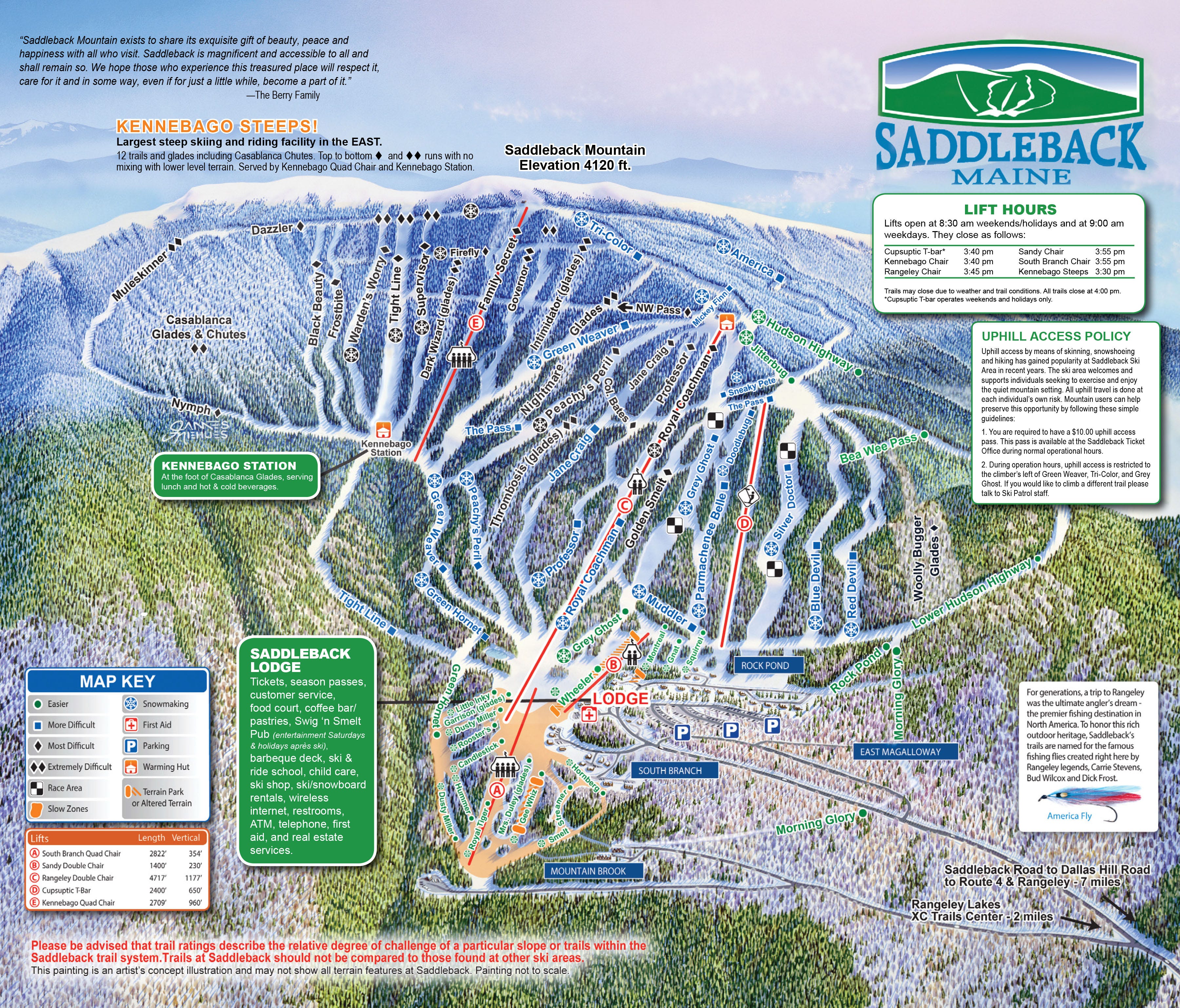
Nov 10, 2020
Podcast #29: Mount Snow General Manager Tracy Bartels
The Storm Skiing Podcast is sponsored by Mountain Gazette . The first issue drops later this month, and you can get 10 percent off subscriptions with the code “GOHIGHER10” at check-out. Get 10 percent off everything else with the code “EASTCOAST.” Who: Tracy Bartels, Vice President and General Manager of Mount Snow , Vermont Recorded on: November 2, 2020 Why I interviewed her: Because Mount Snow is where big-time Northeast skiing begins. As the southern-most major Vermont ski area, it is a skier’s gateway to mountains that are big enough to get lost on. From its strategic position in the orbit of the East Coast megalopolis, successive owners have gradually built something uniquely suited to the frenetic swarms of wildly varied skiers who bullseye the place each winter: Mount Snow has one of the most outstanding terrain parks in America and one of the best snowmaking systems in the world. The families who swarm here find absolutely unintimidating terrain, blue as the sky and groomed smoother than I-91. It’s a perfect family mountain and a perfect bus skier’s mountain and a perfect first step from Mount Local to something that shows you how big skiing can be. It was the crown jewel of the Peak Resort’s empire, and it’s one of the most important pieces to Vail’s ever-expanding Epic jigsaw puzzle. I wouldn’t call it a special mountain – the terrain is mild and not terribly interesting, and the volume and quality of natural snowfall is best described as adequate. But it is a vital mountain, as the southern-most anchor of Vermont’s teeming ski scene, as an accessible ski experience for weekending cityfolk, as an aspirational destination for people stepping more fully into skiing culture, and as a testament to the power of the imagination to transform a big vertical drop and cold skies into a vital and vibrant node of the regional ski scene. What we talked about: If you think it’s hard starting your marketing job from your dining room table, try running a ski area from another state; the extent of the mountain’s summer operations and how long it took to get those running; thinking through the masterplan for a mountain that has already had tens of millions invested into it over the past decade; potential future snowmaking improvements; why we’re unlikely to see a massive overhaul of the chairlift infrastructure in the near future; potential base lodge improvements; Bartels’ career path through Vail Resorts, starting as a kids ski instructor at Breckenridge 20 years ago; how Vail develops and moves employees through its resort network and why that’s good for business; how managing international destination mountains in the West is the same as managing them in the Northeast, and the big terrible way that it’s different (you all know what it is); what the Western resorts could learn from Northeast operations; how managing Mount Snow is a more complex undertaking than managing Mount Sunapee; the cultural differences between the two regions and how the Northeast stands out; Covid-era operations changes; most skiers should be able to ski most days at Mount Snow even with the reservation system; how that system will influence the number of day lift tickets available; balancing the blowout deal of the Epic Pass with the desire to keep ski areas from being overrun; the ops plan for the Bluebird Express; reminiscing on the Covid shutdown at Mount Sunapee; how Vail has learned from operating its Australian ski resorts over the summer; the parts of the mountains that are still in suspended animation from the March shutdown; how the losses of longtime grooming team members Leon and Cleon Boyd to Covid impacted the resort community; wow we won’t have to take our Epic Passes out of our pocket every time we ski up to a lift this year; why Vail favors handheld scanner guns over RFID gates; going deep on Carinthia and how much it takes to maintain a park of that size and complexity; the challenges of maintaining a super pipe and why Mount Snow has stayed with it even as many ski areas have abandoned it; why we’re unlikely to see any notable terrain expansions; yes I am on a quest to destroy Northeast over-grooming culture bwahahahahahaha; no but seriously talking about Bartels’ grooming philosophy and the advantages of creating a more balanced mountain. Things that are outdated because we recorded this last week: We refer to the planned Nov. 14 opening date, which with current weather forecasts now seems as likely a moon landing in a hot-air balloon. We also talk about the imminent release of Vermont’s ski area operating protocols, which the state has since announced . Finally, we refer to the Nov. 6 launch of Vail’s Epic Pass reservation system , which is now fully operational. I would have liked to have released this earlier, but frankly we recorded this the day before the presidential election and I wanted to give the news cycle a little time to clear out before pushing this one out there. Why I thought that now was a good time for this interview: Because Bartels, a 20-year Vail Resorts veteran, brings a deep understanding of the company’s ways to a Mount Snow still adjusting to post-Peak Resorts life. After a year settling into the Northeast ski scene as Mount Sunapee GM, she moves to one of Vail’s most important Northeast mountains. I wanted to see how she was approaching the particular challenge of steering a new-to-her mountain through the novel challenge of Covid, how she managed the shutdown at Sunapee, and her thoughts on the Northeast ski world and culture after a career spent mostly in the snowy West. I also wanted to see if perhaps she would bring a more freewheeling Western sensibility to Mount Snow’s forever overgroomed slopes, injecting some variety into a mountain often cursed by a dulling sameness (Fortunately, she seems open to that). Why you should go there: Because for most of us, it’s the closest big Vermont ski area to where we live. It’s big and rambling and fast and fun. The sculpted terrain of Carinthia aside, this is probably the tamest large mountain on the continent (Okemo competes with it for this title) - the trails are largely blue square boulevards groomed nightly into a coma. But that’s OK: the toothless trail network makes Mount Snow one of the best large mountains imaginable for kids or people who ski five days a year or those who like to just put the gearshift into drive and go. If you want to see where the Northeast’s running-of-the-bulls ice-skating reputation comes from, drop by on a holiday Saturday after it hasn’t snowed in two weeks. If you want to see why people love skiing the Northeast anyway, show up mid-week during a snowstorm and walk onto the Blue Bird Express for 30,000 feet of gloriously stress-free vert. This isn’t the biggest mountain in Vermont, and it isn’t the best, either, but it’s an essential place and one that anyone who wants to truly experience and understand Northeast skiing must visit. Also, you’ll find plenty of this here: And plenty of this: Additional reading/videos: Mount Snow has a zany history, with early years defined by a hottub the size of Lake Champlain, an artificial ski hill called Fountain Mountain that materialized out of a pond each winter and lasted well into summer, and an oddball collection of chairlifts straight out of The Jetsons. For an amazing history of that time, check out Chris Diamond’s Ski Inc . His follow-up, Ski Inc. 2020 is also a must-read for anyone who wants to understand how the modern ski industry became what it is today. The Brattleboro Reformer put together this video documenting the community reaction to the death of longtime Mount Snow employees Cleon and Leon Boyd from Covid: A bit more on Cleon Boyd: Follow The Storm Skiing Journal on Facebook and Twitter . COVID-19 & Skiing Podcasts: Author and Industry Veteran Chris Diamond | Boyne Resorts CEO Stephen Kircher | Magic Mountain President Geoff Hatheway | NSAA CEO Kelly Pawlak | Berkshire East/Catamount Owner & Goggles for Docs founder Jon Schaefer | Shaggy’s Copper Country Skis Cofounder Jeff Thompson | Doppelmayr USA President Katharina Schmitz | Mt. Baldy GM Robby Ellingson | Alterra CEO Rusty Gregory | NSAA Director of Risk & Regulatory Affairs Dave Byrd The Storm Skiing Podcasts: Killington & Pico GM Mike Solimano | Plattekill owners Danielle and Laszlo Vajtay | New England Lost Ski Areas Project Founder Jeremy Davis | Magic Mountain President Geoff Hatheway | Lift Blog Founder Peter Landsman | Boyne Resorts CEO Stephen Kircher | Burke Mountain GM Kevin Mack | Liftopia CEO Evan Reece | Berkshire East & Catamount Owner & GM Jon Schaefer | Vermont Ski + Ride and Vermont Sports Co-Publisher & Editor Lisa Lynn | Sugarbush President & COO Win Smith | Loon President & GM Jay Scambio | Sunday River President & GM Dana Bullen | Big Snow & Mountain Creek VP of Sales & Marketing Hugh Reynolds | Mad River Glen GM Matt Lillard | Indy Pass Founder Doug Fish | National Brotherhood of Skiers President Henri Rivers | Winter 4 Kids & National Winter Activity Center President & CEO Schone Malliet | Vail Veterans Program President & Founder Cheryl Jensen | Mountain Gazette Owner & Editor Mike Rogge | Squaw Valley Alpine Meadows President & CMO Ron Cohen | Aspiring Olympian Benjamin Alexander | Sugarloaf GM Karl Strand – Parts One & Two | Cannon GM John DeVivo | Fairbank Group Chairman Brian Fairbank | Jay Peak GM Steve Wright | Sugarbush President & GM John Hammond Get full access to The Storm Skiing Journal and Podcast at www.stormskiing.com/subscribe
Nov 2, 2020
Podcast #28: Sugarbush President and General Manager John Hammond
The Storm Skiing Podcast is sponsored by Mountain Gazette . The first issue drops in November, and you can get 10 percent off subscriptions with the code “GOHIGHER10” at check-out. Get 10 percent off everything else with the code “EASTCOAST.” Who: John Hammond, President and General Manager of Sugarbush , Vermont Recorded on: October 30, 2020 Why I interviewed him: Because after a transformative 19-year run, in which he once again fused Sugarbush with the community that surrounded it following a period of alienation under American Skiing Company, long-time owner and resort president Win Smith stepped down in September. Whether Win directly chose Hammond as his successor, he doubtless had some say in the decision to hand the keys to the 29-year-veteran. As someone whose entire professional career has revolved around Sugarbush, I wanted to get a sense of how Hammond would apply his vast understanding of Sugarbush’s inner workings to the resort's continued evolution under new owners Alterra Mountain Company. This is a big, important mountain, and how it responds to the short-term challenges presented by Covid and the longer-term ones inherent in Vermont’s unfriendly business environment and variable winters will in many ways influence the direction of the larger Northeast ski industry, which means that Hammond’s perspective and approach are important to understand as he takes the controls and flies this thing into the storm. The top of Castlerock. Photo courtesy of Sugarbush. What we talked about: It snowed at Sugarbush! (last Friday); Hammond’s path through the Sugarbush ranks from cold-calling intern to head of ski patrol and beyond; the one job at the resort he hasn’t done; what the resort looked like when Hammond showed up in the pre-Slide Brook days of 1991; how that compares both to the Sugarbush of today and to its peer resorts around Vermont at the time; witnessing the mountain’s dramatic, wide-reaching, and instantaneous transformation under the American Skiing Company (ASC); going deep on the Slide Brook Express, the longest chairlift in the world , and what could happen when it’s ultimately replaced; why the resort began adding tree skiing in the 1990s and why it’s an important element of the skiing experience at Sugarbush today; remembering the days when a ski patroller could get fired for skiing in the woods; where skiers are most likely to get lost wandering out of bounds; how morale dropped when ASC started to falter; whether Sugarbush would ever compete with Killington for first-to-open or last-to-close; ASC’s legacy; why Castlerock is the most unique pod at Sugarbush; the mountain’s grooming philosophy and why they let trails bump up; the reaction when Win Smith’s Summit Ventures group bought the mountain from ASC; how the new owners won back the trust of the community and staff; the lessons Hammond draws from that era as he takes control of the resort now; why Sugarbush sold to Alterra and how that transition has gone so far; whether there’s a terrain expansion in the resort’s future and where that might be; potential long-term lift upgrades; the state of the mountain’s three oldest lifts; how Hammond will continue to tap Win’s experience and expertise as he settles into the job; how Sugarbush locals have reacted to their season pass’ transformation into an Ikon Pass, and why the mountain kept some of its local passes; why there are so many knockout skiers at Sugarbush; the mountain’s relationship with Mad River Glen; rewinding to the chaos and uncertainty of the Covid shutdown; how the shutdown clarified the dynamic of the Sugarbush-Alterra working relationship and power structure; what the ski experience will look like at the mountain this year; the status of the adaptive center at Mt. Ellen. Questions I wish I’d asked: As usual, I had a few questions I didn’t get to because we ran out of time. Among them: how intense was it to smash the normal weeks-long winter wind-down period into a couple of days post-Covid shutdown? Did the police ever figure out who broke into the employee gear shed shortly after the shutdown? Was there ever a chance Alterra would re-open Sugarbush for spring skiing? (They re-opened Crystal for a few days in June.) How will they calculate how many day tickets will be available in any given day? (He sort of answered this anyway, alluding to how historical data will inform the availability of day tickets.) A Sugarbush pow day. Photo courtesy of Sugarbush. What I got wrong: For some reason, I thought Sugarbush offered Cat skiing in Slide Brook Basin, but it looks as though the resort only takes people in there via private lessons (skiers can also explore it on their own, and the trails eventually lead back toward a bus stop). The mountain does provide a variety of Cat-skiing option s, however (John also goes over these in the interview). There’s also a funny moment when I ask Hammond if there’s ever been a winter in which they couldn’t open the all-natural-snow terrain on the Castlerock pod, and he tells me that it was only open for 45 days during its worst winter. “That’s not bad,” I said. “That’s terrible,” he answered. Which is the difference in perception between a guy who’s a season passholder at wow-there’s-a-snowflake-it’s-a-powder-day Mountain Creek and a guy who’s spent three decades skiing the Mad River Valley every day of every winter. Why you should go there: Nothing has changed from what I said in this section for my January interview with Win Smith . Sugarbush is vast, snowy, varied, interesting, and glorious. It is in the top-top tier of Northeast skiing, my third-favorite mountain after Sugarloaf and Jay, and one that every Northeast skier absolutely must visit at least once per season if they’re able. Additional reading/videos: * A profile of Hammond in Vermont Ski + Ride * Win’s post announcing his retirement and John’s appointment as president and GM * A bit of Sugarbush history For perspective, the Sugarbush trailmap the year John showed up for his internship as a University of Vermont student: Sugarbush today: Some great Sugarbush history here: This is pretty cool too, especially if you already know the mountain: Follow The Storm Skiing Journal on Facebook and Twitter . COVID-19 & Skiing Podcasts: Author and Industry Veteran Chris Diamond | Boyne Resorts CEO Stephen Kircher | Magic Mountain President Geoff Hatheway | NSAA CEO Kelly Pawlak | Berkshire East/Catamount Owner & Goggles for Docs founder Jon Schaefer | Shaggy’s Copper Country Skis Cofounder Jeff Thompson | Doppelmayr USA President Katharina Schmitz | Mt. Baldy GM Robby Ellingson | Alterra CEO Rusty Gregory | NSAA Director of Risk & Regulatory Affairs Dave Byrd The Storm Skiing Podcasts: Killington & Pico GM Mike Solimano | Plattekill owners Danielle and Laszlo Vajtay | New England Lost Ski Areas Project Founder Jeremy Davis | Magic Mountain President Geoff Hatheway | Lift Blog Founder Peter Landsman | Boyne Resorts CEO Stephen Kircher | Burke Mountain GM Kevin Mack | Liftopia CEO Evan Reece | Berkshire East & Catamount Owner & GM Jon Schaefer | Vermont Ski + Ride and Vermont Sports Co-Publisher & Editor Lisa Lynn | Sugarbush President & COO Win Smith | Loon President & GM Jay Scambio | Sunday River President & GM Dana Bullen | Big Snow & Mountain Creek VP of Sales & Marketing Hugh Reynolds | Mad River Glen GM Matt Lillard | Indy Pass Founder Doug Fish | National Brotherhood of Skiers President Henri Rivers | Winter 4 Kids & National Winter Activity Center President & CEO Schone Malliet | Vail Veterans Program President & Founder Cheryl Jensen | Mountain Gazette Owner & Editor Mike Rogge | Squaw Valley Alpine Meadows President & CMO Ron Cohen | Aspiring Olympian Benjamin Alexander | Sugarloaf GM Karl Strand – Parts One & Two | Cannon GM John DeVivo | Fairbank Group Chairman Brian Fairbank | Jay Peak GM Steve Wright Get full access to The Storm Skiing Journal and Podcast at www.stormskiing.com/subscribe
Oct 19, 2020
Podcast #27: Jay Peak President and General Manager Steve Wright
The Storm Skiing Podcast is sponsored by Mountain Gazette . The first issue drops in November, and you can get 10 percent off subscriptions with the code “GOHIGHER10” at check-out. Get 10 percent off everything else with the code “EASTCOAST.” Who: Steve Wright, President and General Manager of Jay Peak , Vermont Recorded on: October 19, 2020 Why I interviewed him: Because there it sits, towering off the top of America, an unlikely snow trap that is the spiritual center of Northeast skiing. It is the best ski area in the best ski state in New England. Rippling with glades, pounded with more snow than any ski area east of the Rockies, cold enough to keep that powder crisp for days after it falls, Jay Peak offers your best chance at your best day of skiing on any given day of the season. For skiers funneling north on I-91 from the East Coast megalopolis, the mountain can seem rooted to a horizon too distant to bother with. But that remoteness only adds to the mystique, and those who do bother find something special, exotic almost, a place 10 miles from the international frontier, with a bordertown’s energy and a mixing pot’s cosmopolitan sheen. The skiing can feel foreign too, more big-trees-and-deep-turns West than baked-concrete East. The whole thing adds up to a kind of zen experience for skiers who hit it right, when the storms are pounding through and the temps stay low and you’re locked up there at the snowy top of the country, the whole of Northeast skiing outside of your little zone suddenly feeling far off and irrelevant. The Jay Peak Tram. Photo courtesy of Indy Pass. What we talked about: Why Jay joined the Indy Pass; why the partnership may benefit other Northeastern mountains as much as, if not more than, Jay; how long the initial Indy Pass partnership deal is set for; season passholder benefits, from the Indy Pass buy-up to free Saddleback days; whether Jay passholders could see more reciprocal partnerships in the future; why the Jay-Burke pass has persisted even after common ownership dissolved; will Steve Wright help convince Burke to join the Indy Pass?; season pass guarantees – where Jay sits and why they decided to move ahead of so many other ski areas; why Jay refunded all passes purchased by Canadian skiers; don’t expect the U.S.-Canada border to crack open anytime soon; what you lose when you lose Canada; how pass sales are faring in the age of Covid; the 10 Years of Jay contest; Jay’s upside-down season – trying to attract more skiers while everyone else in Vermont is trying to thin their skier numbers; if you think Vermont ski areas aren’t going to monitor quarantine requirements, listen to what Wright has to say about it; what operations will look like at Jay this winter; Wright’s side hustle as a slopeside pizza chef; the squad of roving wellness ambassadors you may encounter at Jay this winter; the operating plan for the tram, and yes there are some surprises; whether skiers will be able to hike to the summit from the top of the Flyer Express Quad; told for the first time: the story behind Jay’s March shutdown; how Jay Nation reacted to the mountain’s decision to close, which came before that of any other large mountain in the Northeast; why Jay went full shutdown, rather than framing the closure as a “pause in operations,” as so many other ski areas did; how challenging it was to shut down the enthusiastic uphillers that just kept coming; the group of international employees who were stuck at Jay post-shutdown and how the mountain ultimately helped get them home; the day a motorcade of black Escalades pulled into the parking lot and how it was different from the motorcades of black Escalades that had been regulars at the mountain during the Quiros era; what happens when you suddenly find yourself in charge of Jay Peak; whether the court-appointed receiver ever considered shutting down the mountain; the challenges of operating without a permanent owner; the explosive growth at the base of Jay over the past 10 to 15 years and whether that was the right direction for the mountain; the state of Jay Peak’s sale; why Jay Peak will not be bulldozed into a giant parking lot; why the mountain is discussing its valuation with the town of Jay; Wright’s upgrade wish list, including chairlift improvements; whether the mountain would ever consider replacing the tram or planting a redundant lift to the top; and whether the West Bowl expansion could ever happen. Crushing some Jay Peak pow. Photo courtesy of Indy Pass. Why I thought that now was a good time for this interview: Because go check indyskipass.com , where you’ll see Jay Peak is now the headliner of the already strong Eastern lineup. Why Jay joined the Indy and why it chose to do so this close to the season was a story I thought we all needed to hear. I also just wanted an update on the giant bucket of b******t Jay had been wading through for the past several years, including but not limited to the EB-5 scandal that put the mountain under the oversight of a court-appointed receiver, the ongoing quest to find a buyer, the mountain’s decision to challenge its assessment with the town of Jay, why Jay was one of the first large ski areas in the country to shut down in the spring to help stop the spread of Covid-19, how it’s planning to handle operations in the coming socially distant season, and what the ongoing closure of the Canadian border means for the ski area. I also just wanted to get a sense of Jay’s long-term ambitions for lift and snowmaking upgrades, as well as a possible West Bowl expansion. Why you should go there: Because if you haven’t been and you haven’t been on a good day, then you probably don’t know how good skiing in the Northeast can be. And while the rest of Northern Vermont doesn’t sit too far behind Jay in its annual snow totals, none of them has the sheer breadth of its glade network. Jay has always been known for and defined by its tree skiing, long before other mountains began thinning trees between groomers and dropping them onto the trailmap in earnest. A good glade network is useless without plenty of snow, of course, and Jay has more powder more often than anyone else. Outside of the outstanding skiing, however, this socially distant, limited-capacity year is probably the best one you’ll ever find to visit Jay Peak. The Canadian border remains closed to non-essential travel, cutting off half the ski area’s business. Vermont quarantine restrictions will further limit traffic. If you’re not in any of the restricted zones and can make it to Jay in the winter of 2020-21, you may feel pretty lonely up there, nothing but you and your skis crushing 2,000-foot pow laps from open to close. Go get it. Buy that pass at Jay: Wright clarified to me after the interview that the two free Saddleback days that come with the Jay Peak season pass are only included with Jay-Burke combo passes that are purchased through Jay Peak. If you buy through Burke, you won’t get the Saddleback days, since Burke has no agreement with that mountain. Additional reading/videos: * Why, look at this, it’s a Q&A with Steve in Powder by none other than Mountain Gazette owner and editor and Storm Skiing Podcast sponsor Mike Rogge . * Vermont Digger has been a great source for coverage of the EB-5 scandal. * The first part of a three-part interview with Wright by Propeller Media Works. Find the other two parts here . Follow The Storm Skiing Journal on Facebook and Twitter . COVID-19 & Skiing Podcasts: Author and Industry Veteran Chris Diamond | Boyne Resorts CEO Stephen Kircher | Magic Mountain President Geoff Hatheway | NSAA CEO Kelly Pawlak | Berkshire East/Catamount Owner & Goggles for Docs founder Jon Schaefer | Shaggy’s Copper Country Skis Cofounder Jeff Thompson | Doppelmayr USA President Katharina Schmitz | Mt. Baldy GM Robby Ellingson | Alterra CEO Rusty Gregory | NSAA Director of Risk & Regulatory Affairs Dave Byrd The Storm Skiing Podcasts: Killington & Pico GM Mike Solimano | Plattekill owners Danielle and Laszlo Vajtay | New England Lost Ski Areas Project Founder Jeremy Davis | Magic Mountain President Geoff Hatheway | Lift Blog Founder Peter Landsman | Boyne Resorts CEO Stephen Kircher | Burke Mountain GM Kevin Mack | Liftopia CEO Evan Reece | Berkshire East & Catamount Owner & GM Jon Schaefer | Vermont Ski + Ride and Vermont Sports Co-Publisher & Editor Lisa Lynn | Sugarbush President & COO Win Smith | Loon President & GM Jay Scambio | Sunday River President & GM Dana Bullen | Big Snow & Mountain Creek VP of Sales & Marketing Hugh Reynolds | Mad River Glen GM Matt Lillard | Indy Pass Founder Doug Fish | National Brotherhood of Skiers President Henri Rivers | Winter 4 Kids & National Winter Activity Center President & CEO Schone Malliet | Vail Veterans Program President & Founder Cheryl Jensen | Mountain Gazette Owner & Editor Mike Rogge | Squaw Valley Alpine Meadows President & CMO Ron Cohen | Aspiring Olympian Benjamin Alexander | Sugarloaf GM Karl Strand – Parts One & Two | Cannon GM John DeVivo | Fairbank Group Chairman Brian Fairbank Get full access to The Storm Skiing Journal and Podcast at www.stormskiing.com/subscribe
Oct 16, 2020
Podcast #26: Fairbank Group (Jiminy Peak, Cranmore, Bromley) Chairman Brian Fairbank
Who: Brian Fairbank, Chairman of the Fairbank Group , which owns Jiminy Peak in Massachusetts and Cranmore in New Hampshire, and manages Bromley in Vermont. Fairbank Group also manages real estate , snowmaking , renewable energy , and ski resort employee education companies. Recorded on: Oct. 7, 2020 Crushing a pow day at Cranmore. Photo by Josh Bogardus, courtesy of Cranmore. Why I interviewed him: Because in an industry littered with collapsed conglomerates and poor decisions, Fairbank has found a way to thrive. For decades. Massachusetts is not an easy place to run a downhill operation, as evidenced by the nearly 200 lost ski areas fading into its hills and mountains. But Fairbank grew Jiminy Peak into one of the state’s finest ski areas and used it as a launchpad into northern New England, where he applied the lessons of place-building, intensive snowmaking, and energy efficiency that he had perfected in the Berkshires to Cranmore and Bromley, two mountains mired in brutal never-ending competition with their larger and bottomlessly capitalized neighbors. Rather than let failures like the purchase of now-defunct Brodie ski area derail or deflate him, Fairbank pushed into new, sometimes risky and expensive ventures – like dropping the nation’s first windmill onto the top of a ski area – with the confidence that one setback did not portend another. Fifty-one years after arriving in Massachusetts as a 23-year-old who was obsessed with skiing and determined to make a living out of it, Fairbank has built something special. There’s really no other ski company quite like it, and I wanted to see how he built it and where it’s going next. South-facing Bromley gets a lot of sun. Photo courtesy of Bromley. What we talked about: Feelings about being inducted in the National Ski and Snowboard Hall of Fame; first memories of skiing; the kindness-from-a-stranger moment that changed the trajectory of Fairbank’s life; early-career days teaching on the slopes of Western New York and Wisconsin; how Frank Lloyd Wright’s Taliesin ended up influencing New England ski resort architecture half a century after Fairbank first saw it; how Fairbank ended up GM of Jiminy Peak at 23 years old and what a GM’s job required in that era; what the mountain and the Berkshires ski scene looked like when he showed up in 1969; how close Jiminy Peak came to bankruptcy in the 1970s and how he saved the ski area from oblivion; the big-time mountain that Fairbank nearly left the Berkshires to manage; the business expansion that set Jiminy on a long-term sustainable trajectory; the importance of snowmaking to Jiminy Peak’s survival and why Fairbank moved ahead of the industry to set up a permanent system; the deal he made to buy the mountain in the 1980s; the hard-to-comprehend grind of the decades-long place-making master-planned project that made Jiminy Peak the town-on-the-side-of-the-mountain/first-class ski area that it is today; if you’re gonna build a town, you’re gonna need your own sewer system; Jiminy Peak’s second existential crisis and how Fairbank moved through it; so you think it’s easy getting a wind turbine to the top of a mountain?; how that installation transformed the business; why Fairbank bought Brodie and what he found when he got there; the reason he ultimately shut the mountain down and why he included a clause in the sales contract that stipulated it could not be redeveloped as a ski area; why he doesn’t think Brodie is a viable modern ski area even if someone did want to develop it; the condition of the former ski area today; why buying Cranmore made sense and how they approached the evolution of that ski area; how Cranmore is like a 1950s gas station in downtown Buffalo; how Covid has turbocharged real-estate sales around Fairbank’s mountains; why the company took over management of Bromley; the niche Bromley has carved out that’s helped it thrive amid the giants that surround it; thoughts on the evolution of Magic; why there are no significant capital improvements in store for Bromley; why the mountain had to cancel a planned new lift and expansion; the biggest terrain shortfall at Bromley; Fairbank’s thoughts on skiing’s late megapass consolidation and his plans to stay competitive in that environment; what Fairbank said when I asked about his mountains’ pass prices in comparison to Epic and Ikon Passes; why they won’t combine the three mountains onto one pass; why the company hasn’t yet partnered with a limited-day multipass like Indy or Ikon; how Covid stacks up against previous disruptions; an interesting difference between Covid-era summer operations in three different states; the enormity of adapting to socially distanced skiing; thoughts on running the company with his son, Tyler. A trailmap from Jiminy Peak in 1969, the year Fairbank arrived. Jiminy Peak today. A note on the Brodie exchange: Re-listening to the bit where we discussed Brodie, I realized I sounded as though I was trying to be evasive when Fairbank asked me how I’d learned about the clause in the mountain’s sale that forbid its redevelopment as a ski area, and I just said, “the internet.” But really I just assumed that this stipulation was common knowledge and was surprised that he was surprised. Anyway, my source for that particular tidbit was this New England Ski History article , but I’ve seen it elsewhere. Question I wish I’d asked: Fairbank was the leader in starting the Mountains of Distinction coalition, which provides reciprocal lift ticket discounts to passholders at partner mountains, and I would have liked to have gotten his insight into how that started and what its current state is. It also would have been interesting to hear more about the Fairbank Group’s businesses outside of its ski areas, but those are my primary interest so I prioritized Jiminy Peak, Brodie, Cranmore, and Bromley. I did want to ask how, from a personal and leadership point of view, Fairbank got past the failure of Brodie to refocus on new endeavors. I also would have liked to ask if the company would consider buying another mountain. But frankly the conversation could have gone on all day – he’s accomplished so much and each one has so many dimensions that we could have eaten the Lord of the Rings trilogy before we got through it all. Why I thought that now was a good time for this interview: Because Fairbank’s inclusion in the National Ski and Snowboard Hall of Fame’s Class of 2020 is an exclamation point on a distinguished career, and underscores the gravity and immensity of his decades-long contributions to the sport. This seemed like an appropriate time to review that career and those achievements. I have also been writing for months about the Northeast’s evolving season pass landscape, and I wanted to get a better understanding of his mountains’ approach, which is vastly different from that of the Colorado-based multipasses that are proliferating throughout the region. Finally, I wanted to see how the challenges introduced by Covid stacked up against the droughts and downturns of past decades as an existential challenge to skiing’s vitality. Cruising Jiminy Peak with the wind turbine in the background. Photo courtesy of Jiminy Peak. Why you should go there: The ski hills are all slick operations, with night skiing at all but Bromley and some nasty stuff thrown in for fun. They’re not where you for bunches of really rowdy stuff (though they have some), but they’re good for families, and Cranmore and Bromley are both nice alternatives to the busier nearby megapass-affiliated mountains (Attitash and Wildcat in the case of Cranmore; Stratton, Okemo, and Mount Snow for Bromley). But what all three have in common is a sense of community and place, deliberately built and curated by Fairbank and his company over decades. The Northeast lacks slopeside development in comparison to most Western mountains, and the ability to set up shop slopeside is a big part of the ambience of a ski vacation. Vermont is particularly adept at frustrating development efforts, as Fairbank notes in our conversation. But they have persisted and, starting at Jiminy Peak and continuing to the ongoing development of Cranmore, have set a template for how you envision and build a community to anchor a ski area. All three ski areas also have extensive summer operations that are a really fun way to feel like you’re close to skiing when the snow’s all melted. Additional reading/videos: * Brian was the 2017 recipient of the NSAA’s Lifetime Achievement Award * His U.S. Ski and Snowboard Hall of Fame bio * A Berkshire Eagle Q&A with Tyler Fairbank datelined March 13, 2020. This would have been a very different conversation two days later. * A bit more about that wind turbine: Follow The Storm Skiing Journal on Facebook and Twitter . COVID-19 & Skiing Podcasts: Author and Industry Veteran Chris Diamond | Boyne Resorts CEO Stephen Kircher | Magic Mountain President Geoff Hatheway | NSAA CEO Kelly Pawlak | Berkshire East/Catamount Owner & Goggles for Docs founder Jon Schaefer | Shaggy’s Copper Country Skis Cofounder Jeff Thompson | Doppelmayr USA President Katharina Schmitz | Mt. Baldy GM Robby Ellingson | Alterra CEO Rusty Gregory | NSAA Director of Risk & Regulatory Affairs Dave Byrd The Storm Skiing Podcasts: Killington & Pico GM Mike Solimano | Plattekill owners Danielle and Laszlo Vajtay | New England Lost Ski Areas Project Founder Jeremy Davis | Magic Mountain President Geoff Hatheway | Lift Blog Founder Peter Landsman | Boyne Resorts CEO Stephen Kircher | Burke Mountain GM Kevin Mack | Liftopia CEO Evan Reece | Berkshire East & Catamount Owner & GM Jon Schaefer | Vermont Ski + Ride and Vermont Sports Co-Publisher & Editor Lisa Lynn | Sugarbush President & COO Win Smith | Loon President & GM Jay Scambio | Sunday River President & GM Dana Bullen | Big Snow & Mountain Creek VP of Sales & Marketing Hugh Reynolds | Mad River Glen GM Matt Lillard | Indy Pass Founder Doug Fish | National Brotherhood of Skiers President Henri Rivers | Winter 4 Kids & National Winter Activity Center President & CEO Schone Malliet | Vail Veterans Program President & Founder Cheryl Jensen | Mountain Gazette Owner & Editor Mike Rogge | Squaw Valley Alpine Meadows President & CMO Ron Cohen | Aspiring Olympian Benjamin Alexander | Sugarloaf GM Karl Strand – Parts One & Two | Cannon GM John DeVivo Get full access to The Storm Skiing Journal and Podcast at www.stormskiing.com/subscribe

Oct 12, 2020
Podcast #25: Cannon Mountain GM John DeVivo
The Storm Skiing Podcast is now sponsored by Mountain Gazette . The first issue drops in November, and you can get 10 percent off subscriptions with the code “GOHIGHER10” at check-out. Get 10 percent off everything else with the code “EASTCOAST.” Who: John DeVivo, General Manager of Cannon Mountain , New Hampshire Recorded on: October 6, 2020 Why I interviewed him: Because the first time I skied New Hampshire, I skied Cannon, and I skied Cannon first because everything I’d ever read about New Hampshire skiing led me to believe that this was the state’s brawling alpha dog of lift-served skiing. And it is. In a state stuffed with very good ski areas, this is the very goodest for that particular sort of skier that cares about terrain first and everything else 204th. And yet, while Cannon (intentionally) isn’t the corduroy kingdom that Bretton Woods or Waterville Valley is, it has evolved over DeVivo’s 13-year tenure into a modern ski area, with an up-to-date snowmaking plant and ever-improving facilities. I wanted to talk to the guy who has kept Cannon as classic burly Cannon while shepherding the place into the modern era, guided Mittersill from abandoned hulk to vital part of the resort, and led the mountain through the Covid shutdown and beyond. An aerial view of Cannon. That’s Interstate 93 hugging the mountain on the left, and Mittersill on the right. Photo courtesy of Indy Pass. What we talked about: Why Cannon stayed open in March after most of the rest of the Northeast turned the lights off; what finally pushed them to close; what happens when you’re suddenly the place to be and it’s the last thing that you want; how much snow fell on Cannon post-shutdown; how Cannon ops will look different in this Covid-disoriented ski season; whether the mountain will limit capacity or require reservations; New Hampshire’s Covid-era ski area protocols; what happens if you make a ski reservation and then get sick?; whether the tram will run and what will influence that decision; why the tram may matter less at Cannon than it does at other ski areas; how chairlift operations may look different; the big new Something Cool coming to Mittersill, probably for the 2021-22 ski season; the Mittersill reclamation project; what the State of New Hampshire traded with the federal government to take over the abandoned ski area; the obstacles that Cannon needed to overcome to make the expansion happen; the evolution of Mittersill over the past decade and why it’s now cut with a broad race slope; an argument for developing that land more than the radsters would maybe like; whether Mittersill will change more in the future, including if the area has outgrown the double; what the Franconia Ski Club is and why they’re essential to the operation of Cannon; why the Mittersill chair is the “most expensive double chair in the history of mankind”; why higher-capacity lifts aren’t always better; Cannon’s pass refund and deferral options for the 2020-21 ski season; why the mountain didn’t provide any kind of pass credit for last season’s passholders; how skiers reacted to that decision; why the White Mountain Super Pass makes sense for Cannon and how the pass works from a sales point of view; the New Hampshire ski area that may join the pass in the future; why Cannon joined the Indy Pass and why they didn’t withdraw when Covid strafed the Northeast and made capacity limits automatic for large ski areas; hey everyone reading this most people aren’t skiers and are surprised to learn they do this whole snowskiing thing up there at this Cannon Mountain place; how the mountain handled the dead-of-winter tram evacuation of 2016; who was stuck on the upbound tram car and what they texted John; the condition of and future plans for Cannon’s lift fleet; when the tram may be updated and what may change; why the summit lift at Attitash (not a typo) is a triple and is likely to remain a triple; why there won’t be a lift up over The Saddle at Cannon; glades because if you crack my head open it’s just cartoons of me skiing tree runs; why Cannon isn’t going to go full Killington and just say everything boundary-to-boundary is part of the ski area; the unnamed and unmarked lines where you may find some gnarly out-of-bounds but wink-wink-go-crush-it terrain; Cannon’s long-term snowmaking plan and why they’ll never go for 100 percent coverage. The Tram, not stuck in place. The original tram opened in 1938, and the current iteration dates to 1979. Photo courtesy of Indy Pass. Why I thought that now was a good time for this interview: Because Cannon was one of the last four mountains in the Northeast – along with Waterville Valley, Bretton Woods, and Gunstock – to close when Covid moved over the Northeast like an eclipse in March, and I wanted to understand why the mountain made the decision to stay open. The ski area is also a member of the White Mountain Super Pass and became the de facto East Coast Indy Pass headliner when it joined the coalition in May, and since I’m obsessed with multipasses I thought we’d dig into those a bit. I also wanted to get a better understanding of how the Mittersill expansion has evolved from a natural-snow, winding old-New England backcountry-ish area to a semi-tamed but still-half-wild pod striped with a broad racing slope. Why you should go there: Because with the Front Five and DJ’s Tramline and marked and unmarked glades all over and a rambling breadth that awards exploration, Cannon is the top skier’s mountain in New Hampshire. Unless it’s Wildcat. But Cannon is larger and easier to get to and not part of the Epic Pass Bundle that is likely to transform all Included Mountains over the course of the next several Epic Quarters. From a skier’s point of view, New Hampshire can be hard to sort out. It doesn’t have a handful of dominant ski areas like Maine or a half dozen truly huge ones like Vermont. What it has instead is 15 or so medium-to-largish mountains that have all sunk over the decades into their particular skier’s niche. And Cannon’s niche is hardass bruiser with some endless gnarly runs spiraling off the summit, through the glades, and down the pitch toward Echo Lake. It has everything else you could want, of course, including terrific areas for beginners and racers cut across its sprawl. It’s also home to one of the largest expansions in the Northeast over the past decade, as the formerly abandoned Mittersill ski area next door has been officially absorbed into the trailmap. And it has the tram, the only one in the state and one of only two in Northeast skiing, a novelty that is also one of the resort’s most defining features. And besides all that it’s easy to get to, towering over I-93 as you move south toward the Notch, materializing like a bucolic wintry landscape painting from the snowy days of yore. And if you hit it just right, this could be you: A bomber day at Cannon. It looks like the greatest thing in the world because it is. Photo courtesy of Indy Pass. Questions I wish I’d asked: As usual I ran out of time before I could get to everything. I really wanted to talk about the mountain’s Civilian Conservation Corps legacy and the pros and cons of state ownership. I’d hoped to get a bit into how New Hampshire leased out Mount Sunapee (now managed by Vail), in the late ‘90s but kept Cannon, and whether that was the right model for the ski area. I also wanted to talk about John’s commitment to building a more inclusive leadership team. What I got wrong: Back in February 2016, Cannon’s tram broke down at the tail end of a freezing Valentine’s Sunday. John and I spent a few minutes talking about how the mountain managed that, but I incorrectly stated that the date of the breakdown was December 2016. The correct date was clearly stated in the Ski article that I used as my primary source, but I skimmed the dateline at the top and mis-read the date. A Cannon trailmap from 1943, pre-interstate, pre-shaped ski, pre-high-speed lifts, and Goddamnit son pre-all this malarky about fake snow and four-wheel drive. Why, our cars didn’t even have tires! We just rode around on empty rims. But seriously how crazy is it to see how many little ropetow operations were just bumping up from every little town? Additional note I have to make because the world is filled with morons: So when John and I are discussing the tram evacuation, he relates that congresswoman Ann Kuster had been on the lift just before it stalled out, and says he was relieved she didn’t end up stuck in there because the conspiracy crowd would think that the mountain was trying to “kidnap her.” I want to be absolutely clear that this exchange occurred a full two days before news broke that a group of idiots in my home state of Michigan had been plotting for months to kidnap Governor Gretchen Whitmer, meaning the joke was just a joke like, “Hey what if you went to the grocery store and you got to the checkout and the checkout person wasn’t a person but a walrus - Isn’t that funny because it’s an absurd thing that couldn’t possibly happen?” and not an attempt to make light of a serious crime. And I’m saying all this because somehow we now live in a cartoon world where stupid s**t like that happens every day and none of us can believe it but somehow enough people believe it to keep doing these things. Additional reading/videos: Cannon’s winter ops plan and season pass guarantee . And here’s a pretty rad 2014 Ski The East shoot at Cannon: Follow The Storm Skiing Journal on Facebook and Twitter . COVID-19 & Skiing Podcasts: Author and Industry Veteran Chris Diamond | Boyne Resorts CEO Stephen Kircher | Magic Mountain President Geoff Hatheway | NSAA CEO Kelly Pawlak | Berkshire East/Catamount Owner & Goggles for Docs founder Jon Schaefer | Shaggy’s Copper Country Skis Cofounder Jeff Thompson | Doppelmayr USA President Katharina Schmitz | Mt. Baldy GM Robby Ellingson | Alterra CEO Rusty Gregory | NSAA Director of Risk & Regulatory Affairs Dave Byrd The Storm Skiing Podcasts: Killington & Pico GM Mike Solimano | Plattekill owners Danielle and Laszlo Vajtay | New England Lost Ski Areas Project Founder Jeremy Davis | Magic Mountain President Geoff Hatheway | Lift Blog Founder Peter Landsman | Boyne Resorts CEO Stephen Kircher | Burke Mountain GM Kevin Mack | Liftopia CEO Evan Reece | Berkshire East & Catamount Owner & GM Jon Schaefer | Vermont Ski + Ride and Vermont Sports Co-Publisher & Editor Lisa Lynn | Sugarbush President & COO Win Smith | Loon President & GM Jay Scambio | Sunday River President & GM Dana Bullen | Big Snow & Mountain Creek VP of Sales & Marketing Hugh Reynolds | Mad River Glen GM Matt Lillard | Indy Pass Founder Doug Fish | National Brotherhood of Skiers President Henri Rivers | Winter 4 Kids & National Winter Activity Center President & CEO Schone Malliet | Vail Veterans Program President & Founder Cheryl Jensen | Mountain Gazette Owner & Editor Mike Rogge | Squaw Valley Alpine Meadows President & CMO Ron Cohen | Aspiring Olympian Benjamin Alexander | Sugarloaf GM Karl Strand – Parts One & Two Get full access to The Storm Skiing Journal and Podcast at www.stormskiing.com/subscribe
Sep 30, 2020
Podcast #24: Sugarloaf GM Karl Strand, Part 2 – After the Shutdown
Who: Karl Strand, President and General Manager of Sugarloaf, Maine. This is part two of a two-part podcast conversation. Listen to part one, about the Sugarloaf 2030 plan, here . Recorded on: Sept. 24, 2020 Why I interviewed him again: So after the world went Kablooey in March, I dropped my first conversation with Karl into the bunker until it was safe to resurface without an armored vehicle and a backpack full of hand grenades. While our first conversation drilled pretty deep into Sugarloaf 2030 and how that’s going to transform the mountain, Covid has changed so much so quickly that it didn’t seem right to release it as-is without some sort of follow-up, especially given that we recorded it on Shutdown Eve, March 11. As it turns out, the long-term plan is still intact and Sugarloaf is running toward the 2020-21 ski season with its cape flapping in the wind behind it. But since there’s no such thing as too much information about the best ski resort in all these Eastern lands, it was still a conversation well worth sharing. Sugarloaf on a pow day. Photo courtesy of Sugarloaf. What we talked about: The atmosphere and precautions at Sugarloaf on Shutdown Weekend 2020; how the resort determined when to shut down; what finally pushed the decision; how locals reacted to the shutdown; whether Sugarloaf ever considered re-opening for spring skiing, why it ultimately did not, and when the mountain made that decision; when they opened for summer operations and how that’s gone; whether any Covid cases had been traced back to Sugarloaf; the projected opening date for skiing and what terrain may be available; how the mountain is evolving lodges, food service, lifts, ski school, gear rentals, shuttles, hotels, and everything else for the Covid era; whether the mountain could require reservations to ski, with or without an Ikon Pass; how RFID gates and outdoor booths will change the experience of buying a lift ticket this year; why Sugarloaf teamed up with Sunday River to launch the Maine Pass after the New England Pass went off sale, and how long that pass may remain available; the importance of Massachusetts to Maine tourism and skiing; whether Sugarloaf will limit the number of skiers on the mountain each day; the creative destruction of Covid-era operations and how that could remake the modern ski resort for the better; race programs will happen; how employee housing may look different; the plan if a Covid outbreak is traced back to the mountain; optimism for the future; the timeline for implementing Sugarloaf 2030 and whether Covid disrupted that; when the mountain plans to break ground on the West Mountain chairlift; whether Boyne is still considering a bubble for that lift; and thoughts on the return of Saddleback and why its shutdown was bad for the whole industry. Why I thought that now was a good time for another interview: Because we’re far enough past the everything-sucks-all-the-time-and-will-forever phase of Covid and far enough into the yeah-this-still-sucks-and-our-political-dialogue-in-this-country-makes-swimming-in-a-bathtub-of-pirhanas-sound-appealing-by-comparison-but-at-least-we-can-do-fun-things-again-if-we’re-all-careful-and-all-agree-on-a-few-basic-safety-measures phase of Covid that we can be assured that there will be a ski season. It will be a weird ski season and possibly a frustrating ski season and maybe a truncated ski season, but it will be a ski season with snow and all the glories that go with that. Sugarloaf and all the other ski resorts in the nation have had a long long looooooong summer to really think about all the ways skiing can be made to work when nothing about the lift-served ski experience except for the skiing itself is naturally conducive to social distancing, and they have a pretty good sense of how to move ahead with this. They have basic ops plans in place and have thought about how you buy tickets and ride a lift and rent gear and take a lesson and eat lunch, and now they’re ready to talk about it like a bride talks about her wedding day: with the certainty it will happen. Why you should go there: See podcast #23 . Follow The Storm Skiing Journal on Facebook and Twitter . COVID-19 & Skiing Podcasts: Author and Industry Veteran Chris Diamond | Boyne Resorts CEO Stephen Kircher | Magic Mountain President Geoff Hatheway | NSAA CEO Kelly Pawlak | Berkshire East/Catamount Owner & Goggles for Docs founder Jon Schaefer | Shaggy’s Copper Country Skis Cofounder Jeff Thompson | Doppelmayr USA President Katharina Schmitz | Mt. Baldy GM Robby Ellingson | Alterra CEO Rusty Gregory | NSAA Director of Risk & Regulatory Affairs Dave Byrd The Storm Skiing Podcasts: Killington & Pico GM Mike Solimano | Plattekill owners Danielle and Laszlo Vajtay | New England Lost Ski Areas Project Founder Jeremy Davis | Magic Mountain President Geoff Hatheway | Lift Blog Founder Peter Landsman | Boyne Resorts CEO Stephen Kircher | Burke Mountain GM Kevin Mack | Liftopia CEO Evan Reece | Berkshire East & Catamount Owner & GM Jon Schaefer | Vermont Ski + Ride and Vermont Sports Co-Publisher & Editor Lisa Lynn | Sugarbush President & COO Win Smith | Loon President & GM Jay Scambio | Sunday River President & GM Dana Bullen | Big Snow & Mountain Creek VP of Sales & Marketing Hugh Reynolds | Mad River Glen GM Matt Lillard | Indy Pass Founder Doug Fish | National Brotherhood of Skiers President Henri Rivers | Winter 4 Kids & National Winter Activity Center President & CEO Schone Malliet | Vail Veterans Program President & Founder Cheryl Jensen | Mountain Gazette Owner & Editor Mike Rogge | Squaw Valley Alpine Meadows President & CMO Ron Cohen | Aspiring Olympian Benjamin Alexander | Sugarloaf President & GM Karl Strand part 1 - Sugarloaf 2030 Get full access to The Storm Skiing Journal and Podcast at www.stormskiing.com/subscribe
Sep 25, 2020
Podcast #23: Sugarloaf GM Karl Strand, Part 1 – Sugarloaf 2030
Who: Karl Strand, President and General Manager of Sugarloaf, Maine Recorded on: March 11, 2020 (for real) The Sugarloaf Snowfields. Photo by Skye Chalmers Photography; courtesy of Sugarloaf. Why I interviewed him: Because Sugarloaf is the greatest ski area in the Northeastern United States. While there are a half dozen other mountains that could make that argument without being laughed out of New England (and they’re all in New England), Sugarloaf is the alpha dog in this entourage for one reason: Brackett. Freaking. Basin. Well, and Burnt Mountain. Jay Peak gets more snow, Killington gets more season, pretty much everyone gets more visitors, but no one in the East has a rowdy swath of wide-open terrain like Sugarloaf’s remarkable side-ish country. Yes, the summit-capping Snowfields are unique in the East and their very existence is an astonishing fact. But above-treeline skiing has never called to me like glades do and if glades are open I will not ski anything else. And the endless stacks of glades cascading down the resort’s eastern flank are the most complex and enticing matrix of such skiing anywhere in the region. It’s miraculous that such a thing exists at all in this overgroomed Northeast, with its micromanaged mountains and inconsistent snow, but there it is, a vast adventure zone hacked into the mountainside, as close to the unhinged West as you can get in the East. And outside of Brackett Basin you will still find an expansive and interesting mountain, dead fall line skiing cut into a true 3,000-ish-foot vertical, an expansive and rumbling ski area hoarding vast amounts of terrain: double blacks off the backside of the summit, glades all over, screaming groomers by the dozens, and, yes, the Snowfields. If you can hit it on a good day there’s no reason to regret that you couldn’t be anywhere else, East or West or the Alps or Goddamn Revelstoke. This is one hell of a mountain. Brackett Basin is one of the best raw chunks of terrain in New England. Photo courtesy of Sugarloaf. What we talked about: Sugarloaf 2030 ; the West Mountain expansion and how closely the trail network will match the conceptual map released along with Sugarloaf 2030 (see below); why the old snowtubing park failed; the method Sugarloaf is using to plan out the West Mountain trail network, including new glades; the chairlift options the mountain is considering for West Mountain and why it won’t be a gondola or an eight-pack à la Loon or Big Sky; but the survey line for the new lift was cut over a decade ago; why the mountain tries to avoid ski trails beneath chairlifts; working with the State of Maine to get environmental approvals; what to expect from the housing stock going in at the bottom of the expansion; What to expect out of lift and trail upgrades at Timberline, Double Runner, the T-bar, Super Quad, and King Pine; the Carrabassett Valley Academy; real estate development in Brackett Basin and why you don’t need to freak out about that; snowmaking upgrades and burying the whole mountain by Christmas; RFID gates; the Platinum New England Pass which you can’t buy anymore but I left it in anyway because the context around the Ikon Pass add-on benefit is interesting; why Sugarloaf joined the Mountain Collective; the cross-country center and the novel snowmaking technology going in down there; where the new parking lots will be and how they will help reduce congestion; how they’re approaching the village expansion; why the children’s center may move and where it could go; recent lodge renovations; upgrading the summit building and why they won’t tear it down and start from scratch; summer and mountain biking upgrades; look out, the snow bikes are here – how wild will they get?; the drive toward sustainability and whether you might see a windmill at the top of the mountain; the Sugarloaf Ski Club; Sugarloafers – what they are and how they make a great mountain better; why Sugarloaf considers itself the only true destination mountain in the East; the motley landscape surrounding the mountain and how that helps define its character; why you should never ski the backside; why do I keep calling West Mountain West “Basin?” Man I don’t know but hey I’m not designing the trailmap so does it really matter?; Ski Maine – what it is and what it does; why Mt. Jefferson and Eaton Mountain didn’t open last year and how Ski Maine and Maine ski areas may help them; why the return of Saddleback is good for Sugarloaf and the rest of Maine skiing; the importance of the tiny Maine ski areas that most people not from Maine will never ski; and where you should ski in Maine other than Sugarloaf. A conceptual map of the West Mountain expansion; potential trail locations shaded in blue. Why I thought that now was a good time for this interview: For the same reason that I thought a lot of things were a good idea in early March, like handshakes and doing things indoors with other people and not stocking an emergency pallet of toilet paper in my basement: because I wanted to do it so I did. Plus the resort had just announced its transformative 2030 plan, which will drop 400-plus acres and a new chairlift onto the mountain’s west side, an expansion larger than most Eastern ski areas tacked onto what is already the second-largest mountain in the region (the expansion, once complete, will make it larger than Killington, but the measurements are already dubious, with Killington counting large swaths of unskiable woods in among its total skiable acreage, so it doesn’t really matter). The plan is going to completely uproot and modernize the mountain’s chairlift and snowmaking infrastructure without compromising the experience of skiing its explosive and interesting terrain. Why you should go there: Because Sugarloaf not only has the best terrain in the East, it is the least-crowded of any large mountain in the region. That’s because it’s far. From everything. In our social-distancing era, emptiness is your friend, and while Eastern emptiness is not the same thing as its Western counterpart, Sugarloaf is probably going to deliver a more spaced-out and less frantic experience than the more accessible monsters in Vermont and New Hampshire can. Plus the vibe is fun, the skiers are terrific, and the view from the summit is the sort of damn-the-world-is-big vista that explains a lot of our collective infatuation with skiing. For many Northeast skiers, the remoteness of the mountain and sheer number of alternatives makes this the last big ski area in the region that they visit, and that’s appropriate. If you’ve already skied Stowe and Jay and Sugarbush and Sunday River and Killington and Cannon and every other mountain of note in a region with no shortage of them, you will not arrive at Sugarloaf and be disappointed with what you find there. That’s because some of what you’ll find there is this: Sugarloaf’s Snowfields. Photo courtesty of Sugarloaf. Note explaining this episode in the context of the wider world: So this is actually a two-part podcast, which is a first in the short history of The Storm. Since we recorded this on Apocalypse Eve, we decided, after The Great Ski Industry Shutdown of 2020, to postpone releasing this recording to a time when everyone was less concerned about catching a deadly virus and dying on a ventilator. And while Covid-19 is still rampaging its way across the United States, we have learned a lot as a society about how to manage ourselves in its midst. One outcome of that is that we are ready to go skiing again, and we are ready to talk about skiing again. And while that point actually arrived months ago and I could have dropped this podcast any time over the summer, Karl and I agreed that a follow-up conversation was appropriate as a way to acknowledge the bizarre timing of our first talk, and I wanted that second chat to be closer to the start of the season. Given the stature of Sugarloaf, I figure that most people who are passionate about Northeast skiing will not mind hearing a multi-part conversation about it. This first call is all Sugarloaf 2030. The next podcast – which I’ll release in the coming days, will focus on the shutdown, its aftermath, and the path forward into the 2020-21 ski season. Follow The Storm Skiing Journal on Facebook and Twitter . COVID-19 & Skiing Podcasts: Author and Industry Veteran Chris Diamond | Boyne Resorts CEO Stephen Kircher | Magic Mountain President Geoff Hatheway | NSAA CEO Kelly Pawlak | Berkshire East/Catamount Owner & Goggles for Docs founder Jon Schaefer | Shaggy’s Copper Country Skis Cofounder Jeff Thompson | Doppelmayr USA President Katharina Schmitz | Mt. Baldy GM Robby Ellingson | Alterra CEO Rusty Gregory | NSAA Director of Risk & Regulatory Affairs Dave Byrd The Storm Skiing Podcasts: Killington & Pico GM Mike Solimano | Plattekill owners Danielle and Laszlo Vajtay | New England Lost Ski Areas Project Founder Jeremy Davis | Magic Mountain President Geoff Hatheway | Lift Blog Founder Peter Landsman | Boyne Resorts CEO Stephen Kircher | Burke Mountain GM Kevin Mack | Liftopia CEO Evan Reece | Berkshire East & Catamount Owner & GM Jon Schaefer | Vermont Ski + Ride and Vermont Sports Co-Publisher & Editor Lisa Lynn | Sugarbush President & COO Win Smith | Loon President & GM Jay Scambio | Sunday River President & GM Dana Bullen | Big Snow & Mountain Creek VP of Sales & Marketing Hugh Reynolds | Mad River Glen GM Matt Lillard | Indy Pass Founder Doug Fish | National Brotherhood of Skiers President Henri Rivers | Winter 4 Kids & National Winter Activity Center President & CEO Schone Malliet | Vail Veterans Program President & Founder Cheryl Jensen | Mountain Gazette Owner & Editor Mike Rogge | Squaw Valley Alpine Meadows President & CMO Ron Cohen | Aspiring Olympian Benjamin Alexander Get full access to The Storm Skiing Journal and Podcast at www.stormskiing.com/subscribe
Sep 11, 2020
Podcast #22: Benjamin Alexander, Aspiring Olympic Skier for Jamaica
The Storm Skiing Podcast is now sponsored by Mountain Gazette . The first issue drops in November, and you can get 10 percent off your order - including your annual subscription - by entering the code “EASTCOAST” at check-out. Who: Benjamin Alexander, Aspiring Olympic Skier for Jamaica Why I interviewed him: Because this is a story you have to love. I have always respected and admired individuals who came to skiing as adults, especially because most adults seem to settle into some combination of mainlining television, getting fat, and buying things. Skiing is cold and expensive and hard, and if you aren’t tossed out the back hatch of a minivan onto the slopes at age 4 like a paratrooper dropped from the back of a Globemaster then the chances you will pick it up diminish with each passing year. But if taking it up in your 30s is improbable, angling into it to the point where you can realistically hope to qualify for something so rarified as the Olympics is almost fantastical. Yet that is what Benjamin did and is doing. And even that exhilarating task almost sounds ho-hum after his globe-trotting amped-up life as an international deejay, a job title that almost sounds too cool to even be real. But it is and I wanted to hear about it, and I think you will too. All photos courtesy of Benjamin Alexander. What we talked about: Heading into the Jackson Hole backcountry when Covid descended; Benjamin’s ancestral connection to Jamaica; England’s skiing desert; the three blessings that make new skiers; London’s turn-of-the-century pirate radio scene; breaking into that scene as a teenage deejay; hazards of the job; life in Asia; ditching a finance career for a roving international deejay career with a standing gig at Burning Man; landing at a heliski lodge when you don’t ski, looking around and thinking, “Yeah, I want some of this”; a roving deejay’s wild itinerary; where he first skied at age 32 and how that went; yardsaling on black diamonds at Mammoth; the performative glory and adrenaline of international deejay touring and making the decision to leave it all behind; why skiing was the next career move and how that evolved into an Olympic quest; when courage and speed trump form and technique; how to evolve from never-ever to alpine racer over the course of a few seasons; mental discipline and other transferable skills that drive excellence in such disparate disciplines as deejaying and skiing; settling into Jackson to master the sport and yeah I guess that’s not a bad place to do it; the racing scene at Snow King and the boundless freeskiing temptations of Jackson Hole just down the road; how the wild variability of riding off-piste prepares a skier for the rhythm and relative predictability of racing; trekking into the nether regions to nail that last patch of summer snow; life in tourism-reliant Jamaica during tourism-annihilating Covid; the Jamaican diaspora; the Jamaican Olympic Association and their vision for the future; of course we talk about Cool Runnings and Benjamin’s real-life connection with the real-life athletes behind that film; diversity in skiing and thoughts on the Vail-Alterra reckoning with the need to do better; Benjamin’s positive experience skiing as a black man in a very white sport; the 2022 Beijing Olympics and the hope that things that are supposed to happen will start to happen again; Benjamin’s path to the Olympics and a quick primer on racing and FIS points; questions about ski racing from someone who knows nothing about ski racing and some very patient answers to those questions. Additional reading/videos: * Benjamin’s website * Follow Benjamin on Instagram and Facebook * A Q&A with Benjamin in Powder * Benjamin on the Ski Bums podcast * Benjamin’s interview on Holmlands Adventure Podcast: Recorded on: Sept. 8, 2020 Additional note: This is the first Storm Skiing Podcast to feature the story of a skier - previous episodes have highlighted the leaders of ski areas or ski organizations. Let me know if you’d like to hear more of these kinds of interviews (there will always be plenty of ski area-focused episodes). The Storm Skiing Podcast is on iTunes , Google Podcasts , Stitcher , TuneIn , and Pocket Casts. The Storm Skiing Journal publishes podcasts and other editorial content throughout the ski season. To receive new posts as soon as they are published, sign up for The Storm Skiing Journal Newsletter at skiing.substack.com . Follow The Storm Skiing Journal on Facebook and Twitter . COVID-19 & Skiing Podcasts: Author and Industry Veteran Chris Diamond | Boyne Resorts CEO Stephen Kircher | Magic Mountain President Geoff Hatheway | NSAA CEO Kelly Pawlak | Berkshire East/Catamount Owner & Goggles for Docs founder Jon Schaefer | Shaggy’s Copper Country Skis Cofounder Jeff Thompson | Doppelmayr USA President Katharina Schmitz | Mt. Baldy GM Robby Ellingson | Alterra CEO Rusty Gregory | NSAA Director of Risk & Regulatory Affairs Dave Byrd The Storm Skiing Podcasts: Killington & Pico GM Mike Solimano | Plattekill owners Danielle and Laszlo Vajtay | New England Lost Ski Areas Project Founder Jeremy Davis | Magic Mountain President Geoff Hatheway | Lift Blog Founder Peter Landsman | Boyne Resorts CEO Stephen Kircher | Burke Mountain GM Kevin Mack | Liftopia CEO Evan Reece | Berkshire East & Catamount Owner & GM Jon Schaefer | Vermont Ski + Ride and Vermont Sports Co-Publisher & Editor Lisa Lynn | Sugarbush President & COO Win Smith | Loon President & GM Jay Scambio | Sunday River President & GM Dana Bullen | Big Snow & Mountain Creek VP of Sales & Marketing Hugh Reynolds | Mad River Glen GM Matt Lillard | Indy Pass Founder Doug Fish | National Brotherhood of Skiers President Henri Rivers | Winter 4 Kids & National Winter Activity Center President & CEO Schone Malliet | Vail Veterans Program President & Founder Cheryl Jensen | Mountain Gazette Owner & Editor Mike Rogge | Squaw Valley Alpine Meadows President & CMO Ron Cohen Get full access to The Storm Skiing Journal and Podcast at www.stormskiing.com/subscribe
Sep 4, 2020
Podcast #21: Squaw Valley Alpine Meadows President & COO Ron Cohen – The Resort Name "Belongs In The History Books”
Who: Ron Cohen, President and Chief Operating Officer of Squaw Valley Alpine Meadows Why I interviewed him: Because when one of the most important ski areas in America makes one of the most controversial and consequential naming decisions in the history of the sport, it’s worth hearing them out about why they did it. The backstory, the nuance, the broader perspective of why “squaw” is not the cozy little identifier of a Native American woman that we all learned it was in first grade and is, rather, a word you don’t want to throw around in the presence of said Native American women has been ground up in the social media wood chipper and simplified into all caps accusations of PC kowtowing by reactionary bozos. But the mountain didn’t just wake up one morning, slam their name through the Wokenator 5000, and decide it was newly and unreasonably offensive. Rather, they underwent a very deliberate process to explore the history and etymology of the word and decide whether the sum of all those things reflected the rad cliff-hucking sunshiny snow-buried ethos of one of the most historically and culturally significant mountains on the continent. They decided it didn’t. And I wanted to hear why they made that decision in an environment free from the digital flamethrowers of people who WILL NEVER SKI SQUAW VALLEY AGAIN AFTER THIS OUTRAGE. What we talked about: How the mountain concluded that the word “squaw” is “offensive and derogatory”; when and why the persistent calls for examination of the name assumed more urgency; memoranda of reflexive defensiveness from the social-digital peanut gallery; the two biggest myths and misconceptions that drove the don’t-change-the-name crowd; the competing origin stories of Squaw Valley’s name and why the bucolic version is probably “a fantasy”; the mountain’s quest for truth and what that revealed; why research requires some mental time travel and a suspension of all the truths you think are real; the genocidal imperatives against Native Americans handed down by California’s first governor; atrocities of the state administrative and legal system in 1850s California; the horrid alternate history of the valley’s name tracked down in an Aug. 13, 1859 issue of a local Tahoe paper; acknowledging that scholarly debate exists about the etymology of the word and about which theory is the most historically plausible; confirmation of the word’s ferocious and dehumanizing intent buried in American literature from 200 years ago; why acknowledgement and awareness of this wicked intent finally gained momentum in the 1990s; how the resort worked with the local Native American tribes and individuals to understand how they viewed the word “squaw”; community reaction and it’s not all Angry Ski Bros yelling on social media; the outsized meaning of big bad brilliant Squaw Valley to generations of skiers and why that has amplified passions behind the name change; yes a Zoolander reference; there’s no name picked so don’t panic about “Olympic Valley” just yet; so they’ve acknowledged that the name isn’t appropriate but it won’t change until next year, so how do you navigate that?; the enormous effort required to rename a place as large and complex as Squaw Valley; this is just part of a nationwide movement to strip “squaw” from place names; why the mountain is relying on, rather than erasing, history; why the founding and naming of the resort remains an innocent event; the Squaw Valley name “belongs in the history books”; how the resort plans to continue honoring the name post-retirement; and an update on the base-to-base gondola between the Squaw Valley and Alpine Meadows ski areas. Question I wish I’d asked: I had a line of questioning prepared about Squaw-Alpine parent company Alterra and how involved they were in the discussions and decisions, but we didn’t have time to get into it. I also wanted to know more specifically who would be involved in choosing the new name and exactly how much work it was going to be to make that update at an operation of that size. Finally, I was hoping to toss in a question about the surreal weekend of the shutdown and what the resort is doing to prepare for this coming season. But hey I’m not a wizard and time is not fungible, so we’re going to have to be happy with what we could fit into our allotted time slot. Confession Corner: So up until about eight or nine weeks ago the extent of my thinking about the word “squaw” hadn’t gone past the Pilgrims-and-Indians we’re-all-friends Thanksgiving simplifications fed to an elementary school version of myself that was too young to read, let alone reflect deeply on whether the thing that an adult told me a word meant was different from what it actually meant. I was like, “Squaw equals Indian woman. Noted. When do I get my Fudge Round ?” That was in 1983 and I never thought about it again. But now presented with this information that the word is like the verbal equivalent of a Molotov cocktail it doesn’t seem like such a hard decision to gingerly place it in its retirement home. I will acknowledge however that I have no emotional attachment to the place other than a deep deep admiration for what the ski area itself is and its place in skiing lore. I spoke in my last podcast, with Mountain Gazette owner and editor Mike Rogge, about my love for ski magazines and one of the stories that first pulled me inexorably into the skiing black hole in which I have existed ever since is this 1994 Skiing story by Kristen Ulmer about the high-flying life of the Squaw Valley bombers. But I realize change is hard especially when that change is drilled into something that’s a central part of your life. But moguls are hard too and if you want to ski you just have to figure it out. And one thing we don’t need to figure out is that none of us love Squaw Valley because of the name. We love it because of this: Photo by Jeff Engerbretson. Courtesy of Squaw Valley Alpine Meadows. And this: Photo by Ben Arnst. Courtesy of Squaw Valley Alpine Meadows. And this: We gather there and ski there because the place is a rarefied powder bullseye with a history of churning out some of the raddest skiers to ever click in. The name is a symbol and an important one but changing it cannot change the intangible raw awesomeness of the place itself. And you don’t have any choice but to get used to it. As Ron says in his open letter addressing the name change, “… please recognize that our decision is made and we are not looking back. Please join us as we move forward, together.” Additional reading: * The resort put together an FAQ, a history of the word “squaw,” a perspective on how it’s viewed today, and a letter from Ron on this page . * The newspaper article that Ron referred to early in the interview as integral to starting the renaming process * The 1851 State of the State speech from California’s governor that Ron referred to. The governor states “That a war of extermination will continue to be waged between the races until the Indian race becomes extinct must be expected.” * My initial thinking on Squaw Valley considering changing its name back in June and my analysis after they decided to do so. * The depressing Twitter thread of hip-shooting Very Angry People strung below Squaw Valley’s announcement: Recorded on: Sept. 3, 2020 Download this episode on iTunes , Spotify , Google Podcasts , Stitcher , TuneIn , and Pocket Casts . COVID-19 & Skiing Podcasts: Author and Industry Veteran Chris Diamond | Boyne Resorts CEO Stephen Kircher | Magic Mountain President Geoff Hatheway | NSAA CEO Kelly Pawlak | Berkshire East/Catamount Owner & Goggles for Docs founder Jon Schaefer | Shaggy’s Copper Country Skis Cofounder Jeff Thompson | Doppelmayr USA President Katharina Schmitz | Mt. Baldy GM Robby Ellingson | Alterra CEO Rusty Gregory | NSAA Director of Risk & Regulatory Affairs Dave Byrd The Storm Skiing Podcasts: Killington & Pico GM Mike Solimano | Plattekill owners Danielle and Laszlo Vajtay | New England Lost Ski Areas Project Founder Jeremy Davis | Magic Mountain President Geoff Hatheway | Lift Blog Founder Peter Landsman | Boyne Resorts CEO Stephen Kircher | Burke Mountain GM Kevin Mack | Liftopia CEO Evan Reece | Berkshire East & Catamount Owner & GM Jon Schaefer | Vermont Ski + Ride and Vermont Sports Co-Publisher & Editor Lisa Lynn | Sugarbush President & COO Win Smith | Loon President & GM Jay Scambio | Sunday River President & GM Dana Bullen | Big Snow & Mountain Creek VP of Sales & Marketing Hugh Reynolds | Mad River Glen GM Matt Lillard | Indy Pass Founder Doug Fish | National Brotherhood of Skiers President Henri Rivers | Winter 4 Kids & National Winter Activity Center President & CEO Schone Malliet | Vail Veterans Program President & Founder Cheryl Jensen | Mountain Gazette Owner & Editor Mike Rogge Get full access to The Storm Skiing Journal and Podcast at www.stormskiing.com/subscribe
Jul 24, 2020
Podcast #20: Mountain Gazette Owner and Editor Mike Rogge
The Storm Skiing Podcast #20 | Download this episode on iTunes , Spotify , Google Podcasts , Stitcher , TuneIn , and Pocket Casts | Read the full overview at skiing.substack.com . Who: Mike Rogge, Owner and Editor of Mountain Gazette Back issues of Mountain Gazette. Photo by Chris Segal. Why I interviewed him: Because even as the founder of a publication that lives entirely and eternally online, I have always loved the depth and expressiveness of print media in general and ski magazines in particular. I learned how to ski from fat newsstand-bought issues of the middle- to late-90s, and I learned everything else I knew about skiing there too. When I commenced the series of explosive yardsales and ever-farther roadtrips that constituted my early ski career , I knew almost no one who skied, and certainly no one who had skied the amazing snowy West. The magazines were my Yoda. There were four mainstream publications available in the Midwestern pharmacies and grocery stores of my teens, as indistinguishable as leaves on a tree to passersby, but to me, to a skier , each distinct and vital and alive. Skiing was attitude. Powder was poetry. Ski was groomers. Snow Country , trying to be a little bit of each, felt scrambled. I bought them all. Inside these glossy magazines lay an immense landscape, frantic and relentless and always stomping through snowy netherworlds put suddenly at my reach. They may as well have been tales of Narnia, so absorbing did I find these steeps and snowfields and snow-choked woods, these far-off resorts and the characters that animated them, their legends hardened through writing sharp and piercing and explosive. That’s all so diminished now. Snow Country and Skiing evaporated . Powder is down to four issues per year. Ski survives, but in a massively slimmed-down state. Yes, Freeskier popped out of the glossy halfpipe at some point in the late ‘90s, and it still exists and does good work, though with a diminished print run. While Mountain Gazette has never been explicitly or solely a ski magazine, the publication is an important part of the ski media’s print legacy, and its return – the magazine had two previous print runs, from the ‘60s to 1979 and from 2000 to 2012 – as a high-end, twice-annual expression of modern mountain life is a positive development, and something I wanted to hear more about. A Mountain Gazette cover from the 1970s. Yes, I chose this one because the kid on the right is rocking a Michigan sweatshirt, but this photo perfectly captures the less-geared-up rambling spirit of the mountain days of yore. What we talked about: Covid life in Tahoe; remembering the shutdown; Mountain Gazette’s history and legacy as literary journal and freewheeling transmitter of the mountain town zeitgeist; the magazine’s legendary writers and editors and what drew Rogge to them; the failed professional quest that preluded his purchase of Mountain Gazette ; how he reacted when he found out the magazine was for sale and how that sale went down; why now is the right time to bring it back to life; the power of a known brand; cultivating a place for explosive and hungry young writers; what you get when you buy a publication; how former readers have reacted to the magazine’s resuscitation; what you do when 50 boxes of archived magazines show up at your house; how to honor a publication’s legacy while pushing its evolution forward; you can help Mike complete his Mountain Gazette collection; the magazine’s editorial vision; the forces behind the overall decline of ski media; Rogge’s Eastern roots and how that may push the Gazette’s coverage area outside of its traditional Western zone; what it means to run the magazine out of Tahoe for the first time; the blend of print, videos, and podcasts that will power the reborn publication and which of those will be the main focus; what feature stories might look like in a magazine once known for printing 100-page waxings on the joys of mountain life; the broken and tired ski mag feature story template; the regal size and presentation of the revitalized, two-times-per-year Mountain Gazette ; what the super-premium print model is and why now is the right time to try it; why you won’t be able to throw Mountain Gazette in the trash; why you won’t see stories from previous eras on the publication’s website; the current status of the first issue and what we can expect from it; why there’s an imperative to pay the magazine’s staff well and what that staff will look like; the advisory group guiding the publication back to life; who was trying to talk Rogge out of buying Mountain Gazette ; how advertisers, writers, photographers, and the ski media in general are reacting to the relaunch; the former Gazette writers who may contribute to the mag; what Rogge sees as the biggest issues hitting mountain towns over the next several years. Photo by Chris Segal. Why I thought that now was a good time for this interview: Because I’ve gotten so accustomed to the shuffle-and-cut dance of XYZ media company purchasing XYZ decades-old ski mag and cutting the number and length of issues that it began to feel like I was watching the sand drain from the top of an hourglass that had had its bottom cut out, forever emptying and never to be refilled. With the return of Mountain Gazette , we may have found the bottom, and I feel like Rogge may even be able to turn the ski media hourglass back over. The super-premium, ski journalism-as-work-of-art model, built around ferociously unconventional writing and photography, should be welcomed in a world weary of the cheapness of social media and the unrelenting troll armies that populate its domain. While what remains of the legacy ski media is doing its best to find a sustainable print-digital hybrid, Rogge, by tapping the enormous power of a beloved but dormant magazine, is able to start with both tremendous brand recognition and a totally new-to-skiing concept. It took some vision to get there, and I wanted more insight into how we could expect this thing to unfold over the coming months. Additional reading: * A brief history of Mountain Gazette by ski writing legend Dick Dorworth * Read Dorworth’s classic Night Driving , to get a sense of the 1970s Mountain Gazette , where the stories first appeared. * Jason Blevins’ Colorado Sun profile of Rogge’s Gazette resurrection Recorded on: July 21, 2020 COVID-19 & Skiing Podcasts: Author and Industry Veteran Chris Diamond | Boyne Resorts CEO Stephen Kircher | Magic Mountain President Geoff Hatheway | NSAA CEO Kelly Pawlak | Berkshire East/Catamount Owner & Goggles for Docs founder Jon Schaefer | Shaggy’s Copper Country Skis Cofounder Jeff Thompson | Doppelmayr USA President Katharina Schmitz | Mt. Baldy GM Robby Ellingson | Alterra CEO Rusty Gregory | NSAA Director of Risk & Regulatory Affairs Dave Byrd The Storm Skiing Podcasts: Killington & Pico GM Mike Solimano | Plattekill owners Danielle and Laszlo Vajtay | New England Lost Ski Areas Project Founder Jeremy Davis | Magic Mountain President Geoff Hatheway | Lift Blog Founder Peter Landsman | Boyne Resorts CEO Stephen Kircher | Burke Mountain GM Kevin Mack | Liftopia CEO Evan Reece | Berkshire East & Catamount Owner & GM Jon Schaefer | Vermont Ski + Ride and Vermont Sports Co-Publisher & Editor Lisa Lynn | Sugarbush President & COO Win Smith | Loon President & GM Jay Scambio | Sunday River President & GM Dana Bullen | Big Snow & Mountain Creek VP of Sales & Marketing Hugh Reynolds | Mad River Glen GM Matt Lillard | Indy Pass Founder Doug Fish | National Brotherhood of Skiers President Henri Rivers | Winter 4 Kids & National Winter Activity Center President & CEO Schone Malliet | Vail Veterans Program President & Founder Cheryl Jensen Get full access to The Storm Skiing Journal and Podcast at www.stormskiing.com/subscribe
Jul 17, 2020
Podcast #19: Vail Veterans Program President and Founder Cheryl Jensen
The Storm Skiing Podcast #19 | Download this episode on iTunes , Spotify , Google Podcasts , Stitcher , TuneIn , and Pocket Casts | Read the full overview at skiing.substack.com . Who: Cheryl Jensen, President and Founder of Vail Veterans Program All photos courtesy of Vail Veterans Program. Why I interviewed her: Because as I’ve stated many times before , skiing should be for everyone. There are many obstacles to accessing the mountains, from cost to the remoteness of many ski areas to the sheer difficulty of learning to make it down the hill to an ingrained ski culture that often makes outsiders feel unwelcome. The disabled, who must access and learn how to use highly specialized equipment and navigate a lift-served skiing world that is not necessarily constructed to serve them, are among those that start with an enormous disadvantage. The Vail Veterans Program deconstructs this puzzle for a venerable group of disabled: combat-injured U.S. military veterans healing from catastrophic injuries, including but not limited to, “loss of multiple limbs, severe burns, spinal cord injuries, post-traumatic stress syndrome, and traumatic brain injuries.” The program flies these healing wounded out to Vail Mountain and, at no cost to them, hosts them and their families for multi-day programs of skiing, healing, and conviviality. I wanted to get an understanding of why they started this program, how they manage to do it at no cost to the participants, and how the ski industry was building up its overall capacity to serve sit-skiers and others using non-traditional equipment or methods. There was no one better to speak to this than Cheryl Jensen, the founder and leader of the whole operation. What we talked about: The unusual Fourth of July holiday in Vail Valley; the foundation’s roots in adaptive programs at Breckenridge and social events in Washington, D.C. and Vail; the serendipitous meeting that launched the first event; how a one-time event with seven wounded veterans from Walter Reed Medical Center expanded into a full-fledged program; the military centers that the Vail Veterans Program works with today; how a wounded first-time snowboarder-turned-monoskier in the program became a competitor at the 2010 Vancouver and 2014 Sochi Paralympics; what one veteran said to Cheryl to inspire her to grow the program into a full-time affair; how she felt when the first planeload of wounded veterans arrived on the tarmac at Eagle County Airport; why the physical limitations are only part of the trauma the wounded veterans are coping with; the healing power of moving through the program with similarly injured veterans; the deep connections that veterans across generations share; Vail Ski Resort’s adaptive program and lift system and how they accommodate the Vail Veterans Program; the growth of adaptive skiing infrastructure around the U.S.; the exhilaration of schussing from never-ever to Vail’s Back Bowls in the space of several days; the challenges that sit skiers and others face in getting around the mountain and how that’s evolving; the power of quieting the mind through sports; how to maximize the value of a multi-day program while managing your own expectations, from a foundation point of view, for what’s realistic to achieve in that timeframe; the Vail Veterans Program’s relationship with the United States military and how they work together to choose participants; why Cheryl stopped calling the event the “Soldiers Ski Weekend”; the veteran who swore he would be “dead in the gutter” without this program; recollections of a heliski adventure; how the program is able to include flights, hotels, meals, gear, lessons, and everything else to participants at no cost; the stress caregivers bear and why the Vail Veterans Program tailors separate programs for them; why families are invited along with the vets; the content of their summer programs; why one element of the program runs in Orlando; and how the program and its past participants have dealt with the shutdown orders and isolation of Covid-19. What I got wrong: I referred generically to all veterans as “soldiers” several times in the first half of the interview, before Cheryl shared an anecdote about the veteran who pulled her aside at an early event and informed her that marines were not soldiers. Oops. Well, I didn’t know that either. Consider me corrected. Why I thought that now was a good time for this interview: Because as the ski industry states its intent to make skiing more inclusive, we ought to consider what that means in the broadest possible context. In Storm Skiing Podcast conversations with National Brotherhood of Skiers President Henri Rivers and Winter 4 Kids CEO Schone Malliet , we talked extensively about skiing’s failure to market to and develop more diverse skiers. While veterans do not on their own fall into that category, the Vail Veterans Program’s focus on the tragically wounded among them spotlights the importance of better serving disabled skiers in general. Plus, this is the month that the U.S. celebrates its freedom with the Fourth of July holiday, and there’s no better time to thank our veterans for their commitment to our nation and the sacrifices they have made in its name. Additional reading/videos: More about the Vail Veterans Program: The Low Pressure Podcast interview with sitskier Trevor Kennison, which I reference in the podcast. News about the Vail Veterans Program. Donate . Recorded on: July 6, 2020 COVID-19 & Skiing Podcasts: Author and Industry Veteran Chris Diamond | Boyne Resorts CEO Stephen Kircher | Magic Mountain President Geoff Hatheway | NSAA CEO Kelly Pawlak | Berkshire East/Catamount Owner & Goggles for Docs founder Jon Schaefer | Shaggy’s Copper Country Skis Cofounder Jeff Thompson | Doppelmayr USA President Katharina Schmitz | Mt. Baldy GM Robby Ellingson | Alterra CEO Rusty Gregory | NSAA Director of Risk & Regulatory Affairs Dave Byrd The Storm Skiing Podcasts: Killington & Pico GM Mike Solimano | Plattekill owners Danielle and Laszlo Vajtay | New England Lost Ski Areas Project Founder Jeremy Davis | Magic Mountain President Geoff Hatheway | Lift Blog Founder Peter Landsman | Boyne Resorts CEO Stephen Kircher | Burke Mountain GM Kevin Mack | Liftopia CEO Evan Reece | Berkshire East & Catamount Owner & GM Jon Schaefer | Vermont Ski + Ride and Vermont Sports Co-Publisher & Editor Lisa Lynn | Sugarbush President & COO Win Smith | Loon President & GM Jay Scambio | Sunday River President & GM Dana Bullen | Big Snow & Mountain Creek VP of Sales & Marketing Hugh Reynolds | Mad River Glen GM Matt Lillard | Indy Pass Founder Doug Fish | National Brotherhood of Skiers President Henri Rivers | Winter 4 Kids & National Winter Activity Center President & CEO Schone Malliet Get full access to The Storm Skiing Journal and Podcast at www.stormskiing.com/subscribe
Jul 10, 2020
COVID-19 & Skiing Podcast #10: NSAA Director of Risk and Regulatory Affairs Dave Byrd – Why Skiing Needs Visa Workers
Download this episode on iTunes , Google Podcasts , Spotify, Stitcher , TuneIn , and Pocket Cast s | Read the full overview at skiing.substack.com . What this is: This is the 10th in a series of conversations exploring the ski industry fallout from the COVID-19 pandemic. Click through to listen to the first nine: author Chris Diamond , Boyne Resorts CEO Stephen Kircher , Magic Mountain President Geoff Hatheway , NSAA CEO Kelly Pawlak , Berkshire East/Catamount Owner & Goggles for Docs founder Jon Schaefer , Shaggy’s Copper Country Skis Cofounder Jeff Thompson , Doppelmayr USA President Katharina Schmitz , Mt. Baldy GM Robby Ellingson , Alterra CEO Rusty Gregory Who: Dave Byrd, Director of Risk and Regulatory Affairs for the National Ski Areas Association Why I interviewed him: Because as a ski season already overstuffed with uncertainty creeps closer, President Trump added an additional complication late last month when he suspended nearly all work visas through Dec. 31 of this year . That includes the J-1 non-immigrant visas and H-2B temporary worker visas that an enormous number of ski resorts use to fully staff up each winter. Ski areas, which are complex, intricate, and often far from population centers, require enormous manpower to run. The long-running J-1 visa program, filled, for the purposes of ski resorts, mostly by Southern Hemisphere college students on their summer break, has historically provided a pool of eager seasonal workers that local communities have been unable to supply. Already preoccupied with adapting to probable social distancing guidelines and calculating how to make a difficult business work under limited capacity scenarios, ski areas were left a little shellshocked to learn that they would also have to navigate a holiday season without these visiting workers, who have come by the thousands each winter for decades. The NSAA is angling for an exception to President Trump’s proclamation, arguing that the J-1 workers ought to be able to arrive by Dec. 1 to help the mountains ramp up for the holidays. Dave Byrd is leading that effort, and talks us through the importance of J-1s, H-2Bs, and other visas to an already-reeling industry. What we talked about: The different types of visas the ski industry uses and the sorts of jobs those workers do and don’t do; why most ski areas need these extra workers; the spirit of cultural exchange behind the J-1 program and the requirements ski areas face to immerse the students in American culture; the early 1960s origins of the J-1 program as a Cold War tool to promote capitalism and boost America’s global image; how the ski areas find these workers and what they are responsible for providing them once they arrive in the U.S.; what’s driven large ski areas to invest more in employee housing over the past several years; the economic ripple effect of J-1 workers; the argument that the NSAA is using to request a ski industry exemption to Trump’s proclamation and allow them to bring in visa workers by Dec. 1; the percentage of ski industry revenue that comes from the December-to-January holiday periods; why ski areas are probably going to need a lot more staff for the 2020-21 ski season than they’re accustomed to; why the ski industry isn’t suing to stop the proclamation; why Americans tend not to take seasonal jobs but ski areas go to enormous lengths to try to hire them anyway; why high unemployment in the fall may not automatically lead to a higher available American labor force; the competing forces within the Republican party and how their differing opinions on immigration influenced this proclamation and the president’s actions in general; why this visa suspension is not strictly a Republican-versus-Democrat issue and why many Republicans oppose keeping these workers out of the country; the economic importance of ski areas to rural communities; some federal government 101; how ski areas are reacting to the president’s proclamation; the shocking number of positions that went unfilled at U.S. ski areas last season; speculation on how these visa suspensions could evolve depending on the outcome of the presidential elections; why Dave thinks the business community is likely to overcome hardcore immigration opponents and overturn or modify the proclamation; how deep the impacts will be if ski areas are unable to bring these additional workers in this season; how the industry is approaching safety protocols for next season; why Dave is optimistic about the upcoming ski season. Recorded on: July 8, 2020 The Storm Skiing Podcast is on iTunes , Google Podcasts , Stitcher , TuneIn , Spotify, and Pocket Casts. The Storm Skiing Journal publishes podcasts and other editorial content throughout the ski season. To receive new posts as soon as they are published, sign up for The Storm Skiing Journal Newsletter at skiing.substack.com . Follow The Storm Skiing Journal on Facebook and Twitter . COVID-19 & Skiing Podcasts: Author and Industry Veteran Chris Diamond | Boyne Resorts CEO Stephen Kircher | Magic Mountain President Geoff Hatheway | NSAA CEO Kelly Pawlak | Berkshire East/Catamount Owner & Goggles for Docs founder Jon Schaefer | Shaggy’s Copper Country Skis Cofounder Jeff Thompson | Doppelmayr USA President Katharina Schmitz | Mt. Baldy GM Robby Ellingson | Alterra CEO Rusty Gregory The Storm Skiing Podcasts: Killington & Pico GM Mike Solimano | Plattekill owners Danielle and Laszlo Vajtay | New England Lost Ski Areas Project Founder Jeremy Davis | Magic Mountain President Geoff Hatheway | Lift Blog Founder Peter Landsman | Boyne Resorts CEO Stephen Kircher | Burke Mountain GM Kevin Mack | Liftopia CEO Evan Reece | Berkshire East & Catamount Owner & GM Jon Schaefer | Vermont Ski + Ride and Vermont Sports Co-Publisher & Editor Lisa Lynn | Sugarbush President & COO Win Smith | Loon President & GM Jay Scambio | Sunday River President & GM Dana Bullen | Big Snow & Mountain Creek VP of Sales & Marketing Hugh Reynolds | Mad River Glen GM Matt Lillard | Indy Pass Founder Doug Fish | National Brotherhood of Skiers President Henri Rivers | Winter 4 Kids & National Winter Activity Center President & CEO Schone Malliet Get full access to The Storm Skiing Journal and Podcast at www.stormskiing.com/subscribe

Jul 7, 2020
Podcast #18: Winter 4 Kids and National Winter Activity Center President & CEO Schone Malliet
The Storm Skiing Podcast #18 | Download this episode on iTunes , Google Podcasts , Spotify, Stitcher , TuneIn , and Pocket Casts | Read the full overview at skiing.substack.com . Who: Schone Malliet, President and CEO of Winter 4 Kids and the National Winter Activity Center Why I interviewed him: Because there it sits, improbable and amazing, in the mountains of northern New Jersey: a ski area, an entire mountain, gut renovated and precision engineered to do the one thing that the largest ski companies have mostly abandoned – get kids on snow. Especially kids who maybe wouldn’t otherwise be skiing. Rising from the rubble of the abandoned and bankrupt Hidden Valley ski area, adjacent to frenetic Mountain Creek, The National Winter Activity Center is an oasis of calm routine, shuttling groups of children one after the next through six-part snowsports programs all winter long under the purview of Winter 4 Kids. In its deliberate recruitment, its methodical approach to streamlining and optimizing every part of the beginner ski experience, and its insistence that anyone can love snow and everyone should have the chance to find out whether they do, Winter 4 Kids is building the industry’s future in a more expansive and inclusive way than anyone in America. The potential here is stratospheric. I wanted to talk to the person in charge of it all to see how they did it, how the organization is evolving, and what the rest of the industry could learn from them. Kids on the snow at the National Winter Activity Center. Photo courtesy of Winter 4 Kids. What we talked about: The origin and mission of Winter 4 Kids and why it eventually split from Share Winter ; the social, geographic, and financial barriers to skiing; Jersey isn’t all strip mall sprawl and terrible drivers as I’ve said again and again OK so just stop with that; the incredible undertaking of transforming the former Hidden Valley in New Jersey from a rotting lost ski area to a first-class winter sports activity with up-to-date chairlifts, snowmaking, lodges, trails, and equipment; combating New Jersey’s garbage weather; rethinking a ski center as a regional resource rather than as a commerical enterprise; how the National Winter Activity Center is tailored to allow kids to flourish in a way that would be difficult at a public ski area; why starting their own ski area to nurture youth should only be done by someone who doesn’t understand how hard it is; the ski industry is collectively facepalming new skiers; why most new skiers never return to the snow and the programs that have figured out how to fix that; how Winter 4 Kids gets children from the parking lot to the chairlift in a remarkable 18 minutes; how the great American summer camp experience informs the organization’s winter sports programs; the balance between philanthropy and revenue and how the center hopes to become financially self-sufficient; the repeatability of its youth programs at other mountains; why the National Winter Activity Center is not open to the public; the cost of making a new skier and how much the industry can hope to recoup from that, both under traditional models and more innovative ones; how Vail and Alterra could partner with Winter 4 Kids to lock in the next generation of loyal skiers; Schone’s reaction to Vail and Alterra’s diversity memos; the danger of pre-determining an outcome based on children’s life circumstances; how to partner with the center; the story behind the run called Shiffy’s Turn. Gates set up at the National Winter Activity Center. Photo courtesy of Winter 4 Kids. Question I wish I’d asked: I wanted to get a bit more of Schone’s backstory, to understand how a person who has become so central to skiing’s future emerged from The Bronx projects and how his business background helped him manage something as complex and hostile to its owners as a ski area. I also wanted to talk a bit more about the revenue/donation revenue split, the NORAM race the ski area hosted last winter, how they were planning around ongoing Covid-19 concerns, how the private-ski-area-as-philanthropy model differed from the private-ski-area-for-rich people model that flopped so profoundly at Hermitage Club, and any partnerships they may have with nearby public mountains. We also had a long phone conversation before this call in which we’d discussed ways to increase diversity in skiing’s management ranks, and I’d hoped to get to that here, but there was just so much to talk about that it’s going to have to wait until next time. What I got wrong: At the end of the interview, I made a reference to “extreme” skiers, which is like calling the internet “the Information Superhighway,” which is what it was called in 1995. Next time I’ll act like I’ve watched a ski movie since Blizzard of Ahhhs dropped when the Soviet Union was still a thing. Why I thought that now was a good time for this interview: When Vail Resorts CEO Rob Katz dropped his we-suck-at-diversity note on his employees last month, the industry was like, “ Yup, don’t we all .” For skiing to have a future in a nation that is increasingly diverse, it is going to have to diversify, on the slopes where skiers ski, in the back offices where people manage the mountains, and in front of the cameras, where skiers jump and flip and bash in competition. And here is Winter 4 Kids, way out ahead of everyone else, the Rubik’s Cube of getting the kids who no one thought would ever ski to and onto and back to the hill already solved, ready to share that knowledge and scale the whole operation up and out across the nation. My jaw dropped when Schone told me during the interview that a senior executive at one of the major ski companies told him that they don’t care about making new skiers. That’s like a lumber company not caring about growing new trees. Eventually, you’ll have nothing left to harvest. They need to start caring, and understanding what Winter4Kids is doing and how they’re doing it seems like the best place to begin. Plus, I’ve had the intention of profiling this center since the day I started the podcast. I only held back because I think the interviews are better when I’m discussing a place I’ve skied first-hand. But it was time to get over that. More about Winter4Kids and The National Winter Activity Center: Here’s Hidden Valley trail map from 2011, if you want to get a sense of the ski area’s historical layout (which is not how it is currently configured): Recorded on: July 1, 2020 The Storm Skiing Podcast is on iTunes , Google Podcasts , Stitcher , TuneIn , and Pocket Casts. The Storm Skiing Journal publishes podcasts and other editorial content throughout the ski season. To receive new posts as soon as they are published, sign up for The Storm Skiing Journal Newsletter at skiing.substack.com . Follow The Storm Skiing Journal on Facebook and Twitter . COVID-19 & Skiing Podcasts: Author and Industry Veteran Chris Diamond | Boyne Resorts CEO Stephen Kircher | Magic Mountain President Geoff Hatheway | NSAA CEO Kelly Pawlak | Berkshire East/Catamount Owner & Goggles for Docs founder Jon Schaefer | Shaggy’s Copper Country Skis Cofounder Jeff Thompson | Doppelmayr USA President Katharina Schmitz | Mt. Baldy GM Robby Ellingson | Alterra CEO Rusty Gregory The Storm Skiing Podcasts: Killington & Pico GM Mike Solimano | Plattekill owners Danielle and Laszlo Vajtay | New England Lost Ski Areas Project Founder Jeremy Davis | Magic Mountain President Geoff Hatheway | Lift Blog Founder Peter Landsman | Boyne Resorts CEO Stephen Kircher | Burke Mountain GM Kevin Mack | Liftopia CEO Evan Reece | Berkshire East & Catamount Owner & GM Jon Schaefer | Vermont Ski + Ride and Vermont Sports Co-Publisher & Editor Lisa Lynn | Sugarbush President & COO Win Smith | Loon President & GM Jay Scambio | Sunday River President & GM Dana Bullen | Big Snow & Mountain Creek VP of Sales & Marketing Hugh Reynolds | Mad River Glen GM Matt Lillard | Indy Pass Founder Doug Fish | National Brotherhood of Skiers President Henri Rivers Get full access to The Storm Skiing Journal and Podcast at www.stormskiing.com/subscribe
Jun 12, 2020
Podcast #17: National Brotherhood of Skiers President Henri Rivers
The Storm Skiing Podcast #17 | Download this episode on iTunes , Google Podcasts , Stitcher , TuneIn , Spotify, and Pocket Casts | Read the full overview at skiing.substack.com . Henri Rivers, President of the National Brotherhood of Skiers, with his family at Steamboat ski area, Colorado. [Photo courtesy of National Brotherhood of Skiers and Steamboat] Who: Henri Rivers, President of the National Brotherhood of Skiers Why I interviewed him: Because the National Brotherhood of Skiers (NBS) is one of the most important institutions in American skiing. For 47 years, it has been the principal advocate for African American skiers in the United States, building the infrastructure to identify and nurture young talent for international competition while creating a wintertime gathering space for the 50-plus black ski clubs across the country. In a lift-served skiing world created by and for white people and marketed almost exclusively to them, the NBS has worked in ways both obvious and subtle to make sure skiing is an activity that everyone can enjoy. I wanted to talk to the organization’s current leader to understand how its mission continues to evolve with the world around it. What we talked about: NBS’ mission to develop athletes of color for international competitive events and promote participation among recreational skiers; the skier-creating power of NBS events; why black ski clubs are experiencing a resurgence; the significance of the NBS’ longevity and the coming induction of its founders into the Ski and Snowboard Hall of Fame ; how hall of fame submissions work; how the NBS identifies and nurtures high-potential young athletes and how you can support them ; past president Peggy Allen’s major achievements and how Henri hopes to build upon those; why African American skiers account for just over one percent of the nation’s skier visits in spite of making up more than 13 percent of the U.S. population and how the industry can begin to change that; Henri’s reaction to Rob Katz’s memo acknowledging the lack of diversity in skiing; how the NBS is working with the large ski companies, including Vail, to help them diversify the sport; how diversifying skiing’s workforce will lead to more diverse skiers on the snow; the one U.S. ski area with an African American general manager; why NBS beginner events translate to such high retention rates and what the industry could learn from that; the potential of the Big Snow indoor ski center to help ignite more diversity in skiing; how New Jersey’s National Winter Activity Center – the former Hidden Valley ski area adjacent to Mountain Creek – is helping to introduce new diverse youth to the sport and why it would be hard to replicate elsewhere; common themes behind NBS members’ learn-to-love-skiing stories and how that could translate to broader participation among African Americans; reconsidering skiing from the perspective of someone showing up at a ski area where no one or almost no one looks like you; thoughts on the rising numbers of Americans who feel that discrimination is a big problem in the wake of George Floyd’s death; how the NBS is dealing with the traumatic aftermath of their summit in Sun Valley last winter; Henri’s reaction to his home mountain of Windham joining the Ikon Pass . Henri on a chairlift with two of his three triplets. [Photo courtesy of National Brotherhood of Skiers] Why I thought that now was a good time for this interview: Because in the wake of George Floyd’s death and the accompanying weeks-long nationwide protests, the ski industry is finally examining its approach to diversity and inclusion and admitting it’s doing a terrible job. Skiers are overwhelmingly white. The athletes who compete are mostly white. The people who run ski areas are Category 5 white. Recent memos from the CEOs of both Vail and Alterra met these facts directly and asked, humbly and sincerely: how do we change this? A good first step is to talk to the people who a) love skiing, and, b) love it in spite of the fact that it has never been marketed to their communities in any meaningful way. There is no one better positioned to speak to this and suggest a way forward than the NBS. Plus, after 25 podcasts, 22 and a half of which featured white men, it was really time to proactively seek out new voices. While it would be easy to just point to the industry and say I can only work with what exists, the truth is that it’s my podcast, and it’s my job to make sure the voices on here are representing what is truly universal about skiing. Questions I wish I’d asked: In our discussion of how corporate skidom could make skiing more inclusive, I had hoped to ask Henri how he felt about the concept of installing a “chief diversity officer” at Vail or Alterra (or other large ski companies). This is a concept that is commonplace across much of corporate America, in which an executive-level individual works to increase diversity within the company and refine its image and offerings to speak to broader audiences. Would hiring such an individual be a good first step for Vail or Alterra to follow through on the commitments they’ve expressed? (This is not a foolproof strategy.) Similarly, I wanted to get a sense of how he would feel about some kind of report card that would grade ski companies and the industry at large based upon their efforts to diversify their staff and guests – this is a concept used by a number of trade groups to grade Hollywood and television on their diversity efforts in both the production and acting ranks. Additional resources: Here’s a little more about how Covid-19 struck NBS’ membership following the Sun Valley gathering: The New Yorker , WSJ , The Guardian Here are the poll numbers I referenced pointing to higher numbers of Americans acknowledging discrimination as a problem in the wake of George Floyd’s death. Recorded on: June 10, 2020 The Storm Skiing Podcast is on iTunes , Google Podcasts , Stitcher , TuneIn , Spotify, and Pocket Casts. The Storm Skiing Journal publishes podcasts and other editorial content throughout the year. To receive new posts as soon as they are published, sign up for The Storm Skiing Journal Newsletter at skiing.substack.com . Follow The Storm Skiing Journal on Facebook and Twitter . COVID-19 & Skiing Podcasts: Author and Industry Veteran Chris Diamond | Boyne Resorts CEO Stephen Kircher | Magic Mountain President Geoff Hatheway | NSAA CEO Kelly Pawlak | Berkshire East/Catamount Owner & Goggles for Docs founder Jon Schaefer | Shaggy’s Copper Country Skis Cofounder Jeff Thompson | Doppelmayr USA President Katharina Schmitz | Mt. Baldy GM Robby Ellingson | Alterra CEO Rusty Gregory The Storm Skiing Podcasts: Killington & Pico GM Mike Solimano | Plattekill owners Danielle and Laszlo Vajtay | New England Lost Ski Areas Project Founder Jeremy Davis | Magic Mountain President Geoff Hatheway | Lift Blog Founder Peter Landsman | Boyne Resorts CEO Stephen Kircher | Burke Mountain GM Kevin Mack | Liftopia CEO Evan Reece | Berkshire East/Catamount Owner & GM Jon Schaefer | Vermont Ski + Ride and Vermont Sports Co-Publisher & Editor Lisa Lynn | Sugarbush President & COO Win Smith | Loon President & GM Jay Scambio | Sunday River President & GM Dana Bullen | Big Snow & Mountain Creek VP of Sales & Marketing Hugh Reynolds | Mad River Glen GM Matt Lillard | Indy Pass Founder Doug Fish Get full access to The Storm Skiing Journal and Podcast at www.stormskiing.com/subscribe
May 31, 2020
Podcast #16: Indy Pass Founder and President Doug Fish
The Storm Skiing Podcast #16 | Download this episode on iTunes , Google Podcasts , Stitcher , TuneIn , and Pocket Casts | Read the full overview at skiing.substack.com . Who: Doug Fish, Indy Pass Founder and President, Snowvana Founder and Producer, Chair of Fish Marketing Why I interviewed him: Because the Indy Pass, with its yeah-we’re-doing-this-go-ahead-and-stop-us attitude, is a novel and necessary entry into a lift-served ski landscape increasingly accessed and defined by multi-mountain passes. As this world consolidates and skiers can more easily access sprawling collections of the largest and most developed ski areas on the continent with one relatively inexpensive pass, the independent mountains have a choice to make. Alone or together. Some, like Mad River Glen or Wolf Creek, have strong enough brands and loyal enough communities to fight on from their own islands. Others risk being lost. The Indy Pass is a vehicle these smaller-but-still-fight-worthy mountains can ride, a national brand with an inexpensive entry point and a premise rooted in the late appeal of all things handmade and local. For skiers, the pass delivers a season’s worth of skiing for less than the cost of a peak day ticket at a big Western mountain and cracks open some well-rounded but often overlooked ski areas for exploration. It’s also a growing brand with an evolving story that I’ve been watching from launch, and I wanted to talk to the guy who was making it all happen. Beaver Mountain, Utah. Photo courtesy of Indy Pass. What we talked about: How the Indy Pass concept was born on a chairlift in Red Lodge, Montana; the long process of transforming the idea into an actual product you can buy; making skiing affordable in the era of $200 day tickets; the advantage of rolling scattered and little-known indies under one national marketing umbrella; who signed first and how that got the Indy Pass snowball rolling down the mountain; the logic behind the $199 price and two-day access at each mountain; what rack rate is and why that isn’t the real price of skiing; Indy is the sampler pack of skiing; what Pats Peak was worried about when they signed onto the pass; why reciprocal passholder programs like the Powder Alliance and the Freedom Pass are bad long-term deals for ski areas and why the Indy Pass offers a better approach; the thrill of selling the first few passes; which state bought 30 percent of all Indy Passes; how you can get a free Indy Pass for life and why Doug thinks no one will ever do it; the largest number of days anyone redeemed on their Indy Pass last season; how the pass calculates payout for ski areas with vastly different day ticket prices; why the Indy Pass initially didn’t offer child passes and the logic behind the new $99 kids pass; why the season pass add-on is $30 cheaper than it was last season; why some mountains are still deciding whether they’ll institute Indy Pass blackouts for next season, which would only be accessible with the new Indy+ Pass; the thinking behind the simple pass assurance program; the number one factor keeping potential new partners from committing to the Indy Pass for the 2020-21 season; how huge the Cannon signing is for the pass’ momentum and growth in the Northeast; why Indy Pass became the must-have multimountain pass in the Midwest with its new signings in Minnesota, Wisconsin, and Michigan; Tamarack and the unsung glory of Idaho skiing; a bit about snow-blitzed new partner, Sasquatch, British Columbia; where remote and little-known China Peak, California fits into the pass’ long-term vision; potential new partners in the Midwest; why Mount Bohemia, the Midwest’s best pure skier’s ski area, will never join the Indy Pass; opportunities to grow still in the Northeast; why the pass hasn’t been able to crack the Colorado or Tahoe markets; the obstacles to adding Oregon’s largest ski areas to the pass; the potential for growth in yeah-there’s-damn-good-skiing-there Arizona and New Mexico; how many ski areas Doug expects to be on the pass by the time the 2020-21 season starts; the max number of ski areas the pass could eventually host. Question I wish I’d asked: I had some questions prepared about Doug’s initial adventures in the Midwest and Northeast – two regions he was unfamiliar with from a skiing point of view prior to launching the Indy Pass. I always like hearing people’s first impressions of things I know really well. I also wish I’d had time to go a bit into Indy Pass’ Southeast partners in North Carolina, Virginia, etc., as I think that’s a really interesting ski region that I don’t know a great deal about. I also would have liked to have explored the fallout from the Covid shutdown, the pass’ oddball blackout day structure, possible future pass tiers, and why there’s no physical pass. The pod is already pretty long though. Next time. Why I thought that now was a good time for this interview: Indy Pass just dropped its 2020-21 product suite , adding seven new mountains while sticking with its $199 price tag for two days at each partner ski area. Indy introduced a $99 kids pass and a $129 season pass add-on for passholders at any partner mountain, and outlined one of the simplest pass assurance programs in skiing, pegging 2021-22 pass credits not to mountain closures or injuries or volcanic eruptions but the number of days used. I figured this was a good time to tell the Indy Pass’ backstory and understand how this thing materialized out of thin air in a ski world already dominated by two Colorado-based megapasses. I also wanted to advocate for a few mountains that I’d really like to see on the pass, both to Doug as the guy in charge, and to the ski areas themselves, many of whom are considering joining the pass but have not yet committed. Why you should pick up the Indy Pass: Doug’s take is that this pass serves infrequent skiers who feel priced out of Mt. Bigmore but are willing to pay a modest sum for access to quality mountains. This is no doubt true. I think this pass serves another group just as well, however. I believe the Indy Pass acts as an excellent complement to an Epic or Ikon Pass, a parachute into local radsters like Magic or Berkshire East that are solid weekend alternatives to the bowling-for-humans ice slaloms of Stratton or Mount Snow. These are the places that you think you’re too good for because they’re slightly smaller, they don’t have lie-flat seats on their chairlifts, and they don’t serve organic sesame seed celery scones in their cafeteria. But you’re wrong. These are terrific mountains, and they are all worth a visit. If you’re in the Upper Midwest, the Northeast, or the Pacific Northwest, this pass is an absolute must-buy, regardless of which other passes you’ve picked up. Additional reading/videos: I did a complete breakdown of Indy Pass’ 2020-21 pass suite recently. Recorded on: May 27, 2020 The Storm Skiing Podcast is on iTunes , Google Podcasts , Stitcher , TuneIn , and Pocket Casts. The Storm Skiing Journal publishes podcasts and other editorial content throughout the ski season. To receive new posts as soon as they are published, sign up for The Storm Skiing Journal Newsletter at skiing.substack.com . Follow The Storm Skiing Journal on Facebook and Twitter . COVID-19 & Skiing Podcasts: Author and Industry Veteran Chris Diamond | Boyne Resorts CEO Stephen Kircher | Magic Mountain President Geoff Hatheway | NSAA CEO Kelly Pawlak | Berkshire East/Catamount Owner & Goggles for Docs founder Jon Schaefer | Shaggy’s Copper Country Skis Cofounder Jeff Thompson | Doppelmayr USA President Katharina Schmitz | Mt. Baldy GM Robby Ellingson | Alterra CEO Rusty Gregory The Storm Skiing Podcasts: Killington & Pico GM Mike Solimano | Plattekill owners Danielle and Laszlo Vajtay | New England Lost Ski Areas Project Founder Jeremy Davis | Magic Mountain President Geoff Hatheway | Lift Blog Founder Peter Landsman | Boyne Resorts CEO Stephen Kircher | Burke Mountain GM Kevin Mack | Liftopia CEO Evan Reece | Berkshire East & Catamount Owner & GM Jon Schaefer | Vermont Ski + Ride and Vermont Sports Co-Publisher & Editor Lisa Lynn | Sugarbush President & COO Win Smith | Loon President & GM Jay Scambio | Sunday River President & GM Dana Bullen | Big Snow & Mountain Creek VP of Sales & Marketing Hugh Reynolds | Mad River Glen GM Matt Lillard Get full access to The Storm Skiing Journal and Podcast at www.stormskiing.com/subscribe
May 16, 2020
Podcast #15: Mad River Glen General Manager Matt Lillard
The Storm Skiing Podcast #15 | Download this episode on iTunes , Google Podcasts , Stitcher , TuneIn , Spotify, and Pocket Casts | Read the full overview at skiing.substack.com . Who: Matt Lillard, General Manager of Mad River Glen , Vermont Welcome to Mad River Glen. The mountain welcomes you bit by bit, rewarding exploration. Why I interviewed him: Because as the most invincibly independent mountain in the Northeast, Mad River Glen has a vital and underappreciated task: preserving skiing as skiing is no longer allowed to be, but as it always will be here, in this last and special place. No, you will not find the beartrap bindings or hatless crew-cut Austrians in knit sweaters of yore. Yes, you will find some (limited) snowmaking and probably more grooming than you’re expecting. But you will also find those things that are quintessential MRG: the single chair rising 2,000 dead vertical feet to the summit, the tangled Mordor of Paradise, the absence of snowboards, and the general sense of time-warp displacement interrupted only by the 102-centimeter-underfoot sticks you’re most likely rocking. If that sounds easy to pull off, then explain why every ski area in Vermont once looked like this and now they all look like a game of high-speed Chutes & Ladders. Not that there’s anything wrong with that, and I can happily lap a high-speed lift all day long, but saying, “Yes, we’re going to have a single chair forever,” and then sticking to that by replacing the single chair with a new freaking single chair when you can’t Elmer’s the old one together anymore, is not such an easy feat in our hey-let’s-tear-down- this-25-year-old-sports-stadium -and-build-a-new-sports-stadium disposable society. And yet, Mad River Glen is not some deteriorating relic; the mountain has simply determined that updating does not always have to mean high-speed detachable lifts with cupholders and bottle service. It can mean a few more snowguns and a newer, better, but equal-capacity lift. I wanted to talk to the caretaker-in-chief to see how MRG was managing that constant balance of living museum and ever-improving experience. The single chair mid-station. What we talked about: The Covid-19 shutdown on March 15 and how fast the whole thing accelerated; how the mountain safely delivered their passholders one last ski day while preventing a flood of traffic after nearby Stowe and Sugarbush shut down; why they shut down uphill skiing several weeks later; why it’s so hard to limit the mountain to “locals only”; how the mountain helped out its employees after the early end to the season; the history and structure of the Mad River Glen co-op; why the MRG co-op has succeeded where so many similar efforts have failed; some background on the failed Magic Mountain co-op attempt; whether the co-op model could work as a template for independent mountains looking for a fair fight in a Megasaurus pass world; the bizarre reality but ultimate success of hosting this year’s annual co-op board meeting online; why MRG season pass sales are surging even as the economy craters and the Ikon and Epic passes amp up their Northeast offerings; what’s driving revenue north at the mountain in general; why offering discounted passes for people in their twenties is smart business; the mountains people are migrating from in favor of MRG passes; the mountain’s plan to update its season pass offerings with some kind of refund or deferral policy; whether MRG is considering joining the Indy Pass or Freedom Pass; the $3.50 madhouse of Roll Back The Clock Day; how the mountain recorded a 13.5 percent jump in 2019-20 skier visits with 48 fewer operating days than the record 2018-19 season; how much the ski area is planning for various social distancing scenarios for the 2020-21 season; what may be different when you show up next season; how closely they’re watching Mt. Baldy and Timberline and Southern Hemisphere skiing to inform next season’s mountain management approach; the origin of the snowboarding ban; the likelihood of the co-op ever welcoming riders onto the mountain and what it would take to make that happen; the three things about Mad River Glen that would take a two-thirds vote by the board to change, and the one that’s most likely to be revisited in the not-unforseeable future; How the mountain is evolving its snowmaking capability in a way that improves the experience without compromising the atmosphere; how MRG is working around its natural water limitations; the history and condition of the ski patrol and ski school building that MRG demolished and is replacing this summer; how they’re updating the Base Box; MRG’s future. Looking down the single chair liftline. Questions I wish I’d asked: Well I had about 50 things I wasn't able to get to, because when you’re talking about a ski area as rich in character and history as Mad River Glen, the correct length of an all-inclusive podcast is basically as much time as exists to have the conversation. Topics that I prepared questions about but didn’t get to include: the birdcage as an evolving après spot, the Stark Mountain Foundation, the recently wrapped Save Our Paradise campaign, the fact that MRG is the only ski area listed on the National Register of Historic Places, the underappreciated truth that it’s actually a hell of a nice family mountain despite its famed rough-and-tumble terrain, the free kids’ pass program (Matt touched on this a bit), the mountain’s after-school programs, its bonhomie and joint college pass with neighboring Sugarbush, and how volunteers contribute labor to the mountain to complement its fundraising and traditional revenue streams. But the thing I really regret not going deep on is the single chair, which is arguably the most iconic chairlift of any kind in the entire country and is so closely knotted to the mountain’s character, history, and identity that it is impossible to separate one from the other. I’ll just have to hit it next time. A bumpy ride below the single chair on a March afternoon. Why I thought that now was a good time for this interview: Because Lillard, who took the head job at MRG in 2017, is new enough to have a fresh perspective but established enough to have a clear view of the direction the ski area should follow. He talks, for example, about pushing the mountain ops crew to start prepping to blow snow when temperatures dip in October, rather than waiting until December to fire up the guns, as per the ski area’s longstanding custom. This shift in mentality probably explains why Mad River Glen clocked its longest season ever in the 2018-19 campaign, despite having a so-so snow year (a strong November and March also helped). Regardless, this change is emblematic of how Lillard is making smart, targeted changes that strengthen the ski experience without compromising the area’s character. He’s a young guy and likely to be running that show for quite some time, so I thought now was a good time to ground ourselves on who’s running Mad River Glen and how he’s approaching its future. Looker’s right off the single chair. Why you should go there: Because this is it, the most distinct and well-defined ski area in the Northeast, if not the entire country. This is a place that knows what it is because it has been that thing for more than 70 years. You will find no identity crisis here. What you will find is a ski area that when you pull into the parking lot you’ll say, “Where’s the ski area?” and you’ll look up at the rough-hewn outline of snow runnels threaded along the flanks of General Stark Mountain and the collection of base buildings bunched at the bottom and the liftlines cut vaguely up the rise and you’ll say, “Oh. That’s pretty cool.” Or you’ll say “screw this” and just drive over to Sugarbush - it depends on what kind of skier you are. But venture up and you’ll find a trail network etched seamlessly down the fall line, a narrow maze of bumps and glades crisscrossing down the mountainside. While the difficulty of the marked black diamonds is somewhat overstated in the common lore, Paradise will give you nightmares if you venture back there before you’re ready for it, and there is plenty of off-the-map rowdy stuff if you know where to go. And a ride on the single chair should be a life goal for any skier – lean back on that thing and try not grinning with a wow-I’m-actually-doing-this sense of arrival. It’s a feeling that I’m telling you never quite wears off. If you are not from the Northeast and you find yourself here in the winter with just one day to ski, don’t even consider going anywhere but Mad River Glen. MRG has some fierce terrain. Pictured here is a small slice of Paradise, the mountain’s marquee run. Brief and pointless opinion on the snowboarding ban that will likely satisfy no one: As a completely objective observer who has no formal ties to the ski area and just dips in every year or two for a bombing run, I think the snowboarding ban is… silly. For me as a skier it doesn’t really factor, but I do ride with snowboarders and it’s inconvenient, when planning the next hunt, to have to count out one of the best pure skier’s mountains in the region from the jump because boards aren’t welcome. But it’s no more than an eye-rolling whatever-it’s-your-mountain-dudes sentiment for me. I also don’t really buy the whole “snowboarders ruin the snow argument,” because while there is the occasional dude-brah bulldozing beautiful pow with his board cranked across the hill like a teenager with a can of spray paint vandalizing a fine art museum, they are far outnumbered by the windshield-wipering two-plankers who grind the piste into an ice rink by 11 a.m. But looking from the drop-the-ban point of view, I do not agree with the oft-expressed-by-social-media-absolutists opinion that the ban is “racist.” Allow me to relate a personal experience to illustrate this point: a few years ago, I was jogging in Florida at some type of sprawling housing development/resort complex. Some way through, I passed a golf course, and, thinking that looked like a pleasant place to run, headed into it. I did this for several days in a row. But on day three or four as I was moving along the paths in the morning sun through the pleasant trails and hillocks and greenery of this oasis, I was verbally confronted by a flock of golf nerds appalled that I would be running through their precious golf course. I responded by telling them to call the golf course police, which they assured me they would promptly do, and then I jogged off. Now, these pleasant folks were not cursing me out because of my race or ethnicity or anything else unchangeable or identifying about me – they were yelling at me because I was an a*****e running on a golf course. Which now that I think about it seems like a stupid thing to do, even though it is honestly about the nicest environment I could imagine for the activity. And just as that golf course decided that its grounds were for one particular sport and not another, Mad River Glen has determined that its slopes are for skis and nothing else. Which, fine. If they decide tomorrow that the only way you can get down the mountain is by sliding on a cardboard cutout of Alfred E. Newman, then they can do that, as long as they don’t decide that only certain types of people can ride the contraption down. The top of the single chair. Skiers have to skate away to unload, which wasn’t optimal for early snowboarders, as Matt notes in the interview. Additional reading/videos: Check out MRG’s Facebook page for a pretty awesome video of them demolishing the ski patrol/ski school building. You can also view this year’s annual, socially distant shareholders meeting. Recorded on: May 13, 2020 Looking up the Sunnyside Double, the ski area’s other main lift (there are two additional doubles that service primarily easier terrain). Another view of the top of the single chair. The single chair. The Storm Skiing Podcast is on iTunes , Google Podcasts , Stitcher , TuneIn , and Pocket Casts. The Storm Skiing Journal publishes podcasts and other editorial content throughout the ski season. To receive new posts as soon as they are published, sign up for The Storm Skiing Journal Newsletter at skiing.substack.com . Follow The Storm Skiing Journal on Facebook and Twitter . COVID-19 & Skiing Podcasts: Author and Industry Veteran Chris Diamond | Boyne Resorts CEO Stephen Kircher | Magic Mountain President Geoff Hatheway | NSAA CEO Kelly Pawlak | Berkshire East/Catamount Owner & Goggles for Docs founder Jon Schaefer | Shaggy’s Copper Country Skis Cofounder Jeff Thompson | Doppelmayr USA President Katharina Schmitz | Mt. Baldy GM Robby Ellingson | Alterra CEO Rusty Gregory | The Storm Skiing Podcasts: Killington & Pico GM Mike Solimano | Plattekill owners Danielle and Laszlo Vajtay | New England Lost Ski Areas Project Founder Jeremy Davis | Magic Mountain President Geoff Hatheway | Lift Blog Founder Peter Landsman | Boyne Resorts CEO Stephen Kircher | Burke Mountain GM Kevin Mack | Liftopia CEO Evan Reece | Berkshire East & Catamount Owner & GM Jon Schaefer | Vermont Ski + Ride and Vermont Sports Co-Publisher & Editor Lisa Lynn | Sugarbush President & COO Win Smith | Loon President & GM Jay Scambio | Sunday River President & GM Dana Bullen | Big Snow & Mountain Creek VP of Sales & Marketing Hugh Reynolds | Get full access to The Storm Skiing Journal and Podcast at www.stormskiing.com/subscribe
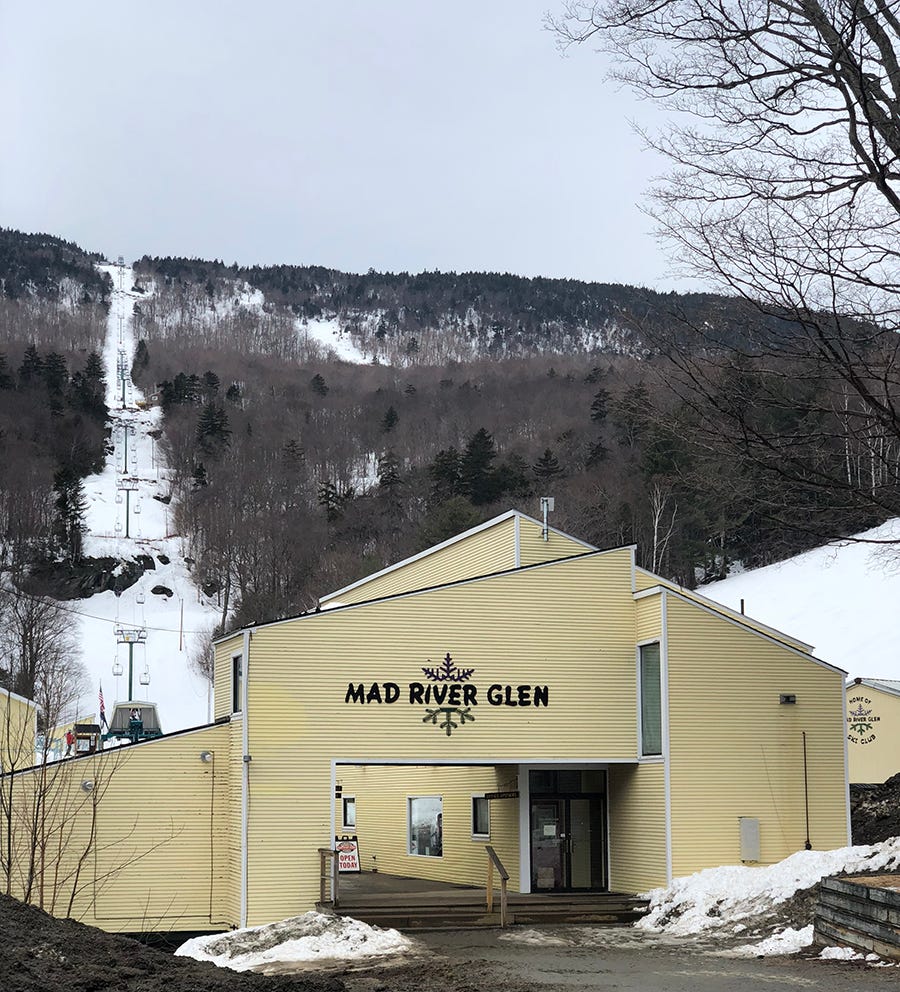
May 5, 2020
COVID-19 & Skiing Podcast #9: Alterra CEO Rusty Gregory – “We’re Continuing to Strengthen Our Offerings”
Download this episode on iTunes , Google Podcasts , Stitcher , TuneIn , and Pocket Casts | Read the full overview at skiing.substack.com . What this is: This is the ninth in a series of conversations exploring the ski industry fallout from the COVID-19-forced closure of nearly every ski area on the continent in March 2020. Click through to listen to the first eight: author Chris Diamond , Boyne Resorts CEO Stephen Kircher , Magic Mountain President Geoff Hatheway , NSAA CEO Kelly Pawlak , Berkshire East/Catamount Owner & Goggles for Docs founder Jon Schaefer , Shaggy’s Copper Country Skis Cofounder Jeff Thompson , Doppelmayr USA President Katharina Schmitz , Mt. Baldy GM Robby Ellingson Who: Rusty Gregory, Alterra Mountain Company CEO Why I interviewed him: Because as skiing has evolved into a megapass-anchored duopoly that has trained consumers to feel entitled to cheap access to as many mountains as possible, the consequences of those large players’ decisions has been amplified considerably. When Vail and Alterra shut down their entire North American networks of nearly 50 ski areas on March 14, the impact reverberated in immediate and wide-ranging ways that would have been difficult to imagine even five years ago. Now, as both step out of the wreckage and try to make good with passholders still fuming about shortened seasons while acknowledging that next season isn’t close to being assured, we are collectively witnessing the kind of real-time business adaptation that normally takes years to occur. How Alterra resets the Ikon Pass now will influence not only how smaller mountains adjust their offerings, but what skiers’ pass expectations will be long after Covid-19 has burned out. Looming over all of this is the possibility that the 2020-21 ski season could be a very dystopian, socially distant affair, with capacity limits and restricted access to just about everything. How Alterra is evolving in the shutdown’s aftermath and preparing for the possibility of a very odd 2020-21 season is one of the most important stories in skiing right now. Alterra’s Steamboat ski area in February 2020. What we talked about: How the shutdown progressed and the catalysts behind the ultimate decision to close; how using Crystal Mountain as a laboratory told them social distancing at massive ski areas was unsustainable; the chaos and uncertainty of March 14, which turned out to be shutdown day; the creeping atmosphere of fear in ski towns as the virus spread; the impossible decision of shuttering 15 North American ski resorts in the midst of peak season when hundreds of thousands of skiers are planning on booting up the next day; second-guessing the shutdown decision and how long those doubts lasted; dealing with Angry Ski Bro in the moment; Dude Brah are you really going to shut Squaw when we’re about to get dumped on?; managing thousands of layoffs and furloughs and helping move those who wanted to leave out of town; how Alterra is planning for different re-opening scenarios; losses are significant, but the owners are well-capitalized and this is not a death knell; the status of the capital investments Alterra announced just before the shutdown , including the Steamboat and Tremblant expansions, new lifts at Mammoth, and lodges throughout the system; how Alterra rejiggered the Ikon Pass to acknowledge that “people didn’t get what they paid for”; more Ikon Pass adjustments are coming, including a plan for what will happen in the event of another shutdown; Rusty’s reaction to Vail’s plan to offer up to 80 percent renewal discount for last year’s Epic Pass holders; the thinking behind the Ikon Pass nurse discount; Ikon’s substantial child pass discount; the May 26 Ikon Pass deadline likely won’t change; the logic behind adding Windham to the Ikon Pass; Alterra isn’t done buying, perhaps even in the short term; whether the Windham partnership signals a trend toward adding more close-to-cities feeder-type areas that can supplement longer trips at larger mountains; we could see more Ikon partners in the East; whether Vail buying Peak catalyzed Alterra’s Windham partnership; why Mt. Bachelor, a Powdr Corp resort whose large sister mountains Snowbird, Copper, and Killington are already on the Ikon Pass has just now been added as a partner; the importance of the Pacific Northwest; Rusty’s thoughts on Mt. Baldy’s re-opening experiment and whether any of that could be applied to Alterra’s properties; could we see Squaw Valley or Mammoth re-open this season?; if you love conference calls, become a CEO at a huge ski company during a pandemic, because you will have lots of them; will the southern hemisphere 2020 ski season happen?; optimism for the future What I got wrong: I corrected this in the interview, but it’s worth restating that Alterra’s Adventure Assurance program provides the option to defer the value of an Ikon Pass to the 2021-22 season by Dec. 10. It does not provide a refund. Words are hard and I chose the wrong one. Questions I wish I’d asked: While this has nothing to do with the coronavirus, I had hoped to ask about Alterra’s decision to kick Aspen and Jackson Hole off the Ikon Base Pass and up to a “plus” tier. Recorded on: May 4, 2020 The Storm Skiing Podcast is on iTunes , Google Podcasts , Stitcher , TuneIn , and Pocket Casts. The Storm Skiing Journal publishes podcasts and other editorial content throughout the ski season. To receive new posts as soon as they are published, sign up for The Storm Skiing Journal Newsletter at skiing.substack.com . Follow The Storm Skiing Journal on Facebook and Twitter . COVID-19 & Skiing Podcasts: Author and Industry Veteran Chris Diamond | Boyne Resorts CEO Stephen Kircher | Magic Mountain President Geoff Hatheway | NSAA CEO Kelly Pawlak | Berkshire East/Catamount Owner & Goggles for Docs founder Jon Schaefer | Shaggy’s Copper Country Skis Cofounder Jeff Thompson | Doppelmayr USA President Katharina Schmitz | Mt. Baldy GM Robby Ellingson | The Storm Skiing Podcasts: Killington & Pico GM Mike Solimano | Plattekill owners Danielle and Laszlo Vajtay | New England Lost Ski Areas Project Founder Jeremy Davis | Magic Mountain President Geoff Hatheway | Lift Blog Founder Peter Landsman | Boyne Resorts CEO Stephen Kircher | Burke Mountain GM Kevin Mack | Liftopia CEO Evan Reece | Berkshire East & Catamount Owner & GM Jon Schaefer | Vermont Ski + Ride and Vermont Sports Co-Publisher & Editor Lisa Lynn | Sugarbush President & COO Win Smith | Loon President & GM Jay Scambio | Sunday River President & GM Dana Bullen | Big Snow & Mountain Creek VP of Sales & Marketing Hugh Reynolds | Get full access to The Storm Skiing Journal and Podcast at www.stormskiing.com/subscribe
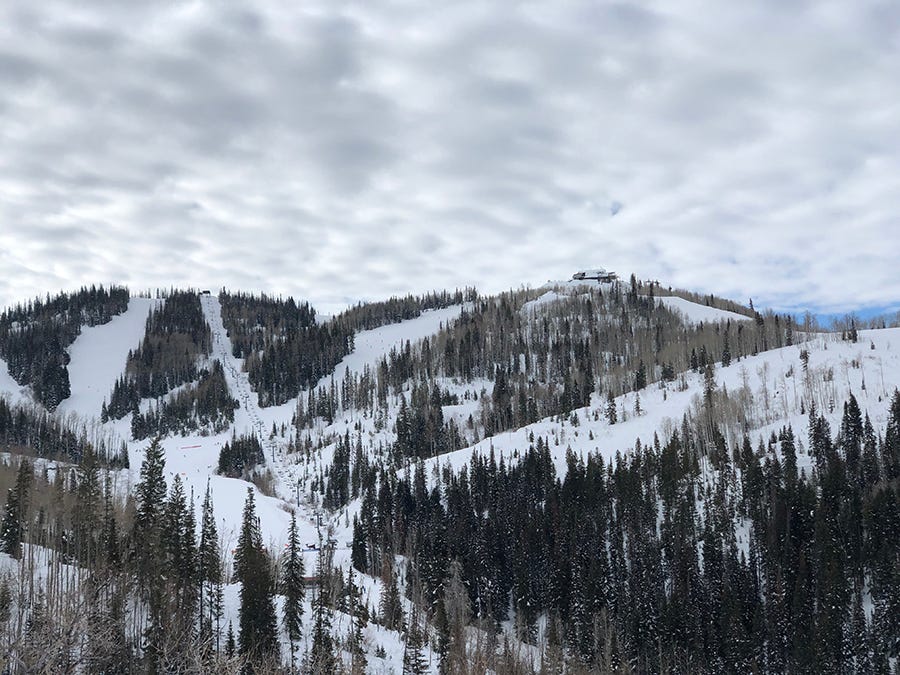
Apr 23, 2020
COVID-19 & Skiing Podcast #8: Mt. Baldy, California GM Robby Ellingson – First to Reopen
Download this episode on iTunes , Google Podcasts , Stitcher , TuneIn , and Pocket Casts | Read the full overview at skiing.substack.com . What this is: This is the eighth in a series of short conversations exploring the ski industry fallout from the COVID-19-forced closure of nearly every ski area on the continent in March 2020. Click through to listen to the first seven: author Chris Diamond , Boyne Resorts CEO Stephen Kircher , Magic Mountain President Geoff Hatheway , NSAA CEO Kelly Pawlak , Berkshire East/Catamount Owner & Goggles for Docs founder Jon Schaefer , Shaggy’s Copper Country Skis Cofounder Jeff Thompson , Doppelmayr USA President Katharina Schmitz Who: Robby Ellingson, General Manager of Mt. Baldy, California Why I interviewed him: Because Ellingson figured it out. After Lookout Pass, Idaho, became the last ski area on the continent to freeze its lifts on March 25 to help stop the spread of COVID-19, I figured the season was done. Even if Mammoth or Arapahoe Basin or Snowbird or Killington did have enough base and enough staff left hanging around to open up again when the curve flattened on the coronavirus outbreak, it seemed unlikely that they would have the will to do so. They’d lost weeks of fat March and early-April spring break revenue, and many of them don’t make much or any money on late spring skiing. Why bother? Mt. Baldy bothered. In a limited, careful manner, with pre-registrations and parking lot check-ins and metered access throughout the day, the mountain is conducting a micro-experiment on behalf of the entire North American ski industry to see if there’s a way to make skiing work in a socially distant world. When the lifts stopped at most of the nation’s largest ski resorts on a frantic Saturday-into-Sunday jumble of panic and confusion in mid-March, no one really understood yet what was going on, how bad it was going to get, and how severe and widespread a shutdown needed to be in order to arrest the disease’s spread. We don’t necessarily have a good long-term understanding of those things just yet, but the ski industry’s doers and managers have had a good long stretch to think through some approaches that may allow lift-served skiing to survive until the scientists can put a stake through coronavirus’ heart. I wanted to see how that experiment was going, if it was sustainable or practical, and what it could mean for the 2020-21 ski season. What we talked about: The story of Mt. Baldy’s March shutdown amid a storm cycle; how the mountain’s pre-shutdown social distancing plan informed its April re-opening; how they knew it was time to fire the lifts up again; the issues caused by cityfolk flooding the mountains throughout the closure; aiming for a low-key re-opening in a high-key world; what California has and has not closed and what that means for ski areas; when the government isn’t clear on their guidelines, are there even guidelines Bro?; applying the golf course model to skiing; if Costco and Best Buy can stay open, why not an 800-acre ski area operating at 10 percent capacity?; Baldy’s social distancing protocol, from buying the lift ticket to entering the parking lot to going up and away on the lifts; skiing in the age of mandatory facemasks; how employees feel about returning to work after weeks of shelter-in-place; yeah it makes no sense because it’s pushing 90 degrees in Los Angeles but Mt. Baldy’s been getting hammered with snow and they’re aiming for Memorial Day or later; there’s avy control in Southern California; the plan for Ski Patrol; the community reaction; how opening helped take pressure off the end-of-the-road crowds that had been congregating outside the mountain’s gates; whether this is a sustainable model for a COVID-bombed 2020-21 ski season Further reading : Mt. Baldy’s we’re open/social distancing protocol page . Additional coverage of Mt. Baldy’s reopening: Powder , MSN , LA Times , Gear Junkie , KTLA , KCAL This Mt. Baldy trip report from the March 1994 issue of Powder will give you a good sense of the place. It doesn’t seem to have changed much since. An overview of Mt. Baldy’s lifts and a trailmap . Recorded on: April 22, 2020 The Storm Skiing Podcast is on iTunes , Google Podcasts , Stitcher , TuneIn , and Pocket Casts. The Storm Skiing Journal publishes podcasts and other editorial content throughout the ski season. To receive new posts as soon as they are published, sign up for The Storm Skiing Journal Newsletter at skiing.substack.com . Follow The Storm Skiing Journal on Facebook and Twitter . COVID-19 & Skiing Podcasts: Author and Industry Veteran Chris Diamond | Boyne Resorts CEO Stephen Kircher | Magic Mountain President Geoff Hatheway | NSAA CEO Kelly Pawlak | Berkshire East/Catamount Owner & Goggles for Docs founder Jon Schaefer | Shaggy’s Copper Country Skis Cofounder Jeff Thompson | Doppelmayr USA President Katharina Schmitz The Storm Skiing Podcasts: Killington & Pico GM Mike Solimano | Plattekill owners Danielle and Laszlo Vajtay | New England Lost Ski Areas Project Founder Jeremy Davis | Magic Mountain President Geoff Hatheway | Lift Blog Founder Peter Landsman | Boyne Resorts CEO Stephen Kircher | Burke Mountain GM Kevin Mack | Liftopia CEO Evan Reece | Berkshire East & Catamount Owner & GM Jon Schaefer | Vermont Ski + Ride and Vermont Sports Co-Publisher & Editor Lisa Lynn | Sugarbush President & COO Win Smith | Loon President & GM Jay Scambio | Sunday River President & GM Dana Bullen | Big Snow & Mountain Creek VP of Sales & Marketing Hugh Reynolds Get full access to The Storm Skiing Journal and Podcast at www.stormskiing.com/subscribe

Apr 19, 2020
COVID-19 & Skiing Podcast #7: Doppelmayr USA President Katharina Schmitz – “We Are Used to Making Adjustments”
Download this episode on iTunes , Google Podcasts , Stitcher , TuneIn , and Pocket Casts | Read the full overview at skiing.substack.com . What this is: This is the seventh in a series of short conversations exploring the fallout to the ski industry from the COVID-19-forced closure of every ski area on the continent in March 2020. Click through to listen to the first six: author Chris Diamond , Boyne Resorts CEO Stephen Kircher , Magic Mountain President Geoff Hatheway , NSAA CEO Kelly Pawlak , Berkshire East/Catamount Owner & Goggles for Docs founder Jon Schaefer , and Shaggy’s Copper Country Skis Cofounder Jeff Thompson . Who: Katharina Schmitz, President of Doppelmayr USA Why I interviewed her: Because if my spending is your income, then my budget cuts are your revenue cuts, and one of the most significant down-the-chain victims of the Great Ski Shutdown of 2020 is chairlift manufacturers. When a company like Vail says very bluntly that the immediate financial impact of the coronavirus-caused shutdown could be as much as $200 million , they have to make up some of that deficit somewhere. Often, the big-ticket items go first, and nothing in skiing is more big ticket than chairlifts. They are millions of dollars apiece, and they often aren’t absolutely necessary. Thanks to decades of consistent investment, the chairlift infrastructure at most large U.S. resorts is in quite good condition. The Kancamagus Quad at Loon, for example, is only 25 years old , and GM Jay Scambio told me on The Storm Skiing Podcast that it was still in good enough shape that there was a high probability that it would replace the Seven Brothers triple chair when the resort tore the quad out to make room for a new eight-pack this offseason. So when Boyne suddenly lost up to $22 million in end-of-season revenue, the obvious choice was to delay installation of the very expensive (perhaps eight figures expensive, but Boyne won’t say ), new Kancamagus 8 and keep the perfectly good Kanc 4 running until it’s feasible to move ahead with the project without interruption. More significant perhaps than short-term cost savings, a delay avoids the risk of tearing out a key old lift and not being able to replace it prior to winter in the event of another work stoppage. Loon would descend into gridlock without some version of the Kanc lift. So I wanted to see how lift manufacturers were managing this sudden slowdown. Aside from the business component here, chairlifts are a central part of the resort skier’s experience, with lifts bound inextricably to the mountains we love and our conception of those places. While most of us couldn’t name the manufacturer of our favorite lifts, we realize that these companies are essential, and how they weather this economic fallout matters. Doppelmayr installed Jackson Hole’s Sweetwater Gondola in 2016. What we talked about: What it’s like to start a new job in the midst of a pandemic/business crisis; the slow realization of the scope of the shutdown and how it would trickle down to cuts in capital spending; how Doppelmayr USA coordinated with their colleagues in Europe to prepare as the crisis amped up over there; how the company worked with the big ski conglomerates to postpone projects in a deliberate and orderly fashion; how much it helps that there aren’t that many lift companies and there aren’t that many big ski companies and those relationships have been very tight for a very long time; since the number of lifts the company builds varies by year, a sudden slowdown isn’t as much of a system shock as it could be for more steady-production business; how much manufacturing is proceeding during the shutdown; where they store the lifts that are already made but won’t be on the mountain until 2021 at the earliest; what Doppelmayr makes in Utah and what their global supply chain looks like; supply chains are so far mostly intact; where the labor comes from for on-mountain installations; why the crews in Alaska are still at work on the Icy Point Straight gondola project; how the company is working with various states to proceed with on-the-ground work under their varying shelter-in-place orders; how the company is preparing to work under social distancing and enhanced sanitation rules; what happens contract-wise when a ski area postpones a lift; the status of postponed projects at Loon, Big Sky, and Beaver Creek; where Doppelmayr is storing the Loon 8-pack until they can install it; why the state-of-the-art D-Line lifts are still made in Austria; the status of non-cancelled projects at Sun Peaks, Sun Valley, and Timberline, Oregon; the status of installations at dormant Saddleback and Timberline Mountain, West Virginia; Yup Saddleback sure did pull down the old Rangeley Double with a snowcat ; the long-term future of the lift industry; why she’s optimistic that this crisis could stoke demand for lifts as urban transit References : In the intro, I refer to stats on the cost of chairlifts from New England Ski History. You can browse those here . Here is Lift Blog’s 2019 North American lift construction recap , as well as its databases of new lifts that are planned for 2020 and 2021 . Recorded on: April 17, 2020 The Storm Skiing Podcast is on iTunes , Google Podcasts , Stitcher , TuneIn , and Pocket Casts. The Storm Skiing Journal publishes podcasts and other editorial content throughout the ski season. To receive new posts as soon as they are published, sign up for The Storm Skiing Journal Newsletter at skiing.substack.com . Follow The Storm Skiing Journal on Facebook and Twitter . COVID-19 & Skiing Podcasts: Author and Industry Veteran Chris Diamond | Boyne Resorts CEO Stephen Kircher | Magic Mountain President Geoff Hatheway | NSAA CEO Kelly Pawlak | Berkshire East/Catamount Owner & Goggles for Docs founder Jon Schaefer | Shaggy’s Copper Country Skis Cofounder Jeff Thompson | The Storm Skiing Podcasts: Killington & Pico GM Mike Solimano | Plattekill owners Danielle and Laszlo Vajtay | New England Lost Ski Areas Project Founder Jeremy Davis | Magic Mountain President Geoff Hatheway | Lift Blog Founder Peter Landsman | Boyne Resorts CEO Stephen Kircher | Burke Mountain GM Kevin Mack | Liftopia CEO Evan Reece | Berkshire East & Catamount Owner & GM Jon Schaefer | Vermont Ski + Ride and Vermont Sports Co-Publisher & Editor Lisa Lynn | Sugarbush President & COO Win Smith | Loon President & GM Jay Scambio | Sunday River President & GM Dana Bullen | Big Snow & Mountain Creek VP of Sales & Marketing Hugh Reynolds | Get full access to The Storm Skiing Journal and Podcast at www.stormskiing.com/subscribe
Apr 8, 2020
COVID-19 & Skiing Podcast #6: Shaggy’s Copper Country Skis Cofounder Jeff Thompson – A Pivot to Face Shield Production
Download this episode on iTunes , Google Podcasts , Stitcher , TuneIn , and Pocket Casts | Read the full overview at skiing.substack.com . What this is: This is the sixth in a series of short conversations exploring the fallout to the ski industry from the COVID-19-forced closure of nearly every ski area on the continent in March 2020. Click through to listen to the first five: author Chris Diamond , Boyne Resorts CEO Stephen Kircher , Magic Mountain President Geoff Hatheway , NSAA CEO Kelly Pawlak , Berkshire East/Catamount Owner & Goggles for Docs founder Jon Schaefer . Who: Jeff Thompson, partner and cofounder of Shaggy’s Copper Country Skis in Boyne City, Michigan Why I interviewed him: Because as America has fractured along political fault lines over the past few decades, the bring-it-together ethos of the nation’s finest moments seemed ever more distant and improbable. It was with a sense of amazement bordering on disbelief that I would read about the titanic wartime effort of the 1940s, when American manufacturing channeled its full might and ingenuity into assembling one of the greatest war machines in history. In December 1941, Japan attacked Pearl Harbor. By February 1942, automakers were retooling their factories for airplane, tank, and truck manufacturing. Factories of all kinds made similar pivots. This enormous and immediate output helped win World War II, and much of that effort took place in Michigan. When COVID-19 pounced out of the viral shadows this winter and began its inexorable creep across our globalized and interconnected world, the medical establishment everywhere was as short of medical supplies as the United States was of battle-ready Jeeps and bombers in 1941. Now, as then, small and large manufacturers of all sizes are applying their expertise in making things to the enormous and urgent project before them. American manufacturing in 2020 is not what it was in 1941, when the nation was one of the world’s great factory hubs. But the work ethic, the energy, the problem-solving intelligence, and the compulsion to meet a problem and punch it in the face remain. When the scope of the COVID-19 crisis began to settle over our nation, Shaggy’s Copper Country Skis, like small manufacturers across the country, shut their regular production lines and retooled for crisis. A custom ski shop, Shaggy’s is now cranking out 5,000 face masks per day for front-line medical workers, playing a small but vital role in this unfolding pandemic. That is a story I wanted to hear. What we talked about: Even as the world falls apart good things still happen, and one of those good things was Jeff having his first child just as the shutdown was taking hold across the country; what inspired Shaggy’s to shut down ski production and how they honed in on face shields as an area of need they could help fulfill; the trial-and-error process of going from prototype to production; making things is a deeply ingrained family habit (that stretches back more than a century ), and the Thompsons have more than one small factory locked into this effort; the practical challenges of pivoting from boutique custom ski production to high-volume repetitive stamping out of a single identical item; how Shaggy’s modified their shop to switch from skis to face shields; how you move a 5,000-foot-long, 650-pound coil of plastic around a shop floor without a forklift; the challenges of sourcing materials on the fly that normally take weeks to acquire and that most suppliers don’t have in the necessary volume; the materials that go into the shields and the tools used to cut and assemble them; how they’re collaborating with other ski and snowboard companies to help ramp up the overall production effort; how many face shields they can turn out each day and how much extra labor it takes to do that; the simplicity of the whole operation compared to Shaggy’s typical process of banging out custom skis, and the psychological reset necessary for a group accustomed to that more creative process; how the team was inherently prepared to make this kind of switch; the setbacks the shop hit in ramping up production; how they continue to update the production line to streamline the production process; how 60-year-old riveters are proving to be essential tools to the assembly process; how Shaggy’s stands alone as a true independent ski company; how they allocate these invaluable resources in a time of overwhelming demand; where the shields end up and what they do with the excess shields each day; how a company spreads the word that it’s a suddenly medical manufacturer with masks on offer when it’s well-established as a niche ski outfit; how they honed in on the Costco-sized 150-pack as the optimal number of shields per shipped box; how operating as a direct-to-consumer brand positioned Shaggy’s to easily send these shields directly to hospitals; how long this change-over might last; how this effort honors the family legacy of making things More about Shaggy’s : The company has one of the cooler stories behind its name that I’m aware of – from their website : In 1908, our great-grand-uncle Sulo "Shaggy" Lehto starting hand carving wooden skis for our family and neighbors in the village of Kearsarge, located in the heart of Michigan's Keweenaw Peninsula, best known as the Copper Country. Shaggy carved skis for his niece, our grandmother (John's mother), and she told stories of using them to travel around town in the deep snow and ski down the tailing piles from the copper mines. That pair of skis was handed down through the generations. In 2005, when the Thompson family started making skis, they knew they had to keep the family heritage alive and dedicated their ski building endeavor with the family name of Shaggy's Copper Country Skis. It is with great honor and a sense of pride that we use his name and hope that Shaggy is as proud of us as we are of him. A deeper look: Shaggy’s profiles from Unofficial Networks and Teton Gravity Research . More on the face shield effort from the local news station in Northern Michigan. Recorded on: April 7, 2020 The Storm Skiing Podcast is on iTunes , Google Podcasts , Stitcher , TuneIn , and Pocket Casts. The Storm Skiing Journal publishes podcasts and other editorial content throughout the ski season. To receive new posts as soon as they are published, sign up for The Storm Skiing Journal Newsletter at skiing.substack.com . Follow The Storm Skiing Journal on Facebook and Twitter . COVID-19 & Skiing Podcasts: Author and Industry Veteran Chris Diamond | Boyne Resorts CEO Stephen Kircher | Magic Mountain President Geoff Hatheway | NSAA CEO Kelly Pawlak | Berkshire East/Catamount Owner & Goggles for Docs founder Jon Schaefer The Storm Skiing Podcasts: Killington & Pico GM Mike Solimano | Plattekill owners Danielle and Laszlo Vajtay | New England Lost Ski Areas Project Founder Jeremy Davis | Magic Mountain President Geoff Hatheway | Lift Blog Founder Peter Landsman | Boyne Resorts CEO Stephen Kircher | Burke Mountain GM Kevin Mack | Liftopia CEO Evan Reece | Berkshire East & Catamount Owner & GM Jon Schaefer | Vermont Ski + Ride and Vermont Sports Co-Publisher & Editor Lisa Lynn | Sugarbush President & COO Win Smith | Loon President & GM Jay Scambio | Sunday River President & GM Dana Bullen | Big Snow & Mountain Creek VP of Sales & Marketing Hugh Reynolds | Get full access to The Storm Skiing Journal and Podcast at www.stormskiing.com/subscribe
Apr 6, 2020
COVID-19 & Skiing Podcast #5: Berkshire East/Catamount Owner & Goggles for Docs Founder Jon Schaefer – First to Close, Then A Great Goggle Airlift
Download this episode on iTunes , Google Podcasts , Stitcher , TuneIn , and Pocket Casts | Read the full overview at skiing.substack.com . What this is: This is the fifth in a series of short conversations exploring the fallout to the ski industry from the COVID-19-forced closure of every ski area on the continent in March 2020. Click through to listen to the first four: author Chris Diamond , Boyne Resorts CEO Stephen Kircher , Magic Mountain President Geoff Hatheway , NSAA CEO Kelly Pawlak . Who: Jon Schaefer, Owner and General Manager of Berkshire East and Catamount , Founder of Goggles for Docs Why I interviewed him: Because Jon has done two incredibly consequential things that helped shift the momentum of the COVID-19 response in tangible ways. First, he turned the lights out on his two Massachusetts ski areas on Thursday, March 12, becoming the first ski area on the continent to close specifically to help stop the virus’ spread. In doing so, he lit a fuse that would soon blow up the entire industry. Second, he willed an errant email from a New York City doctor into a nationwide initiative to transfer goggles from the bottom of 10,000 dusty ski bags to the faces of front-line medical workers, giving them the eye protection that somehow our medical system is not equipped to provide. How and why he did these things is a story that I wanted to hear. What we talked about: Jon’s thought process leading up to the shutdown; when you take away skiing you’re taking away freedom and the emotional toll of making that decision is significant; how the sacrifice was “an act of honoring” the more vulnerable members of the tight-knit communities that wrap both of those mountains; how those communities reacted to his decision; “crickets” from the industry when he closed; there are some advantages to not being a 6,000-mountain conglomerate, and one of those is the ability to move very quickly in an instance such as the COVID shutdown; he’s already figuring out how to put his employees back to work; when everything goes haywire, the government responds with resources for businesses but you’ve got to dig in to figure out what they are; the vast internet bazaar of government auctions is an overlooked resource in this crisis; could we see temporary farms on the slopes of Berkshire East and Catamount?; the single email that launched Goggles for Docs; how he organized the avalanche of emails that followed; Inntopia steps in to order the chaos with a website; how rapidly the number of listed hospitals in need grew and how that happened; a de facto corporate order emerges from the let’s-do-this pent-up enthusiasm of hundreds of nearly home-bound volunteers; the exponential growth of donations; virtual apres is ongoing to raise awareness and you’re welcome to drop in; “the intensity with which the ski world is attacking this … is just phenomenal”; your old goggles are gold right now, so get them out of your closet and into a hospital; this thing went global quick; Goggles for Docs is a case study in the power of crowd-sourcing; this gives you something you can do other than sit at home and feel as though there’s nothing you can do; what made him think about shutting the whole thing down and why he didn’t; why he’s not preoccupied with the fact that the healthcare system was shockingly short on equipment to meet this crisis; how you can donate or otherwise help; how enormous the need is; yes your goggles may be beat up but official medical orgs have approved this so go for it. Recorded on: April 5, 2020 The Storm Skiing Podcast is on iTunes , Google Podcasts , Stitcher , TuneIn , and Pocket Casts. The Storm Skiing Journal publishes podcasts and other editorial content throughout the ski season. To receive new posts as soon as they are published, sign up for The Storm Skiing Journal Newsletter at skiing.substack.com . Follow The Storm Skiing Journal on Facebook and Twitter . COVID-19 & Skiing Podcasts: Author and Industry Veteran Chris Diamond | Boyne Resorts CEO Stephen Kircher | Magic Mountain President Geoff Hatheway | NSAA CEO Kelly Pawlak The Storm Skiing Podcasts: Killington & Pico GM Mike Solimano | Plattekill owners Danielle and Laszlo Vajtay | New England Lost Ski Areas Project Founder Jeremy Davis | Magic Mountain President Geoff Hatheway | Lift Blog Founder Peter Landsman | Boyne Resorts CEO Stephen Kircher | Burke Mountain GM Kevin Mack | Liftopia CEO Evan Reece | Berkshire East & Catamount Owner & GM Jon Schaefer | Vermont Ski + Ride and Vermont Sports Co-Publisher & Editor Lisa Lynn | Sugarbush President & COO Win Smith | Loon President & GM Jay Scambio | Sunday River President & GM Dana Bullen | Big Snow & Mountain Creek VP of Sales & Marketing Hugh Reynolds | Get full access to The Storm Skiing Journal and Podcast at www.stormskiing.com/subscribe

Apr 5, 2020
COVID-19 & Skiing Podcast #4: NSAA President & CEO Kelly Pawlak – Leading the Response
Download this episode on iTunes , Google Podcasts , Stitcher , TuneIn , and Pocket Casts | Read the full overview at skiing.substack.com . What this is: This is the fourth in a series of short conversations exploring the fallout to the ski industry from the COVID-19-forced closure of nearly every ski area on the continent in March 2020. Click through to listen to the first three: author Chris Diamond , Boyne Resorts CEO Stephen Kircher , Magic Mountain President Geoff Hatheway . Who: Kelly Pawlak, President and CEO of the National Ski Areas Association Why I interviewed her: The $2 trillion Coronavirus Aid, Relief, and Economic Security (CARES) Act that the president signed into law on March 27 is 880 pages long, meaning that approximately zero people have read the entire thing. While there are plenty of high-level breakdowns itemizing what the act delivers American individuals and businesses, it’s less obvious what this titanic relief bill means for the ski industry and its nearly 1 million employees. As the primary trade group representing U.S. ski areas, the National Ski Areas Association’s mission over the past several weeks has been to raise its hand on behalf of the collective industry and say, “Hey Congress, don’t forget about us.” I wanted to get a sense of exactly what the bill offered ski areas large and small, and to gauge what else the NSAA was prioritizing over what is set to be a very long slog back to skiers riding lifts up mountainsides. Also, the industry seems extremely satisfied with the NSAA at the moment (Steve Wright is the GM of Jay Peak; Christian Knapp, who comments on the thread, is the CMO of Aspen-Snowmass): What we talked about: The factors behind the NSAA’s estimate that U.S. ski areas will lose $2 billion from the COVID-19 shutdown; the ripple effect of cancelling large capital projects; how much U.S. ski areas invest in capital per skier visit; the importance of summer business and what it will mean if that goes away; what’s in the CARES Act for ski areas and their employees and why it may take a while to sort all that out; the risks of being overlooked for relief money as a seasonal business whose season was three-quarters of the way over; how to get attention for the ski industry when the entire economy collapsed, taking just about every industry with it; the different CARES Act aid that small and large ski areas are eligible for; how the NSAA is approaching the next possible round of Congressional stimulus; how to avoid the, “What do you guys need money for, is there even still skiing in March?” trap when jockeying for that cash; the crucial role of ski areas to rural economies; the Congressional Ski and Snowboard Caucus sounds fun – what is it?; Forest Service land lease fees that 122 U.S. ski areas pay each year could be waived or deferred; the problem with business interruption insurance; is Ski Blandford a bellwether for a wave of independent ski area closings in the COVID aftermath?; echoes of Mount Snow-Haystack in the failure of Butternut subsidizing Blandford; when and why the NSAA cancelled their annual trade show and convention for the first time in 58 years and what they’re doing instead; how the industry is embracing this whole thing as a learning opportunity What I got wrong: I said that Vail had cancelled all of its capital spending for the rest of the year, but that is incorrect: they are eliminating up to $85 million in major capital projects such as new chairlifts and terrain expansions, but are not cancelling basic maintenance capital spending. I also stated that the new Hermitage Club ownership group was “a part of the old ownership,” which isn’t exactly right – a group of former club members purchased the mountain at auction for a bit more than $8 million last month. Fact check: Kelly and I ponder the number of U.S. states that have ski areas – there are 37 , four of which only have one: Tennessee, Rhode Island, Maryland, and Alabama(!). Recorded on: April 2, 2020 The Storm Skiing Podcast is on iTunes , Google Podcasts , Stitcher , TuneIn , and Pocket Casts. The Storm Skiing Journal publishes podcasts and other editorial content throughout the ski season. To receive new posts as soon as they are published, sign up for The Storm Skiing Journal Newsletter at skiing.substack.com . Follow The Storm Skiing Journal on Facebook and Twitter . COVID-19 and Skiing Podcasts: Author and Industry Veteran Chris Diamond | Boyne Resorts CEO Stephen Kircher | Magic Mountain President Geoff Hatheway | The Storm Skiing Podcasts: Killington & Pico GM Mike Solimano | Plattekill owners Danielle and Laszlo Vajtay | New England Lost Ski Areas Project Founder Jeremy Davis | Magic Mountain President Geoff Hatheway | Lift Blog Founder Peter Landsman | Boyne Resorts CEO Stephen Kircher | Burke Mountain GM Kevin Mack | Liftopia CEO Evan Reece | Berkshire East & Catamount Owner & GM Jon Schaefer | Vermont Ski + Ride and Vermont Sports Co-Publisher & Editor Lisa Lynn | Sugarbush President & COO Win Smith | Loon President & GM Jay Scambio | Sunday River President & GM Dana Bullen | Big Snow & Mountain Creek VP of Sales & Marketing Hugh Reynolds | Get full access to The Storm Skiing Journal and Podcast at www.stormskiing.com/subscribe

Apr 3, 2020
COVID-19 & Skiing Podcast #3: Magic Mountain President Geoff Hatheway – “We Exist in a Changed World”
Download this episode on iTunes , Google Podcasts , Stitcher , TuneIn , and Pocket Casts | Read the full overview at skiing.substack.com . What this is: This is the third in a series of short conversations exploring the fallout to the ski industry from the COVID-19-forced closure of nearly every ski area on the continent in March 2020. You can listen to the first two – with author Chris Diamond and Boyne Resorts CEO Stephen Kircher – but it’s not like Star Wars or something where you have to see them in a certain order or they won’t make sense, so jump right in here . Who: Geoff Hatheway, President of Magic Mountain, Vermont Magic’s workhorse Heron-Poma Red Chair has been hauling skiers up Glebe Mountain for nearly 50 years . Why I interviewed him: Because Magic, resolutely perched between Mount Snow and Stratton in Southern Vermont, is as unlikely as it is necessary in this multipass futureworld we all live in. That particular geography puts the place in a defensive posture during the best of times, and in some weird way perhaps makes it uniquely adapted to confront an unforeseen crisis such as the COVID-19 shutdown. Geoff’s a thoughtful guy who helped rescue the mountain from insolvency a few years back, and I wanted to see how he had approached the inevitable shutdown, what he’s been doing to stabilize operations, and how he was planning for Magic’s future in a world that just got turned upside-down. Magic on a misty day. What we talked about: Life in Vermont during the COVID-19 shutdown; the eeriness of an empty Magic covered in snow; how the mountain’s employees reacted to and are managing the shutdown; inside Magic’s decision to close and why it was inevitable; what finally made them call it a season; what happened once Vail and Alterra closed their nearby mountains; how Magic’s hardcore community responded to the early shutdown; how the Congressional relief package will help the mountain bridge the shutdown but it’s gonna be a pain in the rear to tap everything they’re entitled to; what Geoff would like to see in future relief bills; why spring season pass sales are so vital to summer operations; the Black Chair will rise again; why Magic is going to drop season pass prices and push its early-bird pass deadlines by two months; I think the Freedom Pass is dead; you’ll be able to add an Indy Pass onto your Magic season pass for a very low price; Magic season passholders have not gone Angry Ski Bro and demanded refunds for the truncated season; the mountain’s current uphill travel policy; why unity is the best way through this mess for the country as a whole; now is the time to make those phone calls; the importance of the Friends of Magic Facebook group Magic in February. The towers for the unfinished Black Chair rise up the mountain in the distance. The kid babbling in the background: Is mine. He’s now audio-bombed three out of three COVID-19 and skiing podcasts, and I imagine as long as we’re all holed up in the same apartment together 24 hours a day, he will continue to do so. Recorded on: April 2, 2020 The Storm Skiing Podcast is on iTunes , Google Podcasts , Stitcher , TuneIn , and Pocket Casts. The Storm Skiing Journal publishes podcasts and other editorial content throughout the ski season. To receive new posts as soon as they are published, sign up for The Storm Skiing Journal Newsletter at skiing.substack.com . Follow The Storm Skiing Journal on Facebook and Twitter . COVID-19 and Skiing Podcasts: Author and Industry Veteran Chris Diamond | Boyne Resorts CEO Stephen Kircher | The Storm Skiing Podcasts: Killington & Pico GM Mike Solimano | Plattekill owners Danielle and Laszlo Vajtay | New England Lost Ski Areas Project Founder Jeremy Davis | Magic Mountain President Geoff Hatheway | Lift Blog Founder Peter Landsman | Boyne Resorts CEO Stephen Kircher | Burke Mountain GM Kevin Mack | Liftopia CEO Evan Reece | Berkshire East & Catamount Owner & GM Jon Schaefer | Vermont Ski + Ride and Vermont Sports Co-Publisher & Editor Lisa Lynn | Sugarbush President & COO Win Smith | Loon President & GM Jay Scambio | Sunday River President & GM Dana Bullen | Big Snow & Mountain Creek VP of Sales & Marketing Hugh Reynolds | Get full access to The Storm Skiing Journal and Podcast at www.stormskiing.com/subscribe
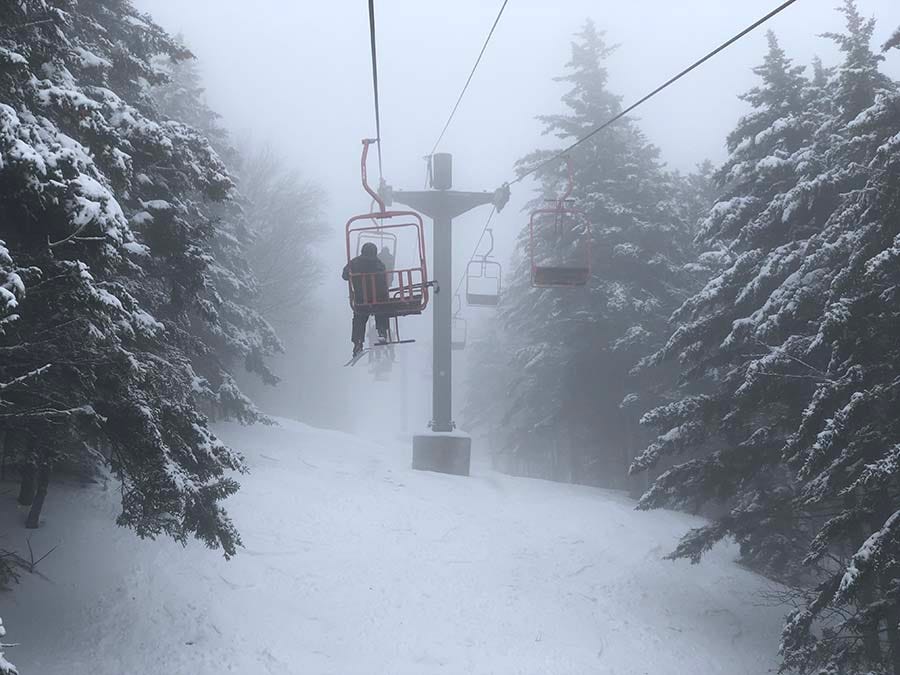
Apr 1, 2020
COVID-19 & Skiing Podcast #2: Boyne Resorts President & CEO Stephen Kircher - Inside the Shutdown
Download this episode on iTunes , Google Podcasts , Stitcher , TuneIn , and Pocket Casts | Read the full overview at skiing.substack.com . What this is: This is the second in a series of short conversations exploring the fallout to the ski industry from the COVID-19-forced closure of nearly every ski area on the continent in March 2020. This is not a typical Storm Skiing Podcast, and the format, tone, and focus is intentionally different from those lengthier shows. My goal is to help the community understand why the shutdown was necessary and what it means to our sport in the short and long term. You can listen to the first one, with author and industry veteran Chris Diamond, here . Who: Stephen Kircher, President and CEO of Boyne Resorts Why I interviewed him: As the head of the third largest ski company in North America by skier visits, Kircher had to make the wrenching and consequential decision to bring his whole sprawling empire to a sudden, complete stop on March 15 to help halt the spread of COVID-19. You’re talking about monster resorts here, like Sugarloaf and Sunday River and Big Sky, suddenly freezing the lifts in place at the end of a midwinter weekend and sending everyone home, from employees to guests. The fallout is enormous, not just to those groups and to that mountain, but to the surrounding communities that rely on those resorts to power their whole economy. The consequences of not closing down, however, would have been much greater. I wanted to hear how and when he arrived at the incredible decision to cease operations, how Boyne is managing the fallout, and how the company hopes to recover for the future. What we talked about: Boyne only has one confirmed COVID-19 case among its 10,000 employees; how the exodus from cities to mountain town vacation homes accelerated the shutdown; they had to shut down because “if customers can ski, they’ll ski”; how the virus hit locally in Northern Michigan; Boyne doesn’t have a Broomfield-style HQ and so its employees are accustomed to working together across the breadth of the continent; they backed the trucks up after the shutdown to fill them with medical supplies for the hospitals and food for employees and local food kitchens; other ways they’re helping the effort to fight COVID; how federal leadership failed and how companies and local governments had to step in to make patchwork decisions; when the company began taking extra safety measures; Boyne was already working on a phased shutdown plan before any mountains had closed anywhere; how everything snowballed and blew up those plans; when “it became increasingly clear that if we’re going to maintain a safe outcome here, then we’re going to have to have an orderly shutdown”; when they had planned to close each mountain; how everything went completely sideways for the whole industry on Saturday, March 14; how the big industry players communicated with one another as all this was unfolding; how being in Europe when all this was going down made him feel like a discombobulated time traveler; why the industry was lucky this happened toward the end of the season; how their employees are holding up and how the Congressional relief bill is helping to ease their sudden layoffs; everyone just figured out that business interruption insurance doesn’t cover pandemics and why that’s an enormous problem; what that insurance does cover and how Boyne has used it in the past; how many millions in revenue Boyne estimates it lost in the shutdown; the factors the company is considering as it decides whether to move forward with major capital projects like the Kanc 8 at Loon; whether any of Boyne’s mountains could re-open this season and why they probably won’t; which mountains could open if they do Helpful additional context: Stephen mentions the COVID hotspot of Ischgl, referring to an Austrian ski town from which the virus erupted across the continent. You can read more about that here . He also said, “this hasn’t happened since 1918,” referring to the last global pandemic. If you are still somehow not aware of this even now, here you go . Background vocal credits: Logan Winchester, age 3 Recorded on: April 1, 2020 The Storm Skiing Podcast is on iTunes , Google Podcasts , Stitcher , TuneIn , and Pocket Casts. The Storm Skiing Journal publishes podcasts and other editorial content throughout the ski season. To receive new posts as soon as they are published, sign up for The Storm Skiing Journal Newsletter at skiing.substack.com . Follow The Storm Skiing Journal on Facebook and Twitter . COVID-19 and Skiing Podcasts: Author and Industry Veteran Chris Diamond The Storm Skiing Podcasts: Killington & Pico GM Mike Solimano | Plattekill owners Danielle and Laszlo Vajtay | New England Lost Ski Areas Project Founder Jeremy Davis | Magic Mountain President Geoff Hatheway | Lift Blog Founder Peter Landsman | Boyne Resorts CEO Stephen Kircher | Burke Mountain GM Kevin Mack | Liftopia CEO Evan Reece | Berkshire East & Catamount Owner & GM Jon Schaefer | Vermont Ski + Ride and Vermont Sports Co-Publisher & Editor Lisa Lynn | Sugarbush President & COO Win Smith | Loon President & GM Jay Scambio | Sunday River President & GM Dana Bullen | Big Snow & Mountain Creek VP of Sales & Marketing Hugh Reynolds Get full access to The Storm Skiing Journal and Podcast at www.stormskiing.com/subscribe

Mar 27, 2020
COVID-19 & Skiing Podcast #1: Author and Industry Veteran Chris Diamond - Optimism for the Future
Download this episode on iTunes , Google Podcasts , Stitcher , TuneIn , and Pocket Casts | Read the full overview at skiing.substack.com . What this is: This is the first in a series of conversations exploring the ski industry fallout from the COVID-19-forced closure of nearly every ski area on the continent in March 2020. This is not a typical Storm Skiing Podcast, and the format, tone, and focus is intentionally different from those lengthier shows. My goal is to help the skiing community understand why the shutdown was necessary and what it means to our sport in the short and long term. Who: Chris Diamond, author of Ski Inc. and Ski Inc. 2020 , former president of Mount Snow, former head of Steamboat, past director and chairman of Colorado Ski Country USA and the National Ski Areas Association, member of the Colorado Ski Hall of Fame Why I interviewed him: Diamond’s two books, Ski Inc. and Ski Inc. 2020 , positioned him as one of the top experts on the modern North American skiing industry. When examining the fallout from chopping a month of more off the end of the ski season, I think it’s valuable to get a perspective that examines the industry as a whole and does so through a long-term lens. No one was better positioned to do that than Diamond, and he was fortunately available for a conversation. What we talked about: The atmosphere in Steamboat since the COVID-19 shutdown; how locals are adapting; the new uphill skinning restrictions in Colorado; current industry sentiment; how much it hurts a ski area financially to lose half of March; how much April matters; how fortunate we were that the pandemic didn’t hit a month or two earlier; why this is different from having to close early in a crummy snow year; why season pass sales may be OK; how the industry may respond to keep pass sales at least flat in a tough economic environment; how the COVID shutdown compares to other existential threats to skiing like climate change and attracting more diverse skiers; why this is the most severe shock that the modern ski industry has ever faced; what might happen if next season is cancelled; why there’s still reason for optimism What I got wrong: I identified Arapahoe Basin Chief Operating Officer Alan Henceroth as Arapahoe Basin “CMO” Alan “Henceforth.” I regret the error. I also stated that economic data revealed “3 million” new unemployment claims in the United States this week, smashing the previous record of “655,000” in 1982. The correct numbers are 3.3 million new claims this week, beating 1982’s record of 695,000. Why it sounds like I recorded this on a playground: Because I, like everyone else fortunate enough to have a job that enables them to work remotely, have ported my office into my home at the same moment all children have been untethered from school. My 11-year-old has remote classes to preoccupy her, but the 3-year-old does not, and so he is likely joining the podcast as a background singer for the foreseeable future. Recorded on: March 26, 2020 The Storm Skiing Podcast is on iTunes , Google Podcasts , Stitcher , TuneIn , and Pocket Casts. The Storm Skiing Journal publishes podcasts and other editorial content throughout the ski season. To receive new posts as soon as they are published, sign up for The Storm Skiing Journal Newsletter at skiing.substack.com . Follow The Storm Skiing Journal on Facebook and Twitter . Check out The Storm Skiing Podcast: Killington & Pico GM Mike Solimano | Plattekill owners Danielle and Laszlo Vajtay | New England Lost Ski Areas Project Founder Jeremy Davis | Magic Mountain President Geoff Hatheway | Lift Blog Founder Peter Landsman | Boyne Resorts CEO Stephen Kircher | Burke Mountain GM Kevin Mack | Liftopia CEO Evan Reece | Berkshire East & Catamount Owner & GM Jon Schaefer | Vermont Ski + Ride and Vermont Sports Co-Publisher & Editor Lisa Lynn | Sugarbush President & COO Win Smith | Loon President & GM Jay Scambio | Sunday River President & GM Dana Bullen | Big Snow & Mountain Creek VP of Sales & Marketing Hugh Reynolds Get full access to The Storm Skiing Journal and Podcast at www.stormskiing.com/subscribe

Mar 3, 2020
Podcast #14: Big Snow and Mountain Creek VP of Marketing & Sales Hugh Reynolds
The Storm Skiing Podcast #14 | Download this episode on iTunes , Google Podcasts , Stitcher , TuneIn , and Pocket Casts | Read the full overview at skiing.substack.com . Who: Hugh Reynolds, Vice President of Marketing & Sales for Snow Operating, owners of Big Snow American Dream and Mountain Creek Why I interviewed him: Modern New York City and its environs can be a frustrating place to live. There are many reasons for this, but one of the most grating is standing by while a tangle of ineptness swallows every large infrastructure or construction project . Simply building three new subway stations cost $4.5 billion and took a decade . Manhattan’s Essex Crossing mega-development is finally rising on land cleared for development 70 years ago. And across the river in New Jersey, the state still owed $110 million on the old Giants Stadium when they tore it down to build a new one right next door. When the wait-why-is-this-necessary-in-a-region-with-200-outdoor-ski-areas mottled snowshed rose off the turnpike sometime in the mid-aughts and then appeared to be abandoned before it was ever occupied, I figured its fate would be another chapter in the Big Book of Stupid Things Done In the Name of Flushing Money Down the Sewer. This had after all already been tried in Tokyo – another place where it is not exactly difficult to reach outdoor ski options – and it had reportedly cost as much to demolish as to build. When rumors ticked out last year that the New Jersey Snowdome would at long last be occupied, I was surprised and skeptical. But as I read more about it and I began to understand Snow Operating’s vision, my opinion evolved. Founder Joe Hession and his team have immediately established Big Snow American Dream – as the New Jersey Snow Dome is somewhat inelegantly known – as the nation’s premier learn-to-ski center. With its 365-day-a-year operating schedule, affordable all-gear-included ski packages , optimal conditions, and accessible-by-mass-transit location in the heart of the 20 million-person New York City metro area, the center has the potential to introduce more new skiers – and far more diverse skiers – to the sport than every backyard ropetow in the country combined. How Snow Operating transformed an abandoned hunk of aspirational scrap metal into one of the most visited and important ski areas in the country was a story I wanted to hear. Also, I’m a Mountain Creek season pass holder, and I had a lot of questions about the future of that place. What we talked about: Big Snow American Dream: attendance and reception; who’s using the facility, both skills- and diversity-wise; Big Snow as the gym of skiing and snowboarding; will the snow dome become a summer training center for pros?; why Snow Operating kept the Snow Dome’s price low and included everything from skis to snow pants to helmet to locker in one package; which outdoor ski areas they are partnering with to encourage folks to keep skiing after their indoor introduction; why Big Snow doesn’t have a season pass; hey, we admit it, the experience can’t compete with outdoor skiing, and that isn’t the point; whether they’ve spoken with Alterra or Vail about potential partnerships; why the snow dome is more amusement park than ski area; how Disney inspires them; why you should pre-purchase your tickets; why they limit the number of guests on the snow at any given time; why the place is attracting diverse customers even though they’re not doing that on purpose; the simplicity of the ski experience at the snow dome and why that’s important for beginners; why resorts are speaking to beginners all wrong; how Snow Operating got involved with revitalizing the snow dome and ultimately brought it on line; the history of the New York City Parks Department’s Winter Jam event and how that ties into Big Snow; what Snow Operating found when they cracked the doors open on a facility that had been set up a decade ago and never used; the chairlift hangs from the ceiling; their process for cycling snow through and keeping the surface fresh; how they may spruce the place up aesthetically; where and when we may see more Big Snow indoor ski center Mountain Creek: Why Snow Operating bought Mountain Creek; what Intrawest did right and wrong in transforming the derelict Vernon Valley Great Gorge into Mountain Creek; the statement they’re making with aggressive snowmaking; the challenges of operating with almost no natural snow; despite all the shifting owners, the snowmaking and lift systems are in remarkably good shape because of staff continuity that goes back uninterrupted for as much as five decades; where they are investing in the mountain; why they finally paved the South parking lot driveway after it sat crumbling and potholed like some third-world mountain road for years and years; the kind of new lift they’re thinking about investing in and where that may go; everyone hates the cabriolet; everyone also hates walking to the mountain from the Vernon lot; Mountain Creek’s ghost trails and which ones may return and which one is done forever (and why); the mountain is no longer in bankruptcy; why they offer dirt-cheap season passes; why they haven’t explored partnerships with Indy Pass or anyone else; and whether they are looking to buy Jay Peak or any other mountains Question I wish I’d asked: My habit is to way over-prepare for interviews to make sure we can fill an hour. In most cases, I end up with maybe a half dozen questions that I don’t get to, either because my guest inadvertently addressed them in a different way or we run out of time or I end up realizing that they weren’t worth asking. In this case, Snow Operating is doing so much so quickly, and there was so much to talk about, that I not only had to skip individual questions, but entire sections. I had a whole line of questioning about their Terrain Based Learning program and their Snow Cloud point-of-sale software, for example, and I really wanted to ask about some of the crowd-management changes they’ve put in place at Mountain Creek, as that is the number one qualitative issue with skiing there and they do appear to be addressing it. I also had a bunch of more mundane questions about Mountain Creek that would likely have been interesting only to passholders, about some recent changes to trail names and the long drama with the Soujourn Double and the new glade trail they added this year. The good news is that Snow Operating appears to be just getting started, so I have little doubt that I will have plenty of reason to feature Hugh or someone else on the team at some point in the future. What I got wrong: Toward the end of the interview, I indicated that Snow Operating had been listed as a “possible bidder for Jay Peak.” While that isn’t entirely wrong, it isn’t entirely correct either. I would have been better off to frame them as a “party of interest” in the Jay Peak sale. My source that Snow Operating had visited the resort was a Vermont Digger article from last September [emphasis and boldface mine]: At that meeting, Elander also talked to the board about the sale progress, including visits by potential buyers, according to the meeting minutes. “The first one is Ultara [sic], they possibly have the funds, second is FoSun (privately owned), third is Pacific Group, fourth is two different groups Snow Operating and a fund called Oz, fifth is AWH (privately owned),” the minutes stated. “He (Elander) stated Vale [sic] showed no interest in Jay Peak.” An Alterra purchase of Jay would have the biggest immediate impact given the reach and popularity of the Ikon Pass, but as Snow Operating’s long-term vision comes into clearer view, a statement purchase of a Northeast crown jewel would be less surprising to me now than it would have been six months ago. And this may be the best possible outcome for locals (who would get an experienced resort operator), for Vermont (which does not need more consolidation with Vail and Alterra together owning five of their largest mountains), and for skiers (who would know this mountain is now on a sustainable path after years of the uncertainty of receivership). I don’t have any particular rooting interest here other than to see Jay end up with someone who cares deeply about skiing and skiers and would respect what the mountain is. Snow Operating would be exactly that sort of owner. I also said that Mountain Creek didn’t run shuttle service from the Vernon lot to the base, but Hugh corrected me and pointed out that they do in fact run shuttles from the farthest-out lots. I actually haven’t parked in the Vernon lots in several years - bypassing them to go to South lot, two miles down the road - so either my memory wasn’t clear or they’ve updated the transportation. Why I thought that now was a good time for this interview: The Snow Dome just opened and has become a thing way faster than I could have anticipated. Who, I thought, is going to trek out to Jersey to ski on the smallest vertical drop on the East Coast? About 2,000 people per day , as it turns out. I will admit that I completely misunderstood the purpose and potential of this place. That Snow Operating not only saw what it could become, but made it into that thing so fast, is encouraging and honestly a little inspiring. Also, I have noticed incremental but unmistakable change at Mountain Creek over the past year – everything from paving the long-neglected South parking lot driveway to aggressively ramping up snowmaking to stretching the season to an almost-unfathomable-for-New Jersey April 7 closing to opening in mid-November. While the Snow Dome has gotten all the expected media attention, Mountain Creek is everyone’s favorite punching bag, and I wanted to give the place a little props for the noticeable pivot toward helping it to realize its enormous potential. Why you should go there: Big Snow American Dream: Skiing scares you because it’s too far and expensive and complicated and involved and intimidating. A ski resort with its cluster of indeterminate buildings and rental shed hell and titanic parking lots and lift queues and holy-crap-I-could-buy-a-TV-for-that day ticket prices befuddle you. You think that skiing is too rich, too white, too bougie, too inherited. You’re a skier and you want to get your non-skiing friends to try it and you can’t figure out a way they can afford it without selling their car. You like novelty. You’re like me and you’ll ski anywhere. It’s summer and you haven’t skied since that one day at Killington in May and man you ended up just mainlining IPAs out of the back of your buddy’s pickup after three runs on Superstar and so was that even really skiing any more than this but who cares you just need to make some turns. You’re a tourist. It’s winter but it’s raining. You only have a couple hours to ski and hey it’s right there. You’re a park kid or a racer or some other class of competitor who needs to get your train on but it’s July and it’s a long way to Whistler or Oregon or Andorra or Chile. You’re ready to stop being cynical. Or hell maybe you just want to try it because it’s a thing now. Mountain Creek: You live anywhere that is closer to north Jersey than the Catskills or the Poconos. You want a quick-fix option for when you can’t get farther north. You don't see skiing as a graduated activity, where after you fly to Colorado once you’re forever bronzed in a sort of ski-god metallic sheen that makes you too gilded to make turns in, uck, New Jersey . You know where and when to go (park in South lot, go as early as possible). You understand what it is and where it is and you can appreciate things for what they are. It isn’t perfect, and it can be chaotic and downright unruly, but Mountain Creek is my home hill because it’s an hour and 15 minutes from my apartment and has a $230 no-blackout season pass (that’s the early-early price and is no longer available for the 2020-21 season; see current prices here ). It is bigger than you think it is. It has a legitimate 1,000-foot vertical drop. South Peak is a joyous ramble of ramps and features. The lift system is excellent because the place was at one time owned by Intrawest, who stripped that thing bare and in one summer stapled a web of high-speed lifts to the mountainside. I go there on weekend mornings and ski from when the lifts open at 8 a.m. (to season pass holders) until 11 or so, until it starts to get busy. I also run up there some evenings after work. These two- to four-hour intermittent sessions keep me tuned up between runs upstate and to New England and elsewhere. The place is big, well-maintained, fun, and, for me, necessary. It is also the most misunderstood mountain in the Northeast. If you haven’t been there in a while, reorient yourself around the reality of what it is and try it for a quick hit. Snow Operating is changing things, and you could do worse things than give them a chance to show you its potential. Additional reading: - I wrote an extended essay on Mountain Creek a few months ago, when I had far fewer subscribers than I do now – please read if you’re interested in knowing why I dig this mountain that so many haters reflexively dismiss. - This article , by the Colorado Sun’s revered ski reporter Jason Blevins, is the most well-researched account yet of Big Snow American Dream’s long-term potential to infuse more diversity into the sport. - Here’s what claims to be an exhaustive list of all the current and defunct indoor snowdomes in the world . - Here’s a trailmap of the pre-Intrawest Vernon Valley-Great Gorge, it’s tangle of antique lifts crisscrossing one another in a wild jumble up the mountainside: - And here’s the 1998-99 version, the year that Intrawest came in, stripped the old lifts, and installed high-speed quads on South and Bear Peaks, the yeah-it’s-weird-but-it-works cabriolet up Vernon peak, and the Granite Peak Quad. This is more or less the lift configuration that exists today, though some of the tows and carpets have been removed or relocated: The Storm Skiing Podcast is on iTunes , Google Podcasts , Stitcher , TuneIn , and Pocket Casts. The Storm Skiing Journal publishes podcasts and other editorial content throughout the ski season. To receive new posts as soon as they are published, sign up for The Storm Skiing Journal Newsletter at skiing.substack.com . Follow The Storm Skiing Journal on Facebook and Twitter . Previous podcasts: Killington & Pico GM Mike Solimano | Plattekill owners Danielle and Laszlo Vajtay | New England Lost Ski Areas Project Founder Jeremy Davis | Magic Mountain President Geoff Hatheway | Lift Blog Founder Peter Landsman | Boyne Resorts CEO Stephen Kircher | Burke Mountain GM Kevin Mack | Liftopia CEO Evan Reece | Berkshire East & Catamount Owner & GM Jon Schaefer | Vermont Ski + Ride and Vermont Sports Co-Publisher & Editor Lisa Lynn | Sugarbush President & COO Win Smith | Loon President & GM Jay Scambio | Sunday River President & GM Dana Bullen | Get full access to The Storm Skiing Journal and Podcast at www.stormskiing.com/subscribe
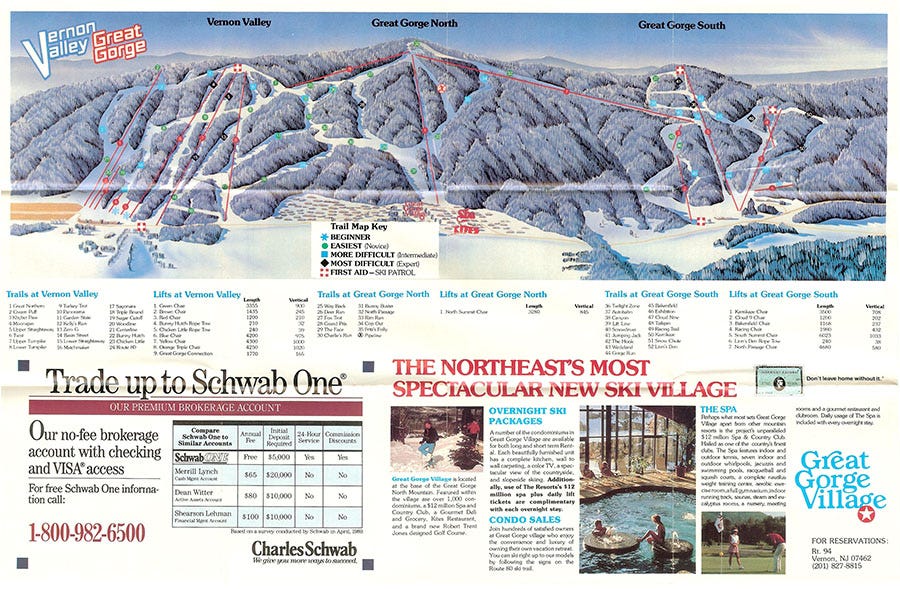
Feb 14, 2020
Podcast #13: Sunday River President and General Manager Dana Bullen
The Storm Skiing Podcast #13 | Download this episode on iTunes , Google Podcasts , Stitcher , TuneIn , and Pocket Casts | Read the full overview at skiing.substack.com . Who: Dana Bullen, President and General Manager of Sunday River, Maine Why I interviewed him: Because Sunday River, sprawling and varied and improbable, is one of the finest physical manifestations of New England can-do grit and individual initiative. This is what the mountain looked like in 1961 (The main hill rising from the parking lot is Barker): It hadn’t evolved much by 1984: And then, all of a sudden, a decade later, it looked like some kind of vast European ski circus dropped on the western edge of Maine. The 1994 trailmap: The vision to transform the mountain from a backwater to something that could roll up next to Killington in the parking lot and be like, “what?” belonged, of course, to Les Otten. But since Boyne pulled the mountain off of the ASC gurney in 2007, they have made a serious commitment to, as Dana says in our interview, bringing the rest of the resort up to the standards of the best-in-the-region skiing. I wanted to get a better sense of how the mountain would continue to evolve on top of one of the best trail and lift networks in the Northeast. What we talked about: Sunday River 2030; working with Boyne to decide what to upgrade; Bethel and how it’s tied to the mountain; RFID coming next season; doubling snowmaking capacity; why Killington usually wins the race to open and why Sunday River won’t compete for last to close; what’s planned for Barker and sorry it won’t be next season; how the Gould Academy T-bar helped take pressure off Barker this season; why they’re upgrading the Jordan lift; how new lift technology helps limit wind holds; any new lifts at Sunday River will not be high-speed quads; the Hermitage Club’s six-pack bubble will not end up at Sunday River even if Boyne buys it; could Sunday River join Oktuplefest?; solving the uphill-capacity-versus-downhill-traffic equation when deciding which new lifts to install; you won’t believe how many chairlifts are at these Austrian resorts that Dana just visited; near-term updates for the White Cap quad; overhauling the resort’s core with upgrades to the South Ridge and North Peak quads; why they’ll update the fixed-grip Aurora quad; why some lifts not currently scheduled for an upgrade may get one anyway; why the Locke Mountain Triple is OK even though it dates to 1984; how Sunday River is evolving its culinary offerings with everything from sushi to a burger bar to local coffee and beer; new real estate developments and how this is not ASC redux; the difference between working for Boyne and ASC; the potential over the very very very long term to develop three additional peaks beyond Jordan Bowl; the mountain will consider adding more terrain on existing peaks as lift capacity increases; where that new terrain may be; how they maintain the glades and yes they will add more; the legacy of Les Otten, how he’s still involved with the mountain, and how often he skis there; skiing and living on Merrill Hill, which will be Sunday River’s ninth peak; how the mountain rebuilt so quickly after last summer’s disastrous pump-house fire; why Sunday River has night skiing, who uses it, and why it won’t expand; why there’s no Ikon Rage to be found on the mountain; the New England Pass in the age of Ikon; what Gould Academy is and its relationship with Sunday River; summer business; why Sunday River shut down its bike park and whether it could ever return. The White Cap Quad on a cold December morning. What I got wrong: I’ve gotten the sense from talking to various folks who decide which lifts to invest in that there are inherent properties to high-speed lifts that make them slightly less durable than fixed-grip lifts over the long haul, but Dana clarified that this isn’t necessarily true – high-speed lifts are more complicated and have more parts, but more maintenance can extend their lives as long as fixed-grip lifts in general. Why I thought that now was a good time for this interview: Last week, Sunday River unveiled their 2030 plan , an outline of how Boyne will continue to build out the resort over the next decade. While the Sunday River hardcore may have preferred to see more direct terrain expansions or detail about lift enhancements, especially on Barker, the plan is a pragmatic acknowledgement that Sunday River’s future hinges upon building up the assets surrounding the already expansive trail base. This means making Sunday River more of a true modern resort, with better food, better lodges, updated on-mountain residences, more summer activities, modern conference space, and the spa-type stuff that’s expected from families with diverse vacation aspirations. But it also of course means continuing to build up the beastly snowmaking system, ditching my beloved wicket tickets for RFID technology (Sunday River and Sugarloaf are surely among the largest mountains in the country that haven’t made this switch yet), and upgrading a half dozen lifts. While Dana was not forthcoming on lift details, Boyne’s decades investing in state-of-the-art lift technology should reassure concerned skiers that whatever goes in there will be top notch. Sunday River provides a sense of being on the edge of the wilderness. Why you should go there: Because why would you not? The literal only thing Sunday River has working against it is distance from population centers, but that is of course an asset once you arrive. If you know how to move around the mountain, you can avoid liftlines most of the time. And there’s plenty to move around – I don’t know if there’s a more balanced mountain in New England, with more varied ways for skiers of all levels to move between peaks and end to end across the resort. A low intermediate can move from the top of Jordan Bowl to the White Cap lodge in one meandering and astonishing run, while experts can find trouble off of almost any peak if the snowpack is cooperating. The distinct peaks and pods can feel like separate ski areas, each with a personality, even as a skier moves seamlessly between them. Sunday River doesn’t get as much natural snow as the Vermont monsters, but they make up for it with a snowmaking system that could bury Fenway Park in half a day. If you have an Ikon Pass, make a weekend for this one – it’s worth the extra drive. Sunday River wraps peak after peak into the distance, offering a seemingly endless ski experience. The Storm Skiing Podcast is on iTunes , Google Podcasts , Stitcher , TuneIn , and Pocket Casts. The Storm Skiing Journal publishes podcasts and other editorial content throughout the ski season. To receive new posts as soon as they are published, sign up for The Storm Skiing Journal Newsletter at skiing.substack.com . Follow The Storm Skiing Journal on Facebook and Twitter . Check out previous podcasts: Killington & Pico GM Mike Solimano | Plattekill owners Danielle and Laszlo Vajtay | New England Lost Ski Areas Project Founder Jeremy Davis | Magic Mountain President Geoff Hatheway | Lift Blog Founder Peter Landsman | Boyne Resorts CEO Stephen Kircher | Burke Mountain GM Kevin Mack | Liftopia CEO Evan Reece | Berkshire East & Catamount Owner/GM Jon Schaefer | Vermont Ski + Ride and Vermont Sports Co-Publisher & Editor Lisa Lynn | Sugarbush President & COO Win Smith | Loon Mountain President and GM Jay Scambio | Get full access to The Storm Skiing Journal and Podcast at www.stormskiing.com/subscribe
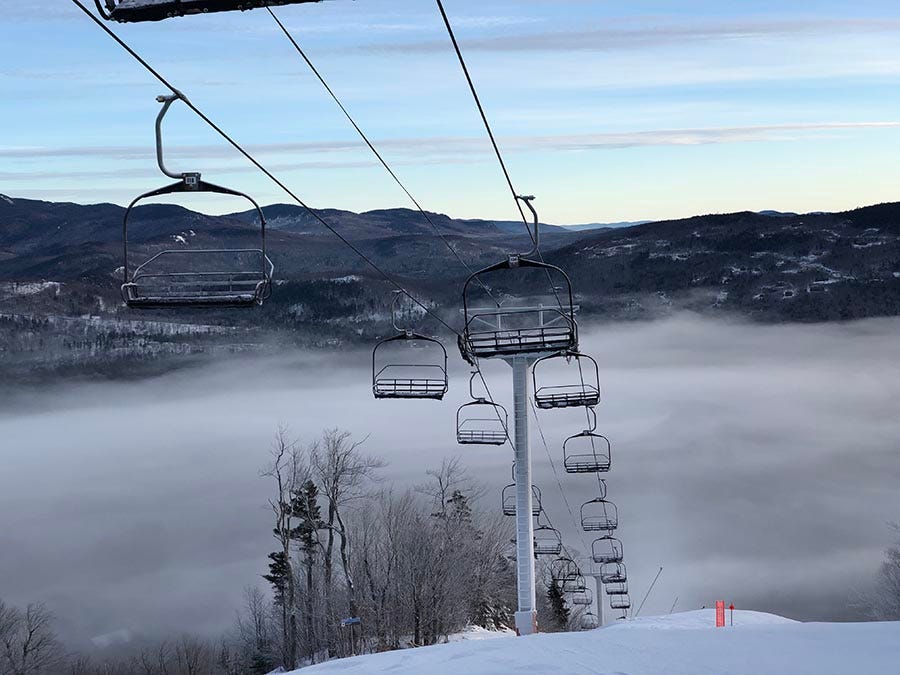
Feb 7, 2020
Podcast #12: Loon Mountain President and General Manager Jay Scambio
The Storm Skiing Podcast #12 | Download this episode on iTunes , Google Podcasts , Stitcher , TuneIn , and Pocket Casts | Read the full overview at skiing.substack.com . Who: Jay Scambio, President and General Manager of Loon Mountain , New Hampshire Why I interviewed him: Because in a state brimming with big, complete ski areas, Loon finds a way to stand out. It does this partially via massive ongoing investment and partially via terrific location and partially via its home in the massive Boyne portfolio, which in turn plants it among the half dozen Northeast mountains on the Ikon Pass. In the big, tough, cold White Mountains, Loon is an oasis: well-groomed, well-covered, and well-run, not so big and tough that it overwhelms and not so small or gentle that it’s boring. Finding and maintaining such a well-defined identity amidst the constellation of outstanding New Hampshire ski areas is a trick that Loon has been nailing for decades, and I wanted to get a better understanding of how they do it. The White Mountains heaving in the distance off the slopes of Loon. What we talked about: How Loon worked with Boyne to prioritize and develop its 2030 plan; why West Basin (anchored by the Governor Adams Lodge), will be the first area redeveloped; how Loon is looking west to Big Sky to inform how they can reconfigure that jumble of buildings into a more coherent, experiential whole; a deep, deep dive on the Kancamagus eight-pack, which will be the first such lift on the East Coast, including: tech and specs, its Inspector Gadget arsenal of zippity-do-dah gizmos, the number of chairs and how they’ll be allocated and stored, why the chairs have RFID tags, its footprint on the mountain and why they didn’t extend the terminal higher, expected groundbreaking and ribbon-cutting dates, how it differs from its cousin Ramcharger 8 on the slopes of Big Sky, whether higher capacity will equal overcrowding, how it may take pressure off the gondola, the thing may as well be an amusement park ride, and what might happen to the current Kancamagus Express Quad, which is in perfectly good working order; the wildly varying cultures of Loon’s ski pods; what kinds of upgrades we may see to the gondola and the Lincoln and North Peak Express Quads; don’t worry kids, the J.E. Henry Railroad may be older than your grandpa’s joke book, but it isn’t going anywhere; how the mountain maintains a steam locomotive that was made in 1934 and that you can’t just buy parts for on Amazon; potential trail expansions on North and South Peaks; where we might see glades thinned (but not anytime soon); the possibility of a ski link to and from South Peak; potential facility upgrades at the Summit Cafe, Camp III, and Pemigewasset Base Camp; why it may be a challenge to add more parking to South Peak; upgrading what is already a beastly snowmaking system; the two Loon trails that don’t have snowmaking and why one of them may stay that way; “Hey man, do you really need a fork that you’re gonna use once and then throw in the Dumpster to sit for the next 10,000 years?” and other ways Loon and all of Boyne are aiming for a zero net carbon footprint; how much less energy modern snowcats and snowguns use than their predecessors from just a dozen or so years ago; Boyne’s zippy RFID tech and where it can be used besides lift gates; why terrain parks are so important and so difficult to do right; and how to keep them fresh so the teenage shredders don’t call you out their socials Brah. This jumble of West Basin buildings will likely give way to a more deliberately planned village-esque experience, anchored by the East’s first eight-passenger chairlift, in Loon’s 2030 plan. Question I wish I’d asked: I’d liked to have discussed a bit more explicitly the choice to swap out Kancamagus before updating the gondola, as the latter seems more backup-prone to me, but Jay implied all of the answers, and the plan to anchor a reimagining of the whole West Basin area with a new signature lift and hopefully take some pressure of the gondy in that way makes a lot of sense. Why I thought that now was a good time for this interview: Because Loon 2030 . Because Jay is a young guy who’s only been head of the operation for a bit over two years, which means he is in a very good position to see this plan through and probably very hungry to do so. Because when Oktuplefest comes to the Northeast, you swing by the party to see what’s making all the noise. And because frankly I wanted to hear firsthand from the guy who knows the mountain better than anyone the exact what, when, why, where and how of Loon’s extensive proposed upgrades to lifts, lodges, snowmaking, trails, and other infrastructure. Most of us already knew about Oktuplefest because the plans were made public in Forest Service documentation months ago, but most of the rest of it was kept in Boyne’s locked briefcase until recently, and I’m assuming that, like me, you wanted as much color as possible for how the broad 10-year plan would be applied to the mountain where you’ll actually be skiing. Right now, skiers travel between Loon and South Peaks on the Tote Road Quad. A ski connection between the peaks, while not imminent, is possible. Why you should go there: First of all because it’s easy to access, practically high-fiving I-93 and just south of the pinch point where the highway collapses to one lane through Franconia Notch. But also because it’s frankly just a really terrific mountain with long uninterrupted fall lines and a nice mix of terrain along the green-to-blue-to-black spectrum that is well designed to minimize trail overlap and let you open it up on the descent. While this isn’t the place you go to scare yourself stupid, it is one of the best intermediate mountains in New England. As we discuss in the interview, Jay is a parks guy, and his influence is clear in the extensive terrain turned over for that use. The lifts, while in need of the coming capacity upgrades, are in excellent shape. With little tree islands scattered about and long tunnels of evergreens siding the trails, the place has a bit of a winter fantasyland feel to it. And when you step off the North Peak Express and turn around and all of northern New Hampshire rolls out before you, the mountains humped and glorious and Mt. Washington shimmering in the distance like some kind of palace materializing from an impossible Fantasia, you’re going to know unequivocally that you are in a special place. Looking northeast off the North Peak Express Quad. Mt. Washington is visible on the horizon. The Storm Skiing Podcast is on iTunes , Google Podcasts , Stitcher , TuneIn , and Pocket Casts. The Storm Skiing Journal publishes podcasts and other editorial content throughout the ski season. To receive new posts as soon as they are published, sign up for The Storm Skiing Journal Newsletter at skiing.substack.com . Follow The Storm Skiing Journal on Facebook and Twitter . Check out previous podcasts: Killington & Pico GM Mike Solimano | Plattekill owners Danielle and Laszlo Vajtay | New England Lost Ski Areas Project Founder Jeremy Davis | Magic Mountain President Geoff Hatheway | Lift Blog Founder Peter Landsman | Boyne Resorts CEO Stephen Kircher | Burke Mountain GM Kevin Mack | Liftopia CEO Evan Reece | Berkshire East & Catamount Owner & GM Jon Schaefer | Vermont Ski + Ride and Vermont Sports Co-Publisher & Editor Lisa Lynn | Sugarbush President & COO Win Smith | Get full access to The Storm Skiing Journal and Podcast at www.stormskiing.com/subscribe
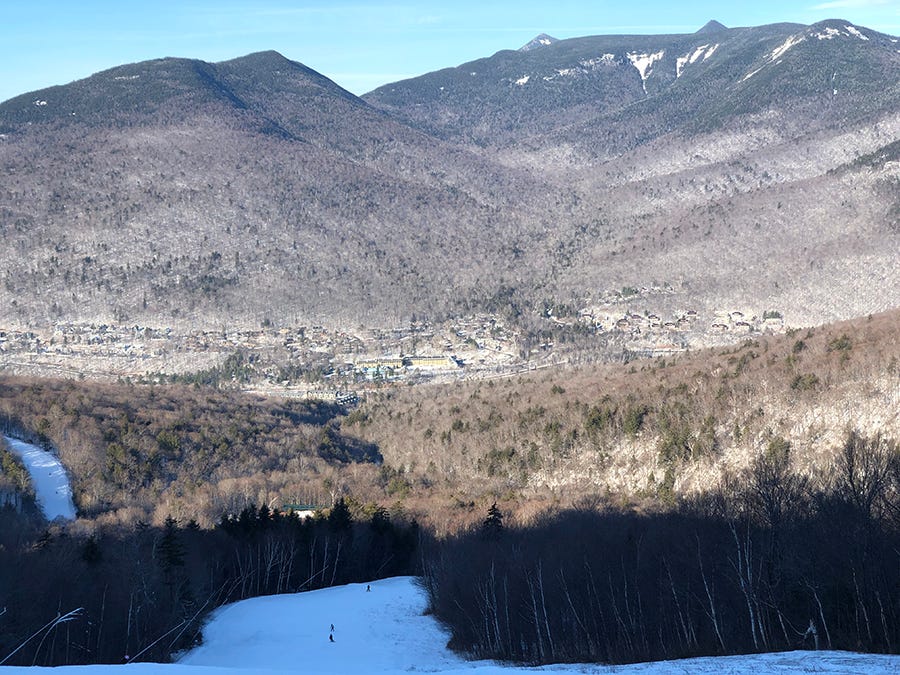
Jan 30, 2020
Podcast #11: Sugarbush President and COO Win Smith
The Storm Skiing Podcast #11 | Download this episode on iTunes , Google Podcasts , Stitcher , TuneIn , and Pocket Casts | Read the full overview at skiing.substack.com . Who: Win Smith, President and Chief Operating Officer of Sugarbush Why I thought that now was a good time for this interview: Because after standing as one of the last large independent mountains in the East for nearly two decades, Sugarbush is as of Jan. 14 owned by Alterra Mountain Company. Championed by a core skier base as passionate as any in the country and rooted in a proud local community and culture, Sugarbush will provide the greatest test yet of Alterra’s commitment to maintaining the identity of its individual resorts. Communities do not materialize out of nowhere, and this one was not easily won. Win Smith has, by virtue of consistency, transparency, and engagement, earned the community’s trust and built something special in the Mad River Valley while orchestrating the mountain’s return to profitability. Anyone who’s skied there over the past several years can testify that the place is in phenomenal shape, and there’s no question that Alterra will continue to invest in the mountain. For now, Win still runs Sugarbush and nothing changes, but the triple realities of megapass mania, climate change, and the cost of doing business in Vermont that drove him to sell are only going to compound, and that will mean that the mountain will evolve in predictable and unpredictable ways. How Alterra plans to do that, and what part Win would play in that planning both over the short and long term, is something I wanted to hear first-hand. Looking over toward Lincoln Peak from Castle Rock, a field of spring bumps below. What we talked about – on Sugarbush: How Win is feeling now that he’s officially handed over the keys to his mountain; why he chose Alterra as the buyer; the Sugarbush community’s reaction to the sale; how last season’s Ikon Pass partnership acted as a de facto trial period for the sale; what Ikon brought to Sugarbush; why Vail buying Peak acted as a catalyst for the sale; the three big trends driving his decision to sell; why it’s so expensive to do business in Vermont; Vermont Act 250: what works about it and how revising it could help ease some of the financial burdens; whether anyone else approached with an offer to buy Sugarbush; why Win ditched a career in New York City finance; why he didn’t move to Vermont right away upon buying the mountain, and what changed when he did; the matrix of challenges that materialized from the moment Win took ownership, from a 100-year drought to the untimely death of his business partner to the are-you-freaking-kidding-me-Universe existential surprise of taking ownership of the mountain on Sept. 10, 2001; the challenge of winning over the community in a pre-social media era of memos taped to ticket windows explaining why the mountain couldn’t make snow over that first Christmas period; the state of the mountain when he bought it; how he started the turnaround and when it took hold; the American Skiing Company’s legacy and why that organization failed; how his three-decade career at Merrill Lynch prepared him to run a huge complex mountain grounded in networks of machinery and dependent on weather; why admitting what you don’t know is an essential leadership quality; what Sugarbush’s many former owners contributed to the place; Win’s on-mountain enhancements and upgrades wish list; whether he has a successor for his job in mind; why he doesn’t see the need to replace or upgrade any chairlifts over the next three to five years; what might replace the Heaven’s Gate Triple when the time comes; why high-speed quads can do more harm than good; why the Slide Brook Express may outlast every other lift on the mountain even though it’s the longest chairlift in the world; why Slide Brook Basin will never be developed; why Sugarbush won’t install top-to-bottom lifts on either mountain, and hasn’t yet installed any enclosed lifts; why Castle Rock is so damn rad and why they leave it that way; why they rebuilt that double chair to the exact same specs and why the locals went lynch mob when a previous owner threatened to run a quad up the slope; why it took so long to open that pod this year, and why Slide Brook still isn’t open; the mountain’s friendly hike-to policy; how Sugarbush works with the Forest Service to thin woods and hey man don’t call them glades; how much of its land Sugarbush owns; why the mountain will never challenge Killington for last-to-close in the East; how Sugarbush may be slotted on the various Ikon Pass tiers; the mountain is most likely staying on the Mountain Collective Pass; the possible fate of the mountain’s other passes; how season passholders are feeling about Ikon; Sugarbush’s busiest day ever over MLK weekend and what that says about the mountain’s future; Sugarbush-Mad River Glen bonhomie; what drove Sugarbush’s record 2018-19 ski season; how many days Win’s skied so far this year. What we talked about – on the National Ski Areas Association: is the great ski area weed-out over?; the need for more diversity in skiing and how that might be achieved; the potential of the New Jersey Snowdome to help attract new folks to skiing; why megapasses increase participation; whether last year’s huge season was a fluke confluence of great weather and cheap passes, or if more positive long-term trends also contributed to the fourth busiest season on record. Fox hole-deep moguls on Castle Rock. They don’t make snow on this peak, and I took this photo on April 12. Questions I wish I’d asked: I wish I’d gotten a bit more into the personal side of how difficult it was for Win to give up something he had worked so hard to build. While most of us will never own ski resorts or anything close to that scale, each of us will eventually have to decide how to move on from something that is at the very core of who we are and how we define ourselves, and I imagine that after two very full careers, he could have offered some good insight on that. Why you should go there: Because everybody loves Sugarbush. It is a crown jewel of Northeast skiing, the kind of place you can take your cousins from Denver who have never skied east of Loveland and who are all like, “Ice Coast sucks,” and you get out there and they’re like, “Well yeah this place is actually kinda great.” It’s one of the few Eastern mountains that can legitimately eat up a week’s worth of skiing, cut as it is into vast and rambling zones of pure fall line skiing, a complete mountain with glades and bumps and long groomers and parks and a huge vertical drop. It’s position anchoring the spine that runs north through Mad River Glen and Bolton Valley and Stowe and Smuggs and Jay means it gets more high-quality snow more often than almost anywhere else in the Northeast, and its northern perch means that that snow often stays good for a very long time. When Slide Brook is running and the whole place is open and you can get lost in the woods, the place skis like one vast adventure, a mini-Whistler-Blackcomb in the Green Mountains of Northern Vermont, two killer mountains side by side with a vastness to explore in between. And Win, with his always-on-the-snow grassroots commitment to planting Sugarbush at the very heart of the Mad River Valley community, has over the past two decades built something that at once feels vast and intimate, a place that is a defined and real place in a McDonald-ified America in which destinations can often feel stamped from a vast mold. The top of the Valley House Quad. Things that may be slightly outdated because we recorded this a while ago: Nothing. We recorded this Tuesday, and other than saying that the Castle Rock double started spinning “today” for the first time all season, this interview is as close as the podcast will ever be able to get to representing my guests’ most recent thinking. As I move beyond a launch phase during which I felt compelled to record and hoard interviews to guarantee I’d be able to quickly build a library, I am working on streamlining the entire interview-to-go-live process so that there is rarely more than a couple of days delay between the two. And while I have interviews lined up for each of the next three weeks and plans to produce each of them quickly, sometimes schedules change, particularly in the heart of ski season when my subjects are people who run ski areas. While that means that the podcast will not always necessarily be released on a weekly basis, I plan to make up for that with more timely information. I’m happy to make that tradeoff, and happy to ditch this section after this mailing. Spring bumpin’ on Paradise. What I got wrong: When describing the benefits that Sugarbush season passholders would receive as full Ikon Pass holders, I said that they’d get seven days at a variety of mountains, including “Sugar bush .” By that, I meant “Sugar loaf .” This is a mistake I make constantly, and not because I don’t know the difference between these two very different mountains, but because words are hard and sometimes I say them wrong. I’m honestly shocked that I only made this mistake once over the course of this interview. It was also kind of silly of me to ask if the NSAA was providing loans to small ski areas, because of course trade groups don’t do that, but it was more of a general, “hey are they taking this seriously” kind of question, and that bad example came out. If you see this sign, you’re about to have a good time. For further reading: * Win’s Word post announcing the Sugarbush sale to Alterra * And his first post after the sale was officially complete earlier this month * A review of Win’s book, Catching lightning in a Bottle: How Merrill Lynch Revolutionized the Financial World * NSAA’s year-by-year stats on the number of operating ski areas in the U.S., year-by-year skier visits , and much more * A good and thorough overview of Sugarbush’s history; most likely commissioned by the mountain, which is helpful to be aware of The Storm Skiing Podcast is on iTunes , Google Podcasts , Stitcher , TuneIn , and Pocket Casts. The Storm Skiing Journal publishes podcasts and other editorial content throughout the ski season. To receive new posts as soon as they are published, sign up for The Storm Skiing Journal Newsletter at skiing.substack.com . Follow The Storm Skiing Journal on Facebook and Twitter . Check out previous podcasts: Killington GM Mike Solimano | Plattekill owners Danielle and Laszlo Vajtay | New England Lost Ski Areas Project Founder Jeremy Davis | Magic Mountain President Geoff Hatheway | Lift Blog Founder Peter Landsman | Boyne Resorts CEO Stephen Kircher | Burke Mountain GM Kevin Mack | Liftopia CEO Evan Reece | Berkshire East & Catamount Owner & GM Jon Schaefer | Vermont Ski + Ride and Vermont Sports Co-Publisher & Editor Lisa Lynn | Get full access to The Storm Skiing Journal and Podcast at www.stormskiing.com/subscribe
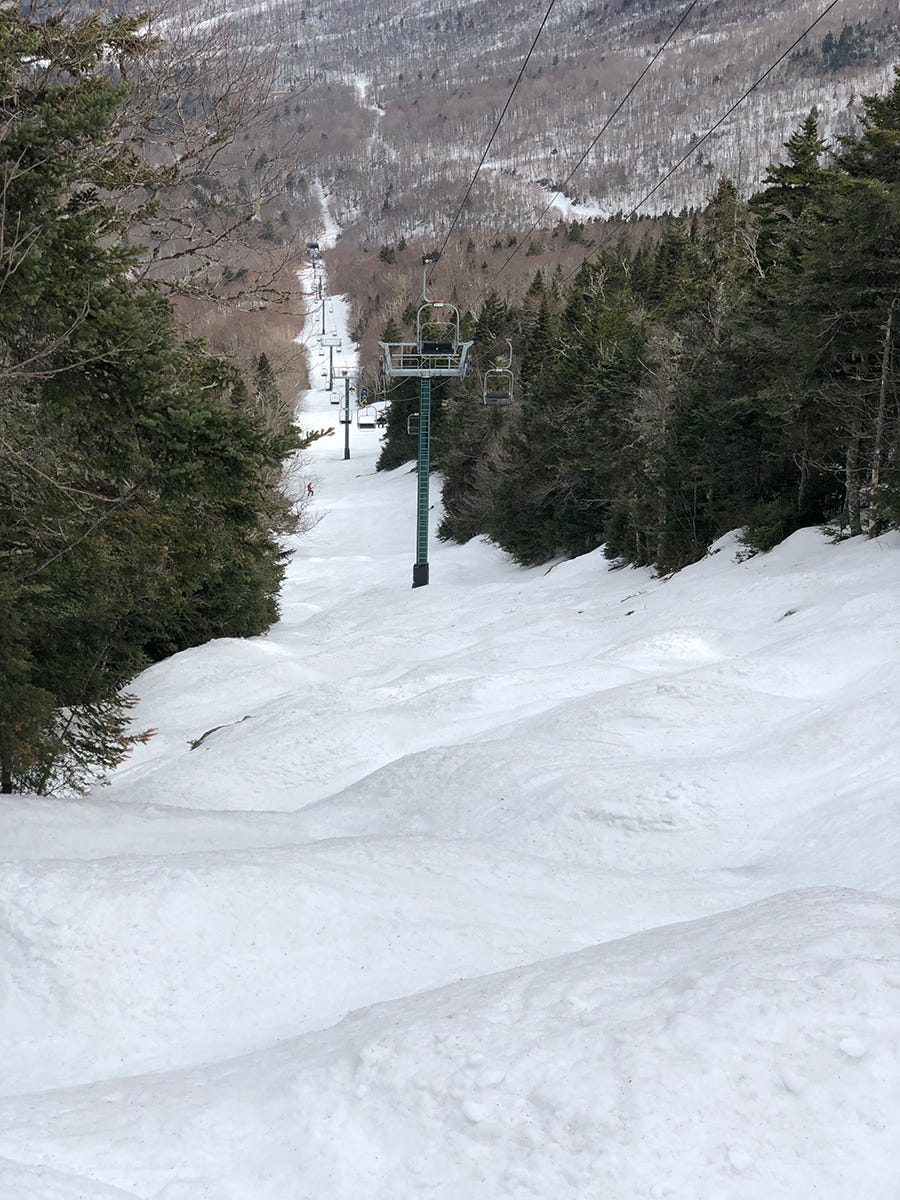
Jan 9, 2020
Podcast #10: Vermont Ski + Ride and Vermont Sports Co-Publisher and Editor Lisa Lynn
The Storm Skiing Podcast #10 | Download this episode on iTunes , Google Podcasts , Stitcher , TuneIn , and Pocket Casts | Read the full overview at skiing.substack.com . Who: Lisa Lynn, Co-Publisher and Editor or Vermont Ski + Ride and Vermont Sports Why I interviewed her: Because Vermont is the mothership of Northeast skiing, and Vermont Ski + Ride and Vermont Sports cover the state’s mountains more thoroughly and more frequently and with more passion than any other source. In what has been a rough couple-decade transition to digital for journalism in general and local journalism in particular, Lisa and her team seem to have solved the Rubik’s Cube of print/digital/e-newsletter/social media/subscriptions to establish a sustainable business model. While having a rabid built-in skier audience as potential readers and a constellation of legendary mountains as your subject matter is a helpful start, actually figuring out how to speak to that constituency in a format and with stories that will resonate is harder than it sounds. A focus on storytelling that communicates the region’s passion and culture, a content scope that ranges from backyard ropetows to the top of Stowe to the backcountry in between, and a deep command of their subject matter – all underscored with a commitment to the fundamentals of good journalism – have all helped establish these two publications as the editorial authority on the state’s ski industry and heritage. What we talked about: The pluses and minuses of Vail’s move into Vermont; why having Vail in town may actually benefit independent mountains; where you can still ski for five bucks in Vermont; why small ski areas continue to thrive even as the mighty get mightier; kids ski programs; Magic Mountain’s comeback; why Mad River Glen works even though it’s right next to gee-whiz high-speed Sugarbush; who will buy Jay Peak?; Win Smith’s legacy managing Sugarbush; why it made sense to sell Sugarbush to Alterra; the challenges of staffing a ski area; how Vermont’s Act 250 curtails development and why that may soon evolve; the influence of multi-passes like Epic and Ikon on the state’s ski culture; why Lisa chose to be in Vermont even after skiing all over the world; the strong community and culture in Vermont and Vermont skiing; how Stowe has changed under successive ownership groups; why midweek skiing rules; why the Burke sale is stalled; why it was essential for court-appointed receiver Michael Goldberg to keep Jay and Burke open; the movement to develop managed backcountry ski areas up and down Vermont; how one group became the first in the nation to thin glades on national forest land despite the bureaucratic obstacles to doing so; how to prepare yourself to ski in the backcountry; the future of the Hermitage Club; how Vermont Ski + Ride and Vermont Sports are thriving in a tough era for journalism; Lisa’s time as an editor at Ski magazine in the fat-mag days of the ‘90s; the differences between ski journalism then and now, and who’s doing it right; and all things Vermont skiing – I think there are only one or two Vermont ski areas that we didn’t discuss in some capacity. Things that may be slightly outdated because we recorded this a while ago: Lisa gives a sneak peak at the January/February issue of Vermont Sports, which ended up beating this podcast to the internet by a couple of days. Why I thought that now was a good time for this interview: Because this may be one of the most consequential eras in the history of Vermont skiing. So much is happening so fast that it’s easy to lose perspective on how monumental the change has been, and how unimaginable it all would have been even a short time ago. From Vail buying a trio of the state’s most high-profile mountains to the introduction of the Ikon Pass to the scandal that almost took out Jay and Burke to the bankruptcy of the Hermitage Club, the Vermont ski landscape, while mostly populated by the same mountains that we’ve known for generations, looks vastly different from a business point of view than it did just three years ago. Three years from now, who will own Jay and Burke? Will someone resuscitate Hermitage Club in some form? Will Vail buy Lake Champlain? To help make sense of all this change and to understand where we may be headed, I wanted to talk to the person who understood the totality of the landscape better than anyone else. That’s Lisa. Why you should go there: Because while the national ski magazines don’t exactly ignore Vermont ( Ski in particular has done nice features on Stratton , Magic and Smuggs in the past two seasons), their focus has in general drifted away from resorts and more toward adventure skiing focused on far-flung acts of derring-do that most of us are unlikely to repeat, like some 20-year-old slamming an octuple backflip over the caldera of an active volcano. These Vermont-focused mags join you to a lifestyle that you can realistically participate in and profile mountains that you can actually ski. Plus, in an era of local-is-good, this is some of the best local ski journalism in the country. Some of the stories Lisa referenced in the interview: · A look at Vermont’s managed backcountry ski areas · Magic Mountain Profile · Profile of small/independent/ropetow ski areas · A teaser for Leave Nice Tracks : The Storm Skiing Podcast is on iTunes , Google Podcasts , Stitcher , TuneIn , and Pocket Casts. The Storm Skiing Journal publishes podcasts and other editorial content throughout the ski season. To receive new posts as soon as they are published, sign up for The Storm Skiing Journal Newsletter at skiing.substack.com . Follow The Storm Skiing Journal on Facebook and Twitter . Check out previous podcasts: Killington GM Mike Solimano | Plattekill owners Danielle and Laszlo Vajtay | New England Lost Ski Areas Project Founder Jeremy Davis | Magic Mountain President Geoff Hatheway | Lift Blog Founder Peter Landsman | Boyne Resorts CEO Stephen Kircher | Burke Mountain GM Kevin Mack | Liftopia CEO Evan Reece | Berkshire East & Catamount Owner & GM Jon Schaefer | Get full access to The Storm Skiing Journal and Podcast at www.stormskiing.com/subscribe
Dec 20, 2019
Podcast #9: Berkshire East and Catamount Owner and GM Jon Schaefer
The Storm Skiing Podcast #9 | Download this episode on iTunes , Google Podcasts , Stitcher , TuneIn , and Pocket Casts | Read the full overview at skiing.substack.com . Who: Jon Schaefer, Berkshire East and Catamount Owner and General Manager Why I interviewed him: Because I think Berkshire East is one of the most underrated ski areas in the Northeast. Why it is is no mystery. It is too close to Vermont to be noticed and too in Massachusetts to be taken seriously. After all, rad skiing and Massachusetts are as likely a combination as Rhode Island and palm trees, but here we are: Berkshire East is a rad ski area. Why? It has all the things rad ski areas do: terrain variety that appeals to all levels, a hardcore base of amazingly skilled skiers that love the place, a vibe that says “No, I did not arrive here in a box wrapped in Amazon Prime tape,” geographic and monetary accessibility, and owners who are so invested in the place that separating them from it would be tantamount to dismemberment. All of that adds up to atmosphere, which is the one intangible and inimitable thing a ski area can have. You may think that the title of Best Ski Area in Massachusetts would be about as prestigious as Least Annoying Person Rocking a Backpack Speaker, but if so then you’re wrong. Plop Berkshire East anywhere in the country, and it is a terrific mountain that locals will love. It is also uniquely and unequivocally a Northeast animal. Jon’s dad, Roy, ran this mountain from the late 1970s until he handed it over to his sons in the early 2000s. While the number of ski areas in the state dwindled down to the current dozen or so, the Shaefers ran the place so adeptly that they were able to purchase a second ski area, Catamount, last year. How they were able to drive so much success at an off-the-radar mountain that they were able to purchase and pump enormous capital into a second mountain and build their own little collective in a seasonal business with an astronomical failure rate and show no signs of deceleration was a story I wanted to hear. What we talked about: Roy (Jon’s dad) Schaefer’s hardscrabble upbringing on the farms of Up North Michigan; skiing’s ropetow era; the Michigan ski diaspora’s origins and influence on Schaefer; how Roy’s frugal mindset stretched over decades is the reason you can ski Berkshire East today; Berkshire East’s rollercoaster existence pre-Schaefer; Roy Schaefer as treasure hunter - equipment from 26 ski areas is either in use at Berkshire East or was sold to fund operations there; why Berkshire East chose to install a carpet-loaded quad instead of a high-speed quad as their alpha lift; how a high-speed quad can ruin your mountain; the Schaefer’s globetrotting ski-racing legacy and bent for adventure; the untapped potential of western Massachusetts; why the mountain expanded its summer business so deliberately and with such outsized ziplines and bike parks and other adventuretry; the working dynamic of the Schaefer brother-owners Jim the banker and Jon the builder; how you keep a mountain from losing its soul as it becomes more popular; Jon is the kind of GM who makes snow and helps organize the basement and looks for lost kids; the advantages that smaller ski areas have over ski area conglomerates; what a “Vermont refugee” is and why that’s Berkshire East’s core skier; the mountain naturally skis well; why constant re-grading of the mountain is essential; why Berkshire East has so many rad skiers and man they really do and I would not say that about any other place in Massachusetts (though yes of course there are great skiers everywhere; the concentration of them on this little mountain is outsized and rather surprising when you first encounter it is all I’m saying); why they added the solid-green Thunder trail a few years back; skiing the bike trails; why the Schaefers bought Catamount; Jon wants to make Catamount “one of the best small ski areas in the country”; the massive and rapid improvements they’ve made in the mountain already; Catamount’s five new trails and how that significantly ups the mountain’s rad factor; why the Schaefers are committed to speed in how they upgrade their mountains; why the Schaefers don’t use mountain planners to cut new trails; whether Catamount will get glades like Berkshire East’s, and, hey, if you want to cut glades at either mountain, give Jon a call because he wants to help you help him make that happen; the quirks of running a ski area that straddles a state line; his reaction to Vail buying Peak (yawn); why both mountains joined the Indy Pass; season pass sales are way up; this may be one of the most unbelievable things anyone has told me yet on the podcast, but Schaefer says he reached out to the Freedom Pass people and they never returned his message and if they would that would be cool, so like yeah what? Freedom Pass people return that call and get these mountains on your pass like now ; why day tickets at both mountains are still affordable and how they keep them under control; the rising costs of running a mountain; that giant wind turbine at the top of Berkshire East is part of a 100 percent-off-the-grid onsite renewable energy plant – this was the first mountain in the world to do this; why renewable energy makes sense for a ski area; similar projects are on the way for Catamount; how tragedy and family history over decades stoked that focus on renewables; improvements at Berkshire East this season. Things that may be slightly outdated because we recorded this a while ago: I mention that “Sugarbush still feels like an indy,” even though it’s enormous, and it does. But it isn’t. But it was when I recorded this, which was on Nov. 5. Which is a long way of saying I recorded this before Alterra bought Sugarbush. Jon also says that he’s going for their “earliest opening ever,” which I believe they achieved, opening on Nov. 16. Question I wish I’d asked: Jon said that they would “fully develop” Berkshire East’s Thunder side in the future, and I wish I’d asked for more about those plans. There does in fact appear to be a new black glade, Roger’s World, on that side this year according to the trailmap , which I either didn’t notice before the interview or wasn’t there at the time (if it was there last year, I missed it, and the trailmap I picked up at the mountain last year doesn’t include it). They also added two more new glades, Hawleywood and Horace’s Grove, to the trailmap, though I skied through both last year and they appeared to be cleared more as part of the bike park – both skied well regardless and perhaps they did more work in there over the summer. It also looks as though they downgraded the ratings on several trails, dropping Tomahawk from a double to a single black and Blizzard Island from black to blue. I think those are the right ratings, but I wish I’d been able to discuss all this in the interview. I also wish I’d asked a bit more about how one could volunteer for the glade-clearing program. Finally, since the Schaefers appear to have the capital to purchase and rapidly fix up Catamount, thus increasing their pass sales and stoking a virtuous capitalist cycle of business growth, I really wish I’d asked what the long-term plan was for their mini-empire – could we see more ski areas added to their portfolio? After talking to Jon for an hour, I honestly hope that we do. Why I thought that now was a good time for this interview: This is an indy done right. Ski areas like Berkshire East, Plattekill, and Magic are setting the modern template for how to not only not get steamrolled by the big boys, but to thrive and grow while doing so. Plus I just find the Schaefer family epic, with its subplots and dimensions of adventure, resilience, frugality, patience, risk-taking, action-oriented improvements, and family teamwork across generations to be so damn American and compelling that I couldn’t not hear more about their story. The fact that they are growing and acquiring and improving other ski areas at a time when that all seems so unlikely only adds to the mystique. Why you should go there: There seems to be an instruction book that was handed out like 50 years ago to every ski area in the Northeast, and the instruction book says something like, “It is in your best interests to make your ski area as boring as possible. That means grooming each run every night and then describing them in your marketing materials as being groomed ‘to perfection.’ Every run should feel identical, and should only vary to the extent that the mountain’s natural contours require.” Berkshire East either never got this instruction book or lost their copy, because their philosophy tacks more toward, “Hey, let’s make a ski area that everyone can enjoy, not just people who don’t know how to ski off piste.” Look, I’m not saying it’s Jackson Hole. I’m not even saying it’s Stowe. But I am saying that Berkshire East opens up their mountain and lets it gnar up in ways that almost no other area south of Killington does. And, yes, their grooming and all that is terrific as well. As far as Catamount goes, if you are someone who typically skis the twin Catskills bullruns of Windham and Hunter, try this as an alternative. If you’ve coming from the south (NYC metro especially), then this is probably the same distance, and in the dimensions of crowds, pricing, atmosphere, and overall hassle to deal with, far superior. Yes, it’s a bit smaller. It doesn’t matter. You will have a better day, especially if you are bringing kids or beginners. And it’s easy to get there. GPS on the fritz? Take the Taconic to NY 23, turn east, and it’s there on the right 10 or 15 minutes up the road. Schaefer says in the interview that they intend to transform Catamount into one of the best small ski areas in the country, and it will be immediately apparent that they are well on their way to doing that when you ski there. For further reading: The tragedy that partially stoked the family’s environmental focus; Jon on the mountain ; a trip to Berkshire East in 1981 . The Storm Skiing Podcast is on iTunes , Google Podcasts , Stitcher , TuneIn , and Pocket Casts. The Storm Skiing Journal publishes podcasts and other editorial content throughout the ski season. To receive new posts as soon as they are published, sign up for The Storm Skiing Journal Newsletter at skiing.substack.com . Follow The Storm Skiing Journal on Facebook and Twitter . Check out previous podcasts: Killington GM Mike Solimano | Plattekill owners Danielle and Laszlo Vajtay | New England Lost Ski Areas Project Founder Jeremy Davis | Magic Mountain President Geoff Hatheway | Lift Blog Founder Peter Landsman | Boyne Resorts CEO Stephen Kircher | Burke Mountain GM Kevin Mack | Liftopia CEO Evan Reece Get full access to The Storm Skiing Journal and Podcast at www.stormskiing.com/subscribe
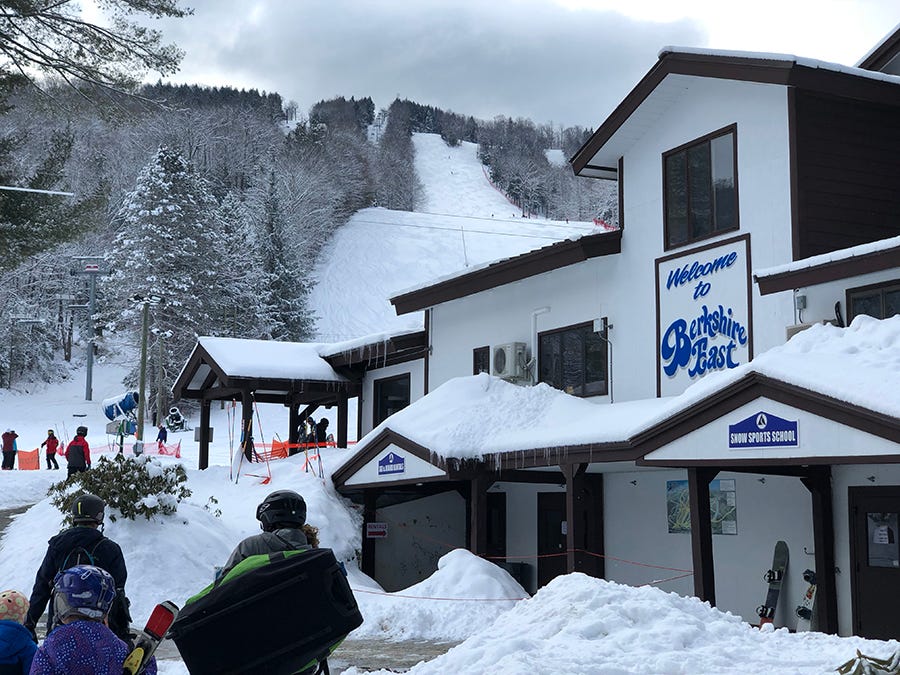
Dec 12, 2019
Podcast #8: Liftopia CEO Evan Reece
The Storm Skiing Podcast #8 | Download this episode on iTunes , Google Podcasts , Stitcher , TuneIn , Spotify, and Pocket Casts | Read the full overview at skiing.substack.com . Who: Evan Reece, Cofounder and CEO of Liftopia Why I interviewed him: There are some mistakes you only make once. Spending New Year’s Eve in Times Square. Deciding in the parking garage as you’re exiting your vehicle to go stand in Times Square for four hours that nah I don’t need that ski coat it feels just fine in this flannel and hoodie standing here in this shelter even though I know it’s zero degrees outside. Mixing Captain Morgan and Ice House. Drinking Ice House. Rolling up to a ski area without a lift ticket on a midwinter weekend and just being like yeah let me go pick those up real quick. I had a few years there in the early part of this decade where I wasn’t able to ski much, and that time period just happened to coincide with the Great American Lift Ticket Inflation Epoch. After a regrettable daytrip to the Poconos in which I unloaded an unconscionable sum of money in an exchange that could have been classified as robbery had it not been entirely voluntary, I sought out alternatives. This being a few years before the megapass era arrived in the Northeast, I stumbled upon Liftopia and have been using it ever since. I wanted to talk to the man in charge of the whole operation, mostly because I was curious how the site was evolving in an ski era that is increasingly pass-oriented. What we talked about: Liftopia’s founding in 2005; would you show up at the airport to buy an airplane ticket? Then why are you rolling up to Vail on the day after Christmas to do the same?; how shockingly long it took in hindsight to convince ski areas to sell their tickets online and to vary pricing over time; how difficult it is to break into the industry when you don’t come up as a dude jamming REO Speedwagon while bumping lifts; Liftopia has grown every single year it’s been in business; how the young ‘uns are buying everything else on line so if they can’t buy lift tickets this way they’re like what?; how Europe was way behind in the online ticket game but got certain parts of it right when they finally caught on; how social media and smartphones have changed how people discover and buy things; how ski areas are killing it on social; the mountains that are still around have more or less perfected the physical plant of chairlifts, snowmaking, grooming, etc., but most of them will always be bad at tech and so they really need to contract that piece of it out unless you’re like Vail or something and have money to throw at things like that; hey you probably don’t realize that Liftopia’s running the software that your local bump is most likely using to sell you lift tickets online; why ski shop discount tickets are bad for ski areas; where Liftopia fits into our Epik/Ikonik world; you won’t believe the percentage of Liftopia customers that already have a season pass somewhere; skiing as an adventure; why every ski area no matter how small or off the grid is worth visiting; how Vail landing its fleet around Tahoe turned the whole region into more of a destination and drove up lift ticket prices even at areas it doesn’t own; why the window price is not what skiing costs; how the industry screwed up this whole lift ticket thing so badly; why feeder areas shouldn’t try to drive prices up like the big dogs did; how the broader economy’s concentration of wealth has driven prices so high; how Liftopia is trying to keep skiing accessible; why Evan is afraid that the sport is becoming less accessible; it’s too soon to say if the former Peak mountains (Mt. Snow, Hunter, Wildcat, Attitash, Crotched, and a bunch more) will still be on Liftopia next year, but if Vail wants to team up, Liftopia would make a swell partner; the wild weird world of skiing in China and why Liftopia isn’t going there anytime soon; how skiing in China might be like Top Golf and no I’d never heard of Top Golf before this podcast; Big Snow and terrain-based learning; why the Northeast is such a phenomenal ski market to live in; some of Evan’s favorite Northeast ski areas. Questions I wish I’d asked: I had a line of questioning around displeased online customer reviews that I didn’t have time to get to, just to give the company a chance to respond because while nothing is perfect, it is also hard to gauge the veracity of one-sided raging anonymous online complaints; I also wanted to ask about the quirky fact that there are many ski areas with the same name, like there is more than one Magic Mountain and Shawnee and Black Mountain, and I wanted to know how much of an actual problem that was for Liftopia even though they’re all in different states because people just do dumb things. Why I thought that now was a good time for this interview: We live in a headline culture, where anything eye-popping or shocking or offensive tap-dances to the top of social feeds and defines any given topic for the vast majority of users who never bother clicking through for additional context or information. So this headline from the Aspen Times the other day – “Holiday Lift Ticket Prices Will Hit $219 in Vail, $184 in Aspen” – is going to become immutable reality for legions of outraged back-in-my-day people who remember when you could ski Stowe for 75 cents or whatever. So this is as good a time as any to remind everyone that with just the very smallest amount of effort and foresight, you can get a pretty good ski season for that $219. Liftopia is by no means the only way to achieve this, but it is a very good one and reliable one that is constantly pushing evolution within its industry, in both obvious and less conspicuous ways, and I figured why not talk to them directly about what they’re doing and where they think the industry is heading. Why you should use the site: Because there’s absolutely no reason not to. Not all ski areas are on Liftopia, but enough are that you can stitch together a pretty rad adventure exploring places you may never have thought of otherwise. It can be a great place to find an add-on day for a lesser-known area near a big destination, as Evan says (like maybe you want to tack on a Bolton Valley Day if you’re hitting Stowe or Sugarbush), or to snag a ticket for a place where you have a pass but someone skiing with you does not (I’ll be in the Poconos for MLK weekend, and while I have an Epic Pass, my daughter does not, so I picked her up a two-day lift ticket for Jack Frost Big Boulder on Liftopia at a huge discount). I’m a big fan of megapasses and ski clubs and just general bargain hunting, but whatever you do to get on the slopes without taking out a second mortgage, Liftopia ought to be part of your mix. The Storm Skiing Podcast is on iTunes , Google Podcasts , Stitcher , TuneIn , Spotify and Pocket Casts. The Storm Skiing Journal publishes podcasts and other editorial content throughout the ski season. To receive new posts as soon as they are published, sign up for The Storm Skiing Journal Newsletter at skiing.substack.com . Follow The Storm Skiing Journal on Facebook and Twitter . Check out previous podcasts: Killington GM Mike Solimano | Plattekill owners Danielle and Laszlo Vajtay | New England Lost Ski Areas Project Founder Jeremy Davis | Magic Mountain President Geoff Hatheway | Lift Blog Founder Peter Landsman | Boyne Resorts CEO Stephen Kircher | Burke Mountain GM Kevin Mack | Get full access to The Storm Skiing Journal and Podcast at www.stormskiing.com/subscribe

Dec 6, 2019
Podcast #7: Burke Mountain General Manager Kevin Mack
The Storm Skiing Podcast #7 | Download this episode on iTunes , Google Podcasts , Stitcher , TuneIn , and Pocket Casts | Read the full overview at skiing.substack.com . Who: Kevin Mack, General Manager of Burke Mountain, Vermont Why I interviewed him: Because Burke is a terrific little ski area that is facing several simultaneous challenges, some permanent and some temporary: its tippy-top of Vermont map dot that makes it look like a longer drive than it is, its proximity to the northern Vermont monsters that rank among the best mountains in the Northeast and make Burke easy to overlook, and its caught-in-limbo legal status while court-appointed receiver Michael Goldberg sorts out the legal disaster that snared both Burke and sister resort Jay Peak and is preventing the former’s search for a buyer. I’d overlooked Burke myself for years, and finally day-tripped up last March. That day, which I wrote about for New York Ski Blog, confirmed the social media whispers that built the place up as a beautifully pitched and rambling mountain with absolutely killer glades that far exceeded in scope and intensity what you could reasonably expect from a mid-sized ski area. I wanted to ask Kevin what it was like to run the mountain amid so much legal uncertainty, how the mountain fights the perception that it’s just too far, and just Burke in general. What we talked about: Burke’s rad glades; the Burke Mountain Academy and how those kids help maintain the mountain; what the BMA kids do in their downtime; Burke’s outstanding beginner area and seriously guys it’s one of the best in the East; where the mountain moved its magic carpet lift this year; their midweek schools program; the uphill policy; how the Mid-Burke Express changed the mountain; the status of the ongoing snowmaking pond-expansion project; how that project ties back to Burke’s potential sale; snowmaking upgrades in general; Kevin’s conservation background and how that helps him run a ski area in environmentally conscious Vermont; why he doesn’t see a tension between conservation and development; you think Burke is far far away but really it’s just seven miles off I-91 so come on man just go ski there; how multiple ownership changes have prevented Burke from having a “consistency of story” that could help you understand how easy it is to get there; the importance of the Canadian market to Burke; the growing mountain bike business; how the Burke Hotel is helping to transform the mountain into a destination; the importance of Goldberg opening the mountain and the hotel, because he could have shuttered both and could you even imagine the carnage if that had happened?; the current status of receivership and why Burke’s sale is held up; why Burke is on a different sales trajectory than Jay Peak even though they were both caught up in the same scandal; whether there’s any possibility of them being sold together; why receivership has so far put the mountain in its best ownership situation in years; how Kevin went from laid off to running the mountain; Burke’s relationship with Jay Peak and how they work together; Kevin’s reaction to the mega-pass mania sweeping the Northeast; guess what Burke’s pass sales are actually growing despite all the existential and industry craziness; Kevin says hey man, it’s not 1988 anymore – all this evolution is a good thing whether Burke’s directly part of it or not; the significance of a group of fellas known as The First 13, who are celebrated in a room at Burke and no are not the first 13 colonies; Burke’s Civilian Conservation Corps legacy. Things that may be slightly outdated because we recorded this a while ago: When we talk about the success of the hotel in attracting the kind of weekenders that may have overlooked the mountain before, Kevin says that people are booking “now” for winter travel. We recorded this interview in early September, so that’s what he means by “now.” Also, the whole receivership thing is evolving mostly out of site of the public, and so some of what we discuss may not represent Burke’s most current legal status. Why I thought that now was a good time for this interview: Because Burke is a case study on how one corrupt asshat can ruin something amazing. The EB5 visa scandal, in which Jay and Burke owner Ariel Quiros misused funds intended to build up Jay Peak’s infrastructure , is exhibit A on why I am all for Vail, Alterra and the like buying any mountain of consequence – whatever collateral price increases or corporateification that happens when mountains get scooped up, at least they will continue to exist. The fact that receiver Michael Goldberg made the decision to keep both mountains running during the transition and despite the chaos is one of the boldest and most consequential moves in Northeast skiing over the past decade. Had he let them lay dormant while he sorted everything out, they may have rotted forever. I wanted to peak inside Burke and see how it was going amid all the ruckus. Luckily, it seems to be going along just fine. Why you should go there: Because the mountain flat skis great. The beginner pod is one of the best in the Northeast, with rambling solid green terrain and its own high-speed lift that is completely isolated from the upper mountain. The blue cruisers are beautifully built along the upper mountain’s humped contours. And those glades. My one and only thing that I truly and finally care about in all of skiing terrain is glades. You can delete the cruisers and the parks and the race courses and the bumps and everything else – as long as a mountain has glades, I am giving it five stars and a smiley face sticker. Most mountains of Burke’s size have a few glades that they open like five days per year. Burke’s mountain is riddled with them, both on and off the trailmap. And they are steep and consistently pitched and widely spaced and just in general a good time. Also, who doesn't want to support independent places like this, especially when they could use a little extra fist bump to let them know that hey man we got you during this receivership thing? About that connection: Unfortunately, the audio is riddled with little pops throughout. While this won’t prevent you from understanding anything either of us says, it may be a little irritating for the sound nerds. All I can say is that I’m still working out the kinks to improve the consistency and quality of the sound, and I hope to do better in the future. The Storm Skiing Podcast is on iTunes , Google Podcasts , Stitcher , TuneIn , and Pocket Casts. The Storm Skiing Journal publishes podcasts and other editorial content throughout the ski season. To receive new posts as soon as they are published, sign up for The Storm Skiing Journal Newsletter at skiing.substack.com . Follow The Storm Skiing Journal on Facebook and Twitter . Check out previous podcasts: Killington GM Mike Solimano | Plattekill owners Danielle and Laszlo Vajtay | New England Lost Ski Areas Project Founder Jeremy Davis | Magic Mountain President Geoff Hatheway | Lift Blog Founder Peter Landsman | Boyne Resorts CEO Stephen Kircher Get full access to The Storm Skiing Journal and Podcast at www.stormskiing.com/subscribe

Nov 21, 2019
Podcast #6: Boyne Resorts CEO Stephen Kircher
The Storm Skiing Podcast #6 | Download this episode on iTunes , Google Podcasts , Stitcher , TuneIn ,and Pocket Casts | Read the full overview at skiing.substack.com . Who: Stephen Kircher, Boyne Resorts President and CEO Why I interviewed him: Because it’s worth remembering, in our hey-let’s-cash-out-and-sell-grandpa’s-ropetow-to-Vail-or-Alterra moment, that not only are family-owned mountains still a dogged and powerful presence in North American skiing, but one of the big four ski companies is itself family owned. The story of how the Kircher family built and sustained one of the world’s great ski empires over the past seven decades offers sound lessons in resilience, evolution, and the power of continuous, gradual change. There is no reason why a 500-vertical-foot ski hill lodged in the remote North of Michigan’s Lower Peninsula should have spawned a nine-resort, coast-to-coast mountain kingdom, but relentless innovation in chairlift configurations, snowmaking technology, grooming, and basic business operations did exactly that. With this operating philosophy, Boyne has weathered every financial crash, snow drought, on-mountain fad, and swing in consumer tastes for more than 70 years, and now stands as a low-key driver of ski industry innovation, a model of sustainable business in a rough industry, and a load-bearing wall of the Ikon Pass’ 41-resort network . How Boyne did this and continues to do it is a story I wanted to hear. What we talked about: Why Boyne leased a bunch of its mountains and then bought them back last year, in addition to four others; the sense of stewardship Stephen feels in running a business that his father built into a giant; how Boyne flipped the script and became the David that devoured Goliaths; the importance of the humble Gatlinburg Sky Lift – a scenic triple chair crawling up Crockett Mountain in Tennessee – in funding the Kircher’s empire-building; you won’t believe the western mountains Boyne passed on buying when it bought Big Sky in the ‘70s; Everett Kircher as a swashbuckling pioneer-pilot scouting the company’s growth via airborne adventures; how Boyne avoided the mistakes of both American Skiing Company and Intrawest; what they learned from refugees of those companies that now run important parts of Boyne; how Les Otten’s vision teed up key industry developments; the Max Pass; keeping the Max band together when Alterra formed; why there’s no Boyne pass; Ikon growing pains at Big Sky; how Air B&B is scrambling the human and business ecosystems of mountain towns; why Boyne welcomes Vail to the Northeast and how the company has benefitted every single time Vail has devoured a nearby mountain, including Canyons and Whistler; why even rich people hate Vail; how Boyne is, um, blowing everyone away in the snowmaking game; how Boyne eliminated boilerplate in the Midwest and why Stephen thinks they can do the same in the Northeast; add water bars to that endangered species list; how Boyne can get away with waiting until it’s 22 degrees to blow snow in most cases and why they do that; Sunday River versus Killington and the annual race to first in the Northeast; why you may one day see Sugarloaf enter that race; Sunday River’s plans to build a ninth mountain and the resort’s ongoing glading, snowmaking improvements, and lift upgrades; what Boyne did with $460 million; no they won’t buy more resorts, but maybe they’d manage one if the right partner came along; why they built Brackett Basin at Sugarloaf as a giant glade and guess what we might see a T-bar back there one day; why we’ll never see another top-to-bottom gondola on Sugarloaf; what we might see instead; Stephen skis all over the world and you will want to hear where his top five ski days over the past several years have been; Boyne’s decades-long leadership in chairlift innovation; why high-speed quads are on the verge of elimination; what the new high-speed lift standard will be; we’ll see more eight-packs where they make sense; the massive footprint of the Ramcharger 8; Big Sky’s 2025 development plan; the planned replacement of the Big Sky tram and yes it will have a bigger box Things that may be slightly outdated because we recorded this a while ago: Stephen and I talked at the end of August, so the company’s plans to replace Loon’s Kancamagus detachable quad with the continent’s second eight-seater had not yet become public. When I asked him if Ramcharger 8 was a one-off or if we can expect more of these, he said we could, but did not specify where, which is understandable because these things can be held up for any number of permitting or contract reasons. Question I wish I’d asked: So many. I had a whole line of questioning about Loon, and we never touched it. We could have spent another hour each on Sunday River or Sugarloaf or Big Sky and gotten into the specifics of the lift upgrades and terrain expansions he touched on. I really wanted to ask about the now-dead Wasatch Interconnect and Boyne’s part in that negotiation via Brighton. Boyne had just days before our interview announced a broad implementation of RFID after being one of the last notable bastions of my beloved wicket tickets , and we intended to discuss this and just didn’t have time. The Boyne empire is so vast and his knowledge so deep that I could probably interview Stephen for an hour every week for the rest of the season and never run out of things to talk about. But when you can get an hour with a guy like that, you have to pick the most important things and even then the conversation takes unmapped roads and there’s just a lot that has to be left for next time. What I got wrong: I said early on that Boyne didn’t “answer to investors” like Alterra, but clearly the company does have investors, as even a cursory search of its credit history will show. The company also didn’t “buy back” all of the mountains that it had been leasing from Oz Real Estate last year – it had owned some of them previously and purchased four of them for the first time. I also said that KSL and Intrawest “merged” to form Alterra, but KSL and Henry Crown, which owns Aspen, actually jointly purchased Intrawest and, after buying Mammoth and Deer Valley, formed Alterra, which both companies jointly own (this is not the first time I’ve flubbed this , and the convoluted and many-layered ownership structure is getting annoying enough to talk about that I wish the company would just go public so I can stop having to research this every time I mention it). Also I don’t know where I read that another Sugarloaf gondola was imminent, but Stephen made it clear that this was never going to happen. Why I thought that now was a good time for this interview: Because the more its larger cousins eat the ski world, the more important it will be to have Boyne as a relatively impervious counterweight that can keep Alterra honest. I don’t know if Alterra needs Boyne more or if it’s the other way around, but one has lasted a whole hell of a long time without the other, and if I’m making last-man-standing bets among the big four of Powdr, Vail, Alterra, and Boyne, I’m choosing Boyne, and I don’t have to think very hard about it. Plus they will keep pushing technology and terrain expansion and every other part of the skier experience in a way that will force their peers to do the same, and that’s good for all of us that love this sport. Why you should go there: Because if you like rad mountains, they have them. Sunday River and Sugarloaf are not only the two best mountains in Maine, they are inarguably top 10 in the region. The somewhat awkwardly named Summit at Snoqualmie in Washington State is actually a cobbled together collective of four separate ski areas, one of which is the unquestionably rad Alpental. Cypress provides a nice, less frantic alternative to Whistler. Boyne Mountain and Highlands are two of the best kept and most diverse mountains in Michigan, and probably the top two if you remove Mt. Bohemia, which is sort of a freak occurrence in the state, like those videos of Kyrie Irving decked out as 70-year-old Uncle Drew and dunking on playground bozos . And of course Big Sky is one of those reasons you keep skiing after you wear out the local nub and the mountains all around you start to look small and you daydream about the West and make lists during work meetings of places you must visit and honestly it’s one of the only places that won’t get you laughed off of the internet when it’s used to fill in the blank in this question, “So, I’m thinking about a trip to Jackson Hole or __________* and I’m wondering which you’d recommend?” * Examples of mob-acceptable alternatives to Big Sky include but are not limited to Squaw Valley, Snowbird, or Whistler. Examples of mountains that will invite howling ridicule include Park City, Heavenly, or Keystone - all fine mountains (and I’m not picking on Vail), but not in the League of Radness with Jackson Hole. Don’t get mad - I didn’t make these rules. I’m just telling you what they are. The Storm Skiing Podcast is on iTunes , Google Podcasts , Stitcher , TuneIn , and Pocket Casts. The Storm Skiing Journal publishes podcasts and other editorial content throughout the ski season. To receive new posts as soon as they are published, sign up for The Storm Skiing Journal Newsletter at skiing.substack.com . Follow The Storm Skiing Journal on Facebook and Twitter . Check out previous podcasts: Killington GM Mike Solimano | Plattekill owners Danielle and Laszlo Vajtay | New England Lost Ski Areas Project Founder Jeremy Davis | Magic Mountain President Geoff Hatheway | Lift Blog Founder Peter Landsman Get full access to The Storm Skiing Journal and Podcast at www.stormskiing.com/subscribe

Nov 15, 2019
Podcast #5: Lift Blog Founder Peter Landsman
The Storm Skiing Podcast #5 | Download this episode on iTunes , Google Podcasts , Stitcher , TuneIn ,and Pocket Casts | Read the full overview at skiing.substack.com . Who: Peter Landsman, Founder and Editor of Lift Blog Why I interviewed him: One of the most disappointing aspects of the rad ski mags’ drift toward backcountry stoke over the past couple decades has been the corresponding decrease in focus on resort skiing and all that comes with it. I’m a resort skier and always have been, and the stories animating each mountain’s lift fleet have always been a draw for me. But as the media’s institutional reverence for icons like the Jackson Hole tram or the KT-22 Express have faded, I’ve had to seek out other sources to sustain my interest in lift mythology. What I found in Lift Blog is not just a caretaker deeply invested in this history, but thorough and up-to-date lists on new and proposed lift projects ( 2020 , 2019 ), helpful and faultlessly consistent Friday news updates , and a general obsession with all things skiing that matches my own. I signed up for Peter’s email list last year, and I’ve found his updates and site to be an essential resource ever since. What we talked about: What it’s like to supervise the tram at Jackson Hole because yeah he actually does that and what a freaking job for a dude who’s obsessed with ski lifts; pow days at Jackson Hole; the story of Lift Blog’s founding; this season’s most significant lift projects in the East (Bretton Woods, Killington, Windham); why T-bars are cooler than you think and why they’re probably never going away; moving chairlifts from one place to another because every time I see someone doing that I’m like damn that looks hard and complicated; the historical significance of the high-speed lift that Owl’s Head is taking down; why some mountains are starting to replace detachable lifts with fixed-grips, and why we’re likely to see more of that; TRIGGER WARNING for Northeast people who stick their fingers in their ears and go “lalalalala” every time someone acknowledges other ski regions: the most significant lift projects out West this season (Copper, Winter Park, Steamboat, Vail, Jackson Hole); predictions for Vail’s approach to infrastructure throughout its new eastern empire; why their treatment of day-driver Steven’s Pass bodes well for its Peak mountains; the best move Vail could make at Attitash; the most tantalizing ski area master plans in the country; the potential of The Balsams; the challenges awaiting the crews that will have to get Saddleback running again after it’s sat dormant for four and soon to be five winters; why Oktuple Ramcharger chairlifts are probably not landing at your local bump; the urban gondola networks growing out of the craggy urban landscapes of South America; the challenges of convincing people that cable lifts are a legitimate means of mass transit; why the Disney Skyliner may finally change that; other non-ski-slope places where cable lifts would make a hell of a lot of sense; on the ground at Jackson Hole for last year’s Ikon Baklash; Peter’s top five lifts that every skier needs to hit in their lifetime. Things that may be slightly outdated because we recorded this a while ago: We recorded most of this in August, so the Bretton Woods gondola had not yet started spinning and there are some light references to that. For that same reason, we don’t discuss Alterra in our brief conversation about Sugarbush, as this was pre-acquisition (my thoughts on that acquisition here ). Disclosure that oops I got outsmarted by technology: Then again, the Saddleback part of this interview is very up to date, because we recorded it this past Tuesday. What basically happened was a technological failure that rendered parts of our initial interview unusable, compelling me to request a second interview in order to re-record those segments. Peter graciously obliged, and we decided to throw in a Saddleback discussion since Arctaris had just announced their intention to buy (my thoughts on that here ). So this is actually two interviews stitched together. In general, I want to edit these interviews very lightly, cutting the “umms” and awkward pauses, but keeping the general substance true to its original timeline. In this case, I Frankensteined the two interviews together to maintain narrative consistency. This is also why this was supposed to come out Wednesday and then promised on Thursday and is now reaching you on Friday. As I get better at this, my hope is that instances of me being technologied decline. Why I thought that now was a good time for this interview: As ski season fires up, this is as good of a time as any to get acquainted with the big on-mountain changes for 2019-20. I’m also just recently realizing how phenomenally expensive all of this lift infrastructure that I’d always taken for granted is, and I wanted a deeper understanding of how mountains make the decisions they do around when to replace lifts and where to put them. I’m also always impressed by people who are consistent and meticulous and thorough in their work, and I admired the regularity and speed with which Peter’s updates arrived in my inbox, and I wanted to get a better understanding for how he does it as I build out my own small platform. Outside of skiing, I find mass transit interesting, and I’m captivated by this increase in lifts as an alternative transportation mode in a world of bursting full, traffic-clogged cities in search of relatively inexpensive infrastructure that can move people quickly and reduce congestion. Why you should go there: We live in an era of massively dispersed information, with uncountable numbers of social feeds spitting out current but chaotic bits of information that can be hard to put together into a coherent whole. Lift Blog acts as a powerful aggregator pulling together every lift-related tidbit from every mountain across North America. Peter is one of the few guys stationed in the West who doesn’t pretend to be too good for skiing outside of the region, and his coverage reflects that. If a new quad is going in at Christmas Mountain Village, Wisconsin, you’re going to hear about it on Lift Blog. This is a one-man show who’s stepping in to fill a huge gap that no one else in the skiing-industrial complex has bothered with, and it’s never a bad idea to support a project like that. The Storm Skiing Podcast is on iTunes , Google Podcasts , Stitcher , TuneIn , and Pocket Casts. The Storm Skiing Journal publishes podcasts and other editorial content throughout the ski season. To receive new posts as soon as they are published, sign up for The Storm Skiing Journal Newsletter at skiing.substack.com . Follow The Storm Skiing Journal on Facebook and Twitter . Check out previous podcasts: Killington GM Mike Solimano | Plattekill owners Danielle and Laszlo Vajtay | New England Lost Ski Areas Project Founder Jeremy Davis | Magic Mountain President Geoff Hatheway Get full access to The Storm Skiing Journal and Podcast at www.stormskiing.com/subscribe

Nov 6, 2019
Podcast #4: Magic Mountain President Geoff Hatheway
The Storm Skiing Podcast #4 | Download this episode on iTunes , Google Podcasts , Stitcher , TuneIn , and Pocket Casts | Read the full overview at skiing.substack.com . Who: Geoff Hatheway, Founder and President, Ski Magic LLC Why I interviewed him: Because Magic might be the best story in skiing. Born in the sixties, purchased and expanded by Bromley in the 80s, abandoned for six winters in the 90s, the mountain has improbably risen from the dead to become the go-to glades-and-steeps bomber among the local hardcore. Operate on stats alone, and this one is easy to overlook in a crowded southern Vermont echoing with the twin marketing bullhorns of Alterra (Stratton) and Vail (Okemo and Mt. Snow). It’s a bit shorter and a bit smaller than those neighbors, and it lacks an inauthentic authentic base village. But the mountain is so good, and people who run it are doing so many things right, that it doesn’t matter even a little bit. They offer what may be the best menu of pass options (scroll down after the click) in the country. They limit the number of daily lift tickets sold. They are finally replacing the unreliable Black Chair. They’re amping up snowmaking capacity. While it has been apparent for about 30 years what needed to be done to transform the place, all of these efforts have accelerated since Geoff took over in 2016. I wanted to talk to him about this ongoing renaissance. What we talked about: How the mountain battles the big boys by evoking the spirit of skiing’s low-speed past; how glade-thinning and other volunteer days contribute to Magic’s sense of community; the logic behind the daily ticket limit and why it will remain in place even after the new Black Chair comes online; the story of how Magic bought the Black Chair from Stratton and how that’s the old Snow Bowl lift because Stratton needed like a 90th high-speed lift or whatever (they actually did); if you like lift lines that’s cool they have them elsewhere but Magic won’t have them here once the new lift opens sorry; but Magic will never – and I mean NEVER – have a high-speed lift and some people won’t like that but hey that’s just not Magic’s demo and we’re cool with that; the Red Chair will continue to run this season; Black Chair is likely to operate mostly on weekends and holidays; why the humble Green Chair was so important in opening the mountain to those who don’t zipper-line bumps; why Magic is more like northern Vermont radsters Mad River Glen or Stowe than its overbuffed neighbors; snowmaking coverage should pass 50 percent this year with the expanded snowmaking pond; the two trails that will receive snowmaking starting this year; long-term the goal is to operate from Thanksgiving to the first week of April; Geoff is tired of hearing you say that you only ski Magic on a powder day; why one of Geoff’s first projects when he took over was repositioning the bar in the Black Line Tavern; how they renovated the upper part of the bar for $90,000 instead of $9 million and why doing things like that is the reason Magic should continue to exist for the foreseeable future; the mountain rental program; Magic loves uphill skiers; why the Green Chair was engineered for downloading; season pass sales and skier visits are both soaring – Geoff gives numbers; how the Vail-Alterra Axis of Skivil is driving Magic’s popularity; why Magic joined the Freedom and Indy Passes; hey did you know that there’s another, abandoned-and-now-privately owned ski area on the backside of Glebe Mountain, which Magic sits on? And that that ski area, Timber Ridge, used to be part of Magic back in the 1980s? And that you can in fact ski from the top of Magic to that ski area and shred those trails and all you have to do is figure out how to get yourself back to Magic’s lifts because it’s not like there’s a shuttle or even a cattrack back? I also asked Geoff what he would do if the current owner put Timber Ridge up for sale. Not that he said this but maybe we’ll see this again some day (yes, this is the real 1987 Magic Mountain trailmap ): Things that may be slightly outdated because we recorded this a while ago: Geoff says that there are 34 mountains on the Indy Pass, which there were when we had this conversation in early September, but they have since increased that to 44. Geoff also mentions some of the challenges he foresaw in engineering the Black Chair, since it climbs an ungodly steep and rocky incline that you don’t exactly back a cement truck up to like you’re pouring the foundation for a Wal-Mart on top of your favorite former cornfield. He has since sent out several dispatches updating the progress of both the lift installation and the snowmaking pond expansion, the latest of which you can read here . Actually, they flew the upper lift towers yesterday: Question I wish I’d asked: Geoff talks about the Super Mario Brothers-like labyrinthine tangles of antique snowmaking pipes buried in Magic’s declines, and says that the mountain was a leader in blowing snow back in the seventies. I wish I’d asked a bit more about that history and decline before the current boom. I also would have liked to have talked a bit about how the mountain was closed for six freaking winters and most of its lifts and other infrastructure was sold off by then-owner Bromley and how improbable it is that Magic is a functioning mountain today, let alone a thriving one. Why I thought that now was a good time for this interview: When Ski magazine featured Magic last winter, it signaled a mass acknowledgement of what locals had known for a while: this long beleaguered and overlooked mountain finally had the management team it needed to realize its dormant potential. It’s like those movies about tough and unloved but brimming-with-unrealized-brilliance inner-city kids who just need that one teacher who cares enough to yell back and fix the water leak in the bathroom ceiling and order text books that don’t list the Vietnam War in the current events chapter. Except in this case Magic is the tough but unloved kid and Geoff and his crew are the teacher and the old black chair is that held-together-with-Scotch tape textbook. I think we underappreciate in general how difficult it is to hold something as complex as a ski area together year after year and how vital it is to have the right people in the captain’s chair to keep the whole operation from sinking. As we’ve seen with Saddleback and Jay Peak and the New York Knicks, the wrong people can ruin even the best things, and the right people can make even the most unlikely things take off. Why you should go there: Because in a southern Vermont of buffed-flat redundancy, Magic is the only place that seems to care even a little bit about offering what Geoff calls a balanced ski experience, with some bumps and some groomers and a lot of glades. Here’s my review of the rest of southern Vermont: Okemo – groomed flat; Mt. Snow – groomed flat with a nice park; Stratton – groomed flat with some underrated glades. I don’t know why they all do this let’s-groom-everything-flatter-than-I-95-every-night thing but I know Magic doesn’t and that is as good of a reason to go there as any. Besides, it’s affordable, it’s closer to most places than most other Vermont mountains, the crowds even when it’s busy are manageable, the vibe is cool, and there’s no reason not so support places like this even if you have IkoniK gigapasses like I do. Fun facts: Did you know that there is also a Magic Mountain, Idaho (and that it also has magic-themed trail names)? Or that Bromley once owned Magic? Or that, in this, the fourth Storm Skiing Podcast, I have now interviewed the owners or general managers of all three major Northeastern mountains that offer full-area daily rental programs (that was a coincidence that I didn’t realize until I was editing this episode, and I’m afraid I neglected to ask Pico GM Mike Solimano about that mountain’s rental program, as we spent 95 percent of the time talking about Killington)? The Storm Skiing Podcast is on iTunes , Google Podcasts , Stitcher , TuneIn ,and Pocket Casts. The Storm Skiing Journal publishes podcasts and other editorial content throughout the ski season. To receive new posts as soon as they are published, sign up for The Storm Skiing Journal Newsletter at skiing.substack.com . Follow The Storm Skiing Journal on Facebook and Twitter . Check out previous podcasts: Killington GM Mike Solimano | Plattekill owners Danielle and Laszlo Vajtay | New England Lost Ski Areas Project Founder Jeremy Davis Get full access to The Storm Skiing Journal and Podcast at www.stormskiing.com/subscribe
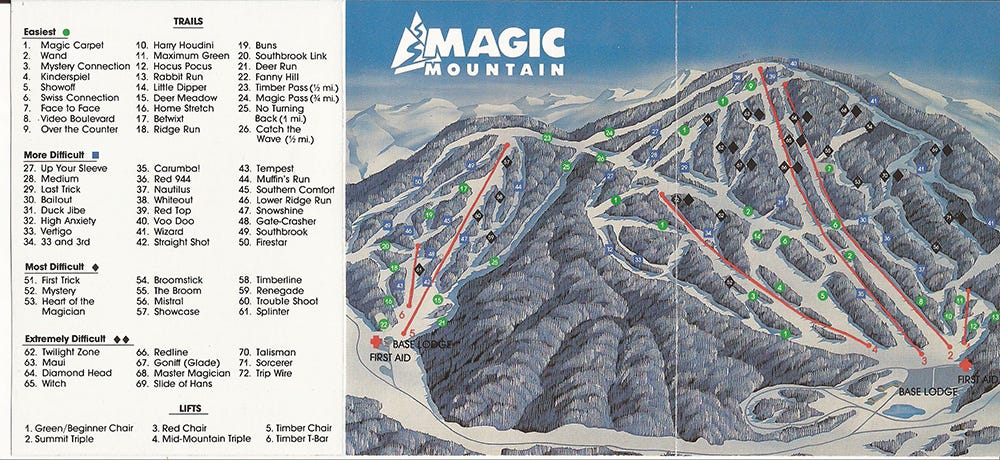
Oct 29, 2019
Podcast #3: New England Lost Ski Areas Project Founder Jeremy Davis
The Storm Skiing Podcast #3 | Download this episode on iTunes and Google Play | Read the full overview at skiing.substack.com . Who: Jeremy Davis, Founder of the New England Lost Ski Areas Project (NELSAP) Why I interviewed him: In college I discovered a ski areas of Michigan map from the 1970s with photos of dudes wearing sweaters and no helmets or even hats and smiling and jumping and I was surprised to find several mountains dotted along the highway grid that I had never heard of, since I had heard of every operating ski area in the state. It had never occurred to me that something so substantial as a ski area could go bust, but there they were, once marked and now deleted. I figured every state must have five or six such areas. Man did I underestimate. NELSAP has logged more than 600 lost ski areas in New England and another 65 in New York. So don’t hire me to count things. Instead, listen to Davis, who’s been on the case for more than two decades and keeps discovering new lost areas and writing books about them. What we talked about: The abandoned ski area that stoked his passion; why people care so much about these places; why this gigantic and impossible task fell on him, Some Dude on the Internet, and not like The Historical Society of Snowsportsskiing or some similarly named Official Organization; the part of tracking down lost ski areas that is like being some kind of hill-trekking Indiana Jones; why the absence in many cases of physical artifacts for, say, a ski area that operated for four days in 1958 and never again makes it imperative that we document this stuff now before everyone who remembers them is gone; the most impactful or interesting ski area losses in New York, Connecticut, Rhode Island, Massachusetts, Maine, New Hampshire, and Vermont; the happiest once-lost-and-now-found ski area stories; the lost ski area with the smallest vertical drop of them all (31 feet!); a lost ski area you can explore; why Ascutney is still cool even though it’s a fraction of its peak size; the most likely lost ski area candidates to rise from the dead; lost ski areas you can explore; why the private ski area model a la Hermitage Club hasn’t worked out for the most part in the Northeast; why some small ski areas continue to thrive in the mega-pass era; the man-that-would-have-been-incredible proposed large ski areas that were never developed because they couldn’t get funding or environmental approval or for any number of other reasons; how, improbably, after two decades, Davis is still finding new lost ski areas; the funky or quirky lost ski areas that would have had the potential to survive the social media era by connecting with the Magic-MRG-Plattekill-oriented skiers who prefer soul with their snow; you’re not going to believe where the Mount Whittier gondola cars are now; why TV meteorologists hate snow; how Davis, a meteorologist and obvious snow-lover, deals with this; Davis’ latest book, about lost ski areas of the Berkshires; how you can support NELSAP; Davis has a Cranmore skimobile in his backyard! Davis tells the story of how he acquired a car from the retired Cranmore Skimobile, right, in the podcast. The double chair is from Nashoba Valley ski area in Massachusetts, where Davis learned to ski . Things that may be slightly outdated because we recorded this a while ago: Davis identifies Cockaigne Resort in western New York as one of the most likely lost ski areas to come back online. We talk about 100-degree temperatures at one point in the interview, because we recorded it during the July heatwave – more than a month before Cockaigne announced that it would be back in business. So he didn’t miss the memo or anything – his time machine was just broken that day. Same with his speculation on what would happen to the Hermitage Club, which was before the decision to sell off its assets , including the heated six-pack bubble, by a court-appointed trustee. The goal is to eventually push podcast publication much closer to production, but Davis was gracious enough to record this in the dead of summer even though he knew I wouldn’t be launching until fall. Question I wish I’d asked: There seems to be a discrepancy between the number of ski areas that Davis has identified and the numbers listed on the site – he estimates in the interview, for examples, that New York may have as many as 250 lost ski areas, but the site currently only lists 65 and doesn’t include large recent shutdowns like Bobcat and Cortina. This is all completely understandable given the scale of the information and the fact that the dude has a day job and the site is the definition of a passion project. Still, I wish I’d given him the opportunity to talk a bit about the best way for folks to fill in the blanks (one of them is to read his Lost Ski Areas books ). What I got wrong: Probably something though nothing obvious when I re-listened. Feel free to point out all errors. Why I thought that now was a good time for this interview: Because with most of the large ski areas in the Northeast now owned by one of the four big ski conglomerates or New York State and the smaller areas waiting to see where they fit in, it’s a good time to take stock of what we’ve lost. Davis has incredibly deep knowledge not just of which ski areas failed, but when and why. Not all ski areas were meant to survive forever, of course, and not all of them need to, but by examining the past and the natural and economic forces that drove each of these hundreds of shutdowns, we can learn a lot about what makes a ski area work and how they can best situate themselves to survive the inevitable crummy winters and economic downturns. In some ways, I think The Great Ski Area Weed Out may be winding down, as pretty much anyone who neglected to invest in snowmaking infrastructure is long gone, and independent ski areas with affordable tickets are actually pretty well positioned as Vail’s legions march east with their inevitable triple-digit lift tickets and $45 cheeze-fries-and-cup-of-ice-water combo deals. Why you should visit the site: NELSAP is one of the best online ski museums anywhere. Did you know that there used to be skiing in The Bronx and on Long Island ? That Massachusetts has 172(!) lost ski areas and counting? That one of those was an indoor ski slope that operated in a disused movie theater? The depth, detail, trivia and overall portrait of a lost world that exists on this site is an invaluable archive for anyone who cares about the history of Northeast skiing. In case you were curious: I mention in the podcast intro that I started skiing at the now-lost Mott “Mountain” Michigan. The place seems to have rebranded several times after its initial shutdown, but the one that I remember and refer to in the podcast is Jasper Ski Resort, for which I picked up this flyer in the rest area just north of Clare off of what was then U.S. 27 and is now U.S. 127, because sometimes they rename highways and who knows why: Set aside for a moment that there is a zero percent chance that this photo was taken east of the Eisenhower Tunnel - my favorite picture by far is the top center image on the inside of this designed-by-marketing-geniuses brochure: The snowboard chick hanging a carving angle disallowed by the laws of physics. The dude in the multi-colored neon ski suit crushing a front flip propelled apparently only by his ski pole. But the kicker is the mountain ridgeline fading off into the valley below, a vista that you would not have found in any version of Michigan stretching back to the beginning of geological history. All of this is dated 1996. It’s easy to forget that the internet was still in its primitive mostly-text state back then and it wasn’t as easy to fact-check things. I feel sorry for anyone who came upon this brochure and actually planned a vacation here expecting to find the Midwestern version of Whitefish what with those snow ghosts haunting the pictures and all and instead just found 200-vertical-foot Mott Mountain. The Storm Skiing Podcast is on iTunes . The Storm Skiing Journal publishes podcasts and other editorial content throughout the ski season. To receive new posts as soon as they are published, sign up for The Storm Skiing Journal Newsletter at skiing.substack.com . Follow The Storm Skiing Journal on Facebook and Twitter . Check out previous podcasts: Killington GM Mike Solimano | Plattekill owners Danielle and Laszlo Vajtay Get full access to The Storm Skiing Journal and Podcast at www.stormskiing.com/subscribe
Oct 25, 2019
Podcast #2: Plattekill Mountain Owners Danielle and Laszlo Vajtay
The Storm Skiing Podcast #2 | Download this episode on iTunes and Google Play | Read the full overview at skiing.substack.com . Who: Danielle and Laszlo Vajtay, Owners, Plattekill Mountain Why I interviewed them: Because Plattekill flat amazes me. Situated deep in the Catskills interior, surrounded by better funded and bigger neighbors, nearly unknown outside of die-hard ski circles, the odds of this family-owned mountain still existing at all, let alone thriving, would seem remote in our days of octuple chairlifts and Ikonik gigapasses. But there it is, a sort of Little-Engine-That-Could clanking one refurbished snowgun at a time into 2019. This was not an accident. It was not luck. It was two people busting their ass for 26 years, reinvesting deliberately in the hill, plugging snowmaking at a one-run-per-annum rate into the incline, and slowly building a community around that intangible thing called atmosphere that makes skiing Plattekill unlike skiing anyplace else in the state. And they did all of that by avoiding debt like blue ice after a refreeze. How they did that against considerable odds was a story that I wanted to hear. What we talked about: Skiing together since they were kids; their terrific first winter as owners (1993-94); when the mountain almost fell apart during their second, terrible winter (1994-95; imagine not opening until February!); snow farming; why real estate is a dumb strategy for building a sustainable ski business; the Plattekill model of deliberate investment/no debt; how the Plattekill model could have saved lost Catskills ski areas Bobcat and Cortina; the mountain is one giant glade; yes the front five double blacks are absolute freefalls but the mountain has some terrific greens and blues and for families or novices it offers a hell of a lot; turns out a The New York Times feature story about your mountain rental program is pretty damn good marketing, so if you own a mountain maybe do that? How the mountain rental program started when 20 people showed up on a midweek powder day and Laszlo was like, “we’ll open for $2,500,” and some dude was like, “cool,” and they all went skiing; what happens when Vail sets up shop in your backyard by buying your largest rival; is Alterra buying Windham inevitable? And speaking of giant unwieldly conglomerates bwah-ha-ha-ha Platty is still here and has anyone seen American Skiing Company around here anywhere oh yeah there’s its carcass in a Dumpster in lower Manhattan; Laszlo does have a favorite big ski conglomerate though; The Freedom Pass ; the Indy Pass and why the Vajtays, uh, passed on it; where Platty’s passholders come from; Belleayre. Oh, man, Belleayre. Laszlo is not a fan of operating in direct competition with a state-subsidized ski area, especially as a taxpayer who is essentially then doing the subsidizing. How can that be remedied? Laszlo has some ideas . Why the Vajtays would rather compete with Vail or Alterra than ORDA. Also – how often and where the Vajtays ski (turns out that when you own a mountain, you get to ski a lot); what Win Smith said to Laszlo when they went skiing together. Also, this: Four of Plattekill’s front five double-black divebombers in February 2019. L to R: Northface, Giant Slalom, Plunge and Freefall. A T-bar used to run up Plunge. Laszlo talks about the painstaking process of refurbishing and installing the Northface Double Chair that replaced it and is pictured here. Things that may be slightly outdated because we recorded this a while ago: Laszlo announced a reciprocity agreement with Homewood , a mountain seated on the shores of Lake Tahoe. The place looks rad but I’ve never skied there or anywhere in Tahoe (big ski resume gap). This appears to be a separate agreement from the Freedom Pass arrangement, as Homewood is not listed as a partner in that alliance but does have a pretty amazing list of season pass reciprocity deals (really wish more East Coast mountains forged these sorts of free-ticket partnerships with their neighbors instead of their standard “you can get 10 percent off a full-priced lift ticket at our partner mountains,” which isn’t much of a bargain when you can typically find those tickets far cheaper elsewhere). Platty’s season pass details are here . What I got wrong: When I mentioned that the three ORDA mountains (Belleayre, Gore, and Whiteface), were on Max Pass, I forgot to mention that Windham was as well. I sort of flubbed the description of Aspen’s role in Alterra – The Aspen Skiing Company, which is in turn owned by Henry Crown and Company, owns Alterra in conjunction with KSL Capital Partners. I said something slightly different during the interview, but it’s interesting to note that I don’t think most skiers realize that Aspen is the Ikon analogue to Vail/Epic, and it’s kind of amazing how they’ve transformed themselves into Captain Good Guy when their pass is more expensive and their day ticket prices are just a pair of disposable foot warmers cheaper than Vail’s in most cases. Why I thought that now was a good time for this interview: Plattekill is on a roll. Besides the aforementioned Times piece, an excellent Catskills write-up by Powder Magazine’s Porter Fox last winter featured Plattekill (along with Belleayre and Hunter) prominently, describing it as a throwback, a scrappy survivor, and, most importantly, “the Alta of the Catskills” for its 150 inches of annual lake effect snow. The mountain rental program is working, and the place, relatively speaking, is thriving. This is in part I think due to a general backlash against our Ikonik/Epik landskape and the perceived cost and generic experience of skiing those mega-pass mountains. While I have both of these passes and will likely continue to buy them and believe the Disneyfication angle is overstated, I also make sure to ski Plattekill and other indies over the course of the winter, for exactly all of the reasons articulated above. Why you should go there: Because this is the coolest damn ski hill in the state of New York. Yes, it’s the smallest of the four Catskills mountains by acreage and vertical drop and number of lifts and size of the parking lot and size of the lodge. No, there are no high-speed lifts and the trails are shockingly narrow in places and the lodge is not some starchitect-designed spaceship ready to transport you to Jupiter. This is what skiing looks like when it’s run not by block grants airlifted from Broomfield but real people who love their mountain and love skiing and put every damn thing they have into making it work. Plus, it’s never crowded, the lift tickets are fairly priced , they have the friendliest lifties I’ve every encountered, and, yes, it feels like skiing in the 1960s. I think. Since I have no first-person recollecation of the 1960s, I’m going to make some assumptions here and say it feels like skiing in some indeterminate bygone era when kids didn’t spend all their time smartphoning and playing the Halo. Seriously though, make a day for this one (as long as that day is a Friday through Sunday, because a midweek lift ticket is $4,500 – not bad actually if you can round up 100 friends or bribe your company into paying for it). While we’re on the subject of throwbacks: Ribbing the this-is-my-secret-mountain-don’t-you-dare-tell-anyone-it-exists-let-them-all-ski-at-Hunter attitude of his core skiers, Laszlo says, “OK, just tell one friend,” and then he mentions an old “and then they’ll tell two friends” shampoo commercial. This appears to be that commercial: A 1970s Brady Bunch -style version: And then Wayne’s World spoofed it: While I was alive for most of that and doubtless saw the commercial dozens of times while my mom was re-watching that day’s soap operas on our Betamax or whatever, I don’t remember it at all. But apparently it was cultural currency back in the day. The Storm Skiing Podcast is on iTunes , Google Podcasts , Stitcher , TuneIn , and Pocket Casts. The Storm Skiing Journal publishes podcasts and other editorial content throughout the ski season. To receive new posts as soon as they are published, sign up for The Storm Skiing Journal Newsletter at skiing.substack.com . Follow The Storm Skiing Journal on Facebook and Twitter . Get full access to The Storm Skiing Journal and Podcast at www.stormskiing.com/subscribe
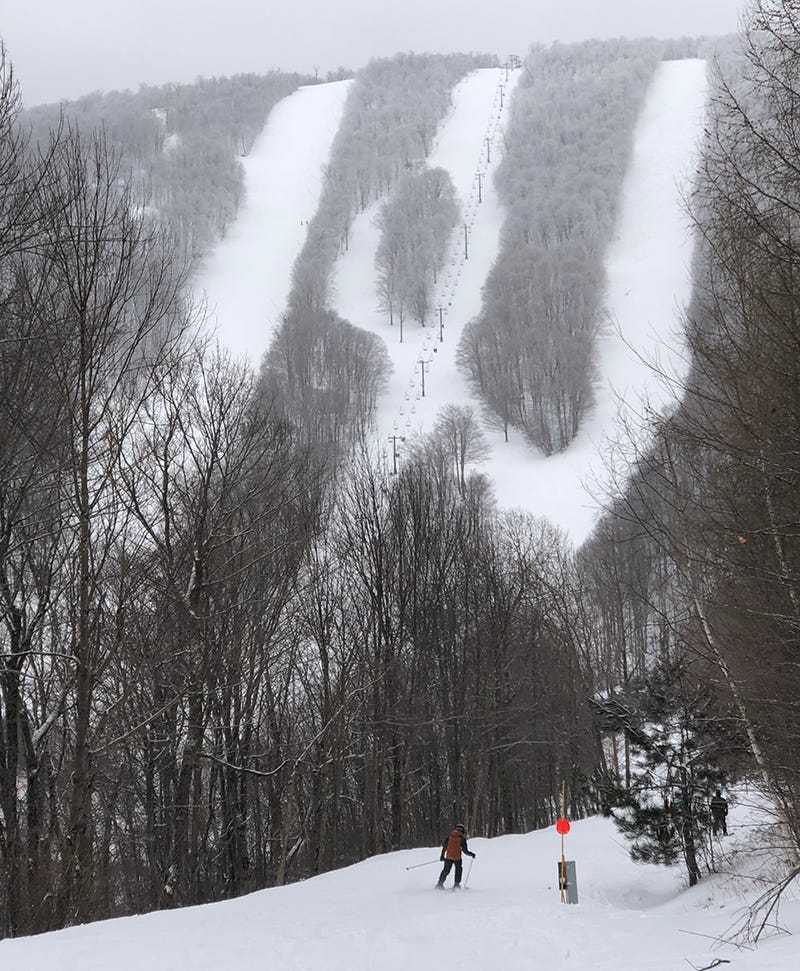
Oct 13, 2019
Podcast #1: Killington and Pico President and GM Mike Solimano
The Storm Skiing Podcast #1 | Download this episode on iTunes and Google Play | Read the full overview at skiing.substack.com . Who: Mike Solimano, President and General Manager, Killington Resort and Pico Mountain Why I interviewed him: Because The Beast. Because October to June. Because sheer sprawl and size and moxie. Because we all need this place more than most of us will ever admit. Because if you’re going to start something like a podcast about Northeast skiing, you really ought to lead off with the most punch-you-in-your-face prominent part of Northeast skiing. Because have you ever stood at the K1 base on a mid-winter weekend Saturday and watched the hordes tumbling down from every direction and zigzagging and poling away toward Superstar and Snowdon and the lifts shooting off all over the place and the sheer forests and deadbolt double-blacks rising menacingly before you and wondered my God how do they hold this all together? This is the guy who holds it all together. What we talked about: The many many many recent mountain improvements at Killington, including snowmaking upgrades, the Snowdon bubble, South Ridge lift access, RFID gates, all those new tunnels; why you should be glad Powdr and not Vail owns Killington; that Vail offered to buy Killington; why the North Ridge lift is so baller even though it’s just a short fixed-grip lift stuck way at the top of the mountain; fat Americans; how cow poo powers your chairlift ride; the long-talked-about village cause man they need this; the Ikon Pass; adding Pico to the Ikon Pass; Vail of course because that will likely be mandatory in any skiing-related interview for the foreseeable future; how Powdr finally understood that Killington was not Park City; why you can call Killington “The Beast” to its face now; why beginners and intermediates needn’t fear said Beast; Woodward; the long season and why they do it even though they make more money during one day of Christmas week than in all of October and November (really!); why the Pico interconnect is probably a long way off still; the Beast 365 pass. Things that may be slightly outdated because we recorded this a while ago: We recorded this interview on Sept. 4, just after Labor Day. Mike says in the interview that he’s hoping to get snowmaking going “in 45 days,” but don’t panic because that’s 45 days from then and so that’s like any day now if we’re lucky (they actually already did an overnight test). He also announced a pretty significant snowmaking project that will allow Killington to pipe water over the interconnect to Pico for snowmaking, which should be a really big deal as far as coverage at the sister mountain this winter. That has since been announced and elaborated upon Vermont Biz and probably elsewhere. My hope in the future is to speed up the record-produce-publish timeline, but I spent all summer just bringing this thing online and that required a long lead time just to make sure I could actually find people who would talk to me. Question I wish I’d asked: Any chance of expanding the Ikon deal to include five/seven days at Killington and five/seven days at Pico, rather than a combined five/seven? Maybe something about the World Cup but I don’t really care about ski racing so maybe next time. What I got wrong: Referring to Powdr Corp’s Oregon ski area as “Mt. Hood” (which it isn’t), instead of “Mt. Bachelor,” which it is. I think this is because I was recently reading an article about the abundance of ski areas on Mt. Hood (six), and since I’d forgotten to make note of all of Powdr’s mountains pre-interview but wanted to bring it up I just thought “well, uh, that must be one of them,” which of course it isn’t, because those are most definitely two distinct volcanoes. But Mike was cool as ice and corrected me without correcting me, and now we all know the difference. I also insinuated in the intro that Killington would be open until June, but given that that’s only happened a handful of times in the past 20 years, I likely spoke too soon. What I should have said is that they will very likely try to stay open until June, and hopefully they can. Why I thought that now was a good time for this interview: If you haven’t been back to Killington in, say, the past five years, you need to go back as soon as possible (which is hopefully any day now). The momentum there is incredible. New lifts. New trail configurations. New lodges (coming). New focus on actually listening to all the people (the skiers) who make Killington The Beast in practice rather than in name only. The undercurrent here is an engaged management team (led by Mike), and a parent company that’s backing up the Brinks truck to help make it all happen. I read some interviews with Mike on New York Ski Blog and elsewhere and a profile of him in Vermont Business and I’m like man that guy sounds sharp as hell and he is. Listen to this guy talk for an hour and this whole wow-Killington-is-actually-really-fun-again thing will start to make a whole lot more sense. Why you should go there: Because The Beast is not just a marketing tag. Well, it is a marketing tag but it’s an earned one, and it wasn’t a TM marketing tag before it was a TM marketing tag (all explained in the interview), so… But yeah stepping out of your car there you know something’s different about Killington. The attitude and energy of the place, the speed and aggressiveness and raw skill of the skiers, the sheer unending mass and secret pockets and sense of adventure, the swarming flailing crowds and the way you can still find yourself all alone in the woods. If you had to pick one place to represent Northeast skiing in some kind of hypothetical United Nations of ski regions, you would probably pick Killington to do it. It is the id of Northeast skiing, big and brash and unforgiving and loud and relentless, and it says East Coast like no other place in the region. And let’s face it once May hits you really don’t have any other choice but to ski here unless you want to get on a plane. The Storm Skiing Podcast is on iTunes . The Storm Skiing Journal publishes podcasts and other editorial content throughout the ski season. To receive new posts as soon as they are published, sign up for The Storm Skiing Journal Newsletter at skiing.substack.com . Follow The Storm Skiing Journal on Facebook and Twitter . Get full access to The Storm Skiing Journal and Podcast at www.stormskiing.com/subscribe