The New Quantum Era - innovation in quantum computing, science and technology
Sebastian Hassinger·102 episodes
Your host, Sebastian Hassinger, interviews brilliant research scientists, software developers, engineers and others actively exploring the possibilities of our new quantum era. We will cover topics in quantum computing, networking and sensing, focusing on hardware, algorithms and general theory. The show aims for accessibility - Sebastian is not a physicist - and we'll try to provide context for the terminology and glimpses at the fascinating history of this new field as it evolves in real time.
Episodes
Ben Castanon became Unitary Foundation's first CEO in February 2026, after roughly four years with the organization as Chief of Staff and then COO. He came into quantum from an unusual direction — leadership roles at Pioneer Works, the Brooklyn arts-and-science center — and that background shows in how he thinks about scaffolding communities, funding public goods, and borrowing what works from other fields.This conversation matters now because Unitary Foundation sits at an inflection point. It has scaled from a microgrant program (the "Unitary Fund") into a foundation with a global developer community, corporate members including NVIDIA and IBM, an active compiler collection, a benchmarking initiative, and an annual open-source survey that increasingly serves as the field's ground truth. If you care about how quantum computing actually gets built — not just who wins the hardware race — this episode lays out the infrastructure argument clearly.What You'll LearnWhy Ben argues quantum open source falls into a structural funding gap between academia (chasing novel papers) and venture capital (chasing profitable businesses), and what philanthropy has to do about itWhat "public goods" and "digital commons" actually look like in quantum — from benchmarking to compilation to error mitigation toolingHow to interpret the 2025 QOSS Survey finding that ~40% of full-time quantum OSS contributors are unpaid, and why Ben sees it as both an opportunity and a warningHow Unitary Foundation is experimenting with continuous compensation for contributors via bounty programs and pilots with Merit SystemsWhy corporate members like NVIDIA and IBM invest in a vendor-neutral nonprofit — and how governance keeps the "open" in open sourceWhat a healthy pipeline from first-time contributor to sustained open-source maintainer would look like, and why Ben wants an endowment behind itWhy Ben resists top-down definitions of the "open substrate" and prefers to let the community surface bottlenecksThe long-term vision: a "Linux moment" for quantum, and what it would take to install it before proprietary stacks lock inResources & LinksGuest & OrganizationAnnouncing Our New CEO — Unitary Foundation — The February 2026 announcement of Ben as UF's first CEO, with the full arc from Chief of Staff to COO to CEO.Ben Castanon on LinkedIn — Ben's professional history, including his Pioneer Works tenure and current UF work.Unitary Foundation — The organization's homepage and hub for grants, tools, membership, and community.Papers & Reports<a href="https://unitary.foundation/posts/2025_su
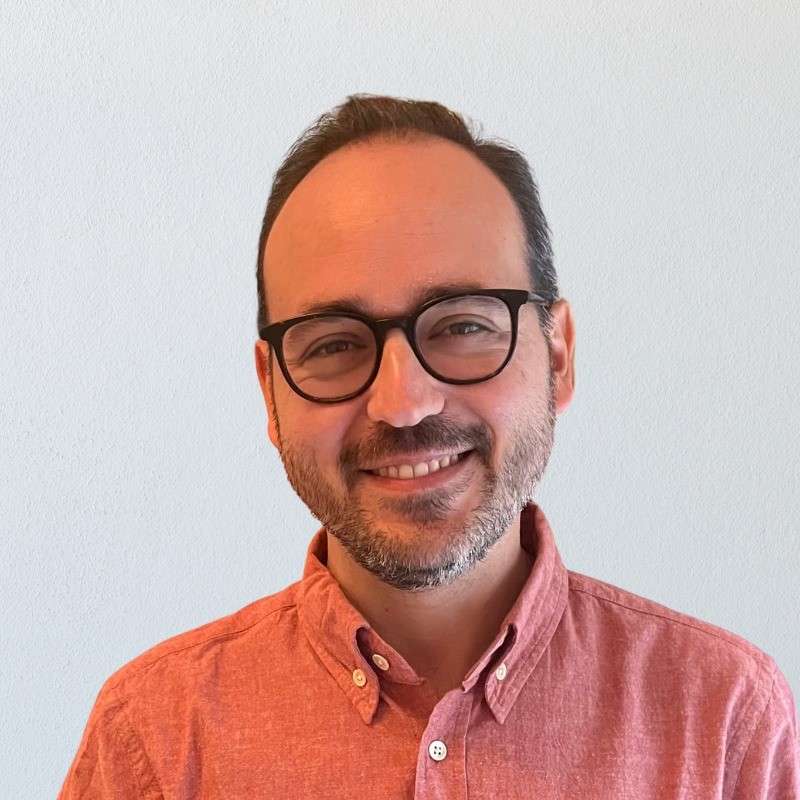
Johannes Galatsanos occupies an unusual dual perch in the quantum ecosystem. As a co-author of the inaugural MIT Quantum Index Report, he's helped map the entire quantum landscape at altitude; as co-founder and CEO of Diffraqtion, he's staked his career on one of its most under-discussed corners: quantum imaging. The company spun out of Saikat Guha's lab at the University of Maryland after more than a decade of DARPA-funded research, emerged from stealth in January 2026 with $4.2M in pre-seed funding, and is now racing toward on-sky telescope demonstrations and a 2028 satellite launch.This episode is for listeners who want a technically honest look at where the "quantum" label is doing real work in a sensor versus where it's shading into sophisticated photonics and analog computing. If you care about how quantum technologies actually reach the world — through markets, contracts, and hardware that ships — this conversation gives you a specific, concrete example to think with.What You'll LearnWhy a conventional camera can lose roughly 95% of the information a photon carries, and what quantum Fisher information theory says about recovering itHow Diffraqtion's device processes light directly in the photonic domain before converting it to electronic information — and why that matters for shot noiseThe honest answer to "is this really quantum?" — including where the technology sits between quantum information theory, photonics, and analog computingWhy a 6U CubeSat with a 10-centimeter aperture can plausibly compete with school-bus-sized observation satellites for specific tasksHow a "diffractive neural network" runs image classification at the speed of light with negligible power consumptionThe difference between Diffraqtion's hard-coded Gen 1 camera and the reprogrammable Gen 2 that can swap algorithms in orbit (canopy detection over the Amazon, ship detection over the Atlantic)Why the Habitable Worlds Observatory needs a coronagraph capability — and how you can build one by processing light rather than blocking itWhat quantum sensing needs from policy, capital, and PR to escape the shadow of quantum computingResources describes the technology, NASA/DARPA lineage, and the "quantum eye" framing referenced in the conversation.Johannes Galatsanos on LinkedIn — Recent activity including SmallSat Europe, the NASA Space to Soil Challenge, and GQIG Summit talks on quantum imaging.Papers & ReportsQuantum Index Report 2025 (arXiv) — The preprint of the MIT QIR, co-authored by Galatsanos. Essential reading for anyone trying to see the q
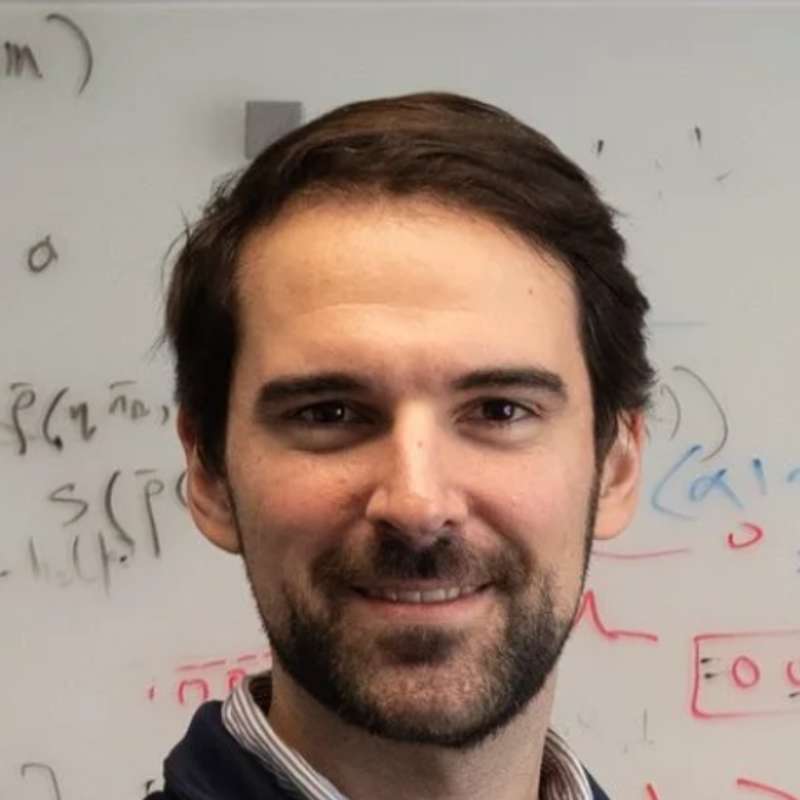
This is the 100th episode of The New Quantum Era, and it arrives at a moment of convergence: the book is out, the Helgoland centennial documentary is in production, regional quantum ecosystems are scaling from ambition to construction, and the field is entering the transition from heroic-era qubit demos to the hard systems engineering that will determine whether quantum computing becomes a real industry. Bob Karr — who sits at the intersection of law, policy, and the quantum ecosystem as the person behind the Quantum Law Navigator and a convener across the Chicago quantum community — is the right person to conduct this retrospective, and Barnes & Thornburg, at the center of arguably the most sophisticated quantum ecosystem in the world, is the right place to do it.The conversation is structured as a celebration and an examination: what has Sebastian actually learned by sitting with nearly 100 physicists, engineers, founders, and policymakers? How has the field changed since that first visit to TJ Watson in 2017? What do regional hubs like the Illinois Quantum and Microelectronics Park and Quebec's DistriQ tell us about what it takes to move from science to industry? And what does the next era demand — not just from researchers and companies, but from everyone?---What You'll LearnWhy the Helgoland documentary matters: in June 2025, Sebastian and his wife traveled to the island where Heisenberg's 1925 insight gave birth to quantum mechanics, producing a documentary at a Yale–Max Planck centennial conference attended by multiple Nobel laureates — and what that experience distilled about the state of the fieldHow Sebastian's journey into quantum began: arriving at IBM's TJ Watson Research Center in 2017 to help with Qiskit's open source strategy, encountering the 53-qubit milestone, and recognizing the earliest stages of an emerging technology that would become his life's workWhat the "Heroic Age of Qubits" was — and why it ended: the period of genius PIs racing to prove quantum advantage, culminating in Google's 2019 random circuit sampling claim, and why that finish line turned out to be a starting lineWhat Harley Johnson and the IQMP reveal about ecosystem-building: why the Illinois Quantum and Microelectronics Park is the world's leading example of building a quantum ecosystem, and what it takes to bridge deep science and economic developmentWhat Quebec's DistriQ teaches about sustainability: the 90% public / 10% private funding model designed to flip over ten years, and why that benchmark matters for every regional hubWhy Alejandra Castillo's economic development lens changed the picture: how quantum's impact extends far beyond qubits into advanced manufacturing, supply chain, and the communities that get to participate in the upside<l
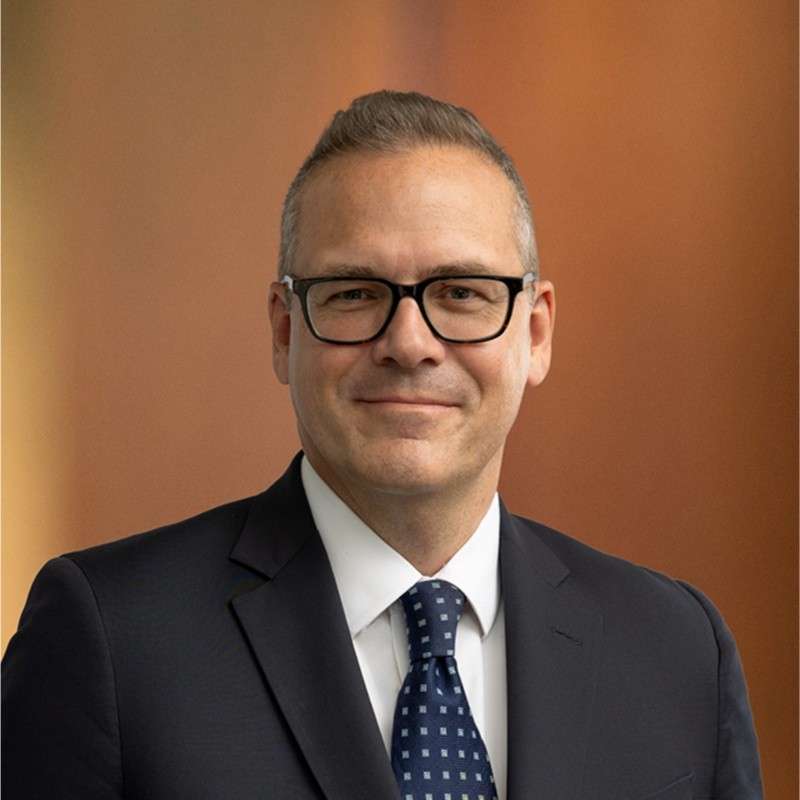
Daniel Faircloth, PhD is an unusual figure in the quantum ecosystem: a computational electromagnetics engineer who actually helped build trapped-ion hardware before pivoting to the software stack the field was missing. He's a co-author on the 2013 New Journal of Physics paper that demonstrated reliable ion transport through a microfabricated X-junction surface-electrode trap at Georgia Tech Research Institute, and he spent the years afterward inside a defense contractor, IERUS Technologies, building the electromagnetic simulation engine that has now spun out as Nullspace.If you've been following the trapped-ion race — Quantinuum, IonQ, Oxford Ionics, AQT, and the academic groups feeding them — this episode fills in a layer of the story that rarely gets airtime. As the field moves from clever physics demonstrations toward genuinely scaled architectures, the design tools, the file formats, and the iteration loops start to matter as much as the qubits themselves. Listeners interested in quantum engineering, the analog of EDA in semiconductors, or how dual-use defense R&D translates into commercial quantum infrastructure will find a lot to chew on.What We Get IntoWhy the standard "gapless approximation" for ion trap modeling — treating electrodes as polygons on an infinite metal sheet — breaks down well before you're ready to fabricate.How Faircloth's graduate-school question ("can better tools turn a good engineer into a super engineer?") became the design philosophy behind Nullspace ES.What turning an X-junction corner actually requires: two-stage optimization across trap geometry and control voltages, so the ion doesn't get heated out of the trap.Why general-purpose electrostatic solvers struggle with ion trap problems that demand nanometer ion-height precision and millivolt-level shuttling voltage accuracy.The technical leap in Nullspace ES 2025 R1: pairing high-order basis functions with a compression solver to cut memory usage roughly 5× while preserving accuracy.The awkward commercial reality of selling neutral simulation infrastructure to companies that are direct competitors with each other.The "build vs. buy" tension for hardware startups deciding whether to roll their own solver in Python or adopt a purpose-built commercial tool.How the dual-use defense / commercial-quantum positioning shapes Nullspace's roadmap — and where lessons flow in both directions.Where the roadmap might lead: multi-physics, tightly integrated workflows that eliminate the CAD-cleanup and file-format-exchange tax engineers pay today.Resources & LinksGuest & CompanyDaniel Faircloth Bio — Nullspace, Inc. — Background on Daniel's path from GTRI and IERUS to co-founding Nullspace.<a href="https://www
EeroQ is unusual in two ways. It's the only company in the world commercializing electrons-on-helium qubits, a modality first proposed by Platzman and Dykman in Science in 1999. And it was founded by Nick Farina — a software entrepreneur, not a physicist — who got pulled into the field through a Chicago theater board where he met his future co-founder, then-PhD student Johannes Pollanen.This conversation matters now because EeroQ has had an unusually productive twelve months: a Physical Review X paper demonstrating single-electron control above 1 Kelvin, a January 2026 result on controlling up to a million electrons with fewer than 50 control lines, and — published in Nature Physics on June 15, 2026 — the first demonstration of strong coupling between a microwave photon and a single electron on helium, the cavity-QED readout-and-control link the platform depends on. If you're trying to understand which "second-tier" modalities deserve serious attention — and how a small, capital-light team in Chicago is thinking about scale-first hardware design — this is a useful listen.SponsorThis episode is brought to you by Outshift, Cisco's incubation engine. The need for computational power is rapidly increasing in every sector. From drug discovery to material innovation to complex financial modeling, classical systems are reaching their absolute limits. It's time for a paradigm shift. The answer is a scalable quantum network, built on open standards and vendor-agnostic architecture. By uniting distributed quantum devices, you unlock limitless computational power.Learn more about the Cisco Universal Quantum Switch at Outshift.com.Go deeper with the blog post The switch that quantum networking has been waiting for.What We Get IntoHow a Chicago theater board led to one of the most unique qubit companies in the fieldWhy electrons-on-helium failed in the early 2000s and why circuit QED, dry fridges, and CMOS now make it viableThe physical picture: a thin superfluid helium film coating a CMOS chip, with electrons trapped a few nanometers above the surface by their own image chargeWhy EeroQ pivoted from motional states to spin qubits after Steve L
Why This Episode MattersSabrina Maniscalco is one of the few people in quantum who has lived the full arc: two decades of academic work on open quantum systems and non-Markovian noise at Palermo, Turku, Edinburgh, and Helsinki, followed by founding Algorithmiq with three of her former researchers after an early Qiskit Camp. That trajectory matters now because Algorithmiq just had a landmark stretch — sole winner of the $2M Wellcome Leap Q4Bio prize for a quantum-enabled cancer drug discovery workflow, an €18M Series B, a global HQ move to Milan, and its Tensor Network Error Mitigation (TEM) function landing in IBM's Qiskit Functions catalog.If you're trying to make sense of where quantum software actually creates value before fault tolerance arrives — and what a credible "trajectory to advantage" looks like when paired with real clients in life sciences — this is a grounded, technically specific conversation with someone building it.EPISODE SPONSORThis episode is brought to you by Outshift, Cisco's incubation engine. The need for computational power is rapidly increasing in every sector. From drug discovery to material innovation to complex financial modeling, classical systems are reaching their absolute limits. It's time for a paradigm shift. The answer is a scalable quantum network, built on open standards and vendor-agnostic architecture. By uniting distributed quantum devices, you unlock limitless computational power.Learn more about the Cisco Universal Quantum Switch at Outshift.com.Go deeper with the blog post The switch that quantum networking has been waiting for.What We Get IntoWhy a background in open quantum systems and non-Markovian noise turned out to be unusually well-suited to running algorithms on noisy near-term hardwareThe actual science behind the Q4Bio winning workflow: simulating excited-state dynamics of a photosensitizer drug already in Phase II clinical trials, on up to 100 qubitsHow quantum-boosted DMRG works — and why it gives you a built-in benchmark against the best classical method via the bond dimensionThe tradeoff Sabrina would and wouldn't make between more qubits and lower noise, and why neutral atoms' slower sampling rates matter for chemistryWhy even fault-tolerant algorithms like quantu

Why This Episode MattersFirgun Ventures launched in late 2025 with a $70M first close anchored by the Qatar Investment Authority and a mandate that doesn't exist anywhere else in the market: lead Series A and B rounds in quantum scale-ups globally. Kris Naudts is a neuroscientist and former Culture Trip founder whose path to quantum runs through a near-fatal medical misdiagnosis. Zeynep Koruturk spent over a decade building the Goldman Sachs Tech Initiative and meeting more than a thousand founders. Both were early angels in what became Quantinuum.If you're trying to understand how quantum companies actually get financed between the lab and the IPO window — or why a specialist fund needed to exist at all — this conversation is one of the clearest views available. It's also a useful frame for founders thinking about what an informed institutional investor actually does in a round.SponsorThis episode is brought to you by Outshift, Cisco's incubation engine. The need for computational power is rapidly increasing in every sector. From drug discovery to material innovation to complex financial modeling, classical systems are reaching their absolute limits. It's time for a paradigm shift. The answer is a scalable quantum network, built on open standards and vendor-agnostic architecture. By uniting distributed quantum devices, you unlock limitless computational power.Learn more about the Cisco Universal Quantum Switch at Outshift.com.Go deeper with the blog post The switch that quantum networking has been waiting for.What We Get IntoWhy Kris's ALS misdiagnosis became the conviction event that pulled him from media entrepreneurship into quantum investingHow Zeynep's decade at Goldman Sachs Tech Initiative shaped her pattern-matching for deep tech, and where that pattern-matching breaks down in quantumThe structural reason Series A/B is the real bottleneck in quantum financing — and why precede and seed capital is no longer the gap people assume it isHow Firgun underwrites engineering and execution risk after the scientific risk is largely retiredWhy a quantum-specialist fund unlocks soft commitments from larger institutions that otherwise stay on the sidelinesThe role of Firgun's "scientific co-founder" Professor Mete Ata
Why This Episode MattersYuval has a rare profile in the quantum industry: an M.Sc. in physics from Tel Aviv University, an MBA from Kellogg, two decades as a CEO and CMO in deep tech before quantum, and now the commercial lead at QuEra — the company whose neutral-atom architecture is colocated with NVIDIA H100s inside Japan's ABCI-Q supercomputer and just demonstrated 96 logical qubits from 448 physical atoms in Nature. He also hosts The Superposition Guy's Podcast and has just published Quantum Bits, a comic-book guide to quantum computing.This is a crossover conversation — Sebastian's book A New Quantum Era came out the same week — so the episode reads as two practitioners comparing their explanatory strategies, their reading of the modality race, and their honest forecasts for when a quantum computer becomes genuinely non-simulatable. If you want a candid look at how the commercial side of quantum thinks about hardware timelines, error-correction overhead, and the work of translating physics into procurement, this is the episode.SponsorThis episode is brought to you by Outshift, Cisco's incubation engine. The need for computational power is rapidly increasing in every sector. From drug discovery to material innovation to complex financial modeling, classical systems are reaching their absolute limits. It's time for a paradigm shift. The answer is a scalable quantum network, built on open standards and vendor-agnostic architecture. By uniting distributed quantum devices, you unlock limitless computational power.Learn more about the Cisco Universal Quantum Switch at Outshift.com.Go deeper with the blog post The switch that quantum networking has been waiting for.What We Get IntoWhy Vladan Vuletić's confidence horizon for neutral atoms expanded from 5 years to 10 years in a single 18-month window — and what changedThe honest case for neutral atoms when wall-clock speed is the obvious weakness: parallelism, algorithmic fault tolerance, and a 2:1 physical-to-logical ratio for quantum memoryWhy "time to solution" — not gate speed — is the metric Yuval thinks the industry should be arguing aboutHow Shor's algorithm went from requiring a million qubits to roughly 30,000, and what that compression means for cr
Fault Tolerance for Quantum Inputs and Outputs with Matthias ChristandlWhy This Episode MattersMost discussions of fault tolerance quietly assume a classical-in, classical-out picture: you feed in bits, the noisy quantum machine does its work, and a stable classical answer comes out the other side. Christandl — a mathematically trained quantum information theorist who also leads a Novo Nordisk Foundation–funded life sciences center — argues that this framing is too narrow for the era we are actually entering, where multi-core processors, networked QPUs, and quantum communication links all need to exchange quantum information between noisy machines.If you care about how quantum networks, distributed quantum computers, and quantum simulation workflows for chemistry and biology actually get built, this episode lays out a foundational way of thinking about the problem and connects it directly to current hardware and algorithm co-design.SponsorThis episode is brought to you by Outshift, Cisco's incubation engine. The need for computational power is rapidly increasing in every sector. From drug discovery to material innovation to complex financial modeling, classical systems are reaching their absolute limits. It’s time for a paradigm shift. The answer is a scalable quantum network, built on open standards and vendor-agnostic architecture. By uniting distributed quantum devices, you unlock limitless computational power. Learn more about the Cisco Universal Quantum Switch at Outshift.com.Go deeper with the blog post.What We Get IntoWhy the fault tolerance theorem as usually stated leaves out the case that matters most for networking: quantum inputs and quantum outputs.How Christandl's group shows you can still prepare arbitrarily complex quantum states on a noisy machine, paying only one final layer of physical noise rather than collapsing the whole computation.What this means for restoring meaning to quantum channel capacity results in the presence of noisy encoders and decoders.Why distributed quantum computing — multi-core QPUs talking to each other in quantum, not classical, information — is the natural setting for this work.How recent quantum LDPC code work fits in, and why the team is now foc
Philosophy of Physics Meets Quantum Engineering with Elise CrullWhy This Episode MattersElise Crull is Associate Professor of Philosophy at CCNY and the CUNY Graduate Center, co-author with Guido Bacciagaluppi of The Einstein Paradox (Cambridge, 2024), and was named a Fellow of the American Physical Society in 2025 for her archival work recovering voices like Grete Hermann from the foundations of quantum mechanics. She was also one of the speakers on Helgoland in June 2025 for the centenary of quantum mechanics — opening, as Sebastian notes, by thanking the organizers for the courage to invite a philosopher.This conversation matters because the truce between physicists and philosophers of physics is over. Quantum computing has turned interpretive questions — what counts as entanglement, what decoherence really is, whether causal order can be put in superposition — into engineering questions with budget consequences. If you build, fund, or write about quantum hardware, this episode will sharpen how you hear the words being used around you.SponsorThis episode is brought to you by Outshift, Cisco's incubation engine. The need for computational power is rapidly increasing in every sector. From drug discovery to material innovation to complex financial modeling, classical systems are reaching their absolute limits. It’s time for a paradigm shift. The answer is a scalable quantum network, built on open standards and vendor-agnostic architecture. By uniting distributed quantum devices, you unlock limitless computational power. Learn more about the Cisco Universal Quantum Switch at Outshift.com.Go deeper with the blog post.What We Get IntoWhy "decoherence" and "noise" are not interchangeable, and why error correction strategy depends on telling them apartThe six-plus working definitions of entanglement currently circulating in physics — and why "classical entanglement" makes a philosopher's eye twitchWhat Einstein actually objected to in EPR (hint: it wasn't really determinism), drawn from Schrödinger's "Einstein-Paradoxon" correspondence folderIndefinite causal ordering: whether the experimental speedups reflect genuinely acausal physics or our stubbornly classical definitions
Why This Episode MattersNiels Bultink earned his PhD at QuTech under Leonardo DiCarlo, where he performed some of the first real-time feedback experiments on solid-state qubits — the foundational primitive behind quantum error correction. He spun Qblox out of TU Delft in 2018, and has grown it to roughly 140 people serving 150+ customers worldwide, mostly on revenue rather than venture capital, before raising a $26M Series A in 2024.This conversation matters now because the goalposts for useful quantum computing have moved closer in the last 12 months. Recent estimates suggest breaking RSA may need ~10,000–100,000 qubits, not tens of millions — and at that scale, the control stack is no longer a lab afterthought. It is a strategic supply chain question, which is why the DOE just picked Qblox to manufacture Fermilab's QICK platform domestically. If you care about how quantum computers actually get built — the layer between the qubit and the software — this is the episode for you.SponsorThis episode is brought to you by Outshift, Cisco's incubation engine. The need for computational power is rapidly increasing in every sector. From drug discovery to material innovation to complex financial modeling, classical systems are reaching their absolute limits. It’s time for a paradigm shift. The answer is a scalable quantum network, built on open standards and vendor-agnostic architecture. By uniting distributed quantum devices, you unlock limitless computational power.Learn more about the Cisco Universal Quantum Switch at Outshift.com.Go deeper with the blog post.What We Get IntoWhy the IBM Quantum Experience originally needed a meter of rack equipment per qubit, and what had to change architecturally to scale past thatHow a quantum control stack can be genuinely qubit-agnostic — and where modality differences actually live (mostly in the analog front end, not the digital core)Why pre-compiled pulse sequences hit a wall, and how dynamic, adaptive control is a prerequisite for fault tolerance, not a nice-to-haveThe role of Qblox's SYNQ and LINQ protocols in achieving picosecond-level synchronization and low-latency feedback across hundreds of coresWhy FPGAs are the rig
Hardware-Faithful Digital Twins for Quantum Computing with Izhar MedalsyIzhar Medalsy is not a career qubit theorist. His path runs from a physical chemistry PhD and an ETH Zurich postdoc in atomic force microscopy and ternary nanoscale logic, through productizing scientific instruments at Bruker, through building one of the fastest resin 3D printers on the market, into co-founding Quantum Elements in 2023 with Daniel Lidar (USC) and Amir Yacoby (Harvard). That arc — nanoscale measurement scientist turned deep-tech operator — shapes how he thinks about the simulation gap in quantum computing.The conversation lands at a specific moment. In April 2026, Quantum Elements published a joint result with AWS, USC, and Harvard simulating a distance-7 rotated surface code with 97 physical qubits using full quantum master equations on AWS HPC7a, and announced a deeper collaboration with Rigetti Computing on next-generation superconducting processors. If you care about how error correction strategies, decoders, and pulse-level controls actually get developed before they ever touch hardware, this episode is for you.EPISODE SPONSORThis episode is brought to you by Outshift, Cisco's incubation engine. The need for computational power is rapidly increasing in every sector. From drug discovery to material innovation to complex financial modeling, classical systems are reaching their absolute limits. It’s time for a paradigm shift. The answer is a scalable quantum network, built on open standards and vendor-agnostic architecture. By uniting distributed quantum devices, you unlock limitless computational power.Learn more about the Cisco Universal Quantum Switch at Outshift.comGo deeper with the blog post The switch that quantum networking has been waiting for====================================================================================================What We Get IntoWhy generic noise models fall short and what "hardware-faithful" actually means when two nominally identical QPUs have different noise fingerprintsHow Quantum Elements scaled open-system master-equation simulation from a brute-force ceiling around 16 qubits to 97 qubits using stochastic compression on top of Quantum Monte CarloThe compute re
Are We Computing Quantum in the Wrong Base? with Ivan DeutschIvan Deutsch is Distinguished Regents' Professor of Physics and Astronomy at the University of New Mexico and the founding director of CQuIC, the Center for Quantum Information and Control. Along with his longtime collaborator Poul Jessen, Ivan helped lay the theoretical foundations for neutral-atom quantum computing in the 1990s: trapping individual atoms in optical lattices, cooling them to near absolute zero, and shuttling them in parallel to perform quantum logic. The companies commercializing those ideas today — QuEra, Pasqal, Atom Computing, Infleqtion, and the newly announced Aurora out of Caltech — are building on architectural concepts that trace directly to his group's early papers. His 9,600+ citations across quantum information, atomic physics, and quantum control place him among the most-cited theorists in the field.The reason to talk to Ivan now is that he has been making a quietly heterodox argument: every one of those commercial platforms encodes information in two energy levels of an atom that has ten or sixteen, and Ivan thinks the field should be asking whether that's the right choice — not for information density, which is only a logarithmic gain, but for fault tolerance. This conversation goes deep on qudits, spin cat codes, and the co-design philosophy that has shaped Ivan's career at the interface between theory and experiment, ions and neutral atoms, and academia and industry. If you are following neutral-atom hardware, fault-tolerant quantum error correction, or the emergence of regional quantum ecosystems, this episode is essential.What You'll LearnWhy neutral atoms were the "underdog cousins" of trapped ions — and the precise trade-off at the heart of a 30-year rivalry: ions are great and terrible because they're charged; neutral atoms are great and terrible because they're neutralWhat the original neutral-atom quantum computing paper actually got right: the parallel atom-movement architecture now central to QuEra, Atom Computing, and Infleqtion's roadmaps was already there — even if the Rydberg blockade's full power wasn't appreciated until laterWhat qudits are and why fault tolerance, not information density, is the compelling argument: the information gain from base-2 to base-10 is only logarithmic, but co-designing error-correcting codes with the physical structure of the hardware may be transformativeHow spin cat codes work: using the extra energy levels inside a single atom for error redundancy, directly analogous to bosonic cat codes in microwave cavities, with fault-tolerant thresholds that may surpass standard qubit surface codesWhy biased error correction matters: real physical errors in neutral atoms aren't arbitrary, and codes designed around the domi
Your host, Sebastian Hassinger, is joined on this episode by Garnet Chan, the Bren Professor of Chemistry at Caltech, a member of the National Academy of Sciences, and among the most cited computational chemists in the world (34,000+ Google Scholar citations). Garnet is neither a quantum computing booster nor a dismissive skeptic. He's a theorist who works at the exact boundary between what classical algorithms can and cannot do — and who keeps finding that boundary further out than the quantum computing community has claimed. The FeMo-cofactor has been a flagship quantum computing use case for nearly a decade: a catalytic core of the enzyme that fixes atmospheric nitrogen into ammonia, and a molecule widely described as "beyond classical reach." Chan's January 2026 paper challenges that framing directly. This conversation explains what was actually solved, what wasn't, and what it would genuinely take for quantum computers to contribute to the chemistry of nitrogen fixation. This episode is for researchers, engineers, and informed observers who want an honest, technically grounded view of where quantum computers genuinely help in chemistry — and where classical methods are more capable than the field has admitted. What You'll LearnWhy the FeMo-cofactor became one of the quantum computing community's favorite benchmark — and why the framing around energy savings from nitrogen fixation is less accurate than it soundsWhat "chemical accuracy" (~1 kcal/mol) actually means as a precision target, and why hitting it classically undermines a decade of quantum resource estimatesWhy real chemical systems are only "slightly entangled" — and what that means for the general argument that quantum computers are the natural tool for quantum chemistryThe difference between a problem being hard and a problem being exponentially hard — and why that distinction matters enormously for quantum advantage claimsWhere the genuine classical wall might be: bridging 15 orders of magnitude in timescale to simulate an enzyme's full catalytic mechanism — and whether quantum computers have anything to say about thatWhy Chan wrote a public blog post explaining his own paper — and what that reveals about the state of discourse in quantum chemistry and the quantum computing industryThe broader impact of quantum information science on chemistry — beyond hardware, the conceptual tools of quantum information have genuinely reshaped how chemists think about many-body statesWhat Chan is actually working toward: a full computational understanding of the nitrogenase reaction mechanism, using machine learning to bridge timescales classically — a decade-long journey he finds genuinely excitingResources & Links</st
Quantum Open Source with Will Zeng and Ziyaad BhoratIn this special live-streamed discussion, Will Zeng, co-founder of the Unitary Foundation, and Ziyaad Bhorat, VP at the Mozilla Foundation, join host Sebastian Hassinger to unpack their co-authored white paper, The Open Foundation Quantum Technology Needs. The paper argues that open source quantum software is structurally underfunded — too applied for academic grants, too public-good for venture capital — and that philanthropic organizations need to step in before the window closes.This conversation arrives at a pivotal moment. Google recently published a paper showing Shor's algorithm could break ECDLP-256 with roughly 500,000 physical qubits — a 20x improvement over prior estimates — while Oratomic launched claiming 10,000 reconfigurable atomic qubits may be sufficient for cryptographically relevant computation. The timelines are compressing. The question is whether the software ecosystem can keep pace with the hardware.The video of our conversation can be viewed on YouTube.What you'll learnWhy open source quantum software falls into a structural funding gap between academic grants and venture capital — and what that means for the field's trajectoryHow Mozilla Foundation evaluates emerging technology fields for philanthropic intervention, and what specifically convinced them quantum was ripe for engagementWhat Google's 20x efficiency gain for Shor's algorithm and the Oratomic launch mean for Q-Day timelines and post-quantum migration urgencyWhy the "quantum Linux" analogy is useful but incomplete — and what the real risk is (fragmentation, not monopoly)How Unitary Foundation's microgrant program ($4,000, six months) has become a faster on-ramp to quantum careers than traditional academic pathwaysWhat PyMatching, PyZX, and other microgrant-funded projects reveal about the scalability of small open source investmentsWhy open source benchmarking through Metriq Gym matters — and why vendor-driven benchmarks can't fill this roleHow the Qiskit team reductions at IBM illustrate the fragility of corporate-backed open source in quantumWhat specific policy asks the quantum open source community has for the NQI reauthorizationThe von Neumann vs. ENIAC lesson: why openness wins over secrecy in building transformative computing platformsResources & linksThe Open Foundation Quantum Technology Needs — The white paper by Zeng, Castanon, and Bhorat (March 2026) that anchors this conversationUnitary Foundation — 501(c)(3) non-profit building, governing, and sustaining o

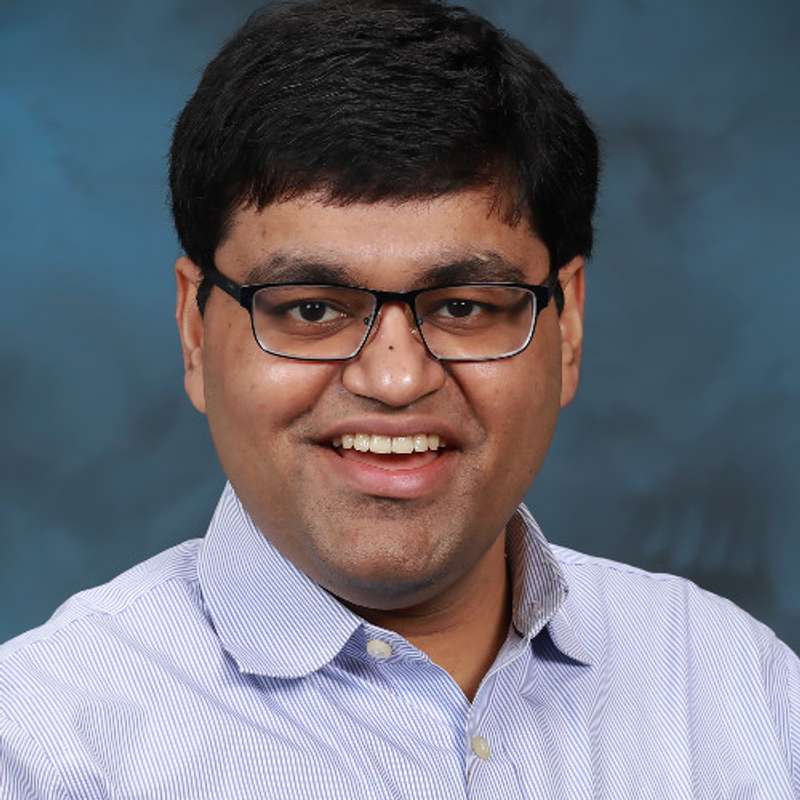
SummaryThis episode is for anyone following the quantum utility debate or curious about how quantum computers will actually contribute to scientific discovery. Arnab Banerjee — assistant professor at Purdue, guest scientist at Oak Ridge's Quantum Science Center, and one of the most-cited experimentalists working at the intersection of quantum materials and quantum computing — walks us through his career-spanning journey from growing magnetic crystals to programming qubits.You'll hear how Banerjee's frustration with classical tools that couldn't explain his own experimental data drove him to quantum computing, why a quantum spin liquid is like the vortex that forms when you throw a stone into water, and how his team used 50 qubits on IBM's Heron chip to reproduce the spectroscopic fingerprint of a real material — KCuF3 — matching data collected at Oak Ridge and the UK's ISIS neutron source. He also offers a nuanced assessment of where different quantum computing platforms excel, drawing on hands-on experience with IBM, QuEra, and D-Wave.What you'll learnWhat a quantum spin liquid actually is and why its collective behavior — like vortices on water — could enable naturally error-protected qubitsHow neutron scattering works as a quantum probe — using the neutron's own spin and de Broglie wavelength to reveal both atomic positions and energy levels simultaneouslyWhy Banerjee's team chose to benchmark quantum simulation against known experimental data first before tackling classically intractable problemsWhat the IBM Heron benchmarking paper actually showed — reproducing spinon excitations in KCuF3, a one-dimensional Heisenberg chain, with quantitative agreement to neutron dataHow different quantum computing modalities serve different materials science problems — IBM for fast, cheap operations on 2D lattices; trapped ions for all-to-all connectivity; D-Wave and QuEra for Ising-like HamiltoniansHow close we are to quantum advantage in materials simulation — Banerjee estimates 70-90 "good enough" qubits in 2D geometry could reach classically inaccessible regimesWhy Kitaev quantum spin liquids could provide a fundamentally different path to fault tolerance — topological protection from decoherence built into the material itself, not imposed through softwareResources & linksPapers & researchBenchmarking quantum simulation with neutron-scattering experiments (March 2026) — The news hook: IBM Heron processor reproduces real neutron scattering data from KCuF3. First direct validation of quantum simulation against experimental measurements of a real material. <a href="https://www
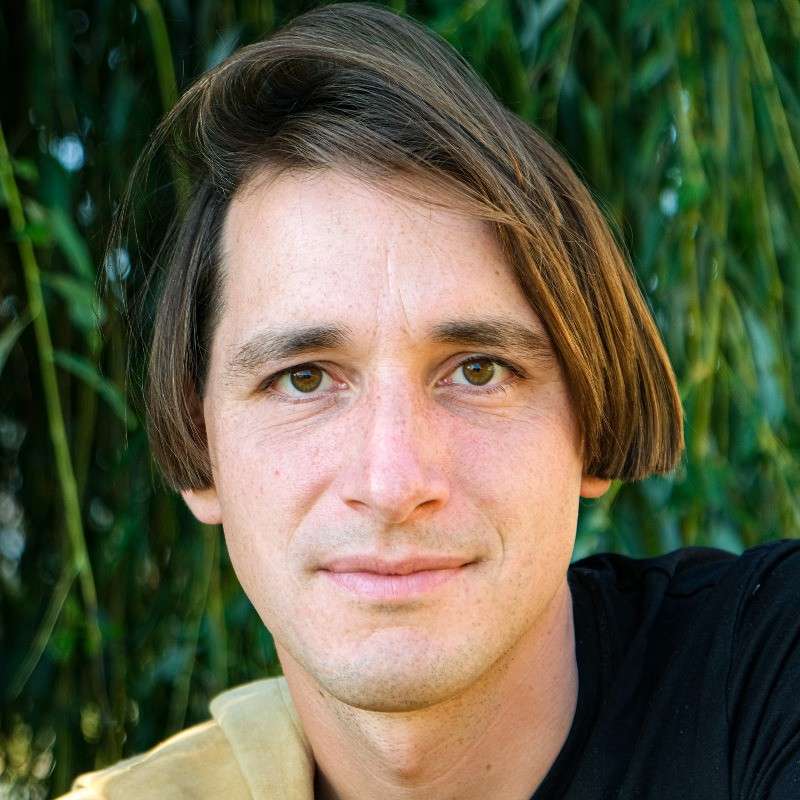
Has quantum advantage actually been achieved — or is the field still arguing over its own milestones? Dominik Hangleiter, one of the leading theorists working on quantum computational advantage, joins the podcast to make the case that it has, explain why so many physicists remain unconvinced, and map the path toward fault-tolerant, verifiable quantum advantage.Why This Episode MattersIf you follow quantum computing and want to cut through the noise around quantum advantage claims, this episode is for you. Dominik Hangleiter — an Ambizione Fellow at ETH Zürich and postdoctoral fellow at UC Berkeley's Simons Institute — has spent over a decade studying the boundary between what quantum and classical computers can do. His March 2026 paper "Has quantum advantage been achieved?" synthesizes years of experiments, classical simulation attacks, and complexity theory into a clear-eyed assessment. Whether you're an experimentalist, a theorist, or simply quantum-curious, you'll come away with a sharper understanding of what's been demonstrated, what hasn't, and what comes next.What You'll LearnWhy random circuit sampling became the primary arena for proving quantum advantage — and why the task's "uselessness" is a feature, not a bugHow the linear cross-entropy benchmark (XEB) works as a statistical proxy for verifying classically intractable quantum computationWhy audiences of physicists are still split on whether quantum advantage has been demonstrated, despite multiple experiments since 2019What "peaked circuits" are and how they interpolate between random sampling and structured computationHow post-quantum cryptography (learning with errors) exploits problems that quantum computers can't solve — and what that reveals about quantum computation's limitsWhy basic arithmetic is surprisingly hard for fault-tolerant quantum computers, and how that bottlenecks algorithms like Shor'sHow fault-tolerant compilation co-designs quantum circuits with error-correcting codes to make advantage experiments scalableThe difference between "native" quantum operations and the overhead required for universal fault-tolerant computationWhy the interplay between quantum and classical computing strengths — not quantum dominance — may define the field's futureResources & LinksPapers & ArticlesHas quantum advantage been achieved? — Hangleiter's March 2026 paper synthesizing the quantum advantage debateComputational Advantage of Quantum Random Sampling — Hangleiter & Eisert's comprehensive review in Reviews of Modern Physics (2023)Fault-Tolerant Compiling of Classically Hard
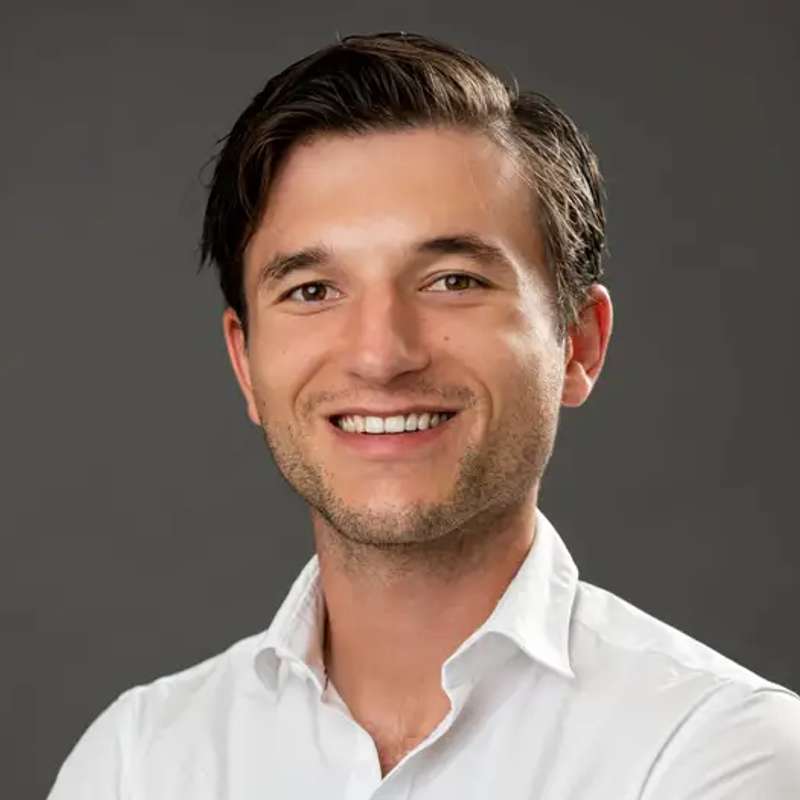
Scaling Quantum Hardware Like Semiconductors with Matthijs RijlaarsdamThe quantum computing industry has been stuck at roughly 100 qubits for years — not because of physics, but because of wiring. Matthijs Rijlaarsdam, co-founder and CEO of QuantWare, explains how his company's 3D vertical chip architecture (VIO) could break through that ceiling to 10,000 qubits by 2028, and why the quantum industry needs to start thinking like the semiconductor industry if it wants to actually deliver on its promises.Episode SummaryThis conversation is for anyone trying to understand why quantum computers haven't scaled as fast as promised — and what it would take to change that. Matthijs brings an unusual perspective as a computer scientist (not a physicist) who co-founded QuantWare out of TU Delft's QuTech to become the world's first commercial supplier of superconducting quantum processors.Rather than building a full quantum computer, QuantWare sells QPUs as components — the "TSMC of quantum." In this episode, Matthijs walks through the VIO architecture that routes signals vertically through stacked chiplets instead of along chip edges, why specialization and volume economics are the only realistic path to useful quantum computing, and how the Dutch quantum ecosystem punches far above its weight thanks to consistent long-term investment.What You'll LearnWhy the quantum industry is stuck at ~100 qubits — and how 90% of current chip area is consumed by signal routing, not qubits, creating a fundamental scaling wallHow VIO's 3D chiplet architecture breaks the wiring bottleneck by routing signals vertically through stacked silicon modules, enabling 10,000-qubit processors that are physically smaller than today's 100-qubit chipsWhy quantum computing will be heterogeneous — different platforms (superconducting, trapped ions, neutral atoms) have different trade-offs analogous to CPUs vs. memory vs. storage in classical computingThe economics that make specialization inevitable — why cable costs need to drop from EUR 1,500 per line to cents, and why volume manufacturing is the only way to get thereHow QuantWare's three business models mirror the semiconductor industry — selling packaged QPUs (Intel model), foundry services (TSMC model), and packaging services for third-party chipsWhy the Dutch quantum ecosystem succeeds — consistent decade-plus government investment in QuTech, EUR 600M+ to Quantum Delta NL, and the WENEC report recommending EUR 9.4 billion for quantum infrastructureWhat "Quantum Open Architecture" means in practice — how making QPUs commercially available lowers barriers for the entire industry, similar to how standardized PC components enabled the computing r
Ever wonder why quantum computing still feels like a "cool science experiment" instead of a deployable technology? After two decades building wireless standards and quantum systems at IBM, Brian Gaucher argues that engineering—not physics—has become the critical bottleneck holding back quantum technologies from real-world impact.Why this episode mattersThis conversation is essential for anyone trying to understand why quantum technologies haven't yet transitioned from laboratory demonstrations to scalable industrial applications. Brian co-authored the recent ERVA report that identifies the specific engineering challenges blocking quantum progress across computing, sensing, and biological applications. If you're a researcher, engineer, or technology leader wondering how quantum moves from promising science to transformational technology, this episode provides the roadmap.The discussion reveals why materials engineering, not theoretical breakthroughs, will determine which nations lead the quantum economy—and why coordinated investment in nanoscale manufacturing infrastructure needs to happen now, before manufacturing ecosystems become geographically concentrated like semiconductors.What you'll learnHow engineering precision has replaced theoretical understanding as the primary quantum bottleneck across computing, sensing, and biological applicationsWhy superconducting qubit fabrication still resembles lab experiments despite being labeled an "engineering problem" since 2016—and what's needed to achieve semiconductor-level reproducibilityThe specific materials challenges blocking quantum scaling: surface and interface noise control, defect management, cryogenic packaging, and atomic-layer precision manufacturingWhy quantum computing will require hundreds of interconnected dilution refrigerators rather than single large systems, and the engineering implications of distributed quantum architecturesHow AI and quantum computing create bidirectional acceleration opportunities: AI enabling quantum calibration and error mitigation, while quantum enhances optimization and molecular simulation workloadsWhy quantum standards development faces a chicken-and-egg problem that won't resolve until reproducible quantum advantage is demonstrated—but must be ready immediately afterwardHow regional quantum initiatives like Illinois Quantum Network and Elevate Quantum balance necessary specialization against harmful fragmentation in the pre-standards eraWhy the semiconductor industry's offshore manufacturing migration offers critical lessons for maintaining quantum manufacturing leadership in the United Statesqubitsok — Cut Noise. Work Quantum. The quantum computing j
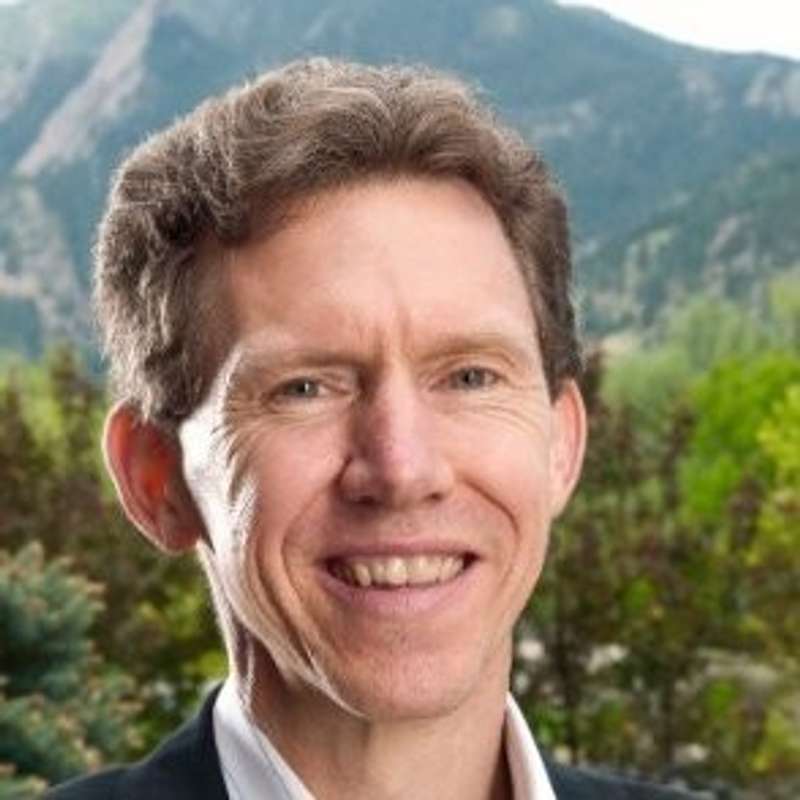
Revolutionary Quantum Engineering with David Reilly and Tom OhkiHave you ever wondered what it takes to build computing systems that work at temperatures colder than outer space? David Reilly and Tom Ohki are tackling this exact challenge, leading a "special ops" team of engineers from their unique position at Emergence Quantum—the startup born from Microsoft's Station Q program. They're not just building quantum computers; they're creating the entire infrastructure ecosystem that will make scalable quantum computing possible.Episode SummaryThis episode explores how quantum computing's most challenging engineering problems are being solved from the ground up. David Reilly (former Station Q lead) and Tom Ohki (ex-Raytheon BBN Technologies) share their journey from academic research to building Emergence Quantum—a company focused on the systems-level challenges of quantum computing and beyond.Unlike typical quantum startups racing to build better qubits, Emergence takes a "qubit-agnostic" approach, focusing on the critical control systems, cryogenic electronics, and infrastructure needed to scale any quantum platform. Their work spans from cryo-CMOS control systems that operate at millikelvin temperatures to revolutionary applications of cryogenic cooling in classical data centers.What You'll LearnHow cryo-CMOS technology solves the fundamental wiring bottleneck that prevents quantum computers from scaling beyond hundreds of qubitsWhy the "special ops" team model enables breakthrough engineering when tackling unprecedented technical challenges across quantum and classical computingHow cryogenic cooling could transform classical data centers by dramatically reducing power consumption and improving processor performanceThe systems-level thinking required to build quantum computers that actually work at scale, beyond just improving individual qubit performanceWhy Australia offers unique advantages for deep tech R&D companies focused on long-term hardware development rather than venture-driven growthHow quantum computing infrastructure development creates spillover benefits for classical computing, sensing, and other cryogenic applicationsThe historical parallels between today's quantum engineering challenges and the foundational R&D that built the internet and early computing systemsWhy "qubit-agnostic" approaches to control systems provide more flexibility as quantum hardware continues evolvingCompany & Guest LinksEmergence QuantumDavid Reilly<a href="https://www.linkedin.com/in/thomas-ohki-6344192/?
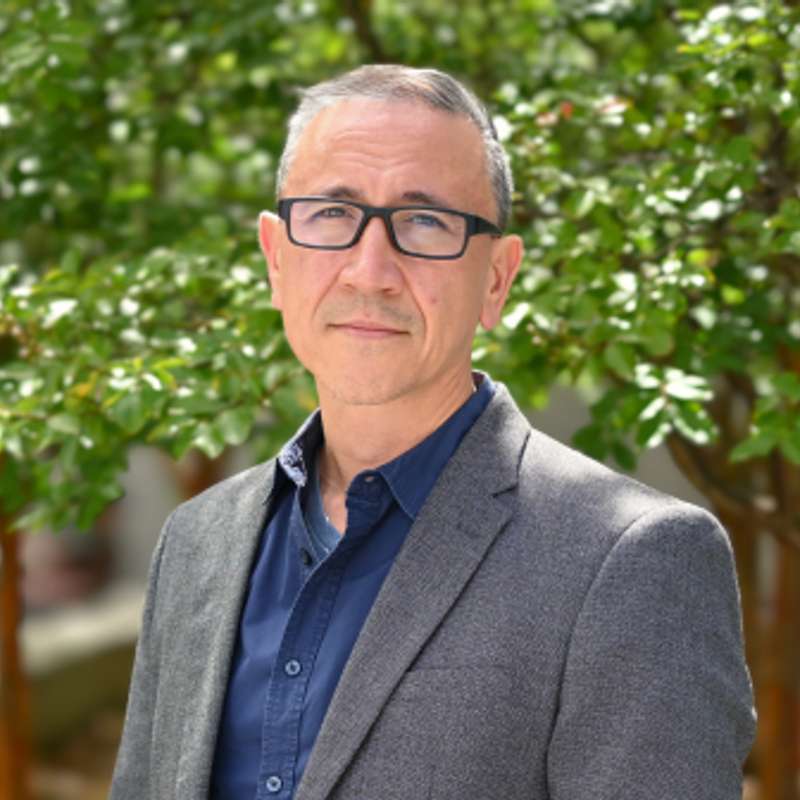
From Steel Mills to Quantum Scale-Up: Inside Illinois's Bold Bet on the Future of ComputingWhat does it take to build the world's largest dedicated quantum technology park — on the site of a former steel mill? Harley Johnson is leading that effort, and the answer involves equal parts materials science, economic development, and a 30-year bet on quantum that's finally paying off.Why This Episode MattersIf you're following the quantum computing industry's path from lab prototypes to commercial-scale systems, this episode maps the terrain. Harley Johnson — a computational materials scientist turned CEO of the Illinois Quantum and Microelectronics Park (IQMP) — explains how Illinois assembled a unique combination of federal research funding, state economic investment, national labs, and top-tier universities into a 128-acre technology park designed to solve the quantum industry's hardest problem: scaling up.Whether you're a researcher, a founder, a policymaker, or someone trying to understand where quantum jobs and applications are actually headed, this conversation lays out how one state is building the infrastructure — physical, institutional, and human — to make large-scale quantum computing real.What You'll LearnHow a 1994 bet on quantum mechanics in a mechanical engineering lab led to directing the largest dedicated quantum tech park in the worldWhy Illinois chose a "beyond silicon" strategy for the CHIPS and Science Act — and how landing 4 of the first 10 federal quantum centers positioned the state for what came nextHow IQMP's public-private governance model works: a university-governed LLC partnering with private developers, accountable to the public while incentivizing industryWhy the park deliberately hosts a diverse portfolio of hardware modalities — including PsiQuantum, IBM, Inflection, Dirac, and Pascal — and how that mirrors venture portfolio thinkingHow IQMP's algorithm center connects quantum hardware companies with Fortune 500 end users in finance, insurance, energy, logistics, and pharmaWhat the DARPA Quantum Benchmarking Initiative means for tenant selection and validationWhy roughly two-thirds of future quantum industry jobs may require a bachelor's degree or less — and what that means for workforce development on a former industrial siteHow the Duality Accelerator, Chicago Quantum Exchange, and Polsky Center create a pipeline from early-stage startups to scale-up tenantsWhy the convergence of physics, engineering, and computer science — all housed in one college at UIUC — is accelerating quantum's transition from science to engineeringSponsorqubitsok — Cut Noise. Work Quantum. The quantum computing job board and arXiv research digest built for the community. - Job seekers & researchers: Subsc
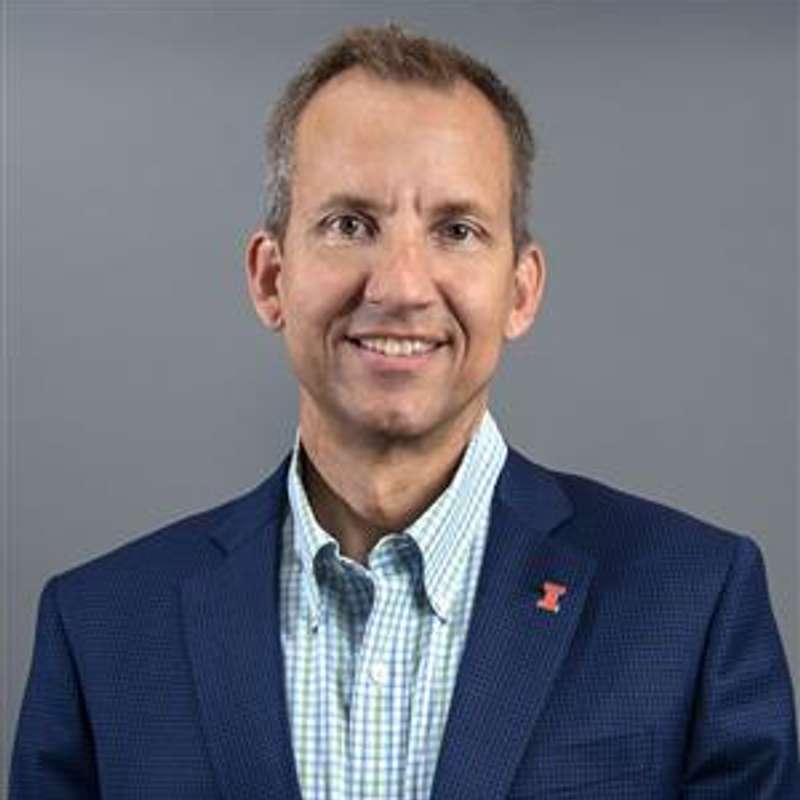
Breaking Down RSA: How QLDPC Codes Cut Quantum Computing Requirements by an Order of MagnitudeWhat if I told you that the number of qubits needed to break RSA encryption just dropped from over a million to around 100,000? That's exactly what researchers at Iceberg Quantum achieved by combining quantum low-density parity-check (QLDPC) error correction with algorithmic optimizations—potentially accelerating quantum cryptography timelines by years.Why this episode mattersThis episode dives into groundbreaking research that could reshape quantum computing's practical timeline. We explore how QLDPC codes overcome the physical constraints of surface codes, why hardware diversity is driving new error correction approaches, and what this means for the race toward cryptographically relevant quantum computers.Perfect for quantum researchers, cryptography professionals, and anyone curious about the engineering challenges between today's quantum devices and tomorrow's code-breaking machines.What you'll learnWhy QLDPC codes outperform surface codes — How throwing out nearest-neighbor connectivity assumptions unlocks better physical-to-logical qubit ratios across multiple hardware platforms The algorithmic tricks that matter — How shared register reads and parallelization techniques can dramatically reduce runtime on slower quantum hardware platforms like trapped ions and neutral atoms What "hardware agnostic" really means — Why developing error correction methods that work across superconducting, trapped ion, photonic, and neutral atom platforms is crucial for the quantum ecosystemHow generalized ladder surgery enables logical operations — The breakthrough that made QLDPC codes viable for full quantum computation, not just quantum memory storageWhy decoding remains the bottleneck — The real-time classical computation challenges that still need solving to make fault-tolerant quantum computing practicalThe business model emerging around quantum architecture — How companies like Iceberg are positioning themselves as the "ARM or Nvidia" of quantum computing through specialized fault-tolerant designsWhat cryptographers should know now — Why the timeline for cryptographically relevant quantum computers may be compressing faster than expected, and why algorithmic improvements matter as much as hardware scalingResources & linksIceberg Quantum's Pinnacle paper — "Reducing the Overhead of Quantum Error Correction with QLDPC Codes"Craig Gidney's foundational Shor's algorithm optimization workScot
How a Lawyer and a Listicle Launched One of Quantum's Most Influential Media PlatformsEvan Kubes had no physics degree, no engineering background, and no idea what a qubit was when he stumbled across a press release about AWS investing in quantum. What he did have was experience translating complex industries for mainstream audiences — and within months, he and co-founder Alex Challans had turned a Wix website and a "Top 20 Most Influential People in Quantum" listicle into The Quantum Insider, now one of the industry's leading media and intelligence platforms. In this episode, Evan shares how that scrappy start grew into Resonance, a multi-vertical deep tech media company — and why he spent the last year making Our Quantum Future, a feature-length documentary premiering at APS March Meeting that aims to bring quantum out of the echo chamber and onto your screen.Why this episode mattersThis episode marks a new chapter for The New Quantum Era. In the intro, Sebastian shares some big updates — going fully independent, new media projects including the Helgoland 2025 documentary, a newsletter, and broader efforts to build a more accessible and equitable quantum technology ecosystem through open source and open standards. He also announces his new role as a Fellow at the Unitary Foundation. Read the full blog post: A New Chapter.The conversation with Evan Kubes is a perfect fit for this moment. Evan sits at the intersection of quantum's technical community and the broader world trying to make sense of it — a translator between physicists and the public. His story illuminates something the industry rarely discusses: how do you actually build awareness, trust, and market understanding for a technology most people can't explain?The documentary Our Quantum Future, produced for the International Year of Quantum and featuring Nobel laureates, a former CIA officer, and the leaders of Google, Microsoft, and IonQ, is designed for exactly that audience — the curious non-specialist who wants to understand what quantum means for the world. The ethics and national security themes it surfaces are relevant well beyond the quantum community.What you'll learnHow The Quantum Insider went from zero readers to a leading quantum industry platform using a creative "vanity listicle" strategy that got CEOs to respond overnightWhy a lawyer from the esports world saw the same market opportunity in quantum that venture capitalists were pouring billions into — and what that says about the accessibility gap in deep techHow the Resonance media model applies The Quantum Insider playbook to space, AI, and climate tech — and what makes a deep tech vertical ripe for this approachWhat 39 interviews across 40 countries revealed about how the quantum community thin
What does it take to build a thriving quantum ecosystem from the ground up? Martin Laforest, physicist-turned-venture-capitalist at Quantacet, reveals how Quebec transformed a 1970s academic bet into a $400M quantum powerhouse—and why the industry's biggest misconception is thinking quantum computing is either a science problem or an engineering problem when it's clearly both.SummaryIn this conversation, Sebastian sits down with Martin Laforest, partner at Quantacet, Canada's quantum-only VC fund, to explore the messy realities of building quantum companies and ecosystems. Martin brings a rare perspective: PhD from Waterloo's Institute for Quantum Computing, eight years leading scientific outreach, a stint building a post-quantum cryptography startup with ex-BlackBerry executives, and now investing in the quantum future.This episode is for anyone trying to understand how quantum technology actually gets built—not the hype, but the infrastructure, the collaboration models, the government investment strategies, and the patience required. Whether you're technical or just curious about how transformative technologies emerge, Martin offers a grounded view of what's working, what's not, and why the quantum revolution looks more like slow, deliberate ecosystem building than overnight breakthroughs.What You'll LearnWhy quantum is both a science and engineering challenge and how the vacuum tube-to-transistor transition illuminates today's quantum journeyHow Quebec built a world-class quantum ecosystem starting from a 1970s university bet on condensed matter physics through to today's $400M provincial investmentThe infrastructure that matters: why Sherbrooke's six shared dilution fridges and quantum communication testbed represent a different collaboration modelWhat VCs actually look for in quantum startups beyond the technology—and why Martin believes early-stage investing is about building great companies, not just returnsThe three most dangerous misconceptions plaguing quantum technology (spoiler: it's not just about quantum computers)How regional quantum ecosystems should compete and collaborate with lessons from Netherlands, Chicago, and UK programsWhy fundamental research funding can't stop even as commercialization accelerates—and what happens when governments don't understand this balanceWhat "mutualized infrastructure" means in practice and why no single entity owning critical testbeds might be the secret sauceHow federal and provincial politics shape quantum strategy in Canada and what other countries can learn from itResources & LinksQuantacet<a
What if consciousness isn’t generated by the brain, but emerges from its interaction with a ubiquitous quantum field? In this episode, Sebastian Hassinger and theoretical physicist Joachim Keppler explore a zero‑point field model of consciousness that could reshape both neuroscience and quantum theory.SummaryThis conversation is for anyone curious about the “hard problem” of consciousness, quantum brain theories, and the future of quantum biology and AI. Joachim shares his QED‑based framework where the brain couples to the electromagnetic zero‑point field via glutamate, producing macroscopic quantum effects that correlate with conscious states. You’ll hear how this model connects existing neurophysiology, testable predictions, and deep questions in philosophy of mind.What You’ll Learn How a quantum field theorist ended up founding an institute for the scientific study of consciousness and building a rigorous, physics‑grounded framework for it. Why consciousness may hinge on a universal principle: the brain’s resonant coupling to the electromagnetic zero‑point field, not just classical neural firing. What macroscopic quantum phenomena in the brain look like, including coherence domains, self‑organized criticality, and long‑range synchronized activity patterns linked to conscious states. How glutamate, the brain’s most abundant neurotransmitter, could act as the molecular interface to the zero‑point field inside cortical microcolumns. Which concrete experiments could confirm or falsify this theory, from detecting macroscopic quantum coherence in neurotransmitter molecules to measuring glutamate‑driven biophoton emissions with a specific quantum “fingerprint.” Why Joachim sees the zero‑point field as a dual‑aspect “psychophysical” field and how that reframes classic philosophy‑of‑mind debates about qualia and the nature of awareness. What this perspective implies for artificial consciousness and whether future quantum computers or engineered systems might couple to the field and become genuinely conscious rather than merely simulating it. How quantum biology could offer an evolutionary path for consciousness, extending field‑coupling ideas from the human brain down to simpler organisms and bacterial signaling.Resources & LinksDIWISS Research Institute for the scientific study of consciousness “Macroscopic quantum effects in the brain: new insights into the neural correlates of consciousness” – Research article outlining the QED/zero‑point field model and its neurophysiological connections. “A New Way of Looking at the Neural Correlates of Consciousness” – Paper introducing the id
What happens when a former elite gymnast with “weak math and science” becomes dean of one of the world’s most influential quantum engineering schools? In this episode of *The New Quantum Era*, Sebastian Hassinger talks with Prof. Nadya Mason about quantum 2.0, building a regional quantum ecosystem, and why she sees leadership as a way to serve and build community rather than accumulate power.Summary This conversation is for anyone curious about how quantum materials research, academic leadership, and large‑scale public investment are shaping the next phase of quantum technology. You’ll hear how Nadya’s path from AT&T Bell Labs to dean of the Pritzker School of Molecular Engineering at UChicago informs her service‑oriented approach to leadership and ecosystem building. The discussion spans superconducting devices, Chicago’s quantum hub strategy, and what it will actually take to build a diverse, job‑ready quantum workforce in time for the coming wave of applications.What You’ll LearnHow a non‑linear path (elite sports, catching up in math, early lab work) can lead to a career at the center of quantum science and engineering.Why condensed matter and quantum materials are the quiet “bottleneck” for scalable quantum computing, networking, and transduction technologies.How superconducting junctions, Andreev bound states, and hybrid devices underpin today’s superconducting qubits and topological quantum efforts.The difference between “quantum 1.0” (lasers, GPS, nuclear power, semiconductors) and “quantum 2.0” focused on sensing, communication, and computation.How the Pritzker School of Molecular Engineering and the Chicago Quantum Exchange are deliberately knitting together universities, national labs, industry, and state funding into a cohesive quantum cluster.Why Nadya frames leadership as building communities around science and opportunity, and what that means in a faculty‑driven environment where “nobody works for the dean.”Concrete ways Illinois and UChicago are approaching quantum education and workforce development, from REUs and the Open Quantum Initiative to the South Side Science Fair.Why early math confidence plus hands‑on research experience are the two most important ingredients for preparing the next generation of quantum problem‑solvers.Resources & Links Pritzker School of Molecular Engineering, University of Chicago – Nadya’s home institution, pioneering an interdisciplinary, theme‑based approach to quantum, materials for sustainability, and immunoengineering.Chicago Quantum Exchange – Regional hub connecting universities, national labs, and industry to build quantum networks, workforce, and commercialization pathways.<a href="https://southsidescience.event.uchicag
Your host, Sebastian Hassinger, talks with Alumni Ventures managing partner Chris Sklarin about how one of the most active US venture firms is building a quantum portfolio while “democratizing” access to VC as an asset class for individual investors. They dig into Alumni Ventures’ co‑investor model, how the firm thinks about quantum hardware, software, and sensing, and why quantum should be viewed as a long‑term platform with near‑term pockets of commercial value. Chris also explains how accredited investors can start seeing quantum deal flow through Alumni Ventures’ syndicate.Chris’ background and Alumni Ventures in a nutshellChris is an MIT‑trained engineer who spent years in software startups before moving into venture more than 20 years ago.Alumni Ventures is a roughly decade‑old firm focused on “democratizing venture capital” for individual investors, with over 11,000 LPs, more than 1.5 billion dollars raised, and about 1,300 active portfolio companies.The firm has been repeatedly recognized as a highly active VC by CB Insights, PitchBook, Stanford GSB, and Time magazine.How Alumni Ventures structures access for individualsMost investors come in as individuals into LLC‑structured funds rather than traditional GP/LP funds.Alumni Ventures always co‑invests alongside a lead VC, using the lead’s conviction, sector expertise, and diligence as a key signal.The platform also offers a syndicate where accredited investors can opt in to see and back individual deals, including those tagged for quantum.Quantum in the Alumni Ventures portfolioAlumni Ventures has 5–6 quantum‑related investments spanning hardware, software, and applications, including Rigetti, Atom Computing, Q‑CTRL, Classiq, and quantum‑error‑mitigation startup Qedma/Cadmus.Rigetti was one of the firm’s earliest quantum investments; the team followed on across multiple rounds and was able to return capital to investors after Rigetti’s SPAC and a strong period in the public markets.Chris also highlights interest in Cycle Dre (a new company from Rigetti’s former CTO) and application‑layer companies like InQ and quantum sensing players.Barbell funding and the “3–5 year” viewChris responds to the now‑familiar “barbell” funding picture in quantum— a few heavily funded players and a long tail of small companies—by emphasizing near‑term revenue over pure science experiments.He sees quantum entering an era where companies must show real products, customers, and revenue, not just qubit counts.Over the next 3–5 years, he expects meaningful commercial traction first in areas like quantum sensing, navigation, and point solutions in chemistry and materials, with full‑blown fault‑tolerant systems further out.Hybrid compute and NVIDIA’s signal to th
Alejandra Y. Castillo, former Assistant Secretary of Commerce for Economic Development and now Chancellor Senior Fellow for Economic Development at Purdue University Northwest, joins your host, Sebastian Hassinger, to discuss how quantum technologies can drive inclusive regional economic growth and workforce development. She shares lessons from federal policy, Midwest tech hubs, and cross-state coalitions working to turn quantum from lab research into broad-based opportunity.Themes and key insightsQuantum as near-term and multi-faceted: Castillo pushes back on the idea that quantum is distant, emphasizing that computing, sensing, and communications are already maturing and attracting serious investment from traditional industries like biopharma.From federal de-risking to regional ecosystems: She describes the federal role as de-risking early innovation through programs under the CHIPS and Science Act while stressing that long-term success depends on regional coalitions across states, universities, industry, philanthropy, and local government.Inclusive workforce and supply-chain planning: Castillo argues that “quantum workforce” must go beyond PhDs to include a mapped ecosystem of jobs, skills, suppliers, housing, and infrastructure so that local communities see quantum as opportunity, not displacement.National security, urgency, and inclusion: She frames sustained quantum investment as both an economic and national security imperative, warning that inconsistent U.S. funding risks falling behind foreign competitors while also noting that private capital alone may ignore inclusion and regional equity.Notable quotes“We either focus on the urgency or we’re going to have to focus on the emergency.”“No one state is going to do this… This is a regional play that we will be called to answer for the sake of a national security play as well.”“We want to make sure that entire regions can actually reposition themselves from an economic perspective, so that people can stay in the places they call home—now we’re talking about quantum.”“Are we going to make that same mistake again, or should we start to think about and plan how quantum is going to also impact us?”Articles, papers, and initiatives mentionedAmerica's quantum future depends on regional ecosystems like Chicago's — Alejandra’s editorial in Crain’s Chicago Business calling for sustained, coordinated investment in quantum as a national security and economic priority, highlighting the role of the Midwest and tech hubs.CHIPS and Science Act

In this episode of The New Quantum Era, your host Sebastian Hassinger is joined by Chetan Nayak, Technical Fellow at Microsoft, professor of physics at the University of California Santa Barbara, and driving force behind Microsoft's quantum hardware R&D program. They discuss a modality of qubit that has not been covered on the podcast before, based on Majorana fermonic behaviors, which have the promise of providing topological protection against the errors which are such a challenge to quantum computing. Guest Bio Chetan Nayak is a Technical Fellow at Microsoft and leads the company’s topological quantum hardware program, including the Majorana‑1 processor based on Majorana‑zero‑mode qubits. He is also a professor of physics at UCSB and a leading theorist in topological phases of matter, non‑Abelian anyons, and topological quantum computation. Chetan co‑founded Microsoft’s Station Q in 2005, building a bridge from theoretical proposals for topological qubits to engineered semiconductor–superconductor devices. What we talk about Chetan’s first exposure to quantum computing in Peter Shor’s lectures at the Institute for Advanced Study, and how that intersected with his PhD work with Frank Wilczek on non‑Abelian topological phases and Majorana zero modes. The early days of topological quantum computation: fractional quantum Hall states at , emergent quasiparticles, and the realization that braiding these excitations naturally implements Clifford gates. How Alexei Kitaev’s toric‑code and Majorana‑chain ideas connected abstract topology to concrete condensed‑matter systems, and led to Chetan’s collaboration with Michael Freedman and Sankar Das Sarma. The 2005 proposal for a gallium‑arsenide quantum Hall device realizing a topological qubit, and the founding of Station Q to turn such theoretical blueprints into experimental devices in partnership with academic labs. Why Microsoft pivoted from quantum Hall platforms to semiconductor–superconductor nanowires: leveraging the Fu–Kane proximity effect, spin–orbit‑coupled semiconductors, and a huge material design space—while wrestling with the challenges of interfaces and integration. The evolution of the tetron architecture: two parallel topological nanowires with four Majorana zero modes, connected by a trivial superconducting wire and coupled to quantum dots that enable native Z‑ and X‑parity loop measurements. How topological superconductivity allows a superconducting island to host even or odd total electron parity without a local signature, and why that nonlocal encoding provides hardware‑level protection for the qubit’s logical 0 and 1. Microsoft’s roadmap in a 2D “quality vs. complexity” space: improving topological gap, readout signal‑to‑noise, and measurement fidelity while scaling from single tetrons to error‑corrected logical q
In this episode of The New Quantum Era, Sebastian talks with Hrant Gharibyan, CEO and co‑founder of BlueQubit, about “peaked circuits” and the challenge of verifying quantum advantage. They unpack Scott Aaronson and Yuxuan Zhang’s original peaked‑circuit proposal, BlueQubit’s scalable implementation on real hardware, and a new public challenge that invites the community to attack their construction using the best classical algorithms available. Along the way, they explore how this line of work connects to cryptography, hardness assumptions, and the near‑term role of quantum devices as powerful scientific instruments.Topics CoveredWhy verifying quantum advantage is hard The core problem: if a quantum device claims to solve a task that is classi-cally intractable, how can anyone check that it did the right thing? Random circuit sampling (as in Google’s 2019 “supremacy” experiment and follow‑on work from Google and Quantinuum) is believed to be classically hard to simulate, but the verification metrics (like cross‑entropy benchmarking) are themselves classically intractable at scale.What are peaked circuits? Aaronson and Zhang’s idea: construct circuits that look like random circuits in every respect, but whose output distribution secretly has one special bit string with an anomalously high probability (the “peak”). The designer knows the secret bit string, so a quantum device can be verified by checking that measurement statistics visibly reveal the peak in a modest number of shots, while finding that same peak classically should be as hard as simulating a random circuit.BlueQubit’s scalable construction and hardware demo BlueQubit extended the original 24‑qubit, simulator‑based peaked‑circuit construction to much larger sizes using new classical protocols. Hrant explains their protocol for building peaked circuits on Quantinuum’s H2 processor with around 56 qubits, thousands of gates, and effectively all‑to‑all connectivity, while still hiding a single secret bit string that appears as a clear peak when run on the device.Obfuscation tricks and “quantum steganography” The team uses multiple obfuscation layers (including “swap” and “sweeping” tricks) to transform simple peaked circuits into ones that are statistically indistinguishable from generic random circuits, yet still preserve the hidden peak.The BlueQubit Quantum Advantage Challenge To stress‑test their hardness assumptions, BlueQubit has published concrete circuits and launched a public bounty (currently a quarter of a bitcoin) for anyone who can recover the secret bit string classically. The aim is to catalyze work on better classical simulation and de‑quantization techniques; either someone closes the gap (forcing the protocol to evolve) or the s
Episode overviewThis episode of The New Quantum Era features a conversation with Quantum Brilliance co‑founder and CEO Mark Luo and independent board chair Brian Wong about diamond nitrogen vacancy (NV) centers as a platform for both quantum computing and quantum sensing. The discussion covers how NV centers work, what makes diamond‑based qubits attractive at room temperature, and how to turn a lab technology into a scalable product and business.What are diamond NV qubits? Mark explains how nitrogen vacancy centers in synthetic diamond act as stable room‑temperature qubits, with a nitrogen atom adjacent to a missing carbon atom creating a spin system that can be initialized and read out optically or electronically. The rigidity and thermal properties of diamond remove the need for cryogenics, complex laser setups, and vacuum systems, enabling compact, low‑power quantum devices that can be deployed in standard environments.Quantum sensing to quantum computing NV centers are already enabling ultra‑sensitive sensing, from nanoscale MRI and quantum microscopy to magnetometry for GPS‑free navigation and neurotech applications using diamond chips under growing brain cells. Mark and Brian frame sensing not as a hedge but as a volume driver that builds the diamond supply chain, pushes costs down, and lays the manufacturing groundwork for future quantum computing chips.Fabrication, scalability, and the value chain A key theme is the shift from early “shotgun” vacancy placement in diamond to a semiconductor‑style, wafer‑like process with high‑purity material, lithography, characterization, and yield engineering. Brian characterizes Quantum Brilliance’s strategy as “lab to fab”: deciding where to sit in the value chain, leveraging the existing semiconductor ecosystem, and building a partner network rather than owning everything from chips to compilers.Devices, roadmaps, and hybrid nodes Quantum Brilliance has deployed room‑temperature systems with a handful of physical qubits at Oak Ridge National Laboratory, Fraunhofer IAF, and the Pawsey Supercomputing Centre. Their roadmap targets application‑specific quantum computing with useful qubit counts toward the end of this decade, and lunchbox‑scale, fault‑tolerant systems with on the order of 50–60 logical qubits in the mid‑2030s.Modality tradeoffs and business discipline Mark positions diamond NV qubits as mid‑range in both speed and coherence time compared with superconducting and trapped‑ion systems, with their differentiator being compute density, energy efficiency, and ease of deployment rather than raw gate speed. Brian brings four decades of experience in semiconductors, batter
Episode overviewJohn Martinis, Nobel laureate and former head of Google’s quantum hardware effort, joins Sebastian Hassinger on The New Quantum Era to trace the arc of superconducting quantum circuits—from the first demonstrations of macroscopic quantum tunneling in the 1980s to today’s push for wafer-scale, manufacturable qubit processors. The episode weaves together the physics of “synthetic atoms” built from Josephson junctions, the engineering mindset needed to turn them into reliable computers, and what it will take for fabrication to unlock true large-scale quantum systems.Guest bioJohn M. Martinis is a physicist whose experiments on superconducting circuits with John Clarke and Michel Devoret at UC Berkeley established that a macroscopic electrical circuit can exhibit quantum tunneling and discrete energy levels, work recognized by the 2025 Nobel Prize in Physics “for the discovery of macroscopic quantum mechanical tunnelling and energy quantisation in an electric circuit.” He went on to lead the superconducting quantum computing effort at Google, where his team demonstrated large-scale, programmable transmon-based processors, and now heads Qolab (also referred to in the episode as CoLab), a startup focused on advanced fabrication and wafer-scale integration of superconducting qubits.Martinis’s career sits at the intersection of precision instrumentation and systems engineering, drawing on a scientific “family tree” that runs from Cambridge through John Clarke’s group at Berkeley, with strong theoretical influence from Michel Devoret and deep exposure to ion-trap work by Dave Wineland and Chris Monroe at NIST. Today his work emphasizes solving the hardest fabrication and wiring challenges—pursuing high-yield, monolithic, wafer-scale quantum processors that can ultimately host tens of thousands of reproducible qubits on a single 300 mm wafer.Key topicsMacroscopic quantum tunneling on a chip: How Clarke, Devoret, and Martinis used a current-biased Josephson junction to show that a macroscopic circuit variable obeys quantum mechanics, with microwave control revealing discrete energy levels and tunneling between states—laying the groundwork for superconducting qubits. The episode connects this early work directly to the Nobel committee’s citation and to today’s use of Josephson circuits as “synthetic atoms” for quantum computing.From DC devices to microwave qubits: Why early Josephson devices were treated as low-frequency, DC elements, and how failed experiments pushed Martinis and collaborators to re-engineer their setups with careful microwave filtering, impedance control, and dilution refrigerators—turning noisy circuits into clean, quantized systems suitable for qubits. This shift to microwave control and readout becomes the through-line from macroscopic tunneling experiments to modern transmon qubits and multi-qubit gates.Synth
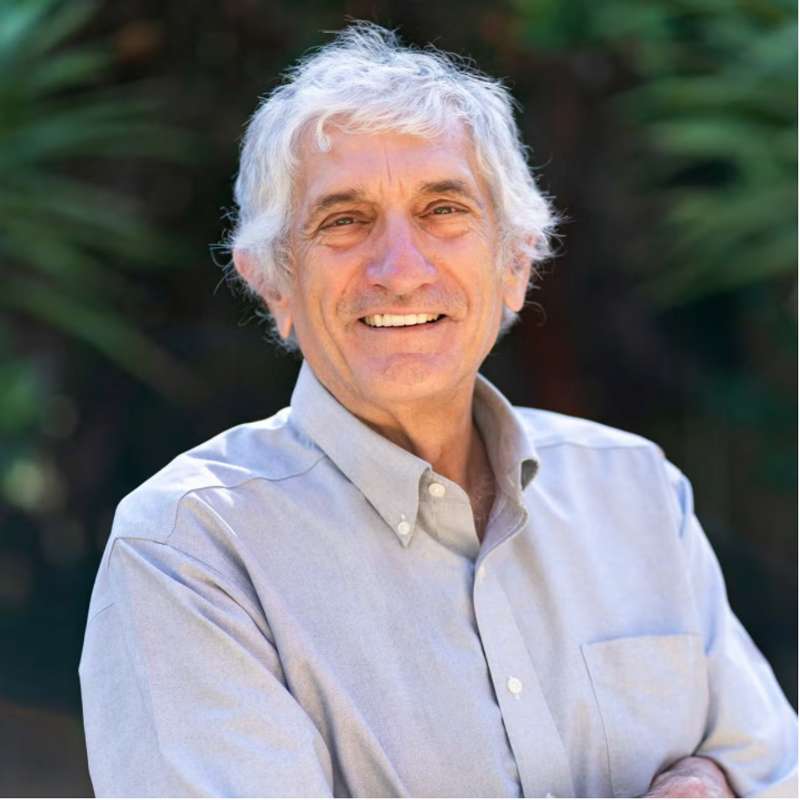
Thomas Monz, CEO of AQT (Alpine Quantum Technologies), joins Sebastian Hassinger on The New Quantum Era to chart the evolution of ion-trap quantum computing — from the earliest breakthroughs in Innsbruck to the latest roll-outs in supercomputing centers and on the cloud. Drawing on a career that spans pioneering research and entrepreneurial grit, Thomas details how AQT is bridging the gap between academic innovation and practical, scalable systems for real-world users. The conversation traverses AQT’s trajectory from component supplier to systems integrator, how standard 19-inch racks and open APIs are making quantum computing accessible in Europe’s top HPC centers, what Thomas anticipates from AQT launching on Amazon Braket, a quantum computing service from AWS, and what it will take for quantum to deliver genuine economic value.Guest Bio Thomas Monz is the CEO and co-founder of AQT. A physicist by training, his work has helped transform trapped-ion quantum computing from a fundamental research topic into a commercially viable technology. After formative stints in quantum networks, high-precision measurement, and hands-on engineering, Thomas launched AQT alongside Peter Zoller and Rainer Blatt to make robust, scalable quantum computers available far beyond the university lab. He continues to be deeply engaged in both hardware development and quantum error correction research, with AQT now deploying systems at EuroHPC centers and bringing devices to Amazon Braket.Key Topics From research prototype to rack-ready: How the pain points converting lab experiments into user-friendly hardware led AQT to build its quantum computers in the same form factors and standards as classical infrastructure, making plug-and-play integration with the supercomputing world possible. Hybrid quantum–HPC deployments: Why systems-level thinking and classic IT lessons (such as respecting 19-inch rack and power standards) have enabled AQT to place ion-trap quantum computers in Germany and Poland as part of the EuroHPC initiative — and why abstraction at the API level is essential for developer adoption. Error correction and code flexibility: How the physical properties of trapped ions let AQT remain agnostic to changing error-correcting codes (from repetition and surface codes to LDPC), enabling swift adaptation to new breakthroughs via software rather than expensive new hardware — and why end-users should never have to think about error correction themselves. Scaling and networking: The challenges moving from one-dimensional to two-dimensional traps, the emerging role of integrated photonics, and AQT’s vision for interconnecting quantum computers within and across HPC sites using telecom-wavelength photons. From local to cloud: What AQT’s move to Amazon Braket means for the range and sophistication of end-user applications, and how broad commercial access is shifti
Quantum Materials and Nano-Fabrication with Javad ShabaniGuest: Dr. Javad Shabani is Professor of Physics at NYU, where he directs both the Center for Quantum Information Physics and the NYU Quantum Institute. He received his PhD from Princeton University in 2011, followed by postdoctoral research at Harvard and UC Santa Barbara in collaboration with Microsoft Research. His research focuses on novel states of matter at superconductor-semiconductor interfaces, mesoscopic physics in low-dimensional systems, and quantum device development. He is an expert in molecular beam epitaxy growth of hybrid quantum materials and has made pioneering contributions to understanding fractional quantum Hall states and topological superconductivity.Episode OverviewProfessor Javad Shabani shares his journey from electrical engineering to the frontiers of quantum materials research, discussing his pioneering work on semiconductor-superconductor hybrid systems, topological qubits, and the development of scalable quantum device fabrication techniques. The conversation explores his current work at NYU, including breakthrough research on germanium-based Josephson junctions and the launch of the NYU Quantum Institute.Key Topics DiscussedEarly Career and Quantum JourneyJavad describes his unconventional path into quantum physics, beginning with a double major in electrical engineering and physics at Sharif University of Technology after discovering John Preskill's open quantum information textbook. His graduate work at Princeton focused on the quantum Hall effect, particularly investigating the enigmatic five-halves fractional quantum Hall state and its potential connection to non-abelian anyons.From Spin Qubits to Topological Quantum ComputingDuring his PhD, Javad worked with Jason Petta and Mansur Shayegan on early spin qubit experiments, experiencing firsthand the challenge of controlling single quantum dots. His postdoctoral work at Harvard with Charlie Marcus focused on scaling from one to two qubits, revealing the immense complexity of nanofabrication and materials science required for quantum control. This experience led him to topological superconductivity at UC Santa Barbara, where he collaborated with Microsoft Research on semiconductor-superconductor heterostructures.Planar Josephson Junctions and Material InnovationAt NYU, Javad's group developed planar two-dimensional Josephson junctions using indium arsenide semiconductors with aluminum superconductors, moving away from one-dimensional nanowires toward more scalable fabrication approaches. In 2018-2019, his team published groundbreaking results in Physical Review Letters showing signatures of topological phase transitions in these hybrid systems.Gatemon Qubits and Hybrid SystemsThe conversation ex
Vijoy Pandey joins Sebastian Hassinger for this episode of The New Quantum Era to discuss Cisco's ambitious vision for quantum networking—not as a far-future technology, but as infrastructure that solves real problems today. Leading Outshift by Cisco, their incubation group and Cisco Research, Vijoy explains how quantum networks are closer than quantum computers, why distributed quantum computing is the path to scale, and how entanglement-based protocols can tackle immediate classical challenges in security, synchronization, and coordination. The conversation spans from Vijoy's origin story building a Hindi chatbot in the late 1980s to Cisco's groundbreaking room-temperature quantum entanglement chip developed with UC Santa Barbara, and explores use cases from high-frequency trading to telescope array synchronization.Guest BioVijoy Pandey is Senior Vice President at Outshift by Cisco, the company's internal incubation group, where he also leads Cisco Research and Cisco Developer Relations (DevNet). His career in computing began in high school building AI chatbots, eventually leading him through distributed systems and software engineering roles including time at Google. At Cisco, Vijoy oversees a portfolio spanning quantum networking, security, observability, and emerging technologies, operating at the intersection of research and product incubation within the company's Chief Strategy Office.Key TopicsFrom research to systems: How Cisco's quantum work is transitioning from physics research to systems engineering, focusing on operability, deployment, and practical applications rather than building quantum computers.The distributed quantum computing vision: Cisco's North Star is building quantum network fabric that enables scale-out distributed quantum computing across heterogeneous QPU technologies (trapped ion, superconducting, etc.) within data centers and between them—making "the quantum network the solution" to quantum's scaling problem and classical computing's physics problem.Room-temperature entanglement chip: Cisco and UC Santa Barbara developed a prototype photonic chip that generates 200 million entangled photon pairs per second at room temperature, telecom wavelengths, and less than 1 milliwatt power—enabling deployment on existing fiber infrastructure without specialized equipment.Classical use cases today: How quantum networking protocols solve present-day problems in synchronization (global database clocks, telescope arrays), decision coordination (high-frequency trading across geographically distributed exchanges), and security (intrusion detection using entanglement collapse) without requiring massive qubit counts or cryogenic systems.Quantum telepathy for HFT: The concept of using entanglement and teleportation to coordinate decisions across locations faster than the speed of light allows classical communication—enabling fairness guarantees for high-frequen

This episode is a first for the show - a repeat of a previously posted interview on The New Quantum Era podcast! I think you'll agree the reason for the repeat is a great one - this episode, recorded at the APS Global Summit in March, features a conversation John Martinis, co-founder and CTO of QoLab and newly minted Nobel Laureate! Last week the Royal Swedish Academy of Sciences made an announcement that John would share the 2025 Nobel Prize for Physics with John Clarke and Michel Devoret “for the discovery of macroscopic quantum mechanical tunnelling and energy quantisation in an electric circuit.” It should come as no surprise that John and I talked about macroscopic quantum mechanical tunnelling and energy quantization in electrical circuits, since those are precisely the attributes that make a superconducting qubit work for computation. The work John is doing at Qolab, a superconducting qubit company seeking to build a million qubit device, is really impressive, as befits a Nobel Laureate and a pioneer in the field. In our conversation we explore the strategic shifts, collaborative efforts, and technological innovations that are pushing the boundaries of quantum computing closer to building scalable, million-qubit systems. Key HighlightsEmerging from Stealth Mode & Million-Qubit System Paper:Discussion on QoLab’s transition from stealth mode and their comprehensive paper on building scalable million-qubit systems.Focus on a systematic approach covering the entire stack.Collaboration with Semiconductor Companies:Unique business model emphasizing collaboration with semiconductor companies to leverage external expertise.Comparison with bigger players like Google, who can fund the entire stack internally.Innovative Technological Approaches:Integration of wafer-scale technology and advanced semiconductor manufacturing processes.Emphasis on adjustable qubits and adjustable couplers for optimizing control and scalability.Scaling Challenges and Solutions:Strategies for achieving scale, including using large dilution refrigerators and exploring optical communication for modular design.Plans to address error correction and wiring challenges using brute force scaling and advanced materials.Future Vision and Speeding Up Development:QoLab’s goal to significantly accelerate the timeline toward achieving a million-qubit system.Insight into collaborations with HP Enterprises, NVIDIA, Quantum Machines, and others to combine expertise in hardware and software.Research Papers Mentioned in this Episode:<a href="http
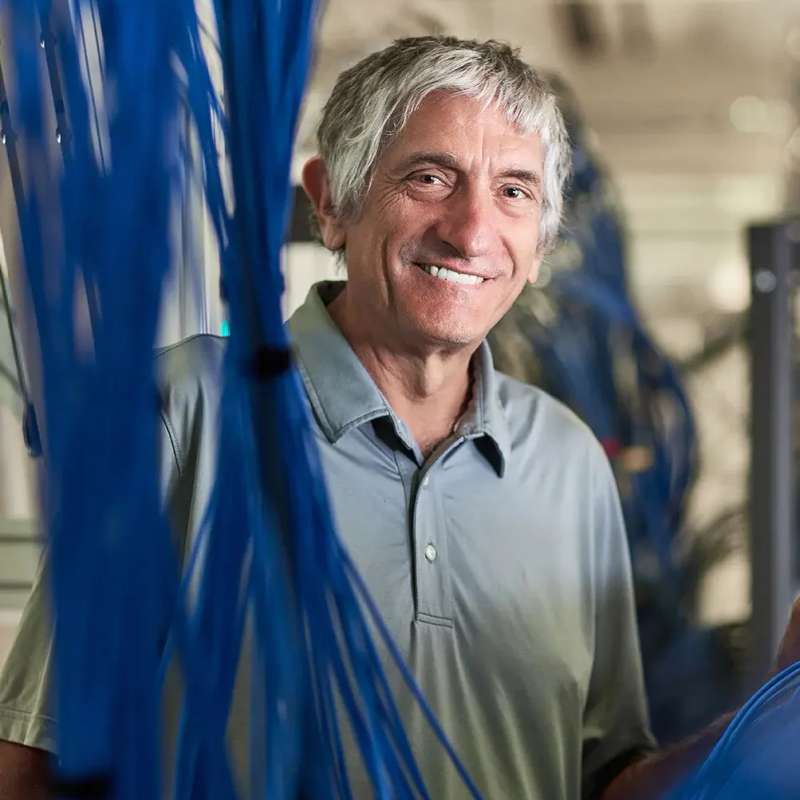
Pierre Desjardins is the cofounder of C12, a Paris-based quantum computing hardware startup that specializes in carbon nanotube-based spin qubits. Notably, Pierre founded the company alongside his twin brother, Mathieu, making them the only twin-led deep-tech startups that we know of! Pierre’s journey is unconventional—he is a rare founder in quantum hardware without a PhD, drawing instead on engineering and entrepreneurial experience. The episode dives into what drew him to quantum computing and the pivotal role COVID-19 played in catalyzing his career shift from consulting to quantum technology.C12’s Technology and Unique AngleC12 focuses on developing high-performance qubits using single-wall carbon nanotubes. Unlike companies centered on silicon or germanium spin qubits, C12 fabricates carbon nanotubes, tests them for impurities, and then assembles them on silicon chips as a final step. The team exclusively uses isotopically pure carbon-12 to minimize magnetic and nuclear spin noise, yielding a uniquely clean environment for electron confinement. This yields ultra-low charge noise and enables the company to build highly coherent qubits with remarkable material purity.Key Technical InnovationsSpin-Photon Coupling: C12’s system stands out for driving spin qubits using microwave photons, drawing inspiration from superconducting qubit architectures. This enables the implementation of a “quantum bus”—a superconducting interconnect that allows long-range coupling between distant qubits, sidestepping the scaling bottleneck of nearest-neighbor architectures.Addressable Qubits: Each carbon nanotube qubit can be tuned on or off the quantum bus by manipulating the double quantum dot confinement, providing flexible connectivity and the ability to maximize coherence in a memory mode.Stability and Purity: Pierre emphasizes that C12’s suspended architecture dramatically reduces charge noise and results in exceptional stability, with minimal calibration drift, over years-long measurement campaigns—a stark contrast with many superconducting platforms.Recent MilestonesC12 celebrated its fifth anniversary and recently demonstrated the first qubit operation on their platform. The company achieved ultra-long coherence times for spin qubits coupled via a quantum bus, publishing these results in *Nature*. The next milestone is demonstrating two-qubit gates mediated by microwave photons—a development that could set a new benchmark for both C12 and the wider quantum computing industry.Challenges and OutlookC12’s current focus is scaling up from single-qubit demonstrations to multi-qubit gates with long-range connectivity, a crucial step toward error correction and practical algorithms. Pierre notes the rapid evolution of error-correcting codes, remarking that some codes they are now working on did not exist t
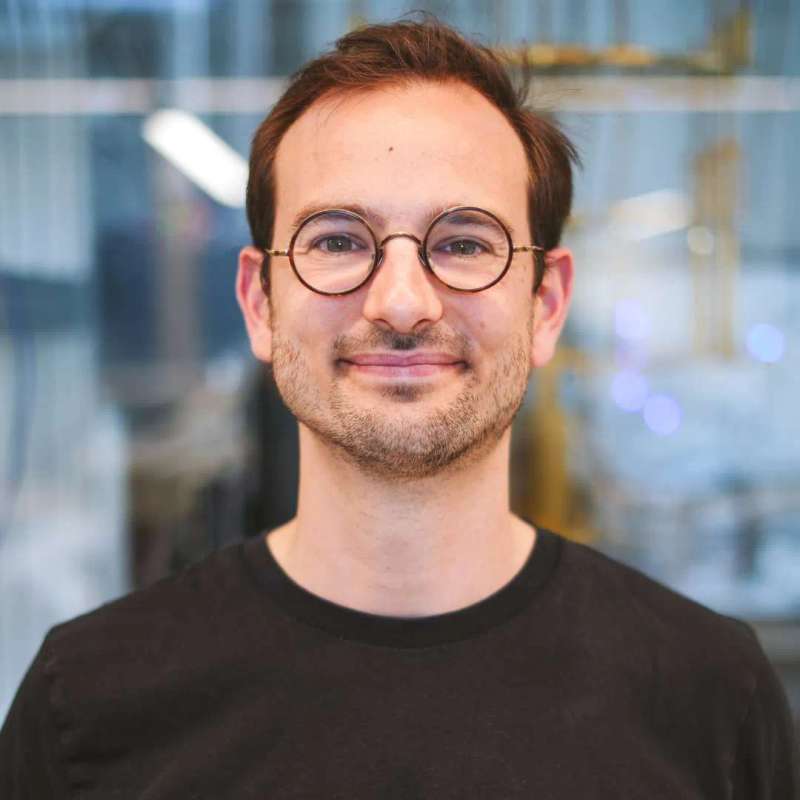
Dr. Eli Levenson-Falk joins Sebastian Hassinger, host of The New Quantum Era to discuss his group’s recent advances in quantum measurement and control, focusing on a new protocol that enables measurements more sensitive than the Ramsey limit. Published in Nature Communications in April 2025, this work demonstrates a coherence stabilized technique that not only enhances sensitivity for quantum sensing but also promises improvements in calibration speed and robustness for superconducting quantum devices and other platforms. The conversation travels from Eli’s origins in physics, through the conceptual challenges of decoherence, to experimental storytelling, and highlights the collaborative foundation underpinning this breakthrough.Guest BioEli Levenson-Falk is an Associate Professor at USC. He earned his PhD at UC Berkeley with Professor Irfan Siddiqui, and now leads an experimental physics research group working with superconducting devices for quantum information science. Key TopicsThe new protocol described in the paper: “Beating the Ramsey Limit on Sensing with Deterministic Qubit Control." Beyond the Ramsey measurement: How the team’s technique stabilizes part of the quantum state for enhanced sensitivity—especially for energy level splittings—using continuous, slowly varying microwave control, applicable beyond just superconducting platforms. From playground swings to qubits: Eli explains how the physics of a playground swing inspired his passion for the field and lead to his understanding of the transmon qubit, and why analogies matter for intuition. Quantum decoherence and stabilization: How the method controls the “vector” of a quantum state on the Bloch sphere, dumping decoherence into directions that can be tracked or stabilized, markedly increasing measurement fidelity. Calibration and practical speedup: The protocol achieves greater measurement accuracy in less time or greater accuracy for a given time investment. This has implications for both calibration routines in quantum computers and for direct quantum measurements of fields (e.g., magnetic) or material properties. Applicability: While demonstrated on superconducting transmons, the protocol’s generality means it may bring improved sensitivity to a variety of platforms—though the greatest benefits will be seen where relaxation processes dominate decoherence over dephasing. Collaboration and credit: The protocol was the product of a collaborative effort with theorist Daniel Lidar and his group, also at USC. In Eli's group, Malida Hecht conducted the experiment.Why It MattersBy breaking through the Ramsey sensitivity limit, this work provides a new tool for both quantum device calibration and quantum sensing. It allows for more accurate and faster frequency calibrati
Assistant Professor Mohammad Mirhosseini (Caltech EE/APh) explains how his group built a mechanical quantum memory that stores microwave-photon quantum states far longer than typical superconducting qubits, and why that matters for hybrid quantum architectures. The discussion covers microwave photons, phonons, optomechanics, coherence versus lifetime (T2 vs. T1), current speed bottlenecks, and implications for quantum transduction and error mechanisms. The discussion centers on a paper from Mirhosseini's paper from December of 2024 titled, “A mechanical quantum memory for microwave photons,” detailing strong coupling between a transmon and a long‑lived nanomechanical oscillator for storage and retrieval of nonclassical states.GuestMohammad Mirhosseini is an Assistant Professor of Electrical Engineering and Applied Physics at Caltech, where his group engineers hybrid superconducting–phononic–photonic systems at millikelvin temperatures for computing, communication, and sensing. He completed his PhD at the University of Rochester’s Institute of Optics and was a postdoc in Oscar Painter’s group at Caltech before starting his lab. His recent team effort demonstrates mechanical oscillators as compact, long‑lived quantum memories integrated with superconducting circuits.Key topicsWhat “microwave photons” are and how qubits emit/absorb single microwave photons in circuit QED analogously to atoms and optical photons.Why “memory” is missing in today’s quantum processors and how a dedicated long‑lived storage element can complement fast but dissipative superconducting qubits.Optomechanics 101: mapping quantum states between electrical and mechanical degrees of freedom, with phonons as the quantized vibrational excitations.T1 vs. T2: demonstrated order‑of‑magnitude gains in lifetime (T1) and more modest current gains in coherence (T2), plus paths to mitigate dephasing.Present bottleneck: state conversion between qubit and oscillator is about 100× slower than native superconducting operations, with clear engineering avenues to speed up.Quantum transduction: leveraging the same mechanical intermediary to bridge microwave and optical domains for interconnects and networking.Two‑level system (TLS) defects: shared decoherence mechanisms across mechanical oscillators and superconducting circuits and why comparing both can illuminate materials limits.Why it mattersHybrid architectures that pair fast processors with long‑lived memories are a natural route to scaling, and mechanical oscillators offer lifetimes far exceeding conventional superconducting storage elements while remaining chip‑integrable.. Demonstrating nonclassical state storage and retrieval with strong qubit–mechanics coupling validates mechanical oscillators as practical quantum memories and
In this episode, host Sebastian Hassinger sits down with Xiaodi Wu, Associate Professor at the University of Maryland, to discuss Wu’s journey through quantum information science, his drive for bridging computer science and physics, and the creation of the quantum programming language SimuQ.Guest IntroductionXiaodi Wu shares his academic path from Tsinghua University (where he studied mathematics and physics) to a PhD at the University of Michigan, followed by postdoctoral work at MIT and a position at the University of Oregon, before joining the University of Maryland.The conversation highlights Wu’s formative experiences, early fascination with quantum complexity, and the impact of mentors like Andy Yao.Quantum Computing: Theory Meets PracticeWu discusses his desire to blend theoretical computer science with physics, leading to pioneering work in quantum complexity theory and device-independent quantum cryptography.He reflects on the challenges and benefits of interdisciplinary research, and the importance of historical context in guiding modern quantum technology development.Programming Languages and Human FactorsThe episode delves into Wu’s transition from theory to practical tools, emphasizing the major role of human factors and software correctness in building reliable quantum software.Wu identifies the value of drawing inspiration from classical programming languages like FORTRAN and SIMULA—and points out that quantum software must prioritize usability and debugging, not just elegant algorithms.SimiQ: Hamiltonian-Based Quantum AbstractionWu introduces SimuQ, a new quantum programming language designed to treat Hamiltonian evolution as a first-class abstraction, akin to how floating-point arithmetic is fundamental in classical computing.SimiQ enables users to specify Hamiltonian models directly and compiles them to both gate-based and analog/pulse-level quantum devices (including IBM, AWS Braket, and D-Wave backends).The language aims to make quantum simulation and continuous-variable problems more accessible, and serves as a test bed for new quantum software abstractions.Analog vs. Digital in Quantum ComputingWu and Hassinger explore the analog/digital divide in quantum hardware, examining how SimuQ leverages the strengths of both by focusing on higher-level abstractions (Hamiltonians) that fit natural use cases like quantum simulation and dynamic systems.Practical Applications and VisionThe conversation highli
Host Sebastian Hassinger interviews Alexandre Blais, professor of physics at the Universite de Sherbrooke and scientific director of the Insitut Quantique. Alexandre discusses his academic journey, starting from his master's and PhD work in Sherbrooke, his move to Yale, and his collaborations with both theorists and experimentalists. He outlines the development of circuit QED (quantum electrodynamics) and its foundational role in the modern superconducting qubit landscape. Blais emphasizes the interplay between fundamental physics and technological progress in quantum computing, highlighting both academic contributions and partnerships with industry. He also describes the evolution and mission of Institut Quantique, stressing its role in bridging academia and the quantum industry by training talent and fostering startups in Sherbrooke, Quebec. Finally, Blais reflects on the dual promise of quantum computing—as a tool for scientific discovery and as a long-term commercial technology.Key Themes and Points1. Early Career and Path into Quantum ComputingAlexandre Blais began his quantum computing journey during his master’s at Sherbrooke, inspired by a popular science article by Serge Haroche that laid out the argument for why quantum computers would never work.He pursued quantum studies at Sherbrooke despite a lack of local experts, showing early initiative and risk-taking.2. Transition to Yale and Circuit QEDBlais joined Yale for his postdoc, attracted by the strong theory–experiment collaboration.The Yale group pioneered "circuit QED," adapting ideas from cavity QED (single atoms in magnetic cavities) to superconducting circuits, enabling new ways to read out and control qubits.Circuit QED became the backbone of superconducting qubit technology, notably enabling the transmon qubit (now a dominant architecture).Collaborated with figures like prior guests of the podcast Steve Girvin and Rob Schoelkopf, and was a postdoc along with Jay Gambetta and Andreas Wallraff.3. Superconducting Qubits and Research FocusMost of Blais’s work has centered on superconducting qubits, particularly on understanding and extending coherence times, reducing errors, and improving fabrication/design.Emphasizes the complex, nonlinear, and rich physics even of single-qubit systems (e.g., challenges of dispersive readout and unexpected phenomena like
In this episode, Sebastian Hassinger sits down with Bert de Jong, a leading computational chemist and Director of the Quantum Systems Accelerator at Lawrence Berkeley National Laboratory. They explore Bert’s journey from high-performance classical computing to the front lines of quantum research, his vision for the future of the U.S. National Quantum Initiative (NQI) center he leads, and the scientific and engineering challenges that will define the next era of quantum computing.Key Topics CoveredCareer Arc: Bert reflects on his 27-year career in the national lab system, moving from classical computational chemistry and HPC to becoming a leader in quantum computing research and center management.Genesis of Quantum Focus: He describes his pivot to quantum in 2014, prompted by the scaling limitations of classical simulations and the promise of quantum systems to tackle “bigger and bigger” problems.Role of National Labs and NQI: Discussion of the U.S. National Quantum Initiative and the unique positioning of national labs in driving foundational science and cross-sector collaboration through centers like QSA.QSA’s Multimodal Approach: Insight into QSA’s decision not to “choose a lane,” advancing superconducting qubits, trapped ions, and neutral atoms in parallel, and the unique innovations—like integrated photonics—enabled by this breadth.Neutral Atom Milestones: Highlights the rapid progress in neutral atom systems (including work with QuEra and Misha Lukin), and the looming advent of devices with dozens of logical qubits and error correction.Logical Qubits and Error Correction: Bert explains how all quantum modalities are advancing toward error-corrected logical qubits, and why 100-logical-qubit prototypes are a realistic five-year goal.Scientific Impact: A discussion of what constitutes “quantum (scientific) advantage,” and why Bert believes that chemistry, materials science, high-energy, and nuclear physics will be the first domains to benefit from quantum systems unavailable to classical computing.Balancing Science and Engineering: Exploration of the transition from fundamental scientific challenges to applied engineering problems as quantum hardware matures—touching on device manufacturing, integrated photonics, and the symbiosis between national labs and industry partners.Quantum Software Innovation: Bert’s perspective on bridging researcher expertise with usable tools, including his work on open-source quantum compilers (e.g., BQSKit/biscuit) and the importance of diverse, in- terdisciplinary teams.Looking Ahead: Bert’s vision for t
Episode OverviewJoin Sebastian Hassinger in conversation with Deeya Viradia, a Gen Z voice and rising researcher in the quantum computing field. Deeya discusses her multifaceted journey—from early inspiration and undergraduate research to hackathons, quantum clubs, and her ambitions in commercialization. This episode is packed with resources, perspectives on education, and advice for newcomers in quantum technology.Key Topics & HighlightsDeeya’s Quantum Origin StoryInspired by curiosity and early science exposure—especially an episode of "Martha Speaks" with Neil deGrasse Tyson—which led to an ongoing passion for exploring the unknown, from astronomy to quantum computing.Found her quantum footing through engineering physics at UC Berkeley and participation in the IBM Qiskit Summer School.Building a Quantum ResumeGained diverse hands-on experience with UC Berkeley’s Quantum Devices Group, SLAC (Stanford Linear Accelerator Center), the DoD Quantum Entanglement and Space Technologies (QuEST) Lab, and multiple quantum hackathons (MIT iQuHack Hack, Yale's Y Quantum).Emphasizes the breadth of opportunity for undergraduates—advocates for involvement in hackathons and clubs, even without prior quantum experience.Theory vs. Experiment, and Academia vs. IndustryChallenges traditional boundaries, advocating for integration: understanding both the experimental physics and the theoretical/algorithmic sides of quantum.Describes work at SLAC: optimizing readout for superconducting qubits, working with dilution fridges, and collaborating across national labs and Stanford.Student Community & Entrepreneurial DriveFounded Q-BIT at Berkeley, a club focused on quantum computing applications and industry connections.Active in Berkeley’s entrepreneurship community, driven to explore how quantum research moves from lab to commercial product.Commercialization and the Future of QuantumDiscusses the uncertain but promising path to quantum’s economic value, highlighting interdisciplinary collaboration, communication, and cross-sector engagement.Strong advocate for students and non-technical communities alike to take risks, reach out, and jump into the field—because quantum needs diverse perspectives and no one knows exactly where it’s headed!Resources MentionedIBM Quantum education resourcesIBM Quantum blog - where the summer camp will be announcedMIT iQuHackYale’s Y Quantum<a href="https://unitary.fo
Host: Sebastian HassingerGuest: Andrew Dzurak (CEO, Diraq)In this enlightening episode, Sebastian Hassinger interviews Professor Andrew Dzurak. Andrew is the CEO and co-founder of Diraq and concurrently a Scientia Professor in Quantum Engineering at UNSW Sydney, an ARC Laureate Fellow and a Member of the Executive Board of the Sydney Quantum Academy. Diraq is a quantum computing startup pioneering silicon spin qubits, based in Australia. The discussion delves into the technical foundations, manufacturing breakthroughs, scalability, and future roadmap of silicon-based quantum computers—all with an industrial and commercial focus.Key Topics and Insights1. What Sets Diraq ApartDiraq’s quantum computers use silicon spin qubits, differing from the industry’s more familiar modalities like superconducting, trapped ion, or neutral atom qubits.Their technology leverages quantum dots—tiny regions where electrons are trapped within modified silicon transistors. The quantum information is encoded in the spin direction of these trapped electrons—a method with roots stretching over two decades1.2. Manufacturing & ScalabilityDiraq modifies standard CMOS transistors, making qubits that are tens of nanometers in size, compared to the much larger superconducting devices. This means millions of qubits can fit on a single chip.The company recently demonstrated high-fidelity qubit manufacturing on standard 300mm wafers at commercial foundries (GlobalFoundries, IMEC), matching or surpassing previous experimental results—all fidelity metrics above 99%.3. Architectural InnovationsDiraq’s chips integrate both quantum and conventional classical electronics side by side, using standard silicon design toolchains like Cadence. This enables leveraging existing chip design and manufacturing expertise, speeding progress towards scalable quantum chips.Movement of electrons (and thus qubits) across the chip uses CMOS bucket-brigade techniques, similar to charge-coupled devices. This means fast (4. Cryogenic OperationDiraq’s qubits run at around 1 Kelvin, much warmer than superconducting qubits (which require millikelvin temperatures). This enables integration of classical CMOS control electronics at the same temperature layer, avoiding the wiring and cooling challenges typical in superconducting systems1.5. Error Correction & ControlDiraq aims for native error correction schemes adapted to their modular, but not fully
This episode of The New Quantum Era podcast, your host, Sebastian Hassinger, has a conversation with Dr. Charlotte Bøttcher, Assistant Professor, Stanford University. Dr. Bøttcher is an experimental physicist working with superconducting quantum devices, and shares with us her areas of focus and perspective on this critical area of materials research for quantum information science and technology. Episode HighlightsMeet Dr. Charlotte Bøttcher: Dr. Bøttcher shares her journey from Harvard (PhD) and Yale (postdoc with Michel Devoret) to launching her own experimental quantum materials group at Stanford. She discusses the excitement (and challenges) of building a new research lab from scratch.Hybrid Quantum Material Systems: The heart of the conversation centers on hybrid systems combining superconductors (aluminum) with semiconductors (indium arsenide). These materials pave the way for:Tunable and switchable superconductivity—the foundation for switchable quantum devices and potential advances in quantum information technology.Probing unconventional and topological superconductors, with implications for fundamental physics and exotic quantum states.Applications in Quantum Computing:Superconductivity plays a crucial role not only in qubits themselves but also in creating tunable couplers between qubits, allowing for controlled entanglement and reduced crosstalk.High-Tc superconductors (those with high critical temperatures) are discussed, including their complex, often disordered behavior—and their challenges and potential in qubit applications.Quantum Simulation and Sensing: Dr. Bøttcher describes her group’s efforts to use devices for simulating complex many-body quantum systems, including both bosonic and fermionic Hamiltonians. Quantum devices are also used for quantum sensing—detecting magnetic fields, charge, or collective modes in exotic materials (such as uranium-based superconductors).Controlling Disorder: The episode explores how adjusting electron carrier density can expose or screen disorder in materials, enabling the study of its effects on quantum properties.Building a New Lab: Charlotte highlights the rewarding process of establishing her own experimental lab and mentoring the next generation of quantum scientists.Fundamental Science vs. Application: Dr. Bøttcher emphasizes the synergy between foundational quantum research and technological development—the pursuit of basic understanding feeds directly into better qubits and devices, which in turn open new avenues for exploring quantum phenomena.Future Directions: Looking ahead, her group aims to develop new superconducting qubits capable of operating at higher temperatures and frequencies, expand their quantum simulation platforms, and continue collaborations with Yale and others. The quest for phenomena like Majorana fermions and

In this episode of The New Quantum Era, host Sebastian Hassinger sits down with Dr. Mark Saffman, a leading expert in atomic physics and quantum information science. As a professor at the University of Wisconsin–Madison and Chief Scientist at Infleqtion (formerly ColdQuanta), Mark is at the forefront of developing neutral atom quantum computing platforms using Rydberg atom arrays. The conversation explores the past, present, and future of neutral atom quantum computing, its scalability, technological challenges, and opportunities for hybrid quantum systems.Key TopicsEvolution of Neutral Atom Quantum ComputingThe history and development of Rydberg atom arrays, key technological breakthroughs, and the trajectory from early experiments to today’s platforms capable of large-scale qubit arrays.Gate Fidelity and ScalabilityAdvances in gate fidelity, challenges in reducing laser noise, and the inherent scalability advantages of the neutral atom platform.Error Correction and Logical QubitsDiscussion of error detection/correction, logical qubit implementation, code distances, and the engineering required for repeated error correction in neutral atom systems.Synergy Between Academia and IndustryThe interplay between curiosity-driven university research and focused engineering efforts at Infleqtion, including the collaborative benefits of cross-pollination.Hybrid Quantum Systems and Future DirectionsPotential for integrating different modalities, including hybrid systems, quantum communication, and quantum sensors, as well as modularity in scaling quantum processors.Key InsightsNeutral atom arrays have achieved remarkable scalability, with demonstrations of arrays containing thousands of atomic qubits—well-positioned for large-scale quantum computing compared to other modalities.Advancements in laser technology and gate protocols have been crucial for improving gate fidelities, moving from early diode lasers to more stabilized, lower noise systems.Engineering challenges remain, such as atom loss, measurement speed, and the need for technologies enabling fast, high-degree-of-freedom optical reconfiguration.Logical qubit implementation is advancing, but practical, repeated rounds of error correction and syndrome measurement are required for fault-tolerant computing.Collaboration between university and industry labs accelerates both foundational understanding and the translation of discoveries into real-world devices.Notable Quotes“One of the exciting things about the Neutral Atom platform is that this is perhaps the most scalable platform that exists.”“Atoms make fanta

In this episode, Sebastian Hassinger sits down with Dr. Liang Jiang from the University of Chicago to explore the exciting intersection of quantum error correction theory and practical implementation. Dr. Jiang discusses his group's work on hardware-efficient quantum error correction, the recent breakthroughs in demonstrating error correction thresholds, and the future of fault-tolerant quantum computing.Key Topics CoveredCurrent State of Quantum Error CorrectionRecent milestone achievements including Google's surface code experiment and AWS's bosonic code demonstrationsThe transition from purely theoretical work to practical implementations on real hardwareHardware platforms showing high fidelity: superconducting qubits, trapped ions, and cold atomsHardware-Efficient ApproachesBosonic Error Correction: Using single harmonic oscillators to correct loss errors, demonstrated at Yale and AWSSurface Codes: Google's achievement of going beyond breakeven point for quantum memoryQLDPC Codes: Collaboration with IBM and neutral atom array experiments, particularly Michel Lukin's group at HarvardFault-Tolerant Gate ImplementationChallenges of implementing universal computation with error-corrected logical qubitsMagic State Injection: Preparing resource quantum states and teleporting them into circuitsCode Switching: Switching between different error correcting codes to achieve universal gate setsThe Eastin-Knill no-go theorem and methods to overcome itProgramming Abstraction LayersEvolution toward higher-level programming abstractions similar to classical computingEfficient compilation of quantum circuits using discrete fault-tolerant gate setsMemory Operations: Teleporting gates into quantum memory rather than extracting qubitsQuantum Communication and NetworkingChannel Capacity and GKP CodesApplication of Gottesman-Kitaev-Preskill (GKP) codes for achieving channel capacity in lossy channelsRecent experimental demonstrations in trapped ions and superconducting qubits showing breakeven performanceMicrowave-to-Optical TransductionCritical challenge for connecting quantum devices across different frequency domainsRecent progress in demonstrating quantum channels between microwave and optical modesApplications for both quantum networking and modular quantum computing architecturesAdvanced ApplicationsQuantum Sensing with Error CorrectionResearch by Dr. Jiang's forme
In this episode of The New Quantum Era, your host, Sebastian Hassinger sits down with Dr. Yvonne Gao, a leading experimental physicist specializing in superconducting devices and quantum cavities. Recorded at the American Physical Society's Global Summit, the conversation explores the intersection of curiosity-driven research and technological advancement in quantum physics.Key Topics Discussed1. Research Focus: Quantum Cavities and SuperpositionDr. Gao shares her team's work on using cavities (harmonic oscillators) coupled with a single qubit to probe fundamental quantum effects.The experiments focus on quantum superposition and entanglement using minimal hardware—just one qubit and one cavity—eschewing the race for more qubits in favor of deeper scientific insights.Discussion of "cat states" as iconic demonstrations of quantum superposition, and how their properties can be engineered for robustness and sensitivity without specialized hardware.2. Experimental InnovationThe team investigates loss mechanisms in cavity-based quantum states and explores ways to make these states more resilient through state engineering rather than hardware changes.Dr. Gao describes using standard, "vanilla" qubits and cavities, making their techniques accessible to other labs.3. Fundamental Questions and Quantum PlaygroundDr. Gao emphasizes the value of the circuit QED platform as a "playground" for exploring quantum phenomena, particularly entanglement and its quantification in real hardware.The challenge of visualizing and intuitively understanding quantum phenomena is highlighted, with experiments designed to make abstract concepts more tangible.4. Device Fabrication and AdvancementsDr. Gao's lab at NUS has developed in-house fabrication capabilities, gradually building up expertise and infrastructure.The field is witnessing rapid improvements in device performance, driven by advances in materials science and process integration.5. Multipartite Entanglement and Future DirectionsPlans for multi-cavity devices: Moving from single and two-cavity systems to three, enabling the study of tripartite entanglement and richer quantum dynamics.The potential for these systems to serve as both research tools and pedagogical aids, demonstrating quantum strangeness in a hands-on way.6. Synergy Between Science and TechnologyThe conversation explores the unique moment in quantum research where fundamental science and technological objectives are closely aligned.Knowledge flows both ways: curiosity-driven e
In this episode, your host Sebastian Hassinger sits down with Andrew Houck to explore the latest advancements and collaborative strategies in quantum computing. Houck shares insights from his leadership roles at both Princeton and the Center for Co-Design of Quantum Advantage (C2QA), focusing on how interdisciplinary efforts are pushing the boundaries of coherence times, materials science, and scalable quantum architectures. The conversation covers the importance of co-design across the quantum stack, the challenges and surprises in improving qubit performance, and the vision for the next era of quantum research.KEY TOPICS DISCUSSEDMission of C2QA:The central goal is to build the components necessary to move beyond the NISQ (Noisy Intermediate-Scale Quantum) era into fault-tolerant quantum computing. This requires integrating expertise in materials, devices, software, error correction, and architecture to ensure compatibility and progress at every level.Materials Breakthroughs:Houck discusses the surprising impact of using tantalum in superconducting qubits, which has significantly reduced surface losses compared to other metals. He explains the ongoing quest to identify and mitigate sources of decoherence, such as two-level systems (TLSs) and interface defects.Co-Design Philosophy:The episode delves into two types of co-design:Vertical co-design: Aligning advances in materials, devices, error correction, and architecture to optimize the full quantum computing stack.Cross-platform co-design: Bridging ideas and techniques across different qubit modalities and even across disciplines, such as applying methods from quantum sensing to quantum computing.Error Correction Innovations:Houck highlights breakthroughs like using GKP states for error correction, which have achieved performance beyond the break-even point, thanks to improvements in materials and device design.Bosonic Modes and Custom Architectures:The conversation touches on leveraging native bosonic modes in hardware to simulate field theories more efficiently, potentially saving vast computational resources. Houck discusses the trade-offs between general-purpose and custom quantum circuits in the current era of limited qubit counts.Modular Quantum Computing:As quantum systems scale, the focus is shifting to modular architectures. Houck outlines the challenges of connecting modules—such as chip-to-chip coupling and optimizing connectivity for error correction and algorithms.Institutional Collaboration:Houck contrasts the long-term, foundational investment at Princeton with the national, multi-institutional mission of C2QA. He emphasizes the unique strengths universities, industry, and national labs each bring to quantum r
In this episode of The New Quantum Era, Sebastian is joined by Dr. Emily Edwards, a co-founder of the Q12 initiative, an NSF-funded effort aimed at enhancing quantum science education from middle school through early undergraduate levels. Emily brings her expertise in organizing and motivating educators, as well as her passion for science communication. In this episode, we delve into the unique challenges of teaching quantum science and explore effective strategies to make this abstract field more accessible to learners of all ages.Key PointsChallenges in Quantum Communication and Education: Emily discusses the public perception of quantum science, often influenced by pop culture, and the importance of demystifying the subject to make it more approachable.Strategies for Formal and Informal Learning: The conversation highlights different techniques for teaching quantum science in formal settings, like schools, and informal settings, such as science museums or YouTube. Emily emphasizes the importance of foundational knowledge and incremental learning.Role of Technology in Quantum Education: Emily talks about using scanning electron microscopes and other technologies to make the invisible world of quantum science visible, thus igniting public interest and imagination similar to stargazing.Importance of Science Communication Workshops: Emily shares her experience in leading science communication workshops, aiming to improve the accuracy and effectiveness of science content created by the public.Public and Private Sector Collaboration: The discussion touches on the need for a blend of federal and private funding to sustain and scale quantum education initiatives. Emily stresses the importance of industry involvement to emphasize the urgency and importance of scientific literacy for the future workforce.
Reviews
No reviews yet.
If you like this...

Market Interviews with CEOs, Startups, Founders and Domain Experts
Same format · Same audience · Same vibe

Tech This Week - An amazing Tech Focused podcast!
Same topic · Same audience

Rise, Teach, Learn
Same format · Same audience

Game Design Discussion Time
Same audience · Same format

Coinstack - For Smart Crypto Investors - Bitcoin, Ethereum, DeFi & The Future of Money
Same audience · Same tone

Speculative Fiction Podcast
Same topic · Same audience

Health Longevity Secrets
Same format · Same tone

New Austrian Economics - Antal Fekete Podcast
Same format · Same tone

The BitLift Podcast 🚀 Crypto, DeFi, Web3
Same format · Same audience

New Books in Women's History
Same format · Same audience
Discussion (0)
No comments yet. Be the first to start the discussion!