1d ago
A Japanese Legend With A Lesson For Life
There’s an old fable I love about a villager trying to catch a monkey. He doesn’t use force. He doesn’t set a net. He doesn’t try to chase it. Instead, he hooks a single coconut to the side of his house, drills a small hole in it, and places a few morsels of food inside. That evening at dusk, the monkey quietly slips into the village. It sees the coconut, smells the food, and slips its open hand into the hole. It feels the food and grabs hold of it excitedly. But when it tries to remove its hand, it can’t. The hole is just wide enough for an open palm, but not a clenched fist. The stubborn monkey refuses to let go of the food—and therefore, resigns itself to its own fate. The villager’s clever trap has worked… ••• Apple CEO Tim Cook called my first book "a powerful call to action to think deeply about what lights you up." Join 400,000+ other readers and get it now on a big sale! Order The 5 Types of Wealth Today!

4d ago
1,000 Years of Relationship Advice
My wife and I celebrated our 9th wedding anniversary this week. Two years ago, I started an annual tradition of asking couples who’ve been married 40, 50, or 60+ years for their best relationship advice. The advice they wish they could give to their younger selves. At this point, the advice captures over 1,000 years of earned wisdom from these beautiful relationships. Today, I’d like to share that advice (plus a few additions of my own). This is the relationship advice everyone needs to hear… ••• Mel Robbins called my first book "a powerful wake-up call that will push you to rethink everything about how you’re spending your time." Join 400,000+ other readers and get it today on a big sale! Order The 5 Types of Wealth Today!
6d ago
The 2026 Annual Planning Guide
2025 is officially coming to a close. At the end of every year, I do two things: Conduct a reflection on the current year Create a plan for the coming year I provided my reflection process in my Personal Annual Review last week. Note: To go deeper on that process, you can download a free template here . Today, I'll share my Annual Planning Guide, which will arm you with the structure and tools you need to make 2026 your best year yet.
Dec 15
Introducing: Wild Roman
In 2021, as I was leaving a traditional career path to create my own, I asked a mentor for advice on the entrepreneurial journey ahead. His response was simple: Create things that you’d want to consume. To be completely transparent, while that always made sense to me when it came to my writing, I never knew what it meant when it came to business. That is, until 18 months ago, when something clicked. Here’s the story of what happened—and the secret project that changed my life... ••• Introducing Wild Roman : 100% natural skincare for men. The name is a nod to my son — my own wild Roman — because this is a legacy that means something to me. The products are made with: Grass fed tallow Cold pressed oils Wild-harvested botanicals An ingredient list your grandparents would understand. As a special for my amazing readers & listeners, I’m gifting you a $25 store credit you can use towards any of the product sets (face, body, or complete). Use code WR25NEWS at checkout. Offer expires in one week. Order Wild Roman Today!
Dec 12
The "Good Enough" Paradox: A Science-Backed Life Trap
Last week, I read a research paper from a group of Harvard and UCLA psychologists that I can't stop thinking about. Its title grabbed me immediately: The peculiar longevity of things not so bad . In this piece, I share my learnings from the paper and what they mean for your life... ••• Andrew Huberman called my first book "An important clarifying force in anyone’s search to make the best possible choices for their life." Join 400,000+ other readers and get it now on a big sale! Order The 5 Types of Wealth Today!
Dec 10
The Personal Annual Review
I started conducting a Personal Annual Review over a decade ago. It's been a life-changing exercise—one with an outsized impact on my personal and professional growth and transformation. Today's piece shares the structure for my Personal Annual Review... ••• Note: I recommend downloading my free Annual Review PDF to walk through each of the questions and create space for the reflection. For those who want to go deeper and return to the exercise more regularly, I recommend ordering a copy of the Life Planner .
Dec 8
The Domino Mindset: A Dangerous Cognitive Trap
The Domino Mindset occurs when one small negative creates a chain reaction of negative conclusions. "I made a mistake on this task" becomes "I'm terrible at my job" "That conversation felt awkward" becomes "Everyone thinks I'm weird" "That was a stressful commute" becomes "My morning is ruined" The first domino tips and cascades. The small piece of evidence becomes a full story. The tiny miss becomes the defining feature... ••• Apple CEO Tim Cook called my first book "a powerful call to action to think deeply about what lights you up." Join 400,000+ other readers and get it now on a big sale! Order The 5 Types of Wealth Today!
Dec 5
The Clarity Curve: A Mental Model For Life
We all want clarity. We all want a perfect line of sight from where we are to where we want to end up. The plan for the perfect career. The perfect business. The perfect relationship. The perfect whatever. So, we wait for that clarity. We assume the perfect move will come to us. Like a blinding flash in the middle of the night. The insight. The revelation. We tell ourselves we’ll act once we know for sure what the right move really is... ••• The 5 Types of Wealth has now sold over 400,000 copies since its release. If you’re ready to rethink success and redesign your life, the book is currently on a huge sale. Get it now, just in time for the holidays! Order The 5 Types of Wealth Today!
Dec 3
26 Money Rules For 2026
I spent the last three years of my life researching money and wealth. During that time, I developed and battle-tested my own set of money principles, mindsets, tips, guardrails, and tools that helped me build a life that feels truly abundant. In today’s piece, I want to share 26 money rules I’m following to live a wealthy life in 2026 and beyond… ••• Apple CEO Tim Cook called my first book "a powerful call to action to think deeply about what lights you up." Join 400,000+ other readers and get it now on a big sale just in time for the holidays! Order The 5 Types of Wealth Today!
Dec 1
The Warrior in the Garden
One day, a young warrior was walking to his training when he spotted his teacher, a master warrior, tending to plants in the garden. He approached cautiously and stood quietly, not wanting to disturb the man from whom he had learned so much. “What is it you want?” Asked the master warrior, without breaking focus from the plants. The student replied, “Why do we train for war? Would it not be more tranquil and serene to be a gardener and tend the plants?" The master paused, turned to the student, and smiled... ••• The 5 Types of Wealth has now sold over 400,000 copies since its release. If you’re ready to rethink success and redesign your life, the book is currently on a huge sale. Get it now, just in time for the holidays! Order The 5 Types of Wealth Today!
Nov 28
A Life-Changing Metaphor: Rocks, Pebbles & Sand
Every year around the holidays, I take some time to set my intentions for the year ahead. There's a simple story I came across years ago that has proven helpful in this exercise year after year... ••• The 5 Types of Wealth has now sold over 400,000 copies since its release. If you’re ready to rethink success and redesign your life, the book is currently on a huge sale. Get it now, just in time for the holidays! Order The 5 Types of Wealth Today!
Nov 26
The Things You Prayed For
Tomorrow is Thanksgiving in the United States. Ever since I was a kid, it's been my favorite holiday. To me, it was always a celebration of here and now. My mom embraced the day as a chance to bring people together. Having been introduced to Thanksgiving by a loving host family who took her in when she came to America for college in 1978, it strikes me that she feels a sense of duty to pay that love forward. Every year, she hosts a big gathering of family, friends, and a smattering of my dad's students and mentees who don't have local family to visit for the occasion. And every year, after the big meal is finished, we choose a prompt and go around the table reflecting and responding to it. This year, I'm in charge of that prompt. Here's what I plan to ask: What did your younger self pray for that you take for granted today? To understand why I chose this, let me take you back to 2021... ••• The 5 Types of Wealth has now sold over 400,000 copies since its release. If you’re ready to rethink success and redesign your life, the book is currently on a huge sale. Get 3 for the price of 2 just in time for the holidays! Order The 5 Types of Wealth Today!
Nov 24
What Could You Do If You Forgot Your Limits?
I have a weird confession: I enjoy listening to audiobooks about running, while running. It all started a few years ago with Born to Run , the incredible story of a journalist who ventures deep into Mexico’s Sierra Madre mountains to train and learn from the Tarahumara, an indigenous group known for their prolific ultra-long-distance running capabilities. So last week, embracing my odd habit, I picked up a new audiobook called The Running Ground and headed out for a run on the cold roads of the Boston suburbs. Somewhere around mile three, a story in the book stopped me in my tracks (literally)... ••• Mel Robbins called my first book "a powerful wake-up call that will push you to rethink everything about how you’re spending your time." Join 400,000+ other readers and get it today on a big sale! Order The 5 Types of Wealth Today!
Nov 21
The Harada Method: How to Achieve Ambitious Goals
A few days ago, I came across a fascinating tweet about Dodgers baseball star Shohei Ohtani. Long before Ohtani was winning back-to-back World Series Championships and Most Valuable Player awards, he was just another kid with a dream. As a high school freshman, he dreamed of being the #1 draft pick for eight teams in the Nippon Professional Baseball league in Japan. It was an ambitious vision, to say the least. But where most people stop with the loose vision, Ohtani was just getting started... ••• Andrew Huberman called my first book "An important clarifying force in anyone’s search to make the best possible choices for their life." Join 400,000+ other readers and get it now on a big sale! Order The 5 Types of Wealth Today!
Nov 19
How to Make Better Career Decisions
You're faced with a career choice: Option A: Stay in your current role Option B: Switch to a new company, team, role, etc. How do you evaluate and make the best decision possible? Here’s my framework for making career decisions... ••• My debut book was just nominated for the Goodreads Choice Awards in the Nonfiction category! If you enjoyed it, please vote for The 5 Types of Wealth and help me move on to the next round! Vote For My Book!
Nov 17
The Hidden Power of Staying in the Game
Andy Weir is one of the most successful science fiction authors of our time. His list of mega-bestsellers includes The Martian (later adapted into an award-winning drama starring Matt Damon), Artemis , and Project Hail Mary (soon to be released as a film starring Ryan Gosling). He has achieved a top-0.01% outcome. A true outlier. But Andy Weir’s success in the field was anything but expected. 15 years ago, he wasn’t a household name. He wasn’t even a full-time writer... ••• Apple CEO Tim Cook called my first book "a powerful call to action to think deeply about what lights you up." Join 400,000+ other readers and get it now on a big sale! Order The 5 Types of Wealth Today!
Nov 14
The Water Glass Effect
I recently came across an old video of a professor sharing a powerful lesson with his classroom of students. He holds up a glass of water and asks the students how heavy it is. The students answer with a variety of figures: 8 ounces. 12 ounces. 16 ounces. The professor shakes his head... ••• Mel Robbins called my first book "a powerful wake-up call that will push you to rethink everything about how you’re spending your time." Join 400,000+ other readers and get it today on a big sale! Order The 5 Types of Wealth Today!
Nov 12
The Public Speaking Guide: 7 Strategies for Success
A few weeks ago, I had the opportunity to speak at Google Zeitgeist, an extraordinary annual event hosted by Google for their top customers and partners. Just before I took the stage—in a beautiful room the team had custom built at the venue—I caught myself reflecting on how unlikely this moment would have seemed just a few years ago. You see, I spent most of my life as an extremely nervous public speaker... ••• The 5 Types of Wealth Life Planner is out now! This interactive companion to my NYT bestselling book will guide you through exercises to define your priorities and build your dream life. Order today and email your receipt, and you’ll get access to two life planning virtual workshops I’m hosting December. Order The Life Planner Today!
Nov 10
A Scene From Yellowstone That Changed How I Think About Success
Last week, I had the chance to sit down with University of Missouri head football coach Eliah Drinkwitz on a visit to their incredible facilities in Columbia, Missouri. Coach Drinkwitz has led the program since 2020, making him one of the longest tenured coaches in the top conference in college football. He inherited a team that went 6-6 the year before his arrival and has turned the program into a perennial competitor, winning 10 and 11 games the last two years, respectively. During our conversation, Coach Drinkwitz mentioned a personal turning point in his journey had been when he watched a single scene from the television series Yellowstone... ••• The 5 Types of Wealth Life Planner is out tomorrow! This interactive companion to my NYT bestselling book will guide you through exercises to define your priorities and build your dream life. Order today and reply to this email with your receipt and you’ll get access to two life planning virtual workshops I’m hosting December. Order The Life Planner Today!
Nov 7
Chesterton's Fence: The Importance of the Origin
There was once a village surrounded by a tall wooden fence that had been there as long as anyone could remember. One day, a traveler convinced the villagers to tear it down—only for wolves to enter that night and ravage their livestock. As it turned out, the fence was there for a reason... ••• Andrew Huberman called my first book "An important clarifying force in anyone’s search to make the best possible choices for their life." Join 400,000+ other readers and get it now on a big sale! Order The 5 Types of Wealth Today!
Nov 5
The Logical Fallacy Field Guide
In this piece, I walk through 20 common logical fallacies—errors in reasoning that destroy the quality of an argument. If you spot any of these in a debate, online or in person, that may be your cue to politely find the exit. Think of this as your field guide to avoiding arguments with fools... ••• Apple CEO Tim Cook called my first book "a powerful call to action to think deeply about what lights you up." Join 400,000+ other readers and get it now on a big sale! Order The 5 Types of Wealth Today!
Nov 3
The "Rules" That Hold You Back In Life
There is a concept in cognitive science called the Illusory Truth Effect : It's the tendency to believe false information after consistent, repeated exposures. In other words, if you're told something over and over again, it takes root in your mind as a truth. This is how suggestions slowly, silently start to feel like rules... ••• Mel Robbins called my first book "a powerful wake-up call that will push you to rethink everything about how you’re spending your time." Join 400,000+ other readers and get it today on a big sale! Order The 5 Types of Wealth Today!
Oct 29
A Reflection On The Little Things
You're going to see your parents 15 more times before they die. In 2021, that simple statement, which later became the opening line of my book, changed my life. My wife and I were living in California at the time, 3,000 miles away from our parents. I had been there for 12 years––a college baseball scholarship had brought me out West, and then a lucrative job opportunity had kept me there. In a lot of ways, that felt fine ... ••• Apple CEO Tim Cook called my first book "a powerful call to action to think deeply about what lights you up." Join 400,000+ other readers and get it now on a big sale! Order The 5 Types of Wealth Today!
Oct 27
The Antelope Principle: How to Chase the Right Things
Imagine yourself as a lion. Every single day, you have a choice. You can: Chase field mice; or Hunt antelope The choice is an important one because the way you choose to deploy your precious, finite time and attention will determine your outcomes... ••• The 5 Types of Wealth Life Planner is out in two weeks. The interactive companion to my New York Times bestselling book guides the reader through the most important exercises, reflections, and prompts to design and build their wealthiest life. Reply to this email with your preorder receipt to be included in a series of virtual life planning workshops I’ll host in November and December. Order Your Life Planner Today!
Oct 24
The Abilene Paradox: The Silent Danger of False Agreement
There’s an old Danish fairy tale about an emperor who loved fine clothes. Two swindlers promised him a suit so magnificent that it would be invisible to anyone unfit for their position or hopelessly foolish. They dress him in the invisible garments, and the emperor steps out into the city streets for a grand parade—completely naked. The townspeople, afraid to appear unfit or foolish, cheer for the outfit that isn't there. Only a small child told the truth: “But he’s completely naked!” It’s a children’s story, but it beautifully captures one of the most dangerous dynamics in human nature: The Abilene Paradox... ••• Mel Robbins called my first book "a powerful wake-up call that will push you to rethink everything about how you’re spending your time." Join 400,000+ other readers and get it today on a big sale! Order The 5 Types of Wealth Today!
Oct 22
Amor Fati: An Ancient Idea That Will Change Your Life
I spent most of my life trying to control the uncontrollable. Running from the uncertainty that life inevitably brings. But in running from the uncontrollable, the only thing we truly escape is our own peace. This is the quiet truth of Amor Fati: Embrace what lies beyond your control—and act on that which is within it... ••• Andrew Huberman called my first book "An important clarifying force in anyone’s search to make the best possible choices for their life." Join 400,000+ other readers and get it now on a big sale! Order The 5 Types of Wealth Today!
Oct 20
The Odysseus Trap: A Clear Path to Lesser Goals
In Homer’s epic poem The Odyssey , Odysseus and his men faced a long, arduous journey home to Ithaca after the Trojan War. Early in the voyage, a series of fierce storms blow them off course and land them on a mysterious, sunlit island. It seemed peaceful, with gentle winds, calm seas, and fertile land. The inhabitants were friendly and welcoming. They offered Odysseus and his men food, specifically the fruit of the lotus plant. But this was no ordinary fruit. The moment the men tasted it, something strange happened... ••• Apple CEO Tim Cook called my first book "a powerful call to action to think deeply about what lights you up." Join 400,000+ other readers and get it now on a big sale! Order The 5 Types of Wealth Today!
Oct 13
Are You Ready For Your Favorable Wind?
I stumbled across a great post recently: When fisherman cannot go to sea, they repair nets. When the sea is too rough to sail, the smart ones don’t wait—they get to work. They mend their nets, sharpen their tools, and prepare for the moment the storm breaks. Because even in stillness, there’s progress. It reminded me of a story from the American Revolution in Ron Chernow’s Pulitzer Prize-winning biography of George Washington... ••• Apple CEO Tim Cook called my first book "a powerful call to action to think deeply about what lights you up." Join 400,000+ other readers and get it now on a big sale! Order The 5 Types of Wealth Today!
Sep 17
The Most Important Choice of Life
Last week, I had a beautiful conversation with a young mother who reached out wanting to talk to me about her son. The young boy, just four years old, has shown signs of being neurodivergent. His mother courageously expressed to me her fear that he might not be able to thrive in the way that all parents hope for. As a father to a young boy of similar age, the conversation hit me hard. And while I could not speak to any of the ongoing research in the field, which is certainly advancing rapidly, I did share a story that I wanted her to hear... ••• Mel Robbins called my first book "a powerful wake-up call that will push you to rethink everything about how you’re spending your time." Join 300,000+ other readers and get it today on a big sale! Order The 5 Types of Wealth Today!
Sep 15
What Are You Tolerating That’s Holding You Back?
I've often mused that there are (broadly) two ways to improve your life: Add a Positive: A good habit, behavior, person, etc. Remove a Negative: A bad habit, behavior, person, etc. An important observation: Most of us automatically default to the former and ignore the latter. We're conditioned to believe that progress means doing more. New habits. New routines. New mindsets. New people. New goals. But here's the truth: The simplest, fastest path to progress isn’t addition. It’s subtraction... ••• Andrew Huberman called my first book "An important clarifying force in anyone’s search to make the best possible choices for their life." Join 300,000+ other readers and get it now on a big sale! Order The 5 Types of Wealth Today!
Sep 10
The Seasons of Your Life
Here’s something I find myself thinking about a lot lately: Your life is not a singular, static experience. Your life has seasons. These seasons create a natural flow to your journey. They aren’t always obvious in the moment, but often become clear with the benefit of hindsight. Each one is unique, characterized by its own desires, priorities, purpose, and identity... ••• Mel Robbins called my first book "a powerful wake-up call that will push you to rethink everything about how you’re spending your time." Join 300,000+ other readers and get it today on a big sale! Order The 5 Types of Wealth Today!
Sep 8
Want a Better Life? Be Boring.
Here’s an underrated life hack: Be boring in the right ways. Why is being boring so powerful? Well, simply because so few people are willing to do it... ••• Andrew Huberman called my first book "An important clarifying force in anyone’s search to make the best possible choices for their life." Join 300,000+ other readers and get it now on a big sale! Order The 5 Types of Wealth Today!
Sep 3
The Victim Mentality: A Silent Killer of Growth
The Dartmouth Scar Experiment is an interesting case study on the impact of the so-called Victim Mentality on our lives. In today’s piece, I’d like to talk about Victim Mentality—and share three simple strategies to eliminate it forever. ••• Mel Robbins called my first book "a powerful wake-up call that will push you to rethink everything about how you’re spending your time." Join 300,000+ other readers and get it today on a big sale! Order The 5 Types of Wealth Today!
Sep 1
What Will Your Next Note Be?
I recently read a quote from legendary musician Miles Davis that stopped me in my tracks… “It’s not the note you play that’s the wrong note—it’s the note you play afterwards that makes it right or wrong.” This isn’t just about music. This is about life... ••• Andrew Huberman called my first book "An important clarifying force in anyone’s search to make the best possible choices for their life." Join 300,000+ other readers and get it now on a big sale! Order The 5 Types of Wealth Today!
Aug 27
34 Short Lessons on Money
Money is a funny thing. It consumes an enormous amount of our energy and attention in adulthood, but very few of us learn anything about it in childhood or adolescence. If we're lucky, our parents teach us a few of the basics (and maybe we get a boring course or two on it in school). But we're pretty much left on our own when it comes to one of the most influential elements in our lives. I'm 34 years old and I've spent a lot of time thinking about money over the last few years. I've had conversations with thousands of people all across the financial spectrum, from those just scraping by to ultra-billionaires living with incomprehensible wealth. Today, I'd like to share what I've learned... ••• Andrew Huberman called my first book "An important clarifying force in anyone’s search to make the best possible choices for their life." Join 300,000+ other readers and get it now on a big sale! Order The 5 Types of Wealth Today!
Aug 25
How to Make the Ordinary Come Alive
I don't read poetry often, but there are a few poems I come back to regularly because of their impact on my life. This beautiful piece by William Martin is on that list... ••• Mel Robbins called my first book "a powerful wake-up call that will push you to rethink everything about how you’re spending your time." Join 300,000+ other readers and get it today on a big sale! Order The 5 Types of Wealth Today!
Aug 20
Live Like It's The Last Time
The Ancient Greeks had two different words for time: Chronos was the idea of chronological, linear, quantitative time. That all time is equal. Kairos was a bit different. That there are certain moments or windows that have more meaning. More texture. More importance. More weight. We’ve all experienced Kairos time. There are certain moments in life that feel etched into our memory. The pivotal turning points. The experiences or events that have a distinct before and after in how we approached the world. Cruelly, we often don’t realize we’re living one of those moments until after the fact. We look back on it and say, “ ah, yes, that was important! ” Well, last week, I had one of those moments—but I knew it right away… ••• Andrew Huberman called my first book "An important clarifying force in anyone’s search to make the best possible choices for their life." Join 300,000+ other readers and get it now on a big sale! Order The 5 Types of Wealth Today!
Aug 18
The Simple Question to Unlock Progress
This has become the most common question I receive: Big project, very intimidating Don't know where to start Feeling stuck, paralyzed, anxious My response is always the same: What's the simplest action you can take today that would create forward progress? ••• Mel Robbins called my first book "a powerful wake-up call that will push you to rethink everything about how you’re spending your time." Join 300,000+ other readers and get it today on a big sale! Order The 5 Types of Wealth Today!
Aug 11
The Magic of Showing Up on Your Bad Days
On June 11, 1997, Michael Jordan stepped onto the court for Game 5 of the NBA Finals between his Chicago Bulls and the Utah Jazz. Jordan was reportedly very sick, but chose to play given the critical importance of the game to the series, which was tied 2-2 at the time. Throughout the game, he looked visibly unwell, with a fever over 100 degrees, he experienced extreme fatigue, dehydration, and body aches. But despite his condition, he played 44 of the 48 total minutes, scored 38 points, and had 7 rebounds, 5 assists, 3 steals, and 1 block. With under one minute left, he hit a 3-pointer to seal the win for the Bulls. The game—now commonly known as Michael Jordan’s “Flu Game”—has gone down in NBA lore as one of the most impressive, clutch performances in history. While I do vividly recall watching this game with my dad (I was 6-years-old at the time!), I’m not just sharing this as a fun trip down memory lane… ••• Mel Robbins called my first book "a powerful wake-up call that will push you to rethink everything about how you’re spending your time." Join 300,000+ other readers and get it today on a big sale! Order The 5 Types of Wealth Today!
Aug 6
I Co-Hosted a Retreat With Richard Branson—Here’s What I Learned
Last week, I had a pinch me experience: I spent five days co-hosting a retreat with Richard Branson, Adam Grant, and a group of incredible entrepreneurs and thinkers on Necker Island, Richard’s private island in the Caribbean. The opportunity came about in the most unlikely way... ••• Mel Robbins called my first book "a powerful wake-up call that will push you to rethink everything about how you’re spending your time." Join 300,000+ other readers and get it today on a big sale! Order The 5 Types of Wealth Now!
Aug 1
The Law of Reversed Effort: Slow Down to Speed Up
Last week, I posted a short thought: The worst mistakes in life are made when you try to do fast what’s meant to be done slow. Real, durable things take a long time to build. Careers. Businesses. Relationships. Health. There are no hacks or shortcuts. The long way is the right way. The idea clearly struck a chord, reaching millions of impressions in a few days. It reminded me of one of my favorite Zen parables... ••• Apple CEO Tim Cook called my first book "a powerful call to action to think deeply about what lights you up." Join 300,000+ other readers and get it now on a big sale! Order my first book today!
Jul 30
Sahil’s Monthly Idea Drop: July 2025
If you read (or listen) to this newsletter, you know that I’m obsessed with interesting ideas. Here are 5 ideas I can’t stop thinking about this month… (P.S. This may become a regular monthly segment if people are interested!) ••• Mel Robbins called my first book "a powerful wake-up call that will push you to rethink everything about how you’re spending your time." Join 300,000+ other readers and get it today on a big sale! Order my first book today!
Jul 28
The Cheshire Cat Principle: How to Create Clarity
In Alice’s Adventures in Wonderland , there’s a scene in which Alice reaches a fork in the road and has a simple exchange with the Cheshire Cat: “Would you tell me, please, which way I ought to go from here?” “That depends a good deal on where you want to get to,” said the Cat. “I don’t much care where—” said Alice. “Then it doesn’t matter which way you go,” said the Cat. It’s a clever exchange, but holds a deep truth... ••• Apple CEO Tim Cook called my first book "a powerful call to action to think deeply about what lights you up." Join 300,000+ other readers and get it now on a big sale! Order my first book today!
Jul 25
The Empty Boat Mindset
There’s a story I come back to when I’m feeling stressed or frustrated... A monk is meditating alone on a lake when another boat crashes into his. Anger rises—until he opens his eyes and realizes the boat is empty, drifting freely after coming untied. In that moment, the anger vanishes... ••• Andrew Huberman called my first book "An important clarifying force in anyone’s search to make the best possible choices for their life." Join 300,000+ other readers and get it now on a big sale! Order The 5 Types of Wealth Now!
Jul 23
The Arrival Fallacy: Why Success Is Never Enough
Last week, the world's top-ranked golfer, Scottie Scheffler, went viral for something completely unrelated to golf. During his pre-tournament interview at The Open Championship, one of four annual major golf championships, a reporter asked Scheffler a simple question about his incredible streak of success... ••• Mel Robbins called my first book "a powerful wake-up call that will push you to rethink everything about how you’re spending your time." Join 300,000+ other readers and get it today on a big sale! Order My First Book Today
Jul 21
The Poem I Wish I Read 10 Years Ago
Last week, a reader sent me a poem that stopped me in my tracks. To live content with small means. To seek elegance rather than luxury, and refinement rather than fashion. To be worthy not respectable, and wealthy not rich. To study hard, think quietly, talk gently, act frankly, to listen to stars, birds, babes, and sages with open heart, to bear all cheerfully, do all bravely, await occasions, hurry never. In a word, to let the spiritual, unbidden and unconscious, grow up through the common. This is to be my symphony. - William Ellery Channing I don’t think I’ve ever seen a better distillation of a good life captured in so few words... ••• Andrew Huberman called my first book "An important clarifying force in anyone’s search to make the best possible choices for their life." Join 300,000+ other readers and get it now on a big sale! Order The 5 Types of Wealth Now!
Jul 18
The Poison Arrow Principle: How to Stop Overthinking
Here's an old Buddhist story I think about often: Imagine someone is struck by a poisoned arrow. A doctor is called to remove the arrow, but the man stops him. 'Not so fast! Before you remove it, I want to know who shot me. What town or village does he come from? What kind of wood was his bow made from? Was it a crossbow or a longbow?' While he asks the questions, the poison takes hold and he dies. Like the man in the story, we occasionally get shot with the poisoned arrows of life. But ruminating too much on the nature of those arrows is unlikely to help. This is a trap we all fall into... ••• Apple CEO Tim Cook called my first book “a powerful call to action to think deeply about what lights you up.” Get it now on sale and join the movement to live a wealthy life! Order The 5 Types of Wealth Today!
Jul 16
22 Pieces of Career Advice They Don't Teach You in School
I get a lot of messages asking for career advice. The following is my attempt to synthesize my responses from the last few years into a series of short, valuable lessons. Behind each of these is a much longer story—probably a painful one—but I'll spare you that detail (for now!). No matter where you are on your career journey, my hope is that this list has something of value for you. ••• Mel Robbins called my first book "a compelling call to action that will stay with you long after you’ve turned the last page." You can join 300,000+ others and get it now on a big 50% sale. Order The 5 Types of Wealth Today!
Jul 14
The Question That Haunts High Achievers
Last week, I was speaking to a group of entrepreneurs when one of them admitted he'd been struggling. He's dealing with a challenging family health situation and feeling like he isn't doing enough to grow his business. A few hours later, I got a text from a friend, who said she was trying to slow down, but struggling with negative self talk that she wasn't doing enough. The two nearly identical interactions just hours apart sparked a realization... ••• I'm thrilled to finally share The 5 Types of Wealth Life Planner —an interactive companion to my bestselling book designed to help you start taking action to build the life you want. In the pages of this beautiful planner, you'll... Create your Life Razor —a simple, powerful commitment to guide every decision Define your Anti-Goals —what you refuse to sacrifice along the way Design your Energy Calendar —to double down on what fuels you Visualize your Enough Life —so you stop chasing more and start choosing meaning ...and much, much more. With specific prompts and tactical exercises designed to turn dreams into reality, this is a planner you’ll come back to over and over again as your life evolves. Preorder Your Life Planner Today!
Jul 11
The Artful Life: Ars Longa, Vita Brevis
In the 4th century B.C., the Ancient Greek physician Hippocrates, wrote in his Aphorisms (translated into Latin here): Vita brevis, ars longa, occasio praeceps, experimentum periculosum, iudicium difficile. Life is short, art long, opportunity fleeting, experiment dangerous, judgment difficult. The phrase has been further tightened and adapted, including by the Roman statesman and Stoic philosopher Seneca, into the following: Ars longa; vita brevis. Art is long, life is short. In a strict interpretation, this might simply be about your art: The creative craft or endeavor you choose to pursue. But allow me to offer a more liberal interpretation... ••• SPECIAL OFFER: Grab your copy of my NYT bestselling book during the Amazon Prime Day sale—it’s the perfect time to get it at a huge discount! Order The 5 Types of Wealth Now!
Jul 9
The Jonah Complex: How to Stop Running From Your Own Light
On a windy pier in the ancient city of Joppa, a young man buys a one-way ticket to sail in the opposite direction of his destiny... The young man, Jonah, had been called upon by God to travel to the city of Nineveh to preach his word. But, in the heat of the moment, he runs from this calling, boarding a ship and sailing off in the opposite direction. When a divine storm threatens the ship during its sail, Jonah asks the crew to throw him overboard as he continues his flight from his true destiny. He's swallowed whole by a whale, living in the belly of the creature for several days, during which he repents for running from his duties and is eventually spared. This Biblical story (Jonah 1-3) has deeply relevant lessons for all of our lives (that have nothing to do with religion)... ••• Bestselling author Susan Cain had this to say about my book: " On almost every page, you’ll find yourself smiling, tearing up, or discovering ideas that you can’t wait to share with the people in your life." Join 300,000+ readers and order it today on a big sale! Order The 5 Types of Wealth Now!
Jul 7
A Simple Reframe to Improve Your Life
We've all been there... That familiar sensation of feeling behind . And it's no wonder it's so familiar. From the time you wake up in the morning until the time you go to sleep at night, you're being hit by a constant drip highlight reel from everyone around you. Their promotions. Their bonuses. Their new homes. Their fancy cars. Their beautiful lives. Every single piece of information a snapshot of their position that you can't help but compare yourself to. Teddy Roosevelt once called comparison " the thief of joy ." But in my view, it's not the act of comparison itself that's the problem... ••• Andrew Huberman called my first book "An important clarifying force in anyone’s search to make the best possible choices for their life." Join 300,000+ other readers and get it now on a big sale! Order My First Book Today
Jul 4
The Columbus Egg Principle
There’s an old fable about Christopher Columbus that I like… In 1493, upon return from his first voyage to the Americas (which he mistakenly identified as the East Indies), a group of Spanish nobles gathered for a celebratory dinner with Christopher Columbus. The nobles diminished his accomplishment, saying, “Anyone could have sailed west and found land. You just happened to get there first.” Columbus smiled, reached for a boiled egg, and issued a wager... ••• Bestselling author Mel Robbins said my book "will push you to rethink everything about how you’re spending your time." Join 300,000+ readers and order it today on a big sale! Get The 5 Types of Wealth Now!
Jun 30
A Simple Question for True Mastery
Robert Caro is widely considered to be one of the greatest biographers of our time. His list of accolades is long and includes two Pulitzer Prizes for Biography, two National Book Awards (one for Lifetime Achievement), and many more. But the critical acclaim is no accident. His work is revered for its meticulous research and intense dedication to its subjects. Robert Caro didn't set out to write "good enough" biographies. He set out to produce definitive, world-changing ones—the kind that shape our understanding of human nature, power, and the people who wield it. The origin of that ethos was a simple conversation with his boss, Alan Hathaway, when he began a role as an investigative reporter at Newsday... ••• My first book was named an Editor's Pick for one of the Best Books of 2025 by Amazon. You can order it now on a huge sale! Order The 5 Types of Wealth Now!
Jun 27
How to Stop Procrastinating
In 1789, philosopher Jeremy Bentham mused on the two forces that control our lives: "Nature has placed mankind under the governance of two sovereign masters, pain and pleasure." His argument, in simple terms, is that human behavior is driven by the pursuit of pleasure and the avoidance of pain. This general idea is the basis for the most useful productivity framework you've probably never heard of: It's called Skinner's Law.. ••• My first book has reached over 300,000 people around the world. Get it now on sale and join the movement to live a wealthy life! Order The 5 Types of Wealth Now!
Jun 25
The Trap of Success (& How to Escape It)
I have a close friend—we'll call him Ben. Ben is very successful . He's in his 30s, sold a company for $100 million, and earns over $10 million per year in his current role. I was recently out on a walk with Ben when he admitted something interesting: He hates his current job. He finds no fulfillment in the work and dreams of leaving to start something new. Something that would bring him alive again. So, naturally, I told him to quit. I mean, he has enough money for many, many lifetimes, and that affords him the freedom to do so. My logic was basically this classic from Bobby Axelrod on Billions : "What's the point of having f*ck you money if you never say f*ck you?" Well, as it turns out, he can't quit. He's trapped. Perhaps not in a literal sense, but in an even more damning psychological one. Today, I want to talk about this fascinating trap, how success and freedom can find themselves at odds, and how to design your life to avoid that fate... ••• Andrew Huberman called my book "An important clarifying force in anyone’s search to make the best possible choices for their life." You can get it now on a big 50% sale. Order The 5 Types of Wealth !
Jun 23
The Obstacle or the Goal
I recently came across a quote that hit me hard: "Obstacles are those frightful things you see when you take your eyes off your goal." — Henry Ford Every meaningful path in life is lined with obstacles. If you've ever pursued something grand or ambitious... Building a business Raising a family Changing careers Reaching an athletic milestone or anything in between ...you know the path is never smooth. Roadblocks, bumps, thorns. They are the norm. But here's a question worth asking yourself... ••• Apple CEO Tim Cook called my book "a guide for how to build a life of meaning and purpose." You can get it now on a big 50% sale. Order The 5 Types of Wealth !
Jun 20
The Hidden Mindset That Shapes Your Entire Life
Want the key to success? As crazy as it sounds, I might actually be able to give it to you in the next 3 minutes... You see, I spend a lot of time thinking about common threads across the lives of the people I admire. These are all people who are winning in their chosen worlds, whether that be a CEO in the boardroom, an artist in the symphony hall, an athlete on the field, a mom or dad in the home, or anything in between. It's difficult to identify a common set of specific tactics . As it turns out, there are a million different ways to achieve success. There's no magic routine. No perfect productivity system. No success equation. But if you zoom out, there is one mindset that I have observed across every single one of these people... ••• Mel Robbins called my book "a compelling call to action that will stay with you long after you’ve turned the last page." You can get it now on a special 50% sale. Order the NYT bestselling book today!
Jun 16
The Best Advice From Your Father
In honor of Father’s Day, I asked over 1 million readers a simple question: What was the single best piece of advice you ever received from your father? I got thousands of replies, which ranged from playful and witty to thought-provoking and emotional. Here were my favorites… ••• Mel Robbins said my book will “push you to rethink everything about how you’re spending your time.” You can get it now on a big 50% sale! Order the Book Today!
Jun 13
How to Survive Hard Times
When life gets hard, most people retreat to one of two worlds: Naive Optimism: This is the world of pure positivity. It is marked by an unwillingness to confront the harsh facts, but also by a steadfast belief in the ability to navigate through to the other side. Hopeless Realism: This is the world of pure negativity. It is marked by a desire to face the facts, but also by a loss of hope for the ability to navigate through to the other side. But the people who survive the hard—the ones who grow stronger through the involuntary struggle—don’t operate at either extreme. Instead, they live at the collision of those two worlds, blending Naive Optimism and Hopeless Realism into a perfect harmony. As it turns out, this mindset has a name... ••• This is the b iggest sale ever on my book: 50% off the hardcover! Now's a great time to grab a few copies for yourself, family, or friends before the sale expires. Order The 5 Types of Wealth Now!
Jun 11
7 Lessons from Steve Jobs’ Legendary Speech
It’s commencement speech season. I recently shared a series of powerful lessons from David Foster Wallace’s This Is Water commencement speech on its 20th anniversary. Well, as it turns out, 2005 was a legendary year for wisdom from the commencement stage. Just a few weeks after Foster Wallace’s brilliance, on June 12, 2005, Steve Jobs stepped to the podium to deliver the annual commencement address at Stanford University. The speech has impacted my life in deep and lasting ways—shaping how I view purpose, ambition, creativity, and mortality. In honor of its 20th anniversary, I want to share seven timeless lessons from that day (which we can all apply to our lives). ••• Andrew Huberman called my book "an important clarifying force in anyone’s search to make the best possible choices for their life." It’s on a big 50% sale right now. Order The 5 Types of Wealth Here!
Jun 6
Feeling Stuck? Ask These 8 Questions
According to a famous legend, the ancient land of Phrygia (in what is now modern-day Turkey) was without a king. An oracle proclaimed that the next man to enter the city in an oxcart would become its king. Soon after, a man named Gordius rolled into Phrygia on an oxcart with his wife and son and was swiftly proclaimed king of the land... ••• My first book has its biggest sale ever: 50% off! Now's the time to grab a few copies for yourself, family, or friends before the sale expires. Order The 5 Types of Wealth Now!
Jun 4
AI and the Tragedy of the Commons
In 1968, an ecologist named Garrett Hardin published an essay that described the perils of individual short-term thinking on shared resources: "Picture a pasture open to all...the rational herdsman concludes that the only sensible course for him to pursue is to add another animal to his herd. And another; and another...Each man is locked into a system that compels him to increase his herd without limit in a world that is limited. Ruin is the destination toward which all men rush, each pursuing his own best interest in a society that believes in the freedom of the commons. Freedom in a commons brings ruin to all." This so-called Tragedy of the Commons is a situation in which individual actors, acting in their own rational self-interest, destroy a valuable shared resource. As I see it today, this mental model from 1968 is a useful lens through which to consider the modern situation we’re facing with AI... ••• This is the biggest sale ever on my book: 50% off! Now's the time to grab a few copies for yourself, family, or friends before the sale expires. Get it now 50% off! Order The 5 Types of Wealth Today!
Jun 2
The Dangers of Blind Consistency
I recently came across a quote I can't stop thinking about: "A foolish consistency is the hobgoblin of little minds..." – Ralph Waldo Emerson We live in a world that celebrates consistency. You're reading a newsletter that celebrates consistency . We're taught that success is found on the other side of consistent action. That showing up, repeating our actions, day after day, is the only surefire way to earn the things we want in life. And there's truth in that: Consistency is indeed a powerful force for good. But, like most things, the dose makes the poison ... ••• Mel Robbins called my first book "acompelling call to action that will stay with you long after you’ve turned the last page."\ Get it now 50% off! Order The 5 Types of Wealth Today!
May 30
The Paradox of Mastery
In 1921, an Austrian philosopher named Ludwig Wittgenstein concluded his Tractatus Logico-Philosophicus with the following passage: “My propositions are elucidatory in this way: he who understands me finally recognizes them as senseless, when he has climbed out through them, on them, over them. (He must so to speak throw away the ladder, after he has climbed up on it.)” In simple terms, Wittgenstein is arguing the following... ••• Apple CEO Tim Cook called my book "a powerful call to action to think deeply about what lights you up." You can get it today on a big sale! Order Now 50% Off!
May 28
7 Reflections from a “Think Week” Retreat
Last week, I went on my first “Think Week” retreat. Three days. Limited connectivity. No meetings. Just reading, deep conversations, journaling, and thinking. I typically try to take a “Think Day” about once a month—but with the utter chaos of my book launch and tour over the last 12 months, I hadn’t been able to create the space necessary to zoom out and properly engage in this ritual. If I’m being completely honest, I’d grown increasingly overwhelmed during that period. I'd felt the steady buildup of stress, anxiety, and tension that thrives in a reactive environment of constant stimulus and response. So when my business partner proposed a “Think Week” retreat at his home in Cabo, I blocked my calendar and eagerly awaited its arrival... ••• Apple CEO Tim Cook called my book "a powerful call to action to think deeply about what lights you up." You can get it today on a big sale! Order Now 50% Off!
May 26
The Perspective Shift That Changes Everything
One of my favorite quotes comes from Siddhartha by Hermann Hesse: “We are not going in circles, we are going upwards. The path is a spiral; we have already climbed many steps.” It highlights a story that plays out over and over again in our lives: You’re doing the work. You’re showing up. You’re taking action. But the rewards you expected are nowhere to be seen. And that’s exactly when the self-doubt starts creeping in. Slowly at first, then all at once... ••• My first book topped the Amazon charts last week and currently has a huge 50% sale. Now’s a great time to get a copy! Order The 5 Types of Wealth Now!
May 23
The Dunning-Kruger Effect: The Psychology of Overconfidence
Have you ever grown frustrated by the observation that the people who know the least seem to be the most confident in their knowledge? You're not crazy. It's a very real, and very damning, psychological phenomenon. In 1999, researchers David Dunning and Justin Kruger studied the bizarre case of McArthur Wheeler, a would-be bank robber who was caught after robbing two banks in broad daylight... ••• Biggest sale ever on my book: 50% off the hardcover! Now's a great time to grab a few copies for yourself, family, or friends before the sale expires. Order The 5 Types of Wealth Now!
May 21
The Speech That Changed How I See the World
Exactly 20 years ago, on May 21, 2005, author David Foster Wallace stood before the graduating class at Kenyon College and delivered the annual commencement address. The speech completely rewired my brain. Each year, I reread it. Each year, it hits differently. To mark the 20th anniversary of the speech––known as This Is Water ––I want to share five lessons that changed how I see the world (and continue to shape how I move through it)... ••• My book has its biggest sale ever: 50% off the hardcover! Now's a great time to grab a few copies for yourself, family, or friends before the sale expires. Order The 5 Types of Wealth Now!
May 19
The Say-Do Gap: A Question to Reset Your Life
Here's a question I like to ask myself when I feel stuck: If an outside observer watched me for a week, how serious would they say I am about achieving my goals? Think about it. It's easy to convince ourselves that we're fulfilling our responsibilities. That we're doing what's necessary to build the life we want. That we're showing up with energy and focus on a daily basis. But what would an unbiased observer see? ••• My book is currently on a crazy 50% sale. This is the best price you'll find on the hardcover. Join 250,000+ other readers and take advantage today! Get The 5 Types of Wealth Now!
May 16
The Hidden Bias Keeping You Stuck
We all do it. We stay in jobs that drain us. We cling to relationships that no longer bring us energy. We hold onto possessions, identities, and goals that don’t serve the future we're trying to build. It turns out there's a simple cognitive bias to blame—and understanding it may be the key to fighting back... ••• SPECIAL OFFER: The e-book edition of my book is on a major sale this week for just $1.99. This is the lowest price it will ever be. Don’t miss out! Order The 5 Types of Wealth Now!
May 14
A Letter to My Son on His 3rd Birthday
My son turns three years old this week. Over the last few months, I've grown increasingly excited by the idea of writing him a series of letters he can read as he grows up. My hope is that they serve as a compass for his journey (and maybe for anyone else who happens to read them). What follows is the first letter he'll read... ••• Big News! The ebook edition of The 5 Types of Wealth is on a major sale this week—just $1.99 at all major U.S. retailers from May 13–19. If you’ve been waiting to grab a copy (or gift one!), now’s the time. Don’t miss it! Order The 5 Types of Wealth Now!
May 12
The Question That May Change Your Life
There’s a story about Apple founder Steve Jobs that I love: When he was 12 years old, he cold-called Bill Hewlett—co-founder of the pioneering technology company Hewlett Packard—to request spare computer parts for an electronics project he was working on. Surprised by the request, Hewlett not only sent the parts, he also offered him a summer internship. That opportunity further accelerated the young Jobs’ excitement for technology and entrepreneurship—and we all know what came from that. Reflecting on the story, Steve Jobs said the following... ••• My first book is a 7x NYT Bestseller and has reached over 250,000 people around the world in three months since its release. Join the movement to redefine what it means to live a wealthy life. Order The 5 Types of Wealth Now!
May 9
3 Reasons to "Sell" in Life
Last week, investor Bill Ackman hosted a fireside chat conversation in Omaha in front of a standing room only crowd of 500+ investors. Ackman was joined onstage by Ryan Israel, his partner and Chief Investment Officer. During the conversation, an audience member asked Israel a deceptively simple question: "How do you know when to sell a stock?" In a sharp, thoughtful reply, he outlined three reasons you sell... ••• My first book is a 7x NYT Bestseller and has reached over 250,000 people around the world in three months since its release. Join the movement to redefine what it means to live a wealthy life. Order The 5 Types of Wealth Now!
May 7
11 Uncommon Lessons from Uncommon Minds
Last week, I had the rare opportunity to spend one-on-one time with some of the most uncommon minds in the world while attending the Berkshire Hathaway Annual Meeting in Omaha. This piece is my attempt to distill and synthesize the notes down to a set of lessons. 11 lessons from a week with legends: (1) Being misunderstood is the cost of entry, (2) Regularly question your certainty, (3) Awareness is perishable, (4) Education is the most magical thing in the world, (5) Compartmentalization is a muscle, (6) The final 5% costs an extra 100%, (7) Your environment is your destiny, (8) Cultivate an environment of respectful disagreement, (9) You have to earn the right to be a long-term thinker, (10) Stop pressing the eject button, and (11) Boredom is a cheat code. ••• My first book is a 7x NYT Bestseller and has reached over 200,000 people around the world in three months since its release. Join the movement to redefine what it means to live a wealthy life. Order The 5 Types of Wealth Now!
May 5
The Hidden Cost of Comfort
Your entire life will change when you realize that growth feeds on meaningful struggle. When you avoid that struggle, you literally starve your growth of the oxygen it needs to thrive. ••• My first book is a 7x NYT Bestseller and has reached over 200,000 people around the world in three months since its release. Join the movement to redefine what it means to live a wealthy life. Order The 5 Types of Wealth Now!
May 2
The Statistical Oddity That May Save Your Life
If you're reading this newsletter, chances are you self-identify as an ambitious, high-achieving individual. Or, at a minimum, you aspire to be one. You probably take pride in your ability to analyze a situation, deconstruct the problem, create potential solutions, and execute against them. And, up to this point, you've mostly been rewarded for that. We live in a world obsessed with numbers and analysis. We track every bit of data available to us. We relentlessly deconstruct. We optimize our routines and decisions around dashboards and spreadsheets. But unfortunately, that tendency can lead us into peril. Let me introduce you to one of my favorite obscure references: Anscombe's Quartet... ••• My first book is a 7x NYT Bestseller and has reached over 200,000 people around the world in three months since its release. Join the movement to redefine what it means to live a wealthy life. Order The 5 Types of Wealth Now!
Apr 30
The Most Powerful Asymmetries in Life
I define an asymmetry as something where the risk is limited but the reward is potentially significant. It's an action with an asymmetric return profile : If it doesn't work out, the cost is small, but if it does work out, the reward is large. I've been keeping a running list of the most powerful asymmetries I've found—the tiny investments with potentially outsized returns. This piece shares 44 asymmetric things you should be doing (across career, personal growth, relationships, health, and money). Choose 1-2 from each category to implement in the weeks. ••• My first book is a 7x NYT Bestseller and has reached over 200,000 people around the world in three months since its release. Join the movement to redefine what it means to live a wealthy life. Order The 5 Types of Wealth Now!
Apr 28
The Hidden Tax Holding You Back
There are certain taxes of life that we must happily pay: Periods of loneliness are a tax on personal transformation. To achieve the growth we want, we need to accept that there will be periods when we've left our prior environment and have yet to find our new one. Hard conversations are a tax on deep relationships. To build the deep bonds we want, we need to accept the hard conversations that repair and strengthen these connections along the way. Boredom of routine is a tax on long-term success. To earn the win in the light, we have to embrace the boring basics in the dark. Imposter syndrome is a tax on growth. To unlock the growth we asked for, we need to accept that we will be pushing beyond our current competencies and feeling like an imposter in doing so. But there is one tax of life that we must actively reject: The Ignorance Tax . ••• My book has been on the monthly NYT bestseller list for two consecutive months since release and has sold over 200,000+ copies worldwide. Get your copy now and join this movement to redefine success and wealth! Order The Book Now!
Apr 25
The Paradox of Routines
Morning routines have been a hot topic of discussion lately, mostly prompted by a mega-viral video of an Instagram influencer running through his elaborate minute-by-minute rituals. It's incredibly good content—the ASMR sounds, the shots, the execution—but is having a fancy, complicated morning routine really going to change your life? If you aren't going to start dunking your face in expensive bottled water before 6am, can you still be successful? ••• My book has been on the monthly NYT bestseller list for two consecutive months since release and has sold over 200,000+ copies worldwide. Get your copy now and join this movement to redefine success and wealth! Order The Book Now!
Apr 23
My Honest Advice on How to Stand Out
In a world that values sameness, standing out is never free. But those who endure unlock the door to the most extraordinary lives. This is a brutally honest list of the traits I've observed in people who truly stand out. These are the traits I aspire to live by. 9 uncommon traits that will make you stand out: (1) Be anti-insecure, (2) Cheer loudly (and without qualification), (3) Practice the art of studied nonchalance, (4) Surround yourself with Truth Tellers, (5) Embrace your beginner's mind, (6) Show up when no one's watching, (7) Tolerate uncertainty a little bit longer, (8) Do the old fashioned things well, and (9) Go all in on the things you want. ••• My book has been on the monthly NYT bestseller list for two consecutive months since release and has sold over 200,000+ copies worldwide. Get your copy now and join this movement to redefine success and wealth! Order The Book Now!
Apr 21
Question of the Week: The Mountain or the Pebble
Here's a quote I often think about: "It isn’t the mountains ahead to climb that wear you out; it’s the pebble in your shoe." - Muhammad Ali Over the years, it's sparked a lot of introspection around a simple question that we should all be asking ourselves more regularly: Am I blocked by the mountain in my path or the pebble in my shoe? ••• My book has sold 200,000+ copies around the world and is a 7x NYT Bestseller. If you've been wanting a copy (or are looking to gift copies to family or friends), there's a big 30% sale. Now’s a great time to get it. Order The Book Now!
Apr 18
The IKEA Effect: Do Hard Things
Everyone tells you to do hard things, but no one tells you why it's so important . First, it's because life is hard. And when you take on voluntary struggle, you're better prepared for the involuntary struggle that inevitably enters your world. But I think there's a deeper reason that goes beyond that... ••• My book has sold 200,000+ copies around the world and is a 7x NYT Bestseller. If you've been wanting a copy (or are looking to gift copies to family or friends), there's a big 30% sale. Now’s a great time to get it. Order The Book Now!
Apr 14
An Ancient Phrase That Will Change How You Live
This is an Ancient Roman phrase I find echoing in my brain: "Age Quod Agis" Translation: Do what you are doing . A simple concept, yet so very powerful in the attention-splintered world we live in.
Apr 11
The Hierarchy of Delegation
Effective delegation is not a subject on any standard school curriculum, so most people have no idea how to do it. Here's my simple guide to get started on your delegation journey. ••• My book has sold 200,000+ copies around the world and is a 7x NYT Bestseller. If you've been wanting a copy (or are looking to gift copies to family or friends), there's a big 30% sale. Now’s a great time to get it. Order The Book Now!
Apr 10
The Frog Pond Effect
There is a cost of entry for everything you want to achieve in life. Everyone wants the reward: The growth The level-up The next chapter But few are willing to pay the cost of entry to achieve it... ••• My book has sold 200,000+ copies around the world and is a 7x NYT Bestseller. If you've been wanting a copy (or are looking to gift copies to family or friends), there's a big 30% sale. Now’s a great time to get it. Order The Book Now!
Apr 9
The Most Important Trait in Life
Warren Buffett once said, "Be fearful when others are greedy and greedy when others are fearful." Everyone loves to repeat it, but it's much easier to repeat the quote during calm seas than it is to live by the quote during storms. This article is about how you operate in the storms—an open letter on the most important human trait: Courage. Courage is defined at the testing point. The life you want is on the other side of the testing point you've been avoiding. ••• My book has sold 200,000+ copies around the world and is a 7x NYT Bestseller. If you've been wanting a copy (or are looking to gift copies to family or friends), there's a big 30% sale. Now’s a great time to get it. Order The Book Now!
Apr 8
The Hidden Debts of Life
A mental model is a simple way to think about the world. The most useful mental models are broadly applicable—they help identify patterns across different areas of life to create clarity and spark action. Here's one I can't stop thinking about: The hidden debts of life... ••• My book has sold 200,000+ copies around the world and is a 7x NYT Bestseller. If you've been wanting a copy (or are looking to gift copies to family or friends), there's a big 30% sale. Now’s a great time to get it. Order The Book Now!
Apr 7
How to Earn Your Resilience
This weekend, I was flipping through a few of my old journals when I came across this quote: "When jarred, unavoidably, by circumstances, revert at once to yourself, and don’t lose the rhythm more than you can help. You’ll have a better grasp of the harmony if you keep on going back to it." — Marcus Aurelius, Meditations A perfect blend of ancient wisdom for these uncertain times. ••• My book has sold 200,000+ copies around the world and is a 7x NYT Bestseller. If you've been wanting a copy (or are looking to gift copies to family or friends), there's a big 30% sale. Now’s a great time to get it. Order The Book Now!
Apr 4
The Streetlight Effect: A Trap You're Probably Stuck In
The Streetlight Effect is the tendency to search for answers where it's easiest to look, not where the truth actually lies. ••• My book has sold 200,000+ copies around the world and is a 7x NYT Bestseller. If you've been wanting a copy (or are looking to gift copies to family or friends), there's a big 30% sale. Now’s a great time to get it. Order The Book Now!
Apr 3
How to Build Long-Term Freedom
My entire life changed when I realized one truth: You have to sacrifice short-term freedom in order to earn long-term freedom . ••• My book has sold 200,000+ copies around the world and has been a NYT Bestseller for 7 consecutive weeks since launch. If you've been wanting a copy (or are looking to gift copies to family or friends), there's a big 30% sale. Now’s a great time to get it. Order The Book Now!
Apr 2
How to Prepare for an Uncertain Future
The future feels wildly uncertain (and you don't need to look far to feel it). This is my open letter to anyone struggling to prepare for an uncertain future... First, we need to scrap the old linear mindset (Plan, Execute) and replace it with an iterative mindset (Execute, Adapt). In a 2012 interview, Amazon founder Jeff Bezos highlighted the importance of identifying what will stay the same in the future and building around that. Think of these timeless truths as your Lighthouse , and the skills that remain relevant are your Lighthouse Skills . Focus on the lighthouse. ••• My book has sold 200,000+ copies around the world and has been a NYT Bestseller for 7 consecutive weeks since launch. If you've been wanting a copy (or are looking to gift copies to family or friends), there's a big 30% sale. Now’s a great time to get it. Order The Book Now!
Apr 1
The Parable of the Sower: Environment is Everything
This is one of my favorite parables: A sower went out to sow. And as he sowed, some seeds fell along the path, and the birds came and devoured them. Other seeds fell on rocky ground, where they did not have much soil, and immediately they sprang up, since they had no depth of soil, but when the sun rose they were scorched. And since they had no root, they withered away. Other seeds fell among thorns, and the thorns grew up and choked them. Other seeds fell on good soil and produced grain, some a hundredfold, some sixty, some thirty. He who has ears, let him hear. - Matthew 13:3-9 This passage offers a powerful reflection on one truth: Your environment creates your reality. Choose Wisely.
Mar 31
1 Question to Start a Powerful Week
Programming Note: The most common piece of feedback I receive is from readers who love the newsletter but find the Friday Five has too many ideas to digest in a single email. Over the next two weeks, I'm going to experiment with something new: The Friday Five will be split across four short weekday emails that will take 1-2 minutes (max!) of your time. The Wednesday deeper dive will remain the same. My goal is that this change will mean more of you are able to take action on these ideas and experience the growth that follows. 1% better, every single day. Stay curious, friends.
Mar 28
Weekly Question & Framework: March 28, 2025
Question: Who would you call to get you out of a foreign prison? Framework: The Stoic Archer ••• My book has now officially spent 7 straight weeks on the NYT Bestseller List! It has a crazy "Buy 2 Get 1 Free" offer on the hardcover right now. Order Here
Mar 26
The Life-Changing Power of the Spotlight Effect
In 2022, after making a rash emotional decision to pause my book process, I got a piece of advice from a mentor that changed my life: Nobody cares . Here's the truth: You aren't afraid of failure . You're afraid of what other people will think of you if you fail . The Spotlight Effect is a psychological phenomenon whereby we overestimate the degree to which other people are noticing or observing our appearance, actions, behaviors, or results. Nobody cares. So, go do the damn thing. ••• My book has sold over 200,000 copies around the world in under two months. It has a "Buy 2 Get 1 Free" offer on the hardcover right now. If you've been wanting a copy (or are looking to gift copies to friends), now’s a great time to get it. Order Here
Mar 21
Weekly Question & Framework: March 21, 2025
Question: Are you allowing a missing nail to destroy your kingdom? Framework: The Zone 2 Practice Session *** My book, The 5 Types of Wealth , is a 6x NYT bestseller! If you haven't grabbed your copy yet, there's no better time. It's 30% off right now. Get it HERE
Mar 19
How to Live a Miserable Life
Inversion is a mental model that flips the script on traditional problem-solving. It forces you to think differently about the problem—to see it from a new angle, from a fresh perspective. Take the foundational problem: How do you live a good life? Let's harness the power of inversion to address it: How do you live a miserable life? Here are 20 ways to guarantee you live a miserable life... *** My book, The 5 Types of Wealth , is a 5x NYT bestseller! If you haven't grabbed your copy yet, there's no better time. It's 30% off right now. Get it HERE
Mar 14
Weekly Question & Framework: March 14, 2025
Question: Which wolf will you feed? Framework: Three Men Make a Tiger ••• My book was a New York Times Bestseller for the 5th consecutive week since launch! The hardcover currently has a 30% sale. Reply to this email with your receipt and I'll send you the 50+ page companion workbook to go deeper on the most important exercises from the book. Order The 5 Types of Wealth Now!
Mar 13
How to Be Consistent: 7 Strategies That Actually Work
Consistency is the common thread behind every major success story. But no one ever tells you how to be consistent —and let’s be honest, it’s easier said than done. Fortunately, I've spent hundreds of hours thinking about this exact problem—and I've distilled that thinking into a short list of practical strategies to help anyone become more consistent. 7 strategies to be more consistent: (1) Every day is easier than most days ; (2) Fire in the act, grace in the amount; (3) Mornings are your cheat code; (4) Harness the power of peer accountability; (5) Use progressive overload to build the muscle; (6) Never try to make up for a miss; and (7) Focus on the trend , not the position . ••• My book was a New York Times Bestseller for the 4th consecutive week and was the #3 bestseller for the entire month of February! The hardcover has a 30% sale. Order now and reply to this email with your receipt and I'll send you the 50+ page companion workbook to go deeper on the most important exercises from the book. Order The 5 Types of Wealth Now!
Mar 7
Weekly Question & Framework: March 7, 2025
Question: Do I want this job, or do I want other people to see me having this job? Framework: Sapere Aude ••• My book was a New York Times Bestseller for the 4th consecutive week and was the #3 bestseller for the entire month of February! The hardcover has a big 30% sale. Order now and reply to this email with your receipt and I'll send you the 50+ page companion workbook to go deeper on the most important exercises from the book. Order The 5 Types of Wealth Now!
Mar 5
The Dimmer Switch Mentality
Traditional wisdom says you have to live life with an On-Off Switch Mentality: If you want to do well, you can have two areas switched ON, but if you really want to win, you can only have one area switched ON. The other areas are, by default, switched OFF. The problem with this approach: If you leave an area OFF for too long, it becomes very difficult (if not impossible) to turn it back ON. My solution is the Dimmer Switch Mentality: It says that each area of your life exists on a dimmer switch. If you want to focus on building one area, you turn that switch up, but rather than turning off the others, you just turn them down low. ••• My book has reached over 100,000 people around the world in just one month since its release. It currently has a big 30% sale. Order it now and reply to this email with your receipt and I'll send you a 50+ page companion workbook to go deeper on the most important exercises. Order The 5 Types of Wealth Now!
Feb 28
Weekly Question & Framework: February 28, 2025
Question: What would happen if you gave just a little bit more? Framework: The 5 Levels of Financial Wealth ••• My book is officially a three-peat New York Times Bestseller, hitting the list for the third consecutive week since launch! The hardcover has a big 30% sale on Amazon right now. Order the book and reply to this email with your receipt and I'll send you the 50+ page companion workbook, along with a few other special bonuses! Order The 5 Types of Wealth Now!
Feb 26
How to Create Your Own Luck
Last weekend, I experienced an overnight success that was years in the making. It was a seemingly lucky break that had very little to do with luck . The story of how it happened carries several important lessons for life—principles any of us can apply to create more luck in our own lives. 4 principles to create more luck: (1) Increase your luck surface area, (2) Work hard in the darkness, (3) Shoot your shot, and (4) Follow through. ••• My book is officially a back-to-back New York Times Bestseller! The hardcover has a big 30% sale on Amazon right now. Order the book and email me at sahil@sahilbloom.com with your receipt and I'll send you the 50+ page companion workbook, along with a few other special bonuses! Order The 5 Types of Wealth Now!
Feb 21
Weekly Question & Framework: February 21, 2025
Question: Are you allowing their narrative to impact your life? Framework: The Skyscraper Mentality ••• Order My First Book to Unlock Exclusive Bonuses: The 5 Types of Wealth is the compass for your journey to a life of wealth that goes far beyond money. It provides the actionable tools to define, measure, and design your life around the pillars that truly create lasting happiness and fulfillment. It will help you find your True North and build your life around it. Order now and you'll unlock several new, exclusive bonuses: The 5 Types of Wealth Workbook : A step-by-step companion guide designed to help you work through the book’s key concepts and exercises. Access to The 5 Types of Wealth Digital Community : Join a vibrant group of like-minded individuals committed to creating a life of comprehensive wealth. Connect, collaborate, and grow together. Access to The 5 Types of Wealth Launch Workshop : Get exclusive access to the full recording of this transformative virtual workshop, where I’ll guide you through specific exercises designed to help you apply the principles of the book. Watch it anytime at your convenience!
Feb 19
The Most Dangerous Trap in Life
A few months ago, I had an experience that stopped me in my tracks. It was a reminder that sometimes in life, the things we pray for can become the things we complain about, but only if we let them. How many times has the thing your younger self dreamed of become the thing you complain about after you’ve gotten it? There are a lot of beauties in life that are easy to miss if you’re moving too fast to appreciate them. Sometimes, you are quite literally living out your prayers. Remember that. ••• Order My Book to Go Deeper on This Topic! The 5 Types of Wealth provides the actionable tools to define, measure, and design your life around the pillars that truly create lasting happiness and fulfillment. Order now and you'll unlock several new, exclusive bonuses: The 5 Types of Wealth Workbook : A step-by-step companion guide designed to help you work through the book’s key concepts and exercises. Access to The 5 Types of Wealth Digital Community : Join a vibrant group of like-minded individuals committed to creating a life of comprehensive wealth. Connect, collaborate, and grow together. Access to The 5 Types of Wealth Launch Workshop : Get exclusive access to the full recording of this transformative virtual workshop, where I’ll guide you through specific exercises designed to help you apply the principles of the book. Watch it anytime at your convenience! Order The 5 Types of Wealth Now!
Feb 12
The Antidote to Imposter Syndrome
Last week was the biggest moment of my professional life: The release of my first book into the world. But I feel it's important to be honest here: The external reality seemed great—but my internal reality was a completely different story. The day of release, rather than happiness and joy at the accomplishment, I was in the grips of a common psychological phenomenon: Imposter Syndrome. This piece shares the exact mindsets and tools I used to navigate the experience—the playbook you can leverage the next time you find yourself in its grips. ••• Order My First Book to Unlock Exclusive Bonuses: The 5 Types of Wealth is the compass for your journey to a life of wealth that goes far beyond money. It provides the actionable tools to define, measure, and design your life around the pillars that truly create lasting happiness and fulfillment. It will help you find your True North and build your life around it. Order now and you'll unlock several new, exclusive bonuses: The 5 Types of Wealth Workbook : A step-by-step companion guide designed to help you work through the book’s key concepts and exercises. Access to The 5 Types of Wealth Digital Community : Join a vibrant group of like-minded individuals committed to creating a life of comprehensive wealth. Connect, collaborate, and grow together. Access to The 5 Types of Wealth Launch Workshop : Get exclusive access to the full recording of this transformative virtual workshop, where I’ll guide you through specific exercises designed to help you apply the principles of the book. Watch it anytime at your convenience! Order Now!
Feb 4
The 5 Types of Wealth
After three years, I can't believe I finally get to say this: The 5 Types of Wealth is now available everywhere books are sold! It's time we all reject the default definitions of success that have been handed to us and start living by design. This book is a guide to doing just that. Order The 5 Types of Wealth Now! Also available at Barnes & Noble and more ! This is the start of a movement. A movement to redefine what it looks like to build a wealthy life . A movement to identify the things that truly matter to you . A movement to run your race . A movement to reject the default and live by design. Join the movement. Your dream life awaits.
Jan 29
The 2 Types of Status: Bought vs. Earned
Status can be defined as the standing or positioning of one person in relation to another person or group. Status is a basic form of social currency—it dictates our interactions with those around us. There are two types of status: Bought Status and Earned Status. Bought Status is the improved social positioning garnered through acquired status symbols (cars, watches, etc.). Earned Status , however, is the real respect, admiration, and trust received through hard-won treasures (healthy body, meaningful relationships, strong purpose, etc.). Status games are a part of life. You will never escape them—you simply need to play the right ones . Focus on Earned Status games and you'll live a more fulfilling life. We're less than one week away from the launch of my first book, The 5 Types of Wealth. Order today to Unlock Exclusive Bonuses The 5 Types of Wealth provides the actionable tools to define, measure, and design your life around the pillars that truly create lasting happiness and fulfillment. Order now and you'll unlock several exclusive bonuses, like a ticket to our virtual launch event, a companion video series, and more. Order your copy today!
Jan 24
Weekly Question And Framework January 24th, 2025
Question: Do you need to allow the things you want to come to you? Framework: The Right Now Test We're less than two weeks away from the launch of my first book, The 5 Types of Wealth. Order today to Unlock Exclusive Bonuses The 5 Types of Wealth provides the actionable tools to define, measure, and design your life around the pillars that truly create lasting happiness and fulfillment. Order now and you'll unlock several exclusive bonuses, like a ticket to our virtual launch event, a companion video series, and more. Order your copy today!
Jan 22
22 Happiness Hacks I Wish I Knew at 22
I spent time with Arthur C. Brooks, the world's leading expert on happiness science. As I was writing my book, I asked Arthur to collaborate with me on collecting a list of some of our best ideas for living a happy, healthy, wealthy life. This piece shares 22 happiness hacks we wish we knew at 22. We're two weeks away from the launch of my first book, The 5 Types of Wealth. Order today to Unlock Exclusive Bonuses The 5 Types of Wealth provides the actionable tools to define, measure, and design your life around the pillars that truly create lasting happiness and fulfillment. Order now and you'll unlock several exclusive bonuses, like a ticket to our virtual launch event, a companion video series, and more. Order your copy today!
Jan 17
Weekly Question & Framework: January 17, 2025
Question: Are you holding onto something that you no longer need? Framework: Helped, Heard, or Hugged We're two weeks away from the launch of my first book, The 5 Types of Wealth. Order today to Unlock Exclusive Bonuses The 5 Types of Wealth provides the actionable tools to define, measure, and design your life around the pillars that truly create lasting happiness and fulfillment. Order now and you'll unlock several exclusive bonuses, like a ticket to our virtual launch event, a companion video series, and more. Order your copy today!
Jan 15
A Monthly Ritual That Changed My Life
"Between stimulus and response, there is a space. In that space is our power to choose our response." - Viktor Frankl This piece shares a monthly space-creating ritual that changed my life (and may change yours): The Think Day. The Think Day is a single day each month where you disconnect from your day-to-day professional responsibilities and spend a few hours thinking on bigger picture topics and questions. There are five question prompts you can use to guide your process. We're less than a month away from the launch of my first book, The 5 Types of Wealth. Order today to Unlock Exclusive Bonuses The 5 Types of Wealth provides the actionable tools to define, measure, and design your life around the pillars that truly create lasting happiness and fulfillment. Order now and you'll unlock several exclusive bonuses, like a ticket to our virtual launch event, a companion video series, and more. Order your copy today!
Jan 10
Weekly Question & Framework: January 10, 2025
Question: Are you aware of the finite, impermanent nature of your time? Framework: The Donkey Mindset
Jan 8
34 Life Lessons from 34 Years
I just turned 34. Every year, I use my birthday as a moment for reflection, an opportunity to zoom out and consider what I've learned along the way. I hope you see yourself in one or more of these lessons, that they connect and spark a positive ripple in your life. This piece shares 34 life lessons from my 34 years. We're less than a month away from the launch of my first book, The 5 Types of Wealth. Order today to Unlock Exclusive Bonuses The 5 Types of Wealth provides the actionable tools to define, measure, and design your life around the pillars that truly create lasting happiness and fulfillment. Order now and you'll unlock several exclusive bonuses, like a ticket to our virtual launch event, a companion video series, and more. Order your copy today!
Jan 3
Weekly Question & Framework: January 3, 2025
Question: Are you afraid of your own light? Framework: The Starfish Rule We're just over a month away from the launch of my first book, The 5 Types of Wealth. Order today to Unlock Exclusive Bonuses The 5 Types of Wealth provides the actionable tools to define, measure, and design your life around the pillars that truly create lasting happiness and fulfillment. Order now and you'll unlock several exclusive bonuses, like a ticket to our virtual launch event, a companion video series, and more. Order your copy today!
Jan 1
5 Intentions for 2025
I've never been a fan of New Year's resolutions: They're too rigid and require a belief that you can choose the perfect set of resolutions that will be relevant throughout the entire year. I prefer to set New Year's intentions: Big picture, open-ended ideas and mindsets that I want to focus on for the year ahead. The 5 intentions I'm setting for 2025: (1) Recognize time as the most valuable asset, (2) Control the controllable, (3) Find joy in the small, (4) Let go of the things that no longer serve me, and (5) Go All In. We're just over a month away from the launch of my first book, The 5 Types of Wealth. Order today to Unlock Exclusive Bonuses The 5 Types of Wealth provides the actionable tools to define, measure, and design your life around the pillars that truly create lasting happiness and fulfillment. Order now and you'll unlock several exclusive bonuses, like a ticket to our virtual launch event, a companion video series, and more. Order your copy today!
Dec 27, 2024
Weekly Question & Framework: December 27, 2024
Question: Are you allowing your head to outsmart your gut? Framework: The 4-7-8 Breathing Method
Dec 25, 2024
The Best Ideas of 2024
Welcome to the final Wednesday issue of 2024. For the third year in a row, I sent out over 100 newsletters to my subscribers—two per week, every single week. In fact, I haven't missed an issue since I started this newsletter in May 2021. This newsletter is all about ideas —actionable ideas to help you build a high-performing, healthy, wealthy life. I shared thousands of ideas here this year. Here were my 9 favorites: (1) The Main Character Question, (2) Taxes of Life, (3) 2 Pillars of Strong Relationships, (4) Winner's Game vs. Loser's Game, (5) The Stories You Tell Yourself, (6) Solomon's Paradox, (7) Seasons of Loneliness, (8) Make the Coffee, and (9) The Wealth Score.
Dec 20, 2024
Weekly Question & Framework: December 20, 2024
Framework: The Grow30 Challenge Question: What answers are hidden in the actions you avoid?
Dec 18, 2024
The Annual Planning Guide
The Annual Planning Guide includes: (1) my simple goal-setting framework, (2) three system-building mental models, and (3) a strategy for tracking and adjusting throughout the year. This annual planning process has been an immensely helpful exercise to which I would credit many of my greatest achievements. I hope that it will spark you to conduct your own annual planning process for 2025. You can download a beautiful (and free!) printable PDF template here .
Dec 13, 2024
Weekly Question & Framework: December 13, 2024
Question: What are you doing to reveal the invisible opportunities? Framework: The Four Quarters Technique
Dec 11, 2024
The Personal Annual Review
The end of the calendar year presents us with a unique and valuable opportunity: To reflect on the year that was and plan for the year that will be . I started conducting a Personal Annual Review over ten years ago. It has been a transformative exercise—one that has had an outsized impact on my personal progress and growth. The Personal Annual Review is 7 simple questions that may change your life. ANNOUNCEMENT: I'm hosting a Personal Annual Review workshop on December 16. Attendees will also receive the 2024 Personal Annual Review E-Book. To register, preorder one copy of my book and submit your information and order number here .
Dec 6, 2024
Weekly Question & Framework: December 6, 2024
Question: Who are your Darkest Hour Friends? Framework: The Nova Effect
Dec 4, 2024
My Honest Advice to Someone Who Wants to Make A Lot of Money
I see a lot of bad advice out there when it comes to how to do that—most of it trying to sell you on the easy way to make money. This piece is my attempt to offer some good in a sea of bad: My honest advice to someone who wants to make a lot of money. A sampling of the advice: The only way to make a lot of money is to create a lot of value, there's no such thing as making it , "doing your own thing" isn't for everyone, and salesmanship is more valuable than intelligence. Read the full piece for more!
Nov 20, 2024
An Open Letter to My Lost Younger Self
Every month, I receive hundreds of messages, emails, and questions from people all around the world. The single most common question that comes up: "I feel lost. What should I do?" Here's an open letter to my lost younger self—with the five things I'd like to tell that version of me that would have accelerated his path to the other side. (1) Reclaim your power; (2) Remember that the answer is found in the action; (3) Trust in the trend, not the position; (4) Create value for everyone you come across; and (5) Find your challenge-seekers.
Nov 15, 2024
Weekly Question & Framework: November 15, 2024
Question: Do you want to be liked or loved? Framework: Amor Fati
Nov 13, 2024
Make the Dash Count
One year ago, my family came together to mourn the loss of my grandmother. Reflecting on the experience later, I was struck by one thing: The card for the memorial had her date of birth and date of death, with a simple dash in between. That dash holds everything. Every ounce of a person's life captured in that single, small, insignificant line. The experience sparked one idea I can't stop thinking about: Make the dash count. This piece is derived from concepts explored in depth in my upcoming book, The 5 Types of Wealth. Preorder and unlock exclusive bonuses here .
Nov 6, 2024
A Few Ideas I Can't Stop Thinking About
One of the greatest joys of my life is that I often get to spend time in rooms surrounded by big thinkers. Rooms with an extraordinary idea density . There are certain times when, even long after leaving the room, the ideas linger in my mind. I wrestle with them to develop my only lens for each. This piece shares 24 short ideas I can't stop thinking about.
Nov 1, 2024
Weekly Question & Framework: November 1, 2024
Question: Are you embracing your Pattern Interrupts? Framework: Zeigarnik Effect
Oct 30, 2024
13 Harsh Truths About Success Nobody Told You
Success isn't what you think. You're sold a glossy, filtered version of success. The reality looks different. In today's piece, I want to share the harsh truths about success—the reality that no one sells you (because it wouldn't sell very well). 13 harsh truths about success nobody told you: (1) You will have to endure long seasons of loneliness; (2) Your anxiety will scale proportionally to your ambition; (3) To shine in the light you have to embrace boredom in the dark; (4) The climb is always better than the view from the summit; (5) You have to pay your rent daily; (6) Adaptability will always beat planning; (7) Your imposter syndrome and self-doubt never go away; (8) It will always take longer than you expect; (9) The good and the bad get amplified; (10) The money only solves money problems; (11) There's no such thing as later ; (12) You never really figure it out; (13) You'll never feel successful unless you create your own definition of success.
Oct 25, 2024
Weekly Question & Framework: October 25, 2024
Question: Does your situation need to change, or just your outlook on it? Framework: The Cobra Effect
Oct 23, 2024
The Most Important Resistance in Life
“Hard times create strong men, strong men create easy times, easy times create weak men, and weak men create hard times.” - G. Michael Hopf We live in an ease-obsessed world. To build the life you want, to earn the things you want, your resistance is the cost of entry. Remember: Nothing worth having in life should be easy. The things that matter in life are hard to build.
Oct 18, 2024
Weekly Question & Framework: October 18, 2024
Question: Are you allowing self-protection to become self-rejection? Framework: Hedgehogs vs. Foxes
Oct 16, 2024
4 Simple Habits to Transform Your Weeks
It's easy to allow your weeks to spiral out of control as you try to navigate your personal and professional responsibilities. Fortunately, I developed some tricks that helped me fight back. 4 tiny habits that dramatically improved my weeks: (1) Defining what a "win" looks like, (2) Creating an awareness of my energy, (3) Executing a daily management sprint, and (4) Investing 30 minutes in a vision. Remember: Extraordinary change is simply the result of ordinary acts done well, over and over and over again. Always take the small things seriously, because small things become big things .
Oct 11, 2024
Weekly Question & Framework: October 11, 2024
Question: How can you decide to be happy today? Framework: The Ludic Fallacy
Oct 9, 2024
The Case for Slowing Down
More intensity is not the answer. To achieve the things you want in life, you must pursue them with balance . Unfortunately, in the modern era, to pursue things with balance is almost indistinguishable from laziness. The single greatest challenge for any ambitious person is reframing slowing down as an essential part of your performance, not a reward for your effort. When you're constantly moving fast, everything is a blur. When you slow down, you start to see the world more clearly. 5 strategies you can use to slow down more regularly: (1) Take pride in unitasking, (2) Take more breaks, (3) Take a power walk, (4) Embrace the power of no, (5) Find your garden.
Oct 4, 2024
Weekly Question & Framework: October 4, 2024
Question: What are the beliefs that no longer serve me? Framework: The Dartmouth Scar Experiment
Oct 2, 2024
11 Things I Quit to Transform My Life
In my 20s, I nearly drove myself mad adding more and more new things to my life. Today, I'm 33, happier, healthier, and more successful than I've ever been—but in today's piece, I want to share the secret that unlocked all of that: I quit. The truth is that the fastest way to improve your life is not adding new things to serve you , but quitting what no longer does . Here are 11 things I quit to transform my life: (1) Focusing on my potential, (2) Complaining, (3) Worrying about the opinions of others, (4) Allowing negative people to drain my energy, (5) Allowing overthinking to hold me back, (6) Hitting the snooze button, (7) Planning for perfection, (8) Treating my house like crap, (9) Seeking novelty, (10) Grazing on low-value tasks, (11) Relying on motivation.
Sep 27, 2024
Weekly Question & Framework: September 27, 2024
Question: How can you change your outlook by changing your perspective? Framework: The Theory of Constraints
Sep 25, 2024
How to Stop Overthinking
I've come to believe that there is one common theme that holds people back from living the life they want—and the life they are capable of living: Overthinking. In today's piece, I want to share what worked for me: Three simple mindset shifts—reminders and reframes you can reliably turn to—that helped me conquer overthinking for good. Three mindset shifts to conquer overthinking: (1) The decision is less important than the actions that follow it, (2) Trust in your adaptability, not your plan, and (3) Most decisions are far more reversible than you think.
Sep 20, 2024
Weekly Question & Framework: September 20, 2024
Question: How will you respond when you find yourself in the valley? Framework: The Two Types of Happiness
Sep 18, 2024
The Taxes of Life You Need to Pay
"All the things which cause complaint or dread are like the taxes of life—things from which, my dear Lucilius, you should never hope for exemption or seek escape." - Seneca This idea—that there are taxes of life that you should happily pay—resonates deeply. The reframe to view these negatives as a necessary part of my growth and progress has been tremendously helpful on my journey (and will be on yours). In today's piece, I'd like to highlight 7 taxes of life you need to pay to live the life you want.
Sep 13, 2024
Weekly Question & Framework: September 13, 2024
Question: What sacrifices are you willing to make to get the things you want? Framework: Winston's Star
Sep 11, 2024
8 Lessons from a Marathon (That Have Nothing to Do With Running)
Last weekend, I ran my second marathon in 2:53:38. This was a 4-minute personal best. During the suffering of miles 20-26 and the journey home after the race, I found myself reflecting on the key lessons from the experience. Interestingly, none of them have anything to do with running. This piece shares 8 powerful lessons for life from running a marathon.
Sep 6, 2024
Weekly Question & Framework: September 6, 2024
Question: What are the lesser goals keeping you from your real goals? Framework: The Riptide Mentality
Sep 4, 2024
The Most Powerful Life Hacks I've Found
For the last several years, I've kept a running list of my favorite life hacks. I add and subtract from the list whenever I come across new ideas that create value in my life. I'd like to make a tradition of sharing that list annually with all of you—in the hope that you take action on them and feel their impact on your life. Here are the most powerful life hacks I've found to date: 50 tips, tricks, ideas, and techniques for building a healthier, wealthier life.
Aug 30, 2024
Weekly Question & Framework: August 30, 2024
Question: What are the barriers within you that need to be broken? Framework: The Beginner's Paradox
Aug 28, 2024
The Life-Changing Power of Missions
I have a few core Missions that define my life—everything is aligned around them. Missions are life journeys with no specific end. Missions are not goals. Missions are infinite games. The power of Missions is found in the clarity they provide: If an opportunity, person, or action does not positively contribute to one of your Missions, you can say no to it. I have clearly defined a Mission within each of three categories: Professional, Personal, and Health. Clearly defining (and embarking on) your missions is the key to unlocking new clarity, focus, and fulfillment in your life.
Aug 23, 2024
Weekly Question & Framework: August 23, 2024
Question: Do you need to reframe retirement? Framework: The Cathedral Effect
Aug 21, 2024
Brutally Honest Advice to My Younger Self
I recently had a long conversation with a young man in his mid-20s who was unhappy with his standing in life—feeling behind, lost, without a clear vision for the future. We've all been there at different times. The conversation caused me to reflect on the honest advice I'd give to that younger, lost version of myself to help expedite his journey to the other side. This essay shares 11 pieces of brutally honest advice to my lost younger self.
Aug 16, 2024
Weekly Question & Framework: August 16, 2024
Question: How wide is my Information-Action Gap? Framework: The Yet Mindset
Aug 14, 2024
The Stories You Tell Yourself
At a young age, I decided I wasn't smart. That story stuck with me for the first 30 years of my life—it created ripples into my actions, thoughts, and behaviors. The Narrative Fallacy is the tendency to craft a story around data, events, and inputs. Basically, our brains like to "make sense" of the random chaos around us, so the stories provide that structure—they provide a sense of calm. The stories you tell yourself are important. They can either hold you back or push you forward. There is no in between.
Aug 9, 2024
Weekly Question & Framework: August 9, 2024
Question: What can you do today that wasn't possible for you six months ago? Framework: Shinrin-yoku
Aug 7, 2024
9 Hidden Signs of Personal Growth
The Chinese bamboo tree offers a powerful lesson on growth: It requires daily nurturing for several years before it ever breaks through the surface, but once it does, it can grow up to 100 feet in six weeks. Your growth can be hard to see. It often occurs silently, under the surface. You make the daily investments in yourself, but are often completely unaware of their impact. The challenge is that if you don't recognize your own growth in its most subtle, hidden forms, you may become discouraged on the journey, lose your motivation, and stop marching forward. This piece shares 9 hidden signs of personal growth.
Aug 2, 2024
Weekly Question & Framework: August 2, 2024
Question: What are the boring, basic actions that you are avoiding right now? Framework: The Fosbury Flop
Jul 31, 2024
The Ever-Changing "You"
The Ship of Theseus is a thought experiment proposed by the Greek philosopher Plutarch in relation to a story about the Greek hero Theseus. If every single piece of Theseus' ship has been replaced gradually over time, is it still the original ship? You are your own Ship of Theseus, constantly replacing your parts over the years (metaphorically and literally). But concerning yourself with the question of "who you are" at any point in time is inviting an identity struggle that is unnecessary. The reality: There is no original version . You simply exist . You never become , you are in a constant state of becoming . This means that you simply need to embrace all change and not worry about clinging to some old version that may have existed.
Jul 26, 2024
Weekly Question & Framework: July 26, 2024
Question: What is one tiny action that would create momentum? Framework: The 2 Types of Knowledge
Jul 24, 2024
The Promises You Make to Yourself
John Wooden was the legendary UCLA men's basketball coach who led the team to 10 national championships over a 12 year period. He is most well known for his life wisdom that extended well beyond the court. Keeping the promises you make to yourself is the highest order purpose in life. Every single time you keep that promise, you are stacking evidence in favor of the type of person that you want to become. This piece explores John Wooden's 9 Promises for a Life Well-Lived.
Jul 19, 2024
Weekly Question & Framework: July 19, 2024
Question: What if your path is a spiral? Framework: Shu Ha Ri: The 3 Stages of Mastery
Jul 17, 2024
The 5 Types of Wealth - My First Book!
I'm absolutely thrilled to announce that my first book— The 5 Types of Wealth —is officially available for preorder everywhere books are sold! For the last three years, I've been working on this in the dark, so I'm excited to finally reveal it to all of you in my incredible community. Today, I'd like to share a bit more about the book—why I'm so excited for you to read it—and humbly ask that you consider preordering copies for yourself, family, and friends if you've found value in any of my writing in the past.
Jul 12, 2024
Weekly Question & Framework: July 12, 2024
Question: What would you do if you had zero fear of judgment? Framework: Truth Tellers
Jul 10, 2024
Winner's Game vs. Loser's Game
A "mental model" is a way to think about the world. The world is infinitely complex, so the aim of any good model is to provide a lens through which you can simplify, evaluate, and make decisions as you walk through life. The Winner's Game vs. Loser's Game is a mental model with powerful applications for your career, business, investing, and life. A Winner's Game is won through incredible shots. A Loser's Game is won through avoiding unforced errors. Most games of life are Loser's Games. Two lessons to apply: (1) Avoid the Complexity Trap and (2) Embrace Self-Awareness.
Jul 5, 2024
Weekly Question & Framework: July 5, 2024
Question: If you hired the best CEO in the world to be the CEO of your life, what actions would be on their 100-day plan? Framework: Return on Luck
Jul 3, 2024
How to Use Failure to Succeed
Here's an interesting thought: Failure is a skill. But unfortunately, failure is not a skill that any of us learn to develop in school. In fact, people who are high achievers throughout their school years are often the worst at failure in early adulthood, because they've never had to contend with it. The system I developed to fail better—to handle, deconstruct, and use every single failure to set the conditions for future success: (1) Set a failure timer, (2) Become a scientist, (3) Time travel to the future, and (4) Take action. Your entire life will change the moment you stop fearing failure as a foe and start embracing failure as a friend.
Jun 28, 2024
Weekly Question & Framework: June 28, 2024
Question: If you were writing the story of your life, what would the current chapter be called? Framework: The Einstellung Effect
Jun 26, 2024
The Most Important Choice of Your Life
Last week, I came across a beautiful story that impacted me so deeply that I found myself telling everyone about it. Each time I did, I saw their eyes light up as the lesson struck a chord deep within. The lesson of the story: You choose your own worth. You can choose to place yourself in environments where people will see you for your highest potential. You can choose how you treat yourself. You can choose your value. This is the most important choice of your life. Choose wisely.
Jun 21, 2024
Weekly Question & Framework: June 21, 2024
Question: Cheap is expensive. Framework: The man, the boy, and the donkey.
Jun 19, 2024
Lessons From an Imperfect Father to His Perfect Son
Being a father has been my highest calling—my son has brought a joy and purpose into my life that I didn't think I'd ever find. With last Sunday being Father's Day, I spent time reflecting on the lessons, life principles, and values that I want to pass on to my son. I am as imperfect as they come, but in my eyes, he is perfect. So, consider these the lessons from an imperfect father to his perfect son ...
Jun 14, 2024
Weekly Question & Framework: June 14, 2024
Question: One decision to remove hundreds. Framework: The PO Creativity Method.
Jun 12, 2024
Attention Residue: The Productivity Killer
Albert Einstein devoted three years of his life to deep focus on the specific task of generalizing his theory of relativity. He didn't work on ten things during this period—he directed all of his precious attention to the one thing that really mattered. Attention Residue is the scientific concept that there is a cognitive switching cost to shifting your attention from one task to another. When your attention is shifted, there is a "residue" that remains with the prior task and impairs your cognitive performance on the new task. To fight back, here are 4 strategies you can implement today: (1) Create a boot-up sequence, (2) Schedule focus blocks, (3) Take a walk, and (4) Leverage Parkinson's Law.
Jun 7, 2024
Weekly Question & Framework: June 7, 2024
Question: Is it time you start living outside the box? Framework: The Steel Man Technique
Jun 5, 2024
5 Lessons on Life Purpose from a Legendary Letter
If you're a regular reader of my work, you know that I have a special affinity for drawing upon wisdom from the past and applying my own lens to create something more usable for our own present and future. Today's wisdom comes from a letter ( full transcript here ) written by a 20-year-old Hunter S. Thompson to a dear friend who had sought out Thompson's advice on finding his life purpose. 5 brilliant lessons on finding purpose (that we can all apply on our journey): (1) Accept the perils of advice, (2) Seek perspective-altering experiences, (3) Goals should conform to you (not vice versa), (4) Define your way of life, and (5) Live by design, not default.
May 31, 2024
Weekly Question & Framework: May 31, 2024
Question: What am I not achieving simply because I haven't asked? Idea: Hemingway's Lost Suitcase
May 29, 2024
How to Choose Your Life Pursuits
Your time here is finite, so choosing the pursuits—personal and professional—that deliver the greatest returns on that time is essential. I use an exercise I call Pursuit Mapping to identify the pursuits that are most likely to bring joy and outsized rewards into my life. Three steps: (1) Create Your Pursuit Map, (2) Identify Your Zones, and (3) Align Your Time.
May 24, 2024
Weekly Question & Framework: May 24, 2024
Question: Do you need to empty your cup before you can grow? Framework: Persian Messenger Syndrome
May 22, 2024
The Most Important Decision of Your Life
My weekly emphasis on action is intended to serve as a reminder of the power you always hold, no matter how powerless you may feel. I recently came across a beautiful true story, written by a woman named Pam Kearney, on the impact of even the most tiny, inconsequential actions. Lesson: Action doesn't have to be perfect for it to be right.
May 17, 2024
Weekly Question & Framework: May 17, 2024
Question: Would the idea of living your current life on repeat be horrifying or affirming? Idea: The Museum of Failure
May 15, 2024
The Anti-Networking Guide
Harsh truth: Networking is dead...at least in the traditional sense of the word.\ I'm not a natural relationship builder. In fact, I am a bit introverted and socially-anxious, particularly in large group settings like conferences, cocktail parties, and events. And yet, I've built a depth and breadth of connections that has brought me great joy and value over the years. This piece shares my four core "anti-networking" principles that anyone can use: (1) Find Value-Aligned Rooms, (2) Ask Engaging Questions, (3) Become a Level 2-3 Listener, and (4) Use Creative Follow-Ups.
May 10, 2024
Weekly Question & Framework: May 10, 2024
Question: Are you trying to clean up your city before sweeping your doorstep? Framework: Boiling Frog Syndrome
May 8, 2024
9 Ideas from a Weekend With Legends
Last weekend, I attended Warren Buffett’s Berkshire Hathaway Annual Meeting in Omaha, Nebraska. It is my favorite event for one simple reason: Idea density. This piece shares 9 powerful ideas from a weekend spent in the presence of legends.
May 3, 2024
Weekly Question & Framework: May 3, 2024
Question: If everything stays the same, what one change would create the most impact? Framework: Emerson's Definition of Success
May 2, 2024
5 Shocking Lessons from the Longest-Running Study on Happiness
Join me as I sit down with my friend Dr. Robert Waldinger, the director of the Harvard Study of Adult Development, which is the longest-running study on adult life, health, and happiness in the world. The study tracked the lives of 700+ original participants and 1,300+ descendants over 85 years. Dr. Waldinger's Ted Talk has been viewed nearly 50 million times and his book, The Good Life, was an instant New York Times best-seller. We dive deep into the study's most intriguing and surprising findings, discuss strategies for fighting back against loneliness in the modern era, and much more. You won't want to miss this one! P.S. I don't want to do a formal "podcast" and turn something fun into a business, but I will organically start recording and sharing my conversations with amazing experts so that everyone can benefit from them in the way that I have. If you're interested in seeing me do more of in the future, comment YES on the video ! — 00:00 - Introduction 00:48 - Key Insights from the Harvard Adult Development Study 03:10 - Highlighting Major Discoveries from an 80-Year Study 04:50 - Primary Factors for Health and Longevity 07:04 - The Loneliness Epidemic 08:43 - Comparative Study: Solo vs. Social Vacations in Sweden 10:13 - Understanding and Measuring Loneliness 11:30 - The Pursuit of Wealth: Necessary or Excessive? 13:20 - Which Age Group Feels the Loneliest? 14:33 - Navigating Social Media Impacts on Youth 20:14 - The Importance of Gratitude Practices 21:18 - Essential Advice for Thriving Relationships 24:06 - How to Surround Yourself with Positive Influences 25:31 - A Stark Reality About Relationships 27:38 - How Our Minds Shape Our Realities 28:24 - The Hidden Risks of Smartphone Use 30:29 - The Impact of Technology on Young Children 32:20 - The Influence of Mobile Devices on In-Person Interactions 33:12 - Marital Challenges in the First Year of Parenthood 34:30 - Common Communication Errors in Relationships 35:25 - The Concept of 'Together Alone' Time with Your Partner 36:31 - The Value of Personal Space in Relationships 39:11 - The Effects of Toxic Relationships: A Scientific Perspective 42:43 - Constructive vs. Demeaning Feedback 45:48 - Exploring the Relationship Between Love and Sadness 47:24 - Embracing Life's Complex Tensions 49:08 - Empathy: Everyone Has Their Own Struggles 50:43 - Habits of Individuals in Exceptionally Healthy Relationships 52:41 - Social Wellness for Introverts vs. Extroverts 53:28 - Strategies for Maintaining Social Wellness 54:51 - Making Social Wellness a Priority — Join 700k+ Newsletter Subscribers! https://www.sahilbloom.com/newsletter Follow Along: https://www.instagram.com/sahilbloom/ https://twitter.com/SahilBloom https://www.linkedin.com/in/sahilbloom/
May 1, 2024
Your Entire Life Will Change The Moment You...
It all started with a simple journal prompt: Your entire life will change the moment you... A few years ago, I wrote that prompt on a blank sheet of paper. Each time I made any life adjustment or adaptation that had a profound impact, I added it to my running list. Tiny actions, mindset shifts, behavior changes, life hacks, and everything in between. The list is comprised of things I have (or currently am) struggling with. I'm not alone: These struggles are universal, but when we confront them head on, we're able to conquer them more effectively.
Apr 26, 2024
Weekly Question & Framework: April 26, 2024
Question: Where am I avoiding a hard conversation that I need to have? Framework: 3 levels of listening.
Apr 24, 2024
7 Questions That Changed My Life
The greatest discoveries in life come not from finding the right answers, but from asking the right questions . For the last several years, I've been adding to a list of questions that have changed the way I work, move, live, and love. This piece shares 7 questions that have had a dramatic impact on my life.
Apr 19, 2024
Weekly Question & Framework: April 19, 2024
Question: What is one positive decision you can make to improve yourself today? Framework: Leaves, Branches, & Roots
Apr 17, 2024
10 Lessons from 100 Days in the Cold
I just completed 100 straight days of doing a cold plunge every morning. I pride myself on my consistency and discipline, but this 100-day streak pushed me to a new level. The journey included several frozen rivers, awkward interactions with hotel housekeeping departments, and one hotel requiring a lifeguard to monitor me during the plunge. I learned a lot of important lessons on the journey that have nothing to do with cold plunging (and everything to do with life). This piece shares 10 lessons from 100 days in the cold.
Apr 12, 2024
Weekly Question & Framework: April 12, 2024
Question: Are you listening to understand or just waiting to speak? Framework: The Law of Reversed Effort
Apr 10, 2024
5 Lessons from a Conversation With a World-Renowned Happiness Expert
One of the great joys of my life is that I get to spend time with some of the world's foremost experts and builders and call it work. I've recently decided that I'd like to try to record and share the insights from some of these natural conversations so that everyone can benefit from them in the way that I have. Dr. Robert Waldinger is the director of the Harvard Study of Adult Development, which is the longest-running study on adult life, health, and happiness in the world. 5 lessons from our conversation: (1) Relationship satisfaction impacts health, (2) Loneliness kills (and it's more prevalent than ever), (3) Make social fitness a priority, (4) Check your energy to improve your life, and (5) Ambivalent relationships are the most toxic.
Apr 5, 2024
Weekly Question & Framework: April 5, 2024
Question: How can I bring the after into the before? Framework: The Gold Medal Fallacy
Apr 3, 2024
How to Avoid the Dark Side of Compounding
Compounding is a magical force for growth in your life—one Albert Einstein is rumored to have referred to as the "Eighth Wonder of the World"—but it can also be your worst enemy. The stacking of negatives has the potential to knock you out of the game if you aren't careful. 3 steps to avoid the dark side of compounding: (1) Create space, (2) Evaluate the new situation, and (3) Execute.
Mar 29, 2024
Question & Framework: March 29, 2024
Question: What would you attempt if you knew you couldn’t fail? Framework: The Red Team
Mar 27, 2024
The 2 Pillars of Strong Relationships
The 2 pillars of strong relationships: High expectations and high support. High expectations are the belief that the other person is capable of excellence, that their potential is only limited by their own views. High support is the ability and willingness to provide the love, support, and engagement to help the person meet those high expectations. Both are necessary to achieve a strong relationship.
Mar 22, 2024
Weekly Question & Framework: March 22, 2024
Question: What are three examples of times you've accomplished something you didn't think was possible? Framework: Circles of Success
Mar 20, 2024
6 Life-Changing Insights from 6 Days in India
Last week, I went on a whirlwind event tour of India. 2,000+ attendees at 6 events in 6 days across 3 different cities. I met and spent time with hundreds of people, doing my best to provide perspectives and guidance on the questions they asked. I believe that the questions are universal, so in today’s piece, I’d like to share the insights and perspectives that I offered in response to them. 6 insights from 6 days: (1) Discipline is the ultimate act of service to your future self, (2) Lifelong learners will always find a way to thrive, (3) Information is abundant, action is scarce, (4) Celebrate every win (no matter how tiny), (5) You have to fight back against the Centipede’s Dilemma, and (6) Dive through the cracks.
Mar 15, 2024
Weekly Question & Framework: March 15, 2024
Question: If someone observed your actions for a week, what would they say your priorities are? Framework: The Power Down Ritual
Mar 13, 2024
How to Become a Morning Person
I'm not a morning person (at least not naturally). For most of my childhood, I'd hit snooze a million times and my mom would have to drag me out of bed to make it to school on time. In my college years, the morning hours were forced upon me by pre-class baseball practices and lifts. At first, I struggled mightily with the adjustment. I knew that if I wanted to perform, I had to figure out a system: I had to become a morning person. Somewhere along the way, it clicked, and for the last 10 years, I've started most mornings with a 4am alarm. This piece shares 5 actionable strategies that I have used to turn myself from a night owl into a morning person.
Mar 7, 2024
Weekly Question & Framework: March 8, 2024
Question: How can I build my recovery into my days? Framework: The Sinatra Test
Mar 5, 2024
One Powerful Lesson From A Legend
Last week, I had the opportunity to meet up for a drink with Gary Vaynerchuk, the entrepreneur, creator, and investor perhaps best known as Gary V. We were chatting about what enables this longevity, when he casually dropped a single, incredibly powerful line: "You've gotta love the dirt." The dirt is where you start. It's where you're built. It's where you find your initial success. We all start in the dirt on the journey to success, but few are willing to remain there. Few fall in love with the dirt. The day you leave the dirt is the day the clock starts ticking down on your run.
Feb 29, 2024
Weekly Question & Framework: March 1, 2024
Question: What is the tiny first step that will move you closer to your big, scary goal? Framework: Kintsugi is a Japanese art form that involves the repair of broken pottery with a special lacquer mixed with powdered precious metals (like gold, silver, or platinum).
Feb 27, 2024
9 Learnings from an Entrepreneur Retreat
I just co-hosted a retreat for a small group of very successful entrepreneurs in Cabo, Mexico. The explicit goal of the retreat was to help work through a big challenge facing each attendee. My goal is to “bring you into the room” so that you can feel the impact of the experience in your own careers and lives. With that in mind, this piece shares my 9 non-obvious learnings from the retreat.
Feb 22, 2024
Weekly Question & Framework: February 23, 2024
Question: How am I creating the situation that I don’t want? Framework: The Bricklayer Mentality
Feb 20, 2024
How to Take the Leap of Faith
Because of the gigantic shift in my life over the last three years, I'm often asked about how to take the metaphorical leap of faith. To answer that question for anyone who has asked, and anyone who might be thinking about it, here's my definitive player's guide to the leap of faith. The leap of faith you want to take in life is so scary because of the size of the change. It is a 100 foot gap from where you are to where you want to be, with nothingness in between. The 100 foot gap is the problem to be solved. 3 steps to shorten the gap into something manageable: (1) Gather information, (2) Create evidence, and (3) Address the fear.
Feb 15, 2024
Weekly Question & Framework: February 16, 2024
Question: If you knew you would die in 10 years, what would you do today? Framework: Use the Difficulty
Feb 13, 2024
How to Change Your Life In 30 Days
If you've been reading my work for a while, you know that I'm a big proponent of the simple, boring basics. I don't have any e-books to sell you. I just want to see you make progress. This piece shares my favorite—very simple, very boring, and very effective—strategy for making dramatic progress in any arena: The 30-for-30 Approach. With whatever you're trying to improve at, do it for 30 minutes per day for 30 straight days. It works because the 30 minutes is low intimidation, the 30 days is a meaningful commitment, and the 900 minutes of accumulated effort creates surprisingly significant results.
Feb 8, 2024
Weekly Question & Framework: February 9, 2024
Question: When was the last time you allowed yourself to celebrate good enough? Framework: The Click Test
Feb 6, 2024
The Most Important Fight of Your Life
"There's a guy in my head, and all he wants to do is lay in bed all day long, smoke pot, and watch old movies and cartoons. My life is a series of stratagems, to avoid, and outwit that guy ." - Anthony Bourdain We all have "that guy" somewhere in our head. It may look a bit different from person to person, but the general archetype is universal. You can never silence the voice, you simply learn to resist. Everything meaningful in life is on the other side of hearing that voice loud and clear and acting in spite of it. Today, and all days, I hope that you outwit "that guy" in your head.
Feb 1, 2024
Weekly Question & Framework: February 2, 2024
Question: What are you going to be celebrating one year from today? Framework: The Pygmalion Effect
Jan 30, 2024
10 Ideas That Changed Our Lives
Last Friday in London, my friend Ali Abdaal and I hosted a live event at the London School of Economics in front of a sold out crowd of 500 people. We covered 10 ideas that changed our lives, on areas ranging from careers to relationships and more. The 10 ideas we shared: (1) There's no such thing as a loser who wakes up at 5am and works out, (2) Energy is not finite, (3) No one has it all figured out, (4) Direction over destination, (5) Who not how, (6) Increase your luck surface area, (7) Default to trust, (8) The waiting room is always full, (9) The good old days are happening right now, and (10) Time is your most precious asset.
Jan 25, 2024
Weekly Question & Framework: January 26, 2024
Question: How would the best version of myself show up in this situation? Framework: Winner's Game vs. Loser's Game
Jan 23, 2024
Escaping Solomon's Paradox
Humans are notoriously good at delivering sound, rational perspectives to others, but notoriously bad at delivering those same sound, rational perspectives to themselves. This psychological phenomenon is known as Solomon's Paradox. Solomon's Paradox is named after King Solomon, the King of Israel who was known for his divine wisdom and also for his complete inability to live by it. To escape Solomon's Paradox: (1) Create space to remove yourself from the emotional reaction, and (2) Zoom out to force new perspective.
Jan 19, 2024
Weekly Question & Framework: January 19, 2024
Question: If I repeated this action 100 times, would my life be better or worse? Framework: The Complexity Trap.
Jan 16, 2024
20 Powerful Paradoxes of Life
The world is not black and white. Many of life's most important truths appear contradictory on the surface. A paradox is defined as a seemingly absurd or self-contradictory statement that, when investigated or explained, may prove to be true. This piece shares 20 of the most powerful paradoxes of life.
Jan 11, 2024
Weekly Question & Framework: January 12, 2024
Question: What lie have I repeated to myself so many times that it feels like the truth? Framework: Laundry Cycle Theory.
Jan 9, 2024
The Letter to Your Future Self
On January 1, 2014, I wrote a letter to my future self just before graduating. Ten years later, I opened it, and it hit me hard. Everyone should do this. My core reflection: We have the answers, we just haven't asked the right questions yet. To write your own letter to your future self, cover four key areas: (1) Reflections on the present, (2) Vision for the future, (3) Changes to make, and (4) Fun predictions. Use a technology tool (like FutureMe) or store a physical letter somewhere safe. Set a calendar reminder to open it on the set date in the future.
Jan 4, 2024
33 Learnings from 33 Years of Life
Today is my 33rd birthday. Every year, I try to spend some time reflecting on what I've learned along the way. In the past, this list of life learnings was just for me—a private accounting of my own journey, growth, failures, and missteps. But this year, I'd like to share it with all of you. This piece shares 33 life learnings from my 33 years of life.
Jan 2, 2024
24 Ways to Change Your Life in 2024
Most people overestimate what they can do in a day and underestimate what they can do in a year. Don't be one of them. Your entire life can change in one year. 2024 is officially upon us. Will it be the year that you change your life? This piece contains 24 actionable ideas for making 2024 your best year yet—segmented into categories across life, work, health, and money.
Dec 28, 2023
The Best Ideas of 2023
Welcome to the final episode of 2023. For the second year in a row, I sent out over 100 newsletters to my subscribers—two per week, every single week. The newsletter (and corresponding podcast) is all about ideas —actionable ideas to help you build a high-performing, healthy, wealthy life. I shared thousands of ideas here this year. My 10 favorites (the top 1% of ideas from 2023): The Surfer Mentality, the 4 Types of Luck, the Parable of the Two Arrows, the 4 Types of Professional Time, Mental Time Travel, ABC Goals, the Spotlight Effect, the Think Day, Grayscale Mode, and the Time Billionaire.
Dec 26, 2023
The 2024 Annual Planning Guide
My 2024 Annual Planning Guide includes: (1) a simple goal-setting framework, (2) four system-building mental models, and (3) a strategy for tracking and adjusting throughout the year. This annual planning process has been an immensely helpful exercise to which I would credit many of my greatest achievements. I hope that it will spark you to conduct your own annual planning process for 2024, as I'm highly confident you will get incredible value from the exercise. You can download a beautiful (and free!) printable PDF of the template here .
Dec 21, 2023
Weekly Question & Framework: December 22, 2023
Question: How will this struggle fuel my inevitable growth? Framework: Monkeys & Pedestals
Dec 19, 2023
Relationship Advice from 500 Years
My wife and I celebrated our 7th wedding anniversary on December 17th. To create something unique and memorable, I decided I would explore a bit of the relationship wisdom that time provides. I asked couples who have been married 40, 50, and 60+ years a simple question: What relationship advice would you give to your younger selves? The advice captured 500+ years of earned relationship wisdom.
Dec 14, 2023
Weekly Question & Framework: December 15, 2023
Question: What is the artist hidden inside of you? Framework: Shoshin - the beginner's mind.
Dec 12, 2023
The Personal Annual Review: 7 Questions to Change Your Life
The end of the calendar year presents us with a valuable opportunity to reflect on the year that was and plan for the year that will be. It's easy to glaze over the former and focus on the latter, but failure to reflect will eventually manifest as a failure to grow. The Personal Annual Review is 7 questions: (1) What did I change my mind on this year? (2) What created energy this year? (3) What drained energy this year? (4) Who were the boat anchors in my life? (5) What did I not do because of fear? (6) What were my greatest hits and worst misses? (7) What did I learn this year? You can download a beautiful (and free!) printable PDF of the template here .
Dec 7, 2023
Weekly Question & Framework: December 8, 2023
Question: What is the burden that you're still carrying? Framework: The Capability Gap.
Dec 5, 2023
Charlie Munger's 10 Insights for a Life Well Lived
Charlie Munger, an American investor most well-known as vice chairman of Berkshire Hathaway and Warren Buffett's partner, passed away last week at 99, just one month shy of his 100th birthday. He was a treasure trove of wisdom—which he shared lavishly with the world over the course of his life, and which will create lasting ripples long after he is gone. 10 of his insights that created a lasting impact on my life: (1) The most valuable riches take time, (2) Avoid the second arrow, (3) Develop real knowledge, (4) Success follows interest, (5) Invert, always invert, (6) Avoid the Ostrich Effect, (7) Never mimic the herd, (8) Create a "too hard" pile, (9) Live what you want to receive, and (10) Wisdom compounds.
Nov 30, 2023
Weekly Question & Framework: December 1, 2023
Question: Where am I allowing the uncontrollable to impact my life? Framework: Energy Creators vs. Energy Absorbers.
Nov 28, 2023
The Dangers of Survivorship Bias
In a famous story, Cicero wrote of Diagoras, an atheist who, when confronted with paintings of people who prayed and then were saved from a shipwreck, replied, "I see those who were saved, but where are those painted who prayed and drowned?" Survivorship Bias is the error resulting from systematically focusing on survivors (successes) and ignoring casualties (failures) that causes us to miss the true base rates of survival (the actual probability of success) and arrive at flawed conclusions. To avoid the trap, we must consider the unseen evidence just as much as the seen. To develop a better perspective on base rates of success, consult a Possibility Grid , which lays out completed and not completed actions of both winners and losers.
Nov 27, 2023
Lessons from Roosevelt's Strenuous Life Speech
3 short passages from Teddy Roosevelt's 1899 Strenuous Life speech.
Nov 23, 2023
Weekly Question & Framework: November 24, 2023
Question: What are the tiny things you are thankful for? Framework: Creative Cliff Illusion.
Nov 21, 2023
The ABC Goal System
In preparation for my first marathon, I spoke to a legendary American marathoner, who offered one piece of advice: "Make sure you have three goals: An A Goal, a B Goal, and a C Goal." Soon after the race, I realized that the core principle behind the system applied well-beyond running. For any arena of life, you can create an A Goal, B Goal, and C Goal. On days when you feel great, you hit your A Goal. On days when you feel ok (most days!), you hit your B Goal. On days when you feel bad, you hit your C Goal. The ABC Goal System removes any intimidation or guilt: As long as you hit your C Goal, you're making forward progress.
Nov 20, 2023
Journal Reflections from a Multimillionaire Retreat
I just co-hosted a three-day retreat with a group of multimillionaire entrepreneurs in Cabo. This podcast episode is a recording of my journal reflections from the event, which includes 10+ learnings (that everyone should hear)...
Nov 16, 2023
Weekly Question & Framework: November 17, 2023
Question: How to flip the script on your fears. Framework: The 80% rule (kick the afternoon slump).
Nov 14, 2023
The Anti-To-Do List
Every journey has two fundamental sides: (1) The Positive: Where we want to go; and (2) The Negative: Where we want to avoid along the way. The Anti-To-Do List is our tool for governing the negative, for avoiding the traps along the journey. Your Anti-To-Do List has the set of daily actions, behaviors, and habits to avoid; the things that will hold you back or lead you into trouble. The Anti-To-Do List is dynamic, comprised of the actions you are focused on avoiding in the present. My list changes periodically as I "graduate" (i.e. have 100% compliance for an extended period) from any one action and feel compelled to add a new one that I am struggling with.
Nov 9, 2023
Weekly Question & Framework: November 10, 2023
Question: Are you fulfilled, or just less lonely? Framework: Grayscale Mode.
Nov 7, 2023
How to Be Different
Researchers studying zebras in the wild placed a red dot on the target zebras to distinguish them, but they were quickly eaten by lions. The Zebra Effect says that blending into the crowd is a survival mechanism. Standing out is risky. In his final shareholder letter, Amazon founder Jeff Bezos called out the difficulty and importance of the fight against normalcy. Specifically, he said that your distinctiveness isn't free—it comes with a steep cost. But it is worth it. 10 ways to stand out: (1) Take care of your house, (2) Learn to enjoy being wrong, (3) Let curiosity guide you, (4) Do the old fashioned things well, (5) Stop fearing boredom, (6) Avoid perspective blindness, (7) Find your tribe, (8) Avoid the comparison trap, (9) Stop taking everyone's advice, and (10) Avoid the need for external validation.
Nov 2, 2023
Weekly Question & Framework: November 3, 2023
Question: What game are you playing? Framework: The Diderot Effect.
Oct 31, 2023
The Art & Science of Conversation
Mastering the art and science of conversation is essential to creating the deep human connection that provides rich texture to life. Four principles of connected conversation: (1) Create doorknobs, (2) Be a loud listener, (3) Repeat and follow, and (4) Make situational eye contact. Use my list of potential conversation starter or conversation developer doorknobs to thrive in your next social situation or professional gathering.
Oct 26, 2023
Weekly Question & Framework: October 27, 2023
Question: How would you accomplish your 5-year goals in the next year? Framework: Inversion
Oct 24, 2023
10 Lessons from 10-Year College Reunion
Last weekend, I attended my 10-year Stanford University reunion. It was an opportunity to look back on those formative years, reconnect with old friends, and reflect on the lessons learned. 10 lessons from 10-year college reunion: (1) The Medici Effect is real; (2) Your daily habits show up on your face after 10 years; (3) Insecurity tells, confidence shows; (4) Plans are great, but life will generally laugh at them; (5) Fighting the Zebra Effect is hard (but worth it); (6) Identity is the real thing we're searching for; (7) Freedom is rare, but incredibly apparent; (8) We get more embarrassing with age (or we're just mature enough to embrace it); (9) Shared struggle builds unbreakable bonds; (10) Life is much more fragile than you think.
Oct 19, 2023
Weekly Question & Framework: October 20, 2023
Question: How is your definition of success harming your life? Framework: The 90% Rule.
Oct 17, 2023
Mental Time Travel: A Cheat Code for Success
I have spent time with a lot of very successful people. I have observed two common trends: (1) A struggle to appreciate the present and (2) A struggle to identify the key actions to create the desired future. The tool we can all use to fight back: Mental Time Travel. This involves the vivid imagination of both the past and the future. You use your mind to figuratively "travel" to the experienced past and the envisioned future. Professionally, Mental Time Travel allows us to consider both (1) the gap between where we are and where we want to be and (2) the gain between where we were and where we are. Personally, Mental Time Travel allows us to build a robust gratitude practice and appreciate the present state.
Oct 16, 2023
The Curiosity Files: Episode 1
The first in a series of impromptu, off-the-cuff episodes based on my daily learnings and notes. This episode covers 10 key lessons learned from spending time with 50 multimillionaire entrepreneurs at a retreat in Texas.
Oct 12, 2023
Weekly Question & Framework: October 13, 2023
Question: How would you want your loved ones to describe you? Framework: The Life Force Pyramid.
Oct 10, 2023
Building Your Personal Braintrust
Pixar Animation Studios has a 30+ year history of creating award-winning animated films. One of their secrets for consistently excellent output: The Braintrust. The Braintrust is a group of individuals who meet regularly to pressure test in process films. It is a diverse group not directly involved in the film's production, but with a vested interest in its success via their roles at the company. We can apply a similar concept to striving for excellence in our own personal and professional lives. We all need a Personal Braintrust. To build your Braintrust, work to assemble a group of individuals who are unbiased, have different perspectives, and want to see you succeed. The group can be dynamic over time, and it doesn't have to be formal. As you encounter challenges, key decisions, or inflection points in your personal and professional life, you can reliably turn to the members of your Braintrust for grounded perspectives, candor, feedback, and advice.
Oct 5, 2023
Weekly Question & Framework: October 6, 2023
Question: Who are your Winter Friends? Framework: The 3x5 Notecard Strategy.
Oct 3, 2023
10 Short Lessons from a Beautiful Life
The world lost a beautiful soul over the weekend. My grandmother, Vimala Reddy ("Avva" to me), passed away peacefully in the early morning hours on October 1. She was 94-years-old. Life is cyclical. When I was born, she was there to welcome me to this world. In the end, I had to bid her farewell from it. 10 short lessons from her that changed my life (and may change yours): (1) Don’t fear sadness, as it tends to sit right next to love, (2) Life isn't about avoiding chaos, but making the chaos beautiful, (3) Never lose the mischievous 10-year-old you have inside you, (4) Your relationships keep you healthy, (5) Get your 10,000 brain steps in daily, (6) If you can keep your head, the world is yours, (7) Dynamism is the most important human trait, (8) Take pride in the details, (9) Create stories your grandchildren will love to hear someday, and (10) Your heart will rarely lead you astray.
Sep 28, 2023
Weekly Question & Framework: September 29, 2023
Question: What am I certain of today that I'll laugh at in 10 years? Framework: The Bike Shed Effect.
Sep 26, 2023
The 4 Types of Professional Time
I recently re-read an old Paul Graham essay that got me thinking about the composition of professional time—what "types" of time exist in our workdays and how we can find a more optimal balance across those types. I identified four types of professional time: Management, Creation, Consumption, and Ideation. Most of us have a lot of Management, a little bit of Creation, and almost no Consumption and Ideation. Use a color coding calendar exercise to deconstruct your current mix of time. Three tips to improve your balance: (1) Batch Management Time, (2) Increase Creation Time, and (3) Create space for Consumption and Ideation Time.
Sep 21, 2023
Weekly Question & Framework: September 22, 2023
Question: What would you invest in today assuming you had to hold the investment forever? Framework: Survivorship Bias.
Sep 19, 2023
The Dark Side of Big Goals
I just completed my first marathon in 2:57:31 just 6 months after I started running. By achieving the sub 3-hour marathon time, I had hit my Big Goal. It felt great, at first. But then came the rut, one which led to a fundamental change in how I'm going to think about goal setting and achievement in the future. Big Goals create a perfect storm for unhappiness. If we miss them, we feel like a failure. If we hit them, we feel a temporary satisfaction, followed by an odd darkness brought about by the Arrival Fallacy, purpose dissipation, and their extrinsic focus. Focus on Micro Goals is my new, favored approach. Micro Goals are intrinsic, avoid the Arrival Fallacy, and create daily purpose. I will continue to have Big Goals, but I will focus my daily energy around these Micro Goals to create a healthier balance.
Sep 14, 2023
Weekly Question & Framework: September 15, 2023
Question: The 1-Second Decision. Framework: Maximizers vs. Satisficers.
Sep 12, 2023
The 80-Year-Old Life Decathlon
Dr. Peter Attia uses a framework with his patients called the Centenarian Decathlon to organize physical aspirations for life’s later years. The idea is to choose 10 physical tasks the person wants to be able to do at 100 and then reverse engineer the necessary actions in the present to achieve that future. Using a similar exercise to look at the broader scope of your life can be very helpful. What does your ideal life look like at age 80? Who are you with? What are you doing? How do you feel? Where are you? To create that future, what are the necessary actions in the present? What actions, habits, and behaviors do you need to adopt today to create that end?
Sep 7, 2023
Weekly Question & Framework: September 8, 2023
Question: What does your perfect workday look like? Framework: The 3-3-3 Method.
Sep 5, 2023
The Power of Thinking Differently
A Stanford business professor split her class into groups and gave each group $5 and 2 hours to generate as high of a return as possible. The losing groups bartered with the $5 or used the time to generate income. The winning group sold the ad space of the presentation time at the end of the challenge and generated a 12,000% return. When faced with a challenge with the potential for outsized rewards, we need to think differently. Three steps to think differently: (1) Avoid the distraction, (2) Ask foundational questions, and (3) Select the leveraged approach. Remember: Creative, non-linear, asymmetric thinking generates creative, non-linear, asymmetric outcomes.
Aug 31, 2023
Weekly Question & Framework: September 1, 2023
Question: If everything stays the same, what is the one change that would have the greatest impact? Framework: The Locksmith Paradox.
Aug 29, 2023
10 Learnings from a Mastermind
Last week, I spent three days with a group of successful entrepreneurs on a retreat in Big Sky, Montana. I left the event with a new energy to grow and a lot of interesting, non-obvious learnings. This piece shares my 10 key learnings from the event. The learnings: (1) Freedom is the real goal, (2) Environment is everything, (3) Insecurity is natural, (4) Always know the game you're playing, (5) Create value with no expectation, (6) Owned distribution is a cheat code, (7) Success isn't always loud, (8) No one has it all figured out, (9) Entrepreneurial loneliness is a real problem, and (10) Solve the problem by seeing it differently. My Rule for Life: Find the room where it happens. Get in that room. Once you're in it, help others get there.
Aug 24, 2023
Weekly Q&F: August 24, 2023
Question: What am I avoiding because it's too painful to address? Framework: Fundamental Attribution Error.
Aug 22, 2023
3 Strategies for Mastering Stress
While we all want to live in a state of low stress, during certain moments, we need to learn to optimize our stress response—we need to learn to harness stress to our benefit rather than allowing it to derail us. The Yerkes-Dodson Law says that stress and performance are positively correlated, but only up to a certain point, after which more stress reduces performance. 3 strategies for mastering stress: (1) Reframe threat into challenge; (2) Use science-backed breathing techniques to pull back from the edge; and (3) Place yourself in controlled stressful environments to train your stress response.
Aug 17, 2023
Friday Question & Framework: August 18, 2023
Question: If you woke up three years from now and were living your ideal life, what were the three things you did to get you there? Framework: The Pyrrhic Victory.
Aug 15, 2023
The Art & Science of Luck
Theory: Our belief in our ability to create our own luck exposes us to more good fortune (or at least allows us to see the good fortune amidst a sea of bad). In an early 2000s study, Dr. Richard Wiseman found that lucky people came across "chance" opportunities, while the unlucky people seemed to miss them. Both groups had equal access to these opportunities, but the lucky group saw what the unlucky group tended to miss. Our daily thoughts, behaviors, and actions serve to expand or contract our luck surface area, which in turn determines our experience as a lucky or unlucky person. The Luck Razor: When choosing between two paths, always choose the path that has a larger luck surface area.
Aug 10, 2023
Friday Question & Framework: August 11, 2023
Question: Do I actually need more information, or do I simply need to act on the information I already have? Framework: The Identity-Action Grid
Aug 8, 2023
Career Advice That Doesn't Suck
I recently got a message from a 22-year-old reader asking for career advice. Career advice is a topic area that I have always found interesting, probably because I feel it so often misses the mark. I take this as a challenge. I sat down and synthesized the advice I would have wanted to receive early in my career (or what I would tell my own son if he were just starting out). The 7 pieces of career advice everyone needs to hear: (1) Swallow the frog, (2) Do the old fashioned things well, (3) Work hard first and smart later, (4) Build storytelling skills, (5) Build a rep for figuring it out, (6) Show up early and stay late, and (7) Dive through cracked doors.
Aug 3, 2023
Friday Question & Framework: August 4, 2023
Question: Which thorns do you choose? Framework: The Question of Nine.
Aug 1, 2023
The Retirement Trap
The Wall Street Journal recently released a visual breaking down how people spend their time in retirement. The visual shows that the majority of a retiree's time is spent on sleeping, relaxing and leisure, and watching television. Most of us create this beautiful image of what retirement will look like, but the reality is (likely) much different. Why? Well, the image we create is based on who we are today, while the reality will be based on who we are at retirement age. The traditional concept of retirement is grounded in a foundational assumption that there should be a "before and after" within your life. I would propose a reframe: The goal is to design a life that you don't need to retire from.
Jul 27, 2023
Friday Question & Framework: July 28, 2023
Question: What are the boat anchors in your life? Framework: Q1 relationships.
Jul 25, 2023
How Will You Choose to Live?
David Brooks first proposed a distinction between Résumé Virtues and Eulogy Virtues. Résumé Virtues are the things you put on your resume. Eulogy Virtues are the things people talk about at your funeral. What I've resolved: We can build both, but only by focusing on the correct directionality. A purposeful focus on Eulogy Virtues will build Résumé Virtues, but a focus on Résumé Virtues will not build Eulogy Virtues. If there's one thing I learned last week, it's that life is so very fragile. But no matter how fragile it is, each day, we have a choice of how to live it. Each day is a fresh start, a fresh choice to make. How will you choose to live?
Jul 20, 2023
Friday Question & Framework: July 21, 2023
Question: The way you treat yourself. Framework: The Shirky Principle.
Jul 18, 2023
The Two Arrows of Life
The Parable of the Two Arrows: "In life, we cannot always control the first arrow. However, the second arrow is our reaction to the first. The second arrow is optional." Victor Frankl, the Austrian philosopher and Holocaust survivor renowned for his contributions to existential psychology, has a brilliant framing for this: "Between stimulus and response, there is a space. In that space is our power to choose our response." To create the space and move forward after a negative event: Pause, Reset, and Choose.
Jul 11, 2023
The Real Price of Success
I was recently struck by a realization: The people I read books about are very rarely the people I would ever want to trade lives with. Why? The price of their success was not one I would be willing to pay. There is a price tag for anything you want to achieve in life. Every single thing you want is an output that requires certain inputs to buy or earn. There's a "list price" (actual, direct price to pay for the thing you want) and a "real price" (List Price, plus the hidden, indirect price in the form of the tradeoffs and opportunity cost of the pursuit). What I've learned: There are many things in life that look like a great deal based on the List Price, but a ripoff based on the Real Price. Questions to ask: What is the List Price of the thing you want? What is the Real Price of the thing you want? Are you willing to pay that Real Price?
Jul 6, 2023
Friday Question & Framework: July 7, 2023
Question: If I repeated this day for 100 days, would my life be better or worse? Framework: The 5 Second Rule.
Jul 4, 2023
My 10 Favorite Ideas of the Year
Welcome to the second half of 2023. If you've kept up your New Year's resolutions and feel on track, great! If not, that's ok, because even if the best time to start was 6 months ago, the second best time is today. Today, I'd like to share a distillation of my 10 favorite ideas from the 52 newsletters I've written so far this year. The ideas covered: Spotlight Effect, 1-1-1 Method, Eisenhower Matrix, Surfer Mentality, Feynman Technique, 4 Types of Luck, Trap of the Extraordinary, Character Invention, Think Day, and Time Billionaire.
Jun 29, 2023
Friday Question & Framework: June 30, 2023
Question: What would this look like if it were easy? Framework: The wind and the sun.
Jun 27, 2023
Investor vs. Borrower: A Mental Model for Life
A mental model is a way to think about the world. It is a tool—a lens through which you can simplify, evaluate, and make decisions in real time as you walk through life. When faced with any key decision, you effectively choose one of two potential characters: Investor or Borrower. The Investor is a long-term thinker who makes an investment to delay gratification, while the Borrower is a short-term thinker who takes out a loan to experience pleasure now. Investments compound positively and the future self cashes in on the rewards. Loans accrue interest negatively and the future self is stuck with the bill.
Jun 22, 2023
Friday Question & Framework: June 23, 2023
This is the first in a new series of shorts that will cover one question and one framework to get you thinking heading into the weekend. Question: What are the elements of your ideal life at 80-years-old? Framework: Self-Handicapping (and how to avoid it).
Jun 20, 2023
The Blind Men & The Elephant: How to Change Your Mind
What have you changed your mind on recently? Egocentric Bias says that we convince ourselves of the accuracy of our own personal perspective—that we view ourselves as unimpeachable—and therefore struggle to acknowledge any perspectives or data that may alter our understanding of the world. The parable of The Blind Men and The Elephant tells the story of six blind men who examine one part of an elephant and each come to very different conclusions on what an elephant is. They are all partly right, but also all entirely wrong. The information you have about the world represents a tiny fraction of the information available, yet you use it to form a view of how the world works. Remember the Blind Men Razor: "Never attribute to malice, ignorance, or stupidity that which can be adequately explained by different information ."
Jun 13, 2023
The Public Speaking Guide
Confession: I am a nervous public speaker. But confident public speaking is a critical skill, so we need a set of strategies to increase our confidence and perform as the best version of ourselves. Prep Strategies: (1) Study the best speakers and learn from them, (2) Create a clear storytelling structure, and (3) Build "lego blocks" but avoid rote memorization. Pre-Stage Strategies: (1) Address the Spotlight Effect and ask "so what?" about your worst fears, (2) Get into character and turn on the best version of yourself, and (3) Eliminate stress with a simple breathing technique. Delivery Strategies: (1) Cut the tension in the crowd at the outset, (2) Use big, broad gestures and avoid touching your pockets or torso, and (3) Move with purposeful, slow steps.
Jun 6, 2023
The Passion Paradox
In the early 1970s, Stanford psychology researcher Dr. Mark Lepper conducted a study with a group of young children that found those who had received a reward for completing a task experienced lower intrinsic motivation to perform that task in the future. The Passion Paradox: We have a deep desire to chase our passions, but by chasing them, we may actually reduce our passion for them. Three strategies for escaping the paradox: (1) Keep play as play, (2) Let work be work, and (3) Make work more playful.
May 30, 2023
How to Get Out of a Rut
You're firing on all cylinders personally and professionally—inspired and motivated. Then, suddenly, you aren't. Things become very, very difficult. You're in a rut. I've developed a useful set of principles for managing these swings and working out of them. My three-step method to work out of a rut: (1) Stop digging, (2) Change direction, and (3) Create movement. Ruts will happen. When they do, slow down and allow yourself to work through them. The worst thing you can do is push the engine harder and risk taking yourself out of the game for a longer period than if you had worked through it.
May 23, 2023
Work-Life Balance: A Player's Guide
A Reddit post I shared that read, "PSA: 20 years from now, the only people who will remember that you worked late are your kids" sparked a lot of online dialogue last week. Our default setting of work worship may be slowly, methodically robbing us of joyful, fulfilling, comprehensively wealthy lives. Perhaps it’s worth questioning the default setting—to begin living by design, rather than by default. I am of two minds on this: (1) Being present and spending time with those you love is the most important thing in the end and (2) Having the people you love see you work hard on things you care about is a principle they'll remember for the rest of their lives. Understanding, navigating, and balancing the tension across these two minds is how you ultimately "win" the game.
May 16, 2023
The Think Day
In the 1980s, Microsoft founder Bill Gates began an annual tradition he called the Think Week. Gates would seclude himself in a remote location, shut off all of his communication, and spend an entire week dedicated to reading, learning, and thinking. While I knew I didn't have an entire week to dedicate to it (due to early career demands, family priorities, etc.), I figured I could adapt something with a similar core ethos and vision. The Think Day was my creation—and I want to share its value with all of you today... Pick one day each month (or quarter) to step back from all of your day-to-day professional demands. Seclude yourself (mentally or physically), shut off all of your notifications on your devices, and put up an out-of-office response. The goal is to spend the entire day reading, learning, journaling, and THINKING.
May 9, 2023
The Paradox of Effort
While in Omaha at the Berkshire Hathaway Annual Meeting, I got into a long conversation with a friend and mentor on one particularly impressive facet of the show: The effortless air about Buffett and Munger's entire performance, the ease and elegance with which they operate in what looks like a pressure-packed situation. The term sprezzatura has come to be defined as a "studied carelessness" in the modern English language. I think of it as earned effortlessness. The Paradox of Effort: You have to put in more effort to make something appear effortless. Effortless, elegant performances are often just the result of a large volume of effortful, gritty practice. Small things become big things. Simple is not simple.
May 2, 2023
The Magic of Character Invention
We all struggle with some degree of self-doubt and fear of failure. It's particularly common among ambitious high-achievers, who, by definition, are constantly putting themselves in situations that are on the edge of their current competency level. Character Invention: Create a character in your mind who can show up in the way you want to and teach yourself to "flip the switch" to become this character when necessary. Character Invention in three steps: (1) Identify the situations where you'd like to show up as the best version of yourself, (2) Envision the character you would like to embody in each situation, and (3) Get yourself some reps by turning on this character in those situations.
Apr 25, 2023
The Time Billionaire
Investor Graham Duncan coined the phrase "Time Billionaire" as someone who has over one billion seconds to live. To me, being a “Time Billionaire” isn’t necessarily about having the actual time, but about the awareness of the precious nature of the time you do have. It is about embracing the shortness of life and finding joy in ordinary daily moments of beauty. Treat time as your ultimate currency—it’s all you have and you can never get it back. Spend it wisely, with those you love, in ways you’ll never regret.
Apr 18, 2023
The Trap of the Extraordinary
We live in a culture that endlessly promotes and celebrates the achievement of the extraordinary—of those who accomplished some supreme feat in a single, narrow domain. The Trap of the Extraordinary is that we conflate success with the achievement of the extraordinary. Winners are those who achieve the extraordinary, losers are those who do not. To escape the trap, there are two mindset shifts to focus on: (1) It’s not about achieving the extraordinary, it's about finding purpose, joy, and fulfillment in the ordinary along the way; and (2) The prize is not the achievement you strive for, but the striving itself.
Apr 11, 2023
The Spotlight Effect
The Spotlight Effect is a common psychological phenomenon where we overestimate the degree to which other people are noticing or observing our actions, behaviors, appearance, or results. Pre-conditioned fear of placing yourself in "spotlight situations" means you shrink yourself down from your true potential. This is a tremendous drag on growth. To fight back: (1) Develop an awareness of the Spotlight Effect and when it may hit, (2) Focus on being interested rather than interesting, and (3) Ask "So what?" to confront your fears.
Apr 4, 2023
How to Learn Anything: The Feynman Technique
The Learning Pyramid indicates that teaching is a much more effective driver of retention than reading or lecture. The goal should be to move rapidly to teaching in order to cement new learning. The Feynman Technique is a learning model that leverages teaching and prioritizes simplicity to help you develop a deep understanding of any topic. The four key steps of the Feynman Technique: (1) Set the Stage, (2) ELI5, (3) Assess & Study, and (4) Organize, Convey, & Review.
Mar 28, 2023
The Personal Quarterly Review
The 1-in-60 Rule says that a 1-degree error in heading will cause a plane to miss its target by 1 mile for every 60 miles flown. Tiny deviations from the optimal course are amplified by distance and time. A small miss now creates a very large miss later. This highlights the importance of real-time course corrections and adjustments. The end of each calendar quarter presents us with a valuable opportunity to reflect on the quarter that was in order to make any necessary adjustments to our goals and systems that will ensure the next quarter is better than the last. The Personal Quarterly Review involves three steps: (1) Reflect, (2) Assess, and (3) Adjust. You can download a free printable PDF of the template at the link in the newsletter.
Mar 20, 2023
The Four Idols: Money, Power, Pleasure, & Fame
The Four Idols framework says that everyone is driven by the pursuit of one (or more) of the following idols: Money, Power, Pleasure, and Fame. We make most of our daily decisions based on our worship of our idol. The downside: As we strive to get “closer” to our idol, we find ourselves on an endless chase for more. We incorrectly assume that this chase will lead us to the promised land of happiness. We do not need to reject our idol. The goal is to develop a conscious awareness of your idol—to become aware of what is motivating and driving you, and to understand the separation between this chase and your lifelong pursuit of fulfillment and happiness. The Four Idols exercise is simple: Use a process of elimination to identify your primary idol. Reminder, there is nothing wrong with any of these idols—they are perfectly natural. The key is to become aware of your idol—to understand the role and influence it has in your decision-making and life, and to realize that chasing this idol will not lead to happiness on its own.
Mar 14, 2023
The Simplicity Audit
Complexity is a silent killer of focus, clarity, and performance. This statement is true for businesses, but even more so for your work and life. It's easy to let complexity and disorder slowly seep in—we tend to add, but rarely subtract. The Simplicity Audit examines four key environments of your life: Physical, Digital, Mental, and Social. For each item in each environment, ask: (1) Is this necessary? (2) Is this creating energy? If "Yes" to both, keep it. If "No" to both, remove it. If "Yes" to one, think on it.
Mar 7, 2023
The Deathbed Regret List
We're often told that we should live life according to a core set of values. The challenge, of course, is in determining and defining what these core values are. The Deathbed Regret List is the most efficient and illuminating process I've discovered for defining and clarifying the core values with which we should live our lives. It forces you to begin with the end in mind. The exercise has three steps: (1) Make a list of your most likely deathbed regrets; (2) Formulate a set of 3-5 core personal values that are highlighted by your regret list; and (3) For each core personal value, determine the actions you can take today to behave in line with that value (and avoid the eventual regrets).
Feb 28, 2023
The Flow State Boot Up Sequence
The Boot Up Sequence is a fixed set of actions and environmental cues that mentally and physically mark the start of your work session. While it can be used for any work session, I find it particularly impactful and valuable in priming for a deep work session (daily focused work on the "most important thing"). The Boot Up Sequence is built around the five senses: Touch, Taste, Sight, Sound, and Smell. Engaging each of these allows you to quickly and consistently enter your flow. If you aren't able to execute your full, ideal Boot Up Sequence, simply aim to nail 3 out of the 5 senses of the sequence. My experience suggests that 3 out of 5 is achievable under a variety of circumstances, and it's enough to create the mental and physical entryway into your flow.
Feb 21, 2023
The Parable of the Farmer & the Horse
A parable is broadly defined as a succinct story that illustrates one or more instructive lessons or principles. My view is that these parables have a sort of “Lindy effect” signaling, whereby their survival and re-telling across the generations is a signal of their usefulness and value. The Parable of the Farmer and the Horse is about cultivating a "maybe" mindset. The villagers constantly tell the farmer that he has had good or bad luck, but he simply replies with "maybe" each time. Two powerful lessons: (1) Life is cyclical—the seeds of destruction are sewn during creation and the seeds of creation are sewn during destruction; and (2) Dispel the narratives—allow events to simply flow with and past you as they are, not as you want them to be.
Feb 14, 2023
The One-in-a-Row Principle
One of the most significant obstacles we face on our journey to progress is intimidation at what the progress will require. Sometimes the notion of needing to commit to a string of actions is enough to stop us from taking the first action. "Any success takes one in a row. Do one thing well, then another. Once, then once more. Over and over until the end, then it’s one in a row again." - Matthew McConaughey So the next time you find yourself struggling with the intimidation of the future, change the narrative: Just focus on executing one-in-a-row. Do one thing well, then another, then another. Then do it again.
Feb 7, 2023
The Surfer Mentality
The Surfer Mentality: When a surfer gets up on a wave, they enjoy the present moment, even though they know with certainty that the wave will eventually end. They fully enjoy THIS wave, with the wisdom and awareness that there are always more waves coming. 5 ideas of applications of this mentality: (1) enjoy your next wave and embrace the present moment, (2) be strategic about your positioning in between waves, (3) pass on more waves rather than jumping at the first one that comes your way, (4) always get in the water and stop sitting on the shore, and (5) roll with the punches that life deals you. Follow-up book recommendation: Barbarian Days: A Surfing Life. Audiobook is highly recommended.
Jan 31, 2023
10 Dangerous Lies We Tell Ourselves
In my discussions for the Life Lessons from 1,000 Years , one of my 90-year-old participants shared a piece of poignent wisdom on lies: "The most damning lie is the lie you tell to yourself." I began reflecting on what lies I've been telling myself, as well as ways to reframe them to fight back. Here are the 10 most dangerous lies we tell ourselves (and reframes that will help change the internal narrative).
Jan 24, 2023
The Ultimate Productivity Tool
President Dwight D. Eisenhower was known for his prolific, almost otherworldly productivity. His secret: He never confused the urgent with the important. The Eisenhower Matrix is a 2x2 visualization tool that forces you to differentiate between the urgent and the important in order to prioritize and manage your time more effectively. The Goal: Manage urgent and important tasks, spend most of your time on the not urgent and important tasks, and spend less time on the not important tasks.
Jan 17, 2023
The 4 Types of Luck
The Oxford Languages English dictionary defines luck as "success or failure apparently brought by chance rather than through one's own actions." But all you need to do is perform a simple search of the phrase "quotes on luck" to reveal a great many perspectives that differ from this definition. Maybe there is more to luck than meets the eye. Perhaps it's possible, as these quotes suggest, to manufacture luck. This episode covers the most valuable framework I've encountered for thinking about luck: The 4 Types of Luck. The 4 types of luck are (1) Blind Luck, (2) Luck from Motion, (3) Luck from Awareness, and (4) Luck from Uniqueness.
Jan 10, 2023
Life Lessons from 1,000 Years
Every year on my birthday (January 5), I like to conduct some interesting exercise that will push me to grow in a new way. This year, I asked a number of 90-year-olds a simple question: "If you could speak your 32-year-old self, what advice would you give?" The responses were...incredible. They range from fun, playful, and witty to deeply moving. I'd encourage you to read through them with your loved ones and reflect on those that hit you the hardest.
Jan 2, 2023
23 Ways to Make 2023 Your Miracle Year
In 1666, a young Cambridge University student left campus in the midst of a plague ravaging Europe and moved home to his small village. In the year that followed, he would make major discovering in mathematics, physics, and more. The young man was Sir Isaac Newton, and 1966 became known as his miracle year. This story is not about discovering gravity or inventing calculus—it's about the amazing possibilities of one year. It's about the incredible potential energy held within—waiting to be released. This piece contains 23 actionable ideas for making 2023 your miracle year—segmented into categories across work, health, money, and personal.
Dec 27, 2022
The Annual Planning Guide
This annual planning process has been an immensely helpful exercise to which I would credit many of my greatest achievements. I hope that it will spark you to conduct your own before year-end. You can download a beautiful (and free!) printable PDF of the template at the link in the newsletter.
Dec 19, 2022
The Personal Annual Review
While somewhat arbitrary, the end of the calendar year does present us all with a valuable opportunity to reflect on the year that was, and plan for the year that will be. It's easy to glaze over the former and focus on the latter, but failure to reflect will eventually manifest as a failure to grow. It's easy to glaze over the former and focus on the latter, but failure to reflect will eventually manifest as a failure to grow. I started conducting a Personal Annual Review 10 years ago as I was nearing the end of my college years. It has been an immensely helpful exercise to which I would credit many of my greatest areas of progress. This episode shares the template for my Personal Annual Review. I hope that it will spark you to conduct your own before year-end, as I'm highly confident you will gain the same value that I have from the exercise. Here are the 7 simple questions that may change your life... Note: You can download a beautiful (and free!) printable PDF of the template at the link on my website.
Dec 13, 2022
22 Lessons Learned in 2022
Dec 6, 2022
The Power of the Walk
Today at a Glance: There is one tool that has been used with near perfect consistency by history's greatest men and women. From artists and inventors to entrepreneurs and athletes, they have all understood the immense power of this one, simple tool: the walk. There is a tremendous body of research to support the mental and physical benefits of walking. Improved creativity, improved cardio health, improved memory retention, and many more benefits have all been found in recent, peer-reviewed research. The four types of walks to consider implementing: (1) Active walks, (2) Passive "tech free" walks, (3) Morning sunlight walks, and (4) Break walks. Start small and build the habit over time!
Nov 22, 2022
What I'm Thankful For
Nov 15, 2022
How We Spend Our Time
Nov 8, 2022
Power Down Ritual
Oct 25, 2022
Three Step Learning Model
Today at a Glance: The Learning Pyramid indicates that teaching is a much more effective driver of retention than reading or lecture. The goal should be to move rapidly to teaching in order to cement new learning. Richard Feynman developed a learning framework grounded in teaching and iteration that was highly effective for him during his illustrious academic career. The Three-Step Learning Model: (1) Read & Research to build a base, (2) Teach to cement learnings and highlight knowledge gaps, and (3) Assess & Iterate to fill the gaps.
Oct 18, 2022
The Most Powerful Life Hacks
Today at a Glance: Humans have a tendency to manufacture complexity. We make progress in our lives—personally or professionally—and decide that the best way to celebrate that progress is to sprinkle on a new bit of chaos. We can all laugh at this tendency to complicate life, but we should also find ways to simplify it. Here are 50+ short, timeless insights for simplifying your world—"hacks" for your life, careers, relationships, health, money, and more.
Oct 11, 2022
Attention Residue
Today at a Glance: When compared to our ancestors, our lives appear to be filled with significantly more attention-grabbing pulls in a variety of directions. Our attention is more divided than ever. Attention residue is the idea that there is a cognitive cost to shifting your attention from one task to another. When our attention is shifted, there is a "residue" that remains in the brain and impairs our cognitive performance on the new task. To fight back: (1) Work in deep focus blocks, (2) take regular walks or breathers between higher value tasks, and (3) batch processing times for messages. Implement these three strategies and you will immediately see a difference in your work quality and efficiency.
Sep 27, 2022
8 Life Rules Worth Breaking
Today at a Glance: The highest performers embrace software updates. They treat their minds like a code base that requires consistent updates and resets to improve upon the old. There are a variety of baseline rules for life that are deeply ingrained into our minds and in dire need of an update. Many of these rules are culturally ingrained, meaning they have been repeated and passed down with no regard for their continued accuracy, or the quality of their underlying assumptions. Today's piece shares 8 rules that have been commonly repeated, but that we should probably start breaking.
Sep 20, 2022
The Paradox of Time
Today at a Glance: Becoming a father has changed a lot of things about my life. My relationship with time—specifically my awareness of the passing of time—has fundamentally morphed. The Paradox of Time: We are aware of the incredible value of our time but constantly take actions that are disrespectful of that value. We know how important our time is, yet we ignore its passage and engage in low value activities that pull us away from the things that really matter. Our time is finite, but we often fail to recognize it until it's too late. Asking the hard questions and doing the simple math that they require is how you can bring awareness to the surface and rethink your priorities and tradeoffs.

Sep 13, 2022
How to Change Your Life in One Year
Sep 6, 2022
The Importance of Embracing Friction
Episode at a Glance Ancient culture was marked by an embrace of friction. Modern culture is marked by an avoidance of friction. In our obsessive quest to reduce friction, we may be eliminating some of the moments, experiences, and texture that made us uniquely human. My Prediction: In a world of steadily decreasing friction, it will be those who are willing to embrace friction that will thrive. To become one, start by finding small ways to choose the hard way even as the easy way stares you in the face.
Aug 30, 2022
Non-Obvious Traits of High Performers
Today at a Glance A high performer is a person who consistently executes their craft at a top-1% level over an extended period of time. I'm very fortunate to be able to spend time with many such people during the normal course of my "work"—from CEOs to athletes to investors to artists. This means I have a front row seat for direct observation of what makes these people tick. This piece lays out 12 non-obvious traits of high performers, including the ability to modulate intensity, focus on questions, embrace healthy paranoia, and more.
Aug 23, 2022
Escaping the Busy Trap
Today at a Glance: I spent most of my life as the “busy” guy. If anyone asked how I was doing, I would always respond with some variation of “so busy!” or “good, but really busy!” I was actually busy, but it also became part of my identity—a weird brag I developed to try to signal my value and improve my own self-worth. In the modern era, everyone seems really busy. We say we are busy as a status signal and for self-protection—we feel we are busy due to over-connectedness, obsessive optimization, and failures of prioritization. Busyness has a whole host of negative effects on our lives. We work more but actually get less done on the things that really matter. What's more, busyness negatively impacts our physical and mental health, as well as our enjoyment of daily life. Escaping the Busy Trap involves three key steps: (1) reframe the goal to focus on output per unit input, (2) prioritize what truly matters, and (3) embrace boredom and free time.

Aug 16, 2022
Harsh Truths of Life
Today at a Glance: Whether we admit it or not, we spend a good portion of our lives protecting ourselves from reality. But there are times when our rose-colored glasses hold us back. In certain situations, when we fail to see the world as it is, we make sub-optimal decisions and miss out on critical growth and learning opportunities. Today's piece shares the "harsh truths" I've observed as life changing in their importance to our decision-making and progress. This piece is not intended to be dark or morbid. It's intended to make you think—to hopefully question some underlying (yet flawed) assumptions and spark active discussion with those around you.

Aug 9, 2022
The Incredible Power of No
Today at a Glance: The most successful people in the world achieve compounding success through incredible focus on a small number of projects and opportunities. You have a personal flywheel. Before it gets spinning, saying yes will help you identify the actions that will get it moving. Once it gets spinning, saying no will help you ruthlessly prioritize the actions that accelerate its pace. Use the 2-list strategy for establishing core priorities: Make a list of 25 priorities, circle the top 3-5 items on the list, mark everything else as the avoid-at-all-costs items. One helpful razor for saying no: If you don't want to do something RIGHT NOW, it's probably a no.

Aug 2, 2022
What Warren Buffett Can Teach You About Life
Today at a Glance: Warren Buffett is the most famous investor of all time. He is a treasure trove of frameworks, ideas, and insights, most of which apply well-beyond investing. Today's piece shares 8 of my favorite frameworks from the so-called Oracle of Omaha, including their application to your business, career, and life.

Jul 26, 2022
The Most Powerful Razors
A “razor” is a rule of thumb that simplifies decision making. Humans are wired to take shortcuts in our decision-making. These shortcuts can lead us astray—but when used appropriately, the shortcuts can be extremely valuable. Today's piece shares a long list of powerful decision-making razors to help you make better decisions, faster than ever before.
Jul 19, 2022
What Ben Franklin Can Teach You About Time
Today at a Glance: Studying the daily routines of people you admire is a worthy pursuit. You can learn a lot about a person's priorities by breaking down their typical day. You may also learn something that will dramatically improve your own systems, habits, and processes. Benjamin Franklin was one of the most prolific entrepreneurs, thinkers, and leaders in history. I expected his daily routine to be a reflection of his incredible output: long, unrelenting, and complex. But the beauty of this schedule is in its pristine simplicity: two core questions and six blocks of time. The 6 core principles to apply: (1) Establish a fixed sleep schedule, (2) Create Clarity Questions, (3) Become a polymath, (4) Work in sprints. (5) Create order, and (6) Make time to unwind.

Jul 12, 2022
The 6 Principles of Incentive Design
Episode at a glance: Incentives are a powerful and ubiquitous force. "Show me the incentive and I will show you the outcome" - Charlie Munger. Thoughtfully-designed incentives are likely to create wonderful outcomes. Poorly-designed incentives are likely to create terrible outcomes. Goodhart's Law says that when a measure becomes a target, it ceases to be a good measure. Because of Goodhart's Law, incentive systems often suffer from unintended consequences. Poorly-designed incentives typically exhibit the McNamara Fallacy (what can't be measured isn't important), a narrow focus (missing the forest for the trees), or an obsession with vanity metrics (what looks impressive versus what actually matters). The 6 principles to consider in crafting thoughtful incentives: (1) Objectives, (2) Metrics, (3) Anti-Metrics, (4) Stakes & Effects, (5) Skin in the Game, and (6) Clarity & Fluidity.

Jul 11, 2022
Lies You've Been Told About the World
Episode at a glance: What do you think you're in the top 0.1% of the world at? This question from a friend sparked me to think deeply about my own answer. I would encourage everyone to think about the question for themselves. My response: I legitimately enjoy being wrong. My father once told me that the most important thing wasn't being right; rather, it was finding the truth. From that point forward, I began embracing new information as “software updates" to improve upon the old. One result of this practice has been the logging of a long list of "truths" that I now believe are anything but. In today's piece, I share a portion of that list: 23 lies you've been told about careers, business, life, and more. Read the full post

Jun 29, 2022
Be Like Hank
Hank is a 95-year-old man who asked to spend a day at Harvard for his 90th birthday. He arrived early, sat in the front row, took notes, and asked questions. He learns with no end in mind. He learns because he loves learning. The forced structure of our formal education years often saps the innate curiosity and excitement for learning. New knowledge is crammed into closed containers in our brains--it's not allowed to mingle and network in a way that sparks new thinking pathways. 5 core habits of highly-effective lifelong learners: stimulate dynamically, build learning circles, build a learning engine, consistently ask why, and read daily.
Jun 22, 2022
Letter to Your Future Self
Episode at a glance Read the full post The letter to your future self is a 10x unlock for life. The process of writing a letter forces deep reflection on the present and thoughtful rumination on the future. Use a baseline time horizon of 5 years in the future, but adjust as you see fit. A basic letter structure to follow: (1) Reflections on the Present, (2) Changes to Make, (3) Goals for the Future, and (4) Fun & Crazy Predictions. I handwrite the letters and store them in a cabinet, but if you’re looking for a more technology-enabled solution, there are tools like FutureMe that should do the trick.

Jun 15, 2022
The 30-for-30 Challenge
Welcome to the 1,070 new members of the curiosity tribe who have joined us since Friday. Join the 100,000 others who are receiving high-signal, curiosity-inducing content every single week. Thank you to all the subscribers that have joined me on this journey. 100,000 is an amazing milestone—but to be honest, I feel like we’re still at the starting line. Let’s go! Today’s newsletter is brought to you by Flatfile ! Personally, I have spent enough time in spreadsheets to get my excel PHD. This also means I’ve spent enough time pounding my face into my keyboard in frustration while trying to import spreadsheets. Data onboarding is a MASSIVE headache. Flatfile fixes this. Flatfile is an unmatched toolkit for data import that is helping teams save precious time to focus on the business tasks that matter. Instead of staring at cell D47 and wondering how a missing comma just caused you to miss your lunch break, Flatfile does the work for you and sends you on your way. With over $44 million in funding and blue chip clients like Square, Zuora, and Clickup, Flatfile is making serious waves. To level up your data onboarding and improve your customer experience, schedule a risk-free demo of Flatfile today! Today at a Glance: Our minds tend to overcomplicate the process required to achieve forward progress. We incorrectly assume that it requires herculean effort or intensity. The reality? Giant leaps forward are simply the macro output of tens, hundreds, or thousands of tiny daily steps. The Seinfeld Calendar Framework: (1) Hang a big calendar on the wall; (2) Use a big red marker to put an X over every day that you complete your daily habit; and (3) Don’t break the chain of Xs! The 30-for-30 Challenge: Choose the arena, commit to 30 days of 30 minutes per day, create pressure loops by stating your intentions publicly, and use a calendar or tool to track your daily execution. If you’re interested in being a part of a 30-for-30 Challenge community, fill out the form here to get exclusive first access when it’s launched. The 30-for-30 Challenge I spend a lot of time thinking about progress. I find happiness and fulfillment in progression—in the feeling of being one step further down the path from where I was yesterday. I’m not quite sure where that path is headed, but I am sure that the only way I want to progress along it is forward. Over time, I’ve observed that our minds tend to overcomplicate the process required to achieve this forward progression. We incorrectly assume that it requires herculean effort or intensity. The reality? Giant leaps forward are simply the macro output of tens, hundreds, or thousands of tiny daily steps. My goal with my writing is always the same: take the complex and make it simple. So today, I’d like to share my simple, tactical approach for making forward progress. Seinfeld’s Secret Jerry Seinfeld is an absolute legend—an inspiring figure to study for creatives and non-creatives alike. He is considered one of the top comedians of all time and has amassed a reported financial fortune of nearly $1 billion. He earned a total of $100,000 for the entire first season of Seinfeld. By season 9, he was earning over $1 million per episode . Jerry Seinfeld is impressive in many ways, but perhaps most impressive is the fact that he has exhibited such tremendous creative consistency over the years. As he is quick to point out in a number of interviews, this was not some gift he was simply born with. It was—at least partially—engineered. An up-and-coming comedian named Brad Isaac had a famous interaction with Jerry Seinfeld that revealed his strategy for hacking consistency and growth: He said the way to be a better comic was to create better jokes and the way to create better jokes was to write every day. He told me to get a big wall calendar that has a whole year on one page and hang it on a prominent wall. The next step was to get a big red magic marker. He said for each day that I do my task of writing, I get to put a big red X over that day. “After a few days you'll have a chain. Just keep at it and the chain will grow longer every day. You'll like seeing that chain, especially when you get a few weeks under your belt. Your only job is to not break the chain.” I call this the Seinfeld Calendar Framework: Hang a big calendar on the wall. Use a big red marker to put an X over every day that you complete your daily [insert habit]. The habit should be simple and manageable to complete. Don’t break the chain of Xs! Importantly, it was not about the writing or jokes being high quality—it was about the consistency of the daily practice. The beauty in this system was in its sheer simplicity. It emphasized a manageable daily practice that would compound effectively. Seinfeld knew: With daily practice comes long-term prowess. 30-for-30 Challenge After reading about Seinfeld’s calendar hack, I adapted it to create my own improvement approach. I call it the 30-for-30 Challenge: 30 days, 30 minutes per day. The mechanics are simple: Choose your arena for progress. This can be any new skill, habit, or an existing area of competency you are looking to improve. Commit to focused effort in that arena for 30 minutes per day for 30 consecutive days. Create a positive pressure loop. State your intention publicly or tell a friend or family member about your plan. This subtle decision makes it more costly to quit. Track the daily execution with a calendar. The 30-for-30 Challenge has three core advantages: Meaningful Commitment Choosing a single arena for progress requires clear commitment that reveals whether you are physically and psychologically invested in the thing you want to improve at. 30 days of effort is meaningful. If you’re half-in, you won’t want to take it on and commit to the full scope 30 days. It’s a commitment razor. Light Intimidation While 30 days is long enough to require a real commitment, 30 minutes is short enough that it removes intimidation and allows you to mentally attack it. Pre-start self-intimidation is one of the biggest drivers of stagnation. We make something too daunting, so we don’t take it on. New habits and improvement initiatives can often feel that way. Remember: When you’re staring at a cold lake, jumping in is the hardest part—once you’re in it, it’s not so bad! A lot of people say they want to get into great cardio shape, but if they’re currently out of shape, it can feel like a daunting task. 30-for-30 breaks the intimidation down into something simple, reasonable, and manageable. Just punch the clock for 30 minutes today. That’s it. Effective Compounding 30 days of 30 minutes per day is 900 total minutes of accumulated effort. 900 minutes of focused effort can have surprisingly significant results. There’s almost nothing in the world that you won’t improve at if you spend 900 minutes of focused, dedicated effort on it. A few examples: 900 minutes of Zone 2 cardio puts you in much better cardio...
Jun 8, 2022
The Logical Fallacy Guide
Welcome to the 675 new members of the curiosity tribe who have joined us since Friday. Join the 98,027 others who are receiving high-signal, curiosity-inducing content every single week. Today’s newsletter is brought to you by Trends ! Trends is my personal cheat code for generating new business and content ideas. It’s a premium newsletter from The Hustle that deconstructs the secret sauce of interesting businesses, side hustles, and emerging opportunities—and gives you the playbook to pounce on them. Even better, membership provides instant access to an exclusive community of 15,000+ entrepreneurs who are building the future. I learn something new from every single issue— it has become a core part of my content and learning engine . A true must-read. I can’t recommend it highly enough. Use the link below to join—no commitment, no catch, cancel anytime! Today at a Glance: Logical fallacies are errors in reasoning that undermine the quality of an argument. Combatting them relies first and foremost on establishing a level of awareness—both academically and practically. The Logical Fallacy Guide covers 20 common logical fallacies: Ad Hominem, Texas Sharpshooter, Sunk Cost Fallacy, Bandwagon Fallacy, Straw Man, Appeal to Authority, Post Hoc Ergo Propter Hoc, Personal Incredulity, False Dilemma, Burden of Proof, Red Herring, No True Scotsman, Hasty Generalization, Non-Sequitur, Tu Quoque, Slippery Slope, Begging the Question, Loaded Question, Equivocation, and Fallacy Fallacy. The Logical Fallacy Guide If you’ve been reading this newsletter, you know that I like to say that humans are fascinating creatures. We possess the capacity to accomplish some complex feat of technology and engineering, and subsequently fall victim to the most obviously flawed base logic. Logical fallacies—errors in reasoning that undermine the quality of an argument—are classic examples of this fact. The Merriam-Webster Dictionary defines fallacy as a false or misleading idea. A logical fallacy, therefore, can simply be thought of as logic based on a false or misleading idea. Unfortunately, unless you went to law school—or took a robust philosophy course load in college—you’ve likely been minimally exposed to them in a formal context. Accordingly, we frequently fall victim to logical fallacies—our own emotional, psychological, and intellectual blindspots create the cracks and we fall right into them. There is no such thing as a perfect logician, but we can all strive to cover our blindspots and craft better arguments. Similar to the study of cognitive biases—which I’ve written about recently here and here —the first step in avoiding logical fallacies is developing an awareness of them. In that vein, today’s piece will cover 20 common logical fallacies to learn, identify, and avoid. Without further ado, let’s dive in… Ad Hominem Latin phrase for "to the person”—an ad hominem attack is an attack of the individual rather than the argument . Instead of addressing the argument—its structure, logic, and merits—the offender attempts to refute the opposition on the basis of personal characteristics. It may be overt—openly attacking the person’s character or personality—or covert—subtly doing the same—but it always focuses on the person, not the argument. Often referred to as “mud-slinging” in political circles, if you’ve ever watched a political debate or political campaign ads, you’re already familiar with this one. It’s all-too-common on Twitter and other online discourse, as well. Example Candidate 1: “…and this is why I believe we need to implement a much more aggressive set of climate change regulations.” Candidate 2: “I’m sorry, but are we really expected to believe anything coming from a known liar who cheated on his college entrance exams to get to this position?” The offender (Candidate 2) has attacked Candidate 1 the individual, rather than the argument itself. The Texas Sharpshooter The name of this fallacy is based on a fable: A Texan fires a gun multiple times at a barn wall. He then walks over to the bullet-riddled wall and paints a target around the closest cluster of bullet holes to create the appearance of impressive marksmanship. Think of this as cherry-picking—selecting and highlighting evidence that supports the conclusion and systematically ignoring evidence that may refute it. Example “Tara is a really impressive and successful restauranteur. Her restaurant on Park Avenue is always full and gets really high ratings on Yelp.” This may be true, but it ignores the fact that Tara’s five other restaurant openings have failed. The cherry-picked data—the successful Park Avenue restaurant—is used to draw a broad conclusion about Tara’s quality as a restauranteur that may be inaccurate. Sunk Cost Fallacy A favorite of behavioral economics. Sunk costs are the economic costs already invested in an activity that cannot be recovered. Money spent on non-refundable flights and hotels, time invested in a project, or energy put towards a relationship all qualify as sunk costs. The fallacy is found in thinking that you should continue with something on the basis of all that you've put in, with no regard given for future costs or likelihood of ultimate success. The reality: sunk costs are irrecoverable, so should not factor into the decision about the future. Example “The hopes for the space project appear slim, but we have already invested so much, so we have to finish.” If the space project appears unlikely to achieve its stated objectives, any additional investment in the project may be irrational. The fact that a lot has been invested in it has no bearing on what should rationally be invested in its future. “I really don’t want to go on this vacation—I’m so busy at work—but I already paid for the flights, so I might as well go.” The cost of the flights is a sunk cost. If going on the vacation is going to bring you negative utility, that should be the only factor in your decision of whether or not to make the trip. Bandwagon Fallacy An assumption of truth on the basis of the majority of people believing it to be true. "Everyone believes X, so obviously X is true." The assumption is typically made without regard for the qualifications or ability of the people in question to validate the claim. Common in the workplace, where a collective belief—“this is how everyone does it”—can lead to broken processes and systems. Example "Well, the majority of people we talk to say that integrating chip design and manufacturing is important, so clearly you should get onboard so we can continue forward with our integrated solution, rather than switching to something modular.” The over-reliance on the majority—with no regard for whether these people are qualified to make this decision—may lead to poor judgement. This is where first principles thinking goes to die. Straw Man Setup a straw man to tear down. The offender ignores the...
Jun 1, 2022
Bad Habits Holding You Back
Welcome to the 853 new members of the curiosity tribe who have joined us since Friday. Join the 96,549 others who are receiving high-signal, curiosity-inducing content every single week. Today’s newsletter is brought to you by The Hustle ! See why 2m+ professionals start their day with The Hustle newsletter. Anyone can regurgitate the news, few can make it interesting and entertaining. The Hustle does just that. Be the most interesting person in the room from reading The Hustle each day. While their Monday - Friday coverage is 5 star, their Sunday Deep Dives are epic. Ever wondered how all-you-can-eat-buffets make money ? Or what happened to the 250K American Airlines lifetime pass ? It’s free, it’s fun, and it’s ad free! Today at a Glance: There’s no such thing as an overnight success. Extraordinary success is simply the byproduct of a large volume of ordinary actions. The quality of our daily habits governs the ultimate quality of our long-term outcomes. I frequently write and speak about the good habits—the ones that positively contribute to your desired outcomes. But what about the bad habits? Just as we want to identify what will propel us forward, isn’t it at least as important to know that which is holding us back? Today’s piece covers 20 bad habits that are holding you back from reaching your potential. All of these are bad habits I have—or currently am—struggling with, so you definitely aren’t alone in this fight. Bad Habits Holding You Back I’m mildly obsessed with the myth of the overnight success. There’s a story I love about Spanish painter Pablo Picasso that captures the essence of the myth very well: Picasso was walking through the market one day when a woman approached him. She pulled out a piece of paper and said, “Mr. Picasso, I am a fan of your work. Please, could you do a little drawing for me?” Picasso smiled and quickly drew a small, but beautiful piece of art on the paper. He handed it back to her. “That will be one million dollars.” “But Mr. Picasso,” the woman protested, “It only took you thirty seconds to draw this little masterpiece.” Picasso smiled, “On the contrary, it took me thirty years to draw that masterpiece in thirty seconds.” The lesson: extraordinary success is simply the byproduct of a large volume of ordinary actions . The quality of our daily habits governs the ultimate quality of our long-term outcomes. I frequently write and speak about the good habits—the ones that positively contribute to your desired outcomes. But what about the bad habits? Just as we want to identify that which will propel us forward, isn’t it at least as important to know that which is holding us back? In that vein, today’s piece will cover 18 bad habits that are holding you back from reaching your potential. All of these are bad habits I have—or currently am—struggling with, so you definitely aren’t alone in this fight! These are designed to be short, punchy insights—I would encourage you to skip any that don’t apply and think deeply about those that specifically resonate with you. Without further ado, let’s dive right in… Focusing on the Urgent It's easy to jump from one urgent task to the next. But when you focus on the short-term urgent, you lose sight of the long-term important. Spend most of your time focused on long-term important tasks—the compounders. Delegate or delete the rest. Saying Yes to Everything Confession: I've always had a tough time saying no. I'd take on too much and then grind my way through—or even worse, under-deliver vs. expectations. The ability to say no is a superpower of successful people. Be deliberate about what you spend your time on—and who you spend it with. My rule of thumb: You should spend your 20s saying yes and your 30s and beyond saying no. Your 20s are a time to say yes to almost everything. Saying yes puts you into new and uncomfortable situations that expand your luck surface area. Your 30s and beyond are a time to say no to almost everything. Saying no allows you to focus & build leverage. Glorifying the Wrong Things What I used to glorify: No sleep 100-hour workweeks Busy schedules Fancy titles and credentials What I now glorify: Sleeping 8 hours Regular physical activity Unstructured schedules Working in short sprints Spending time with family and friends The realization: Freedom and control over your time is the one true status symbol. Success and wealth is meaningless if it doesn’t provide that freedom and control. Comparison Traps Throughout your life and career, it's tempting to compare yourself and your progress to those around you. It’s borderline impossible to avoid: This person made X dollars last year That person got Forbes 30 Under 30 So and so raised $100m for their startup They just got a vacation home and new car It's natural, but dangerous—comparison is like gas on your “more” fire—it tears away the enjoyment of the present and tells you that it’s not enough. Learn to turn it off. Focus on what you can control. When you notice yourself falling into the trap, reset and focus on yourself. Procrastinating Confession: I spent most of my life as a chronic procrastinator. I also spent most of my life justifying that chronic procrastination—both internally and externally. I told myself it was "just how I worked”—that the pressure of an imminent deadline was what I needed to thrive. Procrastination holds you back from achieving at the level you are capable of. My framework for how to stop procrastinating: Awareness: Schedule a daily assessment of your day-to-day actions. Start by identifying the important long-term projects in your life. Then ask a few questions: Am I proud of the actions I am taking on these big projects? Am I doing what I should be doing? Create an awareness of your procrastination. Deconstruction: Large, long-term projects look like a big, black box. Our imaginations tend to fill that box with endless complexity and unknown horrors. It's critical to deconstruct the big and scary project into small and individually-manageable tasks. Plan Creation: Develop a plan of attack to check off the deconstructed task list. The plan for each micro task should be specific and time bound. Create a project document to track the plan and tasks. Stake Creation: Create stakes that turn big projects into a “game” for yourself. These mental games can be very effective! Action: A body in motion tends to stay in motion. Create systems that spark initial movement. Engineer small wins (they become big wins over time). You can find my full piece on how to stop procrastinating here . Complaining Incessantly Complaining never got anyone anywhere worth going. The world is effectively split across complainers and doers—the former will always talk while the latter will always act. Complainers are on the sidelines. They sling ro...
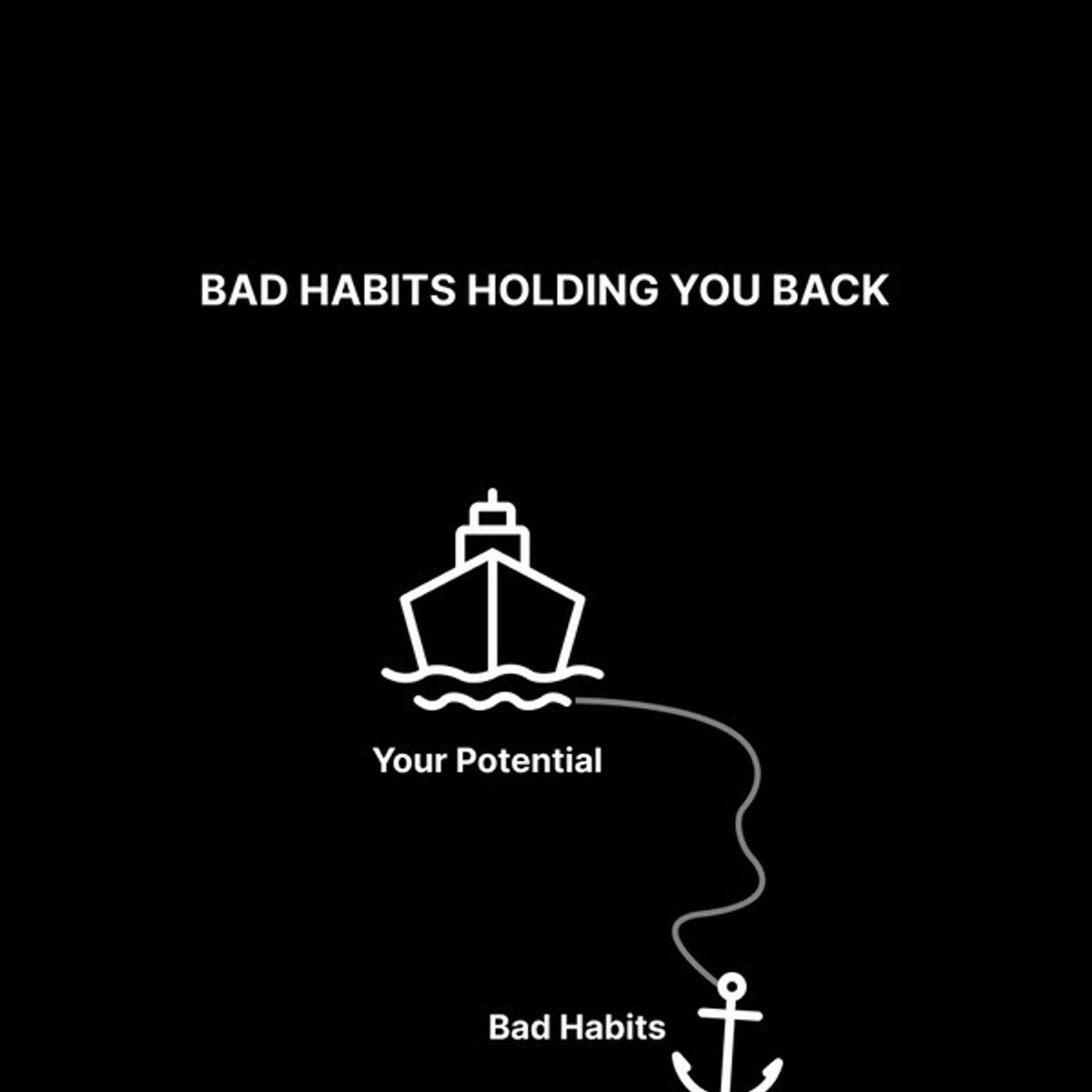
May 25, 2022
The Beauty of Enough
Welcome to the 1,719 new members of the curiosity tribe who have joined us since Friday. Join the 94,548 others who are receiving high-signal, curiosity-inducing content every single week. Today’s newsletter is brought to you by Morning Brew ! There's a reason why over 4 million people read Morning Brew—the free daily email that covers the latest from Wall Street to Silicon Valley. Unlike traditional news, Morning Brew will keep you informed AND entertained. Morning Brew is one of my consistent daily reads. I know you’ll love it as much as I do! The Beauty of Enough “There are decades where nothing happens, and there are weeks where decades happen.” My son was born one week ago—it feels like one of those fabled weeks where decades happen. I spent the first three decades of my life trying to find the meaning and purpose of all of this—then one week, it all came into view. On Monday morning, I was with him in bed and had this profound sensation: For the first time in my life, I have enough. I’ve always been extremely driven—I’ve always been in this constant cycle of wanting more. But I feel…different. Really, what more could I want? This profound feeling prompted today’s piece—on our perpetual desire for more, and more importantly, on the beauty of enough. My hope is for you to come away from it feeling empowered to think clearly and deeply about finding your “enough” amidst the constant search for more. The Fisherman & The Banker There’s a beautiful parable that I think about quite often… A wealthy investment banker goes on vacation to a tropical fishing village. As he walks along the docks one afternoon, he comes upon a small, run-down fishing boat with several large fish on its deck. "How long did it take you to catch those fish?" he asks. The fisherman looks up from his work and smiles at his new visitor. "Only a little while." The investment banker is caught off guard by this response. He likes the fisherman and wants to help. "Why don't you fish for longer so you can catch more fish?" The fisherman shrugs and explains to his new friend that he has all he needs. "Each day, I sleep late, fish a little, and spend time with my children and beautiful wife. In the evening, I go into town, drink wine, play the guitar, and sing and laugh with my friends." The investment banker is puzzled. He wants to help his new friend, who he recognizes is clearly confused. The investment banker has helped many businesses and has an MBA and other fancy credentials to his name. So he lays out a plan for the fisherman... "First, you spend more time fishing, so you can catch and sell more fish. You use the proceeds to buy a bigger boat, which allows you to catch and sell even more fish. Then you buy a fleet of boats. You hire a team. Vertically integrate! As CEO of a large, growing enterprise, you could move to the big city. You would take your company public and make millions!" The fisherman looks confused, but smiles. "And then what?" he asks. The investment banker laughs at the silly question. "Well, then you could retire to a quiet town! You could sleep late, fish a little, and spend time with your children and beautiful wife. In the evening, you could go into town, drink wine, play the guitar, and sing and laugh with your friends." The fisherman smiles broadly, thanks his new friend for the advice, and wanders off slowly into the warm afternoon sun. More vs. Enough This parable illustrates the importance of perspective. The story isn’t about the fisherman or the banker being “right”—it’s about personally identifying what success and purpose looks like to you, and then building a life that meets that definition. Fundamentally, it’s about a dichotomy that rules our lives: More vs. Enough. The Hedonic Treadmill Hedonic adaptation is the tendency of humans to revert to a happiness baseline shortly after new positive or negative events. It (probably) developed as a survival mechanism of sorts—in the wild, you needed to stay on an even keel in order to survive to reproductive age. After a big hunt and kill, the thrill of the victory had to wear off quickly so that you didn’t let your guard down and get eaten by a lion. That seems…good. But in the modern age, hedonic adaptation has a darker side. It becomes a treadmill—the Hedonic Treadmill—a perpetual motion machine that keeps us running in search of the next thing. We create this magical universe in our minds where that one next thing will be exactly what makes us permanently, sustainably happier. The harsh reality? We get to that next thing, appreciate it for a moment, and then turn our gaze to the next, next thing, with no marked improvement in our happiness. You’ve undoubtedly seen this general dynamic play out: We can finally buy the second home in Florida we’ve always dreamed of. Two weeks later, we’re complaining about maintaining it and thinking that a third home in Sedona sounds nice. We buy that fancy car—we ride around smiling broadly with the music blasting, and then see someone in the newer model and start thinking about the next one. We are like the modern equivalent of Sisyphus—a figure from Greek mythology who is sentenced by Zeus to an eternity of futile struggle. Sisyphus must roll a massive boulder up a steep hill, but as soon as he nears the top, the boulder rolls back down to the bottom, forcing him to start anew. We all strive for growth, but our outsized focus on progress can result in an inability to feel gratitude for the present. Finding Your “Enough” So how do we step off the treadmill? To me, this is about finding your version of “enough”—about balancing your natural desire for more with a deep appreciation for the beauty of the present. A few strategies that have worked for me: Develop a Gratitude Practice: Make it a daily practice to write down your gratitude. Either right when you wake up or right before bed, write down three things you are grateful for. They can be big (a healthy family) or small (a good meal in front of your favorite TV show)—the only thing that matters is that you make note of them. The practice forces gratitude for the present into the front of our minds and works wonders for your daily contentment and happiness. Identify Your Happiness Triggers: Using your gratitude lists, identify what makes you happy. Not what you think makes you happy or what society says should make you happy—but what truly makes YOU happy. Maybe it’s as simple as a cold beer at the end of a hard day of work or listening to smooth jazz by yourself when everyone has gone to sleep. Whatever it is, find those triggers and prioritize them in your life. End the Comparisons: We all have a horrible tendency to compare ourselves to others. Comparison is like gas on your “more” fire—it tears away the enjoyment of the present and tells you that it’s not enough. When you notice yourself falling into the comparison trap, reset and focus on yourself. “If we only wanted to be happy, it would be easy; but we want to be happier than other people, and that is almost always difficult, since we think them happier than they are.” - Montesquieu. Give these strategies a try. They will all bring the present into a clear, brilliant focus. Conclusion For most of my life, I would have characterized myself as th...

May 18, 2022
The Ultimate Goal Setting Tool
Welcome to the most important new member of the curiosity tribe who joined us since Friday—my son, Roman Reddy Bloom. I spent the first 30 years of my life trying to find the meaning and purpose of all of this. Then one day, it was staring right back at me. My new best friend. Today’s newsletter is brought to you by LEX ! What they do: make it easy to invest in real estate! Pop quiz: What asset class has created more millionaires than any other? Answer: Real estate. LEX has a really cool angle for investing in real estate. LEX does an “IPO” for a building, so you can directly invest in marquee commercial real estate. You can build a portfolio of buildings you want to invest in. Each building has a ticker, just like stocks. As a shareholder, you can get paid dividends flowing from the rent paid by the tenants. You can also earn tax advantaged passive income and trade without lockups. Check out LEX’s live assets in New York City and upcoming IPO in Seattle. Sign up for free here and get a $50 bonus when you deposit at least $500. Today at a Glance: Anti-goals are the things we DON'T want to happen—either as final outcomes or along the way. Establishing them allows you to win the battle AND the war. If traditional goals are the rudders that set your direction, think of anti-goals as the map that tells you where the rapids are. Awareness keeps you on smooth waters. The generalized process involves four steps: (1) Choose Your Arena, (2) Establish Traditional Goals, (3) Invert the Problem, and (4) Establish Anti-Goals. Test it out by establishing anti-goals when planning for new projects, designing your life, or creating self-improvement plans. The Ultimate Goal Setting Tool I love writing this newsletter. There are plenty of reasons, but at the top of the list is the fact that I get to take you all on a journey with me. Not a physical journey—though it would be fun to do a Curiosity Chronicle retreat someday!—but a learning journey. I’m able to share new insights and perspectives in *real time*. This isn’t some academic newsletter where I lecture you on truths and personal wisdom—this is simply me sharing ideas, frameworks, and models that I am battle-testing on my own journey. I am not a teacher—I am a student, learning alongside all of you. In that vein, today’s piece will share a new learning: the power of Anti-Goals. An Introduction to Anti-Goals At the start of 2022, I shared a piece called The Goal Setting Guide —a breakdown of my framework for setting—and smashing—goals. Shortly after I shared the piece, however, I came across the intriguing concept of “anti-goals” from my friend Andrew Wilkinson . I began to wonder if my goal setting framework was in need of a refresh. I like to personally battle-test new concepts before I share them publicly, so I started establishing “Anti-Goals” for all new projects. Everything changed. It quickly became a staple for: Planning for new projects Designing my life Creating self-improvement plans So with sufficient battle-testing behind me, I'd like to share how to leverage anti-goals to level up your goal setting process. The concept is grounded in inversion—a foundational mental model that says that complex problems are often easier solved backwards vs. forwards. Inversion was made famous by one quote from Charlie Munger: All I want to know is where I’m going to die, so I’ll never go there. With traditional goals, we envision the optimal outcome. We then build systems that will—hopefully—lead to that outcome. This is important and necessary—but it’s incomplete. Anti-goals leverage inversion to complete the picture. Anti-goals are the things we DON'T want to happen—either as final outcomes or along the way. I think of anti-goals as being about avoiding the Pyrrhic victory—a term coined after King Pyrrhus of Epirus, who suffered devastating losses while defeating the Roman army in battle in 279 B.C.E. The term is now commonly used to refer to a victory that takes such a terrible toll on the victor that it might has well have been a defeat. My friend Shaan Puri , another proponent of anti-goals, elaborates: What if your dream was to be a musician. And guess what - you did it! But while you’re touring the world, you gain weight, get addicted to drugs, your marriage is in shambles, and your kids don’t recognize you....you won the battle but lost the war. Anti-goals allow you to win the battle AND the war! The Anti-Goal Framework Ok, so how do you leverage anti-goals in your goal setting process? The generalized version involves four steps: Choose Your Arena Establish Traditional Goals Invert the Problem Establish Anti-Goals Let’s walk through each step: Choose Your Arena The arena is the "project" you’re going to be working on. A few broad categories to consider: Personal Work Health Your arena should be a specific project under a larger category. It’s the place where you’re looking for achievement, progress, or growth. Establish Traditional Goals These are your standard goals—the desired outcomes from the chosen arena. This should be easy, as it’s familiar. A few examples of traditional goals: Run a 6-min mile Build a 100,000 sub newsletter Promotion to VP Create a top-25 podcast Clear, big picture traditional goals are important. Note: As I covered in my Goal Setting Guide , it’s often helpful to have short, medium, and long-term traditional goals. Experiment with what works best for you. Invert the Problem To invert, ask and answer a few questions. In the pursuit of these traditional goals: What is the worst possible outcome? What systems would lead to that? What daily actions would I regret? In short, ask yourself what you would view as winning the battle but losing the war. Establish Anti-Goals Now work backwards to establish your anti-goals—the outcomes you DON’T want. James Clear refers to traditional goals as rudders. Expanding on this analogy, if traditional goals are the rudders that set your direction, think of anti-goals as the map that tells you where the rapids are. A thoughtful, clear map keeps you on smooth waters. An Illustrative Example It can be a bit confusing in the abstract, so let’s look at a recent example from my own life… Choose Your Arena: Physical Fitness Establish Traditional Goals: Run a 6-minute mile Under 8% bodyfat Deadlift 500 pounds Perhaps a bit too ambitious at age 31, but it feels doable if I’m dedicated (and if I get any sleep post baby arrival)! Invert the Problem: What does the worst possible outcome look like? Letting it con...
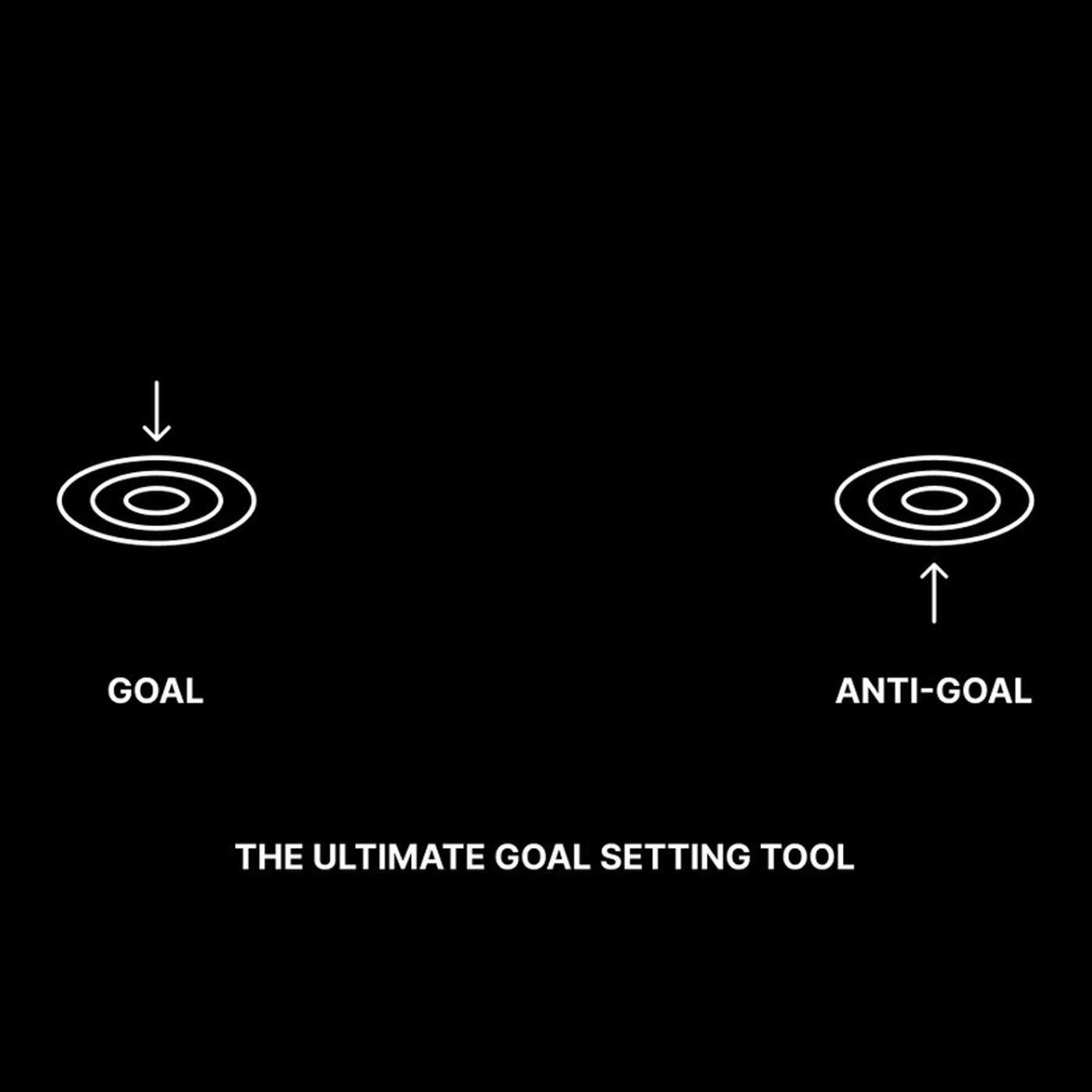
May 11, 2022
The Power Speaking Guide
Welcome to the 1,044 new members of the curiosity tribe who have joined us since Friday. Join the 91,634 others who are receiving high-signal, curiosity-inducing content every single week. SPECIAL ANNOUNCEMENT: Hyper startup accelerator is open for applications ! If you're thinking about joining an accelerator or raising capital for your startup, Hyper is a new accelerator backed by the biggest venture capital firms in tech. A few reasons I’m a huge fan: More competitive terms than competitors ($300k for 5%). Hyper is the sister company of Product Hunt—companies get unique access to Product Hunt, the team, and launch support. World-class advisors including Sequoia’s Alfred Lin, Ryan Hoover, Deena Shakir, Disney’s Jeffrey Katzenberg, and a lot more. Small batches make for a far more personalized experience. Efficient 4 week long program. Participants get time with me on how to scale your storytelling! This is an amazing opportunity for startups all around the world. Apply for the program here . Today’s newsletter is brought to you by Air ! If you’re still using Google Drive and Dropbox to store your files, you’re going to want to listen up. While those tools are fine for people who just need to store everything, they fall terribly flat when it comes to creative collaboration and scalability on images and videos. Walk with me…let’s talk about Air . Air has built a solution—a platform that allows marketers and creatives to collaborate seamlessly across the entire content library of a business. All the work happens directly in the visual asset. The end result? Businesses can 10x the power of their content to become storytelling machines. Air is the “holy s*** why didn’t this already exist?!” solution for marketing and creative collaboration. My startup portfolio loves it and you will too. Get a demo today and level up your content . Today at a Glance: Public speaking is scary. So scary that a number of surveys and studies have found that people rank public speaking ahead of death on a list of their greatest fears. It’s also one of the most critical skill sets for your career and life. Confident, powerful public speaking—whether informal or formal—will accelerate your personal and professional life. Strategies for more confident public speaking: avoid memorization, study the best, strike a power pose, practice relentlessly, find the anxiety killers, play the lava game, slow down to 0.75x, engage the audience, implement a storytelling structure, move with purpose, never self-sabotage, and cut the fear. The Power Speaking Guide "There are two types of speakers: those that are nervous and those that are liars." — Mark Twain Ok, so public speaking is scary. How scary? Well, a number of surveys and studies have found that people rank public speaking ahead of death on a list of their greatest fears… THAT scary. Unfortunately, public speaking is also one of the most critical skill sets for your career and life. Confident, powerful public speaking—whether informal or formal—will accelerate your personal and professional endeavors. It sits in the all-important top-right quadrant of the Scary vs. Beneficial 2x2 grid. So we can’t just hide from it. We need a set of strategies to increase our confidence and level up our speaking game. In today’s piece, I’ll propose 12 such strategies. Some of the strategies will appear non-obvious or even counter-intuitive—but trust me, they work. Without further ado, let’s dive in… Avoid Memorization When we’re nervous for a speech, toast, presentation, or talk, our bias is to memorize the content word-for-word. We memorize in a valiant effort to avoid screwing up. Ironically, memorization often has the opposite effect. Imagine you are driving to a friend’s new house. You look up the directions before leaving—they seem simple enough, so you just memorize them. On the way, there’s a bit or roadwork that forces you to make a slight detour. Suddenly, you’re completely lost. You memorized the directions from A to B, but the slight twist has taken you off course and you have no clue how to get back on track. You only memorized the directions for one specific scenario (going directly from point A to point B), but the situation became more dynamic. For most people, the same general principle applies to public speaking. When you memorize material, one tiny slip-up can throw you off. You only know the material in one fixed direction, so you're unable to adapt. All it takes is a glitch in the slides, an off-track question from the audience, or a slight stumble in your opener and all of your preparation is out the window. Furthermore, rote memorization can make you appear distant to the audience. Instead of memorizing: Focus on a few key moments. Perfect the opening line, transitions, and closing. When you nail these, you create momentum—with the audience and yourself. It instills a confidence you can build on. Manufacture these small "wins" that compound. Create “lego blocks” that you can piece together. Hone small chunks of stories and ideas that you can naturally weave together depending on the situation. You’ll be able to pick and choose from your toolkit and be more dynamic in the moment. Study the Best We live in an amazing era—we literally have the best speaking coaches in the world at our fingertips. Identify 3-5 speakers you admire. They can be politicians, business leaders, comedians, motivational coaches, whatever. Go on YouTube and find videos of each one delivering a speech. Slow down the playback speed—a great recommendation from my friend Ankur Warikoo —and take notes. Study the following: Structure: How are they structuring their talk? Cadence: What is the pacing of their words? When are they pausing and when are they accelerating? Tone: When are they raising their voice? When are they lowering it? Movement and Gestures: Note their movement on the stage (if any). How are they gesturing? Audience Engagement: How are they engaging with the audience? By analyzing the best, we naturally move to embody the traits we've identified. Strike a Power Pose A "power pose" is a stance that embodies a feeling of power—standing tall, arms spread and raised. The original discussion around the power pose entered the mainstream when social psychologist Amy Cuddy delivered a now famous Ted Talk on the topic that has been viewed over 20 million times. Cuddy asserted that executing power poses can actually create feelings of confidence and power...
May 4, 2022
Dangerous Mental Errors (You Don't Know You're Making)
Welcome to the 404 new members of the curiosity tribe who have joined us since Friday. Join the 89,181 others who are receiving high-signal, curiosity-inducing content every single week. Today’s newsletter is brought to you by LEX ! What they do: make it easy to invest in real estate Pop quiz…What asset class has created more millionaires than any other? Answer: Real estate. Today’s sponsor, LEX, has a really cool angle for investing in real estate. LEX does an “IPO” for a building, so you can directly invest in marquee commercial real estate. You can build a portfolio of buildings you want to invest in. Each building has a ticker, just like stocks. As a shareholder, you can get paid dividends flowing from the rent paid by the tenants. You can also earn tax advantaged passive income and trade without lockups. Check out LEX’s live assets in New York City and upcoming IPO in Seattle. Sign up for free here and get a $50 bonus when you deposit at least $500. Today at a Glance: Cognitive biases and logical fallacies are systematic errors in thinking and reasoning that negatively impact decision-making quality, logic, and outcomes. Combatting them relies first and foremost on establishing a level of awareness—both academically and practically. Part I of this series covered Fundamental Attribution Error, Naïve Realism, the Curse of Knowledge, Availability Bias, and Survivorship Bias. Today’s Part II covers Loss Aversion, the Spotlight Effect, Heaven’s Reward Fallacy, Confirmation Bias, and Baader-Meinhof Phenomenon. Dangerous Mental Errors A few weeks ago, I shared Part I of a multi-part series on cognitive biases and logical fallacies. In the opening to the piece, I commented on the fascinating dichotomy of our species: We possess the capacity to accomplish some complex feat of technology and engineering, and subsequently fall victim to the most obviously flawed base logic. For a hyper-intelligent species, our thinking and decision-making patterns can be pretty fractured. To be sure, many of these fractures were—for much of human history—features, not bugs. It’s logical to surmise that they were hardwired into our DNA because they made it incrementally more likely that we would survive to reproductive age. But the facts on the ground have changed—we live in a Digital Age—and our thinking and reasoning pathways have not had enough time to “catch up” to those new realities. So, we have to force it—we have to fight back and regain control over the quality of our decision-making and logic. In today’s Part II of the multi-part series, I’ll cover five common cognitive biases and logical fallacies that negatively impact decision-making quality, logic, and outcomes. To really bring it to life, for each one, I’ll provide a definition, example, and perspectives on how to fight back. Without further ado, let’s dive in… Loss Aversion Definition The pain of losing something is more powerful than the pleasure of winning it. Loss aversion was first identified by famed behavioral scientists Amos Tversky and Daniel Kahneman, who found that humans had a tendency to prefer avoiding losses over acquiring equivalent gains. Accordingly, people were typically willing to take actions to avoid losses that they wouldn’t have taken to seek gains. Economists had previously assumed humans were rational actors—that $100 in losses would drive the same amount of pain as $100 in gains would create pleasure. Wrong. Humans are enigmatic creatures! Example Investors—professional and amateur alike—provide some of the most clear, trackable examples of loss aversion. The pain and fear of realizing a loss often leads investors to hold onto losing positions much longer than they should. The media contributes to this bias— dunking on investors who cut ties with losing positions rather than celebrating the fact that they may have exhibited clear, rational thinking. How to Fight Back Avoid emotional connection to your possessions—whether they are investments, material items, or money. Attempt to distance your emotions from the decision-making process where possible. Ask questions: Am I being objective and rational in this decision? Am I too connected emotionally to make a rational decision? If you are too connected to a given decision, you may need to outsource it to an objective third-party. The Spotlight Effect Definition Humans significantly overestimate the degree to which other people are noticing or observing our appearance or actions. It causes a lot of social anxiety—it keeps people from being themselves due to an irrational fear of judgement. We incorrectly assume that others are thinking about us. The reality: Everyone is just thinking about themselves. Example Imagine you go to a dinner party. You’re nervous about the party, because you know there will be a lot of smart attendees and you won’t know anyone there. During the cocktail hour, you’re in a small group discussion and say something incorrect about the current state of domestic economic affairs. Your error is pointed out politely and the conversation moves on in a different direction. The conversation has moved on—but you haven’t. Your brain is swirling around the moment where your error was pointed out. Your internal dialogue turns negative: “Everyone thinks I’m an idiot. They’re all staring at me. I wish I could leave.” For the rest of the event, you feel self-conscious and distant, worried about making another mistake. How to Fight Back It sounds morbid, but constantly remind yourself that no one *really* cares about you. No one is obsessing over your hits and misses as much as you are. Full stop. Life is scary and complex—everyone is just trying to make their own way through it. It's liberating to realize that most people don't really think about you… Heaven’s Reward Fallacy Definition Humans tend to have an expectation that they will be be justly rewarded and praised for all of their hard work and sacrifice. The reality is that a lot of our efforts go unnoticed, particularly early in our careers. Much of the work is thankless. This is a dangerous error because the constant expectation of external affirmation simply breeds resentment when it doesn’t come. Example Early in your career—or really at any point in your career—you often have to sacrifice greatly for the benefit of the team or organization. The expectation that these actions will have an equal and opposite reaction—in the form of promotions, compensation, or praise—is unfortunately misguided. It leads to disappointment and resentment and is an underlying cause of a lot of employee churn and retention issues. How to Fight Back There are two sides to this: As an individual, detach inputs from outputs. Design your own rewards for your hard work and sacrifice. Give yourself a...

Apr 27, 2022
Intellectual Sparring Partners
Welcome to the 1,146 new members of the curiosity tribe who have joined us since Friday. Join the 88,500 others who are receiving high-signal, curiosity-inducing content every single week. Quick Announcement: Audience Building Course is back May 3-6! It's a live cohort-based course designed to help you build a high-leverage audience. Results from prior cohorts were awesome—hundreds of thousands of new followers and subscribers and countless new monetization opportunities created. Only 25 spots remaining—you can grab your seat here . Today’s newsletter is brought to you by LMNT ! LMNT is my healthy alternative to sugary sports drinks. I work out a lot and pay close attention to what I put in my body (other than the occasional whiskey). That means that I reject all the standard sports drinks and their sugar-filled formulas. LMNT is a tasty solution—an electrolyte drink mix with everything you need and nothing you don't. That means a science-backed electrolyte ratio with no sugar, no coloring, no artificial ingredients, or any other junk. Get your free LMNT Sample pack below (you only cover the cost of shipping). You’re going to love it. Today at a Glance: An intellectual sparring partner is a friend, colleague, or acquaintance whose combination of background, competency, and personality makes them well-suited to strengthen the quality of your reasoning and decision-making via active, grounded discussion and debate. To identify one, look for a combination of a different background from your own, clarity and depth of thinking, and a kind but direct personality. Establish structure with regular “sparring sessions”—1 hour on a fixed weekly or monthly cadence, with clear topics and desired outcomes to guide the discussion. Intellectual Sparring Partners Over the weekend, I posted a thread on Twitter on the topic of ideas I can’t stop thinking about. It was intentionally broad—a running list of some of the most interesting concepts, frameworks, paradoxes, and mental models that have been percolating in my mind over the last several months. If you’ve been following along for a while, by now you’ve realized that my posts are rarely intended to give you “the answer”—they’re intended to make you think. I want to give you the tools, but leave it up to you to create your own maps of how to use them. If I can spark new curiosity about a topic—and that curiosity leads to active thinking, learning, discussion, and personal or professional growth—I’ve done my job. One idea from the list—Intellectual Sparring Partners—seemed to spark a lot of interest, discussion, and follow-up questions. Interestingly, when my friend Alex Lieberman asked me which of the ideas on the list has had the biggest impact on my life to date, intellectual sparring partners was my answer. Why? Well, one intellectual sparring partner—and one “sparring session”—completely changed my life. So in today’s piece, I’d like to shine a spotlight on this idea: What is an Intellectual Sparring Partner? The sparring session that changed my life. How can you find one? The makeup of a great “sparring session”. With that context in mind, let’s dive right in… Introduction I’ve been fortunate to meet and interact with many top performers in my life. One common trait I’ve observed: they all legitimately enjoy being wrong. They embrace new information that forces them to change their viewpoints—their open mindsets allow them to accumulate and compound knowledge at an accelerated rate. This innate desire to be wrong—to get closer to the truth—leads them to seek out people who are willing and able to push their thinking in new directions and to greater depths. These people are their intellectual sparring partners… Let’s check Sahil’s Dictionary for a definition: Intellectual Sparring Partner (Noun): A friend, colleague, or acquaintance whose combination of background, competency, and personality makes them well-suited to strengthen the quality of your reasoning and decision-making via active, grounded discussion and debate. Put simply, an intellectual sparring partner is a person who is willing and able to question, critique, and pressure test your thinking. Friends come easy—intellectual sparring partners are harder to find, but are incredibly important and valuable. A Personal Story To bring this concept to life, I’ll share a quick personal story… In early 2021, I was completely lost. From the outside looking in, everything was fine—I had built a large following on Twitter, I had a good job, etc. But on the inside, I felt like I was wandering around with a blindfold on. I had decided to leave my stable job in private equity—and the wonderful group of colleagues that came with it—to pursue something new, but had run into a series of rejections along the way. In May 2021, at my point of peak uncertainty, I sat down for a meal with Shaan Puri , the host of the My First Million podcast and one of my go-to intellectual sparring partners. The conversation went something like this: Shaan: So, tell me how you’re thinking about the next move? Sahil: Well, at this point, I’m basically thinking there’s a clear Path A and a not so clear Path B. Path A is to join another big investment fund, but one that’s doing early stage investing—the stuff I like thinking about. Path B is less clear, but it’s probably doubling down on all of my personal business, really trying to build that, and probably investing on my own. Shaan: Ok…so it sounds like you’re choosing between something that sounds really standard (join a fund) and something that sounds really fun and energizing (personal stuff). Sahil: Well, damn…when you put it that way…you’re right. In a very quick back and forth, Shaan had completely reframed the decision in my mind in a way that I never would have been able to on my own. My own biases and baggage—mainly the deep, misguided desire to have an important sounding title or impressive firm name on my resume—were clouding my ability to make a clear, thoughtful decision about what would be the most enjoyable, energy-creating, and profitable path. His pushback and reframe was critical. From that day forward, I went all in on Path B. Fast forward 12 months and I couldn’t be happier that I did. Score one for having an intellectual sparring partner… How to Identify One Let’s shift to the tactical: how can you identify your intellectual sparring partner? First off, it’s important to note that there is no such thing as a one-size-fits-all intellectual sparring partner. The person that works for me might not work for you, and vice versa. Here are a few of the traits to consider in identifying yours: Background: Different from your own across a number of vectors. A fundamentally different “map of reality” is ideal. Competency: Exhibited clarity and depth of th...

Apr 20, 2022
It's Later Than You Think
Welcome to the 840 new members of the curiosity tribe who have joined us since Friday. Join the 86,375 others who are receiving high-signal, curiosity-inducing content every single week. Quick Announcement: Audience Building Course is back May 3-6! It's a live cohort-based course designed to help you build a high-leverage audience. Results from prior cohorts were awesome—hundreds of thousands of new followers and subscribers and countless new monetization opportunities created. 50 spots remaining—you can grab your seat here . Today’s newsletter is brought to you by LEX ! What asset class has created more millionaires than any other? Real estate. The problem is that it’s an asset class that has previously been inaccessible to most investors. LEX has changed that with a unique new way to invest in real estate. LEX does an “IPO” for a building, so you can build a portfolio of buildings you want to invest in. Each building has a ticker, just like stocks. Any US investor can open a LEX account, browse opportunities in various asset classes such as multifamily and office buildings, and buy shares of individual buildings. I’m a huge fan of the platform—you will be too! Get a $50 bonus when you deposit $500 by using the link below. It’s Later Than You Think You work and work for years and years, you're always on the go You never take a minute off, too busy makin' dough Someday you say, you'll have your fun, when you're a millionaire Imagine all the fun you'll have in your old rockin' chair Enjoy yourself, it's later than you think Enjoy yourself, while you're still in the pink The years go by, as quickly as a wink Enjoy yourself, enjoy yourself, it's later than you think - Guy Lombardo, Enjoy Yourself, It’s Later Than You Think A few weeks ago, I posted a thread on Twitter on harsh truths of life. Contrary to what you may believe, this piece was not intended to be dark or morbid. It was intended to make you think—to hopefully question some underlying (yet flawed) assumptions and spark active discussion with those around you. Today’s newsletter has the same intention. It’s more emotion-inducing than most of my work—I teared up several times during the writing!—but also arguably the most important piece I will ever write. My hope is for you to come away from it feeling cleansed, refreshed, and empowered to think clearly and deeply about your time and how you choose to spend it. With that context in mind, let’s dive right in… The Harsh Truth Harsh Truth: You’ll only see your loved ones a few more times. A Personal Story I’ll start with a personal story. In May 2021, I had a conversation with a new friend that changed my life. We were having a chat—over a few whiskeys, of course—about living in California. He had grown up there and his entire family had settled there, so I was lamenting that it was so far away from my parents and sister in Boston. My friend asked how often I saw them and how old my parents were... I replied that I saw them about once per year, and that they were in their mid-60s. He looked me square in the face and plainly said: "Ok, so you'll see them 15 more times in your life." Gut punch. It sounds insensitive—but it's just real. It’s just…math. If the average life expectancy is ~80 years, my parents are in their mid-60s, and I see them one time per year, the math—however depressing—says I will see them 15 more times before they are gone. Our time together is finite, but we fail to recognize it until it's too late. Time is cruel. You’ll love it with all of your being, you may even pray for more of it, but the reality is that time doesn’t care about you. Your relationship with time is the ultimate unrequited love. The morning after this conversation, I woke up and had a very candid conversation with my wife about what we wanted in life. A few days later, we listed our brand new house in California on the market. Thanks to a blazing hot housing market, we sold our house within days, packed up our things, and shipped off to the East Coast to be closer to our parents. It’s been almost a year, and it was the best decision I've ever made. I'll never regret these tiny moments—of doing nothing in particular—that we'll get to spend together in the years ahead. I’ll never regret the moments my parents get to spend with my son once he is born. I’ll never regret any of this. Visualizing Time When I first shared this story on Twitter, the response was pretty overwhelming. It seemed I wasn’t alone in having this painful, yet powerful, realization. Tim Urban—one of my favorite writers (and an upcoming guest on my podcast!)—wrote about this phenomenon in a recent New York Times op-ed . In classic Tim Urban fashion, he produced a simple visualizations to capture the sentiment of the entire piece. Quoting from the article: What it boils down to is this: My life, in the best-case scenario, will consist of around 20 years of in-person parent time. The first 19 happened over the course of my first 19 years. The final year is spread out over the rest of my life. When I left for college, I had many decades left with living parents, but only about one year of time left to spend with them. Furthermore, as he points out in the piece, this same lesson applies to everyone in our lives, and to the activities we love doing, but rarely get to do—travel, museum visits, special events, etc. The math—depressing as it seems—should be a call to arms. Identify the people and activities you care most deeply about. Prioritize them ruthlessly. It may be difficult, even painful, but it’s a decision you’ll never regret. Conclusion In his famous 2005 commencement address at Stanford, Steve Jobs commented on the power of acknowledging his own mortality: Remembering that I’ll be dead soon is the most important tool I’ve ever encountered to help me make the big choices in life. Because almost everything—all external expectations, all pride, all fear of embarrassment or failure—these things just fall away in the face of death, leaving only what is truly important. Remembering that you are going to die is the best way I know to avoid the trap of thinking you have something to lose. You are already naked. There is no reason not to follow your heart. When we’re young, we view life as infinite. But as Tim Urban points out in his piece , when we visualize an optimistic lifespan in a single image, we realize it is anything but. We spend most of our lives playing a game. Everything we do is in anticipation of the future. When that future comes, we simply reset to think about the next future . “I can’t wait until I’m 16 so I can drive.” “I can’t wait until I’m 18 so I can leave home and go to college.” “I can’t wait until I’m 25 so I can have my...

Apr 13, 2022
Dangerous Mental Errors (Part I)
Welcome to the 4,178 (!!!) new members of the curiosity tribe who have joined us since Friday. Join the 84,638 others who are receiving high-signal, curiosity-inducing content every single week. Today’s newsletter is brought to you by LMNT ! LMNT is my healthy alternative to sugary sports drinks. I work out a lot and pay close attention to what I put in my body (other than the occasional whiskey). That means that I reject all the standard sports drinks and their sugar-filled formulas. LMNT is a tasty solution—an electrolyte drink mix with everything you need and nothing you don't. That means a science-backed electrolyte ratio with no sugar, no coloring, no artificial ingredients, or any other junk. Get your free LMNT Sample pack below (you only cover the cost of shipping). You’re going to love it. Today at a Glance: Cognitive biases are systematic errors in thinking that negatively impact decision-making quality and outcomes. Combatting them relies first and foremost on establishing a level of awareness of the biases—both academically and practically. Today’s deep dive covers five common cognitive biases that derail decision-making: Fundamental Attribution Error, Naïve Realism, the Curse of Knowledge, Availability Bias, and Survivorship Bias. Dangerous Mental Errors Humans are fascinating creatures. We possess the capacity to accomplish some complex feat of technology and engineering, and subsequently fall victim to the most obviously flawed base logic. For a hyper-intelligent species, our thinking and decision-making patterns can be pretty fractured. Many of these fractures fall into the category of cognitive biases—systematic errors in thinking that negatively impact decision-making quality and outcomes. Importantly, these are typically subconscious, automatic errors. We are wired to take shortcuts in our decision-making—to be more efficient and effective in the wild—but shortcuts are a double-edged sword. Speed and efficiency can be great, but when we systematically misinterpret the data, signal, and information from the world around us, it dramatically impacts the consistency and rationality of our decisions. Fortunately, we can fight back and regain—at least a modicum of—control over the quality of our decision-making. In today’s piece, I’ll cover five common cognitive biases that derail decision-making. For each, I’ll provide a definition, example, and perspectives on how to fight back. This will be Part I of a multi-part series on cognitive biases and logical fallacies—as it’s a topic that deeply impacts all of our careers and lives. Developing an awareness of these errors—and a plan to combat them—will give you a legitimate competitive advantage in all of your pursuits. Let’s dive in… Fundamental Attribution Error Definition Fundamental Attribution Error is the human tendency to hold others accountable while giving ourselves a break. It says that humans tend to: Attribute someone else's actions to their character—and not to their situation or context. Attribute our actions to our situation and context—and not to our character. In short: We cut ourselves a break, but hold others accountable. Why do we do this? Well, as with many of the biases we will cover, it likely developed as a heuristic—a problem-solving or decision-making shortcut—in this case for simplifying the process and judgement around new human relationships. From an evolutionary perspective, quickly attributing negative actions to character—rather than situation or context—may have kept you alive, as you’d be more likely to avoid that individual in future interactions to play it safe. But in a modern context, it can create real problems—a failure to recognize or empathize with the context and situational factors impacting others is at the core of many societal and organizational issues. Example The workplace is a common breeding ground for Fundamental Attribution Error. It’s easy to form perspectives on the character of colleagues and bosses based on small pieces of incomplete information. If a colleague arrives late for work, they’re just lazy, right? This is clearly a flawed line of thinking, as there are numerous factors that could have contributed to your colleague’s lateness. The reality is that, in these instances, you are using limited information to create an overall picture of an individual. You’re seeing one square of a map and believing you know the map in its entirety. How to Fight Back You’ll never completely eliminate Fundamental Attribution Error, but you can limit its impact. The first step is always awareness—keep it in mind, particularly as you build a body of experiences with new colleagues or acquaintances. This is when it’s most likely to strike. Force yourself to slow down and evaluate the potential circumstances or situational factors that may be influencing an individual’s actions or behaviors. You won’t always have the time to do so—shortcuts are often necessary and helpful—but with longer-term or important relationships, it’s worth the extra effort. You’ll build deeper, more trusting personal and professional bonds. Naïve Realism Definition Naïve Realism is part of a broader category of so-called “egocentric biases” that are grounded in the reality that humans generally think very highly of themselves. Specifically, Naïve Realism has two core pillars: We believe that we see the world with perfect, accurate objectivity. We assume that people who disagree with us must be ignorant, uninformed, biased, or stupid. It often leads to a dangerous “bias blind spot”—a phenomenon in which we accurately identify cognitive biases in others, but are unable to identify them in ourselves. Example The most famous example of Naïve Realism is an experiment involving a highly-contested Dartmouth vs. Princeton football game. After the game, fans of each side were asked to watch the film of the game and evaluate the performance of each team. Interestingly, depending on which team they supported, they saw a very different game. Dartmouth fans perceived the number of Princeton infractions as much higher; Princeton fans perceived the number of Dartmouth infractions as much higher. The groups were incapable of objectivity, despite vocalizing their objectivity to the researchers prior to the experiment. They watched the same game, but saw a very different one. How to Fight Back Naïve Realism is a base level bias, so fighting back starts with base awareness and acceptance of our own flaws and biases. A few other ideas: Surround yourself with people who think differently than you. Force the issue. Learn to embrace being wrong. It’s a common trait of highly-successful people, as being wrong means you are getting closer to the truth. Question your own beliefs. Always ask what assumptions or experiences have contributed to those beliefs. Fighting back against Naïve Realism isn’t easy, but it’s so damn important. The Curse of Knowledge Definition Experts—or generally intelligent people—make the flawed assumption that others have the same background and knowledge on a topic as they do. It makes them unable to teach or lead in an effective manner for those still coming ...

Apr 6, 2022
How to Stop Procrastinating
Welcome to the 979 new members of the curiosity tribe who have joined us since Friday. Join the 80,207 others who are receiving high-signal, curiosity-inducing content every single week. Today’s newsletter is brought to you by Write of Passage ! Fun Fact: This newsletter would not exist if not for David Perell. When we first met, David explained his concept of the Personal Monopoly and convinced me to go all in on building mine. One year later, here we are. The Internet unfairly rewards people who have a unique set of skills, experiences, and ideas. When that combination is so unique that it can’t be replicated, you create a Personal Monopoly. David Perell has become the go-to guy for writing online, and has helped thousands of students create their own personal monopolies. He’s created a free guide to help people uncover their strengths, clearly communicate their value, and start building their reputation online with a free lesson from his Write of Passage course. This is a life cheat code. I highly recommend checking it out! Today at a Glance: Type I Procrastination is common and generally not very harmful. We procrastinate on doing the laundry, taking out the trash, or replying to our emails. Type II Procrastination is equally common, but much more damning. Type II tasks tend to be the long-term important projects—the true growth creators. When we procrastinate on these projects, we fail to make progress. The Anti-Procrastination System involves five core steps: (1) Awareness, (2) Deconstruction, (3) Plan Creation, (4) Stake Creation, and (5) Action. The system is equally applicable for both Type I and II, but given its deliberate structure, it’s likely better to walk through for the first time in the context of Type II Procrastination. How to Stop Procrastinating Confession: I’ve spent most of my life as a chronic procrastinator. I’ve also spent most of my life justifying that chronic procrastination. “It’s just how I work,” I’d say to myself after yet another stress-inducing last-minute sprint to complete a project. The pressure of an imminent deadline was what I needed to thrive. Scientifically, I wasn't wildly off… The Yerkes-Dodson Law—originally developed by psychologists Robert Yerkes and John Dodson in 1908—says stress and performance are positively correlated…up to a point, after which more stress reduces performance. But there are two core issues here: It’s very difficult to honestly review where you sit on the curve. Are you really at optimal stress, or have you gone past that point on the curve? If procrastination is the only way you’re able to create optimal stress, you only work on the urgent tasks—very rarely the long-term important tasks. As you’ll recall from my piece on The Ultimate Productivity Tool , this is a recipe for stalled progress. What I realized: A modest amount of stress, pressure, and arousal is good—but relying on procrastination to create it is bad. Procrastination is a growth limiter—it restricts our potential. It became clear to me that I needed to develop a system to fight back. In today’s piece, I’d like to share that system with all of you. The Anti-Procrastination System I categorize procrastination-prone tasks into two types: Type I: Small & Boring Type II: Big & Scary Type I Procrastination is common and generally not very harmful. We procrastinate on doing the laundry, taking out the trash, or replying to our emails. Type II Procrastination is equally common, but much more damning. Type II tasks tend to be the long-term important projects—the true growth creators. When we procrastinate on these projects, we fail to make progress—we stall. The Anti-Procrastination System involves five core steps: Awareness Deconstruction Plan Creation Stake Creation Action The structure is sequential, but its practice is often dynamic & iterative. Note: The system is equally applicable for both Type I and II, but given its deliberate structure, it’s likely better to walk through for the first time in the context of Type II Procrastination. Let's walk through each of the steps... Awareness As with most mental hurdles, the first step is becoming aware of the problem. Procrastination is defined as the action of postponing or delaying something. Ancient Greek philosophers called it Akrasia—acting against your better judgement. We procrastinate when it's easier to delegate a task to our future self. Don’t beat yourself up about it. The proclivity to procrastinate is literally hardwired into our DNA. We value immediate rewards, even if we know that it isn’t what’s best for us in the long-term. To develop awareness, schedule a daily assessment of your day-to-day actions. Start by identifying the important long-term projects in your life. Then ask a few questions: Am I proud of the actions I am taking on these big projects? Am I doing what I should be doing? If the answers are “no”—that’s great. You're now aware of your procrastination and can proceed to the next step... Deconstruction The driver of Type II Procrastination is that big and scary projects are...well...big and scary. In his famous Ted Talk , Tim Urban uses the example of a senior thesis. If you define the project as "write my 100-page thesis" you’re already pre-wired for procrastination. To the chronic procrastinator—or to any human, really—large, long-term projects look like a big, black box. Our imaginations tend to fill that box with endless complexity and unknown horrors. We know it's important, but it's too intimidating and abstract as a whole. So how do you attack that? Well, get out your sledgehammer and break it apart… It's critical to deconstruct the big and scary project into small and individually-manageable tasks. In the example of the senior thesis, the tasks might be: Construct a note-taking system Gather important pieces of research Annotate key pieces of research Craft thesis outline Etc. The goal here is a simple mental conversion from intimidating to manageable. Plan Creation Next, you need to develop a plan of attack to check off the deconstructed task list. The plan for each micro task should be: Specific: Exactly what you'll do. Time Bound: When you’ll do it. Important Note: We tend to overestimate what we can do in a day (and underestimate what we can do in a year). When you are setting time bounds, lean towards being less ambitious on the micro scale. Give yourself easy wins early on with achievable time bounds. Create a project document. I use Notion (see below for an illustrative example), but you can use whatever system you are comfortable with. A few guidelines for the project document: Write down the specific tasks under each major deconstructed pillar of the project. Write down your timeline for each task. Pro Tip: Once you complete the project document, but before starting the project, hide the future pillars to avoid upfront intimidation at the amount of work on your plate. Focus on the present. Stake Creation This is perhaps the most important step of the system, but it’s an easy one to overl...
Mar 30, 2022
The Career Success Guide
Welcome to the 1,002 new members of the curiosity tribe who have joined us since Friday. Join the 78,225 others who are receiving high-signal, curiosity-inducing content every single week. Today’s newsletter is brought to you by Veridas ! Do you struggle with verifying the identity of your customers? Gone are the days of needing to ask customers over the phone to verify 3 pieces of information to prove their identity, and wasting your support rep's time. Veridas’ voice biometric authentication will confirm a person's identity simply by hearing them speak. No language requirements, no special phrase, just 3 seconds of chatter. In fact, 100 companies around the world already trust Veridas thanks to its simplicity, accuracy (+99.9%), and speed (150 milliseconds). Veridas is offering a special 15% discount for all Curiosity Chronicle subscribers that book a live demo in the next 30 days. Sign up at the link below to take advantage of the offer! Today at a Glance: Whether you’re just starting—or building—your career, you’ve undoubtedly faced new challenges that no textbook or classroom could have prepared you for. Early career years can be quite painful and anxiety-inducing. You face a completely new world with no map—no guide to help you navigate the uncharted terrain. Today’s piece provides that guide—a simple set of core principles that you can turn to and rely on as you start and build your career. If you prefer a printable, evergreen format that you can refer to in future, I turned this into a beautiful e-book, which you can buy here . It includes several additional principles and visualizations not in the newsletter version. The Career Success Guide Whether you’re just starting—or building—your career, you’ve undoubtedly faced new challenges that no textbook or classroom could have prepared you for. Early career years can be quite painful and anxiety-inducing. You face a completely new world with no map—no guide to help you navigate the uncharted terrain… So today, I’d like to provide that guide—a simple set of core principles that you can turn to and rely on as you start and build your career. All of the principles contained herein were developed and earned through my own experience, generally through failures or missteps. My hope is that by providing this in writing, you can avoid those same mistakes and accelerate your path. If you prefer a printable, evergreen format that you can refer to in future, I turned this into a beautiful e-book, which you can buy here . It also includes several additional principles and visualizations not in the newsletter version. With that context in mind, let’s dive right in: The Career Success Guide—10 principles to help you navigate the challenges of your early career… Build a Personal Board of Advisors The general logic here is simple. If you treat your career lifecycle as a company... You start as a high-growth startup You grow into a bigger business You IPO and are a public company At each phase, you're faced with a variety of difficult and new decisions and challenges. Traditionally, people have turned to "mentorship" to navigate the uncharted waters they encounter at each stage. But "mentorship" feels very formal. It carries a connotation of a fixed cadence and time commitment. From the mentor's perspective, it feels like a big commitment. Furthermore, having one formal mentor often falls short from a utility standpoint. Your mentor may not have encountered the challenge you're facing—they may not have a "map" that you can leverage to navigate the terrain. They may not be available when you need to make an important decision. Instead, build a Personal Board of Advisors. Companies have boards—ideally comprised of individuals from varying backgrounds and arenas. The board isn't involved in the day-to-day, but provides advice on strategy, key decisions, and challenges. Your Personal Board of Advisors is a group of 5-10 individuals. Important features: Unbiased (not family) Diverse experiences and backgrounds Willing to provide raw feedback Over time, you can add and subtract from your board. The members don't need to know each other or that they are on your board. Informality is a feature, not a bug. As you encounter challenges, key decisions, or inflection points in your career, these are the people that you can reliably turn to for grounded perspectives, feedback, and advice. Swallow the Frog for Your Boss The “frog” is a difficult or annoying task your boss doesn’t want to do. But their frog is your opportunity! It presents one of the single greatest hacks to getting ahead early in your career: Observe your boss. Figure out what they hate doing. Teach yourself to do it. Take it off their plate (i.e. swallow the frog!). Swallowing the frog for your boss is a clear way to add value, put up a win, and build momentum. Create a Decentralized Growth Tribe Having a decentralized friend group to learn from and grow with is a legitimate competitive advantage. The features of a decentralized friend group: Unconnected to other groups Different backgrounds Range of experience sets Novel perspectives Interacting with this group will expose you to new ideas, industries, and opportunities. It will materially expand your luck surface area. Think of it as your Growth Tribe. It’s a huge value unlock. Sahil Personal Note: It took me 7 years to realize the value of this and find my decentralized growth tribe. That tribe led to me taking new opportunities and making decisions that have fundamentally changed the trajectory of my life. I cannot recommend this highly enough. And importantly, in the Digital Age, you can find these groups “in the cloud”—physical proximity is no longer a requirement. Learn to Sell Naval Ravikant famously said that in order to be successful, you either need to learn how to build or you need to learn how to sell. I agree, but I also know that most of us aren't technically-gifted—so we should just learn to sell. Selling doesn’t mean going into software or technology sales (though that can be a lucrative career path for the right person!). Selling means learning to tell a compelling, convincing story. That story doesn’t have to be about a product your company is building. The more you progress in any field, the more of your job becomes sales: You sell yourself when you want a company to hire you. You sell your idea when you want investors to back you. You sell your vision when you want customers to pay you. You sell your culture when you want employees to join you. There are very few guarantees in life, but this one is real: If you can sell, you'll always make it. Prioritize Experience, Not Salary Prioritizing salary is one of the biggest mistakes I see young people making early in their careers. The obsession with making “six figures” at your first job is misguided and short-term thinking at its finest. The reality: a 10x better foundation-building experience compounds much more effectively than that extra $10K in salary. You should always be compensated fai...

Mar 23, 2022
The New Way to Learn
Welcome to the 1,202 new members of the curiosity tribe who have joined us since Friday. Join the 76,887 others who are receiving high-signal, curiosity-inducing content every single week. Today’s newsletter is brought to you by Rows ! After spending 7+ years in traditional finance, I had Chronic Excel Fatigue–the result of countless hours spent wrestling with the dated, legacy technology that hasn’t been updated since 2006! Fortunately, I discovered Rows—spreadsheets, reimagined. Rows is a truly magical product experience. It allows you to seamlessly pull data on stocks, crypto and more, and instantly integrate with services like Stripe, Google Analytics, Twitter, Salesforce, Instagram, Facebook and public databases like Crunchbase and LinkedIn. Rows is one of the most insane new product experiences I have had in recent memory. I use Rows for everything from managing my Startup Portfolio , social analytics, fund investing, and LPs to tracking household budgets and personal finance. I may never open Excel again. For your next spreadsheet, give Rows a try. You won’t be disappointed. Join thousands of teams that have stepped up their spreadsheet game with Rows. Today at a Glance: It has become in vogue to bash the traditional education system and the learning models it reinforces in our youth. I’m certainly guilty of it. In a broad sense, it’s always quite easy to criticize the incumbent—but much more difficult to propose a viable alternative, particularly one that works at scale. Traditional learning models fall short in two respects: (1) they endorse compartmentalized knowledge and (2) they create forced, linear progressions. The ultimate meta-goal of learning is for knowledge to compound over time. We want to learn in such a way that new knowledge builds on top of existing foundations—ideally in an accelerating, non-linear manner. Networked Learning is a way to return to our roots and allow knowledge to freely interact and compound. There are many ways to engage it, including: (1) Explore vs. Tour, (2) Analogize Constantly, (3) Paired Learning, (4) Read Broadly & Quit More, and (5) Slow Down Learning. The New Way to Learn “Traditional learning models are dead.” If you’ve been scrolling Twitter or attending any group events over the last five years, you’ve probably heard some variation of the above statement countless times. It has become in vogue to bash the traditional education system and the learning models it reinforces in our youth. I’m certainly guilty of it. In a broad sense, it’s always quite easy to criticize the incumbent—but much more difficult to propose a viable alternative, particularly one that works at scale. In today’s piece, I’d like to lay the foundation for an alternative, better learning model: Networked Learning. Let’s begin with the traditional model and its deficiencies before diving into the details of the new way and how to use it. Note: I say *foundation* because my thinking on the topic remains a work-in-progress. I believe I have identified a truly better way for children and adults to learn—and clear methods to use it—but the challenge of deploying it at scale remains. The Traditional Model I graduated from my public high school thinking I hated most subjects. It was odd—I was a pretty interested kid, but I drifted from class to class, doing the bare minimum to deliver an adequate report card to my discerning parents and clear the academic hurdles required by Stanford Athletic Department’s admissions team. Reflecting on it with the benefit of hindsight—and a bit of maturity—what I actually hated was the learning model the traditional education system forced upon me: A learning model grounded in linear, compartmentalized learning. A learning model that praised rote memorization of facts. Unfortunately, this learning model is drilled into us for so many years that the bad habits stick with us throughout our life. As a result, few find a way to learn more effectively in adulthood. Stick with me today and I’ll help you break the vicious cycle… Let's start with a quick breakdown of the traditional model and why it's broken. Problem #1: Compartmentalized Traditional education asks you to create containers in your mind. I imagine them like little houses. You have your history house, your English house, your science house, your math house, etc. Each house is discrete and closed off to the rest of the houses and world. Let’s say you have a history test on Monday. On Sunday night, you sit down with a coffee and cram some new abstract information about Genghis Khan into your designated history house. You remember it for the test on Monday and manage to ace it. Your teacher, parents, and friends pat you on the back and say "great job!”—but by the following Monday, you've forgotten it. “Oh well,” you say, “I didn’t need to know about Genghis Khan anyway…” This process repeats for every subject. Knowledge is crammed and trapped into its designated house. The problem? Trapped knowledge is basically useless. It's insulated from the interactions that allow it to stick and compound over time. The compartment is useful for the test, but not for real learning and growth. Problem #2: Linear & Forced The traditional education system was designed for the Industrial Age—an assembly line model. It tells us to learn one specific thing—and be tested on it—before progressing to the next. We progress on set timelines—established by boards and committees—from one subject to the next. The model is forced, linear progression. There is no room for inspired consumption. The obvious problem here: Everyone learns differently—at a unique pace and with unique interests. The current model embraces those who can fall into line and make it work while rejecting those who cannot. It leaves too many people behind. The New Model: Networked Learning “I have never let schooling interfere with my education.” - Mark Twain Ok, so we've established a few core problems of the existing, traditional learning models. Let’s turn to the new way—the better way: Networked Learning. A Return to Our Roots The ultimate meta-goal of learning is for knowledge to compound over time. We want to learn in such a way that new knowledge builds on top of existing foundations—ideally in an accelerating, non-linear manner. But for this to work, we need our knowledge to exist in an exposed environment. It has to interact with existing knowledge and new knowledge in order to spark new growth. Fortunately, this is the way we are biologically wired. As children, we’re insatiably curious, experiencing every new event, person, or object with wonder. We actively place each new learning into the context of our existing knowledge graphs. We constantly create and adjust our "maps" of the world. The key here: there are a lot of "collisions" of knowledge in the child's brain. There are no preset compartments forced upon them yet. There's no insulation of some knowledge from the rest of it. It’s a bit of chaos theory in action. Knowledge roams free in the child's brain—it interacts, reacts, and triggers growth. This is the foundation of Networked Learning—a return to our roots. A return to the natural manner in which we encounter the world. We wrestle with ideas and let cross-pol...
Mar 16, 2022
The Ultimate Productivity Tool
Welcome to the 613 new members of the curiosity tribe who have joined us since Friday. Join the 75,508 others who are receiving high-signal, curiosity-inducing content every single week. Today’s newsletter is brought to you by Babbel ! Start speaking a new language in 3 weeks! One of my goals for 2022 is to learn a new language . Studies show that learning a language increases the volume and density of gray matter, the volume of white matter, and brain connectivity. Babbel is the tool I’m using to achieve this goal—it’s one of the world’s top language learning platforms and prepares you for situations you’ll actually encounter in real life. I’ve been blown away by the experience thus far—lessons are just 10 minutes and you can start having basic conversations in the new language in just 3 weeks . Plus, you get access to podcasts, games, videos and more. It’s a great household activity to enjoy with your partner and your kids as well! For a limited time, you can join me on this journey and get up to 60% off your subscription by using the link below. Take advantage of this amazing offer and get your language learning on today! Today at a Glance: The Eisenhower Decision Matrix is a simple, powerful tool anyone can use to prioritize effectively and enhance daily productivity. It’s a visualization tool that forces you to differentiate between the urgent and the important. The four quadrants of the 2x2 matrix: Important & Urgent (“Do Now”), Important & Not Urgent (“Decide”), Not Important & Urgent (“Delegate”), and Not Important & Not Urgent (“Delete”). The goal is to spend more time on important tasks that further your long-term values, missions, goals, and principles. In Eisenhower Decision Matrix terms: Manage the top-right, optimize for the top-left, and remove the bottom half. The Ultimate Productivity Tool We’ve all been there. Scrambling from task to task, moving from one stress-inducing fire to the next. The minute one fire is out, another one is sparked. The day becomes an energy-draining fight to survive. The worst part? At the end of it all, it’s hard to point to any substantive progress. There was a lot of movement, but no forward progress—a “rocking horse” day, if you will. Today, I’d like to share a simple, immediately-actionable solution to this all-too-common problem. To set the stage, a short history lesson… Dwight D. Eisenhower Dwight David Eisenhower—or Ike as his friends called him—was an American military officer and politician born in Denison, Texas in 1890. He was a West Point graduate and rose through the military to achieve the 5-star rank of general in the United States Army. During World War II, he served as Supreme Commander of the Allied Expeditionary Force in Europe and led the famed invasion of Normandy from the Western Front. Eisenhower would serve as President of Columbia University and the first Supreme Commander of NATO before being elected as the 34th President of the United States, a role he occupied from 1953 to 1961. As his military and civilian accomplishments indicate, Eisenhower was a highly-effective leader and executive. He became known for his prolific, almost otherworldly productivity. His secret? He never confused the urgent with the important: "What is important is seldom urgent and what is urgent is seldom important." - Dwight D. Eisenhower With this idea as a foundation, let’s dive into today’s prioritization and productivity solution… The Eisenhower Decision Matrix The Eisenhower Decision Matrix is a simple, powerful tool anyone can use to prioritize effectively and enhance daily productivity. It’s a visualization tool that forces you to differentiate between the urgent and the important. The matrix was popularized by Stephen R. Covey in his famous 7 Habits of Highly Effective People . Here’s how the 2x2 matrix works: X-Axis: Not Urgent to Urgent Y-Axis: Not Important to Important Two key definitions: Urgent: requires immediate, focused attention to complete. Important: promotes or furthers your long-term values, goals, or principles. The four quadrants of the Eisenhower Decision Matrix: Important & Urgent Important & Not Urgent Not Important & Urgent Not Important & Not Urgent A quick discussion of each… Important & Urgent These are the tasks that are both important and urgent. They require immediate, focused attention—but also contribute to our long-term vision, goals, or principles. I call these the "Do Now!" tasks. They are time sensitive, but also contribute to real forward progress. Important & Not Urgent These are the tasks that are important but not very urgent. I like to think of these tasks as the compounders—the tasks that compound long-term value in your life. The most successful people in the world find a way to focus their energy on these tasks. This is where you should try to spend most of your time and energy. You can decide when to attack them, but you need to prioritize this quadrant. Not Important & Urgent These are the tasks that are not important, but they are urgent and require attention. These tasks are the "beware" category—the tasks that can drain time and energy without contributing to our end goals. These are the fires or random one-offs that leave you feeling drained but without meaningful progress. These are tasks to delegate to someone else—ideally to someone for whom they will be important. Not Important & Not Urgent These are the tasks that are neither important nor urgent. These are the mindless activities like TV and social media that sap our productivity. Limit your time on these as much as possible. Sahil Note: If these mindless activities help you recharge, they may be "important" for you in some modest quantities. I personally find that watching a show before bed allows me to unwind and shut off to sleep with a clear mind. There is no need to eliminate that from your life, just be honest with yourself about the point at which it is no longer creating value for you. If you have a tough time being disciplined with it—I certainly used to!—schedule time for these activities. The Big Picture Ok, so let’s put it all together. What’s the goal here? Spend more time on important tasks that further your long-term values, missions, goals, and principles. In Eisenhower Decision Matrix terms: Manage the top-right Optimize for the top-left Remove the bottom half Conclusion To leverage the Eisenhower Decision Matrix in your life, start by identifying what is important to you. A few questions to get you started: What are your long-term goals? What principles and values do you...
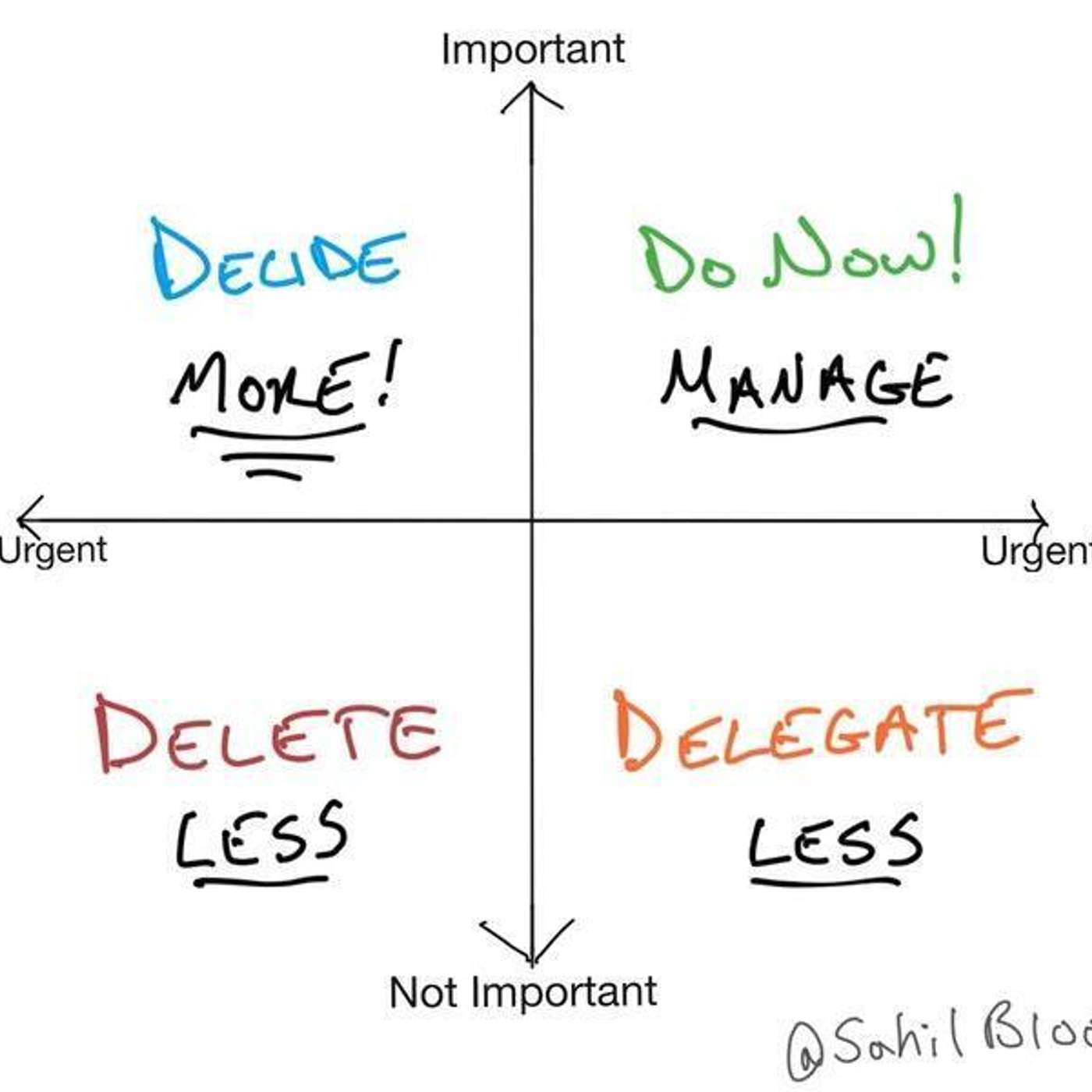
Mar 9, 2022
How to Get Lucky
Welcome to the 930 new members of the curiosity tribe who have joined us since Friday. Join the 73,957 others who are receiving high-signal, curiosity-inducing content every single week. Today’s newsletter is brought to you by Trends ! Trends is my personal cheat code for generating new business and content ideas. It’s a premium newsletter from The Hustle that deconstructs the secret sauce of interesting businesses, side hustles, and emerging opportunities—and gives you the playbook to pounce on them. Even better, membership provides instant access to an exclusive community of 15,000+ entrepreneurs who are building the future. I learn something new from every single issue—it has become a core part of my content and learning engine. A true must-read. I can’t recommend it highly enough. Use the link below to join—no commitment, no catch, cancel anytime! Today at a Glance: Much of what we come to call "luck" is actually the macro result of 1,000s of micro actions. Your daily habits put you in a position where “luck” is more likely to strike. In order to get lucky, you have to remove the “black holes” (anti-luck) from your existence. You have to take actions to expand your personal luck surface area. Today’s piece shares 20 ways to expand your luck surface area. How to Get Lucky “Diligence is the mother of good luck.” - Benjamin Franklin “Luck has nothing to do with it, because I have spent many, many hours, countless hours, on the court working for my one moment in time, not knowing when it would come.” - Serena Williams “Shallow men believe in luck. Strong men believe in cause and effect.” - Ralph Waldo Emerson Luck is an interesting concept. There is certainly “luck” that is uncontrollable—pure and raw. Where you are born, who you are born to, and the base circumstances of your life all fall into this category of luck. But as we push beyond this baseline, the concept of luck morphs into something more impure and fluid. In fact, I believe that much of what we come to call "luck" is actually the macro result of 1,000s of micro actions. Your daily habits put you in a position where “luck” is more likely to strike. Interstellar & Luck Surface Area In the movie Interstellar (slight spoiler if you haven’t seen it!), there’s a scene in which the main characters discuss the habitability of a planet on the edge of a large black hole. The protagonists realize that the proximity to the black hole makes life unlikely to exist on the planet—the black hole absorbed all of the “lucky” events that might have been the spark for life. The asteroids carrying the seeds of life, the chance collisions—none of them could occur because the “luck surface area” of the planet was minuscule given its proximity to the all-absorbing black hole. I think about this scene a lot—it’s a sneakily powerful metaphor for life. In order to get lucky, you have to remove the “black holes” from your existence. You have to take actions to expand your personal luck surface area. In today’s piece, I’d like to get you started on this journey… Here are 20 ways to expand your luck surface area: Be the Dumbest in the Room If you have a choice between entering two rooms, choose the room where you are more likely to be the dumbest one in the room. Once you’re in the room, talk less and listen more. It’s bad for your ego, but it’s great for luck. Good things tend to happen in these rooms. Hang Out With Optimists Pessimists sound smart, optimists get rich. When choosing who to spend time with, prioritize spending time with optimists. Pessimists see the doors that are closed. Optimists see the doors that are open—and probably kick down the closed doors. Pessimists are “black holes” in your life that need to be removed in order for you to get lucky. Get in the Arena There's no luck on the sidelines—the arena is where it strikes. It's lonely and vulnerable, but it's the only path that bears real fruit. When faced with two paths, choose the path that puts you in the arena—where collisions happen, where luck can strike. Furthermore, surround yourself with people who are also in the arena. Sideline rock slingers never get lucky. Write in Public When you write and publish your ideas and insights, you are casting a web of magnets out into the world. Those ideas and insights will attract some people to you—and perhaps repel others. As your web grows, the connections—and luck—compound accordingly. Sahil Note: I am a testament to this fact. My luck has increased significantly since I started writing in public. There are no qualifications or requirements to get started—just energy. Talk to Strangers "Don't talk to strangers" is a classic we are told as children—the residue of which carries into adulthood for far too many people. New relationships spark new ideas, insights, and opportunities—these compound just as well as any financial investment. Broad Network = Broad Luck. "There are no strangers here; Only friends you haven't yet met." - William Butler Yeats Send More Cold Emails Cold emails are responsible for some of the biggest breaks in my life—new mentors, relationships, and career opportunities. Cold emails are a force multiplier for your efforts. Follow the principles in my Cold Email Guide to enhance your odds of success. Always remember: Shooters shoot. Schedule Free Time The idea that free time is bad is one of the greatest lies you’ve been told. In investing, it’s often said that cash is a call option on future interesting investments. Well, in life, I believe that free time is a call option on future interesting opportunities. When you have free time, you have the headspace to pursue new ideas and go down rabbit holes. Plan for more of it. Ruthlessly Eliminate Negativity Everyone has a few negative people in their circle. They tell you to be realistic. They laugh at your ambition. They argue. Eliminate this negativity from your life. It's a boat anchor—a major black hole—cut the damn line and run away from it as fast as you can. Negative people are quite literally the anti-luck. Embrace the Unexpected You should spend your 20s saying yes to almost everything. Saying yes puts you into uncomfortable situations that lead to new relationships, opportunities, and growth. These unexpected moments are luck-rich. Embracing them is how you capitalize. Hustle Hard When you have a bias for motion, good things happen. You create more random collisions in your ecosystems—it’s like chaos theory. A bit of hustle goes a long way. “There’s luck through persistence, hard work, hustle, and motion. This is when you’re running around creating opportunities. You’re generating a lot of energy, you’re doing a lot to stir things up. It’s almost like mixing a petri dish or mixing a bunch of reagents and seeing what combines. You’re just generating enough force, hustle, and energy for luck to find you.” - Naval Ravikant Trust the Weekend Test "What the smartest people do on the weekend is what everyone else will do during the week in ten years." - Chris Dixon Observe the weekend project...
Mar 1, 2022
A Primer on SWIFT & Sanctions
Welcome to the 498 new members of the curiosity tribe who have joined us since Friday. Join the 72,546 others who are receiving high-signal, curiosity-inducing content every single week. Today’s newsletter is brought to you by Rows ! After spending 7+ years in traditional finance, I had Chronic Excel Fatigue–the result of countless hours spent wrestling with the dated, legacy technology that hasn’t been updated since 2006! Fortunately, I discovered Rows—spreadsheets, reimagined. Rows is a truly magical product experience. It allows you to seamlessly pull data on stocks, crypto and more, and instantly integrate with services like Stripe, Google Analytics, Twitter, Salesforce, Instagram, Facebook and public databases like Crunchbase and LinkedIn. Rows is one of the most insane new product experiences I have had in recent memory. I use Rows for everything from managing my Startup Portfolio , social analytics, fund investing, and LPs to tracking household budgets and personal finance. I may never open Excel again. For your next spreadsheet, give Rows a try. You won’t be disappointed. Join thousands of teams that have stepped up their spreadsheet game with Rows. Today at a Glance: Economic sanctions fall into the category of economic statecraft—the use of financial levers to drive desired geopolitical outcomes. They can be broadly defined as any planned commercial or financial penalties applied by one or more countries on another country, group, organization, or individual. The goals of the sanctions include constraining cross-border money flows that are necessary for financing a long-term war effort, punishing the oligarchs who support Putin and his war efforts, depleting Russia’s financial reserves, and creating political unrest within Russia that puts Putin under pressure. While the base package of sanctions was considered standard, the weekend announcements of a cutoff from SWIFT and a Central Bank reserve freeze is potentially much more damaging to Russia and Putin. A Primer on SWIFT & Sanctions “There are decades where nothing happens, and there are weeks where decades happen.” — Vladimir Lenin The world is in a dramatically different state since you last received a deep-dive piece from me just one week ago. Russia’s invasion of Ukraine has tragically plunged countless lives into chaos and encouragingly rallied much of the world to support the besieged Ukrainians. In the vein of support, I will be donating the proceeds from today’s newsletter to UNICEF: Protect Children in Ukraine . The situation is an intensely complicated one. There are two wars being waged here: a military war and an economic war. Today, I’d like to talk about that economic war and provide a simple breakdown of the most important weapons involved. I hope this piece makes you feel more well-informed in the days and weeks ahead. A Brief History of Sanctions Economic sanctions have become a staple of modern statecraft. Economic sanctions fall into the category of economic statecraft—the use of financial levers to drive desired geopolitical outcomes. They can be broadly defined as any planned commercial or financial penalties applied by one or more countries on another country, group, organization, or individual. They are not new. Most historians agree that the first formal economic sanctions were in 432 B.C., when Athens restricted merchants from a rival city-state called Megara from participating in its marketplaces. The action choked off economic activity in Megara—the sanctions were highly-effective. Fast forward several millennia to World War I and economic sanctions had become a core tool in the geopolitical toolkit. A prolonged naval blockade by the Allies was used to restrict the flow of goods to Germany and the other Central Powers. As the 20th century progressed, sanctions were used time and again—the industrial logic was that their potential dire impact on an economy would cause would-be aggressors to think twice before taking military action. Unfortunately, this didn’t take into account the human impact of the collateral damage of these sanctions, which was often devastating. In the post-9/11 world, the increased awareness of this human impact gave rise to so-called “targeted” sanctions—sanctions specifically designed to mitigate collateral damage and have precise impact. If general sanctions had been a shotgun blast historically, targeted sanctions were designed to be a sniper shot. This is largely where we are today and how we got here. The U.S. and Western world continue to make heavy use of sanctions due to broad global reliance on the dollar for trade and commerce. With that history in mind, let’s turn to our present situation… The Russia Sanctions Over the weeks preceding Russia’s formal invasion of Ukraine, as its military aspirations became increasingly well-understood, the U.S. and Western world began preparing its financial response. There are several interconnected goals of the sanctions package here: Constrain cross-border money flows that are necessary for financing a long-term war effort. Punish the oligarchs who support Putin and his war efforts, many of whom live and work outside of Russia. Deplete Russia’s financial reserves (reduce its cushion). Create political unrest within Russia that puts Putin under pressure. Increase the cost—actual and perceived—of an international company doing business in Russia. I would segment the potential response into two core tiers: Tier I: Sanctions on Russian banks, companies, and oligarchs. Tier II: A cutoff from SWIFT and Central Bank reserve freeze. Tier I was table-stakes—effectively the standard operating procedure of the West in such a situation. Tier II was considered much less likely, with many media outlets calling the cutoff from SWIFT the economic “nuclear button” in this situation. After the invasion began, when it became clear that Putin planned to press forward, the U.S. and EU quickly progressed from Tier I to Tier II. Over the weekend, plans were announced to cut many Russian banks off from the SWIFT system and freeze Russia’s access to foreign currency reserves held in the West. Let’s talk about what this all means and why it’s so impactful… SWIFT SWIFT is short for the Society for Worldwide Interbank Financial Telecommunications. It’s a global cooperative of financial institutions based in Belgium. SWIFT was formed in 1973 when 239 banks from 15 countries came together to establish a way to handle cross-border payments. Today, SWIFT connects more than 11,000 financial institutions across 200+ countries. SWIFT doesn’t actually do any funds transfer or holding of funds, but it’s a critical part of the communication infrastructure that enables cross-border money flows. The best way to think about SWIFT is like a simple email or messaging collaboration system enabling secure messages across its member banks—like a sort of Slack for international banks. SWIFT sees an average of 40 million messages a day—including around orders, payment confirmations, FX exchanges, and trades. These messages provide a form of reliable, safe communication for international banks to execute tr...

Feb 23, 2022
15 Life Rules Worth Breaking
Welcome to the 577 new members of the curiosity tribe who have joined us since Friday. Join the 71,548 others who are receiving high-signal, curiosity-inducing content every single week. Today’s newsletter is brought to you by Revelo ! If you’re a growing technology company, chances are you’re struggling to find talented developers right now. Revelo helps companies like GitHub, Intuit, and Carta hire faster, so they can grow faster! It’s a talent platform that matches you with vetted remote developers in Latin America who work in US time zones. It offers a full-suite platform that covers payroll, benefits, compliance, and more, allowing you to hire full-time remote developers without the headaches. Get matched with vetted candidates within 3 days—guaranteed. They even offer a 100% risk-free 14-day trial. If you’re not satisfied, you pay nothing. SPECIAL OFFER: Revelo is offering Curiosity Chronicle subscribers 20% off the first 3 months of any hire! Use the link below to take advantage of this crazy deal! Today at a Glance: “The young man knows the rules, but the old man knows the exceptions.” - Oliver Wendall Holmes, Sr. As children, we are taught to live by an ever-expanding set of rules. The rules keep us safe. They limit our downside during a fragile period of our lives. They also limit our upside, as they create artificial constraints on our movement and collisions as we travel through the universe. Rules are good—but just like the old man in the quote above, you have to know when to bend and break them. 15 Life Rules Worth Breaking I’d like to open with one of my favorite quotes of all time: “The young man knows the rules, but the old man knows the exceptions.” - Oliver Wendall Holmes, Sr. Read that again. So much wisdom contained in such a short, concise statement. As children, we are taught to live by an ever-expanding set of rules. This is (mostly) good—it gives us a concrete, stable way to view the increasingly complex, dynamic world that we have entered. The rules keep us safe. They limit our downside during a fragile period of our lives. The problem? They also limit our upside, as they create artificial constraints on our movement and collisions as we travel through the universe. They force us to walk down a narrow path with bumpers on both sides—they eliminate the flashes of serendipity, the asymmetries that define the lives of the greatest among us. Rules may limit your risk, but they also limit your reward. Rules are good—but if you’re looking to play asymmetric games—those with low downside and uncapped upside—you have to know when to bend and break them. Here are 15 life rules worth breaking: Wait for the Perfect Moment This rule has paralyzed would-be action-takers for generations. The reality: there is no such thing as the perfect moment. Sometimes you just have to open the door, jump out of the plane, and hope you packed the parachute tight. You Have to Work Hard to Succeed Hard work is important—but it's relative, not absolute. In the Digital Age—when creative and inspired work stands out and is rewarded—what you work on is more important than how hard you work. Play your game, not theirs. You’ll play it better. Become an Expert, Not a Generalist Society celebrates experts in any given field. But as David Epstein finds in Range, many experts succeed because of the range of pursuits that preceded their main endeavor. Become a polymath. Generalize first, specialize later. Let Things Play Out This isn't a movie that you're watching on your TV. You are not a passive observer of your own life. There are times to sit back, and there are times to push. Learn to identify the difference and never be afraid to provide a little push. Don't Ask Too Many Questions Children are born with an insatiable curiosity, but somewhere along the line, we are told to stop asking questions. The most successful people in the world never listened—they broke this rule. Ask questions. Be curious. Be interested. If It Ain't Broke, Don't Fix It Complacency will always lead you down a bad path. Just because something isn't broken, doesn't mean it can't be improved. Continuous improvement is the way. Focus on small, incremental improvements—day in, day out. Get a Stable Job This might have been a good rule in the Industrial Age, but its foundation is crumbling in the Digital Age. The way we work is fundamentally changing—opportunities for creative, unstructured career paths are endless. Find your Zone of Genius and operate in it. Stay in Your Lane A rule of the fixed, stagnant, and hierarchical—often used to keep employees in line. It's great to double down on your strengths, but never let external pressures prevent you from expanding your domains. Growth mindsets rule the world. Think Through Every Big Decision We are told to methodically consider the pros and cons of every big decision in our lives. As a result, many of us have decision paralysis. With big decisions, you're actually better off making them fast—let your gut and instincts guide you. Don't Talk to Strangers A classic we are told as children—the residue of which carries into adulthood for far too many. When we open up to those around us, we stimulate, learn, and grow. "There are no strangers here; Only friends you haven't yet met." — William Butler Yeats Get a Four-Year Degree For decades we told children they had to attend a traditional four-year college, or else they were a failure. That is a lie—and we loaded a generation with student debt because of it. Four-year degrees make sense for many, but not for all. Follow YOUR path. Save Now to Enjoy Later All mainstream financial advice tells you one thing: save now to enjoy later. I agree, with a caveat... You have to enjoy the prime of your life! Now and then, it's ok to save a bit less to go to that concert with your friends. Find your balance. Have a Plan & Stick to It It's important to have a plan. But as Mike Tyson famously said, "Everyone has a plan until they get punched in the mouth." Plans have to be dynamic—and punch-proof! You'll only go as far as your ability to absorb and pivot on the fly. Don't Be Self-Promotional It's easy to condemn self-promotion when you're at the top. But when you're first starting out, you may be the only one in a position to promote. When you put in the work, energy and love, share it with the world! Genuine pride is infectious. Be Realistic It's not up to anyone else to decide what is possible for you or your life. Are there constraints outside of your control? Sure. Is that a reason to settle? Hell no. As Will Smith says in Pursuit of Happyness: "If you want something, go get it. Period." There you have it: 15 life rules worth breaking. I’d love to hear from you. What common rules am I missing? Comment below! If you enjoyed this, consider sharing it with your network so I can continue to grow this amazing curiosity tribe. Thank you for joining me on the journey! Until next time, as always, stay curious, friends!

Feb 16, 2022
The Most Valuable Razors
Welcome to the 542 new members of the curiosity tribe who have joined us since Friday. Join the 70,546 others who are receiving high-signal, curiosity-inducing content every single week. Today’s newsletter is brought to you by Rows ! After spending 7+ years in traditional finance, I had Chronic Excel Fatigue–the result of countless hours spent wrestling with the dated, legacy technology that hasn’t been updated since 2006! Fortunately, I discovered Rows—spreadsheets, reimagined. Rows is a truly magical product experience. It allows you to seamlessly pull data on stocks, crypto and more, and instantly integrate with services like Stripe, Google Analytics, Twitter, Salesforce, Instagram, Facebook and public databases like Crunchbase and LinkedIn. Rows is one of the most insane new product experiences I have had in recent memory. I use Rows for everything from managing my Startup Portfolio , social analytics, fund investing, and LPs to tracking household budgets and personal finance. I may never open Excel again. For your next spreadsheet, give Rows a try. You won’t be disappointed. Join thousands of teams that have stepped up their spreadsheet game with Rows. Today at a Glance: Razors are rules of thumb that help simplify decisions and drive better outcomes. When used appropriately, they can meaningfully improve the quality of your decision-making (and reduce stress along the way). The article below provides 20+ valuable razors, when to use them, and a few additional notes from the author. The Most Valuable Razors The Feynman Razor Named after famed American theoretical physicist Richard Feynman—the Feynman Razor is a simple recognition that complexity and jargon are often used to mask a lack of deep understanding. If you can’t explain it to a 5-year-old, you don’t really understand it. If someone uses a lot of complexity and jargon to explain something to you, they probably don’t understand it. Use It When: You’re faced with a hand-waving, jargon-heavy explanation to a simple question. The Smart Friends Razor If your smartest friends are all interested in something, it’s worth paying attention to. If that something seems crazy, it's worth paying a lot of attention to. The passions of the smartest people in your circles are a looking glass into the future. Use It When: Your smart friends have mentioned something that sounds crazy 3+ times. Sahil Note: I’ve ignored this signal on two occasions: Bitcoin (2013) and NFTs (BAYC). Both cost me a lot of money. I’ll never make that mistake again, and I suggest you don’t either. The Rooms Razor If you have a choice between entering two rooms, choose the room where you are more likely to be the dumbest one in the room. Once you are in the room, talk less and listen more. Bad for your ego, great for your growth. Use It When: Deciding what to do on your next free night out. The Man in the Arena Razor It's easy to throw rocks from the sidelines—it's hard to step into the arena. It's lonely and vulnerable, but it's where growth happens. When faced with two paths, choose the path that puts you in the arena—choose the path with real skin in the game. Use It When: Choosing how to approach a new and scary endeavor. Sahil Note: This is often a very challenging one, but it’s the one I feel most strongly about. It’s so much more comfortable to stay on the sidelines—it’s easy to convince yourself that it’s the safe or appropriate path. Ultimately, it’s very hard to create asymmetric outcomes on the sidelines. You have to be in the arena if you want to reap the outsized rewards. The Serendipity Razor Some of what we call luck is actually the macro result of 1,000s of micro actions. Your daily habits put you in a position where luck is more likely to strike. When choosing between two paths, choose the path that has a larger serendipity surface area. Use It When: Choosing what to do on a free night (when you have some energy). Sahil Note: The topic of “serendipity surface area” is one I plan to write about in greater depth in the future. It’s hard to get lucky watching TV at home. It’s (relatively) easy to get lucky when you’re engaging with people, interacting, and learning—physically or digitally. It’s possible to put yourself in a position to get lucky. The Uphill Decision Razor When faced with two options, choose the one that’s more difficult in the short-term. Naval calls this making "uphill decisions”—overriding your biological pain avoidance instinct. It's worth it—short-term pain creates compounding long-term gain. Use It When: Deciding between two near-term development pathways. The Rare Opportunity Razor There is a rare class of opportunities that the average person will get 0 to 1 chances at in their lifetime. They look scary, but have insanely asymmetric return profiles. If you are fortunate to be faced with one of these opportunities, jump at it. Use It When: Making a decision on that one big opportunity. The Buffett Reputation Razor “It takes 20 years to build a reputation and five minutes to ruin it. If you think about that, you'll do things differently.” - Warren Buffett Your reputation is built over decades, but it's made of glass, not stone. Remember that—act accordingly. Use It When: You’re placed in that one tricky situation that puts your integrity on the line. The Narrative Fallacy Razor Humans are storytelling creatures—we weave together sequences of events to identify cause-and-effect when the reality is just luck. When reading stories of success, it's fair to assume they downplay the role of luck as a contributing factor. Use It When: You find yourself leveraging stories of the success of others to inform your own decision-making. Sahil Note: Survivorship Bias is rampant in the media. We only hear the stories of success, so we fail to recognize the true base rates. Be aware of the bias and make decisions accordingly. The Time Billionaire Razor Time is our most precious asset. When choosing between two paths, choose the path that places the highest appreciation on the value of your time. This is not about money—it's about leverage. The path where you spend more time in your Zone of Genius. Use It When: You find yourself making inefficient time for money trades. The Opinion Razor "I never allow myself to have an opinion on anything that I don’t know the other side’s argument better than they do." - Charlie Munger Opinions are earned, not owed. If you can't state state the opposition's argument clearly, you haven't earned an opinion. Use It When: You are inclined to enter into an argument over something you don’t really understand. Sahil Note: The most common pushback I get with this one is that Charlie Munger clearly doesn’t follow his own...
Feb 9, 2022
How to Retain What You Learn
Welcome to the 1,116 new members of the curiosity tribe who have joined us since Friday. Join the 68,953 others who are receiving high-signal, curiosity-inducing content every single week. Today’s newsletter is brought to you by Trends ! Trends is my personal cheat code for generating new business and content ideas. It’s a premium newsletter from The Hustle that deconstructs the secret sauce of interesting businesses, side hustles, and emerging opportunities—and gives you the playbook to pounce on them. Even better, membership provides instant access to an exclusive community of 15,000+ entrepreneurs who are building the future. I learn something new from every single issue—it has become a core part of my content and learning engine. A true must-read. I can’t recommend it highly enough. Use the link below to join—no commitment, no catch, cancel anytime! Today at a Glance: Learning is a meta-skill—arguably the most important meta-skill. School taught us many things, but unfortunately, how to learn was not one of them. The retention framework I use involves five steps: (1) Inspired Consumption; (2) Unstructured Note-Taking; (3) Consolidation; (4) Analogize; and (5) Idea Exercise. The structure is sequential, but its practice is often dynamic & iterative. Spaced Repetition is the most formal—and powerful—idea exercise method. It’s a method in which information is consumed at increasing intervals until it's committed to long-term memory. It leverages cognitive science—the way our brains work to convert short-term to long-term memory—to help you retain newly-consumed information. How to Retain What You Learn Learning is a meta-skill—arguably the most important meta-skill. School taught us many things, but unfortunately, how to learn was not one of them. Learning is how we adapt to our changing environments, circumstances, and situations. Learning allows us to create new “maps”—and edit old ones—in order to navigate the dynamic, highly-complex world with confidence. Growth is fundamentally driven by the long-term accumulation and compounding of usable learning. We accumulate and compound this learning through consumption and retention. Consumption is the inputs—what comes in. Retention is what remains after any leakage. Imagine your brain like a bathtub. The faucet is the entrance, the drain is the exit. Everything you research and consume flows in through the faucet. Everything you forget flows out through the drain. I’ve written a lot about the faucet in the past— here and here most recently—but I’ve never talked about the drain. Let’s fix that today—let’s talk about learning retention. Learning from The Matrix I love The Matrix. It’s not just sci-fi, there is a lot we can draw from it about learning and retention. Bear with me… In one of the early scenes of the first film, Keanu Reeves’ character—Neo—is plugged into the system and has a program uploaded into his brain. He has a moment of shocked revelation where he looks up and says, “I know kung fu.” He proceeds to demonstrate his new mastery in a virtual sparring room. Most importantly, Neo never forgets this new skill. To be sure, this isn’t that crazy an idea. Our brains are just software. When we learn, we are updating that software. But in the real world, though, our software is flawed and buggy—we forget important things or overwrite old data all the time. Our best bet? Develop a strategy for retention that is grounded in science. An approach to retention that is as integrated and comprehensive as our approach to learning. We may not become Neo, but we can become more Neo-like. The Retention Framework Here's a tactical framework for improving your retention… The retention framework I use involves five steps: Inspired Consumption Unstructured Note-Taking Consolidation Analogize Idea Exercise The structure is sequential, but its practice is often dynamic & iterative. Let's walk through each of the steps... Step 1: Inspired Consumption Retention starts with consumption. I bucket consumption into two types: Forced: Compelled, either internally or externally. Inspired: Driven entirely by your internal inspirations. If you've ever been in school, you know what forced consumption looks like. Forced consumption is the book you're told to read, despite the topic being of zero interest to you. It's the foundation of much of the traditional education system—yet another reason why so many of us are bad at learning retention! Inspired consumption is when you feel genuinely pulled to consume—when you enjoy the consumption process. It requires the willingness to put ego aside and "quit” more books (or content) when that genuine inspiration fades. Inspired consumption is important for retention for two key reasons. Inspiration is a precursor to flow. More flow state, more retention. Inspiration fuels engagement. Engage with the content, retain the content. Inspired consumption is the foundation of retention. Step 2: Unstructured Note-Taking When you start consuming, you should have a note-taking system in front of you. Sahil Note: I use Notion for my note taking, but there are probably 10 other options out there (and I’m currently evaluating Obsidian as another option for more networked notes). The old fashioned way—pen and paper—works too, with the caveat that searchable notes are ideal in my opinion. On the first pass through the material, keep your notes as unstructured and free-flowing as possible. What to take note of: Foundation-building ideas Novel insights Things that made you go “hmmm” or “wow!” Connections you identified to other topics Questions or confusion Strong reactions you had to new information Remember: This first pass of notes is intended to be unstructured. The simple act of writing helps ideas stick. Step 3: Consolidation Zoom out and review your unstructured notes. What are the most interesting, novel insights or ideas? What are the most confusing? Consolidation is where you re-consume content with a specific focus on building structure around your notes in these particular areas. If unstructured note-taking created a bunch of dots, consolidation is where you start connecting them. It doesn't have to be perfect, but you should start to form a more refined picture as you re-consume the content for this purpose. Consolidation is when knowledge begins to stick. Step 4: Analogize Analogizing is the most effective—and least well-known—retention tool. This is where you take your newly-learned information and place it within your broader mental maps. You make clear comparisons and connections between newly-learned and existing information. Here's a real example from my writing to illustrate how this works: I did a bunch of research on Morris Chang and Taiwan Semiconductor Manufacturing Company for a piece. During my consolidation, it struck me that TSMC's novel pure-play chip manufacturer model had enabled independent chip designers to start their own companies.
Feb 2, 2022
Diamonds Aren't Forever: The Story of De Beers
Welcome to the 1,151 new members of the curiosity tribe who have joined us since Friday. Join the 67,557 others who are receiving high-signal, curiosity-inducing content every single week. Today’s newsletter is brought to you by Babbel ! One of my goals for 2022 is to learn a new language . Studies show that learning a language increases the volume and density of gray matter, the volume of white matter, and brain connectivity. Babbel is the tool I’m using to achieve this goal—it’s one of the world’s top language learning platforms and prepares you for situations you’ll actually encounter in real life. I’ve been blown away by the experience thus far—lessons are just 10 minutes and you can start having basic conversations in the new language in just 3 weeks . Plus, you get access to podcasts, games, videos and more. It’s a great household activity to enjoy with your partner and your kids! For a limited time, you can join me on this journey and get up to 60% off your subscription by using the link below. Take advantage of this amazing offer and get your language learning on today! Today at a Glance: De Beers created the modern diamond industry through the use of market manipulation, psychological hacks, and clever marketing. At its height, De Beers had direct or indirect control of the majority of the global diamond supply chain, allowing it to wield its influence to manage prices. “A Diamond is Forever” was the genius marketing campaign that created the diamond industry as we know it—convincing generations of men and women (1) that diamonds are a show of love—and that the size and quality of the diamond is proportional to the size and quality of the love and (2) that courtship and engagement involve a diamond. Broad-based pushback against the industry and its roots has led to the rise of alternatives—like lab-grown diamonds—but diamonds remain the standard show of love in most Western cultures. Diamonds Aren’t Forever The mandate of this newsletter is simple: I explore my curiosity and share what I learn along the way. To be clear, this is an intentionally-broad mandate—I don’t believe that curiosity follows any fixed lesson plan. The topics I will continue to cover include: Growth and decision-making Startups, investing, business, and finance Writing and storytelling Marketing Life The one constant across all of this: I can guarantee you will learn something new and interesting from each and every piece I share. One new idea or insight that will make you smarter or spark your curiosity to go deeper. This is a learning-rich journey and I am fortunate to have almost 70,000 of you along for the ride. We’re just getting started. This felt like a fitting preface to today’s piece. Why? Well, every now and then, a story comes along that grabs my attention and simply won’t let go until I write about it. The story of De Beers and the making of the modern diamond industry is one of those stories. It stands out because it’s not a clear fit for any one of those buckets above—rather, it’s a fit for all of them! So sit back, grab a coffee (or whiskey), and let’s go down this rabbit hole together… The Beginnings The story of De Beers starts well before the international giant existed. It may be difficult to believe in the current context, but for most of history, diamonds were not a particularly important gem. Largely found in parts of India and Brazil, they were considered rare and beautiful, but had little intrinsic value due to their lack of industrial or monetary use cases. Diamonds were a vanity item of the ultra-ultra-rich—a very niche market. But in 1870, everything began to change. Massive diamond stores were discovered in South Africa near the Orange River, setting off the first diamond rush. South Africa was officially a British colony at the time, which meant that British investors immediately flocked to the region and commissioned labor—both forced and paid—to begin building the diamond mines. It quickly became clear that the new South African mines would be producing never-before-seen quantities of diamonds. The British investors grew worried. In a free market, the glut of supply—and associated dent in the perception of scarcity—would send the price of diamonds into free fall. Given diamonds did not have any major industrial use cases to buoy demand, the perception of scarcity was critical to their price and desirability. So in 1888, one British financier and mining operator proposed a plan… The Making of De Beers Cecil Rhodes was born in England in 1853, but after a sickly adolescence marked by severe asthma, his father sent him to South Africa, a climate he believed would be better for his health. Rhodes entered the diamond industry at age 18 in 1871 and began to systematically acquire and consolidate mining operations in South Africa. By 1888, he had built one of the most powerful mining operations in the region. But the diamond industry was in turmoil, with wild price fluctuations and uneven demand. Sensing an opportunity, Cecil Rhodes and his business partners led a push to merge and consolidate the various South African mining companies. His pitch: continued competition meant death; consolidation meant survival. The new company—or cartel, as it were—was named De Beers Consolidated Mines, Ltd. Its explicit goal: to manage diamond production and continue to perpetuate the perception of scarcity and desirability that was so important to the price of the stones. De Beers was officially born. “A Diamond is Forever” Econ 101 Lesson of the Day: There are two sides to every market—supply and demand. The story of De Beers is unique in its practical application of the manipulation of both… Supply-Side Manipulation In the 20th century, De Beers methodically expanded its influence over the entire diamond supply chain. In addition to having direct control over diamond mining and production, it began to accumulate direct or indirect control of the major diamond trading companies across England, Switzerland, Israel, Belgium, Holland, and Portugal. It was widely known and understood that De Beers controlled the diamond industry. With control over production and distribution, De Beers was able to control the stock and flow of diamonds in the market, effectively creating direct control over prices. While other commodities saw wild price swings, diamonds exhibited no such volatility, creeping steadily upwards over time. But many cartels throughout history have managed to manipulate supply—demand is much mo...

Jan 26, 2022
First Principles Thinking
Welcome to the 600 new members of the curiosity tribe who have joined us since Friday. Join the 66,096 others who are receiving high-signal, curiosity-inducing content every single week. Today’s newsletter is brought to you by Revelo ! If you’re a growing technology company, chances are you’re struggling to find talented developers right now. Revelo helps companies like GitHub, Intuit, and Carta hire faster, so they can grow faster! It’s a talent platform that matches you with vetted remote developers in Latin America who work in US time zones. It offers a full-suite platform that covers payroll, benefits, compliance, and more, allowing you to hire full-time remote developers without the headaches. Get matched with vetted candidates within 3 days—guaranteed. They even offer a 100% risk-free 14-day trial. If you’re not satisfied, you pay nothing. SPECIAL OFFER: Revelo is offering Curiosity Chronicle subscribers 20% off the first 3 months of any hire! Use the link below to take advantage of this crazy deal! Today at a Glance: First principles thinking is the most powerful framework for deconstructing complex problems, generating creative solutions, and driving non-linear outcomes. A first principle is a basic, foundational assumption—one that cannot be deduced or broken down any further. In simple terms, think of first principles as foundational truths that do not require any additional assumptions. As a simple rule of thumb: when speed and efficiency are critical, use reasoning by analogy; when creativity and innovation are required, use first principles thinking. To leverage first principles thinking, use Socratic Questioning to drill down to the foundational truths of a problem. Once you uncover them, you can begin to slowly build up to a more creative, imaginative solution. First Principles Thinking The most successful entrepreneurs, investors, and scientists in the world often reference first principles thinking as having been critical to their success. Run a simple Google search of the term and you’ll find countless articles, videos, and quotes from an array of billionaires and Nobel Prize winners who all point to the importance of first principles thinking. Accordingly, first principles thinking has become something of a buzz-phrase—often talked about, yet rarely understood (let alone employed effectively). In this post, I’d like to provide a simple, intuitive breakdown of first principles thinking: what it is, how it works, when to use it, and how to leverage it in your problem solving journey. Introduction to First Principles First principles thinking is the most powerful framework for deconstructing complex problems, generating creative solutions, and driving non-linear outcomes. Let’s start with the basics: what is a first principle? Aristotle—the Ancient Greek philosopher, polymath, and student of Plato—defined a first principle as "the first basis from which a thing is known." A first principle is a basic, foundational assumption—one that cannot be deduced or broken down any further. In simple terms, think of first principles as foundational truths that do not require any additional assumptions. They are the base layer—the atomic unit. First principles thinking—sometimes referred to as "reasoning from first principles”—is a problem-solving and innovation framework that requires you to deconstruct a complex problem down to these most foundational elements. The aim: to ground yourself in the foundational truths and build up from there. Elon Musk explained this in a 2013 interview : “First principles is kind of a physics way of looking at the world. You boil things down to the most fundamental truths and say, ‘What are we sure is true?’ … and then reason up from there.” This method runs in contrast to our natural wiring. When we encounter challenging problems, our tendency is to rely on base level assumptions we have been told are true (or we believe to be true). Why? It’s quick and easy to do. This is called "reasoning by analogy”—it leads to solutions that are much like something else. Slight modifications or iterations on an existing solution. The unimaginative, linear solutions that closely resemble what has been done before. To be sure, it can be very useful when speed is the priority. Moving fast has its advantages at times—like if our ancestors were trying to avoid being eaten by a lion! But reasoning by analogy falls short when dealing with complex problems requiring creative, imaginative solutions. Imagine the solution to a problem as a house: The foundation of the house is the assumptions upon which the ultimate solution will rest. If it's a shoddy, quickly-built foundation, the house may collapse. Even if it remains standing, the architect and builder will know that they are limited in what they can build on top of it. If it's a sturdy, deliberately-built foundation, the house will thrive. The architect and builder can get creative with what they build on top of it, as they know the base is strong. First principles form that sturdy, deliberately-built foundation for the house. Elon Musk & SpaceX To bring this to life, let's look at a classic example of first principles thinking in action: Elon Musk & SpaceX. First off, what was the problem? Sending a rocket to Mars to begin the process of making humans an interplanetary species. Yes, I think that meets the bar of being complex… As he began digging in to develop a solution, Elon Musk quickly discovered the cost of buying a rocket was astronomical (bad pun intended)—$65 million. It was not only financially untenable—SpaceX was a startup at the time—it was also grounded in assumptions of how rockets have always been built and what they should cost. Taking stock on the situation: Complex Problem ✅ Creativity > Speed ✅ So he turned to first principles thinking: “Physics teaches you to reason from first principles rather than by analogy. So I said, okay, let’s look at the first principles. What is a rocket made of? Aerospace-grade aluminum alloys, plus some titanium, copper, and carbon fiber. Then I asked, what is the value of those materials on the commodity market? It turned out that the materials cost of a rocket was around two percent of the typical price.” Based on this upfront analysis, SpaceX began building its own rockets and software systems that would dramatically alter the future of the space economy. Rather than accepting the established "truths" about the cost of a rocket, Musk grounded his problem solving in first principles. Today, SpaceX rockets are doing extraordinary things at a fraction of the historical cost. Furthermore, Elon Musk and SpaceX shattered the deeply-engrained beliefs about the costs of doing business in space, which has unlocked hundreds of other entrepreneurs and companies to build new, innovative solutions for the future. The dreams of a Mars voyage in our lifetimes are alive and well… How to Use First Principles Thinking Ok, now that we have covered the theory, let’s get into the practice. How can YOU leverage first principles thinking to create better outcomes? First—and most importantly—determine if first principles thinking is necessary for your given problem, or if reasoning by analogy is a better fit. As a simple rule of ...
Jan 19, 2022
The Most Powerful Ideas
Welcome to the 1,441 new members of the curiosity tribe who have joined us since Friday. Join the 64,851 others who are receiving high-signal, curiosity-inducing content every single week. Today’s newsletter is brought to you by Athletic Greens ! On last week’s episode of the Where It Happens podcast, we interviewed new Athletic Greens President & COO Kat Cole. Athletic Greens is the one product I use every single day. I have been taking their halo product—AG1—first thing when I wake up for the last 5+ years. It’s my personal nutritional insurance policy. Special Offer: Athletic Greens is offering a free 1-year supply of Vitamin D (for those dark winter months) and 5 travel packs with all new orders to Curiosity Chronicle subscribers. Use the link below to take advantage of this offer! Today at a Glance: In the normal course of my content consumption habits, I come across a steady stream of learnings, ideas, and connections, some of which have an asymmetrical impact on my life. In this post, I share a list of 20+ high-impact ideas on business, investing, growth, and life, all of which were learned or surfaced in the last year. I plan to begin sharing a regular quarterly post of new ideas to bring you along for this learning journey. The Most Powerful Ideas I am an avid content consumer. Content consumption is a core part of my “job”—a critical element of my personal flywheel. I have built a “content engine” (more on that in a future post!) that provides a steady stream of learnings, ideas, and connections, all of which amplify the quality of my investing, business building, and content creation pursuits. In this post, I’d like to share some of the most powerful ideas I have come across over the last year, with additional notes and insights where helpful. So let’s dive right in: 20+ high-impact ideas on business, investing, growth, and life… Time Billionaire Time is our most precious asset. When you're young, you are a "time billionaire”—rich with time. Too many people fail to realize the value of this asset until it is gone. Treat time as your ultimate currency—it’s all you have and you can never get it back. Sahil Note: When I first learned this concept—from a Tim Ferriss podcast with Graham Duncan—it hit me hard. I had spent most of my life prioritizing the value of money or power, when the reality is that time is our most valuable asset, and the only one that cannot be bought or sold. It forced me to think deeply about how I want to spend my time, who I want to spend it with, and why I want to pursue certain paths over others. I would encourage you to think deeply about the same… Darkest Hour Friends It's easy to be there for people to celebrate their wins. It takes character to show up for them in their darkest hour. People never forget those who supported them when the chips were down. I call these your “darkest hour friends”—find them, treasure them. Engineered Serendipity Some of what we call "luck" is actually the macro result of thousands of micro actions. Your daily habits can put you in a position where "luck" is more likely to strike. It's possible to increase your serendipity surface area and engineer your own luck. Sahil Note: Serendipity surface area is an interesting concept. When you’re on a “track” in your life or career, you are walking on such a narrow path that very little luck can hit you. The more you open yourself up to the world—to new experiences and people—the more you expand your serendipity surface area. There’s quite literally more area for luck to strike. Leverage "Give me a place to stand and a lever long enough and I shall move the world." - Archimedes Leverage is anything that multiplies the force of your inputs. Building systems that provide leverage on your time, money, and energy will allow you to create a life you deserve. Sahil Note: Leverage can cut both ways. When used too aggressively, it can be a negative (just ask Archegos or the founders at Long-Term Capital Management). Beware of over-leveraging your life or pursuits! Free Time as a Call Option You've incorrectly been told that free time is bad—hustle culture lied to you. The reality: Free time is a call option on future interesting opportunities. When you have free time, you have the headspace and bandwidth to pursue high-upside ideas. Sahil Note: I have learned that the same idea applies to cash. I used to believe that I had to be fully invested, otherwise I was leaving return/yield on the table. But I later realized that cash is a call option on future interesting opportunities. Having some idle cash allows you to invest in that new idea, pursue a weekend project, etc. It’s worth it. Decentralized Friend Groups There are two types of friend groups: Centralized: one cluster of friends with shared backgrounds & beliefs. Decentralized: small, varied, unconnected clusters of friends. When in doubt, opt for decentralized friend groups. The variety of backgrounds and beliefs is the key to developing independent thought. Sahil Note: I picked this up from my friend George Mack , who I would consider part of one of my decentralized friend groups. The internet affords ample opportunity to build these groups. Join a few Discord servers, share ideas, build a micro-community. There has never been a better time in history to do it. Work Like a Lion 9-5 work culture is a remnant of the Industrial Age—it emphasizes long periods of steady, monotonous work. Most people are not wired to work 9-5. Parkinson’s Law states that work expands to fill the time available for its completion. When you establish fixed hours to do your work, you find unproductive ways to fill it—you work longer, but get less done. In the Digital Age, those who do creative work will stand out and be rewarded. If your goal is to do this inspired, creative work, you have to work like a lion. Wait. SPRINT. Eat. Rest. Repeat. Q1 Relationships All relationships exist on a 2x2 matrix of: How healthy it is How enjoyable it is Q1 relationships are healthy & enjoyable. Focus on spending more energy on your Q1 relationships—cherish them. Scrub the Q4s from your life. Sahil Note: I learned this from my friend Tim Urban , who is one of the deepest thinkers I know. If you aren’t already following him, you should do that ASAP… The Persuasion Paradox Have you noticed that the most argumentative people rarely persuade anyone of anything? The most persuasive people don’t argue—they observe, listen, and ask questions. Argue less, persuade more. Persuasion is an art that requires a paintbrush, not a sledgehammer. Inversion “All I want to know is where I’m going to die, so I’ll never go there." - Charlie Munger The best innovators think forward AND backward. When faced with a challenging problem, reframe it in inverse form—new perspective allows you to solve the problem more creatively. Sahil Note: Inversion is one of my favorite mental models. You can use it for generating new business ideas, solving complex problems, or managing and maintaining healthy personal and professional relationships. The use cases are literall...

Jan 12, 2022
The Feynman Technique: How to Learn Anything
Welcome to the 808 new members of the curiosity tribe who have joined us since Friday. Join the 63,073 others who are receiving high-signal, curiosity-inducing content every single week. Today’s newsletter is brought to you by Revelo ! If you’re a growing technology company, chances are you’re struggling to find talented developers right now. Revelo helps companies like GitHub, Intuit, and Carta hire faster, so they can grow faster! It’s a talent platform that matches you with vetted remote developers in Latin America who work in US time zones. It offers a full-suite platform that covers payroll, benefits, compliance, and more, allowing you to hire full-time remote developers without the headaches. Get matched with vetted candidates within 3 days—guaranteed. They even offer a 100% risk-free 14-day trial. If you’re not satisfied, you pay nothing. SPECIAL OFFER: Revelo is offering Curiosity Chronicle subscribers 20% off the first 3 months of any hire! Use the link below to take advantage of this crazy deal! Today at a Glance: Curiosity and inspiration are perishable—they must be acted upon when they strike. But unfortunately, despite its importance to your career and life, learning is not a skill we’re ever explicitly taught how to approach. The Feynman Technique is a beautiful, intuitive framework for learning literally anything. The process in a nutshell: identify a topic, research it deeply, attempt to explain it to a child, and then study to fill in the gaps. The Feynman Technique Curiosity is unpredictable. It strikes at random—and often inopportune—moments. But it is also notoriously perishable, so it must be acted upon. Let’s assume for a moment that you've been bit by the curiosity bug and are ready to act on it—ready to learn something new and (hopefully) exciting. Now what? Where do you start? What approach do you take? You’re inspired and motivated to learn, but you don’t even know where to begin. Unfortunately, despite its importance to your career and life, learning is not a skill we’re ever explicitly taught how to approach. Let’s fix that… In today’s piece, I’d like to talk about a beautiful, intuitive framework for learning literally anything: The Feynman Technique. Introduction Richard Feynman was an American theoretical physicist born in 1918 in New York City. Feynman was a very late talker—he didn’t utter a word until he was three—but it was clear from a young age that he was extremely observant and intelligent. His parents valued non-consensus thinking—they constantly encouraged young Richard to ask questions and think independently. Feynman taught himself advanced mathematics in his teens and would go on to earn a B.S. from the Massachusetts Institute of Technology and a PhD from Princeton University. He would then become famous for his work in quantum electrodynamics and receive the Nobel Prize in Physics in 1965 for his contributions to the field. So yes, you could say that Richard Feynman was intelligent... But there are a lot of intelligent people in the world. Feynman's true genius was in his ability to convey extremely complex ideas in simple, elegant, digestible ways—to abstract complexity and deliver simplicity. He had observed at a young age that complex language is often used to mask a lack of deep understanding. As a rule of thumb, if someone uses a lot of acronyms and jargon to explain something to you, they probably don’t understand it very well themselves. We've all encountered this type of “expert” at one time or another… What was Richard Feynman’s secret? He had developed a learning framework—accidentally or intentionally—that forced a deep, elegant understanding of a topic that most people never achieve. The Feynman Technique: How It Works The Feynman Technique can be broken down into five key steps: Set the Stage Read & Research ELI5 (Explain It To Me Like I'm 5) Assess & Study Organize, Convey & Review Let's walk through each step, including notes on how I personally implement each one in my own learning processes… Step 1: Set the Stage What’s the topic you want to learn? Starting with a blank page, write the topic at the top and jot down everything you know about it. For some topics, that might be precisely nothing; for others, it might be a lot. The starting point is irrelevant, you’re just setting the stage. Sahil Notes: I like to use Notion for tracking and managing my various research and learning efforts. It’s just a personal preference, so you can identify what works for you. I keep a “Knowledge Neural Net” board and for each new topic, I create a new page. I can then go back and connect ideas and topics as I see fit. Step 2: Read & Research Now that you have a baseline of your starting knowledge, you can begin your reading and research. The most effective strategy for research: start horizontal, then go vertical. Horizontal = Breadth Vertical = Depth Here’s a simple visualization of how I think about this process: Horizontal Research (“HR”): Lays the foundation for your learning. When you start horizontal, you gather information across the full breadth of the topic area. This gives you the capacity to "see the entire field”—it draws a surface-level map of the topic. With horizontal research, it’s perfectly acceptable to keep it simple: Google and Wikipedia (sorry to all of my high school teachers!) are both great tools. Vertical Research (“VR”): Historically much more challenging—it typically required hours of finding and reading long, dense books on a topic. But in the Information Age, we have a diverse array of tools that provide much higher time leverage. These tools include (but are not limited to): Reddit, Twitter, Newsletters, Podcasts, Expert Networks, Books. With these tools, you’ll be able to go vertical—quickly and effectively—on any topic. Take notes, cite sources, and track gaps as you go. This step is where you start to build out your knowledge base on a topic. Sahil Notes: I really try to take my time in this phase. True depth of understanding requires significant time. I find it helpful to conduct this research in sprints—short bursts of high intensity research—rather than in jogs. Try to create mental maps that connect together pieces of information as you go—it will help cement new learnings. Step 3: ELI5 Ok, so up to this point, it all feels like a standard process—no Feynman touch. But here's where it gets fun (and challenging)… Attempt to explain the topic to a child—figuratively (or literally if you're ambitious!). On a new blank page, distill everything you know about your topic—but now pretend you are explaining it to a child. Use exclusively simple language. Sahil Notes: In this step, rather than a blank page, I simply create a new header in my same Notion tab. Below this header, I attempt to distill the highlights of the topic into 1-2 paragraphs. I think of this as the “elevator pitch” or “cocktail party fodder” on the topic—i.e. the 60-second bit that I would use to explain the topic to any new acquaintance. The key is that you have to distill and write in a way that assumes the individual is “uninitiated” on the topic. Step 4: Assess & Study Test it out. Try your “elevator pitch” on another person. How’d you do? Reflect on your performance—form a balanc...
Jan 5, 2022
The Goal Setting Guide
Welcome to the 3,290 new members of the curiosity tribe who have joined us since Friday (🤯). Join the 61,177 others who are receiving high-signal, curiosity-inducing content every single week. Today’s newsletter is brought to you by Revelo ! If you’re a growing technology company, chances are you’re struggling to find talented developers right now. It’s a massive problem. Revelo is your solution—the largest talent platform to match you with vetted full-time remote developers in Latin America who work in US time zones. It offers an all-encompassing platform that covers payroll, benefits, compliance, and more, allowing you to hire full-time remote developers without the logistical headaches. Revelo helps companies like GitHub, Intuit, and Carta hire faster, so they can grow faster! Get matched with vetted candidates within 3 days—guaranteed. They even offer a 100% risk-free 14-day trial. If you’re not satisfied, you pay nothing. SPECIAL OFFER: Revelo is offering Curiosity Chronicle subscribers 20% off the first 3 months of any hire! Use the link below to take advantage of this crazy deal! Today at a Glance: Goal setting is everywhere—we all set goals, but very few do it well. Why? Goal setting is equal parts art and science—it’s a craft that must be honed like any other. The new framework for goal setting involves five core steps: (1) Set the Stage, (2) Identify BHAG, (3) Work Backwards, (4) Establish Process Goals, (5) Track & Adjust. It’s critical to avoid goal competition and paralysis. To stay focused, the framework only allows for 1 BHAG (Big Hairy Audacious Goal), 1 connected medium-term goal, and 2-3 daily process goals per category. The Goal Setting Guide Well, we made it. Welcome to 2022! 2021 had a whole lot of twists and turns, but if you’re reading this, you managed to navigate them all and come out on the other side. Congratulations on surviving another year in this crazy simulation we call life. Pardon the cliché, but a new year signifies a new opportunity. It’s officially time to look ahead to the opportunity before us, plant a stake in the ground, and attack 2022 with boundless energy. Hopefully you rested up over the holiday break, because it’s time to go… An Intro to Goal Setting From a young age, we are taught to set goals—first for our grades and athletic endeavors, next for our careers, and last for our health and lives. Goal setting is everywhere—we all set goals, but very few do it well. Take me as an example. I'm very goal-oriented. But I've set—and then failed to achieve—many over the years. I would start the new year with an ambitious set of goals and then slowly fall short on most of them. Discouraged, I started reading more on goal setting to understand why… What I’ve learned: Goal setting is equal parts art and science—it’s a craft that must be honed like any other. Most importantly, there is a clear framework for successful goal setting—a better way. Put simply, consistent goal achievement is never an accident. In this piece, I will share my new framework for goal setting. Goal Setting: A New Framework First, it’s worth pointing out that most of us struggle with the same set of issues with respect to goal setting. The most common issues: Too Many: Goal competition occurs, with goals effectively competing against one another for your time and mindshare. Too Loose: Weak, unstructured goals lacking clear metrics or time bounds. Not Tied to Actions: Lack of clear process actions to achieve them. Unfit Environment: Environment unsuited for consistent execution. If you've struggled with goal setting (like me), chances are one of these issues is to blame. But let’s get to the better way—a new framework for goal setting that will allow you to set and smash your goals for 2022. It involves five core steps: Set the Stage Identify BHAG Work Backwards Establish Process Goals Track & Adjust The general framework is fixed, but its application is intended to be dynamic and iterative. Let's dive right in… Step 1: Set the Stage In the first step, you’ll establish the categories that you'll be building goals around. For me, it’s three: Personal Professional Health Note: I find that covering these three areas forces progress in all major domains of my life, but some people will likely prefer a more narrow focus with just one. That’s totally fine! Within each category you choose, you only have room for: 1 BHAG (Big Hairy Audacious Goal): Your big, bold goal. 1 Connected Medium-Term Goal: Interim goal on the path to the BHAG. 2-3 Daily Process Goals: Daily actions and habits. That's it—that’s all you’re allowed. Nothing more. The clarity and simplicity this limitation forces is a core feature of the framework. Step 2: Identify BHAG Your BHAG—Big Hairy Audacious Goal—is exactly what it sounds like. It should be big and ambitious (but stop short of being completely ridiculous). Think of this as your North Star for the year. It's the metaphorical poster on your wall—motivating on an abstract macro scale, but perhaps too grand and scary to be motivating on a micro daily basis. Remember: You can only have one BHAG within a category! In my case, that means one professional BHAG, one personal BHAG, and one health BHAG. Too many and you get goal competition and paralysis. Crystallize your BHAGs. Write them down, print them out, put them on your wall if you want. Whatever works for you. Step 3: Work Backwards Step 3 forces you to confront and manage a goal setting reality: BHAGs are great for vision, but TERRIBLE for guiding short and medium-term actions. To manage this, work backwards from the BHAG to identify one medium-term goal that is connected to it. If you imagine your year as a mountain and your BHAG is the summit, the connected medium-term goal is a mid-climb campsite. You can’t reach the summit without reaching this point—all roads lead directly through it. Note: There are time considerations to this step. If your BHAG is an annual goal, you may want to establish a new connected medium-term goal on a rolling quarterly basis. You don't need to plan the connected medium-term goals ahead of time. Be dynamic and flexible about these. Step 4: Establish Process Goals Process goals are the key to the entire framework. What are the 2-3 daily actions that you would need to take to create tangible, compounding progress? These should be the SIMPLEST daily actions. The "atomic units" of progress in a given arena. A few simple examples of process goals for different areas: Writing: 30 minutes of daily focused writing. Fitness: 30 minutes of movement per day. Health: No processed foods on weekdays; no alcohol on weekdays. Whereas the BHAG and medium-term connected goals are generally results-focused, the process goals are inputs-focused. These are the daily deposits you are going to make into the bank. The tiny daily actions that compound to create massive long-term results. My friend James Clear calls the daily process goals the "oars" that move your boat, while the BHAGs and medium-term goals are the "rudders" that set the direction. I l...
Dec 22, 2021
21 Lessons Learned in 2021
Welcome to the 1,253 new members of the curiosity tribe who have joined us since Friday. Join the 56,355 others who are receiving high-signal, curiosity-inducing content every single week. Also be sure to follow and subscribe to my new podcast— Where It Happens —and join our 3,000+ person community on Discord ! Today’s newsletter is brought to you by Trends ! Trends is my personal cheat code for generating new business ideas. It’s a premium newsletter from The Hustle that deconstructs the secret sauce of interesting businesses, side hustles, and emerging opportunities—and gives you the playbook to pounce on them. Even better, membership provides instant access to an exclusive community of 15,000+ entrepreneurs who are building the future. I learn something new from every single issue—it has become a core part of my content and learning engine. I can’t recommend highly enough. Use the link below to join—no commitment, no catch, cancel anytime! Today at a Glance: At the end of every year, I sit down and reflect on what I learned. There is no specific aim or purpose to the exercise—the goal is to put on wings, fly up to 10,000 feet, and assess myself and the year that has passed. 2021 was a uniquely transformative year for my life. So for the first time, I attempted to synthesize that jumble. Today’s piece is the result of that attempt: 21 lessons learned in 2021. 21 Lessons Learned in 2021 At the end of every year, I sit down and reflect on what I learned. I’ve been conducting this self-reflection exercise for the last 10 years, with varying degrees of structure and rigor. There is no specific aim or purpose to the exercise—the goal is to put on wings, fly up to 10,000 feet, and assess myself and the year that has passed. Generally speaking, the reflection has been free flowing and resulted in a jumble of words and thoughts in a notebook. But this year felt different. It was a uniquely transformative year for my life. So for the first time, I attempted to synthesize that jumble—to abstract the chaos into something simple and coherent. Today’s piece is the result of that attempt: my 21 lessons learned in 2021… Engineered Serendipity I believe that some of what we call "luck" is actually the macro result of 1,000s of micro actions. Your daily habits can put you in a position where "luck" is more likely to strike. Increase your serendipity surface area. Engineer your own serendipity. Pessimists Sound Smart, Optimists Get Rich Pessimists look at the future and see the doors that are closed. Optimists look at the future and see the doors that are open—and probably kick down the closed doors, too. Surround yourself with optimists—those who believe the future is bright will make it so. The Exponential Growth Challenge Human brains cannot fathom the insane power of exponential growth. We consistently underestimate its impact. When you're on an exponential growth curve—stop trying to set specific goals. Strap in, keep your head back, and enjoy the ride. Work Like a Lion Most people are not wired to work 9-5. Modern work culture is a remnant of the Industrial Age—long periods of steady, monotonous work. If your goal is to do inspired, creative work, you have to work like a lion. Sprint when inspired. Rest. Repeat. Overestimate a Day, Underestimate a Year We overestimate what we can accomplish in a day, and underestimate what we can accomplish in a year. To fight this, focus on small daily actions that compound over the long-term. Small things become big things. When in doubt, zoom out. Ruthlessly Eliminate Negativity Everyone has a few negative people in their circle. They tell you to be realistic. They laugh at your ambition. Eliminate this negativity from your life. It's a boat anchor holding you back from your true potential—cut the damn line. Tolerance for Uncertainty Having a high tolerance for uncertainty is a unique competitive advantage. It prevents you from settling. When we fear uncertainty, we settle to escape its grasp. Tolerate uncertainty for a bit longer—never settle for less than you deserve. Step into the Arena It's easy to stand on the sidelines. It's hard to step into the arena. It's scary to put yourself out there, to expose yourself, to become vulnerable. But it makes all the difference. Get off the sidelines. Be the Man—or Woman!—in the Arena. Go For More Walks Want to get unstuck? Go for a walk. No phone. No music. No podcasts. Just you, your thoughts, and the fresh air. When you let your mind wander—in its true natural state—good things happen. It works—I guarantee it. Put Family First In May, I woke up one morning and told my wife that I wanted to move back to the East Coast to be closer to family. That month, we sold our house in California and moved to New York. It has been one of the best decisions I’ve ever made. The simple moments with family and friends are, quite literally, priceless. Life is short & fragile—you'll never regret spending more time with your loved ones. The Dots Really Do Connect In his 2005 Stanford Commencement Speech, Steve Jobs talked about having faith that the dots will somehow connect in your life. In 2021, I finally started to see my dots connecting. Not perfectly, but the connections are slowly coming into view. It’s a beautiful and encouraging thing. If you haven't seen it yet, stay the course. Trust in something. It's Darkest Before the Dawn In May, I got rejected for a job after months of interviews. It was a gut punch. I felt lost in the darkness. I went to sleep that night with no motivation or vision for what I would focus on the next morning. Put simply, it sucked. But within a week, an amazing path magically came into view. "It's always darkest before the dawn" is a cliché, but I now believe it's true. Learn to Say No I've always had a really tough time saying no. I would take on too much and then be forced to grind my way through it. The ability to say no is a superpower of highly successful people. Be deliberate about what you spend your time on—and who you spend it with. Pay It Forward No matter how far you go, always remember that you didn’t make it on your own. Pay it forward. Be a mentor. Be a champion for others. Their growth should become a source of tremendous joy and pride. Operate in Your Zone of Genius Your Zone of Genius is where your interests, passions and skills align. Find yours, then slowly shift your life to spend more time in it. Start playing games you are uniquely well-suited to win. You'll find more happiness, fulfillment, and success. The Big Change Dilemma Small changes can happen naturally. Big changes only happen with a massive, deliberate push. You cannot expect big changes to happen on their own. You have to force the issue. It's scary as s**t. If you believe in something, close your eyes and jump. Delegate Uncomfortably Early If you have to ask if it's time to delegate, it's already too late. Trust me, I learned this the hard way... Wh...
Dec 15, 2021
The Power Business Writing Guide
Welcome to the 749 new members of the curiosity tribe who have joined us since Friday. Join the 54,500 others who are receiving high-signal, curiosity-inducing content every single week. Also be sure to follow and subscribe to my new podcast—Where It Happens—on Apple , Spotify , and YouTube ! Today’s newsletter is brought to you by Lemon.io ! Lemon.io fixes the developer headache—it makes hiring remote developer talent as easy as ordering a meal on DoorDash. Tell them about your project and they match you with an affordable, vetted developer in Eastern Europe within 48 hours. Guaranteed. I’ve used it for several quick projects and have loved the experience. SPECIAL OFFER: 15% discount for the first 4 weeks of work for all Curiosity Chronicle subscribers. Take advantage by using the link below! Today at a Glance: Study the lives and practices of today’s most successful entrepreneurs, financiers, and builders and you’ll find one common trait: a deep, visceral understanding of the importance of powerful, efficient, high-leverage writing. Why? These leaders know that powerful writing isn't an accident—clear writing is clear thinking. The four key principles of powerful business writing: (1) Draft Fast, Edit Slow, (2) KISS, (3) Clear Target Reaction, and (4) Storytelling. The Power Business Writing Guide Want to accelerate your career? Write better. Period. Study the lives and practices of today’s most successful entrepreneurs, financiers, and builders and you’ll find one common trait: a deep, visceral understanding of the importance of powerful, efficient, high-leverage writing. Jeff Bezos famously installed memo writing as a mainstay of Amazon’s business culture. Prior to kicking off a meeting, attendees would be asked to read and digest several pages of written memos from the meeting leads. Why? Bezos deeply believed in the value of these memos, not only for the uninformed participants, but also for the meeting leads to clarify their thinking through the writing process. Warren Buffett famously writes an annual shareholder letter, distilling insights on billions of dollars in investments into a single memo. The list of writing advocates goes on and on… Why? These leaders know that powerful writing isn't an accident—clear writing is clear thinking. In this piece, I will attempt to deconstruct the four key principles of powerful business writing… They are as follows: Draft Fast, Edit Slow KISS Clear Target Reaction Storytelling I’ll cover each principle and provide some additional learning resources: Principle 1: Draft Fast, Edit Slow There's nothing more daunting than a blank page. We have all experienced it at one time or another—sitting at our desk, staring into the abyss of a blank Word document or notebook page, with no idea where to start. The perfect line is illusive, and everyone knows you need a perfect first line… The solution? Play a trick on yourself. Start writing, fast. Get a draft down—and don’t worry at all about the quality (seriously, it’s ok if it sucks). My friend Julian Shapiro said it best: “Making something bad then iterating until it’s good is faster than making something good upfront.” Here's a framework that works for me: Write-Rest-Review. Write-Rest-Review Get the first draft down as quickly as possible. Walk away for 5 minutes—go for a walk, grab a coffee, listen to some music, whatever. Come back and review the draft with the benefit of that refresh. Ask a bunch of questions: What's missing? Where are the logical flaws? Where are the cracks? Where is the writing loose or flimsy? When you review with "new" eyes, good things tend to happen. Try out Write-Rest-Review and let me know how it works for you! Principle 2: Keep It Simple, Stupid Most people assume that longer, more complex writing will impress and inspire. Sorry, it doesn't. Great business writing is simple and direct. There's no fluff or handwaving—it's tactical. A few actionable tips to tighten and simplify: Cut the Fluff In school, we were taught to heap descriptors into our writing. We were told it made it more vibrant. It also helped fill out the word or page count we were forced to hit… In the real world, those fluff words are the silent killers of powerful business writing. Review your draft with an eye towards removing any unnecessary words & sentences. Some common fluff: "I think X" "Very" (or similar adverbs) Acronyms Jargon $10 words (i.e. fancy, big, long words) Be ruthless in identifying and eliminating the fluff words & sentences from your writing. Shorten Everything Powerful business writing is very similar to powerful Twitter writing: short, punchy writing is better. Use short sentence structures. Space sentences or paragraphs out to make the writing more optically pleasing. Great business writing should be engaging to the eye. I have found writing more on Twitter to be a force amplifier for my business writing—it’s a forced brevity training ground. Use it to your advantage as you work at your craft. Add Data This is a classic principle instilled by Jeff Bezos in Amazon's writing-centric culture. When in doubt, replace fluff words with data. Before: "The majority of viewers loved the show." After: " 95% of viewers rated the show with 5-stars ." The after is clear & much more impactful! Principle 3: Clear Target Reaction Great business writing has a clear target reaction—a deliberate purpose or aim. That target reaction should be experienced by the reader immediately. As my friend Sam Parr says, "Punch the reader in the face with your first sentence." Amazon calls it the "so what?" test: Before you share any piece of business writing, identify the "so what?" of the piece. What reaction, value, or takeaway should the audience have? Is it coming across loud and clear? If not, go back to the drawing board and punch harder. This target reaction should be a central focus during your writing process. I force it into mind by putting a big sticker with the target reaction at the top of the page (to be removed at the end). Principle 4: Storytelling Storytelling is a foundational skill—but it's one we don’t learn in the traditional education system. It's no coincidence that the greatest CEOs & founders are the greatest storytellers. High-leverage storytelling is a supercharger for all endeavors. Humans are naturally wired as storytelling creatures—we developed around campfires. Lean into this wiring. Adding a story to a memo on a dry topic can bring the entire piece to life. Simple, crisp stories enhance the power of the message. A few ideas for you: Add a mini anecdote to illustrate a point. Use a folksy one-liner to draw people ...
Dec 8, 2021
Principles of Life
Welcome to the 1,456 new members of the curiosity tribe who have joined us since Friday. Join the 53,312 others who are receiving high-signal, curiosity-inducing content every single week. And if you haven’t already done so, check out the Where It Happens podcast! Follow us on Apple Podcasts and Spotify , plus subscribe on YouTube so you never miss a beat. Today’s newsletter is brought to you by Eight Sleep ! Eight Sleep has legitimately changed my life. Great sleep = great performance. Sleep is the secret weapon of the world’s top performers. Thousands of CEOs, investors, and operators—and this humble newsletter writer—rely on the Eight Sleep Pod Pro to power their performance. It has patented technology to help you sleep at the perfect temperature all night, which research has shown can make you fall asleep faster and sleep deeper—so you can wake up energized to attack the day. Special Offer: For a limited time, Curiosity Chronicle subscribers can use the special link below to get $250 off on their first Eight Sleep purchase! Today at a Glance: I recently found out I’m going to be a father. In reflecting on my own life, I sketched out a long list of principles I hope to teach my child as they grow up. While I readily acknowledge that he will—as I did—have to fall painfully to learn many of these, I will do my best to teach—and embody!—all of them. Perhaps I need to lower my expectations and embrace the chaos. I’ve never really been the type to walk away from a challenge, though, so consider this piece my stake in the ground. Principles of Life I recently found out I'm going to be a father. I’ve always considered myself something of an introspective individual—I try to reflect regularly on my motivations, mistakes, learnings, principles, and frameworks. I find that the act of reflection provides value—it helps the good stick and the bad wither. So perhaps it isn’t all that surprising that the news of my upcoming responsibility raise—to that of “Dad”—has taken my introspection to another level. With that in mind, I sat down recently to sketch out a long list of principles of life—formed through my failures, missteps, stumbles, and successes—that I hope to be able to teach my child as they grow up. While I readily acknowledge that he will—as I did—have to fall painfully to learn many of these, I will do my best to teach—and embody!—all of them. With that as a backdrop, here are the 20+ principles I hope to teach my child to live by… Be Interested Talent is overrated—interest is not. What does it mean to be interested? Interested people are prone to giving their deep attention to something to discover more about it. They ask questions, listen, & observe. They open up to the world around them. Being interested is a key to a fulfilling life. Show Up in the Darkest Hour It's easy to be there for people to celebrate their wins. It takes character to show up for them in their darkest hour. People never forget who supported them when the chips were down. Be the friend who is always there—in good times and bad. Different is Beautiful When you’re a kid, you’re told that different is ugly. Growing up, I feared being different—I desperately wanted to fit in, but I couldn't figure out how. Was I Indian or white? Was I an athlete or a nerd? The struggle to conform to a single identity led to bad decisions grounded in insecurity. The reality was I was all of those things. I was just different. It took growing up and a lot of mistakes and soul searching to realize: being different is an edge—it’s the ultimate competitive advantage. No one can compete with you, at being you. Work Hard If you want to accomplish anything in life, you have to work hard. Full stop. But beware the hype. Hard work isn't the sexy, flashy social media posts saying "rise & grind”—it's the ugly, painful effort in the dark, when no one is watching. If you want something, go get it. Period. Be Kind to Others Kindness remains severely underrated. It fosters relationships, reduces stress and anxiety, and improves overall happiness. When you are consistently, genuinely kind, you become a magnet for the highest-quality people. Change Your Mind Willingness to change one's mind is a rarity in today's society. It's great to have a strong view, but always open your mind to counterarguments. Stubborn objection to alternative perspectives stalls progress. Strive for strong opinions, weakly held. Operate in Your Zone of Genius Your Zone of Genius is where your interests, passions and skills align. Operating in your Zone of Genius means playing games you are uniquely well-suited to win. Once you identify it, you can stop playing *their* games and start playing *yours*. Be Accountable A sad, troubling reality: Life isn't fair. But instead of wasting energy on every obstacle in your way, focus on what you can control and how you can break through the wall. Stop looking out. Look in. Own your s***. Listen More & Argue Less Have you noticed that the most argumentative people rarely persuade anyone of anything? The most persuasive people don’t argue—they observe, listen, and ask questions. Argue less, persuade more. Persuasion is an art that requires a paintbrush, not a sledgehammer. Follow Your Curiosity Humans are born with astonishing curiosity. But somewhere along the way, we're told to stop asking questions. Push back. Learn to follow your curiosity—trust it. For the curious mind, anything is possible. Fortune favors the curious. Closed Mouths Don't Get Fed A little push goes a long way. Don't sit back and wait for good things to happen. If you want something—and you’ve put in the work for it—ask for it. Worst case: you’re told no and nothing has changed. Best case: it’s yours. Never Get Too Big to Do the Small The leaders of the New Zealand All Blacks rugby team famously stay late to sweep the shed after a match. Whether you're in the mailroom or the corner office, never get too big to do the small things well. Remember: Small things become big things. Be Present With the rise of technology—and the instant access to dopamine that it has provided—the ability to be truly present has become a rarity. When you’re with someone—whether a business contact, friend, or partner—be WITH them. Put the phone down. Be Antifragile In Greek mythology, the Hydra is a creature that has multiple heads. When 1 head is cut off, 2 grow back in its place. Life is random and chaotic. Don't be broken by the chaos—rather, adopt a mentality and build structure such that you will benefit from it. Don't Be Afraid to Get Punched in the Face You have to fail more to succeed more. Our greatest moments of growth often stem directly from our greatest failures. Don’t fear failure, just learn to fail smart and fast. Getting ...
Dec 1, 2021
The Cold Email Guide
Welcome to the 521 new members of the curiosity tribe who have joined us since Friday. Join the 51,175 others who are receiving high-signal, curiosity-inducing content every single week. And if you haven’t already done so, check out the Where It Happens podcast! Follow us on Apple Podcasts and Spotify , plus subscribe on YouTube so you never miss a beat. Today’s newsletter is brought to you by Lemon.io ! I was recently working on a project and needed a developer, but I knew the process of finding, vetting, and hiring one was going to be an expensive headache. Lemon.io fixes this—it makes hiring remote developer talent as easy as ordering a meal on UberEats. Tell them about your project and they match you with an affordable, vetted developer in Eastern Europe within 48 hours. It’s as simple as that. Lemon.io is offering a special 15% discount for the first 4 weeks of work for all Curiosity Chronicle subscribers. Sign up at the link below to take advantage of the offer! Today at a Glance: One cold email can literally change your life. But a cold email success is never an accident. You need a framework for writing and executing highly-effective cold outreach. The principles of a great cold email: Short & Sweet, Personalized, Credentials or Social Proof, Create Value, and a Clear Call-to-Action. Importantly, these principles apply to any form of cold outreach (Twitter DM, etc.), so can be leveraged broadly for a variety of use cases and needs. The Cold Email Guide One cold email can change your life. It can open doors to a new job, secure a new mentor, or unlock new opportunities. A cold email—as an investment—has the ultimate asymmetric return profile: Huge upside, limited downside. In this piece, I will attempt to deconstruct a framework for optimizing your cold outreach in order to further accentuate that beautiful return profile… Background I’ve sent (and received) a lot of cold emails—some great, some not. What I've learned: a cold email success is never an accident. There are very specific principles of great cold emails that you can apply to enhance your cold outreach efforts today. The best part? The results are instantaneous. So let’s just dive right in…the core principles of a great cold email: Short & Sweet Personalized Credentials or Social Proof Create Value Clear Call-to-Action I’ll cover each principle and then workshop a few examples: Short & Sweet If you're sending a cold email to someone, remember that the person receiving it probably gets a lot of these. They don't have time—or energy—to read through long and winding notes. Keep it short and sweet! Space out the text to make it optically inviting. To bring this point to life, here are two emails—identical content, different spacing. Option A: Option B: Same exact email—one a block of text, one spaced out. Option B (the spaced out version) is so much more digestible and optically inviting for a reader. As such, Option B is much more likely to elicit a response. Personalized No one likes a generic email—it's going to get auto-deleted 99% of the time. Personal touches can make all the difference in the effectiveness of a cold email. They require a bit more upfront time investment—for background research, diligence, and execution—but have the potential to create a 10x+ impact. Do your research on the person you are emailing. A simple search across Google, Twitter, and LinkedIn will probably take you 15 minutes and is definitely worth it. Then include some of these findings in your note. A few to consider: Reference a book they love Mention a podcast they were on (with a specific insight you gleaned from listening to it) Compliment their work The goal: Make it clear you didn't send out hundreds of the note (even if you did). Credentials or Social Proof The infusion of credentials or social proof is an important—yet often overlooked—element of successful cold outreach. Credentials and social proof are, in effect, the reasons the person should take you seriously. Credentials are just the outward markers of your success to date—degrees, accolades, awards, etc. Social Proof is formally defined as a psychological phenomenon where people imitate the actions of others in an attempt to behave appropriately for a specific situation. In the context of cold emails, this means that the receiver should be given examples of others—hopefully impressive others—who have responded in the way that you want this receiver to respond. “In recent weeks, I’ve interviewed Barack Obama, Elon Musk, and the Pope.” The receiver immediately sees (a) big names and (b) the action—it sparks their intrinsic psychological desire to follow suit. In infusing these credentials and social proof, don't be humble—let it shine. What have you done or created that is interesting or notable? Who has engaged? Show the receiver that they would be crazy to ignore your email! Create Value My foundational rule (in business & life): create value, receive value. If you create value for the person you’re emailing, they are much more likely to engage. What can you do to save them time or reduce their stress? It can be small—a little goes a long way. Note: I consider this an optional add-in. If there is a clear way to include it, go for it. If not, skip it. Clear CTA Every successful cold email has a very clear call-to-action (“CTA”). This is the specific response you are attempting to elicit from the receiver. A few common examples: Take a coffee meeting Agree to join a podcast or interview Review your startup pitch deck Take a sales call The CTA has to be specific and succinct. Use hard enters and spacing to make sure it stands alone in the body of the email. This is important. It should be effortless to find and understand the ask. Be bold, but don't overreach. Make it easy to say yes! Examples Now that we’ve covered the key principles of great cold emails, let's workshop a few of my favorite examples of successful ones. I'll try to provide a quick breakdown of why they worked—grounded in the key principles we just covered: Internship Email to Evan Spiegel This is a relatively famous one that made the viral rounds on social media over the last couple of years. High schooler emails CEO of Snapchat and winds up with an opportunity for an internship. But why did it work? Short & Sweet: Extremely short and to the point (even going as far as calling out the brevity of the email upfront). Credentials: Includes clear credentials around programming experience and capabilities. Clear CTA: Specific question and ask in the last line of the email. This was a brilliant example of effective brevity. Any high school junior who has done this much—and is bold enough to make this ask—deserves to be taken seriously. Em...

Nov 24, 2021
Paradoxes of Life
Welcome to the 2,497 (!!!) new members of the curiosity tribe who have joined us since Friday. Join the 49,371 others who are receiving high-signal, curiosity-inducing content every single week. Today’s newsletter is brought to you by AppSumo ! I have found some life changing products on AppSumo. From productivity tools to teleprompter portals, AppSumo is my go-to place for discovering and investing in unique business-building products at a deep discount to their market rate. This Black Friday, AppSumo is rolling out some insane deals on digital products at discounts of up to 90% off. This is their biggest sale of the year and they sell out quickly! Click the link below and grow your startup today. Trust me, you won’t want to miss this. Today at a Glance: A paradox is defined as a seemingly absurd or self-contradictory statement or proposition that when investigated or explained may prove to be well founded or true. Life is full of paradoxes. Once you become aware of them, you will find yourself empowered to use them to your advantage. Paradoxes of Life Paradox: a seemingly absurd or self-contradictory statement or proposition that when investigated or explained may prove to be well founded or true. From a young age, we are pressured to view the world as linear and logical—when in reality it is anything but. Many of life’s most important truths appear contradictory or convoluted on the surface. Look around long enough and you’ll realize the ultimate truth: Life is full of paradoxes. They are everywhere around you. They have the potential to confuse…or empower. Once you become aware of these paradoxes—once you truly internalize them—you will find yourself empowered to use them to your advantage. To get you started on this journey, here are 20+ powerful paradoxes of life… The Persuasion Paradox Have you noticed that the most argumentative people rarely persuade anyone of…well…anything? The most persuasive people don’t argue—they observe, listen, and ask questions. Argue less, persuade more. Persuasion is an art that requires a paintbrush, not a sledgehammer. The Effort Paradox Sprezzatura is an Italian word meaning “studied carelessness”—it encapsulates the effortful art of appearing effortless. You have to put in more effort to make something appear effortless. Effortless, elegant performances are often the result of a large volume of effortful, gritty practice. Watch videos of Roger Federer playing tennis in his prime. There is a certain nonchalance to his actions on the court, but this nonchalance was the earned result of endless hours of studied, careful, meticulous practice. Small things become big things. Simple is not simple. The Wisdom Paradox “The more I learn, the more I realize how much I don't know.” — Albert Einstein The more you learn, the more you are exposed to the immense unknown. This should be empowering, not frightening. Embrace your own ignorance. Embrace lifelong learning. The Productivity Paradox Parkinson's Law says that work expands to fill the time available for its completion. Work longer, get less done. When you establish fixed hours to your work, you find unproductive ways to fill it. Modern work culture is a remnant of the Industrial Age. It encourages long periods of steady, monotonous work unsuited for the Information Age. To do truly great, creative work, you have to be a lion. Sprint when inspired. Rest. Repeat. The Money Paradox You have to lose money in order to make money. Every successful investor & builder has stories of the invaluable lessons learned from a terrible loss in their career. Sometimes you have to pay to learn. Put skin in the game. Scared money don't make money! The Growth Paradox Growth takes a much longer time coming than you think, and then it happens much faster than you ever would have thought. Growth happens gradually, then suddenly. When you realize this, you start to do things differently—apply effort appropriately, stay the course, and let compounding work its magic. The Failure Paradox You have to fail more to succeed more. Our greatest moments of growth often stem directly from our greatest failures. Don’t fear failure, just learn to fail smart and fast. After all, getting punched in the face—a few times, but not too many—builds a strong jaw. The Say No Paradox Take on less, accomplish more. Success doesn’t come from taking on everything that comes your way. It comes from focus—deep focus on the tasks that really matter. Say yes to what matters, say no to what doesn’t. Protect your time as a gift to be cherished. The Speed Paradox You have to slow down to speed up. Slowing down gives you the time to be deliberate with your actions. You can focus, gather energy, and deploy your resources more efficiently. It allows you to focus on leverage and ROI, not effort. Move slow to move fast. The Death Paradox You must know your death in order to truly live your life. Memento Mori is a Stoic reminder of the certainty and inescapability of death. It is not intended to be morbid; rather, to clarify, illuminate, and inspire. Death is inevitable. Live while you're alive. The Fear Paradox The thing we fear the most is often the thing we need the most. Fears—when avoided—become limiters on our growth and life. Make a habit of getting closer to your fears. Then take the leap (metaphorically!)—you may just find growth on the other side. The News Paradox The more news you consume, the less well-informed you are. Taleb calls it the noise bottleneck: As you consume more data, the noise to signal ratio increases, so you end up knowing less about what is actually going on. Want to know more about the world? Turn off the news. The Icarus Paradox It is a classic tale of Greek mythology. Icarus crafted wings out of feathers and beeswax to escape an island. He began to fly—the wings working wonders. But he quickly became blinded by his own engineering prowess and flew too close to the sun, which caused the beeswax to melt and sent him plummeting to his death. What makes you successful can lead to your downfall. An incumbent achieves success with one thing, but overconfidence blinds them to coming disruption. Beware! The Shrinking Paradox In order to grow, sometimes you need to shrink. Growth is never linear. Shedding deadweight may feel like a step back, but it is a necessity for long-term growth. One step back, two steps forward is a recipe for consistent, long-term success. The Looking Paradox You may have to stop looking in order to find what you are looking for. Have you noticed that when you are looking for something, you rarely find it? Stop looking—what you’re looking for may just find you. Applies to love, business, investing, or life... The Hamlet Paradox "I must be cruel only to be kind." — Hamlet In Hamlet, the protagonist is forced to take a seemingly cruel action in order to prevent a much larger harm. Life is s...

Nov 17, 2021
The Cantillon Effect: How the Rich Get Richer
Welcome to the 1,236 new members of the curiosity tribe who have joined us since Friday. Join the 46,076 others who are receiving high-signal, curiosity-inducing content every single week. Today’s newsletter is brought to you by Eight Sleep ! The Eight Sleep Pod Pro has legitimately changed my life. Sleep is the secret of the world’s top performers. Thousands of the world’s greatest CEOs, investors, and operators—and this humble newsletter writer—rely on the Eight Sleep Pod Pro to power their performance. It has patented technology to help you sleep at the perfect temperature all night, which research has shown can make you fall asleep faster and sleep deeper—so you can wake up energized to attack the day. Special Offer: For a limited time, Curiosity Chronicle subscribers can use the special link below to get $250 off on their first Eight Sleep purchase! Today at a Glance: The Cantillon Effect is an economic concept on the distributional consequences of new money creation created by Irish-French economist and philosopher Richard Cantillon in a 1755 paper. In simple terms, the Cantillon Effect says that the flow path of new money matters—those closest to the source and entry point of the new money benefit first and most handsomely. The robust monetary and fiscal response to COVID-19—and a surging wealth inequality problem—has re-ignited the discussion over the distributional consequences of the crisis response and thrown the Cantillon Effect back into the mainstream lexicon. The Cantillon Effect: How the Rich Get Richer The Cantillon Effect is the most important economic concept you’ve likely never heard of. In today’s newsletter, I’d like to fix that. Here’s a simple breakdown of the Cantillon Effect—what it is, how it works, and why you should care. Background Richard Cantillon was an Irish-French economist and philosopher born in the 1680s. He is something of a mystery man—not much is known about his life. Early in his career, he achieved material success as a banker and merchant—success that historians have attributed to the formidable political and business connections Cantillon made through his family and employer. This fact would prove relevant to his work later in life. At a young age, he had learned of the impact and importance of proximity to power... In the early 1700s, Cantillon is believed to have accumulated significant wealth through speculation in a variety of ventures, including John Law’s infamous Mississippi Company (which would collapse spectacularly, see this thread for more). Around 1730, influenced by his experience to date, Cantillon wrote a paper— Essai Sur La Nature Du Commerce En Général (translation: Essay on the Nature of Commerce in General)—today considered a foundational work in the study of the political economy. It is a broad, overarching paper with significant contributions to the study of economics. While it achieved wide circulation in manuscript form, it was not published until 1755, well after his death in a house fire in 1734. The Cantillon Effect While recognized for a variety of insights and contributions, Essai is most well known for its discussion of the distributional consequences of new money creation and the concept of relative inflation. In the paper, Cantillon posited that the early recipients of new money entering an economy will benefit more significantly than those it trickles down to. In other words, the "flow path" of the new money through a system matters. In 18th century terms, Cantillon effectively observed that those closest to the king—the source of money and power of the era—benefitted first when new money entered the economy. In the 18th century, proximity to money and power really mattered . Broadly speaking, Cantillon noted that new money creates disproportionate effects based on where it enters the system. The Cantillon Effect was born... A Simple Illustration To bring this theory to life, let's walk through a (very) simple story to illustrate Cantillon's central point. Imagine you live in a tiny, enclosed island society. One morning, you wake up to find a small package on your doorstep. You open it up and gasp—it has $1 million in it. Great! But now what? No one else knows you received this package. You now secretly have $1 million new dollars. Naturally, you start spending it (and maybe investing it) quickly. Prices are still low, because no one knows these new dollars exist yet! Your standard of living improves rapidly. You buy yourself the nicest house, the most beautiful clothes, and a bunch of land. But now, the other island inhabitants start to see and feel this new money flowing through the system. Prices begin to rise as demand surges but supply has yet to "catch up" to the new consumption. It takes time for supply to ramp. So while the money improved your life, it didn’t benefit others in the same way: The sellers of the goods—who received your cash—now face rising prices when they consume. The workers who produced the goods—who earned wages from the sellers—similarly face rising prices (despite stagnant wages). You benefitted materially from the new money, but they didn’t. There were distributional effects—the flow path of this new money mattered! This is—quite obviously—an ultra-simplified example, but it gets at the essence of the problem that Cantillon highlighted almost 300 years ago: Proximity to the source of new money is relevant—the entry point and flow path have distributional consequences. But why should you care about all of this today? The Cantillon Effect in Action Well, with the "money printing" activity of central banks globally and an ever expanding wealth inequality problem (see the chart below), mentions of the Cantillon Effect have accelerated. It's a useful framework through which to evaluate the monetary and fiscal response to COVID (and any future inevitable crises). The simplistic view of what I see today: The Federal Reserve's escalating asset purchases have an injection point at the top. Direct stimulus checks—on the other hand—have an injection point at the bottom. The former was much larger $$$ than the latter—$4.5 trillion vs. $400 billion. Look at this chart of the Fed’s balance sheet over time, where you can see the spike since COVID halted our economy in March 2020. The asset purchases—and rock-bottom interest rates, among other things—generally benefit asset owners (the wealthy). Those with a significant portion of their net worth in equities, real estate, or similar assets have benefitted tremendously over the last 18 months. Wage earners—who received some degree of support via direct stimulus but did not benefit in the same way from the asset appreciation—are seemingly getting the short end of the stick. Inflation—particularly across food and energy prices—will have a disproportionate impact on their standard of living. Note: To be sure, the drivers of this inflation that we are currently experiencing are complex and multifaceted—see my pieces on the supply chain disarray and energy crisis —but surging demand fr...
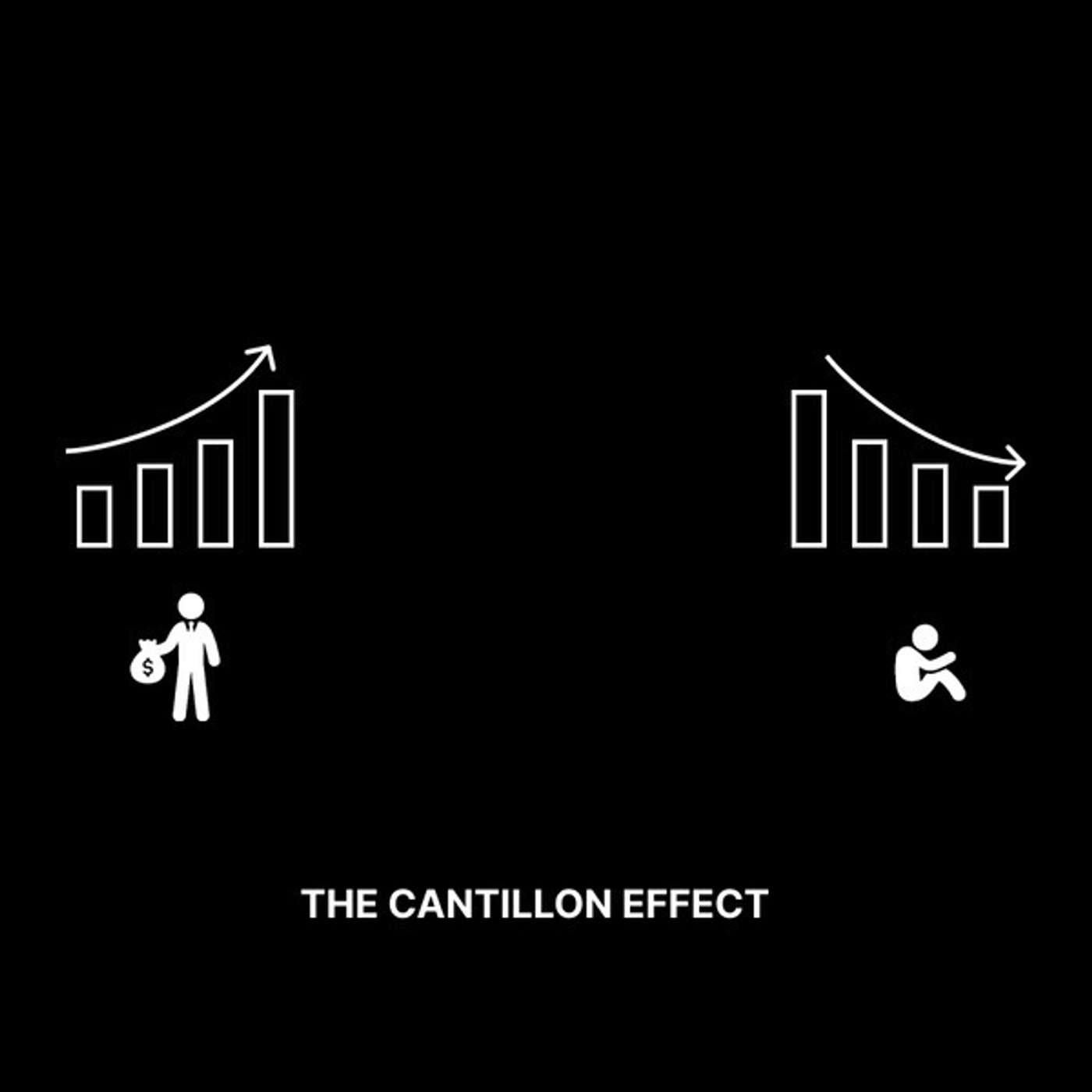
Nov 10, 2021
The Framework Handbook
Welcome to the 1,050 new members of the curiosity tribe who have joined us since Friday. Join the 44,581 others who are receiving high-signal, curiosity-inducing content every single week. Today’s newsletter is brought to you by Pesto ! Problem: You’re a fast-growing startup, but you’re struggling to hire great engineers right now. Solution: Pesto—a platform that matches the millions of talented developers in India with the one million unfilled engineering roles in the West. Pesto’s developers are trained—on both hard and soft skills—through a rigorous bootcamp. The result? Access to a growing pool of highly-qualified, vetted engineering talent, right at your fingertips. Pesto has successfully placed developers at companies like Synthesis School, Rippling, OnDeck, Alloy Automation, and more. To talk to Pesto about filling those engineering roles that have been plaguing your investor updates for months, click the link below and tell them Sahil sent you! Today at a Glance: Frameworks are compasses—they provide clarity by creating structure through which to evaluate situations, deploy shortcuts, and execute sound decisions. When used appropriately, they can meaningfully improve the quality of your decision-making (and reduce stress along the way). The Framework Handbook below provides 20 useful frameworks and tips on when to put them to use. The Framework Handbook Every single day, you are faced with thousands of questions, challenges, and decisions. These decisions can range from small and simple (what color shirt to wear) to large and complex (whether to quit your job). While an individual decision may not feel overwhelming, when taken in total, our lives can begin to feel like we are navigating a small boat on the open ocean—during a hurricane. Fortunately, there are frameworks that can help us navigate these treacherous waters—our compasses, if you will. Frameworks provide clarity by creating structure through which to evaluate situations, deploy shortcuts, and execute sound decisions. When used appropriately, they can meaningfully improve the quality of your decision-making (and reduce stress along the way). Here are 20 useful frameworks & when to use them: The Feynman Technique The Feynman Technique—developed by famed American theoretical physicist Richard Feynman—is a proven method for learning anything. Here’s how it works: Identify a topic: What is the topic you want to learn more about? Identify the topic and write down everything you know about it. Read and research the topic and write down all of your new learnings (and the sources of each). This first step sets the stage for what is to come. Try to explain it to a 5-year-old: Attempt to explain the topic to a child. Once again, write down everything you know about your topic, but this time, pretend you are explaining it to a child. Use simple language and terms. Focus on brevity. Study to fill in knowledge gaps: Reflect on your performance in Step 2. How well were you able to explain the topic to a child? Where did you get frustrated? Where did you resort to jargon or get stuck? These are the gaps in your understanding. Read and study to fill them. Organize, convey, and review: Organize your elegant, simple language into a compelling story or narrative. Convey it to others. Test-and-learn. Iterate and refine your story or narrative accordingly. Review (and respect) your new, deeper understanding of the topic. True genius is the ability to simplify, not complicate. Simple is beautiful. Use It When: You need to learn anything new. Directional Arrow of Progress "Study the undeniable arrows of progress." — Josh Wolfe The future is extremely difficult to predict—but there are clues. Look at the trend line of progress and where it's pointing—directionally, not precisely. Invest (or build) accordingly. Famed investor Josh Wolfe—one of the smartest, kindest people I have ever met— developed this framework to accurately predict where the future of technology is heading. If it’s good enough for Josh, it’s good enough for all of us. Use It When: You are deciding what to invest or build on a longer time horizon. The Eisenhower Decision Matrix President Dwight Eisenhower was an American military officer and 34th President of the United States. He was known for his prolific productivity. His secret? He always differentiated between the urgent and the important. An "urgent" task is one that requires immediate, focused attention to complete. An "important" task is one that promotes or furthers your long-term values, goals, or principles. Remember: Tasks can be both urgent and important. Place all of your tasks on a 2x2 matrix of urgency and importance: Important & Urgent Important & Not Urgent Not Important & Urgent Not Important & Not Urgent Prioritize, delegate, or delete accordingly. Use It When: You are prioritizing your to-do list. The Regret Minimization Framework A framework developed by Jeff Bezos as part of his decision to leave a lucrative hedge fund job at D.E. Shaw to pursue founding Amazon. The goal is to minimize the number of regrets in life. When faced with a difficult decision: Project yourself into the future Look back on the decision Ask "Will I regret not doing this?" Take action accordingly Use It When: You are making your next big, bold decision. The Kat Cole Pygmalion Effect Kat Cole is a prolific operator and trusted advisor of some of the world’s highest performing entrepreneurs. She has noticed time and again that high expectations lead to high performance (and vice versa)—a phenomenon called the Pygmalion Effect . If you consistently see people as their highest potential, they will achieve more. When you're occasionally let down, consider it a tax you pay for all the benefit from those you believed in. Use It When: You are managing a new team. The Taleb "Look the Part" Framework “Say you had the choice between two surgeons of similar rank in the same department in some hospital. The first is highly refined in appearance…The second one looks like a butcher…Now if I had to pick, I would overcome my suckerproneness and take the butcher any minute…Why? Simply the one who doesn’t look the part, conditional of having made a (sort of) successful career in his profession, had to have much to overcome in terms of perception.” — Nassim Nicholas Taleb If forced to choose between two options of seemingly equal merit, choose the one that doesn’t look the part. The one who doesn’t look the part has had to overcome much more to achieve its status than the one who fit in perfectly. Use It When: You are deciding who to select (for your team, surgery, or anything else). Decentralized Friend Groups There are two types of friend groups: Centralized Friend Groups: one cluster of friends with shared backgrounds and beliefs. Decentralized Friend Groups: small clusters of friends unconnected to each other. When in doubt, opt for decentralized friend groups. It will ...
Nov 3, 2021
Your Zone of Genius
Welcome to the 590 new members of the curiosity tribe who have joined us since Friday. Join the 42,681 others who are receiving high-signal, curiosity-inducing content every single week. Today’s newsletter is brought to you by Eight Sleep ! Trust me…you can’t find and operate in your Zone of Genius without proper sleep. Thousands of the world’s greatest CEOs, investors, and operators—and this humble newsletter writer—rely on the Eight Sleep Pod Pro to power their performance. It has patented technology to help you sleep at the perfect temperature all night, which research has shown can make you fall asleep faster and sleep deeper—so you can wake up energized to attack the day. I love my Eight Sleep Pod Pro and know you will too. Special Offer: For a limited time, Curiosity Chronicle subscribers can use the special link below to get $150 off on their first Eight Sleep purchase! Today at a Glance: Your Zone of Genius is where your interests, passions and skills align. Operating in it means you stop playing their games and start playing yours . It means you start playing games you are uniquely well-suited to win. Finding and operating in your Zone of Genius is a direct path to a more fulfilling, productive, and successful career. My simple framework is four steps: (1) Experiment & Collect, (2) Build Your Matrix, (3) Identify Your Zones, and (4) Execute. Your Zone of Genius “Everybody is a genius. But if you judge a fish by its ability to climb a tree, it will live its whole life believing that it is stupid.” — Unknown A few weeks ago, I shared a thread—How to Win (without talent or luck)—that earned a lot of attention. One of the most popular insights in the piece was the idea of operating in your Zone of Genius. But I got a lot of questions about how to practically achieve that, so I decided to dive in deeper on the topic. I first came across the concept of the Zone of Genius in an interview of Naval Ravikant, though have since been informed that the origin of the idea is Gay Hendricks and his book, The Genius Zone (which is now on my reading list!). My perspectives and framework—which are shared in this newsletter—are the result of my own personal 10+ year struggle with finding and operating in my Zone of Genius. My hope is that this piece helps you find and operate in yours. Background What is a Zone of Genius? Your Zone of Genius is roughly defined as where your interests, passions and skills align—it is your place of harmony. Operating in it means you stop playing their games and start playing yours . It means you start playing games you are uniquely well-suited to win. Imagine Serena Williams playing on a grand stage in the finals at Wimbledon. She knows exactly what match she wants to play. She doesn’t want to play her opponent’s game—she wants to play her game. She wants to play the game that she is uniquely well-suited to win—the one that plays into her strengths and away from her weaknesses. She wants to operate within her Zone of Genius. But let's get one thing straight: This concept isn’t just for the most elite among us (like Serena!). Everyone has a Zone of Genius! "Genius" here is a relative term, not an absolute. It's not about being top 1% at some craft—it's about the unique space where your relative strengths are accentuated (and relative weaknesses masked). Furthermore, everyone’s Zone of Genius is different and completely unique to them as an individual. The goal of a founder, startup, or organization, therefore, is to build a team with complementary—not conflicting—Zones of Genius. This is where 1+1=3! Sounds great—but how do you identify your Zone of Genius and operate more frequently in it? My simple framework is effectively 4 steps: Experiment & Collect Build Your Matrix Identify Your Zones Execute Let's walk through each step... Experiment & Collect The notion that you should know what you want to do with your life by the time you graduate college is one of the greatest lies you've been told by the world. You wouldn’t buy a car without a test drive, so why buy a career or life without one? You have to experiment and collect data in order to make informed decisions. Importantly, you should experiment wildly. Try different things. Test out different working styles. This doesn't mean skipping from job to job—you can experiment on nights, on weekends, etc. One of the best ways to experiment and data collect is simply talking to as many different people as possible. Ask them about their work and path. Learn from the experiences of others. It’s an invaluable way to de-risk your own decision-making. Additionally, the data collection should be both internal—your own perspectives—and external—the perspectives of others. To collect data from those around you, ask about their experiences working with you: What am I great at? What am I bad at? When do you perceive me as being in the flow? When do you perceive me as being forced? The goal from the experimentation and data collection is to build a wide base of information from which you can assess your own competencies and passions. Experimentation and data collection is not a fixed, static process—it is dynamic and iterative. You should never really finish experimenting and collecting. Remember: As you grow and change, your Zone of Genius may well do the same. Build Your Matrix The next step is to take all of the data collected from your experiments and build a skill map. What is a skill map? I like to imagine it as a sheet listing every possible skill and capability. For every single one, there is a spectrum from 0 (minimum competency) to 1 (maximum competency). You can theoretically place yourself somewhere on that spectrum for each. This is your skill map—it tells you your competency level across a range of skills. But in my view, competency is just one critical plane—passion is the other critical plane. So to visualize this, I like to think of it as a matrix: With this matrix as a guide, you can place each skill in one of the four quadrants. High Competency, High Passion High Competency, Low Passion Low Competency, High Passion Low Competency, Low Passion If you’re new to this, I would recommend literally writing the various skills in little bubbles on the matrix—it’s a productive exercise, and one that I have done several times over the last few years. The matrix—both your current version and the progression over time—becomes your powerful visual tool to bring this entire concept to life. Identify Your Zones With the matrix in hand, you can start to identify your various zones, which were popularized as a concept by Gay Hendricks in his aforementioned book. The 4 key zones to identify on your matrix: Zone of Incompetence: you are bad at these things; outsource to others who are good at them. Zone of Neutrality: you are ok at these things; outsource to others who are as good or better at them. Zone of Excellence: you are excellent at these things, but you don’t love them. This is the danger zone. You will be asked—and tempted—to wor...

Oct 20, 2021
How to Win (without talent or luck)
Welcome to the 2,038 new members (!!!) of the curiosity tribe who have joined us since Friday. Join the 40,307 others who are receiving high-signal, curiosity-inducing content every single week. Today’s newsletter is brought to you by Eight Sleep ! Winning starts with your sleep. Thousands of the world’s greatest CEOs, investors, and operators—and this humble newsletter writer—rely on the Eight Sleep Pod Pro to power their performance. It has patented technology to help you sleep at the perfect temperature all night, which research has shown can make you fall asleep faster and sleep deeper—so you can wake up energized to win the day. I love my Eight Sleep Pod Pro and know you will too. Special Offer: For a limited time, Curiosity Chronicle subscribers can use the special link below to get $150 off on their first Eight Sleep purchase! How to Win (without talent or luck) We all want to win. Our definitions of “winning” vary—it may mean happiness and fulfillment to some, money and fame to others—but in some way, shape, or form, we all want to win. The problem? We’ve been told that we can’t win without incredible talent (or sensational luck). This is wrong. Here’s How to Win (without talent or luck): 20+ principles for your career, relationships, and life… Operate in Your Zone of Genius Your Zone of Genius is where your interests, passions and skills align. Operating in your Zone of Genius means playing games you are uniquely well-suited to win. Once you identify it, you can stop playing *their* games and start playing *yours*. Adopt a Positive Sum Mentality Want to get ahead in life? Start genuinely rooting for others to succeed. When one of us wins, we all win—winning spreads. If you adopt that mentality, you’ll become a magnet for the highest quality people. Speak Up Closed mouths don’t get fed. A little push goes a long way. Don't sit back and wait for good things to happen. If you want something—and you’ve put in the work for it—speak up and ask for it. Worst Case: you’re told no and nothing has changed. Best Case: it’s yours. Play Long-Term Games Life is the ultimate long game. Those with low time preference play it more effectively—they happily delay gratification to allow compounding to work its magic. In a world of people seeking instant gratification, this is a meaningful edge. Have a High Tolerance for Failure We fear failure, so most of us play it safe to avoid it. But our greatest moments of growth often stem directly from our greatest failures. Don't accept failure, but don't fear it either. You will fail. Embrace it. Fail smart and fast. Follow Your Curiosity Humans are born with astonishing curiosity. But somewhere along the way, we're told to stop asking questions. Push back. Learn to follow your curiosity—trust it. For the curious mind, anything is possible. Fortune favors the curious. Adopt a Process Orientation Prioritize process, not outcomes. When you prioritize process, you become flexible in where you are headed—you focus on the inputs and stop worrying about the outputs. Just keep laying one brick at a time—forward progress is all that matters. Prioritize People Everything in life comes down to people and relationships. Networks compound as well as any financial investment. Build an army of mentors, friends, and evangelists that is deep and wide. Cultivate deep relationships, but also embrace the power of weak ties. Work Like a Lion Modern work culture is a remnant of the Industrial Age. It encourages long periods of steady, monotonous work unsuited for the Information Age. If your goal is to do inspired, creative work, you have to work as a lion works. Sprint when inspired. Rest. Repeat. Become Antifragile In Greek mythology, the Hydra is a creature that has multiple heads. When one head is cut off, two grow back in its place. Life is random and chaotic. Don't be broken by the chaos—rather, adopt a mentality and build structure and systems such that you will benefit from it. Change Your Mind Willingness to change one's mind is a rarity in today's society. It's great to have a strong view, but always open your mind to counterarguments. Stubborn objection to alternative perspectives stalls progress. Strive for strong opinions, weakly held. Never Get Too Big to Do the Small The leaders of the New Zealand All Blacks rugby team famously stay late to “sweep the shed” after a match. Why? Because small things become big things. Whether you're working in the mailroom or the corner office, never get too big to do the small things well. Learn Storytelling Storytelling is a foundational skill—but it's one we don’t learn in the traditional education system. It's no coincidence that the highest performers are the strongest storytellers. High-leverage storytelling is a supercharger for all human endeavors. Develop a Bias for Motion A body in motion tends to stay in motion—a body at rest tends to stay at rest. When in doubt, just start moving. Become Relentlessly Consistent Many people are able to show up once or twice and produce wild, disorganized bursts of energy—few are able to show up day in, day out and produce consistent, steady flows of energy. The former may seem flashy, but the latter is relentless. Take pride in punching the clock—in showing up—every single day. It's hard to bet against the person who just keeps showing up. Simplify Where Others Complicate “The definition of genius is taking the complex and making it simple." — Einstein Complexity and jargon are often used to mask a lack of deep understanding. Learn with a depth such that you can convey the complex in simple, digestible ways. Find beauty in simplicity. Be Comfortable with Discomfort We are conditioned to avoid discomfort, so most of us do. The problem? Discomfort is a precursor to growth—it is an absolute necessity. Steel your mind and body—accept and embrace discomfort. Those that do have the ultimate competitive edge. Have Strong Plans, Loosely Held It's important to have a plan. But as Mike Tyson famously said, "Everyone has a plan until they get punched in the mouth." Plans have to be dynamic—and punch-proof! You'll only go as far as your ability to absorb, gather, and pivot on the fly. Pay It Forward No matter how far you go, realize that you didn’t make it on your own. Pay it forward. Be a mentor. Be a champion for others. Their growth should become a source of tremendous joy and pride. Become a Polymath A polymath is a person with wide-ranging, multi-disciplinary knowledge. Lifelong learners tend to be polymaths—their curiosity naturally leads to knowledge accumulation in a variety of disciplines. Learn both horizontally and vertically. Give More Than You Receive Focus on what you can do for others, not what they can do for you. Focus first on the amount of value you create—not the amount that you capture. This mentality will lead to more success and growth, but also to more fulfillment and...
Oct 13, 2021
High-Leverage Storytelling
Welcome to the 312 new members of the curiosity tribe who have joined us since Friday. Join the 37,845 others who are receiving high-signal, curiosity-inducing content every single week. Today’s newsletter is brought to you by Tegus ! When I started to dive in on Disney, Tegus was my first destination—a cheat code for my research and learning process. Tegus is the leading platform for primary research—a searchable database of thousands of instantly-available, investor-led interviews with experts on a wide range of industries, companies, and topics. It’s fast and cost-effective, enabling you to do great primary research without breaking the bank. Special Offer: Tegus is offering a free 2-week trial to all Curiosity Chronicle subscribers—sign up below to level up your investment research game today! Today at a Glance: Storytelling is a foundational skill for supercharging all human endeavors. Disney was arguably the first company to prove that storytelling can create a durable competitive advantage that builds pricing power and a legitimate long-term business moat. The key principles of high-leverage storytelling: (1) Suspended Reality, (2) Multisensory Experience, (3) Details Matter, and (4) Make It Shareable. High-Leverage Storytelling Storytelling is a foundational skill. Humans are storytelling animals—our species developed around fires, telling tales of successes, failures, and fantasies, of hopes and dreams. It is woven into our DNA. If we study the lives of the greatest humans, we quickly find that the vast majority were exceptionally strong storytellers. This is no coincidence—effective, high-leverage storytelling is a supercharger for all human endeavors. The problem? We don’t study or teach storytelling in the same way we do other foundational skills. Therein lies an opportunity, however—with few understanding the principles of storytelling, those who do are likely to capture tremendous career and personal upside. In finance terms, it’s (basically) free alpha… So in today’s piece, I’d like to talk about the principles of high-leverage storytelling, brought to life by a real world example of these principles in action… Disney World. Disney World The Walt Disney World Resort—Disney World for short—opened on October 1, 1971. It was the second major theme park under the Disney umbrella, following Disneyland, which was opened in Anaheim, California in 1955. Disney World celebrated its 50th anniversary on October 1, marking a major milestone on a historic run for the company, which now operates theme parks around the world. Importantly, Disney was arguably the first company to prove that storytelling can create a durable competitive advantage that builds pricing power and a legitimate long-term business moat. Storytelling is ingrained into the DNA of the company—its founder, Walt Disney, was history’s most obsessive storyteller. So it is no surprise that storytelling is a superpower that's on full display at Disney World. The park—which covers 43 square miles (or 2x the size of Manhattan!) and has 77,000+ employees—can teach us valuable principles for enhancing our own storytelling. This piece deconstructs the principles of high-leverage storytelling that make Disney World so magical (and that you can start using today): Principle 1: Suspended Reality Walt Disney was famous for his focus on suspending reality for his audiences—allowing them to fully experience a new reality he was creating while still being grounded in the safety of their own reality. It is a balancing act—too cold and you never capture the audience, too hot and people retreat to the safety of their reality and disappear. The Imagineers—a brilliant group of creatives, artists, and engineers in charge of designing the theme parks—have executed against this principle brilliantly. It’s on exhibit in several secrets of the park: The Tunnel Network An intricate web of tunnels lies underneath the park, enabling characters to navigate to their respective “worlds” without ever appearing out of world or duplicative. This is critical, because an out of place character breaks the suspended reality for the guests, so Disney created an (expensive) solution. Further, the entire park is designed to create a separation of worlds and maintain the distinction within each domain. You cannot see into other worlds, which creates a legitimate immersion that reinforces the suspended reality. Forced Perspective Forced perspective is a visual technique which uses optical illusions to make an object appear farther, closer, larger or smaller than it actually is. The technique manipulates our visual perception by using scaled objects and the relationship between them and the viewing point of the customer. Disney uses forced perspective throughout its parks to create optical illusions that make objects appear different than reality. A key example: Cinderella's Castle, which has smaller bricks and windows near the top, making the castle look farther away and taller than it is. Purple Traffic Signs The departure from reality begins before you ever step into the park. Purple and red traffic signs replace the traditional green and yellow—just another detail that creates a clear separation from the real world. There are no coincidences in high-leverage storytelling. Everything is by design. Era-Appropriate Bathrooms Disney takes the suspended reality to another level with its plumbing. Liberty Square—a colonial world—is notably lacking in one thing: bathrooms (other than in the restaurants, where they are legally required to exist). If colonists didn’t have bathrooms yet, neither do the guests of the colonial world! Principle 2: Multisensory Experience Disney knows that one of the key strategic advantages of its parks is the ability to create multisensory experiences for its fans. These experiences build relationship depth that is impossible to replicate. It’s also a durable competitive edge, as it’s almost unfathomable to imagine a competitor acquiring 40+ square miles of land to create a similar experience. The physical experience has become a business moat. A few examples of the multisensory experience at Disney World: “Smellitizers” The Imagineers recognized the human sense of smell is closely connected with our formation of memories, so they built a mechanism to reinforce this process: "Smellitizers”—hidden fans that blow scented air through vents in the park. The effect: strong, sticky, delicious memories made. Amplified Sounds Sounds are a key part of the Disney World storytelling experience. Horses wear specially-designed horseshoes that make them louder when they walk down Main Street. The Tower of Terror plays a recording of real screams on hidden speakers for guests walking by. The splash sound at Splash Mountain is amplified by a splash machine. Principle 3: Details Matter To create truly immersive stories, Disney’s Imagineers know that the details really, really matter. They might be difficult to spot—they hide in plain sight. But for the trained eye, they’re observable throughout the park. Here are a few examples: EPCOT Rainwater EPCOT—previously an acronym for Experimental Prototype Community of Tomorrow—is a theme park within Disney World. At its center is a large geodesic sphere called Spaceship Earth....

Oct 5, 2021
China's Energy Crisis
Welcome to the 924 new members of the curiosity tribe who have joined us since Friday. Join the 37,001 others who are receiving high-signal, curiosity-inducing content every single week. Today’s newsletter is brought to you by Tegus ! When I started to dive in on the Chinese energy crisis, Tegus was yet again my first destination—a cheat code for my investment research and learning process. Tegus is the leading platform for primary research—a searchable database of thousands of instantly-available, investor-led interviews with experts on a wide range of industries, companies, and topics. It’s fast and cost-effective, enabling you to do great primary research without breaking the bank. Special Offer: Tegus is offering a free 2-week trial to all Curiosity Chronicle subscribers—sign up below to level up your investment research game today! Today at a Glance: China’s energy crisis is best understood through the simple, Econ 101 lens of supply and demand, with a particular focus on the coal market. Demand-side drivers primarily include a booming recovery from COVID-19 lows and a hotter-than-normal year that increased residential power usage. Supply-side drivers include coal shortages, import restrictions, utility price fixing, and CCP emissions targets. Net-net, we have demand up and supply down, leading to widespread shortages, rising costs, and a ripple effect that extends across the globe—the stage is set for what could be a long, cold winter. China’s Energy Crisis In last week’s newsletter piece—the aptly named Supply Chain Apocalypse —I made brief reference to China’s burgeoning energy crisis as a supply dislocation further compounding our global supply chain woes. In the days since that piece was released, China’s energy crisis went from under-the-radar to front page news—hitting “above the fold” in the Wall Street Journal, Reuters, and Bloomberg, among others, as experts bemoaned its potential to hammer our weakened supply chains and derail the global recovery. I’ve always been fascinated by energy—it is, quite literally, what makes our world work—so yet again, I found myself going down the rabbit hole, exploring the crisis in detail and attempting to distill its key drivers and potential effects. Here’s a simple breakdown of what I learned. Spoiler Alert: This may be China’s Energy Crisis , but in an interconnected global economy, nobody is insulated from this disruption. Background The growing Chinese energy crisis had (mostly) happened outside the spotlight of the mainstream media. To be sure, among real energy market observers, it had been a key topic for months, alongside European natural gas price spikes, carbon credit markets, and the normal course OPEC debates—but the narrative accelerated meaningfully on the back of other China woes ( Evergrande , supply chain disarray , etc.). China is most definitely feeling the pain, but we may be in the early innings (sorry, baseball analogies stick with you!), with the contagion likely poised to spread globally. The Impact What are the visible impacts of China's energy crisis? More than half of China's mainland provinces have been forced to limit electricity usage due to shortages. According to a recent Bloomberg article , the Chinese microblogging site Weibo is filled with stories of people sharing how their daily lives are being impacted by the crunch—no tap water, no cell service, no traffic lights, and even a shortage of candles. In the industrial sector, the largest industrial provinces are facing significant cuts just as they try to dig their way out of the backlog that has been created by COVID restrictions and supply chain kinks. Looking outside of China, we see widespread concerns among politicians and energy market experts over rising coal and natural gas prices (the latter of which deserves its own piece in the future). Policymakers are expressing real angst over the ability of their countries to adequately heat homes as winter months approach. The price chart of European natural gas tells a pretty scary story—much of Europe could be in for a long, cold winter. Suffice to say, the impact of the energy crisis is already quite bad—but it has the potential to get much, much worse. The Drivers of China’s Energy Crisis In attempting to understand the situation, it's important to understand that the economy is an interconnected web of activity. Nothing happens in a vacuum. This means that an energy crisis in China is not just about China—it has a complex set of causes and effects. In this situation, China's crisis is primarily related to coal. Why? Well, China is very reliant on coal—it has been the driving force of their economic growth. Here are two great visualizations of that reliance. While out of vogue due to its environmental impact, coal does remain a key source of electric power globally. The science is pretty simple (see the diagram below). Coal is burned, the heat released boils water, which produces steam, which drives a turbine, which produces electricity. To dissect the coal-driven crisis (and its ripple effects), we need a simple framework. Let's turn back to our Econ 101 classic: Supply & Demand. Note: In this framework, supply will refer to everything related to energy production, while demand will refer to everything related to energy consumption. Demand-Side Drivers First, demand. This is relatively straightforward: demand for coal (and the electricity it produces) is very high (and rising). The robust global recovery from COVID—and the resulting impact on goods manufactured in China—is one key driver of the demand surge. Domestic residential coal-powered electricity demand is also up, with a hot summer and lower than normal hydroelectric production. This latter point is worth noting, as it's a supply constraint in one area (hydroelectric) creating a demand surge in another (coal electricity). As the chart below shows, China has never before seen single year growth in thermal power demand of this magnitude. That creates significant strain on the system. Supply-Side Drivers Next, supply. This one is more complex, with several distinct—yet interconnected—dislocations. The main supply dislocations that I see here are: Coal Shortages Import Restrictions Utility Price Fixing CCP Emissions Targets (*impacts both supply and demand*) Let’s cover each one in a bit more detail: Coal Shortages Global coal supply has been seriously constrained due to a variety of factors. Coal mines globally have faced COVID-related shutdowns—with such closures hitting the news in the United States and Colombia , among others. In Colombia, energy giant Glencore walked away from its contra...

Sep 29, 2021
Supply Chain Apocalypse
Welcome to the 1,016 new members (!!!) of the curiosity tribe who have joined us since Friday. Join the 35,181 others who are receiving high-signal, curiosity-inducing content every single week. Today’s newsletter is brought to you by Tegus ! When I started to dive in on the global supply chain disruption, Tegus was my first destination—it’s a literal cheat code for my investment research and learning process. Tegus is the leading platform for primary research—a searchable database of thousands of instantly-available, investor-led interviews with experts on a wide range of industries, companies, and topics. It’s fast and cost-effective, enabling you to do great primary research without breaking the bank. Special Offer: Tegus is offering a free 2-week trial to all Curiosity Chronicle subscribers—sign up below to level up your investment research game today! Today at a Glance: The ongoing global supply chain crisis is best viewed through the simple, Econ 101 lens of supply and demand. Demand-side drivers primarily include unprecedented government support and economies roaring back to post-COVID life, both of which have driven up consumer spending on goods. Supply-side drivers include Labor Shortages, Factory Shutdowns, Port Shutdowns, Flight Reductions, Container Ship Challenges, Infrastructure Deficiencies, and the China Energy Crisis. Net-net, we have demand structurally higher and supply structurally lower, leading to delays, shortages, and rising costs across the value chain. Supply Chain Apocalypse By now, you’ve probably heard that global supply chains are in a state of disarray. You’ve definitely felt it—from attempting to order a new bike or sofa, or just trying to get a McDonald’s milkshake —as delays and shortages have spread across the world. But if you’re like most people, you still have no idea how or why we got into this mess. In an effort to fix that, here's a simple breakdown of what’s causing our ongoing supply chain apocalypse: Background There's a lot of talk right now about the global supply chain crisis. To give you a sense of the drama here, consider the fact that Bloomberg—a traditionally less sensationalist media outlet—recently published an article subtitled “Inside the Brutal Realities of Supply Chain Hell”. Before we walk through the causes, let’s talk about the effects. What are some of the visible impacts of the crisis? Product Delays: Good luck getting furniture, appliances, cars, or Christmas gifts before 2022. Product Shortages: Many critical technology components (e.g. semiconductor chips) are in short supply. Port Buildups: The Los Angeles/Long Beach port has a historic backup that shows no signs of slowing down. Rampant Freight Costs: The cost of shipping a container from China to LA/Long Beach has risen from under $1,000 pre-COVID to over $20,000 at times in 2021. No exaggerations necessary—the effects are really quite bad. But what is causing all of this? Global supply chains are very complex. We live in a highly-interconnected world. A butterfly flaps its wings in Shenzhen and impacts when I receive my bike in New York. Ok, maybe not quite, but almost... To understand the drivers of the crisis, we need a simple framework. Let's break down what is happening using an Econ 101 classic: Supply and Demand. Note: In this framework, supply will refer to everything related to manufacturing, production, and transportation, while demand will refer to everything related to consumption. Demand-Side Drivers First, demand. This one is pretty simple—it's through the roof. Unprecedented government support (yes, the money printer did go “brrrr”) and economies roaring back to post-COVID life have created a strong demand environment. Consumers are flush with cash and not afraid to spend. Furthermore, the early (and roving) lockdowns and restrictions have meant more spending on goods vs. services. The above chart of global exports shows the robust, sharp rebound from the COVID dip in 2020. Someone is buying all of these exported goods! Supply-Side Drivers Next, supply. This one is more nuanced. The major supply drivers I see here: Labor Shortages Factory Shutdowns Port Shutdowns Flight Reductions Container Ship Challenges Infrastructure Deficiencies China Energy Crisis Let’s walk through each one in a bit more detail… Labor Shortages Labor shortages—at ports, in trucking and logistics, and in the manufacturing sector—are the first major supply disruption. Simply put, without efficient levels of labor in these areas, you have bottlenecks that start to slow the flow of goods through our global pipes. Truck driver shortages are all over the news as of late. The U.K. even began offering thousands of visas to foreign truckers in an attempt to ease the pain. COVID Factory Shutdowns Factories—particularly in Asia—have had a tough time managing and containing outbreaks of COVID, leading to sporadic closures and shutdowns. Nike and other large consumer brands have recently noted on earnings calls that they were forced to cut revenue forecasts and scramble to shift manufacturing due to shutdowns in Vietnam (an expanding manufacturing hub and beneficiary of Trump-era China tariffs). The shutdowns create delays and bottlenecks in production. If an upstream manufacturer is delayed, that impact cascades downstream and has an extensive impact. COVID Port Shutdowns Ports have experienced similar challenges to factories—many have had to shut down or artificially restrict labor to avoid outbreaks. In August, the Ningbo-Zhoushan port in China—one of the busiest container ports in the world—was forced to shut due to a COVID outbreak among the workers. If ports are closed, products can't flow smoothly through the supply chain. Yet another kink in the hose causing the pressure to build. Flight Reductions It's news to most people, but about 50% of air cargo flies on passenger flights. It's a significant revenue stream for passenger airlines (and actually what allows passenger airlines to offer tickets at the cost they do). But with travel—especially international travel—reduced by COVID, there was a significant reduction in air cargo capacity. Some got creative, converting passenger planes into full cargo planes, but the net impact was a sharp decrease in air cargo capacity and a correspondingly sharp increase in air cargo prices (3x+ prior rates). Container Ship Challenges The Ever Given clogged the Suez Canal in March, causing a backlog whose impact cascaded through global supply chains. There aren't enough large container ships to meet all of this demand and containers are in the wrong places at the wrong times. Infrastructure Deficiencies Physical infrastructure constraints are limiting the ability to shuffle/shift shipmen...

Sep 21, 2021
The Evergrande Train Wreck
Welcome to the 645 new members of the curiosity tribe who have joined us since Friday. Join the 33,832 others who are receiving high-signal, curiosity-inducing content every single week. Today’s newsletter is brought to you by Demand Curve ! The Growth Newsletter by Demand Curve is my new favorite newsletter subscription. They interview hundreds of Y Combinator founders to find out what works. Then they pack each issue with actionable growth insights—so you can apply them to your startup or personal brand. It gives me new ideas every single week. I can’t recommend it more highly. Catch their next issue by signing up today. The Evergrande Train Wreck The calamity surrounding The Evergrande Group—the massively over-indebted Chinese property developer—is the train wreck that the world can’t help but watch. It’s fascinating—and carries a lot of interesting learnings on finance and business—so I wanted to share more about the situation with all of you curious folks out there! Here’s a breakdown on the business, background, and its rapid, very public demise: Background The Evergrande Group is a Fortune 500 real-estate developer with headquarters in Shenzhen, Guangdong, China. It was founded in 1996 by Hui Ka Yan in Guangzhou and scaled up over time from a small local player into a national behemoth. Today, it's big…very big. As recently as 2020, it had sales of >$100 billion and adjusted core profits of ~$5 billion. The below chart of its financials gives a perspective on its recent and rapid growth. At its core, it's a homebuilder business—developing from the ground up and selling properties to Chinese consumers. Its website states that it has over 1,300 projects across 280+ cities. But recently, it has pushed the boundaries of its homebuilding circle of competence, making investments in electric vehicles (Evergrande New Energy Auto), an internet and media production unit (HengTen Networks), a theme park (Evergrande Fairyland), a soccer team (Guangzhou F.C.) and a mineral water company (Evergrande Spring). The Business Challenge As a developer, Evergrande had to contend with a highly cash-consumptive growth profile. Why? Well, building a new development project may take many months (even years) and requires a lot of cash outflows along the way—you have to buy the land, pay for construction costs and permitting, etc. Meanwhile, with the exception of smaller upfront deposits, cash collections from buyers typically don’t come in until much later, after the project is completed. This creates a challenging cash conversion cycle (the time it takes to convert investments in inventory/resources into cash) that almost any property developer has to deal with. So how did Evergrande fund its impressive growth? Debt—it borrowed aggressively, even by real estate property development standards. It became the world's most heavily-indebted developer, with a debt load of over $100 billion and over $300 billion in outstanding liabilities. As is pointed out in the brilliant thread below (tip of the hat!), there is a bit of a moral hazard problem that was created along the way. Evergrande was largely indifferent to pricing on the land and properties it was purchasing and building, knowing that the risk would be passed off to banks or other financial institutions financing the purchases. The debt-fueled growth propelled Evergrande—and its now billionaire founder—into an elite class. It entered the Fortune 500 at #496 in 2016 and reached #122 by the latest ranking. As the company amassed an enormous debt burden, it also paid out handsome dividends, with Hui Ka Yan (its largest shareholder) reportedly receiving over $5 billion in dividends since 2018. The Debt Spiral But debt is a double-edged sword—and Evergrande was overdue to catch the other edge. As its debt burden grew, so did the interest payments on that debt. This is (mostly) fine, so long as revenues and profits—with which you can make these payments—continue to grow. But if the growth or profitability slows (or government restricts borrowing!), it's...well…not fine. Imagine a metaphorical boa constrictor tightening its grip on its prey. You can try to resist—borrow more to make your payments—but that only fuels the snake. Moreover, the knowledge of your precarious position increases risk and makes that borrowing more challenging and costly. In Evergrande's case, the snake formally tightened its grip in 2020. It had its first major liquidity scare—a potential inability to meet its liabilities—sending a letter to the local provincial government warning that its upcoming payments could cause a crisis with systemic financial sector risks. In a cynical sense, sending a letter to the government warning that your collapse poses “systemic financial risk” is a pretty savvy tactic—hype up your importance to force the government’s hand. If you collapse and they did nothing, you can point to the letter and say “I told you so” and make them look bad. More likely, they act in advance and bail you out to save you. With most de-leveraging spirals, there are two sides: Technical: An inability to make payments. Psychological: The knowledge of instability impacting your market standing. Most financial reporting focuses on the technical, but the psychological is equally (if not more) damning. Reports of Evergrande’s letter sent its stock and bonds tumbling. The short-term crisis was avoided when an investor group waived its right to force a big repayment, but the long-term challenges and issues remained. Dornbusch's Law—a personal favorite that I need to write more about in the future—says that crises take longer to happen than you expect, but then happen faster than you ever could have imagined. This certainly proved true for Evergrande... The Crisis To meet its ever growing obligations, Evergrande began tapping into "creative" financing strategies. It pushed employees to provide short-term loans to the company—which it called "high interest investments”—in order to ensure they received their year-end bonuses. If that sounds shady, it’s because it is. But the company quickly fell behind, missing payments earlier this month and leaving thousands of employees in a lurch. With over $7.4 billion of bond payments due in 2022, and large interest payments coming up as soon as this week, the crisis appears to be accelerating rapidly. Its stock dropped almost 20% on Monday. To reiterate the earlier point, the psychological side of a financial crisis can be just as impactful as the technical side. It was recently reported that Evergrande was offering to sell properties at a deep discount in order to pay off its vendors and liabilities—indicating a fire sale required to make its payments and sending further panic spiraling into the market. Protests have broken out at Evergrande offices in China—with up to 1.4 million homebuyers left in a devastating limbo, having paid deposits upfront for homes worth ~$200 billion that may never be built. The media narrative cycle of demise ramped up in earnest and further fueled the fire. Importantly—and yet another reason why the world is paying attention—the Evergrande situation does pose a potentially systemic risk to the Chinese economy. With deep ties to financial inst...
Sep 15, 2021
The Best Advice You've Ever Received
Welcome to the 574 new members of the curiosity tribe who have joined us since Friday. Join the 32,682 others who are receiving high-signal, curiosity-inducing content every single week. Share this on Twitter to help grow the tribe! Today’s newsletter is brought to you by Tegus ! Tegus has been a complete game changer for my research and learning process. Tegus is the leading platform for primary research—it offers a searchable database of thousands of instantly-available, investor-led interviews with experts on a wide range of industries, companies, and topics. It’s fast and cost-effective, enabling you to do great primary research without breaking the bank. Special Offer: Tegus is offering a free 2-week trial to all Curiosity Chronicle subscribers—sign up below to level up your research game today! The Best Advice You’ve Ever Received A few weeks ago, I asked my audience a simple question: In 24 hours, 2,000+ responses flooded in from all corners of the world (if you haven’t realized it already, the internet is absolutely amazing). The advice ran the spectrum—from serious to lighthearted, from inspiring to morbid. So today, I want to do something a bit different. I want to share the best advice you’ve ever received. Prolific Idea was kind enough to make simple, powerful visualizations for many of them, which are made to be shared and enjoyed. My hope is that you find one piece of advice below that resonates with you and changes your outlook. Without further ado…here’s the best advice you’ve ever received: Strong Foundations Put good things between you and the earth. Buy a good bed, boots, and tires. Closed Mouths If you don’t ask, you don’t get. Closed mouths don’t get fed. Thinking vs. Doing In regards to doing something you don't want to do... Don't think about it, just start doing it. The more you think about it, the more reasons you'll give yourself to not do it. Walking Tall Walk like you have 3000 ancestors behind you. Proud Decisions Make decisions today that you'll be proud of tomorrow. Life Isn’t Fair Life gets a lot easier when you just accept that life isn’t always fair. Birth & Death When you were born, you cried, but the whole world smiled at you. Live a life such that when you die, the whole world cries, but you smile. Find Your People The world is cold and nasty but there are still a lot of good people. You just have to find 1 or 2 and you will start loving the world. Negotiations In life, you don’t get what you deserve, you get what you negotiate. The Two Most Important Decisions The two most important decisions that you make in life are what you do for a living and who you marry. You get these two correct and you'll have a nice life. Uncomfortable Conversations Your success in life is largely dependent on how many uncomfortable conversations you’re willing to have. Invest in Yourself Invest in yourself before you invest in others. Options There are always more options than you realize and things are never as bad as they seem. Anything & Everything You can have anything you want in life, but you can't have everything. Stupid & Tough If you’re gonna be stupid, you’d better be tough. Come at the King You come at the King, you best not miss. The Juicy Pitch Wait for a juicy pitch. Life doesn’t reward you for the number of swings you take. Focus on identifying the juiciest pitch. When it comes, swing hard and don’t miss it. Simple is Beautiful The best moments you’ll ever have in your life are the simplest. Slipping into clean sheets. Hiking right after a storm. A night talking with friends. Being there for others. Helping a friend. What you think of as painful will simply be erased in time. Behavior vs. Words Pay attention to people's patterns of behavior. They are better guides than their words. Experience Pyramid Experience is like a pyramid. The broader the base, the higher you can build. So, diversify your experience early in your career. Learn vs. Earn Participate to learn, not to earn. The latter will come with practice. Can vs. Should Just because you can, doesn’t mean you should. So there you have it. 20 pieces of the greatest advice you’ve ever received. I hope you found one piece of advice that inspired you or changed your outlook on the week. Special thank you to Prolific Idea for the incredible visualizations. The original thread can be found below: Sahil’s Job Board - Featured Opportunities Skio - Founding Engineer ($50K REFERRAL BOUNTY!) Hyper - Chief of Staff Consensus - Lead Software Engineer Scaled - Direct of Operations Fairchain - Software Engineer, Full Stack Commonstock: Community Manager , Social Media Manager , Marketing Designer Incandescent - Operations Associate Practice - Chief of Staff Maven - GM of Partnerships & Ops Olukai - VP of E-Commerce Hatch - Senior PM , Senior Product Marketing Manager AbstractOps - Head of Engineering On Deck - Forum Director, CFO Forum , VP Finance Metafy -
Sep 8, 2021
Incentives: The Failure & The Fix
Welcome to the 716 new members of the curiosity tribe who have joined us since Friday. Join the 32,004 others who are receiving high-signal, curiosity-inducing content every single week. Share this on Twitter to help grow the tribe! Today’s newsletter is brought to you by Tegus ! Tegus has been a complete game changer for my research and learning process. Tegus is the leading platform for primary research—it offers a searchable database of thousands of instantly-available, investor-led interviews with experts on a wide range of industries, companies, and topics. It’s fast and cost-effective, enabling you to do great primary research without breaking the bank. Special Offer: Tegus is offering a free 2-week trial to all Curiosity Chronicle subscribers—sign up below to level up your research game today! Today at a Glance: Incentives are everything—an uber-powerful force governing our interactions, organizations, and society. Unfortunately, humans are astonishingly bad at establishing incentives—we consistently create systems that invite manipulation and unintended consequences. The framework for better incentives involves six key pillars: Objectives, Metrics, Anti-Metrics, Stakes & Effects, Skin in the Game, and Clarity & Fluidity. Incentives: The Failure & The Fix “Show me the incentive and I will show you the outcome.” — Charlie Munger Incentives are everything—an uber-powerful force governing our interactions, organizations, and society. Well-designed incentives have the power to create great outcomes; poorly-designed incentives have the power to…well…create terrible outcomes. Unfortunately, humans are astonishingly bad at establishing incentives—we consistently create systems that invite manipulation and unintended consequences. More often than not, we wind up in the poorly-designed camp scrambling for answers and quick fixes. Let’s change that… In today’s piece, I will share a framework for establishing incentives (that actually create desired outcomes). Incentives: The Failure Let’s start with a basic definition of incentives: Incentives are anything that motivates, inspires, or drives an individual to act in a specific manner. They come in two forms: intrinsic and extrinsic. Intrinsic incentives are internal—created by self-interest or desire. Extrinsic incentives are external—created by outside factors, typically a reward (positive incentive) or punishment (negative incentive). For today, we'll be focusing on extrinsic incentives… In a (very) simple model, extrinsic incentives involve two key components: Measure: The metric that the individual or group will be judged upon. The measure can be quantitative (KPIs, metrics, etc.) or qualitative. Target: The level of the measure at which a reward or punishment will be initiated. The target can be specific (you receive your incentive if the KPI hits X level) or general (you receive your incentive if your manager is satisfied with your work). But there is a real problem here. This simple model of incentives—which will feel familiar if you have ever worked in the government, a large organization, or anywhere really—often leads to undesirable outcomes and unintended consequences. Goodhart’s Law Goodhart’s Law is quite simple: When a measure becomes a target, it ceases to be a good measure. If a measure of performance becomes a stated goal, humans tend to optimize for it, regardless of any associated consequences. The measure loses its value as a measure! Goodhart’s Law is named after British economist Charles Goodhart, who referenced the concept in a 1975 article on British monetary policy. “Any observed statistical regularity will tend to collapse once pressure is placed upon it for control purposes.” — Charles Goodhart But the concept was popularized by anthropologist Marilyn Strathern. In a 1997 paper, she generalized the thinking and called it Goodhart’s Law. “When a measure becomes a target, it ceases to be a good measure.” — Marilyn Strathern It became a mental model with considerable practical relevance—a phenomenon that has been observed time and again throughout history. Let's look at a few examples and use them to build a mental model for where incentives go awry. The Cobra Effect There were too many cobras in India. The British colonists—worried about the impact of these deadly creatures—started offering bounties for cobra heads. Locals excitedly began breeding cobras, chopping off their heads, and turning them in to earn the bounties. When the breeding got out of hand, some of the breeders were forced to release the cobras onto the streets, thereby increasing the population of cobras. Clearly not what the British had in mind… The British viewed cobra heads as a simple way to measure cobra elimination, so it gave the population an incentive to deliver cobra heads. The result? Locals gamed the system, breeding cobras to earn the bounties. An incentive designed to reduce the cobra population actually increased it! Soviet Nails In order to meet their ambitious goals, the Soviets needed to produce more nails to fuel their industrial complex. First, Soviet factories established incentives based on the number of nails produced. What happened? The workers produced thousands of tiny nails. Nevertheless, they persisted, adjusting the incentives to be based on the weight of nails produced. That should fix the tiny nails problem! What happened? The workers produced a few massive nails. In both cases, the nails were useless. The Soviet factory managers had viewed nail quantity and nail weight as easy ways to measure production, so they gave their workers incentives based on these measures. The result? A bunch of useless nails. Amazon's "Hire-to-Fire" Issue Amazon believed employee turnover was healthy—from the early days, they had created a culture where the bottom 10% should be scrubbed annually in order to continue to upgrade the talent level of the organization. To incentivize healthy employee turnover rates, it gave its managers a target rate for annual turnover. The result? Media articles about a “hire-to-fire” practice emerged. Managers had allegedly hired employees they planned to fire in order to meet their turnover targets. Clearly not what Jeff Bezos had in mind... Wells Fargo Account Openings Wells Fargo is a new inductee of the Unintended Consequences Hall of Fame. An instant classic. Senior leadership of the bank viewed new account openings as an easy way to track business growth, so it gave its junior employees target account opening goals. Employees would be pushed to hit these goals or risk punishment. The result? Employees opened millions of fake accounts to hit their targets and Wells Fargo was fined billions for the fraud.

Aug 31, 2021
How to Learn Anything
Welcome to the 715 new members of the curiosity tribe who have joined us since Friday. Join the 30,964 others who are receiving high-signal, curiosity-inducing content every single week. Share this on Twitter to help grow the tribe! Today’s newsletter is brought to you by Tegus ! Tegus is the leading platform for primary research—it offers a searchable database of thousands of instantly-available, investor-led interviews with industry experts on a wide range of industries, companies, and topics. It’s fast and cost-effective, enabling you to do great primary research without breaking the bank. I love the Tegus platform and am using it for my investment and general research purposes. Tegus is offering a free 2-week trial to all Curiosity Chronicle subscribers—sign up below to level up your research game today! Today at a Glance: Learning is a skill—but we need a new way to approach learning that is fast, nimble, and tailored for our ever-changing digital reality. The framework for learning anything: (1) Identify & Establish, (2) Research, (3) Skin in the Game, (4) Engage Community, (5) Teach, and (6) Reflect & Review. The New Way to Learn Learning is a skill—arguably the most important skill. But unfortunately, despite its importance to your career and life, it’s not one you’re ever explicitly taught how to approach. Let’s fix that. Today, I will share a tactical approach to learning anything. Introduction Curiosity and inspiration are not predictable—they strike at random (and often inopportune!) times. But they must be acted on. Growth is a natural byproduct of acting on curiosity and inspiration. “Inspiration is perishable. When you have inspiration, act on it right then and there.” - Naval Ok, so let’s assume you've been bit by the curiosity bug and are ready to act on it. Now what? You’re inspired and motivated to learn, but you don’t even know where to begin. All your years of school didn't really prepare you for this. The "old way" of researching and learning—reading textbooks cover-to-cover, checking books out of the library, scouring footnotes for primary and secondary sources—is slow, arduous, and a relic of our analog, industrial past. It may work for school (e.g. if you are writing a final thesis or research paper), but it fails spectacularly in the real world. You need a "new way"—a fast, dynamic, and nimble approach tailored to the new, ever-changing digital reality. I’d like to propose a “new way” for consideration. This learning framework involves six key steps: Identify & Establish Research Skin in the Game Engage Community Teach Reflect & Review The general structure is fixed, but its application is intended to be dynamic & iterative. Let's walk through the steps... Identify & Establish The framework begins with a blank page—one that you will progressively fill out as you work through the steps. Identify the topic and quickly write down everything you know about it. Put the topic at the top of the page and drop in the extent of your current knowledge below it. It’s ok if you know nothing about it. The goal is just to get something down on the page. There are very few things as intimidating as starting from zero, so we can use this quick blast to engage in some mental trickery to get going. Here’s a simple example of what this start might look like. Nothing fancy (other than my cool snake emoji icon). I use Notion for my notetaking—I like being able to pull in other links and resources—but anything works (including pen and paper if you are old fashioned). Paradoxically, starting by writing what you do know is the best way to highlight what you don't know . This first action highlights the gaps in your knowledge and understanding of the topic. The goal here is simply to set the stage—establish the holes before filling them. Research This is where the real fun begins—it’s time to learn. The most effective strategy for research: start horizontal, then go vertical. Horizontal = Breadth Vertical = Depth With apologies for the poor artistry—though I might be able to sell this as an NFT for $2 million—this is a simple graphic of how to think about the time spent in each phase. The bulk of your time and learning will occur in the vertical research phase (red), but the horizontal research phase (green) is critical to foundation-setting. Allow me to elaborate: Horiztonal Research Horizontal research lays the foundation for your learning. When you start horizontal, you gather information across the full breadth of the topic area. This gives you the capacity to "see the entire field”—it draws a surface-level map of the topic. With horizontal research, it’s perfectly acceptable to keep it simple: Google and Wikipedia (sorry to all of my high school teachers!) are both great tools. Use your note-taking workspace to document the horizontal information. Take notes on the key pillars of a topic, add screenshots or links where relevant, and mark any particularly interesting areas for a deep-dive. Note the underlying sources that provided the horizontal information (i.e. look at the Wikipedia footnotes), which will come in handy as guideposts to focus your journey when you go vertical. Vertical Research Vertical research is where you dive down the proverbial rabbit hole. Vertical research was historically much more challenging—it typically required hours of finding and reading long, dense books on a topic. But in the Information Age, we have a diverse array of tools that provide much higher time leverage. These tools include (but are not limited to): Reddit Twitter Newsletters Podcasts Expert Networks Books (The New Way) A few ideas and perspectives on how to use each tool: Reddit Reddit is a treasure trove of interesting information. It’s great for finding inspiration and curiosity-inducing content, but it’s equally effective for diving deep on a single topic. Search your topic, find subreddits and threads, read the commentary, and click through to the links. Comment and ask questions where relevant. Twitter Twitter is an amazing source of information if you use it correctly. Spend some time searching around to find the authority figures on a given topic. Read what they are writing and commenting on, follow their content trail to any longer-form work they are producing. @ them or DM them if you are feeling ambitious and want to learn more. Newsletters Take advantage of the boom in individual newsletters. Thought leaders on most every topic are writing one, and most of them are free. You can typically use Twitter to find the newsletters quite efficiently. Podcasts Podcasts can be hit-or-miss. Focus on primary sources—discussions with founders, leaders, or experts—avoid low value podcasts with armchair experts commenting on a topic outside of their circle of competence. Look at the number of reviews or listeners to get a feel for the signal-richness of the cont...

Aug 17, 2021
When Mental Models Attack
Welcome to the 198 new members of the curiosity tribe who have joined us since Friday. Join the 29,071 others who are receiving high-signal, curiosity-inducing content every single week. Share this on Twitter to help grow the tribe! Today’s newsletter is brought to you by M1 Finance ! M1 Finance is an all-in-one finance super app - allowing you to invest, borrow, and spend on one easy-to-use, technology-driven platform. I’m a huge fan of their smart dollar-cost averaging features, which take the emotions out of your investment process. M1 has low minimums and offers smart auto-invest, zero commission trades, and so much more. I love the platform and know you will too! Join thousands of other happy customers and open an M1 account today! Today at a Glance: Mental models and maps are representations of reality. They take the complexity of reality and reduce it down to something more manageable. “The map is not the territory” is a meta mental model for assessing and understanding the applicability of mental models. If you don’t understand and appreciate a model’s applicability (or lack thereof) to a given situation, you are certain to get lost. Humans have a tendency to over-apply mental models after we see them work. Awareness and constant reflection is the path to avoid this tendency (and avoid getting lost). When Mental Models Attack If you’ve been following me on Twitter (or if you’re a long-time subscriber to this newsletter), you know that I enjoy writing about mental models. If you’re new to the term, mental models are simply representations of how the world works. The world is filled with complexity, so we constantly create mental models to help us simplify the complexity by reducing it down to a more manageable representation of fact. In most of my writing, I cover the many successes of mental models - they can be extremely useful tools when applied appropriately. But unfortunately, when misapplied, these "useful" models become anything but. My key point? Mental models are only as good as the soundness of their application. Knowing how and when to apply the different models in your toolkit is just as important as having them in your toolkit in the first place. Today, I’d like to talk about a mental model to help you understand the failings of mental models. Very meta, I know… “The Map is Not the Territory” "The Map is Not the Territory" is a core, foundational mental model for assessing and understanding the applicability of mental models. It's a critical addition to your decision-making toolkit. If you don’t understand and appreciate a model’s applicability (or lack thereof) to a given situation, you are certain to get lost. Let’s begin with some basics. First off, for the purposes of this piece, I will use the terms “map” and “mental model” interchangeably. Both terms can simply be thought of as representations of reality. They take the complexity of reality and reduce it down to something more manageable. Because of the reduction in complexity, they enable faster, higher-powered decision-making. But there are two potential problems: What if you are using the wrong map? Trying to navigate Ohio with a map of Mississippi seems…bad. What if the map is overly-simplified? Trying to navigate a 100-yard stretch of Amazon River rapids with a map of the entire 4,000+ mile river seems…bad. In both situations, the map (your mental model) is not an accurate, helpful representation of the territory (the problem you are looking to solve). Pushing forward in spite of this would be dangerous, perhaps even deadly (in the case of the Amazon rapids!). “The map is not the territory” can be thought of as a simple, intuitive reminder (or mantra?) to constantly understand, evaluate, and critique the validity and applicability of your mental models to a given scenario. History Where did this concept - of the map, the territory, and their potential mismatch - originate? Well, the general concern has been around for centuries. Explorers have long known about the dangers of over-reliance on maps when venturing into new territories. All were aware that early cartographers took certain...liberties. Claudius Ptolemy - the famed Roman mathematician, astronomer, and geographer - was known for filling in blanks on his maps with reckless artistic license. Basically, if he didn’t know what went into a blank area on a map, he just…made it up. As you can imagine, these maps had limited usefulness. They were not accurate representations of the territories they were intended to simplify. The concept was popularized as a mental model by Polish-American mathematician Alfred Korzybski in 1931. In a paper on mathematical semantics, he cemented the concept by dictating two related, critical points: "A map is not the territory." "A map may have a structure similar or dissimilar to the structure of the territory." In simple terms: Maps are representations of reality, not actual reality . The quality of this representation of reality can vary greatly. Korzybski was pointing out the risk of relying on maps too heavily and the importance of having awareness of their quality and limits. A Hypothetical Example So we have covered the theory, but how does this apply to your life? The world is complex. To process this complexity, you create and use mental models and maps - simplified representations of complex reality. But if you're using a flawed map, you're going to get lost (or worse). Let's look at a fictional example to bring this to life. Imagine you are the CEO of a widget company. Everything is great. Your market is expanding, your business is growing and stealing share from competitors. Your stock price is soaring. Life is good. You’ve made it. But then, a crisis: the Consumer Product Safety Commission (a government agency) issues a formal report calling one of your widgets a safety hazard (seriously, this happens ). You snap into action, ordering a halt of production and an immediate product recall. You launch an investigation into the safety risk. The investigation quickly finds the issue (which is relatively minor). You work with your team to correct it and begin production again. It's a hit to the financials, but not a debilitating one. The fast action minimized the damage. You’re lauded for your response. The financial media holds you up as a gold standard. You go on CNBC and tell the world how other CEOs can adopt your incredible crisis response strategy when they encounter their next crisis. Reflecting over a glass of wine, you pat yourself on the back for a job well done. Consciously or not, you've created a mental model of how to manage a product crisis. The model: If a product crisis hits, you have to act immediately. First, announce an immediate halt of production and issue a product recall. Next, investigate and fix the problem. Finally, restart production and start your victory lap! Simple, right? You settle back into your regular day-to-day as CEO, hoping you’ll never have to encounter a similar crisis, but knowing you are prepared if you do. Two years later, a blogger posts a piece accusing one of your widgets of being environmentally harmful. It starts to circulate on social media and makes its way onto your des...
Aug 11, 2021
Productive Discomfort: The Socratic Method
Welcome to the 398 new members of the curiosity tribe who have joined us since Friday. Join the 28,496 others who are receiving high-signal, curiosity-inducing content every single week. Share this on Twitter to help grow the tribe! Today’s newsletter is brought to you by M1 Finance ! M1 Finance is an all-in-one finance super app - allowing you to invest, borrow, and spend on one easy-to-use, technology-driven platform. I am a longtime fan of the product, but have truly been blown away by the accelerating pace of new product rollouts. M1 has no minimums and offers smart auto-invest, zero commission trades, and so much more. I love the platform and know you will too! Join thousands of other happy customers and open an M1 account today! Today at a Glance: Children ask questions to understand the world around them and establish first principles; but somewhere along the way, they are told to stop exploring. The Socratic Method is a cooperative, argumentative process of asking questions to expose flawed logic, establish first principles, and generate creative, imaginative solutions to complex problems. It can be put to use in a wide variety of scenarios, including in the worlds of investing, startup building, and education. Productive Discomfort: The Socratic Method Humans are born with remarkable curiosity. But somewhere along the way, we are told to stop asking questions. We are told to just accept things. We are told to stop exploring. The result? Unimaginative, linear minds and atrophied critical thinking skills. Fortunately, there is a proven strategy for reclaiming your curiosity, stimulating critical thinking, and establishing first principles. The Socratic Method. Introduction The human mind is naturally wired for critical thinking. Children are born with an innate curiosity - a desire to understand the world and all of its complexities. If you have kids (or have been around them), you’ve seen this in action. They constantly, incessantly ask “Why?” about absolutely everything. Here’s a common occurrence for any parent: Mom: “Ok, it’s time for bed. You need to get some sleep.” Kid: “Why?” Mom: “Because you need sleep to think clearly and grow.” Kid: “Why?” I’ll stop. You can see where this is going… The reality is they aren’t doing it to be annoying (contrary to what many parents might think!). Children ask questions in order to develop a deeper understanding their existence and surroundings. The world is fascinating. Everything is so new to a child. They ask questions in an effort to dive deeper, think critically, and establish first principles. And newsflash…it works! How many times has a parent had the above interaction, only to realize that they themselves do not know the answer to the questions being asked? If open to the idea, it leads to new learning of fundamental truths (e.g. why humans need to sleep!). Children are the original first principles thinkers. Unfortunately, as we get older, we are typically told - by teachers, our parents, or otherwise - to stop asking questions. Responses like “Because I said so” or “Because that’s how we’ve always done it” pile up. Our critical thinking muscles begin a slow, steady decay into adulthood. We begin to rely on base assumptions that we have been told are true (but have not independently verified). In certain cases, this can be (mostly) fine. Heuristics and decision-making razors are helpful in making quick decisions. But when dealing with more complex edge cases where creativity is required, using heuristics can lead to unimaginative, linear solutions that closely resemble what has been done before. So how do we fight back, rebuild our critical thinking muscles, and establish first principles? Enter our powerful tool: The Socratic Method. History The Socratic Method is a process of asking and answering questions to stimulate critical thinking and expose and vet underlying assumptions and logic. It is both cooperative and argumentative. It is a strategy for establishing first principles (the basic, foundational truths) in a problem solving process or discussion. Its aim is to create an environment of productive discomfort for its participants. The Socratic Method is named after the Greek philosopher, Socrates, who developed it as an alternative method of debate and teaching. Socrates disagreed with the style of the “sophists” of the era - teachers who used rhetoric and gravitas to entertain and persuade students. Believing that sophists were promoting a self-centered style, he began promoting the Socratic Method as an alternative. The basic structure involved progressive questioning to expose flawed logic, eliminate hypotheses, and sharpen thinking. Let’s cover how it works… The Socratic Method in Practice The Socratic Method is dynamic, but typically follows a general four step structure: Start with open-ended questions. Propose ideas based on these questions. Probe these ideas with progressive questioning. Repeat steps 2 and 3 until the best ideas are developed. Imagine your team has encountered a challenge that requires an imaginative solution. Start at the surface. Start asking questions. What is the problem you are trying to solve? We often waste time and energy trying to solve the "wrong" problem. Identify the “right” problem before you try to solve it! This is where it gets fun. Dive deeper. Sketch out your current thinking on the problem, including the origins of that thinking. Open the floor for targeted questioning. Why do you think this? Is the thinking too vague? What is it based upon? Challenge each other (collaboratively!). Challenge the assumptions underlying the original thinking. Why do you believe this to be true? How do you know it’s true? How would you know if you were wrong? Identify the source of beliefs on a problem. Be ruthless in evaluating their integrity and validity. Evaluate the evidence used to support the thinking. What concrete evidence do I have? How credible is it? What “hidden evidence” may exist? Understand the consequences of being wrong. Can this be quickly fixed? How costly is this mistake? Always understand the stakes. Evaluate the potential alternatives. What alternative beliefs or viewpoints might exist? Why might they be superior? Why do others believe them to be true? What do they know that I don’t? Evaluate them on their merits and ask these same fundamental questions about them. After zooming in, zoom out. What was my original thinking? Was it correct? If not, where did I err? What conclusions can I draw from the process about systemic errors in my thinking? So we have seen how it works. Let’s cover some practical applications of the Socratic Method… The Socratic Method in Investing The best investors have long been proponents of the Socratic Method. They build structure to enforce a Socratic approach to the investment decision-making process. Every proposal before the “investment committee” is questioned and dissected from a variety of angles (at least in theory). It makes it difficult for an investment based on flimsy assumptions to pass through. Note: This doesn’t mean every investment made ends up being a successful one! It simply ensures that investments are grounded in clear, evidence-backed assumptions (even if cha...
Aug 4, 2021
The Cognitive Bias Handbook Part II
Welcome to the 537 new members of the curiosity tribe who have joined us since Friday. Join the 27,544 others who are receiving high-signal, curiosity-inducing content every single week. Oh, and share this on Twitter to help grow the tribe! Today’s newsletter is brought to you by Morning Brew ! Morning Brew is on my must-read list every single day. There's a reason over 3 million people start their day with Morning Brew — it’s a free daily email that delivers the latest news from Wall Street to Silicon Valley in an easy-to-digest format. Join millions of others and subscribe today! Today at a Glance Cognitive biases are systemic errors in thinking that negatively impact decision-making quality and outcomes. Combatting cognitive biases relies first and foremost on establishing a level of awareness of the biases, but each has its own specific combat strategies as well. Overview, examples, and combat tactics for common biases, including Loss Aversion, Endowment Effect, Ben Franklin Effect, Availability Bias, Survivorship Bias, Ikea Effect, Hindsight Bias, Plan Continuation Bias, Gambler’s Fallacy, and Curse of Knowledge. The Cognitive Bias Handbook - Part II Cognitive biases are systemic errors in thinking that negatively impact decision-making quality and outcomes. I recently shared a Twitter thread covering the basics of 20 cognitive biases - but it was admittedly surface-level (280 characters only allows for so much depth and nuance on a topic!). Last week, I went deeper, with Part I of The Cognitive Bias Handbook , covering 10 common cognitive biases, including examples and ways to combat each. Today, I will cover the remaining 10. As a reminder, this two-part newsletter series was split as follows: Part I (last week) covered Fundamental Attribution Error, Bandwagon Effect, Egocentric Bias, Naïve Realism, Baader-Meinhof Phenomenon, Pygmalion Effect, Confirmation Bias, Backfire Effect, Anchoring, and Dunning-Kruger Effect. Part II (today) covers Loss Aversion, Endowment Effect, Ben Franklin Effect, Availability Bias, Survivorship Bias, Ikea Effect, Hindsight Bias, Plan Continuation Bias, Gambler’s Fallacy, and Curse of Knowledge. This handbook is designed to be a resource you can save and come back to whenever you need a refresher. Given the volume and importance of the information, I am considering working with an illustrator to convert it into a physical/digital book that you can reference as well. Stay tuned! Without further ado, let’s dive into Part II… Loss Aversion What is it? The pain of losing something is more powerful than the pleasure of winning it. Loss aversion was first identified by famed behavioral scientists Amos Tversky and Daniel Kahneman, who found that humans had a tendency to prefer avoiding losses over acquiring equivalent gains. Accordingly, people were typically willing to take actions to avoid losses that they wouldn’t have taken to seek gains. Economists had previously assumed humans were rational actors - that $100 in losses would drive the same amount of pain as $100 in gains would create pleasure. Wrong. Humans are enigmatic creatures! Examples Investors - professional and amateur alike - exhibit loss aversion. The pain and fear of realizing a loss often leads investors to hold onto losing positions much longer than they should. Gamblers who are in the red for a given night often risk much more to try to get back into the black (above breakeven) than they should. How do you combat it? Loss aversion is hardwired into our primate brains, but as always, awareness is the first step to fighting back against its influence. Avoid emotional connection to your possessions - whether they are investments, material items, or money. Attempt to distance your emotions from the decision-making process where possible. Ask questions: Am I being objective and rational in this decision? Am I letting my emotions influence my decision? Am I too connected emotionally to make a rational decision? If you are too connected to a given decision, you may need to outsource it to an objective third-party. The Endowment Effect What is it? A close relative of loss aversion, the endowment effect (sometimes called “divestiture aversion”) says that once we have something, we don't want to give it up. Specifically, we demand more to give up an object than we would be willing to pay to acquire it. In slightly more scientific terms, willingness to pay (“WTP”) to acquire an object is typically lower than willingness to accept (“WTA”) to give up an object. Examples In a classic experiment performed by Richard Thaler, two groups of people were placed in a room and given either (a) a fancy pen or (b) a coffee mug. They were then asked if they would be willing to trade their item for the alternate item. Both groups expressed an unwillingness to trade their endowed item for the alternate item, even though they had similar objective values. In another study of NCAA Final Four ticket-holders, it was found that their WTA was ~10x+ higher than their WTP for the same tickets. Insane! How do you combat it? The path to fighting back against the endowment effect is, unsurprisingly, very similar to that of loss aversion. Force a level of hyper-awareness of the irrational gap between your WTA and your WTP on a possession. Use your imagination to distance yourself from the possession and think objectively about its value and utility. It’s never perfect, but it’s a start. The Ben Franklin Effect What is it? "He that has once done you a kindness will be more ready to do you another, than he whom you yourself have obliged." - Benjamin Franklin Put simply, doing one favor for a person makes you more likely to do another favor for that person than if you had received a favor from them. Humans love to reinforce our own self-perceptions. If we perform a favor for another person, we have become a “favor-giver” in our minds. We become more likely to reinforce this self-perception by performing another favor. The Ben Franklin Effect says that this reinforcing effect is more powerful than the desire to return a favor when one has been done for you. Examples The best example of The Ben Franklin Effect is of how Ben Franklin’s eponymous effect was born. Early in his career, Benjamin Franklin once sought to convert a political adversary into a fan. He did so by requesting a favor from the adversary (he asked for a book from his personal library). Flattered by the request, the adversary quickly obliged and loaned Franklin the book. After he returned the book (with a nice thank you note!), Franklin noted that the adversary became a neutral supporter in all future interactions. By drawing out a favor from the hater, he turned him into a fan (or at least a neutral bystander). How do you combat it? With the Ben Franklin Effect, rather than focusing on how to combat it, it is perhaps more impactful to think about the best ways to use it to your advantage in your own life. As a brand or an individual, developing an awareness of this cognitive bias should allow you to think creatively about leveraging its power for converting haters into fans. Availability ...

Jul 28, 2021
The Cognitive Bias Handbook Part I
Welcome to the 840 new members of the curiosity tribe who have joined us since Friday. Join the 26,411 others who are receiving high-signal, curiosity-inducing content every single week! Oh, and share this on Twitter to help grow the tribe! Today’s newsletter is brought to you by MicroAcquire ! MicroAcquire is revolutionizing the startup acquisition process. As the #1 startup acquisition marketplace in the world, MicroAcquire provides a platform covering everything you need in order to buy and sell startups. The company recently raised a $6.3 million seed round from a long list of technology entrepreneurs and investors (including this humble newsletter writer!) and is poised for rapid growth. If you are interested in buying or selling a startup, check out MicroAcquire today! Today at a Glance Cognitive biases are systemic errors in thinking that negatively impact decision-making quality and outcomes. Combatting cognitive biases relies first and foremost on establishing a level of awareness of the biases. Overview, examples, and combat tactics for common biases, including Dunning-Kruger Effect, Fundamental Attribution Error, Bandwagon Effect, Egocentric Bias, Naïve Realism, Baader-Meinhof Phenomenon, Pygmalion Effect, Confirmation Bias, Backfire Effect, and Anchoring. The Cognitive Bias Handbook - Part I Cognitive biases are systemic errors in thinking that negatively impact decision-making quality and outcomes. I recently shared a Twitter thread covering the basics of 20 cognitive biases - but it was admittedly surface-level (280 characters only allows for so much depth and nuance on a topic!). So here we are. It’s time to dive deeper on cognitive biases, including examples and specific ways to combat each one. To avoid a monstrous newsletter piece that no one has the time to read (or listen to), I will be splitting the coverage of the 20 cognitive biases across 2 newsletters over the coming weeks (with each covering 10 common biases). This two-part newsletter series will be split as follows: Part I: Fundamental Attribution Error, Bandwagon Effect, Egocentric Bias, Naïve Realism, Baader-Meinhof Phenomenon, Pygmalion Effect, Confirmation Bias, Backfire Effect, Anchoring, and Dunning-Kruger Effect. Part II: Ben Franklin Effect, Loss Aversion, Endowment Effect, Availability Bias, Survivorship Bias, Ikea Effect, Hindsight Bias, Plan Continuation Bias, Gambler’s Fallacy, and Curse of Knowledge. This handbook is designed to be a resource you can save and come back to whenever you need a refresher. Without further ado, let’s dive into Part I… Dunning-Kruger Effect What is it? The Dunning-Kruger Effect says that people with a low objective ability at a task are prone to overestimate their ability at that task. Humans are notoriously incapable of objective evaluation of themselves, including of their competency levels. (Note: see below for a deep-dive thread I wrote on Dunning-Kruger!) Examples “Everyone is a genius in a bull market.” This is a common phrase heard in the investment world during bull markets. When everyone is making money, everyone starts to fancy themselves expert investors. They fail to separate their objective skill at the task from the outcomes. If you start hearing more and more people bragging about their stock market prowess, the market is entering the danger zone. How do you combat it? Several tactical strategies for combatting the Dunning-Kruger Effect: Identify your circle of competence: Know what you know, and what you don’t. Get comfortable with “I don’t know”: Most people are afraid of this phrase. Get comfortable with it. Challenge yourself: Consistently challenge your belief on your own competency ratings. Do you actually know something as well as you think you do? What would an unbiased third-party say? It will feel uncomfortable - you’ll be challenging your most basic instincts. If you persist, you’ll be less prone to falling victim to the Dunning-Kruger Effect. Fundamental Attribution Error What is it? Fundamental Attribution Error (or “FAE” for short) is the human tendency to hold others accountable (while giving ourselves a break). It says that humans will tend to: Attribute the actions of others to their character (and not to their situation or context). Attribute our own actions to situation and context (and not to our character). Why do we do this? Well, as with many of the biases we will cover, it likely developed as a heuristic (a problem-solving or decision-making shortcut), in this case for simplifying the process and judgement around new human relationships. From an evolutionary perspective, quickly attributing negative actions to character (rather than situation or context) may have kept you alive, as you’d be more likely to avoid that individual. But in a modern context, being prone to FAE can create real problems. Examples The workplace is a common FAE breeding ground. It is easy to form perspectives on the character of colleagues and bosses based on small pieces of information. If a colleague arrives late for work, they are lazy, right? This is clearly a flawed line of thinking, as there are numerous factors that could have contributed to your colleague’s lateness. The reality is that, in these instances, you are using limited information to create an overall picture of an individual. This is the equivalent of seeing one square of a map and believing you know the map in its entirety. How do you combat it? The first step to combatting FAE (and all cognitive biases, for that matter!) is awareness. Keep it in mind as you build a body of experiences with new colleagues or acquaintances. Beyond awareness, combatting FAE comes down to forcing yourself to slow down and evaluate the potential circumstances or situational factors that may be influencing an individual’s actions or behaviors. You won’t always have the time to do so (heuristics can be helpful!), but with more lasting relationships (friends, partners, colleagues, etc.), it is worth the extra effort. You’ll build deeper, more trusting relationships (and naturally become a more compassionate person). Bandwagon Effect What is it? Humans evolved as a social species. Our communities and collective behavior allowed us to thrive. But our nature has a downside… It creates a strong tendency to speak, act, or believe things simply because a lot of other people do. The Bandwagon Effect says that we prefer actions that many others are taking, irrespective of the logic or soundness of those actions. Our social nature subconsciously pushes us towards fitting in, leading to mindless actions and dangerous groupthink. Examples The classic example of Bandwagon Effect is from a popular old TV show, Candid Camera, in which unknowing participants were caught on hidden cameras doing funny things. In one episode, people entered an elevator to find several people (actors) standing facing the back wall. Rather than question the behavior, many of the elevator entrants simply mimicked the behavior, despite its absurdity. The Bandwagon Effect is all around us - in investing (FOMO and meme stocks, anyone?!), politics (sigh…), business (companies blindly following the strategies of competitors), and more. Once you learn it, you’ll start seeing it all around you. How do you combat it? There are two effective ways to combat the Bandwagon Effect: Ground yo...
Jul 20, 2021
Invert, Always Invert
Welcome to the 750+ new members of the curiosity tribe who have joined us since Friday. Join the 24,766 others who are receiving high-signal, curiosity-inducing content every single week! Today’s newsletter is brought to you by AppSumo ! AppSumo was founded with one goal in mind: to give entrepreneurs the tools they need to grow their businesses, at a fraction of their regular cost. To do this, AppSumo partners with the hottest tech companies and gets you insane deals on their products and services. You’ll save money and discover exciting, up-and-coming technologies. I’m a customer, you should be too. Check it out below to take advantage! Today at a Glance Inversion is a simple, powerful mental model for solving complex problems. When problems become challenging to solve forwards, they may be more readily solved backwards. Inversion has a wide variety of applications, ranging from investing to business to leadership to relationships. Invert, Always Invert The world is an exceptionally complicated and competitive arena. On any given day, you wake up, encounter a wide array of challenging, multivariate problems, make decisions with highly-imperfect information, and then plan to do it all over again the next day. To outperform in this complicated and competitive arena, you need serious problem-solving skills. Fortunately, contrary to what many of you have been told, these skills can be learned. Today, I’d like to cover inversion - a simple, powerful mental model for thinking clearly and solving complex problems. The History of Inversion When solving problems, the human mind is wired to think in linear, logical, forward terms. This is (probably, I’m not a scientist!) due to the types of problems our ancestors faced - avoiding getting eaten by large animals, hunting other large animals, searching for the next meal, etc. These problems were inherently ephemeral and discrete - they had clear lines of action/reaction and obvious allies and enemies. But as humanity entered the Agricultural Age, followed by the Industrial Age, followed by now the Digital Age, our problems seemed to change. They got much more complex. As Notorious B.I.G. famously said, “Mo technology, mo problems” (or something like that?). As the problems get increasingly complex, the forward, logical process evolved in our ancestors often fails. Enter our simple, powerful mental model: inversion. Let’s start with the basics. What is inversion? Inversion is a mental model and thinking tool used by some of the world’s greatest thinkers and problem solvers. Simply put, it says that when problems become challenging to solve forwards, they may be more readily solved backwards. Inversion as a general thinking tool has been around for millennia. Stoic philosophers would perform an exercise they called “premeditatio malorum” - roughly translating to “the pre-meditation of evils” - in which they would imagine the worst case scenario ahead of time. They believed that this exercise would force them to engage in behavior and make plans to avoid this outcome. The more formal mental model was popularized by German mathematician Carl Jacobi in the mid-1800s. Jacobi was famous for his work in advancing the field of elliptic functions. Wikipedia tells me elliptic functions are “a special kind of meromorphic functions, that satisfy two periodicity conditions” - which provided approximately zero clarity, so I’ll just stick to my lane. When faced with difficult problems (which happened frequently!), Jacobi had a strategy: “Man muss immer umkehren.” The loose translation: “Invert, always invert.” Jacobi frequently used this strategy if he were to be stumped on a challenging math problem. Rather than continuing to look at it the same way (forwards), he would restate it in inverse form (backwards). This new, creative perspective often allowed him to solve the problem more easily. Fast forward 100+ years and inversion went mainstream when Charlie Munger made one classic, quintessentially pithy remark: “All I want to know is where I’m going to die, so I’ll never go there.” Munger realized that forward, logical thinking can only take you so far. To solve certain problems, you have to think differently. Inversion is just that: a method for thinking about a problem differently. It requires you to look at things from a different angle to embrace a new perspective. Just as the captain surveys the battlefield for a new vector of attack, you too have to uncover a novel approach. Perhaps more importantly, inversion trains your mind to think dynamically. Athletes have long known that training in a single plane leads to stasis. The same principle applies to the mind. Inversion trains it from multiple angles. But let’s get practical. How and where can you apply it in your life? Inversion in Investing Warren Buffett famously stated that there were only two rules of investing: "Rule #1: Never lose money. Rule #2: Never forget Rule #1." Buffett (and his business partner Charlie Munger) have often evangelized the benefits of simply avoiding stupidity vs. seeking brilliance. This is a classic example of inversion in action. When it comes to investing, the first point to internalize is that achieving long-term outperformance is extremely challenging (some would argue impossible!). (Note: If anyone tells you otherwise, you should run in the other direction!) Applying inversion, rather than solving for how to achieve outperformance, try solving for how to achieve underperformance. This sounds crazy, but bear with me… What type of behaviors, thought patterns, and decisions would effectively guarantee you underperform the market? Said differently, how do you guarantee you break Buffett's Rule #1 and lose money? By answering these questions, you are eliminating a lot of actions that may have crept into your investing process and scuttled your performance goals. Through this process of elimination, you may find a cleaner, shorter list of behaviors and actions that will help you to craft a strategy for outperformance. Inversion in Startups & Business For most startups and businesses, defining and executing against a strategy to drive durable, long-term growth is the primary priority. Grow or die. But in a high-stakes, competitive market, deciding on the "right" strategy can often be incredibly difficult. There are simply too many options, too many variables, and too many decisions to make along the way. Inversion can help. Here’s how: Conduct a pre-mortem analysis - your own version of the "premeditatio malorum" of the Stoic philosophers - of the different strategies and levers. For a given strategy, ask a few questions: If this were to fail, why did it fail? How might we have avoided this failure? What are the consequences of this failure? If you perform this exercise across the various considered strategies for your startup or business, the answer of which strategy to pursue will likely come into clear view. The pre-mortem analysis can be a very helpful exercise for cutting through the noise and making quick, effective decisions. Inversion in Leadership There are countless books on how to be an effective leader. But when you're dropped into a new context and asked to lead, these books can only take you so far. Leadership is not a one-size-fits-all endeavor. Every new situation requires a new approach to leadership. So how do you lead? J...

Jul 14, 2021
Principles of Effective Storytelling
Welcome to the 500+ new members of the curiosity tribe who have joined us since Friday. Join the 23,529 others who are receiving high-signal, curiosity-inducing content every single week! Today’s newsletter is brought to you by AppSumo ! Are you an entrepreneur? Do you like great deals? Great news: Sumo Day 2021 is finally here - an event for entrepreneurs hosted by my friends over at AppSumo. Think of Sumo Day as Amazon Prime Day, but for entrepreneurs . AppSumo is bringing entrepreneurs insane products, discounts, and giveaways for just 72 hours! Sign up to take advantage of the deals and get the updates straight to your inbox! Principles of Effective Storytelling Storytelling is a superpower. But it is - for one reason or another - an underrated one. It is rarely talked about alongside other key traits of highly-successful people. Instead, we glamorize traits like intelligence, creativity, and focus, calling these the “keys to success,” often completely ignoring the role that storytelling may play in the trajectories of great women and men. This misses the mark. Storytelling, I would contend, is one of the most important “weapons” to have in your arsenal. It is a key to unlocking growth in your writing, startups, marketing, business, career, or life. Moreover, it is not genetically endowed - anyone can become a great storyteller! So let’s begin our storytelling journey today… Here are 10+ principles of effective storytelling (that you can start using today): Clarity of Purpose The best storytellers always define a clear purpose prior to crafting their story. What is the story trying to achieve? What does success look like with this story? Do you have a burning desire to tell this story? If so, why? If your answers to these questions are loose or dynamic, you’re going to have a difficult time capturing your audience from the start. The audience feeds off of your commitment and clarity. If you are lacking either, they will feel it. Guaranteed. Commit to answering these key questions before doing anything else. Define the Audience Every great story begins with a well-defined audience. The story you tell has to be catered to the audience to whom you will deliver it. Who is the audience? What do they consciously (or subconsciously!) want from the story? Be deliberate with this exercise. It will determine how you approach structure, emotion, novelty, and many of the other storytelling principles we will cover later in this piece. Be ruthlessly honest with yourself. The audience may look different than you expect. Establish Structure “People have forgotten how to tell a story. Stories don’t have a middle or an end any more. They usually have a beginning that never stops beginning.” – Steven Spielberg Stories need structure! Imagine your story as a house - the structure is the foundation of that house. A flimsy foundation makes for a flimsy house - a sturdy foundation makes for a sturdy house. Moreover, a sturdy foundation allows the architect to get more creative with what goes on top of it, knowing that the ground will hold. There are structural archetypes you can use or leverage. Clear narrative arcs (like the “hero’s journey” often used by Pixar) work well. If you are struggling to establish structure, try using “the story spine” framework, first created by playwright Kenn Adams. It goes like this: Once upon a time there was [blank]. Every day, [blank]. One day [blank]. Because of that, [blank]. Until finally [bank]. It has helped me more times than I can count. Fill it in and watch your story take shape. Weave in the Emotion Emotion is what makes great stories stick. Think about your favorite stories. How did they make you feel? It’s a safe bet that they elicited a strong emotional response - positive or negative. Take it one step further. Watch your favorite movie. Using emojis in a note document, map out your emotions (and the strength of each) that you are feeling at various points throughout during the movie. Your note doc may look something like this: 😂😁😫😤😍☹️😆 Learn from this. The best stories elicit deep, varied emotional responses. When you are approaching your own storytelling, make sure to weave emotion into the foundational fabric of what you create. Infuse Novelty Every great story is infused with novelty. Novelty comes in many different forms: Fresh, new perspectives. Surprising insights. Shock-and-awe moments. Unexpected twists. Novelty is what makes your audience say: “Oh, wow!” It is what catches them off-guard, what distances them from their linear ways of thinking. It immediately signals that this isn’t like anything they have seen, read, or experienced before. Are you meeting this burden? If you’re falling short, dig deeper. Create Contrasts Storytelling expert Nancy Duarte coined the simple “what is vs. what could be” framework for creating contrasts in your stories. This framework forces you to create contrasts to craft a captivating narrative. First, describe the reality (“what is”). Next, describe the potential future (“what could be”). The audience will want to lean in - to understand why the world is not the way it could be. They will become invested in that potential future (because it is so different from the reality you portrayed). You have them - now you can take them along on that journey with you! Suspend Reality Disney is the greatest storytelling empire of all time. They have the best IP in the world, but more importantly, they do more with that IP than anyone can imagine. Walt Disney was famous for his focus on suspending reality for his audiences - allowing them to experience his new reality while still being in their reality. “There’s always room for a story that can transport people to another place.” – J.K. Rowling Take a lesson from the best. Suspend reality. (Note: This thread from my friend Trung Phan dives deep on some of Disney’s insane commitments to storytelling at their theme parks) Keep It Simple “Make it simple, but significant.” - Don Draper A good story may be complex, but a great story is always simple. One way to test your story: Try to elevator pitch the story to an uninformed party. Are they able to understand it? Could they repeat it back to you or share it with a friend in a similarly simple manner? If not, you still have work to do. When in doubt, simplify! Foster Community Shared community is an insanely powerful force. The best stories (and the best storytellers) foster community - they elicit a sense of shared purpose, shared membership in a group, or shared experience. Stories that build communities last forever. Note: As many of you will undoubtedly point out, this one is a double-edged sword. Some of the most terrible dictators and leaders in history used storytelling to foster a community aligned with their aims. It cuts both ways - it can be a force for good or a force for evil. Make It Shareable Stories are meant to be shared. The story “K-factor” - a viral marketing metric for growth - should be high. The K-factor is defined as the number of “invites” sent by each customer (or audience member) multiplied by the conversion of these invites. So what you really want to see is an audience that is naturally evangelizing your story with their...
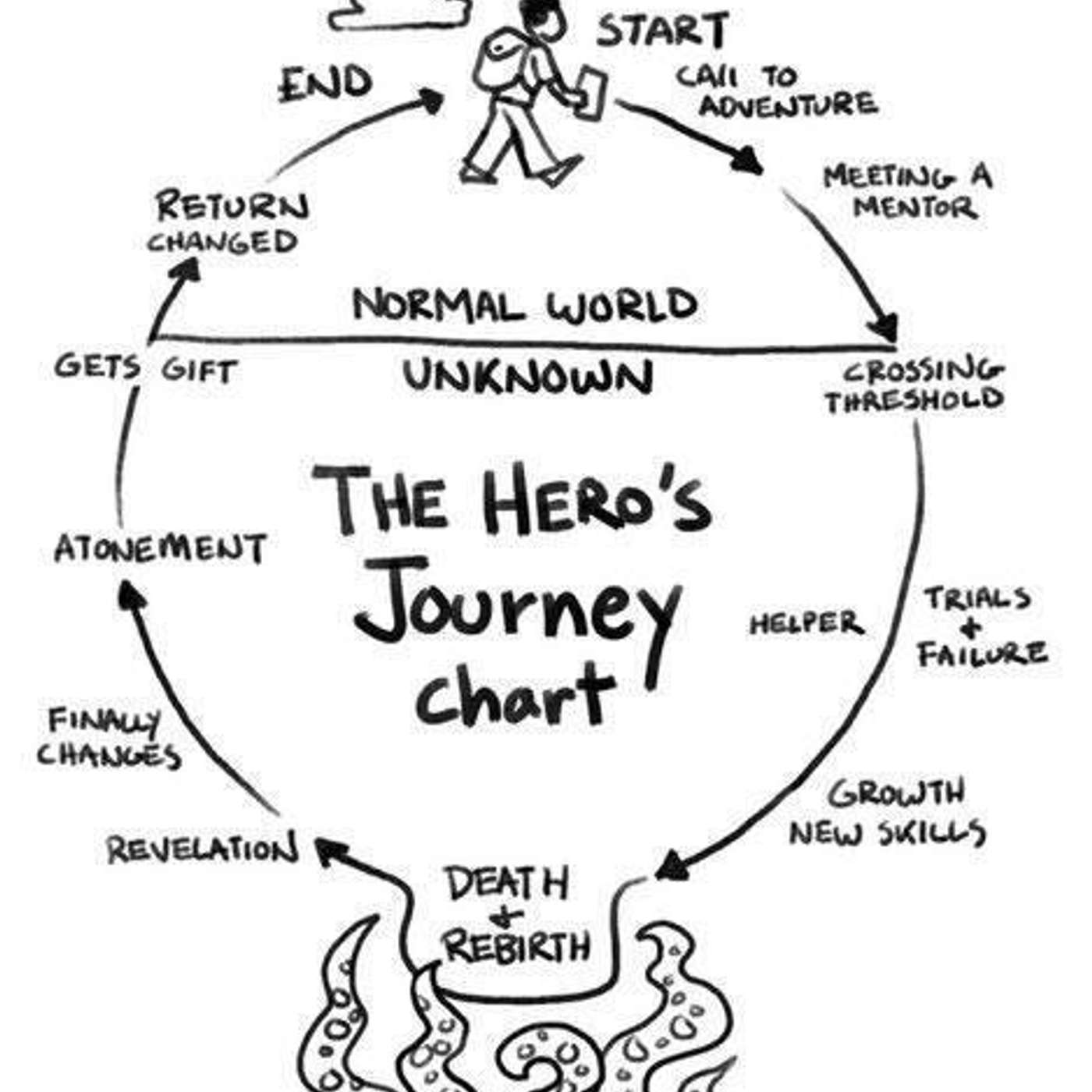
Jul 5, 2021
Hedgehogs & Foxes
Welcome to the 100+ new members of the curiosity tribe who have joined us since Friday. Join the 22,300+ others who are receiving high-signal, curiosity-inducing content every single week! Today’s newsletter is brought to you by AppSumo ! Sumo Day 2021 is almost here - an event for entrepreneurs hosted by my friends over at AppSumo. Think of Sumo Day as Amazon Prime Day, but for entrepreneurs . Starting July 13th, AppSumo is bringing you insane products, discounts, and giveaways for just 72 hours! So sign up to get the updates straight to your inbox! Hedgehogs & Foxes What can hedgehogs and foxes teach us about startups, entrepreneurship, investing, and growth? A lot. For today’s newsletter, let me take you down the rabbit (er, fox) hole on a mental model on vision, focus, and the journey from good to great. Let's start at the beginning... In the 8th century BC, a Greek poet named Archilochus penned a line that has stood the test of time. "The fox knows many things; the hedgehog knows one big thing." In the thousands of years since it was written, the meaning of Archilochus’ words has been debated by many of the greatest philosophers, historians, writers and thinkers. In a literal sense, the fox has an array of tricks at his disposal, but is defeated by the hedgehog's singular (and spiky) defense. In a figurative sense, Archilochus is highlighting the difference between those with singular vision and those with more scattered inspirations. The dichotomy of the hedgehog and the fox entered the more mainstream lexicon in 1953, when philosopher Isaiah Berlin published an essay entitled, The Hedgehog and the Fox , which would go on to be one of his most popular and well-regarded works. Berlin's essay sought to divide history's great writers and thinkers into two groups: Hedgehogs: who view the world through the lens of a single, all-encompassing idea Foxes: who draw upon myriad experiences and cannot view the world through the lens of a single idea “For there exists a great chasm between those, on one side, who relate everything to a single central vision, one system, less or more coherent or articulate, in terms of which they understand, think and feel – a single, universal, organizing principle in terms of which alone all that they are and say has significance – and, on the other side, those who pursue many ends, often unrelated and even contradictory, connected, if at all, only in some de facto way, for some psychological or physiological cause, related to no moral or aesthetic principle.” - Isaiah Berlin, The Hedgehog and the Fox, 1953 In The Hedgehog and the Fox, Berlin largely focused on categorizing writers and thinkers into these two groups. But he also - perhaps unintentionally - sparked the concept to leap into a new domain. Leadership and business. Enter stage left, Jim Collins... In 2001, renowned author Jim Collins released Good to Great , a book exploring why certain companies are able to achieve greatness after long periods of mediocrity (and why others don’t). In it, Collins referenced The Hedgehog and the Fox in building out what he referred to as The Hedgehog Concept. Collins asserted that the leaders of the good-to-great companies were all hedgehogs - people with a singular, all-encompassing vision. These leaders were uniquely capable of taking the complexity of their businesses and markets and simplifying it into a unifying idea. The Hedgehog Concept is a simple framework for identifying that unifying idea or vision. It is found at the center of: What you are passionate about What drives your economic engine What you can be the best at This last point is nuanced and worth a brief aside... What can you be the best at? Most people and companies have a very tough time with this question. It's not about a process to become the best. It's not about a strategy, plan, or roadmap. It's a simple, self-reflective exercise in identifying what game you should be playing. Here's one way to go about it: Map a list of skills or attributes on a page. Where do you spike? Where do you lag? Mark the map with pluses (+) and minuses (-) accordingly. Reflect on your map. Questions to ask: What game am I playing? Am I uniquely positioned to "win" that game? What game should I be playing? The key point here is that succeeding on the journey from good to great requires you (or your company) to play a game that you can be great at! Far too many people and companies spend years languishing in the valley of mediocrity simply because they were playing the wrong game. Ok, after that brief aside (which probably deserves its own piece in the future), back to hedgehogs and foxes... We have established a mental model: Foxes have multiple motivations, while hedgehogs have a singular focus. So where might you apply this mental model in practice? Investing Whether you are investing in startups or mature public companies, understanding management and their motivations is of paramount importance. This is often easier said than done. Try asking a simple, clarifying question: Is the leader a hedgehog or a fox? It can be a tricky question to answer. It hits a very common investor blindspot. Investors tend to fall in love with foxes. They are dynamic, social, and multi-talented. Hedgehogs may not be any of these things, but with their singular focus, they are always in the fight. The best investors - the ones with the longest track records of success, not the “flash in the pan” hotshots - go to great lengths to understand management motivations and identify the hedgehogs. The investors I admire most, some of whom I have the privilege to call friends and mentors, share this in common. In addition to the legends you all know (Buffett, Munger, etc.), Ho Nam (of the Uber-successful Altos Ventures) has written a great piece on this and Gavin Baker and Dennis Hong talk and write about this often. So the mental model clearly applies to investing, but what else? Personal Development For investing, you are evaluating others, but you can also use this mental model to evaluate yourself. Are you a hedgehog or a fox? Are you working toward a singular, unifying vision? Or are you pulled apart by a variety of motivations? Importantly, a point that I have yet to address is that the characterization (hedgehog or fox) actually lies on a spectrum. It is not an absolute. You can be (and probably are!) a blend of the two. In his highly-regarded book On Grand Strategy , Yale professor John Lewis Gaddis points out that Abraham Lincoln likely embodied features of both the hedgehog and the fox. He had a unifying vision, but used certain fox-like means and characteristics to achieve his goals. Be ruthlessly honest and reflect on where you lie on the spectrum. Most of us (myself included!) will find that we are more fox than hedgehog. If that is the case, try using Jim Collins' Hedgehog Concept to identify your unifying vision, something we can all benefit fro...

Jun 28, 2021
Mental Razors
Welcome to the 500+ new members of the curiosity tribe who have joined us since Friday. Join the 20,500+ others who are receiving high-signal, curiosity-inducing content every single week! Today’s newsletter is brought to you by Fundrise ! Fundrise is the future of real estate investing - a platform that allows anyone to invest in a low-cost, diversified portfolio of institutional-quality real estate. With low minimums and no accreditation requirements, Fundrise is democratizing access to a historically exclusive asset class. Join 150,000+ other investors and start investing in real estate today! Mental Razors Razors are rules that simplify decisions. 20+ powerful razors (to help you cut through life’s noise): The ELI5 Razor Complexity and jargon are often used to mask a lack of true understanding. If you can’t explain it to a 5-year-old, you don’t really understand it. If someone uses a lot of complexity and jargon to explain something to you, they probably don’t understand it. Munger’s Rule of Opinions “I never allow myself to have an opinion on anything that I don’t know the other side’s argument better than they do.” - Charlie Munger Opinions aren’t free. You have to work to earn the right to have them. The Taleb “Look the Part” Razor If forced to choose between two options of seemingly equal merit, choose the one that doesn’t look the part. The one who doesn’t look the part has had to overcome much more to achieve its status than the one who fit in perfectly. The Bezos Regret Minimization Framework The goal is to minimize the number of regrets in life. When faced with a difficult decision: Project yourself into the future Look back on the decision Ask "Will I regret not doing this?" Take action The Boaster’s Razor Truly successful people rarely feel the need to boast about their success. If someone regularly boasts about their income, wealth, or success, it’s fair to assume the reality is a fraction of what they claim. The Steve Jobs Quality Razor “When you’re a carpenter making a beautiful chest of drawers, you’re not going to use a piece of plywood on the back, even though it faces the wall and nobody will ever see it. You’ll know it’s there, so you’re going to use a beautiful piece of wood on the back. For you to sleep well at night, the aesthetic, the quality, has to be carried all the way through.” - Steve Jobs When building, take pride in carrying the quality all the way through. Would you be proud for your work to be seen from every angle and perspective? If not, keep working. Buffett’s Rule of Holes “The most important thing to do if you find yourself in a hole is to stop digging." - Warren Buffett When things aren’t working, change course and try something different. When you find yourself at the bottom of a hole, stop digging and climb out of it. The Paul Graham Crazy Idea Razor If someone proposes a crazy idea, ask: Are they a domain expert? Do I know them to be reasonable? If yes on (1) and (2), you should take the idea seriously, as it may be an asymmetric bet on the future. The Circle of Competence Be ruthless in identifying your circle of competence (and its boundaries). When faced with a big decision, ask yourself whether you are qualified to handle it given your circle. If yes, proceed. If no, outsource it to someone who is. The Duck Test If it looks like a duck, swims like a duck, and quacks like a duck, it’s probably a duck. You can determine a lot about a person by regularly observing their habitual characteristics. Buffett’s Juicy Pitch “You don't have to swing at everything - you can wait for your pitch." - Warren Buffett Life doesn’t reward you for the number of swings you take. Slow down and focus on identifying the juiciest pitch. When it comes, swing hard and don’t miss it. Occam’s Razor The simplest explanation is often the best one. Simple assumptions > complex assumptions. Simple is beautiful. The Buffett Reputation Razor “It takes 20 years to build a reputation and five minutes to ruin it. If you think about that, you'll do things differently.” - Warren Buffett Remember that quote and act accordingly. Your character is your fate. Hanlon’s Razor Never attribute to malice that which can be adequately explained by stupidity. In assessing someone's actions, we should not assume negative intent if there is a viable alternative explanation, such as different beliefs, incompetence, or ignorance. Machiavelli’s Razor A simple modification of Hanlon’s Razor: Never attribute to malice that which can be adequately explained by self-interest. In assessing someone's actions, we should not assume negative intent if there is a viable alternative explanation that they are acting on rooted self-interest. Newton’s Flaming Laser Sword If something cannot be settled by experiment or observation, it is not worth debating. This will save you from wasting a lot of time on pointless arguments. Hitchens’ Razor What can be asserted without evidence can also be dismissed without evidence. The burden of proof regarding a claim lies with the one who makes the claim. If unmet, no argument is required to dismiss it. Sagan’s Standard “Extraordinary claims require extraordinary evidence.” - Carl Sagan The more crazy and outrageous the claim, the more crazy and outrageous the body of evidence must be in order to prove it. The Naval Reading Razor “Read what you love until you love to read.” - Naval When deciding what to read, just read whatever grabs you. Avoid the trap of only reading “impressive” or “smart” books that bore you to death. Never establish vanity metrics (e.g. # of books) as goals. The Eisenhower Decision Matrix When faced with a task, ask: “Is this urgent? Is this important?” An "urgent" task is one that requires immediate attention. An "important" task is one that promotes or furthers your long-term goals. Place it on a 2x2 matrix and act accordingly. The Steve Jobs Settling Razor “The only way to do great work is to love what you do. If you haven’t found it yet, keep looking. Don’t settle.” - Steve Jobs It’s Monday morning. Did you wake up with energy or with dread? Your answer will tell you if you’re settling. The Career Razor When deciding on a new job, choose the one that will challenge you the most (intellectually, physically, or emotionally). Challenge and discomfort forces growth. P.S. Check out The Bloomboard for challenging new roles! Those are 20+ powerful razors to help you cut through life’s noise. What are your favorites? What razors am I missing? Love this post? Share it with your family and friends and help grow the tribe! The Bloomboard - Featured Opportunities Pallet - Swiss Army Knife Commonsto...

Jun 21, 2021
Paradoxes of Life
Welcome to the 500+ new members of the curiosity tribe who have joined us since Friday. Join the 19,000+ others who are receiving high-signal, curiosity-inducing content every single week! Today’s newsletter is brought to you by Fundrise ! Fundrise is the future of real estate investing - a platform that allows anyone to invest in a low-cost, diversified portfolio of institutional-quality real estate. With low minimums and no accreditation requirements, Fundrise is democratizing access to a historically exclusive asset class. You can join 150,000+ other investors and start investing in real estate today! Powerful Paradoxes From a young age, we are taught to view the world as black and white. But many of life’s most important truths appear contradictory on the surface. 15 powerful paradoxes (on growth, business, careers, and life): Sprezzatura (“Studied Carelessness”) You have to put in more effort to make something appear effortless. Effortless, elegant performances are often the result of a large volume of effortful, gritty practice. Simple is not simple. Slow Down to Speed Up Want to speed up? Try slowing down. Slowing down gives you the time to be deliberate with your actions. You can focus, gather energy, and deploy your resources more efficiently. It allows you to focus on leverage and ROI. Move slow to move fast. Learn More to Know Less The wisdom paradox - the more you learn, the more you are exposed to the immense unknown. This should be empowering, not frightening. “The more I learn, the more I realize how much I don't know.” - Albert Einstein Embrace lifelong learning. Shrink to Grow Growth is never linear. In order to grow, sometimes you need to shrink. Shedding deadweight may feel like a step back, but it is a necessity for long-term growth. This principle applies to your career, startup, or life. One step back for two steps forward. Fail More to Succeed More We fear failure, so most of us play it safe to avoid it. But our greatest moments of growth often stem directly from our greatest failures. Don’t fear failure, just learn to fail smart and fast. Fail more - you’ll learn, adapt, and grow. Take On Less, Accomplish More Success doesn’t come from taking on everything that comes your way. It comes from focus - deep, disciplined focus on the tasks that really matter. Say yes to what matters, say no to what doesn’t. Protect your time. It is a gift to be cherished. Memento Mori A favorite of Stoic philosophy, it is a reminder of the certainty and inescapability of death. It is not intended to be morbid or dark; rather, to clarify, illuminate, and inspire. You must know your death in order to truly live your life. Talk Less to Be Heard More Friday Night Lights (the movie) has a famous scene where a notoriously quiet player gives a riveting speech that turns around a game. He rarely spoke up, so when he did, it hit. Hard. If you want to be heard, talk less. You’ll find more power in your words. The Only Constant is Change Entropy is reality. The world is in a continuous state of change. It’s the one thing you can always count on - the only constant. Embrace it - be dynamic, be adaptable. “When you are finished changing, you are finished.” - Benjamin Franklin Stop Looking to Find More Have you ever noticed that when you are looking for something, you rarely find it? Stop looking. What you’re looking for may just find you. More Choices, Less Satisfaction We assume a positive linear relationship between choice and satisfaction. But is this wrong? “Choice paralysis” is a very real phenomenon. The relationship between choice and satisfaction is much more nuanced than you’ve been led to believe. Argue Less to Persuade More Have you ever noticed that the most argumentative people rarely persuade anyone of anything? The most persuasive people don’t argue more - they observe, listen, and ask questions. Persuasion is an art that requires a paintbrush, not a sledgehammer. Face Your Fears If something scares you, you should probably go do it. Fears, when avoided, become limiters on our growth and life. Make a habit of getting closer to your fears. Then take the leap (metaphorically!) - you may just find growth on the other side. Get Vulnerable to Become Strong The stigma of vulnerability has been broken. It’s ok to admit we aren’t ok. Strength comes from opening up to our vulnerabilities - embracing them, owning them, and growing through them. Want to get strong? Get vulnerable first. Nothing is Certain “The only certainty is that nothing is certain.” - Pliny the Elder Uncertainty and randomness are features, not bugs. Embrace them. “It ain’t what you don’t know that gets you into trouble. It’s what you know for sure that just ain’t so.” - Mark Twain Those are 15 powerful paradoxes on growth and life. What are your favorites? What paradoxes am I missing? If you’ve been following along, you know that I write a lot about growth. It’s what I’m passionate about. I want to help you grow in your career. Check out my job board , where I curate amazing roles in finance and tech every week! Some amazing new roles up this week, including at Avicado , Atreides Management , Beyond Protocol , Commonstock , and more! If you’re a growing company in finance or technology, use the “Post a Job” button to have your roles posted and featured today. Join the 19,000+ others who are receiving high-signal, curiosity-inducing content every single week! Until next time, stay curious, friends! (P.S. a note from Fundrise: here's all the legal jargon we know you love reading) This is a public episode. If you would like to discuss this with other subscribers or get access to bonus episodes, visit sahilbloom.substack.com
Jun 17, 2021
The Mechanics of a Meme Stock Rally
Welcome to all of the new subscribers who have joined this growing tribe since Monday. If you’re not a subscriber, join the 18,500+ others and subscribe today! The Mechanics of a Meme Stock Rally “Meme stocks” like AMC and GameStop have captured the attention of the financial world. But few understand what is actually driving these furious price rallies. Let’s dive into the mechanics of a meme stock rally… First off, what is a meme stock? There is no single definition, but meme stocks can be understood as stocks that experience rapid upward price movements as a result of collective social media evangelism. The price movements are typically not related to business fundamentals. AMC and GameStop are the two most salient examples of meme stocks from recent memory. Both experienced furious, Reddit-fueled rallies that left the financial establishment scratching their heads. Heroes emerged, like fearless leader Roaring Kitty (who is not, in fact, a cat!). But how did it happen? Emotion (FOMO!) and the power of crowds played a role, but I’ll leave those to the sociologists and psychologists to analyze. There are two underlying financial dynamics at play: a short squeeze and a gamma squeeze. Let’s cover the mechanics of each… The Short Squeeze First, a short squeeze. The "short" in "short squeeze" refers to the concept of short selling. The basics are covered in my thread below. TL;DR - short selling is a way of betting against a stock - i.e. betting that its price will decline. "Short interest" is a measure of how heavily an asset is shorted by the market. It is the total number of shares that have been sold short (borrowed and sold), but have not yet been covered (bought and returned). It is usually measured as a % of the # of shares outstanding. A "short squeeze" occurs when a heavily-shorted asset experiences a rapid upward price movement. When this happens, short sellers may be forced to close their short positions (i.e. buy the stock and return it to the broker), further accelerating the upward price movement. In the case of the recent meme stocks, as AMC or GameStop stock rose, short sellers were forced to close their shorts all at once. This created a surge of buying (to return the borrowed shares) and drove the price up further. It created an accelerating upward price movement. The Gamma Squeeze So that’s a short squeeze, but what about a gamma squeeze? It’s a bit more complicated, but let's attempt to simplify it here... A gamma squeeze is all about options contracts and their indirect impact on the underlying stock. For a primer on options, see my thread below. When you buy a call option on AMC, someone has to sell you that option contract. You pay them a bit of money (the premium) and they make a commitment to deliver you the underlying stock at a future date for the strike price of the option. It's a pretty simple transaction. But in the background, the seller (often called a "market maker") has to think about their risk exposure. If AMC rises above your strike price, they will have to buy the stock at the market price and sell it to you for the strike price, incurring a (potentially large!) loss. To hedge this risk, when the market maker sells you the option, she also goes into the market and buys a bit of the underlying stock. The amount of stock she buys is based on the "Delta" - a ratio of how much the option price moves relative to a $1 move in the stock. "Gamma" is the rate of change of the "Delta" of the option. As Delta and Gamma rise, the market maker gets more and more nervous! She has to buy more stock to hedge the risk of the option being exercised in the money (i.e. with the underlying price above the strike price). So here we have the (simplified!) makings of the gamma squeeze. As call option purchasing volumes on AMC suddenly surged, market makers had to purchase a lot of AMC stock to hedge. This set in motion a self-fulfilling prophecy... Market makers rushed to purchase AMC stock to hedge exposure. This drove the price of AMC up! As the price of AMC went up, the Delta and Gamma of AMC call options rose. This meant market makers had to buy more stock, further driving up the AMC price! Reflexivity. So to summarize: With AMC and GameStop (and other meme stocks!), we had both (1) a short squeeze - short-sellers frantically buying the stock to close/cover their shorts and (2) a gamma squeeze - call option market makers frantically buying the stock to hedge their exposure. The result? Check the charts… I hope this piece was helpful and makes you feel more well-informed on what is happening under the surface with meme stocks! Enjoy this and want to share it with family and friends? You can find the original thread below. Subscribe now and follow me on Twitter so you never miss a beat. Until next time, stay curious, friends! This is a public episode. If you would like to discuss this with other subscribers or get access to bonus episodes, visit sahilbloom.substack.com
Jun 14, 2021
Steve Jobs @ Stanford - 16 Years Later
Steve Jobs delivered the commencement speech at Stanford University on June 12, 2005. 16 years later, its wisdom remains. Lessons from Steve Jobs (on careers, startups, and life): Develop Independent Views To carve your own path - in your career or life - you have to develop your own views. Steve Jobs originally went to college because it was what he was supposed to do after graduating high school. He dropped out when he couldn’t see the value in it. “I had no idea what I wanted to do with my life and no idea how college was going to help me figure it out. So I decided to drop out...it was one of the best decisions I ever made." Don't chart your course based on someone else's map for your life. Develop independent views. Let Curiosity Guide You There are no how-to books on life (or no good ones, at least). You have to develop your own guidebook that empowers you to navigate the endless, mysterious expanse. Curiosity can be that guide (if you embrace it). Steve Jobs experienced this when he began dropping in on random classes that sparked his interest. "Much of what I stumbled into by following my curiosity and intuition turned out to be priceless later on." Curiosity is a mysterious and powerful force. Let curiosity guide you. Have Faith in the Dots In following his curiosity, Steve Jobs dropped in on a calligraphy course for a semester. "It was beautiful, historical, artistically subtle in a way that science can’t capture." But it had no practical relevance to his life...or so he thought. "10 years later, when we were designing the first Macintosh computer, it all came back to me...It was the first computer with beautiful typography." You are just a series of "dots" - moments, decisions, successes, and failures. Your life is the line that connects them. "You can’t connect the dots looking forward; you can only connect them looking backward. So you have to trust that the dots will somehow connect in your future...This approach has never let me down, and it has made all the difference in my life." Have faith in the dots. Go Back to the Starting Line After being fired from Apple, Steve Jobs felt the weight of tremendous public failure. He had been fired from the company he founded, after all. But through self-reflection, he came to see that this very public failure had freed him in a way. “The heaviness of being successful was replaced by the lightness of being a beginner again, less sure about everything. It freed me to enter one of the most creative periods of my life.” Don’t let the burden of external forces drain your life. Go back to the starting line. Never Settle In your career, if you have the luxury of choice, never settle for less than love. Low tolerance for uncertainty often leads to this settling - we fear the uncertainty and settle to escape it. Resist this urge... “The only way to be truly satisfied is to do what you believe is great work. And the only way to do great work is to love what you do. If you haven’t found it yet, keep looking. Don’t settle.” Tolerate uncertainty for a bit longer. Never settle. Memento Mori One year before his speech, Steve Jobs had survived a scare with pancreatic cancer. It was a very real reminder of his mortality and the inescapability of death. But rather than darkness, this experience brought light. "Remembering that you are going to die is the best way I know to avoid the trap of thinking you have something to lose. You are already naked. There is no reason not to follow your heart." Remember that you must die. Memento Mori. Stay Hungry, Stay Foolish Fight back against “fitting in” - fight back against normalcy. “Your time is limited, so don’t waste it living someone else’s life...Have the courage to follow your heart and intuition. They somehow already know what you truly want to become.” The world wants you to be normal and play by the rules. You have to fight - consistently and diligently - to maintain your uniqueness. Steve Jobs recognized this as well as anyone in the world. So it was that he closed with his most famous line: “Stay Hungry. Stay Foolish.” These were the powerful mental models and lessons from Steve Jobs, delivered during his commencement speech at Stanford University on June 12, 2005. The full text and video of the speech can be found here . If you are still looking to find that love in your career that Steve Jobs referenced, I want to help. Check out my job board for curated roles at high-growth companies in finance and technology that believe in open access recruiting. There are some amazing new roles on the board this week from companies like Commonstock , Beyond Protocol , and Mercury - check it out today! And if you are a growing company in finance or technology looking to access a unique pool of talent and have your roles promoted to my audience on Twitter or through the newsletter, post a job on the board or message me for additional information. Enjoy this and want to share it with family and friends? You can find the original thread below. Subscribe now and follow me on Twitter so you never miss a beat. Until next time, stay curious, friends! This is a public episode. If you would like to discuss this with other subscribers or get access to bonus episodes, visit sahilbloom.substack.com

Jun 7, 2021
Lifelong Learning
Today’s newsletter is brought to you by Ascend’s Leadership Program ! Ascend’s Leadership Program for women will empower you with the skills and frameworks required to influence at all levels, conquer imposter syndrome, and accelerate your career. You’ll leave the program confident and armed with the skills, tools, and support to have your ideas taken seriously, empower your team, and move up faster in your career. It’s the only program I’ve seen that teaches these practical skills in a safe space with an incredible community for aspiring and new women leaders - I am proud to support! Ascend’s Leadership Program’s upcoming cohort will run from June 28 to August 5 and spots are filling up quickly. Apply today to secure your place in this amazing program! Lifelong Learning Habits Lifelong learning is a competitive advantage. But contrary to what you’ve been told, lifelong learners are built, not born. 20 lifelong learning habits you can start developing today: Stimulate Dynamically The mind is a muscle - it needs to be stimulated dynamically to continue to grow. Don’t rely on one “exercise” - develop a menu of options. Write, read, listen, watch. Solve puzzles, play games. Enjoy it! Stimulate dynamically, learn dynamically. Build Learning Circles The most powerful learning is communal, not individual. Build learning circles with other intellectually curious minds. Engage regularly with no set intention or goal. Community is everything. Embrace it. Keep Asking Why “Why?” is the most useful tool in our learning toolkit. But somewhere along the line, we are told to stop asking why and just accept “facts” as we are told them. Reject the norm. If you want to understand the world, take a cue from our kids - keep asking why! Adopt a Process Orientation Prioritize process. Learn for the sake of learning, not always for a specific goal. When you prioritize process, you become flexible in where you are headed. Life is a winding, confusing journey - forward progress is all that matters. Become a Polymath A polymath is a person with wide-ranging, multi-disciplinary knowledge. Lifelong learners tend to be polymaths - their curiosity naturally leads to knowledge accumulation in a variety of disciplines. Learn both horizontally and vertically. Become a polymath. Build a Learning Engine The “learning engine” is at the core of every lifelong learner. It is comprised of all the learning “inputs” regularly consumed - books, newsletters, podcasts, videos, etc. The internet has opened access to it all. Build an unstoppable learning engine. Avoid Noise Bottlenecks Consuming more does not equate to knowing more. As you consume more data, you may find the noise-to-signal ratio increases (a classic Taleb “noise bottleneck” appears). Consume less, but consume intelligently. More signal, less noise. Embrace All Types of Learning There are two types of learning: surface and deep. Surface learning is quick and easy. Deep learning is more challenging. It requires a willingness to slow down and let ideas mature in the mind. Lifelong learners embrace both. Seek Mentors & Coaches “If I have seen further, it is by standing on the shoulders of giants.” You can’t do it alone. Seek out mentors and coaches to help you on your journey. Never be afraid to ask. You’ll be amazed by the kindness of strangers and their willingness to help. Embrace Failures Lifelong learners recognize that failures are learning opportunities. They don’t fear them. They embrace them. It’s easier said than done. Failures are painful - physically and emotionally. But stay the course and you’ll find learning on the other side. Follow Your Curiosity When you have a spark of curiosity, follow it. Moments of pure, unadulterated curiosity are fleeting, so you have to prioritize them when they come. Seek out curiosity-inducing content (like my Curiosity Chronicle newsletter !). Become a Teacher Teaching is often the most powerful path to learning. The Feynman Technique (explained below) is a foundational mental model for unlocking learning and growth through teaching. Use it! If you want to learn, teach. Take Breaks Humans were not made for constant motion. Learn to sprint, then rest. Taking breaks can be the easiest, most effective unlock for learning and growth. If you want to learn to grow, first learn to rest. Learn from Strangers Every conversation with a stranger is an opportunity to learn something new. Be present in every conversation with everyone you meet. You never know what might come of it. Seek a Stimulating Job Try to find a job that is intellectually stimulating. I know this is a luxury - if you are lucky enough, take advantage. P.S. I want to help. Check out my job board for interesting roles at companies that believe in open access. Change Your Mind Lifelong learners are always willing to change their mind. Believe something to be true? Ok, but be sure to open your mind to counterarguments. Stubborn refusal to acknowledge alternative perspectives stalls progress. Strive for strong opinions, weakly held. Embrace Novel Formats 2020 was a tough year, but it did bring an upswell of novel learning formats. Cohort-based courses - which foster community! - are a great innovation. Cool Example: Ascend - a program for women looking to accelerate their careers. Practice Mindfulness A healthy mind is a powerful mind. Set aside time for mindfulness. Practice meditation - start with 5 minutes a day and build up from there. There are plenty of great apps to help you get started. With a healthy mind, anything is possible. School as the Starting Line All lifelong learners recognize that school is nothing but the starting line of our true education. Once you internalize this, you’ll start doing things differently. Play the Long Game The greatest riches in life - personal or professional - come from compound interest. But it takes time. Lots of time. Knowledge is no different - it compounds. So lifelong learners play the long game. Let the magical power of compounding work for you. So those are 20 lifelong learning habits you can start developing today. What are some that I am missing? If you are a job seeker, check out The Bloomboard for unique roles at high-growth companies in finance and technology. Enjoy this and want to share it with family and friends? You can find the original thread below. Subscribe now and follow me on Twitter so you never miss a thread. Until next time, stay curious, friends! This is a public episode. If you would like to discuss this with other subscribers or get access to bonus episodes, visit sahilbloom.substack.com
Jun 1, 2021
Standing Out in a Hiring Process
Special Announcement: The Bloomboard I’m excited to announce the launch of my job board - The Bloomboard - where I will curate and share unique, exciting roles in finance and technology every single week. The goal? To foster open access to jobs for candidates and spread awareness of amazing, high-growth companies and roles. The board will be curated by me personally, meaning it will only include companies and roles I would recommend (i.e. roles I would be excited to take if I were qualified!). We have some incredible companies and roles up for the launch, including: Synthesis - EdTech for nurturing innovators - VP of Growth & Head of People Faves - curation-focused social app - Head of Partnerships & Growth PM Metafy - 1x1 e-sports coaching platform - Senior Product Designer Vivian Health - healthcare job placement platform - Product Manager Fundrise - real estate investment platform - Director of Product, Growth M1 Finance - personal investment super app - Lifecycle Marketing Manager Capchase - non-dilutive funding platform - Capital Markets Analyst Pesto Tech - remote developer matching platform - Account Executive Blockworks - crypto and macro media platform - Editor & Software Engineer Titan - democratized investment platform - Crypto Investment Analyst and more at IEQ Capital , First Round Capital , Gather , Athletic Greens , Avicado , ConvertKit , and many others! If you are a company in finance or technology looking to gain direct access to a large, growing talent pool, post a job to the board or email me to add your roles. 20 Ways to Stand Out in a Hiring Process The hiring process is ultra-competitive. But you’ve incorrectly been told that the only way to stand out is by having fancy degrees and credentials. 20 ways to stand out in a hiring process (that don’t involve your resume): Do Your Research Before an interview, spend a few hours researching the company and role. At a minimum, learn the company mission, read up on recent news on the company or its market, and study the backgrounds of the key leaders. Google is a powerful asset. Use it. Embrace “I Don’t Know” You can’t know the answer to every question. And you know what? That’s ok! Don’t be afraid to say “I don’t know” - but then follow it with a plan to acquire that information. “I don’t know, but I’ll dig in and follow up with an email.” Then follow up! Stop Fearing Rejection I’m not embarrassed to admit that I’ve been rejected for more jobs than I can count. It happens. You can’t be a fit for everything and everyone. Stop being afraid of rejection and put yourself out there. You miss 100% of the shots you don’t take. Prepare for “Why Us?” Interviewers inevitably ask, “Why us?” Make sure you are prepared for it. What attracted you to this company? The more specific, the better. Generic answers (“I love investing”) get minus points. Specific answers win. Stalk (Non-Creepily!) If you know who you will be interviewing with, spend time learning about their background and experience. Identify potential bonding areas (e.g. same alma mater, similar interests or hobbies, etc.). This prior knowledge may help you connect more deeply. Seek Warm Intros Warm intros and references are the holy grail of a competitive hiring process. Scan your networks for any connections to a company (yes, LinkedIn is actually useful for something!). If you find any that are close enough, use them. The smallest edge can help! Blend Deference & Confidence Show deference to your interviewer, but not at the expense of confidence. The power dynamics of an interview are nuanced. Blending deference and confidence is how you manage them effectively and leave the interviewer with a positive impression. Play to Your Strengths Don’t fight on an even playing field. If you have unique attributes or competitive advantages, use them. Played a team sport? Talk about it! Taught yourself to code? Hype that up! Humility is great, but make sure they know what makes you special! Show Your Passion Showing a genuine passion and excitement for the company and role is the easiest way to stand out from the crowd. People want to hire candidates that want to be there. So smile, express your excitement (calmly!), and let that passion shine through. Carry a Notebook When you go to an interview, always bring a notebook. It’s not just pageantry - use it. If something comes up that is interesting or requires a follow up, make a point of writing it down. It shows attentiveness. Interviewers notice these little things. Personalized Thank Yous After an interview, always send a thank you note to the interviewer. Make them punchy (so that...
May 24, 2021
Commencement Wisdom
A great commencement speech is filled with wisdom. 10 powerful lessons from the best commencement speeches of all time: #1: Connecting the Dots "You can’t connect the dots looking forward; you can only connect them looking backward. So you have to trust that the dots will somehow connect in your future." - Steve Jobs, Stanford 2005 Life is uncertain. Have faith that your dots will somehow connect. #2: Master the Rescue "The difference between triumph and defeat, you’ll find, isn’t about willingness to take risks. It’s about mastery of rescue." - Atul Gawande, Williams 2012 Failures are a given. The greatest don't fail less, they just succeed in rescuing more. #3: Be a Doer "I think a lot of people dream. And while they are busy dreaming, the really happy people, the really successful people, the really interesting, engaged, powerful people, are busy doing." - Shonda Rhimes, Dartmouth 2014 It's not enough to dream. You have to do. #4: Learn to Improvise "Life is an improvisation. You have no idea what's going to happen next and you are mostly just making things up as you go along." - Stephen Colbert, Northwestern 2011 Life has a habit of laughing at your best-laid plans. Let it flow - learn to improvise! #5: Appreciate the Sweetness "When things are going sweetly and peacefully, please pause a moment, and then say out loud: 'If this isn't nice, what is?'" - Kurt Vonnegut, Rice 1998 Life moves fast. Slow down, pause, and appreciate moments of sweetness. You'll be glad you did. #6: Run Toward the Storm "Whatever you choose for a career path, remember the struggles along the way are only meant to shape you for your purpose." - Chadwick Boseman, Howard 2018 Your career will be filled with struggles. Don't hide. Run toward them! Let them shape you. #7: Embrace Imposter Syndrome "I just directed my first film. I was completely unprepared, but my own ignorance to my own limitations looked like confidence and got me into the director's chair." - Natalie Portman, Harvard 2015 We are all imposters...until we aren't. Embrace it! #8: Check the Assumptions "A huge percentage of the stuff that I tend to be automatically certain of is, it turns out, totally wrong and deluded." - David Foster Wallace, Kenyon 2005 It's what you know for sure that just ain't so...To avoid trouble, always check the assumptions. #9: Look Up "The answer to a lot of your life's questions is often in someone else's face. Try putting your iPhones down every once in a while and look at people's faces." - Amy Poehler, Harvard 2011 Look up from your phone. Observe and listen to those around you. Be present. #10: Make Your Bed "Making your bed will also reinforce the fact that little things in life matter. If you can't do the little things right, you will never do the big things right." - Admiral McRaven, Texas 2014 Little things become big things. Take pride in the little things. These are 10 powerful lessons learned from some of the greatest commencement speeches of all time. What are your favorites that weren't included in the list? Enjoy this and want to share it with family and friends? You can find the original thread below. Subscribe now and follow me on Twitter so you never miss a thread. Until next time, stay curious, friends! This is a public episode. If you would like to discuss this with other subscribers or get access to bonus episodes, visit sahilbloom.substack.com

May 19, 2021
Ransomware-as-a-Service
The story of the last few weeks in business has been the ransomware attack that took down the Colonial Pipeline. On ransomware-as-a-service, DarkSide, and what happens when publicity becomes really bad for business: First, a few definitions... What is ransomware? Ransomware is a type of malware - a software designed to cause harm to a computer, server, or network. Ransomware is used to encrypt the files on your system and hold it “hostage” until the demanded ransom is paid. Ransomware is not new, but ransomware attacks are most definitely on the rise. With the world increasingly moving online, the cyber-attackers have experienced a windfall. Both the frequency of attacks and the size of the average ransom payments have increased dramatically. The way a ransomware attack works is really quite simple (even if the underlying technology is complicated). A would-be attacker scans for vulnerable companies. They often look for dated systems or weak infrastructure - like an animal looking for injured prey. When a target is acquired, the cyber-attacker looks for an entry point. This could be using a phishing scam or other method to gain access to the network or company data and servers. Once inside, the cyber-attacker launches a program that encrypts all of the company’s data. Once encrypted, the data and systems become completely unusable without a decryption key. The company is immobilized. While this sounds complex, given the range of cybersecurity sophistication at companies, hackers say breaching some companies is “so easy a kid could do it.” After the encryption is complete, the ransom negotiation begins. The cyber-attackers reach out to the company, offering to provide a decryption key that will return access to the hostage data. In exchange, the company has to pay a ransom (usually in the form of Bitcoin). If ransom isn’t paid, the data may continue to be held (leaving the company immobilized) or sensitive data (credit cards, health records, etc.) may be leaked. Generally speaking, the company negotiates and pays the ransom, with its cyber insurance footing the bill. The ransomware market has operated in the shadows for a long time...until recently. The story of a high-profile attack on the Colonial Pipeline - and the fascinating “ransomware-as-a-service” entity that enabled it - has shined a light on the industry. Let’s dive in… Colonial Pipeline is the largest gas pipeline in the U.S. On May 7, it announced it had been hit by a ransomware attack and had shut down operations. This ransomware attack was different. It wasn’t an attack on a medium-sized business. It was much, much bigger than that. With the pipeline out of commission, gas prices spiked, impacting millions and drawing the immediate, full attention of the press (and the FBI). Suddenly, ransomware attacks were in the spotlight. And the services group enabling the attacks - DarkSide - was at center stage. DarkSide is a so-called “ransomware-as-a-service” company. It doesn’t engage in the actual cyberattacks. Instead, it provides a suite of tools and services that enable would-be cyber-attackers to conduct their business. DarkSide provides the malware that encrypts the data, but also much more. A communication service - making calls to the victim companies for negotiations. A hosting site for stolen data. Customer service. It can even sell inside info to stock traders for extra profit. Think of DarkSide as a cloud services provider for the modern ransomware era. It appears to be the market leader in providing such services! And it has an impressive economic model: DarkSide takes a 10-25% cut of the proceeds from the ransom payment. Normally, startups with strong market traction love publicity. It helps with new customer acquisition and growth! But the difference here is that when you are a ransomware-as-a-service market leader, publicity can be really, really bad for business. With the authorities now focused on them, DarkSide issued a statement: “Our goal is to make money and not create problems for society. From today, we introduce moderation and check each company that our partners want to encrypt to avoid social consequences in the future.” DarkSide learned the hard way what banks learned long ago: you have to know your customer! The Colonial Pipeline shutdown lasted about a week. Operations were restored after a rumored ransom payment of ~$5m (75-100 BTC). DarkSide’s cut was hefty - but it came at a cost. In the months to come, with the spotlight shined on the sophistication of the ransomware market - as well as the devastating nature of the attacks - companies will step up their cybersecurity infrastructure to defend themselves. This may be bad for ransomware profits... So is this just a classic market cycle? The ransomware market had predictable, large profits. This led to a rush of activity to exploit them. Now the market gets squeezed, making it less attractive to do ransomware attacks. Free markets at work...? That is the story of DarkSide, the Colonial Pipeline hack, and the fascinating ransomware-as-a-service business model. For more, check out this article from Bloomberg . Enjoy this and want to share it with family and friends? You can find the original thread below. Subscribe now and follow me on Twitter so you never miss a thread. Until next time, stay curious, friends! This is a public episode. If you would like to discuss this with other subscribers or get access to bonus episodes, visit sahilbloom.substack.com

May 17, 2021
Intellectual Curiosity
Intellectual curiosity is a competitive advantage. But contrary to what you’ve been told, it has nothing to do with intelligence. 10 ways to start developing your intellectual curiosity today: #1: Scrub Your Windows “Your assumptions are your windows on the world. Scrub them off every once in a while, or the light won't come in.” - Isaac Asimov Curiosity is a light that can only enter when your mental windows are clean. Scrub them off now and then. Let the light in. #2: Embrace “I Don’t Know” “The only true wisdom is in knowing you know nothing.” - Socrates Avoid false confidence (and the people that display it!). Embracing what you do not know is a superpower. Recognize your gaps and blind spots. Slowly, methodically fill them in. #3: Go Down Rabbit Holes When you find a spark of curiosity, dive in and don’t look back. You cannot control when they come, so you must embrace them when they do. The rabbit hole is the amusement park of the intellectually curious mind. Enjoy it! #4: Ask “Dumb” Questions When we are young, we always ask “Why?” But over time, we develop a fear of asking the “dumb” question that may draw the ire of our peers. That fear stifles our intellectual curiosity. Fight it back. Face it. When in doubt, ask. #5: Build Curiosity Circles Curiosity is communal. Find a group of friends who are motivated by learning and growth. Share ideas, learnings, and insights with each other. You’ll build bonds and have a constant source of stimulation for your intellectual curiosity. #6: Make Learning the Goal Learning with a specific end goal in mind often becomes a chore - it is a fast track to stifled curiosity. Focus on the learning itself - not other outcomes. Take pride in learning something new every single day. “Learn as if you were to live forever.” #7: Open Up to the World The diversity of human experience in our world is one of the greatest gifts to the intellectually curious mind. When you meet someone new, take genuine interest in their life and experiences. The world opens up to you, when you open up to the world. #8: Focus on Your Passions Forced learning is for school. It doesn’t work in practice. It stifles curiosity. Find what you truly enjoy learning about. It doesn’t matter what it is. It doesn’t have to be “intellectual” or impressive. Remember: You are learning for you! #9: Read Flexibly Books are a life-changing investment that you can make for under $100. But to take advantage, you must read flexibly. Read what you love. Read what draws you in. When it stops doing so, put it down. Forced reading is the antidote to curiosity. #10: The Curiosity Chronicle And last - but certainly not least - sign up for this newsletter ... A weekly short-form newsletter with five pieces of content curated to spark your intellectual curiosity. So those are 10 ways to start developing your intellectual curiosity today. For additional writing related to cultivating intellectual curiosity in your children, check out my friend Ana Fabrega at Synthesis , who is putting out incredible content. Synthesis is building something special disrupting traditional childhood education. Check them out here ! Enjoy this and want to share it with family and friends? You can find the original thread below. Subscribe now and follow me on Twitter so you never miss a thread. Until next time, stay curious, friends! This is a public episode. If you would like to discuss this with other subscribers or get access to bonus episodes, visit sahilbloom.substack.com

May 3, 2021
Warren Buffett’s Wisdom
Warren Buffett is a treasure trove of wisdom. But contrary to what you have been told, most of it has nothing to do with investing. 10 powerful lessons for life from the Oracle of Omaha: #1 - Wait For A Juicy Pitch “You don't have to swing at everything - you can wait for your pitch." Life doesn’t reward you for the number of swings you take. Focus on identifying the juiciest pitch. When it comes, swing hard and don’t miss it. #2 - Just Stop Digging “The most important thing to do if you find yourself in a hole is to stop digging." When things aren’t working, change course and try something different. Be nimble. Be agile. When you find yourself at the bottom of a hole, stop digging and climb out of it. #3 - Exploit Disconnects “Price is what you pay. Value is what you get.” Seek out situations where there is a clear disconnect between price and value. This applies to investing, but it’s more broadly a mental model for life. Identify disconnects. Exploit them to your advantage. #4 - Be Contrarian “Be fearful when others are greedy and greedy when others are fearful.” Following the crowd is easy, but it can be a trap. Learn to think independently. Come to your own decisions. Develop your own mental models. Your unique perspectives are your superpower. #5 - Optimize Value Capture “Opportunities come infrequently. When it rains gold, put out the bucket, not the thimble." Create structures that enable you to capture more of the value you create. The most successful people have simply optimized their value capture mechanisms. #6 - Make Time Your Friend “Time is the friend of the wonderful business, the enemy of the mediocre.” Don’t be in a rush. Set up your life to compound value over the long-term. Play long-term games with long-term people. Make time work for - not against - you. #7 - Protect Your Circle of Competence “Risk comes from not knowing what you're doing.” Be ruthlessly honest about what you know (your circle of competence) and what you don’t. Focus on playing games within your circle - otherwise, you’re just gambling. #8 - Never Get Caught Naked “It's only when the tide goes out that you discover who's been swimming naked.” Find a balance between pushing yourself for growth and being completely out of your depth. Never put yourself in a high-stakes position to get caught swimming naked. #9 - Reputation Matters “It takes 20 years to build a reputation and five minutes to ruin it. If you think about that, you'll do things differently.” In every interaction - big or small - always act in accordance with strong principles and values. Your character is your fate. #10 - Invest In Yourself “The most important investment you can make is in yourself." There is no better investment than an investment in yourself. Find time to read, to think, to learn. Surround yourself with amazing people who push you to become better. Invest in you. These are 10 powerful lessons for life from Warren Buffett, but there are so many more. What are your favorite lessons from the Oracle of Omaha? I have to admit, I am still shaking from this moment at the Berkshire Hathaway Annual Meeting in 2019... Enjoy this and want to share it with family and friends? You can find the original thread below. Subscribe now and follow me on Twitter so you never miss a thread. Until next time, stay curious, friends! This is a public episode. If you would like to discuss this with other subscribers or get access to bonus episodes, visit sahilbloom.substack.com

Apr 25, 2021
The Fight Against Normalcy
In his final Amazon shareholder letter, Jeff Bezos shared a powerful mental model on maintaining your distinctiveness. On the fight against normalcy (in your career, startup, writing, or life): Jeff Bezos founded Amazon in 1994. In 27 years at the helm, he grew it into one of the largest and most influential companies in the world. Today, it is worth almost $1.7 trillion. Each year since its 1997 IPO, Bezos has written an annual letter to Amazon shareholders. In February, Jeff Bezos announced he would step down as CEO. In his final annual shareholder letter , he covered his “create more than you consume” mantra and hit on climate and employee issues. But its closing - on the fight against normalcy - held the most powerful lessons. Bezos set the stage for his mental model with a quote from Richard Dawkins’ The Blind Watchmaker: “The body tends to revert to a state of equilibrium with its environment...if living things didn’t work actively to prevent it, they would eventually merge into their surroundings.” With the stage set, Bezos makes his point: “In what ways does the world pull at you in an attempt to make you normal? How much work does it take to maintain your distinctiveness?...You have to pay a price for your distinctiveness...don’t expect it to be easy or free.” This is a powerful mental model for thinking about distinctiveness. If equilibrium with our surroundings - normalcy - is our natural state, we must fight to maintain distinctiveness. Constantly, relentlessly. Distinctiveness isn’t free - you have to pay your dues every day. Once you internalize this framework, you will see it all around you. You will see all of the ways that our systems and institutions are designed to keep you normal. You will start to see how hard it is to be different - the true cost of distinctiveness. One perfect example: Education. Our traditional education systems look like the early Ford Model T assembly lines. Standardized, one-size-fits-all curriculum and arbitrary assessments of competency. We leave some kids behind, we hold back others. We fail to foster innovation, ingenuity, and creativity. Traditional education systems are designed to maintain equilibrium. Conventional wisdom said it would be too hard to foster creativity at scale. It will be hard, but that’s the point! Innovation is coming: Synthesis is building something special, for example. The world wants you to be normal. Our systems and institutions are all designed to make it easy to be normal. Maintaining your distinctiveness is possible, but it will require effort - painful, constant, relentless effort. But stay the course. You’ll find it’s worth it. Enjoy this and want to share it with family and friends? You can find the original thread below. Subscribe now and follow me on Twitter so you never miss a thread. Until next time, stay curious, friends! This is a public episode. If you would like to discuss this with other subscribers or get access to bonus episodes, visit sahilbloom.substack.com

Apr 13, 2021
The Archegos Saga
The story of the last few weeks in finance has been the secretive rise and rapid downfall of Archegos Capital Management. A thread on the underlying mechanics of the Archegos saga and how a $20 billion fortune vanished into thin air... First, let’s set the stage. Archegos Capital Management is the family office of Bill Hwang, a former prodigy of hedge fund legend Julian Robertson. Hwang previously built Tiger Asia Management - a so-called “Tiger Cub” fund due to its lineage from Robertson’s Tiger Management. Bill Hwang grew Tiger Asia Management into a highly successful hedge fund, reaching ~$10 billion in assets under management in the 2000s. He was a bit of an anomaly in the world of high finance - known as a devout Christian with simple tastes (seriously, he drives a Hyundai!). After winding down Tiger Asia Management following a few bad bets and a run-in with regulators, Hwang opened Archegos (a Greek word for “one who leads the way”) in 2013 with ~$200 million in personal capital. He began doing what he does best - trading and investing. Going long innovation, he scored big wins on stocks like Netflix and Amazon. Soon, Archegos’ capital had grown to $4 billion. But Hwang, a private and deeply religious man, was not one for the spotlight. He just appears to have genuinely enjoyed his work. Fortunately, there were features of the strategy that allowed the firm to remain anonymous. As a family office, it was not required to disclose its holdings on a 13F filing (as with all hedge funds). It used swap contracts to quietly amass large, leveraged positions. The 13F loophole is self-explanatory: Archegos was a family office with a specific structure, so it did not have to file quarterly 13Fs disclosing its holdings. Swap contracts (“swaps”) are a bit more complicated. Let’s simplify them here for everyone to understand... In simple terms, a swap contract is an agreement between two parties to exchange (swap!) the values or cash flows of one asset for another. Archegos entered swap contracts with banks to gain exposure to stocks without holding them. This is not an uncommon practice for funds. My banker buys $100 of Apple on my behalf but holds it on the bank B/S. I post $20 as “margin” (see my primer on margin) and agree to pay interest on the borrowed money ($80). I “own” $100 of Apple, but only had to put up $20 and no one knows I own it. At the end of every day, we settle up on the account. If the value of the Apple stock in my account rises, my banker pays me in cash the value of that rise. If the value of the Apple stock in my account falls, I have to post additional margin (to make my banker feel safe!). Note: I am definitely simplifying the mechanics of a swap contract for illustrative purposes. There are many types and flavors of swaps, but most follow the basic structure laid out above. Back to Archegos... Bill Hwang used swaps to amass large long positions (again, not an uncommon practice for hedge funds!). He built positions in stocks like ViacomCBS, Baidu, and GSX. He had accounts with many banks, including Goldman, Morgan Stanley, and Credit Suisse. As the stocks rose rapidly in early 2021, he used the cash his swap contracts were paying him to enter new swaps, increase his leverage, and buy even more. It was a self-fulfilling prophecy: rising prices enabled more leverage and more buying, further accelerating the rise. At its peak, Archegos had built a ~$100 billion portfolio and Bill Hwang was worth ~$30 billion. Importantly, as the positions were held at banks and not disclosed on 13F filings, the extent of the positions and leverage was largely unknown. But then it all came crashing down. On March 22, ViacomCBS, which had seen its stock 3x in the prior months (perhaps from Archegos’ aggressive buying) announced a $3 billion stock sale. Its share price tumbled 30% in the two days that followed the announcement. Suddenly, Archegos’ levered bets were underwater. This meant that the value of the stock being held on the bank balance sheets was lower than the amount that was loaned to buy the positions. The banks would be able to seize a portion of Archegos’ collateral in order to make themselves whole. The banks allegedly asked Archegos to sell its positions and close the contracts. This would mean Hwang would take a small loss but the banks would be whole. The problem was that if the stocks dropped much more, Archegos would be wiped out and even the banks might take a loss. The bankers from the different banks convened a meeting to discuss what to do. Some believed the best path was to wait - the stocks would recover and everything would be fine. Others weren’t so sure and began offloading large blocks of Archegos’ stock to mitigate their risk. A classic deleveraging spiral was set in motion. As the banks seized Archegos’ collateral and sold large blocks of the stock, the stock prices began to drop. Seeing the further stock price drops, Archegos’ other bankers, who had been inclined to wait, began doing the same. With the dust settled, it was time to assess the damage. Archegos’ banks had offloaded ~$100 billion of stock. Several (the late movers who had tried to wait) had lost billions in the process. And Archegos had seen its estimated $20 billion capital base vanish into thin air... The details of the Archegos saga are still unfolding. It has many markers of a classic tale of Wall Street collapse, including excessive leverage, esoteric contracts, and epic losses. But what may make the story more interesting is its lack of another classic marker: greed. Bill Hwang does not appear to have been motivated by the accumulation of wealth or status. His religious, charitable, frugal life is in direct conflict with the archetype of the Wall Street villain. The complexity of his character adds to the mystique of this crazy story. So that is the story of Archegos Capital Management, Bill Hwang, and how $20 billion was made and lost in the blink of an eye. For more on Archegos and the dangers of leverage, check out this article from Bloomberg. Enjoy this and want to share it with family and friends? You can find the original thread below. Subscribe now and follow me on Twitter so you never miss a thread. Until next time, stay curious, friends! This is a public episode. If you would like to discuss this with other subscribers or get access to bonus episodes, visit sahilbloom.substack.com

Apr 12, 2021
The Magic of Continuous Improvement
Kaizen is a powerful concept for unlocking growth in your career, startup, business, writing, or life. A short thread on what it means and the magic of continuous improvement... Kaizen is a Japanese word meaning “improvement.” In practice, the term is used to convey continuous improvement. It is a dynamic process - ongoing, incremental, compounding daily improvements. The origin of the concept of Kaizen is long, winding, and global in nature. In the 1930s, Walter Shewhart - a Bell Labs engineer - had developed the Plan-Do-Study-Act System (PDSA) to assess the effectiveness of organizational changes in driving continued business improvement. Shewhart had mentored a young engineer named W. Edwards Deming, who went to Japan after WWII as part of the post-war recovery efforts. Deming implemented and improved upon his mentor’s ideas and helped to drive the remarkable post-war economic growth in Japan. But the concept of Kaizen began to build a mainstream following with the works of Masaaki Imai, a Japanese organizational theorist and consultant. In 1986, he published a best-seller, entitled “Kaizen: The Key to Japan’s Competitive Success” and founded The Kaizen Institute. Kaizen prioritizes small, daily improvements (rather than large, step-function leaps). It teaches that progress and growth are the result of daily actions to drive the small improvements. It teaches that progress and growth are achievable for anyone willing to put in the work. The great James Clear shared a powerful visualization of the magic of Kaizen. “If you get one percent better each day for one year, you'll end up thirty-seven times better by the time you’re done.” The math doesn’t lie. Kaizen - continuous improvement - is the way. “The journey of a thousand miles begins with a single step.” - Lao Tzu As you embark on your own thousand-mile journey - whether in your career or life - always remember the incredible power of small, consistent, daily progress. Always remember the power of Kaizen. Enjoy this and want to share it with family and friends? You can find the original thread below. Subscribe now and follow me on Twitter so you never miss a thread. Until next time, stay curious, friends! This is a public episode. If you would like to discuss this with other subscribers or get access to bonus episodes, visit sahilbloom.substack.com

Apr 5, 2021
Focus as a Competitive Advantage
Focus is a competitive advantage. But in a noisy world, it is increasingly difficult to find. 5 tactics for finding focus in your career, startup, or life: #1 - Eliminate Low-Value Decisions Mark Zuckerberg is famous for having only one outfit in his closet. While an extreme example, there is a lesson here: Eliminate decisions that require energy but do not create commensurate value. Redeploy that energy into high-value decisions. #2 - Sprint Then Rest The human mind is not designed to be on at all times. It needs rest. Work in short blocks (1-2 hours). You can schedule the blocks - I call it "deep work" on my calendar - or leave yourself more flexibility. Use biology to your advantage: sprint then rest. #3 - Noise Cancellation The world is noisy. We are constantly being hit by stimuli competing for our attention. Learn to tune out and zone in. Noise-canceling headphones can be an unimaginably helpful tool. Find your "in the zone" soundtrack and play it on repeat. #4 - Sleep Tight It may seem contrarian in the hustle culture era, but deep, restful sleep is critical to finding focus. I am a culprit. I used to say I would "sleep when I was dead" - I've changed my mind. Better sleep is perhaps the single greatest unlock for your performance. #5 - Train Your Mind We train our bodies, why not our minds? Practice meditation - start with 5 minutes a day and build up from there. There are plenty of great apps to help you get started. You'll find yourself better able to process daily stressors and focus on the task at hand. These are 5 tactics for finding focus. What are some others you would add to the list? Additionally, here are a few high ROI tools and resources related to these tactics that I have personally found useful: For better sleep and performance: White Noise Maker & Athletic Greens For a powerful mind: Meditation App For tuning out the noise: Noise Canceling Headphones Enjoy this and want to share it with family and friends? You can find the original thread below. Subscribe now and follow me on Twitter so you never miss a thread. Until next time, stay curious, friends! This is a public episode. If you would like to discuss this with other subscribers or get access to bonus episodes, visit sahilbloom.substack.com

Mar 30, 2021
The Power of Ikigai
Ikigai is a powerful concept for finding purpose and clarity to unlock growth in your career, startup, business, writing, or relationships. A thread on its meaning and how it can change your life... Ikigai is a combination of the Japanese words “iki” (or “life”) and “gai” (a term to describe value or worth). It roughly translates to “reason for being.” It is all-encompassing - it is not simply about work, money, or success - it is about the full scope of your existence. Ikigai is the point of balance and harmony in your life and work. It is found at the intersection of: What you love to do What you are good at What the world needs What you can be paid for Importantly, it is at the nexus of passion and practicality. The concept of Ikigai can be traced back to 12th century Japan, but its exact genesis is unknown. It gained a mainstream following after Dan Buettner’s famous 2009 Ted Talk on his research on Blue Zones (regions where people live longer than average). In his research, Dan Buettner found that purpose and fulfillment led to improved longevity. Put simply, embracing the concept of Ikigai contributed to enhanced health (mental and physical) and longer lifespans. To implement the concept of Ikigai in your life, create your personal Ikigai Venn diagram. Start with the passions: What do you truly love to do? What are you really good at? What can you become good at? Now get practical: What does the world need? What will it pay you for? The elegance of the concept of Ikigai is in its blend of passion and practicality. Life is a multivariate problem. Simple, uniplanar solutions and one-size-fits-all mantras fall short. Ikigai recognizes this and forces a dynamic, systems approach to finding purpose. Separately, for those of you who are interested in growing your audience on Twitter, I will be co-hosting a cohort-based course with my good friend Julian Shapiro that will teach you tactics for building an audience. You can sign up here to be on the list and learn more. Stay tuned - it’s going to be great. Subscribe now and follow me on Twitter so you never miss a thread. Until next time, stay curious, friends! This is a public episode. If you would like to discuss this with other subscribers or get access to bonus episodes, visit sahilbloom.substack.com

Mar 28, 2021
The Containerization of the World
The story of the week in the business world is the blockage of the Suez Canal by a massive container ship. Weighing 200,000 metric tons, dislodging the ship is no easy problem to solve. But while it happened in 2021, the roots of this problem date back to 1937, when a truck driver from North Carolina had a simple idea that would completely change the world. Malcolm Purcell McLean was born in 1913 in Maxton, North Carolina. The son of a farmer, McLean learned the value of hard work from a young age. Unable to afford college, he went to work at a gas station. By age 21, he had saved enough money to buy a used truck. It was from these humble beginnings that Malcolm McLean founded McLean Trucking Co. in 1934. The business focused on transporting empty tobacco barrels, livestock feed, and produce. Originally confined to the Mid-Atlantic, McLean Trucking quickly expanded its reach. In 1937, after completing a haul from Fayetteville to Hoboken, McLean was forced to wait for hours in his hot truck while the stevedores worked their way to his load. He realized there had to be a more efficient way to do all of this. The current method - with individual crates unloaded by stevedores, placed into a sling, and lifted into the ship's hold - was time consuming, expensive, and inefficient. As he continued to build a trucking empire over the next decade, the idea constantly gnawed at him. By 1955, Malcolm McLean had built McLean Trucking Co. into one of the largest trucking operations in the country, with >1,700 trucks and locations. But the future he envisioned went well beyond trucking, so he set out to build a new reality. McLean dreamed up a standardized truck trailer that could be easily loaded and stacked onto ships or trains. In his mind, "containerized cargo" was to be the future of shipping and logistics. Efficient logistics would mean improved commerce and a thriving economy. In 1955, to expand his reach, he sought to acquire Pan-Atlantic Steamship Company - a cargo and passenger operation with docking rights at key port cities. But when railroad executives attempted to block the deal on anti-trust grounds, McLean was forced to make a decision. Malcolm McLean decided to bet on himself and his big idea. He sold his ownership stake in McLean Trucking for $6 million (~$58 million today) and used it to purchase Pan-Atlantic. He quickly set about to make his vision for the future of logistics into a reality. Renaming it Sea-Land Industries, in 1956, he purchased two World War II tankers and retrofitted them to carry his newly designed standardized containers. The SS Ideal X set sail on its maiden voyage in April 1956, carrying 58 of McLean's containers from New Jersey to Houston. With the initial success, McLean kicked off a marketing tour to convince key players to rethink their operations. With 25% lower transportation costs, safer storage, and cheaper insurance, he won over customers. With lower port labor costs, he won over port authorities. McLean's big idea for "containerization" took the shipping and logistics world by storm. By the late-1960s, Sea-Land Industries had 27,000+ containers, 36 ships, and covered 30 major ports. McLean had built the single largest cargo shipping business in the world. In 1969, R.J. Reynolds purchased Sea-Land Industries for $530 million (~$3.8 billion today). Malcolm McLean personally made $160 million (~$1.1 billion today) on the sale. His transformation from truck driver to global shipping magnate was officially complete. The legend of Malcolm McLean's innovation extends well-beyond his personal success. "Containerization" enabled the rapid expansion of global trade. Without it, our global economy would simply not be possible, and the Suez Canal blockage may never have occurred. Malcolm McLean died in 2001 at age 87, but his legacy lives on. For more on the amazing story of Malcolm McLean and the containerization of the world, I highly recommend reading The Box by Marc Levinson . For those of you who are interested in growing your audience on Twitter or your newsletter, I will be co-hosting a cohort-based course with my good friend Julian Shapiro that will teach you tactics for building an audience. You can sign up here to be on the list and learn more. Stay tuned - it’s going to be great. Subscribe now and follow me on Twitter so you never miss a thread. Until next time, stay curious, friends! This is a public episode. If you would like to discuss this with other subscribers or get access to bonus episodes, visit sahilbloom.substack.com

Mar 21, 2021
On Competitive Advantage
To outperform, you need serious competitive advantages. But contrary to what you have been told, most of them don't require talent. 10 competitive advantages that you can start developing today: 1. Intellectual Curiosity Intellectual curiosity is a real-world superpower. We all have it, but most will never embrace it. For the curious mind, anything is possible. Fortune favors the curious mind. 2. Comfort with Discomfort We are conditioned to avoid discomfort, so most of us do. The problem? Discomfort leads to growth. It is an absolute necessity. If you train yourself to accept and embrace discomfort, you will always have an edge. 3. Simplify Where Others Complicate "The definition of genius is taking the complex and making it simple." Complexity and jargon are often used to mask a lack of deep understanding. Learn to convey extremely complex ideas in simple, digestible ways. Find beauty in simplicity. 4. High Tolerance for Failure We fear failure, so most of us play it safe to avoid it. But our greatest moments of growth often stem directly from our greatest failures. Do not accept failure, but do not fear it either. You will fail. Embrace it. Learn to fail smart and fast. 5. Low Time Preference Life is a long game. Those with low time preference play it more effectively - they happily delay gratification to build real value. In a world of people seeking instant gratification, this is a meaningful edge. 6. Antifragility In Greek mythology, the Hydra is a creature that has multiple heads. Every time one head is cut off, two grow back in its place. Life is random and chaotic. Do not be broken by this chaos and disorder; rather, adopt a mentality that you will benefit from it. 7. Presence With the rise of technology - and the instant access to millions of people and things that it has provided - the ability to be truly present has become a rarity. When you are with someone - whether a new business contact, friend, or partner - be WITH them. Be present. 8. Relentless Consistency Many people are able to produce bursts of energy. Few people are able to produce consistent, steady flows of energy. The former might be flashy, but the latter is relentless. Take pride in punching the clock - in showing up - day in, day out. 9. Noise Cancellation The world is a noisy place. We are constantly hammered by stimuli competing for our attention. The ability to cancel out the noise - to truly focus on the task at hand - is both broadly applicable and extremely powerful. 10. Be Yourself The most important competitive advantage. Always be yourself. No one can compete with you, at being you. These are 10 competitive advantages that do not require talent. What are some others that you would add to the list? Enjoy this and want to share it with family and friends? You can find the original thread below. Subscribe now and follow me on Twitter so you never miss a thread. Until next time, stay curious, friends! This is a public episode. If you would like to discuss this with other subscribers or get access to bonus episodes, visit sahilbloom.substack.com