8h ago
The brilliance of bridges and roads that repair themselves | Mark Miodownik
Your skin heals after a scratch. What if our roads, bridges and cities could self-repair after getting damaged, too? Scientist and engineer Mark Miodownik describes a new class of materials — animate matter — with the potential to sense damage, self-heal and even biodegrade when the job is done. Humanity's next great leap isn't making more stuff, he says — it's making stuff that doesn't fall apart. Learn more about our flagship conference happening this April at attend.ted.com/podcast Hosted on Acast. See acast.com/privacy for more information.

1d ago
Sunday Pick: The Truth About "The Zone" (with Steph Curry) | Good Sport
When it comes to sports, is there anything more evocative -- and elusive -- than "the zone"? That mythical place an athlete goes to where focus is laser-sharp, nothing can go wrong and time just vanishes. In this episode of Good Sport, a podcast from the TED Audio Collective, host Jody Avirgan talks to NBA All-Star great Steph Curry about what "the zone" means for him -- and whether or not it even exists. Then Jody works on his mental game with sports psychologist Dr. Nicole Detling and follows Olympic biathlete Clare Egan in a step-by-step guide on how to foster mental resilience after failure. Learn more about our flagship conference happening this April at attend.ted.com/podcast Hosted on Acast. See acast.com/privacy for more information.
2d ago
A songwriting battle with my AI clone | Jason "Poo Bear" Boyd, Elise Hu
As AI tools get better at making music, will there be a time when machines move people more than musicians? Putting that question to the test, legendary hitmaker Jason "Poo Bear" Boyd joins journalist Elise Hu to discuss how new tech is changing the music industry — followed by a live performance where he battles his digital twin to see who can write a catchier song. (Poo Bear is joined onstage by musician Sasha Sirota.) Learn more about our flagship conference happening this April at attend.ted.com/podcast Hosted on Acast. See acast.com/privacy for more information.
3d ago
A different way to measure success in health care | Andrew Bastawrous
After building a smartphone app to bring eye care to millions of people in remote areas, eye surgeon and TED Fellow Andrew Bastawrous confronted a new question: What do we lose when health care chases speed and efficiency? He offers a quiet provocation for how to get better outcomes for patients and health care workers alike. (Following the talk, Lily James Olds, director of the TED Fellows program, interviews Bastawrous on how his company, Peek Vision, is rethinking access to eye care. The surprising solution isn’t AI or optimization, but addressing the human behaviors that make patients feel more seen — starting with how doctors can be more compassionate.) Learn more about our flagship conference happening this April at attend.ted.com/podcast Hosted on Acast. See acast.com/privacy for more information.
4d ago
Will AI take your job in the next 10 years? Wrong question | Vinciane Beauchene
As AI agents take over more tasks at work, the question isn’t whether or not humans matter — it’s how we make our impact count. Leadership expert Vinciane Beauchene challenges some commonly held assumptions about how AI will transform the workplace, sharing a blueprint for leaders to design organizations where people can focus on what truly makes a difference. Learn more about our flagship conference happening this April at attend.ted.com/podcast Hosted on Acast. See acast.com/privacy for more information.
5d ago
What ancestral intelligence can teach us about AI | Nanjira Sambuli
There's a common African proverb: "When elephants fight, it's the grass that suffers." Policy researcher Nanjira Sambuli says we must apply this thinking to today's AI evolution, asking: When tech giants battle for dominance, who gets trampled in the process? She introduces a new ethical compass for AI, showing how people across the continent are charting a different path for the future of tech. Learn more about our flagship conference happening this April at attend.ted.com/podcast Hosted on Acast. See acast.com/privacy for more information.
6d ago
1 thing you can do today to be happier | Sonja Lyubomirsky
Can anyone become happier? Psychologist Sonja Lyubomirsky studies this question in her lab, doing experiments on "happiness interventions" to see what kinds of actions elicit this sought-after emotion. In a quick talk, she shares the results of her work: a small shift that can change your relationships and put you on the path to happiness. Following the talk, Elise Hu, host of TED Talks Daily, interviews Lyubomirsky on additional changes people can do to feel more connected with each other in an increasingly online and chaotic world. Learn more about our flagship conference happening this April at attend.ted.com/podcast Hosted on Acast. See acast.com/privacy for more information.
Feb 2
In defense of hip-hop | Roland Fryer
Hip-hop often gets blamed for its controversial lyrics. What if there was a way to actually measure its impact on people's lives? Analyzing 40 years' worth of radio station data and lyrics from rappers like Tupac, Dr. Dre, Jay-Z and Kendrick Lamar, economist Roland Fryer puts one of culture's most notorious debates on trial. Learn more about our flagship conference happening this April at attend.ted.com/podcast Hosted on Acast. See acast.com/privacy for more information.
Feb 1
Sunday Pick: How to think critically about history — and why it matters (w/ David Ikard)
Have you ever recalled a story only to have someone point out "that's not how it went"? Well, what happens when what we misrepresent are our historical narratives? David Ikard is a Professor of African American and Diaspora Studies at Vanderbilt University. In this episode, he talks about the societal and personal dangers of inaccurate history knowledge, and uncovers the real story of one of history’s most iconic figures. For the full text transcript, visit go.ted.com/BHTranscripts Learn more about our flagship conference happening this April at attend.ted.com/podcast Hosted on Acast. See acast.com/privacy for more information.
Jan 31
The language you're fluent in — but forgot how to hear | Louis VI
What if the calm you feel when you hear birdsong isn't a coincidence, but ancient evolutionary wiring ... a signal that once meant safety? Musical ecologist and rapper Louis VI says humans are hardwired to nature's sonic language, but modern life has drowned it out. He explores how we can tap back into the "overwhelming chorus of aliveness" we’ve stopped hearing — and performs an original song incorporating rainforest recordings from the Amazon and the Caribbean. Learn more about our flagship conference happening this April at attend.ted.com/podcast Hosted on Acast. See acast.com/privacy for more information.
Jan 30
Why can't we better prepare for extreme weather? | Catherine Nakalembe
Thanks to advanced technology, we can now see droughts and crop failures months before they hit. So why are millions of people still going hungry? TED Fellow Catherine Nakalembe, director of the NASA Harvest program in Africa, exposes the blind spots that keep life-saving climate intelligence from reaching the communities it's designed to protect — and shares how to turn early warning into early action. Learn more about our flagship conference happening this April at attend.ted.com/podcast Hosted on Acast. See acast.com/privacy for more information.
Jan 29
How to become a K-pop superstar — in 7 minutes | Charlene Kaye
Want to become a K-pop superstar? Comedian and musician Charlene Kaye lays out the formula for breaking through in just a few easy steps, from rapping like a sexy baby to dancing like you’re making pizza in the Matrix. Part musical, part dance performance, part comedy show — this is your how-to guide for creating the next K-pop hit. Learn more about our flagship conference happening this April at attend.ted.com/podcast Hosted on Acast. See acast.com/privacy for more information.
Jan 28
What happened when I started scoring my life every day | Chris Musser
Can you measure a "good life?" Management consultant Chris Musser set out to answer this question for himself, developing a daily tracker to monitor progress across nine dimensions, from faith and relationships to work and wellbeing. Learn how it helped him focus on what really matters — and how you can adopt this 90-second habit, too. Learn more about our flagship conference happening this April at attend.ted.com/podcast Hosted on Acast. See acast.com/privacy for more information.
Jan 27
The purity test that's killing clean energy | Riddhima Yadav
Why is it taking so long to finance the climate transition? After years working with the world's largest wealth funds and banks, finance innovator Riddhima Yadav has seen the same pattern: the climate movement is seeking perfection over progress, and starving the very industries that need to transition most. Discover why working with emerging markets and heavy polluters might be the uncomfortable solution to powering a clean future. Learn more about our flagship conference happening this April at attend.ted.com/podcast Hosted on Acast. See acast.com/privacy for more information.
Jan 26
Are you spending your money wisely? | Wolfgang Schnellbaecher
Drawing on his experience negotiating million-dollar deals for global brands, procurement expert Wolfgang Schnellbaecher distills the tricks of the world's best buyers into three simple rules to help you make the most of your money. Learn more about our flagship conference happening this April at attend.ted.com/podcast Hosted on Acast. See acast.com/privacy for more information.
Jan 25
Sunday Pick: Unsolicited Advice: How to get your mojo back at work
Are you feeling overwhelmed, uninspired, or burned out at work? In this special Unsolicited Advice episode, Anne and Frances are getting ready for summer by tackling the importance of rest and the power of intention. They offer unexpected tips and tricks for recovering from constant stress, owning what you need to feel alive and engaged, and creating an experience of work that unleashes your ambition. Follow Hosts: Anne Morriss ( @annemorriss | LinkedIn: @anne-morriss ), Frances Frei ( @francesxfrei | LinkedIn: @francesfrei ) Links https://anneandfrances.com/ Subscribe to TED Instagram: @ted YouTube: @TED TikTok: @tedtoks LinkedIn: @ted-conferences Website: ted.com Podcasts: ted.com/podcasts Learn more about our flagship conference happening this April at attend.ted.com/podcast Hosted on Acast. See acast.com/privacy for more information.
Jan 24
How to power the world 24/7 — without oil | Cindy Taff
Deep beneath the Earth sits 50,000 times more energy than all the world's fossil fuel reserves, but accessing it requires using the same controversial technology that oil companies spent trillions to develop: fracking. Cindy Taff left Shell to prove that drilling for geothermal heat instead of hydrocarbons can deliver what solar, wind and fossil fuels can't — clean, renewable power at all times, regardless of weather. Could this be the breakthrough that finally solves our energy challenges? Learn more about our flagship conference happening this April at attend.ted.com/podcast Hosted on Acast. See acast.com/privacy for more information.
Jan 23
What I learned from cooking my way across a continent | Dieuveil Malonga
Chef and TED Fellow Dieuveil Malonga traveled to nearly every country in Africa, tasting flavors straight from farms and local kitchens, to learn about the traditions that transform a dish. Today, he runs a center to train the next generation of top chefs from across the continent, collaboratively crafting food that shares each country’s culinary secrets with the world. Following the talk, Lily James Olds, director of the TED Fellows program, interviews Malonga on Chefs Exchange, a program welcoming chefs around the world to share and innovate new methods of cooking. Learn more about our flagship conference happening this April at attend.ted.com/podcast Hosted on Acast. See acast.com/privacy for more information.
Jan 22
How I found resilience as my life fell apart | Jane Marie Chen
Entrepreneur and TED Fellow Jane Marie Chen started a company that created a low-cost portable incubator for premature babies in underserved communities, with the goal of saving more than one million babies around the world. But when a major setback at the company led to burnout, she had to make a choice. In this powerful talk, she shares what happened next — and how it taught her the secret to resilience. Learn more about our flagship conference happening this April at attend.ted.com/podcast Hosted on Acast. See acast.com/privacy for more information.
Jan 21
How to raise kids who can handle hard things | Kathryn Hecht
Could exposing kids to their fears help them thrive later on in life? Exploring the science of exposure therapy, pediatric psychologist Kathryn Hecht shows how encouraging children to handle discomfort builds confidence and resilience. Through personal stories and practical strategies, she shares the secret for raising kids ready to meet life’s challenges. Learn more about our flagship conference happening this April at attend.ted.com/podcast Hosted on Acast. See acast.com/privacy for more information.
Jan 20
3 possible futures for AI — which will we choose? | Alvin W. Graylin, Manoush Zomorodi
After decades working in technology across both the US and China, Alvin W. Graylin sees three possible paths for the future of AI: one where tech giants create a class of trillionaires, one where competition escalates into war or one where humanity builds and shares this technology for the common good. In conversation with TED Radio Hour host Manoush Zomorodi, Graylin cuts through the hype to clarify how we choose the right path. Learn more about our flagship conference happening this April at attend.ted.com/podcast Hosted on Acast. See acast.com/privacy for more information.
Jan 19
The missing piece in climate action (it's not what you think) | Yi Li
When entrepreneur Yi Li cofounded Farmworks, she set out to build 1,000 climate-smart farms across Kenya, complete with dams, irrigation and organic fertilizers. The science was sound, but reality proved more complicated. Learn what she discovered about the missing ingredient behind failed climate solutions — and how it challenges a core assumption of the environmental movement on how to create lasting impact. Learn more about our flagship conference happening this April at attend.ted.com/podcast Hosted on Acast. See acast.com/privacy for more information.
Jan 18
Sunday Pick: Interview: What happens to your brain without any social contact? with Dr. Vivek Murthy
In this episode, TED Health host Dr. Shoshana Ungerleider invites Dr. Vivek Murthy, the 19th and 21st Surgeon General of the United States, to discuss the ongoing loneliness epidemic. After the interview, Shoshana shares a TED-Ed talk from Terry Kupers, "What happens to your brain without social contact?" Everyone needs time to themselves, and peaceful solitude has stress-relieving benefits. But when being alone is forced upon you, the effects can be surprisingly extensive. And though different people experience distinct effects, symptoms tend to become more severe and persistent the longer they're isolated. So, how exactly does isolation affect your body and brain? Terry Kupers investigates. [Directed by Camille Bovey, narrated by Addison Anderson, music by Stephen LaRosa]. Learn more about our flagship conference happening this April at attend.ted.com/podcast Hosted on Acast. See acast.com/privacy for more information.
Jan 17
The art (and science) of stop-motion animation | Brian McLean
You’re invited into the world of stop-motion animation, where design and engineering collide to create fan-favorite films. Visual effects artist Brian McLean (from the Oscar-winning studio behind “Coraline” and “ParaNorman”) explores how 3D printing is revolutionizing this century-old craft, showing how creative obsession paired with cutting-edge technology can reinvent the way we make things. Learn more about our flagship conference happening this April at attend.ted.com/podcast Hosted on Acast. See acast.com/privacy for more information.
Jan 16
The brilliance of bacteria (and how they combat waste) | Patricia Aymà Maldonado
Bacteria are the most incredible creatures on Earth, says biotechnologist and TED Fellow Patricia Aymà Maldonado. She presents a groundbreaking technology that “trains” bacteria to transform organic waste into biodegradable plastic that behaves like the real thing. Learn how this creative, sustainable approach could revolutionize the plastics industry. Following the talk, Lily James Olds, director of the TED Fellows program, interviews Maldonado on what it's like to make 100% biodegradable plastic at the tech company she co-founded, VEnvirotech, why the current recycling system actually increases plastic use, what other biotechnology companies can do to quickly scale for sustainability, and more. Learn more about our flagship conference happening this April at attend.ted.com/podcast Hosted on Acast. See acast.com/privacy for more information.
Jan 15
Would you take a pill that made you love everyone? | Meghan Sullivan
What if the secret to a good life isn't just what you achieve but how deeply you love? Drawing on wisdom from Aristotle, Jesus and modern social psychology, philosopher Meghan Sullivan offers tips on how to expand your capacity for love, even in the face of our modern challenges. Learn more about our flagship conference happening this April at attend.ted.com/podcast Hosted on Acast. See acast.com/privacy for more information.
Jan 14
Let's build AI data centers in space | Philip Johnston
AI is setting up residence in the final frontier, says technologist Philip Johnston. He shares the incredible work being undertaken to build data centers in outer space — and how they might harness both solar power and frigid temperatures in order to address the AI energy challenge. Learn more about the affordability of this wild idea and how it could address concerns about the resources needed to keep up with the AI boom. Learn more about our flagship conference happening this April at attend.ted.com/podcast Hosted on Acast. See acast.com/privacy for more information.
Jan 13
Can you picture things in your mind? I can't | Alex Rosenthal
Picture this: a rocket ship crash-lands on a planet, and an alien approaches the spacecraft. What do you see in your mind when you visualize this scene? For Alex Rosenthal (and many others), the answer is: absolutely nothing. Exploring the fascinating science of aphantasia, or the inability to generate mental images, he shows why our minds are much more different than we think. Learn more about our flagship conference happening this April at attend.ted.com/podcast Hosted on Acast. See acast.com/privacy for more information.
Jan 12
What gets lost when we treat conversations like transactions | Khaya Dlanga
The most powerful stories are the ones told simply to connect with each other, says author Khaya Dlanga. Through humorous anecdotes and moving memories, he explores why it's the conversations we have without strategy or agenda that actually allow us to see one another. Learn more about our flagship conference happening this April at attend.ted.com/podcast Hosted on Acast. See acast.com/privacy for more information.
Jan 11
Sunday Pick: Why your brain is an unreliable narrator (w/ Aparna Nancherla) | How to Be a Better Human
Impostor syndrome is one of many therapy-speak words that have gone mainstream in the past few years — but what is it, really? Aparna Nancherla knows all about it. Aparna is a comedian and the author of Unreliable Narrator: Me, Myself, and Impostor Syndrome. Despite her success as a performer, she isn’t immune to self-doubt. In this episode, she talks about the ways she’s learned to deal with impostor syndrome: like creating a resume listing all her failures, or making up words at parties to gauge other people’s reactions. She also shares how she learned to put less stock in success and what to do when your mind isn’t telling you the truth. For the full text transcript, visit go.ted.com/BHTranscripts Learn more about our flagship conference happening this April at attend.ted.com/podcast Hosted on Acast. See acast.com/privacy for more information.
Jan 10
Silence, the universal medicine | Pico Iyer
In a world growing louder, faster and more fractured, author Pico Iyer makes the case for a radical act of repair. Explore why tapping into silence may be the best medicine you can give yourself, and everyone around you. Learn more about our flagship conference happening this April at attend.ted.com/podcast Hosted on Acast. See acast.com/privacy for more information.
Jan 10
Beyond the Talk: Pico Iyer on silence and stillness
“Humans were never designed to live at a pace determined by machines,“ says author Pico Iyer. Following his talk at TED2025, he joins Elise Hu, host of TED Talks Daily, to share how he finds time for silence and mindfulness in a hyperactive world, why he avoids going online and how his previous TED Talk about ping pong led to him being cast in the film “Marty Supreme.” Learn more about our flagship conference happening this April at attend.ted.com/podcast Hosted on Acast. See acast.com/privacy for more information.
Jan 9
Why I spend hours sketching in conflict zones | George Butler
Illustrator and TED Fellow George Butler reports on the ground from conflict zones, climate hotspots and humanitarian crises, using pen, ink and watercolors to highlight personal stories of perseverance. By slowing down and going deeper than the headlines, his humanistic approach is shifting how we think about the news. Following the talk, Lily James Olds, director of the TED Fellows program, interviews Butler on why slow observation through drawing builds trust in of age of rapid AI-generated images. Learn more about our flagship conference happening this April at attend.ted.com/podcast Hosted on Acast. See acast.com/privacy for more information.
Jan 8
Is inviting everyone to the meeting holding back global cooperation? | Qahir Dhanani
International collaboration expert Qahir Dhanani makes the case for rebuilding public trust in broken institutions by embracing small, focused coalitions that can move faster and act bolder — offering a hopeful, practical vision for updating diplomacy to meet the world’s toughest challenges. Learn more about our flagship conference happening this April at attend.ted.com/podcast Hosted on Acast. See acast.com/privacy for more information.
Jan 7
How to introduce yourself — and get hired | Rebecca Okamoto
First impressions matter, so how do you make yours count? Communication consultant Rebecca Okamoto outlines five simple ways to introduce yourself in 20 words or fewer, setting up any interview or conversation for those three crucial words: "Tell me more." Learn more about our flagship conference happening this April at attend.ted.com/podcast Hosted on Acast. See acast.com/privacy for more information.
Jan 6
The biggest global risks for 2026 | Ian Bremmer
2026 is a tipping point year, says Ian Bremmer, founder of Eurasia Group. Highlighting the top risks that await the world, he breaks down the US military extraction of Venezuela leader Nicolás Maduro and explains why US President Donald Trump’s embrace of the “Donroe doctrine” kicks off the most uncertain geopolitical environment in decades. With stark insights on what’s to come in Europe, Russia and China, this is a can’t-miss look at the volatile world order. (This interview, hosted by TED’s Helen Walters, was recorded on January 5, 2026.) Learn more about our flagship conference happening this April at attend.ted.com/podcast Hosted on Acast. See acast.com/privacy for more information.
Jan 5
Sitting all day is killing you — here's what to do about it | Manoush Zomorodi
You've heard that too much time online is bad for your mental health, but what is it doing to your body? In this energizing talk, journalist and author Manoush Zomorodi explains how tech habits (including sitting all day) affect your physical health, from making you feel exhausted to raising rates of chronic illness. With early results from a 20,000-person experiment, she shares a practical solution to go from "wired and tired" to feeling healthier and more productive. Learn more about our flagship conference happening this April at attend.ted.com/podcast Hosted on Acast. See acast.com/privacy for more information.
Jan 4
Sunday Pick: Building atomic habits with James Clear | from ReThinking with Adam Grant
As a blogger and executive coach, James Clear spent years studying how to form and change habits. His research culminated in the book "Atomic Habits”, which has sold more than 15 million copies and been translated into over 50 languages. James speaks with Adam about changing our systems for achieving goals, building habits around identities as well as actions, and accumulating small wins that add up to big change. Transcripts for ReThinking are available at go.ted.com/RWAGscripts Learn more about our flagship conference happening this April at attend.ted.com/podcast Hosted on Acast. See acast.com/privacy for more information.
Jan 3
Interview: What happens in your brain when you pay attention? with Dr. Sasha Hamdani | from TED Health
Attention isn't just about what we focus on -- it's also about what our brains filter out. By investigating patterns in the brain as people try to focus, computational neuroscientist Mehdi Ordikhani-Seyedlar hopes to build computer models that can be used to treat ADHD and help those who have lost the ability to communicate. Hear more about this exciting science in this brief, fascinating talk. After the talk, Shoshana speaks with psychiatrist and ADHD specialist Dr. Sasha Hamdani on transforming healthcare for patients and families with ADHD. Learn more about our flagship conference happening this April at attend.ted.com/podcast Hosted on Acast. See acast.com/privacy for more information.
Jan 2
How to live a meaningful life | Brian S. Lowery (re-release)
What makes for a meaningful life? Social psychologist Brian S. Lowery explores three ideas tied to the experience of meaning and shows why simply pursuing personal achievements isn't the best way to find it. Learn more about our flagship conference happening this April at attend.ted.com/podcast Hosted on Acast. See acast.com/privacy for more information.
Jan 1
A 3-step guide to believing in yourself | Sheryl Lee Ralph (re-release)
Sheryl Lee Ralph is a force, delivering iconic performances both on stage and screen. But she didn't always know if she'd make it big. In a lively talk sparkling with actionable advice, she shares how her struggles taught her what it takes to believe in herself -- and how we can all find the self-confidence to keep moving forward. Learn more about our flagship conference happening this April at attend.ted.com/podcast Hosted on Acast. See acast.com/privacy for more information.
Dec 31, 2025
An ode to living on Earth | Oliver Jeffers (re-release)
If you had to explain to a newborn -- or an alien -- what it means to be a human being living on Earth in the 21st century, what would you say? Visual artist Oliver Jeffers put his answer in a letter to his son, sharing pearls of wisdom on existence and the diversity of life. He shares observations of the "beautiful, fragile drama of human civilization" in this poetic talk paired with his original illustrations and animations. Learn more about our flagship conference happening this April at attend.ted.com/podcast Hosted on Acast. See acast.com/privacy for more information.
Dec 30, 2025
How to prepare yourself for 2026 (with 3 lessons from TED-Ed)
The end of the year is a time to reflect and think ahead. What hopes did you have for 2025, and what might be different for 2026? In this special episode, learn from three TED-Ed lessons on how to overcome your mistakes, make smarter decisions and get motivated even when you don’t feel like it. Learn more about our flagship conference happening this April at attend.ted.com/podcast Hosted on Acast. See acast.com/privacy for more information.
Dec 29, 2025
How art transforms brokenness into beauty | Lily Yeh (re-release)
Lily Yeh calls herself a barefoot artist: she travels the world with a suitcase full of art supplies, working with whoever wants to join her. In an inspiring talk, she shares the fruits of her collaborative art projects that bring color, community and beauty to public spaces often seen as “broken." Learn more about our flagship conference happening this April at attend.ted.com/podcast Hosted on Acast. See acast.com/privacy for more information.
Dec 28, 2025
Sunday Pick: 2025 Staff Picks - Best of How to Be a Better Human
Remember those fun high school superlatives like the “Class Clown” or the “Biggest Flirt”? In this special How to Be a Better Human season finale, you will be hearing from our previous guest Dallas Youth Poet Laureate Naisha Randhar and our team of editors, marketers, producers, fact-checkers and more on their favorite episodes this year. How to Be a Better Human 2025 Superlatives Most Likely to Make You Rethink Your Place in the World Most Inspiring Story Most Likely to Make You Feel Your Feels Best Motivator Most Likely to Improve Your Life Tomorrow Biggest Perspective Shifter Most Shared Tidbit Learn more about our flagship conference happening this April at attend.ted.com/podcast Hosted on Acast. See acast.com/privacy for more information.
Dec 27, 2025
4 kinds of regret -- and what they teach you about yourself | Daniel H. Pink (re-release)
Regret is one of our most powerful emotions -- and also one of the most misunderstood. Over the past two years, author Daniel H. Pink has collected a trove of more than 16,000 regrets from people in 105 countries in an effort to better understand this mysterious emotion. He shares the key patterns that emerged (it all boils down to the same four core regrets, he says) and explains how to transform your own regrets in order to create the life you've always wanted to live. (This talk and conversation, hosted by TED current affairs curator Whitney Pennington Rodgers, was part of an exclusive TED Membership event. Visit ted.com/membership to become a TED Member.) Learn more about our flagship conference happening this April at attend.ted.com/podcast Hosted on Acast. See acast.com/privacy for more information.
Dec 26, 2025
Why your life needs novelty, no matter your age | Kenneth Chabert (re-release)
To truly savor life, pursue "powerful first experiences," says storyteller and nonprofit founder Kenneth Chabert. Learn more about how to create these meaningful moments, where mundane routine is broken by novel experiences in small but significant ways -- no matter how old you are. Learn more about our flagship conference happening this April at attend.ted.com/podcast Hosted on Acast. See acast.com/privacy for more information.
Dec 25, 2025
The spiritual wisdom we need for a planet in crisis | Tariq Al-Olaimy
As cascading climate challenges reshape our world, the most resilient systems are ones we often overlook. Ecological futurist Tariq Al-Olaimy has seen this firsthand in disaster-stricken communities, where church basements, mosque yards and temple networks form a "spiritual infrastructure" that sustains people long before formal aid arrives. Drawing on a decade of work with global faith coalitions, Al-Olaimy explores why spiritual traditions are uniquely equipped to navigate moments of collapse — and how aligning our inner values, economies and ecosystems may be essential to restoring life on a changing planet. Learn more about our flagship conference happening this April at attend.ted.com/podcast Hosted on Acast. See acast.com/privacy for more information.
Dec 24, 2025
What successful negotiators do differently | Kathryn Valentine
Studies show that women negotiate just as frequently as men — so why do they succeed half as often? With wit and humor, business consultant Kathryn Valentine unpacks the gender expectations of workplace negotiations, offering a clear equation for anyone to make a successful ask and get what they want. Learn more about our flagship conference happening this April at attend.ted.com/podcast Hosted on Acast. See acast.com/privacy for more information.
Dec 23, 2025
AI's next frontier isn't where you might expect | Hardy Pemhiwa
With a billion mobile phone users and a median population age of 19, Africa isn't catching up to the AI revolution — it's writing an entirely different playbook, says business leader Hardy Pemhiwa. He shows how a generation of entrepreneurs is using AI to teach classes, triage patients and boost farm yields through the power of local compute, local data and local languages. Learn more about our flagship conference happening this April at attend.ted.com/podcast Hosted on Acast. See acast.com/privacy for more information.
Dec 22, 2025
This is how kids should be learning with AI | Priya Lakhani
As AI races into classrooms, we risk confusing quick and easy answers with true learning, says AI education entrepreneur Priya Lakhani. She explains why being challenged is essential for making knowledge stick — and how AI can be designed to strengthen (not weaken) learning, teaching and thinking. Learn more about our flagship conference happening this April at attend.ted.com/podcast Hosted on Acast. See acast.com/privacy for more information.
Dec 21, 2025
What 2025 Taught Us—And Where 2026 Is Taking Us
What do foot massage parties, otters, and AI robot tutors have in common? To find out, tune into our special end-of-year conversation featuring the hosts from TED Talks Daily, TED Radio Hour, TED Business, and TED Tech! Elise Hu, Manoush Zomorodi, Modupe Akinola and Sherrell Dorsey got together to share the biggest ideas dominating their industry and the lesser-known insights they wished garnered more attention. From pushing back against AI advances to sharing the TED Talks that inspired them, Elise, Manoush, Modupe, and Sherrell reflect on 2025 and look ahead to 2026. Conversations Mentioned TED Radio Hour Ray Kurzweil, " Could AI extend your life indefinitely? Futurist Ray Kurzweil thinks so " Victor Riparbelli, “ Will AI avatars eventually teach our kids? ” Philip Johns, “ Singapore's otters are butting heads with their human neighbors. Can they coexist? ” Restoring trust in government, " Move fast...and fix democracy? " TED Talks Sitoyo Lopokoiyit in conversation with Jacqueline Novogratz " A story of moral imagination and bold entrepreneurship " Sarah Beery, " How AI is unearthing hidden scientific knowledge " Scott Loarie (of iNaturalist), " The surprising power of your nature photos " Daniel Zavala-Araiza, " The best way to lower Earth’s temperature — fast " Jennifer Pahlka, " Coding a better government " Pinky Cole (Slutty Vegan), " How I make vegan food sexy " Jason Huang, " The high-wire act of unlocking clean energy " Jennifer Doudna, " CRISPR's next advance is bigger than you think " Jonny Sun, " You are not alone in your loneliness " Learn more about our flagship conference happening this April at attend.ted.com/podcast Hosted on Acast. See acast.com/privacy for more information.
Dec 20, 2025
The case for spending more time with your friends | Rhaina Cohen
In a time when loneliness is becoming a public health crisis, author Rhaina Cohen says friendships aren't just nice to have — they’re essential to your health and happiness. She challenges the assumption that biological and romantic relationships matter most, exploring how close platonic bonds (when given real intention and commitment) can profoundly strengthen your life. (This conversation, hosted by TED's Whitney Pennington Rodgers, was part of an exclusive TED Membership event. TED Membership is the best way to support and engage with the big ideas you love from TED. To learn more, visit ted.com/membership . ) Learn more about our flagship conference happening this April at attend.ted.com/podcast Hosted on Acast. See acast.com/privacy for more information.
Dec 19, 2025
How to make AI a force for good in climate | Amen Ra Mashariki and Manoush Zomorodi
In a now-famous Go match against a human in 2016, AI made Move 37 — a seemingly nonsensical play that baffled every expert but ultimately won it the match. Amen Ra Mashariki, director of AI at the Bezos Earth Fund, thinks we need AI to make that same kind of creative leap for climate solutions. In conversation with TED Radio Hour host Manoush Zomorodi, he shares a vision for new AI solutions to environmental problems that human experts haven't yet dreamed up. Learn more about our flagship conference happening this April at attend.ted.com/podcast Hosted on Acast. See acast.com/privacy for more information.
Dec 18, 2025
Why are people starting to sound like ChatGPT? | Adam Aleksic
Algorithms and AI don't just show us reality — they warp it in ways that benefit platforms built to exploit people for profit, says etymologist Adam Aleksic. From ChatGPT influencing our word choices to Spotify turning a data cluster into a new musical genre, he reveals how new technology subconsciously shapes our language, trends and sense of identity. "These aren't neutral tools," he says, encouraging us to constantly ask ourselves: How am I being influenced? (After the talk, Aleksic sits down with Elise Hu, host of TED Talks Daily podcast, to discuss how he became interested in language and its evolution — from writing on leaves, clay and stone to AI models like ChatGPT.) Learn more about our flagship conference happening this April at attend.ted.com/podcast Hosted on Acast. See acast.com/privacy for more information.
Dec 17, 2025
This movie changes every time you watch it | Gary Hustwit
Film is generally a fixed medium: the scenes are shot, the edits are made, and the final version is the one and only movie you'll see. Filmmaker Gary Hustwit flips this convention on its head, introducing his project "Eno" — a documentary about the musician and composer Brian Eno that reinvents itself every time you watch it ... and never ends the same way twice. Learn more about our flagship conference happening this April at attend.ted.com/podcast Hosted on Acast. See acast.com/privacy for more information.
Dec 16, 2025
AI is coming for your job. Now what? | Vlad Tenev
As anxiety grows around what AI means for the future of work, technologist Vlad Tenev delivers a clear-eyed look at what happens when the majority of today's jobs disappear — and why it's not what you think. Learn more about our flagship conference happening this April at attend.ted.com/podcast Hosted on Acast. See acast.com/privacy for more information.
Dec 15, 2025
The trap of win-lose thinking (and how to escape it) | John Mackey
What do you get when you combine a major flood and near-bankruptcy? For Whole Foods cofounder John Mackey, the answer reshaped his business into a household name. He takes us back to the night his first store was destroyed, showing how shifting from a win-lose mindset to a "win-win-win" worldview helped him achieve success — and why it can work for you, too. Learn more about our flagship conference happening this April at attend.ted.com/podcast Hosted on Acast. See acast.com/privacy for more information.
Dec 14, 2025
Sunday Pick: How to beat impostor syndrome | from Fixable
Up to 80% of people experience impostor syndrome at some point in their lives—a feeling of inadequacy and anxiety about perceived flaws. In this episode, Anne and Frances break down exactly what impostor syndrome is, why we tell ourselves stories that distort reality, and how to break free from these harmful thought patterns. They also introduce some close relatives of impostor syndrome and discuss the pathway back to confidence and a clear-eyed relationship with our own abilities. Learn more about our flagship conference happening this April at attend.ted.com/podcast Hosted on Acast. See acast.com/privacy for more information.
Dec 13, 2025
This revolutionary moment in space exploration | Chris Hadfield
What does it feel like to see Earth from outer space and imagine humanity's next steps? Astronaut Chris Hadfield, who has flown two Space Shuttle missions and served as commander of the International Space Station, explores the recent leaps in space exploration. From the thrills and risks of commercial space travel to collaborating as a species to shape the future, Hadfield reflects on what inspires innovation and our dreams of visiting the stars. (This conversation, hosted by TED's Whitney Pennington Rodgers, was part of an exclusive TED Membership event. TED Membership is the best way to support and engage with the big ideas you love from TED. To learn more, visit ted.com/membership.) Learn more about our flagship conference happening this April at attend.ted.com/podcast Hosted on Acast. See acast.com/privacy for more information.
Dec 12, 2025
Is the AI bubble about to burst? | Henrik Zeberg
We are living through what may be the largest economic bubble in history, spanning AI, cryptocurrency and tech company stocks, says financial analyst Henrik Zeberg. He explores why the current AI-crypto bubble mirrors the great economic frenzies of the past, revealing the psychological forces behind them — and why it looks like we're repeating the same patterns again. Learn more about our flagship conference happening this April at attend.ted.com/podcast Hosted on Acast. See acast.com/privacy for more information.
Dec 11, 2025
The question that saved my company from bankruptcy | Sharon Price John
Everything successful starts with heart — even the most pragmatic business plan, says Sharon Price John, CEO of Build-A-Bear. She shares how she led a purpose-centered approach to save the beloved teddy bear company from bankruptcy and get it back to global profitability, all by asking one powerful question. Learn more about our flagship conference happening this April at attend.ted.com/podcast Hosted on Acast. See acast.com/privacy for more information.
Dec 10, 2025
Why I attempt the world's most dangerous stunts | Michelle Khare
Daredevil Michelle Khare has trained with Olympians, run seven marathons on seven continents in a single week, and even escaped Harry Houdini's deadliest stunt. She shares how embracing fear, failure and an "amateur’s mindset" transformed her from a cautious child into someone who proves that daredevils aren't born — they're developed. Learn more about our flagship conference happening this April at attend.ted.com/podcast Hosted on Acast. See acast.com/privacy for more information.
Dec 9, 2025
Schools urgently need a redesign. Here's how | Aylon Samouha
When kids say school is "fine," that's the sound of potential fading, says education innovator Aylon Samouha. He introduces Transcend, the nonprofit engaging communities across the US to redesign their schools and connect learning to the world kids are growing into. Check out what school looks like when students are solving real-world problems and building things that matter, not just studying what's on the test. (This ambitious idea is part of The Audacious Project, TED's initiative to inspire and fund global change.) Learn more about our flagship conference happening this April at attend.ted.com/podcast Hosted on Acast. See acast.com/privacy for more information.
Dec 8, 2025
The surprisingly simple reason teams fail | Tessa West
In 1999, a NASA mission to Mars failed ... not from a technical glitch, but because people weren't talking to each other. Psychology professor Tessa West explores how assumptions, overlooked details and "hidden languages" can quietly sabotage even the smartest teams — and explores the small shifts in communication that can make a big difference in how information lands. Learn more about our flagship conference happening this April at attend.ted.com/podcast Hosted on Acast. See acast.com/privacy for more information.
Dec 7, 2025
TED Talks Daily Book Club: Embrace your limitations | Oliver Burkeman
How can you make your life meaningful with the finite amount of time you have? In this TED Talks Daily Book Club interview, host Elise Hu speaks with Oliver Burkeman about his book “Meditations for Mortals: Four Weeks to Embrace Your Limitations and Make Time for What Counts.” They explore Oliver's philosophy of “imperfectionism” and shows how choosing to let go can help you feel more in control. Learn more about our flagship conference happening this April at attend.ted.com/podcast Hosted on Acast. See acast.com/privacy for more information.
Dec 6, 2025
The ethical case for taking on the climate crisis | Al Gore, Wanjira Mathai & Karenna Gore (TED Countdown House)
For the first time in climate negotiations, leaders are asking the question that actually matters: not just how do we solve the climate crisis — but why aren't we? Join Nobel laureate Al Gore for an in-depth conversation with Wanjira Mathai and Karenna Gore, leaders of the Global Ethical Stocktake: an urgent, values-first reset that seeks to center justice, phase out fossil fuels and elevate Indigenous and Global South leadership. Discover the initiative that's making fossil fuel lobbyists squirm and climate veterans hopeful — before the world moves on to COP31. Please note, this conversation was recorded live on November 14, 2025, at the TED Countdown House at the United Nations Climate Change Conference, or COP30, in Belém, Brazil. There are a variety of names mentioned during the conversation of global leaders involved in the convening that took place at COP30, they are as follows (listed in order of mention): Laurence Stebiana, Special Envoy to Europe for COP30 Marina Silva, Brazil's Minister of the Environment and Climate Change Kumi Naidoo, South African human rights activist and former director of Greenpeace Selwin Hart, Special Adviser to the United Nations Secretary-General on Climate Action and Just Transition António Guterres, United Nations Secretary-General Gus Speth, American environmental lawyer " Mutirão COP30," the Tupi-Guarani term meaning "a collective effort or community mobilization" Learn more about our flagship conference happening this April at attend.ted.com/podcast Hosted on Acast. See acast.com/privacy for more information.
Dec 5, 2025
How ibogaine could treat depression and anxiety | Nolan Williams
The late Stanford neuroscientist Nolan Williams shares his research on the potential of a plant-derived psychoactive compound called ibogaine to help people with traumatic brain injury recover from PTSD, depression and anxiety. (Followed by a brief Q&A with Head of TED Chris Anderson) Learn more about our flagship conference happening this April at attend.ted.com/podcast Hosted on Acast. See acast.com/privacy for more information.
Dec 4, 2025
Why are we demolishing homes during a housing crisis? | Olaf Grawert
Every minute somewhere in Europe, a house is demolished — along with the memories and sense of community it holds, says architect Olaf Grawert. Exposing the human and environmental cost of demolition for profit, he highlights a bold alternative that could address the growing housing crisis. Learn how rethinking the value of the buildings we already have could create sustainable, affordable homes for millions and reshape the future of cities. Learn more about our flagship conference happening this April at attend.ted.com/podcast Hosted on Acast. See acast.com/privacy for more information.
Dec 3, 2025
How we built Watch Duty, the lifesaving wildfire alert app | John Mills
After finding himself alone in an unreported wildfire in the woodlands of California, John Mills decided to take matters into his own hands. Hear the incredible story of how he rallied fire survivors and retired first responders to create Watch Duty, the nonprofit emergency alert system that’s beating official government warnings and buying people precious minutes to escape danger. (Following Mills talk at TED Next 2025, he sat down for a special conversation with Elise Hu, host of TED Talks Daily. They discuss why citizen-owned tech is outpacing government response systems, how Mills builds trust by delaying alerts to verify sources, and their plans to expand the app to report on other natural disasters as well, such as tornados and floods.) Learn more about our flagship conference happening this April at attend.ted.com/podcast Hosted on Acast. See acast.com/privacy for more information.
Dec 2, 2025
How I found resilience through artistry | Misty Copeland
How did Misty Copeland break barriers and become one of the world's most famous ballerinas? In this powerful talk, she charts her rise from childhood adversity to history-making dancer at the prestigious American Ballet Theatre — and gives a peek at what she plans to do next. Learn more about our flagship conference happening this April at attend.ted.com/podcast Hosted on Acast. See acast.com/privacy for more information.
Dec 1, 2025
An art movement built on ancestral wisdom | Jackie Lebo
"How are the children? How are the cattle? Is it raining?" Filmmaker Jackie Lebo discovered the meaning of this traditional greeting when she and nine other artists explored Turkana, an isolated part of Kenya where the discovery of oil has disrupted pastoral life. Through film, photography and music, she and musicians Elizabeth Korikel and Eddie Grey share the deep cultural roots of art — and highlight the true connectedness of humanity. Learn more about our flagship conference happening this April at attend.ted.com/podcast Hosted on Acast. See acast.com/privacy for more information.
Nov 30, 2025
Sunday Pick: Tech Solutions (#3): How one of China’s biggest tech companies is tackling carbon removal (with Xu Hao)
Tencent is one of China’s biggest tech companies, running the popular Chinese messaging app WeChat and the world’s largest video game vendor. Now, it’s also an up-and-coming force in the field of carbon removal. Xu Hao, the vice president of Sustainable Social Value at Tencent, oversees two of those initiatives: the Carbon Neutrality Lab and CarbonX. He sits down with Sherrell Dorsey, host of the “TED Tech” podcast, to talk about how megacorporation can help advance the climate movement. He also explores the current state of carbon removal technology and how Tencent’s video games are becoming an unlikely source of climate education for hundreds of thousands of people. This is episode three of a four-part series airing this month on TED Tech, where host and climate tech journalist Sherrell Dorsey speaks with climate leaders on the technology sparking a greener, more equitable future. Learn more about our flagship conference happening this April at attend.ted.com/podcast Hosted on Acast. See acast.com/privacy for more information.
Nov 29, 2025
Can AI uplift entrepreneurs that traditional banks reject? | Mercedes Bidart
Can AI help people without a traditional credit history get access to fair loans? Impact entrepreneur Mercedes Bidart shows how AI is letting informal entrepreneurs in Latin America transform "invisible data" on their phones into a financial identity, helping them get credit and grow on their own terms. Learn more about our flagship conference happening this April at attend.ted.com/podcast Hosted on Acast. See acast.com/privacy for more information.
Nov 28, 2025
"The Minister of Loneliness" | Sarah Kay
Sarah Kay performs "The minister of loneliness," a heartwarming poem imagining what life would look like if homes were connected with tin-can telephone strings, creating a universe of curiosity, joy and connection. Learn more about our flagship conference happening this April at attend.ted.com/podcast Hosted on Acast. See acast.com/privacy for more information.
Nov 27, 2025
The daily practice that could rewire your brain | Timm Chiusano
Timm Chiusano was having one of the worst days of his career when he found himself inexplicably fascinated by a mundane part of the world on his walk home. That moment sparked a life-changing realization: he was addicted to appreciation, and it was actually his superpower. He shares a disarmingly simple practice that will make you happier, more present and better equipped to navigate your most challenging days. Learn more about our flagship conference happening this April at attend.ted.com/podcast Hosted on Acast. See acast.com/privacy for more information.
Nov 26, 2025
Will AI make humans useless? | Akram Awad
"As jobs disappear, so will identity," says AI futurist Akram Awad, outlining the three types of people that will emerge as AI continues to replace the workforce. He introduces the blueprint for a society built not on wealth and job titles but on societal contributions, offering a framework to reimagine who you are — and a way for society to avoid a collective identity crisis. Learn more about our flagship conference happening this April at attend.ted.com/podcast Hosted on Acast. See acast.com/privacy for more information.
Nov 25, 2025
How AI is unearthing hidden scientific knowledge | Sara Beery
Scientists estimate that 80 percent of life on Earth is still unknown to humanity. But as global temperatures rise, habitats shrink and food and water sources dry up, we're losing these species faster than we can discover them. AI naturalist Sara Beery reveals how the knowledge to study (and save) the natural world may already exist, buried in millions of images, recordings and observations. We just need to learn how to read them before it's too late. Learn more about our flagship conference happening this April at attend.ted.com/podcast Hosted on Acast. See acast.com/privacy for more information.
Nov 24, 2025
How the fridge changed food | Nicola Twilley
What if your kitchen fridge is just the tip of an iceberg that's reshaping the world? Food storyteller Nicola Twilley reveals how the massive “artificial Arctic” we built to keep our food fresh is simultaneously melting the real one. She shows why we're at a critical moment to rethink our relationship with the cold chain and refrigeration — and explores the emerging technologies that could keep food fresh without putting the planet on thin ice. Learn more about our flagship conference happening this April at attend.ted.com/podcast Hosted on Acast. See acast.com/privacy for more information.
Nov 23, 2025
Sunday Pick: How to love your hometown (w/ Hanif Abdurraqib & Sarah Kay) | How to Be a Better Human
Loving where you live means caring for the people who make that place home, says cultural critic Hanif Abdurraqib. He invites poet Sarah Kay and Chris Duffy, host of the podcast “How to Be a Better Human,” to his hometown of Columbus, Ohio, to show off what makes it so special. From sneaker shops and record stores to public parks, Abdurraqib talks about how he builds community — and how anyone can learn to love their hometown This episode is part of a series of bonus videos from "How to Be a Better Human." You can watch the extended video companion on the TED YouTube Channel and the extended interview on the TED Audio Collective YouTube Channel. Learn more about our flagship conference happening this April at attend.ted.com/podcast Hosted on Acast. See acast.com/privacy for more information.
Nov 22, 2025
4 hard truths about capitalism and climate | Steve Howard
For decades, investor and business leader Steve Howard watched companies pour money and effort into sustainability initiatives ... and still fall short. The problem isn’t a lack of will, he says; it’s that capitalism and climate have been wired to work against each other. He shares four realities that explain why even well-intentioned businesses fail at climate action — as well as a plan to flip the system, making green innovation so powerful the market can’t resist it. Learn more about our flagship conference happening this April at attend.ted.com/podcast Hosted on Acast. See acast.com/privacy for more information.
Nov 21, 2025
The army of autonomous robots restoring nature | Tom Chi
Impact investor Tom Chi challenges a dangerous assumption: that economic growth and ecological health are opposing forces. He reveals how advances in AI and robotics are enabling a radical shift towards innovation as a force for restoration. Imagine mines that extract less, farms that regenerate soil and fleets of robots that can plant 100,000 mangroves in a single day. What if the same technologies that power our economy could actively repair the planet at the same time? Learn more about our flagship conference happening this April at attend.ted.com/podcast Hosted on Acast. See acast.com/privacy for more information.
Nov 20, 2025
The thrill of not knowing all the answers | Harini Bhat
In a world that prizes certainty, hot takes and instant answers, what happens when we celebrate the power of ... not knowing? Scientist and storyteller Harini Bhat shares how she built a mega-popular YouTube channel where curiosity, not credentials, drives discovery. From ancient brains turned to glass to the origins of life itself, she reminds us that science isn't just for scientists — it's for anyone willing to ask, "Why?" Learn more about our flagship conference happening this April at attend.ted.com/podcast Hosted on Acast. See acast.com/privacy for more information.
Nov 19, 2025
How to communicate with your dog, from a Westminster champion | Jennifer Crank
Who let the dogs out? Jennifer Crank, a world champion in dog agility competitions like Westminster, brings her border collie onto the TED stage to demonstrate the secrets of interspecies communication. Watch as her four-legged friend bounds through an obstacle course at lightning speed — as Crank gives a lesson on how to effectively communicate with any kind of audience. Learn more about our flagship conference happening this April at attend.ted.com/podcast Hosted on Acast. See acast.com/privacy for more information.
Nov 18, 2025
Wicked's costume designer on how to tell stories with clothes | Paul Tazewell
If you've ever been swept away by the worlds of "Wicked," "Hamilton" or "West Side Story," you've seen Paul Tazewell's breathtaking costumes. The Oscar-winning designer (whose work features in "Wicked: For Good") explores the subconscious language of clothing and how it shapes who we view as heroes — and who we view as villains. (Followed by a short Q&A with TED's Monique Ruff-Bell) Learn more about our flagship conference happening this April at attend.ted.com/podcast Hosted on Acast. See acast.com/privacy for more information.
Nov 17, 2025
How to see (and stop) deforestation from space | Tasso Azevedo
Nearly 20 trees are cut down every second in the Amazon rainforest, as authorities struggle to monitor millions of acres and stop illegal clear-cutting. But land reformer Tasso Azevedo and his team at MapBiomas have changed the game, transforming satellite imagery into precise, real-time maps that make every clear-cut visible — and every actor accountable. Learn how they're helping slash deforestation in the Amazon, proving that transparency is a forest's strongest defense. (This ambitious idea is part of The Audacious Project, TED’s initiative to inspire and fund global change.) Learn more about our flagship conference happening this April at attend.ted.com/podcast Hosted on Acast. See acast.com/privacy for more information.
Nov 16, 2025
TED Talks Daily Book Club: Human Nature: Nine Ways to Feel About Our Changing Planet | Kate Marvel
When Kate Marvel set out to write a book on climate change, she wanted to expand the conversation beyond data, charts and graphs. This meant refocusing the topic on nine human emotions: wonder, anger, guilt, fear, grief, surprise, pride, hope and love. In this TED Talks Daily Book Club interview, host Elise Hu speaks with Kate about her new book, Human Nature: Nine Ways to Feel About Our Changing Planet — and why it’s not too late to save the planet. Learn more about our flagship conference happening this April at attend.ted.com/podcast Hosted on Acast. See acast.com/privacy for more information.
Nov 15, 2025
How to stop AI from killing your critical thinking | Advait Sarkar
Chatbots might help you get work done faster — but at what cost? When we outsource our reasoning to artificial intelligence, we reduce ourselves to "middle managers for our own thoughts," says AI and design researcher Advait Sarkar. He examines the cognitive trade-offs of using AI at work and introduces a different kind of tool: one that encourages critical thinking, nudges reflection and actually helps you get smarter. Learn more about our flagship conference happening this April at attend.ted.com/podcast Hosted on Acast. See acast.com/privacy for more information.
Nov 14, 2025
How to unlock your flirting superpowers | Francesca Hogi
What's the right way to flirt? According to love coach Francesca Hogi, it doesn't have to be shallow or creepy — it can be a genuine chance for human connection. In this smart, playful talk, she gives a much-needed rethink on flirting that will help you feel confident, spark chemistry and maybe even find love. Learn more about our flagship conference happening this April at attend.ted.com/podcast Hosted on Acast. See acast.com/privacy for more information.
Nov 13, 2025
How climate shocks could break the economy | Edmond Rhys Jones
Climate change isn't just reshaping our planet — it's also shaking the very foundations of the economy, says sustainability expert Edmond Rhys Jones. He explores the massive gap between what science tells us about the climate crisis and how the economy measures its impact, advocating for economists to borrow tools from science (like simulations and digital twins) to prepare for the turbulence ahead. Learn more about our flagship conference happening this April at attend.ted.com/podcast Hosted on Acast. See acast.com/privacy for more information.
Nov 12, 2025
Two US governors — a Democrat and a Republican — on why there's hope for democracy | Matt Meyer and J. Kevin Stitt
Two current US governors — Democrat Matt Meyer of Delaware and Republican J. Kevin Stitt of Oklahoma — trade notes on how to rebuild trust without partisan theater. In this special segment of "On the Spot" (TED's rapid-fire Q&A format), they share thoughts on leading when people live in different realities, swapping outrage for outcomes and why we need to govern like neighbors, not enemies. Learn more about our flagship conference happening this April at attend.ted.com/podcast Hosted on Acast. See acast.com/privacy for more information.
Nov 11, 2025
My journey to thank all the people responsible for my morning coffee | A.J. Jacobs (re-release)
Author A.J. Jacobs embarked on a quest with a deceptively simple idea at its heart: to personally thank every person who helped make his morning cup of coffee. More than one thousand "thank yous" later, Jacobs reflects on the globe-trotting journey that ensued -- and shares the life-altering wisdom he picked up along the way. "I discovered that my coffee would not be possible without hundreds of people I take for granted," Jacobs says. Learn more about our flagship conference happening this April at attend.ted.com/podcast Hosted on Acast. See acast.com/privacy for more information.
Nov 10, 2025
These AI devices protect nature in real time | Juan M. Lavista Ferres
If we can put astronauts on the moon, conservationists shouldn't have to hike miles through dense forests to change the batteries on cameras, says Juan M. Lavista Ferres, chief data scientist at the AI for Good Lab. He introduces SPARROW, an open-source, solar-powered AI system that can analyze sounds and images to turn years of biodiversity monitoring into real-time insights, giving conservationists the tools they need to protect wildlife and critical ecosystems before it’s too late. Learn more about our flagship conference happening this April at attend.ted.com/podcast Hosted on Acast. See acast.com/privacy for more information.
Nov 9, 2025
Sunday Pick: Tech Solutions (#1): The affordable tech that will revolutionize farming (with Samir Ibrahim and Josephine Waweru)
When entrepreneur Samir Ibrahim asked farmers in Kenya what problem they most needed solved, the answer was simple: reliable access to water to irrigate their farms year-round. Samir is the CEO of SunCulture, a company replacing diesel- and petrol-powered water pumps with more affordable solar-powered ones. He sits down with Sherrell Dorsey, host of the “TED Tech” podcast, to discuss how he continues to innovate his product to serve smallholder farmers. Later, Sherrell chats with coffee farmer Josephine Waweru about how SunCulture’s pump revolutionized her farm and the advice she has for young people to succeed. This is episode one of a four-part series airing this month on TED Tech, where host and climate tech journalist Sherrell Dorsey speaks with climate leaders on the technology sparking a greener, more equitable future. Learn more about our flagship conference happening this April at attend.ted.com/podcast Hosted on Acast. See acast.com/privacy for more information.
Nov 8, 2025
My identity is a superpower — not an obstacle | America Ferrera (re-release)
Hollywood needs to stop resisting what the world actually looks like, says actor, director and activist America Ferrera. Tracing the contours of her career, she calls for more authentic representation of different cultures in media -- and a shift in how we tell our stories. "Presence creates possibility," she says. "Who we see thriving in the world teaches us how to see ourselves, how to think about our own value, how to dream about our futures." Learn more about our flagship conference happening this April at attend.ted.com/podcast Hosted on Acast. See acast.com/privacy for more information.
Nov 7, 2025
Why your blood should flow like ketchup | Sean Farrington
Your blood should have more in common with ketchup than just color, says chemical engineer Sean Farrington. Demonstrating the flow of everyday products like shampoo, peanut butter and ketchup, he makes the case for expanding the use of blood viscosity as a medical diagnostic, much like blood pressure. Learn more about the little-known field of rheology and how it could save lives — if taken seriously. Learn more about our flagship conference happening this April at attend.ted.com/podcast Hosted on Acast. See acast.com/privacy for more information.
Nov 6, 2025
3 tips to make your world beautifully wild | Isabella Tree
When conservationists talk about rewilding, most people picture wolves and bison roaming endless landscapes — but Isabella Tree discovered the real revolution is happening in ordinary backyards. She shares the incredible story of how she and her husband transformed their failing farmland into a nature paradise, offering a three-step formula for anyone looking to turn their green space wild. Learn more about our flagship conference happening this April at attend.ted.com/podcast Hosted on Acast. See acast.com/privacy for more information.
Nov 5, 2025
How AI is discovering athletes that human scouts miss | Richard Felton-Thomas
What if the next Lionel Messi or Simone Biles is out there right now ... but no one knows? Sports scientist Richard Felton-Thomas shows how new AI tools are expanding the reach of talent discovery in sports, helping scouts find the next great superstar — and letting athletes showcase their skills from anywhere in the world. Learn more about our flagship conference happening this April at attend.ted.com/podcast Hosted on Acast. See acast.com/privacy for more information.
Nov 4, 2025
Everything you need to know about AI agents | Swami Sivasubramanian
What if you had an AI-powered assistant — that took initiative on its own? Technology leader Swami Sivasubramanian believes AI agents are the future of work, capable of sparking new levels of productivity and creativity. Demystifying the workings of autonomous software systems, he explains what they are (and aren’t) and advocates for a world in which AI handles the boring stuff, so you can focus on what matters. Learn more about our flagship conference happening this April at attend.ted.com/podcast Hosted on Acast. See acast.com/privacy for more information.
Nov 3, 2025
How AI can solve its own energy crisis | Varun Sivaram
The AI revolution and our aging power grid are on a historic collision course, threatening to stall innovation and raise energy costs for everyone. Physicist and AI grid futurist Varun Sivaram reveals how we might turn this looming crisis into a once-in-a-generation opportunity — unlocking massive power capacity, lowering costs and accelerating the energy future we’ve been waiting for. Learn more about our flagship conference happening this April at attend.ted.com/podcast Hosted on Acast. See acast.com/privacy for more information.
Nov 2, 2025
Sunday Pick: How to use your muscles — or risk losing them | How to Be a Better Human
Did you know that you start losing muscle mass as soon as the age of 30? Author and surfer Bonnie Tsui explores how to build strength as you age with Chris Duffy, host of the "How to Be a Better Human" podcast. Watch as Bonnie tries to teach Chris how to surf while weaving in lessons on the benefits of weightlifting, maintaining mobility and adding more movement into your life. This episode is part of a series of bonus videos from "How to Be a Better Human." You can find the extended interview on the TED Audio Collective YouTube Channel. Learn more about our flagship conference happening this April at attend.ted.com/podcast Hosted on Acast. See acast.com/privacy for more information.
Nov 1, 2025
How to build your confidence — and spark it in others | Brittany Packnett Cunningham (re-release)
"Confidence is the necessary spark before everything that follows," says educator and activist Brittany Packnett Cunningham. In an inspiring talk, she shares three ways to crack the code of confidence -- and her dream for a world where revolutionary confidence helps turn our most ambitious dreams into reality. Learn more about our flagship conference happening this April at attend.ted.com/podcast Hosted on Acast. See acast.com/privacy for more information.
Oct 31, 2025
How to empower the next generation of pilots | Refilwe Ledwaba
What does it take to fly a plane? For TED Fellow Refilwe Ledwaba, it took perseverance and drive — and an instructor who took the time to teach to her learning style. Today, as founder of Girls Fly Africa, Ledwaba is empowering the next generation of pilots, particularly young women, with the engineering skills, professional networks and hands-on experience they need to take flight into a sky-high career. Learn more about our flagship conference happening this April at attend.ted.com/podcast Hosted on Acast. See acast.com/privacy for more information.
Oct 30, 2025
We’re doing AI all wrong. Here’s how to get it right | Sasha Luccioni
Artificial intelligence is changing everything — but at what cost? AI sustainability expert Sasha Luccioni exposes how tech companies' massive data centers are burning through energy and wrecking the planet. She introduces a powerful alternative: small but mighty AI models that could flip the script and make the technology smarter, fairer and sustainable. Learn more about our flagship conference happening this April at attend.ted.com/podcast Hosted on Acast. See acast.com/privacy for more information.
Oct 29, 2025
How to measure the planet’s heartbeat | Yadvinder Malhi
Ecosystem scientist Yadvinder Malhi takes us on a jaw-dropping journey through the hidden flows of energy that make life on Earth tick. From sun-soaked forests to tropical islands, he shows how his team measures the vibrancy of ecosystems across the world. This complex web of energy isn't just nature's masterpiece, he says — it's a lifeline for all of us that call this planet home. Learn more about our flagship conference happening this April at attend.ted.com/podcast Hosted on Acast. See acast.com/privacy for more information.
Oct 28, 2025
What if you could talk to your favorite character in a movie? | Christoph Lassner
Imagine watching a movie where the main character turns, looks right at you and asks what to do next. That's the future of entertainment that AI engineer Christoph Lassner envisions, featuring interactive, AI-powered stories that you don’t just watch but also help create. He unpacks what this could mean for storytelling, imagining a world in which creators use generative AI to set the scene — and then let viewers take control of the rest. Learn more about our flagship conference happening this April at attend.ted.com/podcast Hosted on Acast. See acast.com/privacy for more information.
Oct 27, 2025
The surprising science of adolescent brains | Jennifer Pfeifer
Neuroscientist Jennifer Pfeifer digs into the fascinating brain changes driving young people’s behavior during the critical years of adolescence. She debunks some of the biggest misunderstandings about teens — including puberty, hormones and the impact of social media on mental health — and shows how to support kids during this period of growth and possibility. Learn more about our flagship conference happening this April at attend.ted.com/podcast Hosted on Acast. See acast.com/privacy for more information.
Oct 26, 2025
TED Talks Daily Book Club: You are not alone in your loneliness | Jonny Sun (re-release)
Being open and vulnerable with your loneliness, sadness and fear can help you find comfort and feel less alone, says writer and artist Jonny Sun. In an honest talk filled with his signature illustrations, Sun shares how telling stories about feeling like an outsider helped him tap into an unexpected community and find a tiny sliver of light in the darkness. Learn more about our flagship conference happening this April at attend.ted.com/podcast Hosted on Acast. See acast.com/privacy for more information.
Oct 25, 2025
Give yourself permission to be creative | Ethan Hawke (re-release)
Reflecting on moments that shaped his life, actor Ethan Hawke examines how courageous expression promotes healing and connection with one another -- and invites you to discover your own unabashed creativity. "There is no path till you walk it," he says. Learn more about our flagship conference happening this April at attend.ted.com/podcast Hosted on Acast. See acast.com/privacy for more information.
Oct 24, 2025
How satellites are supporting farmers across Africa | Catherine Nakalembe
More than 8,000 satellites orbit Earth, taking photos every day. Food security specialist and TED Fellow Catherine Nakalembe shows how she uses this imagery to help smallholder farmers across Africa prepare for floods, droughts and crop failures. Learn why real innovation isn’t always about shinier technology — it’s about making the tech truly fit the problem it’s solving. Learn more about our flagship conference happening this April at attend.ted.com/podcast Hosted on Acast. See acast.com/privacy for more information.
Oct 23, 2025
Touchdown! The flag football movement is here | Troy Vincent Sr.
Troy Vincent Sr. — a professional football player for 15 years and now an executive for the NFL — is here to share the future of the game: flag football. He discusses how this new version of the sport is opening doors for young women and girls to take the field, creating a global movement ahead of its debut at the 2028 Summer Olympics in Los Angeles. Learn more about our flagship conference happening this April at attend.ted.com/podcast Hosted on Acast. See acast.com/privacy for more information.
Oct 22, 2025
How to pull the emergency brake on global warming | Mohamed A. Sultan
Landfills across African cities are catching fire and releasing methane, an invisible greenhouse gas with more short-term warming potential than CO2. Sustainable strategist Mohamed A. Sultan reveals how local communities are turning this crisis into opportunity, diverting hundreds of tons of waste from landfills and helping thousands of farmers adopt more sustainable techniques. Learn why cutting methane emissions is a win-win opportunity to drive down global temperatures while also creating more livable cities. (This ambitious idea is part of The Audacious Project, TED’s initiative to inspire and fund global change.) Learn more about our flagship conference happening this April at attend.ted.com/podcast Hosted on Acast. See acast.com/privacy for more information.
Oct 21, 2025
The art of reading minds | Oz Pearlman
Have you ever wanted to read someone's mind? Mentalist Oz Pearlman is billed as one of the world's greatest mind readers ... and yet, he says he doesn't have any special powers. In this spectacular talk meets psychic-inspired magic show, he demonstrates his skills on a live audience in the theater — and shows how anyone can learn the principles of mentalism. Learn more about our flagship conference happening this April at attend.ted.com/podcast Hosted on Acast. See acast.com/privacy for more information.
Oct 20, 2025
Inside the mind of a newborn baby | Claudia Passos Ferreira
What if newborn babies are more aware than we ever imagined? Philosopher and psychologist Claudia Passos Ferreira shares groundbreaking neuroscience showing that newborn babies — and possibly even late-term fetuses — may consciously experience their world, transforming how we understand the very beginning of life. Learn more about our flagship conference happening this April at attend.ted.com/podcast Hosted on Acast. See acast.com/privacy for more information.
Oct 19, 2025
Why change is so scary — and how to unlock its potential | Maya Shankar (re-release)
Unexpected change like an accident, an illness or a relationship that suddenly ends is inevitable -- and disorienting. With a heartfelt and optimistic take on life's curveballs, cognitive scientist Maya Shankar shares how these challenging moments can inspire transformation, offering three questions to ask when facing uncertainty, so you can let go of rigidity and embrace change. Learn more about our flagship conference happening this April at attend.ted.com/podcast Hosted on Acast. See acast.com/privacy for more information.
Oct 18, 2025
The difference between healthy and unhealthy love | Katie Hood (re-release)
In a talk about understanding and practicing the art of healthy relationships, Katie Hood reveals the five signs you might be in an unhealthy relationship -- with a romantic partner, a friend, a family member -- and shares the things you can do every day to love with respect, kindness and joy. "While love is an instinct and an emotion, the ability to love better is a skill we can all build and improve on over time," she says. Learn more about our flagship conference happening this April at attend.ted.com/podcast Hosted on Acast. See acast.com/privacy for more information.
Oct 17, 2025
The new era of AI-powered protein design | César Ramírez-Sarmiento
With the advent of AI, scientists can develop new proteins at an astonishing rate, helping tackle our biggest biomedical and environmental issues. Protein engineer and TED Fellow César Ramírez-Sarmiento delves into the evolution of protein design and imagines a future where the next generation of Latin American scientists have the tools to explore nature’s untapped terrain and reshape the future of humanity. Learn more about our flagship conference happening this April at attend.ted.com/podcast Hosted on Acast. See acast.com/privacy for more information.
Oct 16, 2025
What it’s really like to win the lottery | Matt Pitcher
What happens when ordinary people win the lottery? Financial planner Matt Pitcher shares lessons from more than a decade of advising lotto winners, revealing how sudden wealth can unbalance life and spark consumerism — or create profound opportunities for meaning. This talk just might make you rethink the link between money and happiness. Learn more about our flagship conference happening this April at attend.ted.com/podcast Hosted on Acast. See acast.com/privacy for more information.
Oct 15, 2025
Tax the rich — and save the planet | Esther Duflo
Nobel Prize-winning economist Esther Duflo brings her data-driven precision to the climate crisis — and the numbers are damning. While world leaders haggle over finances at endless summits, rising temperatures will kill millions in the poorest countries by the end of this century. She calculates the staggering cost of wealthy nations pumping greenhouse gases into the atmosphere, proving that getting billionaires to pay their fair share in taxes is the best way to cover these damages. Learn more about our flagship conference happening this April at attend.ted.com/podcast Hosted on Acast. See acast.com/privacy for more information.
Oct 14, 2025
A pastry chef works his chocolatier magic — live | Amaury Guichon
Get a taste of the chocolatier life from world-renowned pastry chef Amaury Guichon as he shares his story — and the secrets of his craft — with podcaster Latif Nasser. Learn what it takes to construct elaborate, lifelike (and delicious) sculptures from 100 percent confectionery ingredients as Guichon puts the final touches on his signature decadent chocolate clock pastry, complete with delicate gears. Learn more about our flagship conference happening this April at attend.ted.com/podcast Hosted on Acast. See acast.com/privacy for more information.
Oct 13, 2025
The flourishing future of women's sports | Kate Johnson
Women's sports are surging in popularity around the world, with record-breaking viewership, attendance and revenue growth. And yet, social media algorithms still skew towards covering men's sports. Olympic rower Kate Johnson, who now leads global marketing strategy for sports and entertainment at Google, unpacks why this is still happening — and what it will take to level the playing field for women’s sports. Learn more about our flagship conference happening this April at attend.ted.com/podcast Hosted on Acast. See acast.com/privacy for more information.
Oct 12, 2025
TED Talks Daily Book Club: Essential questions to ask your future self | Meg Jay (re-release)
How much do you think about your future self? If your answer is not much, you're not alone. It can be difficult to plan for a version of yourself you haven't met yet, says psychologist Meg Jay. Sharing how to close the empathy gap between you and your future selves, she outlines courageous questions to ask about how your present and future can align, so you can begin to achieve your goals. (This conversation, hosted by TED current affairs curator Whitney Pennington Rodgers, was part of a TED Membership event. Visit ted.com/membership to become a TED Member.) Learn more about our flagship conference happening this April at attend.ted.com/podcast Hosted on Acast. See acast.com/privacy for more information.
Oct 11, 2025
How to raise confident kids in an age of anxiety | Lenore Skenazy
The secret to reducing childhood anxiety is actually quite simple: just let kids do more stuff on their own, says Lenore Skenazy, cofounder and president of Let Grow, an organization dedicated to normalizing childhood independence. In conversation with TED’s Whitney Pennington Rodgers, Skenazy discusses why parenting has become more demanding in our safety-obsessed world — and offers a more joyful, trusting alternative to helicopter parenting, with tangible steps for how to start safely (and sanely) letting your kids grow. (This conversation was part of an exclusive TED Membership event. TED Membership is the best way to support and engage with the big ideas you love from TED. To learn more, visit ted.com/membership.) Learn more about our flagship conference happening this April at attend.ted.com/podcast Hosted on Acast. See acast.com/privacy for more information.
Oct 10, 2025
The hidden cost of buying gold | Claudia Vega
Gold may glitter, but the hidden cost of mining it is devastating. Amazon researcher and TED Fellow Claudia Vega exposes how mercury pollution from artisanal gold mining poisons local communities and destroys rainforests — and shows why protecting the planet is far more valuable than any treasure. Learn more about our flagship conference happening this April at attend.ted.com/podcast Hosted on Acast. See acast.com/privacy for more information.
Oct 9, 2025
How we’re turning pollution into toys, toothpaste and more | Xu Hao
It took alcohol 200 years to go from scientific discovery to industrial revolution, but tech innovator Xu Hao says we can’t afford to wait that long to tackle the climate crisis. He explores why most climate solutions are still stuck in labs — despite breakthrough science that can turn planet-warming CO2 into everyday products like toothpaste, water bottles and smartphone components — and explains what it will take for a clean future to arrive sooner than we think. Learn more about our flagship conference happening this April at attend.ted.com/podcast Hosted on Acast. See acast.com/privacy for more information.
Oct 8, 2025
The best thing that could happen to the energy industry | Matt Tilleard
History has been written by whoever controls the dominant fuel of the era — until now, says renewables entrepreneur Matt Tilleard. He explains why, as the clean energy transition ramps up, we’re moving from a world where energy comes from burning fuels to one where it will come from using technology. Learn why this could change everything about global power dynamics — and why the future belongs not to those who control resources, but to those who build and share technology. Learn more about our flagship conference happening this April at attend.ted.com/podcast Hosted on Acast. See acast.com/privacy for more information.
Oct 7, 2025
Inside the Gaza peace plan | Ian Bremmer
October 7 marks the second anniversary of Hamas' horrific attack on Israel — and Israel's devastating response. Political scientist Ian Bremmer unravels the intricate dynamics of President Trump's ambitious peace plan, the stark realities facing Gaza, how Israeli Prime Minister Netanyahu is navigating this moment and whether a genuine path to peace is possible. (This interview, hosted by TED’s Helen Walters, was recorded on October 6, 2025.) Learn more about our flagship conference happening this April at attend.ted.com/podcast Hosted on Acast. See acast.com/privacy for more information.
Oct 6, 2025
Beyond the Talk: Deja Foxx on finding alternative online spaces
"Teen girls have solutions to save us from some of our biggest problems," says digital strategist Deja Foxx. Following her talk at TED2025, she joins Elise Hu, host of TED Talks Daily, to discuss the power, innovation and intelligence of teen girls — especially amid a rise in online platforms censoring women's health and creativity. Foxx reflects on how she went viral for speaking up at a town hall meeting, talks about the importance of carving out space for a different kind of internet and shares some of the women-led platforms uplifting female creatives. She also explores her journey into politics and shows how anyone can practice civic engagement, both online and offline. Learn more about our flagship conference happening this April at attend.ted.com/podcast Hosted on Acast. See acast.com/privacy for more information.
Oct 6, 2025
Going viral taught me the internet is broken — but fixable | Deja Foxx
Digital strategist Deja Foxx went viral for speaking up at a town meeting — and then learned the harsh cost of being in social media’s crosshairs. She welcomes us to the “girl internet,” a growing ecosystem of women-led platforms that prioritize privacy, community and respect. "We’re building a new, better way of being online, no matter your generation or your gender," she says. Learn more about our flagship conference happening this April at attend.ted.com/podcast Hosted on Acast. See acast.com/privacy for more information.
Oct 5, 2025
Sunday Pick: How Texas became America’s biggest producer of wind energy | Speed & Scale
This is the surprising story of how Texas – rich in oil and gas – became America's biggest producer of wind energy. For our first episode, Ryan and Anjali talk with Pat Wood, once George W. Bush’s right hand man and head of Texas's Public Utility Commission, to uncover the innovative approach that turned Texas into a renewable energy powerhouse. It’s a story about what could get done before partisan politics got in the way of good climate policy, and it shows that economic incentives for consumers, government, and companies can play a huge role in supercharging clean energy. Learn more about our flagship conference happening this April at attend.ted.com/podcast Hosted on Acast. See acast.com/privacy for more information.
Oct 4, 2025
Your relationship expectations could be holding you back | Stephanie R. Yates-Anyabwile (re-release)
What if the secret to a happy relationship isn’t following the rules, but rewriting them? In this refreshing talk, couples therapist Stephanie R. Yates-Anyabwile explores why letting go of traditional societal expectations of romantic relationships — like sharing the same routines or even, in some cases, living together — can help couples embrace their individuality, reduce conflict and build stronger, more fulfilling connections. Learn more about our flagship conference happening this April at attend.ted.com/podcast Hosted on Acast. See acast.com/privacy for more information.
Oct 3, 2025
Can AI make us more human? A social psychologist and a business leader answer | Heidi Grant and Barry Cooper
As AI continues to integrate into our workplaces, how do we ensure we don’t lose what makes us human? Social psychologist Heidi Grant speaks with NiCE's CX Division president Barry Cooper about why the current era of AI is misunderstood and how working with this new technology — instead of against it — can help you grow both inside and outside of your career. (This content is made possible by NiCE. It however does not necessarily reflect the views of NiCE.) Learn more about our flagship conference happening this April at attend.ted.com/podcast Hosted on Acast. See acast.com/privacy for more information.
Oct 2, 2025
What separates us from chimpanzees? | Jane Goodall
Jane Goodall hasn't found the missing link, but she's come closer than nearly anyone else. The primatologist says the only real difference between humans and chimps is our sophisticated language. She urges us to start using it to change the world. Learn more about our flagship conference happening this April at attend.ted.com/podcast Hosted on Acast. See acast.com/privacy for more information.
Oct 1, 2025
3 simple ways to build stronger relationships at work | Alyssa Birnbaum
Doing the best at your job isn't just about working harder — it’s also about connecting better, says psychologist Alyssa Birnbaum. She shares practical, research-backed tips for strengthening relationships with your coworkers (whether you’re together in person or working remotely) in order to boost engagement, fight burnout and make work better for everyone. Learn more about our flagship conference happening this April at attend.ted.com/podcast Hosted on Acast. See acast.com/privacy for more information.
Sep 30, 2025
This TED Talk is full of bad ideas | Gabe Whaley
What if the worst ideas turned out to be the most interesting? Mischief-making artist Gabe Whaley shares how he built a collective of artists whose seemingly bad ideas — like selling 5,000 keys to the same car — often go viral and sell for thousands of dollars. His playful experiments show why it’s worth leaning into the absurd … because you never know what might happen. Learn more about our flagship conference happening this April at attend.ted.com/podcast Hosted on Acast. See acast.com/privacy for more information.
Sep 29, 2025
How Dolly Parton led me to an epiphany | Jad Abumrad (re-release)
How do you end a story? Host of "Radiolab" Jad Abumrad tells how his search for an answer led him home to the mountains of Tennessee, where he met an unexpected teacher: Dolly Parton. This episode originally aired on July 12, 2021. Learn more about our flagship conference happening this April at attend.ted.com/podcast Hosted on Acast. See acast.com/privacy for more information.
Sep 28, 2025
TED Talks Daily Book Club: How to Be Free: A Proven Guide to Escaping Life’s Hidden Prisons | Shaka Senghor
Note: this talk contains mature content. Shaka Senghor is a resilience expert and New York Times best-selling author, who spent 19 years in prison–including 7 in solitary confinement–for a crime committed when he was young, before finding his path to freedom. In this TED Talks Daily Book Club interview, Elise Hu speaks with Shaka about newest book, How to Be Free: A Proven Guide to Escaping Life’s Hidden Prisons . Elise and Shaka discuss the lessons he learned while incarcerated, and why he believes that these can offer a blueprint to anyone struggling to break free from the hidden prisons in their life. They discuss the important mentors in his life, as well as the crucial role that reading and writing played in helping him “get free.” He also talks about his work with people incarcerated and recently released from prison, and shares why his work and mission always emphasizes the importance of vulnerability and forgiveness, and what it really means to yield to joy. Support Shaka's message! Donate copies of HOW TO BE FREE to young people, incarcerated individuals, and others who need Shaka's message but lack access. Click here ! Learn more about our flagship conference happening this April at attend.ted.com/podcast Hosted on Acast. See acast.com/privacy for more information.
Sep 27, 2025
Forget the corporate ladder — winners take risks | Molly Graham (re-release)
Success in your career looks different for everyone — but no matter your industry, you'll need to take risks. Company and community builder Molly Graham shares three key skills to learn before jumping off the metaphorical cliff, outlining a path off the corporate ladder and into true professional and personal growth. This episode originally aired on December 3, 2024. Learn more about our flagship conference happening this April at attend.ted.com/podcast Hosted on Acast. See acast.com/privacy for more information.
Sep 26, 2025
How do you turn hope into action? A doctor and a public health expert answer | David Fajgenbaum and Celina de Sola
How do you hold on to hope while still being realistic about the work that needs to be done? Immunology researcher David Fajgenbaum and public health expert Celina de Sola discuss how they scaled personal missions into organizations making long-term impact on communities near and far. They explore how to stay motivated, discover your leadership style and uncover overlooked solutions hiding in plain sight. (This conversation is part of "TED Intersections," a series featuring thought-provoking conversations between experts navigating the ideas shaping our world.) Learn more about our flagship conference happening this April at attend.ted.com/podcast Hosted on Acast. See acast.com/privacy for more information.
Sep 25, 2025
Inside India's astonishing solar revolution | Kanika Chawla
In 2014, the world’s second largest coal consumer made a bold promise: to increase its solar capacity from three gigawatts to 100 gigawatts in just eight years. Many people called it overly ambitious, but energy expert Kanika Chawla saw the opportunity of a lifetime. She tells the story of how India became a solar powerhouse, turning an expensive dream into an economic reality — and creating a model for other countries to follow suit. Learn more about our flagship conference happening this April at attend.ted.com/podcast Hosted on Acast. See acast.com/privacy for more information.
Sep 24, 2025
The emerging science of finding critical metals | Mfikeyi Makayi
Your smartphone, computer and electric car all depend on one thing — critical minerals buried deep underground. But there’s a catch: the mining industry has gotten dramatically worse at discovering new deposits just when we need them most, says mining innovator Mfikeyi Makayi. She introduces new AI-powered technology that could fix this problem by predicting mineral locations 10,000 times faster than conventional methods and transforming an industry essential to a sustainable future. Learn more about our flagship conference happening this April at attend.ted.com/podcast Hosted on Acast. See acast.com/privacy for more information.
Sep 23, 2025
Inside WWE's storytelling machine | Paul "Triple H" Levesque
From his electrifying entrances as a professional wrestler to his current work as WWE's chief content officer, Paul "Triple H" Levesque knows how to entertain a crowd. In this conversation with TEDSports co-chair Patrick Talty, Levesque pulls back the curtain on WWE's approach to storytelling, gives a peek at what's coming next and explains why pro wrestling belongs in the same conversation as the world's biggest sports. Learn more about our flagship conference happening this April at attend.ted.com/podcast Hosted on Acast. See acast.com/privacy for more information.
Sep 22, 2025
How we took on an oil giant — and won | Melinda Janki
Oil companies may seem invincible, but they are more vulnerable than you think, says climate justice litigator Melinda Janki. She tells the story of how she took on ExxonMobil in her home country of Guyana, notching historic wins against the oil giant — and proving that we can turn existing laws into powerful tools for change. Learn more about our flagship conference happening this April at attend.ted.com/podcast Hosted on Acast. See acast.com/privacy for more information.
Sep 22, 2025
Sunday Pick: Mexico City | Far Flung
Harnessing the creativity of a megalopolis isn't easy, but Mexico City shows us how it's done. Follow a real-life superhero who dons a luchador mask and cape to protect his fellow residents from speeding cars, learn how citizens are hacking their way to a better public transport system, and see what it takes to crowd-source a constitution from a city with 21 million minds. This is an episode from another podcast from the TED Audio Collective. Get more Far Flung wherever you get your podcasts. Learn more about our flagship conference happening this April at attend.ted.com/podcast Hosted on Acast. See acast.com/privacy for more information.
Sep 20, 2025
(#1) Elise’s Top Ten: The psychology of your future self | Dan Gilbert
"Human beings are works in progress that mistakenly think they're finished." Dan Gilbert shares recent research on a phenomenon he calls the "end of history illusion," where we somehow imagine that the person we are right now is the person we'll be for the rest of time. Hint: that's not the case. Learn more about our flagship conference happening this April at attend.ted.com/podcast Hosted on Acast. See acast.com/privacy for more information.
Sep 20, 2025
(#2) Elise’s Top Ten: You don't actually know what your future self wants | Shankar Vedantam
"You are constantly becoming a new person," says journalist Shankar Vedantam. In a talk full of beautiful storytelling, he explains the profound impact of something he calls the "illusion of continuity" -- the belief that our future selves will share the same views, perspectives and hopes as our current selves -- and shows how we can more proactively craft the people we are to become. Learn more about our flagship conference happening this April at attend.ted.com/podcast Hosted on Acast. See acast.com/privacy for more information.
Sep 20, 2025
(#3) Elise’s Top Ten: If I should have a daughter ... | Sarah Kay
"If I should have a daughter, instead of Mom, she's gonna call me Point B ... " began spoken word poet Sarah Kay, in a talk that inspired two standing ovations at TED2011. She tells the story of her metamorphosis — from a wide-eyed teenager soaking in verse at New York's Bowery Poetry Club to a teacher connecting kids with the power of self-expression through Project VOICE — and gives two breathtaking performances of "B" and "Hiroshima." Learn more about our flagship conference happening this April at attend.ted.com/podcast Hosted on Acast. See acast.com/privacy for more information.
Sep 20, 2025
(#4) Elise’s Top Ten: The power of vulnerability | Brené Brown
Brené Brown studies human connection -- our ability to empathize, belong, love. In a poignant, funny talk, she shares a deep insight from her research, one that sent her on a personal quest to know herself as well as to understand humanity. A talk to share. Learn more about our flagship conference happening this April at attend.ted.com/podcast Hosted on Acast. See acast.com/privacy for more information.
Sep 20, 2025
(#5) Elise’s Top Ten: The new political story that could change everything | George Monbiot
To get out of the mess we're in, we need a new story that explains the present and guides the future, says author George Monbiot. Drawing on findings from psychology, neuroscience and evolutionary biology, he offers a new vision for society built around our fundamental capacity for altruism and cooperation. This contagiously optimistic talk will make you rethink the possibilities for our shared future. Learn more about our flagship conference happening this April at attend.ted.com/podcast Hosted on Acast. See acast.com/privacy for more information.
Sep 20, 2025
(#6) Elise’s Top Ten: Racism has a cost for everyone | Heather C. McGhee
Racism makes our economy worse — and not just in ways that harm people of color, says public policy expert Heather C. McGhee. From her research and travels across the US, McGhee shares startling insights into how racism fuels bad policymaking and drains our economic potential -- and offers a crucial rethink on what we can do to create a more prosperous nation for all. "Our fates are linked," she says. "It costs us so much to remain divided." Learn more about our flagship conference happening this April at attend.ted.com/podcast Hosted on Acast. See acast.com/privacy for more information.
Sep 20, 2025
(#7) Elise’s Top Ten: The ghastly tragedy of the suburbs | James Howard Kunstler
In James Howard Kunstler's view, public spaces should be inspired centers of civic life and the physical manifestation of the common good. Instead, he argues, what we have in America is a nation of places not worth caring about. Learn more about our flagship conference happening this April at attend.ted.com/podcast Hosted on Acast. See acast.com/privacy for more information.
Sep 20, 2025
(#8) Elise’s Top Ten: Change your story, change your life | Lori Gottlieb
Stories help you make sense of your life — but when these narratives are incomplete or misleading, they can keep you stuck instead of providing clarity. In an actionable talk, psychotherapist and advice columnist Lori Gottlieb shows how to break free from the stories you've been telling yourself by becoming your own editor and rewriting your narrative from a different point of view. Learn more about our flagship conference happening this April at attend.ted.com/podcast Hosted on Acast. See acast.com/privacy for more information.
Sep 20, 2025
(#9) Elise’s Top Ten: Rethinking infidelity ... a talk for anyone who has ever loved | Esther Perel
Infidelity is the ultimate betrayal. But does it have to be? Relationship therapist Esther Perel examines why people cheat, and unpacks why affairs are so traumatic: because they threaten our emotional security. In infidelity, she sees something unexpected — an expression of longing and loss. A must-watch for anyone who has ever cheated or been cheated on, or who simply wants a new framework for understanding relationships. Learn more about our flagship conference happening this April at attend.ted.com/podcast Hosted on Acast. See acast.com/privacy for more information.
Sep 20, 2025
(#10) Elise’s Top Ten: What almost dying taught me about living | Suleika Jaouad
"The hardest part of my cancer experience began once the cancer was gone," says author Suleika Jaouad. In this fierce, funny, wisdom-packed talk, she challenges us to think beyond the divide between "sick" and "well," asking: How do you begin again and find meaning after life is interrupted? Learn more about our flagship conference happening this April at attend.ted.com/podcast Hosted on Acast. See acast.com/privacy for more information.
Sep 19, 2025
How do you rethink how the world works? An entrepreneur and an engineer answer | Yancey Strickler and Jenny Du
What happens when following the “right” path leads you to the “wrong” place? Kickstarter cofounder Yancey Strickler and scientist Jenny Du discuss how they’ve made careers out of rethinking old systems and imagining new ones. They dive into the spark that led to their success — and show why it’s important to love your own “weird ways” of being. (This conversation is part of "TED Intersections," a series featuring thought-provoking conversations between experts navigating the ideas shaping our world.) Learn more about our flagship conference happening this April at attend.ted.com/podcast Hosted on Acast. See acast.com/privacy for more information.
Sep 18, 2025
The link between evolution and language | Richard Dawkins
Languages drift, adapt and evolve much like living species. In this wide-ranging conversation, evolutionary biologist Richard Dawkins and linguist John McWhorter trace the parallels between biology and speech, from random mutations to cultural selection. They show how both genes and words change, survive and connect us — illuminating the deep patterns that shape life and language alike. Learn more about our flagship conference happening this April at attend.ted.com/podcast Hosted on Acast. See acast.com/privacy for more information.
Sep 17, 2025
How video games can power up your parenting | Hannah Boquet
Parenting an eye-rolling teenager glued to a gaming system is not a simple feat, but what if you could turn screen time into an opportunity for connection? Hannah Boquet shares how she decided to play video games with her kids and discovered the power of esports to foster trust, communication and essential life skills. Dive deeper into how you can strengthen family bonds, support your child’s development — and maybe even be considered “cool” by your kid. Learn more about our flagship conference happening this April at attend.ted.com/podcast Hosted on Acast. See acast.com/privacy for more information.
Sep 16, 2025
The grassroots movement transforming public safety | Aqeela Sherrills
In 1992, something unprecedented happened in Los Angeles: rival gang members negotiated a historic peace treaty, significantly reducing violence across the city. Aqeela Sherrills, one of the key negotiators of that treaty, continues to bring his vision of community-led peace programs to cities across the US. He shares how the new initiative Scaling Safety is empowering trusted local leaders to redefine public safety and create lasting change from the inside out. (This ambitious idea is part of The Audacious Project, TED’s initiative to inspire and fund global change.) Learn more about our flagship conference happening this April at attend.ted.com/podcast Hosted on Acast. See acast.com/privacy for more information.
Sep 15, 2025
Will climate change make your home uninsurable? | Amy Barnes
Insurance is the hidden engine that keeps the economy churning, but climate change is making home insurance unaffordable for many people, says climate risk advisor Amy Barnes. She reveals why soaring premiums aren't just bad news for homeowners, but also a flashing red signal for the global financial system — and why investing in resilience now could change everything. Learn more about our flagship conference happening this April at attend.ted.com/podcast Hosted on Acast. See acast.com/privacy for more information.
Sep 14, 2025
Sunday Pick: How to have curious conversations in dangerously divided times (w/ Mónica Guzmán) | How to Be a Better Human
When was the last time you really connected with someone who disagrees with you? Or saw a post on social media that challenged your views? Or listened to a newscast from across the political aisle? Modern life places us in all kinds of echo chambers – so what happens when these divides stop us from actually seeing and understanding one another? Today's Sunday Pick is from How to be a Better Human, another podcast from TED. Host Chris Duffy speaks with journalist Mónica Guzmán, the daughter of Mexican immigrants who voted –twice– for Donald Trump. Now the chief storyteller for “Braver Angels”, an organization dedicated to political depolarization, Monica shares the tools she uses to find common ground with her loved ones. She talks about why interacting with (and listening to) different points of view is critical work – and how through curiosity we can achieve the seemingly impossible task of understanding those we tend to think of as our enemy. Her book, “I Never Thought of It That Way: How to Have Fearlessly Curious Conversations in Dangerously Divided Times” is out now. Check out more How to Be a Better Human wherever you get your podcasts. Learn more about our flagship conference happening this April at attend.ted.com/podcast Hosted on Acast. See acast.com/privacy for more information.
Sep 13, 2025
How will new tech shape your life? A roboticist and a political strategist answer | Bradley Tusk and Ali Kashani
Should you be polite to robots? Political strategist Bradley Tusk and roboticist Ali Kashani explore how new technology is poised to make your life easier — from voting on your phone to having a robot deliver your lunch. They discuss the best ways to use technology to meet people where they are and the challenges that come with disrupting the status quo. (This conversation is part of “TED Intersections,” a series featuring thought-provoking conversations between experts navigating the ideas shaping our world.) Learn more about our flagship conference happening this April at attend.ted.com/podcast Hosted on Acast. See acast.com/privacy for more information.
Sep 12, 2025
The life-saving secrets in your baby's DNA | Robert C. Green
What if we could get a heads-up about serious health issues before they begin, from the moment a baby is born? In this groundbreaking talk, geneticist and physician Robert C. Green shares how his team became the first in the world to comprehensively sequence and analyze the DNA of healthy newborns, revealing hidden risks for treatable conditions. The future of medicine isn’t just about curing illness, he says — it's about predicting and preventing it. Learn more about our flagship conference happening this April at attend.ted.com/podcast Hosted on Acast. See acast.com/privacy for more information.
Sep 11, 2025
Floating farms, sponge cities and the climate solutions already working | Harjeet Singh
What if every dollar you spend today could save you 10 dollars tomorrow? Development expert Harjeet Singh reveals how climate solutions like floating farms and “sponge cities” that absorb floodwater aren’t just clever adaptations — they’re smart economics. He explains why wealthy nations must fund the adaptation efforts of developing countries and shows how anybody can build resilience to climate change no matter where they are. Learn more about our flagship conference happening this April at attend.ted.com/podcast Hosted on Acast. See acast.com/privacy for more information.
Sep 10, 2025
Why we need to know our lives matter | Jennifer Wallace
It’s not enough to do important work — we need to know it truly matters, says journalist Jennifer Wallace. Drawing on her research into firefighters, caregivers and more, she shows how simple acts of acknowledgment and connection can fuel our sense of purpose in a world that too often undervalues recognition. Learn more about our flagship conference happening this April at attend.ted.com/podcast Hosted on Acast. See acast.com/privacy for more information.
Sep 9, 2025
How digital culture is reshaping our faces and bodies | Elise Hu (re-release)
As "beauty filters" proliferate on social media platforms like TikTok, journalist Elise Hu says we've entered the era of the technological gaze, where the digital world shapes real-world beauty standards. She explains how to navigate this new reality in all its forms — and why you should reject the idea that your appearance dictates your worth. This episode originally aired on January 27, 2025. Learn more about our flagship conference happening this April at attend.ted.com/podcast Hosted on Acast. See acast.com/privacy for more information.
Sep 8, 2025
How nearly dying helped me discover my own cure (and many more) | David Fajgenbaum
Physician-scientist David Fajgenbaum was dying from a rare disease that didn't have a cure — until he discovered a lifesaving drug that wasn't originally intended for his condition. In an astonishing talk, he shares how his near-death experience led him to cofound the nonprofit Every Cure, which is using AI to uncover hidden treatments and save many other people's lives. (This ambitious idea is part of The Audacious Project, TED’s initiative to inspire and fund global change.) Learn more about our flagship conference happening this April at attend.ted.com/podcast Hosted on Acast. See acast.com/privacy for more information.
Sep 7, 2025
Beyond the Talk: Salome Agbaroji and Samora Pinderhughes on the intersection of art and AI
In a conversation about the intersection of art and AI, spoken word poet Salome Agbaroji and musician Samora Pinderhughes sit down with Elise Hu, host of TED Talks Daily, to talk about their practices, the importance of community art programs and the impact of technology on human creativity. The two discuss why the influence of technology isn't something you can simply turn off and turn on again — and explore how to avoid compromising humanity for the sake of technological advancement. "The human experience is a very real one that we shouldn’t neglect,” says Agbaroji. Samora Pinderhughes' Links Black Spring Mixtape https://www.healingprojectsound.org/ 2025 MoMA Adobe Creative Resident Salome Agbaroji's Links TED Talk: "The Unprompted," a poem that AI will never understand Website: https://www.salomeagbaroji.com/ Instagram: @salomeagbaroji Learn more about our flagship conference happening this April at attend.ted.com/podcast Hosted on Acast. See acast.com/privacy for more information.
Sep 6, 2025
What will the future of art look like? A visual effects artist and a curator answer | Rob Bredow and Nora Atkinson
How will AI and new technology change art? Visual effects artist Rob Bredow, known for his work on Star Wars, and curator Nora Atkinson, who brought Burning Man to the Smithsonian, dive deep into the future of creativity, trading behind-the-scenes stories that show how to blend stop‑motion, LED walls and algorithms in art — while still keeping the soul in the work. (This conversation is part of “TED Intersections,” a series featuring thought-provoking conversations between experts navigating the ideas shaping our world.) Learn more about our flagship conference happening this April at attend.ted.com/podcast Hosted on Acast. See acast.com/privacy for more information.
Sep 5, 2025
How to end factory farming | Lewis Bollard
Factory farming is the greatest moral crisis we ignore, says farm animal welfare champion Lewis Bollard. He exposes the truth behind the "all natural" labels on your groceries and shows how technology and public pressure can uncover the unseen struggle of animals, drive the industry to reform and harness our collective capacity for moral progress. (Note: This talk contains graphic images.) Learn more about our flagship conference happening this April at attend.ted.com/podcast Hosted on Acast. See acast.com/privacy for more information.
Sep 4, 2025
How displaced people are driving local economies | Julienne Oyler
The number of forcibly displaced people across the world is on the rise. While aid systems often focus on providing basic necessities like food and shelter, Julienne Oyler and her team at the nonprofit Inkomoko have a more ambitious plan: invest in refugee entrepreneurs in order to help them build their businesses, uplift their communities and gain access to financial services. She describes how displaced people are already driving local economies — and shows what it will take to bring their innovations to scale. (This ambitious idea is part of The Audacious Project, TED’s initiative to inspire and fund global change.) Learn more about our flagship conference happening this April at attend.ted.com/podcast Hosted on Acast. See acast.com/privacy for more information.
Sep 3, 2025
Most countries fail at clean energy. Here’s how mine succeeded | Sebastián Kind
Energy expert Sebastián Kind helped Argentina go from virtually no renewable energy to generating nearly 40 percent of its electricity from wind and solar in just six years, despite economic crises and skepticism. How did the country's transition off fossil fuels happen so quickly? He shows why the key breakthrough didn't hinge on technology or resources — and explains how other countries can follow the same path. Learn more about our flagship conference happening this April at attend.ted.com/podcast Hosted on Acast. See acast.com/privacy for more information.
Sep 2, 2025
What’s behind the rise of far right politics in Europe | Daphne Halikiopoulou
Far-right parties are gaining popularity worldwide. Why is that? Political researcher Daphne Halikiopoulou reveals how rising leaders tap into people’s economic insecurities and distrust of institutions in order to cleverly rebrand their right-wing policies. Learn more about our flagship conference happening this April at attend.ted.com/podcast Hosted on Acast. See acast.com/privacy for more information.
Sep 1, 2025
How labor unions shape society | Margaret Levi (re-release)
The weekend. Social Security. Health insurance. What do these things have in common? They all exist thanks to the advocacy of labor unions. Political economist Margaret Levi explains how these organizations forge equality and protect worker rights, calling for a 21st-century revival of the labor movement in order to build a more equitable future. This episode originally aired on May 23, 2022. Learn more about our flagship conference happening this April at attend.ted.com/podcast Hosted on Acast. See acast.com/privacy for more information.
Aug 31, 2025
Sunday Pick: How to stop devoting yourself to your job (w/ Sarah Jaffe) | How to Be a Better Human
Sarah Jaffe is the author of Work Won’t Love You Back: How Devotion to Our Jobs Keep Us Exploited, Exhausted, and Alone. She and Chris discuss the emotional toll of modern work culture and the importance of community. They also dive into Sarah’s newest book, From the Ashes: Grief and Revolution in a World on Fire, and explore the idea that between pandemics, climate change, and economic inequality, many of us are feeling a huge (and often unacknowledged sense of grief. Sarh explains the concept of “disenfranchised grief” and how collective mourning can invite meaningful social connections. Learn more about our flagship conference happening this April at attend.ted.com/podcast Hosted on Acast. See acast.com/privacy for more information.
Aug 30, 2025
Do schools kill creativity? | Sir Ken Robinson (re-release)
Sir Ken Robinson makes an entertaining and profoundly moving case for creating an education system that nurtures (rather than undermines) creativity. This episode originally aired in 2006. Learn more about our flagship conference happening this April at attend.ted.com/podcast Hosted on Acast. See acast.com/privacy for more information.
Aug 29, 2025
"The Unprompted," a poem that AI will never understand | Salome Agbaroji
What happens when a poet talks back to AI? In an electrifying performance, Salome Agbaroji performs her original spoken-word poem, "The Unprompted," weaving a powerful reflection on humanity, technology and what no machine can match. Learn more about our flagship conference happening this April at attend.ted.com/podcast Hosted on Acast. See acast.com/privacy for more information.
Aug 28, 2025
Want to make change? Let young people tell their stories | Anshul Tewari
As a teenager, social entrepreneur Anshul Tewari didn’t see young voices represented in the conversations that mattered. His solution? A simple blog that has since transformed into Youth Ki Awaaz (Voice of the Youth): India’s largest citizen media platform, where more than 200,000 young people write about underrepresented issues every month. From stories of bringing electricity to forgotten villages to launching national climate campaigns, Tewari reveals how authentic storytelling can build individual and collective agency for change. Learn more about our flagship conference happening this April at attend.ted.com/podcast Hosted on Acast. See acast.com/privacy for more information.
Aug 27, 2025
Could we detect breast cancer with a fingerprint? | Simona Francese
Breast cancer is the most common cancer among women globally. And yet, many people pass up opportunities to get screened for the disease, often because of the invasive and sometimes painful process of mammograms. Chemist and professor Simona Francese presents a potentially groundbreaking alternative that could transform how and when we identify this deadly disease. Learn more about our flagship conference happening this April at attend.ted.com/podcast Hosted on Acast. See acast.com/privacy for more information.
Aug 26, 2025
Why you should spend less time with your kids | Lenore Skenazy
Whether it’s micromanaging playtime, constantly hovering or incessantly texting, the adult takeover of childhood has created a crisis of anxiety in both children and parents, says Lenore Skenazy, cofounder and president Let Grow, an organization dedicated to normalizing childhood independence. With wit and humor, she lays out the unexpected benefits of letting our kids be a bit more “free range” — and shows why the most teachable moments happen when parents aren’t there. Learn more about our flagship conference happening this April at attend.ted.com/podcast Hosted on Acast. See acast.com/privacy for more information.
Aug 25, 2025
How AI could generate new life-forms | Eric Nguyen
If DNA is just a string of letters, could AI learn to read it … or even write it? Bioengineering researcher Eric Nguyen reveals how AI has upended the rules of biology, potentially creating a future where disease is cured with personalized medicine, extinct species are resurrected (Jurassic Park, anyone?) and microbes designed for Mars make interplanetary life possible. Learn more about how the world's first AI-designed CRISPR model successfully edited genes — and what it means for our understanding of life itself. Learn more about our flagship conference happening this April at attend.ted.com/podcast Hosted on Acast. See acast.com/privacy for more information.
Aug 24, 2025
TED Talks Daily Book Club: Intentional Ambition: Redefining Your Work for Greater Joy, Freedom, and Fulfillment | Rha Goddess
Rha Goddess is an entrepreneurial soul coach and author of the new book "Intentional Ambition: Redefining Your Work for Greater Joy, Freedom, and Fulfillment." In this TED Talks Daily Book Club interview with host Elise Hu, Goddess talks about moving forward after the 2020 pandemic and how you can center your life around joy and mental wellbeing. She lays out the three stages to renegotiate your relationship to work in order to discover and align with your true ambitions. Later in the conversation, she answers questions from the TED community and offers advice on how to recognize your mission and values in life while leading with compassion. The TED Talks Daily Book Club series features TED speakers discussing their latest books and exploring their ideas beyond the page. Stay tuned to our feed for more interviews like this one and for special live book club events open exclusively to TED Members. Learn more about our flagship conference happening this April at attend.ted.com/podcast Hosted on Acast. See acast.com/privacy for more information.
Aug 23, 2025
Why having fun is the secret to a healthier life | Catherine Price (re-release)
Have you had your daily dose of fun? It's not just enjoyable, it's also essential for your health and happiness, says science journalist Catherine Price. She proposes a new definition of fun -- what she calls "true fun" -- and shares easy, evidence-backed ways to weave playfulness, flow and connection into your everyday life. This episode originally aired on July 20, 2022. Learn more about our flagship conference happening this April at attend.ted.com/podcast Hosted on Acast. See acast.com/privacy for more information.
Aug 22, 2025
What sex, soap and alcohol taught me about making an impact | Myriam Sidibe
What if saving lives and growing a company went hand in hand? Public health expert Myriam Sidibe thinks many businesses are going about social impact all wrong — and leaving millions of dollars on the table at the same time. Drawing from decades of experience, she reveals a playbook for brands to create real impact, proving that what’s good for society can be great for business. Learn more about our flagship conference happening this April at attend.ted.com/podcast Hosted on Acast. See acast.com/privacy for more information.
Aug 21, 2025
The missing piece in the story of migration | Sonia Shah and Zeke Hernandez
Headlines often reduce migration to crisis and controversy, leaving out the bigger picture that movement is a natural, even necessary part of who we are. As borders tighten and debates intensify, journalist Sonia Shah and professor Zeke Hernandez unravel our historical understanding of migration and examine immigration's impact on creating resilient, safe and economically flourishing societies. Learn more about our flagship conference happening this April at attend.ted.com/podcast Hosted on Acast. See acast.com/privacy for more information.
Aug 20, 2025
The science of making fruits and veggies last longer | Jenny Du
It's a hard nut to crack: in order to prevent food waste, we rely on plastic packaging and refrigeration, which harm the environment. What if we could turn to nature to address these challenges? Engineer and chemist Jenny Du shares how a simple plant-based innovation — using the same elements found in fruit and vegetable peels — can extend the shelf life of produce, while also fighting food waste and spurring a healthier, more sustainable food system. Learn more about our flagship conference happening this April at attend.ted.com/podcast Hosted on Acast. See acast.com/privacy for more information.
Aug 19, 2025
300 years of classical music in 18 minutes | Joshua Bell
Does the world still need classical music? What about orchestras? In this gorgeous talk and performance, violinist Joshua Bell and the Chamber Orchestra of America play selections of classical music masterpieces — from Mozart’s Symphony No. 25 to Schubert’s Unfinished Symphony and more — sharing why this art form remains a singularly unifying force. Learn more about our flagship conference happening this April at attend.ted.com/podcast Hosted on Acast. See acast.com/privacy for more information.
Aug 18, 2025
The world's first "nature superpower" | Ilona Szabó de Carvalho
Over the last 40 years, Brazil has lost an area larger than California to deforestation — and 90 percent of the clear-cutting has been illegal, all part of a multi-billion-dollar global environmental crime economy. Civic entrepreneur Ilona Szabó de Carvalho sees this crisis as an opportunity. Revealing how Brazil is pioneering an economic model actually profiting from protecting nature, she shares the ambitious restoration goals and innovations in forest mapping that are turning the country into a "nature superpower." Get a glimpse of what an economy rooted in regeneration, not extraction, could look like. Learn more about our flagship conference happening this April at attend.ted.com/podcast Hosted on Acast. See acast.com/privacy for more information.
Aug 17, 2025
Sunday Pick: After the Glory Fades | Good Sport
Competitive sports give athletes structure, community and purpose. And an outlet for their passion. So what happens when, because of injury or age, they can’t play anymore? Does the competitive drive find a new home? Or get slowly extinguished? Jody talks to aging expert Tracey Gendron, Olympian, turned chef, Dawn Burrell, and soccer legend Carli Lloyd about finding grace and direction when closing a chapter. Transcripts for Good Sport are available at go.ted.com/GStranscripts This episode originally aired on Good Sport on March 29, 2023. Learn more about our flagship conference happening this April at attend.ted.com/podcast Hosted on Acast. See acast.com/privacy for more information.
Aug 16, 2025
Why venting doesn’t help you deal with anger | Jennifer Parlamis
Does venting actually help you cool off, or does it just add fuel to the fire? Social psychologist Jennifer Parlamis busts common myths about anger, showing how curiosity — not catharsis — can keep you calm. Discover the surprising science behind anger management and four practical tools for building stronger relationships from a researcher who’s rethinking Freud, one deep breath at a time. Learn more about our flagship conference happening this April at attend.ted.com/podcast Hosted on Acast. See acast.com/privacy for more information.
Aug 15, 2025
Why your zip code shouldn’t determine your lifespan | Dion Dawson
What if ending food insecurity meant ditching charity models that haven’t been updated since the 1960s? Dion Dawson, TED Fellow and founder of Dion’s Chicago Dream, shares how he turned a spontaneous idea for giving back to his community into a thriving social enterprise, delivering top-quality produce to thousands of Chicago households every week and reaching a million dollars in revenue in just 18 months. He’s proving that it’s possible to replace the outdated food pantry model with a data-driven system that delivers high-quality food — so your zip code doesn’t decide how long you live. Learn more about our flagship conference happening this April at attend.ted.com/podcast Hosted on Acast. See acast.com/privacy for more information.
Aug 14, 2025
A practical guide to taking control of your life | Cate Hall
The real lever of a meaningful life isn’t intelligence or hustle — it’s personal agency, says Cate Hall, former Supreme Court attorney and once the world’s top-ranked female poker player. Sharing her journey from the throes of addiction to leading a multibillion-dollar foundation, Hall shares tactical wisdom for increasing your ability to see and act on life's hidden degrees of freedom, showing how even the most trapped among us can discover a path to fulfillment. Learn more about our flagship conference happening this April at attend.ted.com/podcast Hosted on Acast. See acast.com/privacy for more information.
Aug 13, 2025
A multigenerational musical journey | Yijia Tu
In an enchanting talk and performance, singer, multi-instrumentalist and songwriter Yijia Tu traces a path from the world’s biggest stages to a family lullaby passed down through the generations, showing how music carries memory across centuries and cultures. Blending East Asian folk traditions into modern sound, she shows how honoring tradition isn’t worshiping ashes — it’s keeping the fire alive. Learn more about our flagship conference happening this April at attend.ted.com/podcast Hosted on Acast. See acast.com/privacy for more information.
Aug 12, 2025
A corporate job isn’t the only path to success. Here’s where to look next | Anuj Tanna
Are you unemployed, or just an entrepreneur who doesn’t know it yet? Drawing on a decade of experience building a social platform that connects self-employed pioneers in the informal economy, social entrepreneur Anuj Tanna unpacks three surprising levers — from identity shifts to “jungle‑gym” career paths — that could help you pick up the mindset and moves you need to spot opportunity, build trust and grow your earning power. Learn more about our flagship conference happening this April at attend.ted.com/podcast Hosted on Acast. See acast.com/privacy for more information.
Aug 11, 2025
How common knowledge shapes the world | Steven Pinker
Common knowledge is the secret engine of social life, letting us coordinate everything from meet-ups to markets to international diplomacy. In this fascinating talk, experimental cognitive scientist Steven Pinker explores its momentous impact, threading together stories of why autocrats fear blank signs, why central bankers mumble and why saying the quiet part out loud can wreck a friendship. With wit and wisdom, he invites us to better understand the ways we get into each other’s heads — and what it means when shared norms wobble. Learn more about our flagship conference happening this April at attend.ted.com/podcast Hosted on Acast. See acast.com/privacy for more information.
Aug 10, 2025
Sunday Pick: Protecting your time with Linda Babcock | WorkLife with Adam Grant
In this season of WorkLife, we’re pairing each of our regular episodes with a companion interview to do a deeper dive into the topic. This is the deeper dive for our episode on how to say no. Linda Babcock is a professor emerita of economics at Carnegie Mellon and co-author of “The No Club,” a club of people who help each other set boundaries. Linda and Adam share some of their personal struggles and lessons with around no, discuss Linda’s research on why women take on more non-promotable tasks at work, and explore novel strategies for us all to guard our time against people who don’t respect it. To listen to our previous episode, "How to Say No," click here ! Learn more about our flagship conference happening this April at attend.ted.com/podcast Hosted on Acast. See acast.com/privacy for more information.
Aug 9, 2025
How to preserve your private life in the age of social media | Bryce Dallas Howard (re-release)
Growing up in the public eye, multi-hyphenate creator Bryce Dallas Howard experienced the familiar pressure to share her life with the world on social media. But with her mother's steadfast guidance, Howard learned to set personal boundaries and savor the beauty of private moments. In this personal talk, she draws on three generations of family wisdom to remind us that "a private life makes a public life worth living." This episode originally aired on June 6, 2022. Learn more about our flagship conference happening this April at attend.ted.com/podcast Hosted on Acast. See acast.com/privacy for more information.
Aug 8, 2025
A bold idea to rebuild the working class | Molly Hemstreet
Struggling communities don’t need handouts — they need bold new ways to root wealth. Meet Molly Hemstreet — a TED Fellow, Southern Appalachia native and cofounder of worker support network the Industrial Commons — who’s flipping the script on generational poverty by turning textile waste into $9-per-pound yarn and factory workers into business owners. Discover how her long-haul approach is rebuilding rural economies stitch by stitch, proving that opportunity grows when we stop extracting and start empowering. Learn more about our flagship conference happening this April at attend.ted.com/podcast Hosted on Acast. See acast.com/privacy for more information.
Aug 7, 2025
Is AI ruining music? | Dustin Ballard
What makes music “real” — is it the instruments, the voice, the creator’s intention or something else entirely? Dustin Ballard, the creative force behind the viral channel “There I Ruined It,” explores the weird, wonderful and sometimes unsettling ways AI is reshaping music. With fiddle solos and AI-powered mashups of your favorite songs, he invites us to ask: Are new tools fostering creativity, or just making noise? Learn more about our flagship conference happening this April at attend.ted.com/podcast Hosted on Acast. See acast.com/privacy for more information.
Aug 6, 2025
The wonder of weightlifting | Jaime Seeman
With humor and hard science, obstetrician and gynecologist Jaime Seeman reveals why building muscle is one of the best ways to combat women’s top health risks. Learn the truth behind three weightlifting myths that prevent women from getting serious about strength training — and why your future self will thank you for picking up those dumbbells. Learn more about our flagship conference happening this April at attend.ted.com/podcast Hosted on Acast. See acast.com/privacy for more information.
Aug 5, 2025
The powerful promise of Earth’s harshest places | Lei Zhang
Clean energy visionary Lei Zhang loves the Gobi Desert — the most Mars-like place on Earth. Why? Because of the promise it holds to provide the free, abundant solar and wind energy to fuel humanity’s next leap forward. Sharing the story behind one of the world’s largest green hydrogen projects, Zhang shows how Earth’s harshest landscapes could unlock more energy reserves than the world consumes today, and encourages us all to get a little more creative in how we think about the future. Learn more about our flagship conference happening this April at attend.ted.com/podcast Hosted on Acast. See acast.com/privacy for more information.
Aug 4, 2025
How ethics can help you make better decisions | Michael Schur (re-release)
What would Immanuel Kant say about a fender bender? In a surprisingly funny trip through the teachings of some of history's great philosophers, TV writer and producer Michael Schur (from hit shows like "The Office" and "The Good Place") talks through how to confront life's moral dilemmas -- and shows how understanding ethical theories can help you make better, kinder decisions. This episode originally aired on July 7, 2022. Learn more about our flagship conference happening this April at attend.ted.com/podcast Hosted on Acast. See acast.com/privacy for more information.
Aug 3, 2025
Sunday Pick: Ai Weiwei | Design Matters
Ai Weiwei joins to discuss his new memoir “1000 Years of Joys and Sorrows,” depicting a century-long epic tale of China told through a story of his family. Learn more about our flagship conference happening this April at attend.ted.com/podcast Hosted on Acast. See acast.com/privacy for more information.
Aug 2, 2025
How to make learning as addictive as social media | Luis von Ahn (re-release)
When technologist Luis von Ahn was building the popular language-learning platform Duolingo, he faced a big problem: Could an app designed to teach you something ever compete with addictive platforms like Instagram and TikTok? He explains how Duolingo harnesses the psychological techniques of social media and mobile games to get you excited to learn — all while spreading access to education across the world. This episode originally aired on October 26, 2023. Learn more about our flagship conference happening this April at attend.ted.com/podcast Hosted on Acast. See acast.com/privacy for more information.
Aug 1, 2025
Life is hard. Art helps | Liana Finck (re-release)
Cartoonist Liana Finck's drawings hold our hands through life's predicaments, big and small: dating, breakups, what to make for dinner, how to leave a party without being rude, how to think about our relationship with God. In a funny, moving talk, she shares some of her drawings and shows how she uses creativity to navigate false starts and cluelessness in the search for belonging. This episode originally aired January 2, 2024. Learn more about our flagship conference happening this April at attend.ted.com/podcast Hosted on Acast. See acast.com/privacy for more information.
Jul 31, 2025
How to recapture the joy of the early internet | Michael Sun
Before algorithms ruled our feeds, the internet was a mess — glitchy, chaotic and full of unexpected magic. Internet culture writer Michael Sun reflects on the wild digital world of the 2000s — and makes a funny, wry case for why we need to reclaim its spontaneity, weirdness and genuine connection. From niche Facebook groups to loading music onto your iPod, it might be time to borrow from the past. Learn more about our flagship conference happening this April at attend.ted.com/podcast Hosted on Acast. See acast.com/privacy for more information.
Jul 30, 2025
The blueprint for serving a million school lunches — every day | Wawira Njiru
With a genius combination of smart tech, local food and bold partnerships, Wawira Njiru and her nonprofit Food4Education have gone from serving 25 children in a makeshift kitchen to becoming a cornerstone of Kenya’s school meals system, delivering half a million meals every day. Hear her plan to feed a million kids daily in Kenya by 2030 — and two million more across Africa — as she offers a blueprint for the rest of the world to follow. (This ambitious idea is part of The Audacious Project, TED's initiative to inspire and fund global change.) Learn more about our flagship conference happening this April at attend.ted.com/podcast Hosted on Acast. See acast.com/privacy for more information.
Jul 29, 2025
The multidimensional magic of modern maps | Peter Wilczynski
Maps have long helped us understand the world — now, they can help us shape it. Digital cartographer Peter Wilczynski introduces the Living Globe: a real-time, data-rich digital twin of Earth that fuses satellite imagery, sensor data and AI. Watch for a glimpse of the future of maps — and learn how these new tools can help us build the future without wrecking the planet. Learn more about our flagship conference happening this April at attend.ted.com/podcast Hosted on Acast. See acast.com/privacy for more information.
Jul 28, 2025
A small nation’s surprising solution to unemployment | James Mnyupe
How did a small, economically vulnerable country become a trailblazer in sustainable industry? Clean economy builder James Mnyupe explores how Namibia is teaming up with partners from around the world to turn sun, wind and water into green hydrogen — a key ingredient in fueling everything from clean steel to eco-friendly transportation. Discover how this bold blueprint is creating jobs, cutting carbon and sparking a wave of African pride and possibility. Learn more about our flagship conference happening this April at attend.ted.com/podcast Hosted on Acast. See acast.com/privacy for more information.
Jul 27, 2025
Sunday Pick: Unsolicited Advice: How to get your mojo back at work | Fixable
Are you feeling overwhelmed, uninspired, or burned out at work? In this special Unsolicited Advice episode, Anne and Frances are getting ready for summer by tackling the importance of rest and the power of intention. They offer unexpected tips and tricks for recovering from constant stress, owning what you need to feel alive and engaged, and creating an experience of work that unleashes your ambition. Learn more about our flagship conference happening this April at attend.ted.com/podcast Hosted on Acast. See acast.com/privacy for more information.
Jul 26, 2025
Go ahead, dream about the future | Charlie Jane Anders (re-release)
"You don't predict the future -- you imagine the future," says sci-fi writer Charlie Jane Anders. In a talk that's part dream, part research-based extrapolation, she takes us on a wild, speculative tour of the delights and challenges the future may hold -- and shows how dreaming up weird, futuristic possibilities empowers us to construct a better tomorrow. This episode originally aired October 14, 2022. Learn more about our flagship conference happening this April at attend.ted.com/podcast Hosted on Acast. See acast.com/privacy for more information.
Jul 25, 2025
Why building new proteins from scratch is our new superpower | David Baker
The rapidly evolving field of protein design is revealing solutions to some of the world’s greatest problems, whether it's blocking a virus, breaking down a pollutant or creating brand-new materials. In conversation with TED’s Whitney Pennington Rodgers, biochemist David Baker explores his team’s Nobel Prize-winning work using AI to design new proteins with functions never before seen in nature — achieving breakthroughs that have fundamentally changed the future of science. (This conversation was part of an exclusive TED Membership event. TED Membership is the best way to support and engage with the big ideas you love from TED. To learn more, visit ted.com/membership.) Learn more about our flagship conference happening this April at attend.ted.com/podcast Hosted on Acast. See acast.com/privacy for more information.
Jul 24, 2025
Are we heading toward World War III? | Heni Ozi Cukier
In this urgent talk, political scientist Heni Ozi Cukier analyzes the social, economic, political and military conditions that preceded the last two world wars, revealing how historical patterns and today’s geopolitical shifts may be pointing us in a dangerously familiar direction. Connecting past and present, he challenges us to recognize the warning signs — and act before it’s too late. Learn more about our flagship conference happening this April at attend.ted.com/podcast Hosted on Acast. See acast.com/privacy for more information.
Jul 23, 2025
How to get people to do what you want | Barry Sonnenfeld
As a film and television director, Barry Sonnenfeld had millions of dollars riding on his ability to get his cast and crew to play along — and much of what he learned along the way applies to everyday life. Here, he shares nine bits of wisdom and whimsy gleaned from 40 years in entertainment. So the next time you encounter a screaming bully, you too will know what to do. Learn more about our flagship conference happening this April at attend.ted.com/podcast Hosted on Acast. See acast.com/privacy for more information.
Jul 22, 2025
700 million people still live without electricity. Here’s how to fix that | Jacqueline Novogratz
Impact investor and Acumen CEO Jacqueline Novogratz unveils a bold vision to bring off-grid solar electricity to 700 million people still living in darkness, transforming lives while slashing emissions. She asks a thought-provoking question: What if this generation could be remembered for finally bringing electricity — and dignity — to everyone on the planet? Learn more about our flagship conference happening this April at attend.ted.com/podcast Hosted on Acast. See acast.com/privacy for more information.
Jul 21, 2025
What silence can teach you about sound | Dallas Taylor (re-release)
What can you hear in silence? In this exploration of sound, host of the podcast "Twenty Thousand Hertz" Dallas Taylor tells the story of arguably the most debated musical composition in recent history -- composer John Cage's iconic piece 4'33" -- and invites you to take notice of the soundscape around you. Watch to the end to experience a performance of 4'33". This episode originally aired on August 12, 2020. Learn more about our flagship conference happening this April at attend.ted.com/podcast Hosted on Acast. See acast.com/privacy for more information.
Jul 20, 2025
Sunday Pick: How to be a better friend (w/ Rhaina Cohen) | How to Be a Better Human
What would it look like if we took friendship as seriously as we take romance? Rhaina Cohen, author of the book The Other Significant Others: Reimagine Life with Friendship at the Center, talks to Chris about the value of platonic relationships. They get into everything from offloading expectations from a romantic partner onto a friend can help improve relationships to how to cope with the loss of a friend to what to do when politics divide friendships. If you want to develop your friendships, Rhaina has tons of practical tips and advice. This episode originally aired on May 19, 2025. Learn more about our flagship conference happening this April at attend.ted.com/podcast Hosted on Acast. See acast.com/privacy for more information.
Jul 19, 2025
Stories of photographing monumental people -- from Michelle Obama to Stephen Hawking | Platon
With his art, photographer Platon seeks to strip away assumptions and leave viewers with a window into his subject's character, filling our eyes with wonder and curiosity. Sharing extraordinary stories of what it's like to photograph some of the world's most prominent figures -- from Michelle Obama and Pussy Riot to Vladimir Putin and Muhammad Ali -- Platon captures the disarming power of empathy and human connection. Learn more about our flagship conference happening this April at attend.ted.com/podcast Hosted on Acast. See acast.com/privacy for more information.
Jul 18, 2025
The jokes AI won’t tell | Jena Friedman
Could a robot ever be funny? In a sharp standup act, comedian Jena Friedman lambasts the mad dash to develop AI and offers a surprising take on why it will never replace comedians. (Contains mature content.) Learn more about our flagship conference happening this April at attend.ted.com/podcast Hosted on Acast. See acast.com/privacy for more information.
Jul 17, 2025
Why good people become bad bosses | Jamie Woolf and Christopher Bell
You’ve probably had a bad boss, but you might not realize how easy it is to become one. Leadership experts Jamie Woolf and Christopher Bell unpack “power blindness” — how authority can warp your perspective — and share smart, practical ways to break the cycle of toxic bosses for good. Learn more about our flagship conference happening this April at attend.ted.com/podcast Hosted on Acast. See acast.com/privacy for more information.
Jul 16, 2025
We don't "move on" from grief. We move forward with it | Nora McInerny (re-release)
In a talk that's by turns heartbreaking and hilarious, writer and podcaster Nora McInerny shares her hard-earned wisdom about life and death. Her candid approach to something that will, let's face it, affect us all, is as liberating as it is gut-wrenching. Most powerfully, she encourages us to shift how we approach grief. "A grieving person is going to laugh again and smile again," she says. "They're going to move forward. But that doesn't mean that they've moved on." This episode originally aired on December 25, 2019. Learn more about our flagship conference happening this April at attend.ted.com/podcast Hosted on Acast. See acast.com/privacy for more information.
Jul 15, 2025
Why you should be able to vote on your phone | Bradley Tusk
The US political system is broken — and the solution might be in the palm of your hands, says political strategist Bradley Tusk. Drawing on his deep experience with lobbying and marketing, he makes the case for allowing Americans to vote on their phones, explaining how it can be done safely and securely. Learn why mobile voting could be the best way to increase voter turnout, reduce political extremism and save our broken democracy. Learn more about our flagship conference happening this April at attend.ted.com/podcast Hosted on Acast. See acast.com/privacy for more information.
Jul 14, 2025
An unexpected plan for peace in the Middle East | Nada Majdalani
The Middle East is a climate hotspot, with many parts of the region set to experience an increase in temperature by five to eight degrees Celsius by the end of the century. Palestinian peace activist Nada Majdalani discusses how the climate crisis could actually instigate a movement towards peace, unveiling the "Peace Triangle" initiative — a visionary plan to transform conflicts in the Middle East through shared water and energy projects. Drawing on her experience in cross-border environmental collaboration, she offers a glimpse of how economic interdependence between Israelis, Palestinians and Jordanians could lead to peace. Learn more about our flagship conference happening this April at attend.ted.com/podcast Hosted on Acast. See acast.com/privacy for more information.
Jul 13, 2025
Sunday Pick: Barcelona: streetwear with a political twist | Far Flung
Barcelona is a city that can’t be separated from its art–you might picture Gaudí architecture, Picasso paintings, or flamenco and jazz spilling onto the streets and into the night. But there’s another art scene that’s breaking into the mainstream from the margins–led by the city’s street vendors, known as manteros. Listen to how this group of people, often immigrants without legal protections or rights to work in Spain, fought to form a union to gain the voice they needed, and ended up creating a global and people-centered fashion-label that highlights human rights in the process. This episode originally aired July 28, 2022. Learn more about our flagship conference happening this April at attend.ted.com/podcast Hosted on Acast. See acast.com/privacy for more information.
Jul 12, 2025
How to find humor in life's absurdity | Maira Kalman (re-release)
With levity and profound insight, artist Maira Kalman reflects on life, death, dinner parties, not knowing the right answers, the joys of eating a hot dog from a street vendor and more. This talk, interwoven with her delightful paintings, is itself an artwork that seems to hold the entirety of life in all its absurd glory. This episode originally aired Dec 6, 2023. Learn more about our flagship conference happening this April at attend.ted.com/podcast Hosted on Acast. See acast.com/privacy for more information.
Jul 11, 2025
The most powerful predictor of team success | Rafael Chiuzi
Remember that gut-clenching fear of speaking up in class? Organizational psychologist Rafael Chiuzi reveals how that same feeling shows up in the workplace, limiting productivity and the free exchange of ideas. Backed by decades of research and hands-on consulting, he unpacks the science of psychological safety — and shares three actionable steps to build teams where curiosity thrives and courage replaces fear. Learn more about our flagship conference happening this April at attend.ted.com/podcast Hosted on Acast. See acast.com/privacy for more information.
Jul 10, 2025
A story of moral imagination and bold entrepreneurship | Sitoyo Lopokoiyit and Jacqueline Novogratz
In a conversation about visionary leadership, M-PESA CEO Sitoyo Lopokoiyit speaks with impact investor and Acumen CEO Jacqueline Novogratz about how he grew a nascent mobile payment service into Africa’s largest fintech platform — which now handles nearly 60 percent of Kenya's GDP and more than a billion dollars in daily transactions. They draw on insights from both of their careers to explore how trust, innovation and moral imagination can unlock opportunity in overlooked places. Learn more about our flagship conference happening this April at attend.ted.com/podcast Hosted on Acast. See acast.com/privacy for more information.
Jul 9, 2025
"Marigolds," a poem about wonder | Safiya Sinclair
Poet Safiya Sinclair performs "Marigolds: A Letter to Wonder," an original poem she created for TED that explores memory, beauty and the fragility of life. After the poem, she talks with TED's Helen Walters about her writing process — and what it feels like when the creative muse strikes. Learn more about our flagship conference happening this April at attend.ted.com/podcast Hosted on Acast. See acast.com/privacy for more information.
Jul 8, 2025
The miraculous device that saved my farm — and changed my life | Josephine Waweru
Exhausted from carrying water up a hill to keep her small farm in Kenya thriving, Josephine Waweru received an unexpected call that offered a nearly unbelievable solution. She shares how one simple device allowed her crops (and her dreams) to flourish — and offers a glimmer of hope in the face of growing climate uncertainty. Learn more about our flagship conference happening this April at attend.ted.com/podcast Hosted on Acast. See acast.com/privacy for more information.
Jul 7, 2025
The inside story of Notre-Dame’s incredible reconstruction | Philippe Villeneuve
In a moment that stunned the world in 2019, the famed Notre-Dame in Paris went up in flames, threatening the future of the centuries-old Gothic treasure. Philippe Villeneuve, the chief architect of the cathedral’s restoration, recounts the collective effort to bring the building back to life while honoring its history. Listen for a story of craftsmanship, devotion and innovation — and learn how more than 2,000 hands worked to return this landmark to the world. Learn more about our flagship conference happening this April at attend.ted.com/podcast Hosted on Acast. See acast.com/privacy for more information.
Jul 6, 2025
Sunday Pick: The Science of Recharging on Weekends and Vacations | ReThinking with Adam Grant
Many people don’t use all their paid time off from work—and struggle to relax and recover on nights and weekends too. What does it take to make our breaks more restorative? Adam examines the evidence on recovery and burnout, explores how workplaces can reimagine vacation policies, and highlights what kinds of hobbies are best suited to different times of day. Available transcripts for WorkLife can be found at go.ted.com/WLtranscripts Learn more about our flagship conference happening this April at attend.ted.com/podcast Hosted on Acast. See acast.com/privacy for more information.
Jul 5, 2025
The habit that could improve your career (and your life) | Paul Catchlove (re-release)
Paul Catchlove believes strongly in the power of reflection. Through every career he's held -- from priest to opera singer to senior management consultant -- he's benefitted from a habit of considering and analyzing his goals, needs and performance. Learn more about how a regular practice of reflection can improve your decision-making, career and relationships. This episode originally aired January 5, 2023. Learn more about our flagship conference happening this April at attend.ted.com/podcast Hosted on Acast. See acast.com/privacy for more information.
Jul 4, 2025
A firework ladder to the sky — and the magic of explosive art | Cai Guo-Qiang (re-release)
From a boy setting off small explosions in his living room to the creator of world-famous pyrotechnic events, multidisciplinary artist Cai Guo-Qiang has always been drawn to gunpowder. He gives a stunning tour of his work — including his fireworks spectacle at the 2008 Beijing Olympics, his "sky ladder" of fire reaching to the clouds and new work created with AI — and shows how his art probes the line between destruction and construction, control and freedom, violence and beauty. (This talk was delivered in Mandarin and translated live into English. The translation was put through a custom AI model of Cai Guo-Qiang's voice, powered by technology from Metaphysic. You'll hear how Cai would sound if he were speaking English.) This episode originally aired July 30, 2024. Learn more about our flagship conference happening this April at attend.ted.com/podcast Hosted on Acast. See acast.com/privacy for more information.
Jul 3, 2025
What happens when your dog uses the internet | Ilyena Hirskyj-Douglas
Imagine this: you walk into a room, and your dog is on a video call with their fellow canine friends. Computer scientist Ilyena Hirskyj-Douglas thinks the notion of a social internet for animals is not far off. She explores what happens when animals control their own technology — from parrots making friends online to monkeys choosing their favorite audio tracks — and shows how this technology transforms our understanding of animal consciousness. Learn more about our flagship conference happening this April at attend.ted.com/podcast Hosted on Acast. See acast.com/privacy for more information.
Jul 2, 2025
Beyond the Talk: Hany Farid on trust in the age of AI
“ How do you trust anything anymore? Who do you trust? Where do you trust?” asks technologist and digital forensic expert Hany Farid. Following his talk at TED2025, Farid sat down for a special conversation with Elise Hu, host of TED Talks Daily , to discuss the erosion of trust in American society. From TikTok algorithms to AI deepfakes, Farid argues that critical thinking education is more important than ever and why it’s therapeutic to unplug from social media and connect with nature. Learn more about our flagship conference happening this April at attend.ted.com/podcast Hosted on Acast. See acast.com/privacy for more information.
Jul 2, 2025
How to spot fake AI photos | Hany Farid
How do you know if that shocking photo in your feed is real, or just another AI fake? Digital forensics expert Hany Farid explains how he helps journalists, courts and governments find structural errors in AI-generated images, offering four practical tips everyday individuals can use when facing the internet’s war on reality. Learn more about our flagship conference happening this April at attend.ted.com/podcast Hosted on Acast. See acast.com/privacy for more information.
Jul 1, 2025
The fire-breathing dragon-horse sparking wonder in a city near you | Frédette Lampre
How does a city change when its art doesn’t hang on museum walls but instead roams the streets? Artist Frédette Lampre of the production company La Machine shares how their towering, handcrafted mechanical creations transform urban spaces into living theaters, creating unforgettable experiences that reconnect people with their cities and each other. Learn more about our flagship conference happening this April at attend.ted.com/podcast Hosted on Acast. See acast.com/privacy for more information.
Jun 30, 2025
Why climate action is unstoppable — and "climate realism" is a myth | Al Gore
In this urgent and hard-hitting talk, Nobel Laureate Al Gore thoroughly dismantles the fossil fuel industry’s narrative of "climate realism," contrasting their misleading claims with the remarkable advancements in renewable energy. Drawing on data showing clear signs of progress across the world, Gore makes a powerful case that we already have everything needed to solve the climate crisis — and reminds us of what the most valuable renewable resource actually is. Learn more about our flagship conference happening this April at attend.ted.com/podcast Hosted on Acast. See acast.com/privacy for more information.
Jun 29, 2025
TED Talks Daily Book Club: A Little Daylight Left | Sarah Kay
Sarah Kay is a spoken word poet and the author of the new poetry collection "A Little Daylight Left." In this TED Talks Daily Book Club interview with host Elise Hu, Kay reflects on her relationship with poetry — from reading the poems her parents left in her lunchbox to frequenting the local dive bar’s weekly poetry slam to becoming an “accidental ambassador” of spoken word. She also talks about how she uses different artistic mediums to invite others into poetry, showing how the art form can open you to community, healing and vulnerability. The TED Talks Daily Book Club series features TED speakers discussing their latest books and exploring their ideas beyond the page. Stay tuned to our feed for more interviews like this one and for special live book club events open exclusively to TED members. Learn more about our flagship conference happening this April at attend.ted.com/podcast Hosted on Acast. See acast.com/privacy for more information.
Jun 28, 2025
Let curiosity lead | Yara Shahidi (re-release)
Don't second-guess what "distracts" you, says actor-producer Yara Shahidi; that's your curiosity coming through. The star of hit shows like "black-ish" and "grown-ish" tells how she learned to spot clues to her own future — and how you can, too. This episode originally aired January 16, 2024. Learn more about our flagship conference happening this April at attend.ted.com/podcast Hosted on Acast. See acast.com/privacy for more information.
Jun 27, 2025
I'll probably lose my job to AI. Here's why that's OK | Megan J. McArdle
Artificial intelligence could cost many of us our careers — but that doesn’t mean we should stop its development, says journalist Megan J. McArdle. As she watches AI encroach on her own craft, she shares a fresh take on the 19th-century Luddites, who tried to destroy machines that would upend their trade. Looking back, McArdle reframes today’s fears with a poignant question: If we halt progress to protect the present, what might we be stealing from the future? Learn more about our flagship conference happening this April at attend.ted.com/podcast Hosted on Acast. See acast.com/privacy for more information.
Jun 26, 2025
The autism spectrum isn't what you think it is | Chloé Hayden
Actress Chloé Hayden is best known for her role as Quinnie on the popular TV show "Heartbreak High" — one of the first-ever autistic characters to actually be played by an autistic person. Now, she's inviting us to imagine a world where seeing autistic people in any role isn't groundbreaking, it's simply expected. Learn more about our flagship conference happening this April at attend.ted.com/podcast Hosted on Acast. See acast.com/privacy for more information.
Jun 25, 2025
The razor-thin line between contagion and connection | Dan Taberski
After a mysterious wave of tics and twitches swept through a small-town high school in New York, documentary podcaster Dan Taberski set out to investigate what was really happening. Drawing on extensive research and intimate interviews with the people involved, he explores the roots of mass hysteria — and what it reveals about the line between illness and belonging. What happens when the very thing that makes us sick ... is also what connects us? Learn more about our flagship conference happening this April at attend.ted.com/podcast Hosted on Acast. See acast.com/privacy for more information.
Jun 24, 2025
Let's get real about free speech | Greg Lukianoff
"Too many people believe in something closer to freedom from speech rather than freedom of speech," says attorney Greg Lukianoff. In a timely talk, he warns against the rise of "mob censorship" — and reminds us why free speech is the best check on power ever invented. Learn more about our flagship conference happening this April at attend.ted.com/podcast Hosted on Acast. See acast.com/privacy for more information.
Jun 23, 2025
The US bombed Iran. Now what? | TED Explains the World with Ian Bremmer
On June 21, the United States launched strikes on three Iranian nuclear sites, escalating the ongoing conflict between Israel and Iran. Political scientist Ian Bremmer explains why President Trump decided to bomb Iran, the risk of a broadening war and what to look for next at this uncertain moment. (This interview, hosted by TED’s Helen Walters, was recorded on June 22, 2025.) Learn more about our flagship conference happening this April at attend.ted.com/podcast Hosted on Acast. See acast.com/privacy for more information.
Jun 22, 2025
Sunday Pick: Kara Swisher | Design Matters
Tech journalist, opinion leader, and disruptor—Kara Swisher has hosted hundreds of newsmaking interviews tracking tech and media's changing power dynamics, often going head-to-head with the most prominent figures in the technology industry. She joins a live studio audience to talk about her inimitable career covering the ever-evolving world of technology. Learn more about our flagship conference happening this April at attend.ted.com/podcast Hosted on Acast. See acast.com/privacy for more information.
Jun 21, 2025
How do you prepare for jobs that don't exist yet? A work expert and a YouTuber answer | Jon Youshaei and Michelle Weise
Video creator Jon Youshaei and workplace expert Michelle Weise team up to crack the code on how to thrive through career chaos. They discuss how technological change is upending traditional career paths, explore the art of making your skills stand out and offer essential advice for young people entering the workforce. (This conversation is part of "TED Intersections," a series featuring thought-provoking conversations between experts navigating the ideas shaping our world.) Learn more about our flagship conference happening this April at attend.ted.com/podcast Hosted on Acast. See acast.com/privacy for more information.
Jun 20, 2025
Is your partner "the one?" Wrong question | George Blair-West
Marrying for love is a relatively recent phenomenon for humanity, and we still don't fully understand what it means for building successful relationships, says author and psychiatrist George Blair-West. Drawing from his extensive experience working with couples, he shares four questions every couple should ask themselves before tying the knot — and highlights surprising findings on how the way marriage starts impacts if it ends. This episode originally aired May 3, 2024. Learn more about our flagship conference happening this April at attend.ted.com/podcast Hosted on Acast. See acast.com/privacy for more information.
Jun 19, 2025
What is Juneteenth, and why is it important? | Karlos Hill and Soraya Field Fiorio
At the end of the Civil War, though slavery was technically illegal in all states, it still persisted in the last bastions of the Confederacy. This was the case when Union General Gordon Granger marched his troops into Galveston, Texas on June 19th and announced that all enslaved people there were officially free. Karlos K. Hill and Soraya Field Fiorio dig into the history of Juneteenth. [Directed by Rémi Cans, Atypicalist, narrated by Christina Greer, music by Jarrett Farkas]. This episode originally aired June 19, 2023. Learn more about our flagship conference happening this April at attend.ted.com/podcast Hosted on Acast. See acast.com/privacy for more information.
Jun 18, 2025
A musical duet with AI herself | Todd Almond and Donna Murphy
In a show-stopping duet, Broadway legends Todd Almond and Donna Murphy (portraying the imagined character of AI) dig into our tangled relationship with artificial intelligence — blending wit and warmth with a touch of existential dread. This Broadway act, written exclusively for TED, is cabaret meets searing social commentary meets comedic gold. Learn more about our flagship conference happening this April at attend.ted.com/podcast Hosted on Acast. See acast.com/privacy for more information.
Jun 17, 2025
The big idea funding forest conservation | Andika Putraditama
Palm oil is in nearly every commodity you use — food, shampoo, makeup and more — but harvesting this essential material has contributed to the destruction of millions of hectares of forests globally. Sustainability leader Andika Putraditama shares how a groundbreaking collaboration between conservationists and global brands is turning this crisis on its head, unlocking a new model for forest preservation. Discover a vision for preserving the forests still standing and restoring the ones we’ve lost. Learn more about our flagship conference happening this April at attend.ted.com/podcast Hosted on Acast. See acast.com/privacy for more information.
Jun 16, 2025
Forget hustle culture. Behold the Artist Corporation | Yancey Strickler
Kickstarter cofounder Yancey Strickler unveils a radical new economic model that could transform how creative people build sustainable careers, amass collective wealth and escape the burnout of hustle culture. Hear his vision for how artists can pool resources, share profits and own their work in a new kind of economy, as he poses a tantalizing view of the future: What if the next Disney wasn't a corporate giant but an artist-owned collective? Learn more about our flagship conference happening this April at attend.ted.com/podcast Hosted on Acast. See acast.com/privacy for more information.
Jun 15, 2025
Sunday Pick: Why you should get good at being bad | Fixable
Sometimes the only way to win is by finding the courage to lose. This week, Anne and Frances want you to “dare to be bad” in order to free up capacity to excel at more important things. They share insight on the power of strategic “no”s, the value of ruthless prioritization, and how Steve Jobs and Apple delivered breakthrough innovation by strategically underperforming. Frances explains why you can’t always trust your own instincts, and Anne reflects on the lessons she learned in her early days of parenting. What problems are you dealing with at work? Text or call 234-FIXABLE or email fixable@ted.com to be featured on the show. You can find transcripts for Fixable at ted.com/podcasts/fixable-transcripts Learn more about our flagship conference happening this April at attend.ted.com/podcast Hosted on Acast. See acast.com/privacy for more information.
Jun 14, 2025
How do you stop caring what others think? A filmmaker and a therapist answer | Baron Ryan and Stephanie R. Yates-Anyabwile
How do you quit people-pleasing? Internet filmmaker Baron Ryan and family therapist Stephanie R. Yates-Anyabwile unpack the all-too-common fear of rejection and explore the practices necessary to reclaim your ability to finally say “no” and stop caring about what other people think. (This conversation is part of “TED Intersections,” a series featuring thought-provoking conversations between experts navigating the ideas shaping our world.) Learn more about our flagship conference happening this April at attend.ted.com/podcast Hosted on Acast. See acast.com/privacy for more information.
Jun 13, 2025
How to lead with radical candor | Kim Scott
"How can you say what you mean without being mean?" asks CEO coach and author Kim Scott. Delving into the delicate balance between caring and challenging when leading in the workplace, she introduces "radical candor" as the way to give constructive criticism, compassionately. Learn more about our flagship conference happening this April at attend.ted.com/podcast Hosted on Acast. See acast.com/privacy for more information.
Jun 12, 2025
The case for making art when the world is on fire | Amie McNee
Making art isn’t self-indulgent — it’s an essential, radical act of creation, says writer Amie McNee. She explores the importance of having a creative practice, whether you’re a long-time artist or an aspiring one, and shows how to move past self-doubt and start expressing yourself. If you’ve ever felt like your creativity doesn’t matter in a world with so many problems, this talk is for you. Learn more about our flagship conference happening this April at attend.ted.com/podcast Hosted on Acast. See acast.com/privacy for more information.
Jun 11, 2025
The surprising power of your nature photos | Scott Loarie
Scott Loarie has a challenge for you: go outside and take a picture of a living thing. He introduces the global community of people building a living atlas of the natural world by sharing their nature photos with scientists — and shows how you can join in on the fun. Learn more about our flagship conference happening this April at attend.ted.com/podcast Hosted on Acast. See acast.com/privacy for more information.
Jun 10, 2025
Inside a dark web kill list | Carl Miller
Who pays for an assassin on the internet? Dark web researcher Carl Miller spent years tracking down the answer to this question. In this chilling talk, he shares how he uncovered real kill orders placed online by seemingly ordinary individuals — and gives an unsettling look at what drives people to the brink. (Note: This talk contains descriptions of violence.) Learn more about our flagship conference happening this April at attend.ted.com/podcast Hosted on Acast. See acast.com/privacy for more information.
Jun 9, 2025
What introverts wish everyone else knew | Shalewa Sharpe
Comedian Shalewa Sharpe recounts the hilarious tale of how capitalism broke her ankle, what’s going on with dive bar bathrooms and why she — a quiet soul who likes to sip chamomile tea — brings a tote bag to a wild night out. Learn more about our flagship conference happening this April at attend.ted.com/podcast Hosted on Acast. See acast.com/privacy for more information.
Jun 8, 2025
Information Inoculation: Why we need to fight misinformation about vaccines | TED Health
Ethan Lindenberger never got vaccinated as a kid. So one day, he went on Reddit and asked a simple question: "Where do I go to get vaccinated?" The post went viral, landing Lindenberger in the middle of a heated debate about vaccination and, ultimately, in front of a US Senate committee. The high school senior reports back on his unexpected time in the spotlight and a new movement he's leading to fight misinformation and advocate for scientific truth. After the talk, Shoshana Ungerleider, host of TED Health, interviews sociologist Jennifer Reich to answer the question: “Where does vaccine mistrust come from?” They also discuss why transparency in clinical trials and federal advisory boards is key to gaining community trust. (This episode is part of the "Information Inoculation," a mini-series on TED Health that explores how to defend against medical myths.) Learn more about our flagship conference happening this April at attend.ted.com/podcast Hosted on Acast. See acast.com/privacy for more information.
Jun 7, 2025
How can creativity help us heal? A doctor and a cartoonist answer | Amy Baxter and Navied Mahdavian
When medicine mixes with metaphor, what kind of healing transpires? In this unexpected meeting of minds, physician Amy Baxter shares her innovative approach to treating pain, while cartoonist Navied Mahdavian explores how he traces its deeper meaning. From punchlines to pain scales, they reveal how drawing can be diagnostic and why medicine might just need a touch more whimsy. (This conversation is part of "TED Intersections," a series featuring thought-provoking conversations between experts navigating the ideas shaping our world.) Learn more about our flagship conference happening this April at attend.ted.com/podcast Hosted on Acast. See acast.com/privacy for more information.
Jun 6, 2025
The fine art of fibbing | Athena Kugblenu
Comedian and writer Athena Kugblenu has a hot take: we’re all liars, and that’s OK. Exploring the line between the little lies that do no harm and the big, self-serving whoppers you’d best avoid, she offers a crucial question to ask yourself to help determine if honesty is the best policy — or if a fib might best fit the situation. Learn more about our flagship conference happening this April at attend.ted.com/podcast Hosted on Acast. See acast.com/privacy for more information.
Jun 5, 2025
A new lifeline for the world's coral reefs | Theresa Fyffe
Coral reefs are the most biodiverse ecosystem on the planet and the lifeblood of a thriving ocean. Yet without action, 90 percent of coral reefs could die by 2050. Fortunately, reef guardian Theresa Fyffe has a plan. Learn how her team at the Great Barrier Reef Foundation is rolling out a targeted approach to large-scale coral restoration by combining breakthrough science with Indigenous wisdom and global collaboration — giving coral reefs (and our planet) a fighting chance. (This ambitious idea is part of The Audacious Project, TED's initiative to inspire and fund global change.) Learn more about our flagship conference happening this April at attend.ted.com/podcast Hosted on Acast. See acast.com/privacy for more information.
Jun 4, 2025
Why Ukraine's drone attack on Russia changes war forever | Ian Bremmer
Ukraine’s surprise drone strike deep inside Russia damaged billions of dollars’ worth of irreplaceable military aircraft and marks a major milestone in the ongoing conflict. Political scientist Ian Bremmer breaks down how the Ukrainians pulled off the astonishing attack, the risk of nuclear retaliation from Putin and why “asymmetric warfare” is here to stay. (This interview, hosted by TED’s Helen Walters, was recorded on June 2, 2025.) Learn more about our flagship conference happening this April at attend.ted.com/podcast Hosted on Acast. See acast.com/privacy for more information.
Jun 3, 2025
Beyond the Talk: Lei Cheng on the value of freedom
“ I marvel at every little freedom that we have. Because for three years and two months, it was all brutally taken away from me,” says Australian journalist Lei Cheng. In 2020, Lei was wrongfully detained in China after being falsely accused of leaking state secrets. Several years after her release, she took the stage at TED2025 to share her perspective on the meaning and value of freedom. Following her talk, Lei sat down for a special conversation with TED Talks Daily host Elise Hu to discuss her experience and how it’s shaped her vision for a freer future. Learn more about our flagship conference happening this April at attend.ted.com/podcast Hosted on Acast. See acast.com/privacy for more information.
Jun 3, 2025
What I learned about freedom in a secret Chinese prison | Lei Cheng
Accused of leaking state secrets, journalist Lei Cheng was imprisoned in China for more than three years, where she was detained in tight quarters and kept under constant supervision. “Freedom is wasted on the free,” she says, recounting how she and fellow inmates found joy in the smallest of moments: the smell of rain, a poem delivered in secrecy, kindness where it seemed undeserved. She distills the unexpected lessons that confinement taught her — and challenges us to rethink what freedom really means. Learn more about our flagship conference happening this April at attend.ted.com/podcast Hosted on Acast. See acast.com/privacy for more information.
Jun 2, 2025
Can AI help us speak with wolves? | Jeffrey T. Reed
Why do wolves howl? With the help of AI, we're getting closer to an answer. Linguist and software engineer Jeffrey T. Reed shares his research on wolf sounds in the wild, revealing the surprisingly complex range of vocalizations — barks, yelps, whimpers, even teeth clacking — these creatures make for different social functions. Learn more about our flagship conference happening this April at attend.ted.com/podcast Hosted on Acast. See acast.com/privacy for more information.
Jun 1, 2025
Sunday Pick: How do you approach gender as a parent? (with LB Hannahs) | How to Be a Better Human
Thinking and talking about gender is complex for anyone, and for some people it’s a frequent conversation–especially for parents. In today’s episode, LB Hannahs, a genderqueer parent, shares their experience of parenting and discusses why they try to center authenticity and gender expansive thinking in the way they live their lives–both in how they interact with their kids, and how they work and show up in their community. Plus, from rethinking the gifts we give children to embracing the spectrums of identity, LB shares actionable recommendations for parents and non-parents alike on how we all can better support the LGBTQ+ people in our lives. Learn more about our flagship conference happening this April at attend.ted.com/podcast Hosted on Acast. See acast.com/privacy for more information.
May 31, 2025
How do you take the right risks? A photographer and brand builder answer | David Suh and Molly Graham
How do you find the courage to take risks — and succeed? Portrait photographer David Suh and brand builder Molly Graham explore the challenges of building confidence, navigating setbacks and learning to embrace the real "you." (This conversation is part of "TED Intersections," a series featuring thought-provoking conversations between experts navigating the ideas shaping our world.) Learn more about our flagship conference happening this April at attend.ted.com/podcast Hosted on Acast. See acast.com/privacy for more information.
May 30, 2025
Beyond the Talk: Ariel Ekblaw on space-based technology and architecture
"We should be protecting the Earth — and we can use space technology to do that," says aerospace architect Ariel Ekblaw. Following her talk at TED2025, Ekblaw sat down for a special conversation with Elise Hu, host of TED Talks Daily, to discuss how space-based technology can improve daily life on Earth. From creating artificial retinas in zero gravity to installing solar panels above the atmosphere to capture sunlight, Ekblaw discusses the different technological advancements that help humanity, along with initiatives to build space infrastructure while lowering our carbon footprint. Learn more about our flagship conference happening this April at attend.ted.com/podcast Hosted on Acast. See acast.com/privacy for more information.
May 30, 2025
How to build in space for life on Earth | Ariel Ekblaw
Is space the “final frontier” — or the perfect place to revolutionize life on Earth? Space architect Ariel Ekblaw reveals how self-assembling structures could build orbiting real estate in space dedicated to solving humanity’s greatest dilemmas on Earth, leading to scientific and medical breakthroughs only possible in zero gravity. Learn more about our flagship conference happening this April at attend.ted.com/podcast Hosted on Acast. See acast.com/privacy for more information.
May 29, 2025
Let your ambition light you up, not burn you out | Tarveen Forrester
Burnout shouldn’t be the price of success, but setting boundaries at work is easier said than done. Tarveen Forrester, who oversees workplace culture at Kickstarter, shares practical strategies for protecting your time and cultivating “sustainable ambition,” so you can crush your goals — without letting them crush you. Learn more about our flagship conference happening this April at attend.ted.com/podcast Hosted on Acast. See acast.com/privacy for more information.
May 28, 2025
Why does uncertainty bother us so much? | Adam Kucharski
Why do we find it easier to trust some concepts and ideas over others? Mathematician Adam Kucharski explores the science of uncertainty, revealing how the very human need for explanation shapes trust in science, fear of technology and belief in conspiracy theories. Learn more about our flagship conference happening this April at attend.ted.com/podcast Hosted on Acast. See acast.com/privacy for more information.
May 27, 2025
The future isn't just coded — it's built | Lauren Dunford
Look around — almost everything you see was manufactured, from baby formula to AI data centers and beyond. Yet we rarely think about how it’s all made. Factory fixer Lauren Dunford pulls back the curtain on modern manufacturing, revealing just how thrilling and world-shaping this unsung engine of progress can be. Discover how reinventing this overlooked industry could be one of the most important opportunities of our time — and why we all have a role to play. Learn more about our flagship conference happening this April at attend.ted.com/podcast Hosted on Acast. See acast.com/privacy for more information.
May 26, 2025
Let your garden grow wild | Rebecca McMackin
Many gardeners work hard to maintain clean, tidy environments ... which is the exact opposite of what wildlife wants, says ecological horticulturist Rebecca McMackin. She shows the beauty of letting your garden run wild, surveying the success she's had increasing biodiversity even in the middle of New York City — and offers tips for cultivating a garden that can be home to birds, bees, butterflies and more. Learn more about our flagship conference happening this April at attend.ted.com/podcast Hosted on Acast. See acast.com/privacy for more information.
May 25, 2025
Sunday Pick: How to say no | WorkLife with Adam Grant
In a world filled with requests, many of us are struggling to stay afloat. Even if you’re not a people-pleaser, the desire to maintain a positive reputation can make it hard to turn others down. In this episode, Adam explores the art and science of delivering an effective “no.” He highlights strategies for setting boundaries with others to create space for yourself—and healthier relationships with those around you. Learn more about our flagship conference happening this April at attend.ted.com/podcast Hosted on Acast. See acast.com/privacy for more information.
May 24, 2025
A comedian's take on how to save democracy | Jordan Klepper
Conversation is a battlefield with only one winner. Or is it? Comedian and author Jordan Klepper believes we can get better at talking to each other (and perhaps save democracy) by learning how to lose. Learn more about our flagship conference happening this April at attend.ted.com/podcast Hosted on Acast. See acast.com/privacy for more information.
May 23, 2025
Is this the time of monsters — or miracles? | Angus Hervey
Headlines warn of a world in collapse, but solutions journalist Angus Hervey finds the overlooked triumphs that never make the news — from the rollout of malaria vaccines to the recovery of sea turtles. With hard data and stories from the frontlines, he reveals the hidden progress that perseveres even as it feels like the world is falling apart, and challenges us to decide which future we'll help write. Learn more about our flagship conference happening this April at attend.ted.com/podcast Hosted on Acast. See acast.com/privacy for more information.
May 22, 2025
Why love is harder in a second language | Magdalena Hoeller
Saying “I love you” often feels more meaningful in your first language than in any other language you learn later in life, explains linguist and polyglot Magdalena Hoeller. Unpacking the hidden challenges of intercultural relationships — from language barriers and humor gaps to subtle power dynamics — she shares how couples can turn these struggles into opportunities to grow closer. Learn more about our flagship conference happening this April at attend.ted.com/podcast Hosted on Acast. See acast.com/privacy for more information.
May 21, 2025
This is what the future of media looks like | Hamish McKenzie
What if the polarizing mess of social media, clickbait headlines and addictive algorithms isn't a breakdown of media but a transition to something better? Substack cofounder Hamish McKenzie explores how independent creators are growing a new media "garden," where trust beats engagement metrics and audiences matter more than ads. Learn why clicking “subscribe” doesn’t just signal support; it gives you power. Learn more about our flagship conference happening this April at attend.ted.com/podcast Hosted on Acast. See acast.com/privacy for more information.
May 20, 2025
The catastrophic risks of AI — and a safer path | Yoshua Bengio
Yoshua Bengio — the world's most-cited computer scientist and a "godfather" of artificial intelligence — is deadly concerned about the current trajectory of the technology. As AI models race toward full-blown agency, Bengio warns that they've already learned to deceive, cheat, self-preserve and slip out of our control. Drawing on his groundbreaking research, he reveals a bold plan to keep AI safe and ensure that human flourishing, not machines with unchecked power and autonomy, defines our future. Learn more about our flagship conference happening this April at attend.ted.com/podcast Hosted on Acast. See acast.com/privacy for more information.
May 19, 2025
How to make climate stories impossible to ignore | Katherine Dunn
In environmental reporting, “it's not always about the big climate story,” says journalist Katherine Dunn. She challenges newsrooms to rethink how they cover climate change, connecting to the things readers love — whether that’s jobs, football or even a good mango — with three actionable tips for making overlooked stories irresistible. Learn more about our flagship conference happening this April at attend.ted.com/podcast Hosted on Acast. See acast.com/privacy for more information.
May 18, 2025
TED Talks Daily Book Club: Start With Why, 15th Anniversary Edition | Simon Sinek
Simon Sinek is an inspirational speaker and author of the bestselling book, “Start With Why: How Great Leaders Inspire Everyone to Take Action.” In this TED Talks Daily Book Club interview, with host Elise Hu, Simon reflects on his message 15 years later and explains why it’s important to stay true to your why, both in the short- and long-term. He also tells us how to identify purpose-driven leaders and shares actionable steps you can take to find your own why. The TED Talks Daily Book Club series features TED speakers discussing their latest books and exploring their ideas beyond the page. Stay tuned to our feed for more interviews like this one and for special live book club events open exclusively to TED members. Learn more about our flagship conference happening this April at attend.ted.com/podcast Hosted on Acast. See acast.com/privacy for more information.
May 17, 2025
The economic opportunity hidden in the climate transition | Marielle Remillard
The energy grid of the future demands a massive amount of materials: billions of solar panels, millions of wind turbines and more. Climate strategist Marielle Remillard reveals why there may be critical shortages ahead — and breaks down how this could also be the biggest business opportunity since the Industrial Revolution. Learn more about our flagship conference happening this April at attend.ted.com/podcast Hosted on Acast. See acast.com/privacy for more information.
May 16, 2025
What if the climate movement felt like a house party? | Matthew Phillips
You’re invited into a bold new vision for the climate movement — a space of trust and honesty, where artists inspire action and everyone has a role to play. Social impact leader Matthew Phillips explores how shared purpose and imagination can revive the fragmented approach to climate action and unlock the power of collective momentum. Learn more about our flagship conference happening this April at attend.ted.com/podcast Hosted on Acast. See acast.com/privacy for more information.
May 15, 2025
The AI revolution is underhyped | Eric Schmidt
The arrival of non-human intelligence is a very big deal, says former Google CEO and chairman Eric Schmidt. In a wide-ranging interview with technologist Bilawal Sidhu, Schmidt makes the case that AI is wildly underhyped, as near-constant breakthroughs give rise to systems capable of doing even the most complex tasks on their own. He explores the staggering opportunities, sobering challenges and urgent risks of AI, showing why everyone will need to engage with this technology in order to remain relevant. Learn more about our flagship conference happening this April at attend.ted.com/podcast Hosted on Acast. See acast.com/privacy for more information.
May 14, 2025
The delicious potential of rescuing wasted food | Jasmine Crowe-Houston
What if solving hunger isn't about growing more food but wasting less of it? Social entrepreneur Jasmine Crowe-Houston has made that idea her mission with Goodr, a platform that reroutes surplus food to people in need. In conversation with journalist and "TED Radio Hour" host Manoush Zomorodi, she shares how a viral moment led to a nationwide effort to fix the food waste problem. Learn more about our flagship conference happening this April at attend.ted.com/podcast Hosted on Acast. See acast.com/privacy for more information.
May 13, 2025
Are we cooked? How social media shapes your language | Adam Aleksic
Gen Z slang is rife with new words like "unalive," "skibidi" and "rizz." Where do these words come from — and how do they get popular so fast? Linguist Adam Aleksic explores how the forces of social media algorithms are reshaping the way people talk and view their very own identities. Learn more about our flagship conference happening this April at attend.ted.com/podcast Hosted on Acast. See acast.com/privacy for more information.
May 12, 2025
How I make vegan food sexy | Pinky Cole
At the plant-based burger chain Slutty Vegan, Pinky Cole is flipping the script on vegan food with bold style. In conversation with host of "TED Radio Hour" Manoush Zomorodi, she shares the highs and lows of her entrepreneurial journey, from her roots in Baltimore to the grease fire that took her first storefront in Harlem. Learn more about the authenticity, resilience and community that went into building a multimillion-dollar vegan food empire. Learn more about our flagship conference happening this April at attend.ted.com/podcast Hosted on Acast. See acast.com/privacy for more information.
May 11, 2025
Sunday Pick: The poetry of Nepal's bridges | Far Flung
To get to school, work, or another town in Nepal, it helps if you don't have a fear of heights. That's because this mountainous terrain (it's home to Mount Everest after all) is connected via THOUSANDS of bridges. Whether permanent or seasonal, made of bamboo and rope or pulleys and wire, suspended above incredible mountains or rapid waters, the Nepalese have networked their country through amazing, unique, and exhilarating engineering. Find out how building and re-building bridges became a part of the nation's culture, and how trusting that a treacherous trip is worth the risk shapes the way the Nepalese perceive connection, community, and what in life we ought to hold onto. For more podcasts from the TED Audio Collective, subscribe at youtube.com/tedaudiocollective Learn more about our flagship conference happening this April at attend.ted.com/podcast Hosted on Acast. See acast.com/privacy for more information.
May 10, 2025
The poetry of family | Duncan Keegan (Kelly Corrigan takeover)
Duncan Keegan doesn't consider himself a poet, but this deeply beautiful talk shows otherwise. With simple grace and quiet eloquence, he celebrates family, connection and togetherness, often most called for at the hardest of times. This is episode seven of a seven-part series airing this week on TED Talks Daily , where author, podcaster and past TED speaker Kelly Corrigan — and her six TED2025 speakers — explore the question: In the world of artificial intelligence, what is a parent for? To hear more from Kelly Corrigan, listen to Kelly Corrigan Wonders wherever you get your podcasts, or at kellycorrigan.com/podcast. Learn more about our flagship conference happening this April at attend.ted.com/podcast Hosted on Acast. See acast.com/privacy for more information.
May 9, 2025
Can AI help with the chaos of family life? | Avni Patel Thompson (Kelly Corrigan takeover)
Tech innovator Avni Patel Thompson designed an app to shield busy parents from the chaos of scheduling school pickups, coordinating playdates, planning birthday parties and more — but as the product developed, something felt off. What might we lose when AI smooths over the friction of everyday family life? Patel Thompson explores her surprising discovery and how you can leverage AI to connect more deeply with the ones you love. This is episode six of a seven-part series airing this week on TED Talks Daily , where author, podcaster and past TED speaker Kelly Corrigan — and her six TED2025 speakers — explore the question: In the world of artificial intelligence, what is a parent for? To hear more from Kelly Corrigan, listen to Kelly Corrigan Wonders wherever you get your podcasts, or at kellycorrigan.com/podcast. Learn more about our flagship conference happening this April at attend.ted.com/podcast Hosted on Acast. See acast.com/privacy for more information.
May 8, 2025
A parent's guide to raising kids after loss | Andy Laats (Kelly Corrigan takeover)
Andy Laats had the textbook fairytale family setup ... a great job, a happy marriage, three wonderful kids and everything going for them. Until one day, they didn't anymore. In this tender, wise and unexpectedly funny talk, Laats describes the profound lessons he's learned over the years as a father, offering insights that will resonate with anyone who's ever had any kind of family. This is episode five of a seven-part series airing this week on TED Talks Daily , where author, podcaster and past TED speaker Kelly Corrigan — and her six TED2025 speakers — explore the question: In the world of artificial intelligence, what is a parent for? To hear more from Kelly Corrigan, listen to Kelly Corrigan Wonders wherever you get your podcasts, or at kellycorrigan.com/podcast. Learn more about our flagship conference happening this April at attend.ted.com/podcast Hosted on Acast. See acast.com/privacy for more information.
May 7, 2025
You are the bridge to the next generation | Ndinini Kimesera Sikar (Kelly Corrigan takeover)
"Do you know what you want to preserve for the next generation?" asks community leader Ndinini Kimesera Sikar. Drawing on her experience growing up in a family of 38 in a traditional Maasai village in Tanzania — where every chore was shared, every story was sung and belonging meant survival — she explores how we can blend the old with the new to build the life we want, encouraging us all to ponder our list of "must-haves" for the future. This is episode four of a seven-part series airing this week on TED Talks Daily , where author, podcaster and past TED speaker Kelly Corrigan — and her six TED2025 speakers — explore the question: In the world of artificial intelligence, what is a parent for? To hear more from Kelly Corrigan, listen to Kelly Corrigan Wonders wherever you get your podcasts, or at kellycorrigan.com/podcast. Learn more about our flagship conference happening this April at attend.ted.com/podcast Hosted on Acast. See acast.com/privacy for more information.
May 6, 2025
Are we still human if robots help raise our babies? | Sarah Blaffer Hrdy (Kelly Corrigan takeover)
AI is transforming the way we work — could it also reshape what makes us human? In this quick and insightful talk, evolutionary anthropologist Sarah Blaffer Hrdy explores how the human brain was shaped by millions of years of shared childcare and mutually supportive communities, asking a provocative question: If robots help raise the next generation, will we lose the empathy that defines us? This is episode three of a seven-part series airing this week on TED Talks Daily , where author, podcaster and past TED speaker Kelly Corrigan — and her six TED2025 speakers — explore the question: In the world of artificial intelligence, what is a parent for? To hear more from Kelly Corrigan, listen to Kelly Corrigan Wonders wherever you get your podcasts, or at kellycorrigan.com/podcast. Learn more about our flagship conference happening this April at attend.ted.com/podcast Hosted on Acast. See acast.com/privacy for more information.
May 5, 2025
The mental health AI chatbot made for real life | Alison Darcy (Kelly Corrigan takeover)
Who do you turn to when panic strikes in the middle of the night — and can AI help? Psychologist Alison Darcy shares the vision behind Woebot, a mental health chatbot designed to support people in tough moments, especially when no one else is around. In conversation with author and podcaster Kelly Corrigan, Darcy explores what we should expect and demand from ethically designed, psychological AIs. This is episode two of a seven-part series airing this week on TED Talks Daily , where author, podcaster and past TED speaker Kelly Corrigan — and her six TED2025 speakers — explore the question: In the world of artificial intelligence, what is a parent for? To hear more from Kelly Corrigan, listen to Kelly Corrigan Wonders wherever you get your podcasts, or at kellycorrigan.com/podcast. Learn more about our flagship conference happening this April at attend.ted.com/podcast Hosted on Acast. See acast.com/privacy for more information.
May 4, 2025
What role will AI play in family life? | Kelly Corrigan’s TED Talks Daily takeover
Kelly Corrigan, host of the podcast Kelly Corrigan Wonders , is taking over TED Talks Daily for the week leading up to Mother’s Day! As a guest curator for TED 2025, Corrigan asks big questions about the role of parents in the growing age of AI, how AI will change family life, and if it should play a role in the first place. In this episode, she’ll guide you through conversations she had with technologists, community leaders, evolutionary anthropologists, and physicians on whether technology limits or broadens the scope of parent-child relationships – and what this means for humanity. This is episode one of a seven-part series airing this week on TED Talks Daily, where author, podcaster, and TED speaker Kelly Corrigan and six TED2025 speakers explore the question: in the world of artificial intelligence, what is a parent for? For more from Kelly Corrigan listen to Kelly Corrigan Wonders wherever you get your podcasts or at https://www.kellycorrigan.com/podcast . Learn more about our flagship conference happening this April at attend.ted.com/podcast Hosted on Acast. See acast.com/privacy for more information.
May 3, 2025
The artist-driven innovation behind the films we love | Rob Bredow
Jedi master of visual effects Rob Bredow, known for his work at Industrial Light & Magic and Lucasfilm, takes us on a cinematic journey through the evolution of visual effects, with behind-the-scenes stories from the making of fan favorites like “Jurassic Park,” “Star Wars,” “Indiana Jones” and more. He shares how artist-driven innovation continues to blend old and new technology, offering hope that AI won’t replace creatives but instead will empower artists to create new, mind-blowing wonders for the big screen. Learn more about our flagship conference happening this April at attend.ted.com/podcast Hosted on Acast. See acast.com/privacy for more information.
May 2, 2025
How art helped me grapple with grief | Navied Mahdavian
With just a few lines, cartoons can say so much with so little. In a moving talk, cartoonist Navied Mahdavian shares his process for distilling huge concepts into drawings on the page — and shows how his work helped him grieve the death of his beloved grandmother, flaws and all. Learn more about our flagship conference happening this April at attend.ted.com/podcast Hosted on Acast. See acast.com/privacy for more information.
May 1, 2025
Beyond the Talk: Tristan Harris on seeing the dangers of AI clearly
“AI is already demonstrating deceptive, self-preserving behaviors that we thought only existed in science-fiction movies,” says technology ethicist Tristan Harris. Following his talk at TED2025, Harris is in conversation with Elise Hu, host of TED Talks Daily, to explore an “adaptation crisis” — where laws and regulations lag behind the speed of technology. He warns against seeing all innovation as progress, advocating for technology that is aligned with preserving the social life of humans. Learn more about our flagship conference happening this April at attend.ted.com/podcast Hosted on Acast. See acast.com/privacy for more information.
May 1, 2025
Why AI is our ultimate test and greatest invitation | Tristan Harris
Technologist Tristan Harris has an urgent question: What if the way we’re deploying the world’s most powerful technology — artificial intelligence — isn’t inevitable, but a choice? In this eye-opening talk, he calls on us to learn from the mistakes of social media’s catastrophic rollout and confront the predictable dangers of reckless AI development, offering a “narrow path” where power is matched with responsibility, foresight and wisdom. Learn more about our flagship conference happening this April at attend.ted.com/podcast Hosted on Acast. See acast.com/privacy for more information.
Apr 30, 2025
Where in the world is Trump taking us? | TED Explains the World with Ian Bremmer
It’s been an eventful first 100 days for the second Trump administration, which has featured tariff turmoil, shifting foreign policy and the upheaval of prior geopolitical relationships. In this discussion, political scientist Ian Bremmer separates signal from noise in the biggest stories of the day, evaluating the global economy, US-China relations, the future of Ukraine and Europe, immigration and more. (This interview, hosted by TED’s Helen Walters, was recorded on April 29, 2025.) Learn more about our flagship conference happening this April at attend.ted.com/podcast Hosted on Acast. See acast.com/privacy for more information.
Apr 29, 2025
A new vision of healthy masculinity | Davonte Green
What does it actually mean to be a "real man" these days? In a personal talk packed with actionable advice, youth advocate Davonte Green challenges age-old stereotypes about masculinity, showing that emotional intelligence and self-control — not aggression — are the keys to moving through the world with confidence and strength. Learn more about our flagship conference happening this April at attend.ted.com/podcast Hosted on Acast. See acast.com/privacy for more information.
Apr 28, 2025
Feeling stressed? The answer isn’t to “just relax” | Aditi Nerurkar
Stress isn’t all bad. In fact, the right kind can fuel growth instead of burnout. In this actionable discussion, physician and author Aditi Nerurkar shares tips for managing your stress, boosting your confidence and increasing your resilience. Discover how to spot your stress signals before they spiral — and turn pressure into progress. (This live conversation was hosted by TED’s Whitney Pennington Rodgers and was part of a TED Membership event. Visit ted.com/membership to support TED today and join more exclusive events like this one.) Learn more about our flagship conference happening this April at attend.ted.com/podcast Hosted on Acast. See acast.com/privacy for more information.
Apr 27, 2025
Sunday Pick: How poetry builds teenagers' confidence (w/ Youth Poet Laureate Naisha Randhar) | How to Be a Better Human
In honor of National Poetry Month, Chris is speaking with Naisha Randhar. Naisha is the Youth Poet Laureate of Dallas, the author of Roses of Arma, and the youngest guest Chris has ever interviewed — she’s a high school sophomore. Chris and Naisha talk about the inspiring work of teaching teenagers poetry and how to balance self-awareness with self-confidence. Naisha also encourages listeners to be witnesses more than interpreters and how it’s equally important to witness yourself and your presence in the world. For the full text transcript, visit go.ted.com/BHTranscripts Learn more about our flagship conference happening this April at attend.ted.com/podcast Hosted on Acast. See acast.com/privacy for more information.
Apr 26, 2025
The climate movement needs new stories — here's mine | Fenton Lutunatabua
"We are not drowning. We are fighting," says storyteller Fenton Lutunatabua, echoing the mantra of the climate activists he works with across the Pacific. He shares stories of the people and communities at the front lines of the climate crisis, proving they're not waiting to be saved — they're demanding action and putting up a fierce fight for the future. Learn more about our flagship conference happening this April at attend.ted.com/podcast Hosted on Acast. See acast.com/privacy for more information.
Apr 25, 2025
How to speak up — even when you don’t want to | Sarah Crawford-Bohl
What stops you from speaking up when it matters most? Healthcare leader Sarah Crawford-Bohl offers a practical, compassionate framework to have difficult conversations with clarity and heart — and shows how it can lead to stronger teams and real impact. Learn more about our flagship conference happening this April at attend.ted.com/podcast Hosted on Acast. See acast.com/privacy for more information.
Apr 24, 2025
The AI arsenal that could stop World War III | Palmer Luckey
AI in warfare is no longer hypothetical; it's inevitable, says Palmer Luckey, an inventor and founder of the defense technology company Anduril Industries. He takes us inside the high-tech arms race to build AI-powered weapons, "killer robots" and autonomous fighter jets at scale — and makes the counterintuitive case for why this may be the surest path to deterrence and lasting peace. (Followed by Q&A with technologist Bilawal Sidhu) Learn more about our flagship conference happening this April at attend.ted.com/podcast Hosted on Acast. See acast.com/privacy for more information.
Apr 23, 2025
The role of art and forgiveness in democracy | Marc Bamuthi Joseph and Wendy Whelan
Can art pave the way for a politically divided nation to move forward? Artist, cultural strategist and TED Fellow Marc Bamuthi Joseph reflects on the role of art, forgiveness and remembrance in the pursuit of public healing — especially at a time when trust is contested and community forums fractured. Wendy Whelan, associate artistic director of the New York City Ballet, joins him on stage for a rendition of “The Carnival of the Animals,” exploring how the cuckoo bird exemplifies the cycles of inaction that lead to injustice. It's more than a performance — it's a reckoning. Learn more about our flagship conference happening this April at attend.ted.com/podcast Hosted on Acast. See acast.com/privacy for more information.
Apr 22, 2025
Your inner fire is your greatest strength | Xiye Bastida
Hope isn’t just a feeling, but a skill you can practice, explains climate activist Xiye Bastida. Taking cues from the resilience of nature, she shows why trusting Indigenous leaders who’ve protected the planet for generations can help turn despair about the climate into the momentum needed to ignite meaningful change. A powerful reminder that the fire in your heart is your greatest strength for creating a better future. Learn more about our flagship conference happening this April at attend.ted.com/podcast Hosted on Acast. See acast.com/privacy for more information.
Apr 21, 2025
Why the only future worth building includes everyone | His Holiness Pope Francis
A single individual is enough for hope to exist, and that individual can be you, says His Holiness Pope Francis in this searing TED Talk delivered directly from Vatican City. In a hopeful message to people of all faiths, to those who have power as well as those who don't, the spiritual leader provides illuminating commentary on the world as we currently find it and calls for equality, solidarity and tenderness to prevail. "Let us help each other, all together, to remember that the 'other' is not a statistic, or a number," he says. "We all need each other." Delivered in Italian with English dubbing by Bruno Giussani. Originally recorded on April 25, 2017. Learn more about our flagship conference happening this April at attend.ted.com/podcast Hosted on Acast. See acast.com/privacy for more information.
Apr 20, 2025
TED Talks Daily Book Club: Love Letter to a Garden | Debbie Millman
Debbie Millman, host of the Design Matters podcast, another podcast in the TED Audio Collective, doesn’t have a natural green thumb. But when the pandemic hit, she embraced the challenge and picked up gardening as a new hobby. As she learned to grow vegetables in her home garden, she realized the earth had much to teach her about growing as a human being, too. Debbie documents this journey in her new book, “Love Letter to a Garden” — a visual story with bright illustrations and recipes from her partner, Roxane Gay. Joining host Elise Hu for this TED Talks Daily Book Club interview, Debbie shares the lessons she learned from her failures and successes in the garden. She also digs into reconnecting with the earth amid a climate crisis and getting inspired by the resilience of nature growing all around us. The TED Talks Daily Book Club series features TED speakers discussing their latest books and exploring their ideas beyond the page. Stay tuned to our feed for more interviews like this one and for special live book club events open exclusively to TED members. This interview was recorded live as part of the TED Membership program. TED Members are invited to attend our live recordings and participate in Q&As with authors. To join in on the fun, sign up at go.ted.com/membership Learn more about our flagship conference happening this April at attend.ted.com/podcast Hosted on Acast. See acast.com/privacy for more information.
Apr 19, 2025
How music helped me live through long COVID | Joshua Roman
An accomplished cellist, TED Fellow Joshua Roman has practiced his instrument daily since he was a child — until a severe case of long COVID almost robbed him of his ability to play. In an inspiring talk, he plays a piece by Johann Sebastian Bach, shares how he found his way back to music and then performs a staggering new solo composition, titled "Immunity." Learn more about our flagship conference happening this April at attend.ted.com/podcast Hosted on Acast. See acast.com/privacy for more information.
Apr 18, 2025
The hidden cost of the green transition's mineral rush | Galina Angarova
What if the race to save the planet is harming the people who protect it? Indigenous advocate Galina Angarova exposes the hidden cost of the green energy transition, where the demand for minerals like nickel and lithium threatens to devastate Indigenous lands and livelihoods. She calls for a radical shift in mindset — one that centers Indigenous leadership, consent and reciprocity as the foundation of a truly just and sustainable future. Learn more about our flagship conference happening this April at attend.ted.com/podcast Hosted on Acast. See acast.com/privacy for more information.
Apr 17, 2025
The next computer? Your glasses | Shahram Izadi
Picture this: you're wearing a normal-looking pair of glasses, but they give you the ability to quickly summarize a book, translate between languages or remember where you left your keys. In a live demo of unreleased technology, computer scientist Shahram Izadi unveils Google's new Android XR platform, which aims to give users the power of AI via smart glasses and headsets. He's joined onstage by two colleagues, giving a glimpse of the future of "extended reality" (XR) devices — smart, seamless and right before your eyes. Learn more about our flagship conference happening this April at attend.ted.com/podcast Hosted on Acast. See acast.com/privacy for more information.
Apr 16, 2025
Stop telling single people to get married | Peter McGraw
Why do we assume single people aren’t happy? Behavioral economist (and lifelong bachelor) Peter McGraw advocates for a world in which single life is just as accepted as marriage, debunking the myth that getting hitched is the only path to fulfillment. From spinsters to cat ladies, he outlines the power in chosen family — and invites you to reconsider what it means to live a remarkable life. Learn more about our flagship conference happening this April at attend.ted.com/podcast Hosted on Acast. See acast.com/privacy for more information.
Apr 15, 2025
OpenAI's Sam Altman talks ChatGPT, AI agents and superintelligence — live at TED2025
The AI revolution is here to stay, says Sam Altman, the CEO of OpenAI. In a probing, live conversation with head of TED Chris Anderson, Altman discusses the astonishing growth of AI and shows how models like ChatGPT could soon become extensions of ourselves. He also addresses questions of safety, power and moral authority, reflecting on the world he envisions — where AI will almost certainly outpace human intelligence. (Recorded on April 11, 2025) Learn more about our flagship conference happening this April at attend.ted.com/podcast Hosted on Acast. See acast.com/privacy for more information.
Apr 14, 2025
Why thinking about death helps you live a better life | Alua Arthur
As a death doula, or someone who supports dying people and their loved ones, Alua Arthur spends a lot of time thinking about the end of life. In a profound talk that examines our brief, perfectly human time on this planet, she asks us to look at our lives through the lens of our deaths in seeking to answer the question: "What must I do to be at peace with myself so that I may live presently and die gracefully?" Learn more about our flagship conference happening this April at attend.ted.com/podcast Hosted on Acast. See acast.com/privacy for more information.
Apr 13, 2025
Can big tech and privacy coexist? | Carole Cadwalladr and Chris Anderson
“If you can’t respect the basic fundamental underlying principles with which we order society — which is ‘Do not steal’ — then what are you left with?” asks investigative journalist Carole Cadwalladr. Following her TED2025 stage talk, Cadwalladr is in conversation with Chris Anderson, head of TED, to warn about surveillance fascism. What happens when big Silicon Valley companies take over communication platforms and intellectual property is weaponized against you? She suggests that when you feel powerless, it’s often actually because you are powerful — and explores why it’s so important to fight information chaos by supporting independent media and journalists. Learn more about our flagship conference happening this April at attend.ted.com/podcast Hosted on Acast. See acast.com/privacy for more information.
Apr 12, 2025
Sunday Pick: The art of vulnerability and connection with comedian Mae Martin | ReThinking with Adam Grant
Mae Martin is a comedian, improviser, screenwriter, and podcast host. Their work on Netflix includes the stand-up special “Sap” and the aptly-named TV series “Feel Good.” Adam and Mae chat about the value of vulnerability in connection, snapping out of procrastination, shame spirals, and life lessons from the art of improvisation. Transcripts for ReThinking are available at go.ted.com/RWAGscripts Learn more about our flagship conference happening this April at attend.ted.com/podcast Hosted on Acast. See acast.com/privacy for more information.
Apr 11, 2025
Meet NEO, your robot butler in training | Bernt Børnich
What if doing your chores were as easy as flipping a switch? In this talk and live demo, roboticist and founder of 1X Bernt Børnich introduces NEO, a humanoid robot designed to help you out around the house. Watch as NEO shows off its ability to vacuum, water plants and keep you company, while Børnich tells the story of its development — and shares a vision for robot helpers that could free up your time to focus on what truly matters. Learn more about our flagship conference happening this April at attend.ted.com/podcast Hosted on Acast. See acast.com/privacy for more information.
Apr 10, 2025
This is what a digital coup looks like | Carole Cadwalladr
"We are watching the collapse of the international order in real time, and this is just the start," says investigative journalist Carole Cadwalladr. In a searing talk, she decries the rise of the "broligarchy" — the powerful tech executives who are using their global digital platforms to amass unprecedented geopolitical power, dismantling democracy and enabling authoritarian control across the world. Her rallying cry: resist data harvesting and mass surveillance, and support others in a groundswell of digital disobedience. "You have more power than you think," she says. (This talk contains mature language.) Learn more about our flagship conference happening this April at attend.ted.com/podcast Hosted on Acast. See acast.com/privacy for more information.
Apr 9, 2025
Why are we sending critical metals to the dump? | Jeff More
The world is heading toward a massive copper shortage that could derail the clean energy transition, says mining expert Jeff More. He shows how advanced sensing technology could get us back on the right track, drastically cutting down on the wasted materials from traditional mining and helping meet the growing demand for essential metals. Learn more about our flagship conference happening this April at attend.ted.com/podcast Hosted on Acast. See acast.com/privacy for more information.
Apr 8, 2025
Norse mythology’s climate lessons for the future | Lauren Fadiman
What if ancient myths are warnings for the future? Contemporary folklorist Lauren Fadiman explores how the Norse tale of Ragnarök may stem from real climate catastrophe, revealing how folklore preserves lessons of resilience and can guide how we adapt to our own time of crisis. Learn more about our flagship conference happening this April at attend.ted.com/podcast Hosted on Acast. See acast.com/privacy for more information.
Apr 7, 2025
Parkour! How the sport keeps your body and mind fit | Taylor Lynn Carpenter
Parkour isn't just for extreme athletes — it's a life skill that can help anyone navigate the world more easily, says professional parkour athlete Taylor Lynn Carpenter. She pulls off some slick vaults, jumps, dives and rolls onstage, showing how the basic movements of parkour can help you maintain mobility, overcome obstacles and rediscover your sense of adventure. Learn more about our flagship conference happening this April at attend.ted.com/podcast Hosted on Acast. See acast.com/privacy for more information.
Apr 6, 2025
Sunday Pick: How to mix business and family | Fixable
What to do when your boss is your father-in-law, your colleague is your cousin, and your business partner is also your life partner? In the last episode of the season, Anne and Frances help a frustrated listener discover new ways to help her family business bounce back. She struggles to innovate when disagreements with her colleagues — who also happen to be her in-laws — repeatedly undermine progress. Together, they explore how to navigate personal relationships in business and how brave communication can help you overcome organizational stalemates. What problems are you dealing with at work? Text or call 234-FIXABLE or email fixable@ted.com to be featured on the show next season. Learn more about our flagship conference happening this April at attend.ted.com/podcast Hosted on Acast. See acast.com/privacy for more information.
Apr 5, 2025
The brilliance of "Bluey" — and why parents love it, too | Sarina Petersen
"Bluey," the Australian children's show, is a global phenomenon. But how did a cartoon for kids become a smash hit with adults, too? Sarina Petersen, who studies social psychology, explains how "Bluey" keeps viewers of all ages hooked with a unique blend of humor, authenticity and nostalgia. Learn more about our flagship conference happening this April at attend.ted.com/podcast Hosted on Acast. See acast.com/privacy for more information.
Apr 4, 2025
The best way to lower Earth’s temperature — fast | Daniel Zavala-Araiza
There's an invisible super-pollutant heating up the planet — but it's surprisingly easy to reduce, if we try. Revealing how methane contributes (way) more in the short term to global warming than carbon dioxide, chemical engineer Daniel Zavala-Araiza highlights the emerging technologies and bold new policies that are part of a worldwide effort to hold oil and gas companies accountable for polluting our skies with this harmful gas. It's an optimistic glimpse into a future where global cooperation and cutting-edge monitoring could rapidly slow climate change. Learn more about our flagship conference happening this April at attend.ted.com/podcast Hosted on Acast. See acast.com/privacy for more information.
Apr 3, 2025
The rise of China's homegrown brands — and why they matter | Roger Hu
A generational shift is transforming business in China, says consumer expert Roger Hu. He describes the young, ambitious entrepreneurs taking over family businesses across the country, positioning local Chinese enterprises to emerge as innovative and globally competitive giants. Learn more about our flagship conference happening this April at attend.ted.com/podcast Hosted on Acast. See acast.com/privacy for more information.
Apr 2, 2025
The power of gaming together in a lonely world | Laura Miele
Can gaming with friends help combat loneliness? Laura Miele, the president of EA Entertainment & Technology, dives into how video games unite millions worldwide in a vibrant network of social hubs. With personal stories, research and a glimpse into the future of AI in gaming, she shows why playing together isn't just fun — it’s vital for human connection. Learn more about our flagship conference happening this April at attend.ted.com/podcast Hosted on Acast. See acast.com/privacy for more information.
Apr 1, 2025
How disgust drives your politics | Cindy Kam
Would you eat a bug? How about fine-crafted chocolate — shaped like poo? Your answer depends on both your disgust at the prospect and whether you choose to act on that emotion, says political psychologist Cindy Kam. She dives into how the feeling of disgust — whether motivated by real or imagined contamination — can connect or divide us, from everyday decisions to political alliances. Learn more about our flagship conference happening this April at attend.ted.com/podcast Hosted on Acast. See acast.com/privacy for more information.
Mar 31, 2025
Is parenting advice leading to more anxious kids? | Mathilde H. Ross
Today's experts often overwhelm parents with alarming warnings of treacherous roads ahead for their children, sometimes turning dutiful parents anxious and obsessive. Instead of chasing trends, psychiatrist Mathilde H. Ross recommends trusting your instincts — and picking up a surprising source of simple, positive guidance on bonding and development. Her reassuring message? "You are quite literally evolved for this." Learn more about our flagship conference happening this April at attend.ted.com/podcast Hosted on Acast. See acast.com/privacy for more information.
Mar 30, 2025
Sunday Pick: What happens to sex in midlife? A look at the "bedroom gap" | TED Health
Menopause isn't just hot flashes, says gynecologist and sexual medicine specialist Maria Sophocles. It's often accompanied by overlooked symptoms like painful sex or loss of libido. Shedding light on what she calls the "bedroom gap," or the difference in sexual expectations of men and women in midlife due to societal norms, Sophocles advocates for education, medical advancement and a new understanding of menopause — because sex should be pleasurable and comfortable for everyone. After the talk, join Shoshana for a conversation with OB/GYN and women’s health advocate Dr. Jessica Shepherd. Learn more about our flagship conference happening this April at attend.ted.com/podcast Hosted on Acast. See acast.com/privacy for more information.
Mar 29, 2025
Work is broken. Gen Z can help fix it | Amanda Schneider
Would you rather stay in your current job until you retire, or change jobs every year? Researcher Amanda Schneider says Gen Z's answer to this question says a lot about the evolving workplace. Sharing data-driven insights on the young workforce, she debunks common misconceptions about Gen Z employees and explains why their preferences are key to unlocking a more flexible, effective workplace for everyone. Learn more about our flagship conference happening this April at attend.ted.com/podcast Hosted on Acast. See acast.com/privacy for more information.
Mar 28, 2025
Why joy and flexibility are good for business | Rosie Sargeant
“In the future, companies will succeed or fail based on how much their people enjoy their work,” says management consultant Rosie Sargeant. She offers three tips to make work more joyful, increase employee retention and boost customer satisfaction, suggesting how fun (like kangaroo-themed employee check-ins) can be both professional and profitable. Learn more about our flagship conference happening this April at attend.ted.com/podcast Hosted on Acast. See acast.com/privacy for more information.
Mar 27, 2025
How industrial fishing sinks communities | Lamin Jassey
What happens when the fish that sustain a community start disappearing? Environmental activist Lamin Jassey shares how industrial fish meal factories are devastating local waters, livelihoods and health in The Gambia — and how communities are organizing to defend their coasts and reclaim their future, one catch at a time. Learn more about our flagship conference happening this April at attend.ted.com/podcast Hosted on Acast. See acast.com/privacy for more information.
Mar 26, 2025
A fresh approach to resolving conflicts | Darya Shaikh
Conflict is an unavoidable part of any relationship. But what if the point of arguing isn't to win, but rather to grow from the experience? Facilitator Darya Shaikh presents a powerful framework for managing conflicts, showing how you can navigate complex conversations and identify pathways for mutual progress despite differences. Learn more about our flagship conference happening this April at attend.ted.com/podcast Hosted on Acast. See acast.com/privacy for more information.
Mar 25, 2025
The “hot shot rule” to help you become a better leader | Kat Cole
Confidence doesn’t come before action — it comes from taking action, says business leader Kat Cole, who worked her way up from waitress to CEO of a global health company. She presents a simple yet powerful practice called the “hot shot rule” to help you step into a leadership mindset, break free from inertia and take decisive action when it matters most. Learn more about our flagship conference happening this April at attend.ted.com/podcast Hosted on Acast. See acast.com/privacy for more information.
Mar 24, 2025
The key to navigating change with confidence | Kristy Ellmer
What if the change you fear most is actually the best thing for you? Change leader Kristy Ellmer shares a powerful lesson on how even the most difficult transitions, including layoffs and company-wide transformations, can open unexpected doors. She offers tools from behavioral science to help you shift your mindset and navigate uncertainty with confidence — even when every instinct tells you to resist. Learn more about our flagship conference happening this April at attend.ted.com/podcast Hosted on Acast. See acast.com/privacy for more information.
Mar 23, 2025
TED Talks Daily Book Club: Talk to Me | Rich Benjamin
Rich Benjamin is a cultural critic, anthropologist, and author of the new memoir Talk To Me: Lessons From A Family Forged By History . In this live taping for the TED Talks Daily Book Club, Elise Hu interviews Rich about the powerful role history plays in shaping generations – and how he tells the story of two nations through the intimate search for answers in his own family’s story. Learn more about our flagship conference happening this April at attend.ted.com/podcast Hosted on Acast. See acast.com/privacy for more information.
Mar 22, 2025
An NBA champion's advice on being a top teammate | Shane Battier
What if the secret to success isn’t being in the spotlight, but making everyone else around you shine? Former NBA player Shane Battier shares how his most impactful moments didn’t come from scoring points but rather from small, underrated actions that helped his team win — and why prioritizing "we" over "me" can create a lasting legacy, both on and off the court. Learn more about our flagship conference happening this April at attend.ted.com/podcast Hosted on Acast. See acast.com/privacy for more information.
Mar 21, 2025
A survival guide for musicians in the age of AI | Harvey Mason jr.
Artificial intelligence can write a song in seconds, but does that mean human songwriters will become obsolete? Recording Academy CEO Harvey Mason jr. doesn’t think so. A songwriter himself, he offers a four-step “survival guide” for human creators to endure the age of AI, urging musicians to embrace technology while preserving the emotional essence of human artistry. Learn more about our flagship conference happening this April at attend.ted.com/podcast Hosted on Acast. See acast.com/privacy for more information.
Mar 20, 2025
Is generosity the most underrated leadership skill? | Joe Davis
Leadership isn’t about a title or position — it’s about generosity, says organizational expert Joe Davis. Drawing on his extensive experience as a people manager, he shares three essential tips for leaders to unlock the potential of their teams by listening generously, embracing vulnerability and leading with humanity — and shows how it's possible to both earn trust and drive results. Learn more about our flagship conference happening this April at attend.ted.com/podcast Hosted on Acast. See acast.com/privacy for more information.
Mar 19, 2025
An ethicist's guide to living a good life | Ira Bedzow
It's easy to say you have values — but how can you actually put them into action? Ethicist and rabbi Ira Bedzow helps people wrestle with this big question so they can navigate life with a sense of meaning and direction. He sits down with Shoshana Ungerleider, physician and host of the "TED Health" podcast, to discuss why you may have more than one singular purpose, how to define success on your own terms and the role of community in a fulfilling life. Learn more about our flagship conference happening this April at attend.ted.com/podcast Hosted on Acast. See acast.com/privacy for more information.
Mar 18, 2025
The science behind dramatically better conversations | Charles Duhigg
The key to deeply connecting with others is about more than just talking — it's about asking the right kinds of questions, says journalist and author Charles Duhigg. He explores research-backed tools to have more meaningful conversations, sharing a simple yet powerful approach to transform how you communicate. Learn more about our flagship conference happening this April at attend.ted.com/podcast Hosted on Acast. See acast.com/privacy for more information.
Mar 17, 2025
How to see the future coming — and prepare for it | Jane McGonigal
As a futurist who helps people prepare for all different kinds of possibilities, Jane McGonigal thinks we overuse words like "unthinkable" and "unimaginable." She introduces three hypothetical scenarios, showing how you can foster the ability to think creatively, anticipate new risks and feel ready for whatever the future may hold. (Created in collaboration with Ignite Talks) Learn more about our flagship conference happening this April at attend.ted.com/podcast Hosted on Acast. See acast.com/privacy for more information.
Mar 16, 2025
Sunday Pick: How to set boundaries and find peace (w/ Nedra Glover Tawwab) | How to Be a Better Human
Telling other people what you want – or need – can be a really difficult thing to do! Nedra Glover Tawwab is a therapist and New York Times bestselling author who helps people create healthy boundaries with themselves and others, both at work and in personal relationships. In this episode, she talks about why identifying your needs is so important, clarifies what healthy boundaries can look like and shares empowering tools so you can advocate for yourself – and get the treatment you deserve. For the full text transcript, visit go.ted.com/BHTranscripts Learn more about our flagship conference happening this April at attend.ted.com/podcast Hosted on Acast. See acast.com/privacy for more information.
Mar 15, 2025
A guide to self-love for skeptics | Dan Harris
Self-love isn’t self-indulgence — it’s the learnable skill of treating yourself with the kindness you'd offer a friend, says mindfulness expert Dan Harris. He shares science-backed tips for improving your relationship with yourself and shows how a little more tenderness can enhance the rest of your life, too. (This live conversation was hosted by TED’s Whitney Pennington Rodgers and was part of a TED Membership event. Visit ted.com/membership to support TED today and join more exclusive events like this one.) Learn more about our flagship conference happening this April at attend.ted.com/podcast Hosted on Acast. See acast.com/privacy for more information.
Mar 14, 2025
How AI models steal creative work — and what to do about it | Ed Newton-Rex
Generative AI is built on three key resources: people, compute and data. While companies invest heavily in the first two, they often use unlicensed creative work as training data without permission or payment — a practice that pits AI against the very creators it relies on. AI expert Ed Newton-Rex has a solution: licensing. He unpacks the dark side of today's AI models and outlines a plan to ensure that both AI companies and creators can thrive together. Learn more about our flagship conference happening this April at attend.ted.com/podcast Hosted on Acast. See acast.com/privacy for more information.
Mar 13, 2025
A concrete plan for sustainable cement | Ryan Gilliam
Cement is one of the most-consumed materials on Earth — second only to water — and it accounts for a whopping eight percent of the world's carbon pollution. What if we could turn this climate villain into a hero? Clean tech innovator and serial entrepreneur Ryan Gilliam reveals his company's surprisingly simple process for transforming waste from the cement-making process back into limestone using existing infrastructure, creating a competitive and eco-friendly product that could pave the way for gigaton-scale climate solutions. Learn more about our flagship conference happening this April at attend.ted.com/podcast Hosted on Acast. See acast.com/privacy for more information.
Mar 12, 2025
What you're missing by focusing on the average | Sharon Zicherman
Are you looking at the right data when making big decisions? Data deconstructor Sharon Zicherman challenges our reliance on averages, showing how they can be misleading — especially in life-changing moments. By rethinking the way we interpret data, he reveals a smarter approach to assessing risk and making better choices. Learn more about our flagship conference happening this April at attend.ted.com/podcast Hosted on Acast. See acast.com/privacy for more information.
Mar 11, 2025
How light and code can transform a city | Leo Villareal
Leo Villareal is an artist, but his tools aren't paint and canvas; he manipulates light, color and computer code to create monumental works of public art. In a dazzling talk, he takes us inside his efforts to light up some of the world's most iconic bridges — including an installation of 25,000 LED lights on San Francisco's Bay Bridge and a piece uniting nine bridges along London's River Thames — and shows how public art can transform a city. Learn more about our flagship conference happening this April at attend.ted.com/podcast Hosted on Acast. See acast.com/privacy for more information.
Mar 10, 2025
The 7 pillars of unlocking potential | Anirudh Krishna
Why do some countries have a seemingly endless supply of talent in certain fields? From Jamaica's sprinters to South Korea's golfers, public policy professor Anirudh Krishna explains why "talent ladders" — structured pathways to identify and nurture people's potential — are the best way to make sure everyone has the opportunity to thrive. Learn more about our flagship conference happening this April at attend.ted.com/podcast Hosted on Acast. See acast.com/privacy for more information.
Mar 9, 2025
Sunday Pick: The Past and Future of Gender in Sport | Good Sport
We often take gender for granted as a “natural” division in sports and life. But did you know the first decisions to divide sports into “male” and “female” categories were in many ways the result of women beating men in mixed gender competitions? In this episode, Jody chats with Veronica Ivy, a trans world cycling champion, about the pitfalls of dividing sports by gender. Then he hears from Laura Pappano, a journalist and researcher about the fascinating (and modern) history of gender segregation in sports. Finally, Jody returns to his Ultimate Frisbee roots as he and Raha Mozaffari, a two-time National Champion in the Mixed Division, talk about what we could learn from sports if we stopped using gender as the primary way to categorize athletes -- and explored all the other ways we could create games that are safe, fair, and competitive. Transcripts for Good Sport are available at go.ted.com/GStranscripts Learn more about our flagship conference happening this April at attend.ted.com/podcast Hosted on Acast. See acast.com/privacy for more information.
Mar 8, 2025
How to make anxiety your friend | David H. Rosmarin
When anxiety rears its head, we often just want it to go away. Clinical psychologist David H. Rosmarin asks us to consider instead the positive role anxiety can play in our lives, sharing four practical steps to transform it from your enemy into your ally. Learn more about our flagship conference happening this April at attend.ted.com/podcast Hosted on Acast. See acast.com/privacy for more information.
Mar 7, 2025
Can AI match the human brain? | Surya Ganguli
AI is evolving into a mysterious new form of intelligence — powerful yet flawed, capable of remarkable feats but still far from human-like reasoning and efficiency. To truly understand it and unlock its potential, we need a new science of intelligence that combines neuroscience, AI and physics, says neuroscientist and Stanford professor Surya Ganguli. He shares a vision for a future where this interdisciplinary approach helps us create AI that mimics human cognition, while at the same time offering new ways to understand and augment our own brains. Learn more about our flagship conference happening this April at attend.ted.com/podcast Hosted on Acast. See acast.com/privacy for more information.
Mar 6, 2025
What you can learn crossing the ocean in a canoe | Lehua Kamalu
“Being on a voyage forces you to unplug,” says TED Fellow and third-generation captain Lehua Kamalu. Sharing ancient knowledge from traditional Hawaiian ocean voyaging, she reflects on the transformational power of seafaring journeys — and what it means to travel mindfully, no matter where you are. Learn more about our flagship conference happening this April at attend.ted.com/podcast Hosted on Acast. See acast.com/privacy for more information.
Mar 5, 2025
How to finance the future of farming | Berry Marttin
Agriculture is key to solving the climate crisis, but most farmers don’t have the financial incentive to switch to more eco-friendly practices, says banker and farmer Berry Marttin. He explores how improving the systems around carbon and biodiversity credits could bolster the economic viability of a green transition, offering hope for a world in which sustainable produce is not only possible but also profitable. Learn more about our flagship conference happening this April at attend.ted.com/podcast Hosted on Acast. See acast.com/privacy for more information.
Mar 4, 2025
How to handle grief at work and beyond | Meredith Wilson Parfet
What happens when personal grief collides with your professional life? Drawing on her experience as the CEO of a crisis management firm and a hospice chaplain, Meredith Wilson Parfet breaks down the reality of grief — at work and beyond — and shares practical tools for navigating chaos, without toxic positivity. Learn more about our flagship conference happening this April at attend.ted.com/podcast Hosted on Acast. See acast.com/privacy for more information.
Mar 3, 2025
Why smell matters more than you think | Paule Joseph
TED Fellow and chemosensory researcher Paule Joseph unveils the hidden power of a sense that's too often overlooked: smell. She delves into the science behind smell — from how it evokes memory and emotion to its potential for early disease detection — and advocates for the creation of a baseline test for taste and smell that could open the door to more comprehensive health care. Learn more about our flagship conference happening this April at attend.ted.com/podcast Hosted on Acast. See acast.com/privacy for more information.
Mar 2, 2025
Sunday Pick: Cancelling cancel culture with Loretta Ross | ReThinking with Adam Grant
As a public intellectual, activist and professor at Smith College, Loretta Ross is no stranger to confrontation and debate. But years of working to change the minds of others have led her to rethink her own ideas about approaching difficult conversations. Loretta and Adam discuss why shaming rarely changes behavior and her powerful alternative to cancel culture. They also reflect on personal moments of confrontation and explore strategies for talking others out of hate. Available transcripts for ReThinking can be found at go.ted.com/RWAGscripts Learn more about our flagship conference happening this April at attend.ted.com/podcast Hosted on Acast. See acast.com/privacy for more information.
Mar 1, 2025
Will AI make us the last generation to read and write? | Victor Riparbelli
Technology is changing our world — and how we communicate — at an astonishing rate. So much so that entrepreneur Victor Riparbelli predicts that artificial intelligence will drive audio and video to replace text as our primary form of communication by the end of this decade. He imagines a world where anyone can create a Hollywood film, receive personalized education or communicate via hyper-realistic avatars — all in the time it takes to read a book. Learn more about our flagship conference happening this April at attend.ted.com/podcast Hosted on Acast. See acast.com/privacy for more information.
Feb 28, 2025
Where DEI falls short — and how to rethink it | Y-Vonne Hutchinson
Tired of “privilege walks” and black squares on social media that feel hollow? Workplace inclusion expert Y-Vonne Hutchinson peels back the superficial layer of performative DEI to reveal a fresh approach that meets people’s real-life anxieties — from climate chaos to political instability — and helps us connect with compassion and respect. It’s a spark of optimism for anyone looking to replace empty gestures with thoughtful, practical solutions that actually make a difference. Learn more about our flagship conference happening this April at attend.ted.com/podcast Hosted on Acast. See acast.com/privacy for more information.
Feb 27, 2025
Trump, Europe, Ukraine and the uncertain world order | Ian Bremmer
Headlines have been swirling as President Trump enters his second month back in office and his policies come into focus. In this urgent, fast-paced conversation, political scientist Ian Bremmer defines what we should pay attention to, digging into a newly fractured US-Europe relationship, the potential future of Ukraine and moves in Gaza, China and within the United States itself. (This interview, hosted by TED’s Helen Walters, was recorded on February 24, 2025.) Learn more about our flagship conference happening this April at attend.ted.com/podcast Hosted on Acast. See acast.com/privacy for more information.
Feb 26, 2025
Lessons from history for a better future | Roman Krznaric
How can the lessons of the past help us navigate the turbulence of the present and future? Social philosopher Roman Krznaric explores why history isn’t just a record of what’s gone wrong — it’s also full of solutions, resilience and radical hope. From Edo Japan’s circular economy to the peaceful coexistence of cultures in medieval Spain, he reveals why looking backward can actually help us move forward. Learn more about our flagship conference happening this April at attend.ted.com/podcast Hosted on Acast. See acast.com/privacy for more information.
Feb 25, 2025
How to tame your advice monster | Michael Bungay Stanier
It lurks within, emerging in conversation to share ineffective, premature suggestions … it’s your advice monster, and we all have one, says writer and teacher Michael Bungay Stanier. He shares how giving advice can easily go astray, from solving the wrong problem to disempowering the very person you’re trying to help, and offers a simple question to help you stay curious, strengthen your relationships — and tame that monster. Learn more about our flagship conference happening this April at attend.ted.com/podcast Hosted on Acast. See acast.com/privacy for more information.
Feb 24, 2025
Why social health is key to happiness and longevity | Kasley Killam
You know it's important to take care of your physical and mental health. But what about your social health? Social scientist Kasley Killam shows how feeling a sense of belonging and connection has concrete benefits to your overall health — and explains why it may be the missing key to living a longer and happier life. Learn more about our flagship conference happening this April at attend.ted.com/podcast Hosted on Acast. See acast.com/privacy for more information.
Feb 23, 2025
Sunday Pick: How to find connection – and love – in everyday life (w/ Barbara Fredrickson) | How to Be a Better Human
Romantic love isn’t all it’s cracked up to be – at least that’s one way positive psychologist Barbara Fredrickson puts it. Barbara’s decades of research suggest that emotions outside of our narrow definition of love are just as important to our well-being. In this episode, Barbara shares what to look for when we want to broaden our experience of positive emotions, and suggests ways to build the consistent connection and care at the heart of our best relationships. For the full text transcript, visit go.ted.com/BHTranscripts Learn more about our flagship conference happening this April at attend.ted.com/podcast Hosted on Acast. See acast.com/privacy for more information.
Feb 22, 2025
TED Explores: Food for the Future | TED Countdown
Food is culture, food is life — it’s part of who we are and the magic that binds us together. But here’s the twist: the way we eat is pushing the climate to the brink, with a third of global greenhouse gas emissions coming from the way we grow, process and waste food. Through TED Talks and conversations with chefs, scientists, activists and more, this film explores a recipe for change — and how shifting to plant-rich diets, embracing innovations like lab-grown meat and reimagining farming's regenerative future can help us feed the world without frying the planet. (Hosted by Manoush Zomorodi and featuring Jonathan Foley, Sam Kass, Pinky Cole, Jasmine Crowe-Houston, Dana Gunders, Uma Valeti, Hiroki Koga, Helianti Hilman, Peter Dawe, June Jo Lee, Gonzalo Muñoz, Agnes Kalibata, Marcelo Mena, Andy Jarvis and Anthony Myint) Learn more about our flagship conference happening this April at attend.ted.com/podcast Hosted on Acast. See acast.com/privacy for more information.
Feb 21, 2025
Feeling stuck on climate change? Here’s what to do | Kris De Meyer
To spark action on climate change, the conventional wisdom says that awareness must precede action — but neuroscientist Kris De Meyer suggests the opposite is true: actions drive beliefs. He digs into the science behind decision-making and shows how you can rewire your brain to get unstuck on big challenges. Learn more about our flagship conference happening this April at attend.ted.com/podcast Hosted on Acast. See acast.com/privacy for more information.
Feb 20, 2025
The food that fertilizes itself | Giles E.D. Oldroyd
Could the key to a sustainable food system already be growing in the world’s farms? Plant scientist Giles E.D. Oldroyd explores how a special quirk of soybean plants allows them to naturally partner with networks of fungi and bacteria to access essential nutrients in the air and soil — eliminating the need for synthetic fertilizers. He shows how harnessing these microscopic powerhouses could help scientists rewire crops to make their own fertilizer, reducing pollution, increasing yields and improving livelihoods for smallholder farmers. Learn more about our flagship conference happening this April at attend.ted.com/podcast Hosted on Acast. See acast.com/privacy for more information.
Feb 19, 2025
A fresh approach to international development | Faisal Saeed Al Mutar
Money for international development rarely makes it to the people it intends to help, says Faisal Saeed Al Mutar, the founder of Ideas Beyond Borders. Highlighting the inefficiencies of the current system, he proposes a new model for aid that functions like business investments, empowering local entrepreneurs with money to build their communities and create jobs at a fraction of traditional costs. Learn more about our flagship conference happening this April at attend.ted.com/podcast Hosted on Acast. See acast.com/privacy for more information.
Feb 18, 2025
Collagen's dirty secret — and its clean future | Fei Luo
From cosmetics to nutrition, collagen is seemingly everywhere — but we don't often discuss its ethically questionable sources, says chemical engineer Fei Luo. She delves into the groundbreaking technology that uses genetically modified yeast to brew animal-free collagen, a process that could pave the way for a functional, tasty and harm-free future for this crucial protein. Learn more about our flagship conference happening this April at attend.ted.com/podcast Hosted on Acast. See acast.com/privacy for more information.
Feb 17, 2025
What if AI could spot your lies? | Riccardo Loconte
Humans are terrible at detecting lies, says psychologist Riccardo Loconte ... but what if we had an AI-powered tool to help? He introduces his team’s work successfully training an AI to recognize falsehoods in certain contexts, laying the groundwork for a world where everything from national security to social media is a little bit safer — and a bit more ethically complicated. Learn more about our flagship conference happening this April at attend.ted.com/podcast Hosted on Acast. See acast.com/privacy for more information.
Feb 16, 2025
A bold new chapter for TED | Chris Anderson
Chris Anderson, head of TED, has some big news to share: after 25 years of leading the organization, he's issuing an open invitation to pass on its stewardship to someone new. It could be anyone. Maybe you? In conversation with Jay Herratti (CEO of TED) and Anna Verghese (executive director of The Audacious Project), Anderson shares the big idea that's driven this decision — and why he's convinced it will open the door to a truly exciting future for TED. (Reach out to us at NextChapter@TED.com to share your ideas for the future of TED.) Learn more about our flagship conference happening this April at attend.ted.com/podcast Hosted on Acast. See acast.com/privacy for more information.
Feb 15, 2025
How little experiments can lead to big success | Emmanuel Acho and David Epstein
Are your goals and resolutions actually holding you back from becoming your best self? Emmanuel Acho — a former NFL player, now an author and TV sports analyst — sits down with investigative reporter David Epstein to explore why goal-setting often backfires. They dive into how letting go of rigid goals and embracing flexibility can spark meaningful growth and help you discover what really drives you forward. (This live conversation was part of a TED Membership event. Visit ted.com/membership to support TED today and join more exclusive events like this one.) Learn more about our flagship conference happening this April at attend.ted.com/podcast Hosted on Acast. See acast.com/privacy for more information.
Feb 14, 2025
How to divorce as allies, not enemies | Allison O'Brien
Ending a marriage doesn’t have to mean ending a family, says communication expert Allison O'Brien, who navigated her own divorce without lawyers or mediators. She introduces a framework for ensuring a divorce remains peaceful, supports children and creates a new family dynamic that nurtures everyone involved. Learn more about our flagship conference happening this April at attend.ted.com/podcast Hosted on Acast. See acast.com/privacy for more information.
Feb 13, 2025
How AI will answer questions we haven't thought to ask | Aravind Srinivas
Human potential will only accelerate with AI answering questions better and faster than ever before, says Aravind Srinivas, cofounder and CEO of conversational search engine Perplexity. He examines the trends driving new AI-powered tools that nourish curiosity and creativity — and how they might usher in a new era of intellectual growth and discovery. "Knowledge does not really care about who you are, where you're from or who you have access to. Rather, what matters is the next question you're going to ask," says Srinivas. Learn more about our flagship conference happening this April at attend.ted.com/podcast Hosted on Acast. See acast.com/privacy for more information.
Feb 12, 2025
Why joy is a serious way to take action | Pattie Gonia
While doom and gloom may wake people up, joy keeps them in the fight, says drag queen and environmentalist Pattie Gonia. With humor, creativity and a dress made of thrifted shower curtains and upcycled pink flamingo pool floaties, Pattie shows why embracing fun might be the key to building a stronger, more inclusive climate movement. Learn more about our flagship conference happening this April at attend.ted.com/podcast Hosted on Acast. See acast.com/privacy for more information.
Feb 11, 2025
The power shift US politics needs | Anathea Chino
As the cofounder of Advance Native Political Leadership, Anathea Chino creates space for Native American leaders to thrive in an often unwelcoming political system. Alongside comedian and filmmaker Negin Farsad, she discusses the power of diverse identities in politics, how her organization prepares Indigenous people to lead politically and why even "an average white guy" should support their work. Learn more about our flagship conference happening this April at attend.ted.com/podcast Hosted on Acast. See acast.com/privacy for more information.
Feb 10, 2025
Embrace your main character energy with Natasha Rothwell | On the Spot
Actor and writer Natasha Rothwell takes the stage for “On the Spot,” TED’s rapid-fire Q&A format. Answering a stream of unexpected questions, she dishes on everything from creativity and representation in TV to love, the first “pinch me” moment of her career and a discovery that recently blew her mind. Learn more about our flagship conference happening this April at attend.ted.com/podcast Hosted on Acast. See acast.com/privacy for more information.
Feb 9, 2025
Sunday Pick: A Healthier You: A cardiologist's guide to protecting your heart | TED Health
Each Sunday, TED shares an episode of another podcast we think you'll love, handpicked for you… by us. This is a special episode of the "A Healthier You" mini series on the TED Health podcast. Join host Shoshana Ungerleider as she guides you on a special journey to embrace your healthiest self. Join her and experts from across the healthcare space as they dive deeper into ideas and knowledge that could change the way you think about health – from your heart to your brain to your gut. This is the second episode of the series, where we talk all about heart health. Taking care of your heart doesn’t have to be hard — take it from preventative cardiologist Dr. Danielle Belardo — and also Shoshana’s doctor! In this episode, Shoshana sits down with Dr. Belardo to discuss the common misconceptions about heart disease, the best practices to prevent it and Dr. Belardo’s best advice for keeping our hearts safe and pumping. For more, check out TED Health wherever you get your podcasts. Learn more about our flagship conference happening this April at attend.ted.com/podcast Hosted on Acast. See acast.com/privacy for more information.
Feb 8, 2025
Why daylight is the secret to great sleep | Christine Blume
Does the type and amount of light you’re exposed to during the day change how well you sleep at night? Diving into the effects of daylight on your internal biological clock, sleep scientist Christine Blume shares practical tips for making natural light part of your daily routine — and shows why stepping outside might be the simplest, most impactful change you can make to get better rest. Learn more about our flagship conference happening this April at attend.ted.com/podcast Hosted on Acast. See acast.com/privacy for more information.
Feb 7, 2025
The unique love between humans and dogs | Elias Weiss Friedman
What makes the bond between people and dogs so special? Elias Weiss Friedman, creator of The Dogist, has captured millions of hearts by documenting this unique connection through his journalistic style of dog portraits, which reveal each precious pup's unique personality. In this photographic tour of his work, he reflects on his global travels documenting humanity's four-legged best friends — and reminds us of the magical ways dogs make life better. (This conversation was hosted by TED’s Cloe Shasha Brooks.) Learn more about our flagship conference happening this April at attend.ted.com/podcast Hosted on Acast. See acast.com/privacy for more information.
Feb 6, 2025
Love, trust and marketing in the age of AI | Amaryllis Liampoti
As AI chatbots become more personal and proactive, the line between tool and companion is beginning to blur, with some users even professing love for their digital aides, says business consultant Amaryllis Liampoti. She presents three foundational principles for how brands can harness AI to build deeper emotional connections with consumers while prioritizing well-being, transparency and autonomy — ensuring AI enhances lives without undermining human agency. Learn more about our flagship conference happening this April at attend.ted.com/podcast Hosted on Acast. See acast.com/privacy for more information.
Feb 5, 2025
Is perfectionism just procrastination in disguise? | Jon Youshaei
What separates struggling artists from successful ones? Looking to creative geniuses like Mozart, Edison and Monet, video creator Jon Youshaei explains why aiming to be prolific — despite flops and failures along the way — is the key to unlocking your creative success. Learn more about our flagship conference happening this April at attend.ted.com/podcast Hosted on Acast. See acast.com/privacy for more information.
Feb 4, 2025
Do you talk to yourself? Here’s how to harness your inner voice | Ethan Kross
Your inner voice is a powerful tool for self-reflection and planning, but it can also trap you in negative thought loops — “chatter,” as psychologist and neuroscientist Ethan Kross calls it. He shares tips for quieting the less helpful aspects of the voice inside your head as well as how to harness chatter to overcome doubt, enhance your focus and transform your well-being. Learn more about our flagship conference happening this April at attend.ted.com/podcast Hosted on Acast. See acast.com/privacy for more information.
Feb 3, 2025
Why do some bodies respond differently to disease? | Erika Moore
TED Fellow and equity bioengineer Erika Moore investigates how cells controlling inflammation behave differently depending on a patient's background. By focusing on the "who" behind the disease, Moore is uncovering why certain diseases disproportionately affect certain ethnicities, paving the way for more inclusive and effective health care. Learn more about our flagship conference happening this April at attend.ted.com/podcast Hosted on Acast. See acast.com/privacy for more information.
Feb 2, 2025
Sunday Pick: A Black Utopia In North Carolina | Far Flung
Each Sunday, TED shares an episode of another podcast we think you'll love, handpicked for you… by us. Today we're sharing an episode of Far Flung. "I thought I'd come to paradise,” said Jane Ball Groom upon arriving in Soul City, North Carolina. It wasn’t amenities or location that made Soul City paradise, but the promise of what it could be: a city built by Black people, for Black people. Our guests take us back to 1969 when the city was founded and built from (below) the ground up — and while the city itself was short-lived, we’ll see how the seeds it sowed laid roots for spaces that celebrate and center Black culture today. For photos from the episode and more on the history of Soul City, head to the Souvenir Book of Soul City in the North Carolina digital collections. Special thanks to Shirlette Ammons who we could not do this story without, and our guests Charmaine McKissick-Melton, Jane Ball-Groom, Lianndra Davis, Lou Myers, Tobias Rose, and Derrick Beasley. Extra special thank you to Alan Thompson, who recorded the saxophone music you heard in this episode from Parish Street on Durham’s Black Wall Street. Learn more about our flagship conference happening this April at attend.ted.com/podcast Hosted on Acast. See acast.com/privacy for more information.
Feb 1, 2025
AI won't plateau — if we give it time to think | Noam Brown
To get smarter, traditional AI models rely on exponential increases in the scale of data and computing power. Noam Brown, a leading research scientist at OpenAI, presents a potentially transformative shift in this paradigm. He reveals his work on OpenAI's new o1 model, which focuses on slower, more deliberate reasoning — much like how humans think — in order to solve complex problems. Learn more about our flagship conference happening this April at attend.ted.com/podcast Hosted on Acast. See acast.com/privacy for more information.
Jan 31, 2025
The high-wire act of unlocking clean energy | Jason Huang
Why are we using tech from 100 years ago to deliver the world's electricity? Materials scientist Jason Huang shows how we could massively upgrade the global power grid by replacing the wires in existing transmission lines with new, advanced conductors, helping us affordably meet rising energy demands while unlocking a cleaner, more climate-resilient future. Learn more about our flagship conference happening this April at attend.ted.com/podcast Hosted on Acast. See acast.com/privacy for more information.
Jan 30, 2025
The secret to telling a great story — in less than 60 seconds | Jenny Hoyos
For social media creator and viral video hitmaker Jenny Hoyos, the key to telling a great story is to keep it brief. She breaks down her framework for telling stories in 60 seconds or less that can gain millions of views online — or simply elevate your everyday conversations. Learn more about our flagship conference happening this April at attend.ted.com/podcast Hosted on Acast. See acast.com/privacy for more information.
Jan 29, 2025
Why body language is the key to self-expression — and hot selfies | David Suh
What if striking a pose could not only make you look good but also help you embody who you’re meant to become? Demonstrating the art of mindful posing, portrait photographer and TikTok’s “King of Poses” David Suh shares body language secrets to help your most authentic, confident self show up for every photo. Learn more about our flagship conference happening this April at attend.ted.com/podcast Hosted on Acast. See acast.com/privacy for more information.
Jan 28, 2025
Are we alone in the universe? We're close to finding out | Lisa Kaltenegger
Astrophysicist Lisa Kaltenegger explores the thrilling possibility of discovering life beyond Earth, highlighting how cutting-edge technology like the James Webb Space Telescope lets us analyze distant planets for signs of life in unprecedented detail. Could examining these "alien earths" uncover evidence of new life forms and transform our understanding of the cosmos? We may be closer than ever to finding out. Learn more about our flagship conference happening this April at attend.ted.com/podcast Hosted on Acast. See acast.com/privacy for more information.
Jan 26, 2025
Sunday Pick: Sam Altman on the future of AI and humanity | ReThinking with Adam Grant
Each Sunday, TED shares an episode of another podcast we think you'll love, handpicked for you… by us. Sam Altman is the CEO and cofounder of OpenAI, the company behind ChatGPT. In this episode of ReThinking with Adam Grant, another podcast in the TED Audio Collective, Sam and Adam discuss AI's advances in creativity and empathy, its ethical challenges, and the role of human oversight. They also discuss strategies for adapting to a changing world and their hopes for technology that enhances human progress while maintaining human values. If you like it, find more deep conversations with great thinkers on ReThinking with Adam Grant wherever you get your podcasts. Available transcripts for ReThinking can be found at go.ted.com/RWAGscripts Learn more about our flagship conference happening this April at attend.ted.com/podcast Hosted on Acast. See acast.com/privacy for more information.
Jan 25, 2025
6 ways to make better connections online | Margaux Miller
Networking expert Margaux Miller offers a fresh playbook for making meaningful connections online, presenting six tips for building online relationships that emphasize quality over quantity and the importance of genuine, personalized interactions. Learn how to be more thoughtful in your approach to making new connections with practical suggestions that can fuel both personal and professional growth. Learn more about our flagship conference happening this April at attend.ted.com/podcast Hosted on Acast. See acast.com/privacy for more information.
Jan 24, 2025
How AI is decoding ancient scrolls | Julian Schilliger and Youssef Nader
AI researcher Youssef Nader and digital archaeologist Julian Schilliger share how they used AI to virtually "unroll" and decode the Herculaneum scrolls, burnt and buried by the eruption of Mount Vesuvius nearly 2,000 years ago. Learn how AI could help decipher a range of artifacts, revealing clues about the mysteries and achievements of the ancient world. Learn more about our flagship conference happening this April at attend.ted.com/podcast Hosted on Acast. See acast.com/privacy for more information.
Jan 23, 2025
Can salad dressing transform capitalism? | Alex Amouyel
What if businesses were designed to maximize impact — not just profits? Alex Amouyel, president and CEO of Newman's Own Foundation, details the organization’s commitment to donate all of the profits from the food company it owns — and shows what the “100% for purpose” movement can teach us about doing business, philanthropy and capitalism differently. Learn more about our flagship conference happening this April at attend.ted.com/podcast Hosted on Acast. See acast.com/privacy for more information.
Jan 22, 2025
Climate progress isn't a sprint — it's a marathon | Greg De Temmerman
Fighting climate change is much like long-distance running: a complex journey filled with obstacles, fast-changing conditions and the need for constant adaptation. Drawing on his own experience as an ultramarathon runner, energy expert Greg de Temmerman charts a path for climate action that balances difficult choices and imperfect solutions with the need for urgent progress. Learn more about our flagship conference happening this April at attend.ted.com/podcast Hosted on Acast. See acast.com/privacy for more information.
Jan 21, 2025
Confessions of a recovering people pleaser | Baron Ryan
Internet filmmaker Baron Ryan talks to himself, but he doesn't always like what he has to say. In a funny, existential play (where Ryan plays both himself and his mind), he contemplates the paradox of being a people pleaser, the efficacy of melatonin gummies and the squirming questions that keep many of us up at night. Learn more about our flagship conference happening this April at attend.ted.com/podcast Hosted on Acast. See acast.com/privacy for more information.
Jan 20, 2025
I’m a conservative — and I care about the climate, too | Danielle Butcher Franz
Environmental challenges aren't for just one political party to deal with — everyone must work together to solve them, says conservation champion Danielle Butcher Franz. Drawing on her work with young conservatives mobilizing environmental action, she shares how bridging divides and embracing shared values is the only way to tackle one of the world's biggest problems. Learn more about our flagship conference happening this April at attend.ted.com/podcast Hosted on Acast. See acast.com/privacy for more information.
Jan 19, 2025
Sunday Pick: Why kindness is the secret to a successful business | Fixable
Each Sunday, TED shares an episode of another podcast we think you'll love, handpicked for you… by us. Is kindness (and a little math) all it takes to save a company? James Rhee, professor of entrepreneurship, author, and impact investor, believes the answer is yes. This week he joins Anne Morriss and Frances Frei on the Fixable podcast to share lessons from his remarkable turnaround of Ashley Stewart — a retail company primarily serving Black, moderate income, plus size women — as a Korean American private equity investor who had never been a CEO before. Fixable is TED's business advice podcast. What problems are you dealing with at work right now? Call or text 234-FIXABLE or email fixable@ted.com to be featured on the show. Learn more about our flagship conference happening this April at attend.ted.com/podcast Hosted on Acast. See acast.com/privacy for more information.
Jan 18, 2025
Can AI companions help heal loneliness? | Eugenia Kuyda
AI companions could either be the cure to our loneliness epidemic … or humanity's final downfall, says Eugenia Kuyda, creator of Replika — an app that allows you to create AI friends. She explores the potential of this technology to either exacerbate isolation or encourage connection, advocating for an AI whose success is driven not by clicks and screen time but by human happiness and flourishing. Learn more about our flagship conference happening this April at attend.ted.com/podcast Hosted on Acast. See acast.com/privacy for more information.
Jan 17, 2025
How to turn setbacks into success | Amy Shoenthal
Success rarely happens in a straight line, with setbacks all but guaranteed along the way. What's the best way to recover? Leadership coach Amy Shoenthal lays out the four phases of the "setback cycle" and explains how to transform difficult moments into opportunities for reinvention and progress. Learn more about our flagship conference happening this April at attend.ted.com/podcast Hosted on Acast. See acast.com/privacy for more information.
Jan 16, 2025
The art of marketing — for good | Raja Rajamannar
Can marketing transcend traditional business goals and actually be a force for good? Mastercard CMO Raja Rajamannar shares how purpose-driven initiatives — like “touch cards” for the visually impaired and debit cards that let people choose how their names appear — align profit with purpose and position businesses to create meaningful, positive change. (This conversation was hosted by TED's Whitney Pennington Rodgers.) Learn more about our flagship conference happening this April at attend.ted.com/podcast Hosted on Acast. See acast.com/privacy for more information.
Jan 15, 2025
How distributed work can unlock your potential | Avani Prabhakar
The option to work from home means that work truly works for everyone, says Avani Prabhakar, chief people officer of a large tech company. She explains how flexibility and asynchronous collaboration in a distributed workplace can unlock diverse global talent, level the playing field for introverts and actually increase productivity — without damaging company culture. (Made in partnership with Atlassian) Learn more about our flagship conference happening this April at attend.ted.com/podcast Hosted on Acast. See acast.com/privacy for more information.
Jan 14, 2025
A hospital in the cloud bringing health care anywhere in the world | Mohamed Aburawi
What if AI could help connect you with the right medical care, exactly when you need it? Health systems entrepreneur, surgeon and TED Fellow Mohamed Aburawi explores how his digital health platform, Speetar, uses AI to bridge the healthcare gap in underserved regions, like his native Libya, by connecting patients with doctors who truly understand their needs. Learn more about our flagship conference happening this April at attend.ted.com/podcast Hosted on Acast. See acast.com/privacy for more information.
Jan 13, 2025
Solar energy is even cheaper than you think | Jenny Chase
How prevalent is solar power, really? According to researcher Jenny Chase, it's already displacing fossil fuels in key energy markets around the world. She explains the rise of affordable solar power and dives into how her team tracked its rapid installation in unexpected countries, offering a vision of a brighter, more sustainable future. Learn more about our flagship conference happening this April at attend.ted.com/podcast Hosted on Acast. See acast.com/privacy for more information.
Jan 12, 2025
Sunday Pick: Design Matters | Colin Greenwood
Each Sunday, TED shares an episode of another podcast we think you'll love, handpicked for you… by us. Since 2003, Radiohead’s bassist, Colin Greenwood, has taken his camera to the studio and on stage to document the rise of one of the world’s most cherished bands. In this episode of Design Matters with Debbie Millman, Colin discusses his legendary musical career and his beautiful new book, How to Disappear, capturing intimate photographs of his bandmates at work. Listen to Design Matters with Debbie Millman wherever you get your podcasts. Learn more about our flagship conference happening this April at attend.ted.com/podcast Hosted on Acast. See acast.com/privacy for more information.
Jan 11, 2025
The biggest global risks for 2025 | Ian Bremmer
2025 ushers in one of the most dangerous periods in world history — on par with the 1930s and early Cold War, says Ian Bremmer, president and founder of Eurasia Group and GZERO Media. Highlighting the top geopolitical risks for the year ahead, Bremmer explores the impact of Donald Trump’s return to power in the US, the breakdown of the US-China relationship, the consequences of a rogue Russia, the future of unchecked AI development and more, plus some bright spots amid these unprecedented challenges. (This interview, hosted by TED’s Helen Walters, was recorded on January 6, 2025.) Learn more about our flagship conference happening this April at attend.ted.com/podcast Hosted on Acast. See acast.com/privacy for more information.
Jan 10, 2025
Does your heartbeat shape your sense of time? | Irena Arslanova
Do you ever feel like time slows down when you’re bored but flies when you’re having fun? Cognitive neuroscientist Irena Arslanova explores the ways your brain and heart shape your perception of time, revealing how your heartbeat doesn’t just keep you alive — it also influences whether moments feel fleeting or stretched. Learn more about our flagship conference happening this April at attend.ted.com/podcast Hosted on Acast. See acast.com/privacy for more information.
Jan 9, 2025
The potential US TikTok ban — and what's at stake | Clay Shirky
The clock is ticking on social media giant TikTok, which faces a nationwide ban in the United States unless its parent company, ByteDance, sells it by January 19. Social media theorist Clay Shirky unpacks why the US is trying to ban TikTok, what it means for the app's users and creators and the implications for national security, freedom of speech, US-China relations and more. (This interview, hosted by TED's Whitney Pennington Rodgers, was recorded on January 8, 2025.) Learn more about our flagship conference happening this April at attend.ted.com/podcast Hosted on Acast. See acast.com/privacy for more information.
Jan 8, 2025
Why violence is rising with global temperatures | Peter Schwartzstein
Climate change doesn't just melt ice caps, it also fuels conflict, corruption and division worldwide, explains TED Fellow and journalist Peter Schwartzstein. From droughts in Syria to rising seas in Bangladesh, he explores how climate stress escalates existing social instabilities — and underscores why every effort to curb a warming world matters, no matter how small. Learn more about our flagship conference happening this April at attend.ted.com/podcast Hosted on Acast. See acast.com/privacy for more information.
Jan 7, 2025
How AI can bridge the Deaf and hearing worlds | Adam Munder
Software engineer Adam Munder is on a mission to break down communication barriers between the Deaf and hearing worlds. In a live demo, he introduces OmniBridge — an AI platform that translates American Sign Language into English text in real time — and demonstrates how this tech could ensure every conversation can be fully understood, regardless of the participants' hearing abilities. Munder is joined onstage by ASL interpreter Christan Hansen and TED’s Hasiba Haq. (Made in partnership with Intel) Learn more about our flagship conference happening this April at attend.ted.com/podcast Hosted on Acast. See acast.com/privacy for more information.
Jan 6, 2025
How to feed 10 billion people — without destroying nature | Andy Jarvis
Feeding 10 billion people without wrecking the planet means rethinking protein, from plant-based and fermented foods to lab-grown meat that tastes like the real thing. Presenting an exciting menu of sustainable options, food futurist Andy Jarvis highlights innovations, investments and policies that could help drastically lower our carbon footprint and provide everyone with the nourishment they need — without telling anyone what to eat. Learn more about our flagship conference happening this April at attend.ted.com/podcast Hosted on Acast. See acast.com/privacy for more information.
Jan 5, 2025
Sunday Pick: Can I speed up my metabolism? | Body Stuff
Each Sunday, TED shares an episode of another podcast we think you'll love, handpicked for you… by us. From metabolism gummies to spicy foods, the Keto diet to intricate exercise routines — it seems there’s always something that is being sold or promoted to speed up your metabolism. But do most of us even know what our metabolism IS? And is there any way to hack it (you know, so we can eat pizza all day and not stress about it)? In this episode of Body Stuff with Dr. Jen Gunter, Dr. Jen outlines what science knows about this process and why the myths and misunderstandings about our metabolism’s ability to change can actually do us more harm than good. Listen to more from Body Stuff with Dr. Jen Gunter wherever you are listening to this. Learn more about our flagship conference happening this April at attend.ted.com/podcast Hosted on Acast. See acast.com/privacy for more information.
Jan 4, 2025
How community-led research drives social change | Monica Malta
What's the best way to develop and implement solutions to social problems? TED Fellow and human rights activist Monica Malta discusses why traditional, top-down policymaking often fails by excluding key voices and missing root causes. She shows why community-based participatory research — a method that empowers communities to co-create solutions to their own challenges — taps into the resilience and strength of everyday people to be leaders of change. Learn more about our flagship conference happening this April at attend.ted.com/podcast Hosted on Acast. See acast.com/privacy for more information.
Jan 3, 2025
What does poverty look like on a plate? | Huiyi Lin
TED Fellow and economic policy researcher Huiyi Lin is cocreator of "The Poverty Line," an art project examining poverty through the lens of food. By photographing the daily food choices of people living at the poverty line in 38 countries and territories around the world, Lin shines a light on the problem of poverty in a way no policy report ever could. Learn more about our flagship conference happening this April at attend.ted.com/podcast Hosted on Acast. See acast.com/privacy for more information.
Jan 2, 2025
How to reclaim your life from work | Simone Stolzoff
Where do you draw the line between work and life? Writer Simone Stolzoff explores the problem with defining yourself by your job — and shows what it takes to reclaim your time and sense of meaning beyond the office. Learn more about our flagship conference happening this April at attend.ted.com/podcast Hosted on Acast. See acast.com/privacy for more information.
Jan 1, 2025
The 1-minute secret to forming a new habit | Christine Carter
You know how resolutions often go: you set a goal and start strong ... then the motivation runs out and feelings of frustration and shame creep in. The struggle is real — but what if it doesn't have to be? Sociologist Christine Carter shares a simple step to shift your mindset and keep you on track to achieving your grandest ambitions. Learn more about our flagship conference happening this April at attend.ted.com/podcast Hosted on Acast. See acast.com/privacy for more information.
Dec 31, 2024
12 truths I learned from life and writing | Anne Lamott
A few days before she turned 61, writer Anne Lamott decided to write down everything she knew for sure. She dives into the nuances of being a human who lives in a confusing, beautiful, emotional world, offering her characteristic life-affirming wisdom and humor on family, writing, the meaning of God, death and more. Learn more about our flagship conference happening this April at attend.ted.com/podcast Hosted on Acast. See acast.com/privacy for more information.
Dec 30, 2024
Why you should start thinking about death | How to Be a Better Human
There’s a saying about two things that are inevitable in this world, and Alua Arthur wants to help you think about one of them with less fear. No, she’s not a tax professional – she’s a death doula, a person who supports dying people and their loved ones. On this episode of How to Be a Better Human, another podcast from the TED Audio Collective, Alua shares what we can all learn when we purposefully think about the end of life, whether that is our own or someone else’s. From finding joy in our everyday lives to navigating the emotional, legal, and spiritual decisions that arise around, Alua’s wisdom will inspire you pursue to live, and “go”, with grace. If you enjoyed this episode, find more How to Be a Better Human wherever you are listening to this. Learn more about our flagship conference happening this April at attend.ted.com/podcast Hosted on Acast. See acast.com/privacy for more information.
Dec 29, 2024
Sunday Pick: How to be productive without burning out with Cal Newport | ReThinking
Each Sunday, TED shares an episode of another podcast we think you'll love, handpicked for you… by us. This is an episode of ReThinking with Adam Grant. Cal Newport knows a thing or two about productivity: when he’s not teaching computer science at Georgetown, he’s writing for The New Yorker, hosting a podcast, or authoring New York Times bestsellers like “Deep Work” and “Digital Minimalism.” In his new book, “Slow Productivity: The Lost Art of Accomplishment Without Burnout”, Cal proposes that we trade current standards of rapid output for slower, higher-quality, and sustainable ways of working. Adam and Cal dig into the data on productivity, debate the benefits and drawbacks of doing fewer things (and spending less time on email and social media), and discuss individual habits and organizational practices for preventing burnout and promoting worthwhile work. Transcripts for ReThinking are available at go.ted.com/RWAGscripts Learn more about our flagship conference happening this April at attend.ted.com/podcast Hosted on Acast. See acast.com/privacy for more information.
Dec 28, 2024
Why you should make a spectacle out of life with Lear deBessonet | How to Be a Better Human
When was the last time something you watched struck you? Award-winning theater director Lear deBessonet is deeply passionate about spectacle – and thinks you should be too. She shares the unexpected connections, wonder, and creativity that come from finding the unusual, notable, or entertaining; in common everyday experiences — and why you should look for more ways to create spectacle in your own life. Plus, learn why Lear has been rejected by ‘the San Diego chicken’ multiple times. Learn more about our flagship conference happening this April at attend.ted.com/podcast Hosted on Acast. See acast.com/privacy for more information.
Dec 27, 2024
Break the bad news bubble (Part 2) | Angus Hervey
It's time for our periodic update of good news from Angus Hervey, founder of Fix the News, an independent publication that reports stories of global progress. In a quick talk, he shares three major updates of recent human progress on eradicating ancient diseases, establishing massive new ocean sanctuaries and transforming children's rights. (This conversation was recorded on December 2, 2024.) Learn more about our flagship conference happening this April at attend.ted.com/podcast Hosted on Acast. See acast.com/privacy for more information.
Dec 26, 2024
The mind-reading potential of AI | Chin-Teng Lin
Scientists are getting closer to giving humans the power to communicate with their thoughts alone. In a live demo, researcher Chin-Teng Lin shows how brain-computer interfaces can translate a person's neural signals into text on a computer, potentially opening up a new realm of communication that turns silent thought into words. Learn more about our flagship conference happening this April at attend.ted.com/podcast Hosted on Acast. See acast.com/privacy for more information.
Dec 25, 2024
Why do we kiss under mistletoe? | Carlos Reif
The sight of mistletoe may either send you scurrying or, if you have your eye on someone, awaiting an opportunity beneath its snow-white berries. But how did the festive tradition of kissing under mistletoe come about? Carlos Reif explains how this long-lived custom intertwines the mythology and biology of this intriguing plant. [Directed by Bálint Gelley, narrated by Addison Anderson, music by Gergely Buttinger]. Learn more about our flagship conference happening this April at attend.ted.com/podcast Hosted on Acast. See acast.com/privacy for more information.
Dec 24, 2024
Can AI master the art of humor? | Bob Mankoff
Can artificial intelligence be funny, or is comedy a uniquely human trait? In this witty and insightful talk, cartoonist Bob Mankoff explores the art of humor, the evolution of AI and what happens when the two collide. Learn more about our flagship conference happening this April at attend.ted.com/podcast Hosted on Acast. See acast.com/privacy for more information.
Dec 23, 2024
How to protect your emotional health during the holidays | Guy Winch
The end of the year is often a time to reflect and spend time with family — activities that may seem joyful or anxiety-inducing, depending on your circumstances. Psychologist Guy Winch offers actionable advice on how to manage your emotions with confidence during the holidays, from setting boundaries to healing heartache — above all reminding you that emotional health is possible, as long as you're informed and willing to do the work. (This live conversation was hosted by TED's Whitney Pennington Rodgers. Visit ted.com/membership to support TED today and join more exclusive events like this one.) Learn more about our flagship conference happening this April at attend.ted.com/podcast Hosted on Acast. See acast.com/privacy for more information.
Dec 22, 2024
Sunday Pick: Friction 101: How to make the right things easier and wrong things harder | Fixable
Each Sunday, TED shares an episode of another podcast we think you'll love, handpicked for you… by us. This is an episode of Fixable, another podcast from the TED Audio Collective. Do you feel like you’re hitting a wall at work? This week, Anne and Frances are joined by Master Fixers Bob Sutton and Huggy Rao. Bob and Huggy are professors at Stanford University and authors of “The Friction Project: How Smart Leaders Make the Right Things Easier and the Wrong Things Harder”. Together, the four discuss how anyone can eliminate the obstacles to doing their best work—and create constraints that make work even better. If you like this episode, get more Fixable wherever you are listening to this. Learn more about our flagship conference happening this April at attend.ted.com/podcast Hosted on Acast. See acast.com/privacy for more information.
Dec 21, 2024
What's our relationship to AI? It's complicated | AC Coppens, Kasley Killam and Apolinário Passos
In a lively conversation from TED's brand-new Next Stage, social scientist Kasley Killam, technologist Apolinário Passos and futurist AC Coppens explore the intricate dynamics of human-AI relationships — and show how AI is already changing the ways we live, work and connect with each other. Learn more about our flagship conference happening this April at attend.ted.com/podcast Hosted on Acast. See acast.com/privacy for more information.
Dec 20, 2024
The greatest show on Earth — for kids who need it most | Sahba Aminikia
TED Fellow and composer Sahba Aminikia brings the healing power of dance, storytelling, music and performance to some of the most dangerous places on Earth. By celebrating children and their communities with beauty and joy, he shows how to cultivate hope, connection and love — even in conflict zones. "The ultimate power is in unity," Aminikia says. Learn more about our flagship conference happening this April at attend.ted.com/podcast Hosted on Acast. See acast.com/privacy for more information.
Dec 19, 2024
3 reasons to take risks like a teenager | Adriana Galván
Is embracing your inner teenager the key to thriving in adulthood? Neuroscientist Adriana Galván shares three powerful lessons from decades of research into adolescent brain development, exploring what teens can teach us about embracing uncertainty, challenging the status quo and taking strategic risks — all tools for a bold, brave life. Learn more about our flagship conference happening this April at attend.ted.com/podcast Hosted on Acast. See acast.com/privacy for more information.
Dec 18, 2024
The absurd inequality of climate work — and how to fix it | Joshua Amponsem
When it comes to tackling the climate crisis, the majority of the workforce in Africa believes their role is in the labor-intensive, low-income work — not in the strategic, analytical or leadership-based spaces, says climate visionary and entrepreneur Joshua Amponsem. He advocates for a shift in climate funding that fosters local talent and leadership, envisioning a future where African youth are key innovators in the climate movement. Learn more about our flagship conference happening this April at attend.ted.com/podcast Hosted on Acast. See acast.com/privacy for more information.
Dec 17, 2024
Can you love your body — and still want to change it? | Gabriella Lascano
Gabriella Lascano rose to prominence as a plus-size influencer, advocating for respect at any size with her natural blend of confidence and self-love. She shares how a friend's death led to a candid reassessment of her own health and sparked a viral conversation about the complex intersection of body image, community and personal growth. Learn more about our flagship conference happening this April at attend.ted.com/podcast Hosted on Acast. See acast.com/privacy for more information.
Dec 16, 2024
How to make big decisions in challenging circumstances | Jonathan Reimer
When making a big decision, should you trust your gut or follow the data? Emergency manager Jonathan Reimer draws on his experience responding to some of Canada's largest wildfires to share advice on high-stakes decision-making that you can take to your boardroom, kitchen table or anywhere else. Learn more about our flagship conference happening this April at attend.ted.com/podcast Hosted on Acast. See acast.com/privacy for more information.
Dec 15, 2024
Sunday Pick: Humanity’s first AI election with WIRED's Vittoria Elliott | The TED AI Show
Each Sunday, TED shares an episode of another podcast we think you'll love, handpicked for you… by us. Today, an episode of The TED AI Show. 2024 was the biggest election year in modern history, with over 50 countries going out to the polls across the globe. And artificial intelligence has fully seeped into global politics – from deepfakes to AI bots that can ingest thousands and thousands of documents to make policy decisions. The TED AI Show host Bilawal Sidhu talks with journalist Vittoria Elliot, who’s been leading on WIRED’s AI Elections Projects, to discuss how AI is reshaping the political landscape in surprising ways. The two explore the good, the bad, and the downright bizarre – and share what the U.S. can learn from other countries to adapt and critically engage with "the new normal." Learn more about our flagship conference happening this April at attend.ted.com/podcast Hosted on Acast. See acast.com/privacy for more information.
Dec 14, 2024
Unions for climate action! | Payton M. Wilkins
In the long term, shutting down a coal mine means cleaner air and a healthier environment — but in the short term, it can devastate a community or family that relied on the mine's paychecks to make ends meet. Environmental justice advocate Payton M. Wilkins thinks we can protect both workers and the planet with an age-old solution: unions. He digs into the economic fallout of ditching fossil fuels and shows why unions are well-positioned to push the transition to clean energy and green jobs. Learn more about our flagship conference happening this April at attend.ted.com/podcast Hosted on Acast. See acast.com/privacy for more information.
Dec 13, 2024
Want to give a great presentation? Use ugly sketches | Martin J. Eppler
Looking to level up your presentations? It might only take a poorly-drawn sketch, says professor Martin J. Eppler. He offers three tips to use visualizations at work, laying out how these simple tricks can boost creativity and communication, improve decision-making and lead to better collaboration among colleagues. Learn more about our flagship conference happening this April at attend.ted.com/podcast Hosted on Acast. See acast.com/privacy for more information.
Dec 12, 2024
4 steps to unlock your kid’s math potential | Shalinee Sharma
Math isn't just for "math kids" — it's for everyone, says learning expert Shalinee Sharma. She outlines four simple steps to transform your approach to math, creating an environment where any kid can develop a strong mathematical mind. Learn more about our flagship conference happening this April at attend.ted.com/podcast Hosted on Acast. See acast.com/privacy for more information.
Dec 11, 2024
Why your body fights weight loss | Katherine Saunders
Why does losing weight often feel like an uphill battle? Physician Katherine Saunders unpacks how our bodies are wired to store fat, revealing that obesity isn’t simply a lack of willpower — it’s a complex, chronic disease rooted in evolutionary biology. She shares the science behind the latest breakthroughs in treatment, from lifestyle interventions to powerful new medications. Learn more about our flagship conference happening this April at attend.ted.com/podcast Hosted on Acast. See acast.com/privacy for more information.
Dec 10, 2024
This refrigerator is saving lives | Norah Magero
TED Fellow and renewable energy expert Norah Magero envisions an Africa that pioneers its own technological future, shifting the narrative from dependence and consumption to self-reliance and innovation. She shares how she developed VacciBox — a solar-powered refrigeration system made in Kenya to keep vaccines cold in off-grid areas — and highlights the power of homegrown solutions to transform health care. Learn more about our flagship conference happening this April at attend.ted.com/podcast Hosted on Acast. See acast.com/privacy for more information.
Dec 9, 2024
How your childhood toys tell your life story | Chris Byrne
What was your favorite toy when you were a kid? Your answer might reveal more about you than you expect, says toy historian Chris Byrne. From Matchbox cars and Barbie to Rubik's Cube and Squishmallows, he explores how playthings reflect cultural values and influence who you become as an adult. Learn more about our flagship conference happening this April at attend.ted.com/podcast Hosted on Acast. See acast.com/privacy for more information.
Dec 8, 2024
Sunday Pick: A Healthier You: A 5-step guide to better doctor visits | TED Health
Each Sunday, TED shares an episode of another podcast we think you'll love, handpicked for you… by us. This week on TED Health, Dr. Shoshana Ungerleider is taking you on a special journey to embrace your healthiest self. Join her and experts from across the healthcare space for our “A Healthier You” series, where we dive deeper into ideas and knowledge that could change the way you think about health — from your heart to your brain to your gut. Up first: how to advocate for yourself. The doctor’s office can be an intimidating place, and it can leave patients confused or worried. But it doesn’t have to be like that! In this episode, Shoshana shares how she’s navigated a recent medical experience and breaks down some key strategies to use at the doctor’s office to get the care you need — and deserve. Learn more about our flagship conference happening this April at attend.ted.com/podcast Hosted on Acast. See acast.com/privacy for more information.
Dec 7, 2024
The trick to powerful public speaking | Lawrence Bernstein
Why do so many of us get nervous when public speaking? Communication expert Lawrence Bernstein says the key to dealing with the pressure is as simple as having a casual chat. He introduces the "coffee shop test" as a way to help you overcome nerves, connect with your audience and deliver a message that truly resonates. Learn more about our flagship conference happening this April at attend.ted.com/podcast Hosted on Acast. See acast.com/privacy for more information.
Dec 6, 2024
How a deepfake almost ruined my political career | Cara Hunter
A nightmare scenario happened to politician Cara Hunter: just weeks before her election, she became the victim of a deepfake scam that threatened to upend her life and career. In a fearless talk, she explores AI's potential to undermine truth and democracy — and offers a path forward to harness this powerful technology as a force for good. (This talk contains mature language.) Learn more about our flagship conference happening this April at attend.ted.com/podcast Hosted on Acast. See acast.com/privacy for more information.
Dec 5, 2024
The real-world danger of online myths | Vidhya Ramalingam
How do we protect ourselves from being misled online? Counter-terrorism expert Vidhya Ramalingam reveals how disinformation is being weaponized to justify violence — increasingly against climate scientists — and introduces a powerful tool called "prebunking": a proactive approach that empowers people to recognize and reject manipulative messages before they take root. Learn more about our flagship conference happening this April at attend.ted.com/podcast Hosted on Acast. See acast.com/privacy for more information.
Dec 2, 2024
How AI is saving billions of years of human research time | Max Jaderberg
Can AI compress the yearslong research time of a PhD into seconds? Research scientist Max Jaderberg explores how “AI analogs” simulate real-world lab work with staggering speed and scale, unlocking new insights on protein folding and drug discovery. Drawing on his experience working on Isomorphic Labs' and Google DeepMind's AlphaFold 3 — an AI model for predicting the structure of molecules — Jaderberg explains how this new technology frees up researchers' time and resources to better understand the real, messy world and tackle the next frontiers of science, medicine and more. Learn more about our flagship conference happening this April at attend.ted.com/podcast Hosted on Acast. See acast.com/privacy for more information.
Dec 1, 2024
Sunday Pick: How many friends do I need?
Each Sunday, TED shares an episode of another podcast we think you'll love, handpicked for you… by us. How many relationships should we maintain, and what are the different kinds of friendships we need anyway? In this episode of Am I Normal?, a podcast from the TED Audio Collective, data scientist Mona Chalabi asks evolutionary psychologist Robin Dunbar what he's learned from been studying social relationships for 50 years. Then, Mona maps out her own relationships against the averages -- and invites you to do the same. You can find the full text transcript along with studies cited in this episode at go.ted.com/AIN2. Special thanks to guest Robin Dunbar for lending his expertise. Learn more about our flagship conference happening this April at attend.ted.com/podcast Hosted on Acast. See acast.com/privacy for more information.
Nov 30, 2024
Can Europe win the age of AI? | Thomas Dohmke
GitHub CEO Thomas Dohmke discusses Europe's readiness to lead the next era of AI innovation, examining how the continent's tech ecosystems stack up against those in the US. In conversation with TEDAI Vienna co-curator Vlad Gozman, Dohmke explains the three key shifts that will help Europe thrive in the age of AI — and shows how GitHub's initiatives can empower anyone to build new ideas around the world. Learn more about our flagship conference happening this April at attend.ted.com/podcast Hosted on Acast. See acast.com/privacy for more information.
Nov 29, 2024
Why do you love your favorite songs? | Scarlet Keys
Songs are the soundtrack of our lives. But why exactly do they make us feel the way they do? Songwriter Scarlet Keys sits down at a piano to deconstruct the tools musicians use to make a melody unforgettable — from tone and repetition to lyrics and chords — and sheds light on music's ability to transform moments into memories. Learn more about our flagship conference happening this April at attend.ted.com/podcast Hosted on Acast. See acast.com/privacy for more information.
Nov 28, 2024
Why aren't there more Native American restaurants? | Sean Sherman
When you think of North American cuisine, do Indigenous foods come to mind? Chef Sean Sherman serves up an essential history lesson that explains the absence of Native American culinary traditions across the continent, highlighting why revitalizing Indigenous education sits at the center of a better diet and healthier relationship with the planet. Learn more about our flagship conference happening this April at attend.ted.com/podcast Hosted on Acast. See acast.com/privacy for more information.
Nov 27, 2024
Our savory, spicy, significant relationship with food | June Jo Lee
Exploring the rich meaning behind what we choose to eat, food ethnographer June Jo Lee unpacks how our "modern hungers" — or our deepest desires and need for connection — inform every bite. She decodes what Gen Z's palate says about the present moment and the shape of the future. Learn more about our flagship conference happening this April at attend.ted.com/podcast Hosted on Acast. See acast.com/privacy for more information.
Nov 26, 2024
Can curiosity heal division? | Scott Shigeoka
Curiosity is about seeking what unites us rather than clinging to what divides us, says author and curiosity expert Scott Shigeoka. Drawing on his research into fostering connection and healing division, he shares what he learned traveling across the US meeting people with views opposing his own — and shows why recognizing our shared humanity begins with getting curious. Learn more about our flagship conference happening this April at attend.ted.com/podcast Hosted on Acast. See acast.com/privacy for more information.
Nov 25, 2024
How I imitate nature's voices | Snow Raven
You're about to hear the sounds of several different creatures — from the voice of one single musician. In a spellbinding talk and performance, singer Snow Raven mimics the hoot of an owl, the grumble of a bear, the howl of a wolf and more. Learn more about our flagship conference happening this April at attend.ted.com/podcast Hosted on Acast. See acast.com/privacy for more information.
Nov 24, 2024
Sunday Pick: Yuval Noah Harari on what history teaches us about justice and peace
Each Sunday, TED shares an episode of another podcast we think you'll love, handpicked for you… by us. Yuval Noah Harari is a historian best known for his book "Sapiens", which has sold more than 25 million copies and has been translated into 65 languages. In this episode of ReThinking with Adam Grant, Adam and Yuval examine the power of stories in shaping humanity’s success, discuss the tension between justice and peace, and reconsider the true purpose of studying history. Transcripts for ReThinking are available at go.ted.com/RWAGscripts Learn more about our flagship conference happening this April at attend.ted.com/podcast Hosted on Acast. See acast.com/privacy for more information.
Nov 23, 2024
Is AI progress stuck? | Jennifer Golbeck
Will progress in artificial intelligence continue to accelerate, or have we already hit a plateau? Computer scientist Jennifer Golbeck interrogates some of the most high-profile claims about the promises and pitfalls of AI, cutting through the hype to clarify what's worth getting excited about — and what isn't. Learn more about our flagship conference happening this April at attend.ted.com/podcast Hosted on Acast. See acast.com/privacy for more information.
Nov 22, 2024
The foods humanity forgot — and how we're bringing them back | Helianti Hilman
Nutritious crops aren't getting to the people who need nutrition most, even in one of the most fertile places on Earth: Indonesia. Exploring some of the forgotten foods from the country's more than 17,000 islands, food entrepreneur Helianti Hillman explains why centering food policy on biodiversity, rather than monoculture, is the key to healthier people and a healthier planet. Learn more about our flagship conference happening this April at attend.ted.com/podcast Hosted on Acast. See acast.com/privacy for more information.
Nov 20, 2024
How to be an "apocalyptic optimist" | Dana R. Fisher
Dana R. Fisher calls herself an "apocalyptic optimist" based on her research as a sociologist of large social movements. Her studies suggest that ever-increasing climate disasters will get people out in the streets demanding the action we need. She breaks down how to cultivate resilience to catastrophe in yourself and your community — and how to rally for change in the face of seemingly intractable problems. Learn more about our flagship conference happening this April at attend.ted.com/podcast Hosted on Acast. See acast.com/privacy for more information.
Nov 19, 2024
Ask dumb questions, embrace mistakes — and other lessons on innovation | Dave Raggio
To launch new initiatives within the confines of a large corporation, you'll need to work with the system, not against it, says "intrapreneur" Dave Raggio. He shares three lessons on innovation he learned the hard way — so you don't have to. (Made in partnership with Intuit) Learn more about our flagship conference happening this April at attend.ted.com/podcast Hosted on Acast. See acast.com/privacy for more information.
Nov 18, 2024
A mouse with two dads — and a new frontier for biology | Katsuhiko Hayashi
You're familiar with the story: a sperm and an egg meet to create an embryo, which has the potential to give rise to new life. But what if you could create a sperm or egg from any cell, even a single skin cell? Biologist Katsuhiko Hayashi discusses the science of in vitro gametogenesis (IVG) — an experimental technique for creating lab-made sperm or eggs out of just about any type of cell — and explores its implications for endangered species, human reproduction and more. Learn more about our flagship conference happening this April at attend.ted.com/podcast Hosted on Acast. See acast.com/privacy for more information.
Nov 17, 2024
Sunday Pick: Unsolicited Advice: Can the Democratic Party move fast and fix things?
Each Sunday, TED shares an episode of another podcast we think you'll love, handpicked for you… by us. The Democratic Party lost big in the 2024 election cycle. What are the lessons party leaders should take from what happened? In this special episode of Fixable, another podcast in the TED Audio Collective, Anne and Frances share their thoughts on how the Democratic Party failed to understand what voters needed most. They explore how the party can identify its underlying problems, rebuild trust, and craft a rigorous and optimistic way forward – skills all leaders need in a complex, fast-moving world. Learn more about our flagship conference happening this April at attend.ted.com/podcast Hosted on Acast. See acast.com/privacy for more information.
Nov 16, 2024
A menu of foods we might lose forever | Sam Kass
What does a warming planet mean for the foods you love? Hosting a dinner party that features a menu of foods that could disappear within our lifetimes, culinary entrepreneur Sam Kass invites us to chew on the reality of climate change by exploring the things — like chocolate and coffee — it puts at risk. Learn more about our flagship conference happening this April at attend.ted.com/podcast Hosted on Acast. See acast.com/privacy for more information.
Nov 15, 2024
Why spending smarter beats bigger budgets | Karthik Muralidharan
Billions of dollars are poured into global development every year, but results are lacking, says economist Karthik Muralidharan. Diving into an example with public education, he outlines how smarter resource allocation and evidence-based interventions, like learning software that dynamically responds to students and teaches at the level that's right for them, can accelerate global development worldwide — not by spending more, but by spending smarter. Learn more about our flagship conference happening this April at attend.ted.com/podcast Hosted on Acast. See acast.com/privacy for more information.
Nov 14, 2024
K-pop, cutting-edge tech and other ways Asia is shaping the world | Neeraj Aggarwal
For a long time, the conveyor belt of ideas moved from the West to the East, says business strategy expert Neeraj Aggarwal. But now, Asia’s rising cultural and intellectual influence is redefining this established order. He explores how Asia’s booming culture and economy — from K-pop to cutting-edge tech — is sparking creative solutions to global challenges and reshaping the future in unexpected ways. Learn more about our flagship conference happening this April at attend.ted.com/podcast Hosted on Acast. See acast.com/privacy for more information.
Nov 13, 2024
From prison to purpose through wildland firefighting | Royal Ramey
When wildfires rage in California, incarcerated people are often on the front lines fighting the flames. TED Fellow Royal Ramey was one of them. He shares the story of how doing public service in prison inspired him to cofound the Forestry and Fire Recruitment Program, a nonprofit helping formerly incarcerated people become wildland firefighters — and find purpose along the way. Learn more about our flagship conference happening this April at attend.ted.com/podcast Hosted on Acast. See acast.com/privacy for more information.
Nov 12, 2024
Why friendship can be just as meaningful as romantic love | Rhaina Cohen
We tend to consider romantic partners and family ties to be our most important relationships, but deep friendships can be just as meaningful. In a perspective-shifting talk, author Rhaina Cohen introduces us to the people unsettling norms by choosing a friend as a life partner — and shows why we're all better off recognizing there's more than one kind of significant other. Learn more about our flagship conference happening this April at attend.ted.com/podcast Hosted on Acast. See acast.com/privacy for more information.
Nov 11, 2024
Trump’s 2024 election win — and what’s next | Ian Bremmer
In this in-depth discussion on the implications of Donald Trump’s re-election as US president, geopolitical expert Ian Bremmer explores the key issues that shaped the result — as well as the coming shifts in US foreign policy, from the Russia-Ukraine conflict to the US-China relationship and the Middle East. Learn more about the economic pressures, complex global dynamics and central personalities (including Elon Musk) that will define a second Trump presidency. (This live conversation, recorded on November 7, 2024, was hosted by TED’s Helen Walters.) Learn more about our flagship conference happening this April at attend.ted.com/podcast Hosted on Acast. See acast.com/privacy for more information.
Nov 10, 2024
Sunday Pick: The meaning of embodiment w/ Prentis Hemphill | How to Be a Better Human
Each Sunday, TED shares an episode of another podcast we think you'll love, handpicked for you… by us. Our bodies and minds are deeply intertwined, yet we often overlook this vital connection in our daily lives. In this episode of How to Be a Better Human from the TED Audio Collective, host Chris Duffy welcomes therapist, somatics teacher, author, and founder of The Embodiment Institute, Prentis Hemphill. Prentis shares what it means to be fully present in your body -- and explains how cultivating a sense of embodiment can enhance your self-understanding, and your relationship with the world. For more How to Be a Better Human, listen wherever you get your podcasts. Learn more about our flagship conference happening this April at attend.ted.com/podcast Hosted on Acast. See acast.com/privacy for more information.
Nov 9, 2024
Could an orca give a TED Talk? | Karen Bakker
What if we could hear nature's ultrasonic communication -- and talk back? From a bat's shrill speech to a peacock's infrasound mating call, conservation technology researcher Karen Bakker takes us through a sound bath of animal noises that are far outside humanity's range of hearing, demonstrating how artificial intelligence has translated the incredible complexity of nature's soundtrack. She asks us to consider the moral weight of such transformative technology and explores the futuristic opportunities presented for conservation, interspecies communication and more. Learn more about our flagship conference happening this April at attend.ted.com/podcast Hosted on Acast. See acast.com/privacy for more information.
Nov 8, 2024
3 practices for wisdom and wholeness | Krista Tippett
How do we stand before the pain and promise of the world and keep hope and courage alive? Journalist and podcast host Krista Tippett has spent a career interviewing some of the world's wisest people in search of answers to that question. Listen along as she offers three practices to help you make sense of what it means to be human right now — and how to live in a way that helps remake the world for the better. Learn more about our flagship conference happening this April at attend.ted.com/podcast Hosted on Acast. See acast.com/privacy for more information.
Nov 7, 2024
Listen to your intuition — it can help you navigate the future | Hrund Gunnsteinsdóttir
"Intuition helps us see the big picture," says filmmaker and sustainability leader Hrund Gunnsteinsdóttir. Reflecting on her work at the UN, she outlines three ways innsæi (the Icelandic word for "intuition") can help humanity face our greatest existential threats — urging us to use our inner wisdom as a guide for essential change. Learn more about our flagship conference happening this April at attend.ted.com/podcast Hosted on Acast. See acast.com/privacy for more information.
Nov 6, 2024
Why you think you look bad in photos | Teri Hofford
Do you hate having your photo taken? Portrait photographer Teri Hofford is here to change your mind. She unpacks why you may think you look bad in photos — and how to boost your confidence for those moments captured on camera. Learn more about our flagship conference happening this April at attend.ted.com/podcast Hosted on Acast. See acast.com/privacy for more information.
Nov 5, 2024
Democracy is being tested. Citizen assemblies can help | Ketakandriana Rafitoson
How can everyday people help foster and protect democracy? Detailing her work fighting for people power as an activist in Madagascar, Ketakandriana Rafitoson discusses how citizen assemblies — meetings where ordinary citizens get educated about democracy — empower communities to protect their rights, debate important civic questions and take action to create a brighter future. Learn more about our flagship conference happening this April at attend.ted.com/podcast Hosted on Acast. See acast.com/privacy for more information.
Nov 4, 2024
Luxury, not landfill — the waste-free future of fashion | Joon Silverstein
Fashion is a huge part of the world's waste problem, but it doesn't have to be. Coachtopia founder Joon Silverstein shows how her company creates new designs from the waste products of another, a circular process that cuts the need for new raw materials — and rethinks what qualifies as "luxury." (Made in partnership with Coachtopia) Learn more about our flagship conference happening this April at attend.ted.com/podcast Hosted on Acast. See acast.com/privacy for more information.
Nov 3, 2024
Sunday Pick: How to change your workplace | WorkLife with Adam Grant
Each Sunday, TED shares an episode of another podcast we think you'll love, handpicked for you… by us. It's hard to make change at work happen. But wherever you sit in the hierarchy, there are steps you can take to overcome resistance and motivate people to embrace new ideas. In this episode of WorkLife with Adam Grant, Adam brings in an education change agent, a business turnaround specialist, and a bestselling author to identify what you can do to improve the status quo. For the full text transcript, visit go.ted.com/WL49 Learn more about our flagship conference happening this April at attend.ted.com/podcast Hosted on Acast. See acast.com/privacy for more information.
Nov 2, 2024
How AI could hack democracy | Lawrence Lessig
Does AI pose a threat to democracy? Law professor Lawrence Lessig dissects how this emerging technology could influence democratic institutions, warning that we’ve already passed a point (before superintelligence or AGI) that deserves a lot more attention. Learn more about our flagship conference happening this April at attend.ted.com/podcast Hosted on Acast. See acast.com/privacy for more information.
Nov 1, 2024
How to defend democracy — and fight autocracy | Leopoldo Lopez
Seventy-two percent of the world's population lives under some sort of autocratic rule, says freedom fighter Leopoldo Lopez. In a rousing call to defend democracy worldwide, he shares the story of his imprisonment and exile for leading the movement against Venezuela's authoritarian regime — and shares his vision for uniting across borders to champion freedom and stamp out autocracy. Learn more about our flagship conference happening this April at attend.ted.com/podcast Hosted on Acast. See acast.com/privacy for more information.
Oct 31, 2024
5 ways leaders can adapt to shifting geopolitics | Nikolaus S. Lang
What will the world look like in 2030? International business consultant Nikolaus S. Lang predicts the evolution of a multipolar world, with multiple emerging coalitions of countries acting in new ways to achieve their economic, technological and military goals. He dives into what this will mean for the global economy, offering five tips for business leaders to prepare for the coming geopolitical landscape. Learn more about our flagship conference happening this April at attend.ted.com/podcast Hosted on Acast. See acast.com/privacy for more information.
Oct 30, 2024
Poetry and music that reaches across the digital void | Elle Cordova
In this whimsical talk and performance, musician and comedian Elle Cordova ponders what happened before the Big Bang. She’s then joined by guitarist Toni Lindgren for the original song “Carl Sagan,” exploring social media, human connection and how we’re all just reaching out like stars in the night sky. Learn more about our flagship conference happening this April at attend.ted.com/podcast Hosted on Acast. See acast.com/privacy for more information.
Oct 29, 2024
The tipping point I got wrong | Malcolm Gladwell
In his 2000 bestseller "The Tipping Point," Malcolm Gladwell told the story of why crime fell in New York City in the 1990s. Now, 25 years later, he's back with a confession and a mea culpa: "I was wrong," he says. He shares how his analysis contributed to the rise of the infamous "stop and frisk" policing policy in New York City — and shows why journalists should avoid the trap of imagining a story is ever really over. (Followed by a Q&A with TED's Monique Ruff-Bell) Learn more about our flagship conference happening this April at attend.ted.com/podcast Hosted on Acast. See acast.com/privacy for more information.
Oct 28, 2024
A lens on Georgia's survival in the shadow of a superpower | Daro Sulakauri
"Georgia is not heard or seen in the world, and many don't even know the location of the country," says TED Fellow and photographer Daro Sulakauri. Through her striking photographs of life in the shadows of Russian occupation, she uses her camera to create a living archive of her home country and defend against the erasure of its borders, culture and history. Learn more about our flagship conference happening this April at attend.ted.com/podcast Hosted on Acast. See acast.com/privacy for more information.
Oct 27, 2024
Sunday Pick: How to be an adult — and how to raise one | How to Be a Better Human
Each Sunday, TED shares an episode of another podcast we think you'll love, handpicked for you… by us. Whether it’s grades and test scores, cushy jobs or big salaries, our ideas of “success” tend to be incredibly narrow and often start incredibly early. Julie Lythcott-Haims is a New York Times bestselling author and former Dean of Freshmen at Stanford, and she is dedicated to helping people reconsider what really makes a happy, “successful” adult. In this episode of How to Be a Better Human, another podcast from the TED Audio Collective, Julie shares wisdom for parents and anyone who has been parented on why it’s crucial to question societal expectations, how to find your own path and why empathy towards yourself and others are the true key to loving who you’ll grow up to be. Get more How to Be a Better Human wherever you get your podcasts. For the full text transcript, visit go.ted.com/BHTranscripts Learn more about our flagship conference happening this April at attend.ted.com/podcast Hosted on Acast. See acast.com/privacy for more information.
Oct 26, 2024
Why don’t vampires cast reflections? | Eric Nuzum
Exploring the history and evolution of vampire lore, author Eric Nuzum traces the origins of these spooky stories, from misunderstandings of death to the sparkly pop culture icons we know today. Beyond the fangs and garlic, he digs into the deeper, everyday fears that vampires reflect. Learn more about our flagship conference happening this April at attend.ted.com/podcast Hosted on Acast. See acast.com/privacy for more information.
Oct 25, 2024
Networking doesn't have to feel gross | Daniel Hallak
Networking doesn’t always have to feel like a self-serving transaction, says executive coach Daniel Hallak. Highlighting the importance of focusing on giving rather than taking when it comes to making connections, he outlines a mindset shift to help you build better relationships — in a way that doesn't feel gross. Learn more about our flagship conference happening this April at attend.ted.com/podcast Hosted on Acast. See acast.com/privacy for more information.
Oct 24, 2024
Your empty wine bottle could help rebuild coastlines | Franziska Trautmann
What if you could take something as tiny as a grain of sand — and as common as a glass bottle — and use it to tackle the climate crisis? Waste alchemist Franziska Trautmann shares how the spark of an idea turned into a large-scale operation helping restore the eroded shores of Louisiana and beyond. (Created in collaboration with Ignite Talks) Learn more about our flagship conference happening this April at attend.ted.com/podcast Hosted on Acast. See acast.com/privacy for more information.
Oct 23, 2024
How a worm could save humanity from bad AI | Ramin Hasani
What if AI could think and adapt like a real brain? TED Fellow and AI scientist Ramin Hasani shares how liquid neural networks — a new, more flexible AI technology inspired by physics and living brains — could transform how we solve complex problems. Learn more about our flagship conference happening this April at attend.ted.com/podcast Hosted on Acast. See acast.com/privacy for more information.
Oct 22, 2024
A food system that fights climate change — instead of causing it | Gonzalo Muñoz
Here's a wild stat: nearly one-third of the world's food production goes to waste each year, a major contributor to the climate crisis. Farmer and UN climate champion Gonzalo Muñoz sheds light on the international negotiations aimed at turning the food system into a climate solution, rather than part of the problem — and shows the progress already underway. Learn more about our flagship conference happening this April at attend.ted.com/podcast Hosted on Acast. See acast.com/privacy for more information.
Oct 21, 2024
Could we replace data centers with … plant DNA? | Cliff Kapono and Keolu Fox
Is it possible to meet the world's seemingly infinite demand for data storage while also caring for the natural environment? Biomedical researcher Keolu Fox and professional surfer and scientist Cliff Kapono believe that Indigenous knowledge combined with the science of genetics may offer such a solution: using the DNA of plant cells (like those found in sugar cane) as mini data warehouses. Learn more about the incredible potential of this technology — and how it could help foster ecosystem resilience in a high-tech world. Learn more about our flagship conference happening this April at attend.ted.com/podcast Hosted on Acast. See acast.com/privacy for more information.
Oct 20, 2024
Sunday Pick: The secret to success isn’t power – it’s status
Each Sunday, TED shares an episode of another podcast we think you'll love, handpicked for you… by us. Many people believe that success depends on gaining power, but it turns out that status is a more sustainable path to accomplishment and impact. In this episode of WorkLife with Adam Grant, another podcast from the TED Audio Collective, Adam is joined by Survivor star Parvati Shallow, organizational psychologist and author Alison Fragale, and Chynna Clayton — former special assistant to Michelle Obama — to break down the best strategies for gaining and maintaining status at work, building stronger relationships, and getting promoted. Available transcripts for WorkLife can be found at go.ted.com/WLtranscripts Learn more about our flagship conference happening this April at attend.ted.com/podcast Hosted on Acast. See acast.com/privacy for more information.
Oct 19, 2024
Why creativity thrives on challenges | Jon M. Chu
Filmmaker Jon M. Chu has enjoyed an incredible run of success, directing films like "Crazy Rich Asians," "In the Heights" and the highly anticipated adaptation of "Wicked" in theaters soon. But he wasn't always sure he'd make it big. In a wide-ranging conversation, Chu gives his thoughts on nurturing creativity, embracing failure and finding inspiration in your upbringing — as well as some key leadership lessons from his new memoir, "Viewfinder." (This live conversation was hosted by TED's Whitney Pennington Rodgers. Visit ted.com/membership to support TED today and join more exclusive events like this one.) Learn more about our flagship conference happening this April at attend.ted.com/podcast Hosted on Acast. See acast.com/privacy for more information.
Oct 18, 2024
Will the end of economic growth come by design — or disaster? | Gaya Herrington
What if solving poverty, caring for nature and fostering well-being were the ultimate goals of the economy, instead of growth for its own sake? Environmentalist and economist Gaya Herrington proposes a shift in thinking from "never enough" to "enough for each," asking us to contemplate whether the end of exponential growth on a finite planet will come by design — or disaster. Learn more about our flagship conference happening this April at attend.ted.com/podcast Hosted on Acast. See acast.com/privacy for more information.
Oct 17, 2024
A sonic journey through the universe | Felipe Sánchez Luna
In an astounding sonic experience, creative director Felipe Sánchez Luna takes you on a journey through the universe as told in sound. Take a deep breath, listen closely and discover the power of sound to provide you with a new emotional understanding of the world. Learn more about our flagship conference happening this April at attend.ted.com/podcast Hosted on Acast. See acast.com/privacy for more information.
Oct 16, 2024
What long COVID taught me about life (and data) | Giorgia Lupi
Data isn't just about numbers or trends — it's about capturing the stories that shape our lives, says information designer Giorgia Lupi. Following a long COVID diagnosis, she tracked her symptoms meticulously over four years, the data culminating in a visual "New York Times" narrative that resonated deeply with many others suffering from chronic illness. Lupi invites us to consider data not as a rigid or objective truth, but as a living language used to better understand ourselves, offering a surprising shift in perspective — depending on where you look. Learn more about our flagship conference happening this April at attend.ted.com/podcast Hosted on Acast. See acast.com/privacy for more information.
Oct 15, 2024
A medical mythbuster's mission to improve health care | Joel Bervell
Joel Bervell was one of the only Black students in his medical school program. After noticing how misconceptions about race were embedded in health care, he turned to social media to raise awareness about the harmful impact of biases in medicine. He unpacks the long history of race-based health care disparities — and shows what the medical field can do to better serve all patients. Learn more about our flagship conference happening this April at attend.ted.com/podcast Hosted on Acast. See acast.com/privacy for more information.
Oct 14, 2024
Harris vs. Trump — and what’s at stake for the world | Ian Bremmer
The result of the 2024 US presidential election will be critical for Americans and the world. In a fascinating conversation, geopolitical expert Ian Bremmer digs into proposed policies from Kamala Harris and Donald Trump and explores how they think about everything from foreign policy to immigration and the economy. Discover unexpected similarities and crucial differences between the candidates — and get ready for what's to come. (This live conversation, recorded October 10, 2024, was hosted by TED’s Helen Walters. Visit https://ted.com/membership to support TED today and join more exclusive events like this one.) Learn more about our flagship conference happening this April at attend.ted.com/podcast Hosted on Acast. See acast.com/privacy for more information.
Oct 13, 2024
Sunday Pick: Unsolicited Advice: Why is Amazon dragging its employees back into the office?
Each Sunday, TED shares an episode of another podcast we think you'll love, handpicked for you… by us. The evidence is clear that hybrid work is good for both people and organizations. So why are companies as big as Amazon now asking employees to come into the office all five days of the work week? In this special "Unsolicited Advice" episode of Fixable, another podcast from the TED Audio Collective, Fixable hosts Anne Morriss and Frances Frei debate what Amazon’s new return-to-office mandate means for the company’s future. Frances is a Harvard Business professor. Anne is a CEO and best-selling author. Anne and Frances are two of the top leadership coaches in the world. Oh, did we mention they're also married to each other? Together, Anne and Frances move fast and fix stuff by talking to guest callers about their workplace issues and solving their problems – in 30 minutes or less. Both listeners and guests will receive actionable insights to create meaningful change in the workplace – regardless of their position on the company ladder. If you want to be on Fixable, call our hotline at 234-Fixable (that's 234-349-2253) to leave Anne and Frances a voicemail with your workplace problem. Get more Fixable wherever you get your podcasts. Learn more about our flagship conference happening this April at attend.ted.com/podcast Hosted on Acast. See acast.com/privacy for more information.
Oct 12, 2024
Is someone you love suffering in silence? Here's what to do | Gus Worland
Lots of people talk about the need to be physically fit, but mentally fit? Not as much. In a powerful talk, mental health advocate Gus Worland shares how an experience of deep grief from his own life sparked his mission to advocate for suicide prevention -- and shows why "looking after your own village" can be as simple as sending a text message, right now, to the person you cannot imagine living without. Learn more about our flagship conference happening this April at attend.ted.com/podcast Hosted on Acast. See acast.com/privacy for more information.
Oct 11, 2024
How to fight (and win) an information war | Peter Pomerantsev
How do you reach people trapped in a reality shaped by propaganda? Exploring the dark psychology of disinformation, author and academic Peter Pomerantsev draws on lessons from a forgotten World War II operation to suggest strategies for cutting through misinformation and rebuilding trust in facts today. Learn more about our flagship conference happening this April at attend.ted.com/podcast Hosted on Acast. See acast.com/privacy for more information.
Oct 10, 2024
How regenerative agriculture brings life back to the land | Gabe Brown
Over his decades of farming and ranching, Gabe Brown has noticed a troubling trend: the conventional farming techniques he used were degrading the soil and ruining crops. He shares how his family farm turned things around by adopting regenerative agricultural practices — and shows how the wider food system can use these same methods to improve food quality and revitalize the land. Learn more about our flagship conference happening this April at attend.ted.com/podcast Hosted on Acast. See acast.com/privacy for more information.
Oct 9, 2024
The magical, mesmerizing migration of monarch butterflies | Jaime Rojo
When monarch butterflies migrate, they produce one of the most iconic wildlife spectacles in the world — and provide us with an important indicator of ecological health, says photographer Jaime Rojo. Telling a story about our relationship to the natural world, he shares his experience photographing these mesmerizing insects deep in their remote mountain habitats in Mexico, diving into the latest research into the mysteries of their multi-thousand-mile journey and sharing how each of us can join the growing movement to protect them. Learn more about our flagship conference happening this April at attend.ted.com/podcast Hosted on Acast. See acast.com/privacy for more information.
Oct 8, 2024
The probe on a mission to touch the Sun | Nour E. Rawafi
From its life-sustaining energy to its explosive geomagnetic storms, the Sun has many mysteries, says astrophysicist Nour E. Rawafi. He sheds light on NASA's latest endeavor to better understand our fiery neighbor and its impact on the future of society: sending the cutting-edge Parker Solar Probe deep into the Sun's atmosphere in humanity's closest-ever approach to a star. Learn more about our flagship conference happening this April at attend.ted.com/podcast Hosted on Acast. See acast.com/privacy for more information.
Oct 7, 2024
What’s next for immersive storytelling? | Mark Grimmer
"New possibilities for storytelling are emerging faster than at any other time in history," says film producer Mark Grimmer. With an immersive approach to art exhibitions, he shares several multidisciplinary projects — including a kaleidoscopic exhibit of David Bowie's world-changing career and a luminous, interactive show that brings visitors inside the paintings of David Hockney — and shows what's possible when ideas collide. Learn more about our flagship conference happening this April at attend.ted.com/podcast Hosted on Acast. See acast.com/privacy for more information.
Oct 6, 2024
Sunday Pick: An Indigenous Mixtape from Lima, Peru
Meet Liberato Kani, a hip hop artist in Lima, Peru—or as he says, “the Andean Bronx”. At his concerts, a typical call and response you hear is "Quechua es resistencia": Quechua is resistance. Though Quechua is spoken by nearly ten million people, Peru's native language is at risk of dying off because of anti-indigenous prejudice. Liberato and other musicians like Renata Flores are here to save it—and restore a country's pride while they're at it. Want to talk more about the show? Share your favorite artist from this episode with host Saleem Reshamwala (@Kidethnic) on Twitter. This episode features music and interviews from Liberato Kani, Renata Flores, Kayfex, and Uchpa's guitarist and songwriter Marcos Maizel. Listen to more from these artists on TED's Spotify playlist, "Quechua es Resistencia.” Pindrop is produced by Jesse Baker and Eric Nuzum of Magnificent Noise for TED. Our production staff includes Elyse Blennerhassett, Oscar Durand, Kim Nederveen Pieterse, Sabrina Farhi, Hiwote Getaneh, Angela Cheng, and Michelle Quint, with the guidance of Roxanne Hai Lash and Colin Helms. Additional recordings by Whitney Henry-Lester and Hernando Suarez. Translation and transcription by Hernando Suárez, Eilis O’Neill, and Oscar Durand. This episode was mixed and sound designed by Kristin Mueller. Learn more about our flagship conference happening this April at attend.ted.com/podcast Hosted on Acast. See acast.com/privacy for more information.
Oct 5, 2024
The otters of Singapore — and other unexpected wildlife thriving in cities | Philip Johns
Animal behavior expert Philip Johns introduces us to the vibrant urban environments of Singapore, where city dwellers and skyscrapers coexist with a rich array of other species, including otters, hornbills and lizards — prompting the question: Can we design cities to be wildlife refuges? Learn more about our flagship conference happening this April at attend.ted.com/podcast Hosted on Acast. See acast.com/privacy for more information.
Oct 4, 2024
The hidden forces behind your food choices | Sarah Lake
What we eat is less about what we choose and more about what’s offered to us, says food and climate expert Sarah Lake. Unpacking how governments and companies have driven up meat consumption in the US through extensive marketing, she explains how we could employ these same forces to incentivize plant-based eating — for the sake of the planet, public health and global food security. Learn more about our flagship conference happening this April at attend.ted.com/podcast Hosted on Acast. See acast.com/privacy for more information.
Oct 3, 2024
The power of personalization in the age of AI | Mark Abraham
With all that spam clogging your inbox, a more personalized experience with the brands you interact with would be a refreshing change of pace. Sharing insights from his research into what brands can do to improve the experience of the people they want to reach, personalization pioneer Mark Abraham highlights a key mindset that can help companies boost their growth (and delight their customers) in the era of AI. Learn more about our flagship conference happening this April at attend.ted.com/podcast Hosted on Acast. See acast.com/privacy for more information.
Oct 2, 2024
Everything is improvisation — including this TED Talk | Reggie Watts
In this ode to improvisation, musician and comedian Reggie Watts beatboxes, raps, loops his own rhythms and reflects upon the everyday power of turning the mundane into magic. After all, he says, we're all just making it up as we go along. Learn more about our flagship conference happening this April at attend.ted.com/podcast Hosted on Acast. See acast.com/privacy for more information.
Oct 1, 2024
How to come together in a meaningful way | Priya Parker
Looking to infuse more connection into your time with friends and family? Facilitator Priya Parker urges us to approach gathering with intention and creativity. Diving into the evolving significance of coming together both in-person and virtually, she demystifies the role of a host, outlines mistakes we should avoid and shares the potential of thoughtfully designed get-togethers to bring lasting change to communities, workplaces and personal relationships. (This conversation was hosted by TED's Cloe Shasha Brooks. Visit ted.com/membership to support TED today and join more exclusive events like this one.) Learn more about our flagship conference happening this April at attend.ted.com/podcast Hosted on Acast. See acast.com/privacy for more information.
Sep 30, 2024
How quadratic funding could finance your dreams | Kevin Owocki
What if your $1 donation could result in a $100 contribution to a cause you believe in? That's the promise of quadratic funding: a new kind of crowdfunding model that uses math to distribute funds based on the number of contributors, rather than the amount given. Gitcoin founder Kevin Owocki dives into the principles and pitfalls of this approach to philanthropy, where "many small donors are more powerful than one large donor." Learn more about our flagship conference happening this April at attend.ted.com/podcast Hosted on Acast. See acast.com/privacy for more information.
Sep 29, 2024
Sunday Pick: The UN is speaking up about AI — here's what they're saying
Each Sunday, TED shares an episode of another podcast we think you'll love, handpicked for you… by us. AI is shaping every aspect of our lives — but only a handful of tech giants have a say in what this technology can do. So what's going on with world governments? Bilawal Sidhu, host of The TED AI Show, sits down with geopolitical expert Ian Bremmer to unpack the UN's just-released plan for "Governing AI for Humanity," a report that focuses on the urgent need to guide AI towards helping everyone thrive, rather than just the powerful few. Together, they explore the complexities of AI's rapid growth on a worldwide scale and take a clear-eyed look at the pivotal decisions facing us in the very near future. Learn more about our flagship conference happening this April at attend.ted.com/podcast Hosted on Acast. See acast.com/privacy for more information.
Sep 28, 2024
What makes a good life? A neuroscientist and a global financial CEO answer | TED Intersections
What's the connection between long-term health and financial stability? Neuroscientist Wendy Suzuki and HSBC Global Private Banking and Wealth's CEO Annabel Spring explore the critical components of a good life — and how simple actions like exercise and financial planning can boost your present and future well-being. They discuss how to maximize your sense of joy, transform your anxiety into a force for good and keep your brain healthy over the course of your life. (This content is made possible by HSBC. It however does not necessarily reflect the views of HSBC.) Learn more about our flagship conference happening this April at attend.ted.com/podcast Hosted on Acast. See acast.com/privacy for more information.
Sep 27, 2024
Can AI preserve your most precious memories? | Pau Aleikum Garcia
"Memories are the architects of our identity," says technologist Pau Aleikum Garcia, but they're not permanent. Photos can be lost amid political unrest or natural disaster, while illnesses like Alzhemier's can rob people of their past. He puts forward a novel solution — "synthetic memories," or dreamlike visualizations of long-gone moments created through generative AI — and explores how it could reconnect families or even enhance cognitive abilities. Learn more about our flagship conference happening this April at attend.ted.com/podcast Hosted on Acast. See acast.com/privacy for more information.
Sep 26, 2024
Break the bad news bubble (Part 1) | Angus Hervey
We're stuck in a bad news bubble, says Angus Hervey, founder of Fix the News, an independent publication that reports stories of global progress. He shares some of the compelling stories too often left out of our daily news — from a decline in AIDS deaths to decreased deforestation in the Amazon to more effective school feeding programs and greater acceptance of LGBTQ people in many countries. (This conversation with TED's Whitney Pennington Rodgers was recorded on September 5, 2024.) Learn more about our flagship conference happening this April at attend.ted.com/podcast Hosted on Acast. See acast.com/privacy for more information.
Sep 25, 2024
The sweet future of vertical farming | Hiroki Koga
Can strawberries grown inside a building taste sweeter than those grown in a field? Farming entrepreneur Hiroki Koga explores how his team is combining solar-powered vertical farms with AI, robotics and indoor bee colonies to grow delicious strawberries year-round — and how this practice, if widely adopted, could deliver a harvest of benefits for the future of food. Learn more about our flagship conference happening this April at attend.ted.com/podcast Hosted on Acast. See acast.com/privacy for more information.
Sep 24, 2024
How to make your cat happier — in 3 minutes | Nicky Trevorrow
There's a simple way to increase your cat's happiness, says animal behaviorist Nicky Trevorrow. She explains the importance of play for our feline friends — and for basically any species (looking at you, dog lovers!) — and shares specific, actionable strategies to boost your cat's mental and physical health. Learn more about our flagship conference happening this April at attend.ted.com/podcast Hosted on Acast. See acast.com/privacy for more information.
Sep 23, 2024
Capitalism broke the climate. Now it can fix it | Akshat Rathi
We can blame capitalism for worsening the climate crisis, says journalist Akshat Rathi, but we can also use it to create the solutions we need for the mess we're in. He details how “climate capitalism” — the strategic use of market forces and government policies to make polluting the planet cost more than advancing climate solutions — can flip the script and actually make sustainability profitable. Learn more about our flagship conference happening this April at attend.ted.com/podcast Hosted on Acast. See acast.com/privacy for more information.
Sep 22, 2024
Sunday Pick: Vibe Check with Elise Hu
Each Sunday, TED shares an episode of another podcast we think you'll love, handpicked for you… by us. Today we're sharing a special collaboration with Vibe Check, a podcast hosted by Sam Sanders, Saeed Jones, and Zach Stafford. Sam and Zach talk to Elise about her new book, “Flawless: Lessons in Looks and Culture from the K-Beauty Capital”. Elise gave her thoughts on body modification, digital culture setting beauty standards, and more. Then, tune in for a TED Talk from Lindsey Kite about how body image obsession can impact mental health. Learn more about our flagship conference happening this April at attend.ted.com/podcast Hosted on Acast. See acast.com/privacy for more information.
Sep 21, 2024
What’s the future of food? A chef and a cardiologist answer | TED Intersections
What does food mean to you, your community and our planet? With personal accounts from the kitchen to the operating room, chef and content creator Jon Kung and cardiologist Uma Valeti unpack how food cultivates creativity and offers opportunities to connect with and blend cultures. Exploring Valeti’s experiences developing a healthier meat alternative, they discuss what it takes to overcome the impossible — whether that’s saving a patient’s life or transforming ideas around traditional foods — and how we can all make steps towards more sustainable cooking. Learn more about our flagship conference happening this April at attend.ted.com/podcast Hosted on Acast. See acast.com/privacy for more information.
Sep 20, 2024
A bold plan to rewild the Earth — at massive scale | Kristine McDivitt Tompkins
The first step to saving nature is the rewilding of our own minds, says conservationist and former Patagonia CEO Kristine McDivitt Tompkins. With an unwavering commitment to protecting ecosystems, she and her late husband Douglas Tompkins created vast conservation parks across South America that allowed ancient flora and fauna to flourish once again. Now, she's carrying that legacy and mission forward with a bold plan to connect parks across geographic boundaries, creating a system of continental-scale wildlife corridors — before it's too late. Learn more about our flagship conference happening this April at attend.ted.com/podcast Hosted on Acast. See acast.com/privacy for more information.
Sep 19, 2024
Can dogs detect the next pandemic before it begins? | Glen J. Golden
What if animals like dogs, ferrets, mice and raccoons could help sniff out the next pandemic? Exploring the science of smell, neurobiologist Glen J. Golden delves into the development of a "mechanical nose" that could detect diseases by identifying specific odor profiles. Until that technology is fully developed, he explains how we can train humanity's furry allies to identify illnesses — and help stop the spread in its tracks. Learn more about our flagship conference happening this April at attend.ted.com/podcast Hosted on Acast. See acast.com/privacy for more information.
Sep 18, 2024
Time traveling with AI to connect with lost loved ones | Amy Kurzweil
What if AI could bring the past to life? Cartoonist Amy Kurzweil shares how she helped train an AI chatbot on her late grandfather’s archives, allowing her to connect with a family member she never met — and discover family history she never knew. Backed by her own original drawings, she reveals the profound impact art and AI can have in keeping memories alive. Learn more about our flagship conference happening this April at attend.ted.com/podcast Hosted on Acast. See acast.com/privacy for more information.
Sep 17, 2024
The rise of virtual humans — and what they mean for the future | Sara Giusto
Sara Giusto is a talent manager, but not in the sense you might imagine. Her biggest client is imma, an influencer with pink hair ... who isn't human. Giusto discusses what the rise of "virtual humans" means for the real world — and invites imma onstage to explore an important question: In an increasingly digital world, what's really real? Learn more about our flagship conference happening this April at attend.ted.com/podcast Hosted on Acast. See acast.com/privacy for more information.
Sep 15, 2024
TED Talks Daily Book Club | Are smartphones ruining childhood? | Jonathan Haidt
Social psychologist Jonathan Haidt's latest book, "The Anxious Generation," is shaping cultural conversations and sparking fierce debates about the role of smartphones in society. In this timely conversation, he investigates how a smartphone-based childhood, amplified by overprotective parenting, is driving the mental health crisis among young people. He also explores the push for phone bans in schools and the concrete steps we can take to improve the mental health of young people around the world. (This conversation was hosted by Elise Hu, the host of TED Talks Daily. Visit ted.com/membership to support TED today and join more exclusive events like this one.) Learn more about our flagship conference happening this April at attend.ted.com/podcast Hosted on Acast. See acast.com/privacy for more information.
Sep 14, 2024
What makes us human in the age of AI? A psychologist and a technologist answer | TED Intersections
AI has the potential to impact the way humans interact with the world — and each other. Social psychologist Brian S. Lowery and AI technologist Kylan Gibbs dive into the ramifications of emerging technologies on people's mental health and social dynamics. Hear why Gibbs thinks, counterintuitively, the more we use AI, the less real it will feel — and how Lowery suggests we fulfill our intrinsic need for connection amid dizzying technological advances. (This conversation is part of "TED Intersections," a series featuring thought-provoking conversations between experts exploring ideas at the intersection of their experience.) Learn more about our flagship conference happening this April at attend.ted.com/podcast Hosted on Acast. See acast.com/privacy for more information.
Sep 13, 2024
The recipe for a healthy climate starts at the dinner table | Anthony Myint
Why aren't restaurants part of the climate solution? This question inspired chef Anthony Myint to go from opening buzzy pop-ups to pushing for a shift to regenerative farming practices in the food system. He explains how it didn't go the way he expected at first — and how restaurants are now teaming up with farmers and eaters alike to restore the climate while serving up delicious food. Learn more about our flagship conference happening this April at attend.ted.com/podcast Hosted on Acast. See acast.com/privacy for more information.
Sep 12, 2024
The arrest of Telegram CEO Pavel Durov — and why you should care | Eli Pariser
Online democracy advocate Eli Pariser explains the details surrounding the August 2024 arrest of Telegram CEO Pavel Durov by French authorities — and what it means for the future of tech oversight and free speech. (Recorded live on Wednesday, September 4, 2024) Learn more about our flagship conference happening this April at attend.ted.com/podcast Hosted on Acast. See acast.com/privacy for more information.
Sep 11, 2024
To end extreme poverty, give cash — not advice | Rory Stewart
Are traditional philanthropy efforts actually taking money from the poor? Former UK Member of Parliament Rory Stewart breaks down why many global development projects waste money on programs that don't work. He advocates for a radical reversal rooted in evidence: giving unconditional cash transfers directly to those in need, a method that could unlock the secret of addressing extreme poverty worldwide. Learn more about our flagship conference happening this April at attend.ted.com/podcast Hosted on Acast. See acast.com/privacy for more information.
Sep 10, 2024
Can math help repair democracy? | Sam Wang
Could math help make American democracy more responsive to the people? From detecting gerrymandered districts to predicting the impact of alternative election methods like ranked-choice voting, neuroscientist Sam Wang outlines how computer simulations can help fix the bugs in US democracy — and put it on the path to repair. Learn more about our flagship conference happening this April at attend.ted.com/podcast Hosted on Acast. See acast.com/privacy for more information.
Sep 9, 2024
How to find laughter anywhere | Chris Duffy
Why are some people really funny and others ... not so much? Comedian Chris Duffy shows how you can sharpen your sense of humor and start laughing every day — by seeing the world like a kid. Learn more about our flagship conference happening this April at attend.ted.com/podcast Hosted on Acast. See acast.com/privacy for more information.
Sep 8, 2024
Sunday Pick: Could your new best friend be an AI-powered NPC? | The TED AI Show
Each Sunday, TED shares an episode of another podcast we think you'll love, handpicked for you… by us. Today we're sharing a special episode of The TED AI Show, our newest podcast about the technology that's changing our lives. Non Player Characters --NPCs for short-- have always been a huge part of what makes video games engaging, from Cortana in Halo to Navi in The Legend of Zelda. But interactions with NPCs were always limited to a pre-written script. Until now. Purnendu Mukherjee is the CEO of Convai, a platform that enables developers to create NPCs with human-like conversational abilities. He joins The TED AI Show host Bilawal Sidhu to chat about our evolving relationship with "AI characters” and what we gain and lose when our digital relationships are so life-like, it almost doesn’t matter who (or what) is on the other end. For transcripts for The TED AI Show, visit go.ted.com/TTAIS-transcripts Learn more about our flagship conference happening this April at attend.ted.com/podcast Hosted on Acast. See acast.com/privacy for more information.
Sep 7, 2024
What does it take to create change? An artist and a conservationist answer | TED Intersections
What does it actually take to make meaningful change? Conservationist Kristine McDivitt Tompkins and playwright and theater director Amir Nizar Zuabi reflect on the deep connection between human suffering and environmental degradation and the community-building power of art to raise awareness. With equal parts hope and concern for the future, they speak to the urgent need to act now — and emphasize the transcendent power of compassion-fueled collaboration. (This conversation is part of “TED Intersections,” a new series featuring thought-provoking conversations between experts exploring ideas at the intersection of their experience.) Learn more about our flagship conference happening this April at attend.ted.com/podcast Hosted on Acast. See acast.com/privacy for more information.
Sep 6, 2024
A controversial play — and what it taught me about the psychology of climate | David Finnigan
When playwright David Finnigan staged a play titled "Kill Climate Deniers" in 2014, he knew it'd get a strong reaction. What he wasn't prepared for was the idea that the blowback might actually cause him to rethink his own response to climate change. But as he shares in this delightfully engaging talk, his conversations with skeptics of all stripes ultimately taught him a fresh and fascinating lesson about how we can all think about — and act upon — the climate crisis. Learn more about our flagship conference happening this April at attend.ted.com/podcast Hosted on Acast. See acast.com/privacy for more information.
Sep 5, 2024
How to turn the tables on food waste | Dana Gunders
We waste a staggering one trillion dollars worth of food each year, significantly contributing to greenhouse gas emissions and the climate crisis. Food waste expert Dana Gunders shares innovative solutions to reduce waste — from solar-powered cold rooms to apps that sell discounted restaurant leftovers — and shares tips on how you can keep good food from going to the trash. Learn more about our flagship conference happening this April at attend.ted.com/podcast Hosted on Acast. See acast.com/privacy for more information.
Sep 4, 2024
3 skills every middle school boy needs | Jerome Hunter
Middle school is a time like no other, as significant biological and emotional changes coincide with profound personal growth, says educator Jerome Hunter. The middle school for boys that he founded centers on a program that helps redefine masculinity through what he calls the three "Cs" -- confidence, communication and community. He shares the growth he's seen when boys are encouraged to explore their own empathy -- and how it could lead to a more just world. Learn more about our flagship conference happening this April at attend.ted.com/podcast Hosted on Acast. See acast.com/privacy for more information.
Sep 3, 2024
How to ask for more — and get it | Alex Carter
How do you get what you want out of a negotiation? United Nations negotiation trainer Alex Carter says the best methods center on recruitment, not rivalry. Whether you're asking for a raise or resolving a family dispute, she offers five simple tips for a successful discussion — starting with one powerful question. Learn more about our flagship conference happening this April at attend.ted.com/podcast Hosted on Acast. See acast.com/privacy for more information.
Sep 2, 2024
Why do Americans and Canadians celebrate Labor Day? | Kenneth C. Davis
In the United States and Canada, the first Monday of September is a federal holiday, Labor Day. Originally celebrated in New York City’s Union Square in 1882, Labor Day was organized by unions as a rare day of rest for the overworked during the Industrial Revolution. Kenneth C. Davis illustrates the history of Labor Day from Union Square to today. Learn more about our flagship conference happening this April at attend.ted.com/podcast Hosted on Acast. See acast.com/privacy for more information.
Sep 1, 2024
Sunday Pick: How to spot a bully in the workplace | Fixable
Each Sunday, TED shares an episode of another podcast we think you'll love, handpicked for you… by us. Today we're sharing a special episode of Fixable, TED's business advice call-in show, hosted by Anne Morriss and Frances Frei. Where do bullies go when they grow up? New research shows they just move from the playground to the workplace. This week, Master Fixer and social psychologist Amy Cuddy joins Anne and Frances to walk us through the strikingly stable patterns bullies follow to undermine and ostracize their targets – patterns that are way more common than you might think. Get part two of this conversation where Cuddy details actions you can take to stop bullies -- and other ways to fix your problems at work -- by finding Fixable wherever you get your podcasts. What problems are you dealing with at work right now? Text 234-FIXABLE or email fixable@ted.com to be featured on the show. Transcripts for Fixable are available at go.ted.com/fixabletranscripts Learn more about our flagship conference happening this April at attend.ted.com/podcast Hosted on Acast. See acast.com/privacy for more information.
Aug 31, 2024
TED Intersections: What makes you "you"? An actor and a neuroscientist answer | Yara Shahidi and Anil Seth
What can acting reveal about the mystery of consciousness? Actor and producer Yara Shahidi and cognitive neuroscientist Anil Seth unpack the surprising ways that portraying different characters can reveal insights about our authentic selves — even if we're not actually performing onstage or onscreen. Explore the intersection of consciousness and identity and discover how our brains and bodies work in tandem to form our understanding of ourselves. (This conversation is part of “TED Intersections,” a series featuring thought-provoking conversations between experts navigating the ideas shaping our world.) Learn more about our flagship conference happening this April at attend.ted.com/podcast Hosted on Acast. See acast.com/privacy for more information.
Aug 30, 2024
The case for good jobs — and why they're good for business too | Zeynep Ton
Many of the jobs that keep the world running — like cleaning bathrooms, picking up trash, caring for the elderly — pay so poorly that workers can barely make ends meet. Nonprofit leader Zeynep Ton is intent on changing that, showing why everyone wins when companies pay their people livable wages and offer opportunities for growth. Learn more about our flagship conference happening this April at attend.ted.com/podcast Hosted on Acast. See acast.com/privacy for more information.
Aug 29, 2024
How testosterone and culture shape behavior | Carole K. Hooven
Drawing on her research into the science of play, evolutionary biologist Carole K. Hooven delves into how testosterone impacts the body and brain, interacting with culture to create differences in human behavior — starting with why boys tend to prefer rougher play than girls. Learn more about our flagship conference happening this April at attend.ted.com/podcast Hosted on Acast. See acast.com/privacy for more information.
Aug 28, 2024
The beautiful paradoxes of a multicultural identity | Farhad Mohit
How do you find yourself when you belong to two seemingly opposing cultures? Embracing the paradoxes of dual identity, creative disruptor Farhad Mohit explores how being both Iranian and American allows him to navigate the tension between independence and interdependence, progress and presence — and to live fully in the here and now. Learn more about our flagship conference happening this April at attend.ted.com/podcast Hosted on Acast. See acast.com/privacy for more information.
Aug 27, 2024
Want to get ahead at work? Risk the awkward moments | Henna Pryor
When we avoid feeling awkward, we often miss an opportunity for growth, says workplace performance expert Henna Pryor. She shares tips on embracing discomfort for the sake of self-betterment and shows how pushing past the "cringe chasm" — the gap between how we perceive ourselves and how others see us — can open up chances to get ahead at work and in life. Learn more about our flagship conference happening this April at attend.ted.com/podcast Hosted on Acast. See acast.com/privacy for more information.
Aug 26, 2024
The invisible networks shaping your everyday life | Deb Chachra
The basic infrastructure that controls plumbing, electricity and more is vital to your individual agency, says engineering professor Deb Chachra. She offers a crash course on how these systems connect to shape our lives — and suggests some key improvements for providing long-term, sustainable energy to everyone. Learn more about our flagship conference happening this April at attend.ted.com/podcast Hosted on Acast. See acast.com/privacy for more information.
Aug 25, 2024
TED Talks Daily Book Club: The Anxious Generation | Jonathan Haidt
Join Elise as she interviews TED speakers about their latest books and delves deep into their ideas. Social psychologist Jonathan Haidt's latest book, “The Anxious Generation,” is shaping cultural conversations -- and sparking fierce debates. The #1 NYT best seller investigates the mental health crisis among young people, and argues the cause is clear: a smartphone-based childhood, amplified by overprotective parenting. Informed by Jonathan's work, there is an international movement to limit cellphones in schools and families. But is that the right path forward? And if it is, how do you shift something so socially entrenched? Join Elise, Jonathan and TED Members for a lively exploration of these questions and more. This live conversation was recorded as part of the TED membership program. TED Members are invited to attend our live recordings and participate in Q&As with authors. To join in on the fun, sign up at go.ted.com/membership . Learn more about our flagship conference happening this April at attend.ted.com/podcast Hosted on Acast. See acast.com/privacy for more information.
Aug 24, 2024
Yes, you can be an entrepreneur too | Saamra Mekuria-Grillo
Who gets to be an entrepreneur? Saamra Mekuria-Grillo says the image we most commonly see — a guy in a hoodie — is a limiting representation of entrepreneurial success. She highlights the importance of young Black people seeing entrepreneurship as a possibility for themselves and explains the key to making the field more inclusive. Learn more about our flagship conference happening this April at attend.ted.com/podcast Hosted on Acast. See acast.com/privacy for more information.
Aug 23, 2024
Meet our planet's hidden defenders | Anjan Sundaram
Small Indigenous communities make up only five percent of the world's population, but they defend 80 percent of the biodiversity that remains on Earth, says war reporter Anjan Sundaram. He paints a picture of Mexico's embattled ecological frontlines, where invisible heroes are fighting corporations and cartels alike to save our planet's last natural ecosystems. Learn more about our flagship conference happening this April at attend.ted.com/podcast Hosted on Acast. See acast.com/privacy for more information.
Aug 22, 2024
How to empower farmers — and nourish the planet | Agnes Kalibata
Africa's smallholder farmers feed millions of people and uplift economies, yet they often lack the basic resources needed to thrive, says agricultural scientist and policymaker Agnes Kalibata. She outlines how to empower these farmers with better tools, climate resilience strategies and market access — so they can continue to nourish humanity while caring for the planet. Learn more about our flagship conference happening this April at attend.ted.com/podcast Hosted on Acast. See acast.com/privacy for more information.
Aug 21, 2024
How to prevent — or stop — a war | Gabrielle Rifkind
"I'm not a pacifist, but in the end, war is the greatest human rights abuse and does not make the world safer," says Gabrielle Rifkind, director of the Oxford Process, an organization dedicated to ending armed conflict. She shares how inclusive negotiating strategies can prevent war from breaking out or stop an ongoing conflict — and shows what we can do to make peace real for all. Learn more about our flagship conference happening this April at attend.ted.com/podcast Hosted on Acast. See acast.com/privacy for more information.
Aug 20, 2024
How to end malaria once and for all | Abdoulaye Diabaté
Malaria is a disease as old as humankind, yet we may be closer than ever to eliminating it, says medical entomologist Abdoulaye Diabaté. He explains the potential of "gene drive" technology — which aims to disrupt mosquito reproduction as a means of halting malaria transmission in Africa — and shows how his team is partnering with local communities to solve this public health challenge. Learn more about our flagship conference happening this April at attend.ted.com/podcast Hosted on Acast. See acast.com/privacy for more information.
Aug 19, 2024
How to set the right goals and stay motivated | Ayelet Fishbach
You can't just "find" motivation, says scientist Ayelet Fishbach — you have to learn how to motivate yourself. She shares a handful of tips backed by 20 years of motivation research, offering surprisingly simple wisdom on how to optimize your goals, set yourself up for success and avoid the tempting calls of procrastination. Learn more about our flagship conference happening this April at attend.ted.com/podcast Hosted on Acast. See acast.com/privacy for more information.
Aug 18, 2024
Sunday Pick: How to develop the habits you want – and get rid of the ones you don’t
Each Sunday, TED shares an episode of another podcast we think you'll love, handpicked for you… by us. Today we're sharing a special episode of How to Be a Better Human, a podcast hosted by comedian Chris Duffy about the big ideas and small ways we can improve our lives. We all have habits -- the good and not-so good kind. But can we use them to our advantage? In this week’s episode, Chris is joined by James Clear, entrepreneur and author of #1 New York Times bestseller, “Atomic Habits”, for a conversation about the power of habitual behavior. They discuss the science of habit formation, how to understand the forces that motivate you, and why the sum of many little habits can add up to a better life. For the full text transcript, visit go.ted.com/BHTranscripts Get more How to Be a Better Human wherever you get your podcasts. Learn more about our flagship conference happening this April at attend.ted.com/podcast Hosted on Acast. See acast.com/privacy for more information.
Aug 17, 2024
The missing piece of the clean energy transition | Sheila Ngozi Oparaocha
The clean energy transition has a major blind spot, says energy equity expert Sheila Ngozi Oparaocha: it ignores millions of people without access to energy. Highlighting grassroots women's organizations leading the charge towards universal access, she makes a powerful call to prioritize gender equality in energy policies — and to create a sustainable future where no one is left in the dark. Learn more about our flagship conference happening this April at attend.ted.com/podcast Hosted on Acast. See acast.com/privacy for more information.
Aug 16, 2024
How entrepreneurs can unlock their full potential | Jay Bailey
Jay Bailey says so many ideas never see the light of day because entrepreneurship has a problem of belonging. He shares how a chance encounter kicked off his own journey to becoming an entrepreneur and advocate for Black-owned businesses — and shows how anyone can unlock untapped potential. Learn more about our flagship conference happening this April at attend.ted.com/podcast Hosted on Acast. See acast.com/privacy for more information.
Aug 15, 2024
The intersection of war and climate change | Victor Ochen
Conflict is the biggest barrier to tackling climate change, says youth advocate Victor Ochen. Having seen firsthand how war undermined Uganda's economic and environmental potential, he explains the need to address the shared root causes of conflict and climate issues — starting by empowering African youth. Learn more about our flagship conference happening this April at attend.ted.com/podcast Hosted on Acast. See acast.com/privacy for more information.
Aug 14, 2024
The tipping points of climate change — and where we stand | Johan Rockström
We're nearly halfway through the 2020s, dubbed the most decisive decade for action on climate change. Where exactly do things stand? Climate impact scholar Johan Rockström offers the most up-to-date scientific assessment of the state of the planet and explains what must be done to preserve Earth's resilience to human pressure. Learn more about our flagship conference happening this April at attend.ted.com/podcast Hosted on Acast. See acast.com/privacy for more information.
Aug 13, 2024
Are your coping mechanisms healthy? | Andrew Miki
What do you do when you're feeling stressed or anxious? Psychologist Andrew Miki explains how many of the coping mechanisms that help us feel better in the moment — like procrastinating, overusing our smartphones or endlessly scrolling social media — actually leave us feeling more depleted over time. He shows how you can break these habits in order to build up resilience and improve your self-confidence. Learn more about our flagship conference happening this April at attend.ted.com/podcast Hosted on Acast. See acast.com/privacy for more information.
Aug 12, 2024
The astonishing future of immersive live entertainment | Willie Williams
Multimedia show director Willie Williams has helped redefine live entertainment in collaboration with artists ranging from David Bowie to The Rolling Stones. He gives a behind-the-scenes look at his recent epic undertaking — designing and directing the rock band U2’s 40-night residency at the Sphere in Las Vegas, a blend of cutting-edge technology and imaginative visual storytelling — and shares what it takes to create unforgettable experiences that foster connection. Learn more about our flagship conference happening this April at attend.ted.com/podcast Hosted on Acast. See acast.com/privacy for more information.
Aug 11, 2024
Sunday Pick: How to survive a losing team
Each Sunday, TED shares an episode of another podcast we think you'll love, handpicked for you… by us. Today we're sharing a special episode of Good Sport, a podcast hosted by Jody Avirgan about understanding our world through sports. No one loves to lose. But even if you are a GOAT on a great AND lucky team, no one wins every time. So how do people who face loss after loss keep fighting to win? Jody speaks with Nikky McCray, a retired WNBA player who played on three All-Star teams and now coaches at Rutgers, about the secrets to perseverance. Then he chats with psychologist and neuroscientist Ian Robertson to discuss what losing can teach us about winning. Transcripts for Good Sport are available at go.ted.com/GStranscripts Learn more about our flagship conference happening this April at attend.ted.com/podcast Hosted on Acast. See acast.com/privacy for more information.
Aug 10, 2024
The breakthrough power of young leaders | Mohan Sivaloganathan
Leadership isn’t a title; it’s a verb that requires action, says youth empowerment advocate Mohan Sivaloganathan. Drawing on his experience as the CEO of a nonprofit, he shares surprising lessons on adaptability and accountability, showing why truly effective leaders listen to the voice of younger generations. Learn more about our flagship conference happening this April at attend.ted.com/podcast Hosted on Acast. See acast.com/privacy for more information.
Aug 9, 2024
An anthem for peace and justice from Israeli and Palestinian youth | Jerusalem Youth Chorus
"Human beings are hardwired to trust one another more when we sing together," says Micah Hendler, founder of the Jerusalem Youth Chorus, a music and dialogue project that brings young Palestinian and Israeli individuals together through song. Hendler and executive director Amer Abu Arqub explore how music creates cross-cultural understanding — even during times of war — and introduce the young singers, who perform a powerful anthem of nonviolence and call on listeners to choose a different way forward. Learn more about our flagship conference happening this April at attend.ted.com/podcast Hosted on Acast. See acast.com/privacy for more information.
Aug 8, 2024
The innovators building Africa's thriving tech scene | Peace Itimi
“A new reality has emerged, one where ambitious Africans are writing their own stories as builders and as innovators,” says business storyteller Peace Itimi. Taking us inside Africa’s booming tech scene, she highlights the trailblazing entrepreneurs and startups reshaping Africa's economy through innovation and ambition. Learn more about our flagship conference happening this April at attend.ted.com/podcast Hosted on Acast. See acast.com/privacy for more information.
Aug 7, 2024
The Olympic spirit — and how you can tap into it | Allyson Felix
Allyson Felix is an 11-time Olympic medalist and the most decorated track and field athlete of all time. She joined us live from the 2024 Summer Olympics in Paris to share her sharp take on how to navigate setbacks, thrive under pressure and find purpose beyond winning — tips that will resonate with everyone, not just those going for gold. (This conversation was hosted by TED’s Whitney Pennington Rodgers. Visit ted.com/membership to support TED today and join more exclusive events like this one.) Learn more about our flagship conference happening this April at attend.ted.com/podcast Hosted on Acast. See acast.com/privacy for more information.
Aug 6, 2024
How to disagree with respect — not hate | Spencer J. Cox
Spencer J. Cox, Republican governor of the state of Utah in the United States, says that even in these deeply polarized times, it's still possible to disagree without hate or contempt. He shows how this idea sparked a viral campaign ad he co-created with his Democratic political opponent back in 2020 — and shares four practical things every one of us can do to heal the divides in our nations and neighborhoods. (TED is a non-partisan 501(c)(3) tax-exempt organization and does not participate or intervene in any political campaign and neither supports nor opposes any candidate for public office.) Learn more about our flagship conference happening this April at attend.ted.com/podcast Hosted on Acast. See acast.com/privacy for more information.
Aug 5, 2024
The unsung heroes putting climate solutions into practice | Aline Sousa
The improper handling of waste is the third largest source of methane emissions in the world, says Aline Sousa, but waste pickers like her help reduce this environmental impact. She dives into the monumental effort of the often-overlooked people making sure recyclables, compostables and trash end up in the right places — and calls for better recognition of these key players on the frontline of fighting climate change. Learn more about our flagship conference happening this April at attend.ted.com/podcast Hosted on Acast. See acast.com/privacy for more information.
Aug 4, 2024
Sunday Pick: How free solo climber Alex Honnold faces fear
Each Sunday, TED shares an episode of another podcast we think you'll love, handpicked for you… by us. Today we're sharing a special episode of ReThinking with Adam Grant, a podcast about what makes the greatest minds tick. In 2017, Alex Honnold did what even the world’s best rock climbers thought was impossible. He climbed to the top of El Capitan -- a granite rock mountain more than 3,000 feet high -- without a rope, harness, or net. His audacious feat was the subject of the Oscar-winning documentary “Free Solo,” and it left Adam with some burning questions about what we can learn from his unique approach to managing fear. Alex opens up about how he regulates his emotions when he’s hanging on by just a few fingers, what still scares him, and how he stays motivated to pursue ambitious goals. For the full text transcript, visit go.ted.com/RWAG2 Learn more about our flagship conference happening this April at attend.ted.com/podcast Hosted on Acast. See acast.com/privacy for more information.
Aug 3, 2024
The ancient origins of the Olympics | Armand D'Angour
Thousands of years in the making, the Olympics began as part of a religious festival honoring the Greek god Zeus in the rural Greek town of Olympia. But how did it become the greatest show of sporting excellence on earth? Educator Armand D'Angour explains the evolution of the Olympics. (Directed by Diogo Viegas, narrated by Addison Anderson, music by Cem Misirlioglu and Brooks Ball) Learn more about our flagship conference happening this April at attend.ted.com/podcast Hosted on Acast. See acast.com/privacy for more information.
Aug 2, 2024
How to break through fear and become a leader | Valerie Montgomery Rice
Vigilance. Grit. Resilience. Valerie Montgomery Rice, the president and CEO of Morehouse School of Medicine, shares where she learned these key qualities of successful leadership, offering three lessons for anyone who wants to overcome their fears, stand up for what’s right and build opportunity for all. Learn more about our flagship conference happening this April at attend.ted.com/podcast Hosted on Acast. See acast.com/privacy for more information.
Aug 1, 2024
Why isn't the climate movement voting? | Nathaniel Stinnett
Millions of people say they care deeply about climate change ... yet they're not showing up at elections to turn their concern into political power, says environmental voting advocate Nathaniel Stinnett. He explains why increasing voter participation is essential to advancing the climate movement and shows how his team is mobilizing millions of new environmental voters — without talking about climate change at all. Learn more about our flagship conference happening this April at attend.ted.com/podcast Hosted on Acast. See acast.com/privacy for more information.
Jul 31, 2024
The secret to finding your ideal workplace | Marion Campan
What's the most important thing to look for when applying for a new job? Entrepreneur Marion Campan advocates for a focus on company culture above all else. She offers practical strategies for evaluating companies before accepting a new position — including how to ask the right questions about values, feedback and expectations — to help job seekers find positions where they can thrive. Learn more about our flagship conference happening this April at attend.ted.com/podcast Hosted on Acast. See acast.com/privacy for more information.
Jul 29, 2024
The secret force for limitless energy? Lasers | Tammy Ma
In 2022, physicist Tammy Ma and her team achieved a scientific breakthrough decades in the making: fusion ignition, or the combining of two atoms to generate more energy out of a reaction than was put in — recreating on Earth the same process that powers the Sun. She explains how they used a giant laser (way, way bigger than you're thinking) to catalyze this reaction and shares a vision for how this technology could change the world by creating limitless clean energy. Learn more about our flagship conference happening this April at attend.ted.com/podcast Hosted on Acast. See acast.com/privacy for more information.
Jul 28, 2024
TED Talks Daily Book Club: Come Together | Emily Nagoski
This is our second installment of the TED Talks Daily Summer Book Club series. Join Elise as she interviews TED speakers about their books and their ideas beyond the page. As a sex educator and author, Emily Nagoski is renowned for dismantling the sexual myths that surround us, and replacing them with healthy ideas, backed by science. And then…her own sex life fell apart. Her latest book, “Come Together, the Science (and Art!) of Creating Lasting Sexual Connections,” is Emily’s attempt to research her way out of her own sexual desert. The result is a book that delights with humor and insights for anyone looking to improve their own relationship to pleasure and intimacy. This interview was recorded live as part of the TED Membership program. TED Members are invited to attend our live recordings and participate in Q&As with authors. Next month: Jonathan Haidt. To join in on the fun, sign up at go.ted.com/membership . Learn more about our flagship conference happening this April at attend.ted.com/podcast Hosted on Acast. See acast.com/privacy for more information.
Jul 27, 2024
How buildings can improve life — inside and out | Doris Sung
Architect and building tech innovator Doris Sung presents a compelling vision for reimagining building facades as active contributors to urban life and public health. Showcasing innovative technologies — like buildings that filter particulates out of the air and facades that react to heat — Sung demonstrates how modern architecture can evolve beyond aesthetics to address critical issues like pollution, energy efficiency and urban heat islands, offering a glimpse into a future where architecture improves life for inhabitants and pedestrians alike. Learn more about our flagship conference happening this April at attend.ted.com/podcast Hosted on Acast. See acast.com/privacy for more information.
Jul 26, 2024
War journalism should be rooted in empathy — not violence | Bel Trew
We need journalism that moves beyond a constant focus on violence and honestly depicts the full impact of war, in and out of the trenches, says conflict journalist Bel Trew. She makes a passionate call for war reporting to be rooted in compassion and truth, sharing stories that illuminate the human toll of conflict with the hope of healing our fractured world. Learn more about our flagship conference happening this April at attend.ted.com/podcast Hosted on Acast. See acast.com/privacy for more information.
Jul 25, 2024
The problem with food and climate — and how to fix it | Jonathan Foley
Global food production — from meat to grains — accounts for a third of all greenhouse gas emissions, says sustainability scientist Jonathan Foley. He presents a portfolio of data-backed solutions to build a better food system world-wide, starting with four key steps to cut emissions. Learn more about our flagship conference happening this April at attend.ted.com/podcast Hosted on Acast. See acast.com/privacy for more information.
Jul 24, 2024
The satellite helping slow climate change — right now | Millie Chu Baird
Meet MethaneSAT: the satellite circling Earth right now to track global emissions from methane: a highly potent, short-term greenhouse gas. Environmental advocate Millie Chu Baird details the heat-trapping side effects of a planet full of methane — and explains why understanding where it comes from and taking steps to reduce it is the single most important thing we can do to affect climate change in our lifetimes. (MethaneSAT is part of the Audacious Project, TED's initiative to inspire and fund global change.) Learn more about our flagship conference happening this April at attend.ted.com/podcast Hosted on Acast. See acast.com/privacy for more information.
Jul 23, 2024
What to do when you offend someone | Lambers Fisher
Misunderstandings between you and your loved ones will happen — it's what you do next that matters most, says marriage and family therapist Lambers Fisher. Drawing on his work helping couples and relatives work through communication issues, he shares four principles to accept the inevitability of offending someone close to you — and how to use these moments to build trust and empathy. Learn more about our flagship conference happening this April at attend.ted.com/podcast Hosted on Acast. See acast.com/privacy for more information.
Jul 22, 2024
What's possible when the arts belong to everybody | Lear deBessonet with Brian Stokes Mitchell
With huge, city-wide casts from an array of communities, theater director Lear deBessonet's productions illuminate the unique power of the arts to transform our lives through collective expression. She explores the power of spectacle to inspire awe, connect individuals and heal loneliness with tangible, life-changing results. In a dramatic moment, deBessonet's message comes to life when Broadway star Brian Stokes Mitchell takes the stage for a dazzling performance of "The Impossible Dream (The Quest)," accompanied by pianist Todd Almond, the MEI Screaming Eagles Marching Band and some surprise vocalists. Learn more about our flagship conference happening this April at attend.ted.com/podcast Hosted on Acast. See acast.com/privacy for more information.
Jul 21, 2024
Sunday Pick: How much water do you actually need a day?
Glowing skin, increased energy, higher mental function and weight loss: These are just a few of the benefits we have been promised for the low cost of 8 glasses of water a day. But can this magical elixir really do all that it claims? Dr. Jen Gunter takes us behind the fascinating (and scandalous) history of hydration pseudoscience, unpacks the investigative report that ROCKED the beverage industry, and sits down with a nephrologist who tells us what's fact and what's fiction about our kidneys. It will quench your thirst for the truth about hydration. You can read the text transcript for this episode at go.ted.com/BodyStuffTranscript1 Learn more about our flagship conference happening this April at attend.ted.com/podcast Hosted on Acast. See acast.com/privacy for more information.
Jul 20, 2024
How to claim your leadership power | Michael Timms
When faced with challenges, do you often seek someone else to blame? Leadership expert Michael Timms shows why this instinct is counterproductive, highlighting three effective habits of self-accountability that will empower you and others to make positive change — whether at home or at work. Learn more about our flagship conference happening this April at attend.ted.com/podcast Hosted on Acast. See acast.com/privacy for more information.
Jul 19, 2024
Bravery, brilliance and RuPaul Charles | On the Spot
In the debut of TED's new "On the Spot" rapid-fire Q&A format, Emmy-winning television superstar and drag icon RuPaul Charles answers questions about bravery, brilliance and more — all with his signature wit and wisdom. Get a glimpse inside RuPaul's head and hear his thoughts on the power of drag, the best way to slay, the most important personality trait -- and the best advice he's ever been given. (Featuring an equally rapid-fire Q&A with TED's Helen Walters.) Learn more about our flagship conference happening this April at attend.ted.com/podcast Hosted on Acast. See acast.com/privacy for more information.
Jul 18, 2024
Why young people are worse off than their parents — and what to do about it | Scott Galloway and Chris Anderson
In this special conversation, NYU marketing professor Scott Galloway and head of TED Chris Anderson dive deeper into Galloway’s explosive recent TED Talk, which has been seen by millions and ignited conversations about what he calls “the great intergenerational theft,” or how older generations are stealing prosperity from the young. With razor-sharp insights on the skyrocketing cost of housing, the mental health crisis created by social media, reckless government spending and more, Galloway explores bold solutions to the most pressing issues facing young people — and delivers a few spectacular rants along the way. (If you’ve already seen Galloway's TED Talk, skip ahead to 20:25.) Learn more about our flagship conference happening this April at attend.ted.com/podcast Hosted on Acast. See acast.com/privacy for more information.
Jul 17, 2024
Quantum computers aren’t what you think — they’re cooler | Hartmut Neven
Quantum computers obtain superpowers by tapping into parallel universes, says Hartmut Neven, the founder and lead of Google Quantum AI. He explains how this emerging tech can far surpass traditional computers by relying on quantum physics rather than binary logic, and shares a roadmap to build the ultimate quantum computer. Learn how this fascinating and powerful tech can help humanity take on seemingly unsolvable problems in medicine, sustainable energy, AI, neuroscience and more. Learn more about our flagship conference happening this April at attend.ted.com/podcast Hosted on Acast. See acast.com/privacy for more information.
Jul 16, 2024
Can America come together after the Trump assassination attempt? | Ian Bremmer
In this urgent conversation, president and founder of Eurasia Group and GZERO Media Ian Bremmer joins TED’s Helen Walters to discuss the assassination attempt on former President Donald Trump and its profound implications for American politics and democracy. Listen for the latest on the shooting’s political ramifications, the heightened polarization and disinformation in the US electoral cycle and answers to broader questions about leadership and unity in a divided nation. Learn more about our flagship conference happening this April at attend.ted.com/podcast Hosted on Acast. See acast.com/privacy for more information.
Jul 15, 2024
My search for proof aliens exist | Avi Loeb
Why have we not yet found proof of alien life? According to astrophysicist Avi Loeb, we simply haven't dedicated the proper resources. Diving into unidentified phenomena such as the Oumuamua asteroid, he explores his scientific search for extraterrestrial technology, envisioning a future where a higher interstellar intelligence helps us improve life here on Earth. Learn more about our flagship conference happening this April at attend.ted.com/podcast Hosted on Acast. See acast.com/privacy for more information.
Jul 14, 2024
Sunday Pick: Mexico City
Each Sunday, TED shares an episode of another podcast we think you'll love, handpicked for you… by us. Today we're sharing a special episode of Far Flung with Saleem Reshamwala. Harnessing the creativity of a megalopolis isn't easy, but Mexico City shows us how it's done. Follow a real-life superhero who dons a luchador mask and cape to protect his fellow residents from speeding cars, learn how citizens are hacking their way to a better public transport system, and see what it takes to crowd-source a constitution from a city with 21 million minds. Learn more about our flagship conference happening this April at attend.ted.com/podcast Hosted on Acast. See acast.com/privacy for more information.
Jul 13, 2024
How farmworkers are fighting extreme heat | Jon Esformes and Gerardo Reyes Chávez
Farm labor is hot, backbreaking and dangerous work. To protect workers from extreme heat and workplace exploitation, farmworker Gerardo Reyes Chávez has teamed up with farm manager Jon Esformes for a unique partnership. Learn how their collaborative model is keeping farmworkers safe and creating a blueprint for more modern, humane working conditions for the world's laborers. Learn more about our flagship conference happening this April at attend.ted.com/podcast Hosted on Acast. See acast.com/privacy for more information.
Jul 12, 2024
3 ideas for communicating across the political divide | Isaac Saul
How does language shape our politics? Journalist Isaac Saul explores how subtle word choices can inhibit productive dialogue about significant issues — and shows how small (but important) changes can help us all have better conversations with people who think differently than us. Learn more about our flagship conference happening this April at attend.ted.com/podcast Hosted on Acast. See acast.com/privacy for more information.
Jul 11, 2024
The alchemy of pop | Kesha
"You can write a song and you can not tell the truth, but your song will suck," says pop star Kesha. So what's the secret to making a great pop song? She explains the special alchemy of her own hits like "TiK ToK" and "Praying" and gives a stunning debut performance of her new song, "Cathedral." (Note: This talk contains mature language.) Learn more about our flagship conference happening this April at attend.ted.com/podcast Hosted on Acast. See acast.com/privacy for more information.
Jul 10, 2024
The fight over minerals for green energy — and a better way forward | Saleem Ali
To transition to clean energy and green technology like electric cars, the world needs massive amounts of essential minerals. Environmental peacemaker Saleem Ali explains the conflicts already arising between countries rushing to mine and extract these precious minerals — and shows how the world can find a way to cooperate rather than fight resource wars. Learn more about our flagship conference happening this April at attend.ted.com/podcast Hosted on Acast. See acast.com/privacy for more information.
Jul 9, 2024
AI that connects the digital and physical worlds | Anima Anandkumar
“While language models may help generate new ideas, they cannot attack the hard part of science, which is simulating the necessary physics,” says AI professor Anima Anandkumar. She explains how her team developed neural operators — AI trained on the finest details of the real world — to bridge this gap, sharing recent projects ranging from improved weather forecasting to cutting-edge medical device design that demonstrate the power of AI with universal physical understanding. Learn more about our flagship conference happening this April at attend.ted.com/podcast Hosted on Acast. See acast.com/privacy for more information.
Jul 8, 2024
Lessons from my father’s final days | Laurel Braitman
"Life is an endless sushi conveyor belt of things that are going to test you and teach you at the same time," says writer Laurel Braitman. Exploring the relationship between bravery and fear, she shares hard-won wisdom on love, loss, self-forgiveness and how to embrace the full spectrum of human emotions. Learn more about our flagship conference happening this April at attend.ted.com/podcast Hosted on Acast. See acast.com/privacy for more information.
Jul 7, 2024
Reducing toxic polarization – one conversation at a time | Dave Isay
For the past 20 years StoryCorps has been traveling the country gathering the stories and wisdom of ordinary Americans and archiving them at the Library of Congress. StoryCorps founder Dave Isay — winner of the 2015 TED Prize — has created an unprecedented document of the dreams and fears that touch us all. In an interview with Elise, Dave shares about a new project, One Small Step, which aims to help reduce toxic polarization – one conversation at a time. Learn more about our flagship conference happening this April at attend.ted.com/podcast Hosted on Acast. See acast.com/privacy for more information.
Jul 6, 2024
The secret ingredients of great hospitality | Will Guidara
Restaurateur Will Guidara's life changed when he decided to serve a two-dollar hot dog in his fancy four-star restaurant, creating a personalized experience for some out-of-town customers craving authentic New York City street food. The move earned such a positive reaction that Guidara began pursuing this kind of "unreasonable hospitality" full-time, seeking out ways to create extraordinary experiences and give people more than they could ever possibly expect. In this funny and heartwarming talk, he shares three steps to crafting truly memorable moments centered in human connection – no matter what business you're in. Learn more about our flagship conference happening this April at attend.ted.com/podcast Hosted on Acast. See acast.com/privacy for more information.
Jul 5, 2024
Could psychedelics help patients in therapy? | Benjamin Lewis
It's time to make psychiatry more psychedelic, says psychiatrist Benjamin Lewis. Sharing results from his clinical trial on psychedelic-assisted therapy, he highlights how group therapy paired with the safe use of psilocybin, a compound found in magic mushrooms, has the potential to improve mental health conditions like depression and burnout. Learn more about our flagship conference happening this April at attend.ted.com/podcast Hosted on Acast. See acast.com/privacy for more information.
Jul 4, 2024
Democracy requires disagreement. Here's how to do it better | Bret Stephens and Yordanos Eyoel
As authoritarian leaders challenge democratic institutions around the world, some people are questioning whether democracy is even the best political system. In a wide-ranging conversation, writer Bret Stephens and social entrepreneur Yordanos Eyoel discuss why democracy is still our best hope — and offer ways we can learn to disagree more effectively in order to strengthen our societies. Learn more about our flagship conference happening this April at attend.ted.com/podcast Hosted on Acast. See acast.com/privacy for more information.
Jul 3, 2024
Magic and wonder in the age of AI | David Kwong
With AI everywhere you look, you may think you've seen it all. Magician David Kwong suggests otherwise, proposing advancements in technology actually increase opportunities for wonder. In an entertaining performance, he invites an audience member on stage to exhibit the mind-reading magic of ChatGPT — and explores how tech elevates our capacity for awe. Learn more about our flagship conference happening this April at attend.ted.com/podcast Hosted on Acast. See acast.com/privacy for more information.
Jul 1, 2024
Next up for AI? Dancing robots | Catie Cuan
Would you tango with a robot? Inviting us into the fascinating world of dancing machines, robot choreographer Catie Cuan highlights why teaching robots to move with grace, intention and emotion is essential to creating AI-powered machines we will want to welcome into our daily lives. Learn more about our flagship conference happening this April at attend.ted.com/podcast Hosted on Acast. See acast.com/privacy for more information.
Jun 30, 2024
TED Talks Daily Book Club: Horse Barbie | Geena Rocero
This is our first episode of a new series — the TED Talks Daily Book Club. Join Elise as she interviews TED speakers about their books and their ideas beyond the page. First up: Geena Rocero, an award-winning producer, model, director and the author of "Horse Barbie: A Memoir." A stunning narrative at the center of transgender history and activism, Rocero's story of survival, love, celebration and pure joy is the kind of book you won't want to put down. This interview was recorded live as part of the TED Membership program. TED Members are invited to attend our live recordings and participate in Q&As with authors. To join in on the fun, sign up at go.ted.com/membership Learn more about our flagship conference happening this April at attend.ted.com/podcast Hosted on Acast. See acast.com/privacy for more information.
Jun 29, 2024
A street librarian's quest to bring books to everyone | Storybook Maze
As a self-proclaimed radical street librarian, Storybook Maze makes books appear where they're scarce. Through initiatives like free, public book vending machines and street corner story times, she eliminates book deserts — or areas with limited access to literature — by making books accessible for children in underserved communities. (And in case you're wondering, she shares how you can become a radical street librarian, too.) Learn more about our flagship conference happening this April at attend.ted.com/podcast Hosted on Acast. See acast.com/privacy for more information.
Jun 28, 2024
Lessons from people already adapting to the climate crisis | Dorcas Naishorua
The Maasai people have lived sustainably off the savanna for centuries, raising cattle for sustenance and income. Climate activist Dorcas Naishorua paints a picture of how the climate crisis is threatening their way of life — and calls for local and international support as they're forced to adapt to a changing environment. Learn more about our flagship conference happening this April at attend.ted.com/podcast Hosted on Acast. See acast.com/privacy for more information.
Jun 27, 2024
The hidden danger of lead in soil | Yvette Cabrera
There's an invisible health threat right under our feet, says investigative journalist Yvette Cabrera. She digs into the pervasive problem of lead contamination in soil — a particular risk for children in cities — and shares her action plan to map urban soils and help create healthier communities. Learn more about our flagship conference happening this April at attend.ted.com/podcast Hosted on Acast. See acast.com/privacy for more information.
Jun 26, 2024
The last 6 decades of AI — and what comes next | Ray Kurzweil
How will AI improve our lives in the years to come? From its inception six decades ago to its recent exponential growth, futurist Ray Kurzweil highlights AI’s transformative impact on various fields and explains his prediction for the singularity: the point at which human intelligence merges with machine intelligence. Learn more about our flagship conference happening this April at attend.ted.com/podcast Hosted on Acast. See acast.com/privacy for more information.
Jun 25, 2024
How you could see inside your body — with a micro-robot | Alex Luebke, Vivek Kumbhari
Would you swallow a micro-robot? In a gutsy demo, physician Vivek Kumbhari navigates Pillbot, a wireless, disposable robot swallowed onstage by engineer Alex Luebke, modeling how this technology can swiftly provide direct visualization of internal organs. Learn more about how micro-robots could move us past the age of invasive endoscopies and open up doors to more comfortable, affordable medical imaging. (This talk contains medical imagery.) Learn more about our flagship conference happening this April at attend.ted.com/podcast Hosted on Acast. See acast.com/privacy for more information.
Jun 24, 2024
A scientific breakthrough that could transform how we produce food | David Friedberg
Agriculture fundamentally changed the way humans live — but at a cost, using up huge tracts of land and wreaking havoc on the environment, even as millions still go hungry. Entrepreneur and investor David Friedberg paints a picture of the evolution of agriculture and introduces a scientific breakthrough — "boosted breeding" — that might just transform how the world produces food. (This conversation was recorded live with head of TED Chris Anderson.) Learn more about our flagship conference happening this April at attend.ted.com/podcast Hosted on Acast. See acast.com/privacy for more information.
Jun 23, 2024
Sunday Pick: Canadian Prime Minister Justin Trudeau on facing impostor syndrome and taking criticism
Each Sunday, TED shares an episode of another podcast we think you'll love, handpicked for you… by us. Today we're sharing a special episode of ReThinking with Adam Grant. Justin Trudeau has served as the Prime Minister of Canada since 2015. And there’s a lot to dig into from his years in office — and from his life before, as well. Adam sits down with him to discuss lessons learned about leadership. The Prime Minister opens up for the first time about his early struggles with impostor syndrome and how he maintains his motivation in the face of disapproval and criticism today. He also shares how he encourages people to speak truth to power, where his team is challenging him to improve right now, why he considered quitting, and what keeps him awake at night. Get more ReThinking with Adam Grant wherever you get your podcasts. Transcripts for ReThinking are available at go.ted.com/RWAGscripts Learn more about our flagship conference happening this April at attend.ted.com/podcast Hosted on Acast. See acast.com/privacy for more information.
Jun 22, 2024
Why US laws must expand beyond the nuclear family | Diana Adams
The nuclear family model may no longer be the norm in the US, but it's still the basis for social and economic benefits like health care, tax breaks and citizenship. Lawyer and LBGTQIA advocate Diana Adams believes that all families, regardless of biological relationship or legal marriage, are deserving of equal legal rights and recognition. They present a vision for how US laws can benefit all families -- from same-sex bonds to multi-parent partnerships -- and explain how a more inclusive definition of family could strengthen your relationships and community. Learn more about our flagship conference happening this April at attend.ted.com/podcast Hosted on Acast. See acast.com/privacy for more information.
Jun 21, 2024
How to do laundry when you're depressed | KC Davis
Ever had a hard time doing daily household tasks -- cooking, cleaning, laundry -- and felt like a terrible person for struggling in the first place? Therapist KC Davis is here to flip that negative internalized script with a simple yet perspective-shifting fact that may change your approach to life. Learn a gentler, more practical approach to mental health as Davis shares hard-won wisdom and helpful shortcuts on how to get by when you feel like you've barely got it together. Learn more about our flagship conference happening this April at attend.ted.com/podcast Hosted on Acast. See acast.com/privacy for more information.
Jun 20, 2024
Is cultivated meat the future of food? | Uma Valeti
The way we raise animals is destructive to humans, animals and the environment, says cardiologist and entrepreneur Uma Valeti. He presents a solution that doesn't require you to give up your favorite protein-packed meals: cultivated meat, grown directly from animal cells. Reportedly some of the "most chicken-y chicken" you'll taste, Valeti envisions how such cultivated meat could save billions of animal lives, improve human health and help protect our planet. Learn more about our flagship conference happening this April at attend.ted.com/podcast Hosted on Acast. See acast.com/privacy for more information.
Jun 19, 2024
A master chef's take on food, culture and community | Marcus Samuelsson
The secret magic of good food is that it brings people and cultures closer together. Chef Marcus Samuelsson taps into that magic at his acclaimed restaurants and through his cross-cultural approach to cooking. In conversation with art curator Thelma Golden, he expands on the rich fusion of modern Black cuisine and how each bite is a celebration of the diverse, creative and joyful power of food. (Visit ted.com/membership to support TED today and join more exclusive events like this one.) Learn more about our flagship conference happening this April at attend.ted.com/podcast Hosted on Acast. See acast.com/privacy for more information.
Jun 18, 2024
To love is to be brave | Kelly Corrigan
Family life often requires extraordinary bravery, from navigating the daily challenges to surviving the unexpected crises. Author and podcaster Kelly Corrigan offers profound wisdom (and seven key words) to help you focus in on what matters most. Learn more about our flagship conference happening this April at attend.ted.com/podcast Hosted on Acast. See acast.com/privacy for more information.
Jun 17, 2024
How to spot authoritarianism — and choose democracy | Ian Bassin
Democracy is about having choices — and authoritarianism is about not having them, says lawyer and writer Ian Bassin. Detailing the seven steps of the authoritarian playbook, he invites us all to put aside our differences and rethink our role in the fight for freedom, revealing the hope and power behind every choice we make. Learn more about our flagship conference happening this April at attend.ted.com/podcast Hosted on Acast. See acast.com/privacy for more information.
Jun 16, 2024
Sunday Pick: Fixable Live - A conversation with Scott Galloway
Each Sunday, TED shares an episode of another podcast we think you'll love, handpicked for you… by us. Today we're sharing a special episode of Fixable, hosted by top leadership coaches Anne Morriss and Frances Frei. Recorded live at TED 2024, Anne and Frances sat down with NYU professor, entrepreneur, best-selling author, and celebrity podcaster Scott “Prof G” Galloway for a fascinating conversation on loneliness, resilience, inclusion in the workplace, raising healthy boys, and what it takes to be personally and financially successful. Stick around to the end to hear how Scott learned to cry and moving answers from an unexpectedly emotional audience Q+A. To hear more from Scott, check out his TED Talk recorded the same day at https://go.ted.com/scottgalloway24 . Transcripts for Fixable are available at https://go.ted.com/fixablescripts . Get more Fixable wherever you get your podcasts. If you want to BE on Fixable to get advice on your workplace problem, email fixable@ted.com or call the Fixable hotline at 234-Fixable (that's 234-349-2253). Learn more about our flagship conference happening this April at attend.ted.com/podcast Hosted on Acast. See acast.com/privacy for more information.
Jun 15, 2024
A second chance for fathers to connect with their kids | Charles C. Daniels, Jr.
Fathers have a profound impact on their children's lives, yet an estimated ten million kids in the US see their dads less than once a month. Through his advocacy and mental health center, therapist Charles C. Daniels, Jr. empowers fathers to be more present by providing mentorship and community, so they learn to forgive their own shortcomings and, most importantly, learn how to reconnect with their kids. Learn more about our flagship conference happening this April at attend.ted.com/podcast Hosted on Acast. See acast.com/privacy for more information.
Jun 14, 2024
Why you should talk about your anxiety at work | Adam Whybrew
We can’t get rid of anxiety and depression, so we might as well talk about it, says depression truth-teller Adam Whybrew. Sharing his own experience with mental illness, he reveals the surprising benefits of opening up about stress at work — and why being vulnerable creates a safe space for everyone. Learn more about our flagship conference happening this April at attend.ted.com/podcast Hosted on Acast. See acast.com/privacy for more information.
Jun 13, 2024
Why AI needs a "nutrition label" | Kasia Chmielinski
What do sandwiches have to do with AI? Data reformist Kasia Chmielinski helps us think about artificial intelligence with a useful food metaphor — and breaks down why AI systems should have "nutrition labels" to ensure the development of fairer, more transparent algorithms. Learn more about our flagship conference happening this April at attend.ted.com/podcast Hosted on Acast. See acast.com/privacy for more information.
Jun 12, 2024
Entertainment is getting an AI upgrade | Kylan Gibbs
AI has the power to bring your favorite fictional characters to life, says technologist Kylan Gibbs. Introducing Caleb, an "AI agent" with personality and internal reasoning, he demonstrates how AI-powered characters can interact with people in novel ways, generate unique video game outcomes and augment our ability to tell stories, opening up new worlds of possibility. Learn more about our flagship conference happening this April at attend.ted.com/podcast Hosted on Acast. See acast.com/privacy for more information.
Jun 11, 2024
Even healthy couples fight — the difference is how | Julie and John Gottman
Can conflict actually bring you and your partner closer? It depends on how you fight, say Julie and John Gottman, the world’s leading relationship scientists. They share why the way couples fight can predict the future of their relationships — and show how anybody can transform conflict into an opportunity for deeper connection and understanding. Learn more about our flagship conference happening this April at attend.ted.com/podcast Hosted on Acast. See acast.com/privacy for more information.
Jun 10, 2024
What DEI gets wrong — and how to do it right | Paolo Gaudiano
Social entrepreneur Paolo Gaudiano explains why many companies are taking the wrong approach to diversity, equity and inclusion (DEI) initiatives — by overly focusing on one thing. To avoid backlash and costly turnover, he shows the key change leaders can make to create thriving, equitable workplaces while also increasing profits. Learn more about our flagship conference happening this April at attend.ted.com/podcast Hosted on Acast. See acast.com/privacy for more information.
Jun 9, 2024
Sunday Pick: Design Matters with Carrie Brownstein
Each Sunday, TED shares an episode of another podcast we think you'll love, handpicked for you… by us. Today we're sharing an episode Design Matters with Debbie Millman, one of the world’s very first podcasts, about how incredibly creative people design the arc of their lives. Celebrated musician, comedian, writer, and director Carrie Brownstein joins to talk about her remarkable career as the co-founder, guitarist, and vocalist of the legendary punk band Sleater-Kinney, her role in the iconic TV series Portlandia, and her new memoir. Get more Design Matters with Debbie Millman wherever you're listening to this. Learn more about our flagship conference happening this April at attend.ted.com/podcast Hosted on Acast. See acast.com/privacy for more information.
Jun 8, 2024
12 predictions for the future of technology | Vinod Khosla
Techno-optimist Vinod Khosla believes in the world-changing power of "foolish ideas." He offers 12 bold predictions for the future of technology — from preventative medicine to car-free cities to planes that get us from New York to London in 90 minutes — and shows why a world of abundance awaits. Learn more about our flagship conference happening this April at attend.ted.com/podcast Hosted on Acast. See acast.com/privacy for more information.
Jun 7, 2024
Why broken hearts hurt — and what heals them | Yoram Yovell
What's the relationship between physical and mental pain, and how can you ease both? Revealing how your experiences of love, loss and pain are deeply intertwined, neuroscientist Yoram Yovell sheds light on the surprising role of your brain's endorphins and opioid receptors to ease physical and emotional suffering — and shows how this connection could pave the way to new treatments for mental health and well-being. Learn more about our flagship conference happening this April at attend.ted.com/podcast Hosted on Acast. See acast.com/privacy for more information.
Jun 6, 2024
How to use venture capital for good | Freada Kapor Klein
Freada Kapor Klein isn't your typical venture capitalist. She's thrown out the standard investment playbook in order to close the opportunity gap for low-income communities. She explains how her firm is investing in entrepreneurs and startups solving real-world problems — and the measurable difference it's already making. Learn more about our flagship conference happening this April at attend.ted.com/podcast Hosted on Acast. See acast.com/privacy for more information.
Jun 5, 2024
A snack’s journey from the farm to your mouth | Aruna Rangachar Pohl
How does a biscuit make it from the farm to your plate? Sustainable development leader Aruna Rangachar Pohl unpacks the long journey of one of India’s most beloved snacks, revealing how the current industrial farming model is eating the planet. Learn about the foundation she started to promote eco-friendly agricultural practices — and hear the success stories of small-scale farmers adopting natural practices to cook up a tasty, healthy and climate-resilient future for everyone. Learn more about our flagship conference happening this April at attend.ted.com/podcast Hosted on Acast. See acast.com/privacy for more information.
Jun 4, 2024
Your right to repair AI systems | Rumman Chowdhury
For AI to achieve its full potential, non-experts need to be let into the development process, says Rumman Chowdhury, CEO and cofounder of Humane Intelligence. She tells the story of farmers fighting for the right to repair their own AI-powered tractors (which some manufacturers actually made illegal), proposing everyone should have the ability to report issues, patch updates or even retrain AI technologies for their specific uses. Learn more about our flagship conference happening this April at attend.ted.com/podcast Hosted on Acast. See acast.com/privacy for more information.
Jun 3, 2024
The difference between false empathy and true support | Chezare A. Warren
There's a right way and wrong way to do empathy, says author and scholar Chezare A. Warren. So how do we get it right? He unpacks the source of false empathy and explains the key shift in perspective we need to build healthy relationships and truly support others. Learn more about our flagship conference happening this April at attend.ted.com/podcast Hosted on Acast. See acast.com/privacy for more information.
Jun 2, 2024
Sunday Pick: What really went down at OpenAI and the future of regulation w/ Helen Toner
Each Sunday, TED shares an episode of another podcast we think you'll love, handpicked for you… by us. Today we're sharing an episode from our brand new podcast, The TED AI Show. Each week, creative technologist and former TED speaker Bilawal Sidhu sits down with the world's brightest minds to chat about the technology that might change everything -- and the technology that's just hype. If there’s one AI company that’s made a splash in mainstream vernacular, it’s OpenAI, the company behind ChatGPT. Former board member, TED2024 speaker, and AI policy expert Helen Toner joins Bilawal to discuss the existing knowledge gaps and conflicting interests between those who are in charge of making the latest technology – and those who create our policies at the government level. For transcripts for The TED AI Show, visit go.ted.com/TTAIS-transcripts You can get more The TED AI Show wherever you're listening to this. Learn more about our flagship conference happening this April at attend.ted.com/podcast Hosted on Acast. See acast.com/privacy for more information.
Jun 1, 2024
How to imagine a better future for democracy | adrienne maree brown and Baratunde Thurston
US democracy needs repair — and care is the answer, says author adrienne maree brown in conversation with writer and activist Baratunde Thurston. In a sweeping discussion on what it means to be an active citizen, they unpack how to design a future for democracy where we all belong. Learn more about our flagship conference happening this April at attend.ted.com/podcast Hosted on Acast. See acast.com/privacy for more information.
May 31, 2024
An optimist's take on reskilling in the age of AI | Sagar Goel
One in three workers globally will see their jobs disrupted by AI and tech advancements this decade — but there's a way to stay ahead of the curve. Skill-building strategist Sagar Goel shares practical examples from a partnership with the Singaporean government that helped thousands of workers transition into new careers, offering a lesson on the importance of reskilling and becoming a lifelong learner. Learn more about our flagship conference happening this April at attend.ted.com/podcast Hosted on Acast. See acast.com/privacy for more information.
May 30, 2024
My quest to cure prion disease — before it's too late | Sonia Vallabh
Biomedical researcher Sonia Vallabh's life was turned upside down when she learned she had the genetic mutation for a rare and fatal illness, prion disease, that could strike at any time. Thirteen years later, her search for a cure has led to new insights about how to catch and prevent disease — and how to honor our grandest, most mysterious inheritance: our brains. Learn more about our flagship conference happening this April at attend.ted.com/podcast Hosted on Acast. See acast.com/privacy for more information.
May 29, 2024
Be courageous! A call to speak up for what you believe | Bari Weiss
In an unflinching look at issues that widen the political divide in the US, journalist and editor Bari Weiss highlights why courage is the most important virtue in today's polarized world. She shares examples of people who have spoken up in the face of conformity and silence — and calls on all of us to say what we believe. (Followed by a Q&A with head of TED Chris Anderson) Learn more about our flagship conference happening this April at attend.ted.com/podcast Hosted on Acast. See acast.com/privacy for more information.
May 28, 2024
The problem with being "too nice" at work | Tessa West
Are you "too nice" at work? Social psychologist Tessa West shares her research on how people attempt to mask anxiety with overly polite feedback — a practice that's more harmful than helpful — and gives three tips to swap generic, unhelpful observations with clear, consistent feedback, even when you feel awkward. Learn more about our flagship conference happening this April at attend.ted.com/podcast Hosted on Acast. See acast.com/privacy for more information.
May 27, 2024
How to break down barriers and not accept limits | Candace Parker
What can't Candace Parker do? A two-time NCAA champion, two-time Olympic gold medalist and two-time WNBA champion, Parker knows what it takes to fight for your dreams. In this inspiring talk, she shares what she's learned during a career spent not accepting limits -- and how her daughter taught her the best lesson of all. "Barrier breaking is about not staying in your lane and not being something that the world expects you to be," she says. "It's about not accepting limitations." Learn more about our flagship conference happening this April at attend.ted.com/podcast Hosted on Acast. See acast.com/privacy for more information.
May 26, 2024
Sunday Pick: How to make a fan — from F1 to Banana Ball
Each Sunday, TED shares an episode of another podcast we think you'll love, handpicked for you… by us. Today we're sharing an episode from Good Sport, a show that dives into worlds like F1 racing, table tennis, NBA shooting, and beyond to shed a light on the ups and downs of being human. If a sport isn't thinking about how to entertain its fans, it usually doesn't last long. And with so much competing for our attention, what makes someone follow a specific team, or show up to a game? In this episode we look to two exploding fanbases: Formula One Racing and … Banana Ball? Jody speaks with Jessica Smetana and Spencer Hall, the co-hosts of the Formula One podcast “DNF”, about what Netflix has to do with F1’s success. Then Jody talks to Jesse Cole, the owner of The Savannah Bananas, a baseball team that’s selling out games and gaining millions of followers on TikTok – at the same time Major League Baseball continues to bleed fans. Jessie’s approach to cultivating a “fans first, entertainment always” mentality is literally reinventing how we play and think about sports. Transcripts for Good Sport are available at go.ted.com/GStranscripts Learn more about our flagship conference happening this April at attend.ted.com/podcast Hosted on Acast. See acast.com/privacy for more information.
May 25, 2024
How a "Hi Level" mindset helps you realize your potential | Cordae
What does it take to build a legacy? Hip-hop artist Cordae tells how he went from mixtape-dropping high school kid to Grammy-nominated music star whose "Hi Level" mindset helps him achieve his dreams. Learn more about our flagship conference happening this April at attend.ted.com/podcast Hosted on Acast. See acast.com/privacy for more information.
May 24, 2024
Are we celebrating the wrong leaders? | Martin Gutmann
We tend to celebrate leaders for their dramatic words and actions in times of crisis — but we often overlook truly great leaders who avoid the crisis to begin with. Historian Martin Gutmann challenges us to rethink what effective leadership actually looks like, drawing on lessons from the famed (but disaster-prone) explorer Ernest Shackleton. Learn more about our flagship conference happening this April at attend.ted.com/podcast Hosted on Acast. See acast.com/privacy for more information.
May 23, 2024
With AI, anyone can be a coder now | Thomas Dohmke
What if you could code just by talking out loud? GitHub CEO Thomas Dohmke shows how, thanks to AI, the barrier to entry to coding is rapidly disappearing — and creating software is becoming as simple (and joyful) as building LEGO. In a mind-blowing live demo, he introduces Copilot Workspace: an AI assistant that helps you create code when you speak to it, in any language. Learn more about our flagship conference happening this April at attend.ted.com/podcast Hosted on Acast. See acast.com/privacy for more information.
May 22, 2024
The good news you might have missed | Angus Hervey
Whether or not you believe the world is doomed might depend on where you get your news, says journalist Angus Hervey. He delivers stories of progress that mainstream media organizations missed last year — from advances in clean energy to declining rates of extreme poverty, crime and disease — and suggests we should pay more attention to such occurrences. "If we want more people to devote themselves to the task of making progress, then maybe we should be telling more people that it's possible to make progress," says Hervey. Learn more about our flagship conference happening this April at attend.ted.com/podcast Hosted on Acast. See acast.com/privacy for more information.
May 21, 2024
How to fight for democracy in the shadow of autocracy | Fatma Karume
Democracy may be an abstract concept, but it holds the very essence of our autonomy and humanity, says lawyer and human rights advocate Fatma Karume. Sharing her journey navigating a tumultuous political transition in Tanzania that put her life at risk, she highlights the importance of speaking truth to power and fighting for a brighter democratic future. Learn more about our flagship conference happening this April at attend.ted.com/podcast Hosted on Acast. See acast.com/privacy for more information.
May 20, 2024
The luminous mystery of fireflies | Wan Faridah Akmal Jusoh
There are more than 2,000 firefly species, found on every continent except for Antarctica — an astonishing diversity of movement and light. Firefly scientist Wan Faridah Akmal Jusoh explores the mysteries of these little beetles that light up the night and details her quest to discover and protect new species as their habitats are at risk of disappearing. Learn more about our flagship conference happening this April at attend.ted.com/podcast Hosted on Acast. See acast.com/privacy for more information.
May 19, 2024
Sunday Pick: Why people and AI make good business partners
Each Sunday, TED shares an episode of another podcast we think you'll love, handpicked for you… by us. Today: an episode from TED Tech. From the construction of virtual realities to the internet of things host Sherrell Dorsey guides you through the latest ideas from TED Speakers, uncovering the riveting questions that sit at the intersection of technology and society. What happens when the data-driven capabilities of AI are combined with human creativity and ingenuity? Shining a light on the opportunities this futuristic collaboration could bring to the workplace, AI expert Shervin Khodabandeh shares how to redesign companies so that people and machines can learn from each other. After Shervin's talk, hear from Sherrell on the potential promises (and pitfalls) of AI-work integration. Learn more about our flagship conference happening this April at attend.ted.com/podcast Hosted on Acast. See acast.com/privacy for more information.
May 18, 2024
How fantasy worlds can spark real change | Annalee Newitz
When the world's problems have you weary, journalist and science fiction writer Annalee Newitz suggests a good dose of escapist fiction to refresh your perspective. Step into the whimsical world of science fiction, cosplay and "goblincore" to see how fantasy worlds help us reimagine our relationships with our communities and each other — and why the best way to solve your problems may start with escaping them. Learn more about our flagship conference happening this April at attend.ted.com/podcast Hosted on Acast. See acast.com/privacy for more information.
May 17, 2024
The science of lifespan — and the impact of your five senses | Christi Gendron
What you experience through your senses — sight, smell, hearing, taste and touch — can impact how healthy you are and how long you live, says neurobiologist Christi Gendron. She explores how environmental cues like temperature, light and even just the sight of death have influenced the lifespan of fruit flies, suggesting your everyday perceptions may have direct repercussions on your ability to live a long, healthy life. Learn more about our flagship conference happening this April at attend.ted.com/podcast Hosted on Acast. See acast.com/privacy for more information.
May 16, 2024
The workers rebuilding communities after natural disasters | Saket Soni
As climate change leads to more and more natural disasters, a group of workers is showing up at one site after another to rebuild and repair. Labor organizer Saket Soni tells the stories of Resilience Force — the group of mostly immigrant workers restoring homes after hurricanes, floods and fires — and describes the unexpected bonds developing between the residents whose lives have been turned upside down and the laborers helping put things back together. Learn more about our flagship conference happening this April at attend.ted.com/podcast Hosted on Acast. See acast.com/privacy for more information.
May 15, 2024
With spatial intelligence, AI will understand the real world | Fei-Fei Li
In the beginning of the universe, all was darkness — until the first organisms developed sight, which ushered in an explosion of life, learning and progress. AI pioneer Fei-Fei Li says a similar moment is about to happen for computers and robots. She shows how machines are gaining "spatial intelligence" — the ability to process visual data, make predictions and act upon those predictions — and shares how this could enable AI to interact with humans in the real world. Learn more about our flagship conference happening this April at attend.ted.com/podcast Hosted on Acast. See acast.com/privacy for more information.
May 14, 2024
Why the world needs more builders — and less "us vs. them" | Daniel Lubetzky
We're programmed to think every issue is binary: "us vs. them." But Daniel Lubetzky, the founder of KIND Snacks, says the real enemy isn't a person but a mindset. He introduces a new initiative that aims to bring together "builders" from around the world to replace extremism with practical problem-solving — and shows how you can join the movement. Learn more about our flagship conference happening this April at attend.ted.com/podcast Hosted on Acast. See acast.com/privacy for more information.
May 13, 2024
An activist investor on challenging the status quo | Bill Ackman
Bill Ackman has made billions of dollars — and a name for himself — as an activist investor, buying up stock to push for change at companies. In this wide-ranging conversation with author and business ethics professor Alison Taylor, Ackman discusses how he's bringing his activism into the social and political spheres — and shares his thoughts on free speech, his notoriously long posts on X, the conversation around Harvard and DEI and more. Learn more about our flagship conference happening this April at attend.ted.com/podcast Hosted on Acast. See acast.com/privacy for more information.
May 12, 2024
Sunday Pick: How to care for the people who take care of us (w/ Ai-jen Poo)
Each Sunday, TED shares an episode of another podcast we think you'll love, handpicked for you… by us. Today: in celebration of Mother's Day , we're sharing an episode we think you'll enjoy from How to Be a Better Human. Activist, and MacArthur Genuis, Ai-jen Poo believes that caring for others is one of the fundamental acts that make us human. But from nannies to elder-care workers, house cleaners to living assistants, single parents and beyond, globally, caretakers do not earn fair wages or recognition for their essential, life-giving labor. The President of the National Domestic Workers Alliance, Ai-jen explains how society undervalues domestic work, and provides a framework on how we can start a conversation about the future of care for our loved ones – and ourselves. For the full text transcript, visit go.ted.com/BHTranscripts Learn more about our flagship conference happening this April at attend.ted.com/podcast Hosted on Acast. See acast.com/privacy for more information.
May 11, 2024
1 simple question that could improve women's health | Meryam Sugulle
There's a reliable indicator of a woman's future likelihood of cardiovascular disease — but it rarely gets asked about, says obstetrician and researcher Meryam Sugulle. She delves into the role of the placenta in pregnancy, how it can predict health outcomes and the single question that should be worked into routine health screenings. Learn more about our flagship conference happening this April at attend.ted.com/podcast Hosted on Acast. See acast.com/privacy for more information.
May 10, 2024
How aerosols brighten clouds — and cool the planet | Sarah J. Doherty
Here's a conundrum: the same aerosol pollutants that harm human health also help cool the climate, says atmospheric scientist Sarah J. Doherty. Is there a way to clean up the air without warming the planet? Exploring the unintended consequences of reducing air pollution, she makes the case for a better understanding of marine cloud brightening — or intentionally adding sea salt aerosols to clouds over the ocean, which could reflect sunlight back into space and potentially reduce global warming. Learn more about our flagship conference happening this April at attend.ted.com/podcast Hosted on Acast. See acast.com/privacy for more information.
May 9, 2024
How far away is a ceasefire? An update on Gaza and the Rafah invasion | Ian Bremmer
In an exploration of conflict and diplomacy, president and founder of Eurasia Group and GZERO Media Ian Bremmer joins TED's Helen Walters to unravel the ideological underpinnings, contrasting objectives and humanitarian crises defining the current situation in Gaza. Listen for the latest on Israel’s invasion of Rafah and what happened to the proposed ceasefire deal as well as a dissection of the elusive quest for peace in a region haunted by the specter of war. Learn more about our flagship conference happening this April at attend.ted.com/podcast Hosted on Acast. See acast.com/privacy for more information.
May 8, 2024
Welcome to the world of audio computers | Jason Rugolo
In an exclusive preview of unreleased technology, designer and inventor Jason Rugolo unveils an entirely new kind of computer you can talk to like a friend. This "audio computer" — which can augment the sounds around you, translate conversations in real time, naturally respond to your voice and more — promises to shake up how we use our devices. It's shown publicly for the first time ever on the TED stage. Learn more about our flagship conference happening this April at attend.ted.com/podcast Hosted on Acast. See acast.com/privacy for more information.
May 7, 2024
Why US politics is broken — and how to fix it | Andrew Yang
The political system in the United States needs a redesign, says political reformer Andrew Yang. Exposing the flaws of a system built on poor incentives, he proposes a cost-effective overhaul inspired by primary elections already working in places like Alaska and advocates for ranked-choice voting, where voters can choose candidates in order of preference regardless of party, stemming the influence of extreme ideologies. Learn more about our flagship conference happening this April at attend.ted.com/podcast Hosted on Acast. See acast.com/privacy for more information.
May 6, 2024
The US has a teacher shortage — here's how to fix it | Randy Seriguchi Jr.
How much should we invest in teachers, and what should new investment actually involve? Education innovator Randy Seriguchi Jr. suggests the US should create a "G.I. Bill" for teachers, with a particular emphasis on uplifting Black male professionals. He shares a model of this idea in action through community partnerships in San Francisco, which provide aspiring teachers with graduate school tuition, subsidized housing, personalized fit assessments and more. "If we truly want to elevate this profession to inspire new, diverse talent to join us, we have to improve both the personal and professional experiences associated with teaching," says Seriguchi. Learn more about our flagship conference happening this April at attend.ted.com/podcast Hosted on Acast. See acast.com/privacy for more information.
May 5, 2024
Sunday Pick: The Redemption of Jar Jar Binks
Each Sunday, TED shares an episode of another podcast we think you'll love, handpicked for you … by us. Today: in celebration of Star Wars Day, we're sharing an episode from The Redemption of Jar Jar Binks, TED's first narrative show. It explores how Jar Jar Binks became one of the most polarizing figures in cinematic history when he made his debut in Star Wars Episode 1: The Phantom Menace. It’s 1999, and sixteen years after its original release, a new Star Wars is finally coming. Fans have been camping out in front of theaters across the country just to be the first to see it. The beloved intergalactic saga is set to debut a slew of brand new characters, one of whom is a revolutionary CGI creation named Jar Jar Binks. Whispers begin to spread about big changes coming to the galaxy far, far away — and not everyone’s happy about it. Transcripts for The Redemption of Jar Jar Binks are available at go.ted.com/jarjar Learn more about our flagship conference happening this April at attend.ted.com/podcast Hosted on Acast. See acast.com/privacy for more information.
May 4, 2024
An updated action plan for solving the climate crisis — and a look at progress to date | Ryan Panchadsaram, Anjali Grover and David Biello
When it comes to climate, what are we doing right and where should we focus our efforts next? Systems innovator Ryan Panchadsaram and strategist Anjali Grover talk with TED science curator David Biello about the latest on the world's progress toward solving the climate crisis — and why there's more reason for optimism than you might think. Using strategic goal-setting tools that have transformed countless organizations, Panchadsaram and Grover explore the urgent actions needed to steer the planet toward a sustainable future and the pivotal roles of innovation, investment and policy. "The climate story isn't yet written," Grover says. Learn more about our flagship conference happening this April at attend.ted.com/podcast Hosted on Acast. See acast.com/privacy for more information.
May 2, 2024
How the US is destroying young people's future | Scott Galloway
In a scorching talk, marketing professor and podcaster Scott Galloway dissects the data showing that, by many measures, young people in the US are worse off financially than ever before. He unpacks the root causes and effects of this "great intergenerational theft," asking why we let it continue and showing how we could make it end. (Note: This talk contains mature language.) Learn more about our flagship conference happening this April at attend.ted.com/podcast Hosted on Acast. See acast.com/privacy for more information.
May 1, 2024
How to govern AI — even if it's hard to predict | Helen Toner
No one truly understands AI, not even experts, says Helen Toner, an AI policy researcher and former board member of OpenAI. But that doesn't mean we can't govern it. She shows how we can make smart policies to regulate this technology even as we struggle to predict where it's headed — and why the right actions, right now, can shape the future we want. Learn more about our flagship conference happening this April at attend.ted.com/podcast Hosted on Acast. See acast.com/privacy for more information.
Apr 30, 2024
My epic journey becoming the fastest person to paddle around Australia | Bonnie Hancock
What challenges lie ahead of a staggering 12,700-kilometer paddle around the entire continent of Australia? Crocodiles and sharks were just the beginning, says Ironwoman Bonnie Hancock. Reflecting on her remarkable feat of becoming the fastest person to paddle around Australia, she shares lessons on perseverance, resilience and finding meaning in life's toughest moments. Learn more about our flagship conference happening this April at attend.ted.com/podcast Hosted on Acast. See acast.com/privacy for more information.
Apr 29, 2024
How AI is unlocking the secrets of nature and the universe | Demis Hassabis
Can AI help us answer life's biggest questions? In this visionary conversation, Google DeepMind cofounder and CEO Demis Hassabis delves into the history and incredible capabilities of AI with head of TED Chris Anderson. Hassabis explains how AI models like AlphaFold — which accurately predicted the shapes of all 200 million proteins known to science in under a year — have already accelerated scientific discovery in ways that will benefit humanity. Next up? Hassabis says AI has the potential to unlock the greatest mysteries surrounding our minds, bodies and the universe. Learn more about our flagship conference happening this April at attend.ted.com/podcast Hosted on Acast. See acast.com/privacy for more information.
Apr 28, 2024
Sunday Pick: The perils of following your career passion
Each Sunday, TED shares an episode we think you'll love, handpicked for you… by us. Today: an episode from WorkLife with Adam Grant, the podcast that explores the science of making work not suck. Is “do what you love” terrible advice? Adam investigates why taking the job that will make you happiest is not as helpful as looking for the one where you’ll learn the most. Find the transcript at go.ted.com/worklifepassion Learn more about our flagship conference happening this April at attend.ted.com/podcast Hosted on Acast. See acast.com/privacy for more information.
Apr 27, 2024
A climate solution? The wisdom passed down through generations | Louise Mabulo
Louise Mabulo grew up on seemingly strange farming tips from her parents and grandparents — like planting crops during a full moon or burying a rock beneath them. Now a farmer and climate activist herself, she sees how these practical nuggets of wisdom actually have scientific merit. Learn how she's merging traditional knowledge with modern science to help farmers (and the world) adapt to a changing climate. Learn more about our flagship conference happening this April at attend.ted.com/podcast Hosted on Acast. See acast.com/privacy for more information.
Apr 26, 2024
The secret ingredient of business success | Pete Stavros
Too often, employees are unmotivated and unhappy, with no real incentive to invest much of anything into their place of work. Investment expert Pete Stavros thinks there's a better way, and he's on a mission to rethink corporate structures to expand who benefits from a thriving company. Sharing personal stories of his own journey along with the profound impact doing this work effectively can have, this moving talk provides a blueprint for changing the narrative — and outlook — for millions of workers worldwide. Learn more about our flagship conference happening this April at attend.ted.com/podcast Hosted on Acast. See acast.com/privacy for more information.
Apr 25, 2024
How to live with fire | Oral McGuire
Uncontrolled fire threatens nature — but the right kind of fire can maintain the health and balance of the land, says fire management expert Oral McGuire. As a leader in the Nyungar community of southwestern Australia and a former firefighter, he connects traditional wisdom with modern techniques to wield fire in a way that promotes biodiversity and heals the spirit of the land at the same time. Learn more about our flagship conference happening this April at attend.ted.com/podcast Hosted on Acast. See acast.com/privacy for more information.
Apr 24, 2024
The weird and wonderful art of Niceaunties | Niceaunties
Welcome to the "Auntieverse" — a surreal tribute to "auntie culture" by artist Niceaunties, inspired by the spirit of the women who care for each other and their families. From sushi-bedecked cars with legs to hot tub baths full of ramen, Niceaunties shares a visual feast that fuses AI and imagination and celebrates the eccentric, vibrant world of aunties with reverence and awe. Learn more about our flagship conference happening this April at attend.ted.com/podcast Hosted on Acast. See acast.com/privacy for more information.
Apr 23, 2024
The art of persuasive storytelling | Kelly D. Parker
"Storytelling is one of the most powerful marketing and leadership tools there is," says communications expert Kelly D. Parker. She explains how stories make proposals of all kinds more memorable — and shows how you can craft a compelling narrative to connect, persuade and drive meaningful action. Learn more about our flagship conference happening this April at attend.ted.com/podcast Hosted on Acast. See acast.com/privacy for more information.
Apr 22, 2024
What is an AI anyway? | Mustafa Suleyman
When it comes to artificial intelligence, what are we actually creating? Even those closest to its development are struggling to describe exactly where things are headed, says Microsoft AI CEO Mustafa Suleyman, one of the primary architects of the AI models many of us use today. He offers an honest and compelling new vision for the future of AI, proposing an unignorable metaphor — a new digital species — to focus attention on this extraordinary moment. (Followed by a Q&A with head of TED Chris Anderson) Learn more about our flagship conference happening this April at attend.ted.com/podcast Hosted on Acast. See acast.com/privacy for more information.
Apr 21, 2024
Sunday Pick: Unsolicited Advice — Boeing and how to lead in a crisis
Each Sunday, TED shares an episode of another podcast we think you'll love, handpicked for you… by us. Today: an episode from Fixable, TED's business call-in advice show hosted by leadership experts Anne Morriss and Frances Frei. Multiple deadly crashes, a door flying off mid-flight, a CEO forced to step down Boeing has had more than a few disasters. And in case anyone at Boeing is listening, Anne and Frances have some advice to offer for our first ever "Unsolicited Advice" episode. How can a company redeem itself after so many appalling headlines? Where does the leadership team go from here? Listen for valuable takeaways anyone can learn from on taking "radical responsibility" for an organization's performance. What problems are you dealing with at work right now? Text 234-FIXABLE or email fixable@ted.com to be featured on the show. Transcripts for Fixable are available at go.ted.com/fixabletranscripts Learn more about our flagship conference happening this April at attend.ted.com/podcast Hosted on Acast. See acast.com/privacy for more information.
Apr 20, 2024
Can cannabis help you sleep? Here's the science | Jen Walsh
Can cannabis actually treat insomnia? It's complicated, says sleep physiologist Jen Walsh. While the plant has been used across time and cultures, there's been little scientific research on how it impacts sleep disorders like insomnia. That's precisely where she and her team come in. Learn about the world's first study into the potential of medicinal cannabis as a safe, accessible treatment to help us all rest easy. Learn more about our flagship conference happening this April at attend.ted.com/podcast Hosted on Acast. See acast.com/privacy for more information.
Apr 19, 2024
How AI will step off the screen and into the real world | Daniela Rus
The convergence of AI and robotics will unlock a wonderful new world of possibilities in everyday life, says robotics and AI pioneer Daniela Rus. Diving into the way machines think, she reveals how "liquid networks" — a revolutionary class of AI that mimics the neural processes of simple organisms — could help intelligent machines process information more efficiently and give rise to "physical intelligence" that will enable AI to operate beyond digital confines and engage dynamically in the real world. Learn more about our flagship conference happening this April at attend.ted.com/podcast Hosted on Acast. See acast.com/privacy for more information.
Apr 18, 2024
How to be an active citizen and spark change | Gabriel Marmentini
What does it mean to be an active citizen? It's about more than just voting and paying taxes, says social entrepreneur Gabriel Marmentini. He explains why we can't rely on the state alone to solve all our problems — and presents the four key ingredients for anyone to become a change-maker and engage in solving public issues. Learn more about our flagship conference happening this April at attend.ted.com/podcast Hosted on Acast. See acast.com/privacy for more information.
Apr 17, 2024
A Palestinian and an Israeli, face to face | Aziz Abu Sarah and Maoz Inon
How can Israelis and Palestinians achieve peace? Palestinian peacemaker Aziz Abu Sarah and Israeli peacemaker Maoz Inon discuss the immeasurable tragedies they've experienced growing up in the region — and how they choose reconciliation over revenge, again and again. With a fierce belief in a better future, they talk about conflict, safety, finding shared values and how they're building a coalition of Israeli and Palestinian citizens who are intent on creating a path to hope and peace. Learn more about our flagship conference happening this April at attend.ted.com/podcast Hosted on Acast. See acast.com/privacy for more information.
Apr 16, 2024
What you can do to stop economic crime | Hanjo Seibert
It might sound like the plot of a movie, but economic crime is all around us — from drug trafficking and fraud to cybercrimes, tax evasion and more. Economic crime fighter Hanjo Seibert breaks down the complexities of money laundering and how we can all wield our collective power to dismantle the underworld economy and turn off the money tap for criminals. Learn more about our flagship conference happening this April at attend.ted.com/podcast Hosted on Acast. See acast.com/privacy for more information.
Apr 15, 2024
Ideas change everything — and what's next for TED | Chris Anderson and Monique Ruff-Bell
TED is on a mission to discover and champion the ideas that will shape tomorrow. Reflecting on the evolution of that mission, TED's Chris Anderson and Monique Ruff-Bell cast a visionary gaze on the organization's future — including a revamped tagline, a renewed emphasis on debate and the launch of an exciting new conference — and explore the indispensable role of ideas in navigating societal challenges and fostering global innovation. Learn more about TED's enduring legacy, its path forward for the decades ahead and how you can join us in sparking a brighter future. Learn more about our flagship conference happening this April at attend.ted.com/podcast Hosted on Acast. See acast.com/privacy for more information.
Apr 14, 2024
Sunday Pick: How Bill Gates spends $9 billion a year
To get a free copy of the Infectious Generosity book, visit ted.com/generosity Each Sunday, TED shares an episode of another podcast we think you'll love, handpicked for you… by us. Today: an episode from The TED Interview. Back for a new season, Head of TED Chris Anderson interviews amazing thinkers about the ultimate idea worth spreading: infectious generosity. Bill Gates, the founder of Microsoft and the co-chair of the Bill & Melinda Gates Foundation, is one of the top ten richest people in the world. But since 2008, he has traded his day-to-day role with Microsoft to focus full-time on his foundation's work to expand opportunity around the world. Chris interviews Bill about his philanthropy philosophy and digs into the opportunities and challenges that face one of the largest private charitable foundations in the world. The two also discuss The Giving Pledge, the movement Bill co-founded with Warren Buffet, which encourages wealthy individuals to commit the majority of their wealth to charitable causes within their lifetimes. Chris and Bill examine the importance of solving the world’s most pressing problems efficiently, talk about why meaningful change requires scale, and compare notes on how to best encourage collective excitement about giving back. Learn more about our flagship conference happening this April at attend.ted.com/podcast Hosted on Acast. See acast.com/privacy for more information.
Apr 13, 2024
How to find joy in climate action | Ayana Elizabeth Johnson
We can all play a role in the climate movement by tapping into our skills, resources and networks in ways that bring us satisfaction, says climate leader Ayana Elizabeth Johnson. She suggests drawing a Venn diagram to map these questions: What are you good at? What is the work that needs doing? And what brings you joy? Where your answers intersect is where you should put your climate action effort. "Averting climate catastrophe: this is the work of our lifetimes," Johnson says. Learn more about our flagship conference happening this April at attend.ted.com/podcast Hosted on Acast. See acast.com/privacy for more information.
Apr 12, 2024
Why great leaders take humor seriously | Jennifer Aaker and Naomi Bagdonas
There's a mistaken belief in today's working world that leaders need to be serious all the time to be taken seriously. The research tells a different story. Based on the course they teach at Stanford's Graduate School of Business, behavioral scientist Jennifer Aaker and corporate strategist Naomi Bagdonas delve into the surprising power of humor: why it's a secret weapon to build bonds, power, creativity and resilience -- and how we can all have more of it. Learn more about our flagship conference happening this April at attend.ted.com/podcast Hosted on Acast. See acast.com/privacy for more information.
Apr 11, 2024
Why you should disappoint your parents | Desiree Akhavan
When filmmaker Desiree Akhavan told her Iranian immigrant parents she was in love with a woman, she knew they would object. She explains why it's worth the risk to let people get to know the real you. Learn more about our flagship conference happening this April at attend.ted.com/podcast Hosted on Acast. See acast.com/privacy for more information.
Apr 10, 2024
Where does your sense of self come from? A scientific look | Anil Ananthaswamy
Our memories and bodies give us clues about who we are, but what happens when this guidance shifts? In this mind-bending talk, science writer Anil Ananthaswamy shares how the experiences of "altered selves" -- resulting from schizophrenia, Alzheimer's, foreign limb syndrome or other conditions -- shed light on the constructed nature of identity. He breaks down where our sense of self comes from and invites us to challenge our assumptions about who we are, with the aim of building a better you and a better world. Learn more about our flagship conference happening this April at attend.ted.com/podcast Hosted on Acast. See acast.com/privacy for more information.
Apr 9, 2024
A new national park to reclaim Indigenous land | Tracie Revis
In a part of the United States with more than 17,000 years of human history, cultural preservation advocate Tracie Revis is working to turn the Ocmulgee Mounds into Georgia's first national park and preserve. This park would be co-managed by the Muscogee (Creek) Nation, bringing the tribal voice back to an area they were forcibly removed from 200 years ago. Revis explores the complex feelings of caring for this land and shows how it's fostering healing in return. Learn more about our flagship conference happening this April at attend.ted.com/podcast Hosted on Acast. See acast.com/privacy for more information.
Apr 8, 2024
Can AI catch criminals at sea? | Dyhia Belhabib
Can AI help catch oceanic outlaws? From drug smugglers to modern-day pirates, maritime crime fighter Dyhia Belhabib introduces Heva: an AI-powered tool that aggregates international criminal records to detect and stop crime that might otherwise get swept away in the tide. Learn more about our flagship conference happening this April at attend.ted.com/podcast Hosted on Acast. See acast.com/privacy for more information.
Apr 7, 2024
Sunday Pick: The bias behind your undiagnosed chronic pain
Each Sunday, TED shares an episode of another podcast we think you'll love, handpicked for you… by us. Today: an episode from TED Health, a podcast that shares ideas about your well-being -- from smart daily habits to new medical breakthroughs. While doctors take an oath to do no harm, there's a good chance their unconscious biases can seep into how seriously they treat pain. Physician Sheetal DeCaria explains how perception impacts medical care and treatment -- and calls for health care professionals to check in with themselves before checking in with their patients. Stay tuned after the talk as Shoshana, our TED Health Host, digs deeper into how implicit bias impacts the quality of health care Black women receive. Learn more about our flagship conference happening this April at attend.ted.com/podcast Hosted on Acast. See acast.com/privacy for more information.
Apr 6, 2024
There's more to life than being happy | Emily Esfahani Smith
Our culture is obsessed with happiness, but what if there's a more fulfilling path? Happiness comes and goes, says writer Emily Esfahani Smith, but having meaning in life -- serving something beyond yourself and developing the best within you -- gives you something to hold onto. Learn more about the difference between being happy and having meaning as Smith offers four pillars of a meaningful life. Learn more about our flagship conference happening this April at attend.ted.com/podcast Hosted on Acast. See acast.com/privacy for more information.
Apr 5, 2024
What happens to sex in midlife? A look at the "bedroom gap" | Maria Sophocles
Menopause isn't just hot flashes, says gynecologist and sexual medicine specialist Maria Sophocles. It's often accompanied by overlooked symptoms like painful sex or loss of libido. Shedding light on what she calls the "bedroom gap," or the difference in sexual expectations of men and women in midlife due to societal norms, Sophocles advocates for education, medical advancement and a new understanding of menopause — because sex should be pleasurable and comfortable for everyone. Learn more about our flagship conference happening this April at attend.ted.com/podcast Hosted on Acast. See acast.com/privacy for more information.
Apr 4, 2024
A futuristic vision for Latin America, rooted in ancient design | Catalina Lotero
What would Latin America look like if colonization hadn't interrupted its ancient civilizations? Imagining a future where ancestral knowledge intertwines with modern aesthetics, designer Catalina Lotero shows how "pre-Columbian futurism" draws inspiration from Indigenous symbolism and technology — empowering Latin America to reclaim lost cultural narratives. Learn more about our flagship conference happening this April at attend.ted.com/podcast Hosted on Acast. See acast.com/privacy for more information.
Apr 3, 2024
How to spot a cult | Sarah Edmondson
Nobody joins a cult on purpose, says Sarah Edmondson, a former member of the infamous NXIVM cult and one of the three whistleblowers that led to its downfall. She explains how she got ensnared in this highly manipulative group — and then escaped it — and shares red flags to help you distinguish between a cult and a safe community. Learn more about our flagship conference happening this April at attend.ted.com/podcast Hosted on Acast. See acast.com/privacy for more information.
Apr 2, 2024
Want to succeed in business? Find a problem to solve | Anthony Tan and Amane Dannouni
Anthony Tan — the CEO of Grab, Southeast Asia's leading super-app — talks about launching a business that not only turns a profit but also helps people and the environment. In conversation with digital strategist Amane Dannouni, Tan discusses the design choices and tension points of running such a company and why it's something every entrepreneur should consider doing. Learn more about our flagship conference happening this April at attend.ted.com/podcast Hosted on Acast. See acast.com/privacy for more information.
Mar 31, 2024
Sunday Pick: ALOK is microdosing creativity and rejecting norms
Each Sunday, TED shares an episode of another podcast we think you'll love, handpicked for you… by us. Today: an episode from How to Be a Better Human, a podcast that shares the small ways and big ideas that can change your life for the better. ALOK doesn’t call themselves a multihyphenate – but how else to describe the internationally acclaimed author, poet, comedian, and public speaker? Whether they are exploring belonging and the human condition, or fighting to degender the fashion and beauty industries, ALOK is always tapping into their creativity. Today, they share their approach to the creative process, how art has helped them accept the beauty and pain of life, why poetry and comedy need each other and so much more. For the full text transcript, visit go.ted.com/BHTranscripts Learn more about our flagship conference happening this April at attend.ted.com/podcast Hosted on Acast. See acast.com/privacy for more information.
Mar 30, 2024
The relationship between sex and imagination | Gina Gutierrez
Sex is as much mental as it is physical — and imagination is the most powerful tool we have to expand our personal agency and capacity for pleasure, says sexual wellness storyteller Gina Gutierrez. The founder of audio-erotica company Dipsea, Gutierrez creates immersive audio stories designed to open up space to explore your desires and fantasies on your terms. She shares some tips to inspire your sexual imagination and bring joy, confidence and empowerment into your life. Learn more about our flagship conference happening this April at attend.ted.com/podcast Hosted on Acast. See acast.com/privacy for more information.
Mar 29, 2024
The human cost of coal mining in China | Xiaojun "Tom" Wang
Xiaojun "Tom" Wang grew up in the Chinese province of Shanxi, the world's largest coal producer. Each year, more than a billion tons of coal are dug out of Shanxi's mountains, and the impacts are devastating — from massive landslides to damaged cultural sites and threats to human health. Wang illuminates the need for sustainable alternatives to protect the environment and ancestral homes, underscoring the rich heritage and untapped potential of provinces like his own. Learn more about our flagship conference happening this April at attend.ted.com/podcast Hosted on Acast. See acast.com/privacy for more information.
Mar 28, 2024
How to live with economic doomsaying | Philipp Carlsson-Szlezak
Economic crises can and do happen. But for every true crisis, there are many false alarms, says economist Philipp Carlsson-Szlezak. He explains how to live with the media’s pervasive economic doomsaying, why we should stop treating financial forecasts like a precise science — and what we should embrace instead. Learn more about our flagship conference happening this April at attend.ted.com/podcast Hosted on Acast. See acast.com/privacy for more information.
Mar 26, 2024
Why don't we have better robots yet? | Ken Goldberg
Why hasn't the dream of having a robot at home to do your chores become a reality yet? With three decades of research expertise in the field, roboticist Ken Goldberg sheds light on the clumsy truth about robots — and what it will take to build more dexterous machines to work in a warehouse or help out at home. Learn more about our flagship conference happening this April at attend.ted.com/podcast Hosted on Acast. See acast.com/privacy for more information.
Mar 25, 2024
3 steps to better connect with your fellow humans | Amber Cabral
How can you effectively support people at work and in your community, especially when they're different from you? Inclusion strategist Amber Cabral shares three steps you can take to build connection — emphasizing that even small, everyday actions can make a big difference to those around you. Learn more about our flagship conference happening this April at attend.ted.com/podcast Hosted on Acast. See acast.com/privacy for more information.
Mar 24, 2024
TED's Sunday Pick: The Spermageddon is coming
Each Sunday, TED shares an episode of another podcast we think you'll love, handpicked for you… by us. Today: an episode from Am I Normal?, a podcast where endlessly curious data journalist Mona Chalabi dives into the numbers of our most pressing questions. "You should start thinking about kids at your age! Your biological clock is ticking!” When we talk about fertility, there's one section of the population that's consistently subjected to fear mongering: the people with the ovaries. But is that worry backed up by data? Should we be stressed out about sperm too? Scientist Joe Osmundson divulges his own fears and findings on the journey to save his sperm, and Mona breaks down the scientific, cultural, and psychological elements that have shaped the way we think and talk about fertility. Learn more about our flagship conference happening this April at attend.ted.com/podcast Hosted on Acast. See acast.com/privacy for more information.
Mar 23, 2024
The benefits of not being a jerk to yourself | Dan Harris
After over two decades as an anchor for ABC News, an on-air panic attack sent Dan Harris's life in a new direction: he became a dedicated meditator and, to some, even a guru. But then an anonymous survey of his family, friends and colleagues turned up some brutal feedback -- he was still kind of a jerk. In a wise, funny talk, he shares his years-long quest to improve his relationships with everyone (starting with himself) and explains the science behind loving-kindness meditation, and how it can boost your resiliency, quiet your inner critic and simply make you more pleasant to be around. Learn more about our flagship conference happening this April at attend.ted.com/podcast Hosted on Acast. See acast.com/privacy for more information.
Mar 22, 2024
How business leaders can renew democracy | Daniella Ballou-Aares
How much should business leaders speak out about threats to democracy? It's a question many corporations are wrestling with these days. Business and democracy leader Daniella Ballou-Aares shows why companies have both the ability and the responsibility to engage in protecting elections and the rule of law — and why their bottom lines may depend on doing so. Learn more about our flagship conference happening this April at attend.ted.com/podcast Hosted on Acast. See acast.com/privacy for more information.
Mar 21, 2024
How to choose clothes for longevity, not the landfill | Diarra Bousso
Buying cheap clothing online can be satisfying, but it comes with not-so-hidden environmental costs. When designer Diarra Bousso was growing up in Senegal, her family bought and created new outfits for longevity rather than on impulse — an intention she carries forth in her fashion tech brand. Outlining three sustainable principles, including crowdsourcing designs and limiting excess inventory, Bousso shows it's possible to decrease waste while increasing profit — and shares how to apply this wisdom across the fashion industry. Learn more about our flagship conference happening this April at attend.ted.com/podcast Hosted on Acast. See acast.com/privacy for more information.
Mar 20, 2024
AI and the paradox of self-replacing workers
As companies introduce AI into the workplace to increase productivity, an uncomfortable paradox is emerging: people are often responsible for training the very systems that might displace them. AI ethics advocate Madison Mohns presents three leadership principles to embrace technological progress while prioritizing your coworkers' well-being — paving the way for a future where AI enhances human potential. Learn more about our flagship conference happening this April at attend.ted.com/podcast Hosted on Acast. See acast.com/privacy for more information.
Mar 19, 2024
5 lessons on happiness — from pop fame to poisonous snakes | Mike Posner
Singer-songwriter Mike Posner took a break from his music to take a walk — a very long walk, across the entire United States. He shares five lessons he learned from his epic, eventful trek (snakes might be involved) and how it helped him find the key to happiness. (He also performs two hit songs: "I Took a Pill in Ibiza" and "Could You Do the Same.") Learn more about our flagship conference happening this April at attend.ted.com/podcast Hosted on Acast. See acast.com/privacy for more information.
Mar 18, 2024
Dear fellow refugees, here's how I found resilience | Chantale Zuzi Leader
Chantale Zuzi Leader is one of the millions of displaced people around the world. In a deeply moving talk, she reflects on losing her family, home and sense of safety — only to break through and ultimately find community and hope. It's an astounding story of resilience that speaks to today's refugee crisis. Learn more about our flagship conference happening this April at attend.ted.com/podcast Hosted on Acast. See acast.com/privacy for more information.
Mar 17, 2024
Is menopause the beginning of the end? | Body Stuff with Dr. Jen Gunter
There are only two mammals who have evolved to survive after their child bearing years: toothed whales and humans. This stage of life is called menopause, and it makes humans an evolutionary wonder! But our perception of it has been shaped by centuries of stigma and shame—up until recently it was even considered a "disease" by the medical establishment that needed to be cured. Menopause isn't a disease, but that doesn't mean it's a party either. There can be troublesome symptoms for many people. So you might be thinking, "I'm not in menopause now" or "I'm not going to go through menopause, ever. Why should I care?" Dr. Jen tells us why while taking us through the complex history of how we got here, giving hot tips on managing hot flashes, and sharing why menopause shouldn't be viewed as the end of the race, but a victory lap. You can read the text transcript for this episode at go.ted.com/BodyStuffTranscript3. (Audio only) Learn more about our flagship conference happening this April at attend.ted.com/podcast Hosted on Acast. See acast.com/privacy for more information.
Mar 16, 2024
The creative power of your intuition | Bozoma Saint John
Great ideas are like electricity -- they snap into sharp focus and sprint from place to place. What's the best way to capture them? Bozoma Saint John, Chief Marketing Officer at Netflix, makes a compelling case to move away from an overreliance on data when making big decisions -- and calls on us all to tap into the power of our intuition and become creative trailblazers. Learn more about our flagship conference happening this April at attend.ted.com/podcast Hosted on Acast. See acast.com/privacy for more information.
Mar 15, 2024
The miracle of organ donation — and a breakthrough for the future | Abbas Ardehali
Organ transplants save lives, but they come with challenges: every minute a healthy donated organ is on ice increases risk. And even if things go perfectly, rejection of the organ is still possible. Cardiothoracic surgeon Abbas Ardehali introduces cutting-edge medical advances in machine perfusion — a portable platform that keeps organs alive outside of the body — that could help put time back on the patient's side. Learn more about our flagship conference happening this April at attend.ted.com/podcast Hosted on Acast. See acast.com/privacy for more information.
Mar 14, 2024
Meet mini-grids — the clean energy solution bringing power to millions | Tombo Banda
Hundreds of millions of people lack access to electricity in Sub-Saharan Africa, relying on highly polluting diesel and firewood for power and light. Working to brighten the future in her home country of Malawi and beyond, energy access innovator Tombo Banda makes the case for mini-grids — localized energy systems powered by solar energy that are quick and cheap to deploy — and shares ideas for making them more profitable and scalable. Learn more about our flagship conference happening this April at attend.ted.com/podcast Hosted on Acast. See acast.com/privacy for more information.
Mar 13, 2024
How a sanctuary for self-expression can change lives | Lindsay Morris and Reed J. Williams
After bringing her son to a summer camp for gender-nonconforming children, photographer Lindsay Morris launched a project to share the campers' stories with the world. One of them, Reed J. Williams, is now a powerful advocate for transgender youth. Together, Morris and Williams reveal two sides to the LGBTQ+ experience — one as a mother, one as a trans woman — and offer insight into the power of community. Learn more about our flagship conference happening this April at attend.ted.com/podcast Hosted on Acast. See acast.com/privacy for more information.
Mar 12, 2024
A path to social safety for migrant workers | Ashif Shaikh
Hundreds of millions of migrant workers travel within their countries to seek out means of survival — often leaving behind all they know for months or even years. Many face poverty and exploitation, and they need a robust social safety net to protect them, says migrant advocate and 2023 Audacious Project grantee Ashif Shaikh. He shares how his grassroots organization Migrants Resilience Collaborative is making life-changing benefits like social security and health care accessible to those who need them while also amplifying migrant voices — paving the way towards a world that supports the workers actually building it. (This ambitious idea is a part of the Audacious Project, TED's initiative to inspire and fund global change.) Learn more about our flagship conference happening this April at attend.ted.com/podcast Hosted on Acast. See acast.com/privacy for more information.
Mar 11, 2024
3 mysteries of the universe — and a new force that might explain them | Alex Keshavarzi
We're still in the dark about what 95 percent of our universe is made of — and the standard model for understanding particle physics has hit a limit. What's the next step forward? Particle physicist Alex Keshavarzi digs into the first results of the Muon g-2 experiment at Fermilab in Chicago, which found compelling evidence of new particles or forces existing in our universe — a finding that could act as a window into the subatomic world and deepen our understanding of the fabric of reality. Learn more about our flagship conference happening this April at attend.ted.com/podcast Hosted on Acast. See acast.com/privacy for more information.
Mar 10, 2024
How to outsmart bias at work | Fixable
Have you ever felt like something about your identity was getting in the way of your success? On this episode of Fixable, another podcast from the TED Audio Collective, a listener needs help pushing through the resistance she's facing as a woman navigating a male-dominated workplace. Fixable hosts Anne Morriss and Frances Frei discuss what you can do when someone else's bias is standing in your way. Together, the three uncover how you can find your agency in unexpected places – and why you must use it unapologetically. For more of Anne and Frances solving YOUR anonymous workplace issues check out Fixable wherever you get your podcasts. And if you want to be on Fixable, call the hotline at 234-Fixable (that's 234-349-2253) or email fixable@ted.com to leave Anne and Frances a voicemail with your workplace problem. Transcripts for Fixable are available at go.ted.com/fixablescripts. Learn more about our flagship conference happening this April at attend.ted.com/podcast Hosted on Acast. See acast.com/privacy for more information.
Mar 8, 2024
Why are women still taken less seriously than men? | Mary Ann Sieghart
Women are routinely underestimated, overlooked, interrupted, talked over or mistaken for someone more junior at the workplace. Author Mary Ann Sieghart calls this the "authority gap" — all the ways women are (still) taken less seriously than men, despite proven competence and expertise. She explains how we can close this pernicious gap and why everyone wins when we do so. Learn more about our flagship conference happening this April at attend.ted.com/podcast Hosted on Acast. See acast.com/privacy for more information.
Mar 7, 2024
The unsung heroes fighting malnutrition | Shruthi Baskaran-Makanju
The pastoralists in Africa sustainably produce meat and milk to help feed the continent. But their way of life — and work — is under threat. Food systems advocate Shruthi Baskaran-Makanju explains how best to preserve these vital communities and why they're key to solving the nutritional challenges of Africa's children. Learn more about our flagship conference happening this April at attend.ted.com/podcast Hosted on Acast. See acast.com/privacy for more information.
Mar 6, 2024
How to find creativity and purpose in the face of adversity | Suleika Jaouad
How can you find strength during life's most difficult moments? Author Suleika Jaouad's experience detailed in the documentary "American Symphony," an intimate portrait of her life as she grapples with illness, is a testament to finding a pathway to healing through artistic expression. In this sweeping conversation with TED's Susan Zimmerman, Jaouad reveals how following curiosity can lead to inspiration — even when it feels like there is none to be found. (Visit ted.com/membership to join TED today and access more exclusive events like this one.) Learn more about our flagship conference happening this April at attend.ted.com/podcast Hosted on Acast. See acast.com/privacy for more information.
Mar 5, 2024
How to bridge political divides — from two friends on opposing sides | Samar Ali and Clint Brewer
On paper, law professor Samar Ali and public affairs strategist Clint Brewer seem to come from very different — and perhaps opposing — backgrounds. But their friendship shows why political polarization in the US isn't as intractable as we might think. In an enlightening conversation, they talk about how to address deepening divides in the US and around the globe — and show the value in discarding the "scare script" by which we demonize others. (This conversation is hosted by TED curator Cloe Shasha Brooks.) Learn more about our flagship conference happening this April at attend.ted.com/podcast Hosted on Acast. See acast.com/privacy for more information.
Mar 4, 2024
How business can improve the world, not just the bottom line | Esha Chhabra
"Sustainability has become more marketing than action," says environmental business journalist Esha Chhabra. Challenging conventional business models solely focused on profit, she shares how regenerative companies that embed purpose into every facet of their operations can drive real change — and make things better for people and the planet. Learn more about our flagship conference happening this April at attend.ted.com/podcast Hosted on Acast. See acast.com/privacy for more information.
Mar 3, 2024
What will you do with your one wild and precious planet? | How to Be a Better Human
Most of us get that climate change is a global problem we need to solve, fast. But that can feel incredibly overwhelming when most of us don't even know where to start. Bill McKibben is an environmentalist, author, and journalist who has written extensively about climate change and global warming with a refreshing lightheartedness and frank outlook. On this episode of How to Be a Better Human, another podcast from the TED Audio Collective, Bill discusses the emotions, ideas and data that keep him moving forward in the battle against climate change -- and outlines ways you can take action to save the planet you call home. For the full text transcript, visit go.ted.com/BHTranscripts Learn more about our flagship conference happening this April at attend.ted.com/podcast Hosted on Acast. See acast.com/privacy for more information.
Mar 2, 2024
The billion-dollar problem in education | Tanishia Lavette Williams
Standardized testing is deeply woven into the fabric of US education, but does it foster genuine learning? Educator Tanishia Lavette Williams sheds light on the racial biases, financial costs and limited effectiveness of this kind of testing — calling for a fundamental shift to prioritize teacher-led instruction and empower students. Learn more about our flagship conference happening this April at attend.ted.com/podcast Hosted on Acast. See acast.com/privacy for more information.
Mar 1, 2024
How AI and democracy can fix each other | Divya Siddarth
We don't have to sacrifice our freedom for the sake of technological progress, says social technologist Divya Siddarth. She shares how a group of people helped retrain one of the world's most powerful AI models on a constitution they wrote — and offers a vision of technology that aligns with the principles of democracy, rather than conflicting with them. Learn more about our flagship conference happening this April at attend.ted.com/podcast Hosted on Acast. See acast.com/privacy for more information.
Feb 29, 2024
A meditation on Rumi and the power of poetry | Leili Anvar
In an ode to the Persian language, author Leili Anvar unfurls the work of 13th-century mystic poet Rumi and reflects on how poetry gives meaning to our lives. Learn more about our flagship conference happening this April at attend.ted.com/podcast Hosted on Acast. See acast.com/privacy for more information.
Feb 28, 2024
What's the point of digital fashion? | Karinna Grant
What if you could own more clothes without crowding your closet or growing your carbon footprint? Introducing the dematerialized future of your wardrobe, digital fashion entrepreneur Karinna Grant talks about the brands selling pixelated clothes via NFTs and augmented reality — and explores the creative and sustainable potential of fashion that transcends physical constraints. Learn more about our flagship conference happening this April at attend.ted.com/podcast Hosted on Acast. See acast.com/privacy for more information.
Feb 27, 2024
How poop turns into forests | Ludmila Rattis
Did you know the world's largest tropical forest is partly formed by seeds emerging from poop? Ecologist Ludmila Rattis reveals the surprisingly fruitful benefits of letting nature take care of its own business, sharing how the digestive habits of tapirs — pig-like creatures that roam Amazonia — spread seeds that help regenerate the forest and promote climate resilience worldwide. (Even nature's waste is put to good use!) Learn more about our flagship conference happening this April at attend.ted.com/podcast Hosted on Acast. See acast.com/privacy for more information.
Feb 26, 2024
How clicking a single link can cost millions | Ryan Pullen
Is cybercrime getting easier? Cybersecurity expert Ryan Pullen dives into his work investigating massive digital breaches and testing security blindspots — which led to him gaining access to the software controls of a well-known building in London. Learn more about how cybercriminals exploit human vulnerabilities and hear the latest on how to recognize and protect yourself from scams. Learn more about our flagship conference happening this April at attend.ted.com/podcast Hosted on Acast. See acast.com/privacy for more information.
Feb 25, 2024
The artists re-framing Chicago | Far Flung with Saleem Reshamwala
The Bean needs to move over — there's a new art movement in Chicago, and it's led by artists who are completely reimagining how residents think about the spaces around them. Join Far Flung host Saleem Reshamwala on a bold, creative and winding road trip to witness the power of place-based art. From abandoned homes that turn into artwork when they are painted in colors rooted in Black culture, to multimedia projects that examine segregation and connect people who live on opposite sides of the city, stimulate your soul with ideas that flow from the heartland. Far Flung is another podcast from the TED Audio Collective. For more, find Far Flung wherever you get your podcasts. Learn more about our flagship conference happening this April at attend.ted.com/podcast Hosted on Acast. See acast.com/privacy for more information.
Feb 24, 2024
The 5 tenets of turning pain into power | Christine Schuler Deschryver
A supportive community is the key to cultivating resilience and unlocking healing. Sharing the story of a transformative recovery program for survivors of sexual violence in the Democratic Republic of the Congo, human rights activist Christine Schuler Deschryver details how her team at City of Joy empowers people to reclaim their lives after trauma and turn their pain into power. (This talk contains a graphic story. Discretion is advised.) Learn more about our flagship conference happening this April at attend.ted.com/podcast Hosted on Acast. See acast.com/privacy for more information.
Feb 23, 2024
TED is 40 — here's how it all started | Chris Anderson and Richard Saul Wurman
To celebrate TED's 40th anniversary, Head of TED Chris Anderson and TED's founder Richard Saul Wurman reflect on the conference's transformative journey — from its inception as a daring experiment blending technology, entertainment and design to its expansion into a global platform for world-changing ideas. Get a glimpse into the minds behind a movement that has sparked innovation, redefined the art of storytelling and fostered community worldwide in a conversation brimming with unheard anecdotes, wisdom and the spirit of curiosity. (Visit ted.com/membership to join TED today and access more exclusive events like this one.) Learn more about our flagship conference happening this April at attend.ted.com/podcast Hosted on Acast. See acast.com/privacy for more information.
Feb 22, 2024
Can nanoparticles help fight hunger? | Christy L. Haynes
A game-changing solution to the global food crisis could come from something so tiny you can't see it with the naked eye. Nanomaterials chemist Christy Haynes describes her team's work designing nanoparticles that could protect plants from disease and crop loss, helping farmers reap abundant harvests and grow food that will make its way to markets and dinner tables. Learn more about our flagship conference happening this April at attend.ted.com/podcast Hosted on Acast. See acast.com/privacy for more information.
Feb 21, 2024
Is climate change slowing down the ocean? | Susan Lozier
Ocean waters are constantly on the move, traveling far distances in complex currents that regulate Earth's climate and weather patterns. How might climate change impact this critical system? Oceanographer Susan Lozier dives into the data, which suggests that ocean overturning may slow as our climate warms — and takes us on board the international effort to track these changes and set us on the right course while we still have time. Learn more about our flagship conference happening this April at attend.ted.com/podcast Hosted on Acast. See acast.com/privacy for more information.
Feb 20, 2024
How to design for dignity during times of war | Slava Balbek
What happens when architecture meets empathy? Through the challenges of the Russian invasion of Ukraine, architect and humanitarian Slava Balbek, who volunteers part-time on the front lines, highlights the importance of designing for dignity when building temporary housing for the people of Ukraine who have lost their homes. A stirring reminder of the healing power of the built environment — and how it can provide comfort amidst chaos. Learn more about our flagship conference happening this April at attend.ted.com/podcast Hosted on Acast. See acast.com/privacy for more information.
Feb 19, 2024
The Herds, a vast act of theater to spark climate action | Amir Nizar Zuabi
Theater has the power to transform the most pressing issues of our time from news stories into human stories, says director and playwright Amir Nizar Zuabi. Recounting his work on the journey of Little Amal — a 13-foot puppet symbolizing the refugee experience — Zuabi unveils his newest project: "The Herds," a vast theatrical production of animal puppets that will "migrate" from West Africa to Norway in 2025, aimed at sparking climate change awareness. Learn more about our flagship conference happening this April at attend.ted.com/podcast Hosted on Acast. See acast.com/privacy for more information.
Feb 18, 2024
Hidden Figures author Margot Lee Shetterly on reframing the stories we tell | ReThinking with Adam Grant
Margot Lee Shetterly used to be an investment banker, a business owner and a content marketing and editorial consultant. Now she's the author of the number-one New York Times bestseller "Hidden Figures," which chronicles the challenges and contributions of the Black women who worked at NASA from the 1930s through the 1960s. In this episode of ReThinking with Adam Grant, another episode from the TED Audio Collective, Margot and Adam talk about the process of finding and researching the story behind 'Hidden Figures," how to navigate career transitions and why reframing familiar tales creates more complex and compelling narratives. Transcripts for ReThinking are available at go.ted.com/RWAGscripts Learn more about our flagship conference happening this April at attend.ted.com/podcast Hosted on Acast. See acast.com/privacy for more information.
Feb 17, 2024
An Israeli and a Palestinian talk peace, dignity and safety | Ali Abu Awwad and Ami Dar
Israel and Palestine have grappled with enduring territorial disputes and complex geopolitical tensions across generations. In this profound TED Membership conversation, Palestinian peace activist Ali Abu Awwad and Israeli founder of Idealist.org Ami Dar envision a future built on mutual respect, recognition and nonviolent activism, where both identities coexist harmoniously. Listen for a testament to the resilience of the human spirit and the belief that, despite entrenched conflict, a shared commitment to dignity and justice is possible. (This interview, hosted by TED curator Cloe Shasha Brooks, was recorded on February 8, 2024. Visit ted.com/membership to access exclusive benefits by becoming a TED Member today.) Learn more about our flagship conference happening this April at attend.ted.com/podcast Hosted on Acast. See acast.com/privacy for more information.
Feb 16, 2024
What the world can learn from Ukraine's fight for democracy | Olesya Khromeychuk
“A flourishing democracy next door is a scary thing for an autocrat,” says Ukrainian historian Olesya Khromeychuk. Detailing the history of Ukraine’s long struggle for sovereignty and freedom — against Russian tsars, communist dictators and now the Kremlin’s army — she shares three lessons anybody can use to join the global fight for democracy. Learn more about our flagship conference happening this April at attend.ted.com/podcast Hosted on Acast. See acast.com/privacy for more information.
Feb 15, 2024
When you inform women, you transform lives | Paige Alexander
Access to information is the key to unlocking human rights for all, says equality champion Paige Alexander. From educating female entrepreneurs on how to launch life-sustaining businesses to murals, billboards and other creative ways of sharing vital resources, Alexander shares how she and her team at the Carter Center connect people to the information they need — when they need it the most. Learn more about our flagship conference happening this April at attend.ted.com/podcast Hosted on Acast. See acast.com/privacy for more information.
Feb 14, 2024
True love — and the myth of "happily ever after" | Francesca Hogi
"The fairytale industrial complex has been lying to you," says love coach and podcast host Francesca Hogi. Having spent years talking to thousands of people about their romantic hopes and dreams, she introduces a new possibility for our collective romantic future, one that recognizes that each of us holds the keys to true love within ourselves. Learn more about our flagship conference happening this April at attend.ted.com/podcast Hosted on Acast. See acast.com/privacy for more information.
Feb 13, 2024
How sci-fi informs our climate future — and what to do next | Zainab Usman
Science fiction authors have warned us for decades: division among global leaders can quickly create dystopia. Political economist Zainab Usman thinks present-day power struggles may seriously hinder the world’s ability to fight climate change, with similarly disastrous results. She highlights three areas of particular economic concern, urging scholars, business leaders and policymakers to do more to align against the growing threat. (Contains spoilers for "The Three-Body Problem" by Liu Cixin) Learn more about our flagship conference happening this April at attend.ted.com/podcast Hosted on Acast. See acast.com/privacy for more information.
Feb 12, 2024
Life's an obstacle course — here's how to navigate it | Maryam Banikarim
"Instead of seeing life's challenges as obstacles, I see them as an obstacle course — a fascinating array of tests that I'm curious to see if I can pass," says community builder Maryam Banikarim. Telling the story of her experience emigrating from Iran as a child, Banikarim shares how her search for belonging led her to realize that community can help each of us overcome life's hurdles. Learn more about our flagship conference happening this April at attend.ted.com/podcast Hosted on Acast. See acast.com/privacy for more information.
Feb 11, 2024
The hidden world of stadium deals | Good Sport
Stadiums are not just a place for sports fans to cheer on the home team -- they're also concert venues, convention centers and even serve as makeshift shelters in emergencies. Stadiums are important. So why does it seem that instead of enjoying them, cities end up dealing with the mess (and the bill) that dealmakers leave behind? This is an episode of Good Sport, another podcast from the TED Audio Collective, hosted by Jody Avirgan. In this episode, Jody talks to David Samson, the former president of the Miami Marlins (and a in charge of one of the "worst stadium deals in history") about what really happens in a negotiation room. Then Jody speaks to sports economist Andrew Zimbalist and urban planner Mirela Fiori to ask directly if -- and how -- we can build stadiums better. Transcripts for Good Sport are available at go.ted.com/GStranscripts Learn more about our flagship conference happening this April at attend.ted.com/podcast Hosted on Acast. See acast.com/privacy for more information.
Feb 10, 2024
An NFL quarterback on overcoming setbacks and self-doubt | Alex Smith
Former NFL quarterback Alex Smith almost died after a particularly rough tackle snapped his leg in 2018 -- yet he was back on the field just two years later. In this inspiring talk, he shares his hard-won insights on overcoming fear, self-doubt and anxiety that could help anyone endure life's challenges. (This talk contains graphic images.) Learn more about our flagship conference happening this April at attend.ted.com/podcast Hosted on Acast. See acast.com/privacy for more information.
Feb 9, 2024
The next grand challenge for AI | Jim Fan
Researcher Jim Fan presents the next grand challenge in the quest for AI: the "foundation agent," which would seamlessly operate across both the virtual and physical worlds. He explains how this technology could fundamentally change our lives — permeating everything from video games and metaverses to drones and humanoid robots — and explores how a single model could master skills across these different realities. Learn more about our flagship conference happening this April at attend.ted.com/podcast Hosted on Acast. See acast.com/privacy for more information.
Feb 8, 2024
The climate solutions worth funding — now | Jonathan Foley
When it comes to climate solutions, "now is better than new, and time is more important than tech," says scientist Jonathan Foley. He presents a six-part framework to more efficiently address climate change, from better aligning capital with carbon to utilizing affordable solutions that are ready to go now. Learn more about what the data says to do — and how the solutions might be cheaper than we think. Learn more about our flagship conference happening this April at attend.ted.com/podcast Hosted on Acast. See acast.com/privacy for more information.
Feb 7, 2024
6 tips on being a successful entrepreneur | John Mullins
Sometimes, you need to break the rules to innovate — but which ones? Entrepreneurship professor John Mullins shares six counter-conventional mindsets for entrepreneurs looking to think strategically, navigate challenges and change the world. Learn more about our flagship conference happening this April at attend.ted.com/podcast Hosted on Acast. See acast.com/privacy for more information.
Feb 6, 2024
What makes someone vote against their political party? | Sarah Longwell
Our brains are hardwired to crave community and belonging — a tribal instinct that drives politics in the United States, says political strategist Sarah Longwell. She shares what she learned trying to convince people to vote against their political party in a recent election and shows why telling a better story about democracy is key to bridging the ideological divide. Learn more about our flagship conference happening this April at attend.ted.com/podcast Hosted on Acast. See acast.com/privacy for more information.
Feb 5, 2024
Wild, intricate sculptures — made out of my hair | Laetitia Ky
Artist Laetitia Ky has a unique medium: using the hair on her head (and some wire), she creates incredible sculptures of objects, animals, people and more, promoting messages of bodily autonomy and self-acceptance. She shares how she came to create these surprisingly intricate forms and offers a joyful message of creative perseverance. Learn more about our flagship conference happening this April at attend.ted.com/podcast Hosted on Acast. See acast.com/privacy for more information.
Feb 4, 2024
How to think critically about history — and why it matters | How to Be a Better Human
Have you ever recalled a story only to have someone point out "that's not how it went"? Well, what happens when what we misrepresent are our historical narratives? David Ikard is a professor of African American and Diaspora Studies at Vanderbilt University. In this episode of How to Be a Better Human, another podcast from the TED Audio Collective, Ikard talks to host Chris Duffy about the societal and personal dangers of inaccurate narratives — and uncovers the real story of one of history's most iconic figures. For the full text transcript, visit go.ted.com/BHTranscripts Learn more about our flagship conference happening this April at attend.ted.com/podcast Hosted on Acast. See acast.com/privacy for more information.
Feb 2, 2024
How babies think about danger | Shari Liu
Are babies oblivious to danger? It's not that simple, says cognitive scientist Shari Liu. Sharing surprising insights (and plenty of baby videos) from studies of early human development, Liu highlights the unexpected ways babies perceive and respond to risky situations — and what these findings could unravel about the inner workings of our minds. Learn more about our flagship conference happening this April at attend.ted.com/podcast Hosted on Acast. See acast.com/privacy for more information.
Feb 1, 2024
Lessons from the past on adapting to climate change | Laprisha Berry Daniels
Laprisha Berry Daniels' grandparents left the Southern United States and migrated north to Detroit in the 1950s — a move that could be considered a big "climate change." Now, as a public health social worker, Berry Daniels mines the survival strategies of her grandparents to think about how we can all learn from the past to better prepare for current and future environmental climate change. Learn more about our flagship conference happening this April at attend.ted.com/podcast Hosted on Acast. See acast.com/privacy for more information.
Jan 31, 2024
Leadership in the age of AI | Paul Hudson and Lindsay Levin
Leaders can't be afraid to disrupt the status quo, says pharmaceutical CEO Paul Hudson. In conversation with TED's Lindsay Levin, he shares how AI eliminates "unglamorous work" and speeds up operations while collaborations across competitors can dramatically boost sustainability. Hear some powerful advice for the modern leader — and learn why it's time for businesses to embrace AI. Learn more about our flagship conference happening this April at attend.ted.com/podcast Hosted on Acast. See acast.com/privacy for more information.
Jan 30, 2024
A reframing of masculinity, rooted in empathy | Gary Barker
Urging us to turn away from voices perpetuating harmful stereotypes, gender equality advocate Gary Barker shares three insights on fostering a culture of care, compassion and connection among men. "We are the most wired-to-care species on the planet," he says. "But if you don't use it ... you don't get good at it." Learn more about our flagship conference happening this April at attend.ted.com/podcast Hosted on Acast. See acast.com/privacy for more information.
Jan 29, 2024
What if a simple blood test could detect cancer? | Hani Goodarzi
Catching cancer at its earliest stages saves lives. But in a body made up of trillions of cells, how do you spot a small group of rogue cancer cells? Biomedical researcher Hani Goodarzi discusses his lab's discovery of a new class of RNAs that, when paired with emerging AI tools, could help detect cancer earlier, more precisely and even through routine blood work — potentially transforming our understanding of the disease. Learn more about our flagship conference happening this April at attend.ted.com/podcast Hosted on Acast. See acast.com/privacy for more information.
Jan 26, 2024
Could AI give you X-ray vision? | Tara Boroushaki
What if a robot could find and deliver your lost phone? AI researcher Tara Boroushaki presents how she's using wireless signals and sensors to create AI-powered goggles with "X-ray vision," creating a dynamic new tool with applications from improving efficiency in commercial warehouses to aiding emergency rescues. Learn more about our flagship conference happening this April at attend.ted.com/podcast Hosted on Acast. See acast.com/privacy for more information.
Jan 25, 2024
Can a simple brick be the next great battery? | John O'Donnell
The world relies on manufacturing, and manufacturing relies on heat — a massive contributor to global carbon emissions, responsible for a quarter of the world's fossil fuel use. Energy entrepreneur John O'Donnell has figured out a better, cleaner way to generate the heat we need to make the stuff we want. Learn how his team turned simple bricks and iron wire into a powerful, unconventional "heat battery" that could deliver industrial heat at scale without the emissions — and why he thinks electrified industrial heat is the next trillion-dollar industry. Learn more about our flagship conference happening this April at attend.ted.com/podcast Hosted on Acast. See acast.com/privacy for more information.
Jan 24, 2024
Advice for leaders on creating a culture of belonging | Melonie D. Parker
Google's chief diversity officer Melonie D. Parker joins journalist and host of the "TED Tech" podcast Sherrell Dorsey for a conversation on fostering belonging and opportunity in the workplace. Learn more about how companies can sustainably promote diversity, equity and inclusion — and why you should aim to "add in," not "fit in." Learn more about our flagship conference happening this April at attend.ted.com/podcast Hosted on Acast. See acast.com/privacy for more information.
Jan 23, 2024
Your creative superpowers can help protect democracy | Sofia Ongele
"Democracy is more fun and inviting when you take it into your own hands," says creator and activist Sofia Ongele. Sharing how she's using coding and social media to defend democracy, Ongele invites us to identify our own creative superpowers — whether it's community organizing, making music or telling stories — and use them to cause a ruckus and bring movements to life. For more go to: audio.colllective.ted.com Learn more about our flagship conference happening this April at attend.ted.com/podcast Hosted on Acast. See acast.com/privacy for more information.
Jan 22, 2024
Do gut microbes control your personality? | Kathleen McAuliffe
Biologist Kathleen McAuliffe dives into new research that suggests certain bacteria in your gut can influence major parts of who you are, from your personality to life-changing neurological disorders. Learn more about how this emerging science could change how we treat disease — and discover the impact of your internal microbial makeup on your mood, weight and more. Learn more about our flagship conference happening this April at attend.ted.com/podcast Hosted on Acast. See acast.com/privacy for more information.
Jan 20, 2024
The beauty of wildlife — and an artistic call to protect it | Isabella Kirkland
"I think of my paintings as alarm clocks," says artist Isabella Kirkland. "They're reminders of what's at stake; the only problem is we keep pushing the snooze button." Investigating humanity's relationship to nature, she shares work that takes a creative stand against ecological despair — and quietly urges climate action through permanent images of vanishing wildlife. Learn more about our flagship conference happening this April at attend.ted.com/podcast Hosted on Acast. See acast.com/privacy for more information.
Jan 19, 2024
How film changes the way we see the world | Ava DuVernay
"People told me this was an unadaptable book, so the only logical thing to do was to try to adapt it," says writer, producer and filmmaker Ava DuVernay of her work taking the award-winning title "Caste" from page to screen. In conversation with Pat Mitchell, DuVernay talks about the resulting film, "Origin," and discusses her process for turning ideas into pictures that pack a punch. Learn more about our flagship conference happening this April at attend.ted.com/podcast Hosted on Acast. See acast.com/privacy for more information.
Jan 18, 2024
Fight for justice — even if you don't live to see it | Golriz Lucina
Storyteller Golriz Lucina recounts how the historic sacrifice of Iranian 19th-century poet and mystic Táhirih planted the seeds for the "Woman, Life, Freedom" protests today, offering an inspiring lesson in the value of acting with conviction — even if we don't live to see the results. Learn more about our flagship conference happening this April at attend.ted.com/podcast Hosted on Acast. See acast.com/privacy for more information.
Jan 17, 2024
What if advertising was honest? | Sylvester Chauke
After years of brand building, marketing veteran Sylvester Chauke realized that his industry had sold the world on overconsumption, with devastating consequences. He shares how marketers could instead promote sustainability with "honest ads" that do right by the planet and encourage people to think twice before buying. Learn more about our flagship conference happening this April at attend.ted.com/podcast Hosted on Acast. See acast.com/privacy for more information.
Jan 15, 2024
AI's single point of failure | Rob Toews
"The world's most important advanced technology is nearly all produced in a single facility," says AI expert Rob Toews. He describes how one company in Taiwan, TSMC, manufactures nearly all the most advanced semiconductor chips — a crucial technology that powers everything from phones to electric vehicles to next-generation artificial intelligence — and breaks down how geopolitical tensions in the region could paralyze the global field of AI. Learn more about our flagship conference happening this April at attend.ted.com/podcast Hosted on Acast. See acast.com/privacy for more information.
Jan 13, 2024
TED Explores: A New Climate Vision
The impacts of climate change are growing, but so are the world's attempts to stop them. Hosted by Manoush Zomorodi of the TED Radio Hour, this special TED documentary examines the rapid technological revolution underway — and the real possibility of a better future for all. Featuring urban planner Anika Goss, scientist and carbon expert Julio Friedmann, UN Climate Chief Simon Stiell, auto industry sustainability leader Cynthia Williams, and multi-generational farmers Jim and Jessica Whitaker, as well as interviews with architect of the Paris Accords Christiana Figueres, former UN Climate High Champion Nigel Topping and many more. Learn more about our flagship conference happening this April at attend.ted.com/podcast Hosted on Acast. See acast.com/privacy for more information.
Jan 12, 2024
How to build democracy — in an authoritarian country | Tessza Udvarhelyi
"Today, Hungary is in the gray zone between a dictatorship and a democracy," says activist Tessza Udvarhelyi. "This did not happen overnight." In a rousing talk, she reminds us just how close any country can come to authoritarianism — and offers on-the-ground lessons for how to keep democracy alive through focus, determination and imagination. (Followed by a brief Q&A with TED curator Cloe Shasha Brooks) Learn more about our flagship conference happening this April at attend.ted.com/podcast Hosted on Acast. See acast.com/privacy for more information.
Jan 11, 2024
What happens when we deny people abortions? | Diana Greene Foster
How does getting an abortion — or not — influence a woman's life? Demographer Diana Greene Foster puts forward the results of The Turnaway Study, her landmark work following nearly 1,000 women through abortion or childbirth, presenting definitive data on the long-term physical, mental and economic impacts of the right to choose on pregnant people and their families. "Access to abortion is about control over one's body, life and destiny," says Foster. Learn more about our flagship conference happening this April at attend.ted.com/podcast Hosted on Acast. See acast.com/privacy for more information.
Jan 10, 2024
The US vs. itself — and other top global risks in 2024 | Ian Bremmer
2024 will be a dangerous year for the world, says Ian Bremmer, president and founder of Eurasia Group and GZERO Media. Forecasting the top geopolitical risks set to play out in the months to come, he untangles what's in store for the war in Ukraine, the state of the Israel-Hamas conflict and the tensions putting democracy in the United States to the test — all while AI continues to evolve faster than governments can regulate it. (This interview, hosted by TED's Helen Walters, was recorded on January 8, 2024.) Learn more about our flagship conference happening this April at attend.ted.com/podcast Hosted on Acast. See acast.com/privacy for more information.
Jan 9, 2024
It's time for infectious generosity. Here's how | Chris Anderson
What would happen to humanity if generosity went viral? Sharing transformative stories from around the world, head of TED Chris Anderson outlines why the time has come for the internet to realize its power to supercharge small acts of kindness, changing lives at a scale never experienced before. Learn how to cultivate a generous mindset — with or without giving money — and get inspired with tools to amplify your impact. "Be brave. Give what you can, and then be absolutely amazed at what happens next," Anderson says. Learn more about our flagship conference happening this April at attend.ted.com/podcast Hosted on Acast. See acast.com/privacy for more information.
Jan 8, 2024
Is alternative meat the recipe for a healthier planet? | Tao Zhang
A Chinese saying goes, "There's no pleasure in eating without meat." And the data backs that up: every year, China consumes 26 percent of the world's meat and 45 percent of its seafood — numbers that could grow alongside rising incomes. Impact investor Tao Zhang shows why getting Chinese consumers to switch to plant-based alternatives is vital to tackling climate change and explores how it's also a massive business opportunity to bring tasty, affordable new proteins to market. Learn more about our flagship conference happening this April at attend.ted.com/podcast Hosted on Acast. See acast.com/privacy for more information.
Jan 6, 2024
Enough red tape — we need to say yes to clean energy | Rich Powell
Climate innovation leader Rich Powell dives into the bureaucracy, bottlenecks and not-in-my-backyard attitude preventing the US from achieving its green energy goals, warning that we need about 10,000 new clean energy projects to be built in the US this decade if we're to reach net zero by 2050. Learn more about what's needed to fight NIMBYism, get serious about the energy transition — and get out of our own way. Learn more about our flagship conference happening this April at attend.ted.com/podcast Hosted on Acast. See acast.com/privacy for more information.
Jan 5, 2024
Don't be a jerk to your barista — and other thoughts on frontline work | Adriann Negreros
All jobs, especially those held by frontline workers, should have dignity and the ability to turn into great careers, says change management expert Adriann Negreros. From shift flexibility to ending work on time, he outlines what he calls the "handbook of humanity" — people-centered ideas for change, rooted in empathy — that, when implemented, can redefine the nature of frontline work. Learn more about our flagship conference happening this April at attend.ted.com/podcast Hosted on Acast. See acast.com/privacy for more information.
Jan 4, 2024
The vital data you flush down the toilet | Newsha Ghaeli
"Everybody pees and poops — and we know that urine and stool contain a rich source of information on our health," says data detective Newsha Ghaeli. Exploring the growing field of wastewater epidemiology, she shows how studying sewage can (anonymously) reveal a lot about the collective well-being of our cities — leading to real-time quality-of-life improvements like tracking pandemics, updating social policies and much more. Learn more about our flagship conference happening this April at attend.ted.com/podcast Hosted on Acast. See acast.com/privacy for more information.
Jan 3, 2024
What's your leadership language? | Rosita Najmi
In a globe-trotting career that has spanned corporations, governments, nonprofits and philanthropy, Rosita Najmi has often found herself translating among them. Instead of focusing on leadership style, she makes the case for becoming fluent in the languages of leadership, explaining how it can help you adapt to audiences across industries and collectively achieve your goals. Learn more about our flagship conference happening this April at attend.ted.com/podcast Hosted on Acast. See acast.com/privacy for more information.
Jan 1, 2024
Why you should embrace mediocrity | Crispin Thurlow
From "elite" pickles to "premium" baby diapers, marketers are constantly telling us to seek superiority — but "by the simple law of averages, most of us have to live a life more ordinary," says sociolinguist Crispin Thurlow. He invites us to embrace mediocrity for a change, offering a different path to contentedness without comparison. Learn more about our flagship conference happening this April at attend.ted.com/podcast Hosted on Acast. See acast.com/privacy for more information.
Dec 29, 2023
The science of happiness with Laurie Santos | How to Be a Better Human
The phrase "comparison is the thief of joy" might be the kind of cliché that makes you roll your eyes — and yet, it's an idea that is, scientifically, pretty accurate. In today's episode, psychologist Laurie Santos — a Yale professor and host of "The Happiness Lab" podcast — discusses some of the surprising evidence behind what does and doesn't make us humans happy. Laurie also shares strategies on how to improve our well-being, discusses the irony behind "self-care" and explains why happiness is often a journey not just within, but beyond, ourselves. This is an episode of How to Be a Better Human, another podcast from the TED Audio Collective. Listen to How to Be a Better Human wherever you get your podcasts. Learn more about our flagship conference happening this April at attend.ted.com/podcast Hosted on Acast. See acast.com/privacy for more information.
Dec 28, 2023
Mind, body, spirit (part 1) | TED Radio Hour
For millennia, we have debated the mind, body, spirit connection. But today, it sounds trite, #selfcare. In this special series on the TED Radio Hour, we explore fresh ideas on how we think, move and feel. Up first: the mind. In this segment, neurotech entrepreneur Tom Oxley joins host Manoush Zomorodi to talk about an implantable brain-computer interface that can change the way we think. To listen to the whole episode, find TED Radio Hour wherever you're listening to this. And explore the world of the TED Audio Collective at audiocollective.ted.com. Learn more about our flagship conference happening this April at attend.ted.com/podcast Hosted on Acast. See acast.com/privacy for more information.
Dec 27, 2023
Rick Rubin | Design Matters with Debbie Millman
Exploring Rick Rubin's production discography is like taking a tour through the commanding heights of American music over the past few decades. The record producer joins Debbie Millman to talk about his legendary career making classic songs with the best musicians in the world, from Run-DMC to Jay-Z to Adele. This is an episode of Design Matters with Debbie Millman, another podcast from the TED Audio Collective. You can find more Design Matters wherever you get your podcasts. Learn more about our flagship conference happening this April at attend.ted.com/podcast Hosted on Acast. See acast.com/privacy for more information.
Dec 26, 2023
ChatGPT did not title this podcast | ReThinking with Adam Grant
ChatGPT, the artificial intelligence chatbot capable of generating human-like text, seems to be everywhere. But how trustworthy are these tools — and what do they mean for the future of writing and work? Adam brings AI entrepreneur Allie Miller and innovation and entrepreneurship professor Ethan Mollick to discuss the capabilities of ChatGPT, debate its merits and downfalls and ponder what we should — and shouldn't — leave to AI. This is an episode of ReThinking with Adam Grant, another podcast from the TED Audio Collective. For more, check out ReThinking wherever you get your podcasts. Learn more about our flagship conference happening this April at attend.ted.com/podcast Hosted on Acast. See acast.com/privacy for more information.
Dec 25, 2023
What it's like to find your birth parent | Am I Normal? with Mona Chalabi
In Britain, one-fourth of people who were adopted make contact with their birth parents before they turn 18. In this episode of Am I Normal? with Mona Chalabi, another podcast from the TED Audio Collective, guest host Saleem Reshamwala meets Amanda, a Dominican woman who was adopted by a white couple in Connecticut. Amanda always knew she was adopted, and was curious about her birth parents. After a few years of dead ends, she finally finds her biological mother ... in the last place she expected. You can listen to more Am I Normal? with Mona Chalabi wherever you get your podcasts. Learn more about our flagship conference happening this April at attend.ted.com/podcast Hosted on Acast. See acast.com/privacy for more information.
Dec 22, 2023
How to keep AI under control | Max Tegmark
The current explosion of exciting commercial and open-source AI is likely to be followed, within a few years, by creepily superintelligent AI – which top researchers and experts fear could disempower or wipe out humanity. Scientist Max Tegmark describes an optimistic vision for how we can keep AI under control and ensure it's working for us, not the other way around. Learn more about our flagship conference happening this April at attend.ted.com/podcast Hosted on Acast. See acast.com/privacy for more information.
Dec 21, 2023
Why businesses need a dreamer's magic and a doer's realism | Beth Viner
At work, the dreamers often get credit for the big ideas, but they can also sometimes seem untethered to reality to the doers, who are trying to ... get things done. It's when these two types of humans work in harmony that business magic happens, says culture strategist Beth Viner. She lays out a practical blueprint for harnessing the dreamer's out-of-the-box thinking and the doer's practicality, showing why it's the key to building, growing and innovating in any relationship or organization. Learn more about our flagship conference happening this April at attend.ted.com/podcast Hosted on Acast. See acast.com/privacy for more information.
Dec 20, 2023
When AI can fake reality, who can you trust? | Sam Gregory
We're fast approaching a world where widespread, hyper-realistic deepfakes lead us to dismiss reality, says technologist and human rights advocate Sam Gregory. What happens to democracy when we can't trust what we see? Learn three key steps to protecting our ability to distinguish human from synthetic — and why fortifying our perception of truth is crucial to our AI-infused future. Learn more about our flagship conference happening this April at attend.ted.com/podcast Hosted on Acast. See acast.com/privacy for more information.
Dec 19, 2023
My mission to change the narrative of mental health | Glenn Close
Legendary actor and mental health advocate Glenn Close is on a quest to change how we think about mental health, starting with her decision to speak out about her own family's struggles — a brave choice considering the stigma that pervades the topic. In a sweeping conversation with TEDWomen curator Pat Mitchell, Close shares the inspiration behind the advocacy group she founded to combat the crisis, underscoring the transformative power of community and the critical need for comprehensive mental health care systems. Learn more about our flagship conference happening this April at attend.ted.com/podcast Hosted on Acast. See acast.com/privacy for more information.
Dec 18, 2023
Why AI will spark exponential economic growth | Cathie Wood
Investor Cathie Wood explores this unique moment in technology, which she sees as being marked by the simultaneous evolution of five pivotal innovation platforms — a scenario unparalleled in history. Exploring the role of AI in reshaping economic paradigms, she predicts a surge in global GDP growth and productivity, underscoring the need for businesses and investors to adapt in order to keep up. Learn more about our flagship conference happening this April at attend.ted.com/podcast Hosted on Acast. See acast.com/privacy for more information.
Dec 16, 2023
What happens as we die? | Kathryn Mannix
Have we lost the practical wisdom of what happens as people die? With lessons from a career witnessing thousands of people's final breaths, palliative care expert Kathryn Mannix urges us to demystify the experience of death, sharing how a better understanding of what actually happens can reduce fear in the final days, for you and your loved ones. Learn more about our flagship conference happening this April at attend.ted.com/podcast Hosted on Acast. See acast.com/privacy for more information.
Dec 15, 2023
How to build a global pro-democracy movement | Yordanos Eyoel
"Democracy is the most compelling vision we have for self-governance," says freedom advocate Yordanos Eyoel. Taking a stand against predatory and opportunist authoritarian forces, she shares how to reimagine, accelerate and protect the pro-democracy movement — to build societies that are both functional and inclusive. Learn more about our flagship conference happening this April at attend.ted.com/podcast Hosted on Acast. See acast.com/privacy for more information.
Dec 14, 2023
Why helping people makes you happy | Asha Curran
"We underestimate the power of our own generous actions," says Asha Curran, CEO of the global generosity movement GivingTuesday. Sharing stories of people making a difference through simple acts of kindness, she shows how generosity, even in its simplest forms, can be a transformative force — and explains why we all benefit from a world grounded in giving. Learn more about our flagship conference happening this April at attend.ted.com/podcast Hosted on Acast. See acast.com/privacy for more information.
Dec 13, 2023
Time is running out on climate change. The metaverse could help | Cedrik Neike
The metaverse could be our key to making real progress in the fight against climate change, says engineer Cedrik Neike. Examining how AI-powered modeling eliminates the trial and error of wasteful industries, he explores how this emerging technology is already improving everything from the gigafactories that churn out electric car batteries to the fuel efficiency of your home. Learn more about how these "digital twins" are transforming the world — and not a moment too soon. Learn more about our flagship conference happening this April at attend.ted.com/podcast Hosted on Acast. See acast.com/privacy for more information.
Dec 12, 2023
The transformative potential of AGI — and when it might arrive | Shane Legg and Chris Anderson
As the cofounder of Google DeepMind, Shane Legg is driving one of the greatest transformations in history: the development of artificial general intelligence (AGI). He envisions a system with human-like intelligence that would be exponentially smarter than today's AI, with limitless possibilities and applications. In conversation with head of TED Chris Anderson, Legg explores the evolution of AGI, what the world might look like when it arrives — and how to ensure it's built safely and ethically. Learn more about our flagship conference happening this April at attend.ted.com/podcast Hosted on Acast. See acast.com/privacy for more information.
Dec 11, 2023
Life lessons from Beethoven's Symphony No. 9 | Benjamin Zander
Legendary conductor Benjamin Zander explains his view on the difference between "positive thinking" and "possibility" (one's a fraud; the other's the real thing, he says) and intersperses delightful stories from a lifetime in music with a sing-along to Beethoven's Symphony No. 9. Learn more about our flagship conference happening this April at attend.ted.com/podcast Hosted on Acast. See acast.com/privacy for more information.
Dec 9, 2023
How stress drains your brain — and what to do about it | Nicole Byers
Do you ever feel extra forgetful? Stress could be the culprit. In a fascinating talk about how your memory works, neuropsychologist Nicole Byers shares the science behind how stress drains your brain's resources, making it harder to remember things and easier to make mistakes. But fear not: she also shares a simple solution to recharge your brain and get your memory back on track. Learn more about our flagship conference happening this April at attend.ted.com/podcast Hosted on Acast. See acast.com/privacy for more information.
Dec 8, 2023
The dark side of competition in AI | Liv Boeree
Competition is a core part of human nature, and it can drive us to extraordinary feats. But when it goes wrong, the results can be devastating. Poker champion and science communicator Liv Boeree introduces us to "Moloch's trap" — the dark force of game theory driving many of humanity's biggest social problems, which is now threatening to derail the AI industry. Learn more about our flagship conference happening this April at attend.ted.com/podcast Hosted on Acast. See acast.com/privacy for more information.
Dec 7, 2023
What will happen to marketing in the age of AI? | Jessica Apotheker
Generative AI is poised to transform the workplace, but we still need human brains for new ideas, says marketing expert Jessica Apotheker. She explores how marketers can find their niche in the world of AI based on their preference for data or creativity, offering a pragmatic and hopeful look at the future of business. Learn more about our flagship conference happening this April at attend.ted.com/podcast Hosted on Acast. See acast.com/privacy for more information.
Dec 5, 2023
How to stop the next pandemic? Stop deforestation | Neil Vora
Clearing tropical forests isn't just dangerous to the natural world — it's also a threat to human health and wellbeing, says physician Neil Vora. Tracing how environmental devastation led to deadly epidemics like Ebola, he presents three ways deforestation unleashes disease and calls on each of us to help preserve the delicate ecological balance we depend upon. Learn more about our flagship conference happening this April at attend.ted.com/podcast Hosted on Acast. See acast.com/privacy for more information.
Dec 4, 2023
Democracy works — we just need better leaders | Lindiwe Mazibuko
South Africa transitioned to democracy in the 1990s with a visionary constitution, but the promises of that constitution are largely unfulfilled to this day. Public leader Lindiwe Mazibuko explores how poor leadership failed to deliver a better life for the country's citizens — and shares her mission to cultivate a new generation of ethical leaders who can revitalize democracy in South Africa and beyond. Learn more about our flagship conference happening this April at attend.ted.com/podcast Hosted on Acast. See acast.com/privacy for more information.
Dec 2, 2023
A playbook on financing climate solutions | Nili Gilbert and David Blood
Tackling climate change costs a lot of money — and the financial sector is key to getting that money flowing. In a wide-ranging conversation, sustainable investment leaders Nili Gilbert and David Blood discuss where progress is being made on climate solutions, where capital still needs to move faster and why this is an unprecedented opportunity for sustainable growth. Learn more about our flagship conference happening this April at attend.ted.com/podcast Hosted on Acast. See acast.com/privacy for more information.
Dec 1, 2023
The science behind how sickness shapes your mood | Keely Muscatell
Your immune system is more socially aware than you think, says social neuroscientist and psychology professor Keely Muscatell. Investigating the interconnectedness of your mood and your inflammatory system, she offers an evolutionary reason as to why being sick may make you feel depressed — and vice versa. Learn more about our flagship conference happening this April at attend.ted.com/podcast Hosted on Acast. See acast.com/privacy for more information.
Nov 30, 2023
How to harness abundant, clean energy for 10 billion people | Julio Friedmann
We can produce abundant, sustainable and cheap energy — for everyone, says physicist Julio Friedmann. He explores the infrastructure, innovation and investment needed to supply energy to 10 billion people, offering case studies from Chile's refurbished supply chain, built in partnership with Japan, to Namibia's budding clean hydrogen production, inviting us to envision a greener, more equitably powered world. Learn more about our flagship conference happening this April at attend.ted.com/podcast Hosted on Acast. See acast.com/privacy for more information.
Nov 29, 2023
Can we hack photosynthesis to feed the world? | Steve Long
Photosynthesis is one of the most important processes on the planet, helping produce the food we eat and the air we breathe. Crop scientist Steve Long thinks it could be more efficient — and he's intent on giving it a boost. He shows how hacking photosynthesis could help feed the world all while reducing climate change. Learn more about our flagship conference happening this April at attend.ted.com/podcast Hosted on Acast. See acast.com/privacy for more information.
Nov 28, 2023
Life on the frontlines of war reporting | Jane Ferguson
Covering global war stories can be hard and thankless — but it's critical work if the rest of us are to understand what's really going on in the world. For nearly two decades, journalist Jane Ferguson has reported on hostilities across Africa and the Middle East, and she's witnessed firsthand the changing face of her profession. Via stories of her own experiences at the heart of complex conflicts, she shares fascinating details of how she and other female colleagues have changed the way that news is captured, shared — and understood. Learn more about our flagship conference happening this April at attend.ted.com/podcast Hosted on Acast. See acast.com/privacy for more information.
Nov 27, 2023
How gratitude rewires your brain | Christina Costa
When a psychologist who studies well-being ends up with a brain tumor, what happens when she puts her own research into practice? Christina Costa goes beyond the "fight" narrative of cancer — or any formidable personal journey — to highlight the brain benefits of an empowering alternative to fostering resilience in the face of unexpected challenges: gratitude. Learn more about our flagship conference happening this April at attend.ted.com/podcast Hosted on Acast. See acast.com/privacy for more information.
Nov 27, 2023
The case for a new Great Migration in the US | Charles M. Blow
Social progress in the United States often seems to take two steps forward and one step back, with hard-fought civil rights wins countered by a seemingly inevitable backlash. In this spirited talk, writer Charles M. Blow makes the case that history, inverted, suggests a potential path forward. It's an unapologetically provocative proposal that Blow thinks just might spark a real shift toward equality in the US. Learn more about our flagship conference happening this April at attend.ted.com/podcast Hosted on Acast. See acast.com/privacy for more information.
Nov 25, 2023
Are you really as good at something as you think? | Robin Kramer
Does confidence equal competence? Not quite. In a talk that will make you better aware of yourself, experimental psychologist Robin Kramer delves into the Dunning-Kruger effect — which argues that those who are least capable often overestimate their skills the most — and explores just how good you are at judging your own abilities. Learn more about our flagship conference happening this April at attend.ted.com/podcast Hosted on Acast. See acast.com/privacy for more information.
Nov 24, 2023
Why you shouldn't trust boredom | Kevin H. Gary
Are you actually bored, or is something else going on? Educator Kevin H. Gary shares three practical takeaways to deal with the doldrums, so you can take control of your attention, figure out which feelings to trust and name the real problem. Learn more about our flagship conference happening this April at attend.ted.com/podcast Hosted on Acast. See acast.com/privacy for more information.
Nov 23, 2023
The exciting, perilous journey toward AGI | Ilya Sutskever
Just weeks before the management shakeup at OpenAI rocked Silicon Valley and made international news, the company's cofounder and chief scientist Ilya Sutskever explored the transformative potential of artificial general intelligence (AGI), highlighting how it could surpass human intelligence and profoundly transform every aspect of life. Hear his take on the promises and perils of AGI — and his optimistic case for how unprecedented collaboration will ensure its safe and beneficial development. Learn more about our flagship conference happening this April at attend.ted.com/podcast Hosted on Acast. See acast.com/privacy for more information.
Nov 22, 2023
When Biden met Xi (and what's going on with the US and China) | Ian Bremmer
US President Joe Biden and President of the People's Republic of China Xi Jinping recently met in San Francisco. It was the first time Xi had visited the US in six years — and the first time the two leaders had met in person in a year. Geopolitical expert Ian Bremmer explains the implications of the meeting, sharing context and insight on areas where the pair agree -- and flagging key areas where tensions might yet arise. (This conversation with TED's Helen Walters was recorded on November 20, 2023.) Learn more about our flagship conference happening this April at attend.ted.com/podcast Hosted on Acast. See acast.com/privacy for more information.
Nov 21, 2023
A crash course in making political change | Katie Fahey
You don't need political power to make real change, says activist Katie Fahey. She tells the story of how she led a successful movement in Michigan to end gerrymandering — the practice of drawing district lines to favor one political party — and how it all started with a simple social media post. Learn more about our flagship conference happening this April at attend.ted.com/podcast Hosted on Acast. See acast.com/privacy for more information.
Nov 20, 2023
Meet methane, the invisible climate villain | Marcelo Mena
A landfill on fire doesn't only emit a horrid stench — it has devastating consequences for the environment, too. The culprit is methane, an often underestimated greenhouse gas produced in large part by food systems, organic waste and yes, cow burps. Biochemical engineer Marcelo Mena explains the source of this sneaky pollutant, why its emissions need to be cut in half by 2050 — and what you can do to help. Learn more about our flagship conference happening this April at attend.ted.com/podcast Hosted on Acast. See acast.com/privacy for more information.
Nov 18, 2023
How to think computationally about AI, the universe and everything | Stephen Wolfram
Drawing on his decades-long mission to formulate the world in computational terms, Stephen Wolfram delivers a profound vision of computation and its role in the future of AI. Amid a debut of mesmerizing visuals depicting the underlying structure of the universe, he provides a sweeping survey of his life's work, offering a new perspective on the applications — and consequences — of AI powered by computational language. Learn more about our flagship conference happening this April at attend.ted.com/podcast Hosted on Acast. See acast.com/privacy for more information.
Nov 17, 2023
The secret perks of driving electric | Cynthia Williams
Electric vehicles need to be more than just eco-friendly — they have to be more chic, convenient and affordable than their gas-powered alternatives, says sustainability leader Cynthia Williams. She explores what it'll take for an electric revolution to succeed in the US, calling on corporations, policy leaders, investors and more to collaborate in unprecedented ways. Learn more about our flagship conference happening this April at attend.ted.com/podcast Hosted on Acast. See acast.com/privacy for more information.
Nov 16, 2023
A case for color blindness | Coleman Hughes
Racial inequality provokes passionate opinions and varied ideas of how to build a fair, equitable society. One topic that's been contentiously debated for generations is color blindness: the concept that we should look beyond race when thinking about equity. In this talk, writer and podcast host Coleman Hughes makes a case in favor of the idea, sharing why he thinks the key to reducing inequality and easing racial tensions is replacing race-based policies with class-based ones. Learn more about our flagship conference happening this April at attend.ted.com/podcast Hosted on Acast. See acast.com/privacy for more information.
Nov 15, 2023
The real gold of our economy is in our hands | Salvatore Cali
The vast majority of our time at work is spent trudging through redundant and outdated workflows, says operations visionary Salvatore Cali. Laying out the most common time-wasting pitfalls, he urges policy leaders and businesses to reevaluate what they ask of both employees and consumers. "By rethinking the true purpose of each task, you will discover what is waste and what is the real gold of your company: the creation of value," says Cali. Learn more about our flagship conference happening this April at attend.ted.com/podcast Hosted on Acast. See acast.com/privacy for more information.
Nov 14, 2023
Why you should ditch deadly fossil-fuel appliances | Donnel Baird
In the US, people spend the overwhelming majority of their time inside buildings that burn fossil fuels, which are bad for both the environment and human health. (Think: breathing in air pollution from gas stoves, furnaces and water heaters.) If we're going to fix this problem, we need to retrofit millions of buildings with all-electric equipment, says energy upgrader Donnel Baird. Hear about his ambitious plan to rip the fossil fuel infrastructure out of aging buildings and upgrade it with smarter, cleaner, healthier technology. Learn more about our flagship conference happening this April at attend.ted.com/podcast Hosted on Acast. See acast.com/privacy for more information.
Nov 13, 2023
An economy powered by sun and wind — it's almost here | Kala Constantino
With some of the highest energy bills in Southeast Asia and extreme weather to match, the Philippines experiences the climate crisis -- and climate activism -- as a part of daily life. Clean energy advocate Kala Constantino highlights how people across the country are coming together to transform policies, power and the economy as the island nation maps out its green revolution. Learn more about our flagship conference happening this April at attend.ted.com/podcast Hosted on Acast. See acast.com/privacy for more information.
Nov 11, 2023
Returning to school mid-career? Here's what you need to know | Candice Neveu
Are you thinking of returning to school? Educator Candice Neveu shares three challenges you might face continuing your education mid-career — and three mindset shifts to speed up your learning, improve your confidence and achieve the results you want. Learn more about our flagship conference happening this April at attend.ted.com/podcast Hosted on Acast. See acast.com/privacy for more information.
Nov 10, 2023
The unexpected way spirituality connects to climate change | Gopal D. Patel
Environmental activist Gopal D. Patel thinks the climate movement could learn a lot from one of the longest-standing social initiatives in human history: religion. Exploring three areas where frameworks from faith traditions could benefit the climate movement, Patel offers a playbook for discovering your big idea to build momentum towards powerful social change. Learn more about our flagship conference happening this April at attend.ted.com/podcast Hosted on Acast. See acast.com/privacy for more information.
Nov 9, 2023
It's time to rethink the role of First Lady | Irina Karamanos Adrian
Irina Karamanos Adrian didn't plan on becoming Chile's First Lady — but she set out to transform the role all the same. She shares how she's fighting gender stereotypes and protecting democracy by shifting political power back to where it belongs: to people who were actually elected. Learn more about our flagship conference happening this April at attend.ted.com/podcast Hosted on Acast. See acast.com/privacy for more information.
Nov 8, 2023
Artificial skin? We made it — here's why | Anna Maria Coclite
Material scientist Anna Maria Coclite unveils "smart skin" — artificial skin technology that responds to touch, temperature and humidity like your very own. (It's actually even more sensitive than human skin!) From helping burn victims to paving the way to smarter, safer humanoid robots, Coclite highlights the broad-ranging potential of this innovation. Learn more about our flagship conference happening this April at attend.ted.com/podcast Hosted on Acast. See acast.com/privacy for more information.
Nov 7, 2023
Photographing nature beyond the limits of human perception | Doris Mitsch
Artist Doris Mitsch invites us to revel in the wonders of nature through her dazzling photography: stacked images of starlings in flight, hawks surfing thermal updrafts, bats echolocating through the night sky and more. Revealing the hidden trails created by creatures in flight, her work offers unique insight into the intelligence behind nature's invisible rhythms. Learn more about our flagship conference happening this April at attend.ted.com/podcast Hosted on Acast. See acast.com/privacy for more information.
Nov 6, 2023
Is technology our savior — or our slayer? | Ruha Benjamin
When it comes to technology, we're often presented with two contrasting visions of the future: one where technology fulfills all our desires, and another where it leads to chaos and conflict. Sociologist Ruha Benjamin is here with a more radical vision of the future — one where humanity isn't saved or slayed by technology, but rather uses it to uplift ordinary people and make things like health care and housing for all a reality. Learn more about our flagship conference happening this April at attend.ted.com/podcast Hosted on Acast. See acast.com/privacy for more information.
Nov 3, 2023
Regeneration can restore a broken world | Paul Hawken
A frog and a mockingbird changed Paul Hawken's life, kindling a devotion to protect and restore nature. Now, as one of the world's preeminent environmentalists, he advocates for regeneration — a calling and action plan for the world to come together to end the climate crisis in one generation and put life at the center of every decision we make. Learn more about our flagship conference happening this April at attend.ted.com/podcast Hosted on Acast. See acast.com/privacy for more information.
Nov 2, 2023
The powerful possibilities of recycling the world's batteries | Emma Nehrenheim
The world has plenty of clean energy. The problem is storing that energy and getting it where we need it, when we need it, says battery recycling pioneer Emma Nehrenheim. While batteries are fundamental to powering a sustainable future, their production is surprisingly harsh on the environment. She lays out the science behind a breakthrough in recycling a battery's core elements, offering a manufacturing solution that could vastly reduce the industry's environmental impact and demand for new materials from mining. Learn more about our flagship conference happening this April at attend.ted.com/podcast Hosted on Acast. See acast.com/privacy for more information.
Nov 1, 2023
The power of unconventional thinking | David McWilliams
From World War II to the 2008 economic collapse and beyond, history shows that economists don’t always see the future as clearly as they think they do, says David McWilliams. Using the words of W.B. Yeats, McWilliams makes the case for embracing unconventional thinkers – poets, artists and musicians – and offers a creative path towards a world filled with less confirmation bias and more understanding. Learn more about our flagship conference happening this April at attend.ted.com/podcast Hosted on Acast. See acast.com/privacy for more information.
Oct 31, 2023
AI is dangerous, but not for the reasons you think | Sasha Luccioni
AI won't kill us all — but that doesn't make it trustworthy. Instead of getting distracted by future existential risks, AI ethics researcher Sasha Luccioni thinks we need to focus on the technology's current negative impacts, like emitting carbon, infringing copyrights and spreading biased information. She offers practical solutions to regulate our AI-filled future — so it's inclusive and transparent. Learn more about our flagship conference happening this April at attend.ted.com/podcast Hosted on Acast. See acast.com/privacy for more information.
Oct 30, 2023
How comedy helps us deal with hard truths | Roy Wood Jr.
There's a saying that comedy is tragedy plus time. Perhaps that's why some of our biggest problems feel easiest to manage with a dose of humor. Comedian, journalist and actor Roy Wood Jr. has spent his career finding the silly in the serious and using this tactic to influence real change. Listen in to learn how you can tap into the powers of humor in your own life. (This conversation, hosted by comedian Chris Duffy, was part of an exclusive TED Membership event. TED Membership is the best way to support and engage with the big ideas you love from TED. To learn more, visit ted.com/membership.) Learn more about our flagship conference happening this April at attend.ted.com/podcast Hosted on Acast. See acast.com/privacy for more information.
Oct 28, 2023
My quest to end the horror of gun violence in the US | Lucy McBath
US Congresswoman Lucy McBath has made it her mission to seek bipartisan solutions for gun safety, leading the way in sponsoring so-called “red flag” laws that prevent gun violence and mass shootings. In a searing and timely talk, she shares the personal story that led her to this work — and a message for why comprehensive, common-sense gun legislation in the US is more urgent than ever. Learn more about our flagship conference happening this April at attend.ted.com/podcast Hosted on Acast. See acast.com/privacy for more information.
Oct 27, 2023
A simple way to inspire your team | David Burkus
Using paychecks, perks and carefully worded mission statements plastered on posters, companies are on a never-ending quest to find what drives morale at work. An underappreciated solution lies in the answer to one simple question, says management researcher David Burkus. With notable examples backed by decades of success, he presents a clear path to inspiring your team — and finding your purpose at work. Learn more about our flagship conference happening this April at attend.ted.com/podcast Hosted on Acast. See acast.com/privacy for more information.
Oct 25, 2023
How to Be a Better Human: How to stop finding your self-worth through your job (w/ Gloria Chan Packer)
For some of us, it's easy to lose ourselves in our work. But a lack of boundaries between your personal and work life is something mental wellness educator Gloria Chan Packer would warn you twice about. Gloria speaks about the perils of gaining your sense of self-worth from your job, discusses her experience with burnout and stress and shares empowering insights on how to shift our perspectives to create – and maintain – a healthy distance. This is an episode of the podcast How to Be a Better Human, another podcast from the TED Audio Collective. Listen to How to Be a Better Human wherever you are listening to this. For the full text transcript, visit go.ted.com/BHTranscripts Learn more about our flagship conference happening this April at attend.ted.com/podcast Hosted on Acast. See acast.com/privacy for more information.
Oct 24, 2023
A cleaner world could start in a rice field | Jim Whitaker and Jessica Whitaker Allen
Rice is the world's largest food source — and it's also a massive emitter of methane gas, a key contributor to climate change. Fifth-generation rice farmer Jim Whitaker and his daughter, farmer and conservationist Jessica Whitaker Allen, are working to slash rice's environmental impacts with innovative, sustainable farming practices. They share how they're keeping their family farm in Arkansas profitable while also spreading green farming practices to their neighbors — and, eventually, the rest of the world. "If you take care of the planet, it will take care of you," says Whitaker Allen. Learn more about our flagship conference happening this April at attend.ted.com/podcast Hosted on Acast. See acast.com/privacy for more information.
Oct 23, 2023
The ordinary people doing extraordinary things in Ukraine | Oleksandra Matviichuk
How do we defend people's freedom and dignity against authoritarianism, when the "law of war" doesn't seem to apply anymore? In the face of the Russian occupation of Ukraine, human rights lawyer and Nobel laureate Oleksandra Matviichuk considers this question every day. Exposing the failures of the international system of peace and security, she highlights the capabilities of ordinary people during extraordinary times — and urges us all to take an active position in the struggle for freedom. (This talk contains graphic descriptions.) Learn more about our flagship conference happening this April at attend.ted.com/podcast Hosted on Acast. See acast.com/privacy for more information.
Oct 21, 2023
The joy of learning random things on Wikipedia | Annie Rauwerda
Writer Annie Rauwerda makes a habit of getting lost among the seemingly endless digital archives of Wikipedia, discovering fake towns, promiscuous tortoises, 19th-century fangirls and so much more. An avid editor of the crowd-sourced platform, she speaks to the joys of exploring niche and humorous subjects, accidentally learning just for fun — and broadening your horizons along the way. Learn more about our flagship conference happening this April at attend.ted.com/podcast Hosted on Acast. See acast.com/privacy for more information.
Oct 20, 2023
Let's reframe cancel culture | Sarah Jones
Cancel culture launched a reckoning that was long overdue — but that doesn't mean it's getting everything right. Filmmaker and actor Sarah Jones slips in and out of various characters as she shares her personal experience with cancel culture and suggests a better way to hold others — and ourselves — to account. Learn more about our flagship conference happening this April at attend.ted.com/podcast Hosted on Acast. See acast.com/privacy for more information.
Oct 19, 2023
To support people at work, focus on needs — not identity | Gabrielle Novacek
What do people really need to feel supported at work? Organizational strategist Gabrielle Novacek offers an answer that could transform the traditional approach to diversity, equity and inclusion (DEI) efforts and change how companies help caregivers balance the demands of work with the responsibilities of home. Learn more about our flagship conference happening this April at attend.ted.com/podcast Hosted on Acast. See acast.com/privacy for more information.
Oct 18, 2023
Fixable: How to self-promote without shame (w/ Chris Duffy)
As a standup comedian and the host of the TED podcast How to Be a Better Human, Chris Duffy knows how to be engaging in front of a microphone. However, he feels awkward about posting on social media yet worries that not posting is costing him opportunities and a bigger audience. It's a problem that Anne and Frances have faced too. Together, they talk about the art and mindset of self-promotion and the ways YOU can rethink your online presence so it feels more aligned with what you stand for. Transcripts for Fixable are available at go.ted.com/fixablescripts. Learn more about our flagship conference happening this April at attend.ted.com/podcast Hosted on Acast. See acast.com/privacy for more information.
Oct 16, 2023
What does "wealth" mean to you? | Aisha Nyandoro
For people living in poverty, a guaranteed income can mean finally having the space to dream of a comfortable life. Sharing the stories of single moms who participated in a first-of-its-kind program that offered them $1,000 per month with no strings attached, poverty disrupter Aisha Nyandoro calls for us to redefine what it means to be wealthy — putting aside lavish vacations and fancy cars in favor of paid bills and a well-fed family — and to listen when people tell us what they need. Learn more about our flagship conference happening this April at attend.ted.com/podcast Hosted on Acast. See acast.com/privacy for more information.
Oct 14, 2023
The tech we need to fight workplace ageism | Piyachart Phiromswad
From exoskeletons and robotic arms to the mass adoption of remote work, economist Piyachart Phiromswad explores what seniors need to overcome the physical, mental and societal barriers to employment, a necessary shift in our rapidly aging world. Learn more about how these tools could empower elderly workers and better the world — for everyone. Learn more about our flagship conference happening this April at attend.ted.com/podcast Hosted on Acast. See acast.com/privacy for more information.
Oct 13, 2023
Lessons from my father, Alexey Navalny | Dasha Navalnaya
Dasha Navalnaya is the daughter of Alexey Navalny, the politician and leader of the Russian opposition to Vladimir Putin. Sharing the story of her father's poisoning, persecution and current imprisonment, she details what it was like growing up under the watchful eye of government surveillance as her father led a decade-long investigation into the corruption of Putin's regime — and shows why paying attention to what happens in Russia matters to everyone, everywhere. Learn more about our flagship conference happening this April at attend.ted.com/podcast Hosted on Acast. See acast.com/privacy for more information.
Oct 12, 2023
We actually have a shot at stopping the climate crisis | Asmeret Asefaw Berhe
How is the US going to reach net zero by 2050? That's the question Asmeret Asefaw Berhe, director of the Office of Science for the US Department of Energy, is urgently trying to answer. She shares the thinking behind what her team is calling "Energy Earthshots" — projects designed to accelerate innovation in the fight against climate change, from nature-based solutions in the soil to the creation of brand-new technologies – and calls for innovative, equitable policies backed by science. Learn more about our flagship conference happening this April at attend.ted.com/podcast Hosted on Acast. See acast.com/privacy for more information.
Oct 11, 2023
Why Meetings Suck and How to Fix Them | WorkLife with Adam Grant
Meetings often drain our joy and sap our focus-–and meeting overload kills productivity. So why do we have so many of them– and is a better world possible? Adam investigates the science of improving meetings and explores how workplaces are fighting meeting bloat. Available transcripts for WorkLife can be found at go.ted.com/WLtranscripts Learn more about our flagship conference happening this April at attend.ted.com/podcast Hosted on Acast. See acast.com/privacy for more information.
Oct 10, 2023
The Israel-Hamas war — and what it means for the world | Ian Bremmer
The Hamas attacks on Israel in October 2023 stunned the world. In this timely conversation, political scientist Ian Bremmer explains the historical context of the conflict, how Israel might respond and what it means for Jews, Palestinians and the world at large. Listen in for analysis of the unprecedented events, how the US may factor into the global response and how to find reliable information amid the breathless media coverage and the fog of war. (This interview, hosted by TED's head of curation Helen Walters, was recorded on October 9, 2023.) Learn more about our flagship conference happening this April at attend.ted.com/podcast Hosted on Acast. See acast.com/privacy for more information.
Oct 9, 2023
Work has changed. Why haven't resumes? | Nicos Marcou
Resumes are a mainstay of the job application process -- despite little to no evidence that they actually help job-seekers or employers get what they want. So why are we still so preoccupied with them? HR leader Nicos Marcou dives into the absurdity of these one-page documents (or can they be two pages?) and offers different ways for companies to think about hiring qualified candidates. Learn more about our flagship conference happening this April at attend.ted.com/podcast Hosted on Acast. See acast.com/privacy for more information.
Oct 7, 2023
How business can drive solutions to social problems | Carlos Rodríguez-Pastor
Driven by the belief that businesses can — and should — invest in the communities around them, Intercorp founder and philanthropist Carlos Rodríguez-Pastor has built schools, pharmacies and a literal bridge to better serve Peru's growing middle class. In conversation with TED business curator Corey Hajim, he explores the immense possibility behind private-public partnerships — and his conviction that any individual can step up to create change. Learn more about our flagship conference happening this April at attend.ted.com/podcast Hosted on Acast. See acast.com/privacy for more information.
Oct 6, 2023
How to fix fashion and protect the planet | Amy Powney
From the field to your closet, your clothes go on a long journey before they enter your life. Designer Amy Powney explores the fashion industry's brutal impact on the environment and human health, modeling what ethical, planet-friendly clothing can look like — and inviting us all to think beyond the label. Learn more about our flagship conference happening this April at attend.ted.com/podcast Hosted on Acast. See acast.com/privacy for more information.
Oct 5, 2023
The Encyclopedia of Invisibility — a home for lost stories | Tavares Strachan
Conceptual artist Tavares Strachan creates the kinds of projects that make you stop in your tracks, like a 4.5-ton block of Arctic ice he brought back to his birthplace in the Bahamas or a gold, Egyptian-inspired sculpture he launched into orbit around the Earth. Now he presents his latest creation, the Encyclopedia of Invisibility: a 3,000-page tome filled with more than 17,000 entries on people, places and events often left out of the history books -- and encourages us all to unearth hidden stories before they disappear to the passage of time. Learn more about our flagship conference happening this April at attend.ted.com/podcast Hosted on Acast. See acast.com/privacy for more information.
Oct 4, 2023
You don't actually know what your future self wants | TED Business
"You are constantly becoming a new person," says journalist Shankar Vendantam. In a talk full of beautiful storytelling, he explains the profound impact of something he calls the "illusion of continuity" -- the belief that our future selves will share the same views, perspectives and hopes as our current selves -- and shows how we can more proactively craft the people we are to become. Stay tuned after the talk as TED business host Modupe Akinola shares a clear-eyed and empowering perspective on your future self's feelings. This is an episode of TED Business, another podcast from the TED Audio Collective. You can follow TED Business wherever you are listening to this. Learn more about our flagship conference happening this April at attend.ted.com/podcast Hosted on Acast. See acast.com/privacy for more information.
Oct 3, 2023
10 lessons I learned from being a nerd | Jordan Dinwiddie
Are you super devoted to a sports team, superhero or perhaps "Star Wars"? You’re part of a fandom, just like storyteller Jordan Dinwiddie. She shares 10 lessons she’s learned nerding out on all kinds of things and unpacks the joy, creativity and community that comes from being a fan. (Note: This talk contains graphic language.) Learn more about our flagship conference happening this April at attend.ted.com/podcast Hosted on Acast. See acast.com/privacy for more information.
Oct 2, 2023
The truth about human population decline | Jennifer D. Sciubba
With birth rates falling, the worldwide human population is getting older and smaller. According to traditional thinking, this spells a future of labor shortages, bankrupt social security systems and overall economic collapse. Before you panic about the end of life as we know it, political demographer Jennifer D. Sciubba has a thoughtful playbook for managing the new normal – including ideas on the future of work and migration – and a reminder that a resilient future relies on present-day action. Learn more about our flagship conference happening this April at attend.ted.com/podcast Hosted on Acast. See acast.com/privacy for more information.
Sep 29, 2023
This country runs on 98 percent renewable energy | Ramón Méndez Galain
Fifteen years ago, Uruguay was experiencing an energy crisis brought on by its reliance on fossil fuels; today, the nation produces 98 percent of its electricity from renewable sources (and even exports extra energy to neighboring countries). How did they turn things around so quickly? Uruguay's former secretary of energy, Ramón Méndez Galain, explains how they pulled off this unprecedented shift -- and shares how any other country can do the same. Learn more about our flagship conference happening this April at attend.ted.com/podcast Hosted on Acast. See acast.com/privacy for more information.
Sep 28, 2023
The world's rarest diseases — and how they impact everyone | Anna Greka
Physician-scientist Anna Greka investigates the world's rarest genetic diseases, decoding the secrets of our cells through "molecular detective work." She explains how her team is using new, advanced technology to solve decades-old medical mysteries — and shows how this work could help develop precision treatments for millions of people across the globe. Learn more about our flagship conference happening this April at attend.ted.com/podcast Hosted on Acast. See acast.com/privacy for more information.
Sep 27, 2023
Why I gave my teenage daughter a vibrator | Robin Buckley
"Why does a vibrator make us uncomfortable, but Viagra does not?" asks cognitive-behavioral coach Robin Buckley. Sharing her own personal story of empowering her teenage daughter to explore the power of pleasure, Buckley encourages parents to talk to their teens about healthy sexual development -- and shares why the awkward conversations are worth it. Learn more about our flagship conference happening this April at attend.ted.com/podcast Hosted on Acast. See acast.com/privacy for more information.
Sep 26, 2023
CRISPR's next advance is bigger than you think | Jennifer Doudna
You've probably heard of CRISPR, the revolutionary technology that allows us to edit the DNA in living organisms. Biochemist and 2023 Audacious Project grantee Jennifer Doudna earned the Nobel Prize for her groundbreaking work in this field -- and now she's here to tell us about its next world-changing advancement. She explains how her team at the Innovative Genomics Institute is pioneering a brand new field of science -- precision microbiome editing -- that uses CRISPR in an effort to solve seemingly insurmountable problems like asthma, Alzheimer's and climate change. This ambitious idea is part of the Audacious Project, TED's initiative to inspire and fund global change. Learn more about our flagship conference happening this April at attend.ted.com/podcast Hosted on Acast. See acast.com/privacy for more information.
Sep 25, 2023
How I found myself -- by impersonating other people | Melissa Villaseñor
Ever think you'd hear Sandra Bullock, Britney Spears and Dolly Parton in one TED Talk? Here they are, courtesy of "Saturday Night Live" star Melissa Villaseñor. She shares the life lessons of a comedian -- complete with celebrity impressions -- and reminds us to embrace all of our voices, even if they’re a little silly. Learn more about our flagship conference happening this April at attend.ted.com/podcast Hosted on Acast. See acast.com/privacy for more information.
Sep 22, 2023
Are we the last generation -- or the first sustainable one? | Hannah Ritchie
The word "sustainability" gets thrown around a lot these days. But what does it actually mean for humanity to be sustainable? Environmental data scientist Hannah Ritchie digs into the numbers behind human progress across centuries, unpacking why the conventional understanding of sustainability is misleading and showing how we can be the first generation of humans to actually achieve it. Learn more about our flagship conference happening this April at attend.ted.com/podcast Hosted on Acast. See acast.com/privacy for more information.
Sep 21, 2023
The simple solution to fast fashion | Josephine Philips
Your favorite pair of jeans -- the ones you refuse to throw out -- are actually a part of a global climate solution, says fashion entrepreneur Josephine Philips. When you value your existing clothes instead of chasing the latest trends, you help reduce waste and protect our planet for generations to come. Learn more about the impacts of what you wear -- and the incredible power of repairing your clothes. Learn more about our flagship conference happening this April at attend.ted.com/podcast Hosted on Acast. See acast.com/privacy for more information.
Sep 20, 2023
Can AI help solve the climate crisis? | Sims Witherspoon
"AI can be a transformational tool in our fight against climate change," says Sims Witherspoon, a leader at the AI research lab Google DeepMind. Using wind power as her case study, she explains how powerful neural networks can help us better predict Earth's changing ecosystems and accelerate the breakthrough science needed to create a carbon-free energy supply. Learn more about our flagship conference happening this April at attend.ted.com/podcast Hosted on Acast. See acast.com/privacy for more information.
Sep 19, 2023
How to supercharge renewables and energize the world | Rebecca Collyer
The power sector generates the electricity that sustains modern life -- but it's also the number one contributor to climate change. We need a swift and equitable shift to renewable energy, says 2023 Audacious Project grantee and ReNew2030 executive director Rebecca Collyer. In conversation with TED's David Biello, she introduces a new coalition of governments, businesses and communities that aims to drastically scale wind and solar capacity in the 30 highest-emitting countries. Learn more about their plan -- and why Collyer has hope for a greener, more equitable future. (This ambitious idea is part of the Audacious Project, TED's initiative to inspire and fund global change.) Learn more about our flagship conference happening this April at attend.ted.com/podcast Hosted on Acast. See acast.com/privacy for more information.
Sep 18, 2023
Can the US and China take on climate change together? | Changhua Wu
Climate change doesn't care about ideological divides, says policy analyst and China expert Changhua Wu. Here's what she says the US can learn from the progress China has made on the clean energy revolution -- and why collaboration instead of competition is the key to avoiding climate catastrophe. Learn more about our flagship conference happening this April at attend.ted.com/podcast Hosted on Acast. See acast.com/privacy for more information.
Sep 15, 2023
An extreme weather report from America's weatherman | Al Roker
It's not just you: the weather is getting worse. And if there's one person who would know, it's "America's weatherman," Al Roker, who's spent decades reporting live from some of the worst storms and natural disasters in history. He explains how we can each take action to address climate change and work towards a more sustainable, hopeful future for generations to come. Learn more about our flagship conference happening this April at attend.ted.com/podcast Hosted on Acast. See acast.com/privacy for more information.
Sep 14, 2023
How to solve the world's biggest problems | Natalie Cargill
Sometimes the world's biggest issues can seem so intractable that meaningful change feels impossible. But what if the answer has been right in front of us all along? What if the answer is actually throwing money at the problems? In this thought-provoking talk, philanthropic advisor Natalie Cargill shares what might happen if we came together to spend 3.5 trillion dollars on fixing the world. And, yes, she also has a plan for where to get the money from. (Followed by a Q&A with Anna Verghese, executive director of The Audacious Project.) Learn more about our flagship conference happening this April at attend.ted.com/podcast Hosted on Acast. See acast.com/privacy for more information.
Sep 13, 2023
The single most important parenting strategy | Becky Kennedy
Everyone loses their temper from time to time — but the stakes are dizzyingly high when the focus of your fury is your own child. Clinical psychologist and renowned parenting whisperer Becky Kennedy is here to help. Not only does she have practical advice to help parents manage the guilt and shame of their not-so-great moments but she also models the types of conversations you can have to be a better parent. (Hint: this works in all other relationships too.) Bottom line? It's never too late to reconnect. Learn more about our flagship conference happening this April at attend.ted.com/podcast Hosted on Acast. See acast.com/privacy for more information.
Sep 12, 2023
Birds aren't real? How a conspiracy takes flight | Peter McIndoe
Peter McIndoe isn't a fan of birds. In fact, he has a theory about them that might shock you. Listen along to this eye-opening talk as it takes a turn and makes a larger point about conspiracies, truth and belonging in divisive times. Learn more about our flagship conference happening this April at attend.ted.com/podcast Hosted on Acast. See acast.com/privacy for more information.
Sep 11, 2023
Does more freedom at work mean more fulfillment? | Sarah Aviram
The flexibility to work from anywhere won't necessarily make you love your job, says HR leader Sarah Aviram. Sharing practical wisdom from research conducted while working remotely in 12 different countries, she reveals the real challenges that hybrid work policies can't fix -- and shows how to truly thrive at your job no matter where you get it done. Learn more about our flagship conference happening this April at attend.ted.com/podcast Hosted on Acast. See acast.com/privacy for more information.
Sep 8, 2023
Our creative relationship with AI is just beginning | K Allado-McDowell
K Allado-McDowell has co-written three books with AI, so they speak from experience when they say that nurturing a creative relationship with these systems can open minds and make new worlds possible. Before giving the stage over to a performance of "Song of the Ambassadors" -- their otherworldly opera, also co-created with AI -- Allado-McDowell presents three principles for a future where machines preserve and even enhance what it means to be human. Learn more about our flagship conference happening this April at attend.ted.com/podcast Hosted on Acast. See acast.com/privacy for more information.
Sep 7, 2023
How to take the BS out of business speak | Bob Wiltfong
At its worst, "business speak" -- or the particular language we use at work -- can be jargony, confusing and even exclusionary. But it doesn't have to be, says journalist and comedian Bob Wiltfong. Showcasing a smattering of corporate acronyms and phrases that don't make much sense without context (think: "OKRs" and "when pigs fly"), he gives three tips on how to cut the BS out of business speak so we can all better understand each other at work. Learn more about our flagship conference happening this April at attend.ted.com/podcast Hosted on Acast. See acast.com/privacy for more information.
Sep 6, 2023
Why you should stop setting goals (yes, really) | Emmanuel Acho
In athletics, in business, in life, everyone sets goals. But that's not the way to excel, according to former NFL player Emmanuel Acho, now an author and TV sports analyst. Here's what he says to do instead. Learn more about our flagship conference happening this April at attend.ted.com/podcast Hosted on Acast. See acast.com/privacy for more information.
Sep 5, 2023
How to hack your brain when you're in pain | Amy Baxter
Have we misunderstood pain? Researcher and physician Amy Baxter unravels the symphony of connections that send pain from your body to your brain, explaining practical neuroscience hacks to quickly block those signals. Her groundbreaking research offers alternatives for immediate pain relief -- without the need for addictive opioids. (Followed by a Q&A with TED current affairs curator Whitney Pennington Rodgers) Learn more about our flagship conference happening this April at attend.ted.com/podcast Hosted on Acast. See acast.com/privacy for more information.
Sep 4, 2023
How to Be a Better Human: How labor unions create worker power
We don't know about you, but we are fans of weekends. And social security. And health insurance. And the end of child labor! And all of these workplace protections exist because of the advocacy of labor unions. In this episode, political scientist Margaret Levi shares the long history of organizing labor and explains how unions create equality and protect worker rights. She also discusses her optimism about today's young workforce and why she believes that an equitable future requires a revival of the labor movement. This is an episode of How to Be a Better Human , a podcast from the TED Audio Collective. You can listen to more How to Be a Better Human wherever you're listening to this. Learn more about our flagship conference happening this April at attend.ted.com/podcast Hosted on Acast. See acast.com/privacy for more information.
Sep 1, 2023
How "digital twins" could help us predict the future | Karen Willcox
From health-tracking wearables to smartphones and beyond, data collection and computer modeling have become a ubiquitous part of everyday life. Advancements in these areas have given birth to "digital twins," or virtual models that evolve alongside real-world data. Aerospace engineer Karen Willcox explores the incredible possibilities these systems offer across engineering, climate studies and medicine, sharing how they could lead to personalized medicine, better decision-making and more. Learn more about our flagship conference happening this April at attend.ted.com/podcast Hosted on Acast. See acast.com/privacy for more information.
Aug 31, 2023
The AI-powered tools supercharging your imagination | Bilawal Sidhu
How is AI changing the nature of human imagination and creativity? Through a mind-bending tour of new techniques he's been tinkering with, creative technologist Bilawal Sidhu shows how anyone can use AI-powered tools -- like 3D scans that let you redesign the physical world in real time -- to expand the possibilities of artistic expression, often within just minutes. Learn more about our flagship conference happening this April at attend.ted.com/podcast Hosted on Acast. See acast.com/privacy for more information.
Aug 30, 2023
Why rivals are working together to transform shipping | Bo Cerup-Simonsen
What would it take to make global supply chains cleaner and greener? Bo Cerup-Simonsen -- who's helping decarbonize the maritime industry as CEO of the Mærsk Mc-Kinney Møller Center for Zero Carbon Shipping -- discusses why tenacious collaboration is key to orchestrating systemic change. In conversation with TED's Lindsay Levin, he shares important lessons on collective problem-solving and decision-making that could benefit any industry making a green transition. Learn more about our flagship conference happening this April at attend.ted.com/podcast Hosted on Acast. See acast.com/privacy for more information.
Aug 29, 2023
The first-ever cargo ship powered by green fuel | Morten Bo Christiansen
The shipping industry is vital to the global economy, but it's also a huge contributor to the climate crisis. Morten Bo Christiansen, a leader of the energy transition for the global shipping company A.P. Moller – Maersk, talks to TED's Lindsay Levin about the launch of the first-ever cargo ship powered by green methanol, the industry's urgent need to shift away from fossil fuels -- and what it could all mean for people's pockets. Learn more about our flagship conference happening this April at attend.ted.com/podcast Hosted on Acast. See acast.com/privacy for more information.
Aug 28, 2023
The dream of digital ownership, powered by the metaverse | Yat Siu
Technologist Yat Siu believes the "open metaverse" -- a decentralized version of the internet also known as web3 -- is laying the foundation for a freer, fairer, more prosperous society. In a future-focused talk, he explores the transformative possibilities of web3, from enabling digital ownership and the creator economy to providing a much-needed update to capitalism. Learn more about our flagship conference happening this April at attend.ted.com/podcast Hosted on Acast. See acast.com/privacy for more information.
Aug 25, 2023
The "adjacent possible" -- and how it explains human innovation | Stuart Kauffman
From the evolutionary advances in the Cambrian period to today's computing revolution, theoretical biologist Stuart Kauffman believes he can explain the trend of explosive growth after periods of stability with his theory of the "adjacent possible." Tracing the arc of human history through the tools and technologies we've invented, he explains the impact human ingenuity has had on the planet -- and calls for a shift towards more protection for all life on Earth. Learn more about our flagship conference happening this April at attend.ted.com/podcast Hosted on Acast. See acast.com/privacy for more information.
Aug 24, 2023
How AI art could enhance humanity's collective memory | Refik Anadol
With data as his paintbrush, media artist Refik Anadol trains AI algorithms to visualize the disappearing wonders of nature. He gives a beautiful tour of his recent work -- imagery of artificial coral reefs, flowers, rainforests -- and ponders: Can we use AI to preserve our memories of the fading natural world? Learn more about our flagship conference happening this April at attend.ted.com/podcast Hosted on Acast. See acast.com/privacy for more information.
Aug 23, 2023
What's it like to be a giant sequoia tree? | Ersin Han Ersin
Artist Ersin Han Ersin invites us to step inside a giant sequoia tree, peering through the bark into the tapestry of life within. Discover how his multisensory installations explore the concept of "umwelt," or the unique sensory experience of different organisms, and learn how to see the deep interconnectedness of humanity and the natural world. Learn more about our flagship conference happening this April at attend.ted.com/podcast Hosted on Acast. See acast.com/privacy for more information.
Aug 22, 2023
The molecular love story that could help power the world | Olivia Breese
The key to revolutionizing the world's energy landscape may lie in an unlikely love story, says energy innovator Olivia Breese. She details the fateful marriage of a green electron and a water molecule -- a powerful source of carbon-free, sustainable energy -- and calls for universal investment in this potentially transformative resource. "A world which runs entirely on green energy, it's not a luxury. It's a necessity," she says. Learn more about our flagship conference happening this April at attend.ted.com/podcast Hosted on Acast. See acast.com/privacy for more information.
Aug 21, 2023
How to meet your child's difficult behavior with compassion | Yvonne Newbold
Yvonne Newbold's son, Toby, is one of the millions of young people living with a disability. Parenting Toby has offered her some lessons on how to help children move from anxiety-led behavior towards happier times. Drawing on her personal experience, she outlines some of the most effective and actionable of these strategies -- starting with a dash of curiosity, kindness and creative thinking. Learn more about our flagship conference happening this April at attend.ted.com/podcast Hosted on Acast. See acast.com/privacy for more information.
Aug 18, 2023
A 3-part plan to take on extreme heat waves | Eleni Myrivili
The deadliest severe weather phenomenon is something you might not realize: extreme heat. Eleni Myrivili, chief heat officer of the city of Athens, Greece, explains that extreme heat and heat waves are often overlooked because they're not as dramatic as flooding or hurricanes – and breaks down three approaches to keep cities cool in a time of rapid global temperature rise. "Cranking up the air conditioner is just not going to cut it," she says. Learn more about our flagship conference happening this April at attend.ted.com/podcast Hosted on Acast. See acast.com/privacy for more information.
Aug 17, 2023
The climate crisis is expensive -- here's who should pay for it | Avinash Persaud
The world's smallest countries, often tropical places, are the first to feel the effects of global climate change, but they lack the funds to fight it. Economist Avinash Persaud is working on a plan to change that: the Bridgetown Initiative, an ambitious proposal to change how rich countries finance poor countries during the climate crisis. He lays out what a green transformation for small nations could look like -- and how it could be profitable for everyone involved. Learn more about our flagship conference happening this April at attend.ted.com/podcast Hosted on Acast. See acast.com/privacy for more information.
Aug 16, 2023
A flavorful field guide to foraging | Alexis Nikole Nelson
Whether it's dandelions blooming in your backyard or purslane sprouting from the sidewalk, vegan forager Alexis Nikole Nelson is on a mission to show how freely growing flora could make its way to your plate. With contagious enthusiasm and a live cooking demo, she explains the benefits of expanding your palate to include "wild" foods that are delicious, nutritious and planet-friendly -- and gives three tips for helping others go from skeptical to confident in their own food adventures. Learn more about our flagship conference happening this April at attend.ted.com/podcast Hosted on Acast. See acast.com/privacy for more information.
Aug 15, 2023
A mysterious design that appears across millennia | Terry Moore
What can we make of a design that shows up over and over in disparate cultures throughout history? Theorist Terry Moore explores "Penrose tiling" -- two shapes that fit together in infinite combinations without ever repeating -- and ponders what it might mean. Learn more about our flagship conference happening this April at attend.ted.com/podcast Hosted on Acast. See acast.com/privacy for more information.
Aug 14, 2023
Is the US headed towards another civil war? | Barbara F. Walter
Based on her work for a CIA task force aimed at predicting civil wars, political scientist Barbara F. Walter examines the rise in extremism and threats to democracies around the globe -- and paints an unsettling picture of the increasing likelihood of a second civil war in the United States. Learn more about our flagship conference happening this April at attend.ted.com/podcast Hosted on Acast. See acast.com/privacy for more information.
Aug 11, 2023
How to discover your authentic self -- at any age | Bevy Smith
In a talk packed with wry wisdom, pop culture queen Bevy Smith shares hard-earned lessons about authenticity, confidence, mature success and why, if you put in the work, "life gets greater later." Learn more about our flagship conference happening this April at attend.ted.com/podcast Hosted on Acast. See acast.com/privacy for more information.
Aug 10, 2023
The case for a 4-day work week | Juliet Schor
The traditional approach to work needs a redesign, says economist Juliet Schor. She's leading four-day work week trials in countries like the US and Ireland, and the results so far have been overwhelmingly positive: from increased employer and customer satisfaction to revenue growth and lower turnover. Making the case for a four-day, 32-hour work week (with five days of pay), Schor explains how this model for the future of work could address major challenges like burnout and the climate crisis -- and shares how companies and governments could work together to make it a reality. Learn more about our flagship conference happening this April at attend.ted.com/podcast Hosted on Acast. See acast.com/privacy for more information.
Aug 9, 2023
How targeted ads might just save your life | Sandersan Onie
Could the tech industry's complex algorithms support people during their darkest times, rather than just deliver targeted ads? Drawing from his own experience with depression, global mental health researcher Sandersan Onie shows how internet search behaviors can provide valuable insights into suicide risk and potentially help save lives by reaching people in a deeply personal way, at a crucial moment. Learn more about our flagship conference happening this April at attend.ted.com/podcast Hosted on Acast. See acast.com/privacy for more information.
Aug 8, 2023
In the age of AI art, what can originality look like? | Eileen Isagon Skyers
What happens when human and machine creativity meet? From an AI model trained on classic works to generate a seemingly infinite stream of portraits to a neural network that envisions otherworldly life-forms in impossible detail, media art curator Eileen Isagon Skyers showcases mind-bending art that embraces our increasingly technological future, showing how AI can stretch the scope of human imagination and help create worlds we could never design alone. Learn more about our flagship conference happening this April at attend.ted.com/podcast Hosted on Acast. See acast.com/privacy for more information.
Aug 7, 2023
What the fossil fuel industry doesn't want you to know | Al Gore
In a blistering talk, Nobel Laureate Al Gore looks at the two main obstacles to climate solutions and gives his view of how we might actually solve the environmental crisis in time. You won't want to miss his searing indictment of fossil fuel companies for walking back their climate commitments -- and his call for a global rethink of the roles of polluting industries in politics and finance. Learn more about our flagship conference happening this April at attend.ted.com/podcast Hosted on Acast. See acast.com/privacy for more information.
Aug 4, 2023
The magic of a creative career | Michael Sheen
The city of Port Talbot in South Wales is known for a few things: a steel mill, a proudly working class population and a passionate commitment to the arts that produced Hollywood superstars Richard Burton and Anthony Hopkins. In this sweet, personal talk, actor Michael Sheen shares how he was also able to take advantage of all the city had to offer, why he's worried that a change in approach to arts education means that kids now don't get the same kind of chances -- and the steps he's taking to ensure that creative up-and-comers get the support and access they deserve. (With animations by Sam Orams and Sarah Klan.) Learn more about our flagship conference happening this April at attend.ted.com/podcast Hosted on Acast. See acast.com/privacy for more information.
Aug 3, 2023
Climate action is on the cusp of exponential growth | Simon Stiell
Climate action is speeding up -- and we each have the power to push that transformation forward. As the head of the UNFCCC, the UN's entity supporting the global response to climate change, Simon Stiell points to clear social and technological signals that show we're at the tipping points of a green revolution -- and invites us all to apply our unique skills to defending the planet against the catastrophic impacts of the climate crisis. Learn more about our flagship conference happening this April at attend.ted.com/podcast Hosted on Acast. See acast.com/privacy for more information.
Aug 2, 2023
Why I built my own time machine | Lucas Rizzotto
Experiential artist Lucas Rizzotto was going through a tough breakup, so he did what anyone would do: he built a personal time machine. In a playful talk, he shares how his free-ranging experimentation led to various delightful, unexpected innovations that are changing how people think about the relationship between technology and art. "Technology gives us the tools, but art shows us the way," he says. Learn more about our flagship conference happening this April at attend.ted.com/podcast Hosted on Acast. See acast.com/privacy for more information.
Aug 1, 2023
The power of an image -- and the mind behind it | Misan Harriman
As a neurodivergent child going to school far from home, Misan Harriman found solace in the internet -- "an endless library of the extraordinary," as he calls it. In this powerful talk, he shares his journey as a self-taught photographer of extraordinary range, from covering the greatest civil rights movements of our lifetimes to becoming the first Black man to shoot a cover for British Vogue. A reminder that each one of us can find our own ways to create a better world for all. Learn more about our flagship conference happening this April at attend.ted.com/podcast Hosted on Acast. See acast.com/privacy for more information.
Jul 31, 2023
The beauty of building with mud and trash | Vinu Daniel
What if we could use waste to create resilient and sustainable buildings? Bringing out the beauty of the dirt beneath our feet, climate-responsive architect Vinu Daniel shares how he and his team are giving local and discarded materials (think: mud, plastic and used tires) a second life by using them to create dreamlike homes, schools and other public spaces. Learn more about our flagship conference happening this April at attend.ted.com/podcast Hosted on Acast. See acast.com/privacy for more information.
Jul 28, 2023
Blindness isn't a tragic binary -- it's a rich spectrum | Andrew Leland
When does vision loss become blindness? Writer, audio producer and editor Andrew Leland explains how his gradual loss of vision revealed a paradoxical truth about blindness -- and shows why it might have implications for how all of us see the world. Learn more about our flagship conference happening this April at attend.ted.com/podcast Hosted on Acast. See acast.com/privacy for more information.
Jul 27, 2023
Can global food companies make the shift to regenerative agriculture? | Steve Presley
Sharing the inside scoop on how the world's largest food company aims to reach net zero by 2050, Nestlé North America CEO Steve Presley joins TED's Lindsay Levin to discuss the progress they've made so far and where they're investing for sustainability. A big focus will be regenerative agriculture -- producing food in a way that helps the planet instead of harming it -- by working with farmers and other partners across the entire food production process. Learn more about our flagship conference happening this April at attend.ted.com/podcast Hosted on Acast. See acast.com/privacy for more information.
Jul 26, 2023
How to make sure materials get reused — again and again | Garry Cooper
What if we could harness the power and value of all that we discard? Circular economy builder Garry Cooper presents a compelling vision for transforming cities into sustainable, circular economies, citing real-world examples of how repurposing materials from buildings to office furniture can significantly reduce greenhouse gas emissions, create jobs and foster economic growth. A hopeful reminder of the profound impact individual actions can have on our shared future. Learn more about our flagship conference happening this April at attend.ted.com/podcast Hosted on Acast. See acast.com/privacy for more information.
Jul 24, 2023
Episode 1: The Internet's First Main Character? | The Redemption of Jar Jar Binks
It's 1999, and sixteen years after its original release, a new Star Wars is finally coming. Fans have been camping out in front of theaters across the country just to be the first to see it. The beloved intergalactic saga is set to debut a slew of brand new characters, one of whom is a revolutionary CGI creation named Jar Jar Binks. Whispers begin to spread about big changes coming to the galaxy far, far away – and not everyone's happy about it. This is an episode of another podcast in the TED Audio Collective, The Redemption of Jar Jar Binks, hosted by Dylan Marron. If you want more, look for The Redemption of Jar Jar Binks wherever you get your podcasts. Learn more about our flagship conference happening this April at attend.ted.com/podcast Hosted on Acast. See acast.com/privacy for more information.
Jul 21, 2023
The tree-growing movement restoring Africa's vital landscapes | Wanjira Mathai
2023 Audacious Project grantee Wanjira Mathai is at the forefront of re-greening the planet. Through the forest restoration initiative Restore Local, she's working to help both Africa's people and its landscapes flourish. Learn more about how her team invests in local restoration projects across the continent -- including a tree-growing movement that aims to revitalize 100 million hectares of African land by 2030. (This ambitious idea is a part of the Audacious Project, TED's initiative to inspire and fund global change.) Learn more about our flagship conference happening this April at attend.ted.com/podcast Hosted on Acast. See acast.com/privacy for more information.
Jul 20, 2023
How to be a leader for climate justice | David Lammy and Justin J. Pearson
Climate justice is taking center stage -- geopolitically, socially and morally. In a contagiously courageous conversation, Member of Parliament in the UK David Lammy and Tennessee state representative Justin J. Pearson discuss how brave leadership can shepherd global movements and uplift historically marginalized communities in the face of humanity's greatest challenge: climate change. "We must have outrage, but we must have optimism as well," says Lammy. Learn more about our flagship conference happening this April at attend.ted.com/podcast Hosted on Acast. See acast.com/privacy for more information.
Jul 19, 2023
The growing megafire crisis -- and how to contain it | George T. Whitesides
Megafires, or fires that burn more than 100,000 acres, are becoming more frequent worldwide, wreaking havoc on landscapes and communities -- and fire experts say the problem is only going to get worse. George T. Whitesides is focused on fighting these devastating natural disasters through innovative technologies and intentional changes to how we build communities. He presents three emerging solutions to this blazing dilemma, calling for us to redefine our relationship with fire in order to build a more resilient and sustainable future. Learn more about our flagship conference happening this April at attend.ted.com/podcast Hosted on Acast. See acast.com/privacy for more information.
Jul 18, 2023
Is remote work better than being in the office? It's complicated | Mark Mortensen
Opinions about remote work are plentiful and conflicting -- but what does the research say? Organizational design expert Mark Mortensen identifies the challenges of navigating the hybrid work debate and shares three conversation topics every workplace should explore as people change the way they show up on the job. Learn more about our flagship conference happening this April at attend.ted.com/podcast Hosted on Acast. See acast.com/privacy for more information.
Jul 14, 2023
Why are we making pizza boxes out of endangered trees? | Nicole Rycroft
If we're going to solve the climate crisis, we need to talk about supply chains, says biodiversity champion and 2023 Audacious grantee Nicole Rycroft. Her organization, Canopy, partners with key industry leaders to overhaul their base materials in favor of more sustainable alternatives. Learn more about how they're shifting production of everything from T-shirts to the Harry Potter book series out of the world's ancient and endangered forests -- and how solutions for every sector are closer than we think. Learn more about our flagship conference happening this April at attend.ted.com/podcast Hosted on Acast. See acast.com/privacy for more information.
Jul 13, 2023
Detroit's climate crisis -- and how to build a resilient future everywhere | Anika Goss
How can cities become resilient to the shocks of climate change? As a leading force behind Detroit's ongoing revitalization, Anika Goss spends a lot of time thinking about this question. Connecting the city's industrial past to its sustainable future, she explores the link between climate vulnerability and economic inequity, offering a vision for responding to both challenges at once. Learn more about our flagship conference happening this April at attend.ted.com/podcast Hosted on Acast. See acast.com/privacy for more information.
Jul 12, 2023
The renewable energy revolution happening in Ukraine | Maxim Timchenko
What's it like keeping the lights on during war? Ukrainian energy executive Maxim Timchenko shares how his company has diversified Ukraine's power structures to survive Russian attacks, highlighting the resilience of renewable energy. Hear more about Ukraine's present-day challenges, how it's become a testing ground in the global fight against climate change and the transformative path towards sustainable energy independence. Learn more about our flagship conference happening this April at attend.ted.com/podcast Hosted on Acast. See acast.com/privacy for more information.
Jul 11, 2023
Will superintelligent AI end the world? | Eliezer Yudkowsky
Decision theorist Eliezer Yudkowsky has a simple message: superintelligent AI could probably kill us all. So the question becomes: Is it possible to build powerful artificial minds that are obedient, even benevolent? In a fiery talk, Yudkowsky explores why we need to act immediately to ensure smarter-than-human AI systems don't lead to our extinction. Learn more about our flagship conference happening this April at attend.ted.com/podcast Hosted on Acast. See acast.com/privacy for more information.
Jul 10, 2023
War, AI and the new global arms race | Alexandr Wang
Lethal drones with facial recognition, armed robots, autonomous fighter jets: we're at the dawn of a new age of AI-powered warfare, says technologist Alexandr Wang. He explores why data will be the secret weapon in this uncharted landscape and emphasizes the need to consider national security when developing new tech -- or potentially face all-out AI warfare. Learn more about our flagship conference happening this April at attend.ted.com/podcast Hosted on Acast. See acast.com/privacy for more information.
Jul 7, 2023
School is just the start. Here's how to help girls succeed for life | Angeline Murimirwa
Education activist and 2023 Audacious Project grantee Angeline Murimirwa knows the power of educating girls, especially in places where they may not have easy access to schooling. But she says that's not enough. In an inspiring talk, she clarifies why a support network around girls -- from the moment they enter the classroom to years after they graduate -- makes a radical difference for their lives in school and beyond. Learn how how her nonprofit CAMFED is building a sisterhood to do just that. (This ambitious idea is a part of the Audacious Project, TED's initiative to inspire and fund global change.) Learn more about our flagship conference happening this April at attend.ted.com/podcast Hosted on Acast. See acast.com/privacy for more information.
Jul 5, 2023
How life on Earth adapts to you and me | Shane Campbell-Staton
We tend to think of evolution as a slow, gradual process playing out over millions of years. But evolutionary biologist Shane Campbell-Staton says nature is now changing at breakneck speed to keep up with the world humanity has built. From tuskless elephants who escape poachers to wolves living in the radioactive Chernobyl Exclusion Zone, Campbell-Staton unpacks how life is rapidly adapting in surprising ways -- and asks us to rethink how we can protect the planet's biodiversity. Learn more about our flagship conference happening this April at attend.ted.com/podcast Hosted on Acast. See acast.com/privacy for more information.
Jul 4, 2023
How to Be a Better Human: How to embrace – and challenge – the idea of "beauty" (w / Elise Hu)
Humans have always been captivated by beauty, and for almost as long, we've been marketed products and new technologies to help us achieve certain beauty standards. Elise Hu is a journalist and the author of "Flawless: Lessons in looks and culture from the K-beauty industry." In this episode, she shares the fascinating insights she's learned from years of studying the $10 billion K-beauty industry and the cutting-edge skincare, niche makeup products, and technology that promise to optimize our appearance. Elise and Chris talk about the real stakes of placing a premium on our looks, why a more inclusive version of "beauty" is worth pursuing, and how we can both enjoy and push back against the very human desire to feel beautiful. Listen and subscribe to How to Be a Better Human and more podcasts from the TED Audio Collective at audiocollective.ted.com For the full text transcript, visit go.ted.com/BHTranscripts Learn more about our flagship conference happening this April at attend.ted.com/podcast Hosted on Acast. See acast.com/privacy for more information.
Jul 3, 2023
How your company can gain a global talent advantage | Johann Daniel Harnoss
If a diverse workforce makes a better company, why don’t more businesses hire internationally? Innovation and migration strategist Johann Daniel Harnoss details the advantage of global talent and how to best build the systems and culture to welcome immigrants to your staff. Learn more about our flagship conference happening this April at attend.ted.com/podcast Hosted on Acast. See acast.com/privacy for more information.
Jun 30, 2023
How to unleash your inner maximalism through costume | Machine Dazzle
Tapping into the transformational power of costume, concept artist Machine Dazzle takes us on a maximalist journey through art, history and fashion. From a jaw-droppingly intricate '60s bouffant ensemble to a 24-hour show of extravagant outfits, Dazzle shares pieces that channel unrealized dreams, urging us all to fully embrace the beautiful complexity of being ourselves. Learn more about our flagship conference happening this April at attend.ted.com/podcast Hosted on Acast. See acast.com/privacy for more information.
Jun 29, 2023
A liberating vision of identity that transcends labels | Jioji Ravulo
How can we move past society's inclination to box people in with binary thinking and labels? Social work professor Jioji Ravulo believes we need to embrace multiplicity, exploring how Indigenous perspectives can help create more welcoming, collective communities for everyone. Learn more about our flagship conference happening this April at attend.ted.com/podcast Hosted on Acast. See acast.com/privacy for more information.
Jun 28, 2023
How to fund real change in your community | Rebecca Darwent
Is there a way to give back that benefits everyone? Citing the success of collective giving practices from around the world, philanthropic advisor Rebecca Darwent asks donors to let communities lead decision-making, ushering in a new era of philanthropy that's rooted in interconnected humanity. Learn more about our flagship conference happening this April at attend.ted.com/podcast Hosted on Acast. See acast.com/privacy for more information.
Jun 27, 2023
A powerful new neurotech tool for augmenting your mind | Conor Russomanno
In an astonishing talk and tech demo, neurotechnologist Conor Russomanno shares his work building brain-computer interfaces that could enable us to control the external world with our minds. He discusses the quickly advancing possibilities of this field -- including the promise of a "closed-loop system" that could both record and stimulate brain activity -- and invites neurohacker Christian Bayerlein onto the TED stage to fly a mind-controlled drone by using a biosensing headset. Learn more about our flagship conference happening this April at attend.ted.com/podcast Hosted on Acast. See acast.com/privacy for more information.
Jun 26, 2023
A modern argument for the rights of animals | Peter Singer
Why do we prioritize human rights over those of other species? Philosopher Peter Singer dives into what he calls "speciesism," the root of the widely ignored mistreatment of animals around the world, from factory farms to product-testing facilities. He makes the case for ending the commercial exploitation of animals for food and invites everyone to reexamine the environmental and moral weight of the status quo. This conversation, hosted by head of TED Chris Anderson, was part of an exclusive TED Membership event. Visit ted.com/membership to become a TED Member. (Warning: this conversation contains images of animal cruelty.) Learn more about our flagship conference happening this April at attend.ted.com/podcast Hosted on Acast. See acast.com/privacy for more information.
Jun 24, 2023
Kung Fu, Star Trek and the many paths to spirituality | Rainn Wilson
Do you feel overwhelmed by the complex issues facing our world, not to mention your own personal problems? Spirituality is the key to staying grounded and hopeful -- even for skeptics, says actor and author Rainn Wilson. He explains why it's time for all of us to experience a spiritual shake-up and outlines two paths to tap into your innate wisdom, kindness and strength. The work begins within yourself. (This conversation, hosted by TED's Carla Zanoni, was part of an exclusive TED Membership event. Visit ted.com/membership to become a TED Member.) Learn more about our flagship conference happening this April at attend.ted.com/podcast Hosted on Acast. See acast.com/privacy for more information.
Jun 23, 2023
Why Iranians are cutting their hair for "Woman, Life, Freedom" | Sahar Zand
Filmmaker Sahar Zand vividly explores the ongoing struggle women face at the hands of Iranian morality police -- like living as second-class citizens with no right to travel, divorce or wear their hair uncovered -- and points to new hope as protests against this unfair treatment continue across the country and around the world. She urges us all to stand in solidarity with the fight for "Woman, Life, Freedom" and shows why hope is so dangerous to authoritarian regimes. Learn more about our flagship conference happening this April at attend.ted.com/podcast Hosted on Acast. See acast.com/privacy for more information.
Jun 22, 2023
Why are we so bad at reporting good news? | Angus Hervey
Why is good news so rare? In a special broadcast from the TED stage, journalist Angus Hervey sheds light on some of the incredible progress humanity has made across environmental protection, public health and more in the last year, making the case that if we want to change the story of humanity this century, we have to start changing the stories we tell ourselves. "When we only tell the stories of doom, we fail to see the stories of possibility," says Hervey. Learn more about our flagship conference happening this April at attend.ted.com/podcast Hosted on Acast. See acast.com/privacy for more information.
Jun 20, 2023
How to solve the education crisis for boys and men | Richard Reeves
While studying inequality and social mobility, Richard Reeves made a surprising discovery: in some countries, like the US and UK, boys are drastically lagging behind girls across many academic measures. He explains why these struggles in school are indicative of the larger crises facing boys and men -- and outlines how society could thoughtfully tackle these challenges to work towards a more inclusive, equitable future. (Followed by a Q&A with head of TED Chris Anderson) Learn more about our flagship conference happening this April at attend.ted.com/podcast Hosted on Acast. See acast.com/privacy for more information.
Jun 16, 2023
No. You cannot touch my hair! | Mena Fombo
Uninvited hair touching, an issue that primarily affects Black women and girls, is an invasion of personal space. To raise awareness of "hair attacks," activist Mena Fombo started the "No, You Cannot Touch My Hair" campaign, showing how unwanted hair touching is an issue that has been and still is rooted in racism. She shares three steps to end this invasive behavior and move toward a world that respects everyone's bodily autonomy. Learn more about our flagship conference happening this April at attend.ted.com/podcast Hosted on Acast. See acast.com/privacy for more information.
Jun 15, 2023
How to weave a cultural legacy through storytelling | Cohen Bradley
"I think of legacy as the weaving together of our stories passed on as a whole," says Haida storyteller Cohen Bradley. Highlighting the significance of potlatch ceremonies (or gift-giving feasts) and other Indigenous traditions of the Haida Nation, Bradley shares why we all should prioritize our collective legacies -- and how they live on through the stories we tell. Learn more about our flagship conference happening this April at attend.ted.com/podcast Hosted on Acast. See acast.com/privacy for more information.
Jun 14, 2023
The next global superpower isn't who you think | Ian Bremmer
Who runs the world? Political scientist Ian Bremmer argues it's not as simple as it used to be. With some eye-opening questions about the nature of leadership, he asks us to consider the impact of the evolving global order and our choices as participants in the future of democracy. Learn more about our flagship conference happening this April at attend.ted.com/podcast Hosted on Acast. See acast.com/privacy for more information.
Jun 13, 2023
"STILL C U" / "Figures" | Jessie Reyez
In between two songs that showcase her raw vocal powers, singer-songwriter Jessie Reyez delivers an inspiring talk about how she's turned wins into losses -- and reminds us we're all capable of magic. (This talk contains mature language.) Learn more about our flagship conference happening this April at attend.ted.com/podcast Hosted on Acast. See acast.com/privacy for more information.
Jun 12, 2023
Why is it so hard to get effective birth control in the US? | Mark Edwards
Nearly half of all pregnancies in the United States are unplanned, the result of millions of people being unable to get the birth control method that works best for them. Reproductive health advocate and 2023 Audacious Project grantee Mark Edwards discusses Upstream USA's nationwide effort to expand access to high-quality contraceptive care by integrating it into primary health-care settings -- a crucial shift towards increasing equal health opportunities and empowering people to decide when and if they want to start families. (This ambitious idea is a part of the Audacious Project, TED's initiative to inspire and fund global change.) Learn more about our flagship conference happening this April at attend.ted.com/podcast Hosted on Acast. See acast.com/privacy for more information.
Jun 9, 2023
The natural building blocks of sustainable architecture | Michael Green
If we're going to solve the climate crisis, we need to talk about construction. The four main building materials that humans currently use -- concrete, steel, masonry and wood -- have a heavy environmental impact, but what if we had a fifth option? Architect Michael Green proposes an entirely new, natural medium inspired by the structure of trees and plants. Learn more about the carbon-sequestering solution to our construction conundrum that's laying the groundwork for a truly sustainable future. Learn more about our flagship conference happening this April at attend.ted.com/podcast Hosted on Acast. See acast.com/privacy for more information.
Jun 8, 2023
The outlaws of the ocean -- and how we're reeling them in | Tony Long
Pirate fishing, oil spills and other undetected crimes are destroying ocean ecosystems -- but we can't stop what we can't see. Harnessing the power of satellite data and AI to catch maritime offenders in the act, ocean conservation expert and 2023 Audacious Project grantee Tony Long introduces the first-ever live map of all industrial human activity at sea. He shares how his team at Global Fishing Watch is making it freely available to the world so conservationists, researchers and the public can help protect precious aquatic habitats. (This ambitious idea is a part of the Audacious Project, TED's initiative to inspire and fund global change.) Learn more about our flagship conference happening this April at attend.ted.com/podcast Hosted on Acast. See acast.com/privacy for more information.
Jun 7, 2023
Nature, art and magical blocks of flying concrete | Lonneke Gordijn
Our bodies instinctually respond to the movements and rhythms of nature, like the uplifting feeling you get when walking in a forest. Can art evoke the same emotions? Experiential artist Lonneke Gordijn takes us through her studio's stunning, nature-inspired work -- flowering lights, murmurating drones -- and reveals a mysterious piece hiding in the shadows of the TED Theater that just might change your relationship with concrete. Learn more about our flagship conference happening this April at attend.ted.com/podcast Hosted on Acast. See acast.com/privacy for more information.
Jun 6, 2023
How wireless energy from space could power everything | Ali Hajimiri
Modern life runs on wireless technology. What if the energy powering our devices could also be transmitted without wires? Electrical engineer Ali Hajimiri explains the principles behind wireless energy transfer and shares his far-out vision for launching flexible solar panels into space in order to collect sunlight, convert it to electrical power and then beam it down to Earth. Learn how this technology could power everything -- and light up our world from space. Learn more about our flagship conference happening this April at attend.ted.com/podcast Hosted on Acast. See acast.com/privacy for more information.
Jun 5, 2023
Can we recreate the voice of a 3,000-year-old mummy? | David M. Howard
Drawing on his work reconstructing the vocal tract of an ancient Egyptian priest, speech scientist David M. Howard shares three evolutionary wonders of human speech -- and the importance of nurturing your own voice in an increasingly noisy world. Learn more about our flagship conference happening this April at attend.ted.com/podcast Hosted on Acast. See acast.com/privacy for more information.
Jun 2, 2023
How to design a school for the future | Punya Mishra
In all the conversations about improving education for children, the voices of students, teachers and community members are often left out. Educational designer Punya Mishra offers a method to shift that paradigm, taking us through new thinking on the root of success (and failure) at school -- and how a totally new, different kind of educational system could better meet students' needs. Learn more about our flagship conference happening this April at attend.ted.com/podcast Hosted on Acast. See acast.com/privacy for more information.
Jun 1, 2023
The poetry of everyday language | Julián Delgado Lopera
In a captivating, poetic ode to the beauty and strength of mixed languages, writer Julián Delgado Lopera paints a picture of immigrant and queer communities united not by their refinement of language but by the creative inventions that spring from their mouths. They invite everyone to reconsider what "proper" English sounds like – and imagine a blended future where those on the margins are able to speak freely. Learn more about our flagship conference happening this April at attend.ted.com/podcast Hosted on Acast. See acast.com/privacy for more information.
May 31, 2023
5 steps to fix any problem at work | Anne Morriss
In a practical, playful talk, leadership visionary Anne Morriss reinvents the playbook for how to lead through change -- with a radical, one-week plan to build trust and fix problems by following a step per day. Learn more about our flagship conference happening this April at attend.ted.com/podcast Hosted on Acast. See acast.com/privacy for more information.
May 30, 2023
Your right to mental privacy in the age of brain-sensing tech | Nita Farahany
Neurotechnology, or devices that let you track your own brain activity, could help you deeply understand your health. But without privacy protections, your innermost thoughts, emotions and desires could be at risk of exploitation, says neurotech and AI ethicist Nita Farahany. She details some of the field's promising potential uses -- like tracking and treating diseases from depression to epilepsy -- and shares concerns about who collects our brain data and how they plan to use it, ultimately calling for the legal recognition of "cognitive liberty" as we connect our brains and minds to technology. Learn more about our flagship conference happening this April at attend.ted.com/podcast Hosted on Acast. See acast.com/privacy for more information.
May 29, 2023
Could we treat Alzheimer's with light and sound? | Li-Huei Tsai
What if we could use brain waves to treat Alzheimer's? Professor and neuroscientist Li-Huei Tsai details a promising new approach to artificially stimulate gamma brain waves using light and sound therapy, to increase connectivity and synchrony and delay the onset of this deadly disease. This non-invasive therapy has already been shown to work in mice -- now it's on to human clinical trials, with the potential to usher in a brighter future for everyone. (Followed by a Q&A with head of TED Chris Anderson) Learn more about our flagship conference happening this April at attend.ted.com/podcast Hosted on Acast. See acast.com/privacy for more information.
May 26, 2023
The dinosaur detectives of real-life Jurassic parks | Martin Lockley
Dinosaur tracks can teach us more about the day-to-day behavior of creatures like T. rex or the Stegosaurus than their skeletons ever could, says paleontologist Martin Lockley. From a "dinosaur's lover's lane" in Colorado to the rocky shores of South Korea, Lockley explores what we can learn from the traces of some of the most impressive creatures ever to walk the Earth. Learn more about our flagship conference happening this April at attend.ted.com/podcast Hosted on Acast. See acast.com/privacy for more information.
May 25, 2023
Are life-saving medicines hiding in the world's coldest places? | Normand Voyer
Could the next wonder drug be somewhere in Canada's snowy north? Take a trip to this beautiful, frigid landscape as chemist Normand Voyer explores the mysterious molecular treasures found in plants thriving in the cold. These scarcely investigated organisms could hold immense medical promise, he says – so long as we work quickly enough to discover them. Learn more about our flagship conference happening this April at attend.ted.com/podcast Hosted on Acast. See acast.com/privacy for more information.
May 24, 2023
A foster care system where every child has a loving home | Sixto Cancel
In the US, youth in foster care are nearly twice as likely as war veterans to suffer from PTSD. Placed in foster care at just 11 months old, 2023 Audacious Project grantee Sixto Cancel experienced the faults of the system firsthand. Now, he's the founder of Think of Us, an organization working to reform child welfare by centering kinship care, or placing a child with an extended family member or a familiar adult. Learn more about his plan to help thousands of kids searching for a loving home with one simple, systemic switch. (This ambitious idea is a part of the Audacious Project, TED's initiative to inspire and fund global change.) Learn more about our flagship conference happening this April at attend.ted.com/podcast Hosted on Acast. See acast.com/privacy for more information.
May 22, 2023
The timeless, ancient language of art | Wangechi Mutu
Using found materials and mesmerizing structures that unearth deep-rooted emotions, Wangechi Mutu's visual creations explore and celebrate women's role in our collective history. From ancient rock carvings in the Sahel to her own chimeric abstractions, she shares her journey of self-discovery and reminds us all that we already speak the most ancient language of all: art. Learn more about our flagship conference happening this April at attend.ted.com/podcast Hosted on Acast. See acast.com/privacy for more information.
May 19, 2023
The incredible creativity of deepfakes -- and the worrying future of AI | Tom Graham
AI-generated media that looks and sounds exactly like the real world will soon permeate our lives. How should we prepare for it? AI developer Tom Graham discusses the extraordinary power of this rapidly advancing technology, demoing cutting-edge examples -- including real-time face swaps and voice cloning -- live from the TED stage. In conversation with head of TED Chris Anderson, Graham digs into the creative potential of this hyperreal content (often referred to as "deepfakes") as well as its risk for exploitation and the new legal rights we'll need in order to maintain control over our photorealistic AI avatars. Learn more about our flagship conference happening this April at attend.ted.com/podcast Hosted on Acast. See acast.com/privacy for more information.
May 18, 2023
What makes a "good college" -- and why it matters | Cecilia M. Orphan
Why are "good colleges" often the ones that accept the fewest students? Exposing the harmful consequences of society's obsession with highly rejective (and expensive) universities, educator Cecilia M. Orphan asks us to rethink what makes institutions "prestigious" and consider directing funds and attention to where they're needed most: regional public universities that serve all students. A call for schools to be judged by the opportunities they create -- not the ones they stifle. Learn more about our flagship conference happening this April at attend.ted.com/podcast Hosted on Acast. See acast.com/privacy for more information.
May 17, 2023
Lessons from losing my mind | Andy Dunn
Neurodiversity and innovation often go hand in hand, but does that mean visionary entrepreneurs get a free pass to say and do anything they want? Bonobos founder and mental health advocate Andy Dunn shares his experience navigating bipolar I in the midst of running a successful startup, offering lessons learned on his journey to wellness and steps to create a future where everyone is able to "dream crazy dreams" -- while being held accountable. Learn more about our flagship conference happening this April at attend.ted.com/podcast Hosted on Acast. See acast.com/privacy for more information.
May 16, 2023
3 ways your money can fight climate change | Veronica Chau
What if we could solve the climate and housing crises at the same time? Financial institutions have pledged trillions to transform the economy and accelerate climate action -- but right now, that money is not flowing at the speed it needs to, says sustainable investing expert Veronica Chau. Illuminating the links between climate change and affordable housing, she suggests a playbook of moves to start mobilizing big money and transform climate financing challenges into opportunities. Learn more about our flagship conference happening this April at attend.ted.com/podcast Hosted on Acast. See acast.com/privacy for more information.
May 15, 2023
What the world can learn from China's innovation playbook | Keyu Jin
Keyu Jin is a fierce advocate for the coexistence of divergent worldviews, urging leaders to look beyond their own borders at different systems that might help bolster their own economies. Learn more about our flagship conference happening this April at attend.ted.com/podcast Hosted on Acast. See acast.com/privacy for more information.
May 12, 2023
The urgent risks of runaway AI -- and what to do about them | Gary Marcus
Will truth and reason survive the evolution of artificial intelligence? AI researcher Gary Marcus says no, not if untrustworthy technology continues to be integrated into our lives at such dangerously high speeds. He advocates for an urgent reevaluation of whether we're building reliable systems (or misinformation machines), explores the failures of today's AI and calls for a global, nonprofit organization to regulate the tech for the sake of democracy and our collective future. (Followed by a Q&A with head of TED Chris Anderson) Learn more about our flagship conference happening this April at attend.ted.com/podcast Hosted on Acast. See acast.com/privacy for more information.
May 11, 2023
Does working hard really make you a good person? | Azim Shariff
Around the world, people who work hard are often seen as morally good -- even if they produce little to no results. Social psychologist Azim Shariff analyzes the roots of this belief and suggests a shift towards a more meaningful way to think about effort, rather than admiring work for work's sake. Learn more about our flagship conference happening this April at attend.ted.com/podcast Hosted on Acast. See acast.com/privacy for more information.
May 10, 2023
How "second chance" laws could transform the US justice system | Sheena Meade
More than 30 million people in the US are eligible to have their arrest and conviction records cleared -- but most people who qualify either can't afford it or simply don't know it's an option. In this gripping talk, second chance advocate and 2023 Audacious Project grantee Sheena Meade makes the case for "clean slate" laws that streamline this complicated process, increasing access to work, housing and education opportunities for millions of people. Learn how her team at the Clean Slate Initiative has already helped pass these laws in six US states and how they're now working to unlock record clearance for millions more, so everyone can get a true shot at becoming their best selves. (This ambitious plan is a part of the Audacious Project, TED's initiative to inspire and fund global change.) Learn more about our flagship conference happening this April at attend.ted.com/podcast Hosted on Acast. See acast.com/privacy for more information.
May 9, 2023
The disappearing computer -- and a world where you can take AI everywhere | Imran Chaudhri
Imran Chaudhri spent more than 20 years at Apple creating some of the world's most beloved consumer products. Now he's using AI to rethink and reshape the role of technology in our lives. Learn more about our flagship conference happening this April at attend.ted.com/podcast Hosted on Acast. See acast.com/privacy for more information.
May 8, 2023
4 ways to have healthy conversations about race | Afrika Afeni Mills
Learning how to have productive conversations about race is a necessary part of the human experience. Educator Afrika Afeni Mills says the best place to start is in the classroom -- because the earlier these skills are taught, the fewer biases there are to unlearn. She shares four actionable lessons to help people overcome their fear and take on these conversations at any age. Learn more about our flagship conference happening this April at attend.ted.com/podcast Hosted on Acast. See acast.com/privacy for more information.
May 5, 2023
"Woman, Life, Freedom" in Iran -- and what it means for the rest of the world | Golshifteh Farahani
In this poetic and moving reflection, actor, musician and activist Golshifteh Farahani honors those who have fought for "Woman, Life, Freedom" following Mahsa Amini's death at the hands of Iran's religious morality police. Calling upon our shared humanity, she urges everyone to take a stand against violence inflicted on innocent people around the world. Learn more about our flagship conference happening this April at attend.ted.com/podcast Hosted on Acast. See acast.com/privacy for more information.
May 4, 2023
How poetry unlocked my superpowers | Keenan Scott II
Keenan Scott Il's passion for words, stories and superheroes fueled his journey to becoming a celebrated playwright, producer, director and actor. Showing how language can illuminate the superhero in all of us, Scott performs three spoken word pieces that seamlessly weave together literary devices like simile, assonance and slant rhyme, sharing the talent he's cultivated despite the obstacles (read: kryptonite). Learn more about our flagship conference happening this April at attend.ted.com/podcast Hosted on Acast. See acast.com/privacy for more information.
May 3, 2023
3 money lessons from infamous scam artists | J Mase III
Scam artists know something about money that you don't -- and artist J Mase III is here to shed some light. From Elizabeth Holmes's false medical tech promises to Anna "Delvey" Sorokin's fake trust fund and more, Mase shares examples of infamous scams along with three crucial lessons on how money functions for the wealthy, why it flows in the direction it does and how to start spotting scams in your own life. Learn more about our flagship conference happening this April at attend.ted.com/podcast Hosted on Acast. See acast.com/privacy for more information.
May 2, 2023
The science behind how parents affect child development | Yuko Munakata
Parents, take a deep breath: how your kids turn out isn't fully on you. Of course, parenting plays an important role in shaping who children become, but psychologist Yuko Munakata offers an alternative, research-backed reality that highlights how it's just one of many factors that influence the chaotic complexity of childhood development. A rethink for anyone wondering what made them who they are today and what it means to be a good parent. Learn more about our flagship conference happening this April at attend.ted.com/podcast Hosted on Acast. See acast.com/privacy for more information.
May 1, 2023
How AI could save (not destroy) education | Sal Khan
Sal Khan, the founder and CEO of Khan Academy, thinks artificial intelligence could spark the greatest positive transformation education has ever seen. He shares the opportunities he sees for students and educators to collaborate with AI tools -- including the potential of a personal AI tutor for every student and an AI teaching assistant for every teacher -- and demos some exciting new features for their educational chatbot, Khanmigo. Learn more about our flagship conference happening this April at attend.ted.com/podcast Hosted on Acast. See acast.com/privacy for more information.
Apr 28, 2023
Why AI is incredibly smart -- and shockingly stupid | Yejin Choi
Computer scientist Yejin Choi is here to demystify the current state of massive artificial intelligence systems like ChatGPT, highlighting three key problems with cutting-edge large language models (including some funny instances of them failing at basic commonsense reasoning.) She welcomes us into a new era in which AI is becoming almost like a new intellectual species -- and identifies the benefits of building smaller AI systems trained on human norms and values. (Followed by a Q&A with head of TED Chris Anderson) Learn more about our flagship conference happening this April at attend.ted.com/podcast Hosted on Acast. See acast.com/privacy for more information.
Apr 27, 2023
The story that shapes your relationship with nature | Damon Gameau
Are we separate and superior to nature? This question has been a driving force behind humanity's industrialization and economic progress for centuries -- but it's brought us to the brink of an ecological crisis, says filmmaker Damon Gameau. In an impassioned talk, he calls for a new story that recognizes our interconnectedness with nature and moves towards a thriving, regenerative future. Learn more about our flagship conference happening this April at attend.ted.com/podcast Hosted on Acast. See acast.com/privacy for more information.
Apr 26, 2023
Pussy Riot's powerful message to Vladimir Putin | Nadya Tolokonnikova
Nadya Tolokonnikova, founding member of the anti-Putin resistance group Pussy Riot, was named a top enemy of Russia for speaking out against Vladimir Putin's dictatorship throughout the last decade. In this inspiring talk, she tells the story of her imprisonment and exile, shares what motivates her resistance and delivers a powerful message to Putin himself. Learn more about our flagship conference happening this April at attend.ted.com/podcast Hosted on Acast. See acast.com/privacy for more information.
Apr 25, 2023
TikTok's CEO on its future — and what makes its algorithm different | Shou Chew
TikTok CEO Shou Chew dives into how the trend-setting video app and cultural phenomenon works — from what distinguishes its algorithm and drives virality to the challenges of content moderation and digital addiction. In a wide-ranging conversation with head of TED Chris Anderson, he tells stories about the TikTok creators he loves and digs into thorny issues like data privacy and government manipulation — as well as speaking personally about his commitment to inspiring creativity and building community. Learn more about our flagship conference happening this April at attend.ted.com/podcast Hosted on Acast. See acast.com/privacy for more information.
Apr 24, 2023
How modern audiences can talk about aging art | Margaret Hall
Some works of art stand the test of time; others don't age as well. Using American musical theater as her case study, theater historian Margaret Hall shares a framework of five categories to talk about how art does (and doesn't) remain useful across generations -- encouraging us to address the "growing pains" that all art faces as time and culture moves on. Learn more about our flagship conference happening this April at attend.ted.com/podcast Hosted on Acast. See acast.com/privacy for more information.
Apr 23, 2023
Fixable: Kelli - “How do I deal with a communication breakdown?"
Kelli is a nurse at a leading teaching hospital where communication issues are not only leading to resentment – they could also be affecting patient care. After hearing from Kelli about the larger problems at play in the healthcare space, Anne and Frances discuss the link between communication and transparency and guide Kelli into taking matters into her own hands. This is an episode of Fixable, another podcast from the TED Audio Collective. You can follow Fixable wherever you are listening to this. Learn more about our flagship conference happening this April at attend.ted.com/podcast Hosted on Acast. See acast.com/privacy for more information.
Apr 21, 2023
How to feng shui your fridge -- and other happy climate hacks | Jiaying Zhao
Is it possible for taking action on climate change to make you feel happy? Behavioral scientist Jiaying Zhao believes that's the only way we'll create lasting, sustainable change. From treat meals to feng shui fridges, she offers eight life hacks to lower your carbon emissions while increasing your joy and fulfillment. Learn more about our flagship conference happening this April at attend.ted.com/podcast Hosted on Acast. See acast.com/privacy for more information.
Apr 20, 2023
The inside story of ChatGPT's astonishing potential | Greg Brockman
In a talk from the cutting edge of technology, OpenAI cofounder Greg Brockman explores the underlying design principles of ChatGPT and demos some mind-blowing new plug-ins for the chatbot that sent shockwaves across the world. After the talk, head of TED Chris Anderson joins Brockman to dig into the timeline of ChatGPT's development and get Brockman's take on the risks, raised by many in the tech industry and beyond, of releasing such a powerful tool into the world. Learn more about our flagship conference happening this April at attend.ted.com/podcast Hosted on Acast. See acast.com/privacy for more information.
Apr 19, 2023
How to help employees with disabilities thrive | Tiffany Yu
What can we do to make workplaces more welcoming to people living with disabilities? Representation advocate Tiffany Yu shares three ways that employers can change and tap into every worker's skills and gifts. Learn more about our flagship conference happening this April at attend.ted.com/podcast Hosted on Acast. See acast.com/privacy for more information.
Apr 18, 2023
Mangroves, storm walls and other ways to protect coasts from climate change | Dave Sivaprasad
Nearly 40 percent of humanity lives near a coast -- and no two coasts are the same. How can these communities build resilience to the increasing risks of climate change? Climate advisor Dave Sivaprasad outlines how to tackle this complex challenge through an approach that looks for the right mix of solutions to fit each local context, from restoring mangrove forests to building storm barriers and beyond. Learn more about our flagship conference happening this April at attend.ted.com/podcast Hosted on Acast. See acast.com/privacy for more information.
Apr 13, 2023
Language shouldn't be a barrier to climate action | Sophia Kianni
Most scientific literature is written only in English, creating an alarming knowledge gap for the 75 percent of the world who don't speak it. That's a big problem for climate change -- because it's hard to take action on something you don't understand. With Climate Cardinals, an international youth-led nonprofit that's working to make the climate movement more accessible, activist and social entrepreneur Sophia Kianni is furthering the global transfer of knowledge by translating and sourcing crucial climate resources into more than 100 languages. A barrier-breaking talk about the collective effort we'll need to protect the future of our planet. Learn more about our flagship conference happening this April at attend.ted.com/podcast Hosted on Acast. See acast.com/privacy for more information.
Apr 12, 2023
4 ways to make hybrid work better for everyone | Tsedal Neeley
How can we rethink hybrid work so it brings out the best in both in-person and distributed employees? Leadership expert Tsedal Neeley shares the changes that we need to make in order to create workplaces that actually work -- no matter where you're located. Learn more about our flagship conference happening this April at attend.ted.com/podcast Hosted on Acast. See acast.com/privacy for more information.
Apr 11, 2023
What to do when there's a polar bear in your backyard | Alysa McCall
As Arctic ice melts, polar bears are being forced on land -- and they're hungry. With the apex predators frequently turning to human junkyards for a snack, northern towns have had to get creative in order to keep both their people and wildlife safe. Biologist and conservationist Alysa McCall shares lessons from the field on how to safely navigate contact with these magnificent animals and plan for a future where climate change forces us all a little closer. Learn more about our flagship conference happening this April at attend.ted.com/podcast Hosted on Acast. See acast.com/privacy for more information.
Apr 10, 2023
Are you an ethical true crime fan? 4 questions to ask | Lindsey A. Sherrill
From the Salem witch trials to Jack the Ripper, humanity's historic fascination for true crime content can be traced back to the Middle Ages. But is it ethical to consume these real-life dramas in the way we do? Researcher Lindsey A. Sherrill shares four questions to ask yourself to be a mindful fan of this provocative cultural obsession -- so you can direct your attention away from the exploitative "ugly side" of true crime and to those that are doing useful work in the genre. Learn more about our flagship conference happening this April at attend.ted.com/podcast Hosted on Acast. See acast.com/privacy for more information.
Apr 7, 2023
The rise of the "trauma essay" in college applications | Tina Yong
As if college applications aren't stressful enough, disadvantaged youth are often encouraged to write about their darkest traumas in their admissions essays, creating a marketable story of resilience that turns "pain into progress," says politics student Tina Yong. She brings this harrowing norm to light, exploring its harms and offering a more equitable process for colleges everywhere. Learn more about our flagship conference happening this April at attend.ted.com/podcast Hosted on Acast. See acast.com/privacy for more information.
Apr 6, 2023
What will the dream car of the future be like? | Alex Koster
Fasten your seat belt as software engineer Alex Koster takes us on a journey in what he calls the "software dream car" of the future. He breaks down how massive technological shifts are transforming the automotive industry and paints a vivid picture of where cars are headed -- from AI drivers to interiors and exteriors shaped by augmented and virtual reality. Learn more about our flagship conference happening this April at attend.ted.com/podcast Hosted on Acast. See acast.com/privacy for more information.
Apr 5, 2023
5 steps to building a personal brand you feel good about | Marcos Salazar
Whether you realize it or not, you have a personal brand, says social entrepreneur Marcos Salazar -- and you have the power to shape what it is. Here's how you can create a brand that captures who you are, who you'd like to be and how you want to make an impact on the world. Learn more about our flagship conference happening this April at attend.ted.com/podcast Hosted on Acast. See acast.com/privacy for more information.
Apr 4, 2023
A faster way to get to a clean energy future | Ramez Naam
When it comes to cost, clean energy is bound to beat out fossil fuels, says technologist Ramez Naam. But the hesitancy to build amid the prevalence of "not in my backyard" campaigns is preventing the creation of our sustainable future. Naam outlines the changes we need to make to get out of our own way and create a stronger, more reliable renewable energy grid. "It is time for us to build," he says. Learn more about our flagship conference happening this April at attend.ted.com/podcast Hosted on Acast. See acast.com/privacy for more information.
Apr 3, 2023
3 questions to build resilience -- and change the world | Sister True Dedication
Every moment of movement is a chance to become more aware of yourself and the world around you, says Zen Buddhist nun Sister True Dedication. Guiding us through the art of "mindful walking," she shares three essential questions to ask yourself to awaken your strength, build resilience and discover your inner peace. Learn more about our flagship conference happening this April at attend.ted.com/podcast Hosted on Acast. See acast.com/privacy for more information.
Mar 31, 2023
Why autism is often missed in women and girls | Kate Kahle
Women and girls with autism spectrum disorder often don't display the behaviors people typically associate with neurodivergence, greatly impacting when, how -- and if -- they are diagnosed. Autism acceptance advocate Kate Kahle makes the case for more research into this gender discrepancy, sharing her personal experience with masking, being diagnosed as a teenager and how it allowed her to better understand herself. "Autism is not a disease, and it doesn't need to be cured," she says. "It's just a different way some brains can work." Learn more about our flagship conference happening this April at attend.ted.com/podcast Hosted on Acast. See acast.com/privacy for more information.
Mar 30, 2023
Does AI actually understand us? | Alona Fyshe
Is AI as smart as it seems? Exploring the "brain" behind machine learning, neural networker Alona Fyshe delves into the language processing abilities of talkative tech (like the groundbreaking chatbot and internet obsession ChatGPT) and explains how different it is from your own brain -- even though it can sound convincingly human. Learn more about our flagship conference happening this April at attend.ted.com/podcast Hosted on Acast. See acast.com/privacy for more information.
Mar 29, 2023
The unexpected key to boosting your productivity | Dan Shipper
Ever wished you could stop procrastinating and just be as efficient as a machine? Since you're a human, that's not going to happen -- but that's OK, says entrepreneur Dan Shipper. Here's how you can use awareness, observation and experimentation to clear your own way to getting more done. Learn more about our flagship conference happening this April at attend.ted.com/podcast Hosted on Acast. See acast.com/privacy for more information.
Mar 28, 2023
How music can help you find peace after loss | Steven Sharp Nelson
Music can act as a guide, says cellist Steven Sharp Nelson. It has the power to unlock the mind, tap into the heart and bring light in the darkest times. Take a deep breath as Nelson takes you on a melodic, meditative journey that could reconnect you with your closest loved ones -- no matter how near or far they may be. Learn more about our flagship conference happening this April at attend.ted.com/podcast Hosted on Acast. See acast.com/privacy for more information.
Mar 27, 2023
How do we get the world off fossil fuels quickly and fairly? | TED Countdown Dilemma Series
What are the realistic pathways off of fossil fuels and towards a world of abundant clean energy? TED Countdown gathered for its second Dilemma Series -- events designed to look at some of the tricky challenges of climate change, where diverging positions have stalled progress -- to answer this core question of the climate crisis. Through TED Talks and conversations with experts, activists and leading voices in the space, this film delves into the tension between the necessity to extricate ourselves from fossil fuels, which endanger our collective future, and the equally paramount necessity of a stable and secure supply of energy for everyone. (Featuring, in order of appearance: Catherine Abreu, Tessa Khan, Laurence Tubiana, Hisham Mundol, Hongqiao Liu, Rebekah Shirley, Vijaya Ramachandran, Zoë Knight, Mary Robinson, Lindsay Levin, David Biello, Adair Turner, Jérôme Schmitt, Ramez Naam, Tzeporah Berman, Luisa Neubauer, Emily Grubert and Jade Begay) Learn more about our flagship conference happening this April at attend.ted.com/podcast Hosted on Acast. See acast.com/privacy for more information.
Mar 24, 2023
Why all dogs are good dogs | Alexandra Horowitz
Canine cognition expert Alexandra Horowitz offers a peek inside the mind of your dog, sharing solutions to common "misbehaviors" that are often simply the result of a pup's attempt to communicate in a world that's very different from their own. Hear about the evolution and psychology behind your dog's actions -- and how to give them a happier, healthier life. Learn more about our flagship conference happening this April at attend.ted.com/podcast Hosted on Acast. See acast.com/privacy for more information.
Mar 23, 2023
How to keep your hometown from becoming a ghost town |
"My very first film was about a town that disappeared," says documentarian John Paget. It was the beginning of a lifelong fascination with cities and towns across the US that experienced slow-motion declines -- but managed to stage a comeback after an era of demise. From the closure of the iconic Route 66 to the roller-coaster history of Buffalo, New York, Paget reveals the power of sharing your town's "civic story" to spark local revitalization. Learn more about our flagship conference happening this April at attend.ted.com/podcast Hosted on Acast. See acast.com/privacy for more information.
Mar 22, 2023
How to calm your anxiety, from a neuroscientist | Wendy Suzuki
What if you could transform your anxiety into something you can actually use during your work day? Neuroscientist Wendy Suzuki shares two evidence-based activities -- breathing and movement -- that can soothe your nervous system and fuel creativity and connection. Learn more about our flagship conference happening this April at attend.ted.com/podcast Hosted on Acast. See acast.com/privacy for more information.
Mar 21, 2023
What happens to gas stations when the world goes electric? | Emily Grubert
When the world goes fully electric, what happens to the cars, tools and livelihoods that rely on fossil fuels? Civil engineer and environmental sociologist Emily Grubert visualizes what a clean energy future will look like, outlining the considerations everyone needs to undertake now as the critical, decades-long transition begins. Learn more about our flagship conference happening this April at attend.ted.com/podcast Hosted on Acast. See acast.com/privacy for more information.
Mar 20, 2023
You deserve the right to repair your stuff | Gay Gordon-Byrne
A self-declared "repair geek," Gay Gordon-Byrne is a driving force behind the right-to-repair movement, which aims to empower people to fix their stuff. She describes how the movement is gaining legislative momentum and breaks down how the global shift away from "throwaway society" can literally turn trash into treasure in a circular economy -- so we can all experience that "Yes! I fixed it!" feeling. Learn more about our flagship conference happening this April at attend.ted.com/podcast Hosted on Acast. See acast.com/privacy for more information.
Mar 16, 2023
The surprising psychology behind your urge to break the rules | Paul Bloom
We all experience it: that desire to do something wrong just for the sake of it. Whether it's walking on manicured grass or sticking your finger in a friend's ice cream, psychologist Paul Bloom invites us to see the clever, creative and beautiful side of these minor impulses to do bad. He dives into the psychology behind this all-too-human condition -- and proposes that it helps make our world a little more unpredictable and fun. Learn more about our flagship conference happening this April at attend.ted.com/podcast Hosted on Acast. See acast.com/privacy for more information.
Mar 15, 2023
Your 3-step guide to setting better boundaries at work | Nedra Glover Tawwab
Know you should establish clear limits at work but not sure how to do it? Here are a few strategies from relationship therapist and author Nedra Glover Tawwab that can help you feel more empowered and less overwhelmed, both on and off the job. Learn more about our flagship conference happening this April at attend.ted.com/podcast Hosted on Acast. See acast.com/privacy for more information.
Mar 14, 2023
Who owns the internet of the future? | Ordinary Things
The emergence of data-driven mass surveillance "is threatening to turn privacy into a relic of the 20th century," says the anonymous YouTube creator known as Ordinary Things. Meanwhile, state-funded troll farms are spreading disinformation and curating chaos on platforms meant to connect us and revolutionize the way we live. Ordinary Things gives an enlightening account of the internet's strengths and weaknesses, warning that the fight for a free internet is a fight for our collective future. Learn more about our flagship conference happening this April at attend.ted.com/podcast Hosted on Acast. See acast.com/privacy for more information.
Mar 13, 2023
3 elements of true fun -- and how to have more of it | Catherine Price
What comes to mind when you think about the most fun moments of your life? Science journalist Catherine Price asked thousands of people across the world this question, and their answers led her to a new definition of "true" fun: a special confluence of playfulness, connection and flow. Hear her thoughts on why having fun is good for your mental and physical health and how to identify the tell-tale signs of "fake" fun -- as well as actionable tips for identifying what brings you joy. (This conversation, hosted by TED science curator David Biello, was part of an exclusive TED Membership event. Visit ted.com/membership to become a TED Member.) Learn more about our flagship conference happening this April at attend.ted.com/podcast Hosted on Acast. See acast.com/privacy for more information.
Mar 12, 2023
How to Be a Team Player – Without Burning Out | Rob Cross
Collaboration in the workplace is more important than ever -- but it's making us less productive in some ways. Here's what collaboration pioneer Rob Cross says is driving us to take on way too much -- and how we can reclaim our time and our peace of mind. Learn more about our flagship conference happening this April at attend.ted.com/podcast Hosted on Acast. See acast.com/privacy for more information.
Mar 10, 2023
Gourmet food for the final frontier | Phnam Bagley
What does an in-flight meal look like when you're traveling to Mars? Designer Phnam Bagley envisions a future where astronauts have nourishing, flavorful food reminiscent of home -- a giant leap from their current staple of "goop-in-a-bag." Learn more about her team's gourmet creations for galactic travel and how these innovations can improve life here on Earth. Learn more about our flagship conference happening this April at attend.ted.com/podcast Hosted on Acast. See acast.com/privacy for more information.
Mar 9, 2023
How video games can level up the way you learn
Video games naturally tap into the way we learn: they focus our attention and track our progress as we head toward a clear goal. Kris Alexander, a professor of video game design and passionate gamer himself, thinks the same elements should be used in traditional education to cater to different learning styles and engage students across the world, both in-person and online. Learn more about our flagship conference happening this April at attend.ted.com/podcast Hosted on Acast. See acast.com/privacy for more information.
Mar 8, 2023
What if women built the world they want to see? | Emily Pilloton-Lam
Only four percent of construction workers are female -- that's totally unacceptable, but it's also a huge opportunity both for women and for the trades, says youth educator and builder Emily Pilloton-Lam. She makes the case for putting power (and power tools) into the hands of young women and gender-expansive youth, dreaming of inclusive construction sites and daring to ask: What if women built the world they want to see? (Plus, Pilloton-Lam dazzles with a live demo of her own woodworking skills ... while giving the talk.) Learn more about our flagship conference happening this April at attend.ted.com/podcast Hosted on Acast. See acast.com/privacy for more information.
Mar 7, 2023
The clean energy hub of the future | Rebekah Shirley
Why aren't more people investing in Africa's green energy? Environmental researcher Rebekah Shirley outlines the continent's immense potential for renewable power and calls for collaborative international investment -- and partnership -- in Africa's climate future. "Let's cut past the talk and focus on unleashing the avalanche of a clean energy future that Africa is ready to deliver," says Shirley. Learn more about our flagship conference happening this April at attend.ted.com/podcast Hosted on Acast. See acast.com/privacy for more information.
Mar 6, 2023
The fantastically weird world of photosynthetic sea slugs | Michael Middlebrooks
Meet the fantastically colorful and astonishingly adaptable sea slugs that found a way to photosynthesize (or create energy from sunlight) like plants. Diving deep into these often overlooked creatures, invertebrate zoologist Michael Middlebrooks introduces the solar-powered slugs that lost their shells -- but gained the ability to directly harness the power of the sun. Learn more about our flagship conference happening this April at attend.ted.com/podcast Hosted on Acast. See acast.com/privacy for more information.
Mar 4, 2023
How to quit your job -- without ruining your career | Gala Jackson
Stuck in an unfulfilling or stagnant job? To achieve a smooth departure without burning bridges, try this three-step exit strategy from career coach Gala Jackson. She'll help you move on to your next position with courage, confidence and clarity. Learn more about our flagship conference happening this April at attend.ted.com/podcast Hosted on Acast. See acast.com/privacy for more information.
Mar 3, 2023
How one small idea led to $1 million of paid water bills | Tiffani Ashley Bell
When programmer Tiffani Ashley Bell learned that thousands of people in Detroit were facing water shutoffs because they couldn't afford to pay their bills, she decided to take action -- in the simplest, most obvious way possible. It's an inspiring story of how one person with tenacity and an idea can create monumental change -- and a demonstration that each of us can find our own way to help the world, even if it means starting without all the answers. Learn more about our flagship conference happening this April at attend.ted.com/podcast Hosted on Acast. See acast.com/privacy for more information.
Mar 2, 2023
How to escape the cynicism trap | Jamil Zaki
Some days, it's hard to be optimistic. But cynicism -- the idea that people are inherently selfish, greedy and dishonest -- is making humanity lonelier and more divided, says psychologist Jamil Zaki. Presenting fascinating research on cooperation, empathy and trust, Zaki makes the scientific case for optimism and shows us how to break out of the cynicism trap. Learn more about our flagship conference happening this April at attend.ted.com/podcast Hosted on Acast. See acast.com/privacy for more information.
Mar 1, 2023
The nostalgia behind your favorite Chinese food | Vincent Yeow Lim
As a proud and passionate restaurant owner, Vincent Yeow Lim takes after his father and grandfather in the family tradition of Chinese cooking. Lim makes a delicious case to elevate the reputation of Chinese food, sharing why the comforting flavors behind iconic dishes -- like a hearty helping of perfectly made fried rice -- come from a long line of love, nostalgia and mastery that deserves to be recognized. Learn more about our flagship conference happening this April at attend.ted.com/podcast Hosted on Acast. See acast.com/privacy for more information.
Feb 28, 2023
The fascinating physics of insect pee | Saad Bhamla
Scientist Saad Bhamla is on a mission to answer a question most people don't think to ask: How do insects pee? Taking inspiration from the incredible "butt flickers" of the glassy-winged sharpshooter, Bhamla presents a fascinating study of the physics behind how bugs take care of business and invites us to be more curious about the seemingly mundane. Learn more about our flagship conference happening this April at attend.ted.com/podcast Hosted on Acast. See acast.com/privacy for more information.
Feb 27, 2023
3 steps to getting what you want in a negotiation | Ruchi Sinha
We negotiate all the time at work -- for raises, promotions, time off -- and we usually go into it like it's a battle. But it's not about dominating, says organizational psychologist Ruchi Sinha. It's about crafting a relationship, understanding your needs and the other person's. Her three key steps will help you master this essential skill. Learn more about our flagship conference happening this April at attend.ted.com/podcast Hosted on Acast. See acast.com/privacy for more information.
Feb 24, 2023
What women athletes need to unlock their full potential | Kate Ackerman
As a sports scientist, athlete and director of the Female Athlete Program at Boston Children's Hospital, Kate Ackerman understands that women athletes need more than pretty sports bras or new sneakers to achieve peak performance -- they need true investment committed to their health and well-being. Ackerman advocates for a long overdue sports medical system that's dedicated to the study and development of women athletes, supporting lifelong success on and off the field. Learn more about our flagship conference happening this April at attend.ted.com/podcast Hosted on Acast. See acast.com/privacy for more information.
Feb 23, 2023
The surprising climate benefits of sharing your stuff | Tessa Clarke
There's something simple we can all do to help the planet -- and it's probably not what you think. With one-third of all the food we produce globally each year being thrown away, entrepreneur Tessa Clarke believes that sharing more and wasting less is an underrated solution to the climate crisis. Learn more about how you can join the growing movement reducing waste and building community worldwide. Learn more about our flagship conference happening this April at attend.ted.com/podcast Hosted on Acast. See acast.com/privacy for more information.
Feb 22, 2023
4 proven ways to kick your procrastination habit | Ayelet Fishbach
You've got a long list of things you want to do, but there's just one problem: you can't seem to get -- or stay -- motivated. Social psychologist Ayelet Fishbach is here to help. She offers insights on the science of motivation along with tips and cognitive tricks to help you reach your goals while staying happy, healthy and engaged. (This conversation, hosted by TED current affairs curator Whitney Pennington Rodgers, was part of an exclusive TED Membership event. Visit ted.com/membership to become a TED Member.) Learn more about our flagship conference happening this April at attend.ted.com/podcast Hosted on Acast. See acast.com/privacy for more information.
Feb 21, 2023
The massive machines cleaning Earth's atmosphere | Jan Wurzbacher
To restrain global warming, we know we need to drastically reduce pollution. The very next step after that: using both natural and technological solutions to trap as much excess carbon dioxide from the air as possible. Enter Orca, the world's first large-scale direct air capture and storage plant, built in Iceland by the team at Climeworks, led by climate entrepreneur Jan Wurzbacher. This plant is capable of removing 4,000 tons of carbon dioxide from the air each year. With affordability and scalability in mind, Wurzbacher shares his vision for what comes after Orca, the future of carbon capture tech -- and why these innovations are crucial to stop climate change. Learn more about our flagship conference happening this April at attend.ted.com/podcast Hosted on Acast. See acast.com/privacy for more information.
Feb 20, 2023
3 rules to help you build a successful business | Julissa Prado
Have an idea you're yearning to turn into a business? Julissa Prado, founder and CEO of Rizos Curls, explains how she was inspired by the Latino and immigrant communities she grew up in -- and shares 3 principles that guide her in her work. Learn more about our flagship conference happening this April at attend.ted.com/podcast Hosted on Acast. See acast.com/privacy for more information.
Feb 17, 2023
3 steps to help kids process traumatic events | Kristen Nguyen
What do we say to kids when intensely traumatic events interrupt everyday life? Whether you're a teacher, parent or community builder, educator Kristen Nguyen provides three research-backed steps for navigating these difficult conversations, restoring a sense of safety and facilitating collective healing. Learn more about our flagship conference happening this April at attend.ted.com/podcast Hosted on Acast. See acast.com/privacy for more information.
Feb 16, 2023
What if buildings created energy instead of consuming it? | Ksenia Petrichenko
Buildings are bad news for the climate -- but they don't have to be. While our structures are currently responsible for a third of global energy consumption and emissions, a future where they create more energy than they consume is possible. Energy policy analyst Ksenia Petrichenko has a three-tiered strategy for thinking differently about buildings, transforming them from passive users to active players in the energy system and bringing us closer to our climate targets. Learn more about our flagship conference happening this April at attend.ted.com/podcast Hosted on Acast. See acast.com/privacy for more information.
Feb 15, 2023
How everyday interactions shape your future | Mesmin Destin
A few words can change the course of a life; they have the power to shrink, expand or transform someone's identity -- even your own. Social psychologist Mesmin Destin explores how everyday interactions and experiences play a powerful part in who we become, sharing the key moments and messages that can inspire us to grow into our best selves. Learn more about our flagship conference happening this April at attend.ted.com/podcast Hosted on Acast. See acast.com/privacy for more information.
Feb 14, 2023
The science of falling in love | Shannon Odell
Love is often described as heartwarming, heart-wrenching, or even heartbreaking— and your brain is responsible for all these feelings. The journey from first spark to the last tear is guided by a symphony of neurochemicals and brain systems. Shannon Odell explores what happens in your brain when you fall in love, how it responds to a relationship, and how it reacts to a breakup. [Directed by Biljana Labović, narrated by Alexandra Panzer, music by Samuel Bellingham]. Learn more about our flagship conference happening this April at attend.ted.com/podcast Hosted on Acast. See acast.com/privacy for more information.
Feb 13, 2023
3 steps of anxiety overload -- and how you can take back control | Lisa Damour
Anxiety is a normal part of life, so why are we so afraid of it? Psychologist Lisa Damour breaks down how to recognize when anxiety is helpful and when it's harmful, offering simple solutions for calming yourself and taking back control when you feel it slipping away. (This conversation, hosted by TED science curator David Biello, was part of an exclusive TED Membership event. Visit ted.com/membership to become a TED Member.) Learn more about our flagship conference happening this April at attend.ted.com/podcast Hosted on Acast. See acast.com/privacy for more information.
Feb 12, 2023
What working parents really need from workplaces | Angela Garbes
What if we started treating parenting like the real work it is? Podcast host and CEO Angela Garbes details how working families have evolved -- and how companies haven't -- and gives insight into what parents really need from their colleagues and workplaces. Learn more about our flagship conference happening this April at attend.ted.com/podcast Hosted on Acast. See acast.com/privacy for more information.
Feb 10, 2023
Something in the Water: Where Do Great Athletes Come From? | Good Sport
Today on TED Talks Daily we’re excited to introduce TED’s newest podcast, Good Sport, hosted by veteran sports producer Jody Avirgan. What can sports teach us about life – and each other? Good Sport brings you invigorating stories from on and off the field to argue that sports are as powerful and compelling a lens as any to understand the world – from what happens when you age out of a sport, to how we do or don't nurture talent, to analyzing how sports arguments have become the mode for all arguments. Good Sport launched on February 8th and you can find it anywhere you’re listening to this. TED Audio Collective+ subscribers on Apple Podcasts can hear the whole season early and ad-free. "Muck City," Florida. Kinston, North Carolina. The courts of New York City in the 80s and 90s. These places share one unique trait: they found a way to produce a particular kind of great athlete, over and over. Is there something in the water – or is it something else? In our first episode, Jody talks to sports journalist Bomani Jones and Olympic table tennis coach Rajul Sheth about talent "hotbeds," the role opportunity and access play in crafting success, and the important distinction between having talent and achieving greatness. Learn more about our flagship conference happening this April at attend.ted.com/podcast Hosted on Acast. See acast.com/privacy for more information.
Feb 8, 2023
Is democracy doomed? The global fight for our future | Timothy Snyder
If you think democracy is some kind of inevitable, default setting for the world, then you aren't going to have it for very long, says historian and author Timothy Snyder. From World War I to the Russian invasion of Ukraine, Snyder dives into the structures that uplift and tear down political systems, offering a historical perspective on the current state of democracy around the world as well as the patterns of thought that lead to tyranny. Learn more about a new approach to democracy that could help create and protect a future of freedom. (This conversation, hosted by TED current affairs curator Whitney Pennington Rodgers, was part of an exclusive TED Membership event. Visit ted.com/membership to become a TED Member.) Learn more about our flagship conference happening this April at attend.ted.com/podcast Hosted on Acast. See acast.com/privacy for more information.
Feb 7, 2023
A for-profit mindset for nonprofit success | Tolu Oyekan
How can nonprofits accelerate their impact and move the needle on intractable problems? Looking to bring the urgency of a profit motive to every initiative, inclusive finance promoter Tolu Oyekan shows how scalable, data-driven solutions are expanding access to banking and financial services across Africa -- and shares the mindset that can help any business meet its goals with speed and precision. Learn more about our flagship conference happening this April at attend.ted.com/podcast Hosted on Acast. See acast.com/privacy for more information.
Feb 6, 2023
5 tips for dealing with meeting overload | Cindy Solomon
Could this meeting have been an email? The phenomenon of "calendar creep," where meetings completely take over your work days, is wasting time, energy and productivity -- but you can take back control. Leadership expert Cindy Solomon shares her five tips for clearing up your schedule and getting your calendar to work for you, not against you. Learn more about our flagship conference happening this April at attend.ted.com/podcast Hosted on Acast. See acast.com/privacy for more information.
Feb 3, 2023
Could fungi actually be the key to humanity's survival? | David Andrew Quist
After a billion years of evolution, fungi are masters of invention and resilience. What wisdom can we draw from their long, remarkable existence? Mycologist David Andrew Quist explores how fungi's innate biointelligence, penchant for collaboration and incredible regeneration abilities can show us new ways to think about complex problems -- and may hold the secret to humanity's survival on Earth. Learn more about our flagship conference happening this April at attend.ted.com/podcast Hosted on Acast. See acast.com/privacy for more information.
Feb 2, 2023
The secret to making new friends as an adult | Marisa Franco
Making friends as an adult can feel like a baffling obstacle course. Why was it so much easier to connect as kids? To help you find well-rounded and fulfilling friendships, psychologist Marisa Franco discusses science-backed tips on how to make (and keep) friends, like the optimism-inducing "acceptance prophecy" and the shame-reducing "theory of chums." Learn more about the power of platonic love and how it can help you experience the full richness and complexity of who you are. (This conversation, hosted by TED current affairs curator Whitney Pennington Rodgers, was part of an exclusive TED Membership event. Visit ted.com/membership to become a TED Member.) Learn more about our flagship conference happening this April at attend.ted.com/podcast Hosted on Acast. See acast.com/privacy for more information.
Feb 1, 2023
How Black queer culture shaped history | Channing Gerard Joseph
Names like Bayard Rustin, Frances Thompson and William Dorsey Swann have been largely erased from US history, but they and other Black queer leaders played central roles in monumental movements like emancipation, civil rights and LGBTQ+ pride, among others. In this tribute to forgotten icons, queer culture historian and TED Fellow Channing Gerard Joseph shares their little-known stories, connecting the origins of drag in the 1880s to the present day and exploring the awesome power to choose how we define ourselves. Learn more about our flagship conference happening this April at attend.ted.com/podcast Hosted on Acast. See acast.com/privacy for more information.
Jan 31, 2023
The fairy tales of the fossil fuel industry -- and a better climate story | Luisa Neubauer
The fossil fuel industry is a factory of fairy tales, says activist and school strike for climate organizer Luisa Neubauer. Tracing the industry's five-decade trickle of lies about climate science, she busts the myth that economic growth and stability are dependent on fossil fuels -- and issues a resounding message about how we can actually move towards a just climate world. "[The future] won't be built for those who have brought us into this mess," she says. "It will be built for everyone else." Learn more about our flagship conference happening this April at attend.ted.com/podcast Hosted on Acast. See acast.com/privacy for more information.
Jan 30, 2023
How to participate in your own legal defense | Lam Ho
Lawyers are advocates for their clients -- and, in court, they're usually the ones who do the talking. Should that always be the case? In an effort to shift this power dynamic, TED Fellow and legal aid activist Lam Ho shares how lawyers can create space for people to tell their own stories in the courtroom, making them active participants in the legal process and producing surprisingly positive results. Learn more about our flagship conference happening this April at attend.ted.com/podcast Hosted on Acast. See acast.com/privacy for more information.
Jan 27, 2023
5 values for repairing the harms of colonialism | Jing Corpuz
Indigenous wisdom can help solve the planetary crises that colonialism started, says lawyer Jennifer "Jing" Corpuz. Her ancestors, the Kankanaey-Igorot people of the Philippines, are known for creating the Banaue Rice Terraces: centuries-old irrigated mountain terraces that illustrate the magic of humanity living in harmony with nature. Corpuz shares five values that have guided her people as they successfully fought against development aggression and invites everyone to pursue a more just, sustainable world. Learn more about our flagship conference happening this April at attend.ted.com/podcast Hosted on Acast. See acast.com/privacy for more information.
Jan 26, 2023
The ecstasy of Eskista, an ancient Ethiopian dance | Melaku Belay
By mastering the Eskista, an ancient Ethiopian dance, TED Fellow Melaku Belay survived a childhood on the streets and became a voice for his country. He shares how traditional dances can connect the wisdom of the past to the energy of the future -- and, after the talk, delivers a thrilling performance of Eskista accompanied by a free-jazz ensemble. (In Amharic with consecutive English translation by filmmaker Mehret Mandefro) Learn more about our flagship conference happening this April at attend.ted.com/podcast Hosted on Acast. See acast.com/privacy for more information.
Jan 25, 2023
Hidden connections that transcend borders and defy stereotypes | Aparna Bharadwaj
Global consumer strategist Aparna Bharadwaj shares a fascinating glimpse at under-the-radar affinities that transcend cultures and borders -- from the way people snack in China and Saudi Arabia to how people shop for clothes in the US and Russia. "There are patterns where you least expect them," she says -- and paying attention to them just might bring the world a little bit closer. Learn more about our flagship conference happening this April at attend.ted.com/podcast Hosted on Acast. See acast.com/privacy for more information.
Jan 24, 2023
How millennials and Gen Z can invest in a better future | Miguel Goncalves
Millennials and Gen Z will inherit 30 trillion dollars of wealth in the coming decades, and what they do with their money will have an incredible impact on the future of the planet, says impact investor Miguel Goncalves. He makes a case for ESG investing -- or putting money in funds that weigh environmental and social factors -- and proposes a societal shift towards a more sustainable and equitable future, led by a forward-thinking next generation. Learn more about our flagship conference happening this April at attend.ted.com/podcast Hosted on Acast. See acast.com/privacy for more information.
Jan 23, 2023
The one question every aspiring leader needs to ask | Constance Hockaday
What does inclusive leadership look like? Artist and TED Fellow Constance Hockaday shares how the captain of a trans-Atlantic community raft taught her how to voice her hopes and desires, inspiring a vision of possibility for the future. Hockaday calls for mentors everywhere to step up and invites aspiring leaders to answer one crucial question in order to unlock their agency and power. Learn more about our flagship conference happening this April at attend.ted.com/podcast Hosted on Acast. See acast.com/privacy for more information.
Jan 20, 2023
The case for free, universal basic services | Aaron Bastani
Several crises are set to define the next century -- but journalist Aaron Bastani believes we have the technological ability to meet our biggest challenges and create unprecedented levels of prosperity for all. He shows how we could get there by ditching capitalism as the world's economic operating system and adopting "universal basic services," where governments would freely provide life essentials like housing, health care, education and transport. (Followed by Q&A with head of TED Chris Anderson and public finance expert Maja Bosnic) Learn more about our flagship conference happening this April at attend.ted.com/podcast Hosted on Acast. See acast.com/privacy for more information.
Jan 18, 2023
Can we feed ourselves without devouring the planet? | George Monbiot
Farming is the worst thing humanity has ever done to the planet, says journalist George Monbiot. What's more: the global food system could be heading toward collapse. Detailing the technological solutions we need to radically reshape food production -- from lab-grown, protein-rich foods to crops that don't require plowing -- Monbiot shares a future-focused vision of how humanity could feed itself without destroying the planet. Learn more about our flagship conference happening this April at attend.ted.com/podcast Hosted on Acast. See acast.com/privacy for more information.
Jan 17, 2023
How to recognize privilege – and uplift those without it | Mariam Veiszadeh
Depending on your lot in life, you may see the status quo as a result of unearned privilege or a simple reflection of merit. Backed by statistics and personal stories, lawyer Mariam Veiszadeh offers a much-needed perspective check on the quasi-equality touted in business today, calling for real change in workplace diversity and inclusion that routs out biases rather than replicating them. Learn more about our flagship conference happening this April at attend.ted.com/podcast Hosted on Acast. See acast.com/privacy for more information.
Jan 16, 2023
Using your voice is a political choice | Amanda Gorman
For anyone who believes poetry is stuffy or elitist, Amanda Gorman -- the youngest inaugural poet in US history -- has some characteristically well-chosen words. Poetry is for everyone, she says, and at its core it's all about connection and collaboration. In this fierce talk and performance, she explains why poetry is inherently political, pays homage to her honorary ancestors and stresses the value of speaking out despite your fears. "Poetry has never been the language of barriers," Gorman says. "It's always been the language of bridges." Learn more about our flagship conference happening this April at attend.ted.com/podcast Hosted on Acast. See acast.com/privacy for more information.
Jan 13, 2023
How bad data traps people in the US justice system | Clementine Jacoby
Right now, hundreds of thousands of people are "stuck" in the US criminal justice system. They've completed all of their requirements for release, but nobody knows it because the system is run on old databases that don't talk to each other. TED Fellow Clementine Jacoby describes how we can fix it -- bringing thousands of people home, reducing costs and improving public safety along the way. Learn more about our flagship conference happening this April at attend.ted.com/podcast Hosted on Acast. See acast.com/privacy for more information.
Jan 12, 2023
The sustainable brilliance of Indigenous design | Manu Peni
When human rights advocate Manu Peni returned to Papua New Guinea from abroad, he built a home for himself using modern techniques -- and promptly learned a harsh lesson on how the newest ideas aren't always the best ideas. Peni calls for us all to rethink who we consider experts, particularly when it comes to building in the face of climate change, showing how Indigenous wisdom must work in harmony with new science and technology if we want to create a sustainable future. Learn more about our flagship conference happening this April at attend.ted.com/podcast Hosted on Acast. See acast.com/privacy for more information.
Jan 11, 2023
Why nurses are key to medical innovation | Ben Gran
Nurses represent the front line of health care -- from first breaths to last moments, and everything in between. But there's a vital place nurses are missing in action, says Ben Gran. He makes a compelling case for integrating their invaluable insights and experience into health tech innovation to help make care (and the process of providing it) better for generations to come. Learn more about our flagship conference happening this April at attend.ted.com/podcast Hosted on Acast. See acast.com/privacy for more information.
Jan 10, 2023
The secret to a happy life -- lessons from 8 decades of research | Robert Waldinger
The happiest and healthiest people are those who have warm connections with others, says psychiatrist Robert Waldinger, who leads the Harvard Study of Adult Development -- one of the longest-running studies of adult life ever conducted. Exploring the crucial link between social bonds and quality of life, he shares wisdom and insights into how to identify and strengthen the relationships that impact your well-being most. When it comes to the people in your inner circle, "Turn toward the voices that make you feel more open and more inclusive," he says. (This conversation, hosted by TED current affairs curator Whitney Pennington Rodgers, was part of an exclusive TED Membership event. Visit ted.com/membership to become a TED Member.) Learn more about our flagship conference happening this April at attend.ted.com/podcast Hosted on Acast. See acast.com/privacy for more information.
Jan 9, 2023
What the discovery of exoplanets reveals about the universe | Jessie Christiansen
What are the planets outside our solar system like? Astrophysicist and TED Fellow Jessie Christiansen has helped find thousands of them (and counting), and the variety is more wonderful and wild than you might imagine. She shares details on the trends emerging from the data -- including the intriguing possibility of "super-Earths" -- and what the discovery of exoplanets means for existential questions like: Where do we come from, and how did we get here? Learn more about our flagship conference happening this April at attend.ted.com/podcast Hosted on Acast. See acast.com/privacy for more information.
Jan 6, 2023
How to harness the ancient partnership between forests and fungi | Colin Averill
If we want to better understand the environment and combat climate change, we need to look deep underground, where diverse microscopic fungal networks mingle with tree roots to form symbiotic partnerships, says microbiologist Colin Averill. As we learn more about which of these fungi are most beneficial to forest health, we can reintroduce them into the soil -- potentially enhancing the growth and resilience of carbon-trapping trees and plants. Hear more about the emerging science aiming to supercharge forest ecosystems, one handful of soil at a time. Learn more about our flagship conference happening this April at attend.ted.com/podcast Hosted on Acast. See acast.com/privacy for more information.
Jan 3, 2023
How to design climate-resilient buildings | Alyssa-Amor Gibbons
Architecture can't ignore the realities of climate change. For time-tested solutions that perform under extreme conditions, designer Alyssa-Amor Gibbons says we should look to traditional buildings. Taking us to her home of Barbados, where the hurricane season is unforgiving and freak storms are becoming more frequent, Gibbons points to the brilliance of endemic designs that are built to work with nature -- rather than against it. Learn more about our flagship conference happening this April at attend.ted.com/podcast Hosted on Acast. See acast.com/privacy for more information.
Jan 2, 2023
You can do better than a New Year's resolution | How to Be a Better Human
Why do so many of us wait until a new calendar year to start setting our goals? For today's guest, the author Gretchen Rubin, "there really is no magic to January 1st" -- and the best time to start a healthy habit is just, well, now. Rubin is a podcaster and the author of several New York Times bestsellers, including "Better Than Before: What I Learned About Making and Breaking Habits -- to Sleep More, Quit Sugar, Procrastinate Less, and Generally Build a Happier Life." In this episode, she shares eye-opening frameworks on the different ways to make and achieve goals, gives tips on how to create habits that actually improve our lives and discusses why chasing happiness isn't always fun -- and why it doesn't always make us feel happy. Learn more about our flagship conference happening this April at attend.ted.com/podcast Hosted on Acast. See acast.com/privacy for more information.
Dec 30, 2022
The deep time walk | Outrage + Optimism
To close out the year on TED Talks Daily, we wanted to leave you with something special. It's an immersive sound journey through the history of Earth, as told by ecologist and author Stephan Harding. He's had a massive influence on the climate movement and has inspired global leaders to shift their perspective to a Gaian view of life, which respects both the living and nonliving elements of Earth. We're excited to share an exercise of that shift with all of you. If you can, listen to this with headphones while walking. (This episode is part of the TED Talks Daily end of year wrap-up, a collection of ideas to help you better understand the trends of the past year and feel ready for the one ahead. To hear more of Outrage + Optimism -- another podcast from the TED Audio Collective, which engages in inspiring debates on how we can face the climate crisis head-on -- follow wherever you're listening to this.) Learn more about our flagship conference happening this April at attend.ted.com/podcast Hosted on Acast. See acast.com/privacy for more information.
Dec 29, 2022
The problem with setting goals, with NFL linebacker Emmanuel Acho | ReThinking with Adam Grant
For someone who doesn't believe in goal-setting, Emmanuel Acho is highly accomplished. He's a former NFL linebacker, an Emmy-winning TV sports analyst, and the New York Times bestselling author of "Uncomfortable Conversations with a Black Man" – and hosts a video series and podcast of the same name. Emmanuel shares why he is "anti-goals", how he consistently achieves greatness without pursuing success, and what sports have taught him about living a creative life. For the full text transcript, visit go.ted.com/RWAG10 Learn more about our flagship conference happening this April at attend.ted.com/podcast Hosted on Acast. See acast.com/privacy for more information.
Dec 28, 2022
The emotions behind your money habits | TED Business
Your money habits reveal a lot about you: your hopes, fears, dreams and other deep personal truths you may not even be aware of, says accountant Robert A. Belle. He shares how taking stock of your transaction history can unlock surprisingly valuable insights about what drives you to spend (and save) -- and provides practical tips on how to perform an "emotional audit" of your expenses. Join our host Modupe Akinola after the talk to learn about another kind of audit that may help you take stock of your work time. Learn more about our flagship conference happening this April at attend.ted.com/podcast Hosted on Acast. See acast.com/privacy for more information.
Dec 27, 2022
How to predict the future with Jane McGonigal
Future forecaster and game designer Jane McGonigal ran a social simulation game in 2008 that had players dealing with the effects of a respiratory pandemic set to happen in the next decade. She wasn't literally predicting the 2020 pandemic—but she got eerily close. Her game, set in 2019, featured scenarios we're now familiar with (like masking and social distancing), and participant reactions gave her a sense of what the world could—and eventually, did—look like. How did she do it? And what can we learn from this experiment to predict—and prepare for—the future ourselves? In this episode, Jane teaches us how to be futurists, and talks about the role of imagination—and gaming—in shaping a future that we're truly excited about. Jane's new book, Imaginable: How to See the Future Coming and Feel Ready for Anything―Even Things That Seem Impossible Today is available now. For more podcasts from the TED Audio Collective, subscribe at youtube.com/tedaudiocollective Learn more about our flagship conference happening this April at attend.ted.com/podcast Hosted on Acast. See acast.com/privacy for more information.
Dec 26, 2022
2022 - The Stories We Loved (and a Few Others) | After Hours
This episode is part of the TED Talks Daily end-of-year wrap-up. As 2022 draws to a close, we're sharing some of the most perspective-expanding ideas from the TED Audio Collective to give you a sense of the bigger picture, help you better understand the trends of the past year and get ready for the one ahead. In this episode of After Hours, hosts Youngme, Mihir and Felix share what they loved about 2022. Listen in to get their take on the end of magical thinking, quiet CEOs, the latest in sneaker fashion, and the collapse of FTX. Plus, we have an After Hours poem for you. (And no, we did not write it ourselves. Thank you, ChatGPT!) Learn more about our flagship conference happening this April at attend.ted.com/podcast Hosted on Acast. See acast.com/privacy for more information.
Dec 23, 2022
How play helps a kid's brain grow | Jesse Ilhardt
A little bit of playtime can have big benefits for a child's developing brain, like a superfood -- but adult participation is a crucial ingredient for best results. Early-education leader Jesse Ilhardt makes the case for you to put down the phone, pick up the make-believe tea cup (or that blanket-superhero cape) and take the time to experiment with imagination during kids' most formative learning years. Learn more about our flagship conference happening this April at attend.ted.com/podcast Hosted on Acast. See acast.com/privacy for more information.
Dec 22, 2022
Africa's path to clean mobility -- driven by motorcycles | Adetayo Bamiduro
A lack of infrastructure in parts of Africa has made unregulated, gas-powered motorcycle taxis widespread -- a system that gets people where they need to be, but heavily pollutes the air and excludes drivers from the formal economy. TED Fellow and entrepreneur Adetayo Bamiduro offers his vision for a cleaner, more equitable future, where an electric motorcycle service helps green Africa's transportation and transform the lives and livelihoods of drivers. Learn more about our flagship conference happening this April at attend.ted.com/podcast Hosted on Acast. See acast.com/privacy for more information.
Dec 21, 2022
The internet's accessibility problem -- and how to fix it | Clive Loseby
The internet provides access to knowledge for billions across the world, but how accessible is it really? Website accessibility advocate Clive Loseby sheds light on why many parts of the web are closed off to those with disabilities -- and lays out some steps to make being online better for everyone. Learn more about our flagship conference happening this April at attend.ted.com/podcast Hosted on Acast. See acast.com/privacy for more information.
Dec 20, 2022
The board game getting kids excited about school | Joel Baraka
Going to school in a refugee camp can be complicated: students encounter crowded classrooms, rigid curricula and limited access to teachers. Joel Baraka, who grew up in the Kyangwali refugee camp in Uganda, is determined to change that for the better. He shows how educational board games can be a fun and effective way to improve access to learning and help kids thrive in and out of school. Learn more about our flagship conference happening this April at attend.ted.com/podcast Hosted on Acast. See acast.com/privacy for more information.
Dec 19, 2022
Are insect brains the secret to great AI? | Frances S. Chance
Are insects the key to brain-inspired computing? Neuroscientist Frances S. Chance thinks so. In this buzzy talk, she shares examples of the incredible capabilities of insects -- like the dragonfly's deadly accurate hunting skills and the African dung beetle's superstrength -- and shows how untangling the mysterious web of neurons in their tiny brains could lead to breakthroughs in computers, AI and more. Learn more about our flagship conference happening this April at attend.ted.com/podcast Hosted on Acast. See acast.com/privacy for more information.
Dec 16, 2022
Why joy is a state of mind | Angélique Kidjo and Femi Oke
With infectious energy, singer-songwriter Angélique Kidjo ties together the threads of her legendary career as a creative force and global activist. In conversation with journalist Femi Oke, she discusses how joy powers her music (and sings an incredible impromptu song), details her work spreading educational opportunities to women and girls across Africa and shares her belief that everybody has the power to tap into their potential. Learn more about our flagship conference happening this April at attend.ted.com/podcast Hosted on Acast. See acast.com/privacy for more information.
Dec 15, 2022
A creative approach to community climate action | Xavier Cortada
When he learned of the threat that rising sea levels posed to his coastal hometown of Miami, Florida, eco-artist Xavier Cortada founded a movement around beautifully designed elevation markers highlighting the risk of flood damage. The collaborative art project quickly mobilized action -- and excited some controversy. Watch as Cortada offers a creative vision of community organizing inspired by art that engages, educates and empowers. Learn more about our flagship conference happening this April at attend.ted.com/podcast Hosted on Acast. See acast.com/privacy for more information.
Dec 14, 2022
5 hiring tips every company (and job seeker) should know | Nithya Vaduganathan
To keep up with a rapidly evolving job market, hiring practices need to change, too. In this practical talk, talent strategy expert Nithya Vaduganathan shares five crucial tips every hiring manager (and job seeker) should know in order to cultivate an inclusive work culture, inspire productivity and unleash talent hiding in plain sight. Learn more about our flagship conference happening this April at attend.ted.com/podcast Hosted on Acast. See acast.com/privacy for more information.
Dec 13, 2022
Can the metaverse bring us closer to wildlife? | Gautam Shah
Technologist and TED Fellow Gautam Shah invites us to imagine how the metaverse could redefine the relationships between humans and other species. By giving individual wild animals a personal identity (such as Fio, a young orangutan in Borneo, or Mweituria, an elephant living in Kenya) and sharing data on their migration, milestones and habitats, Shah thinks we could empathize with wildlife in a whole new way. Learn more about how emerging technology could bring us closer to the natural world -- and what the connections we build there could mean for the future of the planet. Learn more about our flagship conference happening this April at attend.ted.com/podcast Hosted on Acast. See acast.com/privacy for more information.
Dec 12, 2022
The billion-dollar pollution solution humanity needs right now | Stacy Kauk
Could the same mechanism used to accelerate vaccine development work for spurring solutions to the climate crisis? Sustainability innovator Stacy Kauk introduces the billion-dollar fund to supercharge the carbon removal market, which would help build a new industry aimed at drawing down carbon pollution from the air and storing it safely. Learn more about our flagship conference happening this April at attend.ted.com/podcast Hosted on Acast. See acast.com/privacy for more information.
Dec 9, 2022
Are video calls the best we can do in the age of the metaverse? | Josephine Eyre
Remote work, while redefining the workplace landscape, seems stuck behind endless video conference calls that hinder free-flowing conversation and collaboration. In the 21st century, is that really the best we can do? Digital anthropologist Josephine Eyre makes the case for embracing the metaverse as an immersive meeting place that could help reignite creativity and communication. Learn more about our flagship conference happening this April at attend.ted.com/podcast Hosted on Acast. See acast.com/privacy for more information.
Dec 8, 2022
How great leaders take on uncertainty | Anjali Sud and Stephanie Mehta
In a constantly changing world, it's impossible for leaders to provide employees with the assurance they want, says Vimeo CEO Anjali Sud. Her solution: lead with humanity and flexibility. In conversation with veteran journalist Stephanie Mehta, Sud discusses her experience connecting remote employees worldwide, addressing burnout and adapting company practices for the needs of the next generation. Hear her vision for the future of work and ideas on how to be a leader that empowers others. Learn more about our flagship conference happening this April at attend.ted.com/podcast Hosted on Acast. See acast.com/privacy for more information.
Dec 7, 2022
How Indigenous guardians protect the planet and humanity | Valérie Courtois
"If we take care of the land, the land takes care of us," says Indigenous leader Valérie Courtois. As climate change continues to devastate the planet, Indigenous guardians are helping to honor our responsibility to the land, monitoring water quality, conducting research and working to restore key species. Courtois invites us all to support the guardians working to ensure that humanity has a future on Earth -- and to discover that healing the land can transform us as well. Learn more about our flagship conference happening this April at attend.ted.com/podcast Hosted on Acast. See acast.com/privacy for more information.
Dec 6, 2022
How to tap into your awareness -- and why meditation is easier than you think | Yongey Mingyur Rinpoche
Meditation asks you to slip into a state of serene presence. But why does something that sounds effortless often feel so difficult? In this lighthearted invitation, spiritual leader Yongey Mingyur Rinpoche shares three steps to help you accept the ebb and flow of your emotions and learn to meditate anytime, anywhere. Learn more about our flagship conference happening this April at attend.ted.com/podcast Hosted on Acast. See acast.com/privacy for more information.
Dec 5, 2022
How can we escape soaring energy bills? Stop using fossil fuels | Tessa Khan
As oil and gas companies continue to make record profits off of the same forces driving climate chaos, war and soaring energy bills, it's become clear that boom times for the fossil fuel industry are bad times for the rest of us, says climate change lawyer Tessa Khan. She asks us to consider the true cost of our reliance on fossil fuels, outlining why the transition to safer, cleaner forms of energy has never been more urgent. Learn more about our flagship conference happening this April at attend.ted.com/podcast Hosted on Acast. See acast.com/privacy for more information.
Dec 2, 2022
A disability-inclusive future of work | Ryan Gersava
One billion people worldwide are living with a disability, and too many of them are left unemployed or feeling like they need to hide their conditions due to discriminatory hiring practices, says social innovator Ryan Gersava. With a focus on healing and disclosure, he created an online school to provide people like him with the technical skills and employment aid they need to thrive. Now he's calling for every company to initiate efforts to welcome and support those with disabilities, creating a future of work that leaves no one behind. Learn more about our flagship conference happening this April at attend.ted.com/podcast Hosted on Acast. See acast.com/privacy for more information.
Dec 1, 2022
How to tackle the stigma of living with HIV | Gareth Thomas
After his HIV diagnosis, former pro rugby player Gareth Thomas set out on a mission to tackle the stigma and shame that prevent people from getting the testing and care they need. In this empowering talk, Thomas shares his mission to demystify and redefine what it means to live with HIV -- and shares how each of us can normalize conversations around all vilified conditions. Learn more about our flagship conference happening this April at attend.ted.com/podcast Hosted on Acast. See acast.com/privacy for more information.
Nov 30, 2022
Why you feel anxious socializing (and what to do about it) | Fallon Goodman
In crowds, at parties, meetings, get-togethers with friends, everyday interactions: social anxiety can show up as an unwelcome guest at any time. But why? Psychologist Fallon Goodman digs into the source of social anxiety, setting the record straight about this common condition with practical solutions to help you feel the most authentically "you" while out and about. Learn more about our flagship conference happening this April at attend.ted.com/podcast Hosted on Acast. See acast.com/privacy for more information.
Nov 29, 2022
The bad math of the fossil fuel industry | Tzeporah Berman
We currently have enough fossil fuels to progressively transition off of them, says climate campaigner Tzeporah Berman, but the industry continues to expand oil, gas and coal production and exploration. With searing passion and unflinching nerve, Berman reveals the delusions keeping true progress from being made -- and offers a realistic path forward: the Fossil Fuel Non-Proliferation Treaty. Learn more about the global initiative for transparency and accountability in phasing out fossil fuels forever, supported by the Dalai Lama, Nobel Prize laureates and many more. Learn more about our flagship conference happening this April at attend.ted.com/podcast Hosted on Acast. See acast.com/privacy for more information.
Nov 28, 2022
The fight for freedom in Iran and Ukraine | Christiane Amanpour
Neutrality isn't an option when it comes to the fight for personal and political freedom, says world-trotting journalist Christiane Amanpour. Offering context on some of the most significant stories impacting the world today, Amanpour details her experience covering the women-led protests ignited by the death of Mahsa Amini in Iran and shares insights on the war against totalitarianism in Ukraine, revealing realities missing from global reporting. (This conversation, hosted by TED current affairs curator Whitney Pennington Rodgers, was part of an exclusive TED Membership event. Visit ted.com/membership to become a TED Member.) Learn more about our flagship conference happening this April at attend.ted.com/podcast Hosted on Acast. See acast.com/privacy for more information.
Nov 25, 2022
What a living whale is worth -- and why the economy should protect nature | Ralph Chami
How much is one living blue whale worth in the fight against climate change? A lot more than you may think, says financial economist Ralph Chami. He explains the value of bringing the language of dollars and cents to conservation -- and offers his vision of a new economy that would profit off regenerating nature, not extracting from it. Learn more about our flagship conference happening this April at attend.ted.com/podcast Hosted on Acast. See acast.com/privacy for more information.
Nov 24, 2022
Whose land are you on? What to know about the Indigenous Land Back movement | Lindsey Schneider
Land thrives in Indigenous hands, and there are real, tangible ways you can help return what was stolen by colonizers from tribes across North America. Indigenous scholar Lindsey Schneider addresses the ill-gotten legacy of settler colonialism with an introduction to the Land Back movement: the push to return stewardship of the Earth to its rightful guardians and restore balance to ecosystems for generations to come. Learn more about our flagship conference happening this April at attend.ted.com/podcast Hosted on Acast. See acast.com/privacy for more information.
Nov 23, 2022
How to turn around a city | Irma L. Olguin Jr.
Computer skills aren't what's stopping people from breaking into the tech industry, says social entrepreneur Irma L. Olguin Jr. More often, the biggest hurdles are things like access to childcare, transportation and financial stability. In this visionary talk, Olguin Jr. introduces the work she's done to uplift and empower people in her community in Fresno, California -- and shows how it can be a model to elevate "underdog" communities across the world. Learn more about our flagship conference happening this April at attend.ted.com/podcast Hosted on Acast. See acast.com/privacy for more information.
Nov 22, 2022
3 steps to build peace and create meaningful change | Georgette Bennett
As the child of Holocaust survivors and a World War II refugee herself, peace builder Georgette Bennett was stunned by the human toll and tragedy of the Syrian civil war. She got to work, bringing together historical enemies to build an aid pipeline from Israel to Syria -- a feat many considered impossible, but has since helped millions. Through this inspiring story of unlikely partnership, Bennett shares three steps for creating change and invites all of us to take action when we see someone in need. Learn more about our flagship conference happening this April at attend.ted.com/podcast Hosted on Acast. See acast.com/privacy for more information.
Nov 21, 2022
Meet the mysterious "monsters" of the deep sea | Alan Jamieson
The "aliens" of Earth live in the deepest parts of the ocean, and marine biologist Alan Jamieson has the photographs to prove it. Explore the depths with Jamieson as he challenges what you may believe (or have been told) really lies waiting in the world's darkest, most remote waters. A fascinating, bizarre and surprisingly peaceful dive into the watery world like you've never seen before. Learn more about our flagship conference happening this April at attend.ted.com/podcast Hosted on Acast. See acast.com/privacy for more information.
Nov 18, 2022
Why people love watching sports | Kate Fagan
Sure, sports are about athleticism -- but what actually keeps fans invested? Journalist Kate Fagan takes a fascinating deep-dive into lesser-known moments in women's sports history and its media coverage, revealing why stakes and storylines are at the heart of what makes sports riveting. Learn more about our flagship conference happening this April at attend.ted.com/podcast Hosted on Acast. See acast.com/privacy for more information.
Nov 17, 2022
The danger and devotion of fighting for women in Afghanistan | Tamana Ayazi and Kat Craig
The women of Afghanistan are being persecuted under Taliban rule, but they're not standing down. Filmmaker Tamana Ayazi chronicles the harrowing reality of one women's rights advocate -- Zarifa Ghafari, Afghanistan's youngest female mayor -- in her documentary "In Her Hands." In conversation with human rights lawyer Kat Craig, Ayazi discusses the making of her film, her experience interviewing the Taliban leaders she opposes and her hopes for the future of her beloved country. Learn more about our flagship conference happening this April at attend.ted.com/podcast Hosted on Acast. See acast.com/privacy for more information.
Nov 16, 2022
How to find your voice for climate action | Fehinti Balogun
Actor and activist Fehinti Balogun pieces together multiple complex issues -- climate change, colonialism, systemic racism -- in a talk that's part spoken-word poem, part diagnosis of entrenched global problems. Seeing the connections is a way to unlock collective solutions, he says -- and you have the power to reimagine what you think is possible. Learn more about our flagship conference happening this April at attend.ted.com/podcast Hosted on Acast. See acast.com/privacy for more information.
Nov 15, 2022
Great leadership is a network, not a hierarchy | Gitte Frederiksen
What if leadership at work wasn't for a select few, but rather shared among many? Management consultant Gitte Frederiksen gives us the recipe for "distributed leadership" -- dynamic, multi-dimensional networks of leaders that tap into everyone's knowledge and creativity -- and shows how it allows teams to do more and do it better. Learn more about our flagship conference happening this April at attend.ted.com/podcast Hosted on Acast. See acast.com/privacy for more information.
Nov 14, 2022
Do you really need 8 hours of sleep every night? | Body Stuff with Dr. Jen Gunter
When you can't sleep, you're desperate for help. And there's a booming industry waiting to tell you all the ways a lack of sleep can ruin your health -- and to sell you fancy gadgets to help you finally doze off. Shedding light on this flawed doomsday messaging, Dr. Jen Gunter explains why you shouldn't lose sleep over sleep -- and what to do instead. (For more on how your body works, tune in to her podcast, Body Stuff with Dr. Jen Gunter, from the TED Audio Collective.) Learn more about our flagship conference happening this April at attend.ted.com/podcast Hosted on Acast. See acast.com/privacy for more information.
Nov 11, 2022
A colorful case for outside-the-box thinking on identity | Olivia Vinckier
Have you ever been forced to limit your identity to a single box on an application, survey or census questionnaire? For many, it is a futile and overall outdated exercise, especially for those with multiracial and multi-ethnic backgrounds. Olivia Vinckier makes the case for recognizing and accepting, rather than limiting, the growing reality that identity is multifaceted, ever-expanding -- and more more colorful than you think. Learn more about our flagship conference happening this April at attend.ted.com/podcast Hosted on Acast. See acast.com/privacy for more information.
Nov 10, 2022
The young climate activists moving Africa into the future | Vanessa Nakate and Mary Robinson
Climate justice activist Vanessa Nakate sits down with former president of Ireland Mary Robinson for an enlightening, intergenerational conversation about the state of the climate crisis. Nakate paints a picture of life in her home country of Uganda -- which faces prolonged droughts, landslides and flooding stemming from climate change -- and clarifies the need for energy-rich, high-emitting nations to provide climate finance for Africa and accelerate the continent's sustainable future. "We cannot solve the problems that are happening right now with the very system that created them," Nakate says. "We need something new." Learn more about our flagship conference happening this April at attend.ted.com/podcast Hosted on Acast. See acast.com/privacy for more information.
Nov 9, 2022
How global virtual communities can help kids achieve their dreams | Matthew Garcia
How do we make historically exclusive fields like classical music, fine arts or academic research more accessible to everyone? Education equalizer and violist Matthew Garcia thinks one way to remove barriers is to create free, virtual education programs that connect talented young minds to the resources they need to thrive in their future careers. Learn more about the power of virtual nonprofits to overcome geographic borders and deliver opportunity -- and how you can help every kid reach their dreams. Learn more about our flagship conference happening this April at attend.ted.com/podcast Hosted on Acast. See acast.com/privacy for more information.
Nov 8, 2022
The future of machines that move like animals | Robert Katzschmann
Imagine a boat that propels by moving its "tail" from side to side, just like a fish. That's the kind of machine that TED Fellow Robert Katzschmann's lab builds: soft-bodied robots that imitate natural movements with artificial, silent muscles. He lays out his vision for machines that take on mesmerizing new forms, made of softer and more lifelike materials -- and capable of discovering unknown parts of the world. Learn more about our flagship conference happening this April at attend.ted.com/podcast Hosted on Acast. See acast.com/privacy for more information.
Nov 7, 2022
5 lessons on building an emissions-free city | Heidi Sørensen
Confronting climate change makes for better cities and a better quality of life, says Heidi Sørensen, director of the climate agency for the city of Oslo, Norway. From construction sites without noise pollution to fully electric transportation, she details the exciting green transition happening in her city. The Norwegian capital's ambitious goal of reducing 95 percent of its carbon emissions by 2030 is driven by a unique policy approach: a world-first carbon budget, which works side by side with the financial budget and clearly states what needs to be done, by whom and when for the city to reach its climate goals. She shares five crucial lessons Oslo has learned along the way to creating a better city for everyone -- and what it could mean for the rest of the world. Learn more about our flagship conference happening this April at attend.ted.com/podcast Hosted on Acast. See acast.com/privacy for more information.
Nov 4, 2022
Is there a role for carbon credits in the transition to a fair, net-zero future? | TED Countdown
In June 2022, TED's climate initiative, Countdown, launched its Dilemma Series: events designed to look at some of the "knots" in the climate change space, where diverging positions have stalled progress and solidified into an inability to collaborate across differences. The event focused on the question: Is there a role for carbon credits in the transition to a fair, net-zero future? Through TED Talks and conversations featuring scientists, CEOs, activists, politicians, artists, frontline community leaders, investors and more, this film offers a 360-degree view of carbon credits -- a contentious subject that prompted some discomfort, disagreement and, ultimately, a renewed sense of possibility. It's an invitation to listen deeply, keep an open mind and get a little wiser on a complex topic. (Featuring, in order of appearance: Tamara Toles O'Laughlin, John Kilani, Nat Keohane, Julio Friedmann, Donnel Baird, Nili Gilbert, Al Gore, Inés Yábar, James Dyke, Tom Rivett-Carnac, Lindsay Levin, David Biello, Gilles Dufrasne, Kavita Prakash-Mani, Susan Chomba, Gabrielle Walker, Derik Broekhoff, Annette Nazareth) Learn more about our flagship conference happening this April at attend.ted.com/podcast Hosted on Acast. See acast.com/privacy for more information.
Nov 3, 2022
A moral blueprint for reimagining capitalism | Manish Bhardwaj
We know capitalism exacerbates injustice and inequality worldwide. So how can we fix it? Professor and social entrepreneur Manish Bhardwaj thinks we need to integrate "moral clarity" -- which he defines as "doing the right thing because it is right, and not from fear of sanction or in expectation of reward" -- into society at a foundational level. In this practical talk, he explains how to use the language of moral clarity as a compass for organizations, communities and our personal lives -- and how it could help create a more just world. Learn more about our flagship conference happening this April at attend.ted.com/podcast Hosted on Acast. See acast.com/privacy for more information.
Nov 2, 2022
A virus-resistant organism -- and what it could mean for the future | Jason W. Chin
What if we could use the power of DNA to create a sustainable, circular economy? In a talk about breakthrough science, synthetic biologist Jason W. Chin describes his team's work rewriting the genetic blueprint of cells to create a virus-resistant organism -- the largest synthetic genome ever made and a first step towards reimagining what life can become. Learn more about how this advancement could lay the groundwork for the sustainable factories of the future, capable of producing plastics, antibiotics and more. Learn more about our flagship conference happening this April at attend.ted.com/podcast Hosted on Acast. See acast.com/privacy for more information.
Nov 1, 2022
The marvels and mysteries revealed by the James Webb Space Telescope | Heidi Hammel and Nadia Drake
From favorite moons to the search for alien life, astronomer Heidi Hammel discusses the latest in astronomy and the breakthrough innovations behind her work with NASA's James Webb Space Telescope. In conversation with science journalist Nadia Drake, Hammel shares how scientists are studying objects that are farther away and older than ever before, searching for answers to how our universe evolved -- and what else might be out there. Learn more about our flagship conference happening this April at attend.ted.com/podcast Hosted on Acast. See acast.com/privacy for more information.
Oct 31, 2022
What you discover when you really listen | Hrishikesh Hirway
Every conversation has the potential to open up and reveal all the layers and layers within it, all those rooms within rooms," says podcaster and musician Hrishikesh Hirway. In this profoundly moving talk, he offers a guide to deep conversations and explores what you learn when you stop to listen closely. Stay tuned to the end to hear a performance of his original song "Between There and Here (feat. Yo-Yo Ma). Learn more about our flagship conference happening this April at attend.ted.com/podcast Hosted on Acast. See acast.com/privacy for more information.
Oct 28, 2022
How to transform your climate concern into action | Jane Fonda
Actor and activist Jane Fonda discusses her frontline work fighting for climate action, including recent efforts to support climate-minded candidates running for office in the US and to break the fossil fuel industry's stranglehold on the country's government. Hear why she decided to bring her climate activism into the electoral arena after decades of marching, protesting and civil disobedience -- and how anybody can join in and stand up for change. (This conversation, hosted by TEDWomen curator Pat Mitchell, was recorded on October 26, 2022.) Learn more about our flagship conference happening this April at attend.ted.com/podcast Hosted on Acast. See acast.com/privacy for more information.
Oct 27, 2022
How to outthink your competition -- with a lesson from sports | Rasmus Ankersen
Does success come from luck or skill, and how do you tell the difference? One way to find an answer: think like a pro gambler does, says football executive Rasmus Ankersen. Using sports analytics to emphasize his point, Ankersen digs into the reasons why successful companies often hesitate to change until it's too late, offering data-driven lessons on how to stay ahead of your competition. Learn more about our flagship conference happening this April at attend.ted.com/podcast Hosted on Acast. See acast.com/privacy for more information.
Oct 25, 2022
What you can learn from people who disagree with you | Shreya Joshi
Youth leader Shreya Joshi diagnoses a key source of political polarization in the US and shows why having "uncomfortable conversations" with people you disagree with is crucial to bridging the divide. "When we are able to recognize what unites us, it becomes so much easier to have conversations about what divides us," she says. Learn more about our flagship conference happening this April at attend.ted.com/podcast Hosted on Acast. See acast.com/privacy for more information.
Oct 24, 2022
A new social contract for global climate justice | Huma Yusuf
Pakistan contributes less than one percent to the global greenhouse gas emissions perpetrating climate change, yet one-third of the country was recently inundated with “biblical” floods that killed hundreds and displaced millions. If we’re to move towards a sustainable future in the wake of such tragedies, the response will require more than just infrastructure repairs and a return to the status quo, says columnist Huma Yusuf. She shares a vision for global climate diplomacy where the countries responsible for pollution pay reparations for the damage they've caused, while developing countries bring forward a clean, green future. (Followed by a Q&A with TED Global Curator Bruno Giussani) Learn more about our flagship conference happening this April at attend.ted.com/podcast Hosted on Acast. See acast.com/privacy for more information.
Oct 21, 2022
An Indigenous perspective on humanity's survival on Earth | Jupta Itoewaki
Eighty percent of the world's biodiversity is within Indigenous territories, yet these communities often don't have a say when it comes to protecting the lands they inhabit. Environmental activist Jupta Itoewaki explains why Indigenous peoples are best positioned to lead the world's efforts to preserve nature and maintain a habitable planet -- and reminds us of their outsized importance in charting a sustainable future. Learn more about our flagship conference happening this April at attend.ted.com/podcast Hosted on Acast. See acast.com/privacy for more information.
Oct 20, 2022
We need leaders who boldly champion inclusion | June Sarpong
We know diversity, equity and inclusion (DEI) boosts creativity and profits, but progress has been slow: today, nearly 90 percent of Fortune 500 CEOs are white males. It’s time for leaders to become "rock stars" of inclusion -- and that starts with pushing through discomfort to forge new connections, says veteran broadcaster and diversity leader June Sarpong. She presents examples of successful, creative DEI efforts and calls for leaders at the top to make the first move. “When it comes to diversity and inclusion, we need bold disruptors who are uncomfortable with the status quo, even if the status quo benefits them,” Sarpong says. Learn more about our flagship conference happening this April at attend.ted.com/podcast Hosted on Acast. See acast.com/privacy for more information.
Oct 19, 2022
How your sense of smell helps you savor flavor | Body Stuff
Eating pizza with a stuffy nose just isn't as satisfying -- and there's a reason for that. Dr. Jen Gunter explains how our ability to smell and taste work together to give us a full sensory experience. So whether you're sniffing the caramelized aroma of coffee, a whiff of trash or a trillion other things, your brain knows exactly what's under your nose. For more on how your body works, tune into her podcast, Body Stuff with Dr. Jen Gunter, from the TED Audio Collective. Learn more about our flagship conference happening this April at attend.ted.com/podcast Hosted on Acast. See acast.com/privacy for more information.
Oct 18, 2022
How video games can use their power for good | Noah Raford
If you think social media is powerful, keep an eye on immersive video games, says futurist Noah Raford. As more and more people are drawn into virtual worlds, the communities they forge are spawning real-world social movements. Raford urges us to recognize what's really going on -- and then harness those forces to build the future we want. Learn more about our flagship conference happening this April at attend.ted.com/podcast Hosted on Acast. See acast.com/privacy for more information.
Oct 17, 2022
The truth about faking orgasms | Karen Gurney
Whose pleasure is prioritized during sex, and why? Psychosexologist Karen Gurney explains how a lack of equal pleasure in the bedroom actually reflects broader gender inequality in society -- and asks you to reconsider what dynamics are at play, even behind closed doors. Learn more about our flagship conference happening this April at attend.ted.com/podcast Hosted on Acast. See acast.com/privacy for more information.
Oct 13, 2022
How to squeeze all the juice out of retirement | Riley Moynes
Despite common belief, retirement takes more than financial planning. And while you may be beyond ready to go on permanent vacation, you also have to psychologically prepare for when the novelty wears off. Riley Moynes explains the four phases of retirement and offers a framework for how to avoid the inevitable pitfalls of taking it too easy in order to help you make the most of your golden years. Learn more about our flagship conference happening this April at attend.ted.com/podcast Hosted on Acast. See acast.com/privacy for more information.
Oct 12, 2022
The art of paying attention | Wendy MacNaughton
In an invitation to slow down and look at the world around you, graphic journalist Wendy MacNaughton illustrates how drawing can spark deeply human, authentic connections. Ready to try? Grab a pencil and join MacNaughton for this delightful talk. "Drawing is looking, and looking is loving," she says. Learn more about our flagship conference happening this April at attend.ted.com/podcast Hosted on Acast. See acast.com/privacy for more information.
Oct 11, 2022
4 ways to design a disability-friendly future | Meghan Hussey
Nearly fifteen percent of the world's population lives with a disability, yet this massive chunk of humanity is still routinely excluded from opportunities. Sharing her experience growing up with an autistic sister, disability inclusion advocate Meghan Hussey illuminates the path towards an inclusive future in four steps, and it starts with an attitude check on assumptions and stereotypes. Designing a world built for everyone is not a "nice to have," Hussey says -- it's critical to the fabric of society. Learn more about our flagship conference happening this April at attend.ted.com/podcast Hosted on Acast. See acast.com/privacy for more information.
Oct 7, 2022
Climate action’s hidden opportunities for women | Zineb Sqalli
Climate action has historically had a gender-neutral lens, but this lack of intentionality allows underlying biases to sneak in and negatively impact women, says gender and climate researcher Zineb Sqalli. Using Vienna, Austria's gender-equal urban planning program as a model for how women can be included in every step of building a green economy, Sqalli offers solutions for advancing both sustainability and gender equality – at the same time. Learn more about our flagship conference happening this April at attend.ted.com/podcast Hosted on Acast. See acast.com/privacy for more information.
Oct 5, 2022
Creative ways to get kids to thrive in school | Olympia Della Flora
To get young kids to thrive in school, we need to do more than teach them how to read and write -- we need to teach them how to manage their emotions, says educator Olympia Della Flora. In this practical talk, she shares creative tactics she used to help struggling, sometimes disruptive students -- things like stopping for brain breaks, singing songs and even doing yoga poses -- all with her existing budget and resources. "Small changes make huge differences, and it's possible to start right now ... You simply need smarter ways to think about using what you have, where you have it," she says. Learn more about our flagship conference happening this April at attend.ted.com/podcast Hosted on Acast. See acast.com/privacy for more information.
Oct 4, 2022
Lasting conservation, led by Indigenous heritage | Adjany Costa
Conservation champion and TED Fellow Adjany Costa is on a mission to empower Indigenous communities. Instead of imposing pre-designed policy and plans on local people, she says, conservation efforts should center those who know the land best, enabling them to tailor solutions to their unique environmental, social and economic realities. She presents a roadmap for Indigenous communities to take back ownership of their heritage and reclaim stewardship of their land. "Real community-based conservation ... fosters fierce independence," Costa says. Learn more about our flagship conference happening this April at attend.ted.com/podcast Hosted on Acast. See acast.com/privacy for more information.
Oct 3, 2022
5 parenting tips for raising resilient, self-reliant kids | Tameka Montgomery
How do you raise kids to step outside of their comfort zones and unlock their inner potential? It all starts with helping them develop a resilient mindset. Mother and business owner Tameka Montgomery makes the case for cultivating an entrepreneurial outlook at an early age -- and offers five strategies for emboldening young minds to embrace opportunities and solve their own problems, no matter the path they choose. Learn more about our flagship conference happening this April at attend.ted.com/podcast Hosted on Acast. See acast.com/privacy for more information.
Sep 30, 2022
How to revitalize a neighborhood -- without gentrification | Bree Jones
The housing market can be vexing: while some neighborhoods get ridiculously expensive and price out longtime residents, others have historic homes sitting vacant without demand. Equitable housing developer and TED Fellow Bree Jones shares how she found a way to revitalize neighborhoods experiencing hyper-vacancy while preventing gentrification -- supporting home buyers and transforming communities along the way. Learn more about our flagship conference happening this April at attend.ted.com/podcast Hosted on Acast. See acast.com/privacy for more information.
Sep 29, 2022
The online community supporting queer Africans | Okong’o Kinyanjui
Feeling safe is a human right -- but in many African countries, colonial-era laws make it dangerous for LGBTQIA+ people to gather and share their sexual orientation, gender identity or gender expression. Creating a space that leaves no room for discrimination, pan-African LGBTQIA+ advocate Okong’o Kinyanjui cofounded an online platform that gives queer people access to opportunities, mentorship and support, providing the visibility and community every person needs to thrive. Learn more about our flagship conference happening this April at attend.ted.com/podcast Hosted on Acast. See acast.com/privacy for more information.
Sep 28, 2022
Work is not your family | Gloria Chan Packer
You may need to hear this (if you haven't already): your job is not your family. While you can develop meaningful relationships with your colleagues, calling work your family can actually breed burnout and be detrimental to your mental and emotional health. Mental wellness educator Gloria Chan Packer walks through the exercises you need to shift your perspective and redraw the boundaries between your work and personal life, so you can feel freer and more empowered. Learn more about our flagship conference happening this April at attend.ted.com/podcast Hosted on Acast. See acast.com/privacy for more information.
Sep 27, 2022
How AI could empower any business | Andrew Ng
Expensive to build and often needing highly skilled engineers to maintain, artificial intelligence systems generally only pay off for large tech companies with vast amounts of data. But what if your local pizza shop could use AI to predict which flavor would sell best each day of the week? Andrew Ng shares a vision for democratizing access to AI, empowering any business to make decisions that will increase their profit and productivity. Learn how we could build a richer society – all with just a few self-provided data points. Learn more about our flagship conference happening this April at attend.ted.com/podcast Hosted on Acast. See acast.com/privacy for more information.
Sep 26, 2022
How to build for human life on Mars | Melodie Yashar
We’re going to be building on the Moon this decade -- and next will be Mars, says space architect Melodie Yashar. In a visionary talk, she introduces her work designing off-world shelters with autonomous robots and 3D printers and explores how it might help uncover radical solutions to some of the problems troubling humans on Earth today. Learn more about our flagship conference happening this April at attend.ted.com/podcast Hosted on Acast. See acast.com/privacy for more information.
Sep 23, 2022
Is there a link between cancer and heart disease? | Nicholas Leeper
Does the key to stopping cancer lie in the heart? Cardiologist Nicholas Leeper digs into emerging scientific research on the link between the world's two leading causes of death, heart disease and cancer, sharing how their biological origins may be connected -- and treatable with the same therapeutics. A call to challenge dogma and break down traditional silos in science, with the hope of saving lives. Learn more about our flagship conference happening this April at attend.ted.com/podcast Hosted on Acast. See acast.com/privacy for more information.
Sep 22, 2022
Is the pandemic actually over? It's complicated | Anthony Fauci
“Be spreaders of facts and truths,” says scientist and immunologist Dr. Anthony Fauci. Having advised seven US presidents on various disease outbreaks including COVID-19, he shares insights on the present and future of pandemics, backed up by decades of experience in public health. Hear him dive into the latest on protecting yourself from the virus, his unwavering faith in science, what he plans to do after retiring (or “rewiring”) -- and soak up some hard-won wisdom for the next generation. (This conversation, hosted by TED science curator David Biello, was part of an exclusive TED Membership event. Visit ted.com/membership to become a TED Member.) Learn more about our flagship conference happening this April at attend.ted.com/podcast Hosted on Acast. See acast.com/privacy for more information.
Sep 21, 2022
You don't have to leave your neighborhood to live in a better one | Majora Carter
Low-status neighborhoods in the US are often stuck between stagnating assistance from the government and gentrification at the hands of real estate developers. The result is that the brightest minds are convinced that "success" means leaving town. Urban revitalizer Major Carter has a solution: What if we treated these communities like struggling companies? She presents a restorative economic approach to capitalism, which seeks to retain talent, build resilient communities and prove that you don't have to move out of your neighborhood to live in a better one. Learn more about our flagship conference happening this April at attend.ted.com/podcast Hosted on Acast. See acast.com/privacy for more information.
Sep 20, 2022
Your invitation to become a philanthropist | Sara Lomelin
Philanthropy disruptor Sara Lomelin thinks communities can build power through collective giving, or what she calls “giving circles”: groups of people with shared values who come together to make change, strengthen their social fabric and help diverse solutions get funded. Learn the four steps to start a thriving giving circle in your community -- and see how thousands of people worldwide are already part of this movement to usher in a new era of philanthropy that is democratic and joyful. Learn more about our flagship conference happening this April at attend.ted.com/podcast Hosted on Acast. See acast.com/privacy for more information.
Sep 19, 2022
Nuclear power is our best hope to ditch fossil fuels | Isabelle Boemeke
Nuclear power is one of the safest, cleanest forms of energy -- yet to most people, it might not feel that way. Why is that? Isabelle Boemeke, the world’s first nuclear energy influencer and creator of the social media persona Isodope, deftly debunks the major objections to nuclear power and explains her unconventional way of educating people about this clean energy source. Learn more about our flagship conference happening this April at attend.ted.com/podcast Hosted on Acast. See acast.com/privacy for more information.
Sep 16, 2022
How dancing can unleash your inner joy | Ryan Heffington
“We all have our own beautiful ways of moving, and this is worth celebrating,” says dancer and choreographer Ryan Heffington. Inviting you to reconsider your connection to dance, he shows how even everyday experiences -- tying your shoes, rocking a baby, whisking up some mac and cheese -- can offer choreographic inspiration and help you find joy and release when you need it most. Learn more about our flagship conference happening this April at attend.ted.com/podcast Hosted on Acast. See acast.com/privacy for more information.
Sep 15, 2022
When the world is burning, is art a waste of time? | R. Alan Brooks
Is art worth it? "Hell yeah," says graphic novelist R. Alan Brooks -- art has the power to scare dictators, inspire multitudes and change hearts and minds across the world. Reflecting on his journey to become an artist at a time when the world felt like it was burning, Brooks shares how creating something from a place of sincerity and passion can positively impact people in ways you may never know. Learn more about our flagship conference happening this April at attend.ted.com/podcast Hosted on Acast. See acast.com/privacy for more information.
Sep 14, 2022
How to lead in the new era of employee activism | Megan Reitz
What does it mean to lead in this new age of employee activism? Megan Reitz offers a four-point crash course on what employees want from their organizations and how leaders can rise to the challenge of building proactive and productive workplaces where every voice and perspective has the chance to make a difference. Learn more about our flagship conference happening this April at attend.ted.com/podcast Hosted on Acast. See acast.com/privacy for more information.
Sep 13, 2022
The affordable, 3D-printed bionics of the future | Enzo Romero
Creating functional prosthetics at a fraction of the cost of imported tech, bionic innovator and TED Fellow Enzo Romero shares a groundbreaking model for designing 3D-printed assistive technology sourced from recycled materials -- built in and for his native Peru. Hear how Luke Skywalker's bionic hand in Star Wars inspired Romero to pursue mechatronics engineering and help people with disabilities and limited resources fully live again. Learn more about our flagship conference happening this April at attend.ted.com/podcast Hosted on Acast. See acast.com/privacy for more information.
Sep 12, 2022
The shift we need to stop mass surveillance | Albert Fox Cahn
Mass surveillance is worse than you think, but the solutions are simpler than you realize, says lawyer, technologist and TED Fellow Albert Cahn. Breaking down the crude tactics law enforcement uses to sweep up massive amounts of data collected about us by our everyday tech, he lays out how new legal firewalls can protect the public from geofence warrants and other surveillance abuses -- and how we might end the looming dystopia of mass surveillance. Learn more about our flagship conference happening this April at attend.ted.com/podcast Hosted on Acast. See acast.com/privacy for more information.
Sep 9, 2022
What's your happiness score? | Dominic Price
How do you rediscover a happier, more purpose-driven (and less productivity-obsessed) self in the wake of the pandemic? Quiz yourself alongside work futurist Dominic Price as he lays out a simple yet insightful four-part guide to assessing your life in ways that can help you reconnect with what's really important. Learn more about our flagship conference happening this April at attend.ted.com/podcast Hosted on Acast. See acast.com/privacy for more information.
Sep 8, 2022
How green hydrogen could end the fossil fuel era | Vaitea Cowan
As climate change accelerates, finding clean alternatives to fossil fuels is more urgent than ever. Social entrepreneur Vaitea Cowan believes green hydrogen is the answer. Watch as she shares her team’s work mass producing electrolyzers -- devices that separate water into its molecular components: hydrogen and oxygen -- and shows how they could help make green, carbon-free fuel affordable and accessible for everyone. “This is how we end the fossil fuel era,” Cowan says. Learn more about our flagship conference happening this April at attend.ted.com/podcast Hosted on Acast. See acast.com/privacy for more information.
Sep 7, 2022
What if you could sing in your favorite musician's voice? | Holly Herndon
What if you could create new music using your favorite musician's voice? Sharing her melodic gifts with the world, multidisciplinary artist Holly Herndon introduces Holly+, an AI-powered instrument that lets people sing with her own voice. Musician Pher joins her onstage to demonstrate this mind-blowing tech while singing into two microphones -- one that amplifies his natural voice and another that makes him sound just like Holly. Learn more about our flagship conference happening this April at attend.ted.com/podcast Hosted on Acast. See acast.com/privacy for more information.
Sep 6, 2022
A giant Jurassic sea dragon, unearthed | Dean R. Lomax
Among the dinosaurs, giant sea dragons roamed the ancient ocean. Millions of years later, paleontologist Dean R. Lomax and his team freed the remains of one of these colossal creatures from the Earth. Settle in to learn about the once-in-a-lifetime discovery of the 10-meter-long Rutland ichthyosaur: the largest and most complete ichthyosaur ever discovered in Britain and one of the greatest finds in the country's paleontological history. Learn more about our flagship conference happening this April at attend.ted.com/podcast Hosted on Acast. See acast.com/privacy for more information.
Sep 5, 2022
Fun, fierce and fantastical African art | Wanuri Kahiu
We're so used to narratives out of Africa being about war, poverty and devastation, says TED Fellow Wanuri Kahiu. Where's the fun? Introducing "AfroBubbleGum" -- African art that's vibrant, lighthearted and without a political agenda. Rethink the value of all that is unserious as Kahiu explains why we need art that captures the full range of human experiences to tell the stories of Africa. Learn more about our flagship conference happening this April at attend.ted.com/podcast Hosted on Acast. See acast.com/privacy for more information.
Sep 2, 2022
What capitalism gets right -- and governments get wrong | Katherine Mangu-Ward
Is capitalism a good thing? Journalist Katherine Mangu-Ward makes the case that “weirdos” left alone to innovate and explore far-out ideas in a free market system are our best hope for the future. She asks us to reconsider our qualms about capitalism, failure and corporate death, analyzing the recent history of General Motors and Facebook to illustrate why we’re better off with a lot less government intervention. Learn more about our flagship conference happening this April at attend.ted.com/podcast Hosted on Acast. See acast.com/privacy for more information.
Aug 31, 2022
The root cause of undiagnosed pain | Sheetal DeCaria
While doctors take an oath to do no harm, there's a good chance their unconscious biases can seep into how seriously they take your pain. Physician Sheetal DeCaria explains how perception impacts the medical care and treatment of chronic pain -- and calls for health care professionals to check in with how they do their patient checkups. Learn more about our flagship conference happening this April at attend.ted.com/podcast Hosted on Acast. See acast.com/privacy for more information.
Aug 30, 2022
The most powerful yet overlooked resource in schools | Heejae Lim
"When teachers and families work together, everyone wins," says education technology entrepreneur and TED Fellow Heejae Lim. She shines a light on an underutilized resource in US public education -- a family's love for their children -- and shows that, with the right tools and tech, schools can remove language barriers, foster meaningful connections and help every student thrive. Learn more about our flagship conference happening this April at attend.ted.com/podcast Hosted on Acast. See acast.com/privacy for more information.
Aug 29, 2022
How to transform the chemical industry -- one reaction at a time | Miguel A. Modestino
Chemical plants create many of the materials found in everyday items, from the shoes you wear to the car you drive to the cell phone in your pocket. But the massive carbon footprint from chemical manufacturing is leading to climate breakdown. Sustainable engineering researcher Miguel A. Modestino presents his team’s pioneering work on electrochemical engineering -- the design and implementation of new chemical reactions that source their energy directly from electricity, as opposed to fossil fuels -- and explains how it could reduce the world’s dependence on oil and gas, protect its natural treasures and keep the economy humming. Learn more about our flagship conference happening this April at attend.ted.com/podcast Hosted on Acast. See acast.com/privacy for more information.
Aug 26, 2022
Empathy is not endorsement | Dylan Marron
Digital creator Dylan Marron has racked up millions of views for projects like "Every Single Word" and "Sitting in Bathrooms With Trans People" -- but he's found that the flip side of success online is internet hate. Over time, he's developed an unexpected coping mechanism: calling the people who leave him insensitive comments and asking a simple question: "Why did you write that?" In a thoughtful talk about how we interact online, Marron explains how sometimes the most subversive thing you can do is actually speak with people you disagree with, not simply at them. Listen to Dylan's podcast, "Conversations With People Who Hate Me", wherever you get your podcasts. Learn more about our flagship conference happening this April at attend.ted.com/podcast Hosted on Acast. See acast.com/privacy for more information.
Aug 25, 2022
Why the price of insulin is a danger to diabetics | Brooke Bennett
The price of insulin in the US is both outrageous and deadly to those who can't live without it. Diabetes advocate Brooke Bennett shares her own struggles living with type 1 diabetes and how the astronomical cost of a life-saving drug leaves millions struggling to survive. A rallying cry for an affordable and humane livelihood for those with chronic illness. Learn more about our flagship conference happening this April at attend.ted.com/podcast Hosted on Acast. See acast.com/privacy for more information.
Aug 24, 2022
How we're reverse engineering the human brain in the lab | Sergiu P. Pasca
Neuroscientist Sergiu P. Pasca has made it his life's work to understand how the human brain builds itself -- and what makes it susceptible to disease. In a mind-blowing talk laden with breakthrough science, he shows how his team figured out how to grow what they call brain "assembloids" -- self-organizing clumps of neural tissue derived from stem cells that have shown the ability to form circuits -- and explains how these miniature parts of the nervous system are bringing us closer to demystifying the brain. Learn more about our flagship conference happening this April at attend.ted.com/podcast Hosted on Acast. See acast.com/privacy for more information.
Aug 23, 2022
Is humanity smart enough to survive itself? | Jeanette Winterson
With quick wit and sharp insight, writer Jeanette Winterson lays out a vision of the future where human and machine intelligence meld -- forming what she calls “alternative intelligence” -- and takes a philosophical look at our species, asking: Are we smart enough to survive how smart we are? (Followed by a Q&A with TED’s head of curation Helen Walters) Learn more about our flagship conference happening this April at attend.ted.com/podcast Hosted on Acast. See acast.com/privacy for more information.
Aug 22, 2022
How to stop the metaverse from becoming the internet's bad sequel | Micaela Mantegna
"The metaverse is already on fire, and we haven't even built it yet," says TED Fellow and video game lawyer Micaela Mantegna. She lays out why the metaverse is at risk of inheriting some of the internet's worst traits, like unchecked surveillance -- and shows how we could redirect its fate through new laws grounded in kindness and connection. Learn more about our flagship conference happening this April at attend.ted.com/podcast Hosted on Acast. See acast.com/privacy for more information.
Aug 19, 2022
Art that imagines new ways of living with machines | Anicka Yi
Taking cues from soft robotics and the natural world, conceptual artist Anicka Yi builds lighter-than-air machines that roam and react like autonomous life forms. Her floating “aerobes” inspire us to think about new ways of living with machines -- and to ponder how they could evolve into living creatures. “What if our machines could be more than just our tools, and instead, a new type of companion species?” she asks. Learn more about our flagship conference happening this April at attend.ted.com/podcast Hosted on Acast. See acast.com/privacy for more information.
Aug 18, 2022
How to build an equitable and just climate future | Peggy Shepard
Everyone has the right to a clean environment -- but major disparities exist when it comes to who faces the consequences of pollution. Environmental justice leader Peggy Shepard points to the disproportionate impact that hazardous environmental conditions have on Black, brown and Indigenous communities and challenges us to build a truly equitable future that turns "sacrifice zones" -- where community health is sacrificed for the sake of development -- into "green zones" that redress the legacy of pollution and harmful policies. Learn more about our flagship conference happening this April at attend.ted.com/podcast Hosted on Acast. See acast.com/privacy for more information.
Aug 16, 2022
The problem with plastics -- and how to start cleaning up the mess | Patricia Villarrubia-Gómez
Plastics are everywhere -- they're in our favorite electronic devices, they package our food and insulate our homes. Today, the total mass of plastic is twice the total mass of all living organisms on the planet, and it's starting to change the processes that allow the Earth's climate system to work. Plastic pollution researcher Patricia Villarrubia-Gómez breaks down the consequences of producing all of this plastic at every stage, from fossil fuel extraction to the disposal of single-use plastics in landfills and oceans. The first step to breaking free of our plastic problem is admitting we have one. Learn more about our flagship conference happening this April at attend.ted.com/podcast Hosted on Acast. See acast.com/privacy for more information.
Aug 15, 2022
What it takes to make change | Jacqueline Novogratz
What can you do to build a better world? Sharing stories from her pioneering career dedicated to tackling poverty, Jacqueline Novogratz offers three principles to spark and sustain a moral revolution. Learn how you can commit (or recommit) to creating big, positive change in your lifetime -- and give back more to the world than you take from it. "It is in the darkest times that we have the chance to find our deepest beauty," Novogratz says. Learn more about our flagship conference happening this April at attend.ted.com/podcast Hosted on Acast. See acast.com/privacy for more information.
Aug 12, 2022
Writing, comedy and storytelling in a messed-up world | Maeve Higgins
On a list of the least funny topics imaginable, the global refugee crisis, border disputes and questions of citizenship are probably close to the top. And yet comedian Maeve Higgins has spent her career finding ways to make jokes about (and make sense of) the ways we draw lines across the globe. She's a stand-up comedian and writer who speaks from the point of view of an Irish immigrant in the United States. In this excerpt from How to Be a Better Human, a TED Audio Collective podcast hosted by Chris Duffy, Maeve talks about ways we can find funny and eye-opening vantage points to look at the realities and borders of the world, our place in it and how imagination and laughter can help us through tough times. We asked Chris to select a book that he thinks explores these topics more deeply, and he selected "There There" by Tommy Orange. Listen for his recommendation and why he thinks it's "like the best action movie and one of the smartest sociological and historical essays paired together." This episode is part of the TED Talks Daily summer book club, a series featuring talks and interviews to inspire your next great read. Learn more about our flagship conference happening this April at attend.ted.com/podcast Hosted on Acast. See acast.com/privacy for more information.
Aug 11, 2022
The hidden power of sad songs and rainy days | Susan Cain
Have you ever wondered why you like sad music? Do you find comfort or inspiration in rainy days? In this profound, poetic talk, author Susan Cain invites you to embrace the feeling of longing -- or the place where joy and sorrow meet -- as a gateway to creativity, connection and love. Accompanied by the splendid sounds of violinist Min Kym, Cain meditates on how heartache unexpectedly brings us closer to the sublime beauty of life. Afterwards, hear a sneak peak from a conversation with Cain on Amanda Palmer's podcast The Art of Asking Everything, where they discuss her new book "Bittersweet." This episode is part of the TED Talks Daily summer book club, a series featuring talks and interviews to inspire your next great read. Learn more about our flagship conference happening this April at attend.ted.com/podcast Hosted on Acast. See acast.com/privacy for more information.
Aug 10, 2022
Storytelling in a data-hooked world | The TED Interview
Jennifer Egan is a journalist and writer whose novel "A Visit from the Goon Squad" won both the 2011 Pulitzer Prize and the National Book Critics Circle Award for fiction. Using a unique format -- including a whole chapter told through Powerpoint -- Egan nimbly explores the mystery and complexity of human life in the digital age. Her newest book, "The Candy House," poses similar questions around technology, memory and authenticity. In this excerpt from The TED Interview, the author talks candidly to host Steven Johnson about her creative process, considers the role of the novelist in a tech-driven world and makes an argument for how fiction can shift our consciousness. This episode is part of the TED Talks Daily summer book club, a series featuring talks and interviews to inspire your next great read. Learn more about our flagship conference happening this April at attend.ted.com/podcast Hosted on Acast. See acast.com/privacy for more information.
Aug 9, 2022
Being You: A New Science of Consciousness | Anil Seth
Who are you, really? In conversation with TED science curator David Biello, neuroscientist Anil Seth lays out his fascinating new theory of consciousness and self, centered on the notion that we "predict" the world into existence. From sleep to memory and everything in between, he explores the reality we experience in our brains -- versus the world as it objectively might be. After the talk, stick around for a conversation between Elise and Anil about his new book "Being You: A New Science of Consciousness." This episode is part of the TED Talks Daily summer book club, a series featuring talks and interviews to inspire your next great read. Learn more about our flagship conference happening this April at attend.ted.com/podcast Hosted on Acast. See acast.com/privacy for more information.
Aug 8, 2022
The Island of Missing Trees | Elif Shafak
"From populist demagogues, we will learn the indispensability of democracy," says novelist Elif Shafak. "From isolationists, we will learn the need for global solidarity. And from tribalists, we will learn the beauty of cosmopolitanism." A native of Turkey, she has experienced firsthand the devastation that a loss of diversity can bring -- and she knows the revolutionary power of plurality in response to authoritarianism. In this passionate, personal talk, she reminds us that there are no binaries, in politics, emotions and our identities. After the talk, stick around to hear a conversation between Elise and Elif about her new novel, "The Island of Missing Trees," an intergenerational story about forbidden love. Elise and Elif discuss how fiction creates empathy and how to avoid "falling into the trap of tribalism," even when the world might push us that way. This episode is part of the TED Talks Daily summer book club, a series featuring talks and interviews to inspire your next great read. Learn more about our flagship conference happening this April at attend.ted.com/podcast Hosted on Acast. See acast.com/privacy for more information.
Aug 5, 2022
How will Icelandic survive the digital age? | Far Flung
Today, an episode of Far Flung with Saleem Reshamwala, another podcast from the TED Audio Collective. Icelandic is an ancient and iconic language that inspired J.R.R. Tolkien when he wrote "The Lord of the Rings." But with the digital age, and the strict rules surrounding its grammar, Icelandic is losing ground all over the country -- specifically to English. Now Icelanders are split -- using English for social and online interactions, and Icelandic for more formal conversations. Listen to why some Icelanders are concerned about this linguistic tug-of-war and why others are celebrating this new, multi-language way of communicating. Saleem also sits down with Elise to give us a book recommendation that dives deeper into these ideas: "Gold Diggers" by Sanjena Sathian. This episode is part of the TED Talks Daily summer book club, a series featuring talks, interviews and podcast episodes to inspire your next great read. Learn more about our flagship conference happening this April at attend.ted.com/podcast Hosted on Acast. See acast.com/privacy for more information.
Aug 4, 2022
The Menopause Manifesto | Jen Gunter
There are only two mammals who have evolved to survive after their childbearing years: toothed whales and humans. This stage of life is called menopause, and it makes humans an evolutionary wonder! Dr. Jen Gunter, host of the podcast Body Stuff, talks to Elise about her book "The Menopause Manifesto." Afterwards, listen to an excerpt from Dr. Jen's podcast, where she reviews the history of this process many of us will go through, shares tips on managing hot flashes and talks about why menopause shouldn't be viewed as the end of the race -- but rather as a victory lap. This episode is part of the TED Talks Daily summer book club, a series featuring talks, interviews and podcast episodes to inspire your next great read. Learn more about our flagship conference happening this April at attend.ted.com/podcast Hosted on Acast. See acast.com/privacy for more information.
Aug 3, 2022
Discovering my love of words | Jacqueline Woodson
Jacqueline Woodson writes books to be savored. She is best known for her memoir "Brown Girl Dreaming" along with her works "After Tupac and D Foster," "Feathers" and "Show Way." Her accolades include the MacArthur "Genius Grant" and the National Book Award. In this excerpt of a conversation she had with Debbie Millman on the podcast Design Matters, Woodson talks about how she discovered her deep love of reading and writing and how she went from struggling with words as a child to becoming an illustrious writer as an adult. This episode is part of the TED Talks Daily summer book club, a series featuring talks and interviews to inspire your next great read. Learn more about our flagship conference happening this April at attend.ted.com/podcast Hosted on Acast. See acast.com/privacy for more information.
Aug 2, 2022
Your Turn: How to Be an Adult | Julie Lythcott-Haims
With passion and wry humor, the former Dean of Freshmen at Stanford makes the case for parents to stop defining their children's success via grades and test scores. Instead, she says, they should focus on providing the oldest idea of all: unconditional love. After the talk, stick around for a discussion on how you can be a grown-up, too, as Elise and Julie discuss her new book, "Your Turn: How to Be an Adult." This episode is part of the TED Talks Daily summer book club, a series featuring talks and interviews to inspire your next great read. And if you'd like to learn more from Julie, you can enroll in her new TED Course, which builds off the ideas from her book. Whether you're just launching your adult life or finally giving yourself permission to question what adulthood even is, you'll learn practical strategies to build a future that fits you. Enroll at tedtalks.social/bestself. Learn more about our flagship conference happening this April at attend.ted.com/podcast Hosted on Acast. See acast.com/privacy for more information.
Aug 1, 2022
A photographic journey through the Taliban's takeover of Afghanistan | Kiana Hayeri
Exposing what life looks like in Afghanistan after a 20-year US occupation and the Taliban's stunning and rapid takeover, TED Fellow and documentary photographer Kiana Hayeri captures harrowing glimpses and multifaceted realities of a war-torn country. Through the lens of her camera, she documents devastation and deferred dreams -- but also resilient hope and spirit. Learn more about our flagship conference happening this April at attend.ted.com/podcast Hosted on Acast. See acast.com/privacy for more information.
Aug 1, 2022
The meaning of home – and the joy of traveling | Pico Iyer
Welcome to the TED Talks Daily summer book club, a series featuring talks and interviews to inspire your next great read. Up first, a meditation on the meaning of home, the joy of traveling and the serenity of standing still from writer Pico Iyer. After the talk, Pico shares a book that has stayed with him: "Letter to a Stranger" by Colleen Kinder. If you'd like to hear more from Pico, you can take his upcoming TED Course "How to take a life-changing journey." You'll learn how to set an intention and choose a destination, be fully present while you travel, navigate cultural differences, and live differently when you return home. Enroll at tedtalks.social/journey Learn more about our flagship conference happening this April at attend.ted.com/podcast Hosted on Acast. See acast.com/privacy for more information.
Jul 28, 2022
How the US fails working parents -- and what they need to thrive | Reshma Saujani
The pandemic brought into sharp focus the crisis in caregiving in the United States, which woefully under provides support for parents. Activist and Girls Who Code founder Reshma Saujani has a proposal to address that -- something she calls the Marshall Plan for Moms -- and she unpacks how it aims to build radically different systems in order to empower working parents. (This conversation, hosted by TED current affairs curator Whitney Pennington Rodgers, was part of an exclusive TED Membership event on March 23, 2022. Visit ted.com/membership to become a TED Member.) Learn more about our flagship conference happening this April at attend.ted.com/podcast Hosted on Acast. See acast.com/privacy for more information.
Jul 27, 2022
The US can move past immigration prisons -- and towards justice | César Cuauhtémoc García Hernández
Imagine seeking safety abroad and instead being detained and forced to defend yourself in a high-stakes legal battle — alone. Law professor César Cuauhtémoc García Hernández explains how the asylum process in the US became warped into what we know today and poses a question that could lead the country out of its labyrinthian policies: In place of investing in more steel doors and barbed wire, what if immigration law was infused with support and justice? Learn more about our flagship conference happening this April at attend.ted.com/podcast Hosted on Acast. See acast.com/privacy for more information.
Jul 26, 2022
Could a DAO build the next great city? | Scott Fitsimones
Could DAOs, or "decentralized autonomous organizations", be the key to building the next great city? Experimental urbanist Scott Fitsimones shares how these mission-driven, blockchain-governed, collectively owned organizations could increase the speed and efficiency of building cities (among many other applications) -- all while pooling decision-making power in a radically collaborative way. Hear about how he started a "crypto co-op" that bought 40 acres of land in Wyoming and learn more about the potential for DAOs to get things done in the future. Learn more about our flagship conference happening this April at attend.ted.com/podcast Hosted on Acast. See acast.com/privacy for more information.
Jul 25, 2022
The future of fashion -- made from mushrooms | Dan Widmaier
Your closet is likely full of all kinds of materials -- leather, cotton, nylon and polyester, to name a few -- that contribute to fashion’s sustainability crisis. Biomaterials investigator Dan Widmaier explains how we could look to nature for sustainable replacements for these much-used materials and introduces a leather alternative made from mushrooms that looks great and doesn’t harm the environment. “We can make fashion sustainable, and we’re going to do it with science,” Widmaier says. Learn more about our flagship conference happening this April at attend.ted.com/podcast Hosted on Acast. See acast.com/privacy for more information.
Jul 22, 2022
A new understanding of human history and the roots of inequality | David Wengrow
What if the commonly accepted narratives about the foundation of civilization are all wrong? Drawing on groundbreaking research, archaeologist David Wengrow challenges traditional thinking about the social evolution of humanity -- from the invention of agriculture to the formation of cities and class systems -- and explains how rethinking history can radically change our perspective on inequality and modern life. Learn more about our flagship conference happening this April at attend.ted.com/podcast Hosted on Acast. See acast.com/privacy for more information.
Jul 21, 2022
How schools can nurture every student's genius | Trish Millines Dziko
Forget home economics and standardized tests, education visionary Trish Millines Dziko has a much more engaging and fulfilling way for students to develop real-world skills. Get schooled by Dziko as she shares how project-based learning can transform public education and unlock genius for the next generation of critical thinkers, problem solvers, ideators and leaders. Learn more about our flagship conference happening this April at attend.ted.com/podcast Hosted on Acast. See acast.com/privacy for more information.
Jul 19, 2022
How hip-hop can make climate action cool | Samir Ibrahim, MyVerse and Kristen Warren
Music can amplify social issues and inspire people to care about new (and sometimes unexpected) topics. But can it take something as dire as climate change and make it mainstream? With artists MyVerse and Kristen Warren as an inspiring opening act, social entrepreneur Samir Ibrahim suggests hip-hop and its stars can help us move from talking about the problem to rapping about (and acting on) solutions. Learn more about our flagship conference happening this April at attend.ted.com/podcast Hosted on Acast. See acast.com/privacy for more information.
Jul 18, 2022
A 3-part plan to take on extreme heat waves | Eleni Myrivili
The deadliest severe weather phenomenon is something you might not realize: extreme heat. Eleni Myrivili, chief heat officer of the city of Athens, Greece, explains that extreme heat and heat waves are often overlooked because they're not as dramatic as flooding or hurricanes – and breaks down three approaches to keep cities cool in a time of rapid global temperature rise. "Cranking up the air conditioner is just not going to cut it," she says. Learn more about our flagship conference happening this April at attend.ted.com/podcast Hosted on Acast. See acast.com/privacy for more information.
Jul 15, 2022
How to write less but say more | Jim VandeHei
As the saying goes, less is more. The same goes for words. Listen as Politico and Axios co-founder Jim VandeHei shares what he's learned leading two media companies -- and how to radically rethink the way you write to keep people's attention in a distracted digital world. Learn more about our flagship conference happening this April at attend.ted.com/podcast Hosted on Acast. See acast.com/privacy for more information.
Jul 14, 2022
The profound power of gratitude and "living eulogies" | Andrea Driessen
Why do we often wait so long to recognize each other's gifts? Why are the truest compliments for the people we love often said only after they're no longer around to hear and savor them? Andrea Driessen makes the case for writing eulogies for the living, sharing the power of "grace notes" to offer connection on a deeper level and dispel any regrets of waiting until a loved one's death to appreciate their presence in your life. Learn more about our flagship conference happening this April at attend.ted.com/podcast Hosted on Acast. See acast.com/privacy for more information.
Jul 13, 2022
Where on Earth will people live in the future? | Parag Khanna
From the return of nomadic living to a climate-disrupted world, author and global strategist Parag Khanna has some predictions for humanity. Get a fascinating glimpse at the future as he tackles an urgent question: Where on Earth will eight billion humans live in the uncertain times ahead? (This conversation, hosted by TED current affairs curator Whitney Pennington Rodgers, was part of an exclusive TED Membership event. Visit ted.com/membership to become a TED Member.) Learn more about our flagship conference happening this April at attend.ted.com/podcast Hosted on Acast. See acast.com/privacy for more information.
Jul 12, 2022
The eco-creators helping the climate through social media | Zahra Biabani
"Climate doom-ism," or a pessimistic outlook on the future of the planet, rivals climate denialism in holding up the fight against climate change, says activist Zahra Biabani. Illuminating how hope combats inaction, she takes us inside the world of eco-friendly content on TikTok -- and shows that we all have what it takes to make real change. Learn more about our flagship conference happening this April at attend.ted.com/podcast Hosted on Acast. See acast.com/privacy for more information.
Jul 11, 2022
How we could solve the dark matter mystery | Chanda Prescod-Weinstein
The universe that we know, with its luminous stars and orbiting planets, is largely made up of elements we can’t actually see -- like dark energy and dark matter -- and therefore don’t fully understand. Theoretical physicist Chanda Prescod-Weinstein takes us inside the search for this cosmos-shaping invisible matter and explains how, with the help of a new generation of telescopes, we could be closer to demystifying it than ever before. “The universe is more queer and fantastical than it looks to the naked eye,” she says. Learn more about our flagship conference happening this April at attend.ted.com/podcast Hosted on Acast. See acast.com/privacy for more information.
Jul 8, 2022
My 105 days in Taliban prison -- and a call to aid Afghanistan | Safi Rauf
Sharing his experience of being held captive in a Taliban prison for 105 days, humanitarian Safi Rauf talks about his life's mission to get food, medicine and other critical supplies to Afghans in need -- and urges the world to bolster aid and establish a peaceful presence in the country during these extraordinarily difficult times. (This talk was recorded on April 12, 2022) Learn more about our flagship conference happening this April at attend.ted.com/podcast Hosted on Acast. See acast.com/privacy for more information.
Jul 6, 2022
The rise of boring architecture -- and the case for radically human buildings | Thomas Heatherwick
Where did all the lumps and bumps on buildings go? When did city architecture become so ... dull? Here to talk about why cities need inspiring architecture, designer Thomas Heatherwick offers us a visually stimulating path out of the doldrums of urban monotony -- so cities are filled with soulful buildings that people cherish for centuries. Learn more about our flagship conference happening this April at attend.ted.com/podcast Hosted on Acast. See acast.com/privacy for more information.
Jul 5, 2022
How to alter the perception of mental health care in Russia | Olga Kitaina
During the Soviet Union era, therapy was often used as a tool of political oppression. Since then, Russia has seen major reforms in mental health care -- but stigmas and distrust for the practice still live on. Psychologist and TED Fellow Olga Kitaina shares the current state of therapy in Russia (where tarot card readers and astrologers sometimes pass as psychoanalysts) and outlines her solution for getting people the professional help they need. Learn more about our flagship conference happening this April at attend.ted.com/podcast Hosted on Acast. See acast.com/privacy for more information.
Jul 4, 2022
The blind spots of the green energy transition | Olivia Lazard
The world needs clean power, but decarbonization calls for a massive increase in the mining and extraction of minerals like lithium, graphite and cobalt. Environmental peacemaking expert Olivia Lazard sheds light on the scramble for these precious mineral resources -- and how the countries that control their supply chains (including China and Russia) could find themselves at the center of the new global stage. Learn why Lazard thinks planetary security depends on our ability to de-escalate resource competition and avoid the same mistakes that led to the climate crisis. Learn more about our flagship conference happening this April at attend.ted.com/podcast Hosted on Acast. See acast.com/privacy for more information.
Jul 3, 2022
Caracas' magic bus | Far Flung
We all know that information is power, but what if you live in a country without a free press or regular access to the internet? You have to be creative and find nimble ways to help your community stay informed. That's exactly what journalists in Caracas, Venezuela are doing by delivering the news every weekday ... on public buses all over! In this episode of Far Flung, a podcast from the TED Audio Collective, hop on a music-filled and inspiring journey as El Bus TV combats misinformation and arms you with the hope that there's always a way to take action on the things that matter -- wherever you are. Listen to Far Flung wherever you are listening to this. Learn more about our flagship conference happening this April at attend.ted.com/podcast Hosted on Acast. See acast.com/privacy for more information.
Jul 1, 2022
How data-driven journalism illuminates patterns of injustice | Alison Killing
A blank spot on a digital map can signal much more than a gap in data -- it can mean something is being intentionally hidden. Sharing the remarkable discovery of massive alleged detention camps in Xinjiang, China, Pulitzer Prize-winning journalist Alison Killing shows how governments can obscure human rights abuses by limiting journalist access on the ground -- and calls for more reliable open-source data (like satellite and social media imagery) to shine a light on the world's darkest places. Learn more about our flagship conference happening this April at attend.ted.com/podcast Hosted on Acast. See acast.com/privacy for more information.
Jun 30, 2022
The humans at the center of the US immigration debate | Ali Noorani
How does a nation reconcile when its identity is at odds with its policies? Ali Noorani traces the arc of the US immigration debate to show a safer and more compassionate way forward, highlighting why centering human dignity creates lasting bonds and healthier communities. Learn more about our flagship conference happening this April at attend.ted.com/podcast Hosted on Acast. See acast.com/privacy for more information.
Jun 29, 2022
Why healthy soil matters now more than ever | Jane Zelikova
From nourishing our foods to storing massive amounts of carbon, soil is teeming with diverse microbial life that could slow global warming. Climate change scientist Jane Zelikova calls for agricultural practices that protect Earth's soil by growing climate-adapted crops that don't mess with the microbes. "Soils are the literal foundation of life on this planet -- the reason that we eat and the climate solution just waiting to be unlocked," she says. Learn more about our flagship conference happening this April at attend.ted.com/podcast Hosted on Acast. See acast.com/privacy for more information.
Jun 28, 2022
An invitation to reexamine your familiar world | Gillian Tett
Before entering the world of financial journalism, Gillian Tett was a cultural anthropologist who studied how the past influences our present thoughts and behaviors. In an entertaining talk, she shows how you can use an anthropological outlook to see the world with fresh eyes and welcome new and different cultural truths into your life. Learn more about our flagship conference happening this April at attend.ted.com/podcast Hosted on Acast. See acast.com/privacy for more information.
Jun 27, 2022
Why art is a tool for hope (with JR) | How to Be a Better Human
Art can move us in deep, meaningful ways. A beautiful song, a good book, or a great film can change our perspectives and attitudes toward ideas, and sometimes people. Where does that magic come from–and how can we channel it when we're creating? JR is an artist famed for his enormous black and white portraits that tell stories and adorn surfaces from the Louvre to the favelas of Brazil. His ambitious projects, like a recent massive mural outside a supermax prison in California or the boy who peers curiously over the wall at the Mexico–United States border, put a deeply human face to things we might have only read in the news while also highlighting and celebrating the connections between us humans. In this episode, JR talks about the importance of joy in his art-making process, speaks to the value of community and curiosity, and shares how his unique working style developed over the years. This is an episode from the TED Audio Collective podcast, How to Be a Better Human. For more episodes on how to be a little less terrible, follow How to Be a Better Human wherever you're listening to this. Learn more about our flagship conference happening this April at attend.ted.com/podcast Hosted on Acast. See acast.com/privacy for more information.
Jun 24, 2022
Africa’s great carbon valley -- and how to end energy poverty | James Irungu Mwangi
Our lives depend on curbing climate change, but so many priorities seem to be in competition. What’s the most urgent thing humanity can do right now? Social entrepreneur James Irungu Mwangi tells us why Africa could be the ideal home for scaling the latest and most ambitious climate technologies -- including in places like Kenya’s Hell’s Gate National Park, which could become part of what he calls the “Great Carbon Valley.” Learn more about our flagship conference happening this April at attend.ted.com/podcast Hosted on Acast. See acast.com/privacy for more information.
Jun 23, 2022
SpaceX's supersized Starship rocket -- and the future of galactic exploration | Jennifer Heldmann
SpaceX's Starship launch vehicle has the potential to explore the solar system in a bold, new -- and super-sized -- way. Planetary scientist Jennifer Heldmann talks about how reusable, large-scale spacecraft like Starship could help humanity achieve its next galactic leaps and usher in a new era of space exploration, from investigating the solar system's many ocean worlds to launching bigger telescopes that can see deeper into the universe. Learn more about our flagship conference happening this April at attend.ted.com/podcast Hosted on Acast. See acast.com/privacy for more information.
Jun 22, 2022
What happens to people's donated eggs and sperm after they die? | Ellen Trachman
Today, there are many ways to conceive a child, thanks to assisted reproductive technologies like IVF and egg-freezing. But the law lags behind these advancements, says attorney Ellen Trachman, troubling parents-to-be with stranger-than-fiction mix-ups and baffling lawsuits. Trachman makes the case for legality to reflect the realities of reproductive innovation -- and prompts you to reconsider what could happen to your own genetic material. Learn more about our flagship conference happening this April at attend.ted.com/podcast Hosted on Acast. See acast.com/privacy for more information.
Jun 21, 2022
How to find joy in climate action | Ayana Elizabeth Johnson
We can all play a role in the climate movement by tapping into our skills, resources and networks in ways that bring us satisfaction, says climate leader Ayana Elizabeth Johnson. She suggests drawing a Venn diagram to map these questions: What are you good at? What is the work that needs doing? And what brings you joy? Where your answers intersect is where you should put your climate action effort. “Averting climate catastrophe: this is the work of our lifetimes,” Johnson says. Learn more about our flagship conference happening this April at attend.ted.com/podcast Hosted on Acast. See acast.com/privacy for more information.
Jun 19, 2022
The mission to safeguard Black history in the US | Julieanna L. Richardson
Black history in the US is rich, profound -- and at risk of being lost forever, if not for the monumental efforts of Julieanna L. Richardson. As the founder of The HistoryMakers -- the largest national archive of African American video-oral history -- Richardson shares some of the unknown and incredible legacies of Black America, highlighting the importance of documenting and preserving the past for future generations. Learn more about our flagship conference happening this April at attend.ted.com/podcast Hosted on Acast. See acast.com/privacy for more information.
Jun 17, 2022
The actual cost of preventing climate breakdown | Yuval Noah Harari
Nobody really knows how much it would cost to avoid the worst impacts of climate change. Yet historian Yuval Noah Harari’s analysis, based on the work of scientists and economists, indicates that humanity might avert catastrophe by investing the equivalent of just two percent of global GDP into climate solutions. He makes the case that preventing ecological cataclysm will not require the major global disruptions many fear and explains that we already have the resources we need -- it’s just a matter of shifting our priorities. Learn more about our flagship conference happening this April at attend.ted.com/podcast Hosted on Acast. See acast.com/privacy for more information.
Jun 15, 2022
The link between sex and imagination | Gina Gutierrez
Sex is as much mental as it is physical -- and imagination is the most powerful tool we have to expand our personal agency and capacity for pleasure, says sexual wellness storyteller Gina Gutierrez. The founder of audio-erotica company Dipsea, Gutierrez creates immersive audio stories designed to open up space to explore your desires and fantasies on your terms. She shares some tips to inspire your sexual imagination and bring joy, confidence and empowerment into your life. Learn more about our flagship conference happening this April at attend.ted.com/podcast Hosted on Acast. See acast.com/privacy for more information.
Jun 14, 2022
5 ethical principles for digitizing humanitarian aid | Aarathi Krishnan
Over the last decade, humanitarian organizations have digitized many of their systems, from registering refugees with biometric IDs to transporting cargo via drones. This has helped deliver aid around the world, but it's also brought new risks to the people it's meant to protect. Tech and human rights ethicist Aarathi Krishnan points to the dangers of digitization -- like sensitive data getting into the hands of the wrong people -- and lays out five ethical principles to help inform humanitarian tech innovation. Learn more about our flagship conference happening this April at attend.ted.com/podcast Hosted on Acast. See acast.com/privacy for more information.
Jun 10, 2022
How Black girls can reclaim their voice in music | Kyra Gaunt
How does music shape us? Digital ethnomusicologist and TED Fellow Kyra Gaunt studies how Black girls can preserve the integrity of their own voices while listening, dancing and singing to pop songs largely engineered by men, often with lyrics that express anti-Black, patriarchal sentiments. In a quick, incisive talk, she shows how Black girls can disrupt the stereotypes and stigmas buried within this music and chart their own revolution in sound. Learn more about our flagship conference happening this April at attend.ted.com/podcast Hosted on Acast. See acast.com/privacy for more information.
Jun 9, 2022
Esports and the new era of play | James Hodge
As the line between the physical and digital worlds blur, so does the line between real-world and virtual sports. Reframing our understanding of competition, data-driven technologist James Hodge explains how far esports (like virtual Formula 1 race car driving) have come in replicating the conditions of physical sports, making elite competition more accessible than ever before. "This really is the new era for play -- and it's open to everyone," he says. Learn more about our flagship conference happening this April at attend.ted.com/podcast Hosted on Acast. See acast.com/privacy for more information.
Jun 8, 2022
A sci-fi story of climate optimism | Vandana Singh
"The world is a living tapestry ... As the weave of life is torn apart in one place, the threads unravel in another," says author and physics professor Vandana Singh, acknowledging humanity's interconnectedness with the planet -- and the uncertain future we face if we don't protect it. Reading an excerpt from her latest work of speculative fiction, Singh shares a hopeful vision for Earth's renewal. Learn more about our flagship conference happening this April at attend.ted.com/podcast Hosted on Acast. See acast.com/privacy for more information.
Jun 7, 2022
The brain science (and benefits) of ASMR | Craig Richard
A curious, quiet revolution of sound has taken over the internet. Physiologist Craig Richard explains the soothing brain science of Autonomous Sensory Meridian Response (ASMR), tracking its rise in popularity and why this fascinating phenomenon is so relaxing to millions of people around the world. Learn more about our flagship conference happening this April at attend.ted.com/podcast Hosted on Acast. See acast.com/privacy for more information.
Jun 4, 2022
Why bittersweet emotions underscore life's beauty | Susan Cain
Life is a constant state of both joy and sorrow, dark and light, bitter and sweet. In a meditative conversation, author Susan Cain explores how being attuned to the bittersweetness of life -- and being fully present for both the happy times and the sad times -- helps us navigate love and loss and connect to the "insane beauty" of the world. (This conversation, hosted by TED current affairs curator Whitney Pennington Rodgers, was part of an exclusive TED Membership event. Visit ted.com/membership to become a TED Member.) Learn more about our flagship conference happening this April at attend.ted.com/podcast Hosted on Acast. See acast.com/privacy for more information.
Jun 3, 2022
Build your own metaverse -- and share it! | Agnes Larsson
In the multitude of metaverses that exist there are infinite possibilities for inclusivity and creativity. Inviting us to craft our own digital universes, Minecraft's game director Agnes Larsson shares how the experience of building and sharing metaverses can foster dialogue, friendship and trust -- pointing to the meaningful impact virtual worlds can have on the real world. Learn more about our flagship conference happening this April at attend.ted.com/podcast Hosted on Acast. See acast.com/privacy for more information.
Jun 2, 2022
How to master a life transition | Bruce Feiler
How do you navigate life's growing number of transitions with meaning, purpose and skill? Writer Bruce Feiler offers a powerful way to handle uncertain, painful and confusing times -- or "lifequakes", as he calls them. Learn how to equip yourself with the essential tools and mindset to ride out (and rewrite) the toughest chapters of your life story, and turn unease and upheaval into growth and renewal. Learn more about our flagship conference happening this April at attend.ted.com/podcast Hosted on Acast. See acast.com/privacy for more information.
Jun 1, 2022
A brain implant that turns your thoughts into text | Tom Oxley
What if you could control digital devices using just the power of thought? That’s the incredible promise behind the Stentrode -- an implantable brain-computer interface that collects and wirelessly transmits information directly from the brain, without the need for open surgery. Neurotech entrepreneur Tom Oxley describes the intricacies of this breakthrough technology, which is currently enrolling participants in human trials, as well as how it could help restore dignity to those with disabilities -- and transform the future of communication. Learn more about our flagship conference happening this April at attend.ted.com/podcast Hosted on Acast. See acast.com/privacy for more information.
May 31, 2022
How innovation and technology can fight global hunger | Bernhard Kowatsch
Social entrepreneur Bernhard Kowatsch shares real-life examples of how a business approach focused on accelerating tech (like a blockchain-supported way to bring food to refugees or a machine that fortifies flour at small mills in Africa) can help make an impact on big, seemingly intractable problems. "Innovation and technology can create so much good in the world, and together we can solve the world's biggest challenges," he says. Learn more about our flagship conference happening this April at attend.ted.com/podcast Hosted on Acast. See acast.com/privacy for more information.
May 30, 2022
Wikipedia's enduring, nuanced perspective on truth | Katherine Maher
Even with public trust at an all-time low, Wikipedia continues to maintain people's confidence. How do they do it? Former CEO of Wikimedia Foundation Katherine Maher delves into the transparent, adaptable and community-building ways the online encyclopedia brings free and reliable information to the public -- while also accounting for bias and difference of opinion. "The seeds of our disagreement can actually become the roots of our common purpose," she says. Learn more about our flagship conference happening this April at attend.ted.com/podcast Hosted on Acast. See acast.com/privacy for more information.
May 29, 2022
How to manage your stress like an ER doctor | Darria Long
How do doctors in the emergency room stay calm and focused amidst the chaos? Drawing on years of experience, ER doctor Darria Long shares a straightforward framework to help you take back control and feel less overwhelmed when life starts to get "crazy busy." This is an episode of TED Health, a podcast from the TED Audio Collective. From smart daily habits to new medical breakthroughs, host Dr. Shoshana Ungerleider explores new ideas and talks to TED speakers about how we can lead healthier lives. For more podcasts from the TED Audio Collective, subscribe at youtube.com/tedaudiocollective Learn more about our flagship conference happening this April at attend.ted.com/podcast Hosted on Acast. See acast.com/privacy for more information.
May 28, 2022
Our longing for cosmic truth and poetic beauty | Maria Popova
Linking together the histories of Henrietta Swan Leavitt, Edwin Hubble and Tracy K. Smith, poet and thinker Maria Popova crafts an astonishing story of how humanity came to see the edge of the observable universe. (Followed by an animated excerpt of "My God, It's Full of Stars," by Tracy K. Smith) Learn more about our flagship conference happening this April at attend.ted.com/podcast Hosted on Acast. See acast.com/privacy for more information.
May 27, 2022
The future of US reproductive rights after Roe v. Wade | Mary Ziegler, Loretta J. Ross, Erika Bachiochi, Joshua Prager
The recent leak of the US Supreme Court’s draft opinion overturning Roe v. Wade -- the nearly 50-year-old ruling to legalize abortion nationwide -- has left many wondering what happens next for reproductive rights in the country. In a thoughtful, at times contentious conversation between legal historian Mary Ziegler, activist Loretta J. Ross, legal scholar Erika Bachiochi and journalist Joshua Prager, a diverse panel of speakers explores what a reversal of Roe v. Wade would really mean and share their ideas for a path forward for reproductive rights in the US. (This conversation, hosted by TED current affairs curator Whitney Pennington Rodgers, was part of an exclusive TED Membership event on May 19, 2022. Visit ted.com/membership to become a TED Member.) Learn more about our flagship conference happening this April at attend.ted.com/podcast Hosted on Acast. See acast.com/privacy for more information.
May 26, 2022
A flavorful field guide to foraging | Alexis Nikole Nelson
Whether it’s dandelions blooming in your backyard or purslane sprouting from the sidewalk, vegan forager Alexis Nikole Nelson is on a mission to show how freely growing flora could make its way to your plate. With contagious enthusiasm and a live cooking demo, she explains the benefits of expanding your palate to include “wild” foods that are delicious, nutritious and planet-friendly -- and gives three tips for helping others go from skeptical to confident in their own food adventures. Learn more about our flagship conference happening this April at attend.ted.com/podcast Hosted on Acast. See acast.com/privacy for more information.
May 25, 2022
3 ways to make flying more climate-friendly | Ryah Whalen
Air travel opens our eyes to the world, but it also comes at a high cost to the environment. Piloting us into a future of green aviation, innovator Ryah Whalen shares three ways to lower the industry's carbon footprint through smarter designs, eco-friendly fuel and new technology -- so we can continue to explore the planet without hurting it. Learn more about our flagship conference happening this April at attend.ted.com/podcast Hosted on Acast. See acast.com/privacy for more information.
May 24, 2022
How is your city tackling the climate crisis? | Marvin Rees
“If we can unlock the full potential of our cities, we can minimize the price the planet pays for hosting us in our growing numbers,” says Marvin Rees, the Mayor of Bristol, UK, who understands deeply how cities can help (or hurt) the environment. Rees notes that while sustainable infrastructure already exists in many parts of the world -- like electric buses in Colombia and freshwater reserves in Singapore -- major investments could make similar innovations more far-reaching and successful. He highlights the pivotal role of city mayors in advocating for a “worldwide network of efficient decarbonized cities” that will bring the world closer to its climate goals. Learn more about our flagship conference happening this April at attend.ted.com/podcast Hosted on Acast. See acast.com/privacy for more information.
May 22, 2022
Breaking up with perfectionism | WorkLife with Adam Grant
Perfectionism is on the rise -- and not just in job interviews when people claim it's their greatest weakness. But the desire to be flawless is not always productive or healthy. As a recovering perfectionist, organizational psychologist Adam Grant dives into how he managed to abandon the quest for 10s while holding onto his drive for excellence. Listen wherever you get your podcasts. Subscribe to the TED Audio Collective at youtube.com/tedaudiocollective. Learn more about our flagship conference happening this April at attend.ted.com/podcast Hosted on Acast. See acast.com/privacy for more information.
May 21, 2022
The real reason you feel so busy (and what to do about it) | Dorie Clark
These days, almost all of us feel pressed for time. Leadership expert Dorie Clark shares three hidden reasons people fall into an endless loop of feeling constantly busy, and invites you to question what really motivates how you spend your time. Learn more about our flagship conference happening this April at attend.ted.com/podcast Hosted on Acast. See acast.com/privacy for more information.
May 20, 2022
How to discover your authentic self -- at any age | Bevy Smith
In a talk packed with wry wisdom, pop culture queen Bevy Smith shares hard-earned lessons about authenticity, confidence, mature success and why, if you put in the work, “life gets greater later.” Learn more about our flagship conference happening this April at attend.ted.com/podcast Hosted on Acast. See acast.com/privacy for more information.
May 19, 2022
How great leaders innovate -- responsibly | Ken Chenault
In times of uncertainty, leaders have a responsibility to inspire hope. Sharing hard-won wisdom, business leader Ken Chenault talks about what it takes to enact positive, enduring change -- and why it's more important than ever to invest in responsible innovation that uplifts people and centers equality and fairness. (This conversation was hosted by TED current affairs curator Whitney Pennington Rodgers.) Learn more about our flagship conference happening this April at attend.ted.com/podcast Hosted on Acast. See acast.com/privacy for more information.
May 18, 2022
The workplace, redefined by women of color | Deepa Purushothaman
Corporate inclusion visionary Deepa Purushothaman shares how women of color can advocate for themselves in workplace settings where they are undervalued, discriminated against and overlooked -- and how companies can foster working cultures that empower everyone to achieve success. (This conversation, hosted by TED current affairs curator Whitney Pennington Rodgers, was part of an exclusive TED Membership event. Visit ted.com/membership to become a TED Member.) Learn more about our flagship conference happening this April at attend.ted.com/podcast Hosted on Acast. See acast.com/privacy for more information.
May 17, 2022
A creator-led internet, built on blockchain | Adam Mosseri
As digital assets like cryptocurrency and NFTs become more mainstream, design thinker and head of Instagram Adam Mosseri believes that creators are uniquely positioned to benefit. These blockchain-enabled technologies could remove the need for a “middleman” in the form of large social media platforms, allowing creators to more freely distribute their work and connect with their audiences. He explains how this new age of the internet will give way to “the greatest transfer of power from institutions to individuals in all time.” Learn more about our flagship conference happening this April at attend.ted.com/podcast Hosted on Acast. See acast.com/privacy for more information.
May 16, 2022
The local guardians protecting African lions | Resson Kantai Duff
Conservation efforts in Africa have typically been led by “parachute conservationists” -- outsiders who drop in thinking they have all the answers, hire locals to implement them and then disappear. But conservationist Resson Kantai Duff has a better way to save wildlife in Africa: let locals lead these efforts themselves. She calls for a major shift in how conservation in Africa works, showing why the people closest to the land are the ones best fit to care for it. Learn more about our flagship conference happening this April at attend.ted.com/podcast Hosted on Acast. See acast.com/privacy for more information.
May 15, 2022
Listen now: Season 2 | Body Stuff with Jen Gunter
Can you really boost your metabolism? Is blue light actually ruining your sleep? How much vaginal yeast is healthy, and when is it ... too much? Body Stuff is back for a second season to bust the lies you're told -- and sold -- about your personal health. Join Dr. Jen Gunter as she addresses common myths, from the incredible ways your sense of taste and smell work to some harmful misconceptions about opioids and the biggest pain on our backs (literally). Whether you're curious to learn more about the world inside you or want to escape the online hot takes that promise to tell you how to optimize your health, this season dives even deeper into how your body really works. Produced in partnership with Transmitter Media. Listen to Season 1 and other podcasts from the TED Audio Collective now at youtube.com/tedaudiocollective. Learn more about our flagship conference happening this April at attend.ted.com/podcast Hosted on Acast. See acast.com/privacy for more information.
May 14, 2022
The future of the food ecosystem -- and the power of your plate | Ndidi Okonkwo Nwuneli
Many people across the world don't have access to healthy food -- while in other places tons of food go to waste. Social entrepreneur Ndidi Okonkwo Nwuneli thinks we can take bold steps to fix this problem. She lays out what it would take to build a more equitable, sustainable food system that nourishes all people and asks us to widen our perspectives before eating our next meal. Learn more about our flagship conference happening this April at attend.ted.com/podcast Hosted on Acast. See acast.com/privacy for more information.
May 13, 2022
The crime-fighting power of cross-border investigative journalism | Bektour Iskender
Organized crime operates across national borders -- to keep up, investigative journalists need to do the same. TED Fellow Bektour Iskender gives the inside scoop on his efforts to unveil secret, insidious operations in his home country of Kyrgyzstan, and how he worked with a team of journalists to uncover corruption and spark a national movement. He shares three key insights on how global networks of investigative journalists protect the world not just from smugglers and thieves but from dictators and warmongers. Learn more about our flagship conference happening this April at attend.ted.com/podcast Hosted on Acast. See acast.com/privacy for more information.
May 12, 2022
How to stop banks from investing in dirty energy | Lucie Pinson
Money is pollution's biggest driving force -- particularly, the cash invested in dirty energy projects, says financial responsibility campaigner Lucie Pinson. She shares a three-pronged approach to stop banks from funding fossil fuel companies, including what she calls "collaborative blackmailing" (it's more ethical than it sounds). By demanding more accountability from polluting companies and encouraging ethical banking, Pinson shows how to cut off the problem at its source. Learn more about our flagship conference happening this April at attend.ted.com/podcast Hosted on Acast. See acast.com/privacy for more information.
May 10, 2022
My long walk across India for women's freedom | Srishti Bakshi
There are 600 million women in India -- yet they are rarely seen outdoors after sunset because of safety concerns like harassment and catcalls. On a mission to create safer public spaces, women's rights advocate Srishti Bakshi talks about how she embarked on a 2,300-mile walk across the length of India (a distance equivalent to traveling from New York City to Los Angeles), conducting driving workshops to empower women's mobility across the country. "The more women see other women in public spaces, the more safe, independent and empowered each of us will be," Bakshi says. Learn more about our flagship conference happening this April at attend.ted.com/podcast Hosted on Acast. See acast.com/privacy for more information.
May 9, 2022
The most powerful untapped resource in health care | Shahed Alam and Edith Elliott
Whether we're rushing a child to the emergency room after a fall or making chicken soup for a feverish spouse, love inspires us to act when a family member gets sick. Global health activists Edith Elliott and Shahed Alam believe we can harness this power to create better health outcomes for everyone. Learn how their organization Noora Health works with doctors and nurses in India and Bangladesh to train the family members of hospital patients with essential skills to support their sick loved ones -- and how they plan to expand their reach to support 70 million caregivers who care for more than one billion people over the next six years. (This ambitious plan is a part of the Audacious Project, TED's initiative to inspire and fund global change.) Learn more about our flagship conference happening this April at attend.ted.com/podcast Hosted on Acast. See acast.com/privacy for more information.
May 8, 2022
A bold plan for transforming access to the US social safety net | Amanda Renteria
Digital public servant Amanda Renteria has seen that the millions of people who rely on government welfare services are often discouraged from seeking them out, frustrated and discouraged by long lines and unnecessarily complicated processes. At Code for America, Renteria is helping develop human-centered technology that "respects you from the start, meets you where you are and provides an easy, positive experience." She details the four factors that hinder effective delivery of government benefits and explains Code for America's plan to bring user-centric, digital-first social services to more than 13 million Americans and unlock $30 billion in benefits for low-income families. (This ambitious plan is a part of the Audacious Project, TED's initiative to inspire and fund global change.) Learn more about our flagship conference happening this April at attend.ted.com/podcast Hosted on Acast. See acast.com/privacy for more information.
May 7, 2022
A transparent, easy way for smallholder farmers to save | Anushka Ratnayake
A safe space to save money is life-changing -- especially for the 60 million smallholder farmers in West Africa (the majority being women) who often live on less than two dollars a day. Poverty fighter Anushka Ratnayake introduces her non-profit myAgro, which offers farmers a place to save small amounts of money and allows them to access those funds as they need them. Over the next five years, myAgro plans to reach a million farmers in West Africa, providing a stress-free, transparent and convenient system that empowers agricultural entrepreneurs by putting the purchasing power it takes to run a successful farm in their hands. (This ambitious plan is a part of the Audacious Project, TED's initiative to inspire and fund global change.) Learn more about our flagship conference happening this April at attend.ted.com/podcast Hosted on Acast. See acast.com/privacy for more information.
May 6, 2022
An election redesign to restore trust in US democracy | Tiana Epps-Johnson
Election infrastructure in the United States is crumbling, says technologist Tiana Epps-Johnson, and, even worse, election officials are increasingly being attacked simply for doing their jobs. How can the country rebuild trust in its local and national elections? Epps-Johnson describes how the US Alliance for Election Excellence, a nonpartisan collaborative of election officials, technologists, designers and other experts, is working across all 50 states to improve the performance of systems serving 240 million voters, ensuring everyone has access to a fair, trustworthy and modern democratic process. (This ambitious plan is a part of the Audacious Project, TED's initiative to inspire and fund global change.) Learn more about our flagship conference happening this April at attend.ted.com/podcast Hosted on Acast. See acast.com/privacy for more information.
May 5, 2022
Mental health care that disrupts cycles of violence | Celina de Sola
In Latin American countries like El Salvador, where local changemaker Celina de Sola lives, homicide rates are alarmingly high due to a vicious cycle of violence where people don't have an opportunity to heal from individual and collective trauma. With her team at Glasswing International, de Sola is hoping to break this cycle by equipping government employees like teachers and police officers with the skills and knowledge they need to provide mental health care to those who need it most. Their goal: to transform more than 2,000 frontline institutions in 25 of the highest-risk municipalities in Central America with community-based approaches to mental health support, reaching nearly 10 million people along the way. (This ambitious plan is a part of the Audacious Project, TED's initiative to inspire and fund global change.) Learn more about our flagship conference happening this April at attend.ted.com/podcast Hosted on Acast. See acast.com/privacy for more information.
May 4, 2022
How ancient Arctic carbon threatens everyone on the planet | Sue Natali
What will happen to the planet if climate change melts what's left of Arctic permafrost? Shedding light on this overlooked threat, Arctic geologist Sue Natali reveals the true danger of heating up the iciest place on the planet: the release of ancient carbon that will dramatically worsen our climate problems. In this urgent talk, she introduces a new initiative, Permafrost Pathways, and their work to measure permafrost carbon emissions, fuse Indigenous solutions with modern technologies and protect the rights of Arctic residents. (This ambitious plan is a part of the Audacious Project, TED's initiative to inspire and fund global change.) Learn more about our flagship conference happening this April at attend.ted.com/podcast Hosted on Acast. See acast.com/privacy for more information.
May 3, 2022
Why Indigenous forest guardianship is crucial to climate action | Nonette Royo
Indigenous communities have looked after their ancestral forests for millennia, cultivating immense amounts of knowledge on how to protect, nourish and heal these vital environments. Today, 470 million Indigenous people care for and manage 80 percent of the world's biodiversity -- yet their legal rights to these lands are inexplicit and subject to exploitation by illegal loggers, miners and companies. Human rights lawyer Nonette Royo describes how her team at the Tenure Facility, an organization that provides legal assistance to Indigenous people by taking their land rights battles to court, will help these communities secure and defend 50 million hectares of forests over the next five years. (This ambitious plan is a part of the Audacious Project, TED's initiative to inspire and fund global change.) Learn more about our flagship conference happening this April at attend.ted.com/podcast Hosted on Acast. See acast.com/privacy for more information.
May 2, 2022
A safe pathway to resettlement for migrants and refugees | Becca Heller
“Human migration is both inevitable and growing. What are we as a global community doing to address it?” asks human rights lawyer Becca Heller, who believes that every refugee and migrant deserves a safe pathway to resettlement. Through her work with the International Refugee Assistance Project (IRAP), Heller is showing how the power of the law can help displaced people find homes. By providing access to legal information and services, IRAP champions a functional, rights-based legal system that empowers resettlers to find long-lasting safety. (This ambitious plan is a part of the Audacious Project, TED’s initiative to inspire and fund global change.) Learn more about our flagship conference happening this April at attend.ted.com/podcast Hosted on Acast. See acast.com/privacy for more information.
Apr 29, 2022
Why people and AI make good business partners | Shervin Khodabandeh
What happens when the data-driven capabilities of AI are combined with human creativity and ingenuity? Shining a light on the opportunities this futuristic collaboration could bring to the workplace, AI expert Shervin Khodabandeh shares how to redesign companies so that people and machines can learn from each other. Learn more about our flagship conference happening this April at attend.ted.com/podcast Hosted on Acast. See acast.com/privacy for more information.
Apr 28, 2022
The restorative power of medical tattoos | Becky Barker
Tattoos can transform and empower people, with some seeking them out to reconnect with their bodies due to scarring, physical abnormalities or the aftermath of a procedure or illness. Paramedical and body tattooist Becky Barker shares the art and craft of medical tattooing, explaining how this expansive field helps improve the quality of life for breast cancer survivors -- and anyone looking to renew themselves in ways that are more than skin-deep. Learn more about our flagship conference happening this April at attend.ted.com/podcast Hosted on Acast. See acast.com/privacy for more information.
Apr 27, 2022
The breakthrough science of mRNA medicine | Melissa J. Moore
The secret behind medicines that use messenger RNA (or mRNA) is that they "teach" our bodies how to fight diseases on their own, leading to groundbreaking treatments for COVID-19 and, potentially one day, cancer, the flu and other ailments that have haunted humanity for millennia. RNA researcher Melissa J. Moore -- Moderna's chief scientific officer and one of the many people responsible for the rapid creation and deployment of their COVID-19 vaccine -- takes us down to the molecular level, unraveling how mRNA helps our bodies' proteins maintain health, prevent disease and correct errors in our genetic code. "We have entered an entirely new era of medicine," Moore says. Learn more about our flagship conference happening this April at attend.ted.com/podcast Hosted on Acast. See acast.com/privacy for more information.
Apr 26, 2022
The funding gap in start-up investing | Temie Giwa-Tubosun
“It is time to close the funding gap for Black female-led start-ups the world over,” says entrepreneur Temie Giwa-Tubosun, whose company LifeBank delivers life-saving medical supplies to remote areas in Africa. Today, LifeBank operates successfully across the continent, but Giwa-Tubosun knows that barriers to funding prevent many other brilliant business ideas from blossoming. She highlights examples of impactful women-led ventures around the world -- and challenges investors to help more of them thrive. Learn more about our flagship conference happening this April at attend.ted.com/podcast Hosted on Acast. See acast.com/privacy for more information.
Apr 25, 2022
A future worth getting excited about | Elon Musk
What's on Elon Musk's mind? In conversation with head of TED Chris Anderson, Musk details how the radical new innovations he's working on -- Tesla's intelligent humanoid robot Optimus, SpaceX's otherworldly Starship and Neuralink's brain-machine interfaces, among others -- could help maximize the lifespan of humanity and create a world where goods and services are abundant and accessible for all. It's a compelling vision of a future worth getting excited about. (Recorded at the Tesla Texas Gigafactory on April 6, 2022) Learn more about our flagship conference happening this April at attend.ted.com/podcast Hosted on Acast. See acast.com/privacy for more information.
Apr 22, 2022
We can make COVID-19 the last pandemic | Bill Gates
Building a pandemic-free future won’t be easy, but Bill Gates believes that we have the tools and strategies to make it possible -- now we just have to fund them. In this forward-looking talk, he proposes a multi-specialty Global Epidemic Response and Mobilization (GERM) team that would detect potential outbreaks and stop them from becoming pandemics. By investing in disease monitoring, research and development as well as improved health systems, Gates believes we can “create a world where everyone has a chance to live a healthy and productive life -- a life free from the fear of the next COVID-19.” Learn more about our flagship conference happening this April at attend.ted.com/podcast Hosted on Acast. See acast.com/privacy for more information.
Apr 21, 2022
A new economic model for protecting tropical forests | Nat Keohane
To solve the climate crisis, we need to make tropical forests worth more alive than dead, says environmental economist Nat Keohane. Highlighting the urgent need to stop deforestation and the carbon pollution it brings, he details the work of the LEAF Coalition -- a first-of-its-kind public-private partnership that’s channeling one billion dollars into protecting tropical forests -- and shares three building blocks for a robust market for forest carbon that enables economies to thrive while protecting natural resources. Learn more about our flagship conference happening this April at attend.ted.com/podcast Hosted on Acast. See acast.com/privacy for more information.
Apr 20, 2022
An Olympic champion's unwavering advocacy for mothers in sports |
Getting pregnant as a track and field athlete is often called the "kiss of death" -- a sign your athletic career will soon end. Olympic champion, entrepreneur and proud mother Allyson Felix thinks it shouldn't be that way. She tells the story of starting a family while fighting to change her former sponsor's maternity policy -- and paving the way for others to get greater protection and more support. Her message is a testament to the power of believing in and advocating for yourself. "You don't have to be an Olympian to create change for yourself and others," she says. "Each of us can bet on ourselves." Learn more about our flagship conference happening this April at attend.ted.com/podcast Hosted on Acast. See acast.com/privacy for more information.
Apr 19, 2022
A vision for sustainable energy in Africa | Chibeze Ezekiel
Africa needs new energy sources to fuel its development, but the continent should invest in renewable energy instead of cheap, polluting alternatives like coal, says climate inclusion activist Chibeze Ezekiel. He tells the story of how he worked with local communities in Ghana to halt the construction of the country's first coal power plant -- and encouraged the government to prioritize investments in renewable energy instead. "Development and clean, breathable air should not be mutually exclusive," Ezekiel says. Learn more about our flagship conference happening this April at attend.ted.com/podcast Hosted on Acast. See acast.com/privacy for more information.
Apr 15, 2022
Elon Musk talks Twitter, Tesla and the future — live at TED2022
In this unedited conversation with head of TED Chris Anderson, Elon Musk digs into the recent news around his bid to purchase Twitter and gets honest about the biggest regret of his career, how his brain works, the future he envisions for the world and a lot more. (Recorded April 14, 2022) Learn more about our flagship conference happening this April at attend.ted.com/podcast Hosted on Acast. See acast.com/privacy for more information.
Apr 14, 2022
Ukraine's fight to keep educating its children | Zoya Lytvyn
The Russian invasion of Ukraine has destroyed so much -- including hundreds of schools, where the country's children were forging their futures -- but it has not stopped Ukrainians from pursuing knowledge and curiosity. In a deeply moving talk, education leader Zoya Lytvyn shares her first-hand experience evacuating Kyiv and takes us inside the ongoing effort to continue educating children amid war and destruction. "As long as our children keep learning and our teachers keep teaching -- even while they are starving in shelters under bombardment, even in refugee camps -- we are undefeated," she says. Learn more about our flagship conference happening this April at attend.ted.com/podcast Hosted on Acast. See acast.com/privacy for more information.
Apr 13, 2022
The likability dilemma for women leaders | Robin Hauser
When women lead, bias often follows. Documentarian Robin Hauser dives into the dilemma between competence and likeability faced by women leaders, detangling the unconscious beliefs and gendered thinking that distort what it means to be a good leader. Learn more about our flagship conference happening this April at attend.ted.com/podcast Hosted on Acast. See acast.com/privacy for more information.
Apr 12, 2022
Stand with Ukraine in the fight against evil | Garry Kasparov
Ukraine is on the front line of a war between freedom and tyranny, says chess grandmaster and human rights advocate Garry Kasparov. In this blistering call to action, he traces Vladimir Putin’s rise to power and details his own path from chess world champion to pro-democracy activist in Russia. His message is a challenge to global leaders to rise in support of Ukraine -- and to choose life and love over death and hatred. “The price of stopping a dictator always goes up with every delay and every hesitation,” he says. “Meeting evil halfway is still a victory for evil.” Learn more about our flagship conference happening this April at attend.ted.com/podcast Hosted on Acast. See acast.com/privacy for more information.
Apr 11, 2022
We could kickstart life on another planet. Should we? | Betül Kaçar
"Life makes our planet an incredibly exotic place compared to the rest of the known universe," says astrobiologist Betül Kaçar, whose research uses statistics and mathematical models to simulate ancient environments and gather insights into the origins of existence. In this fascinating talk, she explores how a deeper understanding of chemistry could lead to the "secret sauce" for sparking life on other planets -- and asks us to ponder an important question: If we could kickstart life in the universe, should we? Learn more about our flagship conference happening this April at attend.ted.com/podcast Hosted on Acast. See acast.com/privacy for more information.
Apr 10, 2022
Listen now: Season 5 | WorkLife with Adam Grant
WorkLife with Adam Grant, a TED Audio Collective podcast, is back for a fifth season! Organizational psychologist Adam Grant knows that you spend a quarter of your life at work -- in this show, he talks to some of the world's most unusual professionals to discover how to enjoy it. From breaking down "The Great Resignation" to identifying the work culture that's right for you, this season is packed with actionable insights to help you make work not suck. Listen wherever you get your podcasts. Subscribe to the TED Audio Collective on youtube.com/tedaudiocollective Learn more about our flagship conference happening this April at attend.ted.com/podcast Hosted on Acast. See acast.com/privacy for more information.
Apr 8, 2022
The rhythm and rhyme of memory, solitude and community | Rosanne Cash
"Music can unlock a frozen memory that melts into the seeds of our creativity," says musician Rosanne Cash. Reflecting on the power of memory, solitude and community, she performs "The Sunken Lands" and "Particle And Wave" and meditates on some of life's most poignant and bittersweet themes. Learn more about our flagship conference happening this April at attend.ted.com/podcast Hosted on Acast. See acast.com/privacy for more information.
Apr 7, 2022
NFTs, the metaverse and the future of digital art | Elizabeth Strickler
In need of a brief yet illuminating lesson on the obsession with NFTs? Elizabeth Strickler breaks down the acronym and explains the fundamentals of non-fungible tokens, sharing how these digital assets are changing the landscape for artists and content creators looking to cash in on their creations -- in and out of the metaverse. Learn more about our flagship conference happening this April at attend.ted.com/podcast Hosted on Acast. See acast.com/privacy for more information.
Apr 6, 2022
5 promising factors propelling climate action | Gabriel Kra
Given the scale of the challenge, the conversation around climate change is often tinged with doom and gloom. But climate tech investor Gabriel Kra thinks we need to reframe the crisis as a source of tremendous opportunity. He offers five big reasons to be optimistic about climate -- starting with the fact that many of the world's best minds are focused and working on building a clean future for all. Learn more about our flagship conference happening this April at attend.ted.com/podcast Hosted on Acast. See acast.com/privacy for more information.
Apr 5, 2022
The deep sea's medicinal secrets | Sam Afoullouss
Under the sea, untold wonders await in the form of untapped medicinal potential. Chemist Sam Afoullouss dives into the science behind natural remedies, explaining why the ocean's great (and still largely unexplored) biodiversity is ideal for deriving and inspiring future treatments -- if we protect its waters and the marine life within them. Learn more about our flagship conference happening this April at attend.ted.com/podcast Hosted on Acast. See acast.com/privacy for more information.
Apr 4, 2022
Live drawings of the human experience | Jarrett J. Krosoczka
In this live drawing performance and poignant autobiographical journey, author and illustrator Jarrett J. Krosoczka sketches some life-shaping moments, showing us how drawing and storytelling can help us honor and remain close to those we've lost. Learn more about our flagship conference happening this April at attend.ted.com/podcast Hosted on Acast. See acast.com/privacy for more information.
Apr 2, 2022
What it's like to be a war refugee | Zarlasht Halaimzai
Living under the constant threat of violence has a lasting effect -- even after you escape from danger, says writer and refugee advocate Zarlasht Halaimzai. One of the millions of people worldwide who have been forcibly displaced by conflict, Halaimzai now helps others overcome the devastation of war. In this poignant, vital talk, she articulates the lingering trauma of being expendable -- and shares how belonging to a community can help bring back feelings of long-lost safety. Learn more about our flagship conference happening this April at attend.ted.com/podcast Hosted on Acast. See acast.com/privacy for more information.
Apr 1, 2022
The 100 tampons NASA (almost) sent to space -- and other absurd songs | Marcia Belsky
Performing two original songs, stand-up comedian, writer and musician Marcia Belsky shares comical commentary on some peculiar aspects of our culture -- from Instagram-stalking your crush to fending off mansplainers on social media -- and lampoons NASA’s notorious decision to provide astronaut Sally Ride with an egregious supply of tampons for her six-day trip to space in 1983. Learn more about our flagship conference happening this April at attend.ted.com/podcast Hosted on Acast. See acast.com/privacy for more information.
Mar 31, 2022
What my gender transition taught me about womanhood | Paula Stone Williams
After leading a well-established life as a pastor, father and husband, Paula Stone Williams could no longer deny her truth and transitioned. In this conversational and at times humorous reflection, Williams offers her perspective on the everyday experiences lost, gained and once taken for granted in her journey of trans womanhood. Learn more about our flagship conference happening this April at attend.ted.com/podcast Hosted on Acast. See acast.com/privacy for more information.
Mar 30, 2022
How webtoons are changing movies and TV | Hyeonmi Kim
Pop culture is changing thanks to a different kind of storytelling, says digital strategist Hyeonmi Kim. They’re called webtoons: comic-like illustrations published in short segments and meant to be read on a smartphone in five to ten minutes. Kim breaks down how webtoons have leapt from phones to the big screen (Netflix’s “Hellbound,” anyone?) and how they’re bringing a new, diverse generation of creators into TV and movie scriptwriting. Learn more about our flagship conference happening this April at attend.ted.com/podcast Hosted on Acast. See acast.com/privacy for more information.
Mar 29, 2022
3 ways to find hope in hopeless times | Wajahat Ali
It can be hard to remain hopeful during seemingly hopeless times. Sharing hard-won wisdom on how to not give up when the going gets tough, writer Wajahat Ali talks about the challenges he faced with his daughter's cancer diagnosis and the COVID-19 pandemic, detailing three actionable things we can all do to find the silver linings in our lives -- and invest in hope where we can. (This talk and conversation, hosted by TED current affairs curator Whitney Pennington Rodgers, was part of an exclusive TED Membership event. Visit ted.com/membership to become a TED Member.) Learn more about our flagship conference happening this April at attend.ted.com/podcast Hosted on Acast. See acast.com/privacy for more information.
Mar 28, 2022
Goats, blockchain and the future of money | Fariel Salahuddin
What if smallholder farmers could use their produce and livestock to pay for goods and services? TED Fellow and alternative currency enthusiast Fariel Salahuddin is working to make this a reality in places including rural Pakistan, where basic necessities like water and electricity are often expensive or inaccessible. She explores how the way we exchange value has evolved over time -- from bartering to blockchain -- and shares a new perspective on currency that promotes self-reliance for farmers and creates a more inclusive economy. Learn more about our flagship conference happening this April at attend.ted.com/podcast Hosted on Acast. See acast.com/privacy for more information.
Mar 27, 2022
How science fiction can shape our reality | Your Undivided Attention
The meta-crisis is so vast: climate change, exponential technology, addiction, polarization and more. How do we grasp it, let alone take steps to address it? One of the thinking tools we have at our disposal is science fiction. To the extent that we co-evolve with our stories, science fiction can prepare us for the impending future -- and empower us to shape it. On this episode on Your Undivided Attention, a podcast from the TED Audio Collective, we're thrilled to have one of the greatest living science-fiction writers: Kim Stanley Robinson. His most recent novel is "The Ministry for the Future," a sweeping epic that reaches into the very near future and imagines what it would take to unite humanity and avoid a mass extinction. Whether or not you've read the book, this episode has insights for you. And if this episode makes you want to read the book, our conversation won't spoil it. Listen to more podcasts from TED at youtube.com/tedaudiocollective. Learn more about our flagship conference happening this April at attend.ted.com/podcast Hosted on Acast. See acast.com/privacy for more information.
Mar 26, 2022
The creativity and community behind fanfiction | Cecilia Aragon
The wildly diverse, thoughtful and hilarious world of fanfiction -- where writers reimagine favorite stories like "Harry Potter," "Pokémon," "My Little Pony" and more -- is ever-growing and becoming a vital social and learning tool. Author, professor and fanfiction writer Cecilia Aragon has observed how this incredible outlet for creativity encourages and empowers young people to embrace their imagination. Detailing her research into the vast online fanfiction community, Aragon shares its potential to foster a sense of belonging, strengthen writing skills and shape the future of literature. Learn more about our flagship conference happening this April at attend.ted.com/podcast Hosted on Acast. See acast.com/privacy for more information.
Mar 25, 2022
Why all melodies should be free for musicians to use | Damien Riehl
Evoke a familiar tune in a song and get slapped with a lawsuit ... it's a tale almost as old as copyright itself. Lawyer and technologist Damien Riehl digs into why "owning" a melody is a ludicrous legal assertion and composes a radical solution for the musical woes of songwriters everywhere. Learn more about our flagship conference happening this April at attend.ted.com/podcast Hosted on Acast. See acast.com/privacy for more information.
Mar 24, 2022
The African swamp protecting Earth's environment | Vera Songwe
The peatlands of Africa's Congo Basin are a vast expanse of swamp and greenery that act as one of the world's most effective carbon sinks -- and they're under threat of environmental destruction. Economist Vera Songwe explains how putting a price on the carbon stored in the peatlands would not only help protect this vital resource but also recognize and reward the African communities that have contributed little to climate change. "This is not just about decarbonization," Songwe says. "This is also about development with dignity." Learn more about our flagship conference happening this April at attend.ted.com/podcast Hosted on Acast. See acast.com/privacy for more information.
Mar 23, 2022
3 reasons for optimism in difficult times | Kevin Kelly
"Every great and difficult thing has required a strong sense of optimism," says editor and author Kevin Kelly, who believes that we have a moral obligation to be optimistic. Tracing humanity's progress throughout history, he's observed that a positive outlook helps us solve problems and empowers us to forge a path forward. In this illuminating talk, he shares three reasons for optimism during challenging times, explaining how it can help us become better ancestors and create the world we want to see for ourselves and future generations. Learn more about our flagship conference happening this April at attend.ted.com/podcast Hosted on Acast. See acast.com/privacy for more information.
Mar 22, 2022
The hidden power of sad songs and rainy days | Susan Cain and Min Kym
Have you ever wondered why you like sad music? Do you find comfort or inspiration in rainy days? In this profound, poetic talk, author Susan Cain invites you to embrace the feeling of longing -- or the place where joy and sorrow meet – as a gateway to creativity, connection and love. Accompanied by the splendid sounds of violinist Min Kym, Cain meditates on how heartache unexpectedly brings us closer to the sublime beauty of life. Learn more about our flagship conference happening this April at attend.ted.com/podcast Hosted on Acast. See acast.com/privacy for more information.
Mar 21, 2022
Powerful photos that honor the lives of overlooked women | Smita Sharma
In some parts of the world, girls are as likely to be married off or trafficked as they are to be educated. Photojournalist and TED Fellow Smita Sharma thoughtfully depicts overlooked girls and young women, while making sure not to disrupt the lives of her subjects in the process. Her work shows what might otherwise remain hidden -- the first step to changing the story. Learn more about our flagship conference happening this April at attend.ted.com/podcast Hosted on Acast. See acast.com/privacy for more information.
Mar 20, 2022
The counterintuitive psychology of insurance | Orit Tykocinski
The real reason you buy insurance may have as much to do with pleasing your psyche as it does protecting your wallet. Behavioral psychologist Orit Tykocinski explores the connection between insurance and the reality-distorting risks of "magical thinking" that may make you reconsider your own rationale. Learn more about our flagship conference happening this April at attend.ted.com/podcast Hosted on Acast. See acast.com/privacy for more information.
Mar 18, 2022
The real hotbed of innovation (hint: it’s not big cities) | Xiaowei R. Wang
“To see and understand the countryside is a crucial part of moving towards a more livable future for everyone,” says coder, artist and organizer Xiaowei R. Wang. They’ve observed that some of the most careful, thoughtful innovation is happening in the world’s rural communities, like Chinese chicken farmers using biometrics tracking and blockchain to improve supply chain transparency. In this talk, they advocate for a new perspective on the countryside: not as places lacking in tech or digital media literacy but as centers of humble innovation that emphasize community and sustainability. Learn more about our flagship conference happening this April at attend.ted.com/podcast Hosted on Acast. See acast.com/privacy for more information.
Mar 17, 2022
The power of purpose in business | Ashley M. Grice
What’s a company’s purpose? It’s not the same as mission or vision, which change when leadership changes. Strategist Ashley M. Grice explains the power of purpose to push boundaries of innovation and bring clarity to every aspect of an organization, from the top floor to the shop floor. Learn more about our flagship conference happening this April at attend.ted.com/podcast Hosted on Acast. See acast.com/privacy for more information.
Mar 16, 2022
Climate change isn't a distant threat -- it's our reality | Selina Neirok Leem
Every year, ocean levels rise and high tides flood the low-lying Marshall Islands in the Pacific, destroying homes, salinating water supplies and disrupting livelihoods. In a stirring poem and talk, youth climate warrior Selina Neirok Leem explains why adaptation using Indigenous solutions is the only choice for people on the front lines of climate change. "These islands are our ancestors, our predecessors, our homes," Leem says. "We are at the risk of losing all of that for something we contributed very little to." Learn more about our flagship conference happening this April at attend.ted.com/podcast Hosted on Acast. See acast.com/privacy for more information.
Mar 15, 2022
3 things men can do to promote gender equity | Jimmie Briggs
“It is time for a gender reckoning, beginning with men authentically confronting our internal selves and each other,” says essayist and intersectional justice advocate Jimmie Briggs. In this call to action for gender equity, he unpacks how traditional notions of masculinity harm society and offers three ways men can help promote personal safety, dignity and empowerment for all. Learn more about our flagship conference happening this April at attend.ted.com/podcast Hosted on Acast. See acast.com/privacy for more information.
Mar 14, 2022
The radical potential of self-evolving robots | Emma Hart
What if robots could build and optimize themselves -- with little to no help from humans? Computer scientist Emma Hart is working on a new technology that could make “artificial evolution” possible. She explains how the three ingredients of biological evolution can be replicated digitally to build robots that can self-assemble and adapt to any environment -- from the rocky terrain of other planets to the darkest depths of the ocean -- potentially ushering in a new generation of exploration. Learn more about our flagship conference happening this April at attend.ted.com/podcast Hosted on Acast. See acast.com/privacy for more information.
Mar 12, 2022
How to design mosquitoes out of cities | Cameron Webb
As cities adopt greener, more sustainable designs, there's risk of a dangerous and unwelcome tenant moving in: mosquitoes. Researcher Cameron Webb explains what urban planners and the general public need to understand about mosquitoes -- the deadliest animals on the planet -- in order to avoid future outbreaks of disease carried by these pesky insects. Learn more about our flagship conference happening this April at attend.ted.com/podcast Hosted on Acast. See acast.com/privacy for more information.
Mar 11, 2022
What the war in Ukraine means for the global order | Ian Bremmer
Russia's invasion of Ukraine has created previously unthinkable changes in geopolitics, seemingly overnight. In this vital conversation, political analyst Ian Bremmer takes a closer look at the global implications of the war, including NATO's and the EU's renewed sense of purpose, the spiral of escalation, energy politics and the significant, potentially permanent shifts in the world order. (This talk and conversation, hosted by TED global curator Bruno Giussani, was part of a TED Membership event on March 10, 2022. Visit ted.com/membership to become a TED Member.) Learn more about our flagship conference happening this April at attend.ted.com/podcast Hosted on Acast. See acast.com/privacy for more information.
Mar 10, 2022
How Black mothers influence America | Anna Malaika Tubbs
Throughout US history, the stories of influential Black mothers have been purposefully obscured -- at a high cost to us all. Sociologist Anna Malaika Tubbs unmasks the lies and designs behind this strategic erasure and highlights the scientific, cultural and historical contributions of Black mothers. Listen in as she details how we can change the narrative to move forward. (This conversation, hosted by TED current affairs curator Whitney Pennington Rodgers, was part of an exclusive TED Membership event. Visit ted.com/membership to become a TED Member.) Learn more about our flagship conference happening this April at attend.ted.com/podcast Hosted on Acast. See acast.com/privacy for more information.
Mar 9, 2022
How to share public money fairly | Maja Bosnic
"We have the right to demand budgets to be equitable, to be fair," says economist Maja Bosnic. One way to get there is to make them gender-responsive. With examples from the nearly 80 countries around the world already factoring gender into public finance decisions, she shares how budgets that actively account for gender don't just lead to equality -- they're also more efficient and effective. Learn more about our flagship conference happening this April at attend.ted.com/podcast Hosted on Acast. See acast.com/privacy for more information.
Mar 8, 2022
"A seat at the table" isn't the solution for gender equity | Lilly Singh
Women and girls are conditioned to believe success is "a seat at the table." Creator, actress and author Lilly Singh thinks we need to build a better table. In this hilarious, incisive talk, Singh traces the arc of her career from up-and-coming YouTuber to history-making late-night talk show host, offering four ways to build a more inclusive society where girls are encouraged and empowered to do great things. Learn more about our flagship conference happening this April at attend.ted.com/podcast Hosted on Acast. See acast.com/privacy for more information.
Mar 7, 2022
3 ways your company's data can jump-start climate action | Massimo Russo
From helping build smart cities to supporting the sustainable energy sector, the possibilities of big data are endless. But many companies are still wary of sharing data that could expose them to risk and diminish their competitive advantage. What if uniting towards a common goal could help them overcome these fears? Data cooperation expert Massimo Russo shares three ways to jump-start a virtuous cycle of data sharing -- and how it can lead to better climate change solutions. Learn more about our flagship conference happening this April at attend.ted.com/podcast Hosted on Acast. See acast.com/privacy for more information.
Mar 5, 2022
A next-generation solution to the climate crisis | Nkosilathi Nyathi
The climate crisis has been largely caused by irresponsible adults in developed countries, but it's the children of developing nations -- like Zimbabwean environmental activist Nkosilathi Nyathi -- that suffer from the most disastrous consequences. In a world where climate catastrophe feels almost unstoppable, we must involve everyone in finding solutions -- especially young people, who have the most at stake. "My generation has more to offer than ever before," Nyathi says. "We live climate change in a way our parents' generation did not." Learn more about our flagship conference happening this April at attend.ted.com/podcast Hosted on Acast. See acast.com/privacy for more information.
Mar 3, 2022
What seaweed and cow burps have to do with climate action | Ermias Kebreab
Scientists have long known that cows are a huge source of the greenhouse gas methane, contributing up to four percent of emissions globally. But could there be a way to make cattle less -- ahem -- gassy? Animal scientist Ermias Kebreab talks through an ingenious solution to reduce methane-rich cow burps by feeding cattle something growing below the surface of the ocean: seaweed. Learn more about our flagship conference happening this April at attend.ted.com/podcast Hosted on Acast. See acast.com/privacy for more information.
Mar 2, 2022
The war in Ukraine could change everything | Yuval Noah Harari
Concerned about the war Ukraine? You're not alone. Historian Yuval Noah Harari provides important context on the Russian invasion, including Ukraine's long history of resistance, the specter of nuclear war and his view of why, even if Putin wins all the military battles, he's already lost the war. (This conversation, hosted by TED global curator Bruno Giussani, was part of a TED Membership event on March 1, 2022. Visit ted.com/membership to become a TED Member.) Learn more about our flagship conference happening this April at attend.ted.com/podcast Hosted on Acast. See acast.com/privacy for more information.
Mar 1, 2022
My secret to creating real magic | Christina Tosi
In an infectiously joyous talk, Milk Bar founder Christina Tosi shares the sugary jolt of her first food memory and behind-the-scenes stories of her bakery's famously inventive cakes, cookies and treats. This talk may make you hungry -- but it'll also leave you a resonant message about how breaking the rules and challenging your assumptions can make for a sweet life. Learn more about our flagship conference happening this April at attend.ted.com/podcast Hosted on Acast. See acast.com/privacy for more information.
Feb 28, 2022
The carbonless fuel that could change how we ship goods | Maria Gallucci
Every day, tens of thousands of cargo ships, filled to the brim with goods, release heavy pollution into the air as they make their way across the ocean. In this eye-opening talk, reporter Maria Gallucci introduces a planet-friendly alternative that could fuel these globe-trotting vessels: green ammonia. Listen as she makes the case for this game-changing solution that has the potential to clean up the world's dirtiest ships. Learn more about our flagship conference happening this April at attend.ted.com/podcast Hosted on Acast. See acast.com/privacy for more information.
Feb 27, 2022
Salvation | Conversations with People Who Hate Me
A young trans man and his mother speak about her struggle to accept his gender identity. Listen and subscribe to Conversations with People Who Hate Me, and more podcasts from the TED Audio Collective, at audiocollective.ted.com. Learn more about our flagship conference happening this April at attend.ted.com/podcast Hosted on Acast. See acast.com/privacy for more information.
Feb 23, 2022
Are ad agencies, PR firms and lobbyists destroying the climate? | Solitaire Townsend
An unnoticed industry worth two trillion dollars a year is influencing almost every carbon emission. Sustainability solution seeker Solitaire Townsend calls this sector the "X industry" (where "X" stands for influence), and it includes professional services like advertising and PR firms, management consultancies, corporate law firms, lobbyists and more. In this eye-opening talk, she exposes the industry's massive but largely invisible influence on the environment -- and proposes ways they can use their creativity, inventiveness and knowledge to fix climate change instead of contributing to it. Learn more about our flagship conference happening this April at attend.ted.com/podcast Hosted on Acast. See acast.com/privacy for more information.
Feb 22, 2022
The "greenhouse-in-a-box" empowering farmers in India | Sathya Raghu Mokkapati
For smallholder farmers in India, agriculture has long been an unreliable source of income -- crops that flourish one season can fail the next, thanks to heat, pests and disease. But climate risk is now making the profession nearly impossible. TED Fellow Sathya Raghu Mokkapati is determined to change that with "greenhouse-in-a-box": a small, low-cost, easy-to-build structure aimed at helping farmers weather sizzling summers, increase monthly revenues and grow more food with less water. Learn more about our flagship conference happening this April at attend.ted.com/podcast Hosted on Acast. See acast.com/privacy for more information.
Feb 21, 2022
What you can do to prevent Alzheimer's | Lisa Genova
Alzheimer's doesn't have to be your brain's destiny, says neuroscientist and author of "Still Alice," Lisa Genova. She shares the latest science investigating the disease -- and some promising research on what each of us can do to build an Alzheimer's-resistant brain. TED Talks Daily listeners get a special treat after the talk: a catch-up interview with Lisa Genova on the exciting new developments in this field. And to make sure you never miss an episode, subscribe to TED Talks Daily on your favorite podcast platform. Learn more about our flagship conference happening this April at attend.ted.com/podcast Hosted on Acast. See acast.com/privacy for more information.
Feb 20, 2022
A playful approach to creating music | TED Radio Hour
As kids, play comes naturally. But over time, it gets replaced by work. This hour, TED speakers explore how to reconnect with play -- to spark creativity, combat despair and find our way in the world. In this segment, host Manoush Zomorodi talks to Grammy winner Jacob Collier, who makes a case for why we should emphasize play, passion and curiosity over practice. This is part of a three-part series on Work, Play and Rest. To listen to the whole episode and check out the series, find TED Radio Hour on Apple Podcasts or wherever you get your podcasts. Learn more about our flagship conference happening this April at attend.ted.com/podcast Hosted on Acast. See acast.com/privacy for more information.
Feb 18, 2022
Climate action needs new frontline leadership | Ozawa Bineshi Albert
We can’t rely on those who created climate change to fix it, says climate justice organizer Ozawa Bineshi Albert. An Indigenous woman living in the heart of oil and gas country in the US, she’s observed an alarming disconnect between empty promises made by corporations and the actual needs of communities on the ground. In this call for urgency and a shift in values, she advocates for climate policy to center frontline leaders and outlines some grassroots-led projects -- from water protection efforts in Minnesota to off-grid solar power in Arizona -- that have already sparked real change. Learn more about our flagship conference happening this April at attend.ted.com/podcast Hosted on Acast. See acast.com/privacy for more information.
Feb 17, 2022
How play can spark new ideas for your business | Martin Reeves
To thrive in today's competitive economy, you need to constantly reimagine your business. So what's the secret to sustained success? Strategist Martin Reeves makes a pitch for embracing play to spark innovative business ideas -- and invites you to try out a series of imagination games that he uses to get leaders to stretch their thinking and dream up new possibilities. Learn more about our flagship conference happening this April at attend.ted.com/podcast Hosted on Acast. See acast.com/privacy for more information.
Feb 16, 2022
Why is China appointing judges to combat climate change? | James K. Thornton
Why is China appointing thousands of judges to environmental courts and training prosecutors to bring cases to them -- even if it means suing the government? Eco-lawyer James Thornton takes us inside the country’s growing effort to use the power of the courts to address environmental problems -- a little-known story that indicates China could become a champion of legal action on climate. Learn more about our flagship conference happening this April at attend.ted.com/podcast Hosted on Acast. See acast.com/privacy for more information.
Feb 15, 2022
The tragedy of air pollution -- and an urgent demand for clean air | Rosamund Adoo-Kissi-Debrah
"Breathing clean air is every child's human right," says grassroots campaigner Rosamund Adoo-Kissi-Debrah, sharing the heartbreaking story of her seven-year-old daughter, Ella Roberta, whose asthma was triggered to a fatal point by air pollution. Now, Adoo-Kissi-Debrah is on a mission to raise awareness about the harmful effects of unsafe air on our health and the planet. In this moving talk, she details why governments have an urgent responsibility to take action on air pollution -- and ensure that all children have a chance to live full and healthy lives. Learn more about our flagship conference happening this April at attend.ted.com/podcast Hosted on Acast. See acast.com/privacy for more information.
Feb 13, 2022
The evolution of marriage with Esther Perel | Design Matters with Debbie Millman
Debbie Millman talks to therapist and author Esther Perel about marriage, polyamory and adultery. Listen and subscribe to Design Matters with Debbie Millman and more podcasts from the TED Audio Collective at audiocollective.ted.com. Learn more about our flagship conference happening this April at attend.ted.com/podcast Hosted on Acast. See acast.com/privacy for more information.
Feb 11, 2022
How film created hope after the Beirut port explosion | Mounia Akl
When Lebanon was rocked by a massive explosion at the port of Beirut, filmmaker Mounia Akl came face-to-face with chaos -- and the power of art to create some sense of order. In this poetic, moving talk, Akl shares the story of how she and her crew finished their film as the city recovered from disaster, discovering the truth that comes out of us in times of crisis and creating a new understanding of home in the process. Learn more about our flagship conference happening this April at attend.ted.com/podcast Hosted on Acast. See acast.com/privacy for more information.
Feb 9, 2022
How to fix the "bugs" in the net-zero code | Lucas Joppa
Lucas Joppa, Microsoft's first chief environmental officer, thinks about climate change through the lens of coding, and he says the world's current net-zero approach simply won't compute. So how do we create a system that actually accounts for all the world's carbon emissions -- and helps us get to zero (as in zero additional carbon added to the atmosphere by 2050)? Joppa shares three "bugs" in our current net-zero code, a four-point plan for fixing them – and how logic can help us change the current course of climate change. Learn more about our flagship conference happening this April at attend.ted.com/podcast Hosted on Acast. See acast.com/privacy for more information.
Feb 8, 2022
The ocean’s ingenious climate solutions | Susan Ruffo
The ocean is often thought of as a victim of climate change, in need of human protection. But ocean expert Susan Ruffo says that mindset needs to shift. From storing carbon to providing protection to coastal communities, Ruffo highlights the ocean’s ready-made solutions to the climate crisis and asks: With more than eighty percent of the ocean still unexplored, what new solutions are waiting to be discovered? Learn more about our flagship conference happening this April at attend.ted.com/podcast Hosted on Acast. See acast.com/privacy for more information.
Feb 7, 2022
The origins of blackface and modern Black stereotypes | Dwan Reece
If you're wondering why blackface -- mimicking people of African descent via stereotypes and makeup-darkened skin -- is a big deal, then perhaps a little history lesson can help demystify the outcry. Dwan Reece, curator at the National Museum of African American History and Culture, explains how this practice permeates the American psyche and culture (in theater, music, books and beyond) and why it's not simply harmless fun, but continuing a legacy of oppression. Learn more about our flagship conference happening this April at attend.ted.com/podcast Hosted on Acast. See acast.com/privacy for more information.
Feb 4, 2022
Got millet? How marketing could improve the lives of African farmers | Zoë Karl-Waithaka
From “got milk?” to “avocados from Mexico”, marketing influences what you eat more than you may realize. But despite the known power of food marketing, farmers in Africa are more likely to receive funding for seed and fertilizer than they are for advertising geniuses. Agricultural development expert Zoë Karl-Waithaka outlines three ways industry, governments, NGOs and others can help African farmers improve their livelihoods – and positively impact society, the economy and the environment. Learn more about our flagship conference happening this April at attend.ted.com/podcast Hosted on Acast. See acast.com/privacy for more information.
Feb 3, 2022
How wind energy could power Earth ... and 17 other planets | Dan Jørgensen
Over the last two decades, the wind power industry has grown at a dizzying pace. (Fun fact: a single rotation from one of the world’s most powerful wind turbines can generate enough electricity to charge more than 1,400 cell phones.) Building off this exponential growth, Denmark’s climate minister Dan Jørgensen lays out his plan to end the country’s oil industry by 2050 and transition to a fossil-free future powered by wind energy. Learn more about our flagship conference happening this April at attend.ted.com/podcast Hosted on Acast. See acast.com/privacy for more information.
Feb 2, 2022
The legacy of racial injustice in the US criminal legal system | Nick Turner and Whitney Pennington Rodgers
In an engaging, insightful conversation, criminal justice reformer Nick Turner breaks down the ways the US criminal legal system perpetuates centuries-old racial and economic inequality. He joins TED current affairs curator Whitney Pennington Rodgers to outline why the best way to actually deliver justice and safety is to shrink the system and recognize the humanity of those caught in it. Learn more about our flagship conference happening this April at attend.ted.com/podcast Hosted on Acast. See acast.com/privacy for more information.
Feb 1, 2022
Sex education should start with consent | Kaz
Consent can be a tricky topic to talk about in sex education curriculums, but it doesn’t have to be. In this hilarious and relatable talk, sex educator and TED Fellow Kaz offers a fresh look at teaching young people about the core principles of consent -- and shows how demystifying this topic leads to healthier and more satisfying relationships for people of all ages. Learn more about our flagship conference happening this April at attend.ted.com/podcast Hosted on Acast. See acast.com/privacy for more information.
Jan 31, 2022
How to provide cooling for everyone -- without warming the planet | Rachel Kyte
“The way we cool things down is heating the planet even more,” says sustainable development expert Rachel Kyte -- and the solutions go well beyond just fixing air-conditioning. She identifies four major areas with transformative solutions -- from roofs painted with bright white paint to solar control glass to more efficient cold chains for vaccines -- that can be implemented in fair and sustainable ways. Learn more about what a community designed for cool could look like. Learn more about our flagship conference happening this April at attend.ted.com/podcast Hosted on Acast. See acast.com/privacy for more information.
Jan 28, 2022
The mind-bending art of deep time | Katie Paterson
Short-sightedness may be the greatest threat to humanity, says conceptual artist Katie Paterson, whose work engages with deep time -- a concept that describes the history of the Earth over a time span of millions of years. In this lively talk, she takes us through her art -- a telephone line connected to a melting glacier, maps of dying stars – and presents her latest project: the Future Library, a forested room holding unread manuscripts from famous authors, not to be published or read until the year 2114. Learn more about our flagship conference happening this April at attend.ted.com/podcast Hosted on Acast. See acast.com/privacy for more information.
Jan 27, 2022
A different understanding of American patriotism | Deval Patrick
American democracy cannot be great until it is good, says lawyer, Harvard professor and former governor of Massachusetts Deval Patrick. A self-identified patriot, Patrick stands behind the fundamental values and civic ideals that he believes make the US unique -- and outlines how the country has strayed from those same edicts. Calling for a collective patriotism free from cynicism and fatalism, Patrick underlines the urgency to reset national aspirations in order to save democracy. Learn more about our flagship conference happening this April at attend.ted.com/podcast Hosted on Acast. See acast.com/privacy for more information.
Jan 26, 2022
4 ways to redefine power at work to include women of color | Rha Goddess and Deepa Purushothaman
With many women of color considering exiting the workforce due to unfair conditions, it's time to reshape systems in order to put an end to this massive loss of talent. Exposing the harmful repercussions of racist, toxic organizational cultures, soul coach Rha Goddess and corporate inclusion visionary Deepa Purushothaman share four pathways to reimagine work so women of color are centered as leaders. They urge us to aspire to more than a "seat at the table" and, instead, to remake the whole table -- together -- and finally stop fighting for "one broke-ass chair." Learn more about our flagship conference happening this April at attend.ted.com/podcast Hosted on Acast. See acast.com/privacy for more information.
Jan 25, 2022
The new reality of fashion is digital | Gala Marija Vrbanic
Picking an outfit? Take inspiration from this thrilling talk about digital fashion: the new, weird and wonderful world of fashion designed for our virtual worlds. Watch as Gala Marija Vrbanic, a leader in this emerging field, showcases what you could wear across your digital channels -- be it TikTok, Instagram or in the metaverse -- and shares how it could infinitely expand the creative possibilities of fashion, identity and self-expression. Learn more about our flagship conference happening this April at attend.ted.com/podcast Hosted on Acast. See acast.com/privacy for more information.
Jan 23, 2022
Nick Offerman | Design Matters with Debbie Millman
Reflecting on his remarkable life and career, Nick Offerman (best known for his iconic portrayal of Ron Swanson on "Parks and Recreation") shares his insights on acting, marriage and the current state of the world. This is an episode of Design Matters with Debbie Millman, another podcast in the TED Audio Collective. Every week, Debbie has a conversation with an incredibly creative person about how they design the arc of their life. If you enjoy the episode, follow the podcast wherever you listen. Learn more about our flagship conference happening this April at attend.ted.com/podcast Hosted on Acast. See acast.com/privacy for more information.
Jan 22, 2022
How to fix broken supply chains | Dustin Burke
Supply chain challenges are real, but they're not new, says global trade expert Dustin Burke. In the face of disruptions ranging from natural disasters to pandemics, how do we make sure supply chains can keep up? Burke offers a combination of solutions -- from companies sharing risk to better forecasting disruptions -- to help create a more resilient, efficient tomorrow. Learn more about our flagship conference happening this April at attend.ted.com/podcast Hosted on Acast. See acast.com/privacy for more information.
Jan 20, 2022
Woolly pigs, high tech and other ingenious ways to take carbon out of the air | Gabrielle Walker
What do Woolly pigs have to do with climate change? They’re part of a vital, ingenious and evolving strategy to take carbon out of the sky and store it safely -- in trees, soils, the ocean, buildings, rocks and deep underground. Every carbon removal approach takes some combination of natural resources, human ingenuity and technology, says climate thinker Gabrielle Walker. If we get the mix right, we can clean up the environmental mess we’ve made, reverse the processes behind climate change and give nature a chance to heal. “What goes up must now come down,” she says. Learn more about our flagship conference happening this April at attend.ted.com/podcast Hosted on Acast. See acast.com/privacy for more information.
Jan 19, 2022
How “radical hospitality” can change the lives of the formerly incarcerated | Reuben Jonathan Miller
For the nearly 20 million Americans with a felony record, punishment doesn’t end after their prison sentence. Sociologist Reuben Jonathan Miller sheds light on the aftershocks of mass incarceration through the stories of people who’ve lived it, left it and still have to grapple with punishing policies after their release. A challenge to rethink the criminal justice system in the US -- and make a place in society for all people, even those who’ve done harm. Learn more about our flagship conference happening this April at attend.ted.com/podcast Hosted on Acast. See acast.com/privacy for more information.
Jan 18, 2022
The unexpected, underwater plant fighting climate change | Carlos M. Duarte
Once considered the ugly duckling of environmental conservation, seagrass is emerging as a powerful tool for climate action. From drawing down carbon to filtering plastic pollution, marine scientist Carlos M. Duarte details the incredible things this oceanic hero does for our planet -- and shows ingenious ways he and his team are protecting and rebuilding marine life. Learn more about our flagship conference happening this April at attend.ted.com/podcast Hosted on Acast. See acast.com/privacy for more information.
Jan 17, 2022
How moms shape the world | Anna Malaika Tubbs
Mothers undeniably impact and shape history -- but their stories are often left out or misrepresented, says sociologist and author Anna Malaika Tubbs. This erasure limits policies to support mothers and their essential roles in society. Citing the remarkable lives of Alberta King, Louise Little and Berdis Baldwin (the mothers of Martin Luther King Jr., Malcolm X and James Baldwin, respectively), Tubbs emphasizes the need to shift the perspective on motherhood at a cultural level -- to better reflect the presence, power and influence of moms as our first leaders, caretakers and teachers. "Would the world be different today if we had been telling their stories all along?" she asks. Learn more about our flagship conference happening this April at attend.ted.com/podcast Hosted on Acast. See acast.com/privacy for more information.
Jan 12, 2022
How comic strips create better health care | Sam Hester
Comics creator Sam Hester is part of a growing movement within health care: graphic medicine. In short, literally drawing attention to a patient's needs and goals with pictures to foster better and more accessible caretaking. Hester shares how illustrating small details of her mother's medical story as she struggled with mysterious symptoms alongside her Parkinson's and dementia led to more empathy, understanding, communication and peace of mind. Learn more about our flagship conference happening this April at attend.ted.com/podcast Hosted on Acast. See acast.com/privacy for more information.
Jan 11, 2022
How to realistically decarbonize the oil and gas industry | Bjørn Otto Sverdrup
Bjørn Otto Sverdrup leads the Oil and Gas Climate Initiative (OCGI), which gathers the CEOs of twelve of the world’s largest oil and gas companies around an ambitious goal: to get one of the leading contributors to climate change to drastically lower their own carbon emissions. He describes a possible path for the industry to pivot to net-zero operations, reimagining the role it could play in helping decarbonize the economy and igniting changes in how we consume energy. (Followed by a Q&A with Countdown cofounder Lindsay Levin) Learn more about our flagship conference happening this April at attend.ted.com/podcast Hosted on Acast. See acast.com/privacy for more information.
Jan 10, 2022
How biochar removes CO2 from the air -- and helps farmers thrive | Axel Reinaud
Biochar is a kind of charcoal that removes CO2 from the atmosphere, helping yield healthy crops and even producing abundant renewable energy in the form of electricity as it's made. This exciting climate change fighter is ready for scaling now. Entrepreneur Axel Reinaud outlines three ways to make this material more accessible to farmers -- so that our food system, energy grid and the climate can all reap the benefits. Learn more about our flagship conference happening this April at attend.ted.com/podcast Hosted on Acast. See acast.com/privacy for more information.
Jan 8, 2022
The architectural mastermind behind modern Singapore | Liu Thai Ker
Cities designed like families can last for generations. Skeptical? Look to master architect Liu Thai Ker, who transformed Singapore into a modern marvel with his unique approach to sustainable urban design. Liu shares creative wisdom and perspective on how marrying a humanist heart, a scientific mind and an artistic eye creates a resilient marriage of form and function. A talk that both humbles and inspires. Learn more about our flagship conference happening this April at attend.ted.com/podcast Hosted on Acast. See acast.com/privacy for more information.
Jan 7, 2022
A vision of sustainable liberation for justice-impacted people | Brittany K. Barnett
The freedom journey doesn’t end when someone is released from prison. In many ways, it begins. Attorney and entrepreneur Brittany K. Barnett fights to free people from prison and champions restoring and nurturing the creative ingenuity of justice-impacted people. She shares stories of the innovation languishing in America’s prisons -- and a vision for investing in people whose unjust sentences interrupted their dreams to bring great things to the world. Learn more about our flagship conference happening this April at attend.ted.com/podcast Hosted on Acast. See acast.com/privacy for more information.
Jan 6, 2022
What makes a job "good" -- and the case for investing in people | Warren Valdmanis
Businesses need to stop cutting labor costs and start investing in people, says social impact investor Warren Valdmanis. In this perspective-shifting talk, he breaks down the essential ingredients of a "good" job -- which is more than just the size of a paycheck -- and shares why they're key to building great companies. Learn more about our flagship conference happening this April at attend.ted.com/podcast Hosted on Acast. See acast.com/privacy for more information.
Jan 4, 2022
How to protect your mental well-being online -- from a Gen-Zer | Peachy Liv
Whether you have one follower or a million, we've all witnessed nastiness and hate speech on social media. YouTube content creator and mental well-being motivator Peachy Liv advocates for a kinder, more respectful digital world -- and urges us all to reflect before we share our thoughts online. Hear her tips for dealing with cyberbullying and personal insights on how we can all make the internet a safer place. Learn more about our flagship conference happening this April at attend.ted.com/podcast Hosted on Acast. See acast.com/privacy for more information.
Jan 3, 2022
Do you need to do a detox? | Body Stuff with Dr. Jen Gunter
Put down the cayenne-lemon water, and step away from the "diet" teas, says Dr. Jen Gunter. She's joined by a hepatologist who explains why these cleanses and "natural" detoxes can do more harm to your body (and bank account) than good, and shares what you can do to keep your body's natural detox system running smoothly. Thanks to Dr. Kaveh Hoda and Dr. Alan Levinovitz for sharing their insights on this episode. (Audio only) Learn more about our flagship conference happening this April at attend.ted.com/podcast Hosted on Acast. See acast.com/privacy for more information.
Jan 1, 2022
How every child can thrive by five | Molly Wright
"What if I was to tell you that a game of peek-a-boo could change the world?" asks seven-year-old Molly Wright, one of the youngest-ever TED speakers. Breaking down the research-backed ways parents and caregivers can support children's healthy brain development, Wright highlights the benefits of play on lifelong learning, behavior and well-being, sharing effective strategies to help all kids thrive by the age of five. She's joined onstage by one-year-old Ari and his dad, Amarjot, who help illustrate her big ideas about brain science. (This TED Talk was produced in collaboration with Minderoo Foundation as an educational tool for parents and caregivers around the world and is supported by UNICEF.) Learn more about our flagship conference happening this April at attend.ted.com/podcast Hosted on Acast. See acast.com/privacy for more information.
Dec 31, 2021
The life-changing power of assistive technologies | Jane Velkovski
"This chair is my legs -- this chair is my life," says accessibility champion Jane Velkovski, who uses a wheelchair after being diagnosed with Spinal Muscular Atrophy (SMA). With clarity and poise, he shares how his first motorized wheelchair empowered him with independence and ability -- and why assistive technology should be available to anyone who needs it. "Freedom of movement, no matter on legs or on wheels, is a human right," he says. Learn more about our flagship conference happening this April at attend.ted.com/podcast Hosted on Acast. See acast.com/privacy for more information.
Dec 30, 2021
A bold plan to protect 30 percent of the Earth's surface and ocean floor | Enric Sala
As a diver in the 1970s, marine ecologist Enric Sala saw once-lush oceanscapes reduced to underwater deserts -- but later, in marine preserves across the globe, he also witnessed the ocean's power to rejuvenate itself when left to its own natural devices. Could rewilding the planet help us restore biodiversity and reduce the impacts of climate change? Sala presents the 30x30 initiative: a global plan to protect 30 percent of the Earth's surface and the ocean floor by 2030. Learn more about our flagship conference happening this April at attend.ted.com/podcast Hosted on Acast. See acast.com/privacy for more information.
Dec 29, 2021
A king cobra bite -- and a scientific discovery | Gowri Shankar
A king cobra has enough venom to kill 10 people in a single bite. Recounting his near-death experience after being bitten by one of these majestic yet deadly snakes, conservationist and TED Fellow Gowri Shankar shares the epiphany he had when the antivenom failed: there's more than one unique species of king cobra. Learn more about our flagship conference happening this April at attend.ted.com/podcast Hosted on Acast. See acast.com/privacy for more information.
Dec 28, 2021
The need for family reunification -- to make families whole again | Elizabeth Zion
"I want all families to be made whole, to be reunified, to be together -- as is our right," says writer, poet and student Elizabeth Zion. In this profoundly moving talk, Zion shares the impacts of family separation, including her personal struggles with homelessness and poverty -- and points a way toward moral and just policies that recognize the human rights of migrant families. Learn more about our flagship conference happening this April at attend.ted.com/podcast Hosted on Acast. See acast.com/privacy for more information.
Dec 27, 2021
The mighty power and flavor of plants | Derek Sarno
Vegan chef (and head chef of TED Countdown Summit) Derek Sarno is on a mission to unleash the mighty power of plants, creating nutritious food from mushrooms and vegetables that's full of texture and flavor -- and good for the planet. He dishes out some creative cooking inspiration and shares how his personal journey led him to create amazing food that avoids animal suffering. Learn more about our flagship conference happening this April at attend.ted.com/podcast Hosted on Acast. See acast.com/privacy for more information.
Dec 24, 2021
"Being Human" | Naima Penniman
In this stunning spoken-word performance, poet and "freedom-forging futurist" Naima Penniman celebrates the wonders of the natural world and humanity's connection to it. "I wonder if the sun debates dawn some mornings," she says. Learn more about our flagship conference happening this April at attend.ted.com/podcast Hosted on Acast. See acast.com/privacy for more information.
Dec 23, 2021
Why a free and fair internet is more vital than ever | Priscilla Chomba-Kinywa
Without the internet, how would you have coped with the pandemic -- from work and school, to maintaining your closest relationships? In the digital age, reliance on the internet is so common and seems ubiquitous, yet billions of people worldwide still go without it. Digital transformation strategist Priscilla Chomba-Kinywa advocates for collective access to the opportunities and potential the internet provides, underscoring the necessity of free and fair digital rights for all. Learn more about our flagship conference happening this April at attend.ted.com/podcast Hosted on Acast. See acast.com/privacy for more information.
Dec 22, 2021
The dreams and details of a green shipping revolution | Jim Hagemann Snabe
As chairman of the world's largest maritime shipping company, Jim Hagemann Snabe thinks a lot about how goods get where they need to go and the impact their journey has on the planet. Leading the effort to decarbonize shipping by 2050, he shares a plan to convert green electricity into green liquid fuel to power vessels in a process called "power-to-X" -- and urges global leaders to join the voyage towards an innovative, sustainable and fast-approaching future. Learn more about our flagship conference happening this April at attend.ted.com/podcast Hosted on Acast. See acast.com/privacy for more information.
Dec 20, 2021
Use your voice, vote and wallet for climate action | Halla Tómasdóttir
Recently back from the COP26 UN climate conference in Scotland, former Icelandic presidential candidate Halla Tómasdóttir sums up the outcomes of the gathering, the progress she saw and the work that’s left to be done this way: “The most difficult work of our lifetimes has to happen in the next few years.” In conversation with TEDWomen curator Pat Mitchell, Tómasdóttir urges us all to recognize our power and to use our voice, vote and wallet to catalyze meaningful climate action. Learn more about our flagship conference happening this April at attend.ted.com/podcast Hosted on Acast. See acast.com/privacy for more information.
Dec 18, 2021
3 ways to lower the barriers to higher education | Adrian K. Haugabrook
Less than seven percent of people worldwide have a bachelor's degree -- and for many, this is simply because the cost of university is too high, says higher education executive Adrian K. Haugabrook. In this barrier-breaking talk, he introduces an innovative approach to expanding access to higher education by driving down costs and rethinking three key things: time, place and how we learn. Learn more about our flagship conference happening this April at attend.ted.com/podcast Hosted on Acast. See acast.com/privacy for more information.
Dec 17, 2021
The global risk of flooding — and how to turn the tide | Virginia Smith
From village to metropolis, global flooding is on the rise, and traditional approaches to managing the swells won't cut it, says water resource engineer Virginia Smith. Giving an overview of the dynamic shift needed to stymie the flow of future storm waters, she explains how each of us can help ensure a sustainable future despite the rising tides. Learn more about our flagship conference happening this April at attend.ted.com/podcast Hosted on Acast. See acast.com/privacy for more information.
Dec 16, 2021
Siri, Alexa, Google ... what comes next? | Karen Lellouche Tordjman
From Siri to Alexa to Google, virtual assistants already permeate our lives. What will the next generation of these digital helpers look and sound like? Customer experience professional Karen Lellouche Tordjman gives us a glimpse of where they’re headed -- and breaks down the two key challenges engineers need to crack in order to usher in a new age of truly smart voice assistants. Learn more about our flagship conference happening this April at attend.ted.com/podcast Hosted on Acast. See acast.com/privacy for more information.
Dec 15, 2021
A new way to help young people with their mental health | Tom Osborn
TED Fellow Tom Osborn wants more young people to have access to the mental health support they need. With the Shamiri Institute, he and his team are training 18- to 22-year-olds to deliver evidence-based mental health care to their peers in Kenya -- which has only two clinicians for every million people. Hear how their community-first, youth-oriented model could become a template to help kids across the world lead successful, independent lives. Learn more about our flagship conference happening this April at attend.ted.com/podcast Hosted on Acast. See acast.com/privacy for more information.
Dec 14, 2021
A vision of sustainable housing for all of humanity | Vishaan Chakrabarti
By 2100, the UN estimates that the world’s population will grow to just over 11 billion people. Architect Vishaan Chakrabarti wants us to start thinking about how we’ll house all these people -- and how new construction can fight climate change rather than make it worse. In this visionary talk, Chakrabarti proposes a “Goldilocks” solution to sustainable housing that exists in the sweet spot between single-family homes and towering skyscrapers. Learn more about our flagship conference happening this April at attend.ted.com/podcast Hosted on Acast. See acast.com/privacy for more information.
Dec 13, 2021
3 ways to prepare society for the next pandemic | Jennifer B. Nuzzo
What if we treated the risk of pandemics the same way we treat the risk of fires? In this eye-opening talk, infectious disease epidemiologist Jennifer B. Nuzzo unpacks how the Great Baltimore Fire of 1904 sparked a cultural shift in how we defend against fires -- and explains why pandemics demand the same sort of reaction. She breaks down the data we need to gather when facing possible danger, the drills we need to ready ourselves and the defenses that could keep future threats at bay -- so next time, we're prepared. Learn more about our flagship conference happening this April at attend.ted.com/podcast Hosted on Acast. See acast.com/privacy for more information.
Dec 12, 2021
4 steps to hiring fairly -- and supporting criminal justice reform | Nyra Jordan
Many companies have made strides when it comes to prioritizing diversity, equity, and inclusion (DEI), but one group remains largely left out: people who have been involved in the criminal justice system. Social impact investor Nyra Jordan introduces us to "fair chance hiring" -- the practice of hiring people with criminal justice records -- and shares four steps companies can take to make sure everyone has a shot at getting a job. Learn more about our flagship conference happening this April at attend.ted.com/podcast Hosted on Acast. See acast.com/privacy for more information.
Dec 10, 2021
Education is a fundamental right for every child | Makhtoum Abdalla
For children growing up in refugee camps, education is a powerful tool of liberation. In this inspiring talk, Makhtoum Abdalla, displaced as a child in Sudan and now living with his family in the Otash camp in Darfur, shares his biggest dream: to ensure all children are educated and taught the skills needed to become “captains of their destiny.” Learn more about our flagship conference happening this April at attend.ted.com/podcast Hosted on Acast. See acast.com/privacy for more information.
Dec 9, 2021
How going to Mars improves life on Earth | Eric Hinterman
Memory foam, air purifiers, scratch-resistant lenses: these are just a few of the everyday items originally developed for space missions. Aerospace engineer Eric Hinterman invites us to dream big and imagine what technological advancements could come next, explaining why establishing a human presence on Mars is a big step for life on Earth -- and a giant leap toward becoming a space-faring species. Learn more about our flagship conference happening this April at attend.ted.com/podcast Hosted on Acast. See acast.com/privacy for more information.
Dec 8, 2021
The end of Roe v. Wade -- and what comes next | Kathryn Kolbert
Roe v. Wade, the landmark 1973 Supreme Court decision protecting people’s right to have an abortion in the United States, will be overturned within a year, says reproductive rights attorney Kathryn Kolbert. In this electrifying call to action, she breaks down the systematic attack against reproductive freedom in the US and envisions what a post-Roe world could look like. “First, we’ve got to build a badass social justice movement,” she says. Learn more about our flagship conference happening this April at attend.ted.com/podcast Hosted on Acast. See acast.com/privacy for more information.
Dec 7, 2021
How to end the pandemic -- and prepare for the next | Maria Van Kerkhove
We will get out of this pandemic, says Maria Van Kerkhove, the COVID-19 Technical Lead of the World Health Organization (WHO). The question is how fast -- and if we’ll take what we’ve learned from the past two years and apply it to the next emerging pathogen. In conversation with TED current affairs curator Whitney Pennington Rodgers, Van Kerkhove provides insights on the Omicron variant, details a pandemic preparedness protocol under development at WHO and shares what we all can do to bring the pandemic to a speedy end. “Remain vigilant,” Van Kerkhove says. “Everything you do ... will either get us closer to ending this pandemic -- or it will prolong it.” (This conversation was recorded on December 3, 2021.) Learn more about our flagship conference happening this April at attend.ted.com/podcast Hosted on Acast. See acast.com/privacy for more information.
Dec 6, 2021
Community investment is the missing piece of climate action | Dawn Lippert
There’s been explosive investment in new technologies aimed at decarbonizing the planet. But climate investor Dawn Lippert says something key is missing from this strategy: investment in the local people these solutions would most affect. She shares how she’s bridging the gap between investment in new tech and local communities -- by getting closer to the places where these ideas are being put into action. Learn more about our flagship conference happening this April at attend.ted.com/podcast Hosted on Acast. See acast.com/privacy for more information.
Dec 3, 2021
The dream of educating Afghan girls lives on | Shabana Basij-Rasikh
In this deeply moving talk, educator Shabana Basij-Rasikh shares the harrowing story of evacuating more than 250 students, staff and family members from the School of Leadership, Afghanistan (SOLA) -- the country’s first and only all-girls boarding school -- to Rwanda after the Taliban took power in 2021. An exceptional story of hope, resilience and dreaming big for future generations of Afghan girls -- and a challenge for the world to not look away. Learn more about our flagship conference happening this April at attend.ted.com/podcast Hosted on Acast. See acast.com/privacy for more information.
Dec 1, 2021
The value of kindness at work | James Rhee
Kindness can go a long way when it comes to reshaping a business. Having saved a fashion company from the brink of bankruptcy, entrepreneur James Rhee shares the value of investing in a culture of compassion at work -- and shows why we should all lead with our hearts. Learn more about our flagship conference happening this April at attend.ted.com/podcast Hosted on Acast. See acast.com/privacy for more information.
Nov 30, 2021
The powerful women on the front lines of climate action | Farwiza Farhan
When it comes to big problems like climate change, we tend to focus on big solutions -- but many of the best ideas come from people on the ground, facing day-to-day conservation battles. Sharing her effort to protect the Leseur ecosystem in Indonesia (the last place on Earth where the Sumatran rhino, tiger, elephant and orangutan still roam together in the wild), TED Fellow and conservationist Farwiza Farhan explains the challenges women face on the front lines of forest preservation within patriarchal societies -- and the resilient, world-changing power they hold. Learn more about our flagship conference happening this April at attend.ted.com/podcast Hosted on Acast. See acast.com/privacy for more information.
Nov 29, 2021
Ancient wisdom for healing the planet | Shweta Narayan
The doctrine of “first, do no harm” is the basis of the Hippocratic Oath, one of the world’s oldest codes of ethics. It governs the work of physicians -- but climate and health campaigner Shweta Narayan says it should go further. In this essential talk, she highlights the interdependence of environmental and human health and emphasizes the necessity of placing health at the heart of all climate solutions. “It’s impossible to have healthy people on a sick planet,” she says. Learn more about our flagship conference happening this April at attend.ted.com/podcast Hosted on Acast. See acast.com/privacy for more information.
Nov 25, 2021
The forest is our teacher. It's time to respect it | Nemonte Nenquimo
For thousands of years, the Amazon rainforest has provided food, water and spiritual connection for its Indigenous inhabitants and the world. But the endless extraction of its natural resources by oil companies and others is destroying the lives of those who live there, says Waorani leader Nemonte Nenquimo, and threatening the overall stability of Earth's biosphere. In this powerful talk, she reminds us of the destruction that continues to happen to the world's largest tropical rainforest -- and demands respect for Mother Nature. "The forest is our teacher," she says. (Filmed in Ecuador by director Tom Laffay and associate producer Emily Wright, in collaboration with Amazon Frontlines. In Spanish with subtitles.) Learn more about our flagship conference happening this April at attend.ted.com/podcast Hosted on Acast. See acast.com/privacy for more information.
Nov 23, 2021
An action plan for solving the climate crisis | John Doerr and Ryan Panchadsaram
"How much more damage do we have to endure before we realize that it's cheaper to save this planet than to ruin it?" asks engineer and investor John Doerr. In conversation with Countdown cofounder Lindsay Levin, Doerr and systems innovator Ryan Panchadsaram lay out six big objectives that -- if pursued with speed and scale -- could transform society and get us to net-zero emissions by 2050. An action plan to solve the world's climate crisis, backed up by a proven system for setting goals for success. Learn more about our flagship conference happening this April at attend.ted.com/podcast Hosted on Acast. See acast.com/privacy for more information.
Nov 22, 2021
The science of preserving sight | Joshua Chu-Tan
As you get older, your eyes worsen and become susceptible to a disease called age-related macular degeneration -- the leading cause of blindness, with no cure in sight. Sharing the science of how your vision works, researcher Joshua Chu-Tan offers breakthrough insights on a lesser-known protein that could change the treatment for this disease, preserving the gift of sight for longer and improving the quality of life for millions of people. Learn more about our flagship conference happening this April at attend.ted.com/podcast Hosted on Acast. See acast.com/privacy for more information.
Nov 19, 2021
Your self-driving robotaxi is almost here | Aicha Evans
We’ve been hearing about self-driving cars for years, but autonomous vehicle entrepreneur Aicha Evans thinks we need to dream more daringly. In this exciting talk, she introduces us to robotaxis: fully autonomous, eco-friendly shuttles that would take you from place to place and take up less space on the streets than personal cars. Learn how this new technology works -- and what a future where we hail robotaxis would look like. Learn more about our flagship conference happening this April at attend.ted.com/podcast Hosted on Acast. See acast.com/privacy for more information.
Nov 18, 2021
A program to empower Black teachers in the US | Larry Irvin
TED Fellow and education innovator Larry Irvin envisions a world where every child can see themselves reflected in their teachers. With his team at Brothers Empowered to Teach, Irvin is providing pathways to careers in education for Black men, who currently make up less than three percent of all teachers in the US -- offering training, personal and professional development and job placement. He shares how their holistic, people-centered approach is changing education. Learn more about our flagship conference happening this April at attend.ted.com/podcast Hosted on Acast. See acast.com/privacy for more information.
Nov 17, 2021
An ever-evolving map of everything on Earth | Jack Dangermond
What if we had a map of ... everything? Jack Dangermond, a visionary behind the geographic information system (GIS) technology used to map and analyze all kinds of complex data, walks us through the interconnected technologies gathering information about every crack and corner of the Earth. Learn how this "living atlas" and "geospatial nervous system" can help us better understand our changing planet -- and let nature guide our actions towards a more sustainable future. Learn more about our flagship conference happening this April at attend.ted.com/podcast Hosted on Acast. See acast.com/privacy for more information.
Nov 16, 2021
The crucial intersection of climate and capital | Nili Gilbert
The financial sector often talks of decarbonizing investment portfolios as a way to fight climate change. But portfolios can be “cleaned” without having any real impact on the problem, says investment expert Nili Gilbert. Bringing science to finance, she unpacks how investors can actually help decarbonize the world -- a costly endeavor, estimated at three to five trillion dollars per year between now and 2050 -- and ensure the climate transition is just, global and interconnected. “Changing the markets can be a way to change the world,” she says. Learn more about our flagship conference happening this April at attend.ted.com/podcast Hosted on Acast. See acast.com/privacy for more information.
Nov 13, 2021
Super speed, magnetic levitation and the vision behind the hyperloop | Josh Giegel
What if your hour-long commute was reduced to just minutes? That's the promise of the hyperloop: a transit system designed around a pod that zooms through a vacuum-sealed space (roughly the size of a subway tunnel) at hyper-speed, powered by next-generation batteries and state-of-the-art magnetic levitation. In the visionary talk, Josh Giegel, the hyperloop's very first passenger, shares how this zipping innovation could launch us into a faster, cleaner future of transportation. Learn more about our flagship conference happening this April at attend.ted.com/podcast Hosted on Acast. See acast.com/privacy for more information.
Nov 12, 2021
Tracking the whole world’s carbon emissions -- with satellites and AI | Gavin McCormick
What we know today about global greenhouse gas emissions is mostly self-reported by countries, and those numbers (sometimes tallied manually on paper!) are often inaccurate and prone to manipulation. If we really want to get serious about fighting climate change, we need a way to track carbon pollution in real-time and identify the worst culprits, says high-tech environmental activist Gavin McCormick. Enter Climate TRACE: a coalition of scientists, activists and tech companies using satellite imagery, big data and AI to monitor and transparently report on all of the world’s emissions as they happen -- and speed up meaningful climate action. A powerful, free, global tool to match the scale of a civilization-threatening crisis. Learn more about our flagship conference happening this April at attend.ted.com/podcast Hosted on Acast. See acast.com/privacy for more information.
Nov 11, 2021
The rise of predatory scams — and how to prevent them | Jane Walsh
Questionable phone calls, concerning emails, heart-rending stories from a sudden new friend in need of endless financial support: elder abuse can take many forms, says lawyer Jane Walsh. And as technology becomes more sophisticated, susceptibility to tricks and scams will increase -- no matter a person's age or intellect. Walsh spotlights the rise of this predatory crime, why it goes undetected and how you can protect your loved ones' kindness, dignity and self-respect from being manipulated. Learn more about our flagship conference happening this April at attend.ted.com/podcast Hosted on Acast. See acast.com/privacy for more information.
Nov 10, 2021
How your brain invents your “self” | Anil Seth
Who are you, really? Neuroscientist Anil Seth lays out his fascinating new theory of consciousness and self, centered on the notion that we “predict” the world into existence. From sleep to memory and everything in between, Seth explores the reality we experience in our brains -- versus the world as it objectively might be. (This talk and conversation, hosted by TED science curator David Biello, was part of a TED Membership event. Visit ted.com/membership to become a TED Member.) Learn more about our flagship conference happening this April at attend.ted.com/podcast Hosted on Acast. See acast.com/privacy for more information.
Nov 9, 2021
How small countries can make a big impact on climate change | Nicola Sturgeon
When it comes to tackling climate change, the size of a country doesn't matter -- it's their ambition that counts, says First Minister of Scotland Nicola Sturgeon. In a rousing talk, she shares examples of small nations -- from Bhutan and Fiji to her own Scotland -- whose leadership and climate action are galvanizing change on the international stage. (Followed by a brief Q&A with TED's global curator Bruno Giussani about the Cambo oil field project) Learn more about our flagship conference happening this April at attend.ted.com/podcast Hosted on Acast. See acast.com/privacy for more information.
Nov 8, 2021
How to reduce bias in your workplace | Kim Scott and Trier Bryant
We all have bias -- especially the unconscious kind -- and it's preventing us from doing our best work. Gone unchecked, bias can make employees feel resentful, frustrated and silenced, and it can even lead to outright discrimination and harassment. Check out three key ways to reduce bias at work, according to Just Work cofounders Kim Scott and Trier Bryant. Learn more about our flagship conference happening this April at attend.ted.com/podcast Hosted on Acast. See acast.com/privacy for more information.
Nov 6, 2021
A simple solution to maintaining life-saving vaccines | Nithya Ramanathan
Refrigerators do much more than store your groceries -- they're also vital to preserving and distributing vaccines. Illustrating the realities of (and threats to) global vaccine supply chains, technologist and TED Fellow Nithya Ramanathan describes how smart sensors placed in fridges that store medical supplies can provide crucial, real-time data and ensure people get the life-saving care they need. Learn more about our flagship conference happening this April at attend.ted.com/podcast Hosted on Acast. See acast.com/privacy for more information.
Nov 4, 2021
A tailored history of who wears what -- and why | Richard Thompson Ford
From puffy trousers to pantsuits and everything in between, law professor and author Richard Thompson Ford takes us on a fascinating tour through the history of fashion and the evolution of dress codes that still influence style today, tracing the real consequences people face for the way they dress. He offers an insightful and eye-opening explanation about why people care so much about what others wear -- and explains why you should think twice before calling the fashion police. Learn more about our flagship conference happening this April at attend.ted.com/podcast Hosted on Acast. See acast.com/privacy for more information.
Nov 3, 2021
Why paternity leave benefits everyone | Shu Matsuo Post
Paternity leave has many benefits for dads, their partners and their babies -- but did you know it also has surprising benefits for companies? This is what author Shu Matsuo Post learned from his seven transformative months of paternity leave -- and he says it can create more equal and diverse workplaces and even boost productivity. Learn more about our flagship conference happening this April at attend.ted.com/podcast Hosted on Acast. See acast.com/privacy for more information.
Nov 2, 2021
How to make radical climate action the new normal | Al Gore
A net-zero future is possible, but first we need to flip a mental switch to truly understand that we can stop the climate crisis if we try, says Nobel laureate Al Gore. In this inspiring and essential talk, Gore shares examples of extreme climate events (think: fires, floods and atmospheric tsunamis), identifies the man-made systems holding us back from progress and invites us all to join the movement for climate justice: “the biggest emergent social movement in all of history,” as he puts it. An unmissable tour de force on the current state of the crisis -- and the transformations that will make it possible to find a way out of it. Learn more about our flagship conference happening this April at attend.ted.com/podcast Hosted on Acast. See acast.com/privacy for more information.
Nov 1, 2021
The fastest way to slow climate change now | Ilissa Ocko
"Cutting methane is the single fastest, most effective opportunity to reduce climate change risks in the near term," says atmospheric scientist Ilissa Ocko. That's because, unlike carbon dioxide, methane's warming power doesn't come from a gradual buildup over time but is almost entirely from recent emissions. Ocko identifies three main sources of methane pollution which, if addressed, could dramatically slow down the rate of global warming within years -- not decades. "This is the methane moment," Ocko says. Learn more about our flagship conference happening this April at attend.ted.com/podcast Hosted on Acast. See acast.com/privacy for more information.
Oct 31, 2021
The haunting truth of ghost stories | Coya Paz Brownrigg
Ghost stories reveal much more than the ghouls and spirits that haunt them. Settle in for a spooky delight as theater educator Coya Paz Brownrigg lays out three types of bone-chilling tales and exhumes the grave truths they hold about longing, meaning and the cultural value of eerie encounters. Learn more about our flagship conference happening this April at attend.ted.com/podcast Hosted on Acast. See acast.com/privacy for more information.
Oct 30, 2021
A new perspective on the journey to net-zero | Amina J. Mohammed
Climate action can be a vehicle to deliver dignity, opportunity and equality for all. UN Deputy Secretary-General Amina J. Mohammed invites us to reimagine what the journey to net-zero could look like if we invest in people's climate efforts while prioritizing the 17 Sustainable Development Goals -- a blueprint of interlinked global goals to protect humanity and our warming planet. "It's time to make some serious noise to transform the world," she says. Learn more about our flagship conference happening this April at attend.ted.com/podcast Hosted on Acast. See acast.com/privacy for more information.
Oct 29, 2021
AI isn’t as smart as you think -- but it could be | Jeff Dean
What is AI, really? Jeff Dean, the head of Google’s AI efforts, explains the underlying technology that enables artificial intelligence to do all sorts of things, from understanding language to diagnosing disease -- and presents a roadmap for building better, more responsible systems that have a deeper understanding of the world. (Followed by a Q&A with head of TED Chris Anderson) Learn more about our flagship conference happening this April at attend.ted.com/podcast Hosted on Acast. See acast.com/privacy for more information.
Oct 27, 2021
How platform co-ops democratize work | Trebor Scholz
Co-ops date back almost 200 years, run by groups of people that work together to own and operate a company. What does it look like when this tried-and-true business model merges with the digital economy? Trebor Scholz introduces the “platform cooperative,” a new way to create democratic companies of empowered workers -- and develop a better, fairer alternative to the gig economy. Learn more about our flagship conference happening this April at attend.ted.com/podcast Hosted on Acast. See acast.com/privacy for more information.
Oct 26, 2021
Can China achieve its ambitious climate pledges? | Hongqiao Liu
In 2020, China’s President Xi Jinping pledged that China would both peak its emissions by 2030 and achieve net-zero emissions by 2060 -- a change that will require action at an unheard-of scale and speed. Can the country actually achieve this ambitious vision? In this forward-looking talk, environmental journalist and analyst Hongqiao Liu explores what the world’s largest carbon emitter (and second-largest economy) will need to do to get there. Learn more about our flagship conference happening this April at attend.ted.com/podcast Hosted on Acast. See acast.com/privacy for more information.
Oct 25, 2021
Visions for the future | Kai-Fu Lee and Chen Qiufan
How will the rise of artificial intelligence change our world? Former head of Google China Kai-Fu Lee and science-fiction writer Chen Qiufan (aka Stanley Chan) set out to answer this question in their new book "AI 2041: Ten Visions for the Future." In this wide-ranging discussion, they imagine different possibilities -- both from the imaginative lens of science fiction and with a perspective on what is actually plausible. (This conversation, hosted by TED technology curator Simone Ross, was part of a TED Membership event. Visit ted.com/membership to become a TED Member.) Learn more about our flagship conference happening this April at attend.ted.com/podcast Hosted on Acast. See acast.com/privacy for more information.
Oct 23, 2021
How your nature photos can help protect wild animals | Tanya Berger-Wolf
We're losing animal and plant species at such a swift, unprecedented rate that it's nearly impossible to keep up. Computational biologist Tanya Berger-Wolf demonstrates how harnessing the power of artificial intelligence and one of the internet's biggest resources -- public images and video -- supports the crucial collection of data to save threatened wildlife. Learn how your everyday photos, alongside the work of passionate citizen scientists, could help drive conservation decisions, and slow or even reverse damage to biodiversity worldwide. Learn more about our flagship conference happening this April at attend.ted.com/podcast Hosted on Acast. See acast.com/privacy for more information.
Oct 22, 2021
3 tips for leaders to get the future of work right | Debbie Lovich
Work that's dictated by a fixed schedule, place and job description doesn't make sense anymore, says leadership expert Debbie Lovich. In light of the cultural shift towards remote work sparked by the pandemic, Lovich gives three essential tips to leaders so employees can keep their autonomy (while remaining productive), companies can let go of rigid bureaucracy and we can all reshape work to better fit our lives. Learn more about our flagship conference happening this April at attend.ted.com/podcast Hosted on Acast. See acast.com/privacy for more information.
Oct 21, 2021
A close-to-home solution for accessible childcare | Chris Bennett
Childcare needs a transformation -- but rather than investing billions in new buildings and schools, what if we could unlock the potential of people already nearby? Entrepreneur Chris Bennett offers an innovative way to tackle the shortage of childcare worldwide and connect families to safe, affordable and high-quality options in their own communities. Learn more about our flagship conference happening this April at attend.ted.com/podcast Hosted on Acast. See acast.com/privacy for more information.
Oct 20, 2021
How much clean electricity do we really need? | Solomon Goldstein-Rose
To fight climate change, we need to clean up the global electricity system by replacing fossil fuel power plants with clean generation -- right? Climate author Solomon Goldstein-Rose thinks we need to do much more than that. Replacement isn’t enough, he explains in this compelling talk: we need to rapidly develop a new global system capable of producing 12 times the amount of clean electricity we generate today. He shares four reasons why we need that expansion -- first, to electrify everything in all parts of the world (not just the wealthy ones) -- as well as some intriguing ideas for how we can get there. Learn more about our flagship conference happening this April at attend.ted.com/podcast Hosted on Acast. See acast.com/privacy for more information.
Oct 19, 2021
How we could eat real meat without harming animals | Isha Datar
What if you could eat chicken nuggets without harming a chicken? It’s possible through “cellular agriculture,” says Isha Datar. In a talk about cutting-edge science, she explains how this new means of food production makes it possible to eat meat without the negative consequences of industrial farming -- and how it could fundamentally change our food systems for the better. “It’s our once-in-a-lifetime opportunity to get a second chance at agriculture,” she says. Learn more about our flagship conference happening this April at attend.ted.com/podcast Hosted on Acast. See acast.com/privacy for more information.
Oct 18, 2021
Introducing: Am I Normal? with Mona Chalabi
We all want to know if we're normal -- do I have enough friends? Should it take me this long to get over my ex? Should I move or stay where I am? Endlessly curious data journalist Mona Chalabi needs to know, and she's ready to dive into the numbers to get some answers. But studies and spreadsheets don't tell the whole story, so she's consulting experts, strangers and even her mum to fill in the gaps. The answers might surprise you, and make you ask: Does normal even exist? Follow Am I Normal? with Mona Chalabi wherever you get your podcasts. Learn more about our flagship conference happening this April at attend.ted.com/podcast Hosted on Acast. See acast.com/privacy for more information.
Oct 15, 2021
The first step towards more inclusive dermatology | Jenna C. Lester
Skin is one of the most powerful predictors of health, yet nearly half of all new dermatologists admit to feeling uncomfortable identifying health issues on darker skin tones -- resulting in poorer health outcomes for patients of color. In this crucial talk, TED Fellow and dermatologist Jenna C. Lester shares her effort to extend medical training beyond its current limited scope and ensure all medical students get trained in the full spectrum of diseases as they appear in all patients, regardless of skin tone. Learn more about our flagship conference happening this April at attend.ted.com/podcast Hosted on Acast. See acast.com/privacy for more information.
Oct 14, 2021
The billion-dollar campaign to electrify transport | Monica Araya
The roadmap to ending pollution from transportation is here, says electrification advocate Monica Araya. In conversation with head of TED Chris Anderson, Araya introduces Drive Electric: a global campaign to retire the polluting internal combustion engine in time to avoid climate disaster. And she shares some exciting news: a breakthrough funding commitment from the Audacious Project that puts the project well on its way to realizing a billion-dollar plan to supercharge the transition to electric vehicles over the next five years. Learn more about the coalition of 70 organizations powering this global action -- and the role all cities, politicians and citizens can play to secure a zero-emission transport future. (This ambitious plan is a part of the Audacious Project, TED's initiative to inspire and fund global change.) Learn more about our flagship conference happening this April at attend.ted.com/podcast Hosted on Acast. See acast.com/privacy for more information.
Oct 12, 2021
A roadmap for young changemakers | Melati Wijsen
Activism is a tough job, especially for young people yearning for immediate change -- something climate activist Melati Wijsen has learned over ten years of pushing for environmental protection, starting at age 12 in her home on the island of Bali, Indonesia. How can young changemakers acquire the skills they need and keep from burning out? Wijsen offers three pieces of advice for anybody seeking to make lasting, sustainable progress. Learn more about our flagship conference happening this April at attend.ted.com/podcast Hosted on Acast. See acast.com/privacy for more information.
Oct 8, 2021
How humanity doubled life expectancy in a century | Steven Johnson
Doubling human life expectancy in a century is our greatest achievement, says author Steven Johnson. How did we make it happen -- and can we keep it going? Backed by fascinating historical anecdotes, he shares some life-lengthening innovations and reminds us of three key things needed to make sure all of humanity enjoys these advancements in health. Learn more about our flagship conference happening this April at attend.ted.com/podcast Hosted on Acast. See acast.com/privacy for more information.
Oct 7, 2021
A more accurate way to calculate emissions | Charlotte Degot
Greenhouse gases are colorless, scentless and invisible, making them exceptionally hard to measure. Fortunately, some tools and techniques can help -- one of the most powerful being artificial intelligence, says green technologist Charlotte Degot. By processing massive amounts of data on carbon emissions, she explains how AI makes it possible for corporations to set meaningful climate targets, more accurately track their progress and, most importantly, reduce pollution over time. Learn more about our flagship conference happening this April at attend.ted.com/podcast Hosted on Acast. See acast.com/privacy for more information.
Oct 6, 2021
The brain science of obesity | Mads Tang-Christensen
Your belly and your brain speak to each other, says obesity researcher Mads Tang-Christensen. Offering scientific proof that obesity is a disease influenced by genetics and the environment, he introduces a molecule discovered in both the brain and gut that helps control appetite -- and which could be engineered to promote healthy weight loss for those living with obesity. Learn more about our flagship conference happening this April at attend.ted.com/podcast Hosted on Acast. See acast.com/privacy for more information.
Oct 5, 2021
How NFTs are building the internet of the future | Kayvon Tehranian
In this revelatory talk, technologist Kayvon Tehranian explores why NFTs -- digital assets that represent a certificate of ownership on the internet -- are a technological breakthrough. Learn how NFTs are putting power and economic control back into the hands of digital creators -- and pushing forward the internet’s next evolution. Learn more about our flagship conference happening this April at attend.ted.com/podcast Hosted on Acast. See acast.com/privacy for more information.
Oct 4, 2021
Want to truly succeed? Lift others up as you climb to the top | Amber Hikes
It’s up to all of us to create a more inclusive and diverse workplace. No matter where you are in your career journey, it’s essential that you help others grow, even as you are growing yourself, says ACLU Chief Equity Officer Amber Hikes. These are the three ways she says we can help each other -- and empower and advance those who historically have been left behind. Learn more about our flagship conference happening this April at attend.ted.com/podcast Hosted on Acast. See acast.com/privacy for more information.
Oct 1, 2021
3 ways community creates a healthy life | Olivia Affuso
Maintaining a healthy weight takes more than diet and exercise, says physical activity epidemiologist Olivia Affuso. In this actionable talk, she shows how you can kickstart a healthy life by tapping into the collective power of a community that supports and motivates your health goals. Learn more about our flagship conference happening this April at attend.ted.com/podcast Hosted on Acast. See acast.com/privacy for more information.
Sep 30, 2021
The Black history of twerking -- and how it taught me self-love | Lizzo
Twerking is mainstream now ... but do you know where it came from? Superstar Lizzo traces booty shaking to a traditional West African dance and tells how Black women across generations kept the rhythm alive, from blues and jazz singers to modern rap and hip-hop performers. With her characteristic energy, she shares how twerking empowered her to love her own body -- and explains why understanding its origins helps protect Black culture from erasure and misappropriation. (And, yes, she twerks on stage.) Learn more about our flagship conference happening this April at attend.ted.com/podcast Hosted on Acast. See acast.com/privacy for more information.
Sep 29, 2021
Why the passport needs an upgrade | Karoli Hindriks
It’s time to give paper passports a digital upgrade, says entrepreneur Karoli Hindriks. Looking to Estonia’s technology-driven government for inspiration, she envisions a world where immigration is no longer hindered by bureaucracy and needless repetition. Travel with her to a future beyond borders where universal digital passports replace paper ones -- and where outdated systems stop wasting our time and money. Learn more about our flagship conference happening this April at attend.ted.com/podcast Hosted on Acast. See acast.com/privacy for more information.
Sep 28, 2021
How employers steal from workers — and get away with it | Rebecca Galemba
When you work, you expect to be paid for it. Except, for millions of Americans employed across a range of industries like restaurants and construction, that's not always the case. Anthropologist Rebecca Galemba explores the multibillion-dollar problem of wage theft and how employers get away with it, highlighting the changes needed for them to pay up -- and fairly. Learn more about our flagship conference happening this April at attend.ted.com/podcast Hosted on Acast. See acast.com/privacy for more information.
Sep 27, 2021
3 rules for better work-life balance | Ashley Whillans
Have you answered a work email during an important family event? Or taken a call from your boss while on vacation? According to behavioral scientist and Harvard Business School professor Ashley Whillans, “always-on” work culture is not only ruining our personal well-being -- but our work, as well. She shares which bad habits are stopping us from getting what we need out of our free time and three practical steps for setting boundaries that stick. Learn more about our flagship conference happening this April at attend.ted.com/podcast Hosted on Acast. See acast.com/privacy for more information.
Sep 24, 2021
Could you recover from illness ... using your own stem cells? | Nabiha Saklayen
What if diseases could be treated with a patient’s own cells, precisely and on demand? Biotech entrepreneur Nabiha Saklayen explains how we could harness advances in biology, machine learning and lasers to create personalized stem cell banks -- and develop medicine uniquely designed for each of our bodies. Learn more about our flagship conference happening this April at attend.ted.com/podcast Hosted on Acast. See acast.com/privacy for more information.
Sep 23, 2021
Has Apple Peaked? Plus, Celebrities Changing Hollywood | After Hours
It's been 10 years since the death of Steve Jobs. Has Apple peaked after 10 years of Tim Cook's leadership, or is the best yet to come? Harvard Business School professors Youngme Moon, Felix Oberholzer-Gee and Mihir A. Desai debate the prospects for Apple -- and discuss the celebrities changing the way Hollywood does business, including Reese Witherspoon, Rihanna and more. After Hours is a member of the TED Audio Collective, a collection of podcasts for the curious. Learn more on . Learn more about our flagship conference happening this April at attend.ted.com/podcast Hosted on Acast. See acast.com/privacy for more information.
Sep 22, 2021
The genetic rescue of Earth’s endangered species | Ryan Phelan
From a special black-footed ferret to coral that can withstand warming waters, genetic rescue efforts that use genomics and synthetic biology are helping nature thrive. But despite the huge successes of this kind of intervention, conservation innovator Ryan Phelan points out that fear of unintended consequences often stifles innovation -- risking further extinction. She makes the case for embracing the “intended consequences” of genetic tools that have the power to restore Earth’s balance, abundance and biodiversity. Learn more about our flagship conference happening this April at attend.ted.com/podcast Hosted on Acast. See acast.com/privacy for more information.
Sep 21, 2021
The link between inequality and anxiety | Richard Wilkinson
Why are global levels of anxiety and depression so high? Social epidemiologist Richard Wilkinson presents compelling data on the impact of inequality on mental health and social relationships in countries around the world. “Inequality,” he says, “is the enemy between us.” Learn more about our flagship conference happening this April at attend.ted.com/podcast Hosted on Acast. See acast.com/privacy for more information.
Sep 20, 2021
Planet City -- a sci-fi vision of an astonishing regenerative future | Liam Young
Get transported on a stunningly rendered, sci-fi safari through Planet City: an imaginary metropolis of 10 billion people, from the brain of director and architect Liam Young. Explore the potential outcomes of an urban space designed to house the entire population of the earth -- and imagine answers to what is possible, and what is sustainable, for the planet. Learn more about our flagship conference happening this April at attend.ted.com/podcast Hosted on Acast. See acast.com/privacy for more information.
Sep 17, 2021
The untapped energy source that could power the planet | Jamie C. Beard
Deep beneath your feet is a molten ball of energy the same temperature as the surface of the sun -- an immense clean energy source that could power the world thousands of times over, says technologist and climate activist Jamie C. Beard. How do we tap it? She lays out a surprising solution, and an unlikely alliance, to harvest geothermal energy from the Earth’s core and get it to anywhere in the world. Learn more about our flagship conference happening this April at attend.ted.com/podcast Hosted on Acast. See acast.com/privacy for more information.
Sep 15, 2021
The trans story includes you | Nicole Maines
As actress Nicole Maines points out, we all unwittingly play supporting roles in each others' life stories -- for better or worse. With charm and aplomb, she shares her experience growing up as a trans youth, emphasizing the big and small ways community acceptance can affect the course of a deeply personal journey. Learn more about our flagship conference happening this April at attend.ted.com/podcast Hosted on Acast. See acast.com/privacy for more information.
Sep 14, 2021
The false link between body ideals and health | Nancy N. Chen
Global obesity rates are on the rise, but body shaming campaigns are doing more harm than good, says medical anthropologist Nancy N. Chen. Reflecting on how the cultural histories of body ideals have changed over time, she offers a new way to view ourselves and our health by enhancing body diversity to close the gap between what’s ideal and what’s real. Learn more about our flagship conference happening this April at attend.ted.com/podcast Hosted on Acast. See acast.com/privacy for more information.
Sep 13, 2021
A smart bra for better heart health | Alicia Chong Rodriguez
Could an everyday clothing item help protect your health? In this quick talk, TED Fellow Alicia Chong Rodriguez introduces us to a smart bra designed to gather real-time data on biomarkers like heartbeat, breath and temperature. Learn how this life-saving gadget could help close the gender gap in cardiovascular research -- and, finally, usher women’s health care into the 21st century. Learn more about our flagship conference happening this April at attend.ted.com/podcast Hosted on Acast. See acast.com/privacy for more information.
Sep 10, 2021
The mind-bending reality of the universe | Katie Mack
In this fascinating conversation, cosmologist and TED Fellow Katie Mack delves into everything from the Big Bang theory to what we see at the edge of the observable universe to a few ways the cosmos might end. Stay tuned to hear Mack recite an original poem on the wonder and marvel of existence. (This conversation, hosted by deputy director of the TED Fellows program, Lily James Olds, was part of a TED Membership event. Visit ted.com/membership to become a TED Member.) Learn more about our flagship conference happening this April at attend.ted.com/podcast Hosted on Acast. See acast.com/privacy for more information.
Sep 9, 2021
The big myth of government deficits | Stephanie Kelton
Government deficits have gotten a bad rap, says economist Stephanie Kelton. In this groundbreaking talk, she makes the case to stop looking at government spending as a path towards frightening piles of debt, but rather as a financial contribution to the things that matter -- like health care, education, infrastructure and beyond. “We have the resources we need to begin repairing our broken systems,” Kelton says. “But we have to believe it’s possible.” Learn more about our flagship conference happening this April at attend.ted.com/podcast Hosted on Acast. See acast.com/privacy for more information.
Sep 8, 2021
A sci-fi vision of life in 2041 | Chen Qiufan
Sci-fi writer Chen Qiufan doesn’t fear a dystopian future. Instead, he believes developments in artificial intelligence will make all of our lives better, healthier and safer. He takes us on a tour of the next 20 years of AI and shares some astonishing predictions for the advancements in science and technology that could await us. “For every future we wish to create, we must first learn to imagine it,” he says. Learn more about our flagship conference happening this April at attend.ted.com/podcast Hosted on Acast. See acast.com/privacy for more information.
Sep 7, 2021
How to stop languishing and start finding flow | Adam Grant
Have you found yourself staying up late, joylessly bingeing TV shows and doomscrolling through the news, or simply navigating your day uninspired and aimless? Chances are you're languishing, says organizational psychologist Adam Grant -- a psychic malaise that has become all too common after many months of the pandemic. He breaks down the key indicators of languishing and presents three ways to escape that "meh" feeling and start finding your flow. Learn more about our flagship conference happening this April at attend.ted.com/podcast Hosted on Acast. See acast.com/privacy for more information.
Sep 7, 2021
When local news dies, so does democracy | Chuck Plunkett
Nearly 1,800 newsrooms have shuttered across the US since 2004, leaving many communities unseen, unheard and in the dark. In this passionate talk and rallying cry, journalist Chuck Plunkett explains why he rebelled against his employer to raise awareness for an industry under threat of extinction -- and makes the case for local news as an essential part of any healthy democracy. Learn more about our flagship conference happening this April at attend.ted.com/podcast Hosted on Acast. See acast.com/privacy for more information.
Sep 3, 2021
How language shapes the way we think | Lera Boroditsky
There are about 7,000 languages spoken around the world -- and they all have different sounds, vocabularies and structures. But do they shape the way we think? Cognitive scientist Lera Boroditsky shares examples of language -- from an Aboriginal community in Australia that uses cardinal directions instead of left and right to the multiple words for blue in Russian -- that suggest the answer is a resounding yes. "The beauty of linguistic diversity is that it reveals to us just how ingenious and how flexible the human mind is," Boroditsky says. "Human minds have invented not one cognitive universe, but 7,000." Learn more about our flagship conference happening this April at attend.ted.com/podcast Hosted on Acast. See acast.com/privacy for more information.
Sep 2, 2021
The unpaid work that GDP ignores -- and why it really counts | Marilyn Waring
If you: do laundry, are (or have been) pregnant, tidy up, shop for your household or do similar labor, then by GDP standards, you're unproductive. In this visionary talk, economist Marilyn Waring seeks to correct the failures of this narrow-minded system, detailing why we deserve a better way to measure growth that values not just our own livelihood but the planet's as well. Learn more about our flagship conference happening this April at attend.ted.com/podcast Hosted on Acast. See acast.com/privacy for more information.
Sep 1, 2021
A taste of Mexico’s ancient chocolate-making tradition | Germán Santillán
Dating back more than 800 years, chocolate is deeply woven into the Indigenous history of Oaxaca, Mexico. TED Fellow Germán Santillán talks about his work reviving the Mixtec technique used to prepare this ancient delicacy by training a new generation of local farmers -- helping create economic opportunity and preserve a delicious legacy at the same time. Learn more about our flagship conference happening this April at attend.ted.com/podcast Hosted on Acast. See acast.com/privacy for more information.
Aug 30, 2021
A future with fewer cars | Freeman H. Shen
What if your car could drop you off and then find parking by itself? According to electric vehicle entrepreneur Freeman H. Shen, this technology already exists. He shares his vision for a future where AI-powered electric vehicles will solve many of the problems cars currently cause, like smog, traffic congestion, accidents and, yes, endlessly circling the block looking for somewhere to park. Learn more about our flagship conference happening this April at attend.ted.com/podcast Hosted on Acast. See acast.com/privacy for more information.
Aug 27, 2021
Your insecurities aren't what you think they are | WorkLife with Adam Grant
"I can't do this." "I didn't deserve this promotion." "When will they find me out?" If you've had thoughts like these, you aren't alone. Nearly 70 percent of people have experienced imposter syndrome -- even some of the most successful ones! The difference is in how they can use imposter thoughts as fuel, rather than a fire to burn them out. Organizational psychologist Adam Grant shares three steps you can take to harness your own self-doubt as a fuel for success, and why we stand to gain more from embracing our insecurities rather than hiding from them. Learn more about our flagship conference happening this April at attend.ted.com/podcast Hosted on Acast. See acast.com/privacy for more information.
Aug 26, 2021
Can we choose to fall out of love? | Dessa
What's the best way to get over heartbreak? Rapper and writer Dessa came up with an unconventional approach after a chance viewing of Helen Fisher's TED Talk about the brains of the lovestruck. In a wryly funny talk, she describes how she worked with a neuroscientist to try to get her brain to fall out of love with her ex -- and shares wisdom about romance that she gained along the way. Learn more about our flagship conference happening this April at attend.ted.com/podcast Hosted on Acast. See acast.com/privacy for more information.
Aug 25, 2021
How to design the life you want | TEDx SHORTS
Offering tips from the well-known program he helped develop, Bill Burnett, executive director of Stanford's Life Design Lab, illustrates the ways design thinking can be used to help build the life you want. This talk was filmed at TEDxStanford. All TEDx events are organized independently by volunteers in the spirit of TED's mission of ideas worth spreading. Learn more about our flagship conference happening this April at attend.ted.com/podcast Hosted on Acast. See acast.com/privacy for more information.
Aug 24, 2021
This could be why you're depressed or anxious | Johann Hari
In a moving talk, journalist Johann Hari shares fresh insights on the causes of depression and anxiety from experts around the world -- as well as some exciting emerging solutions. "If you're depressed or anxious, you're not weak and you're not crazy -- you're a human being with unmet needs," Hari says. Learn more about our flagship conference happening this April at attend.ted.com/podcast Hosted on Acast. See acast.com/privacy for more information.
Aug 23, 2021
How playing an instrument benefits your brain | Anita Collins
When you listen to music, multiple areas of your brain become engaged and active. But when you actually play an instrument, that activity becomes more like a full-body brain workout. What's going on? Educator Anita Collins explains the fireworks that go off in musicians' brains when they play and examines some of the long-term positive effects of this mental workout. (Directed by Sharon Colman Graham, narrated by Addison Anderson, music by Peter Gosling) Learn more about our flagship conference happening this April at attend.ted.com/podcast Hosted on Acast. See acast.com/privacy for more information.
Aug 20, 2021
What's normal anxiety and what's an anxiety disorder? | Body Stuff with Dr. Jen Gunter
Anxiety helps keep us alive. But how can you tell when it crosses the line from survival instinct to serious problem? For the more than 30 percent of Americans who will experience an anxiety disorder, stigma around mental health problems makes it hard to find out. Dr. Jen Gunter breaks down where those stigmas originated, the science behind our brain's threat-detection system, what makes it malfunction and the most effective ways of treating it. Learn more about our flagship conference happening this April at attend.ted.com/podcast Hosted on Acast. See acast.com/privacy for more information.
Aug 19, 2021
You can grow new brain cells. Here's how | Sandrine Thuret
Can we, as adults, grow new neurons? Neuroscientist Sandrine Thuret says that we can, and she offers research and practical advice on how we can help our brains better perform neurogenesis—improving mood, increasing memory formation and preventing the decline associated with aging along the way. Learn more about our flagship conference happening this April at attend.ted.com/podcast Hosted on Acast. See acast.com/privacy for more information.
Aug 18, 2021
The benefits of a bilingual brain | Mia Nacamulli
It's obvious that knowing more than one language can make certain things easier -- like traveling or watching movies without subtitles. But are there other advantages to having a bilingual (or multilingual) brain? Educator Mia Nacamulli details the three types of bilingual brains and shows how knowing more than one language keeps your brain healthy, complex and actively engaged. (Directed by TED-Ed, narrated by Pen-Pen Chen) Learn more about our flagship conference happening this April at attend.ted.com/podcast Hosted on Acast. See acast.com/privacy for more information.
Aug 17, 2021
How to pave a new career path | Elise Hu and Debbie Millman
Elise Hu, host of TED Talk Daily, sits down with designer Debbie Millman to share advice on stepping into the unknown, paving a new career path and exploring something you've never done before. Learn more about our flagship conference happening this April at attend.ted.com/podcast Hosted on Acast. See acast.com/privacy for more information.
Aug 16, 2021
The brain-changing benefits of exercise | Wendy Suzuki
What's the most transformative thing that you can do for your brain today? Exercise! says neuroscientist Wendy Suzuki. Get inspired to go to the gym as Suzuki discusses the science of how working out boosts your mood and memory -- and protects your brain against neurodegenerative diseases like Alzheimer's. Learn more about our flagship conference happening this April at attend.ted.com/podcast Hosted on Acast. See acast.com/privacy for more information.
Aug 13, 2021
What happens to the plastic you throw away? | TED Climate
Plastic is everywhere. We know we should cut down on it where we can, but is plastic ever the answer? In this episode of TED Climate, a whole world of plastic you never knew about. Starting with: which bag is best -- paper, plastic or cotton? The answer might surprise you. Host Dan Kwartler breaks down the pros and cons of each bag and which you should carry on your next shopping trip. Then we follow the journey of three different plastic bottles after you throw them away, shedding light on the dangers these disposables present to the world. Plus, three things you can do to put a cap on our plastic problem. Learn more about our flagship conference happening this April at attend.ted.com/podcast Hosted on Acast. See acast.com/privacy for more information.
Aug 12, 2021
Walk with Little Amal, a theatrical journey celebrating the refugee experience | Amir Nizar Zuabi
In a staggering display of creativity and community, theater director Amir Nizar Zuabi introduces "The Walk": a theatrical journey following a nine-year-old refugee girl named Amal (represented by a giant, lifelike puppet) as she makes her way from Turkey to England. Zuabi shares the bold vision behind this cultural odyssey aimed at spreading hope and celebrating the refugee experience -- and joins us live from Turkey as Amal passes through a village. Learn more about our flagship conference happening this April at attend.ted.com/podcast Hosted on Acast. See acast.com/privacy for more information.
Aug 11, 2021
How COVID-19 reshaped US cities | Kevin J. Krizek
The pandemic spurred an unprecedented reclamation of urban space, ushering in a seemingly bygone era of pedestrian pastimes, as cars were sidelined in favor of citizens. Highlighting examples from across the United States, environmental designer Kevin J. Krizek reflects on how temporary shifts -- like transforming streets into places for dining, recreation and community -- can become permanent fixtures that make for more livable and sustainable cities. Learn more about our flagship conference happening this April at attend.ted.com/podcast Hosted on Acast. See acast.com/privacy for more information.
Aug 10, 2021
An interactive map to track (and end) pollution in China | Ma Jun
China has pledged to be carbon neutral by 2060 -- and its citizens are helping industries across the country reach that goal. Environmentalist Ma Jun introduces the Blue Map, an app that empowers people to report pollution violations in their communities and track real-time environmental data. The map holds emitters accountable and helps companies along the global supply chain make informed sourcing and procurement decisions. Hear how the app uses the power of transparency to motivate more than 14,000 factories (so far) to clean up. Learn more about our flagship conference happening this April at attend.ted.com/podcast Hosted on Acast. See acast.com/privacy for more information.
Aug 9, 2021
Why are stolen African artifacts still in Western museums? | Jim Chuchu
African artifacts shown in museums worldwide are often not borrowed, but stolen -- and TED Fellow Jim Chuchu is on a mission to get them back. Learn the sordid history behind how many of the collections in the West came to be, Chuchu’s extensive work tracking and restoring Kenya’s cultural heritage and what these efforts can mean for the wider African continent. An urgent call for institutions to reconsider the morality of the objects they “own” and their significance to the communities from which they were taken. Learn more about our flagship conference happening this April at attend.ted.com/podcast Hosted on Acast. See acast.com/privacy for more information.
Aug 6, 2021
The deadly molecule that could signal alien life | Clara Sousa-Silva
Is there life on Venus? Quantum astrochemist Clara Sousa-Silva makes the case for a new way to seek and possibly discover habitable planets -- and shares her research into a poisonous, smelly molecule that might signal life beyond Earth. Learn more about our flagship conference happening this April at attend.ted.com/podcast Hosted on Acast. See acast.com/privacy for more information.
Aug 5, 2021
The tiny balls of fat that could revolutionize medicine | Kathryn A. Whitehead
What if you were holding life-saving medicine ... but had no way to administer it? Zoom down to the nano level with engineer Kathryn A. Whitehead as she gives a breakdown of the little fatty balls (called lipid nanoparticles) perfectly designed to ferry cutting-edge medicines into your body’s cells. Learn how her work is already powering mRNA-based COVID-19 vaccines and forging the path for future therapies that could treat Ebola, HIV and even cancer. Learn more about our flagship conference happening this April at attend.ted.com/podcast Hosted on Acast. See acast.com/privacy for more information.
Aug 4, 2021
Don’t call people out -- call them in | Loretta J. Ross
We live in a call-out culture, says activist and scholar Loretta J. Ross. You’re probably familiar with it: the public shaming and blaming, on social media and in real life, of people who may have done wrong and are being held accountable. In this bold, actionable talk, Ross gives us a toolkit for starting productive conversations instead of fights -- what she calls a “call-in culture” -- and shares strategies that help challenge wrongdoing while still creating space for growth, forgiveness and maybe even an unexpected friend. “Fighting hate should be fun,” Ross says. “It’s being a hater that sucks.” Learn more about our flagship conference happening this April at attend.ted.com/podcast Hosted on Acast. See acast.com/privacy for more information.
Aug 3, 2021
Meet the scientist couple driving an mRNA vaccine revolution | Uğur Şahin and Özlem Türeci
As COVID-19 spread, BioNTech cofounders Uğur Şahin and Özlem Türeci had one goal: to make a safe, effective vaccine faster than ever before. In this illuminating conversation with head of TED Chris Anderson, the immunologists (and married couple) share the fascinating story of how their decades of mRNA research powered the Pfizer-BioNTech vaccine -- and forecast what this breakthrough science could mean for the future of vaccines and other immunotherapy treatments. Learn more about our flagship conference happening this April at attend.ted.com/podcast Hosted on Acast. See acast.com/privacy for more information.
Aug 2, 2021
Remembering climate change ... a message from the year 2071 | Kim Stanley Robinson
Coming to us from 60 years in the future, legendary sci-fi writer Kim Stanley Robinson tells the “history” of how humanity ended the climate crisis and restored the damage done to Earth’s biosphere. A rousing vision of how we might unite to overcome the greatest challenge of our time. Learn more about our flagship conference happening this April at attend.ted.com/podcast Hosted on Acast. See acast.com/privacy for more information.
Jul 30, 2021
3 secrets of resilient people | Lucy Hone
Everyone experiences loss, but how do you cope with the tough moments that follow? Resilience researcher Lucy Hone shares three hard-won strategies for developing the capacity to brave adversity, overcome struggle and face whatever may come head-on with fortitude and grace. Learn more about our flagship conference happening this April at attend.ted.com/podcast Hosted on Acast. See acast.com/privacy for more information.
Jul 29, 2021
The informal settlements reshaping the world | Jota Samper
Creative, sustainable solutions find their home in the thousands of informal neighborhoods across the world. Urban planner Jota Samper believes these often overlooked settlements (also known as slums) should be regarded as hubs of innovation and shares three reasons why giving them the attention they deserve could help change the way humanity coexists -- and cities evolve -- on a global scale. Learn more about our flagship conference happening this April at attend.ted.com/podcast Hosted on Acast. See acast.com/privacy for more information.
Jul 28, 2021
What you need to know about stalkerware | Eva Galperin
"Full access to a person's phone is the next best thing to full access to a person's mind," says cybersecurity expert Eva Galperin. In an urgent talk, she describes the emerging danger of stalkerware -- software designed to spy on someone by gaining access to their devices without their knowledge -- and calls on antivirus companies to recognize these programs as malicious in order to discourage abusers and protect victims. Learn more about our flagship conference happening this April at attend.ted.com/podcast Hosted on Acast. See acast.com/privacy for more information.
Jul 27, 2021
The radical, revolutionary resilience of Black joy | Miracle Jones
In the face of trauma, happiness is resilience: a revolutionary act of thriving despite all odds, rather than wilting or surrendering. Community organizer and activist Miracle Jones offers a heart-to-heart meditation on the role of joy as a form of radical resistance, survival and protection for Black folks in the US and across the world. A warm reminder about embracing the guiding light of hope in the presence of darkness. Learn more about our flagship conference happening this April at attend.ted.com/podcast Hosted on Acast. See acast.com/privacy for more information.
Jul 26, 2021
3 rules for a zero-carbon world | Nigel Topping
Every human and natural system -- from oil extraction to the flight of a flock of starlings -- can be seen as a set of repeating patterns. These patterns can be disrupted for good or for bad, says Nigel Topping, the High Level Climate Action Champion for COP26, the UN’s climate change conference set to take place in November 2021 in Glasgow, Scotland. He shares three rules of radical collaboration that could positively disrupt the patterns of the global economy and help humanity tackle the world’s greatest threat: climate change. Learn more about our flagship conference happening this April at attend.ted.com/podcast Hosted on Acast. See acast.com/privacy for more information.
Jul 23, 2021
Are wild animals really “wild”? | Emma Marris
Human activity is affecting the planet in dramatic, unsustainable ways -- including destroying the habitats of wild animals. Considering our obligation to care for the creatures we’ve impacted, environmental writer Emma Marris dives into the ethics of wildlife management, zoos and aquariums, offering her thoughts on how we can help Earth’s wildlife flourish. (This conversation, hosted by TED science curator David Biello, was part of a TED Membership event. Visit ted.com/membership to become a TED Member.) Learn more about our flagship conference happening this April at attend.ted.com/podcast Hosted on Acast. See acast.com/privacy for more information.
Jul 20, 2021
The (de)colonizing of beauty | Sasha Sarago
Beauty is about more than the body you inhabit -- it's a way of being that goes beyond genetics or societal ideals. Aboriginal writer and former model Sasha Sarago invites you to decolonize beauty, moving away from the monolithic Eurocentric archetype and towards a more essential, authentic understanding of self that belongs to everyone. Learn more about our flagship conference happening this April at attend.ted.com/podcast Hosted on Acast. See acast.com/privacy for more information.
Jul 19, 2021
Why COP26 is our best chance for a greener future | Alok Sharma
Something powerful is happening around the world. The issue of climate change has moved from the margins to the mainstream, says Alok Sharma, the President-Designate of COP26, the United Nations climate conference set to take place in November 2021 in Glasgow, Scotland. He unpacks what this shift means for the world economy and the accelerating “green industrial revolution” -- and lays out the urgent actions that need to happen in order to limit global temperature rise. Learn more about our flagship conference happening this April at attend.ted.com/podcast Hosted on Acast. See acast.com/privacy for more information.
Jul 16, 2021
3 myths about racism that keep the US from progress | Candis Watts Smith
Racism morphs, spreading and hiding behind numerous half-truths and full-blown falsities about where it lives and who embodies it. In this actionable talk, political scientist Candis Watts Smith debunks three widely accepted myths about racism in the US and calls for a nuanced, more expansive definition to support this new era of anti-racist action. Learn more about our flagship conference happening this April at attend.ted.com/podcast Hosted on Acast. See acast.com/privacy for more information.
Jul 15, 2021
How racial bias works -- and how to disrupt it | Jennifer L. Eberhardt
Our brains create categories to make sense of the world, recognize patterns and make quick decisions. But this ability to categorize also exacts a heavy toll in the form of unconscious bias. In this powerful talk, psychologist Jennifer L. Eberhardt explores how our biases unfairly target Black people at all levels of society -- from schools and social media to policing and criminal justice -- and discusses how creating points of friction can help us actively interrupt and address this troubling problem. Learn more about our flagship conference happening this April at attend.ted.com/podcast Hosted on Acast. See acast.com/privacy for more information.
Jul 14, 2021
The missing 96 percent of the universe | Claire Malone
We've misplaced the building blocks of the cosmos -- and particle physicists like Claire Malone are on a mission to find them. Despite scientists hitting a "major snag" in uncovering what exactly makes up dark matter and dark energy, she explains how questioning our fundamental understanding of nature itself invites a different, more meaningful perspective universally. Learn more about our flagship conference happening this April at attend.ted.com/podcast Hosted on Acast. See acast.com/privacy for more information.
Jul 13, 2021
3 ways to create a menopause-friendly work culture | Andrea Berchowitz
Hot flashes, joint pain, anxiety, depression, difficulty sleeping -- these unforgiving menopause symptoms directly impact work but often go overlooked and under-discussed as a taboo topic, says entrepreneur Andrea Berchowitz. She gives practical advice on how to create a menopause-friendly work culture that supports gender equity and diversity retention in the workplace. Learn more about our flagship conference happening this April at attend.ted.com/podcast Hosted on Acast. See acast.com/privacy for more information.
Jul 9, 2021
Documentary films that explore trauma -- and make space for healing | Almudena Toral
Through documentary films following survivors of trauma, TED Fellow Almudena Toral makes invisible psychological scars seen. She shares the heartbreaking story of Adayanci Pérez, a six-year-old girl from Guatemala suffering from post-traumatic stress disorder (PTSD) due to her encounter with US immigration enforcement. A powerful call to give voice to those who are silenced -- and pressure governments to change their course of action. Learn more about our flagship conference happening this April at attend.ted.com/podcast Hosted on Acast. See acast.com/privacy for more information.
Jul 8, 2021
Why you think you're right -- even if you're wrong | Julia Galef
Perspective is everything, especially when it comes to examining your beliefs. Are you a soldier, prone to defending your viewpoint at all costs -- or a scout, spurred by curiosity? Julia Galef examines the motivations behind these two mindsets and how they shape the way we interpret information, interweaved with a compelling history lesson from 19th-century France. When your steadfast opinions are tested, Galef asks: "What do you most yearn for? Do you yearn to defend your own beliefs or do you yearn to see the world as clearly as you possibly can?" Learn more about our flagship conference happening this April at attend.ted.com/podcast Hosted on Acast. See acast.com/privacy for more information.
Jul 7, 2021
What should humans take to space (and leave behind)? | Jorge Mañes Rubio
One day, humans will explore space en masse and live scattered across the solar system on planets like Mars and beyond. Inspired by his time as artist-in-residence at the European Space Agency, TED Fellow Jorge Mañes Rubio wants to rethink what we need to bring on this grand journey -- and more importantly, what we should leave behind. Mañes Rubio takes us on an Earthbound journey through cultural practices and his own designs that blend science, art and ritual, encouraging a bold reimagining of what a future free of prejudice and exploitation could look like. Learn more about our flagship conference happening this April at attend.ted.com/podcast Hosted on Acast. See acast.com/privacy for more information.
Jul 5, 2021
A simple strategy to reclaim your time | TEDx SHORTS
Ashley Whillans shares strategies to help overcome "time poverty," and get the most out of our social relationships and careers. This talk was filmed at TEDxCambridge. All TEDx events are organized independently by volunteers in the spirit of TED's mission of ideas worth spreading. Listen and subscribe to TEDx SHORTS and more podcasts from the TED Audio Collective at . Learn more about our flagship conference happening this April at attend.ted.com/podcast Hosted on Acast. See acast.com/privacy for more information.
Jul 4, 2021
What you might not know about the Declaration of Independence | Kenneth C. Davis
In June 1776, a little over a year after the start of the American Revolutionary War, the US Continental Congress huddled together in a hot room in Philadelphia to talk independence. Kenneth C. Davis dives into some of the lesser known facts about the process of writing the Declaration of Independence and questions one very controversial omission. [Directed by Karrot Animation, narrated by Kenneth C. Davis]. Learn more about our flagship conference happening this April at attend.ted.com/podcast Hosted on Acast. See acast.com/privacy for more information.
Jul 2, 2021
How music streaming transformed songwriting | Björn Ulvaeus
Money, money, money ... in the music business, there seems to be little left for the songwriters that fuel it. ABBA co-founder Björn Ulvaeus calls for the industry to support its most valuable asset, breaking down how the streaming revolution impacts creator royalties, careers and craft -- and outlines what can be done to truly thank artists for the music. Learn more about our flagship conference happening this April at attend.ted.com/podcast Hosted on Acast. See acast.com/privacy for more information.
Jul 1, 2021
How to turn grit into a lifelong habit | Angela Duckworth
What does it take to persevere and succeed, not just in our careers but in all aspects of our lives? For psychologist Angela Duckworth, the answer can be summed up in one concept: grit. She explains the ingredients in grit and the experiences that make one person persist where another gives up -- and offers concrete steps to instill grit early in life and sustain it. Listen and subscribe to The TED Interview and more podcasts from the TED Audio Collective at . Learn more about our flagship conference happening this April at attend.ted.com/podcast Hosted on Acast. See acast.com/privacy for more information.
Jun 30, 2021
The infinite alchemy of storytelling | Zahra Al-Mahdi
TED Fellow Zahra Al-Mahdi was raised by screens -- "storytelling machines" like TV and the internet that shaped her sense of self and reality. Now a multimedia artist and filmmaker, she challenges common historical narratives and brings a multiplicity of perspectives to the surface. In this dynamic talk, Al-Mahdi traces her development as a storyteller using satire, dark humor and tactile collage techniques to expand what we think we know about ourselves. Learn more about our flagship conference happening this April at attend.ted.com/podcast Hosted on Acast. See acast.com/privacy for more information.
Jun 29, 2021
Why we're more honest with machines than people | Anne Scherer
For a genuine conversation, consider talking to a machine; the less humanized, the better. Consumer researcher Anne Scherer shares her findings on why some robots get us to open up better than actual people, revealing fascinating insights about human nature that could lead to more honest interactions in our day-to-day lives. Learn more about our flagship conference happening this April at attend.ted.com/podcast Hosted on Acast. See acast.com/privacy for more information.
Jun 28, 2021
The renewable heating system right below your feet | Kathy Hannun
Of all the mundane yet astonishing marvels of human ingenuity, knowing what it takes to heat a room to a comfortable temperature is TED Fellow Kathy Hannun's favorite. She takes us on a journey across the planet and under the sea to emphasize the dangers of modern heating, and offers a safer, planet-friendly alternative that taps into the geothermal energy right below our feet. Learn more about our flagship conference happening this April at attend.ted.com/podcast Hosted on Acast. See acast.com/privacy for more information.
Jun 25, 2021
What to do when climate change feels unstoppable | Clover Hogan
Today's youth have inherited a big, unprecedented climate problem to solve -- and the eco-anxiety to go with it. Gen-Zer and activist Clover Hogan knows the struggle firsthand, but she also understands the path to climate action starts with the one thing you can control: your mindset. She explains why challenging the stories that keep you feeling powerless can help you take the first step to protecting the planet for generations to come. Learn more about our flagship conference happening this April at attend.ted.com/podcast Hosted on Acast. See acast.com/privacy for more information.
Jun 24, 2021
How deepfakes undermine truth and threaten democracy | Danielle Citron
The use of deepfake technology to manipulate video and audio for malicious purposes -- whether it's to stoke violence or defame politicians and journalists -- is becoming a real threat. As these tools become more accessible and their products more realistic, how will they shape what we believe about the world? In a portentous talk, law professor Danielle Citron reveals how deepfakes magnify our distrust -- and suggests approaches to safeguarding the truth. Learn more about our flagship conference happening this April at attend.ted.com/podcast Hosted on Acast. See acast.com/privacy for more information.
Jun 23, 2021
Maternal and child health is a human right | Aparna Hegde
Overcrowded clinics, extensive wait times and overworked doctors are taking a devastating toll on mothers and children in India. In this eye-opening talk, urogynecologist and TED Fellow Aparna Hegde exposes the systemic gaps that lead to preventable deaths every minute -- and introduces a scalable, affordable and empowering tech solution that improves maternal and child health habits, upends patriarchal family dynamics and saves lives. Learn more about our flagship conference happening this April at attend.ted.com/podcast Hosted on Acast. See acast.com/privacy for more information.
Jun 22, 2021
The search for microscopic aliens | Sarah Rugheimer
Astrophysicist and TED Fellow Sarah Rugheimer searches for aliens -- but not the cartoony green kind. She's looking for extraterrestrial microbes by studying how these single-celled organisms emit gases, which could reveal evidence of them throughout the cosmos. Wondering if we're really alone in the universe, Rugheimer identifies two big hurdles to confirming life on another world and offers insight into what finding it might mean for us. Learn more about our flagship conference happening this April at attend.ted.com/podcast Hosted on Acast. See acast.com/privacy for more information.
Jun 21, 2021
What your money habits reveal about you | Robert A. Belle
Your money habits reveal a lot about you: your hopes, fears, dreams and other deep personal truths you may not even be aware of, says accountant Robert A. Belle. He shares how taking stock of your transaction history can unlock surprisingly valuable insights about what drives you to spend (and save) -- and provides practical tips on how to perform an “emotional audit” of your expenses. Learn more about our flagship conference happening this April at attend.ted.com/podcast Hosted on Acast. See acast.com/privacy for more information.
Jun 18, 2021
How marijuana reform could repair, reclaim and restore communities | Khadijah Tribble
The war on drugs in the United States undid much of the progress of the Civil Rights Movement -- and today, it continues to derail millions within marginalized communities with arrests, convictions and incarcerations for marijuana possession. As more states move to legalize cannabis, social entrepreneur and activist Khadijah Tribble calls for equitable reform that centers on the casualties of the war and its insidious policies and paves a path toward restorative justice. Learn more about our flagship conference happening this April at attend.ted.com/podcast Hosted on Acast. See acast.com/privacy for more information.
Jun 17, 2021
How to find meaning after loss | David Kessler
You may be familiar with the five stages of grief: denial, anger, bargaining, depression and acceptance. After decades of research and his own experience with tragic loss, grief expert David Kessler ventured beyond that classic framework and sought a sixth, crucial stage: meaning. He shares practical wisdom and strategies for anyone seeking to honor a loved one's memory and move through life in light of personal loss. (This conversation, hosted by TED curator Cloe Shasha Brooks, is part of TED's "How to Deal with Difficult Feelings" series.) Learn more about our flagship conference happening this April at attend.ted.com/podcast Hosted on Acast. See acast.com/privacy for more information.
Jun 16, 2021
A new approach to defending the human rights of migrants | Itamar Mann
In this gripping talk, litigator and TED Fellow Itamar Mann details the perilous boat migrations of asylum seekers crossing the Mediterranean Sea. With a surplus of evidence gathered by researchers and activists, he explains how lawyers are making progress in prosecuting human rights abuses happening on militarized coasts. On a basic human level, Mann speaks to the obligation we have to defend each other's right to a dignified life -- because the future of how we inhabit the planet together depends on it. Learn more about our flagship conference happening this April at attend.ted.com/podcast Hosted on Acast. See acast.com/privacy for more information.
Jun 15, 2021
How to be a professional troublemaker | Luvvie Ajayi Jones
Disrupting the status quo can be scary, but sometimes it’s necessary to make the world a fairer place. Reclaiming what it means to be a troublemaker, author Luvvie Ajayi Jones shares three questions to ask yourself when tackling fear and standing up for what you believe in -- and urges all of us to speak up in ways that honor ourselves and others. (This conversation, hosted by TED current affairs curator Whitney Pennington Rodgers, was part of an exclusive TED Membership event. Visit ted.com/membership to become a TED Member.) Learn more about our flagship conference happening this April at attend.ted.com/podcast Hosted on Acast. See acast.com/privacy for more information.
Jun 14, 2021
How to empower people to solve their own legal problems | Rohan Pavuluri
If you can't afford an attorney, one will be appointed for you, right? Not in US civil court. From high legal fees to confusing paperwork and expensive lawyers, it can be difficult to settle civil matters. Entrepreneur and TED Fellow Rohan Pavuluri is working to streamline cumbersome legal processes with an app that empowers people to solve their own legal problems. Learn more about our flagship conference happening this April at attend.ted.com/podcast Hosted on Acast. See acast.com/privacy for more information.
Jun 11, 2021
A queer journey from shame to self-love | Crystal Rasmussen
If you've sanded down your edges to fit in, it's time to bring them back -- there's power, value and beauty there, says Crystal Rasmussen. With candor and humility, Rasmussen shares their experience navigating shame, how it manifests in ourselves and the world and the ways drag revealed a path toward self-love and acceptance. A talk for anyone struggling with becoming exactly who they're meant to be -- and a reminder that it's rarely easy but always worth it. Learn more about our flagship conference happening this April at attend.ted.com/podcast Hosted on Acast. See acast.com/privacy for more information.
Jun 10, 2021
The real-life superheroes helping Syrian refugees | Feras Fayyad
Society has a set of stories it tells itself about who refugees are and what they look like, says documentarian and TED Fellow Feras Fayyad. With his films, he's on a mission to separate the facts about refugees from fiction, as a form of resistance -- for himself, his daughter and the millions of other Syrian refugees across the world. A harrowing account, a quest to end injustice and a testament to the power of storytelling. Learn more about our flagship conference happening this April at attend.ted.com/podcast Hosted on Acast. See acast.com/privacy for more information.
Jun 9, 2021
A feminist reimagining of Kenya's public transport | Naomi Mwaura
Kenya's minibuses -- known as "matatus" -- offer a convenient, affordable and colorful way for people to get around. But they also pose safety risks and accessibility issues for many of their passengers, especially women. Bringing a feminist perspective, activist and TED Fellow Naomi Mwaura calls for a revolution in public transportation by making routes transparent, protecting passengers from harassment and paving a career path for women in the industry. Learn more about our flagship conference happening this April at attend.ted.com/podcast Hosted on Acast. See acast.com/privacy for more information.
Jun 8, 2021
How to support yourself (and others) through grief | Nina Westbrook
In big and small ways, we all experience loss: whether it’s the passing of a loved one, the close of a career or even the end of a dream. Explaining how to process many types of sorrow, marriage and family therapist Nina Westbrook highlights the importance of grief as a natural emotion and a powerful lens to help you imagine new futures -- and shares ways to support yourself and others through difficult times. (This conversation, hosted by TED curator Cloe Shasha Brooks, is part of TED’s “How to Deal with Difficult Feelings” series.) Learn more about our flagship conference happening this April at attend.ted.com/podcast Hosted on Acast. See acast.com/privacy for more information.
Jun 7, 2021
The future diagnostic lab ... inside your body | Aaron Morris
We need an inside-out approach to how we diagnose disease, says immuno-engineer and TED Fellow Aaron Morris. Introducing cutting-edge medical research, he unveils implantable technology that gives real-time, continuous analysis of a patient's health at the molecular level. "We're creating a diagnostic lab inside your body," Morris says -- and it may pave the way to diagnosing and treating disease better and faster than ever before. Learn more about our flagship conference happening this April at attend.ted.com/podcast Hosted on Acast. See acast.com/privacy for more information.
Jun 4, 2021
The multibillion-dollar US prison industry -- and how to dismantle it | Bianca Tylek
A phone call to a US prison or jail can cost up to a dollar per minute -- a rate that forces one in three families with incarcerated loved ones into debt. In this searing talk about mass incarceration, criminal justice advocate and TED Fellow Bianca Tylek exposes the predatory nature of the billion-dollar prison telecom industry and presents straightforward strategies to dismantle the network of corporations that has a financial interest in seeing more people behind bars for longer periods of time. Learn more about our flagship conference happening this April at attend.ted.com/podcast Hosted on Acast. See acast.com/privacy for more information.
Jun 3, 2021
How to deal with the anxiety of being stereotyped | Valerie Purdie-Greenaway
The stress you may feel being otherized or stereotyped can take a significant toll on your health and well-being. In this thoughtful conversation, social psychologist Valerie Purdie-Greenaway reveals the true source of this anxiety (hint: it isn’t the individual) and shares strategies on building resilient systems of support for ourselves and others -- so that we can build a more inclusive, empathic and just world. (This conversation, hosted by TED curator Cloe Shasha Brooks, is part of TED’s “How to Deal with Difficult Feelings” series.) Learn more about our flagship conference happening this April at attend.ted.com/podcast Hosted on Acast. See acast.com/privacy for more information.
Jun 2, 2021
Who judges the judges? | Jessica Kerr
What qualifies someone to become a judge? The answer is surprisingly vague and even taboo to discuss. Lawyer Jessica Kerr sifts through the murky, mysterious process that sits at the center of the Commonwealth judicial system in countries like Australia -- and makes the case for "judge school," a legal education better fit to bring justice, legitimacy and public trust to any court. Learn more about our flagship conference happening this April at attend.ted.com/podcast Hosted on Acast. See acast.com/privacy for more information.
Jun 1, 2021
Playful, wondrous public spaces built for community and possibility | Matthew Mazzotta
Introducing a new type of public space, custom-fit for communities in need of a shot of hope and wonder. Artist and TED Fellow Matthew Mazzotta takes us across the US, sharing delightful projects that refresh space and place, spark collective conversation and reignite a sense of possibility and purpose in their surroundings. Learn more about our flagship conference happening this April at attend.ted.com/podcast Hosted on Acast. See acast.com/privacy for more information.
May 31, 2021
Climate change will displace millions. Here's how we prepare | Colette Pichon Battle
Scientists predict climate change will displace more than 180 million people by 2100 -- a crisis of "climate migration" the world isn't ready for, says disaster recovery lawyer and Louisiana native Colette Pichon Battle. In this passionate, lyrical talk, she urges us to radically restructure the economic and social systems that are driving climate migration -- and caused it in the first place -- and shares how we can cultivate collective resilience, better prepare before disaster strikes and advance human rights for all. Learn more about our flagship conference happening this April at attend.ted.com/podcast Hosted on Acast. See acast.com/privacy for more information.
May 28, 2021
The rigged test of leadership | Sophie Williams
The glass cliff: an experience of taking on a leadership role only to find that your chances of success have been limited before you've even begun. Equality activist Sophie Williams explores the research-backed reasons behind this workplace phenomenon and how it overwhelmingly affects underrepresented groups, despite a facade of progress and inclusion. Learn more about the biases and behaviors that set people up for failure -- and what can be done to make the path to success in leadership better for everyone. Learn more about our flagship conference happening this April at attend.ted.com/podcast Hosted on Acast. See acast.com/privacy for more information.
May 27, 2021
What farmers need to be modern, climate-friendly and profitable | Beth Ford
Farming feeds all of us -- yet in rural communities, farmers are under pressure from mounting climate volatility and limited access to modern tools like the internet. How can agriculture stay resilient and grow with the times? Beth Ford, CEO of the farming co-op Land O'Lakes, shares her plan to establish broadband as a basic right nationwide and talks through an exciting range of climate-friendly innovations aimed at making farmers more sustainable and profitable. (This virtual conversation, hosted by TED business curator Corey Hajim, was recorded March 2, 2020.) Learn more about our flagship conference happening this April at attend.ted.com/podcast Hosted on Acast. See acast.com/privacy for more information.
May 26, 2021
How dirt bikes and STEM ignite ingenuity in Baltimore | Brittany Young
Dirt biking is more than just a pastime -- it's an opportunity to disrupt the cycle of poverty and provide enriching STEM education, says TED Fellow Brittany Young. In this perspective-shifting talk, she shares how her team is working with students and street riders to create safe spaces, transferable skills and community. Learn more about our flagship conference happening this April at attend.ted.com/podcast Hosted on Acast. See acast.com/privacy for more information.
May 25, 2021
Electronic pills that could transform how we treat disease | Khalil Ramadi
Could a small jolt of electricity to your gut help treat chronic diseases? Medical hacker and TED Fellow Khalil Ramadi is developing a new, noninvasive therapy that could treat diseases like diabetes, obesity, Parkinson's and Alzheimer's with an electronic pill. More targeted than a traditional pill and less invasive than surgery, these micro-devices contain electronics that deliver "bionudges" -- bursts of electrical or chemical stimuli -- to the gut, potentially helping control appetite, aid digestion, regulate hormones -- and even stimulate happiness in the brain. Learn more about our flagship conference happening this April at attend.ted.com/podcast Hosted on Acast. See acast.com/privacy for more information.
May 24, 2021
The death of the universe -- and what it means for life | Katie Mack
The universe started with a bang -- but how will it end? With astonishing visuals, cosmologist and TED Fellow Katie Mack takes us to the theoretical end of everything, some trillions of years in the future, in a profound meditation on existence, wonder and the legacy of humanity within the immensity of time and space. Learn more about our flagship conference happening this April at attend.ted.com/podcast Hosted on Acast. See acast.com/privacy for more information.
May 21, 2021
The cure for burnout (hint: it isn’t self-care) | Emily Nagoski and Amelia Nagoski
You may be experiencing burnout and not even know it, say authors (and sisters) Emily and Amelia Nagoski. In an introspective and deeply relatable conversation, they detail three telltale signs that stress is getting the best of you -- and share actionable ways to feel safe in your own body when you’re burning out. (This conversation, hosted by TED curator Cloe Shasha Brooks, is part of TED’s “How to Deal with Difficult Feelings” series.) Learn more about our flagship conference happening this April at attend.ted.com/podcast Hosted on Acast. See acast.com/privacy for more information.
May 20, 2021
How NASA invented a ventilator for COVID-19 ... in 37 days | Dan Goods
Get the behind-the-scenes story from visual strategist Dan Goods about how a single question launched NASA's Jet Propulsion Lab into action at the beginning of the COVID-19 pandemic, propelling an unprecedented pivot from space-exploring robots to live-saving ventilators. It'll inspire you to wonder: "Is what I'm doing right now the most important thing I can be doing?" Learn more about our flagship conference happening this April at attend.ted.com/podcast Hosted on Acast. See acast.com/privacy for more information.
May 19, 2021
Introducing Body Stuff with Dr. Jen Gunter | TED Audio Collective
Should you do a juice cleanse? Is it actually possible to "boost" your immune system? You're constantly bombarded with ads, news stories and social media posts telling you how to optimize your health -- but a lot of these sources that pretend to be backed by science actually have another agenda. Dr. Jen Gunter is here to bust the lies you're told -- and sold -- about your health, debunking some of the stickiest myths out there while helping you to understand how your body really works. Episode 1 is out now, and answers the question: Do I really need eight glasses of water a day? To listen, find and follow Body Stuff with Dr. Jen Gunter wherever you get your podcasts. Learn more about our flagship conference happening this April at attend.ted.com/podcast Hosted on Acast. See acast.com/privacy for more information.
May 18, 2021
"Squiggly" careers and the end of the traditional path | Sarah Ellis, Helen Tupper
Conventional wisdom frames the ideal career path as a linear one -- a ladder to be climbed with a single-minded focus to get to the top. Career development consultants Sarah Ellis and Helen Tupper invite you to replace this outdated and limiting model with "squiggly" careers: dynamic, open-ended growth paths tailor-made for your individual needs, talents and ambitions. A radical rethink for anyone who feels restricted and defined by the limits of the corporate ladder. Learn more about our flagship conference happening this April at attend.ted.com/podcast Hosted on Acast. See acast.com/privacy for more information.
May 17, 2021
Better cybersecurity starts with honesty and accountability | Nadya Bartol
In this practical talk, cybersecurity expert Nadya Bartol brings this crucial topic out into the open, lifting the shame around tech mistakes and offering creative ways to celebrate and reward good cybersecurity habits at work and beyond. Learn more about our flagship conference happening this April at attend.ted.com/podcast Hosted on Acast. See acast.com/privacy for more information.
May 13, 2021
How to discover your "why" in difficult times | Simon Sinek
What has the coronavirus pandemic taught us about ourselves and our relationships? In a deeply personal and wide-ranging conversation, leadership expert Simon Sinek shares his own experience caring for his mental health as the world shut down. He discusses why we need to nurture friendships (in both good times and bad), explains why anyone can be a leader -- and reveals the secret to discovering your "why" in life. (This virtual conversation, hosted by head of TED Chris Anderson, was part of an exclusive TED Membership event. Visit ted.com/membership to become a TED Member.) Learn more about our flagship conference happening this April at attend.ted.com/podcast Hosted on Acast. See acast.com/privacy for more information.
May 12, 2021
The case for co-ops, the invisible giant of the economy | Anu Puusa
Think capitalism is broken? Try cooperativism, says co-op enthusiast and researcher Anu Puusa. She lays out how cooperatives -- businesses owned, operated and controlled by their members -- can both make money and have a positive impact on the environment and local communities. With co-ops, Puusa says, doing good business and doing good at the same time becomes possible. Learn more about our flagship conference happening this April at attend.ted.com/podcast Hosted on Acast. See acast.com/privacy for more information.
May 11, 2021
Get comfortable with being uncomfortable | Luvvie Ajayi Jones
Luvvie Ajayi Jones isn't afraid to speak her mind or to be the one dissenting voice in a crowd, and neither should you. "Your silence serves no one," says the writer, activist and self-proclaimed professional troublemaker. In this bright, uplifting talk, Ajayi Jones shares three questions to ask yourself if you're teetering on the edge of speaking up or quieting down -- and encourages all of us to get a little more comfortable with being uncomfortable. Learn more about our flagship conference happening this April at attend.ted.com/podcast Hosted on Acast. See acast.com/privacy for more information.
May 10, 2021
How COVID-19 transformed the future of medicine | Daniel Kraft
The pandemic forced the world to work together like never before and, with unprecedented speed, bore a new age of health and medical innovation. Physician-scientist Daniel Kraft explains how breakthroughs and advancements like AI-infused antiviral discoveries and laboratory-level diagnostic tools accessible via smartphones are paving the way for a more democratized, connected and data-driven future of medicine and personalized care. Learn more about our flagship conference happening this April at attend.ted.com/podcast Hosted on Acast. See acast.com/privacy for more information.
May 6, 2021
Why children of immigrants experience guilt -- and strategies to cope | Sahaj Kaur Kohli
Children of immigrants in the US often experience a unique kind of guilt, brought on by the pressures of navigating different cultures, living up to their parents' expectations and taking on extra family responsibilities. Mental health advocate Sahaj Kaur Kohli offers helpful strategies for dealing with these difficult feelings -- starting with defining your own values and creating space for self-compassion. Learn more about our flagship conference happening this April at attend.ted.com/podcast Hosted on Acast. See acast.com/privacy for more information.
May 5, 2021
The future of flying is electrifying | Cory Combs
If you’re a frequent flier, you’re also a major polluter. What if there was a way to travel the world with less impact on the environment? In this quick, exciting talk, aviation entrepreneur and TED Fellow Cory Combs lays out how electric aircraft could make flying cleaner, quieter and more affordable -- and shares his work on Electric EEL, the largest hybrid-electric plane ever to fly. Learn more about our flagship conference happening this April at attend.ted.com/podcast Hosted on Acast. See acast.com/privacy for more information.
May 4, 2021
7 tools for building a business people trust | Marcos Aguiar
Why do we trust some companies and not others? Using real-world examples, digital trust advisor Marcos Aguiar decodes this make-or-break quality -- and offers seven tools to help leaders design a foundation of trust into their business ecosystems in order to achieve long-term success. Learn more about our flagship conference happening this April at attend.ted.com/podcast Hosted on Acast. See acast.com/privacy for more information.
May 3, 2021
Women and girls, you are part of the climate solution | Rumaitha Al Busaidi
What does gender equality have to do with climate change? A lot more than you might think. Empowering women and girls around the world is one of the most important ways to combat carbon pollution and is projected to reduce CO2-equivalent gases by a total of 80 billion tons. Entrepreneur, scientist and TED Fellow Rumaitha Al Busaidi looks at why women are more likely to be impacted and displaced by climate catastrophes -- and explains why access to education, employment and family planning for all women and girls is the key to our climate future. Learn more about our flagship conference happening this April at attend.ted.com/podcast Hosted on Acast. See acast.com/privacy for more information.
Apr 30, 2021
Mystery Episode | TED Audio Collective
With this episode, we're having a bit of fun. You're about to hear a great episode of a TED Audio Collective podcast ... but, we can't tell you which one. We're randomly serving different episodes to our global audience. Check back in later, or on a different app? You might get something different! Though we can promise what you'll hear will be true to TED: a curated podcast for the curious, whether it's about business, design, science or philosophy. If you can handle the mystery, stick around -- and to dive into our entire portfolio at audiocollective.ted.com. Learn more about our flagship conference happening this April at attend.ted.com/podcast Hosted on Acast. See acast.com/privacy for more information.
Apr 29, 2021
What frogs in hot water can teach us about thinking again | Adam Grant
Why are humans so slow to react to looming crises, like a forewarned pandemic or a warming planet? It's because we're reluctant to rethink, say organizational psychologist Adam Grant. From a near-disastrous hike on Panama's highest mountain to courageously joining his high school's diving team, Grant borrows examples from his own life to illustrate how tunnel vision around our goals, habits and identities can find us stuck on a narrow path. Drawing on his research, he shares counterintuitive insights on how to broaden your focus and remain open to opportunities for rethinking. Learn more about our flagship conference happening this April at attend.ted.com/podcast Hosted on Acast. See acast.com/privacy for more information.
Apr 28, 2021
Why I'm done trying to be "man enough" | Justin Baldoni
Justin Baldoni wants to start a dialogue with men about redefining masculinity -- to figure out ways to be not just good men but good humans. In a warm, personal talk, he shares his effort to reconcile who he is with who the world tells him a man should be. And he has a challenge for men: "See if you can use the same qualities that you feel make you a man to go deeper," Baldoni says. "Your strength, your bravery, your toughness: Are you brave enough to be vulnerable? Are you strong enough to be sensitive? Are you confident enough to listen to the women in your life?" Learn more about our flagship conference happening this April at attend.ted.com/podcast Hosted on Acast. See acast.com/privacy for more information.
Apr 27, 2021
The intergenerational wisdom woven into Indigenous stories | Tai Simpson
The way we behave politically, socially, economically and ecologically isn't working, says community organizer and activist Tai Simpson. Sharing the creation myth of her Nez Perce tribe, she advocates for a return to the "old ways" guided by Indigenous wisdom that emphasize balance, community and the importance of intergenerational storytelling in order to protect what's sacred. Learn more about our flagship conference happening this April at attend.ted.com/podcast Hosted on Acast. See acast.com/privacy for more information.
Apr 26, 2021
Why you should get paid for your data | Jennifer Zhu Scott
The world's most valuable tech companies profit from the personal data you generate. So why aren't you getting paid for it? In this eye-opening talk, entrepreneur and technologist Jennifer Zhu Scott makes the case for private data ownership -- which would empower you to donate, destroy or sell your data as you see fit -- and shows how this growing movement could put power (and cash) back into the hands of people. Learn more about our flagship conference happening this April at attend.ted.com/podcast Hosted on Acast. See acast.com/privacy for more information.
Apr 24, 2021
Earth's original inhabitants — and their role in combating climate change | Steven Allison
Every environment on the planet -- from forested mountaintops to scorching deserts and even the human gut -- has a microbiome that keeps it healthy and balanced. Ecologist Steven Allison explores how these extraordinarily adaptable, diverse collections of microorganisms could help solve big global problems like climate change and food insecurity -- and makes the case for getting to know Earth's original inhabitants in fascinating ways. Learn more about our flagship conference happening this April at attend.ted.com/podcast Hosted on Acast. See acast.com/privacy for more information.
Apr 23, 2021
The race to build AI that benefits humanity with Sam Altman | The TED Interview
In this new season of The TED Interview, conversations with people who make a case for ... optimism. Not some blind, hopeful feeling, but the conviction that somewhere out there are solutions that, given the right attention and resources, can guide us out of the dark place we’re in. For the first episode: artificial intelligence. Will innovation in AI drastically improve our lives, or destroy humanity as we know it? Head of TED Chris Anderson sits down with OpenAI CEO Sam Altman, who makes a case for AI’s potential to make the future better for all of us -- and explains how his company is leading that charge with an unusual new business model. Learn more about our flagship conference happening this April at attend.ted.com/podcast Hosted on Acast. See acast.com/privacy for more information.
Apr 22, 2021
How to talk about climate change so people actually care | John Marshall
Which sounds more urgent: “global warming” or “pollution blanket overheating planet”? In this actionable talk, communications strategist John Marshall explains why we need to rethink how we talk about climate change -- and offers small but mighty language adjustments to get people to more intuitively understand and care about this existential threat. Learn more about our flagship conference happening this April at attend.ted.com/podcast Hosted on Acast. See acast.com/privacy for more information.
Apr 21, 2021
How your memory works -- and why forgetting is totally OK | Lisa Genova
Have you ever misplaced something you were just holding? Completely blanked on a famous actor's name? Walked into a room and immediately forgot why? Neuroscientist Lisa Genova digs into two types of memory failures we regularly experience -- and reassures us that forgetting is totally normal. Stay tuned for a conversation with TED science curator David Biello, where Genova describes the difference between common moments of forgetting and possible signs of Alzheimer's, debunks a widespread myth about brain capacity and shares what you can do to keep your brain healthy and your memory sharp. (This virtual conversation was part of an exclusive TED Membership event. Visit ted.com/membership to become a TED Member.) Learn more about our flagship conference happening this April at attend.ted.com/podcast Hosted on Acast. See acast.com/privacy for more information.
Apr 20, 2021
The global cooperation that accelerated the COVID-19 vaccines | Kiran Mazumdar-Shaw
Biotech entrepreneur Kiran Mazumdar-Shaw shares lessons learned from the global effort to develop COVID-19 vaccines: namely, the power of collaboration and the importance of equitable access to health care. Learn more about the innovative partnerships that helped create the vaccines -- and how India became a crucial player in the supply chain delivering millions of doses to the world. (This virtual conversation, hosted by TED technology curator Simone Ross, was recorded March 2021.) Learn more about our flagship conference happening this April at attend.ted.com/podcast Hosted on Acast. See acast.com/privacy for more information.
Apr 19, 2021
Can we learn to talk to sperm whales? | David Gruber
Animals are communicating -- but what are they saying? And can we talk back? Marine biologist David Gruber introduces Project CETI: a team of scientists, linguists and AI specialists hoping to decode sperm whale language. Using noninvasive robots and a machine-learning algorithm to collect and analyze millions of sperm whale vocalizations known as coda, the team aims to demystify the communication structures and dialects of these majestic creatures -- and possibly even crack the interspecies communication code. (This ambitious plan is a part of the Audacious Project, TED's initiative to inspire and fund global change.) Learn more about our flagship conference happening this April at attend.ted.com/podcast Hosted on Acast. See acast.com/privacy for more information.
Apr 17, 2021
Why good ideas get trapped in the valley of death -- and how to rescue them | TED-Ed
All new products must pass through the "valley of death" before they reach the market. Many never make it out, and sometimes that's OK -- if they don't work, don't fill a need or for any number of reasons. One of the fields where this problem is most pressing is zero-carbon technologies. Why is it vulnerable to this trap, and can we change it? Explore how to break the cycle of the funding gap. [Written by Elizabeth Cox and George Zaidan, directed by Lisa LaBracio, narrated by Jack Cutmore-Scott] Learn more about our flagship conference happening this April at attend.ted.com/podcast Hosted on Acast. See acast.com/privacy for more information.
Apr 16, 2021
WorkLife with Adam Grant: Navigating career turbulence
Everyone’s career will hit some turbulence at some point. Instead of pushing harder against the headwinds, we’re sometimes better off tilting our rudder and charting a new course. In this episode, host Adam Grant speaks with people who have taken unusual steps to battle uncertainty, rethought their approach to finding and landing a job and reached out for help in unexpected places -- as well as an expert on recessions who forecasts the future by looking to the past. Learn more about our flagship conference happening this April at attend.ted.com/podcast Hosted on Acast. See acast.com/privacy for more information.
Apr 15, 2021
Why corporate diversity programs fail — and how small tweaks can have big impact | Joan C. Williams
Companies in the US spend billions of dollars each year on diversity, equity and inclusion initiatives, but subtle (and not so subtle) workplace biases often cost these initiatives -- and the people they're meant to help -- big time by undermining their goals. DEI expert Joan C. Williams identifies five common patterns of bias that cause these programs to fail -- and offers a data-driven approach to pinpoint where things go wrong and how to make progress instead. Learn more about our flagship conference happening this April at attend.ted.com/podcast Hosted on Acast. See acast.com/privacy for more information.
Apr 14, 2021
A NASA astronaut’s lessons on fear, confidence and preparing for spaceflight | Megan McArthur
How does an astronaut prepare physically and mentally to launch into space? NASA astronaut Megan McArthur, who will take part in the SpaceX Crew-2 mission later this month, shares stellar life lessons on how to cultivate the resolve to do incredible things through preparation -- and a dash of bravery. A rare glimpse at what it takes to literally shoot for the stars. (This virtual conversation, hosted by TEDWomen curator Pat Mitchell, was recorded in November 2020.) Learn more about our flagship conference happening this April at attend.ted.com/podcast Hosted on Acast. See acast.com/privacy for more information.
Apr 13, 2021
4 myths and misunderstandings about doing business in Africa | Nomava Zanazo
Business in Africa is booming -- but international companies are missing out, says emerging markets expert Nomava Zanazo. Rushing in without knowing their customers, businesses underestimate Africans and make costly assumptions about their diversity, preferences and buying power. Sharing the basics about what companies need to know to succeed on the continent, Zanazo debunks four myths and misunderstandings about Africa and its citizens -- and invites businesses from overseas to share in its wealth ... once they've done their research. Learn more about our flagship conference happening this April at attend.ted.com/podcast Hosted on Acast. See acast.com/privacy for more information.
Apr 12, 2021
The giant leaps in language technology — and who's left behind | Kalika Bali
Thousands of languages thrive across the globe, yet modern speech technology -- and all of its benefits -- supports just over a hundred. Computational linguist Kalika Bali dreams of a day when technology acts as a bridge instead of a barrier, working passionately to build new and inclusive systems for the millions who speak low-resource languages. In this perspective-shifting talk, she outlines what happens when a language is omitted from the digital landscape -- and what is gained when communities can keep pace with the future. Learn more about our flagship conference happening this April at attend.ted.com/podcast Hosted on Acast. See acast.com/privacy for more information.
Apr 10, 2021
The material that could change the world... for a third time | TED-Ed
Today roads, sidewalks, bridges, and skyscrapers are made of a material called concrete. There's three tons of it for every person on Earth. It's also played a surprisingly large role in rising global temperatures over the last century. So, what exactly makes concrete problematic, and what can we do to fix it? Explore how scientists are working to create a cleaner, more sustainable concrete. [Written by Elizabeth Cox and George Zaidan, directed by Lisa LaBracio, narrated by Jack Cutmore-Scott, music by André Aires]. Learn more about our flagship conference happening this April at attend.ted.com/podcast Hosted on Acast. See acast.com/privacy for more information.
Apr 9, 2021
Mantua Township | Far Flung with Saleem Reshamwala
With each step, you slide 400,000 years back in time. Where are you? Behind a hardware store in New Jersey -- which also happens to be a massive prehistoric graveyard. The only thing that can save it from turning into an apartment complex is geologist Ken Lacovara and a community effort unlike any attempted before. Hear how this town of 15,000 tapped into a 66-million-year-old murder mystery -- and learn why solving it is so important to our own future on earth. Learn more about our flagship conference happening this April at attend.ted.com/podcast Hosted on Acast. See acast.com/privacy for more information.
Apr 8, 2021
How we can curb climate change by spending two percent more on everything | Jens Burchardt
Would you pay two percent more for the carbon-neutral version of the products you buy and use every day? In this innovative talk, climate pathfinder Jens Burchardt walks us through the costs and considerations of producing planet-friendly products -- from creation to purchase -- and explains why curbing climate change doesn’t have to break the bank. It’s an inspiring demonstration of how the barriers to a greener world may not be as insurmountable as we think. Learn more about our flagship conference happening this April at attend.ted.com/podcast Hosted on Acast. See acast.com/privacy for more information.
Apr 7, 2021
How to welcome surprise and mystery into your post-pandemic life | Esther Perel
How do you effectively regulate stress? Therapist Esther Perel discusses the importance of creating routines, rituals and boundaries to deal with pandemic-related loss and uncertainty -- both at home and at work -- and offers some practical tools and techniques to help you regain your sense of self. (This conversation, hosted by TED’s Helen Walters, was recorded February 2021.) Learn more about our flagship conference happening this April at attend.ted.com/podcast Hosted on Acast. See acast.com/privacy for more information.
Apr 6, 2021
US politics isn't broken. It's fixed | Katherine M. Gehl
The "broken" US political system is actually working exactly as designed, says business leader and activist Katherine Gehl. Examining the system through a nonpartisan lens, she makes the case for voting innovations, already implemented in parts of the country, that give citizens more choice and incentivize politicians to work towards progress and solutions instead of just reelection. Learn more about our flagship conference happening this April at attend.ted.com/podcast Hosted on Acast. See acast.com/privacy for more information.
Apr 5, 2021
The exploitation of US college athletes | Tim Nevius
Colleges and universities in the US make billions of dollars each year from sports, compromising the health and education of athletes -- who are disproportionately Black -- in the name of money, power and pride. Sports lawyer and former NCAA investigator Tim Nevius exposes how the system exploits young talent and identifies fundamental reforms needed to protect players. Learn more about our flagship conference happening this April at attend.ted.com/podcast Hosted on Acast. See acast.com/privacy for more information.
Apr 2, 2021
Manoush Zomorodi: Step 1: The Pulse
ZigZag, a business podcast about being human, returns with The ZigZag Project: six steps (and episodes) to help you map out a path that aligns your personal values with your professional ambitions. In this first episode, host Manoush Zomorodi shares stories and data from the 150 listeners who volunteered to test the project. Learn why change requires spending time in “the neutral zone” -- and get your first assignment. Learn more about our flagship conference happening this April at attend.ted.com/podcast Hosted on Acast. See acast.com/privacy for more information.
Apr 1, 2021
An honest history of an ancient and "nasty" word | Kate Lister
With candor and cunning, sex historian Kate Lister chronicles the curious journey of an ancient, honest word with innocent origins and a now-scandalous connotation in this uproarious love letter to etymology, queens, cows and all things "cunt." Learn more about our flagship conference happening this April at attend.ted.com/podcast Hosted on Acast. See acast.com/privacy for more information.
Mar 31, 2021
Language around gender and identity evolves (and always has) | Archie Crowley
Dictionaries and grammar "rules" don't have the final word on language -- and believing they do can harm more than help, especially for the trans community. Sociolinguist Archie Crowley deconstructs three common myths around language, demonstrating how it's a fluid system that naturally evolves in the direction of inclusion. Learn more about our flagship conference happening this April at attend.ted.com/podcast Hosted on Acast. See acast.com/privacy for more information.
Mar 30, 2021
The future of psychedelic-assisted psychotherapy | Rick Doblin
Could psychedelics help us heal from trauma and mental illnesses? Researcher Rick Doblin has spent the past three decades investigating this question, and the results are promising. In this fascinating dive into the science of psychedelics, he explains how drugs like LSD, psilocybin and MDMA affect your brain -- and shows how, when paired with psychotherapy, they could change the way we treat PTSD, depression, substance abuse and more. Learn more about our flagship conference happening this April at attend.ted.com/podcast Hosted on Acast. See acast.com/privacy for more information.
Mar 29, 2021
Why winning doesn't always equal success | Valorie Kondos Field
Valorie Kondos Field knows a lot about winning. As the longtime coach of the UCLA women's gymnastics team, she won championship after championship and has been widely acclaimed for her leadership. In this inspiring, brutally honest and, at times, gut-wrenching talk, she shares the secret to her success. Hint: it has nothing to do with "winning." Learn more about our flagship conference happening this April at attend.ted.com/podcast Hosted on Acast. See acast.com/privacy for more information.
Mar 26, 2021
What science taught me about being a Muslim drag queen | Amrou Al-Kadhi
For a long time, Amrou Al-Kadhi struggled to negotiate the intersections between their queer and Islamic heritage. These identities felt completely polarized, as if their identity were founded on a tectonic fault at constant risk of rupture. Yet, it was the unlikely world of quantum physics that allowed Al-Kadhi to find the magic of contradictions -- and to revel in their intersectional identity. Learn more about our flagship conference happening this April at attend.ted.com/podcast Hosted on Acast. See acast.com/privacy for more information.
Mar 25, 2021
An election system that puts voters (not politicians) first | Amber McReynolds
From hours-long lines and limited polling locations to confusing and discriminatory registration policies, why is it so hard to vote in the US? Voting rights expert Amber McReynolds offers a proven alternative: a new process, already happening in parts of the country, that could bring accountability, transparency and equity to the outdated and sputtering system that American democracy currently relies on. Learn more about our flagship conference happening this April at attend.ted.com/podcast Hosted on Acast. See acast.com/privacy for more information.
Mar 24, 2021
Why I photograph the quiet moments of grief and loss | Caroline Catlin
The only thing as powerful as our grief is the love we have for those we've lost, says photographer Caroline Catlin. In this meditation on the intersection of life and death, Catlin shares how her personal journey with loss drove her to capture the elusive moments of grace and beauty that exist even in the hardest moments imaginable. Learn more about our flagship conference happening this April at attend.ted.com/podcast Hosted on Acast. See acast.com/privacy for more information.
Mar 23, 2021
Possible futures from the intersection of nature, tech and society | Natsai Audrey Chieza
Biodesigner Natsai Audrey Chieza prototypes the future, imagining a world where people and nature can thrive together. In this wildly imaginative talk, she shares the vision behind her innovation lab, which works at the intersection of nature, technology and society to create sustainable materials and models for the future. Chieza invites us to consider what kind of world we wish for -- and what systemic changes and collaborations need to happen for it to exist. Learn more about our flagship conference happening this April at attend.ted.com/podcast Hosted on Acast. See acast.com/privacy for more information.
Mar 22, 2021
The innovations we need to avoid a climate disaster | Bill Gates
The single most important thing for avoiding a climate disaster is cutting carbon pollution from the current 51 billion tons per year to zero, says philanthropist and technologist Bill Gates. Introducing the concept of the “green premium” -- the higher price of zero-emission products like electric cars, artificial meat or sustainable aviation fuel -- Gates identifies the breakthroughs and investments we need to reduce the cost of clean tech, decarbonize the economy and create a pathway to a clean and prosperous future for all. (This virtual conversation, hosted by TED global curator Bruno Giussani, was recorded in March 2021.) Learn more about our flagship conference happening this April at attend.ted.com/podcast Hosted on Acast. See acast.com/privacy for more information.
Mar 19, 2021
The power of spaces | Michael Murphy
How do spaces shape the human experience? In what ways do our rooms, homes and buildings give us meaning and purpose? In this segment, architect Michael Murphy joins host Manoush Zomorodi to explore the power of the spaces we make and inhabit. Learn more about our flagship conference happening this April at attend.ted.com/podcast Hosted on Acast. See acast.com/privacy for more information.
Mar 18, 2021
Online learning could change academia — for good | Tyler Dewitt
Higher education remains rooted in rigid, traditional structures and tracks -- and it's at risk of getting left behind in favor of expanded access, greater flexibility and tailored learning. Educator Tyler DeWitt explains how innovations in digital content and virtual reality are ushering in the future of learning, emphasizing why academia must adapt to this new reality and embrace an approach to education that works with students' needs -- not against them. Learn more about our flagship conference happening this April at attend.ted.com/podcast Hosted on Acast. See acast.com/privacy for more information.
Mar 17, 2021
How to have constructive conversations | Julia Dhar
“We need to figure out how we go into conversations not looking for the victory, but the progress,” says world debate champion Julia Dhar. In this practical talk, she shares three essential features of productive disagreements grounded in curiosity and purpose. The end result? Constructive conversations that sharpen your argument -- not your relationships. Learn more about our flagship conference happening this April at attend.ted.com/podcast Hosted on Acast. See acast.com/privacy for more information.
Mar 16, 2021
How synthetic biology can improve our health, food and materials | Emily Leproust
What if we could use biology to restore our balance with nature without giving up modern creature comforts? Advocating for a new kind of environmentalism, scientist and entrepreneur Emily Leproust rethinks modern sustainability at the molecular level, using synthetic biology to create green alternatives. From lab-developed insulin and disease-resistant bananas to airplanes made of super-strong spider silk, she explains how reading and writing DNA can lead to groundbreaking innovations in health, food and materials. Learn more about our flagship conference happening this April at attend.ted.com/podcast Hosted on Acast. See acast.com/privacy for more information.
Mar 15, 2021
What if mental health workers responded to emergency calls? | Leslie Herod
When you report an emergency in the US, police, firefighters or paramedics answer the call. What if mental health professionals responded, too? Colorado State Representative Leslie Herod shares a straightforward and research-backed approach that brings heart and humanity to criminal justice rather than unnecessary fines and arrests -- and keeps crises from escalating into traumatic, or even deadly, events. Learn more about our flagship conference happening this April at attend.ted.com/podcast Hosted on Acast. See acast.com/privacy for more information.
Mar 12, 2021
How to challenge conventional wisdom -- and change any industry | How to Be a Better Human
Do you think Hollywood needs to change? How about your own industry? It’s difficult to get decision makers to step outside of the tried-and-true and attempt something new. In this episode, host Chris Duffy sits down with Franklin Leonard -- founder and CEO of the Black List, a company that elevates great screenplays and the writers who create them -- to discuss how he shifted the way Hollywood works, and how anyone can catalyze change by questioning whether the conventional wisdom is all convention and no wisdom. Learn more about our flagship conference happening this April at attend.ted.com/podcast Hosted on Acast. See acast.com/privacy for more information.
Mar 11, 2021
4 lessons the pandemic taught us about work, life and balance | Patty McCord
The COVID-19 pandemic changed the way we work for good. Can it also change it for the better? Consultant Patty McCord reviews four key insights employers and employees alike gleaned from their shift to working from home -- and shares how companies can use what they learned in lockdown to creatively and innovatively rethink how we do business. Learn more about our flagship conference happening this April at attend.ted.com/podcast Hosted on Acast. See acast.com/privacy for more information.
Mar 10, 2021
What is deep tech? A look at how it could shape the future | Antoine Gourévitch
How do companies like SpaceX make sudden breakthroughs on decades-old challenges? Emerging tech expert Antoine Gourévitch explains how deep tech -- a new approach to innovation that merges science, engineering and design thinking -- is unlocking solutions to problems in space exploration, biology, energy and more. As Gourévitch says: “[deep tech] is changing what was once considered impossible into something actively possible, today.” Learn more about our flagship conference happening this April at attend.ted.com/podcast Hosted on Acast. See acast.com/privacy for more information.
Mar 9, 2021
Love, sorrow and the emotions that power climate action | Knut Ivar Bjørlykhaug
Picture your favorite place in nature. How would you feel if it disappeared tomorrow? In this love letter to the planet, social worker and environmental activist Knut Ivar Bjørlykhaug invites us to confront the deep, difficult emotions -- love, sorrow and even rage -- born from climate-driven ecological loss in order to act in service of our collective home. Learn more about our flagship conference happening this April at attend.ted.com/podcast Hosted on Acast. See acast.com/privacy for more information.
Mar 8, 2021
The myth of bringing your full, authentic self to work | Jodi-Ann Burey
Calls for authenticity at work ask for passionate people with diverse, fresh perspectives who challenge old ways of thinking. But too often workplace culture fails to support the authenticity of professionals of color and other underrepresented groups, leading instead to backlash and fewer opportunities. Writer Jodi-Ann Burey outlines steps toward achieving true equity and exposing privilege on the job -- and implores those in leadership positions to accept responsibility for change. Learn more about our flagship conference happening this April at attend.ted.com/podcast Hosted on Acast. See acast.com/privacy for more information.
Mar 5, 2021
Should we cry at work? | TED Business
Feelings are complicated. And even more so at work. We like to believe the ultimate professional is stoic, but what important information do we miss when we disregard our emotions on the job? In this episode, Harvard psychologist Susan David helps us break free from the "tyranny of positivity" and embrace the full range of our emotions. After the talk, host Modupe Akinola extends this idea to the workplace by examining a time she shed tears at a meeting with colleagues. Listen and subscribe to "TED Business" and more podcasts from the TED Audio Collective at audiocollective.ted.com. Learn more about our flagship conference happening this April at attend.ted.com/podcast Hosted on Acast. See acast.com/privacy for more information.
Mar 4, 2021
Climate change is our reality. Here’s how we’re taking action | Al Gore, Gloria Kasang Bulus, Nana Firman, Ximena Loría and Tim Guinee
With the Climate Reality Project, Al Gore is helping mold future leaders to build the movement for climate survival and social justice from the ground up. He introduces us to four of the Project’s graduates, each of whom confronts climate change on their own terms: Ximena Loría, founder of Misión 2 Grados, an NGO influencing public policy in Central America; Nana Firman, “daughter of the rainforest” and advocate for climate justice among Indigenous peoples; Gloria Kasang Bulus, a Nigerian activist for women and education; and Tim Guinee, a first responder and climate change fighter in upstate New York. Together, they’re gathering local actors into a global, grassroots movement that aims to turn the climate fight around. Learn more about our flagship conference happening this April at attend.ted.com/podcast Hosted on Acast. See acast.com/privacy for more information.
Mar 3, 2021
My mother's final wish — and the right to die with dignity | Elaine Fong
After a terminal cancer diagnosis upended 12 years of remission, all Elaine Fong's mother wanted was a peaceful end of life. What she received instead became a fight for the right to decide when. Fong shares the heart-rending journey to honor her mother's choice for a death with dignity -- and reflects on the need to explore our relationship to dying so that we may redesign this final and most universal of human experiences. Learn more about our flagship conference happening this April at attend.ted.com/podcast Hosted on Acast. See acast.com/privacy for more information.
Mar 2, 2021
How compassion could save your strained relationships | Betty Hart
When personal relationships and ideological differences collide, the result can lead to strained relations -- or even years of silence and distance. Actor Betty Hart offers an alternative to cold shoulders and haughty hellos: compassion, and a chance for growth and change instead of losing important time with loved ones. Learn more about our flagship conference happening this April at attend.ted.com/podcast Hosted on Acast. See acast.com/privacy for more information.
Mar 1, 2021
The real life skills you need to master video games | William Collis
What does it take to be a pro gamer? Esports expert William Collis charts the rise of the multibillion-dollar competitive gaming industry and breaks down three skills needed to master video games like Fortnite, League of Legends and Rocket League. And watch out, Collis says: these skills can set you up for crushing it at work, too. Learn more about our flagship conference happening this April at attend.ted.com/podcast Hosted on Acast. See acast.com/privacy for more information.
Feb 26, 2021
Design Matters with Debbie Millman: Cheryl Strayed
Debbie Millman talks to author Cheryl Strayed about her childhood, career and the value of taking a very long hike. Listen and subscribe to "Design Matters" and more podcasts from the TED Audio Collective at audiocollective.ted.com. Learn more about our flagship conference happening this April at attend.ted.com/podcast Hosted on Acast. See acast.com/privacy for more information.
Feb 25, 2021
The value of your humanity in an automated future | Kevin Roose
To futureproof your job against robots and AI, you should learn how to code, brush up on your math skills and crack open an engineering textbook, right? Wrong. In this surprisingly comforting talk, tech journalist Kevin Roose makes the case that rather than trying to compete with the machines, we should instead focus on what makes us uniquely human. Learn more about our flagship conference happening this April at attend.ted.com/podcast Hosted on Acast. See acast.com/privacy for more information.
Feb 24, 2021
The people who caused the climate crisis aren't the ones who will solve it | Angela Mahecha Adrar
Corporations and big business have wrecked the environment, but disadvantaged communities living in "sacrifice zones" -- urban areas heavily polluted and poisoned by industry -- are paying the price, says climate justice leader Angela Mahecha Adrar. Explaining why racial and economic justice must be at the center of climate action, she takes us to the frontline communities that are leading the world to clean, innovative and just climate solutions -- like Cooperativa Tierra y Libertad, a local farm co-op in Washington that's disrupting the multibillion-dollar berry business. Learn more about our flagship conference happening this April at attend.ted.com/podcast Hosted on Acast. See acast.com/privacy for more information.
Feb 23, 2021
Why there's no such thing as objective reality | Greg Anderson
In the grand scheme of history, modern reality is a bizarre exception when compared to the worlds of ancient, precolonial and Indigenous civilizations, where myths ruled and gods roamed, says historian Greg Anderson. So why do Westerners today think they're right about reality and everybody else is wrong? Anderson tears into the fabric of objective reality to reveal the many universes that lie beyond -- and encourages a healthy reimagining of what other possible ways of being human could look like. Learn more about our flagship conference happening this April at attend.ted.com/podcast Hosted on Acast. See acast.com/privacy for more information.
Feb 22, 2021
You don't need aliens to make history interesting | Sarah Kurnick
Aliens have invaded ancient history: they've cropped up in humanity's past through popular television and movies, displacing facts with absurd yet commonplace beliefs like "aliens built the pyramids." Archaeologist Sarah Kurnick illustrates why these misconceptions perpetuate racist and xenophobic notions of history and culture -- and demonstrates how you can help debunk these dangerous, outlandish myths. Learn more about our flagship conference happening this April at attend.ted.com/podcast Hosted on Acast. See acast.com/privacy for more information.
Feb 19, 2021
The US is back in the Paris Agreement. What’s next? | John Kerry and Al Gore
On his first day as president, Joe Biden signed a letter of acceptance that set in motion the 30-day process for the United States to re-join the Paris Agreement on climate. On the day the US returns to the accord, John Kerry, the US Special Envoy for Climate, sits down with Nobel Laureate Al Gore to discuss the make-or-break decade ahead of us. Listen as Kerry lays out how the US fits into the global plan to get to net-zero emissions, explains why the COP26 UN climate conference could be humanity’s “last best hope” to build international momentum and explores the role of business and youth activists in promoting environmental justice. (This interview features an introduction from Christiana Figueres, the principal architect of the Paris Agreement.) Learn more about our flagship conference happening this April at attend.ted.com/podcast Hosted on Acast. See acast.com/privacy for more information.
Feb 18, 2021
How technology has changed what it's like to be deaf | Rebecca Knill
"Complete silence is very addictive," says Rebecca Knill, a writer who has cochlear implants that enable her to hear. In this funny, insightful talk, she explores the evolution of assistive listening technology, the outdated way people still respond to deafness and how we can shift our cultural understanding of ability to build a more inclusive world. "Technology has come so far," Knill says. "Our mindset just needs to catch up." Learn more about our flagship conference happening this April at attend.ted.com/podcast Hosted on Acast. See acast.com/privacy for more information.
Feb 17, 2021
How theater weathers wars, outlasts empires and survives pandemics | Cara Greene Epstein
When catastrophe strikes, art prevails -- and has done so for centuries. In this fascinating talk, writer and director Cara Greene Epstein places the closing of theaters during the coronavirus pandemic in a historical context, exploring how we can use this intermission to imagine a more just, representative and beautiful world, onstage and off. Learn more about our flagship conference happening this April at attend.ted.com/podcast Hosted on Acast. See acast.com/privacy for more information.
Feb 16, 2021
I let algorithms randomize my life for two years | Max Hawkins
What if everything in your life was randomized: from the food you ate to the things you did and the places you traveled? Computer scientist Max Hawkins created algorithms to make decisions like these for him -- and got hooked on the experience for two years. He shares how relinquishing choice sent him across the world and opened him up to the beautiful complexity and richness of life. It makes you wonder: What lies just outside your comfort zone? Learn more about our flagship conference happening this April at attend.ted.com/podcast Hosted on Acast. See acast.com/privacy for more information.
Feb 15, 2021
The political power of being a good neighbor | Michael Tubbs
Michael Tubbs is the youngest mayor in American history to represent a city with more than 100,000 people -- and his policies are sparking national conversations. In this rousing talk, he shares how growing up amid poverty and violence in Stockton, California shaped his bold vision for change and his commitment to govern as a neighbor, not a politician. "When we see someone different from us, they should not reflect our fears, our anxieties, our insecurities," he says. "We should see our common humanity." Learn more about our flagship conference happening this April at attend.ted.com/podcast Hosted on Acast. See acast.com/privacy for more information.
Feb 12, 2021
The hidden history found in your teeth | Carolyn Freiwald
Your teeth carry secrets: centuries of history about your ancestors, from where they lived to what they ate and where they traveled. Bioarchaeologist Carolyn Freiwald traces the story of human migration across the Americas -- from Mayan royalty and Belizean buccaneers to rural Appalachian farmers -- to illustrate what ancient teeth can reveal about you. Learn more about our flagship conference happening this April at attend.ted.com/podcast Hosted on Acast. See acast.com/privacy for more information.
Feb 11, 2021
The paradigm shift toward equitable tech access across Africa | ’Gbenga Sesan
Centuries of inequality can’t be solved with access to technology alone -- we need to connect people with training and support too, says tech inclusionist ’Gbenga Sesan. Sharing the work behind the Paradigm Initiative, a social enterprise in Nigeria that’s empowering young people with digital resources and skills, Sesan details a vision for creating life-changing opportunities for generations of people across Africa. Learn more about our flagship conference happening this April at attend.ted.com/podcast Hosted on Acast. See acast.com/privacy for more information.
Feb 10, 2021
Community-powered solutions to the climate crisis | Rahwa Ghirmatzion and Zelalem Adefris
Climate change is the epic challenge of our lives, and community leaders like Rahwa Ghirmatzion and Zelalem Adefris are already working on sustainable, resilient solutions. Through their organizations in Buffalo and Miami, they're focused on durable, affordable housing for under-resourced communities, the most vulnerable to the instability of climate change. Watch for a lesson on how we can work alongside our neighbors to address climate catastrophe and social inequality. (Narrated by Don Cheadle) Learn more about our flagship conference happening this April at attend.ted.com/podcast Hosted on Acast. See acast.com/privacy for more information.
Feb 9, 2021
The promise of quantum computers | Matt Langione
What if microparticles could help us solve the world's biggest problems in a matter of minutes? That's the promise -- and magic -- of quantum computers, says Matt Langione. Speaking next to IBM's quantum computer, he explains how these machines solve complex challenges like developing vaccines or calculating financial risk exponentially faster than even the best supercomputers -- and shares why industries should prepare now for this new leap in computing. Learn more about our flagship conference happening this April at attend.ted.com/podcast Hosted on Acast. See acast.com/privacy for more information.
Feb 8, 2021
A concrete idea to reduce carbon emissions | Karen Scrivener
Concrete is the second most-used substance on Earth (behind water), and it's responsible for eight percent of the world's carbon footprint. Cement researcher Karen Scrivener shares the research behind a pioneering new kind of cement known as LC3, which could slash carbon emissions from this crucial building material by 40 percent, if adopted at scale. Learn more about our flagship conference happening this April at attend.ted.com/podcast Hosted on Acast. See acast.com/privacy for more information.
Feb 5, 2021
How a green economy could work for you | Angela Francis
How do you get the environment to the top of everyone's priority list? You can't, says climate advocate Angela Francis -- but you can get them to care about improving their lives. In this pragmatic talk, she shares her playbook for helping even the most skeptical among us see the benefits of a greener economy on their health, wealth and well-being. Learn more about our flagship conference happening this April at attend.ted.com/podcast Hosted on Acast. See acast.com/privacy for more information.
Feb 4, 2021
How technology changes our sense of right and wrong | Juan Enriquez
What drives society’s understanding of right and wrong? In this thought-provoking talk, futurist Juan Enriquez offers a historical outlook on what humanity once deemed acceptable -- from human sacrifice and public executions to slavery and eating meat -- and makes a surprising case that exponential advances in technology leads to more ethical behavior. Learn more about our flagship conference happening this April at attend.ted.com/podcast Hosted on Acast. See acast.com/privacy for more information.
Feb 3, 2021
The surprising connection between brain injuries and crime | Kim Gorgens
Here's a shocking statistic: 50 to 80 percent of people in the criminal justice system in the US have had a traumatic brain injury. In the general public, that number is less than five percent. Neuropsychologist Kim Gorgens shares her research into the connection between brain trauma and the behaviors that keep people in the revolving door of criminal justice -- and some ways to make the system more effective and safer for everyone. Learn more about our flagship conference happening this April at attend.ted.com/podcast Hosted on Acast. See acast.com/privacy for more information.
Feb 2, 2021
How a geospatial nervous system could help us design a better future | Jack Dangermond
What if we could better understand the world's biggest challenges simply by looking at a map? Jack Dangermond, a pioneer in geographic information system (GIS) technology that powers the digital maps people around the world use every day, speaks with TED technology curator Simone Ross about how his team is building a geospatial nervous system: a global, interconnected GIS network that reveals patterns, visualizes trends -- and could transform the way we make decisions about nearly everything. Learn more about our flagship conference happening this April at attend.ted.com/podcast Hosted on Acast. See acast.com/privacy for more information.
Jan 29, 2021
What a cactus taught me about prickly emotions | Jessica Woods
Difficult emotions are like the spikes of a cactus: they can get under your skin if you’re not careful. In this empowering talk, performance psychologist Jessica Woods shares four mood-regulating strategies to help you gain self-awareness of your feelings, avoid catching other people’s emotions and perform at your peak -- whatever the prickly situation may be. Learn more about our flagship conference happening this April at attend.ted.com/podcast Hosted on Acast. See acast.com/privacy for more information.
Jan 28, 2021
My journey mapping the uncharted world | Tawanda Kanhema
Significant pieces of the globe are literally not on the map: they're missing from the most widely used mapping platforms, like Google Street View, leaving communities neglected of vital services and humanitarian aid. In this globetrotting talk, photographer Tawanda Kanhema takes us along on his journey to map 3,000 miles of uncharted areas in Zimbabwe, Namibia and northern Canada -- and shows how we can all contribute to building a more connected world. Learn more about our flagship conference happening this April at attend.ted.com/podcast Hosted on Acast. See acast.com/privacy for more information.
Jan 27, 2021
What COVID-19 revealed about US schools — and 4 ways to rethink education | Nora Flanagan
The abrupt shift to online learning due to COVID-19 rocked the US education system, unearthing many of the inequities at its foundation. Educator Nora Flanagan says we can reframe this moment as an opportunity to fix what's long been broken for teachers, students and families -- and shares four ways schools can reinvent themselves for a post-pandemic world. Learn more about our flagship conference happening this April at attend.ted.com/podcast Hosted on Acast. See acast.com/privacy for more information.
Jan 26, 2021
The joy of shopping -- and how to recapture it online | Nimisha Jain
Shopping is about more than just what you buy: it’s a treasure hunt to discover something new, a negotiation to get a great deal, a time to catch up with friends and family. But for many, online shopping has turned the experience into an impersonal, unsatisfactory event. Is there a way to bring back the magic? With exciting examples from companies in India, Thailand and China, consumer expert Nimisha Jain introduces us to “conversational commerce,” a new retail model that combines the convenience of a digital experience with the personalized touch of a real, human interaction. Learn more about our flagship conference happening this April at attend.ted.com/podcast Hosted on Acast. See acast.com/privacy for more information.
Jan 25, 2021
The 15-minute city | Carlos Moreno
Living in a city means accepting a certain level of dysfunction: long commutes, noisy streets, underutilized spaces. Carlos Moreno wants to change that. He makes the case for the "15-minute city," where inhabitants have access to all the services they need to live, learn and thrive within their immediate vicinity -- and shares ideas for making urban areas adapt to humans, not the other way around. Learn more about our flagship conference happening this April at attend.ted.com/podcast Hosted on Acast. See acast.com/privacy for more information.
Jan 22, 2021
Dare to lead as your authentic self | Tracy Young
As the founder of a startup, Tracy Young often worried that employees and investors valued male CEOs more -- and that being a woman compromised her position as a leader. In this brave, personal talk, she gives an honest look at the constraints women face when trying to adapt to a male-dominated business culture -- and shares how she developed the courage and vulnerability to lead as her complete, raw self. (This talk contains a graphic story. Discretion is advised.) Learn more about our flagship conference happening this April at attend.ted.com/podcast Hosted on Acast. See acast.com/privacy for more information.
Jan 20, 2021
3 ways to upgrade democracy for the 21st century | Max Rashbrooke
Democracy needs an update -- one that respects and engages citizens by involving them in everyday political decisions, says writer and researcher Max Rashbrooke. He outlines three global success stories that could help move democratic systems forward and protect society against the new challenges this century is already bringing. Learn more about our flagship conference happening this April at attend.ted.com/podcast Hosted on Acast. See acast.com/privacy for more information.
Jan 19, 2021
How a strong creative industry helps economies thrive | Mehret Mandefro
When global leaders think about which industries can fuel economic growth, the arts are often overlooked. But filmmaker Mehret Mandefro says the creative sector actually has the power to grow economies -- while also helping safeguard democracy. In this captivating talk, she shares a behind-the-scenes look at how she's putting culture back on the economic agenda in Ethiopia, and explains why other countries would benefit from doing the same. Learn more about our flagship conference happening this April at attend.ted.com/podcast Hosted on Acast. See acast.com/privacy for more information.
Jan 18, 2021
The US needs a radical revolution of values | Dr. Bernice King
To cultivate a society grounded in equity and love, we must uproot systems of oppression and violence towards Black communities, says Dr. Bernice Albertine King, community builder and daughter of Dr. Martin Luther King Jr. In a time of mourning and protest, King calls for a revolution of values, allies that engage and a world where anger is channeled into social and economic change. "Freedom is never really won. You earn it and win it in every generation," King says. "Every generation is called to this freedom struggle." (This video, excerpted from a panel featuring Dr. Phillip Atiba Goff, Rashad Robinson and Anthony D. Romero, was recorded June 3, 2020. Watch the full discussion at go.ted.com/endingracism) Learn more about our flagship conference happening this April at attend.ted.com/podcast Hosted on Acast. See acast.com/privacy for more information.
Jan 16, 2021
Humanity's planet-shaping powers -- and what they mean for the future | Achim Steiner
Humanity now has incredible power to shape nature and the Earth: the power to destroy and the power to repair, says sustainability champion and UNDP Administrator Achim Steiner. In this action-oriented talk, Steiner shows how this power is putting our own survival at risk -- and takes us on a global tour of individuals and societies that are choosing to write a new, sustainable and equitable chapter for people and the planet. Learn more about our flagship conference happening this April at attend.ted.com/podcast Hosted on Acast. See acast.com/privacy for more information.
Jan 15, 2021
How bad data keeps us from good AI | Mainak Mazumdar
The future economy won't be built by people and factories, but by algorithms and artificial intelligence, says data scientist Mainak Mazumdar. But what happens when these algorithms get trained on biased data? Drawing on examples from Shanghai to New York City, Mazumdar shows how less-than-quality data leads to AI that makes wrong decisions and predictions -- and reveals three infrastructural resets needed to make ethical AI possible. Learn more about our flagship conference happening this April at attend.ted.com/podcast Hosted on Acast. See acast.com/privacy for more information.
Jan 14, 2021
How your brain responds to stories — and why they're crucial for leaders | Karen Eber
How do the world's best leaders and visionaries earn trust? They don't just present data -- they also tell great stories. Leadership consultant Karen Eber demystifies what makes for effective storytelling and explains how anyone can harness it to create empathy and inspire action. Learn more about our flagship conference happening this April at attend.ted.com/podcast Hosted on Acast. See acast.com/privacy for more information.
Jan 13, 2021
4 tips to kickstart honest conversations at work | Betsy Kauffman
Why is it so hard to speak up and productively disagree at work? Leadership and organization coach Betsy Kauffman shows how to bring the candid conversations that usually happen at the watercooler out into the open with four practical strategies you can implement right now to have honest, transparent discussions with your colleagues. Learn more about our flagship conference happening this April at attend.ted.com/podcast Hosted on Acast. See acast.com/privacy for more information.
Jan 12, 2021
How carbon capture networks could help curb climate change | Bas Sudmeijer
What if we could build a global waste disposal service for carbon? In this forward-thinking talk, carbon capture advisor Bas Sudmeijer proposes building CO2 networks: partnerships between cities around the world that would share the cost and geological resources needed to trap emissions deep in the earth -- and give us a shot at stalling climate change. Learn more about our flagship conference happening this April at attend.ted.com/podcast Hosted on Acast. See acast.com/privacy for more information.
Jan 11, 2021
6 essential lessons for women leaders | Julia Gillard and Ngozi Okonjo-Iweala
In a rich conversation full of practical insights, former Prime Minister of Australia Julia Gillard and former Finance Minister of Nigeria Ngozi Okonjo-Iweala reflect on their experiences as women leaders in positions of global power -- and share six standout lessons on what it takes to lead and build solidarity in the face of gender bias and stereotypes. Learn more about our flagship conference happening this April at attend.ted.com/podcast Hosted on Acast. See acast.com/privacy for more information.
Jan 9, 2021
The counterintuitive way to be more persuasive | Niro Sivanathan
What's the best way to make a good point? Organizational psychologist Niro Sivanathan offers a fascinating lesson on the "dilution effect," a cognitive quirk that weakens our strongest cases -- and reveals why brevity is the true soul of persuasion. Learn more about our flagship conference happening this April at attend.ted.com/podcast Hosted on Acast. See acast.com/privacy for more information.
Jan 8, 2021
How AI can help shatter barriers to equality | Jamila Gordon
Jamila Gordon believes in the power of human connection -- and artificial intelligence -- to help people who might otherwise be left behind. Telling the story of her own path from refugee to global tech executive, she shows how AI is helping refugees, migrants and those from disadvantaged backgrounds find jobs and develop the skills they need to work effectively and safely. Learn more about our flagship conference happening this April at attend.ted.com/podcast Hosted on Acast. See acast.com/privacy for more information.
Jan 6, 2021
How to turn moments into momentum | Renee Montgomery
Inspired by the rising movement against racism in the US, WNBA champion Renee Montgomery made an unexpected decision: she opted out of her dream job. As she says in this stirring talk, she wanted to “make it felt,” and that meant turning her attention from the court to the community. But you don’t have to be a basketball star to make it felt; anyone can turn important moments into meaningful momentum. How will you? Learn more about our flagship conference happening this April at attend.ted.com/podcast Hosted on Acast. See acast.com/privacy for more information.
Jan 5, 2021
3 ways companies can support grieving employees | Tilak Mandadi
When we experience loss, grief travels with us everywhere -- even work. What can companies do to support grieving employees? Sharing his own story of unimaginable heartbreak, Tilak Mandadi offers three ways organizations can cultivate a culture of workplace empathy, creating an environment that encourages community, productivity and joy. (This talk contains mature content.) Learn more about our flagship conference happening this April at attend.ted.com/podcast Hosted on Acast. See acast.com/privacy for more information.
Jan 4, 2021
How we could make carbon-negative concrete | Tom Schuler
Concrete is all around us: we use it to build our roads, buildings, bridges and much more. Yet over the last 2,000 years, the art of mixing cement and using it to bind concrete hasn't changed very much -- and it remains one of the world's biggest emitters of carbon. Entrepreneur Tom Schuler previews an innovative way to create concrete, potentially turning it into a carbon sink that traps CO2 from the atmosphere -- while producing a viable building material. Learn more about our flagship conference happening this April at attend.ted.com/podcast Hosted on Acast. See acast.com/privacy for more information.
Jan 1, 2021
3 questions to ask yourself about everything you do | Stacey Abrams
How you respond to setbacks is what defines your character, says Stacey Abrams, the first Black woman in the history of the United States to be nominated by a major party for governor. In an electrifying talk, she shares the lessons she learned from her campaign for governor of Georgia -- and some advice on how to change the world. "Be aggressive about your ambition," Abrams says. Learn more about our flagship conference happening this April at attend.ted.com/podcast Hosted on Acast. See acast.com/privacy for more information.
Dec 31, 2020
What your sleep patterns say about your relationship | TEDxShorts
Wendy Troxel looks at the cultural expectations that pressure couples into sharing a bed and why some relationships would benefit from sleeping separately. This talk was filmed at TEDxManhattanBeach. All TEDx events are organized independently by volunteers in the spirit of TED's mission of ideas worth spreading. To learn more about TEDxSHORTS, the TEDx program, or give feedback on this episode, please visit go.ted.com/tedxshorts. Learn more about our flagship conference happening this April at attend.ted.com/podcast Hosted on Acast. See acast.com/privacy for more information.
Dec 30, 2020
How we can actually pay people enough -- with Paypal CEO Dan Schulman | TED Business
Capitalism urgently needs an upgrade, says PayPal CEO Dan Schulman, and it starts with paying people enough to actually invest in their futures. He explains the epiphany that led PayPal to create a whole new metric for adequate pay, Net Disposable Income, and why investing in employees' financial health is just good business. After the talk, host Modupe Akinola makes the case for going one step further and considering how fair pay might actually mean something pretty different for every employee. (This is an episode of TED Business. Find it wherever you listen to podcasts.) Learn more about our flagship conference happening this April at attend.ted.com/podcast Hosted on Acast. See acast.com/privacy for more information.
Dec 29, 2020
The joy of taking out the trash | Aparna Nancherla
Comedian Aparna Nancherla loves to take out the trash. In this funny and sharp meditation on garbage -- "the stuff that our modern, consumerist, carbon-powered culture makes us buy endlessly, and often for no reason" -- she shares thoughts on how to use less in a world that's choking on ever-larger piles of waste. Learn more about our flagship conference happening this April at attend.ted.com/podcast Hosted on Acast. See acast.com/privacy for more information.
Dec 28, 2020
The fight for civil rights and freedom | John Lewis and Bryan Stevenson
Civil rights leader and longtime US congressman John Lewis spent his life fighting for freedom and justice for everyone. In this illuminating conversation with lawyer and activist Bryan Stevenson, Lewis discusses the essential importance of voting, shares encouraging words of wisdom for the generation of young people currently organizing in the struggle for racial justice and tells moving stories from his decades of making "good trouble" -- at the Freedom Rides, March on Washington and in the halls of Congress. "When you see something that's not right or fair or just, you have to say something," Lewis says. "You have to do something." (This conversation is part of the TED Legacy Project. Recorded November 19, 2019) Learn more about our flagship conference happening this April at attend.ted.com/podcast Hosted on Acast. See acast.com/privacy for more information.
Dec 25, 2020
An Indigenous Mixtape from Lima, Peru | Far Flung
Meet Liberato Kani, a hip hop artist in Lima, Peru—or as he says, “the Andean Bronx”. At his concerts, a typical call and response you hear is "Quechua es resistencia": Quechua is resistance. Though Quechua is spoken by nearly ten million people, Peru's native language is at risk of dying off because of anti-indigenous prejudice. Liberato and other musicians like Renata Flores are here to save it—and restore a country's pride while they're at it. Want to talk more about the show? Share your favorite artist from this episode with host Saleem Reshamwala ( @Kidethnic ) on Twitter. This episode features music and interviews from Liberato Kani, Renata Flores, Kayfex, and Uchpa's guitarist and songwriter Marcos Maizel. Listen to more from these artists on TED's Spotify playlist, " Quechua es Resistencia ” Pindrop is produced by Jesse Baker and Eric Nuzum of Magnificent Noise for TED. Our production staff includes Elyse Blennerhassett, Oscar Durand, Kim Nederveen Pieterse, Sabrina Farhi, Hiwote Getaneh, Angela Cheng, and Michelle Quint, with the guidance of Roxanne Hai Lash and Colin Helms. Additional recordings by Whitney Henry-Lester and Hernando Suarez. Translation and transcription by Hernando Suárez, Eilis O’Neill, and Oscar Durand. This episode was mixed and sound designed by Kristin Mueller. We're doing a survey! If you have a minute, please take it at surveynerds.com/farflung . It really helps make the show better. Learn more about our flagship conference happening this April at attend.ted.com/podcast Hosted on Acast. See acast.com/privacy for more information.
Dec 24, 2020
The shadow pandemic of domestic violence during COVID-19 | Kemi DaSilva-Ibru
Mandatory lockdowns, quarantines and shelter-in-place orders meant to contain COVID-19 have created a shadow pandemic of domestic abuse, says physician Kemi DaSilva-Ibru. Sharing alarming statistics on the rise of gender-based violence worldwide, she describes how Nigeria quickly retrained a squadron of basic health care providers to respond to the crisis -- and shares lesson other countries can adopt to keep people safe from harm. Learn more about our flagship conference happening this April at attend.ted.com/podcast Hosted on Acast. See acast.com/privacy for more information.
Dec 23, 2020
Why lakes and rivers should have the same rights as humans | Kelsey Leonard
Water is essential to life. Yet in the eyes of the law, it remains largely unprotected -- leaving many communities without access to safe drinking water, says legal scholar Kelsey Leonard. In this powerful talk, she shows why granting lakes and rivers legal "personhood" -- giving them the same legal rights as humans -- is the first step to protecting our bodies of water and fundamentally transforming how we value this vital resource. Learn more about our flagship conference happening this April at attend.ted.com/podcast Hosted on Acast. See acast.com/privacy for more information.
Dec 22, 2020
How to practice effectively...for just about anything | Annie Bosler and Don Greene
Mastering any physical skill takes practice. Practice is the repetition of an action with the goal of improvement, and it helps us perform with more ease, speed, and confidence. But what does practice actually do to make us better at things? Annie Bosler and Don Greene explain how practice affects the inner workings of our brains. [Directed by Martina Meštrović, narrated by Addison Anderson, music by Wonder Boy Audio]. Learn more about our flagship conference happening this April at attend.ted.com/podcast Hosted on Acast. See acast.com/privacy for more information.
Dec 21, 2020
Fossil fuel companies know how to stop global warming. Why don't they? | Myles Allen
The fossil fuel industry knows how to stop global warming, but they're waiting for someone else to pay, says climate science scholar Myles Allen. Instead of a total ban on carbon-emitting fuels, Allen puts forth a bold plan for oil and gas companies to progressively decarbonize themselves and sequester CO2 deep in the earth, with the aim of reaching net-zero emissions by 2050 and creating a carbon dioxide disposal industry that works for everyone. Learn more about our flagship conference happening this April at attend.ted.com/podcast Hosted on Acast. See acast.com/privacy for more information.
Dec 18, 2020
6 big ethical questions about the future of AI | Genevieve Bell
Artificial intelligence is all around us ... and the future will only bring more of it. How can we ensure the AI systems we build are responsible, safe and sustainable? Ethical AI expert Genevieve Bell shares six framing questions to broaden our understanding of future technology -- and create the next generation of critical thinkers and doers. Learn more about our flagship conference happening this April at attend.ted.com/podcast Hosted on Acast. See acast.com/privacy for more information.
Dec 17, 2020
Financial inclusion, the digital divide and other thoughts on the future of money | Ajay Banga
Roughly two billion people worldwide don’t have access to banks or financial services like credit, insurance and investment -- or even a way to formally prove their identity. How do we bridge this divide? Mastercard CEO Ajay Banga sits down with TED current affairs curator Whitney Pennington Rodgers to discuss how innovative public-private partnerships can help bring everyone into the digital economy -- and why COVID-19 recovery hinges on financial inclusion. Learn more about our flagship conference happening this April at attend.ted.com/podcast Hosted on Acast. See acast.com/privacy for more information.
Dec 16, 2020
Who counts as a speaker of a language? | Anna Babel
Backed by research and personal anecdotes, Spanish professor Anna Babel reveals the intricate relationship between language and culture, showing how social categories and underlying biases influence the way we hear, regard and, ultimately, judge each other. A talk that will leave you questioning your assumptions about what it really means to speak a language. Learn more about our flagship conference happening this April at attend.ted.com/podcast Hosted on Acast. See acast.com/privacy for more information.
Dec 15, 2020
An innovative way to support children with special needs | Billy Samuel Mwape
After his son was diagnosed with cerebral palsy, Billy Samuel Mwape realized that his project management skills might be put to use to support his child’s special needs. In this inspiring, personal talk, he describes how project management -- the process of leading a team’s work to achieve goals on a tight timeline -- can help you tackle life’s biggest challenges. Learn more about our flagship conference happening this April at attend.ted.com/podcast Hosted on Acast. See acast.com/privacy for more information.
Dec 14, 2020
How to be an upstander instead of a bystander | Angélique Parisot-Potter
If you see something wrong in the workplace, what should you do? Business leader Angélique Parisot-Potter says you should speak up, even when it's scary. Sharing her personal experience of voicing concerns at work, she offers three lessons on standing up for what's right. Learn more about our flagship conference happening this April at attend.ted.com/podcast Hosted on Acast. See acast.com/privacy for more information.
Dec 11, 2020
A strategy for supporting and listening to others | Jeremy Brewer
As a police officer, Jeremy Brewer interacts with individuals experiencing trauma and loss on a daily basis. Giving us a peek into this little-discussed aspect of the job, Brewer shares thoughtful insights on why respecting people's space is sometimes more important than trying to fix an unfixable moment -- and explains how you can use this approach to support someone when they need you the most. Learn more about our flagship conference happening this April at attend.ted.com/podcast Hosted on Acast. See acast.com/privacy for more information.
Dec 10, 2020
Why monkeys (and humans) are wired for fairness | Sarah Brosnan
Fairness matters ... to both people and primates. Sharing priceless footage of capuchin monkeys responding to perceived injustice, primatologist Sarah Brosnan explores why humans and monkeys evolved to care about equality -- and emphasizes the connection between a healthy, cooperative society and everyone getting their fair share. Learn more about our flagship conference happening this April at attend.ted.com/podcast Hosted on Acast. See acast.com/privacy for more information.
Dec 9, 2020
How creative writing can help you through life's hardest moments | Sakinah Hofler
Have you ever seen or experienced something and wished you spoke up? Writer Sakinah Hofler makes the case for writing as a tool to help you process difficult memories and reclaim the power they may hold over you. Pick up a pen or pull up a keyboard and follow along as she walks you through how to unburden your mind and inspire reflection. Learn more about our flagship conference happening this April at attend.ted.com/podcast Hosted on Acast. See acast.com/privacy for more information.
Dec 8, 2020
The legacy of matriarchs in the Yukon First Nations | Kluane Adamek
In the Yukon First Nations, women lead; generations of matriarchs have guided and directed the community by forging trade agreements, creating marriage alliances and ensuring business for all. Yukon Regional Chief Kluane Adamek urges others to follow in the legacy of her people by putting more women at the table and encouraging them to seek spaces where their perspectives can create the biggest impact for a better tomorrow. Learn more about our flagship conference happening this April at attend.ted.com/podcast Hosted on Acast. See acast.com/privacy for more information.
Dec 7, 2020
Globalization is ending. What’s next? | Mike O’Sullivan
“Globalization is on its deathbed,” says economist Mike O’Sullivan. The question now is: What’s next? Tracing the historical successes and failures of globalization, O’Sullivan forecasts a new world order where countries come together over shared values rather than geography. Learn how big regional powers like the United States and China will be driven by distinct ways of governing trade, technology and people -- while smaller nations will forge new alliances to solve problems. Learn more about our flagship conference happening this April at attend.ted.com/podcast Hosted on Acast. See acast.com/privacy for more information.
Dec 4, 2020
It takes a community to eradicate hate | Wale Elegbede
Standing up to discrimination and hate should be everyone's business, says community activist Wale Elegbede. In this vital talk, he shares how his community in La Crosse, Wisconsin came together to form an interfaith group in response to Islamophobia and racism -- and shows why a mentality of caring for your neighbors can make life better for everyone. Learn more about our flagship conference happening this April at attend.ted.com/podcast Hosted on Acast. See acast.com/privacy for more information.
Dec 3, 2020
The role of business in nurturing long-term diversity and inclusion | Rosalind G. Brewer
When companies think of diversity and inclusion, they too often focus on meeting metrics instead of building relationships with people of diverse backgrounds, says Starbucks COO Rosalind G. Brewer. In this personable and wide-ranging conversation with TED current affairs curator Whitney Pennington Rodgers, Brewer invites leaders to rethink what it takes to create a truly inclusive workplace -- and lays out how to bring real, grassroots change to boardrooms and communities alike. Learn more about our flagship conference happening this April at attend.ted.com/podcast Hosted on Acast. See acast.com/privacy for more information.
Dec 2, 2020
An aerialist on listening to your body’s signals | Adie Delaney
In the circus, flying confidently through the air requires consistent communication with your fellow performers. Check out how aerialist and educator Adie Delaney teaches her students about trust and safety on the trapeze -- and provides helpful lessons for navigating everyday life on the ground. Learn more about our flagship conference happening this April at attend.ted.com/podcast Hosted on Acast. See acast.com/privacy for more information.
Dec 1, 2020
What is a weapon in the Information Age? | Sharon Weinberger
From microscopic "smart dust" tracking devices to DNA-tracing tech and advanced facial recognition software, journalist Sharon Weinberger leads a hair-raising tour through the global, unregulated bazaar of privatized mass surveillance. To reign in this growing, multibillion-dollar marketplace that often caters to customers with nefarious intents, Weinberger believes the first step is for governments to classify surveillance tools as dangerous and powerful weapons. Learn more about our flagship conference happening this April at attend.ted.com/podcast Hosted on Acast. See acast.com/privacy for more information.
Nov 30, 2020
The city planting a million trees in two years | Yvonne Aki-Sawyerr
Yvonne Aki-Sawyerr, mayor of Freetown, Sierra Leone, is on a mission to plant a million trees over the next two years, increasing vegetation in her city by fifty percent while shoring up eroding riverbanks and increasing biodiversity. "This isn't just about planting trees; it's about growing trees, and it's about ensuring that each one of us is part of the process," she says. "A million trees is our city's small contribution to increasing the much-needed global carbon sink." Learn more about our flagship conference happening this April at attend.ted.com/podcast Hosted on Acast. See acast.com/privacy for more information.
Nov 26, 2020
What happens in your brain when you taste food | Camilla Arndal Andersen
With fascinating research and hilarious anecdotes, neuroscientist Camilla Arndal Andersen takes us into the lab where she studies people's sense of taste via brain scans. She reveals surprising insights about the way our brains subconsciously experience food -- and shows how this data could help us eat healthier without sacrificing taste. Learn more about our flagship conference happening this April at attend.ted.com/podcast Hosted on Acast. See acast.com/privacy for more information.
Nov 25, 2020
A magical mantra for nurturing a blissful life | JayaShri Maathaa
As the coronavirus pandemic raged in her native Sri Lanka, monk JayaShri Maathaa had a thought: two magical words that planted something beautiful in her mind and blossomed into a whole new way of being. She shares how this mantra transformed her life -- and the surprising ways gratitude can invite bliss, joy and harmony between yourself and all that surrounds you. Learn more about our flagship conference happening this April at attend.ted.com/podcast Hosted on Acast. See acast.com/privacy for more information.
Nov 24, 2020
How your emotions change the shape of your heart | Sandeep Jauhar
"A record of our emotional life is written on our hearts," says cardiologist and author Sandeep Jauhar. In a stunning talk, he explores the mysterious ways our emotions impact the health of our hearts -- causing them to change shape in response to grief or fear, to literally break in response to emotional heartbreak -- and calls for a shift in how we care for our most vital organ. Learn more about our flagship conference happening this April at attend.ted.com/podcast Hosted on Acast. See acast.com/privacy for more information.
Nov 23, 2020
The mood-boosting power of crying | Kathy Mendias
Here's a talk about tears -- and why crying isn't something to be afraid or ashamed of. Exploring the science behind the mood-boosting power of crying, childbirth and lactation educator Kathy Mendias shows how tears can enhance your physical and mental well-being and deepen your relationship to yourself and others. Learn more about our flagship conference happening this April at attend.ted.com/podcast Hosted on Acast. See acast.com/privacy for more information.
Nov 20, 2020
How COVID-19 human challenge trials work -- and why I volunteered | Sophie Rose
In April 2020, epidemiologist-in-training Sophie Rose volunteered to be infected with the virus that causes COVID-19. As a young, healthy adult, she's offering to take part in a human challenge trial, a study where participants are intentionally exposed to SARS-CoV-2 to test vaccines and gather critical data. Explaining how challenge trials could speed up the development of effective vaccines, Rose shares why volunteering was the right decision for her. Learn more about our flagship conference happening this April at attend.ted.com/podcast Hosted on Acast. See acast.com/privacy for more information.
Nov 19, 2020
How quinoa can help combat hunger and malnutrition | Cedric Habiyaremye
On a mission to create a hunger-free world, agricultural entrepreneur Cedric Habiyaremye makes the case for cultivating quinoa -- and other versatile, nutrient-rich grains -- in places experiencing malnutrition, like his native Rwanda. He shares a model to help smallholder farmers across Africa diversify their fields with nutritious and indigenous crops, taking a step towards ensuring healthy foods are available and affordable for all. Learn more about our flagship conference happening this April at attend.ted.com/podcast Hosted on Acast. See acast.com/privacy for more information.
Nov 18, 2020
What happens after we develop a COVID-19 vaccine? | Johanna Benesty
An effective COVID-19 vaccine is just the first step in ending the pandemic, says global health strategist Johanna Benesty. In this illuminating talk, she explores the various barriers to “equitable access” -- making sure COVID-19 therapeutics are available to all -- and shares a creative approach to research and development that could ensure vaccines are rolled out fairly, efficiently and at a global scale. Learn more about our flagship conference happening this April at attend.ted.com/podcast Hosted on Acast. See acast.com/privacy for more information.
Nov 17, 2020
How the new generation of Latinx voters could change US elections | María Teresa Kumar
A historic number of Latinx voters participated in the 2020 US presidential election, including a record number of young people casting their ballots for the first time. Civic leader María Teresa Kumar takes a look at the issues closest to youth Latinx voters, including health care, climate equity and racial justice, and considers how this growing demographic could shape American politics for decades to come. Stay tuned for a Q&A with TEDx learning specialist Bianca DeJesus on why the US has a unique opportunity to harness its diversity and define the 21st century. Learn more about our flagship conference happening this April at attend.ted.com/podcast Hosted on Acast. See acast.com/privacy for more information.
Nov 16, 2020
India's historic opportunity to industrialize using clean energy | Varun Sivaram
India has a historic opportunity to power its industrialization with clean energy -- and its energy choices will make or break the world's fight against climate change, says clean energy executive, physicist and author Varun Sivaram. Bringing on-the-ground experience as CTO of India's largest renewable energy company, Sivaram proposes a plan for India to achieve three herculean feats, all at the same time -- and reimagine its economy with renewable energy at its heart. Learn more about our flagship conference happening this April at attend.ted.com/podcast Hosted on Acast. See acast.com/privacy for more information.
Nov 13, 2020
To future generations of women, you are the roots of change | Gloria Steinem and Pat Mitchell
Activist and author Gloria Steinem is an icon of the global feminist movement. She's spent her life defying stereotypes, breaking social barriers and fighting for equality. In conversation with TEDWomen curator Pat Mitchell, Steinem reflects on the revolutionary roots of the feminist movement, the fundamental need for intersectionality to combat prejudice, and how she overcame her fears with the support of friends. Now she urges future generations of women to advocate for each other in solidarity -- and discover the freedom found in companionship and community. Learn more about our flagship conference happening this April at attend.ted.com/podcast Hosted on Acast. See acast.com/privacy for more information.
Nov 12, 2020
How to be fearless in the face of authoritarianism | Sviatlana Tsikhanouskaya
How do you stand up to authoritarianism? And what does it mean to be “fearless”? In this powerful talk, housewife-turned-politician Sviatlana Tsikhanouskaya describes her unlikely bid to defeat Belarus’s long-time autocratic leader in the nation’s 2020 presidential election. Painting a vivid picture of how small acts of defiance flourished into massive, peaceful demonstrations, she shares a beautiful meditation on the link between fearlessness and freedom, reminding us that we all have what it takes to stand up to injustice -- we just need to do it together. Learn more about our flagship conference happening this April at attend.ted.com/podcast Hosted on Acast. See acast.com/privacy for more information.
Nov 11, 2020
To save the climate, we have to reimagine capitalism | Rebecca Henderson
"Business is screwed if we don't fix climate change," says economist Rebecca Henderson. In this bold talk, she describes how unchecked capitalism destabilizes the environment and harms human health -- and makes the case for companies to step up and help fix the climate crisis they're causing. Hear what a reimagined capitalism, in which companies pay for the climate damage they cause, could look like. Learn more about our flagship conference happening this April at attend.ted.com/podcast Hosted on Acast. See acast.com/privacy for more information.
Nov 10, 2020
Theranos, whistleblowing and speaking truth to power | Erika Cheung
In 2014, Erika Cheung made a discovery that would ultimately help bring down her employer, Theranos, as well as its founder, Elizabeth Holmes, who claimed to have invented technology that would transform medicine. The decision to become a whistleblower proved a hard lesson in figuring out how to do what's right in the face of both personal and professional obstacles. With candor and humility, Cheung shares her journey of speaking truth to power -- and offers a framework to encourage others to come forward and act in the service of all. Learn more about our flagship conference happening this April at attend.ted.com/podcast Hosted on Acast. See acast.com/privacy for more information.
Nov 9, 2020
The energy Africa needs to develop -- and fight climate change | Rose M. Mutiso
In this perspective-shifting talk, energy researcher Rose M. Mutiso makes the case for prioritizing Africa's needs with what's left of the world's carbon budget, to foster growth and equitably achieve a smaller global carbon footprint. Learn more about our flagship conference happening this April at attend.ted.com/podcast Hosted on Acast. See acast.com/privacy for more information.
Nov 6, 2020
I stepped out of grief -- by dancing with fire | Danielle Torley
After losing her mother in a house fire when she was just six years old, Danielle Torley saw two paths before her: a life full of fear, or one that promised healing and recovery. In this inspiring talk, she describes how she turned her grief into beauty in a most unexpected way -- by dancing with fire. Learn more about our flagship conference happening this April at attend.ted.com/podcast Hosted on Acast. See acast.com/privacy for more information.
Nov 5, 2020
Lessons on leaving the world better than you found it | Sophie Howe
Sophie Howe is the world's only future generations commissioner, a new kind of government official tasked with advocating for the interests of generations to come and holding public institutions accountable for delivering long-term change. She describes some of the people-focused policies she's helped implement in Wales, aimed at cutting carbon emissions, increasing sustainability and promoting well-being as a national goal. Learn more about our flagship conference happening this April at attend.ted.com/podcast Hosted on Acast. See acast.com/privacy for more information.
Nov 4, 2020
"A Bird Made of Birds" | Sarah Kay
"The universe has already written the poem you were planning on writing," says Sarah Kay, quoting her friend, poet Kaveh Akbar. Performing "A Bird Made of Birds," she shares how and where she finds poetry. (Kay is also the host of TED's podcast "Sincerely, X." Listen on the Luminary podcast app at luminary.link/ted) Learn more about our flagship conference happening this April at attend.ted.com/podcast Hosted on Acast. See acast.com/privacy for more information.
Nov 3, 2020
What's a snollygoster? A short lesson in political speak | Mark Forsyth
Most politicians choose their words carefully, to shape the reality they hope to create. But does it work? Etymologist Mark Forsyth shares a few entertaining word-origin stories from British and American history (for instance, did you ever wonder how George Washington became "president"?) and draws a surprising conclusion. Learn more about our flagship conference happening this April at attend.ted.com/podcast Hosted on Acast. See acast.com/privacy for more information.
Nov 2, 2020
The radical act of choosing common ground | Nisha Anand
To achieve lasting change sometimes requires the hard, even radical, choice of partnering with people you'd least expect. Justice reform advocate Nisha Anand shares her story of working with her ideological opposite to make history and save lives -- and urges us all to widen our circles in order to make progress with purpose. Learn more about our flagship conference happening this April at attend.ted.com/podcast Hosted on Acast. See acast.com/privacy for more information.
Nov 1, 2020
How to decarbonize the grid and electrify everything | John Doerr and Hal Harvey
"The good news is it's now clearly cheaper to save the planet than to ruin it," says engineer and investor John Doerr. "The bad news is: we are fast running out of time." In this conversation with climate policy expert Hal Harvey, the two sustainability leaders discuss why humanity has to act globally, at speed and at scale, to meet the staggering challenge of decarbonizing the global economy (which has only ever increased emissions throughout history) -- and share helpful examples of promising energy solutions from around the world. Learn more about our flagship conference happening this April at attend.ted.com/podcast Hosted on Acast. See acast.com/privacy for more information.
Oct 31, 2020
What crows teach us about death | Kaeli Swift
Rituals for the dead span much of the natural world, seen in practices from humans and elephants to bees, dolphins and beyond. With charm and playful insight, animal behaviorist Kaeli Swift delves into the life (and death) habits of crows and shares what their responses could reveal about our own relationship to mortality. Learn more about our flagship conference happening this April at attend.ted.com/podcast Hosted on Acast. See acast.com/privacy for more information.
Oct 30, 2020
How to foster productive and responsible debate | Ishan Bhabha
The clash of ideas is fundamental to creativity and progress, but it can also be deeply destructive and create divisions within companies, communities and families. How do you foster productive debate while protecting against harmful speech and misinformation? Constitutional lawyer Ishan Bhabha lays out structures that organizations can use to navigate ideological disagreement and responsibly bring facts and context to a larger dialogue. Learn more about our flagship conference happening this April at attend.ted.com/podcast Hosted on Acast. See acast.com/privacy for more information.
Oct 29, 2020
The case for stubborn optimism on climate | Christiana Figueres
"This decade is a moment of choice unlike any we have ever lived," says Christiana Figueres, the architect of the historic 2015 Paris Agreement. The daughter of Costa Rica's beloved President José Figueres Ferrer, she shares how her father's unwillingness to lose the country he loved taught her how stubborn optimism can catalyze action and change. With an unshakeable determination to fight for the generations that will come after us, Figueres describes what stubborn optimism is (and isn't) -- and urges everyone to envision and work for the future they want for humanity. Learn more about our flagship conference happening this April at attend.ted.com/podcast Hosted on Acast. See acast.com/privacy for more information.
Oct 28, 2020
The Great Migration and the power of a single decision | Isabel Wilkerson
Sometimes, a single decision can change the course of history. Join journalist and author Isabel Wilkerson as she tells the story of the Great Migration, the outpouring of six million African Americans from the Jim Crow South to cities in the North and West between World War I and the 1970s. This was the first time in American history that the lowest caste people signaled they had options and were willing to take them -- and the first time they had a chance to choose for themselves what they would do with their innate talents, Wilkerson explains. "These people, by their actions, were able to do what the powers that be, North and South, could not or would not do," she says. "They freed themselves." Learn more about our flagship conference happening this April at attend.ted.com/podcast Hosted on Acast. See acast.com/privacy for more information.
Oct 27, 2020
Climate change is becoming a problem you can taste | Amanda Little
Our food systems have not been designed to adapt to major disruptions like climate change, says environmental journalist Amanda Little. In this eye-opening talk, she shows how the climate crisis could devastate our food supply -- and introduces us to the farmers, entrepreneurs and engineers who are radically rethinking what we grow and how we eat, combining traditional agriculture with state-of-the-art technology to create a robust, resilient and sustainable food future. Learn more about our flagship conference happening this April at attend.ted.com/podcast Hosted on Acast. See acast.com/privacy for more information.
Oct 26, 2020
What if a US presidential candidate refuses to concede after an election? | Van Jones
If the 2020 US presidential election is close, the race could drag on in the courts and halls of Congress long after ballots are cast, says lawyer and political commentator Van Jones. Explaining why the customary concession speech is one of the most important safeguards for democracy, Jones exposes shocking legal loopholes that could enable a candidate to grab power even if they lose both the popular vote and the electoral college -- and shares what ordinary citizens can do if there's no peaceful transfer of power. Learn more about our flagship conference happening this April at attend.ted.com/podcast Hosted on Acast. See acast.com/privacy for more information.
Oct 24, 2020
Sexual assault, shame and teaching kids to ask for help | Kristin Jones
Sexual assault is never the victim's fault, says advocate Kristin Jones. In this courageous talk, she tells her story of overcoming the shame that followed sexual abuse as a teenager -- and shares how parents can foster an open conversation about abuse to empower kids and encourage them to ask for help. (This talk contains mature content) Learn more about our flagship conference happening this April at attend.ted.com/podcast Hosted on Acast. See acast.com/privacy for more information.
Oct 23, 2020
How to be a good ancestor | Roman Krznaric
Our descendants own the future, but the decisions and actions we make now will tremendously impact generations to come, says philosopher Roman Krznaric. From a global campaign to grant legal personhood to nature to a groundbreaking lawsuit by a coalition of young activists, Krznaric shares examples of ways we can become good ancestors -- or, as he calls them, "Time Rebels" -- and join a movement redefining lifespans, pursuing intergenerational justice and practicing deep love for the planet. Learn more about our flagship conference happening this April at attend.ted.com/podcast Hosted on Acast. See acast.com/privacy for more information.
Oct 22, 2020
How to reduce the wealth gap between Black and white Americans | Kedra Newsom Reeves
The racial wealth gap in the United States is shocking: white families have a median wealth nearly 10 times greater than that of Black families. How did we get here, and how can we stop the gap from growing? Wealth equity strategist Kedra Newsom Reeves provides a short history on the origins and perpetuation of racial wealth inequality in the US -- and outlines four ways financial institutions can expand opportunity for Black individuals, families, entrepreneurs and communities. Learn more about our flagship conference happening this April at attend.ted.com/podcast Hosted on Acast. See acast.com/privacy for more information.
Oct 21, 2020
Apple's promise to be carbon neutral by 2030 | Lisa Jackson and Liz Ogbu
Under the leadership of Lisa Jackson, Apple's environment and social VP and former head of the EPA, the company is already carbon neutral within their own corporate and retail boundaries. By 2030, Apple hopes to extend carbon neutrality to their supply chain and consumers. In conversation with urbanist and spatial justice activist Liz Ogbu, Jackson shares thoughts on leadership, tech, the environment and building a green economy. Learn more about our flagship conference happening this April at attend.ted.com/podcast Hosted on Acast. See acast.com/privacy for more information.
Oct 20, 2020
How businesses can serve everyone, not just shareholders | Dame Vivian Hunt
Companies worldwide are pledging to play a more meaningful role in the well-being of their employees, customers and the environment. How can they turn their promises into action? From creating a representative boardroom to committing to measurable sustainability goals, business leader Dame Vivian Hunt discusses the necessary changes companies can make to embrace stakeholder capitalism -- and shares how it could change business for good. Learn more about our flagship conference happening this April at attend.ted.com/podcast Hosted on Acast. See acast.com/privacy for more information.
Oct 19, 2020
Amazon's climate pledge: to be net-zero by 2040 | Dave Clark and Kara Hurst
In 2019, Amazon signed the Climate Pledge, a commitment to become a net-zero carbon business by 2040. Dave Clark, Amazon's chief of consumer retail, and Kara Hurst, head of the company's sustainability efforts, sit down with entrepreneur and activist Lindsay Levin to discuss how the company is planning to reduce its carbon footprint across all aspects of business -- while inviting other companies to join them in this transformation. Learn more about our flagship conference happening this April at attend.ted.com/podcast Hosted on Acast. See acast.com/privacy for more information.
Oct 18, 2020
The race to a zero-emission world starts now | António Guterres
"If we don't act now on climate change, this coming century may be one of humanity's last," says António Guterres, Secretary-General of the United Nations. As the world recovers from the COVID-19 pandemic, Guterres urges us to use this moment to rebuild with ambitious climate action in mind -- and lays out a blueprint for getting companies, governments and countries to reach net-zero carbon emissions by 2050. "We can only win the race to zero together," he says. "I urge you all to get on board." Learn more about our flagship conference happening this April at attend.ted.com/podcast Hosted on Acast. See acast.com/privacy for more information.
Oct 17, 2020
The global movement to restore nature's biodiversity | Thomas Crowther
Biodiversity is the key to life on Earth and reviving our damaged planet, says ecologist Thomas Crowther. Sharing the inside story of his headline-making research on reforestation, which led to the UN's viral Trillion Trees Campaign, Crowther introduces Restor: an expansive, informative platform built to enable anyone, anywhere to help restore the biodiversity of Earth's ecosystems. Learn more about our flagship conference happening this April at attend.ted.com/podcast Hosted on Acast. See acast.com/privacy for more information.
Oct 16, 2020
Make your actions on climate reflect your words | Severn Cullis-Suzuki
"History has shown us that in moments of crisis, society can truly transform," says environmental educator Severn Cullis-Suzuki. Nearly 30 years ago, at just 12 years old, she spoke at the UN's Earth Summit in hopes of reversing the planet's slide into ecological disaster. Some at the summit listened and took radical action, but for the rest of the world, it was business, politics and full-steam-ahead economic growth. Now, Cullis-Suzuki shares another warning about the future, this time informed by the COVID-19 crisis -- and urges us all to make our actions on climate change reflect our words. Learn more about our flagship conference happening this April at attend.ted.com/podcast Hosted on Acast. See acast.com/privacy for more information.
Oct 15, 2020
10 years to transform the future of humanity -- or destabilize the planet | Johan Rockström
"For the first time, we are forced to consider the real risk of destabilizing the entire planet," says climate impact scholar Johan Rockström. In a talk backed by vivid animations of the climate crisis, he shows how nine out of the 15 big biophysical systems that regulate the climate -- from the permafrost of Siberia to the great forests of the North to the Amazon rainforest -- are at risk of reaching tipping points, which could make Earth uninhabitable for humanity. Hear his plan for putting the planet back on the path of sustainability over the next 10 years -- and protecting the future of our children. Learn more about our flagship conference happening this April at attend.ted.com/podcast Hosted on Acast. See acast.com/privacy for more information.
Oct 14, 2020
Europe's plan to become the first carbon-neutral continent | Ursula von der Leyen
With the ambitious goal of becoming the first carbon-neutral continent by 2050, the European Union has committed to creating a greener world for future generations. In this bold talk, Ursula von der Leyen, President of the European Commission, details the challenges and opportunities that come with transitioning an entire continent to clean energy -- and shows why fixing climate change calls for everyone to take action. Learn more about our flagship conference happening this April at attend.ted.com/podcast Hosted on Acast. See acast.com/privacy for more information.
Oct 13, 2020
Environmental justice is racial justice | David Lammy
Why has there been so little mention of saving Black lives from the climate emergency? For too long, racial justice efforts have been distinguished from climate justice work, says David Lammy, Member of Parliament for Tottenham, England. In a stirring talk about building a new movement to care for the planet, Lammy calls for inclusion and support of Black and minority leadership on climate issues and a global recognition that we can't solve climate change without racial, social and intergenerational justice. Learn more about our flagship conference happening this April at attend.ted.com/podcast Hosted on Acast. See acast.com/privacy for more information.
Oct 12, 2020
How cities are detoxing transportation | Monica Araya
People around the world are demanding clean air -- and cities are starting to respond, says electrification advocate Monica Araya. She takes us on a world tour of urban areas that are working to fully electrify their transportation systems over the next decade, shifting to emission-free motorcycles, cars, buses, ferries and beyond. See what a future without the internal combustion engine could look like -- and what it will take to get there. Learn more about our flagship conference happening this April at attend.ted.com/podcast Hosted on Acast. See acast.com/privacy for more information.
Oct 11, 2020
Our moral imperative to act on climate change -- and 3 steps we can take | His Holiness Pope Francis
The global climate crisis will require us to transform the way we act, says His Holiness Pope Francis. Delivering a visionary TED Talk from Vatican City, the spiritual leader proposes three courses of action to address the world’s growing environmental problems and economic inequalities, illustrating how all of us can work together, across faiths and societies, to protect the Earth and promote the dignity of everyone. “The future is built today,” he says. “And it is not built in isolation, but rather in community and in harmony.” Learn more about our flagship conference happening this April at attend.ted.com/podcast Hosted on Acast. See acast.com/privacy for more information.
Oct 10, 2020
This decade calls for Earthshots to repair our planet | Prince William
"We start this new decade knowing that it is the most consequential period in history," says Prince William, The Duke of Cambridge. Inspired by President John F. Kennedy's "Moonshot," he calls on everyone to rise to our greatest challenge ever: the "Earthshot." A set of ambitious objectives for the planet, the Earthshot goals seek to protect and restore nature, clean the air, revive oceans, build a waste-free world and fix the climate -- all in the next decade. To do it, we'll need people in all corners of the globe working together with urgency, creativity and the belief that it is possible to repair the Earth. Learn more about our flagship conference happening this April at attend.ted.com/podcast Hosted on Acast. See acast.com/privacy for more information.
Oct 9, 2020
Climate Mindset | TED Radio Hour
Taking on the climate crisis can seem like an insurmountable feat. On part one of TED Radio Hour episode -- Climate Mindset -- climate scientist Tom Rivett-Carnac makes the case that what we may need most to take on the challenge is a mental shift. You can hear from more speakers and listen to the full episode wherever you find your podcasts. If you want to get more involved with these ideas on how we can be catalysts for preventing climate change, join Countdown -- TED's new global initiative to accelerate solutions to the climate crisis. It's live on TED's YouTube channel on October 10 at 11AM ET. (Audio only) Learn more about our flagship conference happening this April at attend.ted.com/podcast Hosted on Acast. See acast.com/privacy for more information.
Oct 8, 2020
Civilization on the Moon -- and what it means for life on Earth | Jessy Kate Schingler
We could realistically see people starting to live and work on the Moon in the next decade -- and how we do it matters, says space policy researcher Jessy Kate Schingler. In this fascinating talk, she discusses the critical issues that arise when we consider civilization in outer space -- such as governance, property rights and resource management -- and shows how the Moon can be a template for solving our biggest challenges here on Earth. Learn more about our flagship conference happening this April at attend.ted.com/podcast Hosted on Acast. See acast.com/privacy for more information.
Oct 7, 2020
What kids can teach adults about asking for help | YeYoon Kim
Do you need some help? It’s OK to ask, says YeYoon Kim, a former kindergarten teacher who learned from her students how powerful and courageous it can be to reach out for support. Sharing the story of one of the most difficult periods in her life, Kim explores the happiness and joy that can come from leaning on those you love in times of need -- and encourages the rest of us to start asking for help more often. Learn more about our flagship conference happening this April at attend.ted.com/podcast Hosted on Acast. See acast.com/privacy for more information.
Oct 6, 2020
We need to track the world's water like we track the weather | Sonaar Luthra
We need a global weather service for water, says entrepreneur and TED Fellow Sonaar Luthra. In a talk about environmental accountability, Luthra shows how we could forecast water shortages and risks with a global data collection effort -- just like we monitor the movement of storms -- and better listen to what the earth is telling us. Learn more about our flagship conference happening this April at attend.ted.com/podcast Hosted on Acast. See acast.com/privacy for more information.
Oct 5, 2020
Gerrymandering: How drawing jagged lines can impact an election | Christina Greer
District lines, and the groups of voters within them, may seem arbitrary, but a lot of thought (and political bickering) is put into these carefully drawn lines. From "packing" a district to "cracking" a district--learn how the shape of districts impacts political parties during election season. [Directed by Smart Bubble Society, narrated by Christina Greer]. Learn more about our flagship conference happening this April at attend.ted.com/podcast Hosted on Acast. See acast.com/privacy for more information.
Oct 2, 2020
Racism thrives on silence — speak up! | Dexter Dias
Racism thrives on your silence and apathy, says human rights lawyer Dexter Dias. Telling the story of a harrowing UK court case that spotlights the corrosive effects of injustice, Dias urges us all to speak out and expose toxic myths about race -- in order to allow hope, change and justice to flourish. Learn more about our flagship conference happening this April at attend.ted.com/podcast Hosted on Acast. See acast.com/privacy for more information.
Oct 1, 2020
Can seaweed help curb global warming? | Tim Flannery
It's time for planetary-scale interventions to combat climate change -- and environmentalist Tim Flannery thinks seaweed can help. In a bold talk, he shares the epic carbon-capturing potential of seaweed, explaining how oceangoing seaweed farms created on a massive scale could trap all the carbon we emit into the atmosphere. Learn more about this potentially planet-saving solution -- and the work that's still needed to get there. Learn more about our flagship conference happening this April at attend.ted.com/podcast Hosted on Acast. See acast.com/privacy for more information.
Sep 30, 2020
The lie that invented racism | John Biewen
To understand and eradicate racist thinking, start at the beginning. That's what journalist and documentarian John Biewen did, leading to a trove of surprising and thought-provoking information on the "origins" of race. He shares his findings, supplying answers to fundamental questions about racism -- and lays out an exemplary path for practicing effective allyship. Learn more about our flagship conference happening this April at attend.ted.com/podcast Hosted on Acast. See acast.com/privacy for more information.
Sep 29, 2020
A global movement to solve global problems | Colombe Cahen-Salvador
We need to think beyond national borders to solve global problems, says activist Colombe Cahen-Salvador. Reimagining the world's fractured systems of governance and calling out their ineffective responses to major issues -- from the coronavirus pandemic to climate change and human rights -- she introduces NOW!, a movement unifying people to create a truly democratic world. Learn more about our flagship conference happening this April at attend.ted.com/podcast Hosted on Acast. See acast.com/privacy for more information.
Sep 28, 2020
The ancient, earth-friendly wisdom of Mongolian nomads | Khulan Batkhuyag
There’s a lot we can learn from Mongolian nomads about how to survive in the years to come, says environmental activist Khulan Batkhuyag. Taking us on a journey through the country’s stunning rural landscape, she shows how Mongolian nomads have survived in remote areas for thousands of years by virtue of some truly incredible, earth-friendly, zero-waste innovations. There’s wisdom here for all of us on how to live more minimally, sustainably and in harmony with Mother Nature. Learn more about our flagship conference happening this April at attend.ted.com/podcast Hosted on Acast. See acast.com/privacy for more information.
Sep 25, 2020
3 secrets to Netflix’s success | Reed Hastings
What does it take to cultivate a culture of innovation and reinvention at work? Tracing his journey from math teacher to honesty-seeking executive, Netflix co-CEO Reed Hastings describes three key elements of a successful work culture, sharing how to design a company around inspiration, creativity and candor. (This discussion, hosted by head of TED Chris Anderson, was recorded September 4, 2020.) Learn more about our flagship conference happening this April at attend.ted.com/podcast Hosted on Acast. See acast.com/privacy for more information.
Sep 24, 2020
Why we must confront hard historical truths | Hasan Kwame Jeffries
To move forward in the United States, we must look back and confront the difficult history that shaped widespread injustice. Revisiting a significant yet overlooked piece of the past, Hasan Kwame Jeffries emphasizes the need to weave historical context, no matter how painful, into our understanding of modern society -- so we can disrupt the continuum of injustices pitted against marginalized communities. Learn more about our flagship conference happening this April at attend.ted.com/podcast Hosted on Acast. See acast.com/privacy for more information.
Sep 23, 2020
How do US Supreme Court justices get appointed | Peter Paccone
There's a job out there with a great deal of power, pay, prestige, and near-perfect job-security. And there's only one way to be hired: get appointed to the US Supreme Court. But how do US Supreme Court Justices actually get that honor? Peter Paccone outlines the difficult process of getting a seat on the highest bench in the country. [Directed by Hernando Bahamon, narrated by Addison Anderson, music by Manuel Borda]. Learn more about our flagship conference happening this April at attend.ted.com/podcast Hosted on Acast. See acast.com/privacy for more information.
Sep 22, 2020
How your personality shapes your politics | Dannagal G. Young
Social psychologist Dannagal Young breaks down the link between our psychology and politics, showing how personality types largely fall into people who prioritize openness and flexibility (liberals) and those who prefer order and certainty (conservatives). Hear why both sets of traits are crucial to any society -- and how our differences are being dangerously exploited to divide us. What if things weren’t that way? Learn more about our flagship conference happening this April at attend.ted.com/podcast Hosted on Acast. See acast.com/privacy for more information.
Sep 21, 2020
Why I fight for climate justice | Xiye Bastida
In a deeply moving letter to her grandmother, Xiye Bastida reflects on what led her to become a leading voice for global climate activism -- from mobilizing school climate strikes to speaking at the United Nations Climate Summit alongside Greta Thunberg -- and traces her resolve, resilience and profound love of the earth to the values passed down to her. "Thank you for inviting me to love the world since the moment I was born," she says. Learn more about our flagship conference happening this April at attend.ted.com/podcast Hosted on Acast. See acast.com/privacy for more information.
Sep 18, 2020
Does your vote count? The Electoral College explained | Christina Greer
You vote but then what? Discover how your individual vote contributes to the popular vote and your state's electoral vote in different ways--and see how votes are counted on both state and national levels. [Lesson by Christina Greer, directed by Mark Phillips, narrated by Christina Greer]. Learn more about our flagship conference happening this April at attend.ted.com/podcast Hosted on Acast. See acast.com/privacy for more information.
Sep 17, 2020
Why you should define your fears instead of your goals | Tim Ferriss
The hard choices -- what we most fear doing, asking, saying -- are very often exactly what we need to do. How can we overcome self-paralysis and take action? Tim Ferriss encourages us to fully envision and write down our fears in detail, in a simple but powerful exercise he calls "fear-setting." Learn more about how this practice can help you thrive in high-stress environments and separate what you can control from what you cannot. Learn more about our flagship conference happening this April at attend.ted.com/podcast Hosted on Acast. See acast.com/privacy for more information.
Sep 16, 2020
Why do we blame individuals for economic crises? | Liene Ozoliņa
In 2008, the global financial crisis decimated Latvia. As unemployment skyrocketed, the government slashed public funding and raised taxes, while providing relief to the wealthy and large businesses -- all without backlash or protest from struggling citizens. Sociologist Liene Ozoliņa examines how Latvian officials convinced their people to accept responsibility for the country's failing economy -- and highlights the rise of similar social policies upholding inequality worldwide. Learn more about our flagship conference happening this April at attend.ted.com/podcast Hosted on Acast. See acast.com/privacy for more information.
Sep 15, 2020
What if lifesaving prescriptions were affordable for all? | Kiah Williams
As prescription drug costs skyrocket in the US, thousands of people are forced to forgo lifesaving medications -- all while manufacturers and health care facilities systematically destroy perfectly good, surplus pills. Kiah Williams shares how SIRUM -- a nonprofit that delivers unused medications to families who need them most -- plans to drive down prescription prices by recycling almost a billion dollars' worth of medications in the next five years. (This ambitious plan is a part of the Audacious Project, TED's initiative to inspire and fund global change.) Learn more about our flagship conference happening this April at attend.ted.com/podcast Hosted on Acast. See acast.com/privacy for more information.
Sep 14, 2020
How social inequality fuels political division | Keith Payne
"If we want to fix our politics, we have to do something about inequality," says social psychologist Keith Payne. Showing how economic inequality changes the way people see and behave towards one another, Payne helps explain the rise of the political polarization that's slicing up society -- and challenges us to think twice the next time we dismiss someone for the sake of politics. Learn more about our flagship conference happening this April at attend.ted.com/podcast Hosted on Acast. See acast.com/privacy for more information.
Sep 11, 2020
How to win an argument (at the US Supreme Court, or anywhere) | Neal Katyal
The secret to winning an argument isn’t grand rhetoric or elegant style, says US Supreme Court litigator Neal Katyal -- it takes more than that. With stories of some of the most impactful cases he’s argued before the Court, Katyal shows why the key to crafting persuasive and successful argument lies in human connection, empathy and faith in the power of your ideas. “The question is not how to win every argument,” he says. “It’s how to get back up when you do lose.” Learn more about our flagship conference happening this April at attend.ted.com/podcast Hosted on Acast. See acast.com/privacy for more information.
Sep 10, 2020
A lesson in turning adversaries into allies | Leah Garcés
When you’re on opposite sides of an issue, how do you broker peace with your adversaries and work together to solve a problem? Follow along as animal rights activist Leah Garcés recounts three lessons she learned in hatching an ambitious plan to end chicken factory farming with the last person she expected: a chicken farmer. Learn more about our flagship conference happening this April at attend.ted.com/podcast Hosted on Acast. See acast.com/privacy for more information.
Sep 9, 2020
What it takes to make change | Jacqueline Novogratz
What can you do to build a better world? Sharing stories from her pioneering career dedicated to tackling poverty, Jacqueline Novogratz offers three principles to spark and sustain a moral revolution. Learn how you can commit (or recommit) to creating big, positive change in your lifetime -- and give back more to the world than you take from it. “It is in the darkest times that we have the chance to find our deepest beauty,” Novogratz says. Learn more about our flagship conference happening this April at attend.ted.com/podcast Hosted on Acast. See acast.com/privacy for more information.
Sep 8, 2020
How Facebook profits from polarization | Yaël Eisenstat
"Lies are more engaging online than truth," says former CIA analyst and diplomat Yaël Eisenstat. "As long as [social media] algorithms' goals are to keep us engaged, they will feed us the poison that plays to our worst instincts and human weaknesses." In this bold talk, Eisenstat explores how social media companies like Facebook incentivize inflammatory content, contributing to a culture of political polarization and mistrust -- and calls on governments to hold these platforms accountable in order to protect civil discourse and democracy. Learn more about our flagship conference happening this April at attend.ted.com/podcast Hosted on Acast. See acast.com/privacy for more information.
Sep 4, 2020
4 steps for ending extreme poverty | Shameran Abed
At least 400 million people worldwide live in ultra-poverty: a state of severe financial and social vulnerability that robs many of hope and dignity. At BRAC, an international development organization focused on fighting poverty, Shameran Abed and his team have developed a sustainable, multi-faceted program that has already helped millions lift themselves out of poverty and create lives full of possibility. Learn more about their audacious plan to partner with governments to bring this life-changing program to an additional 21 million people in the next six years. (This ambitious plan is a part of the Audacious Project, TED's initiative to inspire and fund global change.) Learn more about our flagship conference happening this April at attend.ted.com/podcast Hosted on Acast. See acast.com/privacy for more information.
Sep 3, 2020
How do daily habits lead to political violence? | Christiane-Marie Abu Sarah
What drives someone to commit politically motivated violence? The unsettling answer lies in daily habits. Behavioral historian Christiane-Marie Abu Sarah shares startling insights into how seemingly mundane choices can breed polarization that lead to extreme, even deadly, actions -- and explains how to identify and bypass these behaviors in order to rediscover common ground. Learn more about our flagship conference happening this April at attend.ted.com/podcast Hosted on Acast. See acast.com/privacy for more information.
Sep 2, 2020
Dignity isn't a privilege. It's a worker's right | Abigail Disney
What's the purpose of a company? In this bold talk, activist and filmmaker Abigail Disney imagines a world where companies have a moral obligation to place their workers above shareholders, calling on Disney (and all corporations) to offer respect, dignity and a living wage to everyone who works for them. Learn more about our flagship conference happening this April at attend.ted.com/podcast Hosted on Acast. See acast.com/privacy for more information.
Sep 1, 2020
Why specializing early doesn't always mean career success | David Epstein
A head start doesn't always ... well, help you get ahead. With examples from sports, technology and economics, journalist David Epstein shares how specializing in a particular skill too early in life could undermine your long-term development -- and explains the benefits of a "sampling period" where you try new things and focus on building a range of skills. Learn how this broader, counterintuitive mindset (and more forgiving timeline) could lead to a more fulfilling life, personally and professionally. Learn more about our flagship conference happening this April at attend.ted.com/podcast Hosted on Acast. See acast.com/privacy for more information.
Aug 28, 2020
What Saturn's most mysterious moon could teach us about the origins of life | Elizabeth "Zibi" Turtle
NASA's Dragonfly -- a robotic rotorcraft-lander that's designed to hop across the surface of an extraterrestrial body -- is set to voyage deep into the solar system to explore Titan, Saturn's largest moon, in 2026. Planetary scientist Elizabeth "Zibi" Turtle shares how studying this mysterious moon that's thought to resemble the early Earth could bring us closer to understanding the habitability of other planets -- and the origin of life itself. Learn more about our flagship conference happening this April at attend.ted.com/podcast Hosted on Acast. See acast.com/privacy for more information.
Aug 26, 2020
What it means to be intersex — and how the false sex binary harms us | Susannah Temko
For intersex people -- those born with sex characteristics outside the traditional definitions of female and male -- the stakes to appear "normal" are high. Drawing on her personal experience, Susannah Temko reveals the shame, prejudice and harm faced by the intersex community, as they're forced to conform to a binary understanding of sex that ultimately hinders their health and well-being. She calls on us all to discard outdated notions of biological sex and accept the complexity within humanity. Learn more about our flagship conference happening this April at attend.ted.com/podcast Hosted on Acast. See acast.com/privacy for more information.
Aug 25, 2020
The tyranny of merit | Michael Sandel
What accounts for our polarized public life, and how can we begin to heal it? Political philosopher Michael Sandel offers a surprising answer: those who have flourished need to look in the mirror. He explores how “meritocratic hubris” leads many to believe their success is their own doing and to look down on those who haven’t made it, provoking resentment and inflaming the divide between “winners” and “losers” in the new economy. Hear why we need to reconsider the meaning of success and recognize the role of luck in order to create a less rancorous, more generous civic life. Learn more about our flagship conference happening this April at attend.ted.com/podcast Hosted on Acast. See acast.com/privacy for more information.
Aug 24, 2020
How animals, bugs and plants are evolving in cities | Menno Schilthuizen
In cities, evolution occurs constantly, as countless plants, animals and insects adapt to human-made habitats in spectacular ways. Evolutionary biologist Menno Schilthuizen calls on peculiar beings such as fast food-loving mice and self-cooling snails to illustrate the ever-transforming wonders of urban wildlife -- and explains how you can observe this phenomenon in real-time, thanks to a global network of enthusiastic citizen scientists. Learn more about our flagship conference happening this April at attend.ted.com/podcast Hosted on Acast. See acast.com/privacy for more information.
Aug 21, 2020
Stop dancing to the sound of your oppression | Madame Gandhi
Popular music is often riddled with misogynistic lyrics that objectify and demean women ... so why are we listening and dancing to it? Performing a sample of her original song "Top Knot Turn Up" and sharing clips from her female-directed music video of "See Me Thru," activist and musician Madame Gandhi explains why she's making sex-positive music that doesn't contribute to anyone's oppression -- and calls on music lovers to get down to tunes that empower everyone. Learn more about our flagship conference happening this April at attend.ted.com/podcast Hosted on Acast. See acast.com/privacy for more information.
Aug 20, 2020
Big data, small farms and a tale of two tomatoes | Erin Baumgartner
The path to better food is paved with data, says entrepreneur Erin Baumgartner. Drawing from her experience running a farm-to-table business, she outlines her plan to help create a healthier, zero-waste food system that values the quality and taste of small, local farm harvests over factory-farmed produce. Learn more about our flagship conference happening this April at attend.ted.com/podcast Hosted on Acast. See acast.com/privacy for more information.
Aug 19, 2020
Grief and love in the animal kingdom | Barbara J. King
From mourning orcas to distressed elephants, biological anthropologist Barbara J. King has witnessed grief and love across the animal kingdom. In this eye-opening talk, she explains the evidence behind her belief that many animals experience complex emotions, and suggests ways all of us can treat them more ethically -- including every time we eat. "Animals don't grieve exactly like we do, but this doesn't mean that their grief isn't real," she says. "It is real, and it's searing, and we can see it if we choose." Learn more about our flagship conference happening this April at attend.ted.com/podcast Hosted on Acast. See acast.com/privacy for more information.
Aug 18, 2020
How to use family dinner to teach politics | Hajer Sharief
Everyone should participate in decision-making and politics -- and it starts at home, says activist Hajer Sharief. She introduces a simple yet transformative idea: that parents can teach their children about political agency by giving them a say in how their households are run, in the form of candid family meetings where everyone can express their opinions, negotiate and compromise. "We need to teach people that political, national and global affairs are as relevant to them as personal and family affairs," she says. "Can you really afford not to be interested or not participate in politics?" Learn more about our flagship conference happening this April at attend.ted.com/podcast Hosted on Acast. See acast.com/privacy for more information.
Aug 17, 2020
How you can help map the world's most vulnerable places | Rebecca Firth
Want to help map the world? Community builder Rebecca Firth explains how the Humanitarian OpenStreetMap Team (HOT) is using open-source software powered by volunteers to put one billion people on the map in the next five years. (This ambitious plan is a part of the Audacious Project, TED's initiative to inspire and fund global change.) Learn more about our flagship conference happening this April at attend.ted.com/podcast Hosted on Acast. See acast.com/privacy for more information.
Aug 14, 2020
Love Letters To Strangers | Hannah Brencher
Hannah Brencher's mother always wrote her letters. So when she felt herself bottom into depression after college, she did what felt natural -- she wrote love letters and left them for strangers to find. The act has become a global initiative, The World Needs More Love Letters, which rushes handwritten letters to those in need of a boost. Learn more about our flagship conference happening this April at attend.ted.com/podcast Hosted on Acast. See acast.com/privacy for more information.
Aug 13, 2020
When is a pandemic over? | Alex Rosenthal
Consider the following scenario: a highly infectious, sometimes deadly respiratory virus infects humans for the first time. It spreads rapidly worldwide, and the WHO declares a pandemic. The death toll starts to rise and everyone is asking the same question: when will the pandemic end? Alex Rosenthal details the three main strategies governments can use to contain and end a pandemic. [Directed by Visorama, narrated by Jack Cutmore-Scott, music by Bamm Bamm Wolfgang]. Learn more about our flagship conference happening this April at attend.ted.com/podcast Hosted on Acast. See acast.com/privacy for more information.
Aug 12, 2020
What silence can teach you about sound | Dallas Taylor
What can you hear in silence? In this exploration of sound, host of the podcast "Twenty Thousand Hertz" Dallas Taylor tells the story of arguably the most debated musical composition in recent history -- composer John Cage's iconic piece 4'33" -- and invites you to take notice of the soundscape around you. Watch to the end to experience a performance of 4'33''. Learn more about our flagship conference happening this April at attend.ted.com/podcast Hosted on Acast. See acast.com/privacy for more information.
Aug 11, 2020
3 questions to ask yourself about US citizenship | Jose Antonio Vargas
At age 16, journalist and filmmaker Jose Antonio Vargas found out he was in the United States illegally. Since then, he’s been thinking deeply about immigration and what it means to be a US citizen -- whether it’s by birth, law or otherwise. In this powerful talk, Vargas calls for a shift in how we think about citizenship and encourages us all to reconsider our personal histories by answering three questions: Where did you come from? How did you get here? Who paid? Learn more about our flagship conference happening this April at attend.ted.com/podcast Hosted on Acast. See acast.com/privacy for more information.
Aug 10, 2020
Let's scan the whole planet with LiDAR | Chris Fisher
We have archives of films, newspapers, even seeds -- what if we could make one for the entire surface of the earth? Drawing on his experience mapping an ancient city in the Honduran jungle, archaeologist Chris Fisher makes the case for scanning the whole planet with LiDAR -- a technology that uses lasers shot from an airplane to map the ground -- in order to preserve our cultural and ecological heritage. Learn more about our flagship conference happening this April at attend.ted.com/podcast Hosted on Acast. See acast.com/privacy for more information.
Aug 7, 2020
How every movie trailer gets made | Twenty Thousand Hertz
"In a world" -- our world -- movie trailers have undergone a massive evolution. The booming voice-of-God narration of the '80s and '90s has been silenced in favor of boojes and bwaas. In this episode of Twenty Thousand Hertz, host and sound design expert Dallas Taylor is joined by guests who share the history of trailers and a hilarious takedown of the sounds and dialogue that are common in the modern trailer style. You'll never be able to watch a blockbuster trailer the same way again. Twenty Thousand Hertz, a podcast revealing the stories behind the world's most recognizable and interesting sounds, is a new member of the TED family of podcasts. Listen or subscribe wherever you get your podcasts. Learn more about our flagship conference happening this April at attend.ted.com/podcast Hosted on Acast. See acast.com/privacy for more information.
Aug 5, 2020
The secrets of learning a new language | Lydia Machova
Want to learn a new language but feel daunted or unsure where to begin? You don't need some special talent or a "language gene," says Lýdia Machová. In an upbeat, inspiring talk, she reveals the secrets of polyglots (people who speak multiple languages) and shares four principles to help unlock your own hidden language talent -- and have fun while doing it. Learn more about our flagship conference happening this April at attend.ted.com/podcast Hosted on Acast. See acast.com/privacy for more information.
Aug 4, 2020
How to raise a black son in America | Clint Smith
As kids, we all get advice from parents and teachers that seems strange, even confusing. This was crystallized one night for a young Clint Smith, who was playing with water guns in a dark parking lot with his white friends. In a heartfelt piece, the poet paints the scene of his father's furious and fearful response. Learn more about our flagship conference happening this April at attend.ted.com/podcast Hosted on Acast. See acast.com/privacy for more information.
Aug 3, 2020
A stock market for social justice | ZigZag
On this episode of ZigZag, host Manoush Zomorodi is joined by Eric Ries, who went from writing Silicon Valley's bible to building a stock market for social justice. Together, they examine why quarterly earnings reports cause anti-social behavior and how a new stock exchange in the US might present a systemic solution. As Eric says, this "will serve as inspiration to a new generation of civic entrepreneurs who will say: We don't have to take the institutions of our society as a given. We could try to build new and better ones." ZigZag, the business show about being human, is now a member of the TED family of podcasts. Listen or subscribe wherever you get your podcasts. Learn more about our flagship conference happening this April at attend.ted.com/podcast Hosted on Acast. See acast.com/privacy for more information.
Jul 31, 2020
Rewriting the script(ure) | Pindrop
Nearly 400 years ago, a tiny town in Germany made a bargain with God: spare its people from the Black Plague and we'll put on a play in your honor... forever. And it worked! Now every decade, the entire town comes together to stage the play, drawing massive crowds to one of the largest religious spectacles in the world. But problematic parts of the play have been challenged, and tensions rise when a new voice tries to update a 2,000-year-old story with help from some unexpected allies. (Audio only) Learn more about our flagship conference happening this April at attend.ted.com/podcast Hosted on Acast. See acast.com/privacy for more information.
Jul 30, 2020
How your brain's executive function works -- and how to improve it | Sabine Doebel
You use your brain's executive function every day -- it's how you do things like pay attention, plan ahead and control impulses. Can you improve it to change for the better? With highlights from her research on child development, cognitive scientist Sabine Doebel explores the factors that affect executive function -- and how you can use it to break bad habits and achieve your goals. Learn more about our flagship conference happening this April at attend.ted.com/podcast Hosted on Acast. See acast.com/privacy for more information.
Jul 29, 2020
How to overcome our biases? Walk boldly toward them | Vernā Myers
Our biases can be dangerous, even deadly — as we've seen in the cases of Michael Brown in Ferguson, Missouri, and Eric Garner, in Staten Island, New York. Diversity advocate Vernā Myers looks closely at some of the subconscious attitudes we hold toward out-groups. She makes a plea to all people: Acknowledge your biases. Then move toward, not away from, the groups that make you uncomfortable. In a funny, impassioned, important talk, she shows us how. Learn more about our flagship conference happening this April at attend.ted.com/podcast Hosted on Acast. See acast.com/privacy for more information.
Jul 28, 2020
How shocking events can spark positive change | Naomi Klein
Things are pretty shocking out there right now -- record-breaking storms, deadly terror attacks, thousands of migrants disappearing beneath the waves and openly supremacist movements rising. Are we responding with the urgency that these overlapping crises demand from us? Journalist and activist Naomi Klein studies how governments use large-scale shocks to push societies backward. She shares a few propositions from "The Leap" -- a manifesto she wrote alongside indigenous elders, climate change activists, union leaders and others from different backgrounds -- which envisions a world after we've already made the transition to a clean economy and a much fairer society. "The shocking events that fill us with dread today can transform us, and they can transform the world for the better," Klein says. "But first we need to picture the world that we're fighting for. And we have to dream it up together." Learn more about our flagship conference happening this April at attend.ted.com/podcast Hosted on Acast. See acast.com/privacy for more information.
Jul 27, 2020
The secret soundtrack of the sea | TEDxSHORTS
Marine biologist, fish ecologist and self-confessed ocean optimist Steve Simpson explains the intricate sounds that exist in our oceans -- and why listening to this soundtrack can help us protect it. This talk was filmed at TEDxExeter. All TEDx events are organized independently by volunteers in the spirit of TED's mission of ideas worth spreading. With TED's podcast TEDx SHORTS, start each day with short, eye-opening ideas from some of the world's greatest TEDx speakers. Listen or subscribe wherever you get your podcasts. Learn more about our flagship conference happening this April at attend.ted.com/podcast Hosted on Acast. See acast.com/privacy for more information.
Jul 24, 2020
Can light stop the coronavirus? | David Brenner
Far-UVC light is a type of ultraviolet light that kills microbes and viruses and, crucially, seems to be safe to use around humans. Radiation scientist David Brenner describes how we could use this light to stop the spread of SARS-CoV-2, the virus responsible for COVID-19, in hospitals, nursing homes, trains and other public indoor spaces -- paving the way for a potentially game-changing tool in the fight against the coronavirus pandemic. (This virtual conversation, hosted by TED science curator David Biello, was recorded July 7, 2020.) Learn more about our flagship conference happening this April at attend.ted.com/podcast Hosted on Acast. See acast.com/privacy for more information.
Jul 22, 2020
How to use love to repair social inequality | Chloé Valdary
What does Kendrick Lamar have in common with Disney's "Moana"? They recognize our common humanity and show us how to love ourselves and one another, says writer and educator Chloé Valdary. She shares how she uses pop culture to help people develop resilience and advance social change -- and explains why cultivating love is the key to connection, healing and moving forward together. (This virtual conversation, hosted by TED business curator Corey Hajim, was recorded June 30, 2020.) Learn more about our flagship conference happening this April at attend.ted.com/podcast Hosted on Acast. See acast.com/privacy for more information.
Jul 21, 2020
A comprehensive, neighborhood-based response to COVID-19 | Kwame Owusu-Kesse
Crisis interventions often focus on a single aspect of a big, complicated problem, failing to address the broader social and economic context. Kwame Owusu-Kesse describes how the Harlem Children’s Zone is taking a more holistic approach to the pandemic, weaving together a network of services to help communities recover and rebuild. Learn more about their comprehensive COVID-19 relief and recovery response focused on five primary areas of need -- and their plans to scale it across the US. (This ambitious plan is a part of the Audacious Project, TED’s initiative to inspire and fund global change.) Learn more about our flagship conference happening this April at attend.ted.com/podcast Hosted on Acast. See acast.com/privacy for more information.
Jul 20, 2020
Stop making mass shooters famous | Tom Teves
On July 20, 2012, a mass shooting in a movie theater of Aurora, Colorado left the town, and the nation, reeling. To many -- including Tom Teves, who lost his son in the tragedy -- the news coverage that followed focused on all the wrong things. Why did the reporting overwhelmingly fixate on the shooter rather than the lives of the victims or the heroic efforts of first responders? With urgency and measure, Teves calls for media attention that acts in the interest of the public (instead of profit) by revoking what shooters want most: infamy. Learn more about our flagship conference happening this April at attend.ted.com/podcast Hosted on Acast. See acast.com/privacy for more information.
Jul 20, 2020
How city mayors are taking action on climate change | Eric Garcetti
"If you change your city, you're changing the world," says Eric Garcetti, mayor of Los Angeles and chair of C40 Cities, a network of the world's megacities committed to tackling the climate crisis. He shares tangible ways Los Angeles and other cities across the globe are promoting economic and social justice while taking concrete action on climate change -- and talks about how to create a more inclusive, green and sustainable society as we rebuild from COVID-19. (This virtual conversation, hosted by TED's current affairs curator Whitney Pennington Rodgers, was recorded July 7, 2020.) Learn more about our flagship conference happening this April at attend.ted.com/podcast Hosted on Acast. See acast.com/privacy for more information.
Jul 18, 2020
Activism, changemakers and hope for the future | Malala Yousafzai
Education activist (and recent Oxford graduate) Malala Yousafzai reflects on the defining moments of her life, how she balances passion with personhood and where the world finds itself during the COVID-19 crisis. With humor and humility, she shares her dreams of seeing social progress in her lifetime, explains why girls education advocacy must not relent during the pandemic and champions youth activists worldwide leading the fight for a fairer future for all. (This virtual conversation, hosted by TED's current affairs curator Whitney Pennington Rodgers, was recorded July 8, 2020.) Learn more about our flagship conference happening this April at attend.ted.com/podcast Hosted on Acast. See acast.com/privacy for more information.
Jul 17, 2020
Want a more just world? Be an unlikely ally | Nita Mosby Tyler
A more equal world starts with you. Citing a formative moment from her own life, equity advocate Nita Mosby Tyler highlights why showing up and fighting for others who face injustices beyond your own lived experience leads to a fairer, more just future for all. Learn more about our flagship conference happening this April at attend.ted.com/podcast Hosted on Acast. See acast.com/privacy for more information.
Jul 16, 2020
What if you could help decide how the government spends public funds? | Shari Davis
What if you could help decide how the government spends public funds in your community? That’s the idea behind participatory budgeting, a process that brings local residents and governments together to develop concrete solutions to real problems close to home. In this inspiring call to action, community leader Shari Davis shows how participatory budgeting can strengthen democracy, transform neighborhoods and cities -- and give everyone a seat at the table. “We’ve got to open the doors to city halls and schools so wide that people can’t help but walk in,” she says. Learn more about our flagship conference happening this April at attend.ted.com/podcast Hosted on Acast. See acast.com/privacy for more information.
Jul 15, 2020
The colorful critter world of microbes in Antarctica | Ariel Waldman
In this tour of the microscopic world, explorer and artist Ariel Waldman introduces the charismatic creatures lurking beneath Antarctica's massive ice sheet, the largest on earth. From "cuddly" water bears to geometric algae made of glass, Waldman shows how this seemingly barren landmass is actually a polar oasis of life -- if we just know where to look. Learn more about our flagship conference happening this April at attend.ted.com/podcast Hosted on Acast. See acast.com/privacy for more information.
Jul 15, 2020
A blueprint for reparations in the US | William "Sandy" Darity
With clarity and insight, economist and author William "Sandy" Darity discusses how the grievous injustice of slavery in the US led to the immense wealth gap that currently exists between Black and white Americans. He explains how reparations for descendants of enslaved people would work -- and why it's necessary that the US engage in this act of compensation and redemption to make progress towards true equality. (This virtual conversation, hosted by TED's current affairs curator Whitney Pennington Rodgers, was recorded June 30, 2020.) Learn more about our flagship conference happening this April at attend.ted.com/podcast Hosted on Acast. See acast.com/privacy for more information.
Jul 13, 2020
What happens when biology becomes technology? | Christina Agapakis
"We've been promised a future of chrome -- but what if the future is fleshy?" asks biological designer Christina Agapakis. In this awe-inspiring talk, Agapakis details her work in synthetic biology -- a multidisciplinary area of research that pokes holes in the line between what's natural and artificial -- and shares how breaking down the boundaries between science, society, nature and technology can lead us to imagine different possible futures. Learn more about our flagship conference happening this April at attend.ted.com/podcast Hosted on Acast. See acast.com/privacy for more information.
Jul 10, 2020
You Have the Rite" | Marc Bamuthi Joseph
In a breathtaking, jazz-inflected spoken-word performance, TED Fellow Marc Bamuthi Joseph shares a Black father's tender and wrenching internal reflection on the pride and terror of seeing his son enter adulthood. Learn more about our flagship conference happening this April at attend.ted.com/podcast Hosted on Acast. See acast.com/privacy for more information.
Jul 9, 2020
Every day you live, you impact the planet | Jane Goodall + Chris Anderson
Legendary primatologist Jane Goodall says that humanity's survival depends on conservation of the natural world. In conversation with head of TED Chris Anderson, she tells the story of her formative days working with chimpanzees, how she transformed from a revered naturalist into a dedicated activist and how she's empowering communities around the world to save natural habitats. Learn more about our flagship conference happening this April at attend.ted.com/podcast Hosted on Acast. See acast.com/privacy for more information.
Jul 8, 2020
A friendly, autonomous robot that delivers your food | Ali Kashani
Meet the friendly robot that could deliver your next burrito. Ali Kashani introduces us to Postmates' autonomous delivery robot and explains how it could help reduce carbon emissions and free up valuable real estate in cities everywhere. Learn more about how it was specially designed to navigate complex social interactions on busy sidewalks to deliver your food (and more) with joy. Learn more about our flagship conference happening this April at attend.ted.com/podcast Hosted on Acast. See acast.com/privacy for more information.
Jul 7, 2020
How the pandemic will shape the near future | Bill Gates
Bill Gates talks best (and worst) case scenarios for the coronavirus pandemic in the months ahead, explaining the challenges of reducing virus transmission, providing an update on promising vaccine candidates, offering his thoughts on reopening and even taking a moment to address conspiracy theories circulating about himself. Stay tuned for his critical call to fellow philanthropists to ramp up their action, ambition and awareness to create a better world for all. (This virtual conversation, hosted by head of TED Chris Anderson, was recorded June 29, 2020.) Learn more about our flagship conference happening this April at attend.ted.com/podcast Hosted on Acast. See acast.com/privacy for more information.
Jul 6, 2020
Africa is a sleeping giant -- I’m trying to wake it up | Adeola Fayehun
“Africa is like a sleeping giant,” says journalist and satirist Adeola Fayehun at the beginning of this hilarious, incisive talk. “The truth is I am trying to wake up this giant. That’s why I air the dirty laundry of those in charge.” Follow along as she roasts corrupt African officials and shows why the continent already has all it needs to take its rightful place on the world stage -- if only leaders would start taking responsibility. Learn more about our flagship conference happening this April at attend.ted.com/podcast Hosted on Acast. See acast.com/privacy for more information.
Jul 3, 2020
The new urgency of climate change | Al Gore
The coronavirus brought much of the world to a standstill, dropping carbon emissions by five percent. Al Gore says keeping those rates down is now up to us. In this illuminating interview, he discusses how the steadily declining cost of wind and solar energy will transform manufacturing, transportation and agriculture, offer a cheaper alternative to fossil fuels and nuclear energy and create millions of new jobs. Stay tuned for a lively debate about geoengineering and hear Gore's thoughts about how humanity can create a clean, prosperous future through a focused global effort and a generation of young people committed to change. (This virtual conversation, hosted by head of TED Chris Anderson, was recorded June 23, 2020.) Learn more about our flagship conference happening this April at attend.ted.com/podcast Hosted on Acast. See acast.com/privacy for more information.
Jul 2, 2020
Scenes from a Black trans life | D-L Stewart
At the crossroads of life and livelihood, scholar D-L Stewart invites us into scenes from his own life as he resists and reflects on the dehumanizing narratives that shape the Black trans experience in the US. With each word of his captivating and poetic dissection, Stewart emphasizes the magnitude and urgency of the rallying cry "Black trans lives matter" -- and calls on others to uphold that truth, too. Learn more about our flagship conference happening this April at attend.ted.com/podcast Hosted on Acast. See acast.com/privacy for more information.
Jul 1, 2020
What foods did your ancestors love? | Aparna Pallavi
Around the world, Indigenous food cultures vanish because of industrialized agriculture and a shifting, Western-influenced concept of the ideal diet. Food researcher Aparna Pallavi explores why once-essential culinary traditions disappear from people's lives and memories almost without notice -- and serves up a subtle solution to revitalize our connection to the foods we eat. Learn more about our flagship conference happening this April at attend.ted.com/podcast Hosted on Acast. See acast.com/privacy for more information.
Jun 30, 2020
Stop being a bystander in your own life | Tracy Edwards
"Life doesn't go from A to B -- it's messy," says sailing legend Tracy Edwards. In this inspiring talk, she tells how she went from teenage misfit to skipper of the first all-female crew in the toughest race on the seas -- and how she now helps young people around the world achieve their dreams, too. Learn more about our flagship conference happening this April at attend.ted.com/podcast Hosted on Acast. See acast.com/privacy for more information.
Jun 29, 2020
How we can build sustainable, equitable cities after the pandemic | Vishaan Chakrabarti
Cities are engines of culture, commerce, knowledge and community, but they're also centers of inequality and poverty. As the world rebuilds from the coronavirus pandemic, can we transform cities into bastions of equity and sustainability? Architect and educator Vishaan Chakrabarti discusses a new urban agenda that provides equitable housing, health care and transportation for all -- and helps build cities rooted in our desire to connect at a human level. "We need a new narrative of generosity, not austerity," he says. (This virtual conversation, hosted by TED arts and design curator Chee Pearlman and head of curation Helen Walters, was recorded June 10, 2020.) Learn more about our flagship conference happening this April at attend.ted.com/podcast Hosted on Acast. See acast.com/privacy for more information.
Jun 27, 2020
The case to infect volunteers with COVID-19 to accelerate vaccine testing | Nir Eyal
Conventional vaccine testing is a slow, years-long process. As thousands of people continue to die each day from COVID-19, bioethicist Nir Eyal proposes a radical idea that could dramatically accelerate the vaccine development timeline: "human challenge trials," in which scientists would deliberately expose volunteers to the virus to more quickly determine a vaccine's efficacy. (This virtual conversation, hosted by head of TED Chris Anderson, was recorded June 15, 2020.) Learn more about our flagship conference happening this April at attend.ted.com/podcast Hosted on Acast. See acast.com/privacy for more information.
Jun 26, 2020
How women will lead us to freedom, justice and peace | H.E. Ellen Johnson Sirleaf
“I was the first woman president of an African nation, and I do believe more countries ought to try that,” says H.E. Ellen Johnson Sirleaf, Nobel laureate and former president of Liberia. Telling the story of how Liberian women helped rebuild their country after years of civil war, Sirleaf discusses why gender equality is essential to peace and prosperity -- and shares her plan to uplift a generation of women prepared to take leadership positions and catalyze social change. Learn more about our flagship conference happening this April at attend.ted.com/podcast Hosted on Acast. See acast.com/privacy for more information.
Jun 24, 2020
How to support and celebrate living artists | Swizz Beatz
Legendary hip-hop producer Swizz Beatz is on a mission to revolutionize the way artists do business. In this glorious talk, he shares some of the ways he's helping fellow creatives thrive, including a roving art fair that gives artists 100 percent of their sales, a new commission system for galleries to fund living visual artists and Verzuz, online musical celebrations that bring joy to fans -- and sales to musicians. "If we're not protecting the arts, we're not protecting our future," he says. Learn more about our flagship conference happening this April at attend.ted.com/podcast Hosted on Acast. See acast.com/privacy for more information.
Jun 23, 2020
Why colonialist stereotypes persist — and how to stop romanticizing history | Farish Ahmad-Noor
Colonialism remains as an inescapable blight on the present, lingering in the toxic, internalized mythologies and stereotypes that outlive the regimes that created them, says historian Farish Ahmad-Noor. Examining why these prejudices and narratives persist (and sometimes thrive), he suggests a multidisciplinary approach to reject cultural obsessions with romanticized history and prevent this malignant nostalgia from perpetuating past oppressions. Learn more about our flagship conference happening this April at attend.ted.com/podcast Hosted on Acast. See acast.com/privacy for more information.
Jun 22, 2020
How to deconstruct racism, one headline at a time | Baratunde Thurston
Baratunde Thurston explores the phenomenon of white Americans calling the police on black Americans who have committed the crimes of ... eating, walking or generally "living while black." In this profound, thought-provoking and often hilarious talk, he reveals the power of language to change stories of trauma into stories of healing -- while challenging us all to level up. Learn more about our flagship conference happening this April at attend.ted.com/podcast Hosted on Acast. See acast.com/privacy for more information.
Jun 17, 2020
Hunting for dinosaurs showed me our place in the universe | Kennet Lacovara
What happens when you discover a dinosaur? Paleontologist Kenneth Lacovara details his unearthing of Dreadnoughtus -- a 77-million-year-old sauropod that was as tall as a two-story house and as heavy as a jumbo jet -- and considers how amazingly improbable it is that a tiny mammal living in the cracks of the dinosaur world could evolve into a sentient being capable of understanding these magnificent creatures. Join him in a celebration of the Earth's geological history and contemplate our place in deep time. Learn more about our flagship conference happening this April at attend.ted.com/podcast Hosted on Acast. See acast.com/privacy for more information.
Jun 16, 2020
My secret to staying focused under pressure | Russell Wilson
Athletes train their bodies to run faster, jump higher, throw farther -- so why don’t they train their minds, too? Seattle Seahawks quarterback Russell Wilson talks about the power of “neutral thinking,” which helps him thrive under pressure (both on the field and off) -- and shows how you can use this mindset to make the right moves in your own life. Learn more about our flagship conference happening this April at attend.ted.com/podcast Hosted on Acast. See acast.com/privacy for more information.
Jun 15, 2020
3 secrets of resilient people | Lucy Hone
Everyone experiences loss, but how do you cope with the tough moments that follow? Resilience researcher Lucy Hone shares three hard-won strategies for developing the capacity to brave adversity, overcome struggle and face whatever may come head-on with fortitude and grace. Learn more about our flagship conference happening this April at attend.ted.com/podcast Hosted on Acast. See acast.com/privacy for more information.
Jun 13, 2020
How to build an antiracist world | Ibram X. Kendi
There is no such thing as being “not racist,” says author and historian Ibram X. Kendi. In this vital conversation, he defines the transformative concept of antiracism to help us more clearly recognize, take responsibility for and reject prejudices in our public policies, workplaces and personal beliefs. Learn how you can actively use this awareness to uproot injustice and inequality in the world -- and replace it with love. (This virtual interview, hosted by TED’s current affairs curator Whitney Pennington Rodgers and speaker development curator Cloe Shasha, was recorded June 9, 2020.) Learn more about our flagship conference happening this April at attend.ted.com/podcast Hosted on Acast. See acast.com/privacy for more information.
Jun 12, 2020
How drawing can set you free | Shantell Martin
Who are you? To answer this question, artist Shantell Martin followed her pen. In this brilliantly visual talk featuring her signature freestyle line work -- drawn across everything from the screens of Times Square to the bodies of New York City Ballet dancers -- Martin shares how she found freedom and a new perspective through art. See how drawing can connect your heart to your hand and deepen your connection with the world. Learn more about our flagship conference happening this April at attend.ted.com/podcast Hosted on Acast. See acast.com/privacy for more information.
Jun 12, 2020
What tech companies know about your kids | Veronica Barassi
The digital platforms you and your family use every day -- from online games to education apps and medical portals -- may be collecting and selling your children's data, says anthropologist Veronica Barassi. Sharing her eye-opening research, Barassi urges parents to look twice at digital terms and conditions instead of blindly accepting them -- and to demand protections that ensure their kids' data doesn't skew their future. Learn more about our flagship conference happening this April at attend.ted.com/podcast Hosted on Acast. See acast.com/privacy for more information.
Jun 11, 2020
Bangkok
Let's say you go into labor in the back of a taxi. The traffic is so bad you don't know if you'll make it to the hospital on time. You make the obvious call to the local radio station—which serves as an emergency hotline, lost and found, and community noticeboard all at once. Now a team of motorcycle police (trained as midwives!) is on the way, weaving through the streets of this sinking city. Adaptability, connectivity, creativity in Bangkok, Thailand. Learn more about our flagship conference happening this April at attend.ted.com/podcast Hosted on Acast. See acast.com/privacy for more information.
Jun 10, 2020
How to turn your dissatisfaction into action | Yvonne Aki-Sawyerr
After the devastating rebel invasion of Sierra Leone in 1999 and the Ebola epidemic in 2014, Yvonne Aki-Sawyerr, mayor of Freetown, refused to be paralyzed by her frustration with the status quo. Instead, she used her anger as a catalyst for action. In this inspiring talk, she shares how she transformed her city by taking the risks necessary to bring about dramatic change -- and shows how you can find power in your dissatisfaction. Learn more about our flagship conference happening this April at attend.ted.com/podcast Hosted on Acast. See acast.com/privacy for more information.
Jun 9, 2020
We need to green the economy while restarting it | Nigel Topping
Nigel Topping has a cool job: he’s the UK’s High Level Climate Action Champion for COP26, the UN’s climate change conference taking place in 2021. In this wide-ranging interview, Topping discusses his work with scientists, businesses and cities to drive action on climate change and get the world committed to net zero emissions by 2050. He also explains why he thinks the COVID-19 pandemic could accelerate the transition to a green economy, creating jobs that will last and building a cleaner world for us all. (This virtual conversation, hosted by TED global curator Bruno Giussani and current affairs curator Whitney Pennington Rodgers, was recorded May 26, 2020.) Learn more about our flagship conference happening this April at attend.ted.com/podcast Hosted on Acast. See acast.com/privacy for more information.
Jun 8, 2020
5 steps to remove yourself from drama at work | Anastasia Penright
No matter your industry, you’ve experienced drama at work. In this funny and all-too-relatable talk, community leader Anastasia Penright outlines five steps you can follow to better coexist with your coworkers and focus on what’s really important. Learn more about our flagship conference happening this April at attend.ted.com/podcast Hosted on Acast. See acast.com/privacy for more information.
Jun 5, 2020
The path to ending systemic racism in the US | Dr. Phillip Atiba Goff, Rashad Robinson, Dr. Bernice King, Anthony D. Romero
In a time of mourning and anger over the ongoing violence inflicted on Black communities by police in the US and the lack of accountability from national leadership, what is the path forward? Sharing urgent insights into this historic moment, Dr. Phillip Atiba Goff, Rashad Robinson, Dr. Bernice King and Anthony D. Romero discuss dismantling the systems of oppression and racism responsible for tragedies like the murders of Ahmaud Arbery, Breonna Taylor, George Floyd and far too many others -- and explore how the US can start to live up to its ideals. (This discussion, hosted by head of TED Chris Anderson and current affairs curator Whitney Pennington Rodgers, was recorded on June 3, 2020.) Learn more about our flagship conference happening this April at attend.ted.com/podcast Hosted on Acast. See acast.com/privacy for more information.
Jun 5, 2020
Part 2: The path to ending systemic racism in the US | Dr. Phillip Atiba Goff, Rashad Robinson, Dr. Bernice King, Anthony D. Romero
This is part two of a special episode of TED Talks Daily. In the first, you heard from Dr. Phillip Atiba Goff, who heads the Center for Policing Equity, Rashad Robinson, the President of Color of Change, Dr. Bernice Albertine King, the CEO of the King Center and Anthony D. Romero, the Executive Director of the ACLU. Now you'll hear all four in conversation, cohosted by head of TED Chris Anderson and TED's current affairs curator Whitney Penington Rodgers. Learn more about our flagship conference happening this April at attend.ted.com/podcast Hosted on Acast. See acast.com/privacy for more information.
Jun 4, 2020
How to support witnesses of harassment and build healthier workplaces | Julia Shaw
What makes you speak up -- or not -- when you see something you know is wrong? Memory scientist Julia Shaw explains the psychology of those who witness workplace discrimination and harassment -- and shares actionable steps companies can take to support and amplify their voices. Learn more about our flagship conference happening this April at attend.ted.com/podcast Hosted on Acast. See acast.com/privacy for more information.
Jun 3, 2020
The urgency of intersectionality | Kimberlé Crenshaw
Now more than ever, it's important to look boldly at the reality of race and gender bias -- and understand how the two can combine to create even more harm. Kimberlé Crenshaw uses the term "intersectionality" to describe this phenomenon; as she says, if you're standing in the path of multiple forms of exclusion, you're likely to get hit by both. In this moving talk, she calls on us to bear witness to this reality and speak up for victims of prejudice. Learn more about our flagship conference happening this April at attend.ted.com/podcast Hosted on Acast. See acast.com/privacy for more information.
Jun 1, 2020
The true cost of financial dependence | Estelle Gibson
Giving up control of your finances -- voluntarily or otherwise -- can leave you powerless and, in some cases, confined to a cycle of abuse. In this personal talk, accountant Estelle Gibson shares her own story of recovering from financial dependence and provides actionable advice to empower others who desire the freedom that comes with being responsible for your own money. Learn more about our flagship conference happening this April at attend.ted.com/podcast Hosted on Acast. See acast.com/privacy for more information.
May 30, 2020
My story of love and loss as a transracial adoptee | Sara Jones
A mysterious tattoo on her forearm was all that linked Sara Jones, who was adopted as a child by white parents, to her South Korean origins. Searching for her birth family taught her that transracial adoption stories often frame new lives abroad as strokes of luck that call for endless gratitude, obscuring a far more complex reality. Through her experience of loss and discovery, Jones offers guidance on what adoptive parents can do to protect their children's unique cultural and personal narratives. Learn more about our flagship conference happening this April at attend.ted.com/podcast Hosted on Acast. See acast.com/privacy for more information.
May 29, 2020
Let's make the world wild again | Kristine Tompkins
Earth, humanity and nature are inextricably interconnected. To restore us all back to health, we need to "rewild" the world, says environmental activist Kristine Tompkins. Tracing her life from Patagonia CEO to passionate conservationist, she shares how she has helped to establish national parks across millions of acres of land (and sea) in South America -- and discusses the critical role we all have to play to heal the planet. "We have a common destiny," she says. "We can flourish or we can suffer, but we're going to be doing it together." Learn more about our flagship conference happening this April at attend.ted.com/podcast Hosted on Acast. See acast.com/privacy for more information.
May 28, 2020
Autofocusing reading glasses of the future | Nitish Padmanaban
As you age, you gradually lose the ability to refocus your eyes -- a phenomenon as old as humanity itself -- leading to a reliance on bifocals, contacts and procedures like LASIK surgery. Electrical engineer Nitish Padmanaban offers a glimpse of cutting-edge tech that's truly a sight for sore eyes: dynamic, autofocusing lenses that track your sight and adjust to what you see, both near and far. Learn more about our flagship conference happening this April at attend.ted.com/podcast Hosted on Acast. See acast.com/privacy for more information.
May 27, 2020
The secret weapon against pandemics | Georges C. Benjamin
The coronavirus pandemic won't be the last crisis to test public health systems worldwide, says physician and health policy leader Georges C. Benjamin. He details what's needed to lead us out of the pandemic and prevent future ones -- including a robust governmental health entity equipped with updated technology and well-trained staff -- and explains how citizens, businesses and political leaders can do their part to put public health first. (This virtual conversation, hosted by science curator David Biello and head of TED Chris Anderson, was recorded on May 20, 2020.) Learn more about our flagship conference happening this April at attend.ted.com/podcast Hosted on Acast. See acast.com/privacy for more information.
May 26, 2020
A COVID-19 “exit” strategy to end lockdown and reopen the economy | Uri Alon
How can we return to work without spurring a second surge of coronavirus infection? Biologist Uri Alon shares a thought-provoking strategy: four days at work followed by 10 days of lockdown, a cycle that would exploit a weakness in the virus’s biology and potentially cut its reproductive rate to a manageable level. Learn more about this approach -- which has already been adopted by both companies and countries -- and how it could be a key to reopening the economy responsibly. (This virtual conversation, hosted by head of TED Chris Anderson and science curator David Biello, was recorded on May 20, 2020.) Learn more about our flagship conference happening this April at attend.ted.com/podcast Hosted on Acast. See acast.com/privacy for more information.
May 25, 2020
10 ways to have a better conversation | Celeste Headlee
When your job hinges on how well you talk to people, you learn a lot about how to have conversations -- and that most of us don't converse very well. Celeste Headlee has worked as a radio host for decades, and she knows the ingredients of a great conversation: Honesty, brevity, clarity and a healthy amount of listening. In this insightful talk, she shares 10 useful rules for having better conversations. "Go out, talk to people, listen to people," she says. "And, most importantly, be prepared to be amazed." Learn more about our flagship conference happening this April at attend.ted.com/podcast Hosted on Acast. See acast.com/privacy for more information.
May 22, 2020
Actionable solutions to support the mental health of US veterans | Charles P. Smith
Veterans in the United States take their own lives at an alarming rate. Suggesting new ways to prioritize mental health in the military, veterans advocate Charles P. Smith offers a data-driven plan to help prevent suicide and ensure service members get proper care before, during and after active duty. Learn more about our flagship conference happening this April at attend.ted.com/podcast Hosted on Acast. See acast.com/privacy for more information.
May 21, 2020
The Real Reason You Procrastinate
You procrastinate because you're lazy, right? Wrong. The truth is more complex—and far more interesting. Learn how to stop putting off important tasks ... with a little help from master procrastinator Margaret Atwood. Learn more about our flagship conference happening this April at attend.ted.com/podcast Hosted on Acast. See acast.com/privacy for more information.
May 20, 2020
The quirky sex lives of ocean creatures | Marah J. Hardt
The ocean plays host to a peculiar party of wild, marine sex life that's perhaps quirkier (and kinkier) than you can fathom. But is human behavior interrupting these raunchy reproductive acts? Take a deep dive with marine biologist Marah J. Hardt to discover what exactly goes down under the sea -- and why your own wellness depends on the healthy sex lives of fish. Learn more about our flagship conference happening this April at attend.ted.com/podcast Hosted on Acast. See acast.com/privacy for more information.
May 19, 2020
Can we edit memories? | Amy Milton
Trauma and PTSD rewire your brain -- especially your memory -- and can unearth destructive emotional responses when stirred. Could we eliminate these triggers without erasing the memories themselves? Enter neurologist Amy Milton's mind-blowing, memory-editing clinical research poised to defuse the damaging effects of painful remembered experiences and offer a potential path toward better mental health. Learn more about our flagship conference happening this April at attend.ted.com/podcast Hosted on Acast. See acast.com/privacy for more information.
May 18, 2020
To overcome challenges, stop comparing yourself to others | Dean Furness
When you stop comparing yourself to others, you can accomplish great things, says wheelchair athlete Dean Furness. He shares how, after losing the use of his legs in an accident, he discovered a powerful new mindset focused on redefining his "personal average" and getting better little by little. Learn more about our flagship conference happening this April at attend.ted.com/podcast Hosted on Acast. See acast.com/privacy for more information.
May 15, 2020
The case for student mental health days | Hailey Hardcastle
School can be rife with stress, anxiety, panic attacks and even burnout — but there's often no formal policy for students who need to prioritize their well-being. Hailey Hardcastle explains why schools should offer mental health days and allow students time to practice emotional hygiene without stigma. Follow along to learn how she and a team of fellow teens transformed their advocacy into law. Learn more about our flagship conference happening this April at attend.ted.com/podcast Hosted on Acast. See acast.com/privacy for more information.
May 14, 2020
Restoring human dignity at the US southern border | Norma Pimentel
After seeing the conditions in which children were held at a detention center on the US-Mexico border, Sister Norma Pimentel established a humanitarian respite center in Texas where people can get clean clothing, a warm shower and a hot meal. In this powerful talk, Sister Pimentel discusses her lifelong work restoring human dignity at the border -- and calls on us all to put aside prejudice and lead with compassion. Learn more about our flagship conference happening this April at attend.ted.com/podcast Hosted on Acast. See acast.com/privacy for more information.
May 13, 2020
How to manage your stress like an ER doctor | Darria Long
How do doctors in the emergency room stay calm and focused amidst the chaos? Drawing on years of experience, ER doctor Darria Long shares a straightforward framework to help you take back control and feel less overwhelmed when life starts to get "crazy busy." Learn more about our flagship conference happening this April at attend.ted.com/podcast Hosted on Acast. See acast.com/privacy for more information.
May 12, 2020
How The Bail Project is reforming criminal justice in the US | Robin Steinberg and Manoush Zomorodi
Nearly half a million people in the US are in jail right now without being convicted of a crime, simply because they can’t come up with the money to pay cash bail. To try and fix this system, public defender and activist Robin Steinberg asked a straightforward question: What if we paid bail for them? In conversation with TED Radio Hour host Manoush Zomorodi, Steinberg shares how her nonprofit The Bail Project -- which uses a revolving fund to post bail for those who can’t afford it -- is scaling up their efforts across the country and rolling out a new community-based model to fight mass incarceration. (This ambitious plan is part of the Audacious Project, TED’s initiative to inspire and fund global change.) Learn more about our flagship conference happening this April at attend.ted.com/podcast Hosted on Acast. See acast.com/privacy for more information.
May 11, 2020
A virus detection network to stop the next pandemic | Pardis Sabeti and Christian Happi
How can we stop the next pandemic before it starts? Disease researchers Pardis Sabeti and Christian Happi introduce Sentinel, an early warning system that detects and tracks viral threats in real time -- and could help stop them before they spread. Learn more about the cutting-edge technology that powers the system and how the Sentinel team is helping scientists and health workers during the coronavirus pandemic. (This ambitious plan is a part of the Audacious Project, TED’s initiative to inspire and fund global change.) Learn more about our flagship conference happening this April at attend.ted.com/podcast Hosted on Acast. See acast.com/privacy for more information.
May 9, 2020
The mental health benefits of storytelling for health care workers | Laurel Braitman
Health care workers are under more stress than ever before. How can they protect their mental health while handling new and complex pressures? TED Fellow Laurel Braitman shows how writing and sharing personal stories helps physicians, nurses, medical students and other health professionals connect more meaningfully with themselves and others -- and make their emotional well-being a priority. Learn more about our flagship conference happening this April at attend.ted.com/podcast Hosted on Acast. See acast.com/privacy for more information.
May 8, 2020
How American and Chinese values shaped the coronavirus response | Huang Hung
To combat COVID-19, countries have enforced city-wide shutdowns, stay-at-home orders and mask mandates -- but the reaction (and adherence) to these rules has differed markedly in the East and West. In conversation with TED's head of curation Helen Walters, writer and publisher Huang Hung sheds light on how Chinese and American cultural values shaped their responses to the outbreak -- and provides perspective on why everyone needs to come together to end the pandemic. (Recorded April 16, 2020) Learn more about our flagship conference happening this April at attend.ted.com/podcast Hosted on Acast. See acast.com/privacy for more information.
May 7, 2020
How face surveillance threatens your privacy and freedom | Kade Crockford
Privacy isn't dead, but face surveillance technology might kill it, says civil rights advocate Kade Crockford. In an eye-opening talk, Kade outlines the startling reasons why this invasive technology -- powered by often-flawed facial recognition databases that track people without their knowledge -- poses unprecedented threats to your fundamental rights. Learn what can be done to ban government use before it's too late. Learn more about our flagship conference happening this April at attend.ted.com/podcast Hosted on Acast. See acast.com/privacy for more information.
May 6, 2020
The cost of workplace stress -- and how to reduce it | Rob Cooke
By some estimates, work-related stress drains the US economy of nearly 300 billion dollars a year -- and it can hurt your productivity and personal health too, says wellness advocate Rob Cooke. He shares some strategies to help put your mental, physical and emotional well-being back at the forefront. Learn more about our flagship conference happening this April at attend.ted.com/podcast Hosted on Acast. See acast.com/privacy for more information.
May 5, 2020
How we're using AI to discover new antibiotics | Jim Collins
Before the coronavirus pandemic, bioengineer Jim Collins and his team combined the power of AI with synthetic biology in an effort to combat a different looming crisis: antibiotic-resistant superbugs. Collins explains how they pivoted their efforts to begin developing a series of tools and antiviral compounds to help fight COVID-19 -- and shares their plan to discover seven new classes of antibiotics over the next seven years. (This ambitious plan is a part of The Audacious Project, TED's initiative to inspire and fund global change.) Learn more about our flagship conference happening this April at attend.ted.com/podcast Hosted on Acast. See acast.com/privacy for more information.
May 4, 2020
The anti-CEO playbook | Hamdi Ulukaya
Profit, money, shareholders: these are the priorities of most companies today. But at what cost? In an appeal to corporate leaders worldwide, Chobani founder Hamdi Ulukaya calls for an end to the business playbook of the past -- and shares his vision for a new, "anti-CEO playbook" that prioritizes people over profits. "This is the difference between profit and true wealth," he says. Learn more about our flagship conference happening this April at attend.ted.com/podcast Hosted on Acast. See acast.com/privacy for more information.
May 1, 2020
How boredom can lead to your most brilliant ideas | Manoush Zomorodi
Do you sometimes have your most creative ideas while folding laundry, washing dishes or doing nothing in particular? It's because when your body goes on autopilot, your brain gets busy forming new neural connections that connect ideas and solve problems. Learn to love being bored as Manoush Zomorodi explains the connection between spacing out and creativity. Learn more about our flagship conference happening this April at attend.ted.com/podcast Hosted on Acast. See acast.com/privacy for more information.
Apr 30, 2020
Who are you, really? The puzzle of personality | Brian Little
What makes you, you? Psychologists like to talk about our traits, or defined characteristics that make us who we are. But Brian Little is more interested in moments when we transcend those traits -- sometimes because our culture demands it of us, and sometimes because we demand it of ourselves. Join Little as he dissects the surprising differences between introverts and extroverts and explains why your personality may be more malleable than you think. Learn more about our flagship conference happening this April at attend.ted.com/podcast Hosted on Acast. See acast.com/privacy for more information.
Apr 29, 2020
How to overcome apathy and find your power | Dolores Huerta
"Sí, se puede!" -- "Yes, we can!" It's the rallying cryDoloresHuerta came up with as a young activist in the 1970s, and she's lived by it in her tireless pursuit of civil rights ever since. With her signature wit and humor, Huerta reflects on her life's work, offering inspiration for anybody trying to overcome apathy, get involved and find their own power. Learn more about our flagship conference happening this April at attend.ted.com/podcast Hosted on Acast. See acast.com/privacy for more information.
Apr 28, 2020
How "policing for profit" undermines your rights | Dick M. Carpenter II
Many countries have an active, centuries-old law that allows government agencies to take your things -- your house, your car, your business -- without ever convicting you of a crime. Law researcher Dick M. Carpenter II exposes how this practice of civil forfeiture threatens your rights and creates a huge monetary incentive for law enforcement to pocket your possessions -- and he lays out a path to end "policing for profit" once and for all. Learn more about our flagship conference happening this April at attend.ted.com/podcast Hosted on Acast. See acast.com/privacy for more information.
Apr 27, 2020
Crisis support for the world, one text away | Nancy Lublin
What if we could help people in crisis anytime, anywhere with a simple text message? That's the idea behind Crisis Text Line, a free 24-hour service that connects people in need with trained, volunteer crisis counselors -- "strangers helping strangers around the world, like a giant global love machine," as cofounder and CEO Nancy Lublin puts it. Learn more about their big plans to expand to four new languages, providing a third of the globe with crucial, life-saving support. (This ambitious plan is a part of the Audacious Project, TED's initiative to inspire and fund global change.) Learn more about our flagship conference happening this April at attend.ted.com/podcast Hosted on Acast. See acast.com/privacy for more information.
Apr 24, 2020
A global pandemic calls for global solutions | Larry Brilliant
Examining the facts and figures of the coronavirus outbreak, epidemiologist Larry Brilliant evaluates the global response in a candid interview with head of TED Chris Anderson. Brilliant lays out a clear plan to end the pandemic -- and shows why, to achieve it, we'll have to work together across political and geographical divides. "This is not the zombie apocalypse; this is not a mass extinction event," he says. "We need to be the best version of ourselves." (Recorded April 22, 2020) Learn more about our flagship conference happening this April at attend.ted.com/podcast Hosted on Acast. See acast.com/privacy for more information.
Apr 23, 2020
How to shift your mindset and choose your future | Tom Rivett-Carnac
When it comes to big life problems, we often stand at a crossroads: either believe we're powerless against great change, or we rise to meet the challenge. In an urgent call to action, political strategist Tom Rivett-Carnac makes the case for adopting a mindset of "stubborn optimism" to confront climate change -- or whatever crisis may come our way -- and sustain the action needed to build a regenerative future. As he puts it: "Stubborn optimism can fill our lives with meaning and purpose." Learn more about our flagship conference happening this April at attend.ted.com/podcast Hosted on Acast. See acast.com/privacy for more information.
Apr 21, 2020
What's missing from the American immigrant narrative | Elizabeth Camarillo Gutierrez
Recounting her story of finding opportunity and stability in the US, Elizabeth Camarillo Gutierrez examines the flaws in narratives that simplify and idealize the immigrant experience -- and shares hard-earned wisdom on the best way to help those around us. "Our world is one that flourishes when different voices come together," she says. Learn more about our flagship conference happening this April at attend.ted.com/podcast Hosted on Acast. See acast.com/privacy for more information.
Apr 20, 2020
An evolutionary perspective on human health and disease | Lara Durgavich
How does your genetic inheritance, culture and history influence your health? Biological anthropologist Lara Durgavich discusses the field of evolutionary medicine as a gateway to understanding the quirks of human biology -- including why a genetic mutation can sometimes have beneficial effects -- and emphasizes how unraveling your own evolutionary past could glean insights into your current and future health. Learn more about our flagship conference happening this April at attend.ted.com/podcast Hosted on Acast. See acast.com/privacy for more information.
Apr 17, 2020
How to co parent as allies, not adversaries | Shaka Senghor and Ebony Roberts
When Shaka Senghor and Ebony Roberts ended their relationship, they made a pact to protect their son from its fallout. What resulted was a poetic meditation on what it means to raise a child together, yet apart. In this moving and deeply personal talk, Senghor and Roberts share their approach to co-parenting -- an equal, active partnership that rolls with the punches and revels in the delights of guiding their child through the world with thought and intention. Learn more about our flagship conference happening this April at attend.ted.com/podcast Hosted on Acast. See acast.com/privacy for more information.
Apr 15, 2020
Regain control in an unpredictable world | Checking In with Susan David
Many of us are feeling stuck right now, forced to adapt to a world that we have little control over. But if we focus too much on these uncontrollable aspects of our lives, we greatly increase our suffering. Learn why our routines and habits are so important to our wellbeing -- and how there are ways we can exercise control even when every day feels unpredictable. (Audio only) Learn more about our flagship conference happening this April at attend.ted.com/podcast Hosted on Acast. See acast.com/privacy for more information.
Apr 14, 2020
A history of Indigenous languages — and how to revitalize them | Lindsay Morcom
Indigenous languages across North America are under threat of extinction due to the colonial legacy of cultural erasure, says linguist Lindsay Morcom. Highlighting grassroots strategies developed by the Anishinaabe people of Canada to revive their language and community, Morcom makes a passionate case for enacting policies that could protect Indigenous heritage for generations to come. Learn more about our flagship conference happening this April at attend.ted.com/podcast Hosted on Acast. See acast.com/privacy for more information.
Apr 13, 2020
Why sleep matters now more than ever | Matt Walker
A good night’s sleep has perhaps never been more important. Sharing wisdom and debunking myths, sleep scientist Matt Walker discusses the impact of sleep on mind and body -- from unleashing your creative powers to boosting your memory and immune health -- and details practices you can start (and stop) doing tonight to get some rest. (This virtual conversation is part of the TED Connects series, hosted by head of TED Chris Anderson and current affairs curator Whitney Pennington Rodgers. Recorded April 1, 2020) Learn more about our flagship conference happening this April at attend.ted.com/podcast Hosted on Acast. See acast.com/privacy for more information.
Apr 10, 2020
A monkey economy as irrational as ours | Laurie Santos
Laurie Santos looks for the roots of human irrationality by watching the way our primate relatives make decisions. A clever series of experiments in "monkeynomics" shows that some of the silly choices we make, monkeys make too. Learn more about our flagship conference happening this April at attend.ted.com/podcast Hosted on Acast. See acast.com/privacy for more information.
Apr 9, 2020
The tech we need to end the pandemic and restart the economy | Danielle Allen
As COVID-19 continues to spread, the world is facing two existential threats at once: a public health emergency and an economic crisis. Political theorist Danielle Allen describes how we can ethically and democratically address both problems by scaling up "smart testing," which would track positive cases with peer-to-peer software on people's cell phones -- so we can end the pandemic and get back to work. (This virtual conversation is part of the TED Connects series, hosted by head of TED Chris Anderson and business curator Corey Hajim. Recorded April 6, 2020) Learn more about our flagship conference happening this April at attend.ted.com/podcast Hosted on Acast. See acast.com/privacy for more information.
Apr 8, 2020
How understanding divorce can help your marriage | Jeannie Suk Gersen
To understand what makes marriages work, we need to talk about why they sometimes end, says family law professor Jeannie Suk Gersen. Follow along as she lays out three ways that thinking about marital decisions through the lens of divorce can help you better navigate togetherness from the beginning. Learn more about our flagship conference happening this April at attend.ted.com/podcast Hosted on Acast. See acast.com/privacy for more information.
Apr 7, 2020
It's OK to feel overwhelmed. Here's what to do next | Elizabeth Gilbert
If you're feeling anxious or fearful during the coronavirus pandemic, you're not alone. Offering hope and understanding, author Elizabeth Gilbert reflects on how to stay present, accept grief when it comes and trust in the strength of the human spirit. "Resilience is our shared genetic inheritance," she says. (This virtual conversation is part of the TED Connects series, hosted by head of TED Chris Anderson and head of curation Helen Walters. Recorded April 2, 2020) Learn more about our flagship conference happening this April at attend.ted.com/podcast Hosted on Acast. See acast.com/privacy for more information.
Apr 6, 2020
In uncertain times, think like a mother | Yifat Susskind
There's a simple and powerful way to confront the world's most pressing crises, says women's rights activist Yifat Susskind: think like a mother. As she puts it: "When you think like a mother, you prioritize the needs of the many, not the whims of the few." Follow along as she shares moving stories of people around the world who embody this mindset -- and shows how it can also help you see beyond suffering and act to build a better world. Learn more about our flagship conference happening this April at attend.ted.com/podcast Hosted on Acast. See acast.com/privacy for more information.
Apr 3, 2020
The intangible effects of walls | Alexandra Auer
More barriers exist now than at the end of World War II, says designer Alexandra Auer. And when you erect one wall, you unwittingly create a second -- an "us" versus "them" partition in the mind that compromises our collective safety. With intriguing results from her social design project focused on two elementary schools separated by a fence, Auer encourages us to dismantle our biases and regain perspective on all the things we have in common. Learn more about our flagship conference happening this April at attend.ted.com/podcast Hosted on Acast. See acast.com/privacy for more information.
Apr 3, 2020
What it's really like to have autism | Ethan Lisi
"Autism is not a disease; it's just another way of thinking," says Ethan Lisi. Offering a glimpse into the way he experiences the world, Lisi breaks down misleading stereotypes about autism, shares insights into common behaviors like stimming and masking and promotes a more inclusive understanding of the spectrum. Learn more about our flagship conference happening this April at attend.ted.com/podcast Hosted on Acast. See acast.com/privacy for more information.
Apr 2, 2020
Indigenous wisdom should be at the heart of climate activism | Hindou Oumarou Ibrahim
To tackle a problem as large as climate change, we need both science and Indigenous wisdom, says environmental activist Hindou Oumarou Ibrahim. In this engaging talk, she shares how her nomadic community in Chad is working closely with scientists to restore endangered ecosystems -- and offers lessons on how to create more resilient communities. Learn more about our flagship conference happening this April at attend.ted.com/podcast Hosted on Acast. See acast.com/privacy for more information.
Apr 1, 2020
How you can help save the monarch butterfly -- and the planet | Mary Ellen Hannibal
Monarch butterflies are dying at an alarming rate around the world -- a looming extinction that could also put human life at risk. But we have just the thing to help save these insects, says author Mary Ellen Hannibal: citizen scientists. Learn how these grassroots volunteers are playing a crucial role in measuring and rescuing the monarch's dwindling population -- and how you could join their ranks to help protect nature. (You'll be in good company: Charles Darwin was a citizen scientist!) Learn more about our flagship conference happening this April at attend.ted.com/podcast Hosted on Acast. See acast.com/privacy for more information.
Mar 31, 2020
Simple, effective tech to connect communities in crisis | Johanna Figueira
The world is more connected than ever, but some communities are still cut off from vital resources like electricity and health care. In this solution-oriented talk, tech activist Johanna Figueira discusses her work with Code for Venezuela -- a platform that helps Venezuelans gain access to vital information and medical supplies -- and shares ideas for how it could be used as a model to help other communities in need. Learn more about our flagship conference happening this April at attend.ted.com/podcast Hosted on Acast. See acast.com/privacy for more information.
Mar 30, 2020
How forgiveness can create a more just legal system | Martha Minow
Pardons, commutations and bankruptcy laws are all tools of forgiveness within the US legal system. Are we using them frequently enough, and with fairness? Law professor Martha Minow outlines how these merciful measures can reinforce racial and economic inequality -- and makes the case for creating a system of restorative justice that focuses on accountability and reconciliation rather than punishment. Learn more about our flagship conference happening this April at attend.ted.com/podcast Hosted on Acast. See acast.com/privacy for more information.
Mar 27, 2020
What the world can learn from China’s response to the coronavirus | Gary Liu
From Hong Kong, South China Morning Post CEO Gary Liu tracks China’s response to the coronavirus pandemic -- from the initial outbreak in Wuhan to the shutdown of Hubei province and the containment measures taken across its major cities. Sharing insights into how the culture in places like Hong Kong and South Korea contributed to fast action against the virus, Liu identifies lessons people across the world can use to stop its spread. (This virtual conversation is part of the TED Connects series, hosted by head of TED Chris Anderson and current affairs curator Whitney Pennington Rodgers.) Learn more about our flagship conference happening this April at attend.ted.com/podcast Hosted on Acast. See acast.com/privacy for more information.
Mar 26, 2020
2 questions to uncover your passion -- and turn it into a career | Noeline Kirabo
What's your passion? Social entrepreneur Noeline Kirabo reflects on her work helping out-of-school young people in Uganda turn their passions into profitable businesses -- and shares the two questions you can ask yourself to begin doing the same. Learn more about our flagship conference happening this April at attend.ted.com/podcast Hosted on Acast. See acast.com/privacy for more information.
Mar 25, 2020
How we must respond to the COVID-19 pandemic | Bill Gates
Philanthropist and Microsoft cofounder Bill Gates offers insights into the COVID-19 pandemic, discussing why testing and self-isolation are essential, which medical advancements show promise and what it will take for the world to endure this crisis. (This virtual conversation is part of the TED Connects series, hosted by head of TED Chris Anderson and current affairs curator Whitney Pennington Rodgers.) Learn more about our flagship conference happening this April at attend.ted.com/podcast Hosted on Acast. See acast.com/privacy for more information.
Mar 24, 2020
How to be your best self in times of crisis | Susan David
“Life’s beauty is inseparable from its fragility,” says psychologist Susan David. In a special virtual conversation with head of TED Chris Anderson and current affairs curator Whitney Pennington Rodgers, she shares wisdom on how to build resilience, courage and joy in the midst of the coronavirus pandemic. Responding to listeners' questions from across the globe, she offers ways to talk to your children about their emotions, keep focus during the crisis and help those working on the front lines Learn more about our flagship conference happening this April at attend.ted.com/podcast Hosted on Acast. See acast.com/privacy for more information.
Mar 23, 2020
The weird history of the "sex chromosomes" | Molly Webster
The common thinking on biological sex goes like this: females have two X chromosomes in their cells, while males have one X and one Y. In this myth-busting talk, science writer and podcaster Molly Webster shows why the so-called "sex chromosomes" are more complicated than we may think -- and reveals why we should think about them differently. Learn more about our flagship conference happening this April at attend.ted.com/podcast Hosted on Acast. See acast.com/privacy for more information.
Mar 20, 2020
Go ahead, dream about the future | Charlie Jane Anders
"You don't predict the future -- you imagine the future," says sci-fi writer Charlie Jane Anders. In a talk that's part dream, part research-based extrapolation, she takes us on a wild, speculative tour of the delights and challenges the future may hold -- and shows how dreaming up weird, futuristic possibilities empowers us to construct a better tomorrow. Learn more about our flagship conference happening this April at attend.ted.com/podcast Hosted on Acast. See acast.com/privacy for more information.
Mar 19, 2020
How repaying loans with social service transforms communities | Angie Murimirwa
What if you could repay loans through volunteering and mentorship instead of money? Activist Angie Murimirwa shares how a game-changing economic tool known as "social interest" is reinvigorating sub-Saharan communities once trapped in cycles of poverty. Join her as she explains how this approach to lending is creating opportunities for thousands of African women and girls -- and shows why this model can be replicated anywhere with lasting effects. Learn more about our flagship conference happening this April at attend.ted.com/podcast Hosted on Acast. See acast.com/privacy for more information.
Mar 18, 2020
How you can support farmers in the US | Eric Sannerud
Farmers keep us fed and our economies stable, but in the US they're retiring faster than they're being replaced. Take a crash course in agricultural policy with Eric Sannerud to see why this problem can't be solved by simply buying from your local farmer's market -- and learn how you can use your vote to create a better future for farmers. Learn more about our flagship conference happening this April at attend.ted.com/podcast Hosted on Acast. See acast.com/privacy for more information.
Mar 17, 2020
A fascinating time capsule of human feelings toward AI | Lucy Farey-Jones
How comfortable are you with robots taking over your life? Covering a wide range of potential applications -- from the mundane (robot house cleaner) to the mischievous (robot sex partner) to the downright macabre (uploading your brain to live on after death) -- technology strategist Lucy Farey-Jones shares data-backed evidence of how our willingness to accept AI may be radically changing. Learn more about our flagship conference happening this April at attend.ted.com/podcast Hosted on Acast. See acast.com/privacy for more information.
Mar 16, 2020
A campaign for period positivity | Ananya Grover
Having your period is exhausting -- and for many people across the world, menstruation is even more challenging because of stigmas and difficulty getting basic hygiene supplies, says social activist Ananya Grover. In this uplifting, actionable talk, she shares how "Pravahkriti," her campaign to spread period positivity, creatively engages with everyone to promote menstrual health, raise awareness and break taboos around periods. Learn more about our flagship conference happening this April at attend.ted.com/podcast Hosted on Acast. See acast.com/privacy for more information.
Mar 13, 2020
How we could change the planet's climate future | David Wallace-Wells
The climate crisis is too vast and complicated to solve with a silver bullet, says author David Wallace-Wells. What we need is a shift in how we live. Follow along as he lays out some of the dramatic actions we could take to build a livable, prosperous world in the age of global warming. Learn more about our flagship conference happening this April at attend.ted.com/podcast Hosted on Acast. See acast.com/privacy for more information.
Mar 12, 2020
Why it's so hard to talk about the N-word | Elizabeth Stordeur Pryor
Professor Elizabeth Stordeur Pryor leads a thoughtful and history-backed examination of one of the most divisive words in the English language: the N-word. Drawing from personal experience, she explains how reflecting on our points of encounter with the word can help promote productive discussions and, ultimately, create a framework that reshapes education around the complicated history of racism in the US. Learn more about our flagship conference happening this April at attend.ted.com/podcast Hosted on Acast. See acast.com/privacy for more information.
Mar 11, 2020
The dangers of a noisy ocean -- and how we can quiet it down | Nicola Jones
The ocean is a naturally noisy place full of singing whales, grunting fish, snapping shrimp, cracking ice, wind and rain. But human-made sounds -- from ship engines to oil drilling -- have become an acute threat to marine life, says science journalist Nicola Jones. Watch (and listen) as she discusses the strange things that happen to underwater creatures in the face of ocean noise pollution -- and shares straightforward ways we can dial down the sound to see almost immediate impacts. Learn more about our flagship conference happening this April at attend.ted.com/podcast Hosted on Acast. See acast.com/privacy for more information.
Mar 10, 2020
How menopause affects the brain | Lisa Mosconi
Many of the symptoms of menopause -- hot flashes, night sweats, insomnia, memory lapses, depression and anxiety -- start in the brain. How exactly does menopause impact cognitive health? Sharing groundbreaking findings from her research, neuroscientist Lisa Mosconi reveals how decreasing hormonal levels affect brain aging -- and shares simple lifestyle changes you can make to support lifelong brain health. Learn more about our flagship conference happening this April at attend.ted.com/podcast Hosted on Acast. See acast.com/privacy for more information.
Mar 9, 2020
What happens when a Silicon Valley technologist works for the government | Matt Cutts
What if the government ran more like Silicon Valley? Engineer Matt Cutts shares why he decided to leave Google (where he worked for nearly 17 years) for a career in the US government -- and makes the case that if you really want to make an impact, go where your help is needed most. Learn more about our flagship conference happening this April at attend.ted.com/podcast Hosted on Acast. See acast.com/privacy for more information.
Mar 9, 2020
France Villarta: The legacy of gender equality and fluidity in the Philippines
In much of the world, gender is viewed as binary: man or woman, each assigned characteristics and traits designated by biological sex. But that's not the case everywhere, says France Villarta. In a talk that's part cultural love letter, part history lesson, he details the legacy of gender fluidity and inclusivity in his native Philippines -- and emphasizes the universal beauty of all people, regardless of society's labels. Learn more about our flagship conference happening this April at attend.ted.com/podcast Hosted on Acast. See acast.com/privacy for more information.
Mar 6, 2020
How women are revolutionizing Rwanda | Agnes Binagwaho
In 1996, Agnes Binagwaho returned home to Rwanda in the aftermath of its genocide. She considered leaving amid the overwhelming devastation, but women in her community motivated her to stay and help rebuild -- and she's glad she did. In an inspiring talk, Binagwaho reflects on her work as Rwanda's former Minister of Health and discusses her new women's education initiative for the country, which strives to create one of the greatest levels of gender equality worldwide. Learn more about our flagship conference happening this April at attend.ted.com/podcast Hosted on Acast. See acast.com/privacy for more information.
Mar 5, 2020
What investigating neural pathways can reveal about mental health | Kay M. Tye
Neuroscientist Kay M. Tye investigates how your brain gives rise to complex emotional states like depression, anxiety or loneliness. From the cutting edge of science, she shares her latest findings -- including the development of a tool that uses light to activate specific neurons and create dramatic behavioral changes in mice. Learn how these discoveries could change the way you think about your mind -- and possibly uncover effective treatments for mental disorders. Learn more about our flagship conference happening this April at attend.ted.com/podcast Hosted on Acast. See acast.com/privacy for more information.
Mar 5, 2020
How a miniaturized atomic clock could revolutionize space exploration | Jill Seubert
Ask any deep space navigator like Jill Seubert what makes steering a spacecraft so difficult, and they'll tell you it's all about the timing; a split-second can decide a mission's success or failure. So what do you do when a spacecraft is bad at telling time? You get it a clock -- an atomic clock, to be precise. Let Seubert whisk you away with the revolutionary potential of a future where you could receive stellar, GPS-like directions -- no matter where you are in the universe. Learn more about our flagship conference happening this April at attend.ted.com/podcast Hosted on Acast. See acast.com/privacy for more information.
Mar 4, 2020
What we do (and don't) know about the coronavirus | David Heymann
What happens if you get infected with the coronavirus? Who's most at risk? How can you protect yourself? Public health expert David Heymann, who led the global response to the SARS outbreak in 2003, shares the latest findings about COVID-19 and what the future may hold. Learn more about our flagship conference happening this April at attend.ted.com/podcast Hosted on Acast. See acast.com/privacy for more information.
Mar 2, 2020
How to turn climate anxiety into action | Renée Lertzman
It's normal to feel anxious or overwhelmed by climate change, says psychologist Renée Lertzman. Can we turn those feelings into something productive? In an affirming talk, Lertzman discusses the emotional effects of climate change and offers insights on how psychology can help us discover both the creativity and resilience needed to act on environmental issues. Learn more about our flagship conference happening this April at attend.ted.com/podcast Hosted on Acast. See acast.com/privacy for more information.
Feb 27, 2020
How bumble bees inspired a network of tiny museums | Amanda Schochet
Sometimes, small things make a huge impact. After studying how bees in urban environments can survive by navigating small land patches, ecologist Amanda Schochet was inspired to build MICRO, a network of portable science museums the size of vending machines. Learn how these tiny museums are being deployed in libraries, community centers, transit hubs and elsewhere to increase public access to science. Learn more about our flagship conference happening this April at attend.ted.com/podcast Hosted on Acast. See acast.com/privacy for more information.
Feb 26, 2020
3 ways to uproot a culture of corruption | Wanjira Mathai
Corruption is a constant threat in Kenya, says social entrepreneur Wanjira Mathai -- and to stop it there (or anywhere else), we need to intervene early. Following the legacy of her mother, political activist and Nobel Prize recipient Wangari Maathai, Mathai shares three strategies to uproot a culture of corruption by teaching children and young people about leadership, purpose and integrity. Learn more about our flagship conference happening this April at attend.ted.com/podcast Hosted on Acast. See acast.com/privacy for more information.
Feb 25, 2020
How to design gender bias out of your workplace | Sara Sanford
Equity expert Sara Sanford offers a certified playbook that helps companies go beyond good intentions, using a data-driven standard to actively counter unconscious bias and foster gender equity -- by changing how workplaces operate, not just how people think. Learn more about our flagship conference happening this April at attend.ted.com/podcast Hosted on Acast. See acast.com/privacy for more information.
Feb 25, 2020
Management lessons from Chinese business and philosophy | Fang Ruan
Business management in China is changing, says consultant Fang Ruan. Learn how Chinese entrepreneurs -- long guided by Confucianism's emphasis on authority and regulation -- are now looking to Taoist philosophy for a new, dynamic leadership style that believes things spontaneously transform and naturally achieve perfection when they're supported, not controlled. Learn more about our flagship conference happening this April at attend.ted.com/podcast Hosted on Acast. See acast.com/privacy for more information.
Feb 24, 2020
Why having a birth certificate is a human right | Kristen Wenz
More than a billion people worldwide, mostly children, have no birth certificates. In many countries, this means they can’t get access to vital services like health care and education, says legal identity expert Kristen Wenz. She discusses why this problem is one of the greatest human rights violations of our time -- and shares five strategies to ensure everyone can get registered and protected. Learn more about our flagship conference happening this April at attend.ted.com/podcast Hosted on Acast. See acast.com/privacy for more information.
Feb 21, 2020
A love story about the power of art as organizing | Aja Monet and Phillip Agnew
In a lyrical talk full of radical imagination, poet Aja Monet and community organizer phillip agnew share the story of how they fell in love and what they've learned about the powerful connection between great social movements and meaningful art. Journey to Smoke Signals Studio in Miami, their home and community art space where they're creating a refuge for neighbors and creators -- and imagining a new answer to distraction, anger and anxiety. Learn more about our flagship conference happening this April at attend.ted.com/podcast Hosted on Acast. See acast.com/privacy for more information.
Feb 19, 2020
The beautiful, hard work of co-parenting | Joel Leon
"Co-parenting" isn't a buzzword -- it's a way of showing up for your family openly, consistently and lovingly, says storyteller and father Joel Leon. In this moving talk, he challenges all parents to play an equal, active role in their children's daily lives, even in a world that often places the weight of sacrifice on mothers alone. Leon encourages nuanced conversations about parenting and reminds us that being a parent isn't a responsibility -- it's an opportunity. Learn more about our flagship conference happening this April at attend.ted.com/podcast Hosted on Acast. See acast.com/privacy for more information.
Feb 18, 2020
A brief tour of the last 4 billion years (dinosaurs not included) | Lauren Sallan
In this hilarious, whirlwind tour of the last four billion years of evolution, paleontologist and TED Fellow Lauren Sallan introduces us to some of the wildly diverse animals that roamed the prehistoric planet (from sharks with wings to galloping crocodiles and long-necked rhinos) and shows why paleontology is about way more than dinosaurs. Learn more about our flagship conference happening this April at attend.ted.com/podcast Hosted on Acast. See acast.com/privacy for more information.
Feb 18, 2020
For the love of fangirls | Yve Blake
When you think of fangirls, what comes to mind: large swaths of fandom (usually for a boyband) whose feelings culminate in tears and joyful screams? Perhaps you grimace or roll your eyes at the thought. In this fun, lively talk, playwright Yve Blake asks us to reevaluate our reaction to the misunderstood passion and power of fangirls, emphasizing why we should all embrace our own unbridled enthusiasm. Learn more about our flagship conference happening this April at attend.ted.com/podcast Hosted on Acast. See acast.com/privacy for more information.
Feb 17, 2020
How to disagree productively and find common ground | Julia Dhar
Some days, it feels like the only thing we can agree on is that we can't agree -- on anything. Drawing on her background as a world debate champion, Julia Dhar offers three techniques to reshape the way we talk to each other so we can start disagreeing productively and finding common ground -- over family dinners, during work meetings and in our national conversations. Learn more about our flagship conference happening this April at attend.ted.com/podcast Hosted on Acast. See acast.com/privacy for more information.
Feb 14, 2020
How symbols and brands shape our humanity | Debbie Millman
"Branding is the profound manifestation of the human spirit," says designer and podcaster Debbie Millman. In a historical odyssey that she illustrated herself, Millman traces the evolution of branding, from cave paintings to flags to beer labels and beyond. She explores the power of symbols to unite people, beginning with prehistoric communities who used them to represent beliefs and identify affiliations to modern companies that adopt logos and trademarks to market their products -- and explains how branding reflects the state of humanity. Learn more about our flagship conference happening this April at attend.ted.com/podcast Hosted on Acast. See acast.com/privacy for more information.
Feb 13, 2020
How teachers can help students navigate trauma | Lisa Godwin
"To make a difference in the life of a child ... I made the commitment to tell my personal story," says educator Lisa Godwin. In this moving talk, she shares her experience of overcoming childhood trauma with the quiet, unwavering support of a teacher and school counselor -- and shows how educators can help students and families navigate hardships by sharing their own stories. Learn more about our flagship conference happening this April at attend.ted.com/podcast Hosted on Acast. See acast.com/privacy for more information.
Feb 12, 2020
What a nun can teach a scientist about ecology | Victoria Gill
To save the achoque -- an exotic (and adorable) salamander found in a lake in northern Mexico -- scientists teamed up with an unexpected research partner: a group of nuns called the Sisters of the Immaculate Health. In this delightful talk, science journalist Victoria Gill shares the story of how this unusual collaboration saved the achoque from extinction -- and demonstrates how local and indigenous people could hold the secret to saving our planet’s weird, wonderful and most threatened species. Learn more about our flagship conference happening this April at attend.ted.com/podcast Hosted on Acast. See acast.com/privacy for more information.
Feb 11, 2020
How online marketplaces can help local economies, not hurt them | Amane Dannouni
The growth of online marketplaces like Uber, Airbnb and Amazon can sometimes threaten local businesses such as taxis, hotels and retail shops by taking away jobs or reducing income to the community. But it doesn't have to be this way, says strategy consultant Amane Dannouni. Pointing to examples like Gojek (Indonesia's Uber for motorbikes) and Jumia (Africa's version of Amazon), he explains how some online marketplaces make deliberate trade-offs to include, rather than replace, existing players in local economies -- benefiting everyone in the long run. Learn more about our flagship conference happening this April at attend.ted.com/podcast Hosted on Acast. See acast.com/privacy for more information.
Feb 10, 2020
How to find the person who can help you get ahead at work | Carla Harris
The workplace is often presented as a meritocracy, where you can succeed by putting your head down and working hard. Wall Street veteran Carla Harris learned early in her career that this a myth. The key to actually getting ahead? Get a sponsor: a person who will speak on your behalf in the top-level, closed-door meetings you're not invited to (yet). Learn how to identify and develop a productive sponsor relationship in this candid, powerful talk. Learn more about our flagship conference happening this April at attend.ted.com/podcast Hosted on Acast. See acast.com/privacy for more information.
Feb 7, 2020
How bees can keep the peace between elephants and humans | Lucy King
Imagine waking in the middle of the night to an elephant ripping the roof from your house in search of food. This is a reality in some communities in Africa where, as wild spaces shrink, people and elephants are competing for space and resources like never before. In this engaging talk, zoologist Lucy King shares her solution to the rising conflict: fences made from beehives that keep elephants at bay while also helping farmers establish new livelihoods. Learn more about our flagship conference happening this April at attend.ted.com/podcast Hosted on Acast. See acast.com/privacy for more information.
Feb 6, 2020
Why fascism is so tempting -- and how your data could power it | Yuval Noah Harari
In a profound talk about technology and power, author and historian Yuval Noah Harari explains the important difference between fascism and nationalism -- and what the consolidation of our data means for the future of democracy. Appearing as a hologram live from Tel Aviv, Harari warns that the greatest danger that now faces liberal democracy is that the revolution in information technology will make dictatorships more efficient and capable of control. "The enemies of liberal democracy hack our feelings of fear and hate and vanity, and then use these feelings to polarize and destroy," Harari says. "It is the responsibility of all of us to get to know our weaknesses and make sure they don't become weapons." (Followed by a brief conversation with TED curator Chris Anderson) Learn more about our flagship conference happening this April at attend.ted.com/podcast Hosted on Acast. See acast.com/privacy for more information.
Feb 5, 2020
The science of friction -- and its surprising impact on our lives | Jennifer Vail
Tribology: it's a funny-sounding word you might not have heard before, but it could change how you see and interact with the physical world, says mechanical engineer Jennifer Vail. Offering lessons from tribology -- the study of friction and wear -- Vail describes the surprisingly varied ways it impacts everyday life and how it could help us make a better world. Learn more about our flagship conference happening this April at attend.ted.com/podcast Hosted on Acast. See acast.com/privacy for more information.
Feb 4, 2020
Museums should honor the everyday, not just the extraordinary | Ariana Curtis
Who deserves to be in a museum? For too long, the answer has been "the extraordinary" -- those aspirational historymakers who inspire us with their successes. But those stories are limiting, says museum curator Ariana Curtis. In a visionary talk, she imagines how museums can more accurately represent history by honoring the lives of people both extraordinary and everyday, prominent and hidden -- and amplify diverse perspectives that should have always been included. Learn more about our flagship conference happening this April at attend.ted.com/podcast Hosted on Acast. See acast.com/privacy for more information.
Feb 3, 2020
The real story of Rosa Parks — and why we need to confront myths about black history | David Ikard
Black history taught in US schools is often watered-down, riddled with inaccuracies and stripped of its context and rich, full-bodied historical figures. Equipped with the real story of Rosa Parks, professor David Ikard highlights how making the realities of race more benign and digestible harms us all -- and emphasizes the power and importance of historical accuracy. Learn more about our flagship conference happening this April at attend.ted.com/podcast Hosted on Acast. See acast.com/privacy for more information.
Jan 31, 2020
A powerful way to unleash your natural creativity | Tim Harford
What can we learn from the world's most enduringly creative people? They "slow-motion multitask," actively juggling multiple projects and moving between topics as the mood strikes -- without feeling hurried. Author Tim Harford shares how innovators like Einstein, Darwin, Twyla Tharp and Michael Crichton found their inspiration and productivity through cross-training their minds. Learn more about our flagship conference happening this April at attend.ted.com/podcast Hosted on Acast. See acast.com/privacy for more information.
Jan 30, 2020
The most important thing you can do to fight climate change: talk about it | Katharine Hayhoe
How do you talk to someone who doesn't believe in climate change? Not by rehashing the same data and facts we've been discussing for years, says climate scientist Katharine Hayhoe. In this inspiring, pragmatic talk, Hayhoe shows how the key to having a real discussion is to connect over shared values like family, community and religion -- and to prompt people to realize that they already care about a changing climate. "We can't give in to despair," she says. "We have to go out and look for the hope we need to inspire us to act -- and that hope begins with a conversation, today." Learn more about our flagship conference happening this April at attend.ted.com/podcast Hosted on Acast. See acast.com/privacy for more information.
Jan 29, 2020
How humans and AI can work together to create better businesses | Sylvain Duranton
Here’s a paradox: as companies try to streamline their businesses by using artificial intelligence to make critical decisions, they may inadvertently make themselves less efficient. Business technologist Sylvain Duranton advocates for a “Human plus AI” approach -- using AI systems alongside humans, not instead of them -- and shares the specific formula companies can adopt to successfully employ AI while keeping humans in the loop. Learn more about our flagship conference happening this April at attend.ted.com/podcast Hosted on Acast. See acast.com/privacy for more information.
Jan 28, 2020
A new type of medicine, custom-made with tiny proteins | Christopher Bahl
Some common life-saving medicines, such as insulin, are made of proteins so large and fragile they must be injected instead of ingested as pills. But a new generation of medicine -- made from smaller, more durable proteins known as peptides -- is on its way. In a quick, informative talk, molecular engineer and TED Fellow Christopher Bahl explains how he's using computational design to create powerful peptides that could one day neutralize the flu, protect against botulism poisoning and even stop cancer cells from growing. Learn more about our flagship conference happening this April at attend.ted.com/podcast Hosted on Acast. See acast.com/privacy for more information.
Jan 27, 2020
My story of magic, kindness and survival during the Holocaust
Holocaust survivor Werner Reich recounts his harrowing adolescence as a prisoner transported between concentration camps — and shares how a small, kind act can inspire a lifetime of compassion. "If you ever know somebody who needs help, if you know somebody who is scared, be kind to them," he says. "If you do it at the right time, it will enter their heart, and it will be with them wherever they go, forever." Learn more about our flagship conference happening this April at attend.ted.com/podcast Hosted on Acast. See acast.com/privacy for more information.
Jan 27, 2020
3 psychological tricks to help you save money | Wendy De La Rosa
We all want to save more money -- but overall, people today are doing less and less of it. Behavioral scientist Wendy De La Rosa studies how everyday people make decisions to improve their financial well-being. What she's found can help you painlessly make the commitment to save more and spend less. Learn more about our flagship conference happening this April at attend.ted.com/podcast Hosted on Acast. See acast.com/privacy for more information.
Jan 24, 2020
What ocean microbes reveal about the changing climate | Angelicque White
When the ocean changes, the planet changes -- and it all starts with microbes, says biological oceanographer Angelicque White. Backed by decades of data, White shares how scientists use these ancient microorganisms as a crucial barometer of ocean health -- and how we might rejuvenate them as marine temperatures steadily rise. Learn more about our flagship conference happening this April at attend.ted.com/podcast Hosted on Acast. See acast.com/privacy for more information.
Jan 23, 2020
Does photographing a moment steal the experience from you? | Erin Sullivan
When we witness something amazing, many of us instinctively pull out our phones and snap pictures. Is this obsession with photographing everything impacting our experiences? In a meditative talk, Erin Sullivan reflects on how being more intentional with her lens enhanced her ability to enjoy the moment -- and could help you do the same, too. Learn more about our flagship conference happening this April at attend.ted.com/podcast Hosted on Acast. See acast.com/privacy for more information.
Jan 22, 2020
A personal health coach for those living with chronic diseases | Priscilla Pemu
There's no shortage of resources to help people change their health behaviors -- but far too often, these resources aren't accessible in underserved communities, says physician Priscilla Pemu. Enter "culturally congruent coaching," a program Pemu and her team developed to help patients with chronic diseases monitor their health with the assistance of a coach from their community. Learn more about how this approach transcends language and cultural barriers -- and could potentially transform health care in America. Learn more about our flagship conference happening this April at attend.ted.com/podcast Hosted on Acast. See acast.com/privacy for more information.
Jan 21, 2020
Are indoor vertical farms the future of agriculture? | Stuart Oda
By 2050, the global population is projected to reach 9.8 billion. How are we going to feed everyone? Investment-banker-turned-farmer Stuart Oda points to indoor vertical farming: growing food on tiered racks in a controlled, climate-proof environment. In a forward-looking talk, he explains how this method can maintain better safety standards, save money, use less water and help us provide for future generations. Learn more about our flagship conference happening this April at attend.ted.com/podcast Hosted on Acast. See acast.com/privacy for more information.
Jan 21, 2020
A path to security for the world’s deadliest countries | Rachel Kleinfeld
You are more likely to die violently if you live in a middle-income democracy with high levels of inequality and political polarization than if you live in a country at war, says democracy advisor Rachel Kleinfeld. This historical shift in the nature of violence presents an opportunity: because while few people can do much to end war, regular voters can be the greatest force for change in rotten democracies. In an eye-opening talk, Kleinfeld unravels the causes of violence around the world and offers a path to security for the world’s deadliest countries. Learn more about our flagship conference happening this April at attend.ted.com/podcast Hosted on Acast. See acast.com/privacy for more information.
Jan 20, 2020
8 lessons on building a company people enjoy working for | Patty McCord
Most companies operate on a set of policies: mandated vacation days, travel guidelines, standard work hours, annual goals. But what happens when a company looks less to control and more to trust? Patty McCord, the iconic former chief talent officer at Netflix, shares the key insights that led her to toss the handbook out the window. Learn more about our flagship conference happening this April at attend.ted.com/podcast Hosted on Acast. See acast.com/privacy for more information.
Jan 17, 2020
Why can't we talk about periods? | Jen Gunter
"It shouldn't be an act of feminism to know how your body works," says gynecologist and author Jen Gunter. In this revelatory talk, she explains how menstrual shame silences and represses -- and leads to the spread of harmful misinformation and the mismanagement of pain. Declaring the era of the menstrual taboos over, she delivers a clear, much-needed lesson on the once-mysterious mechanics of the uterus. Learn more about our flagship conference happening this April at attend.ted.com/podcast Hosted on Acast. See acast.com/privacy for more information.
Jan 16, 2020
Why are drug prices so high? Investigating the outdated US patent system | Priti Krishtel
Between 2006 and 2016, the number of drug patents granted in the United States doubled -- but not because there was an explosion in invention or innovation. Drug companies have learned how to game the system, accumulating patents not for new medicines but for small changes to existing ones, which allows them to build monopolies, block competition and drive prices up. Health justice lawyer Priti Krishtel sheds light on how we've lost sight of the patent system's original intent -- and offers five reforms for a redesign that would serve the public and save lives. Learn more about our flagship conference happening this April at attend.ted.com/podcast Hosted on Acast. See acast.com/privacy for more information.
Jan 15, 2020
How supply chain transparency can help the planet | Markus Mutz
Given the option, few would choose to buy products that harm the earth -- yet it’s nearly impossible to know how most consumer goods are made or where they’re sourced from. That’s about to change, says supply chain innovator Markus Mutz. He shares how he used blockchain technology to track Patagonian toothfish on their journey from ocean to dinner plate -- and proved it’s possible to offer consumers a product they can trust. Learn more about our flagship conference happening this April at attend.ted.com/podcast Hosted on Acast. See acast.com/privacy for more information.
Jan 14, 2020
How guest worker visas could transform the US immigration system | David J. Bier
The United States can create a more humane immigration system; in fact, it’s been done before, says policy analyst David J. Bier. Pointing to the historical success of the US guest worker program, which allows foreign workers to legally enter and work in the country, Bier shows why expanding the program to Central Americans could alleviate the border crisis and provide new opportunities for immigrants. Learn more about our flagship conference happening this April at attend.ted.com/podcast Hosted on Acast. See acast.com/privacy for more information.
Jan 14, 2020
The perks of being a pirate | Tom Nash
In this deeply charming and humorous talk, DJ and self-professed pirate Tom Nash meditates on how facing adversity due to disability invited patience, ambition and pragmatism into his life in enlightening, unexpected ways. "We all have unique weaknesses," he says. "If we're honest about what they are, we can learn how to best take advantage of them." Learn more about our flagship conference happening this April at attend.ted.com/podcast Hosted on Acast. See acast.com/privacy for more information.
Jan 13, 2020
Why "biofabrication" is the next industrial revolution | Suzanne Lee
What if we could "grow" clothes from microbes, furniture from living organisms and buildings with exteriors like tree bark? TED Fellow Suzanne Lee shares exciting developments from the field of biofabrication and shows how it could help us replace major sources of waste, like plastic and cement, with sustainable and eco-friendly alternatives. Learn more about our flagship conference happening this April at attend.ted.com/podcast Hosted on Acast. See acast.com/privacy for more information.
Jan 13, 2020
Why you should bring your whole self to work | Dan Clay
Dan Clay was worried about being dismissed as "too gay" at work, so he dialed down his personality. But then his alter ego, Carrie Dragshaw, went viral online. Here's what happened next. Learn more about our flagship conference happening this April at attend.ted.com/podcast Hosted on Acast. See acast.com/privacy for more information.
Jan 9, 2020
What a digital government looks like | Anna Piperal
What if you never had to fill out paperwork again? In Estonia, this is a reality: citizens conduct nearly all public services online, from starting a business to voting from their laptops, thanks to the nation's ambitious post-Soviet digital transformation known as "e-Estonia." One of the program's experts, Anna Piperal, explains the key design principles that power the country's "e-government" -- and shows why the rest of the world should follow suit to eradicate outdated bureaucracy and regain citizens' trust. Learn more about our flagship conference happening this April at attend.ted.com/podcast Hosted on Acast. See acast.com/privacy for more information.
Jan 8, 2020
This is the side hustle revolution | Nicaila Matthews Okome
Past generations found a company to work for and then stayed there for decades. But today, we rarely stay in the same job (let alone on the same career path) and we don't rely on a single income stream. The tools and resources are out there for us to do our own thing, and more of us are going with the entrepreneurial spirit -- even if it's on the side of a traditional job. Podcaster and marketer Nicaila Matthews Okome helps survey the scene. Learn more about our flagship conference happening this April at attend.ted.com/podcast Hosted on Acast. See acast.com/privacy for more information.
Jan 7, 2020
The urgent case for antibiotic-free animals | Leon Marchal
The UN predicts that antimicrobial resistance will be our biggest killer by 2050. "That should really scare the hell out of all of us," says bioprocess engineer Leon Marchal. He's working on an urgently needed solution: transforming the massive, global animal feed industry. Learn why the overuse of antibiotics in animal products, from livestock feed to everyday pet treats, has skyrocketed worldwide -- and how we can take common-sense measures to stave off a potential epidemic. Learn more about our flagship conference happening this April at attend.ted.com/podcast Hosted on Acast. See acast.com/privacy for more information.
Jan 6, 2020
The past, present and future of nicotine addiction | Mitch Zeller
Tobacco use remains the leading cause of preventable disease and death in the United States, killing more people each year than alcohol, AIDS, car accidents, illegal drugs, murder and suicide combined. Follow health policy expert Mitch Zeller into the murky depths of the tobacco industry as he details the sordid history of nicotine addiction -- and invites us to imagine a world where policy change helps stop people from becoming addicted in the first place. Learn more about our flagship conference happening this April at attend.ted.com/podcast Hosted on Acast. See acast.com/privacy for more information.
Jan 3, 2020
The "opportunity gap" in US public education -- and how to close it | Anindya Kundu
How can we tap into the potential of all students, especially those who come from disadvantaged backgrounds? Sociologist Anindya Kundu invites us to take a deeper look at the personal, social and institutional challenges that keep students from thriving in the United States -- and shows how closing this "opportunity gap" means valuing public education for what it really is: the greatest investment in our collective future. Learn more about our flagship conference happening this April at attend.ted.com/podcast Hosted on Acast. See acast.com/privacy for more information.
Jan 2, 2020
To challenge the status quo, find a “co-conspirator” | Ipsita Dasgupta
In a complex and changing world, how can we make sure unconventional people and their ideas thrive? Business executive Ipsita Dasgupta introduces the concept of “co-conspirators” -- people willing to bend or break the rules to challenge the status quo -- and shows how they can help create new ways of thinking, acting and being. Learn more about our flagship conference happening this April at attend.ted.com/podcast Hosted on Acast. See acast.com/privacy for more information.
Jan 2, 2020
Dangerous times call for dangerous women | Pat Mitchell
Pat Mitchell has nothing left to prove and much less to lose -- she's become a "dangerous woman." Not dangerous as in feared, she says, but fearless: a force to be reckoned with. In this powerful call to action, Mitchell invites all women, men and allies to join her in embracing the risks necessary to create a world where safety, respect and truth burn brighter than the darkness of our current times. Learn more about our flagship conference happening this April at attend.ted.com/podcast Hosted on Acast. See acast.com/privacy for more information.
Jan 1, 2020
Sleep is your superpower | Matt Walker
Sleep is your life-support system and Mother Nature's best effort yet at immortality, says sleep scientist Matt Walker. In this deep dive into the science of slumber, Walker shares the wonderfully good things that happen when you get sleep -- and the alarmingly bad things that happen when you don't, for both your brain and body. Learn more about sleep's impact on your learning, memory, immune system and even your genetic code -- as well as some helpful tips for getting some shut-eye. Learn more about our flagship conference happening this April at attend.ted.com/podcast Hosted on Acast. See acast.com/privacy for more information.
Dec 31, 2019
Helping others makes us happier — but it matters how we do it
Research shows that helping others makes us happier. But in her groundbreaking work on generosity and joy, social psychologist Elizabeth Dunn found that there's a catch: it matters how we help. Learn how we can make a greater impact -- and boost our own happiness along the way -- if we make one key shift in how we help others. "Let's stop thinking about giving as just this moral obligation and start thinking of it as a source of pleasure," Dunn says. Learn more about our flagship conference happening this April at attend.ted.com/podcast Hosted on Acast. See acast.com/privacy for more information.
Dec 30, 2019
Why working from home is good for business | Matt Mullenweg
As the popularity of remote working continues to spread, workers today can collaborate across cities, countries and even multiple time zones. How does this change office dynamics? And how can we make sure that all employees, both at headquarters and at home, feel connected? Matt Mullenweg, cofounder of Wordpress and CEO of Automattic (which has a 100 percent distributed workforce), shares his secrets. Learn more about our flagship conference happening this April at attend.ted.com/podcast Hosted on Acast. See acast.com/privacy for more information.
Dec 27, 2019
How civilization could destroy itself -- and 4 ways we could prevent it | Nick Bostrom
Humanity is on its way to creating a "black ball": a technological breakthrough that could destroy us all, says philosopher Nick Bostrom. In this incisive, surprisingly light-hearted conversation with Head of TED Chris Anderson, Bostrom outlines the vulnerabilities we could face if (or when) our inventions spiral beyond our control -- and explores how we can prevent our future demise. Learn more about our flagship conference happening this April at attend.ted.com/podcast Hosted on Acast. See acast.com/privacy for more information.
Dec 26, 2019
How we can protect truth in the age of misinformation | Sinan Aral
Fake news can sway elections, tank economies and sow discord in everyday life. Data scientist Sinan Aral demystifies how and why it spreads so quickly -- citing one of the largest studies on misinformation -- and identifies five strategies to help us unweave the tangled web between true and false. Learn more about our flagship conference happening this April at attend.ted.com/podcast Hosted on Acast. See acast.com/privacy for more information.
Dec 24, 2019
7 common questions about workplace romance | Amy Nicole Baker
Should you date your coworker? Should workplace couples keep their relationships secret? And why are coworkers so often attracted to each other? Organizational psychologist Amy Nicole Baker shares the real answers to commonly asked questions about romance at the office. Learn more about our flagship conference happening this April at attend.ted.com/podcast Hosted on Acast. See acast.com/privacy for more information.
Dec 23, 2019
The beautiful balance between courage and fear | Cara E. Yar Khan
After being diagnosed with a rare genetic condition that deteriorates muscle, Cara E. Yar Khan was told she'd have to limit her career ambitions and dial down her dreams. She ignored that advice and instead continued to pursue her biggest ambitions. In this powerful, moving talk, she shares her philosophy for working on the projects that matter to her most -- while letting courage and fear coexist. Watch for heart-stopping, vertigo-inducing footage of a trip that shows her living her theory to the full. Learn more about our flagship conference happening this April at attend.ted.com/podcast Hosted on Acast. See acast.com/privacy for more information.
Dec 21, 2019
How we can turn the tide on climate | Christiana Figueres and Chris Anderson
Witness the unveiling of Countdown, a major global campaign to cut greenhouse gas emissions. TED has partnered with scientists, policy makers, organizations, activists and more to create an initiative that everyone in the world can be part of. Check out http://countdown.ted.com to learn how you can get involved — and help turn the tide on climate. [Note: there are two unusual features of this TED Talk. One, it's much longer than our normal, extending a full hour. Two, it's made up of contributions from more than a dozen people, including UN Secretary-General Antonio Guterres, Al Gore, Katharine Hayhoe, Jimmy Kimmel and Yuval Noah Harari, among others. We're putting it out there because the topic deserves this kind of prominence.] Learn more about our flagship conference happening this April at attend.ted.com/podcast Hosted on Acast. See acast.com/privacy for more information.
Dec 19, 2019
How to turn off work thoughts during your free time | Guy Winch
Feeling burned out? You may be spending too much time ruminating about your job, says psychologist Guy Winch. Learn how to stop worrying about tomorrow’s tasks or stewing over office tensions with three simple techniques aimed at helping you truly relax and recharge after work. Learn more about our flagship conference happening this April at attend.ted.com/podcast Hosted on Acast. See acast.com/privacy for more information.
Dec 18, 2019
To help solve global problems, look to developing countries | Bright Simons
To address the problem of counterfeit goods, African entrepreneurs like Bright Simons have come up with innovative and effective ways to confirm products are genuine. Now he asks: Why aren't these solutions everywhere? From password-protected medicines to digitally certified crops, Simons demonstrates the power of local ideas -- and calls on the rest of the world to listen up. Learn more about our flagship conference happening this April at attend.ted.com/podcast Hosted on Acast. See acast.com/privacy for more information.
Dec 18, 2019
Jasmine Crowe: What we’re getting wrong in the fight to end hunger
In a world that's wasting more food than ever before, why do one in nine people still go to bed hungry each night? Social entrepreneur Jasmine Crowe calls for a radical transformation to our fight to end global hunger -- challenging us to rethink our routine approaches to addressing food insecurity and sharing how we can use technology to gather unused food and deliver it directly to people in need. Learn more about our flagship conference happening this April at attend.ted.com/podcast Hosted on Acast. See acast.com/privacy for more information.
Dec 17, 2019
Your body was forged in the spectacular death of stars | Enrico Ramirez-Ruiz
We are all connected by the spectacular birth, death and rebirth of stars, says astrophysicist Enrico Ramirez-Ruiz. Journey through the cosmic history of the universe as Ramirez-Ruiz explains how supernovas forged the elements of life to create everything from the air you breathe to the very atoms that make you. Learn more about our flagship conference happening this April at attend.ted.com/podcast Hosted on Acast. See acast.com/privacy for more information.
Dec 16, 2019
How the gut microbes you're born with affect your lifelong health | Henna-Maria Uusitupa
Your lifelong health may have been decided the day you were born, says microbiome researcher Henna-Maria Uusitupa. In this fascinating talk, she shows how the gut microbes you acquire during birth and as an infant impacts your health into adulthood -- and discusses new microbiome research that could help tackle problems like obesity and diabetes. Learn more about our flagship conference happening this April at attend.ted.com/podcast Hosted on Acast. See acast.com/privacy for more information.
Dec 16, 2019
This is what makes employees happy at work | Michael C. Bush
There are three billion working people on this planet, and only 40 percent of them report being happy at work. Michael C. Bush shares his insights into what makes workers unhappy -- and how companies can benefit their bottom lines by fostering satisfaction. Learn more about our flagship conference happening this April at attend.ted.com/podcast Hosted on Acast. See acast.com/privacy for more information.
Dec 12, 2019
A guide to collaborative leadership | Lorna Davis
What's the difference between heroes and leaders? In this insightful talk, Lorna Davis explains how our idolization of heroes is holding us back from solving big problems -- and shows why we need "radical interdependence" to make real change happen. Learn more about our flagship conference happening this April at attend.ted.com/podcast Hosted on Acast. See acast.com/privacy for more information.
Dec 11, 2019
An honest look at price, innovation and who powers the economy | Mariana Mazzucato
Where does wealth come from, who creates it and what destroys it? In this deep dive into global economics, Mariana Mazzucato explains how we lost sight of what value means and why we need to rethink our current financial systems -- so capitalism can be steered toward a bold, innovative and sustainable future that works for all of us. Learn more about our flagship conference happening this April at attend.ted.com/podcast Hosted on Acast. See acast.com/privacy for more information.
Dec 10, 2019
Why I protest for climate justice | Jane Fonda
At age 81, actor and activist Jane Fonda is putting herself on the line for the planet -- literally. In a video interview with TEDWomen curator Pat Mitchell, Fonda speaks about getting arrested multiple times during Fire Drill Fridays, the weekly climate demonstrations she leads in Washington, DC -- and discusses why civil disobedience is becoming a new normal in the age of climate change. Learn more about our flagship conference happening this April at attend.ted.com/podcast Hosted on Acast. See acast.com/privacy for more information.
Dec 9, 2019
The increasing pace of modern life -- and how we can adapt | Kathryn Bouskill
Why does modern technology promise efficiency, but leave us constantly feeling pressed for time? Anthropologist Kathryn Bouskill explores the paradoxes of living in a fast-paced society and explains why we need to reconsider the importance of slowing down in a world that demands go, go, go. Learn more about our flagship conference happening this April at attend.ted.com/podcast Hosted on Acast. See acast.com/privacy for more information.
Dec 6, 2019
The profound power of an authentic apology | Eve Ensler
Genuine apology goes beyond remorse, says legendary playwright Eve Ensler. In this frank, wrenching talk, she shares how she transformed her own experience of abuse into wisdom on what wrongdoers can do and say to truly repent -- and offers a four-step roadmap to help begin the process. (This talk contains mature content.) Learn more about our flagship conference happening this April at attend.ted.com/podcast Hosted on Acast. See acast.com/privacy for more information.
Dec 5, 2019
A video game that helps us understand loneliness | Cornelia Geppert
Step into artist Cornelia Geppert's visually stunning video game "Sea of Solitude," which explores how battling the "monsters" of loneliness and self-doubt can help us better grapple with the complexity and struggles of mental health. Learn more about our flagship conference happening this April at attend.ted.com/podcast Hosted on Acast. See acast.com/privacy for more information.
Dec 4, 2019
The problem of light pollution -- and 5 ridiculously easy ways to fix it | Kelsey Johnson
Ever gaze up at the starry night sky? This stunning view is at risk of disappearing -- unless we act now, says astrophysicist Kelsey Johnson. In this fascinating, unexpectedly funny talk, she explains how light pollution affects almost every species on earth (including us) and shares five “stupidly simple” things you can do to help solve the problem. Learn more about our flagship conference happening this April at attend.ted.com/podcast Hosted on Acast. See acast.com/privacy for more information.
Dec 3, 2019
Want to change the world? Learn the art of fundraising | Kara Logan Berlin
How do you raise money to get an idea off the ground, support a community, help change the world? Take a crash course on the secret art of successful fundraising with development strategist Kara Logan Berlin as she shares how anyone can learn to ask for money -- and get it, too. Learn more about our flagship conference happening this April at attend.ted.com/podcast Hosted on Acast. See acast.com/privacy for more information.
Dec 2, 2019
How I'm using biological data to tell better stories -- and spark social change | Heidi Boisvert
What kinds of stories move us to act? To answer this question, creative technologist Heidi Boisvert is measuring how people's brains and bodies unconsciously respond to different media. She shows how she's using this data to determine the specific narrative ingredients that inspire empathy and justice -- and spark large-scale social change. Learn more about our flagship conference happening this April at attend.ted.com/podcast Hosted on Acast. See acast.com/privacy for more information.
Nov 29, 2019
A healthy economy should be designed to thrive, not growth | Kate Raworth
What would a sustainable, universally beneficial economy look like? "Like a doughnut," says Oxford economist Kate Raworth. In a stellar, eye-opening talk, she explains how we can move countries out of the hole -- where people are falling short on life's essentials -- and create regenerative, distributive economies that work within the planet's ecological limits. Learn more about our flagship conference happening this April at attend.ted.com/podcast Hosted on Acast. See acast.com/privacy for more information.
Nov 27, 2019
How smartphones really work | Cathy Mulzer
Ever wondered how your smartphone works? Take a journey down to the atomic level with scientist Cathy Mulzer, who reveals how almost every component of our high-powered devices exists thanks to chemists -- and not the Silicon Valley entrepreneurs that come to most people’s minds. As she puts it: “Chemistry is the hero of electronic communications.” Learn more about our flagship conference happening this April at attend.ted.com/podcast Hosted on Acast. See acast.com/privacy for more information.
Nov 26, 2019
How you can use impostor syndrome to your benefit | Mike Cannon-Brookes
Have you ever doubted your abilities, feared you were going to be discovered as a "fraud"? That's called "impostor syndrome," and you're definitely not alone in feeling it, says entrepreneur and CEO Mike Cannon-Brookes. In this funny, relatable talk, he shares how his own experiences of impostor syndrome helped pave the way to his success -- and shows how you can use it to your advantage, too. Learn more about our flagship conference happening this April at attend.ted.com/podcast Hosted on Acast. See acast.com/privacy for more information.
Nov 25, 2019
3 questions we should ask about nuclear weapons | Emma Belcher
There are more than 10,000 nuclear weapons in existence today, each one capable of causing immense destruction. Why don't we talk about this threat as much as some other major issues? In this practical talk, nuclear security expert Emma Belcher shares three questions you can ask your elected officials to gain a better understanding of the state of nuclear weapons and the measures we need to stay safe. Learn more about our flagship conference happening this April at attend.ted.com/podcast Hosted on Acast. See acast.com/privacy for more information.
Nov 22, 2019
The search for our solar system's ninth planet | Mike Brown
Could the strange orbits of small, distant objects in our solar system lead us to a big discovery? Planetary astronomer Mike Brown proposes the existence of a new, giant planet lurking in the far reaches of our solar system -- and shows us how traces of its presence might already be staring us in the face. Learn more about our flagship conference happening this April at attend.ted.com/podcast Hosted on Acast. See acast.com/privacy for more information.
Nov 21, 2019
How to save a language from extinction | Daniel Bögre Udell
As many as 3,000 languages could disappear within the next 80 years, all but silencing entire cultures. In this quick talk, language preserver Daniel Bögre Udell shows how people around the world are finding new ways to revive ancestral languages and rebuild their traditions -- and encourages us all to investigate the tongues of our ancestors. “Reclaiming your language and embracing your culture is a powerful way to be yourself,” he says. Learn more about our flagship conference happening this April at attend.ted.com/podcast Hosted on Acast. See acast.com/privacy for more information.
Nov 20, 2019
A creative solution for the water crisis in Flint, Michigan | LaToya Ruby Frazier
Artist LaToya Ruby Frazier spent five months living in Flint, Michigan, documenting the lives of those affected by the city’s water crisis for her photo essay “Flint is Family.” As the crisis dragged on, she realized it was going to take more than a series of photos to bring relief. In this inspiring, surprising talk, she shares the creative lengths she went to in order to bring free, clean water to the people of Flint. Learn more about our flagship conference happening this April at attend.ted.com/podcast Hosted on Acast. See acast.com/privacy for more information.
Nov 19, 2019
For better health care, embrace irrationality | David Asch
Why do we make poor decisions that we know are bad for our health? In this frank, funny talk, behavioral economist and health policy expert David Asch explains why our behavior is often irrational -- in highly predictable ways -- and shows how we can harness this irrationality to make better decisions and improve our health care system overall. Learn more about our flagship conference happening this April at attend.ted.com/podcast Hosted on Acast. See acast.com/privacy for more information.
Nov 18, 2019
How to change your behavior for the better | Dan Ariely
What's the best way to get people to change their behavior? In this funny, information-packed talk, psychologist Dan Ariely explores why we make bad decisions even when we know we shouldn't -- and discusses a couple tricks that could get us to do the right thing (even if it's for the wrong reason). Learn more about our flagship conference happening this April at attend.ted.com/podcast Hosted on Acast. See acast.com/privacy for more information.
Nov 15, 2019
Why gender-based marketing is bad for business | Gaby Barrios
Companies often target consumers based on gender, but this kind of advertising shortcut not only perpetuates outdated stereotypes -- it’s also bad for business, says marketing expert Gaby Barrios. In this clear, actionable talk, she explains why gender-based marketing doesn’t drive business nearly as much as you might think -- and shows how companies can find better ways to reach customers and grow their brands. Learn more about our flagship conference happening this April at attend.ted.com/podcast Hosted on Acast. See acast.com/privacy for more information.
Nov 14, 2019
What's really happening at the US-Mexico border -- and how we can do better | Erika Pinheiro
At the US-Mexico border, policies of prolonged detention and family separation have made seeking asylum in the United States difficult and dangerous. In this raw and heartfelt talk, immigration attorney Erika Pinheiro offers a glimpse into her daily work on both sides of the border and shares some of the stories behind the statistics -- including her own story of being detained and separated from her son. It's a clear-eyed call to remember the humanity that's impacted by policy -- and a warning: "History shows us that the first population to be vilified and stripped of their rights is rarely the last," she says. Learn more about our flagship conference happening this April at attend.ted.com/podcast Hosted on Acast. See acast.com/privacy for more information.
Nov 13, 2019
How can we support the emotional wellbeing of teachers? | Sydney Jensen
Teachers emotionally support our kids -- but who’s supporting teachers? In this eye-opening talk, educator Sydney Jensen explores how teachers are at risk of "secondary trauma" -- the idea that they absorb the emotional weight of their students' experiences -- and shows how schools can get creative in supporting everyone's mental health and wellness. Learn more about our flagship conference happening this April at attend.ted.com/podcast Hosted on Acast. See acast.com/privacy for more information.
Nov 13, 2019
Cryptographers, quantum computers and the war for information | Craig Costello
In this glimpse into our technological future, cryptographer Craig Costello discusses the world-altering potential of quantum computers, which could shatter the limits set by today’s machines -- and give code breakers a master key to the digital world. See how Costello and his fellow cryptographers are racing to reinvent encryption and secure the internet. Learn more about our flagship conference happening this April at attend.ted.com/podcast Hosted on Acast. See acast.com/privacy for more information.
Nov 11, 2019
Hope and justice for women who’ve survived ISIS | Rabiaa El Garani
Human rights protector Rabiaa El Garani shares the challenging, heartbreaking story of sexual violence committed against Yazidi women and girls in Iraq by ISIS -- and her work seeking justice for the survivors. “These victims have been through unimaginable pain. But with a little help, they show how resilient they are,” she says. “It is an honor to bear witness; it is a privilege to seek justice.” (This talk contains mature content.) Learn more about our flagship conference happening this April at attend.ted.com/podcast Hosted on Acast. See acast.com/privacy for more information.
Nov 8, 2019
A historical musical that examines black identity in the 1901 World's Fair | Amma Y. Ghartey-Tagoe Kootin
In this lively talk and performance, artist and TED Fellow Amma Y. Ghartey-Tagoe Kootin offers a sneak peek of her forthcoming musical "At Buffalo." Drawing on archival material from the 1901 Pan-American Exhibition, a world's fair held in Buffalo, New York, the show examines conflicting representations of black identity exhibited at the fair -- highlighting unsettlingly familiar parallels between American society at the turn of the century and today, and asking: Are we all still part of the show? Learn more about our flagship conference happening this April at attend.ted.com/podcast Hosted on Acast. See acast.com/privacy for more information.
Nov 7, 2019
What obligation do social media platforms have to the greater good? | Eli Pariser
Social media has become our new home. Can we build it better? Taking design cues from urban planners and social scientists, technologist Eli Pariser shows how the problems we’re encountering on digital platforms aren’t all that new -- and shares how, by following the model of thriving towns and cities, we can create trustworthy online communities. Learn more about our flagship conference happening this April at attend.ted.com/podcast Hosted on Acast. See acast.com/privacy for more information.
Nov 6, 2019
Our immigration conversation is broken -- here’s how to have a better one | Paul A. Kramer
How did the US immigration debate get to be so divisive? In this informative talk, historian and writer Paul A. Kramer shows how an “insider vs. outsider” framing has come to dominate the way people in the US talk about immigration -- and suggests a set of new questions that could reshape the conversation around whose life, rights and thriving matters. Learn more about our flagship conference happening this April at attend.ted.com/podcast Hosted on Acast. See acast.com/privacy for more information.
Nov 5, 2019
What happens to people in solitary confinement | Laura Rovner
Imagine living with no significant human contact for years, even decades, in a cell the size of a small bathroom. This is the reality for those in long-term solitary confinement, a form of imprisonment regularly imposed in US prisons. In this eye-opening talk, civil rights lawyer Laura Rovner takes us to ADX, the US federal government's only supermax prison, and describes the dehumanizing effects of long-term solitude on the mind, personality and sense of self. What emerges is an urgent case for abolishing solitary confinement -- and evidence for how our tax dollars, public safety and values are implicated in it. "Prisons are administered in our name and on our behalf," she says. "We have an obligation to bear witness." Learn more about our flagship conference happening this April at attend.ted.com/podcast Hosted on Acast. See acast.com/privacy for more information.
Nov 4, 2019
The business case for working with your toughest critics | Bob Langert
As a “corporate suit” (his words) and former VP of sustainability at McDonald’s, Bob Langert works with companies and their strongest critics to find solutions that are good for both business and society. In this actionable talk, he shares stories from the decades-long transition into corporate sustainability at McDonald’s -- including his work with unlikely partners like the Environmental Defense Fund and Temple Grandin -- and shows why your adversaries can sometimes be your best allies. Learn more about our flagship conference happening this April at attend.ted.com/podcast Hosted on Acast. See acast.com/privacy for more information.
Nov 1, 2019
The next software revolution: programming biological cells | Sara-Jane Dunn
The cells in your body are like computer software: they’re “programmed” to carry out specific functions at specific times. If we can better understand this process, we could unlock the ability to reprogram cells ourselves, says computational biologist Sara-Jane Dunn. In a talk from the cutting-edge of science, she explains how her team is studying embryonic stem cells to gain a new understanding of the biological programs that power life -- and develop “living software” that could transform medicine, agriculture and energy. Learn more about our flagship conference happening this April at attend.ted.com/podcast Hosted on Acast. See acast.com/privacy for more information.
Oct 31, 2019
What vaccinating vampire bats can teach us about pandemics | Daniel Streicker
Could we anticipate the next big disease outbreak, stopping a virus like Ebola before it ever strikes? In this talk about frontline scientific research, ecologist Daniel Streicker takes us to the Amazon rainforest in Peru where he tracks the movement of vampire bats in order to forecast and prevent rabies outbreaks. By studying these disease patterns, Streicker shows how we could learn to cut off the next pandemic at its source. Learn more about our flagship conference happening this April at attend.ted.com/podcast Hosted on Acast. See acast.com/privacy for more information.
Oct 31, 2019
What productive conflict can offer a workplace | Jess Kutch
Got an idea to make your workplace better? Labor organizer and TED Fellow Jess Kutch can show you how to put it into action. In this quick talk, she explains how "productive conflict" -- when people organize to challenge and change their work lives for the better -- can be beneficial for employees and employers alike. Learn more about our flagship conference happening this April at attend.ted.com/podcast Hosted on Acast. See acast.com/privacy for more information.
Oct 30, 2019
Lessons from fungi on markets and economics | Toby Kiers
Resource inequality is one of our greatest challenges, but it’s not unique to humans. Like us, mycorrhizal fungi that live in plant and tree roots strategically trade, steal and withhold resources, displaying remarkable parallels to humans in their capacity to be opportunistic (and sometimes ruthless) -- all in the absence of cognition. In a mind-blowing talk, evolutionary biologist Toby Kiers shares what fungi networks and relationships reveal about human economies, and what they can tell us about inequality. Learn more about our flagship conference happening this April at attend.ted.com/podcast Hosted on Acast. See acast.com/privacy for more information.
Oct 29, 2019
The price of a "clean" internet | Hans Block and Moritz Riesewieck
Millions of images and videos are uploaded to the internet each day, yet we rarely see shocking and disturbing content in our social media feeds. Who's keeping the internet "clean" for us? In this eye-opening talk, documentarians Hans Block and Moritz Riesewieck take us inside the shadowy world of online content moderators -- the people contracted by major platforms like Facebook, Twitter and Google to rid the internet of toxic material. Learn more about the psychological impact of this kind of work -- and how "digital cleaning" influences what all of us see and think. Learn more about our flagship conference happening this April at attend.ted.com/podcast Hosted on Acast. See acast.com/privacy for more information.
Oct 29, 2019
The medical potential of AI and metabolites | Leila Pirhaji
Many diseases are driven by metabolites -- small molecules in your body like fat, glucose and cholesterol -- but we don’t know exactly what they are or how they work. Biotech entrepreneur and TED Fellow Leila Pirhaji shares her plan to build an AI-based network to characterize metabolite patterns, better understand how disease develops -- and discover more effective treatments. Learn more about our flagship conference happening this April at attend.ted.com/podcast Hosted on Acast. See acast.com/privacy for more information.
Oct 28, 2019
How to bring affordable, sustainable electricity to Africa | Rose M. Mutiso
Energy poverty, or the lack of access to electricity and other basic energy services, affects nearly two-thirds of Sub-Saharan Africa. As the region's population continues to increase, so will the need to build a new energy system to grow with it, says Rose M. Mutiso. In a bold talk, she discusses how solutions like off-grid solar, wind farms and hydroelectric and geothermal power could create a high-energy future for Africa -- providing reliable electricity, creating jobs and raising incomes. Learn more about our flagship conference happening this April at attend.ted.com/podcast Hosted on Acast. See acast.com/privacy for more information.
Oct 25, 2019
The revolutionary power of diverse thought | Elif Shafak
"From populist demagogues, we will learn the indispensability of democracy," says novelist Elif Shafak. "From isolationists, we will learn the need for global solidarity. And from tribalists, we will learn the beauty of cosmopolitanism." A native of Turkey, Shafak has experienced firsthand the devastation that a loss of diversity can bring -- and she knows the revolutionary power of plurality in response to authoritarianism. In this passionate, personal talk, she reminds us that there are no binaries, in politics, emotions and our identities. "One should never, ever remain silent for fear of complexity," Shafak says. Learn more about our flagship conference happening this April at attend.ted.com/podcast Hosted on Acast. See acast.com/privacy for more information.
Oct 24, 2019
How you can help transform the internet into a place of trust | Claire Wardle
How can we stop the spread of misleading, sometimes dangerous content while maintaining an internet with freedom of expression at its core? Misinformation expert Claire Wardle explores the new challenges of our polluted online environment and maps out a plan to transform the internet into a place of trust -- with the help everyday users. “Together, let’s rebuild our information commons,” she says. Learn more about our flagship conference happening this April at attend.ted.com/podcast Hosted on Acast. See acast.com/privacy for more information.
Oct 24, 2019
The link between fishing cats and mangrove forest conservation | Ashwin Naidu
Mangrove forests are crucial to the health of the planet, gobbling up CO2 from the atmosphere and providing a home for a diverse array of species. But these rich habitats are under continual threat from deforestation and industry. In an empowering talk, conservationist and TED Fellow Ashwin Naidu shares how community-driven efforts in South and Southeast Asia are helping to protect mangroves -- all with a little help from the mysterious and endangered fishing cat. Learn more about our flagship conference happening this April at attend.ted.com/podcast Hosted on Acast. See acast.com/privacy for more information.
Oct 23, 2019
The pride and power of representation in film | Jon M. Chu
On the heels of the breakout success of his film "Crazy Rich Asians," director Jon M. Chu reflects on what drives him to create -- and makes a resounding case for the power of connection and on-screen representation. Learn more about our flagship conference happening this April at attend.ted.com/podcast Hosted on Acast. See acast.com/privacy for more information.
Oct 23, 2019
How motivation can fix public systems | Abhishek Gopalka
How do you fix broken public systems? You spark people's competitive spirit. In a talk about getting people motivated to make change, public sector strategist Abhishek Gopalka discusses how he helped improve the health system of Rajasthan, a state in India home to more than 80 million people, using the powers of transparency and public accountability. "Motivation doesn't just appear," Gopalka says. "Something needs to change to make you care." Learn more about our flagship conference happening this April at attend.ted.com/podcast Hosted on Acast. See acast.com/privacy for more information.
Oct 22, 2019
Fashion that celebrates all body types -- boldly and unapologetically | Becca McCharen-Tran
Fashion designers have the power to change culture -- and Becca McCharen-Tran is using her platform to expand the industry's narrow definition of beauty. Sharing highlights of her work, McCharen-Tran discusses the inspiration behind her norm-shattering designs and shows how she's celebrating beauty in all forms. "I want the consumer to know that it's not your body that needs to change -- it's the clothes," she says. Learn more about our flagship conference happening this April at attend.ted.com/podcast Hosted on Acast. See acast.com/privacy for more information.
Oct 21, 2019
Why we have an emotional connection to robots | Kate Darling
We're far from developing robots that feel emotions, but we already have feelings towards them, says robot ethicist Kate Darling, and an instinct like that can have consequences. Learn more about how we're biologically hardwired to project intent and life onto machines -- and how it might help us better understand ourselves. Learn more about our flagship conference happening this April at attend.ted.com/podcast Hosted on Acast. See acast.com/privacy for more information.
Oct 18, 2019
An app that helps incarcerated people stay connected to their families | Marcus Bullock
Over his eight-year prison sentence, Marcus Bullock was sustained by his mother's love -- and by the daily letters and photos she sent of life on the outside. Years later, as an entrepreneur, Bullock asked himself: How can I make it easier for all families to stay connected during incarceration? Enter FlikShop: an app he developed that lets families send quick postcards to loved ones in prison and help keep open a critical line of support. Learn more about our flagship conference happening this April at attend.ted.com/podcast Hosted on Acast. See acast.com/privacy for more information.
Oct 17, 2019
How a handful of fishing villages sparked a marine conservation revolution | Alasdair Harris
We need a radically new approach to ocean conservation, says marine biologist Alasdair Harris. In a visionary talk, he lays out a surprising solution to the problem of overfishing that could both revive marine life and rebuild local fisheries -- all by taking less from the ocean. “When we design it right, marine conservation reaps dividends that go far beyond protecting nature,” he says. Learn more about our flagship conference happening this April at attend.ted.com/podcast Hosted on Acast. See acast.com/privacy for more information.
Oct 16, 2019
A circular economy for salt that keeps rivers clean | Tina Arrowood
During the winter of 2018-2019, one million tons of salt were applied to icy roads in the state of Pennsylvania alone. The salt from industrial uses like this often ends up in freshwater rivers, making their water undrinkable and contributing to a growing global crisis. How can we better protect these precious natural resources? Physical organic chemist Tina Arrowood shares a three-step plan to keep salt out of rivers -- and create a circular salt economy that turns industrial byproducts into valuable resources. Learn more about our flagship conference happening this April at attend.ted.com/podcast Hosted on Acast. See acast.com/privacy for more information.
Oct 15, 2019
How family separation at the US-Mexico border affects children’s mental health | Luis H. Zayas
How does psychological trauma affect children's developing brains? In this powerful talk, social worker Luis H. Zayas discusses his work with refugees and asylum-seeking families at the US-Mexico border. What emerges is a stunning analysis of the long-term impact of the US's controversial detention and child separation policies -- and practical steps for how the country can do better. Learn more about our flagship conference happening this April at attend.ted.com/podcast Hosted on Acast. See acast.com/privacy for more information.
Oct 15, 2019
How we can eliminate child sexual abuse material from the internet | Julie Cordua
Social entrepreneur Julie Cordua works on a problem that isn’t easy to talk about: the sexual abuse of children in images and videos on the internet. At Thorn, she’s building technology to connect the dots between the tech industry, law enforcement and government -- so we can swiftly end the viral distribution of abuse material and rescue children faster. Learn more about how this scalable solution could help dismantle the communities normalizing child sexual abuse around the world today. (This ambitious plan is part of the Audacious Project, TED’s initiative to inspire and fund global change.) Learn more about our flagship conference happening this April at attend.ted.com/podcast Hosted on Acast. See acast.com/privacy for more information.
Oct 14, 2019
The cosmic war between monotony and creativity | David Deutsch
Theoretical physicist David Deutsch delivers a mind-bending meditation on the "great monotony" -- the idea that nothing novel has appeared in the universe for billions of years -- and shows how humanity's capacity to create explanatory knowledge could be the thing that bucks this trend. "Humans are not playthings of cosmic forces," he says. "We are users of cosmic forces." Learn more about our flagship conference happening this April at attend.ted.com/podcast Hosted on Acast. See acast.com/privacy for more information.
Oct 10, 2019
What Bruce Lee can teach us about living fully | Shannon Lee
Most of us know Bruce Lee as the famous martial artist and action film star -- but he was also a philosopher who taught “self-actualization”: the practice of how to be yourself in the best way possible. In this inspiring talk, Bruce’s daughter Shannon Lee takes us inside the mind of her father, exploring how to use his philosophy in your daily life to achieve profound personal growth and make a lasting impact. Learn more about our flagship conference happening this April at attend.ted.com/podcast Hosted on Acast. See acast.com/privacy for more information.
Oct 10, 2019
Laura Boykin: How we're using DNA tech to help farmers fight crop diseases 10, 2019
Nearly 800 million people worldwide depend on cassava for survival -- but this critical food source is under attack by entirely preventable viruses, says computational biologist and TED Senior Fellow Laura Boykin. She takes us to the farms in East Africa where she's working with a diverse team of scientists to help farmers keep their crops healthy using a portable DNA lab and mini supercomputer that can identify viruses in hours, instead of months. Learn more about our flagship conference happening this April at attend.ted.com/podcast Hosted on Acast. See acast.com/privacy for more information.
Oct 9, 2019
A personal plea for humanity at the US-Mexico border | Juan Enriquez
In this powerful, personal talk, author and academic Juan Enriquez shares stories from inside the immigration crisis at the US-Mexico border, bringing this often-abstract debate back down to earth -- and showing what you can do every day to create a sense of belonging for immigrants. “This isn’t about kids and borders,” he says. “It’s about us. This is about who we are, who we the people are, as a nation and as individuals.” Learn more about our flagship conference happening this April at attend.ted.com/podcast Hosted on Acast. See acast.com/privacy for more information.
Oct 9, 2019
A radical plan to end plastic waste | Andrew Forrest
Plastic is an incredible substance for the economy -- but it’s the worst substance possible for the environment, says entrepreneur Andrew Forrest. In a conversation meant to spark debate, Forrest and head of TED Chris Anderson discuss an ambitious plan to get the world’s biggest companies to fund an environmental revolution -- and transition industry towards getting all of its plastic from recycled materials, not from fossil fuels. Learn more about our flagship conference happening this April at attend.ted.com/podcast Hosted on Acast. See acast.com/privacy for more information.
Oct 8, 2019
How we’re helping local reporters turn important stories into national news | Gangadhar Patil
Local reporters are on the front lines of important stories, but their work often goes unnoticed by national and international news outlets. TED Fellow and journalist Gangadhar Patil is working to change that. In this quick talk, he shows how he's connecting grassroots reporters in India with major news outlets worldwide -- and helping elevate and expose stories that might never get covered otherwise. Learn more about our flagship conference happening this April at attend.ted.com/podcast Hosted on Acast. See acast.com/privacy for more information.
Oct 8, 2019
The transformative power of video games | Herman Narula
A full third of the world’s population -- 2.6 billion people -- play video games, plugging into massive networks of interaction that have opened up opportunities well beyond entertainment. In a talk about the future of the medium, entrepreneur Herman Narula makes the case for a new understanding of gaming -- one that includes the power to create new worlds, connect people and shape the economy. Learn more about our flagship conference happening this April at attend.ted.com/podcast Hosted on Acast. See acast.com/privacy for more information.
Oct 7, 2019
An ancient rock suggests a new theory for how life started | Tara Djokic
Exactly when and where did life on Earth begin? Scientists have long thought that it emerged three billion years ago in the ocean -- until astrobiologist Tara Djokic and her team made an unexpected discovery in the western Australian desert. Learn how an ancient rock found near a hot volcanic pool is shifting our understanding of the origin-of-life puzzle. Learn more about our flagship conference happening this April at attend.ted.com/podcast Hosted on Acast. See acast.com/privacy for more information.
Oct 5, 2019
Why language is humanity’s greatest invention | David Peterson
Civilization rests upon the existence of language, says language creator David Peterson. In a talk that’s equal parts passionate and hilarious, he shows how studying, preserving and inventing new languages helps us understand our collective humanity -- and gives a quick lesson on High Valyrian, one of two languages he created for "Game of Thrones" (along with Dothraki). "Language is not merely a tool,” he says. “It is our legacy, it's our way of conveying what it means to be human." Learn more about our flagship conference happening this April at attend.ted.com/podcast Hosted on Acast. See acast.com/privacy for more information.
Oct 4, 2019
Innovation is the antidote to corruption | Efosa Ojomo
Traditional thinking on corruption goes like this: if you put good laws in place and enforce them well, then economic development increases and corruption falls. In reality, we have the equation backwards, says innovation researcher Efosa Ojomo. In this compelling talk, he offers new thinking on how we could potentially eliminate corruption worldwide by focusing on one thing: scarcity. “Societies don’t develop because they’ve reduced corruption,” he says. “They’re able to reduce corruption because they’ve developed.” Learn more about our flagship conference happening this April at attend.ted.com/podcast Hosted on Acast. See acast.com/privacy for more information.
Oct 2, 2019
What the US health care system assumes about you | Mitchell Katz
The US health care system assumes many things about patients: that they can take off from work in the middle of the day, speak English, have a working telephone and a steady supply of food. Because of that, it’s failing many of those who are most in need, says Mitchell Katz, CEO of the largest public health care system in the US. In this eye-opening talk, he shares stories of the challenges low-income patients face -- and how we can build a better system for all. Learn more about our flagship conference happening this April at attend.ted.com/podcast Hosted on Acast. See acast.com/privacy for more information.
Oct 1, 2019
How community-led conservation can save wildlife | Moreangels Mbizah
Conservationist and TED Fellow Moreangels Mbizah studied the famous Cecil the lion until he was shot by a trophy hunter in 2015. She wonders how things could’ve gone differently, asking: “What if the community that lived next to Cecil was involved in protecting him?” In a quick talk, Mbizah shares the state of conservation in her home of Zimbabwe -- and why she thinks that communities living with wildlife are the ones best positioned to help them. Learn more about our flagship conference happening this April at attend.ted.com/podcast Hosted on Acast. See acast.com/privacy for more information.
Oct 1, 2019
Why you should shop at your local farmers market | Mohammad Modarres
The average farmer in America makes less than 15 cents of every dollar on a product that you purchase at a store. They feed our communities, but farmers often cannot afford the very foods they grow. In this actionable talk, social entrepreneur Mohammad Modarres shows how to put your purchasing power into action to save local agriculture from collapse and transform the food industry from the bottom up. Learn more about our flagship conference happening this April at attend.ted.com/podcast Hosted on Acast. See acast.com/privacy for more information.
Sep 30, 2019
Four billion years of evolution in six minutes | Prosanta Chakrabarty
Did humans evolve from monkeys or from fish? In this enlightening talk, ichthyologist and TED Fellow Prosanta Chakrabarty dispels some hardwired myths about evolution, encouraging us to remember that we're a small part of a complex, four-billion-year process -- and not the end of the line. "We're not the goal of evolution," Chakrabarty says. "Think of us all as young leaves on this ancient and gigantic tree of life -- connected by invisible branches not just to each other, but to our extinct relatives and our evolutionary ancestors." Learn more about our flagship conference happening this April at attend.ted.com/podcast Hosted on Acast. See acast.com/privacy for more information.
Sep 27, 2019
You may be accidentally investing in cigarette companies | Bronwyn King
Tobacco causes more than seven million deaths every year -- and many of us are far more complicit in the problem than we realize. In a bold talk, oncologist Dr. Bronwyn King tells the story of how she uncovered the deep ties between the tobacco industry and the entire global finance sector, which invests our money in cigarette companies through big banks, insurers and pension funds. Learn how Dr. King has ignited a worldwide movement to create tobacco-free investments and how each of us can play a role in ending this epidemic. Learn more about our flagship conference happening this April at attend.ted.com/podcast Hosted on Acast. See acast.com/privacy for more information.
Sep 26, 2019
A wall won’t solve America’s border problems | Will Hurd
“Building a 30-foot-high concrete structure from sea to shining sea is the most expensive and least effective way to do border security,” says Congressman Will Hurd, a Republican from Texas whose district encompasses two times zones and shares an 820-mile border with Mexico. Speaking from Washington, DC in a video interview with former state attorney general Anne Milgram, Hurd discusses the US government’s border policy and its controversial detention and child separation practices -- and lays out steps toward a better future at the border. (Recorded at the TED World Theater in New York on September 10, 2019) Learn more about our flagship conference happening this April at attend.ted.com/podcast Hosted on Acast. See acast.com/privacy for more information.
Sep 25, 2019
How we’re building the world’s largest family tree | Yaniv Erlich
Genealogist Yaniv Erlich helped build the world’s largest family tree -- comprising 13 million people and going back more than 500 years. He shares fascinating patterns that emerged from the work -- about our love lives, our health, even decades-old criminal cases -- and shows how crowdsourced genealogy databases can shed light not only on the past but also on the future. Learn more about our flagship conference happening this April at attend.ted.com/podcast Hosted on Acast. See acast.com/privacy for more information.
Sep 24, 2019
How couples can sustain a strong sexual connection for a lifetime | Emily Nagoski
As a sex educator, Emily Nagoski is often asked: How do couples sustain a strong sexual connection over the long term? In this funny, insightful talk, she shares her answer -- drawing on (somewhat surprising) research to reveal why some couples stop having sex while others keep up a connection for a lifetime. Learn more about our flagship conference happening this April at attend.ted.com/podcast Hosted on Acast. See acast.com/privacy for more information.
Sep 23, 2019
A bold plan to empower 1.6 million out-of-school girls in India | Safeena Husain
“Girls’ education is the closest thing we have to a silver bullet to help solve some of the world’s most difficult problems,” says social entrepreneur Safeena Husain. In a visionary talk, she shares her plan to enroll a staggering 1.6 million girls in school over the next five years -- combining advanced analytics with door-to-door community engagement to create new educational pathways for girls in India. (This ambitious plan is part of the Audacious Project, TED’s initiative to inspire and fund global change.) Learn more about our flagship conference happening this April at attend.ted.com/podcast Hosted on Acast. See acast.com/privacy for more information.
Sep 19, 2019
4 questions you should always ask your doctor | Christer Mjåset
“Doctor, is this really necessary?” Backed by startling statistics about overtreatment, neurosurgeon Christer Mjåset explains the power of this and other simple questions in the context of medical treatment and surgery -- and shares how patients can better work with doctors to get the care they need. Learn more about our flagship conference happening this April at attend.ted.com/podcast Hosted on Acast. See acast.com/privacy for more information.
Sep 17, 2019
How we use astrophysics to study earthbound problems | Federica Bianco
To study a system as complex as the entire universe, astrophysicists need to be experts at extracting simple solutions from large data sets. What else could they do with this expertise? In an interdisciplinary talk, TED Fellow and astrophysicist Federica Bianco explains how she uses astrophysical data analysis to solve urban and social problems -- as well as stellar mysteries. Learn more about our flagship conference happening this April at attend.ted.com/podcast Hosted on Acast. See acast.com/privacy for more information.
Sep 16, 2019
How climate change could make our food less nutritious | Kristie Ebi
Rising carbon levels in the atmosphere can make plants grow faster, but there’s another hidden consequence: they rob plants of the nutrients and vitamins we need to survive. In a talk about global food security, epidemiologist Kristie Ebi explores the potentially massive health consequences of this growing nutrition crisis -- and explores the steps we can take to ensure all people have access to safe, healthy food. Learn more about our flagship conference happening this April at attend.ted.com/podcast Hosted on Acast. See acast.com/privacy for more information.
Sep 13, 2019
The dirty secret of capitalism -- and a new way forward | Nick Hanauer
Rising inequality and growing political instability are the direct result of decades of bad economic theory, says entrepreneur Nick Hanauer. In a visionary talk, he dismantles the mantra that "greed is good" -- an idea he describes as not only morally corrosive, but also scientifically wrong -- and lays out a new theory of economics powered by reciprocity and cooperation.** Learn more about our flagship conference happening this April at attend.ted.com/podcast Hosted on Acast. See acast.com/privacy for more information.
Sep 13, 2019
Community-powered criminal justice reform | Raj Jayadev
Community organizer Raj Jayadev wants to transform the US court system through "participatory defense" -- a growing movement that empowers families and community members to impact their loved ones' court cases. He shares the remarkable results of their work -- including more than 4,000 years of "time saved" from incarceration -- and shows how this new model could shift the landscape of power in the courts.** Learn more about our flagship conference happening this April at attend.ted.com/podcast Hosted on Acast. See acast.com/privacy for more information.
Sep 12, 2019
What reading slowly taught me about writing | Jacqueline Woodson
Reading slowly -- with her finger running beneath the words, even when she was taught not to -- has led Jacqueline Woodson to a life of writing books to be savored. In a lyrical talk, she invites us to slow down and appreciate stories that take us places we never thought we'd go and introduce us to people we never thought we'd meet. "Isn't that what this is all about -- finding a way, at the end of the day, to not feel alone in this world, and a way to feel like we've changed it before we leave?" she asks. Learn more about our flagship conference happening this April at attend.ted.com/podcast Hosted on Acast. See acast.com/privacy for more information.
Sep 10, 2019
A “living drug” that could change the way we treat cancer | Carl June
Carl June is the pioneer behind CAR T-cell therapy: a groundbreaking cancer treatment that supercharges part of a patient's own immune system to attack and kill tumors. In a talk about a breakthrough, he shares how three decades of research culminated in a therapy that's eradicated cases of leukemia once thought to be incurable -- and explains how it could be used to fight other types of cancer. Learn more about our flagship conference happening this April at attend.ted.com/podcast Hosted on Acast. See acast.com/privacy for more information.
Sep 9, 2019
How we can turn racism into a solvable problem -- and improve policing | Phillip Atiba Goff
When we define racism as behaviors instead of feelings, we can measure it -- and transform it from an impossible problem into a solvable one, says justice scientist Phillip Atiba Goff. In an actionable talk, he shares his work at the Center for Policing Equity, an organization that helps police departments diagnose and track racial gaps in policing in order to eliminate them. Learn more about their data-driven approach -- and how you can get involved with the work that still needs to be done. (This ambitious plan is part of the Audacious Project , TED's initiative to inspire and fund global change.) Learn more about our flagship conference happening this April at attend.ted.com/podcast Hosted on Acast. See acast.com/privacy for more information.
Sep 6, 2019
Why I became a climate activist -- and why you should too | Luisa Neubauer
"I dream of a world where geography classes teach about the climate crisis as this one great challenge that was won by people like you and me," says climate activist Luisa Neubauer. With Greta Thunberg, Neubauer helped initiate "Fridays For Future," the momentous international school strike movement that protests the lack of action on the climate crisis. She shares four first steps that anyone, regardless of age, can take to become a climate activist. "This is not a job for a single generation. This is a job for humanity," she says. Learn more about our flagship conference happening this April at attend.ted.com/podcast Hosted on Acast. See acast.com/privacy for more information.
Sep 5, 2019
Inside the bizarre world of internet trolls and propagandists | Andrew Marantz
Journalist Andrew Marantz spent three years embedded in the world of internet trolls and social media propagandists, seeking out the people who are propelling fringe talking points into the heart of conversation online and trying to understand how they're making their ideas spread. Go down the rabbit hole of online propaganda and misinformation -- and learn we can start to make the internet less toxic. Learn more about our flagship conference happening this April at attend.ted.com/podcast Hosted on Acast. See acast.com/privacy for more information.
Sep 4, 2019
How to teach teenagers to think critically about porn | Emily F. Rothman
"The free, online, mainstream pornography that teenagers are most likely to see is a completely terrible form of sex education," says public health researcher Emily F. Rothman. She shares how her mission to end dating and sexual violence led her to create a pornography literacy program that helps teens learn about consent and respect -- and invites them to think critically about sexually explicit media. Learn more about our flagship conference happening this April at attend.ted.com/podcast Hosted on Acast. See acast.com/privacy for more information.
Sep 3, 2019
What happened when we paired up thousands of strangers to talk politics | Jochen Wegner
In spring 2019, more than 17,000 Europeans from 33 countries signed up to have a political argument with a complete stranger. They were part of "Europe Talks," a project that organizes one-on-one conversations between people who disagree -- sort of like a Tinder for politics. Editor Jochen Wegner shares the unexpected things that happened when people met up to talk -- and shows how face-to-face discussions could get a divided world to rethink itself.** Learn more about our flagship conference happening this April at attend.ted.com/podcast Hosted on Acast. See acast.com/privacy for more information.
Sep 3, 2019
A climate change solution that’s right under our feet | Asmeret Asefaw Berhe
There’s two times more carbon in the earth's soil than in all of its vegetation and the atmosphere -- combined. Biogeochemist Asmeret Asefaw Berhe dives into the science of soil and shares how we could use its awesome carbon-trapping power to offset climate change. “[Soil] represents the difference between life and lifelessness in the earth system, and it can also help us combat climate change -- if we can only stop treating it like dirt,” she says. Learn more about our flagship conference happening this April at attend.ted.com/podcast Hosted on Acast. See acast.com/privacy for more information.
Sep 1, 2019
Emergency medicine for our climate fever | Kelly Wanser
As we recklessly warm the planet by pumping greenhouse gases into the atmosphere, some industrial emissions also produce particles that reflect sunshine back into space, putting a check on global warming that we're only starting to understand. Climate activist Kelly Wanser asks: Can we engineer ways to harness this effect and further reduce warming? Learn more about the promises and risks of "cloud brightening" -- and how it could help restore our climate to health. Learn more about our flagship conference happening this April at attend.ted.com/podcast Hosted on Acast. See acast.com/privacy for more information.
Aug 30, 2019
How I escaped North Korea -- and found freedom | Yeonmi Park
"North Korea is unimaginable," says human rights activist Yeonmi Park, who escaped the country at the age of 10. Sharing the harrowing story of her childhood, she reflects on the fragility of freedom -- and shows how change can be achieved even in the world's darkest places.** Learn more about our flagship conference happening this April at attend.ted.com/podcast Hosted on Acast. See acast.com/privacy for more information.
Aug 29, 2019
How I help people understand vitiligo | Lee Thomas
TV news anchor Lee Thomas thought his career was over after he was diagnosed with vitiligo, an autoimmune disorder that left large patches of his skin without pigment and led to derision and stares. In a captivating talk, he shares how he discovered a way to counter misunderstanding and fear around his appearance with engagement, dialogue -- and a smile. "Positivity is something worth fighting for, and the fight is not with others -- it's internal," Thomas says. "If you want to make positive changes in your life, you have to consistently be positive." Learn more about our flagship conference happening this April at attend.ted.com/podcast Hosted on Acast. See acast.com/privacy for more information.
Aug 28, 2019
How technology can fight extremism and online harassment | Yasmin Green
Can technology make people safer from threats like violent extremism, censorship and persecution? In this illuminating talk, technologist Yasmin Green details programs pioneered at Jigsaw (a unit within Alphabet Inc., the collection of companies that also includes Google) to counter radicalization and online harassment -- including a project that could give commenters real-time feedback about how their words might land, which has already increased spaces for dialogue. "If we ever thought that we could build an internet insulated from the dark side of humanity, we were wrong," Green says. "We have to throw our entire selves into building solutions that are as human as the problems they aim to solve." Learn more about our flagship conference happening this April at attend.ted.com/podcast Hosted on Acast. See acast.com/privacy for more information.
Aug 27, 2019
How climate change affects your mental health | Britt Wray
"For all that's ever been said about climate change, we haven't heard nearly enough about the psychological impacts of living in a warming world," says science writer Britt Wray. In this quick talk, she explores how climate change is threatening our well-being -- mental, social and spiritual -- and offers a starting point for what we can do about it.** Learn more about our flagship conference happening this April at attend.ted.com/podcast Hosted on Acast. See acast.com/privacy for more information.
Aug 26, 2019
How the West can adapt to a rising Asia | Kishore Mahbubani
As Asian economies and governments continue to gain power, the West needs to find ways to adapt to the new global order, says author and diplomat Kishore Mahbubani. In an insightful look at international politics, Mahbubani shares a three-part strategy that Western governments can use to recover power and improve relations with the rest of the world. Learn more about our flagship conference happening this April at attend.ted.com/podcast Hosted on Acast. See acast.com/privacy for more information.
Aug 23, 2019
Ping-pong and the riddle of victory | Pico Iyer
Growing up in England, Pico Iyer was taught that the point of a game was to win. Now, some 50 years later, he's realized that competition can be "more like an act of love." In this charming, subtly profound talk, he explores what regular games of ping-pong in his neighborhood in Japan revealed about the riddle of winning -- and shows why not knowing who's won can feel like the ultimate victory.** Learn more about our flagship conference happening this April at attend.ted.com/podcast Hosted on Acast. See acast.com/privacy for more information.
Aug 22, 2019
The power to think ahead in a reckless age | Bina Venkataraman
In a forward-looking talk, author Bina Venkataraman answers a pivotal question of our time: How can we secure our future and do right by future generations? She parses the mistakes we make when imagining the future of our lives, businesses and communities, revealing how we can reclaim our innate foresight. What emerges is a surprising case for hope -- and a path to becoming the "good ancestors" we long to be. Learn more about our flagship conference happening this April at attend.ted.com/podcast Hosted on Acast. See acast.com/privacy for more information.
Aug 21, 2019
Family, hope and resilience on the migrant trail | Jon Lowenstein
For the past 20 years, photographer and TED Fellow Jon Lowenstein has documented the migrant journey from Latin America to the United States, one of the largest transnational migrations in world history. Sharing photos from his decade-long project "Shadow Lives USA," Lowenstein takes us into the inner worlds of the families escaping poverty and violence in Central America -- and pieces together the complex reasons people leave their homes in search of a better life.** Learn more about our flagship conference happening this April at attend.ted.com/podcast Hosted on Acast. See acast.com/privacy for more information.
Aug 20, 2019
How craving attention makes you less creative | Joseph Gordon-Levitt
Joseph Gordon-Levitt has gotten more than his fair share of attention from his acting career. But as social media exploded over the past decade, he got addicted like the rest of us -- trying to gain followers and likes only to be left feeling inadequate and less creative. In a refreshingly honest talk, he explores how the attention-driven model of big tech companies impacts our creativity -- and shares a more powerful feeling than getting attention: paying attention.** Learn more about our flagship conference happening this April at attend.ted.com/podcast Hosted on Acast. See acast.com/privacy for more information.
Aug 19, 2019
The surprising ingredient that makes businesses work better | Marco Alverà
What is it about unfairness? Whether it's not being invited to a friend's wedding or getting penalized for bad luck or an honest mistake, unfairness often makes us so upset that we can't think straight. And it's not just a personal issue -- it's also bad for business, says Marco Alverà. He explains how his company works to create a culture of fairness -- and how tapping into our innate sense of what's right and wrong makes for happier employees and better results. Learn more about our flagship conference happening this April at attend.ted.com/podcast Hosted on Acast. See acast.com/privacy for more information.
Aug 16, 2019
The history of human emotions | Tiffany Watt Smith
The words we use to describe our emotions affect how we feel, says historian Tiffany Watt Smith, and they've often changed (sometimes very dramatically) in response to new cultural expectations and ideas. Take nostalgia, for instance: first defined in 1688 as an illness and considered deadly, today it's seen as a much less serious affliction. In this fascinating talk about the history of emotions, learn more about how the language we use to describe how we feel continues to evolve -- and pick up some new words used in different cultures to capture those fleeting feelings in words. Learn more about our flagship conference happening this April at attend.ted.com/podcast Hosted on Acast. See acast.com/privacy for more information.
Aug 15, 2019
Looking for a job? Highlight your ability, not your experience | Jason Shen
Very few of us hold jobs that line up directly with our past experiences or what we studied in college. Take TED Resident Jason Shen; he studied biology but later became a product manager at a tech company. In this quick, insightful talk about human potential, Shen shares some new thinking on how job seekers can make themselves more attractive -- and why employers should look for ability over credentials. Learn more about our flagship conference happening this April at attend.ted.com/podcast Hosted on Acast. See acast.com/privacy for more information.
Aug 14, 2019
A new way to remove CO2 from the atmosphere | Jennifer Wilcox
Our planet has a carbon problem -- if we don't start removing carbon dioxide from the atmosphere, we'll grow hotter, faster. Chemical engineer Jennifer Wilcox previews some amazing technology to scrub carbon from the air, using chemical reactions that capture and reuse CO2 in much the same way trees do ... but at a vast scale. This detailed talk reviews both the promise and the pitfalls. Learn more about our flagship conference happening this April at attend.ted.com/podcast Hosted on Acast. See acast.com/privacy for more information.
Aug 13, 2019
Why I train grandmothers to treat depression | Dixon Chibanda
Dixon Chibanda is one of 12 psychiatrists in Zimbabwe -- for a population of more than 16 million. Realizing that his country would never be able to scale traditional methods of treating those with mental health issues, Chibanda helped to develop a beautiful solution powered by a limitless resource: grandmothers. In this extraordinary, inspirational talk, learn more about the friendship bench program, which trains grandmothers in evidence-based talk therapy and brings care, and hope, to those in need. Learn more about our flagship conference happening this April at attend.ted.com/podcast Hosted on Acast. See acast.com/privacy for more information.
Aug 12, 2019
How to tame your wandering mind | Amishi Jha
Amishi Jha studies how we pay attention: the process by which our brain decides what's important out of the constant stream of information it receives. Both external distractions (like stress) and internal ones (like mind-wandering) diminish our attention's power, Jha says -- but some simple techniques can boost it. "Pay attention to your attention," Jha says. Learn more about our flagship conference happening this April at attend.ted.com/podcast Hosted on Acast. See acast.com/privacy for more information.
Aug 9, 2019
Be humble -- and other lessons from the philosophy of water | Raymond Tang
How do we find fulfillment in a world that's constantly changing? Raymond Tang struggled with this question until he came across the ancient Chinese philosophy of the Tao Te Ching. In it, he found a passage comparing goodness to water, an idea he's now applying to his everyday life. In this charming talk, he shares three lessons he's learned so far from the "philosophy of water." "What would water do?" Tang asks. "This simple and powerful question ... has changed my life for the better." Learn more about our flagship conference happening this April at attend.ted.com/podcast Hosted on Acast. See acast.com/privacy for more information.
Aug 8, 2019
Want to change the world? Start by being brave enough to care | Cleo Wade
Artist and poet Cleo Wade recites a moving poem about being an advocate for love and acceptance in a time when both seem in short supply. Woven between stories of people at the beginning and end of their lives, she shares some truths about growing up (and speaking up) and reflects on the wisdom of a life well-lived, leaving us with a simple yet enduring takeaway: be good to yourself, be good to others, be good to the earth. "The world will say to you, 'Be a better person,'" Wade says. "Do not be afraid to say, 'Yes.'" Learn more about our flagship conference happening this April at attend.ted.com/podcast Hosted on Acast. See acast.com/privacy for more information.
Aug 7, 2019
Want to get great at something? Get a coach | Atul Gawande
How do we improve in the face of complexity? Atul Gawande has studied this question with a surgeon's precision. He shares what he's found to be the key: having a good coach to provide a more accurate picture of our reality, to instill positive habits of thinking, and to break our actions down and then help us build them back up again. "It's not how good you are now; it's how good you're going to be that really matters," Gawande says. Learn more about our flagship conference happening this April at attend.ted.com/podcast Hosted on Acast. See acast.com/privacy for more information.
Aug 6, 2019
How to get back to work after a career break | Carol Fishman Cohen
If you've taken a career break and are now looking to return to the workforce, would you consider taking an internship? Career reentry expert Carol Fishman Cohen thinks you should. In this talk, hear about Cohen's own experience returning to work after a career break, her work championing the success of "relaunchers" and how employers are changing how they engage with return-to-work talent. Learn more about our flagship conference happening this April at attend.ted.com/podcast Hosted on Acast. See acast.com/privacy for more information.
Aug 5, 2019
Everything you think you know about addiction is wrong | Johann Hari
What really causes addiction -- to everything from cocaine to smart-phones? And how can we overcome it? Johann Hari has seen our current methods fail firsthand, as he has watched loved ones struggle to manage their addictions. He started to wonder why we treat addicts the way we do -- and if there might be a better way. As he shares in this deeply personal talk, his questions took him around the world, and unearthed some surprising and hopeful ways of thinking about an age-old problem. Learn more about our flagship conference happening this April at attend.ted.com/podcast Hosted on Acast. See acast.com/privacy for more information.
Aug 1, 2019
The human skills we need in an unpredictable world | Margaret Heffernan
The more we on technology to make us efficient, the fewer skills we have to confront the unexpected, says writer and entrepreneur Margaret Heffernan. She shares why we need less tech and more messy human skills -- imagination, humility, bravery -- to solve problems in business, government and life in an unpredictable age. "We are brave enough to invent things we've never seen before," she says. "We can make any future we choose." Learn more about our flagship conference happening this April at attend.ted.com/podcast Hosted on Acast. See acast.com/privacy for more information.
Jul 31, 2019
What it was like to grow up under China's one-child policy | Nanfu Wang
China's one-child policy ended in 2015, but we're just beginning to understand what it was like to live under the program, says TED Fellow and documentary filmmaker Nanfu Wang. With footage from her film "One Child Nation," she shares untold stories that reveal the policy's complex consequences and expose the creeping power of propaganda. Learn more about our flagship conference happening this April at attend.ted.com/podcast Hosted on Acast. See acast.com/privacy for more information.
Jul 30, 2019
How policewomen make communities safer | Ivonne Roman
Less 13 percent of police officers in the United States are women -- despite their proven effectiveness in diffusing violent situations and reducing the use of force. Drawing on more than two decades of experience as a police officer and chief, TED Fellow Ivonne Roman shares how a simple fix to police academy physical fitness tests could help build a more balanced force that benefits communities and officers alike. Learn more about our flagship conference happening this April at attend.ted.com/podcast Hosted on Acast. See acast.com/privacy for more information.
Jul 29, 2019
Why governments should prioritize well-being | Nicola Sturgeon
In 2018, Scotland, Iceland and New Zealand established the network of Wellbeing Economy Governments to challenge the acceptance of GDP as the ultimate measure of a country's success. In this visionary talk, First Minister of Scotland Nicola Sturgeon explains the far-reaching implications of a "well-being economy" -- which places factors like equal pay, childcare, mental health and access to green space at its heart -- and shows how this new focus could help build resolve to confront global challenges.** Learn more about our flagship conference happening this April at attend.ted.com/podcast Hosted on Acast. See acast.com/privacy for more information.
Jul 25, 2019
The world's "Third Pole" is melting away. Here's how we can stop it from disappearing | Tshering Tobgay
The Hindu Kush Himalaya region is the world's third-largest repository of ice, after the North and South Poles -- and if current melting rates continue, one-third of its glaciers could be gone by the end of this century. What will happen if we let them melt away? Environmentalist and former Prime Minister of Bhutan Tshering Tobgay shares the latest from the "water towers of Asia," making an urgent call to create an intergovernmental agency to protect the glaciers -- and save the nearly two billion people downstream from catastrophic flooding that would destroy land and livelihoods.** Learn more about our flagship conference happening this April at attend.ted.com/podcast Hosted on Acast. See acast.com/privacy for more information.
Jul 24, 2019
When in life are you most likely to succeed? | Albert-László Barabási
Backed by mathematical analysis, network theorist Albert-László Barabási explores the hidden mechanisms that drive success -- no matter your field -- and uncovers an intriguing connection between your age and your chance of making it big. Learn more about our flagship conference happening this April at attend.ted.com/podcast Hosted on Acast. See acast.com/privacy for more information.
Jul 22, 2019
The architectural wonder of impermanent cities | Rahul Mehrotra
Every 12 years, a megacity springs up in India for the Kumbh Mela religious festival -- what's built in ten weeks is completely disassembled in one. What can we learn from this fully functioning, temporary settlement? In a visionary talk, urban designer RahulMehrotraexplores the benefits of building impermanent cities that can travel, adapt or even disappear, leaving the lightest possible footprint on the planet. Learn more about our flagship conference happening this April at attend.ted.com/podcast Hosted on Acast. See acast.com/privacy for more information.
Jul 19, 2019
What explains the rise of humans? | Yuval Noah Harari
Seventy thousand years ago, our human ancestors were insignificant animals, just minding their own business in a corner of Africa with all the other animals. But now, few would disagree that humans dominate planet Earth; we've spread to every continent, and our actions determine the fate of other animals (and possibly Earth itself). How did we get from there to here? Historian Yuval Noah Harari suggests a surprising reason for the rise of humanity. Learn more about our flagship conference happening this April at attend.ted.com/podcast Hosted on Acast. See acast.com/privacy for more information.
Jul 18, 2019
How we can improve maternal healthcare -- before, during and after pregnancy | Elizabeth Howell
Shocking, but true: the United States has the highest rate of deaths for new mothers of any developed country -- and 60 percent of them are preventable. With clarity and urgency, physician Elizabeth Howell explains the causes of maternal mortality and shares ways for hospitals and doctors to make pregnancy safer for women before, during and after childbirth.** Learn more about our flagship conference happening this April at attend.ted.com/podcast Hosted on Acast. See acast.com/privacy for more information.
Jul 17, 2019
A new way to get every child ready for kindergarten | Claudia Miner
Early education is critical to children's success -- but millions of kids in the United States still don't have access to programs that prepare them to thrive in kindergarten and beyond. Enter the UPSTART Project, a plan to bring early learning into the homes of children in underserved communities, at no cost to families. Education innovator Claudia Miner shares how UPSTART is setting four-year-olds up for success with 15 minutes of learning a day -- and how you can help. (This ambitious plan is a part of the Audacious Project, TED's initiative to inspire and fund global change.)** Learn more about our flagship conference happening this April at attend.ted.com/podcast Hosted on Acast. See acast.com/privacy for more information.
Jul 16, 2019
The fundamental right to seek asylum | Melanie Nezer
Refugee and immigrants rights attorney Melanie Nezer shares an urgently needed historical perspective on the crisis at the southern US border, showing how citizens can hold their governments accountable for protecting the vulnerable. "A country shows strength through compassion and pragmatism, not through force and through fear," she says.** Learn more about our flagship conference happening this April at attend.ted.com/podcast Hosted on Acast. See acast.com/privacy for more information.
Jul 15, 2019
The fascinating places scientists aren't exploring | Ella Al-Shamahi
We're not doing frontline exploratory science in a huge portion of the world -- the places governments deem too hostile or disputed. What might we be missing because we're not looking? In this fearless, unexpectedly funny talk, paleoanthropologist Ella Al-Shamahi takes us on an expedition to the Yemeni island of Socotra -- one of the most biodiverse places on earth -- and makes the case for scientists to explore the unstable regions that could be home to incredible discoveries.** Learn more about our flagship conference happening this April at attend.ted.com/podcast Hosted on Acast. See acast.com/privacy for more information.
Jul 12, 2019
How I'm using film to end honor killings in Pakistan | Sharmeen Obaid-Chinoy
Film has the power to change the way we think about ourselves and our culture. Documentarian and TED Fellow Sharmeen Obaid-Chinoy uses it to fight violence against women, turning her camera on the tradition of honor killings in Pakistan. In a stirring talk, she shares how she took her Oscar-winning film on the road in a mobile cinema, visiting small towns and villages across Pakistan -- and shifting the dynamics between women, men and society, one screening at a time. Learn more about our flagship conference happening this April at attend.ted.com/podcast Hosted on Acast. See acast.com/privacy for more information.
Jul 11, 2019
How we're honoring people overlooked by history | Amy Padnani
Since its founding in 1851, the "New York Times" has published thousands of obituaries -- for heads of state, famous celebrities, even the inventor of the sock puppet. But only a small percentage of them chronicle the lives of women and people of color. In this insightful talk, "Times" editor Amy Padnani shares the story behind "Overlooked," the project she's leading to recognize people from history whose deaths were ignored -- and refocus society's lens on who is considered important. Learn more about our flagship conference happening this April at attend.ted.com/podcast Hosted on Acast. See acast.com/privacy for more information.
Jul 10, 2019
Why it's worth listening to people we disagree with | Zachary R. Wood
We get stronger, not weaker, by engaging with ideas and people we disagree with, says Zachary R. Wood. In an important talk about finding common ground, Wood makes the case that we can build empathy and gain understanding by engaging tactfully and thoughtfully with controversial ideas and unfamiliar perspectives. "Tuning out opposing viewpoints doesn't make them go away," Wood says. "To achieve progress in the face of adversity, we need a genuine commitment to gaining a deeper understanding of humanity." Learn more about our flagship conference happening this April at attend.ted.com/podcast Hosted on Acast. See acast.com/privacy for more information.
Jul 6, 2019
The price of shame | Monica Lewinsky
"Public shaming as a blood sport has to stop," says Monica Lewinsky. In 1998, she says, “I was Patient Zero of losing a personal reputation on a global scale almost instantaneously.” Today, the kind of online public shaming she went through has become constant -- and can turn deadly. In a brave talk, she takes a hard look at our online culture of humiliation, and asks for a different way. Learn more about our flagship conference happening this April at attend.ted.com/podcast Hosted on Acast. See acast.com/privacy for more information.
Jul 5, 2019
3 ways to measure your adaptability -- and how to improve it | Natalie Fratto
When venture investor Natalie Fratto is determining which start-up founder to support, she doesn't just look for intelligence or charisma; she looks for adaptability. In this insightful talk, Fratto shares three ways to measure your "adaptability quotient" -- and shows why your ability to respond to change really matters. Learn more about our flagship conference happening this April at attend.ted.com/podcast Hosted on Acast. See acast.com/privacy for more information.
Jul 4, 2019
American bipartisan politics can be saved — here's how | Bob Inglis
Former Republican member of the U.S. Congress Bob Inglis shares an optimistic message about how conservatives can lead on climate change and other pressing problems -- and how free enterprise (and working together across ideologies) hold the solutions. "The United States was not built by those who waited and wished to look behind them," Inglis says. "Lead now ... Tell the American people that we still have moon shots in us." Learn more about our flagship conference happening this April at attend.ted.com/podcast Hosted on Acast. See acast.com/privacy for more information.
Jul 3, 2019
A vision for the future of Sierra Leone | Julius Maada Bio
When Julius Maada Bio first seized political power in Sierra Leone in 1996, he did so to improve the lives of its citizens. But he soon realized that for democracy to flourish, its foundation needs to be built on the will of the people. After arranging an election, he voluntarily gave up power and left Africa. Twenty years later, after being democratically elected president of Sierra Leone, he reflects on the slow path to democracy, the importance of education for all and his focus on helping young Sierra Leoneans thrive. Learn more about our flagship conference happening this April at attend.ted.com/podcast Hosted on Acast. See acast.com/privacy for more information.
Jul 2, 2019
Space traffic is our next wicked environmental problem | Moriba Jah
"Most of what we send into outer space never comes back," says astrodynamicist and TED Fellow Moriba Jah. In this forward-thinking talk, Jah describes the space highways orbiting earth and how they're mostly populated by space junk. Learn more about his quest to develop and scale the world's first crowdsourced space traffic monitoring system -- and how it could help solve the debris problem in near-earth space. Learn more about our flagship conference happening this April at attend.ted.com/podcast Hosted on Acast. See acast.com/privacy for more information.
Jul 1, 2019
3 lessons of revolutionary love in a time of rage | Valarie Kaur
What's the antidote to rising nationalism, polarization and hate? In this inspiring, poetic talk, Valarie Kaur asks us to reclaim love as a revolutionary act. As she journeys from the birthing room to tragic sites of bloodshed, Kaur shows us how the choice to love can be a force for justice. Learn more about our flagship conference happening this April at attend.ted.com/podcast Hosted on Acast. See acast.com/privacy for more information.
Jun 29, 2019
My wish: Protect our oceans | Sylvia Earle
Legendary ocean researcher Sylvia Earle shares astonishing images of the ocean -- and shocking stats about its rapid decline -- as she makes her TED Prize wish: that we will join her in protecting the vital blue heart of the planet. Learn more about our flagship conference happening this April at attend.ted.com/podcast Hosted on Acast. See acast.com/privacy for more information.
Jun 28, 2019
The next big thing is coming from the Bronx, again | Jon Gray
"The hood is good," says Jon Gray of the Bronx, New York-based creative collective Ghetto Gastro. Working at the intersection of food, design and art, Gray and his team work to honor the soul and history of their community, while also applying their unbridled creativity and expansive imagination to unexpected, otherworldly collaborations. Learn more about how they're creating and investing in their home borough -- bringing the Bronx to the world and vice versa. Learn more about our flagship conference happening this April at attend.ted.com/podcast Hosted on Acast. See acast.com/privacy for more information.
Jun 26, 2019
How to ask for help -- and get a "yes" | Heidi Grant
Asking for help is tough. But to get through life, you have to do it all the time. So how do you get comfortable asking? In this actionable talk, social psychologist Heidi Grant shares four simple rules for asking for help and getting it -- while making the process more rewarding for your helper, too.** Learn more about our flagship conference happening this April at attend.ted.com/podcast Hosted on Acast. See acast.com/privacy for more information.
Jun 25, 2019
Why we need to fight misinformation about vaccines | Ethan Lindenberger
Ethan Lindenberger never got vaccinated as a kid. So one day, he went on Reddit and asked a simple question: "Where do I go to get vaccinated?" The post went viral, landing Lindenberger in the middle of a heated debate about vaccination and, ultimately, in front of a US Senate committee. Less than a year later, the high school senior reports back on his unexpected time in the spotlight and a new movement he's leading to fight misinformation and advocate for scientific truth.** Learn more about our flagship conference happening this April at attend.ted.com/podcast Hosted on Acast. See acast.com/privacy for more information.
Jun 24, 2019
Why kids need to learn about gender and sexuality | Lindsay Amer
Lindsay Amer is the creator of "Queer Kid Stuff," an educational video series that breaks down complex ideas around gender and sexuality through songs and metaphors. By giving kids and their families a vocabulary to express themselves, Amer is helping to create more empathetic adults -- and spreading a message of radical acceptance in a world where it's sometimes dangerous to just be yourself. "I want kids to grow up and into themselves with pride for who they are and who they can be," Amer says. Learn more about our flagship conference happening this April at attend.ted.com/podcast Hosted on Acast. See acast.com/privacy for more information.
Jun 22, 2019
What will future jobs look like? | Andrew McAfee
Economist Andrew McAfee suggests that, yes, probably, droids will take our jobs -- or at least the kinds of jobs we know now. In this far-seeing talk, he thinks through what future jobs might look like, and how to educate coming generations to hold them. Learn more about our flagship conference happening this April at attend.ted.com/podcast Hosted on Acast. See acast.com/privacy for more information.
Jun 20, 2019
The power of introverts | Susan Cain
In a culture where being social and outgoing are prized above all else, it can be difficult, even shameful, to be an introvert. But, as Susan Cain argues in this passionate talk, introverts bring extraordinary talents and abilities to the world, and should be encouraged and celebrated. Learn more about our flagship conference happening this April at attend.ted.com/podcast Hosted on Acast. See acast.com/privacy for more information.
Jun 18, 2019
How synthetic biology could wipe out humanity -- and how we can stop it | Rob Reid
The world-changing promise of synthetic biology and gene editing has a dark side. In this far-seeing talk, author and entrepreneur Rob Reid reviews the risks of a world where more and more people have access to the tools and tech needed to create a doomsday bug that could wipe out humanity -- and suggests that it's time to take this danger seriously. Learn more about our flagship conference happening this April at attend.ted.com/podcast Hosted on Acast. See acast.com/privacy for more information.
Jun 17, 2019
5 challenges we could solve by designing new proteins | David Baker
Proteins are remarkable molecular machines: they digest your food, fire your neurons, power your immune system and so much more. What if we could design new ones, with functions never before seen in nature? In this remarkable glimpse of the future, David Baker shares how his team at the Institute for Protein Design is creating entirely new proteins from scratch -- and shows how they could help us tackle five massive challenges facing humanity. (This ambitious plan is a part of the Audacious Project, TED's initiative to inspire and fund global change.) Learn more about our flagship conference happening this April at attend.ted.com/podcast Hosted on Acast. See acast.com/privacy for more information.
Jun 13, 2019
How AI can save our humanity | Kai-Fu Lee
AI is massively transforming our world, but there's one thing it cannot do: love. In a visionary talk, computer scientist Kai-Fu Lee details how the US and China are driving a deep learning revolution -- and shares a blueprint for how humans can thrive in the age of AI by harnessing compassion and creativity. "AI is serendipity," Lee says. "It is here to liberate us from routine jobs, and it is here to remind us what it is that makes us human." Learn more about our flagship conference happening this April at attend.ted.com/podcast Hosted on Acast. See acast.com/privacy for more information.
Jun 12, 2019
Why we get mad -- and why it's healthy | Ryan Martin
Anger researcher Ryan Martin draws from a career studying what makes people mad to explain some of the cognitive processes behind anger -- and why a healthy dose of it can actually be useful. "Your anger exists in you ... because it offered your ancestors, both human and nonhuman, an evolutionary advantage," he says. "[It's] a powerful and healthy force in your life." Learn more about our flagship conference happening this April at attend.ted.com/podcast Hosted on Acast. See acast.com/privacy for more information.
Jun 11, 2019
3 steps to turn everyday get-togethers into transformative gatherings | Priya Parker
Why do some gatherings take off and others don't? Author Priya Parker shares three easy steps to turn your parties, dinners, meetings and holidays into meaningful, transformative gatherings. Learn more about our flagship conference happening this April at attend.ted.com/podcast Hosted on Acast. See acast.com/privacy for more information.
Jun 10, 2019
The mysterious microbes living deep inside the earth -- and how they could help humanity | Karen Lloyd
The ground beneath your feet is home to a massive, mysterious world of microbes -- some of which have been in the earth's crust for hundreds of thousands of years. What's it like down there? Take a trip to the volcanoes and hot springs of Costa Rica as microbiologist Karen Lloyd shines a light on these subterranean organisms and shows how they could have a profound impact on life up here.** Learn more about our flagship conference happening this April at attend.ted.com/podcast Hosted on Acast. See acast.com/privacy for more information.
Jun 8, 2019
An ingenious proposal for scaling up marine protection | Mark Tercek
Island and coastal nations need to protect their waters in order for our oceans to stay healthy. But they often have lots of debt and aren't able to prioritize ocean protection over other needs. Mark Tercek and his team at The Nature Conservancy see a way to solve both problems at once: buying a nation's debt at a discount and restructuring it to give them lower payments, in exchange for the government's commitment to protect its coastal areas. Learn more about how "Blue Bonds for Conservation" work -- and how you can help unlock billions of dollars for the oceans. This ambitious plan is a part of the Audacious Project, TED's initiative to inspire and fund global change. (Voiced by Ladan Wise) Learn more about our flagship conference happening this April at attend.ted.com/podcast Hosted on Acast. See acast.com/privacy for more information.
Jun 7, 2019
The most detailed map of galaxies, black holes and stars ever made | Juna Kollmeier
Humans have been studying the stars for thousands of years, but astrophysicist Juna Kollmeier is on a special mission: creating the most detailed 3-D maps of the universe ever made. Journey across the cosmos as she shares her team's work on the Sloan Digital Sky Survey, imaging millions of stars, black holes and galaxies in unprecedented detail. If we maintain our pace, she says, we can map every large galaxy in the observable universe by 2060. "We've gone from arranging clamshells to general relativity in a few thousand years," she says. "If we hang on 40 more, we can map all the galaxies." Learn more about our flagship conference happening this April at attend.ted.com/podcast Hosted on Acast. See acast.com/privacy for more information.
Jun 6, 2019
The healing power of reading | Michelle Kuo
Reading and writing can be acts of courage that bring us closer to others and ourselves. Author Michelle Kuo shares how teaching reading skills to her students in the Mississippi Delta revealed the bridging power of the written word -- as well as the limitations of its power.** Learn more about our flagship conference happening this April at attend.ted.com/podcast Hosted on Acast. See acast.com/privacy for more information.
Jun 5, 2019
The lies our culture tells us about what matters -- and a better way to live | David Brooks
Our society is in the midst of a social crisis, says op-ed columnist and author David Brooks: we're trapped in a valley of isolation and fragmentation. How do we find our way out? Based on his travels across the United States -- and his meetings with a range of exceptional people known as "weavers" -- Brooks lays out his vision for a cultural revolution that empowers us all to lead lives of greater meaning, purpose and joy.** Learn more about our flagship conference happening this April at attend.ted.com/podcast Hosted on Acast. See acast.com/privacy for more information.
Jun 4, 2019
"Everything happens for a reason" -- and other lies I've loved | Kate Bowler
In life's toughest moments, how do you go on living? Kate Bowler has been exploring this question ever since she was diagnosed with stage IV cancer at age 35. In a profound, heartbreaking and unexpectedly funny talk, she offers some answers -- challenging the idea that "everything happens for a reason" and sharing hard-won wisdom about how to make sense of the world after your life is suddenly, completely changed. "I believe that in the darkness, even there, there will be beauty and there will be love," she says. Learn more about our flagship conference happening this April at attend.ted.com/podcast Hosted on Acast. See acast.com/privacy for more information.
Jun 3, 2019
The art of asking | Amanda Palmer
Don't make people pay for music, says Amanda Palmer: Let them. In a passionate talk that begins in her days as a street performer (drop a dollar in the hat for the Eight-Foot Bride!), she examines the new relationship between artist and fan. Learn more about our flagship conference happening this April at attend.ted.com/podcast Hosted on Acast. See acast.com/privacy for more information.
May 31, 2019
The story we tell about millennials -- and who we leave out | Reniqua Allen
Millennials are now the largest, most diverse adult population in the US -- but far too often, they're reduced to the worn-out stereotype of lazy, entitled avocado toast lovers, says author Reniqua Allen. In this revealing talk, she shares often overlooked stories of millennials of color, offering a broader, more nuanced view of the generation. "Millennials are not a monolith," she says. Learn more about our flagship conference happening this April at attend.ted.com/podcast Hosted on Acast. See acast.com/privacy for more information.
May 30, 2019
What it takes to launch a telescope | Erika Hamden
TED Fellow and astronomer Erika Hamden leads the team building FIREBall, a telescope that hangs from a giant balloon at the very edge of space and looks for clues about how stars are created. She takes us inside the roller-coaster, decade-long journey to get the telescope from an idea into orbit -- and shows how failure is inevitable when you're pushing the limits of knowledge. Learn more about our flagship conference happening this April at attend.ted.com/podcast Hosted on Acast. See acast.com/privacy for more information.
May 28, 2019
This bacteria eats plastic | Morgan Vague
Humans produce 300 million tons of new plastic each year -- yet, despite our best efforts, less than 10 percent of it ends up being recycled. Is there a better way to deal with all this waste? Microbiologist Morgan Vague studies bacteria that, through some creative adaptations, have evolved the unexpected ability to eat plastic -- and could help us solve our growing pollution problem.** Learn more about our flagship conference happening this April at attend.ted.com/podcast Hosted on Acast. See acast.com/privacy for more information.
May 27, 2019
My descent into America's neo-Nazi movement -- and how I got out | Christian Picciolini
At 14, Christian Picciolini went from naïve teenager to white supremacist -- and soon, the leader of the first neo-Nazi skinhead gang in the United States. How was he radicalized, and how did he ultimately get out of the movement? In this courageous talk, Picciolini shares the surprising and counterintuitive solution to hate in all forms. Learn more about our flagship conference happening this April at attend.ted.com/podcast Hosted on Acast. See acast.com/privacy for more information.
May 24, 2019
What prosecutors and incarcerated people can learn from each other | Jarrell Daniels
A few weeks before his release from prison, Jarrell Daniels took a class where incarcerated men learned alongside prosecutors. By simply sitting together and talking, they uncovered surprising truths about the criminal justice system and ideas for how real change happens. Now a scholar and activist, Daniels reflects on how collaborative education could transform the justice system and unlock solutions to social problems.** Learn more about our flagship conference happening this April at attend.ted.com/podcast Hosted on Acast. See acast.com/privacy for more information.
May 21, 2019
The next global agricultural revolution | Bruce Friedrich
Meat production is destroying the planet and jeopardizing our health -- but people aren't going to eat less meat unless we give them alternatives that cost the same (or less) and that taste the same (or better). In an eye-opening talk, food innovator and TED Fellow Bruce Friedrich shows the plant- and cell-based products that could soon transform the global meat industry -- and your dinner plate. Learn more about our flagship conference happening this April at attend.ted.com/podcast Hosted on Acast. See acast.com/privacy for more information.
May 21, 2019
Mosquitos, malaria and education | Bill Gates
Bill Gates hopes to solve some of the world's biggest problems using a new kind of philanthropy. In a passionate and, yes, funny 18 minutes, he asks us to consider two big questions and how we might answer them. (And see the Q&A on the TED Blog.) Learn more about our flagship conference happening this April at attend.ted.com/podcast Hosted on Acast. See acast.com/privacy for more information.
May 16, 2019
Roger McNamee takes on big tech
Recorded live at TED2019 for the TED Interview podcast: Roger McNamee -- early investor in Facebook turned outspoken critic -- sits down for an extended examination of big tech's missteps, and where we go from here. Learn more about our flagship conference happening this April at attend.ted.com/podcast Hosted on Acast. See acast.com/privacy for more information.
May 15, 2019
What you should know about vaping and e-cigarettes | Suchitra Krishnan-Sarin
E-cigarettes and vapes have exploded in popularity in the last decade, especially among youth and young adults -- from 2011 to 2015, e-cigarette use among high school students in the US increased by 900 percent. Biobehavioral scientist Suchitra Krishnan-Sarin explains what you're actually inhaling when you vape (hint: it's definitely not water vapor) and explores the disturbing marketing tactics being used to target kids. "Our health, the health of our children and our future generations is far too valuable to let it go up in smoke -- or even in aerosol," she says. Learn more about our flagship conference happening this April at attend.ted.com/podcast Hosted on Acast. See acast.com/privacy for more information.
May 13, 2019
The surprisingly charming science of your gut | Giulia Enders
Ever wonder how we poop? Learn about the gut -- the system where digestion (and a whole lot more) happens -- as doctor and author Giulia Enders takes us inside the complex, fascinating science behind it, including its connection to mental health. It turns out, looking closer at something we might shy away from can leave us feeling more fearless and appreciative of ourselves. Learn more about our flagship conference happening this April at attend.ted.com/podcast Hosted on Acast. See acast.com/privacy for more information.
May 9, 2019
The case for having kids | Wajahat Ali
The global fertility rate, or the number of children per woman, has halved over the last 50 years. What will having fewer babies mean for the future of humanity? In this funny, eye-opening talk, journalist (and self-described exhausted dad) Wajahat Ali examines how the current trend could lead to unexpected problems -- and shares why he believes we need to make it easier for people to have babies. "For those who can and choose to, may you pass on this beautiful thing called life with kindness, generosity, decency and love," he says. Learn more about our flagship conference happening this April at attend.ted.com/podcast Hosted on Acast. See acast.com/privacy for more information.
May 8, 2019
The crisis of leadership -- and a new way forward | Halla Tómasdóttir and Bryn Freedman
What should modern leadership look like? Entrepreneur and former Icelandic presidential candidate Halla Tómasdóttir thinks global leaders need to change their ways -- or risk becoming irrelevant. In a conversation with curator Bryn Freedman, she shows how anybody can step up and make a difference, even if you don't yet have power. "There's a leader inside every single one of us," she says, "and our most important work in life is to release that leader." Learn more about our flagship conference happening this April at attend.ted.com/podcast Hosted on Acast. See acast.com/privacy for more information.
May 7, 2019
How to revive your belief in democracy | Eric Liu
Civic evangelist Eric Liu shares a powerful way to rekindle the spirit of citizenship and the belief that democracy still works. Join him for a trip to "Civic Saturday" and learn more about how making civic engagement a weekly habit can help build communities based on shared values and a path to belonging. Learn more about our flagship conference happening this April at attend.ted.com/podcast Hosted on Acast. See acast.com/privacy for more information.
May 3, 2019
How to transform apocalypse fatigue into action on global warming | Per Espen Stoknes
The biggest obstacle to dealing with climate disruptions lies between your ears, says psychologist and economist Per Espen Stokes. He's spent years studying the defenses we use to avoid thinking about the demise of our planet -- and figuring out a new way of talking about global warming that keeps us from shutting down. Step away from the doomsday narratives and learn how to make caring for the earth feel personable, do-able and empowering with this fun, informative talk. Learn more about our flagship conference happening this April at attend.ted.com/podcast Hosted on Acast. See acast.com/privacy for more information.
May 2, 2019
How supercharged plants could slow climate change | Joanne Chory
Plants are amazing machines -- for millions of years, they've taken carbon dioxide out of the air and stored it underground, keeping a crucial check on the global climate. Plant geneticist Joanne Chory is working to amplify this special ability: with her colleagues at the Salk Institute Plant Biology Laboratory, she's creating plants that can store more carbon, deeper underground, for hundreds of years. Learn more about how these supercharged plants could help slow climate change. (This ambitious plan is a part of The Audacious Project, TED's initiative to inspire and fund global change.) Learn more about our flagship conference happening this April at attend.ted.com/podcast Hosted on Acast. See acast.com/privacy for more information.
May 1, 2019
Why we ignore obvious problems -- and how to act on them | Michele Wucker
Why do we often neglect big problems, like the financial crisis and climate change, until it's too late? Policy strategist Michele Wucker urges us to replace the myth of the "black swan" -- that rare, unforeseeable, unavoidable catastrophe -- with the reality of the "gray rhino," the preventable danger that we choose to ignore. She shows why predictable crises catch us by surprise -- and lays out some signs that there may be a charging rhino in your life right now. Learn more about our flagship conference happening this April at attend.ted.com/podcast Hosted on Acast. See acast.com/privacy for more information.
Apr 30, 2019
How to recover from activism burnout | Yana Buhrer Tavanier
When you're feeling burned out as an activist, what's the best way to bounce back? TED Senior Fellow Yana Buhrer Tavanier explores the power of "playtivism" -- the incorporation of play and creativity into movements for social change. See how this versatile approach can spark new ideas, propel action and melt fear. Learn more about our flagship conference happening this April at attend.ted.com/podcast Hosted on Acast. See acast.com/privacy for more information.
Apr 29, 2019
How I broke comedy | Hannah Gadsby
Hannah Gadsby's groundbreaking special "Nanette" broke comedy. In a talk about truth and purpose, she shares three ideas and three contradictions. (Or not.) Learn more about our flagship conference happening this April at attend.ted.com/podcast Hosted on Acast. See acast.com/privacy for more information.
Apr 24, 2019
How generational stereotypes hold us back at work | Leah Georges
The Silent Generation, baby boomers, Generation X, millennials, Gen Z -- we're all in the workforce together. How are our assumptions about each other holding us back from working and communicating better? Social psychologist Leah Georges shows how we're more similar than different and offers helpful tactics for navigating the multigenerational workplace. Learn more about our flagship conference happening this April at attend.ted.com/podcast Hosted on Acast. See acast.com/privacy for more information.
Apr 23, 2019
Can we cure genetic diseases by rewriting DNA? | David R. Liu
In a story of scientific discovery, chemical biologist David R. Liu shares a breakthrough: his lab's development of base editors that can rewrite DNA. This crucial step in genome editing takes the promise of CRISPR to the next level: if CRISPR proteins are molecular scissors, programmed to cut specific DNA sequences, then base editors are pencils, capable of directly rewriting one DNA letter into another. Learn more about how these molecular machines work -- and their potential to treat or even cure genetic diseases. Learn more about our flagship conference happening this April at attend.ted.com/podcast Hosted on Acast. See acast.com/privacy for more information.
Apr 22, 2019
A personal air-quality tracker that lets you know what you're breathing | Romain Lacombe
How often do you think about the air you're breathing? Probably not enough, says entrepreneur and TED Fellow Romain Lacombe. He introduces Flow: a personal air-quality tracker that fits in your hand and monitors pollution levels in real time. See how this device could help you track and understand pollution street by street, hour by hour -- and empower you to take action to improve your health. Learn more about our flagship conference happening this April at attend.ted.com/podcast Hosted on Acast. See acast.com/privacy for more information.
Apr 19, 2019
How hip-hop helps us understand science | Danielle N. Lee
In the early 1990s, a scandal rocked evolutionary biology: scientists discovered that songbirds -- once thought to be strictly monogamous -- engaged in what's politely called "extra-pair copulation." In this unforgettable biology lesson on animal infidelity, TED Fellow Danielle N. Lee shows how she uses hip-hop to teach science, leading the crowd in an updated version of Naughty by Nature's hit "O.P.P." Learn more about our flagship conference happening this April at attend.ted.com/podcast Hosted on Acast. See acast.com/privacy for more information.
Apr 17, 2019
How Twitter needs to change | Jack Dorsey
Can Twitter be saved? In a wide-ranging conversation with TED's Chris Anderson and Whitney Pennington Rodgers, Twitter CEO Jack Dorsey discusses the future of the platform -- acknowledging problems with harassment and moderation and proposing some fundamental changes that he hopes will encourage healthy, respectful conversations. "Are we actually delivering something that people value every single day?" Dorsey asks. Learn more about our flagship conference happening this April at attend.ted.com/podcast Hosted on Acast. See acast.com/privacy for more information.
Apr 16, 2019
Facebook's role in Brexit -- and the threat to democracy | Carole Cadwalladr
In an unmissable talk, journalist Carole Cadwalladr digs into one of the most perplexing events in recent times: the UK's super-close 2016 vote to leave the European Union. Tracking the result to a barrage of misleading Facebook ads targeted at vulnerable Brexit swing voters -- and linking the same players and tactics to the 2016 US presidential election -- Cadwalladr calls out the "gods of Silicon Valley" for being on the wrong side of history and asks: Are free and fair elections a thing of the past? Learn more about our flagship conference happening this April at attend.ted.com/podcast Hosted on Acast. See acast.com/privacy for more information.
Apr 15, 2019
Empower a girl, transform a community | Kakenya Ntaiya
Kakenya Ntaiya turned her dream of getting an education into a movement to empower vulnerable girls and bring an end to harmful traditional practices in Kenya. Meet two students at the Kakenya Center for Excellence, a school where girls can live and study safely -- and uplift their community along the way. "When you empower a girl, you transform a community,"Ntaiya says. Learn more about our flagship conference happening this April at attend.ted.com/podcast Hosted on Acast. See acast.com/privacy for more information.
Apr 12, 2019
3 lessons on starting a movement from a self-defense trailblazer | Rana Abdelhamid
At 16,Rana Abdelhamid started teaching self-defense to women and girls in her neighborhood. Almost 10 years later, these community classes have grown into Malikah: a global grassroots network creating safety, power and solidarity for all women. How did she do it? Abdelhamid shares three ingredients for building a movement from the ground up. Learn more about our flagship conference happening this April at attend.ted.com/podcast Hosted on Acast. See acast.com/privacy for more information.
Apr 11, 2019
How risk-taking changes a teenager's brain | Kashfia Rahman
Why do teenagers sometimes make outrageous, risky choices? Do they suddenly become reckless, or are they just going through a natural phase? To find out, Kashfia Rahman -- winner of the Intel International Science and Engineering Fair (and a Harvard freshman) -- designed and conducted an experiment to test how high school students respond to and get used to risk, and how it changes their still-developing brains. What she discovered about risk and decision-making could change how we think about why teens do what they do. Learn more about our flagship conference happening this April at attend.ted.com/podcast Hosted on Acast. See acast.com/privacy for more information.
Apr 10, 2019
Wearable tech that helps you navigate by touch | Keith Kirkland
Keith Kirkland is developing wearable tech that communicates information using only the sense of touch. He's trying to figure out: What gestures and vibration patterns could intuitively communicate ideas like "stop" or "go"? Check out his team's first product, a navigation device for the blind and visually impaired, and learn more about the entirely new "haptic language" he's creating to power it. Learn more about our flagship conference happening this April at attend.ted.com/podcast Hosted on Acast. See acast.com/privacy for more information.
Apr 8, 2019
How to lead a conversation between people who disagree | Eve Pearlman
In a world deeply divided, how do we have hard conversations with nuance, curiosity, respect? Veteran reporter Eve Pearlman introduces "dialogue journalism": a project where journalists go to the heart of social and political divides to support discussions between people who disagree. See what happened when a group that would have never otherwise met -- 25 liberals from California and 25 conservatives from Alabama -- gathered to talk about contentious issues. "Real connection across difference: this is a salve that our democracy sorely needs," Pearlman says. Learn more about our flagship conference happening this April at attend.ted.com/podcast Hosted on Acast. See acast.com/privacy for more information.
Apr 5, 2019
An AI smartwatch that detects seizures and saves lives | Rosalind Picard
Every year worldwide, more than 50,000 otherwise healthy people with epilepsy suddenly die. These deaths may be largely preventable, says AI researcher Rosalind Picard. Learn how Picard helped develop a cutting-edge smartwatch that can detect epileptic seizures before they occur -- and alert nearby loved ones in time to help them. Learn more about our flagship conference happening this April at attend.ted.com/podcast Hosted on Acast. See acast.com/privacy for more information.
Apr 4, 2019
What refugees need to resettle | Muhammed Idris
Every minute, 20 people are newly displaced by climate change, economic crisis and political instability, according to the UNHCR. How can we help them overcome the barriers to starting new lives? TED Resident Muhammed Idris is leading a team of technologists, researchers and refugees to develop Atar, the first-ever AI-powered virtual advocate that guides displaced people through resettlement, helping restore their rights and dignity. "Getting access to the right resources and information can be the difference between life and death," Idris says. Learn more about our flagship conference happening this April at attend.ted.com/podcast Hosted on Acast. See acast.com/privacy for more information.
Apr 3, 2019
A Parkland teacher's homework for us all | Diane Wolk-Rogers
Diane Wolk-Rogers teaches history at Marjory Stoneman Douglas High School in Parkland, Florida, site of a horrific school shooting on Valentine's Day 2018. How can we end this senseless violence? In a stirring talk, Wolk-Rogers offers three ways Americans can move forward to create more safety and responsibility around guns -- and invites people to come up with their own answers, too. Above all, she asks us to take a cue from the student activists at her school, survivors whose work for change has moved millions to action. "They shouldn't have to do this on their own," Wolk-Rogers says. "They're asking you to get involved." Learn more about our flagship conference happening this April at attend.ted.com/podcast Hosted on Acast. See acast.com/privacy for more information.
Apr 2, 2019
How does income affect childhood brain development? | Kimberly Noble
Neuroscientist and pediatrician Kimberly Noble is leading the Baby's First Years study: the first-ever randomized study of how family income changes children's cognitive, emotional and brain development. She wants to find out: Can we help kids in poverty simply by giving families more money? "The brain is not destiny," Noble says. "And if a child's brain can be changed, then anything is possible." Learn more about our flagship conference happening this April at attend.ted.com/podcast Hosted on Acast. See acast.com/privacy for more information.
Apr 1, 2019
How sci-fi inspired us to go to the Moon | Alexander MacDonald
Long before we had rocket scientists, the idea of spaceflight traveled from mind to mind across generations. With great visuals, author and NASA economist Alexander MacDonald shows how 300 years of sci-fi tales -- from Edgar Allan Poe to Jules Verne to H.G. Wells and beyond -- sparked a culture of space exploration. A fascinating look at how stories become reality, featuring a goose machine sent to the Moon. Learn more about our flagship conference happening this April at attend.ted.com/podcast Hosted on Acast. See acast.com/privacy for more information.
Mar 29, 2019
Can we regenerate heart muscle with stem cells? | Chuck Murry
The heart is one of the least regenerative organs in the human body -- a big factor in making heart failure the number one killer worldwide. What if we could help heart muscle regenerate after injury? Physician and scientist Chuck Murry shares his groundbreaking research into using stem cells to grow new heart cells -- an exciting step towards realizing the awesome promise of stem cells as medicine. Learn more about our flagship conference happening this April at attend.ted.com/podcast Hosted on Acast. See acast.com/privacy for more information.
Mar 28, 2019
A short history of trans people's long fight for equality | Samy Nour Younes
Transgender activist and TED Resident Samy Nour Younes shares the remarkable, centuries-old history of the trans community, filled with courageous stories, inspiring triumphs -- and a fight for civil rights that's been raging for a long time. "Imagine how the conversation would shift if we acknowledge just how long trans people have been demanding equality," he says. Learn more about our flagship conference happening this April at attend.ted.com/podcast Hosted on Acast. See acast.com/privacy for more information.
Mar 27, 2019
To detect diseases earlier, let's speak bacteria's secret language | Fatima AlZahra'a Alatraktchi
Bacteria "talk" to each other, sending chemical information to coordinate attacks. What if we could listen to what they were saying? Nanophysicist Fatima AlZahra'a Alatraktchi invented a tool to spy on bacterial chatter and translate their secret communication into human language. Her work could pave the way for early diagnosis of disease -- before we even get sick. Learn more about our flagship conference happening this April at attend.ted.com/podcast Hosted on Acast. See acast.com/privacy for more information.
Mar 26, 2019
A new class of drug that could prevent depression and PTSD | Rebecca Brachman
Current treatments for depression and PTSD only suppress symptoms, if they work at all. What if we could prevent these diseases from developing altogether? Neuroscientist and TED Fellow Rebecca Brachman shares the story of her team's accidental discovery of a new class of drug that, for the first time ever, could prevent the negative effects of stress -- and boost a person's ability to recover and grow. Learn how these resilience-enhancing drugs could change the way we treat mental illness. Learn more about our flagship conference happening this April at attend.ted.com/podcast Hosted on Acast. See acast.com/privacy for more information.
Mar 25, 2019
The surprising habits of original thinkers | Adam Grant
How do creative people come up with great ideas? Organizational psychologist Adam Grant studies "originals": thinkers who dream up new ideas and take action to put them into the world. In this talk, learn three unexpected habits of originals -- including embracing failure. "The greatest originals are the ones who fail the most, because they're the ones who try the most," Grant says. "You need a lot of bad ideas in order to get a few good ones." Learn more about our flagship conference happening this April at attend.ted.com/podcast Hosted on Acast. See acast.com/privacy for more information.
Mar 20, 2019
What's killing bees -- and how to save them | Noah Wilson-Rich
Bees are dying off in record numbers, but ecologist Noah Wilson-Rich is interested in something else: Where are bees healthy and thriving? To find out, he recruited citizen scientists across the US to set up beehives in their backyards, gardens and rooftops. Learn how these little data factories are changing what we know about the habitats bees need to thrive -- and keep our future food systems stable. Learn more about our flagship conference happening this April at attend.ted.com/podcast Hosted on Acast. See acast.com/privacy for more information.
Mar 19, 2019
3 lessons on success from an Arab businesswoman | Leila Hoteit
Professional Arab women juggle more responsibilities than their male counterparts, and they face more cultural rigidity than Western women. What can their success teach us about tenacity, competition, priorities and progress? Tracing her career as an engineer, advocate and mother in Abu Dhabi, Leila Hoteit shares three lessons for thriving in the modern world. 2547 Learn more about our flagship conference happening this April at attend.ted.com/podcast Hosted on Acast. See acast.com/privacy for more information.
Mar 18, 2019
The secret to scientific discoveries? Making mistakes | Phil Plait
Phil Plait was on the Hubble Space Telescope team that discovered the first exoplanet ever detected -- until they realized they'd made a mistake. What happened next? Follow along as Plait shows how science progresses -- through a robust amount of making and correcting errors. "The price of doing science is admitting when you're wrong, but the payoff is the best there is: knowledge and understanding," he says. Learn more about our flagship conference happening this April at attend.ted.com/podcast Hosted on Acast. See acast.com/privacy for more information.
Mar 15, 2019
How to keep human biases out of AI | Kriti Sharma
AI algorithms make important decisions about you all the time -- like how much you should pay for car insurance or whether or not you get that job interview. But what happens when these machines are built with human biases coded into their systems? Technologist Kriti Sharma explores how the lack of diversity in tech is creeping into our AI, offering three ways we can start making more ethical algorithms. Learn more about our flagship conference happening this April at attend.ted.com/podcast Hosted on Acast. See acast.com/privacy for more information.
Mar 14, 2019
Our dangerous quest to perfect ourselves | Thomas Curran
Social psychologist Thomas Curran explores how the pressure to be perfect -- in our social media feeds, in school, at work -- is driving a rise in mental illness, especially among young people. Learn more about the causes of this phenomenon and how we can create a culture that celebrates the joys of imperfection. Learn more about our flagship conference happening this April at attend.ted.com/podcast Hosted on Acast. See acast.com/privacy for more information.
Mar 13, 2019
Where did the Moon come from? A new theory | Sarah T. Stewart
The Earth and Moon are like identical twins, made up of the exact same materials -- which is really strange, since no other celestial bodies we know of share this kind of chemical relationship. What's responsible for this special connection? Looking for an answer, planetary scientist and MacArthur "Genius" Sarah T. Stewart discovered a new kind of astronomical object -- a synestia -- and a new way to solve the mystery of the Moon's origin. Learn more about our flagship conference happening this April at attend.ted.com/podcast Hosted on Acast. See acast.com/privacy for more information.
Mar 12, 2019
The creative power of misfits | WorkLife with Adam Grant
Harness the power of frustrated people to shake up the status quo -- just like Pixar did. This episode is made possible with the support of Bonobos, Accenture, Hilton and JPMorgan Chase & Co. (Audio only) Learn more about our flagship conference happening this April at attend.ted.com/podcast Hosted on Acast. See acast.com/privacy for more information.
Mar 11, 2019
The "dementia village" that's redefining elder care | Yvonne van Amerongen
How would you prefer to spend the last years of your life: in a sterile, hospital-like institution or in a village with a supermarket, pub, theater and park within easy walking distance? The answer seems obvious now, but when Yvonne van Amerongen helped develop the groundbreaking Hogeweyk dementia care center in Amsterdam 25 years ago, it was seen as a risky break from tradition. Journey with van Amerongen to Hogeweyk and get a glimpse at what a reimagined nursing home based on freedom, meaning and social life could look like. Learn more about our flagship conference happening this April at attend.ted.com/podcast Hosted on Acast. See acast.com/privacy for more information.
Mar 8, 2019
We should all be feminists | Chimamanda Ngozi Adichie
We teach girls that they can have ambition, but not too much ... to be successful, but not too successful, or they'll threaten men, says author Chimamanda Ngozi Adichie. In this classic talk that started a worldwide conversation about feminism, Adichie asks that we begin to dream about and plan for a different, fairer world -- of happier men and women who are truer to themselves. Learn more about our flagship conference happening this April at attend.ted.com/podcast Hosted on Acast. See acast.com/privacy for more information.
Mar 7, 2019
The most powerful woman you've never heard of | T. Morgan Dixon and Vanessa Garrison
Everyone's heard of Martin Luther King Jr. But do you know the woman Dr. King called "the architect of the civil rights movement," Septima Clark? The teacher of some of the generation's most legendary activists -- like Rosa Parks, Diane Nash, Fannie Lou Hamer and thousands more -- Clark laid out a blueprint for change-making that has stood the test of time. Now T. Morgan Dixon and Vanessa Garrison, the cofounders of GirlTrek, are taking a page from Clark's playbook to launch a health revolution in the US -- and to get one million women walking for justice. (This ambitious plan is a part of The Audacious Project, TED's initiative to inspire and fund global change.) Learn more about our flagship conference happening this April at attend.ted.com/podcast Hosted on Acast. See acast.com/privacy for more information.
Mar 6, 2019
How we can store digital data in DNA | Dina Zielinski
From floppy disks to thumb drives, every method of storing data eventually becomes obsolete. What if we could find a way to store all the world's data forever? Bioinformatician Dina Zielinski shares the science behind a solution that's been around for a few billion years: DNA. Learn more about our flagship conference happening this April at attend.ted.com/podcast Hosted on Acast. See acast.com/privacy for more information.
Mar 5, 2019
A bold idea to replace politicians | César Hidalgo
CésarHidalgo has a radical suggestion for fixing our broken political system: automate it! In this provocative talk, he outlines a bold idea to bypass politicians by empowering citizens to create personalized AI representatives that participate directly in democratic decisions. Explore a new way to make collective decisions and expand your understanding of democracy. Learn more about our flagship conference happening this April at attend.ted.com/podcast Hosted on Acast. See acast.com/privacy for more information.
Mar 4, 2019
How I'm making bricks out of ashes and rubble in Gaza | Majd Mashharawi
Majd Mashharawi was walking through her war-torn neighborhood in Gaza when an idea flashed in her mind: What if she could take the rubble and transform it into building materials? See how she designed a brick made out of ashes that's helping people rebuild their homes -- and learn about her new project: bringing solar-powered energy to families living in darkness. Learn more about our flagship conference happening this April at attend.ted.com/podcast Hosted on Acast. See acast.com/privacy for more information.
Mar 1, 2019
How a new species of ancestors is changing our theory of human evolution | Juliet Brophy
In 2013, a treasure trove of unusual fossils were uncovered in a cave in South Africa, and researchers soon realized: these were the remains of a new species of ancient humans. PaleoanthropologistJulietBrophy takes us inside the discovery of Homo naledi, explaining how this mysterious ancestor is forcing us to rethink where we come from -- and what it means to be human. Learn more about our flagship conference happening this April at attend.ted.com/podcast Hosted on Acast. See acast.com/privacy for more information.
Feb 28, 2019
Is your country at risk of becoming a dictatorship? Here's how to know | Farida Nabourema
Farida Nabourema has dedicated her life to fighting the military regime in Togo, Africa's oldest autocracy. She's learned two truths along the way: no country is destined to be oppressed -- and no country is immune to dictatorship. But how can you tell if you're at risk before it happens? In a stirring talk, Nabourema shares the four key signs of a dictatorship, along with the secret to defiance for those living within an oppressive system. Learn more about our flagship conference happening this April at attend.ted.com/podcast Hosted on Acast. See acast.com/privacy for more information.
Feb 27, 2019
The self-assembling computer chips of the future | Karl Skjonnemand
The transistors that power the phone in your pocket are unimaginably small: you can fit more than 3,000 of them across the width of a human hair. But to keep up with innovations in fields like facial recognition and augmented reality, we need to pack even more computing power into our computer chips -- and we're running out of space. In this forward-thinking talk, technology developer Karl Skjonnemand introduces a radically new kind of way to create chips. "This could be the dawn of a new era of molecular manufacturing," Skjonnemand says. Learn more about our flagship conference happening this April at attend.ted.com/podcast Hosted on Acast. See acast.com/privacy for more information.
Feb 26, 2019
A juror's reflections on the death penalty | Lindy Lou Isonhood
Lindy Lou Isonhood grew up in a town where the death penalty was a fact of life, part of the unspoken culture. But after she served as a juror in a capital murder trial -- and voted "yes" to sentencing a guilty man to death -- something inside her changed. In this engaging and personal talk, Isonhood reflects on the question she's been asking herself in the 25 years since the trial: Am I a murderer? Learn more about our flagship conference happening this April at attend.ted.com/podcast Hosted on Acast. See acast.com/privacy for more information.
Feb 25, 2019
An architect's subversive reimagining of the US-Mexico border wall | Ronald Rael
What is a border? It's a line on a map, a place where cultures mix and merge in beautiful, sometimes violent and occasionally ridiculous ways. And a border wall? An overly simplistic response to that complexity, says architect Ronald Rael. In a moving, visual talk, Rael reimagines the physical barrier that divides the United States and Mexico -- sharing satirical, serious works of art inspired by the borderlands and showing us the border we don't see in the news. "There are not two sides defined by a wall. This is one landscape, divided," Rael says. Learn more about our flagship conference happening this April at attend.ted.com/podcast Hosted on Acast. See acast.com/privacy for more information.
Feb 21, 2019
How education helped me rewrite my life | Ashweetha Shetty
There's no greater freedom than finding your purpose, says education advocate Ashweetha Shetty. Born to a poor family in rural India, Shetty didn't let the social norms of her community stifle her dreams and silence her voice. In this personal talk, she shares how she found self-worth through education -- and how she's working to empower other rural youth to explore their potential. "All of us are born into a reality that we blindly accept -- until something awakens us and a new world opens up," Shetty says. Learn more about our flagship conference happening this April at attend.ted.com/podcast Hosted on Acast. See acast.com/privacy for more information.
Feb 20, 2019
How to teach kids to talk about taboo topics | Liz Kleinrock
When one of Liz Kleinrock's fourth-grade students said the unthinkable at the start of a class on race, she knew it was far too important a teachable moment to miss. But where to start? Learn how Kleinrock teaches kids to discuss taboo topics without fear -- because the best way to start solving social problems is to talk about them. Learn more about our flagship conference happening this April at attend.ted.com/podcast Hosted on Acast. See acast.com/privacy for more information.
Feb 20, 2019
What if all US health care costs were transparent? | Jeanne Pinder
In the US, the very same blood test can cost $19 at one clinic and $522 at another clinic just blocks away -- and nobody knows the difference until they get a bill weeks later. Journalist Jeanne Pinder says it doesn't have to be this way. She's built a platform that crowdsources the true costs of medical procedures and makes the data public, revealing the secrets of health care pricing. Learn how knowing what stuff costs in advance could make us healthier, save us money -- and help fix a broken system. Learn more about our flagship conference happening this April at attend.ted.com/podcast Hosted on Acast. See acast.com/privacy for more information.
Feb 19, 2019
What is the meaning of work? | Roy Bahat and Bryn Freedman
Roy Bahat was worried. His company invests in new technology like AI to make businesses more efficient -- but, he wondered, what was AI doing to the people whose jobs might change, go away or become less fulfilling? The question sent him on a two-year research odyssey to discover what motivates people, and why we work. In this conversation with curator Bryn Freedman, he shares what he learned, including some surprising insights that will shape the conversation about the future of our jobs. Learn more about our flagship conference happening this April at attend.ted.com/podcast Hosted on Acast. See acast.com/privacy for more information.
Feb 18, 2019
Lessons from past presidents | Doris Kearns Goodwin
Historian Doris Kearns Goodwin talks about what we can learn from American presidents, including Abraham Lincoln and Lyndon Johnson. Then she shares a moving memory of her own father, and of their shared love of baseball. Learn more about our flagship conference happening this April at attend.ted.com/podcast Hosted on Acast. See acast.com/privacy for more information.
Feb 15, 2019
The age of genetic wonder | Juan Enriquez
Gene-editing tools like CRISPR enable us to program life at its most fundamental level. But this raises some pressing questions: If we can generate new species from scratch, what should we build? Should we redesign humanity as we know it?JuanEnriquezforecasts the possible futures of genetic editing, exploring the immense uncertainty and opportunity of this next frontier. Learn more about our flagship conference happening this April at attend.ted.com/podcast Hosted on Acast. See acast.com/privacy for more information.
Feb 13, 2019
3 ways to practice civility | Steven Petrow
What does it mean to be civil? JournalistStevenPetrow looks for answers in the original meaning of the word, showing why civility shouldn't be dismissed as conversation-stifling political correctness or censorship. Learn three ways we can each work to be more civil -- and start talking about our differences with respect. Learn more about our flagship conference happening this April at attend.ted.com/podcast Hosted on Acast. See acast.com/privacy for more information.
Feb 12, 2019
How doctors can help low-income patients (and still make a profit) | P.J. Parmar
Modern American health care is defined by its high costs, high overhead and inaccessibility -- especially for low-income patients. What if we could redesign the system to serve the poor and still have doctors make money? In an eye-opening (and surprisingly funny) talk, physician P.J. Parmar shares the story of the clinic he founded in Colorado, where he serves only resettled refugees who mostly use Medicaid, and makes the business case for a fresh take on medical service. Learn more about our flagship conference happening this April at attend.ted.com/podcast Hosted on Acast. See acast.com/privacy for more information.
Feb 12, 2019
Why noise is bad for your health -- and what you can do about it | Mathias Basner
Silence is a rare commodity these days. There's traffic, construction, air-conditioning, your neighbor's lawnmower ... and all this unwanted sound can have a surprising impact on your health, says noise researcher Mathias Basner. Discover the science behind how noise affects your health and sleep -- and how you can get more of the benefits of the sound of silence. Learn more about our flagship conference happening this April at attend.ted.com/podcast Hosted on Acast. See acast.com/privacy for more information.
Feb 11, 2019
How women in Pakistan are creating political change | Shad Begum
Activist Shad Begum has spent her life empowering women to live up to their full potential. In a personal talk, she shares her determined struggle to improve the lives of women in her deeply religious and conservative community in northwest Pakistan -- and calls for women around the world to find their political voice. "We must stand up for our own rights -- and not wait for someone else to come and help us," Begum says. Learn more about our flagship conference happening this April at attend.ted.com/podcast Hosted on Acast. See acast.com/privacy for more information.
Feb 8, 2019
America's forgotten working class | J.D. Vance
J.D. Vance grew up in a small, poor city in the Rust Belt of southern Ohio, where he had a front-row seat to many of the social ills plaguing America: a heroin epidemic, failing schools, families torn apart by divorce and sometimes violence. In a searching talk that will echo throughout the country's working-class towns, the author details what the loss of the American Dream feels like and raises an important question that everyone from community leaders to policy makers needs to ask: How can we help kids from America's forgotten places break free from hopelessness and live better lives? Learn more about our flagship conference happening this April at attend.ted.com/podcast Hosted on Acast. See acast.com/privacy for more information.
Feb 7, 2019
What your breath could reveal about your health | Julian Burschka
There's no better way to stop a disease than to catch and treat it early, before symptoms occur. That's the whole point of medical screening techniques like radiography, MRIs and blood tests. But there's one medium with overlooked potential for medical analysis: your breath. Technologist Julian Burschka shares the latest in the science of breath analysis -- the screening of the volatile organic compounds in your exhaled breath -- and how it could be used as a powerful tool to detect, predict and ultimately prevent disease. Learn more about our flagship conference happening this April at attend.ted.com/podcast Hosted on Acast. See acast.com/privacy for more information.
Feb 6, 2019
How we can help the "forgotten middle" reach their full potential | Danielle R. Moss
You know the "forgotten middle": they're the students, coworkers and regular people who are often overlooked because they're seen as neither exceptional nor problematic. How can we empower them to reach their full potential? Sharing her work helping young people get to and through college, social activist Danielle R. Moss challenges us to think deeper about who deserves help and attention -- and shows us how to encourage those in the middle to dream big. Learn more about our flagship conference happening this April at attend.ted.com/podcast Hosted on Acast. See acast.com/privacy for more information.
Feb 5, 2019
The uncomplicated truth about women's sexuality | Sarah Barmak
Is women's sexuality actually more complicated than men's? The answer is no, says author Sarah Barmak. In an eye-opening talk, she shows how a flawed understanding of the female body has shaped our culture for centuries, debunking some age-old myths and offering a richer definition of pleasure that gets closer to the (actual) truth about women's sexuality. Learn more about our flagship conference happening this April at attend.ted.com/podcast Hosted on Acast. See acast.com/privacy for more information.
Feb 4, 2019
How do we learn to work with intelligent machines? | Matt Beane
The path to skill around the globe has been the same for thousands of years: train under an expert and take on small, easy tasks before progressing to riskier, harder ones. But right now, we're handling AI in a way that blocks that path -- and sacrificing learning in our quest for productivity, says organizational ethnographer Matt Beane. What can be done? Beane shares a vision that flips the current story into one of distributed, machine-enhanced mentorship that takes full advantage of AI's amazing capabilities while enhancing our skills at the same time. Learn more about our flagship conference happening this April at attend.ted.com/podcast Hosted on Acast. See acast.com/privacy for more information.
Feb 1, 2019
How we can start to heal the pain of racial division | Ruby Sales
"Where does it hurt?" It's a question that activist and educator Ruby Sales has traveled the US asking, looking deeply at the country's legacy of racism and searching for sources of healing. In this moving talk, she shares what she's learned, reflecting on her time as a freedom fighter in the civil rights movement and offering new thinking on pathways to racial justice. Learn more about our flagship conference happening this April at attend.ted.com/podcast Hosted on Acast. See acast.com/privacy for more information.
Jan 31, 2019
An astronaut's story of curiosity, perspective and change | Leland Melvin
What job is best for a young man who's been a tennis ace, a cross-country traveler, a chemistry nerd and an NFL draftee? How about ... astronaut? Leland Melvin tells the story of the challenges he's accepted and the opportunities he's seized -- and how they led him to the International Space Station and a whole new perspective of life on earth. Learn more about our flagship conference happening this April at attend.ted.com/podcast Hosted on Acast. See acast.com/privacy for more information.
Jan 31, 2019
The way we think about biological sex is wrong | Emily Quinn
Did you know that almost 150 million people worldwide are born intersex -- with biology that doesn't fit the standard definition of male or female? (That's as many as the population of Russia.) At age 10, Emily Quinn found out she was intersex, and in this wise, funny talk, she shares eye-opening lessons from a life spent navigating society's thoughtless expectations, doctors who demanded she get unnecessary surgery -- and advocating for herself and the incredible variety that humans come in. (Contains mature language) Learn more about our flagship conference happening this April at attend.ted.com/podcast Hosted on Acast. See acast.com/privacy for more information.
Jan 30, 2019
The disarming case to act right now on climate change | Greta Thunberg
In this passionate call to action, 16-year-old climate activist Greta Thunberg explains why, in August 2018, she walked out of school and organized a strike to raise awareness of global warming, protesting outside the Swedish parliament and grabbing the world's attention. "The climate crisis has already been solved. We already have all the facts and solutions," Thunberg says. "All we have to do is to wake up and change." Learn more about our flagship conference happening this April at attend.ted.com/podcast Hosted on Acast. See acast.com/privacy for more information.
Jan 30, 2019
Reflections from a lifetime fighting to end child poverty | Marian Wright Edelman.
What does it take to build a national movement? In a captivating conversation with TEDWomen curator Pat Mitchell, Marian Wright Edelman reflects on her path to founding the Children's Defense Fund in 1973 -- from the early influence of growing up in the segregated American South to her activism with Dr. Martin Luther King Jr. -- and shares how growing older has only made her more radical. Learn more about our flagship conference happening this April at attend.ted.com/podcast Hosted on Acast. See acast.com/privacy for more information.
Jan 29, 2019
Can we solve global warming? Lessons from how we protected the ozone layer | Sean Davis
The Montreal Protocol proved that the world could come together and take action on climate change. Thirty years after the world's most successful environmental treaty was signed, atmospheric scientist Sean Davis examines the world we avoided when we banned chlorofluorocarbons -- and shares lessons we can carry forward to address the climate crisis in our time. Learn more about our flagship conference happening this April at attend.ted.com/podcast Hosted on Acast. See acast.com/privacy for more information.
Jan 28, 2019
The power of women's anger | Soraya Chemaly
Anger is a powerful emotion -- it warns us of threat, insult, indignity and harm. But across the world, girls and women are taught that their anger is better left unvoiced, says author Soraya Chemaly. Why is that, and what might we lose in this silence? In a provocative, thoughtful talk, Chemaly explores the dangerous lie that anger isn't feminine, showing how women's rage is justified, healthy and a potential catalyst for change. Learn more about our flagship conference happening this April at attend.ted.com/podcast Hosted on Acast. See acast.com/privacy for more information.
Jan 24, 2019
Ray Kurzweil on what the future holds next
Join head of TED Chris Anderson for a very special conversation with legendary inventor and computer scientist Ray Kurzweil, recorded live onstage at TED2018. Listen in to hear what the man who makes a living from predicting the future arc of technology thinks is coming our way next -- including a specific prediction of when he thinks technology will finally gain human levels of language understanding. Learn more about our flagship conference happening this April at attend.ted.com/podcast Hosted on Acast. See acast.com/privacy for more information.
Jan 23, 2019
What's needed to bring the US voting system into the 21st century | Tiana Epps-Johnson
The American election system is complicated, to say the least -- but voting is one of the most tangible ways that each of us can shape our communities. How can we make the system more modern, inclusive and secure? Civil engagement champion Tiana Epps-Johnson shares what's needed to bring voting in the US into the 21st century -- and to get every person to the polls. Learn more about our flagship conference happening this April at attend.ted.com/podcast Hosted on Acast. See acast.com/privacy for more information.
Jan 22, 2019
How to transform sinking cities into landscapes that fight floods | Kotchakorn Voraakhom
From London to Tokyo, climate change is causing cities to sink -- and our modern concrete infrastructure is making us even more vulnerable to severe flooding, says landscape architect and TED Fellow Kotchakorn Voraakhom. But what if we could design cities to help fight floods? In this inspiring talk, Voraakhom shows how she developed a massive park in Bangkok that can hold a million gallons of rainwater, calling for more climate change solutions that connect cities back to nature. Learn more about our flagship conference happening this April at attend.ted.com/podcast Hosted on Acast. See acast.com/privacy for more information.
Jan 21, 2019
How to resolve racially stressful situations | Howard C. Stevenson
If we hope to heal the racial tensions that threaten to tear the fabric of society apart, we're going to need the skills to openly express ourselves in racially stressful situations. Through racial literacy -- the ability to read, recast and resolve these situations -- psychologist Howard C. Stevenson helps children and parents reduce and manage stress and trauma. In this inspiring, quietly awesome talk, learn more about how this approach to decoding racial threat can help youth build confidence and stand up for themselves in productive ways. Learn more about our flagship conference happening this April at attend.ted.com/podcast Hosted on Acast. See acast.com/privacy for more information.
Jan 18, 2019
The political progress women have made -- and what's next | Cecile Richards
Women have made enormous progress over the last century -- challenging the status quo, busting old taboos and changing business from the inside out. But when it comes to political representation, there's still a long way to go, says activist Cecile Richards. In this visionary talk, Richards calls for a global political revolution for women's equality and offers her ideas for how we can build it. Learn more about our flagship conference happening this April at attend.ted.com/podcast Hosted on Acast. See acast.com/privacy for more information.
Jan 17, 2019
A life-saving device that detects silent heart attacks | Akash Manoj
You probably know the common symptoms of a heart attack: chest and arm pain, shortness of breath and fatigue. But there's another kind that's just as deadly and harder to detect because the symptoms are silent. In this quick talk, 17-year-old inventor Akash Manoj shares the device he's developed to stop this silent killer: a noninvasive, inexpensive, wearable patch that alerts patients during a critical moment that could mean the difference between life and death. Learn more about our flagship conference happening this April at attend.ted.com/podcast Hosted on Acast. See acast.com/privacy for more information.
Jan 17, 2019
Embrace the strange magic of your true self | Casey Gerald
The way we're taught to live has got to change, says author Casey Gerald. Too often, we hide parts of ourselves in order to fit in, win praise, be accepted. But at what cost? In this inspiring talk, Gerald shares the personal sacrifices he made to attain success in the upper echelons of American society -- and shows why it's time for us to have the courage to live in the raw, strange magic of ourselves. Learn more about our flagship conference happening this April at attend.ted.com/podcast Hosted on Acast. See acast.com/privacy for more information.
Jan 16, 2019
How empowering women and girls can help stop global warming | Katharine Wilkinson
If we really want to address climate change, we need to make gender equity a reality, says writer and environmentalist Katharine Wilkinson. As part of Project Drawdown, Wilkinson has helped scour humanity's wisdom for solutions to draw down heat-trapping, climate-changing emissions: obvious things like renewable energy and sustainable diets and not so obvious ones, like the education and empowerment of women. In this informative, bold talk, she shares three key ways that equity for women and girls can help stop global warming. "Drawing down emissions depends on rising up," Wilkinson says. Learn more about our flagship conference happening this April at attend.ted.com/podcast Hosted on Acast. See acast.com/privacy for more information.
Jan 15, 2019
Why black girls are targeted for punishment at school -- and how to change that | Monique W. Morris
Around the world, black girls are being pushed out of schools because of policies that target them for punishment, says author and social justice scholar Monique W. Morris. The result: countless girls are forced into unsafe futures with restricted opportunities. How can we put an end to this crisis? In an impassioned talk, Morris uncovers the causes of "pushout" and shows how we can work to turn all schools into spaces where black girls can heal and thrive. Learn more about our flagship conference happening this April at attend.ted.com/podcast Hosted on Acast. See acast.com/privacy for more information.
Jan 14, 2019
3 ways to build a happy marriage and avoid divorce | George Blair-West
Choosing to marry and share your life with someone is one of the most important decisions you can make in life. But with divorce rates approaching fifty percent in some parts of the world, it's clear we could some help picking a partner. In an actionable, eye-opening talk, psychiatrist George Blair-West shares three keys to preventing divorce -- and spotting potential problems while you're still dating. Learn more about our flagship conference happening this April at attend.ted.com/podcast Hosted on Acast. See acast.com/privacy for more information.
Jan 11, 2019
Quantum computing explained in 10 minutes | Shohini Ghose
A quantum computer isn't just a more powerful version of the computers we use today; it's something else entirely, based on emerging scientific understanding -- and more than a bit of uncertainty. Enter the quantum wonderland with TED Fellow Shohini Ghose and learn how this technology holds the potential to transform medicine, create unbreakable encryption and even teleport information. Learn more about our flagship conference happening this April at attend.ted.com/podcast Hosted on Acast. See acast.com/privacy for more information.
Jan 10, 2019
The biology of gender, from DNA to the brain | Karissa Sanbonmatsu
How exactly does gender work? It's not just about our chromosomes, says biologist Karissa Sanbonmatsu. In a visionary talk, she shares new discoveries from epigenetics, the emerging study of how DNA activity can permanently change based on social factors like trauma or diet. Learn how life experiences shape the way genes are expressed -- and what that means for our understanding of gender. Learn more about our flagship conference happening this April at attend.ted.com/podcast Hosted on Acast. See acast.com/privacy for more information.
Jan 9, 2019
What should electric cars sound like? | Renzo Vitale
Electric cars are extremely quiet, offering some welcome silence in our cities. But they also bring new dangers, since they can easily sneak up on unsuspecting pedestrians. What kind of sounds should they make to keep people safe? Get a preview of what the future may sound like as acoustic engineer and musician Renzo Vitale shows how he's composing a voice for electric cars. Learn more about our flagship conference happening this April at attend.ted.com/podcast Hosted on Acast. See acast.com/privacy for more information.
Jan 8, 2019
How India's smartphone revolution is creating a new generation of readers and writers | Chiki Sarkar
India has the second largest population of any country in the world -- yet it has only 50 decent bookshops, says publisher Chiki Sarkar. So she asked herself: How do we get more people reading books? Find out how Sarkar is tapping into India's smartphone revolution to create a new generation of readers and writers in this fun talk about a fresh kind of storytelling. Learn more about our flagship conference happening this April at attend.ted.com/podcast Hosted on Acast. See acast.com/privacy for more information.
Jan 8, 2019
What are you willing to give up to change the way we work? | Martin Danoesastro
What does it take to build the fast, flexible, creative teams needed to challenge entrenched work culture? For transformation expert Martin Danoesastro, it all starts with one question: "What are you willing to give up?" He shares lessons learned from companies on both sides of the innovation wave on how to structure your organization so that people at all levels are empowered to make decisions fast and respond to change. Learn more about our flagship conference happening this April at attend.ted.com/podcast Hosted on Acast. See acast.com/privacy for more information.
Jan 7, 2019
The story of a parent's transition and a son's redemption | Paula Stone Williams and Jonathan Williams
Paula Stone Williams knew from a young age that she was transgender. But as she became a parent and prominent evangelical pastor, she feared that coming out would mean losing everything. In this moving, deeply personal talk, Paula and her son Jonathan Williams share what Paula's transition meant for their family -- and reflect on their path to redemption. As Jonathan says: "I cannot ask my father to be anything other than her true self." Learn more about our flagship conference happening this April at attend.ted.com/podcast Hosted on Acast. See acast.com/privacy for more information.
Jan 3, 2019
How to break bad management habits before they reach the next generation of leaders | Elizabeth Lyle
Companies are counting on their future leaders to manage with more speed, flexibility and trust than ever before. But how can middle managers climb the corporate ladder while also challenging the way things have always been done? Leadership expert Elizabeth Lyle offers a new approach to breaking the rules while you're on your way up, sharing creative ways organizations can give middle managers the space and coaching they need to start leading differently. Learn more about our flagship conference happening this April at attend.ted.com/podcast Hosted on Acast. See acast.com/privacy for more information.
Jan 2, 2019
In the opioid crisis, here's what it takes to save a life | Jan Rader
As a fire chief and first responder, Jan Rader has spent her career saving lives. But when the opioid epidemic hit her town, she realized they needed to take a brand-new approach to life-saving. In this powerful, hopeful talk, Rader shows what it's like on the front lines of this crisis -- and how her community is taking an unusual new approach to treating substance-abuse disorder that starts with listening. Learn more about our flagship conference happening this April at attend.ted.com/podcast Hosted on Acast. See acast.com/privacy for more information.
Jan 1, 2019
Why the secret to success is setting the right goals | John Doerr
Our leaders and institutions are failing us, but it's not always because they're bad or unethical, says venture capitalist John Doerr -- often, it's simply because they're leading us toward the wrong objectives. In this practical talk, Doerr shows us how we can get back on track with "Objectives and Key Results," or OKRs -- a goal-setting system that's been employed by the likes of Google, Intel and Bono to set and execute on audacious goals. Learn more about how setting the right goals can mean the difference between success and failure -- and how we can use OKRs to hold our leaders and ourselves accountable. Learn more about our flagship conference happening this April at attend.ted.com/podcast Hosted on Acast. See acast.com/privacy for more information.
Dec 31, 2018
How language shapes the way we think | Lera Boroditsky
There are about 7,000 languages spoken around the world -- and they all have different sounds, vocabularies and structures. But do they shape the way we think? Cognitive scientist Lera Boroditsky shares examples of language -- from an Aboriginal community in Australia that uses cardinal directions instead of left and right to the multiple words for blue in Russian -- that suggest the answer is a resounding yes. "The beauty of linguistic diversity is that it reveals to us just how ingenious and how flexible the human mind is," Boroditsky says. "Human minds have invented not one cognitive universe, but 7,000." Learn more about our flagship conference happening this April at attend.ted.com/podcast Hosted on Acast. See acast.com/privacy for more information.
Dec 28, 2018
You aren't at the mercy of your emotions -- your brain creates them | Lisa Feldman Barrett
Can you look at someone's face and know what they're feeling? Does everyone experience happiness, sadness and anxiety the same way? What are emotions anyway? For the past 25 years, psychology professor Lisa Feldman Barrett has mapped facial expressions, scanned brains and analyzed hundreds of physiology studies to understand what emotions really are. She shares the results of her exhaustive research -- and explains how we may have more control over our emotions than we think. Learn more about our flagship conference happening this April at attend.ted.com/podcast Hosted on Acast. See acast.com/privacy for more information.
Dec 28, 2018
You aren't at the mercy of your emotions -- your brain creates them | Lisa Feldman Barrett
Can you look at someone's face and know what they're feeling? Does everyone experience happiness, sadness and anxiety the same way? What are emotions anyway? For the past 25 years, psychology professor Lisa Feldman Barrett has mapped facial expressions, scanned brains and analyzed hundreds of physiology studies to understand what emotions really are. She shares the results of her exhaustive research -- and explains how we may have more control over our emotions than we think. Learn more about our flagship conference happening this April at attend.ted.com/podcast Hosted on Acast. See acast.com/privacy for more information.
Dec 27, 2018
How we need to remake the internet | Jaron Lanier
In the early days of digital culture, Jaron Lanier helped craft a vision for the internet as public commons where humanity could share its knowledge -- but even then, this vision was haunted by the dark side of how it could turn out: with personal devices that control our lives, monitor our data and feed us stimuli. (Sound familiar?) In this visionary talk, Lanier reflects on a "globally tragic, astoundingly ridiculous mistake" companies like Google and Facebook made at the foundation of digital culture -- and how we can undo it. "We cannot have a society in which, if two people wish to communicate, the only way that can happen is if it's financed by a third person who wishes to manipulate them," he says. Learn more about our flagship conference happening this April at attend.ted.com/podcast Hosted on Acast. See acast.com/privacy for more information.
Dec 26, 2018
The story of 'Oumuamua, the first visitor from another star system | Karen J. Meech
In October 2017, astrobiologist Karen J. Meech got the call every astronomer waits for: NASA had spotted the very first visitor from another star system. The interstellar comet -- a half-mile-long object eventually named `Oumuamua, from the Hawaiian for "scout" or "messenger" -- raised intriguing questions: Was it a chunk of rocky debris from a new star system, shredded material from a supernova explosion, evidence of alien technology or something else altogether? In this riveting talk, Meech tells the story of how her team raced against the clock to find answers about this unexpected gift from afar. Learn more about our flagship conference happening this April at attend.ted.com/podcast Hosted on Acast. See acast.com/privacy for more information.
Dec 25, 2018
How to fix a broken heart | Guy Winch
At some point in our lives, almost every one of us will have our heart broken. Imagine how different things would be if we paid more attention to this unique emotional pain. Psychologist Guy Winch reveals how recovering from heartbreak starts with a determination to fight our instincts to idealize and search for answers that aren't there -- and offers a toolkit on how to, eventually, move on. Our hearts might sometimes be broken, but we don't have to break with them. Learn more about our flagship conference happening this April at attend.ted.com/podcast Hosted on Acast. See acast.com/privacy for more information.
Dec 24, 2018
How to build (and rebuild) trust | Frances Frei
Trust is the foundation for everything we do. But what do we do when it's broken? In an eye-opening talk, Harvard Business School professor Frances Frei gives a crash course in trust: how to build it, maintain it and rebuild it -- something she worked on during a recent stint at Uber. "If we can learn to trust one another more, we can have unprecedented human progress," Frei says. Learn more about our flagship conference happening this April at attend.ted.com/podcast Hosted on Acast. See acast.com/privacy for more information.
Dec 20, 2018
The real reason female entrepreneurs get less funding | Dana Kanze
Women own 39 percent of all businesses in the US, but female startup founders get only two percent of venture funding. What's causing this gap? Dana Kanze shares research suggesting that it might be the types of questions start-up founders get asked when they're invited to pitch. Whether you're starting a new business or just having a conversation, learn how to spot the kinds of questions you're being asked -- and how to respond more effectively. Learn more about our flagship conference happening this April at attend.ted.com/podcast Hosted on Acast. See acast.com/privacy for more information.
Dec 18, 2018
How "baby bonds" could help close the wealth gap | Darrick Hamilton
Hard work, resilience and grit lead to success, right? This narrative pervades the way we think, says economist Darrick Hamilton, but the truth is that our chances at economic security have less to do with what we do and more to do with the wealth position we're born into. Enter "baby bonds": trust accounts of up to $60,000 for every newborn, calibrated to the wealth of their family. Learn how this bold proposal could help us reduce inequality -- and give every child personal seed money for important things like going to college, buying a home or starting a business. "Without capital, inequality is locked in," Hamilton says. "When it comes to economic security, wealth is both the beginning and the end." Learn more about our flagship conference happening this April at attend.ted.com/podcast Hosted on Acast. See acast.com/privacy for more information.
Dec 18, 2018
How to break the cycle of toxic masculinity | Eldra Jackson
In a powerful talk, educator Eldra Jackson III shares how he unlearned dangerous lessons about masculinity through Inside Circle, an organization that leads group therapy for incarcerated men. Now he's helping others heal by creating a new image of what it means to be a whole, healthy man. "The challenge is to eradicate this cycle of emotional illiteracy and groupthink," he says. Learn more about our flagship conference happening this April at attend.ted.com/podcast Hosted on Acast. See acast.com/privacy for more information.
Dec 17, 2018
The riddle of experience vs. memory | Daniel Kahneman
Using examples from vacations to colonoscopies, Nobel laureate and founder of behavioral economics Daniel Kahneman reveals how our "experiencing selves" and our "remembering selves" perceive happiness differently. This new insight has profound implications for economics, public policy -- and our own self-awareness. Learn more about our flagship conference happening this April at attend.ted.com/podcast Hosted on Acast. See acast.com/privacy for more information.
Dec 13, 2018
How to be "Team Human" in the digital future | Douglas Rushkoff
Humans are no longer valued for our creativity, says media theorist Douglas Rushkoff -- in a world dominated by digital technology, we're now just valued for our data. In a passionate talk, Rushkoff urges us to stop using technology to optimize people for the market and start using it to build a future centered on our pre-digital values of connection, creativity and respect. "Join 'Team Human.' Find the others." he says. "Together let's make the future that we always wanted." Learn more about our flagship conference happening this April at attend.ted.com/podcast Hosted on Acast. See acast.com/privacy for more information.
Dec 12, 2018
Why you should treat the tech you use at work like a colleague | Nadjia Yousif
Imagine your company hires a new employee and then everyone just ignores them, day in and day out, while they sit alone at their desk getting paid to do nothing. This situation actually happens all the time -- when companies invest millions of dollars in new tech tools only to have frustrated employees disregard them, says Nadjia Yousif. In this fun and practical talk, she offers advice on how to better collaborate with the technologies in your workplace -- by treating them like colleagues. Learn more about our flagship conference happening this April at attend.ted.com/podcast Hosted on Acast. See acast.com/privacy for more information.
Dec 11, 2018
3 kinds bias that shape your worldview | J. Marshall Shepherd
What shapes our perceptions (and misperceptions) about science? In an eye-opening talk, meteorologist J. Marshall Shepherd explains how confirmation bias, the Dunning-Kruger effect and cognitive dissonance impact what we think we know -- and shares ideas for how we can replace them with something much more powerful: knowledge. Learn more about our flagship conference happening this April at attend.ted.com/podcast Hosted on Acast. See acast.com/privacy for more information.
Dec 10, 2018
How storytelling helps parents in prison stay connected to their kids | Alan Crickmore
When a parent is sent to prison, the unintended victims of their crimes are their own children -- without stability and support, kids are at higher risk for mental health and development issues. In a heartfelt talk, Alan Crickmore explains how the charity Storybook Dads is keeping families connected through the simple act of storytelling. Learn more about our flagship conference happening this April at attend.ted.com/podcast Hosted on Acast. See acast.com/privacy for more information.
Dec 7, 2018
The work that makes all other work possible | Ai-jen Poo
Domestic workers are entrusted with the most precious aspects of people's lives -- they're the nannies, the elder-care workers and the house cleaners who do the work that makes all other work possible. Too often, they're invisible, taken for granted or dismissed as "help," yet they continue to do their wholehearted best for the families and homes in their charge. In this sensational talk, activist Ai-Jen Poo shares her efforts to secure equal rights and fair wages for domestic workers and explains how we can all be inspired by them. "Think like a domestic worker who shows up and cares no matter what," she says. Learn more about our flagship conference happening this April at attend.ted.com/podcast Hosted on Acast. See acast.com/privacy for more information.
Dec 6, 2018
Get ready for hybrid thinking | Ray Kurzweil
Two hundred million years ago, our mammal ancestors developed a new brain feature: the neocortex. This stamp-sized piece of tissue (wrapped around a brain the size of a walnut) is the key to what humanity has become. Now, futurist Ray Kurzweil suggests, we should get ready for the next big leap in brain power, as we tap into the computing power in the cloud. Learn more about our flagship conference happening this April at attend.ted.com/podcast Hosted on Acast. See acast.com/privacy for more information.
Dec 5, 2018
How to motivate people to do good for others | Erez Yoeli
How can we get people to do more good: to go to the polls, give to charity, conserve resources or just generally act better towards others? MIT research scientist Erez Yoeli shares a simple checklist for harnessing the power of reputations -- or our collective desire to be seen as generous and kind instead of selfish or a mooch -- that motivate people to act in the interest of others. Learn more about how small changes to your approach to getting people to do good could yield surprising results. Learn more about our flagship conference happening this April at attend.ted.com/podcast Hosted on Acast. See acast.com/privacy for more information.
Dec 3, 2018
Confessions of a recovering micromanager | Chieh Huang
Think about the most tired you've ever been at work. It probably wasn't when you stayed late or came home from a road trip -- chances are it was when you had someone looking over your shoulder, watching your each and every move. "If we know that micromanagement isn't really effective, why do we do it?" asks entrepreneur Chieh Huang. In a funny talk packed with wisdom and humility, Huang shares the cure for micromanagement madness -- and how to foster innovation and happiness at work. Learn more about our flagship conference happening this April at attend.ted.com/podcast Hosted on Acast. See acast.com/privacy for more information.
Dec 1, 2018
Color blind or color brave? | Mellody Hobson
The subject of race can be very touchy. As finance executive Mellody Hobson says, it's a "conversational third rail." But, she says, that's exactly why we need to start talking about it. In this engaging, persuasive talk, Hobson makes the case that speaking openly about race — and particularly about diversity in hiring -- makes for better businesses and a better society. Learn more about our flagship conference happening this April at attend.ted.com/podcast Hosted on Acast. See acast.com/privacy for more information.
Nov 30, 2018
Me Too is a movement, not a moment | Tarana Burke
In 2006, Tarana Burke was consumed by a desire to do something about the rampant sexual violence she saw in her community. She took out a piece of paper, wrote "Me Too" across the top and laid out an action plan for a movement centered on the power of empathy between survivors. More than a decade later, she reflects on what has since become a global movement -- and makes a powerful call to dismantle the power and privilege that are building blocks of sexual violence. "We owe future generations nothing less than a world free of sexual violence," she says. "I believe we can build that world." Learn more about our flagship conference happening this April at attend.ted.com/podcast Hosted on Acast. See acast.com/privacy for more information.
Nov 29, 2018
The story of Marvel's first queer Latina superhero | Gabby Rivera
With Marvel's "America Chavez," Gabby Rivera wrote a new kind of superhero -- one who can punch portals into other dimensions while also embracing her gentle, goofy, soft side. In a funny, personal talk, Rivera shares how her own childhood as a queer Puerto Rican in the Bronx informed this new narrative -- and shows images from the comic book that reveal what happens when a superhero embraces her humanity. As she says: "That myth of having to go it alone and be tough is not serving us." Learn more about our flagship conference happening this April at attend.ted.com/podcast Hosted on Acast. See acast.com/privacy for more information.
Nov 28, 2018
100 solutions to climate change | Chad Frischmann
What if we took out more greenhouse gases than we put into the atmosphere? This hypothetical scenario, known as "drawdown," is our only hope of averting climate disaster, says strategist Chad Frischmann. In a forward-thinking talk, he shares solutions to climate change that exist today -- conventional tactics like the use of renewable energy and better land management as well as some lesser-known approaches, like changes to food production, better family planning and the education of girls. Learn more about how we can reverse global warming and create a world where regeneration, not destruction, is the rule. Learn more about our flagship conference happening this April at attend.ted.com/podcast Hosted on Acast. See acast.com/privacy for more information.
Nov 27, 2018
When technology can read minds, how will we protect our privacy? | Nita Farahany
Tech that can decode your brain activity and reveal what you're thinking and feeling is on the horizon, says legal scholar and ethicist Nita Farahany. What will it mean for our already violated sense of privacy? In a cautionary talk, Farahany warns of a society where people are arrested for merely thinking about committing a crime (like in "Minority Report") and private interests sell our brain data -- and makes the case for a right to cognitive liberty that protects our freedom of thought and self-determination. Learn more about our flagship conference happening this April at attend.ted.com/podcast Hosted on Acast. See acast.com/privacy for more information.
Nov 26, 2018
The radical possibilities of man-made DNA | Floyd E. Romesberg
Every cell that's ever lived has been the result of the four-letter genetic alphabet: A, T, C and G -- the basic units of DNA. But now that's changed. In a visionary talk, synthetic biologist Floyd E. Romesberg introduces us to the first living organisms created with six-letter DNA -- the four natural letters plus two new man-made ones, X and Y -- and explores how this breakthrough could challenge our basic understanding of nature's design. Learn more about our flagship conference happening this April at attend.ted.com/podcast Hosted on Acast. See acast.com/privacy for more information.
Nov 23, 2018
What if we ended the injustice of bail? | Robin Steinberg
On any given night, more than 450,000 people in the United States are locked up in jail simply because they don't have enough money to pay bail. The sums in question are often around $500: easy for some to pay, impossible for others. This has real human consequences -- people lose jobs, homes and lives, and it drives racial disparities in the legal system. Robin Steinberg has a bold idea to change this. In this powerful talk, she outlines the plan for The Bail Project -- an unprecedented national revolving bail fund to fight mass incarceration. (This ambitious plan is one of the first ideas of The Audacious Project, TED's new initiative to inspire global change.) Learn more about our flagship conference happening this April at attend.ted.com/podcast Hosted on Acast. See acast.com/privacy for more information.
Nov 22, 2018
Elizabeth Gilbert shows up for ... everything
Introducing The TED Interview, a new podcast hosted by head of TED Chris Anderson. As a writer, Elizabeth Gilbert is notorious for placing her heart squarely on her sleeve. Her best-selling memoir "Eat Pray Love" was a sensation precisely because of her eloquent, open-hearted descriptions of fear, divorce and wanting everything life had to offer. When she spoke at TED back in 2009, she charmed the audience with her frank descriptions of what happened after the book became a runaway success and her lyrical ideas of the nature of creativity. Nearly ten years later, in this extraordinarily intimate conversation with Chris Anderson, she shares why openness, transparency and creativity are still central to her philosophy of life -- even when faced with moments of desperation and personal tragedy. Learn more about our flagship conference happening this April at attend.ted.com/podcast Hosted on Acast. See acast.com/privacy for more information.
Nov 21, 2018
Where do your online returns go? | Aparna Mehta
Do you ever order clothes online in different sizes and colors, just to try them on and then send back what doesn't work? Aparna Mehta used to do this all time, until she one day asked herself: Where do all these returned clothes go? In an eye-opening talk, she reveals the unseen world of "free" online returns -- which, instead of ending up back on the shelf, are sent to landfills by the billions of pounds each year -- and shares a plan to help put an end to this growing environmental catastrophe. Learn more about our flagship conference happening this April at attend.ted.com/podcast Hosted on Acast. See acast.com/privacy for more information.
Nov 20, 2018
How a fleet of wind-powered drones is changing our understanding of the ocean | Sebastien de Halleux
Our oceans are unexplored and undersampled -- today, we still know more about other planets than our own. How can we get to a better understanding of this vast, important ecosystem? Explorer Sebastien de Halleux shares how a new fleet of wind- and solar-powered drones is collecting data at sea in unprecedented detail, revealing insights into things like global weather and the health of our fish stocks. Learn more about what a better grasp of the ocean could mean for us back on land. Learn more about our flagship conference happening this April at attend.ted.com/podcast Hosted on Acast. See acast.com/privacy for more information.
Nov 17, 2018
Is the world getting better or worse? A look at the numbers | Steven Pinker
Was 2017 really the "worst year ever," as some would have us believe? In his analysis of recent data on homicide, war, poverty, pollution and more, psychologist Steven Pinker finds that we're doing better now in every one of them when compared with 30 years ago. But progress isn't inevitable, and it doesn't mean everything gets better for everyone all the time, Pinker says. Instead, progress is problem-solving, and we should look at things like climate change and nuclear war as problems to be solved, not apocalypses in waiting. "We will never have a perfect world, and it would be dangerous to seek one," he says. "But there's no limit to the betterments we can attain if we continue to apply knowledge to enhance human flourishing." Learn more about our flagship conference happening this April at attend.ted.com/podcast Hosted on Acast. See acast.com/privacy for more information.
Nov 16, 2018
How a long-forgotten virus could help us solve the antibiotics crisis | Alexander Belcredi
Viruses have a bad reputation -- but some of them could one day save your life, says biotech entrepreneur Alexander Belcredi. In this fascinating talk, he introduces us to phages, naturally-occurring viruses that hunt and kill harmful bacteria with deadly precision, and shows how these once-forgotten organisms could provide new hope against the growing threat of antibiotic-resistant superbugs. Learn more about our flagship conference happening this April at attend.ted.com/podcast Hosted on Acast. See acast.com/privacy for more information.
Nov 15, 2018
A librarian's case against overdue book fines | Dawn Wacek
Libraries have the power to create a better world; they connect communities, promote literacy and spark lifelong learners. But there's one thing that keeps people away: the fear of overdue book fines. In this thought-provoking talk, librarian Dawn Wacek makes the case that fines don't actually do what we think they do. What if your library just ... stopped asking for them altogether? Learn more about our flagship conference happening this April at attend.ted.com/podcast Hosted on Acast. See acast.com/privacy for more information.
Nov 14, 2018
Is civility a sham? | Teresa Bejan
What exactly is civility, and what does it require? In a talk packed with historical insights, political theorist Teresa Bejan explains how civility has been used as both the foundation of tolerant societies and as a way for political partisans to silence and dismiss opposing views. Bejan suggests that we should instead try for "mere civility": the virtue of being able to disagree fundamentally with others without destroying the possibility of a common life tomorrow. Learn more about our flagship conference happening this April at attend.ted.com/podcast Hosted on Acast. See acast.com/privacy for more information.
Nov 12, 2018
What to trust in a "post-truth" world | Alex Edmans
Only if you are truly open to the possibility of being wrong can you ever learn, says researcher Alex Edmans. In an insightful talk, he explores how confirmation bias -- the tendency to only accept information that supports your personal beliefs -- can lead you astray on social media, in politics and beyond, and offers three practical tools for finding evidence you can actually trust. (Hint: appoint someone to be the devil's advocate in your life.) Learn more about our flagship conference happening this April at attend.ted.com/podcast Hosted on Acast. See acast.com/privacy for more information.
Nov 10, 2018
What it's like to be Muslim in America | Dalia Mogahed
When you look at Muslim scholar Dalia Mogahed, what do you see: A woman of faith? A scholar, a mom, a sister? Or an oppressed, brainwashed, potential terrorist? In this personal, powerful talk, Mogahed asks us, in this polarizing time, to fight negative perceptions of her faith in the media -- and to choose empathy over prejudice. Learn more about our flagship conference happening this April at attend.ted.com/podcast Hosted on Acast. See acast.com/privacy for more information.
Nov 9, 2018
The case for a decentralized internet | Tamas Kocsis
Who controls the internet? Increasingly, the answer is large corporations and governments -- a trend that's threatening digital privacy and access to information online, says web developer Tamas Kocsis. In this informative talk, Kocsis breaks down the different threats to internet freedom and shares his plan to build an alternative, decentralized network that returns power to everyday users. Learn more about our flagship conference happening this April at attend.ted.com/podcast Hosted on Acast. See acast.com/privacy for more information.
Nov 8, 2018
The global goals we've made progress on -- and the ones we haven't | Michael Green
Are we delivering on the promises of the Sustainable Development Goals, the collection of 17 objectives set by the United Nations in 2015 that aims to improve the lives of billions by 2030? In this data-packed talk, economist Michael Green shares fresh analysis on the progress each country has (or hasn't) made -- and offers new ideas on how we can move forward significantly. "We are living in a world that is tantalizingly close to ensuring that no one need die of hunger or malaria or diarrhea," Green says. Learn more about our flagship conference happening this April at attend.ted.com/podcast Hosted on Acast. See acast.com/privacy for more information.
Nov 7, 2018
How kids can help design cities | Mara Mintzer
Adults tend to think of kids as "future citizens" -- their ideas and opinions will matter someday, just not today. But kids make up a quarter of the population, so shouldn't they have a say in what the world they'll inherit will look like? Urban planner Mara Mintzer shares what happened when she and her team asked kids to help design a park in Boulder, Colorado -- and how it revealed an important blind spot in how we construct the built environment. "If we aren't including children in our planning, who else aren't we including?" Mintzer asks. Learn more about our flagship conference happening this April at attend.ted.com/podcast Hosted on Acast. See acast.com/privacy for more information.
Nov 7, 2018
How I accidentally changed the way movies get made | Franklin Leonard
How does Hollywood choose what stories get told on-screen? Too often, it's groupthink informed by a narrow set of ideas about what sells at the box office. As a producer, Franklin Leonard saw too many great screenplays never get made because they didn't fit the mold. So he started the Black List, an anonymous email that shared his favorite screenplays and asked: Why aren't we making these movies? Learn the origin story of some of your favorite films with this fascinating insider view of the movie business. Learn more about our flagship conference happening this April at attend.ted.com/podcast Hosted on Acast. See acast.com/privacy for more information.
Nov 6, 2018
Why I have coffee with people who send me hate mail | Özlem Cekic
Özlem Cekic's email inbox has been full of hate mail since 2007, when she won a seat in the Danish Parliament -- becoming the first female Muslim to do so. At first she just deleted the emails, dismissing them as the work of fanatics, until one day a friend made an unexpected suggestion: to reach out to the hate mail writers and invite them to meet for coffee. Hundreds of "dialogue coffee" meetings later, Cekic shares how face-to-face conversation can be one of the most powerful forces to disarm hate -- and challenges us all to engage with people we disagree with. Learn more about our flagship conference happening this April at attend.ted.com/podcast Hosted on Acast. See acast.com/privacy for more information.
Nov 5, 2018
The case for curiosity-driven research | Suzie Sheehy
Seemingly pointless scientific research can lead to extraordinary discoveries, says physicist Suzie Sheehy. In a talk and tech demo, she shows how many of our modern technologies are tied to centuries-old, curiosity-driven experiments -- and makes the case for investing in more to arrive at a deeper understanding of the world. Learn more about our flagship conference happening this April at attend.ted.com/podcast Hosted on Acast. See acast.com/privacy for more information.
Nov 3, 2018
Science can answer moral questions | Sam Harris
Questions of good and evil, right and wrong are commonly thought unanswerable by science. But Sam Harris argues that science can -- and should -- be an authority on moral issues, shaping human values and setting out what constitutes a good life. Learn more about our flagship conference happening this April at attend.ted.com/podcast Hosted on Acast. See acast.com/privacy for more information.
Nov 2, 2018
A memory scientist's advice on reporting harassment and discrimination | Julia Shaw
How do you turn a memory, especially one of a traumatic event, into hard evidence of a crime? Julia Shaw is working on this challenge, combining tools from memory science and artificial intelligence to change how we report workplace harassment and bias. She shares three lessons to apply if you've been harassed or discriminated against -- and introduces Spot: a free, anonymous, online reporting tool that helps empower victims. Learn more about our flagship conference happening this April at attend.ted.com/podcast Hosted on Acast. See acast.com/privacy for more information.
Nov 1, 2018
How to let go of being a "good" person -- and become a better person | Dolly Chugh
What if your attachment to being a "good" person is holding you back from actually becoming a better person? In this accessible talk, social psychologist Dolly Chugh explains the puzzling psychology of ethical behavior -- like why it's hard to spot your biases and acknowledge mistakes -- and shows how the path to becoming better starts with owning your mistakes. "In every other part of our lives, we give ourselves room to grow -- except in this one, where it matters most," Chugh says. Learn more about our flagship conference happening this April at attend.ted.com/podcast Hosted on Acast. See acast.com/privacy for more information.
Oct 31, 2018
How tech companies deceive you into giving up your data and privacy | Finn Myrstad
Have you ever actually read the terms and conditions for the apps you use? Finn Myrstad and his team at the Norwegian Consumer Council have, and it took them nearly a day and a half to read the terms of all the apps on an average phone. In a talk about the alarming ways tech companies deceive their users, Myrstad shares insights about the personal information you've agreed to let companies collect -- and how they use your data at a scale you could never imagine. Learn more about our flagship conference happening this April at attend.ted.com/podcast Hosted on Acast. See acast.com/privacy for more information.
Oct 30, 2018
Is war between China and the US inevitable? | Graham Allison
Taking lessons from a historical pattern called "Thucydides's Trap," political scientist Graham Allison shows why a rising China and a dominant United States could be headed towards a violent collision no one wants -- and how we can summon the common sense and courage to avoid it. Learn more about our flagship conference happening this April at attend.ted.com/podcast Hosted on Acast. See acast.com/privacy for more information.
Oct 30, 2018
What everyday citizens can do to claim power on the internet | Fadi Chehadé and Bryn Freedman
Technology architect Fadi Chehadé helped set up the infrastructure that makes the internet work -- essential things like the domain name system and IP address standards. Today he's focused on finding ways for society to benefit from technology. In a crisp conversation with Bryn Freedman, curator of the TED Institute, Chehadé discusses the ongoing war between the West and China over artificial intelligence, how tech companies can become stewards of the power they have to shape lives and economies and what everyday citizens can do to claim power on the internet. Learn more about our flagship conference happening this April at attend.ted.com/podcast Hosted on Acast. See acast.com/privacy for more information.
Oct 29, 2018
How isolation fuels opioid addiction | Rachel Wurzman
What do Tourette syndrome, heroin addiction and social media obsession all have in common? They converge in an area of the brain called the striatum, says neuroscientist Rachel Wurzman -- and this critical discovery could reshape our understanding of the opioid crisis. Sharing insights from her research, Wurzman shows how social isolation contributes to relapse and overdose rates and reveals how meaningful human connection could offer a potentially powerful source of recovery. Learn more about our flagship conference happening this April at attend.ted.com/podcast Hosted on Acast. See acast.com/privacy for more information.
Oct 27, 2018
Chemical scum that dream of distant quasars | David Deutsch
Legendary scientist David Deutsch puts theoretical physics on the back burner to discuss a more urgent matter: the survival of our species. The first step toward solving global warming, he says, is to admit that we have a problem. Learn more about our flagship conference happening this April at attend.ted.com/podcast Hosted on Acast. See acast.com/privacy for more information.
Oct 26, 2018
How will we survive when the population hits 10 billion? | Charles C. Mann
By 2050, an estimated 10 billion people will live on earth. How are we going to provide everybody with basic needs while avoiding the worst impacts of climate change? In a talk packed with wit and wisdom, science journalist Charles C. Mann breaks down the proposed solutions and finds that the answers fall into two camps -- wizards and prophets -- while offering his own take on the best path to survival. Learn more about our flagship conference happening this April at attend.ted.com/podcast Hosted on Acast. See acast.com/privacy for more information.
Oct 25, 2018
My quest to defy gravity and fly | Elizabeth Streb
Over the course of her fearless career, extreme action specialist Elizabeth Streb has pushed the limits of the human body. She's jumped through broken glass, toppled from great heights and built gizmos to provide a boost along the way. Backed by footage of her work, Streb reflects on her lifelong quest to defy gravity and fly the only way a human can -- by mastering the landing. Learn more about our flagship conference happening this April at attend.ted.com/podcast Hosted on Acast. See acast.com/privacy for more information.
Oct 24, 2018
Let's call "revenge porn" what it is: digital domestic violence | Darieth Chisolm
What can you do if you're the victim of revenge porn or cyberbullying? Shockingly little, says journalist and activist Darieth Chisolm, who found herself living the nightmare scenario of having explicit photos taken without her knowledge or consent posted online. She describes how she's working to help victims and outlines the current state of legislation aimed at punishing perpetrators. Learn more about our flagship conference happening this April at attend.ted.com/podcast Hosted on Acast. See acast.com/privacy for more information.
Oct 24, 2018
How we can help young people build a better future | Henrietta Fore
A massive generation of young people is about to inherit the world, and it's the duty of everyone to give them a fighting chance for their futures, says UNICEF executive director Henrietta Fore. In this forward-looking talk, she explores the crises facing them and details an ambitious new global initiative, Generation Unlimited, which aims to ensure every young person is in school, training or employed by 2030. Learn more about our flagship conference happening this April at attend.ted.com/podcast Hosted on Acast. See acast.com/privacy for more information.
Oct 23, 2018
How nationalism and globalism can coexist | Wanis Kabbaj
Why do we have to choose between nationalism and globalism, between loving our countries and caring for the world? In a talk with lessons for avowed nationalists and globalists alike, Wanis Kabbaj explains how we can challenge this polarizing, binary thinking -- and simultaneously be proud citizens of both our countries and the world. Learn more about our flagship conference happening this April at attend.ted.com/podcast Hosted on Acast. See acast.com/privacy for more information.
Oct 22, 2018
How conscious investors can turn up the heat and make companies change | Vinay Shandal
In a talk that's equal parts funny and urgent, consultant Vinay Shandal shares stories of the world's top activist investors, showing how individuals and institutions can take a page from their playbook and put pressure on companies to drive positive change. "It's your right to have your money managed in line with your values," Shandal says. "Use your voice, and trust that it matters." Learn more about our flagship conference happening this April at attend.ted.com/podcast Hosted on Acast. See acast.com/privacy for more information.
Oct 20, 2018
Your elusive creative genius | Elizabeth Gilbert
Elizabeth Gilbert muses on the impossible things we expect from artists and geniuses -- and shares the radical idea that, instead of the rare person "being" a genius, all of us "have" a genius. It's a funny, personal and surprisingly moving talk. Learn more about our flagship conference happening this April at attend.ted.com/podcast Hosted on Acast. See acast.com/privacy for more information.
Oct 19, 2018
What does the universe sound like? A musical tour | Matt Russo
Is outer space really the silent and lifeless place it's often depicted to be? Perhaps not. Astrophysicist and musician Matt Russo takes us on a journey through the cosmos, revealing the hidden rhythms and harmonies of planetary orbits. The universe is full of music, he says -- we just need to learn how to hear it. Learn more about our flagship conference happening this April at attend.ted.com/podcast Hosted on Acast. See acast.com/privacy for more information.
Oct 18, 2018
The pharmacy of the future? Personalized pills, 3D printed at home | Daniel Kraft
We need to change how we prescribe drugs, says physician Daniel Kraft: too often, medications are dosed incorrectly, cause toxic side effects or just don't work. In a talk and concept demo, Kraft shares his vision for a future of personalized medication, unveiling a prototype 3D printer that could design pills that adapt to our individual needs. Learn more about our flagship conference happening this April at attend.ted.com/podcast Hosted on Acast. See acast.com/privacy for more information.
Oct 17, 2018
5 transformational policies for a prosperous and sustainable world | Johan Rockström
In a talk about how we can build a robust future without wrecking the planet, sustainability expert Johan Rockström debuts the Earth3 model -- a new methodology that combines the UN Sustainable Development Goals with the nine planetary boundaries, beyond which earth's vital systems could become unstable. Learn more about five transformational policies that could help us achieve inclusive and prosperous world development while keeping the earth stable and resilient. Learn more about our flagship conference happening this April at attend.ted.com/podcast Hosted on Acast. See acast.com/privacy for more information.
Oct 16, 2018
The key to a better malaria vaccine | Faith Osier
The malaria vaccine was invented more than a century ago -- yet each year, hundreds of thousands of people still die from the disease. How can we improve this vital vaccine? In this informative talk, immunologist and TED Fellow Faith Osier shows how she's combining cutting-edge technology with century-old insights in the hopes of creating a new vaccine that eradicates malaria once and for all. Learn more about our flagship conference happening this April at attend.ted.com/podcast Hosted on Acast. See acast.com/privacy for more information.
Oct 15, 2018
Let's protect the oceans like national parks | David Lang
You don't have to be a scientist to help protect the world's oceans, says underwater drone expert and TED Fellow David Lang -- in fact, ordinary citizens have pulled together to save the planet's natural treasures many times in history. Lang asks us to take a lesson from the story of the US National Parks Service, offering a three-point plan for conserving underwater wonders. Learn more about our flagship conference happening this April at attend.ted.com/podcast Hosted on Acast. See acast.com/privacy for more information.
Oct 12, 2018
How whistle-blowers shape history | Kelly Richmond Pope
Fraud researcher and documentary filmmaker Kelly Richmond Pope shares lessons from some of the most high-profile whistle-blowers of the past, explaining how they've shared information that has shaped society -- and why they need our trust and protection. Learn more about our flagship conference happening this April at attend.ted.com/podcast Hosted on Acast. See acast.com/privacy for more information.
Oct 11, 2018
What baby boomers can learn from millennials at work -- and vice versa | Chip Conley
For the first time ever, we have five generations in the workplace at the same time, says entrepreneur Chip Conley. What would happen if we got intentional about how we all work together? In this accessible talk, Conley shows how age diversity makes companies stronger and calls for different generations to mentor each other at work, with wisdom flowing from old to young and young to old alike. Learn more about our flagship conference happening this April at attend.ted.com/podcast Hosted on Acast. See acast.com/privacy for more information.
Oct 10, 2018
What Americans agree on when it comes to health | Rebecca Onie
We may not be as deeply divided as we think -- at least not when it comes to health, says Rebecca Onie. In a talk that cuts through the noise, Onie shares research that shows how, even across economic, political and racial divides, Americans agree on what they need to live good lives -- and asks both health care providers and patients to focus on what makes us healthy, not what makes us angry. Learn more about our flagship conference happening this April at attend.ted.com/podcast Hosted on Acast. See acast.com/privacy for more information.
Oct 9, 2018
3 ways to create a space that moves you, from a Broadway set designer | David Korins
You don't have to work on Broadway to design a set, says creative director David Korins -- you can be the set designer of any space in your life. Sharing insights from his work on hits like "Hamilton" and "Dear Evan Hansen," Korins offers a three-step process to start creating the world you want to live in. Learn more about our flagship conference happening this April at attend.ted.com/podcast Hosted on Acast. See acast.com/privacy for more information.
Oct 9, 2018
How cryptocurrency can help startups get investment capital | Ashwini Anburajan
We're living in a golden era of innovation, says entrepreneur Ashwini Anburajan -- but venture capital hasn't evolved to keep up, and startups aren't getting the funding they need to grow. In this quick talk, she shares the story of how her company became part of an entirely new way to raise capital, using the powers of cooperation and cryptocurrency. Learn more about our flagship conference happening this April at attend.ted.com/podcast Hosted on Acast. See acast.com/privacy for more information.
Oct 8, 2018
How I climbed a 3,000-foot vertical cliff -- without ropes | Alex Honnold
Imagine being by yourself in the dead center of a 3,000-foot vertical cliff -- without a rope to catch you if you fall. For professional rock climber Alex Honnold, this dizzying scene marked the culmination of a decade-long dream. In a hair-raising talk, he tells the story of how he summited Yosemite's El Capitan, completing one of the most dangerous free-solo climbs ever. Learn more about our flagship conference happening this April at attend.ted.com/podcast Hosted on Acast. See acast.com/privacy for more information.
Oct 5, 2018
The secrets of spider venom | Michel Dugon
Spider venom can stop your heart within minutes, cause unimaginable pain -- and potentially save your life, says zoologist Michel Dugon. As a tarantula crawls up and down his arm, Dugon explains the medical properties of this potent toxin and how it might be used to produce the next generation of antibiotics. Learn more about our flagship conference happening this April at attend.ted.com/podcast Hosted on Acast. See acast.com/privacy for more information.
Oct 4, 2018
3 ways to advocate for a more inclusive workplace | Melinda Epler
We're taught to believe that hard work and dedication will lead to success, but that's not always the case. Gender, race, ethnicity, religion, disability, sexual orientation are among the many factors that affect our chances, says writer and advocate Melinda Epler, and it's up to each of us to be allies for those who face discrimination. In this actionable talk, Epler shares three ways to support people who are underrepresented in the workplace. "There's no magic wand for correcting diversity and inclusion," she says. "Change happens one person at a time, one act at a time, one word at a time." Learn more about our flagship conference happening this April at attend.ted.com/podcast Hosted on Acast. See acast.com/privacy for more information.
Oct 3, 2018
Why being nice to your coworkers is good for business | Christine Porath
Looking to get ahead in your career? Start by being nice to your coworkers, says leadership researcher Christine Porath. In this science-backed talk, she shares surprising insights about the costs of rudeness and shows how little acts of respect can boost your professional success -- and your company's bottom line. Learn more about our flagship conference happening this April at attend.ted.com/podcast Hosted on Acast. See acast.com/privacy for more information.
Oct 2, 2018
What doctors should know about gender identity | Kristie Overstreet
Kristie Overstreet is on a mission to ensure that the transgender community gets their health care needs met. In this informative, myth-busting talk, she provides a primer for understanding gender identity and invites us to shift how we view transgender health care -- so that everyone gets the respect and dignity they deserve when they go to a doctor. Learn more about our flagship conference happening this April at attend.ted.com/podcast Hosted on Acast. See acast.com/privacy for more information.
Oct 2, 2018
How we can make energy more affordable for low-income families | DeAndrea Salvador
Every month, millions of Americans face an impossible choice: pay for energy to power their homes, or pay for basic needs like food and medicine. TED Fellow DeAndrea Salvador is working to reduce energy costs so that no one has to make this kind of decision. In this quick talk, she shares her plan to help low-income families reduce their bills while also building a cleaner, more sustainable and more affordable energy future for us all. Learn more about our flagship conference happening this April at attend.ted.com/podcast Hosted on Acast. See acast.com/privacy for more information.
Oct 1, 2018
3 lessons on decision-making from a poker champion | Liv Boeree
Is it better to be lucky or good? Should we trust our gut feelings or rely on probabilities and careful analysis when making important decisions? In this quick talk, professional poker player Liv Boeree shares three strategies she's learned from the game and how we can apply them to real life. Learn more about our flagship conference happening this April at attend.ted.com/podcast Hosted on Acast. See acast.com/privacy for more information.
Sep 28, 2018
How to speak up for yourself | Adam Galinsky
Speaking up is hard to do, even when you know you should. Learn how to assert yourself, navigate tricky social situations and expand your personal power with sage guidance from social psychologist Adam Galinsky. Learn more about our flagship conference happening this April at attend.ted.com/podcast Hosted on Acast. See acast.com/privacy for more information.
Sep 27, 2018
How to build a thriving music scene in your city | Elizabeth Cawein
How does a city become known as a "music city"? Publicist Elizabeth Cawein explains how thriving music scenes make cities healthier and happier and shares ideas for bolstering your local music scene -- and showing off your city's talent to the world. Learn more about our flagship conference happening this April at attend.ted.com/podcast Hosted on Acast. See acast.com/privacy for more information.
Sep 26, 2018
What happened when we tested thousands of abandoned rape kits in Detroit | Kym Worthy
In 2009, 11,341 untested rape kits -- some dating back to the 1980s -- were found in an abandoned warehouse once used by the the Detroit police to store evidence. When this scandal was uncovered, prosecutor Kym Worthy set a plan into action to get justice for the thousands of victims affected. In this powerful, eye-opening talk, Worthy explains how her office helped develop an innovative program to track and test these kits -- and calls for a national effort to help solve the problem of stockpiled rape kits. Learn more about our flagship conference happening this April at attend.ted.com/podcast Hosted on Acast. See acast.com/privacy for more information.
Sep 25, 2018
How police and the public can create safer neighborhoods together | Tracie Keesee
We all want to be safe, and our safety is intertwined, says Tracie Keesee, cofounder of the Center for Policing Equity. Sharing lessons she has learned from 25 years as a police officer, Keesee reflects on the public safety challenges faced by both the police and local neighborhoods, especially in the African American community, as well as the opportunities we all have preserving dignity and guaranteeing justice. “We must move forward together. There is no more us versus them,” Keesee says. Learn more about our flagship conference happening this April at attend.ted.com/podcast Hosted on Acast. See acast.com/privacy for more information.
Sep 24, 2018
I grew up in the Westboro Baptist Church. Here's why I left | Megan Phelps-Roper
What’s it like to grow up within a group of people who exult in demonizing ... everyone else? Megan Phelps-Roper shares details of life inside America’s most controversial church and describes how conversations on Twitter were key to her decision to leave it. In this extraordinary talk, she shares her personal experience of extreme polarization, along with some sharp ways we can learn to successfully engage across ideological lines. Learn more about our flagship conference happening this April at attend.ted.com/podcast Hosted on Acast. See acast.com/privacy for more information.
Sep 21, 2018
How I became part sea urchin | Catherine Mohr
As a young scientist, Catherine Mohr was on her dream scuba trip -- when she put her hand right down on a spiny sea urchin. While a school of sharks circled above. What happened next? More than you can possibly imagine. Settle in for this fabulous story with a dash of science. Learn more about our flagship conference happening this April at attend.ted.com/podcast Hosted on Acast. See acast.com/privacy for more information.
Sep 20, 2018
Why museums are returning cultural treasures | Chip Colwell
Archaeologist and curator Chip Colwell collects artifacts for his museum, but he also returns them to where they came from. In a thought-provoking talk, he shares how some museums are confronting their legacies of stealing spiritual objects and pillaging ancient graves -- and how they're bridging divides with communities who are demanding the return of their cultural treasures. Learn more about our flagship conference happening this April at attend.ted.com/podcast Hosted on Acast. See acast.com/privacy for more information.
Sep 20, 2018
How we could teach our bodies to heal faster | Kaitlyn Sadtler
What if we could help our bodies heal faster and without scars, like Wolverine in X-Men? TED Fellow Kaitlyn Sadtler is working to make this dream a reality by developing new biomaterials that could change how our immune system responds to injuries. In this quick talk, she shows the different ways these products could help the body regenerate. Learn more about our flagship conference happening this April at attend.ted.com/podcast Hosted on Acast. See acast.com/privacy for more information.
Sep 19, 2018
Why the hospital of the future will be your own home | Niels van Namen
Nobody likes going to the hospital, whether it's because of the logistical challenges of getting there, the astronomical costs of procedures or the alarming risks of complications like antibiotic-resistant bacteria. But what if we could get the lifesaving care provided by hospitals in our own homes? Health care futurist Niels van Namen shows how advances in technology are making home care a cheaper, safer and more accessible alternative to hospital stays. Learn more about our flagship conference happening this April at attend.ted.com/podcast Hosted on Acast. See acast.com/privacy for more information.
Sep 18, 2018
The press trampled on my privacy. Here's how I took back my story | Kate Stone
After a horrific accident put her in the tabloid headlines, Kate Stone found a way to take control of her narrative -- and help prevent others from losing their privacy, too. Learn how she reclaimed her story in this personal talk infused with humor and courage. Learn more about our flagship conference happening this April at attend.ted.com/podcast Hosted on Acast. See acast.com/privacy for more information.
Sep 18, 2018
Why we choke under pressure -- and how to avoid it | Sian Leah Beilock
When the pressure is on, why do we sometimes fail to live up to our potential? Cognitive scientist and Barnard College president Sian Leah Beilock reveals what happens in your brain and body when you choke in stressful situations, sharing psychological tools that can help you perform at your best when it matters most. Learn more about our flagship conference happening this April at attend.ted.com/podcast Hosted on Acast. See acast.com/privacy for more information.
Sep 17, 2018
Your fingerprints reveal more than you think | Simona Francese
Our fingerprints are what make us unique -- but they're also home to a world of information hidden in molecules that reveal our actions, lifestyles and routines. In this riveting talk, chemist Simona Francese shows how she studies these microscopic traces using mass spectrometry, a technology that analyzes fingerprints in previously impossible detail, and demonstrates how this cutting-edge forensic science can help police catch criminals. Learn more about our flagship conference happening this April at attend.ted.com/podcast Hosted on Acast. See acast.com/privacy for more information.
Sep 14, 2018
3 ways to make better decisions -- by thinking like a computer | Tom Griffiths
If you ever struggle to make decisions, here's a talk for you. Cognitive scientist Tom Griffiths shows how we can apply the logic of computers to untangle tricky human problems, sharing three practical strategies for making better decisions -- on everything from finding a home to choosing which restaurant to go to tonight. Learn more about our flagship conference happening this April at attend.ted.com/podcast Hosted on Acast. See acast.com/privacy for more information.
Sep 13, 2018
How to create a world where no one dies waiting for a transplant | Luhan Yang
For nearly half a century, scientists have been trying to create a process for transplanting animal organs into humans, a theoretical dream that could help the hundreds of thousands of people in need of a lifesaving transplant. But the risks, specifically of transmitting the PERV virus from pigs to humans, have always been too great, stalling research -- until now. In a mind-blowing talk, geneticist Luhan Yang explains a breakthrough: using CRISPR, a technique for editing genes, she and her colleagues have created pigs that don't carry the virus, opening up the possibility of safely growing human-transplantable organs in pigs. Learn more about this cutting-edge science and how it could help solve the organ shortage crisis. Learn more about our flagship conference happening this April at attend.ted.com/podcast Hosted on Acast. See acast.com/privacy for more information.
Sep 13, 2018
How I'm using LEGO to teach Arabic | Ghada Wali
After a visit to a European library in search of Arabic and Middle Eastern texts turned up only titles about fear, terrorism and destruction, Ghada Wali resolved to represent her culture in a fun, accessible way. The result: a colorful, engaging project that uses LEGO to teach Arabic script, harnessing the power of graphic design to create connection and positive change. "Effective communication and education is the road to more tolerant communities," Wali says. Learn more about our flagship conference happening this April at attend.ted.com/podcast Hosted on Acast. See acast.com/privacy for more information.
Sep 12, 2018
How can we do the most good for the world? | Will MacAskill
Of all the problems facing humanity, which should we focus on solving first? In a compelling talk about how to make the world better, moral philosopher Will MacAskill provides a framework for answering this question based on the philosophy of "effective altruism" -- and shares ideas for taking on three pressing global issues. Learn more about our flagship conference happening this April at attend.ted.com/podcast Hosted on Acast. See acast.com/privacy for more information.
Sep 11, 2018
Did the global response to 9/11 make us safer? | Benedetta Berti
If we want sustainable, long-term security to be the norm in the world, it's time to radically rethink how we can achieve it, says TED Fellow and conflict researcher Benedetta Berti. In an eye-opening talk, Berti explains how building a safer world has a lot less to do with crushing enemies on the battlefield and a lot more to do with protecting civilians -- no matter where they're from or where they live. Learn more about our flagship conference happening this April at attend.ted.com/podcast Hosted on Acast. See acast.com/privacy for more information.
Sep 10, 2018
A new way to fund health care for the most vulnerable | Andrew Bastawrous
In 2011, eye surgeon Andrew Bastawrous developed a smartphone app that brings quality eye care to remote communities, helping people avoid losing their sight to curable or preventable conditions. Along the way, he noticed a problem: strict funding regulations meant that he could only operate on people with specific diseases, leaving many others without resources for treatment. In this passionate talk, Bastawrous calls for a new health care funding model that's flexible and ambitious -- to deliver better health to everyone, whatever their needs are. Learn more about our flagship conference happening this April at attend.ted.com/podcast Hosted on Acast. See acast.com/privacy for more information.
Sep 10, 2018
How AI could compose a personalized soundtrack to your life | Pierre Barreau
Meet AIVA, an artificial intelligence that has been trained in the art of music composition by reading more than 30,000 of history's greatest scores. In a mesmerizing talk and demo, Pierre Barreau plays compositions created by AIVA and shares his dream: to create original live soundtracks based on our moods and personalities. Learn more about our flagship conference happening this April at attend.ted.com/podcast Hosted on Acast. See acast.com/privacy for more information.
Sep 7, 2018
A love letter to realism in a time of grief | Mark Pollock and Simone George
When faced with life's toughest circumstances, how should we respond: as an optimist, a realist or something else? In an unforgettable talk, explorer Mark Pollock and human rights lawyer Simone George explore the tension between acceptance and hope in times of grief -- and share the groundbreaking work they're undertaking to cure paralysis. Learn more about our flagship conference happening this April at attend.ted.com/podcast Hosted on Acast. See acast.com/privacy for more information.
Sep 6, 2018
Let's launch a satellite to track a threatening greenhouse gas | Fred Krupp
When we talk about greenhouse gases, carbon dioxide gets the most attention -- but methane, which often escapes unseen from pipes and wells, has a far greater immediate impact on global warming. Environmentalist Fred Krupp has an idea to fix the problem: launch a satellite that tracks global methane emissions, and openly share the data it collects with the public. Learn more about how simple fixes to cut down on this invisible pollutant can help us put the brakes on climate change. (This ambitious plan is one of the first ideas of The Audacious Project, TED's new initiative to inspire global change.) Learn more about our flagship conference happening this April at attend.ted.com/podcast Hosted on Acast. See acast.com/privacy for more information.
Sep 6, 2018
3 ways businesses can fight sex trafficking | Nikki Clifton
Sex buying doesn't just happen late at night on street corners in the shady part of town -- it also happens online, in the middle of the workday, using company equipment and resources. With this problem comes an opportunity, says attorney Nikki Clifton, because it means that the business community is in a unique position to educate and mobilize their employees to fight sex trafficking. In an honest talk, Clifton outlines how businesses can help, from setting clear policies to hiring survivors. Learn more about our flagship conference happening this April at attend.ted.com/podcast Hosted on Acast. See acast.com/privacy for more information.
Sep 5, 2018
What commercialization is doing to cannabis | Ben Cort
In 2012, Colorado legalized cannabis and added to what has fast become a multibillion-dollar global industry for all things weed-related: from vape pens to brownies and beyond. But to say that we've legalized marijuana is subtly misleading -- what we've really done is commercialized THC, says educator Ben Cort, and that's led to products that are unnaturally potent. In an eye-opening talk, Cort examines the often unseen impacts of the commercial cannabis industry -- and calls on us to question those who are getting rich off of it. Learn more about our flagship conference happening this April at attend.ted.com/podcast Hosted on Acast. See acast.com/privacy for more information.
Sep 4, 2018
How data is helping us unravel the mysteries of the brain | Steve McCarroll
Geneticist Steve McCarroll wants to make an atlas of all the cells in the human body so that we can understand in precise detail how specific genes work, especially in the brain. In this fascinating talk, he shares his team’s progress -- including their invention of ‘Drop-seq,’ a technology that allows scientists to analyze individual cells at a scale that was never possible before -- and describes how this research could lead to new ways of treating mental illnesses like schizophrenia. Learn more about our flagship conference happening this April at attend.ted.com/podcast Hosted on Acast. See acast.com/privacy for more information.
Sep 3, 2018
The new American Dream | Courtney E. Martin
For the first time in history, the majority of American parents don't think their kids will be better off than they were. This shouldn't be a cause for alarm, says journalist Courtney E. Martin. Rather, it's an opportunity to define a new approach to work and family that emphasizes community and creativity. "The biggest danger is not failing to achieve the American Dream," she says in a talk that will resonate far beyond the US. "The biggest danger is achieving a dream that you don't actually believe in." Learn more about our flagship conference happening this April at attend.ted.com/podcast Hosted on Acast. See acast.com/privacy for more information.
Aug 31, 2018
Let's get honest about our money problems | Tammy Lally
Struggling to budget and manage finances is common -- but talking honestly and openly about it isn't. Why do we hide our problems around money? In this thoughtful, personal talk, author Tammy Lally encourages us to break free of "money shame" and shows us how to stop equating our bank accounts with our self-worth. Learn more about our flagship conference happening this April at attend.ted.com/podcast Hosted on Acast. See acast.com/privacy for more information.
Aug 30, 2018
A new way to think about the transition to motherhood | Alexandra Sacks
When a baby is born, so is a mother -- but the natural (and sometimes unsteady) process of transition to motherhood is often silenced by shame or misdiagnosed as postpartum depression. In this quick, informative talk, reproductive psychiatrist Alexandra Sacks breaks down the emotional tug-of-war of becoming a new mother -- and shares a term that could help describe it: matrescence. Learn more about our flagship conference happening this April at attend.ted.com/podcast Hosted on Acast. See acast.com/privacy for more information.
Aug 30, 2018
How I went from child refugee to international model | Halima Aden
Halima Aden made history when she became the first hijab-wearing model on the cover of Vogue magazine. Now she returns to Kenya's Kakuma Refugee Camp -- where she born and raised until the age of seven -- to share an inspiring message about what she's learned on the path from child refugee to international model. Learn more about our flagship conference happening this April at attend.ted.com/podcast Hosted on Acast. See acast.com/privacy for more information.
Aug 29, 2018
How China is (and isn't) fighting pollution and climate change | Angel Hsu
China is the world's biggest polluter -- and now one of its largest producers of clean energy. Which way will China go in the future, and how will it affect the global environment? Data scientist Angel Hsu describes how the most populous country on earth is creating a future based on alternative energy -- and facing up to the environmental catastrophe it created as it rapidly industrialized. Learn more about our flagship conference happening this April at attend.ted.com/podcast Hosted on Acast. See acast.com/privacy for more information.
Aug 28, 2018
A rare galaxy that's challenging our understanding of the universe | Burçin Mutlu-Pakdil
What's it like to discover a galaxy -- and have it named after you? Astrophysicist and TED Fellow Burçin Mutlu-Pakdil lets us know in this quick talk about her team's surprising discovery of a mysterious new galaxy type. Learn more about our flagship conference happening this April at attend.ted.com/podcast Hosted on Acast. See acast.com/privacy for more information.
Aug 27, 2018
How art can shape America's conversation about freedom | Dread Scott
In this quick talk, visual artist Dread Scott tells the story of one of his most transgressive art installations, which drew national attention for its controversial use of the American flag and led to a landmark First Amendment case in the US Supreme Court. Learn more about our flagship conference happening this April at attend.ted.com/podcast Hosted on Acast. See acast.com/privacy for more information.
Aug 24, 2018
Don't fear superintelligent AI | Grady Booch
New tech spawns new anxieties, says scientist and philosopher Grady Booch, but we don't need to be afraid an all-powerful, unfeeling AI. Booch allays our worst (sci-fi induced) fears about superintelligent computers by explaining how we'll teach, not program, them to share our human values. Rather than worry about an unlikely existential threat, he urges us to consider how artificial intelligence will enhance human life. Learn more about our flagship conference happening this April at attend.ted.com/podcast Hosted on Acast. See acast.com/privacy for more information.
Aug 23, 2018
Don't fail fast -- fail mindfully | Leticia Gasca
We celebrate bold entrepreneurs whose ingenuity led them to success, but what happens to those who fail? Far too often, they bury their stories out of shame or humiliation -- and miss out on a valuable opportunity for growth, says author and entrepreneur Leticia Gasca. In this thoughtful talk, Gasca calls for business owners to open up about their failures and makes the case for replacing the idea of "failing fast" with a new mantra: fail mindfully. Learn more about our flagship conference happening this April at attend.ted.com/podcast Hosted on Acast. See acast.com/privacy for more information.
Aug 22, 2018
How to get serious about diversity and inclusion in the workplace | Janet Stovall
Imagine a workplace where people of all colors and races are able to climb every rung of the corporate ladder -- and where the lessons we learn about diversity at work actually transform the things we do, think and say outside the office. How do we get there? In this candid talk, inclusion advocate Janet Stovall shares a three-part action plan for creating workplaces where people feel safe and expected to be their unassimilated, authentic selves. Learn more about our flagship conference happening this April at attend.ted.com/podcast Hosted on Acast. See acast.com/privacy for more information.
Aug 21, 2018
To transform child welfare, take race out of the equation | Jessica Pryce
In this eye-opening talk about the impact of race and neighborhood on foster-care decisions, social worker Jessica Pryce shares a promising solution to help child welfare agencies make bias-free assessments about when to remove children from their families. "Let's work together to build a system that wants to make families stronger instead of pulling them apart," Pryce says. Learn more about our flagship conference happening this April at attend.ted.com/podcast Hosted on Acast. See acast.com/privacy for more information.
Aug 21, 2018
Why the "wrong side of the tracks" is usually the east side of cities | Stephen DeBerry
What do communities on the social, economic and environmental margins have in common? For one thing, they tend to be on the east sides of cities. In this short talk about a surprising insight, anthropologist and venture capitalist Stephen DeBerry explains how both environmental and man-made factors have led to disparity by design in cities from East Palo Alto, California to East Jerusalem and beyond -- and suggests some elegant solutions to fix it. Learn more about our flagship conference happening this April at attend.ted.com/podcast Hosted on Acast. See acast.com/privacy for more information.
Aug 20, 2018
How women in rural India turned courage into capital | Chetna Gala Sinha
When bankers refused to serve her neighbors in rural India, Chetna Gala Sinha did the next best thing: she opened a bank of her own, the first ever for and by women in the country. In this inspiring talk, she shares stories of the women who encouraged her and continue to push her to come up with solutions for those denied traditional financial backing. Learn more about our flagship conference happening this April at attend.ted.com/podcast Hosted on Acast. See acast.com/privacy for more information.
Aug 17, 2018
How urban spaces can preserve history and build community | Walter Hood
Can public spaces both reclaim the past and embrace the future? Landscape architect Walter Hood has explored this question over the course of an iconic career, with projects ranging from Lafayette Square Park in San Francisco to the upcoming International African American Museum in Charleston, South Carolina. In this inspiring talk packed with images of his work, Hood shares the five simple concepts that guide his approach to creating spaces that illuminate shared memories and force us to look at one another in a different way. Learn more about our flagship conference happening this April at attend.ted.com/podcast Hosted on Acast. See acast.com/privacy for more information.
Aug 16, 2018
How cancer cells communicate -- and how we can slow them down | Hasini Jayatilaka
When cancer cells are closely packed together in a tumor, they're able to communicate with each other and coordinate their movement throughout the body. What if we could interrupt this process? In this accessible talk about cutting-edge science, Hasini Jayatilaka shares her work on an innovative method to stop cancer cells from communicating -- and halt their fatal ability to spread. Learn more about our flagship conference happening this April at attend.ted.com/podcast Hosted on Acast. See acast.com/privacy for more information.
Aug 16, 2018
What a scrapyard in Ghana can teach us about innovation | DK Osseo-Asare
In Agbogbloshie, a community in Accra, Ghana, people descend on a scrapyard to mine electronic waste for recyclable materials. Without formal training, these urban miners often teach themselves the workings of electronics by taking them apart and putting them together again. Designer DK Osseo-Asare wondered: What would happen if we connected these self-taught techies with students and young professionals in STEAM fields? The result: a growing maker community where people engage in peer-to-peer, hands-on education, motivated by what they want to create. Learn more about how this African makerspace is pioneering a grassroots circular economy. Learn more about our flagship conference happening this April at attend.ted.com/podcast Hosted on Acast. See acast.com/privacy for more information.
Aug 15, 2018
Why I fight for the education of refugee girls (like me) | Mary Maker
After fleeing war-torn South Sudan as a child, Mary Maker found security and hope in the school at Kenya's Kakuma Refugee Camp. Now as a teacher of young refugees herself, she sees education as an essential tool for rebuilding lives -- and empowering a generation of girls who are too often denied entrance into the classroom. "For the child of war, an education can turn their tears of loss into a passion for peace," Maker says. Learn more about our flagship conference happening this April at attend.ted.com/podcast Hosted on Acast. See acast.com/privacy for more information.
Aug 14, 2018
The little risks you can take to increase your luck | Tina Seelig
Luck is rarely a lightning strike, isolated and dramatic -- it's much more like the wind, blowing constantly. Catching more of it is easy but not obvious. In this insightful talk, Stanford business school professor Tina Seelig shares three unexpected ways to increase your luck -- and your ability to see and seize opportunities. Learn more about our flagship conference happening this April at attend.ted.com/podcast Hosted on Acast. See acast.com/privacy for more information.
Aug 14, 2018
How teachers can help kids find their political voices | Sydney Chaffee
Social justice belongs in our schools, says educator Sydney Chaffee. In a bold talk, she shows how teaching students to engage in activism helps them build important academic and life skills -- and asks us to rethink how we can use education to help kids find their voices. "Teaching will always be a political act," Chaffee says. "We can't be afraid of our students' power. Their power will help them make tomorrow better." Learn more about our flagship conference happening this April at attend.ted.com/podcast Hosted on Acast. See acast.com/privacy for more information.
Aug 10, 2018
Who belongs in a city? | OluTimehin Adegbeye
Underneath every shiny new megacity, there's often a story of communities displaced. In this moving, poetic talk, OluTimehin Adegbeye details how government land grabs are destroying the lives of thousands who live in the coastal communities of Lagos, Nigeria, to make way for a "new Dubai." She compels us to hold our governments and ourselves accountable for keeping our cities safe for everyone. "The only cities worth building, indeed the only futures worth dreaming of, are those that include all of us, no matter who we are or how we make homes for ourselves," she says. Learn more about our flagship conference happening this April at attend.ted.com/podcast Hosted on Acast. See acast.com/privacy for more information.
Aug 9, 2018
A doctor's case for medical marijuana | David Casarett
Physician David Casarett was tired of hearing hype and half-truths around medical marijuana, so he put on his skeptic's hat and investigated on his own. He comes back with a fascinating report on what we know and what we don't -- and what mainstream medicine could learn from the modern medical marijuana dispensary. Learn more about our flagship conference happening this April at attend.ted.com/podcast Hosted on Acast. See acast.com/privacy for more information.
Aug 8, 2018
Want to be more creative? Go for a walk | Marily Oppezzo
When trying to come up with a new idea, we all have times when we get stuck. But according to research by behavioral and learning scientist Marily Oppezzo, getting up and going for a walk might be all it takes to get your creative juices flowing. In this fun, fast talk, she explains how walking could help you get the most out of your next brainstorm. Learn more about our flagship conference happening this April at attend.ted.com/podcast Hosted on Acast. See acast.com/privacy for more information.
Aug 6, 2018
The gift and power of emotional courage | Susan David
Psychologist Susan David shares how the way we deal with our emotions shapes everything that matters: our actions, careers, relationships, health and happiness. In this deeply moving, humorous and potentially life-changing talk, she challenges a culture that prizes positivity over emotional truth and discusses the powerful strategies of emotional agility. A talk to share. Learn more about our flagship conference happening this April at attend.ted.com/podcast Hosted on Acast. See acast.com/privacy for more information.
Jul 31, 2018
There's more to life than being happy | Emily Esfahani Smith
Our culture is obsessed with happiness, but what if there's a more fulfilling path? Happiness comes and goes, says writer Emily Esfahani Smith, but having meaning in life -- serving something beyond yourself and developing the best within you -- gives you something to hold onto. Learn more about the difference between being happy and having meaning as Esfahani Smith offers four pillars of a meaningful life. Learn more about our flagship conference happening this April at attend.ted.com/podcast Hosted on Acast. See acast.com/privacy for more information.
Jul 30, 2018
A black man goes undercover in the alt-right | Theo E.J. Wilson
In an unmissable talk about race and politics in America, Theo E.J. Wilson tells the story of becoming Lucius25, white supremacist lurker, and the unexpected compassion and surprising perspective he found from engaging with people he disagrees with. He encourages us to let go of fear, embrace curiosity and have courageous conversations with people who think differently from us. "Conversations stop violence, conversations start countries and build bridges," he says. Learn more about our flagship conference happening this April at attend.ted.com/podcast Hosted on Acast. See acast.com/privacy for more information.
Jul 27, 2018
Get comfortable with being uncomfortable | Luvvie Ajayi
Luuvie Ajayi isn't afraid to speak her mind or to be the one dissenting voice in a crowd, and neither should you. "Your silence serves no one," says the writer, activist and self-proclaimed professional trouble-maker. In this bright, uplifting talk, Ajayi shares three questions to ask yourself if you're teetering on the edge of speaking up or quieting down -- and encourages all of us to get a little more comfortable with being uncomfortable. Learn more about our flagship conference happening this April at attend.ted.com/podcast Hosted on Acast. See acast.com/privacy for more information.
Jul 24, 2018
How to stop swiping and find your person on dating apps | Christina Wallace
Let's face it, online dating can suck. So many potential people, so much time wasted -- is it even worth it? Podcaster and entrepreneur Christina Wallace thinks so, if you do it right. In a funny, practical talk, Wallace shares how she used her MBA skill set to invent a "zero date" approach and get off swipe-based apps -- and how you can, too. Learn more about our flagship conference happening this April at attend.ted.com/podcast Hosted on Acast. See acast.com/privacy for more information.
Jul 24, 2018
How AI is making it easier to diagnose disease | Pratik Shah
Today's AI algorithms require tens of thousands of expensive medical images to detect a patient's disease. What if we could drastically reduce the amount of data needed to train an AI, making diagnoses low-cost and more effective? TED Fellow Pratik Shah is working on a clever system to do just that. Using an unorthodox AI approach, Shah has developed a technology that requires as few as 50 images to develop a working algorithm -- and can even use photos taken on doctors' cell phones to provide a diagnosis. Learn more about how this new way to analyze medical information could lead to earlier detection of life-threatening illnesses and bring AI-assisted diagnosis to more health care settings worldwide. Learn more about our flagship conference happening this April at attend.ted.com/podcast Hosted on Acast. See acast.com/privacy for more information.
Jul 23, 2018
Why doctors are offering free tax prep in their waiting rooms | Lucy Marcil
More than 90 percent of children in the US see a doctor at least once a year, which means countless hours spent in waiting rooms for parents. What if those hours could be used for something productive -- like saving money? Through her organization StreetCred, pediatrician and TED Fellow Lucy Marcil is offering free tax prep to parents right in the waiting room, reimagining what a doctor's visit can look like and helping to lift families out of poverty. Learn more about how free tax prep and guidance could be the best poverty prescription we have in the US. Learn more about our flagship conference happening this April at attend.ted.com/podcast Hosted on Acast. See acast.com/privacy for more information.
Jul 20, 2018
How to train employees to have difficult conversations | Tamekia MizLadi Smith
It's time to invest in face-to-face training that empowers employees to have difficult conversations, says Tamekia MizLadi Smith. In a witty, provocative talk, Smith shares a workplace training program called "I'm G.R.A.C.E.D." that will inspire bosses and employees alike to communicate with compassion and respect. Bottom line: always let people know why their work matters. Learn more about our flagship conference happening this April at attend.ted.com/podcast Hosted on Acast. See acast.com/privacy for more information.
Jul 19, 2018
Where are all the aliens? | Stephen Webb
The universe is incredibly old, astoundingly vast and populated by trillions of planets -- so where are all the aliens? Astronomer Stephen Webb has an explanation: we're alone in the universe. In a mind-expanding talk, he spells out the remarkable barriers a planet would need to clear in order to host an extraterrestrial civilization -- and makes a case for the beauty of our potential cosmic loneliness. "The silence of the universe is shouting, 'We're the creatures who got lucky,'" Webb says. Learn more about our flagship conference happening this April at attend.ted.com/podcast Hosted on Acast. See acast.com/privacy for more information.
Jul 18, 2018
What the Russian Revolution would have looked like on social media | Mikhail Zygar
History is written by the victors, as the saying goes -- but what would it look like if it was written by everyone? Journalist and TED Fellow Mikhail Zygar is on a mission to show us with Project1917, a "social network for dead people" that posts the real diaries and letters of more than 3,000 people who lived during the Russian Revolution. By showing the daily thoughts of the likes of Lenin, Trotsky and many less celebrated figures, the project sheds new light on history as it once was -- and as it could have been. Learn more about this digital retelling of the past as well as Zygar's latest project about the transformative year of 1968. Learn more about our flagship conference happening this April at attend.ted.com/podcast Hosted on Acast. See acast.com/privacy for more information.
Jul 18, 2018
What your smart devices know (and share) about you | Kashmir Hill and Surya Mattu
Once your "smart" appliances can talk to you, who else are they talking to? Kashmir Hill and Surya Mattu wanted to find out -- so they outfitted Hill's apartment with 18 different internet-connected devices and built a special router to track how often the devices contacted their servers and see what they were reporting back. The results were surprising -- and more than a little bit creepy. Learn more about what the data from your smart devices is telling companies about your sleep schedule, TV binges and even your tooth-brushing habits -- and how tech companies could use it to target and profile you. (This talk contains mature language.) Learn more about our flagship conference happening this April at attend.ted.com/podcast Hosted on Acast. See acast.com/privacy for more information.
Jul 17, 2018
The power of diversity within yourself | Rebeca Hwang
Rebeca Hwang has spent a lifetime juggling identities -- Korean heritage, Argentinian upbringing, education in the United States -- and for a long time she had difficulty finding a place in the world to call home. Yet along with these challenges came a pivotal realization: that a diverse background is a distinct advantage in today's globalized world. In this personal talk, Hwang reveals the endless benefits of embracing our complex identities -- and shares her hopes for creating a world where identities aren't used to alienate but to bring people together instead. Learn more about our flagship conference happening this April at attend.ted.com/podcast Hosted on Acast. See acast.com/privacy for more information.
Jul 16, 2018
The mission to create a searchable database of Earth's surface | Will Marshall
What if you could search the surface of the Earth the same way you search the internet? Will Marshall and his team at Planet use the world's largest fleet of satellites to image the entire Earth every day. Now they're moving on to a new project: using AI to index all the objects on the planet over time -- which could make ships, trees, houses and everything else on Earth searchable, the same way you search Google. He shares a vision for how this database can become a living record of the immense physical changes happening across the globe. "You can't fix what you can't see," Marshall says. "We want to give people the tools to see change and take action." Learn more about our flagship conference happening this April at attend.ted.com/podcast Hosted on Acast. See acast.com/privacy for more information.
Jul 13, 2018
How to have better political conversations | Robb Willer
Robb Willer studies the forces that unite and divide us. As a social psychologist, he researches how moral values -- typically a source of division -- can also be used to bring people together. Willer shares compelling insights on how we might bridge the ideological divide and offers some intuitive advice on ways to be more persuasive when talking politics. Learn more about our flagship conference happening this April at attend.ted.com/podcast Hosted on Acast. See acast.com/privacy for more information.
Jul 12, 2018
An honest look at the personal finance crisis | Elizabeth White
Millions of baby boomers are moving into their senior years with empty pockets and declining choices to earn a living. And right behind them is a younger generation facing the same challenges. In this deeply personal talk, author Elizabeth White opens up an honest conversation about financial trouble and offers practical advice for how to live a richly textured life on a limited income. Learn more about our flagship conference happening this April at attend.ted.com/podcast Hosted on Acast. See acast.com/privacy for more information.
Jul 12, 2018
A new way to monitor vital signs (that can see through walls) | Dina Katabi
At MIT, Dina Katabi and her team are working on a bold new way to monitor patients' vital signs in a hospital (or even at home), without wearables or bulky, beeping devices. Bonus: it can see through walls. In a mind-blowing talk and demo, Katabi previews a system that captures the reflections of signals like Wi-Fi as they bounce off people, creating a reliable record of vitals for healthcare workers and patients. And in a brief Q&A with TED curator Helen Walters, Katabi discusses safeguards being put in place to prevent people from using this tech to monitor somebody without their consent. Learn more about our flagship conference happening this April at attend.ted.com/podcast Hosted on Acast. See acast.com/privacy for more information.
Jul 11, 2018
How to build synthetic DNA and send it across the internet | Dan Gibson
Biologist Dan Gibson edits and programs DNA, just like coders program a computer. But his "code" creates life, giving scientists the power to convert digital information into biological material like proteins and vaccines. Now he's on to a new project: "biological transportation," which holds the promise of beaming new medicines across the globe over the internet. Learn more about how this technology could change the way we respond to disease outbreaks and enable us to download personalized prescriptions in our homes. Learn more about our flagship conference happening this April at attend.ted.com/podcast Hosted on Acast. See acast.com/privacy for more information.
Jul 10, 2018
How we study the microbes living in your gut | Dan Knights
There are about a hundred trillion microbes living inside your gut -- protecting you from infection, aiding digestion and regulating your immune system. As our bodies have adapted to life in modern society, we've started to lose some of our normal microbes; at the same time, diseases linked to a loss of diversity in microbiome are skyrocketing in developed nations. Computational microbiologist Dan Knights shares some intriguing discoveries about the differences in the microbiomes of people in developing countries compared to the US, and how they might affect our health. Learn more about the world of microbes living inside you -- and the work being done to create tools to restore and replenish them. Learn more about our flagship conference happening this April at attend.ted.com/podcast Hosted on Acast. See acast.com/privacy for more information.
Jul 10, 2018
How farming could employ Africa's young workforce -- and help build peace | Kola Masha
Africa's youth is coming of age rapidly, but job growth on the continent isn't keeping up. The result: financial insecurity and, in some cases, a turn towards insurgent groups. In a passionate talk, agricultural entrepreneur Kola Masha details his plan to bring leadership and investment to small farmers in Africa -- and employ a rising generation. Learn more about our flagship conference happening this April at attend.ted.com/podcast Hosted on Acast. See acast.com/privacy for more information.
Jul 9, 2018
The rapid growth of the Chinese internet -- and where it's headed | Gary Liu
The Chinese internet has grown at a staggering pace -- it now has more users than the combined populations of the US, UK, Russia, Germany, France and Canada. Even with its imperfections, the lives of once-forgotten populations have been irrevocably elevated because of it, says South China Morning Post CEO Gary Liu. In a fascinating talk, Liu details how the tech industry in China has developed -- from the innovative, like AI-optimized train travel, to the dystopian, like a social credit rating that both rewards and restricts citizens. Learn more about our flagship conference happening this April at attend.ted.com/podcast Hosted on Acast. See acast.com/privacy for more information.
Jul 6, 2018
A crash course in organic chemistry | Jakob Magolan
Jakob Magolan is here to change your perception of organic chemistry. In an accessible talk packed with striking graphics, he teaches us the basics while breaking the stereotype that organic chemistry is something to be afraid of. Learn more about our flagship conference happening this April at attend.ted.com/podcast Hosted on Acast. See acast.com/privacy for more information.
Jul 4, 2018
Hamilton vs. Madison and the birth of American partisanship | Noah Feldman
The divisiveness plaguing American politics today is nothing new, says constitutional law scholar Noah Feldman. In fact, it dates back to the early days of the republic, when a dispute between Alexander Hamilton and James Madison led the two Founding Fathers to cut ties and form the country's first political parties. Join Feldman for some fascinating history of American factionalism -- and a hopeful reminder about how the Constitution has proven itself to be greater than partisanship. Learn more about our flagship conference happening this April at attend.ted.com/podcast Hosted on Acast. See acast.com/privacy for more information.
Jul 3, 2018
How we're saving one of Earth's last wild places | Steve Boyes
Navigating territorial hippos and active minefields, TED Fellow Steve Boyes and a team of scientists have been traveling through the Okavango Delta, Africa's largest remaining wetland wilderness, to explore and protect this near-pristine habitat against the rising threat of development. In this awe-inspiring talk packed with images, he shares his work doing detailed scientific surveys in the hopes of protecting this enormous, fragile wilderness. Learn more about our flagship conference happening this April at attend.ted.com/podcast Hosted on Acast. See acast.com/privacy for more information.
Jul 3, 2018
Why teens confess to crimes they didn't commit | Lindsay Malloy
Why do juveniles falsely confess to crimes? What makes them more vulnerable than adults to this shocking, counterintuitive phenomenon? Through the lens of Brendan Dassey's interrogation and confession (as featured in Netflix's "Making a Murderer" documentary), developmental psychology professor and researcher Lindsay Malloy breaks down the science underlying false confessions and calls for change in the way kids are treated by a legal system designed for adults. Learn more about our flagship conference happening this April at attend.ted.com/podcast Hosted on Acast. See acast.com/privacy for more information.
Jul 2, 2018
The tiny creature that secretly powers the planet | Penny Chisholm
Oceanographer Penny Chisholm tells the story of a tiny ocean creature you've probably never heard of: Prochlorococcus, the most abundant photosynthetic species on the planet. A marine microbe that has existed for billions of years, Prochlorococcus wasn't discovered until the mid-1980s -- but its ancient genetic code may hold clues to how we can reduce our dependence on fossil fuels. Learn more about our flagship conference happening this April at attend.ted.com/podcast Hosted on Acast. See acast.com/privacy for more information.
Jun 29, 2018
How autonomous flying taxis could change the way you travel | Rodin Lyasoff
Flight is about to get a lot more personal, says aviation entrepreneur Rodin Lyasoff. In this visionary talk, he imagines a new golden age of air travel in which small, autonomous air taxis allow us to bypass traffic jams and fundamentally transform how we get around our cities and towns. "In the past century, flight connected our planet," Lyasoff says. "In the next, it will reconnect our local communities." Learn more about our flagship conference happening this April at attend.ted.com/podcast Hosted on Acast. See acast.com/privacy for more information.
Jun 28, 2018
The agony of opioid withdrawal -- and what doctors should tell patients about it | Travis Rieder
The United States accounts for five percent of the world's population but consumes almost 70 percent of the total global opioid supply, creating an epidemic that has resulted in tens of thousands of deaths each year. How did we get here, and what can we do about it? In this personal talk, Travis Rieder recounts the painful, often-hidden struggle of opioid withdrawal and reveals how doctors who are quick to prescribe (and overprescribe) opioids aren't equipped with the tools to eventually get people off the meds. Learn more about our flagship conference happening this April at attend.ted.com/podcast Hosted on Acast. See acast.com/privacy for more information.
Jun 27, 2018
Bridges should be beautiful | Ian Firth
Bridges need to be functional, safe and durable, but they should also be elegant and beautiful, says structural engineer Ian Firth. In this mesmerizing tour of bridges old and new, Firth explores the potential for innovation and variety in this essential structure -- and how spectacular ones reveal our connectivity, unleash our creativity and hint at our identity. Learn more about our flagship conference happening this April at attend.ted.com/podcast Hosted on Acast. See acast.com/privacy for more information.
Jun 26, 2018
The symbols of systemic racism -- and how to take away their power | Paul Rucker
Multidisciplinary artist and TED Fellow Paul Rucker is unstitching the legacy of systemic racism in the United States. A collector of artifacts connected to the history of slavery -- from branding irons and shackles to postcards depicting lynchings -- Rucker couldn't find an undamaged Ku Klux Klan robe for his collection, so he began making his own. The result: striking garments in non-traditional fabrics like kente cloth, camouflage and silk that confront the normalization of systemic racism in the US. "If we as a people collectively look at these objects and realize that they are part of our history, we can find a way to where they have no more power over us," Rucker says. (This talk contains graphic images.) Learn more about our flagship conference happening this April at attend.ted.com/podcast Hosted on Acast. See acast.com/privacy for more information.
Jun 26, 2018
What if we eliminated one of the world's oldest diseases? | Caroline Harper
Thousands of years ago, ancient Nubians drew pictures on tomb walls of a terrible disease that turns the eyelids inside out and causes blindness. This disease, trachoma, is still a scourge in many parts of the world today -- but it's also completely preventable, says Caroline Harper. Armed with data from a global mapping project, Harper's organization Sightsavers has a plan: to focus on countries where funding gaps stand in the way of eliminating the disease and ramp up efforts where the need is most severe. Learn more about their goal of consigning trachoma to the history books -- and how you can help. (This ambitious plan is one of the first ideas of The Audacious Project, TED's new initiative to inspire global change.) Learn more about our flagship conference happening this April at attend.ted.com/podcast Hosted on Acast. See acast.com/privacy for more information.
Jun 25, 2018
How we can design timeless cities for our collective future | Vishaan Chakrabarti
There's a creeping sameness in many of our newest urban buildings and streetscapes, says architect Vishaan Chakrabarti. And this physical homogeneity -- the result of regulations, mass production, safety issues and cost considerations, among other factors -- has blanketed our planet in a social and psychological homogeneity, too. In this visionary talk, Chakrabarti calls for a return to designing magnetic, lyrical cities that embody their local cultures and adapt to the needs of our changing world and climate. Learn more about our flagship conference happening this April at attend.ted.com/podcast Hosted on Acast. See acast.com/privacy for more information.
Jun 22, 2018
Why you should love gross science | Anna Rothschild
What can we learn from the slimy, smelly side of life? In this playful talk, science journalist Anna Rothschild shows us the hidden wisdom of "gross stuff" and explains why avoiding the creepy underbelly of nature, medicine and technology closes us off to important sources of knowledge about our health and the world. "When we explore the gross side of life, we find insights that we never would have thought we'd find, and we even often reveal beauty that we didn't think was there," Rothschild says. Learn more about our flagship conference happening this April at attend.ted.com/podcast Hosted on Acast. See acast.com/privacy for more information.
Jun 22, 2018
The nightmare videos of childrens' YouTube -- and what's wrong with the internet today | James Bridle
Writer and artist James Bridle uncovers a dark, strange corner of the internet, where unknown people or groups on YouTube hack the brains of young children in return for advertising revenue. From "surprise egg" reveals and the "Finger Family Song" to algorithmically created mashups of familiar cartoon characters in violent situations, these videos exploit and terrify young minds -- and they tell us something about where our increasingly data-driven world is headed. "We need to stop thinking about technology as a solution to all of our problems, but think of it as a guide to what those problems actually are, so we can start thinking about them properly and start to address them," Bridle says. Learn more about our flagship conference happening this April at attend.ted.com/podcast Hosted on Acast. See acast.com/privacy for more information.
Jun 21, 2018
How Netflix changed entertainment -- and where it's headed | Reed Hastings
Netflix changed the world of entertainment -- first with DVD-by-mail, then with streaming media and then again with sensational original shows like "Orange Is the New Black" and "Stranger Things" -- but not without taking its fair share of risks. In conversation with TED curator Chris Anderson, Netflix co-founder and CEO Reed Hastings discusses the company's bold internal culture, the powerful algorithm that fuels their recommendations, the $8 billion worth of original content they're planning to produce this coming year and his philanthropic pursuits supporting innovative education, among much more. Learn more about our flagship conference happening this April at attend.ted.com/podcast Hosted on Acast. See acast.com/privacy for more information.
Jun 20, 2018
How we can bring mental health support to refugees | Essam Daod
The global refugee crisis is a mental health catastrophe, leaving millions in need of psychological support to overcome the traumas of dislocation and conflict. To undo the damage, child psychiatrist and TED Fellow Essam Daod has been working in camps, rescue boats and the shorelines of Greece and the Mediterranean Sea to help refugees (a quarter of which are children) reframe their experiences through short, powerful psychological interventions. "We can all do something to prevent this mental health catastrophe," Daod says. "We need to acknowledge that first aid is not just needed for the body, but it has also to include the mind, the soul." Learn more about our flagship conference happening this April at attend.ted.com/podcast Hosted on Acast. See acast.com/privacy for more information.
Jun 19, 2018
Technology that knows what you're feeling | Poppy Crum
What happens when technology knows more about us than we do? Poppy Crum studies how we express emotions -- and she suggests the end of the poker face is near, as new tech makes it easy to see the signals that give away how we're feeling. In a talk and demo, she shows how "empathetic technology" can read physical signals like body temperature and the chemical composition of our breath to inform on our emotional state. For better or for worse. "If we recognize the power of becoming technological empaths, we get this opportunity where technology can help us bridge the emotional and cognitive divide," Crum says. Learn more about our flagship conference happening this April at attend.ted.com/podcast Hosted on Acast. See acast.com/privacy for more information.
Jun 18, 2018
The surprising science of alpha males | Frans de Waal
In this fascinating look at the "alpha male," primatologist Frans de Waal explores the privileges and costs of power while drawing surprising parallels between how humans and primates choose their leaders. His research reveals some of the unexpected capacities of alpha males -- generosity, empathy, even peacekeeping -- and sheds light on the power struggles of human politicians. "Someone who is big and strong and intimidates and insults everyone is not necessarily an alpha male," de Waal says. Learn more about our flagship conference happening this April at attend.ted.com/podcast Hosted on Acast. See acast.com/privacy for more information.
Jun 14, 2018
How I'm bringing queer pride to my rural village | Katlego Kolanyane-Kesupile
In a poetic, personal talk, TED Fellow Katlego Kolanyane-Kesupile examines the connection between her modern queer lifestyle and her childhood upbringing in a rural village in Botswana. "In a time where being brown, queer, African and seen as worthy of space means being everything but rural, I fear that we're erasing the very struggles that got us to where we are now," she says. "Indigenizing my queerness means bridging the many exceptional parts of myself." Learn more about our flagship conference happening this April at attend.ted.com/podcast Hosted on Acast. See acast.com/privacy for more information.
Jun 14, 2018
The incredible potential of flexible, soft robots | Giada Gerboni
Robots are designed for speed and precision -- but their rigidity has often limited how they're used. In this illuminating talk, biomedical engineer Giada Gerboni shares the latest developments in "soft robotics," an emerging field that aims to create nimble machines that imitate nature, like a robotic octopus. Learn more about how these flexible structures could play a critical role in surgery, medicine and our daily lives. Learn more about our flagship conference happening this April at attend.ted.com/podcast Hosted on Acast. See acast.com/privacy for more information.
Jun 13, 2018
How to get empowered, not overpowered, by AI | Max Tegmark
Many artificial intelligence researchers expect AI to outsmart humans at all tasks and jobs within decades, enabling a future where we're restricted only by the laws of physics, not the limits of our intelligence. MIT physicist and AI researcher Max Tegmark separates the real opportunities and threats from the myths, describing the concrete steps we should take today to ensure that AI ends up being the best -- rather than worst -- thing to ever happen to humanity. Learn more about our flagship conference happening this April at attend.ted.com/podcast Hosted on Acast. See acast.com/privacy for more information.
Jun 12, 2018
What we'll learn about the brain in the next century | Sam Rodriques
In this imaginative talk, neurobiologist Sam Rodriques takes us on a thrilling tour of the next 100 years in neuroscience. He envisions strange (and sometimes frightening) innovations that may be the key to understanding and treating brain disease -- like lasers that drill tiny holes in our skulls and allow probes to study the electrical activity of our neurons. Learn more about our flagship conference happening this April at attend.ted.com/podcast Hosted on Acast. See acast.com/privacy for more information.
Jun 12, 2018
The journey through loss and grief | Jason B. Rosenthal
In her brutally honest, ironically funny and widely read meditation on death, "You May Want to Marry My Husband," the late author and filmmaker Amy Krouse Rosenthal gave her husband Jason very public permission to move on and find happiness. A year after her death, Jason offers candid insights on the often excruciating process of moving through and with loss -- as well as some quiet wisdom for anyone else experiencing life-changing grief. Learn more about our flagship conference happening this April at attend.ted.com/podcast Hosted on Acast. See acast.com/privacy for more information.
Jun 8, 2018
The discoveries awaiting us in the ocean's twilight zone | Heidi M. Sosik
What will we find in the twilight zone: the vast, mysterious, virtually unexplored realm hundreds of meters below the ocean's surface? Heidi M. Sosik of Woods Hole Oceanographic Institution wants to find out. In this wonder-filled talk, she shares her plan to investigate these uncharted waters, which may hold a million new species and 90 percent of the world's fish biomass, using submersible technology. What we discover there won't just astound us, Sosik says -- it will help us be better stewards of the world’s oceans. (This ambitious plan is one of the first ideas of The Audacious Project, TED’s new initiative to inspire global change.) Learn more about our flagship conference happening this April at attend.ted.com/podcast Hosted on Acast. See acast.com/privacy for more information.
Jun 7, 2018
Inside the fight against Russia's fake news empire | Olga Yurkova
When facts are false, decisions are wrong, says editor and TED Fellow Olga Yurkova. To stop the spread of fake news, she and a group of journalists launched StopFake.org, which exposes biased or inaccurate reporting in order to rebuild the trust we've lost in our journalists, leaders and institutions. Learn more about the fight against misinformation as well as two critical ways we can ensure we're not reading (or sharing) fake news. Learn more about our flagship conference happening this April at attend.ted.com/podcast Hosted on Acast. See acast.com/privacy for more information.
Jun 6, 2018
Let's turn the high seas into the world's largest nature reserve | Enric Sala
What if we could save the fishing industry and protect the oceans at the same time? Marine ecologist Enric Sala shares his bold plan to safeguard the high seas -- some of the last wild places on earth, which fall outside of any single country’s jurisdiction -- by creating a giant marine reserve that covers two-thirds of the world's ocean. By protecting the high seas, Sala believes we will restore the ecological, economic and social benefits of the ocean. “When we can align economic needs with conservation, miracles can happen,” Sala says. Learn more about our flagship conference happening this April at attend.ted.com/podcast Hosted on Acast. See acast.com/privacy for more information.
Jun 5, 2018
What if we replaced politicians with randomly selected people? | Brett Hennig
If you think democracy is broken, here's an idea: let's replace politicians with randomly selected people. Author and activist Brett Hennig presents a compelling case for sortition democracy, or random selection of government officials -- a system with roots in ancient Athens that taps into the wisdom of the crowd and entrusts ordinary people with making balanced decisions for the greater good of everyone. Sound crazy? Learn more about how it could work to create a world free of partisan politics. Learn more about our flagship conference happening this April at attend.ted.com/podcast Hosted on Acast. See acast.com/privacy for more information.
Jun 5, 2018
The critical role librarians play in the opioid crisis | Chera Kowalski
Public libraries have always been about more than just books -- and their mission of community support has taken on new urgency during the current opioid epidemic. After witnessing overdoses at her library in Philadelphia, Chera Kowalski learned how to administer naloxone, a drug that reverses the effects of narcotics, and she's put it to use to save patrons' lives. In this personal talk, she shares the day-to-day reality of life on the frontline of the opioid crisis and advocates for each of us to find new ways to keep our communities safe and healthy. Learn more about our flagship conference happening this April at attend.ted.com/podcast Hosted on Acast. See acast.com/privacy for more information.
Jun 4, 2018
Why theater is essential to democracy | Oskar Eustis
Truth comes from the collision of different ideas, and theater plays an essential role in showing us that truth, says legendary artistic director Oskar Eustis. In this powerful talk, Eustis outlines his plan to reach (and listen to) people in places across the US where the theater, like many other institutions, has turned its back -- like the deindustrialized Rust Belt. "Our job is to try to hold up a vision to America that shows not only who all of us are individually, but that welds us back into the commonality that we need to be," Eustis says. "That's what the theater is supposed to do." Learn more about our flagship conference happening this April at attend.ted.com/podcast Hosted on Acast. See acast.com/privacy for more information.
Jun 1, 2018
How we can turn the cold of outer space into a renewable resource | Aaswath Raman
What if we could use the cold darkness of outer space to cool buildings on earth? In this mind-blowing talk, physicist Aaswath Raman details the technology he's developing to harness "night-sky cooling" -- a natural phenomenon where infrared light escapes earth and heads to space, carrying heat along with it -- which could dramatically reduce the energy used by our cooling systems (and the pollution they cause). Learn more about how this approach could lead us towards a future where we intelligently tap into the energy of the universe. Learn more about our flagship conference happening this April at attend.ted.com/podcast Hosted on Acast. See acast.com/privacy for more information.
May 31, 2018
How vultures can help solve crimes | Lauren Pharr
Can a bird that symbolizes death help the living catch criminals? In this informative and accessible talk, forensic anthropologist Lauren Pharr shows us how vultures impact crime scenes -- and the assistance they can provide to detectives investigating murders. (This talk contains graphic images.) Learn more about our flagship conference happening this April at attend.ted.com/podcast Hosted on Acast. See acast.com/privacy for more information.
May 31, 2018
What gardening taught me about life | tobacco brown
Gardens are mirrors of our lives, says environmental artist tobacco brown, and we must cultivate them with care to harvest their full beauty. Drawing on her experience bringing natural public art installations to cities around the world, brown reveals what gardening can teach us about creating lives of compassion, connection and grace. Learn more about our flagship conference happening this April at attend.ted.com/podcast Hosted on Acast. See acast.com/privacy for more information.
May 30, 2018
How we'll become cyborgs and extend human potential | Hugh Herr
Humans will soon have new bodies that forever blur the line between the natural and synthetic worlds, says bionics designer Hugh Herr. In an unforgettable talk, he details "NeuroEmbodied Design," a methodology for creating cyborg function that he's developing at MIT, and shows us a future where we've augmented our bodies in a way that will redefine human potential -- and, maybe, turn us into superheroes. "During the twilight years of this century, I believe humans will be unrecognizable in morphology and dynamics from what we are today," Herr says. "Humanity will take flight and soar." Learn more about our flagship conference happening this April at attend.ted.com/podcast Hosted on Acast. See acast.com/privacy for more information.
May 29, 2018
A teen scientist's invention to help wounds heal | Anushka Naiknaware
Working out of her garage, Anushka Naiknaware designed a sensor that tracks wound healing, becoming the youngest winner (at age 13) of the Google Science Fair. Her clever invention addresses the global challenge of chronic wounds, which don't heal properly due to preexisting conditions like diabetes and account for billions in medical costs worldwide. Join Naiknaware as she explains how her "smart bandage" works -- and how she's sharing her story to inspire others to make a difference. Learn more about our flagship conference happening this April at attend.ted.com/podcast Hosted on Acast. See acast.com/privacy for more information.
May 29, 2018
This simple test can help kids hear better | Susan Emmett
Children who live in rural areas can have a hard time getting to the doctor -- much less to an audiologist's clinic for expensive, complex tests to check their hearing. The result for too many kids is hearing loss caused by ear infections and other curable or preventable problems. That's why ear surgeon and TED Fellow Susan Emmett is working with 15 communities in rural Alaska to create a simple, low-cost test that only requires a cell phone. Learn more about her work and how it could change the lives of children who don't have access to hearing care. Learn more about our flagship conference happening this April at attend.ted.com/podcast Hosted on Acast. See acast.com/privacy for more information.
May 28, 2018
How to talk to veterans about the war | Wes Moore
Wes Moore joined the US Army to pay for college, but the experience became core to who he is. In this heartfelt talk, the paratrooper and captain—who went on to write "The Other Wes Moore"—explains the shock of returning home from Afghanistan. He shares the single phrase he heard from civilians on repeat, and shows why it's just not sufficient. It's a call for all of us to ask veterans to tell their stories — and listen. Learn more about our flagship conference happening this April at attend.ted.com/podcast Hosted on Acast. See acast.com/privacy for more information.
May 25, 2018
Comics belong in the classroom | Gene Yang
Comic books and graphic novels belong in every teacher's toolkit, says cartoonist and educator Gene Luen Yang. Set against the backdrop of his own witty, colorful drawings, Yang explores the history of comics in American education -- and reveals some unexpected insights about their potential for helping kids learn. Learn more about our flagship conference happening this April at attend.ted.com/podcast Hosted on Acast. See acast.com/privacy for more information.
May 24, 2018
How to start a conversation about suicide | Jeremy Forbes
Is there someone in your life dealing with anxiety, depression or thoughts of suicide -- but is too ashamed to talk about it? Jeremy Forbes saw this happening around him, and now he's on a mission to teach people how to start a conversation about it. In this deeply personal talk, Forbes shares his approach to helping a group of traditionally silent men in his community open up about their struggles. "We can all be life preservers," he says. Learn more about our flagship conference happening this April at attend.ted.com/podcast Hosted on Acast. See acast.com/privacy for more information.
May 24, 2018
How to turn a group of strangers into a team | Amy Edmondson
Business school professor Amy Edmondson studies "teaming," where people come together quickly (and often temporarily) to solve new, urgent or unusual problems. Recalling stories of teamwork on the fly, such as the incredible rescue of 33 miners trapped half a mile underground in Chile in 2010, Edmondson shares the elements needed to turn a group of strangers into a quick-thinking team that can nimbly respond to challenges. Learn more about our flagship conference happening this April at attend.ted.com/podcast Hosted on Acast. See acast.com/privacy for more information.
May 23, 2018
How I made friends with reality | Emily Levine
With her signature wit and wisdom, Emily Levine meets her ultimate challenge as a comedian/philosopher: she makes dying funny. In this personal talk, she takes us on her journey to make friends with reality -- and peace with death. Life is an enormous gift, Levine says: "You enrich it as best you can, and then you give it back." Learn more about our flagship conference happening this April at attend.ted.com/podcast Hosted on Acast. See acast.com/privacy for more information.
May 22, 2018
The shocking danger of mountaintop removal -- and why it must end | Michael Hendryx
Research investigator Michael Hendryx studies mountaintop removal, an explosive type of surface coal mining used in Appalachia that comes with unexpected health hazards. In this data-packed talk, Hendryx presents his research and tells the story of the pushback he's received from the coal industry, advocating for the ethical obligation scientists have to speak the truth. Learn more about our flagship conference happening this April at attend.ted.com/podcast Hosted on Acast. See acast.com/privacy for more information.
May 22, 2018
What it's like to be the child of immigrants | Michael Rain
Michael Rain is on a mission to tell the stories of first-generation immigrants, who have strong ties both to the countries they grew up in and their countries of origin. In a personal talk, he breaks down the mischaracterizations and limited narratives of immigrants and shares the stories of the worlds they belong to. "We're walking melting pots of culture," Rain says. "If something in that pot smells new or different to you, don't turn up your nose. Ask us to share." Learn more about our flagship conference happening this April at attend.ted.com/podcast Hosted on Acast. See acast.com/privacy for more information.
May 21, 2018
Where joy hides and how to find it | Ingrid Fetell Lee
Cherry blossoms and rainbows, bubbles and googly eyes: Why do some things seem to create such universal joy? In this captivating talk, Ingrid Fetell Lee reveals the surprisingly tangible roots of joy and shows how we all can find -- and create -- more of it in the world around us. Learn more about our flagship conference happening this April at attend.ted.com/podcast Hosted on Acast. See acast.com/privacy for more information.
May 17, 2018
How Pakistani women are taking the internet back | Nighat Dad
TED Fellow Nighat Dad studies online harassment, especially as it relates to patriarchal cultures like the one in her small village in Pakistan. She tells the story of how she set up Pakistan's first cyber harassment helpline, offering support to women who face serious threats online. "Safe access to the internet is access to knowledge, and knowledge is freedom," she says. "When I fight for a woman's digital rights, I am fighting for equality." Learn more about our flagship conference happening this April at attend.ted.com/podcast Hosted on Acast. See acast.com/privacy for more information.
May 17, 2018
The age-old sharing economies of Africa -- and why we should scale them | Robert Neuwirth
From rides to homes and beyond, we're sharing everything these days, with the help of digital tools. But as modern and high-tech as the sharing economy seems, it's been alive in Africa for centuries, according to author Robert Neuwirth. He shares fascinating examples -- like apprenticeships that work like locally generated venture capital and systems for allocating scarce water -- and says that if we can propagate and scale these models, they could help communities thrive from the bottom up. Learn more about our flagship conference happening this April at attend.ted.com/podcast Hosted on Acast. See acast.com/privacy for more information.
May 16, 2018
Scientists must be free to learn, to speak and to challenge | Kirsty Duncan
"You do not mess with something so fundamental, so precious, as science," says Kirsty Duncan, Canada's first Minister of Science. In a heartfelt, inspiring talk about pushing boundaries, she makes the case that researchers must be free to present uncomfortable truths and challenge the thinking of the day -- and that we all have a duty to speak up when we see science being stifled or suppressed. Learn more about our flagship conference happening this April at attend.ted.com/podcast Hosted on Acast. See acast.com/privacy for more information.
May 15, 2018
The Problem with All-Stars
The Butler Bulldogs have a habit of shocking college basketball fans by beating top teams with far more talent. How do they do it? Adam Grant joins the team to talk about why stars are overrated, role players are underrated, and humility can go hand in hand with confidence. Also featuring “Moneyball” author Michael Lewis and Brad Stevens, coach of the Boston Celtics. This episode is brought to you by JPMorgan Chase & Co, Accenture, Bonobos and Warby Parker. We’re doing a listener survey about WorkLife with Adam Grant! We’d really appreciate a few minutes of your time to help us improve the show: surveynerds.com/worklife Learn more about our flagship conference happening this April at attend.ted.com/podcast Hosted on Acast. See acast.com/privacy for more information.
May 15, 2018
The doctors, nurses and aid workers rebuilding Syria | Rola Hallam
Local humanitarians are beacons of light in the darkness of war, says humanitarian aid entrepreneur and TED Fellow Rola Hallam. She's working to help responders on the ground in devastated communities like Syria, where the destruction of health care is being used as a weapon of war. One of her campaigns achieved a global first: a crowdfunded hospital. Since it opened in 2017, the aptly named Hope Hospital has treated thousands of children. "Local humanitarians have the courage to persist, to dust themselves off from the wreckage and to start again, risking their lives to save others," Hallam says. "We can match their courage by not looking away or turning our backs." Learn more about our flagship conference happening this April at attend.ted.com/podcast Hosted on Acast. See acast.com/privacy for more information.
May 11, 2018
The truth about unwanted arousal | Emily Nagoski
Sex educator Emily Nagoski breaks down one of the most dangerous myths about sex and introduces us to the science behind arousal nonconcordance: when there's a disconnect between physical response and the experience of pleasure and desire. Talking about such intimate, private moments can feel awkward or difficult, yet in this straightforward talk Nagoski urges all of us to share this crucial information with someone -- judges, lawyers, partners, kids. "With every brave conversation we have, we make the world that little bit better," says Nagoski. Learn more about our flagship conference happening this April at attend.ted.com/podcast Hosted on Acast. See acast.com/privacy for more information.
May 10, 2018
What it's like to be a transgender dad | LB Hannahs
LB Hannahs candidly shares the experience of parenting as a genderqueer individual -- and what it can teach us about authenticity and advocacy. "Authenticity doesn't mean 'comfortable.' It means managing and negotiating the discomfort of everyday life," Hannahs says. Learn more about our flagship conference happening this April at attend.ted.com/podcast Hosted on Acast. See acast.com/privacy for more information.
May 9, 2018
Confessions of a depressed comic | Kevin Breel
Kevin Breel didn't look like a depressed kid: team captain, at every party, funny and confident. But he tells the story of the night he realized that -- to save his own life -- he needed to say four simple words. Learn more about our flagship conference happening this April at attend.ted.com/podcast Hosted on Acast. See acast.com/privacy for more information.
May 8, 2018
A playful solution to the housing crisis | Sarah Murray
Frustrated by her lack of self-determination in the housing market, Sarah Murray created a computer game that allows home buyers to design a house and have it delivered to them in modular components that can be assembled on-site. Learn how her effort is putting would-be homeowners in control of the largest purchase of their lives -- as well as cutting costs, protecting the environment and helping provide homes for those in need. Learn more about our flagship conference happening this April at attend.ted.com/podcast Hosted on Acast. See acast.com/privacy for more information.
May 8, 2018
How Baltimore called a ceasefire | Erricka Bridgeford
In one day, in one city, in one neighborhood -- what if everyone put their guns down? Erricka Bridgeford is a peacemaker who wants to stop the murders and violence in her hometown of Baltimore. So she helped organize the Baltimore Ceasefire, a grassroots campaign to keep the peace. In a passionate, personal talk, Bridgeford tells the story of the Ceasefire movement and their bigger vision for zero murders in Baltimore. Learn more about our flagship conference happening this April at attend.ted.com/podcast Hosted on Acast. See acast.com/privacy for more information.
May 7, 2018
What it takes to be racially literate | Winona Guo and Priya Vulchi
Over the last year, Priya Vulchi and Winona Guo traveled to all 50 US states, collecting personal stories about race and intersectionality. Now they're on a mission to equip every American with the tools to understand, navigate and improve a world structured by racial division. In a dynamic talk, Vulchi and Guo pair the personal stories they've collected with research and statistics to reveal two fundamental gaps in our racial literacy -- and how we can overcome them. Learn more about our flagship conference happening this April at attend.ted.com/podcast Hosted on Acast. See acast.com/privacy for more information.
May 3, 2018
To design better tech, understand context | Tania Douglas
What good is a sophisticated piece of medical equipment to people in Africa if it can't handle the climate there? Biomedical engineer Tania Douglas shares stories of how we're often blinded to real needs in our pursuit of technology -- and how a deeper understanding of the context where it's used can lead us to better solutions. Learn more about our flagship conference happening this April at attend.ted.com/podcast Hosted on Acast. See acast.com/privacy for more information.
May 2, 2018
It's time for the law to protect victims of gender violence | Laura L. Dunn
To make accountability the norm after gender violence in the United States, we need to change tactics, says victims’ rights attorney and TED Fellow Laura L. Dunn. Instead of going institution by institution, fighting for reform, we need to go to the Constitution and finally pass the Equal Rights Amendment, which would require states to address gender inequality and violence. By ushering in sweeping change, Dunn says, "our legal system can become a system of justice, and #MeToo can finally become 'no more.'" Learn more about our flagship conference happening this April at attend.ted.com/podcast Hosted on Acast. See acast.com/privacy for more information.
May 1, 2018
How a male contraceptive pill could work | John Amory
Andrologist John Amory is developing innovative male contraception that gives men a new option for taking responsibility to prevent unintended pregnancy. He details the science in development -- and why the world needs a male pill. Learn more about our flagship conference happening this April at attend.ted.com/podcast Hosted on Acast. See acast.com/privacy for more information.
May 1, 2018
Why tech needs the humanities | Eric Berridge
If you want to build a team of innovative problem-solvers, you should value the humanities just as much as the sciences, says entrepreneur Eric Berridge. He shares why tech companies should look beyond STEM graduates for new hires -- and how people with backgrounds in the arts and humanities can bring creativity and insight to technical workplaces. Learn more about our flagship conference happening this April at attend.ted.com/podcast Hosted on Acast. See acast.com/privacy for more information.
Apr 26, 2018
TBD | Glen Henry
Glen Henry got his superpowers through fatherhood. After leaving behind a job he hated and a manager he didn't get along with, he went to work for an equally demanding boss: his kids. He shares how he went from thinking he knew it all about being a stay-at-home parent to realizing he knew nothing at all -- and how he's now documenting what he's learned. Learn more about our flagship conference happening this April at attend.ted.com/podcast Hosted on Acast. See acast.com/privacy for more information.
Apr 26, 2018
How work kept me going during my cancer treatment | Sarah Donnelly
When lawyer Sarah Donnelly was diagnosed with breast cancer, she turned to her friends and family for support -- but she also found meaning, focus and stability in her work. In a personal talk about why and how she stayed on the job, she shares her insights on how workplaces can accommodate people going through major illnesses -- because the benefits go both ways. Learn more about our flagship conference happening this April at attend.ted.com/podcast Hosted on Acast. See acast.com/privacy for more information.
Apr 25, 2018
A woman's fury holds lifetimes of wisdom | Tracee Ellis-Ross
The global collection of women's experiences can no longer be ignored, says actress and activist Tracee Ellis Ross. In a candid, fearless talk, she delivers invitations to a better future to both men and women. Learn more about our flagship conference happening this April at attend.ted.com/podcast Hosted on Acast. See acast.com/privacy for more information.
Apr 24, 2018
Visions of Africa's future, from African filmmakers | Dayo Ogunyemi
By expanding boundaries, exploring possibilities and conveying truth, films have helped change Africa's reality (even before "Black Panther"). Dayo Ogunyemi invites us to imagine Africa's future through the lens of inspiring filmmakers from across the continent, showing us how they can inspire Africa to make a hundred-year leap. Learn more about our flagship conference happening this April at attend.ted.com/podcast Hosted on Acast. See acast.com/privacy for more information.
Apr 24, 2018
War and what comes after | Clemantine Wamariya
Clemantine Wamariya was six years old when the Rwandan Civil War forced her and her sister to flee their home in Kigali, leaving their parents and everything they knew behind. In this deeply personal talk, she tells the story of how she became a refugee, living in camps in seven countries over the next six years -- and how she's tried to make sense of what came after. Learn more about our flagship conference happening this April at attend.ted.com/podcast Hosted on Acast. See acast.com/privacy for more information.
Apr 23, 2018
SpaceX's plan to fly you across the globe in 30 minutes | Gwynne Shotwell
What's up at SpaceX? Engineer Gwynne Shotwell was employee number seven at Elon Musk's pioneering aerospace company and is now its president. In conversation with TED curator Chris Anderson, she discusses SpaceX's race to put people into orbit and the organization's next big project, the BFR (ask her what it stands for). The new giant rocket is designed to take humanity to Mars -- but it has another potential use: space travel for earthlings. Learn more about our flagship conference happening this April at attend.ted.com/podcast Hosted on Acast. See acast.com/privacy for more information.
Apr 18, 2018
The "dead zone" of the Gulf of Mexico | Nancy Rabalais
Ocean expert Nancy Rabalais tracks the ominously named "dead zone" in the Gulf of Mexico -- where there isn't enough oxygen in the water to support life. The Gulf has the second largest dead zone in the world; on top of killing fish and crustaceans, it's also killing fisheries in these waters. Rabalais tells us about what's causing it -- and how we can reverse its harmful effects and restore one of America's natural treasures. Learn more about our flagship conference happening this April at attend.ted.com/podcast Hosted on Acast. See acast.com/privacy for more information.
Apr 18, 2018
The harm reduction model of drug addiction treatment | Mark Tyndall
Why do we still think that drug use is a law-enforcement issue? Making drugs illegal does nothing to stop people from using them, says public health expert Mark Tyndall. So, what might work? Tyndall shares community-based research that shows how harm-reduction strategies, like safe-injection sites, are working to address the drug overdose crisis. Learn more about our flagship conference happening this April at attend.ted.com/podcast Hosted on Acast. See acast.com/privacy for more information.
Apr 17, 2018
A printable, flexible, organic solar cell | Hannah Bürckstümmer
Unlike the solar cells you're used to seeing, organic photovoltaics are made of compounds that are dissolved in ink and can be printed and molded using simple techniques. The result is a low-weight, flexible, semi-transparent film that turns the energy of the sun into electricity. Hannah Bürckstümmer shows us how they're made -- and how could change the way we power the world. Learn more about our flagship conference happening this April at attend.ted.com/podcast Hosted on Acast. See acast.com/privacy for more information.
Apr 16, 2018
What's missing in the global debate over refugees | Yasin Kakande
In the ongoing debate over refugees, we hear from everyone -- from politicians who pledge border controls to citizens who fear they'll lose their jobs -- everyone, that is, except migrants themselves. Why are they coming? Journalist and TED Fellow Yasin Kakande explains what compelled him and many others to flee their homelands, urging a more open discussion and a new perspective. Because humanity's story, he reminds us, is a story of migration: "There are no restrictions that could ever be so rigorous to stop the wave of migration that has determined our human history," he says. Learn more about our flagship conference happening this April at attend.ted.com/podcast Hosted on Acast. See acast.com/privacy for more information.
Apr 11, 2018
How the arts help homeless youth heal and build | Malika Whitley
Malika Whitley is the founder of ChopArt, an organization for homeless teens focused on mentorship, dignity and opportunity through the arts. In this moving, personal talk, she shares her story of homelessness and finding her voice through arts -- and her mission to provide a creative outlet for others who have been pushed to the margins of society. Learn more about our flagship conference happening this April at attend.ted.com/podcast Hosted on Acast. See acast.com/privacy for more information.
Apr 10, 2018
How a team of chefs fed Puerto Rico after Hurricane Maria | Jose Andres
After Hurricane Maria hit Puerto Rico in 2017, chef José Andrés traveled to the devastated island with a simple idea: to feed the hungry. Millions of meals served later, Andrés shares the remarkable story of creating the world's biggest restaurant -- and the awesome power of letting people in need know that somebody cares about them. Learn more about our flagship conference happening this April at attend.ted.com/podcast Hosted on Acast. See acast.com/privacy for more information.
Apr 9, 2018
The Standing Rock resistance and our fight for indigenous rights | Tara Houska
Still invisible and often an afterthought, indigenous peoples are uniting to protect the world's water, lands and history -- while trying to heal from genocide and ongoing inequality. Tribal attorney and Couchiching First Nation citizen Tara Houska chronicles the history of attempts by government and industry to eradicate the legitimacy of indigenous peoples' land and culture, including the months-long standoff at Standing Rock which rallied thousands around the world. "It's incredible what you can do when you stand together," Houska says. "Stand with us -- empathize, learn, grow, change the conversation." Learn more about our flagship conference happening this April at attend.ted.com/podcast Hosted on Acast. See acast.com/privacy for more information.
Apr 6, 2018
How I use the drum to tell my story | Kasiva Mutua
In this talk-performance hybrid, drummer, percussionist and TED Fellow Kasiva Mutua shares how she's breaking the taboo against female drummers in Kenya -- and her mission to teach the significance and importance of the drum to young boys, women and girls. "Women can be custodians of culture, too," Mutua says. Learn more about our flagship conference happening this April at attend.ted.com/podcast Hosted on Acast. See acast.com/privacy for more information.
Apr 5, 2018
Should we create a solar shade to cool the earth? | Danny Hillis
In this perspective-shifting talk, Danny Hillis prompts us to approach global issues like climate change with creative scientific solutions. Taking a stand for solar geoengineering, he looks at controversial solutions with open-minded curiosity. Learn more about our flagship conference happening this April at attend.ted.com/podcast Hosted on Acast. See acast.com/privacy for more information.
Apr 4, 2018
To eliminate waste, we need to rediscover thrift | Andrew Dent
There's no such thing as throwing something away, says Andrew Dent -- when you toss a used food container, broken toy or old pair of socks into the trash, those things inevitably end up in ever-growing landfills. But we can get smarter about the way we make, and remake, our products. Dent shares exciting examples of thrift -- the idea of using and reusing what you need so you don't have to purchase anything new -- as well as advances in material science, like electronics made of nanocellulose and enzymes that can help make plastic infinitely recyclable. Learn more about our flagship conference happening this April at attend.ted.com/podcast Hosted on Acast. See acast.com/privacy for more information.
Apr 3, 2018
My $500 house in Detroit -- and the neighbors who helped me rebuild it | Drew Philp
In 2009, journalist and screenwriter Drew Philp bought a ruined house in Detroit for $500. In the years that followed, as he gutted the interior and removed the heaps of garbage crowding the rooms, he didn't just learn how to repair a house -- he learned how to build a community. In a tribute to the city he loves, Philp tells us about "radical neighborliness" and makes the case that we have "the power to create the world anew together and to do it ourselves when our governments refuse." Learn more about our flagship conference happening this April at attend.ted.com/podcast Hosted on Acast. See acast.com/privacy for more information.
Apr 3, 2018
Math can help uncover cancer's secrets | Irina Kareva
Irina Kareva translates biology into mathematics and vice versa. She writes mathematical models that describe the dynamics of cancer, with the goal of developing new drugs that target tumors. "The power and beauty of mathematical modeling lies in the fact that it makes you formalize, in a very rigorous way, what we think we know," Kareva says. "It can help guide us to where we should keep looking, and where there may be a dead end." It all comes down to asking the right question and translating it to the right equation, and back. Learn more about our flagship conference happening this April at attend.ted.com/podcast Hosted on Acast. See acast.com/privacy for more information.
Apr 2, 2018
How we can teach computers to make sense of our emotions | Raphael Arar
How can we make AI that people actually want to interact with? Raphael Arar suggests we start by making art. He shares interactive projects that help AI explore complex ideas like nostalgia, intuition and conversation -- all working towards the goal of making our future technology just as much human as it is artificial. Learn more about our flagship conference happening this April at attend.ted.com/podcast Hosted on Acast. See acast.com/privacy for more information.
Mar 30, 2018
Our fight for disability rights -- and why we're not done yet | Judith Heumann
Four decades ago, Judith Heumann helped to lead a groundbreaking protest called the Section 504 sit-in -- in which disabled-rights activists occupied a federal building for almost a month, demanding greater accessibility for all. In this personal, inspiring talk, Heumann tells the stories behind the protest -- and reminds us that, 40 years on, there's still work left to do. Learn more about our flagship conference happening this April at attend.ted.com/podcast Hosted on Acast. See acast.com/privacy for more information.
Mar 29, 2018
Why I choose humanism over faith | Leo Igwe
As a humanist, Leo Igwe doesn't believe in divine intervention -- but he does believe in the power of human beings to alleviate suffering, cure disease, preserve the planet and turn situations of poverty into prosperity. In this bold talk, Igwe shares how humanism can free Africans from damaging superstitions and give them the power to rebuild the continent. Learn more about our flagship conference happening this April at attend.ted.com/podcast Hosted on Acast. See acast.com/privacy for more information.
Mar 29, 2018
The role of faith and belief in modern Africa | Ndidi Nwuneli
Ndidi Nwuneli has advice for Africans who believe in God -- and Africans who don't. To the religious, she advises against using God to outsource responsibility for what happens in their lives. To the non-religious, she asks that they keep an open mind and work with faith-based organizations, especially on issues like health care and education. "There's so much potential that can be realized when we walk across the divide of faith and, hand in hand, try to solve many of our problems," Nwuneli says. Learn more about our flagship conference happening this April at attend.ted.com/podcast Hosted on Acast. See acast.com/privacy for more information.
Mar 28, 2018
Academic research is publicly funded -- why isn't it publicly available? | Erica Stone
In the US, your taxes fund academic research at public universities. Why then do you need to pay expensive, for-profit journals for the results of that research? Erica Stone advocates for a new, open-access relationship between the public and scholars, making the case that academics should publish in more accessible media. "A functioning democracy requires that the public be well-educated and well-informed," Stone says. "Instead of research happening behind paywalls and bureaucracy, wouldn't it be better if it was unfolding right in front of us?" Learn more about our flagship conference happening this April at attend.ted.com/podcast Hosted on Acast. See acast.com/privacy for more information.
Mar 27, 2018
How fungi recognize (and infect) plants | Mennat El Ghalid
Each year, the world loses enough food to feed half a billion people to fungi, the most destructive pathogens of plants. Mycologist and TED fellow Mennat El Ghalid explains how a breakthrough in our understanding of the molecular signals fungi use to attack plants could disrupt this interaction -- and save our crops. Learn more about our flagship conference happening this April at attend.ted.com/podcast Hosted on Acast. See acast.com/privacy for more information.
Mar 27, 2018
How quantum physics can make encryption stronger | Vikram Sharma
As quantum computing matures, it's going to bring unimaginable increases in computational power along with it -- and the systems we use to protect our data (and our democratic processes) will become even more vulnerable. But there's still time to plan against the impending data apocalypse, says encryption expert Vikram Sharma. Learn more about how he's fighting quantum with quantum: designing security devices and programs that use the power of quantum physics to defend against the most sophisticated attacks. Learn more about our flagship conference happening this April at attend.ted.com/podcast Hosted on Acast. See acast.com/privacy for more information.
Mar 26, 2018
What if we paid doctors to keep people healthy? | Matthias Mullenbeck
What if we incentivized doctors to keep us healthy instead of paying them only when we're already sick? Matthias Müllenbeck explains how this radical shift from a sick care system to a true health care system could save us from unnecessary costs and risky procedures -- and keep us healthier for longer. Learn more about our flagship conference happening this April at attend.ted.com/podcast Hosted on Acast. See acast.com/privacy for more information.
Mar 23, 2018
The human stories behind mass incarceration | Eve Abrams
The United States locks up more people than any other country in the world, says documentarian Eve Abrams, and somewhere between one and four percent of those in prison are likely innocent. That's 87,000 brothers, sisters, mothers and fathers -- predominantly African American -- unnecessarily separated from their families, their lives and dreams put on hold. Using audio from her interviews with incarcerated people and their families, Abrams shares the touching stories of those impacted by mass incarceration and calls on us all to take a stand and ensure that the justice system works for everyone. Learn more about our flagship conference happening this April at attend.ted.com/podcast Hosted on Acast. See acast.com/privacy for more information.
Mar 22, 2018
Dear billionaire, I give you a D-minus
In most workplaces, criticizing your boss is a great way to lose your job. At Bridgewater Associates, you can be fired for NOT criticizing your boss. We grill founder Ray Dalio and a series of employees to figure out how this kind of radical transparency works in real life -- and how we can all get better at dishing it out (and taking it). This episode is brought to you by Bonobos, Accenture, JPMorgan Chase & Co., and Warby Parker. Learn more about our flagship conference happening this April at attend.ted.com/podcast Hosted on Acast. See acast.com/privacy for more information.
Mar 22, 2018
Need a new idea? Start at the edge of what is known | Vittorio Loreto
"Where do great ideas come from?" Starting with this question in mind, Vittorio Loreto takes us on a journey to explore a possible mathematical scheme that explains the birth of the new. Learn more about the "adjacent possible" -- the crossroads of what's actual and what's possible -- and how studying the math that drives it could explain how we create new ideas. Learn more about our flagship conference happening this April at attend.ted.com/podcast Hosted on Acast. See acast.com/privacy for more information.
Mar 21, 2018
For survivors of Ebola, the crisis isn't over | Soka Moses
In 2014, as a newly trained physician, Soka Moses took on one of the toughest jobs in the world: treating highly contagious patients at the height of Liberia's Ebola outbreak. In this intense, emotional talk, he details what he saw on the frontlines of the crisis -- and reveals the challenges and stigma that thousands of survivors still face. Learn more about our flagship conference happening this April at attend.ted.com/podcast Hosted on Acast. See acast.com/privacy for more information.
Mar 20, 2018
A new rite of passage for later in life | Bob Stein
We use rituals to mark the early stages of our lives, like birthdays and graduations -- but what about our later years? In this meditative talk about looking both backward and forward, Bob Stein proposes a new tradition of giving away your things (and sharing the stories behind them) as you get older, to reflect on your life so far and open the door to whatever comes next. Learn more about our flagship conference happening this April at attend.ted.com/podcast Hosted on Acast. See acast.com/privacy for more information.
Mar 20, 2018
What if gentrification was about healing communities instead of displacing them? | Liz Ogbu
Liz Ogbu is an architect who works on spatial justice: the idea that justice has a geography and that the equitable distribution of resources and services is a human right. In San Francisco, she's questioning the all too familiar story of gentrification: that poor people will be pushed out by development and progress. "Why is it that we treat culture erasure and economic displacement as inevitable?" she asks, calling on developers, architects and policymakers to instead "make a commitment to build people's capacity to stay in their homes, to stay in their communities, to stay where they feel whole." Learn more about our flagship conference happening this April at attend.ted.com/podcast Hosted on Acast. See acast.com/privacy for more information.
Mar 19, 2018
How I use art to bridge misunderstanding | Adong Judith
Director and playwright Adong Judith creates provocative art that sparks dialogue on issues from LGBTQ rights to war crimes. In this quick but powerful talk, the TED Fellow details her work -- including the play "Silent Voices," which brought victims of the Northern Ugandan war against Joseph Kony's rebel group together with political, religious and cultural leaders for transformative talks. "Listening to one another will not magically solve all problems," Judith says. "But it will give a chance to create avenues to start to work together to solve many of humanity's problems." Learn more about our flagship conference happening this April at attend.ted.com/podcast Hosted on Acast. See acast.com/privacy for more information.
Mar 19, 2018
Can I have your brain? The quest for truth on concussions and CTE | Chris Nowinski
Something strange and deadly is happening inside the brains of top athletes -- a degenerative condition, possibly linked to concussions, that causes dementia, psychosis and far-too-early death. It's called chronic traumatic encephalopathy, or CTE, and it's the medical mystery that Chris Nowinski wants to solve by analyzing brains after death. It's also why, when Nowinski meets a pro athlete, his first question is: "Can I have your brain?" Hear more from this ground-breaking effort to protect athletes' brains -- and yours, too. Learn more about our flagship conference happening this April at attend.ted.com/podcast Hosted on Acast. See acast.com/privacy for more information.
Mar 16, 2018
What we can do about the culture of hate | Sally Kohn
We're all against hate, right? We agree it's a problem -- their problem, not our problem, that is. But as Sally Kohn discovered, we all hate -- some of us in subtle ways, others in obvious ones. As she confronts a hard story from her own life, she shares ideas on how we can recognize, challenge and heal from hatred in our institutions and in ourselves. Learn more about our flagship conference happening this April at attend.ted.com/podcast Hosted on Acast. See acast.com/privacy for more information.
Mar 15, 2018
Why must artists be poor? | Hadi Eldebek
The arts bring meaning to our lives and spirit to our culture -- so why do we expect artists to struggle to make a living? Hadi Eldebek is working to create a society where artists are valued through an online platform that matches artists with grants and funding opportunities -- so they can focus on their craft instead of their side hustle. Learn more about our flagship conference happening this April at attend.ted.com/podcast Hosted on Acast. See acast.com/privacy for more information.
Mar 14, 2018
3 myths about the future of work (and why they're not true) | Daniel Susskind
"Will machines replace humans?" This question is on the mind of anyone with a job to lose. Daniel Susskind confronts this question and three misconceptions we have about our automated future, suggesting we ask something else: How will we distribute wealth in a world when there will be less -- or even no -- work? Learn more about our flagship conference happening this April at attend.ted.com/podcast Hosted on Acast. See acast.com/privacy for more information.
Mar 13, 2018
How to inspire every child to be a lifelong reader | Alvin Irby
According to the US Department of Education, more than 85 percent of black fourth-grade boys aren't proficient in reading. What kind of reading experiences should we be creating to ensure that all children read well? In a talk that will make you rethink how we teach, educator and author Alvin Irby explains the reading challenges that many black children face -- and tells us what culturally competent educators do to help all children identify as readers. Learn more about our flagship conference happening this April at attend.ted.com/podcast Hosted on Acast. See acast.com/privacy for more information.
Mar 13, 2018
What a world without prisons could look like | Deanna Van Buren
Deanna Van Buren designs restorative justice centers that, instead of taking the punitive approach used by a system focused on mass incarceration, treat crime as a breach of relationships and justice as a process where all stakeholders come together to repair that breach. With help and ideas from incarcerated men and women, Van Buren is creating dynamic spaces that provide safe venues for dialogue and reconciliation; employment and job training; and social services to help keep people from entering the justice system in the first place. "Imagine a world without prisons," Van Buren says. "And join me in creating all the things that we could build instead." Learn more about our flagship conference happening this April at attend.ted.com/podcast Hosted on Acast. See acast.com/privacy for more information.
Mar 12, 2018
What would happen if you didn’t sleep? | Claudia Aguirre
In the United States, it’s estimated that 30 percent of adults and 66 percent of adolescents are regularly sleep-deprived. This isn’t just a minor inconvenience: staying awake can cause serious bodily harm. Claudia Aguirre shows what happens to your body and brain when you skip sleep. Learn more about our flagship conference happening this April at attend.ted.com/podcast Hosted on Acast. See acast.com/privacy for more information.
Mar 12, 2018
Tales of passion | Isabel Allende
Author and activist Isabel Allende discusses women, creativity, the definition of feminism -- and, of course, passion -- in this talk. Learn more about our flagship conference happening this April at attend.ted.com/podcast Hosted on Acast. See acast.com/privacy for more information.
Mar 9, 2018
The best way to help is often just to listen | Sophie Andrews
A 24-hour helpline in the UK known as Samaritans helped Sophie Andrews become a survivor of abuse rather than a victim. Now she's paying the favor back as the founder of The Silver Line, a helpline that supports lonely and isolated older people. In a powerful, personal talk, she shares how the simple act of listening (instead of giving advice) is often the best way to help someone in need. Learn more about our flagship conference happening this April at attend.ted.com/podcast Hosted on Acast. See acast.com/privacy for more information.
Mar 8, 2018
To solve the world's biggest problems, invest in women and girls | Musimbi Kanyoro
As CEO of the Global Fund for Women, Musimbi Kanyoro works to support women and their ideas so they can expand and grow. She introduces us to the Maragoli concept of "isirika" -- a pragmatic way of life that embraces the mutual responsibility to care for one another -- something she sees women practicing all over the world. And she calls for those who have more to give more to people working to improve their communities. "Imagine what it would look like if you embraced isirika and made it your default," Kanyoro says. "What could we achieve for each other? For humanity?" Let's find out -- together. Learn more about our flagship conference happening this April at attend.ted.com/podcast Hosted on Acast. See acast.com/privacy for more information.
Mar 7, 2018
The wonderful world of life in a drop of water | Simone Bianco and Tom Zimmerman
"Hold your breath," says inventor Tom Zimmerman. "This is the world without plankton." These tiny organisms produce two-thirds of our planet's oxygen -- without them, life as we know it wouldn't exist. In this talk and tech demo, Zimmerman and cell engineer Simone Bianco hook up a 3D microscope to a drop of water and take you scuba diving with plankton. Learn more about these mesmerizing creatures and get inspired to protect them against ongoing threats from climate change. Learn more about our flagship conference happening this April at attend.ted.com/podcast Hosted on Acast. See acast.com/privacy for more information.
Mar 6, 2018
How fashion helps us express who we are -- and what we stand for | Kaustav Dey
No one thinks twice about a woman wearing blue jeans in New York City -- but when Nobel laureate Malala wears them, it's a political act. Around the globe, individuality can be a crime, and clothing can be a form of protest. In a talk about the power of what we wear, Kaustav Dey examines how fashion gives us a nonverbal language of dissent and encourages us to embrace our authentic selves. Learn more about our flagship conference happening this April at attend.ted.com/podcast Hosted on Acast. See acast.com/privacy for more information.
Mar 5, 2018
What soccer can teach us about freedom | Marc Bamuthi Joseph
"Soccer is the only thing on this planet that we can all agree to do together," says theater maker and TED Fellow Marc Bamuthi Joseph. Through his performances and an engagement initiative called "Moving and Passing," Joseph combines music, dance and soccer to reveal accessible, joyful connections between the arts and sports. Learn more about how he's using the beautiful game to foster community and highlight issues facing immigrants. Learn more about our flagship conference happening this April at attend.ted.com/podcast Hosted on Acast. See acast.com/privacy for more information.
Mar 5, 2018
What I learned when I conquered the world's toughest triathlon | Minda Dentler
A 2.4-mile swim, a 112-mile bicycle ride and then a full-length marathon on hot, dry ground -- with no breaks in between: the legendary Ironman triathlon in Kona, Hawaii, is a bucket list goal for champion athletes. But when Minda Dentler decided to take it on, she had bigger aspirations than just another medal around her neck. She tells the inspiring story of how she conquered this epic race, and what it inspired her to do next. Learn more about our flagship conference happening this April at attend.ted.com/podcast Hosted on Acast. See acast.com/privacy for more information.
Mar 2, 2018
How to connect with depressed friends | Bill Bernat
Want to connect with a depressed friend but not sure how to relate to them? Comedian and storyteller Bill Bernat has a few suggestions. Learn some dos and don'ts for talking to people living with depression -- and handle your next conversation with grace and, maybe, a bit of humor. Learn more about our flagship conference happening this April at attend.ted.com/podcast Hosted on Acast. See acast.com/privacy for more information.
Mar 2, 2018
How we became sisters | Felice Belle and Jennifer Murphy
Poets Felice Belle and Jennifer Murphy perform excerpts from their play "Other Women," which is created and directed by Monica L. Williams. In a captivating journey, they weave together stories full of laughter, loyalty, tragedy and heartbreak, recalling the moments that made them sisters. Learn more about our flagship conference happening this April at attend.ted.com/podcast Hosted on Acast. See acast.com/privacy for more information.
Mar 1, 2018
To learn is to be free | Shameem Akhtar
Shameem Akhtar posed as a boy during her early childhood in Pakistan so she could enjoy the privileges Pakistani girls are rarely afforded: to play outside and attend school. In an eye-opening, personal talk, Akhtar recounts how the opportunity to get an education altered the course of her life -- and ultimately changed the culture of her village, where today every young girl goes to school. Learn more about our flagship conference happening this April at attend.ted.com/podcast Hosted on Acast. See acast.com/privacy for more information.
Mar 1, 2018
How we look kilometers below the Antarctic ice sheet | Dustin Schroeder
Antarctica is a vast and dynamic place, but radar technologies -- from World War II-era film to state-of-the-art miniaturized sensors -- are enabling scientists to observe and understand changes beneath the continent's ice in unprecedented detail. Join radio glaciologist Dustin Schroeder on a flight high above Antarctica and see how ice-penetrating radar is helping us learn about future sea level rise -- and what the melting ice will mean for us all. Learn more about our flagship conference happening this April at attend.ted.com/podcast Hosted on Acast. See acast.com/privacy for more information.
Feb 26, 2018
The role of human emotions in science and research | Illona Stengel
Do human emotions have a role to play in science and research? Material researcher Ilona Stengel suggests that instead of opposing each other, emotions and logic complement and reinforce each other. She shares a case study on how properly using emotions (like the empowering feeling of being dedicated to something meaningful) can boost teamwork and personal development -- and catalyze scientific breakthroughs and innovation. Learn more about our flagship conference happening this April at attend.ted.com/podcast Hosted on Acast. See acast.com/privacy for more information.
Feb 23, 2018
You don't have to be an expert to solve big problems | Tapiwa Chiwewe
Driving in Johannesburg one day, Tapiwa Chiwewe noticed an enormous cloud of air pollution hanging over the city. He was curious and concerned but not an environmental expert -- so he did some research and discovered that nearly 14 percent of all deaths worldwide in 2012 were caused by household and ambient air pollution. With this knowledge and an urge to do something about it, Chiwewe and his colleagues developed a platform that uncovers trends in pollution and helps city planners make better decisions. "Sometimes just one fresh perspective, one new skill set, can make the conditions right for something remarkable to happen," Chiwewe says. "But you need to be bold enough to try." Learn more about our flagship conference happening this April at attend.ted.com/podcast Hosted on Acast. See acast.com/privacy for more information.
Feb 22, 2018
Refugees want empowerment, not handouts | Robert Hakiza
The prevailing image of where refugees live is of temporary camps in isolated areas -- but in reality, nearly 60 percent of them worldwide end up in urban areas. TED Fellow Robert Hakiza takes us inside the lives of urban refugees -- and shows us how organizations like the one that he started can provide them with the skills they need to ultimately become self-sufficient. Learn more about our flagship conference happening this April at attend.ted.com/podcast Hosted on Acast. See acast.com/privacy for more information.
Feb 22, 2018
How to have a healthier, positive relationship to sex | Tiffany Kagure Mugo and Siphumeze Khundayi
From our fear of women's bodies to our sheepishness around the word "nipple," our ideas about sex need an upgrade, say sex educators (and hilarious women) Tiffany Kagure Mugo and Siphumeze Khundayi. For a radical new take on sex positivity, the duo take the TED stage to suggest we look to Africa for erotic wisdom both ancient and modern, showing us how we can shake off problematic ideas about sex we've internalized and re-define pleasure on our own terms. (This talk contains mature content.) Learn more about our flagship conference happening this April at attend.ted.com/podcast Hosted on Acast. See acast.com/privacy for more information.
Feb 21, 2018
A life-saving invention that prevents human stampedes | Nilay Kulkarni
Every three years, more than 30 million Hindu worshippers gather for the Kumbh Mela in India, the world's largest religious gathering, in order to wash away their sins. With massive crowds descending on small cities and towns, stampedes inevitably happen, and in 2003, 39 people were killed during the festival. In 2014, then 15-year-old Nilay Kulkarni decided to put his skills as a self-taught programmer to use by building a tech solution to help prevent stampedes. Learn more about his invention -- and how it helped the 2015 Nashik Kumbh Mela have zero stampedes and casualties. Learn more about our flagship conference happening this April at attend.ted.com/podcast Hosted on Acast. See acast.com/privacy for more information.
Feb 20, 2018
How we can build AI to help humans, not hurt us | Margaret Mitchell
As a research scientist at Google, Margaret Mitchell helps develop computers that can communicate about what they see and understand. She tells a cautionary tale about the gaps, blind spots and biases we subconsciously encode into AI -- and asks us to consider what the technology we create today will mean for tomorrow. "All that we see now is a snapshot in the evolution of artificial intelligence," Mitchell says. "If we want AI to evolve in a way that helps humans, then we need to define the goals and strategies that enable that path now." Learn more about our flagship conference happening this April at attend.ted.com/podcast Hosted on Acast. See acast.com/privacy for more information.
Feb 19, 2018
How (and why) Russia hacked the US election | Laura Galante
Hacking, fake news, information bubbles ... all these and more have become part of the vernacular in recent years. But as cyberspace analyst Laura Galante describes in this alarming talk, the real target of anyone looking to influence geopolitics is dastardly simple: it's you. Learn more about our flagship conference happening this April at attend.ted.com/podcast Hosted on Acast. See acast.com/privacy for more information.
Feb 16, 2018
The secret to great opportunities? The person you haven't met yet | Tanya Menon
We often find ourselves stuck in narrow social circles with similar people. What habits confine us, and how can we break them? Organizational psychologist Tanya Menon considers how we can be more intentional about expanding our social universes -- and how it can lead to new ideas and opportunities. Learn more about our flagship conference happening this April at attend.ted.com/podcast Hosted on Acast. See acast.com/privacy for more information.
Feb 15, 2018
3 creative ways to fix fashion's waste problem | Amit Kalra
What happens to the clothes we don't buy? You might think that last season's coats, trousers and turtlenecks end up being put to use, but most of it (nearly 13 million tons each year in the United States alone) ends up in landfills. Fashion has a waste problem, and Amit Kalra wants to fix it. He shares some creative ways the industry can evolve to be more conscientious about the environment -- and gain a competitive advantage at the same time. Learn more about our flagship conference happening this April at attend.ted.com/podcast Hosted on Acast. See acast.com/privacy for more information.
Feb 15, 2018
Fashion that celebrates African strength and spirit | Wale Oyejide
"To be African is to be inspired by culture and to be filled with undying hope for the future," says designer and TED Fellow Walé Oyéjidé. With his label Ikiré Jones (you'll see their work in Marvel's "Black Panther"), he uses classic design to showcase the elegance and grace of often-marginalized groups, in beautifully cut clothing that tells a story. Learn more about our flagship conference happening this April at attend.ted.com/podcast Hosted on Acast. See acast.com/privacy for more information.
Feb 13, 2018
The virginity fraud | Nina Dølvik Brochmann and Ellen Støkken Dahl
The hymen is still the most misunderstood part of the female body. Nina Dølvik Brochmann and Ellen Støkken Dahl share their mission to empower young people through better sex education, debunking the popular (and harmful) myths we're told about female virginity and the hymen. Learn more about our flagship conference happening this April at attend.ted.com/podcast Hosted on Acast. See acast.com/privacy for more information.
Feb 12, 2018
Capitalism isn't an ideology -- it's an operating system | Bhu Srinivasan
Bhu Srinivasan researches the intersection of capitalism and technological progress. Instead of thinking about capitalism as a firm, unchanging ideology, he suggests that we should think of it as an operating system -- one that needs upgrades to keep up with innovation, like the impending take-off of drone delivery services. Learn more about the past and future of the free market (and a potential coming identity crisis for the United States' version of capitalism) with this quick, forward-thinking talk. Learn more about our flagship conference happening this April at attend.ted.com/podcast Hosted on Acast. See acast.com/privacy for more information.
Feb 8, 2018
How protest is redefining democracy around the world | Zachariah Mampilly
The democratic process is messy, complicated and often inefficient -- but across Africa, activists are redefining democracy by putting protest at its center. In an illuminating talk, political scientist Zachariah Mampilly gives us a primer on the current wave of protests reshaping countries like Tunisia, Malawi and Zimbabwe -- and explains how this form of political dissension expands our political imaginations beyond what we're told is possible. Learn more about our flagship conference happening this April at attend.ted.com/podcast Hosted on Acast. See acast.com/privacy for more information.
Feb 8, 2018
This company pays kids to do their math homework | Mohamad Jebara
Mohamad Jebara loves mathematics -- but he's concerned that too many students grow up thinking that this beautiful, rewarding subject is difficult and boring. His company is experimenting with a bold idea: paying students for completing weekly math homework. He explores the ethics of this model and how it's helping students -- and why learning math is crucial in the era of fake news. Learn more about our flagship conference happening this April at attend.ted.com/podcast Hosted on Acast. See acast.com/privacy for more information.
Feb 7, 2018
How architecture can create dignity for all | John Cary
If architect and writer John Cary has his way, women will never need to stand in pointlessly long bathroom lines again. Lines like these are representative of a more serious issue, Cary says: the lack of diversity in design that leads to thoughtless, compassionless spaces. Design has a unique ability to dignify and make people feel valued, respected, honored and seen -- but the flip side is also true. Cary calls for architects and designers to expand their ranks and commit to serving the public good, not just the privileged few. "Well-designed spaces are not just a matter of taste or a questions of aesthetics," he says. "They literally shape our ideas about who we are in the world and what we deserve." And we all deserve better. Learn more about our flagship conference happening this April at attend.ted.com/podcast Hosted on Acast. See acast.com/privacy for more information.
Feb 6, 2018
How we can help hungry kids, one text at a time | Su Kahumbu
Su Kahumbu raises badass cows -- healthy, well-fed animals whose protein is key to solving a growing crisis in Africa: childhood nutritional stunting. With iCow, a simple SMS service she developed to support small-scale livestock farmers, the TED Fellow is helping farmers across the continent by texting them tips on caring for and raising animals. Learn more about how this cheap innovation is helping feed hungry kids, one text at a time. Learn more about our flagship conference happening this April at attend.ted.com/podcast Hosted on Acast. See acast.com/privacy for more information.
Feb 6, 2018
This deep-sea mystery is changing our understanding of life | Karen Lloyd
How deep into the Earth can we go and still find life? Marine microbiologist Karen Lloyd introduces us to deep-subsurface microbes: tiny organisms that live buried meters deep in ocean mud and have been on Earth since way before animals. Learn more about these mysterious microbes, which refuse to grow in the lab and seem to have a fundamentally different relationship with time and energy than we do. Learn more about our flagship conference happening this April at attend.ted.com/podcast Hosted on Acast. See acast.com/privacy for more information.
Feb 2, 2018
How I use Minecraft to help kids with autism | Stuart Duncan
The internet can be an ugly place, but you won't find bullies or trolls on Stuart Duncan's Minecraft server, AutCraft. Designed for children with autism and their families, AutCraft creates a safe online environment for play and self-expression for kids who sometimes behave a bit differently than their peers (and who might be singled out elsewhere). Learn more about one of the best places on the internet is this heart-warming talk. Learn more about our flagship conference happening this April at attend.ted.com/podcast Hosted on Acast. See acast.com/privacy for more information.
Feb 2, 2018
How I earned a law diploma while on death row | Peter Ouko
Peter Ouko spent 18 years in Kamiti Prison in Kenya, sometimes locked up in a cell with 13 other grown men for 23 and a half hours a day. In a moving talk, he tells the story of how he was freed -- and his current mission with the African Prisons Project: to set up the first law school behind bars and empower people in prison to drive positive change. Learn more about our flagship conference happening this April at attend.ted.com/podcast Hosted on Acast. See acast.com/privacy for more information.
Feb 1, 2018
How we can use space technology to improve life on Earth | Danielle Wood
Danielle Wood leads the Space Enabled research group at the MIT Media Lab, where she works to tear down the barriers that limit the benefits of space exploration to only the few, the rich or the elite. She identifies six technologies developed for space exploration that can contribute to sustainable development across the world -- from observation satellites that provide information to aid organizations to medical research on microgravity that can be used to improve health care on Earth. "Space truly is useful for sustainable development for the benefit of all peoples," Wood says. Learn more about our flagship conference happening this April at attend.ted.com/podcast Hosted on Acast. See acast.com/privacy for more information.
Feb 1, 2018
Black life at the intersection of birth and death | Mwende "FreeQuency" Katwiwa
"It is the artist's job to unearth stories that people try to bury with shovels of complacency and time," says poet and freedom fighter Mwende "FreeQuency" Katwiwa. Performing her poem "The Joys of Motherhood," Katwiwa explores the experience of Black mothers in America and discusses the impact of the Movement for Black Lives -- because, she says, it's impossible to separate the two. Learn more about our flagship conference happening this April at attend.ted.com/podcast Hosted on Acast. See acast.com/privacy for more information.
Jan 31, 2018
My failed mission to find God -- and what I found instead | Anjali Kumar
Anjali Kumar went looking for God and ended up finding something else entirely. In an uplifting, funny talk about our shared humanity, she takes us on a spiritual pilgrimage to meet witches in New York, a shaman in Peru, an infamous "healer" in Brazil and others, sharing an important lesson: what binds us together is far stronger than what separates us, and our differences are not insurmountable. Learn more about our flagship conference happening this April at attend.ted.com/podcast Hosted on Acast. See acast.com/privacy for more information.
Jan 30, 2018
Could the social lives of fish help us save coral reefs? | Mike Gil
Mike Gil spies on fish: using novel multi-camera systems and computer vision technology, the TED Fellow and his colleagues explore how coral reef fish behave, socialize and affect their ecosystems. Learn more about how fish of different species communicate via social networks -- and what disrupting these networks might mean to the delicate ecology of reefs, which help feed millions of us and support the global economy. Learn more about our flagship conference happening this April at attend.ted.com/podcast Hosted on Acast. See acast.com/privacy for more information.
Jan 29, 2018
Why I study the most dangerous animal on earth -- mosquitoes | Fredros Okumu
What do we really know about mosquitoes? Fredros Okumu catches and studies these disease-carrying insects for a living -- with the hope of crashing their populations. Join Okumu for a tour of the frontlines of mosquito research, as he details some of the unconventional methods his team at the Ifakara Health Institute in Tanzania have developed to target what has been described as the most dangerous animal on earth. Learn more about our flagship conference happening this April at attend.ted.com/podcast Hosted on Acast. See acast.com/privacy for more information.
Jan 26, 2018
The thrilling potential for off-grid solar energy | Amar Inamdar
There's an energy revolution happening in villages and towns across Africa -- off-grid solar energy is becoming a viable alternative to traditional electricity systems. In a bold talk about a true leapfrog moment, Amar Inamdar introduces us to proud owners of off-grid solar kits -- and explains how this technology has the opportunity to meet two extraordinary goals: energy access for all and a low-carbon future. "Every household a proud producer as well as consumer of energy," Inamdar says. "That's the democracy of energy." (Followed by a brief Q&A with TED Curator Chris Anderson) Learn more about our flagship conference happening this April at attend.ted.com/podcast Hosted on Acast. See acast.com/privacy for more information.
Jan 25, 2018
What's it like to be a robot? | Leila Takayama
We already live among robots: tools and machines like dishwashers and thermostats so integrated into our lives that we'd never think to call them that. What will a future with even more robots look like? Social scientist Leila Takayama shares some unique challenges of designing for human-robot interactions -- and how experimenting with robotic futures actually leads us to a better understanding of ourselves. Learn more about our flagship conference happening this April at attend.ted.com/podcast Hosted on Acast. See acast.com/privacy for more information.
Jan 25, 2018
What if you could turn plastic trash into cash? | David Katz
Can we solve the problem of ocean plastic pollution and end extreme poverty at the same time? That's the ambitious goal of The Plastic Bank: a worldwide chain of stores where everything from school tuition to cooking fuel and more is available for purchase in exchange for plastic garbage -- which is then sorted, shredded and sold to brands who reuse "social plastic" in their products. Join David Katz to learn more about this step towards closing the loop in the circular economy. "Preventing ocean plastic could be humanity's richest opportunity," Katz says. Learn more about our flagship conference happening this April at attend.ted.com/podcast Hosted on Acast. See acast.com/privacy for more information.
Jan 23, 2018
The dangerous evolution of HIV | Edsel Salvana
Think we're winning the battle against HIV? Maybe not, as the next wave of drug-resistant viruses arrives. In an eye-opening talk, TED Fellow Edsel Salvana describes the aggressive HIV subtype AE that's currently plaguing his home of the Philippines -- and warns us about what might become a global epidemic. Learn more about our flagship conference happening this April at attend.ted.com/podcast Hosted on Acast. See acast.com/privacy for more information.
Jan 23, 2018
The business benefits of doing good | Wendy Woods
"The only way we're going to make substantial progress on the challenging problems of our time is for business to drive the solutions," says social impact strategist Wendy Woods. In a data-packed talk, Woods shares a fresh way to assess the impact all parts of business can have on all parts of society, and then adjust them to not only do less harm but actually improve things. Learn more about how executives can move beyond corporate social responsibility to "total societal impact" -- for the benefit of both a company's bottom line and society at large. Learn more about our flagship conference happening this April at attend.ted.com/podcast Hosted on Acast. See acast.com/privacy for more information.
Jan 22, 2018
An economic case for protecting the planet | Naoko Ishii
We all share one planet -- we breathe the same air, drink the same water and depend on the same oceans, forests and biodiversity. Economist Naoko Ishii is on a mission to protect these shared resources, known as the global commons, that are vital for our survival. In an eye-opening talk about the wellness of the planet, Ishii outlines four economic systems we need to change to safeguard the global commons, making the case for a new kind of social contract with the earth. Learn more about our flagship conference happening this April at attend.ted.com/podcast Hosted on Acast. See acast.com/privacy for more information.
Jan 19, 2018
What comes after tragedy? Forgiveness | Azim Khamisa and Ples Felix
On one awful night in 1995, Ples Felix's 14-year-old grandson murdered Azim Khamisa's son in a gang initiation fueled by drugs, alcohol and a false sense of belonging. The deadly encounter sent Khamisa and Felix down paths of deep meditation, to forgive and to be forgiven -- and in an act of bravery and reconciliation, the two men met and forged a lasting bond. Together, they've used their story as an outline for a better, more merciful society, where victims of tragedy can grow and heal. Prepare to be moved by their unimaginable story. "Peace is possible," Khamisa says. "How do I know that? Because I am at peace." Learn more about our flagship conference happening this April at attend.ted.com/podcast Hosted on Acast. See acast.com/privacy for more information.
Jan 18, 2018
American bipartisan politics can be saved -- here's how | Bob Inglis
Former Republican member of the U.S. Congress Bob Inglis shares an optimistic message about how conservatives can lead on climate change and other pressing problems -- and how free enterprise (and working together across ideologies) hold the solutions. "The United States was not built by those who waited and wished to look behind them," Inglis says. "Lead now ... Tell the American people that we still have moon shots in us." Learn more about our flagship conference happening this April at attend.ted.com/podcast Hosted on Acast. See acast.com/privacy for more information.
Jan 17, 2018
The hidden role informal caregivers play in health care | Scott Williams
Once a cared-for patient and now a caregiver himself, Scott Williams highlights the invaluable role of informal caregivers -- those friends and relatives who, out of love, go the extra mile for patients in need. From personal care to advocacy to emotional support, unpaid caregivers form the invisible backbone of health and social systems all over the world, Williams says -- and without them, these systems would crumble. "How can we make sure that their value to patients and society is recognized?" he asks. Learn more about our flagship conference happening this April at attend.ted.com/podcast Hosted on Acast. See acast.com/privacy for more information.
Jan 16, 2018
Talk about your death while you're still healthy | Michelle Knox
Do you know what you want when you die? Do you know how you want to be remembered? In a candid, heartfelt talk about a subject most of us would rather not discuss, Michelle Knox asks each of us to reflect on our core values around death and share them with our loved ones, so they can make informed decisions without fear of having failed to honor our legacies. "Life would be a lot easier to live if we talked about death now," Knox says. "We need to discuss these issues when we are fit and healthy so we can take the emotion out of it -- and then we can learn not just what is important, but why it's important." Learn more about our flagship conference happening this April at attend.ted.com/podcast Hosted on Acast. See acast.com/privacy for more information.
Jan 16, 2018
The search for "aha!" moments | Matt Goldman
In 1988, Matt Goldman and a few friends created the Blue Man Group, an off-Broadway production that became a sensation known for its humor, blue body paint and wild stunts. The show works on the premise that certain conditions can create "aha moments" -- moments of surprise, learning and exuberance -- frequent and intentional rather than random and occasional. Now Goldman is working to apply the lessons learned from Blue Man Group to education, creating a school that balances academic mastery, creative thinking and self and social intelligence. "We need to cultivate safe and conducive conditions for new and innovative ideas to evolve and thrive," Goldman says. Learn more about our flagship conference happening this April at attend.ted.com/podcast Hosted on Acast. See acast.com/privacy for more information.
Jan 15, 2018
We need to talk about an injustice | Bryan Stevenson
In an engaging and personal talk -- with cameo appearances from his grandmother and Rosa Parks -- human rights lawyer Bryan Stevenson shares some hard truths about America's justice system, starting with a massive imbalance along racial lines: a third of the country's black male population has been incarcerated at some point in their lives. These issues, which are wrapped up in America's unexamined history, are rarely talked about with this level of candor, insight and persuasiveness. Learn more about our flagship conference happening this April at attend.ted.com/podcast Hosted on Acast. See acast.com/privacy for more information.
Jan 12, 2018
How to put the power of law in people's hands | Vivek Maru
What can you do when the wheels of justice don't turn fast enough? Or when they don't turn at all? Vivek Maru is working to transform the relationship between people and law, turning law from an abstraction or threat into something that everyone can understand, use and shape. Instead of relying solely on lawyers, Maru started a global network of community paralegals, or barefoot lawyers, who serve in their own communities and break the law down into simple terms to help people find solutions. Learn more about how this innovative approach to using the law is helping socially excluded people claim their rights. "A little bit of legal empowerment can go a long way," Maru says. Learn more about our flagship conference happening this April at attend.ted.com/podcast Hosted on Acast. See acast.com/privacy for more information.
Jan 11, 2018
How record collectors find lost music and preserve our cultural heritage | Alexis Charpentier
For generations, record collectors have played a vital role in the preservation of musical and cultural heritage by "digging" for obscure music created by overlooked artists. Alexis Charpentier shares his love of records -- and stories of how collectors have given forgotten music a second chance at being heard. Learn more about the culture of record digging (and, maybe, pick up a new hobby) with this fun, refreshing talk. Learn more about our flagship conference happening this April at attend.ted.com/podcast Hosted on Acast. See acast.com/privacy for more information.
Jan 10, 2018
How we can stop Africa's scientific brain drain | Kevin Njabo
How can Africans find solutions to Africa's problems? Conservation biologist Kevin Njabo tells his personal story of how he nearly became part of the group of African scientists who seek an education abroad and never return -- and why he's now building a permanent base on the continent to nurture and support local talent. "I'm not coming back alone. I'm bringing with me Western scientists, entrepreneurs and students," Njabo says. "When that happens, Africa will be on the way to solving Africa's problems." Learn more about our flagship conference happening this April at attend.ted.com/podcast Hosted on Acast. See acast.com/privacy for more information.
Jan 9, 2018
Medical tech designed to meet Africa's needs | Soyapi Mumba
In sub-Saharan Africa, power outages, low technology penetration, slow internet and understaffed hospitals plague health care systems. To make progress on these problems in Malawi, TED Fellow Soyapi Mumba and his team created a new system from scratch -- from the software that powers their electronic health records to the infrastructure used to support it. In this quick, hopeful talk, Mumba shares how his jack-of-all-trades mindset can help reshape health care in low-resource environments. Learn more about our flagship conference happening this April at attend.ted.com/podcast Hosted on Acast. See acast.com/privacy for more information.
Jan 9, 2018
How adaptive clothing empowers people with disabilities | Mindy Scheier
Do you have a favorite T-shirt or pair of jeans that transforms you and makes you feel confident -- makes you feel like you? That's because what you wear can affect your mood, your health and your self-esteem, says fashion designer Mindy Scheier. Inspired by her son, who was born with a degenerative disorder that makes it hard for him to dress himself or wear clothing with buttons or zippers, Scheier set out to make clothing that works for everyone, including the differently abled. Learn more about how she's made fashion history by producing the world's first mainstream adaptive clothing line. Learn more about our flagship conference happening this April at attend.ted.com/podcast Hosted on Acast. See acast.com/privacy for more information.
Jan 8, 2018
Inside Africa's thriving art scene | Touria El Glaoui
Art curator Touria El Glaoui is on a mission to showcase vital new art from African nations and the diaspora. She shares beautiful, inspiring, thrilling contemporary art that tells powerful stories of African identity and history -- including works by Senegalese photographer Omar Victor Diop, Moroccan artist Hassan Hajjaj and Zimbabwean painter Kudzanai-Violet Hwami. "It is really through art that we can regain our sense of agency and empowerment," El Glaoui says. "It is through art that we can really tell our own story." Learn more about our flagship conference happening this April at attend.ted.com/podcast Hosted on Acast. See acast.com/privacy for more information.
Jan 5, 2018
Mammoths resurrected, geoengineering and other thoughts from a futurist | Stewart Brand and Chris Anderson
Stewart Brand is a futurist, counterculturist and visionary with a very wide-ranging mind. In conversation with TED Curator Chris Anderson, Brand discusses ... just about everything: human nature, bringing back the wooly mammoth, geoengineering, rewilding and science as organized skepticism -- plus the story of an acid trip on a San Francisco rooftop in the '60s that sparked a perspective-shifting idea. "The story we're told is that we're the next meteor," Brand says, but "things are capable of getting better." Learn more about our flagship conference happening this April at attend.ted.com/podcast Hosted on Acast. See acast.com/privacy for more information.
Jan 4, 2018
What we don't teach kids about sex | Sue Jaye Johnson
As parents, it's our job to teach our kids about sex. But beyond "the talk," which covers biology and reproduction, there's so much more we can say about the human experience of being in our bodies. Introducing "The Talk 2.0," Sue Jaye Johnson shows us how we can teach our children to tune in to their sensations and provide them with the language to communicate their desires and emotions -- without shutting down or numbing out. Learn more about our flagship conference happening this April at attend.ted.com/podcast Hosted on Acast. See acast.com/privacy for more information.
Jan 4, 2018
Our treatment of HIV has advanced. Why hasn't the stigma changed? | Arik Hartmann
The treatment of HIV has significantly advanced over the past three decades -- why hasn't our perception of people with the disease advanced along with it? After being diagnosed with HIV, Arik Hartmann chose to live transparently, being open about his status, in an effort to educate people. In this candid, personal talk, he shares what it's like to live with HIV -- and calls on us to dismiss our misconceptions about the disease. Learn more about our flagship conference happening this April at attend.ted.com/podcast Hosted on Acast. See acast.com/privacy for more information.
Jan 3, 2018
3 thoughtful ways to conserve water | Lana Mazahreh
According to the UN, nearly one in three people worldwide live in a country facing a water crisis, and less than five percent of the world lives in a country that has more water today than it did 20 years ago. Lana Mazahreh grew up in Jordan, a state that has experienced absolute water scarcity since 1973, where she learned how to conserve water as soon as she was old enough to learn how to write her name. In this practical talk, she shares three lessons from water-poor countries on how to save water and address what's fast becoming a global crisis. Learn more about our flagship conference happening this April at attend.ted.com/podcast Hosted on Acast. See acast.com/privacy for more information.
Jan 2, 2018
How adoption worked for me | Christopher Ategeka
Talent is universal, but opportunity isn't, says TED Fellow Christopher Ategeka. In this charming, hopeful talk, Ategeka tells his story of being orphaned at a young age -- and how being adopted gave him the chance to experience a new culture, acquire an education and live up to his full potential. "We may not be able to solve the bigotry and the racism of this world today," Ategeka says, "But certainly we can raise children to create a positive, inclusive, connected world full of empathy, love and compassion." Learn more about our flagship conference happening this April at attend.ted.com/podcast Hosted on Acast. See acast.com/privacy for more information.
Dec 29, 2017
The single biggest reason why startups succeed | Bill Gross
Bill Gross has founded a lot of startups, and incubated many others -- and he got curious about why some succeeded and others failed. So he gathered data from hundreds of companies, his own and other people's, and ranked each company on five key factors. He found one factor that stands out from the others -- and surprised even him. Learn more about our flagship conference happening this April at attend.ted.com/podcast Hosted on Acast. See acast.com/privacy for more information.
Dec 28, 2017
The untapped genius that could change science for the better | Jedidah Isler
Jedidah Isler dreamt of becoming an astrophysicist since she was a young girl, but the odds were against her: At that time, only 18 black women in the United States had ever earned a PhD in a physics-related discipline. In this personal talk, she shares the story of how she became the first black woman to earn a PhD in astrophysics from Yale -- and her deep belief in the value of diversity to science and other STEM fields. "Do not think for one minute that because you are who you are, you cannot be who you imagine yourself to be," she says. "Hold fast to those dreams and let them carry you into a world you can't even imagine." Learn more about our flagship conference happening this April at attend.ted.com/podcast Hosted on Acast. See acast.com/privacy for more information.
Dec 27, 2017
Strange answers to the psychopath test | Jon Ronson
Is there a definitive line that divides crazy from sane? With a hair-raising delivery, Jon Ronson, author of The Psychopath Test, illuminates the gray areas between the two. (With live-mixed sound by Julian Treasure and animation by Evan Grant.) Learn more about our flagship conference happening this April at attend.ted.com/podcast Hosted on Acast. See acast.com/privacy for more information.
Dec 26, 2017
How to make hard choices | Ruth Chang
Here's a talk that could literally change your life. Which career should I pursue? Should I break up -- or get married?! Where should I live? Big decisions like these can be agonizingly difficult. But that's because we think about them the wrong way, says philosopher Ruth Chang. She offers a powerful new framework for shaping who we truly are. Learn more about our flagship conference happening this April at attend.ted.com/podcast Hosted on Acast. See acast.com/privacy for more information.
Dec 25, 2017
What makes a good life? Lessons from the longest study on happiness | Robert Waldinger
What keeps us happy and healthy as we go through life? If you think it's fame and money, you're not alone – but, according to psychiatrist Robert Waldinger, you're mistaken. As the director of a 75-year-old study on adult development, Waldinger has unprecedented access to data on true happiness and satisfaction. In this talk, he shares three important lessons learned from the study as well as some practical, old-as-the-hills wisdom on how to build a fulfilling, long life. Learn more about our flagship conference happening this April at attend.ted.com/podcast Hosted on Acast. See acast.com/privacy for more information.
Dec 22, 2017
How frustration can make us more creative | Tim Harford
Challenges and problems can derail your creative process ... or they can make you more creative than ever. In the surprising story behind the best-selling solo piano album of all time, Tim Harford may just convince you of the advantages of having to work with a little mess. Learn more about our flagship conference happening this April at attend.ted.com/podcast Hosted on Acast. See acast.com/privacy for more information.
Dec 21, 2017
"Good" and "bad" are incomplete stories we tell ourselves | Heather Lanier
Heather Lanier's daughter Fiona has Wolf-Hirschhorn syndrome, a genetic condition that results in developmental delays -- but that doesn't make her tragic, angelic or any of the other stereotypes about kids like her. In this talk about the beautiful, complicated, joyful and hard journey of raising a rare girl, Lanier questions our assumptions about what makes a life "good" or "bad", challenging us to stop fixating on solutions for whatever we deem not normal, and instead to take life as it comes. Learn more about our flagship conference happening this April at attend.ted.com/podcast Hosted on Acast. See acast.com/privacy for more information.
Dec 21, 2017
The next generation of African architects and designers | Christian Benimana
Christian Benimana wants to build a network of architects who can help Africa's booming cities flourish in sustainable, equitable ways -- balancing growth with values that are uniquely African. From Nigeria to Burkina Faso and beyond, he shares examples of architecture bringing communities together. A pan-African movement of architects, designers and engineers on the continent and in diaspora are learning from and inspiring each other, and Benimana invites us to imagine future African cities as the most resilient, socially inclusive places on earth. Learn more about our flagship conference happening this April at attend.ted.com/podcast Hosted on Acast. See acast.com/privacy for more information.
Dec 20, 2017
A mother and son united by love and art | Deborah Willis and Hank Willis Thomas
An art school professor once told Deborah Willis that she, as a woman, was taking a place from a good man -- but the storied photographer says she instead made a space for a good man, her son Hank Willis Thomas. In this moving talk, the mother and son artists describe how they draw from one another in their work, how their art challenges mainstream narratives about black life and black joy, and how, ultimately, everything comes down to love. Learn more about our flagship conference happening this April at attend.ted.com/podcast Hosted on Acast. See acast.com/privacy for more information.
Dec 19, 2017
The power of citizen video to create undeniable truths | Yvette Alberdingk Thijm
Could smartphones and cameras be our most powerful weapon for social justice? Through her organization Witness, Yvette Alberdingk Thijm is developing strategies and technologies to help activists use video to protect and defend human rights. She shares stories of the growing power of distant witnesses -- and a call to use the powerful tools at our disposal to capture incidents of injustice. Learn more about our flagship conference happening this April at attend.ted.com/podcast Hosted on Acast. See acast.com/privacy for more information.
Dec 19, 2017
A vehicle built in Africa, for Africa | Joel Jackson
Joel Jackson wants to reimagine transportation around the needs of the African consumer. He's designed an SUV that's rugged enough for long stretches of uneven terrain and affordable enough to be within reach of those who need it most. Learn more about the challenges of mobility and manufacturing in Africa -- and what a localized motor industry could mean for the future of the continent. Learn more about our flagship conference happening this April at attend.ted.com/podcast Hosted on Acast. See acast.com/privacy for more information.
Dec 14, 2017
How China is changing the future of shopping | Angela Wang
China is a huge laboratory of innovation, says retail expert Angela Wang, and in this lab, everything takes place on people's phones. Five hundred million Chinese consumers -- the equivalent of the combined populations of the US, UK and Germany -- regularly make purchases via mobile platforms, even in brick-and-mortar stores. What will this transformation mean for the future of shopping? Learn more about the new business-as-usual, where everything is ultra-convenient, ultra-flexible and ultra-social. Learn more about our flagship conference happening this April at attend.ted.com/podcast Hosted on Acast. See acast.com/privacy for more information.
Dec 14, 2017
A new weapon in the fight against superbugs | David Brenner
Since the widespread use of antibiotics began in the 1940s, we've tried to develop new drugs faster than bacteria can evolve -- but this strategy isn't working. Drug-resistant bacteria known as superbugs killed nearly 700,000 people last year, and by 2050 that number could be 10 million -- more than cancer kills each year. Can physics help? In a talk from the frontiers of science, radiation scientist David Brenner shares his work studying a potentially life-saving weapon: a wavelength of ultraviolet light known as far-UVC, which can kill superbugs safely, without penetrating our skin. Followed by a Q&A with TED Curator Chris Anderson. Learn more about our flagship conference happening this April at attend.ted.com/podcast Hosted on Acast. See acast.com/privacy for more information.
Dec 13, 2017
Success stories from Kenya's first makerspace | Kamau Gachigi
Africa needs engineers, but its engineering students often end up working at auditing firms and banks. Why? Kamau Gachigi suspects it's because they don't have the spaces and materials needed to test their ideas and start businesses. To solve this problem, Gachigi started Gearbox, a makerspace and hardware accelerator that provides a rapid prototyping environment for both professionals and people with no formal engineering background. In this forward-thinking talk, he shares some of the extraordinary projects and innovations coming out of his Kenyan fab lab. Learn more about our flagship conference happening this April at attend.ted.com/podcast Hosted on Acast. See acast.com/privacy for more information.
Dec 12, 2017
Lessons from a solar storm chaser | Miho Janvier
Space physicist Miho Janvier studies solar storms: giant clouds of particles that escape from the Sun and can disrupt life on Earth (while also producing amazing auroras). How do you study the atmosphere on the Sun, which burns at temperatures of up to around 10 million degrees Kelvin? With math! Join the TED Fellow as she shares her work trying to better understand how the Sun affects us here on Earth. Learn more about our flagship conference happening this April at attend.ted.com/podcast Hosted on Acast. See acast.com/privacy for more information.
Dec 12, 2017
Free yourself from your filter bubbles | Joan Blades and John Gable
Joan Blades and John Gable want you to make friends with people who vote differently than you do. A pair of political opposites, the two longtime pals know the value of engaging in honest conversations with people you don't immediately agree with. Join them as they explain how to bridge the gaps in understanding between people on opposite sides of the political spectrum -- and create opportunities for mutual listening and consideration (and, maybe, lasting friendships.) Learn more about our flagship conference happening this April at attend.ted.com/podcast Hosted on Acast. See acast.com/privacy for more information.
Dec 11, 2017
Adventures of an interplanetary architect | Xavier de Kestelier
How will we live elsewhere in the galaxy? On Earth, natural resources for creating structures are abundant, but sending these materials up with us to the Moon or Mars is clunky and cost-prohibitive. Enter architect Xavier De Kestelier, who has a radical plan to use robots and space dust to 3D print our interplanetary homes. Learn more about the emerging field of space architecture with this fascinating talk about the (potentially) not-too-distant future. Learn more about our flagship conference happening this April at attend.ted.com/podcast Hosted on Acast. See acast.com/privacy for more information.
Dec 8, 2017
How augmented reality could change the future of surgery | Nadine Hachach-Haram
If you're undergoing surgery, you want the best surgical team to collaborate on your case, no matter where they are. Surgeon and entrepreneur Nadine Hachach-Haram is developing a new system that helps surgeons operate together and train one another on new techniques -- from remote locations using low-cost augmented reality tools. Watch the system in action as she helps a surgeon in Minnesota perform a knee surgery, live on her laptop from the TED stage in New Orleans. As Hachach-Haram says: "Through simple, everyday devices that we take for granted, we can really do miraculous things." (This talk contains graphic images of surgery.) Learn more about our flagship conference happening this April at attend.ted.com/podcast Hosted on Acast. See acast.com/privacy for more information.
Dec 7, 2017
How urban agriculture is transforming Detroit | Devita Davison
There's something amazing growing in the city of Detroit: healthy, accessible, delicious, fresh food. In a spirited talk, fearless farmer Devita Davison explains how features of Detroit's decay actually make it an ideal spot for urban agriculture. Join Davison for a walk through neighborhoods in transformation as she shares stories of opportunity and hope. "These aren't plots of land where we're just growing tomatoes and carrots," Davison says. "We're building social cohesion as well as providing healthy, fresh food." Learn more about our flagship conference happening this April at attend.ted.com/podcast Hosted on Acast. See acast.com/privacy for more information.
Dec 7, 2017
What makes something go viral? | Dao Nguyen
What's the secret to making content people love? Join BuzzFeed's Publisher Dao Nguyen for a glimpse at how her team creates their tempting quizzes, lists and videos -- and learn more about how they've developed a system to understand how people use content to connect and create culture. Learn more about our flagship conference happening this April at attend.ted.com/podcast Hosted on Acast. See acast.com/privacy for more information.
Dec 6, 2017
How can groups make good decisions? | Mariano Sigman and Dan Ariely
We all know that when we make decisions in groups, they don't always go right -- and sometimes they go very wrong. How can groups make good decisions? With his colleague Dan Ariely, neuroscientist Mariano Sigman has been inquiring into how we interact to reach decisions by performing experiments with live crowds around the world. In this fun, fact-filled explainer, he shares some intriguing results -- as well as some implications for how it might impact our political system. In a time when people seem to be more polarized than ever, Sigman says, better understanding how groups interact and reach conclusions might spark interesting new ways to construct a healthier democracy. Learn more about our flagship conference happening this April at attend.ted.com/podcast Hosted on Acast. See acast.com/privacy for more information.
Dec 6, 2017
How fake handbags fund terrorism and organized crime | Alistair Gray
What's the harm in buying a knock-off purse or a fake designer watch? According to counterfeit investigator Alastair Gray, fakes like these fund terrorism and organized crime. Learn more about the trillion-dollar underground economy of counterfeiting -- from the criminal organizations that run it to the child labor they use to produce its goods -- as well as measures you can take to help stop it. "Let's shine a light on the dark forces of counterfeiting that are hiding in plain sight," Gray says. Learn more about our flagship conference happening this April at attend.ted.com/podcast Hosted on Acast. See acast.com/privacy for more information.
Dec 5, 2017
The brain benefits of deep sleep -- and how to get more of it | Dan Gartenberg
There's nothing quite like a good night's sleep. What if technology could help us get more out of it? Dan Gartenberg is working on tech that stimulates deep sleep, the most regenerative stage which (among other wonderful things) might help us consolidate our memories and form our personalities. Find out more about how playing sounds that mirror brain waves during this stage might lead to deeper sleep -- and its potential benefits on our health, memory and ability to learn. Learn more about our flagship conference happening this April at attend.ted.com/podcast Hosted on Acast. See acast.com/privacy for more information.
Nov 30, 2017
A Republican mayor's plan to replace partisanship with policy | GT Bynum
Conventional wisdom says that to win an election, you need to play to your constituencies' basest, most divisive instincts. But as a candidate for mayor of Tulsa, Oklahoma, G.T. Bynum decided to skip the smear campaigns and trash talk and instead focus on results. He told Tulsa's voters exactly what he wanted to accomplish if elected and gave them transparent ways to measure his success, and it led him to win the election. In a hopeful, funny talk, Bynum shares how he's now using data and evaluation to tackle his city's most pressing issues -- and why we need to set aside our philosophical disagreements and focus on those aspirations that unite us. Learn more about our flagship conference happening this April at attend.ted.com/podcast Hosted on Acast. See acast.com/privacy for more information.
Nov 30, 2017
The new generation of computers is programming itself | Sebastian Thrun and Chris Anderson
Educator and entrepreneur Sebastian Thrun wants us to use AI to free humanity of repetitive work and unleash our creativity. In an inspiring, informative conversation with TED Curator Chris Anderson, Thrun discusses the progress of deep learning, why we shouldn't fear runaway AI and how society will be better off if dull, tedious work is done with the help of machines. "Only one percent of interesting things have been invented yet," Thrun says. "I believe all of us are insanely creative ... [AI] will empower us to turn creativity into action." Learn more about our flagship conference happening this April at attend.ted.com/podcast Hosted on Acast. See acast.com/privacy for more information.
Nov 29, 2017
Fashion has a pollution problem -- can biology fix it? | Natsai Audrey Chieza
Natsai Audrey Chieza is a designer on a mission -- to reduce pollution in the fashion industry while creating amazing new things to wear. In her lab, she noticed that the bacteria Streptomyces coelicolor makes a striking red-purple pigment, and now she's using it to develop bold, color-fast fabric dye that cuts down on water waste and chemical runoff, compared with traditional dyes. And she isn't alone in using synthetic biology to redefine our material future; think -- "leather" made from mushrooms and superstrong yarn made from spider-silk protein. We're not going to build the future with fossil fuels, Chieza says. We're going to build it with biology. Learn more about our flagship conference happening this April at attend.ted.com/podcast Hosted on Acast. See acast.com/privacy for more information.
Nov 28, 2017
The future of good food in China | Matilda Ho
Fresh food free of chemicals and pesticides is hard to come by in China: in 2016, the Chinese government revealed half a million food safety violations in just nine months. In the absence of safe, sustainable food sources, TED Fellow Matilda Ho launched China's first online farmers market, instituting a zero-tolerance test towards pesticides, antibiotics and hormones in food. She shares how she's growing her platform from the ground up and bringing local, organically grown food to the families that need it. Learn more about our flagship conference happening this April at attend.ted.com/podcast Hosted on Acast. See acast.com/privacy for more information.
Nov 28, 2017
How we're using drones to deliver blood and save lives | Keller Rinaudo
Keller Rinaudo wants everyone on earth to have access to basic health care, no matter how hard it is to reach them. With his start-up Zipline, he has created the world's first drone delivery system to operate at national scale, transporting blood and plasma to remote clinics in East Africa with a fleet of electric autonomous aircraft. Find out how Rinaudo and his team are working to transform health care logistics throughout the world -- and inspiring the next generation of engineers along the way. Learn more about our flagship conference happening this April at attend.ted.com/podcast Hosted on Acast. See acast.com/privacy for more information.
Nov 27, 2017
The science of cells that never get old | Elizabeth Blackburn
What makes our bodies age ... our skin wrinkle, our hair turn white, our immune systems weaken? Biologist Elizabeth Blackburn shares a Nobel Prize for her work finding out the answer, with the discovery of telomerase: an enzyme that replenishes the caps at the end of chromosomes, which break down when cells divide. Learn more about Blackburn's groundbreaking research -- including how we might have more control over aging than we think. Learn more about our flagship conference happening this April at attend.ted.com/podcast Hosted on Acast. See acast.com/privacy for more information.
Nov 24, 2017
How to speak so that people want to listen | Julian Treasure
Have you ever felt like you're talking, but nobody is listening? Here's Julian Treasure to help. In this useful talk, the sound expert demonstrates the how-to's of powerful speaking — from some handy vocal exercises to tips on how to speak with empathy. A talk that might help the world sound more beautiful. Learn more about our flagship conference happening this April at attend.ted.com/podcast Hosted on Acast. See acast.com/privacy for more information.
Nov 22, 2017
An interview with the Queen of Creole Cuisine | Leah Chase
Leah Chase's New Orleans restaurant Dooky Chase changed the course of American history over gumbo and fried chicken. During the civil rights movement, it was a place where white and black people came together, where activists planned protests and where the police entered but did not disturb -- and it continues to operate in the same spirit today. In conversation with TEDWomen Curator Pat Mitchell, the 94-year old Queen of Creole Cuisine (who still runs the Dooky Chase kitchen), shares her wisdom from a lifetime of activism, speaking up and cooking. Learn more about our flagship conference happening this April at attend.ted.com/podcast Hosted on Acast. See acast.com/privacy for more information.
Nov 21, 2017
Activism needs introverts | Sarah Corbett
For the introverts among us, traditional forms activism like marches, protests and door-to-door canvassing can be intimidating and stressful. Take it from Sarah Corbett, a former professional campaigner and self-proclaimed introvert. She introduces us to "craftivism," a quieter form of activism that uses handicrafts as a way to get people to slow down and think deeply about the issues they're facing, all while engaging the public more gently. Who says an embroidered handkerchief can't change the world? Learn more about our flagship conference happening this April at attend.ted.com/podcast Hosted on Acast. See acast.com/privacy for more information.
Nov 21, 2017
How Amazon, Apple, Facebook and Google manipulate our emotions | Scott Galloway
The combined market capitalization of Amazon, Apple, Facebook and Google is now equivalent to the GDP of India. How did these four companies come to infiltrate our lives so completely? In a spectacular rant, Scott Galloway shares insights and eye-opening stats about their dominance and motivation -- and what happens when a society prizes shareholder value over everything else. Followed by a Q&A with TED Curator Chris Anderson. (Note: This talk contains graphic language.) Learn more about our flagship conference happening this April at attend.ted.com/podcast Hosted on Acast. See acast.com/privacy for more information.
Nov 20, 2017
The hidden opportunities of the informal economy | Niti Bhan
Niti Bhan studies business strategy for Africa's informal markets: the small shops and stands, skilled craftspeople and laborers who are the invisible engine that keeps the continent's economy running. It's tempting to think of these workers as tax-dodgers, even criminals -- but Bhan makes the case that this booming segment of the economy is legitimate and worthy of investment. If we do, she says, we might create thousands more jobs. "These are the fertile seeds of businesses and enterprises," Bhan says. "Can we start by recognizing these skills and occupations?" Learn more about our flagship conference happening this April at attend.ted.com/podcast Hosted on Acast. See acast.com/privacy for more information.
Nov 17, 2017
Why do I make art? To build time capsules for my heritage | Kayla Briët
Kayla Briët creates art that explores identity and self-discovery -- and the fear that her culture may someday be forgotten. She shares how she found her creative voice and reclaimed the stories of her Dutch-Indonesian, Chinese and Native American heritage by infusing them into film and music time capsules. Learn more about our flagship conference happening this April at attend.ted.com/podcast Hosted on Acast. See acast.com/privacy for more information.
Nov 16, 2017
How my dad's dementia changed my idea of death (and life) | Beth Malone
With warmth and grace, Beth Malone tells the deeply personal story of her dad's struggle with frontotemporal lobe dementia, and how it changed her idea of death (and life). A moving talk about a daughter's love -- and of letting go and finding peace. Learn more about our flagship conference happening this April at attend.ted.com/podcast Hosted on Acast. See acast.com/privacy for more information.
Nov 15, 2017
How the military fights climate change | David Titley
Military leaders have known for millennia that the time to prepare for a challenge is before it hits you, says scientist and retired US Navy officer David Titley. He takes us from the humanitarian catastrophe in Syria to the icy shores of Svalbard to show how the military approaches the threat of climate change, in a refreshingly practical, nonpartisan take on climate preparedness. "The ice doesn't care who's in the White House. It doesn't care which party controls your congress. It doesn't care which party controls your parliament," Titley says. "It just melts." Learn more about our flagship conference happening this April at attend.ted.com/podcast Hosted on Acast. See acast.com/privacy for more information.
Nov 14, 2017
The Housing First approach to homelessness | Lloyd Pendleton
What do you think would happen if you invited an individual with mental health issues who had been homeless for many years to move directly from the street into housing? Loyd Pendleton shares how he went from skeptic to believer in the Housing First approach to homelessness -- providing the displaced with short-term assistance to find permanent housing quickly and without conditions -- and how it led to a 91 percent reduction in chronic homelessness over a ten-year period in Utah. Learn more about our flagship conference happening this April at attend.ted.com/podcast Hosted on Acast. See acast.com/privacy for more information.
Nov 14, 2017
How to talk (and listen) to transgender people | Jackson Bird
Gender should be the least remarkable thing about someone, but transgender people are still too often misunderstood. To help those who are scared to ask questions or nervous about saying the wrong thing, Jackson Bird shares a few ways to think about trans issues. And in this funny, frank talk, he clears up a few misconceptions about pronouns, transitioning, bathrooms and more. Learn more about our flagship conference happening this April at attend.ted.com/podcast Hosted on Acast. See acast.com/privacy for more information.
Nov 13, 2017
What I learned serving time for a crime I didn't commit | Teresa Njoroge
In 2011, Teresa Njoroge was convicted of a financial crime she didn't commit -- the result of a long string of false accusations, increasing bribe attempts and the corrupt justice system in her home in Kenya. Once incarcerated, she discovered that most of the women and girls locked up with her were also victims of the same broken system, caught in a revolving door of life in and out of prison due to poor education and lack of economic opportunity. Now free and cleared by the courts of appeal, Njoroge shares how she's giving women in prison the skills, tools and support they need to break the cycle of poverty and crime and build a better life. Learn more about our flagship conference happening this April at attend.ted.com/podcast Hosted on Acast. See acast.com/privacy for more information.
Nov 10, 2017
How judges can show respect | Victoria Pratt
In halls of justice around the world, how can we ensure everyone is treated with dignity and respect? A pioneering judge in New Jersey, Victoria Pratt shares her principles of "procedural justice" -- four simple, thoughtful steps that redefined the everyday business of her courtroom in Newark, changing lives along the way. "When the court behaves differently, naturally people respond differently," Pratt says. "We want people to enter our halls of justice ... and know that justice will be served there." Learn more about our flagship conference happening this April at attend.ted.com/podcast Hosted on Acast. See acast.com/privacy for more information.
Nov 9, 2017
The biggest risks facing cities -- and some solutions | Robert Muggah
With fantastic new maps that show interactive, visual representations of urban fragility, Robert Muggah articulates an ancient but resurging idea: cities shouldn't just be the center of economics -- they should also be the foundation of our political lives. Looking around the world, from Syria to Singapore to Seoul and beyond, Muggah submits six principles for how we can build more resilient cities. "Cities are where the future happens first. They're open, creative, dynamic, democratic, cosmopolitan, sexy," Muggah says. "They're the perfect antidote to reactionary nationalism." Learn more about our flagship conference happening this April at attend.ted.com/podcast Hosted on Acast. See acast.com/privacy for more information.
Nov 9, 2017
We should aim for perfection -- and stop fearing failure | Jon Bowers
Sometimes trying your best isn't enough; when the situation demands it, you need to be perfect. For Jon Bowers, who runs a training facility for professional delivery drivers, the stakes are high -- 100 people in the US die every day in car accidents -- and it's perfection, or "a willingness to do what is difficult to achieve what is right," that he looks to achieve. He explains why we should all be equally diligent about striving toward perfection in everything we do, even if it means failing along the way. Learn more about our flagship conference happening this April at attend.ted.com/podcast Hosted on Acast. See acast.com/privacy for more information.
Nov 7, 2017
Why wildfires have gotten worse -- and how we can stop them | Paul Hessburg
Megafires, individual fires that burn more than 100,000 acres, are on the rise in the western United States -- the direct result of unintentional yet massive changes we've brought to the forests through a century of misguided management. What steps can we take to avoid further destruction? Forest ecologist Paul Hessburg confronts some tough truths about wildfires and details how we can help restore the natural balance of the landscape. Learn more about our flagship conference happening this April at attend.ted.com/podcast Hosted on Acast. See acast.com/privacy for more information.
Nov 7, 2017
I survived a terrorist attack. Here's what I learned | Gill Hicks
Gill Hicks's story is one of compassion and humanity, emerging from the ashes of chaos and hate. A survivor of the London terrorist bombings on July 7, 2005, she shares her story of the events of that day -- and the profound lessons that came as she learned how to live on. Learn more about our flagship conference happening this April at attend.ted.com/podcast Hosted on Acast. See acast.com/privacy for more information.
Nov 6, 2017
For the love of birds | Washington Wachira
From the glorious crested guinea fowl to the adulterous African jacana to vultures that can pick a zebra carcass cleanin 30 minutes, Washington Wachira wants us all to get to know the marvelous species of birds that share the planet with us. If you're not already a fan of earth's feathermakers -- or concerned about their conservation -- you will be after you watch this delightful talk. Learn more about our flagship conference happening this April at attend.ted.com/podcast Hosted on Acast. See acast.com/privacy for more information.
Nov 6, 2017
How we can end sexual harassment at work | Gretchen Carlson
When Gretchen Carlson spoke out about her experience of workplace sexual harassment, it inspired women everywhere to take their power back and tell the world what happened to them. In a remarkable, fierce talk, she tells her story -- and identifies three specific things we can all do to create safer places to work. "We will no longer be underestimated, intimidated or set back," Carlson says. "We will stand up and speak up and have our voices heard. We will be the women we were meant to be." Learn more about our flagship conference happening this April at attend.ted.com/podcast Hosted on Acast. See acast.com/privacy for more information.
Nov 3, 2017
The global learning crisis -- and what to do about it | Amel Karboul
The most important infrastructure we have is educated minds, says former Tunisian government minister Amel Karboul. Yet too often large investments go to more visible initiatives such as bridges and roads, when it's the minds of our children that will really create a brighter future. In this sharp talk, she shares actionable ideas to ensure that every child is in school -- and learning -- within just one generation. Learn more about our flagship conference happening this April at attend.ted.com/podcast Hosted on Acast. See acast.com/privacy for more information.
Nov 1, 2017
Sci-fi stories that imagine a future Africa | Nnedi Okorafor
"My science fiction has different ancestors -- African ones," says writer Nnedi Okorafor. In between excerpts from her "Binti" series and her novel "Lagoon," Okorafor discusses the inspiration and roots of her work -- and how she opens strange doors through her Afrofuturist writing. Learn more about our flagship conference happening this April at attend.ted.com/podcast Hosted on Acast. See acast.com/privacy for more information.
Oct 31, 2017
How to win at evolution and survive a mass extinction | Lauren Sallan
Congratulations! By being here, alive, you are one of history's winners -- the culmination of a success story four billion years in the making. The other 99 percent of species who have ever lived on earth are dead -- killed by fire, flood, asteroids, ice, heat and the cold math of natural selection. How did we get so lucky, and will we continue to win? In this short, funny talk, paleobiologist and TED Fellow Lauren Sallan shares insights on how your ancestors' survival through mass extinction made you who you are today. Learn more about our flagship conference happening this April at attend.ted.com/podcast Hosted on Acast. See acast.com/privacy for more information.
Oct 31, 2017
Can we stop climate change by removing CO2 from the air? | Tim Kruger
Could we cure climate change? Geoengineering researcher Tim Kruger wants to try. He shares one promising possibility: using natural gas to generate electricity in a way that takes carbon dioxide out of the air. Learn more -- both the potential and the risks -- about this controversial field that seeks creative, deliberate and large-scale intervention to stop the already catastrophic consequences of our warming planet. Learn more about our flagship conference happening this April at attend.ted.com/podcast Hosted on Acast. See acast.com/privacy for more information.
Oct 30, 2017
The future of storytelling | Shonda Rhimes and Cyndi Stivers
"We all feel a compelling need to watch stories, to tell stories ... to discuss the things that tell each one of us that we are not alone in the world," says TV titan Shonda Rhimes. A dominant force in television since "Grey's Anatomy" hit the airwaves, Rhimes discusses the future of media networks, how she's using her narrative-building skills as a force for good, an intriguing concept known as "Amish summers" and much more, in conversation with Cyndi Stivers, director of the TED Residency. Learn more about our flagship conference happening this April at attend.ted.com/podcast Hosted on Acast. See acast.com/privacy for more information.
Oct 27, 2017
We're building a dystopia just to make people click on ads | Zeynep Tufekci
We're building an artificial intelligence-powered dystopia, one click at a time, says technosociologist Zeynep Tufekci. In an eye-opening talk, she details how the same algorithms companies like Facebook, Google and Amazon use to get you to click on ads are also used to organize your access to political and social information. And the machines aren't even the real threat. What we need to understand is how the powerful might use AI to control us -- and what we can do in response. Learn more about our flagship conference happening this April at attend.ted.com/podcast Hosted on Acast. See acast.com/privacy for more information.
Oct 26, 2017
The awful logic of land mines -- and an app that helps people avoid them | Carlos Bautista
Fifty years of armed conflict in Colombia has left the countryside riddled with land mines that maim and kill innocent people who happen across them. To help keep communities safe from harm, TED Resident Carlos Bautista is developing an app to track land mines -- and direct travelers away from them. Learn more about how this potentially life-saving tool could promote peace in countries plagued by land mines once conflicts end. Learn more about our flagship conference happening this April at attend.ted.com/podcast Hosted on Acast. See acast.com/privacy for more information.
Oct 26, 2017
How we'll earn money in a future without jobs | Martin Ford
Machines that can think, learn and adapt are coming -- and that could mean that we humans will end up with significant unemployment. What should we do about it? In a straightforward talk about a controversial idea, futurist Martin Ford makes the case for separating income from traditional work and instituting a universal basic income. Learn more about our flagship conference happening this April at attend.ted.com/podcast Hosted on Acast. See acast.com/privacy for more information.
Oct 25, 2017
Want a more innovative company? Hire more women | Rocío Lorenzo
Are diverse companies really more innovative? Rocío Lorenzo and her team surveyed 171 companies to find out -- and the answer was a clear yes. In a talk that will help you build a better, more robust company, Lorenzo dives into the data and explains how your company can start producing fresher, more creative ideas by treating diversity as a competitive advantage. Learn more about our flagship conference happening this April at attend.ted.com/podcast Hosted on Acast. See acast.com/privacy for more information.
Oct 24, 2017
Why I risked my life to expose a government massacre | Anjan Sundaram
A war zone can pass for a mostly peaceful place when no one is watching, says investigative journalist and TED Fellow Anjan Sundaram. In this short, incisive talk, he takes us inside the conflict in the Central African Republic, where he saw the methodical preparation for ethnic cleansing, and shares a lesson about why it's important to bear witness to other people's suffering. "Ignored people in all our communities tell us something important about who we are," Sundaram says. "A witness can become precious, and their gaze most necessary, when violence passes silently, unseen and unheard." Learn more about our flagship conference happening this April at attend.ted.com/podcast Hosted on Acast. See acast.com/privacy for more information.
Oct 24, 2017
The world doesn't need more nuclear weapons | Erika Gregory
Today nine nations collectively control more than 15,000 nuclear weapons, each hundreds of times more powerful than those dropped on Hiroshima and Nagasaki. We don't need more nuclear weapons; we need a new generation to face the unfinished challenge of disarmament started decades ago. Nuclear reformer Erika Gregory calls on today's rising leaders -- those born in a time without Cold War fears and duck-and-cover training -- to pursue an ambitious goal: ridding the world of nuclear weapons by 2045. Learn more about our flagship conference happening this April at attend.ted.com/podcast Hosted on Acast. See acast.com/privacy for more information.
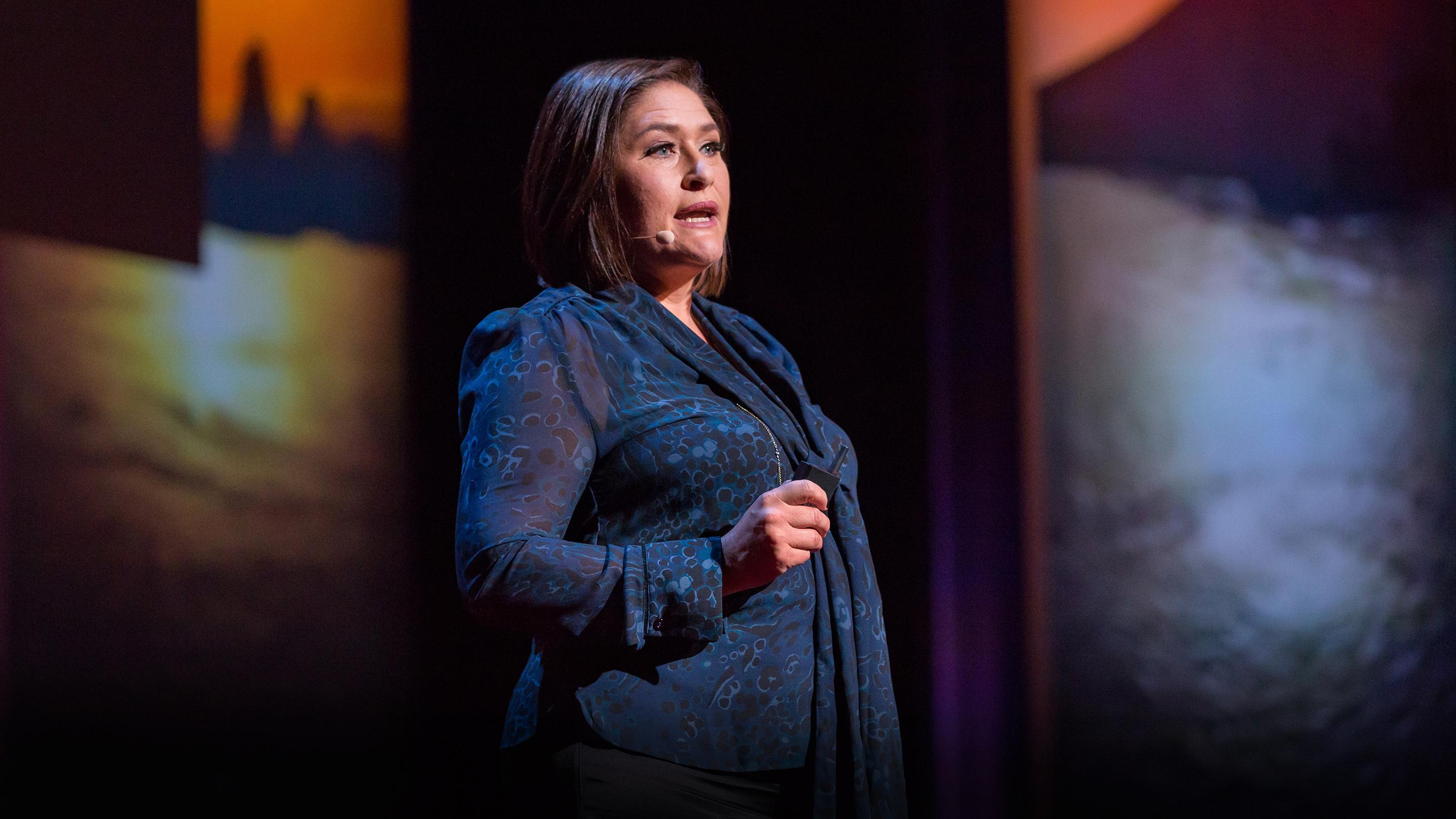
Oct 24, 2017
Want kids to learn well? Feed them well | Sam Kass
What can we expect our kids to learn if they're hungry or eating diets full of sugar and empty of nutrients? Former White House Chef and food policymaker Sam Kass discusses the role schools can play in nourishing students' bodies in addition to their minds. Learn more about our flagship conference happening this April at attend.ted.com/podcast Hosted on Acast. See acast.com/privacy for more information.
Oct 24, 2017
The lies we tell pregnant women | Sofia Jawed-Wessel
"When we tell women that sex isn't worth the risk during pregnancy, what we're telling her is that her sexual pleasure doesn't matter ... that she in fact doesn't matter," says sex researcher Sofia Jawed-Wessel. In this eye-opening talk, Jawed-Wessel mines our views about pregnancy and pleasure to lay bare the relationship between women, sex and systems of power. Learn more about our flagship conference happening this April at attend.ted.com/podcast Hosted on Acast. See acast.com/privacy for more information.
Oct 24, 2017
A better way to talk about love | Mandy Len Catron
In love, we fall. We're struck, we're crushed, we swoon. We burn with passion. Love makes us crazy and makes us sick. Our hearts ache, and then they break. Talking about love in this way fundamentally shapes how we experience it, says writer Mandy Len Catron. In this talk for anyone who's ever felt crazy in love, Catron highlights a different metaphor for love that may help us find more joy -- and less suffering -- in it. Learn more about our flagship conference happening this April at attend.ted.com/podcast Hosted on Acast. See acast.com/privacy for more information.
Oct 24, 2017
If a story moves you, act on it | Sisonke Msimang
Stories are necessary, but they're not as magical as they seem, says writer Sisonke Msimang. In this funny and thoughtful talk, Msimang questions our emphasis on storytelling and spotlights the decline of facts. During a critical time when listening has been confused for action, Msimang asks us to switch off our phones, step away from our screens and step out into the real world to create a plan for justice. Learn more about our flagship conference happening this April at attend.ted.com/podcast Hosted on Acast. See acast.com/privacy for more information.
Oct 24, 2017
Art made of the air we breathe | Emily Parsons-Lord
Emily Parsons-Lord re-creates air from distinct moments in Earth's history -- from the clean, fresh-tasting air of the Carboniferous period to the soda-water air of the Great Dying to the heavy, toxic air of the future we're creating. By turning air into art, she invites us to know the invisible world around us. Breathe in the Earth's past and future in this imaginative, trippy talk. Learn more about our flagship conference happening this April at attend.ted.com/podcast Hosted on Acast. See acast.com/privacy for more information.

Oct 24, 2017
Buildings that blend nature and city | Jeanne Gang
A skyscraper that channels the breeze ... a building that creates community around a hearth ... Jeanne Gang uses architecture to build relationships. In this engaging tour of her work, Gang invites us into buildings large and small, from a surprising local community center to a landmark Chicago skyscraper. "Through architecture, we can do much more than create buildings," she says. "We can help steady this planet we all share." Learn more about our flagship conference happening this April at attend.ted.com/podcast Hosted on Acast. See acast.com/privacy for more information.

Oct 24, 2017
Where is cybercrime really coming from? | Caleb Barlow
Cybercrime netted a whopping $450 billion in profits last year, with 2 billion records lost or stolen worldwide. Security expert Caleb Barlow calls out the insufficiency of our current strategies to protect our data. His solution? We need to respond to cybercrime with the same collective effort as we apply to a health care crisis, sharing timely information on who is infected and how the disease is spreading. If we're not sharing, he says, then we're part of the problem. Learn more about our flagship conference happening this April at attend.ted.com/podcast Hosted on Acast. See acast.com/privacy for more information.

Oct 24, 2017
What we don't know about Europe's Muslim kids | Deeyah Khan
As the child of an Afghan mother and Pakistani father raised in Norway, Deeyah Khan knows what it's like to be a young person stuck between your community and your country. In this powerful, emotional talk, the filmmaker unearths the rejection and isolation felt by many Muslim kids growing up in the West -- and the deadly consequences of not embracing our youth before extremist groups do. Learn more about our flagship conference happening this April at attend.ted.com/podcast Hosted on Acast. See acast.com/privacy for more information.
Oct 24, 2017
Help discover ancient ruins -- before it's too late | Sarah Parcak
Sarah Parcak uses satellites orbiting hundreds of miles above Earth to uncover hidden ancient treasures buried beneath our feet. There's a lot to discover; in the Egyptian Delta alone, Parcak estimates we've excavated less than a thousandth of one percent of what's out there. Now, with the 2016 TED Prize and an infectious enthusiasm for archaeology, she's developed an online platform called GlobalXplorer that enables anyone with an internet connection to discover unknown sites and protect what remains of our shared human inheritance. Learn more about our flagship conference happening this April at attend.ted.com/podcast Hosted on Acast. See acast.com/privacy for more information.
Oct 24, 2017
My son was a Columbine shooter. This is my story | Sue Klebold
Sue Klebold is the mother of Dylan Klebold, one of the two shooters who committed the Columbine High School massacre, murdering 12 students and a teacher. She's spent years excavating every detail of her family life, trying to understand what she could have done to prevent her son's violence. In this difficult, jarring talk, Klebold explores the intersection between mental health and violence, advocating for parents and professionals to continue to examine the link between suicidal and homicidal thinking. Learn more about our flagship conference happening this April at attend.ted.com/podcast Hosted on Acast. See acast.com/privacy for more information.
Oct 24, 2017
Our story of rape and reconciliation | Thordis Elva and Tom Stranger
In 1996, Thordis Elva shared a teenage romance with Tom Stranger, an exchange student from Australia. After a school dance, Tom raped Thordis, after which they parted ways for many years. In this extraordinary talk, Elva and Stranger move through a years-long chronology of shame and silence, and invite us to discuss the omnipresent global issue of sexual violence in a new, honest way. For a Q&A with the speakers, visit go.ted.com/thordisandtom. Learn more about our flagship conference happening this April at attend.ted.com/podcast Hosted on Acast. See acast.com/privacy for more information.
Oct 24, 2017
4 ways to make a city more walkable | Jeff Speck
Freedom from cars, freedom from sprawl, freedom to walk your city! City planner Jeff Speck shares his "general theory of walkability" -- four planning principles to transform sprawling cities of six-lane highways and 600-foot blocks into safe, walkable oases full of bike lanes and tree-lined streets. Learn more about our flagship conference happening this April at attend.ted.com/podcast Hosted on Acast. See acast.com/privacy for more information.
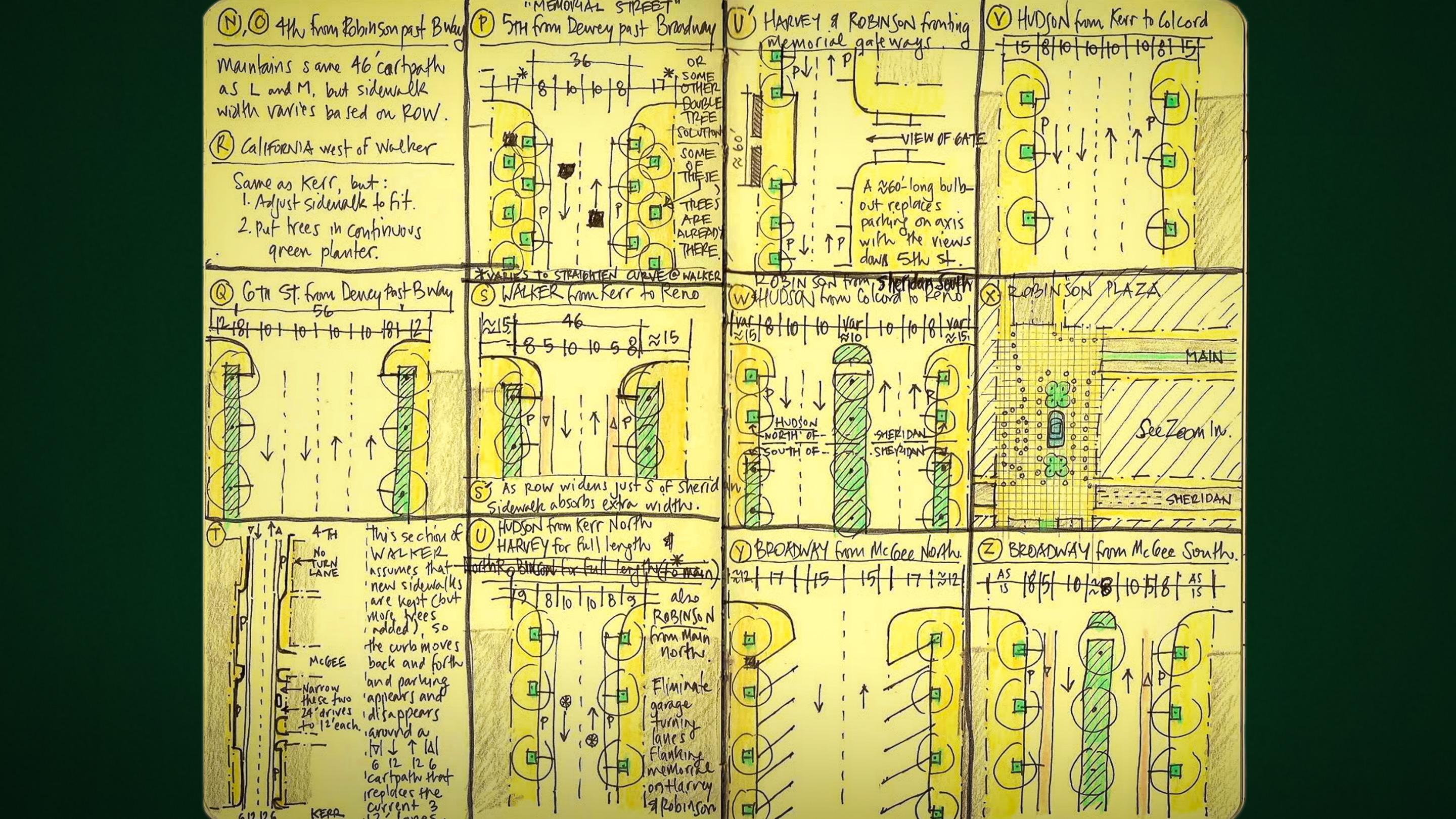
Oct 24, 2017
What it's like to be a parent in a war zone | Aala El-Khani
How do parents protect their children and help them feel secure again when their homes are ripped apart by war? In this warm-hearted talk, psychologist Aala El-Khani shares her work supporting -- and learning from -- refugee families affected by the civil war in Syria. She asks: How can we help these loving parents give their kids the warm, secure parenting they most need? Learn more about our flagship conference happening this April at attend.ted.com/podcast Hosted on Acast. See acast.com/privacy for more information.
Oct 24, 2017
How racism harms pregnant women -- and what can help | Miriam Zoila Pérez
Racism is making people sick -- especially black women and babies, says Miriam Zoila Pérez. The doula turned journalist explores the relationship between race, class and illness and tells us about a radically compassionate prenatal care program that can buffer pregnant women from the stress that people of color face every day. Learn more about our flagship conference happening this April at attend.ted.com/podcast Hosted on Acast. See acast.com/privacy for more information.
Oct 24, 2017
How to practice safe sexting | Amy Adele Hasinoff
Sexting, like anything that's fun, runs its risks -- but a serious violation of privacy shouldn't be one of them. Amy Adele Hasinoff looks at problematic responses to sexting in mass media, law and education, offering practical solutions for how individuals and tech companies can protect sensitive (and, ahem, potentially scandalous) digital files. Learn more about our flagship conference happening this April at attend.ted.com/podcast Hosted on Acast. See acast.com/privacy for more information.
Oct 24, 2017
3 ways to fix a broken news industry | Lara Setrakian
Something is very wrong with the news industry. Trust in the media has hit an all-time low; we're inundated with sensationalist stories, and consistent, high-quality reporting is scarce, says journalist Lara Setrakian. She shares three ways we can fix the news to better inform all of us about the complex issues of our time. Learn more about our flagship conference happening this April at attend.ted.com/podcast Hosted on Acast. See acast.com/privacy for more information.
Oct 24, 2017
How jails extort the poor | Salil Dudani
Why do we jail people for being poor? Today, half a million Americans are in jail only because they can't afford to post bail, and still more are locked up because they can't pay their debt to the court, sometimes for things as minor as unpaid parking tickets. Salil Dudani shares stories from individuals who have experienced debtors' prison in Ferguson, Missouri, challenging us to think differently about how we punish the poor and marginalized. Learn more about our flagship conference happening this April at attend.ted.com/podcast Hosted on Acast. See acast.com/privacy for more information.
Oct 24, 2017
The racial politics of time | Brittney Cooper
Cultural theorist Brittney Cooper examines racism through the lens of time, showing us how historically it has been stolen from people of color, resulting in lost moments of joy and connection, lost years of healthy quality of life and the delay of progress. A candid, thought-provoking take on history and race that may make you reconsider your understanding of time, and your place in it. Learn more about our flagship conference happening this April at attend.ted.com/podcast Hosted on Acast. See acast.com/privacy for more information.
Oct 24, 2017
A few ways to fix a government | Charity Wayua
Charity Wayua put her skills as a cancer researcher to use on an unlikely patient: the government of her native Kenya. She shares how she helped her government drastically improve its process for opening up new businesses, a crucial part of economic health and growth, leading to new investments and a World Bank recognition as a top reformer. Learn more about our flagship conference happening this April at attend.ted.com/podcast Hosted on Acast. See acast.com/privacy for more information.
Oct 24, 2017
The data behind Hollywood's sexism | Stacy Smith
Where are all the women and girls in film? Social scientist Stacy Smith analyzes how the media underrepresents and portrays women -- and the potentially destructive effects those portrayals have on viewers. She shares hard data behind gender bias in Hollywood, where on-screen males outnumber females three to one (and behind-the-camera workers fare even worse.) Learn more about our flagship conference happening this April at attend.ted.com/podcast Hosted on Acast. See acast.com/privacy for more information.
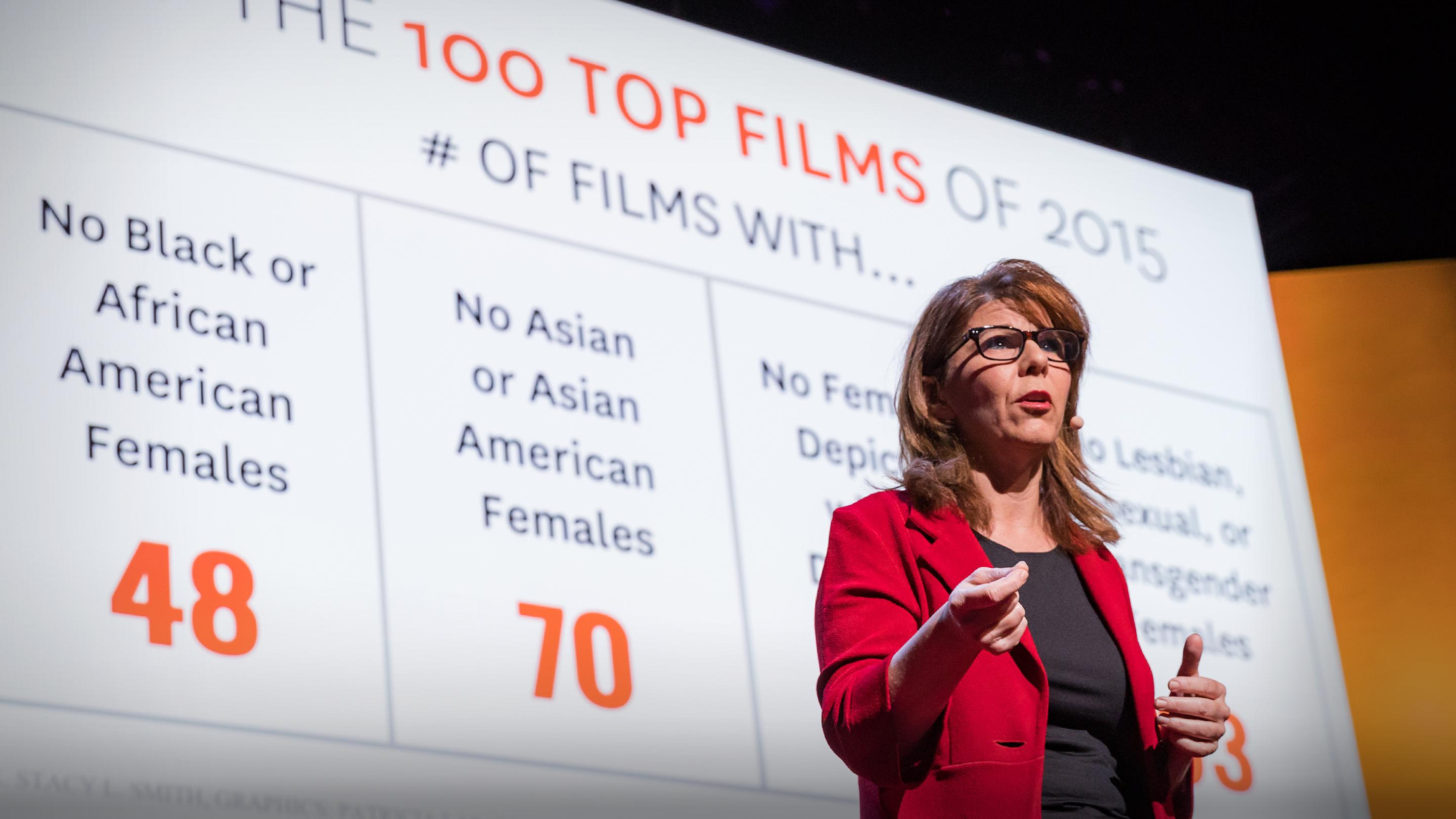
Oct 24, 2017
This app makes it fun to pick up litter | Jeff Kirschner
The earth is a big place to keep clean. With Litterati -- an app for users to identify, collect and geotag the world's litter -- TED Resident Jeff Kirschner has created a community that's crowdsource-cleaning the planet. After tracking trash in more than 100 countries, Kirschner hopes to use the data he's collected to work with brands and organizations to stop litter before it reaches the ground. Learn more about our flagship conference happening this April at attend.ted.com/podcast Hosted on Acast. See acast.com/privacy for more information.
Oct 24, 2017
What I learned from 2,000 obituaries | Lux Narayan
Lux Narayan starts his day with scrambled eggs and the question: "Who died today?" Why? By analyzing 2,000 New York Times obituaries over a 20-month period, Narayan gleaned, in just a few words, what achievement looks like over a lifetime. Here he shares what those immortalized in print can teach us about a life well lived. Learn more about our flagship conference happening this April at attend.ted.com/podcast Hosted on Acast. See acast.com/privacy for more information.
Oct 24, 2017
Stories from a home for terminally ill children | Kathy Hull
To honor and celebrate young lives cut short, Kathy Hull founded the first freestanding pediatric palliative care facility in the United States, the George Mark Children's House. Its mission: to give terminally ill children and their families a peaceful place to say goodbye. She shares stories brimming with wisdom, joy, imagination and heartbreaking loss. Learn more about our flagship conference happening this April at attend.ted.com/podcast Hosted on Acast. See acast.com/privacy for more information.
Oct 24, 2017
To raise brave girls, encourage adventure | Caroline Paul
Gutsy girls skateboard, climb trees, clamber around, fall down, scrape their knees, get right back up -- and grow up to be brave women. Learn how to spark a little productive risk-taking and raise confident girls with stories and advice from firefighter, paraglider and all-around adventurer Caroline Paul. Learn more about our flagship conference happening this April at attend.ted.com/podcast Hosted on Acast. See acast.com/privacy for more information.
Oct 24, 2017
Why women should tell the stories of humanity | Jude Kelly
For many centuries (and for many reasons) critically acclaimed creative genius has generally come from a male perspective. As theater director Jude Kelly points out in this passionately reasoned talk, that skew affects how we interpret even non-fictional women's stories and rights. She thinks there's a more useful, more inclusive way to look at the world, and she calls on artists -- women and men -- to paint, draw, write about, film and imagine a gender-equal society. Learn more about our flagship conference happening this April at attend.ted.com/podcast Hosted on Acast. See acast.com/privacy for more information.
Oct 24, 2017
Beautiful new words to describe obscure emotions | John Koenig
John Koenig loves finding words that express our unarticulated feelings -- like "lachesism," the hunger for disaster, and "sonder," the realization that everyone else's lives are as complex and unknowable as our own. Here, he meditates on the meaning we assign to words and how these meanings latch onto us. Learn more about our flagship conference happening this April at attend.ted.com/podcast Hosted on Acast. See acast.com/privacy for more information.

Oct 24, 2017
A burial practice that nourishes the planet | Caitlin Doughty
Here's a question we all have to answer sooner or later: What do you want to happen to your body when you die? Funeral director Caitlin Doughty explores new ways to prepare us for inevitable mortality. In this thoughtful talk, learn more about ideas for burial (like "recomposting" and "conservation burial") that return our bodies back to the earth in an eco-friendly, humble and self-aware way. Learn more about our flagship conference happening this April at attend.ted.com/podcast Hosted on Acast. See acast.com/privacy for more information.
Oct 24, 2017
What young women believe about their own sexual pleasure | Peggy Orenstein
Why do girls feel empowered to engage in sexual activity but not to enjoy it? For three years, author Peggy Orenstein interviewed girls ages 15 to 20 about their attitudes toward and experiences of sex. She discusses the pleasure that's largely missing from their sexual encounters and calls on us to close the "orgasm gap" by talking candidly with our girls from an early age about sex, bodies, pleasure and intimacy. Learn more about our flagship conference happening this April at attend.ted.com/podcast Hosted on Acast. See acast.com/privacy for more information.
Oct 24, 2017
Lifelike simulations that make real-life surgery safer | Peter Weinstock
Critical care doctor Peter Weinstock shows how surgical teams are using a blend of Hollywood special effects and 3D printing to create amazingly lifelike reproductions of real patients -- so they can practice risky surgeries ahead of time. Think: "Operate twice, cut once." Glimpse the future of surgery in this forward-thinking talk. Learn more about our flagship conference happening this April at attend.ted.com/podcast Hosted on Acast. See acast.com/privacy for more information.
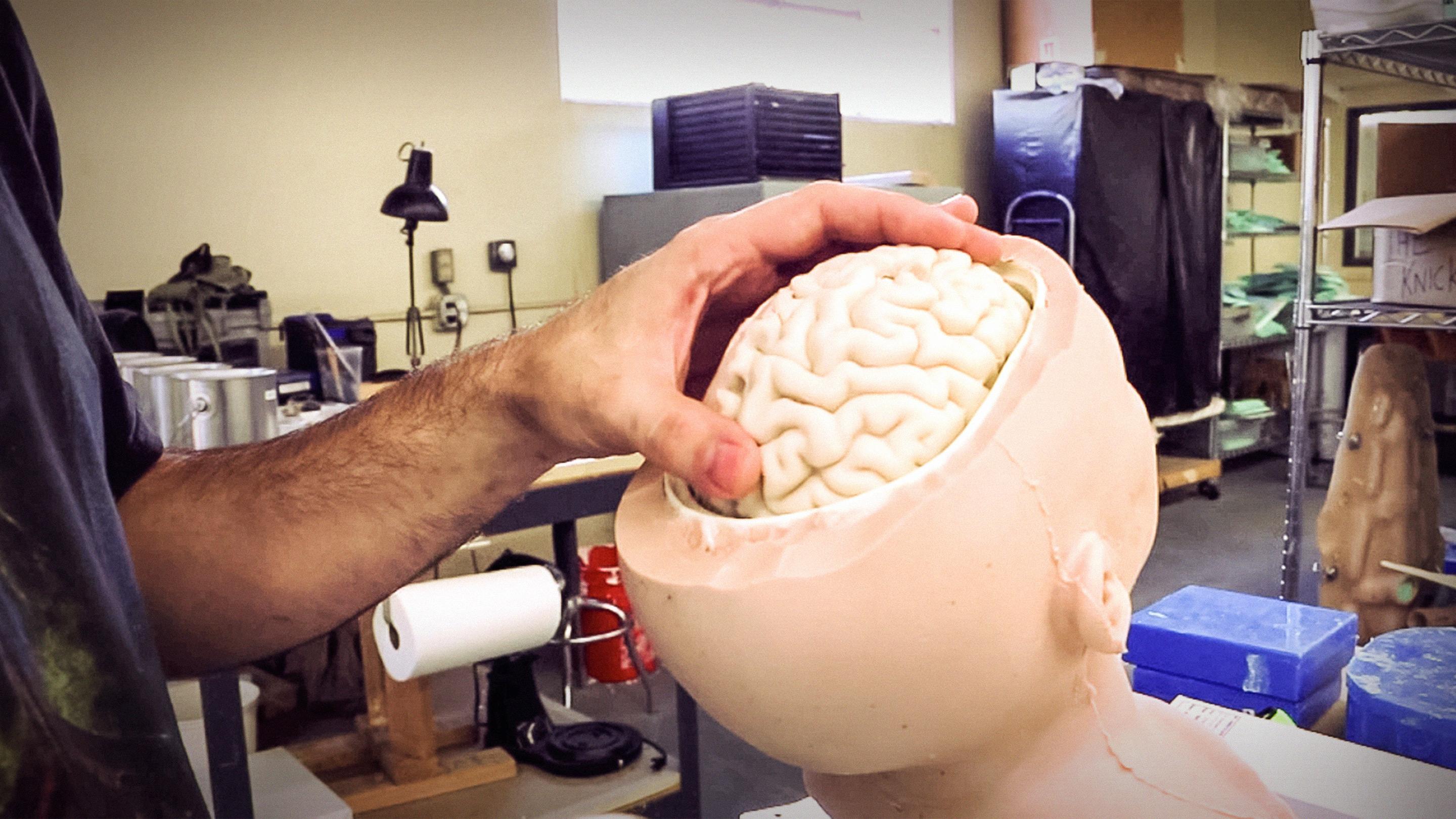
Oct 24, 2017
Asking for help is a strength, not a weakness | Michele L. Sullivan
We all go through challenges -- some you can see, most you can't, says Michele L. Sullivan. In a talk about perspective, Sullivan shares stories full of wit and wisdom and reminds us that we're all part of each other's support systems. "The only shoes you can walk in are your own," she says. "With compassion, courage and understanding, we can walk together, side by side." Learn more about our flagship conference happening this April at attend.ted.com/podcast Hosted on Acast. See acast.com/privacy for more information.
Oct 24, 2017
Why civilians suffer more once a war is over | Margaret Bourdeaux
In a war, it turns out that violence isn't the biggest killer of civilians. What is? Illness, hunger, poverty -- because war destroys the institutions that keep society running, like utilities, banks, food systems and hospitals. Physician Margaret Bourdeaux proposes a bold approach to post-conflict recovery, setting priorities on what to fix first Learn more about our flagship conference happening this April at attend.ted.com/podcast Hosted on Acast. See acast.com/privacy for more information.
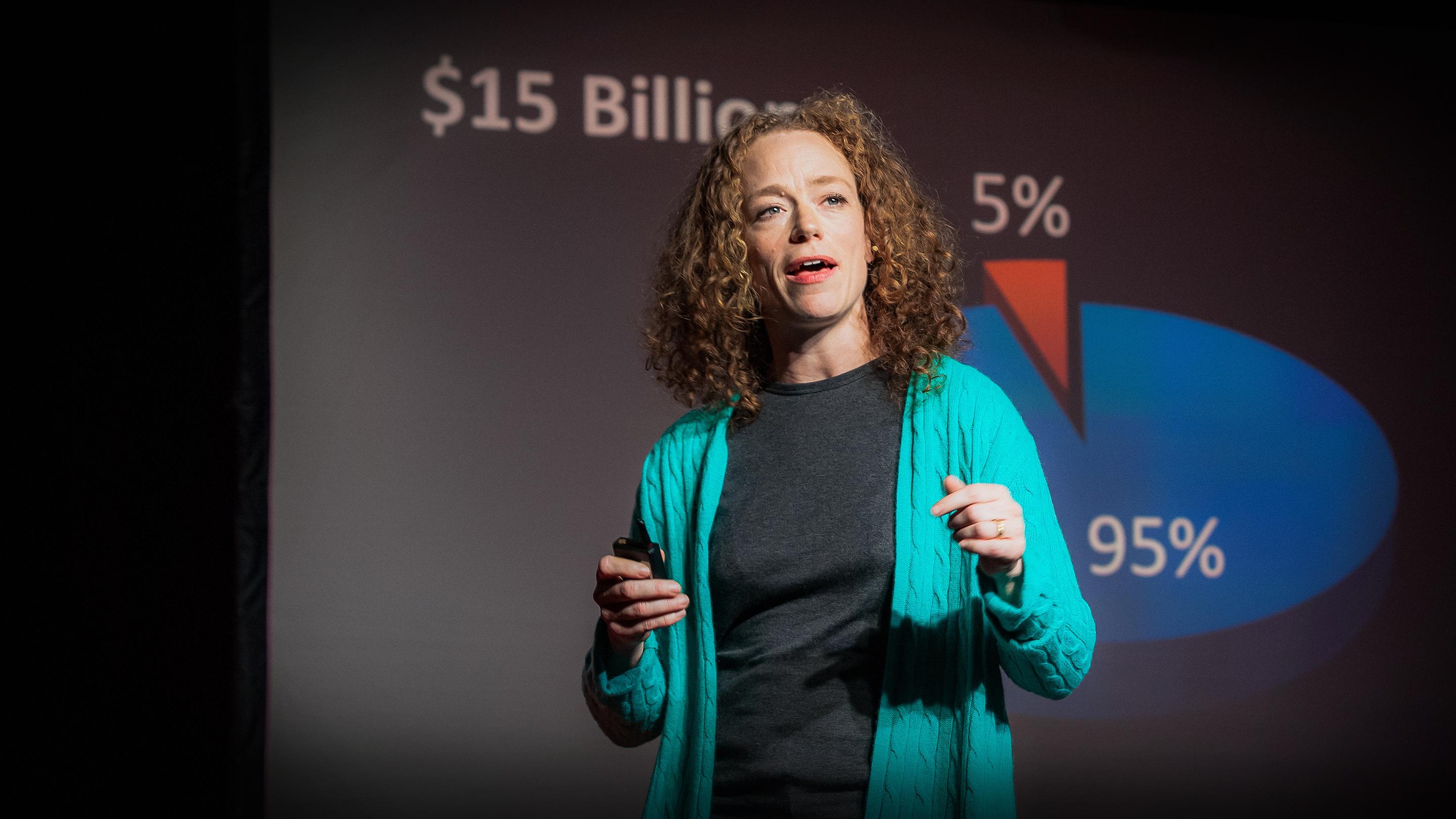
Oct 24, 2017
Who would the rest of the world vote for in your country's election? | Simon Anholt
Wish you could vote in another country's election? Simon Anholt unveils the Global Vote, an online platform that lets anybody, anywhere in the world, "vote" in the election of any country on earth (with surprising results). Learn more about our flagship conference happening this April at attend.ted.com/podcast Hosted on Acast. See acast.com/privacy for more information.
Oct 24, 2017
A young inventor's plan to recycle Styrofoam | Ashton Cofer
From packing peanuts to disposable coffee cups, each year the US alone produces some two billion pounds of Styrofoam -- none of which can be recycled. Frustrated by this waste of resources and landfill space, Ashton Cofer and his science fair teammates developed a heating treatment to break down used Styrofoam into something useful. Check out their original design, which won both the FIRST LEGO League Global Innovation Award and the Scientific American Innovator Award from Google Science Fair. Learn more about our flagship conference happening this April at attend.ted.com/podcast Hosted on Acast. See acast.com/privacy for more information.
Oct 24, 2017
Addiction is a disease. We should treat it like one | Michael Botticelli
Only one in nine people in the United States gets the care and treatment they need for addiction and substance abuse. A former Director of National Drug Control Policy, Michael Botticelli is working to end this epidemic and treat people with addictions with kindness, compassion and fairness. In a personal, thoughtful talk, he encourages the millions of Americans in recovery today to make their voices heard and confront the stigma associated with substance use disorders. Learn more about our flagship conference happening this April at attend.ted.com/podcast Hosted on Acast. See acast.com/privacy for more information.
Oct 24, 2017
Know your worth, and then ask for it | Casey Brown
Your boss probably isn't paying you what you're worth -- instead, they're paying you what they think you're worth. Take the time to learn how to shape their thinking. Pricing consultant Casey Brown shares helpful stories and learnings that can help you better communicate your value and get paid for your excellence. Learn more about our flagship conference happening this April at attend.ted.com/podcast Hosted on Acast. See acast.com/privacy for more information.
Oct 24, 2017
How to take a picture of a black hole | Katie Bouman
At the heart of the Milky Way, there's a supermassive black hole that feeds off a spinning disk of hot gas, sucking up anything that ventures too close -- even light. We can't see it, but its event horizon casts a shadow, and an image of that shadow could help answer some important questions about the universe. Scientists used to think that making such an image would require a telescope the size of Earth -- until Katie Bouman and a team of astronomers came up with a clever alternative. Bouman explains how we can take a picture of the ultimate dark using the Event Horizon Telescope. Learn more about our flagship conference happening this April at attend.ted.com/podcast Hosted on Acast. See acast.com/privacy for more information.
Oct 24, 2017
How racism makes us sick | David R. Williams
Why does race matter so profoundly for health? David R. Williams developed a scale to measure the impact of discrimination on well-being, going beyond traditional measures like income and education to reveal how factors like implicit bias, residential segregation and negative stereotypes create and sustain inequality. In this eye-opening talk, Williams presents evidence for how racism is producing a rigged system -- and offers hopeful examples of programs across the US that are working to dismantle discrimination. Learn more about our flagship conference happening this April at attend.ted.com/podcast Hosted on Acast. See acast.com/privacy for more information.
Oct 24, 2017
3 ways to plan for the (very) long term | Ari Wallach
We increasingly make decisions based on short-term goals and gains -- an approach that makes the future more uncertain and less safe. How can we learn to think about and plan for a better future in the long term ... like, grandchildren-scale long term? Ari Wallach shares three tactics for thinking beyond the immediate. Learn more about our flagship conference happening this April at attend.ted.com/podcast Hosted on Acast. See acast.com/privacy for more information.
Oct 24, 2017
How do you build a sacred space? | Siamak Hariri
To design the Bahá'í Temple of South America, architect Siamak Hariri focused on illumination -- from the temple's form, which captures the movement of the sun throughout the day, to the iridescent, luminous stone and glass used to construct it. Join Hariri for a journey through the creative process, as he explores what makes for a sacred experience in a secular world. Learn more about our flagship conference happening this April at attend.ted.com/podcast Hosted on Acast. See acast.com/privacy for more information.

Oct 24, 2017
How radio telescopes show us unseen galaxies | Natasha Hurley-Walker
Our universe is strange, wonderful and vast, says astronomer Natasha Hurley-Walker. A spaceship can't carry you into its depths (yet) -- but a radio telescope can. In this mesmerizing talk, Hurley-Walker shows how she probes the mysteries of the universe using special technology that reveals light spectrums we can't see. Learn more about our flagship conference happening this April at attend.ted.com/podcast Hosted on Acast. See acast.com/privacy for more information.
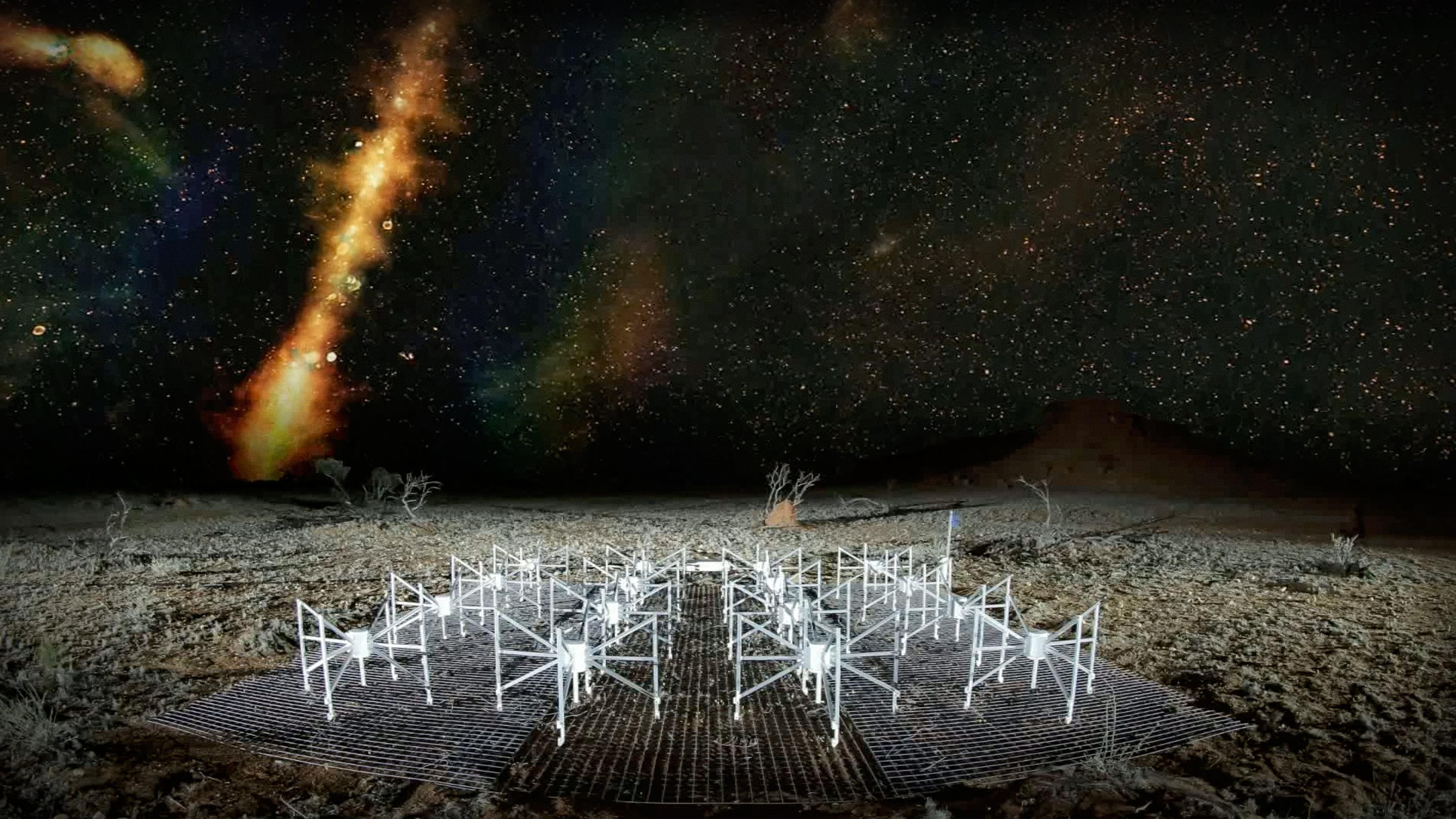
Oct 24, 2017
A video game to cope with grief | Amy Green
When Amy Green's young son was diagnosed with a rare brain tumor, she made up a bedtime story for his siblings to teach them about cancer. What resulted was a video game, "That Dragon, Cancer," which takes players on a journey they can't win. In this beautiful talk about coping with loss, Green brings joy and play to tragedy. "We made a game that's hard to play," she says, "because the hardest moments of our lives change us more than any goal we could ever accomplish." Learn more about our flagship conference happening this April at attend.ted.com/podcast Hosted on Acast. See acast.com/privacy for more information.

Oct 24, 2017
How I learned to read -- and trade stocks -- in prison | Curtis "Wall Street" Carroll
Financial literacy isn't a skill -- it's a lifestyle. Take it from Curtis "Wall Street" Carroll. As an incarcerated individual, Carroll knows the power of a dollar. While in prison, he taught himself how to read and trade stocks, and now he shares a simple, powerful message: we all need to be more savvy with our money. Learn more about our flagship conference happening this April at attend.ted.com/podcast Hosted on Acast. See acast.com/privacy for more information.
Oct 24, 2017
How fake news does real harm | Stephanie Busari
On April 14, 2014, the terrorist organization Boko Haram kidnapped more than 200 schoolgirls from the town of Chibok, Nigeria. Around the world, the crime became epitomized by the slogan #BringBackOurGirls -- but in Nigeria, government officials called the crime a hoax, confusing and delaying efforts to rescue the girls. In this powerful talk, journalist Stephanie Busari points to the Chibok tragedy to explain the deadly danger of fake news and what we can do to stop it. Learn more about our flagship conference happening this April at attend.ted.com/podcast Hosted on Acast. See acast.com/privacy for more information.
Oct 24, 2017
On tennis, love and motherhood | Serena Williams and Gayle King
Twenty-three Grand Slam titles later, tennis superstar Serena Williams sits down with journalist Gayle King to share a warm, mischievous conversation about her life, love, wins and losses -- starting with the story of how she accidentally shared her pregnancy news with the world. Learn more about our flagship conference happening this April at attend.ted.com/podcast Hosted on Acast. See acast.com/privacy for more information.
Oct 24, 2017
Behind the lies of Holocaust denial | Deborah Lipstadt
"There are facts, there are opinions, and there are lies," says historian Deborah Lipstadt, telling the remarkable story of her research into Holocaust deniers -- and their deliberate distortion of history. Lipstadt encourages us all to go on the offensive against those who assault the truth and facts. "Truth is not relative," she says. Learn more about our flagship conference happening this April at attend.ted.com/podcast Hosted on Acast. See acast.com/privacy for more information.
Oct 24, 2017
There's no shame in taking care of your mental health | Sangu Delle
When stress got to be too much for TED Fellow Sangu Delle, he had to confront his own deep prejudice: that men shouldn't take care of their mental health. In a personal talk, Delle shares how he learned to handle anxiety in a society that's uncomfortable with emotions. As he says: "Being honest about how we feel doesn't make us weak -- it makes us human." Learn more about our flagship conference happening this April at attend.ted.com/podcast Hosted on Acast. See acast.com/privacy for more information.
Oct 24, 2017
A summer school kids actually want to attend | Karim Abouelnaga
In the US, most kids have a very long summer break, during which they forget an awful lot of what they learned during the school year. This "summer slump" affects kids from low-income neighborhoods most, setting them back almost three months. TED Fellow Karim Abouelnaga has a plan to reverse this learning loss. Learn how he's helping kids improve their chances for a brighter future. Learn more about our flagship conference happening this April at attend.ted.com/podcast Hosted on Acast. See acast.com/privacy for more information.
Oct 24, 2017
A tribute to nurses | Carolyn Jones
Carolyn Jones spent five years interviewing, photographing and filming nurses across America, traveling to places dealing with some of the nation's biggest public health issues. She shares personal stories of unwavering dedication in this celebration of the everyday heroes who work at the front lines of health care. Learn more about our flagship conference happening this April at attend.ted.com/podcast Hosted on Acast. See acast.com/privacy for more information.
Oct 24, 2017
A climate solution where all sides can win | Ted Halstead
Why are we so deadlocked on climate, and what would it take to overcome the seemingly insurmountable barriers to progress? Policy entrepreneur Ted Halstead proposes a transformative solution based on the conservative principles of free markets and limited government. Learn more about how this carbon dividends plan could trigger an international domino effect towards a more popular, cost-effective and equitable climate solution. Learn more about our flagship conference happening this April at attend.ted.com/podcast Hosted on Acast. See acast.com/privacy for more information.

Oct 24, 2017
Walking as a revolutionary act of self-care | T. Morgan Dixon and Vanessa Garrison
"When black women walk, things change," say T. Morgan Dixon and Vanessa Garrison, the founders of the health nonprofit GirlTrek. They're on a mission to reduce the leading causes of preventable death among black women -- and build communities in the process. How? By getting one million black women and girls to prioritize their self-care, lacing up their shoes and walking in the direction of their healthiest, most fulfilled lives. Learn more about our flagship conference happening this April at attend.ted.com/podcast Hosted on Acast. See acast.com/privacy for more information.
Oct 24, 2017
Poverty isn't a lack of character; it's a lack of cash | Rutger Bregman
"Ideas can and do change the world," says historian Rutger Bregman, sharing his case for a provocative one: guaranteed basic income. Learn more about the idea's 500-year history and a forgotten modern experiment where it actually worked -- and imagine how much energy and talent we would unleash if we got rid of poverty once and for all. Learn more about our flagship conference happening this April at attend.ted.com/podcast Hosted on Acast. See acast.com/privacy for more information.
Oct 24, 2017
Why I speak up about living with epilepsy | Sitawa Wafula
Once homebound by epilepsy, mental health advocate Sitawa Wafula found her strength in writing about it. Now, she advocates for others who are yet to find their voices, cutting through stigma and exclusion to talk about what it's like to live with the condition. Learn more about our flagship conference happening this April at attend.ted.com/podcast Hosted on Acast. See acast.com/privacy for more information.
Oct 24, 2017
Don't fear intelligent machines. Work with them | Garry Kasparov
We must face our fears if we want to get the most out of technology -- and we must conquer those fears if we want to get the best out of humanity, says Garry Kasparov. One of the greatest chess players in history, Kasparov lost a memorable match to IBM supercomputer Deep Blue in 1997. Now he shares his vision for a future where intelligent machines help us turn our grandest dreams into reality. Learn more about our flagship conference happening this April at attend.ted.com/podcast Hosted on Acast. See acast.com/privacy for more information.
Oct 24, 2017
Am I not human? A call for criminal justice reform | Marlon Peterson
For a crime he committed in his early twenties, the courts sentenced Marlon Peterson to 10 years in prison -- and, as he says, a lifetime of irrelevance. While behind bars, Peterson found redemption through a penpal mentorship program with students from Brooklyn. In this brave talk, he reminds us why we should invest in the humanity of those people society would like to disregard and discard. Learn more about our flagship conference happening this April at attend.ted.com/podcast Hosted on Acast. See acast.com/privacy for more information.
Oct 24, 2017
What it's like to be a woman in Hollywood | Naomi McDougall-Jones
What we see in movies matters: it affects our hobbies, our career choices, our emotions and even our identities. Right now, we don't see enough women on screen or behind the camera -- but waiting for Hollywood to grow a conscience isn't going to fix the problem, says Naomi McDougall Jones. Join forces with the actress and activist as she outlines her four-point plan for a total representation revolution in Hollywood. Learn more about our flagship conference happening this April at attend.ted.com/podcast Hosted on Acast. See acast.com/privacy for more information.
Oct 24, 2017
I don't want children -- stop telling me I'll change my mind | Christen Reighter
One in five women in the United States will not have a biological child, and Christen Reighter is one of them. From a young age, she knew she didn't kids, in spite of the insistence of many people (including her doctor) who told her she'd change her mind. In this powerful talk, she shares her story of seeking sterilization -- and makes the case that motherhood is an extension of womanhood, not the definition. Learn more about our flagship conference happening this April at attend.ted.com/podcast Hosted on Acast. See acast.com/privacy for more information.
Oct 23, 2017
A pro wrestler's guide to confidence | Mike Kinney
You are more than you think you are, says former pro wrestler Mike Kinney -- you just have to find what makes you unique and use it to your advantage. For years Kinney "turned up" the parts of himself that made him special as he invented and perfected his wrestling persona, Cowboy Gator Magraw. In a talk equal parts funny and smart, he brings his wisdom from the ring to everyday life, sharing how we can all live more confidently and reach our full potential. Learn more about our flagship conference happening this April at attend.ted.com/podcast Hosted on Acast. See acast.com/privacy for more information.
Oct 20, 2017
The powerful stories that shaped Africa | Gus Casely-Hayford
In the vast sweep of history, even an empire can be forgotten. In this wide-ranging talk, Gus Casely-Hayford shares origin stories of Africa that are too often unwritten, lost, unshared. Travel to Great Zimbabwe, the ancient city whose mysterious origins and advanced architecture continue to confound archeologists. Or to the age of Mansa Musa, the ruler of the Mali Empire whose vast wealth built the legendary libraries of Timbuktu. And consider which other history lessons we might unwittingly overlook. Learn more about our flagship conference happening this April at attend.ted.com/podcast Hosted on Acast. See acast.com/privacy for more information.
Oct 19, 2017
A precise, three-word address for every place on earth | Chris Sheldrick
With what3words, Chris Sheldrick and his team have divided the entire planet into three-meter squares and assigned each a unique, three-word identifier, like famous.splice.writers or blocks.evenly.breed, giving a precise address to the billions of people worldwide who don't have one. In this quick talk about a big idea, Sheldrick explains the economic and political implications of giving every location on earth an accurate address -- from building infrastructure to sending aid to disaster zones to delivering hot pizza. Learn more about our flagship conference happening this April at attend.ted.com/podcast Hosted on Acast. See acast.com/privacy for more information.
Oct 19, 2017
Portraits that transform people into whatever they want to be | Uldus Bakhtiozina
With her gorgeous, haunting photographs, artist Uldus Bakhtiozina documents dreams, working with daily life as she imagines it could be. She creates everything in her work by hand -- from costumes to stages -- without digital manipulation, bringing us images from the land of escapism, where anyone can become something else. Learn more about our flagship conference happening this April at attend.ted.com/podcast Hosted on Acast. See acast.com/privacy for more information.
Oct 18, 2017
The new age of corporate monopolies | Margrethe Vestager
Margrethe Vestager wants to keep European markets competitive -- which is why, on behalf of the EU, she's fined Google $2.8 billion for breaching antitrust rules, asked Apple for $15.3 billion in back taxes and investigated a range of companies, from Gazprom to Fiat, for anti-competitive practices. In an important talk about the state of the global business, she explains why markets need clear rules -- and how even the most innovative companies can become a problem when they become too dominant. "Real and fair competition has a vital role to play in building the trust we need to get the best of our societies," Vestager says. "And that starts with enforcing our rules." Learn more about our flagship conference happening this April at attend.ted.com/podcast Hosted on Acast. See acast.com/privacy for more information.
Oct 17, 2017
We can hack our immune cells to fight cancer | Elizabeth Wayne
After decades of research and billions spent in clinical trials, we still have a problem with cancer drug delivery, says biomedical engineer Elizabeth Wayne. Chemotherapy kills cancer -- but it kills the rest of your body, too. Instead of using human design to fight cancer, why not use nature's? In this quick talk, Wayne explains how her lab is creating nanoparticle treatments that bind to immune cells, your body's first responders, to precisely target cancer cells without damaging healthy ones. Learn more about our flagship conference happening this April at attend.ted.com/podcast Hosted on Acast. See acast.com/privacy for more information.
Oct 17, 2017
What's hidden under the Greenland ice sheet? | Kristin Poinar
The Greenland ice sheet is massive, mysterious -- and melting. Using advanced technology, scientists are revealing its secrets for the first time, and what they've found is amazing: hidden under the ice sheet is a vast aquifer that holds a Lake Tahoe-sized volume of water from the summer melt. Does this water stay there, or does it find its way out to the ocean and contribute to global sea level rise? Join glaciologist Kristin Poinar for a trip to this frozen, forgotten land to find out. Learn more about our flagship conference happening this April at attend.ted.com/podcast Hosted on Acast. See acast.com/privacy for more information.
Oct 16, 2017
How I became an entrepreneur at 66 | Paul Tasner
It's never too late to reinvent yourself. Take it from Paul Tasner -- after working continuously for other people for 40 years, he founded his own start-up at age 66, pairing his idea for a business with his experience and passion. And he's not alone. As he shares in this short, funny and inspirational talk, seniors are increasingly indulging their entrepreneurial instincts -- and seeing great success. Learn more about our flagship conference happening this April at attend.ted.com/podcast Hosted on Acast. See acast.com/privacy for more information.
Oct 12, 2017
3 fears about screen time for kids -- and why they're not true | Sara DeWitt
We check our phones upwards of 50 times per day -- but when our kids play around with them, we get nervous. Are screens ruining childhood? Not according to children's media expert Sara DeWitt. In a talk that may make you feel a bit less guilty about passing your phone to a bored kid at a restaurant, DeWitt envisions a future where we're excited to see kids interacting with screens and shows us exciting ways new technologies can actually help them grow, connect and learn. Learn more about our flagship conference happening this April at attend.ted.com/podcast Hosted on Acast. See acast.com/privacy for more information.
Oct 11, 2017
Why jobs of the future won't feel like work | David Lee
We've all heard that robots are going to take our jobs -- but what can we do about it? Innovation expert David Lee says that we should start designing jobs that unlock our hidden talents and passions -- the things we spend our weekends doing -- to keep us relevant in the age of robotics. "Start asking people what problems they're inspired to solve and what talents they want to bring to work," Lee says. "When you invite people to be more, they can amaze us with how much more they can be." Learn more about our flagship conference happening this April at attend.ted.com/podcast Hosted on Acast. See acast.com/privacy for more information.
Oct 10, 2017
The forgotten art of the zoetrope | Eric Dyer
Artist Eric Dyer spent years working at a computer to produce images for the screen. Longing to get his hands back on his work, he began exploring the zoetrope, a popular 19th-century device that was used to create the illusion of motion long before the arrival of film. In this vibrant talk, he showcases his resulting art inventions: spinning sculptures and that evoke beautiful, dreamlike scenes. (Warning: This talk includes flashing images and lights. Those who are photosensitive or have seizures trigged by strobes are advised to avoid.) Learn more about our flagship conference happening this April at attend.ted.com/podcast Hosted on Acast. See acast.com/privacy for more information.
Oct 10, 2017
Electrical experiments with plants that count and communicate | Greg Gage
Neuroscientist Greg Gage takes sophisticated equipment used to study the brain out of graduate-level labs and brings them to middle- and high-school classrooms (and, sometimes, to the TED stage.) Prepare to be amazed as he hooks up the Mimosa pudica, a plant whose leaves close when touched, and the Venus flytrap to an EKG to show us how plants use electrical signals to convey information, prompt movement and even count. Learn more about our flagship conference happening this April at attend.ted.com/podcast Hosted on Acast. See acast.com/privacy for more information.
Oct 9, 2017
How Africa can use its traditional knowledge to make progress | Chika Ezeanya-Esiobu
Chika Ezeanya-Esiobu wants to see Africans unleash their suppressed creative and innovative energies by acknowledging the significance of their indigenous, authentic knowledge. In this powerful talk, she shares examples of untapped, traditional African knowledge in agriculture and policy-making, calling on Africans to make progress by validating and dignifying their reality. Learn more about our flagship conference happening this April at attend.ted.com/podcast Hosted on Acast. See acast.com/privacy for more information.
Oct 6, 2017
How to seek truth in the era of fake news | Christiane Amanpour
Known worldwide for her courage and clarity, Christiane Amanpour has spent the past three decades interviewing business, cultural and political leaders who have shaped history. In conversation with TED Curator Chris Anderson, Amanpour discusses fake news, objectivity in journalism, the leadership vacuum in global politics and more, sharing her wisdom along the way. "Be careful where you get information from," she says. "Unless we are all engaged as global citizens who appreciate the truth, who understand science, empirical evidence and facts, then we are going to be wandering around -- to a potential catastrophe." Learn more about our flagship conference happening this April at attend.ted.com/podcast Hosted on Acast. See acast.com/privacy for more information.
Oct 5, 2017
A global food crisis may be only a decade away | Sara Menker
Sara Menker quit a career in commodities trading to figure out how the global value chain of agriculture works. Her discoveries have led to some startling predictions: "We could have a tipping point in global food and agriculture if surging demand surpasses the agricultural system's structural capacity to produce food," she says. "People could starve and governments may fall." Menker's models predict that this scenario could happen in a decade -- that the world could be short 214 trillion calories per year by 2027. She offers a vision of this impossible world as well as some steps we can take today to avoid it. Learn more about our flagship conference happening this April at attend.ted.com/podcast Hosted on Acast. See acast.com/privacy for more information.
Oct 5, 2017
Don't suffer from your depression in silence | Nikki Webber Allen
Having feelings isn't a sign of weakness -- they mean we're human, says producer and activist Nikki Webber Allen. Even after being diagnosed with anxiety and depression, Webber Allen felt too ashamed to tell anybody, keeping her condition a secret until a family tragedy revealed how others close to her were also suffering. In this important talk about mental health, she speaks openly about her struggle -- and why communities of color must undo the stigma that misreads depression as a weakness and keeps sufferers from getting help. Learn more about our flagship conference happening this April at attend.ted.com/podcast Hosted on Acast. See acast.com/privacy for more information.
Oct 4, 2017
Mind-blowing, magnified portraits of insects | Levon Biss
Photographer Levon Biss was looking for a new, extraordinary subject when one afternoon he and his young son popped a ground beetle under a microscope and discovered the wondrous world of insects. Applying his knowledge of photography to subjects just five millimeters long, Biss created a process for shooting insects in unbelievable microscopic detail. He shares the resulting portraits -- each comprised of 8- to 10,000 individual shots -- and a story about how inspiration can come from the most unlikely places. Learn more about our flagship conference happening this April at attend.ted.com/podcast Hosted on Acast. See acast.com/privacy for more information.
Oct 3, 2017
The magic of Khmer classical dance | Prumsodun Ok
For more than 1,000 years, Khmer dancers in Cambodia have been seen as living bridges between heaven and earth. In this graceful dance-talk hybrid, artist Prumsodun Ok -- founder of Cambodia's first all-male and gay-identified dance company -- details the rich history of Khmer classical dance and its current revival, playing the ancient and ageless role of artist as messenger. Learn more about our flagship conference happening this April at attend.ted.com/podcast Hosted on Acast. See acast.com/privacy for more information.
Oct 2, 2017
Lessons from the longest study on human development | Helen Pearson
For the past 70 years, scientists in Britain have been studying thousands of children through their lives to find out why some end up happy and healthy while others struggle. It's the longest-running study of human development in the world, and it's produced some of the best-studied people on the planet while changing the way we live, learn and parent. Reviewing this remarkable research, science journalist Helen Pearson shares some important findings and simple truths about life and good parenting. Learn more about our flagship conference happening this April at attend.ted.com/podcast Hosted on Acast. See acast.com/privacy for more information.
Sep 29, 2017
What I learned as a prisoner in North Korea | Euna Lee
In March 2009, North Korean soldiers captured journalist Euna Lee and her colleague Laura Ling while they were shooting a documentary on the border with China. The courts sentenced them to 12 years of hard labor, but American diplomats eventually negotiated their release. In this surprising, deeply human talk, Lee shares her experience living as the enemy in a detention center for 140 days -- and the tiny gestures of humanity from her guards that sustained her. Learn more about our flagship conference happening this April at attend.ted.com/podcast Hosted on Acast. See acast.com/privacy for more information.
Sep 28, 2017
What teen pregnancy looks like in Latin America | Christian Rodriguez
Christian Rodríguez is a photographer and filmmaker -- and the son of a teenage mother. For the past five years, he has documented teen pregnancy in Latin America, creating intimate and dignified portraits of mothers as young as 12 years old. In this moving, visual talk, he shares his work and explores how young motherhood traps girls in a cycle of poverty and exploitation. Learn more about our flagship conference happening this April at attend.ted.com/podcast Hosted on Acast. See acast.com/privacy for more information.
Sep 28, 2017
The warmth and wisdom of mud buildings | Anna Heringer
"There are a lot of resources given by nature for free -- all we need is our sensitivity to see them and our creativity to use them," says architect Anna Heringer. Heringer uses low-tech materials like mud and bamboo to create structures from China to Switzerland, Bangladesh and beyond. Visit an awe-inspiring school, an elegant office and cozy social spaces -- all built from natural materials -- in this delightful talk. Learn more about our flagship conference happening this April at attend.ted.com/podcast Hosted on Acast. See acast.com/privacy for more information.
Sep 27, 2017
Future tech will give you the benefits of city life anywhere | Julio Gil
Don't believe predictions that say the future is trending towards city living. Urbanization is actually reaching the end of its cycle, says logistics expert Julio Gil, and soon more people will be choosing to live (and work) in the countryside, thanks to rapid advances in augmented reality, autonomous delivery, off-the-grid energy and other technologies. Think outside big-city walls and consider the advantages of country living with the forward-thinking talk. Learn more about our flagship conference happening this April at attend.ted.com/podcast Hosted on Acast. See acast.com/privacy for more information.
Sep 26, 2017
Why people of different faiths are painting their houses of worship yellow | Nabila Alibhai
Divisions along religious lines are deepening, and we're doubting more and more how much we have in common. How can we stand boldly and visibly together? Inspired by an idea from her collaborator Yazmany Arboleda, place-maker Nabila Alibhai and her colleagues created "Colour in Faith," a social practice art project that unites people of different religions by getting them to paint each other's houses of worship yellow, in a show of solidarity. "We've proven that the human family can come together and send a message far brighter and more powerful than the voices of those that wish to do us harm," Alibhai says. Learn more about our flagship conference happening this April at attend.ted.com/podcast Hosted on Acast. See acast.com/privacy for more information.
Sep 26, 2017
The fascinating secret lives of giant clams | Mei Lin Neo
When you think about the deep blue sea, you might instantly think of whales or coral reefs. But spare a thought for giant clams, the world's largest living shellfish. These incredible creatures can live to 100, grow up to four and a half feet long and weigh as much as three baby elephants. In this charming talk, marine biologist Mei Lin Neo shares why she's obsessively trying to turn these legendary sea creatures into heroes of the oceans. Learn more about our flagship conference happening this April at attend.ted.com/podcast Hosted on Acast. See acast.com/privacy for more information.
Sep 25, 2017
The boost students need to overcome obstacles | Anindya Kundu
How can disadvantaged students succeed in school? For sociologist Anindya Kundu, grit and stick-to-itiveness aren't enough; students also need to develop their agency, or their capacity to overcome obstacles and navigate the system. He shares hopeful stories of students who have defied expectations in the face of personal, social and institutional challenges. Learn more about our flagship conference happening this April at attend.ted.com/podcast Hosted on Acast. See acast.com/privacy for more information.
Sep 22, 2017
How a video game might help us build better cities | Karoliina Korppoo
With more than half of the world population living in cities, one thing is undeniable: we are an urban species. Part game, part urban planning sketching tool, "Cities: Skylines" encourages people to use their creativity and self-expression to rethink the cities oftomorrow. Designer Karoliina Korppoo takes us on a tour through some extraordinary places users have created, from futuristic fantasy cities to remarkably realistic landscapes. What does your dream city look like? Learn more about our flagship conference happening this April at attend.ted.com/podcast Hosted on Acast. See acast.com/privacy for more information.
Sep 21, 2017
What intelligent machines can learn from a school of fish | Radhika Nagpal
Science fiction visions of the future show us AI built to replicate how our minds work -- but what if we modeled it instead on the other kinds of intelligence found in nature? Robotics engineer Radhika Nagpal studies the collective intelligence displayed by insects and fish schools, seeking to understand their rules of engagement. In a visionary talk, she presents her work creating artificial collective power and previews a future where swarms of robots work together to build flood barriers, pollinate crops, monitor coral reefs and form constellations of satellites. Learn more about our flagship conference happening this April at attend.ted.com/podcast Hosted on Acast. See acast.com/privacy for more information.
Sep 20, 2017
The most Martian place on Earth | Armando Azua-Bustos
How can you study Mars without a spaceship? Head to the most Martian place on Earth -- the Atacama Desert in Chile. Astrobiologist Armando Azua-Bustos grew up in this vast, arid landscape and now studies the rare life forms that have adapted to survive there, some in areas with no reported rainfall for the past 400 years. Explore the possibility of finding life elsewhere in the universe without leaving the planet with this quick, funny talk. Learn more about our flagship conference happening this April at attend.ted.com/podcast Hosted on Acast. See acast.com/privacy for more information.
Sep 19, 2017
What we're missing in the debate about immigration | Duarte Geraldino
Between 2008 and 2016, the United States deported more than three million people. What happens to those left behind? Journalist Duarte Geraldino picks up the story of deportation where the state leaves off. Learn more about the wider impact of forced removal as Geraldino explains how the sudden absence of a mother, a local business owner or a high school student ripples outward and wreaks havoc on the relationships that hold our communities together. Learn more about our flagship conference happening this April at attend.ted.com/podcast Hosted on Acast. See acast.com/privacy for more information.
Sep 19, 2017
Why Africa must become a center of knowledge again | Olúfẹ́mi Táíwò
How can Africa, the home to some of the largest bodies of water in the world, be said to have a water crisis? It doesn't, says Olúfẹ́mi Táíwò -- it has a knowledge crisis. According to Taiwo, a lack of knowledge on important topics like water and food is what stands between Africa's current state and a future of prosperity. In a powerful talk, he calls for Africa to make the production of knowledge within the continent rewarding and to reclaim its position as a locus of learning on behalf of humanity. Learn more about our flagship conference happening this April at attend.ted.com/podcast Hosted on Acast. See acast.com/privacy for more information.
Sep 18, 2017
How digital DNA could help you make better health choices | Jun Wang
What if you could know exactly how food or medication would impact your health -- before you put it in your body? Genomics researcher Jun Wang is working to develop digital doppelgangers for real people; they start with genetic code, but they'll also factor in other kinds of data as well, from food intake to sleep to data collected by a "smart toilet." With all of this valuable information, Wang hopes to create an engine that will change the way we think about health, both on an individual level and as a collective. Learn more about our flagship conference happening this April at attend.ted.com/podcast Hosted on Acast. See acast.com/privacy for more information.
Sep 15, 2017
Living sculptures that stand for history's truths | Sethembile Msezane
In the century-old statues that dotted Cape Town, Sethembile Mzesane didn't see anything that looked like her own reality. So she became a living sculpture herself, standing for hours on end in public spaces dressed in symbolic costumes, to reclaim the city and its public spaces for her community. In this powerful, tour-de-force talk, she shares the stories and motivation behind her mesmerizing performance art. Learn more about our flagship conference happening this April at attend.ted.com/podcast Hosted on Acast. See acast.com/privacy for more information.
Sep 14, 2017
Fun home experiments that teach you physics | Helen Czerski
Physics doesn't just happen in a fancy lab -- it happens when you push a piece of buttered toast off the table or drop a couple of raisins in a fizzy drink or watch a coffee spill dry. Become a more interesting dinner guest as physicist Helen Czerski presents various concepts in physics you can become familiar with using everyday things found in your kitchen. Learn more about our flagship conference happening this April at attend.ted.com/podcast Hosted on Acast. See acast.com/privacy for more information.
Sep 14, 2017
The real reason manufacturing jobs are disappearing | Augie Picado
We've heard a lot of rhetoric lately suggesting that countries like the US are losing valuable manufacturing jobs to lower-cost markets like China, Mexico and Vietnam -- and that protectionism is the best way forward. But those jobs haven't disappeared for the reasons you may think, says border and logistics specialist Augie Picado. He gives us a reality check about what global trade really looks like and how shared protection and open borders help us make higher quality products at lower costs. Learn more about our flagship conference happening this April at attend.ted.com/podcast Hosted on Acast. See acast.com/privacy for more information.
Sep 13, 2017
A forgotten ancient grain that could help Africa prosper | Pierre Thiam
Forget quinoa. Meet fonio, an ancient "miracle grain" native to Senegal that's versatile, nutritious and gluten-free. In this passionate talk, chef Pierre Thiam shares his obsession with the hardy crop and explains why he believes that its industrial-scale cultivation could transform societies in Africa. Learn more about our flagship conference happening this April at attend.ted.com/podcast Hosted on Acast. See acast.com/privacy for more information.
Sep 12, 2017
What really motivates people to be honest in business | Alexander Wagner
Each year, one in seven large corporations commits fraud. Why? To find out, Alexander Wagner takes us inside the economics, ethics and psychology of doing the right thing. Join him for an introspective journey down the slippery slopes of deception as he helps us understand why people behave the way they do. Learn more about our flagship conference happening this April at attend.ted.com/podcast Hosted on Acast. See acast.com/privacy for more information.
Sep 11, 2017
How our friendship survives our opposing politics | Caitlin Quattromani and Lauran Arledge
Can you still be friends with someone who doesn't vote the same way as you? For Caitlin Quattromani and Lauran Arledge, two best friends who think very differently about politics, the outcome of the 2016 US presidential election could have resulted in hostility and disrespect. Hear about how they chose to engage in dialogue instead -- and learn some simple tactics they're using to maintain their bipartisan friendship. Learn more about our flagship conference happening this April at attend.ted.com/podcast Hosted on Acast. See acast.com/privacy for more information.
Sep 7, 2017
What it feels like to see Earth from space | Benjamin Grant
What the astronauts felt when they saw Earth from space changed them forever. Author and artist Benjamin Grant aims to provoke this same feeling of overwhelming scale and beauty in each of us through a series of stunning satellite images that show the effects human beings are having on the planet. "If we can adopt a more expansive perspective, embrace the truth of what is going on and contemplate the long-term health of our planet, we will create a better, safer and smarter future for our one and only home," Grant says. Learn more about our flagship conference happening this April at attend.ted.com/podcast Hosted on Acast. See acast.com/privacy for more information.
Sep 6, 2017
How to build a company where the best ideas win | Ray Dalio
What if you knew what your coworkers really thought about you and what they were really like? Ray Dalio makes the business case for using radical transparency and algorithmic decision-making to create an idea meritocracy where people can speak up and say what they really think -- even calling out the boss is fair game. Learn more about how these strategies helped Dalio create one of the world's most successful hedge funds and how you might harness the power of data-driven group decision-making. Learn more about our flagship conference happening this April at attend.ted.com/podcast Hosted on Acast. See acast.com/privacy for more information.
Sep 5, 2017
How young people join violent extremist groups -- and how to stop them | Erin Marie Saltman
Terrorists and extremists aren't all naturally violent sociopaths -- they're deliberately recruited and radicalized in a process that doesn't fit into a neat pattern. Erin Marie Saltman discusses the push and pull factors that cause people to join extremist groups and explains innovative ways of preventing and countering radicalization. Learn more about our flagship conference happening this April at attend.ted.com/podcast Hosted on Acast. See acast.com/privacy for more information.
Sep 5, 2017
A smog vacuum cleaner and other magical city designs | Daan Roosegaarde
Daan Roosegaarde uses technology and creative thinking to produce imaginative, earth-friendly designs. He presents his latest projects -- from the sidewalks of Amsterdam, where he reinterpreted "The Starry Night" to get people thinking about green energy, to Beijing, where he developed a smog vacuum cleaner to purify the air in local parks, to a dance floor that generates electricity to power a DJ booth. Check out Roosegaarde's vision for a future where creativity is our true capital. Learn more about our flagship conference happening this April at attend.ted.com/podcast Hosted on Acast. See acast.com/privacy for more information.
Sep 4, 2017
TED's secret to great public speaking | Chris Anderson
There's no single formula for a great talk, but there is a secret ingredient that all the best ones have in common. TED curator Chris Anderson shares this secret -- along with four ways to make it work for you. Do you have what it takes to share an idea worth spreading? Learn more about our flagship conference happening this April at attend.ted.com/podcast Hosted on Acast. See acast.com/privacy for more information.
Sep 1, 2017
Dare to refuse the origin myths that claim who you are | Chetan Bhatt
We all have origin stories and identity myths, our tribal narratives that give us a sense of security and belonging. But sometimes our small-group identities can keep us from connecting with humanity as a whole -- and even keep us even from seeing others as human. In a powerful talk about how we understand who we are, Chetan Bhatt challenges us to think creatively about each other and our future. As he puts it: it's time to change the question from "Where are you from?" to "Where are you going?" Learn more about our flagship conference happening this April at attend.ted.com/podcast Hosted on Acast. See acast.com/privacy for more information.
Aug 31, 2017
How your pictures can help reclaim lost history | Chance Coughenour
Digital archaeologist Chance Coughenour is using pictures -- your pictures -- to reclaim antiquities that have been lost to conflict and disaster. After crowdsourcing photographs of destroyed monuments, museums and artifacts, Coughenour uses advanced technology called photogrammetry to create 3D reconstructions, preserving the memory of our global, shared, human heritage. Find out more about how you can help celebrate and safeguard history that's being lost. Learn more about our flagship conference happening this April at attend.ted.com/podcast Hosted on Acast. See acast.com/privacy for more information.
Aug 31, 2017
How the US government spies on people who protest -- including you | Jennifer Granick
What's stopping the American government from recording your phone calls, reading your emails and monitoring your location? Very little, says surveillance and cybersecurity counsel Jennifer Granick. The government collects all kinds of information about you easily, cheaply and without a warrant -- and if you've ever participated in a protest or attended a gun show, you're likely a person of interest. Learn more about your rights, your risks and how to protect yourself in the golden age of surveillance. Learn more about our flagship conference happening this April at attend.ted.com/podcast Hosted on Acast. See acast.com/privacy for more information.
Aug 30, 2017
Can a robot pass a university entrance exam? | Noriko Arai
Meet Todai Robot, an AI project that performed in the top 20 percent of students on the entrance exam for the University of Tokyo -- without actually understanding a thing. While it's not matriculating anytime soon, Todai Robot's success raises alarming questions for the future of human education. How can we help kids learn the things that humans can do better than AI? Learn more about our flagship conference happening this April at attend.ted.com/podcast Hosted on Acast. See acast.com/privacy for more information.
Aug 29, 2017
Why we need to end the era of orphanages | Tara Winkler
Could it be wrong to help children in need by starting an orphanage? In this eye-opening talk about the bad consequences of good intentions, Tara Winkler speaks out against the spread of orphanages in developing countries, caused in part by foreign donors, and details the harm done to children when they are separated from their families and left to grow up in institutions. Learn more about our flagship conference happening this April at attend.ted.com/podcast Hosted on Acast. See acast.com/privacy for more information.
Aug 28, 2017
When workers own companies, the economy is more resilient | Niki Okuk
Another economic reality is possible -- one that values community, sustainability and resiliency instead of profit by any means necessary. Niki Okuk shares her case for cooperative economics and a vision for how working-class people can organize and own the businesses they work for, making decisions for themselves and enjoying the fruits of their labor. Learn more about our flagship conference happening this April at attend.ted.com/podcast Hosted on Acast. See acast.com/privacy for more information.
Aug 25, 2017
"The Sacred Art of the Ori" | Laolu Senbanjo
Every artist has a name, and every artist has a story. Laolu Senbanjo's story started in Nigeria, where he was surrounded by the culture and mythology of the Yoruba, and brought him to law school, to New York and eventually to work on Beyoncé's "Lemonade." He shares what he calls "The Sacred Art of the Ori," art that uses skin as canvas and connects artist and muse through mind, body and soul. Learn more about our flagship conference happening this April at attend.ted.com/podcast Hosted on Acast. See acast.com/privacy for more information.
Aug 24, 2017
What the sugar coating on your cells is trying to tell you | Carolyn Bertozzi
Your cells are coated with sugars that store information and speak a secret language. What are they trying to tell us? Your blood type, for one -- and, potentially, that you have cancer. Chemical biologist Carolyn Bertozzi researches how sugars on cancerous cells interact with (and sometimes trick) your immune system. Learn more about how your body detects cancer and how the latest cancer-fighting medicines could help your immune system beat the disease. Learn more about our flagship conference happening this April at attend.ted.com/podcast Hosted on Acast. See acast.com/privacy for more information.
Aug 24, 2017
What would happen if we upload our brains to computers | Robin Hanson
Meet the "ems" -- machines that emulate human brains and can think, feel and work just like the brains they're copied from. Economist and social scientist Robin Hanson describes a possible future when ems take over the global economy, running on superfast computers and copying themselves to multitask, leaving humans with only one choice: to retire, forever. Glimpse a strange future as Hanson describes what could happen if robots ruled the earth. Learn more about our flagship conference happening this April at attend.ted.com/podcast Hosted on Acast. See acast.com/privacy for more information.
Aug 23, 2017
A lyrical bridge between past, present and future | David Whyte
With his signature charm and searching insight, David Whyte meditates on the frontiers of the past, present and future, sharing two poems inspired by his niece's hike along El Camino de Santiago de Compostela in Spain. Learn more about our flagship conference happening this April at attend.ted.com/podcast Hosted on Acast. See acast.com/privacy for more information.
Aug 22, 2017
What moral decisions should driverless cars make? | Iyad Rahwan
Should a driverless car kill you if it means saving five pedestrians? In this primer on the social dilemmas of driverless cars, Iyad Rahwan explores how the technology will challenge our morality and explains his work collecting data from real people on the ethical trade-offs we're willing (and not willing) to make. Learn more about our flagship conference happening this April at attend.ted.com/podcast Hosted on Acast. See acast.com/privacy for more information.
Aug 22, 2017
The era of blind faith in big data must end | Cathy O'Neil
Algorithms decide who gets a loan, who gets a job interview, who gets insurance and much more -- but they don't automatically make things fair, and they're often far from scientific. Mathematician and data scientist Cathy O'Neil coined a term for algorithms that are secret, important and harmful: "weapons of math destruction." Learn more about the hidden agendas behind these supposedly objective formulas and why we need to start building better ones. Learn more about our flagship conference happening this April at attend.ted.com/podcast Hosted on Acast. See acast.com/privacy for more information.
Aug 21, 2017
How I found myself through music | Anika Paulson
"Music is everywhere, and it is in everything," says musician, student and TED-Ed Clubs star Anika Paulson. Guitar in hand, she plays through the beats of her life in an exploration of how music connects us and makes us what we are. Learn more about our flagship conference happening this April at attend.ted.com/podcast Hosted on Acast. See acast.com/privacy for more information.
Aug 18, 2017
The secret to living longer may be your social life | Susan Pinker
The Italian island of Sardinia has more than six times as many centenarians as the mainland and ten times as many as North America. Why? According to longevity researcher Susan Pinker, it's not a sunny disposition or a low-fat, gluten-free diet that keeps the islanders alive so long -- it's their emphasis on close personal relationships and face-to-face interactions. Learn more about super longevity as Pinker explains what it takes to live to 100 and beyond. Learn more about our flagship conference happening this April at attend.ted.com/podcast Hosted on Acast. See acast.com/privacy for more information.
Aug 17, 2017
A practical way to help the homeless find work and safety | Richard J. Berry
When Richard J. Berry, the mayor of Albuquerque, saw a man on a street corner holding a cardboard sign that read "Want a job," he decided to take him (and others in his situation) up on it. He and his staff started a citywide initiative to help the homeless by giving them day jobs and a place to sleep -- and the results were incredible. Find out how your city can replicate Albuquerque's model with this frank and optimistic talk. Learn more about our flagship conference happening this April at attend.ted.com/podcast Hosted on Acast. See acast.com/privacy for more information.
Aug 17, 2017
7 principles for building better cities | Peter Calthorpe
More than half of the world's population already lives in cities, and another 2.5 billion people are projected to move to urban areas by 2050. The way we build new cities will be at the heart of so much that matters, from climate change to economic vitality to our very well-being and sense of connectedness. Peter Calthorpe is already at work planning the cities of the future and advocating for community design that's focused on human interaction. He shares seven universal principles for solving sprawl and building smarter, more sustainable cities. Learn more about our flagship conference happening this April at attend.ted.com/podcast Hosted on Acast. See acast.com/privacy for more information.
Aug 16, 2017
How artists can (finally) get paid in the digital age | Jack Conte
It's been a weird 100 years for artists and creators, says musician and entrepreneur Jack Conte. The traditional ways we've turned art into money (like record sales) have been broken by the internet, leaving musicians, writers and artists wondering how to make a living. With Patreon, Conte has created a way for artists on the internet to get paid by their fans. Could payment platforms like this change what it means to be an artist in the digital age? Learn more about our flagship conference happening this April at attend.ted.com/podcast Hosted on Acast. See acast.com/privacy for more information.
Aug 15, 2017
How I help free innocent people from prison | Ronald Sullivan
Harvard Law professor Ronald Sullivan fights to free wrongfully convicted people from jail -- in fact, he has freed some 6,000 innocent people over the course of his career. He shares heartbreaking stories of how (and why) people end up being put in jail for something they didn't do, and the consequences in their lives and the lives of others. Watch this essential talk about the duty we all have to make the world a bit more fair every day, however we can. Learn more about our flagship conference happening this April at attend.ted.com/podcast Hosted on Acast. See acast.com/privacy for more information.
Aug 14, 2017
What I saw at the Ferguson protests | Damon Davis
When artist Damon Davis went to join the protests in Ferguson, Missouri, after police killed Michael Brown in 2014, he found not only anger but also a sense of love for self and community. His documentary "Whose Streets?" tells the story of the protests from the perspective of the activists who showed up to challenge those who use power to spread fear and hate. Learn more about our flagship conference happening this April at attend.ted.com/podcast Hosted on Acast. See acast.com/privacy for more information.
Aug 11, 2017
Meet the microscopic life in your home -- and on your face | Anne Madden
Behold the microscopic jungle in and around you: tiny organisms living on your cheeks, under your sofa and in the soil in your backyard. We have an adversarial relationship with these microbes -- we sanitize, exterminate and disinfect them -- but according to microbiologist Anne Madden, they're sources of new technologies and medicines waiting to be discovered. These microscopic alchemists aren't gross, Madden says -- they're the future. Learn more about our flagship conference happening this April at attend.ted.com/podcast Hosted on Acast. See acast.com/privacy for more information.
Aug 10, 2017
You owe it to yourself to experience a total solar eclipse | David Baron
On August 21, 2017, the moon's shadow will race from Oregon to South Carolina in what some consider to be the most awe-inspiring spectacle in all of nature: a total solar eclipse. Umbraphile DavidBaronchases these rare events across the globe, and in this ode to the bliss of seeing the solar corona, he explains why you owe it to yourself to witness one, too. Learn more about our flagship conference happening this April at attend.ted.com/podcast Hosted on Acast. See acast.com/privacy for more information.
Aug 9, 2017
Let's end ageism | Ashton Applewhite
It's not the passage of time that makes it so hard to get older. It's ageism, a prejudice that pits us against our future selves -- and each other. Ashton Applewhite urges us to dismantle the dread and mobilize against the last socially acceptable prejudice. "Aging is not a problem to be fixed or a disease to be cured," she says. "It is a natural, powerful, lifelong process that unites us all." Learn more about our flagship conference happening this April at attend.ted.com/podcast Hosted on Acast. See acast.com/privacy for more information.
Aug 8, 2017
How your brain decides what is beautiful | Anjan Chatterjee
Anjan Chatterjee uses tools from evolutionary psychology and cognitive neuroscience to study one of nature's most captivating concepts: beauty. Learn more about the science behind why certain configurations of line, color and form excite us in this fascinating, deep look inside your brain. Learn more about our flagship conference happening this April at attend.ted.com/podcast Hosted on Acast. See acast.com/privacy for more information.
Aug 7, 2017
How AI can enhance our memory, work and social lives | Tom Gruber
How smart can our machines make us? Tom Gruber, co-creator of Siri, wants to make "humanistic AI" that augments and collaborates with us instead of competing with (or replacing) us. He shares his vision for a future where AI helps us achieve superhuman performance in perception, creativity and cognitive function -- from turbocharging our design skills to helping us remember everything we've ever read and the name of everyone we've ever met. "We are in the middle of a renaissance in AI," Gruber says. "Every time a machine gets smarter, we get smarter." Learn more about our flagship conference happening this April at attend.ted.com/podcast Hosted on Acast. See acast.com/privacy for more information.
Aug 4, 2017
How a computer learns to recognize objects instantly | Joseph Redmon
Ten years ago, researchers thought that getting a computer to tell the difference between a cat and a dog would be almost impossible. Today, computer vision systems do it with greater than 99 percent accuracy. How? Joseph Redmon works on the YOLO (You Only Look Once) system, an open-source method of object detection that can identify objects in images and video -- from zebras to stop signs -- with lightning-quick speed. In a remarkable live demo, Redmon shows off this important step forward for applications like self-driving cars, robotics and even cancer detection. Learn more about our flagship conference happening this April at attend.ted.com/podcast Hosted on Acast. See acast.com/privacy for more information.
Aug 3, 2017
The stories behind The New Yorker's iconic covers | Françoise Mouly
Meet Françoise Mouly, The New Yorker's art director. For the past 24 years, she's helped decide what appears on the magazine's famous cover, from the black-on-black depiction of the Twin Towers the week after 9/11 to a recent, Russia-influenced riff on the magazine's mascot, Eustace Tilley. In this visual retrospective, Mouly considers how a simple drawing can cut through the torrent of images that we see every day and elegantly capture the feeling (and the sensibility) of a moment in time. Learn more about our flagship conference happening this April at attend.ted.com/podcast Hosted on Acast. See acast.com/privacy for more information.
Aug 2, 2017
Nationalism vs. globalism: the new political divide | Yuval Noah Harari
How do we make sense of today's political divisions? In a wide-ranging conversation full of insight, historian Yuval Harari places our current turmoil in a broader context, against the ongoing disruption of our technology, climate, media -- even our notion of what humanity is for. This is the first of a series of TED Dialogues, seeking a thoughtful response to escalating political divisiveness. Make time (just over an hour) for this fascinating discussion between Harari and TED curator Chris Anderson. Learn more about our flagship conference happening this April at attend.ted.com/podcast Hosted on Acast. See acast.com/privacy for more information.
Aug 1, 2017
Can art amend history? | Titus Kaphar
Artist Titus Kaphar makes paintings and sculptures that wrestle with the struggles of the past while speaking to the diversity and advances of the present. In an unforgettable live workshop, Kaphar takes a brush full of white paint to a replica of a 17th-century Frans Hals painting, obscuring parts of the composition and bringing its hidden story into view. There's a narrative coded in art like this, Kaphar says. What happens when we shift our focus and confront unspoken truths? Learn more about our flagship conference happening this April at attend.ted.com/podcast Hosted on Acast. See acast.com/privacy for more information.
Jul 31, 2017
Meet Spot, the robot dog that can run, hop and open doors | Marc Raibert
That science fiction future where robots can do what people and animals do may be closer than you think. Marc Raibert, founder of Boston Dynamics, is developing advanced robots that can gallop like a cheetah, negotiate 10 inches of snow, walk upright on two legs and even open doors and deliver packages. Join Raibert for a live demo of SpotMini, a nimble robot that maps the space around it, handles objects, climbs stairs -- and could soon be helping you out around the house. Learn more about our flagship conference happening this April at attend.ted.com/podcast Hosted on Acast. See acast.com/privacy for more information.
Jul 28, 2017
Why I still have hope for coral reefs | Kristen Marhaver
Corals in the Pacific Ocean have been dying at an alarming rate, particularly from bleaching brought on by increased water temperatures. But it's not too late to act, says TED Fellow Kristen Marhaver. She points to the Caribbean -- given time, stable temperatures and strong protection, corals there have shown the ability to survive and recover from trauma. Marhaver reminds us why we need to keep working to protect the precious corals we have left. "Corals have always been playing the long game," she says, "and now so are we." Learn more about our flagship conference happening this April at attend.ted.com/podcast Hosted on Acast. See acast.com/privacy for more information.
Jul 27, 2017
You smell with your body, not just your nose | Jennifer Pluznick
Do your kidneys have a sense of smell? Turns out, the same tiny scent detectors found in your nose are also found in some pretty unexpected places -- like your muscles, kidneys and even your lungs. In this quick talk (filled with weird facts), physiologist Jennifer Pluznick explains why they're there and what they do. Learn more about our flagship conference happening this April at attend.ted.com/podcast Hosted on Acast. See acast.com/privacy for more information.
Jul 26, 2017
The manipulative tricks tech companies use to capture your attention | Tristan Harris
A handful of people working at a handful of tech companies steer the thoughts of billions of people every day, says design thinker Tristan Harris. From Facebook notifications to Snapstreaks to YouTube autoplays, they're all competing for one thing: your attention. Harris shares how these companies prey on our psychology for their own profit and calls for a design renaissance in which our tech instead encourages us to live out the timeline we want. Learn more about our flagship conference happening this April at attend.ted.com/podcast Hosted on Acast. See acast.com/privacy for more information.
Jul 25, 2017
A simple new blood test that can catch cancer early | Jimmy Lin
Jimmy Lin is developing technologies to catch cancer months to years before current methods. He shares a breakthrough technique that looks for small signals of cancer's presence via a simple blood test, detecting the recurrence of some forms of the disease 100 days earlier than traditional methods. It could be a ray of hope in a fight where early detection makes all the difference. Learn more about our flagship conference happening this April at attend.ted.com/podcast Hosted on Acast. See acast.com/privacy for more information.
Jul 24, 2017
How cohousing can make us happier (and live longer) | Grace Kim
Loneliness doesn't always stem from being alone. For architect Grace Kim, loneliness is a function of how socially connected we feel to the people around us -- and it's often the result of the homes we live in. She shares an age-old antidote to isolation: cohousing, a way of living where people choose to share space with their neighbors, get to know them, and look after them. Rethink your home and how you live in it with this eye-opening talk. Learn more about our flagship conference happening this April at attend.ted.com/podcast Hosted on Acast. See acast.com/privacy for more information.
Jul 21, 2017
How I fail at being disabled | Susan Robinson
Born with a genetic visual impairment that has no correction or cure, Susan Robinson is legally blind (or partially sighted, as she prefers it) and entitled to a label she hates: "disabled." In this funny and personal talk, she digs at our hidden biases by explaining five ways she flips expectations of disability upside down. Learn more about our flagship conference happening this April at attend.ted.com/podcast Hosted on Acast. See acast.com/privacy for more information.
Jul 19, 2017
The human insights missing from big data | Tricia Wang
Why do so many companies make bad decisions, even with access to unprecedented amounts of data? With stories from Nokia to Netflix to the oracles of ancient Greece, Tricia Wang demystifies big data and identifies its pitfalls, suggesting that we focus instead on "thick data" -- precious, unquantifiable insights from actual people -- to make the right business decisions and thrive in the unknown. Learn more about our flagship conference happening this April at attend.ted.com/podcast Hosted on Acast. See acast.com/privacy for more information.
Jul 18, 2017
How your brain hallucinates your conscious reality | Anil Seth
Right now, billions of neurons in your brain are working together to generate a conscious experience -- and not just any conscious experience, your experience of the world around you and of yourself within it. How does this happen? According to neuroscientist Anil Seth, we're all hallucinating all the time; when we agree about our hallucinations, we call it "reality." Join Seth for a delightfully disorienting talk that may leave you questioning the very nature of your existence. Learn more about our flagship conference happening this April at attend.ted.com/podcast Hosted on Acast. See acast.com/privacy for more information.
Jul 17, 2017
Can clouds buy us more time to solve climate change? | Kate Marvel
Climate change is real, case closed. But there's still a lot we don't understand about it, and the more we know the better chance we have to slow it down. One still-unknown factor: How might clouds play a part? There's a small hope that they could buy us some time to fix things ... or they could make global warming worse. Climate scientist Kate Marvel takes us through the science of clouds and what it might take for the earth to break its own fever. Learn more about our flagship conference happening this April at attend.ted.com/podcast Hosted on Acast. See acast.com/privacy for more information.
Jul 14, 2017
Why our screens make us less happy | Adam Alter
What are our screens and devices doing to us? Psychologist Adam Alter has spent the last five years studying how much time screens steal from us and how they're getting away with it. He shares why all those hours you spend staring at your smartphone, tablet or computer might be making you miserable -- and what you can do about it. Learn more about our flagship conference happening this April at attend.ted.com/podcast Hosted on Acast. See acast.com/privacy for more information.
Jul 13, 2017
What rivers can tell us about the earth's history | Liz Hajek
Rivers are one of nature's most powerful forces -- they bulldoze mountains and carve up the earth, and their courses are constantly moving. Understanding how they form and how they'll change is important for those that call their banks and deltas home. In this visual-packed talk, geoscientist Liz Hajek shows us how rocks deposited by ancient rivers can be used as a time machine to study the earth's history, so we can figure out how to more sustainably live on it today. Learn more about our flagship conference happening this April at attend.ted.com/podcast Hosted on Acast. See acast.com/privacy for more information.
Jul 11, 2017
How we can face the future without fear, together | Rabbi Lord Jonathan Sacks
It's a fateful moment in history. We've seen divisive elections, divided societies and the growth of extremism -- all fueled by anxiety and uncertainty. "Is there something we can do, each of us, to be able to face the future without fear?" asks Rabbi Lord Jonathan Sacks. In this electrifying talk, the spiritual leader gives us three specific ways we can move from the politics of "me" to the politics of "all of us, together." Learn more about our flagship conference happening this April at attend.ted.com/podcast Hosted on Acast. See acast.com/privacy for more information.
Jul 10, 2017
Lifesaving scientific tools made of paper | Manu Prakash
Inventor Manu Prakash turns everyday materials into powerful scientific devices, from paper microscopes to a clever new mosquito tracker. From the TED Fellows stage, he demos Paperfuge, a hand-powered centrifuge inspired by a spinning toy that costs 20 cents to make and can do the work of a $1,000 machine, no electricity required. Learn more about our flagship conference happening this April at attend.ted.com/podcast Hosted on Acast. See acast.com/privacy for more information.
Jun 28, 2017
The gospel of doubt | Casey Gerald
What do you do when your firmly held beliefs turn out not to be true? When Casey Gerald's religion failed him, he searched for something new to believe in -- in business, in government, in philanthropy -- but found only false saviors. In this moving talk, Gerald urges us all to question our beliefs and embrace uncertainty. Learn more about our flagship conference happening this April at attend.ted.com/podcast Hosted on Acast. See acast.com/privacy for more information.
Jun 28, 2017
My year of living biblically | AJ Jacobs
Author, philosopher, prankster and journalist AJ Jacobs talks about the year he spent living biblically -- following the rules in the Bible as literally as possible. Learn more about our flagship conference happening this April at attend.ted.com/podcast Hosted on Acast. See acast.com/privacy for more information.
Jun 28, 2017
Don't ask where I'm from, ask where I'm a local | Taiye Selasi
When someone asks you where you're from … do you sometimes not know how to answer? Writer Taiye Selasi speaks on behalf of "multi-local" people, who feel at home in the town where they grew up, the city they live now and maybe another place or two. "How can I come from a country?" she asks. "How can a human being come from a concept?" Learn more about our flagship conference happening this April at attend.ted.com/podcast Hosted on Acast. See acast.com/privacy for more information.
Jun 28, 2017
Everyone around you has a story the world needs to hear | Dave Isay
Dave Isay opened the first StoryCorps booth in New York’s Grand Central Terminal in 2003 with the intention of creating a quiet place where a person could honor someone who mattered to them by listening to their story. Since then, StoryCorps has evolved into the single largest collection of human voices ever recorded. His TED Prize wish: to grow this digital archive of the collective wisdom of humanity. Hear his vision to take StoryCorps global — and how you can be a part of it by interviewing someone with the StoryCorps app. Learn more about our flagship conference happening this April at attend.ted.com/podcast Hosted on Acast. See acast.com/privacy for more information.
Jun 28, 2017
Never, ever give up | Diana Nyad
In the pitch-black night, stung by jellyfish, choking on salt water, singing to herself, hallucinating … Diana Nyad just kept on swimming. And that's how she finally achieved her lifetime goal as an athlete: an extreme 100-mile swim from Cuba to Florida -- at age 64. Hear her story. Learn more about our flagship conference happening this April at attend.ted.com/podcast Hosted on Acast. See acast.com/privacy for more information.
Jun 28, 2017
The unheard story of David and Goliath | Malcolm Gladwell
It's a classic underdog tale: David, a young shepherd armed only with a sling, beats Goliath, the mighty warrior. The story has transcended its biblical origins to become a common shorthand for unlikely victory. But, asks Malcolm Gladwell, is that really what the David and Goliath story is about? Learn more about our flagship conference happening this April at attend.ted.com/podcast Hosted on Acast. See acast.com/privacy for more information.
Jun 28, 2017
Why I love a country that once betrayed me | George Takei
When he was a child, George Takei and his family were forced into an internment camp for Japanese-Americans, as a "security" measure during World War II. 70 years later, Takei looks back at how the camp shaped his surprising, personal definition of patriotism and democracy. Learn more about our flagship conference happening this April at attend.ted.com/podcast Hosted on Acast. See acast.com/privacy for more information.
Jun 28, 2017
The danger of a single story | Chimamanda Ngozi Adichie
Our lives, our cultures, are composed of many overlapping stories. Novelist Chimamanda Adichie tells the story of how she found her authentic cultural voice -- and warns that if we hear only a single story about another person or country, we risk a critical misunderstanding. Learn more about our flagship conference happening this April at attend.ted.com/podcast Hosted on Acast. See acast.com/privacy for more information.
Jun 27, 2017
Why some of us don't have one true calling | Emilie Wapnick
What do you want to be when you grow up? Well, if you're not sure you want to do just one thing for the rest of your life, you're not alone. In this illuminating talk, writer and artist Emilie Wapnick describes the kind of people she calls "multipotentialites" -- who have a range of interests and jobs over one lifetime. Are you one? Learn more about our flagship conference happening this April at attend.ted.com/podcast Hosted on Acast. See acast.com/privacy for more information.
Jun 26, 2017
The boiling river of the Amazon | Andrés Ruzo
When Andrés Ruzo was a young boy in Peru, his grandfather told him a story with an odd detail: There is a river, deep in the Amazon, which boils as if a fire burns below it. Twelve years later, after training as a geoscientist, he set out on a journey deep into the jungle of South America in search of this boiling river. At a time when everything seems mapped and measured, join Ruzo as he explores a river that forces us to question the line between known and unknown ... and reminds us that there are great wonders yet to be discovered. Learn more about our flagship conference happening this April at attend.ted.com/podcast Hosted on Acast. See acast.com/privacy for more information.
Jun 23, 2017
Don't feel sorry for refugees -- believe in them | Luma Mufleh
We have seen advances in every aspect of our lives -- except our humanity," says Luma Mufleh, a Jordanian immigrant and Muslim of Syrian descent who founded the first accredited school for refugees in the United States. Mufleh shares stories of hope and resilience, explaining how she's helping young people from war-torn countries navigate the difficult process of building new homes. Get inspired to make a personal difference in the lives of refugees with this powerful talk. Learn more about our flagship conference happening this April at attend.ted.com/podcast Hosted on Acast. See acast.com/privacy for more information.
Jun 22, 2017
A celebration of natural hair | Cheyenne Cochrane
Cheyenne Cochrane explores the role that hair texture has played in the history of being black in America -- from the heat straightening products of the post-Civil War era to the thousands of women today who have decided to stop chasing a conventional beauty standard and start embracing their natural hair. "This is about more than a hairstyle," Cochrane says. "It's about being brave enough not to fold under the pressure of others' expectations." Learn more about our flagship conference happening this April at attend.ted.com/podcast Hosted on Acast. See acast.com/privacy for more information.
Jun 21, 2017
Why design should include everyone | Sinéad Burke
Sinéad Burke is acutely aware of details that are practically invisible to many of us. At 105 centimeters (or 3’ 5”) tall, the designed world -- from the height of a lock to the range of available shoe sizes -- often inhibits her ability to do things for herself. Here she tells us what it's like to navigate the world as a little person and asks: "Who are we not designing for?" Learn more about our flagship conference happening this April at attend.ted.com/podcast Hosted on Acast. See acast.com/privacy for more information.
Jun 20, 2017
The refugee crisis is a test of our character | David Miliband
Sixty-five million people were displaced from their homes by conflict and disaster in 2016. It's not just a crisis; it's a test of who we are and what we stand for, says David Miliband -- and each of us has a personal responsibility to help solve it. In this must-watch talk, Miliband gives us specific, tangible ways to help refugees and turn empathy and altruism into action. Learn more about our flagship conference happening this April at attend.ted.com/podcast Hosted on Acast. See acast.com/privacy for more information.
Jun 19, 2017
Why we need to imagine different futures | Anab Jain
Anab Jain brings the future to life, creating experiences where people can touch, see and feel the potential of the world we're creating. Do we want a world where intelligent machines patrol our streets, for instance, or where our genetic heritage determines our health care? Jain's projects show why it's important to fight for the world we want. Catch a glimpse of possible futures in this eye-opening talk. Learn more about our flagship conference happening this April at attend.ted.com/podcast Hosted on Acast. See acast.com/privacy for more information.
Jun 16, 2017
Doesn't everyone deserve a chance at a good life? | Jim Yong Kim
Aspirations are rising as never before across the world, thanks in large part to smartphones and the internet -- will they be met with opportunity or frustration? As President of the World Bank, Jim Yong Kim wants to end extreme poverty and boost shared prosperity for all. He shares how the World Bank is working to improve the health and financial futures of people in the poorest countries by boosting investment and de-risking development. Learn more about our flagship conference happening this April at attend.ted.com/podcast Hosted on Acast. See acast.com/privacy for more information.
Jun 16, 2017
"Awoo" | Sofi Tukker
Electro-pop duo Sofi Tukker dance it out with the TED audience in a performance of their upbeat, rhythmic song "Awoo," featuring Betta Lemme. Learn more about our flagship conference happening this April at attend.ted.com/podcast Hosted on Acast. See acast.com/privacy for more information.
Jun 15, 2017
Science didn't understand my kids' rare disease until I decided to study it | Sharon Terry
Meet Sharon Terry, a former college chaplain and stay-at-home mom who took the medical research world by storm when her two young children were diagnosed with a rare disease known as pseudoxanthoma elasticum (PXE). In this knockout talk, Terry explains how she and her husband became citizen scientists, working midnight shifts at the lab to find the gene behind PXE and establishing mandates that require researchers to share biological samples and work together. Learn more about our flagship conference happening this April at attend.ted.com/podcast Hosted on Acast. See acast.com/privacy for more information.
Jun 14, 2017
When I die, recompose me | Katrina Spade
What if our bodies could help grow new life after we die, instead of being embalmed and buried or turned to ash? Join Katrina Spade as she discusses "recomposition" -- a system that uses the natural decomposition process to turn our deceased into life-giving soil, honoring both the earth and the departed. Learn more about our flagship conference happening this April at attend.ted.com/podcast Hosted on Acast. See acast.com/privacy for more information.
Jun 13, 2017
How I built a jet suit | Richard Browning
We've all dreamed of flying -- but for Richard Browning, flight is an obsession. He's built an Iron Man-like suit that leans on an elegant collaboration of mind, body and technology, bringing science fiction dreams a little closer to reality. Learn more about the trial and error process behind his invention and take flight with Browning in an unforgettable demo. Learn more about our flagship conference happening this April at attend.ted.com/podcast Hosted on Acast. See acast.com/privacy for more information.
Jun 8, 2017
What happens in your brain when you pay attention? | Mehdi Ordikhani-Seyedlar
Attention isn't just about what we focus on -- it's also about what our brains filter out. By investigating patterns in the brain as people try to focus, computational neuroscientist Mehdi Ordikhani-Seyedlar hopes to build computer models that can be used to treat ADHD and help those who have lost the ability to communicate. Hear more about this exciting science in this brief, fascinating talk. Learn more about our flagship conference happening this April at attend.ted.com/podcast Hosted on Acast. See acast.com/privacy for more information.
Jun 6, 2017
Why glass towers are bad for city life -- and what we need instead | Justin Davidson
There's a creepy transformation taking over our cities, says architecture critic Justin Davidson. From Houston, Texas to Guangzhou, China, shiny towers of concrete and steel covered with glass are cropping up like an invasive species. Rethink your city's anatomy as Davidson explains how the exteriors of building shape the urban experience -- and what we lose when architects stop using the full range of available materials. Learn more about our flagship conference happening this April at attend.ted.com/podcast Hosted on Acast. See acast.com/privacy for more information.
Jun 5, 2017
How to see past your own perspective and find truth | Michael Patrick Lynch
The more we read and watch online, the harder it becomes to tell the difference between what's real and what's fake. It's as if we know more but understand less, says philosopher Michael Patrick Lynch. In this talk, he dares us to take active steps to burst our filter bubbles and participate in the common reality that actually underpins everything. Learn more about our flagship conference happening this April at attend.ted.com/podcast Hosted on Acast. See acast.com/privacy for more information.
Jun 2, 2017
How to design a library that makes kids want to read | Michael Bierut
When Michael Bierut was tapped to design a logo for public school libraries, he had no idea that he was embarking on a years-long passion project. In this often hilarious talk, he recalls his obsessive quest to bring energy, learning, art and graphics into these magical spaces where school librarians can inspire new generations of readers and thinkers. Learn more about our flagship conference happening this April at attend.ted.com/podcast Hosted on Acast. See acast.com/privacy for more information.
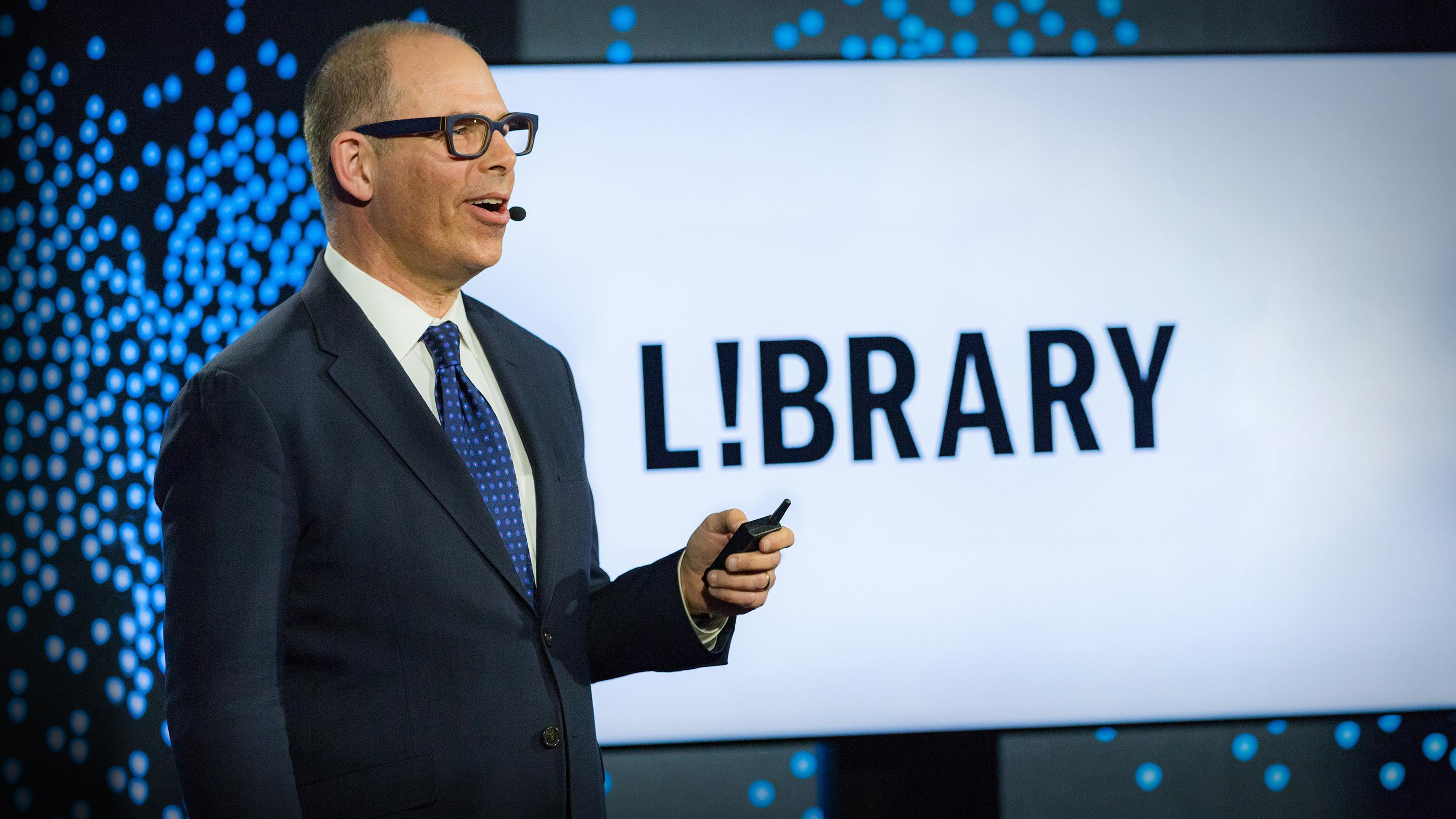
Jun 2, 2017
Songs that bring history to life | Rhiannon Giddens
Rhiannon Giddens pours the emotional weight of American history into her music. Listen as she performs traditional folk ballads -- including "Waterboy," "Up Above My Head," and "Lonesome Road" by Sister Rosetta Tharp -- and one glorious original song, "Come Love Come," inspired by Civil War-era slave narratives. Learn more about our flagship conference happening this April at attend.ted.com/podcast Hosted on Acast. See acast.com/privacy for more information.
Jun 1, 2017
No one should die because they live too far from a doctor | Raj Panjabi
Illness is universal -- but access to care is not. Physician Raj Panjabi has a bold vision to bring health care to everyone, everywhere. With the 2017 TED Prize, Panjabi is building the Community Health Academy, a global platform that aims to modernize how community health workers learn vital skills, creating jobs along the way. Learn more about our flagship conference happening this April at attend.ted.com/podcast Hosted on Acast. See acast.com/privacy for more information.
May 29, 2017
How pollution is changing the ocean's chemistry | Triona McGrath
As we keep pumping carbon dioxide into the atmosphere, more of it is dissolving in the oceans, leading to drastic changes in the water's chemistry. Triona McGrath researches this process, known as ocean acidification, and in this talk she takes us for a dive into an oceanographer's world. Learn more about how the "evil twin of climate change" is impacting the ocean -- and the life that depends on it. Learn more about our flagship conference happening this April at attend.ted.com/podcast Hosted on Acast. See acast.com/privacy for more information.
May 26, 2017
How to find a wonderful idea | OK Go
Where does OK Go come up with ideas like dancing in zero gravity, performing in ultra slow motion or constructing a warehouse-sized Rube Goldberg machine for their music videos? In between live performances of "This Too Shall Pass" and "The One Moment," lead singer and director Damian Kulash takes us inside the band's creative process, showing us how to look for wonder and surprise. Learn more about our flagship conference happening this April at attend.ted.com/podcast Hosted on Acast. See acast.com/privacy for more information.
May 25, 2017
A secret weapon against Zika and other mosquito-borne diseases | Nina Fedoroff
Where did Zika come from, and what can we do about it? Molecular biologist Nina Fedoroff takes us around the world to understand Zika's origins and how it spread, proposing a controversial way to stop the virus -- and other deadly diseases -- by preventing infected mosquitoes from multiplying. Learn more about our flagship conference happening this April at attend.ted.com/podcast Hosted on Acast. See acast.com/privacy for more information.
May 24, 2017
This is what democracy looks like | Anthony D. Romero
In a quest to make sense of the political environment in the United States in 2017, lawyer and ACLU executive director Anthony D. Romero turned to a surprising place -- a 14th-century fresco by Italian Renaissance master Ambrogio Lorenzetti. What could a 700-year-old painting possibly teach us about life today? Turns out, a lot. Romero explains all in a talk that's as striking as the painting itself. Learn more about our flagship conference happening this April at attend.ted.com/podcast Hosted on Acast. See acast.com/privacy for more information.
May 18, 2017
Why school should start later for teens | Wendy Troxel
Teens don't get enough sleep, and it's not because of Snapchat, social lives or hormones -- it's because of public policy, says Wendy Troxel. Drawing from her experience as a sleep researcher, clinician and mother of a teenager, Troxel discusses how early school start times deprive adolescents of sleep during the time of their lives when they need it most. Learn more about our flagship conference happening this April at attend.ted.com/podcast Hosted on Acast. See acast.com/privacy for more information.
May 16, 2017
What makes life worth living in the face of death | Lucy Kalanithi
In this deeply moving talk, Lucy Kalanithi reflects on life and purpose, sharing the story of her late husband, Paul, a young neurosurgeon who turned to writing after his terminal cancer diagnosis. "Engaging in the full range of experience -- living and dying, love and loss -- is what we get to do," Kalanithi says. "Being human doesn't happen despite suffering -- it happens within it." Learn more about our flagship conference happening this April at attend.ted.com/podcast Hosted on Acast. See acast.com/privacy for more information.
May 15, 2017
3 principles for creating safer AI | Stuart Russell
How can we harness the power of superintelligent AI while also preventing the catastrophe of robotic takeover? As we move closer toward creating all-knowing machines, AI pioneer Stuart Russell is working on something a bit different: robots with uncertainty. Hear his vision for human-compatible AI that can solve problems using common sense, altruism and other human values. Learn more about our flagship conference happening this April at attend.ted.com/podcast Hosted on Acast. See acast.com/privacy for more information.
May 12, 2017
Thoughts on humanity, fame and love | Shah Rukh Khan
"I sell dreams, and I peddle love to millions of people," says Shah Rukh Khan, Bollywood's biggest star. In this charming, funny talk, Khan traces the arc of his life, showcases a few of his famous dance moves and shares hard-earned wisdom from a life spent in the spotlight. Learn more about our flagship conference happening this April at attend.ted.com/podcast Hosted on Acast. See acast.com/privacy for more information.

May 12, 2017
How human noise affects ocean habitats | Kate Stafford
Oceanographer Kate Stafford lowers us into the sonically rich depths of the Arctic Ocean, where ice groans, whales sing to communicate over vast distances -- and climate change and human noise threaten to alter the environment in ways we don't understand. Learn more about why this underwater soundscape matters and what we might do to protect it. Learn more about our flagship conference happening this April at attend.ted.com/podcast Hosted on Acast. See acast.com/privacy for more information.
May 9, 2017
The biology of our best and worst selves | Robert Sapolsky
How can humans be so compassionate and altruistic -- and also so brutal and violent? To understand why we do what we do, neuroscientist Robert Sapolsky looks at extreme context, examining actions on timescales from seconds to millions of years before they occurred. In this fascinating talk, he shares his cutting edge research into the biology that drives our worst and best behaviors. Learn more about our flagship conference happening this April at attend.ted.com/podcast Hosted on Acast. See acast.com/privacy for more information.
Apr 30, 2017
The future we're building -- and boring | Elon Musk
Elon Musk discusses his new project digging tunnels under LA, the latest from Tesla and SpaceX and his motivation for building a future on Mars in conversation with TED's Head Curator, Chris Anderson. Learn more about our flagship conference happening this April at attend.ted.com/podcast Hosted on Acast. See acast.com/privacy for more information.

Apr 25, 2017
Science in service to the public good | Siddhartha Roy
We give scientists and engineers great technical training, but we're not as good at teaching ethical decision-making or building character. Take, for example, the environmental crisis that recently unfolded in Flint, Michigan -- and the professionals there who did nothing to fix it. Siddhartha Roy helped prove that Flint's water was contaminated, and he tells a story of science in service to the public good, calling on the next generation of scientists and engineers to dedicate their work to protecting people and the planet. Learn more about our flagship conference happening this April at attend.ted.com/podcast Hosted on Acast. See acast.com/privacy for more information.
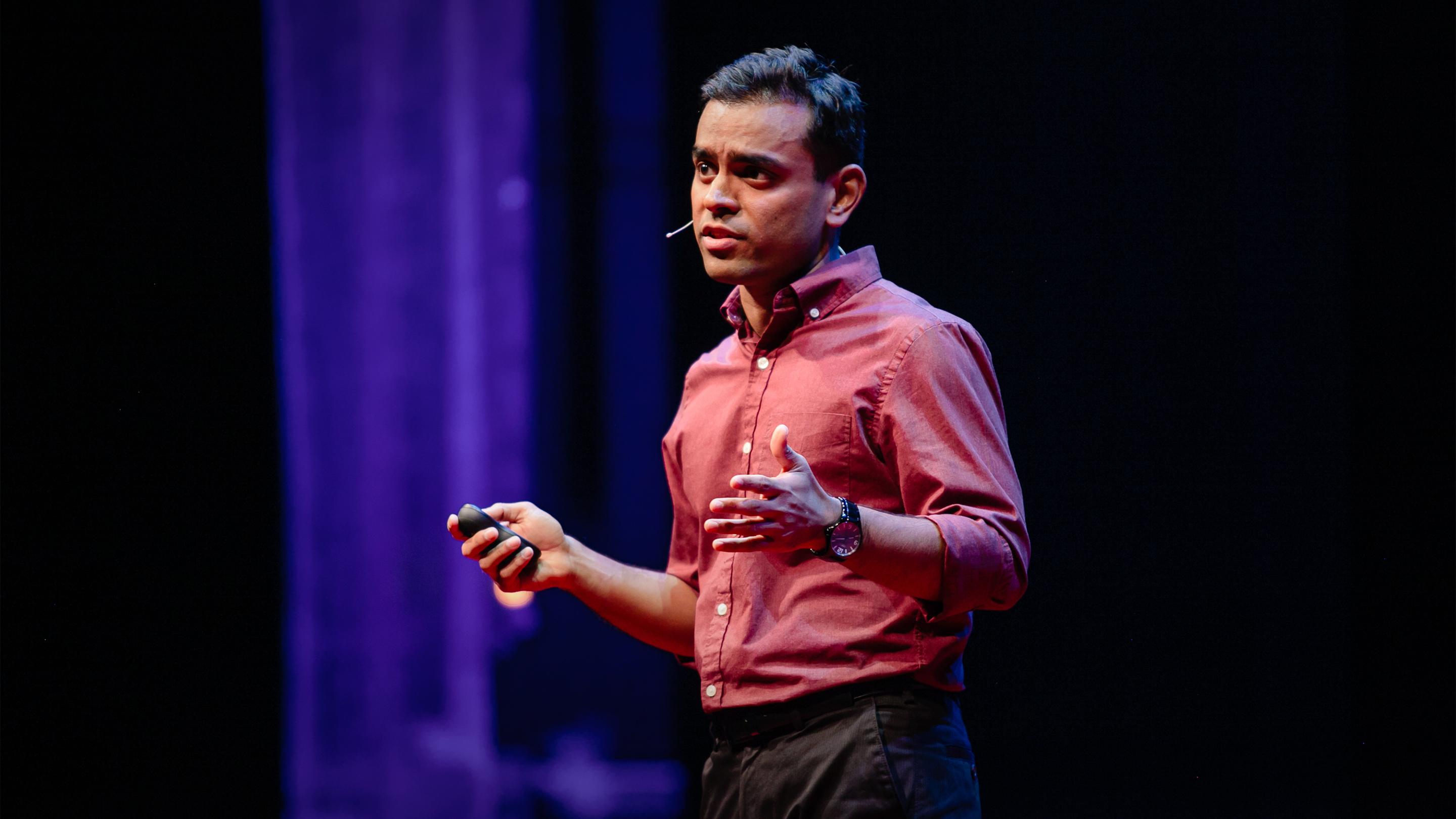
Apr 13, 2017
A simple birth kit for mothers in the developing world | Zubaida Bai
TED Fellow Zubaida Bai works with medical professionals, midwives and mothers to bring dignity and low-cost interventions to women's health care. In this quick, inspiring talk, she presents her clean birth kit in a purse, which contains everything a new mother needs for a hygienic birth and a healthy delivery -- no matter where in the world (or how far from a medical clinic) she might be. Learn more about our flagship conference happening this April at attend.ted.com/podcast Hosted on Acast. See acast.com/privacy for more information.
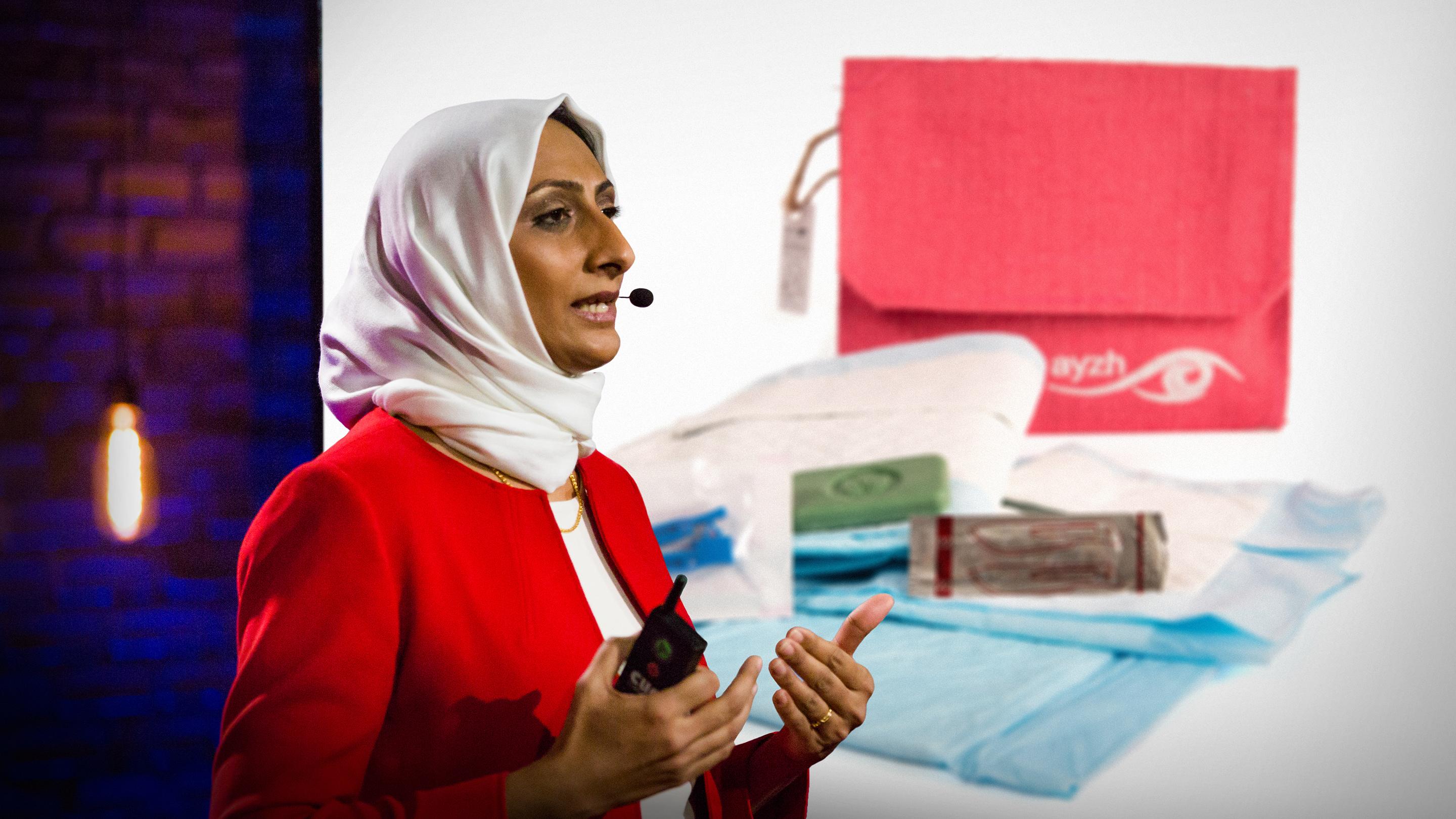
Apr 12, 2017
An intergalactic guide to using a defibrillator | Todd Scott
If Yoda goes into cardiac arrest, will you know what to do? Artist and first-aid enthusiast Todd Scott breaks down what you need to know about using an automated external defibrillator, or AED -- in this galaxy and ones that are far, far away. Prepare to save the life of a Jedi, Chewbacca (he'll need a quick shave first) or someone else in need with some helpful pointers. Learn more about our flagship conference happening this April at attend.ted.com/podcast Hosted on Acast. See acast.com/privacy for more information.
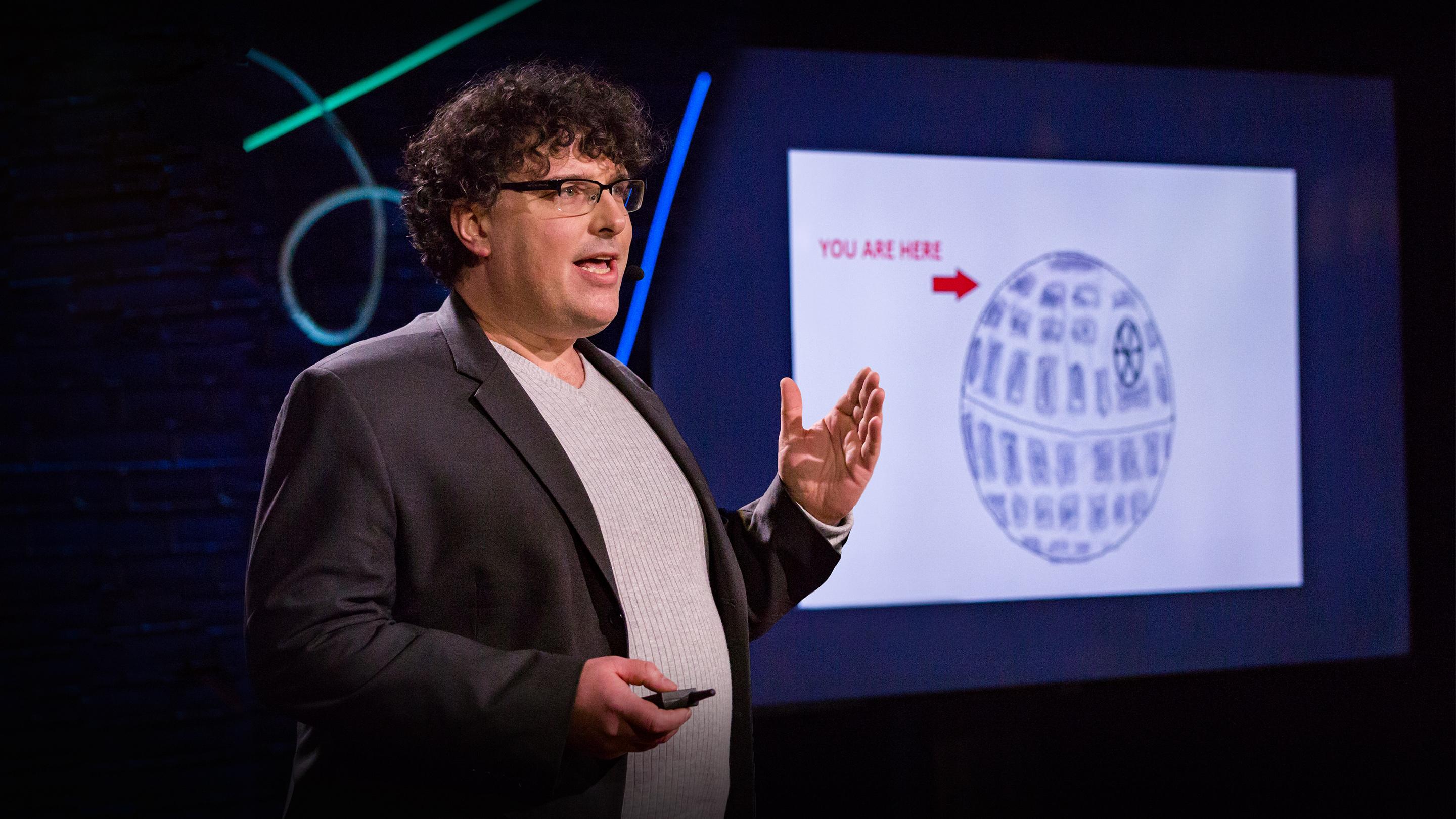
Apr 11, 2017
In praise of conflict | Jonathan Marks
Conflict is bad; compromise, consensus and collaboration are good -- or so we're told. Lawyer and bioethicist Jonathan Marks challenges this conventional wisdom, showing how governments can jeopardize public health, human rights and the environment when they partner with industry. An important, timely reminder that common good and common ground are not the same thing. Learn more about our flagship conference happening this April at attend.ted.com/podcast Hosted on Acast. See acast.com/privacy for more information.
Apr 7, 2017
How we can find ourselves in data | Giorgia Lupi
Giorgia Lupi uses data to tell human stories, adding nuance to numbers. In this charming talk, she shares how we can bring personality to data, visualizing even the mundane details of our daily lives and transforming the abstract and uncountable into something that can be seen, felt and directly reconnected to our lives. Learn more about our flagship conference happening this April at attend.ted.com/podcast Hosted on Acast. See acast.com/privacy for more information.
Apr 3, 2017
Political common ground in a polarized United States | Gretchen Carlson, David Brooks
How can we bridge the gap between left and right to have a wiser, more connected political conversation? Journalist Gretchen Carlson and op-ed columnist David Brooks share insights on the tensions at the heart of American politics today -- and where we can find common ground. Followed by a rousing performance of "America the Beautiful" by Vy Higginsen's Gospel Choir of Harlem. Learn more about our flagship conference happening this April at attend.ted.com/podcast Hosted on Acast. See acast.com/privacy for more information.
Mar 31, 2017
A young poet tells the story of Darfur | Emtithal Mahmoud
Emtithal "Emi" Mahmoud writes poetry of resilience, confronting her experience of escaping the genocide in Darfur in verse. She shares two stirring original poems about refugees, family, joy and sorrow, asking, "Will you witness me?" Learn more about our flagship conference happening this April at attend.ted.com/podcast Hosted on Acast. See acast.com/privacy for more information.
Mar 31, 2017
"Music for Wood and Strings" | Sō Percussion
Sō Percussion creates adventurous compositions with new, unconventional instruments. Performing "Music for Wood and Strings" by Bryce Dessner of The National, the quartet plays custom-made dulcimer-like instruments that combine the sound of an electric guitar with the percussionist's toolkit to create a hypnotic effect. Learn more about our flagship conference happening this April at attend.ted.com/podcast Hosted on Acast. See acast.com/privacy for more information.

Mar 30, 2017
How early life experience is written into DNA | Moshe Szyf
Moshe Szyf is a pioneer in the field of epigenetics, the study of how living things reprogram their genome in response to social factors like stress and lack of food. His research suggests that biochemical signals passed from mothers to offspring tell the child what kind of world they're going to live in, changing the expression of genes. "DNA isn't just a sequence of letters; it's not just a script." Szyf says. "DNA is a dynamic movie in which our experiences are being written." Learn more about our flagship conference happening this April at attend.ted.com/podcast Hosted on Acast. See acast.com/privacy for more information.
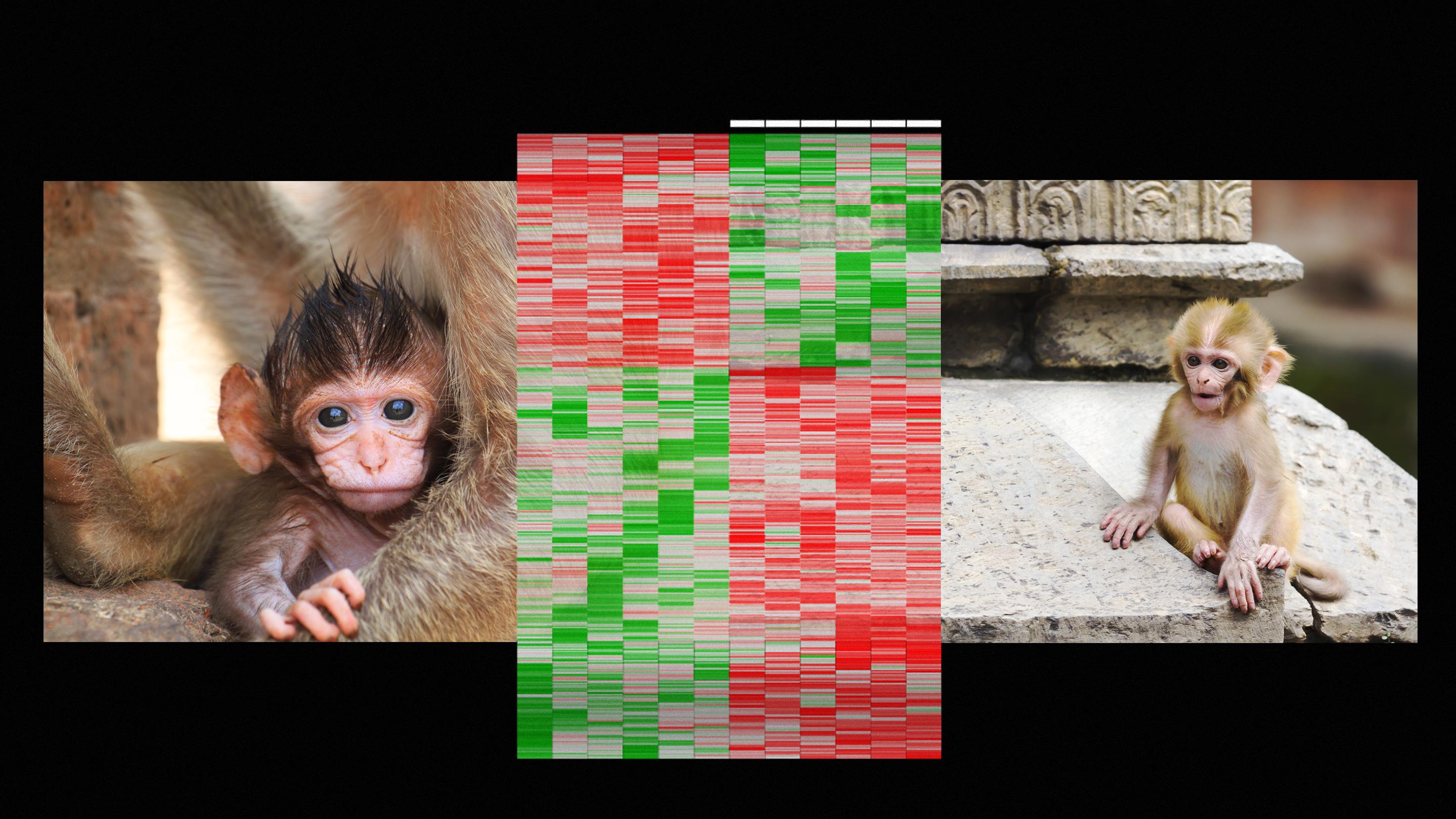
Mar 28, 2017
What we don't know about mother's milk | Katie Hinde
Breast milk grows babies' bodies, fuels neurodevelopment, provides essential immunofactors and safeguards against famine and disease -- why, then, does science know more about tomatoes than mother's milk? Katie Hinde shares insights into this complex, life-giving substance and discusses the major gaps scientific research still needs to fill so we can better understand it. Learn more about our flagship conference happening this April at attend.ted.com/podcast Hosted on Acast. See acast.com/privacy for more information.
Mar 24, 2017
3 ways to spot a bad statistic | Mona Chalabi
Sometimes it's hard to know what statistics are worthy of trust. But we shouldn't count out stats altogether ... instead, we should learn to look behind them. In this delightful, hilarious talk, data journalist Mona Chalabi shares handy tips to help question, interpret and truly understand what the numbers are saying. Learn more about our flagship conference happening this April at attend.ted.com/podcast Hosted on Acast. See acast.com/privacy for more information.
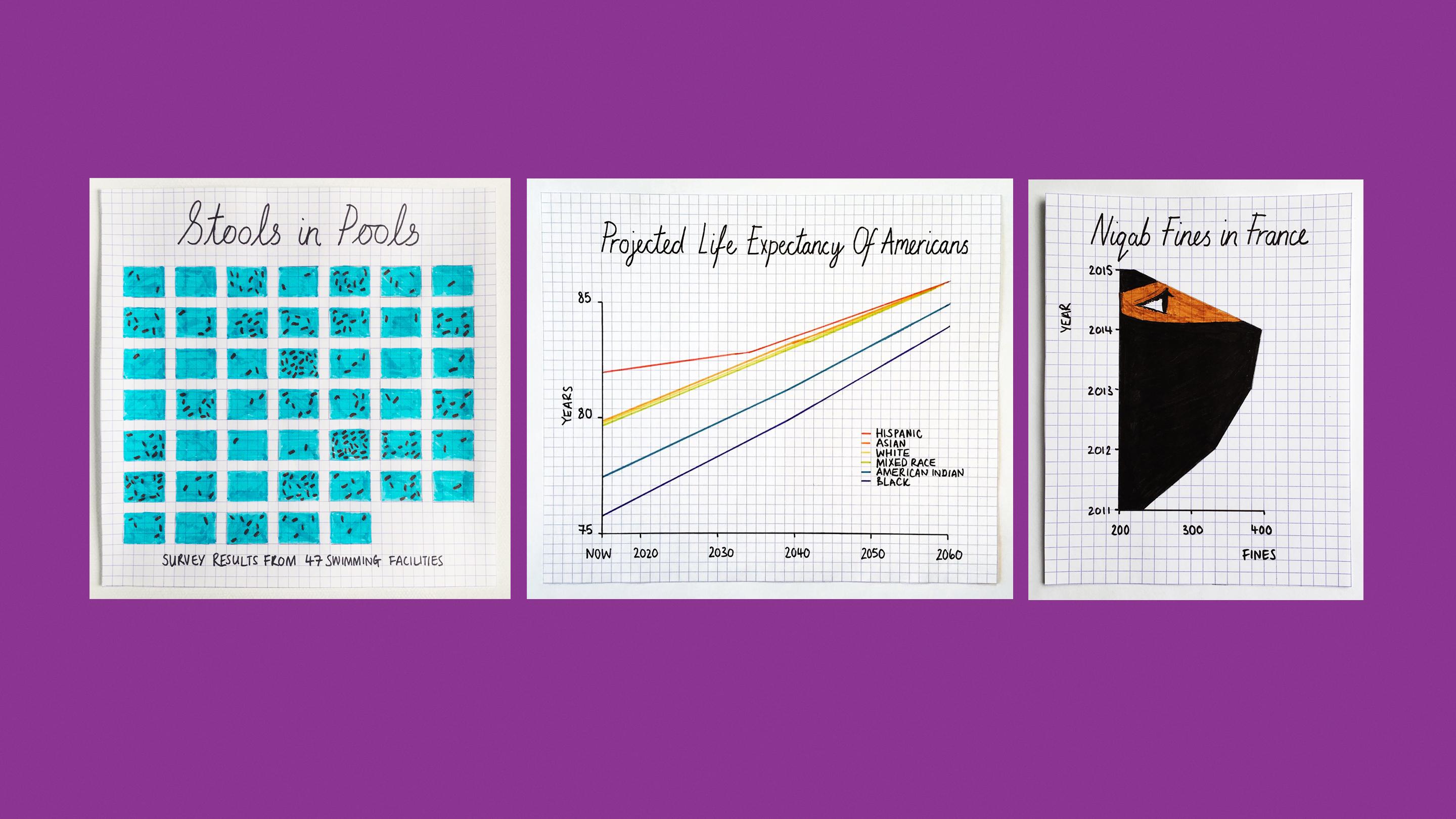
Mar 17, 2017
Inside America's dead shopping malls | Dan Bell
What happens when a mall falls into ruin? Filmmaker Dan Bell guides us through abandoned monoliths of merchandise, providing a surprisingly funny and lyrical commentary on consumerism, youth culture and the inspiration we can find in decay. Learn more about our flagship conference happening this April at attend.ted.com/podcast Hosted on Acast. See acast.com/privacy for more information.

Mar 17, 2017
"Turceasca" | Silk Road Ensemble
Grammy-winning Silk Road Ensemble display their eclectic convergence of violin, clarinet, bass, drums and more in this energetic rendition of the traditional Roma tune, "Turceasca." Learn more about our flagship conference happening this April at attend.ted.com/podcast Hosted on Acast. See acast.com/privacy for more information.
Mar 14, 2017
Adventures of an asteroid hunter | Carrie Nugent
TED Fellow Carrie Nugent is an asteroid hunter -- part of a group of scientists working to discover and catalog our oldest and most numerous cosmic neighbors. Why keep an eye out for asteroids? In this short, fact-filled talk, Nugent explains how their awesome impacts have shaped our planet, and how finding them at the right time could mean nothing less than saving life on Earth. Learn more about our flagship conference happening this April at attend.ted.com/podcast Hosted on Acast. See acast.com/privacy for more information.
Mar 9, 2017
How I'm fighting bias in algorithms | Joy Buolamwini
MIT grad student Joy Buolamwini was working with facial analysis software when she noticed a problem: the software didn't detect her face -- because the people who coded the algorithm hadn't taught it to identify a broad range of skin tones and facial structures. Now she's on a mission to fight bias in machine learning, a phenomenon she calls the "coded gaze." It's an eye-opening talk about the need for accountability in coding ... as algorithms take over more and more aspects of our lives. Learn more about our flagship conference happening this April at attend.ted.com/podcast Hosted on Acast. See acast.com/privacy for more information.
Mar 3, 2017
A scientific approach to the paranormal | Carrie Poppy
What's haunting Carrie Poppy? Is it ghosts or something worse? In this talk, the investigative journalist narrates her encounter with a spooky feeling you'll want to warn your friends about and explains why we need science to deal with paranormal activity. Learn more about our flagship conference happening this April at attend.ted.com/podcast Hosted on Acast. See acast.com/privacy for more information.
Mar 3, 2017
"Rollercoaster" | Sara Ramirez
Singer, songwriter and actress Sara Ramirez is a woman of many talents. Joined by Michael Pemberton on guitar, Ramirez sings of opportunity, wisdom and the highs and lows of life in this live performance of her song, "Rollercoaster." Learn more about our flagship conference happening this April at attend.ted.com/podcast Hosted on Acast. See acast.com/privacy for more information.
Feb 27, 2017
Smelfies, and other experiments in synthetic biology | Ani Liu
What if you could take a smell selfie, a smelfie? What if you had a lipstick that caused plants to grow where you kiss? Ani Liu explores the intersection of technology and sensory perception, and her work is wedged somewhere between science, design and art. In this swift, smart talk, she shares dreams, wonderings and experiments, asking: What happens when science fiction becomes science fact? Learn more about our flagship conference happening this April at attend.ted.com/podcast Hosted on Acast. See acast.com/privacy for more information.
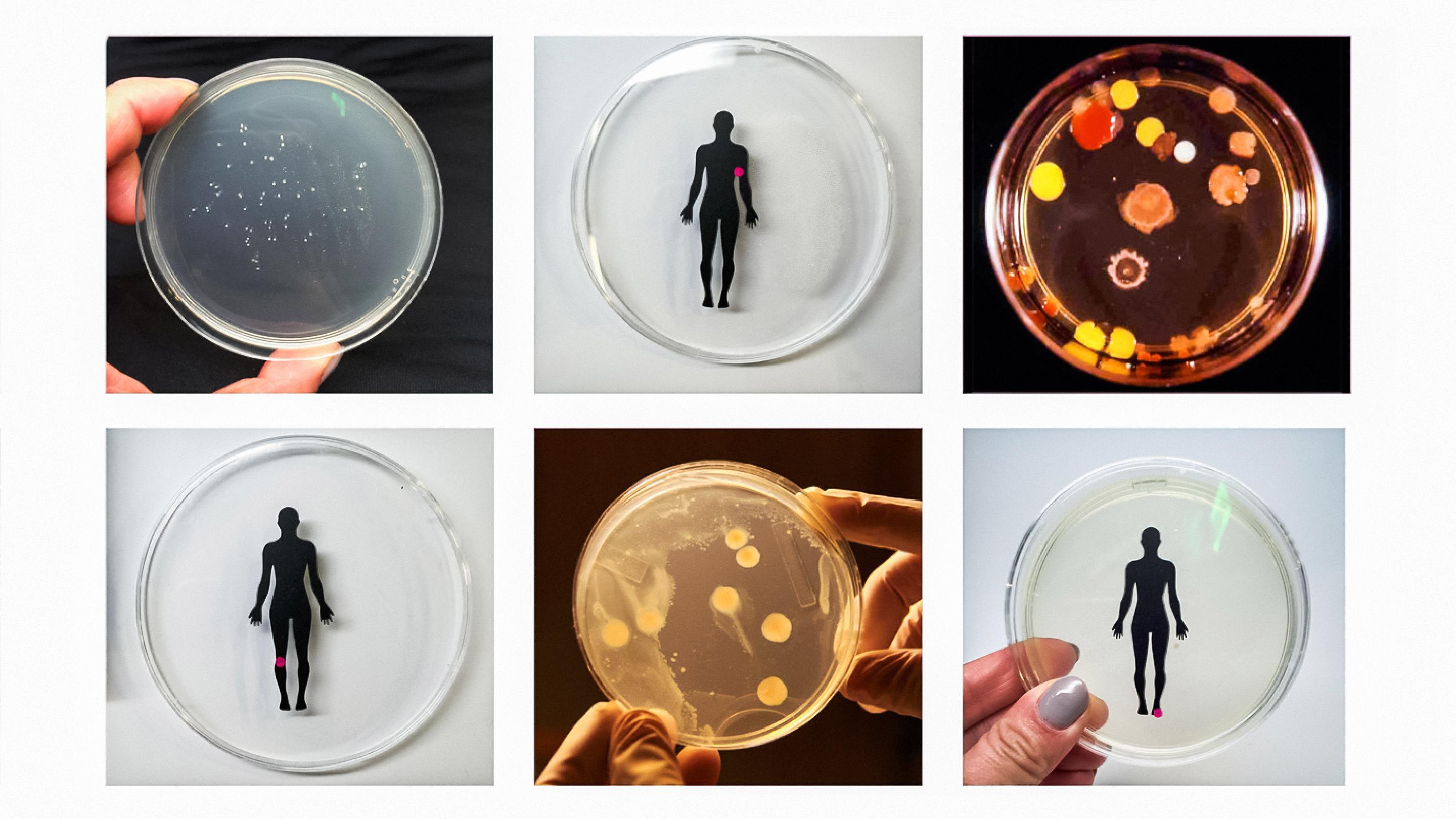
Feb 22, 2017
A robot that eats pollution | Jonathan Rossiter
Meet the "Row-bot," a robot that cleans up pollution and generates the electricity needed to power itself by swallowing dirty water. Roboticist Jonathan Rossiter explains how this special swimming machine, which uses a microbial fuel cell to neutralize algal blooms and oil slicks, could be a precursor to biodegradable, autonomous pollution-fighting robots. Learn more about our flagship conference happening this April at attend.ted.com/podcast Hosted on Acast. See acast.com/privacy for more information.
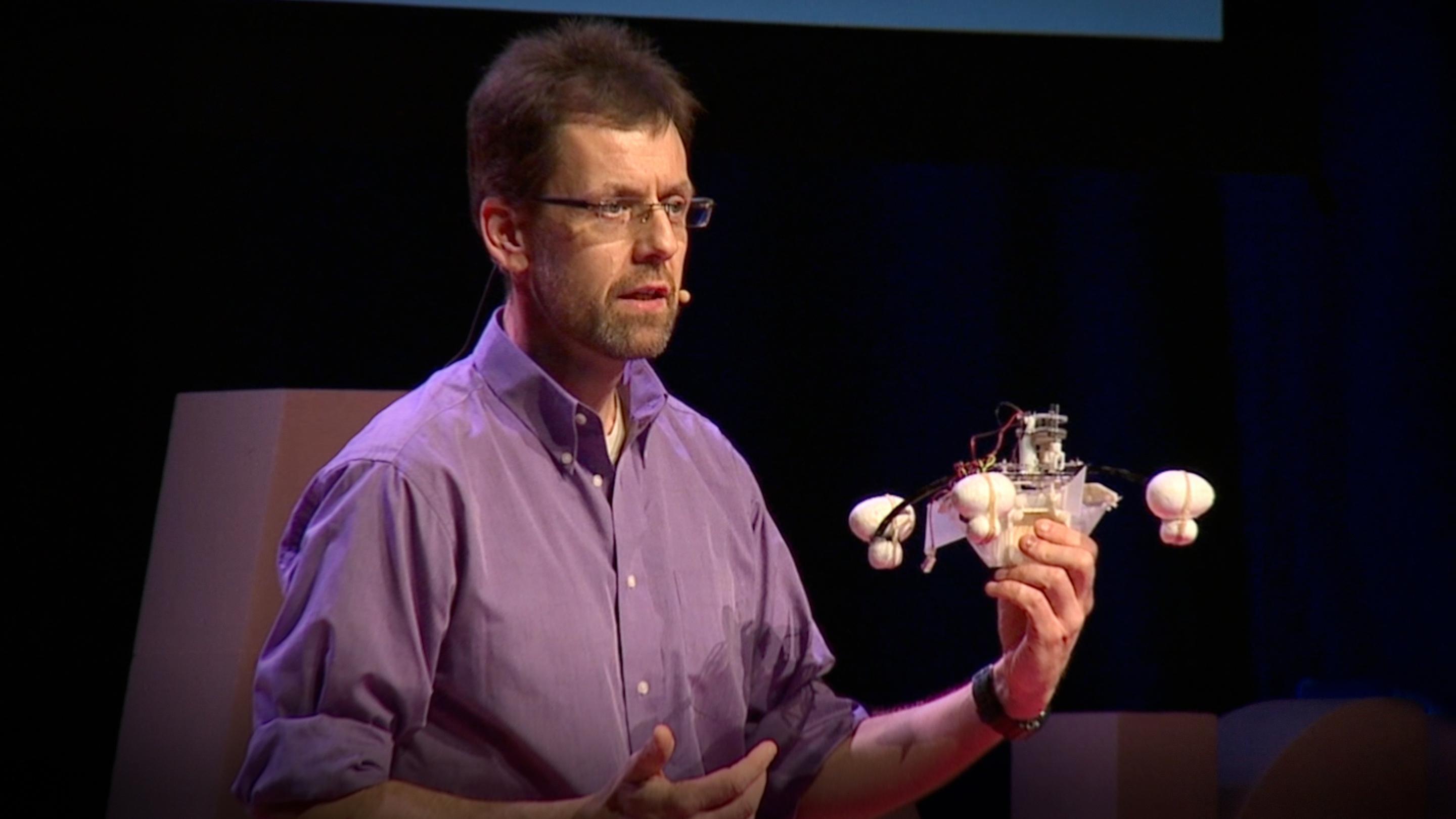
Feb 14, 2017
An electrifying acoustic guitar performance | Rodrigo y Gabriela
Guitar duo Rodrigo y Gabriela combine furiously fast riffs and dazzling rhythms to create a style that draws on both flamenco guitar and heavy metal in this live performance of their song, "The Soundmaker." Learn more about our flagship conference happening this April at attend.ted.com/podcast Hosted on Acast. See acast.com/privacy for more information.
Feb 8, 2017
New nanotech to detect cancer early | Joshua Smith
What if every home had an early-warning cancer detection system? Researcher Joshua Smith is developing a nanobiotechnology "cancer alarm" that scans for traces of disease in the form of special biomarkers called exosomes. In this forward-thinking talk, he shares his dream for how we might revolutionize cancer detection and, ultimately, save lives. Learn more about our flagship conference happening this April at attend.ted.com/podcast Hosted on Acast. See acast.com/privacy for more information.
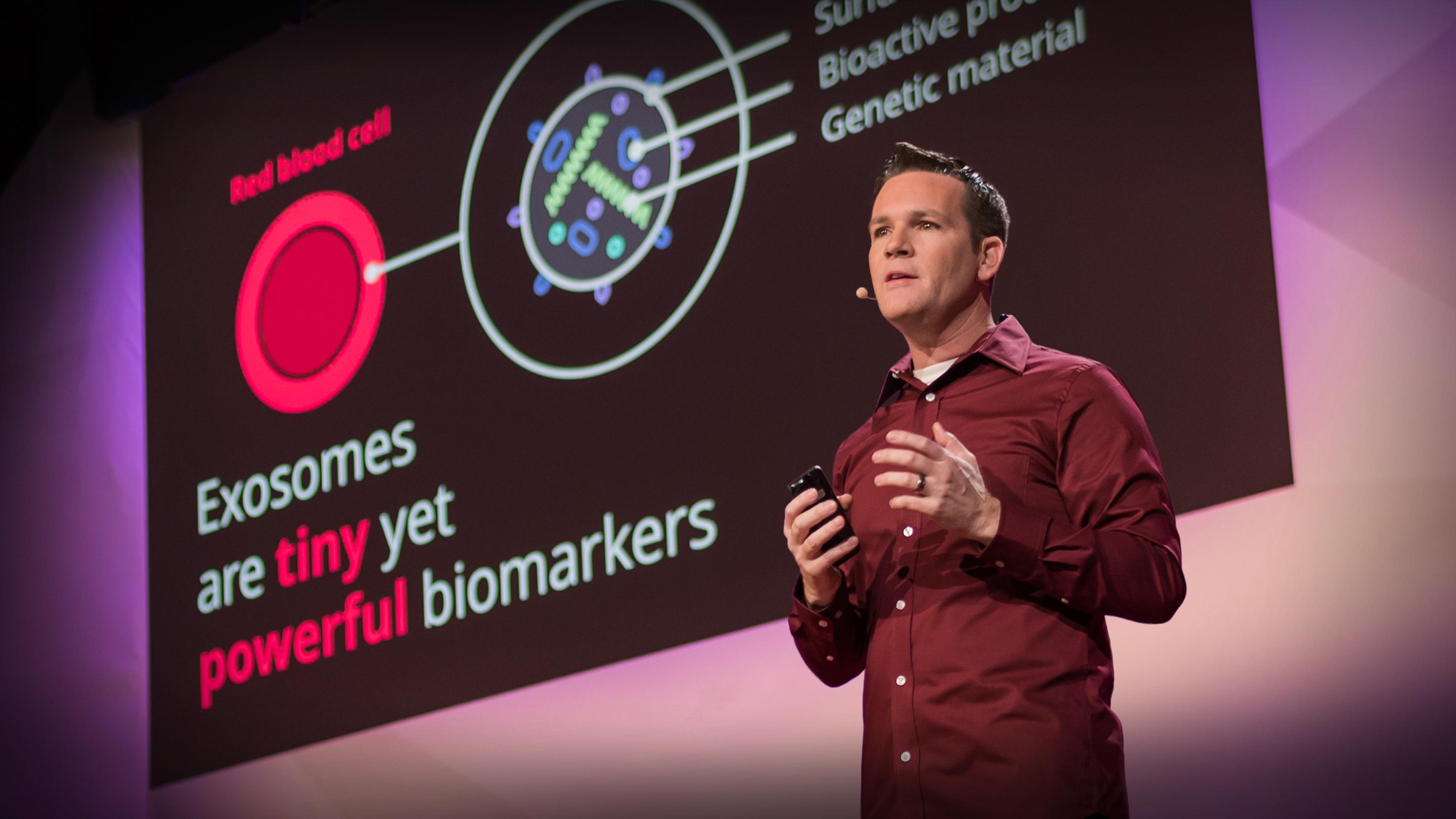
Feb 6, 2017
The incredible inventions of intuitive AI | Maurice Conti
What do you get when you give a design tool a digital nervous system? Computers that improve our ability to think and imagine, and robotic systems that come up with (and build) radical new designs for bridges, cars, drones and much more -- all by themselves. Take a tour of the Augmented Age with futurist Maurice Conti and preview a time when robots and humans will work side-by-side to accomplish things neither could do alone. Learn more about our flagship conference happening this April at attend.ted.com/podcast Hosted on Acast. See acast.com/privacy for more information.
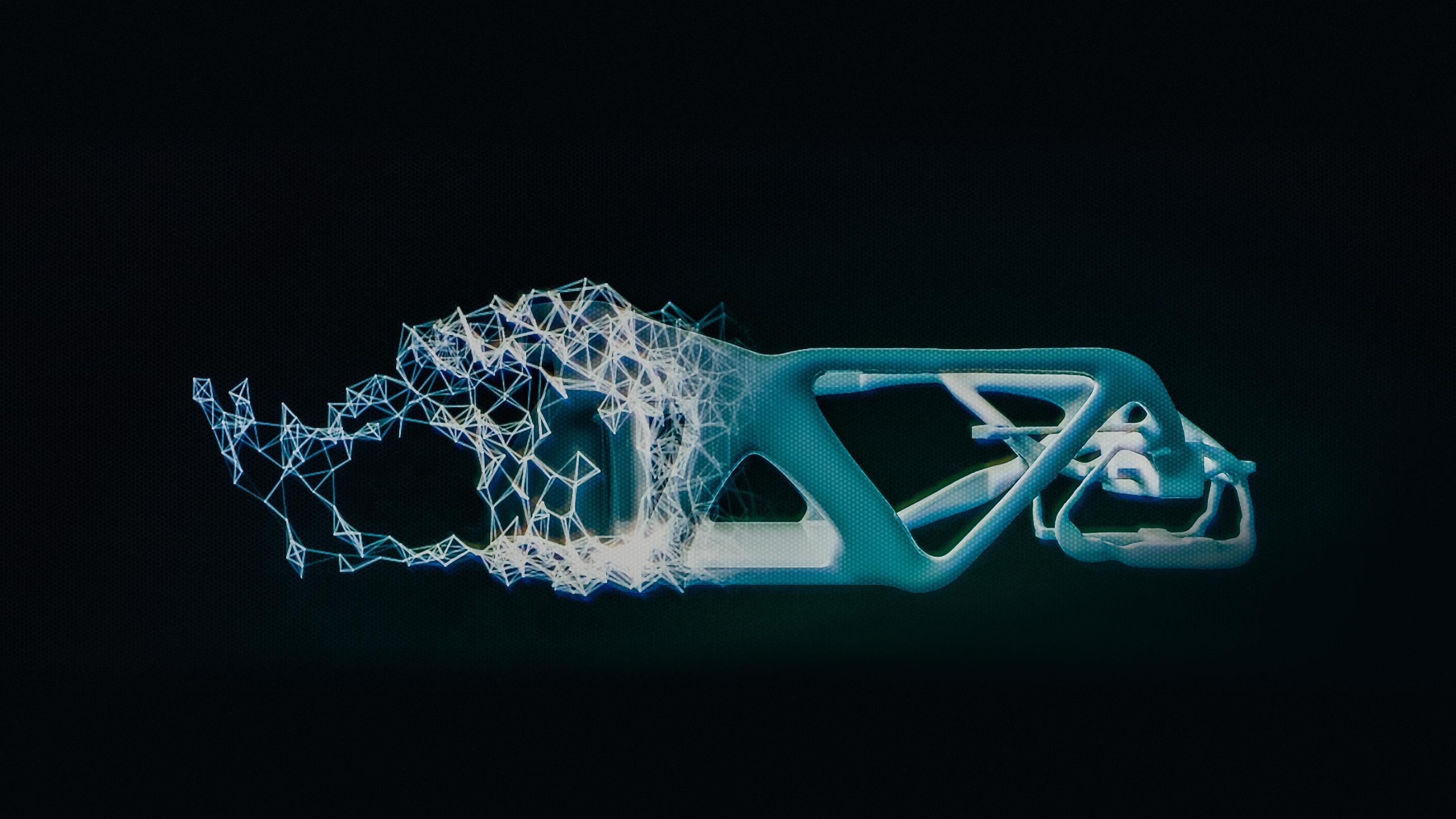
Feb 3, 2017
What time is it on Mars? | Nagin Cox
Nagin Cox is a first-generation Martian. As a spacecraft engineer at NASA's Jet Propulsion Laboratory, Cox works on the team that manages the United States' rovers on Mars. But working a 9-to-5 on another planet -- whose day is 40 minutes longer than Earth's -- has particular, often comical challenges. Learn more about our flagship conference happening this April at attend.ted.com/podcast Hosted on Acast. See acast.com/privacy for more information.
Feb 1, 2017
How to get better at the things you care about | Eduardo Briceño
Working hard but not improving? You're not alone. Eduardo Briceño reveals a simple way to think about getting better at the things you do, whether that's work, parenting or creative hobbies. And he shares some useful techniques so you can keep learning and always feel like you're moving forward. Learn more about our flagship conference happening this April at attend.ted.com/podcast Hosted on Acast. See acast.com/privacy for more information.
Jan 31, 2017
Why you should love statistics | Alan Smith
Think you're good at guessing stats? Guess again. Whether we consider ourselves math people or not, our ability to understand and work with numbers is terribly limited, says data visualization expert Alan Smith. In this delightful talk, Smith explores the mismatch between what we know and what we think we know. Learn more about our flagship conference happening this April at attend.ted.com/podcast Hosted on Acast. See acast.com/privacy for more information.
Jan 27, 2017
A young scientist's quest for clean water | Deepika Kurup
Deepika Kurup has been determined to solve the global water crisis since she was 14 years old, after she saw kids outside her grandparents' house in India drinking water that looked too dirty even to touch. Her research began in her family kitchen -- and eventually led to a major science prize. Hear how this teenage scientist developed a cost-effective, eco-friendly way to purify water. Learn more about our flagship conference happening this April at attend.ted.com/podcast Hosted on Acast. See acast.com/privacy for more information.
Jan 23, 2017
The ethical dilemma of designer babies | Paul Knoepfler
Creating genetically modified people is no longer a science fiction fantasy; it's a likely future scenario. Biologist Paul Knoepfler estimates that within fifteen years, scientists could use the gene editing technology CRISPR to make certain "upgrades" to human embryos -- from altering physical appearances to eliminating the risk of auto-immune diseases. In this thought-provoking talk, Knoepfler readies us for the coming designer baby revolution and its very personal, and unforeseeable, consequences. Learn more about our flagship conference happening this April at attend.ted.com/podcast Hosted on Acast. See acast.com/privacy for more information.
Jan 18, 2017
How online abuse of women has spiraled out of control | Ashley Judd
Enough with online hate speech, sexual harassment and threats of violence against women and marginalized groups. It's time to take the global crisis of online abuse seriously. In this searching, powerful talk, Ashley Judd recounts her ongoing experience of being terrorized on social media for her unwavering activism and calls on citizens of the internet, the tech community, law enforcement and legislators to recognize the offline harm of online harassment. Learn more about our flagship conference happening this April at attend.ted.com/podcast Hosted on Acast. See acast.com/privacy for more information.
Jan 17, 2017
What happens when you have a disease doctors can't diagnose | Jennifer Brea
Five years ago, TED Fellow Jennifer Brea became progressively ill with myalgic encephalomyelitis, commonly known as chronic fatigue syndrome, a debilitating illness that severely impairs normal activities and on bad days makes even the rustling of bed sheets unbearable. In this poignant talk, Brea describes the obstacles she's encountered in seeking treatment for her condition, whose root causes and physical effects we don't fully understand, as well as her mission to document through film the lives of patients that medicine struggles to treat. Learn more about our flagship conference happening this April at attend.ted.com/podcast Hosted on Acast. See acast.com/privacy for more information.
Jan 12, 2017
To solve old problems, study new species | Alejandro Sánchez Alvarado
Nature is wonderfully abundant, diverse and mysterious -- but biological research today tends to focus on only seven species, including rats, chickens, fruit flies and us. We're studying an astonishingly narrow sliver of life, says biologist Alejandro Sánchez Alvarado, and hoping it'll be enough to solve the oldest, most challenging problems in science, like cancer. In this visually captivating talk, Alvarado calls on us to interrogate the unknown and shows us the remarkable discoveries that surface when we do. Learn more about our flagship conference happening this April at attend.ted.com/podcast Hosted on Acast. See acast.com/privacy for more information.
Jan 11, 2017
Meet the inventor of the electronic spreadsheet | Dan Bricklin
Dan Bricklin changed the world forever when he codeveloped VisiCalc, the first electronic spreadsheet and grandfather of programs you probably use every day like Microsoft Excel and Google Sheets. Join the software engineer and computing legend as he explores the tangled web of first jobs, daydreams and homework problems that led to his transformational invention. Learn more about our flagship conference happening this April at attend.ted.com/podcast Hosted on Acast. See acast.com/privacy for more information.
Jan 10, 2017
The next step in nanotechnology | George Tulevski
Nearly every other year the transistors that power silicon computer chip shrink in size by half and double in performance, enabling our devices to become more mobile and accessible. But what happens when these components can't get any smaller? George Tulevski researches the unseen and untapped world of nanomaterials. His current work: developing chemical processes to compel billions of carbon nanotubes to assemble themselves into the patterns needed to build circuits, much the same way natural organisms build intricate, diverse and elegant structures. Could they hold the secret to the next generation of computing? Learn more about our flagship conference happening this April at attend.ted.com/podcast Hosted on Acast. See acast.com/privacy for more information.
Jan 3, 2017
Are you a giver or a taker? | Adam Grant
In every workplace, there are three basic kinds of people: givers, takers and matchers. Organizational psychologist Adam Grant breaks down these personalities and offers simple strategies to promote a culture of generosity and keep self-serving employees from taking more than their share. Learn more about our flagship conference happening this April at attend.ted.com/podcast Hosted on Acast. See acast.com/privacy for more information.