3d ago
From Stocking Frames to AI: Luddism and Technological Resistance
This episode traces the continuous thread of Luddite resistance from the dawn of the Industrial Revolution straight through to the age of AI, noting how the term Luddite is often used today as a pejorative to dismiss critics of technological expansion. The movement began with 19th-century English cloth workers who mobilized against the horrific context created by industrial expansion. Following Parliament's enclosure of six million acres of commons, workers were forced into terrifying, unsafe cities to become "meat for the machines." The depravity was immense; for example, in Manchester, 57% of children under five died due to a mix of labor injuries and pollution, and the average lifespan for a laborer in Leeds was reduced to just over 18. Despite widespread hunger, many laborers refused factory work, preferring to starve to death rather than face the inhumane conditions. The original Luddites—highly skilled artisans including croppers, shearers, and framework knits—began systematic frame breaking near Noddingham on the night of November 4, 1811. Their actions were a calculated tactic of "collective bargaining by riot" used after repeated failed attempts to secure relief, legal protections, and minimum wage bills from Parliament. The Luddites fundamentally resisted capital’s efforts to restructure social relations using technology as a vehicle. They selectively targeted specific stocking frames used to produce inferior goods known as "cutups" that undercut the entire market and destroyed the existing trade, viewing this use as "hurtful to commonality," rather than opposing all machinery. The government responded with exceptional brutality, making machine breaking a capital offense in 1812 and deploying 14,400 troops—a force larger than the British contingent fighting Napoleon in Portugal at the time. Mass trials and hangings "broke the neck of Lutism as an organized movement," successfully establishing the "appropriate climate for business." Although they failed to achieve immediate material goals, their influence lived on in art, with supporters like Lord Byron and writers like Charles Dickens, who used fiction as a "forceful protest against the machine." The episode concludes by examining the "Second and Third waves" of Luddite thinking, focusing on anxieties around computers, automation, and the proliferation of AI. Ultimately, this history illustrates a fluid fight against technological imperialism, suggesting that modern resistance must adopt context-sensitive strategies, such as unionizing labor against technology and advocating for policies that enable public ownership of AI infrastructure, to shape a more just future. For sources, transcripts, and to read more about this subject, visit: www.agroecologies.org To support this podcast, join our patreon for early, commercial-free episode access at https://www.patreon.com/poorprolesalmanac For PPA Restoration Content, visit: www.restorationagroecology.com For PPA Merch, visit: https://breadandrosespress.com/ For PPA Native Plants, visit: www.nativenurseries.org To hear Tomorrow, Today, our sister podcast, visit: www.tomorrowtodaypodcast.org/ Key Words: Luddism, technopolitical resistance, First wave Luddism, Collective bargaining by riot, Resistance to Industrial Revolution, Luddite reputation, Frame breaking, Machine breaking capital offense 1812, 19th century English cloth workers, Enclosure of the commons, Nottingham Luddites, King Edward (Ned Lud), York Castle hangings 1813, Croppers, shearers, and framework knitters, Lord Byron Luddites, Charles Dickens forceful protest against the machine, Kirk Patrick Sale, Stocking frames, Cutups inferior goods, Hurtful to commonality, Appropriate technology, Industrial system "appropriate climate for business", Second wave Luddism, Epistemological Luddism, Third wave Luddism, Resistance to AI proliferation, Unionizing labor against technology, Public ownership of AI infrastructure, Technological imperialism Hosted by Simplecast, an AdsWizz company. See pcm.adswizz.com for information about our collection and use of personal data for advertising.
Dec 9
Reclaiming History: Victoria Melody on the Diggers, Community Activism, & Empowering Change
Victoria Melody, the vibrant comedian and artist from Bristol, takes us on a captivating journey into the world of the Diggers, a radical group from the English Civil War era. With her signature blend of humor and historical insight, Victoria uncovers how her chance discovery of Gerard Winstanley's revolutionary ideas sparked a passionate exploration of communal land ownership. Her project, initially sparked by a curiosity for historical reenactment, blossoms into a deeper narrative about these historical figures and their impact on society. Our spotlight then shifts to tales of community activism and change, where we meet inspiring individuals like Brian, who turned a simple act of kindness into a widespread meal service during the lockdown. His journey from a local initiative to advocating for national support systems reveals the power of community action. Meanwhile, Dave Banks' crusade to preserve green spaces reminds us of the everyday heroes among us, and the essential role that art and history play in fostering community trust and connection. In a unique chapter, we explore the power of historical reenactment in fostering community engagement, brought to life by an extraordinary event in Whitehawk. Locals embraced their roles as Diggers, while historical reenactors played their adversaries, creating a vibrant festival that celebrated community spirit. This reenactment was more than just a performance—it became a symbol of rewriting history, empowering the community to reclaim their narrative. We also touch upon gardening's role in youth empowerment and the transformative potential of turning unused spaces into thriving community hubs, all inspired by the arts and storytelling. Victoria’s work reminds us that through collaboration and creativity, we can challenge the status quo and build stronger communities. To check out Victoria's work, visit: https://victoriamelody.com/ For sources, transcripts, and to read more about this subject, visit: www.agroecologies.org To support this podcast, join our patreon for early, commercial-free episode access at https://www.patreon.com/poorprolesalmanac For PPA Restoration Content, visit: www.restorationagroecology.com For PPA Merch, visit: https://breadandrosespress.com/ For PPA Native Plants, visit: www.nativenurseries.org To hear Tomorrow, Today, our sister podcast, visit: www.tomorrowtodaypodcast.org/ Diggers, English Civil War, Gerard Winstanley, communal land ownership, historical reenactment, community activism, social change, community action, community trust, community connection, gardening, youth empowerment, unused spaces, community hubs, art, storytelling, collaboration, creativity, status quo, community engagement, community-driven initiatives, community spirit, community collaboration, community issues, disenfranchisement, social spaces, artist in residence, privatization, online platforms, Victoria Melody, Bristol, UK, Christopher Hill, revolutionary groups, pamphlets, Brighton, Meals on Wheels, malnutrition, Whitehawk, beetle species, industrial development, community stories, broader narrative, trust, genuine connection, transformative power, community dynamics, community-driven initiatives, community garden, vegetables, empowerment, call to arms, elitism, theatre production, artist in residence, Norfolk, Northeast, disused spaces, community areas, online platforms, privatization, young people, US, victoriamelody.com, Instagram Hosted by Simplecast, an AdsWizz company. See pcm.adswizz.com for information about our collection and use of personal data for advertising.
Dec 1
Radical Roots: The Digger Movement and Gerard Winstanley's Vision for a Communal Future
What if the solution to our modern societal woes lies buried in the past? Let's journey back to the English Civil War, a turbulent period of chaos, famine, and rebellion, to uncover the radical vision of Gerard Winstanley and the Digger Movement. This compelling part 2 episode unpacks Winstanley's transformation from a man in economic ruin to a prolific writer and radical thinker, challenging the very foundations of private property and societal hierarchies. Explore how his experiences of bankruptcy and oppressive taxes ignited a passion for social reform that would inspire generations. We delve into Winstanley's revolutionary ideas, where religious beliefs intersected with a pragmatic approach to creating an equitable society. Picture a world where the withdrawal of labor disrupts the wealth of the elite, enabling a transition to a communal lifestyle without buying, selling, or private property. Winstanley's vision was not merely theoretical; it was a call to peaceful action, advocating for the voluntary sharing of resources to recreate an Edenic world. We examine his belief in the power of practical Christianity as a foundation for a just society, where the land is a common treasury for all. Finally, we explore the challenges faced by the Diggers, a group that championed communal land ownership against fierce opposition. Amid violent backlash and legal battles, their manifesto urged the poor to reclaim their rights and land. This historical struggle for land rights sets the stage for a broader discussion on the evolution of early land-based lifestyles into today's intentional communities. With a lighthearted touch, we encourage listeners to embrace sustainable practices, sprinkle in a few gardening tips, and preview next week's engaging topic on the Luddites. Join us for a historical journey that promises to inspire change in our contemporary world. For sources, transcripts, and to read more about this subject, visit: www.agroecologies.org To support this podcast, join our patreon for early, commercial-free episode access at https://www.patreon.com/poorprolesalmanac For PPA Restoration Content, visit: www.restorationagroecology.com For PPA Merch, visit: https://breadandrosespress.com/ For PPA Native Plants, visit: www.nativenurseries.org To hear Tomorrow, Today, our sister podcast, visit: www.tomorrowtodaypodcast.org/ Key Words: Diggers, Property Ownership, Commerce, Society, Land, Marketplace, English Revolutionaries, Civil War, Environmental Justice, Land Reform, Popular Resistance, Cobham, Surrey, Forest Laws, Rebellion, Gerard Van Stanley, Spiritual Transformation, Political Transformation, Marx, Forest Law Revolts, Law of Freedom, Societal Structures, English History, Radical Voices, Oppressive Systems, Chaos, Collapse, Traditional Authority, Visionary, Writings, Abolition, Wealthy, Catalyst for Change, Grifter, Hedge Funds Hosted by Simplecast, an AdsWizz company. See pcm.adswizz.com for information about our collection and use of personal data for advertising.
Nov 24
Radical Roots: The Diggers' Fight for Land and Liberty
The Diggers of 1649 were not just dreamers—they were pioneers of an idea that threatened the very core of property ownership and commerce. Picture a society where land is shared, and the marketplace is obsolete. That's the radical vision these English revolutionaries had amidst the tumult of the Civil War. In our latest episode, we transport you back to this chaotic period, revealing how the Diggers' audacious stance against private property and their vision for a society free from the chains of buying and selling still resonates with today's movements for environmental justice and land reform. We'll dissect how their ideology offers surprising parallels to contemporary struggles, inviting us all to consider the lessons from history as we face modern challenges. Join us as we uncover the roots of popular resistance during the English Civil War, featuring tales of bold uprisings in Cobham, Surrey, where farmers defied oppressive forest laws with audacious acts of rebellion. Meet Gerard Winstanley, a charismatic figure who pushed the boundaries of spiritual and political transformation with ideas that predated those of Marx. From forest law revolts to Stanley's groundbreaking pamphlet "The Law of Freedom," we'll explore the forces that challenged societal structures. With humor and insight, this episode offers a rich and entertaining exploration of an era where radical voices demanded change and how their echoes linger on in today's fight for justice and equality. For sources, transcripts, and to read more about this subject, visit: www.agroecologies.org To support this podcast, join our patreon for early, commercial-free episode access at https://www.patreon.com/poorprolesalmanac For PPA Restoration Content, visit: www.restorationagroecology.com For PPA Merch, visit: https://breadandrosespress.com/ For PPA Native Plants, visit: www.nativenurseries.org To hear Tomorrow, Today, our sister podcast, visit: www.tomorrowtodaypodcast.org/ Key Words: Diggers, Property Ownership, Commerce, Society, Land, Marketplace, English Revolutionaries, Civil War, Environmental Justice, Land Reform, Popular Resistance, Cobham, Surrey, Forest Laws, Rebellion, Gerard Van Stanley, Spiritual Transformation, Political Transformation, Marx, Forest Law Revolts, Law of Freedom, Societal Structures, English History, Radical Voices, Oppressive Systems, Chaos, Collapse, Traditional Authority, Visionary, Writings, Abolition, Wealthy, Catalyst for Change, Grifter, Hedge Funds Hosted by Simplecast, an AdsWizz company. See pcm.adswizz.com for information about our collection and use of personal data for advertising.
Nov 17
Legacy of Land and Resistance in 16th Century Ireland; the Desmond Rebellion
In this episode, you’ll explore land-based resistance and community defense through the dramatic narrative of Gerald Fitzgerald, the last Earl of Desmond, and his cousin, James Fitzmaurice Fitzgerald. From brutal guerrilla warfare to the complex interplay of politics and identity, our discussion breathes life into the tumultuous events that shaped the Munster region and Irish history. As we step back into a world plagued by hardship and English oppression, we dissect the first Desmond Rebellion's ignition following the Earl's imprisonment. James Fitzmaurice Fitzgerald's leadership in defending land, religion, and identity against Protestant forces offers a vivid portrayal of resilience. The English government's eventual release of the Earl, his temporary financial gains, and his subsequent alienation paint a powerful picture of the enduring struggle for Irish autonomy and the complex legacies left behind. Drawing parallels to contemporary conflicts, we examine the broader impact of colonization, touching on historical figures like Walter Raleigh and Jerry Fitzgerald. The episode underscores the trauma of cultural disconnection and demonization faced by indigenous peoples, emphasizing the importance of understanding our material histories. For sources, transcripts, and to read more about this subject, visit: www.agroecologies.org To support this podcast, join our patreon for early, commercial-free episode access at https://www.patreon.com/poorprolesalmanac For PPA Restoration Content, visit: www.restorationagroecology.com For PPA Merch, visit: https://breadandrosespress.com/ For PPA Native Plants, visit: www.nativenurseries.org To hear Tomorrow, Today, our sister podcast, visit: www.tomorrowtodaypodcast.org/ Key Words: Desmond Rebellions, 16th century Ireland, Gerald Fitzgerald, Earl of Desmond, James Fitzmaurice Fitzgerald, Land-based Resistance, Community Defense, English Oppression, Protestant Forces, Colonization, Irish Autonomy, Indigenous Peoples, Historical Figures, Walter Raleigh, Jerry Fitzgerald, Colonizers, Demonization, Trauma, Cultural Disconnection, Material Histories, Season Six, Diggers, Patreon, Political Climate, Controversy, Playful Acknowledgment, Tumultuous Events, Munster Region, Irish History, English Government, Rebellion, Resistance, Oppression, Autonomy, Indigenous, Trauma, Colonization, Historical Figures, Demonization, Cultural Disconnection, Material Histories, Patreon, Political Climate, Controversy, Playful Acknowledgment Hosted by Simplecast, an AdsWizz company. See pcm.adswizz.com for information about our collection and use of personal data for advertising.
Nov 10
Embracing the Cycle of Life Through Green Burials with Herland Cemetery
Join us for an enlightening conversation with Walt Patrick from Harlan Forest, a groundbreaking nonprofit in Washington state that offers eco-friendly death care services. Walt takes us through the history of Herland Forest, from its roots as a Vietnam War protest to its pioneering role as the first licensed human composting facility in the United States. We explore how Harlan Forest navigates the profit-driven death care industry while maintaining a nonprofit ethos, focusing on affordable services and the importance of a compassionate approach to end-of-life care. Explore the transformative world of alternative death care practices with us, as we discuss the rising interest in death doulas and natural burials that offer a personal, meaningful, and less commercialized approach to saying goodbye to loved ones. Walt shares inspiring stories of how Harlan Forest honors unique burial requests, such as laying pets to rest alongside their owners, and creative efforts to personalize burial arrangements. Discover how the use of wood chips and other eco-friendly techniques fosters natural decomposition and celebrates life and renewal within these sacred spaces. Our journey leads us to the Windward Education and Research Center, where holistic living and community support create a sustainable and egalitarian environment. From natural organic reduction services to energy solutions and community living, we delve into how these efforts support individuals through life's challenges. We reflect on the impact of visiting natural burial sites, where the timeless connection between nature and community is fostered, and anticipate the potential growth of these compassionate, environmentally conscious cemeteries. Check out their work at: https://herlandforest.org/ For sources, transcripts, and to read more about this subject, visit: www.agroecologies.org To support this podcast, join our patreon for early, commercial-free episode access at https://www.patreon.com/poorprolesalmanac For PPA Restoration Content, visit: www.restorationagroecology.com For PPA Merch, visit: https://breadandrosespress.com/ For PPA Native Plants, visit: www.nativenurseries.org To hear Tomorrow, Today, our sister podcast, visit: www.tomorrowtodaypodcast.org/ Key Words: Eco-friendly Death Care, Harlan Forest, Nonprofit, Washington State, Human Composting, Vietnam War Protest, Licensed Cemetery, Natural Burial, Death Doulas, Alternative Death Care, Personalized Burial Arrangements, Wood Chips, Eco-friendly Techniques, Windward Education and Research Center, Holistic Living, Community Support, Sustainable, Egalitarian, Natural Organic Reduction, Crisis Management, Community Living, Haudenosaunee Confederation, Leadership, Collaboration, Community Engagement, Personal Development, Nature, Community Connection, Cemetery Concept Hosted by Simplecast, an AdsWizz company. See pcm.adswizz.com for information about our collection and use of personal data for advertising.
Oct 27
Living History: Rediscovering Tradition and Its Modern Relevance with Ruth Goodman
Renowned social and domestic historian Ruth Goodman joins us to share her unique perspective on history, not just as a series of events, but as lived experiences. Known for her engaging work on BBC's Historic Farm series and books like "How to Be a Tudor," Ruth captivates with her immersive approach, bringing past lifestyles to life by stepping into the shoes of the people who lived them. Together with co-hosts Peter Ginn and Alex Langlands, Ruth's enthusiasm for historical tasks, whether crafting a stick floor or using a Victorian stove, reveals how history can enrich our modern lives in unexpected ways. Our conversation explores the idea that ordinary habits, like the British tradition of drinking tea, have played a more significant role in shaping society than the actions of famed historical figures. This perspective challenges the conventional focus on elite histories and invites listeners to reimagine the past's influence on our daily lives and future. We ponder the impact of the internet and social media on modern society, questioning whether we might see a shift back to more localized community structures. Ruth's insights emphasize the importance of adaptation and the relevance of historical lessons in navigating today's complex world. Ruth also shares her passion for rediscovering traditional skills and their relevance in modern life, from butter churning to questioning the necessity of various consumer products. These practices offer financial savings and promote environmental health, encouraging a mindful approach to living. We reflect on the transformation brought by modern conveniences and consider how historical practices might inform more sustainable choices. Through engaging anecdotes and thoughtful reflections, this episode celebrates the intersection of history, tradition, and contemporary living, inviting listeners to embrace a more informed and sustainable approach to everyday life. You can find Nash Flynn's work across the internet, including @ItsNashFlynn and at @deathandfriendspodcast Grab Ruth's books at your local bookstore! For sources, transcripts, and to read more about this subject, visit: www.agroecologies.org To support this podcast, join our patreon for early, commercial-free episode access at https://www.patreon.com/poorprolesalmanac For PPA Restoration Content, visit: www.restorationagroecology.com For PPA Merch, visit: https://breadandrosespress.com/ For PPA Native Plants, visit: www.nativenurseries.org To hear Tomorrow, Today, our sister podcast, visit: www.tomorrowtodaypodcast.org/ Key words: History, Tradition, Ruth Goodman, BBC, Historic Farm, How to Be a Tudor, Living History, Popular History, Historical Reenactment, Peter Ginn, Alex Langlands, Domestic History, Women's Roles, Everyday Life, Society, Social Media, Global Landscape, Technological Adoption, Sustainable Living, Consumer Products, Environmental Health, Legislation, Industrial Advancements, Human Nature, Television Programming, Content Creation, Medicinal Substances, Arsenic Hosted by Simplecast, an AdsWizz company. See pcm.adswizz.com for information about our collection and use of personal data for advertising.
Sep 28
Therapy, Activism, and Radical Politics: Rethinking the Role of Psychotherapy in Societal Change
Dr. Carter J. Carter, a seasoned psychotherapist and academic, joins us to explore the rich and complex tapestry that intertwines psychotherapy, activism, and radical politics. His profound insights challenge conventional views, urging us to reconsider the role of therapy in societal change. By questioning its function as potentially the "opiate of the masses," Dr. Carter delves deep into the heart of leftist ideologies, evaluating the intricate balance therapists must navigate as both healers and, inadvertently, agents of the state. With an emphasis on the distinction between individual and systemic issues, he calls for a therapeutic practice aligned with anarchist beliefs, acknowledging the broader structures that shape personal struggles. Our conversation broadens to consider the foundations of mental health, questioning the universality of therapy as a solution for psychological woes. Dr. Carter critiques traditional approaches, drawing on the works of Frantz Fanon and others, to emphasize the psychological benefits of collective actions such as union membership. We discuss the limitations of psychoanalysis, the critique of SSRIs, and the advocacy for communal support systems that address the emotional injuries perpetuated by societal structures like patriarchy. The dialogue also highlights the necessity for broader interventions, particularly in addressing historical trauma in Native American communities and blending individual and collective healing processes. The episode culminates in a reflection on the evolving role of therapists within society, recognizing their potential to act benevolently even under systemic constraints. We explore the challenges faced by marginalized communities striving for change, emphasizing the need for autonomy, agency, and mutual aid. By addressing the shortcomings of mental health care systems and the societal reliance on therapy, we underscore the pressing need for systemic change. Dr. Carter's insights provide a compelling call to action, urging a shift towards collective empowerment and societal transformation, with therapy as a complementary but not sole vehicle for liberation. To check out Dr. Carter's work, visit: www.carterjcarter.com For sources, transcripts, and to read more about this subject, visit: www.agroecologies.org To support this podcast, join our patreon for early, commercial-free episode access at https://www.patreon.com/poorprolesalmanac For PPA Restoration Content, visit: www.restorationagroecology.com For PPA Merch, visit: https://breadandrosespress.com/ For PPA Native Plants, visit: www.nativenurseries.org To hear Tomorrow, Today, our sister podcast, visit: www.tomorrowtodaypodcast.org/ Key words: Psychotherapy, Activism, Radical Politics, Therapy, Liberation, Systemic Issues, Anarchist Beliefs, Leftist Ideologies, Frantz Fanon, Union Membership, Psychoanalysis, SSRIs, Communal Support Systems, Emotional Injuries, State Agents, Autonomy, Agency, Mutual Aid, Historical Trauma, Native American Communities, Collective Empowerment, Societal Transformation, Mental Health, Personality Development, Socioeconomic Factors, Financial Instability, Social Workers, Psychotherapists, State Systems, Autonomy, Agency, Political Education, Viktor Frankl, Dave Chappelle, Kanye West, Palestine, Autonomy, Privacy, Boundaries, Autonomy, Agency, Financial Instability, Socioeconomic Conditions, Therapy, Mental Health, Societal Structures, Personality Development, Therapy, Mental Health, Societal Structures, Psychotherapists, Mental Health Care Systems, Therapy, Mental Health, Societal Structures, Psychoanalysis, Fascism, Liberation, Psychoanalysis, Psychoanalysts, Fascism, Transphobic Propaganda, Pseudoscience, Anti-Fascist, Liberatory Psychoanalysis, Revolutionary Ends, Granny Therapy, Youth Culture, Community Building, Insurance Liabilities, Decentralized Resistance, Financial Realities, Psycho Analyst Hosted by Simplecast, an AdsWizz company. See pcm.adswizz.com for information about our collection and use of personal data for advertising.
Sep 15
Building Community Resilience: The ManyTrees Project’s Journey to Sustainable Living
Join us as we chat with Kay and Shani, the inspiring founders of this grassroots movement, born in the early days of the COVID-19 pandemic. Discover how their innovative approach to planting and distributing fruit and nut trees for free has transformed fear into action, addressing climate change and potential food shortages while bringing joy and sustenance to countless communities. Explore the intersection of sustainable agriculture and community engagement as Kay and Shanice share their journey of integrating native and non-native plants into local ecosystems. From hazelnuts to sunchokes, learn how their selection of practical species supports broader social causes and challenges traditional capitalist norms. Our discussion traverses guerrilla planting, collaborations with urban planners, and the empowerment of communities to reclaim public spaces for the greater good. Celebrate the vibrant interest in chestnut trees, fostering cultural and ecological connections within diverse communities. As we discuss local festivals and the nurturing of blight-resistant varieties, you'll be inspired by the power of shared goals to foster a sustainable and interconnected future. Whether you're a seasoned green thumb or a curious newcomer, this episode promises to ignite your passion for community-driven environmental restoration and the potential to make a meaningful difference in your neighborhood. Join us for an enlightening conversation that transcends mere tree planting, forging stronger neighborhood bonds and revitalizing social ties. Check out their work at: https://manytreesproject.org/ For sources, transcripts, and to read more about this subject, visit: www.agroecologies.org To support this podcast, join our patreon for early, commercial-free episode access at https://www.patreon.com/poorprolesalmanac For PPA Restoration Content, visit: www.restorationagroecology.com For PPA Merch, visit: https://breadandrosespress.com/ For PPA Native Plants, visit: www.nativenurseries.org To hear Tomorrow, Today, our sister podcast, visit: www.tomorrowtodaypodcast.org/ Key words: Community Resilience, Sustainability, Many Trees Project, Grassroots Movement, COVID-19, Pandemic, Planting, Fruit Trees, Nut Trees, Climate Change, Food Shortages, Joy, Sustainable Agriculture, Community Engagement, Native Plants, Non-Native Plants, Urban Planners, Empowerment, Chestnut Trees, Cultural Connections, Ecological Connections, Festivals, Blight-Resistant Varieties, Green Thumb, Neighborhood Bonds, Environmental Restoration, Community-Driven, Social Ties, Community Projects, Neighborhood Connections, Societal Cohesion Hosted by Simplecast, an AdsWizz company. See pcm.adswizz.com for information about our collection and use of personal data for advertising.
Sep 7
Chicagoland Under Siege: Navigating Heightened Federal Immigration Sweeps
This episode provides a critical guide for individuals, particularly undocumented immigrants and their allies, on how to navigate and protect themselves and their communities amidst increasing federal immigration enforcement by agencies such as ICE, CBP, and ERO in the Chicagoland area . Recorded on September 5, 2025, the discussion takes place as the National Guard is reportedly deploying to Chicago, and local journalists warn of a "fresh wave of deportation raids" . Jazelle Rodriguez from Illinois Workers in Action, a nonprofit focused on the rights of undocumented workers, speaks with Dominic Guanzan about these threats, acknowledging the severity while also finding moments of laughter as a coping mechanism . For undocumented individuals , the primary advice is to know and assert their rights , regardless of residency status . Key rights include the right to remain silent , verbally stating this right, or using a "know your rights" card . Individuals can refuse entry to their homes without a judicial warrant , which must be signed by a judge with the proper name, valid date, and signature, distinguishing it from an administrative warrant . If agents have a judicial warrant, it should be slid under the door or shown through a window, as even a slight opening can be interpreted as consent . Other rights include refusing searches of oneself, vehicles, or belongings, the right to an attorney , and the right not to sign documents that are not understood . If arrested and there are no other options, only provide a full name and date of birth to assist family in locating them via locator.ice.gov; do not provide information about country of birth or citizenship status . Family preparedness planning is also crucial, involving discussions about children's care, assigning power of attorney, listing assets (which cannot be legally taken even if deported), and compiling important documents and emergency contacts . Seeking legal consultation with an immigration attorney is recommended to explore potential immigration relief, such as a U visa . For court appearances or check-ins, attending virtually is preferable, but if in-person, an attorney's presence is vital . Allies and documented citizens are encouraged to protect their communities through several actions. Filming and documentation are paramount: use phones to record horizontally from a safe distance, focusing on the person being arrested (calling out their name and reminding them of their right to remain silent) and federal agents (faces, badges, tattoos, vehicle license plates) . Footage should be held for at least two seconds per subject for clarity, with the time, date, and location stated aloud . In Illinois, filming in public without consent is legal, but safety is paramount; comply if agents tell you to back up . Footage should be immediately shared with immigrant rights groups or rapid response teams, such as the Illinois Coalition for Immigrant and Refugee Rights (ICIRR/ISER) hotline at 855-435-7693 . Allies can also warn the community by shouting "Migra" or "ICE is here" . Mutual aid such as financial support, food, or groceries for affected families, or offering to run errands, is also suggested . At work, allies can advocate for fair pay, prevent discrimination, and help report workplace issues for undocumented workers who still retain these rights . It is important to differentiate between local police, who wear uniforms with clear department names, and federal agents, who may wear plain clothes with "police" or "federal agent" vests, sometimes removing ICE badges, or all-green uniforms, often using unmarked vehicles with "weird plates" . Building strong community ties and advocating with local police departments and mayors to release statements affirming non-cooperation with ICE can also provide reassurance . Current enforcement strategies include a trend of "collateral damage," where agents arrest individuals who are not their primary targets, including US citizens or those who have followed legal processes like seeking asylum or attending ICE check-ins . Federal agents are changing tactics and are now expected to target large gatherings like parades and festivals, leading to the cancellation of some Mexican Independence Day events in Chicago . There is particular concern about deployments in collar counties like Lake County, which have significant Latino and immigrant populations and may receive less media attention . Such enforcement creates widespread fear, potentially leading people to avoid work or school, affecting mental health and local economies . Key organizations like Illinois Workers in Action, ICIRR/ISER, Organized Communities Against Deportation (OCAD), and The Resurrection Project are providing support, legal assistance, and rapid response coordination . The episode concludes with a strong emphasis on community unity, education, and resilience, expressing hope that despite potential damage, communities will not "break" under pressure For sources, transcripts, and to read more about this subject, visit: www.agroecologies.org To support this podcast, join our patreon for early, commercial-free episode access at https://www.patreon.com/poorprolesalmanac For PPA Restoration Content, visit: www.restorationagroecology.com For PPA Merch, visit: https://breadandrosespress.com/ For PPA Native Plants, visit: www.nativenurseries.org To hear Tomorrow, Today, our sister podcast, visit: www.tomorrowtodaypodcast.org/ Hosted by Simplecast, an AdsWizz company. See pcm.adswizz.com for information about our collection and use of personal data for advertising.

Sep 2
Video Games Revolutionizing Occupational Therapy: Dr. Rachel Proffitt's Insights on Innovation and Rehabilitation
This episode is a Tomorrow, Today crossover-- to listen to more episodes from Tomorrow, Today, search for the podcast wherever you are listening to this episode! Dr. Rachel Proffitt from the University of Missouri joins us for an enlightening conversation on how video games are reshaping the landscape of occupational therapy. From ancient practices to modern-day applications, we journey through the fascinating history of OT, revealing its impact on neurodivergent children, sports injury recovery, and mental health therapy. With a dash of humor, we reminisce about classic games like Mario Kart and Doom, pondering how they've influenced our collective anxiety while offering a gateway to therapeutic innovation. We embark on an inspiring journey into the world of occupational therapy, guided by Dr. Proffitt's personal narrative, which begins at a respite camp and leads to a career brimming with creativity and science. Discover the versatility of OT across settings, from autism therapy to stroke rehabilitation, and learn how collaboration with a computer science department brought video games into therapeutic practice. These digital tools not only enhance patient engagement but also create exciting research opportunities, demonstrating the profound impact of integrating play into therapy. Our exploration delves into the transformative power of telehealth and gaming technology in stroke rehabilitation, spotlighting innovative approaches like Recovery Rapids. Discover how virtual gaming systems can make therapy more accessible, especially in rural areas, by focusing on game tasks rather than physical limitations. Through telehealth's flexibility, patients enjoy personalized experiences that promote recovery outside traditional clinical settings. To wrap up, we highlight how listeners can connect with Dr. Proffitt and explore her groundbreaking work in gaming and rehabilitation, bridging the gap between research and practice. To check out Dr. Proffitt's work, visit: https://loop.frontiersin.org/people/830343/overview For sources, transcripts, and to read more about this subject, visit: www.agroecologies.org To support this podcast, join our patreon for early, commercial-free episode access at https://www.patreon.com/poorprolesalmanac For PPA Restoration Content, visit: www.restorationagroecology.com For PPA Merch, visit: https://breadandrosespress.com/ For PPA Native Plants, visit: www.nativenurseries.org To hear Tomorrow, Today, our sister podcast, visit: www.tomorrowtodaypodcast.org/ Key words: Occupational Therapy, Video Games, Neurodivergent Children, Sports Injury Recovery, Mental Health Therapy, Mario Kart, Doom, Anxiety, Telehealth, Stroke Rehabilitation, Virtual Gaming Systems, Rural Areas, Patient Engagement, Research Opportunities, Telehealth, Telehealth, Telehealth, Telehealth, Telehealth, Telehealth Hosted by Simplecast, an AdsWizz company. See pcm.adswizz.com for information about our collection and use of personal data for advertising.
Aug 12
Exploring Irish Identity and Historical Narratives with Gaelic Re-existence
Irish writer Jimmy Billings brings a captivating perspective to our discussion on identity, decolonization, and the profound connection to the land. With roots in Waterford and academic pursuits at University College Dublin, Jimmy intertwines anarchist politics, animism, and queer and feminist ethics, offering a rich tapestry of insights into what being Irish means today. He challenges us to reconsider the historical narrative of Irish whiteness and the complex dynamics of cultural identity, both at home and in a global context. The conversation takes a deeper turn as we navigate the difficult waters of decolonization and relationality. We examine how colonial histories have shaped Irish society, from the constructed notion of Irish whiteness to the marginalized status of Irish travelers. Jimmy provides a thoughtful critique of modern Irish identity, questioning the systemic challenges that continue to impact marginalized communities. By drawing parallels with global examples, he underscores the resilience and necessity of rebuilding cultural and land-based relationships. In our final exploration, tradition emerges as a powerful force for change, often underestimated in contemporary society. Through Jimmy's lens, we explore revolutionary movements like the Zapatistas and Mapuche, finding inspiration in their rootedness and resistance against colonial structures. He emphasizes the crucial role of reciprocity with the land and calls for a new societal approach to prevent repeating past mistakes. This episode invites you to reimagine our relationship with tradition and our environment, offering a fresh perspective on crafting a sustainable and equitable future. Check out his work at: https://gaelicreexistence.substack.com/ For sources, transcripts, and to read more about this subject, visit: www.agroecologies.org To support this podcast, join our patreon for early, commercial-free episode access at https://www.patreon.com/poorprolesalmanac For PPA Restoration Content, visit: www.restorationagroecology.com For PPA Merch, visit: https://breadandrosespress.com/ For PPA Native Plants, visit: www.nativenurseries.org To hear Tomorrow, Today, our sister podcast, visit: www.tomorrowtodaypodcast.org/ Key words: Irish Identity, Decolonization, Land-based Relationships, Anarchist Politics, Animism, Queer and Feminist Ethics, Irish Whiteness, Marginalization, Irish Travelers, Global Context, Indigeneity, Colonialism, Tradition, Reciprocity, Revolutionary Movements, Zapatistas, Mapuche, Left-wing Ideologies, Direct Action, Ecological Destruction, Societal Organization, Collapse, Gaelic Reexistence Hosted by Simplecast, an AdsWizz company. See pcm.adswizz.com for information about our collection and use of personal data for advertising.
Jul 29
Tree-Based Livestock Feed Solutions with Shana Hanson
Shana Hanson, a visionary in sustainable agriculture, returns to share her pioneering work with tree fodder. Despite facing equipment delays and the challenges of the COVID-19 pandemic, Shana's determination led to the successful 2023 harvests, highlighting the promise of tree and shrub silage as nutritious livestock feed. With support from a SARE grant, she and her team have developed a prototype machine to separate leaves from brush, marking a significant step forward in sustainable feed solutions. Our episode dives into the intriguing development of the delimber, crafted alongside Carl Hallen. This innovative machine drastically trims down processing time, transforming tree fodder into a practical alternative to traditional livestock feed. Shana shares the unexpected success of using multiflora rose and the hurdles of managing species like gray birch and poplar. Her insights shed light on the complexities of incorporating diverse plant species into organic farming practices. Listeners will discover the nutritional boons of leaf silage integration into livestock diets, revealing field trials that showed enhanced milk yields and improved dietary choices. Shana's research underscores the delicate balance of tree toxicity and nutrient availability, emphasizing the ecological finesse required in sustainable agriculture. As we wrap up, the excitement for Shana’s ongoing research is palpable, pointing toward a future where tree fodder could redefine agricultural practices. Join us on this journey of innovation and potential discovery in the realm of sustainable farming. Check out Shana's farm and research at: https://3streamsfarmbelfastme.blogspot.com/p/tree-fodder-info.html For sources, transcripts, and to read more about this subject, visit: www.agroecologies.org To support this podcast, join our patreon for early, commercial-free episode access at https://www.patreon.com/poorprolesalmanac For PPA Restoration Content, visit: www.restorationagroecology.com For PPA Merch, visit: https://breadandrosespress.com/ For PPA Native Plants, visit: www.nativenurseries.org To hear Tomorrow, Today, our sister podcast, visit: www.tomorrowtodaypodcast.org/ Key words: Sustainable Agriculture, Tree Fodder, Livestock Feed, SARE Grant, Prototype Machine, Nutritional Testing, Livestock Trials, Mini Chainsaw Delimber, Multiflora Rose, Gray Birch, Poplar, Animal Husbandry, Leaf Silage, Nutrient Availability, Environmental Stewardship, Tree Toxicity, Protein Content, Animal Palatability, Hay, Ensiling, Listeria Risks, Milk Quality, Sustainable Farming Hosted by Simplecast, an AdsWizz company. See pcm.adswizz.com for information about our collection and use of personal data for advertising.
Jul 21
Challenging State Power: Food Sovereignty, Environmental Politics, and Identity with Hannah Kass
Hannah Kass, a joint PhD candidate from the University of Wisconsin-Madison, invites us into her world of research and activism, where she navigates the complex intersections of social movements, state power, and liberation. Through her experiences as a "farm punk," Hannah critiques the often reformist and state-based approach to food sovereignty in the U.S., promoting agroecology as a pathway to challenge and ultimately transform state control over food systems. Her insights reveal the exploitation within local food movements and the urgent need for authentic control to achieve true food sovereignty. Our conversation broadens to explore the concept of the commons and the challenges of engaging with public lands in the U.S., especially under the shadow of a dominant carceral state. We touch on key resistance movements like Atlanta's Cop City, highlighting their role in the ongoing struggle for community and food sovereignty. Hannah discusses diverse tactics for building solidarity and the need for prefiguration, urging us to question the legitimacy of state actions and to support those affected by legal challenges, creating counter-narratives that defy state demonization of movements. Venturing further into the realm of environmental politics and social movements, our discussion uncovers the limitations of liberal environmental policies and the surprising alliances between hunters and environmentalists. Hannah shares her experiences from teaching environmental social sciences, where bridging ideological divides becomes a crucial element of curriculum design. We also explore the poignant journey of the Adama Fellowship, where young Jewish individuals engage in farming, reshaping their identities and political perspectives. To read Hannah's work, visit: https://www.hannahkass.com/research To support the Forest Speech Fund, visit: https://bit.ly/helptheatl61 For sources, transcripts, and to read more about this subject, visit: www.agroecologies.org To support this podcast, join our patreon for early, commercial-free episode access at https://www.patreon.com/poorprolesalmanac For PPA Restoration Content, visit: www.restorationagroecology.com For PPA Merch, visit: https://breadandrosespress.com/ For PPA Native Plants, visit: www.nativenurseries.org To hear Tomorrow, Today, our sister podcast, visit: www.tomorrowtodaypodcast.org/ Hosted by Simplecast, an AdsWizz company. See pcm.adswizz.com for information about our collection and use of personal data for advertising.
Jul 9
Adapting Forests to Climate Change: Insights from Dr. Alexandra Kosiba on Resilience and Management Strategies
Join us as we explore the intricate world of forests with Dr. Allie Kosiba, a top-notch forest ecophysiologist and State Extension Forester at the University of Vermont. Dr. Kosiba brings her extensive research on tree physiology to the forefront, sharing how trees are reacting to the pressures of climate change, acid rain, and other environmental challenges. Our discussion highlights the significance of forest monitoring through techniques like aerial surveys, which provide essential insights into maintaining healthy forest ecosystems amid a rapidly changing climate. We also delve into the struggles of white pine forests in the Northeast, examining how historical land use patterns have contributed to current vulnerabilities. Dr. Kosiba stresses the crucial role of active forest management strategies in promoting species diversity and complexity, which enhance forest resilience against diseases worsened by climate change. The conversation expands into the realm of forest management techniques, exploring the benefits of forest thinning, selective planting, and assisted migration to create more adaptable forest ecosystems. Further, our discussion touches on the delicate process of sap extraction from sugar maples and its sensitivity to shifting weather patterns. Dr. Kosiba discusses strategies to bolster resilience, such as introducing hardier tree species and recognizing the vital role of snow in protecting soil health. As we explore the broader impacts of climate change on our forests, we emphasize the importance of fostering carbon and biodiversity while confronting the challenges of monoculture stands. With optimism and actionable insights, this episode encourages proactive steps to help our forests adapt and thrive, securing their essential roles in our environment for future generations. To check out Dr. Kosiba's work, visit: https://www.uvm.edu/extension/profile/alexandra-ali-kosiba For sources, transcripts, and to read more about this subject, visit: www.agroecologies.org To support this podcast, join our patreon for early, commercial-free episode access at https://www.patreon.com/poorprolesalmanac For PPA Restoration Content, visit: www.restorationagroecology.com For PPA Merch, visit: https://breadandrosespress.com/ For PPA Native Plants, visit: www.nativenurseries.org To hear Tomorrow, Today, our sister podcast, visit: www.tomorrowtodaypodcast.org/ Key Words: Forests, Climate Change, Forest Health, Forest Monitoring, Tree Physiology, Aerial Surveys, Ground Truthing, White Pine, Northeast, Forest Management, Species Diversity, Forest Resilience, Climate Resilience, Forest Thinning, Selective Planting, Assisted Migration, Sap Extraction, Sugar Maples, Snow, Carbon, Biodiversity, Monoculture Stands, Complex Adaptive Systems, Ice Age, Human Intervention, Landowners, Community Initiatives Hosted by Simplecast, an AdsWizz company. See pcm.adswizz.com for information about our collection and use of personal data for advertising.
Jul 3
Balancing Ecology and Agriculture: Challenges and Solutions in the Borderlands
Ethan Bonnin, a passionate ecologist and researcher, brings his expertise from the borderlands of southeastern Arizona to our podcast, exploring the intricate balance between ecology and agriculture in the American Southwest. With his background in wildlife biology and conservation, Ethan sheds light on the environmental impacts of livestock grazing on fragile riparian ecosystems. He shares his firsthand experiences and fieldwork insights that reveal the pressing need for legislative action to protect these ecologically vital areas, particularly in the face of relentless drought conditions and habitat degradation. Our discussion takes a critical look at the historical and current land management practices contributing to land degradation in the Southwest. We examine the effects of cattle grazing on public lands, highlighting the damaging cycle of desertification and overgrazing that threatens once-flourishing grasslands. Ethan discusses the controversial role of rotational grazing and the need for innovative solutions, such as flash grazing, to mitigate environmental impacts. We also reflect on the broader implications of urbanization, particularly in desert cities like Phoenix, where water extraction strains ancient aquifers, disrupting both human and ecological communities. Ethan's efforts in environmental advocacy highlight the societal disconnect from our natural world, challenging listeners to rethink societal priorities that often place economic interests above environmental sustainability. Through Ethan's vivid imagery and personal stories, we journey into the heart of Arizona's environmental challenges and the urgent need for a paradigm shift in how we interact with and value our ecosystems. Join us as we engage in a thought-provoking conversation on fostering a deeper connection with our environment, advocating for change, and ensuring the preservation of our planet's ecological and cultural integrity for future generations. Follow Ethan on Instagram @barefoot_biological For sources, transcripts, and to read more about this subject, visit: www.agroecologies.org To support this podcast, join our patreon for early, commercial-free episode access at https://www.patreon.com/poorprolesalmanac For PPA Restoration Content, visit: www.restorationagroecology.com For PPA Merch, visit: https://breadandrosespress.com/ For PPA Native Plants, visit: www.nativenurseries.org To hear Tomorrow, Today, our sister podcast, visit: www.tomorrowtodaypodcast.org/ Key Words: Ecology, Agriculture, American Southwest, Livestock Grazing, Riparian Ecosystems, Legislative Action, Desertification, Land Management, Cattle Grazing, Public Lands, Drought, Habitat Degradation, Urbanization, Water Extraction, Environmental Advocacy, Paradigm Shift, Environmental Sustainability, Desert Cities, Water Availability, Monsoon Rains, Rotational Grazing, Savory Method, Seed Banks, Tree Recruitment, Beaver Removal, Wetland Drainage, Aquifer Recharge, Native Vegetation, Flash Grazing, Cat Ownership, Urbanization, Water Cycles, Rising Temperatures, Erratic Weather Patterns, Environmental Awareness, Social Justice, Indigenous Communities, Corporate Exploitation, Political Figures, Oak Flat Controversy, Environmental Preservation, Cultural Integrity, Desertification Awareness, Imagery, Instagram, Environmental Stress, Technological Prowess, Natural Environments Hosted by Simplecast, an AdsWizz company. See pcm.adswizz.com for information about our collection and use of personal data for advertising.
Jun 22
Tiger Nuts Unveiled: Chufa's History, Cultivation, and Future in Sustainable Agriculture
Unlock the secrets of chufa, the humble tiger nut, as we journey through its fascinating history and cultural significance. Discover how this ancient tuber played a role in the diets of our early hominin ancestors and continues to captivate culinary aficionados today. We promise you'll see chufa in a whole new light, from its starring role in the beloved Spanish drink, horchata, to its unexpected ancient roots in Central America that challenge long-held narratives. You'll be amazed by the genetic quirks and ecological nuances of chufa cultivation. Did you know these unassuming tubers are distant cousins of the notorious yellow nutsedge? Our conversation reveals how indigenous people employed sophisticated agricultural techniques to harness chufa's potential long before modern farming took note. We also tackle the environmental implications of introducing chufa to new habitats and the delicate balance between nature and cultivation. As we wrap up the season, we delve into chufa's nutritional powerhouse status, potentially outshining staple crops like soy and wheat. Imagine a crop that not only thrives in various climates but also offers high protein and oil content akin to olive oil. With its C4 photosynthesis granting it an edge in warmer temperatures, chufa could be a game-changer for sustainable agriculture. Our candid reflection on the season's journey leaves you with smiles and anticipation for what's next in our exploration of the plant world. For sources, transcripts, and to read more about this subject, visit: www.agroecologies.org To support this podcast, join our patreon for early, commercial-free episode access at https://www.patreon.com/poorprolesalmanac For PPA Restoration Content, visit: www.restorationagroecology.com For PPA Merch, visit: https://breadandrosespress.com/ For PPA Native Plants, visit: www.nativenurseries.org To hear Tomorrow, Today, our sister podcast, visit: www.tomorrowtodaypodcast.org/ Key words: Chufa, Tiger Nut, Culinary, Horchata, Ancient, Central America, Genetic Diversity, Cultivation, Indigenous Peoples, Agricultural Practices, Irrigation, Adaptability, Nutrition, Sustainability, Crop, Potential, C4 Photosynthesis, Climate Change, Season Finale Hosted by Simplecast, an AdsWizz company. See pcm.adswizz.com for information about our collection and use of personal data for advertising.
Jun 16
Resisting ICE in the Heart of Chicago: An Update on Resistance
The streets of Chicago are alive with tension, and the backdrop of our episode is nothing less than the real-life drama of ICE operations and the city's spirited resistance. We welcome back Omar Flores from the Chicago Alliance Against Racist and Political Repression, who joins us to recount his personal encounter with ICE officers, unmasking their covert tactics and the community's unwavering resolve to fight back. His story of confronting ICE agents in unmarked vehicles and the community's rapid response serves as a poignant reminder of the power of collective action in the face of intimidation. The heart of our discussion beats with the rhythm of grassroots resilience and the alarming escalation of ICE's methods. We navigate through the scenes in neighborhoods like Pilsen, where families are torn apart with chilling impunity. Local heroes from organizations such as the Pilsen Rapid Response Network and Organizing Communities Against Deportation emerge as beacons of hope, orchestrating peaceful standoffs and documenting every move to hold authorities accountable. Together with Omar, we dissect the strategies of resistance, the crucial role of documentation, and the pressing need for transparency in these times of crisis. As the episode unfolds, the broader implications of ICE's actions ripple through communities, affecting students and activists alike. We explore the unsettling consequences of visa revocations and deportations, particularly among those involved in activism. With a focus on the legal, emotional, and societal impacts, we highlight the ever-important engagement of immigrant rights organizations in Chicago. These stories of courage and defiance illuminate not just the struggle of today but the ongoing battle for justice and dignity in the face of relentless adversity. For sources, transcripts, and to read more about this subject, visit: www.agroecologies.org To support this podcast, join our patreon for early, commercial-free episode access at https://www.patreon.com/poorprolesalmanac For PPA Restoration Content, visit: www.restorationagroecology.com For PPA Merch, visit: https://breadandrosespress.com/ For PPA Native Plants, visit: www.nativenurseries.org To hear Tomorrow, Today, our sister podcast, visit: www.tomorrowtodaypodcast.org/ Key words: ICE Raids, Chicago, Resistance, Community, Grassroots, Deportation, Immigrant Rights, Activism, Transparency, Documentation, Collective Action, ICE Surveillance, Escalation, Rapid Response, ICE Operations, Pilsen, Omar Flores, Chicago Alliance Against Racist and Political Repression, ICE Agents, Unmarked Vehicles, Community Outreach, Immigration Enforcement, ISAP, Detentions, Ankle Bracelets, Sanctuary City, FOIA Requests, Visa Revocations, Deportations, Palestinian Activism, Repression, Immigrant Rights Organizations, CARPER, ICER, OCAD, Protests, Activists, DACA, Community Engagement, Hope Hosted by Simplecast, an AdsWizz company. See pcm.adswizz.com for information about our collection and use of personal data for advertising.
Jun 9
Evening Primrose Adventures
Join us for a captivating exploration into the world of the evening primrose, a fascinating plant known for its resilience and unique characteristics. We kick things off by unraveling the botanical intricacies of the evening primrose family, highlighting its ability to thrive in disturbed habitats like roadsides and abandoned fields. Our humorous take on the transcription service's interpretation of our podcast's name, including a playful nod to New Jersey's pork rolls, sets the tone for an engaging episode. As we celebrate the evening primrose's remarkable seed viability and adaptability, we also touch on its misunderstood status as a weed, likening its persistence to a civilization's industrial waste. Listen in as we explore the historical and genetic journey of the evening primrose. With a nod to its native roots in North America, we discuss how indigenous peoples, particularly the Cherokee, utilized the plant's roots for sustenance. We reflect on the evening primrose's journey to Europe in the 19th century and ponder the French fascination with root crops. The conversation humorously speculates on the potential advancements in genetic technology inspired by the plant's unique traits, adding a playful twist with terms like "CRISPR technology" and "cruncher technology." Our discussion takes an intriguing turn as we examine the evening primrose's genetic conservation mechanisms, focusing on its balanced lethal genes and chromosome rings. We consider the plant's historical significance in indigenous diets and its ecological impact, drawing comparisons to other plants like groundnuts. To read Dr. Koziol's work, visit her Google Scholar page here . For MycoBloom, please check out their products here! For sources, transcripts, and to read more about this subject, visit: www.agroecologies.org To support this podcast, join our patreon for early, commercial-free episode access at https://www.patreon.com/poorprolesalmanac For PPA Restoration Content, visit: www.restorationagroecology.com For PPA Merch, visit: https://breadandrosespress.com/ For PPA Native Plants, visit: www.nativenurseries.org To hear Tomorrow, Today, our sister podcast, visit: www.tomorrowtodaypodcast.org/ key words: Evening Primrose, Botanical Wonders, Resilient Plant, Genetic Marvels, Genetic Technology, Genetic Conservation, Genetic Advancements, Genetic Mechanisms, Genetic Diversity, Genetic Traits, Genetic Rules, Genetic Clones, Indigenous Peoples, Medicinal Qualities, Ecological Impact, Smoke Detectors, Legal Advice, Gardening Advice, LLC Hosted by Simplecast, an AdsWizz company. See pcm.adswizz.com for information about our collection and use of personal data for advertising.
Jun 2
Mycorrhizal Fungi: Innovations in Grassland Restoration and Sustainable Agriculture
Dr. Liz Koziol, a pioneering assistant research professor at the University of Kansas, shares her compelling journey into the realm of arbuscular mycorrhizal fungi (AMF) and their pivotal role in grassland restoration. Her unconventional path, sparked by an unexpected lab job, and guided by mentors Jim Bieber and Peggy Schultz, offers a fascinating glimpse into the world of plant-microbe interactions. We discuss how AM fungi symbiotically support plant nutrition, bolster plant immune responses, and significantly impact plant competition and ecosystem dynamics. Our conversation takes a dynamic turn as Dr. Koziol unveils MycoBloom, her entrepreneurial venture bridging a crucial market gap by delivering high-quality native fungi to restoration practitioners. The dialogue highlights the daunting challenges in isolating and cultivating these fungi, while shedding light on the pressing quality control issues within the commercial microbial inoculants industry. Dr. Koziol emphasizes the transformative agricultural benefits of AM fungi, from boosting crop growth to revitalizing soil health, underscoring the necessity for reliable and effective solutions in ecological restoration. We delve into the complexities of the mycorrhizal fungi industry, tackling issues from regulation to the lack of global standards. Dr. Koziol offers insights into the work of InVam, a nonprofit committed to maintaining quality and expertise in the field. As we explore the potential of mycorrhizal fungi in enhancing plant diversity and combating invasive species, Dr. Koziol articulates the importance of diversity and local adaptation in AMF communities. Despite industry hurdles, there is optimism about the fungi's incredible potential in environmental restoration and agriculture, promising a brighter, more sustainable future. To read Dr. Koziol's work, visit her Google Scholar page here . For MycoBloom, please check out their products here! For sources, transcripts, and to read more about this subject, visit: www.agroecologies.org To support this podcast, join our patreon for early, commercial-free episode access at https://www.patreon.com/poorprolesalmanac For PPA Restoration Content, visit: www.restorationagroecology.com For PPA Merch, visit: https://breadandrosespress.com/ For PPA Native Plants, visit: www.nativenurseries.org To hear Tomorrow, Today, our sister podcast, visit: www.tomorrowtodaypodcast.org/ Key words: Mycorrhizal fungi, Grassland restoration, Plant-microbe interactions, AM fungi, University of Kansas, Plant nutrition, Plant immune responses, Ecosystem dynamics, MycoBloom, Entrepreneurial venture, Native fungi, Restoration practitioners, Quality control, Agricultural benefits, Crop growth, Soil health, Microbial inoculants, Industry challenges, Regulation, Global standards, InVam, Nonprofit, Ecological succession, Inhibiting weeds, Pathogens, Filler organisms, Quality control, Expertise, U.S. regulatory landscape, Ecological restoration, Plant diversity, Invasive species, Seedlings, Seed-based approaches, Old growth fungal inoculants, Late-sessional plants, Ecological resilience, Korean natural farming, Open-access research, Skepticism, Industry standards, Product efficacy, Reliability, Environmental restoration, Collective effort, Increased awareness, Effective utilization Hosted by Simplecast, an AdsWizz company. See pcm.adswizz.com for information about our collection and use of personal data for advertising.
May 20
Preserving the Longleaf Pine: A Journey Through Southeastern Conservation
Imagine forests that once covered vast swathes of the southeastern United States, now reduced to a fraction of their former glory. Join us with Bill Finch, co-founder of Finch Conservation, as we explore his lifelong mission to preserve the longleaf pine forests, one of North America's richest ecosystems. Bill's childhood adventures in Mississippi and Alabama's woods sparked a passion that led to his book "Longleaf: Far as the Eye Can See," offering a fresh perspective on conserving these critical habitats. Climate change is reshaping ecosystems, and in this episode, we delve into the role of American elms and the complex relationships within forest ecosystems. We discuss the necessity of strategic human intervention to help species adapt, while avoiding the pitfalls of invasive species. Bill draws parallels between ecological and medical practices, highlighting our limited understanding of these systems and the urgent need for further research to protect the balance of nature. Together, we address the pressing need for collective action in the face of environmental challenges, and the hope that this crisis could inspire a renewed relationship with nature. The conversation emphasizes creativity and diverse perspectives in crafting effective conservation strategies. Capturing the beauty of these landscapes, Bill’s wife’s photography in "Longleaf: Far as the Eye Can See" serves as a powerful testament to the potential of these ecosystems as a model for conservation efforts. Tune in to uncover the challenges and hopes for securing a sustainable future for the southeastern United States. To grab Bill's book, visit: https://finchconservation.net/ For sources, transcripts, and to read more about this subject, visit: www.agroecologies.org To support this podcast, join our patreon for early, commercial-free episode access at https://www.patreon.com/poorprolesalmanac For PPA Restoration Content, visit: www.restorationagroecology.com For PPA Merch, visit: https://breadandrosespress.com/ For PPA Native Plants, visit: www.nativenurseries.org To hear Tomorrow, Today, our sister podcast, visit: www.tomorrowtodaypodcast.org/ Key Words: Conservation, Southeast, Longleaf Pine Forests, Biodiversity, Preservation, American Elms, Climate Change, Ecological Balance, Species, Genetic Diversity, Soil Microorganisms, Alabama, North America, Oaks, Hickories, Public Interest, Federal Funding, Environmental Conservation, Collective Action, Wake-up Call, Creativity, Diverse Opinions, Photography, Savanna System, New Jersey Pine Barrens, Funding Hosted by Simplecast, an AdsWizz company. See pcm.adswizz.com for information about our collection and use of personal data for advertising.
May 12
Embracing Forest Stewardship: Navigating Conservation Challenges with Ethan Tapper
Ethan Tapper, the insightful Vermont-based forester and author, captivates us with his narrative on the delicate art of forest stewardship in a world fraught with ecological challenges. With his debut book, "How to Love a Forest: The Bittersweet Work of Tending a Changing World," Ethan invites listeners to understand the complexities of caring for forests amidst the pressures of climate change and deforestation. His compelling journey into forestry reveals the importance of not shying away from difficult interventions, such as tree cutting, as acts of care and stewardship. By championing humility and adaptability, Ethan sheds light on how action, even imperfect, is often more beneficial than inaction. The episode bravely tackles the intricate dance between public perception and genuine conservation conversations, particularly in the age of social media. We're confronted with the challenges of discussing controversial topics like herbicide use and land ownership. Ethan emphasizes that authenticity is key, even when it means disrupting the allure of a polished online persona. In our dialogue, we explore the need for open, nuanced discussions that push past superficial commentary, allowing for true understanding and progress in conservation efforts. Wildlife management becomes another focal point, as Ethan shares his insights on the pressing issue of deer overpopulation in Vermont. Here we grapple with the ecological impact of unbalanced deer populations due to factors like predator loss and diminished hunting pressures. Through these discussions, Ethan underscores the necessity of individual responsibility and large-scale stewardship in resource consumption and environmental impact. From personal stories of wilderness experiences to the broader implications of conservation easements, this episode is a call to embrace our interconnectedness with nature and to act with care and responsibility for the planet's future. To grab Ethan's book, visit: https://ethantapper.com/book For sources, transcripts, and to read more about this subject, visit: www.agroecologies.org To support this podcast, join our patreon for early, commercial-free episode access at https://www.patreon.com/poorprolesalmanac For PPA Restoration Content, visit: www.restorationagroecology.com For PPA Merch, visit: https://breadandrosespress.com/ For PPA Native Plants, visit: www.nativenurseries.org To hear Tomorrow, Today, our sister podcast, visit: www.tomorrowtodaypodcast.org/ Key Words: Forest Stewardship, Climate Change, Deforestation, Tree Cutting, Wildlife Management, Deer Overpopulation, Ecological Impact, Resource Consumption, Environmental Stewardship, Conservation Easements, Land Protection, Social Media, Nuanced Conversations, Herbicide Use, Land Ownership, Authenticity, Responsibility, Ecosystem Management, Personal Accountability, Forest Ecology Hosted by Simplecast, an AdsWizz company. See pcm.adswizz.com for information about our collection and use of personal data for advertising.
May 2
Exploring the Many Names and Tales of the Sunchoke
Welcome to the quirky and educational world of sunchokes, affectionately dubbed "fartichokes," as we explore their rich history and surprisingly gassy reputation. We start with a playful idea of turning a chicken coop live stream into a comedic business venture before diving into the fascinating journey of the Jerusalem artichoke. From their roots in Native American cuisine to their adoption in European gardens, these tubers have traveled through cultures and languages, picking up a humorous misnomer along the way. Embark on a whimsical journey with us as we unravel the tangled tale of the sunchoke's many names, featuring Italian, Dutch, and Scandinavian twists. Discover how these misinterpretations and cross-cultural mix-ups led to the plant's curious collection of monikers. Meanwhile, global breeding programs and ambitious, if somewhat far-fetched, dreams of energy production spotlight the sunchoke's surprising adaptability and persistent allure. Wrap it all up with an amusing look at the health benefits of inulin, the prebiotic powerhouse that gives sunchokes their notorious reputation. We ponder if modern gut health might one day tame the infamous side effects these tubers carry. With a nod to the idea of reducing government sizes in a playful way, we leave you with a hearty laugh and an invitation to see sunchokes as more than just a misunderstood vegetable. Whether you're a history buff, a gardening enthusiast, or simply love a good chuckle, this episode offers something for everyone. For sources, transcripts, and to read more about this subject, visit: www.agroecologies.org To support this podcast, join our patreon for early, commercial-free episode access at https://www.patreon.com/poorprolesalmanac For PPA Restoration Content, visit: www.restorationagroecology.com For PPA Merch, visit: https://breadandrosespress.com/ For PPA Native Plants, visit: www.nativenurseries.org To hear Tomorrow, Today, our sister podcast, visit: www.tomorrowtodaypodcast.org/ Key Words: Sunchokes, Jerusalem Artichokes, History, Misnomer, Cultures, Languages, Monikers, Misinterpretations, Cross-cultural, Mix-ups, Brazil, Topinambur, Breeding Programs, Sunchoke Research, Inulin, Prebiotic, Gut Health, Federal Agencies, Tuber Pulling, Humor, Comedy, Business Venture, Indigenous Peoples, North America, European Settlers, Sunflower Family, Homesteaders, Preppers, Survival Food, Samuel de Champlain, Linguistic Confusion, Scandinavian, Jordskok, Indigenous Origins, North America, Sunchoke Cultivar, Clearwater, Potato-like Tubers, Runners, Heirloom Varieties, Indigenous Communities, Gut Microbiome, Nutritional Benefits, Government Size, Stickers, Patches, Agroecologies.com, Recording Session, Playful Creativity Hosted by Simplecast, an AdsWizz company. See pcm.adswizz.com for information about our collection and use of personal data for advertising.
Apr 25
Legumes and Tubers: The Hidden Heroes of Agriculture with Dr. Steven Cannon
Dr. Steven Cannon, a distinguished research geneticist from the USDA Agricultural Research Service, graces the podcast with his expertise in plant genomics and crop improvement. From a childhood love of gardening to pioneering work in bioinformatics, Dr. Cannon's journey is as enriching as the legumes he studies. We explore the promising, yet challenging, world of Apios americana, or groundnut—an ancient crop with high protein content and deep roots in North American indigenous cultures. Despite its potential, the labor-intensive harvesting process has kept it from dominating our fields, but ongoing research at institutions like LSU and Iowa State University continues to push its boundaries. Our conversation doesn't stop there. We shine a spotlight on the world of lesser-known legume crops and tubers. These include climate warriors like winged bean and scarlet runner bean, which offer sustainable solutions amidst the challenges of climate change. We discuss the underexplored potential of legumes like lupini beans and grass pea in enriching American diets while contributing to sustainable agriculture. As climate change accelerates, learning from resilient crops like apios and jicama is crucial. From the marama groundnut to the Kentucky coffee tree, this episode is a treasure trove of insights into building a more diverse, resilient, and sustainable food system for the future. To check out Dr. Cannon's work, check out his profile here . For sources, transcripts, and to read more about this subject, visit: www.agroecologies.org To support this podcast, join our patreon for early, commercial-free episode access at https://www.patreon.com/poorprolesalmanac For PPA Restoration Content, visit: www.restorationagroecology.com For PPA Merch, visit: https://breadandrosespress.com/ For PPA Native Plants, visit: www.nativenurseries.org To hear Tomorrow, Today, our sister podcast, visit: www.tomorrowtodaypodcast.org/ Key Words: Plant Genomics, Crop Improvement, Legumes, Apios Americana, Groundnut, Indigenous Cultures, Sustainable Solutions, Climate Change, Resilient Crops, Tubers, Lupini Beans, Grass Pea, Ahipa, Jicama, Kentucky Coffee Tree, Landrace Crops, Agriculture, Bioinformatics, Breeding, Productivity, Nutrition, Diversity Hosted by Simplecast, an AdsWizz company. See pcm.adswizz.com for information about our collection and use of personal data for advertising.
Apr 18
Groundnut Chronicles: From Ancient Roots to Modern Plates
Podcast Summary Can a humble tuber change the face of sustainable agriculture? Explore the fascinating world of Apios americana, the groundnut, as we uncover its rich history and its potential to revolutionize our food systems. Our journey takes us back to its indigenous roots in North America, through its historical introduction to Europe, and onto its role as a staple food source for communities that understood its dual nature as both a bean and a root crop. With its nitrogen-fixing properties and intriguing possibility of co-evolution with an extinct pollinator, this plant is more than meets the eye. We share tales of its importance in wetland habitats and its interaction within managed ecosystems, where it sits alongside plants like black walnuts and pawpaws. Groundnut enthusiasts, we've got a treat for you! Uncover the genetic complexities of Apios americana, from its diploid and triploid forms to the quirky "mule plants" that emerge from some crossbreeding efforts. We dive into historical breeding projects, including a nod to the ambitious 1985 Louisiana State University project led by Bill Blackman and Berthel Reynolds. Their work laid the groundwork for today's efforts to improve groundnut characteristics. Discover the global fascination with this tuber, from backyard breeders' innovations to international collaborations aiming to enhance tuber size and nitrogen fixation capabilities. The chapter also reveals why the LA85-034 variety remains a fan favorite among groundnut aficionados. Round out this botanical adventure with a look at the groundnut's nutritional prowess and culinary potential. Despite its potato-like appearance, Apios americana offers three times the protein, positioning it as a nutritional powerhouse. We'll explore why it hasn't yet captured the Western palate and suggest creative culinary uses that could change that. Join us as we mix humor, history, and horticulture, ensuring a fun and informative experience that promises to leave you hungry for more knowledge and perhaps a taste of groundnut pie! For sources, transcripts, and to read more about this subject, visit: www.agroecologies.org To support this podcast, join our patreon for early, commercial-free episode access at https://www.patreon.com/poorprolesalmanac For PPA Restoration Content, visit: www.restorationagroecology.com For PPA Merch, visit: https://breadandrosespress.com/ For PPA Native Plants, visit: www.nativenurseries.org To hear Tomorrow, Today, our sister podcast, visit: www.tomorrowtodaypodcast.org/ Key Words: Apios americana, Sustainable Agriculture, Groundnut, Nitrogen-fixing, Botanists, Historians, Indigenous Cultures, North America, European Diets, Genetic Diversity, Ecological Role, Co-evolution, Extinct Pollinator, Wetland Habitats, Black Walnuts, Pawpaws, Crop Management, Genetic Quirks, Louisiana State University, Backyard Breeders, International Collaborations, Protein, Nutritional Benefits, Growing Conditions, Western Diets, Keto Movement, Sun Chokes, Interview, Sunchokes, Matt, Playful Banter, Unpredictable, Show Lineup, Smooth Send-off Hosted by Simplecast, an AdsWizz company. See pcm.adswizz.com for information about our collection and use of personal data for advertising.
Apr 10
Empowering Communities: Understanding Rights and Activism Against ICE Abuses
Giselle Rodriguez, the inspiring co-founder and executive director of Illinois Workers in Action (IWA), joins us to share her journey into advocacy. Motivated by her mother's experience with an ICE audit, Giselle discusses the mission of IWA, an organization committed to educating workers about their rights and addressing workplace issues. Our conversation reveals crucial distinctions between administrative and judicial warrants and why this knowledge is vital for undocumented migrants to shield themselves from unjust treatment. We also explore the practical resources available for individuals and families in Illinois potentially facing ICE interactions. Discover how tools like the ICE detainee locator website can help families stay connected with detained loved ones and learn best practices for ensuring workplace safety and privacy. Understand your rights to remain silent and the importance of avoiding false documents, while also preparing for potential detainment by securing legal protections and short-term guardianship arrangements for children. As we examine the broader context of ICE's actions during the Trump administration, we scrutinize the aggressive tactics used, their impact on civil rights, and the moral implications for our nation. Through the voices of passionate activists and community leaders, we challenge prevailing media narratives and highlight the power of collective action. Join us as we celebrate the strength of community activism and explore how online platforms can be powerful tools in the fight for justice and equality. To learn more, follow @ILworkersinaction For sources, transcripts, and to read more about this subject, visit: www.agroecologies.org To support this podcast, join our patreon for early, commercial-free episode access at https://www.patreon.com/poorprolesalmanac For PPA Restoration Content, visit: www.restorationagroecology.com For PPA Merch, visit: https://breadandrosespress.com/ For PPA Native Plants, visit: www.nativenurseries.org To hear Tomorrow, Today, our sister podcast, visit: www.tomorrowtodaypodcast.org/ Key words: ICE Operations, Immigration, Trump, Chicago, Transparency, Vigilance, Unity, Diversity, Dignity, Justice, Guantanamo Bay, Lakin-Riley Act, Suburban Response, Bolingbrook, Naperville, Protests, Resilience, Activism, Public Health, Politics, Civic Engagement, Nonprofit, State Politics, Solidarity, Adversity, COVID-19, Immigrant Communities Hosted by Simplecast, an AdsWizz company. See pcm.adswizz.com for information about our collection and use of personal data for advertising.
Mar 30
United for Justice: The Fight for Immigrant Rights in Chicago's Little Village
The fight for immigrant rights is gaining momentum, and the status quo is feeling the tremors. Witness the awakening in Chicago's Little Village, where over 600 voices rose against the injustices perpetrated by ICE. Alderman Byron Sigcho Lopez's powerful speech called for unity, challenging the forces that thrive on fear and division. Join us as we uncover the profound impact of collective action and the potential for cross-community coalition building in the heart of a vibrant Hispanic neighborhood. Amidst the passionate protests, a young girl stands as a symbol of hope and resistance for her family's future. Omar Flores from the Chicago Alliance Against Racist and Political Repression shares insights and strategies to safeguard immigrant communities through rights education and rapid response initiatives. We explore practical advice for those facing encounters with ICE, reinforcing the ongoing struggle against oppressive policies. This episode brings to light the courage of undocumented families and the strength found in grassroots advocacy. Organizing a protest is no small feat, and we take you behind the scenes to spotlight the unsung heroes—organizers, marshals, and volunteers—who make these events a reality. As protests unfold, participants are reminded of the importance of visibility and the potential risks involved. The discussion also delves into the political labyrinth of Chicago's sanctuary city status, the challenges faced by Mayor Brandon Johnson, and the broader implications of ICE's Operation Safeguard on local communities. From resilience to unity, this episode underscores the power of solidarity in the ongoing fight for immigrant rights. Follow Chicago Alliance Against Racist and Political Repression @CAARPRNow Follow Alderman Byron Sigcho Lopez @Sigchofor25 For sources, transcripts, and to read more about this subject, visit: www.agroecologies.org To support this podcast, join our patreon for early, commercial-free episode access at https://www.patreon.com/poorprolesalmanac For PPA Restoration Content, visit: www.restorationagroecology.com For PPA Merch, visit: https://breadandrosespress.com/ For PPA Native Plants, visit: www.nativenurseries.org To hear Tomorrow, Today, our sister podcast, visit: www.tomorrowtodaypodcast.org/ Control Body Odor ANYWHERE with @shop.mando and get $5 off off your Starter Pack (that’s over 40% off) with promo code "ALMANAC" at Mandopodcast.com/ALMANAC ! #mandopod Key words: ICE Operations, Immigration, Trump, Chicago, Transparency, Vigilance, Unity, Diversity, Dignity, Justice, Guantanamo Bay, Lakin-Riley Act, Suburban Response, Bolingbrook, Naperville, Protests, Resilience, Activism, Public Health, Politics, Civic Engagement, Nonprofit, State Politics, Solidarity, Adversity, COVID-19, Immigrant Communities Hosted by Simplecast, an AdsWizz company. See pcm.adswizz.com for information about our collection and use of personal data for advertising.
Mar 24
Anti-ICE Unity in Chicago: Unpacking Fear, Activism, and Policy Shifts in Immigrant Communities
The fear gripping immigrant communities under Trump's intensified ICE operations is palpable, and the narrative that these efforts solely target criminal elements is being scrutinized. Join us as we uncover how these actions, particularly in Chicago, create an atmosphere of anxiety and uncertainty among immigrants. There's a glaring lack of transparency, and communities are left in a state of heightened vigilance, questioning the true motives behind these operations. We spotlight stories of resilience and activism, where unity and diversity become powerful tools in the fight for dignity and justice. The proposal to transfer immigration detainees to Guantanamo Bay is not just controversial—it's a seismic shift in policy that could impact 30,000 lives. We examine the ramifications of the Lakin-Riley Act and its broad, sometimes harsh, implications for non-violent offenders. Our exploration of suburban responses to these policies reveals a tapestry of cultural dynamics, from Bolingbrook's blue-collar spirit to Naperville's socio-political climate. Hear about protests that capture the emotional pulse of communities under pressure, revealing both the challenges and the unyielding spirit of those who resist. Our guest, the pioneering Latina representative for the 85th district, Dagmara Avelar, lends an insightful voice to the intersection of public health, politics, and immigration. Her journey from nonprofit work to state politics underscores the deeply personal nature of civic engagement for immigrant communities. We discuss the importance of understanding immigration's impact on local communities, emphasizing solidarity and the strength found in shared struggles. Tune in for a compelling conversation that challenges perceptions and highlights the critical importance of unity in the face of adversity. To follow Dagmara, visit: https://www.repdagmara.org/ For sources, transcripts, and to read more about this subject, visit: www.agroecologies.org To support this podcast, join our patreon for early, commercial-free episode access at https://www.patreon.com/poorprolesalmanac For PPA Restoration Content, visit: www.restorationagroecology.com For PPA Merch, visit: https://breadandrosespress.com/ For PPA Native Plants, visit: www.nativenurseries.org To hear Tomorrow, Today, our sister podcast, visit: www.tomorrowtodaypodcast.org/ Control Body Odor ANYWHERE with @shop.mando and get $5 off off your Starter Pack (that’s over 40% off) with promo code "ALMANAC" at Mandopodcast.com/ALMANAC ! #mandopod Key words: ICE Operations, Immigration, Trump, Chicago, Transparency, Vigilance, Unity, Diversity, Dignity, Justice, Guantanamo Bay, Lakin-Riley Act, Suburban Response, Bolingbrook, Naperville, Protests, Resilience, Activism, Public Health, Politics, Civic Engagement, Nonprofit, State Politics, Solidarity, Adversity, COVID-19, Immigrant Communities Hosted by Simplecast, an AdsWizz company. See pcm.adswizz.com for information about our collection and use of personal data for advertising.
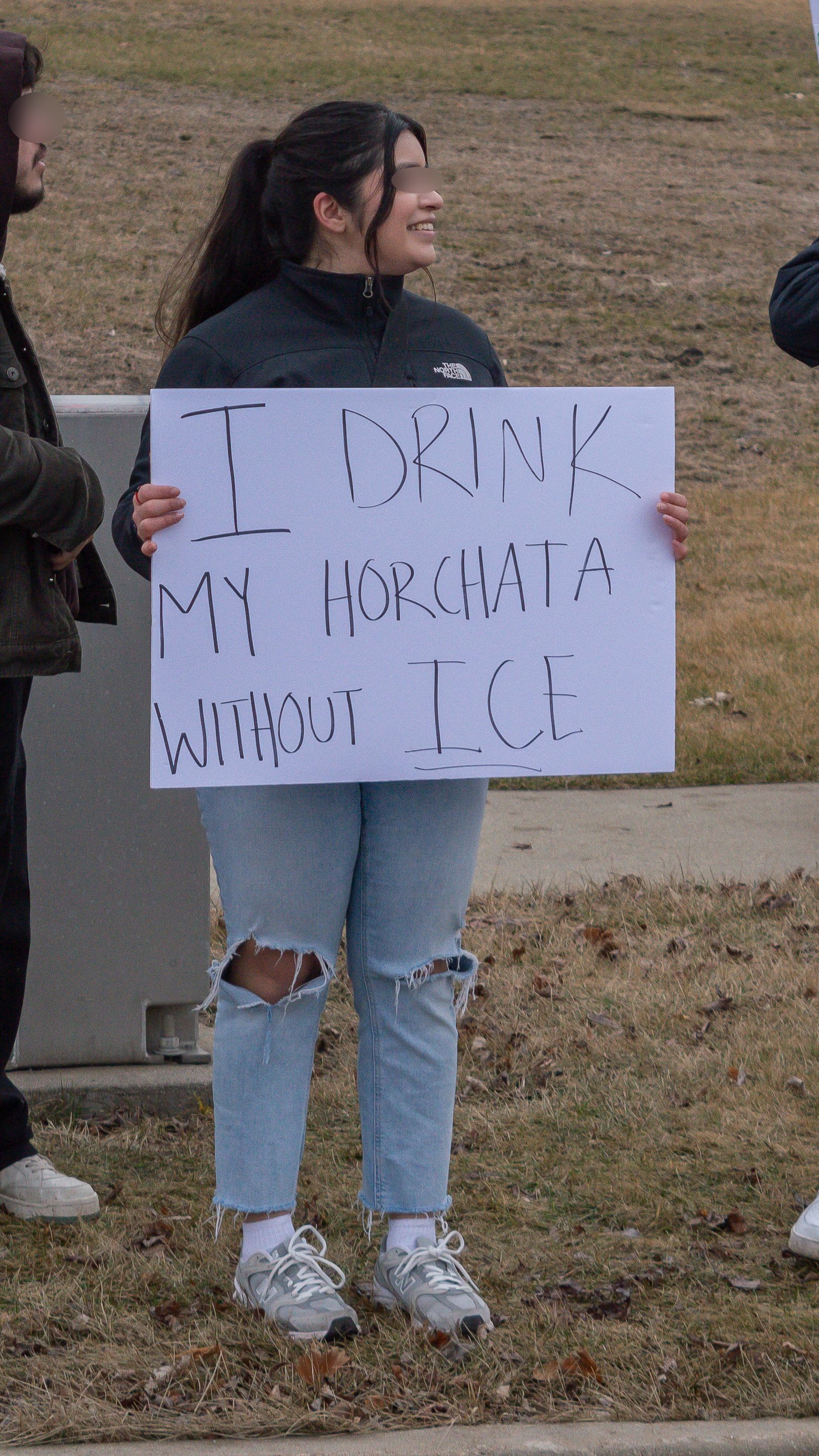
Mar 16
The Poor Proles Mailbag: We Answer YOUR Questions
A month back, we opened the floor to questions from listeners regarding our thoughts after 5 years into this project, whether or not Elliott is locked in the basement, how we feel about solarpunk futures and tons more! For sources, transcripts, and to read more about this subject, visit: www.agroecologies.org To support this podcast, join our patreon for early, commercial-free episode access at https://www.patreon.com/poorprolesalmanac For PPA Restoration Content, visit: www.restorationagroecology.com For PPA Merch, visit: https://breadandrosespress.com/ For PPA Native Plants, visit: www.nativenurseries.org To hear Tomorrow, Today, our sister podcast, visit: www.tomorrowtodaypodcast.org/ Control Body Odor ANYWHERE with @shop.mando and get $5 off off your Starter Pack (that’s over 40% off) with promo code "ALMANAC" at Mandopodcast.com/ALMANAC ! #mandopod Hosted by Simplecast, an AdsWizz company. See pcm.adswizz.com for information about our collection and use of personal data for advertising.
Mar 11
Decolonizing Food Systems: Embracing Relational Accountability and Community Engagement with Dr. Lauren Kepkiewicz
Renowned for her impactful work in community-based research, Dr. Lauren Kepkiewicz joins us on Poor Proles Almanac to unpack the journey towards just and equitable food systems. We explore the transformative power of relational accountability, shedding light on how it challenges traditional academic norms by centering Indigenous women and two-spirit knowledges. With the RARE Collective as a backdrop, this conversation delves into the necessary disruption of Western-centric hierarchies, fostering genuine community-campus engagement that prioritizes inclusivity and respect for diverse perspectives. Our dialogue progresses to the sensitive topics of land dispossession and settler colonialism, highlighting their profound effects on Indigenous peoples and small-scale farmers. Dr. Kepkiewicz emphasizes the importance of addressing these issues openly, moving beyond defensiveness to promote healing and collaboration. The conversation is anchored in the work of the RARE Collective, which seeks to mend and strengthen relationships with the land, envisioning a future where land and food systems are sustainably managed together. Through this lens, we explore the challenges and insights gained in navigating the complex terrain of equitable land stewardship. Finally, we touch upon the Community Food Sovereignty Hub, examining its pivotal role in bridging the gap between academic research and community needs. The discussion underscores the importance of accessible and relevant knowledge creation, valuing everyday experiences, and understanding local dynamics to foster meaningful change. Join us for an enlightening and heartfelt conversation that paves the way for more inclusive and sustainable food systems. Check out Dr. Kepkiewicz's work here: https://profiles.ucalgary.ca/lauren-kepkiewicz For sources, transcripts, and to read more about this subject, visit: www.agroecologies.org To support this podcast, join our patreon for early, commercial-free episode access at https://www.patreon.com/poorprolesalmanac For PPA Restoration Content, visit: www.restorationagroecology.com For PPA Merch, visit: https://breadandrosespress.com/ For PPA Native Plants, visit: www.nativenurseries.org To hear Tomorrow, Today, our sister podcast, visit: www.tomorrowtodaypodcast.org/ Control Body Odor ANYWHERE with @shop.mando and get $5 off off your Starter Pack (that’s over 40% off) with promo code "ALMANAC" at Mandopodcast.com/ALMANAC ! #mandopod Hosted by Simplecast, an AdsWizz company. See pcm.adswizz.com for information about our collection and use of personal data for advertising.
Mar 5
Resilient Bonds: How Sicilian Women's Affinity Groups Fostered Strength and Community in California's Canneries
Tune in to the captivating story of Sicilian fishermen who, driven by the decline of their homeland's sardine industry, sparked a remarkable transformation along California's coast. This episode promises an enlightening journey through the cultural and economic impacts of their migration, with a spotlight on the formidable Sicilian women who found empowerment in Monterey's canneries. These women established "little matriarchies," navigating a unique blend of gender roles and shunning traditional labor unions to maintain their cultural identity. Our narrative delves into the rich tapestry of community building among Sicilian immigrants, where traditional gatherings like festas and affinity groups played pivotal roles in fostering unity and preserving cultural heritage. Discover how these women deftly balanced their work in grueling conditions with their commitments to family and culture, often shouldering domestic duties during fishing off-seasons, a reversal of roles that challenged the norms of their time. Their resourcefulness and resilience revealed themselves in how they adapted to new environments while maintaining old-world values. We also confront the harsh realities faced by Italian immigrants during World War II, who were unjustly labeled "dangerous nationals" and subjected to discrimination. This episode draws poignant parallels to today's societal challenges, urging listeners to reflect on the injustices of the past and their lingering echoes. As we examine these historical narratives, we celebrate the indomitable spirit of Sicilian immigrants and their enduring influence on the cultural landscape of California, a testament to their strength and adaptability. For sources, transcripts, and to read more about this subject, visit: www.agroecologies.org To support this podcast, join our patreon for early, commercial-free episode access at https://www.patreon.com/poorprolesalmanac For PPA Restoration Content, visit: www.restorationagroecology.com For PPA Merch, visit: https://breadandrosespress.com/ For PPA Native Plants, visit: www.nativenurseries.org To hear Tomorrow, Today, our sister podcast, visit: www.tomorrowtodaypodcast.org/ Control Body Odor ANYWHERE with @shop.mando and get $5 off off your Starter Pack (that’s over 40% off) with promo code "ALMANAC" at Mandopodcast.com/ALMANAC ! #mandopod Hosted by Simplecast, an AdsWizz company. See pcm.adswizz.com for information about our collection and use of personal data for advertising.
Feb 23
Homesteading with a Planet on Fire
In this episode, we dive into homesteading on a bigger picture; it's a deep dive into the role of modern homesteading within the critical context of today's world ... . Uncover the truth about homesteading's limits : Explore how it serves as a response to the increasing alienation and exploitation of modern society, but is not a complete solution to ecological destruction ... . Explore the surprising links between ecological and social issues : Understand how climate change, ecological collapse, and even fascism are interconnected ... . Transform your garden's purpose : Discover the importance of considering your local ecosystem and the history of the land, moving beyond conventional crops ... . Context is key : Learn what makes some home gardens ecologically valuable, while others miss the mark, as the article highlights the significance of cultural and historical connections ... . Be part of a future-oriented solution : Find out how homesteading can actively contribute to a better future by championing climate-resilient crops and preserving native biodiversity ... . Embark on a journey to revive lost knowledge : Start incorporating native plants into your garden, and honor the landscape's rich history ... . "Homesteading with a Planet on Fire" challenges you to see homesteading as more than just a lifestyle choice. It's an invitation to actively improve the landscape and create a legacy for future generations, beginning with a deeper understanding of the ecosystem that surrounds you. For sources, transcripts, and to read more about this subject, visit: www.agroecologies.org To support this podcast, join our patreon for early, commercial-free episode access at https://www.patreon.com/poorprolesalmanac For PPA Restoration Content, visit: www.restorationagroecology.com For PPA Merch, visit: https://breadandrosespress.com/ For PPA Native Plants, visit: www.nativenurseries.org To hear Tomorrow, Today, our sister podcast, visit: www.tomorrowtodaypodcast.org/ Hosted by Simplecast, an AdsWizz company. See pcm.adswizz.com for information about our collection and use of personal data for advertising.
Feb 13
Preserving Memory in Activism: Peter Gelderloos on Generational Gaps and Resilient Communities
Activist and author Peter Gelderloos returns to the Porpoise Almanac to discuss his latest book, "They Will Beat the Memory Out of Us." With a lifetime of activism under his belt, Peter shares his heartfelt reflections on the enduring struggles of social movements, the critical role of collective memory, and the widening gap between generations in the digital age. Our conversation takes a deep dive into the complexities of maintaining intergenerational connections amidst capitalism's isolating forces, highlighting how social media often exacerbates these divides rather than bridging them. Together, we navigate the labyrinth of political ideologies, examining the fluid nature of anarchism and the need for adaptability in today's rapidly changing world. Peter sheds light on the pitfalls of rigid frameworks and the resilience of grassroots mutual aid, contrasting these with the inefficiencies of traditional governmental responses. We explore the fascinating potential for engaging with right-wing narratives, probing the surprising openness some individuals have toward systemic issues and the necessity of preserving past activism's memory to inform contemporary efforts. Our discussion further extends to supporting incarcerated individuals, underscoring the importance of memory and community in aiding their re-entry into society. Peter's insights on navigating imperfections within activism offer a candid look at the challenges of fostering collective accountability and healing. His work resonates profoundly with anyone feeling adrift in modern movements, and we encourage our listeners to explore his writings for a deeper understanding of building resilient, generational communities. Check out his book at: https://www.plutobooks.com/ Find Peter on Bluesky at @petergelderloos.bsky.social & https://petergelderloos.substack.com/ For sources, transcripts, and to read more about this subject, visit: www.agroecologies.org To support this podcast, join our patreon for early, commercial-free episode access at https://www.patreon.com/poorprolesalmanac For PPA Restoration Content, visit: www.restorationagroecology.com For PPA Merch, visit: www.poorproles.com For PPA Native Plants, visit: www.nativenurseries.org To hear Tomorrow, Today, our sister podcast, visit: www.tomorrowtodaypodcast.org/ Key words: Activism, Collective Memory, Generational Divide, Social Media, Anarchism, Political Ideology, Right-Wing Narratives, Grassroots Mutual Aid, Incarceration, Imperfection in Activism, Intergenerational Connections, Digital Age, Social Movements, Capitalism, Community, Memory Preservation, Re-Entry, Accountability, Healing, Political Terminology Hosted by Simplecast, an AdsWizz company. See pcm.adswizz.com for information about our collection and use of personal data for advertising.
Feb 3
Navigating South Korea’s Economic Turbulence: From Crisis to Community-Driven Ecology and Radical Agroecology
Our latest episode navigates the turbulent water of South Korea's neoliberal rise, examining how austerity measures imposed by the IMF hit the working class hard and compromised environmental protections. Yet, within these adversities, seedbeds of change emerged, notably in the form of farming communes and radical agroecology. We unravel these complex threads with a nod to the contradictions they harbor, setting the stage for a deeper conversation about capitalism's imprint on democracy and nature. The narrative doesn't stop there. We turn our gaze to the evolution of environmental movements in South Korea, transitioning from the centralized NGO structures of the '80s to the grassroots-driven initiatives we see today. By spotlighting movements like the Life and Peace Movement, we highlight how ordinary citizens, pro-democracy advocates, and agroecological farmers are crafting a more resilient and balanced ecological future from the ground up. These community-driven efforts challenge the status quo not by dismantling capitalism directly but by fostering local autonomy and ecological alternatives, offering rich insights for similar movements in places like the United States. Finally, we explore the political landscape of agroecology with movements like JADAM and Korean Natural Farming at the helm, which challenge the artificial separation of politics from daily life. Consumer cooperatives are on the rise, transforming societal values and culture by creating alternatives to capitalism. In the realm of cooperative community agriculture, the Hansel and Movement stands as a testament to the power of collective endeavor, cycling financial and agricultural outputs back into the community. For sources, transcripts, and to read more about this subject, visit: www.agroecologies.org To support this podcast, join our patreon for early, commercial-free episode access at https://www.patreon.com/poorprolesalmanac For PPA Restoration Content, visit: www.restorationagroecology.com For PPA Merch, visit: www.poorproles.com For PPA Native Plants, visit: www.nativenurseries.org To hear Tomorrow, Today, our sister podcast, visit: www.tomorrowtodaypodcast.org/ Key Words: South Korea, Capitalism, Foreign Exchange Crisis, IMF, Austerity Measures, Working Class, Environmental Protections, Farming Communes, Radical Agroecology, Grassroots Movements, Democracy, Nature, NGO, Life and Peace Movement, Consumer Cooperatives, Political Agroecology, JADAM, Korean Natural Farming, Cooperative Community Agriculture, Hansel and Movement, Capitalistic Pursuits, Late Night Recordings, Passive Income, Patreon Hosted by Simplecast, an AdsWizz company. See pcm.adswizz.com for information about our collection and use of personal data for advertising.
Jan 27
The Power of Community Canning: Revolutionizing Rural Entrepreneurship with ACEnet
How does a small community in Athens, Ohio, turn local produce into a thriving business ecosystem? Join us as we unravel the evolutionary tale of ACEnet, a pioneering force in community-based economic development, through the eyes of our insightful guests Adam Kody, Cameron Shasteen, and Isabel Stitchick. Discover the origins of ACEnet, once known as the Worker-Owned Network, and its transformation into a beacon of innovation and support for food businesses in Central Appalachia. Inspired by models from Northern Italy, ACEnet's journey includes launching the Athens Food Venture Center, a hub that has empowered countless entrepreneurs since 1996. Our conversation sheds light on the collaborative efforts between ACEnet, AmeriCorps, and local farmers, which have reshaped food access and education in Athens County. From transformative programs like the Veggie Van to educational initiatives that teach children about agriculture and cooking, listeners will hear firsthand how ACEnet is making a difference. The episode highlights the critical role of business incubation services in rural settings, providing aspiring entrepreneurs with the knowledge and resources needed to flourish, and the role resources like community-scaled equipment provide for building solidarity and resilience. With stories of shared resources and financial empowerment, we delve into the supportive networks that ACEnet nurtures, including tool libraries and financial guidance. Hear about the power of community networking, and how personal experiences, from starting a mushroom farm to engaging in business counseling, reflect ACEnet's impact on local entrepreneurship. Finally, we cast an eye on the future with ACEnet's exciting participation in the Regional Food Business Center program, a USDA-funded initiative poised to revolutionize regional food economies across Central Appalachia, offering new markets and transformative opportunities. Check out ACEnet's work here: https://acenetworks.org/# https://www.indianag.org/intertribalfbc https://www.appalachiarfbc.org/ For sources, transcripts, and to read more about this subject, visit: www.agroecologies.org To support this podcast, join our patreon for early, commercial-free episode access at https://www.patreon.com/poorprolesalmanac For PPA Restoration Content, visit: www.restorationagroecology.com For PPA Merch, visit: www.poorproles.com For PPA Native Plants, visit: www.nativenurseries.org To hear Tomorrow, Today, our sister podcast, visit: www.tomorrowtodaypodcast.org/ Key words: Community-driven, Economic Empowerment, ACEnet, Worker-Owned Network, Rural Entrepreneurs, Athens, Ohio, Food Access, Business Counseling, Local Economies, Shared-Use Kitchen, Agricultural Producers, Food Entrepreneurs, Community Collaboration, Resource Sharing, Transformative, Food Systems, Community Economic Development, Northern Italy, Athens ACEnet Food Venture Center, Thermal Processing Room, AmeriCorps, Local Farmers, Rural Action, Fresh Produce, Schools, Agriculture, Nutrition, Business Incubation, Business Support, Rural Setting, Business Knowledge, Entrepreneurship, Business Structures, Cooperative Models, C-corp, S-corp, Equitable Ownership, CEO-led Models, LLCs, DBAs, Cost Considerations, Processing Sunchokes, One-time Intake Fee, Regulatory Processes, Privilege of Failure, Safety Net, Commonwealth Kitchen, Shared Resources Model, Tool Libraries, Community Networking, Financial Empowerment, Financial Literacy, Veggie Van Program, Food Accessibility, Healthy, Local Produce, Underserved Communities, Food Sovereignty, Food Justice, Career Paths, Regional Food Business Center Program, USDA, Technical Assistance, Appalachia Region, Ohio, West Virginia, Kentucky, Maryland, Pennsylvania, Tennessee, New Markets, Business Builder Sub-A Hosted by Simplecast, an AdsWizz company. See pcm.adswizz.com for information about our collection and use of personal data for advertising.
Jan 19
Community Canning & Homesteading: Preserving Traditions and Building Resilience
Join us for an intriguing journey as we explore the age-old tradition of canning. We kick things off with a humorous take on unconventional Bitcoin mining strategies, touching on their environmental impacts. This playful banter sets the stage for a fascinating discussion on canning's historical significance, especially its evolution in the 19th century and its essential role in food preservation and extending shelf life beyond harvest seasons. We highlight the advantages canning offered to farmers and producers, such as reducing spoilage and stabilizing prices, and even explore its impact on West Coast union organizing and the processing of wild foods. Our conversation then transitions into the history and modern relevance of community canning centers, revealing how these centers emerged from neighborhood organizing efforts to support rural communities. Discover the incredible efficiency gains they provided compared to individual canning efforts, as well as the vital role they played in supplementing farm incomes and promoting community resilience. We examine the Texas Agricultural Extension Service's involvement in establishing canning centers and the racial disparities in access to these facilities, with a special focus on the expansion of canneries for African Americans by 1918. These centers not only fostered community empowerment but also bolstered self-sufficiency, enabling residents to can their produce without needing upfront capital. Lastly, we delve into the transformative impact of community canning centers during the Great Depression and World War II, particularly for African American communities and women. Uncover the significance of Victory Gardens and the role these centers played in fostering community solidarity, resource sharing, and even interracial collaboration. As we reflect on the class and race dynamics of the era, we celebrate the resilience and leadership that emerged, emphasizing the importance of these efforts in empowering marginalized communities. We wrap up with insights into community-centered business ideas and education, inviting listeners to explore the untapped stories waiting in local archives and inspiring innovative thinking through practical ventures like canning and maple syrup processing. For sources, transcripts, and to read more about this subject, visit: www.agroecologies.org To support this podcast, join our patreon for early, commercial-free episode access at https://www.patreon.com/poorprolesalmanac For PPA Restoration Content, visit: www.restorationagroecology.com For PPA Merch, visit: www.poorproles.com For PPA Native Plants, visit: www.nativenurseries.org To hear Tomorrow, Today, our sister podcast, visit: www.tomorrowtodaypodcast.org/ Key Words: Bitcoin Mining, Canning, Environmental Impacts, Historical Narratives, Food Preservation, Economic Stability, Farmers, West Coast Union Organizing, Wild Foods, Community Canning Centers, Efficiency, Resilience, Marginalized Groups, Texas Agricultural Extension Service, African Americans, Victory Gardens, Women, Business Ideas, Local History, Community Resilience, Solidarity, Patreon Hosted by Simplecast, an AdsWizz company. See pcm.adswizz.com for information about our collection and use of personal data for advertising.
Jan 12
Persimmons Unearthed: From Past to Present
Unravel the secrets of the ancient persimmon as we embark on a journey through time, from the Pleistocene era to modern-day culinary adventures. This episode of the Poor Persimmons Almanac is your ticket to understanding these fascinating "tomatoes of the trees," with their rich history and quirky characteristics. We delve into the archaeological significance of persimmons, their role in the diets of indigenous communities, and their unexpected renaissance thanks to agricultural pioneers like James Troop and Liberty Hyde Bailey. Enjoy our playful exploration of persimmons' versatile uses, from being a cherished sugar source to starring in a delicious stew with sunchokes, rabbit, and wild rice. We'll introduce you to the legends of persimmon breeding like Dr. Troop and Professor JC McDaniel, whose work has shaped the fruit's legacy. Take a light-hearted detour into the world of persimmon competitions and the curious controversy surrounding seedless varieties, all while learning about the nutritional benefits that could make persimmons a staple in your diet. Discover the science behind persimmon astringency and a variety of methods to reduce it, ensuring you enjoy the fruit to its fullest potential. This episode promises to entertain and enlighten as we celebrate the enduring presence of persimmons in our ecosystem. For sources, transcripts, and to read more about this subject, visit: www.agroecologies.org To support this podcast, join our patreon for early, commercial-free episode access at https://www.patreon.com/poorprolesalmanac For PPA Restoration Content, visit: www.restorationagroecology.com For PPA Merch, visit: www.poorproles.com For PPA Native Plants, visit: www.nativenurseries.org To hear Tomorrow, Today, our sister podcast, visit: www.tomorrowtodaypodcast.org/ Key Words: Persimmons, Culinary Adventures, Pleistocene Era, Indigenous Communities, Agricultural Pioneers, James Troop, Liberty Hyde Bailey, American Persimmon, Breeding Legacy, Nutritional Benefits, American Diet, Disney Lore, Seedless Persimmons, Government Conspiracies, Astringency, Tannins, Podcast Production, Unscripted, Playful Nature Hosted by Simplecast, an AdsWizz company. See pcm.adswizz.com for information about our collection and use of personal data for advertising.
Jan 6
Revolutionizing the American Elderberry Industry: A Journey with the Midwest Elderberry Cooperative
Join us as we embark on an inspiring journey through the origins and growth of the Midwest Elderberry Cooperative with our guest, Chris Patton. Discover how his passion for sustainable agriculture was ignited at the Moses Conference in 2011, leading him to explore the untapped potential of American elderberry as a commercial crop. Alongside experienced farmer Paul Otten, Chris formed the cooperative to cultivate and distribute elderberries, providing support to small businesses and fostering a thriving local foods movement. Through the cooperative structure, they have laid the groundwork for a sustainable and successful future for elderberry production. Explore the challenges and triumphs of establishing American elderberry as a viable commercial crop. At the age of 62, Chris embarked on this venture with a vision to create a legacy and a team to ensure its continuity. The conversation sheds light on the legal and cooperative frameworks that support this industry and highlights the importance of market education and investment in research. With insights from key figures like Terry Durham and Mark Shepard, we uncover the unique benefits of American elderberry, and its integration into agroforestry, which offers exciting opportunities for farmers. Finally, we discuss the future of the American elderberry industry and its potential to rival the European market. Chris shares his optimism, bolstered by the support of allied organizations and ongoing research into elderberry cultivars. We emphasize the importance of local sourcing and supporting American elderberry products, while also acknowledging the resource constraints that currently limit social media presence. The conversation rounds out with a look at the unpredictable nature of niche agriculture, including stories of sunchokes and Aronia, illustrating the dynamic landscape of agricultural ventures. Check out the Cooperative at www.midwest-elderberry.coop For sources, transcripts, and to read more about this subject, visit: www.agroecologies.org To support this podcast, join our patreon for early, commercial-free episode access at https://www.patreon.com/poorprolesalmanac For PPA Restoration Content, visit: www.restorationagroecology.com For PPA Merch, visit: www.poorproles.com For PPA Native Plants, visit: www.nativenurseries.org To hear Tomorrow, Today, our sister podcast, visit: www.tomorrowtodaypodcast.org/ Key Words: Elderberry, American Elderberry, Cooperative, Sustainable Agriculture, Midwest, Commercial Crop, Local Foods, Agroforestry, Market Education, Research, Niche Agriculture, Sun Chokes, Aronia, Cultivation, Sustainability, Growth, Market Demand, Social Media, Local Sourcing, Small Businesses Hosted by Simplecast, an AdsWizz company. See pcm.adswizz.com for information about our collection and use of personal data for advertising.
Dec 30, 2024
Rediscovering the American Elderberry: A Journey Through History, Culture, and Cultivation
Ever wondered why certain berries appear in folklore and medicine while others are forgotten in the underbrush? Join us as we unravel the mysteries of the elderberry, a plant that has been quietly thriving from the icy reaches of northern Canada to the sunlit coasts of Florida. Known for its tenacity and resilience, the elderberry has become a symbol of nature’s durability. This episode takes a stroll through the history and cultural importance of the American elderberry, exploring its role in indigenous diets and its surprising rise to fame during the COVID-19 pandemic as a natural remedy. The episode continues with a curious blend of nostalgia and urgency, encouraging listeners to reconnect with traditional food practices. We discuss how societal norms have distanced us from the sources of our food and the psychological barriers that make imperfection unpalatable. By sharing personal tales of foraging, we underscore the value of passing down these skills to future generations. Focusing on maintaining a mutualistic relationship with the land, we delve into the intricate connections between people and plants, illustrated by age-old techniques for preserving the humble elderberry. Rounding off our exploration, we delve into the cultivation world, spotlighting unique elderberry cultivars like the Bob Gordon variety. Listeners gain insights into the cultivation art and understand how these native fruits hold the potential to enrich American landscapes. We navigate the challenges and triumphs of growing and harvesting elderberries, revealing the hidden potential of these often-overlooked berries. Whether you're an avid gardener or simply berry-curious, this episode offers a fresh perspective on the elderberry's role in our ecosystems, past and present. For sources, transcripts, and to read more about this subject, visit: www.agroecologies.org To support this podcast, join our patreon for early, commercial-free episode access at https://www.patreon.com/poorprolesalmanac For PPA Restoration Content, visit: www.restorationagroecology.com For PPA Merch, visit: www.poorproles.com For PPA Native Plants, visit: www.nativenurseries.org To hear Tomorrow, Today, our sister podcast, visit: www.tomorrowtodaypodcast.org/ Key Words: Elderberry, Cultural Significance, Resilience, Adaptability, Traditional Food Sources, Indigenous Communities, COVID-19, Pandemic, Disconnect from Nature, Cultivation, Harvesting Techniques, Cultivars, Foraging, Preserving, Traditional Skills, Mutualistic Relationship, Landscape, Archaeological Evidence, Breeding History, Research, Bob Gordon Variety, Challenges, Benefits, Agroecology, Merchandise, Discounts, Patreon, Substack, Porpralscom Hosted by Simplecast, an AdsWizz company. See pcm.adswizz.com for information about our collection and use of personal data for advertising.
Dec 23, 2024
Revitalizing Urban Landscapes: Andrew the Arborist on Community Stewardship and Climate Adaptation
Join us as Andrew Conboy, an ISA certified arborist famously known as Andrew the Arborist, captivates us with his journey through urban forestry and ecological restoration. Andrew's passion for integrating native flora into cityscapes shines as he addresses the challenges of urban stressors like soil compaction and pollution. Explore how underutilized species such as swamp white oak and post oak offer hope for climate adaptation in urban areas. From historical anecdotes about the resilience of honey locusts to the intriguing notion of urban foraging, Andrew sheds light on the potential of trees to transform our cities. The heart of the episode beats with Andrew's insights on community-based environmental stewardship. Discover how the seeds of Colonial Canopy Trees were planted, nurturing a grassroots initiative to tackle invasive species and promote native tree planting. Andrew shares the power of starting small and the joy of building community connections, highlighting stories where volunteers bridge generational and cultural divides. His experiences illustrate that meaningful environmental change starts with local action and collaboration, with each tree planted and invasive weed pulled embodying a step toward a healthier ecosystem. This episode also ventures into the digital realm, where Andrew discusses the impact of long-form video content in raising awareness about native plants and urban forestry. Reflecting on his transition from a gaming content creator to an ecological educator, Andrew emphasizes the role of storytelling in engaging communities. As the conversation unfolds, listeners are invited to participate in environmental restoration efforts, understanding that the fusion of personal narratives and ecological action can truly reshape our urban landscapes. Check out Andrew's nonprofit, Colonial Canopy Trees, here: https://colonialcanopytrees.wordpress.com/ For sources, transcripts, and to read more about this subject, visit: www.agroecologies.org For sources, transcripts, and to read more about this subject, visit: www.agroecologies.org To support this podcast, join our patreon for early, commercial-free episode access at https://www.patreon.com/poorprolesalmanac For PPA Restoration Content, visit: www.restorationagroecology.com For PPA Merch, visit: www.poorproles.com For PPA Native Plants, visit: www.nativenurseries.org To hear Tomorrow, Today, our sister podcast, visit: www.tomorrowtodaypodcast.org/ Key Words: Urban Forestry, Ecological Restoration, Native Flora, Cityscapes, Urban Stressors, Soil Compaction, Pollution, Climate Adaptation, Invasive Species, Native Tree Planting, Community-Based Environmental Stewardship, Grassroots Initiative, Honey Locust, Urban Foraging, Digital Content, Environmental Education, Community Connections, Microvolunteering, Invasive Weed Management, Environmental Change Hosted by Simplecast, an AdsWizz company. See pcm.adswizz.com for information about our collection and use of personal data for advertising.
Dec 16, 2024
Hidden Histories and Future Possibilities of Honey Locust
What if the honey locust tree holds the key to transforming American agriculture yet remains an untapped treasure? Join us as we explore this remarkable tree's profound historical significance and unique attributes. We guide you through its pre-human landscapes and symbiotic relationship with Pleistocene megafauna, shedding light on how its fearsome thorns might have served as tattoo tools for indigenous peoples. With insights from Dr. Robert Warren, we unravel the intriguing journey of the honey locust, drawing comparisons to the Kentucky coffee tree and pondering its adaptation to wet regions through human intervention. In a lighthearted and anecdotal manner, we delve into the quirky connections between anachronistic trees like the honey locust and Kentucky coffee tree, alongside their relationships with now-extinct species. Discover the indigenous significance of the honey locust's sweet pulp, a sugar alternative in warmer regions, and laugh with us as we draw amusing parallels with modern-day treats like candy corn. While we acknowledge the mysteries surrounding ancient methods of processing honey locust pulp, our light-hearted exploration invites you to imagine historical storage practices and potential uses. The honey locust is more than just a historical icon; it is a beacon of agricultural potential. Uncover its promising varieties, like Millwood, identified in the 1930s, and their potential for livestock feed and ethanol production. We recount the efforts of researchers like Dr. James Hanover to unlock the tree's capabilities for sustainable farming systems. Whether it's silvopasture or energy farming, the honey locust fits seamlessly into modern agriculture, offering ecological benefits and versatility. We invite you to join us in supporting ongoing research into this fascinating crop and perhaps even become a part of our knowledge-sharing community. For sources, transcripts, and to read more about this subject, visit: www.agroecologies.org To support this podcast, join our patreon for early, commercial-free episode access at https://www.patreon.com/poorprolesalmanac For PPA Restoration Content, visit: www.restorationagroecology.com For PPA Merch, visit: www.poorproles.com For PPA Native Plants, visit: www.nativenurseries.org To hear Tomorrow, Today, our sister podcast, visit: www.tomorrowtodaypodcast.org/ Key words: Urban Forestry, Ecological Restoration, Native Flora, Cityscapes, Urban Stressors, Soil Compaction, Pollution, Climate Adaptation, Invasive Species, Native Tree Planting, Community-Based Environmental Stewardship, Grassroots Initiative, Honey Locust, Urban Foraging, Digital Content, Environmental Education, Community Connections, Micro-volunteering, Invasive Weed Management, Environmental Change Hosted by Simplecast, an AdsWizz company. See pcm.adswizz.com for information about our collection and use of personal data for advertising.
Dec 9, 2024
Of Beach Plums and Apples: Innovations in Niche Crop Cultivation with Dr. Megan Muehlbauer
Dr. Megan Muehlbauer from Rutgers University joins us to uncover the hidden potential of beach plums, a fascinating native fruit of New Jersey. With a keen focus on genetic diversity and innovative agricultural practices, Dr. Muehlbauer shares her journey into the world of niche crops and highlights the challenges and triumphs of her research. From rescuing a unique beach plum tree to grappling with pollination issues, her work exemplifies the crucial role of biodiversity in contemporary farming. The conversation takes an intriguing turn as we discuss the importance of funding niche crops like beach plums and the strategic advantages of farm diversification. We dive into the historical and ongoing efforts in beach plum breeding, spotlighting Rutgers' proactive outreach initiatives, like the Great Tomato Tasting, that aim to engage the public and elevate these remarkable crops. The backdrop of New Jersey's agricultural landscape provides a rich context for understanding the value and challenges faced by organizations like the New Jersey Beach Plum Association. The excitement continues as we explore the fascinating world of apple varieties, with a special focus on the Honeycrisp apple and its impact on market dynamics and consumer expectations. Dr. Muehlbauer offers insights into the complexities of cultivating this beloved variety and the ongoing efforts to develop alternatives that capture its appealing traits. The episode concludes by inviting listeners to become part of the research community, encouraging public participation in the evolving narrative of beach plum cultivation and discovery. Check out the Rutgers research farm here: https://www.facebook.com/people/Clifford-E-Melda-C-Snyder-Research-Extension-Farm/100064494557910/ For sources, transcripts, and to read more about this subject, visit: www.agroecologies.org To support this podcast, join our patreon for early, commercial-free episode access at https://www.patreon.com/poorprolesalmanac For PPA Restoration Content, visit: www.restorationagroecology.com For PPA Merch, visit: www.poorproles.com For PPA Native Plants, visit: www.nativenurseries.org To hear Tomorrow, Today, our sister podcast, visit: www.tomorrowtodaypodcast.org/ Key Words: Beach Plums, Niche Crops, Genetic Diversity, Agricultural Practices, Rutgers University, New Jersey, Farm Diversification, Pollination, Honeycrisp Apple, Market Dynamics, Consumer Expectations, Apple Varieties, Germplasm Repository, Informal Breeders, Snyder Research Farm, Great Tomato Tasting, USDA, Heirloom, Hard Cider, Consumer Preferences, Honeycrisp and Fuji Crosses, Blueberries, Cranberries, Rutgers Marucci Center, Social Media, Community Engagement, Knowledge Base Hosted by Simplecast, an AdsWizz company. See pcm.adswizz.com for information about our collection and use of personal data for advertising.
Dec 4, 2024
The Legacy of Beach Plums: History, Cultivation, and Conservation
Unlock the secrets of the resilient beach plum, Prunus maritima, and learn how these tenacious plants help fight coastal erosion while offering a rich tapestry of horticultural history. We'll transport you back to the days of early explorers like Giovanni da Verrazzano and Henry Hudson, who first documented these hardy shrubs along the northeastern United States coast. Join us as we uncover how beach plums have long intrigued cultivators due to their genetic diversity, presenting challenges and opportunities that have persisted since the 19th century. Meet the unsung heroes of beach plum cultivation from the 1930s, including Jay Milton Batchelor, Wilford Wheeler, and George Graves, who championed unique varieties with passion and humor. We'll explore the historical significance of the Cape Cod Beach Plum Growers Association and discover the quirky connections between its founders, the environmental elements they studied, and the playful coincidences they encountered. Through stories filled with both horticultural insight and wit, we celebrate the legacy of these dedicated individuals who refused to let the allure of the beach plum fade into obscurity. Journey with us into the renewed interest and research of the early 2000s, led by institutions like Cornell and UMass and other researchers. We highlight their efforts to identify and preserve the best beach plum varieties and their commitment to maintaining genetic diversity. As we wrap up, we'll share amusing anecdotes about the lengths enthusiasts might go to obtain cuttings and encourage listeners to join forums and online communities to ensure these unique cultivars thrive for future generations. For sources, transcripts, and to read more about this subject, visit: www.agroecologies.org To support this podcast, join our patreon for early, commercial-free episode access at https://www.patreon.com/poorprolesalmanac For PPA Restoration Content, visit: www.restorationagroecology.com For PPA Merch, visit: www.poorproles.com For PPA Native Plants, visit: www.nativenurseries.org To hear Tomorrow, Today, our sister podcast, visit: www.tomorrowtodaypodcast.org/ Key Words: Beach Plums, Prunus maritima, Coastal Erosion, Horticultural History, Early Explorers, Genetic Diversity, Cultivation, Cultivators, Giovanni da Verrazzano, Henry Hudson, Northeastern United States, Jay Milton Batchelor, Wilford Wheeler, George Graves, Cape Cod Beach Plum Growers Association, Environmental Elements, Dr. Uwe, Dr. Abigail Maynard, Cornell, UMass, Genetic Diversity, Cultivars, Yukon 49, Jersey Gem, Forums, Social Media, Cataloging, Genetics Hosted by Simplecast, an AdsWizz company. See pcm.adswizz.com for information about our collection and use of personal data for advertising.
Nov 29, 2024
Wild Blueberries and Climate Change with Dr. Rachel Schattman
Join us on a journey through the lush landscapes of wild blueberry fields with our esteemed guest, Rachel, an expert in wild blueberry production from the University of Maine. Discover Rachel's fascinating transition from working with vegetables and small fruits to studying the ecological importance of wild blueberries. These tiny berries hold a rich history and are an essential support for a diverse range of pollinators. Rachel provides a window into her climate change research, where she experiments with various genotypes to see how these resilient plants may adapt to shifting environmental conditions. Her expertise unveils the remarkable traits that make wild blueberries not only a treasured wild food but a crucial part of our ecosystem. We also navigate the shifting techniques in wild blueberry farming, spotlighting the use of prescribed fires and the movement towards alternative methods like mowing due to air quality concerns. Rachel sheds light on the challenges farmers face in water management, highlighting the divide between large farms with state-of-the-art irrigation and smaller farms grappling with water sourcing. The conversation introduces Maine's Farmer Drought Relief Program, emphasizing the need for increased state funding for agricultural adaptation to climate change. Rachel shares an optimistic view on recent USDA allocations, providing hope for future agricultural resilience. Lastly, we explore the intricate connections between food security and wild food practices, particularly as they evolved through the COVID-19 pandemic. The resurgence of home gardening, hunting, fishing, and foraging underscores a shift towards self-sufficiency and highlights the barriers these practices face, such as permits and skill requirements. We delve into the complex landscape of food sovereignty, examining the tensions between private land ownership and public access, with a focus on Maine’s groundbreaking right to food legislation. The episode also addresses environmental concerns, like PFAS contamination, which pose significant obstacles to achieving true food sovereignty. Rachel’s insights provide a thought-provoking perspective on balancing land rights, environmental health, and personal food security. Check out her research at www.agroecolab.com For sources, transcripts, and to read more about this subject, visit: www.agroecologies.org To support this podcast, join our patreon for early, commercial-free episode access at https://www.patreon.com/poorprolesalmanac For PPA Writing Content, visit: www.agroecologies.org For PPA Restoration Content, visit: www.restorationagroecology.com For PPA Merch, visit: www.poorproles.com For PPA Native Plants, visit: www.nativenurseries.org To hear Tomorrow, Today, our sister podcast, visit: www.tomorrowtodaypodcast.org/ Key Words: Wild Blueberries, Climate Change, Agriculture, Pollinators, Climate Adaptation, Food Security, Food Sovereignty, Land Access, Maine, University of Maine, Farmer Drought Relief Program, USDA, COVID-19, Gardening, Hunting, Fishing, Foraging, PFAS Contamination, Environmental Regulation Hosted by Simplecast, an AdsWizz company. See pcm.adswizz.com for information about our collection and use of personal data for advertising.
Nov 24, 2024
The History, Culture, and Agricultural Evolution of Blueberries and Huckleberries
Today, we're diving into the history of blueberries and huckleberries, from their ancient roles in indigenous cultures to their rise in modern agriculture. Explore the fascinating evolution of the canning industry, spotlighting how the Ball Brothers Corporation and a pivotal court case in 1870 revolutionized food preservation and blueberry production. Discover the intriguing story of the huckleberry industry's boom and bust during the early 20th century, shaped by economic forces and wartime priorities, while reflecting on the contrasting sustainable practices of indigenous communities. Join us as we celebrate the groundbreaking work of Dr. Frederick Coville and Elizabeth White, whose innovative efforts in cultivating blueberries transformed barren lands into lush, productive fields. Their collaboration laid the foundation for today’s blueberry industry, with a nod to the USDA's role in promoting cultivation and breeding advancements. From understanding the perfect conditions for blueberry growth to exploring the whimsical world of whortleberries, this conversation is as informative as it is entertaining. With humor and heart, we invite you to consider the cultural and historical significance of these beloved berries and to rethink how we integrate native crops into our diets. Engage with our lighthearted banter and be part of this delightful exploration into the world of blueberries, huckleberries, and beyond. Whether you're a history buff, a blueberry enthusiast, or simply enjoy a good story, there's something for everyone in this episode. For sources, transcripts, and to read more about this subject, visit: www.agroecologies.org To support this podcast, join our patreon for early, commercial-free episode access at https://www.patreon.com/poorprolesalmanac For PPA Writing Content, visit: www.agroecologies.org For PPA Restoration Content, visit: www.restorationagroecology.com For PPA Merch, visit: www.poorproles.com For PPA Native Plants, visit: www.nativenurseries.org To hear Tomorrow, Today, our sister podcast, visit: www.tomorrowtodaypodcast.org/ Key Words: Blueberries, Huckleberries, Indigenous Cultures, Agriculture, Canning Industry, Ball Brothers Corporation, Court Case, Evolution, Harvesting, Civil War, Embalming, Maine, Great Depression, World War II, Dr. Frederick Coville, Elizabeth White, USDA, Genetic Diversity, Pawpaws, Black Walnuts, Climate Change, Whortleberries, Social Media, Twitter Hosted by Simplecast, an AdsWizz company. See pcm.adswizz.com for information about our collection and use of personal data for advertising.
Nov 20, 2024
The Rise of the Pawpaw in Modern Agriculture with Dr. Kirk Pomper
Join us for an enlightening conversation with Dr. Kirk Pomper, the driving force behind Kentucky State University's pioneering Paw Paw Research Program. As the world's only full-time initiative dedicated to this remarkable fruit, Dr. Pomper brings a wealth of knowledge and passion, tracing his journey from exploring various food crops to championing pawpaws, thanks to the visionary Brett Calloway. We navigate the potential of pawpaw as a transformative alternative crop for small farmers in Kentucky, while also tackling the unique challenges of making this fruit a staple in homes across America. Dr. Pomper takes us on a journey through the complexities of pawpaw processing, from the intricacies of pulp extraction to innovative storage solutions. As we compare the pawpaw to its fruity cousin, the persimmon, we unravel the market challenges both face and the exciting possibilities for value-added products like pawpaw smoothies and jams. We learn about efforts to extend the fruit's shelf life through controlled atmosphere storage, ensuring pawpaws reach new markets far and wide. Our discussion culminates in the fascinating world of pawpaw pollination and cultivar research. Dr. Pomper sheds light on the intricate pollination strategies of pawpaw trees, emphasizing the critical role of cross-pollination and the importance of planting diverse varieties. We also highlight Kentucky State University's endeavors to promote pawpaw awareness, including the upcoming Fifth International Pawpaw Conference and annual Pawpaw Day celebrations. This episode offers a captivating glimpse into the efforts to bring the pawpaw from obscurity to the forefront of the fruit world. Check out KSU's Pawpaw program: https://www.kysu.edu/academics/college-ahnr/school-of-anr/pawpaw/index.php For sources, transcripts, and to read more about this subject, visit: www.agroecologies.org To support this podcast, join our patreon for early, commercial-free episode access at https://www.patreon.com/poorprolesalmanac For PPA Writing Content, visit: www.agroecologies.org For PPA Restoration Content, visit: www.restorationagroecology.com For PPA Merch, visit: www.poorproles.com For PPA Native Plants, visit: www.nativenurseries.org To hear Tomorrow, Today, our sister podcast, visit: www.tomorrowtodaypodcast.org/ Keywords: Pawpaw, Research, Kentucky State University, Fruit, Alternative Crops, Small Farmers, Processing, Pollination, Cultivar, Genetic Diversity, Persimmons, American, Consumer, Storage, Value-Added Products, Insect Pollinators, Cross-Pollination, Survival Mechanisms, Clonal Propagation, Root-Suckering, Native Fruits, Social Media, Educational Field Days, International Conference, Cultivar Release, Entrepreneurs, Nurseries, Scientists, Festivals, Louisville, Athens Hosted by Simplecast, an AdsWizz company. See pcm.adswizz.com for information about our collection and use of personal data for advertising.
Nov 9, 2024
Revolutionizing Agriculture: Harnessing Soil Bacteria for a Sustainable Future with Dr. Jim Ippolito
Discover the groundbreaking research of Jim Ippolito, a leading expert in soil health and fertility from Ohio State University. Our engaging conversation uncovers his innovative methods for utilizing soil bacteria to enhance nutrient availability, especially phosphorus—a vital yet non-renewable resource. We challenge traditional farming practices and highlight how leveraging natural soil biology can revolutionize sustainable agriculture, reducing the reliance on external fertilizers. Explore the fascinating intersections between soil microorganisms and human biology as we discuss how ecosystems shape microbial diversity and affect everything from prairies to farmlands. We draw intriguing parallels between biological structures found in nitrogen-fixing bacteria and human components, such as hemoglobin, revealing the profound interconnectedness of all life forms. Jim shares his optimistic vision of how phosphorus-solubilizing bacteria might reshape agriculture, emphasizing the pressing need for innovative solutions to ensure a sustainable future. As we tackle the economic and practical challenges faced by producers transitioning to sustainable methods, Jim offers insights from his extensive experience with biochar, biosolids, and integrated agroecosystem management. We delve into the potential and hurdles of using biochar in large-scale agriculture and discuss the importance of balancing modern techniques with traditional knowledge in regenerative agriculture. Our conversation concludes with an exploration of efforts to advance soil health legislation in Ohio, highlighting the critical role these initiatives play in promoting resilient and sustainable agricultural practices. We discuss a fellow colleague's research extensively, Dr. Antisar Afkairin : https://scholar.google.com/citations?view_op=list_works&hl=en&hl=en&user=6Q-Z0b4AAAAJ We also discuss a new book, Native Grass Forages, which can be found here: https://nativegrasses.tennessee.edu/native-grass-forages/?origin=serp_auto For sources, transcripts, and to read more about this subject, visit: www.agroecologies.org To support this podcast, join our patreon for early, commercial-free episode access at https://www.patreon.com/poorprolesalmanac For PPA Writing Content, visit: www.agroecologies.org For PPA Restoration Content, visit: www.restorationagroecology.com For PPA Merch, visit: www.poorproles.com For PPA Native Plants, visit: www.nativenurseries.org To hear Tomorrow, Today, our sister podcast, visit: www.tomorrowtodaypodcast.org/ Keywords Soil Bacteria, Sustainable Agriculture, Phosphorus, Nutrient Availability, Traditional Farming Practices, Natural Soil Biology, Microorganisms, Human Biology, Ecosystems, Nitrogen-Fixing Bacteria, Hemoglobin, Chlorophyll, Biochar, Biosolids, Agroecosystem Management, Regenerative Agriculture, Soil Health Legislation, Ohio State University, Soil Science, Terroir, Soil Microbiology, Soil Health, Sustainable Future, Agricultural Practices, Soil Management, Economic Challenges, No-Till Farming, Cover Crops, Biochar Applications, Environmental Remediation, Niche Agricultural Settings, Biosolids Management, Landfills, Phosphorus Management, Environmental Issues, Regenerative Agriculture, Native Forage, Resilient Ecosystems, High-Managed Systems, Modern Agricultural Practices, Traditional Methods, Native Grass Forages, Soil Health Initiatives, Soil Health Bill, Task Force, David Brant, Beneficial Bacteria Hosted by Simplecast, an AdsWizz company. See pcm.adswizz.com for information about our collection and use of personal data for advertising.
Nov 4, 2024
From Mastodons to Modern Times: The Tale of The Kentucky Coffee Tree
Explore the curious tale of the Kentucky coffee tree, a living relic from an era when mastodons and giant sloths roamed freely. This episode uncovers the tree’s mysterious history, its quirky ties to extinct megafauna, and its unusual journey into the present day. With humor and curiosity, we ponder the tree's place in today’s world, including its potential culinary use and cultural significance. Imagine savoring forgotten fruits or crafting new beverages from these ancient species, as we explore how humanity can reconnect with this green artifact of the past. Join us for a deeper look at how the Kentucky coffee tree once enriched Indigenous lives and how it may still play a part in sustainable agriculture. Despite its thick seed shells and struggles to propagate naturally, this tree has a resilient legacy, from nitrogen fixation to its quirky role in indigenous dice games. We’ll consider its ecological potential alongside other interesting species like the honey locust and Osage orange. Through insights into historical practices and a touch of whimsy, we embrace the essence of preserving knowledge and envision a future where these ancient trees contribute to a balanced ecosystem. For sources, transcripts, and to read more about this subject, visit: www.agroecologies.org To support this podcast, join our patreon for early, commercial-free episode access at https://www.patreon.com/poorprolesalmanac For PPA Writing Content, visit: www.agroecologies.org For PPA Restoration Content, visit: www.restorationagroecology.com For PPA Merch, visit: www.poorproles.com For PPA Native Plants, visit: www.nativenurseries.org To hear Tomorrow, Today, our sister podcast, visit: www.tomorrowtodaypodcast.org/ Key words: Kentucky Coffee Tree, Mastodons, Extinction, Seed Dispersers, Sustainable Agriculture, Indigenous Uses, Diversity, Evolutionary Background, Pleistocene Extinction, Forgotten Fruits, Nitrogen Fixation, Livestock Diets, Ecological Incorporation, Black Locust, Black Cherry, Roasting, Ceremonial Uses, Recreational Uses, Indigenous Dice Game, Historical Knowledge Hosted by Simplecast, an AdsWizz company. See pcm.adswizz.com for information about our collection and use of personal data for advertising.
Oct 21, 2024
Pawpaw Mysteries: Unraveling North America's Tropical Hidden Gem
Join us as we kick off season five with a playful and engaging exploration of the fascinating pawpaw fruit, a hidden gem native to North America. In this episode, we uncover the intriguing characteristics of pawpaws, also known by quirky names like the "poor man's banana" and "Indiana banana." Discover how this unique fruit, pollinated by carrion flies and beetles due to its meat-like scented flowers, thrives as an understory tree growing in clusters. We unravel its mysterious historical journey, discussing how pawpaws might be an unusual outlier in North American flora, potentially linked to tropical relatives and ancient survival through past ice ages. The conversation shifts to the modern challenges faced by the pawpaw tree, focusing on the impacts of suburbanization, industrialization, and invasive species. Despite not being officially endangered, the pawpaw's presence is dwindling, a concern noted by older generations. We reflect on its historical significance, exploring colonial records and the role Indigenous populations played in spreading the tree to northern regions. This backdrop provides valuable insight into the pawpaw's distribution across North America and highlights the importance of preserving this unique fruit. Listen in as we trace the evolution of pawpaw cultivation, discussing key periods of development and the dedicated efforts of pioneers in the permanent agriculture movement. From the early 20th century to the present day, the episode highlights influential figures and their contributions to pawpaw breeding, including Neil Peterson's breeding program and the work at Kentucky State University. We explore the challenges of bringing pawpaws to mainstream markets, such as their limited shelf life, and share lighthearted anecdotes about enjoying pawpaw-based treats like beer and ice cream. This season promises to shine a spotlight on lesser-known fruits, beginning with the remarkable story of the pawpaw. For sources, transcripts, and to read more about this subject, visit: www.agroecologies.org To support this podcast, join our patreon for early, commercial-free episode access at https://www.patreon.com/poorprolesalmanac For PPA Writing Content, visit: www.agroecologies.org For PPA Restoration Content, visit: www.restorationagroecology.com For PPA Merch, visit: www.poorproles.com For PPA Native Plants, visit: www.nativenurseries.org To hear Tomorrow, Today, our sister podcast, visit: www.tomorrowtodaypodcast.org/ Key words: Pawpaw Fruit, North America, Pollination, Carrion Flies, Beetles, Ice Ages, Indigenous Practices, Colonial Times, Suburbanization, Invasive Species, Agricultural Heritage, Pawpaw Breeding, Kentucky State University, Pawpaw Cultivation, Perennial Crops, American Genetics Association, Ohio, Indiana, Pawpaw Breeding, Genetic Diversity, Maryland, Susquehanna Pawpaw, Glacial Period, Appalachians, Nutritional Potential, Shelf Stability, Pawpaw Flour, Nutritional Studies, Pawpaw-Based Products, Pawpaw Season, Interview Hosted by Simplecast, an AdsWizz company. See pcm.adswizz.com for information about our collection and use of personal data for advertising.
Oct 13, 2024
Rediscovering Indigenous Roots: Rematriation and Stewardship in Massachusetts
Kristen, a descendant of the Nipmuc and Mashpee Wampanoag peoples, joins us to share her personal journey with Indigenous rematriation and the Eastern Woodland Rematriation Collective. This episode illuminates the group's mission to honor ancestral territories and matrilineal heritage, bringing to life the evolving process of rematriation. Kristen's insights offer a heartfelt exploration of reimagining our relationship with the land. We delve into the complex relationship between cultural heritage and environmental restoration, emphasizing the power of multi-generational thinking. Kristen's reflections bridge the gap between Western individualism and Indigenous collective responsibility, illustrating how ancestral teachings guide sustainable practices. Through stories of advocacy and renewed kinship with nature, listeners are invited to embrace long-term commitments to future generations. The conversation also underscores the indispensable role of Indigenous stewardship in preserving biodiversity—especially in the face of settler colonialism's impact on New England. As we navigate the path to food sovereignty, Kristen paints a vivid picture of the joys and challenges in reclaiming traditional knowledge amidst modern life's systemic barriers. We discuss the beauty of embracing our roles as mentors to the younger generation while appreciating the present moment's unique challenges. The impactful work of Eastern Wilderness Rematriation, supported by WhyHunger, underscores a shared journey towards environmental and cultural sustainability. Tune in to learn how you can support and connect with these vital efforts, paving the way for a more just and sustainable future. Check out their work! https://rematriate.org/ For sources and to read more about this subject, visit: www.agroecologies.org To support this podcast, join our patreon for early episode access at https://www.patreon.com/poorprolesalmanac For PPA Writing Content, visit: www.agroecologies.org For PPA Restoration Content, visit: www.restorationagroecology.com For PPA Merch, visit: www.poorproles.com For PPA Native Plants, visit: www.nativenurseries.org To hear Tomorrow, Today, our sister podcast, visit: www.tomorrowtodaypodcast.org/ Key Words: Indigenous Rematriation, Eastern Woodland Rematriation Collective, Ancestral Territories, Matrilineal Heritage, Reimagining Relationships, Massachusetts, Historical Narratives, Misconceptions, Indigenous Communities, Cultural Heritage, Environmental Restoration, Multi-generational Thinking, Western Individualism, Collective Responsibility, Ancestral Teachings, Sustainable Practices, Advocacy, Kinship with Nature, Biodiversity, Settler Colonialism, Food Sovereignty, Traditional Knowledge, Modern Life, Systemic Barriers, Just Transition, Joy, Mentorship, Climate Change, Unsustainable Systems, WhyHunger, New York City, Local Initiatives, Community, Valuable Work Hosted by Simplecast, an AdsWizz company. See pcm.adswizz.com for information about our collection and use of personal data for advertising.
Sep 30, 2024
Prairie Preservation: The Native Habitat Project’s Mission to Save Alabama’s Ecosystems
Discover the secrets of effective conservation and ecological restoration through the eyes of Kyle, a dedicated content creator who shifted from private forestry to social media advocacy. Learn about his strategic approach to simplifying complex ecological topics and the crucial role of private landowners in preserving local ecosystems amidst limited state and federal resources. Engage with the heated debates within the conservation community as Kyle recounts his experiences with controversial practices like herbicide use, prescribed burns, and tree cutting. Hear firsthand about the backlash from the permaculture community over his methods for managing invasive species, and delve into the complexities of balancing practicality and ecological integrity. Kyle illustrates these challenges with examples like autumn olive and hardy kiwi, highlighting the nuanced opinions and fierce discussions that shape conservation efforts. Finally, immerse yourself in the historical and contemporary significance of Alabama's prairie ecosystems. From the heart-wrenching destruction of biodiverse prairies to inspiring restoration projects such as the 40-acre Huntsville prairie, Kyle's stories underscore the urgency of preserving these precious habitats. Discover innovative strategies to engage corporations in sustainable development and learn about the emotional toll and ethical dilemmas faced by conservationists protecting endangered species. Join us for an episode that not only educates but also inspires collective action towards ecological stewardship. Check out the Native Habitat Project at: https://www.nativehabitatproject.com/ For sources and to read more about this subject, visit: www.agroecologies.org To support this podcast, join our patreon for early episode access at https://www.patreon.com/poorprolesalmanac For PPA Writing Content, visit: www.agroecologies.org For PPA Restoration Content, visit: www.restorationagroecology.com For PPA Merch, visit: www.poorproles.com For PPA Native Plants, visit: www.nativenurseries.org To hear Tomorrow, Today, our sister podcast, visit: www.tomorrowtodaypodcast.org/ Key words: Conservation, Ecological Restoration, Private Forestry, Social Media Advocacy, ADHD, Simplifying Complex Topics, Private Landowners, State and Federal Resources, Controversial Practices, Herbicide Use, Prescribed Burns, Tree Cutting, Invasive Species, Permaculture Community, Autumn Olive, Hardy Kiwi, Alabama Prairie Ecosystems, Sustainable Development, Endangered Species, Grasslands, Huntsville Prairie, Corporate Engagement, Historical Narratives, Land Conservation, Seed Banks, Climate Change, Blue Star Plant, TikTok, Legal Responsibility, Ethical Duty, Hazelnuts, Q&A Panel, Self-Education Hosted by Simplecast, an AdsWizz company. See pcm.adswizz.com for information about our collection and use of personal data for advertising.
Sep 24, 2024
The Triangle Shirtwaist Factory Fire and the Flames of Reform
Get ready to dive into one of the most catastrophic industrial disasters in American history as we take you back to New York City in 1911. We unravel the harrowing details of the Triangle Shirtwaist Factory Fire, where 146 garment workers, mostly young immigrant women, perished in a tragic blaze. We'll weave through the horrific scenes of workers leaping to their deaths and the gut-wrenching failures in safety protocols—all while cracking jokes and sprinkling dark humor amid the historical calamity. Next, we delve into the corrupt practices and sheer negligence that set the stage for this disaster. Ever wondered how a locked door could spell doom for hundreds? Meet Isaac Harris and Max Blanck, the factory owners whose greed and disregard for human life turned their factory into a deathtrap. You'll also encounter the tenacious labor activists and reformers who, spurred by this tragedy, fought tirelessly for workers' rights and safety regulations. Finally, we explore the sweeping reforms that emerged from the ashes of the fire, reshaping labor laws and safety standards in the United States. To listen to death and friends, find them on social media @Deathandfriendspodcast or tune in wherever you're listening to this right now! To support this podcast, join our patreon for early episode access at https://www.patreon.com/poorprolesalmanac For PPA Writing Content, visit: www.agroecologies.org For PPA Restoration Content, visit: www.restorationagroecology.com For PPA Merch, visit: www.poorproles.com For PPA Native Plants, visit: www.nativenurseries.org To hear Tomorrow, Today, our sister podcast, visit: www.tomorrowtodaypodcast.org/ Hosted by Simplecast, an AdsWizz company. See pcm.adswizz.com for information about our collection and use of personal data for advertising.
Sep 16, 2024
Building Ethical Agribusiness: Balancing Profit and Principles in Modern Farming with Sylvanaqua Farms
Join us for an enlightening discussion with Chris as we uncover the hidden complexities and unexpected realities of starting a farm business. Chris shares his unique journey, which began under the grim assumption of a limited lifespan due to health issues. This led him to neglect a detailed business plan initially, resulting in a steep learning curve. He emphasizes the crucial role of solid business foundations such as capital, labor, and clear goals, highlighting that the hands-on, visible aspects of farming are just a small fraction of what makes a farm successful. Chris candidly contrasts romanticized visions of farming with the logistical and strategic challenges faced in reality. We then shift focus to the broader challenges of being an entrepreneur, especially for those transitioning from technical roles to management positions. Chris discusses the pitfalls of such transitions, drawing parallels between middle managers and entrepreneurs overwhelmed by their new roles. Our conversation explores Blackbird and Sylvan Aquin's innovative approach to creating a sustainable business model that pays living wages by integrating agribusiness and agriculture. This approach helps offset the low margins in farming by leveraging higher-margin agribusiness activities, aiming to create a system where individuals don't have to be entrepreneurs to succeed. In the latter part of our episode, we tackle the larger socio-political implications of ethical business growth and the role of social entrepreneurship in challenging capitalism. Chris provides insights into the need for practical business acumen and realistic goals to achieve political and ethical objectives. We also discuss the importance of creating businesses that ethically redistribute wealth, building economic centers that can drive political change. Listen in as we explore the necessity of understanding business fundamentals, maintaining community accountability, and creating a culture of fairness to achieve meaningful progress and sustainable change. Purchase meat and eggs from the Blackbird Coop here: https://blackbirdcoop.com/ Check out Chris's book First Generation farming here: https://stan.store/sylvanaquafarms/p/first-generation-farming For sources and to read more about this subject, visit: www.agroecologies.org To support this podcast, join our patreon for early episode access at https://www.patreon.com/poorprolesalmanac For PPA Writing Content, visit: www.agroecologies.org For PPA Restoration Content, visit: www.restorationagroecology.com For PPA Merch, visit: www.poorproles.com For PPA Native Plants, visit: www.nativenurseries.org To hear Tomorrow, Today, our sister podcast, visit: www.tomorrowtodaypodcast.org/ Key Words: Farm Business, Ethics, Profitability, Entrepreneurship, Blackbird, Sylvanaqua, Agribusiness, Agriculture, Capital, Labor, Business Plan, Logistical Challenges, Strategic Realities, Romanticized Visions, Solid Business Foundations, Middle Managers, Technical Roles, Management, Sustainable Model, Living Wages, Capitalist Structures, Socio-Political Implications, Social Entrepreneurship, Political Change, Historical Successes, Modern Challenges, Community Accountability, Culture of Fairness, Left-Wing Politics, Ethical Business Choices, Economic Change, Equitable Societal Outcomes Hosted by Simplecast, an AdsWizz company. See pcm.adswizz.com for information about our collection and use of personal data for advertising.
Sep 9, 2024
Urban Inequalities, Water Management, and Climate Resilience with Dr. Maria Rusca
Join us as we welcome Dr. Maria Rusca, a senior lecturer in global development at the University of Manchester, who brings her extensive research on urban inequalities and environmental governance to our discussion. Maria will illuminate the pressing issues of gendered access to water and sanitation services in sub-Saharan African cities, with a poignant case study of Cape Town's severe drought from 2015 to 2018. Understand how socioeconomic disparities shape the vulnerabilities and resilience of different communities during extreme climate events, and why equitable urban planning is essential for future sustainability. Our conversation then shifts to the intricate challenges of water management, both in Cape Town and globally, including the United States. We uncover how merely increasing water supply is insufficient without addressing the underlying socioeconomic inequalities that impact water consumption and access. Maria's insights urge us to reconsider societal priorities and the role of sustainable consumption and climate justice in effective climate adaptation strategies. This episode critiques the limitations of technocratic fixes and advocates for more holistic, structural changes. Finally, we spotlight the remarkable advocacy efforts of Shack Dwellers International (SDI) in improving water and sanitation services in informal settlements. Discover how SDI’s innovative use of saving groups and data collection campaigns bring affordable, high-quality services to low-income residents, who often pay more for inferior water services. The episode also extends the discussion to developed nations, examining the broader implications of climate change and the need for resilience and equity in our responses. Maria shares inspiring examples of human adaptability, encouraging listeners to remain hopeful and proactive in confronting the challenges ahead. For sources and to read more about this subject, visit: www.agroecologies.org To support this podcast, join our patreon for early episode access at https://www.patreon.com/poorprolesalmanac For PPA Writing Content, visit: www.agroecologies.org For PPA Restoration Content, visit: www.restorationagroecology.com For PPA Merch, visit: www.poorproles.com For PPA Native Plants, visit: www.nativenurseries.org To hear Tomorrow, Today, our sister podcast, visit: www.tomorrowtodaypodcast.org/ Key words: Urban Inequalities, Environmental Governance, Gendered Access, Water and Sanitation Services, Sub-Saharan African Cities, Cape Town, Drought, Socioeconomic Disparities, Climate Events, Urban Planning, Water Management, United States, Sustainable Consumption, Climate Justice, Technocratic Fixes, Structural Changes, Shack Dwellers International, Informal Settlements, Saving Groups, Data Collection, Climate Change, Resilience, Equitable Advocacy, Oppressive Measures, Hurricane Harvey, Marginalized Communities, Water Shortages, Inaccessibility, Human Resilience, Adaptability, Hope, Atlantic Current Hosted by Simplecast, an AdsWizz company. See pcm.adswizz.com for information about our collection and use of personal data for advertising.
Sep 2, 2024
Unearthing Roots: The Complex World of Illegal Timber Harvesting on the West Coast
Get ready for an enlightening discussion with Lyndsie Bourgon as we unpack the complex world of illegal timber harvesting on the West Coast. Bourgon, whose fascination with the topic began with a 2012 news story about stolen old-growth cedar in British Columbia, provides a fresh perspective on tree poaching. We go beyond the black-and-white narrative of "bad people doing bad things" to reveal the deep economic, cultural, and historical roots that drive individuals to engage in this illicit activity. Our conversation takes a deep dive into the enduring impact of the timber wars of the early 1990s in Northern California, where the expansion of Redwoods National Park left local communities feeling unheard and betrayed. We explore the flawed economic transitions from logging to tourism, and the societal stigmas around accepting government aid. Listen as we discuss the persistent distrust toward agencies like the Forest Service and National Park Service, and the frustration that fuels resistance to change in these rural communities. In the final segment, we delve into the ethical dilemmas faced by those involved in tree poaching, the environmental damage caused by rushed harvesting, and the specialized skills that poachers take pride in. Borgon also shares her insights into current research on community forest management, highlighting inspiring stories from Scotland's Land Reform Act. This episode challenges conventional thinking and seeks comprehensive, empathetic solutions to the multifaceted issues of illegal timber harvesting. Don’t miss out on this captivating conversation that offers a deeper understanding of the socio-economic complexities at play. Check Out Lyndsie's work at: https://www.lyndsiebourgon.com/ and on social media at @LyndsieBourgon For sources and to read more about this subject, visit: www.agroecologies.org To support this podcast, join our patreon for early episode access at https://www.patreon.com/poorprolesalmanac For PPA Writing Content, visit: www.agroecologies.org For PPA Restoration Content, visit: www.restorationagroecology.com For PPA Merch, visit: www.poorproles.com For PPA Native Plants, visit: www.nativenurseries.org To hear Tomorrow, Today, our sister podcast, visit: www.tomorrowtodaypodcast.org/ Key Words: Illegal Timber Harvesting, West Coast, Economic Development, Rural Communities, Environmental Ethics, Community Land Management, Timber Wars, Redwoods National Park, Logging, Conservation, Socio-Historical Context, Empathy, Sustainable Practices, Drug Use, Methamphetamine, Scotland, Land Reform Act, Law Enforcement, Research Process Hosted by Simplecast, an AdsWizz company. See pcm.adswizz.com for information about our collection and use of personal data for advertising.
Aug 26, 2024
Protests and Solidarity: Inside the DNC Convention Unrest; A Week of Resistance in Chicago
Join us as we explore a transformative journey through the protests surrounding the Democratic National Convention (DNC) in Chicago. This firsthand account guides us through the emotional highs and lows of modern activism, from initial ignorance about the Palestinian cause to the solidarity and danger faced on the streets. Hear about the diverse range of organizations banding together, the historical echoes of 1968, and the meticulous preparations to safeguard against police violence. Our deep dive doesn't stop there. We also reflect on the recent pro-choice protest in Chicago, highlighting the intersection of grassroots movements and media dynamics. Discover the intricate balance between protesters' efforts and media portrayal, the overwhelming pro-Palestinian sentiment, and the pivotal role of legal observers. The physical demands and profound sense of solidarity among various activist groups are brought to light, underscoring the vital role of collective action in political discourse. In a candid conversation with a healthcare worker advocating for Palestinian rights, we uncover the harsh realities of police brutality and the tactical measures taken by protesters to protect themselves. From navigating police presence to the unity within leftist groups, these insights offer a comprehensive look at protest strategies and the philosophies driving the movement. A local official weighs in on the importance of grassroots involvement and the urgent need for unity within the US left to achieve meaningful change. Get ready for a narrative that not only informs but also inspires action. For sources and to read more about this subject, visit: www.agroecologies.org To support this podcast, join our patreon for early episode access at https://www.patreon.com/poorprolesalmanac For PPA Writing Content, visit: www.agroecologies.org For PPA Restoration Content, visit: www.restorationagroecology.com For PPA Merch, visit: www.poorproles.com For PPA Native Plants, visit: www.nativenurseries.org To hear Tomorrow, Today, our sister podcast, visit: www.tomorrowtodaypodcast.org/ Key Words: Road Trip, Podcast, 2020 Election, COVID-19, U.S. Political Landscape, Trump, Biden, Democratic Party, USAID, Israel, Labor Rights, LGBTQIA+ Rights, Police Accountability, Campus Tensions, Palestinian Cause, State Violence, Police Reform, Chicago Police Department, Political Unrest, Activism, Collective Action, First Amendment Rights, Kamala Harris, Cook County State's Attorney, State Violence, Police Accountability, Oath Keepers, 1968 Democratic National Convention, Progressive Factions, Political Awareness, Activism Movement, Mass Movement, Justice, Hollow Slogans, Empty Promises Hosted by Simplecast, an AdsWizz company. See pcm.adswizz.com for information about our collection and use of personal data for advertising.
Aug 19, 2024
Protests and Politics at the DNC in Chicago: Contextualizing the Convention
In this compelling episode of The Port Proles Almanac, we delve into the intricate dynamics of political activism surrounding the upcoming Democratic National Convention (DNC) in Chicago. From the grassroots struggles of the Coalition to March on the DNC to the bureaucratic hurdles in securing protest permits, we unpack the multifaceted challenges activists face. Featuring an insightful conversation with Faayani, spokesperson for the coalition, and member of the Chicago Alliance Against Racist and Political Repression, we explore the group's intersectional advocacy, including labor rights, LGBTQIA+ rights, and police accountability. We also draw historical parallels to the tumultuous 1968 DNC, reflecting on the cyclical nature of political unrest and the enduring fight for justice. This episode examines the broader themes of state violence and police accountability, highlighting recent controversies involving the Chicago Police Department and the distribution of federal funds and how these help us understand the context of the convention. Listeners are urged to engage in the ongoing struggle for justice, challenge the status quo, and recognize collective action's impact in shaping our political future. Join us as we navigate the maze of political activism and explore the historical context and potential of the upcoming DNC protests in Chicago and how this event allows us to identify a new vector to push for a ceasefire and autonomy for the people of Palestine. The Chicago Alliance Against Racist & Political Repression's website for more on the upcoming protest of the convention & Democratic support for the genocide in Palestine: https://www.caarpr.org/ For sources and to read more about this subject, visit: www.agroecologies.org To support this podcast, join our patreon for early episode access at https://www.patreon.com/poorprolesalmanac For PPA Writing Content, visit: www.agroecologies.org For PPA Restoration Content, visit: www.restorationagroecology.com For PPA Merch, visit: www.poorproles.com For PPA Native Plants, visit: www.nativenurseries.org To hear Tomorrow, Today, our sister podcast, visit: www.tomorrowtodaypodcast.org/ Key Words: Road Trip, Podcast, 2020 Election, COVID-19, U.S. Political Landscape, Trump, Biden, Democratic Party, USAID, Israel, Labor Rights, LGBTQIA+ Rights, Police Accountability, Campus Tensions, Palestinian Cause, State Violence, Police Reform, Chicago Police Department, Political Unrest, Activism, Collective Action, First Amendment Rights, Kamala Harris, Cook County State's Attorney, State Violence, Police Accountability, Oath Keepers, 1968 Democratic National Convention, Progressive Factions, Political Awareness, Activism Movement, Mass Movement, Justice, Hollow Slogans, Empty Promises Hosted by Simplecast, an AdsWizz company. See pcm.adswizz.com for information about our collection and use of personal data for advertising.
Aug 11, 2024
Unveiling the Future of Resilient Gardening with Perennial Plants: Insights from Eric Toensmeier on Sustainable Agriculture and Agroforestry
Unlock the secrets of resilient gardening and sustainable agriculture with Eric, a pioneer in the permaculture movement. Discover how perennial vegetables can bolster global food security and improve diets, as Eric shares his personal journey from intern to influential thought leader in the perennial crops space. We'll explore the nutritional depths and availability of these remarkable plants, and how they can transform food systems to tackle malnutrition and nutrient deficiencies worldwide. Join us as we critically examine the permaculture movement and the sophisticated mechanisms plants use to redistribute soil nutrients. Eric and I discuss the importance of credibility, the concept of "post-permaculturalist" thinking, and the pitfalls of overpromising within regenerative agriculture. We'll navigate the complexities of modern farming, balancing conventional and sustainable practices, and explore the potential for democratized plant breeding and accessible gardening methods. From acorn flour to edible tree leaves, this episode ventures into the underexplored realms of multi-use plants and their role in sustainable agriculture. Eric shares insights from his latest projects in agroforestry and indigenous food practices, offering practical strategies for integrating perennial crops into our food systems. Learn from Eric's extensive research and latest book releases, and be inspired to contribute to a more resilient and ecologically sound future. Check out Eric's work at: https://www.perennialsolutions.org/ For sources and to read more about this subject, visit: www.agroecologies.org To support this podcast, join our patreon for early episode access at https://www.patreon.com/poorprolesalmanac For PPA Writing Content, visit: www.agroecologies.org For PPA Restoration Content, visit: www.restorationagroecology.com For PPA Merch, visit: www.poorproles.com For PPA Native Plants, visit: www.nativenurseries.org To hear Tomorrow, Today, our sister podcast, visit: www.tomorrowtodaypodcast.org/ Key words: Resilient Gardening, Sustainable Agriculture, Permaculture, Perennial Vegetables, Global Food Security, Nutrition, Food Systems, Food Sovereignty, Nutrient Deficiencies, Credibility, Post-Permaculturalist, Regenerative Agriculture, Complexity, Conventional and Sustainable Practices, Democratized Plant Breeding, Agroforestry, Indigenous Food Practices, Multi-Use Plants, Nutritional Benefits, Ecological Sustainability, Climate Change, Resilient Food Systems, Ecosystem Restoration, Perennial Crops, Acorn Flour, Bioplastics, Agroforestry Manuals, Indigenous Agricultural Practices, Plant Enthusiast, Passing on Knowledge Hosted by Simplecast, an AdsWizz company. See pcm.adswizz.com for information about our collection and use of personal data for advertising.
Aug 5, 2024
Challenging Historical Narratives: Dr. Gerald Horne on the Black Panther Party, Settler Colonialism, and America's Political Landscape
Esteemed historian Dr. Horne joins us for an eye-opening discussion about his new book, "Armed Struggle? Panthers and Communists, Black Nationalists and Liberals in Southern California through the 60s and 70s." This episode dives deep into the intricacies of organizing under capitalism, informed by Dr. Horne's personal experiences with the Black Panther Party. We also revisit his thought-provoking analysis of Washington DC, where the paradox of power and race reveals much about the foundational myths of the United States. Dr. Horne challenges us to rethink the historical narratives that shape our understanding of American history, particularly the events of 1776 and their limited impact on indigenous peoples and enslaved populations. Our conversation does not shy away from the hard truths of America's political landscape. We explore the historical decisions of the NAACP and their relevance to modern activism, the arduous task of campaigning against military spending, and the pressing need for a revitalized labor movement. Dr. Horne discusses "settler colonialism" and unpacks its implications, both historically and in today's context, touching on issues like Cherokee assimilation and class collaboration. We also address the counterrevolution against diversity, equity, and inclusion initiatives, and the precarious future for undocumented workers should Trump return to office. This multifaceted episode promises to be as enlightening as it is thought-provoking. To hear Dr. Horne further, check out the activist news network: https://www.youtube.com/@activistnewsnetwork His new book can be purchased at: https://www.intpubnyc.com/browse/armed-struggle/ For sources and to read more about this subject, visit: www.agroecologies.org To support this podcast, join our patreon for early episode access at https://www.patreon.com/poorprolesalmanac For PPA Writing Content, visit: www.agroecologies.org For PPA Restoration Content, visit: www.restorationagroecology.com For PPA Merch, visit: www.poorproles.com For PPA Native Plants, visit: www.nativenurseries.org To hear Tomorrow, Today, our sister podcast, visit: www.tomorrowtodaypodcast.org/ Historian, Black Panther Party, Capitalism, Washington DC, Indigenous Peoples, Enslaved Population, NAACP, Military Spending, Labor Movement, Settler Colonialism, Cherokee Assimilation, Class Collaboration, Diversity, Equity, Inclusion, Counterrevolution, Undocumented Workers, Slavery, Arson, Resistance, Thomas Jefferson Hosted by Simplecast, an AdsWizz company. See pcm.adswizz.com for information about our collection and use of personal data for advertising.
Jul 29, 2024
Championing Food Sovereignty: Agroecology and Rural Resilience with Dr. Peter Rosset
Join us as we welcome the insightful Dr. Peter Rosset, an esteemed agroecologist and activist embedded in the heart of Central America. Dr. Rosset brings his wealth of experience with La Via Campesina—a formidable global social movement uniting over 200 million rural families—to our discussion. Together, we dissect the pivotal role this movement plays in championing indigenous rights and food sovereignty while defending nature, rural life, and equitable access to land. Contrast the principles of agroecology with the entrenched norms of industrial agriculture, and explore how harmonious, socially just farming practices can resist the tide of agribusiness and revitalize rural landscapes, particularly in the Global South. Our exploration extends into the political undercurrents that have shaped agricultural revolutions in Latin America, influenced by historic movements like the Vietnam War and Black Power Movement. Discover the journey of a politically-engaged individual whose technical support during the Nicaraguan revolution and subsequent experiences across Latin America underscore the complexities of fostering ethical agricultural systems. Learn practical ways to support farm workers, indigenous land claims, and family farmers in the U.S. Finally, we turn our focus to Cuba, where innovative agricultural practices, such as urban organopanicos and the campesino-to-campesino model, emerged from necessity and now stand as beacons of sustainable food production. Reflect on Cuba's lessons of ecological resilience and social equity, crucial as we confront the challenges posed by climate change. To read Dr. Rosset's work, check out the following: https://scholar.google.com/citations?user=U8xYmpEAAAAJ&hl=en The book we reference is the following: Agroecology: Science and Politics (Agrarian Change and Peasant Studies: Little Books on Big Issues) by Peter M. Rosset (Author), Miguel A. Altieri (Author) For sources and to read more about this subject, visit: www.agroecologies.org To support this podcast, join our patreon for early episode access at https://www.patreon.com/poorprolesalmanac For PPA Writing Content, visit: www.agroecologies.org For PPA Restoration Content, visit: www.restorationagroecology.com For PPA Merch, visit: www.poorproles.com For PPA Native Plants, visit: www.nativenurseries.org To hear Tomorrow, Today, our sister podcast, visit: www.tomorrowtodaypodcast.org/ Agroecology, La Via Campesina, Indigenous Rights, Food Sovereignty, Nature, Rural Life, Land Access, Industrial Agriculture, Global South, Political Undercurrents, Agricultural Revolutions, Latin America, Vietnam War, Black Power Movement, Ethical Agricultural Systems, Farm Workers, Indigenous Land Claims, Family Farmers, Cuba, Urban Organoponicos, Campesino-to-Campesino Model, Ecological Resilience, Social Equity, Climate Change, Sustainable Food Production Hosted by Simplecast, an AdsWizz company. See pcm.adswizz.com for information about our collection and use of personal data for advertising.
Jul 22, 2024
Transforming Food Systems through Agroecology
Have modern agricultural practices led us down an unsustainable path, and are the so-called "green" alternatives really any better? Discover the truth as we explore the evolution of alternative agriculture and unpack the misleading narratives surrounding terms like "organic" and "regenerative." We'll delve into the historical roots and political dimensions of agroecology, examining how this vital movement emerged in Latin America as a counter to the top-down failures of the Green Revolution. With a focus on context, we spotlight how language shapes our understanding and approach to building future food systems. In this episode, we shine a light on the principles and practices that set agroecology apart, emphasizing its local, knowledge-intensive methods that contrast sharply with industrial agricultural models. Learn how agroecology has become a cornerstone of resistance among peasant and indigenous communities, fostering resilience and autonomy in the face of global destabilization. Through global perspectives, we'll showcase how agroecology supports biodiversity and traditional foodways, while also considering scalable, sustainable alternatives that integrate appropriate technologies to enhance community well-being. Join us as we explore innovative small-scale projects and successful agroecological movements worldwide, questioning the romanticized view of peasant farming and the efficiency of growing one's own food. We propose a model that aligns crop selection with native ecological conditions, promoting harmony with the land and addressing issues of alienation and redundancy. Ultimately, we underscore the importance of justice, traditional land stewardship, and decentralized food systems in creating a sustainable agricultural future for all beings, amidst ecological and colonial challenges. For sources and to read more about this subject, visit: www.agroecologies.org To support this podcast, join our patreon for early episode access at https://www.patreon.com/poorprolesalmanac For PPA Writing Content, visit: www.agroecologies.org For PPA Restoration Content, visit: www.restorationagroecology.com For PPA Merch, visit: www.poorproles.com For PPA Native Plants, visit: www.nativenurseries.org To hear Tomorrow, Today, our sister podcast, visit: www.tomorrowtodaypodcast.org/ Agroecology, Traditional Ecological Knowledge, Sustainable Agriculture, Global South, Peasant Resistance Movements, Community Agriculture, Small-scale Farming, Food Systems, Justice, Restorative Agroecology, Indigenous Peoples, Decolonization, Biodiversity, Food Security, Climate Change, Traditional Foodways, Community Ownership, Collective Effort, Sustainable Futures, Political Dimensions Hosted by Simplecast, an AdsWizz company. See pcm.adswizz.com for information about our collection and use of personal data for advertising.
Jul 15, 2024
Reimagining Suburbia: A Critical Look at Permaculture and David Holmgren’s 'RetroSuburbia'
Can suburban backyards become the cornerstone of our sustainable future? Join us as we dissect the ideas in David Holmgren's "Retro Suburbia," where he envisions a world shaped by energy descent and societal degrowth. We kick off with Holmgren's strategic re-release of his book during the COVID-19 pandemic and his bold claims, examining the validity of his assertions and his data. Holmgren's blended manual-manifesto style of his work are scrutinized for their impact and credibility. While Holmgren's vision is compelling, we challenge the individualistic ethos often echoed by prominent permaculture figures. By contrasting historical communal living with today's nuclear solutions, we advocate for more pragmatic, collective approaches like shared canning centers and communal storage. We delve into the impracticalities of doubling household infrastructures and emphasize the efficiency of systemic community-based solutions, arguing that resilience and sustainability are best achieved through collective action rather than individual endeavors. In our deep dive into Holmgren's more controversial ideas, we confront his views on human waste management, suburban farming, and population control. Highlighting the need for scientific validation and proper hygiene practices, we question the feasibility and ethics behind some of Holmgren's proposals. From the romanticization of self-sufficiency to troubling perspectives on genetics and women's roles, we stress the importance of critical assessment within the permaculture movement. For sources and to read more about this subject, visit: www.agroecologies.org To support this podcast, join our patreon for early episode access at https://www.patreon.com/poorprolesalmanac For PPA Writing Content, visit: www.agroecologies.org For PPA Restoration Content, visit: www.restorationagroecology.com For PPA Merch, visit: www.poorproles.com For PPA Native Plants, visit: www.nativenurseries.org To hear Tomorrow, Today, our sister podcast, visit: www.tomorrowtodaypodcast.org/ Retro Suburbia, David Holmgren, Permaculture, Community, Energy Descent, COVID-19, Academic Discussions, Individualistic Narratives, Systemic Solutions, Communal Living, Household Infrastructures, Water Management, Waste Management, Human Waste, Hygiene Practices, Urban Food Production, Population Control, Genetic Legacy, Agroecology, Sustainability Hosted by Simplecast, an AdsWizz company. See pcm.adswizz.com for information about our collection and use of personal data for advertising.
Jul 8, 2024
Invasion Ecology: Unraveling the History of Invasive Species and Their Impacts
Unlock the secrets of invasion ecology and transform your understanding of invasive species with our latest episode on the Poor Proles Almanac. Andy takes the lead in unraveling the complex dynamics of invasives by using case studies, such as the autumn olive in New England, revealing both its beneficial traits and its invasive consequences. By contrasting this plant with the native silverberry, we reveal how historical land management practices, like fire and grazing, have shaped their spread. Learn how hardiness zones, soil conditions, and human activities play pivotal roles in the success and control of these species. In our exploration of eco-evolutionary experience, we dive into the intricate relationships between native and invasive species. Discover how the invasive Argentine ant disrupts seed planting in South Africa's Fynbos Biome, and trace the global spread of Japanese knotweed from a single introduction. We discuss the rapid adaptability of invasive species and their lasting ecological impacts, such as soil changes and hybridization threats. Historical perspectives, including Howard Odom's maximum power principle, offer a deeper understanding of how invasives thrive based on energy efficiency. We round out the episode by addressing the profound implications of invasive species on ecosystems and the critical importance of ecological integrity. Examine how modern societal practices contribute to habitat destruction and species homogenization, and why preserving native landscapes is crucial. Our concluding discussion focuses on ecological restoration, highlighting the indispensable role of indigenous stewardship and the preservation of native plants. Join us for a nuanced conversation that emphasizes the long-term goal of ensuring the legacy of our natural world for future generations. For sources and to read more about this subject, visit: www.agroecologies.org Buy the original magazine where this piece was published! https://mergoat.com/product/preorder-vol-2-n1-a-horde-a-heap-a-pile/ To support this podcast, join our patreon for early episode access at https://www.patreon.com/poorprolesalmanac For PPA Writing Content, visit: www.agroecologies.org For PPA Restoration Content, visit: www.restorationagroecology.com For PPA Merch, visit: www.poorproles.com For PPA Native Plants, visit: www.nativenurseries.org To hear Tomorrow, Today, our sister podcast, visit: www.tomorrowtodaypodcast.org/ keywords: Invasion Ecology, Invasive Species, Autumn Olive, Silverberry, Land Management, Fire, Grazing, Hardiness Zones, Soil Conditions, Human Activities, Eco-Evolutionary Experience, Argentine Ant, Seed Planting, Japanese Knotweed, Genetic Bottlenecks, Generalist Strategies, Soil Alteration, Hybridization, Black Locust, Native Mulberry, Capitalism, Profit, Homogenization, Permaculture, Sociopolitical Dimensions, Ecological Integrity, Climate Change, Habitat Destruction, Indigenous Stewardship, Native Plants, Ecosystems, Mutual Care, Evolution, Legacy Hosted by Simplecast, an AdsWizz company. See pcm.adswizz.com for information about our collection and use of personal data for advertising.
Jul 1, 2024
Permaculture Pioneers: History, Challenges, and the Path to Sustainable Living
"What if the key to saving our planet lies in mimicking nature itself?" Join us on an exploration of permaculture, where we uncover the fascinating history and principles behind this revolutionary approach to sustainable living. From Bill Mollison's diverse and adventurous background to David Holmgren's educational journey, we piece together how their unique experiences and shared vision culminated in the creation of permaculture. Tune in for a captivating look at the origins of permaculture and the key figures who shaped its development. We go beyond the surface to explore the early challenges faced by the permaculture movement, including the complexities of merging ecological ethics with economic viability. Discover how significant events and influential figures contributed to the growth and adoption of permaculture in the United States and globally. Even as the movement expanded, it faced internal conflicts and external criticisms, especially regarding the incorporation of Indigenous knowledge and practices. In our final discussions, we tackle the contentious issues of decolonizing permaculture and ensuring it remains scientifically grounded. We scrutinize the movement's relationship with traditional ecological knowledge, the problematic nature of modernizing ancient practices, and the often tokenistic gestures towards Indigenous communities. By highlighting these critical perspectives, we emphasize the need for a more authentic and respectful approach to sustainable living. Don't miss this thought-provoking episode as we unpack the ethical implications and future directions of the permaculture movement. For sources and to read more about this subject, visit: https://poorprolesalmanac.substack.com/p/a-history-of-permaculture To support this podcast, join our patreon for early episode access at https://www.patreon.com/poorprolesalmanac For PPA Writing Content, visit: www.agroecologies.org For PPA Restoration Content, visit: www.restorationagroecology.com For PPA Merch, visit: www.poorproles.com For PPA Native Plants, visit: www.nativenurseries.org To hear Tomorrow, Today, our sister podcast, visit: www.tomorrowtodaypodcast.org/ Keywords: Sustainable Living, Permaculture, Organic Farming, No-Till Methods, Agroecology, Bill Mollison, David Holmgren, Indigenous Knowledge, Sustainable Agriculture, History, Founders, Origins, Development, Challenges, Influences, Critique, Decolonizing, Scientific Perspectives, Traditional Ecological Knowledge, Autonomy Hosted by Simplecast, an AdsWizz company. See pcm.adswizz.com for information about our collection and use of personal data for advertising.
Jun 24, 2024
Homesteading & the Right-Wing Violence of the 21st Century
In last week's episode, we dove into the confluence of veterans from the Vietnam War returning home, the collapse of the agricultural sector, and the rise of white supremacy. All of these coalesced into a movement centered around white supremacy and Christianity. This week, we're exploring how this movement evolved into the 21st century. From homesteads to compounds, violence fomented between these radicals and the federal government (as well as towards non-whites and other marginalized people). How did this evolve into the more nuanced white supremacy movement that dances around acceptable forms of racism today? To read about this movement further, check out the following substack for sources and further details: https://poorprolesalmanac.substack.com/p/homesteading-and-white-supremacy This episode is sponsored by: Eric Toensmeier at https://www.perennialsolutions.org/ Check out his upcoming class! To support this podcast, join our patreon for early episode access at https://www.patreon.com/poorprolesalmanac For PPA Writing Content, visit: www.agroecologies.org For PPA Restoration Content, visit: www.restorationagroecology.com For PPA Merch, visit: www.poorproles.com For PPA Native Plants, visit: www.nativenurseries.org To hear Tomorrow, Today, our sister podcast, visit: www.tomorrowtodaypodcast.org/ Hosted by Simplecast, an AdsWizz company. See pcm.adswizz.com for information about our collection and use of personal data for advertising.
Jun 17, 2024
The Homesteading Movement, The Vietnam War, & The White Supremacy Movement
The Vietnam War gave birth to a new generation of veterans, ones who came back from war feeling abandoned by their government and by their fellow civilians. Unlike prior wars, the enemies were largely non-white and the terrain of war was entirely different. Guerrilla war and traps created the conditions of dehumanization that bled racism into anti-communism. Upon returning home, many found themselves disgusted by the United States government and found the country they returned to much different than the country they had left, as progressive policies had taken hold through the late years of the 60s and early 70s. We highlighted this with the rise of the Back to the Land movement, and how the countercultural revolution fed into new visions of the future. Many point to the startling rise in white supremacy in the late 20th century to the aftermath of the Vietnam War. As narrated by white power proponents, the Vietnam War was a story of constant danger, gore, and horror. It was also a story of soldiers’ betrayal by military and political leaders and of the trivialization of their sacrifice. This narrative increased paramilitarism and separationism through homesteading and communes within the movement. In his speeches, newsletters, and influential 1983 collection Essays of a Klansman, movement leader Louis Beam urged activists to continue fighting the Vietnam War on American soil. When he told readers to “bring it on home,” he meant a literal extension of military-style combat into civilian space. He referred to two wars: the one he had fought in Vietnam and the white revolution he hoped to wage in the United States. In this episode, we explore how the politics of the 1960s and 70s drove the homesteader movement and shifted the focus of growing food as a means of resistance and purity. How did this movement shape homesteading, and how prominent was it? To read about this movement further, check out the following substack for sources and further details: https://poorprolesalmanac.substack.com/p/homesteading-and-white-supremacy This episode is sponsored by: Eric Toensmeier at https://www.perennialsolutions.org/ Check out his upcoming class! To support this podcast, join our patreon for early episode access at https://www.patreon.com/poorprolesalmanac For PPA Writing Content, visit: www.agroecologies.org For PPA Restoration Content, visit: www.restorationagroecology.com For PPA Merch, visit: www.poorproles.com For PPA Native Plants, visit: www.nativenurseries.org To hear Tomorrow, Today, our sister podcast, visit: www.tomorrowtodaypodcast.org/ Hosted by Simplecast, an AdsWizz company. See pcm.adswizz.com for information about our collection and use of personal data for advertising.
Jun 10, 2024
The Back to the Land movement
The counterculture movement of the 1960s and 70s is well-known, and its trappings of communes that were woefully prepared for the work required to survive has been made fodder for more than one trope from this era. We’ll explore this well-worn narrative, but to do so, we need to frame up where the Back-to-the-Land movement originated to understand how it became what is so well known. As we explore the Back to the Land movement, we'll see how the overlaps of right-wing fascism and the socialist movement engage with one another, especially as homesteaders become disillusioned with their attempts to exit from capitalist society. This episode is sponsored by: Eric Toensmeier at https://www.perennialsolutions.org/ Check out his class coming up soon! To read about the movement further, check out the following substack for sources and further details: https://poorprolesalmanac.substack.com/p/the-back-to-the-land-movement To support this podcast, join our patreon for early episode access at https://www.patreon.com/poorprolesalmanac For PPA Writing Content, visit: www.agroecologies.org For PPA Restoration Content, visit: www.restorationagroecology.com For PPA Merch, visit: www.poorproles.com For PPA Native Plants, visit: www.nativenurseries.org To hear Tomorrow, Today, our sister podcast, visit: www.tomorrowtodaypodcast.org/ Hosted by Simplecast, an AdsWizz company. See pcm.adswizz.com for information about our collection and use of personal data for advertising.
May 19, 2024
From Howard to Rodale: the Organics movement
If you’ve been following our series on permanent agriculture, we’ve gone in extensive depth on the evolution of soil science to permanent agriculture to the Odum brothers’ vision for agroecology. While their work stemmed from the science-led movement of permanent agriculture as the permanent agriculture movement crashed under the pressures of World War 2, multipl concurrent movements followed. The first we covered was the Odum Brothers and their vision of agriculture driven by ecological limitations. An openly, self-proclaimed less scientific vision came under the organic movement, as well as the biodynamic movement, and the Back to the Land movement, and many of these advocates go on to coalesce under the permaculture movement. But before we can understand how those created the newer movement of homesteading and permaculture of today, we need to understand how and why the organic movement thrived in the early days after World War 2. One particular advocate for this change was a British botanist, Sir Albert Howard. In 1903, he went to India as a professor to teach how to grow food in India. However, during his time there, he realized they had better techniques, specifically around composting, and he began to write about their techniques for a global audience. He was also one of the primary advocates for the study of ecology and the need to incorporate ecology into food systems. He was an ardent supporter of the permanent agriculture movement spreading across the United States. To read about organics further, check out the following substack for sources and further details: https://poorprolesalmanac.substack.com/p/the-birth-of-the-organics-movement To support this podcast, join our patreon for early episode access at https://www.patreon.com/poorprolesalmanac For PPA Writing Content, visit: www.agroecologies.org For PPA Restoration Content, visit: www.restorationagroecology.com For PPA Merch, visit: www.poorproles.com For PPA Native Plants, visit: www.nativenurseries.org To hear Tomorrow, Today, our sister podcast, visit: www.tomorrowtodaypodcast.org/ Hosted by Simplecast, an AdsWizz company. See pcm.adswizz.com for information about our collection and use of personal data for advertising.
May 13, 2024
The Birth of the Biodynamics Movement
To talk about permanent agriculture and the alternative agriculture movement that fought against monocropping and industrial pesticide and fertilizer use without talking about biodynamics ignores one of the focal components in the development of a huge facet of how these movements came to be today. To try and explain the biodynamic movement without talking about Rudolf Steiner doesn’t fully capture how and why the movement became what it was long after his death. Steiner’s interest spanned from education to agriculture to, in his words, “how to know higher worlds.” His interests explored anthroposophy, or what he considered ‘spiritual science’, something that has continued to occupy a large space in the various ‘natural’ agricultural movements that span the globe today, including at least 6,000 farms today. 1 Waldorf schools, inspired by Steiner’s work, number over 2,000 today, and highlight that his writing and speeches struck a common belief that has transcended his place and time in Germany. We’ll explore what these beliefs are and how these positions, by definition of how they can be interpreted, have been coopted by groups across the political spectrum. To read about biodynamics further, check out the following substack for sources and further details: https://poorprolesalmanac.substack.com/p/the-birth-of-the-biodynamics-movement To support this podcast, join our patreon for early episode access at https://www.patreon.com/poorprolesalmanac For PPA Writing Content, visit: www.agroecologies.org For PPA Restoration Content, visit: www.restorationagroecology.com For PPA Merch, visit: www.poorproles.com For PPA Native Plants, visit: www.nativenurseries.org To hear Tomorrow, Today, our sister podcast, visit: www.tomorrowtodaypodcast.org/ Hosted by Simplecast, an AdsWizz company. See pcm.adswizz.com for information about our collection and use of personal data for advertising.
May 6, 2024
Scott Nearing: Revolutionary Homesteading
Scott Nearing is another name that likely hasn’t reached most folks’ ears who may be searching for leaders in the agriculture-socialist-homesteader space, but Scott’s career spanned a wide and varied path from academics to activism to homesteading. His life was as diverse as it was long, and much of what we know from the counterculture movement of the 70s that centered on self-sufficiency stemmed from his specific brand. However, Nearing's politics and identity as a class traitor is a bit more complex than it appears on the surface, and we explore how Scott's positions evolved and what new evidence suggests about his vision of "living the good life". To read about Scott Nearing's contributions to history, check out the following substack for sources and further details: https://poorprolesalmanac.substack.com/p/scott-nearing To support this podcast, join our patreon for early episode access at https://www.patreon.com/poorprolesalmanac For PPA Writing Content, visit: www.agroecologies.org For PPA Restoration Content, visit: www.restorationagroecology.com For PPA Merch, visit: www.poorproles.com For PPA Native Plants, visit: www.nativenurseries.org To hear Tomorrow, Today, our sister podcast, visit: www.tomorrowtodaypodcast.org/ Hosted by Simplecast, an AdsWizz company. See pcm.adswizz.com for information about our collection and use of personal data for advertising.
Apr 29, 2024
The Odum Brothers and a New Permanent Agriculture
To understand the development of the post-World War permanent agriculture movement and the movements that followed, we need to follow the trajectory of the movement of the field of ecology, and we cannot trace this evolution without talking about the Odum brothers. Eugene and Howard T. Odum were the sons of sociologist Howard Washington Odum & Anna Louise Kranz and would go on to change the trajectory of agroecology, for better or worse. In 1954, both were hired by the Atomic Energy Commission to study a coral reef at the Eniwetok Atoll atomic test bomb site. 3 Just the year before, Eugene had published the first edition of Fundamentals of Ecology , the first textbook focused on the concept of the ‘ecosystem’. As they had refined their beliefs on ecology and systems thinking (while Eugene had been the primary author in the book, Howard T had contributed chapters to it), their time working at this test bomb site provided the foundation for both brothers and their belief around ecosystem energy. The coral reefs were described by the brothers as a steady-state system; it was their assessment that the coral reef system used most of the energy it consumed through photosynthesis to regulate the system. It would be the example that the brothers would point to of what a mature ecosystem looked like— self-regulating, self-maintaining, and a steady-state system. Both brothers would go on to study different ecosystems and each provided new data that the condition of stability was characteristic of all mature ecosystems. To read about The Odum Brothers' contributions to history, check out the following substack for sources and further details: https://poorprolesalmanac.substack.com/p/the-odum-brothers To support this podcast, join our patreon for early episode access at https://www.patreon.com/poorprolesalmanac For PPA Writing Content, visit: www.agroecologies.org For PPA Restoration Content, visit: www.restorationagroecology.com For PPA Merch, visit: www.poorproles.com For PPA Native Plants, visit: www.nativenurseries.org To hear Tomorrow, Today, our sister podcast, visit: www.tomorrowtodaypodcast.org/ Hosted by Simplecast, an AdsWizz company. See pcm.adswizz.com for information about our collection and use of personal data for advertising.
Apr 22, 2024
Reflections on 60 Years of Tree Crops with Robert Seip
Through a confluence of events I was connected with one of the elders of the tree crops world, Bob Seip, and was invited to his farm, buried in rural Pennsylvania. Bob, or Robert, depending on how you know him, has seen a lot at 94, and after walking around the property buried in a foot of snow, it became clear he didn’t feel remotely finished yet. We gathered around his kitchen table, surrounded by recording equipment and dogs and bowls of cracked hickories and butternuts, outside of cell phone services, talking about 70 years of farming and memories of his contemporaries and the trees that covered his landscape. Upon arriving, Zach Elfers, a prior guest on the podcast, shared his own stories of Bob. Robert’s daughter, Emilie Swackhammer and her husband Scott joined us under the cocktail tree, a tree next to the home with countless grafts, some of which may be cultivars thought to have been lost. For everything Robert has forgotten, his wife Cindy remembers and candidly chimes in between making sure everyone is fed. There’s nothing quite like a conversation around a kitchen table about the things we are passionate about. This was a joy to share and I am incredibly indebted to the Seip family, as well as Zach & Carissa for sharing the moment with me. Of course, no good deed can go unpunished, as it goes, and after trekking offroad as the sun set to view some of the oldest planted trees on the property, my phone went missing and was only found by flashlight. Further, despite bringing backup recording gear, because of course when it’s the worst possible time for something to go wrong, it will, we still managed to have some audio issues. The most prominent issues are at the beginning of the episode, so please make it through the first few moments and it gets better. Read more about his farm here: https://www.lancasterfarming.com/farming-news/every-tree-tells-a-story-arborist-shares-the-history-behind-10-of-his-favorites/article_9fb7fb16-e238-11ed-8de0-4bc5a36bb310.html To support this podcast, join our patreon for early episode access at https://www.patreon.com/poorprolesalmanac For PPA Writing Content, visit: www.agroecologies.org For PPA Restoration Content, visit: www.restorationagroecology.com For PPA Merch, visit: www.poorproles.com For PPA Native Plants, visit: www.nativenurseries.org To hear Tomorrow, Today, our sister podcast, visit: www.tomorrowtodaypodcast.org/ Hosted by Simplecast, an AdsWizz company. See pcm.adswizz.com for information about our collection and use of personal data for advertising.
Apr 15, 2024
Reclaiming our Cemeteries!
This episode is a callback to an earlier episode on Tomorrow, Today, with Dr. Scott Cave. We chat about cemeteries, their unique place as third spaces, how they can be sources of community and radical ecology work, and more! This is one of my favorites so if you didn't listen before, listen now! Check out Citizens Cemetery (now Citizen Botany) on Instagram at @CtznBotany To support this podcast, join our patreon for early episode access at https://www.patreon.com/poorprolesalmanac For PPA Writing Content, visit: www.agroecologies.org For PPA Restoration Content, visit: www.restorationagroecology.com For PPA Merch, visit: www.poorproles.com For PPA Native Plants, visit: www.nativenurseries.org To hear Tomorrow, Today, our sister podcast, visit: www.tomorrowtodaypodcast.org/ Hosted by Simplecast, an AdsWizz company. See pcm.adswizz.com for information about our collection and use of personal data for advertising.
Apr 8, 2024
Agroecology in Rojava
In this episode, we’re joined by Berivan & Anya from Defend Rojava. Berivan Omar is a Kurdish feminist activist and social ecologist who lives in Northeast Syria, and Anya Rebrii is an activist and author who is involved with the Emergency Committee for Rojava. They will be authoring a chapter in a book next year with AK Press titled “Rojava in Focus: Critical Dialogues” highlighting the successes and struggles the region has face since its autonomy. We chat about the role agroecology has played so far in Rojava and the role it will continue to play as the region continues to grapple with the unique challenges it faces in the region. To learn more about the history and role of ecology in the region, check out the following links: Upcoming book chapter co-authored by Berivan and Anna: https://greenbeanbookspdx.indielite.org/book/9781849355728 Useful article on the movement’s philosophy and challenges on the ecological front: https://www.frontiersin.org/articles/10.3389/fpos.2021.815338 A recent article with the general overview of developments in Rojava: https://www.truthdig.com/articles/rojavas-improvised-revolution/ Book Make Rojava Green Again : https://files.libcom.org/files/make-rojava-green-again.pdf Brochure Commitment to an ecological society in Rojava : https://7f2d1cef-1300-4fc6-ac1a-9615070f599d.filesusr.com/ugd/7b1b38_b2a83cdecd4740ceaaabbc753d592e34.pdf Emergency Committee for Rojava’s website: https://www.defendrojava.org/ Social media: @defendrojava Contact: info@defendrojava.org To support this podcast, join our patreon for early episode access at https://www.patreon.com/poorprolesalmanac For PPA Writing Content, visit: www.agroecologies.org For PPA Restoration Content, visit: www.restorationagroecology.com For PPA Merch, visit: www.poorproles.com For PPA Native Plants, visit: www.nativenurseries.org To hear Tomorrow, Today, our sister podcast, visit: www.tomorrowtodaypodcast.org/ Hosted by Simplecast, an AdsWizz company. See pcm.adswizz.com for information about our collection and use of personal data for advertising.
Mar 31, 2024
Russell Lord, J. Edgar Hoover & the Permanent Agriculture Movement
Part 2 of the Russell Lord story. Before Murray Bookchin, another man paired ecological health with societal health, Russell Lord. In this episode, we dive into Lord's early years and his exposure to sustainable agriculture. Heavily influenced by Liberty Hyde Bailey, Lord worked as a journalist and extension program educator to advocate for the needs of farmers across the country in the early 20th century. During this time, he made a number of crucial connections which would later catapult him to becoming a forgotten but incredibly important conduit for the permanent agriculture movement's success over a number of decades. To read about Russell Lord's contributions to history, check out the following substack for sources and further details: hhttps://poorprolesalmanac.substack.com/p/russell-lord To support this podcast, join our patreon for early episode access at https://www.patreon.com/poorprolesalmanac For PPA Writing Content, visit: www.agroecologies.org For PPA Restoration Content, visit: www.restorationagroecology.com For PPA Merch, visit: www.poorproles.com For PPA Native Plants, visit: www.nativenurseries.org To hear Tomorrow, Today, our sister podcast, visit: www.tomorrowtodaypodcast.org/ Hosted by Simplecast, an AdsWizz company. See pcm.adswizz.com for information about our collection and use of personal data for advertising.
Mar 24, 2024
Russell Lord: Ecological Problems Are Agricultural Problems
Before Murray Bookchin, another man paired ecological health with societal health, Russell Lord. In this episode, we dive into Lord's early years and his exposure to sustainable agriculture. Heavily influenced by Liberty Hyde Bailey, Lord worked as a journalist and extension program educator to advocate for the needs of farmers across the country in the early 20th century. During this time, he made a number of crucial connections which would later catapult him to becoming a forgotten but incredibly important conduit for the permanent agriculture movement's success over a number of decades. To read about Russell Lord's contributions to history, check out the following substack for sources and further details: hhttps://poorprolesalmanac.substack.com/p/russell-lord To support this podcast, join our patreon for early episode access at https://www.patreon.com/poorprolesalmanac For PPA Writing Content, visit: www.agroecologies.org For PPA Restoration Content, visit: www.restorationagroecology.com For PPA Merch, visit: www.poorproles.com For PPA Native Plants, visit: www.nativenurseries.org To hear Tomorrow, Today, our sister podcast, visit: www.tomorrowtodaypodcast.org/ Hosted by Simplecast, an AdsWizz company. See pcm.adswizz.com for information about our collection and use of personal data for advertising.
Mar 17, 2024
The Fall of the Permanent Agriculture Movement
In 1946, Paul Sears took the stage at the “Food & the Future” Conference to deliver a new vision of agriculture from a global, ecological perspective. In this speech, on the heels of World War 2, he credited Darwin & Kropotkin for providing a biological framework for the ethics humanity needed in order to make sense of what seemed like an unravelling world. Sears told his audience that “Our responsibility now has two facets—we are custodians of ourselves and our environment as well. We did not make and cannot change the laws under which we must work, but at least we can understand them.” The early 1940s had proven to be a time of maturation for the permanent agriculture movement, as the science and ethic of ecology had emerged as the central component of permanent agriculture. How did it lose its momentum going into World War 2, and how did that impact the rise of the movements we see today in regards to alternatives to conventional agriculture? To read about this unique period in history, check out the following substack for sources and further details: https://poorprolesalmanac.substack.com/p/the-20th-century-permanent-agriculture To support this podcast, join our patreon for early episode access at https://www.patreon.com/poorprolesalmanac For PPA Writing Content, visit: www.agroecologies.org For PPA Restoration Content, visit: www.restorationagroecology.com For PPA Merch, visit: www.poorproles.com For PPA Native Plants, visit: www.nativenurseries.org To hear Tomorrow, Today, our sister podcast, visit: www.tomorrowtodaypodcast.org/ Hosted by Simplecast, an AdsWizz company. See pcm.adswizz.com for information about our collection and use of personal data for advertising.
Mar 11, 2024
The Permanent Agriculture Movement & FDR
Did you know that one time the United States almost accidentally stopped climate change and became a leading global force in defense of ecology? A unique confluence of events came together and presented an opportunity for the United States to protect itself and concurrently its soils as well. In the 1930s, the permanent agriculture movement gained an advocate in the White House in the name Franklin D Roosevelt. It allowed some of the most radical policies to unfold in American agricultural history, but not without hiccups. In this episode, we chat about the explosion of the movement, as well as some of the darker undercurrents that tied progressive agricultural practices with racism and feudalisim. To read about this unique period in history, check out the following substack for sources and further details: https://poorprolesalmanac.substack.com/p/the-20th-century-permanent-agriculture To support this podcast, join our patreon for early episode access at https://www.patreon.com/poorprolesalmanac For PPA Writing Content, visit: www.agroecologies.org For PPA Restoration Content, visit: www.restorationagroecology.com For PPA Merch, visit: www.poorproles.com For PPA Native Plants, visit: www.nativenurseries.org To hear Tomorrow, Today, our sister podcast, visit: www.tomorrowtodaypodcast.org/ Hosted by Simplecast, an AdsWizz company. See pcm.adswizz.com for information about our collection and use of personal data for advertising.
Mar 4, 2024
The Birth of the Permanent Agriculture Movement
Did you know that one time the United States almost accidentally stopped climate change and became a leading global force in defense of ecology? A unique confluence of events came together and presented an opportunity for the United States to protect itself and concurrently its soils as well. We talk about the lead-up to this movement under the FDR administration and the players involved in the development of the resources for this unique opportunity. To read about this unique period in history, check out the following substack for sources and further details: https://poorprolesalmanac.substack.com/p/the-20th-century-permanent-agriculture To support this podcast, join our patreon for early episode access at https://www.patreon.com/poorprolesalmanac For PPA Writing Content, visit: www.agroecologies.org For PPA Restoration Content, visit: www.restorationagroecology.com For PPA Merch, visit: www.poorproles.com For PPA Native Plants, visit: www.nativenurseries.org To hear Tomorrow, Today, our sister podcast, visit: www.tomorrowtodaypodcast.org/ Hosted by Simplecast, an AdsWizz company. See pcm.adswizz.com for information about our collection and use of personal data for advertising.
Feb 26, 2024
John Hershey: The TVA & the Downingtown Food Forest
John Hershey and in particular the Downingtown Food Forest are pointed to as examples of what the tree crop and permanent agriculture movement can create, given the opportunity. That said, very little about John Hershey the man has been written or compiled, despite ample writing and close relationship with folks like J. Russell Smith. In this episode, we dive into John Hershey's story and contextualize his lasting legacy: the Downingtown Forest and the tree crops that are tied to this landscape. Check out the corresponding substack article for resources, citations, and more information! https://poorprolesalmanac.substack.com/p/john-w-hershey To support this podcast, join our patreon for early episode access at https://www.patreon.com/poorprolesalmanac For PPA Writing Content, visit: www.agroecologies.org For PPA Restoration Content, visit: www.restorationagroecology.com For PPA Merch, visit: www.poorproles.com For PPA Native Plants, visit: www.nativenurseries.org To hear Tomorrow, Today, our sister podcast, visit: www.tomorrowtodaypodcast.org/ Hosted by Simplecast, an AdsWizz company. See pcm.adswizz.com for information about our collection and use of personal data for advertising.
Feb 19, 2024
J. Russell Smith-- the Tree Crops Visionary
J. Russell Smith might be the most well-known figure in history in regards to tree crops in North America— largely because of his book “Tree Crops: A Permanent Agriculture”, which has been a foundational text for many people in permaculture and agroecological spaces. While this book is worthwhile for any novice and experienced horticulturalist to read, his work expands much further than this one book. In fact, his successes and imprint on industries for generations were so expansive, often working on international or groundbreaking projects in different fields concurrently, instead of organizing this piece on a linear timeline, it will be much easier to understand by clustering in the fields of academic, geography & industry, youth public education, food systems, conservation, and food production. In this episode, we dive into the second half of the life of ecologist and tree crops specialist J. Russell Smith. Check out the corresponding substack article for resources, citations, and more information! https://poorprolesalmanac.substack.com/p/j-russell-smith To support this podcast, join our patreon for early episode access at https://www.patreon.com/poorprolesalmanac For PPA Writing Content, visit: www.agroecologies.org For PPA Restoration Content, visit: www.restorationagroecology.com For PPA Merch, visit: www.poorproles.com For PPA Native Plants, visit: www.nativenurseries.org To hear Tomorrow, Today, our sister podcast, visit: www.tomorrowtodaypodcast.org/ Hosted by Simplecast, an AdsWizz company. See pcm.adswizz.com for information about our collection and use of personal data for advertising.
Feb 12, 2024
J. Russell Smith-- Tree Crops and Geography
J. Russell Smith might be the most well-known figure in history in regards to tree crops in North America— largely because of his book “Tree Crops: A Permanent Agriculture”, which has been a foundational text for many people in permaculture and agroecological spaces. While this book is worthwhile for any novice and experienced horticulturalist to read, his work expands much further than this one book. In fact, his successes and imprint on industries for generations were so expansive, often working on international or groundbreaking projects in different fields concurrently, instead of organizing this piece on a linear timeline, it will be much easier to understand by clustering in the fields of academic, geography & industry, youth public education, food systems, conservation, and food production. In this episode, we dive into the second half of the life of a botanist that should be known by everyone listening to this podcast-- Liberty Hyde Bailey. Liberty Hyde Bailey is likely a name many folks are familiar with, but the depth of knowledge of his significance remains fairly thin. A cursory search online highlights various facets of his career— his work in pomology, his defense of rural living and communities, and his importance in the re-discovery of Mendel’s work on recessive traits. While all of these are important, they simply scratch the surface of what Bailey has contributed to numerous fields of science and philosophy and miss the larger vision that motivated Bailey. Check out the corresponding substack article for resources, citations, and more information! https://poorprolesalmanac.substack.com/p/j-russell-smith To support this podcast, join our patreon for early episode access at https://www.patreon.com/poorprolesalmanac For PPA Writing Content, visit: www.agroecologies.org For PPA Restoration Content, visit: www.restorationagroecology.com For PPA Merch, visit: www.poorproles.com For PPA Native Plants, visit: www.nativenurseries.org To hear Tomorrow, Today, our sister podcast, visit: www.tomorrowtodaypodcast.org/ Hosted by Simplecast, an AdsWizz company. See pcm.adswizz.com for information about our collection and use of personal data for advertising.
Feb 5, 2024
Liberty Hyde Bailey-The World in the Palm of his Hand
In this episode, we dive into the second half of the life of a botanist that should be known by everyone listening to this podcast-- Liberty Hyde Bailey. Liberty Hyde Bailey is likely a name many folks are familiar with, but the depth of knowledge of his significance remains fairly thin. A cursory search online highlights various facets of his career— his work in pomology, his defense of rural living and communities, and his importance in the re-discovery of Mendel’s work on recessive traits. While all of these are important, they simply scratch the surface of what Bailey has contributed to numerous fields of science and philosophy and miss the larger vision that motivated Bailey. Check out the corresponding substack article for resources, citations, and more information! https://poorprolesalmanac.substack.com/p/liberty-hyde-bailey To support this podcast, join our patreon for early episode access at https://www.patreon.com/poorprolesalmanac For PPA Writing Content, visit: www.agroecologies.org For PPA Restoration Content, visit: www.restorationagroecology.com For PPA Merch, visit: www.poorproles.com For PPA Native Plants, visit: www.nativenurseries.org To hear Tomorrow, Today, our sister podcast, visit: www.tomorrowtodaypodcast.org/ Hosted by Simplecast, an AdsWizz company. See pcm.adswizz.com for information about our collection and use of personal data for advertising.
Jan 29, 2024
Liberty Hyde Bailey- A Portrait of a Young Botanist
In this episode, we dive into the history of a botanist that should be known by everyone listening to this podcast-- Liberty Hyde Bailey. Liberty Hyde Bailey is likely a name many folks are familiar with, but the depth of knowledge of his significance remains fairly thin. A cursory search online highlights various facets of his career— his work in pomology, his defense of rural living and communities, and his importance in the re-discovery of Mendel’s work on recessive traits. While all of these are important, they simply scratch the surface of what Bailey has contributed to numerous fields of science and philosophy and miss the larger vision that motivated Bailey. Check out the corresponding substack article for resources, citations, and more information! https://poorprolesalmanac.substack.com/p/liberty-hyde-bailey To support this podcast, join our patreon for early episode access at https://www.patreon.com/poorprolesalmanac For PPA Writing Content, visit: www.agroecologies.org For PPA Restoration Content, visit: www.restorationagroecology.com For PPA Merch, visit: www.poorproles.com For PPA Native Plants, visit: www.nativenurseries.org To hear Tomorrow, Today, our sister podcast, visit: www.tomorrowtodaypodcast.org/ Hosted by Simplecast, an AdsWizz company. See pcm.adswizz.com for information about our collection and use of personal data for advertising.
Jan 22, 2024
The Birth of Soil Science; Franklin Hiram King
When we talk about the major figures in agricultural development, our focus tends to be on researchers in the 20th and 21st centuries. Before that, soil science to that point had existed as it needed to; fundamentals of crop rotation manure, compost, and the basic tools known in agriculture for thousands of years stood as a framework for how farmers related to the soil beneath them. One of the earliest contributors to the development of soil science as a science beyond these basics outlined prior was Franklin Hiram King. His book, “Farmers of Forty Centuries, or Permanent Agriculture in China, Korea, and Japan”, published in 1913 was the antidote to the development of extractive farming practices which had become more common towards the late 19th and early 20th century and was a foundational text for folks like Russell Lord and many of the major players in the permanent agriculture movement of the early 20th century . King’s work flew in the face of science at the time, costing him a career he had spent a lifetime building, but which was imperative in order for him to continue to follow the thread of his research. In this episode, we dive into the beginning of our new series exploring the origins and evolution of permanent agriculture and where the popular movements of today sprang from (permaculture, agrecology, organics, biodynamics). To understand these narratives, we go back to the beginning of American soil science and the father of the movement, Franklin Hiram King. King's life has largely been lost to history, but we take some time to unpack what we do know in order to contextualize how our understanding of ecology and soil health was born. Check out the corresponding substack article for resources, citations, and more information! https://poorprolesalmanac.substack.com/p/franklin-hiram-king To support this podcast, join our patreon for early episode access at https://www.patreon.com/poorprolesalmanac For PPA Writing Content, visit: www.agroecologies.org For PPA Restoration Content, visit: www.restorationagroecology.com For PPA Merch, visit: www.poorproles.com For PPA Native Plants, visit: www.nativenurseries.org To hear Tomorrow, Today, our sister podcast, visit: www.tomorrowtodaypodcast.org/ Hosted by Simplecast, an AdsWizz company. See pcm.adswizz.com for information about our collection and use of personal data for advertising.
Jan 15, 2024
New Food Histories with Hank Shaw
Renowned forager and chef Hank Shaw joins us to discuss foodways, invasives, the impacts of culture on our cuisine, and how we can change the narrative around local foods. We spend some time talking about how pollution and abundance can influence how we perceive different food choices and what we can do to build better, locally-driven food systems. Hank Shaw is an American chef, author, and outdoorsman who runs the wild foods website Hunter Angler Gardener Cook. He is the author of five books Hunt Gather Cook , Duck Duck Goose , Buck Buck Moose , Pheasant Quail Cottontail and Hook Line and Supper , all wild game cookbooks. Hank has appeared on numerous television shows, including Andrew Zimmern’s Bizarre Foods .., Mike Rowe’s Somebody’s Gotta Do It , Steven Rinella’s Meateater , and Randy Newberg’s Fresh Tracks. Check out Hank's work at huntgathercook.com & find him on Instagram @Huntgathercook To support this podcast, join our patreon for early episode access at https://www.patreon.com/poorprolesalmanac For PPA Writing Content, visit: www.agroecologies.org For PPA Restoration Content, visit: www.restorationagroecology.com For PPA Merch, visit: www.poorproles.com For PPA Native Plants, visit: www.nativenurseries.org To hear Tomorrow, Today, our sister podcast, visit: www.tomorrowtodaypodcast.org/ Hosted by Simplecast, an AdsWizz company. See pcm.adswizz.com for information about our collection and use of personal data for advertising.
Jan 8, 2024
A Bigger, Better Butternut
The butternut walnut is arguably the least known nut tree across eastern North America. Often called the white walnut or the oil nut, it grows throughout the northeastern United States. Once a prized tree for furniture-making, carving, and boats, as well as the delicious nuts, it’s mostly been lost to history today. Unfortunately, its story is similar to the American Chestnut. Butternut Canker Disease (caused by the fungus Ophiognomonia clavigignenti-juglandacearum), was first discovered in the 1960’s (although it may have been in American forests earlier) and has slowly decimated butternut populations across the country, with few regions to the north still showing little signs of butternut canker. In this episode, we review this history of the butternut, the problems with hybridizing it, and the future of the butternut in North America! Check out the corresponding substack article for resources, citations, and more information! https://poorprolesalmanac.substack.com/p/the-forgotten-butternut To support this podcast, join our patreon for early episode access at https://www.patreon.com/poorprolesalmanac For PPA Writing Content, visit: www.agroecologies.org For PPA Restoration Content, visit: www.restorationagroecology.com For PPA Merch, visit: www.poorproles.com For PPA Native Plants, visit: www.nativenurseries.org To hear Tomorrow, Today, our sister podcast, visit: www.tomorrowtodaypodcast.org/ Hosted by Simplecast, an AdsWizz company. See pcm.adswizz.com for information about our collection and use of personal data for advertising.
Jan 1, 2024
Katy Morlas Shannon & The Enslaved Man behind the Pecan Industry
In this episode, we're joined by author and historian Katy Morlas Shannon to discuss her book "Antoine of Oak Alley". The story of Antoine is emblematic of countless enslaved people whose lives and contributions have been overlooked. Antoine, the enslaved gardener of Oak Alley Plantation, was one of the first people to successfully propagate the pecan tree, yet he exists only as a footnote in the bigger story of Oak Alley Plantation. His pioneering work enabled large groves of trees to be planted creating a lucrative commercial crops and though his horticultural achievement has long been legend, virtually nothing is known about his life. In this episode, we chat about how we reconstruct these types of histories and how we engage with these complicated stories from a vastly different time. Check out Katy's work and other books at: https://www.katymshannon.com/ Check out the corresponding substack article for resources, citations, and more information! https://poorprolesalmanac.substack.com/p/pecans To support this podcast, join our patreon for early episode access at https://www.patreon.com/poorprolesalmanac For PPA Writing Content, visit: www.agroecologies.org For PPA Restoration Content, visit: www.restorationagroecology.com For PPA Merch, visit: www.poorproles.com For PPA Native Plants, visit: www.nativenurseries.org To hear Tomorrow, Today, our sister podcast, visit: www.tomorrowtodaypodcast.org/ Hosted by Simplecast, an AdsWizz company. See pcm.adswizz.com for information about our collection and use of personal data for advertising.
Dec 25, 2023
The Story of the Pecan: Making Native Crops Popular
Nearly every person reading this has tasted the pecan, a marked difference from every other tree crop subject we have covered so far in this series. Pecans are without a doubt the most successful native commercial nut crop in North America, but what most folks don’t know is that this status is a relatively new phenomenon. In fact, unlike the other tree crops we’ve covered so far, the pecan has debatably had the least amount of human interference of any nut crop in North America. In many ways, the pecan was for generations the definition of what a sustainable, passive native agroforestry system could look like to feed communities healthy food with minimal inputs. In this episode, we jump into the complex history of the pecan, from its indigenous use to its first grafting by an enslaved man named Antoine to the role the government played in making it a staple across grocery shelves throughout the world. Check out the corresponding substack article for resources, citations, and more information! https://poorprolesalmanac.substack.com/p/pecans To support this podcast, join our patreon for early episode access at https://www.patreon.com/poorprolesalmanac For PPA Writing Content, visit: www.agroecologies.org For PPA Restoration Content, visit: www.restorationagroecology.com For PPA Merch, visit: www.poorproles.com For PPA Native Plants, visit: www.nativenurseries.org To hear Tomorrow, Today, our sister podcast, visit: www.tomorrowtodaypodcast.org/ Hosted by Simplecast, an AdsWizz company. See pcm.adswizz.com for information about our collection and use of personal data for advertising.
Dec 18, 2023
Growing Nut Trees with Buzz Ferver in Vermont's Cold Climate: Adaptation & Innovation in Northern Nut Farming
Unlock the secrets to cultivating nut trees in the unforgiving cold climates of central Vermont with Buzz Ferver of A Perfect Circle Farm. In this episode, we promise you'll gain insights into Buzz's journey of overcoming skepticism to successfully grow a diverse range of edible nut trees and shrubs. Discover the meticulous process Buzz employs to select resilient plant genetics, inspired by historical tree crop pioneers, and learn how his dedication has led to the development of hardy seedlings capable of withstanding harsh weather conditions. Experience the challenges and triumphs of nursery bed management through Buzz's innovative techniques for identifying and nurturing vigorous tree varieties, particularly persimmons. With a focus on adaptability and cold resistance, Buzz shares the trials and successes of finding standout cultivars like Granger and Hess. You'll be intrigued by the unique methods Buzz employs in nursery bed preparation and rootstock selection, which prioritize healthy root systems and weed management without herbicides, all while embracing sustainable agricultural practices. Join us as Buzz reveals the fascinating dynamics between grafted oaks and wildlife interactions, offering a glimpse into his endeavors with oaks like Dale's Giant and sweet varieties such as Ashworth and Hershey. Buzz also delves into his strategies for maintaining a social media presence to engage with the community, illustrating the importance of support in his agricultural journey. This episode offers a compelling look at how one farmer's passion and commitment to his craft are shaping the future of sustainable, cold-climate agriculture. Buzz has worked for 30 years as a consultant to farming operations on every scale, designing and developing on-farm composting as appropriate technology. Buzz has been managing a nursery for tree crops for a decade, and has developed a unique collection of improved native crops as well as some non-native species. In our interview, he mentions a hard-to-find book around tree selections, check out the link below for a free copy: https://www.songonline.ca/songnews/nutgrowing.html Check out Buzz's nursery at perfectcircle.farm To support this podcast, join our patreon for early episode access at https://www.patreon.com/poorprolesalmanac For PPA Writing Content, visit: www.agroecologies.org For PPA Restoration Content, visit: www.restorationagroecology.com For PPA Merch, visit: www.poorproles.com For PPA Native Plants, visit: www.nativenurseries.org To hear Tomorrow, Today, our sister podcast, visit: www.tomorrowtodaypodcast.org/ Key Words: Nut Trees, Cold Climate, Central Vermont, Buzz Ferver, A Perfect Circle Farm, Edible, Skepticism, Resilient Plant Genetics, Historical Tree Crop Pioneers, Hardy Seedlings, Harsh Weather Conditions, Nursery Bed Management, Persimmons, Adaptability, Cold Resistance, Granger, Hess, Nursery Bed Preparation, Rootstock Selection, Sustainable Agricultural Practices, Grafted Oaks, Wildlife Interactions, Dale's Giant, Ashworth, Hershey, Social Media Presence, Community Engagement, Sustainable Agriculture, Cold-Climate Agriculture, Farm Cultivar Selection, Nursery Bed Management Techniques, Nursery Bed Preparation and Efficiency, Nursery Bed Management and Rootstock Selection, Exploring Tree Crop Selection and Outreach, Colorful Home Furnishings, Community Investment Hosted by Simplecast, an AdsWizz company. See pcm.adswizz.com for information about our collection and use of personal data for advertising.
Dec 11, 2023
The Hickory
If the oak tree is the tree that fed the world, Hickories are the tree that helped humans thrive in North America. Across eastern North America until only 300 or so years ago, hickories were the staple crop consumed most commonly. Like the oaks, their mast years drove the successes of communities, and even until recently, there were records of thin-shelled hickories that were likely planted and protected by indigenous people. To eat a hickory nut is to taste thousands of years of history on the continent. For the uninitiated, hickory nuts are a treat; they can mostly similarly be compared to pecans, which is unsurprising given that they are so closely related they can interbreed (and hicans are an area of breeding worth exploring for several reasons). Hickories, specifically from shagbark hickories, have a subtle, maple flavor which underscores the pecan-esque flavor. The hard part is getting to the nut itself. While we call hickories and pecans nuts, they are referred to as drupes or drupaceous nuts rather than true botanical nuts because they grow within an outer husk. The scientific term, tryma, is how these unique types of fruits are classified. This can seem confusing at first, but if we consider the husk as an inedible fruit and the nuts the pit, they’re much easier to understand and categorize. In this episode, we dive into the history of hickories, their misunderstood use on the landscape, why folks should care a whole lot more about them, and what the future of the hickory is on the American landscape! Check out the corresponding substack article for resources, citations, and more information! https://poorprolesalmanac.substack.com/p/hickories?utm_source=profile&utm_medium=reader2 To support this podcast, join our patreon for early episode access at https://www.patreon.com/poorprolesalmanac For PPA Writing Content, visit: www.agroecologies.org For PPA Restoration Content, visit: www.restorationagroecology.com For PPA Merch, visit: www.poorproles.com For PPA Native Plants, visit: www.nativenurseries.org To hear Tomorrow, Today, our sister podcast, visit: www.tomorrowtodaypodcast.org/ Hosted by Simplecast, an AdsWizz company. See pcm.adswizz.com for information about our collection and use of personal data for advertising.
Dec 4, 2023
Exploring Hazelnut Cultivation: Innovation and Challenges with Dr. Thomas Molnar
Join us on a captivating exploration into the world of hazelnut cultivation with Dr. Thomas Molnar from Rutgers University, a leading figure in the hazelnut breeding program. Guided serendipitously into this field under the mentorship of Dr. Funk, Dr. Molnar shares his journey from turfgrass to nut tree breeding and unveils the rich history and nutritional benefits of hazelnuts. We unravel the complexities of tackling Eastern Filbert Blight and clarify misconceptions surrounding its impact on both native and European hazelnut varieties. Embark on a 25-year journey of innovation and patience as we uncover the intricate process of developing new hazelnut cultivars like Raritan, the Beast, Somerset, and Hunterdin. Dr. Molnar sheds light on the challenges faced in breeding plants for diverse climates and the promise of hazelnuts as a viable crop for the Northeast. Through collaborations with local chefs and bakers, these fresh and flavorful nuts are making their mark on the market, fueling optimism for their future role in agriculture. As hazelnuts emerge as a high-value agricultural product, we explore their potential across diverse climates and consumer demands. From their use in candies and pastes to the promise of oil production, these nuts offer an exciting opportunity for both traditional and non-traditional farmers. Discover the collaborative efforts among renowned universities and institutions, aiming to identify adaptable hazelnut varieties for various environments, ensuring their success in future food systems. With a focus on sustainability and innovation, hazelnuts are poised to become a staple in local agriculture. Thomas Molnar received his PhD from Rutgers University in 2006. He is currently an Associate Professor in the Plant Biology Department of the Rutgers University School of Environmental and Biological Sciences (New Brunswick, New Jersey, USA). His research program concentrates on the genetic improvement and study of hazelnuts ( Corylus ) and large-bracted dogwoods ( Cornus ). Part of this work includes germplasm exploration, collection, and evaluation. A major aspect of his current research is developing and characterizing genetic resistance to eastern filbert blight, a fungal disease which is the primary limiting factor of hazelnut production in the eastern North America. Check out the Rutgers Hazelnut research program at: https://research.rutgers.edu/agricultural-products/hazelnuts For sources, transcripts, and to read more about this subject, visit: www.agroecologies.org To support this podcast, join our patreon for early, commercial-free episode access at https://www.patreon.com/poorprolesalmanac For PPA Writing Content, visit: www.agroecologies.org For PPA Restoration Content, visit: www.restorationagroecology.com For PPA Merch, visit: www.poorproles.com For PPA Native Plants, visit: www.nativenurseries.org To hear Tomorrow, Today, our sister podcast, visit: www.tomorrowtodaypodcast.org/ Key Words: Hazelnut Cultivation, Dr. Thomas Molnar, Rutgers University, Hazelnut Breeding Program, Eastern Filbert Blight, Nut Tree Breeding, Hazelnut Varieties, Hazelnut Production, Hazelnut Cultivar Selection, Hazelnut Disease Resistance, Hazelnut Research, Hazelnut Market, Hazelnut Oil Production, Hazelnut Consumption, Sustainable Agriculture, Hazelnut Collaborations, Hazelnut Germplasm, Hazelnut Testing, Hazelnut Legacy Project Hosted by Simplecast, an AdsWizz company. See pcm.adswizz.com for information about our collection and use of personal data for advertising.
Nov 27, 2023
The American Hazelnut
In this episode, we dive into the history and use of the American hazelnut. Often an afterthought in nut production, the American hazelnut offers significant potential as a food crop while also offering critical ecosystem services. We compare its production to other tree crops and discuss where breeding work for American hazelnuts should focus to bring this plant back into food crop discussions. Check out the corresponding substack article for resources, citations, and more information! https://poorprolesalmanac.substack.com/p/the-american-hazelnut To support this podcast, join our patreon for early episode access at https://www.patreon.com/poorprolesalmanac For PPA Writing Content, visit: www.agroecologies.org For PPA Restoration Content, visit: www.restorationagroecology.com For PPA Merch, visit: www.poorproles.com For PPA Native Plants, visit: www.nativenurseries.org To hear Tomorrow, Today, our sister podcast, visit: www.tomorrowtodaypodcast.org/ Hosted by Simplecast, an AdsWizz company. See pcm.adswizz.com for information about our collection and use of personal data for advertising.
Nov 20, 2023
Reviving the Ozark Chinkapin: A Journey of Preservation and Restoration with the Ozark Chinquapin Foundation
Unlock the secrets of one of America's forgotten tree heroes, the Ozark chinkapin, as we chat with Steve Bost, the passionate founder of the Ozark Chinkapin Foundation. Discover the compelling story of this majestic tree, once thriving in our forests, now on the brink of vanishing due to the devastating chestnut blight. Steve shares insights into the extensive research and DNA studies being conducted to unravel the genetic mysteries of the Ozark chinkapin and the foundation's relentless efforts in preserving its legacy against the odds. Explore the vital role human activity plays in both the spread and control of invasive species that threaten our native ecosystems. We highlight the resilient nature of the Ozark chinkapin, which could hold clues to climate adaptability and ecological restoration. This episode sheds light on the complexities of breeding programs designed to foster trees with blight resistance and drought tolerance, while also revealing surprising allies like neotropical birds that contribute to these ecological endeavors. Join us on a journey through history and ecology, as we rediscover the interconnectedness of species like the American buffalo and native plants, shaped by traditional conservation practices. Steve and his team not only focus on the science but also emphasize the importance of community involvement in restoration efforts. Learn how you can become part of this crucial mission to protect our natural heritage and support the Ozark Chinkapin Foundation's inspiring work. If you're unfamiliar with the chinquapin, you can check out the previous episode or read the piece linked below to learn more! https://poorprolesalmanac.substack.com/p/chinquapins To learn more about the Ozark Chinquapin Foundation, check out the following link: https://ozarkchinquapinmembership.org/ To support this podcast, join our patreon for early episode access at https://www.patreon.com/poorprolesalmanac For PPA Writing Content, visit: www.agroecologies.org For PPA Restoration Content, visit: www.restorationagroecology.com For PPA Merch, visit: www.poorproles.com For PPA Native Plants, visit: www.nativenurseries.org To hear Tomorrow, Today, our sister podcast, visit: www.tomorrowtodaypodcast.org/ Key Words: Ozark Chinkapin, Tree, Foundation, Conservation, Invasive Species, Ecosystem, Genetic Research, DNA Studies, Chestnut Blight, Native Plant Species, Breeding Programs, Climate Adaptability, Ecological Restoration, American Buffalo, Traditional Conservation Practices, Community Involvement, Environmental Changes, Donations, Volunteering, Awareness Hosted by Simplecast, an AdsWizz company. See pcm.adswizz.com for information about our collection and use of personal data for advertising.
Nov 13, 2023
North America’s Forgotten Chestnut- The Chinquapin
In this episode, we dive into the history of the forgotten chinquapin and what new research tells us about its diversity and actual range. For folks unfamiliar, the chinquapin is often considered the smaller cousin of the American Chestnut, despite the fact that research today suggests that isn't the whole story. We're talking about the Ozark, Allegheny, and the Alabama chinquapins and what role these trees can play in our climate-change driven future! Check out the corresponding substack article for resources, citations, and more information! https://poorprolesalmanac.substack.com/p/chinquapins To support this podcast, join our patreon for early episode access at https://www.patreon.com/poorprolesalmanac For PPA Writing Content, visit: www.agroecologies.org For PPA Restoration Content, visit: www.restorationagroecology.com For PPA Merch, visit: www.poorproles.com For PPA Native Plants, visit: www.nativenurseries.org To hear Tomorrow, Today, our sister podcast, visit: www.tomorrowtodaypodcast.org/ Hosted by Simplecast, an AdsWizz company. See pcm.adswizz.com for information about our collection and use of personal data for advertising.
Nov 6, 2023
Protecting American Genetics with the UTennessee Tree Improvement Program
In this episode, we're joined by the director of the University of Tennessee’s tree improvement program, Dr. Scott Schlarbaum. Most people listening are probably surprised that any university offers a tree improvement program, and they’d be even more surprised to know that the program isn’t designed specifically with future cash crops in mind, but rather protecting ecotype genetic diversity and developing the foundation for potential tree crops, such as acorns, black walnuts, butternuts, and more. We chat about tree diversity, the potential of tree crops from wild trees, the impacts of invasives on our forests, and much more! Check out the program's work at: https://treeimprovement.tennessee.edu/ On instagram at @tenntip To support this podcast, join our patreon for early episode access at https://www.patreon.com/poorprolesalmanac For PPA Writing Content, visit: www.agroecologies.org For PPA Restoration Content, visit: www.restorationagroecology.com For PPA Merch, visit: www.poorproles.com For PPA Native Plants, visit: www.nativenurseries.org To hear Tomorrow, Today, our sister podcast, visit: www.tomorrowtodaypodcast.org/ Hosted by Simplecast, an AdsWizz company. See pcm.adswizz.com for information about our collection and use of personal data for advertising.
Oct 30, 2023
A History of the Black Walnut
The prole boys finally tackle the most divisive of nuts-- the black walnuts. Are they feety? How important have they been historically, anyway? Is juglone actually a problem-- and if so, what can be done about it? Lastly, what about the black walnut industry can we take away for other potential wild tree crops as potential food sources for our communities? This will be the first and (hopefully) last episode you'll ever need to understand the black walnut. Check out the corresponding substack article for resources, citations, and more information! https://poorprolesalmanac.substack.com/p/black-walnuts To support this podcast, join our patreon for early episode access at https://www.patreon.com/poorprolesalmanac For PPA Writing Content, visit: www.agroecologies.org For PPA Restoration Content, visit: www.restorationagroecology.com For PPA Merch, visit: www.poorproles.com For PPA Native Plants, visit: www.nativenurseries.org To hear Tomorrow, Today, our sister podcast, visit: www.tomorrowtodaypodcast.org/ Hosted by Simplecast, an AdsWizz company. See pcm.adswizz.com for information about our collection and use of personal data for advertising.
Oct 22, 2023
Pioneering Perennial Crops: The Oikos Tree Crops Journey into Oak Breeding and Sustainable Food Systems
With over four decades in the field, Ken Asmus from Oikos Tree Crops shares his pioneering work in perennial crop breeding. Known for his innovative approaches to oak breeding, Ken recounts his journey from a family Christmas tree farm to becoming a key player in the nursery industry. Immerse yourself in Ken's world as he sheds light on the critical role of preserving genetic diversity and the passionate network of acorn collectors who support his mission. Explore the untapped potential of acorns as a food source, with Ken's cutting-edge project on testing burr oak acorns for tannin levels taking center stage. Through vivid storytelling, Ken delves into the historical significance of acorn processing, drawing inspiration from Native American traditions and the work of Suella Ocean. The conversation reveals the exciting possibilities of integrating underutilized crops like hickories, black walnuts, and even niche favorites like hazelnuts and apricots into sustainable food systems, emphasizing the importance of communal innovation and honoring the legacy of past plant breeders. Discover the intriguing concepts of understory crop development, with Ken's experiments on growing perennial potatoes and other lesser-known plants under oak canopies. From chufa to sunchokes, Ken paints a vivid picture of turning orchards into dynamic ecosystems. The episode wraps up with insights into the potential of niche crops and the creative process behind agricultural advancements, sparking curiosity and appreciation for the dedicated individuals driving progress in this essential field. Follow Ken on instagram at @oikostreecrops Check out Ken's writing at: https://oikostreecrops.com/ecological-enrichment/ Check out the substack article for sources cited and a more extensive review of the subjects discussed in this episode! https://poorprolesalmanac.substack.com/p/oaks-and-acorns To support this podcast, join our patreon for early episode access at https://www.patreon.com/poorprolesalmanac For PPA Writing Content, visit: www.agroecologies.org For PPA Restoration Content, visit: www.restorationagroecology.com For PPA Merch, visit: www.poorproles.com For PPA Native Plants, visit: www.nativenurseries.org To hear Tomorrow, Today, our sister podcast, visit: www.tomorrowtodaypodcast.org/ Key Words: Perennial Crop Breeding, Oak Breeding, Genetic Diversity, Acorn Collectors, Sustainable Agriculture, Niche Crops, Understory Crop Development, Plant Cultivars, Genetic Repositories, Perennial Potatoes, Chufa, Hydroponic Systems, Flavor Development, Rare Crops, Selective Breeding, Domestication, Creative Projects, Appreciation, Exchange of Ideas, Untapped Topics Hosted by Simplecast, an AdsWizz company. See pcm.adswizz.com for information about our collection and use of personal data for advertising.
Oct 15, 2023
The humble acorn and a history of the oak tree
Elliott & Matt are back to discuss the oak tree, acorns, whether or not Elliott works for the CIA, and the pecularities of processing acorns. The Quercus genus is arguably the most important genus for all living things on earth, including humans. Spanning 55 million years, five continents, over six hundred species, including over ninety of which are here in North America, the oak tree is a central figure in folklore across the globe. Found as both deciduous and evergreens, as massive keystone trees in forests, and as small shrubs, it’s no surprise that the ubiquitous oak is a foundational part of human existence. Oaks provide us with food, firewood, building materials, tannins for processing the leathers that shielded us from the elements, and feed for the animals and fungi we also consume. Our existence is predicated on their existence, and that’s clearly manifested in its cultural significance, from the names of places (such as Oakland) to its central role in religions (such as paganism). Check out the substack article for sources cited and a more extensive review of the subjects discussed in this episode! https://poorprolesalmanac.substack.com/p/oaks-and-acorns To support this podcast, join our patreon for early episode access at https://www.patreon.com/poorprolesalmanac For PPA Writing Content, visit: www.agroecologies.org For PPA Restoration Content, visit: www.restorationagroecology.com For PPA Merch, visit: www.poorproles.com For PPA Native Plants, visit: www.nativenurseries.org To hear Tomorrow, Today, our sister podcast, visit: www.tomorrowtodaypodcast.org/ Hosted by Simplecast, an AdsWizz company. See pcm.adswizz.com for information about our collection and use of personal data for advertising.
Oct 9, 2023
Food Nutrient Density; The Health of our Food with Dan Kittredge of the Bionutrient Food Association
In this episode, we're joined by Dan Kittredge to discuss the work his organization the Bionutrient Food Association is doing. The Bionutrient Institute team is a global collection of scientists, technicians, engineers, organizers, and others working toward our collective goal to define nutrient density. We chat at length about the surprising results of their studies, and how their testing allows us to better assess the claims of various farming methods, from permaculture, no-till, broad-forking, organic, all the way to conventional agriculture. How can we take this unique data to grow better food, and what are the implications of making food quality knowledge more democratic to consumers? To check out Dan's work, visit: https://www.bionutrientinstitute.org/ https://www.bionutrient.org/ https://www.youtube.com/@Bionutrient and on instagram: @Bionutrientfoodassociation @Bionutrientinstitute To support this podcast, join our patreon for early episode access at https://www.patreon.com/poorprolesalmanac For PPA Writing Content, visit: www.agroecologies.org For PPA Restoration Content, visit: www.restorationagroecology.com For PPA Merch, visit: www.poorproles.com For PPA Native Plants, visit: www.nativenurseries.org To hear Tomorrow, Today, our sister podcast, visit: www.tomorrowtodaypodcast.org/ Hosted by Simplecast, an AdsWizz company. See pcm.adswizz.com for information about our collection and use of personal data for advertising.
Oct 2, 2023
Rethinking Forest Foods with Dr. Eric Burkhart
In this episode, we're joined by Dr. Eric Burhart from Penn State's Environmental Center. Eric's focus is around wild plant research, stewardship, and use, and we get to dive into this subject specifically around ramps and ghost pipe, although he has an extensive background in American ginseng and goldenseal as well. We explore the ways these plants are impacted and can be impacted by invasives, and what the future holds for these special species that inhabit our forests across the east coast. For more information: https://www.shaverscreek.org/about-us/meet-the-staff/ericburkhart/ You can also find Eric on Instagram at @PA_Botany_and_ethnobotany To support this podcast, join our patreon for early episode access at https://www.patreon.com/poorprolesalmanac For PPA Writing Content, visit: www.agroecologies.org For PPA Restoration Content, visit: www.restorationagroecology.com For PPA Merch, visit: www.poorproles.com For PPA Native Plants, visit: www.nativenurseries.org To hear Tomorrow, Today, our sister podcast, visit: www.tomorrowtodaypodcast.org/ Hosted by Simplecast, an AdsWizz company. See pcm.adswizz.com for information about our collection and use of personal data for advertising.
Sep 25, 2023
Scythe isn’t everything; Appropriate land technologies with Benjamin Brownlow
This episode is special, as we have paired it with a lengthy 2-part scything 101 collaborative substack piece. We're joined by Benjamin Brownlow of Fox Holler Almanac & Farmstead to discuss the application of the scythe and basics around making this traditional tool more accessible for first-time users. What are the benefits of using a scythe, how can it change the trajectory of a landscape, and when is it not appropriate? Further, what exactly is a scythe, and how can your decisions around the scythe you use impact your success? We explore all of these questions and more in this episode. Additionally, Fox Holler Farmstead is seeking apprentices for 2024 in cooperative land management, agroforestry, natural building, sustainable agriculture and gardening. Contact Ben at brownlow.benjamin@gmail.com for more information! Check out the substack pieces and subscribe to Ben's substack as well! https://poorprolesalmanac.substack.com/p/revitalizing-the-scythe https://benjaminbramble.substack.com/ To support this podcast, join our patreon for early episode access at https://www.patreon.com/poorprolesalmanac For PPA Writing Content, visit: www.agroecologies.org For PPA Restoration Content, visit: www.restorationagroecology.com For PPA Merch, visit: www.poorproles.com For PPA Native Plants, visit: www.nativenurseries.org To hear Tomorrow, Today, our sister podcast, visit: www.tomorrowtodaypodcast.org/ Hosted by Simplecast, an AdsWizz company. See pcm.adswizz.com for information about our collection and use of personal data for advertising.
Sep 18, 2023
Living Rent-Free in my Head; Music & Tenant Organizing with Ben Potrykus
In this episode, we're joined by musician and organizer Ben Potrykus to talk about building community and how music and politics interplay. Ben's a veteran in the greater Boston music scene, and spent years touring the country with a number of different bands, including the Receiving end of Sirens, Christians & Lions, Get Loose!, Sharp Teeth, Baixa, Girlfriends, Bent Shapes, Fake ID, and more. Imposed Magazine describes Ben's place in the music scene succinctly, stating that "Over the years, he’s torpedoed two major label deals, temporarily fractured his relationship with his brother, and sabotaged a rock doc, all results of his idealism, impulsiveness, and neurosis about selling out. His devotion has made him one of the most revered songwriters in Boston, though it was never his intention to become anything, really." (read the article here , if you are curious) We chat about where he stands on these issues today, and further, how these relationships in and around music have informed the way in which he engages with his other work around tenant organizing. If you're not familiar with tenant organizing, we discuss the benefits of this type of organizing over unionizing workplaces, and the increased presence it will likely have in a world which increasingly isolates due to work from home and more. We also discuss various resources for tenant organizing, which are included below: https://atun-rsia.org/ https://powrpvd.org/ https://bostontenantsunion.org/ And of course follow @Christiansandlions on Instagram & check out their music at www.christiansandlions.com Intro music: Christians & Lions- "The Changeling" Transition music: Christians & Lions- "Firebelly Salamander" Outro music: Christians & LIons- "Bird's Milk" To support this podcast, join our patreon for early episode access at https://www.patreon.com/poorprolesalmanac For PPA Writing Content, visit: www.agroecologies.org For PPA Restoration Content, visit: www.restorationagroecology.com For PPA Merch, visit: www.poorproles.com For PPA Native Plants, visit: www.nativenurseries.org To hear Tomorrow, Today, our sister podcast, visit: www.tomorrowtodaypodcast.org/ Hosted by Simplecast, an AdsWizz company. See pcm.adswizz.com for information about our collection and use of personal data for advertising.
Sep 11, 2023
For(a)ging Community with the Appalachian Forager, Whitney Johnson
We're joined by Whitney Johnson, a forager who has focused on highlighting the complex and beautiful cultural history of foraging in Appalachia. Johnson has become known to the internet as the @appalachian_forager on Tiktok & Instagram, which she built by hunting mushrooms – and her passion for Appalachian culture and dedication to authenticity keeps people coming back. Her work highlights the ways in which food, ecology, and community intersect, and point to a way in which foodways can help us navigate our way towards healthier communities and healthier ecosystems. To support this podcast, join our patreon for early episode access at https://www.patreon.com/poorprolesalmanac For PPA Writing Content, visit: www.agroecologies.org For PPA Restoration Content, visit: www.restorationagroecology.com For PPA Merch, visit: www.poorproles.com For PPA Native Plants, visit: www.nativenurseries.org To hear Tomorrow, Today, our sister podcast, visit: www.tomorrowtodaypodcast.org/ Hosted by Simplecast, an AdsWizz company. See pcm.adswizz.com for information about our collection and use of personal data for advertising.
Sep 4, 2023
The Future of Farming with Sylvanaqua Farms
We're joined by the one and only Chris Newman of Sylvanaqua Farms to talk about cooperative farming, figuring out who to work with, why he hates chestnuts, and what the pumpkin spice girls got right. We dive deep into conversations about scalability and what it means to be a part of the loosely affiliated eco-left, and how we figure out to build food systems while operating under capitalism. Check out Chris's work at Sylvanaqua Farms and Skywoman on Instagram and sylvanaqua.com. From Sylvanaqua Farms' website: Good food is a human right, period't. We need to get it to everyone; not just the denizens of our wealthiest enclaves fortunate enough to "vote with their food dollars." Everyone deserves good choices, and they should be available at the corner stores, our grocery stores, our restaurants, our schools, our hospitals, our institutions, and beyond. To do this, we must deprecate the romanticized Jeffersonian yeomanry that's dominated food discourse for centuries, and create deeply collaborative, de-individualized, sophisticated, human-centered, circular food supply chains inspired by this landscape's first and best stewards. Sylvanaqua Farms is one farm among several other food businesses coordinating to make this happen in the Chesapeake Bay region." To support this podcast, join our patreon for early episode access at https://www.patreon.com/poorprolesalmanac For PPA Writing Content, visit: www.agroecologies.org For PPA Restoration Content, visit: www.restorationagroecology.com For PPA Merch, visit: www.poorproles.com For PPA Native Plants, visit: www.nativenurseries.org To hear Tomorrow, Today, our sister podcast, visit: www.tomorrowtodaypodcast.org/ Hosted by Simplecast, an AdsWizz company. See pcm.adswizz.com for information about our collection and use of personal data for advertising.
Aug 28, 2023
Foraging Fit with Tim Clemens of Ironwood Foraging
We're joined by Tim Clemens at Ironwood Foraging to discuss fitness, health, and the left's relationship with sports. What does fitness really mean, how do we engage with fitness when so many of us have complicated relationships with food and sports? Tim founded Ironwood Foraging in 2017 to offer hands-on plant and mushroom foraging workshops. He is the past president of the Minnesota Mycological Society, a Minnesota Master Naturalist, and a certified wild mushroom expert. Tim holds a Bachelor of Arts in Anthropology/Archaeology from the University of Minnesota and a certificate in Environmental Education from Cornell University. You can also find Tim on Instagram @mnforager . To support this podcast, join our patreon for early episode access at https://www.patreon.com/poorprolesalmanac For PPA Writing Content, visit: www.agroecologies.org For PPA Restoration Content, visit: www.restorationagroecology.com For PPA Merch, visit: www.poorproles.com For PPA Native Plants, visit: www.nativenurseries.org To hear Tomorrow, Today, our sister podcast, visit: www.tomorrowtodaypodcast.org/ Hosted by Simplecast, an AdsWizz company. See pcm.adswizz.com for information about our collection and use of personal data for advertising.
Aug 21, 2023
Building Commun(iti)es with The Revolutionary’s Garden
In this episode, we're joined by Lake of The Revolutionary's Garden podcast to talk farming, climate change, and commune living. Lake discusses the challenges and process of building a commune space, finding ways to create a healthy, sustainable community while operating under laws designed for businesses and nuclear families, and, of course, deciding who does the dishes. We swap stories about podcasting and our goals with our projects, and much much more. Check out the Revolutionary's Garden's website below and find their show wherever you get your podcasts! https://www.therevgarden.com/ To support this podcast, join our patreon for early episode access at https://www.patreon.com/poorprolesalmanac For PPA Writing Content, visit: www.agroecologies.org For PPA Restoration Content, visit: www.restorationagroecology.com For PPA Merch, visit: www.poorproles.com For PPA Native Plants, visit: www.nativenurseries.org To hear Tomorrow, Today, our sister podcast, visit: www.tomorrowtodaypodcast.org/ Hosted by Simplecast, an AdsWizz company. See pcm.adswizz.com for information about our collection and use of personal data for advertising.
Aug 14, 2023
The Role of Native Tree Crops in Sustainable Agriculture with Zach Elfers
Join us as we journey through the profound intersection of history and ecology with the insightful Zach Elfers, whose passion for native plants and permaculture has reshaped his path into sustainable agriculture. Zach shares tales of his fascination with spring ephemerals and edible plants, leading to the rediscovery of century-old trees at the John Hershey Orchard. These living relics of the past, untouched by urban sprawl, hold lessons in resilience and wisdom that continue to inform modern agricultural practices. We unravel the underappreciated history of tree crops in North America, spotlighting visionary figures like J. Russell Smith and John Hershey. Zach's journey through native ecosystems on his own eight-acre plot demonstrates a commitment to ecological restoration and human subsistence gardening. His work with the Keystone Tree Crops Cooperative seeks to breathe new life into these ancient agricultural traditions, blending the old with the new to foster sustainable and thriving ecosystems. As we imagine the future, the potential of tree crops to transform our understanding of sustainability becomes clear. We explore the role of cooperatives in creating viable economies centered around nut trees and the innovative uses for byproducts like press cakes. Through stories of historical and international cooperative models, we reflect on the rich legacy of communal resource management and indigenous horticultural practices. Together, we envision a world where the lessons of the past guide us toward sustainable land stewardship and a harmonious relationship with our environment. Check out Zach's work with the Keystone Tree Crop Cooperative: https://keystonetreecrops.com/ Find Zach on Instagram at: @susqu_woodlum To support this podcast, join our patreon for early, ad-free episode access at https://www.patreon.com/poorprolesalmanac For PPA Writing Content, visit: www.agroecologies.org For PPA Restoration Content, visit: www.restorationagroecology.com For PPA Merch, visit: www.poorproles.com For PPA Native Plants, visit: www.nativenurseries.org To hear Tomorrow, Today, our sister podcast, visit: www.tomorrowtodaypodcast.org/ Key Words: History, Ecology, Zach Elfers, Native Plants, Permaculture, Sustainable Agriculture, Spring Ephemerals, Edible Plants, John Hershey Orchard, Urban Sprawl, Resilience, Wisdom, Agricultural Practices, Tree Crops, North America, J. Russell Smith, Nut Trees, Keystone Tree Crops Cooperative, Sustainable Markets, Press Cake, Cottage Industries, Maple Syrup, 3D Printing, Diversification, Scalability, Homesteading, Nut Depot, France, Italy, Indigenous Practices, Land Ownership, Stewardship, Land Trusts, Agroecology Easements, Non-Timber Forest Products, Cultural Shifts, Private Property, Native Horticultural Practices, Landscapes, Inherited, Future Generations Hosted by Simplecast, an AdsWizz company. See pcm.adswizz.com for information about our collection and use of personal data for advertising.
Aug 7, 2023
Cooperative Native Landscaping with SymbiOp
In this episode, we're joined by Matt from Symbiop to discuss what it looks like to develop cooperatives in the landscaping world. How do we showcase alternatives to the norm that draw folks in, and how can we also leverage that ownership to center native plants in our landscaping design choices? SymbiOp started off as a one-person landscaping business, operated by one of their co-founders, Nutmeg. On Oct 1st, 2021, they opened an ecological garden shop, using their plant expertise to make ecological gardening even more accessible to the greater community. Find them in Portland if you're in town, or otherwise check out their work on social media or at their website: www.symbiop.com To support this podcast, join our patreon for early episode access at https://www.patreon.com/poorprolesalmanac For PPA Writing Content, visit: www.agroecologies.org For PPA Restoration Content, visit: www.restorationagroecology.com For PPA Merch, visit: www.poorproles.com For PPA Native Plants, visit: www.nativenurseries.org To hear Tomorrow, Today, our sister podcast, visit: www.tomorrowtodaypodcast.org/ Hosted by Simplecast, an AdsWizz company. See pcm.adswizz.com for information about our collection and use of personal data for advertising.
Jul 31, 2023
From Acorns to Apples; Ancient Practices Revived with Eliza Greenman
Join us in this engaging episode as we explore the fascinating world of flexible learning and sustainable agriculture with our special guest, Eliza Greenman. Known for her innovative research on tree crops and climate change, Eliza shares her inspiring journey from working with apples and pigs to her current focus on persimmons and oaks. Her dedication to discovering new possibilities in agriculture challenges conventional approaches and offers hope for adapting our diets to future climate changes. Eliza's work with the Savannah Institute and her blog, Eliza Apples, showcase her commitment to exploring the past to build a sustainable future. Listen in as we trace Eliza's childhood passion for pigs and how it intersected with her professional pursuits in sustainable orchard management. Her travels to Central Asia and experiences in food forestry reveal the integration of animal management in fruit forests, sparking innovative ideas about using pigs for sustainable orchard care. We also discuss the potential of persimmons, particularly the Northern and Southern varieties, as a resilient fruit that could play a crucial role in adapting to climate change. The conversation highlights ongoing research efforts, including a persimmon breeding project, to unlock the genetic diversity and future potential of this underappreciated fruit. Finally, explore the captivating world of acorns and their untapped potential as a food source. Eliza and I discuss traditional and innovative methods to process acorns, such as fermentation, which could make them more appealing for human consumption. The episode also touches on the importance of understanding native crop genetics and the historical selection by indigenous peoples, which influenced the distribution of persimmons across North America. As we look to the future, we consider the potential of silvopasture systems and nuts like hickories to diversify agriculture and provide sustainable alternatives to monocrop systems. This episode is filled with insights and inspiration for anyone interested in the intersection of agriculture, sustainability, and climate resilience. Check out Eliza's work at https://elizapples.com/ , @elizapples on Instagram, and her work with the Savanna Institute! To support this podcast, join our patreon for early episode access at https://www.patreon.com/poorprolesalmanac For PPA Writing Content, visit: www.agroecologies.org For PPA Restoration Content, visit: www.restorationagroecology.com For PPA Merch, visit: www.poorproles.com For PPA Native Plants, visit: www.nativenurseries.org To hear Tomorrow, Today, our sister podcast, visit: www.tomorrowtodaypodcast.org/ Key words: Sustainable Agriculture, Tree Crops, Climate Resilience, Animal Management, Orchards, Genetic Diversity, Native Crops, Food Forestry, Ecosystem Management, Acorns, Persimmons, Oak Savannas, Genetic Preservation, Microlocations, Genetic Research, Indigenous Stewardship, Agroforestry, Monocrop Systems, Tannin Content, Fermentation Techniques, Personalized Learning Hosted by Simplecast, an AdsWizz company. See pcm.adswizz.com for information about our collection and use of personal data for advertising.
Jul 24, 2023
Breeding Future Foods with the Experimental Farm Network
We're joined once again by Nate Kleinman of the Experimental Farm Network to talk about their work breeding potential food crops. We dive into crops lost to history, future ecologies, and what decentralized plant breeding looks like for community liberation in relation to community ecology. The Experimental Farm Network (EFN) works to facilitate collaborative plant breeding and sustainable agriculture research in order to fight global climate change, preserve the natural environment, and ensure food security for humanity into the distant future. They believe participatory plant breeding on a massive scale can lead to breakthroughs to help us not only adapt to climate change, but one day actually stabilize the climate. Founded in 2013, EFN is composed of professional and amateur farmers, gardeners, plant breeders, and researchers. The network's main organizing tool — this open-source website — is free to use and open to all. Check out their work at https://www.experimentalfarmnetwork.org/ and on Instagram at @ExperimentalFarmNetwork. To support this podcast, join our patreon for early episode access at https://www.patreon.com/poorprolesalmanac For PPA Writing Content, visit: www.agroecologies.org For PPA Restoration Content, visit: www.restorationagroecology.com For PPA Merch, visit: www.poorproles.com For PPA Native Plants, visit: www.nativenurseries.org To hear Tomorrow, Today, our sister podcast, visit: www.tomorrowtodaypodcast.org/ Hosted by Simplecast, an AdsWizz company. See pcm.adswizz.com for information about our collection and use of personal data for advertising.
Jul 17, 2023
From Lawns to Life: Embracing Native Plants with Dr. Doug Tallamy
Can our suburban lawns become thriving ecosystems that support wildlife and biodiversity? This week, we're thrilled to welcome Dr. Doug Tallamy, a renowned entomologist, ecologist, and conservationist, who shares his groundbreaking insights on the vital importance of native plants in our landscapes. Dr. Tallamy passionately argues against the notion that humanity is separate from nature, instead advocating for the integration of ecological principles into our everyday environments. We discuss the unsustainable nature of unchecked development and the crucial role biodiversity plays in maintaining the planet's life-support systems. Delving into the significant ecological contributions of oak trees, Dr. Tallamy reveals how these keystone species support a vast array of caterpillars and other wildlife. He explains how oaks excel in carbon sequestration and watershed management, making them indispensable to healthy ecosystems. However, their survival is threatened by over-harvesting and the suppression of natural fire cycles. We also tackle the misconceptions about non-native plants and their detrimental impact on local biodiversity, focusing on the ecological advantages of native plants like goldenrod. We wrap up by exploring the Homegrown National Park initiative, a grassroots movement aiming to reduce lawn areas and replace them with native plants to restore ecological functions. Dr. Tallamy highlights the importance of community involvement and policy engagement in promoting sustainable landscaping practices. This inspiring conversation offers practical ways for individuals to contribute to conservation efforts and underscores the collective impact we can achieve. Tune in to learn how you can be part of the solution and create a more sustainable, beautiful environment in your own backyard. Dr. Doug Tallamy is an American entomologist, ecologist and conservationist. He is a professor in the Department of Entomology and Wildlife Ecology at the University of Delaware. He has written and co-authored several books, as well as many papers. Tallamy advocates for home gardens and landscaping that bridge the gaps between parks and preserves in providing habitat for native species You can check out Dr. Tallamy's work at: https://www.homegrownnationalpark.org/ https://www.udel.edu/canr/departments/entomology-and-wildlife-ecology/faculty-staff/doug-tallamy/ To support this podcast, join our patreon for early episode access at https://www.patreon.com/poorprolesalmanac For PPA Writing Content, visit: www.agroecologies.org For PPA Restoration Content, visit: www.restorationagroecology.com For PPA Merch, visit: www.poorproles.com For PPA Native Plants, visit: www.nativenurseries.org To hear Tomorrow, Today, our sister podcast, visit: www.tomorrowtodaypodcast.org/ Key words: Conservation, Sustainable Landscapes, Native Plants, Biodiversity, Ecological Principles, Keystone Species, Oaks, Caterpillars, Wildlife, Carbon Sequestration, Watershed Management, Invasive Species, Goldenrod, Homegrown National Park, Grassroots Movement, Community Engagement, Policy Engagement, Industrial Agriculture, Urban Development, Traditional Ecological Knowledge Hosted by Simplecast, an AdsWizz company. See pcm.adswizz.com for information about our collection and use of personal data for advertising.
Jul 10, 2023
Reflections on 50 years of Permaculture with David Holmgren
In this episode we're joined by David Holmgren to discuss the past 50 years of permaculture and some of his thoughts on its evolution. We dive into some of the uncomfortable subjects of native habitat loss, invasive species, land back, indigenous sovereignty, the PDC structure, permaculture at scale, among other things in what I hope will be an incredibly insightful conversation for listeners curious to dive into these subjects. David Holmgren is an Australian environmental designer, ecological educator and writer. He is best known as one of the co-originators of the permaculture concept with Bill Mollison. He still actively manages Melliodora Farm, a 2.5 acre permaculture homestead, writes extensively, and offers training on his homestead. You can find his work here: https://holmgren.com.au/ To support this podcast, join our patreon for early episode access at https://www.patreon.com/poorprolesalmanac For PPA Writing Content, visit: www.agroecologies.org For PPA Restoration Content, visit: www.restorationagroecology.com For PPA Merch, visit: www.poorproles.com For PPA Native Plants, visit: www.nativenurseries.org To hear Tomorrow, Today, our sister podcast, visit: www.tomorrowtodaypodcast.org/ Hosted by Simplecast, an AdsWizz company. See pcm.adswizz.com for information about our collection and use of personal data for advertising.
Jul 3, 2023
Iceland’s Pots & Pans Revolution; Pragmatic, Everyday Revolutionaries part3
The 2009–2011 Icelandic financial crisis protests, also referred to as the Kitchenware, Kitchen Implement or Pots and Pans Revolution, occurred in the wake of the Icelandic financial crisis. There had been regular and growing protests since October 2008 against the Icelandic government's handling of the financial crisis. The protests intensified on 20 January 2009 with thousands of people protesting at the parliament in Reykjavík. These were at the time the largest protests in Icelandic history. Protesters were calling for the resignation of government officials and for new elections to be held. Unlike every other country during this global crisis, numerous officials and bank leaders were imprisoned and the government reclaimed ownership of many industries in response. How did this protest develop, and why was their protest so successful in comparison to other movements such as Occupy Wall Street? We chat about why average citizens got involved and lessons we can learn from this unique period in history. To support this podcast, join our patreon for early episode access at www.patreon.com/poorprolesalmanac For more information and updates, visit www.poorproles.com and subscribe to our e-mail list. For the supplemental reader that goes along with the podcast, visit: https://poorprolesalmanac.substack.com Sources: Dixon, M. (2018). Economic crisis and mass protest: The pots and pans revolution in Iceland. Social Forces , 96 (4). https://doi.org/10.1093/sf/soy029 Bibler, J. (2021). Iceland’s secret: The untold story of the world’s biggest con . Harriman House. Hosted by Simplecast, an AdsWizz company. See pcm.adswizz.com for information about our collection and use of personal data for advertising.
Jun 29, 2023
Iceland’s Pots & Pans Revolution; Pragmatic, Everyday Revolutionaries part 2
The 2009–2011 Icelandic financial crisis protests, also referred to as the Kitchenware, Kitchen Implement or Pots and Pans Revolution, occurred in the wake of the Icelandic financial crisis. There had been regular and growing protests since October 2008 against the Icelandic government's handling of the financial crisis. The protests intensified on 20 January 2009 with thousands of people protesting at the parliament in Reykjavík. These were at the time the largest protests in Icelandic history. Protesters were calling for the resignation of government officials and for new elections to be held. Unlike every other country during this global crisis, numerous officials and bank leaders were imprisoned and the government reclaimed ownership of many industries in response. How did this protest develop, and why was their protest so successful in comparison to other movements such as Occupy Wall Street? We chat about why average citizens got involved and lessons we can learn from this unique period in history. To support this podcast, join our patreon for early episode access at www.patreon.com/poorprolesalmanac For more information and updates, visit www.poorproles.com and subscribe to our e-mail list. For the supplemental reader that goes along with the podcast, visit: https://poorprolesalmanac.substack.com Sources: Dixon, M. (2018). Economic crisis and mass protest: The pots and pans revolution in Iceland. Social Forces , 96 (4). https://doi.org/10.1093/sf/soy029 Bibler, J. (2021). Iceland’s secret: The untold story of the world’s biggest con . Harriman House. Hosted by Simplecast, an AdsWizz company. See pcm.adswizz.com for information about our collection and use of personal data for advertising.
Jun 25, 2023
Iceland’s Pots & Pans Revolution; Pragmatic, Everyday Revolutionaries part 1
The 2009–2011 Icelandic financial crisis protests, also referred to as the Kitchenware, Kitchen Implement or Pots and Pans Revolution, occurred in the wake of the Icelandic financial crisis. There had been regular and growing protests since October 2008 against the Icelandic government's handling of the financial crisis. The protests intensified on 20 January 2009 with thousands of people protesting at the parliament in Reykjavík. These were at the time the largest protests in Icelandic history. Protesters were calling for the resignation of government officials and for new elections to be held. Unlike every other country during this global crisis, numerous officials and bank leaders were imprisoned and the government reclaimed ownership of many industries in response. How did this protest develop, and why was their protest so successful in comparison to other movements such as Occupy Wall Street? We chat about why average citizens got involved and lessons we can learn from this unique period in history. To support this podcast, join our patreon for early episode access at www.patreon.com/poorprolesalmanac For more information and updates, visit www.poorproles.com and subscribe to our e-mail list. For the supplemental reader that goes along with the podcast, visit: https://poorprolesalmanac.substack.com Sources: Dixon, M. (2018). Economic crisis and mass protest: The pots and pans revolution in Iceland. Social Forces , 96 (4). https://doi.org/10.1093/sf/soy029 Bibler, J. (2021). Iceland’s secret: The untold story of the world’s biggest con . Harriman House. Hosted by Simplecast, an AdsWizz company. See pcm.adswizz.com for information about our collection and use of personal data for advertising.
Jun 15, 2023
Echoes of the Haitian Revolution: Denmark Vesey & the Charleston Uprising part 3
Denmark Vesey, a carpenter and formerly enslaved person, allegedly planned an enslaved insurrection to coincide with Bastille Day in Charleston, South Carolina in 1822. Vesey modeled his rebellion after the successful 1791 slave revolution in Haiti. His plans called for his followers to execute the white enslavers, liberate the city of Charleston, and then sail to Haiti before the white power structure could retaliate. Vesey and several of his co-conspirators worshiped at the African Church, the AME congregation which became Mother Emanuel after the Civil War. Along with white abolitionists in the North, Vesey referenced the Bible in his attacks on the institution of slavery. In the aftermath of the execution, white Charlestonians tore down the church and supported new efforts to control the black majority. Funds were appropriated to support a Municipal Guard of 150 men and the construction of "a Citadel" to house them and weapons. In 1843, the structure became home to the cadets of the South Carolina Military Academy. Additionally, as Vesey's rebellion relied on assistance from free black sailors, South Carolina passed legislation known as the Negro Seamen Acts. The act called for the incarceration of visiting free black sailors in local jails while their vessel remained in Charleston to eliminate contact between free black sailors from outside of South Carolina and black Charlestonians. Despite protests from northern states and British consuls, South Carolina stubbornly insisted on its right to police its population in this way. Denmark Vesey was later held up as a hero among abolitionists, including Frederick Douglass , during the Civil War. Douglass used Vesey's name as a rallying cry in recruiting and inspiring African American troops, including the 54th Massachusetts Infantry. Vesey's son, Robert, attended the April 14, 1865 ceremony at Fort Sumter. Today, however, his name remains largely unknown despite his foundational role in accelerating further slave rebellions and ultimately the civil war itself. We discuss why this is the case and what lessons can be learned from this story. To support this podcast, join our patreon for early episode access at www.patreon.com/poorprolesalmanac For more information and updates, visit www.poorproles.com and subscribe to our e-mail list. For the supplemental reader that goes along with the podcast, visit: https://poorprolesalmanac.substack.com Sources: Jeremy Schipper “Denmark Vesey’s Bible” https://userpages.umbc.edu/~bouton/History407/SlaveStats.htm https://www.ccpl.org/charleston-time-machine/defining-charlestons-free-people-color Hosted by Simplecast, an AdsWizz company. See pcm.adswizz.com for information about our collection and use of personal data for advertising.
Jun 9, 2023
Echoes of the Haitian Revolution: Denmark Vesey & the Charleston Uprising part 2
Denmark Vesey, a carpenter and formerly enslaved person, allegedly planned an enslaved insurrection to coincide with Bastille Day in Charleston, South Carolina in 1822. Vesey modeled his rebellion after the successful 1791 slave revolution in Haiti. His plans called for his followers to execute the white enslavers, liberate the city of Charleston, and then sail to Haiti before the white power structure could retaliate. Vesey and several of his co-conspirators worshiped at the African Church, the AME congregation which became Mother Emanuel after the Civil War. Along with white abolitionists in the North, Vesey referenced the Bible in his attacks on the institution of slavery. In the aftermath of the execution, white Charlestonians tore down the church and supported new efforts to control the black majority. Funds were appropriated to support a Municipal Guard of 150 men and the construction of "a Citadel" to house them and weapons. In 1843, the structure became home to the cadets of the South Carolina Military Academy. Additionally, as Vesey's rebellion relied on assistance from free black sailors, South Carolina passed legislation known as the Negro Seamen Acts. The act called for the incarceration of visiting free black sailors in local jails while their vessel remained in Charleston to eliminate contact between free black sailors from outside of South Carolina and black Charlestonians. Despite protests from northern states and British consuls, South Carolina stubbornly insisted on its right to police its population in this way. Denmark Vesey was later held up as a hero among abolitionists, including Frederick Douglass , during the Civil War. Douglass used Vesey's name as a rallying cry in recruiting and inspiring African American troops, including the 54th Massachusetts Infantry. Vesey's son, Robert, attended the April 14, 1865 ceremony at Fort Sumter. Today, however, his name remains largely unknown despite his foundational role in accelerating further slave rebellions and ultimately the civil war itself. We discuss why this is the case and what lessons can be learned from this story. To support this podcast, join our patreon for early episode access at www.patreon.com/poorprolesalmanac For more information and updates, visit www.poorproles.com and subscribe to our e-mail list. For the supplemental reader that goes along with the podcast, visit: https://poorprolesalmanac.substack.com Sources: Jeremy Schipper “Denmark Vesey’s Bible” https://userpages.umbc.edu/~bouton/History407/SlaveStats.htm https://www.ccpl.org/charleston-time-machine/defining-charlestons-free-people-color Hosted by Simplecast, an AdsWizz company. See pcm.adswizz.com for information about our collection and use of personal data for advertising.
Jun 5, 2023
Echoes of the Haitian Revolution, Denmark Vesey, The Bible, and the Machete
A Rebel with a Cause: Denmark Vesey and the Seeds of Insurrection This episode of "The Poor Proles Almanac" explores the life and legacy of Denmark Vesey, a formerly enslaved man who planned a major slave uprising in Charleston, South Carolina, in 1822. The hosts, Elliot and Andy, use Vesey's story to examine the complex social and religious landscape of the antebellum South and the role of the Bible in both justifying and condemning slavery. They also highlight the often-overlooked role of the Black church in organizing and mobilizing resistance to slavery. Denmark Vesey: A Man Who Dared to Dream of Freedom The episode begins by introducing Denmark Vesey, whose planned uprising was nine years before Nat Turner's rebellion and 37 years before John Brown's raid on Harper's Ferry. Vesey's plan, which was ultimately thwarted, involved seizing weapons, setting fires throughout Charleston, and killing the city's entire white population before escaping to Haiti. The hosts emphasize that Vesey, unlike many other enslaved people, had achieved freedom and established a successful carpentry business. This fact makes his decision to risk everything for an uprising all the more remarkable, highlighting the depth of his commitment to ending slavery. The Bible as a Double-Edged Sword: Justifying Slavery and Inspiring Resistance The episode explores how the Bible was used by both slave owners and abolitionists to support their respective positions. Vesey himself used scripture to rally support for his cause, arguing that the Bible commanded the Israelites to destroy their enemies and that slavery was a sin that needed to be eradicated. He drew on passages from both the Old and New Testaments to inspire and reassure his followers, illustrating how the same text could be interpreted in vastly different ways. The hosts point out that the authority of the Bible, rather than its specific content, made it a powerful tool for both sides. They connect this historical phenomenon to contemporary issues, suggesting that the Bible continues to be used to justify harmful ideologies and policies. The Role of the Black Church: A Space for Community and Resistance The establishment of the first African Methodist Episcopal (AME) Church in Charleston in 1817 played a pivotal role in Vesey's organizing efforts. The church provided a space for Black people to gather, build community, and develop a shared sense of identity, independent from the white-dominated churches. This independence fueled fears among white slave owners, who suspected that the AME Church was being supported by abolitionists and that it was fostering insurrection. The hosts emphasize the importance of "meet space" - physical spaces where people can come together and build community - for fostering social and political change. They connect this historical example to the need for similar spaces in contemporary society, arguing that strong communities are essential for challenging oppressive systems. The Perils of "Middle Ground": The Complicity of Moderate Voices The episode examines the role of white religious leaders in Charleston, particularly Benjamin Palmer and Richard Fuhrman, who condemned Vesey's planned uprising while simultaneously advocating for the right of Black people to read the Bible. These figures represent the "radical centrists" of their time, who sought to maintain a delicate balance between preserving the institution of slavery and appeasing moral concerns about its cruelty. The hosts argue that these moderate voices ultimately served to reinforce the status quo by discouraging more radical action. They draw parallels to contemporary political debates, suggesting that those who advocate for incremental change or compromise with oppressive systems often end up perpetuating those systems. The Illusion of Power: Fear and the Fragility of the Slaveholding Class Despite their outward confidence, the white elite in Charleston lived in constant fear of a slave revolt. This fear was amplified by the fact that enslaved people outnumbered white people in both the city and the surrounding countryside. The episode suggests that this demographic reality, coupled with the growing abolitionist movement in the North and Europe, created a sense of vulnerability among slave owners. The hosts argue that this underlying fear shaped the reactions of the slaveholding class to Vesey's planned uprising. They suggest that the harsh punishments meted out to Vesey and his followers, as well as the subsequent crackdown on Black literacy, were driven by a desperate attempt to maintain control and suppress dissent. The Legacy of Denmark Vesey: A Challenge to the "Natural Order" The episode concludes by reflecting on the lasting significance of Vesey's story. Although his uprising was unsuccessful, it exposed the deep cracks in the foundation of Southern society and demonstrated the potential for organized resistance to slavery. The hosts argue that Vesey's use of the Bible to challenge the "natural order" of things laid the groundwork for future abolitionist movements and continues to inspire those who fight for social justice today. They end the episode by promising to explore the specifics of Vesey's plan and the events leading up to his capture and execution in the next installment. For sources, transcripts, and to read more about this subject, visit: www.agroecologies.org To support this podcast, join our patreon for early, commercial-free episode access at https://www.patreon.com/poorprolesalmanac For PPA Restoration Content, visit: www.restorationagroecology.com For PPA Merch, visit: www.poorproles.com For PPA Native Plants, visit: www.nativenurseries.org To hear Tomorrow, Today, our sister podcast, visit: www.tomorrowtodaypodcast.org/ Hosted by Simplecast, an AdsWizz company. See pcm.adswizz.com for information about our collection and use of personal data for advertising.
May 31, 2023
Erna Bennett and the Perils of the Green Revolution: Part Two
This episode picks up where the previous episode left off, exploring Erna Bennett's work with the Food and Agriculture Organization (FAO) and her increasing criticisms of the Green Revolution's impact on global agriculture. The episode portrays Bennett as a dedicated scientist who challenged powerful interests within the FAO and the broader agricultural establishment to advocate for a more nuanced and ecologically sound approach to food production. Bennett's Critique of Seed Banks: "More Artifacts Than Resources" Building on her earlier work in genecology, Bennett argued that simply storing seeds in banks was insufficient for protecting plant genetic diversity. She believed that removing seeds from their natural environments and storing them in controlled conditions halted the evolutionary processes that allowed plants to adapt to changing environments and pressures. This critique challenged the prevailing view that seed banks were the primary solution to genetic erosion. Bennett stressed that preserving the dynamic relationship between plants and their environments was essential for maintaining their evolutionary potential. She likened seed banks to museums, preserving artifacts rather than living, evolving organisms. This perspective, although initially controversial, has gained traction in contemporary discussions about the limitations of seed banks and the need for complementary conservation strategies. Challenging the "Plug and Play" Approach to Plant Breeding Bennett criticized the dominant approach to plant breeding during the Green Revolution, which focused on isolating and manipulating individual genes to achieve specific traits, such as high yields or disease resistance. She argued that this reductionist perspective overlooked the complex interactions between multiple genes and the environment. She likened this approach to the simplistic Punnett squares used to illustrate basic Mendelian inheritance, highlighting the inadequacy of such models for understanding the intricate web of genetic interactions in real-world ecosystems. Instead, Bennett advocated for a more holistic understanding of plant genetics, emphasizing the need to conserve entire genotypes – the complete set of genes within an organism – to preserve the full range of adaptive potential. The Importance of Local Knowledge: Echoes of Efraím Hernández Xolokotzi Just like Efraím Hernández Xolokotzi, whose story was explored in previous episodes, Bennett recognized the vital role of local knowledge in understanding and preserving plant diversity. She argued that seed collections should be accompanied by meticulous documentation of local agricultural practices, cultural traditions, and environmental variations. This emphasis on integrating scientific knowledge with the wisdom of farming communities directly challenged the top-down, technocratic approach often associated with the Green Revolution. Clashing with Otto Frankel: A Debate on the Practicality of In Situ Conservation The episode highlights a key intellectual debate between Bennett and Otto Frankel, a prominent geneticist and advocate for the Green Revolution. Frankel argued that preserving landraces – locally adapted varieties – in their original environments was impractical in a world where those environments were rapidly changing. He questioned the purpose of in situ conservation when agricultural landscapes were undergoing significant transformations. Bennett countered that while Frankel's concerns were valid, the solution lay not in abandoning in situ conservation but in adapting it to dynamic conditions. This disagreement underscores the tension between preserving traditional agricultural practices and adapting to the pressures of modernization. The Green Revolution's Blind Spot: Communities Feeding Themselves as a Threat The episode delves into the ideological underpinnings of the Green Revolution, arguing that it was based on a belief that Western science was necessary to "save" the world from hunger and that communities feeding themselves were somehow a negative outcome. Frankel's skepticism towards Bennett's focus on local food production is framed as evidence of this worldview. The hosts suggest that Frankel, and by extension the Green Revolution's proponents, saw the goal of agriculture not as empowering communities to provide for themselves, but as integrating them into a globalized system of food production and consumption. This interpretation aligns with critiques of the Green Revolution that highlight its role in promoting industrial agriculture and corporate control over food systems. Corporatization of Seed Banks: The "Personal Resource Bank" Problem The episode explores how seed banks, initially intended as a public good, became increasingly vulnerable to corporate interests. Bennett observed that certain companies viewed these publicly funded collections as their own private resource banks, seeking to acquire and control valuable genetic material for commercial purposes. The hosts draw a parallel between this phenomenon and the strategies employed by companies like Kellogg's, which dominate supermarket shelves by acquiring and controlling multiple brands. This comparison highlights how corporate consolidation can undermine public institutions and erode access to essential resources, including genetic diversity. Silencing Dissent: Bennett's Struggle Against Corporate Influence within the FAO Bennett's outspoken criticisms of corporate influence within the FAO led to increasing marginalization and silencing. Her superiors pressured her to downplay her concerns, and she was eventually isolated from research activities and prohibited from attending meetings without explicit permission. This treatment reveals the power dynamics within international organizations and how dissenting voices can be marginalized, particularly when they challenge the interests of powerful corporations. Bennett's Departure from the FAO: A Blaze of Glory and Lasting Impact The episode culminates in Bennett's dramatic exit from the FAO in 1981, after 20 years of service. She refused to retract a scathing critique of the FAO's complicity in promoting corporate interests, which was accidentally released to the public. Her resignation on May Day, followed by her participation in a May Day march in Rome, is presented as a symbolic act of defiance against capitalist exploitation and a commitment to worker solidarity. Despite facing significant opposition, Bennett's work had a lasting impact on the field of plant genetic resources. Her early warnings about the dangers of genetic erosion helped to raise awareness of the issue and contributed to the development of international agreements aimed at conserving plant diversity. The episode concludes by emphasizing the importance of recovering and amplifying Bennett's story, which has been largely obscured, perhaps intentionally, from mainstream narratives about the Green Revolution. T It's worth noting that this episode, while based on historical research, is presented through the lens of the hosts' specific political perspectives. They openly identify themselves as "proles" and frequently critique capitalism and corporate influence. Therefore, it is important to consider their potential biases when interpreting their analysis of Bennett's story and the broader context of the Green Revolution. For sources, transcripts, and to read more about this subject, visit: www.agroecologies.org To support this podcast, join our patreon for early, commercial-free episode access at https://www.patreon.com/poorprolesalmanac For PPA Restoration Content, visit: www.restorationagroecology.com For PPA Merch, visit: www.poorproles.com For PPA Native Plants, visit: www.nativenurseries.org To hear Tomorrow, Today, our sister podcast, visit: www.tomorrowtodaypodcast.org/ Hosted by Simplecast, an AdsWizz company. See pcm.adswizz.com for information about our collection and use of personal data for advertising.
May 28, 2023
From Antifascist Fighter Pilot to Gene Ecologist: The Erna Bennett Story
This episode of "The Poor Proles Almanac" introduces Erna Bennett, a lesser-known figure whose life intersected with major historical events and intellectual currents. The episode highlights Bennett's unconventional path, starting with her adventurous (and occasionally fabricated) military career, and moving towards her significant contributions to the field of genecology, a discipline that explores the relationship between genetic variation and environmental factors. Throughout the episode, the hosts emphasize Bennett's sharp wit, rebellious spirit, and unwavering commitment to her principles, even when those principles put her at odds with powerful institutions. **The episode begins with a humorous acknowledgement of Bennett's obscurity, noting that finding meaningful information about her life requires digging through a "treasure trove" of obituaries, scholarly articles, and a four-hour audio interview held by the National Library of Australia. ** A Rebellious Youth: Early Signs of Bennett's Independent Spirit The hosts trace Bennett's rebellious streak back to her childhood in Belfast, where she described the city as "rather awful." Her father, a socialist and policeman, encouraged her to challenge conventional thinking, a value that would shape her trajectory. **Her willingness to question authority is illustrated by an anecdote involving a priest who visited her home for her baptism. Rather than passively accepting religious doctrine, the teenage Bennett engaged in a spirited debate about creationism, ultimately driving the priest away. ** Wartime Adventures: Deception, Defiance, and a Growing Political Consciousness Bennett's adventurous spirit took center stage during World War II. She lied about her age to enlist in the British army, and later, when relegated to kitchen duties, she boldly claimed to be a skilled pilot, despite having only a "theoretical" understanding of flying. Her first flight was a chaotic test of the plane's limits, leaving her instructor speechless and terrified, while she discreetly vomited in a corner. This episode in her life highlights both her audacity and her capacity for learning on the fly (pun very much intended by the podcast hosts). **Her wartime experiences in Greece proved to be a political awakening. ** Assigned to British intelligence, Bennett's task was to identify Greek activists who were sympathetic to British interests. However, this work exposed her to the brutal realities of power politics and the manipulation of resistance movements. Witnessing the British government's collaboration with the Nazis to undermine leftist factions within Greece, she became disillusioned with the Allied cause. Defection and the Embrace of a New Cause Driven by her evolving political convictions, Bennett made the radical decision to defect from the British army and join the Greek partisans. She acknowledged the risks and moral complexities of her actions, recognizing that her work with British intelligence had been harmful. She expresses gratitude towards the Greek partisans for accepting her despite her past. This period solidified her commitment to socialism and exposed her to the richness and resilience of traditional agriculture, which she saw being threatened by "progress" imposed by outside forces. Post-War Struggles and a Forging of a New Path Upon her return to England, Bennett faced consequences for her desertion, being court-martialed and ostracized by former friends. The onset of the Cold War further compounded her difficulties, as her communist affiliations made her unemployable in many fields. Despite these setbacks, she pursued her education, earning degrees in botany from London and Durham Universities. She persevered through financial hardship and isolation, eventually securing a position at the National Library of Science and Technology, where her linguistic skills proved valuable. The Scottish Plant Breeding Station: Laying the Groundwork for Genecology Bennett's career path led her to the Scottish Plant Breeding Station, where she worked with Jim Gregor, a renowned geneticist known for his studies on microevolution. It was during this time that she began to articulate her ideas around genecology, a branch of ecology that examines the interplay between genetic diversity within species and their distribution across varied environments. This work focused on understanding how plants adapt to specific ecological conditions, and how those adaptations might be lost in the context of domestication and monoculture agriculture. The Looming Threat of Genetic Erosion: Bennett Sounds the Alarm **By the 1950s, Bennett was already raising concerns about the potential negative impacts of the Green Revolution, which was rapidly expanding across the globe. ** Her focus was on the alarming loss of genetic diversity within crops, as traditional varieties were replaced by high-yielding but genetically uniform cultivars. She saw parallels between the destruction of traditional agriculture in Greece and the processes unfolding in other parts of the world, as industrial agriculture spread its reach. Her research highlighted the importance of preserving the genetic resources found in wild and locally adapted crops, which could hold the key to future resilience in the face of disease and environmental change. Joining the FAO: A Platform for Advocacy and a Watershed Moment The episode concludes with Bennett joining the Food and Agriculture Organization (FAO) in 1967, a position that allowed her to advance her ideas on a global scale. Her work with the FAO centered around collecting and preserving plant genetic resources, particularly in the Mediterranean region and Central Asia. **She observed firsthand how the introduction of "improved" crops was leading to the displacement of local varieties, resulting in a homogenization of agriculture that posed significant risks for food security. ** The 1967 FAO Technical Conference marked a pivotal moment in Bennett's career and in the growing awareness of the importance of genetic diversity. It was at this conference that the term "genetic erosion" was coined, underscoring the urgent need to protect the genetic resources that underpinned global food systems. Bennett delivered a powerful keynote address, warning of the long-term consequences of neglecting genetic conservation and urging the agricultural community to adopt a more holistic and ecologically sound approach. **The episode foreshadows the conflicts and challenges that Bennett would face as she continued to advocate for her vision of a more sustainable and diverse agriculture, a vision that ran counter to the dominant logic of the Green Revolution. ** To hear her own autobiographical retelling of her story, tune in here: https://www.youtube.com/playlist?list=PLvPtCF4i-UZl8qEepMmXuVgHs9gGVK-VK For sources, transcripts, and to read more about this subject, visit: www.agroecologies.org To support this podcast, join our patreon for early, commercial-free episode access at https://www.patreon.com/poorprolesalmanac For PPA Restoration Content, visit: www.restorationagroecology.com For PPA Merch, visit: www.poorproles.com For PPA Native Plants, visit: www.nativenurseries.org To hear Tomorrow, Today, our sister podcast, visit: www.tomorrowtodaypodcast.org/ Hosted by Simplecast, an AdsWizz company. See pcm.adswizz.com for information about our collection and use of personal data for advertising.
May 20, 2023
Xolo's Ghosts of Chapingo: Student Unrest and the Legacy of Revolution
This episode of "The Poor Proles Almanac" continues the story of Efraím Hernández Xolokotzi and examines his experiences at the National Agricultural College in Chapingo (NAC). The episode highlights Xolo's criticisms of the college's curriculum and teaching methods, noting that he believed they were too rigid, lacked socioeconomic context, and did not incorporate indigenous knowledge systems. Xolo argued that agronomists should be "fundamentally biologists with agricultural studies" and discard "old concepts" of rigid categorization. He advocated for higher pay for instructors, the requirement of doctorates, and a greater emphasis on research that was relevant to the specific conditions of Mexico. However, his recommendations were largely ignored. The episode explores the NAC as a representation of the larger issues surrounding the Green Revolution in Mexico. The school became a platform for modern agricultural technology and practices due to substantial funding from the Rockefeller Foundation, successfully promoting the American approach to agriculture. The institution's emphasis on technology and industrial-scale farming was in direct opposition to the traditional, small-scale agriculture practiced by most Mexican farmers. Xolo's worries about the loss of indigenous knowledge and the possible detrimental effects of modernization resonated with a growing number of students who grew increasingly critical of the school's curriculum and focus. Despite the NAC's emphasis on discipline and conformity, there was a strong undercurrent of revolutionary spirit within the student body. This was influenced by the school's history, particularly a traumatic incident during the Mexican Revolution where students witnessed an execution on campus. Students voiced their concerns about the disconnect between their education and the realities of Mexican agriculture, criticizing the quality of instruction, the lack of practical knowledge, and the school's focus on training "agronomic factory workers" rather than researchers and innovators. Student activism was expressed through protests, boycotts, and critical articles in the student newspaper. By 1960, the negative impacts of the Green Revolution were becoming more evident, and Xolo's criticisms grew more pointed. He openly condemned the destruction of Mexican identity and the environmental harm caused by the drive for modernization. He claimed that the Green Revolution was producing "poor imitations of agriculture in other countries" and failing to address the socioeconomic realities of Mexican farmers. Xolo continued to advocate for the integration of traditional knowledge into agricultural education, emphasizing the importance of learning from campesino farmers. He recognized the elders and adults within indigenous communities as essential sources of knowledge, highlighting their "empirical method" that had been tested over generations. The episode emphasizes the fundamental conflict between Xolo's approach and the prevailing paradigm of the Green Revolution. Xolo's emphasis on biodiversity, ecological balance, and the preservation of traditional knowledge was in stark contrast to the focus on maximizing yields through technological interventions. His vision for sustainable and culturally appropriate agriculture clashed with the push for uniformity and standardization that characterized the Green Revolution. The episode sets the stage for Xolo's ongoing resistance to the Green Revolution and his efforts to promote a more holistic and equitable approach to agriculture in Mexico. For sources, transcripts, and to read more about this subject, visit: www.agroecologies.org To support this podcast, join our patreon for early, commercial-free episode access at https://www.patreon.com/poorprolesalmanac For PPA Restoration Content, visit: www.restorationagroecology.com For PPA Merch, visit: www.poorproles.com For PPA Native Plants, visit: www.nativenurseries.org To hear Tomorrow, Today, our sister podcast, visit: www.tomorrowtodaypodcast.org/ Hosted by Simplecast, an AdsWizz company. See pcm.adswizz.com for information about our collection and use of personal data for advertising.
May 17, 2023
Seeds of Rebellion: Efraím Hernández's Growing Critique of the Green Revolution
This episode of "The Poor Proles Almanac" continues the story of Efraím Hernández Xolokotzi, a renowned Mexican botanist whose views clashed with the dominant agricultural paradigm of the Green Revolution. The episode focuses on Zolo's experiences at the National Agricultural College in Chapingo (NAC), which was heavily funded and influenced by the Rockefeller Foundation. It highlights the growing tension between Zolo's advocacy for traditional agricultural practices and the school's emphasis on U.S.-style modernization. Zolo's Early Critique of Agricultural Education in Mexico Zolo's critical perspective on agricultural education emerged early on, stemming from his observations of the curriculum and teaching methods at the NAC. He believed that the curriculum was too rigid, lacked socioeconomic context, and failed to incorporate indigenous knowledge systems. In a 1955 speech, Zolo argued that agronomists should be "fundamentally biologists with agricultural studies," discarding the "old concepts" of rigid categorization. He advocated for higher pay for instructors, the requirement of doctorates, and a greater emphasis on research that was relevant to the specific conditions of Mexico. Zolo's recommendations were largely ignored by the school's leadership, who continued to prioritize the U.S.-style model of agricultural education. The NAC: A Microcosm of the Green Revolution's Contradictions The episode portrays the NAC as a microcosm of the broader tensions surrounding the Green Revolution in Mexico. The Rockefeller Foundation's heavy investment in the school transformed it into a showcase for modern agricultural technology and practices, effectively turning it into a "PR wing" for the American way of growing food. The school's emphasis on technology and industrial-scale farming contrasted sharply with the traditional, small-scale agriculture practiced by most Mexican farmers. Zolo's concerns about the erasure of indigenous knowledge and the potential negative impacts of modernization were echoed by a growing number of students who became increasingly critical of the school's curriculum and direction. Student Unrest and the Persistence of a Revolutionary Spirit Despite the NAC's emphasis on discipline and conformity, a strong undercurrent of revolutionary spirit persisted within the student body. This was influenced by the school's history, particularly a traumatic incident during the Mexican Revolution where students witnessed an execution on campus. Students became increasingly vocal in their criticisms, expressing concerns about the disconnect between their education and the realities of Mexican agriculture. They complained about the quality of instruction, the lack of practical knowledge, and the school's focus on training "agronomic factory workers" rather than researchers and innovators. Student activism manifested in various forms, including protests, boycotts, and critical articles in the student newspaper. Zolo's Increasingly Outspoken Critique of the Green Revolution By 1960, the negative impacts of the Green Revolution were becoming more apparent, and Zolo's critique became increasingly pointed. He publicly denounced the destruction of Mexican identity and the ecological damage caused by the push for modernization. He argued that the Green Revolution was creating "poor imitations of agriculture in other countries" and failing to address the socioeconomic realities of Mexican farmers. Zolo continued to advocate for the incorporation of traditional knowledge into agricultural education, emphasizing the importance of learning from campesino farmers. He saw the elders and adults within indigenous communities as vital repositories of knowledge, highlighting their "empirical method" that had been tested over generations. A Clash of Agricultural Philosophies The episode underscores the fundamental clash of philosophies between Zolo's approach and the dominant paradigm of the Green Revolution. Zolo's emphasis on biodiversity, ecological balance, and the preservation of traditional knowledge stood in stark contrast to the focus on maximizing yields through technological interventions. His vision for a sustainable and culturally appropriate agriculture was at odds with the push for uniformity and standardization that characterized the Green Revolution. The episode sets the stage for Zolo's continued resistance to the Green Revolution and his efforts to promote a more holistic and equitable approach to agriculture in Mexico.For sources, transcripts, and to read more about this subject, visit: www.agroecologies.org To support this podcast, join our patreon for early, commercial-free episode access at https://www.patreon.com/poorprolesalmanac For PPA Restoration Content, visit: www.restorationagroecology.com For PPA Merch, visit: www.poorproles.com For PPA Native Plants, visit: www.nativenurseries.org To hear Tomorrow, Today, our sister podcast, visit: www.tomorrowtodaypodcast.org/ Hosted by Simplecast, an AdsWizz company. See pcm.adswizz.com for information about our collection and use of personal data for advertising.
May 14, 2023
Lost in the Milpa: Efraím Hernández Xolokotzi's Search for Agricultural Wisdom
A Formative Trip and the Rise of Extension Schools: Setting the Stage for Zolo's Story This episode of "The Poor Proles Almanac" focuses on the early life and career of Efraím Hernández Xolokotzi, a Mexican botanist. It begins by establishing the historical and political context of Mexico in the 1940s and 1950s, particularly the influence of the Rockefeller Foundation and the rise of U.S.-style agricultural extension schools. The episode emphasizes Zolo's early experiences and the factors that shaped his unique perspective on agriculture, contrasting his approach with the prevailing trend of promoting American-style agricultural modernization in Mexico. Zolo's Formative Journey: From Aspiring Engineer to Advocate for Traditional Agriculture The episode recounts Zolo's childhood move to the U.S. and his initial pursuit of electrical engineering. A pivotal trip back to Mexico to visit his father during his senior year exposed him to the realities of peasant farming in Mexico, inspiring a shift in his academic focus towards agronomy. This experience highlighted the ingenuity and resilience of traditional farming practices, particularly in the face of limited rainfall and poor soil quality. The episode emphasizes the deep impact this trip had on Zolo, foreshadowing his later advocacy for campesino knowledge and sustainable agricultural practices. The Rise of Extension Schools and the Push for American-Style Modernization The episode outlines the significant role of the Rockefeller Foundation in shaping Mexican agricultural policy during this period. Drawing on the successes of the Green Revolution in the United States, the Rockefeller Foundation sought to replicate its model in Mexico, promoting the adoption of hybrid seeds, synthetic fertilizers, and mechanized farming techniques. This push for modernization was furthered through the establishment of U.S.-style agricultural extension schools, modeled after land-grant universities and Cooperative Extension programs. The episode highlights the rapid transformation of Mexican agriculture within a few years, fueled by the influence of figures like Salvador Sanchez, a prominent botanist and proponent of American agricultural practices. Sanchez's success in promoting these practices, coupled with the allure of American-style prosperity, led to the widespread adoption of the extension school model and the rapid dissemination of modern agricultural techniques throughout Mexico. Zolo's Unique Path Amidst the Tide of Modernization While working for the Rockefeller Foundation's Mexico Agricultural Program (MAP), Zolo collected thousands of corn samples, showcasing his deep interest in preserving traditional crop varieties. However, his approach differed significantly from other scientists involved in the program. Zolo prioritized understanding and documenting indigenous knowledge systems, immersing himself in the cultural context surrounding agricultural practices. This approach is exemplified in his fascination with the Milpa system, a traditional intercropping method, which he recognized as a highly efficient and sustainable form of agriculture. The episode contrasts Zolo's focus on long-term sustainability and ecological balance with the prevailing emphasis on short-term increases in crop yields. A Foreshadowing of Conflict The episode concludes by hinting at the growing tension between Zolo's views and the dominant agricultural paradigm in Mexico. His suggestion to utilize native plants and goats instead of pursuing cotton production in arid regions highlights his willingness to challenge conventional wisdom and advocate for alternative approaches. Similarly, his questioning of MAP's focus on increased production despite the lack of overall improvement in food security suggests a growing critique of the Rockefeller Foundation's agenda. The episode sets the stage for Zolo's eventual confrontation with the Green Revolution in Mexico, establishing his deep appreciation for traditional agricultural practices and his willingness to question the prevailing dogma. For sources, transcripts, and to read more about this subject, visit: www.agroecologies.org To support this podcast, join our patreon for early, commercial-free episode access at https://www.patreon.com/poorprolesalmanac For PPA Restoration Content, visit: www.restorationagroecology.com For PPA Merch, visit: www.poorproles.com For PPA Native Plants, visit: www.nativenurseries.org To hear Tomorrow, Today, our sister podcast, visit: www.tomorrowtodaypodcast.org/ Hosted by Simplecast, an AdsWizz company. See pcm.adswizz.com for information about our collection and use of personal data for advertising.
May 6, 2023
The Sunchoke Empire Crumbles: AEFS Faces Reckoning and Bankruptcy
This episode details the financial and legal collapse of American Energy Farming Systems (AEFS) as its grand plans for the Jerusalem artichoke fall apart. The episode explores the company's internal financial mismanagement, the legal fallout from its unsustainable business practices, and the key players' fates as the artichoke bubble bursts. AEFS's Financial House of Cards: A Trail of Reckless Spending and Dubious Accounting The episode reveals a pattern of financial mismanagement and questionable practices within AEFS, highlighting the company's disregard for basic accounting principles and blatant disregard for legal and ethical boundaries. Ignoring warnings: Despite repeated warnings from auditing firms about their irregular financial practices, AEFS owners, Dwyer and Hendrickson, continued to treat company funds as personal piggy banks. Mixing personal and company funds: The owners consistently blurred the lines between personal and company finances, using corporate funds for personal expenses, advances, and even credit card payments. Exploiting tax loopholes: AEFS opted to operate under Subchapter S of the Internal Revenue Code, which allowed them to be taxed as a partnership. This structure, however, backfired when their excessive withdrawals from the company triggered significant tax liabilities, particularly as the business began to fail. Fabricating profits: The company deceptively counted future sales against advances taken from company accounts, creating a false impression of financial stability while masking their reckless spending. Manipulating land deals: Dwyer and Hendrickson used company funds to purchase personal farms, which they then leased back to AEFS at inflated prices, further enriching themselves at the company's expense. Engaging in self-dealing: Dwyer, through his construction company Dwyer Inc., engaged in blatant self-dealing, buying seed at low prices and selling it back to AEFS at a significant markup. Additionally, Dwyer Inc. received substantial unsecured loans from AEFS, creating a web of financial entanglements that further drained the company's resources. The Challenge Fund Scheme: Reverend Kramer, with Dwyer's support, established the "Challenge Fund," purportedly to lend money to high-risk growers. In reality, the fund served as a mechanism to dispose of excess seed, generate dubious financial paper, and potentially raise cash for personal use, further blurring the lines between religious endeavors and financial exploitation. Legal Reckoning: Investigations, Indictments, and a Fortunate Legal Loophole As AEFS's financial woes mounted and the truth about its operations surfaced, legal troubles intensified. Multiple investigations, including those by the Minnesota Attorney General's office, the FBI, and U.S. postal inspectors, converged on AEFS, culminating in criminal indictments. Settling with the Minnesota Attorney General: AEFS agreed to pay a $40,000 fine, modify its sales practices, and offer growers the option to rescind their contracts. However, with limited cash on hand, the company could not fulfill its financial obligations, leading to further legal action. Facing a Grand Jury: Attorney Peter Kasol, driven by personal connections to individuals who lost money due to AEFS, pursued a criminal case against Dwyer, Hendrickson, and Kramer. This relentless pursuit led to grand jury indictments despite the company's belief that Kasol was a pawn of Big Agriculture. A Fortunate Legal Loophole: In a surprising turn of events, the state legislature inadvertently decriminalized the charge of diverting corporate assets while redrafting the relevant statutes. This legal technicality significantly weakened the prosecution's case, leading to a less severe punishment for the AEFS executives. The Aftermath: Bankruptcy, Evasion, and New Ventures AEFS eventually declared bankruptcy, leaving a trail of unpaid debts and disillusioned investors. The episode details the final financial accounting, revealing that Dwyer, Hendrickson, and Kramer siphoned millions from the company, further highlighting the extent of their financial malfeasance. Dwyer's Downfall: Dwyer received a non-dischargeable debt of $815,000, faced property liens, and served jail time for theft by swindle. Despite his legal troubles, he remained unrepentant, blaming external forces for AEFS's failure. Hendrickson's Continued Delusions: Hendrickson, despite receiving a non-dischargeable debt of $50,000 and serving a prison sentence, continued to promote the Jerusalem artichoke, envisioning a new age of cooperative farming amidst global famine. He later shifted his focus to the urban underclass, predicting an uprising in 1992. Kramer's Return to Evangelism: Kramer, burdened with a non-dischargeable debt of $250,000, returned to his religious endeavors, promoting conspiracy theories and blaming other evangelists for his downfall. Lasting Impressions: The Arrogance of Deception and the Allure of the Con The episode concludes by highlighting the audacity and arrogance of Dwyer, Hendrickson, and Kramer, who even after their downfall, continued to deflect blame, manipulate situations, and exploit others for personal gain. Their actions serve as a stark reminder of the dangers of unchecked ambition, the allure of get-rich-quick schemes, and the manipulative power of charismatic leadership. The story of AEFS remains a cautionary tale about the human capacity for self-deception, the fragility of trust, and the importance of critical thinking in the face of extraordinary claims, particularly when intertwined with religious fervor and the promise of financial windfalls. For sources, transcripts, and to read more about this subject, visit: www.agroecologies.org To support this podcast, join our patreon for early, commercial-free episode access at https://www.patreon.com/poorprolesalmanac For PPA Restoration Content, visit: www.restorationagroecology.com For PPA Merch, visit: www.poorproles.com For PPA Native Plants, visit: www.nativenurseries.org To hear Tomorrow, Today, our sister podcast, visit: www.tomorrowtodaypodcast.org/ Hosted by Simplecast, an AdsWizz company. See pcm.adswizz.com for information about our collection and use of personal data for advertising.
May 4, 2023
Doubling Down on Deception: AEFS's House of Cards Begins to Crumble
This episode continues the saga of American Energy Farming Systems (AEFS) and its audacious attempt to build an agricultural empire on the back of the Jerusalem artichoke. Hosts Andy and Elliot further examine the company's dubious tactics, increasingly desperate attempts to create a market for their miracle crop, and the growing skepticism from experts and authorities. The Gospel of the Jerusalem Artichoke: AEFS's Sales Pitch and Cultish Tactics AEFS goes beyond simply promoting the Jerusalem artichoke; it positions the crop as a divinely ordained path to prosperity and even incorporates religious faith into its sales pitch. The episode highlights the company's deep ties to evangelical Christianity, noting that its initial sales list came from the membership of a regional radio show called "Prayer Power", hosted by Pastor Pete. AEFS's first employee is John Peterson, Pastor Pete's son, further blurring the lines between faith and business. The company integrates religious elements into its daily operations, starting workdays with prayer services and incorporating organ music into its events. AEFS even goes as far as encouraging its employees to pray for the failure of corn crops, hoping that farmers, faced with economic hardship, would turn to the Jerusalem artichoke as a salvation. AEFS uses various tactics to attract investors, including: Promising an escrow account: For every dollar spent on seed, 50 cents would be kept back, creating the illusion of financial security and responsible management. Appealing to a sense of shared purpose: The company positions buyers and growers as a "spiritual family" united in a project for God and the nation. Utilizing high-pressure sales tactics: AEFS employs the "train is leaving" pitch, creating a sense of urgency and encouraging impulsive decisions. Making extravagant claims about industrial uses and imminent demand: Salesmen carry products like spaghetti pellets and jars of alcohol, falsely suggesting they are made from Jerusalem artichokes to bolster the idea of existing demand. Exaggerating potential profits: AEFS claims that an acre of Jerusalem artichokes could yield 45 to 65 tons of tubers, a figure exceeding even the highest-producing corn crops, which yield around two tons per acre. This claim, however, ignores the reality that there is no established market or infrastructure for processing and selling such quantities of Jerusalem artichokes. To further bolster its image and foster a sense of community, AEFS celebrates growers' birthdays and anniversaries, sponsors contests for the tallest plant and best school speeches about the artichoke, solicits recipes from growers' wives, and promotes the exchange of Jerusalem artichoke recipes under the questionable label "breaking loose." These efforts are reminiscent of "love bombing," a manipulation tactic used by cults to foster a sense of belonging and loyalty. Smoke and Mirrors: Fabricating Success and Hiding the Truth AEFS uses various methods to create the illusion of legitimacy and future success: Partnering with independent news organizations: AEFS collaborates with publicist Willetta Warburg and other individuals to publish questionable articles that promote the Jerusalem artichoke's potential. Misrepresenting facilities: Potential investors are flown in to see the large Marshall corn processing plant, falsely presented as belonging to AEFS. Exploiting the digestive side effects of Jerusalem artichokes: After signing contracts, prospective growers are treated to a "smorgasbord" of fresh artichoke foods that are deliberately undercooked, causing digestive discomfort. This tactic, while ethically dubious, further reinforces the idea that the Jerusalem artichoke is a potent and significant crop. Cracks in the Facade: Early Warnings and Growing Skepticism As early as October 1981, the University of Minnesota Agricultural Extension Service issues a memorandum cautioning that AEFS is overestimating the Jerusalem artichoke's yield and potential. Experts also debunk AEFS's claims about the plant's unique nutritional properties, pointing out that all plants get their nutrition from air, sunshine, and water. Despite these warnings, many people remain captivated by the idea of the Jerusalem artichoke. Throughout 1982, AEFS continues to aggressively sell seed contracts, capitalizing on the allure of potential riches. However, criticisms and accusations about the company and its practices mount. Mark Seton, the Minnesota Commissioner of Agriculture , openly questions AEFS's yield claims and announces his intention to investigate the company for possible pyramid scheme activities. The Sioux Falls Argus Leader publishes a critical article questioning the economic viability of Jerusalem artichoke production. The Farmer , an influential agricultural paper, labels the Jerusalem artichoke a "highly speculative venture" due to the lack of existing markets. The article quotes experts who suggest that AEFS may even be growing the wrong variety of Jerusalem artichokes for Northern climates. Legal Troubles Mount: Pyramid Schemes, Monopolies, and Securities Violations The Minnesota attorney general's office initiates an investigation into AEFS's business practices, focusing on potential pyramid schemes, monopolies, and fraud. The investigation prompts AEFS to make superficial changes: Rewriting its literature and contracts Abandoning its attempt to define itself as a shared enterprise to avoid securities regulations Restricting its sales strategy to avoid being classified as a pyramid scheme However, the fundamental problem remains: AEFS cannot identify a viable market for its product. The company's entire business model rests on the fictional value of Jerusalem artichoke seed at $1.20 a pound, a price far exceeding the actual market value. Desperate Measures: AEFS's Futile Attempts to Create a Market As the legal pressure intensifies, AEFS scrambles to find a market for its product: Leasing a small alcohol plant: The plant fails to produce any significant amount of alcohol from Jerusalem artichokes. Attempting to convert a failed food processing plant: The fibrous nature of Jerusalem artichokes proves incompatible with the plant's dryers. Creating a biomass conversion offshoot company: Biomarkets of America, tasked with converting the Jerusalem artichoke into an energy source, also fails to achieve any success. These desperate attempts to create a market for Jerusalem artichokes ultimately prove futile. The company's final bid to sell seed to Archer Daniels Midlands for a mere five cents a pound, a 96% drop from its claimed value, underscores the complete collapse of the Jerusalem artichoke bubble. The Aftermath: Bankruptcy and Denial Unsurprisingly, AEFS declares bankruptcy. Dwyer, in a stunning display of denial, blames the company's failure on "government interference, bad press, employees, and hyper growth." However, former employees offer a more realistic assessment. Mark Hughes, an agronomist , criticizes the company as fundamentally flawed and suggests that AEFS officials were either knowingly deceptive or "stupendously stupid" in their claims about the Jerusalem artichoke. Pat Durner, tasked with market development , is revealed to lack the necessary expertise in chemical engineering and processing. The episode ends by highlighting the lack of foresight and expertise within AEFS. Hughes points out that no one questioned the viability of the project and that the company's practices even had negative ecological impacts, spreading plant diseases like sclerantina. The Anatomy of a Fiasco: Key Takeaways The episode paints a picture of a company built on a foundation of deception, fueled by religious fervor and the allure of quick riches. AEFS's failure highlights the dangers of: Blind faith and charismatic leadership: Hendrickson's charisma and his followers' unwavering belief in the Jerusalem artichoke allowed AEFS to thrive despite clear warning signs. Lack of due diligence and expertise: The company's lack of understanding of agricultural practices, market dynamics, and even basic business principles led to a series of disastrous decisions. Exploiting religious beliefs for financial gain: AEFS's reliance on religious messaging to attract investors raises ethical concerns about the manipulation of faith for profit. The allure of get-rich-quick schemes: The promise of outsized returns blinded investors to the inherent risks and unsustainable nature of AEFS's business model. The story of AEFS serves as a cautionary tale about the dangers of unchecked ambition, the importance of critical thinking, and the devastating consequences of prioritizing profit over ethical business practices. For sources, transcripts, and to read more about this subject, visit: www.agroecologies.org To support this podcast, join our patreon for early, commercial-free episode access at https://www.patreon.com/poorprolesalmanac For PPA Restoration Content, visit: www.restorationagroecology.com For PPA Merch, visit: www.poorproles.com For PPA Native Plants, visit: www.nativenurseries.org To hear Tomorrow, Today, our sister podcast, visit: www.tomorrowtodaypodcast.org/ Hosted by Simplecast, an AdsWizz company. See pcm.adswizz.com for information about our collection and use of personal data for advertising.
May 2, 2023
Doubling Down on Delusion: The Rise of American Energy Farming Systems (AEFS)
This episode of "The Poor Proles Almanac" continues the exploration of American Energy Farming Systems (AEFS) and its attempt to turn the Jerusalem artichoke into a miracle crop and fuel source in the 1980s. Hosts Andy and Elliot examine the flawed business model and questionable leadership that drove AEFS's meteoric rise. From Alleyways to Empires: Fred Hendrickson’s Grand Vision The episode picks up with Fred Hendrickson , the self-proclaimed "agribusiness concept developer" introduced in the previous episode, and his growing obsession with the Jerusalem artichoke. After seeing six artichoke plants thriving in an alley behind his home in Rapid City, South Dakota, Hendrickson becomes convinced of the plant’s potential. He devours articles on the subject and even cold-calls experts mentioned in the articles, solidifying his belief that the Jerusalem artichoke is "energy farming's answer to OPEC". Hendrickson's enthusiasm for the Jerusalem artichoke knows no bounds. He declares its superiority to corn as a source of alcohol fuel, despite having no experience growing the plant himself. This lack of practical experience, coupled with his previous failed ventures like the "Igloo project," a self-sustaining farming community that never got off the ground, raises red flags about Hendrickson's judgment and ability to deliver on his grandiose promises. A Partnership Forged in Hubris: Enter James Dwyer The episode introduces James Dwyer , a businessman who becomes Hendrickson's partner in AEFS. Dwyer, drawn to the promise of cheaper fuel for his energy-intensive construction business, is eager to invest in the Jerusalem artichoke venture. However, Dwyer’s own business acumen is questionable. He is already struggling to pay his contractors and has made risky bets on farmland appreciating in value, despite a nationwide farm crisis that is driving many farmers into bankruptcy. Despite these warning signs, Dwyer is immediately captivated by Hendrickson's vision. He decides to buy enough Jerusalem artichoke seed for 20 acres, a significant investment at $1,000 per acre in 1980. This impulsive decision, based more on faith in Hendrickson's prophetic pronouncements than on sound business logic, further underscores the shaky foundation upon which AEFS is built. The episode notes that both men seem to feed off each other's enthusiasm, validating their shared delusion that they have stumbled upon a revolutionary agricultural solution. Dwyer, like Hendrickson, frames their partnership in religious terms. He sees Hendrickson as a prophet sent by God to save the "Christian farm" and the nation from the clutches of "Big Oil" and the "Trilateral Commission", a group of international business leaders often cited by conspiracy theorists as a source of global economic manipulation. This intertwining of religious conviction and economic opportunism becomes a hallmark of AEFS, attracting investors who share their belief in the divine providence of the Jerusalem artichoke. The Ragtag Research Team and the Illusion of Legitimacy AEFS's claims of scientific backing are quickly exposed as hollow. The company’s "research" is led by Wayne Dorband , an assistant professor with a PhD in Fisheries Resources, who has no prior knowledge of the Jerusalem artichoke or experience in crop development. Dorband's role seems to be more about providing a veneer of scientific legitimacy than conducting rigorous research. He compiles articles on the Jerusalem artichoke, conducts rudimentary field surveys, and writes much of the company's sales literature, which later becomes the subject of a legal investigation by the Minnesota attorney general. The episode highlights the irony of Dorband, a scientist with limited expertise in the field, being responsible for AEFS's scientific claims, while Hendrickson, an attorney by trade, oversees the company's research. This mismatch of skills and experience further underscores the haphazard and ultimately deceptive nature of AEFS's operations. Riding the Wave of Delusion: AEFS's Unsustainable Business Model AEFS's initial success is fueled by its pyramid scheme-like structure. The company guarantees to buy back a portion of the Jerusalem artichoke seed produced by its first-year growers, creating a false sense of security and incentivizing farmers to invest heavily in the venture. This model allows AEFS to boast of impressive cash flow, even though much of that money is simply circulating within the system, ultimately promised back to the growers who initially invested in the seed. The episode breaks down the economics of AEFS's model, revealing how the company inflates the perceived value of the Jerusalem artichoke. Seed costs are set at 100 times higher than corn, with the promise that growers can sell their harvest back to AEFS at 1,000 times higher premiums than corn on the commodity market. This artificial inflation, coupled with the guaranteed buyback scheme, creates a bubble that is destined to burst as soon as the market for Jerusalem artichokes inevitably saturates. The Power of Belief: Evangelicalism, Charismatic Capitalism, and the Allure of Quick Riches The episode explores the role of evangelical Christianity in AEFS's success. The company taps into the religious fervor of the 1980s, framing the Jerusalem artichoke as a divine gift and AEFS as a vehicle for both spiritual and material salvation. This messaging resonates with farmers struggling during the farm crisis, who are drawn to the promise of a solution that aligns with their faith and offers a way out of their economic hardship. This intertwining of religion and commerce is further amplified by the emergence of Reverend L.O.L Kramer , a charismatic televangelist who joins AEFS as a motivational speaker. Kramer, with his flamboyant personality and penchant for wordplay, embodies the excesses of what the hosts call "charismatic capitalism". His speeches, filled with religious pronouncements and promises of financial abundance through the Jerusalem artichoke, further solidify AEFS's image as a movement driven by both divine purpose and the pursuit of wealth. The episode ends on a cliffhanger, with AEFS riding high on a wave of investor enthusiasm and religious fervor, seemingly oblivious to the inherent flaws in its business model and the looming collapse of the Jerusalem artichoke bubble. For sources, transcripts, and to read more about this subject, visit: www.agroecologies.org To support this podcast, join our patreon for early, commercial-free episode access at https://www.patreon.com/poorprolesalmanac For PPA Restoration Content, visit: www.restorationagroecology.com For PPA Merch, visit: www.poorproles.com For PPA Native Plants, visit: www.nativenurseries.org To hear Tomorrow, Today, our sister podcast, visit: www.tomorrowtodaypodcast.org/ Hosted by Simplecast, an AdsWizz company. See pcm.adswizz.com for information about our collection and use of personal data for advertising.
Apr 30, 2023
An American Energy Dream Fueled by Sunchokes: The Rise of the Jerusalem Artichoke Messiah
This episode of "The Poor Proles Almanac," titled "Episode 151 #2: The Great Jerusalem Artichoke Scandal part 1," begins a four-part series exploring the bizarre story of American Energy Farming Systems (AEFS), a company that attempted to capitalize on the Jerusalem artichoke (also known as the sunchoke) as a source of renewable energy and agricultural salvation during the energy crisis of the late 1970s and early 1980s. Hosts Andy and Elliot trace the origins of this ambitious venture, highlighting the eccentric personalities and dubious claims that fueled its rise. The First Messiah of the Jerusalem Artichoke Before introducing AEFS, the hosts recount the story of Fred Johnson, a Nebraska man who became obsessed with the Jerusalem artichoke during the Great Depression. Johnson, who the episode dubs "Fred the First," believed the plant was a panacea, a "weed worth a million dollars" capable of solving the nation's economic and agricultural woes. He touted its potential as a source of alcohol fuel and a superior sweetener derived from a sugar called levulos. Johnson even went so far as to carry Jerusalem artichoke tubers in his pockets, stopping strangers on the street to extol their virtues. Johnson's advocacy for the Jerusalem artichoke reached its peak when he became a congressman in the 1940s, using his political platform to push for its widespread adoption. While his efforts ultimately failed to ignite a nationwide Jerusalem artichoke revolution, his story foreshadows the themes of misguided enthusiasm and economic opportunism that would characterize AEFS a few decades later. A Nation on Edge: The Energy Crisis and the Rise of Fred the Second The episode then shifts to the late 1970s, a period marked by economic instability and the second energy crisis of the decade. Spiraling fuel prices, double-digit inflation, and the Three Mile Island nuclear accident created a climate of anxiety and a desperate search for alternative energy solutions. This context sets the stage for the emergence of Fred Hendrickson, a self-proclaimed "agribusiness concept developer" who believed he had found the answer to America's energy woes in the humble Jerusalem artichoke. Hendrickson, whom the episode calls "Fred the Second," shared an uncanny resemblance to his predecessor in both name and fervent belief in the Jerusalem artichoke's potential. Like Johnson, Hendrickson envisioned the plant as a source of alcohol fuel, promoting it as a path to energy independence and agricultural prosperity. However, Hendrickson's vision went beyond mere fuel production. He believed the Jerusalem artichoke could revolutionize agriculture, providing food for humans and livestock, and even serving as a substitute for sugar and starch, particularly for diabetics. More Than Just a Business: The Evangelical Zeal of AEFS What set Hendrickson and AEFS apart from previous proponents of the Jerusalem artichoke was the religious fervor with which they promoted their vision. Hendrickson, who underwent a dramatic religious conversion in the early 1970s, saw himself as a prophet chosen by God to lead America to salvation through the Jerusalem artichoke. He framed the plant as a "Biblical plant of promise", a divine gift meant to "feed and save his people". This evangelical framing resonated with farmers struggling during the farm crisis of the 1980s, who were desperate for a solution to their economic woes and receptive to the message of hope and renewal that AEFS offered. A Hemisphere Scheme: Selling Hope and Seeds While AEFS did sell actual Jerusalem artichoke seeds, its business model relied heavily on a pyramid-like structure. The company encouraged early adopters to sell seeds to subsequent generations of growers, promising them a share of the profits from this burgeoning new industry. This system, while technically not illegal, capitalized on the speculative frenzy surrounding the Jerusalem artichoke, with farmers and investors alike buying into the hype and driving up demand for seeds. From Boring to Bonkers: The Unraveling of Fred the Second The episode concludes by revealing a more personal side to Hendrickson, painting a portrait of a man driven by ambition, a messianic complex, and a seemingly inexhaustible capacity for self-delusion. Prior to his Jerusalem artichoke epiphany, Hendrickson had a history of jumping from job to job, always chasing the next big idea. He even attempted to secure a loan to purchase 27 counties in South Dakota for a self-sufficient farming system that included everything from cattle grazing to aquaculture. Hendrickson's grandiose visions, coupled with his fervent belief in his own divine mission, set the stage for a story that promises to be as entertaining as it is cautionary. The episode ends on a cliffhanger, hinting at further revelations about AEFS, its charismatic founder, and the inevitable crash of the Jerusalem artichoke bubble. This episode connects with our previous discussions on the Langstroth hive and the Merino sheep craze by illustrating how economic desperation, combined with a charismatic leader and a compelling narrative, can lead to irrational exuberance and the exploitation of both people and resources. Like the Merino sheep craze, AEFS capitalized on a moment of perceived opportunity, promising wealth and salvation through a seemingly miraculous agricultural product. However, the episode suggests that this "horticultural hysteria" would ultimately prove unsustainable, leaving behind a trail of financial ruin and ecological consequences. For sources, transcripts, and to read more about this subject, visit: www.agroecologies.org To support this podcast, join our patreon for early, commercial-free episode access at https://www.patreon.com/poorprolesalmanac For PPA Restoration Content, visit: www.restorationagroecology.com For PPA Merch, visit: www.poorproles.com For PPA Native Plants, visit: www.nativenurseries.org To hear Tomorrow, Today, our sister podcast, visit: www.tomorrowtodaypodcast.org/ Hosted by Simplecast, an AdsWizz company. See pcm.adswizz.com for information about our collection and use of personal data for advertising.
Apr 23, 2023
From Riches to Rags: The Merino Sheep Craze of 19th Century New England
This episode of "The Poor Proles Almanac" explores the historical economic bubble surrounding Merino sheep in New England between 1810 and 1845. Hosts Andy, Elliot, and Matt discuss how the opportunity to get rich quick, combined with favorable economic conditions, led to the rapid deforestation of New England for sheep pasture and ultimately ended in the financial ruin of many farmers. Setting the Stage: Pre-Merino New England Before discussing the Merino sheep craze, the hosts provide context on the ecological and economic situation in New England in the 17th and 18th centuries. They explain that colonists rapidly cleared forests for homesteads, farms, and timber for shipbuilding. Most of this timber was pine, which the hosts acknowledge is a fast-growing, strong, and lightweight wood suitable for construction. Much of this timber, especially large pines, was claimed by the British crown for use as ship masts, leading to conflicts with colonists who were clearing the land for their own use. As the country expanded westward, many farms followed, leaving behind a partially reforested landscape dotted with homesteads. The episode also introduces the Boston Brahmins, a wealthy and influential group descended from early colonists who wielded significant economic and political power in the newly formed United States. Enter the Merino: A Sheep of Exquisite Value The episode then shifts focus to William Jarvis, a member of the Boston Brahmins, and his role in introducing Merino sheep to New England. While working as a U.S. consul in Europe, Jarvis observed the high price commanded by Merino wool, which was significantly finer and softer than the wool produced by the English sheep common in the colonies. Merino sheep were originally bred in Spain, where their export was strictly controlled to protect the lucrative wool trade. The Perfect Storm: War, Embargoes, and Technological Innovation A confluence of events created ideal conditions for the Merino wool market to explode in New England. Escalating tensions between England and France, culminating in the War of 1812, disrupted the supply of wool to the United States. Embargoes on French and English goods further restricted the availability of wool, driving up demand. Simultaneously, the invention of the power loom in 1814 allowed for rapid and efficient textile production, particularly in New England, which was rich in rivers suitable for powering mills. Jarvis capitalized on this opportunity, importing thousands of Merino sheep from Spain and establishing himself as a prominent figure in the burgeoning wool industry. He not only raised sheep himself but also invested heavily in textile mills, effectively creating a vertically integrated business model. Sheep Fever: Uncontrolled Growth and Ecological Consequences The combination of high demand and the potential for immense profits led to what the hosts call “Sheep Fever” in New England. Farmers were eager to acquire Merino sheep, driving up prices and fueling speculative investment. The demand for sheep pasture led to rapid deforestation, with agricultural land below 2,000 feet increasing from 20% to 80% within 35 years. This deforestation had lasting ecological consequences, as evidenced by the prevalence of white pine, a fast-growing but less ecologically valuable species, in New England forests today. The episode emphasizes the scale of deforestation by citing Tom Russell, who describes the extensive network of stone walls built across New England as a direct result of the timber shortage caused by sheep farming. These walls, totaling over 125,000 miles, represent a massive human-made alteration of the landscape. The Bubble Bursts: Market Saturation and Financial Ruin The Merino wool craze proved unsustainable. As Spain sold off more of its Merino flocks and the Napoleonic Wars ended, the price of wool plummeted from $2 per pound to 27 cents per pound between 1809 and 1840. This price collapse led to the financial ruin of many farmers who had invested heavily in Merino sheep, leaving behind a deforested landscape struggling to recover. Lessons Learned: The Echoes of Short-sighted Exploitation The episode concludes by reflecting on the long-term consequences of the Merino sheep craze. While the economic bubble ultimately burst, the ecological damage to New England forests persists to this day. The dominance of white pine and the lack of old-growth forests demonstrate the lasting impact of short-sighted exploitation driven by the pursuit of quick profits. The hosts connect this historical episode to contemporary issues, suggesting that the pursuit of wealth often comes at the expense of environmental health and long-term sustainability. This episode connects with our previous conversation about treatment-free beekeeping by highlighting the dangers of prioritizing short-term gains over long-term sustainability. The Merino sheep craze demonstrates how market forces, combined with a lack of foresight and ecological awareness, can lead to devastating consequences for both human communities and the natural environment. For sources, transcripts, and to read more about this subject, visit: www.agroecologies.org To support this podcast, join our patreon for early, commercial-free episode access at https://www.patreon.com/poorprolesalmanac For PPA Restoration Content, visit: www.restorationagroecology.com For PPA Merch, visit: www.poorproles.com For PPA Native Plants, visit: www.nativenurseries.org To hear Tomorrow, Today, our sister podcast, visit: www.tomorrowtodaypodcast.org/ Hosted by Simplecast, an AdsWizz company. See pcm.adswizz.com for information about our collection and use of personal data for advertising.
Apr 16, 2023
A Look at Treatment-Free, Scientific Beekeeping
This episode of "The Poor Proles Almanac" focuses on the controversial concept of treatment-free beekeeping . Hosts Andy and Elliot argue that while modern beekeeping practices prioritize honey production through chemical treatments and artificial feeding , these methods ultimately harm bees in the long run. Instead, they advocate for a more natural approach that emphasizes observation, minimal intervention, and allowing bees to adapt to their local environments . Reframing Beekeeping: From Short-Term Gain to Long-Term Viability The hosts challenge the conventional beekeeping wisdom that emphasizes keeping colonies alive as long as possible, arguing that true beekeeping success lies in supporting the long-term health of the species . They point out that modern beekeeping practices, focused on maximizing honey production through chemical treatments and artificial feeding, have actually weakened bee populations and increased their susceptibility to diseases and pests . The hosts advocate for a shift in perspective from individual hive survival to the overall well-being of bees as a species . They emphasize that treatment-free beekeeping is not about neglecting bees but rather about fostering resilience and adaptability by minimizing interventions and allowing natural selection to strengthen bee populations . The Two Pillars of Treatment-Free Beekeeping The hosts outline two key areas that distinguish treatment-free beekeeping from conventional methods : No Disease Treatments: This involves refraining from using chemical treatments to control pests and diseases . Instead, treatment-free beekeepers focus on using hive designs that reduce the risk of infestation and allowing bees to develop natural resistance . Limited or No Supplemental Feeding: Modern beekeeping often relies on feeding bees sugar water, especially during spring and winter . This practice, while providing calories, lacks the nutritional complexity of natural honey and can weaken bees' immune systems . Treatment-free beekeepers aim to minimize or eliminate supplemental feeding, encouraging bees to rely on their own honey stores and forage for diverse, natural food sources . The Problem with Honeydew Honey The episode explores the challenges of honeydew honey , a type of honey produced by bees from the sugary excretions of sap-feeding insects. While bees may collect honeydew honey during periods of pollen scarcity, the hosts explain that honeydew honey can crystallize in the hive and become poisonous to bees, particularly during winter . The hosts caution beekeepers against harvesting honey too late in the season, as this may leave bees with primarily honeydew honey for winter stores . They emphasize the importance of allowing bees to build sufficient reserves of high-quality honey during the main honey flow . Rethinking Hive Management: Minimal Intervention for Maximum Resilience The hosts advocate for a minimalist approach to hive management , arguing that frequent inspections and manipulations can stress bees and disrupt their natural behaviors . They recommend limiting hive inspections to twice a year, in spring and fall, focusing on observing colony health, adding frames as needed, and ensuring adequate honey stores for winter . The hosts also emphasize the importance of allowing bees to swarm naturally, as this promotes genetic diversity and strengthens local bee populations . They suggest that beekeepers can encourage swarming by providing ample space in the hive and avoiding practices that suppress natural reproduction . The Role of Insulation in Bee Survival The episode discusses the importance of hive insulation in helping bees conserve energy and survive cold winters . The hosts point out that modern Langstroth hives, often constructed with thin wood, may lack adequate insulation, forcing bees to work harder to maintain hive temperature . They recommend using thicker hive walls, incorporating insulation materials, and considering hive designs that naturally retain heat, such as top bar hives . They highlight the importance of reducing moisture buildup within the hive, which can contribute to cold stress and bee mortality . Reframing Our Relationship with Bees: From Exploitation to Collaboration The episode concludes with a call for a more respectful and collaborative relationship between humans and bees . The hosts emphasize that beekeeping should prioritize bee health and well-being rather than solely focusing on honey production . They encourage beekeepers to learn from the behaviors of wild bees, observe their adaptations to local environments, and embrace practices that support natural resilience and genetic diversity . The hosts believe that by shifting our focus from exploitation to collaboration, we can create a more sustainable future for bees and ensure their vital role in our ecosystems . This episode connects to our previous conversation about Langstroth hives by highlighting alternative approaches to beekeeping that prioritize bee health and natural behaviors. While Langstroth hives are efficient for industrial honey production, the episode argues that their design and the management practices often associated with them can negatively impact bee health. Treatment-free beekeeping, with its focus on minimal intervention, natural comb building, and supporting local adaptations, offers a different model for beekeeping that prioritizes long-term sustainability over short-term gains. For sources, transcripts, and to read more about this subject, visit: www.agroecologies.org To support this podcast, join our patreon for early, commercial-free episode access at https://www.patreon.com/poorprolesalmanac For PPA Restoration Content, visit: www.restorationagroecology.com For PPA Merch, visit: www.poorproles.com For PPA Native Plants, visit: www.nativenurseries.org To hear Tomorrow, Today, our sister podcast, visit: www.tomorrowtodaypodcast.org/ Hosted by Simplecast, an AdsWizz company. See pcm.adswizz.com for information about our collection and use of personal data for advertising.
Apr 9, 2023
Log Hives & Restoration Beekeeping with Boomtree Bees
In this episode, we're joined by Michiel Verspuij from Boomtree Bees in Donegal, Ireland, to discuss log hives and restoring native honeybees in Ireland. How much of a difference does raising honeybees in log hives make, and how does it upend our understanding of healthy hives and what their natural cycles look like? Michiel's mission is to help with the conservation and rewilding of the native honeybee through habitat creation and development. They make log hives that mimic the natural habitat for honeybees in the Irish countryside. Check out their work at www.boomtreebees.com & on instagram @Boomtreebees To support this podcast, join our patreon for early episode access at www.patreon.com/poorprolesalmanac For more information and updates, visit www.poorproles.com and subscribe to our e-mail list. For the supplemental reader that goes along with the podcast, visit poorprolesalmanac.substack.com Hosted by Simplecast, an AdsWizz company. See pcm.adswizz.com for information about our collection and use of personal data for advertising.
Apr 2, 2023
Rewilding Beekeeping with Susan Chernak McElroy
In this episode, we're joined by Susan Chernak McElroy, a prolific naturalist author with a number of New York Times best sellers, to discuss her experiences with building and maintaining skeps, log hives, and the future of beekeeping. How is the science around beekeeping changing how we understand bee habits and what they need to thrive? Get her most recent book, "What Bees Want", on Amazon or wherever you buy books. To learn more about Susan's research and work, check out her website: https://susanchernakknilans.com/ To support this podcast, join our patreon for early episode access at www.patreon.com/poorprolesalmanac For more information and updates, visit www.poorproles.com and subscribe to our e-mail list. For the supplemental reader that goes along with the podcast, visit poorprolesalmanac.substack.com Hosted by Simplecast, an AdsWizz company. See pcm.adswizz.com for information about our collection and use of personal data for advertising.
Mar 26, 2023
Top Bar Hives: A Bee-Centric Approach
This episode of "The Poor Proles Almanac" explores the advantages of top bar hives as a more natural and bee-friendly alternative to the widely used Langstroth hives. Through their signature blend of humor and insightful commentary, hosts Andy and Elliot unpack the unique features of top bar hives, highlighting their benefits for both bees and beekeepers. Challenging the Langstroth Hegemony: Embracing Top Bar Hives The episode begins by acknowledging the dominance of Langstroth hives in modern beekeeping, attributing their popularity to their efficiency for industrial honey production. However, the hosts emphasize that top bar hives, while less common, offer several advantages that make them a compelling option for beekeepers seeking a more natural and sustainable approach. Top Bar Advantages: Heat Retention, Deep Frames, and DIY Flexibility The hosts highlight several key benefits of top bar hives: Enhanced Heat Retention: Top bar hives, with their lower ceilings, retain heat more effectively than taller, narrower Langstroth hives. This feature is particularly beneficial in colder climates, as it helps bees conserve energy and maintain a stable hive temperature during winter. Deep Frames for Natural Comb Building: Top bar hives accommodate deep frames, typically 12 inches or more, allowing bees to build their comb naturally downward from the top bar. This design contrasts with Langstroth hives, which often utilize shallower frames, potentially disrupting the bees' natural comb-building instincts. The hosts emphasize the importance of deep frames for successful beekeeping, allowing bees to store ample honey reserves above the brood nest for winter sustenance. DIY Construction and Customization: Top bar hives are relatively easy to build, offering beekeepers the flexibility to customize designs and incorporate features like improved insulation. The hosts contrast this with the more standardized and potentially intimidating construction of Langstroth hives. Navigating the Nuances: Addressing Moisture and Standardization Challenges While extolling the virtues of top bar hives, the hosts also address some of the challenges associated with this hive design: Moisture Management: The hosts emphasize the importance of addressing moisture buildup in top bar hives, particularly during winter. They recommend incorporating a space beneath the hive entrance to allow for water drainage and moisture absorption, preventing condensation and potential harm to the colony. Lack of Standardization: The hosts acknowledge that top bar hives lack the standardized dimensions and readily available components of Langstroth hives. This can make it more challenging for novice beekeepers to find information and resources for top bar hive management. They suggest that beekeepers carefully consider their specific needs and preferences when choosing a top bar hive design, ensuring it accommodates deep frames and appropriate moisture control features. Reconnecting with Bee Biology: A Call for Observation and Understanding The episode concludes with a call for beekeepers to observe and learn from the natural behaviors of bees, both managed and wild. The hosts highlight the importance of understanding bee biology and adapting beekeeping practices to support colony health and resilience. Key Takeaways and Insights: Top bar hives offer a more natural and bee-centric approach to beekeeping, prioritizing bee health and natural comb-building behavior. The deep frames in top bar hives allow bees to store ample honey reserves, reducing the need for supplemental feeding and promoting colony self-sufficiency. Moisture management is crucial in top bar hives, particularly in colder climates, to prevent condensation and protect the colony from dampness. The DIY nature of top bar hives offers customization options but requires careful consideration of design and construction to ensure bee health and successful hive management. Observing and understanding bee biology is essential for adapting beekeeping practices to support colony health and resilience. For sources, transcripts, and to read more about this subject, visit: www.agroecologies.org To support this podcast, join our patreon for early, commercial-free episode access at https://www.patreon.com/poorprolesalmanac For PPA Restoration Content, visit: www.restorationagroecology.com For PPA Merch, visit: www.poorproles.com For PPA Native Plants, visit: www.nativenurseries.org To hear Tomorrow, Today, our sister podcast, visit: www.tomorrowtodaypodcast.org/ Hosted by Simplecast, an AdsWizz company. See pcm.adswizz.com for information about our collection and use of personal data for advertising.
Mar 20, 2023
A Deep Dive into Langstroth Hives: Innovation, Limitations, and Alternatives
This episode of "The Poor Proles Almanac," titled "Episode 145 #10: Sending Bees to the Cube Farm; the Reverand's Langstroth Hive," explores the history, design, and limitations of the Langstroth hive, the most common type of beehive used in modern beekeeping. The hosts, Andy and Elliot, use their characteristic humor to unpack the complexities of this widely adopted hive model, highlighting its advantages, shortcomings, and potential alternatives. The Langstroth Hive: A Revolutionary Design with Enduring Legacy The episode introduces Reverend Lorenzo Langstroth, an American clergyman and beekeeper often hailed as the "father of American beekeeping." While acknowledging that Langstroth didn't invent the concept of removable frames, the hosts credit him with discovering the "bee space," a crucial gap of approximately one centimeter that prevents bees from gluing frames together with propolis, a resinous substance bees use for hive construction and maintenance. This innovation allowed for easy inspection and manipulation of hive components without damaging the comb or disrupting the colony. The hosts emphasize that Langstroth's discovery, although significant, wasn't entirely unique. A Polish apiarist, Dr. Jan Dzierzon, had actually identified the same bee space 20 years prior and applied it to top-bar hives. However, Langstroth's design gained widespread recognition and adoption, largely due to its simplicity, affordability, and ease of use. Anatomy of a Langstroth Hive: From Roof to Bottom Board The hosts provide a detailed breakdown of the basic components of a Langstroth hive: Outer Cover: The roof of the hive, providing protection from the elements. Inner Cover: A barrier between the outer cover and the hive body, preventing bees from gluing the roof down and aiding in ventilation. Supers: Boxes placed above the hive body for honey storage. Queen Excluder: A mesh screen that prevents the queen from laying eggs in the supers, ensuring honey purity. Hive Body (Mediums or Deeps): Boxes where the bees live and raise brood. Mediums are shorter and lighter than deeps, making them easier to handle. Frames: Wooden structures within the hive body and supers that hold the honeycomb. Foundation: Sheets of beeswax imprinted with a hexagonal pattern, providing a guide for bees to build their comb uniformly. Bottom Board: The floor of the hive, providing an entrance for the bees. The "Hot Potato" Problem: Disrupting Natural Bee Behavior While acknowledging the advantages of the Langstroth hive, the hosts criticize the conventional practice of rotating hive boxes, which they humorously refer to as the "hot potato" method. This technique involves regularly shuffling the position of hive bodies and supers to encourage bees to build comb and store honey in desired locations. The hosts argue that this constant manipulation disrupts the natural bee behavior of building downward from the top of a cavity, potentially stressing the colony and hindering their ability to prepare adequately for winter. They point out that conventional beekeeping often involves harvesting honey from the supers during the summer, leaving the bees with insufficient stores for the colder months. To compensate, beekeepers typically feed bees sugar water, which, while providing calories, lacks the nutritional complexity of natural honey. Insulation: A Forgotten Factor in Modern Beekeeping The hosts express concern that modern Langstroth hives are often constructed with thinner wood than those used in Langstroth's time, compromising insulation and forcing bees to expend more energy to maintain hive temperature. They advocate for a return to thicker hive walls and the incorporation of insulation materials to reduce stress on the colony and enhance their ability to thrive. They cite research indicating that insulated hives may not produce more honey but contribute to higher bee survival rates due to reduced mortality from cold stress. This suggests that insulation plays a crucial role in maintaining colony strength and resilience. Rethinking Hive Design: Exploring Alternatives to the Langstroth The hosts explore alternative hive designs that address some of the limitations of the traditional Langstroth model: Long Langstroth Hives: These hives, resembling top-bar hives in their horizontal layout, provide bees with a larger, continuous space to build their comb and store honey, mimicking their natural nesting behavior. This design eliminates the need for box rotation and reduces disturbance to the colony. Extra Deep Frames: Using deeper frames within a Langstroth hive can provide bees with more space to store honey above the brood nest, allowing them to prepare more effectively for winter. While acknowledging the benefits of these alternatives, the hosts recognize that the Langstroth hive remains the dominant model in conventional beekeeping due to its portability and ease of management in large-scale operations. They suggest that the choice of hive design depends on the individual beekeeper's goals, resources, and commitment to promoting bee health and natural behavior. Moving Beyond the "Honeymaking Machine": A Holistic Approach to Beekeeping The episode concludes with a call for a more holistic approach to beekeeping that recognizes bees as "living intelligent creatures" rather than simply honey production units. The hosts advocate for a shift in beekeeping practices that prioritize: Reducing Stress: Minimizing hive manipulation and transportation to allow bees to build and manage their homes naturally. Improving Nutrition: Providing bees with access to diverse and nutritious forage, reducing reliance on sugar water supplements. Learning from Wild Bees: Observing the behavior and adaptations of wild bee populations to gain insights into sustainable beekeeping practices. The hosts emphasize that a balanced co-existence between bees and humans is possible through a deeper understanding of bee biology, a respect for their natural behaviors, and a commitment to promoting hive health and resilience. For sources, transcripts, and to read more about this subject, visit: www.agroecologies.org To support this podcast, join our patreon for early, commercial-free episode access at https://www.patreon.com/poorprolesalmanac For PPA Restoration Content, visit: www.restorationagroecology.com For PPA Merch, visit: www.poorproles.com For PPA Native Plants, visit: www.nativenurseries.org To hear Tomorrow, Today, our sister podcast, visit: www.tomorrowtodaypodcast.org/ Hosted by Simplecast, an AdsWizz company. See pcm.adswizz.com for information about our collection and use of personal data for advertising.
Mar 12, 2023
Exploring Sustainable Beekeeping: Varroa Mite Resistance and Native Bee Diversity
Dr. John Kiefus, a beekeeping virtuoso with his hands in hives across continents, joins us to unravel his journey from the fields of Michigan to the picturesque landscapes of France. We dive into his world of treatment-free beekeeping and the crucial pivot away from chemical treatments for varroa mites, a change driven by health and sustainability. Alongside tales of his ventures in South America and the innovative use of bumblebees for greenhouse pollination, Dr. Kiefus offers invaluable insights into the evolving landscape of beekeeping, highlighting his dedication to bee stewardship and sustainable practices. Venture further into the complexities of managing Varroa mite infestations with unconventional techniques and genetic resistance, as recounted by fellow beekeeper Mr. Osi and his collaboration with Wolfgang Witter. We scrutinize the intricate balance between high honey production and low mite presence, emphasizing the strategic importance of bond testing. The discussion extends to the economic implications and the challenges of breeding mite-resistant bees, underlining the pressing need for a paradigm shift towards sustainable beekeeping that values adaptability and resilience. Our journey doesn't stop there. We spotlight the economic and ecological benefits of supporting native bee diversity and the looming threat of invasive hornets in France. Randy Oliver's evolving insights on mite resistance enrich our conversation, urging a broader perspective in research and practice. Through diverse planting strategies and disease-resistant bee selection, we explore the potential for coexistence between honeybees and wild bees, reinforcing the importance of open-mindedness and innovation in beekeeping for a thriving ecosystem. Dr. John Kefuss began experimenting with the possibility of breeding resistant bees before it was known it could be done. He promotes his "Bond Method" of selection as both more healthy and economical than chemical treatment for both bees and their keepers. We discuss his evolution on beekeeping after practicing beekeeping across the world, from both Americas & Europe, and what 50 years of beekeeping, 25 of which treatment free, has taught him about this timeless practice. Check out his recent study from 2015 on treatment-free beekeeping: https://www.tandfonline.com/doi/pdf/10.1080/00218839.2016.1160709 For sources and to read more about this subject, visit: www.agroecologies.org To support this podcast, join our patreon for early episode access at https://www.patreon.com/poorprolesalmanac For PPA Writing Content, visit: www.agroecologies.org For PPA Restoration Content, visit: www.restorationagroecology.com For PPA Merch, visit: www.poorproles.com For PPA Native Plants, visit: www.nativenurseries.org To hear Tomorrow, Today, our sister podcast, visit: www.tomorrowtodaypodcast.org/ Key words: Key Words: Beekeeping, Varroa Mites, Sustainable Practices, Treatment-Free, Genetic Resistance, Pollination, Bumblebees, Honey Production, Native Bee Diversity, Invasive Species, Randy Oliver, Disease Resistance, Flexible Learning, Discounts, Capella University, Whole Foods Market, Nordstrom Rack, Amica Auto Insurance, Winter Essentials Hosted by Simplecast, an AdsWizz company. See pcm.adswizz.com for information about our collection and use of personal data for advertising.
Mar 6, 2023
Drone Bees: More Than Just Deadbeat Dads
This episode of "The Poor Proles Almanac," challenges the conventional understanding of drone bees, moving beyond the stereotype of them as lazy, unproductive members of the hive. The hosts, Andy and Elliot, engage in their signature comedic banter while exploring the multifaceted roles of drones and highlighting their crucial importance to honeybee health and genetic diversity. Beyond the Stereotype: Unveiling the Importance of Drones The hosts begin by acknowledging the common perception of drones as the "deadbeat dads" of the bee world, emphasizing that they don't participate in pollen collection, hive defense, or honey production. However, they quickly shift the conversation to reveal the often-overlooked contributions of drones. Indicators of Hive Health: Drones can serve as valuable "canaries in the coal mine," signaling potential problems within the hive. The presence of numerous drones flying around in the fall or dead drones outside the hive can indicate food shortages and impending hive collapse. Genetic Diversity: Drones play a critical role in maintaining genetic diversity within honeybee populations. As the sole carriers of the queen's genetic code, their successful mating with queens from other hives ensures the spread of healthy genes and the long-term viability of the species. Heat Regulation: Drones contribute to regulating the hive's temperature, particularly during the winter months. Their larger size and fluffier bodies help create a "blanket" over the brood, providing insulation and warmth. The Drone Congregation Area: A Mile-High Club for Bees The hosts provide a humorous explanation of the drone congregation area (DCA), a unique aerial gathering place where male honeybees congregate to mate with young queens. This phenomenon, compared to a "bee orgy" and likened to the "mile-high club," highlights the crucial role drones play in the continuation of honeybee generations. Drone Drift and Landscape Features: The episode touches on the concept of "drone drift," a term used to describe the movement of drones from one hive to another. While acknowledging that the science behind drone drift is not fully understood, they suggest that landscape features, such as edges of forests or openings in fields, influence drone congregation patterns. Varroa Mites: Exploiting Drone Brood as a Natural Trap The hosts discuss the problem of varroa destructor mites, a significant threat to honeybee health. They introduce a novel approach to mite control, using drone brood as bait to trap and remove mites without relying on chemical treatments. This method involves strategically placing frames without comb on the edges of hive boxes, attracting drones to build their larger cells in these areas. Since varroa mites prefer to infest drone brood, these frames effectively act as "mite traps." By regularly inspecting and removing the infested frames, beekeepers can significantly reduce mite populations without resorting to potentially harmful chemicals. Royal Jelly and the Importance of Drone Nutrition The conversation shifts to the importance of nutrition, particularly royal jelly, in drone development. They explain that drones are initially fed royal jelly for the first three days of their lives, and the quality of this substance directly impacts their size, sperm production, and overall fitness. The hosts highlight a recent discovery that pesticide exposure, even at low levels, can negatively affect the quality and quantity of royal jelly produced by nurse bees, leading to smaller, weaker drones with reduced fertility. Pesticide Impacts: The Hidden Threat to Drone Health The hosts express concern about the widespread use of pesticides, particularly neonicotinoids, and their detrimental effects on honeybee health. They cite research indicating that pesticide exposure can: Reduce the size and function of the hypopharyngeal gland (HP gland) in nurse bees, responsible for producing royal and worker jelly. Lead to smaller drones with reduced sperm volume and quality due to the consumption of inferior jelly. Alter drone development, even when fed royal jelly, resulting in smaller sex organs and delayed maturation. A Call for Awareness and a Holistic Approach The episode concludes with a call for greater awareness and respect for drone bees, acknowledging that their role in honeybee health and genetic diversity is far more significant than previously recognized. The hosts advocate for a holistic approach to beekeeping, emphasizing the importance of: Reducing pesticide use and promoting sustainable alternatives. Providing bees with diverse and nutritious forage to support healthy drone development. Continuing research on drone biology and the factors affecting their health and reproductive success. The episode underscores the interconnectedness of all members of the honeybee hive, highlighting the critical role that drones play in ensuring the long-term survival of these vital pollinators. For sources, transcripts, and to read more about this subject, visit: www.agroecologies.org To support this podcast, join our patreon for early, commercial-free episode access at https://www.patreon.com/poorprolesalmanac For PPA Restoration Content, visit: www.restorationagroecology.com For PPA Merch, visit: www.poorproles.com For PPA Native Plants, visit: www.nativenurseries.org To hear Tomorrow, Today, our sister podcast, visit: www.tomorrowtodaypodcast.org/ Hosted by Simplecast, an AdsWizz company. See pcm.adswizz.com for information about our collection and use of personal data for advertising.
Feb 26, 2023
Varroa Destructor; The Past, Present, & Future of Honeybee Colony Health
This episode of The Poor Proles Almanac centers on the varroa destructor, a parasitic mite that poses a significant threat to honeybee populations worldwide. The hosts discuss the history of the varroa mite, its devastating impact on honeybee colonies, and explore various approaches to managing this persistent pest. The Varroa Mite: A Global Threat to Honeybees The varroa mite, described as a "tiny mite that is basically like a tick for bees", was first discovered in Asia in 1904, parasitizing the Asian honeybee (Apis cerana). Through the movement of Western honeybee (Apis mellifera) colonies, the mite spread to Africa and Europe in the mid-20th century and eventually reached the United States in 1987. Since then, it has rapidly spread across the globe, devastating honeybee populations and posing a serious challenge to beekeepers and the agricultural industry. The Destructive Impact of Varroa Mites Unlike Asian honeybees, which have co-evolved with the varroa mite and developed mechanisms to control its population, European honeybees, the primary species used in commercial beekeeping, lack natural defenses against this parasite. The mites primarily target developing brood (larvae and pupae) in the hive, feeding on their hemolymph (bee "blood") and transmitting harmful viruses. This infestation weakens the bees, leading to malformations, reduced lifespan, impaired flight performance, and ultimately, colony collapse. Chemical Treatments: A Short-Term Solution with Long-Term Consequences Initially, beekeepers relied heavily on insecticides, particularly pyrethroids, to control varroa mite infestations. However, the mites quickly developed resistance to these chemicals, leading to a cycle of new treatments and subsequent resistance. The widespread use of chemical treatments also raises concerns about potential negative impacts on bee health, honey contamination, and the environment. Exploring Alternative Management Strategies Recognizing the limitations and potential downsides of chemical treatments, the hosts discuss alternative approaches to varroa mite management, highlighting the need for sustainable and long-term solutions. Plant Extracts: The episode explores the use of plant extracts, such as garlic, as a natural method for varroa control. While some extracts have shown promising results in laboratory settings, their efficacy in real-world hive conditions and potential impacts on developing bees require further investigation. Breeding Resistant Bees: The hosts showcase successful examples of varroa-resistant honeybee populations, particularly in Cuba, where bees have naturally developed mechanisms to coexist with the mites without significant colony losses. This example highlights the potential for selective breeding programs to enhance natural resistance traits in honeybee populations. Drone Brood Removal: Drawing on a previous episode about drones, the hosts mention the practice of removing drone brood comb from hives as a method for reducing varroa mite populations. Since varroa mites prefer to reproduce in drone brood, strategically removing infested combs can help control mite levels while allowing the bees to develop some tolerance. Slowing Down Mite Reproduction: Research has shown that slowing down varroa mite reproduction within the hive can give bees more time to adapt and develop natural defense mechanisms. This approach focuses on reducing mite pressure rather than complete eradication, allowing for a more balanced co-existence between bees and mites. RNA Interference: The episode touches on the use of RNA interference technology, a cutting-edge approach that targets the genetic mechanisms of varroa mite reproduction, potentially disrupting their ability to reproduce and spread. While this technology holds promise, concerns remain about its potential long-term ecological impacts and the ethical implications of genetically manipulating honeybees. The Need for a Holistic Approach: Rethinking Beekeeping Practices The hosts emphasize that effectively addressing the varroa mite challenge requires a holistic approach that goes beyond simply finding a "silver bullet" solution. They advocate for a shift in beekeeping practices, moving away from heavy reliance on chemical treatments and embracing strategies that promote natural bee defenses and ecological balance. Reducing Transportation Stress: The practice of migratory beekeeping, where hives are transported long distances for pollination services, has been implicated in spreading varroa mites and other diseases. The hosts suggest reducing the stress associated with transportation to improve bee health and resilience. Improving Bee Nutrition: The importance of providing bees with a diverse and nutritious diet is highlighted, with the hosts cautioning against over-reliance on sugar water as a primary food source. Ensuring access to natural forage and supplementing with high-quality pollen substitutes can enhance bee health and immune function. Learning from Wild Bees: Studying the behavior and adaptations of wild honeybee populations, which have often developed natural resistance to varroa mites and other threats, can provide valuable insights for improving beekeeping practices. By observing how bees thrive in natural environments, beekeepers can adopt more sustainable and bee-centric approaches. The Future of Honeybees: Embracing a Balanced Coexistence The episode concludes with a message of hope, suggesting that a balanced co-existence between honeybees and varroa mites is possible through a combination of responsible beekeeping practices, selective breeding, and a deeper understanding of the complex ecological dynamics at play. The hosts emphasize that by working with nature, rather than against it, we can ensure the health and resilience of honeybee populations for generations to come. For sources, transcripts, and to read more about this subject, visit: www.agroecologies.org To support this podcast, join our patreon for early, commercial-free episode access at https://www.patreon.com/poorprolesalmanac For PPA Restoration Content, visit: www.restorationagroecology.com For PPA Merch, visit: www.poorproles.com For PPA Native Plants, visit: www.nativenurseries.org To hear Tomorrow, Today, our sister podcast, visit: www.tomorrowtodaypodcast.org/ Hosted by Simplecast, an AdsWizz company. See pcm.adswizz.com for information about our collection and use of personal data for advertising.
Feb 20, 2023
Declining Honeybee Queen Health: Unraveling the Mystery
This episode of "The Poor Proles Almanac," titled "Episode 141 #6: Honeybee Queens & the future of Breeding," centers on a concerning trend: the declining health and longevity of honeybee queens. The hosts, joined by their resident queen expert Andy, discuss the traditional life cycle of a queen, how this has drastically changed in recent decades, and explore potential contributing factors to this worrisome development. The Traditional Queen Lifecycle: Longevity and Supersedure Traditionally, a honeybee queen lives for 3 to 6 years before being superseded, a natural process where the hive replaces an aging or underperforming queen. During this time, multiple swarms may emerge from the hive, splitting the colony and allowing for the establishment of new hives. As queens age, they typically experience a decline in their egg-laying capacity, particularly towards the end of summer. When a queen fails, meaning she can no longer lay the proper ratio of worker bees, the worker bees will often force her out of the hive. The Modern Queen: Shorter Lifespans and Mysterious Disappearances However, as the hosts emphasize, the current reality for honeybee queens is a stark departure from this traditional lifecycle. Queens are now rarely surviving beyond two years, and their decline is happening throughout the year, not just in late summer. Furthermore, they are being superseded at unusual times and, in some cases, disappearing entirely without a trace. Unraveling the Mystery: Exploring Potential Causes The hosts grapple with this concerning phenomenon, acknowledging that there is no definitive answer to explain this widespread decline in queen health. They challenge the mainstream explanations, which often attribute these issues to aggressive bees, bad weather, and queens getting lost. They point out that these factors have always been present and do not adequately explain the sudden and dramatic shift in queen health. Chemical Treatments: A Significant Impact on Reproductive Capacity The hosts focus on the potential impact of chemical treatments used in beekeeping to control mites, suggesting that these chemicals may be a significant contributing factor to the decline in queen health. They cite a 2016 study that showed a dramatic decrease in drone sperm viability after exposure to chemical treatments. They also note that similar negative impacts on sperm viability have been observed in queens exposed to these chemicals. Transportation Stress and its Impact on Sperm Viability Beyond chemical exposure, the hosts discuss how the transportation process itself can negatively affect queen health. Queens are often shipped long distances in conditions that are either too warm or too cold, which can lead to reduced sperm viability and compromise the queen's ability to establish a healthy hive. The Importance of Diet: Beyond Sugar Water The hosts delve into the critical role of diet in honeybee health, emphasizing that while a diverse diet is essential, many beekeepers rely heavily on sugar water, particularly during times when natural food sources are scarce. This practice, while intended to sustain the hive, lacks the nutritional complexity of honey and pollen, potentially impacting the queen's health and longevity. A Confluence of Factors: A Recipe for Decline The episode highlights that the declining health of honeybee queens is likely not attributable to a single factor but rather a combination of stressors. The hosts underscore that the very practices employed to support honeybees, such as chemical treatments, long-distance transportation, and reliance on sugar water, may be inadvertently contributing to their decline. Breeding Practices and the Quest for Healthy Queens The hosts explore the role of breeding practices in addressing the queen health crisis. They discuss the importance of factors like genetics, the age of worker bees involved in raising new queens, and the size of the queen cells. They also mention the work of researchers like Torben Schiffer, who focuses on studying wild honeybee populations to gain insights into natural breeding patterns and the potential for improving queen health. Local Queens and Natural Adaptation: A Path Forward The episode concludes with a call for a more sustainable approach to beekeeping, one that prioritizes the use of local queens adapted to specific environments and minimizes the reliance on interventions that may have unintended consequences. The hosts advocate for allowing bees to adapt naturally and suggest that reducing human intervention may be key to ensuring the long-term survival of healthy honeybee populations. For sources, transcripts, and to read more about this subject, visit: www.agroecologies.org To support this podcast, join our patreon for early, commercial-free episode access at https://www.patreon.com/poorprolesalmanac For PPA Restoration Content, visit: www.restorationagroecology.com For PPA Merch, visit: www.poorproles.com For PPA Native Plants, visit: www.nativenurseries.org To hear Tomorrow, Today, our sister podcast, visit: www.tomorrowtodaypodcast.org/ Hosted by Simplecast, an AdsWizz company. See pcm.adswizz.com for information about our collection and use of personal data for advertising.
Feb 13, 2023
Exploring Honeybee Genetics and the Importance of Diversity
This episode of "The Poor Proles Almanac" explores the fascinating world of honeybee genetics, emphasizing the crucial role of genetic diversity in colony health and survival. The episode traces the historical migration and evolution of honeybees, examines the unique reproductive processes that contribute to genetic variation, and discusses the implications of beekeeping practices on bee genetics. The Journey of Honeybees: Adaptation and Evolution Through Migration The episode begins by taking a journey back to the last Ice Age, explaining that honeybees, unable to survive the frigid temperatures, migrated south. As the ice receded, different subspecies of honeybees emerged, adapted to their specific environments. The episode highlights the Iberian honeybee, which, due to the relatively flat terrain of the Iberian Peninsula, was able to quickly recolonize Northern Europe. These bees crossbred with other non-honeybees in the region, contributing to the genetic diversity of European honeybees. The Importance of Swarming and Natural Selection The hosts discuss the significance of swarming, a natural process where a portion of the hive, including the queen, leaves to establish a new colony. They explain that in the past, when beekeeping was not widespread, only the strongest and most adaptable colonies survived to swarm and reproduce. This natural selection process ensured the perpetuation of robust honeybee populations. The Queen's Role: Diploids and Haploids The episode explains the unique reproductive system of honeybees, where queens are diploids, carrying chromosomes from both their mother and father (a drone), while drones are haploids, carrying only one set of chromosomes from their mother. The hosts clarify that this means drones are essentially the queen's genetic brothers. Meiosis: Mixing and Reducing Chromosomes The process of meiosis is introduced, which is how the queen's diploid genetic code is mixed and reduced to create haploid drone eggs. This process involves a random exchange of genetic material between the queen's two sets of chromosomes, ensuring genetic variation in the drones she produces. Competitive Polyandry: Mating with Multiple Drones The hosts explain the concept of competitive polyandry, where queen bees mate with multiple drones in mid-air. This mating process further contributes to genetic diversity within the hive, as each drone's sperm carries a unique set of genes. The queen stores the sperm from all the drones she mates with and uses it throughout her life to fertilize eggs. Subfamilies Within the Hive: Diversity in Appearance and Behavior The multiple matings result in subfamilies within the hive, each with slightly different genetic makeups. This genetic variation manifests in differences in appearance, behavior, and skill sets among the worker bees. The episode uses the example of the waggle dance, the bees' communication method for sharing the location of food sources, explaining that subfamilies may interpret the dance differently due to their unique genetics. The Importance of Genetic Diversity for Colony Health The episode stresses that this genetic diversity, although seemingly creating challenges, is crucial for the overall health and resilience of the colony. The hosts explain that genetic variation: Provides a range of skill sets: Different subfamilies excel in different tasks, such as hygiene, foraging, and brood rearing, contributing to the efficiency of the hive. Enhances resistance to diseases and parasites: Hives with greater genetic diversity are better equipped to withstand threats like viruses and parasites. Inbreeding: A Threat to Hive Survival The episode discusses the dangers of inbreeding, explaining that when queens mate with their brothers (drones), it can lead to the production of diploid drones. These diploid drones are not viable and are typically cannibalized by worker bees. Continued inbreeding can result in a "shotgun effect," where a significant portion of the brood is comprised of these non-viable diploid drones, ultimately leading to the collapse of the hive. The Impact of Beekeeping Practices on Genetic Diversity The hosts shift the focus to the implications of modern beekeeping practices on honeybee genetics. They point out that: Keeping inbred hives alive artificially can be detrimental: Beekeepers, through various interventions, may inadvertently sustain hives that would have naturally collapsed due to inbreeding, potentially weakening the overall gene pool. Importing bees from different regions can disrupt local adaptations: The practice of ordering bees from distant locations, often with different climates and environmental conditions, can disrupt the development of locally adapted ecotypes. The Concept of Ecotypes: Regional Adaptations The episode introduces the concept of ecotypes, regionally adapted honeybee populations with specific traits that allow them to thrive in their particular environments. The hosts explain that these ecotypes have evolved over time through natural selection, but modern beekeeping practices can hinder their development. Outbreeding Depression: The Risks of Introducing Foreign Genetics The episode discusses the phenomenon of outbreeding depression, which occurs when introducing foreign genetics disrupts the specialized adaptations of a local population. This can lead to reduced efficiency and fitness within the hive. A Call to Let Bees Adapt Naturally The episode concludes on a somewhat optimistic note, highlighting the resilience of honeybees. They mention examples of landrace honeybees, like those in the UK, that have survived despite challenges and have even influenced the genetics of imported bees, demonstrating their ability to adapt and thrive. The hosts advocate for allowing bees to adapt naturally, suggesting that reducing human intervention in beekeeping practices may be key to ensuring the long-term survival of healthy honeybee populations. For sources, transcripts, and to read more about this subject, visit: www.agroecologies.org To support this podcast, join our patreon for early, commercial-free episode access at https://www.patreon.com/poorprolesalmanac For PPA Restoration Content, visit: www.restorationagroecology.com For PPA Merch, visit: www.poorproles.com For PPA Native Plants, visit: www.nativenurseries.org To hear Tomorrow, Today, our sister podcast, visit: www.tomorrowtodaypodcast.org/ Hosted by Simplecast, an AdsWizz company. See pcm.adswizz.com for information about our collection and use of personal data for advertising.
Feb 6, 2023
Navigating the Beehive: Understanding Roles, Life Cycles, and Hive Types
This episode of "The Poor Proles Almanac" expands upon the previous episode's exploration of honeybee biology, focusing on the intricate division of labor within the hive, the different stages of a worker bee's life, and the various types of hives used in beekeeping. The episode continues the hosts' engaging blend of humor and insightful commentary, featuring Andy, Elliot, and their guest host, Matt. Worker Bees: A Life of Stratified Labor The episode begins by emphasizing the structured division of labor among worker bees, highlighting the three main roles they assume throughout their lives: nurse bees, house bees, and foragers. This stratification of work aligns with the bees' age, abilities, and the hive's needs. Nurse Bees: The Nurturers - Nurse bees, the youngest worker bees, are responsible for feeding other worker bees as they emerge from their cells. Their primary task involves feeding royal jelly, a nutrient-rich secretion from glands in their heads, to newly hatched larvae. House Bees: The Builders and Processors - As nurse bees mature, their brood food glands dry up, and wax glands on their abdomen become active, marking their transition into house bees. House bees focus on building and repairing the honeycomb, processing pollen into bee bread, and stretching nectar to create honey. They also take orientation flights to familiarize themselves with the hive's location and surroundings. Foragers: The Gatherers - Around 21 days old, worker bees shift into the foraging role, their wax glands atrophying as they venture outside the hive to collect resources. Foragers gather water, pollen, nectar, and resins used to make propolis, a bee glue used to seal gaps and reinforce the hive structure. They continue in this role until they reach the end of their lifespan, around six weeks. The Significance of Propolis: Bee Glue with Multiple Uses The hosts discuss the importance of propolis, explaining that it's distinct from beeswax. While beeswax forms the honeycomb structure, propolis acts as a sealant, filling cracks and crevices within the hive to regulate airflow. The hosts compare it to mortar, highlighting its role in maintaining the hive's integrity. Reflecting on Bee Society: A Model for Equitable Mentorship? The hosts draw parallels between the stratified labor system in bee society and human societal structures. They observe that while bees transition through different roles based on their capabilities and experience, human societies often prioritize hierarchical advancement and financial gain. They propose that the beehive's system of mentorship, where younger bees learn by working alongside older bees in subsequent stages, could offer a model for creating a more equitable and compassionate human society. Hive Variations: Adapting to Location and Beekeeping Practices Shifting focus to the physical structures of beehives, the hosts discuss the variety of hive types available, each with its own advantages and disadvantages depending on location, climate, and the beekeeper's skill level. Langstroth Hives: The Standard Choice - The most common type, characterized by square stacked boxes. Top Bar Hives: The Southern Favorite - More prevalent in warmer climates, believed to dissipate heat more effectively and resemble natural hive structures. Skep Hives: The Historical Relic - Less than 1% of hives in use, typically made of straw and historically designed to be destroyed during honey harvesting. The hosts challenge the traditional narrative that this practice stemmed from ignorance, suggesting that beekeepers likely harvested after bees naturally moved out. Protective Gear: The Michelin Man of Beekeeping The hosts emphasize the importance of protective clothing for beekeepers, specifically a veil to protect the face and a bee suit to cover the body. While stings on the hands and body are tolerable, stings to the face are highly undesirable. The hosts humorously describe the bee suit's appearance, likening it to the Michelin Man. Hive Tools: Essential Equipment for Beekeeping The episode introduces the essential tools for beekeeping, focusing on three key items: Hive Tool: The Multipurpose Lever - Used for prying, scraping, and leveraging tasks within the hive, particularly for dislodging frames stuck together with propolis. Smoker: The Bee Calmer - Traditionally used to subdue bees by inducing them to gorge themselves on honey in anticipation of an emergency flight. The smoke also masks alarm pheromones, making the beekeeper less of a perceived threat. However, the hosts note that the practice can disrupt honey production, and they personally try to avoid using a smoker. Bee Brush: The Gentle Remover - Any clean brush can suffice, used to gently remove bees from frames or the beekeeper's body. The hosts advise brushing bees away from their heads. Acquiring Bees: Packages, Nukes, and Swarms The hosts discuss the different methods for obtaining bees, each offering its own set of considerations: Packages: The Mail-Order Option - Bees are collected from multiple hives and shipped in packages with a caged queen. The hosts express concern about the potential stress and disruption this method causes to the bees. Nukes: The Mini-Hive Start - Short for "nucleus colony," a nuke includes a few frames of workers, brood, honey, pollen, and a queen, essentially representing a small, established hive. More expensive than packages, but potentially a more stable start. Swarms: The Free and Natural Option - Capturing a swarm, a hanging cluster of bees seeking a new home, offers a cost-effective way to acquire a colony of related bees. The hosts highlight the vulnerability of swarms and the need to act quickly to capture them before they move on. Bee Strains: A Variety of Traits and Characteristics The episode introduces the concept of bee strains, highlighting the three major strains commonly found in the United States: Italians, Caucasians, and Carniolans (Carnies). Italian Bees: The Popular Choice - The most common strain, known for their light color, early brood rearing, and high honey production. However, they require more maintenance, exhibit weaker orientation, and are prone to robbing other hives. Caucasian Bees: The Gentle Giants - Known for their gentleness, dark color, and excessive use of propolis. Their propensity for propolis makes them less suitable for producing comb honey. They are also prone to robbing but less inclined to swarming. Carnolian Bees: The Rapid Growers - Characterized by their dark color and rapid spring buildup. Their main disadvantage is their tendency to swarm excessively. They are also known for their economical food consumption and good overwintering abilities. Beyond the Big Three: Exploring Other Bee Strains The episode briefly mentions a few other less common strains: Buckfast Bees: The Cool Climate Choice - Resistant to tracheal mites and well-suited for cooler climates. Russian Bees: The Mite-Resistant Option - Naturally resistant to varroa mites due to their long exposure in their native habitat. The USDA imported selected Russian queens to breed mite-resistant bees in the United States. The Queen's Role in Genetics: A Hive's Matriarch The hosts explain that a beehive's genetics are primarily determined by the queen. Introducing a new queen of a different strain can gradually shift the colony's characteristics over time. Queen Cages and Package Dynamics The episode elaborates on the practice of shipping bees in packages, highlighting that worker bees in a package are typically unrelated, collected from various hives, and have a diverse range of ages. A young, mated queen, unfamiliar to the workers, is placed in a separate cage within the package to allow the bees to acclimate to her scent. Swarm Dynamics: A Hive's Division and Relocation The hosts delve into the phenomenon of swarming, describing it as a natural process where a portion of a hive, including the queen, leaves to establish a new colony. Swarms are typically triggered by overcrowding within the hive. The hosts explain that swarming bees don't travel far and often cluster temporarily on a nearby tree branch while scout bees search for a suitable nesting site. They emphasize that swarms are vulnerable during this transition and face risks of starvation and predation. Looking Ahead: Unraveling More Bee Mysteries The episode concludes with a promise to address more complex beekeeping topics in future episodes, including colony collapse disorder, chemical use in beekeeping, and the role of drones in the hive. For sources, transcripts, and to read more about this subject, visit: www.agroecologies.org To support this podcast, join our patreon for early, commercial-free episode access at https://www.patreon.com/poorprolesalmanac For PPA Restoration Content, visit: www.restorationagroecology.com For PPA Merch, visit: www.poorproles.com For PPA Native Plants, visit: www.nativenurseries.org To hear Tomorrow, Today, our sister podcast, visit: www.tomorrowtodaypodcast.org/ Hosted by Simplecast, an AdsWizz company. See pcm.adswizz.com for information about our collection and use of personal data for advertising.
Jan 30, 2023
Holistic Beekeeping 101: Deeper Dives into the World of Bees
Through the previous two episodes, we outlined the realities of honeybees and the limitations of the ecosystems around us to support honeybees. With that in mind, if we choose to continue to live alongside European Honeybees, what should that look like? Decoding Bee Society: An Introduction to Honeybee Biology and Behavior This episode of "The Poor Proles Almanac," titled "Episode 138 #3: Beekeeping 101 for Beginners," offers an introductory exploration into the captivating world of honeybees. Hosts Andy and Elliot engage in their signature blend of informative and humor-laden dialogue, covering the basics of honeybee biology, their social structure, and the intricate roles within the hive. Although framed as a beginner's guide to beekeeping, the episode provides valuable insights for anyone curious about the fascinating lives of these buzzing pollinators. Honeybees: More Than Just "Butt Stabby Sky Caterpillars" The episode kicks off with Andy's humorous, albeit inaccurate, description of honeybees as "butt stabby sky caterpillars". This lighthearted introduction sets the tone for the discussion, which quickly dives into a more scientifically accurate classification of these insects. Honeybees belong to the order Hymenoptera, which includes wasps, ants, and sawflies. Within this order, honeybees are further categorized under the genus Apis mellifera , encompassing a diverse array of over 7,500 species. The hosts emphasize that honeybees are considered "eusocial" insects, meaning they exhibit a high level of social organization and cooperation within their colonies. This intricate social structure involves a complex division of labor, cooperative brood care, and overlapping generations within the hive. The Circle of Life: The Eight Stages of a Honeybee's Existence The episode provides a detailed overview of a honeybee's life cycle, which unfolds in eight distinct stages, beginning with an egg. The hosts briefly touch upon the intriguing possibility of bee eggs as a culinary delicacy, albeit acknowledging the lack of widespread consumption. From Egg to Larva: The Role of Royal Jelly The hosts explain that upon hatching from the egg, the honeybee larva resembles a "tiny white glistening worm-like" creature. During the initial stages of development, all female larvae are fed royal jelly, a nutrient-rich substance secreted by nurse bees. The quantity and duration of royal jelly consumption determine the fate of the female bee. Those destined to become queens receive a continuous supply of royal jelly throughout their larval stage, spanning four and a half days. Worker larvae, on the other hand, transition to a diet of bee bread, also known as brood food, after just two days. Drones: The "Five-Headed" Members of the Hive Drone larvae, the males of the colony, follow a similar dietary pattern but extend their royal jelly intake for six days, which the hosts attribute to their "giant ass head". The hosts highlight the physical distinction of drones, noting their larger size and prominent eyes. The episode also reveals a fascinating detail about drone cell placement within the hive. Worker bees strategically position drone cells around the edges of the brood frames. This placement ensures that during periods of cold weather, the drones, deemed less essential for the hive's survival, are the first to perish. From Larva to Pupa: Metamorphosis Within a "Secret Cocoon" As the larvae mature, worker bees cap their cells, initiating the pupation stage. The hosts describe this transformation as occurring within a "secret cocoon" spun by the larva. Inside this cocoon, the larva undergoes a remarkable metamorphosis, developing the characteristic features of an adult bee: three distinct body parts, six legs, four wings, and compound eyes. Emerging from the Cocoon: Life as a Worker, Drone, or Queen The episode outlines the varying emergence times for each bee type: worker bees take 21 days, drones 24 days, and queens a mere 16 days. This discrepancy in development time, particularly the shorter duration for queens, is attributed to the richer diet they receive as larvae and their crucial role within the hive. Newly emerged queens engage in a fierce competition for dominance, seeking out rival queens and queen cells in an attempt to eliminate any contenders. This "Highlander" scenario ensures that only one queen reigns supreme within the hive. Drones: The "Lottery Winners" of the Hive Drones, upon emerging from their cells, enjoy a life of relative leisure. Worker bees cater to their needs, feeding them until they are self-sufficient. The hosts humorously characterize drones as "teddy bears with dicks that can fly," highlighting their lack of involvement in hive maintenance tasks. Worker Bees: The Backbone of the Hive Worker bees, comprising the majority of the hive population, shoulder the responsibility of all hive operations, excluding reproduction and mating. Their tasks range from building and maintaining the hive structure to foraging for food, caring for the queen, drones, and larvae. Despite their tireless efforts, worker bees typically have a lifespan of six weeks, although this extends to six months during the winter. The Queen: The Egg-Laying Monarch Queens, the largest bees within the hive, possess elongated abdomens for their primary function: egg-laying. Their lifespan typically ranges from a few years to a maximum of eight years. The queen's presence within the hive is marked by a pheromone that allows other bees to recognize her. The episode underscores that the queen's development into a reproductive female hinges on her consistent diet of royal jelly during her larval stage. The Mating Flight: A "Giant B Orgy in the Sky" The episode concludes with a description of the queen's mating flight, which the hosts humorously dub a "giant B orgy in the sky". Around a week after emerging from her cell, the queen embarks on a mating flight to a drone congregating area. There, she mates with multiple drones from other hives, ensuring genetic diversity within her colony. This mating frenzy typically lasts for two to four days. Upon returning to the hive, the queen begins laying eggs within 48 hours. If weather conditions or other circumstances prevent the queen from completing her mating flight within 20 to 30 days, she loses her ability to mate and can only lay unfertilized eggs, which develop into drones. The episode wraps up with a promise of more in-depth explorations of specific aspects of bee biology and behavior in future episodes. Listeners are left with a tantalizing glimpse into the intricate world of honeybees, sparking curiosity and appreciation for these essential pollinators. For sources, transcripts, and to read more about this subject, visit: www.agroecologies.org To support this podcast, join our patreon for early, commercial-free episode access at https://www.patreon.com/poorprolesalmanac For PPA Restoration Content, visit: www.restorationagroecology.com For PPA Merch, visit: www.poorproles.com For PPA Native Plants, visit: www.nativenurseries.org To hear Tomorrow, Today, our sister podcast, visit: www.tomorrowtodaypodcast.org/ Hosted by Simplecast, an AdsWizz company. See pcm.adswizz.com for information about our collection and use of personal data for advertising.
Jan 23, 2023
Revisiting the Wild Honeybee with Torben Schiffer
In this episode, we chat with researcher Torben Schiffer to discuss his findings working with wild honeybees in Europe. What can we learn from wild honeybees about the health of bees in conventional settings, and further, what do these discoveries imply about the sustainability of honeybees in urban settings? You can buy Torben's books at the following link, or check your local bookstore! https://www.amazon.com/stores/Torben-Schiffer/author/B087QL9XB7?ref=ap_rdr&store_ref=ap_rdr&isDramIntegrated=true&shoppingPortalEnabled=true To support this podcast, join our patreon for early episode access at www.patreon.com/poorprolesalmanac For more information and updates, visit www.poorproles.com and subscribe to our e-mail list. Hosted by Simplecast, an AdsWizz company. See pcm.adswizz.com for information about our collection and use of personal data for advertising.
Jan 16, 2023
Native Pollinators vs. Honeybees: Debunking Myths
This episode of "The Poor Proles Almanac" challenges the common narrative that honeybees are primarily responsible for pollinator decline. While acknowledging the importance of honeybees, the hosts, Andy and Elliot, alongside guest host Matt, argue that focusing solely on honeybee conservation distracts from the more significant issue: the need to protect and restore native pollinator populations. They dissect various research papers and highlight the nuances surrounding invasive species, monocropping, and the complex interplay between native and non-native plants and pollinators. Challenging the Claim that Honeybees Promote Invasive Species The episode examines the often-repeated assertion that honeybees contribute to the spread of invasive plant species. The hosts trace this claim back to a series of papers, starting with a 2001 study titled "The Influence of Sociality on the Conservation Biology of Social Insects". This paper, however, only briefly mentions the concept and refers to a 1994 study for further investigation. Upon examining this 1994 study, "An Assessment of the Contribution of Honeybees to Weed Reproduction in New Zealand Protected Natural Areas", the hosts find that the abstract directly contradicts the commonly held belief. The study concludes that while honeybees may pollinate some invasive species, they likely do not significantly contribute to the overall problem. They further investigate another frequently cited paper, "Biotic Invasions: Causes, Epidemiology, Global Consequences, and Control", and discover that it doesn't even mention honeybees. This exploration reveals a pattern of misinterpretations and misattributions within the scientific literature, highlighting the importance of carefully examining primary sources rather than relying on secondhand summaries. The Impacts of Monocropping on Pollinator Diversity The hosts then shift their focus to monocropping, a prevalent agricultural practice that displaces native plants with vast swathes of single crops. They discuss a 2016 study that investigated how the scale of monocropping influences pollinator diversity. The research found that row crops, a common form of monoculture, negatively impact bee abundance within a 900-foot radius. Notably, even with unmanaged, "wild" areas bordering these monocrops, native pollinator diversity did not significantly improve. This finding suggests that the degradation of surrounding habitats may limit the effectiveness of small-scale native plant restoration efforts. Rethinking Native and Non-Native Plant Strategies The episode also challenges the simplistic notion that simply planting native species is a guaranteed solution for pollinator decline. They present findings from Oregon State University's Garden Ecology Lab, which compared the attractiveness of native and non-native plants to various pollinators. While native plants were initially more attractive, non-native plants became more popular with pollinators, especially honeybees, after a year of establishment within the ecosystem. This suggests that honeybees, as generalist foragers, gravitate towards less competitive resources. The hosts emphasize that while native plants are generally more beneficial for native pollinators, honeybees' tendency to exploit less competitive non-native plants might inadvertently reduce competition for native pollinators. They caution, however, that replacing all non-native plants with natives could lead to increased competition between honeybees and native pollinators for those native resources. The Need for a More Nuanced Perspective The episode concludes by urging listeners to move beyond simplistic solutions and embrace a more nuanced understanding of the complex factors contributing to pollinator decline. They stress that honeybees are not the sole culprit and that various interconnected issues, such as habitat loss, pesticide use, and the spread of diseases from managed honeybee populations to wild pollinators, require attention. The hosts advocate for a holistic approach that prioritizes habitat restoration, reduces reliance on monocropping, and encourages thoughtful integration of both native and non-native plants to support a diverse range of pollinators. Key Takeaways The claim that honeybees are the primary drivers of invasive species spread lacks strong scientific evidence. Monocropping negatively impacts pollinator diversity, and small-scale native plant restoration may be insufficient to fully mitigate this damage. While native plants are generally more beneficial, non-native plants can also support pollinators, and a balance between the two is necessary. Addressing pollinator decline requires a multifaceted approach that goes beyond simply focusing on honeybees and includes habitat restoration, reduced pesticide use, and disease management. The episode encourages a shift in perspective, moving away from blame and towards collaborative action to support the intricate web of life that pollinators, both native and non-native, depend on. For sources, transcripts, and to read more about this subject, visit: www.agroecologies.org To support this podcast, join our patreon for early, commercial-free episode access at https://www.patreon.com/poorprolesalmanac For PPA Restoration Content, visit: www.restorationagroecology.com For PPA Merch, visit: www.poorproles.com For PPA Native Plants, visit: www.nativenurseries.org To hear Tomorrow, Today, our sister podcast, visit: www.tomorrowtodaypodcast.org/ Hosted by Simplecast, an AdsWizz company. See pcm.adswizz.com for information about our collection and use of personal data for advertising.
Jan 9, 2023
Pastoralism & the Living Past with Ilse Kohler-Rollefson
In this episode, we're chatting with Ilse Kohler-Rollefson to discuss the past and present state of pastoralism across Europe, Asia, and Africa. After decades working with Pastoralists in india, Ilse discusses living around camels, the role modern agriculture has played in this age old practices, and much, much more. Ilsa Kohler-Rollefson am associated with two organisations: The League for Pastoral Peoples and Endogenous Livestock Development (LPP) that she co-founded in 1992, and Lokhit Pashu-Palak Sansthan (LPPS), a local organisation in Rajasthan (India) and she is dividing her time between the two, but also advises international organisations, such as FAO, GIZ, UNDP, Worldbank, and others on matters related to livestock. co-founded Camel Charisma , a social enterprise that develops and markets camel products and runs the Kumbhalgarh Camel Dairy at the foot of the Aravalli Hills. To buy her book, visit: https://www.chelseagreen.com/product/hoofprints-on-the-land/ Find her on social media at: @KohlerRollefson To support this podcast, join our patreon for early episode access at www.patreon.com/poorprolesalmanac For more information and updates, visit www.poorproles.com and subscribe to our e-mail list. Hosted by Simplecast, an AdsWizz company. See pcm.adswizz.com for information about our collection and use of personal data for advertising.
Jan 2, 2023
Reviving Urban Ecosystems: Dr. Gray Copeland on Miyawaki Forests, Soil Health, and Community Empowerment
What if transforming a small strip of urban land could boost local ecology and foster a sense of community? Join us as we converse with Dr. Gray Copeland from Murdoch University, exploring her journey from marine ecology to urban rewilding using the innovative Miyawaki method. Learn about the meticulous preparation involved in selecting sites and species for these tiny urban forests and how Dr. Copeland's expertise in seagrasses and mangroves informs her current work in urban reforestation. Discover the crucial role of soil microbes in Miyawaki forests as we delve into fascinating differences in soil microbial profiles inside and outside these tiny urban ecosystems. Dr. Copeland sheds light on the importance of soil respiration rates and the innovative use of eDNA to assess biodiversity. We discuss how traditional and indigenous practices, like compost tea, can enhance soil health and forest maturity, while clarifying common misconceptions about growth rates versus maturity rates. Lastly, we explore the powerful impact these tiny forests can have on community engagement, particularly among children. Hear about the surprising social benefits, the importance of selecting native species, and the challenges of managing invasive species. Dr. Copeland shares inspiring stories of community involvement, from celebrating a forest's first birthday to combating invasives with mulch and weeding. Discover how these thriving ecosystems can transform urban landscapes and foster a sense of ownership and environmental stewardship within communities. Pocket Forests WA plants Miyawaki forests or 'pocket' forests as part of a dedicated science program run from the Harry Butler Institute, Murdoch University. The research investigates the ecology and restoration potential of pocket forests in the Australian context. The program also engages citizen scientists through a dedicated science outreach program. The outreach program brings pocket forests into schools where the children plant their very own Miyawaki forest right in their school grounds. As part of the outreach program, the children monitor their pocket forests every month with ecologist and urban forest maker, Dr Grey Coupland, from Harry Butler Institute, becoming citizen scientists and hopefully inspiring the next generation of scientists and eco-warriors. You can learn more about their work on Instagram at @pocketforestsWA and as well as at: https://pocketforestswa.org/ For sources and to read more about this subject, visit: www.agroecologies.org To support this podcast, join our patreon for early episode access at https://www.patreon.com/poorprolesalmanac For PPA Writing Content, visit: www.agroecologies.org For PPA Restoration Content, visit: www.restorationagroecology.com For PPA Merch, visit: www.poorproles.com For PPA Native Plants, visit: www.nativenurseries.org To hear Tomorrow, Today, our sister podcast, visit: www.tomorrowtodaypodcast.org/ Key Words: Urban Biodiversity, Miyawaki Method, Urban Rewilding, Marine Ecology, Seagrasses, Mangroves, Tiny Forests, Biodiversity, Soil Microbes, Forest Health, Soil Microbial Profiles, eDNA, Community Engagement, Environmental Stewardship, Invasive Species, Empowerment, Children, Growth Rates, Maturity Rates, Citizen Science, Compost Tea, Indigenous Practices, Social Impact, Native Species, Conservation Groups, Invasive Species Management, Mulch, Weeding, Regenerative Agriculture, Instagram, Websites, Research Affiliations Hosted by Simplecast, an AdsWizz company. See pcm.adswizz.com for information about our collection and use of personal data for advertising.
Dec 29, 2022
Akira Miyawaki and Instant Old Growth Pocket Forests
In this episode, we're diving into the history of Tiny Forests and the man behind them, Akira Miyawaki. There's a complex framework to this seemingly simple process of super-dense forests, and we discuss how it's been appropriated without context in permaculture, and what tree clusters should look like and the science behind it. To get Miyawaki's book in the US, visit: https://www.buddhistcenter-rkina.org/product-page/the-healing-power-of-forest To support this podcast, join our patreon for early episode access at www.patreon.com/poorprolesalmanac For more information and updates, visit www.poorproles.com and subscribe to our e-mail list. Sources: https://www.nippon.com/en/in-depth/d00789/ 1 https://www.sciencedirect.com/science/article/abs/pii/S0048969721040249 2 https://www.jstage.jst.go.jp/article/plantbiotechnology1997/16/1/16_1_15/_pdf/-char/en 3 https://urban-forests.com/wp-content/uploads/2020/05/Urban-Forests-report-The-Miyawaki-method-%E2%80%93-Data-concepts.pdf 4 https://timesofindia.indiatimes.com/home/education/news/shubhendu-clears-misconceptions-about-miyawaki-methodology/articleshow/70798962.cms 5 https://news.mongabay.com/2022/06/in-jordan-the-middle-easts-first-miyawaki-style-baby-forests-take-root/ 6 https://www.crowdforesting.org/minimum-size-of-a-miyawaki-forest 7 "The Healing Power of Forests: The Philosophy Behind Restoring Earth's Balance with Native Trees" by Akira Miyawaki Hosted by Simplecast, an AdsWizz company. See pcm.adswizz.com for information about our collection and use of personal data for advertising.
Dec 24, 2022
Unlocking the Secrets of Soil: Jeff Lowenfels on Organic Gardening and the Soil Food Web
How deep is your understanding of the soil beneath your feet? Jeff Lowenfels, a lawyer-turned-gardening expert, takes us on an insightful journey from using Miracle-Gro to becoming a staunch advocate for organic gardening. Through fascinating stories of his transformation, Jeff reveals how interactions with JI Rodale and Dr. Elaine Ingham opened his eyes to the wonders of the soil food web. Discover the pivotal role of mycorrhizal fungi and the critical movement of nutrients from soil to plants, all explored in his latest book, "Teaming with Bacteria." Ever wondered about the secret life of bacteria in your garden soil? This episode uncovers the complex relationships between plants and bacteria within root meristem cells. Learn how bacteria and plants engage in a symbiotic dance involving superoxide and nitrate production for mutual growth benefits. We also discuss the broader implications for soil health and sustainable agriculture, stressing the importance of bacteria-produced slime in maintaining soil structure and the dangers of chemical interventions. From composting and vermicomposting to innovative methods like Korean Natural Farming, Jeff shares traditional and modern soil-building techniques that nurture the soil food web. Highlighting the importance of endophytic bacteria in seeds, Jeff advises against sterilizing seeds and soil. Stay tuned as we explore the future of beneficial bacterial identification technologies and reflect on the groundbreaking insights from Jeff's series of books, starting with "Teaming with Microbes." This conversation is a treasure trove of knowledge that will inspire you to embrace organic gardening and understand the science behind it. If you’re not familiar with Jeff, he describes himself as an “reformed lawyer”, who also happens to write the longest running garden column in North America, having never missed a week in 41 years. The combination of garden writing and law earned him the moniker of “America’s Dirtiest Lawyer,”. He is the former President of the Garden Writers of America, a GWA Fellow and in 2005 was inducted into the GWA Hall of Fame, the highest honor a garden writer can achieve. Jeff is also the founder of a now national program that started as “Plant a Row for Bean’s,” the soup kitchen in Anchorage, and is now “Plant A Row for The Hungry.” The program is active all 50 states and Canada and has resulted in millions pounds of garden produce being donated to feed the hungry every year. As of this recording, Jeff has just released his newest book of the Teaming With Series. You might be familiar with Teaming with Microbes, Teaming with Nutrients, but his newest book, Teaming with Bacteria, sheds an entirely new light on some of the most cutting edge soil science research, and that’s what we’re here to talk about today. You can find Jeff on Twitter @GardenerJeff and you can buy his book series at jefflowenfels.com For sources and to read more about this subject, visit: www.agroecologies.org To support this podcast, join our patreon for early episode access at https://www.patreon.com/poorprolesalmanac For PPA Writing Content, visit: www.agroecologies.org For PPA Restoration Content, visit: www.restorationagroecology.com For PPA Merch, visit: www.poorproles.com For PPA Native Plants, visit: www.nativenurseries.org To hear Tomorrow, Today, our sister podcast, visit: www.tomorrowtodaypodcast.org/ Hosted by Simplecast, an AdsWizz company. See pcm.adswizz.com for information about our collection and use of personal data for advertising.
Dec 21, 2022
Examining the Relationship Between Microbes and Nitrogen in Soil
This episode of "The Poor Proles Almanac" explores the crucial role microbes play in the nitrogen cycle within the soil. The hosts, Andy and Elliot, along with guest host Matt, break down complex biological processes into an accessible and humorous discussion. They emphasize how understanding these microbial interactions can help both home gardeners and large-scale agricultural operations move away from commercial fertilizers and embrace more sustainable practices. Soil as a Complex Ecosystem The episode begins by recapping the basic principles of soil ecology covered in previous episodes, reminding listeners that soil is not simply inert dirt, but a dynamic ecosystem teeming with life. Plants form the foundation of this ecosystem by releasing exudates, which feed bacteria and fungi. These microbes then make nutrients more accessible to the plants, creating a mutually beneficial relationship. The hosts explain that this complex web of interactions extends beyond just plants and microbes, encompassing organisms like protozoa, nematodes, and arthropods. This diversity within the soil food web is essential for maintaining a healthy balance and ensuring the continuous cycling of nutrients. The Importance of Nitrogen The episode focuses specifically on nitrogen, a vital nutrient for plant growth, and how microbes impact its availability within the soil. When organisms within the soil food web die or are consumed, some of the nitrogen they contain is released as waste in the form of ammonium. Special bacteria, known as nitrifying bacteria, then convert this ammonium into nitrates. The Role of pH in Nitrogen Availability The hosts emphasize that the pH of the soil plays a crucial role in determining whether nitrogen is present as ammonium or nitrates. Nitrifying bacteria thrive in high pH, bacterially dominated soils. In low pH soils, however, these bacteria are less prevalent, and the nitrogen remains in the form of ammonium. The episode highlights the importance of understanding these pH dynamics when it comes to fertilizing plants. Commercial fertilizers are almost always in the form of nitrates, which are suitable for high pH soils but not for plants that prefer low pH conditions. This disparity underscores the importance of tailoring fertilization practices to the specific needs of plants and their corresponding soil environment. The Interplay of Soil Structure and Microbial Activity The discussion then shifts to soil structure, particularly the cation exchange capacity (CEC), which refers to the ability of the soil to hold onto nutrients and water. The hosts explain that lower pH soils, like those found in forests, generally have a lower CEC. However, the presence of organic matter in forest soils can help mitigate this by providing similar properties to neutral pH soils. The hosts underscore the critical role of hydroscopic water, a thin film of water that surrounds soil particles and is essential for microbial survival. Even in dry conditions, this hydroscopic water remains bound to the soil, providing a crucial lifeline for the microbial community. Bacteria and Fungi: Key Players in Decomposition The episode then goes into detail about two primary decomposers in the soil food web: bacteria and fungi. Bacteria are the second most common decomposers, breaking down organic matter into simpler molecules like sugars, fatty acids, and amino acids. Fungi, on the other hand, are the number one decomposers worldwide, capable of breaking down more complex materials like lignin and cellulose, as well as insect shells and even bones. Their ability to move nutrients across soil horizons makes fungi particularly important in building soil structure and fertility. Fungal Dominance in Forests The hosts connect the dominance of fungi in forest soils to the lower pH environment typically found in forests. Fungi are more tolerant of low pH conditions than bacteria, explaining why forests tend to have a higher fungal-to-bacterial ratio. The episode explains that as fungi break down organic matter, they release enzymes that are acidic, further lowering the soil pH. This acidification, in turn, inhibits the growth of nitrifying bacteria, leading to a greater abundance of ammonium, the preferred form of nitrogen for trees. Practical Applications for Gardeners The hosts offer practical advice for gardeners based on these microbial principles. For instance, they suggest building bacterially dominated mulches using green materials like grass clippings to promote bacterial activity and reduce weeds. Conversely, using surface mulches composed of materials like shredded leaves can encourage fungal activity, which is beneficial for trees and other plants that prefer ammonium. The Importance of Soil Building The episode concludes by emphasizing the importance of building healthy soil by fostering a diverse microbial community. Adding fertilizers alone is not a sustainable solution, as the nutrients are quickly lost without the microbes to cycle them back into the soil. By understanding the intricate relationship between microbes and nitrogen, gardeners and farmers can cultivate thriving ecosystems that support healthy plant growth while minimizing reliance on synthetic inputs. For sources, transcripts, and to read more about this subject, visit: www.agroecologies.org To support this podcast, join our patreon for early, commercial-free episode access at https://www.patreon.com/poorprolesalmanac For PPA Restoration Content, visit: www.restorationagroecology.com For PPA Merch, visit: www.poorproles.com For PPA Native Plants, visit: www.nativenurseries.org To hear Tomorrow, Today, our sister podcast, visit: www.tomorrowtodaypodcast.org/ Hosted by Simplecast, an AdsWizz company. See pcm.adswizz.com for information about our collection and use of personal data for advertising.
Dec 19, 2022
The Women Collectives behind India’s Farming Revolution
Last week we spoke with Vijay Kumar Thallam to discuss the development of Andhra Pradesh's natural farming movement to feed 50 million people in a few short years; in this episode we're joined by two of the women who are part of this movement. We’re joined with H. Vanurakka, or Vanu, from Durudakunta village of Kalyandurgam Mandal in the Anantapur District & Konda Usha Rani, or Usha, of the Nutakki Village in the Guntur district. They’re both single women farmers. This episode is particularly special, as our host for this episode was none other than our friend Dr. Ayesha Khan, and some of the translation voiceovers were provided by Nash Flynn. Make sure to check out their work at both The Disorderland Podcast & the Death and Friends podcast, respectively. You can follow their story on Facebook: Andhra Pradesh Community Managed Natural Farming Twitter & Instagram: @APZBNF https://apcnf.in/ To support this podcast, join our patreon for early episode access at www.patreon.com/poorprolesalmanac For more information and updates, visit www.poorproles.com and subscribe to our e-mail list. Hosted by Simplecast, an AdsWizz company. See pcm.adswizz.com for information about our collection and use of personal data for advertising.
Dec 12, 2022
Feeding 50 Million; Building New Food models with Vijay Kumar Thallam
In this episode, we're joined by Vijay Kumar Thallam, a farm leader in the Andhra Pradesh region of India. What does it look like to rely on biology, fermentation, and place-based resources to feed people at scale? This seems to be the million dollar question for folks in regenerative agriculture, permaculture, and so on. Andhra Pradesh is doing it and showing what these systems can look like. Andhra Pradesh addresses this issue by focusing on building women's cooperatives that are organized federationally, which guides food systems in local communities. This episode is a special one that everyone should be listening closely to. Vijay Thallam is Executive Vice Chairman of the Indian non-profit Rythu Sadhikara Samstha, which focuses on organic agriculture; and an advisor on agriculture and cooperation to the state Government of Andhra Pradesh. After 37 years in government, Thallam took that experience to work with large-scale community mobilization and promotion of livelihoods of rural women, tribal communities and farmers. He served a record 10 years as CEO of the Society for Elimination of Rural Poverty in Andhra Pradesh and led the mobilization and empowerment of 11.5 million rural poor women into thrift and credit based self-help groups, so they could move out of poverty. During the past five years, he has led a movement for climate-resilient, community managed natural farming, also known as Zero Budget Natural Farming. In 2020, it was renamed as Andhra Pradesh Community-Managed Natural Farming. Thallam was appointed as the Vice Chair of the Champions Network for the UN Food Systems Summit. You can follow their story on Facebook: Andhra Pradesh Community Managed Natural Farming Twitter & Instagram: @APZBNF https://apcnf.in/ To support this podcast, join our patreon for early episode access at www.patreon.com/poorprolesalmanac For more information and updates, visit www.poorproles.com and subscribe to our e-mail list. Hosted by Simplecast, an AdsWizz company. See pcm.adswizz.com for information about our collection and use of personal data for advertising.
Dec 5, 2022
Ancient Indian Wisdom & Modern Insights - Filthy Liquid, the Smell of Death: Vrikshayurveda
Ever wondered how ancient Indian farmers managed to cultivate bountiful crops without synthetic chemicals? In this episode, we journey back to around 700 BCE to uncover the ingenious practices detailed in texts like Vrikshaya Veda and the Berkshire Veda. You'll be amazed to learn how these early techniques laid the groundwork for modern organic farming, employing principles that integrated mathematics, health management, and animal care. We then venture into the heart of these ancient texts, dissecting innovative farming methods that emphasized harmony with the land’s natural uniqueness. From the use of cow dung and composting to the creation of fermented liquid manures, we discuss how these traditional techniques compare to modern sustainable practices like Korean Natural Farming (KNF) and Jadam. You'll get a balanced perspective as we critique contemporary movements such as zero budget natural farming, separating timeless wisdom from pseudoscientific claims. Next, we delve into specific ancient recipes and their modern counterparts, like the fascinating fermentation process of Kunapajala, a potent liquid manure. We spotlight Surapala’s methods and the impressive yield increases seen in crops like mango, coconut, and kiwi when using these ancient techniques. Whether you’re a farming enthusiast or just curious about ancient practices, this episode promises to be both enlightening and delightfully humorous. For sources and to read more about this subject, visit: www.agroecologies.org To support this podcast, join our patreon for early episode access at https://www.patreon.com/poorprolesalmanac For PPA Writing Content, visit: www.agroecologies.org For PPA Restoration Content, visit: www.restorationagroecology.com For PPA Merch, visit: www.poorproles.com For PPA Native Plants, visit: www.nativenurseries.org To hear Tomorrow, Today, our sister podcast, visit: www.tomorrowtodaypodcast.org/ Key Words: Ancient Indian Farming, Vrikshaya Veda, Berkshire Veda, Traditional Farming, Sustainable Agriculture, Korean Natural Farming, Jadam, Fermented Fertilizers, Organic Fertilizers, Crop Yield, Poultry Waste, Marginalized Communities, Fermentation Process, Nutrient Content, Personal Hygiene, Self-Care, Blue Cash Preferred, American Express Hosted by Simplecast, an AdsWizz company. See pcm.adswizz.com for information about our collection and use of personal data for advertising.
Nov 28, 2022
Between Natural Farming & Agronomy with Brandon Rust of Bokashi Earthworks
In this episode, we're joined by Brandon Rust, founder of Bokashi Earthworks and known for his extensive expertise in cannabis growing. Brandon's work walks the tight rope between understanding conventional agricultural practices and how to maximize yield and data tracking while also embracing many natural farming methods. Why is this balance important, and what does it look like? Check out Brandon's incredible work on Instagram @Rust.Brandon and if you're looking to buy products from Bokashi Earthworks, visit: https://www.bokashiearthworks.com/?wpam_id=21 As of this episode drop, there is a 25% sale using the code BLACKFRIDAY To support this podcast, join our patreon for early episode access at www.patreon.com/poorprolesalmanac Hosted by Simplecast, an AdsWizz company. See pcm.adswizz.com for information about our collection and use of personal data for advertising.
Nov 24, 2022
Bokashi: A Deep Dive into Anaerobic Fermentation for Soil Amendment
This episode of "The Poor Proles Almanac" explores bokashi, an alternative method of composting that utilizes anaerobic fermentation to break down organic waste. Hosts Elliot and Andy, joined by guest host Matt, navigate the complexities of bokashi, drawing comparisons to traditional composting, examining its historical origins, and highlighting its practical applications. The hosts engage in their signature irreverent humor while offering a thorough breakdown of bokashi, from its microbial foundations to its potential benefits and drawbacks. Distinguishing Bokashi from Traditional Composting The episode begins by clarifying that bokashi, while often referred to as composting, is fundamentally different from traditional aerobic composting . Traditional composting relies on oxygen and involves a diverse array of microorganisms working together to break down organic matter, producing heat and ultimately transforming the waste into humus. Bokashi, on the other hand, operates in the absence of oxygen (anaerobic conditions) and utilizes a specific group of microbes, primarily lactobacillus bacteria, to ferment the waste. This fermentation process results in a product known as pre-compost, which can then be further broken down in soil to release nutrients. Bokashi's Asian Roots and Modern Evolution While often associated with Korea, where it is believed to have been practiced for thousands of years, the modern bokashi system was developed in Japan by Dr. Teruo Higa in the late 1970s . Dr. Higa's breakthrough was the creation of EM1 (Effective Microorganisms 1), a pre-packaged blend of microorganisms specifically selected for their ability to effectively ferment organic waste. The episode highlights how Dr. Higa's work made bokashi more accessible for modern living, particularly in urban environments . Traditionally, bokashi involved burying waste in pits, relying on the consistent underground temperature to facilitate fermentation. EM1 allowed for the creation of bokashi systems that could be used in apartments and other settings where burying waste was impractical. The Microbes Behind Bokashi: EM1 and Beyond The episode delves into the composition of EM1, explaining that it primarily consists of lactobacillus bacteria, yeast, and purple non-sulfur bacteria (PNSB). However, there is debate about whether PNSB actually contribute to the bokashi process, as some argue they are ineffective in anaerobic conditions. The hosts acknowledge that EM1 can be expensive and point out that DIY alternatives exist . One option is to buy EM1 once and propagate the microorganisms, similar to maintaining a sourdough starter. Another method involves trying to capture PNSB from the environment, although the hosts caution that this requires further research and experimentation. Creating Bokashi Bran: The Carbon Source Bokashi relies on a carbon source to provide a medium for the microorganisms to thrive . This typically involves using rice bran, wheat bran, or rice hulls. However, the hosts mention that paper or coffee grounds can be used in a pinch, though not ideal due to their moisture content and texture. The episode outlines the process of creating bokashi bran, which involves mixing molasses, water, and EM1, then combining this mixture with the chosen carbon source. The goal is to inoculate the bran with the microorganisms and create a moist environment that supports their growth. The Bokashi Process: From Food Scraps to Pre-Compost The hosts provide a step-by-step explanation of the bokashi process: Choose an airtight container. While commercially available bokashi buckets exist, DIY options using five-gallon buckets with drilled holes or modified lids are also possible. Layer food scraps with bokashi bran. Add a layer of bokashi bran to the bottom of the container, followed by a layer of food scraps (about an inch thick), and then sprinkle more bran on top. Press down the waste. This helps minimize air pockets and create a more anaerobic environment. Repeat layering process. Continue adding layers of food scraps and bokashi bran until the container is full. Seal the container and let it ferment. Store the container in a room-temperature location for two weeks to allow the fermentation process to complete. After two weeks, the bokashi pre-compost will have a distinctive vinegary smell and may be covered in white mycelium, indicating the presence of beneficial fungi. This pre-compost can then be either buried in the garden or mixed with soil in a separate container to finish the decomposition process. Bokashi Tea: Leachate and Its Applications During the fermentation process, a liquid known as leachate or bokashi tea drains from the bucket. The hosts emphasize that this liquid should be used quickly, ideally within hours of collection, and is best suited for indoor plants . They express skepticism about the purported nutritional benefits of bokashi tea, likening it to the weak leachate that drips from coffee grounds or overripe bananas. The Benefits and Limitations of Bokashi The hosts acknowledge that bokashi offers certain advantages over traditional composting , particularly: Ability to compost meat and dairy. The anaerobic environment and low pH created by bokashi inhibit the growth of harmful bacteria that can be present in meat and dairy waste. Reduced odor, insects, and rodents. The closed container system of bokashi minimizes smells and helps prevent infestations. Accessibility during winter. Bokashi can be done indoors, making it a viable option for composting year-round, even in cold climates. However, bokashi also has its limitations : Need for specialized equipment. Airtight containers are essential for bokashi, which can be an added expense. Production of pre-compost, not finished compost. The bokashi process only partially decomposes the waste, requiring an additional step of burying or mixing with soil to create usable compost. Limited scientific research. The hosts point out that there is a lack of rigorous scientific studies comparing the effectiveness of bokashi to traditional composting. Concluding Thoughts: Experimentation and Critical Thinking The episode concludes by encouraging listeners to experiment with bokashi but to approach it with a critical mindset . While bokashi holds promise as an alternative composting method, it's not a cure-all for soil problems and requires careful consideration of its advantages and disadvantages. The hosts emphasize the importance of ongoing observation and experimentation to determine the best composting methods for individual needs and contexts. For sources, transcripts, and to read more about this subject, visit: www.agroecologies.org To support this podcast, join our patreon for early, commercial-free episode access at https://www.patreon.com/poorprolesalmanac For PPA Restoration Content, visit: www.restorationagroecology.com For PPA Merch, visit: www.poorproles.com For PPA Native Plants, visit: www.nativenurseries.org To hear Tomorrow, Today, our sister podcast, visit: www.tomorrowtodaypodcast.org/ Hosted by Simplecast, an AdsWizz company. See pcm.adswizz.com for information about our collection and use of personal data for advertising.
Nov 21, 2022
Urban Community Composting with the Denver Compost Collective
We're joined by the Denver Compost Collective to discuss the concept of urban composting and utilizing compost as a tool for building community. How can we leverage our mutual understanding of the importance of soil health and local, healthy food to build inroads with our neighbors? And more importantly, how can their model be replicated across urban spaces globally? The Denver Compost Collective provides a weekly compost collection service for apartment dwellers. Their community farm partners regularly receive their compost and add it to their soils, which supports the soil greatly: improving its structure, adding fertility for crops, retaining water, and reintroducing critically important microbes back into the earth. This supports the farm’s efforts to grow healthy, natural food for their communities right in Denver. Check out the Denver Compost Collective on Instagram (@DenverCompostCollective) & Facebook, and visit their website for more information: http://www.denvercompostcollective.com Support this podcast by visiting www.patreon.com/poorprolesalmanac or sign up for our newsletter at www.poorproles.com Hosted by Simplecast, an AdsWizz company. See pcm.adswizz.com for information about our collection and use of personal data for advertising.
Nov 14, 2022
The Science of Compost: Unlocking the Secrets of Decomposition
This episode of the Poor Proles Almanac podcast explores the fascinating world of composting, breaking down the process into its fundamental components and highlighting the scientific principles behind its effectiveness. The hosts, Elliot and Andy, along with guest host Matt, engage in their characteristic humorous and rambling style while sharing insights into the art and science of turning organic waste into a valuable soil amendment. Compost: More Than Just Rotting Waste The episode starts by defining compost as the product of decomposing plant waste and food scraps, resulting in a nutrient-rich, fluffy material called humus. Humus is a transitional layer between organic material and soil, essential for plant growth and soil health due to its ability to hold water, provide nutrients, and support diverse soil organisms. The Two Sides of Decomposition: Abiotic and Biotic The hosts explain that compost formation involves two main processes: Abiotic decomposition: Natural chemical reactions like oxidation, reduction, and hydrolysis, which occur regardless of the presence of living organisms. Biotic decomposition: The breakdown of organic matter by living organisms, primarily bacteria and fungi. Bacteria and Fungi: Key Players in the Compost Ecosystem The episode emphasizes the crucial role of bacteria and fungi in composting: Bacteria use enzymes to oxidize and break down organic matter, releasing energy in the form of heat. This is why compost piles often feel warm or even steamy. Fungi are particularly adept at breaking down lignin, a complex molecule found in woody materials. This makes them essential for composting materials like leaves and twigs. The ratio of fungi to bacteria in compost is influenced by the type of materials added. For example, adding more leaves and twigs will encourage fungal growth, while adding more grass clippings will favor bacteria. The Importance of Carbon, Nitrogen, Oxygen, and Water The hosts stress the importance of providing the right balance of essential elements for efficient composting: Carbon: Provides energy for the decomposing organisms. Dry, brown materials like leaves and twigs are good sources of carbon. Nitrogen: Needed for microbial growth and reproduction. Fresh, green materials like grass clippings and vegetable scraps are rich in nitrogen. Oxygen: Essential for aerobic decomposition, the most efficient and desirable type of breakdown. Turning the compost pile regularly ensures oxygen availability. Water: Necessary for microbial activity, but too much water can lead to anaerobic conditions, resulting in the production of methane, a potent greenhouse gas. Maintaining the Ideal Carbon-Nitrogen Ratio The optimal carbon-nitrogen (C/N) ratio for composting is around 25:1. This means there should be about 25 parts carbon for every 1 part nitrogen. Achieving this balance ensures that the decomposing organisms have enough energy and nutrients to thrive. The Heat is On: Mesophilic and Thermophilic Stages As compost decomposes, it goes through different temperature stages: Mesophilic stage: Temperatures between 50°F and 113°F, where a mix of bacteria and fungi begin the breakdown process. Thermophilic stage: Temperatures between 113°F and 170°F, primarily driven by bacteria. The high heat helps kill weed seeds and pathogens. Cooling and maturation stage: As decomposition slows down, temperatures decrease, and mesophilic organisms return. Fungi and actinomycetes play a crucial role in this final stage, producing the desired humus. Vermicomposting: Worms Join the Party The episode briefly discusses vermicomposting, a composting method that relies on earthworms to break down organic matter. Unlike traditional composting, vermicomposting doesn't reach high temperatures, so weed seeds may not be killed. Beyond the Backyard: The Future of Composting The episode concludes by highlighting the potential of composting beyond individual backyard setups: Large-scale composting systems: The hosts mention the Denver Compost Collective as an example of community-based composting initiatives. Human composting: The hosts touch upon the emerging trend of composting human remains as a more environmentally friendly alternative to traditional burial. Key Takeaways from the Episode Composting is a complex biological process involving the interaction of various organisms and environmental factors. Understanding the fundamental principles of composting, such as the C/N ratio and the importance of oxygen and water, is crucial for success. Composting offers a sustainable solution for managing organic waste and improving soil health. The episode underscores the importance of careful observation and experimentation to optimize composting techniques. For sources, transcripts, and to read more about this subject, visit: www.agroecologies.org To support this podcast, join our patreon for early, commercial-free episode access at https://www.patreon.com/poorprolesalmanac For PPA Restoration Content, visit: www.restorationagroecology.com For PPA Merch, visit: www.poorproles.com For PPA Native Plants, visit: www.nativenurseries.org To hear Tomorrow, Today, our sister podcast, visit: www.tomorrowtodaypodcast.org/ Hosted by Simplecast, an AdsWizz company. See pcm.adswizz.com for information about our collection and use of personal data for advertising.
Nov 7, 2022
A Biochar Future with the International Biochar Initiative
In this episode, we're joined by Kathleen Draper, the Board Chair of the International Biochar Initiative. We chat about the past 3 decades of biochar research, its limitations, and its potential. While biochar gets most of its attention around building soil, it has a number of other potential uses which should be getting just as much attention as its role in some soils. Tune in to learn about some of the many research projects going on across the globe around biochar! Kathleen Draper is the co-author of BURN: Using Fire to Cool the Earth & is the Board Chair of International Biochar Initiative Learn more about IBI , IBI Membership , and read IBI’s monthly newsletter . IBI offers a Biochar Certification Program to help producers prove the high value of their biochar products. Access training with IBI’s online Biochar Training Program , a 19-part video training series designed to teach the how-to of biochar production and use, how to commercialize products through the study of biochar production technologies, biochar standards and classification. Follow IBI on LinkedIn , Twitter , Facebook and see their library of videos on YouTube . Support this podcast by visiting www.patreon.com/poorprolesalmanac or sign up for our newsletter at www.poorproles.com Hosted by Simplecast, an AdsWizz company. See pcm.adswizz.com for information about our collection and use of personal data for advertising.
Oct 31, 2022
Exploring the Potential and Pitfalls of Biochar for Soil Amendment
This episode of "The Poor Proles Almanac" centers on biochar, a soil amendment with purported benefits but also potential risks . Hosts Elliot and Andy, along with guest host Matt, discuss what biochar is, how it differs from charcoal, its potential applications, and the complexities of using it effectively. What is Biochar and How is it Made? Biochar is a type of charcoal produced by heating biomass in the absence of oxygen to high temperatures (600-950°F) . This process, known as pyrolysis, breaks the bonds in the biomass and creates a porous material with a high surface area. While regular charcoal is produced at lower temperatures , biochar's higher production temperature results in greater purity and a reduction of hydrocarbons . This high-temperature pyrolysis creates unique "chemisorption" properties in biochar, allowing it to attract and hold substances on its surface at a molecular level. Biochar can be made using a variety of methods , ranging from simple DIY setups using metal containers in a wood stove to more sophisticated designs like the Annela stove, which utilizes a secondary burn of the off-gases to reach higher temperatures. Biochar as a Soil Amendment: Benefits and Challenges Biochar is commonly touted as a soil amendment that raises pH, acts as a carbon sink, and improves soil health . One of its key benefits is its ability to increase water retention, particularly in sandy soils , which are known for poor water retention. Studies have shown that biochar can increase water retention by up to 20% in sandy soils . Biochar's "chemisorption" properties enable it to absorb and hold nutrients, potentially improving soil fertility . However, freshly produced biochar has a low cation exchange capacity (CEC), which limits its ability to immediately release those nutrients to plants. The CEC of biochar increases over time through oxidation in the soil. This means that the benefits of biochar are not always immediate and can vary depending on factors like the soil type and the biochar's feedstock (the material it's made from). The Complicated Nature of Biochar: A "Yes and No" Story Throughout the episode, the hosts emphasize the complexity of biochar and the lack of definitive answers regarding its use . They often use the phrase "yes and no" to highlight this uncertainty. While biochar can be beneficial, there are also instances where it has had negative effects on soil health . For example, the pH change caused by biochar can suppress beneficial microbial communities, and freshly produced biochar can temporarily absorb nutrients, leading to deficiencies. Some studies have shown that biochar's benefits may only last a few years, and in some cases, it has even suppressed plant growth . There are also concerns about biochar potentially accumulating pollutants and heavy metals, drawing them closer to plant roots. In some cases, the effects of biochar have been negligible , with no observable changes in soil health or plant growth. The hosts underscore that more research is needed to fully understand biochar's interactions with soil and its long-term effects . Charging Biochar and Practical Considerations The hosts discuss the concept of "charging" biochar to enhance its nutrient content. Soaking biochar in nutrient-rich liquids like urine, compost tea, or fish emulsion can increase its CEC and nutrient availability . The episode also touches on the importance of choosing the right feedstock for biochar based on the intended use and location . Hardwood biochar is generally considered better for forest soils, while corn stover or similar materials might be more suitable for pastures or prairies. While there are no hard and fast rules for biochar application rates, a general guideline is around 20 pounds per acre, incorporated into the soil at a depth of 5-10 inches . Conclusion: Proceed with Caution and Observation The episode concludes by emphasizing the need for caution and careful observation when using biochar . It's not a magic fix for all soil problems, and in some cases, it may even be detrimental. However, biochar holds potential for improving soil health, particularly in certain contexts like sandy soils and areas with low pH . The hosts encourage listeners to experiment with biochar, but to do so responsibly and with an awareness of its complexities. For sources, transcripts, and to read more about this subject, visit: www.agroecologies.org To support this podcast, join our patreon for early, commercial-free episode access at https://www.patreon.com/poorprolesalmanac For PPA Restoration Content, visit: www.restorationagroecology.com For PPA Merch, visit: www.poorproles.com For PPA Native Plants, visit: www.nativenurseries.org To hear Tomorrow, Today, our sister podcast, visit: www.tomorrowtodaypodcast.org/ Hosted by Simplecast, an AdsWizz company. See pcm.adswizz.com for information about our collection and use of personal data for advertising.
Oct 24, 2022
From Soil to Sip: The Art of Natural Winemaking with Éric Texier of Brézème Vineyards
Note: We discuss a fermented tea from poison ivy-- the french word 'ortie', is actually stinging nettle tea. Ferns are also common for a fermented soil amendment in the region. Thanks to Edible Earth for the translation help! Join us as we embark on an enlightening journey with Éric Texier of Brézème Vineyards in south-central France. Éric's path from the nuclear industry to the world of winemaking is nothing short of inspiring. We explore his early influences, including the philosophy of Masanobu Fukuoka, and how he embraced traditional farming methods that honor the land's natural processes. Through Éric's reflections, we gain insight into the profound cultural and generational connections he formed with older, traditional farmers, and the remarkable impact of wild yeast fermentation on his wines. As climate change reshapes the landscape, vineyard techniques must evolve. We discuss how ethical considerations initially drove the shift away from harmful herbicides and pesticides towards sustainable practices. However, as the Northern Rhone region faced increasing challenges from climate change, traditional methods had to be adapted. Listen in as we explore the transition to cover cropping and the careful selection of suitable plants for different soil types, with a focus on how these practices support both the environment and the vineyard's resilience. Finally, we celebrate the dynamic energy of a new generation of farmers in Ardèche, who are revitalizing traditional farming and winemaking methods with a forward-thinking approach. Their enthusiasm for sustainable practices and drought-resistant varietals offers hope for the future. We also touch on the joy of experiencing wine in various contexts, whether through the intellectual appreciation of terroir-driven wines or the simple pleasure of social, convivial drinking. This episode encapsulates the unique journey of wine from vineyard to glass, reflecting the passion and care involved in every bottle. Brézème is available for purchase across the globe, and you can learn more about their wine process at: https://www.eric-texier.com/ Eric can be found occasionally posting about the vineyards on Instagram @Brezame For sources and to read more about this subject, visit: www.agroecologies.org To support this podcast, join our patreon for early episode access at https://www.patreon.com/poorprolesalmanac For PPA Writing Content, visit: www.agroecologies.org For PPA Restoration Content, visit: www.restorationagroecology.com For PPA Merch, visit: www.poorproles.com For PPA Native Plants, visit: www.nativenurseries.org To hear Tomorrow, Today, our sister podcast, visit: www.tomorrowtodaypodcast.org/ Natural Winemaking, Eric Texier, Brezame Vineyards, South-central France, Masanobu Fukuoka, Traditional Farming, Elder Farmers, Wild Yeast Fermentation, Climate Change Adaptation, Northern Rhone Region, Sustainable Practices, Cover Cropping, Vineyard Resilience, Ethical Farming, Drought-resistant Varietals, Ardèche, Young Farmers, Revitalizing Traditional Methods, Modern Sensibilities, Terroir-driven Wines, Intellectual Pursuit, Casual Drinking, Carbonic Maceration, Wine Storage, Wine Culture Hosted by Simplecast, an AdsWizz company. See pcm.adswizz.com for information about our collection and use of personal data for advertising.
Oct 17, 2022
The 'Do-Nothing' Farmer: Masanobu Fukuoka and the Wisdom of Nature
We're back for season 3! This episode of the Poor Proles Almanac podcast focuses on Masanobu Fukuoka and his "do-nothing" farming method . Matt, a guest host, guides listeners through Fukuoka's life and philosophy, emphasizing the interconnectedness of natural systems and the importance of minimizing human intervention in agriculture. Fukuoka's Early Life and Revelation: Masanobu Fukuoka was born in 1913 in Japan, the son of a citrus farmer. He studied microbiology and agricultural science, even working as an agricultural customs inspector. Despite his scientific background, Fukuoka experienced a turning point during a bout of pneumonia at age 21. This illness led to an existential crisis, culminating in a profound experience where he felt he "understood nothing." This realization, sparked by the sight of a heron and the feeling of his doubts being swept away, marked a shift in Fukuoka's perspective. From Abandonment to "Do-Nothing" Farming: Initially, Fukuoka tried to apply his newfound understanding through complete abandonment of his father's orchard, leading to disastrous results. He recognized that true natural farming wasn't simply neglect, but rather a nuanced approach requiring observation and adaptation. This experience led him to develop the concept of "do-nothing" farming, which emphasizes minimal intervention and working in harmony with nature. It's important to note that "do-nothing" is a somewhat misleading name, as the method still involves work, but significantly less than conventional methods. Seed Balls and Principles of Natural Farming: One of the distinctive practices of Fukuoka's method is the use of seed balls, a mixture of clay, compost, and seeds. These seed balls, inspired by animal droppings, protect the seeds and allow them to germinate in suitable locations. Fukuoka's method is guided by four key principles: no cultivation, no chemical fertilizers, no weeding by tillage or herbicides, and no dependence on chemicals. These principles underscore the idea of allowing nature to take its course, fostering a balanced ecosystem within the farm. The Importance of Context and Fukuoka's Legacy: Fukuoka stressed that his methods were developed for his specific environment in southern Japan. However, he also emphasized the importance of understanding local contexts and adapting methods accordingly. While his techniques might not be directly transferable, his philosophy of observation, humility, and working with nature holds broader relevance. Fukuoka's work received international recognition, highlighting the growing interest in sustainable and ecological approaches to agriculture. The episode concludes by emphasizing the connection between Fukuoka's methods and broader themes of agroecology and sustainable living, highlighting the need to consider the social and philosophical dimensions of food production . The hosts also encourage listeners to reflect on their own relationship with the environment and the food they consume. For sources, transcripts, and to read more about this subject, visit: www.agroecologies.org To support this podcast, join our patreon for early, commercial-free episode access at https://www.patreon.com/poorprolesalmanac For PPA Restoration Content, visit: www.restorationagroecology.com For PPA Merch, visit: www.poorproles.com For PPA Native Plants, visit: www.nativenurseries.org To hear Tomorrow, Today, our sister podcast, visit: www.tomorrowtodaypodcast.org/ Hosted by Simplecast, an AdsWizz company. See pcm.adswizz.com for information about our collection and use of personal data for advertising.
Oct 10, 2022
Defending the Atlanta Forest
We're joined by two activists working to defend the Atlanta Forest during an attempt to tear down the forest in order to build both a mock city for police to develop urban trainings, which would train police nationally. We talk about what different tactics have been successful and what tactics people should be bringing to defense projects where they live. The intro to this podcast comes from the Defend the Atlanta Forest website Learn more about the movement: https://defendtheatlantaforest.org Learn more about the contractors hired to destroy the forest and build Cop City and Hollywood Dystopia: https://stopreevesyoung.com Anonymous communiques from forest defenders: https://scenes.noblogs.org An article exploring the meanings of this movement and the projects its fighting against: https://www.e-flux.com/architecture/horizons/493130/stop-the-metaverse-save-the-real-world/ A recent Rolling Stone article on the movement: https://www.rollingstone.com/culture/culture-features/defend-atlanta-forest-copy-city-climate-change-defund-the-police-1397188/ Support this podcast through Patreon at www.patreon.com/poorprolesalmanac Hosted by Simplecast, an AdsWizz company. See pcm.adswizz.com for information about our collection and use of personal data for advertising.
Oct 3, 2022
The Fight for Red Hill with the O’ahu Water Protectors
We're joined by Mikey & Keoni from the O'ahu Water Protectors to discuss the recent history of Red Hill & the destruction of Hawaii's largest aquifer and primary source of fresh water for the residents of the island. How did we get to the point that the most important source for life, fresh water, is becoming less and less accessible? Further, how has this pushed people into activism and begun to change narratives in the community about the role of activism? We don't just dive into these questions but we also look at the recent successes caused by direct action, and the lessons learned from this process. To support the O'ahu Water Protectors, visit: https://oahuwaterprotectors.org/ They can also be found on social media at @Oahuwaterprotectors Shut Down Red Hill Mutual Aid social medias: @SDRHMutualAid Venmo: @ShutDownRedHillMutualAid Support this podcast through Patreon at www.patreon.com/poorprolesalmanac Hosted by Simplecast, an AdsWizz company. See pcm.adswizz.com for information about our collection and use of personal data for advertising.
Sep 26, 2022
Holistically Grazing for Insects with the Ecdysis Foundation
In this episode, we're joined by Dr. Ryan Shmid & Katya Busenitz from the Ecdysis Foundation to discuss the impacts of grazing on both native and non-native insects. How can regenerative grazing improve honey production while also helping increase native diversity? To learn more about the Ecdysis Foundation, visit www.ecdysis.bio Support this podcast through Patreon at www.patreon.com/poorprolesalmanac Hosted by Simplecast, an AdsWizz company. See pcm.adswizz.com for information about our collection and use of personal data for advertising.
Sep 19, 2022
The Future of California’s Almond Industry with Tommy Fenster
In this episode, we're joined by researcher Tommy Fenster to discuss how we can transition California Almond farms for future climates. What potential is there to keep nut crops in these regions in California, and what does that look like? You can check out Tommy's work at Ecdysis.bio and he can be found on Twitter @TomDF1 Support this podcast through Patreon at www.patreon.com/poorprolesalmanac Hosted by Simplecast, an AdsWizz company. See pcm.adswizz.com for information about our collection and use of personal data for advertising.
Sep 12, 2022
Liberating Tools with Liberation Tools
In this episode, we're joined by Chloe & Max from Liberation Tools to discuss the question of heirloom tools and designing tools to meet the needs of marginalized and non-traditional farmers. The modern era's model of disposable tools is inherently unsustainable & exists as a blip in the history of human existence. Relearning the processes of developing tools and developing networks for resources around tool development. Liberation Tools is a subsect of Soul & Soil Project based in the unceded Tsalagi (aka Cherokee) territory of Western North Carolina. Find out more about their work at: https://www.soulandsoilproject.org/ . We seek to support racial justice and food sovereignty through the free distribution of high quality, hand forged garden tools to BIPOC who grow food or want to start. Liberation Tools can also be found on Instagram @liberation_tools & their tools can be bought at: https://www.artgardenavl.com/ Support this podcast through Patreon at www.patreon.com/poorprolesalmanac Hosted by Simplecast, an AdsWizz company. See pcm.adswizz.com for information about our collection and use of personal data for advertising.
Sep 5, 2022
A New Future for Old Growth Forests with Kentucky Heartwood
We're joined by Chris from Kentucky Heartwood to discuss protecting old-growth forests and unique ecosystems that are home to rare and endangered species from clearcutting by the forestry service. Your first thought might be, "Why is the forestry service clearcutting public lands?" We chat about this, and how their solutions fall short. Kentucky Heartwood was formed in 1992 by people concerned about logging, mining, and off-road vehicles on the Daniel Boone National Forest (DBNF). We advocate for the greatest protections of Kentucky’s public lands, with the twin values of protecting and restoring ecological integrity and a reverence and respect for wild nature as our guiding principles. Through public education, outreach, forest monitoring, and the suite of administrative and legal avenues of public participation and recourse, Kentucky Heartwood continues our tradition of effective advocacy. You can learn more about Kentucky Heartwood at KYheartwood.com & at @KentuckyHeartwood on Instagram Support this podcast through Patreon at www.patreon.com/poorprolesalmanac Hosted by Simplecast, an AdsWizz company. See pcm.adswizz.com for information about our collection and use of personal data for advertising.
Aug 29, 2022
The Hidden Legacy of American Groundnuts; The LSU Groundnut Project with Dr. Bill Blackmon
Have you ever considered that a forgotten plant could hold the key to sustainable agriculture and enhanced nutrition? Today, we take you on a journey through time to rediscover the American groundnut, a plant that was a lifeline for indigenous communities and even supported the Pilgrims in 1620. We honor Dr. Bill Blackman, whose pioneering work at Louisiana State University in the 1980s aimed to revive and improve this incredible plant. Despite the program's abrupt end, Dr. Blackman's continued dedication into his 90s keeps the dream alive for the groundnut's resurgence. What are the barriers and breakthroughs in transforming a historical staple into a modern agricultural marvel? We'll explore the trials and triumphs of cultivating American groundnuts on a large scale, from breeding challenges and mechanical farming difficulties to the promising yields and rich nutritional benefits. The episode delves into innovative efforts to develop herbicide systems and non-viney varieties, emphasizing the need for ongoing research to fully harness the plant's potential. Reflecting on the historical use of groundnuts, we consider its role in future farming practices and its remarkable anticancer properties. Join us as we question long-held scientific beliefs and celebrate the enduring curiosity that drives agricultural innovation. From comparisons to the introduction of potatoes in Ireland to personal experiences in cultivating LSU groundnuts, this episode is a testament to the passion and perseverance of those dedicated to this unique crop. We share heartfelt stories of growing interest and community involvement, culminating in a hopeful vision for the future of American groundnuts. Don't miss this inspiring exploration of an ancient plant with the potential to revolutionize modern agriculture. For sources and a transcript of this episode, visit: https://poorprolesalmanac.substack.com/p/the-hidden-legacy-of-american-groundnuts To support this podcast, join our patreon for early episode access at https://www.patreon.com/poorprolesalmanac For PPA Writing Content, visit: www.agroecologies.org For PPA Restoration Content, visit: www.restorationagroecology.com For PPA Merch, visit: www.poorproles.com For PPA Native Plants, visit: www.nativenurseries.org To hear Tomorrow, Today, our sister podcast, visit: www.tomorrowtodaypodcast.org/ Keywords: American Groundnut, Rediscovery, Historical Significance, Indigenous Communities, Pilgrims, Nitrogen-Fixing, Perennial Plant, Cultural Importance, Agricultural Significance, Dr. Bill Blackman, Louisiana State University, Breeding Program, Tubers, Market Viability, Challenges, Mechanical Farming, Promising Yields, Nutritional Benefits, Herbicide Systems, Non-viney Varieties, Research, Anticancer Compounds, Resurgence, Passion, Cultivation, Distribution, Momentum, Resurgence, Legacy, Future Potential, Curiosity, Passion, Groundnut Growers, Gardening, Newcomers, Comprehensive Look, Envision, Possibilities, Journey, Viney, High-Nutritional Value, Sensitivity, Climates, Product Development, Regional Adaptability, Scientific Beliefs, Agriculture, Perennial Crops, Indigenous Peoples, Potatoes, Ireland, Disease-Resistant Varieties, Scientific Theories, Experimentation, Inquiry, Curiosity, Interest, Varieties, LSU Strains, Satisfaction, Enthusiasm, Unique Plants Hosted by Simplecast, an AdsWizz company. See pcm.adswizz.com for information about our collection and use of personal data for advertising.
Aug 22, 2022
The Solutions are Already Here with Peter Gelderloos
Peter Gelderloos joins us again to discuss his recent book "The Solutions are Already Here: Strategies for Ecological Revolution from Below". The conversation is framed around ecological collapse, the complexity of tackling these issues, and detangling climate change from the conversations around the carbon footprint. How does capitalism utilize climate change to continue its path to exploit the resources on the planet through tools like the green new deal, and how do we respond to this greenwashing? We explore the concept of community-building, the power of utopia, and what kind of tools are at our disposal to find ways to gum up the system destroying the ecosystem. You can get Peter's book from Pluto Press: https://www.plutobooks.com/ Find Peter on Twitter @PeterGelderloos Support this podcast through Patreon at www.patreon.com/poorprolesalmanac Hosted by Simplecast, an AdsWizz company. See pcm.adswizz.com for information about our collection and use of personal data for advertising.
Aug 15, 2022
Endangered Maize with Helen Anne Curry
The role of corn in our diet cannot be overstated, whether it's through animal feed for meat production, ethanol to transport our food, high fructose corn syrup, corn flour, or any of the other ways it has been introduced. Corn is a staple for good reason; it stores well, grows incredibly efficiently, and we've gotten really, really good at growing it. Despite this, there's an underbelly to this industry that often gets overlooked in the conversation about what the future of our food looks like. How did we get here, and how does the modern corn we eat today related to the crops indigenous people across the Americas have been harvesting and breeding for thousands of years? In this "Tomorrow, Today" crossover episode, we're joined by Helen Anne Curry, author of "Endangered Maize: Industrial Agriculture & the Crisis of Extinction" and Kranzberg Professor of the History of Technology in the School of History and Sociology at Georgia Tech. We chat about this complex relationship between modern corn and its relatives, often called landrace or unimproved corn varieties. But are these actually unimproved varieties? Researchers became aware that the corn we grow today had a very narrow genetic pool, and it was imperative to make sure the diversity of corn that existed across the continents was protected. Like most things, it was more complex than that. How did the cold war, multinational corporations, and the green revolution impact the evolution of corn? Tune in to find out! Historian Helen Anne Curry on her book "Endangered Maize: Industrial Agriculture and the Crisis of Extinction" from University of California Press. www.ucpress.edu/book/978052030769…/endangered-maize Find Helen Anne Curry on Twitter at @HACurry Support this podcast through Patreon at www.patreon.com/poorprolesalmanac Hosted by Simplecast, an AdsWizz company. See pcm.adswizz.com for information about our collection and use of personal data for advertising.
Aug 8, 2022
The Future of Wild Buffalo with Buffalo Field Campaign
In this episode we're joined by James Holt, the Executive Director of the Buffalo Field Campaign, a non-profit focused on restoring the rights of the wild buffalo to manage the landscape similarly to how it has in the past. What's the difference between bison, beefalo & buffalo, and what exactly is the problem with how Yellowstone Park is managing them currently? We talk about these subjects and explore the role non-indigenous people have in both restoring the buffalo and hunting them. To learn more about the Buffalo Field Campaign, visit their website at www.buffalofieldcampaign.org or visit them on social media @buffalofieldcampaign Support this podcast by becoming a Patron at: https://www.patreon.com/PoorProlesAlmanac Hosted by Simplecast, an AdsWizz company. See pcm.adswizz.com for information about our collection and use of personal data for advertising.
Aug 1, 2022
Fossil-Free Farming & Food as a Public Work with Maseualkualli Farms
In this episode, we're joined by Panteleon from Maseualkualli Farms, a small fossil-free farm in northeast Kansas. We discuss the importance of relearning to farm without petrochemicals and petrofuels, building community, and the Florentine Codex-- a text that outlines traditional indigenous land stewardship as recorded by the Spanish upon their arrival. We also chat about food apartheid and the concept of food as a public work. Check out their farm at: https://www.masefarm.org/ and on social media at @Maseualkuallifarms Support this podcast by becoming a Patron at: https://www.patreon.com/PoorProlesAlmanac Hosted by Simplecast, an AdsWizz company. See pcm.adswizz.com for information about our collection and use of personal data for advertising.
Jul 25, 2022
Indigenous Stories with Joe Yates of Molly of Denali
In this episode, we're joined by writer & producer Joe Yates, who is part of the Yawk'laanaas tribe. We discuss the PBS award-winning show 'Molly of Denali', the importance of TV that reflects very complicated realities around representation and finding common threads across audiences. If you're not familiar with the show 'Molly of Denali', it is an animated children's show created by Dorothea Gillim and Kathy Waugh. The series is the first American nationally distributed children's show to feature an Alaska Native as the lead character. You can learn more about Joe's work at alaskanfilms.com Support this podcast by becoming a Patron at: https://www.patreon.com/PoorProlesAlmanac Hosted by Simplecast, an AdsWizz company. See pcm.adswizz.com for information about our collection and use of personal data for advertising.
Jul 18, 2022
The Decolonizing Diet with Dr. Martin Reinhardt
We're joined in this episode by Dr. Martin Reinhardt to discuss a unique project focused on what decolonized foods look like & how these diets impact health. When foods aren't easily available at the grocery store, how does that change your relationship with your food, and what are the health effects of these dietary changes. The Decolonizing Diet Project (DDP) was an exploratory study of the relationship between people and indigenous foods of the Great Lakes Region. Very few studies have ever been conducted on this subject matter, and studies that examine the physical, cultural, and legal/political dimensions are practically non-existent. This research program is being led by Dr. Martin Reinhardt, Assistant Professor – Center for Native American Studies at Northern Michigan University and is being supported by the USFS and Cedar Tree Institute. The results can be found at: https://na.eventscloud.com/file_uploads/0c98117111bd526196a14015c8f3489f_Reinhardt_Day3_1020am.pdf The Decolonizing Diet book is available at the Northern Michigan University bookstore: https://nmu.bncollege.com/c/Decolonizing-Diet-Project-Cookbook/p/MBS_2042696_used Support this podcast by becoming a Patron at: https://www.patreon.com/PoorProlesAlmanac Hosted by Simplecast, an AdsWizz company. See pcm.adswizz.com for information about our collection and use of personal data for advertising.
Jul 11, 2022
Community Skillsharing with the Cempazúchitl Collective
In this episode, we're joined by Jacqueline form the Cempazúchitl Collective to discuss street medic training for communities in their communities, as well as the variety of care that we should be thinking about as we prepare for more government crackdowns on dissent. Check out their work at: https://linktr.ee/cempazuchitl Folks can donate to their work anytime through venmo: @BIPOCskillshares Support this podcast by becoming a Patron at: https://www.patreon.com/PoorProlesAlmanac Hosted by Simplecast, an AdsWizz company. See pcm.adswizz.com for information about our collection and use of personal data for advertising.
Jul 4, 2022
Reclaiming Ancestral Farming with Ancestral Acres of Seeding Sovereignty
Food scarcity is prevalent within every city in the U.S. The pandemic, systemic oppression and escalating climate change have exacerbated existing needs. One solution to food scarcity is food sovereignty and community health. In 2021 Seeding Sovereignty embarked on our first-ever farming adventure, Ancestral Acres Farm & Garden on Tiwa Territory in Albuquerque, New Mexico! In this episode, we're joined by Mayam from Ancestral Acres, land steward and program director, to discuss finding place and time in restoring landscapes for the benefit of human and non-human inhabitants. You can check out Ancestral Acres at: https://seedingsovereignty.org/aafg You can learn more about Seeding Sovereignty's various projects at: https://seedingsovereignty.org/ Support this podcast by becoming a Patron at: https://www.patreon.com/PoorProlesAlmanac Hosted by Simplecast, an AdsWizz company. See pcm.adswizz.com for information about our collection and use of personal data for advertising.
Jun 27, 2022
Beyond Land Acknowledgements with Redbud Resource Group
In this episode, we're joined by Taylor Pennewell from Redbud Resource Group to discuss the complex web of conversations around the concept of land acknowledgements, landback and sovereignty for indigenous people across North America. What does this look like in practice, what are the shortfalls around the way we do land acknowledgements today, and where do we go from here? To learn more about Redbud Resource Group, visit: https://www.redbudresourcegroup.org/ or find Redbud Resource Group across social medias. Support this podcast by becoming a Patron at: https://www.patreon.com/PoorProlesAlmanac Hosted by Simplecast, an AdsWizz company. See pcm.adswizz.com for information about our collection and use of personal data for advertising.
Jun 20, 2022
Community Resilience with Linda Black Elk & Ruth Plenty Sweetgrass-She Kills
In this episode, we're joined by Linda Black Elk & Ruth Plenty Sweetgrass-She Kills to discuss food sovereignty, seed rematriation, food systems collapse, and how social media plays into these conversations. What does the future hold for our food systems and how do we move forward from the current state of colonialism? Linda Black Elk (Catawba) is an ethnobotanist specializing in traditional foods and medicines of the Great Plains. She is currently the Director of Food Sovereignty at United Tribes Technical College in Bismarck, ND, and is the mother to three Lakota sons. She can be found on Facebook at Linda Black Elk, or on Instagram @Linda.Black.Elk Ruth Plenty Sweetgrass-She Kills (Hidatsa, Mandan, Dakota, and Nakota) is the Food Sovereignty Director at the Nueta Hidatsa Sahnish College. Support this podcast by becoming a Patron at: https://www.patreon.com/PoorProlesAlmanac Hosted by Simplecast, an AdsWizz company. See pcm.adswizz.com for information about our collection and use of personal data for advertising.
Jun 13, 2022
Reclaiming Indigenous Foodways with NATIFS
In this episode, we're joined with Mandu from NATIFS, North American Traditional Indigenous Food Systems, to discuss food sovereignty and the future of indigenous foodways and the concept of culture and food as dynamic and evolving. North American Traditional Indigenous Food Systems (NāTIFS), founded by James Beard award winners The Sioux Chef, is dedicated to addressing the economic and health crises affecting Native communities by re-establishing Native foodways. We imagine a new North American food system that generates wealth and improves health in Native communities through food-related enterprises. NāTIFS has opened the Indigenous Food Lab in the Midtown Global Market on historic Lake Street in Minneapolis. The Indigenous Food Lab is a professional Indigenous kitchen and training center covering all aspects of food service; research and development; Indigenous food identification, gathering, cultivation, and preparation; and all components of starting and running a successful culinary business based around Native traditions and Indigenous foods. Reclamation of ancestral education is a critical part of reversing the damage of colonialism and forced assimilation, and food is at the heart of this reclamation. NāTIFS will drive sustainable economic empowerment and prosperity into tribal areas through a reimagined North American food system that also addresses the health impacts of injustice. Check out NATIFS at NATIFS.org or @Natives_org on Instagram Support this podcast by becoming a Patron at: https://www.patreon.com/PoorProlesAlmanac Hosted by Simplecast, an AdsWizz company. See pcm.adswizz.com for information about our collection and use of personal data for advertising.
Jun 6, 2022
A Discussion of the Farm Bill and Its Impact on Small and Regenerative Farms
This episode of "The Poor Proles Almanac" features a discussion with Laura Thomas, Communications and Partnerships Manager at GC Resolve, and Graeme Christensen, a fifth-generation farmer and advocate for regenerative agriculture. The conversation centers on the upcoming 2023 Farm Bill, its historical bias towards commodity crops, and potential changes that could support the growth of small, diverse, and regenerative farming operations. The Farm Bill's Impact on Small Farmers The episode highlights the limitations of the Farm Bill in its current form, particularly its focus on commodity crops and its failure to adequately support small and diverse farming operations. Christensen points out that the crop insurance program, a significant component of the Farm Bill, is designed in a way that disadvantages small farmers and even penalizes those who adopt certain regenerative practices. This bias towards commodity crops, he argues, has contributed to a food system where even agriculturally rich states like Nebraska import the majority of their food. Opportunities for Reform in the 2023 Farm Bill The discussion emphasizes the 2023 Farm Bill as a crucial opportunity for reform, advocating for changes that could make farming more accessible to younger generations and support a transition towards more sustainable and regenerative practices. Key proposals discussed include: A Regenerative Transition Program (RTP): This program would provide financial and technical assistance to farmers transitioning to regenerative practices, helping them overcome the economic barriers and knowledge gaps often associated with such a shift. Strengthened Technical Assistance: The episode calls for improvements to the technical assistance provided by the Natural Resources Conservation Service (NRCS), advocating for increased training in regenerative agriculture principles and the creation of culturally appropriate resources for diverse farming communities, including urban, tribal, and immigrant populations. A Government Land Bank: Christensen proposes the creation of a government-managed land bank where retiring farmers could receive a retirement stipend in exchange for transitioning their land into a holding area for aspiring young farmers. Participants in this program would receive training in regenerative agriculture and business management, ensuring the land is cared for sustainably and passed on to a new generation of farmers. The Need for Consumer Demand and Market Transparency The episode emphasizes the need for increased consumer demand for diverse, locally-produced, and regeneratively grown food. Thomas and Christensen argue that a shift in consumer preferences, coupled with greater transparency in the food system, could drive significant change. They suggest that technology could play a key role in connecting consumers with farmers, allowing them to make informed choices about where their food comes from and supporting those who align with their values. Christensen envisions a future where consumers can easily access information about a farm's practices, environmental impact, and social responsibility, empowering them to make purchasing decisions that support a more just and sustainable food system. Addressing "Regenerative Greenwashing" The episode acknowledges the growing trend of "greenwashing" within the regenerative agriculture movement, with large corporations potentially co-opting the term for marketing purposes without making genuine changes to their practices. To counter this, Christensen stresses the importance of establishing clear principles and definitions for regenerative agriculture, grounded in indigenous wisdom and a deep understanding of soil health. He believes that a unified front against greenwashing, rooted in a commitment to genuine ecological restoration, can prevent the movement from being diluted and ensure its long-term impact. A Call to Action for Listeners The episode concludes with a call to action for listeners, urging them to: Engage with the Farm Bill: Learn about the upcoming Farm Bill, participate in advocacy efforts, and contact elected officials to voice support for policies that promote small, diverse, and regenerative farming operations. Make Conscious Food Choices: Pay attention to where your food comes from, prioritize ethically produced and regeneratively grown products, and support local farmers whenever possible. Become an Advocate: Speak up about the importance of regenerative agriculture, share information with others, and participate in local and national conversations about food systems change. The episode emphasizes that individual actions, when combined with collective efforts to influence policy and shift market demand, can create a powerful force for positive change in the food system. Check out GC Resolve at: https://www.gcresolve.com/ For sources, transcripts, and to read more about this subject, visit: www.agroecologies.org To support this podcast, join our patreon for early, commercial-free episode access at https://www.patreon.com/poorprolesalmanac For PPA Restoration Content, visit: www.restorationagroecology.com For PPA Merch, visit: www.poorproles.com For PPA Native Plants, visit: www.nativenurseries.org To hear Tomorrow, Today, our sister podcast, visit: www.tomorrowtodaypodcast.org/ Hosted by Simplecast, an AdsWizz company. See pcm.adswizz.com for information about our collection and use of personal data for advertising.
May 30, 2022
Corn: From Ubiquitous Crop to Controversial Commodity
This episode of "The Poor Proles Almanac," celebrating its 100th episode, focuses on the history of corn in America, specifically its transformation from a food primarily consumed by poor people to a ubiquitous ingredient in modern diets. The hosts, Elliott and Andy, use humor and historical analysis to explore the complex factors that led to corn's dominance in the American food system, including technological advancements, government policies, and the crop's unique biological properties. Early History and the Rise of Corn Whiskey: Prior to the 1800s, corn was a staple food for poor communities and prisoners in the United States. With the advent of the Industrial Revolution, three key technologies—the iron plow, railroads, and canneries—revolutionized corn production and distribution. The iron plow allowed farmers to cultivate larger areas, while railroads enabled efficient transportation of corn across the country. Canneries provided a means to preserve and store corn, further increasing its value. This confluence of technologies led to a surge in corn production and a boom in the corn whiskey industry. Farmers, seeking to maximize profits and address the challenges of storing and transporting diverse corn varieties, turned to whiskey production. By the 1820s, the average American consumed five gallons of hard liquor annually, a testament to the popularity and profitability of corn whiskey. Standardization, Hybrid Strains, and the Haber Process: As the corn industry grew, issues arose regarding the lack of standardization in corn varieties. The diversity in size, color, and kernel characteristics made packaging, trading, and selling corn difficult. To address this, trade boards and rail hubs encouraged farmers to breed a standard crop. James Reid's "Yellow Dent Corn," which won the blue ribbon at the 1893 World's Fair, emerged as the dominant variety. This standardized corn, with its hard kernels, was shelf-stable, easily transportable, and ideal for processing. However, by the late 1800s, corn yields began to stagnate, prompting government intervention. Policymakers, concerned about food security, implemented initiatives such as irrigation projects, dam construction, and further investment in railroads. These efforts aimed to increase food production and ensure efficient transportation to urban centers. In the early 20th century, scientists developed hybrid corn strains that significantly boosted yields. These hybrids, coupled with the introduction of industrial fertilizers, led to an unprecedented increase in corn production. The Haber process, developed in 1909 by German chemist Fritz Haber, played a crucial role in this growth. The process enabled the synthesis of plant-available nitrates from the air, providing a readily available source of nitrogen fertilizer. However, the process was energy-intensive, consuming two percent of the global energy supply to produce nitrogen for farming. This dependence on fossil fuels for fertilizer production raised concerns about the environmental sustainability of corn production. Government Intervention, Subsidies, and the Dust Bowl: The rapid increase in corn production led to market saturation and plummeting prices, causing economic hardship for farmers. The Great Depression and the subsequent Dust Bowl further exacerbated the crisis. The government responded with subsidies, price supports, and land diversion programs to stabilize the agricultural sector. The Dust Bowl, a period of severe drought and dust storms in the 1930s, had a profound impact on agricultural policies. It instilled a fear of food shortages in policymakers, leading to a focus on maximizing corn production. Government programs encouraged farmers to increase yields and provided incentives for surplus production, even as the oversupply contributed to lower prices. World War II and the Rise of Corn-Based Products: World War II further intensified corn production. The government incentivized farmers to plant "war crops," primarily corn, wheat, and oats, to support the war effort. Additionally, the wartime production of ammonium nitrate for munitions led to a surplus of fertilizer, which further boosted corn yields. Following the war, the government continued to subsidize corn production and sought ways to utilize the massive surplus. This led to the development and proliferation of corn-based products, including high fructose corn syrup, animal feed, and ethanol. High fructose corn syrup, cheaper than sugarcane due to corn subsidies, became a ubiquitous ingredient in processed foods. Corn also became the primary feed for livestock, as its low cost and abundance made it an economically viable option. Ethanol production, while not the most efficient use of corn, emerged as another avenue to utilize the surplus. The Environmental and Social Impacts of Corn Dominance: The episode concludes by discussing the environmental and social consequences of corn's dominance in the American food system. The hosts acknowledge that corn has played a significant role in ensuring food security and has adapted to a wide range of climates. However, they also critique the reliance on industrial fertilizers, the environmental damage caused by monoculture farming, and the negative health impacts associated with the overconsumption of corn-based products. The hosts express concern that the current system of corn production is unsustainable and perpetuates a cycle of overproduction, low prices, and government intervention. They advocate for a more balanced approach to agriculture, one that prioritizes diversity, sustainability, and the well-being of both farmers and consumers. The episode offers a thought-provoking and humorous exploration of the complex history of corn in America. It sheds light on how a once humble crop became a powerful force shaping the nation's food system, economy, and environment. For sources, transcripts, and to read more about this subject, visit: www.agroecologies.org To support this podcast, join our patreon for early, commercial-free episode access at https://www.patreon.com/poorprolesalmanac For PPA Restoration Content, visit: www.restorationagroecology.com For PPA Merch, visit: www.poorproles.com For PPA Native Plants, visit: www.nativenurseries.org To hear Tomorrow, Today, our sister podcast, visit: www.tomorrowtodaypodcast.org/ Hosted by Simplecast, an AdsWizz company. See pcm.adswizz.com for information about our collection and use of personal data for advertising.
May 25, 2022
A Deeper Dive into AGRA's Failures and Neocolonial Practices
This episode of "The Poor Proles Almanac" continues the hosts’ critique of the Alliance for a Green Revolution in Africa (AGRA), building upon points raised in the previous episode. Elliott and Andy further dissect AGRA's operations, exposing its shortcomings in data reporting, its detrimental impact on local food systems, and its questionable ties to corporate interests. AGRA's Opaque Reporting Practices: The hosts highlight the lack of transparency in AGRA's operations, pointing to the organization's delayed and limited data reporting despite receiving billions in funding. They note that AGRA only began reporting data five years prior to this episode, which aired in 2023, meaning that it took 10 years for the organization to release any information about its impact. This lack of accountability is particularly concerning given AGRA's size and influence. The hosts further criticize the quality and scope of the data that AGRA eventually released. They point out that the data is heavily skewed towards corn, with only passing mentions of rice, despite AGRA's stated mission to improve overall food crop productivity. This narrow focus, the hosts argue, reflects AGRA's flawed approach of prioritizing a few commercial crops at the expense of diverse, locally adapted crops that are essential for food security and nutrition. Adding to these concerns, the hosts reveal that AGRA's evaluation only included data from six out of its eleven focus countries, omitting any information about the remaining five countries where it operates. Furthermore, AGRA no longer makes its outcome monitoring reports publicly available on its website, only releasing them after a public records request forced them to do so. This deliberate obfuscation of information, the hosts argue, raises serious questions about AGRA's legitimacy and the true impact of its work. AGRA's Harmful Impact on African Food Systems: The hosts argue that AGRA's model, which promotes the adoption of expensive commercial seeds, fertilizers, and pesticides, has actually harmed African food systems. They cite studies that show little to no benefit to farmer incomes or food security. Some farmers even reported a decline in their economic well-being as the costs of these inputs drove them into debt, while yields did not increase enough to offset these expenses. The hosts also highlight the negative nutritional consequences of AGRA's approach, noting reports of declining nutrition due to reduced crop diversity. Challenging AGRA's Narrative of Empowering Farmers: The hosts challenge AGRA's claim that it prioritizes poor women farmers and youth, pointing to evidence that the primary beneficiaries of AGRA's programs have been wealthier male farmers. This contradicts the organization's stated goals and reveals a disconnect between its rhetoric and its actual impact on the ground. Unmasking the Gates Foundation's Agenda: The hosts extend their critique to AGRA's primary funder, the Bill and Melinda Gates Foundation, arguing that the foundation's agenda prioritizes the interests of Western corporations and institutions over the needs of African farmers. They cite research from Grain, a journal that published a breakdown of the Gates Foundation's agricultural development grants, revealing that a staggering 82% of the funding was channeled to groups based in North America and Europe, while less than 10% went to Africa-based groups. This skewed distribution of funds, the hosts argue, demonstrates that the Gates Foundation is more interested in promoting Western-developed technologies and solutions than supporting existing knowledge and practices within Africa. They highlight the foundation's significant funding for the CGIAR, a consortium of international research centers known for promoting the Green Revolution, which has been widely criticized for its negative impacts on smallholder farmers and the environment. The hosts suggest that the Gates Foundation's focus on technological fixes, exemplified by its support for biofortification initiatives, ignores the root causes of hunger and malnutrition, such as poverty, lack of access to land, and unfair trade policies. They argue that biofortification, while potentially useful in emergency situations, is not a sustainable solution for addressing nutritional deficiencies. Exposing Conflicts of Interest: The hosts raise concerns about the potential conflict of interest posed by the Gates Foundation's investments in Monsanto, a multinational agricultural corporation known for its production of genetically modified seeds and herbicides. They argue that this financial tie, coupled with the Gates Foundation's influence over agricultural policy in Africa, creates a system that benefits corporations at the expense of smallholder farmers. Highlighting the Need for Agroecology: Despite the bleak picture painted by AGRA's failures, the hosts offer a glimmer of hope by highlighting the growing movement towards agroecology in Africa. They point to studies that show smallholder farmers in Africa prefer their own locally adapted crop varieties over the commercial hybrids promoted by AGRA. These locally adapted varieties are often more resilient to drought, require less water and inputs, and are better suited for intercropping, a technique that enhances biodiversity and soil health. The hosts conclude by emphasizing that true food sovereignty in Africa requires moving away from the industrial model of agriculture promoted by AGRA and embracing agroecological practices that prioritize local knowledge, biodiversity, and farmer control over food systems. For sources, transcripts, and to read more about this subject, visit: www.agroecologies.org To support this podcast, join our patreon for early, commercial-free episode access at https://www.patreon.com/poorprolesalmanac For PPA Restoration Content, visit: www.restorationagroecology.com For PPA Merch, visit: www.poorproles.com For PPA Native Plants, visit: www.nativenurseries.org To hear Tomorrow, Today, our sister podcast, visit: www.tomorrowtodaypodcast.org/ Hosted by Simplecast, an AdsWizz company. See pcm.adswizz.com for information about our collection and use of personal data for advertising.
May 23, 2022
Critiquing The Alliance for a Green Revolution in Africa (AGRA): A Neocolonial Project?
This episode of "The Poor Proles Almanac" presents a scathing critique of the Alliance for a Green Revolution in Africa (AGRA), an organization founded in 2006 by the Rockefeller and Gates Foundations. Hosts Elliott and Andy challenge AGRA's stated goals of empowering African farmers and reducing food insecurity, arguing that it instead perpetuates a neocolonial model that benefits Western interests at the expense of African livelihoods. AGRA's Funding and Questionable Accountability: The hosts emphasize that AGRA's primary funding sources, the Gates Foundation and the U.S. government, raise concerns about its agenda. They point out that AGRA received approximately one billion dollars in funding, with the Gates Foundation alone contributing two-thirds of that amount. The hosts question the accountability of such an organization, especially given its complex structure and the involvement of major players in the "non-profit industrial complex". They draw parallels to past philanthropic endeavors by Bill Gates, suggesting a pattern of prioritizing Western solutions over local knowledge and needs. Challenging AGRA's Claims of Success: The hosts cite the work of researcher Tim Wise, who analyzed AGRA's documentation and found little evidence to support its claims of success. Wise concluded that despite AGRA's 15-year investment in promoting commercial seeds and fertilizers, there was "little evidence that...[it] has improved farmers yields income or food security". Wise's analysis revealed that yields in AGRA's focus countries had risen only 18% over 15 years, falling far short of the promised 100% increase. Additionally, AGRA's emphasis on monoculture crops like GM corn has led to a decline in crop diversity, threatening food security and resilience. AGRA's Model: Benefiting Western Corporations, Not African Farmers: The hosts argue that AGRA's model, focused on commercial seeds, fertilizers, and pesticides, only benefits Western corporations while increasing African farmers' dependence on expensive inputs and long supply chains. This dependence undermines farmers' resilience and increases their risk of debt, particularly in the face of climate change. The African Union and the Influence of External Funding: The discussion expands to critique the African Union (AU), highlighting the influence of external donors on the organization's priorities. The hosts note that while African member states agreed to prioritize the AU's stability, they only contribute about 27% of the spent budget, leaving donors to fill the gap. This reliance on external funding, primarily from former colonizers and the European Union, has led to concerns about skewed accountability and a prioritization of donor interests over those of African member states. Safeguarding Food Sovereignty and Embracing Agroecology: The episode concludes with a call for a paradigm shift in agricultural development in Africa. The hosts highlight a public letter from the Alliance for Food Sovereignty in Africa (AFSA), a confederation of 35 organizations, urging donors to cease funding for AGRA and instead support "African-led efforts to expand agro-ecology and other low-input farming systems". The letter criticizes AGRA's approach as harmful to farmers, the environment, and long-term sustainability. Conflict of Interest and Unanswered Concerns: The hosts raise concerns about the conflict of interest posed by AGRA's president leading the UN Food System Summit. They also point out that despite extensive criticism from faith leaders and civil society organizations, the Gates Foundation has failed to acknowledge or address concerns about its approach to agricultural development in Africa. Concluding Thoughts: The episode leaves listeners with a strong critique of AGRA and a call for a more just and sustainable approach to agriculture in Africa. The hosts argue that true food sovereignty requires prioritizing local knowledge, agroecological practices, and empowering African farmers to control their own food systems. For sources, transcripts, and to read more about this subject, visit: www.agroecologies.org To support this podcast, join our patreon for early, commercial-free episode access at https://www.patreon.com/poorprolesalmanac For PPA Restoration Content, visit: www.restorationagroecology.com For PPA Merch, visit: www.poorproles.com For PPA Native Plants, visit: www.nativenurseries.org To hear Tomorrow, Today, our sister podcast, visit: www.tomorrowtodaypodcast.org/ Hosted by Simplecast, an AdsWizz company. See pcm.adswizz.com for information about our collection and use of personal data for advertising.
May 16, 2022
Anti-Foraging Laws: How the Rich Made Sure Only They Could Eat
This episode of "The Knack Attack" explores the historical origins and evolution of anti-foraging laws in the United States, revealing how these laws, often rooted in racism and classism, have systematically restricted access to wild foods for marginalized communities and working-class people. The hosts, Elliott and Andy, trace the shift from a period of relatively open access to foraging in colonial America to the gradual erosion of these rights, driven by the expansion of industrial agriculture and the interests of wealthy elites seeking to control and commodify natural resources. Early Foraging Rights and the Shift Toward Restriction The episode begins by highlighting the broad foraging rights enjoyed by American colonists, who could freely gather food not only on common lands but also on private property. This right was even enshrined in the constitutions of some states, reflecting the importance of foraging for subsistence. However, as industrial agriculture gained prominence, the need for and protection of foraging practices declined. Targeting Marginalized Communities: Native Americans and Freed Slaves The hosts emphasize how anti-foraging laws were weaponized against marginalized groups. Native American tribes were among the first to be stripped of their traditional foraging rights, driven from their lands as white settlers expanded westward. This dispossession was justified by portraying Native American hunter-gatherer practices as primitive and incompatible with "modern" agricultural practices. Following the Civil War, newly emancipated African American slaves, who had relied on foraging for sustenance and income, faced similar attacks on their foraging practices. Southern states enacted trespass laws and other measures to restrict access to wild foods, undermining the self-sufficiency and economic independence of freed slaves. This pattern of dispossession, the hosts note, is a recurring theme in American history, with those in power consistently using legal and social mechanisms to exploit and control marginalized populations. "Conservation" as a Tool for Exclusion The episode examines how the conservation movement of the late 19th and early 20th centuries, while ostensibly aimed at protecting natural resources, often served as a cover for excluding working-class people and marginalized communities from access to land and its resources. The hosts cite the example of the Adirondack Park in New York, where wealthy elites, seeking to protect their interests in the region's timber and waterways, pushed for the creation of a protected area that restricted traditional foraging and hunting practices of local residents. This "conservation" effort was driven by a paternalistic view of rural residents as incapable of responsibly managing the natural world. The Labyrinthine Web of Anti-Foraging Laws The hosts detail the complex and often contradictory web of regulations governing foraging at the local, state, and federal levels. They point out how the vague and broadly worded ordinances, coupled with the discretionary power granted to park officials, create a system that is easily manipulated to target and penalize foragers, particularly those who are poor or from marginalized communities. The inconsistencies in regulations across jurisdictions, they argue, further highlight the arbitrary and often discriminatory nature of these laws. The Case of Steve Brill and the Hypocrisy of Enforcement The episode recounts the story of Steve Brill, a New York City forager who gained notoriety in the 1980s for leading foraging tours in Central Park and was subsequently arrested in a sting operation for picking dandelion greens. This incident, which garnered international attention, exposed the absurdity of criminalizing foraging for common, non-native plants. While the charges against Brill were eventually dropped, the hosts note that this case did little to change the city's restrictive stance on foraging, as evidenced by subsequent incidents where individuals were fined for picking berries and dandelion greens in city parks. The Contradictory Mandate of the National Park Service The hosts examine the contradictory mandate of the National Park Service (NPS), which is tasked with both promoting public enjoyment of national parks and preserving their resources for future generations. They highlight how the NPS regulations, while generally prohibiting foraging, grant superintendents wide latitude to set specific rules, resulting in a patchwork of inconsistent regulations across different parks. This discretionary power, they argue, further contributes to the potential for arbitrary and discriminatory enforcement. Foraging as a Class and Race Issue The episode concludes by emphasizing that access to wild foods remains largely a matter of privilege and power. They observe that the modern foraging movement, while gaining popularity in recent years, is predominantly white and middle-class. The history of anti-foraging laws, they argue, has created a system that disproportionately impacts people of color and low-income communities, denying them access to a valuable source of food and cultural connection to the land. For sources, transcripts, and to read more about this subject, visit: www.agroecologies.org To support this podcast, join our patreon for early, commercial-free episode access at https://www.patreon.com/poorprolesalmanac For PPA Restoration Content, visit: www.restorationagroecology.com For PPA Merch, visit: www.poorproles.com For PPA Native Plants, visit: www.nativenurseries.org To hear Tomorrow, Today, our sister podcast, visit: www.tomorrowtodaypodcast.org/ Hosted by Simplecast, an AdsWizz company. See pcm.adswizz.com for information about our collection and use of personal data for advertising.
May 9, 2022
The Temperance Movement and the Road to Prohibition
This episode of "The Poor Proles Almanac" revisits the history of American Prohibition, exploring its origins in the temperance movement and examining the social, political, and economic factors that led to the passage of the 18th Amendment. Hosts Elliott and Andy discuss the role of religious sentiment, social anxieties, and political maneuvering in the rise of the anti-alcohol movement, highlighting the influence of key figures like Carry Nation and Wayne Wheeler. Early Temperance Efforts and the Rise of the Anti-Saloon League The episode traces the roots of the temperance movement back to the early 1800s, noting the emergence of temperance societies advocating for moderation or abstinence from alcohol consumption. Concerns about the negative social consequences of alcohol, intertwined with religious convictions and health considerations, fueled the movement's growth, particularly among middle-class reformers, with women playing a prominent role. The hosts examine the evolution of the temperance movement from localized efforts to a national political force. The formation of the National Prohibition Party in 1869, despite its limited electoral success, demonstrated the growing political aspirations of the movement. The establishment of the Anti-Saloon League in 1893 marked a significant shift in strategy, focusing on leveraging political pressure to enact prohibition laws. Wayne Wheeler and the Politicization of Prohibition The episode focuses on Wayne Wheeler, a key figure in the Anti-Saloon League, describing him as a shrewd political strategist who effectively manipulated the political system to advance the prohibition agenda. Wheeler and his allies recognized the power of a small but dedicated voting bloc, strategically aligning themselves with candidates who supported their cause, regardless of party affiliation. This approach, similar to modern-day political tactics, involved exploiting wedge issues to sway elections in their favor, effectively creating the illusion of widespread support for prohibition, even in areas where it lacked popular backing. Exploiting Social Anxieties and Anti-Immigrant Sentiment The hosts discuss how the prohibition movement capitalized on the social anxieties of the time, particularly those stemming from rapid industrialization, urbanization, and immigration in the late 19th and early 20th centuries. Rural whites, migrating to cities for work, often found themselves in close proximity to saloons frequented by immigrants and minorities, fueling resentment and fears about the changing social fabric. The Anti-Saloon League effectively tapped into these sentiments, portraying alcohol as a threat to the moral fiber of the nation, often using racist and xenophobic rhetoric to demonize immigrants and their drinking habits. The Role of World War I and the Passage of the 18th Amendment The episode examines how the outbreak of World War I provided a crucial opportunity for prohibition advocates to advance their agenda. By framing opposition to alcohol as a patriotic duty, linking it to anti-German sentiment and the need to protect American soldiers from the temptations of drink, they gained significant political momentum. With wartime prohibition in place, and a majority of states already having dry laws, the movement successfully pushed for a constitutional amendment to ban alcohol nationwide. The 18th Amendment, along with the Volstead Act, which outlined the enforcement mechanisms, became law in 1919, ushering in the era of national prohibition. The Legacy of Prohibition and its Relevance Today The episode concludes by reflecting on the unintended consequences of prohibition, including the rise of organized crime, the flourishing of a black market for alcohol, and the erosion of public respect for the law. The hosts draw parallels between the tactics employed by the prohibition movement and contemporary political strategies, highlighting the enduring relevance of understanding how small, passionate groups can manipulate the political system to achieve their goals. They emphasize the importance of critical thinking and civic engagement in navigating complex social and political issues, guarding against the dangers of moral absolutism and the overreach of government power. For sources, transcripts, and to read more about this subject, visit: www.agroecologies.org To support this podcast, join our patreon for early, commercial-free episode access at https://www.patreon.com/poorprolesalmanac For PPA Restoration Content, visit: www.restorationagroecology.com For PPA Merch, visit: www.poorproles.com For PPA Native Plants, visit: www.nativenurseries.org To hear Tomorrow, Today, our sister podcast, visit: www.tomorrowtodaypodcast.org/ Hosted by Simplecast, an AdsWizz company. See pcm.adswizz.com for information about our collection and use of personal data for advertising.
May 2, 2022
A Deep Dive into Hydrogen Power: Possibilities and Challenges
This episode of "The Poor Proles Almanac" explores hydrogen power, examining its potential to address the world's energy crisis while acknowledging the complexities and challenges associated with its implementation. Hosts Andy, Elliott, and Matt engage in a lively discussion, covering the history, science, and potential applications of hydrogen technology while considering its economic, geopolitical, and environmental implications. Hydrogen Power: A Historical Overview and the Basics of Fuel Cells The episode begins by dispelling the notion of hydrogen power as a futuristic concept, highlighting its long history dating back to the 19th century. The hosts point to the development of the first working hydrogen fuel cell in 1842 and its use in powering tractors by 1959, culminating in its application in the Gemini 3 space mission in 1965. The hosts explain that a fuel cell facilitates a controlled chemical reaction between hydrogen and oxygen to generate electricity, producing water as a byproduct. This process, distinct from direct combustion, offers a cleaner and more efficient energy conversion method. The "Duck Problem" and the Need for Energy Storage The hosts introduce the "duck problem," a concept illustrating the mismatch between peak solar energy generation (mid-day) and peak energy consumption (evenings). This disparity underscores the need for efficient energy storage solutions to bridge the gap between supply and demand. They discuss the limitations of current approaches like home batteries, especially as electric vehicle adoption increases, putting further strain on the grid during peak hours. Hydrogen Cars vs. Battery-Powered Vehicles: A Comparative Analysis The episode delves into the potential of hydrogen-powered cars, referencing President George W. Bush's 2003 State of the Union address, which touted hydrogen cars as a key solution to reducing pollution. However, the hosts acknowledge the challenges associated with hydrogen cars, particularly the issue of energy density. While hydrogen boasts high energy density by weight, its low energy density by volume necessitates bulky and expensive high-pressure tanks cooled to extremely low temperatures. This logistical hurdle makes battery-powered vehicles a more practical option for personal transportation. Safety concerns related to hydrogen storage are also addressed, with the hosts emphasizing that compressed hydrogen, despite the high pressures involved, dissipates much quicker than gasoline in the event of a container rupture, making it arguably safer than traditional fuel tanks. The Role of Infrastructure and Efficiency Considerations The episode underscores the importance of a robust infrastructure for widespread hydrogen adoption, noting the need for a network of refueling stations equipped with specialized high-pressure storage and dispensing systems. This infrastructure development poses a significant cost barrier compared to setting up charging stations for electric vehicles. Efficiency losses associated with hydrogen production, storage, and conversion are also acknowledged, with the hosts emphasizing that the overall process results in a significant energy penalty. The Colorful World of Hydrogen Production: Green, Gray, and Blue The episode examines various methods of hydrogen production, categorized by their environmental impact: Green hydrogen: Produced through electrolysis using renewable energy sources, this method is considered the most sustainable but currently represents a tiny fraction of global production. Gray hydrogen: Derived from steam methane reforming of natural gas, this process is the most common but releases significant amounts of CO2. Blue hydrogen: Similar to gray hydrogen but incorporates carbon capture technology to reduce emissions, though at a higher production cost. The hosts highlight the economic and logistical factors driving the dominance of gray hydrogen, emphasizing the current reliance on fossil fuels and the use of hydrogen as an intermediate product in industries like fertilizer production and petroleum refining. The Potential of Green Hydrogen and Shifting Economic Landscapes The declining costs of renewable energy sources, particularly wind and solar, are presented as a promising trend that could make green hydrogen more economically viable in the future. The episode also explores factors that could further increase the attractiveness of green hydrogen: Vulnerability to Disruptions: The decentralized nature of electrolytic hydrogen production makes it less susceptible to disruptions caused by natural disasters or geopolitical conflicts. Water Economy: Hydrogen fuel cells produce distilled water as a byproduct, offering potential benefits for water-stressed regions. Reduced Reliance on Rare Earth Metals: Advances in fuel cell technology are reducing the amount of platinum required, potentially mitigating the ethical and environmental concerns associated with rare earth metal mining. Hydrogen Power in Heavy Lift Applications: Ships, Trucks, and Beyond Recognizing the limitations of hydrogen in personal vehicles, the episode shifts focus to its potential in heavy lift applications like cargo ships, trucks, and buses. These sectors offer greater economies of scale, justifying the investment in expensive equipment and infrastructure. The Case for Hydrogen-Powered Cargo Ships The episode makes a compelling case for hydrogen-powered cargo ships, citing a 2020 study by the International Council on Clean Transportation, which found that 99% of trans-Pacific voyages could have been powered by hydrogen with minimal modifications to existing ships. The hosts highlight the environmental benefits of replacing heavy fuel oil (bunker fuel) with hydrogen, particularly in the context of the increasing use of Arctic shipping routes, which pose significant risks to the fragile polar ecosystem. Iceland and Hawaii: Models for Hydrogen-Based Energy Export The episode examines the experiences of Iceland and Hawaii, both of which have invested in hydrogen technology and renewable energy programs. While early attempts to implement hydrogen-powered transportation faced challenges, their strong renewable energy infrastructure positions them as potential exporters of green hydrogen. The strategic location of these islands along major shipping routes makes them ideal hubs for supplying hydrogen fuel to vessels traversing the increasingly navigable Arctic waters. Geopolitical Implications of Arctic Shipping and Hydrogen Production The episode delves into the geopolitical implications of a future dominated by Arctic shipping routes, highlighting the competition between nations for control and influence in the region. The melting Arctic ice opens up shorter shipping routes, reducing travel times and costs but also raising concerns about environmental damage and resource exploitation. The episode focuses on the potential for the United States to leverage its Alaskan territory, which boasts significant offshore wind potential and a strategic location for hydrogen production and distribution. The development of a hydrogen-based fuel economy in the Arctic could bolster American influence while promoting environmental protection. Hydrogen: A Unique and Abundant Resource The episode concludes by emphasizing the unique characteristics of hydrogen as an energy source, contrasting its abundance and potential for decreasing production costs with the finite nature and eventual depletion of fossil fuels. The hosts draw parallels between the historical progression of energy sources (wood, coal, oil) and communication technologies (telegraph, radio, internet), suggesting that hydrogen, like the internet, has the potential to democratize access to energy and reshape global systems. Challenges and Considerations for a Just and Sustainable Hydrogen Economy The episode acknowledges the need to address the social and environmental challenges associated with a hydrogen-based energy system: Ensuring Equitable Access: The potential for low-cost hydrogen production raises questions about how to guarantee access as a human right and prevent its monopolization by powerful entities. Protecting Local Ecologies and Communities: The harvesting of renewable energy for hydrogen production must be done in a way that minimizes environmental impacts and respects the rights of indigenous communities. The episode leaves listeners with a sense of optimism about the potential of hydrogen power while urging thoughtful consideration of the social, political, and environmental complexities surrounding its implementation. It encourages engagement in informed discussions about the design of institutional frameworks that ensure a just and sustainable hydrogen economy. For sources, transcripts, and to read more about this subject, visit: www.agroecologies.org To support this podcast, join our patreon for early, commercial-free episode access at https://www.patreon.com/poorprolesalmanac For PPA Restoration Content, visit: www.restorationagroecology.com For PPA Merch, visit: www.poorproles.com For PPA Native Plants, visit: www.nativenurseries.org To hear Tomorrow, Today, our sister podcast, visit: www.tomorrowtodaypodcast.org/ Hosted by Simplecast, an AdsWizz company. See pcm.adswizz.com for information about our collection and use of personal data for advertising.
Apr 20, 2022
From Ancient China to the War on Drugs: A Historical Journey Through Cannabis Use
This episode of "The Poor Proles Almanac" takes listeners on a captivating journey through the history of cannabis, from its ancient origins as a medicinal and spiritual plant to its demonization and criminalization in modern America. Hosts Andy and Nash, joined by guest Matt, weave a narrative that highlights the cultural, religious, and political forces that have shaped our relationship with this versatile plant. Cannabis in the Ancient World: Medicine, Spirituality, and Everyday Life: The episode begins by dispelling the misconception that cannabis use is a recent phenomenon. Archaeological evidence suggests that humanity has cultivated marijuana for at least 10,000 years, initially as a source of hemp fiber for textiles and rope. Its medicinal applications emerged later, with the earliest recorded use attributed to the legendary Chinese emperor and deity, Shennong, around 2700 BCE. Shennong, revered as the "Father of Farming," is credited with introducing various agricultural practices, including the use of plants for medicinal purposes. He believed that cannabis could effectively treat a wide range of ailments, from gout and malaria to rheumatism. His insights are documented in the ancient Chinese text, "The Divine Farmer's Herb-Root Classic," a testament to the long-standing tradition of cannabis as a healing plant in Chinese culture. The episode emphasizes that ancient cannabis use extended beyond mere medicinal applications. It played a significant role in spiritual and religious practices, particularly in ancient Asia. Evidence suggests that cannabis was used in burial rituals and shamanic ceremonies, highlighting its perceived connection to the divine and the afterlife. Cannabis on the Move: Spreading Along the Silk Road: From its origins in China and India, cannabis spread westward along the Silk Road, reaching Mesopotamia, Egypt, and eventually Europe. As it traveled, it was integrated into diverse cultures and adopted for various purposes. In India, cannabis became associated with the Hindu god Shiva, often referred to as the "Lord of the Bong," reflecting its continued role in spiritual practices. The Scythians, a nomadic people who roamed the Eurasian steppes, also embraced cannabis, using it for both medicinal and recreational purposes. The ancient Greek historian Herodotus documented their practice of throwing hemp onto hot stones in saunas to create a steam bath infused with cannabis. The Shift in America: From Cash Crop to Demonized Drug: The episode then traces the trajectory of cannabis in America, noting its initial arrival with European colonists in the 17th century. Primarily used as a source of hemp fiber, it became a valuable cash crop for producing rope, clothing, and paper. Even the Founding Fathers cultivated cannabis, demonstrating its widespread acceptance and economic importance during this period. However, the perception of cannabis began to shift in the mid-19th century, influenced by the introduction of its medicinal properties to the West by Irish doctor William Brooke O'Shaughnessy. This newfound medical interest coincided with the growing popularity of smoking cannabis recreationally among marginalized communities, particularly jazz musicians and Mexican immigrant workers. The episode argues that this association of cannabis with minority groups fueled a racist campaign to demonize the drug and associate it with crime and social unrest. The term "marijuana," derived from the Spanish word for the plant, was intentionally adopted to distance it from its medicinal uses and emphasize its perceived foreign and dangerous nature. The Rise of Prohibition and the War on Drugs: The demonization of cannabis culminated in the passage of the Marijuana Tax Act of 1937, effectively outlawing its sale and use throughout America. This legislation, spearheaded by Harry Anslinger, the head of the Federal Bureau of Narcotics, was fueled by racist propaganda and unfounded claims about the drug's purported dangers. The episode highlights the role of the infamous propaganda film "Reefer Madness" (1936) in solidifying the public's perception of cannabis as a gateway to insanity, violence, and social decay. This film, riddled with exaggerated claims and blatant fear-mongering, became a powerful tool in Anslinger's campaign to demonize cannabis and justify its prohibition. The episode then fast-forwards to the 1970s, when President Richard Nixon declared a "War on Drugs," further intensifying the criminalization of cannabis. This policy, rooted in political motivations and a desire to target anti-war protesters, led to the classification of marijuana as a Schedule I narcotic, placing it alongside heroin and LSD. The Legacy of Prohibition: Mass Incarceration and a Thriving Black Market: The episode explores the devastating consequences of cannabis prohibition, particularly its disproportionate impact on Black and Hispanic communities. The "zero tolerance" policies of the Reagan era led to a surge in arrests and incarcerations for non-violent drug offenses, fueling the growth of the prison industrial complex and perpetuating systemic racial injustices. The episode also discusses the unintended consequence of prohibition: the creation of a thriving black market. The criminalization of cannabis did not eradicate its use but rather pushed it underground, empowering criminal organizations and generating billions of dollars in untaxed revenue. A Shifting Tide: Towards Decriminalization and Legalization: The episode concludes with a hopeful note, acknowledging the growing movement to decriminalize and legalize cannabis across the United States. As of 2020, over half of the states have either decriminalized or fully legalized marijuana, reflecting a gradual shift in public perception and a recognition of the failures of prohibition. Despite these advances, cannabis remains federally illegal, creating a complex legal landscape and hindering the development of a regulated and equitable industry. The episode highlights the challenges faced by businesses operating in this legal gray area, particularly the difficulties in accessing banking services and securing insurance. The episode ends with a call for continued reform, emphasizing the need to address the legacy of racial injustice stemming from the War on Drugs and to create a fair and equitable system that benefits all members of society. It leaves listeners with a deeper understanding of the complex history of cannabis, prompting reflection on the societal and political forces that have shaped our relationship with this plant and the ongoing need to challenge outdated policies and prejudices. To get more content from Nash, follow her on social media at @itsnashflynn, and look out for her book coming out at www.breadandrosespress.com in 2025! For sources, transcripts, and to read more about this subject, visit: www.agroecologies.org To support this podcast, join our patreon for early, commercial-free episode access at https://www.patreon.com/poorprolesalmanac For PPA Restoration Content, visit: www.restorationagroecology.com For PPA Merch, visit: www.poorproles.com For PPA Native Plants, visit: www.nativenurseries.org To hear Tomorrow, Today, our sister podcast, visit: www.tomorrowtodaypodcast.org/ Hosted by Simplecast, an AdsWizz company. See pcm.adswizz.com for information about our collection and use of personal data for advertising.
Apr 18, 2022
A Look at AK Press: Anarchist Publishing in a Capitalist World
This episode of "The Poor Proles Almanac" features a conversation with Kristen and Shar from AK Press, an anarchist worker-run publishing and distribution collective. The discussion focuses on how AK Press operates as a non-hierarchical collective, the challenges of existing as an anarchist business within a capitalist system, and AK Press's unique role in promoting radical thought and literature. AK Press: A Collectively Run Publishing House Kristen, a publicist in the publishing department, and Shar, a worker in the distribution department, explain that AK Press is a collectively run and non-hierarchical organization. This means that all members are self-identified anarchists, receive equal pay, and participate in decision-making. All books published by AK Press are chosen through collective discussion and voting, even those on topics or by authors that may not be familiar to the collective. This process involves reading manuscripts, assigning readers, discussing submissions, and engaging in open communication about the work and the direction of the publishing program. Kristen highlights the values that guide AK Press's publishing program, including abolition, Black anarchism, Indigenous anarchism, trans and queer insurrection, mutual aid, transformative justice, and labor organizing. She emphasizes that these values drive the selection of books that not only educate but also challenge readers and potentially "open the minds of people who are not familiar with anarchism". Shar discusses the significance of AK Press's distribution department, which carries thousands of books from smaller presses. This allows AK Press to provide a platform for these smaller publishers and offer a wider variety of radical literature to its readers. Shar emphasizes the value of making these books accessible to people who might not otherwise find them, particularly during times when access to physical bookstores is limited, such as during the COVID-19 pandemic. Living Anarchist Ideals in a Capitalist System The conversation explores the challenges of living anarchist ideals within a system that inherently contradicts those ideals. The participants acknowledge the inherent contradictions of operating an anarchist business within a capitalist framework. They note that the materials used to produce and distribute their books, such as paper, packaging, and computers, are all products of exploitative labor within the capitalist economy. Despite these contradictions, Kristen and Shar emphasize that AK Press remains committed to its political project of promoting anarchist thought and working towards a more just and equitable world. They believe that the collective decision-making process, shared values, and trust among members are essential for navigating these challenges and maintaining their commitment to their political project. Kristen and Shar argue that the collective work structure at AK Press is more fulfilling and empowering than traditional hierarchical work environments. They describe a sense of shared responsibility and ownership over their work, highlighting the satisfaction that comes from seeing their efforts directly contribute to the success of the collective and the advancement of their political project. They contrast this with the alienation and lack of agency often experienced in traditional workplaces where employees are expected to simply follow orders from superiors. The Impact of the "Post-Truth" Era The discussion also touches upon the unique opportunities presented by the so-called "post-truth" era, characterized by widespread distrust of traditional media and institutions. The participants suggest that this distrust has created a space for alternative viewpoints and sources of information, including radical media like AK Press. They argue that AK Press's long-standing reputation for publishing high-quality radical literature has become even more valuable in a world where information is constantly being questioned and challenged. Kristen and Shar believe that the "post-truth" era has led to an increased interest in alternative perspectives and a willingness to engage with radical ideas. They see this as a positive development, as it allows AK Press to reach a wider audience and potentially influence more people to think critically about the world around them. They also highlight the importance of AK Press continuing to publish and distribute radical literature that can provide tools and knowledge for people seeking alternatives to the dominant narratives and systems of power. Looking Towards the Future Looking towards the future, Kristen and Shar express optimism about the growth of AK Press and the increasing visibility of radical media. They believe that the demand for alternative viewpoints will continue to grow, creating new opportunities for AK Press to reach a wider audience and influence the broader social and political landscape. They emphasize the importance of AK Press remaining responsive to the needs of its community and continuing to publish books that provide valuable insights and tools for social change. Shar highlights the importance of AK Press's "Black Dawn" speculative fiction series as a way to engage with radical ideas through imaginative storytelling. This series, which includes titles like "A Country of Ghosts" by Margaret Killjoy and "Grievers" by adrienne maree brown, explores the possibilities of anarchist societies and provides a different entry point for those who might be intimidated by traditional theoretical texts. Kristen and Shar conclude by discussing AK Press's "Friends of AK" program, a subscription service that provides members with monthly books, discounts, and the option to sponsor books for incarcerated individuals. They also recommend several books that they are particularly excited about, including "After the Revolution" by Robert Evans, "A Profession Without Reason" by Bruce E. Levine, "Overcoming Capitalism" by Tom Wetzel, "Release Weight of Our Stars" by Octavia Alvarez, and "A Country of Ghosts" by Margaret Killjoy. AK Press is one of the oldest worker run, collectively managed publishers and distributors in the US. To order books from them, visit www.akpress.org and find them across social medias! For sources, transcripts, and to read more about this subject, visit: www.agroecologies.org To support this podcast, join our patreon for early, commercial-free episode access at https://www.patreon.com/poorprolesalmanac For PPA Restoration Content, visit: www.restorationagroecology.com For PPA Merch, visit: www.poorproles.com For PPA Native Plants, visit: www.nativenurseries.org To hear Tomorrow, Today, our sister podcast, visit: www.tomorrowtodaypodcast.org/ Hosted by Simplecast, an AdsWizz company. See pcm.adswizz.com for information about our collection and use of personal data for advertising.
Apr 16, 2022
Cool Zone Media: Balancing Radical Politics and Mainstream Appeal
This episode of "The Poor Proles Almanac" features a conversation with Garrison Davis, a writer and podcaster from Cool Zone Media, a left-leaning media collective. They discuss the challenges of creating anarchist media within a capitalist framework, strategies for reaching a wider audience, and Cool Zone Media's vision for the future. Cool Zone Media: An Anti-Collapse Collective Garrison introduces Cool Zone Media as a collective of individuals working on projects related to societal collapse and potential responses to it. He clarifies that they use "collapse" as a marketing term and are more focused on exploring solutions and fostering a sense of agency in the face of societal challenges. He emphasizes that Cool Zone Media's content aims to offer alternatives to the "doomer" mentality that often accompanies discussions of collapse, encouraging individuals to see opportunities for social change amidst the unraveling. Navigating the Media Ecosystem The conversation explores Cool Zone Media's position within the larger media ecosystem. Garrison describes their work as a "fifth estate," existing outside of mainstream media but close enough to potentially draw in audiences accustomed to more traditional outlets. They acknowledge the challenge of balancing their radical politics with the need to reach a wider audience, recognizing that creating media solely for anarchists would limit their impact and financial sustainability. The Financial Realities of Anarchist Media Production The episode addresses the financial realities of producing anarchist media within a capitalist system. Garrison explains that Cool Zone Media accepts funding from corporations, viewing it as a way to support their team and create content critical of capitalism. They argue that taking money from corporations to produce anti-capitalist media is a "scam" they are comfortable with, especially given the limited financial viability of relying solely on support from other individuals with limited resources. They acknowledge the inherent contradictions of this approach but ultimately embrace the absurdity of the situation. Strategies for Expanding Reach and Impact Garrison outlines Cool Zone Media's approach to expanding their reach and impact. They aim to introduce radical ideas to a wider audience by connecting with popular culture and current events. They also emphasize the importance of making their content freely accessible, avoiding paywalls or subscriptions that could limit their audience. Cool Zone Media also seeks to support other creators with aligned political perspectives by offering them opportunities to contribute to their projects and receive compensation for their work. Looking to the Future Looking towards the future, Garrison expresses a desire to expand Cool Zone Media beyond podcasts into other mediums like documentary filmmaking. They acknowledge the financial constraints of pursuing these ambitions while also emphasizing their commitment to constantly creating new content and seeking out new collaborators. Garrison concludes by expressing optimism about the growing visibility of radical media and its potential to break into the mainstream in the coming years. To check out Cool Zone Media, visit them on social media at @CoolZoneMedia Support this podcast by becoming a Patron at: https://www.patreon.com/PoorProlesAlmanac For sources, transcripts, and to read more about this subject, visit: www.agroecologies.org To support this podcast, join our patreon for early, commercial-free episode access at https://www.patreon.com/poorprolesalmanac For PPA Restoration Content, visit: www.restorationagroecology.com For PPA Merch, visit: www.poorproles.com For PPA Native Plants, visit: www.nativenurseries.org To hear Tomorrow, Today, our sister podcast, visit: www.tomorrowtodaypodcast.org/ Hosted by Simplecast, an AdsWizz company. See pcm.adswizz.com for information about our collection and use of personal data for advertising.
Apr 14, 2022
Navigating Anarchist Media in the Age of Social Media with It's Going Down
This episode of "The Poor Proles Almanac" features a conversation with members of the anarchist media collective "It's Going Down" (IGD). They discuss the evolution of anarchist media, the challenges of operating in a digital landscape dominated by social media, and the importance of grounding media projects in real-world action and community building. Reflecting on a Decade of Anarchist Media The conversation begins by tracing the origins of IGD back to the insurrectionist anarchist movement that gained prominence around a decade prior to the recording of the episode. The participants note that IGD emerged from a community of individuals who were actively involved in both direct action and media production, fostering a strong connection between the platform and the broader anarchist movement. They contrast this with other anarchist media models, such as open submission platforms where content is less curated or publications with a more static editorial process, highlighting IGD's unique position within the anarchist media ecosystem. The Pitfalls of Social Media-First Organizing A key theme of the discussion is the limitations of social media as a primary tool for organizing and building movements. The participants argue that social media can foster a sense of detachment and abstraction, leading to conversations that are more focused on theoretical debates and online identities than on concrete action and real-world relationships. They point to the proliferation of short-lived, social media-driven initiatives that often lack the depth and sustained engagement necessary for meaningful change. The conversation critiques the tendency to prioritize the "aesthetics of the result" over the often tedious and unglamorous work of building relationships, organizing logistics, and engaging in sustained struggle. The participants emphasize that relying solely on social media to mobilize people for actions without the groundwork of community building and long-term organizing often leads to fleeting bursts of activity that dissipate quickly. They argue that the current generation of activists is confronting the limits of social media organizing, particularly in the wake of the George Floyd rebellion and the subsequent decline in street protests. The Value of Localism and Grounded Action The participants advocate for a shift away from social media-centric approaches towards a model that prioritizes localism, grounded action, and the cultivation of meaningful relationships outside of the digital realm. They highlight the importance of regional counter-information sites and media projects that are deeply embedded within specific communities, serving as hubs for information sharing, analysis, and the development of local strategies. They suggest that these localized initiatives can provide the necessary context and material grounding for conversations about tactics, strategies, and political analysis, allowing for a more nuanced and effective approach to organizing. They also stress the importance of face-to-face interaction and offline relationship building, emphasizing that these connections form the bedrock of resilient and sustainable movements. Building a Left Media Ecosystem: Beyond Social Media The discussion then turns to the broader question of building a left media ecosystem that can effectively challenge the dominance of corporate media and reach wider audiences. The participants explore various strategies, such as breaking into mainstream media outlets, utilizing radio and alternative streaming platforms, and creating content that resonates with audiences who are disillusioned with both corporate media and the existing political establishment. They acknowledge the challenges of competing with well-funded right-wing media networks that have mastered the art of manipulating algorithms and exploiting online platforms. However, they also highlight the unique strengths of radical media, particularly its ability to take uncompromising positions and speak truth to power without the constraints of corporate interests or the need to appease advertisers. The Importance of Strategy and Sustainability The participants emphasize the importance of approaching media projects with a clear strategic vision and a commitment to sustainability. They advise aspiring media creators to carefully consider their goals, their target audience, and the resources available to them before embarking on a new project. They encourage collaboration with existing initiatives and emphasize the need to focus efforts on projects that genuinely contribute to the broader strategic goals of the movement. They also stress the need to develop independent infrastructure, such as self-hosted websites and servers, to avoid reliance on corporate platforms that can censor or de-platform radical content. They advocate for building capacity from the beginning, ensuring that projects can scale and adapt to changing circumstances without compromising their principles or their independence. Embracing Multiplicity and Rejecting Absolutism The conversation concludes with a reflection on the importance of embracing multiplicity and rejecting the search for absolute truths in both media projects and political organizing. The participants argue that the inherent diversity of perspectives and experiences within anarchist and leftist movements is a strength, not a weakness, and that the ability to engage with difference and navigate complexity is essential for building effective and resilient movements. They caution against the pitfalls of social media discourse, which often encourages rigid thinking and a tendency towards absolutism, and instead advocate for a more fluid and adaptable approach that is grounded in the realities of local contexts and the ever-changing dynamics of social struggle. They emphasize that the goal is not to find a single, universal truth, but rather to create spaces for dialogue, experimentation, and the constant evolution of ideas and strategies. The episode provides a nuanced and insightful perspective on the challenges and opportunities of building anarchist media in the age of social media. The conversation moves beyond simple critiques of online platforms and offers concrete suggestions for developing sustainable, impactful media projects that are grounded in real-world action, community building, and a commitment to embracing the multiplicity of perspectives within the broader anarchist movement. You can find them on social media at @Itsgoingdown and their website is www.itsgoingdown.org For sources, transcripts, and to read more about this subject, visit: www.agroecologies.org To support this podcast, join our patreon for early, commercial-free episode access at https://www.patreon.com/poorprolesalmanac For PPA Restoration Content, visit: www.restorationagroecology.com For PPA Merch, visit: www.poorproles.com For PPA Native Plants, visit: www.nativenurseries.org To hear Tomorrow, Today, our sister podcast, visit: www.tomorrowtodaypodcast.org/ Hosted by Simplecast, an AdsWizz company. See pcm.adswizz.com for information about our collection and use of personal data for advertising.
Apr 12, 2022
Aiding Ukrainians During Wartime with Charles McBryde
This episode of "The Poor Proles Almanac" features a conversation with Charles McBryde, an organizer living in Ukraine and working to provide medical care and resources to civilians affected by the ongoing war. The discussion explores the realities of war, the challenges of providing aid in a conflict zone, and the complex political and social dynamics at play in Ukraine. Beyond the Headlines: Addressing Secondary and Tertiary Effects of War McBryde highlights the often overlooked secondary and tertiary effects of war, focusing on the plight of individuals with chronic illnesses and cancer patients who have lost access to vital medications and treatments. He details his work in collecting donated oncology treatments from Europe and shipping them to besieged cities like Kharkiv, emphasizing the crucial need for insulin, thyroid medication, asthma inhalers, and other essential medical supplies. The conversation underscores the broader impact of the conflict on the lives of ordinary people, including food shortages, disrupted supply chains, and the displacement of millions. McBryde describes the situation as the "largest humanitarian crisis that has happened this quickly since the second world war," noting that over 10 million people are internally displaced within Ukraine, with millions more anticipated to become refugees. This rapid displacement, he explains, stands in stark contrast to the Syrian conflict, which took several years to produce a similar number of refugees. Western Aid and the Question of Equity While acknowledging the generosity of Western nations and the outpouring of support for Ukraine, McBryde raises the issue of equity in humanitarian aid distribution. He points out the stark difference in the level of international mobilization compared to conflicts in Yemen or Syria, suggesting that geographical proximity and cultural kinship play a role in shaping Western responses to humanitarian crises. He also critiques the tendency to deflect from the Ukrainian crisis by invoking other conflicts, arguing that each situation deserves individual attention and support. Navigating Propaganda and Disinformation McBryde and the host, Andy, discuss the challenges of discerning truth from propaganda in the context of the war, acknowledging the pervasiveness of disinformation from both Russian and Western sources. They express concern about the effectiveness of Russian propaganda, particularly its ability to exploit pre-existing discontent among certain segments of the left and right in Western nations. They also lament the left's response to the conflict, criticizing those who have uncritically embraced Russian narratives or downplayed the suffering of Ukrainians. The Evolving Ukrainian Identity and the Role of Nationalism McBryde describes his evolving understanding of Ukrainian identity and nationalism, acknowledging the flaws of Ukraine as a democracy while also recognizing the genuine desire for self-determination among its people. He notes that the conflict has fostered a sense of unity and solidarity among Ukrainians from diverse regions and linguistic backgrounds, setting aside historical divisions and prejudices. This newfound unity, he suggests, is rooted in a shared resistance to Russian aggression and a desire to break free from the legacy of Soviet domination. The Blurring of Ideological Lines in Wartime McBryde reflects on the complexities of war and its impact on individual beliefs and allegiances. He shares his personal struggle with grappling with the presence of far-right groups like the Azov Battalion within the Ukrainian resistance, admitting that he now finds himself hoping for their survival despite his previous opposition to their ideology. He attributes this shift to witnessing the shared sacrifices and camaraderie among Ukrainian fighters, regardless of their political affiliations. McBryde describes the war as a "death of ideology," where pragmatism and survival often override pre-existing beliefs. He cites examples of anarchists fighting alongside members of the Azov Battalion and Jewish individuals finding themselves embedded with the same group due to the exigencies of the conflict. These unexpected alliances, he suggests, highlight the fluid and often unpredictable nature of war, where traditional ideological boundaries can become blurred. The Lasting Impact of War and the Specter of Future Conflicts McBryde concludes by emphasizing the profound and often messy consequences of war, both on individuals and societies. He warns that the conflict will have a lasting impact on Ukraine, leaving behind a legacy of trauma, division, and potentially, the glorification of groups like the Azov Battalion. He also draws parallels between the Ukrainian conflict and the situation in Rojava, highlighting the complexities of navigating alliances with powerful actors like the United States, even when those actors are pursuing their own interests. McBryde expresses concern that the rise of resource wars and conflicts driven by climate change will present further challenges to the left, forcing individuals to confront difficult choices and grapple with the nuances of complex geopolitical realities. The episode offers a firsthand perspective on the human cost of war and the challenges of providing aid in a conflict zone. McBryde's personal reflections provide a nuanced and thought-provoking exploration of the ethical dilemmas and the blurring of ideological lines that often accompany wartime. The conversation also raises important questions about the future of conflict in a world increasingly shaped by climate change and resource scarcity. To support Charles's work getting medical supplies to citizens in need, visit: https://missionkharkiv.com/ For Charles's social medias, find him @CharlesMcBryde For sources, transcripts, and to read more about this subject, visit: www.agroecologies.org To support this podcast, join our patreon for early, commercial-free episode access at https://www.patreon.com/poorprolesalmanac For PPA Restoration Content, visit: www.restorationagroecology.com For PPA Merch, visit: www.poorproles.com For PPA Native Plants, visit: www.nativenurseries.org To hear Tomorrow, Today, our sister podcast, visit: www.tomorrowtodaypodcast.org/ Hosted by Simplecast, an AdsWizz company. See pcm.adswizz.com for information about our collection and use of personal data for advertising.
Apr 11, 2022
A Look into Building a Worker-Owned Streaming Service with MeansTV
This episode of "The Poor Proles Almanac" features a conversation with Naomi Burton, co-founder of Means TV, a worker-owned, anti-capitalist streaming service. The episode explores the origins of Means TV, its operational model, content creation strategies, and its role in building a left media ecosystem. From Disillusionment to Action: Naomi Burton shares her personal journey of disillusionment with her work in the corporate world, specifically in PR and social media strategy for General Motors, while simultaneously experiencing a political awakening towards communism. This growing disconnect between her labor and her values, coupled with the realization that she and her partner, a freelance film producer for GM, possessed the "means of production" within the company, sparked the idea of leveraging their skills for a purpose aligned with their politics. This led to the creation of "Means of Production," a worker-owned production company that initially created ads for local unions, immigration groups, and socialist political candidates. The success of their ad for Alexandria Ocasio-Cortez brought them national attention and highlighted the effectiveness of their approach, which they attribute to their genuine belief in the messages they were conveying, unlike the "propaganda" they felt they had been creating for corporations. The Birth of Means TV: Building upon their experiences and growing audience, Burton and her partner conceived the idea of a "workaround" streaming service, free from corporate influence and advertising, funded by subscribers, and owned by the workers. They envisioned a platform where entertainment, inherently political, would reflect the perspectives and values of working people rather than perpetuating the status quo. They launched a fundraising campaign, utilizing their existing social media presence, and successfully raised over $200,000. This funding enabled them to build the platform, license content, and begin producing original programming, including a news show, a sports show, and a video game show. Growth and Evolution: Two years after its launch, Means TV boasts a worker cooperative of 70 members and thousands of subscribers. The platform has expanded its original programming, transitioning the news show from a weekly to a daily format and creating unique series like "Seize the Memes" and "Preserving Worlds." The episode discusses the diverse nature of content on Means TV, ranging from feature-length documentaries and movies to shorter, more informal content from YouTube creators who align with the platform's anti-capitalist values. The platform offers a space for creators whose content may be deemed controversial or unsuitable for mainstream platforms like YouTube, ensuring that it remains ad-free and accessible to viewers. Challenging Traditional Media Models: Burton highlights the differences between Means TV and traditional streaming services, particularly regarding the lack of rigid structures and the reliance on viewer feedback to shape content creation. This organic approach allows for flexibility and experimentation with formats, catering to a younger audience accustomed to consuming media through platforms like YouTube and TikTok. The absence of advertising and corporate influence allows viewers to engage with the content without skepticism or the feeling of being manipulated. This, Burton argues, fosters a sense of trust and authenticity that is often lacking in mainstream media. Building a Left Media Ecosystem: The episode explores the broader vision of Means TV as part of a growing left media ecosystem, seeking to provide alternative perspectives and challenge the dominance of corporate-controlled media. Burton emphasizes that while all content on Means TV is anti-capitalist, it encompasses a range of viewpoints within that framework, from democratic socialists to communists and anarchists. She expresses hope that Means TV can serve as a "gateway drug" for viewers, exposing them to diverse left-leaning perspectives and potentially shifting their understanding of societal issues. Burton acknowledges the challenges of competing with well-funded, mainstream media outlets but emphasizes that Means TV's focus is on building a sustainable cooperative model that prioritizes fair wages and creative freedom for its workers. She sees collaboration with other like-minded media organizations, such as The Gravel Institute, as crucial to building a robust and impactful left media landscape. The Power of Cooperation: The episode concludes with a discussion about the challenges and rewards of building a worker cooperative in a capitalist system. Burton stresses the importance of finding like-minded individuals, starting small, and learning through experience. She emphasizes that the act of building a cooperative, regardless of the specific industry, is inherently revolutionary and offers a viable alternative to traditional hierarchical business models. To check out MeansTV, visit them on social media or subscribe at https://means.tv For sources, transcripts, and to read more about this subject, visit: www.agroecologies.org To support this podcast, join our patreon for early, commercial-free episode access at https://www.patreon.com/poorprolesalmanac For PPA Restoration Content, visit: www.restorationagroecology.com For PPA Merch, visit: www.poorproles.com For PPA Native Plants, visit: www.nativenurseries.org To hear Tomorrow, Today, our sister podcast, visit: www.tomorrowtodaypodcast.org/ Hosted by Simplecast, an AdsWizz company. See pcm.adswizz.com for information about our collection and use of personal data for advertising.
Apr 10, 2022
Modern Maya Milpa with Dr. Anabel Ford & Maya Farmers
We chat with Dr. Anabel Ford, an American archaeologist specializing in the study of Mesoamerica, with a focus on the lowland Maya of Belize and Guatemala. She is recognized for her discovery of the ancient Maya city El Pilar. We chat about the role of the modern Milpa in contemporary society and the future they hold. We are also joined by Torres Master (Forest Gardener), Amor Obando (Master Forest Horticulturalist), Cynthia Ellis Topsey (Community Outreach Activist), and. Norden Martinez (Urban Forest Gardener). To see and support Dr. Ford's work, please visit: https://exploringsolutionspast.org/ To buy Dr. Ford's book "The Maya Forest Garden: Eight Millennia of Sustainable Cultivation of the Tropical Woodlands" visit: https://www.barnesandnoble.com/w/maya-forest-garden-anabel-ford/1120805401 Support this podcast by becoming a Patron at: https://www.patreon.com/PoorProlesAlmanac Hosted by Simplecast, an AdsWizz company. See pcm.adswizz.com for information about our collection and use of personal data for advertising.
Apr 5, 2022
A Closer Look at the Milpa System: Sustainability and Adaptation in the Lacandon Rainforest
This episode expands upon the previous discussion of the Maya milpa system, focusing on the intricate relationships between humans, plants, and animals within this dynamic agroforestry practice. The hosts, Andy and Elliott, go beyond simply describing the system, highlighting the ecological and cultural wisdom embedded within it and exploring how it provides a model for sustainable living. Beyond Basic Needs: The Akawal as a Managed Wildlife Area: The episode emphasizes that the akawal , the successional stage following the active milpa cultivation period, plays a vital role beyond simply providing supplemental food and materials. It functions as a carefully managed wildlife area, attracting a diverse array of animals due to its abundance of food sources not readily found in the primary forest. This intentional attraction of wildlife creates a "semi-wild" population of animals that are more readily available for hunting, providing the Lacandon with a critical source of protein and fat. The hosts underscore the nutritional importance of this arrangement, explaining that while fruit trees in the akawal provide valuable sugars and fiber, the primary drivers of human diets are protein and fat. Wild game offers these essential nutrients, creating a beneficial exchange where excess fruit from the akawal sustains animal populations that in turn provide the Lacandon with crucial dietary components. This strategy is particularly vital considering that corn, a staple crop in the milpa, while enhanced in protein quality when prepared as tortillas and supplemented with beans, remains deficient in certain amino acids. Beyond the Milpa: The Importance of Primary Forest and Aquatic Resources: The episode highlights the significance of primary forest beyond the milpa and akawal zones. While these unmanaged forests require no direct labor from the Lacandon, they harbor valuable resources such as fruits, timber, nuts, and resins. The hosts speculate on the possibility that the Lacandon, through generations of selective harvesting and management practices, have influenced the composition of these forests, subtly shaping them to favor the growth of desirable species. The episode also touches upon the importance of aquatic environments in the Lacandon's subsistence system. These areas, enriched by nutrients leached from the forests and agricultural lands, provide essential protein-rich food sources, including fish, birds, reptiles, mollusks, and turtles. Beyond direct consumption, the hosts describe the Lacandon's use of river snail shells, burned and slated, in the preparation of corn tortillas. This practice not only enhances the digestibility of the corn but also introduces crucial calcium and trace minerals into their diet. The Pet Kot System: Adapting to Challenging Environments: The episode introduces the pet kot , a unique form of woodland modification practiced by the Lacandon in response to challenging environmental conditions. This technique involves creating raised areas within fields by accumulating stones, forming micro-environments that support tall stands of managed trees. These protected ecosystems, often contrasting starkly with the surrounding lower vegetation, provide shade, wind breaks, and enhanced moisture retention, crucial in arid zones where inconsistent rainfall can significantly impact crop yields. The pet kot serves as a testament to the Lacandon's ingenuity and ability to adapt their practices to specific ecological challenges. Volcanic Insights: A Glimpse into Past Practices: The episode points to the volcanic eruption that engulfed the village of Joya de Cerén in El Salvador around 600 AD as a valuable window into past milpa practices. The ashfall preserved the community, revealing extensive fields of corn and cassava, confirming the long-standing importance of these crops in the milpa system. The preservation of home gardens at Joya de Cerén also provides insight into plant placement strategies, with water-sensitive species like peppers and tomatoes clustered near dwellings. Resilience and Adaptation: The Enduring Legacy of the Milpa: The episode concludes by emphasizing the resilience of the milpa system and the Lacandon people, despite centuries of displacement and pressure from external forces. The hosts stress the importance of respecting and learning from the Lacandon's traditional ecological knowledge, recognizing the insights it offers for creating sustainable food systems that nourish both people and the planet. The episode ends with a call for greater awareness and appreciation of the complexities and wisdom embedded within indigenous land management practices like the milpa system. It underscores the need to move beyond simplistic views of these systems, recognizing their dynamic nature and the constant adaptation they require in response to changing environmental and social conditions. For sources, transcripts, and to read more about this subject, visit: www.agroecologies.org To support this podcast, join our patreon for early, commercial-free episode access at https://www.patreon.com/poorprolesalmanac For PPA Restoration Content, visit: www.restorationagroecology.com For PPA Merch, visit: www.poorproles.com For PPA Native Plants, visit: www.nativenurseries.org To hear Tomorrow, Today, our sister podcast, visit: www.tomorrowtodaypodcast.org/ Hosted by Simplecast, an AdsWizz company. See pcm.adswizz.com for information about our collection and use of personal data for advertising.
Apr 4, 2022
Exploring the Milpa System: A Deep Dive into Indigenous Land Stewardship
This episode of "The Poor Proles Almanac" focuses on the milpa system, a sophisticated agroforestry practice developed by the Lacandon Maya people of eastern Chiapas, Mexico. Hosts Andy and Elliott explore the intricacies of this system, highlighting its resilience, biodiversity, and the profound connection it fosters between humans and the natural world. The episode traces the evolution of the milpa in response to climatic shifts over thousands of years, emphasizing its adaptability and the insights it offers for sustainable land management in the face of ongoing environmental change. A Landscape Shaped by Climate and Human Interaction: The episode begins by setting the stage for understanding the milpa system within its environmental and historical context. The hosts explain how the tropical rainforests of Central America are a relatively recent phenomenon, emerging over the past 10,000 years as the climate shifted from a drier, temperate state to a wetter, warmer one. This transition, influenced by both natural forces and human activities, particularly the introduction of fire and plant domestication, led to the development of diverse ecosystems and the emergence of sophisticated land management practices. The hosts highlight the significant variation in rainfall across the Maya region, with precipitation ranging from a mere 20 inches in the northwest Yucatan Peninsula to a staggering 160 inches in the southern reaches. This diversity of conditions, coupled with distinct wet and dry seasons, creates a complex mosaic of habitats, with wetlands comprising a substantial portion of the landscape. The Milpa: A Symphony of Diversity and Succession: The episode then introduces the milpa itself, describing it as a polyculture field—a tapestry of multiple plant species intentionally cultivated together. While maize reigns supreme in the milpa, as many as 20 to 30 additional species, both planted and naturally regenerating, contribute to its richness. This diversity mimics the surrounding forest ecosystem and ensures a continuous supply of food, materials, and medicines throughout the year. Beyond the Milpa: Stages of Regeneration and Multi-Use Resources: The milpa is not a static entity but rather a dynamic component of a larger cycle of forest succession. After several years of cultivation, the milpa transitions into the akawal stage, characterized by shrubs and bushes. The akawal serves as a source of food, materials, and habitat for wildlife before eventually evolving into secondary forest. This cyclical process, carefully managed by the Lacandon, allows for continuous production while promoting soil regeneration and biodiversity. The episode emphasizes that the Lacandon prioritize clearing land within these regrowth areas rather than venturing into primary forest. This preference, rooted in both practicality and a deep respect for the ancient forests, demonstrates a conscious effort to minimize the impact on mature ecosystems while maximizing efficiency and yield. Clearing regrowth requires significantly less labor than tackling primary forest, further illustrating the practicality of this approach. Harnessing Fire as a Tool for Regeneration: The episode dives into the Lacandon’s masterful use of fire as a tool for land management. They employ a technique known as "wind tending," where specialists control the burn by working against prevailing winds, achieving a low-temperature, even burn that enriches the soil with charcoal and nutrients. This practice acknowledges the inherent nutrient limitations of rainforest soils and provides a critical boost for crop growth. The Spiritual Dimension of Land Stewardship: Importantly, the episode explores the spiritual underpinnings of the Lacandon’s relationship with the land. Their understanding of the natural world is deeply intertwined with their beliefs about morality and reciprocity. They recognize the interconnectedness of human actions and ecological consequences, and their practices reflect a profound respect for the spirits that inhabit the land and the importance of maintaining harmony within the community. Ceremony and the Soul of Maize: The episode highlights the crucial role of ceremony in the milpa cycle. Farmers conduct rituals of petition and thanksgiving, offering prayers and food before clearing, burning, and planting. These ceremonies acknowledge the spiritual dimension of agriculture and emphasize the concept of co-responsibility rather than domination over nature. The Lacandon believe that maize itself possesses a living spirit, the "soul of maize," which must be honored and respected to ensure a successful harvest. The Role of Indicator Species and the Rhythm of Nature: The Lacandon’s intimate knowledge of the forest extends to their use of indicator species to guide planting times. They observe the flowering patterns of specific trees in the surrounding primary forest, recognizing that these blooms signal optimal conditions for various crops. This reliance on natural cues rather than a rigid calendar reveals a deep understanding of ecological cycles and the ability to adapt to annual variations in weather patterns. Layered Tubers and the Efficient Use of Space: The episode culminates in a fascinating description of the Lacandon’s ingenious use of vertical space within the milpa. They cultivate multiple layers of root crops at varying depths, with taro and sweet potatoes occupying the upper layers, maniac deeper down, and yam tubers reaching even further into the earth. This technique optimizes the use of available space, water, and nutrients, showcasing a remarkable understanding of plant interactions and resource partitioning. Community, Collaboration, and Knowledge Sharing: The episode concludes by emphasizing the importance of community in maintaining the milpa system. Tasks like clearing, burning, and harvesting are traditionally carried out collaboratively, fostering a spirit of shared responsibility and knowledge transmission across generations. This communal approach contrasts with the individualistic model often associated with modern agriculture and underscores the social and ecological benefits of collective action. The episode leaves listeners with a profound appreciation for the sophistication and resilience of the milpa system. It serves as a powerful reminder that sustainable land management requires a deep understanding of ecological processes, a willingness to adapt to changing conditions, and a profound respect for the interconnectedness of human communities and the natural world. For sources, transcripts, and to read more about this subject, visit: www.agroecologies.org To support this podcast, join our patreon for early, commercial-free episode access at https://www.patreon.com/poorprolesalmanac For PPA Restoration Content, visit: www.restorationagroecology.com For PPA Merch, visit: www.poorproles.com For PPA Native Plants, visit: www.nativenurseries.org To hear Tomorrow, Today, our sister podcast, visit: www.tomorrowtodaypodcast.org/ Hosted by Simplecast, an AdsWizz company. See pcm.adswizz.com for information about our collection and use of personal data for advertising.
Mar 28, 2022
Breeding for the Future: Domesticating Native Plants
This episode of "The Poor Proles Almanac" features a conversation between host Andy and Aaron Parker, a nurseryman and seed farmer from Edgewood Nursery. They discuss the concept of breeding and domesticating native plants, particularly focusing on their potential as food crops and their role in resilient ecosystems amidst climate change. Exploring the Potential of Underutilized Native Plants: The conversation begins by highlighting the wealth of native plants that offer potential as food sources but remain underutilized or even forgotten. Aaron emphasizes the intersection of perennial vegetables and native plants, noting that many species often cultivated solely for their ecological benefits could also contribute to meeting human food needs. He cites examples like ground nuts (Apios americana) and Illinois bundleflower (Desmanthus illinoisensis) as plants with promising qualities that have been subject to limited or abandoned breeding efforts. The Accessibility Challenge and the Role of Food Culture: The discussion then shifts to the challenge of making these less familiar native foods accessible to a wider audience. Andy acknowledges the need to move beyond simply promoting the historical presence of these plants in the landscape and instead find ways to integrate them into contemporary food culture. Aaron suggests that highlighting the harmony between human food production and ecological benefit could be a compelling approach. He uses common milkweed (Asclepius ceriaca), a plant valued for its role in supporting monarch butterflies, as an example of a species that also offers edible components at various stages. Engaging with innovative chefs and restaurants is also proposed as a way to introduce these novel ingredients and expand culinary possibilities. Backyard Breeding and the First Steps to Domestication: The episode emphasizes the accessibility of plant breeding for even the average backyard gardener. Aaron encourages listeners to cultivate native plants and observe their traits, selecting seeds from individuals that exhibit desirable characteristics, such as exceptional flavor or yield. He draws a parallel to childhood experiments with sunflowers, where selecting the largest seed heads each year leads to a gradual shift in the population's traits. This simple act of selection, repeated over generations, represents the fundamental principle of domestication. Balancing Selection Pressure and Genetic Diversity: Aaron shares his approach to breeding, noting that he prefers making less drastic selections to maintain a broader gene pool and avoid unintended consequences that can arise from pushing a population through a genetic bottleneck. He explains that observing plants over multiple years and in various environmental conditions is crucial, as a plant that thrives in one year might not perform as well under different conditions. The Evolving Relationship Between Humans and Plants: The conversation touches on the delicate balance between domestication and preserving the wild character of native plants. Aaron describes his practice of establishing diverse gene pools from locally sourced material, allowing him to observe and make decisions about whether to maintain the original genetics, select for specific traits, or pursue a split approach where both wild and domesticated populations are preserved. Climate Change and the Urgency of Adaptation: The episode underscores the impact of climate change on plant selection and breeding strategies. Aaron notes the need to consider plants' adaptability to increasingly warmer summers and less predictable winters. He shares his focus on species that can tolerate both extreme cold snaps and extended periods of high temperatures. The example of figs, a traditionally warmer-climate fruit, is discussed, with both Andy and Aaron sharing their experiences with pushing the boundaries of hardiness and exploring the potential for figs to thrive in colder regions in the future. Highlighting Specific Plants and Breeding Goals: Aaron delves into specific native plant species that hold particular interest for him, including: Pawpaws (Asimina triloba): He sees pawpaws as a promising tree crop for a future with hotter summers, noting their ability to withstand brief cold snaps while thriving in warm conditions. Appios (Apios americana): He acknowledges the existing recognition of appios' potential as a food crop and points to the historical evidence of its cultivation by Indigenous peoples. Hickories and Pecans (Carya spp.): He emphasizes the diversity within these nut-bearing trees and the evidence of past human selection, suggesting opportunities to rediscover and enhance desirable traits. Helianthus stromosus (Woodland Sunflower): He describes his experience with breeding this sunflower relative, showcasing the potential to select for more manageable tuber growth habits while maintaining its ecological benefits. The Vision of a Future with Native Food Crops: The episode concludes with a discussion of the long-term vision for integrating these native plants into the food system. While acknowledging the challenges, Aaron expresses optimism about the possibility of these crops becoming a meaningful part of people's diets. He emphasizes the resilience of many of these species and their potential role in creating a more sustainable and ecologically sound food production system. Andy draws a comparison to the craft beer movement, suggesting that connecting native foods to specific places and highlighting their unique connection to the local landscape could enhance their appeal and cultural significance. The Importance of Biodiversity and Specialist Relationships: The conversation concludes by emphasizing the ecological value of native plants, particularly their role in supporting specialized insect species that rely on these long-established relationships. Aaron highlights the contrast between native plants and more recently introduced species, noting that while the latter might provide nectar and pollen, they often lack the intricate co-evolutionary connections that underpin a healthy and resilient ecosystem. Climate Change as a Driver of Selection and Assisted Migration: The final segment addresses the accelerating pace of climate change and its implications for plant selection and management. Aaron acknowledges that certain boreal species currently present in his region might not be viable in the long term. However, he sees an opportunity to assist the migration of species from warmer regions, such as pawpaws and spicebush, that are likely to thrive as the climate shifts. He advocates for a broad approach to planting and observation, allowing natural selection to guide the process while also actively promoting species that show promise for adapting to the changing conditions. Check out Edgewood nursery at: https://edgewood-nursery.com/ Check out the Propaganda by the Seed podcast wherever you get your podcasts! For sources, transcripts, and to read more about this subject, visit: www.agroecologies.org To support this podcast, join our patreon for early, commercial-free episode access at https://www.patreon.com/poorprolesalmanac For PPA Restoration Content, visit: www.restorationagroecology.com For PPA Merch, visit: www.poorproles.com For PPA Native Plants, visit: www.nativenurseries.org To hear Tomorrow, Today, our sister podcast, visit: www.tomorrowtodaypodcast.org/ Hosted by Simplecast, an AdsWizz company. See pcm.adswizz.com for information about our collection and use of personal data for advertising.
Mar 21, 2022
The Eastern Agricultural Complex & The Adena
This episode of "The Poor Proles Almanac" focuses on the Adena, an ancient Indigenous society that flourished in the Ohio River Valley region of North America around 3,000 years ago. The hosts, Andy and Elliott, discuss the Adena's unique burial practices, their role in the Eastern Agricultural Complex (EAC), and the insights their story offers into sustainable food systems and social organization. A Society Defined by Monumental Burials and Egalitarian Principles: The Adena are best known for their distinctive earthen burial mounds, which served not only as graves but also as monumental structures that reflected their worldview and social bonds. These mounds, often aligned with astronomical events, suggest a sophisticated understanding of the cosmos and a commitment to communal labor and ritual practices. Despite the complexity of these constructions, there is no evidence of a hierarchical social structure within Adena society. The hosts explore the concept of heterarchy , a system where leadership is fluid and situational, based on individual skills and circumstances rather than inherited power or status. Individuals gained temporary authority based on their expertise and accountability to the group, with power shifting and evolving over time. This system ensured that no one individual or group could hold power indefinitely, promoting a more egalitarian and adaptable society. The Adena and the Dawn of Agriculture in Eastern North America: The episode places the Adena within the context of the Eastern Agricultural Complex (EAC), a significant center of early plant domestication in North America. The hosts emphasize that the Adena were not simply passive recipients of domesticated crops but actively participated in the process of selecting and cultivating plants that thrived in their region. Hickory Nuts to Seeds: A Dietary Shift and its Implications: Archaeological evidence reveals a gradual shift in the Adena diet from a reliance on hickory nuts to a more diverse mix of seeds, particularly maygrass. This transition, occurring around 1,000 years ago, coincided with the introduction of corn to the region. Interestingly, corn did not immediately become a staple crop, taking another thousand years to adapt to the northern climate and dominate Adena agriculture. The hosts speculate on the reasons for this dietary shift, considering factors like changing forest composition due to anthropogenic fire, the potential advantages of seed-based crops, and the evolving relationship between the Adena and their environment. Domestication Through Observation and Environmental Manipulation: The episode provides a detailed look at the domestication process, using erect knotweed as an example. This plant naturally produces two seed types: smooth seeds with thin coats that germinate quickly and rough seeds with thicker coats that can survive longer in the seed bank. The hosts explain how the Adena likely observed these traits and, through careful seed selection and the creation of favorable growing conditions, encouraged the dominance of the smooth, faster-growing variety. By understanding the plant's natural adaptations and manipulating their environment, the Adena were able to accelerate the domestication process, potentially reducing the time frame from a thousand years to a few hundred. The Role of Bison and Fire in Shaping the Landscape: The episode introduces the concept of "anthropogenic niches" – ecosystems shaped by human activities. The hosts explain how the Adena, through controlled burning practices, created favorable conditions for fire-tolerant species like black walnut trees, which thrived in the disturbed soils along riverbanks. They also discuss the impact of bison, highlighting recent research that suggests these animals played a significant role in creating early successional habitats where the progenitors of many EAC crops flourished. The presence of bison, along with anthropogenic fire and floodplains, contributed to a dynamic and diverse landscape that supported the Adena's agricultural practices. Rewilding and the Legacy of the Adena: The episode concludes with a reflection on the implications of the Adena story for contemporary discussions about rewilding and sustainable land management. The hosts acknowledge the complexity of these issues, raising questions about what constitutes an "original" ecosystem and whether the eventual decline of the Adena society diminishes the value of their practices. They emphasize the importance of learning from the past and recognizing that human societies and ecosystems are constantly evolving, urging listeners to consider the long-term ecological and social impacts of our actions. For sources, transcripts, and to read more about this subject, visit: www.agroecologies.org To support this podcast, join our patreon for early, commercial-free episode access at https://www.patreon.com/poorprolesalmanac For PPA Restoration Content, visit: www.restorationagroecology.com For PPA Merch, visit: www.poorproles.com For PPA Native Plants, visit: www.nativenurseries.org To hear Tomorrow, Today, our sister podcast, visit: www.tomorrowtodaypodcast.org/ Hosted by Simplecast, an AdsWizz company. See pcm.adswizz.com for information about our collection and use of personal data for advertising.
Mar 14, 2022
Gastrocolonialism and the Struggle for Food Sovereignty in Southeast Asia with Dr. Sophie Chao
We talk with Dr. Sophie Chao from the University of Sydney's Department of Anthropology to talk about the evolution of indigenous resistance within Indonesia. What has made indigenous resistance in this region more effective than in many other places in the world, and what can we learn from it elsewhere? Further, how is food used as a tool for colonialism-- what Dr. Chao describes as gastrocolonialism. Dr. Sophie Chao's research investigates the intersections of capitalism, ecology, Indigeneity, health, and justice in the Pacific region. Sophie Chao previously worked for Indigenous rights organization Forest Peoples Programme in Indonesia. Her current DECRA project explores the diverse perceptions, practices, and knowledges surrounding human-kangaroo relations in Australia. For more information, please visit www.morethanhumanworlds.com . For sources and to read more about this subject, visit: www.agroecologies.org To support this podcast, join our patreon for early episode access at https://www.patreon.com/poorprolesalmanac For PPA Writing Content, visit: www.agroecologies.org For PPA Restoration Content, visit: www.restorationagroecology.com For PPA Merch, visit: www.poorproles.com For PPA Native Plants, visit: www.nativenurseries.org To hear Tomorrow, Today, our sister podcast, visit: www.tomorrowtodaypodcast.org/ Key Words: Indigenous Rights, Southeast Asia, Indonesia, Government, Corporate Interests, Displacement, Environmental Degradation, Activism, Legal Reform, Consent, Land Projects, Equitable Participation, Indigenous Peoples, Legal Battles, Grassroots Resistance, International Mechanisms, Customary Laws, West Papua, Gastrocolonialism, Traditional Foodways, Ecosystems, Monocrop Plantations, Subsistence Practices, Deforestation, Introduced Foods, Resilience, Land Management, Ethical Dilemmas, Colonization, Food Sovereignty, Cultural Transformation, Generational Conflicts, Indigenous Activists, Forests, Multi-Species Ecosystems, Consumer Awareness, Structural Reforms, Anthropologists, Colonial Legacies, Ethical Storytelling, Allyship, Football, Wisdom, Research, Believe Network, Rate, Review, Subscribe Hosted by Simplecast, an AdsWizz company. See pcm.adswizz.com for information about our collection and use of personal data for advertising.
Mar 7, 2022
Dayak Forest Farming: A 6,000-Year-Old Tradition Under Threat
This episode of "The Poor Proles Almanac" focuses on the Dayak people of Borneo and their intricate forest management system known as "shifting cultivation." The hosts, Andy and Elliott, discuss the system's longevity, resilience, and adaptation to the challenging tropical environment. They also explore the threats posed by deforestation, mining, and the misapplication of modern agricultural concepts like permaculture. Shifting Cultivation: A Sustainable Approach to Tropical Agriculture The episode clarifies that "Dayak" is an umbrella term encompassing over 200 distinct tribes scattered across Borneo. While practices vary, the common thread is their sustainable management of hilly, upland forests for thousands of years. Shifting cultivation is central to their approach. This involves clearing small plots of land, cultivating crops like rice for a few years, and then allowing the forest to regenerate while moving on to a new plot. This system is not simply about planting and harvesting. The Dayak people have a deep understanding of the ecological processes at play, carefully selecting plots based on soil suitability and natural signs, and conducting ceremonies to acknowledge the forest's life-giving role. The burning of vegetation is used to quickly return nutrients to the typically poor tropical soils, making them suitable for short-term cultivation. A Diverse and Interconnected System The Dayak forest farming system extends far beyond rice cultivation. It is characterized by: Dibbling: A planting technique that places rice seeds below the saline topsoil, improving germination rates. Intercropping: Planting a variety of crops like cassava, bananas, and sweet potatoes alongside rice, mimicking the natural diversity of the forest and providing multiple food sources. Pest Management: Utilizing natural deterrents like specific flowers to confuse pests and companion planting to protect valuable crops from rodents. Family Rice Varieties: Each family cultivates its own unique rice variety passed down through generations, representing their connection to their ancestry and the land. Beyond the Rice Fields: Managing Forest Succession After the rice fields are left fallow, the Dayak people actively manage the forest regeneration process. They understand the different stages of forest succession and utilize each stage for specific resources, including: Early Succession: Harvesting fast-growing species for firewood, charcoal, and building materials. Mid-Succession: Gathering edible bamboo shoots, rattan, and fruits from emerging fruit trees. Late Succession: Utilizing mature forests for hunting, collecting fruits from species like durian trees, and allowing the ecosystem to return to its primary forest state. This cyclical approach ensures a continuous supply of diverse food and materials while maintaining the overall health of the forest ecosystem. The Importance of Community and Shared Resources The Dayak people's communal living in longhouses fosters collaboration and sharing. This extends to land use and resource management, with individuals specializing in managing different types of plots, such as fruit gardens or rattan plantations, based on their skills and interests. This communal approach emphasizes reciprocity and ensures the community's collective well-being. Modern Threats to a Traditional Way of Life While the Dayak system has proven resilient over millennia, the 20th and 21st centuries have brought new challenges: Deforestation: Large-scale logging operations, fueled by demand for timber and driven by unsustainable policies, have devastated vast swathes of Borneo's forests. Mining: The extraction of gold and other minerals, often controlled by foreign corporations, has resulted in environmental damage from cyanide leaching and the dumping of toxic waste. Plantation Forests: The introduction of fast-growing, non-native tree species has disrupted natural ecosystems and depleted soil fertility. These practices threaten the delicate balance of the Dayak system and the livelihoods of the indigenous communities who rely on it. Reclaiming Traditional Knowledge in the Face of Climate Change As the detrimental effects of unsustainable practices become increasingly evident, there is a growing recognition of the value of traditional ecological knowledge (TEK). The hosts express hope that this newfound interest goes beyond lip service and leads to genuine efforts to learn from and support indigenous communities in managing their lands sustainably. Key Takeaways: The episode highlights the Dayak people's deep understanding of their environment and their ability to create a complex, sustainable system that provides for their needs while maintaining ecological integrity. The Dayak system stands as a model for sustainable land management, particularly in challenging tropical environments. It underscores the importance of: Adapting to local conditions: Utilizing specific practices suited to the unique challenges of tropical soils and climate. Valuing diversity: Embracing a variety of plant and animal species to enhance ecosystem resilience. Prioritizing long-term sustainability: Considering the ecological impacts of resource extraction and management decisions. Respecting traditional knowledge: Recognizing and learning from indigenous communities' deep understanding of their environments. The episode emphasizes the urgency of addressing the threats posed by deforestation, mining, and unsustainable agricultural practices to preserve the Dayak way of life and protect the invaluable ecological services provided by Borneo's forests. For sources, transcripts, and to read more about this subject, visit: www.agroecologies.org To support this podcast, join our patreon for early, commercial-free episode access at https://www.patreon.com/poorprolesalmanac For PPA Restoration Content, visit: www.restorationagroecology.com For PPA Merch, visit: www.poorproles.com For PPA Native Plants, visit: www.nativenurseries.org To hear Tomorrow, Today, our sister podcast, visit: www.tomorrowtodaypodcast.org/ Hosted by Simplecast, an AdsWizz company. See pcm.adswizz.com for information about our collection and use of personal data for advertising.
Feb 28, 2022
Exploring the Parallels of Oak Woodlands: Insights and Resilience from California to Spain with Dr. Lynn Huntsinger
Join us as we engage with the insightful Dr. Lynn Hunsinger, a distinguished authority in range ecology and management from the University of California, Berkeley. Dr. Hunsinger illuminates our understanding of the intriguing connections between California's oak woodlands and Spain's Dehesas. Through her expertise and reflections from her book, "Mediterranean Oak Woodland Working Landscapes," we explore the cultural and ecological dimensions of these Mediterranean landscapes. Our conversation reveals collaborative research efforts that span continents, shedding light on the management tactics and inherent resilience of these vital ecosystems. Our journey takes us through the historical and contemporary use of land in California and Spain, drawing parallels and contrasts in their ecological narratives. From the impact of natural water courses to the significant role of indigenous land management, we uncover how these practices have shaped the oak woodlands. We also delve into agricultural challenges and triumphs, reflecting on the delicate balance necessary for sustainable rangeland management. Together with Dr. Hunsinger, we examine how these landscapes have been molded by past practices and what lessons they hold for the future, particularly in the face of climate change. We then navigate the intricate world of grazing practices, spotlighting the distinctive approach of acorn-fed pigs in Spain compared to California's agricultural dynamics. Our discussion pivots to the implications of non-native grasses on local biodiversity and the potential of historical management techniques, such as grazing and fire, to restore native plant environments. In contemplating the future, we weigh the resilience of oak woodlands against the challenges posed by modern ecological pressures. This episode promises a rich tapestry of insights and revelations for anyone interested in the sustainable management of our natural landscapes. For more of Dr. Huntsinger's work, visit the website for the Huntsinger Lab: https://nature.berkeley.edu/huntsingerlab-wp/ For sources, transcripts, and to read more about this subject, visit: www.agroecologies.org To support this podcast, join our patreon for early, commercial-free episode access at https://www.patreon.com/poorprolesalmanac For PPA Writing Content, visit: www.agroecologies.org For PPA Restoration Content, visit: www.restorationagroecology.com For PPA Merch, visit: www.poorproles.com For PPA Native Plants, visit: www.nativenurseries.org To hear Tomorrow, Today, our sister podcast, visit: www.tomorrowtodaypodcast.org/ Key words: Range Ecology, Management, California, Oak Woodlands, Spain, Dehesas, Mediterranean Landscapes, Collaborative Research, Indigenous Land Management, Sustainable Rangeland Management, Grazing Practices, Acorn-fed Pigs, Non-Native Grasses, Biodiversity, Climate Change, Water Availability, Native Species, Grassland Management, Dining, Fashion, Chicken Big Mac Hosted by Simplecast, an AdsWizz company. See pcm.adswizz.com for information about our collection and use of personal data for advertising.
Feb 21, 2022
Iberian Ham and Climate Change: Exploring the Spanish Dehesa System
This episode of "The Poor Proles Almanac" takes listeners on a journey to the Iberian Peninsula to explore the Spanish Dehesa, a 3,000-year-old agroforestry system that integrates livestock, oak trees, and grasslands in a sustainable way. The hosts, Andy and Elliott, uncover the fascinating history and ecological dynamics of this system, highlighting its resilience in the face of environmental challenges and its potential relevance for addressing climate change. Understanding the Dehesa: A Unique Agroforestry System The Dehesa is characterized by a low tree density, consisting primarily of holm oak and cork oak trees, scattered across open grasslands. This unique structure allows for a variety of land uses, including: Livestock Grazing: The grasslands provide fodder for sheep, cattle, and the famous Iberian pigs, known for producing high-quality ham. Acorn Production: The oak trees are managed to maximize acorn production, which serves as a crucial food source for the pigs. Crop Cultivation: Cereal crops are often grown in rotation with fallow periods, supplementing livestock feed and providing food for human consumption. Forestry Products: While not the primary focus, the Dehesa also yields valuable forestry products like cork, firewood, and charcoal. The low soil fertility of the region, particularly in terms of phosphorus and calcium, makes traditional farming methods unsustainable. The Dehesa system, however, thrives in this environment by prioritizing efficiency and diversification , utilizing available resources with minimal inputs. Ecological Benefits and Resilience The Dehesa system offers a range of ecological benefits, contributing to biodiversity, soil health, and water management. Biodiversity Hotspot: The mosaic of habitats within the Dehesa supports a rich diversity of plant and animal species, including several globally threatened species that rely on this unique landscape. Soil Health: Livestock grazing and the decomposition of organic matter from trees and grasses enhance soil fertility, improve soil structure, and increase carbon storage capacity. Water Management: The oak trees play a crucial role in regulating water cycles, reducing evapotranspiration and improving soil moisture retention. This system has demonstrated remarkable resilience over centuries, even during prolonged droughts. However, recent shifts in management practices have introduced vulnerabilities and led to a decline in the health and productivity of the Dehesa. The Importance of Traditional Practices and Transhumance The episode emphasizes the vital role of traditional management practices, including transhumance, in maintaining the Dehesa's ecological balance. Transhumance: This seasonal movement of livestock between lowlands and uplands allowed for optimal grazing patterns, prevented overgrazing, and facilitated nutrient cycling. Oak Tree Regeneration: Humans have traditionally played a crucial role in ensuring the regeneration of oak trees, a process that has become increasingly challenging in recent decades. The decline of transhumance, coupled with the replacement of sheep with cattle and the increasing abandonment of traditional grazing practices, has resulted in a cascade of negative effects: Reduced Soil Fertility: The lack of livestock grazing has led to a decline in organic matter and nutrient cycling, impacting soil health and productivity. Loss of Oak Trees: The "seca," a sudden die-off of oak trees caused by fungal disease and exacerbated by environmental stress, further threatens the integrity of the Dehesa. The hosts draw a parallel between the Dehesa's vulnerability to changes in management practices and the concept of "brittleness" discussed in previous episodes on silvopasture and multi-species grazing. Historical Evolution and the Impact of Capitalism The episode explores the historical evolution of the Dehesa, tracing its roots back to the first millennium AD. Despite periods of political and social upheaval, the system remained relatively stable until the rise of capitalism in the 18th and 19th centuries. Merino Wool Boom: The introduction of Merino sheep, known for their fine wool, in the 13th century, led to the rise of a powerful wool-producing guild called the Mesta. The Mesta's influence shaped land management practices and economic structures, favoring sheep grazing over other uses. Privatization of Land: Reforms in the 19th century resulted in the privatization of vast communal lands, disrupting traditional management practices and leading to the fragmentation of the Dehesa landscape. The episode highlights the destructive impact of capitalism on the Dehesa, as short-term profits and the pursuit of economic efficiency have overridden the long-term sustainability and ecological balance of the system. Lessons for a Changing Climate The episode concludes by drawing connections between the challenges facing the Dehesa and the broader context of climate change. The hosts argue that understanding the Dehesa's history and ecological dynamics offers valuable lessons for building resilient food systems in the face of a changing climate. Importance of Diversity and Adaptation: The Dehesa's ability to provide multiple products and services within a single landscape highlights the value of diversification and adaptation in creating resilient agricultural systems. Balancing Economic and Ecological Goals: The Dehesa's decline serves as a cautionary tale about the dangers of prioritizing economic efficiency over ecological sustainability. Rediscovering Ancestral Knowledge: The episode suggests that traditional management practices, often overlooked in the pursuit of modernization, hold valuable insights for building sustainable and resilient agricultural systems. The hosts emphasize that while replicating the Dehesa system exactly may not be feasible in other regions, its principles of integrated land use, livestock management, and oak tree stewardship can inspire innovative approaches to food production and land management in a changing world. For sources, transcripts, and to read more about this subject, visit: www.agroecologies.org To support this podcast, join our patreon for early, commercial-free episode access at https://www.patreon.com/poorprolesalmanac For PPA Restoration Content, visit: www.restorationagroecology.com For PPA Merch, visit: www.poorproles.com For PPA Native Plants, visit: www.nativenurseries.org To hear Tomorrow, Today, our sister podcast, visit: www.tomorrowtodaypodcast.org/ Hosted by Simplecast, an AdsWizz company. See pcm.adswizz.com for information about our collection and use of personal data for advertising.
Feb 14, 2022
Find Yourself with Lucy O’Hagan
In this episode, we talk with Lucy O'Hagan of Wild Awake about settler-colonialism, ancestral skills, and decolonization in Ireland. Our conversation threads together rewilding and rekindling relationships with places through traditional practices and rituals. Check out Lucy's work at: www.WildAwake.ie IG: @WildAwakeIreland Support this podcast by becoming a Patron at: https://www.patreon.com/PoorProlesAlmanac Hosted by Simplecast, an AdsWizz company. See pcm.adswizz.com for information about our collection and use of personal data for advertising.
Feb 7, 2022
Foodways and Climate Change in Ancient Ireland
This episode of "The Poor Proles Almanac" explores the dietary practices of prehistoric people in Ireland, highlighting the impact of climate change, ecological shifts, and the introduction of agriculture on their food sources and ways of life. The hosts, Andy and Elliott, take a deep dive into archeological evidence, examining plant and animal remains, pollen diagrams, and other indicators to reconstruct a picture of Ireland's evolving foodways over thousands of years. Navigating the Post-Glacial Landscape The episode begins by setting the stage for the arrival of humans in Ireland, tracing the retreat of glaciers and the emergence of a forested landscape dominated by species like juniper, birch, hazel, pine, elm, and oak. The hosts emphasize the role of human intervention in shaping the landscape even from these early stages. Introduction of New Species: Evidence suggests that early inhabitants, possibly from Britain, intentionally introduced animals like wild dogs, boar, and potentially even bears to the island, likely for subsistence, companionship, and symbolic purposes. This practice of "ecological engineering" reflects a deliberate effort to adapt the environment to their needs and preferences. Focus on Gathering and Woodland Management: The early inhabitants relied heavily on gathering plants for food, medicine, tools, and construction. This included a diverse array of seeds, fruits, roots, stems, and leaves. They likely engaged in practices like coppicing and controlled burning to manage the woodlands and enhance the abundance of desired species. The Arrival of Agriculture: A Time of Transition and Uncertainty The episode then explores the arrival of agriculture in Ireland, marking a significant shift in foodways and societal organization. However, the transition was not a smooth one, as climate change and other factors led to periods of experimentation and adaptation. The Elm Decline and Climate Instability: Around 6,000 years ago, Ireland experienced rapid climate change, resulting in a series of wetter and drier periods that significantly impacted the landscape. This period coincided with the "Elm Decline," a widespread decline in elm trees across Northwestern Europe, likely caused by a combination of disease, climate stress, and anthropogenic factors like land clearance for agriculture. Adoption and Rejection of Agriculture: Evidence suggests that early attempts at animal agriculture, particularly cattle farming, were initially adopted but later abandoned, possibly due to the changing environmental conditions. This period saw a resurgence in the use of wild food sources, indicating a flexibility in adapting to changing circumstances. The Arrival of Cereal Crops and New Dietary Staples: Despite the initial setbacks, cereal crops eventually became established in Ireland, with evidence of emmer wheat, barley, and other grains dating back to around 3,600 BC. These crops were likely introduced by farmers migrating from other parts of Europe. The adoption of agriculture led to the development of new technologies and practices, including pottery for storage, grinding stones for processing, and more permanent settlements. The Importance of Flexibility and Adaptation The hosts emphasize the dynamic nature of foodways in ancient Ireland, highlighting the ability of these communities to adjust their practices in response to environmental shifts, changing food availability, and new technologies. Shifting Preferences Based on Climate: The episode notes a shift from wheat to barley cultivation in later periods, likely driven by the barley's greater tolerance for cooler and wetter conditions. This change in crop preference, mirrored in other parts of Northwestern Europe like Scotland, demonstrates an understanding of matching crops to the prevailing climate. The Role of Wild Foods and Livestock: Despite the adoption of agriculture, wild foods continued to play a significant role in the diet, supplementing cultivated crops. The introduction of livestock, particularly cattle, further diversified food sources and provided manure for soil fertility. Managing Soil Acidity and Nutrient Depletion: The episode details various methods employed to manage soil acidity and nutrient depletion, common issues in Ireland's humid climate. These techniques included the use of animal manure, burning vegetation, incorporating shells and marl (lime-rich mud), and even burning animal bones to release phosphorus. The Legacy of Ancestral Knowledge and the Importance of Diversity The episode concludes by drawing connections between the adaptive strategies of ancient Ireland and the challenges we face today, particularly in the context of climate change. The hosts emphasize the value of ancestral knowledge and the importance of diversity in building resilient food systems. The Potential of Lost Knowledge: The episode raises questions about knowledge lost over time, speculating on the potential of ancient practices to inform modern approaches to soil management and food production. Learning from the Past to Inform the Future: The hosts argue that the adaptability and resilience demonstrated by ancient Irish communities offer valuable lessons for navigating an uncertain future marked by climate change and resource constraints. Embracing a Blend of Past and Present: They advocate for a blend of ancestral knowledge and modern scientific understanding to create more diverse, sustainable, and adaptable food systems capable of weathering future challenges. This episode also touches upon the role of population size in maintaining complex technologies and practices. The sources suggest that population declines may have led to a simplification of technologies and a reliance on more readily accessible resources. This observation raises important questions about the relationship between population density, technological innovation, and the long-term sustainability of complex systems. While the episode focuses primarily on foodways, it provides a fascinating glimpse into the lives and adaptations of ancient Irish communities, highlighting their resourcefulness, ingenuity, and deep connection to the land. For sources, transcripts, and to read more about this subject, visit: www.agroecologies.org To support this podcast, join our patreon for early, commercial-free episode access at https://www.patreon.com/poorprolesalmanac For PPA Restoration Content, visit: www.restorationagroecology.com For PPA Merch, visit: www.poorproles.com For PPA Native Plants, visit: www.nativenurseries.org To hear Tomorrow, Today, our sister podcast, visit: www.tomorrowtodaypodcast.org/ Hosted by Simplecast, an AdsWizz company. See pcm.adswizz.com for information about our collection and use of personal data for advertising.
Jan 31, 2022
Shaping an Eco-Agricultural Future with Dr. Bryan Dale
In this episode, we chat with Dr. Bryan Dale about agroecology & all aspects of it; how do we make a better future through envisioning what a better future should look like? We talk about the power of Utopia and inroads into right-wing communities through fair labor practices with La Via Campesina. How do we pair all of these complex ideas and projects into other important conversations around land back and food sovereignty? Check out Dr. Bryan's work: https://www.bryandale.ca/ The report "Visions of Food Systems to Come" https://www.utsc.utoronto.ca/projects/feedingcity/wp-content/uploads/sites/31/2021/04/Visions-of-the-Food-System-to-Come_Version-1.0.pdf The Feeding the City Lab: https://www.utsc.utoronto.ca/projects/feedingcity/ Support this podcast by becoming a Patron at: https://www.patreon.com/PoorProlesAlmanac Hosted by Simplecast, an AdsWizz company. See pcm.adswizz.com for information about our collection and use of personal data for advertising.
Jan 24, 2022
A Natural Earth with Farmer Rishi
We chat with Farmer Rishi of the Sarvodaya Institute about urban agriculture and its limitations. We also talk about the bigger picture about reconnecting with landscapes and what constitutes landscapes themselves-- how do we define nature, and why is that important? Check out Farmer Rishi's work: https://sarvodayainstitute.org/ Instagram: @FarmerRishi Support this podcast by becoming a Patron at: https://www.patreon.com/PoorProlesAlmanac Hosted by Simplecast, an AdsWizz company. See pcm.adswizz.com for information about our collection and use of personal data for advertising.
Jan 17, 2022
Finding Place with Peter Michael Bauer Part 2
In this episode, we talk with author and podcast host Peter Michael Bauer about rewilding, rebuilding our relationship with our local ecology, and our role as white people on colonized lands, especially when we want to rekindle these relationships with nature? Check out the North American Rewilding Conference at http://www.rewilding.com/ Peter's book & classes are available at: https://www.rewildportland.com Peter's social media on Instagram is @PeterMichaelBauer Support this podcast by becoming a Patron at: https://www.patreon.com/PoorProlesAlmanac Hosted by Simplecast, an AdsWizz company. See pcm.adswizz.com for information about our collection and use of personal data for advertising.
Jan 17, 2022
Finding Place with Peter Michael Bauer Part 1
In this episode, we talk with author and podcast host Peter Michael Bauer about rewilding, rebuilding our relationship with our local ecology, and our role as white people on colonized lands, especially when we want to rekindle these relationships with nature? Check out the North American Rewilding Conference at http://www.rewilding.com/ Peter's book & classes are available at: https://www.rewildportland.com Peter's social media on Instagram is @PeterMichaelBauer Support this podcast by becoming a Patron at: https://www.patreon.com/PoorProlesAlmanac Hosted by Simplecast, an AdsWizz company. See pcm.adswizz.com for information about our collection and use of personal data for advertising.
Jan 9, 2022
Local Natural Farming with Nigel Palmer
In this episode, we chat with farmer and author Nigel Palmer about KNF, JADAM, and sourcing local ingredients. How do we re-localize these practices that make sense, and what other tools are we not fully utilizing? Nigel's book& classes are available at: https://www.nigel-palmer.com/ Nigel's social media on Instagram is @regenerativegrowersguide Support this podcast by becoming a Patron at: https://www.patreon.com/PoorProlesAlmanac Hosted by Simplecast, an AdsWizz company. See pcm.adswizz.com for information about our collection and use of personal data for advertising.
Jan 6, 2022
Exploring Natural Farming Practices with Microbes by Marco
This episode of "The Poor Proles Almanac" features a conversation with Marco, a proponent of natural farming practices and the owner of Microbes by Marco (@Marco_is_growing) . The discussion centers on the application of Korean Natural Farming (KNF) and Jadam techniques, emphasizing soil building, experimentation, and a deep appreciation for the natural world. Beyond the White IMO: Embracing Diversity in Microorganisms The conversation begins by addressing a common misconception in IMO (Indigenous Microorganism) collection. While the traditional goal is to harvest white, fluffy IMO colonies, Marco advocates for embracing the diversity of microorganisms present, including those with different colors. He believes that focusing solely on white IMO limits the potential benefits of a wider range of microbes and does not reflect the natural diversity found in ecosystems. Marco acknowledges the preference for white, fuzzy mycelium, which indicates the presence of bacteria and fungi that break down organic matter. However, he emphasizes that other colors, such as reds, greens, yellows, blues, and purples, represent different microbial communities that can contribute to soil health. He argues that selecting only white IMO reflects a human bias toward cleanliness and order, while nature thrives on diversity. Marco suggests that different fungi may offer varying benefits depending on the season and plant growth stage, emphasizing the need for further research in this area. Experimentation and Innovation in Natural Farming Both Marco and Andy highlight the importance of experimentation in natural farming, recognizing that the field is relatively new and lacks extensive research compared to conventional agriculture. They discuss the potential for discovering new applications for different IMO collections and other innovative practices, like using fish tank water as a microbial inoculant. Marco shares his experience using fish tank water, rich in aquatic microorganisms, as a beneficial input for his plants. He explains that he noticed similarities between the microbes found in his soil and those in his aquarium water, suggesting a symbiotic relationship between terrestrial and aquatic microbial communities. Andy connects this concept to his own practice of using silt from his duck ponds to fertilize fruit and nut trees. The conversation emphasizes the importance of observation, intuition, and a willingness to try new things in natural farming, drawing inspiration from traditional practices and recognizing that many beneficial techniques were likely discovered through trial and error in the past. Matching Inputs to Plant Needs and Growth Stages Marco explains his approach to choosing inputs, emphasizing the need to match them with the specific growth stage of the plant. He rejects the rigid schedules often promoted by commercial fertilizer companies and instead advocates for a more intuitive approach that observes the plant's needs and responds accordingly. During the vegetative stage, Marco prioritizes leafy JLFs (fermented plant juices), like comfrey, which are rich in nitrogen and growth hormones. As plants transition to flowering, he incorporates more fruit-based FPJs and KNF inputs, like sugar, to support the plant's increased carbohydrate demands. Marco also emphasizes the importance of monitoring the strength of his feeds using EC meters to avoid burning plants. The Potential for Scaling Up Natural Farming Practices The episode explores the possibility of scaling up natural farming practices to feed a larger population. While acknowledging the challenges, both Marco and Andy express optimism about the potential impact of widespread adoption. Marco envisions a system where communities collect organic waste and invest in large-scale JLF and IMO production, reducing landfill waste and enriching local soils. Andy suggests that even a quarter of households composting and recycling could significantly impact resource conservation and environmental health. They highlight the economic potential of natural farming inputs, such as KNF-based landscaping fertilizers, and the vast environmental benefits of reducing reliance on synthetic fertilizers. The conversation concludes with a hopeful outlook on the future of natural farming, emphasizing its accessibility, connection to human history, and potential to create a more sustainable and equitable food system. Adapting Natural Farming Practices to Indoor Growing The discussion shifts to the unique challenges and considerations of indoor growing, particularly adapting natural farming principles to a controlled environment. Marco shares his methods for creating a thriving living soil ecosystem within an indoor grow space. He emphasizes the importance of replicating the layered structure of natural soil horizons, including a gravel and sand filter base, an organic topsoil layer, and a clay-rich organic matter layer with a companion crop. Marco advocates for inoculating the indoor soil with a diverse range of IMOs and beneficial organisms, like isopods, worms, springtails, and mites, to create a balanced soil food web. He allows the soil to balance itself for several weeks before planting, using beneficial bacteria like Bacillus thuringiensis (Bt) to control pests. Reducing Reliance on External Inputs: Experimenting with Alternatives Marco discusses his efforts to reduce reliance on external inputs, particularly in IMO production. He plans to experiment with using ground cannabis stalks as a grain substitute in his IMO 3 production, reducing the need to purchase grain. For IMO 5, which requires a high-nitrogen source, he successfully utilized fermented comfrey solids as a manure substitute. Andy shares his experience substituting brown rice flour for sugar in his microbial teas, finding it to be an effective alternative. This exchange highlights the ongoing search for locally sourced, sustainable alternatives to conventional inputs in natural farming practices. Addressing Race and Identity in the Natural Farming Movement The episode concludes with a discussion about the intersection of race, identity, and the natural farming movement. Andy raises concerns about the potential for overlap between natural farming philosophies and problematic ideologies, like "blood and soil" rhetoric. Marco acknowledges the history of injustice in agriculture, particularly the displacement and disenfranchisement of minority farmers due to the practices of large-scale industrial agriculture. He views natural farming as a pathway to liberation and empowerment, offering a low-cost, accessible alternative to the chemical-intensive practices that have often marginalized smaller and minority farmers. Marco emphasizes the educational and community-building aspects of natural farming, believing that it can create a more equitable and inclusive agricultural landscape. Check out Marco on IG at @Marco_is_growing and @VirgininiaGrown Also check out his work at: www.microbesbymarco.com For sources, transcripts, and to read more about this subject, visit: www.agroecologies.org To support this podcast, join our patreon for early, commercial-free episode access at https://www.patreon.com/poorprolesalmanac For PPA Restoration Content, visit: www.restorationagroecology.com For PPA Merch, visit: www.poorproles.com For PPA Native Plants, visit: www.nativenurseries.org To hear Tomorrow, Today, our sister podcast, visit: www.tomorrowtodaypodcast.org/ Hosted by Simplecast, an AdsWizz company. See pcm.adswizz.com for information about our collection and use of personal data for advertising.
Jan 3, 2022
Exploring JADAM: A Holistic Approach to Soil Health and Natural Farming
This episode of "The Poor Proles Almanac" introduces listeners to Jadam, a Korean natural farming method emphasizing soil building and microbial diversity. The hosts, Andy and Elliott, contrast Jadam with Korean Natural Farming (KNF), exploring the nuances and benefits of each approach while emphasizing the importance of adapting these practices to local conditions and personal preferences. Challenging Conventional Notions of "Good" and "Bad" Bacteria Jadam distinguishes itself from KNF by advocating for a holistic view of the soil microbiome. While KNF often focuses on cultivating specific "good" bacteria, Jadam embraces the concept of microbial diversity, recognizing the vital roles of both beneficial and potentially harmful microorganisms in a balanced ecosystem. Diversity as the Key: Jadam argues that attempting to eliminate so-called "bad" bacteria disrupts the natural balance and can lead to unintended consequences. Nature's Complexity: The hosts point out that our understanding of soil microbiology is limited, and that focusing solely on a few known "good" bacteria oversimplifies the intricate web of interactions within the soil. Self-Regulation through Diversity: Jadam proposes that a diverse microbial community, including pathogens in small amounts, can self-regulate and contribute to a healthier and more resilient ecosystem. Rethinking the Role of Sugar and Anaerobic Activity Jadam diverges from KNF in its approach to using sugar and fostering anaerobic activity. While KNF frequently utilizes brown sugar to extract nutrients and encourage microbial growth, Jadam suggests that excessive sugar can acidify the soil and potentially lead to disease outbreaks. The Role of Anaerobics: Jadam acknowledges the importance of anaerobic processes in nutrient cycling, arguing that while aerobic fermentation may destroy some vitamins and amino acids, anaerobic digestion can make nutrients more accessible. Fermented Foods as an Analogy: The hosts draw a parallel to fermented foods, which undergo anaerobic fermentation to increase nutrient availability and digestibility. Sugar's Potential Drawbacks: The episode explores the possibility that adding large amounts of sugar to IMO or food production could hinder the natural decomposition process. Practical Jadam Techniques: Building Soil and Managing Inputs The hosts detail several key Jadam techniques, including methods for creating microbial solutions, fertilizers, and pest control solutions. They emphasize the simplicity and accessibility of these practices, encouraging listeners to experiment and adapt them to their specific needs. Jadam Microorganism Solution (JMS): The episode provides a recipe for JMS, a microbial inoculant similar to KNF's IMO, but created without brown sugar. This solution utilizes readily available materials like potatoes, leaf litter, and dechlorinated water to cultivate a diverse range of microorganisms. Jadam Liquid Fertilizer (JLF): JLF is another simple and effective input created by fermenting plant material in water. The hosts highlight the flexibility of this method, noting that it can be adapted to various crops and even used to create water-soluble calcium and other mineral solutions. Jadam Herbal Solution (JHS): This natural pesticide is made by boiling and extracting compounds from plants that repel or deter pests. The recipe provided utilizes Jerusalem artichoke, a readily available and easily grown plant. Embracing the Long-Term Vision of Jadam The episode concludes by emphasizing the long-term benefits and philosophical underpinnings of Jadam. The hosts highlight its focus on soil building as a foundational step and its alignment with anti-capitalist principles. Building Soil First: Jadam emphasizes the importance of creating a healthy and diverse soil ecosystem before focusing on plant growth. Challenging Capitalism: The hosts point out that Jadam's creator, Cho, advocates for sharing this knowledge freely and criticizes the commodification of natural farming practices. Balancing KNF and Jadam Throughout the episode, the hosts share their personal experiences and preferences, blending KNF and Jadam techniques to suit their individual needs and goals. They encourage listeners to experiment with both approaches, finding the balance that works best for them. Overall, this episode offers a detailed introduction to the principles and practices of Jadam, emphasizing its focus on microbial diversity, the responsible use of inputs like sugar, and the importance of a long-term perspective on soil health and natural farming. The hosts encourage a spirit of experimentation and adaptation, recognizing that both KNF and Jadam offer valuable tools for creating more sustainable and resilient agricultural systems. For sources, transcripts, and to read more about this subject, visit: www.agroecologies.org To support this podcast, join our patreon for early, commercial-free episode access at https://www.patreon.com/poorprolesalmanac For PPA Restoration Content, visit: www.restorationagroecology.com For PPA Merch, visit: www.poorproles.com For PPA Native Plants, visit: www.nativenurseries.org To hear Tomorrow, Today, our sister podcast, visit: www.tomorrowtodaypodcast.org/ Hosted by Simplecast, an AdsWizz company. See pcm.adswizz.com for information about our collection and use of personal data for advertising.
Dec 27, 2021
Exploring Biological Korean Natural Farming (KNF) Practices
This episode of "The Poor Proles Almanac" focuses on Korean Natural Farming (KNF), a set of agricultural techniques that emphasize building soil health through the use of beneficial microorganisms and natural inputs. The hosts, Elliott and Andy, discuss the principles and practical applications of KNF, highlighting the importance of understanding the scientific basis for these methods. Lactobacillus: A Powerhouse Microbe for Soil and Plant Health The episode begins with a deep dive into lactobacillus , a beneficial bacteria crucial to KNF practices. Lactic acid bacteria (LAB) like lactobacillus are known for their ability to thrive in both aerobic and anaerobic conditions. They play a significant role in food fermentation and are generally recognized as safe for human consumption. Benefits of LAB in Soil: In the context of soil health, LAB offer several advantages. They can improve soil aeration by creating pore spaces, eliminate foul odors by breaking down ammonia, and protect plants from pathogens by lowering the pH on leaf surfaces. Making LAB at Home: The hosts provide a step-by-step guide for culturing LAB using simple ingredients like rice water and milk. The process involves attracting naturally occurring lactobacillus, feeding them with milk, and separating the resulting LAB-rich liquid from the cheese-like curd. The Role of Sugar in KNF The episode then explores the often-misunderstood role of sugar in KNF . While some may view sugar as an unhealthy ingredient, the hosts explain its crucial function in extracting nutrients and promoting microbial activity. Sugar's Functions in KNF: Sugar serves multiple purposes: (1) it creates osmotic pressure to draw out nutrients and hormones from plant material, (2) it selectively filters beneficial microorganisms, (3) it facilitates anaerobic fermentation and the production of alcohol and vinegar, (4) it provides food for the microbial community, (5) it acts as a source of minerals, vitamins, and antioxidants, and (6) it can be used for super saturation to preserve products. Types of Sugar: Different types of sugar vary in their moisture content and nutritional value. The hosts recommend using full-spectrum evaporated sugars like jaggery or brown sugar, which offer a balance of low moisture content and beneficial minerals. Creating Fermented Plant and Fruit Juices (FPJ/FFJ) The episode provides detailed instructions on how to create fermented plant and fruit juices (FPJ/FFJ) , essential inputs in KNF. Harvesting and Preparation: The process involves harvesting plant or fruit material early in the morning to capture maximum nutrient density, chopping it into small pieces, and mixing it with an equal weight of brown sugar. Fermentation: The mixture is then packed into a jar with a breathable lid and allowed to ferment in a dark place for several days. The resulting liquid, rich in nutrients and beneficial microorganisms, is then drained and stored for use. Matching FPJ/FFJ to Plant Needs: The hosts emphasize the importance of selecting plant materials based on the specific needs of the plants being grown. Using materials from the same species or those with similar nutrient profiles can provide targeted benefits. Indigenous Microorganisms (IMO): Harnessing Local Microbial Diversity The episode concludes with an exploration of indigenous microorganisms (IMO) and their importance in KNF. What are IMOs? IMOs refer to the diverse community of bacteria, fungi, protozoa, and other microorganisms that inhabit a specific location. Collecting and Propagating IMOs: The hosts outline a five-step process for collecting, culturing, and propagating IMOs. Benefits of IMOs: Utilizing locally sourced IMOs allows farmers to tap into the unique microbial adaptations of their specific environment, promoting a more balanced and resilient ecosystem. Overall, the episode provides a comprehensive overview of KNF principles and practices, emphasizing the importance of understanding the science behind these techniques and encouraging experimentation and adaptation to local conditions. For sources, transcripts, and to read more about this subject, visit: www.agroecologies.org To support this podcast, join our patreon for early, commercial-free episode access at https://www.patreon.com/poorprolesalmanac For PPA Restoration Content, visit: www.restorationagroecology.com For PPA Merch, visit: www.poorproles.com For PPA Native Plants, visit: www.nativenurseries.org To hear Tomorrow, Today, our sister podcast, visit: www.tomorrowtodaypodcast.org/ Hosted by Simplecast, an AdsWizz company. See pcm.adswizz.com for information about our collection and use of personal data for advertising.
Dec 20, 2021
From Minerals: Exploring Abiotic Korean Natural Farming
This episode of "The Poor Proles Almanac" focuses on the abiotic aspects of Korean Natural Farming (KNF), a holistic approach to agriculture that emphasizes soil health and ecological balance. Hosts Andy and Elliott, continuing their exploration of regenerative farming techniques, guide listeners through the principles and practices of KNF, specifically those relating to the utilization of non-living materials to enhance soil fertility. The Foundations of KNF: A Focus on Soil Biology The episode begins by establishing the fundamental principle of KNF: the importance of soil biology in nutrient cycling and plant health. The hosts explain that while minerals are essential for plant growth, they often exist in the soil in forms that are inaccessible to plants. The role of soil microbes, including bacteria, fungi, and nematodes, is to break down these complex minerals into simpler, plant-available forms. KNF seeks to accelerate this natural process, increasing the availability of nutrients and promoting a thriving soil ecosystem. Accelerating Mineralization: The Role of Abiotic Inputs The episode then moves on to discuss the use of various non-living materials, or abiotic inputs, to enhance soil mineralization. These materials, often byproducts of other processes or readily available natural resources, provide a source of essential nutrients that can be readily broken down by soil microbes. The hosts emphasize the importance of understanding the specific mineral needs of the soil and matching them with appropriate abiotic inputs. Making Minerals Bioavailable: KNF Techniques The hosts provide detailed explanations of several KNF techniques for creating water-soluble minerals, including: Water-Soluble Calcium (WSCA): Created by grilling and crushing eggshells, then steeping them in vinegar. This process breaks down the calcium carbonate in the shells, making the calcium readily available to plants. The hosts highlight that a small amount of WSCA can be diluted and used as a foliar spray or soil drench over a large area. Water-Soluble Calcium Phosphate: Made from animal bones using the same process as WSCA. This provides a source of both calcium and phosphorus, essential nutrients for plant growth and development. The hosts acknowledge that while this technique is commonly used in KNF, there is limited scientific evidence supporting its effectiveness. Water-Soluble Potassium: Extracted from thick, green plant stalks, such as tobacco, sunflower, or cannabis. The stalks are broken into small pieces and soaked in water for a week, releasing potassium into the solution. This solution is then diluted and applied to plants. The hosts emphasize the importance of potassium in regulating plant processes, such as water movement, nutrient transport, and enzyme activation. Beyond the Basics: Other Abiotic Inputs The episode explores other abiotic inputs used in KNF, including: Rock Dust: The hosts explain that rock dust can provide a wide range of trace minerals that are often lacking in depleted soils. They recommend using a local geological survey map to identify suitable rock types and suggest sourcing rock dust from nearby quarries, which often have excess material available for free. They emphasize that rock dust mineralization is a slow process, similar to the application of lime, and requires patience to see results. Silts: The hosts discuss the ancient practice of using silts, rich in nitrogen and beneficial bacteria, as a soil amendment. They caution about over-harvesting silts from sensitive ecosystems and recommend soil testing to ensure the absence of heavy metals. Clays: The hosts explain that adding clay to sandy soils can improve their water and nutrient retention capacity. They introduce the concept of cation exchange capacity (CEC), which measures the soil's ability to hold positively charged ions (cations) essential for plant nutrition. They explain that clay particles and organic matter have negatively charged sites that attract and hold these cations, preventing them from leaching out of the soil. Seawater: The hosts highlight the potential of diluted seawater as a source of trace minerals. They recommend a 50:1 dilution ratio and suggest applying it to soil, pastures, or even directly to plants. They mention that additional details on using seawater will be available on their YouTube channel. Sea Salt: The hosts recommend harvesting sea salt for its rich mineral content, contrasting it with mined salt, which may lack certain micronutrients. Seaweed and Fish Byproducts: The hosts briefly mention the use of seaweed and fish byproducts, such as fish amino acids, as valuable sources of nutrients. They promise to cover these in more detail in future episodes and on their YouTube channel. Fish Amino Acid (FAA): A Nitrogen-Rich Fertilizer The episode provides a detailed explanation of creating Fish Amino Acid (FAA) using fish byproducts and brown sugar. This process, involving fermentation over several months, breaks down the fish protein, yielding a liquid rich in nitrogen, phosphorus, and other nutrients. The hosts compare the nitrogen content of FAA to that of mulberry leaves, both being high-protein sources that release nitrogen upon decomposition. Looking Ahead: Biotic Inputs and Further Exploration The episode concludes by setting the stage for the next episode, which will focus on the biotic aspects of KNF, including the use of indigenous microorganisms (IMOs) and fermented plant extracts. The hosts acknowledge the complexity of these topics and the abundance of acronyms in KNF literature, promising to provide clear explanations and guidance for listeners. They emphasize that while KNF techniques may seem unusual, they offer a valuable approach to restoring soil health and creating more sustainable and productive agricultural systems. For sources, transcripts, and to read more about this subject, visit: www.agroecologies.org To support this podcast, join our patreon for early, commercial-free episode access at https://www.patreon.com/poorprolesalmanac For PPA Restoration Content, visit: www.restorationagroecology.com For PPA Merch, visit: www.poorproles.com For PPA Native Plants, visit: www.nativenurseries.org To hear Tomorrow, Today, our sister podcast, visit: www.tomorrowtodaypodcast.org/ Hosted by Simplecast, an AdsWizz company. See pcm.adswizz.com for information about our collection and use of personal data for advertising.
Dec 13, 2021
A Forgotten Fodder with Shana Hanson Part 2
In this episode, we chat with 3 Streams Farm's Shana Hanson about the diversity of uses of harvesting leaves and needles to feed livestock. What's the history of these practices and why is it so hard to learn about it? Check out Shana's work at 3 Streams Farm: https://3streamsfarmbelfastme.blogspot.com/p/tree-fodder-info.html If you'd like to support Shana's research, reach out at shanahanson@gmail.com Support this podcast by becoming a Patron at: https://www.patreon.com/PoorProlesAlmanac Hosted by Simplecast, an AdsWizz company. See pcm.adswizz.com for information about our collection and use of personal data for advertising.
Dec 13, 2021
A Forgotten Fodder with Shana Hanson part 1
In this episode, we chat with 3 Streams Farm's Shana Hanson about the diversity of uses of harvesting leaves and needles to feed livestock. What's the history of these practices and why is it so hard to learn about it? Check out Shana's work at 3 Streams Farm: https://3streamsfarmbelfastme.blogspot.com/p/tree-fodder-info.html If you'd like to support Shana's research, reach out at shanahanson@gmail.com Support this podcast by becoming a Patron at: https://www.patreon.com/PoorProlesAlmanac Hosted by Simplecast, an AdsWizz company. See pcm.adswizz.com for information about our collection and use of personal data for advertising.
Dec 6, 2021
Beyond Grass: Exploring the World of Tree Hay/Fodder
This episode of "The Poor Proles Almanac", hosted by Andy and Elliott, is about using tree leaves as livestock feed, a practice known as tree hay or tree fodder. It picks up on themes from previous episodes about silvopasture, coppicing, and pollarding. The episode begins with the hosts bantering about eating giraffe necks. Nutritional Value of Tree Hay The hosts discuss the nutritional value of tree hay, noting that the digestibility of leaves is less impacted by age than that of grasses and forbs. They explain that a mature tree can produce a significant amount of dried leaves annually, far exceeding the dry matter produced by a comparable area of grass. This highlights the potential of tree hay to supplement or even replace traditional hay, especially during times of drought or when pasture availability is limited. Harvesting and Storage Techniques The episode explores various techniques for harvesting and storing tree hay. Listeners learn that harvesting time can be influenced by factors such as tree health, desired regrowth, and intended use of the tree. The hosts emphasize the importance of leaving sufficient branches for the tree to recover and avoid over-harvesting, especially during the wet season when trees are more susceptible to disease. They describe different methods for drying and curing tree hay, including hanging branches in bundles and storing them in a dry, well-ventilated area. Integrating Tree Hay into Grazing Systems The hosts discuss the practical aspects of incorporating tree hay into a grazing system. They advocate for a mixed approach, using tree hay as a supplement to traditional pasture and incorporating a variety of tree species. They point out that some animals, like sheep and goats, are better suited to consuming tree hay than others, such as pigs and chickens. They also explain that the way tree hay is fed can impact its consumption. For instance, livestock may be less likely to eat leaves that have fallen into grazed grass, so keeping the branches upright or offering the hay in a new pasture can improve utilization. Tree Species for Fodder and Their Unique Benefits The episode provides examples of various tree species suitable for fodder, highlighting their unique characteristics and benefits: Black Locust: High in protein, nitrogen-fixing, improves soil quality. Willow: Fast-growing, digestible, high tannin content helps reduce parasite load. Poplar: Similar to willow but without the tannins, high in biomass. Mulberry: Highly digestible, high protein content, produces edible fruit, suitable for both polygastric and monogastric animals. Connecting Tree Hay to Other Silvopasture Practices The hosts link tree hay harvesting to other silvopasture techniques like coppicing and pollarding. They explain that these practices can work together synergistically, providing both fodder and timber while promoting tree health and regeneration. The discussion raises the question of whether harvesting tree hay negatively impacts timber production, but the hosts acknowledge a lack of conclusive research on the topic. The Importance of Experimentation and Observation Throughout the episode, the hosts emphasize the need for experimentation and observation when implementing tree hay practices. They acknowledge that much of the knowledge about tree fodder has been lost and encourage listeners to rediscover and adapt these techniques to their specific needs and contexts. Overall Takeaway The episode provides a comprehensive overview of tree hay, covering its nutritional value, harvesting and storage methods, integration into grazing systems, and species selection. While acknowledging the challenges and knowledge gaps, the hosts encourage listeners to explore this ancient practice as a sustainable and potentially valuable component of their silvopasture systems. For sources, transcripts, and to read more about this subject, visit: www.agroecologies.org To support this podcast, join our patreon for early, commercial-free episode access at https://www.patreon.com/poorprolesalmanac For PPA Restoration Content, visit: www.restorationagroecology.com For PPA Merch, visit: www.poorproles.com For PPA Native Plants, visit: www.nativenurseries.org To hear Tomorrow, Today, our sister podcast, visit: www.tomorrowtodaypodcast.org/ Hosted by Simplecast, an AdsWizz company. See pcm.adswizz.com for information about our collection and use of personal data for advertising.
Nov 29, 2021
A Living History; Coppicing with Mark Krawczyk Part 2
Part 2: We chat with mark Krawczyk, the author of the forthcoming book "Coppice Agroforestry: Tending Trees for Product, Profit, and Woodland Ecology", which I've been waiting for the past half decade, but is slated for early 2022. We discuss the role of coppicing in the modern world, tending to landscapes within the scope of what their capacity is, and much more! Check out Mark's work at: http://www.coppiceagroforestry.com/ https://www.keylinevermont.com/ http://www.rivenwoodcrafts.com/ Support this podcast by becoming a Patron at: https://www.patreon.com/PoorProlesAlmanac Hosted by Simplecast, an AdsWizz company. See pcm.adswizz.com for information about our collection and use of personal data for advertising.
Nov 29, 2021
A Living History; Coppicing with Mark Krawczyk Part 1
We chat with mark Krawczyk, the author of the forthcoming book "Coppice Agroforestry: Tending Trees for Product, Profit, and Woodland Ecology", which I've been waiting for the past half decade, but is slated for early 2022. We discuss the role of coppicing in the modern world, tending to landscapes within the scope of what their capacity is, and much more! Check out Mark's work at: http://www.coppiceagroforestry.com/ https://www.keylinevermont.com/ http://www.rivenwoodcrafts.com/ Support this podcast by becoming a Patron at: https://www.patreon.com/PoorProlesAlmanac Hosted by Simplecast, an AdsWizz company. See pcm.adswizz.com for information about our collection and use of personal data for advertising.
Nov 24, 2021
Cultivating Trees: Coppicing and Pollarding
This episode of "The Poor Proles Almanac" focuses on coppicing and pollarding, two ancient techniques for managing trees to produce a sustainable yield of wood, fodder, and other products. Hosts Andy and Elliott explore the history, ecological benefits, and practical applications of these techniques. A 400-Million-Year History: Understanding Tree Branching The episode begins with a surprisingly deep dive into the evolutionary history of tree branching, tracing its origins back to seaweed. This unexpected journey highlights that the ability of trees to sprout and regrow after cutting is not a recent adaptation but a fundamental characteristic that has been refined over millions of years. This understanding forms the basis for coppicing and pollarding, techniques that harness the innate regenerative power of trees. Coppicing: Harnessing the Power of Resprouting Coppicing involves cutting a tree down to its base, or stool, stimulating the growth of new shoots from dormant buds. These shoots grow rapidly, producing a sustainable yield of wood that can be harvested on a regular cycle. The episode explains that coppicing has been practiced worldwide for millennia, providing a source of fuel, building materials, and animal fodder. Pollarding: Elevating the Cut Pollarding is similar to coppicing, but the cut is made higher up on the tree, typically above browsing height. This technique protects the regrowth from grazing animals while still stimulating the production of new shoots. The episode highlights that pollarding has been particularly useful in landscapes where livestock grazing is integrated with tree management. Beyond Wood: A Multitude of Uses The episode emphasizes that coppicing and pollarding produce more than just wood. The leaves and branches can be used as animal fodder, referred to as "tree hay" or "pollard greens." The episode highlights various tree species suitable for coppicing and pollarding, each offering unique benefits. Some of the highlighted species include: Willow: Fast-growing, palatable leaves for livestock, suitable for wet conditions, traditionally used for wicker furniture. Hazel: Provides nuts and pliable poles suitable for various uses, such as fencing and basketry. Black Locust and Honey Locust: Fast-growing, nitrogen-fixing, excellent firewood, suitable for livestock fodder. Mulberry: Highly productive, provides edible fruits, palatable leaves for livestock, dense firewood. Birch: Fast-growing, sap can be used for syrup, suitable for coppicing with standards, good for mushroom cultivation. Maple: Can be tapped for syrup, suitable for coppicing with standards, good for mushroom cultivation. Oak: Slow-growing but provides excellent firewood, acorns are a valuable food source for livestock and humans, good for mushroom cultivation. Coppicing with Standards: A Layered Approach The episode introduces a variation on coppicing known as "coppicing with standards." This technique involves coppicing most of the trees in a stand while allowing a few select trees to grow to full size, known as "standards." This method provides a mix of small-diameter wood from the coppiced trees and larger timber from the standards. Creating a Mosaic Landscape: The Role of Canted Coppice The episode discusses the traditional practice of dividing a coppice woodland into sections or "cants," each harvested on a rotating cycle. This approach creates a mosaic landscape with stands of trees in different stages of regrowth, providing diverse habitats for various plant and animal species. Reviving a Forgotten Art: Practical Advice for Modern Practitioners The episode concludes with practical advice for those interested in implementing coppicing and pollarding. The hosts emphasize the importance of starting small, understanding the specific needs of different tree species, and observing the response of trees to cutting. They also encourage listeners to embrace experimentation, reminding them that coppicing and pollarding are ancient practices with a long history of success. Final Thoughts This episode offers a comprehensive look at coppicing and pollarding, highlighting their historical significance, ecological benefits, and practical applications. The hosts' enthusiasm for these techniques, coupled with their detailed explanations, makes this episode a valuable resource for anyone interested in incorporating these traditional methods into modern land management practices. For sources, transcripts, and to read more about this subject, visit: www.agroecologies.org To support this podcast, join our patreon for early, commercial-free episode access at https://www.patreon.com/poorprolesalmanac For PPA Restoration Content, visit: www.restorationagroecology.com For PPA Merch, visit: www.poorproles.com For PPA Native Plants, visit: www.nativenurseries.org To hear Tomorrow, Today, our sister podcast, visit: www.tomorrowtodaypodcast.org/ Hosted by Simplecast, an AdsWizz company. See pcm.adswizz.com for information about our collection and use of personal data for advertising.
Nov 22, 2021
Mastering Sustainable Land Stewardship: Insights from Steve Gabriel on Silvopasture and Indigenous Practices
Discover the secrets to sustainable farming and forest management with ecologist and forest farmer Steve Gabriel from the Finger Lakes region of New York. Gain invaluable insights into the world of silvopasture as Steve recounts his evolution from a forest-loving child to an expert integrating livestock and mushroom cultivation into forest ecosystems. Learn about his impactful roles at Wellspring Forest Farm and the Cornell Small Farms Program, where he champions the harmonious coexistence of humans and nature. Steve Gabriel offers a masterclass in understanding the land you steward. By observing microclimates, honoring indigenous history, and choosing the right livestock, Steve shares how to align with your land's natural rhythms. He provides real-life examples, such as the resilience of mulberry trees in different conditions and the instinctual wisdom of animals in managing their diet. This episode is a treasure trove of knowledge, encouraging a mindful and informed approach to land management that benefits both ecosystems and human food systems. Finally, we explore the deep cultural roots and traditions tied to practices like maple syrup production and the invaluable lessons from indigenous land stewardship. Steve highlights the importance of gratitude, respect, and traditional methods in the face of climate change. We also discuss the film series "Inhabitants," which showcases the sustainable practices of indigenous tribes, and delve into agroforestry as a modern adaptation of ancient wisdom. Join us for a richly layered discussion on the responsibilities and joys of land stewardship, and walk away with a deeper appreciation for the interconnectedness of nature and human practices. Check out Steve's work at: http://www.wellspringforestfarm.com/ For sources and to read more about this subject, visit: www.agroecologies.org To support this podcast, join our patreon for early episode access at https://www.patreon.com/poorprolesalmanac For PPA Writing Content, visit: www.agroecologies.org For PPA Restoration Content, visit: www.restorationagroecology.com For PPA Merch, visit: www.poorproles.com For PPA Native Plants, visit: www.nativenurseries.org To hear Tomorrow, Today, our sister podcast, visit: www.tomorrowtodaypodcast.org/ Key words: Sustainable Farming, Forest Management, Ecologist, Silvopasture, Finger Lakes, New York, Livestock, Mushroom Cultivation, Forest Ecosystems, Wellspring Forest Farm, Cornell Small Farms Program, Indigenous History, Microclimates, Natural Rhythms, Mulberry Trees, Animals, Diet, Maple Syrup, Indigenous Land Stewardship, Climate Change, Agroforestry, Indigenous Wisdom, Land Stewardship, Human-Nature Relationship, Land Management, Land Stewardship Responsibilities, Indigenous Practices, Cultural Identity, Traditional Methods, Gratitude, Resilience, Microclimates, Indigenous Knowledge, Adaptation, Colonial Eurocentric Cultures, Agroforestry, Family, Farm Stewardship, Teaching, Consulting Hosted by Simplecast, an AdsWizz company. See pcm.adswizz.com for information about our collection and use of personal data for advertising.
Nov 15, 2021
Forest Farming: Integrating Livestock and Trees
Unlock the secrets of sustainable farming and discover how to harmonize natural processes with human ingenuity. In our latest episode, we promise you'll gain practical insights on managing grazing animals in forest settings, accelerating ecological succession, and making the best tree choices for your local conditions. We delve into historical indigenous forest management practices and explore the crucial role of livestock in nutrient cycling, especially in brittle ecosystems. Our conversation takes a fascinating turn as we explore the benefits of agroforestry techniques like riparian buffers and alley cropping. Learn how these methods can help manage nutrient runoff, control water velocity, and enhance soil richness. We'll introduce you to the diverse species that thrive in these environments, including the utility of prairie cordgrass and the strategic placement of tap-rooted trees to minimize competition with annual crops. Drawing from historical farming practices near river deltas and the use of edge spaces in Japan, we offer a comprehensive look at how to create a productive agroforestry system. Lastly, we dive into the nutritional value of mulberry leaves and fruits for both humans and livestock, exploring the multifunctional benefits of various tree species in agroforestry systems. From maintaining ecological balance with native keystone species to integrating mushrooms in shaded areas, you'll learn how to enhance forest ecosystems through agroecology. We also touch on the evolution of cultivars, the importance of genetic diversity, and practical strategies for animal and plant integration on small-scale farms. Join us for an episode brimming with innovative techniques and timeless wisdom to create a resilient and sustainable farming system. For sources and to read more about this subject, visit: www.agroecologies.org To support this podcast, join our patreon for early episode access at https://www.patreon.com/poorprolesalmanac For PPA Writing Content, visit: www.agroecologies.org For PPA Restoration Content, visit: www.restorationagroecology.com For PPA Merch, visit: www.poorproles.com For PPA Native Plants, visit: www.nativenurseries.org To hear Tomorrow, Today, our sister podcast, visit: www.tomorrowtodaypodcast.org/ Key words: Sustainable Farming, Grazing Animals, Forest Management, Agroforestry Techniques, Tree Crop Planning, Nutrient Cycling, Riparian Buffers, Alley Cropping, Mulberry Leaves, Livestock Nutrition, Ecological Balance, Genetic Diversity, Small-Scale Farms, Diverse Agriculture Systems, Food Design, Home Cleaning, Kids Financial Education, Silvopasture, Multi-Species Grazing, Ecological Succession, Indigenous Forest Management, Livestock Nutrient Return, Brittle Ecosystems, Riparian Areas, Water Velocity, Soil Richness, Prairie Cordgrass, River Deltas, Satayama Landscapes, Tap Roots, Subsoiling, Dioecious Species, Male and Female Trees, Nutritional Value, Multifunctional Benefits, Keystone Species, Light and Shade Management, Mushroom Integration, Heirloom Cultivars, Modern Agriculture, Genetic Resistance, Stocking Density, Animal Units, Environmental Factors, Cost-Saving Tips, Restoration Agriculture, Edible Woody Plants, Financial Responsibility, Debit Card, Financial Literacy Hosted by Simplecast, an AdsWizz company. See pcm.adswizz.com for information about our collection and use of personal data for advertising.
Nov 8, 2021
Decolonizing Grazing with Joshua Muñoz-Jiménez of Resylien
In this episode, we chat with Joshua about multispecies grazing, mob grazing, and what it means to decolonize grazing and regenerative agriculture both in theory and in practice. Further, we chat about indigenous farming practices both here in North America and in the global south, and how regenerative agriculture comes with different baggage in each region. Check out Resylien at: https://www.resylien.com/ Support this podcast by becoming a Patron at: https://www.patreon.com/PoorProlesAlmanac Hosted by Simplecast, an AdsWizz company. See pcm.adswizz.com for information about our collection and use of personal data for advertising.
Oct 31, 2021
Multi-species Grazing Systems in Silvopasture
This episode of "The Poor Proles Almanac" explores the concept of multi-species grazing within a silvopasture system. Building on previous discussions about the benefits of silvopasture, hosts Andy and Elliott discuss how incorporating a diverse array of grazing animals can enhance nutrient cycling, improve pasture health, and increase overall productivity. They introduce a specific order of animal rotation based on the animals' dietary preferences and foraging habits. Optimizing Grazing Patterns: The Leader-Follower System The hosts explain the "leader-follower" grazing system, where different animal species are introduced to the pasture in a specific sequence to maximize the utilization of available forage. The order typically starts with cows, which are more selective grazers and prefer grasses. Pigs follow, rooting for grubs, insects, and leftover fruits and nuts. Turkeys come next, consuming insects and large seeds, followed by sheep, which graze on broadleaf plants and weeds. Chickens then scratch through the remaining material, cleaning up manure and insects. This sequential grazing pattern ensures that each animal has access to its preferred food sources while preventing overgrazing of any particular plant species. The suggested order of grazing rotation is as follows: Cows: Primarily graze grasses. Pigs: Omnivorous, consuming grubs, roots, fruits, nuts, and even small animals. Turkeys: Focus on large seeds, insects, and leftover fruits and nuts. Sheep: Graze on broadleaf plants and weeds. Chickens: Scratch through manure and debris, consuming insects and leftover seeds. Goats: A Special Case The hosts highlight goats as a unique case. While goats are known for their ability to thrive on a wide range of forage, including undesirable plants, the hosts caution against incorporating them into a developing silvopasture system. Goats' indiscriminate browsing habits can pose a risk to young trees and other sensitive plants, potentially hindering the establishment of a diverse and balanced ecosystem. They suggest that goats are better suited for mature systems where the desired plants are well-established. Addressing Parasite Management The episode also addresses the importance of parasite management in multi-species grazing systems. The hosts explain that certain animals, such as sheep and goats, as well as pigs and chickens, share similar internal parasites. Rotating these species through the pasture in close succession can increase the risk of parasite transmission and outbreaks. To mitigate this, the hosts recommend introducing a "species break," allowing sufficient time between rotations to disrupt the parasite life cycle. They also suggest incorporating plants with known anti-parasitic properties into the pasture mix, such as wormwood, sage, garlic, fennel, and certain tree leaves. The Importance of Planning and Flexibility The hosts emphasize that implementing a multi-species grazing system requires careful planning and a willingness to adapt to changing conditions. Factors such as soil quality, site size, animal behavior, and available resources will all influence the design and management of the system. They advise those new to this approach to start small, gradually introducing animals and monitoring their impact on the pasture. The hosts encourage listeners to view this process as an ongoing experiment, emphasizing that mistakes are inevitable but can provide valuable learning experiences. The episode concludes by highlighting the benefits of multi-species grazing for both the land and the farmer. By mimicking natural ecological processes, this approach can enhance nutrient cycling, improve soil health, and increase overall productivity. The diverse array of animal products also provides the farmer with a greater range of income streams and a more resilient business model. For sources, transcripts, and to read more about this subject, visit: www.agroecologies.org To support this podcast, join our patreon for early, commercial-free episode access at https://www.patreon.com/poorprolesalmanac For PPA Restoration Content, visit: www.restorationagroecology.com For PPA Merch, visit: www.poorproles.com For PPA Native Plants, visit: www.nativenurseries.org To hear Tomorrow, Today, our sister podcast, visit: www.tomorrowtodaypodcast.org/ Hosted by Simplecast, an AdsWizz company. See pcm.adswizz.com for information about our collection and use of personal data for advertising.
Oct 30, 2021
Putting Pasture in the Forest with Brett Chedzoy pt 2
In this episode, we talk about putting silvopasture into practice within an already existing forest setting. Brett Chedzoy of Angus Glen Farms chats with us about his experiences bringing pasture into the forest and the work he does with Cornell's agricultural extension school around the field of silvopasture. You can check out Brett's farm at http://www.angusglenfarm.com/ and the silvopasture network at http://silvopasture.ning.com/ Support this podcast by becoming a Patron at: https://www.patreon.com/PoorProlesAlmanac Hosted by Simplecast, an AdsWizz company. See pcm.adswizz.com for information about our collection and use of personal data for advertising.
Oct 28, 2021
Putting Pasture in the Forest with Brett Chedzoy Pt. 1
In this episode, we talk about putting silvopasture into practice within an already existing forest setting. Brett Chedzoy of Angus Glen Farms chats with us about his experiences bringing pasture into the forest and the work he does with Cornell's agricultural extension school around the field of silvopasture. You can check out Brett's farm at http://www.angusglenfarm.com/ and the silvopasture network at http://silvopasture.ning.com/ Support this podcast by becoming a Patron at: https://www.patreon.com/PoorProlesAlmanac Hosted by Simplecast, an AdsWizz company. See pcm.adswizz.com for information about our collection and use of personal data for advertising.
Oct 25, 2021
Layering Complexity: Exploring Silvopasture
This episode of "The Poor Proles Almanac" introduces the concept of silvopasture, an integrated land management system that combines trees, forage plants, and livestock. Hosts Andy and Elliott discuss the benefits of this approach, highlighting its historical roots, ecological advantages, and potential for creating more resilient and productive food systems. Rediscovering a Forgotten Practice The episode emphasizes that silvopasture, while gaining renewed attention today, is not a novel concept. It has been practiced for centuries, often as part of traditional agricultural systems that recognized the interconnectedness of forests, grazing animals, and human food production. The hosts point out that much of the knowledge about these traditional practices has been lost or marginalized, emphasizing the need to rediscover and adapt these time-tested approaches for modern contexts. Building a Multi-Layered Ecosystem The episode explains how silvopasture creates a "stacked system of outputs" by integrating different elements of a natural ecosystem. Trees provide shade for livestock and forage plants, mitigating the effects of extreme temperatures and extending the growing season. The trees themselves can also produce food for both animals and humans in the form of fruits, nuts, and leaves. The grazing animals, in turn, contribute to the health of the system by fertilizing the soil, controlling undergrowth, and dispersing seeds. The Role of Megafauna in Shaping Landscapes The hosts take a fascinating detour into the historical role of megafauna, particularly elephants, in shaping the landscapes of North America. They posit that elephants, as keystone species, played a crucial role in maintaining the oak savannahs that once covered vast swaths of the continent. The browsing and grazing habits of these large herbivores helped to create open, park-like environments that supported a diverse array of plant and animal life. The hosts suggest that understanding these historical ecological relationships can inform our efforts to design more resilient and productive agricultural systems today. Learning From Nature's Blueprints: The Oak Savannah The episode highlights the oak savannah as a model for designing silvopasture systems. The hosts describe the characteristic species found in this biome, including oaks, chestnuts, walnuts, hickories, and a variety of fruit-bearing trees and shrubs. They emphasize the importance of selecting plant species that are adapted to the local climate and soil conditions, as well as those that can fill specific ecological niches within the system. Integrating Domesticated Species and Cultivars While advocating for the use of native species as the foundation of a silvopasture system, the hosts acknowledge that selectively bred cultivars and domesticated animals can play a valuable role. They suggest substituting cultivated varieties for native species when appropriate, particularly for those plants that provide food for humans. The key, they argue, is to strike a balance between ecological integrity and human needs, ensuring that the introduced species complement rather than disrupt the existing ecosystem. Moving Beyond Novelty: Integrating Traditional Foods into Modern Diets The hosts raise an important point about the need to move beyond viewing traditional food sources, such as acorns and beechnuts, as mere novelties. They challenge listeners to consider how these often-overlooked foods can be integrated into modern diets in meaningful ways, contributing to both nutritional diversity and ecological sustainability. This shift in perspective, they argue, requires a willingness to experiment, adapt recipes, and challenge conventional notions of what constitutes "edible" and "desirable" food. Animals as Part of the Ecosystem The episode touches upon the role of animals in silvopasture systems, acknowledging the complexity of integrating livestock into a dynamic ecosystem. The hosts emphasize that animal populations naturally fluctuate based on food availability and other environmental factors. They suggest that understanding these natural patterns can inform management decisions, ensuring that livestock grazing contributes to the overall health and productivity of the system. The Importance of Observation and Patience The hosts conclude by stressing the importance of observation and patience in designing and managing silvopasture systems. They advise those new to this approach to spend time observing their land, understanding its natural patterns and identifying potential niches for different species. This patient and attentive approach, they argue, is crucial for creating a truly integrated and resilient system that works in harmony with the local ecology. For sources, transcripts, and to read more about this subject, visit: www.agroecologies.org To support this podcast, join our patreon for early, commercial-free episode access at https://www.patreon.com/poorprolesalmanac For PPA Restoration Content, visit: www.restorationagroecology.com For PPA Merch, visit: www.poorproles.com For PPA Native Plants, visit: www.nativenurseries.org To hear Tomorrow, Today, our sister podcast, visit: www.tomorrowtodaypodcast.org/ Hosted by Simplecast, an AdsWizz company. See pcm.adswizz.com for information about our collection and use of personal data for advertising.
Oct 18, 2021
Failing Communities with Quaker Preacher Scot Miller
We chat with R. Scot Miller, author of "Gospel of the Absurd", a theological primer concerned with messianic and feminist care-ethics, about outreach and the overlaps of Quakerism and Anarchy. Why does modern religion fail our communities, and how can it be used as a tool to empower community in the future? Support this podcast by becoming a Patron at: https://www.patreon.com/PoorProlesAlmanac Hosted by Simplecast, an AdsWizz company. See pcm.adswizz.com for information about our collection and use of personal data for advertising.
Oct 11, 2021
Navigating the Scottish Wilderness and Deer Dynamics with Cathy Mayne
In this episode, we chat with Cathy Mayne, ecologist at Mountain Environment Services, about the current state of the Scottish Highlands, and the triangulated relationship between ecology in the context of time, humans, and climate change. What do we do with ecological biomes where we can't go back to the past because of climactic change? Support this podcast by becoming a Patron at: https://www.patreon.com/PoorProlesAlmanac Hosted by Simplecast, an AdsWizz company. See pcm.adswizz.com for information about our collection and use of personal data for advertising.
Oct 4, 2021
Navigating Climate Change: Managing Future Forest Ecosystems and Combating Invasive Species with Dr. Inés Ibáñez
We chat with Dr. Inés Ibáñez from the University of Michigan's School for the Environment, who joins us to unravel the complex web between climate change, invasive species, and our beloved forest ecosystems. Her journey from a budding interest in biology to becoming a passionate advocate for forest ecology is nothing short of inspiring. Our conversation navigates through the critical impacts of climate change and human activity, like landscape fragmentation and pollution, on forest dynamics, which are leading to uncertain and novel environments. Dr. Ibanez unveils the challenges posed by invasive species such as Japanese knotweed and underscores the necessity of fortifying native forest communities to counter these threats. In our exploration, we tackle the intriguing phenomenon of phenological escape, where plants are adjusting to longer growing seasons by sprouting earlier in the spring. Though this change offers some respite against summer dormancy, invasive species are harnessing these shifts more adeptly than native plants, posing unique challenges to forests, especially in regions like New England. We ponder the prospects of invasives filling ecological voids left by climate change and the controversial strategy of assisted migration to aid native species in adapting to swiftly changing climates. Our dialogue extends to the significance of enhancing forest resilience and diversity in the face of these challenges. We delve into strategies like simulating natural migration patterns through the relocation of tree species and emphasize the critical role of genetic diversity in safeguarding forests against pests and pathogens. Dr. Ibáñez shares insights into the interdisciplinary efforts underway at the University of Michigan's School for Environment and Sustainability, which are vital in addressing these pressing environmental issues. Whether you're a forest enthusiast or just curious about the ongoing battle to preserve our natural world, this episode promises thought-provoking insights and actionable steps for everyone. For sources, transcripts, and to read more about this subject, visit: www.agroecologies.org To support this podcast, join our Patreon for early, commercial-free episode access at https://www.patreon.com/poorprolesalmanac For PPA Writing Content, visit: www.agroecologies.org For PPA Restoration Content, visit: www.restorationagroecology.com For PPA Merch, visit: www.poorproles.com For PPA Native Plants, visit: www.nativenurseries.org Key Words: Climate Change, Invasive Species, Forest Ecosystems, Forest Dynamics, Landscape Fragmentation, Pollution, Japanese Knotweed, Native Forest Communities, Phenological Escape, Plant Phenology, Growing Season, Summer Dormancy, Assisted Migration, Forest Resilience, Genetic Diversity, Tree Species, Selective Breeding, Genetic Banking, Land Management, Interdisciplinary Approach, University of Michigan, School for Environment and Sustainability Hosted by Simplecast, an AdsWizz company. See pcm.adswizz.com for information about our collection and use of personal data for advertising.
Sep 27, 2021
Honey Locusts: Unraveling Ecological and Cultural Connections with Dr. Robert Warren
What do ants, the Cherokee, and Honey Locusts have in common? We chat with Dr. Robert Warren of the Warren lab of SUNY Buffalo about climate change & human-managed landscapes. To see his research, check out: http://scholar.buffalostate.edu/warrenrj/ For sources and to read more about this subject, visit: www.agroecologies.org To support this podcast, join our patreon for early, commercial-free episode access at https://www.patreon.com/poorprolesalmanac For PPA Writing Content, visit: www.agroecologies.org For PPA Restoration Content, visit: www.restorationagroecology.com For PPA Merch, visit: www.poorproles.com For PPA Native Plants, visit: www.nativenurseries.org To hear Tomorrow, Today, our sister podcast, visit: www.tomorrowtodaypodcast.org/ Ecological Systems, Climate Change, Ants, Seed Dispersal, Ecosystem Engineering, Plants, Reproduction, Antimicrobial Benefits, Honey Locust Tree, Native American Cultures, Sugary Pods, Human Intervention, Ecological Resilience, Non-Native Species, Oak Trees, Nature Conservation, Communication, Doug Tallamy, Scientific Research Hosted by Simplecast, an AdsWizz company. See pcm.adswizz.com for information about our collection and use of personal data for advertising.
Sep 22, 2021
Resuscitating Ancient Woodlands with Peter Etheridge
We chat with ecologist Peter Etheridge about saving ancient forests, the role of humans in landscapes, and finding common ground with non-leftists in ecological spaces. Check out Pete's work at http://greenwood-ecology.co.uk/ Support this podcast by becoming a Patron at: https://www.patreon.com/PoorProlesAlmanac Hosted by Simplecast, an AdsWizz company. See pcm.adswizz.com for information about our collection and use of personal data for advertising.
Sep 19, 2021
Rewilding with ecologist Mark Wardle
We chat with Mark Wardle about rewilding projects going on across the UK, lessons from 3 decades working in ecology restoration, ancient farming practices and the loss of ancestral knowledge. What is the role of these traditional practices in the future? Support this podcast by becoming a Patron at: https://www.patreon.com/PoorProlesAlmanac Hosted by Simplecast, an AdsWizz company. See pcm.adswizz.com for information about our collection and use of personal data for advertising.
Sep 13, 2021
Anarchy is Ecology with Peter Gelderloos
The relationship between ecology and anarchy is often considered a specific niche of anarchist thought. In this conversation, we talk about the need for anarchy to be centered on ecology and agro-ecology. How do we build resilient networks under capitalism that are centered around foodways and supporting our ecology? Peter Gelderloos is an anarchist, author, and activist. His untitled book will be released this fall, and you can follow him on twitter at https://twitter.com/petergelderloos Support this podcast by becoming a Patron at: https://www.patreon.com/PoorProlesAlmanac Hosted by Simplecast, an AdsWizz company. See pcm.adswizz.com for information about our collection and use of personal data for advertising.
Sep 5, 2021
Rethinking Environmental Approaches: Unraveling Climate Change, Sustainability, and Ecological Complexity with Tom Wessels
Terrestrial ecologist and esteemed academic Tom Wessels joins us to unravel the intricate web of climate change, sustainability, and ecological complexity. With insights drawn from his influential work, "The Myth of Progress," Tom challenges us to rethink our approach to environmental issues, advocating for a profound shift in mindset. Through an interdisciplinary lens, we explore the intersection of science and culture in understanding ecosystems, highlighting the rich tapestry of geomorphology, evolutionary ecology, and cultural impacts on nature. Our conversation takes a deep dive into the principles of thermodynamics, bringing clarity to the often-misunderstood topic of climate change. By exploring these fundamental scientific concepts, we move beyond political debates to understand the real impact of carbon emissions and the critical role forests play in climate mitigation. From the importance of preserving ancient forests to the innovative strategies of creating migration corridors and balancing conservation with sustainable resource extraction, we chart a path toward a more sustainable future. In a world increasingly dominated by large-scale industrial agriculture, we turn our focus to the power of local economies and food systems in building resilient communities. Through the lens of community-driven initiatives and regenerative agricultural practices, we explore how small-scale farming can provide a robust alternative to centralized systems. With a burgeoning interest from younger generations in sustainability, particularly among young women in farming, there's a hopeful shift towards nurturing genuine community interactions and fostering a deep connection with nature, laying the groundwork for a sustainable and interconnected way of life. For sources, transcripts, and to read more about this subject, visit: www.agroecologies.org To support this podcast, join our patreon for early, commercial-free episode access at https://www.patreon.com/poorprolesalmanac For PPA Writing Content, visit: www.agroecologies.org For PPA Restoration Content, visit: www.restorationagroecology.com For PPA Merch, visit: www.poorproles.com For PPA Native Plants, visit: www.nativenurseries.org To hear Tomorrow, Today, our sister podcast, visit: www.tomorrowtodaypodcast.org/ Key Words: Climate Change, Sustainability, Ecological Complexity, Thermodynamics, Carbon Emissions, Forest Conservation, Community-Driven Initiatives, Indigenous Principles, Regional Economies, Food Systems, Resilient Communities, Sustainable Practices, Local Food Systems, Younger Generations, Small-Scale Farming Hosted by Simplecast, an AdsWizz company. See pcm.adswizz.com for information about our collection and use of personal data for advertising.
Aug 30, 2021
Public Mourning & Loss in Climate Change
We chat with Patrick Farnsworth from the podcast Last Born in the Wilderness about climate change, fascism, and grief. Check out Patrick's work at https://www.lastborninthewilderness.com/ Support this podcast by becoming a Patron at: https://www.patreon.com/PoorProlesAlmanac Hosted by Simplecast, an AdsWizz company. See pcm.adswizz.com for information about our collection and use of personal data for advertising.
Aug 23, 2021
Armed Proles with Armed Margins
We talk to Mitch from Armed Margins & the Red Dot District Podcast about their work to help marginalized communities learn to defend themselves, organize, and ultimately work towards self-determination. What does this look like in practice, and how can you get involved? To learn more, check out Armed Margins at https://www.armedmargins.com/ Check out the Red Dot District Podcast wherever you get your podcasts! Support this podcast by becoming a Patron at: https://www.patreon.com/PoorProlesAlmanac Hosted by Simplecast, an AdsWizz company. See pcm.adswizz.com for information about our collection and use of personal data for advertising.
Aug 16, 2021
Redefining Prepping: Community, Inclusivity, and Resilience with Margaret Killjoy
Margaret Kiljoy, the insightful host of "Live Like the World is Dying," joins us for a compelling conversation that reshapes the traditional image of prepping. We navigate the intricate landscape of leftist prepping strategies, contrasting them with the more familiar right-wing methods. By focusing on community resilience and mutual aid, Margaret encourages us to think beyond isolationist "bunker mentality" and consider how collective action can enhance our preparedness for societal upheavals, particularly in the face of ecological and economic challenges anticipated in the years ahead. Our discussion takes a thoughtful turn as we confront the political divides that can hinder community building. Margaret shares her personal experiences as a non-passing trans woman, highlighting the complexities of fostering relationships across differing views. We emphasize the importance of inclusivity and collaboration, examining how urgent situations might bridge these divides. By exploring the intersection of technology and sustainability, we consider how adaptable systems can support off-grid living while acknowledging the limitations of our current reliance on global supply chains. In the final segment, we reflect on the creative projects that fuel our passion for preparedness, from music to writing, and the joy of podcasting. Margaret previews exciting developments for "Live Like the World is Dying," hinting at a collaborative future. Throughout our conversation, we challenge the stereotype of preppers as extremists, advocating for a balanced approach that values community, skills, and relationships. Join us in fostering a culture of hope and resilience, as we prepare for the uncertainties of tomorrow with thoughtful anticipation and shared purpose. Check out her work at: https://linktr.ee/margaretkilljoy For sources, transcripts, and to read more about this subject, visit: www.agroecologies.org To support this podcast, join our patreon for early, commercial-free episode access at https://www.patreon.com/poorprolesalmanac For PPA Writing Content, visit: www.agroecologies.org For PPA Restoration Content, visit: www.restorationagroecology.com For PPA Merch, visit: www.poorproles.com For PPA Native Plants, visit: www.nativenurseries.org To hear Tomorrow, Today, our sister podcast, visit: www.tomorrowtodaypodcast.org/ Key Words Prepping, Leftist, Right-wing, Community Resilience, Mutual Aid, Political Divides, Inclusivity, Collaboration, Technology, Sustainability, Off-Grid Living, Anarchy, Collapse, Creative Projects, Podcasting, Research, Hope, Resilient Communities, Survival, Society, Relationships Hosted by Simplecast, an AdsWizz company. See pcm.adswizz.com for information about our collection and use of personal data for advertising.
Aug 9, 2021
The Right to Make it Work; John Deere Hacking
We chat with Morgan Swanson of the John Deere Cal Poly Tractor Hacking Project about the role of hackers in moving innovation forward, the future of computer-laden infrastructure, and the future of farming. Check out Morgan's work at: https://tractorhacking.github.io/ Support this podcast by becoming a Patron at: https://www.patreon.com/PoorProlesAlmanac Hosted by Simplecast, an AdsWizz company. See pcm.adswizz.com for information about our collection and use of personal data for advertising.
Aug 2, 2021
Open-Source Biohacking w/4 Thieves Vinegar Collective
We chat with Michael from 4 Thieves Vinegar Collective about medicine and self-determination, autonomous zones, hacking in some very loose understandings of the word, and the role of open-source projects in an interconnected world. Check out 4 Thieves Vinegar Collective: https://fourthievesvinegar.org/ Support this podcast by becoming a Patron at: https://www.patreon.com/PoorProlesAlmanac Hosted by Simplecast, an AdsWizz company. See pcm.adswizz.com for information about our collection and use of personal data for advertising.
Jul 25, 2021
The New Guilded Age W/The Brooklyn Lace Guild
We chat with Elena Kanagy-Loux & Kara Quinteros of the Brooklyn Lace Guild to discuss the return of artisan crafts, the terminology and culture surrounding those crafts, and their place in an industrialized world. Learn more about the Brooklyn Lace Guild: https://www.brooklynlaceguild.com/ https://www.instagram.com/brooklynlaceguild/ Support this podcast by becoming a Patron at: https://www.patreon.com/PoorProlesAlmanac Hosted by Simplecast, an AdsWizz company. See pcm.adswizz.com for information about our collection and use of personal data for advertising.
Jul 19, 2021
Rekindling Craftsmanship: Alex Langlands on Sustainable Practices and Ecological Balance
In this episode, we chat with Alex Langlands, former star of the BBC Historic Farms Series', including Wartime Farms, Victorian Farms, Medieval Farms, Edwardian Farms, and Tales from the Green Valley. Alex is also the author of Craeft; An Inquiry Into the Origins and True Meaning of Traditional Crafts. We talk about the role of Crafts as a method to reintegrate humanity into nature and to build better relationships with our ecology. To check out his work, visit his Youtube Channel Shedcrafter: https://www.youtube.com/watch?v=zZ4HLEEoVLs&feature=youtu.be His book is also available wherever you get your books. Support this podcast by becoming a Patron at: https://www.patreon.com/PoorProlesAlmanac Hosted by Simplecast, an AdsWizz company. See pcm.adswizz.com for information about our collection and use of personal data for advertising.
Jul 12, 2021
Reclaiming Public Research
In this episode, we chat with Ramesh, an administrator from the Facebook group 'Ask for PDFs from People with Institutional Access' and we discuss self-organization, the academic research model, and 21st century colonialism. Check out the group at: https://www.facebook.com/groups/850609558335839 Support this podcast by becoming a Patron at: https://www.patreon.com/PoorProlesAlmanac Hosted by Simplecast, an AdsWizz company. See pcm.adswizz.com for information about our collection and use of personal data for advertising.
Jul 4, 2021
Saving Alexandria with Project Gutenberg's Dr. Greg Newby
In this episode, we chat with Executive Director of Project Gutenberg, Dr. Greg Newby. We talk about the role of open access to knowledge and how copyright has played into a complicated mess that inhibits artistic development. To learn more, check out Project Gutenberg at https://www.gutenberg.org/ The Distributed Proofreaders volunteer page can be found at https://www.pgdp.net/c/ Support this podcast by becoming a Patron at: https://www.patreon.com/PoorProlesAlmanac Hosted by Simplecast, an AdsWizz company. See pcm.adswizz.com for information about our collection and use of personal data for advertising.
Jun 27, 2021
The Apothecary's Garden, Revisiting Medicinal Plants
We chat with Dr. Greg Susla of the Pry Civil War Garden at the National Museum of Civil War Medicine about the role of plants in medicine, as well as the history of plant-based medicine, and the challenges that come from it. The National Museum of Civil War Medicine's Pry Garden website can be found at https://www.civilwarmed.org/pry-garden/ To see Greg's work, check out https://www.civilwarmed.org/pry-garden/ Support this podcast by becoming a Patron at: https://www.patreon.com/PoorProlesAlmanac Hosted by Simplecast, an AdsWizz company. See pcm.adswizz.com for information about our collection and use of personal data for advertising.
Jun 21, 2021
Eating Colonizers w/Jackson Landers
In this episode we talk about invasive species and their relationship with climate change, globalism, and ecology. We also talk about our favorite edible invasives. For more of Jackson's work, check out his two books "Eating Aliens" and "The Beginners Guide to Hunting Deer for Food" Support this podcast by becoming a Patron at: https://www.patreon.com/PoorProlesAlmanac Hosted by Simplecast, an AdsWizz company. See pcm.adswizz.com for information about our collection and use of personal data for advertising.
Jun 13, 2021
Complex Food Systems with Dr. Dan Rubenstein
We chat with Princeton's Dr. Dan Rubenstein and we talk about the science behind holistic grazing and the role of horizontal, cooperative-models can provide a resilient framework for food systems as climate change further tests our global food systems. You can support this project at patreon.com/poorprolesalmanac or visit us at poorproles.com Hosted by Simplecast, an AdsWizz company. See pcm.adswizz.com for information about our collection and use of personal data for advertising.
Jun 7, 2021
Empowering Local Agriculture: Food Justice, Seed Diversity, and Climate-Resilient Farming with The Experimental Farm Network
Podcast Summary Discover the transformative world of food justice and climate-resilient farming with Nathan Kleinman, co-founder of the Experimental Farm Network. Nathan shares his vision of empowering local growers to cultivate plants tailored to their unique climates, challenging the corporate dominance in agriculture. Our conversation illuminates the potential of perennial crops like sorghum and kernza, highlighting their environmental benefits and promising role in sustainable agriculture. We explore how grassroots initiatives can redefine our food systems, emphasizing the resilience of historical agricultural practices. The pandemic has reshaped our approach to food security, and we discuss the vital role of community-based solutions. Explore seed rematriation, a movement to return seeds to indigenous communities, and the establishment of seed libraries and banks to bolster local food production. Nathan's insights reveal the cultural and historical significance of these efforts, advocating for a future where communities reclaim their agricultural heritage. We delve into the complexities of plant intellectual property and champion the Open Source Seed Initiative as a beacon of hope for open-access seed sharing. Uncover the untapped potential of rare edible plants and underutilized crops like tartary buckwheat and acorns, which offer exciting possibilities for sustainable food sources. As we expand seed diversity, we underscore the importance of genetic variety in preventing agricultural vulnerabilities. The Experimental Farm Network's work to promote diversity in plant genetics is vital for food security and resilience. Join us as we imagine a future where localized food systems thrive, driven by the ingenuity of community growers and the rich tapestry of regional flavors and cultural identities. For more information, visit: https://www.experimentalfarmnetwork.org/ For sources, transcripts, and to read more about this subject, visit: www.agroecologies.org To support this podcast, join our patreon for early, commercial-free episode access at https://www.patreon.com/poorprolesalmanac For PPA Writing Content, visit: www.agroecologies.org For PPA Restoration Content, visit: www.restorationagroecology.com For PPA Merch, visit: www.poorproles.com For PPA Native Plants, visit: www.nativenurseries.org To hear Tomorrow, Today, our sister podcast, visit: www.tomorrowtodaypodcast.org/ Key Words: Food Justice, Climate-Resilient Farming, Experimental Farm Network, Perennial Crops, Sorghum, Kernza, Sustainable Agriculture, Grassroots Initiatives, Seed Rematriation, Seed Libraries, Seed Banks, Edible Plants, Genetic Diversity, Open Source Seed Initiative, Rare Crops, Tartary Buckwheat, Acorns, Localized Food Systems, Regional Flavors, Cultural Identities Hosted by Simplecast, an AdsWizz company. See pcm.adswizz.com for information about our collection and use of personal data for advertising.
May 28, 2021
Building Community with scott crow
In this episode, we chat with author, activist, organizer, speaker, and producer scott crow about building dual power and developing a sense of community. We discuss the challenges of the activist community, creating spaces, and the role of politics in prepping. Check out his work: https://www.scottcrow.org/ https://www.emergencyhearts.com/ Support this podcast by becoming a Patreon at https://www.patreon.com/PoorProlesAlmanac Hosted by Simplecast, an AdsWizz company. See pcm.adswizz.com for information about our collection and use of personal data for advertising.
May 27, 2021
The Conversazione
This is the intro to our new interview series, where we tie all of the components of the series together and some of our thoughts about the series after wrapping it up! Hosted by Simplecast, an AdsWizz company. See pcm.adswizz.com for information about our collection and use of personal data for advertising.
May 12, 2021
Recentering Indigenous Knowledge: A Critical Look at Permaculture
In the final episode of the series, we reflect on how indigenous agriculture reflects and doesn't reflect the framework of permaculture. How have we seen in previous episodes examples of new foodways that can show us a path forward from where we currently exist? This episode of "The Poor Proles Almanac" serves as a concluding discussion for the podcast's mini-series on indigenous foodways. The hosts, Andy and Elliott, revisit their previous critiques of permaculture, emphasizing the need to move beyond superficial applications of indigenous knowledge and engage more deeply with the historical and ecological context of sustainable agriculture. Permaculture's Shortcomings: A Topical Approach The hosts reiterate their concern that permaculture often adopts a "topical representation" of indigenous knowledge, applying techniques without fully understanding their underlying principles or the complex relationships they embody. They argue that this approach fails to recognize the deep connection between indigenous people and their landscapes, a connection forged over generations of lived experience. Permaculture, they suggest, risks becoming a form of "ecological colonialism," imposing pre-packaged solutions without acknowledging the specific needs and histories of different environments. The hosts point to the example of fruit trees, a staple in many permaculture designs, as an illustration of this disconnect. While fruit trees may be beneficial in certain contexts, their heavy reliance in permaculture contrasts with the practices of many indigenous cultures, who often utilize a wider diversity of food sources. This discrepancy highlights the importance of understanding the historical and ecological factors that have shaped traditional food systems. The hosts also express concern that permaculture's focus on mimicking natural systems can lead to oversimplification, neglecting the intricate web of relationships that sustain healthy ecosystems. They use the example of fruit drop in permaculture food forests, arguing that the abundance of uneaten fruit, while seemingly beneficial, disrupts the natural flow of energy within a complex ecosystem. Gaps in Knowledge, Assumptions, and the Erasure of History The hosts emphasize that permaculture's shortcomings stem from "gaps in knowledge" and underlying assumptions about indigenous practices. They argue that permaculture often fails to acknowledge the historical context of indigenous agriculture, including the deliberate erasure of pre-capitalist societies and their sustainable food systems. This erasure, they suggest, creates a distorted view of indigenous knowledge, leading to its superficial application in permaculture. The hosts call for a more critical engagement with history, urging listeners to explore the rich traditions and ecological wisdom embedded in indigenous cultures. They argue that understanding the historical trajectory of agriculture, including the impacts of colonialism and capitalism, is essential for developing truly sustainable food systems. Moving Forward: Reconnecting with Our Ecological Roots While acknowledging the positive aspects of permaculture, the hosts advocate for a more nuanced and context-specific approach to sustainable agriculture. They stress the importance of: Learning from Indigenous Histories: Engaging with indigenous communities and their traditional knowledge systems to gain a deeper understanding of sustainable practices and their ecological underpinnings. Reclaiming Our Own Indigenous Pasts: Recognizing that all cultures have a history of connection to the land and exploring how those connections can inform contemporary approaches to agriculture. Building Authentic Relationships with the Land: Moving beyond superficial mimicry of nature and developing a deeper understanding of the complex ecological relationships that sustain life. The hosts conclude by emphasizing that the goal is not to abandon permaculture altogether but to refine its principles and application, ensuring that it honors indigenous knowledge and contributes to the restoration of healthy ecosystems. They call for a shift in perspective, moving away from a "top-down" approach to agriculture and embracing a more collaborative and place-based model that recognizes the interconnectedness of human communities and the natural world. For sources, transcripts, and to read more about this subject, visit: www.agroecologies.org To support this podcast, join our patreon for early, commercial-free episode access at https://www.patreon.com/poorprolesalmanac For PPA Writing Content, visit: www.agroecologies.org For PPA Restoration Content, visit: www.restorationagroecology.com For PPA Merch, visit: www.poorproles.com For PPA Native Plants, visit: www.nativenurseries.org To hear Tomorrow, Today, our sister podcast, visit: www.tomorrowtodaypodcast.org/ Hosted by Simplecast, an AdsWizz company. See pcm.adswizz.com for information about our collection and use of personal data for advertising.
May 3, 2021
Manoomin: More Than Just Rice - The Anishinaabe and the Fight for Food Sovereignty
This episode of "The Poor Proles Almanac" explores the deep connection between the Anishinaabe people and manoomin (wild rice), a staple food and cultural cornerstone of their identity. The hosts, Elliott and Andy, discuss how this connection goes far beyond mere sustenance, encompassing history, spirituality, ecological knowledge, and the ongoing struggle for food sovereignty in the face of colonization and its enduring impacts. Manoomin: A Sacred Food, A Cultural Touchstone The episode emphasizes that manoomin is not just a food source for the Anishinaabe people; it represents a profound connection to their ancestors, their land (Anishinaabe Aki), and their cultural identity. Manoomin figures prominently in their origin stories, guiding their migration to the Great Lakes region centuries ago. The harvesting and processing of manoomin involve intricate rituals and traditional practices passed down through generations. The act of "dancing" on the rice during processing, for example, is seen as a way to stay close to the food and appreciate the wind's role in its creation. This intimate relationship with manoomin highlights its significance as a source of not only physical nourishment but also spiritual sustenance and cultural continuity. Gikindaasawin: Knowledge Inseparable From Experience The episode introduces the Anishinaabe concept of "gikindaasawin," which encompasses far more than just botanical information about manoomin. It represents a holistic understanding of the plant, its ecosystem, and the cultural practices and stories woven into its cultivation and use. This knowledge is passed down through generations, ensuring the survival of both the plant and the Anishinaabe way of life. The Threat of Severing the Story from the Seed The hosts discuss the persistent efforts to separate the Anishinaabe people from their traditional foodways, beginning with British attempts to commercialize wild rice production in the 18th century. These efforts, driven by a colonial mindset that viewed indigenous practices as primitive and inefficient, sought to control and exploit manoomin for imperial gain. Similar attempts to separate manoomin from its cultural context continued in the US, as exemplified by anthropologist Albert Jenks' work, which dismissed Anishinaabe stewardship practices as backward and advocated for "extensive cultivation" of the wild grain. Modern Challenges: Colonization's Enduring Legacy The episode highlights how colonization's impact on manoomin and Anishinaabe food sovereignty continues to this day, manifesting in various forms: Commodification and Economic Undermining: The introduction of paddy-grown wild rice, produced on a large scale and harvested with combines, has driven down the price of hand-harvested manoomin, threatening the livelihoods of Anishinaabe communities who rely on it for income. Genetic Modification and Biopiracy: Attempts to genetically modify manoomin and patent its sterile versions pose a grave danger to the wild populations, raising concerns about cross-pollination and the potential loss of this irreplaceable food source. Erosion of Traditional Knowledge: The promotion of modern agricultural techniques and the devaluation of indigenous knowledge systems have contributed to a decline in the transmission of gikindaasawin, making it more challenging to maintain traditional practices and ecological understanding. Decolonization: Reclaiming Identity and Food Sovereignty The episode showcases inspiring examples of Anishinaabe resistance and resilience in the face of these challenges. Communities are actively working to: Revitalize Traditional Practices: Efforts are underway to reinvigorate traditional harvesting methods, seed saving, and the teaching of gikindaasawin to younger generations. Promote Food Sovereignty: Organizations like Native Harvest, Red Lake Nation Foods, and White Earth Land Recovery Project are working to increase access to healthy, culturally appropriate food while fighting against biopiracy and the genetic modification of manoomin. Reclaim Narrative Control: Anishinaabe writers, storytellers, and activists are using their voices to share their perspectives, challenge colonial narratives, and assert their rights to their land, their food, and their cultural heritage. Biskaabiyang: Returning to Ourselves The episode highlights the development of the "biskaabiyang" approach to research, which prioritizes Anishinaabe perspectives and knowledge systems. This approach, rooted in the Ojibwe language and cultural values, emphasizes the need for Anishinaabe researchers to reclaim their own narratives and decolonize their understanding of the world. This initiative exemplifies the Anishinaabe people's determination to shape their own future and reclaim control over their knowledge and their destiny. Reconciliation and Responsibility The hosts conclude by urging listeners to reflect on their own roles in supporting Anishinaabe food sovereignty and decolonization efforts. They emphasize the importance of: Amplifying Indigenous Voices: Using platforms and resources to elevate Anishinaabe perspectives and stories, rather than speaking for them. Addressing Systemic Injustice: Working to dismantle the ongoing systems of oppression that continue to marginalize indigenous communities and undermine their food security. Supporting Indigenous-Led Initiatives: Contributing to and advocating for organizations and projects led by Anishinaabe people, recognizing their right to self-determination and their expertise in reclaiming their cultural heritage. The episode leaves listeners with a powerful message: the fight for manoomin is a fight for the survival of Anishinaabe culture, identity, and self-determination. It demands our attention, respect, and active support. For sources, transcripts, and to read more about this subject, visit: www.agroecologies.org To support this podcast, join our patreon for early, commercial-free episode access at https://www.patreon.com/poorprolesalmanac For PPA Writing Content, visit: www.agroecologies.org For PPA Restoration Content, visit: www.restorationagroecology.com For PPA Merch, visit: www.poorproles.com For PPA Native Plants, visit: www.nativenurseries.org To hear Tomorrow, Today, our sister podcast, visit: www.tomorrowtodaypodcast.org/ Hosted by Simplecast, an AdsWizz company. See pcm.adswizz.com for information about our collection and use of personal data for advertising.
Apr 21, 2021
Navigating Climate Change: The Turkana People's Adaptive Strategies in a Shifting Landscape
This episode of "The Poor Proles Almanac" focuses on the Turkana people of northwestern Kenya and their remarkable ability to adapt to the challenges of a changing environment. The hosts, Elliott and Andy, explore the history of the Turkana people and their transition from a resource-rich, semi-nomadic lifestyle to their present-day existence in an arid region surrounding Lake Turkana. From Abundance to Aridity: A Changing Ecology The episode highlights the drastic environmental changes the Turkana region has undergone. Once a fertile area with abundant water sources, the region experienced a significant shift in climate, leading to the formation of Lake Turkana, the world's largest desert lake. The hosts point out that this transition wasn't a sudden event but a gradual process that unfolded over centuries, allowing the Turkana people to adapt their practices in response to the evolving landscape. Early Subsistence Strategies: Before the drying period, the Turkana people relied heavily on fishing and hunting, supplementing their diet with pastoral farming. Evidence of bone harpoons suggests a significant reliance on the lake's resources. Adaptation to Aridity: As the climate changed, the Turkana shifted their focus to livestock herding, primarily cattle, camels, and caprines (goats and sheep), while still maintaining a diverse approach to utilizing available resources. Resilient Strategies: Managing Livestock and Land in a Harsh Environment The hosts emphasize the crucial role of livestock in the Turkana people's survival and their intricate strategies for managing both livestock and land in a challenging environment. Diversified Herds: The Turkana maintain a variety of livestock, each adapted to different grazing habits, ensuring that they can utilize a wider range of plant resources. This diversity minimizes the impact of localized droughts and helps regenerate the landscape. Decentralized Herding: Instead of keeping all their livestock together, the Turkana divide their herds into smaller units, dispersing them across the landscape. This practice minimizes the pressure on any one area and allows for more efficient utilization of scarce resources. Strategic Grazing: The Turkana people carefully manage their grazing patterns, taking advantage of both wet and dry season grazing areas. They move their herds up into the hills during the dry season and utilize the lowlands after the rains, allowing for a more balanced utilization of the land. Staggered Planting: To adapt to the unpredictable rainfall patterns, the Turkana stagger their sorghum planting, utilizing different elevations to ensure that at least some crops will thrive despite potential flooding. This approach reflects a deep understanding of the local environment and a proactive strategy for managing risk. Fallow Practices: The Turkana rotate their farmlands, leaving some areas fallow for multiple years, sometimes even generations. This allows the land to recover and promotes ecological diversity. Integrating Livestock and Forests: The Turkana strategically combine their livestock browsing with their sorghum gardens, selectively clearing younger trees while preserving mature trees. This practice provides shade for their crops during the intense heat, promotes forest regeneration, and creates a more heterogeneous vegetation pattern, enhancing biodiversity. Community as a Cornerstone: Shared Resources and Use Rights The episode explores the social structures that underpin the Turkana people's resilience and adaptability. Ecuar: A Unique System of Use Rights: The Turkana practice a system of land tenure known as "ecuar," which grants individuals the right to use resources, particularly trees, as long as they do not harm them. This system prioritizes the sustainable utilization of resources and ensures their availability for future generations. Communal Ownership and Shared Responsibility: The "ecuar" system is embedded in a broader social structure that emphasizes communal ownership, resource sharing, and collective responsibility. This approach fosters a deep connection to the land and promotes cooperation among community members. The Dhaka: Cooperative Grazing Communities: The Turkana form temporary or semi-permanent cooperative grazing communities called "dhakars" to facilitate herd security, cooperation, and resource sharing. These communities provide a vital support network in the face of challenges like disease, raiding, and drought. Intergenerational Knowledge Transfer: The Turkana have a rich knowledge of their local ecosystem, with a deep understanding of plant species and their uses for food and medicine. This knowledge is passed down through generations, ensuring the continuity of their sustainable practices. Colonialism and Modernization: Disrupting Traditional Practices The episode also acknowledges the disruptive impact of colonialism and modernization on the Turkana people's traditional practices. Imposed Practices: Colonial interventions, such as the introduction of irrigation systems, destabilized the intricate balance of the Turkana's land management systems. These interventions often disregarded traditional ecological knowledge and led to unintended consequences, highlighting the importance of understanding and respecting indigenous practices. Reclaiming Traditional Knowledge: Despite the disruptions, the Turkana are actively working to revive and reclaim their traditional knowledge and practices. This represents a hopeful movement towards revitalizing sustainable and resilient ways of life in the face of ongoing environmental challenges. Concluding Thoughts: Lessons in Resilience and Adaptation The episode concludes by highlighting the valuable lessons we can learn from the Turkana people's ability to adapt to a drastically changed environment. Their intricate strategies for managing resources, their strong community ties, and their deep understanding of their local ecosystem offer insights into how humans can navigate the challenges of climate change and build more sustainable and resilient societies. For sources, transcripts, and to read more about this subject, visit: www.agroecologies.org To support this podcast, join our patreon for early, commercial-free episode access at https://www.patreon.com/poorprolesalmanac For PPA Writing Content, visit: www.agroecologies.org For PPA Restoration Content, visit: www.restorationagroecology.com For PPA Merch, visit: www.poorproles.com For PPA Native Plants, visit: www.nativenurseries.org To hear Tomorrow, Today, our sister podcast, visit: www.tomorrowtodaypodcast.org/ Hosted by Simplecast, an AdsWizz company. See pcm.adswizz.com for information about our collection and use of personal data for advertising.
Apr 6, 2021
Balancing Tradition and Modernity: Agroforestry in India's Western Ghats
This episode of "The Poor Proles Almanac" explores agroforestry practices in the Western Ghats of India, highlighting the region's unique biodiversity and the long history of human interaction with the landscape. The hosts, Andy and Elliot, examine how indigenous farming practices, particularly the integration of trees into agricultural systems, have shaped this ecologically rich area. They also discuss the impact of colonization and modern agricultural techniques, as well as the challenges and opportunities presented by climate change. The Western Ghats: A Hotspot of Biodiversity The Western Ghats, a mountain range along the western coast of India, are recognized as a global biodiversity hotspot. The region is characterized by its unique topography, including steep slopes, valleys, and waterfalls, which contribute to a variety of microclimates and habitats. The Western Ghats are home to an incredible array of plant and animal species, many of which are found nowhere else on Earth. Traditional Agroforestry: A Sustainable System For centuries, indigenous communities in the Western Ghats have practiced agroforestry, a system that integrates trees into agricultural landscapes. This approach involves cultivating crops alongside trees, often in a multi-layered structure, to maximize productivity while minimizing environmental impact. Home Gardens of Kerala: The hosts focus on the "home gardens" of Kerala, a state in the Western Ghats, as a prime example of traditional agroforestry. These small, privately owned plots are characterized by high plant density and diversity, with over 120 species packed into just one acre. The home gardens provide a significant portion of the state's food, fuel, and timber needs, demonstrating the potential of small-scale, sustainable agriculture. Benefits of Agroforestry: The hosts emphasize the numerous benefits of agroforestry, including soil protection, water control, biodiversity conservation, and the provision of a wide range of products, such as food, fodder, medicines, and timber. Minimizing Soil Erosion: The dense canopy cover and year-round growing season in these systems effectively minimize soil erosion, even on the steep slopes characteristic of the Western Ghats. This highlights the importance of integrating trees into agricultural landscapes for soil conservation, especially in regions with high rainfall. The Impact of Colonization The arrival of British colonizers in the 18th century significantly disrupted traditional agroforestry practices in the Western Ghats. The British imposed Western land management practices, including the banning of traditional burning techniques and the promotion of monoculture plantations for timber and cash crops like coffee. Loss of Traditional Knowledge: This shift towards industrialized agriculture led to a decline in traditional ecological knowledge and disrupted the sustainable balance that indigenous communities had maintained with the environment for centuries. Fire as a Management Tool The episode discusses the historical use of fire as a land management tool in the Western Ghats. While fire can be destructive, indigenous communities used controlled burning practices to clear land for agriculture, manage pests, and regenerate forests. Ecological Impacts of Fire: The hosts explain that fire can initially reduce plant diversity but ultimately leads to a rebound and even an increase in diversity over time. The creation of canopy gaps and new ecological niches allows for the emergence of new species and increases the overall complexity and resilience of the ecosystem. Modern Fire Challenges: However, the suppression of fire during the colonial period, coupled with climate change and the drying of the landscape, has increased the risk of uncontrolled wildfires, posing a threat to the region's biodiversity. Adapting to the Future The episode concludes by emphasizing the need to learn from the past and adapt traditional agroforestry practices to meet the challenges of the present and future, particularly in the face of climate change. Climate Change Impacts: The hosts note that climate change is already impacting the Western Ghats, with increasing aridity and more frequent droughts. This is likely to exacerbate the challenges of managing fire and conserving biodiversity. The Value of Traditional Knowledge: The hosts argue that traditional ecological knowledge, combined with modern scientific understanding, can help guide sustainable land management practices that can ensure the continued health and productivity of the Western Ghats. For sources, transcripts, and to read more about this subject, visit: www.agroecologies.org To support this podcast, join our patreon for early, commercial-free episode access at https://www.patreon.com/poorprolesalmanac For PPA Restoration Content, visit: www.restorationagroecology.com For PPA Merch, visit: www.poorproles.com For PPA Native Plants, visit: www.nativenurseries.org To hear Tomorrow, Today, our sister podcast, visit: www.tomorrowtodaypodcast.org/ Hosted by Simplecast, an AdsWizz company. See pcm.adswizz.com for information about our collection and use of personal data for advertising.
Mar 16, 2021
Ancient Harmony: Sustainable Farming Practices in Japan and the Challenges of Modern Conservation
How did ancient Japanese communities thrive in harmony with their natural environment? Join us on a fascinating journey through time as we uncover the secrets of sustainable farming practices in Japan. We'll explore how topography, geology, and hydrology shaped traditional agricultural methods, and how these practices compare to Norway's unique infield-outfield landscape. From the intricate Satayama woodlands to the coastal Satoumi areas, discover how these integrated systems sustained communities through careful resource management and ecological balance. In our exploration of sustainable mountain farming, we delve into the ingenious ways Japanese and Norwegian communities adapted to their challenging landscapes. Learn about traditional woodland management, the crucial role of water flow, and how resources like timber, bamboo, and leaf litter supported wetland rice fields. We'll highlight the contrasts and similarities between Japan's moderate climates and Norway's extreme conditions, revealing the diverse strategies cultures employed to live sustainably within their environments. Finally, we tackle the pressing issues of modern landscape conservation. Reflecting on the rich biodiversity and cultural heritage of the Satayama landscapes, we examine the challenges posed by urbanization, modern agricultural practices, and demographic shifts. Discover the authentic relationships historical communities had with their landscapes and the shortcomings of today's restoration initiatives. We'll discuss the importance of genuine engagement with nature and the ongoing efforts to restore and preserve these vital ecosystems. Tune in for an enlightening conversation that bridges the past and present, offering insights into sustainable agricultural practices and their relevance today. For sources and to read more about this subject, visit: www.agroecologies.org To support this podcast, join our patreon for early episode access at https://www.patreon.com/poorprolesalmanac For PPA Writing Content, visit: www.agroecologies.org For PPA Restoration Content, visit: www.restorationagroecology.com For PPA Merch, visit: www.poorproles.com For PPA Native Plants, visit: www.nativenurseries.org To hear Tomorrow, Today, our sister podcast, visit: www.tomorrowtodaypodcast.org/ Key Words: Sustainable Farming, Japan, Norway, Indigenous Farming, Traditional Agricultural Methods, Satayama Landscape, Coastal Satoumi Areas, Resource Management, Ecological Balance, Mountain Farming, Woodland Management, Water Flow, Timber, Bamboo, Leaf Litter, Wetland Rice Fields, Modern Agricultural Practices, Conservation, Biodiversity, Cultural Heritage, Landscape Management, Satayama Woodlands, Population Growth, Carrying Capacity, Traditional Land Management, Biodiversity, Environmental Restoration, Genuine Engagement, Climate Change, Podcast Growth, Future Episodes, India, Agricultural Systems, Cultural Contexts Hosted by Simplecast, an AdsWizz company. See pcm.adswizz.com for information about our collection and use of personal data for advertising.
Mar 8, 2021
Exploring Indigenous Norwegian Farming: Integrating Hunter-Gathering and Sustainable Practices
This episode of "The Poor Proles Almanac," hosted by Andy and Elliott, explores the unique farming practices of indigenous Norwegians, highlighting their integration of hunter-gathering techniques with sustainable agricultural methods. The hosts emphasize the interconnectedness of these practices with the challenging Norwegian landscape and the importance of preserving this fading knowledge. A Holistic Approach to Subsistence The episode focuses on the historical farming practices of Norwegians, particularly those in the western fjord regions, who combined farming with fishing and hunting to create a self-sufficient lifestyle. The hosts emphasize that these practices were not solely focused on agriculture but involved a balanced approach to utilizing the entire landscape, including forests, meadows, and the sea. They highlight the concept of "subsistence farming," where the goal is to produce enough food to sustain the community, rather than generating a surplus for profit. This approach, the hosts argue, led to a deep understanding of the local ecology and a way of life that was in harmony with the environment. Tree Hay: A Sustainable Fodder Solution A central theme of the episode is the use of "tree hay," which involves cutting branches from trees, primarily ash, elm, birch, and willow, and drying the leaves and twigs to feed livestock during the long winters. The hosts explain that this practice was essential for supplementing traditional hay production, especially given the short growing season and limited land suitable for pasture. They describe the various techniques involved in harvesting tree hay, including pollarding (cutting the tree at a specific height), shredding (cutting side branches), and lopping (gathering the branches into bundles for drying). The hosts express fascination with the ingenuity of this practice and its alignment with sustainability principles. They point out that tree hay requires less sophisticated tools than traditional haymaking and is less dependent on long periods of warm weather for drying. They also note the ecological benefits of pollarding and coppicing, such as stimulating new growth, maximizing sunlight penetration, and preventing erosion. Human-Induced Vegetation and Enhanced Biodiversity The episode explores the impact of these farming practices on the Norwegian landscape, resulting in three distinct types of human-induced vegetation: pollard woodlands, wooded pastures, and wooded meadows. The hosts explain that these landscapes, shaped by centuries of human intervention, exhibit significantly greater biodiversity than undisturbed forests. They cite research showing that pollarded woodlands in Norway can have up to seven times more diversity than unmanaged forests. This finding, the hosts argue, challenges the notion that human activity is inherently destructive to the environment and demonstrates the potential for humans to be a positive force in shaping ecosystems. Cluster Farms and Communal Land Use The hosts describe the traditional social structure of Norwegian farming communities, which often involved extended families living in clusters of farms known as "cluster farms" or "hamlets." These communities shared resources and labor, particularly for tasks like haymaking and fishing, demonstrating a strong sense of collective responsibility and mutual support. They note the lack of a specific word for "village" in the Norwegian language, suggesting that this communal way of life was so ingrained in their culture that it did not require a separate term. The episode also highlights the concept of communal land ownership, where access to resources was based on need and collective agreement rather than private property rights. The hosts point out that this system fostered a sense of shared stewardship and ensured that resources were used sustainably. They contrast this approach with the individualistic, profit-driven mindset of modern agriculture, which they argue has led to environmental degradation and social inequality. Adapting Ancient Practices to Modern Contexts The episode concludes by examining contemporary efforts to revive and adapt these traditional practices. The hosts discuss the example of Karee, a farmer who uses modern equipment like a shredder to streamline the process of harvesting tree hay while maintaining the core principles of sustainability. They note that Karee's methods demonstrate the feasibility of integrating ancient knowledge with contemporary technology to create a more ecologically sound and efficient form of agriculture. The hosts emphasize the importance of preserving and learning from these indigenous practices, not only for their historical significance but also for their potential to offer solutions to the environmental challenges of the 21st century. They encourage listeners to explore further resources, such as William Bryant Logan's book "Sproutlands," to gain a deeper understanding of the interconnectedness of human communities and the natural world. For sources, transcripts, and to read more about this subject, visit: www.agroecologies.org To support this podcast, join our patreon for early, commercial-free episode access at https://www.patreon.com/poorprolesalmanac For PPA Writing Content, visit: www.agroecologies.org For PPA Restoration Content, visit: www.restorationagroecology.com For PPA Merch, visit: www.poorproles.com For PPA Native Plants, visit: www.nativenurseries.org To hear Tomorrow, Today, our sister podcast, visit: www.tomorrowtodaypodcast.org/ Hosted by Simplecast, an AdsWizz company. See pcm.adswizz.com for information about our collection and use of personal data for advertising.
Feb 25, 2021
Malik Yakini & Community-Led Urban Farming in Detroit
In this episode, we review a quick history of urban farming in Detroit and interview Malik Yakini, the Executive Director of the Detroit Black Community Food Security Network & D-Town Farms. We chat about the role of dual power systems to challenge capitalism and the role of self-determination in making meaningful change in communities. Interview starts around 22 minutes! Hosted by Simplecast, an AdsWizz company. See pcm.adswizz.com for information about our collection and use of personal data for advertising.
Feb 15, 2021
Resilience in Crisis: Cuba's Urban Farming Revolution and Lessons for Today
What happens when a nation loses its primary source of energy and agricultural inputs overnight? Join us on Poor Proles Almanac as we explore the incredible story of Cuba's resilience during the Special Period following the Soviet bloc's collapse. We reveal how Cuba's foresight, strategic planning, and innovative urban farming transformed a crisis into a model of food security that holds powerful lessons for us today. We also delve into the devastating Navajo Sheep Reduction Plan, examining its impact on Navajo shepherds and its broader implications for colonial agricultural practices. Our journey takes us through the transformation of Havana's urban landscape, where government initiatives and community efforts turned barren spaces into bountiful agricultural land. Learn about the creation of Cuba's Urban Agriculture Department, the five main categories of urban farms, and the revolutionary role of organoponicos in ensuring food security. As we reflect on Cuba's experience, we draw parallels with potential vulnerabilities in the U.S. food system, emphasizing the necessity of localizing food production and fostering sustainable, community-focused practices. As we wrap up this episode, we celebrate the remarkable achievements of the Cuban people and consider how their resilience and innovation can inspire similar progress in our own communities. For sources and to read more about this subject, visit: www.agroecologies.org To support this podcast, join our patreon for early episode access at https://www.patreon.com/poorprolesalmanac For PPA Writing Content, visit: www.agroecologies.org For PPA Restoration Content, visit: www.restorationagroecology.com For PPA Merch, visit: www.poorproles.com For PPA Native Plants, visit: www.nativenurseries.org To hear Tomorrow, Today, our sister podcast, visit: www.tomorrowtodaypodcast.org/ Key words: Urban Farming, Cuba, Food Security, Special Period, Soviet bloc, Resilience, Strategic Planning, Innovative, Urban Agriculture Department, Organoponicos, Sustainable, Equitable, Colonial Agricultural Practices, Havana, Urban Landscape, Government Initiatives, Community Efforts, Barren Spaces, Bountiful Agricultural Land, Navajo Sheep Reduction Plan, Navajo Shepherds, Colonial Agricultural Practices, Energy, Agricultural Inputs, Soviet Union, Food Shortages, Rationing, United States, Food System, Vulnerabilities, Concentration, Food Industries, Companies, Crisis, Dependency, Imports, Ministry of Defense, Petroleum Import Cutoff, Zapatistas, Rojava, Foresight, Resource Management, Energy Investment, Chemical-based, Organic-based, National Support, Provincial Support, Educational Foundation, Urban Gardening, Coordinated Urban Agriculture Program, Popular Gardens, Basic Production Cooperative Units, Cooperative Support Units, Individual Farms, State-run Agricultural Enterprises, Ecology, Nature, Localizing Food Production, Deforestation, Monocrop Agriculture, Mi Programma Verde, Urban Biodiversity, Reforestation, Capitalism, Grassroots Efforts, Community-focused, Ecological Practices, USDA, Food Insecurity, Single Women, Children, Nutritious Food, Processed Foods Hosted by Simplecast, an AdsWizz company. See pcm.adswizz.com for information about our collection and use of personal data for advertising.
Feb 5, 2021
What's Wrong with Permaculture, Anyway? Navigating the Complexities of Permaculture: Unpacking its History, Contradictions, and Ethical Challenges
This episode of "The Poor Proles Almanac" takes a critical look at permaculture, a system of agricultural and social design principles aimed at creating sustainable human settlements. While acknowledging its potential benefits, the hosts, Andy and Elliott, express concerns about its evolution, particularly its appropriation of indigenous knowledge and its susceptibility to right-wing ideologies. The episode challenges listeners to grapple with permaculture's ethical complexities and consider how to engage with its principles in a responsible and respectful manner. Permaculture: Origins and Evolution The hosts trace the origins of permaculture back to Bill Mollison and David Holmgren's work in the 1970s. They explain that Mollison, inspired by the interconnectedness of the Tasmanian rainforest, sought to develop a system of agriculture that mimicked natural ecosystems. Mollison and Holmgren's collaboration led to the publication of "Permaculture One" in 1978, introducing the concept to a wider audience. However, the hosts highlight that many of permaculture's core principles, such as multi-crop systems, perennial plantings, and the integration of trees, shrubs, and herbs, were not original to Mollison and Holmgren. They acknowledge that these practices were rooted in indigenous knowledge systems that predate permaculture by centuries. The episode emphasizes that Holmgren himself recognized the influence of indigenous cultures on his work and drew inspiration from earlier agricultural thinkers like J. Russell Smith, Toyohiko Kagawa, Masanobu Fukuoka, and P.A. Yeomans. The Permaculture Design Course and the Spread of Knowledge The hosts discuss the establishment of the Permaculture Institute in Tasmania and the development of the Permaculture Design Course (PDC), a training program designed to disseminate permaculture principles. They point out that the PDC's "train the trainer" model, similar to commercial fitness programs like P90X, allows graduates to teach others, creating a rapid expansion of the permaculture network. While acknowledging the value of making information accessible, the hosts express concern about the PDC's lack of quality control, noting that the qualifications to teach a PDC are relatively low. This, they argue, has led to a wide variation in the quality of instruction and the potential for unqualified individuals to present themselves as experts. Pseudoscience and the Problem of Information Overload Andy and Elliott raise concerns about the rise of pseudoscience within the permaculture movement, particularly with the proliferation of information online. They cite examples like the "stacking method," a permaculture technique that involves layering multiple plant species in a small area. While this method appears efficient in theory, they argue that it often fails in practice due to competition for sunlight and resources, leading to decreased yields and unmanageable growth. The hosts link the spread of misinformation to the lack of rigorous scientific validation within permaculture circles. Furthermore, they critique the reliance on anecdotal evidence and "old wives' tales" as justification for certain practices, such as companion planting and the use of specific plants to deter pests. They emphasize that scientific research often contradicts these claims and highlight the dangers of promoting unsubstantiated information. They point to the lack of accountability on platforms like YouTube, where individuals can disseminate inaccurate information without consequence, often motivated by financial gain. Permaculture's Complicated Relationship with Colonialism and Capitalism The episode confronts permaculture's uneasy relationship with colonialism and capitalism. The hosts argue that permaculture, despite its emphasis on sustainability and interconnectedness, often falls into the trap of commodifying nature and perpetuating colonialist patterns of appropriating indigenous knowledge. They express concern that the movement, primarily led by white individuals, profits from repackaging and selling traditional practices while failing to adequately acknowledge the source of this knowledge or address the historical injustices that indigenous communities have faced. They highlight the irony of white permaculturists traveling to countries formerly colonized by Europeans and teaching indigenous people about their own traditional farming practices, often charging high fees for consultations and workshops. The hosts draw parallels to "voluntourism," where well-intentioned individuals from developed nations engage in short-term projects in developing countries, often with limited understanding of local contexts and needs. The Permaculture Movement's Political Divide The episode also explores the political divide within the permaculture movement. The hosts observe that permaculture's emphasis on self-sufficiency and resilience has attracted individuals with right-wing leanings, particularly those who embrace homesteading, "rugged individualism," and a distrust of government. They note that this segment of the permaculture community often espouses white supremacist or hyper-religious views, creating a stark contrast to the movement's purported values of inclusivity and environmental stewardship. They contrast this right-wing faction with the more left-leaning individuals who see permaculture as a way to challenge capitalist exploitation and promote social justice. This political polarization, the hosts argue, complicates efforts to address the ethical issues within permaculture and makes it difficult to hold the movement accountable for its appropriation of indigenous knowledge. The "Pro Models" Miniseries: A Search for Solutions The episode introduces a new miniseries called "Pro Models," which aims to explore indigenous farming practices from around the world. The hosts express their hope that this series will shed light on pre-colonial agricultural systems and offer insights into how to live in harmony with the natural world. They also express a desire to engage in a process of "de-centering whiteness" within their own lives and within the larger permaculture movement. They acknowledge the difficulty of reconciling with the legacy of colonialism and finding a path forward that respects indigenous knowledge and sovereignty. They raise questions about land ownership, reparations, and the challenges of "re-indigenizing" landscapes that have been drastically altered by European settlement. They also acknowledge the complex emotions involved in this process, particularly for individuals of European descent who are grappling with their own complicity in systems of oppression. Conclusion The episode concludes by emphasizing the need for open and honest dialogue about the ethical challenges within permaculture. The hosts encourage listeners to engage with these issues critically, to listen to the voices of marginalized communities, and to work towards creating a more just and sustainable future that honors the contributions of indigenous peoples. They leave listeners with a set of questions to ponder: What does it mean to be a responsible steward of the land? How can we learn from indigenous knowledge without perpetuating colonial patterns of appropriation? And how can we build a more inclusive and equitable permaculture movement that centers the voices of those who have been historically marginalized? For sources, transcripts, and to read more about this subject, visit: www.agroecologies.org To support this podcast, join our patreon for early, commercial-free episode access at https://www.patreon.com/poorprolesalmanac For PPA Writing Content, visit: www.agroecologies.org For PPA Restoration Content, visit: www.restorationagroecology.com For PPA Merch, visit: www.poorproles.com For PPA Native Plants, visit: www.nativenurseries.org To hear Tomorrow, Today, our sister podcast, visit: www.tomorrowtodaypodcast.org/ Sources: https://www.kcet.org/shows/tending-nature/the-indigenous-science-of-permaculture https://www.treehugger.com/permaculture-doesnt-work-says-plant-biologist-4856091 https://www.lillklobbpermaculture.com/2018/06/30/a-response-to-curtis-stones-what-permaculture-got-wrong%E2%80%8A-%E2%80%8Adispelling-five-common-myths/ https://medium.com/@urbanfarmercstone/what-permaculture-got-wrong-dispelling-five-common-myths-e904d570db70 https://medium.com/permaculturewomen/permaculture-on-the-edge-d69cad1b6ce0 https://www.resilience.org/stories/2016-02-19/decolonizing-permaculture/ Hosted by Simplecast, an AdsWizz company. See pcm.adswizz.com for information about our collection and use of personal data for advertising.
Jan 26, 2021
Designing for the Long Haul: Mastering the Scale of Permanence & Site Planning
This episode focuses on the "scale of permanence," a concept from P.A. Yeomans that emphasizes considering the long-term impacts of design choices when planning a site for ecological production. The Scale of Permanence The scale of permanence highlights the elements of a site that are most difficult to change once established. The article outlines these elements and offers guidance on planning around them: Climate: While climate is generally considered unchanging, the article acknowledges the significant and unpredictable impacts of climate change. It advises choosing species with a wide temperature tolerance and considering projected regional climate changes. Land Shape: The existing topography should inform design decisions. Understanding why the land has its current shape, particularly considering water flow, is crucial before making any alterations. Water Supply: Water is a powerful force shaping the landscape. Analyzing water flow patterns and identifying potential water sources like keylines and swales are essential steps in site planning. Farm Roads: Road placement should minimize disruption to water flow and prioritize efficient access to high-traffic areas. Using less productive land for roads and integrating them into water management systems is recommended. Trees: Tree placement should consider the scale of permanence, including their mature size, sunlight requirements, and impact on water flow. The article emphasizes planting trees along contours, spacing them appropriately, and clustering them strategically for functions like windbreaks or shade-tolerant species. Buildings and Permanent Structures: Existing structures should be considered when planning, but the article focuses on permaculture zoning principles for new construction. Zone 0, the home, should prioritize harmony with natural cycles. Zone 1, the area around the house, would ideally house the annual vegetable garden. Zone 2, often for livestock, should balance accessibility and proximity to paddocks. Fencing: Permanent fencing should be robust and integrate elements like electric wires and fruiting vines. Internal paddock fencing should be adaptable based on factors like grazing cycles and animal needs. Soil: Although seemingly crucial, soil is considered less permanent because it can be built or destroyed over time. Good site design in the previous elements will contribute to healthy soil. Permaculture Zoning and Scaling Up The podcast questions the practicality of permaculture zoning for larger-scale projects, suggesting that common sense dictates accessibility considerations. However, it emphasizes the scalability of these design principles beyond single-family homesteads, envisioning larger systems with specialized roles. Collective Autonomy and Resilience The podcast concludes by advocating for demonstrating the possibilities of these systems to inspire collective action and challenge the limitations of capitalism. Creating resilient and bountiful ecological systems can foster community, autonomy, and a more sustainable future. For sources, transcripts, and to read more about this subject, visit: www.agroecologies.org To support this podcast, join our patreon for early, commercial-free episode access at https://www.patreon.com/poorprolesalmanac For PPA Writing Content, visit: www.agroecologies.org For PPA Restoration Content, visit: www.restorationagroecology.com For PPA Merch, visit: www.poorproles.com For PPA Native Plants, visit: www.nativenurseries.org To hear Tomorrow, Today, our sister podcast, visit: www.tomorrowtodaypodcast.org/ Hosted by Simplecast, an AdsWizz company. See pcm.adswizz.com for information about our collection and use of personal data for advertising.
Jan 18, 2021
The ReImagining Miniseries: From Religious Conflict to Political Instability: The "Troubles" in Northern Ireland and Potential U.S. Parallels
We're taking a look at the Irish civil war and the conditions that led up to it and its conclusion with comedian and historian, Nash Flynn. What parallels do we see playing out here in the United States, and what can we learn from the efforts of the IRA? Note: Michael Collins died in a shootout stemming from a car ambush, not a car bomb. This episode of "The Poor Proles Almanac" examines the "Troubles" in Northern Ireland, exploring the deep-seated historical and socio-economic factors that contributed to this decades-long conflict. The hosts, Andy and Elliot, along with guest Nash Flynn, a historian and comedian, trace the roots of the conflict back centuries, highlighting the impact of British colonialism, religious divisions, and economic inequality. They draw parallels between the events in Northern Ireland and the current political and social climate in the United States, raising concerns about the potential for similar unrest. A Legacy of Colonialism and Religious Divide: The discussion begins by acknowledging the long and fraught history between Ireland and Britain. Nash Flynn emphasizes that the Norman conquest of Ireland in 1169 laid the groundwork for centuries of British control and influence. However, the religious divide, specifically the imposition of Protestantism by Henry VIII in the 16th century, is identified as a pivotal moment that intensified tensions. This attempt to force a Protestant identity onto a staunchly Catholic population created a deep resentment that persisted for generations. The Great Hunger: Fueling Resentment and a Desire for Independence: The episode highlights the devastating impact of the Irish Potato Famine, or the "Great Hunger" as it's known in Ireland, in the mid-1840s. Nash Flynn stresses that while the British often portrayed the famine as a result of Irish reliance on potatoes, it was actually a consequence of British policies that denied the Irish access to food and land. This event, which resulted in widespread death and displacement, further solidified anti-British sentiment and fueled the fight for Irish independence. The Rise of Irish Nationalism and the Struggle for Home Rule: The episode traces the emergence of Irish nationalism, particularly in the aftermath of the Great Hunger. The Irish Republican Brotherhood (IRB), formed in 1914, and its military wing, the Irish Republican Army (IRA), played key roles in the struggle for independence. The Easter Rising of 1916, though unsuccessful, further galvanized Irish resistance and cemented the desire for self-determination. The formation of Sinn Féin as a political party in 1918 and their establishment of an unauthorized Irish parliament signaled a clear break from British rule. The Anglo-Irish Treaty: A Divisive Compromise and the Seeds of the "Troubles": The Anglo-Irish Treaty of 1921, brokered by Michael Collins, granted Ireland partial independence as the Irish Free State but partitioned the island, leaving six counties in the north under British control. This compromise, while a significant step towards independence, deeply divided the Irish people and sparked a civil war. The assassination of Collins by members of the IRA further fueled tensions and set the stage for the protracted conflict known as the "Troubles". The "Troubles": Decades of Violence and Political Instability: The episode explores the complex dynamics of the "Troubles", a period marked by cyclical violence and political deadlock. The conflict involved multiple actors, including the IRA, loyalist paramilitary groups, and the British Army. The episode highlights specific events, like the Battle of the Bogside in 1969 and Bloody Sunday in 1972, that escalated tensions and led to increased militarization. The hosts note that the "Troubles" weren't simply a two-sided conflict. The IRA, while fighting for a united Ireland, also targeted the British military. Loyalist paramilitaries, determined to maintain ties with Britain, clashed with both the IRA and the British Army, creating a volatile three-way struggle. Economic Inequality as an Accelerant: The episode emphasizes the role of economic inequality in fueling the conflict. In Northern Ireland, Protestants held a disproportionate share of economic power, leaving Catholics marginalized and resentful. This economic disparity exacerbated existing religious and political tensions, creating a fertile ground for violence. The hosts draw parallels to the current situation in the United States, where growing economic inequality and social unrest are seen as potential triggers for similar instability. Margaret Thatcher and the Shifting Tide: The episode discusses the impact of Margaret Thatcher's tenure as British Prime Minister (1979-1990) on the "Troubles". Her hardline stance against the IRA and her response to the 1984 assassination attempt, which nearly killed her, further escalated the conflict. However, the increasing weariness of the British public towards the prolonged violence and the IRA's own shift towards a more political approach, particularly under Gerry Adams' leadership in the late 1980s, opened the door for peace talks. A Legacy of Violence and Lessons for the United States: The episode concludes by reflecting on the human cost of the "Troubles", noting that over 3,500 people were killed, a significant portion of whom were civilians. The hosts extrapolate this figure to the U.S. population, arriving at a staggering 681,000 potential deaths if a similar conflict were to erupt in the United States. They express concern that the current political climate in the U.S., characterized by deep divisions and the rise of extremism, could create conditions ripe for violence. The episode underscores the need for dialogue, compromise, and a focus on shared goals to prevent a descent into chaos. The hosts, along with Nash Flynn, urge listeners to draw lessons from the "Troubles" and work towards building a more just and equitable society that can withstand the pressures of political and social upheaval. Sources: Tim Pat Coogan, The Troubles: Irelands Ordeal and the Search for Peace Kevin Toolis, Rebel Hearts: Journeys Within the IRA's Soul Charles Rivers Editors compilation, The Partition of Ireland and the Troubles: The History of Northern Ireland from the Irish Civil War to the Good Friday Agreement To get more content from Nash Flynn, including her upcoming book "Death is For Everybody" (2025), released by Bread & Roses Press visit: www.itsnashflynn.com & https://breadandrosespress.com/ To support this podcast, join our patreon for early, commercial-free episode access at https://www.patreon.com/poorprolesalmanac For PPA Writing Content, visit: www.agroecologies.org For PPA Restoration Content, visit: www.restorationagroecology.com For PPA Merch, visit: www.poorproles.com For PPA Native Plants, visit: www.nativenurseries.org To hear Tomorrow, Today, our sister podcast, visit: www.tomorrowtodaypodcast.org/ Hosted by Simplecast, an AdsWizz company. See pcm.adswizz.com for information about our collection and use of personal data for advertising.
Jan 6, 2021
Reading the Impacts of Human Activity on the Landscape
This episode of "The Poor Proles Almanac" focuses on "reading the landscape," a skill that involves interpreting the subtle clues and patterns within a natural environment to understand its history and ecological processes. The episode emphasizes that this ability is crucial for effective land management and stewardship, particularly in a post-collapse scenario where reliance on conventional technologies and resources may be limited. Understanding the Impacts of Human Activity on the Landscape The episode begins by acknowledging the pervasive impact of human activities on the natural world, noting that on the East Coast of North America, approximately 95% of the landscape has been altered for various purposes like timber harvesting, agriculture, housing, and industry. These activities leave lasting impressions on the soil, topography, and overall ecosystem dynamics. Connecting Human History with Natural History The episode argues that understanding the history of a landscape goes beyond simply recognizing past human interventions; it also involves connecting that human history with the natural history of the land. By observing features like standing dead wood, stumps, rotting logs, and coppiced trees, one can begin to unravel the complex interplay of ecological processes and human actions that have shaped the environment. For instance, one can trace the history of a tree that might have stood during a significant historical event or might have been impacted by a major storm. Using Tree Size and Clustering to Decipher the Landscape's Past The episode focuses on trees as primary indicators of a landscape's history. Estimating Tree Age: The age of a tree, particularly oaks, can be roughly estimated by multiplying its diameter by a growth factor specific to the species. Oak trees generally increase in diameter by about one foot every 50 years. Understanding Coppicing: Coppicing, where new trees sprout from a cut stump, provides clues about past land management practices or natural disturbances. Coppiced trees often form a semi-circle pattern and grow more quickly due to their established root system. Recognizing Discontinuity in Forests and Its Causes The episode introduces the concept of "discontinuity," which refers to noticeable gaps in the age distribution of trees within a forest. This can indicate: Young Forest Growth: As the canopy closes in a young forest, dense shade prevents new trees from establishing until the canopy weakens or opens up, allowing sunlight to reach the forest floor. Disturbances in Older Forests: Factors like fires, pests, or storms can wipe out specific age groups of trees, creating a discontinuity in the forest structure. Analyzing the presence of fire scars, standing dead wood, and coppiced trees can help determine the nature of past disturbances. Identifying Abandoned Fields and Past Agricultural Practices The episode provides insights into identifying former agricultural fields and the types of farming that took place: Evidence of Rock Walls: The presence of rock walls often indicates fields that were cleared for cultivation, with the rocks piled up as a result of plowing. Smaller rocks suggest more intensive farming practices like vegetable production. Pasture Land Characteristics: Former pastures often exhibit less flat terrain due to the lack of plowing. The presence of species like junipers, which thrive in poor, overgrazed soils, can also be an indicator. Understanding Soil Degradation and Rewilding: Abandoned fields typically have depleted topsoils that initially favor the growth of fast-growing annual weeds. Over time, perennials and shrubs return, eventually leading to the establishment of a young forest. The Role of Mast Years in Forest Composition The episode explains that "mast years," where trees produce an abundance of seeds, significantly influence the species composition of early forests. A mast year overwhelms the seed predators, ensuring the survival of more seedlings. Trees that successfully establish during a mast year will often dominate the forest structure. Deciphering Logging History Through Stump Analysis The episode highlights the importance of analyzing stumps to understand past logging practices: Identifying Tree Species: The presence or absence of sprouts from the stump, as well as the pattern of decay, can help determine the species of the tree that was cut down. Coniferous trees rot from the outside in, while hardwoods generally rot uniformly or from the inside out. Rot-resistant hardwoods like oak, locust, and chestnut often leave behind stumps with new growth around their rings. Estimating Tree Size: By examining the location of new sprouts around a rotted stump, one can estimate the original size of the tree. Determining Reasons for Felling: The presence or absence of the trunk can indicate whether a tree was logged or left to rot. Unveiling the Story of Downed Trees The episode guides listeners in interpreting the signs left behind by trees that have been blown down: Exposed Roots and Hummocks: Exposed roots can be a sign of high water tables or compacted soil, but hummocks—raised mounds of soil—often mark the location of a former tree stump or root system. Wind Direction and Blowdown Events: The position of the stump (hummock) and the uprooted root ball (cradle) indicate the direction of the wind that caused the tree to fall. This information can be used to potentially connect the fallen tree with specific historical storms. Nurse Logs and Forest Succession: Fallen trees, called "nurse logs," provide a substrate for the growth of new trees. Observing the species and age of trees growing along a nurse log can offer insights into the forest's history. Estimating the Age of a Fallen Tree: By identifying the age of "nurse trees" growing on a fallen log, one can estimate a minimum age for the fallen tree. Confirming Tree Species: The presence or absence of the rotted heartwood of a fallen conifer can help confirm its species and age. Conifers rot from the outside in, leaving behind a resistant heartwood that can persist in the soil. Utilizing Eco-Indicators to Assess Site Conditions The episode encourages paying attention to "eco-indicators," plant species with specific environmental requirements. Observing these plants can provide valuable information about: Soil Moisture and Nutrient Content: Ferns, for example, often indicate areas with high moisture and fertile soil. Soil pH, Shade, Water, and Minerals: Different plant species have adaptations for specific conditions, making them valuable indicators of site characteristics. Understanding Germination Niches and Plant Distribution The episode introduces the concept of "germination niches," which refers to the specific conditions required for the seeds of certain plant species to germinate. Specialist vs. Generalist Species: Some species have narrow germination requirements, while others can thrive in a wider range of conditions. Oaks, red maples, and pines are examples of generalist species found across a variety of environments. Species Adaptations and Site Conditions: Understanding the adaptations of different plant species can help explain their distribution patterns within a landscape. For example, white oaks, with their thick, fire-resistant bark, often dominate fire-prone areas. Key Factors Influencing Landscape Diversity The episode summarizes the five primary factors that influence the diversity of a landscape: Disturbance: Events like fires, storms, and human interventions shape the structure and composition of ecosystems. Topography: The slope, elevation, and aspect (direction a slope faces) of the land influence microclimates and soil conditions. Substrate: The underlying geology, soil type, and parent material affect nutrient availability and plant growth. Climate: Temperature, precipitation, and seasonal variations shape the types of plants and animals that can thrive in a region. Water: The availability and movement of water are essential for all life and play a crucial role in shaping ecosystems. Emphasizing the Value of Reading the Landscape The episode concludes by reiterating the significance of reading the landscape as a vital skill for: Understanding the Interplay of Natural and Human History: By observing the clues within the environment, one can appreciate the long-lasting impacts of both natural processes and human actions. Making Informed Decisions for Land Management: Reading the landscape provides insights into soil conditions, water availability, and potential pollutants, enabling more effective and sustainable land stewardship. Connecting with the Past and Future: The episode suggests that understanding the history of a landscape fosters a deeper connection with the natural world and a sense of responsibility for its future. For sources, transcripts, and to read more about this subject, visit: https://www.agroecologies.org To support this podcast, join our patreon for early, commercial-free episode access at https://www.patreon.com/poorprolesalmanac For PPA Writing Content, visit: www.agroecologies.org For PPA Restoration Content, visit: www.restorationagroecology.com For PPA Merch, visit: www.poorproles.com For PPA Native Plants, visit: www.nativenurseries.org To hear Tomorrow, Today, our sister podcast, visit: www.tomorrowtodaypodcast.org/ Hosted by Simplecast, an AdsWizz company. See pcm.adswizz.com for information about our collection and use of personal data for advertising.
Dec 21, 2020
The ReImagining Miniseries: A Comparative Analysis of Syria and the United States: Parallels in Economics, Politics, and Societal Collapse
This episode of "The Poor Proles Almanac" uses the Syrian Civil War as a model to explore the potential for a similar societal collapse in the United States. The hosts, Elliott and Andy, acknowledge that history doesn't repeat itself verbatim but argue that examining historical parallels can provide valuable insights into potential future scenarios. The episode focuses on the interplay of economics, politics, religion, and social unrest as key factors contributing to the Syrian crisis, drawing alarming parallels to current trends in the United States. Syria: A History of Internal Divisions and External Interference The episode begins by providing a historical overview of Syria, highlighting its complex tapestry of ethnic and religious groups . The hosts emphasize that arbitrary borders drawn by colonial powers exacerbated these internal divisions, creating a fragile social fabric vulnerable to exploitation. They discuss how competing visions of national identity further fueled tensions. The Muslim Brotherhood advocated for a homogenous Arab Sunni state, while secular nationalists sought a more inclusive, territorially defined nation. This struggle for a unified identity played a significant role in shaping the political landscape. The Assad Regimes: A Balancing Act of Power and Placation The episode then turns to the Assad regimes, beginning with Hafez al-Assad , who came to power in 1970 amidst international crises and internal strife. His secular Ba'ath Party initially appeared to offer a solution to Syria's disunity. However, his attempts to bridge the gap between Islam and the Alawite minority, to which he belonged, proved largely unsuccessful, as demonstrated by the violent backlash from the Muslim Brotherhood. Hafez al-Assad's approach to governance was characterized by a combination of authoritarianism and placating the populace with social programs and subsidies . This strategy, while maintaining a semblance of order, ultimately failed to address the underlying social and economic issues. Bashar al-Assad , who succeeded his father in 2000, initially adopted a more conciliatory approach but ultimately continued his father's authoritarian path. However, his embrace of neoliberal economic policies in the 2000s proved disastrous. The Neoliberal Turn: Sowing the Seeds of Economic Collapse Bashar al-Assad's neoliberal policies, characterized by privatization, liberalization, and the reduction of social welfare programs , mirrored similar trends in the United States under Reagan. These policies led to: Increased wealth inequality: The Syrian upper class and foreign investors benefited at the expense of the vast majority of Syrians. Rising poverty rates: Despite GDP growth, poverty became widespread, particularly in rural areas. Job insecurity and informal labor: The rise of informal labor and the erosion of labor rights left many, especially young people, struggling to make ends meet. Environmental degradation: The focus on short-term profits led to unsustainable agricultural practices, contributing to soil depletion and water shortages. These economic hardships, coupled with existing social and political tensions, created a powder keg ready to explode. The Spark: From Drought to Civil War The episode identifies the devastating drought of 2006-2010 , exacerbated by climate change and unsustainable agricultural practices, as the immediate trigger for the Syrian Civil War. The drought, combined with ongoing U.S. military intervention in the region, led to mass displacement, economic collapse, and widespread social unrest. The government's violent response to peaceful protests in 2011 ignited a full-blown civil war. The conflict quickly devolved into a multi-sided struggle , with various rebel groups, foreign jihadists, and the Syrian government vying for power. The episode highlights the brutality and sectarian violence that characterized the conflict, drawing parallels to the religious wars of 16th and 17th century Europe. Disturbing Parallels: The United States on the Brink? The episode concludes by drawing unsettling parallels between the situation in Syria and the current state of the United States. The hosts argue that many of the factors that led to Syria's collapse are present in the U.S., including: Rising economic inequality and social unrest: The neoliberal economic model has created a vast wealth gap, leaving many Americans struggling to survive. Political polarization and a delegitimization of democratic processes: The rise of extremist ideologies and the increasing willingness to disregard democratic norms pose a significant threat to political stability. A history of military interventionism and its consequences: The U.S.'s history of foreign intervention has created instability and fueled resentment in many parts of the world, with potential blowback effects domestically. The looming threat of climate change and resource scarcity: Climate change-induced droughts and other environmental disasters could further strain resources and exacerbate social tensions. The rise of right-wing extremism and militia groups: The growing number of hate groups and the increasing acceptance of violence as a political tool are a cause for alarm. The episode paints a stark picture of the potential for a similar societal collapse in the United States, emphasizing the need for proactive measures to address these underlying issues and prevent a similar descent into chaos. For sources, transcripts, and to read more about this subject, visit: www.agroecologies.org To support this podcast, join our patreon for early, commercial-free episode access at https://www.patreon.com/poorprolesalmanac For PPA Writing Content, visit: www.agroecologies.org For PPA Restoration Content, visit: www.restorationagroecology.com For PPA Merch, visit: www.poorproles.com For PPA Native Plants, visit: www.nativenurseries.org To hear Tomorrow, Today, our sister podcast, visit: www.tomorrowtodaypodcast.org/ Hosted by Simplecast, an AdsWizz company. See pcm.adswizz.com for information about our collection and use of personal data for advertising.
Dec 14, 2020
The ReImagining Miniseries: Make Rojava Regenerative Again
Welcome back to the Poor Proles Almanac, where we’re exploring how anarchist principles can help us build a better future, through the lens of the book "Make Rojava Green Again". This episode is going deep into one of the most inspiring and challenging revolutionary projects happening right now - Rojava, a Kurdish-led autonomous region in northern Syria. Hold on tight because Rojava is facing a whirlwind of challenges. Imagine being attacked on all sides by hostile forces—ISIS, Turkey, and even the Syrian government—all while trying to build a new society from the ground up. It sounds impossible, right? But that's exactly what they're doing, and they're doing it with an incredible focus on ecology and direct democracy. We’re going to explore how they’re transforming their region from a wasteland poisoned by decades of industrial agriculture into a thriving example of ecological sustainability. They’re regenerating the soil, planting trees, creating water management systems, and even experimenting with using black water to create fertilizer! It's like a real-world example of everything we’ve been talking about in our previous episodes. But it’s not just about growing food. They're also building a society based on direct democracy, where everyone has a voice in the decisions that affect their lives. They’re challenging traditional gender roles, promoting women’s liberation, and creating a system where power is distributed from the bottom up. This is what Bookchin was talking about—using our human ingenuity to build a society that’s in harmony with nature and each other. So, get ready for an inspiring and thought-provoking journey into the heart of a revolution! We’ll be connecting Rojava’s struggles and triumphs to our own context, exploring how we can learn from their experience to build more resilient and just communities. For sources, transcripts, and to read more about this subject, visit: www.agroecologies.org To support this podcast, join our patreon for early, commercial-free episode access at https://www.patreon.com/poorprolesalmanac For PPA Writing Content, visit: www.agroecologies.org For PPA Restoration Content, visit: www.restorationagroecology.com For PPA Merch, visit: www.poorproles.com For PPA Native Plants, visit: www.nativenurseries.org To hear Tomorrow, Today, our sister podcast, visit: www.tomorrowtodaypodcast.org/ Hosted by Simplecast, an AdsWizz company. See pcm.adswizz.com for information about our collection and use of personal data for advertising.
Dec 7, 2020
The ReImagining Miniseries: Bookchin, Technology, and Ecology
Today, we're diving into some ideas about technology and ecology, inspired by the anarchist philosopher Murray Bookchin. This episode really gets you thinking about the relationship between technology and society. We're exploring Bookchin's critique of how technology has been used under capitalism, not to benefit humanity, but to control and exploit both people and the planet. Get ready for a mind-blowing discussion about how technology could be used differently in a free and ecological society. We're talking about things like decentralized renewable energy systems, sustainable agriculture, and even using technology to restore damaged ecosystems. We also tackle the thorny issue of whether technology is inherently liberating or oppressive. Bookchin believed that technology is a tool that can be used for good or evil, depending on the values of the society that wields it. This really challenges the assumption that technological progress automatically leads to social progress. This episode really gets you thinking about the future of technology and its potential role in creating a more just and sustainable world. Join us as we explore these complex and fascinating ideas! For sources, transcripts, and to read more about this subject, visit: www.agroecologies.org To support this podcast, join our patreon for early, commercial-free episode access at https://www.patreon.com/poorprolesalmanac For PPA Writing Content, visit: www.agroecologies.org For PPA Restoration Content, visit: www.restorationagroecology.com For PPA Merch, visit: www.poorproles.com For PPA Native Plants, visit: www.nativenurseries.org To hear Tomorrow, Today, our sister podcast, visit: www.tomorrowtodaypodcast.org/ Hosted by Simplecast, an AdsWizz company. See pcm.adswizz.com for information about our collection and use of personal data for advertising.
Nov 30, 2020
Navigating Keyline Design for Water Management and Soil Enhancement
This episode of "The Poor Proles Almanac" shifts focus from swales to keyline design, another permaculture technique for effective water management. Host Andy emphasizes that keyline design is more complex than swale systems but offers numerous advantages, particularly in enhancing soil depth, fertility, and water retention . The episode starts with a narrative segment set on an abandoned farm, setting the context for applying permaculture techniques for land regeneration in a post-collapse scenario. Understanding the Purpose of Keyline Design The episode begins by introducing P.A. Yeomans, the originator of keyline design, and his core principles. Yeomans aimed to create a system that increased soil depth and fertility, enabling sustainable and productive farming and grazing practices . Keyline design emphasizes working with the natural topography of the land to maximize water infiltration and distribution, ultimately leading to healthier, more productive soils. Defining Keylines and Their Role in Water Management The episode explains that a keyline is a level or gently sloping line that follows a specific contour across a landscape, dividing a valley from its adjacent ridges . The keyline is determined by identifying the key point , which is the point in the valley where the slope transitions from steeper to flatter. By strategically placing keylines and manipulating the flow of water, the system aims to: Interrupt the natural tendency of water to concentrate in valleys, preventing erosion and nutrient loss. Spread water more evenly across the landscape, increasing the area of land suitable for cultivation. Extend the time water remains on the land, maximizing infiltration and groundwater recharge. Historical Context and Evolution of Keyline Design The episode traces the historical roots of keyline design back to the Dust Bowl era of the 1930s, when the U.S. Department of Agriculture advocated for contour farming to reduce soil erosion. However, farmers faced challenges implementing this technique due to limitations in their equipment. Yeomans built upon these principles, developing a more practical and adaptable system for water management. Practical Considerations and Implementation of Keyline Systems The episode stresses the importance of considering various factors when planning a keyline system, including: Slope : The steepness of the land will influence the design and spacing of keylines. Soil type and permeability : These factors will affect the rate of water infiltration and the overall effectiveness of the system. Intended use of the site : Keylines can be adapted for various purposes, including tree crops, annual crops, and grazing. Equipment availability : The type of machinery available will influence the scale and feasibility of the project. Bedrock depth and structure : Understanding the underlying geology is crucial, especially in areas prone to landslides or where bedrock is close to the surface. Visualizing Keylines and Identifying Key Points The episode uses the analogy of a countertop with a sloping edge to help visualize how keylines function. Just as water droplets collect and spread along the edge of the counter before dripping off, keylines aim to intercept and redirect water flow, promoting even distribution across the landscape. The episode emphasizes that identifying key points is crucial for establishing effective keylines. These points are often marked by: Healthier vegetation due to increased water availability. Steeper drop-offs where water has eroded the soil over time. Implementing Keylines Using Subsoiling Techniques The episode discusses the use of keyline subsoiling, a technique that involves using a specialized plow to create deep, narrow channels in the soil. Subsoiling: Improves soil aeration and drainage. Enhances water infiltration and retention. Facilitates root penetration and nutrient uptake. Helps to break up compacted soil layers, particularly plow pans, remnants of conventional tillage practices. Integrating Keylines with Other Permaculture Techniques The episode explores how keylines can be combined with other permaculture strategies, such as: Ponds and dams : Keylines can be used to direct water into strategically placed ponds, creating reservoirs for irrigation and other uses. The episode highlights the potential for using gravity-fed irrigation systems from ponds, reducing reliance on energy-intensive pumping. Swales : While keylines are generally the primary water management tool, swales can be incorporated in certain areas, particularly for managing overflow from ponds or to address specific runoff issues. Forest succession : Keyline systems can be designed to enhance microclimates and promote the growth of diverse plant communities. Addressing Practical Challenges and Imperfect Systems The episode acknowledges that real-world implementation of keyline systems often involves dealing with irregularities in the landscape and unforeseen challenges. While adhering to the precise principles of keyline design is ideal, the episode encourages a pragmatic approach, recognizing that: Key points may not always be clearly defined, and secondary key points may need to be incorporated. Land features may necessitate adjustments and adaptations to the design. Equipment limitations may constrain the ideal layout of keylines. Emphasizing Observation, Experimentation, and Adaptive Management Despite the complexities of keyline design, the episode encourages listeners to: Start small : Begin with manageable projects and gradually expand the system as understanding and experience grow. Observe and adapt : Continuously monitor the system's performance and make adjustments as needed based on real-world observations. Embrace imperfection : Recognize that keyline systems, even when not perfectly executed, can still offer substantial benefits for water management and soil health. Benefits and Long-Term Impacts of Keyline Systems The episode highlights the numerous benefits of keyline design, including: Erosion control: Keylines significantly reduce soil erosion by slowing down and spreading water flow. Improved soil health: Increased water infiltration and reduced compaction lead to healthier, more fertile soils. Enhanced water retention: Keylines help to recharge groundwater aquifers and create a more resilient water supply. Increased biodiversity: The creation of diverse microclimates and improved soil conditions can support a wider range of plant and animal life. Reduced need for irrigation: By maximizing water infiltration and retention, keyline systems can lessen reliance on artificial irrigation. Flood and drought mitigation: Properly designed keyline systems can help to regulate water flow, mitigating the impacts of both extreme rainfall events and dry periods. Resources and Further Exploration The episode recommends several resources for those interested in learning more about keyline design: "Water for Every Farm" by P.A. Yeomans: Considered the definitive guide to keyline design, though acknowledged to be a dense and challenging read. Mark Shepard and Richard Perkins : Authors whose work provides more accessible introductions to keyline concepts within the broader context of regenerative agriculture. The episode concludes by emphasizing that keyline design, while demanding a deeper understanding of water management principles and landscape analysis, offers a powerful tool for creating more sustainable and resilient agricultural systems . Host Andy encourages listeners to move beyond the initial intimidation and embrace the potential of keyline design to transform their relationship with water and the land. For sources, transcripts, and to read more about this subject, visit: www.agroecologies.org To support this podcast, join our patreon for early, commercial-free episode access at https://www.patreon.com/poorprolesalmanac For PPA Writing Content, visit: www.agroecologies.org For PPA Restoration Content, visit: www.restorationagroecology.com For PPA Merch, visit: www.poorproles.com For PPA Native Plants, visit: www.nativenurseries.org To hear Tomorrow, Today, our sister podcast, visit: www.tomorrowtodaypodcast.org/ Hosted by Simplecast, an AdsWizz company. See pcm.adswizz.com for information about our collection and use of personal data for advertising.
Nov 15, 2020
The ReImagining Miniseries: Zapatistas; Indigenous Community Building & Anarchy
This episode is all about learning from the Zapatistas, a revolutionary indigenous movement in Chiapas, Mexico. Their autonomous zone has thrived for over 25 years, demonstrating that building a better world is possible, even when facing immense challenges. We'll unpack how they’ve managed to stay autonomous and self-sustaining despite numerous attempts by the Mexican military to take control. They’ve done this through a powerful combination of direct democracy, economic cooperatives, community self-defense, and ingenious uses of propaganda to control their own narrative. But this isn’t just about theory. We’ll take you into the heart of their communities to see how direct democracy plays out in their daily lives. Imagine a world where everyone participates in decision-making, from local assemblies to regional councils. Where leaders are accountable to the people, serving without pay, their work seen as a duty rather than a path to power. We’ll see how these principles are reflected in their justice system, their approach to education, and even the way they distribute land. One of the things that struck me is how they've managed to build a thriving economy despite limited resources. Their cooperative model, where workers have a direct say in how things are run, has allowed them to not just survive, but to flourish. They've even managed to compete in the global market, particularly with their high-grade organic coffee. What's really inspiring is their commitment to re-indigenizing their society. They’ve reclaimed their heritage and traditions, weaving them into every aspect of their autonomous zone, from their government to their education system. This reminds me of what we discussed about using our local history here to inform how we build our own communities. Subcomandante Marcos, a key figure in the Zapatista movement, calls for building “a world capable of containing many worlds.” This resonates with what we’ve been talking about – the need for decentralized, localized networks, where diverse communities can govern themselves and thrive. As always, we’ll be connecting the dots to our own context, exploring how we can apply these lessons to build a better future in our own communities. The Zapatistas show us that change is possible, even against seemingly insurmountable odds. Join us as we explore their remarkable story. For sources, transcripts, and to read more about this subject, visit: www.agroecologies.org To support this podcast, join our patreon for early, commercial-free episode access at https://www.patreon.com/poorprolesalmanac For PPA Writing Content, visit: www.agroecologies.org For PPA Restoration Content, visit: www.restorationagroecology.com For PPA Merch, visit: www.poorproles.com For PPA Native Plants, visit: www.nativenurseries.org To hear Tomorrow, Today, our sister podcast, visit: www.tomorrowtodaypodcast.org/ Hosted by Simplecast, an AdsWizz company. See pcm.adswizz.com for information about our collection and use of personal data for advertising.
Nov 9, 2020
Swale Science: Unpacking the Math Behind Earthworks
This episode of "The Poor Proles Almanac" focuses on the importance of water management in creating sustainable and resilient agricultural systems. Host Andy emphasizes that effective water management can not only reduce the need for artificial irrigation but also improve soil health and enhance the overall ecological integrity of a property. The Significance of Watersheds and Groundwater Systems The episode starts by explaining the concept of watersheds and their role in channeling water into bodies of water like streams and ponds. The hosts emphasize that watersheds play a vital role in water purification and that understanding the local watershed is crucial for effective water management on any property. The episode then discusses the importance of groundwater systems, particularly aquifers, for long-term water availability. The hosts highlight the detrimental effects of unsustainable practices like over-pumping from the Ogallala Aquifer, drawing a connection to the broader theme of regeneration and resilience. Soil Health and Water Retention Capacity The episode emphasizes the critical role of healthy soil in water management. The hosts explain that soils rich in organic matter have a significantly higher water holding capacity than compacted, depleted soils. They note that even a small decrease in organic matter can lead to substantial losses in plant-available water. The episode advocates for practices that enhance soil health, such as reducing tillage, incorporating organic amendments, and using perennial crops and rotations, highlighting the interconnectedness of soil health and water management. Challenging Conventional Irrigation Practices The episode challenges the conventional approach to irrigation, which often relies on pumping water from streams, ponds, wells, or municipal sources. The hosts argue that these methods can have negative environmental impacts, particularly in water-scarce regions. They propose that by focusing on regenerative practices, farmers and homesteaders can reduce their reliance on artificial irrigation and create more sustainable water management systems. The Importance of Perennial Systems The episode argues for prioritizing perennial crops and grazing systems over annual gardens, especially in a post-collapse scenario. The hosts explain that perennial systems offer greater food security and resilience, as they are less vulnerable to seasonal fluctuations and require fewer inputs. They suggest that by establishing robust perennial systems, individuals can produce a larger proportion of their own food sustainably, reducing their dependence on external sources. Introducing Swales and Berms for Water Management The episode introduces the concept of swales and berms, which are earthworks designed to slow down and infiltrate rainwater into the soil. The hosts acknowledge that swales have become a popular permaculture technique but caution against their overuse, emphasizing the importance of understanding the site-specific conditions and potential downsides of implementing swales. Debunking Permaculture Myths and Emphasizing Evidence-Based Practices The hosts critique the tendency within the permaculture movement to rely on anecdotal evidence and "rule of thumb" approaches, advocating instead for a more rigorous, data-driven approach to water management. They express skepticism towards permaculture practitioners who promote swales as a universal solution without considering the specific needs and constraints of a particular site. The episode emphasizes the importance of understanding the science behind water movement and infiltration, urging listeners to engage in critical thinking and informed decision-making when designing water management systems. Calculating Runoff and Swale Sizing The episode provides a detailed explanation of the rational method, a mathematical formula used to estimate the peak runoff rate from a given area. The hosts break down the formula into its components, explaining the concept of runoff coefficient and how it varies depending on the surface type (e.g., grass, pavement). They demonstrate how to calculate the volume of water that needs to be absorbed by a swale based on the peak runoff rate and the area contributing to the swale. The hosts emphasize the importance of using accurate calculations to ensure that swales are appropriately sized and can effectively handle the anticipated water volume, preventing overflow and potential damage to the surrounding landscape. Key Considerations for Swale Implementation The episode outlines several key considerations for designing and implementing swales: Observation and Site Analysis: The hosts stress the importance of observing the natural flow of water across the property over different seasons to understand the topography and identify areas prone to runoff or compaction. Starting Small and Simple: The hosts encourage listeners to begin with small, manageable swale projects, gradually increasing complexity as they gain experience and confidence. Working with Existing Trees: The episode provides guidance on how to integrate swales around existing trees, emphasizing the importance of avoiding damage to the root systems. Addressing Overflow and Potential Risks: The hosts emphasize the need for overflow management, explaining that unplanned overflow can undermine the effectiveness of swales and potentially damage other parts of the property. They also advise listeners to consider the potential impacts of water saturation on nearby structures or features. The episode concludes by highlighting the suitability of swales for specific site conditions, noting that they are generally better suited for smaller properties with unique features and less steep slopes than alternative water management techniques like keyline systems, which will be covered in the next episode. For sources, transcripts, and to read more about this subject, visit: www.agroecologies.org To support this podcast, join our patreon for early, commercial-free episode access at https://www.patreon.com/poorprolesalmanac For PPA Writing Content, visit: www.agroecologies.org For PPA Restoration Content, visit: www.restorationagroecology.com For PPA Merch, visit: www.poorproles.com For PPA Native Plants, visit: www.nativenurseries.org To hear Tomorrow, Today, our sister podcast, visit: www.tomorrowtodaypodcast.org/ Hosted by Simplecast, an AdsWizz company. See pcm.adswizz.com for information about our collection and use of personal data for advertising.
Nov 3, 2020
Election Predictions from August 2020
This bonus content we did for our Patreons regarding the election. Despite massive changes in the dynamics in the election, I'd say it's still within a margin of error of what we predicted. We'll see how it plays out over the next few months, but we figured we'd give you fantastic folx the opportunity to hear our take. Hosted by Simplecast, an AdsWizz company. See pcm.adswizz.com for information about our collection and use of personal data for advertising.
Nov 2, 2020
The Grazier's Math: Calculating Paddock Size, Stocking Rates, and Rest Periods
This episode of "The Poor Proles Almanac" picks up where the previous episode left off, focusing on the practical aspects of establishing and managing sustainable grazing systems . Fencing Options The episode begins with a discussion of fencing options , highlighting the importance of containing livestock and protecting them from predators: Woven wire fencing attached to T-posts is presented as a cost-effective and semi-permanent solution. This type of fencing is readily available, relatively easy to install and move, and suitable for a variety of livestock. High-tensile electric fencing is highlighted as a popular and economical choice, particularly for larger properties. This type of fencing is less expensive than woven wire, easier to move, and effective at deterring predators. The hosts note that electric fencing requires proper grounding and regular maintenance to ensure its effectiveness. Mesh electric netting is recommended for smaller animals like chickens, ducks, and goats, especially in areas with predator concerns. This type of fencing provides a more secure barrier than single-wire electric fencing but can be bulky and difficult to move without specialized equipment. Traditional post-and-rail fencing, while aesthetically pleasing, is less practical for rotational grazing systems due to its high cost and lack of portability. The hosts suggest that using locally sourced wood, such as cedar, locust, or osage orange, can make this option more sustainable. The hosts emphasize the importance of choosing a fencing system that aligns with the scale of the operation, the type of livestock being raised, and the level of predator pressure in the area . They also encourage listeners to consider the long-term sustainability of materials and the potential impact of supply chain disruptions when making decisions about fencing. Water Systems After discussing fencing, the hosts transition to the critical element of water in pasture systems : Providing water within 800 feet of any point in a paddock is crucial to encourage uniform grazing and minimize energy expenditure by livestock. The hosts explain that animals will tend to overgraze areas closer to water if they have to travel long distances to drink. Water temperature significantly affects animal consumption, with requirements increasing as temperatures rise. This underscores the importance of providing adequate shade and access to cool, clean water, especially during hot weather. The hosts briefly touch on the impact of forage moisture on water needs, noting that animals may require less supplemental water when grazing lush, green pastures. The episode primarily focuses on practical strategies for establishing water systems : Using pond liners to create semi-permanent water sources is presented as a viable option. Shallow buckets or troughs, sized appropriately for the number of animals, are suggested as a more portable but labor-intensive solution. The hosts recommend developing a long-term plan for water infrastructure that minimizes external inputs and labor. This may involve utilizing existing water sources, collecting rainwater, or installing gravity-fed systems. Grazing Systems and Management The episode then shifts to a detailed exploration of various grazing systems and management techniques , starting with the concept of dry matter : Dry matter is defined as the portion of forage that remains after moisture is removed and is a key metric for assessing pasture yield and animal intake. The hosts explain that cattle and small ruminants typically consume 2.5-3% of their body weight in dry matter per day. This information is crucial for calculating stocking rates and determining appropriate paddock sizes. The episode outlines several grazing systems, highlighting their advantages and disadvantages: Continuous grazing, where livestock have unrestricted access to the entire pasture, is presented as the simplest but least efficient method. The hosts explain that continuous grazing leads to uneven grazing patterns, reduced forage quality, and an uneven distribution of manure nutrients. Rotational grazing, involving dividing pastures into paddocks and moving livestock between them, is advocated as a more sustainable and productive approach. This system allows for rest periods for pasture regrowth, promotes more uniform grazing, and improves manure distribution. The hosts discuss various forms of rotational grazing, including strip grazing, where animals are confined to narrow strips of pasture, and mob grazing, which involves high stocking densities and frequent moves. The episode emphasizes the importance of matching the grazing system to the specific goals and constraints of the operation : For beginners, starting with a basic rotational system and gradually intensifying management as experience is gained is recommended. Factors to consider when choosing a system include the size of the property, the type of livestock, available labor, and desired outcomes, such as maximizing forage production or improving soil health. Practical Considerations for Grazing Management The episode concludes with a deep dive into the practical considerations of managing a rotational grazing system , offering specific guidance on calculating stocking rates and determining appropriate paddock sizes: The concept of an “animal unit” (AU) is introduced, which represents the forage consumption of a 1,000-pound dry cow (approximately 25 pounds of dry matter per day). The hosts provide AU equivalents for various livestock species, emphasizing that these values can vary depending on factors like breed, age, and physiological state (e.g., lactating vs. dry cows). The hosts provide a formula for calculating “available pasture,” which considers the height of the forage before and after grazing and the average dry matter yield per inch of height for a given region. They emphasize the importance of consulting local resources for accurate dry matter yield figures. A step-by-step example is presented to illustrate how to calculate paddock size based on the AU of the herd, the desired grazing period (number of days), and the available pasture. The hosts stress that paddock size is not a static figure and should be adjusted based on observations of pasture growth rates, animal behavior, and seasonal variations. They encourage listeners to develop an intuitive understanding of their pastures and to be flexible in their management. Integrating Grazing with Pasture Health and Animal Welfare Throughout the episode, the hosts emphasize the interconnectedness of pasture health, animal welfare, and the long-term sustainability of grazing systems . They highlight several key considerations: Managing grazing to prevent overgrazing is crucial for maintaining healthy pastures and preventing erosion. The hosts recommend leaving a minimum of 3 inches of residual forage height to allow for rapid regrowth and to protect the soil. Strategic grazing can help control parasites by breaking their life cycles. Moving animals frequently and allowing for adequate rest periods can significantly reduce parasite loads in pastures. Grazing multiple species of livestock can further enhance parasite control and improve pasture diversity. Different livestock species often have different grazing preferences and host different parasites, making multi-species grazing a valuable tool for sustainable pasture management. The hosts advocate for a flexible and adaptive approach to grazing management, emphasizing the importance of observing pasture conditions, monitoring animal behavior, and making adjustments as needed. The episode concludes with a reminder that building successful grazing systems is an ongoing process of learning and experimentation. The hosts encourage listeners to embrace the complexity of these systems, to seek out resources and information, and to continuously refine their management practices to create resilient and productive pastures that support both livestock and the environment. For sources, transcripts, and to read more about this subject, visit: www.agroecologies.org To support this podcast, join our patreon for early, commercial-free episode access at https://www.patreon.com/poorprolesalmanac For PPA Writing Content, visit: www.agroecologies.org For PPA Restoration Content, visit: www.restorationagroecology.com For PPA Merch, visit: www.poorproles.com For PPA Native Plants, visit: www.nativenurseries.org To hear Tomorrow, Today, our sister podcast, visit: www.tomorrowtodaypodcast.org/ Hosted by Simplecast, an AdsWizz company. See pcm.adswizz.com for information about our collection and use of personal data for advertising.
Oct 20, 2020
From Lawn to Livestock: Transforming Your Landscape into a Thriving Pasture Ecosystem
This episode of "The Poor Proles Almanac" focuses on designing resilient and sustainable pasture systems , specifically addressing erosion control and paddock layout. Erosion Control and Pasture Design Pasture design should minimize animal movement up and down hills to prevent erosion. Animals frequently traveling up and down hills create paths that can become channels for water runoff, leading to the formation of ditches and soil loss. Alleyways or lanes are important for controlling animal movement and minimizing erosion. These designated paths, potentially reinforced with gravel or fabric, help direct animals between paddocks or to and from barns, reducing uncontrolled trampling and soil compaction. Sacrifice lots, areas for confining animals during wet weather, should be strategically located to prevent nutrient runoff. Placing them away from water sources like streams, ponds, or wells is crucial to protect water quality and prevent contamination. Using gravel and stone dust can help stabilize sacrifice areas, improve drainage, and protect animal hooves. This is particularly beneficial in areas with heavy clay soils or high rainfall. Paddock Design and Layout Temporary fencing is recommended initially to allow flexibility in paddock size and layout. This allows for adjustments based on observations of animal behavior, grazing patterns, and pasture growth over several years before installing permanent fencing. Paddock shape should aim for squares to minimize fencing material, but practicality often dictates irregular shapes. Factors like property boundaries, existing features like trees or sheds, and the need for access routes all influence paddock design. Easy access to water is crucial for animal welfare and efficient grazing. Providing water sources within 800 feet of any point in the paddock encourages animals to graze uniformly and prevents overgrazing in areas closer to water. Permanent water systems that minimize external inputs are ideal. Utilizing natural water sources like streams or constructing small ponds within paddocks reduces reliance on labor-intensive methods like hauling water or installing complex plumbing. Gates should be strategically placed to facilitate animal movement and minimize stress. Placing gates in corners where animals naturally want to move and ensuring they are wide enough for equipment access simplifies daily chores and emergency handling. A designated livestock handling system should be located for convenience and accessibility. Factors to consider include proximity to barns, good drainage, access for vehicles, and potential for electricity for lighting or tools. Paddock Sizing and Management Paddock size depends on several factors, including the number of animals, forage availability, growth rates, and topography. It's recommended to start with enough forage to feed animals for four to five days in each paddock, but this can be adjusted based on observations and experience. Understanding the growth patterns of cool-season (C3) and warm-season (C4) grasses is essential for effective paddock rotation. Matching grazing periods to peak growth phases for different grass types maximizes forage utilization and promotes healthy pasture growth. Topography plays a significant role in paddock size and management. Soil fertility and productivity vary across a landscape, often with more fertile areas in lower elevations. Larger paddocks may be needed in less productive areas to provide sufficient forage. Temporary fencing allows for adjustments to paddock size based on forage availability and seasonal changes. This flexibility is crucial for preventing overgrazing and ensuring adequate rest periods for pasture recovery. Integrating Grazing Systems with Other Practices Harvesting excess forage as hay during peak growth periods helps prevent plants from maturing and declining in feed value. This also allows for stockpiling winter feed or supplementing during droughts. The episode hints at future discussions on incorporating tree crops and other elements into grazing systems to further enhance resilience and productivity. This suggests a holistic approach that integrates various aspects of sustainable land management. The episode emphasizes that creating successful grazing systems is an ongoing process of observation, adaptation, and learning . It encourages listeners to embrace the complexity of these systems and develop an intuitive understanding of the interplay between land, animals, and management practices. For sources, transcripts, and to read more about this subject, visit: www.agroecologies.org To support this podcast, join our patreon for early, commercial-free episode access at https://www.patreon.com/poorprolesalmanac For PPA Writing Content, visit: www.agroecologies.org For PPA Restoration Content, visit: www.restorationagroecology.com For PPA Merch, visit: www.poorproles.com For PPA Native Plants, visit: www.nativenurseries.org To hear Tomorrow, Today, our sister podcast, visit: www.tomorrowtodaypodcast.org/ Hosted by Simplecast, an AdsWizz company. See pcm.adswizz.com for information about our collection and use of personal data for advertising.
Oct 11, 2020
Prepping for Pastures: A Beginner's Guide to Sustainable Grazing
The host, Andy, transitions from the story to the main topic of the episode, acknowledging that incorporating animals into a food production system can feel daunting to those unfamiliar with livestock. He emphasizes that with proper management techniques, raising animals can be less demanding than managing fruit trees. He argues that mimicking natural grazing patterns is key to minimizing health risks for the animals and reducing the workload for the caretaker. Understanding Key Terminology Andy introduces fundamental concepts in grazing management, differentiating between: Stocking rate: The number of animals that can graze in a given area over an extended period. Stock density: The concentration of animals within a specific, fenced-off area called a paddock at a particular time. He explains that intensive grazing, involving high stock density for short periods, can positively impact the land's carrying capacity. This concept echoes the principles of mimicking natural grazing patterns, where herds move frequently and graze intensely before moving on. Planning for a Sustainable Grazing System Andy outlines essential questions to consider before establishing a grazing system: Species and class of livestock: Determining the type of animals best suited for the available resources and desired outputs (meat, dairy, eggs). Seasonal utilization: Deciding whether to graze year-round or only during certain seasons. Resource assessment: Evaluating land size, budget, and the potential productivity of the pasture based on location and climate. Management commitment: Assessing the time and effort required for animal rotation, pasture maintenance, and potential challenges like weed control. He emphasizes the importance of realistic planning to avoid common pitfalls like overgrazing and the resulting negative consequences for both the animals and the land. The Role of Plant Life in Grazing Management Andy stresses that successful grazing systems prioritize the health and productivity of the plants, as they form the foundation of the entire ecosystem. He explains how sunlight energy is captured and transferred through the system: from plants to soil to animals and back to plants. Grass Growth and Grazing Management The episode provides a detailed explanation of grass growth dynamics: Tiller and growing point: The tiller (shoot) is the basic unit of grass growth, containing leaves, stem, roots, and dormant buds. The growing point, located at the base of the plant, is essential for new growth. Grazing and growing point: Some grass species have growing points near ground level, making them tolerant to close grazing. Others have elevated growing points that are vulnerable to overgrazing, requiring energy from the roots to regrow. Vegetative vs. reproductive stages: Maintaining the pasture in a vegetative state (actively growing leaves) is crucial for maximizing productivity. Allowing the grass to mature and produce seed heads reduces regrowth potential and nutritional value. Maintaining leaf area: Leaving sufficient leaf area after grazing is essential for photosynthesis and energy production, ensuring rapid regrowth. Legumes and Nitrogen Fixation Andy highlights the importance of incorporating legumes, such as clover and alfalfa, into pasture mixes. Legumes have a symbiotic relationship with bacteria that "fix" nitrogen from the atmosphere, enriching the soil and benefiting the grasses. Cool Season vs. Warm Season Grasses The episode distinguishes between cool season (C3) and warm season (C4) grasses, emphasizing their different optimal growing temperatures and seasonal productivity. C3 grasses: Thrive in cooler temperatures (65-75°F) and are productive in spring and fall. Examples include orchard grass, fescues, and ryegrass. C4 grasses: More efficient in warmer temperatures (90-95°F) and productive during summer. Examples include big bluestem, Indian grass, Bermuda grass, and switchgrass. Andy recommends using a mix of cool season and warm season grasses to ensure year-round forage availability . Perennial Grasses and Their Characteristics Andy discusses the characteristics of common perennial grasses, noting their suitability for different grazing animals and soil types. Some key examples include: Kentucky bluegrass: Tolerates low grazing, suitable for sheep and goats, not heat or drought tolerant. Orchard grass: Palatable, mixes well with legumes, spreads by seed only. Tall fescue: Resilient, heat and drought tolerant, suitable for sandy soils. Timothy: Tolerates heavy, wet soils, not heat or drought tolerant. Perennial ryegrass: Highly palatable, mixes well with legumes, short-lived. Nitrogen-Fixing Legumes The episode also covers common nitrogen-fixing legumes, emphasizing their role in soil fertility and forage diversity. Key examples include: Alfalfa: Deep-rooted, drought tolerant, prefers well-drained soils. Red clover: Short-lived perennial, heat and drought tolerant, reseeds readily. White clover: Spreads by rhizomes, less drought tolerant than red clover, prefers well-drained soils. Annuals in a Grazing System While acknowledging that most pasture acreage in the United States consists of perennial grasses and legumes, Andy suggests that annuals can play a role in specific situations: Pasture renovation: To break weed cycles or provide a seed bed for perennial forage. Biomass building: To increase soil organic matter. Dual-use: As both a cover crop and grazing forage. He cautions that the need to re-establish annuals each year can make them cost-prohibitive, especially in a post-collapse scenario where seed access might be limited. Practical Considerations for Pasture Establishment Andy emphasizes the importance of planning and preparation when establishing a pasture, recognizing that it's a multi-year process: Timing: Seeding in late summer is generally considered most successful, providing optimal conditions for seedling growth. Spring seeding is possible but faces challenges like weed competition and summer droughts. Soil pH: Maintaining a pH between 6.0 and 7.0 is crucial for nutrient availability. Lime or wood ash can be used to adjust pH, but they require time to work. Soil testing: Understanding soil type and nutrient levels is essential for selecting appropriate forage species. Seeding depth and seed-to-soil contact: Proper seeding depth ensures successful germination. Legume inoculation: Adding rhizobia bacteria to legume seeds ensures nitrogen fixation. Nurse crops: Small grain species can provide protection for establishing forage seedlings but can also compete for resources. Pasture renovation: Improving soil fertility can often revitalize existing pastures without complete reseeding. Addressing Real-World Challenges Recognizing that many people might not have access to ideal pastureland, Andy shares his personal experience of transitioning a forested property with poor soil conditions into a productive grazing area. He outlines practical steps he took, including: Identifying suitable areas: Selecting sites with favorable soil and light conditions. Utilizing available resources: Burning wood for heat and using the ash to improve soil pH. Building soil biomass: Mulching leaf litter and planting cover crops like buckwheat, rye, snow peas, and hairy vetch. Thinning the forest: Increasing light penetration to the forest floor to support understory growth. Seeding with resilient species: Choosing grasses and clovers adapted to low pH or challenging soil conditions. Conclusion and Future Topics This episode provides a comprehensive overview of the principles and practices of establishing and managing grazing systems. It emphasizes the importance of: Understanding the ecological dynamics of pasture ecosystems. Planning and preparing the land for long-term success. Choosing appropriate plant and animal species. Adapting strategies to specific environmental conditions and resource limitations. The episode concludes by hinting at future topics, including: Pasture design and management systems. Fencing systems. Water management. The philosophical aspects of livestock integration. This episode equips listeners with a foundational understanding of grazing systems and encourages them to consider the multifaceted role of livestock in building resilient and sustainable food production systems. For sources, transcripts, and to read more about this subject, visit: www.agroecologies.org To support this podcast, join our patreon for early, commercial-free episode access at https://www.patreon.com/poorprolesalmanac For PPA Writing Content, visit: www.agroecologies.org For PPA Restoration Content, visit: www.restorationagroecology.com For PPA Merch, visit: www.poorproles.com For PPA Native Plants, visit: www.nativenurseries.org To hear Tomorrow, Today, our sister podcast, visit: www.tomorrowtodaypodcast.org/ Hosted by Simplecast, an AdsWizz company. See pcm.adswizz.com for information about our collection and use of personal data for advertising.
Sep 29, 2020
The ReImagining Miniseries: What is Work & The Bread Book
In this episode, we examine Peter Kropotkin's "The Conquest of Bread" to understand how work could function in a new society after a collapse. We begin by emphasizing the book's enduring relevance and accessibility. Although published in 1892, "The Conquest of Bread" offers valuable insights into how to transition to a new society after a significant disruption. We suggest that an anarchist framework is particularly suitable for fostering resilient communities during the turbulent post-collapse phase. Transitioning to a Stateless Society and Addressing Scarcity We then discuss Kropotkin's concept of the "transitory phase," the period of transition to a stateless society. Kropotkin argues that previous revolutions faltered because the working class feared scarcity during this period, and rural populations were wary of accepting potentially worthless currency. Successful transition hinges on urban populations reaching out to rural communities and establishing a gift economy to alleviate these fears. Ownership, Labor, and "Meaningful Work" We transition to Kropotkin's exploration of the history of work and our inherent rights to the products of labor. He posits that as inheritors of generations of labor, we possess the right to claim the fruits of that work. This leads to a critique of intellectual property and the arbitrary nature of ownership in the current system. We posit that capital ownership often originates from previous systems like feudalism. We dedicate a significant portion of the episode to "meaningful work" and its separation from wealth creation. Capitalism often manipulates labor through high unemployment and long working hours to benefit capitalists. This reinforces the class system, illustrated by the example of the aristocracy in "Downton Abbey," who argued that their wealth provided employment for the lower classes. We propose that a shift from wealth creation to meaningful work, even at the cost of economic efficiency, can lead to a better society and environment. Transitioning to meaningful work would involve moving away from tasks that don't benefit society, such as producing short-lived appliances like refrigerators. We believe that by focusing on tasks that genuinely contribute to the common good, such as regenerative agriculture, we can create a more fulfilling and sustainable society. Addressing Concerns about Laziness and Volunteer Work We address the capitalist fear that people will cease to work without wages, drawing on Kropotkin's counterarguments. He asserts that historical instances of emancipation, such as the abolition of slavery in the US and the liberation of serfs in Russia, did not lead to widespread idleness. We propose that people are inherently motivated to contribute meaningfully to society. It's essential to recognize that many individuals labeled as "lazy" may simply be misplaced or struggling due to systemic issues like inadequate education or poverty. Kropotkin emphasizes that people are more productive when they have autonomy and see a direct benefit from their labor. We suggest that a direct democracy, where individuals witness the impact of their work on their community, can foster a stronger work ethic. We also discuss the value of volunteer work, which Kropotkin highlights as a testament to people's willingness to work without financial incentives. Luxury in a Post-Capitalist Society We conclude by examining Kropotkin's idea that luxuries should be accessible to everyone, not just the wealthy. He argues that reduced working hours and collective production can make luxury goods available to all. We use the example of a collective of piano enthusiasts building pianos in their free time to illustrate this concept. We emphasize that a society where people prioritize intrinsic value over wealth creation would allow them to enjoy the process of their work and leisure activities without the constant pressure of turning everything into a profitable venture. We reflect on how our podcast, created out of passion rather than profit, embodies this principle. Concluding Thoughts and Looking Ahead We close by emphasizing the need to rethink our relationship with work and move away from a system where we exchange labor for basic survival. We believe that Kropotkin's ideas can guide us toward a more equitable and fulfilling future. We also express concern about the environmental damage caused by capitalism. The sources include an anecdote about polluted ponds in Massachusetts and a discussion of the unsustainability of offsetting carbon emissions. For sources, transcripts, and to read more about this subject, visit: www.agroecologies.org To support this podcast, join our patreon for early, commercial-free episode access at https://www.patreon.com/poorprolesalmanac For PPA Writing Content, visit: www.agroecologies.org For PPA Restoration Content, visit: www.restorationagroecology.com For PPA Merch, visit: www.poorproles.com For PPA Native Plants, visit: www.nativenurseries.org To hear Tomorrow, Today, our sister podcast, visit: www.tomorrowtodaypodcast.org/ Hosted by Simplecast, an AdsWizz company. See pcm.adswizz.com for information about our collection and use of personal data for advertising.
Sep 20, 2020
The Hands-On Miniseries: Practical Prepping for Practical People
This miniseries is focused on building practical, hands-on skills through basic knowledge sharing for prepping and other homesteading type skills to build sustainable communities through hands-on skills. This episode focuses on the basic functions and facets of prepping, from food storage to mental health. You can support this project by visiting us at Patreon.com/poorprolesalmanac Hosted by Simplecast, an AdsWizz company. See pcm.adswizz.com for information about our collection and use of personal data for advertising.
Sep 14, 2020
The ReImagining Miniseries: Liberatory Community Armed Self-Defense- A Practical Guide to Protecting Your Community
This episode of the Poor Proles Almanac podcast explores the concept of community armed self-defense as a necessary component of building resilient and sustainable communities, particularly in the face of potential societal collapse. The hosts, Elliott and Andy, draw heavily on the book "Setting Sites: Histories and Reflections on Community Armed Self-Defense" by Scott Crow, which features a collection of essays and interviews exploring the historical and theoretical underpinnings of this concept. The episode begins by defining liberatory community armed self-defense as the collective and temporary act of taking up arms for defensive purposes, emphasizing that this action should be rooted in a larger framework of self-determination and guided by egalitarian principles. The hosts stress that this approach differs significantly from other forms of armed action, as it prioritizes power sharing, mutual aid, and non-violent conflict resolution as essential components of community defense. The hosts use several historical examples to illustrate the effectiveness of community armed self-defense in a variety of contexts. They discuss the Oka Crisis in Canada, where Mohawk communities successfully resisted attempts by the Canadian government to displace them from their land. The episode also examines the aftermath of Hurricane Katrina , where armed community groups, including former Black Panthers and anarchists, stepped in to protect vulnerable populations from racist vigilante militias in the absence of adequate state support. Throughout the episode, the hosts emphasize the importance of dual power structures , where community defense efforts are intertwined with the development of alternative institutions such as food distribution networks, medical clinics, and independent media outlets. They argue that this holistic approach allows communities to not only defend themselves from external threats but also build self-sufficiency and autonomy. The episode concludes by highlighting the importance of training and education in both firearms use and non-violent conflict resolution for anyone considering participating in community self-defense efforts. The hosts underscore the need for a culture of responsibility and accountability within these groups, ensuring that the use of firearms remains a last resort and that the principles of self-determination and community empowerment are upheld. Purchase the book here: https://www.pmpress.org/index.php?l=product_detail&p=886 and you can follow scott crow on Twitter at @scott_crow For sources, transcripts, and to read more about this subject, visit: www.agroecologies.org To support this podcast, join our patreon for early, commercial-free episode access at https://www.patreon.com/poorprolesalmanac For PPA Writing Content, visit: www.agroecologies.org For PPA Restoration Content, visit: www.restorationagroecology.com For PPA Merch, visit: www.poorproles.com For PPA Native Plants, visit: www.nativenurseries.org To hear Tomorrow, Today, our sister podcast, visit: www.tomorrowtodaypodcast.org/ Key words: Self-Defense, Community Organizing, Social Justice, Alternative Politics, Anti-Fascism, Disaster Preparedness, Resilience, Autonomy, Sustainability Hosted by Simplecast, an AdsWizz company. See pcm.adswizz.com for information about our collection and use of personal data for advertising.
Sep 3, 2020
Challenging Permaculture Dogma: Fruit Tree Guilds, Hype vs. Reality
Critiquing "Fruit Tree Guilds" The episode takes a critical look at the popular concept of "fruit tree guilds," a permaculture technique that involves planting a central fruit or nut tree surrounded by beneficial companion plants. Andy expresses skepticism about the effectiveness of some companion planting methods, particularly those that claim to mimic natural ecosystems. He argues that selecting plants based solely on anecdotal evidence or "naturalist" principles can lead to unintended consequences, potentially harming the fruit tree's growth and productivity. Andy challenges the idea that planting diverse understory species, often from different regions, accurately replicates the complexity of natural forest ecosystems. He points out that true forest ecosystems evolve over long periods, with plant communities adapting to specific environmental conditions and forming intricate relationships . Introducing a random assortment of plants around a fruit tree may not create the desired symbiotic relationships and could even lead to competition for resources. Emphasizing Evidence-Based Practices Instead of relying on untested companion planting methods, Andy advocates for a more pragmatic approach based on scientific understanding and observation. He encourages listeners to: Focus on building healthy soil: This includes incorporating nitrogen-fixing plants like clover, alfalfa, or vetch to enrich the soil. He emphasizes the importance of choosing plants suited to the specific soil type and pH. Mimic natural processes: Andy suggests using methods like "chop and drop," where nutrient-rich plants like comfrey are cut back and used as mulch, mimicking the natural decomposition cycle of a forest floor. Maximize light access: He stresses the importance of proper fruit tree training and pruning to ensure adequate light penetration for both the tree and the understory plants. Consider the role of livestock: Andy highlights how integrating livestock, such as chickens, ducks, or goats, can contribute to soil health by controlling weeds, fertilizing the ground, and managing pests. He acknowledges the lack of extensive research on some permaculture practices, particularly those outside the realm of large-scale agriculture. He encourages listeners to critically evaluate the information they encounter, comparing scientific research with anecdotal evidence and traditional knowledge. Rejecting "One-Size-Fits-All" Solutions Andy emphasizes that there is no single "right" way to design a fruit tree guild. The best approach depends on individual goals, available resources, and the specific environmental context. He encourages experimentation and adaptability, recognizing that what works in one location may not be suitable for another. Balancing Practicality and Idealism The episode strikes a balance between the idealistic vision of permaculture and the practical realities of managing a food system. While acknowledging the limitations of some permaculture principles, Andy remains committed to the core values of sustainability, working with nature, and building resilient communities. Key Takeaways: Fruit tree guilds can be beneficial, but it's crucial to approach them with a critical and evidence-based mindset. Focus on building healthy soil, maximizing light access, and choosing plants suited to your specific environment. Don't be afraid to experiment and adapt your approach based on observation and results. Remember that creating a sustainable food system is an ongoing process of learning and adapting. This episode provides a nuanced perspective on fruit tree guilds, encouraging listeners to engage with the complexities of permaculture while embracing a pragmatic approach to building sustainable food systems. For sources, transcripts, and to read more about this subject, visit: www.agroecologies.org To support this podcast, join our patreon for early, commercial-free episode access at https://www.patreon.com/poorprolesalmanac For PPA Writing Content, visit: www.agroecologies.org For PPA Restoration Content, visit: www.restorationagroecology.com For PPA Merch, visit: www.poorproles.com For PPA Native Plants, visit: www.nativenurseries.org To hear Tomorrow, Today, our sister podcast, visit: www.tomorrowtodaypodcast.org/ Hosted by Simplecast, an AdsWizz company. See pcm.adswizz.com for information about our collection and use of personal data for advertising.
Aug 23, 2020
Taming the Wild: Training Your Fruit Trees for Maximum Yield
This episode of The Poor Proles Almanac focuses on the practical aspects of growing fruit trees, particularly in the context of prepping and food security. The host, Andy, emphasizes that the common approach to fruit trees, as seen in big box stores, often leads to disappointment and wasted resources. He critiques the prevailing mindset of treating fruit trees like grass, neglecting their specific needs. Instead, he advocates for a more holistic approach, understanding the nuances of different fruit tree varieties and their specific requirements for successful growth and fruiting. Andy introduces the concept of cultivars, explaining that fruit trees don't grow true from seed. To preserve the desired qualities of a specific variety, such as a Honeycrisp apple, the trees must be propagated through grafting. He explains that grafting involves joining the desired cultivar (scion) to a compatible rootstock. The episode then goes into detail about apple varieties, particularly their suitability for cider making. Andy explains the different categories of cider apples: bittersharp, bittersweet, sharp, and sweet. He discusses the characteristics of each category and their role in creating a balanced cider. He encourages listeners to explore heirloom apple varieties, especially crabapples, which are often well-suited for cider making. Andy then broadens the discussion to include other fruit trees, such as pears, peaches, nectarines, cherries, plums, and persimmons. He emphasizes the importance of selecting varieties that are suitable for the local climate and soil conditions. He also stresses the importance of considering the intended use of the fruit, whether it's for fresh eating, baking, or preservation. The episode provides detailed information about rootstocks, highlighting their crucial role in fruit tree management. He explains the difference between seedling rootstocks and clonally propagated rootstocks, emphasizing the advantages of the latter in terms of disease resistance and size control. Andy discusses the benefits of size regulation in fruit trees, even for those with larger properties. He explains that smaller trees are easier to manage, allowing for better light penetration and air circulation, which reduces disease and improves fruit quality. He also discusses various techniques for managing tree size, including training, pruning, espalier, girdling, site selection, deficit irrigation, and nitrogen management. The importance of light access for fruit production is emphasized, and the concept of leaf area index is introduced. Andy explains that maximizing leaf area, while ensuring sufficient light reaches all parts of the tree, is crucial for optimal fruit yield and quality. The episode then explores different training methods for fruit trees, including the three-tier system for apples, pears, and persimmons, and the open center system for stone fruits like peaches and plums. He explains how these training methods influence the tree's shape and ultimately its fruit production. Andy recommends planting trees with similar harvest dates together, even if they are different species, to facilitate cross-pollination and simplify harvesting. He shares his personal experience managing a diverse fruit tree orchard on his property, demonstrating the feasibility of creating a resilient and productive food system in a relatively small space. The episode concludes with a call to action, encouraging listeners to take steps towards food sovereignty and community resilience by growing their own food. He emphasizes that creating a sustainable food system doesn't require advanced technology but rather thoughtful planning, organization, and a willingness to work in harmony with nature. He reminds listeners that in the past, cities like New York City were able to feed their populations with locally grown food, and suggests that with the right approach, we can achieve similar levels of food self-sufficiency today. For sources, transcripts, and to read more about this subject, visit: www.agroecologies.org To support this podcast, join our patreon for early, commercial-free episode access at https://www.patreon.com/poorprolesalmanac For PPA Writing Content, visit: www.agroecologies.org For PPA Restoration Content, visit: www.restorationagroecology.com For PPA Merch, visit: www.poorproles.com For PPA Native Plants, visit: www.nativenurseries.org To hear Tomorrow, Today, our sister podcast, visit: www.tomorrowtodaypodcast.org/ Hosted by Simplecast, an AdsWizz company. See pcm.adswizz.com for information about our collection and use of personal data for advertising.
Aug 19, 2020
The ReImagining Miniseries: The Death of the Mall and the Rise of the Agrihood
This episode of The Poor Proles Almanac podcast focuses on Catherine Tumber's book Small, Gritty, and Green: Reimagining the Urban Space. The hosts, Andy and Elliott, examine the book's central argument that smaller cities are uniquely positioned to implement sustainable urban development practices. They discuss Tumber's historical analysis of how American cities developed, emphasizing the role of the railway system in shaping urban centers and the subsequent rise of automobile-dependent suburbs. This historical context helps explain the current challenges facing cities, including suburban sprawl, the decline of regional cultures, and the lack of affordable, locally sourced food. The hosts highlight Tumber's concept of "form-based codes," which advocate for customized zoning and building regulations that cater to a city's unique architectural, economic, and environmental characteristics. They explore how these codes could facilitate the development of compact, walkable, mixed-use urban spaces, prioritizing public transportation and local resources. Andy and Elliott also discuss the importance of decentralizing food systems to enhance urban resilience. They cite a study that proposed sourcing a substantial portion of New York City's food from within 200 miles, emphasizing the logistical challenges and the need for a significant shift in agricultural practices. The conversation then shifts to the potential for repurposing existing infrastructure, particularly abandoned malls and declining suburban areas. The hosts discuss the concept of "agrihoods" or agricultural neighborhoods, where suburban lawns and vacant retail spaces are transformed into community gardens and food production centers. They envision these repurposed spaces as catalysts for fostering community engagement and enhancing local food security. Throughout the episode, Andy and Elliott emphasize the importance of challenging the prevailing capitalist mindset that prioritizes short-term profits over long-term sustainability. They argue that reimagining the urban space requires embracing community-oriented solutions, prioritizing local resources, and rethinking traditional notions of land ownership. For sources, transcripts, and to read more about this subject, visit: www.agroecologies.org To support this podcast, join our patreon for early, commercial-free episode access at https://www.patreon.com/poorprolesalmanac For PPA Writing Content, visit: www.agroecologies.org For PPA Restoration Content, visit: www.restorationagroecology.com For PPA Merch, visit: www.poorproles.com For PPA Native Plants, visit: www.nativenurseries.org To hear Tomorrow, Today, our sister podcast, visit: www.tomorrowtodaypodcast.org/ Keywords: Catherine Tumber, Small Cities, Suburban Sprawl, Monoculture, Complex Systems, Small, Gritty, and Green, 95 Corridor, Locavore, Main Street vs. Wall Street, Victory Gardens, Zoning, Robert Evans, It Could Happen Here Hosted by Simplecast, an AdsWizz company. See pcm.adswizz.com for information about our collection and use of personal data for advertising.
Jul 24, 2020
Decoding Nature's Matrix: Unveiling the Secrets of Biomes
The main topic of the episode is the importance of understanding biomes and forest ecology, particularly for those interested in preparedness and sustainable living. Andy then proceeds to explain key concepts of forest ecology , drawing on information from previous episodes. He emphasizes the importance of complexity and diversity in healthy ecosystems, highlighting the role of stratification , where different layers of the forest, from the canopy to the understory, support a variety of species. He explains the concept of forest succession , the natural process of change in forest communities over time, and discusses how recognizing the age and successional stage of a forest can provide insights into its history, current state, and future potential. He also stresses the importance of soil and moisture as crucial factors influencing forest composition and health. He describes different soil types and their characteristics, explaining how they can be used to identify different forest types. Additionally, he discusses the impact of moisture on habitat conditions, noting that extremes of moisture can limit biodiversity and resilience. Throughout the episode, Andy emphasizes the practical applications of this knowledge. He provides examples of how understanding biomes and forest ecology can enhance skills in gardening, foraging, and hunting. For instance, he explains how knowing the indicator species of a particular biome can help identify potential food sources, and how recognizing the signs of past land use can inform decisions about planting and soil management. He also addresses the impact of human activities on forest ecosystems. He discusses the consequences of deforestation, the introduction of invasive species, and the disruption of natural predator-prey relationships. He uses the example of deer overpopulation in the United States, arguing that the removal of apex predators like wolves has led to an imbalance in the ecosystem. The episode concludes with a philosophical reflection on the importance of reconnecting with nature . Andy argues that modern society's detachment from the natural world has resulted in a loss of essential knowledge and a diminished sense of belonging. He encourages listeners to engage with nature through activities like gardening, foraging, and observing seasonal changes. He contends that by cultivating a deeper understanding of the natural world, we can begin to rebuild our connection with it and find a greater sense of place. For sources, transcripts, and to read more about this subject, visit: www.agroecologies.org To support this podcast, join our patreon for early, commercial-free episode access at https://www.patreon.com/poorprolesalmanac For PPA Writing Content, visit: www.agroecologies.org For PPA Restoration Content, visit: www.restorationagroecology.com For PPA Merch, visit: www.poorproles.com For PPA Native Plants, visit: www.nativenurseries.org To hear Tomorrow, Today, our sister podcast, visit: www.tomorrowtodaypodcast.org/ Hosted by Simplecast, an AdsWizz company. See pcm.adswizz.com for information about our collection and use of personal data for advertising.
Jun 23, 2020
Beyond Deadwood: A Radical Approach to Forest Management
We explore the intricate workings of forest ecosystems and advocate for a proactive, human-centered approach to forest management known as silviculture . It moves beyond the simplistic notion of forest management as merely clearing deadwood, instead emphasizing a deeper understanding of forest dynamics and the strategic removal of trees to achieve specific goals, such as enhancing biodiversity and productivity. The article, which is part of a larger project titled "The Poor Prole's Almanac: Restoration Agroecology," emphasizes that humans are an integral part of the ecosystem and bear a responsibility for its well-being. Here are the key themes discussed: The Importance of Forest Ecology: The article emphasizes the importance of understanding forest ecology for developing sustainable practices and mitigating the impacts of climate change and industrialization. A deeper understanding allows us to predict outcomes, manage resources like lumber and wildlife, and create healthier ecosystems. The "Land Ethic": The article highlights the concept of a "land ethic" coined by conservationist Aldo Leopold, which recognizes humans as part of the ecological community, not separate from it. This ethical framework emphasizes responsible stewardship and recognizes the intrinsic value of all living things in the landscape. Forest Mechanics (Abiotic and Biotic Factors): The article explains the interplay of abiotic (non-living) and biotic (living) factors in forest ecosystems. Abiotic factors like soil composition, topography, and climate significantly influence forest productivity and species distribution. Soil type, for instance, determines tree size potential, with loam being ideal for maximizing growth. Topography, encompassing slope and aspect, impacts diversity, erosion, and sunlight exposure, all of which shape forest composition. The Living Forest and Tree Health: The article stresses that trees require continual crown expansion for optimal health. Managing for tree health might involve removing weaker trees to allow dominant trees to thrive, thereby increasing overall productivity and benefiting the ecosystem. The Laws of Minimums and Maximums: The article introduces the "Laws of Minimums and Maximums," which state that environmental factors at their extremes have the greatest relative effect on tree health. Understanding these laws is crucial for effective forest management. Sunlight Access and Shade Tolerance: The article categorizes trees based on their shade tolerance, ranging from shade-tolerant species that thrive in the understory to shade-intolerant species that require full sunlight. This understanding informs decisions about which trees to remove or plant to promote desired species and successional stages. Forest Succession: The article explains the concept of forest succession, the natural process of forest community change over time. It details the stages of succession, from pioneer species that colonize disturbed areas to the climax community of old-growth forests. Understanding succession allows for manipulation of the process to achieve specific management goals, such as accelerating or setting back succession. Tree Identification: The article provides a practical guide to tree identification, outlining ten key features to consider: leaves, flowers, fruits, bark, twigs, smells, tastes, tree size, shape, and location. Accurate tree identification is crucial for effective forest management. Forest Management (Silviculture): The article delves into the principles of silviculture , the practice of managing forests to align with human needs while ensuring ecological health. It emphasizes managing light access by strategically removing trees to promote regeneration and control species composition. Forest Regeneration: The article discusses five methods for promoting forest regeneration after harvesting: seeds, suckers, coppicing (stump sprouts), pollarding (above-browse-height coppicing), and cuttings. These techniques ensure the continued viability of the forest and allow for the integration of desirable species. Creating a Diverse and Resilient Forest: The article underscores the importance of maintaining a diverse forest structure, both vertically (from soil to canopy) and horizontally (species mixes and ages). This diversity enhances the forest's resilience to disturbances and ensures the stability of the native community. By understanding the principles of forest ecology and employing silviculture techniques, the article suggests that humans can actively shape forest ecosystems to benefit both human and ecological communities. This approach recognizes the interconnectedness of humans and nature, promoting a "land ethic" that emphasizes responsible stewardship for the well-being of present and future generations. For sources, transcripts, and to read more about this subject, visit: www.agroecologies.org To support this podcast, join our patreon for early, commercial-free episode access at https://www.patreon.com/poorprolesalmanac For PPA Writing Content, visit: www.agroecologies.org For PPA Restoration Content, visit: www.restorationagroecology.com For PPA Merch, visit: www.poorproles.com For PPA Native Plants, visit: www.nativenurseries.org To hear Tomorrow, Today, our sister podcast, visit: www.tomorrowtodaypodcast.org/ Core Concepts Forest Ecology: This broad term covers all the topics discussed. Silviculture: This more specific term refers to the practice of forest management. Forest Management: Closely related to silviculture, this term has a broader scope, encompassing aspects like conservation and timber production. Sustainability: The episode emphasizes responsible forest management practices for long-term ecological health. Restoration Agroecology: Taken from the title of the larger project, this term connects forest management to sustainable agriculture. Specific Topics Forest Succession: This term refers to the natural process of forest community change over time. Tree Identification: The article provides a guide to tree identification. Canopy Management: This term describes managing the upper layer of the forest. Forest Regeneration: The episode discusses methods for promoting forest regeneration after harvesting. Biodiversity: Maintaining biodiversity is a key goal of responsible forest management. Eastern US Forests: The episode focuses on Eastern United States tree species and forest types. New England Forests: The episode mentions his location in coastal New England and its pine-oak forests. Land Ethic: This concept by Aldo Leopold emphasizes the interconnectedness of humans and nature. Invasive Species: The episode mentions the need to manage invasive species. Wildlife Habitat: The episode discusses how forest management can provide wildlife habitat. Hosted by Simplecast, an AdsWizz company. See pcm.adswizz.com for information about our collection and use of personal data for advertising.

May 27, 2020
Some Thoughts on Homesteading and Prepping
A mini-episode where we discuss what our goals are with the series and a bit about our personal perspectives on how science, homesteading, prepping, and community building interconnect. For sources, transcripts, and to read more about this subject, visit: www.agroecologies.org To support this podcast, join our patreon for early, commercial-free episode access at https://www.patreon.com/poorprolesalmanac For PPA Writing Content, visit: www.agroecologies.org For PPA Restoration Content, visit: www.restorationagroecology.com For PPA Merch, visit: www.poorproles.com For PPA Native Plants, visit: www.nativenurseries.org To hear Tomorrow, Today, our sister podcast, visit: www.tomorrowtodaypodcast.org/ Hosted by Simplecast, an AdsWizz company. See pcm.adswizz.com for information about our collection and use of personal data for advertising.

May 17, 2020
Cultivating Resilience and Soil Health in Uncertain Times
Our journey continues with an in-depth look at soil biology and its crucial role in plant health. We break down the importance of essential nutrients like nitrogen, phosphorus, and potassium, and how they interact within the soil ecosystem. Transitioning from traditional fertilizers, we emphasize the significance of maintaining a diverse and minimally disturbed soil environment to foster mutualistic relationships between plants and soil microbes. The intricate soil food web, involving bacteria, fungi, protozoa, nematodes, and microarthropods, is key to robust plant growth and overall soil health. Finally, we examine the delicate balance of soil composition, focusing on the relationship between soil, water, and air. Proper moisture levels and the presence of beneficial microorganisms are vital for healthy soil systems. We discuss practical tips for soil testing, understanding different soil types, and the challenges of maintaining optimal conditions for plant growth. By understanding the complex interactions within the soil, we aim to provide you with the knowledge to optimize soil health and ensure successful gardening. Tune in to learn how these principles can help you navigate and thrive in uncertain times. To support this podcast, join our patreon for early episode access at https://www.patreon.com/poorprolesalmanac For PPA Writing Content, visit: www.agroecologies.org For PPA Restoration Content, visit: www.restorationagroecology.com For PPA Merch, visit: www.poorproles.com For PPA Native Plants, visit: www.nativenurseries.org To hear Tomorrow, Today, our sister podcast, visit: www.tomorrowtodaypodcast.org/ Key words: Climate Change, Economic Instability, Sustainability, Global Capitalism, Targeted Advertisements, Complex Systems Science, Tom Wessels, Resilient Communities, Gardening, Technology, Chemistry, Community Building, Entropy, Energy Consumption, Ecological Balance, Self-Organization, Community Development, Capitalism, Multinational Corporations, Insulin, Sustainable Community Development Hosted by Simplecast, an AdsWizz company. See pcm.adswizz.com for information about our collection and use of personal data for advertising.

May 12, 2020
The Fundamentals of Resilient Soil
Discover the critical role of soil biology in plant health in our deep dive into essential nutrients and their interactions within the soil ecosystem. We break down the functions of nitrogen, phosphorus, and potassium and their impact on plant growth, emphasizing the importance of a minimally disturbed soil environment. By fostering a diverse soil food web, including bacteria, fungi, protozoa, nematodes, and microarthropods, we reveal how you can create a robust and self-sustaining plant growth system. Finally, we guide you through the complexities of soil health and composition, highlighting the balance between soil, water, and air. Learn about the ideal moisture levels, the importance of beneficial microorganisms, and practical tips for soil testing. Understand how different soil types affect your gardening efforts and gain insights into optimizing soil health for successful plant growth. Whether you're a seasoned gardener or just starting, this episode equips you with the knowledge to cultivate a thriving garden amidst the uncertainties of our times. For sources and to read more about this subject, visit: www.agroecologies.org To support this podcast, join our patreon for early episode access at https://www.patreon.com/poorprolesalmanac For PPA Writing Content, visit: www.agroecologies.org For PPA Restoration Content, visit: www.restorationagroecology.com For PPA Merch, visit: www.poorproles.com For PPA Native Plants, visit: www.nativenurseries.org To hear Tomorrow, Today, our sister podcast, visit: www.tomorrowtodaypodcast.org/ Key words: Uncertain Times, Community Resilience, Soil Biology, Plant Health, Essential Nutrients, Soil Ecosystem, Nitrogen, Phosphorus, Potassium, Fertilizer, Soil Food Web, Microorganisms, Nutrient Cycling, Soil Testing, Soil Health, Soil Composition, Moisture Levels, Water Retention, Air in Soil, Fungi, Bacteria Hosted by Simplecast, an AdsWizz company. See pcm.adswizz.com for information about our collection and use of personal data for advertising.

May 7, 2020
Thriving in 2025: Climate Change, Complex Systems, and Sustainable Communities
Unlock the secrets to thriving in an uncertain future marked by climate change and economic instability. Our episode paints a vivid picture of life in 2025, where the contrast between evident environmental degradation and the persistence of daily routines urges us to rethink our approach to sustainability. We highlight the paradox of experiencing unusually warm winters while grappling with floods, poor harvests, and a shaky economy. This conversation not only uncovers the long-term effects of climate change but also questions the role of global capitalism and the impact of targeted advertisements in our lives. Next, we journey through the fascinating world of complex systems science and its relevance in preparing for a transitioning world. Drawing from Tom Wessels' insights, we explore how understanding the second law of thermodynamics and self-organization can empower us to build resilient communities. This chapter bridges historical wisdom from Greek philosophy and chaos theory to modern ecological challenges, offering you actionable knowledge in fields ranging from gardening and technology to chemistry and community building. By embracing these principles, we uncover a path to creating self-sustaining ecosystems and communities. Finally, we dissect the concept of entropy and its pervasive influence on ecological and energy systems, highlighting the unsustainable facets of our current energy consumption. From the degradation of nutrient cycles to the inefficiencies of renewable technologies, we lay bare the urgent need for dynamic networks and multiplicity in maintaining ecological balance. Our discussion critiques suburban sprawl and champions integrated urban designs, emphasizing community collaboration and a nature-based framework. Tune in to discover how we can reimagine society post-capitalism, fostering sustainable community development and ensuring a brighter future for all. To support this podcast, join our patreon for early episode access at www.patreon.com/poorprolesalmanac For more information and updates, visit www.poorproles.com and subscribe to our e-mail list. For the supplemental reader that goes along with the podcast, visit poorprolesalmanac.substack.com The links for this specific episode's reader are: https://poorprolesalmanac.substack.com/p/complex-systems-science-and-ecological https://poorprolesalmanac.substack.com/p/complex-systems-science-and-ecological-8d4 https://poorprolesalmanac.substack.com/p/complex-systems-science-and-ecological-b26 To support this podcast, join our patreon for early episode access at https://www.patreon.com/poorprolesalmanac For PPA Writing Content, visit: www.agroecologies.org For PPA Restoration Content, visit: www.restorationagroecology.com For PPA Merch, visit: www.poorproles.com For PPA Native Plants, visit: www.nativenurseries.org To hear Tomorrow, Today, our sister podcast, visit: www.tomorrowtodaypodcast.org/ Climate Change, Economic Instability, Sustainability, Global Capitalism, Targeted Advertisements, Complex Systems Science, Tom Wessels, Resilient Communities, Gardening, Technology, Chemistry, Community Building, Entropy, Energy Consumption, Ecological Balance, Self-Organization, Community Development, Capitalism, Multinational Corporations, Insulin, Sustainable Community Development Hosted by Simplecast, an AdsWizz company. See pcm.adswizz.com for information about our collection and use of personal data for advertising.

May 7, 2020
The Poor Prole‘s Almanac Trailer
An intro of what we're here to talk about. The year is 2025. [ __ ] that happened fast. The sun is shining on a warm December day and the new normal of warmer than average temperatures. You sip your coffee, the second one of the day, and wonder if this spring will be as rainy as last year's because that totally [ __ ] up your garden, and come to think of it caused some serious flooding out in the Midwest. They said prices would skyrocket because of the awful harvest but you didn't seem to notice, prices continued to climb no matter what was going on. Maybe this climate change stuff is blown out of control. How the [ __ ] can you know? You're not a goddamn scientist. There was that IPCC report 7 years ago saying that the point of no return would be in 2030, and nothing seems to have changed even though that's now only 5 years away. This is a weird time, you think to yourself, where supposedly the planet is dying, and based on the wildfires in Australia and the fact that it was 40 degrees above average last week, it seems like a pretty fair assessment, yet we all still have to go to work every day and listen to some [ __ ] tell us what we're doing wrong on some report that doesn't matter. Bifurcation. That's the term you're looking for, a word you hadn't heard since grad school. The term meant for when you experience two seemingly opposite things going on at the same time. Should you save for retirement? Will retirement exist? Not that you have the money. Maybe you should invest in those buckets of MREs that supposedly last for 30 years. Is there a future for your kids, your nieces, your nephews? Speaking of which, you forgot to get one of them a birthday present, and it's coming up next week. You know they probably won't really play with it, not for long anyway, but you're obligated to do so, and in doing so, will buy more plastic to shortly fill those overflowing landfills. It feels weird. It's like you've got this sinking feeling following you around, like we're all acting like everything's normal, but deep down we know it's not, but then again, maybe it's just you. Then again, thinking back to that landfill, you know that every diaper you ever [ __ ] in when you were your nephew's age is still sitting there, not even beginning to degrade. There's some kind of poetic justice in there somewhere. You take another sip and check your phone. Work emails, ads. God damn it, somehow those [ __ ] MRE buckets popped up on Facebook as an advertisement. How the [ __ ] do they do that? Speaking of which, you figure if we really were [ __ ], all those super-rich people would want to keep the planet alive, at least for their own kids, although those same [ __ ] have bunkers scattered across the globe and are trying to get to Mars somehow. Space travel to Mars seems more feasible than global catastrophe that we have ample evidence for. You start recalling some dates. In 2030, the point of no return from that report, you'll be 43, and as early as 2040 we may begin to run out of fertilizer, decimating the ability of the destroyed soils across the planet's ability to produce food. Eight years later, the oceans will have acidified so much they will be left without fish, at which point you'll be 61. And two years later, in 2050, 80% of the world's underground freshwater reserves will be tapped out, so chances are by 63 you'll be dead or living in dire straits. Historically speaking, that's still better than most of human history. And in 2074, if you make it to 87, there might not be any farmable land left. It sounds pretty hopeless, so instead of thinking about it you light up a cigarette. You had quit a few years back, but the urge started coming back. Maybe some of it is that old mentality, smoke them if you got them, and maybe some of it is that you'd rather give yourself a meaningful outlet to focus on, trying to quit, instead of the alternative: waiting. So what can you do? We aren't recycling our way out of it, nor is driving an electric car, even if you could afford it, going to make any meaningful change. My name is Andy, and together with Elliot, we are The Poor Proles Almanac. We are poor proles, and we've got some [ __ ] to talk about. You can find us on Spotify, iTunes, and wherever you listen to podcasts. In this podcast, we're going to be tackling the issues surrounding global warming and the impending economic catastrophe of global capitalism and how that will impact community building and self-sufficiency. Our hope is you listen, learn some things, and apply some things, and call us out on some [ __ ] if we're wrong. It doesn't do anyone any good if we [ __ ] up. By no means are we experts in any of these areas, and that's kind of the point. There will come a day when you need to do things that you're not an expert in, and it requires a foundational knowledge in a significant amount of these areas. Areas such as: gardening, forest management, technology, chemistry, self-defense, engineering, community building, the [ __ ] up history that led us to where we are today, as well as plenty of other subject areas. No one can know everything, and that's part of why community is so important as we start to consider the world that will have to be rebuilt as this one crumbles. If you enjoy what you hear, you can help fund our work on Patreon and join us on Discord. With that, we look forward to this conversation, and instead of focusing on the collapse, we're thinking about what we can build instead. Together we can make a better world. For sources and to read more about this subject, visit: www.agroecologies.org To support this podcast, join our patreon for early episode access at https://www.patreon.com/poorprolesalmanac For PPA Writing Content, visit: www.agroecologies.org For PPA Restoration Content, visit: www.restorationagroecology.com For PPA Merch, visit: www.poorproles.com For PPA Native Plants, visit: www.nativenurseries.org To hear Tomorrow, Today, our sister podcast, visit: www.tomorrowtodaypodcast.org/ Hosted by Simplecast, an AdsWizz company. See pcm.adswizz.com for information about our collection and use of personal data for advertising.