The President’s Inbox
Council on Foreign Relations·Hosted by James M. Lindsay·100 episodes
A rising China. War in Europe. A warming planet. The United States faces a complex and rapidly changing world. With more than four million downloads, The President’s Inbox goes beyond the headlines as host James M. Lindsay speaks with leading experts about how the United States should respond to global challenges and opportunities that are shaping the future.
Why listen
The President’s Inbox is a clear, expert-led briefing on the foreign policy problems landing on America’s desk, from Iran and China to alliances, trade, and military strategy. James M. Lindsay usually anchors a focused interview with a scholar, journalist, or former policymaker, so listeners get enough context to understand the stakes without needing to be specialists. It is a strong fit for people who want serious global affairs analysis in a concise, accessible format.
Series(4)
Episodes
U.S.-India relations have struggled despite U.S. President Donald Trump and Indian Prime Minister Narendra Modi’s close personal relationship. This episode unpacks why tariffs, security concerns, and a détente with China has reframed the importance of the relationship, and what it could take to put it back on track. Host: James M. Lindsay, Mary and David Boies Distinguished Senior Fellow in U.S. Foreign Policy, CFR Guest: Sadanand Dhume, Senior Fellow for India, Pakistan, and South Asia, CFR We Discuss: Why U.S.-India relations have been uncertain since mid-2025 after having slowly strengthened over many years. How the second Trump administration’s early actions and India’s multipolar diplomacy forced substantive confrontations thatTrump and Modi’s personal relationship could not overcome. Why U.S.-India trade negotiations stalled and the Trump administration imposed tariffs, despite India repeatedly offering concessions. How the May 2025 India-Pakistan conflict and Trump’s claim of forcing a ceasefire put Modi in a domestic political bind. How Pakistan’s prominent role in brokering the U.S.-Iran ceasefire has amplified Indian anxieties about a U.S.-Pakistan thaw. Why Trump’s talk of a Group of Two with China undermines its strategic desire to strengthen India as a counterweight to Chinese power. What the state of the Quad—an informal security dialogue among the United States, Australia, India, and Japan—and the United States’ de-emphasis of the Indo-Pacific framework reveal about U.S. strategy in Asia. How Modi is normalizing ties with China and whether there is a limit to normalization given the Himalayan border dispute and China’s efforts to constrain India’s growth. How India’s dependence on Russian arms has fallen over time, and why India is increasingly skeptical that Russia can act independently of China. Why Modi has resisted domestic political pressure to challenge Trump, and what that restraint reveals about India’s calculation of its long-term national interest. Where the greatest opportunity lies to rebuild the U.S.-India relationship, and why tech cooperation and Silicon Valley represent the most natural and promising place to start. Mentioned in the Episode: “How People in 24 Countries View India,” Pew Research Center
This episode unpacks U.S. and Chinese AI strategies, regulation approaches, and the future implications for society and security. Host: James M. Lindsay, Mary and David Boies Distinguished Senior Fellow in U.S. Foreign Policy, CFR Guest: Alvin Wang Graylin, Senior Fellow for Technology, Asia Society; Digital Fellow, Stanford Institute for Human-Centered Artificial Intelligence; Professor of AI/Tech Policy, University of Washington We Discuss: Whether the framing of an AI "race" with China is accurate or helpful, and why it may be producing costly policy distortions. The concept of AGI (artificial general intelligence) and the thesis that underpins U.S. policy. China's focus on broad industrial adoption over frontier model development. How U.S. export controls and visa restrictions spurred the innovations behind DeepSeek. Why China turned down the offer to purchase NVIDIA H200 chips. Why Beijing regulates AI more extensively than either the United States or Europe. The Trump-Xi discussions on AI safety guardrails and the shared interest in preventing non-state bad actors from weaponizing AI. The economic bubble risk posed by rapidly rising data center costs. Mentioned on the Episode: China's "AI Plus" Initiative, State Council of China, August 2025 China's New Generation Artificial Intelligence Development Plan, State Council of China, 2017 For an episode transcript and show notes, visit The President’s Inbox at: https://www.cfr.org/podcasts/presidents-inbox/the-myth-of-the-ai-race Opinions expressed on The President’s Inbox are solely those of the host or guests, not of CFR, which takes no institutional positions on matters of policy.
This episode unpacks the history of 250 years of U.S. foreign policy and examines patterns of the United States’ engagement with the world. Host: James M. Lindsay, Mary and David Boies Distinguished Senior Fellow in U.S. Foreign Policy, CFR Guest: Robert Kagan, Senior Fellow, Brookings Institution; Author, Dangerous Nation: America’s Place in the World From Its Earliest Days to the Dawn of the Twentieth Century and The Ghost at the Feast: America and Collapse of World Order, 1900-1941 We Discuss: Why Robert Kagan argues that Americans misunderstand their own history and have long been a “dangerous nation” rather than an insular one. How American foreign policy debates have always been entangled with domestic politics, and what the polarized fights of the founding era reveal about the true norm of American political life. Which forces have consistently pulled the United States outward, producing an oscillation between intervention and retrenchment. Why the era of American imperialism following the Spanish-American War, including the humanitarian motives behind U.S. intervention in Cuba, is among the most misunderstood chapters of U.S. history Why Americans tend to enter wars with enthusiasm only to sour on them afterward. Whether the United States is forgetting the lessons of the postwar order. What the 250th anniversary of the Declaration of Independence should teach Americans about the fragility of liberal democracy. Mentioned on the Episode: Robert Kagan, Dangerous Nation: America’s Place in the World From Its Earliest Days to the Dawn of the Twentieth Century, Knopf Robert Kagan, The Ghost at the Feast: America and the Collapse of World Order, 1900–1941, Knopf Robert Kagan, The Jungle Grows Back: America and Our Imperiled World, Knopf Walter Lippmann, U.S. Foreign Policy: Shield of the Republic, Little, Brown Norman Angell, The Great Illusion, G.P. Putnam’s Sons Francis Fukuyama, <a href='https://www.a
This episode unpacks the unique challenges faced by women leaders, their contributions to democracy, and the critical lessons they offer in the fight against authoritarianism. Enter the CFR book giveaway by July 8, 2026, for the chance to win one of ten free copies of Women in Power by Linda Robinson. You can read the terms and conditions of the offer here. Host: James M. Lindsay, Mary and David Boies Distinguished Senior Fellow in U.S. Foreign Policy, CFR Guest: Linda Robinson, Senior Fellow for Women and Foreign Policy, CFR; Author, Women in Power: Fighting for Democracy in an Age of Authoritarianism We Discuss: Why women's political representation has stalled at roughly 27 percent in the world's legislatures. How right-wing authoritarianism and the normalization of violent misogyny have combined to create ferocious headwinds for women in politics. Whether women govern differently from men, and what the research reveals about their attentiveness to health, education, welfare, and climate issues. Why rolling back women's rights is central to authoritarian and right-wing movements, and why playing the "misogyny card" proves so effective, even among women voters. Why some of the most prominent nationalist movements—in Italy, France, and Germany—are led by women, and how right-leaning figures like Giorgia Meloni complicate the picture. How authoritarian governments use hybrid warfare and gendered disinformation against women leaders, including Chinese campaigns against Taiwan's Tsai Ing-wen and Russian campaigns against Moldova's Maia Sandu. Which common themes emerge among successful women leaders. Which policy reforms could strengthen both democracy and women's political participation. Mentioned on the Episode: Linda Robinson, Women in Power: Fighting for Democracy in an Age of Authoritarianism, Columbia University Press Sanna Marin, Hope in Action: A Memoir About the Courage to Lead, Scribner “Freedom in the World 2026: The Growing Shadow of Au
This episode unpacks whether Ukraine has turned the tide against Russia on the battlefield and assesses the new security relationship between Ukraine and Europe. Host: James M. Lindsay, Mary and David Boies Distinguished Senior Fellow in U.S. Foreign Policy, CFR Guest: Liana Fix, Senior Fellow for Europe, CFR We Discuss: The state of the battlefield in Ukraine after four and a half years of war. How Ukraine’s drone strategy has evolved from frontline attacks to strikes deep inside Russia. Why Russia has failed to achieve its goals on the battlefield and at the negotiating table. Growing frustration among the Russian elite and what it signals about Putin's position. What U.S. intelligence sharing still provides Ukraine and why direct military aid has effectively ended. How European countries have filled the military support gap left by the United States. Whether European support for Ukraine is politically sustainable. What escalation options Putin has left. Mentioned on the Episode: Jack Watling, "Ukraine Turns the Tide," Foreign Affairs Sauli Niinistö, "Safer Together: Strengthening Europe's Civilian and Military Preparedness and Readiness," European Commission For an episode transcript and show notes, visit The President’s Inbox at: https://www.cfr.org/podcasts/presidents-inbox/ukraine-turns-the-tide Opinions expressed on The President’s Inbox are solely those of the host or guests, not of CFR, which takes no institutional positions on matters of policy.
This episode unpacks how a major Ebola outbreak in Central Africa exposed critical gaps in global health surveillance and assesses U.S. preparedness for future biological threats. Host: James M. Lindsay, Mary and David Boies Distinguished Senior Fellow in U.S. Foreign Policy, CFR Guest: Thomas J. Bollyky, Bloomberg Chair in Global Health; Senior Fellow for International Economics, Law, and Development; and Director of the Global Health Program We Discuss: The current state of the Ebola outbreak in the DRC and Uganda, and why the case count was already high by the time authorities reported it. Why governments are often slow to report cases during outbreaks, and what delayed reporting may have cost in this instance. Why the WHO has discouraged trade and travel restrictions. How the U.S. withdrawal from the WHO is shaping a more limited response. Whether China is stepping in to fill the global health leadership gap left by U.S. institutional withdrawal. What the politicization of mRNA vaccine technology means for the U.S. ability to respond to future outbreaks that require rapid vaccine deployment. How artificial intelligence creates opportunities to accelerate global health responses, but also introduces new risks like engineered pathogens. Mentioned on the Episode: CDC Health Alert: Ebola Disease Outbreak in the DRC and Uganda, May 19, 2026 WHO Disease Outbreak News: Ebola caused by Bundibugyo Virus, DRC and Uganda, May 21, 2026 WHO Declaration of Public Health Emergency of International Concern, May 17, 2026 Bollyky et al., "Assessing COVID-19 pandemic policies and behaviours and their economic and educational trade-offs across US states from Jan 1, 2020, to July 31, 2022: an observational analysis," The Lancet CDC Mobilizes International Response Following Ebola Disease Outbreak, May 18, 2026 For an episode transcript and show notes, visit The President’s Inb
This episode unpacks how the Marshall Plan transformed postwar Western Europe and why security, allied cooperation, and forward thinking were the real keys to its enduring success. To mark the 250th anniversary of the U.S. declaration of independence, CFR is dedicating a yearlong series of articles, videos, podcasts, events, and special projects that will reflect on two and a half centuries of U.S. foreign policy. Featuring bipartisan voices and expert contributors, the series explores the evolution of America’s role in the world and the strategic challenges that lie ahead. Host: James M. Lindsay, Mary and David Boies Distinguished Senior Fellow in U.S. Foreign Policy, CFR Guest: Benn Steil, Senior Fellow and Director of International Economics, CFR We Discuss: How the British Empire’s rapid collapse in early 1947 forced the United States to assume responsibility for Western European security. What George Marshall’s six weeks of negotiations in Moscow revealed about Soviet intentions in Germany and Western Europe. How Marshall deliberately crafted the plan’s offer to include the Soviet Union while ensuring Soviet leader Joseph Stalin would reject it. How Congress, controlled by Republicans, was persuaded to support a massive foreign aid program from a Democratic administration. Whether the Marshall Plan's $13 billion actually explains Western Europe’s economic recovery in the late 1940s. What role NATO played in making the Marshall Plan work, and why the French and British insisted on security guarantees before cooperating. Why security has to precede economic reconstruction—and what Afghanistan and Iraq reveal about ignoring that lesson. What Senator Henry Cabot Lodge Jr.’s 1947 prediction about sustained alliances tells us about the stakes of U.S. foreign policy today. Mentioned on the Episode: The 10 Best and Worst Decisions in U.S. Foreign Policy, Council on Foreign Relations Benn Steil, The Marshall Plan: Dawn of the Cold War George Kennan’s Long Telegram, February 22, 1946 “Sinews of Peace (‘Iron Curtain’ Speech).” at Westminster College, Fulton, Missouri, March 5, 1946.
This episode unpacks how Africa's demographic surge, critical mineral wealth, and expanding security threats are reshaping its relevance to U.S. foreign policy in the twenty-first century. Host: James M. Lindsay, Mary and David Boies Distinguished Senior Fellow in U.S. Foreign Policy, CFR Guest: Michelle Gavin, Ralph Bunche Senior Fellow for Africa Policy Studies, CFR We Discuss: Why U.S. policy has historically treated engagement with Africa as an option rather than a strategic priority. How Africa's demographic growth is reshaping its position in the global order. Why maritime chokepoints around Africa are increasingly critical to global commerce. How other powers, including China, Turkey, and the Gulf states, are outpacing the United States in building African partnerships. What Africa's critical mineral resources mean for the green transition and for African domestic politics. How the United States can balance working with political elites while remaining relevant to broader African publics. What the diminished U.S. response to the current Ebola outbreak reveals about American policy choices. Why job creation should be the organizing principle for any coherent U.S. strategy toward the continent. Mentioned on the Episode: Michelle Gavin, "The New African Power Map," cfr.org Michelle Gavin, The Age of Change: How Urban Youth Are Transforming African Politics For an episode transcript and show notes, visit The President’s Inbox at: https://www.cfr.org/podcasts/presidents-inbox/why-the-us-needs-an-africa-strategy Opinions expressed on The President’s Inbox are solely those of the host or guests, not of CFR, which takes no institutional positions on matters of policy.
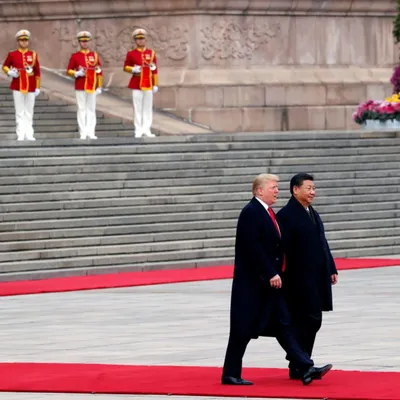
This episode unpacks the key discussion points from the U.S.-China summit, including Taiwan, the Iran war, AI regulation, and the future of U.S.-China relations. Host: James M. Lindsay, Mary and David Boies Distinguished Senior Fellow in U.S. Foreign Policy, CFR Guest: Nicholas Burns, Roy and Barbara Goodman Family Professor of the Practice of Diplomacy and International Relations, Harvard University Kennedy School of Government; Former U.S. Ambassador to the People’s Republic of China (2021–2025) We Discuss: Whether the Trump-Xi summit in Beijing represented a genuine diplomatic breakthrough or merely a cooling of tensions without resolving underlying conflicts. What the dueling U.S. and Chinese post-summit statements reveal about each country's divergent priorities and negotiating strategies. How significant the summit's economic deliverables—agricultural sales commitments, Boeing aircraft sales, and a potential tariff truce—actually are. How Xi Jinping's early and deliberate warning about Taiwan set the tone for the summit, and what his decision to leak that statement mid-meeting signals about Chinese tactics. Whether President Trump's equivocation about U.S. arms sales to Taiwan and the One China policy constitutes a major strategic mistake and what it means for American credibility with allies in the Indo-Pacific. What the presence of Putin in Beijing immediately after Trump's visit reveals about Chinese strategic alignments. Why an emerging U.S.-China dialogue on artificial intelligence regulation could prove to be the most consequential and underappreciated outcome of the Beijing summit. What concrete benchmarks—from tariff agreements to arms sales to Chinese follow-through on commitments—will determine whether this summit actually put U.S.-China relations on a more stable footing. Mentioned on the Episode: "Joint Statement Following Discussions with Leaders of the People's Republic of China (Shanghai Communiqué)" U.S. Department of State, Office of the Historian "President Reagan's Six Assurances to Taiwan" Congressional Research Service "Readout of President Joe Biden's Meeting with President Xi Jinping of the Pe
This episode unpacks President Donald Trump’s upcoming summit with Chinese President Xi Jinping in Beijing, the first by a sitting U.S. President in nearly a decade, as the United States and China work through a tense period of détente. Host: James M. Lindsay, Mary and David Boies Distinguished Senior Fellow in U.S. Foreign Policy, CFR Guest: Rush Doshi, C.V. Starr Senior Fellow for Asia Studies and Director of the China Strategy Initiative We Discuss: Whether the Trump-Xi summit will represent continuity or a new phase in the U.S.-China relationship. How China assesses the military and economic balance of power with the United States. What last year's trade war revealed and how it produced the current period of managed competition. As Rush Doshi puts it: “I don’t think there’s going to be a large structural breakthrough.” What deliverables the Trump administration is seeking from the summit, and why negotiations are focused on process mechanisms and stability. How China has responded to the U.S.-Iran war and why it has stayed on the sidelines despite having clear strategic interests. Why China welcomes U.S. entanglement in foreign conflicts but fears their effects on global trade and resource access. Why China is more exposed than the United States freedom of navigation threats and naval chokepoints. Why President Biden never traveled to Beijing, and how China is framing Trump's visit. Why American CEOs are joining Trump's trip, and what role they play in the summit. Whether the U.S. and China will negotiate agreements on artificial intelligence and its role in great power competition. How China has treated seemingly mutually-beneficial crisis communication channels as negotiation ploys in return for U.S. concessions. Whether Taiwan will be on the agenda, what concessions China is seeking, and how U.S. policy shifts could affect internal Taiwanese politics on unification. How a so-called Board of Trade and other bilateral mechanisms could formalize a lasting state of managed trade between the two countries Mentioned on the Episode: “President Xi Jinping Speaks with U.S. President Donald J. Trump on the Phone” Chinese Ministry of Foreign Affairs Evelyn Cheng, “<a href
Prediction markets have grown into a multibillion-dollar industry. This episode asks whether they are powerful forecasting tools or gambling platforms in disguise—and what their rise means for how risk and information are priced. Hosts: Rebecca Patterson, Senior Fellow, Council on Foreign Relations (CFR) Sebastian Mallaby, Paul A. Volcker Senior Fellow for International Economics, Council on Foreign Relations (CFR) Guest: Christy Goldsmith Romero, Former Commissioner, Commodity Futures Trading Commission (CFTC) We discuss: How prediction markets are turning the world into a “casino” where you can bet on almost anything, from elections and geopolitics to sports and niche events. The evolution of prediction markets from academic tools to mainstream platforms shaping finance, politics, and culture. Why these markets sometimes outperform polls, where they fall short, and how they blur the line between forecasting and entertainment-driven gambling. As Rebecca Patterson asks: “Are these markets actually useful, or are they just gambling dressed up as forecasting?” The legal gray areas that are allowing prediction markets to expand so quickly and the growing risk of manipulation and insider bets. An anecdote from France, where someone allegedly tampered with a weather sensor to manipulate the outcome of a prediction market bet. How governments and regulators are struggling to keep up. Whether these markets truly reflect the “wisdom of crowds” or just loud, well-funded players. Mentioned on the Episode: Anthony M. Diercks, Jared Dean Katz, and Jonathan H. Wright, “Kalshi and the Rise of Macro Markets,” Federal Reserve Board “The Future of Financial Services Regulation: A Conversation with CFTC Commissioner Christy Goldsmith Romero,” Brookings Institution Adam Hoffer and Jacob Macumber-Rosin, “Expanded Sports Betting Legalization Would Generate Billions in Tax Revenue,” Tax Foundation Andy Serwer, “Charles Schwab CEO Expla
This episode unpacks three enduring pillars that have defined U.S. foreign policy from the nation’s founding to today: ideology, economic statecraft, and democratic accountability. Host: James M. Lindsay, Mary and David Boies Distinguished Senior Fellow in U.S. Foreign Policy, CFR Guest: Michael Mandelbaum, Professor Emeritus of American Foreign Policy at the Johns Hopkins School of Advanced International Studies; Author, The American Way of Foreign Policy: Ideology, Economics, Democracy We Discuss: Whether the United States can be said to have a coherent foreign policy "personality". How geographic and geopolitical advantages have historically enabled a more ideological U.S. foreign policy than most countries can afford. Whether ideology in U.S. foreign policy represents genuine conviction or merely a veneer for self-interest. What the post-Cold War era reveals as the "golden age of foreign policy of ideas”. What drives the persistent American tendency toward economic statecraft, sanctions, and “mirror imaging”. How public opinion, interest groups, political parties, and elections influence foreign policy decisionmaking. Whether President Trump's foreign policy fits within—or represents a departure from—the three enduring American traditions in U.S. foreign policy. Mentioned on the Episode: The American Way of Foreign Policy: Ideology, Economics, Democracy by Michael Mandelbaum (Oxford University Press, 2025) Embargo Act of 1807 George W. Bush, Second Inaugural Address, January 20, 2005 Vice President JD Vance, Remarks at the Munich Security Conference, February 14, 2025 Secretary of State Marco Rubio, Remarks at the Munich Security Conference, February 14, 2026 For an episode transcript and show notes, visit The President’s Inbox at: https://www.cfr.org/podcasts/presidents-inbox/how-t
This episode unpacks the causes, key events, and consequences of the Spanish-American War, highlighting how it shaped U.S. foreign policy into the modern era. To mark the 250th anniversary of the U.S. declaration of independence, CFR is dedicating a year-long series of articles, videos, podcasts, events, and special projects that will reflect on two and a half centuries of U.S. foreign policy. Featuring bipartisan voices and expert contributors, the series explores the evolution of America’s role in the world and the strategic challenges that lie ahead. Host: James M. Lindsay, Mary and David Boies Distinguished Senior Fellow in U.S. Foreign Policy, CFR Guest: H.W. Brands, Jack S. Blanton Sr. Chair in History, The University of Texas at Austin We Discuss: What drove the United States toward assertive foreign policy in the 1890s. Who the "jingoes" were and how American leaders pushed for American power abroad. Whether access to China drove American interest in Spain's Pacific empire. Why the USS Maine explosion changed the political calculus for entering a war with Spain. What the Teller Amendment accomplished and what its drafters failed to anticipate. Whether the annexation of the Philippines was ultimately the least-bad option for the Filipino people. What the Spanish-American War's legacy reveals about how the United States became—and chose to remain—a global power. Mentioned on the Episode: Monroe Doctrine, December 2, 1823 McKinley's First Inaugural Address, March 4, 1897 Theodore Roosevelt, Naval War College Address, June 2, 1897 The Teller Amendment, April 19, 1898 For an episode transcript and show notes, visit The President’s Inbox at: https://www.cfr.org/podcasts/presidents-inbox/america-at-250-the-spanish-american-war Opinions expressed on The President’s Inbox are solely those of the host or guests, not of CFR, which takes no institutional positions on matters of policy.
This episode unpacks the U.S.-Iran ceasefire talks in Islamabad and the prospect of a U.S. blockade of the Strait of Hormuz. Host: James M. Lindsay, Mary and David Boies Distinguished Senior Fellow in U.S. Foreign Policy, CFR Guest: Elliott Abrams, Senior Fellow for Middle Eastern Studies, CFR We Discuss: What transpired during the U.S.-Iran talks in Islamabad. Whether both sides abandoned their own preconditions before talks began. How unusually senior and small the negotiating delegations were. What the logic and mechanics of the U.S. naval blockade are. Why other countries have not joined the blockade and may resist it. What the Arab Gulf states are privately urging Washington to do. Whether Israel and the U.S. share the same goals regarding the Iranian regime. Mentioned on the Episode: Vice President JD Vance Delivers Remarks in Islamabad, Pakistan, April 11, 2026 Harry Sekulich and Kate Whannel, "Starmer Says UK Will Not Join Trump's Blockade of Iran's Ports," BBC Defense Technical Information Agency, "Iran: Nuclear Intentions and Capabilities," October 1, 2007 For an episode transcript and show notes, visit The President’s Inbox at: https://www.cfr.org/podcasts/presidents-inbox/what-comes-next-after-failed-us-iran-talks Opinions expressed on The President’s Inbox are solely those of the host or guests, not of CFR, which takes no institutional positions on matters of policy.
This episode unpacks the opportunities and risks Moscow is facing amid the U.S. and Israeli war with Iran. Host: James M. Lindsay, Mary and David Boies Distinguished Senior Fellow in U.S. Foreign Policy, CFR Guest: Thomas Graham, Distinguished Fellow, CFR We Discuss: Whether Russia and Iran are true allies, or simply friends of convenience. How decades of rivalry and recent convergence shaped the current Moscow-Tehran relationship. Why Russia's strategic partnership with Iran excludes a mutual defense obligation. What role Russian intelligence sharing may be playing on the Middle East battlefield. How rising oil prices help Russia in the short term but carry serious long-term economic risks. Whether keeping the Strait of Hormuz closed serves Moscow's interest. How Operation Epic Fury has stalled peace negotiations in the Russia-Ukraine war, and complicated weapons supply to Kyiv. Mentioned on the Episode: Joint Comprehensive Plan of Action, July 14, 2015 Russia-Iran Comprehensive Strategic Partnership Treaty, January 17, 2025 For an episode transcript and show notes, visit The President’s Inbox at: https://www.cfr.org/podcasts/presidents-inbox/russias-stakes-in-the-iran-war Opinions expressed on The President’s Inbox are solely those of the host or guests, not of CFR, which takes no institutional positions on matters of policy.
This episode unpacks how the war with Iran will affect the future of the Gulf countries’ security and economic prosperity. Host: James M. Lindsay, Mary and David Boies Distinguished Senior Fellow in U.S. Foreign Policy, CFR Guest: Mina Al-Oraibi, Editor-in-Chief, The National We Discuss: Whether Gulf states supported or opposed the war with Iran and their role in the intensive diplomatic efforts to avoid conflict before it began. How Iran’s retaliation expanded the war into the Gulf, targeting civilian infrastructure, energy hubs, and global transit points. The scale of drone and missile attacks across the region, and what they reveal about modern asymmetric warfare. Who is actually in charge in Iran, and how the IRGC is shaping decision-making and escalation. Why regime change in Iran remains unlikely, despite internal unrest and external pressure. Why Gulf leaders don’t want a simple ceasefire, but rather a long-term security reset that addresses Iran’s missile and drone programs. How the war is stress-testing Gulf economies and their long-term bets on stability, globalization, and diversification. Mentioned on the Episode: Joint Comprehensive Plan of Action, July 14, 2015 Vibhu Mishra, "Security Council Adopts Gulf-Backed Resolution Condemning Iran Attacks; Russia Bid Fails," United Nations News For an episode transcript and show notes, visit The President’s Inbox at: https://www.cfr.org/podcasts/presidents-inbox/gulf-states-under-fire Opinions expressed on The President’s Inbox are solely those of the host or guests, not of CFR, which takes no institutional positions on matters of policy.
We discuss: Why U.S. allies are refusing to join the Iran war, and what that signals about weakening alliance cohesion and growing strategic independence. How the closure of the Strait of Hormuz, through which roughly 20% of global oil flows, is already reshaping the global economy and raising the stakes for every U.S. partner. Europe’s balancing act, publicly rejecting the war while quietly enabling U.S. operations through military bases. Japan’s pragmatic hedging, supporting the U.S. diplomatically while using constitutional limits to avoid direct military involvement. The cascading global risks of the conflict, from energy shocks and inflation to refugee flows and rising geopolitical instability. The long-term erosion of U.S. soft power, especially among younger generations in Europe and shifting public sentiment in Japan. Mentioned on the Episode: “Vice President JD Vance Delivers Remarks at the Munich Security Conference,” The White House “Secretary of State Marco Rubio Delivers Remarks to the Munich Security Conference,” U.S. Embassy in Switzerland and Liechtenstein “G7 Statement on Support to Partners in the Middle East,” Ministry of Foreign Affairs of Japan For an episode transcript and show notes, visit The President’s Inbox at: https://www.cfr.org/podcasts/presidents-inbox/why-allies-arent-following-on-iran Opinions expressed on The President’s Inbox are solely those of the host or guests, not of CFR, which takes no institutional positions on matters of policy.
Max Boot, Jeane J. Kirkpatrick senior fellow for national security studies at the Council, sits down with James M. Lindsay to analyze what tactical and strategic lessons can be drawn from the U.S. and Israeli military operations against Iran. Mentioned on the Episode: Alexander Ward, Lara Seligman, Alex Leary, and Vera Bergengruen, "Trump Knew the Risk of Iran Blocking the Strait of Hormuz. He Still Went to War," Wall Street Journal Hugo Lowell, "U.S. Only Has 25% of All Patriot Missile Interceptors Needed for Pentagon’s Military Plans," The Guardian Seth Jones, "Empty Bins in a Wartime Environment: The Challenge to the U.S. Defense Industrial Base," Center for Strategic and International Studies For an episode transcript and show notes, visit The President’s Inbox at: https://www.cfr.org/podcasts/presidents-inbox/the-strategy-gap-in-iran Opinions expressed on The President’s Inbox are solely those of the host or our guests, not of CFR, which takes no institutional positions on matters of policy.
Lynne Olson, acclaimed historian and author of Those Angry Days: Roosevelt, Lindbergh, and America’s Fight Over World War II, 1939–1941, sits down with James M. Lindsay to discuss the history of the Lend-Lease Act of 1941 and the domestic political struggles that shaped the United States’ entry into the Second World War. To mark the 250th anniversary of the U.S. declaration of independence, CFR is dedicating a year-long series of articles, videos, podcasts, events, and special projects that will reflect on two and a half centuries of U.S. foreign policy. Featuring bipartisan voices and expert contributors, the series explores the evolution of America’s role in the world and the strategic challenges that lie ahead. Mentioned on the Episode: Winston Churchill, "Letter to President Franklin Delano Roosevelt," December 8, 1940 Council on Foreign Relations, The 10 Best and 10 Worst Decisions in U.S. Foreign Policy Charles Lindbergh Testimony to the House Foreign Affairs Committee, January 23, 1941 Lynne Olson, Those Angry Days: Roosevelt, Lindbergh, and America’s Fight Over World War II, 1939-1941 Wendel Wilkie Testimony to the Senate Foreign Affairs Committee, February 10, 1941 For an episode transcript and show notes, visit The President’s Inbox at: https://www.cfr.org/podcasts/presidents-inbox/america-250-the-lend-lease-act Opinions expressed on The President’s Inbox are solely those of the host or our guests, not of CFR, which takes no institutional positions on matters of policy.
Dalia Dassa Kaye, senior fellow at the University of California, Los Angeles Burkle Center for International Relations, sits down with James M. Lindsay to discuss President Donald Trump's decision to launch a war against Iran, the prospects for regime change, and the consequences for the region. Mentioned on the Episode: Michael Birnbaum, John Hudson, Karen DeYoung, Natalie Allison, and Souad Mekhennet, “Push from Saudis, Israel, Helped Move Trump to Attack Iran,” Washington Post Dalia Dassa Kaye, Enduring Hostility: The Making of America's Iran Policy Zolan Kanno-Younge, David Sanger, and Tyler Pager, “Trump Says War Could Last Weeks and Offers Contradictory Visions of New Regime,” New York Times Michael Scherer, “I Have Agreed to Talk,” The Atlantic Donald Trump Truth Social Post, “HELP IS ON ITS WAY” For an episode transcript and show notes, visit The President’s Inbox at: https://www.cfr.org/podcasts/presidents-inbox/trump-chooses-war-with-iran Opinions expressed on The President’s Inbox are solely those of the host or our guests, not of CFR, which takes no institutional positions on matters of policy.
Michael Bustamante, Chair in Cuban and Cuban-American Studies at the University of Miami, sits down with James M. Lindsay to discuss the Trump administration’s maximum pressure campaign against Cuba. Mentioned on the Episode: Marc Caputo, “Exclusive: Rubio's Secret Squeeze on Raul Castro's Cuba,” Axios For an episode transcript and show notes, visit The President’s Inbox at: https://www.cfr.org/podcasts/presidents-inbox/cuba-on-the-brink Opinions expressed on The President’s Inbox are solely those of the host or our guests, not of CFR, which takes no institutional positions on matters of policy.
Jeremi Suri, Mack Brown Distinguished Chair for Leadership in Global Affairs and Professor of Public Affairs and History at the University of Texas at Austin, sits down with James M. Lindsay to discuss President Richard Nixon's historic 1972 visit to China, which ushered in a new era of U.S.-Sino relations and altered the course of world politics. To mark the 250th anniversary of the U.S. declaration of independence, CFR is dedicating a year-long series of articles, videos, podcasts, events, and special projects that will reflect on two and a half centuries of U.S. foreign policy. Featuring bipartisan voices and expert contributors, the series explores the evolution of America’s role in the world and the strategic challenges that lie ahead. Mentioned on the Episode: James M. Lindsay, The Ten Best and Ten Worst U.S. Foreign Policy Decisions, CFR.org Richard Nixon, “Asia After Vietnam,” Foreign Affairs Jeremi Suri, Henry Kissinger and the American Century Jeremi Suri and Zachary Suri, Democracy of Hope Jeremi Suri and Zachary Suri, This Is Democracy For an episode transcript and show notes, visit The President’s Inbox at: https://www.cfr.org/podcasts/presidents-inbox/america-250-nixon-goes-to-china Opinions expressed on The President’s Inbox are solely those of the host or our guests, not of CFR, which takes no institutional positions on matters of policy.
F. Gregory Gause III, a leading scholar on Saudi Arabia and an associate fellow at the Middle East Institute, sits down with James M. Lindsay to discuss the evolution of U.S.-Saudi relations as Saudi Arabia navigates its role in a Middle East with a more assertive Israel, a weaker Iran, and a less predictable United States. For an episode transcript and show notes, visit The President’s Inbox at: https://www.cfr.org/podcasts/presidents-inbox/the-new-saudi-strategy Opinions expressed on The President’s Inbox are solely those of the host or our guests, not of CFR, which takes no institutional positions on matters of policy.
Jonathan Berkshire Miller, senior fellow at the Macdonald Laurier Institute, sits down with James M. Lindsay to discuss Canada's effort to diminish its vulnerability to U.S. economic threats and just how much middle powers like Canada can successfully hedge in a world of great power competition. Mentioned on the Episode: “Live From Davos: Exclusive Interview With Secretary of the Treasury Scott Bessent,” Human Events Daily with Jack Posobiec Mark Carney, “Principled and Pragmatic: Canada’s Path,” Office of the Prime Minister of Canada “Canada's Arctic Foreign Policy,” Government of Canada. Updated March 25, 2025 For an episode transcript and show notes, visit The President’s Inbox at: https://www.cfr.org/podcasts/presidents-inbox/canada-hedges-against-the-united-states Opinions expressed on The President’s Inbox are solely those of the host or our guests, not of CFR, which takes no institutional positions on matters of policy.
Heather Conley, nonresident senior fellow at the American Enterprise Institute, and Rebecca Pincus, senior fellow at the Foreign Policy Research Institute, sit down with James M. Lindsay to discuss how President Trump's desire to acquire Greenland has thrown the transatlantic relationship into its latest crisis. For an episode transcript and show notes, visit The President’s Inbox at: https://www.cfr.org/podcasts/presidents-inbox/trumps-greenland-ambitions Opinions expressed on The President’s Inbox are solely those of the host or our guests, not of CFR, which takes no institutional positions on matters of policy.
Mary Dudziak, Asa Griggs Candler Professor of Law at Emory University, and Christopher Nichols, Wayne Woodrow Hayes Chair in National Security Studies and Professor of History at the Ohio State University, sit down with James M. Lindsay to unpack a new CFR survey of historians on the best and worst foreign policy decisions in U.S. history. To mark the 250th anniversary of the U.S. declaration of independence, CFR is dedicating a year-long series of articles, videos, podcasts, events, and special projects that will reflect on two and a half centuries of U.S. foreign policy. Featuring bipartisan voices and expert contributors, the series explores the evolution of America’s role in the world and the strategic challenges that lie ahead. Mentioned on the Episode: Christopher McKnight Nichols, Promise and Peril: America at the Dawn of a Global Age Joshua Kurlantzick, A Great Place to Have a War CFR.org, The Ten Best and Ten Worst U.S. Foreign Policy Decisions For an episode transcript and show notes, visit The President’s Inbox at: https://www.cfr.org/podcasts/presidents-inbox/america-250-best-worst-us-foreign-policy-decisions Opinions expressed on The President’s Inbox are solely those of the host or our guests, not of CFR, which takes no institutional positions on matters of policy.
Matthew Kroenig, Vice President and Senior Director of the Scowcroft Center for Strategy and Security at the Atlantic Council, sits down with James M. Lindsay to discuss how President Trump has approached foreign policy since returning to the Oval Office last January. Mentioned on the Episode: Matthew Kroenig, “To Get to Peace in Ukraine, Trump Should Play the Nuclear Card,” Foreign Policy Matthew Kroenig, “Trump Has a Strategy for Venezuela,” Foreign Policy Matthew Kroenig, “Trump Should Oust Maduro,” Foreign Policy Matthew Kroenig, “Trump Was Right to Oust Maduro,” New York Times Matthew Kroenig, “Two Cheers for the National Security Strategy,” Foreign Policy For an episode transcript and show notes, visit The President’s Inbox at: https://www.cfr.org/podcasts/presidents-inbox/trump-foreign-policy-at-one-year-with-matthew-kroenig Opinions expressed on The President’s Inbox are solely those of the host or our guests, not of CFR, which takes no institutional positions on matters of policy.
Will Freeman, fellow for Latin America studies at the Council, sits down with James M. Lindsay to discuss the consequences of the U.S. seizure of Venezuelan President Nicolás Maduro. Mentioned on the Episode: Antonio Maria Delgado, ”The U.S. Gamble on Chavismo: How a Once-Unthinkable Pact Could Stabilize Venezuela,” Miami Herald Will Freeman, “The Shock Waves of Venezuela: How Maduro’s Capture Could Transform Latin America,” Foreign Affairs Jason Lange, ”A Third of Americans Support U.S. Strike on Venezuela, Reuters/Ipsos Poll Finds,” Reuters For an episode transcript and show notes, visit The President’s Inbox at: https://www.cfr.org/podcasts/presidents-inbox/washingtons-venezuela-strategy-after-maduro-with-will-freeman Opinions expressed on The President’s Inbox are solely those of the host or our guests, not of CFR, which takes no institutional positions on matters of policy.
Carla Anne Robbins, senior fellow at the Council, and Matthias Matthijs, senior fellow for Europe at the Council, sit down with James M. Lindsay to answer listener questions about the major developments, initiatives, and changes in U.S. foreign policy over the course of 2025. Mentioned on the Episode: "2025 National Security Strategy of the United States of America," The White House Ivo H. Daalder and James M. Lindsay, “The Price of Trump’s Power Politics,” Foreign Affairs Ivo H. Daalder and James M. Lindsay, The Empty Throne: America's Abdication of Global Leadership Rebecca Lissner, “America’s Quasi Alliances,” Foreign Affairs Matthias Matthijs and Nathalie Tocci, "How Europe Lost: Can the Continent Escape Its Trump Trap?" Foreign Affairs Brad Setser, "How German Industry Can Survive the Second China Shock," Center for European Reform For an episode transcript and show notes, visit The President’s Inbox at: https://www.cfr.org/podcasts/tpi/listener-mailbag-2025-review-carla-anne-robbins-and-matthias-matthijs
Kathleen Hicks, former Deputy Secretary of Defense and a senior fellow at the Harvard Kennedy School’s Belfer Center, the Johns Hopkins University’s Kissinger Center for Global Affairs, and the Chicago Council on Global Affairs, sits down with James M. Lindsay to discuss how the U.S. defense industrial base has struggled to keep pace with the demands of renewed great power competition. This is the ninth episode in a special series from The President’s Inbox, bringing you conversations with Washington insiders to assess whether the United States is ready for a new, more dangerous world. Mentioned on the Episode: Mark Bowden, "The Crumbling Foundations of America's Military," The Atlantic For an episode transcript and show notes, visit The President’s Inbox at: https://www.cfr.org/podcasts/tpi/are-we-ready-americas-crumbling-defense-industrial-base-kathleen-hicks
Rebecca Lissner, senior fellow for U.S. foreign policy at the Council, sits down with James M. Lindsay to discuss the Trump administration's new National Security Strategy and its consequences for U.S. foreign and defense policy. This is the eighth episode in a special series from The President’s Inbox, bringing you conversations with Washington insiders to assess whether the United States is ready for a new, more dangerous world. Mentioned on the Episode: "2025 National Security Strategy of the United States of America," The White House Rebecca Lissner, Will Freeman, Liana Fix, Steven Cook, Michelle Gavin and Paul Stares, “Unpacking a Trump Twist of the National Security Strategy,” CFR.org For an episode transcript and show notes, visit The President’s Inbox at: https://www.cfr.org/podcasts/tpi/are-we-ready-trumps-national-security-strategy-rebecca-lissner
Jonathan Hillman, senior fellow for geoeconomics at the Council, sits down with James M. Lindsay to discuss the steps the U.S. government should take to protect and support American firms developing critical new technologies such as artificial intelligence, quantum computing, and biotechnology from predatory foreign challenges without stifling its own growth and innovation. This is the seventh episode in a special series from The President’s Inbox, bringing you conversations with Washington insiders to assess whether the United States is ready for a new, more dangerous world. Mentioned on the Episode: Council on Foreign Relations, U.S. Economic Security: Winning the Race for Tomorrow’s Technologies For an episode transcript and show notes, visit The President’s Inbox at: https://www.cfr.org/podcasts/tpi/are-we-ready-economic-security-challenge-jonathan-hillman
Hal Brands, Henry A. Kissinger Distinguished Professor of Global Affairs at the School of Advanced International Studies at Johns Hopkins University, and Mike Kuiken, Distinguished Visiting Fellow at Stanford University's Hoover Institution, sit down with James M. Lindsay to discuss the U.S.-China Economic and Security Review Commission's latest annual report to Congress and how China is working to reshape the global balance of power. This is the sixth episode in a special series from The President’s Inbox, bringing you conversations with Washington insiders to assess whether the United States is ready for a new, more dangerous world. Mentioned on the Episode: U.S.-China Economic and Security Review Commission, "2025 Annual Report to Congress" For an episode transcript and show notes, visit The President’s Inbox at: https://www.cfr.org/podcasts/tpi/are-we-ready-chinas-campaign-reshape-global-order-hal-brands-and-michael-kuiken
Chris McGuire, senior fellow for China and emerging technologies at the Council, sits down with James M. Lindsay to discuss whether U.S. efforts to deny China advanced semiconductor chips will sustain the U.S. lead in artificial intelligence or unintentionally accelerate Chinese innovation. This is the fifth episode in a special series from The President’s Inbox, bringing you conversations with Washington insiders to assess whether the United States is ready for a new, more dangerous world. Mentioned on the Episode: Bethany Allen and Jenny Wong Leung, "Trump's Crackdown on Chinese Students Ignores a Startling New Reality," New York Times Raffaele Huang, "Chinese Officials Urge Firms to Shun Nvidia AI Chip," Wall Street Journal Arjun Kharpal, "China’s Key Weapons in Its AI Battle With the U.S.—Massive Huawei Chip Clusters and Cheap Energy," CNBC For an episode transcript and show notes, visit The President’s Inbox at: https://www.cfr.org/podcasts/tpi/are-we-ready-us-china-chip-war-chris-mcguire
Jessica Brandt, senior fellow for technology and national security at the Council, sits down with James M. Lindsay to discuss how artificial intelligence is reshaping cyber operations, influence campaigns, and intelligence gathering, and what those changes mean for U.S. national security. This is the fourth episode in a special series from The President’s Inbox, bringing you conversations with Washington insiders to assess whether the United States is ready for a new, more dangerous world. For an episode transcript and show notes, visit The President’s Inbox at: https://www.cfr.org/podcasts/tpi/are-we-ready-ai-espionage-and-influence-jessica-brandt
Michael Horowitz, Richard Perry professor of political science at the University of Pennsylvania and senior fellow for technology and innovation at the Council on Foreign Relations, sits down with James M. Lindsay to discuss how emerging military technologies are revolutionizing the modern battlefield and how the Pentagon is adapting and incorporating these new technologies. This is the third episode in a special series from The President’s Inbox, bringing you conversations with Washington insiders to assess whether the United States is ready for a new, more dangerous world. Mentioned on the Episode: Michael C. Horowitz and Lauren Kahn, “The Cost of the AGI Delusion,” Foreign Affairs Radha Iyengar Plumb and Michael C. Horowitz, “What America Gets Wrong About the AI Race,” Foreign Affairs For an episode transcript and show notes, visit The President’s Inbox at: https://www.cfr.org/podcasts/tpi/are-we-ready-new-weapons-war-michael-horowitz
Thomas Shugart, founder of Archer Strategic Consulting and adjunct senior fellow at the Center for a New American Security, sits down with James M. Lindsay to discuss how the tools and tactics of warfare have changed in the past decade and whether the U.S. military is adapting fast enough to deter a great power war. This is the second episode in a special series from The President’s Inbox, bringing you conversations with Washington insiders to assess whether the United States is ready for a new, more dangerous world. Mentioned on the Episode: Thomas Shugart, "Blue Planet, Red Planet: A New World of Contested Maritime Power," The Shugart Update Thomas Shugart, "Concrete Dome: It's Past Time for an Emergency Anti-Drone Hardening Program," The Shugart Update Thomas Shugart, "Forging Ahead: The PLA Shows Us What It Wants Us to See," The Shugart Update Thomas Shugart, "Has China Been Practicing Preemptive Missile Strikes Against U.S. Bases?" War on the Rocks Thomas Shugart, "Mind the Gap, Part 2: The Cross-Strait Potential of China’s Civilian Shipping Has Grown," War on the Rocks Thomas Shugart, "There Are No Magic Beans: Easy Options to Deter China Militarily Do Not Exist," War on the Rocks Thomas Shugart, "The United States Can’t Afford to Not Harden Its Air Bases," War on the Rocks Thomas Shugart, "Trends, Timelines, and Uncertainty: An Assessment of the Military Balance in the Indo-Pacific," Center for a New American Security Timothy A. Walton and Thomas Shugart, "Concrete Sky: Air Base Hardening in the We
Rush Doshi, the C.V. Starr senior fellow for Asia Studies and director of the China Strategy Initiative at the Council, sits down with James M. Lindsay to discuss how the United States is reckoning with the rise of China and a world of renewed geopolitical competition. This is the first episode in a special series from The President’s Inbox, bringing you conversations with Washington insiders to assess whether the United States is ready for a new, more dangerous world. Mentioned on the Episode: Rush Doshi, The Long Game: China's Grand Strategy to Displace American Order, Oxford University Press David J. Lynch, The World’s Worst Bet: How the Globalization Gamble Went Wrong (And What Would Make It Right), PublicAffairs For an episode transcript and show notes, visit The President’s Inbox at: https://www.cfr.org/podcasts/tpi/are-we-ready-china-reckoning-rush-doshi
Kori Schake, Senior Fellow and Director of Foreign and Defense Policy Studies at the American Enterprise Institute, sits down with James M. Lindsay to discuss the state of civil-military relations as President Donald Trump remakes the senior leadership of the U.S. military and deploys the National Guard to U.S. cities. Mentioned on the Episode: William Manchester, American Ceasar: Douglas McArthur, 1880-1964, Back Bay Books Kori Schake, The State and the Soldier: A History of Civil-Military Relations in the United States, Polity For an episode transcript and show notes, visit The President’s Inbox at: https://www.cfr.org/podcasts/tpi/civil-military-relations-under-trump-kori-schake
Elliott Abrams, senior fellow for Middle East studies and the Council, and Ed Husain, senior fellow at the Council, sit down with James M. Lindsay to discuss the state of the Israeli-Palestinian conflict on the second anniversary of the October 7 attacks and whether President Donald Trump's twenty-point peace plan will produce a lasting ceasefire. Mentioned on the Episode: Elliott Abrams, "The Teaching of Hate in Jordan," CFR.org Naftali Bendavid, Scott Clement, and Emily Guskin, "Many American Jews Sharply Critical of Israel on Gaza, Post Poll Finds," Washington Post For an episode transcript and show notes, visit The President’s Inbox at: https://www.cfr.org/podcasts/tpi/two-years-since-october-7-elliott-abrams-ed-husain
Matt Waxman, adjunct senior fellow for law and foreign policy and Liviu Librescu Professor of Law at Columbia University sits down with James M. Lindsay to discuss the legality of the Trump administration's military strikes against drug traffickers and the implications for U.S. foreign policy. Mentioned on the Episode: James Madison, “Federalist No. 51,” The Federalist Papers For an episode transcript and show notes, visit The President’s Inbox at: https://www.cfr.org/podcasts/tpi/legality-trumps-drug-boat-strikes-matthew-waxman
Liana Fix, senior fellow for Europe at the Council, sits down with James M. Lindsay to discuss Russia’s recent drone incursions into Polish airspace, and whether the move signals an expansion of the war in Ukraine. Mentioned on the Episode: Liana Fix and Erin D. Dumbacher, “Russia Tests NATO With Poland Drone Breach,” CFR.org For an episode transcript and show notes, visit The President’s Inbox at: https://www.cfr.org/podcasts/tpi/russia-violates-nato-airspace-liana-fix
Todd Harrison, Senior Fellow at the American Enterprise Institute, sits down with James M. Lindsay to discuss the feasibility of a multi-layer missile defense system for the United States. Mentioned on the Episode: Phillip L. Swagel, “Effects of Lower Launch Costs on Previous Estimates for Space-Based, Boost-Phase Missile Defense,” Congressional Budget Office Todd Harrison, “How Much Would a Space-Based Missile Interceptor System Cost and Does It Make Sense?” American Enterprise Institute Todd Harrison, “Is Trump’s Golden Dome a Brilliant Idea or a Gilded Boondoggle?” American Enterprise Institute For an episode transcript and show notes, visit The President’s Inbox at: https://www.cfr.org/podcasts/tpi/golden-dome-missile-defense-system-todd-harrison
Michelle Gavin, Ralph Bunche senior fellow for Africa policy studies at the Council, sits down with James M. Lindsay to discuss what urbanization, a youth-heavy population, and social media mean for politics across the African continent. Enter the CFR book giveaway by September 23, 2025, for the chance to win one of ten free copies of Age of Change by Michelle Gavin. You can read the terms and conditions of the offer here. For an episode transcript and show notes, visit The President’s Inbox at: https://www.cfr.org/podcasts/tpi/africas-urban-youth-revolution-michelle-gavin
Roxanna Vigil, International Affairs Fellow in National Security at the Council, sits down with James M. Lindsay to discuss rising political violence in Colombia and its consequences for the Andean region and beyond. Mentioned on the Episode: Paul J. Angelo, From Peril to Partnership: U.S. Security Assistance and the Bid to Stabilize Colombia and Mexico, Oxford University Press For an episode transcript and show notes, visit The President’s Inbox at: https://www.cfr.org/podcasts/tpi/brewing-troubles-colombia-roxanna-vigil
Stephen Walt, Robert and Renée Belfer Professor of International Affairs at the Harvard Kennedy School, sits down with James M. Lindsay to discuss what a realist U.S. foreign policy would look like. Mentioned on the Episode: John Ikenberry, “A New U.S. Grand Strategy: The Case for Liberal Internationalism, With G. John Ikenberry," The President's Inbox John J. Mearsheimer and Stephen M. Walt, “The Case for Offshore Balancing: A Superior U.S. Grand Strategy,” Foreign Affairs Barry Posen, Restraint: A New Foundation for U.S. Grand Strategy, Cornell University Press For an episode transcript and show notes, visit The President’s Inbox at: https://www.cfr.org/podcasts/tpi/new-us-grand-strategy-case-realist-foreign-policy-stephen-walt
Michael Kimmage, professor of history at the Catholic University of America, sits down with James M. Lindsay to discuss the results of the meeting between U.S. President Donald Trump and Russian President Vladimir Putin in Alaska on the war in Ukraine. Mentioned on the Episode: Michael Kimmage, Collisions: The War in Ukraine and the Origins of the New Global Instability Michael Kimmage and Maria Lipman, “The Limits of Putin’s Balancing Act," Foreign Affairs For an episode transcript and show notes, visit The President’s Inbox at: https://www.cfr.org/podcasts/tpi/trump-putin-summit-michael-kimmage
Hal Brands, Henry A. Kissinger distinguished professor of Global Affairs at Johns Hopkins School of Advanced International Studies and author of The Eurasian Century: Hot Wars, Cold Wars, and the Making of the Modern World, sits down with James M. Lindsay to discuss how and why control of Eurasia affects U.S. national security. This episode is the fifth in a continuing TPI series on U.S. grand strategy. This episode was originally released by The President’s Inbox on January 21, 2025. Mentioned on the Episode Hal Brands, The Eurasian Century: Hot Wars, Cold Wars, and the Making of the Modern World H. J. Mackinder, “The Geographical Pivot of History,” The Geographical Journal For an episode transcript and show notes, visit The President’s Inbox at: https://www.cfr.org/podcasts/tpi/eurasia-challenge-hal-brands
Joshua Kurlantzick, senior fellow for Southeast Asia and South Asia at the Council on Foreign Relations, sits down with James M. Lindsay to discuss the ongoing border dispute between Thailand and Cambodia and if the current ceasefire will hold up. Mentioned on the Episode: Joshua Kurlantzick, Beijing’s Global Media Offensive Joshua Kurlantzick, “Thailand and Cambodia’s Ceasefire: Will It Stop War When Elites Want Conflict?,” CFR.org For an episode transcript and show notes, visit The President’s Inbox at: https://www.cfr.org/podcasts/tpi/cambodian-thai-border-clash-josh-kurlantzick
Liana Fix, Fellow for Europe at the Council, sits down with James M. Lindsay to discuss the current status of the fighting in Ukraine and the significance of President Trump’s recent ultimatum to Russian President Vladimir Putin. Mentioned on the Episode: Liana Fix, “Can NATO Keep It Together?” Foreign Policy Liana Fix, “How the Berlin Bubble Failed in the Ukraine War,” Internationale Politik For an episode transcript and show notes, visit The President’s Inbox at: https://www.cfr.org/podcasts/tpi/donald-trumps-russia-ultimatum-liana-fix
Reviews
No reviews yet.
If you like this...

The Foreign Affairs Interview
Same topic · Same format · Same audience

The Truth of the Matter
Same topic · Same format · Same audience

Global Dispatches -- World News That Matters
Same topic · Same format · Same audience

The Asia Chessboard
Same topic · Same format · Same audience

Lowy Institute Conversations
Same topic · Same format · Same audience

USSC Briefing Room
Same topic · Same format · Same audience

Why It Matters
Same topic · Same audience · Same format

Asia Geopolitics
Same topic · Same format · Same audience

The World Stage
Same topic · Same format · Same tone

Audio Briefs
Same topic · Same audience

Rules Based Audio
Same topic · Same format · Same audience

Hold Your Fire!
Same topic · Same format · Same audience

The Last Line of Defense
Same topic · Same format · Same audience

Brussels Sprouts
Same topic · Same format · Same tone

The Global Dispatch Podcast
Same topic · Same format · Same audience

One Decision
Same topic · Same format · Same audience

The Negotiators
Same topic · Same audience · Same format

American Power
Same topic · Same audience

The NIDS View
Same topic · Same audience · Same format

The World Next Week
Same topic · Same audience · Same format

The Foreign Desk
Same topic · Same format · Same audience

ChinaPower
Same format · Same audience · Same tone

Pekingology
Same format · Same tone · Same audience

Lehto's Law
Same format · Same audience

The Steve Gruber Show
Same topic · Same audience
Explore more like this
Listening context
Discussion (0)
No comments yet. Be the first to start the discussion!