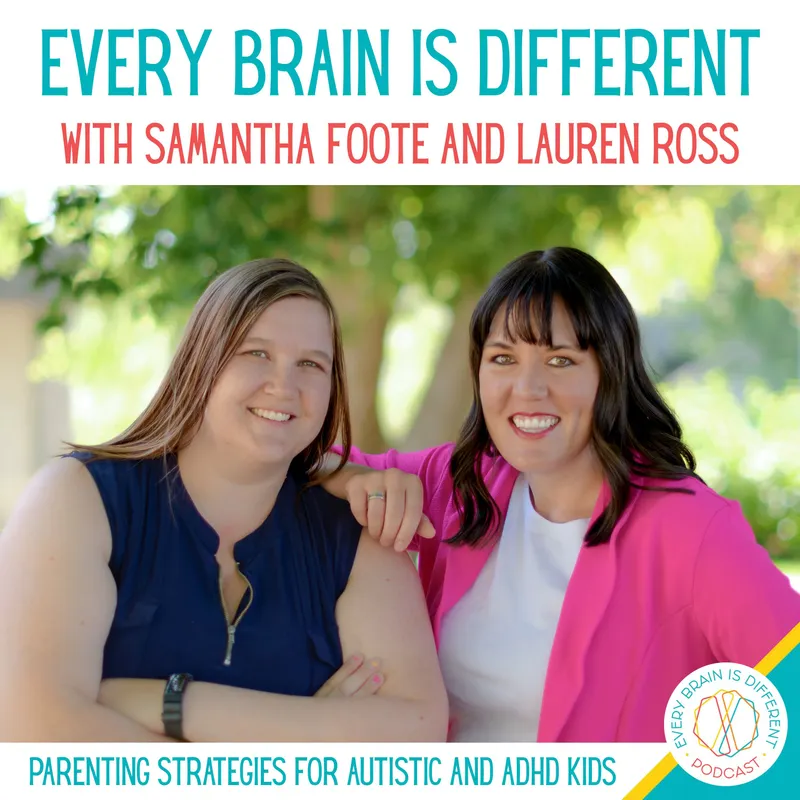
Autistic and ADHD Kids Parenting Strategies: Every Brain is Different
Samantha Foote & Lauren Ross | Parenting Neurodiverse Kids·Hosted by Samantha Foote and Lauren Ross·186 episodes
Welcome to Every Brain is Different, the podcast designed for parents raising kids with Autism, ADHD, and other neurodiverse conditions. Discover practical parenting strategies, expert insights, and real-life stories that highlight the strengths and challenges of neurodivergent individuals. Join us to connect with a supportive community of parents, gain tools to help your child thrive, and celebrate the unique ways every brain works. If you're looking for inspiration, effective parenting strategies, or simply a sense of connection, tune into Every Brain is Different and join a community that truly understands. Website: www.everybrainisdifferent.com Instagram: www.instagram.com/everybrainisdifferent TikTok...
Why listen
Every Brain is Different gives parents of autistic, ADHD, and otherwise neurodivergent kids practical support without shame or jargon. Samantha Foote and Lauren Ross mix co-hosted conversations with expert interviews, turning topics like masking, meltdowns, school accommodations, sensory needs, and parent burnout into clear next steps. It is especially useful for caregivers who want compassionate, real-world strategies they can try at home or bring into school conversations.
Series(1)
Episodes
Connect with Samantha: www.everybrainisdifferent.com Download the Guide to Raising Your Neurodivergent Child: www.everybrainisdifferent.com Samantha and Lauren continue their discussion on what to do when you suspect or receive an autism diagnosis, revisiting the idea of “being a detective” to learn what makes your child tick while also debating the line between respecting boundaries and pushing kids to get out into the world for social learning and health. They emphasize acting early to access supports, highlighting Medicaid options like the disability-based Katie Beckett Waiver (which can cover broad healthcare and therapies) and other state-specific waivers for non-traditional therapies, plus early intervention (Zero to Three), developmental preschool requirements, IEPs/504s, respite care, parent training, adaptive equipment, grants, and case management. They stress that professionals often won’t volunteer these resources, approvals can take months to years, denials are common, and parents should reapply, follow up persistently, join local Facebook groups for area-specific guidance, get on multiple therapy waitlists, keep organized records, and request school assessments in writing. 00:00 Welcome Back Recap 00:40 Boundaries Versus Pushing Growth 03:01 Why Social Practice Matters 05:09 Finding Help After Diagnosis 05:24 Medicaid Katie Beckett Waiver 08:11 Early Intervention and School Supports 09:45 Local Groups and Activity Options 11:52 Waitlists and Getting On Them 13:37 Be the Squeaky Wheel 15:20 Organize Paperwork and Ask Providers 19:53 Action Steps and Next Episode Connect with Samantha Foote!Website: https://everybrainisdifferent.com/Instagram: https://www.instagram.com/everybrainisdifferentYouTube: https://www.youtube.com/@everybrainisdifferent
Connect with Samantha: https://everybrainisdifferent.com/ Join the Neurodivergent Parenting Community: https://everybrainisdifferent.com/membership Suzanne Jabour Episode About Grief: https://podcasts.apple.com/us/podcast/is-it-normal-to-grieve-after-your-childs-autism-or/id1697406719?i=1000750957793 Samantha and Lauren discuss the number one thing they would do after getting an autism diagnosis for your child: learn about your child, not just autism. Samantha emphasizes that a diagnosis is a tool for understanding, not fixing, and that parents may feel relief and grief, all of which are valid. They stress that autism presents differently in each person, caution against overreliance on online checklists, and encourage neurodiversity-affirming thinking over deficit-based views by asking what behaviors communicate and what needs they meet. Examples include sensory accommodations for loud toilets, avoiding uncomfortable clothing, and allowing harmless stimming, while still intervening for safety concerns like self-injury or eloping. They suggest tracking strengths, triggers, and ABC patterns, seeking professional or community support, and preview next week’s focus on applying for resources early due to long waitlists. 00:00 Welcome and Summer Catchup 00:11 Autism Moments and Themed Weddings 02:29 Why This Episode Matters 03:34 Processing the Diagnosis 05:50 Learn Your Child First 07:19 Observe Not Checklists 09:01 Neurodiversity Affirming Shift 10:26 Assessments and Getting Resources 14:08 Deficit vs Affirming Examples 24:04 Behavior as Communication 26:33 Action Steps and ABC Notes 30:12 Wrap Up and Next Week Preview Connect with Samantha Foote!Website: https://everybrainisdifferent.com/Instagram: https://www.instagram.com/everybrainisdifferentYouTube: https://www.youtube.com/@everybrainisdifferent
Connect with Samantha: https://everybrainisdifferent.com/ Join the Neurodivergent Parenting Community: https://www.everybrainisdifferent.com/membership Get the Guide to Parenting Your Neurodivergent Child: https://everybrainisdifferent.com/ Samantha and Lauren discuss why building a supportive network matters for mental health and how to do it, drawing from Samantha’s postpartum psychosis and breakdown in 2016 and the challenges of parenting children with medical needs. They outline key benefits of support, which include emotional encouragement, practical help, accountability, perspective when “your brain is lying to you,” and connection. They describe four types of support: personal (friends, family, faith/community), professional (primary care, therapists, psychiatrists, coaches, support groups), peer (special-interest and parenting/disability communities), and practical (cleaning, childcare, meal services, assistants). They offer steps to build support without shame: start small, be specific about needs, allow imperfect help while avoiding toxic relationships, and find aligned communities, ending with a one-step takeaway and available resources. 00:00 Why Support Matters 01:39 When Your Brain Lies 03:52 Personal Support Plan 08:51 Professional Help Options 12:33 Peer Support Communities 13:44 Practical Help That Works 17:07 Build It Without Awkward 18:20 Ask Clearly and Specifically 19:33 Boundaries and Finding People 23:54 Weekly Takeaway and Resources Connect with Samantha Foote!Website: https://everybrainisdifferent.com/Instagram: https://www.instagram.com/everybrainisdifferentYouTube: https://www.youtube.com/@everybrainisdifferent
Join the Neurodivergent Parenting Community: https://www.everybrainisdifferent.com/membership Atomic Habits: https://jamesclear.com/atomic-habits Samantha and Lauren discuss how returning home from vacation can be dysregulating for neurodivergent kids due to transitions and delayed stress responses from masking, sensory input, uncertainty, and social demands. They recommend not scheduling extra activities immediately after returning, prioritizing rest and recovery over productivity, and giving kids (and parents) grace during reintegration. They advise returning to familiar routines without trying to overhaul life, focusing on connection before correction, debriefing the trip to build self-awareness and plan future supports, and watching for delayed burnout days or weeks later. 00:00 Welcome and Summer Check In 00:17 Autism Threads Stories 03:52 Vacation Reset Topic 05:51 Why Coming Home Is Hard 06:45 Decompression Looks Different 08:40 Protect Recovery Days 12:40 Back to Familiar Routines 15:46 Grace Rest and Screen Time 18:54 Debrief and Learnings 20:22 Delayed Burnout Signs 21:12 Key Takeaways and Wrap Up Connect with Samantha Foote!Website: https://everybrainisdifferent.com/Instagram: https://www.instagram.com/everybrainisdifferentYouTube: https://www.youtube.com/@everybrainisdifferent
Download the Guide to Raising Your Neurodivergent Child: https://everybrainisdifferent.com/ Connect with Samantha: https://everybrainisdifferent.com/ Samantha and Lauren discuss how to help vacations go more smoothly for neurodivergent kids by prioritizing safety, predictability, and regulation over nonstop activities. They explain how vacations disrupt routine, sensory input, and expectations (new places, foods, people, airports, planes, theme parks, beaches), which can overwhelm autistic and ADHD children. They recommend preparing kids in advance with photos, maps, videos, itineraries, visual schedules, and honest communication about uncertainty; using supports like airport assistance (Sunflower lanyards, practice tours, early boarding); and building recovery time with hotel breaks, quiet spaces, and rest days. They suggest creating an escape plan or safe word, avoiding forced socialization, packing sensory tools and familiar items, watching early signs of overload, and adjusting parental expectations so everyone ends the day regulated, safe, supported, and connected. 00:00 Vacation Reality Check 01:17 Why Vacations Overwhelm 03:19 Sensory Overload Hotspots 06:11 Chill Trips Still Hard 08:04 Boost Predictability 11:44 Over Communicate Plans 13:06 Build Recovery Time 17:39 Create an Escape Plan 21:56 Pack Sensory Supports 24:25 Adjust Vacation Expectations 25:55 Bring Familiar Comforts 27:13 Spot Overload Early 28:06 Wrap Up and Recap 29:33 Resources and Farewell Connect with Samantha Foote!Website: https://everybrainisdifferent.com/Instagram: https://www.instagram.com/everybrainisdifferentYouTube: https://www.youtube.com/@everybrainisdifferent
Samantha and Lauren welcome dance artist and creative coach Annett Bone to discuss dance as self-care—especially for stressed parents raising neurodivergent kids. Annett shares that returning to dance at 43 after a 20-plus year hiatus helped her heal and that dance can be expression, creativity, processing, release, or a way to get out of your head. She encourages starting with the end in mind, then taking small, realistic steps, sometimes just a few minutes alone with music, without fear of judgment. The conversation offers practical ideas like family dance parties, using Just Dance for guidance, exploring movement one body part at a time, and combining movement with writing, drawing, senses, and imagery like animals or weather. Annette invites listeners to DM her “brain” on Instagram for a free customized 20-minute movement session and mentions her podcast, The Dancepreneuring Studio. Connect with Annette: www.instagram.com/annettbonewww.AnnettBone.com. Connect with Samantha: https://everybrainisdifferent.com/ Get the Free Ultimate Guide to Parenting Your Neurodivergent Child: https://everybrainisdifferent.com/ 00:00 Welcome and Guest Intro 00:54 Why Dance Matters 01:49 Dance as Self Care 03:48 Busy Moms Start Small 07:33 Easy Ways to Begin 10:17 Creative Movement Games 12:28 Classes and Dance Styles 15:00 Dance for Every Body 19:06 Final Tips and Mindset 21:21 Where to Find Annette 23:18 Rapid Fire Fun Question 24:18 Wrap Up and Takeaways Connect with Samantha Foote!Website: https://everybrainisdifferent.com/Instagram: https://www.instagram.com/everybrainisdifferentYouTube: https://www.youtube.com/@everybrainisdifferent
Connect With Samantha: https://everybrainisdifferent.com/ Join the Neurodivergent Parenting Community: https://www.everybrainisdifferent.com/membership Samantha and Lauren introduce a multi-part series on road tripping, focusing in this episode on strategies for smoother car travel, especially for kids with autism. They explain why road trips are hard-loss of routine and predictability, sensory overload, limited autonomy, sibling noise conflicts, motion sickness, and movement needs—and emphasize that success is about regulation, not perfection. Tips include planning seating ahead of time, packing comfort items and regulation tools first (headphones, sunglasses, weighted items, fidgets), keeping snacks and water accessible, using GPS timing to reduce “are we there yet,” creating visual roadmaps/schedules, practicing expectations, building in movement breaks, and watching early meltdown signs. 00:00 Summer Chaos Intro 00:47 Road Trip Series Setup 01:54 Why Road Trips Are Hard 04:06 Pre Trip Car Plan 05:43 Predictability With GPS 07:54 Sensory And Sibling Noise 10:32 Devices And Offline Options 11:57 Movement Break Strategies 15:14 Visual Roadmaps And Packing 19:07 Meltdown Prevention And Repair 20:52 Games And Entertainment Ideas 23:57 Validate And Parent Regulation 26:23 Key Takeaways And Wrap Up Connect with Samantha Foote!Website: https://everybrainisdifferent.com/Instagram: https://www.instagram.com/everybrainisdifferentYouTube: https://www.youtube.com/@everybrainisdifferent
Connect with Samantha: https://www.everybrainisdifferent.com/ Join the Neurodivergent Parent Community: https://www.everybrainisdifferent.com/membership Samantha and Lauren interview Daniella Feldhausen, a former DC attorney who founded Kids Up Reading Tutors after earning a master’s in special education and focusing on helping children with reading and spelling challenges, including dyslexia and dysgraphia. Daniella explains that her team tailors one-on-one, high-dosage tutoring (multiple sessions per week) based on a detailed skills evaluation rather than relying on a diagnosis, aiming to help students catch up quickly and build confidence. 00:00 Welcome and Guest Intro 00:46 How Kids Up Works 03:43 Confidence and Family Wins 05:25 Dyslexia vs Dysgraphia 08:49 Hidden Struggles in Older Grades 10:42 First Steps for Parents 13:01 It Is Never Too Late 19:01 IEPs and School Limits 23:20 Resources and Where to Find Daniella 24:46 Fun Question and Farewell 25:43 Host Highlights Wrap Up Connect with Daniela: Website: www.KidsUpReadingTutors.com LinkedIn: www.linkedin.com/in/daniela-feldhausen-kidsupreadingtutors/ Facebook: www.facebook.com/KidsUpReadingTutors/ Instagram: www.instagram.com/kidsupreadingtutors/ Connect with Samantha Foote!Website: https://everybrainisdifferent.com/Instagram: https://www.instagram.com/everybrainisdifferentYouTube: https://www.youtube.com/@everybrainisdifferent
Join the Neurodivergent Parenting Community: https://www.everybrainisdifferent.com/membership Connect with Dr. Linda Silbert: https://stronglearning.com/ Samantha and Lauren interviews Dr. Linda Silbert of Strong Learning Incorporated about supporting neurodivergent learners and reframing bad grades as symptoms rather than reasons for punishment. Dr. Silbert urges parents to stop blaming children or schools, become detectives about root causes (academic, social, emotional, bullying, sensory, or anxiety), and approach teachers and IEP meetings collaboratively. She emphasizes repairing parent-child friction by apologizing, listening, and teaching practical study skills in short, effective bursts rather than long sessions, noting that stress can make students “blank” during tests. Dr. Silbert describes gamifying reading intervention, using card-deck games, fluency activities, and plays aligned with Orton-Gillingham, to reduce anxiety, build confidence, and improve reading, and shares resources including her new book Why Good Kids Get Bad Grades. 00:00 Welcome and Guest Intro 00:40 Grades Are Symptoms 02:57 Homeschool and Nervous System 05:20 IEP Advocacy and Collaboration 07:11 Bullying and Emotional Fallout 11:10 Repairing Parent Child Trust 14:30 Study Smarter Not Longer 16:30 Gamified Reading Breakthrough 19:39 Play Based Learning Tools 21:13 Resources and Where to Find 22:09 Fun and Closing Reflections 23:06 Hosts Wrap Up Takeaways 28:51 Reading Counts Any Format 30:05 Final Goodbye Connect with Samantha Foote!Website: https://everybrainisdifferent.com/Instagram: https://www.instagram.com/everybrainisdifferentYouTube: https://www.youtube.com/@everybrainisdifferent
Join the Neurodivergent Parenting Community: https://www.everybrainisdifferent.com/podcast Samantha and Lauren discuss how neurodivergent children may mask at school or other settings: suppressing stims, sensory distress, and authentic behavior to appear “typical” and then have meltdowns at home because home feels safest, a pattern also described as after-school restraint collapse. They emphasize that these explosions are nervous system and stress responses, not manipulation, and that chronic masking drains executive functioning and can leave kids in fight-or-flight. The episode outlines signs a child may be struggling at school (shutdowns, irritability, control-seeking, sibling conflict, isolation, increased PDA behaviors, avoiding help, and even not using the bathroom) and suggests ways to reduce nervous system load and improve safety at school through sensory-friendly routines, supportive accommodations, authenticity at home, and self-advocacy skills, while avoiding forced eye contact, dismissing concerns, over-scheduling, and rewarding extreme compliance. 00:00 Masking Recap 01:02 Why Home Meltdowns Happen 02:15 What Masking Looks Like 03:43 Executive Function Burnout 06:26 After School Restraint Collapse 06:59 Signs of Distress at School 09:20 Signs Your Child Masks 11:31 Reduce Load Before School 13:40 School Supports That Help 15:39 Stop Rewarding Compliance 16:47 Build Authenticity at Home 17:17 Teach Self Advocacy 17:41 What Not To Do 19:35 Connection Over Correction Connect with Samantha Foote!Website: https://everybrainisdifferent.com/Instagram: https://www.instagram.com/everybrainisdifferentYouTube: https://www.youtube.com/@everybrainisdifferent
Connect with Samantha: https://everybrainisdifferent.com/ Join the Neurodivergent Parenting Community: https://www.everybrainisdifferent.com/membership Samantha and Lauren open by discussing mom guilt and the importance of giving yourself grace when you miss commitments, lose your cool, or have hard parenting moments, emphasizing that apologies and tomorrow-as-a-reset matter. They then explain masking: children, especially neurodivergent kids, may hold it together at school and unravel at home because home is emotionally safe, not because parents are doing something wrong or the child is being manipulative. They describe how cognitive fatigue (executive-function demands), emotional exhaustion (managing expectations, social stress, fear of trouble, rejection sensitivity), and sensory overload (noise, lights, clothing discomfort) accumulate during the day, leaving kids with no capacity for even small demands like “How was your day?” They note masking can also differ between co-parents, and suggest school accommodations (movement, no forced eye contact, IEP/504 supports) and coping skills, with next week focused on making school feel safer. 00:00 Welcome and Mom Guilt 01:03 Grace and Repairing Moments 03:05 What Masking Looks Like 07:17 Why Home Meltdowns Happen 09:26 School Accommodations 12:15 Safe Parent and Coparenting 14:42 The Cost of Masking 20:06 Sensory Overload Stack 22:51 You Are the Safe Place 24:22 Community Support and Wrap Up Connect with Samantha Foote!Website: https://everybrainisdifferent.com/Instagram: https://www.instagram.com/everybrainisdifferentYouTube: https://www.youtube.com/@everybrainisdifferent
Connect with Samantha: https://everybrainisdifferent.com/ Join the Neurodivergent Parenting Community: https://www.everybrainisdifferent.com/membership Samantha and Lauren interview Julianne Kohlbrand, an ADHD financial coach who became debt-free after $107,000 in consumer debt and a later-in-life ADHD diagnosis at 42, and now helps neurodivergent families simplify money management. Julianne shares how motherhood intensified overwhelm and led to her diagnosis, and explains that neurodivergent people often need different, less perfection-driven approaches than strict dollar-by-dollar budgets. Key strategies include giving yourself grace, automating bills, weekly calendar check-ins, reducing tempting triggers (like removing budget apps), using visuals and a “would you rather” gamified decision tool, and adding accountability partners while avoiding shame through agreed budgets and separate “fun money” line items for each spouse. They discuss impulse spending, the 24-hour cart rule, a separate email for bills, and ways to teach kids about money through open conversation, goal-setting, savings accounts, and age-based paid home tasks. 00:00 Meet Julianne Kohlbrand 01:04 Late ADHD Diagnosis Story 02:42 Money Shame and Coaching Fail 04:35 ADHD Friendly Money Systems 07:16 Gamify Spending Decisions 07:54 Accountability Without Shame 09:41 Fun Money and Boundaries 12:20 Impulse Control Tricks 15:28 Teaching Kids Money Habits 18:39 Allowance And Budgeting 19:42 Kids Savings Account Setup 20:18 Home Tasks For Pay 22:17 Earning Extra Money Struggles 23:56 Grace And Small Systems 25:16 Resources And Where To Find 27:14 Fun And Farewell 28:06 Post Show Highlights 29:44 Lego Dopamine Spending 31:13 Play Money Chore System 32:18 Final Wrap And Comments Connect with Julian:https://debtrebelpodcast.com/https://www.instagram.com/jewlzthebudgetnerdhttps://www.linkedin.com/in/juliankohlbrand/ Connect with Samantha Foote!Website: https://everybrainisdifferent.com/Instagram: https://www.instagram.com/everybrainisdifferentYouTube: https://www.youtube.com/@everybrainisdifferent
Join the Community: https://www.everybrainisdifferent.com/membership Samantha and Lauren discuss why many neurodivergent people may interpret language literally and communicate more directly, which neurotypical people can misread as rude. They define literal thinking as interpreting exact words rather than implied meaning, sarcasm, or social context, and share examples such as misunderstandings around figurative phrases (“break a leg”), social pleasantries (“we should hang out sometime”), sarcasm (“nice job”), vague directions (“do the dishes” vs. “clean the kitchen”), and hidden social rules (“make yourself at home”). They explain contributing factors, including a preference for clarity and precision, pragmatic language differences, cognitive load, and predictive processing theories, then outline the benefits of direct language (less confusion, faster problem-solving, clearer boundaries, less social exhaustion). 00:00 Why Literal Thinking 00:47 Rude or Direct 01:42 Defining Literal Thinking 03:30 Everyday Examples 05:08 Vague Directions 07:34 Hidden Social Rules 09:45 Why It Happens 12:53 Direct Communication Strength 17:04 Misread as Argumentative 19:36 Parenting Communication Tips 22:15 Wrap Up and Resources Connect with Samantha Foote!Website: https://everybrainisdifferent.com/Instagram: https://www.instagram.com/everybrainisdifferentYouTube: https://www.youtube.com/@everybrainisdifferent
Join the Community: https://www.everybrainisdifferent.com/membership Episode 18 with Dr. Tosha Strickland: https://podcasts.apple.com/us/podcast/18-dr-tosha-strickland-and-central-auditory/id1697406719?i=1000636604839 Samantha and Lauren discuss how ADHD and Central Auditory Processing Disorder (APD) can look similar, distractibility, not following directions, zoning out, school struggles, but involve different underlying challenges: ADHD affects attention regulation and executive functioning, while APD involves difficulty processing spoken information despite normal hearing. They share examples and comparisons (e.g., difficulty in noisy classrooms, frequently saying “what,” slow verbal response time, mishearing similar words, and doing better with written/visual instructions), note that ineffective ADHD medication may indicate APD, and describe how APD can be supported with classroom microphones, hearing aids that modulate timing rather than amplify sound, reduced background noise, extra processing time, and checking understanding. They encourage parents to advocate for evaluations through pediatricians and appropriate specialists, use practical supports like one-step directions and routines, and provide positive feedback since neurodivergent kids receive disproportionate negative feedback. 00:00 Welcome and Topic 00:23 Why They Get Confused 01:14 Medication Clue and CAPD 04:04 What ADHD Really Is 06:45 What Auditory Processing Is 08:29 Misdiagnosis and Mindset 10:46 Side by Side Examples 13:18 Conversation and Response Time 16:48 Getting Evaluated and Advocating 21:17 Practical Supports at Home 23:22 Grace and Positive Feedback 25:21 Wrap Up and Resources Connect with Samantha Foote!Website: https://everybrainisdifferent.com/Instagram: https://www.instagram.com/everybrainisdifferentYouTube: https://www.youtube.com/@everybrainisdifferent
Join the Neurodivergent Parenting Community: https://www.everybrainisdifferent.com/membership Samantha and Lauren discuss sensory processing disorder (SPD) versus autism spectrum disorder, explaining what SPD is, where it overlaps with autism, and why sensory challenges alone do not mean autism; they note ADHD can also include sensory differences. They define SPD as difficulty detecting, modulating, or interpreting sensory input and emphasize it is used clinically but is not in the DSM-5, which can limit insurance resources, comparing this to PDA and sharing an example of a bipolar misdiagnosis used to access care. They define autism by social communication differences and restrictive/repetitive behaviors, with sensory reactivity included in criteria, and describe sensory patterns (hyperreactivity, hyporeactivity, and sensory seeking) with everyday examples. They recommend supports such as reducing sensory load, previewing transitions, offering choices (clothing, ear protection, movement breaks), tracking triggers, pursuing occupational therapy evaluations, and prioritizing function over label. 00:00 Introduction 01:37 What SPD Means 01:49 Diagnosis Codes and Resources 03:55 SPD vs Autism Criteria 06:29 Sensory Patterns Explained 09:13 Mixed Sensory Profiles 10:48 Smell and Food Sensitivities 13:34 Overlap and Why It Matters 16:01 Practical Supports at Home 19:40 Function Over Label 21:23 Wrap Up and Resources Connect with Samantha Foote!Website: https://everybrainisdifferent.com/Instagram: https://www.instagram.com/everybrainisdifferentYouTube: https://www.youtube.com/@everybrainisdifferent
Get the Book: https://a.co/d/0fOrLF7d Connect with Dr. Gilly Kahn: https://www.drgillykahn.com/ Samantha welcomes back psychologist, mom, and writer Dr. Gilly Khan to discuss her book Allow Me to Interrupt, which focuses on emotional dysregulation and rejection sensitivity dysphoria (RSD) in females with ADHD. Dr. Kahn explains how she approaches families seeking or newly receiving an ADHD diagnosis, including considering psychological testing, consulting a psychiatrist, and discussing family preferences around medication and stigma. She describes how emotional dysregulation is strongly tied to ADHD but not included in DSM-5-TR criteria, cites Russell Barkley’s advocacy, and outlines what is known and less researched about RSD as popularized by William Dodson. Dr. Khan also discusses balancing ADHD strengths and challenges through accommodations, highlights the role of estrogen and dopamine across the female lifespan, and notes comorbidities such as migraines and their links to hormones and dopamine. 00:00 Welcome and Guest Intro 00:40 About Dr Gilly Khan and Her Book 02:18 Next Steps After Diagnosis 05:33 On the Fence About Labels 09:25 ADHD in Girls Emotional Clues 14:17 Too Much Masking and Strengths 15:24 Creativity and Accommodations 19:44 Comorbidities Hormones and Migraine 27:08 Where to Find the Book Connect with Samantha Foote!Website: https://everybrainisdifferent.com/Instagram: https://www.instagram.com/everybrainisdifferentYouTube: https://www.youtube.com/@everybrainisdifferent
Join the Neurodivergent Parenting Community: https://www.everybrainisdifferent.com/membership Samantha and Lauren explain key differences between 504 accommodation plans and IEPs to help parents know what to request when a child struggles at school. They describe how unsupported neurodivergent kids may be mislabeled as misbehaving, defiant, lazy, or unmotivated, and emphasize that children need an environment that works with their brain, not to “try harder.” A 504 plan is generally easier to obtain, doesn’t require a diagnosis, and provides accommodations (e.g., extra test time, movement breaks, preferential seating, reduced homework, sensory supports) within general education without specialized instruction. An IEP adds individualized goals, specialized instruction, related services (speech, OT, PT, music therapy), possible pullout support, progress tracking, and stricter eligibility based on assessment and educational impact. They advise requesting evaluations in writing, asking questions in meetings, pushing back when needed, and being a persistent advocate in an under-resourced system. 00:00 Welcome and Overview 00:45 Why Advocacy Matters 03:46 When Support Is Missing 06:19 What a 504 Plan Does 06:44 504 Examples and Eligibility 10:03 IEP Basics and Services 13:03 IEP Eligibility and Impact 16:30 504 vs IEP Quick Compare 18:49 Requesting an Evaluation 20:34 Meetings and Pushing Back 21:59 System Gaps and Real Talk 24:37 After Qualification and Reviews 25:58 Common Mistakes and Next Steps 27:02 Wrap Up and Resources Connect with Samantha Foote!Website: https://everybrainisdifferent.com/Instagram: https://www.instagram.com/everybrainisdifferentYouTube: https://www.youtube.com/@everybrainisdifferent
Get the Parenting Guide: https://everybrainisdifferent.com/ Samantha and Lauren continue their discussion on why autistic and ADHD kids may seem like rigid thinkers, focusing on their need for clear rules and consistent expectations to feel regulated and safe. They explain how inconsistent enforcement or differing rules across households can create confusion, dysregulation, and even meltdowns, and suggest strategies like clearly explaining why rules differ, writing down major house rules for caregivers, and building routines that allow exceptions without breaking the “system.” They reframe “rigid” as a misunderstanding of neurodivergent needs for structure, predictability, and clarity, noting that different processes can still lead to the same outcome. The hosts emphasize supporting structure with advance notice, clear expectations, predictable routines, and choice within structure, while teaching flexibility and coping skills when calm. 00:00 Podcast Intro Recap 01:02 Rules Need Consistency 02:04 Different Houses Different Rules 03:49 Make Rules Clear and Written 08:01 Rigid vs Structured Reframe 10:51 Trust Their Process 13:32 When Change Triggers Meltdowns 16:23 Organization Systems That Work 19:16 Support Structure Not Flexibility 20:15 Closing Thoughts and Wrap Up Connect with Samantha Foote!Website: https://everybrainisdifferent.com/Instagram: https://www.instagram.com/everybrainisdifferentYouTube: https://www.youtube.com/@everybrainisdifferent
Get the Summit Replay: https://www.everybrainisdifferent.com/summit Connect with Samantha: https://everybrainisdifferent.com/ Samantha and Lauren begin a two-part discussion on why autistic people are often labeled “rigid.” They argue the label frequently reflects a neurotypical expectation that others should do things “the correct way,” while autistic people may rely on predictability for clarity, structure, and safety. Using a “manual vs. automatic transmission” analogy, they explain how unclear expectations increase cognitive load and anxiety, which can look like inflexibility or lead to meltdowns. They reframe routines (same breakfast, clothes, routes) as regulation and efficiency, emphasize giving kids autonomy where possible, and suggest strategies like alternating choices in therapy or “sandwiching” hard tasks between preferred ones. They note most environments are built for neurotypical processing, so routines act as scaffolding for navigating sensory and social unpredictability, and they will continue the remaining segments next week. 00:00 Introduction 00:32 Why Rigid Gets Misused 02:09 Safety Through Structure 03:22 Manual vs Automatic Brain 05:38 Clear Expectations Reduce Anxiety 08:32 Routines as Self-Regulation 11:28 Giving Kids Control Back 14:02 Modeling Flexibility at Home 16:02 World Built for Neurotypicals 18:15 Wrap Up and Part Two Tease Connect with Samantha Foote!Website: https://everybrainisdifferent.com/Instagram: https://www.instagram.com/everybrainisdifferentYouTube: https://www.youtube.com/@everybrainisdifferent
In this episode, Samantha and Lauren talk about one of the most common and controversial questions parents ask when raising neurodivergent kids: whether children with ADHD, anxiety, or executive functioning challenges should take medication. They discuss why medication decisions can feel so heavy for parents and emphasize that every brain is different, so what works for one child may not work for another. Samantha and Lauren explain how medication can sometimes help regulate an overwhelmed nervous system and act as a “pattern interrupter,” allowing kids to better learn coping, emotional regulation, and executive functioning skills. They also talk honestly about the downsides, including potential side effects and the trial-and-error process of finding the right medication and dosage. Throughout the conversation, they remind parents that medication is not a magic fix and should be viewed as one tool in a larger toolbox that also includes supportive parenting, environmental supports, therapy, and skill-building. Ultimately, the goal is not to tell parents what decision to make, but to help them feel informed and confident as they work with medical professionals to choose what’s best for their child. 00:00 Introduction 02:00 Why Parents Ask About Medication and Why One Medication Doesn’t Work for Everyone 03:05 Medication Shame: Why Taking Medication Isn’t the “Easy Way Out” 05:00 Nervous System Overwhelm in Neurodivergent Kids + A Child’s “Quiet Brain” Moment 08:05 Pros of Medication: Nervous System Regulation and Skill Building 09:00 Improved Quality of Life: Focus, Less Anxiety, and Fewer Meltdowns 10:05 Breaking the Shame Cycle from Constant Negative Feedback 12:00 Medication Isn’t Risk-Free: Trial and Error and Possible Side Effects 14:25 Finding the Right Medication and Dosage Can Take Time 16:00 Medication Isn’t a Magic Fix: Kids Still Need Skills and Support 17:05 Medication Raises the Threshold So Kids Can Handle Life 19:00 No Right Answer: Some Kids Benefit from Medication, Some Don’t 20:00 Parenting Confidence: Making Decisions Without Outside Pressure 21:55 Final Thoughts Register for the Summit: https://everybrainisdifferent.com/summit Connect with Samantha Foote!Website: https://everybrainisdifferent.com/Instagram: https://www.instagram.com/everybrainisdifferentYouTube: https://www.youtube.com/@everybrainisdifferent
Samantha and Lauren share Samantha’s experience competing for Mrs. Idaho to encourage parents, especially those raising neurodivergent kids, not to feel guilty for doing something for themselves with the right support. They then discuss choosing “real connection” with a child over society’s idea of “right connection,” emphasizing that behavior improves when children feel connected, safe, and understood, and that a dysregulated nervous system can’t learn or be reasoned with. They explain how typical expectations like eye contact, loud praise, adult-led conversation, or insisting on “proper” responses can backfire, and encourage observing needs (hunger, tiredness, overstimulation, anxiety, masking) before correcting. They suggest supporting regulation through reduced demands, co-regulation, sensory-aware environments, predictability, and joining a child’s interests, and invite listeners to a free Parenting the Child You Have online summit on March 13. Register for the Summit: https://www.everybrainisdifferent.com/summit Connect with Samantha: https://everybrainisdifferent.com/ 00:00 Welcome and Hosts 00:07 Samantha’s Pageant Story 00:28 Self-Care Without Guilt 02:20 Pageant Connections and Confidence 03:59 Real Connection vs Right Connection 05:00 Connection Before Correction 06:34 Why Safety Comes First 08:01 When Typical Connection Backfires 10:53 Check Basic Needs First 12:55 Body Clues and Misreads 15:17 Co-Regulation Over Consequences 16:18 Create a Supportive Environment 17:54 Predictability and Shared Interests 19:52 Join Their World in Practice 22:49 Trial and Error Mindset 23:38 Parenting Summit Invitation 24:59 Register and Closing Connect with Samantha Foote!Website: https://everybrainisdifferent.com/Instagram: https://www.instagram.com/everybrainisdifferentYouTube: https://www.youtube.com/@everybrainisdifferent
Samantha and Lauren welcome certified grief educator and coach Suzanne Jabour to the podcast to discuss grief beyond bereavement, particularly the grief parents may feel after a child’s diagnosis. They explore how grieving the loss of an imagined future does not reflect a lack of love for a child, and how acknowledging emotions can help parents more fully accept and support their kids. Suzanne shares her perspective that diagnoses and labels can be embraced as practical tools to access educational and government systems, resources, and advocacy leverage, even when the label may evolve over time; she also describes her own experience advocating for her son Ben’s needs in school and the importance of being emotionally clear when entering challenging meetings like IEPs.Suzanne offers strategies for moving through ongoing and situational grief, including allowing “hot mess” moments, using a feelings wheel to name nuanced emotions so they can move, finding spaces to be witnessed, and preparing emotionally before difficult conversations to show up empowered. They also discuss the ongoing grief parents feel when neurodivergent children are excluded or mistreated, and Suzanne suggests balancing vigilance with intentionally noticing “glimmers” or micro-joys, small moments of acceptance and safety. 00:00 Introduction00:48 Why This Episode: Grief After a Diagnosis (Not Just Death)02:40 Grieving the ‘Expected’ Life Helps You Show Up for Your Child05:21 Accepting the Diagnosis: Using Labels to Access Support09:47 Staying Open to Possibility While Parenting Differently11:51 How to Move Through Diagnosis Grief: Name the Feelings14:16 Advocacy & IEP Meetings: Regulating Emotions to Go ‘Mama Bear’17:20 Ongoing Daily Grief: When the World Mistreats Your Kid20:26 Glimmers & Micro-Joys: Balancing the Negativity Bias22:20 Resources, Where to Find Suzanne, and Final Takeaways24:12 Fun Question + Hosts’ Highlights, Summit Invite & Wrap-Up Sign up for the Summit: https://www.everybrainisdifferent.com/summitJoin the Community: https://www.everybrainisdifferent.com/membership Connect with Suzanne!https://www.suzannejabour.comhttp://www.linkedin.com/in/suzanne-jabourhttps://www.facebook.com/SuzanneJabour Connect with Samantha Foote!Website: https://everybrainisdifferent.com/Instagram: https://www.instagram.com/everybrainisdifferentYouTube: https://www.youtube.com/@e
In this episode, Samantha and Lauren discuss strategies for parenting neurodivergent children, particularly focusing on issues related to clothing. They share personal anecdotes and emphasize the importance of giving children autonomy over their clothing choices. This can help build their identity, confidence, and ability to navigate the world more successfully.Samantha and Lauren provide practical tips such as buying multiples of favorite clothing items, prioritizing sensory comfort over aesthetics, and involving kids in the shopping process while managing their overwhelm with choices.They also advocate for allowing children to wear unconventional outfits as a way to foster self-expression and emotional regulation. 00:00 Introduction00:41 Solidarity for Struggling Parents + A PDA Morning Story02:12 Clothing Beyond Sensory: Identity, Autonomy & Confidence04:13 Let Them Choose: Regulation, Confidence & Less People-Pleasing05:50 When Choices Overwhelm: Shopping Strategies That Work07:54 Sensory Checklists, Repeat Outfits & Buying Duplicates09:29 Autonomy & Self-Advocacy: Dress for the Nervous System11:27 Declutter Without Guilt: Keep What Works, Donate the Rest13:51 Parent Takeaways: Outfit Routines, Comfort First, Acceptance17:25 Reflection Questions + Share Wild Outfits + Summit Invite Register for the Summit: https://everybrainisdifferent.com/summit Connect with Samantha Foote!Website: https://everybrainisdifferent.com/Instagram: https://www.instagram.com/everybrainisdifferentYouTube: https://www.youtube.com/@everybrainisdifferent
In this episode, Samantha and Lauren talk about the patterns of clothing preferences in children with autism and ADHD. They discuss common scenarios where children suddenly favor previously ignored clothes and share insights from an occupational therapist on managing these behaviors.The conversation encompasses practical strategies from other parents, the importance of sensory safety, and the impact of new clothing on a child's nervous system.Emphasizing the need for comfort over social expectations, they address the pressures parents face and offer solutions for creating a stress-free clothing environment for neurodivergent children. 00:00 Introduction00:40 Clothing Choices for Neurodivergent Kids03:14 Strategies for Encouraging Kids to Wear New Clothes06:10 Understanding Sensory Sensitivities06:56 Personal Experiences and Reflections08:30 Balancing Comfort and Social Expectations17:17 Conclusion and Upcoming Topics18:19 Invitation to the SummitJoin the Summit! https://everybrainisdifferent.com/ Connect with Samantha Foote!Website: https://everybrainisdifferent.com/Instagram: https://www.instagram.com/everybrainisdifferentYouTube: https://www.youtube.com/@everybrainisdifferent
Samantha and Lauren talk with Ryan Miele, the creator of the Tubrbobo Relief. Ryan describes how Turbobo features five clinically-proven elements to reduce anxiety by targeting physiological symptoms, including a weighted body, fidget tail, tactile ear patches, and customizable sensory inserts.The conversation highlights the product's success in over 400 schools across the US and positive testimonials, such as its calming effect on students. He also emphasizes the importance of using stress-relief tools proactively and shares insights into his foundational research, mentorship experiences, and how Turbobo can help individuals of all ages find calmness and focus in their daily lives. 00:00 Introduction00:40 Meet Our Special Guest: Ryan Miele01:11 The Inspiration Behind Turbobo03:04 How Turbobo Helps with Anxiety05:58 Success Stories and Testimonials07:36 The Science and Research Behind Turbobo11:29 Tips for Managing Anxiety13:29 Where to Find Turbobo and Final Thoughts16:41 Closing Remarks and Personal Reflections Get the Turbobo: www.Turbobo.coFollow Ryan: www.instagram.com/TurboboRelief Connect with Samantha Foote!Website: https://everybrainisdifferent.com/Instagram: https://www.instagram.com/everybrainisdifferentYouTube: https://www.youtube.com/@everybrainisdifferent
Jessica Frew is back with her book, 'Shove Your Shoulds,' focusing on the unique challenges faced by neurodivergent parents.Samantha, Lauren, and Jessica discuss the emotional struggles of navigating family dynamics and the societal expectations of parenting.Jessica introduces the concept of 'mini grief' and the importance of acknowledging and processing these emotions without guilt. Emphasizing the need to release unhelpful stories and pressures, she encourages parents to let relationships develop naturally and on their own terms, fostering a safe and empowering environment for their children.Jessica also highlights the significance of redefining success and happiness for both parents and children, breaking away from conditional programming and societal benchmarks. She reassures parents that they are doing enough and underscores the importance of grace, love, and acceptance, both for themselves and their children. 00:00 Introduction00:37 Extended Conversation with Jessica Fru00:51 Struggles of Neurodivergent Parents01:52 Understanding and Accepting Grief03:42 Releasing Expectations and Stories06:02 Real-Life Examples of Relationships08:10 Letting Relationships Blossom Naturally15:02 Final Thoughts and Encouragement Join the Neurodivergent Parenting Community: https://www.everybrainisdifferent.com/membershipConnect with Jessica: https://www.instagram.com/heyjessicafrew/Get the book: https://shoveyourshoulds.com/freebook Connect with Samantha Foote!Website: https://everybrainisdifferent.com/Instagram: https://www.instagram.com/everybrainisdifferentYouTube: https://www.youtube.com/@everybrainisdifferent
Dr. Temple Grandin is a renowned animal behaviorist, autism advocate, and professor of animal science at Colorado State University. Diagnosed with autism at a young age, she has used her unique perspective to revolutionize livestock handling systems, designing humane facilities that are used worldwide. Dr. Grandin is also a best-selling author and a leading voice in the neurodiversity movement, advocating for early interventions and supportive environments for individuals on the autism spectrum. Her groundbreaking work has earned her numerous accolades, including being named one of Time magazine’s 100 most influential people. A sought-after speaker, she inspires countless people with her story of turning what others saw as challenges into her greatest strengths. Join the Neurodivergent Parenting Community: https://www.everybrainisdifferent.com/membership Connect with Samantha Foote!Website: https://everybrainisdifferent.com/Instagram: https://www.instagram.com/everybrainisdifferentYouTube: https://www.youtube.com/@everybrainisdifferent
In this episode, Samantha and Lauren continue their discussion on how to communicate positively with neurodivergent children, ensuring your child receives more positive than negative feedback.They explore various strategies such as praising effort over outcome, naming invisible skills like regulation and flexibility, and using descriptive feedback instead of generic praise to help neurodivergent kids feel understood and appreciated.Samantha and Lauren emphasize the importance of catching small, neutral moments and separating behavior from identity to avoid feelings of shame. They also discuss the significance of building positive feedback into daily routines and reflecting strengths during hard moments to establish a predictable, supportive environment.They wrap up by offering practical questions parents can ask themselves to evaluate their feedback practices and promoting resources available on their website for further support. 00:00 Introduction00:40 Recap of Last Week's Episode01:22 The Importance of Positive Feedback04:17 Strategies for Giving Positive Feedback04:51 Praising Effort Over Outcome07:18 Naming Invisible Skills09:37 Using Descriptive Feedback12:20 Catching Small Moments14:43 Separating Behavior from Identity18:59 Reflecting Strengths During Hard Moments19:30 Building Positive Feedback into Routines21:23 Recap and Final Thoughts Get the Questions for Self-Reflection: https://www.everybrainisdifferent.com/reflectionJoin the Neurodivergent Parenting Community: https://www.everybrainisdifferent.com/membership Connect with Samantha Foote!Website: https://everybrainisdifferent.com/Instagram: https://www.instagram.com/everybrainisdifferentYouTube: https://www.youtube.com/@everybrainisdifferent
Samantha and Lauren discuss the negative impact of constant corrective feedback and emphasize the importance of recognizing children's efforts rather than just their outcomes.They share personal experiences and research findings that show how neurodivergent kids often receive more negative feedback than their neurotypical peers. They highlight the importance of creating a supportive home environment that counterbalances the critical feedback children might receive from schools and other settings.The episode ends with a promise to provide practical tips on giving meaningful positive feedback in the next discussion. 00:00 Introduction00:39 New Year Resolutions and Positive Feedback02:05 The Impact of Negative Feedback on Neurodivergent Kids05:18 Effort vs. Outcome: Recognizing the Invisible Work06:50 Personal Stories and Examples10:25 The Role of Parents and Positive Reinforcement17:15 Conclusion and Next Week's Topic Join the Neurodivergent Parenting Community: https://www.everybrainisdifferent.com/membershipNo, David Book: https://amzn.to/3LjsRzX Connect with Samantha Foote!Website: https://everybrainisdifferent.com/Instagram: https://www.instagram.com/everybrainisdifferentYouTube: https://www.youtube.com/@everybrainisdifferent
In this final episode of the year, Samantha and Lauren discuss the societal pressures of New Year's resolutions and advocate for a more realistic approach, especially for neurodivergent individuals and parents of neurodivergent children.They highlight the overwhelming nature of setting too many goals and emphasize the importance of focusing on one or two manageable objectives at a time to avoid burnout and shame.They also stress the importance of self-compassion and creating a supportive environment for personal growth and effective parenting. 00:00 Introduction00:51 New Year, No Pressure02:30 The Reality of New Year's Resolutions05:18 Understanding Burnout and Stress08:18 Setting Realistic Goals13:24 Reflection and Self-Compassion18:32 Final Thoughts and Community Support Join the Neurodivergent Parenting Community: https://www.everybrainisdifferent.com/membership Connect with Samantha Foote!Website: https://everybrainisdifferent.com/Instagram: https://www.instagram.com/everybrainisdifferentYouTube: https://www.youtube.com/@everybrainisdifferent
In this episode, Samantha and Lauren talk about the importance of taking a break during the holiday season, particularly for families with neurodivergent members.They discuss the challenges that arise from the busy holiday schedules and emphasize the necessity of rest for mental health and overall well-being.Samantha and Lauren share personal experiences and provide insights on how to manage holiday stress, suggesting that prioritizing rest and downtime can mitigate meltdowns and enhance the holiday experience for both parents and children. They also touch upon the societal expectations to be constantly productive and how this goes against the natural cycles of rest observed in nature. 00:00 Introduction00:36 Hosts' Personal Updates and Reflections01:17 The Importance of Rest During Breaks02:22 Managing Holiday Stress and Expectations06:01 Adapting Family Traditions10:30 The Natural Cycle of Rest and Productivity14:51 Why Downtime is Essential for Neurodivergent Kids16:15 Parents' Need for Downtime and Managing Triggers19:28 Final Thoughts and Community Support Join the Neurodivergent Parenting Community: https://www.everybrainisdifferent.com/membership Connect with Samantha Foote!Website: https://everybrainisdifferent.com/Instagram: https://www.instagram.com/everybrainisdifferentYouTube: https://www.youtube.com/@everybrainisdifferent
Anneke (pronounced UH-nuh-kuh) is a coach with a background in both corporate and clinical settings, having worked as a clinical director, supervisor, and behavior analyst. Based in Pittsburgh, PA, she supports clients worldwide through phone and video conferencing. Anneke specializes in coaching professionals with ADHD, autism, and related neurodivergent experiences. She brings personal insight to her practice, as she has been diagnosed with ADHD, depression, anxiety, and PTSD. Website: www.Anneke-Elmhirst.comInstagram: www.instagram.com/allforlovecoaching Join the Neurodivergent Parenting Community: https://www.everybrainisdifferent.com/membership Connect with Samantha Foote!Website: https://everybrainisdifferent.com/Instagram: https://www.instagram.com/everybrainisdifferentYouTube: https://www.youtube.com/@everybrainisdifferent
In this episode, Samantha and Lauren discuss strategies for effectively parenting children with Pathological Demand Avoidance (PDA). They emphasize the importance of collaboration over direct demands to help children feel more in control and safe, which mitigates reactive behaviors.They explain how giving children choices and involving them in decision-making can prevent the activation of their parasympathetic nervous system, which is linked to anxiety and defensive behaviors.Practical examples like offering options instead of direct commands are given and the importance of flexibility and patience in parenting, particularly for neurodivergent families is discussed.Samantha and Lauren also highlight the significance of co-regulation and maintaining a calm demeanor to support a child's sense of autonomy and safety.A PDA cheat sheet with useful scripts and strategies is available for listeners. 00:00 Introduction00:39 Understanding Pathological Demand Avoidance (PDA)03:00 Collaborative Parenting Strategies06:08 Practical Examples and Scripts09:37 Managing Parental Expectations and Flexibility21:30 Maintaining a Regulated Nervous System24:30 Conclusion and Resources Join the Neurodivergent Parenting Community: https://www.everybrainisdifferent.com/membershipGet the PDA Cheat Sheet: https://www.everybrainisdifferent.com/pda-cheat-sheet Connect with Samantha Foote!Website: https://everybrainisdifferent.com/Instagram: https://www.instagram.com/everybrainisdifferentYouTube: https://www.youtube.com/@everybrainisdifferent
In this episode, Samantha and Lauren engage in a compelling conversation with Jessica Frew, the author of 'Shove Your Shoulds,' a pivotal book aimed at helping ambitious women shed societal conditioning and make bold decisions without guilt or fear. Throughout the discussion, Jessica shares insights into the importance of setting personal boundaries, trusting one's intuition, and the role of parents in modeling behavior for their children.Jessica’s teachings are for everyone, particularly those raising neurodivergent children, advocating for a parenting approach free from societal 'shoulds'. She provides real-life examples of navigating difficult relationships, establishing firm boundaries, and making aligned decisions. 00:00 Introduction to Every Brand Is Different Podcast00:39 Meet Jessica Fru: Author and Bold Decision Coach01:36 The Concept of 'Shove Your Shoulds'02:17 Releasing the Shoulds and Trusting Your Gut06:32 Setting Boundaries and Silencing the Noise13:40 Building a Support System20:12 Raising Kids Without Shoulds26:20 Where to Find Jessica Fru and Her Book27:34 Jessica Fru's Fun and Family Life28:30 Conclusion and Final Thoughts Get the book: https://shoveyourshoulds.com/freebookConnect with Jessica: https://www.instagram.com/heyjessicafrew/ Join the Community: https://www.everybrainisdifferent.com/membership Connect with Samantha Foote!Website: https://everybrainisdifferent.com/Instagram: https://www.instagram.com/everybrainisdifferentYouTube: https://www.youtube.com/@everybrainisdifferent
In this episode, Samantha and Lauren discuss autistic burnout, especially prevalent during the holiday season. They explain the difference between stress and burnout, and share personal experiences to illustrate the impact of prolonged masking and sensory overload on neurodivergent children.Samantha and Lauren provide detailed signs of burnout, including increased irritability, emotional outbursts, and physical symptoms, along with practical advice on how to support recovery through reduced demands, predictability, sensory rest, and encouraging autonomy.They emphasize the importance of parental regulation and offer strategies to prevent future burnout, such as prioritizing recovery time, practicing energy accounting, and teaching children to advocate for their needs. 00:00 Introduction00:39 Discussing Autistic Burnout During the Holidays02:58 Understanding Autistic Burnout09:22 Early Warning Signs of Burnout12:10 Common Triggers of Burnout14:59 Supporting Recovery from Burnout20:48 Preventing Future Burnout24:28 Conclusion and Community Support Join the Neurodivergent Parenting Community: https://www.everybrainisdifferent.com/membership Connect with Samantha Foote!Website: https://everybrainisdifferent.com/Instagram: https://www.instagram.com/everybrainisdifferentYouTube: https://www.youtube.com/@everybrainisdifferent
In this episode, Samantha and Lauren dive talk about of gratitude. They share personal anecdotes and practical strategies for incorporating gratitude into daily life, especially for parents of neurodivergent children.The discussion covers how gratitude can serve as a tool for self-regulation, helping both parents and kids navigate challenging moments by shifting focus from problems to solutions.Additionally, they explore various sensory and creative methods to make gratitude a concrete and engaging practice for children, thereby fostering emotional well-being and resilience. 00:00 Introduction to Every Brain Is Different Podcast00:43 Today's Topic: The Power of Gratitude01:44 Real-Life Example: Halloween Gratitude Story04:21 The Science Behind Gratitude06:14 Practical Gratitude Tips for Parents13:20 Modeling Gratitude for Kids15:17 Sensory and Creative Gratitude Activities21:22 Conclusion and Support Resources Join the Neurodivergent Parenting Community: https://www.everybrainisdifferent.com/membership Connect with Samantha Foote!Website: https://everybrainisdifferent.com/Instagram: https://www.instagram.com/everybrainisdifferentYouTube: https://www.youtube.com/@everybrainisdifferent
In this episode, Samantha and Lauren talk about the significant role that play has in children's development. They discuss how play is not only about having fun, but it actually changes brain structure and function, aiding in the learning process. They explain that play releases dopamine, helping with motivation, focus, and learning, especially for children with ADHD.Samantha and Lauren highlight the importance of engaging in play to teach social skills, problem-solving, emotional regulation, and cognitive flexibility. They also share personal anecdotes and professional experiences to emphasize the profound impact play has on building trust and connection with children. 00:00 Introduction00:39 The Importance of Play for Adults and Kids02:36 Neuroscience Behind Play04:49 Play and Emotional Regulation06:09 Building Trust and Perspective Through Play10:11 Connecting with Kids Through Play15:35 Effective Therapy Through Play20:15 Practical Tips for Incorporating Play22:49 Conclusion and Final Thoughts Join the Neurodivergent Parenting Community: https://www.everybrainisdifferent.com/membership Connect with Samantha Foote!Website: https://everybrainisdifferent.com/Instagram: https://www.instagram.com/everybrainisdifferentYouTube: https://www.youtube.com/@everybrainisdifferent
In this episode, Samantha and Lauren interview Yana Kleyman, a functional medicine health consultant. Yana shares her personal journey from traditional healthcare as a pharmacist to discovering the transformative power of functional medicine.This transition was inspired by her own health crisis at age 33, which led her to explore root cause medicine. Today, Yana is dedicated to helping children with ADHD and other developmental disorders thrive naturally by challenging predetermined futures.Yana and the hosts discuss various approaches to functional medicine, emphasizing the importance of addressing root causes like gut health, genetics, and environmental factors rather than just treating symptoms with medication. 00:00 Introduction00:41 Meet Our Special Guest: Janna Klayman02:08 Yana's Personal Health Journey03:25 Understanding Functional Medicine05:27 The Role of Nutrition and Lifestyle14:35 Practical Tips for Parents20:36 Resources and Final Thoughts26:36 Conclusion and Highlights Join the Neurodivergent Parenting Community: https://www.everybrainisdifferent.com/membership Connect with Yana: Instagram: https://www.instagram.com/atypically.awesomeFacebook: https://www.facebook.com/profile.php?id=61558184355910YouTube: https://www.youtube.com/@DrYanaKleymanLinkedIn: https://www.linkedin.com/in/yana-kleyman-45a76a313/ Connect with Samantha Foote!Website: https://everybrainisdifferent.com/Instagram: https://www.instagram.com/everybrainisdifferentYouTube: https://www.youtube.com/@everybrainisdifferent
In this episode, Samantha and Lauren discuss the positive impacts of spending time in nature on mental health. They explore how outdoor activities activate the parasympathetic nervous system, decreasing cortisol levels, lowering heart rates, and improving sensory integration and attention.Using personal anecdotes and scientific explanations, Samantha and Lauren highlight nature's ability to provide a gentle and predictable sensory input conducive to emotional and cognitive rejuvenation. They also discuss practical strategies for encouraging neurodivergent children to spend more time outdoors, emphasizing the importance of making such activities a part of daily routines. 00:00 Introduction00:52 Today's Topic: Touching Grass for Mental Health01:43 Personal Stories and Benefits of Nature04:59 The Neuroscience Behind Nature's Benefits15:37 Practical Outdoor Activities for Kids18:40 Overcoming Barriers to Outdoor Time19:52 Seasonal Outdoor Activities22:04 Conclusion and Final Thoughts Join the Community: https://www.everybrainisdifferent.com/podcastScavenger Hunt Cards: https://amzn.to/42Ul4hT Connect with Samantha Foote!Website: https://everybrainisdifferent.com/Instagram: https://www.instagram.com/everybrainisdifferentYouTube: https://www.youtube.com/@everybrainisdifferent
In this episode, Samantha and Lauren talk about Halloween and the sensory challenges that can come with it. They discuss the sensory overload issues related to costumes, decorations, loud noises, and changes in routine.To help parents navigate these challenges, they offer practical advice on practicing with costumes, managing trick-or-treating expectations, and choosing sensory-friendly environments.They also emphasize the importance of understanding that children's behavior is a form of communication and suggest strategies to support children before, during, and after Halloween events to prevent sensory overload and ensure a positive experience for both parents and their kids. 00:00 Introduction01:28 Homeschooling Decision and Mom Burnout04:51 Halloween Sensory Overwhelm11:57 Preparing for Halloween Night16:56 Managing Halloween Night18:12 Post-Halloween Tips and Reflection20:02 Conclusion and Resources Join the Neurodivergent Parenting Community: The Neurodivergent Parenting Community | Every Brain is DifferentHarkla: Harkla - Special Needs Products for Happier and Healthier Families Connect with Samantha Foote!Website: https://everybrainisdifferent.com/Instagram: https://www.instagram.com/everybrainisdifferentYouTube: https://www.youtube.com/@everybrainisdifferent
In this episode, Samantha and Lauren welcome Jason Heffler, author of 'Tongue Tied'. Jason shares his personal journey of growing up with a stutter and the challenges he faced, including bullying. His book is designed to help children with speech disorders gain confidence and understand that their speech does not define them.Jason discusses the importance of representation in literature and offers valuable tips for parents to support their children, like praising the effort rather than fluency and teaching empathy and resilience.The discussion touches on the power of acknowledgment, as Jason highlights how owning his stutter changed his life and career prospects.He elaborates on cognitive reframing strategies and the use of music as a therapeutic tool, sharing his own experiences as a DJ and writer in the music industry. 00:00 Intro00:41 Meet Jason Heffler: Author and Advocate01:27 Jason's Journey with Stuttering02:48 The Inspiration Behind 'Tongue Tied'04:00 Supporting Children with Speech Impediments09:58 The Power of Music in Overcoming Stuttering12:53 Advice for Parents on Bullying and Empathy15:18 Acknowledging and Embracing Neurodiversity19:35 Resources and Final Thoughts Connect with Samantha: https://www.everybrainisdifferent.comGet the Book: https://amzn.to/478a2H8Connect with Jason: https://rebrand.ly/tonguetied Connect with Samantha Foote!Website: https://everybrainisdifferent.com/Instagram: https://www.instagram.com/everybrainisdifferentYouTube: https://www.youtube.com/@everybrainisdifferent
In this episode, Samantha and Lauren interview Jennifer Celeste Briggs, a mother who shares her transformative experience with the Sunrise program. Jennifer talks about how the program, which she tailored for her daughter, significantly improved her language and social skills.We explore the importance of meeting children where they are, the collaborative effort between parents and professionals, and the impact of patient and targeted interaction on neurodivergent children.Jennifer also talks about her book, "Watching Sarah Rise," which documents their journey and offers recommendations for other parents navigating similar paths. 00:00 Introduction00:39 Meet Jennifer Celeste Briggs!02:18 The Sunrise Program03:50 Therapy Approaches and Parenting Insights05:27 Challenges and Successes in Therapy10:08 Collaborating with Professionals and Schools21:37 Jennifer's Book and Resources for Parents24:46 Conclusion and Final Thoughts Harkla: https://harkla.co/?rfsn=8804907.29f26d5Get the Book here! https://amzn.to/42SAUt7 Connect with Jennifer:Website: https://www.watchingsarahrise.com/Facebook: https://www.facebook.com/jennifercelestebriggsauthorInstagram: https://www.instagram.com/jennifercelestebriggsauthor/ Other Resources:Autism Treatment Center of America: https://autismtreatmentcenter.org/Autism Optimism International: https://www.autismoptimisminternational.com/Autistic Logistics Book: https://amzn.to/4gPNBeb Connect with Samantha Foote!Website: https://everybrainisdifferent.com/Instagram: https://www.instagram.com/everybrainisdifferentYouTube: https://www.youtube.com/@everybrainisdifferent
In this episode, Samantha and Lauren discuss the conclusion of their conversation on managing mom's mental load.They provide five practical strategies to help moms regulate stress and manage interruptions, including the one-minute reset, setting interruption boundaries, sensory swaps, a decision diet, and maintaining a daily white space block.Additionally, they discuss the importance of co-regulation and self-care, emphasizing that a well-supported mom is a better-regulated mom, which benefits the entire family. 00:00 Introduction to Every Brain Is Different Podcast00:47 Addressing Autism Causes and Concerns01:37 Mom's Mental Load: Recap and New Strategies02:25 Micro Regulation Techniques04:18 Interruption Boundaries06:20 Sensory Swap and Decision Diet09:31 Daily White Space Block15:47 Weekly Routine and Family Meetings22:13 Homework and Final Thoughts Join the Neurodivergent Parenting Community: https://www.everybrainisdifferent.com/membership Connect with Samantha Foote!Website: https://everybrainisdifferent.com/Instagram: https://www.instagram.com/everybrainisdifferentYouTube: https://www.youtube.com/@everybrainisdifferent
In this episode, Samantha and Lauren continue their discussion on managing the mental load experienced by moms. They address the difficulties of delegating household responsibilities and provide practical steps to shift tasks to family members or others to alleviate stress.Samantha and Lauren emphasize the importance of accepting different methods of task completion, trusting the process, and providing clear instructions and ownership of tasks.They also offer valuable advice on involving children in household responsibilities in age-appropriate ways, all aimed at reducing burnout and creating a more balanced family dynamic. 00:00 Introduction00:43 Continuing the Conversation on Mental Load00:59 Shifting Responsibilities to Reduce Mental Load01:24 Overcoming Blocks in Delegation04:42 Steps to Effective Delegation16:35 Involving Kids in Household Responsibilities23:27 Scripts for Effective Communication Join the Community: https://www.everybrainisdifferent.com/membership Connect with Samantha Foote!Website: https://everybrainisdifferent.com/Instagram: https://www.instagram.com/everybrainisdifferentYouTube: https://www.youtube.com/@everybrainisdifferent
In this episode, Samantha and Lauren discuss the mental load carried by moms, marking the beginning of a three-week series on the topic. They explore the often-overwhelming responsibilities that mothers juggle daily, from managing household chores to coordinating children's schedules.Samantha and Lauren emphasize the significance of self-care and provide practical advice on managing sensory input, making micro-decisions, and employing positive self-talk methods to alleviate stress and prevent burnout.A structured approach for recognizing and managing different stages of overwhelm is introduced. 00:00 Introduction to Every Brain Is Different Podcast00:43 The Mental Load of Moms01:51 Strategies for Offloading Responsibilities03:44 Understanding the Mental Load of Motherhood08:05 Stages of Overwhelm: Whisper, Talk, Shout13:32 Practical Tips for Managing Overwhelm14:49 Parenting Power Hour Invitation23:52 Daily Check-ins and Reset Strategies27:40 Recommended Self-Care App: Finch29:05 Conclusion and Support Resources Finch App: https://finchcare.com/ Join the Neurodivergent Parenting Community: https://www.everybrainisdifferent.com/membership Connect with Samantha Foote!Website: https://everybrainisdifferent.com/Instagram: https://www.instagram.com/everybrainisdifferentYouTube: https://www.youtube.com/@everybrainisdifferent
In this episode, Samantha and Lauren talk about Avoidant Restrictive Food Intake Disorder (ARFID). They explain that ARFID is a recognized eating disorder, different from simple picky eating, characterized by extreme avoidance or restriction of food, leading to nutritional, growth, or emotional problems.The disorder is often misunderstood, with myths such as it being due to bad parenting or something children will grow out of.Samantha and Lauren discuss sensory sensitivities, negative food experiences, interoception challenges, and anxiety as key factors contributing to ARFID, particularly in children with autism and ADHD.They also share their personal experiences and emphasize the importance of patience, understanding, and professional help in managing ARFID.00:00 Introduction to the Podcast00:52 Understanding ARFID: Avoidant Restrictive Food Intake Disorder03:50 Common Signs and Symptoms of ARFID05:01 Challenges and Myths Surrounding ARFID05:46 Causes and Triggers of ARFID12:39 Impact on Family Dynamics17:35 Support and Professional Help18:40 Final Thoughts and Takeaways Join the Neurodivergent Parenting Community: https://www.everybrainisdifferent.com/membershipHarkla Link: https://harkla.co/?rfsn=8804907.29f26d5 Connect with Samantha Foote!Website: https://everybrainisdifferent.com/Instagram: https://www.instagram.com/everybrainisdifferentYouTube: https://www.youtube.com/@everybrainisdifferent
In this episode, Samantha and Lauren discuss the challenges and methods of handling food aversions in autistic children.They share personal experiences and emphasize that forcing children to eat can be counterproductive. Instead, they recommend engaging the help of a feeding therapist and employing assent-based strategies.Steps include gradually introducing the disliked food by first placing it nearby, then on the plate, and finally encouraging the child to touch, smell, and play with the food before tasting it.Samantha and Lauren stress the importance of patience and allowing children to progress at their own pace, while also highlighting the benefits of involving children in meal preparation and planning. 00:40 Feeding Therapy for Neurodivergent Kids01:12 Personal Stories and Challenges with Food Aversions04:35 Steps to Help Kids Try New Foods05:43 The Importance of Feeding Therapy and Exposure Therapy14:22 Final Tips and Encouragement19:39 Conclusion and Upcoming Episodes Join the Neurodivergent Parenting Community: The Neurodivergent Parenting Community | Every Brain is DifferentHarkla Link: Harkla - Special Needs Products for Happier and Healthier Families Connect with Samantha Foote!Website: https://everybrainisdifferent.com/Instagram: https://www.instagram.com/everybrainisdifferentYouTube: https://www.youtube.com/@everybrainisdifferent
In this episode, Samantha and Lauren talk about the challenges and changes families face when children transition back to school.They provide practical advice on managing children's after-school meltdowns and emphasize the importance of establishing coping skills, ensuring children are well-fed and hydrated, and maintaining a consistent routine to help children adjust.They also discuss the benefits of positive reinforcement and the effectiveness of switching caregivers to avoid power struggles, showcasing various strategies to create a supportive environment for neurodivergent kids. 00:51 Back to School Transitions02:58 Understanding Meltdowns and Masking05:24 Coping Skills and Sensory Processing07:34 Practical Tips for Parents17:53 Positive Reinforcement Strategies20:28 Handling Power Struggles21:48 Parent Communication23:25 Conclusion and Wrap-Up Join the Neurodivergent Parenting Community: https://www.everybrainisdifferent.com/membership Connect with Samantha Foote!Website: https://everybrainisdifferent.com/Instagram: https://www.instagram.com/everybrainisdifferentYouTube: https://www.youtube.com/@everybrainisdifferent
In this episode Samantha and Lauren share practical advice for a smoother transition back to school. They discuss the excitement and challenges of children starting school, emphasizing the importance of planning and coping strategies.Samantha and Lauren share tips such as creating a balanced schedule, managing anxiety, building excitement about school, and practicing practical skills like eating lunch within a limited time. They also highlight the significance of attending school events and ensuring kids can handle their supplies independently. 00:00 Introduction to the Podcast00:39 Back to School Excitement and Challenges04:13 Managing Summer Activities and Nervous Systems07:02 Preparing Kids for School: Practical Tips14:21 Lunch Preparation and School Events21:29 Final Thoughts and Encouragement Join the Neurodivergent Parenting Community: https://www.everybrainisdifferent.com/membership Connect with Samantha Foote!Website: https://everybrainisdifferent.com/Instagram: https://www.instagram.com/everybrainisdifferentYouTube: https://www.youtube.com/@everybrainisdifferent
In this episode, we welcome back Karen Kassow, a writer, certified master life coach, and founder of AI-Powered Homeschool.As a neurodivergent parent raising two autistic children, Karen shares her journey and dedicated advocacy within the neurodivergent community.She discusses the challenges faced by families in navigating special education services, especially with the potential removal of crucial programs like the family-paid caregiving waiver. Karen emphasizes the importance of making educated voting choices to support these programs and shares the heartbreaking stories of families that rely on them.Karen talks about homeschooling as a viable, flexible alternative for neurodivergent families, offering various strategies and resources that cater to the unique needs of these children.Listeners are encouraged to get involved in local disability resources and make their voices heard to enact change and support for families in similar situations. 00:00 Introduction to the Podcast00:40 Meet Karen Caso: Life Coach and Advocate01:57 Challenges in the Neurodivergent Community02:29 The Importance of Educated Voting09:31 Homeschooling for Neurodivergent Kids16:18 Flexibility and Support in Homeschooling19:34 Homeschooling Standards and Regulations20:59 Idaho Homeschooling Regulations21:47 Standardized Testing Concerns24:43 Personal Homeschooling Experiences26:09 Flexibility in Homeschooling28:37 Challenges in Public Schooling32:00 Homeschooling Resources and Support35:16 Final Thoughts and Reflections Connect with Karen: Website: https://www.karenkossow.com/Join the Neurodivergent Parenting Community: https://www.everybrainisdifferent.com/membership Connect with Samantha Foote!Website: https://everybrainisdifferent.com/Instagram: https://www.instagram.com/everybrainisdifferentYouTube: https://www.youtube.com/@everybrainisdifferent
Reviews
No reviews yet.
If you like this...


Explore more like this
Listening context
Discussion (0)
No comments yet. Be the first to start the discussion!