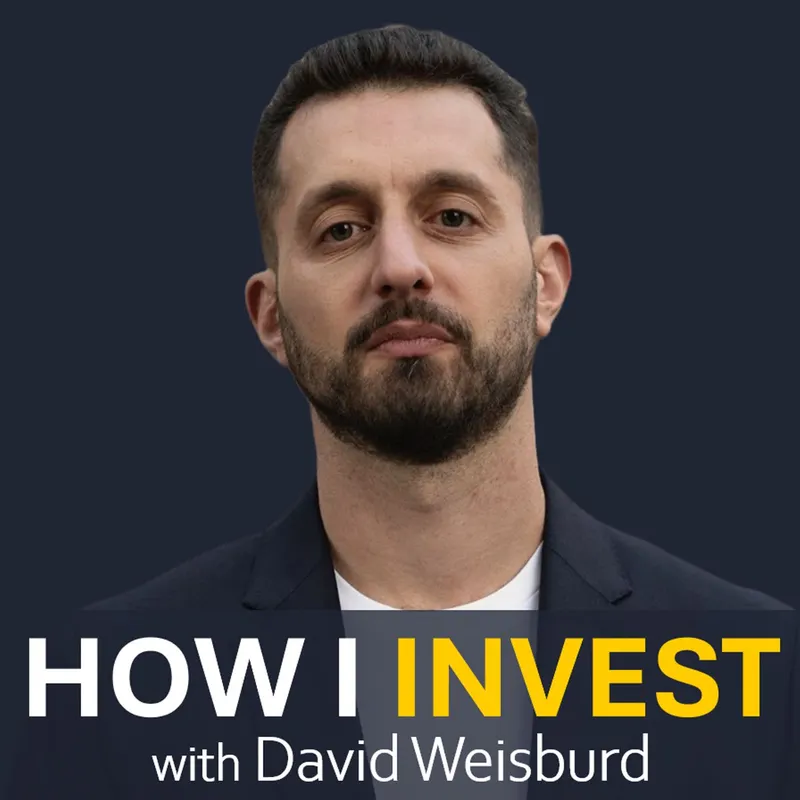
How I Invest with David Weisburd
David Weisburd·405 episodes
How I Invest with David Weisburd is a podcast that interviews the world's leading institutional investors. Previous guests include The Ford Foundation, Northwestern University Endowment, CalPERS, Stepstone, and other top limited partners.
Episodes
The best venture investors don't just identify great markets. They recognize exceptional founders before everyone else does. Michael Gilroy shares lessons from investing at Coatue, Microsoft's M12, Battery Ventures, Insight Partners, and now Marathon Management Partners. He explains what separates extraordinary founders from everyone else, how venture investors evaluate conviction versus consensus, why AI is changing the investment landscape, and how decades of experience shaped his founder-first investing philosophy. Highlights: Why the best venture investments begin with founders instead of markets. The founder characteristics Michael consistently looks for before investing. Lessons from investing across Coatue, M12, Battery Ventures, and Insight Partners. Why consensus thinking often produces average venture returns. How AI is reshaping the next generation of technology companies. The difference between backing great businesses versus great founders. Why founder obsession matters more than polished presentations. How exceptional venture investors develop long-term conviction. The lessons Michael carried into launching Marathon Management Partners. Why founder-first investing continues to outperform market-first investing. Guest Bio: Michael Gilroy is the Founding Partner of Marathon Management Partners, where he invests in exceptional technology companies across venture and growth stages. Before launching Marathon, he was a General Partner at Coatue, investing across both private and public technology markets. Earlier in his career, he held investing roles at M12 (Microsoft's Venture Fund), Battery Ventures, and Insight Partners, developing deep expertise in enterprise software, AI, and technology investing. Today, Michael brings a founder-first perspective shaped by decades of experience backing category-defining companies alongside many of the industry's leading investors. Are you interested in sponsoring the How I Invest Podcast? Please email David Weisburd at [email protected]. We’d like to thank AlphaSense for sponsoring this episode! Sponsor: AlphaSense is the AI-powered market intelligence platform trusted by 85% of the S&P 100, helping investment professionals make faster, more confident, data-driven decisions. Built for hedge funds, asset allocators, private venture capital firms, and investment bankers, AlphaSense uses advanced AI and powerful search across premium proprietary content to surface the insights that matter most—before the market moves. Elevate your research and stay ahead of the competition. Visit https://www.alpha-sense.com/howiinvest/ to learn more. Stay Connected with David Weisburd: X/Twitter: @dweisburd LinkedIn: <a href="https://www.linke
Most investors obsess over pre-tax returns. Scott Abookire argues they're measuring the wrong thing. As Chief Investment Officer of Pincus Capital, Scott oversees globally diversified public and private portfolios for multi-generational families. In this conversation, he explains why after-tax returns are the metric that truly matters, why he abandoned the traditional endowment model, and how sophisticated family offices think about risk, liquidity, and long-term compounding. Scott also shares the portfolio framework Pincus uses to manage drawdowns, why governance matters more than forecasts, and how the best investors stay disciplined when markets become emotional. Highlights: Why after-tax returns matter more than headline investment performance. The hidden cost taxes have on long-term wealth compounding. Why Pincus Capital moved away from the traditional endowment model. A better framework for portfolio construction based on liabilities instead of arbitrary asset allocation targets. How elite family offices manage risk without sacrificing long-term returns. The biggest mistakes investors make with private equity commitments. Why drawdown management is more important than volatility statistics. How long-term relationships create investment edge. Guest Bio: Scott Abookire is the Chief Investment Officer at Pincus Capital, a New York-based multi-family office that provides investment management and strategic advice to a select group of families with significant multi-generational wealth. Before joining Pincus Capital, he was a member of the investment team at the Metropolitan Museum of Art and previously worked at Cambridge Associates. Scott is a CFA Charterholder and earned his BS from Indiana University's Kelley School of Business. Are you interested in sponsoring the How I Invest Podcast? Please email David Weisburd at [email protected]. We’d like to thank AlphaSense for sponsoring this episode! Sponsor: AlphaSense is the AI-powered market intelligence platform trusted by 85% of the S&P 100, helping investment professionals make faster, more confident, data-driven decisions. Built for hedge funds, asset allocators, private venture capital firms, and investment bankers, AlphaSense uses advanced AI and powerful search across premium proprietary content to surface the insights that matter most—before the market moves. Elevate your research and stay ahead of the competition. Visit https://www.alpha-sense.com/howiinvest/ to learn more. Stay Connected with David Weisburd: X/Twitter: @dweisburd LinkedIn: https://www.linkedin.com/in/dweisburd/ Weisburd Pierce: https://www.weisburdcapital.com/ </
Most investors believe raising more capital is always a sign of success. Stephen Ketchum has spent nearly two decades proving the opposite. As Founder, CEO, and CIO of Sound Point Capital, Stephen built a $46 billion credit platform by resisting one temptation that destroys investment firms: deploying capital simply because it's available. Instead of maximizing assets under management, Sound Point limits fund sizes, turns away capital when opportunities aren't compelling, and prioritizes long-term trust over short-term fees. Stephen explains why excess capital weakens discipline, why incentives shape every organization, and why culture compounds just as powerfully as investment returns. This material does not constitute an offer to sell or a solicitation of an offer to buy any securities. It is being provided solely for informational and reference purposes only and is not intended to be, and must not be, the basis for any investment decision. Statements represent the subjective views of Sound Point as of the date of the recording and cannot be independently verified and are subject to change. All investing involves risks, including the risk of a total loss. Source for other lender software exposure: J.P. Morgan Global Alternative Investment Solutions, Goldman Sachs, J.P. Morgan Investment Bank Credit Research. February 2026. Past performance is not necessarily indicative of future results. Highlights: Why having more capital than ideas is one of investing's biggest risks. How Sound Point intentionally limits fund sizes instead of maximizing AUM. Why saying "no" to investors can strengthen long-term LP relationships. Why founder-led firms have an advantage in building trust with LPs. The hiring framework Stephen uses to avoid costly culture mistakes. Why incentives alone don't create great organizations. Why relationships, not money, have compounded the most over Guest Bio: Stephen Ketchum is the Founder, Managing Partner, CEO, and CIO of Sound Point Capital Management, a $46 billion alternative asset manager specializing in credit strategies. With more than 35 years in the credit markets, he previously led Media & Telecom Investment and Corporate Banking at Banc of America Securities and held senior investment banking roles at UBS and Donaldson, Lufkin & Jenrette. Are you interested in sponsoring the How I Invest Podcast? Please email David Weisburd at [email protected]. We’d like to thank AlphaSense for sponsoring this episode! Sponsor: AlphaSense is the AI-powered market intelligence platform trusted by 85% of the S&P 100, helping investment professionals make faster, more confident, data-driven decisions. Built for hedge funds, asset allocators, private venture capital firms, and investment bankers, AlphaSense uses advanced AI and
Everyone is asking which AI company will win. Lucas Swisher thinks investors are asking the wrong question. The biggest opportunities won't necessarily come from picking a single model or application. They'll come from understanding where durable advantages are created across the AI stack. Drawing on Coatue's investments in companies like OpenAI, Anthropic, Databricks, and SpaceX, Lucas explains why talent compounds, why data infrastructure may outlast today's application boom, why companies become harder—not easier—to disrupt as they scale, and how AI is reshaping the economics of software, semiconductors, and enterprise technology. Highlights: Why the AI application layer is far more resilient than many investors believe. The two AI infrastructure layers Lucas believes will generate the most enduring returns. Why companies above $10B may actually produce better venture outcomes than earlier-stage startups. How OpenAI and Anthropic continue extending their lead despite rapid industry innovation. Why talent has become the ultimate competitive moat in AI. How Coatue thinks about NVIDIA, custom silicon, and the next generation of chip companies. Why AI is making high-performing organizations more productive instead of replacing them. The biggest mistakes investors are making during today's AI investment cycle. Guest Bio: Lucas Swisher is a Co-Head of Growth Investing at Coatue Management, where he co-leads growth investing and software investing with a focus on AI, enterprise software, and cybersecurity. He has helped oversee Coatue's investments in OpenAI, Anthropic, SpaceX, and Databricks. Previously, he worked at Kleiner Perkins, Insight Partners, and Delivery Hero, and graduated from Harvard University. Are you interested in sponsoring the How I Invest Podcast? Please email David Weisburd at [email protected]. We’d like to thank AlphaSense for sponsoring this episode! Sponsor: AlphaSense is the AI-powered market intelligence platform trusted by 85% of the S&P 100, helping investment professionals make faster, more confident, data-driven decisions. Built for hedge funds, asset allocators, private venture capital firms, and investment bankers, AlphaSense uses advanced AI and powerful search across premium proprietary content to surface the insights that matter most—before the market moves. Elevate your research and stay ahead of the competition. Visit https://www.alpha-sense.com/howiinvest/ to learn more. Stay Connected with David Weisburd: X/Twitter: @dweisburd LinkedIn: https://www.linkedin.com/in/dweisburd/ Weisburd Pierce: https://www.weisburdcapital.com/ Stay Connected with Lu
After more than 400 conversations with investors, founders, CIOs, and capital allocators managing over $10 trillion, the tables finally turn. In this special episode, Curtis Pierce, Co-Founder of Weisburd Pierce and the How I Invest podcast, interviews host David Weisburd about the biggest ideas that have permanently changed his thinking. David argues that the greatest compounding force isn't capital. It's relationships, reputation, access to information, and the ability to surround yourself with excellence early in your career. From venture capital and family offices to LP-GP relationships and organizational culture, he shares the principles shaping how Weisburd Pierce invests and builds enduring partnerships. Highlights: Why relationships compound faster than money The hidden advantage of brand and access How elite investors think about long-term partnerships Why the best opportunities rarely reach everyone Lessons from interviewing 400+ world-class investors Why culture becomes the only lasting competitive advantage How to build conviction instead of chasing consensus The investing philosophy behind Weisburd Pierce About David Weisburd: David Weisburd is a Co-Founder of Weisburd Pierce and host of the How I Invest podcast. Previously, he served as Partner and Head of Venture Capital at 10X Capital, leading investments in companies including Robinhood, HoneyBook, Palantir, Circle, and DraftKings. Earlier in his career, he helped build venture-backed startups iSocket and RoomHunt, both of which were acquired. He has served on the boards of three public companies and holds degrees from Dartmouth's Tuck School of Business and Harvard University. About Curtis Pierce: Curtis Pierce is a Co-Founder of Weisburd Pierce and the How I Invest podcast. Previously, he served as Senior Vice President at 10X Capital, where he led venture investing and capital markets initiatives, including the firm's investment in Cerebras Systems. He began his career at Wells Fargo Securities and serves as President of the New York City Chapter of the University of Utah Alumni Association. Sponsor: AlphaSense is the AI-powered market intelligence platform trusted by 85% of the S&P 100, helping investment professionals make faster, more confident, data-driven decisions. Built for hedge funds, asset allocators, private venture capital firms, and investment bankers, AlphaSense uses advanced AI and powerful search across premium proprietary content to surface the insights that matter most—before the market moves. Elevate your research and stay ahead of the competition. Visit https://www.alpha-sense.com/howiinvest/ to learn more. Stay Connected with David Weisburd: X/Twitter: @dweisburd LinkedIn: https://www.linkedin.com/in/dwe
Most investors spend their lives searching for more ideas. Anthony Pompliano thinks the real money comes from finding the rare idea and refusing to let go. Across public markets, private markets, Bitcoin, startups, and careers, Anthony argues that value follows power laws: a tiny number of companies, people, and decisions drive almost everything. The hard part is not effort. It is recognizing durable asymmetry early, pressing your winners harder, and resisting the temptation to sell simply because liquidity is available. The deeper lesson is scarcity. Great companies are scarce. Great investors are scarce. Great people are scarce. And when you find one, the job is not to constantly rotate into something new. The job is to understand what you own, build conviction, and let compounding do the work. The Numbers Behind This Episode 46 companies have created 50% of the $90T of stock market value since 1925. The NASDAQ has historically been viewed as a 13% return vehicle, while venture funds average around 17% to 18%. Antonio Gracias reportedly invested in SpaceX 30 times. Anthony describes one company with 11 employees serving $50B in assets on its software platform. Highlights: Why 5% of ideas can drive 95% of outcomes How durability, asymmetry, and volatility create exceptional investments Why selling may be harder than buying Why liquidity can become a behavioral disadvantage How SpaceX became the ultimate example of pressing a winner Why concentration is often a sign of conviction Why “luck” may be more psychological than real How winning cultures are built through standards, exposure, and mission Guest Bio: Anthony Pompliano is an entrepreneur, investor, and one of the most widely followed voices at the intersection of business, finance, and technology. He is the founder and CEO of Professional Capital Management, author of the daily Pomp Letter newsletter, and host of The Pomp Podcast, where he interviews many of the world's leading investors, entrepreneurs, and executives. Are you interested in sponsoring the How I Invest Podcast? Please email David Weisburd at [email protected]. We’d like to thank AlphaSense for sponsoring this episode! Sponsor: AlphaSense is the AI-powered market intelligence platform trusted by 85% of the S&P 100, helping investment professionals make faster, more confident, data-driven decisions. Built for hedge funds, asset allocators, private venture capital firms, and investment bankers, AlphaSense uses advanced AI and powerful search across premium proprietary content to surface the insights that matter most—before the market moves. Elevate your research and stay ahead of the competition. Visit https://www.alpha-sense.com/howiin
Most investors assume that once a venture firm reaches $43 billion in assets under management, the real opportunities shift toward writing larger checks. Yuri Sagilov believes the opposite. General Catalyst continues to push deeper into seed because that's where investment themes are born, founder relationships are formed, and category-defining companies are first recognized. Rather than optimizing for larger deployments, the firm optimizes for ownership, conviction, and seeing the future before everyone else. It's also why General Catalyst intentionally removed signaling risk from its seed strategy, giving founders confidence that early backing won't become a disadvantage later. Throughout our conversation, Yuri explains why AI-native founders think differently, why the best venture firms remain generalists, and why the next decade of venture may look very different from the last. Highlights: Why General Catalyst believes seed delivers some of venture's best returns. How the firm eliminated signaling risk without sacrificing ownership. Why Anduril changed the way investors think about defense startups. Why today's AI-native founders are building from a completely different starting point. The case for staying a generalist instead of launching sector-specific funds. Why ownership matters more than the size of the initial investment. How private markets could keep the best companies private much longer. The relationship philosophy Yuri says has compounded the most throughout his career. Guest Bio: Yuri Sagilov is a Partner at General Catalyst, where he focuses on seed investing across the firm's global platform. Previously, he founded Wayfinder Ventures, a first-check seed fund whose portfolio companies have created more than $23 billion in value. Are you interested in sponsoring the How I Invest Podcast? Please email David Weisburd at [email protected]. We’d like to thank AlphaSense for sponsoring this episode! Sponsor: AlphaSense is the AI-powered market intelligence platform trusted by 85% of the S&P 100, helping investment professionals make faster, more confident, data-driven decisions. Built for hedge funds, asset allocators, private venture capital firms, and investment bankers, AlphaSense uses advanced AI and powerful search across premium proprietary content to surface the insights that matter most—before the market moves. Elevate your research and stay ahead of the competition. Visit https://www.alpha-sense.com/howiinvest/ to learn more. Stay Connected with David Weisburd: X/Twitter: @dweisburd LinkedIn: https://www.linkedin.com/in/dweisburd/ Weisburd Pierce: https://www.weisburdcapita
What separates the venture investors who consistently outperform from those who simply get lucky? In this episode, I sit down with Miguel Luina, Co-Head of Global Venture Capital at Hamilton Lane, to discuss how one of the world's largest private markets investors evaluates venture managers, constructs portfolios, and thinks about the future of innovation investing. Miguel explains why venture and growth have become an essential allocation for institutional investors, how LPs distinguish skill from luck, and why conviction investing, secondaries, and portfolio construction may be the biggest drivers of long-term returns. Highlights: Why venture capital is entering a new liquidity cycle driven by AI and IPOs How Hamilton Lane distinguishes skill from luck when selecting venture managers Why sourcing, selection, and access are the three pillars of venture investing The importance of conviction investing—and doubling down on exceptional companies Why venture secondaries represent one of the most undercapitalized opportunities in private markets How continuation vehicles are reshaping venture liquidity Why institutional investors can no longer ignore venture and growth allocations The evolution of portfolio construction across funds, co-investments, and secondaries How the best venture managers compound relationships over decades Miguel's timeless advice on investing in people and letting relationships compound Guest Bio: Miguel Luina is Co-Head of Global Venture Capital at Hamilton Lane, where he oversees the firm's global venture, growth equity, and technology investment strategy. He leads investment sourcing, due diligence, and portfolio management across venture capital funds, co-investments, secondaries, and growth equity opportunities while serving as a member of the firm's investment committee. Hamilton Lane manages and supervises more than $1 trillion in assets across private markets, making it one of the world's largest private markets investment firms. Are you interested in sponsoring the How I Invest Podcast? Please email David Weisburd at [email protected]. We’d like to thank AlphaSense for sponsoring this episode! Sponsor: AlphaSense is the AI-powered market intelligence platform trusted by 85% of the S&P 100, helping investment professionals make faster, more confident, data-driven decisions. Built for hedge funds, asset allocators, private venture capital firms, and investment bankers, AlphaSense uses advanced AI and powerful search across premium proprietary content to surface the insights that matter most—before the market moves. Elevate your research and stay ahead of the competition. Visit https://www.alpha-sense.com/howiinvest/ to learn more. Stay Connected with
What if the greatest edge in venture capital isn't having the biggest fund—but building the strongest relationships? In this episode, I sit down with Elizabeth Weil, Founder and Managing Partner of Scribble Ventures, to discuss how emerging venture firms can outperform by staying focused, collaborative, and relentlessly founder-centric. Elizabeth shares how she built Scribble into a $280 million venture platform by backing exceptional founders at the earliest stages, why venture is fundamentally a network effects business, and why staying authentic has become one of her greatest competitive advantages. Highlights: Why venture capital is ultimately a network effects business How Scribble Ventures raised an oversubscribed fund in one of the toughest fundraising environments Why relationships compound more than almost anything else in investing Elizabeth's framework for identifying exceptional founders before consensus forms The importance of staying authentic with founders, LPs, and partners Why smaller venture funds can outperform larger platforms How Scribble approaches ownership, fund sizing, and portfolio construction differently The value of saying no—to both founders and LPs—when the fit isn't right Why breakout investing extends beyond simply finding companies at seed Lessons from Twitter's hypergrowth years and Andreessen Horowitz's rise The role of curiosity, consistency, and daily habits in long-term investing success Why every career ultimately compounds through relationships Guest Bio: Elizabeth Weil is the Founder and Managing Partner of Scribble Ventures, an early-stage venture capital firm managing approximately $280 million in assets focused on partnering with exceptional founders at the pre-seed, seed, and breakout stages. Over more than two decades in venture capital and technology, she has invested in more than 60 technology companies including SpaceX, Slack, Coinbase, Whatnot, Gusto, Grab, Calm, Envoy, Hipcamp, and Daily.co. Are you interested in sponsoring the How I Invest Podcast? Please email David Weisburd at [email protected]. We’d like to thank AlphaSense for sponsoring this episode! Sponsor: AlphaSense is the AI-powered market intelligence platform trusted by 85% of the S&P 100, helping investment professionals make faster, more confident, data-driven decisions. Built for hedge funds, asset allocators, private venture capital firms, and investment bankers, AlphaSense uses advanced AI and powerful search across premium proprietary content to surface the insights that matter most—before the market moves. Elevate your research and stay ahead of the competition. Visit https://www.alpha-sense.com/howiinvest/ to learn more. Stay Connected w
What if AI's most valuable commodity isn't software—but the computing power that makes intelligence possible? In this episode, I sit down with Kush Bavaria, Co-Founder and CEO of Ornn, to discuss why AI compute is becoming the next global commodity and how financial markets are evolving to support it. Kush explains why GPU capacity should trade like oil or electricity, how derivatives and futures markets could reshape AI infrastructure, and why access to compute may become one of the defining competitive advantages of the next decade. We also explore data centers, energy constraints, AI capital markets, and what it takes to build a venture-backed company at just 22 years old. Highlights: Why AI compute could become the world's next strategic commodity How Ornn is building a financial exchange for GPU capacity Why data centers need futures markets and price indices The growing importance of compute in the AI arms race Why energy, not capital, may become the biggest bottleneck for AI The investment opportunity behind data centers and AI infrastructure How America can maintain its competitive advantage in AI Building one of the fastest-growing AI infrastructure startups at age 22 Why customer obsession has become Ornn's biggest competitive advantage Kush's biggest lesson about hiring and scaling a startup Guest Bio: Kush Bavaria is the Co-Founder and CEO of Ornn, an AI infrastructure company building the financial markets for compute. Backed by Andreessen Horowitz, Ornn creates standardized price indices, exchanges, and derivatives that allow GPU capacity to be bought, sold, and hedged like traditional commodities. The company helps data centers monetize future compute capacity while enabling AI companies, developers, hedge funds, and enterprises to access computing power more efficiently. Are you interested in sponsoring the How I Invest Podcast? Please email David Weisburd at [email protected]. We’d like to thank AlphaSense for sponsoring this episode! Sponsor: AlphaSense is the AI-powered market intelligence platform trusted by 85% of the S&P 100, helping investment professionals make faster, more confident, data-driven decisions. Built for hedge funds, asset allocators, private venture capital firms, and investment bankers, AlphaSense uses advanced AI and powerful search across premium proprietary content to surface the insights that matter most—before the market moves. Elevate your research and stay ahead of the competition. Visit https://www.alpha-sense.com/howiinvest/ to learn more. Stay Connected with David Weisburd: X/Twitter: @dweisburd LinkedIn: https://www.linkedin.com/in/dweisburd/ Weisburd Pierce: <a href="
What happens when computers stop being tools and start behaving like collaborators? In this episode, I sit down with Russ d’Sa, Founder and CEO of LiveKit, to discuss why voice AI may become one of the most important computing platforms of the next decade. Russ explains how LiveKit powers AI experiences for companies including Tesla and xAI, why voice is emerging as the natural interface for AI agents, and what the rise of digital labor means for workers, founders, and society. Highlights: Why voice AI is becoming the next major computing interface The difference between voice-first and multimodal AI experiences How AI agents are already transforming customer service, healthcare, and financial services Why speed and conversational intelligence unlocked the voice AI revolution Russ’s view on whether AI will create or destroy jobs Why creativity may become more valuable as execution gets commoditized The types of careers most resilient to AI disruption Why reputation and relationships remain difficult to automate The importance of agency, adaptability, and learning velocity in an AI-driven world How companies should think about integrating AI across their organizations Why AI-native companies may outperform incumbents over the next decade Russ’s framework for choosing execution risk over market risk when building startups The long-term bet that computers will become increasingly human-like Guest Bio: Russ d’Sa is the Founder and CEO of LiveKit, the leading infrastructure platform powering real-time voice, video, and AI applications. LiveKit has become foundational infrastructure for the emerging voice AI ecosystem, serving companies including Tesla and xAI while helping developers build next-generation AI agents and multimodal experiences. Are you interested in sponsoring the How I Invest Podcast? Please email David Weisburd at [email protected]. We’d like to thank AlphaSense for sponsoring this episode! Sponsor: AlphaSense is the AI-powered market intelligence platform trusted by 85% of the S&P 100, helping investment professionals make faster, more confident, data-driven decisions. Built for hedge funds, asset allocators, private venture capital firms, and investment bankers, AlphaSense uses advanced AI and powerful search across premium proprietary content to surface the insights that matter most—before the market moves. Elevate your research and stay ahead of the competition. Visit https://www.alpha-sense.com/howiinvest/ to learn more. Stay Connected with David Weisburd: X/Twitter: @dweisburd LinkedIn: https://www.linkedin.com/in/dweisburd/ Weisburd Pierce: <a href="https://www.weisburdcap
What if the biggest mistake LPs make in venture is backing the same managers over and over instead of constantly asking who they would invest in if they were starting from scratch today? In this episode, I sit down with Jamie Rhode, Partner at Screendoor, to discuss what separates the best emerging managers from the rest of the market. Jamie explains why so many venture funds look identical today, how LPs unintentionally create that dynamic, and why manager selection is really about finding GP-market fit. Highlights: Why so many emerging managers look exactly the same to LPs The concept of GP-market fit and why it matters more than ever What separates great investors from great fund managers Why endurance and adaptability matter more than early momentum The role of disagreement and respect in high-performing partnerships Jamie's framework for 90% rules-based investing and 10% "break-the-rule" investments Why fund one managers may have structural advantages over established firms How successful GPs refresh their networks before their edge disappears The founder flywheel effect and its impact on sourcing Why LPs should ask themselves: "Would I invest in this manager again today?" The hidden risks of strategy drift as venture firms mature Why sitting out a vintage year may be more costly than backing the wrong manager Guest Bio: Jamie Rhode is a Partner at Screendoor, a venture-focused fund-of-funds platform that anchors and supports the next generation of venture capital managers. Prior to Screendoor, she spent more than eight years at Verdis Investment Management, a single-family office where she focused on emerging venture managers, private equity, and hedge fund investments. Are you interested in sponsoring the How I Invest Podcast? Please email David Weisburd at [email protected]. We’d like to thank AlphaSense for sponsoring this episode! Sponsor: AlphaSense is the AI-powered market intelligence platform trusted by 85% of the S&P 100, helping investment professionals make faster, more confident, data-driven decisions. Built for hedge funds, asset allocators, private venture capital firms, and investment bankers, AlphaSense uses advanced AI and powerful search across premium proprietary content to surface the insights that matter most—before the market moves. Elevate your research and stay ahead of the competition. Visit https://www.alpha-sense.com/howiinvest/ to learn more. Stay Connected with David Weisburd: X/Twitter: @dweisburd LinkedIn: https://www.linkedin.com/in/dweisburd/ Weisburd Pierce: https://www.weisburdcapital.com/ Stay Connected w
What if the biggest edge in investing isn’t information, strategy, or even intelligence—but relationships? In this episode, I sit down with Ron Biscardi, Co-Founder and CEO of iConnections, to discuss what separates the world’s best allocators and investment managers from everyone else. Ron shares lessons from building the largest capital introduction ecosystem in alternatives, with more than 26,000 members across 80+ countries representing over $55 trillion in assets. We explore the role of EQ in investing, why relationships compound into investment advantages, how emerging managers should think about fundraising, and why some of the most successful investment firms are built by entrepreneurs rather than investors alone. We also discuss conviction, illiquidity, LP decision-making, manager selection, and the realities of navigating capital markets over decades. Highlights: What separates the top 1% of allocators and fund managers Why curiosity, humility, and continuous learning drive investment success The critical role of EQ and relationship-building in generating investment edge Why the best investors actively seek out viewpoints that challenge their own How emerging managers should approach fundraising and finding anchor investors The hidden psychology behind LP decision-making Why conviction must be balanced with adaptability The advantages of illiquidity and protecting investors from behavioral mistakes How LPs distinguish skill from luck in private markets Why many successful investment firms are built by entrepreneurs, not just investors Ron’s hardest lesson from decades in alternative investments and capital raising Guest Bio: Ron Biscardi is the Co-Founder and CEO of iConnections, the leading global capital introduction platform connecting investment managers, institutional allocators, and family offices. Under his leadership, iConnections has grown into the largest alternative investment ecosystem in the world, serving more than 26,000 members across 80+ countries that collectively represent over $55 trillion in assets under management. Are you interested in sponsoring the How I Invest Podcast? Please email David Weisburd at [email protected]. We’d like to thank AlphaSense for sponsoring this episode! Sponsor: AlphaSense is the AI-powered market intelligence platform trusted by 85% of the S&P 100, helping investment professionals make faster, more confident, data-driven decisions. Built for hedge funds, asset allocators, private venture capital firms, and investment bankers, AlphaSense uses advanced AI and powerful search across premium proprietary content to surface the insights that matter most—before the market moves. Elevate your research and stay ahead of the competition. Visit <a href="https://www.alpha-sense.com/howi
What if the secret to building generational wealth isn’t finding the perfect investment—but finding the right people and holding great businesses for decades? In this episode, I sit down with Jason Pritzker, Managing Director and Vice Chairman of The Pritzker Organization and founder of 53 Stations, to discuss the investing principles that helped shape one of America’s most successful business families. Jason shares the story of how the Pritzker family built its fortune, why long-term ownership creates powerful advantages, and how partnering with exceptional leaders compounds value over time. Highlights: How the Pritzker family built a multi-generational investment empire Why finding the right partners matters more than finding the perfect deal The advantages of long-term ownership versus constant buying and selling Lessons Jason learned transitioning from private equity to venture capital Why great founders matter more than investment theses How 53 Stations developed its venture investing strategy The surprising similarities and differences between PE and venture investing Why board structure and governance can make or break a company The role of customer introductions as a venture capital value-add How family values and upbringing shaped Jason’s investing philosophy Guest Bio: Jason Pritzker is Founder and Managing Partner of 53 Stations, the venture arm of The Pritzker Organization, where he also serves as Vice Chairman. Backed by an inaugural $187 million commitment, 53 Stations invests in early-stage technology companies, bringing flexibility and scale to its founder partnerships, building companies that stand the test of time. Are you interested in sponsoring the How I Invest Podcast? Please email David Weisburd at [email protected]. We’d like to thank AlphaSense for sponsoring this episode! Sponsor: AlphaSense is the AI-powered market intelligence platform trusted by 85% of the S&P 100, helping investment professionals make faster, more confident, data-driven decisions. Built for hedge funds, asset allocators, private venture capital firms, and investment bankers, AlphaSense uses advanced AI and powerful search across premium proprietary content to surface the insights that matter most—before the market moves. Elevate your research and stay ahead of the competition. Visit https://www.alpha-sense.com/howiinvest/ to learn more. Stay Connected with David Weisburd: X/Twitter: @dweisburd LinkedIn: https://www.linkedin.com/in/dweisburd/ Weisburd Pierce: https://www.weisburdcapital.com/ Stay Connected with Jason Pritzker: LinkedIn: <a href="https://www.lin
What if the biggest driver of long-term investment success isn't finding better investments, but helping investors avoid their own worst decisions? In this episode, I sit down with Ron Albahary, Chief Investment Officer at LNW, to discuss the unique challenges of managing wealth for taxable investors and why portfolio construction is as much about psychology as it is about finance. Highlights: Why managing investor behavior may be more important than picking investments The overlooked tax strategies that compound wealth over decades How framing risk in dollars instead of percentages changes decision-making Why fewer investment decisions often lead to better outcomes Lessons from three decades of market cycles and investment fads The role hedge funds and diversifiers play during periods of market stress Why some evergreen private market structures are misunderstood by investors The case for lower middle market private equity over mega-funds How AI is creating hidden concentration risk across portfolios Why humility may be one of the most underrated traits in investing Guest Bio: Ron Albahary is the Chief Investment Officer of LNW, where he oversees approximately $17 billion in assets and leads the firm's investment strategy across public and private markets. Over a career spanning more than three decades, Ron has served as both a Chief Executive Officer and Chief Investment Officer, helping oversee more than $175 billion in client assets. Are you interested in sponsoring the How I Invest Podcast? Please email David Weisburd at [email protected]. We’d like to thank AlphaSense for sponsoring this episode! Sponsor: AlphaSense is the AI-powered market intelligence platform trusted by 85% of the S&P 100, helping investment professionals make faster, more confident, data-driven decisions. Built for hedge funds, asset allocators, private venture capital firms, and investment bankers, AlphaSense uses advanced AI and powerful search across premium proprietary content to surface the insights that matter most—before the market moves. Elevate your research and stay ahead of the competition. Visit https://www.alpha-sense.com/howiinvest/ to learn more. Stay Connected with David Weisburd: X/Twitter: @dweisburd LinkedIn: https://www.linkedin.com/in/dweisburd/ Weisburd Pierce: https://www.weisburdcapital.com/ Stay Connected with Ron Albahary: LinkedIn: https://www.linkedin.com/in/ron-albahary-cfa/ Questions or topics you want us to discuss on How I Invest? Email us at <a href="mailto:david@weisburdcapital
What if the best venture investors aren’t chasing the hottest sectors—but the founders who would still be working on the problem long after the hype disappears? In this episode, I sit down with Ron Rofé, Co-Founder and General Partner of Rainfall Ventures, to discuss why founder quality matters more than industry trends, how non-consensus investing creates outsized opportunities, and what he has learned from backing over 120 startups and 230 founders. Ron shares the stories behind investments like Robinhood, Webflow, and Alma, explains why he prioritizes resilience over ideas, and discusses the founder traits that consistently predict success. Highlights: Why Ron avoids chasing consensus investment themes, including AI The founder traits that matter more than market size or industry How Rainfall backed Robinhood before it became a fintech giant Why resilience often matters more than the original business idea The surprising advantage of investing in non-consensus markets How great founders balance conviction with humility Why half of venture value is created before categories are fully recognized The networking philosophy that helped build Rainfall Ventures How helping founders creates long-term investing advantages Ron’s timeless advice: “Nobody knows anything” Guest Bio: Ron Rofé is the Co-Founder and General Partner of Rainfall Ventures, an early-stage venture capital firm that has backed category-defining companies including Robinhood, Webflow, Alma, and Harmonic. Over the past decade, Ron has invested in more than 120 startups representing over 230 founders, building a reputation for making non-consensus bets and identifying exceptional entrepreneurs before the market recognizes them. Are you interested in sponsoring the How I Invest Podcast? Please email David Weisburd at [email protected]. We’d like to thank AlphaSense for sponsoring this episode! Sponsor: AlphaSense is the AI-powered market intelligence platform trusted by 85% of the S&P 100, helping investment professionals make faster, more confident, data-driven decisions. Built for hedge funds, asset allocators, private venture capital firms, and investment bankers, AlphaSense uses advanced AI and powerful search across premium proprietary content to surface the insights that matter most—before the market moves. Elevate your research and stay ahead of the competition. Visit https://www.alpha-sense.com/howiinvest/ to learn more. Stay Connected with David Weisburd: X/Twitter: @dweisburd LinkedIn: https://www.linkedin.com/in/dweisburd/ Weisburd Pierce: https://www.weisburdcapital.com/ Stay Connected wit
What happens when one investor sits at the intersection of venture capital, natural resources, AI, space infrastructure, and geopolitics? In this episode, I sit down with Rob Stephens, Director of Investments at Spider Management, to discuss how institutional investors are adapting to a world where private markets are capturing more value, AI is reshaping capital allocation, and the boundaries between asset classes are disappearing. Rob shares lessons from both the GP and LP sides of the table, explains why traditional portfolio construction frameworks may be outdated, and explores how themes like power generation, data centers, space infrastructure, and venture capital are becoming increasingly interconnected. We also discuss emerging managers, co-investments, continuation vehicles, concentration versus diversification, and the future of private markets. Highlights: How experience as both a GP and LP changes investment decision-making Why traditional asset allocation buckets may no longer reflect reality The growing divide between investors with access to elite private companies and everyone else Why Anthropic, OpenAI, and SpaceX are reshaping private market investing The rise of venture co-investments and SPVs How LPs evaluate alignment when reviewing co-investment opportunities Why references matter more than track records when evaluating spinout managers The debate between concentration and diversification in institutional portfolios How AI, power generation, natural resources, and venture capital are becoming deeply interconnected Why data centers, energy infrastructure, and even space-based computing may become major investment themes Guest Bio: Rob Stephens is Director of Investments at Spider Management, the University of Richmond’s $7 billion investment office and OCIO platform. He leads investments across venture capital, private equity, real assets, and thematic public market strategies, with a focus on deep tech, space, defense, AI, energy, natural resources, and China. Prior to joining Spider in 2022, Rob was a Managing Director at DAC Management in Hong Kong and New York, where he specialized in Chinese markets and cross-border investing. Are you interested in sponsoring the How I Invest Podcast? Please email David Weisburd at [email protected]. We’d like to thank AlphaSense for sponsoring this episode! Sponsor: AlphaSense is the AI-powered market intelligence platform trusted by 85% of the S&P 100, helping investment professionals make faster, more confident, data-driven decisions. Built for hedge funds, asset allocators, private venture capital firms, and investment bankers, AlphaSense uses advanced AI and powerful search across premium proprietary content to surface the insights that matter most—before the market moves. Elev
What if the biggest edge in investing today isn't having more information—but knowing how to turn information into conviction? In this episode, I sit down with Matt Wells to discuss how AI is reshaping the investment process, why investors are drowning in data but starving for conviction, and where information alpha still exists in increasingly efficient markets. Matt explains the evolution of expert networks, how the best investors use expert calls and channel checks to build differentiated insights, and why qualitative information often drives quantitative outcomes. We also explore decision-grade AI, conviction building, private market diligence, and how the role of the analyst is changing in an AI-driven world. Highlights: Why investors today are drowning in data but starving for conviction The difference between information and decision-grade intelligence How expert calls evolved from niche hedge fund tools into scalable research platforms Why qualitative signals often become quantitative outcomes The role of channel checks in forecasting company performance How AI can help identify patterns across thousands of expert conversations Why conviction matters more than information during periods of volatility The future of analysts as architects rather than spreadsheet builders How grounded AI differs from general-purpose AI models Why human relationships remain irreplaceable in investing and business Guest Bio: Matt Wells is a technology executive and entrepreneur focused on applying artificial intelligence and market intelligence tools to investment research and decision-making. Prior to joining AlphaSense, he founded and scaled multiple businesses, bringing a unique operator's perspective to financial technology and research workflows. Today, he works at the intersection of AI, expert intelligence, and investment research, helping institutional investors, corporations, and advisors turn overwhelming amounts of information into actionable insights and higher-conviction decisions. Are you interested in sponsoring the How I Invest Podcast? Please email David Weisburd at [email protected]. Stay Connected with David Weisburd: X/Twitter: @dweisburd LinkedIn: https://www.linkedin.com/in/dweisburd/ Weisburd Pierce: https://www.weisburdcapital.com/ Stay Connected with Matthew Wells: LinkedIn: https://www.linkedin.com/in/matthew-wells-932b6a2/ Questions or topics you want us to discuss on How I Invest? Email us at [email protected]. Disclaimer: This podcast is for informational purposes only and does
What if the best private equity opportunities are hiding inside businesses that everyone else thinks are too complicated to touch? In this episode, I sit down with Josh Adams, Partner at OpenGate Capital, to discuss why complexity has become one of the firm's greatest competitive advantages. Josh explains how OpenGate built a specialization around corporate carve-outs, why Europe offers more inefficiency than North America, and how operational improvements drive value creation in today's market. We also discuss sourcing, specialization, alignment, decision-making, and why focus has become increasingly important as private equity continues to evolve. Highlights: Why Europe has become a bigger opportunity than North America The hidden alpha inside corporate carve-outs and orphaned assets Why OpenGate thinks of itself as operational engineers, not financial engineers How complexity creates a sustainable competitive advantage The sourcing strategy that puts OpenGate in front of deals before they reach market Why speed and certainty consistently win transactions Lessons learned from Platinum Equity's operating model The dangers of chasing trends and losing strategic focus Why specialist firms may outperform as private equity consolidates How alignment changes investment behavior and decision-making The compounding power of relationships throughout a career Guest Bio: Josh Adams is a Partner at OpenGate Capital, where he is responsible for origination, execution, fundraising, and firm management, and serves as a member of the firm's Investment Committee. Since joining OpenGate in 2012, he has helped build the firm into one of the leading specialists in complex corporate carve-outs across Europe and North America. Prior to OpenGate, Josh was a Vice President at Platinum Equity, leading the firm's European business development efforts from London. He began his career as an accountant and is a member of the Association of Chartered Certified Accountants (ACCA). Are you interested in sponsoring an episode? Please email David Weisburd at [email protected]. We’d like to thank AlphaSense for sponsoring this episode! Sponsor: AlphaSense is the AI-powered market intelligence platform trusted by 85% of the S&P 100, helping investment professionals make faster, more confident, data-driven decisions. Built for hedge funds, asset allocators, private venture capital firms, and investment bankers, AlphaSense uses advanced AI and powerful search across premium proprietary content to surface the insights that matter most—before the market moves. Elevate your research and stay ahead of the competition. Visit https://www.alpha-sense.com/howiinvest/ to learn more. Stay Connected with David Weisb
What separates the venture investors who generate extraordinary returns from those who simply participate in the asset class? In this episode, I sit down with Jeff Diehl, Managing Partner and Head of Investments at Adams Street Partners, one of the world's largest private markets investors with more than $70 billion in assets under management. Jeff shares lessons from over four decades of venture investing, including why access to top managers matters more than almost anything else, what 14,000 realized venture exits have taught Adams Street about return generation, and why portfolio construction often matters more than stock picking. Highlights: Why access to top-quartile venture managers is the single most important factor in venture investing The data behind venture capital's unmatched persistence of returns What Adams Street learned from nearly 14,000 realized venture-backed company exits Why just 7% of companies generated 100% of venture gains The critical role of portfolio construction and time diversification How Adams Street uses co-investments and secondaries to increase exposure to breakout winners Why venture capital succession planning is notoriously difficult The relationship between incentives, culture, and long-term investment performance Whether venture capital is becoming more concentrated among a handful of mega-firms Why private markets continue to capture a growing share of global growth opportunities Jeff's most expensive investing lesson and why mistakes are essential for becoming a great investor Guest Bio: Jeff Diehl is the Managing Partner and Head of Investments at Adams Street Partners, a global private markets investment manager with more than $70 billion in assets under management across private equity and private credit strategies. He oversees the firm's investment activities and overall management while serving as Chairman of both the Portfolio Construction Committee and Executive Committee. Under his leadership, Adams Street has expanded its global footprint to more than 330 professionals across 14 offices worldwide. Are you interested in sponsoring the How I Invest Podcast? Please email David Weisburd at [email protected]. We’d like to thank AlphaSense for sponsoring this episode! Sponsor: AlphaSense is the AI-powered market intelligence platform trusted by 85% of the S&P 100, helping investment professionals make faster, more confident, data-driven decisions. Built for hedge funds, asset allocators, private venture capital firms, and investment bankers, AlphaSense uses advanced AI and powerful search across premium proprietary content to surface the insights that matter most—before the market moves. Elevate your research and stay ahead of the competition. Visit <a href="https://www.alpha-sense.com/
What if the biggest opportunity in private markets isn’t finding the next startup—but owning the next public company years before it ever rings the bell? In this episode, I sit down with Matt Witheiler, Head of Late-Stage Growth at Wellington Management, to discuss how the line between public and private markets continues to blur. Matt explains why companies are staying private longer, why public investors are starved for growth, and how late-stage investing differs from both venture capital and public equities. We also explore IPO markets, valuation discipline, liquidity dynamics, and why the best companies often justify paying up for quality. Highlights: Why OpenAI, Anthropic, and SpaceX may reignite the IPO market The growing shortage of high-growth companies in public markets Why small-cap investing has fundamentally changed over the last decade How late-stage investors evaluate hype versus fundamentals Why founders optimize for partners, not the highest valuation The advantage Wellington brings as both a private and public market investor Why valuation discipline matters more than bargain hunting Matt’s biggest investing miss and what SpaceX taught him about exceptional founders Guest Bio: Matt Witheiler is the Head of Late-Stage Growth at Wellington Management, where he leads the firm’s private company investing activities across technology, healthcare, consumer, and financial services. Since joining Wellington in 2016, he has helped build one of the largest and most respected late-stage growth investing platforms, leveraging the firm’s deep public market expertise to identify future public company leaders. Prior to Wellington, Matt was a General Partner at Flybridge Capital Partners and earlier held operating roles in technology, including co-founding AnandTech.com. He has been named to the Forbes Midas List for six consecutive years and is widely recognized as one of the leading investors at the intersection of private and public markets. Are you interested in sponsoring the How I Invest Podcast? Please email David Weisburd at [email protected]. We’d like to thank AlphaSense for sponsoring this episode! Sponsor: AlphaSense is the AI-powered market intelligence platform trusted by 85% of the S&P 100, helping investment professionals make faster, more confident, data-driven decisions. Built for hedge funds, asset allocators, private venture capital firms, and investment bankers, AlphaSense uses advanced AI and powerful search across premium proprietary content to surface the insights that matter most—before the market moves. Elevate your research and stay ahead of the competition. Visit https://www.alpha-sense.com/howiinvest/ to learn more. Stay Connected with David Weisburd: X/Twit
What if the biggest edge in venture capital isn’t manager selection—but earning access to the managers everyone already knows are the best? In this episode, I sit down with Mark Anson, CEO, President, and CIO of Commonfund, to discuss what he has learned managing capital across some of the world’s most influential institutions, including CalPERS, the Bass Family Office, and Commonfund. Mark explains why venture capital remains one of the most persistent alpha-generating asset classes, how LPs earn access to top managers, and why relationships, responsiveness, and knowledge-sharing matter more than check size. We also explore performance persistence, the illiquidity premium, co-investments, and the lessons Mark has learned managing capital across multiple decades and market cycles. Highlights: The surprising story of how donuts helped unlock access to a top-tier VC fund Why venture capital has the greatest performance dispersion in investing The difference between average and top-quartile venture returns How Commonfund evaluates emerging managers before the market finds them Why access in venture is earned, not bought The case for a rules-based approach to venture investing Why innovation is completely uncorrelated with the business cycle Mark’s framework for managing “human capital” throughout a career Guest Bio: Mark Anson is the Chief Executive Officer, President, and Chief Investment Officer of Commonfund, where he oversees more than $35 billion in assets serving endowments, foundations, and institutional investors. Throughout his career, Mark has led investment organizations at some of the world’s most prominent institutions, including CalPERS, the Bass Family Office, British Telecom Pension Scheme, Hermes Pension Management, and Nuveen Investments. A prolific author, researcher, and educator, he has published more than 100 journal articles and several leading finance textbooks, including The Handbook of Alternative Assets. Are you interested in sponsoring the How I Invest Podcast? Please email David Weisburd at [email protected]. We’d like to thank AlphaSense for sponsoring this episode! Sponsor: AlphaSense is the AI-powered market intelligence platform trusted by 85% of the S&P 100, helping investment professionals make faster, more confident, data-driven decisions. Built for hedge funds, asset allocators, private venture capital firms, and investment bankers, AlphaSense uses advanced AI and powerful search across premium proprietary content to surface the insights that matter most—before the market moves. Elevate your research and stay ahead of the competition. Visit https://www.alpha-sense.com/howiinvest/ to learn more. Stay Connected with David Weisburd: X/Twitter: @dweisburd Li
What if the biggest investment opportunity of the next decade isn’t AI itself—but the companies building the infrastructure and workflows that allow AI agents to actually do work? In this episode, I sit down with David Blumberg, Founder and Managing Partner of Blumberg Capital, to discuss why he believes agentic AI is still in the first inning of a multi-decade transformation. David explains how AI agents will reshape productivity across industries, why vertical software companies with proprietary data have a major advantage, and how network effects are evolving through AI-powered data flywheels. We also explore the future of work, the rise of AI-native businesses, and why human relationships remain one of the few enduring advantages in an increasingly automated world. Highlights: Why agentic AI could become a larger market than software itself The hidden infrastructure needed for AI agents to transact autonomously How proprietary data creates durable AI moats Why vertical AI companies may outperform general-purpose models The concept of AI-powered data flywheels and compounding network effects How AI could dramatically increase productivity without eliminating opportunity Why the next generation of Fortune 500 companies is being built right now The enduring importance of relationships in a technology-driven world Guest Bio: David Blumberg is the Founder and Managing Partner of Blumberg Capital, an early-stage venture capital firm focused on backing visionary entrepreneurs building global B2B technology companies. Over a career spanning venture capital, operating leadership, and institutional investing, he has helped build and back category-defining businesses including Nutanix, Braze, DoubleVerify, Trulioo, and Check Point Software Technologies. Prior to founding Blumberg Capital, David held investment roles with Claridge, Apax Partners, Adler & Co., and T. Rowe Price, and was part of the early leadership team at Check Point. He is widely recognized for his focus on enterprise technology, cybersecurity, fintech, and the next wave of AI-driven innovation. Are you interested in sponsoring the How I Invest Podcast? Please email David Weisburd at [email protected]. We’d like to thank AlphaSense for sponsoring this episode! Sponsor: AlphaSense is the AI-powered market intelligence platform trusted by 85% of the S&P 100, helping investment professionals make faster, more confident, data-driven decisions. Built for hedge funds, asset allocators, private venture capital firms, and investment bankers, AlphaSense uses advanced AI and powerful search across premium proprietary content to surface the insights that matter most—before the market moves. Elevate your research and stay ahead of the competition. Visit https://w
What if the biggest opportunity in venture today isn’t finding the next unicorn—but solving the liquidity problem created by companies staying private twice as long as they used to? In this episode, I sit down with Ravi Viswanathan, Founder and Managing Partner of NewView Capital, to discuss how the venture ecosystem is evolving beyond the traditional fund model. Ravi explains why he left NEA to build a firm focused on liquidity solutions, how company-led secondaries are becoming a critical tool for founders and employees, and why the future of venture may depend on balancing long-term ownership with thoughtful liquidity. We also explore the DPI drought, continuation vehicles, cap table management, and why relationships remain the ultimate source of edge in venture capital. Highlights: Why companies staying private longer created a structural liquidity gap The rise of company-led secondaries and founder-controlled liquidity How employee liquidity can improve retention and long-term alignment Why the venture industry can no longer ignore DPI The tension between FOMO investing and long-term conviction How continuation vehicles may reshape venture portfolios Why capital often masks product-market fit during boom cycles The relationship-driven lesson Ravi wishes he learned earlier in his career Guest Bio: Ravi Viswanathan is the Founder and Managing Partner of NewView Capital, a growth-stage investment firm managing more than $3 billion and focused on primary, secondary, and hybrid investments in leading technology companies. Prior to founding NewView in 2018, Ravi spent 15 years as a General Partner at NEA, where he backed category-defining companies including MuleSoft, Braintree, Acquia, Cyence, and GlobalLogic. Over more than two decades in venture capital, Ravi has built a reputation for partnering with exceptional founders, identifying enduring technology businesses, and helping shape the evolution of liquidity and capital formation in private markets. Are you interested in sponsoring the How I Invest Podcast? Please email David Weisburd at [email protected]. We’d like to thank AlphaSense for sponsoring this episode! Sponsor: AlphaSense is the AI-powered market intelligence platform trusted by 85% of the S&P 100, helping investment professionals make faster, more confident, data-driven decisions. Built for hedge funds, asset allocators, private venture capital firms, and investment bankers, AlphaSense uses advanced AI and powerful search across premium proprietary content to surface the insights that matter most—before the market moves. Elevate your research and stay ahead of the competition. Visit https://www.alpha-sense.com/howiinvest/ to learn more. Stay Connected with David Weisburd: <p
What if the biggest inefficiency in investing today isn’t asset selection—but the fact that most investors still optimize for pre-tax returns instead of after-tax outcomes? In this episode, I sit down with Jeff Bramel, Partner at a16z Perennial, to discuss why real assets remain one of the most misunderstood areas of institutional investing. Jeff explains how structural diversification works beyond traditional portfolio theory, why private real estate behaves differently from public markets, and how tax efficiency can dramatically reshape long-term returns for taxable investors. We also explore opportunistic investing, portfolio construction, risk management, and why real estate may offer one of the largest remaining pockets of structural alpha. Highlights: Why after-tax returns matter more than headline returns The hidden inefficiencies inside private real estate markets How depreciation transforms the economics of taxable investing Why structural diversification matters more than historical correlations The problem with overly rigid institutional asset allocation models How opportunistic investing can add hundreds of basis points annually Why higher-return assets often become safer over long time horizons The overlooked relationship between taxes, compounding, and alpha Guest Bio: Jeff Bramel is a Partner at a16z Perennial, where he focuses on real assets and institutional portfolio construction. He has more than 25 years of experience managing large and complex investment portfolios across public and private markets, with expertise spanning real estate, infrastructure, energy, agriculture, asset-backed investments, and alternative strategies. Jeff is known for applying first-principles thinking to portfolio management, combining deep quantitative analysis with a focus on structural diversification, cash-flowing assets, and after-tax optimization for long-term investors. Are you interested in sponsoring the How I Invest Podcast? Please email David Weisburd at [email protected]. We’d like to thank AlphaSense for sponsoring this episode! Sponsor: AlphaSense is the AI-powered market intelligence platform trusted by 85% of the S&P 100, helping investment professionals make faster, more confident, data-driven decisions. Built for hedge funds, asset allocators, private venture capital firms, and investment bankers, AlphaSense uses advanced AI and powerful search across premium proprietary content to surface the insights that matter most—before the market moves. Elevate your research and stay ahead of the competition. Visit https://www.alpha-sense.com/howiinvest/ to learn more. Stay Connected with David Weisburd: X/Twitter: @dweisburd LinkedIn:
What if the greatest threat to generational wealth isn’t bad investing—but the inability to think beyond the next liquidity event? In this episode, I sit down with Eric Becker, Founder and Chairman of Cresset, to discuss why he built a modern multi-family office after decades as an entrepreneur and investor. Eric explains the structural conflicts inside traditional wealth management, why most ultra-high-net-worth families lack true family office infrastructure, and how long-term thinking changes the way businesses, portfolios, and families compound over generations. We also explore governance, tax-aware investing, succession planning, and lessons from companies that have endured for centuries. Highlights: Why most wealth management firms fail entrepreneurs after liquidity events The hidden conflicts embedded inside traditional wirehouses Why family governance matters as much as investment performance The concept of “asset protection as compartments in a submarine” Why the next generation is often the greatest risk to family wealth How enduring companies survive across centuries and multiple crises Why building a business for the long term paradoxically accelerates growth The overlooked importance of stewardship in investing and leadership Guest Bio: Eric Becker is the Founder and Chairman of Cresset, a multi-family office and wealth management platform overseeing more than $250 billion in assets under management and advisement. Prior to founding Cresset, Eric built and invested in multiple businesses as an entrepreneur, beginning with a healthcare technology company he launched while attending the University of Chicago. He is also the author of The Long Game, a book exploring the lessons behind companies and families that have endured for generations, drawing on interviews with some of the world’s longest-lasting organizations and business leaders. Are you interested in sponsoring the How I Invest Podcast? Please email David Weisburd at [email protected]. We’d like to thank AlphaSense for sponsoring this episode! Sponsor: AlphaSense is the AI-powered market intelligence platform trusted by 85% of the S&P 100, helping investment professionals make faster, more confident, data-driven decisions. Built for hedge funds, asset allocators, private venture capital firms, and investment bankers, AlphaSense uses advanced AI and powerful search across premium proprietary content to surface the insights that matter most—before the market moves. Elevate your research and stay ahead of the competition. Visit https://www.alpha-sense.com/howiinvest/ to learn more. Stay Connected with David Weisburd: X/Twitter: @dweisburd LinkedIn: https://www.linkedin.com/
What if the biggest problem in asset management today isn’t investment performance—but misalignment between managers and the investors they serve? In this episode, I sit down with Luke Sarsfield, Chairman and CEO of Ridgepost Capital, to discuss how incentive structures shape long-term outcomes in private markets. Luke explains why Ridgepost leaves most carried interest with underlying managers, how alignment creates better LP relationships, and why middle market specialists can offer diversification that many large-cap private portfolios lack. We also explore long-term thinking, public versus private market pressures, culture, mentorship, and why compounding relationships may be the most valuable asset in investing. Highlights: Why alignment matters more than asset gathering in private markets The hidden correlation risk inside large private equity portfolios Why Ridgepost focuses on management fee ownership over carry How long-term incentives improve investment decision-making The tension between public market short-termism and private market compounding Why culture and mentorship compound harder than capital The importance of building teams without creating groupthink Why relationships become the ultimate competitive advantage over time Guest Bio: Luke Sarsfield is Chairman, Director, and Chief Executive Officer of Ridgepost Capital, an investment platform focused on partnering with specialized alternative asset managers. Prior to Ridgepost, he spent more than two decades at Goldman Sachs, where he served in several senior leadership roles including Global Co-Head of Goldman Sachs Asset Management and Chief Commercial Officer of Asset and Wealth Management. Across his career, Luke has focused on building enduring investment businesses, aligning incentives between managers and LPs, and helping scale world-class investment platforms with a long-term orientation. Are you interested in sponsoring the How I Invest Podcast? Please email David Weisburd at [email protected]. We’d like to thank AlphaSense for sponsoring this episode! Sponsor: AlphaSense is the AI-powered market intelligence platform trusted by 85% of the S&P 100, helping investment professionals make faster, more confident, data-driven decisions. Built for hedge funds, asset allocators, private venture capital firms, and investment bankers, AlphaSense uses advanced AI and powerful search across premium proprietary content to surface the insights that matter most—before the market moves. Elevate your research and stay ahead of the competition. Visit https://www.alpha-sense.com/howiinvest/ to learn more. Stay Connected with David Weisburd: X/Twitter: @dweisburd LinkedIn: https://ww
What if the biggest opportunity in private equity today isn’t buying companies—but buying liquidity from investors who are forced to sell great assets for reasons unrelated to performance? In this episode, I sit down with Ryan Levitt, Co-Head of LP Secondaries at ICG, to discuss why secondaries have evolved into one of the most attractive areas in private markets. Ryan explains how LP secondaries can outperform traditional buyouts with lower downside risk, why DPI pressures are reshaping institutional portfolios, and how rules-based allocators create structural inefficiencies. We also explore return dispersion, continuation vehicles, GP relationships, and why access and information matter more than sourcing in modern secondaries investing. Highlights: Why secondaries have historically outperformed most buyout funds The growing return dispersion inside private equity How DPI pressures are fueling record secondary market activity Why LPs often sell their best assets instead of their worst The hidden inefficiencies created by rules-based allocators Why access and information matter more than sourcing in secondaries How continuation vehicles are changing private markets liquidity Why culture and mentorship compound harder than compensation early in a career Guest Bio: Ryan Levitt is Co-Head of LP Secondaries at ICG, a global alternative asset manager with more than $126 billion in assets under management across private equity, credit, structured capital, and real assets. At ICG, Ryan focuses on originating and leading LP secondary transactions, co-investments, and primary fund commitments globally. Prior to joining ICG, he was a Partner and Portfolio Manager at Pomona Capital, where he helped build the firm’s private wealth interval fund platform, and earlier in his career he invested across direct equity and debt transactions at GE Capital. Are you interested in sponsoring the How I Invest Podcast? Please email David Weisburd at [email protected]. We’d like to thank AlphaSense for sponsoring this episode! Sponsor: AlphaSense is the AI-powered market intelligence platform trusted by 85% of the S&P 100, helping investment professionals make faster, more confident, data-driven decisions. Built for hedge funds, asset allocators, private venture capital firms, and investment bankers, AlphaSense uses advanced AI and powerful search across premium proprietary content to surface the insights that matter most—before the market moves. Elevate your research and stay ahead of the competition. Visit https://www.alpha-sense.com/howiinvest/ to learn more. Stay Connected with David Weisburd: X/Twitter: @dweisburd LinkedIn: https://www.linkedin.com/in/dweisbur
What if the biggest venture returns are already gone by the time a category has a name? In this episode, I sit down with Niko Bonatsos, Founder and Managing Partner of Verdict, to discuss why the best venture opportunities emerge before consensus exists. Niko explains why “50% of the profits are made before a vertical even has a name,” how he identifies “freak” founders with extreme rates of learning, and why most VCs are structurally incentivized to follow momentum instead of creating conviction. We also explore why consumer and gaming are deeply undervalued today, how AI is changing company formation, and why relationship-building compounds harder than capital in venture investing. Highlights: Why the biggest venture profits are captured before categories are named The definition of a “freak” founder and why rate of learning matters most Why most VCs optimize for markups instead of outcomes How AI is compressing company-building timelines dramatically Why consumer, gaming, and crypto are deeply underappreciated today The hidden advantage of immigrant and neurodivergent founders Why “small thinking” competes with breakthrough ideas How relationship-building became General Catalyst’s long-term edge Guest Bio: Niko Bonatsos is the Founder and Managing Partner of Verdict, an early-stage venture firm focused on backing unconventional founders building entirely new categories. Prior to launching Verdict, he spent 15 years at General Catalyst, where he helped expand the firm from an emerging venture platform into one of the world’s leading investment franchises. Niko is known for investing early in overlooked markets, partnering with highly technical founders, and developing a reputation for identifying “freak” entrepreneurs with exceptional rates of learning and conviction. Are you interested in sponsoring the How I Invest Podcast? Please email David Weisburd at [email protected]. We’d like to thank AlphaSense for sponsoring this episode! Sponsor: AlphaSense is the AI-powered market intelligence platform trusted by 85% of the S&P 100, helping investment professionals make faster, more confident, data-driven decisions. Built for hedge funds, asset allocators, private venture capital firms, and investment bankers, AlphaSense uses advanced AI and powerful search across premium proprietary content to surface the insights that matter most—before the market moves. Elevate your research and stay ahead of the competition. Visit https://www.alpha-sense.com/howiinvest/ to learn more. Stay Connected with David Weisburd: X/Twitter: @dweisburd LinkedIn: https://www.linkedin.com/in/dweisburd/ Weisburd Capital: h
What if the biggest opportunity in venture today isn’t funding new companies—but solving the liquidity crisis created by companies staying private for 20 years? In this episode, I sit down with Jared Carmel, Founder and Managing Partner of Manhattan Venture Partners, to discuss how venture secondaries evolved from a gray market into critical infrastructure for private capital markets. Jared explains why nearly $3 trillion is now trapped in aging venture funds, how DPI became the defining metric for LPs, and why secondary liquidity is now essential for founders, employees, and venture firms alike. We also explore continuation vehicles, cap table management, institutionalization of the secondary market, and why trust compounds faster than capital in private investing. Highlights: Why companies staying private for 20+ years changed venture forever The $3T liquidity problem sitting inside venture capital Why DPI matters more than IRR for LPs today How secondaries became institutionalized after years as a “gray market” Why trust compounds faster than capital in private markets The hidden risks inside retail SPVs and secondary hype cycles How continuation vehicles are reshaping venture fund liquidity Why “land and expand” became MVP’s core investment strategy Guest Bio: Jared Carmel is the Founder and Managing Partner of Manhattan Venture Partners, a leading venture secondary investment firm managing billions across primary and secondary private market investments. He has spent more than a decade helping institutionalize venture secondaries, building liquidity solutions for founders, employees, and investors in many of the world’s most valuable private technology companies. Through MVP’s “Land and Expand” strategy, Jared has invested across category-defining businesses including SpaceX, Anthropic, Databricks, xAI, and Coinbase, while helping shape the modern private liquidity ecosystem. Are you interested in sponsoring the How I Invest Podcast? Please email David Weisburd at [email protected]. We’d like to thank AlphaSense for sponsoring this episode! Sponsor: AlphaSense is the AI-powered market intelligence platform trusted by 85% of the S&P 100, helping investment professionals make faster, more confident, data-driven decisions. Built for hedge funds, asset allocators, private venture capital firms, and investment bankers, AlphaSense uses advanced AI and powerful search across premium proprietary content to surface the insights that matter most—before the market moves. Elevate your research and stay ahead of the competition. Visit https://www.alpha-sense.com/howiinvest/ to learn more. Stay Connected with David Weisburd: X/Twitter: @dweisburd LinkedIn: <a href="https://www.linkedin.com/in/dwei
What if the biggest source of alpha for taxable investors isn’t stock picking—but minimizing friction inside the portfolio itself? In this episode, I sit down with Brent Sullivan, independent tax analyst and author of one of the leading research platforms on tax-aware investing, to discuss why tax alpha has become one of the fastest-growing themes in wealth management. Brent explains how long-short tax-loss harvesting strategies evolved from niche institutional products into mainstream planning tools, why tracking error is often misunderstood, and how sophisticated investors think about balancing risk, leverage, and after-tax returns. We also explore trader funds, operational risk, and why tax management may matter more than active management for many investors. Highlights: Why tax alpha can matter more than active management returns How long-short portfolios create recurring tax-loss harvesting opportunities The hidden risks behind aggressive tax-loss harvesting strategies Why tracking error is often a feature, not a flaw The operational complexity most investors underestimate How trader funds generate ordinary losses Why the best tax strategies are tied to assets investors already want to own The difference between tax planning and “the tax tail wagging the dog” Guest Bio: Brent Sullivan is an independent tax analyst, software developer, and writer focused on tax-aware investing and portfolio construction. He publishes widely followed research on tax alpha, long-short investing, and advanced wealth management strategies through his platform Tax Alpha Insider. Brent specializes in analyzing the mechanics, risks, and implementation details behind sophisticated tax planning strategies used by advisors, family offices, and institutional investors. Are you interested in sponsoring the How I Invest Podcast? Please email David Weisburd at [email protected]. We’d like to thank AlphaSense for sponsoring this episode! Sponsor: AlphaSense is the AI-powered market intelligence platform trusted by 85% of the S&P 100, helping investment professionals make faster, more confident, data-driven decisions. Built for hedge funds, asset allocators, private venture capital firms, and investment bankers, AlphaSense uses advanced AI and powerful search across premium proprietary content to surface the insights that matter most—before the market moves. Elevate your research and stay ahead of the competition. Visit https://www.alpha-sense.com/howiinvest/ to learn more. Stay Connected with David Weisburd: X/Twitter: @dweisburd LinkedIn: https://www.linkedin.com/in/dweisburd/ Weisburd Capital: https://www.weisburdcapita
What if the key to outperforming isn’t taking more risk—but building a portfolio strong enough to survive volatility without breaking? In this episode, I sit down with Doug Hanly, CIO of the Louisiana State Police Retirement System, to discuss why liquidity, simplicity, and process are the foundations of durable investing. Doug explains why he views short-term government credit as the “supply depots” of a portfolio, how preparation during calm periods creates opportunities during crises, and why avoiding mistakes matters more than chasing complexity. We also explore governance, manager selection, portfolio construction, and how small incremental improvements compound into long-term outperformance. Disclaimer: The thoughts and opinions expressed in this material and oral presentation are the author's and not necessarily those of the Louisiana State Police Retirement System, the Board of Trustees of the Louisiana State Police Retirement System, or the State of Louisiana. The statements and conclusions in this material and oral presentation are not binding on the State of Louisiana and its agencies, officers, and employees and do not alter the law of the State of Louisiana or policies of the Louisiana State Police Retirement System. In the event of a conflict between the material contained in this document and the applicable law, regulation, or policy, then the law, regulation, or policy is controlling. Highlights: Why liquidity creates optionality during market dislocations The hidden risk of fragile portfolios during crises Why simplicity often outperforms complexity in investing How governance shapes long-term investment outcomes The importance of “killing weak ideas early” Why smaller specialist managers often outperform larger funds How incremental improvements compound into durable alpha The role of preparation and psychology during drawdowns Guest Bio: Doug Hanly, CFA, CAIA, is the Chief Investment Officer of the Louisiana State Police Retirement System, where he oversees total portfolio strategy across public and private markets for the $1.5 billion pension fund. He previously held investment roles at Atala Financial, Windrose Advisors, Mass General Brigham, and the Washington University Investment Management Company. Doug also teaches hedge funds at LSU, founded the Next CIO Institute, and is known for his disciplined approach to governance, risk management, and institutional portfolio construction. Are you interested in sponsoring the How I Invest Podcast? Please email David Weisburd at [email protected]. We’d like to thank AlphaSense for sponsoring this episode! Sponsor: AlphaSense is the AI-powered market intelligence platform trusted by 85% of the S&P 100, helping investment professionals make faster, more confident, data-driven decis
What if the best investment opportunities are the ones most investors avoid because they’re too hard, too small, or too inefficient to pursue? In this episode, I sit down with Raphael, Deputy CIO and Co-Leader of HighVista Strategies, to discuss the concept of “beautifully inefficient” markets and why durable alpha often exists where few investors are willing to spend time. Raphi explains how governance structures shape investment outcomes, why lower middle market private equity and biotech remain compelling, and how long-duration capital creates structural advantages in venture investing. We also explore continuation vehicles, portfolio concentration, and why the best allocators balance diversification with conviction. Highlights: What makes a market “beautifully inefficient” Why alpha often lives in small, overlooked markets The hidden role governance plays in investment performance Why continuation vehicles could reshape private markets How lower middle market private equity creates durable alpha Why biotech may be one of today’s most misunderstood sectors The difference between diversification and diworsification Why long-duration venture capital remains structurally attractive Guest Bio: Raphael is the the Deputy CIO and Co-Leader of HighVista Strategies, a $14 billion investment firm focused on alternative assets and differentiated sources of alpha. He has extensive experience across portfolio management, securities analysis, and risk management, investing across equities, private markets, biotechnology, commodities, fixed income, and exotic risks. At HighVista, Raphi helps lead the firm’s investment strategy across venture capital, private equity, private credit, and public markets with a focus on identifying scalable inefficiencies and long-term opportunities. Are you interested in sponsoring an episode? Please email David Weisburd at [email protected]. We’d like to thank AlphaSense for sponsoring this episode! Sponsor: AlphaSense is the AI-powered market intelligence platform trusted by 85% of the S&P 100, helping investment professionals make faster, more confident, data-driven decisions. Built for hedge funds, asset allocators, private venture capital firms, and investment bankers, AlphaSense uses advanced AI and powerful search across premium proprietary content to surface the insights that matter most—before the market moves. Elevate your research and stay ahead of the competition. Visit https://www.alpha-sense.com/howiinvest/ to learn more. Stay Connected with David Weisburd: X/Twitter: @dweisburd LinkedIn: https://www.linkedin.com/in/dweisburd/ Weisburd Capital: https://www.weisb
What if the best venture investments come from ignoring consensus and trusting your own taste before the market catches up? In this episode, I sit down with Maya Bakhai, Founding Partner of Spice Capital, to discuss how cultural intuition, narrative cycles, and conviction shape venture investing. Maya explains how working with Kevin Durant at 35 Ventures gave her access to top-tier deal flow while teaching her to think independently, why “narrative premiums” distort venture markets, and how the best founders build with unconditional conviction long before a category becomes popular. We also explore cultural arbitrage, creator economy investing, and why early-stage venture is ultimately a game of taste, not consensus. Highlights: Why “tier one” signaling can become a trap for investors The concept of “narrative premium” in venture capital How cultural arbitrage led Maya to her Crocs investment thesis Why the best founders build with or without investor support The difference between sales-driven and taste-driven investing How creator economy startups survived after falling out of favor Why bottoms-up investing beats market-map investing The hidden downside of relying too much on consensus opinions Guest Bio: Maya Bakhai is the Founding Partner of Spice Capital, an early-stage venture firm focused on consumer, fintech, and internet culture. Before launching Spice Capital, she worked at 35 Ventures alongside Kevin Durant and Rich Kleiman, helping build one of the most active celebrity-backed investment platforms in technology. Maya has invested in companies across creator economy, commerce, and emerging consumer behavior trends, and also writes the newsletter Hot Sauce, where she shares insights on venture capital, startups, and culture. Are you interested in sponsoring the How I Invest Podcast? Please email David Weisburd at [email protected]. We’d like to thank AlphaSense for sponsoring this episode! Sponsor: AlphaSense is the AI-powered market intelligence platform trusted by 85% of the S&P 100, helping investment professionals make faster, more confident, data-driven decisions. Built for hedge funds, asset allocators, private venture capital firms, and investment bankers, AlphaSense uses advanced AI and powerful search across premium proprietary content to surface the insights that matter most—before the market moves. Elevate your research and stay ahead of the competition. Visit https://www.alpha-sense.com/howiinvest/ to learn more. Stay Connected with David Weisburd: X/Twitter: @dweisburd LinkedIn: https://www.linkedin.com/in/dweisburd/ Weisburd Capital: https://www.weisburdcapital.com/
What if the biggest winners in AI won’t come from having the best model—but from building the strongest feedback loops around users? In this episode, I sit down with Hans Tung, Managing Partner at Notable Capital and longtime Midas List investor, to discuss how decades of investing across consumer internet and global technology shaped his thesis around AI. Hans explains why Anthropic stood out early through its developer ecosystem, how network effects emerge inside AI systems, and why the most enduring companies are built around positive feedback loops. We also explore physical AI, prosumer behavior, immigrant founders, and the psychological traits required to build category-defining companies. Highlights: Why Hans chose Anthropic over OpenAI early on How AI models can develop network effects through developers The “Intel Inside” analogy for AI infrastructure companies Why positive feedback loops create enduring moats The hidden advantage immigrant founders have in Silicon Valley Why category-defining founders often feel “different” from everyone else How physical AI could reshape global industries outside the U.S. Why prosumers are the best signal for future consumer behavior Guest Bio: Hans Tung is Managing Partner at Notable Capital and one of the most respected global venture investors of the past two decades, consistently recognized on the Forbes Midas List. He has invested in category-defining companies including Airbnb, Coinbase, Peloton, Slack, TikTok parent ByteDance, and Anthropic, spanning the U.S., Asia, and Latin America. Prior to Notable Capital, Hans was a Managing Partner at Qiming Venture Partners and earlier worked at Bessemer Venture Partners, building a career around identifying major shifts in consumer technology, marketplaces, fintech, and AI. Are you interested in sponsoring the How I Invest Podcast? Please email David Weisburd at [email protected]. We’d like to thank AlphaSense for sponsoring this episode! Sponsor: AlphaSense is the AI-powered market intelligence platform trusted by 85% of the S&P 100, helping investment professionals make faster, more confident, data-driven decisions. Built for hedge funds, asset allocators, private venture capital firms, and investment bankers, AlphaSense uses advanced AI and powerful search across premium proprietary content to surface the insights that matter most—before the market moves. Elevate your research and stay ahead of the competition. Visit https://www.alpha-sense.com/howiinvest/ to learn more. Stay Connected with David Weisburd: X/Twitter: @dweisburd LinkedIn: https://www.linkedin.com/in/dweisburd/ Weisburd Capital: https:
What if the biggest source of alpha today isn’t stock picking—but structuring portfolios more intelligently after taxes? In this episode, I sit down with Shang to discuss why tax alpha is becoming one of the most important themes in wealth and asset management. Shang breaks down how long-short tax-aware strategies work, why manager selection matters more than most investors realize, and how investors should think about tracking error, leverage, and operational risk. We also explore portable alpha, hedge fund tax structures, and why the explosion of tax-focused products may create as many risks as opportunities. Highlights: Why after-tax returns matter more than pre-tax performance The hidden importance of manager selection in tax-loss harvesting How tracking error creates both opportunity and risk Why volatility can improve tax-loss harvesting outcomes The difference between economic substance and “tax-only” strategies How portable alpha changes portfolio construction Why institutional borrowing rates are now accessible to individuals The risk of “tax tail wagging the dog” in investment decisions Guest Bio: Shang is a fintech and investment executive with deep experience across wealth management, ETFs, and institutional portfolio solutions. He previously held senior roles at Goldman Sachs, PIMCO, and J.P. Morgan, and helped scale some of the fastest-growing ETF platforms in the industry, including Simplify Asset Management and Tema ETFs. Shang focuses on developing innovative investment solutions for advisors, family offices, and individual investors, with expertise spanning tax-aware investing, derivatives, and portfolio construction. Are you interested in sponsoring the How I Invest Podcast? Please email David Weisburd at [email protected]. We’d like to thank AlphaSense for sponsoring this episode! Sponsor: AlphaSense is the AI-powered market intelligence platform trusted by 85% of the S&P 100, helping investment professionals make faster, more confident, data-driven decisions. Built for hedge funds, asset allocators, private venture capital firms, and investment bankers, AlphaSense uses advanced AI and powerful search across premium proprietary content to surface the insights that matter most—before the market moves. Elevate your research and stay ahead of the competition. Visit https://www.alpha-sense.com/howiinvest/ to learn more. Stay Connected with David Weisburd: X/Twitter: @dweisburd LinkedIn: https://www.linkedin.com/in/dweisburd/ Weisburd Capital: https://www.weisburdcapital.com/ Stay Connected with Shang Chou: LinkedIn:<a href="https://www.linkedin.com/in/shangc
What if the best opportunities in venture today aren’t in new deals—but in existing companies right before an inflection point? In this episode, I sit down with Ryan Moore, Founder of Revenant VC and longtime venture investor, to discuss why he made the shift from primary venture investing to secondaries after more than two decades in the industry. Ryan explains how longer liquidity timelines are reshaping venture capital, why secondary investing is less about discounts and more about information asymmetry, and how founder relationships and insider alignment create the best opportunities. We also explore organizational metabolism, LP evolution, and why small, focused funds may outperform in a world dominated by mega-platforms. Highlights: Why secondaries are becoming one of the most attractive areas in venture The hidden value of buying before an inflection point Why insiders—not secondary firms—are the real competition How organizational metabolism predicts startup success Why founder relationships compound over decades The problem with groupthink in venture capital Why small funds often outperform oversized platforms How co-invest structures are reshaping the LP-GP relationship Guest Bio: Ryan Moore is the Founder of Revenant VC, a venture firm focused on secondary investments in high-growth private technology companies. Prior to founding Revenant, he spent more than two decades as a leading venture capitalist and co-founded Accomplice VC, where he was an early investor in companies including DraftKings, AngelList, PillPack, and Skillz. Ryan has built a reputation for identifying exceptional founders early and brings deep expertise across venture investing, liquidity markets, and company building. Are you interested in sponsoring the How I Invest Podcast? Please email David Weisburd at [email protected]. We’d like to thank AlphaSense for sponsoring this episode! Sponsor: AlphaSense is the AI-powered market intelligence platform trusted by 85% of the S&P 100, helping investment professionals make faster, more confident, data-driven decisions. Built for hedge funds, asset allocators, private venture capital firms, and investment bankers, AlphaSense uses advanced AI and powerful search across premium proprietary content to surface the insights that matter most—before the market moves. Elevate your research and stay ahead of the competition. Visit https://www.alpha-sense.com/howiinvest/ to learn more. Stay Connected with David Weisburd: X/Twitter: @dweisburd LinkedIn: https://www.linkedin.com/in/dweisburd/ Weisburd Capital: https://www.weisburdcapital.com/ Stay Connected with Ryan Mo
The biggest edge in private equity is finding deals by going where others won't. In this episode, I sit down with Oscar Fahlgren, Chief Investment Officer of Mubadala Capital, to discuss how embracing complexity and scale creates asymmetric opportunities in global private markets. Oscar explains why large, complex deals often have less competition, how Mubadala Capital uses its balance sheet to anchor and syndicate multi-billion dollar investments, and why partnership—not control—is central to their strategy. We also explore the fallacy of short-term DPI, the rise of GP partnerships, and how long-term capital and alignment drive better outcomes across cycles. Highlights: Why complexity reduces competition in large-scale deals How Mubadala writes multi-billion dollar checks with limited competition The hidden flaw in the industry’s obsession with DPI Why long-term compounding beats constant capital turnover How GP partnerships scale without becoming asset gatherers Why competitive processes often produce the worst partnerships The advantage of permanent capital in structuring deals How alignment—not control—drives better investment outcomes Guest Bio: Oscar Fahlgren is the Chief Investment Officer and Global Head of Private Equity at Mubadala Capital, where he leads global investment strategy across a diversified portfolio. He has been with Mubadala since 2010, helping build its private equity platform into a global investment business with significant scale and reach. Prior to Mubadala, he worked at Terra Firma Capital Partners and began his career in law and leveraged finance, bringing a cross-disciplinary approach to investing and complex transactions. Are you interested in sponsoring the How I Invest Podcast? Please email David Weisburd at [email protected]. We’d like to thank AlphaSense for sponsoring this episode! Sponsor: AlphaSense is the AI-powered market intelligence platform trusted by 85% of the S&P 100, helping investment professionals make faster, more confident, data-driven decisions. Built for hedge funds, asset allocators, private venture capital firms, and investment bankers, AlphaSense uses advanced AI and powerful search across premium proprietary content to surface the insights that matter most—before the market moves. Elevate your research and stay ahead of the competition. Visit https://www.alpha-sense.com/howiinvest/ to learn more. Stay Connected with David Weisburd: X/Twitter: @dweisburd LinkedIn: https://www.linkedin.com/in/dweisburd/ Weisburd Capital: https://www.weisburdcapital.com/ Stay Connected with Oscar Fahlgren: LinkedIn:<a href="https://www.link
What if the highest-return investments are the ones that reshape the future—not just the ones that fit today’s market? In this episode, I sit down with L.R. Fox, Managing Director of NEXT Global Capital, to discuss why he rejected the traditional path of “build wealth first, give later” and instead built a strategy around impact from day one. Fox explains why capital is a vote for the future, how the best investments often sit outside crowded sectors, and why frontier technologies with real-world impact can outperform conventional venture. We also explore his “buy, build, invest” framework, how he creates entirely new markets, and why resilience—not IQ—is the strongest predictor of success. Highlights: Why every dollar is a vote for the future you want to create The hidden alpha in impact investing most investors ignore Why the best opportunities exist outside crowded sectors How Fox’s “buy, build, invest” framework creates new industries Why resilience is more predictive than intelligence The difference between optimizing for returns vs inevitability How family offices can outperform by breaking traditional models Why solving hard, real-world problems drives the biggest outcomes Guest Bio: L.R. Fox is a serial entrepreneur, investor, and philanthropist, and the Managing Director of NEXT Global Capital, a family office focused on building and funding companies shaping the future. A Forbes 30 Under 30 honoree, he began his journey in the foster care system and went on to found and scale multiple companies across defense, technology, and frontier innovation. Fox is known for investing in high-impact sectors ranging from national security to healthcare and for his mission-driven approach to combining capital with meaningful global change. Are you interested in sponsoring the How I Invest Podcast? Please email David Weisburd at [email protected]. We’d like to thank AlphaSense for sponsoring this episode! Sponsor: AlphaSense is the AI-powered market intelligence platform trusted by 85% of the S&P 100, helping investment professionals make faster, more confident, data-driven decisions. Built for hedge funds, asset allocators, private venture capital firms, and investment bankers, AlphaSense uses advanced AI and powerful search across premium proprietary content to surface the insights that matter most—before the market moves. Elevate your research and stay ahead of the competition. Visit https://www.alpha-sense.com/howiinvest/ to learn more. Stay Connected with David Weisburd: X/Twitter: @dweisburd LinkedIn: https://www.linkedin.com/in/dweisburd/ Weisburd Capital: https://www.weisburdcapital.com/
What if the best investments aren’t the riskiest—but the ones everyone else can’t own? In this episode, I sit down with Keri Findley, Founder and CEO of Tacora Capital, to discuss how she built one of the most differentiated credit strategies by focusing on illiquidity, not risk. Keri explains how dislocations are often driven by forced sellers and structural constraints, why the best credit opportunities come from creating assets rather than just finding them, and how she partners with startups to finance products banks won’t touch. We also explore portfolio construction, why scaling is the hardest problem in credit, and how incentives, ethics, and alignment ultimately determine outcomes. Highlights: Why illiquidity—not risk—creates the best credit opportunities How forced sellers and ratings constraints drive mispricing The difference between finding assets and creating them Why scaling a credit fund is harder than venture How one bad deal can destroy an entire credit portfolio Why alignment and ethics matter more than structure The hidden equity upside inside credit strategies Why solving real problems creates durable alpha Guest Bio: Keri Findley is the CEO of Tacora Capital, an investment firm focused on asset-based lending across fintech, insurtech, and specialty finance. She previously built and led the structured credit business at Third Point, one of the world’s leading hedge funds, and has spent her career investing in complex credit opportunities. Keri specializes in structuring and financing assets that fall outside traditional markets, partnering closely with founders to scale new financial products. Are you interested in sponsoring the How I Invest Podcast? Please email David Weisburd at [email protected]. We’d like to thank @AlphaSense for sponsoring this episode! Sponsor: AlphaSense is the AI-powered market intelligence platform trusted by 85% of the S&P 100, helping investment professionals make faster, more confident, data-driven decisions. Built for hedge funds, asset allocators, private venture capital firms, and investment bankers, AlphaSense uses advanced AI and powerful search across premium proprietary content to surface the insights that matter most—before the market moves. Elevate your research and stay ahead of the competition. Visit https://www.alpha-sense.com/howiinvest/ to learn more. Stay Connected with David Weisburd: X/Twitter: @dweisburd LinkedIn: https://www.linkedin.com/in/dweisburd/ Weisburd Capital: https://www.weisburdcapital.com/ Stay Connected with Keri Findley: LinkedIn:h
What if the biggest mistake in venture investing isn’t picking the wrong fund—but misunderstanding incentives and behavior? In this episode, I sit down with Ilya Strebulaev, Professor of Finance and Private Equity at Stanford GSB, to discuss how incentives, biases, and portfolio construction shape outcomes in venture capital. Ilya explains why fee structures matter less than how they’re designed, how carry changes risk-taking behavior, and why persistence in venture is real but often misunderstood. We also explore diversification, correlation across managers, and the hidden decision-making biases that drive both LPs and GPs, from escalation of commitment to style drift. Highlights: Why incentives—not fees—drive investment behavior How higher carry structurally increases risk-taking The difference between gross returns and net returns Why diversification works differently in venture The concept of style drift and why it destroys persistence How LPs underestimate correlation across managers Why follow-on decisions matter more than initial investments The bias that leads VCs to double down on bad investments Guest Bio: Ilya Strebulaev is a tenured chaired Professor of Finance and Private Equity at Stanford Graduate School of Business and a leading expert in venture capital, private equity, and innovation. He is the founder and faculty director of the Stanford GSB Venture Capital Initiative and has published extensively in top academic journals, with his work featured in major media outlets. Ilya teaches courses on venture capital and private equity at Stanford and has received the Distinguished Teacher Award, while also advising global investors and institutions on investment strategy and decision-making. Are you interested in sponsoring the How I Invest Podcast? Please email David Weisburd at [email protected]. We’d like to thank AlphaSense for sponsoring this episode! Sponsor: AlphaSense is the AI-powered market intelligence platform trusted by 85% of the S&P 100, helping investment professionals make faster, more confident, data-driven decisions. Built for hedge funds, asset allocators, private venture capital firms, and investment bankers, AlphaSense uses advanced AI and powerful search across premium proprietary content to surface the insights that matter most—before the market moves. Elevate your research and stay ahead of the competition. Visit https://www.alpha-sense.com/howiinvest/ to learn more. Stay Connected with David Weisburd: X/Twitter: @dweisburd LinkedIn: https://www.linkedin.com/in/dweisburd/ Weisburd Capital: https://www.weisburdcapital.com/ Stay Connected with Ilya
What if venture capital isn’t an asset class—but an access game where only a few managers matter? In this episode, I sit down with Nolan Bean, CIO at FEG Investment Advisors, to discuss how institutional investors are adapting to a world where companies stay private longer and AI is reshaping every asset class. Nolan breaks down why access to top-tier managers matters more than allocation, how venture portfolios are evolving to include both early-stage and multi-stage exposure, and why DPI, liquidity, and portfolio construction are becoming more complex. We also explore portable alpha, diversification myths, and how allocators think about risk in a world where everything is increasingly correlated. Highlights: Why venture is an “access class,” not an asset class How staying private longer is reshaping LP strategies The real tradeoff between DPI and long-term compounding Why diversification is harder than it looks in modern portfolios How small growth equity complements venture for earlier liquidity The difference between building companies vs scaling organizations Why AI exposure exists across every asset class How portable alpha changes the way institutions build portfolios Guest Bio: Nolan Bean is the Chief Investment Officer at FEG Investment Advisors, where he oversees portfolio strategy across public and private markets for institutional clients. He brings over two decades of experience applying an endowment-style investment approach, with a focus on manager selection, portfolio construction, and risk management. Nolan is actively involved in the broader investment community, serving in leadership roles across industry organizations and advising institutional investors on long-term capital allocation. Are you interested in sponsoring the How I Invest Podcast? Please email David Weisburd at [email protected]. We’d like to thank AlphaSense for sponsoring this episode! Sponsor: AlphaSense is the AI-powered market intelligence platform trusted by 85% of the S&P 100, helping investment professionals make faster, more confident, data-driven decisions. Built for hedge funds, asset allocators, private venture capital firms, and investment bankers, AlphaSense uses advanced AI and powerful search across premium proprietary content to surface the insights that matter most—before the market moves. Elevate your research and stay ahead of the competition. Visit https://www.alpha-sense.com/howiinvest/ to learn more. Stay Connected with David Weisburd: X/Twitter: @dweisburd LinkedIn: https://www.linkedin.com/in/dweisburd/ Weisburd Capital: https://www.weisburdcapital.com/ Stay Connected with
What if the real edge in venture capital isn’t picking companies—but helping them survive long enough to matter? In this episode, I sit down with Nigel Morris, Managing Partner at QED Investors and Co-Founder of Capital One, to discuss how fintech innovation actually happens and why most investors misunderstand the role of venture capital. Nigel explains why incumbents struggle to innovate despite massive advantages, how QED built one of the most successful fintech franchises by combining operating experience with investing, and why venture is not stock picking but hands-on company building. We also explore founder psychology, power laws, and how culture and talent ultimately determine outcomes more than strategy or capital. Highlights: Why venture capital is “day-to-day combat,” not passive investing The difference between fintech founders and traditional operators Why incumbents fail despite scale, data, and distribution How QED finds and avoids “mercenary” founders Why most venture outcomes are driven by a few extreme winners The concept of “threshold scale” in venture firms How geo-arbitrage creates repeatable fintech opportunities Why culture and people are the only true long-term advantage Guest Bio: Nigel Morris is the Managing Partner at QED Investors and Co-Founder of Capital One, where he helped pioneer data-driven financial services and scale the company into one of the largest credit card issuers in the world. At QED, he has led investments in over 200 fintech companies globally, building one of the leading venture platforms in the sector. With decades of experience as both an operator and investor, Nigel focuses on supporting founders in building transformative financial businesses at scale. Are you interested in sponsoring the How I Invest Podcast? Please email David Weisburd at [email protected]. We’d like to thank AlphaSense for sponsoring this episode! Sponsor: AlphaSense is the AI-powered market intelligence platform trusted by 85% of the S&P 100, helping investment professionals make faster, more confident, data-driven decisions. Built for hedge funds, asset allocators, private venture capital firms, and investment bankers, AlphaSense uses advanced AI and powerful search across premium proprietary content to surface the insights that matter most—before the market moves. Elevate your research and stay ahead of the competition. Visit https://www.alpha-sense.com/howiinvest/ to learn more. Stay Connected with David Weisburd: X/Twitter: @dweisburd LinkedIn: https://www.linkedin.com/in/dweisburd/ Weisburd Capital: https://www.weisburdcapital.com/ Stay Connected with Ni
What if the biggest opportunity in AI isn’t intelligence—but the missing data layer for the physical world? In this episode, I sit down with Daniel Jacker, CEO and Co-Founder of ZaiNar, to discuss why physical AI could become a $50 trillion market and the infrastructure required to make it work. Daniel explains how turning wireless networks into a real-time sensing layer unlocks entirely new capabilities across industries, why the absence of physical-world data is the biggest bottleneck in AI today, and how his company spent nearly a decade in stealth building a foundational technology before scaling. We also explore swarm intelligence, robotics, and where value will accrue as AI moves from digital to physical environments. Highlights: Why physical AI lacks the equivalent of the internet’s data layer How wireless networks can become a global sensing system What most people misunderstand about robotics and automation Why swarm intelligence matters more than individual robots How ZaiNar stayed in stealth for nine years while building a moat Where value accrues in AI beyond applications and models The real bottleneck preventing AI from entering the physical world Why data, not robots, may be the biggest investment opportunity Guest Bio: Daniel Jacker is the CEO and Co-Founder of ZaiNar, a 5G positioning technology company focused on real-time, high-precision location intelligence for physical AI applications. He earned his MBA from Stanford GSB and is a General Partner at Magic City, a seed fund backing Stanford founders, as well as an active mentor at StartX and other leading accelerators. Prior to ZaiNar, he worked at Accenture on emerging technology strategy and founded The 3D Printing Company. Are you interested in sponsoring the How I Invest Podcast? Please email David Weisburd at [email protected]. We’d like to thank AlphaSense for sponsoring this episode! Sponsor: AlphaSense is the AI-powered market intelligence platform trusted by 85% of the S&P 100, helping investment professionals make faster, more confident, data-driven decisions. Built for hedge funds, asset allocators, private venture capital firms, and investment bankers, AlphaSense uses advanced AI and powerful search across premium proprietary content to surface the insights that matter most—before the market moves. Elevate your research and stay ahead of the competition. Visit https://www.alpha-sense.com/howiinvest/ to learn more. Stay Connected with David Weisburd: X/Twitter: @dweisburd LinkedIn: https://www.linkedin.com/in/dweisburd/ Weisburd Capital: https://www.weisburdcapital.com/ Stay Connected with Daniel Jacke
What if venture capital isn’t really an asset class—but a game where only a handful of managers actually matter? In this episode, I sit down with Ian Sigalow, Co-Founder and Managing Partner of Greycroft, to discuss why venture returns are driven by a small group of firms with consistent access to the best companies. Ian explains why diversification often hurts venture outcomes, how the industry splits between “access” and “craft” investing, and why conviction, not consensus, drives results. We also explore what defines great founders in the AI era, how venture firms build brand and culture over decades, and why the intersection of multiple skill sets is becoming the foundation for generational companies. Highlights: Why venture is “manager selection masquerading as an asset class” The difference between access investing and craft investing Why diversification can actually reduce venture returns What makes a founder a “master of two domains” How top firms consistently access the same small set of winners Why conviction beats consensus in investment decisions The role of brand in winning competitive venture deals How AI is changing both company building and venture workflows Guest Bio: Ian Sigalow is the Co-Founder and Managing Partner of Greycroft, a $4B+ venture capital firm investing from seed through growth stages. He has over two decades of experience backing companies across fintech, enterprise software, consumer, and healthcare, and has built Greycroft into a leading platform spanning both early-stage “craft” investing and later-stage access investing. Ian focuses on partnering closely with founders to help scale businesses, combining deep operating insight with long-term venture experience. Are you interested in sponsoring the How I Invest Podcast? Please email David Weisburd at [email protected]. We’d like to thank AlphaSense for sponsoring this episode! Sponsor: AlphaSense is the AI-powered market intelligence platform trusted by 85% of the S&P 100, helping investment professionals make faster, more confident, data-driven decisions. Built for hedge funds, asset allocators, private venture capital firms, and investment bankers, AlphaSense uses advanced AI and powerful search across premium proprietary content to surface the insights that matter most—before the market moves. Elevate your research and stay ahead of the competition. Visit https://www.alpha-sense.com/howiinvest/ to learn more. Stay Connected with David Weisburd: X/Twitter: @dweisburd LinkedIn: https://www.linkedin.com/in/dweisburd/ Weisburd Capital: https://www.weisburdcapital.com/ Stay Connected with Ian Sigal
What if the biggest breakthroughs in biotech don’t come from more capital—but from building better systems for innovation? In this episode, I sit down with Errik Anderson, biotech entrepreneur and founder behind multiple billion-dollar companies, to discuss how building infrastructure, not just drugs, is reshaping the future of healthcare. Errik explains why most biotech companies fail the same way, how reducing the cost and time of experimentation unlocks more innovation, and why staying private longer enables better long-term decision making. We also explore compounding in biotech, the limits of scaling creativity, and how conviction, mission, and talent ultimately determine which companies change the world. Highlights: Why most biotech companies fail the same way How lowering experiment costs increases innovation The difference between building drugs vs building infrastructure Why great companies stay private longer than expected How compounding works in biotech beyond capital Why you can’t scale creativity by adding more money The real bottleneck in drug discovery today Why mission-driven teams outperform over long time horizons Guest Bio: Errik Anderson is a biotech and technology entrepreneur, investor, and founder of multiple billion-dollar companies, including Alloy Therapeutics. He focuses on building platforms that accelerate drug discovery and innovation across the healthcare ecosystem. In addition to founding and scaling companies, he is an active mentor and investor, driven by a long-term mission to create transformative solutions in health and science for future generations. Are you interested in sponsoring the How I Invest Podcast? Please email David Weisburd at [email protected]. We’d like to thank AlphaSense for sponsoring this episode! Sponsor: AlphaSense is the AI-powered market intelligence platform trusted by 85% of the S&P 100, helping investment professionals make faster, more confident, data-driven decisions. Built for hedge funds, asset allocators, private venture capital firms, and investment bankers, AlphaSense uses advanced AI and powerful search across premium proprietary content to surface the insights that matter most—before the market moves. Elevate your research and stay ahead of the competition. Visit https://www.alpha-sense.com/howiinvest/ to learn more. Stay Connected with David Weisburd: X/Twitter: @dweisburd LinkedIn: https://www.linkedin.com/in/dweisburd/ Weisburd Capital: https://www.weisburdcapital.com/ Stay Connected with Errik Anderson: LinkedIn: https://www.linkedin.com/in/errik
What if the real edge in venture isn’t price—but who you choose to partner with for a decade? In this episode, I sit down with Jamie Montgomery, Co-Founder and Managing Partner of March Capital, to discuss how long-term relationships, not transactions, drive venture outcomes. Jamie explains why asymmetric upside matters more than negotiating the last percentage point, how conviction and discipline shape follow-on decisions, and why understanding your own biases is critical when doubling down. We also explore capital cycles, liquidity dynamics, and how AI is forcing every company to either reinvent itself or fall behind. Highlights: Why relationships outperform transactions in venture over time The “turkey sandwich test” for choosing founders How to actually decide when to double down on a company Why most investors misunderstand capital cycles and liquidity The hidden biases that distort follow-on investment decisions How AI is forcing a full reset across portfolio companies Why venture returns come from asymmetric outcomes, not pricing The real competition for capital most VCs ignore Guest Bio: Jamie Montgomery is the Co-Founder and Managing Partner of March Capital, a leading technology investment firm focused on growth-stage companies. He previously founded Montgomery & Co., where he advised and financed hundreds of companies and took dozens public, building deep experience across capital markets and entrepreneurship. At March Capital, he has led investments in category-defining companies such as CrowdStrike and ThoughtSpot, and continues to focus on backing disruptive technologies with long-term compounding potential. Are you interested in sponsoring the How I Invest Podcast? Please email David Weisburd at [email protected]. We’d like to thank AlphaSense for sponsoring this episode! Sponsor: AlphaSense is the AI-powered market intelligence platform trusted by 85% of the S&P 100, helping investment professionals make faster, more confident, data-driven decisions. Built for hedge funds, asset allocators, private venture capital firms, and investment bankers, AlphaSense uses advanced AI and powerful search across premium proprietary content to surface the insights that matter most—before the market moves. Elevate your research and stay ahead of the competition. Visit https://www.alpha-sense.com/howiinvest/ to learn more. Stay Connected with David Weisburd: X/Twitter: @dweisburd LinkedIn: https://www.linkedin.com/in/dweisburd/ Weisburd Capital: https://www.weisburdcapital.com/ Stay Connected with Jamie Montgomery: LinkedIn:<a href="https://www.linkedin.com/in/jamiemontgomer
What if the biggest edge in investing isn’t capital or strategy—but how clearly the world understands you? In this episode, I sit down with Jennifer Prosek, Founder and Managing Partner of Prosek Partners, to discuss how branding, narrative, and communication have become core drivers of success in financial services. Jennifer explains why firms went from ignoring marketing to depending on it, how “efficiency and preference” directly impact fundraising and deal flow, and why owned media and the “digital blink” now shape first impressions. We also explore how founders should think about storytelling, differentiation, and building long-term trust in an increasingly competitive capital landscape. Highlights: Why branding went from irrelevant to essential in finance The concept of “efficiency and preference” in fundraising Why most first meetings are actually second meetings How the “digital blink” shapes investor perception instantly Why owned media is the highest ROI strategy today The biggest mistake GPs make when going on podcasts How to compete for retail capital without massive budgets Why narrative clarity is the foundation of all marketing Guest Bio: Jennifer Prosek is the Founder and Managing Partner of Prosek Partners, a leading global marketing and communications firm specializing in financial services. She has built the firm into one of the most influential platforms in the industry, advising top asset managers, private equity firms, and financial institutions worldwide. Jennifer is also a published author, board member, and active investor in communications technology, with deep expertise at the intersection of brand, capital markets, and reputation. Are you interested in sponsoring the How I Invest Podcast? Please email David Weisburd at [email protected]. We’d like to thank AlphaSense for sponsoring this episode! Sponsor: AlphaSense is the AI-powered market intelligence platform trusted by 85% of the S&P 100, helping investment professionals make faster, more confident, data-driven decisions. Built for hedge funds, asset allocators, private venture capital firms, and investment bankers, AlphaSense uses advanced AI and powerful search across premium proprietary content to surface the insights that matter most—before the market moves. Elevate your research and stay ahead of the competition. Visit https://www.alpha-sense.com/howiinvest/ to learn more. Stay Connected with David Weisburd: X/Twitter: @dweisburd LinkedIn: https://www.linkedin.com/in/dweisburd/ Weisburd Capital: https://www.weisburdcapital.com/ Stay Connected with Jen Prosek: LinkedIn:<a href="https://www
What if the biggest edge in managing $390 billion isn’t picking assets—but controlling risk and liquidity when markets break? In this episode, I sit down with Scott Chan, Chief Investment Officer of CalSTRS, to discuss how one of the largest institutional investors in the world is positioning for a period of massive structural change. Scott breaks down how AI, deglobalization, and the energy transition are driving a multi-decade investment cycle, why traditional diversification is breaking down, and how liquidity and dynamic allocation become critical in volatile markets. We also explore structural alpha, co-investing at scale, and how governance and partnerships enable CalSTRS to generate returns without taking incremental market risk. Highlights: Why stocks and bonds may no longer provide true diversification How liquidity becomes the biggest advantage during market dislocations What “structural alpha” looks like at a $390B portfolio Why infrastructure is a multi-decade opportunity How CalSTRS scaled co-investments from 2% to 30%+ of the portfolio The real edge of governance and delegated decision-making Why AI is driving a fixed asset investment boom The mistake most investors make during market recoveries Guest Bio: Scott Chan is the Chief Investment Officer of CalSTRS, one of the largest pension funds in the world with approximately $390 billion in assets under management. He previously served as Deputy CIO and now oversees a team of more than 200 investment professionals across public and private markets. Scott is a board member of the Toigo Foundation, co-chair of the Institutional Investors Roundtable, and serves on multiple advisory boards including the Milken Institute, AIMA, and CAIA, with a focus on advancing diversity and innovation in asset management. Are you interested in sponsoring the How I Invest Podcast? Please email David Weisburd at [email protected]. We’d like to thank AlphaSense for sponsoring this episode! Sponsor: AlphaSense is the AI-powered market intelligence platform trusted by 85% of the S&P 100, helping investment professionals make faster, more confident, data-driven decisions. Built for hedge funds, asset allocators, private venture capital firms, and investment bankers, AlphaSense uses advanced AI and powerful search across premium proprietary content to surface the insights that matter most—before the market moves. Elevate your research and stay ahead of the competition. Visit https://www.alpha-sense.com/howiinvest/ to learn more. Stay Connected with David Weisburd: X/Twitter: @dweisburd LinkedIn: https://www.linkedin.com/in/dweisburd/ Weisburd Capital: https
What if the next source of alpha in private equity isn’t funds—but individual deals? In this episode, I sit down with Rohan Parikh, Vice President at Houlihan Lokey, to discuss the rapid rise of co-investments and why they are becoming a core part of institutional portfolios. Rohan explains how extended fundraising cycles, larger deal sizes, and slower distributions have created a “perfect storm” for deal-by-deal capital, why LPs are increasingly treating co-investments as a standalone asset class, and how independent sponsors are reshaping the market. We also explore underwriting frameworks, alignment, and how relationships, not just returns, drive long-term success in this segment of private markets. Highlights: Why co-investments have doubled to a $300B+ market in just a few years The “perfect storm” driving deal-by-deal fundraising Why LPs now treat co-investments as a standalone asset class How independent sponsors are competing with traditional PE firms What separates a fund track record from a co-invest track record Why alignment is often stronger in co-investments than funds How deal vs sponsor underwriting shifts based on control The real risk of adverse selection—and how to avoid it Guest Bio: Rohan Parikh is a Vice President at Houlihan Lokey, where he focuses on direct placements and co-investment fundraising within the firm’s Equity Capital Solutions business. He previously worked at PJT Park Hill in co-investment fundraising and began his career at Citi in leveraged finance. Rohan specializes in structuring and raising capital for sponsor-backed single-asset transactions and works closely with GPs and LPs across private markets. Are you interested in sponsoring the How I Invest Podcast? Please email David Weisburd at [email protected]. We’d like to thank AlphaSense for sponsoring this episode! Sponsor: AlphaSense is the AI-powered market intelligence platform trusted by 85% of the S&P 100, helping investment professionals make faster, more confident, data-driven decisions. Built for hedge funds, asset allocators, private venture capital firms, and investment bankers, AlphaSense uses advanced AI and powerful search across premium proprietary content to surface the insights that matter most—before the market moves. Elevate your research and stay ahead of the competition. Visit https://www.alpha-sense.com/howiinvest/ to learn more. Stay Connected with David Weisburd: X/Twitter: @dweisburd LinkedIn: https://www.linkedin.com/in/dweisburd/ Weisburd Capital: https://www.weisburdcapital.com/ Stay Connected with Rohan Parikh: LinkedIn:<a href="https://www.linkedin.com/
Reviews
No reviews yet.
If you like this...

Unconventional Knowledge by GIS
Same topic · Same audience

The Best You - A Coaching Podcast: Personal Growth Through Real Conversations
Same format · Same audience

Product Management Tech Brief By HackerNoon
Same audience · Same tone

Indie Author Biz Guide Podcast
Same audience · Same format

Women Making Moves
Same format · Same audience
Discussion (0)
No comments yet. Be the first to start the discussion!