Go To Masters Show
Conversations with GTM experts by Everstage·150 episodes
In the Go To Master Show podcast, we host industry leaders/experts to discuss the best practices and nuances in RevOps and GTM functions.
Episodes
Most business owners forget who their real customer is. It's not the end user — it's the agents, the employees, the independent contractors who go out and get the customers. Jamie Prickett has built a business around that idea, and 542 shareholders have voted with their equity that it works.Jamie is co-founder of Experior Financial Group and co-CEO of Associate Owners Group. He and his wife built Experior from an idea into one of North America's fastest-growing independent marketing organizations — 18,000 licensed associates across Canada and the US, and a 3-year path to IPO.He joins GoToMasters for a conversation about the "tribrid" model that took a decade to build, the comp technology platform they wrote in-house over 12 years, and the generational override design that solves the classic problem of every network sales model — where traditional spread-based plans quietly turn your best team members into your own competition.He also shares the moment that validated the whole thing: when he and his wife exchanged Experior shares for AOG shares and gave their 542 existing shareholders the option to cash out at fair market value, not a single person took the exit. All 542 stayed.If you're building a comp plan, running an independent sales organization, or thinking about equity as a retention tool, this one's worth your time.Go To Masters Show is handcrafted by our friends over at: fame.so
Most companies transitioning from SaaS to consumption revenue quietly break their own model within a year. They introduce consumption on paper, but weight the comp back to bookings. They keep renewals as a defined event. And the whole thing collapses.Jimmy O'Halloran, VP of Go-to-Market Strategy and Operations at New Relic, has spent his career navigating this exact transition — from EMC and Dell to Snowflake (a legacy consumption company) and now New Relic, where he's leading the shift from bookings-weighted to consumption-weighted comp under private equity ownership.He joins GoToMasters for a conversation about what the pivot really requires. The zero-sum budgeting that rebuilds the org around the AE. The "ever-selling" principle that replaces the renewal event with continuous value delivery. The forecasting model that treats sales input as raw material for a predictive algorithm, not a purchase order. And why underselling — offering the customer less than they need — is the single most powerful lever in a consumption world.He's equally direct on AI. His view: AI is a tool that raises the floor, not a transformation that replaces people. But it only works if the underlying CRM data is clean, and most people can't say that with a straight face.If you're navigating the consumption revenue transition, redesigning comp for it, or trying to build a forecasting model that actually holds, this one's worth your time.Go To Masters Show is handcrafted by our friends over at: fame.so
Stacey Mangold is VP of RevOps at Axway, a publicly listed software company with over 11,000 customers worldwide. She's built comp plans from scratch at five companies and followed two leaders across multiple roles because she values learning from great operators over chasing titles. In this episode, she shares the company where comp plans didn't go out until Q2, her rule that reps should be able to explain their plan in two minutes, why she never changes a plan structure mid-cycle, and how Axway starts comp planning with strategy in Q3 before touching a single revenue number. Plus: the SDR comp plan that looked perfect on paper until nobody qualified the meetings.Go To Masters Show is handcrafted by our friends over at: fame.so
There's a version of RevOps where the leader shows up on day one with the playbook from their last company, ready to install it. Jelle Berends has watched that instinct fail more times than it works.Jelle is VP of Revenue Operations at Oyster, the global employment platform. Before Oyster, he ran GTM strategy at Miro, and before that, he spent five years at Adyen building the RevOps function from one person to a 65-person global team. He joins GoToMasters for a conversation about what it actually takes to build a RevOps function from zero, and what most leaders miss when they try.He breaks down the three phases he lived through at Adyen: foundation building (setting up systems, cleaning data, defining ways of working while no one feels the benefit yet), hypergrowth (expanding scope into enablement, pricing, and dealdesk as new problems surface), and global rebuild (rethinking the org design once you're operating at 3,500 people instead of 500). He gets into why comp belongs in RevOps because that's where the forward-looking story lives, why quick wins are the fastest way to earn a seat at the table in year one, and why AI's biggest impact on RevOps won't come from supporting the existing job — the real shift comes when the sales org itself gets designed around agents from the start.If you're building a RevOps function, inheriting one, or trying to move it into a more strategic seat, this one's worth your time.Go To Masters Show is handcrafted by our friends over at: fame.so
Most ramp programs are just bad instructional design dressed up as onboarding. A week of PowerPoints, a parade of decks, and then we throw new sellers on the floor and hope. Robby Halford has watched this break sales teams for over a decade — and built something different.Robby is VP of Go-to-Market Performance at Momentive Software, where he oversees enablement, business development, marketing operations, and sales operations. He started his career as a middle school English teacher, spent six years carrying a bag (and made President's Club in his first full year), and is finishing a doctorate in curriculum and instruction. He brings the seriousness of an academic and the empathy of a former seller to every program he builds.He joins GoToMasters to argue that enablement is not a slide-making team. It's the execution wing of every strategic decision a leadership team makes, and the function only works when it has a direct seat at the CRO's table. He breaks down why he pays new sellers to learn for a full month before they touch a quota, why CSMs are the most under-enabled team in most orgs, why throwing more enablement at a problem rarely fixes it, and why AI feedback often lands better than manager feedback — because it has no feelings to hurt.If you're building an enablement function, designing a ramp program, or trying to elevate learning into a revenue-generating activity, this one's worth your time.
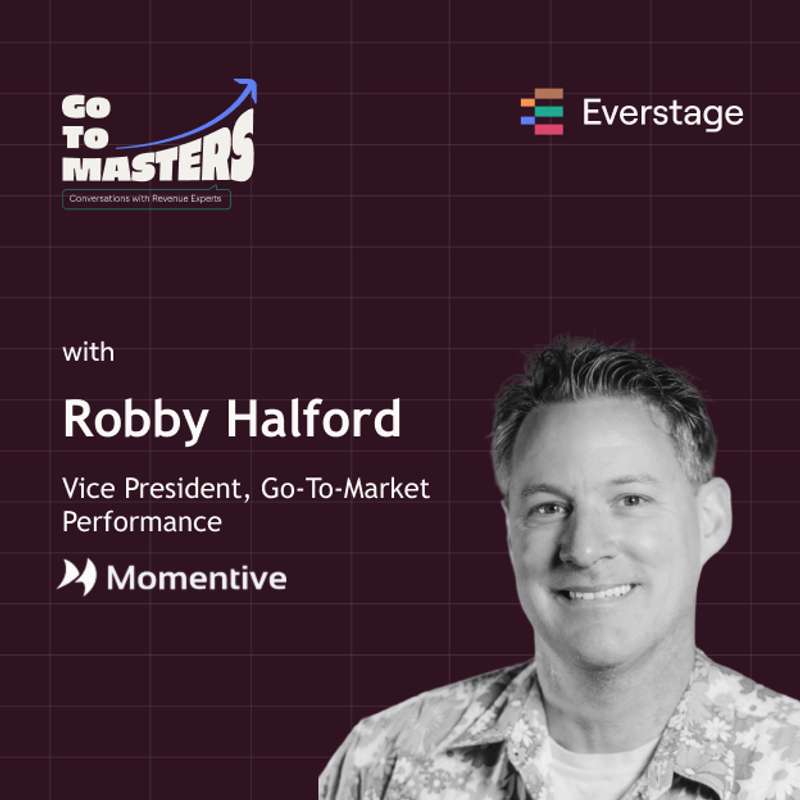
Most ramp programs are just bad instructional design dressed up as onboarding. A week of PowerPoints, a parade of decks, and then we throw new sellers on the floor and hope. Robby Halford has watched this break sales teams for over a decade — and built something different.Robby is VP of Go-to-Market Performance at Momentive Software, where he oversees enablement, business development, marketing operations, and sales operations. He started his career as a middle school English teacher, spent six years carrying a bag (and made President's Club in his first full year), and is finishing a doctorate in curriculum and instruction. He brings the seriousness of an academic and the empathy of a former seller to every program he builds.He joins GoToMasters to argue that enablement is not a slide-making team. It's the execution wing of every strategic decision a leadership team makes, and the function only works when it has a direct seat at the CRO's table. He breaks down why he pays new sellers to learn for a full month before they touch a quota, why CSMs are the most under-enabled team in most orgs, why throwing more enablement at a problem rarely fixes it, and why AI feedback often lands better than manager feedback — because it has no feelings to hurt.If you're building an enablement function, designing a ramp program, or trying to elevate learning into a revenue-generating activity, this one's worth your time.Go To Masters Show is handcrafted by our friends over at: fame.so
The biggest mistake finance teams make today is hiring for patterns. Same degree, same Big Four background, same SaaS experience — and then leadership wonders why they get average results. Hadas Sheinfeld has spent her career making the opposite bet.Hadas is Director of Finance at Sisense, where she manages finance operations across Israel, the US, and Ukraine. She joins GoToMasters for a conversation about what it actually takes to build a finance team that compounds value over time — and what it took for her to act like a director before anyone formally promoted her into the role.She breaks down the three pillars she uses to hire her team: grit over templates, ability over titles, and pushing finance from data checkers into storytellers who can tell leadership what the numbers mean for the company's future. She gets into the moment that turned her from a temporary fix into a real leader (a team member asked her what events she was planning that year), and the dangerous blind spot most managers carry — assuming their employees don't have the courage to move on, when the best ones already know they do.If you're hiring into a finance function, building a team you want to keep, or trying to break out of a role you've outgrown without waiting for a formal promotion, this one's worth your time.

The biggest mistake finance teams make today is hiring for patterns. Same degree, same Big Four background, same SaaS experience — and then leadership wonders why they get average results. Hadas Sheinfeld has spent her career making the opposite bet.Hadas is Director of Finance at Sisense, where she manages finance operations across Israel, the US, and Ukraine. She joins GoToMasters for a conversation about what it actually takes to build a finance team that compounds value over time — and what it took for her to act like a director before anyone formally promoted her into the role.She breaks down the three pillars she uses to hire her team: grit over templates, ability over titles, and pushing finance from data checkers into storytellers who can tell leadership what the numbers mean for the company's future. She gets into the moment that turned her from a temporary fix into a real leader (a team member asked her what events she was planning that year), and the dangerous blind spot most managers carry — assuming their employees don't have the courage to move on, when the best ones already know they do.If you're hiring into a finance function, building a team you want to keep, or trying to break out of a role you've outgrown without waiting for a formal promotion, this one's worth your time.Go To Masters Show is handcrafted by our friends over at: fame.so
A 30% productivity gain from AI delivered zero more customer visits. Caroline Rocha knows a comp team that lived through that exact outcome — the hours just moved to weekends and evenings, where the sellers had quietly been working all along.Caroline is Manager of Global Services Compensation at Just Eat Takeaway, with 15+ years designing sales incentives across Brazil, Japan, and the Netherlands. She joins GoToMasters to unpack what international comp design actually looks like, and where most companies misread both culture and AI.She gets into the cultural calibration behind global comp plans, why comp can never become a black box reps can't see into, and why teams should base decisions on evidence of what AI actually does — not what it should do.If you're designing comp across markets or figuring out where AI fits in the comp function, this one's worth your time.

A 30% productivity gain from AI delivered zero more customer visits. Caroline Rocha knows a comp team that lived through that exact outcome — the hours just moved to weekends and evenings, where the sellers had quietly been working all along.Caroline is Manager of Global Services Compensation at Just Eat Takeaway, with 15+ years designing sales incentives across Brazil, Japan, and the Netherlands. She joins GoToMasters to unpack what international comp design actually looks like, and where most companies misread both culture and AI.She gets into the cultural calibration behind global comp plans, why comp can never become a black box reps can't see into, and why teams should base decisions on evidence of what AI actually does — not what it should do.If you're designing comp across markets or figuring out where AI fits in the comp function, this one's worth your time.Go To Masters Show is handcrafted by our friends over at: fame.so
Daniel Wolman is Head of Incentive Compensation at Dext, the bookkeeping automation platform, where he runs comp solo across multiple regions after 15 years in ops and RevOps. In this episode, he makes the case that RevOps should own comp because they're the only function that designs for behavior rather than cost control or fairness. He walks through how Dext restructured their account management plans from a single net revenue metric to split growth and retention targets, how to spot when reps are sandbagging deals because the plan is broken, and why CSM comp is so hard to get right when the role doesn't hold a revenue number. He also covers performance management, the shelf life of salespeople, and how to run a global comp function as a one-person team.
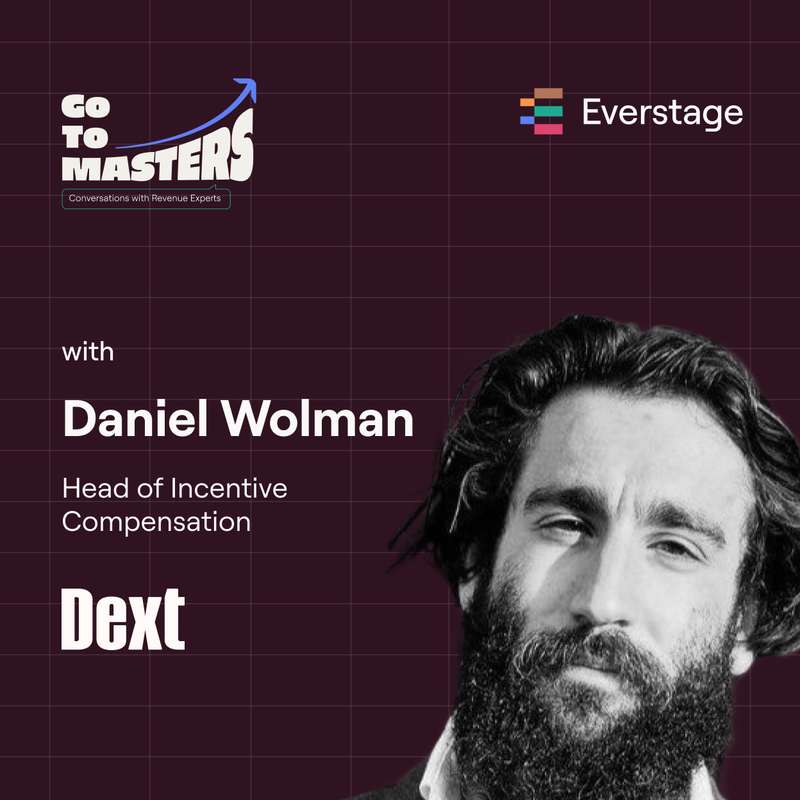
Daniel Wolman is Head of Incentive Compensation at Dext, the bookkeeping automation platform, where he runs comp solo across multiple regions after 15 years in ops and RevOps. In this episode, he makes the case that RevOps should own comp because they're the only function that designs for behavior rather than cost control or fairness. He walks through how Dext restructured their account management plans from a single net revenue metric to split growth and retention targets, how to spot when reps are sandbagging deals because the plan is broken, and why CSM comp is so hard to get right when the role doesn't hold a revenue number. He also covers performance management, the shelf life of salespeople, and how to run a global comp function as a one-person team.Go To Masters Show is handcrafted by our friends over at: fame.so
Ajay Erogbogbo is VP and Head of Revenue Operations and Strategic Initiatives at Pathward, a publicly listed financial holding company, where he designs incentive comp for commercial lending officers. In this episode, he breaks down how variable comp works when it's tied to loan origination volume with two-year clawback windows, why standardizing comp across product lines creates distortion when the risk profiles are different, and how he distinguishes between a performance issue and a design issue during monthly reviews. He also covers why the biggest structural comp mistake is designing for what's easy to measure rather than what creates value, and how giving BDOs a simulator to model their earnings changes the entire plan rollout conversation.

Ajay Erogbogbo is VP and Head of Revenue Operations and Strategic Initiatives at Pathward, a publicly listed financial holding company, where he designs incentive comp for commercial lending officers. In this episode, he breaks down how variable comp works when it's tied to loan origination volume with two-year clawback windows, why standardizing comp across product lines creates distortion when the risk profiles are different, and how he distinguishes between a performance issue and a design issue during monthly reviews. He also covers why the biggest structural comp mistake is designing for what's easy to measure rather than what creates value, and how giving BDOs a simulator to model their earnings changes the entire plan rollout conversation.Go To Masters Show is handcrafted by our friends over at: fame.so
Ariana Farray manages 300+ payees across 40-50 comp plans at Flock Safety, one of the fastest-growing public safety companies in the US ($200M to $300M ARR in a single year, valued at $7.5B). In this episode, she walks through her full comp cycle from design through communication to measurement and course correction. She shares why pay versus performance is the report most comp teams skip, how a post-acquisition quota miscalculation led to sellers hitting their quarterly number in January, and why SPIFs should course correct behavior but never replace the plan. Plus her take on AI in comp: "It never tells anybody they have a bad idea.
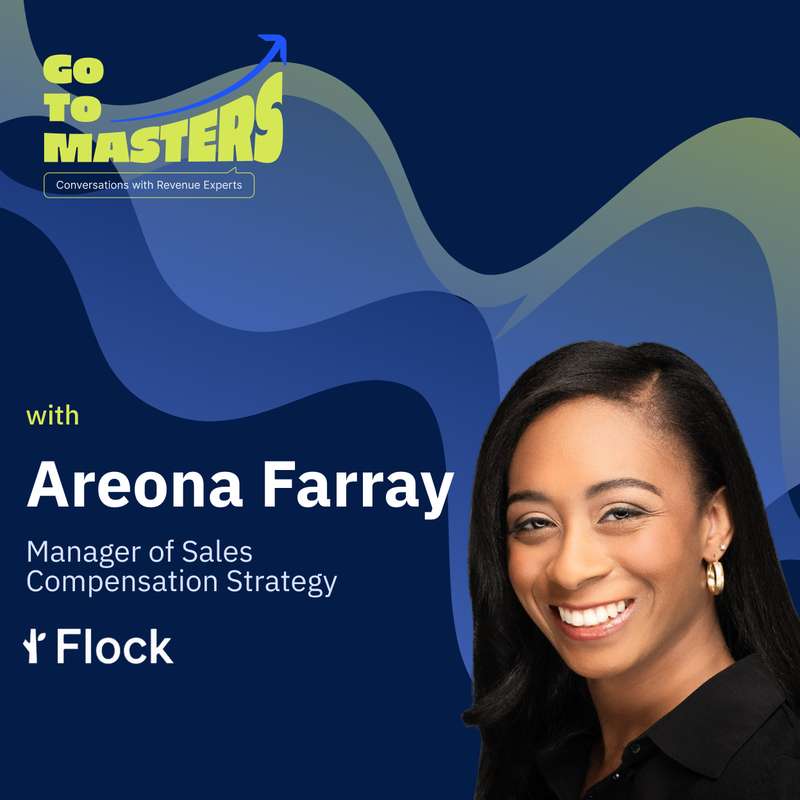
Ariana Farray manages 300+ payees across 40-50 comp plans at Flock Safety, one of the fastest-growing public safety companies in the US ($200M to $300M ARR in a single year, valued at $7.5B). In this episode, she walks through her full comp cycle from design through communication to measurement and course correction. She shares why pay versus performance is the report most comp teams skip, how a post-acquisition quota miscalculation led to sellers hitting their quarterly number in January, and why SPIFs should course correct behavior but never replace the plan. Plus her take on AI in comp: "It never tells anybody they have a bad idea.Go To Masters Show is handcrafted by our friends over at: fame.so
Kris Rudeegraap co-founded Sendoso after a decade in software sales, when he watched email go from effective to noise and started looking for a better way to build relationships with prospects. Today Sendoso is the leading direct mail and gifting automation platform, and Kris has spent years watching what separates high-performing outbound teams from everyone else. On this episode of GoToMasters, he and host Mike Groeneveld get into the "Mad Libs problem" — why 75% of teams are still running templated sequences that look identical — and what the top 10% are doing with AI and multi-channel to fix it. They also cover how the BDR role is splitting into two distinct profiles in 2026, what it takes for AEs to win longer enterprise sales cycles, and why personalization is what determines whether a direct mail gift lands or backfires.
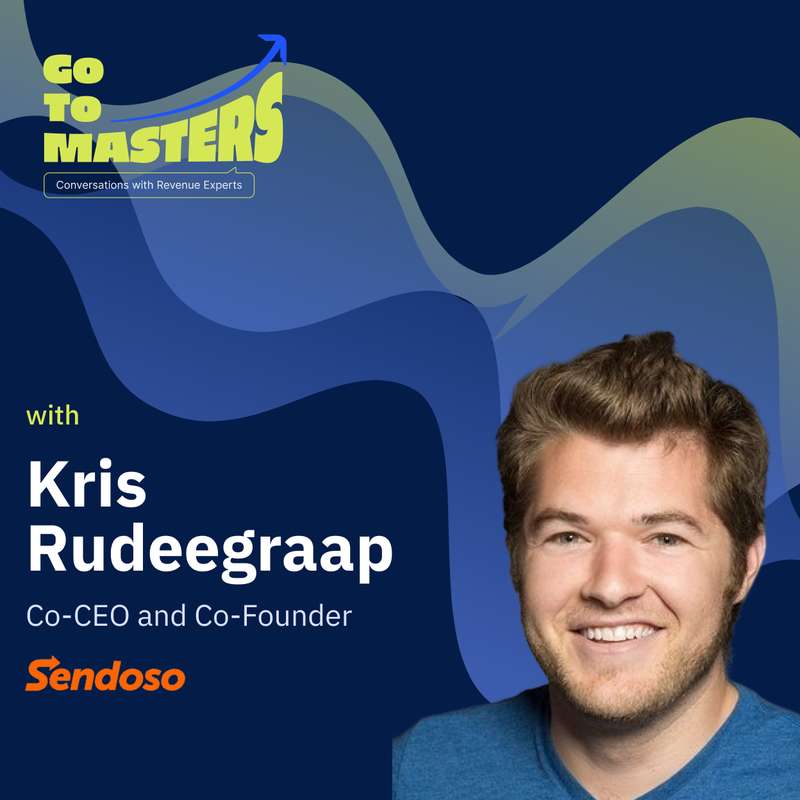
Kris Rudeegraap co-founded Sendoso after a decade in software sales, when he watched email go from effective to noise and started looking for a better way to build relationships with prospects. Today Sendoso is the leading direct mail and gifting automation platform, and Kris has spent years watching what separates high-performing outbound teams from everyone else. On this episode of GoToMasters, he and host Mike Groeneveld get into the "Mad Libs problem" — why 75% of teams are still running templated sequences that look identical — and what the top 10% are doing with AI and multi-channel to fix it. They also cover how the BDR role is splitting into two distinct profiles in 2026, what it takes for AEs to win longer enterprise sales cycles, and why personalization is what determines whether a direct mail gift lands or backfires.Go To Masters Show is handcrafted by our friends over at: fame.so
Sam Wegman is VP of CX and Commercial Operations at Univar Solutions, one of the world's largest chemical and ingredient distributors, and has spent over 30 years in the industry. On this episode of GoToMasters, Sam and host Venkat Sabesan get into what makes comp design different in a commodity-driven, high-velocity B2B environment, including a case study on what happens when you pay only for the products you want to grow. They cover why Univar has always paid on gross margin rather than revenue, how they built a "trust and verify" system for fast-moving product lines, and why most comp inaccuracy problems trace back to master data, not the tool. If you run commercial or sales operations in distribution or manufacturing, this episode covers terrain that most software-focused comp conversations skip entirely.
Sam Wegman is VP of CX and Commercial Operations at Univar Solutions, one of the world's largest chemical and ingredient distributors, and has spent over 30 years in the industry. On this episode of GoToMasters, Sam and host Venkat Sabesan get into what makes comp design different in a commodity-driven, high-velocity B2B environment, including a case study on what happens when you pay only for the products you want to grow. They cover why Univar has always paid on gross margin rather than revenue, how they built a "trust and verify" system for fast-moving product lines, and why most comp inaccuracy problems trace back to master data, not the tool. If you run commercial or sales operations in distribution or manufacturing, this episode covers terrain that most software-focused comp conversations skip entirely.Go To Masters Show is handcrafted by our friends over at: fame.so
Most experienced recruiters will tell you the same thing quietly: when a candidate names compensation as their only reason for moving, it's a red flag, not a green light. Shawn Santos has spent almost 28 years placing CFOs, controllers, and VPs across accounting and finance, and the patterns are hard to argue with.Shawn is VP of Accounting and Finance Search at Stephen Douglas, where he's building out the New York and New Jersey market. He joins this episode of GoToMasters Finance Fireside for a conversation about what really moves senior finance leaders into new roles.He gets into where compensation actually sits in a job search (his framing: it's the ante in a card game), why the loudest, most extroverted recruiters tend to burn out at year three, and what separates the ones who stay 15 and 20 years. He's equally direct on tools — Bullhorn as the system of record, LinkedIn Recruiter and ZoomInfo as the discovery layer, MetaView as the AI note-taker that lets him stop transcribing and start listening — and on why bolting salespeople onto an existing CRM is one of the quietest ways to lose data integrity.He closes on the line that has guided his career: the next phone call you make can be the best phone call you make.If you're hiring senior finance talent, advising candidates through career moves, or trying to build a recruiting practice that survives past year three, this one's worth your time.
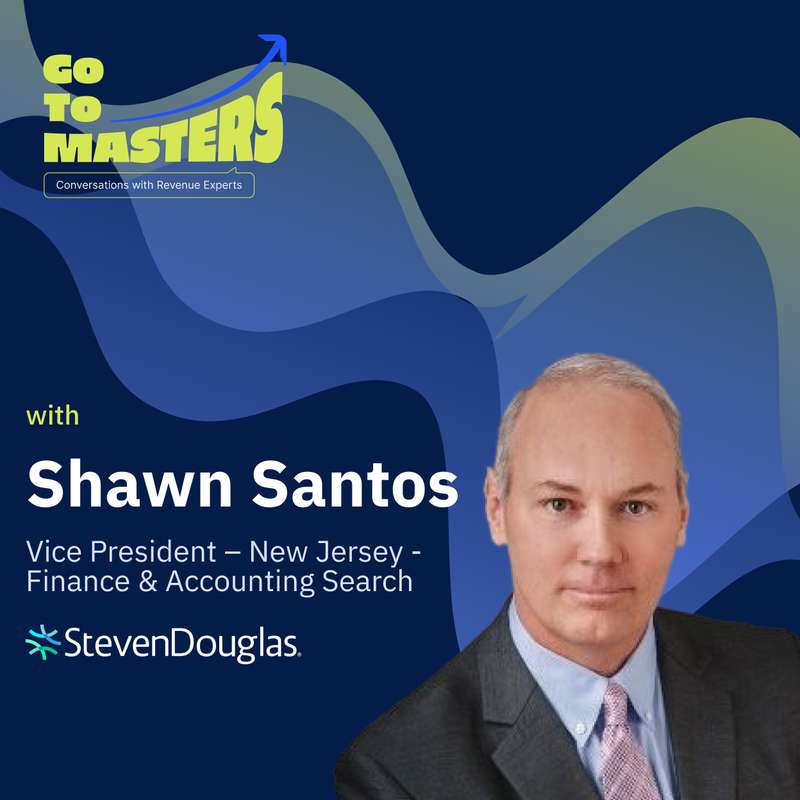
Most experienced recruiters will tell you the same thing quietly: when a candidate names compensation as their only reason for moving, it's a red flag, not a green light. Shawn Santos has spent almost 28 years placing CFOs, controllers, and VPs across accounting and finance, and the patterns are hard to argue with.Shawn is VP of Accounting and Finance Search at Stephen Douglas, where he's building out the New York and New Jersey market. He joins this episode of GoToMasters Finance Fireside for a conversation about what really moves senior finance leaders into new roles.He gets into where compensation actually sits in a job search (his framing: it's the ante in a card game), why the loudest, most extroverted recruiters tend to burn out at year three, and what separates the ones who stay 15 and 20 years. He's equally direct on tools — Bullhorn as the system of record, LinkedIn Recruiter and ZoomInfo as the discovery layer, MetaView as the AI note-taker that lets him stop transcribing and start listening — and on why bolting salespeople onto an existing CRM is one of the quietest ways to lose data integrity.He closes on the line that has guided his career: the next phone call you make can be the best phone call you make.If you're hiring senior finance talent, advising candidates through career moves, or trying to build a recruiting practice that survives past year three, this one's worth your time.Go To Masters Show is handcrafted by our friends over at: fame.so
Colin Brown is VP of Revenue Operations at DDN, a company that powers AI infrastructure at scale for clients like XAI's Colossus data center. He came to RevOps from the front lines, having carried a sales quota, run marketing teams, and led post-sales. In this episode, he breaks down why most teams are sprinkling AI into existing processes for 15-minute wins instead of re-engineering those processes to get 1-3 days back per week. He also has a sharp take on the strategic RevOps seat: it's earned, not a right, and having access to a wide view doesn't mean you automatically get invited to the strategy room. Plus: why product roadmap changes are about to become the biggest comp planning blind spot, and why RevOps professionals need a clear value proposition instead of trying to do a little bit of everything.
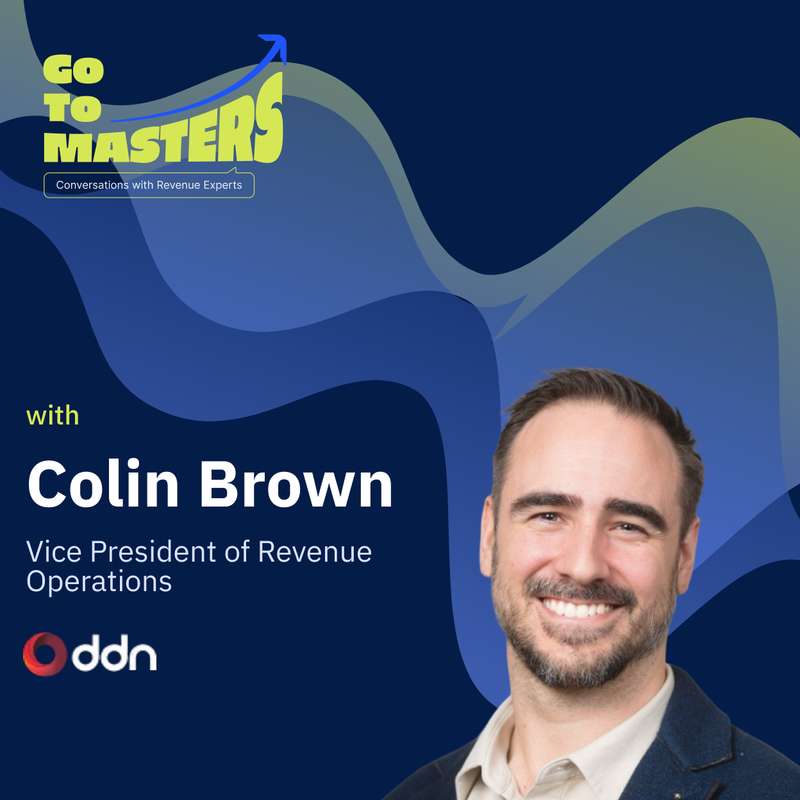
Colin Brown is VP of Revenue Operations at DDN, a company that powers AI infrastructure at scale for clients like XAI's Colossus data center. He came to RevOps from the front lines, having carried a sales quota, run marketing teams, and led post-sales. In this episode, he breaks down why most teams are sprinkling AI into existing processes for 15-minute wins instead of re-engineering those processes to get 1-3 days back per week. He also has a sharp take on the strategic RevOps seat: it's earned, not a right, and having access to a wide view doesn't mean you automatically get invited to the strategy room. Plus: why product roadmap changes are about to become the biggest comp planning blind spot, and why RevOps professionals need a clear value proposition instead of trying to do a little bit of everything.Go To Masters Show is handcrafted by our friends over at: fame.so
Scott Johnson is Head of Revenue Operations at Zeitview, a visual AI company serving renewable energy and infrastructure operators at scale. He started his career carrying a bag at Black and Decker, and his CRO once introduced him to a sales team as "a guy that's carried a bag." In this episode, he breaks down why he builds individualized pipeline targets at the rep level instead of applying a blanket 3X coverage ratio, why he hires great people to extract their ideas into the process rather than to depend on them, and how he got to 95% forecast accuracy by combining transactional run-rate data with new business pipeline in Salesforce.
Scott Johnson is Head of Revenue Operations at Zeitview, a visual AI company serving renewable energy and infrastructure operators at scale. He started his career carrying a bag at Black and Decker, and his CRO once introduced him to a sales team as "a guy that's carried a bag." In this episode, he breaks down why he builds individualized pipeline targets at the rep level instead of applying a blanket 3X coverage ratio, why he hires great people to extract their ideas into the process rather than to depend on them, and how he got to 95% forecast accuracy by combining transactional run-rate data with new business pipeline in Salesforce.Go To Masters Show is handcrafted by our friends over at: fame.so
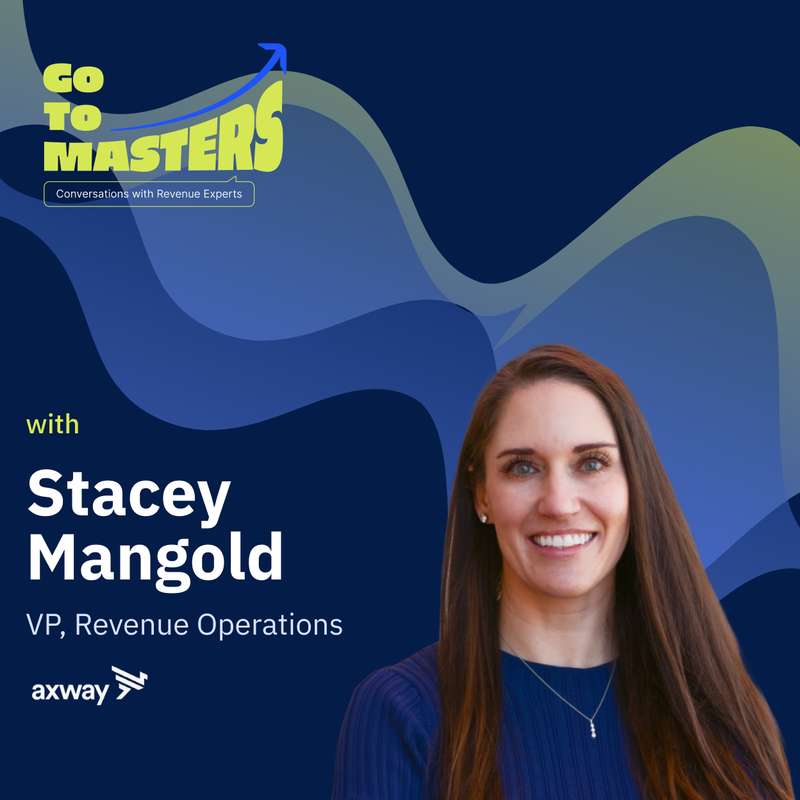
Stacey Mangold is VP of RevOps at Axway, a publicly listed software company with over 11,000 customers worldwide. She's built comp plans from scratch at five companies and followed two leaders across multiple roles because she values learning from great operators over chasing titles. In this episode, she shares the company where comp plans didn't go out until Q2, her rule that reps should be able to explain their plan in two minutes, why she never changes a plan structure mid-cycle, and how Axway starts comp planning with strategy in Q3 before touching a single revenue number. Plus: the SDR comp plan that looked perfect on paper until nobody qualified the meetings.
Joseph Wong is Director of Incentive Compensation Design and Governance at Moody's. Before that, he managed comp integrations for Salesforce acquisitions including Slack, Tableau, and Traction on Demand. In this episode, he walks through his end-to-end planning process that starts six months before the fiscal year, why he refuses to pay on pipeline, and how he communicates hard comp changes by building calculators that show reps exactly how to earn more. He also shares his M&A comp playbook and why getting stakeholder buy-in is harder and more important than getting the design right.
Joseph Wong is Director of Incentive Compensation Design and Governance at Moody's. Before that, he managed comp integrations for Salesforce acquisitions including Slack, Tableau, and Traction on Demand. In this episode, he walks through his end-to-end planning process that starts six months before the fiscal year, why he refuses to pay on pipeline, and how he communicates hard comp changes by building calculators that show reps exactly how to earn more. He also shares his M&A comp playbook and why getting stakeholder buy-in is harder and more important than getting the design right.Go To Masters Show is handcrafted by our friends over at: fame.so
Roxanne Dable is the Director of Sales Operations at Zendesk, where she focuses on driving operational excellence and aligning sales processes to deliver customer value at scale. On this episode of the Go To Masters Show, she shares insights from 15 years across banking, fintech, SaaS, and healthcare, including her experience as a fractional COO during the pandemic.Why the biggest CRM mistake is treating it as data storage instead of an enabler that helps teams work smarterHow 100 required fields to close a deal forced reps to keep deals in spreadsheets, making pipeline reports unreliableThe COO lens: quota decisions don't just affect sales but impact finance, recruiting, and customer success capacityConnect with Roxanne: LinkedInFollow us: LinkedIn | X
Roxanne Dable is the Director of Sales Operations at Zendesk, where she focuses on driving operational excellence and aligning sales processes to deliver customer value at scale. On this episode of the Go To Masters Show, she shares insights from 15 years across banking, fintech, SaaS, and healthcare, including her experience as a fractional COO during the pandemic.Why the biggest CRM mistake is treating it as data storage instead of an enabler that helps teams work smarterHow 100 required fields to close a deal forced reps to keep deals in spreadsheets, making pipeline reports unreliableThe COO lens: quota decisions don't just affect sales but impact finance, recruiting, and customer success capacityConnect with Roxanne: LinkedInFollow us: LinkedIn | XGo To Masters Show is handcrafted by our friends over at: fame.so
Selling on Amazon as a brand is two completely different jobs depending on whether you’re 3P or 1P. In 3P, the brand controls price and carries inventory risk. In 1P, the retailer owns the inventory, controls price, and the brand has to think in terms of margin, not revenue. Most brands miss that shift, and the P the 120-day cash cycle that quietly breaks brands long before their products fail; and what he calls death by a thousand paper cuts: deductions, compliance fees, and shortages that look small per transaction but aggregate to 5–10 percent of sales every year.He’s equally direct on what separates companies that scale efficiently from ones that struggle. They codify revenue before they grow, defining pricing bands, ideal customer, and what counts as a good deal so growth doesn’t just add bad business to the P&L. They keep decision-making lean enough that nothing sits in no-man’s land. And they practice what Makarand calls discipline business paranoia: not fear, but the constant question of what breaks if we double, plateau, or lose 20 percent of margin.If you’re a finance, RevOps, or e-commerce leader thinking about scaling discipline, profitability leakage, or how AI changes the operator’s job, this one’s worth your time.
Selling on Amazon as a brand is two completely different jobs depending on whether you’re 3P or 1P. In 3P, the brand controls price and carries inventory risk. In 1P, the retailer owns the inventory, controls price, and the brand has to think in terms of margin, not revenue. Most brands miss that shift, and the P the 120-day cash cycle that quietly breaks brands long before their products fail; and what he calls death by a thousand paper cuts: deductions, compliance fees, and shortages that look small per transaction but aggregate to 5–10 percent of sales every year.He’s equally direct on what separates companies that scale efficiently from ones that struggle. They codify revenue before they grow, defining pricing bands, ideal customer, and what counts as a good deal so growth doesn’t just add bad business to the P&L. They keep decision-making lean enough that nothing sits in no-man’s land. And they practice what Makarand calls discipline business paranoia: not fear, but the constant question of what breaks if we double, plateau, or lose 20 percent of margin.If you’re a finance, RevOps, or e-commerce leader thinking about scaling discipline, profitability leakage, or how AI changes the operator’s job, this one’s worth your time.Go To Masters Show is handcrafted by our friends over at: fame.so
Most RevOps job descriptions read like a contradiction. Strategic advisor. Tactical executor. Data analyst. Project manager. All at once.Katrin Gurvich, GTM Business Partner at Navan, has a better frame for it: the role requires you to be bilingual. Not in the language sense, in the ability to switch context, altitude, and audience without losing the thread. One minute you're in a QBR presenting business risk to the CRO. The next you're debugging a Salesforce issue with a rep. Same day. Same person.In this episode, Katrin breaks down what that actually looks like in practice, the four signals she uses to diagnose business health, why quota attainment can mask serious rep participation risk, how she thinks about pipeline coverage beyond the month-end snapshot, and what good CPQ does for trust across the whole revenue org.She also gets into where AI genuinely earns its keep (thought partner, not magic), and what she'd tell anyone trying to break into this world: take the sales role if it's open, go to the events, and don't be precious about the path.If you've ever struggled to explain what RevOps actually does or you're trying to get better at operating across every altitude of the business, this one's worth your time.
Most RevOps job descriptions read like a contradiction. Strategic advisor. Tactical executor. Data analyst. Project manager. All at once.Katrin Gurvich, GTM Business Partner at Navan, has a better frame for it: the role requires you to be bilingual. Not in the language sense, in the ability to switch context, altitude, and audience without losing the thread. One minute you're in a QBR presenting business risk to the CRO. The next you're debugging a Salesforce issue with a rep. Same day. Same person.In this episode, Katrin breaks down what that actually looks like in practice, the four signals she uses to diagnose business health, why quota attainment can mask serious rep participation risk, how she thinks about pipeline coverage beyond the month-end snapshot, and what good CPQ does for trust across the whole revenue org.She also gets into where AI genuinely earns its keep (thought partner, not magic), and what she'd tell anyone trying to break into this world: take the sales role if it's open, go to the events, and don't be precious about the path.If you've ever struggled to explain what RevOps actually does or you're trying to get better at operating across every altitude of the business, this one's worth your time.Go To Masters Show is handcrafted by our friends over at: fame.so
Matt Jacobson has spent 30 years in finance, investment banking, corporate strategy, venture investing, and the last 12 building and scaling venture-backed companies as CFO and COO. He's developed a simple framework for how careers and organizations grow: learning, doing, building. And in his telling, none of those phases ever fully ends.In this episode of GoToMasters Finance Fireside, Matt breaks down what it actually means to build sustainable finance operations at a high-growth SaaS company, getting org structure right before anything else, assigning real ownership rather than tasks, and compounding small improvements week over week until the gap between where you started and where you are becomes undeniable.He's equally direct on AI. Not hype, not magic, treat it like a junior analyst. It needs good prompts, constant correction, and a human who knows when the output is wrong. But when it works, it buys back the 15 and 30-minute chunks of time that add up to hours of strategic thinking you couldn't access before.He also gets into comp plan design from a CFO's lens: why the instinct to set a 10% commission rate without checking the math against ACV and deal cycle is how you set reps up to fail and what RevOps actually needs to do to connect sales, finance, and operations without creating friction.If you work in finance, RevOps, or GTM leadership at a growth-stage company, this one pays off.
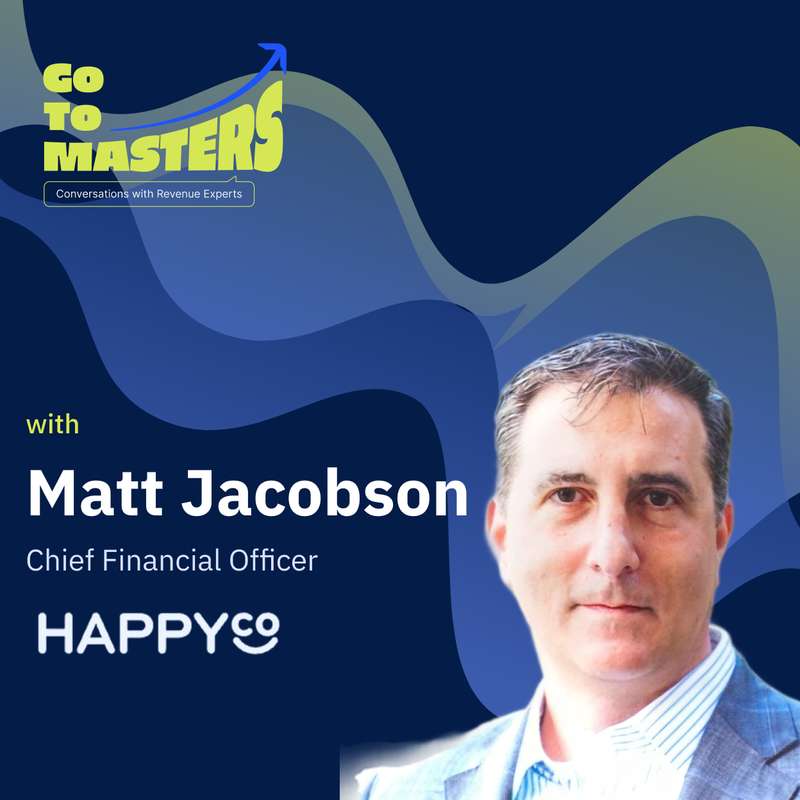
Matt Jacobson has spent 30 years in finance, investment banking, corporate strategy, venture investing, and the last 12 building and scaling venture-backed companies as CFO and COO. He's developed a simple framework for how careers and organizations grow: learning, doing, building. And in his telling, none of those phases ever fully ends.In this episode of GoToMasters Finance Fireside, Matt breaks down what it actually means to build sustainable finance operations at a high-growth SaaS company, getting org structure right before anything else, assigning real ownership rather than tasks, and compounding small improvements week over week until the gap between where you started and where you are becomes undeniable.He's equally direct on AI. Not hype, not magic, treat it like a junior analyst. It needs good prompts, constant correction, and a human who knows when the output is wrong. But when it works, it buys back the 15 and 30-minute chunks of time that add up to hours of strategic thinking you couldn't access before.He also gets into comp plan design from a CFO's lens: why the instinct to set a 10% commission rate without checking the math against ACV and deal cycle is how you set reps up to fail and what RevOps actually needs to do to connect sales, finance, and operations without creating friction.If you work in finance, RevOps, or GTM leadership at a growth-stage company, this one pays off.Go To Masters Show is handcrafted by our friends over at: fame.so
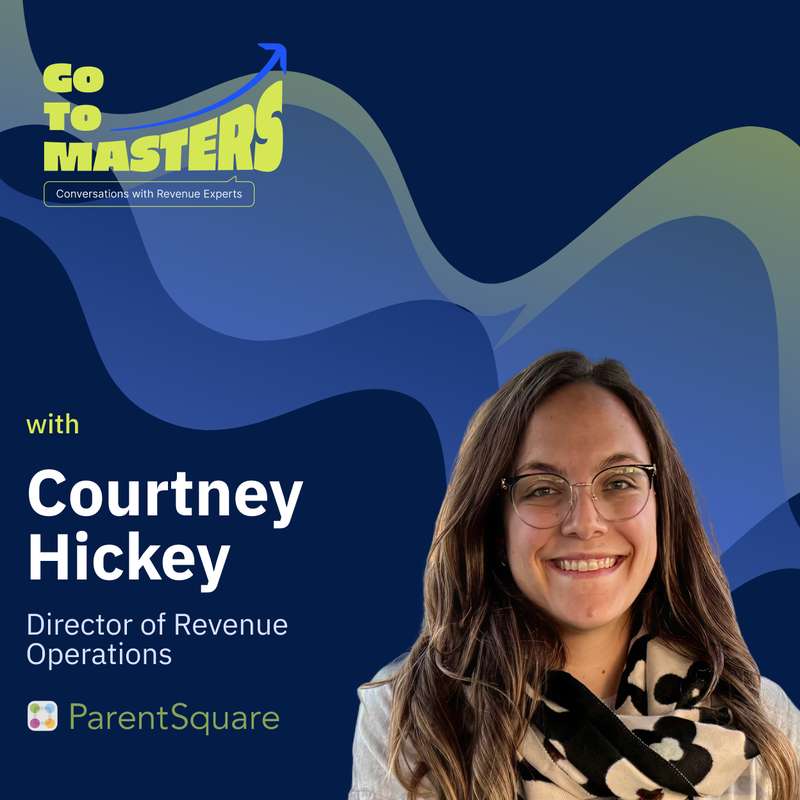
Courtney Hickey is the Director of Revenue Operations at ParentSquare, a K12 communication platform serving school districts across the US. She didn't come up through traditional RevOps channels — she started in administrative and legal roles, learned the business by sitting in on executive conversations, and built her way into operations from the ground up. On this episode of the Go To Masters Show, she shares what that unconventional path taught her about designing systems that flex, where comp plans break trust before anyone notices, and why she thinks AI's biggest promise has nothing to do with speed.Why rigidity is the biggest risk in RevOps and why falling in love with the problem beats falling in love with the processThe quiet side of comp trust erosion: when the RevOps team can't explain the plan either, you've already lost on both endsWhy AI's real value isn't speed but signal quality, and what it looks like when teams build for the wrong metric
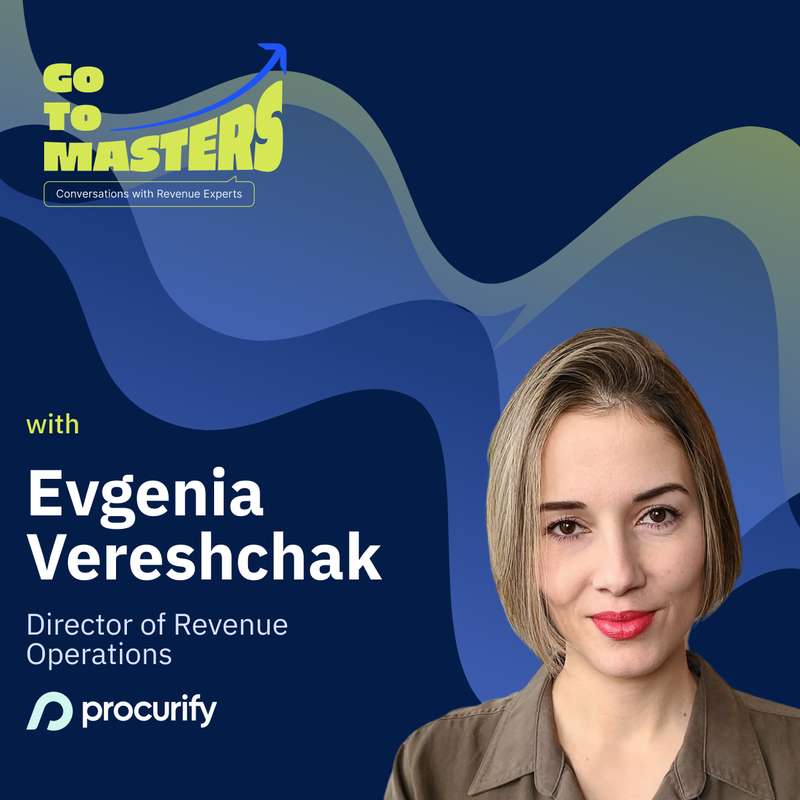
Evgenia Vereshchak is the Director of Revenue Operations at Procurify, a spend management platform built for mid-market companies, based in Vancouver. She spent eight years at the company, starting as a BDR before moving into RevOps. On this episode of the Go To Masters Show, she shares what building a RevOps function from scratch actually requires, why process has to come before tools, and what most teams get wrong about comp planning before they ever run the numbers.Why RevOps should never sit under sales, and what happens to long-term revenue health when it doesThe right order for building RevOps from scratch: ICP clarity and customer lifecycle first, team accountability second, tech stack lastWhy every comp plan is a behavioral experiment, and why modeling at 50%, 80%, and 100% attainment before rollout is non-negotiable
Courtney Hickey is the Director of Revenue Operations at ParentSquare, a K12 communication platform serving school districts across the US. She didn't come up through traditional RevOps channels — she started in administrative and legal roles, learned the business by sitting in on executive conversations, and built her way into operations from the ground up. On this episode of the Go To Masters Show, she shares what that unconventional path taught her about designing systems that flex, where comp plans break trust before anyone notices, and why she thinks AI's biggest promise has nothing to do with speed.Why rigidity is the biggest risk in RevOps and why falling in love with the problem beats falling in love with the processThe quiet side of comp trust erosion: when the RevOps team can't explain the plan either, you've already lost on both endsWhy AI's real value isn't speed but signal quality, and what it looks like when teams build for the wrong metricGo To Masters Show is handcrafted by our friends over at: fame.so
Evgenia Vereshchak is the Director of Revenue Operations at Procurify, a spend management platform built for mid-market companies, based in Vancouver. She spent eight years at the company, starting as a BDR before moving into RevOps. On this episode of the Go To Masters Show, she shares what building a RevOps function from scratch actually requires, why process has to come before tools, and what most teams get wrong about comp planning before they ever run the numbers.Why RevOps should never sit under sales, and what happens to long-term revenue health when it doesThe right order for building RevOps from scratch: ICP clarity and customer lifecycle first, team accountability second, tech stack lastWhy every comp plan is a behavioral experiment, and why modeling at 50%, 80%, and 100% attainment before rollout is non-negotiableGo To Masters Show is handcrafted by our friends over at: fame.so
Jatinder Dohil is the Global Head of Revenue Operations at ThetaRay, where they build AI-powered tools to help financial institutions detect money laundering and human trafficking. Before ThetaRay, he spent 20 years in revenue operations across organizations ranging from 10,000+ employees to early-stage startups.In this episode, Jatinder breaks down his five-pillar RevOps framework: data and insights, systems, process, commissions planning, and customer 360. He explains why forecasting accuracy within a 5% threshold changes how the entire business plans, shares a salary analogy that makes unpredictable revenue feel personal, and talks about how AI tools like Copilot are changing what sales reps can focus on during live conversations.He also gets specific on commission planning and CPQ: why simplicity matters more than sophistication, what good CRM hygiene actually requires, and the three things he’d tell anyone building a RevOps function from scratch.Topics covered: RevOps frameworks, forecasting and predictability, commission planning, CPQ implementation, AI in revenue operations, CRM structure, and building RevOps teams across company sizes.
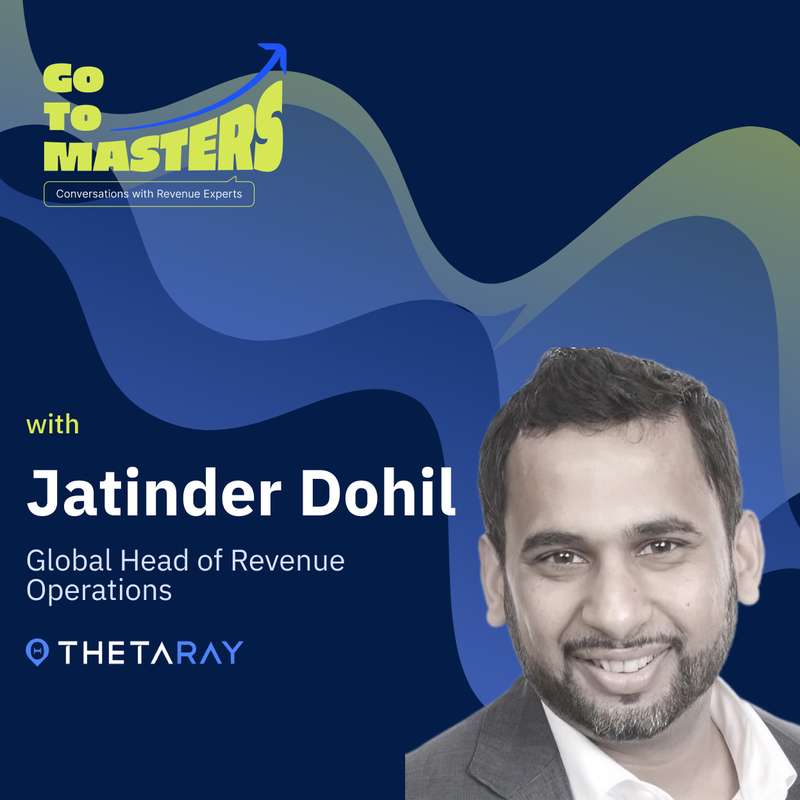
Jatinder Dohil is the Global Head of Revenue Operations at ThetaRay, where they build AI-powered tools to help financial institutions detect money laundering and human trafficking. Before ThetaRay, he spent 20 years in revenue operations across organizations ranging from 10,000+ employees to early-stage startups.In this episode, Jatinder breaks down his five-pillar RevOps framework: data and insights, systems, process, commissions planning, and customer 360. He explains why forecasting accuracy within a 5% threshold changes how the entire business plans, shares a salary analogy that makes unpredictable revenue feel personal, and talks about how AI tools like Copilot are changing what sales reps can focus on during live conversations.He also gets specific on commission planning and CPQ: why simplicity matters more than sophistication, what good CRM hygiene actually requires, and the three things he’d tell anyone building a RevOps function from scratch.Topics covered: RevOps frameworks, forecasting and predictability, commission planning, CPQ implementation, AI in revenue operations, CRM structure, and building RevOps teams across company sizes.Go To Masters Show is handcrafted by our friends over at: fame.so
Samantha Joswick is the Senior Manager of Sales Operations at H2O.ai, where she owns the full GTM engine: compensation, deal desk, analytics, and systems. Before H2O.ai, she spent several years at Adobe working on product-level comp plans for the global digital marketing sales organization, and led end-to-end compensation at Intermedia Cloud Communications.In this episode, Samantha talks about how she fell into sales ops by accident, spotted a quota overlap at Adobe that leadership was dismissing as rep complaints, and used data to prove it was structural. She shares her framework for comp design: start with the math, but don’t worship it. Use quantitative models as guardrails, then layer on qualitative context from the field to figure out what’s actually sustainable.She also covers how owning deal desk changed the way she thinks about incentives across the full deal lifecycle, where AI adds real value in sales ops (and where human judgment still has to stay in the loop), and her three pieces of advice for anyone building a career in the space: get close to the field, respect the data without worshiping it, and think in systems.
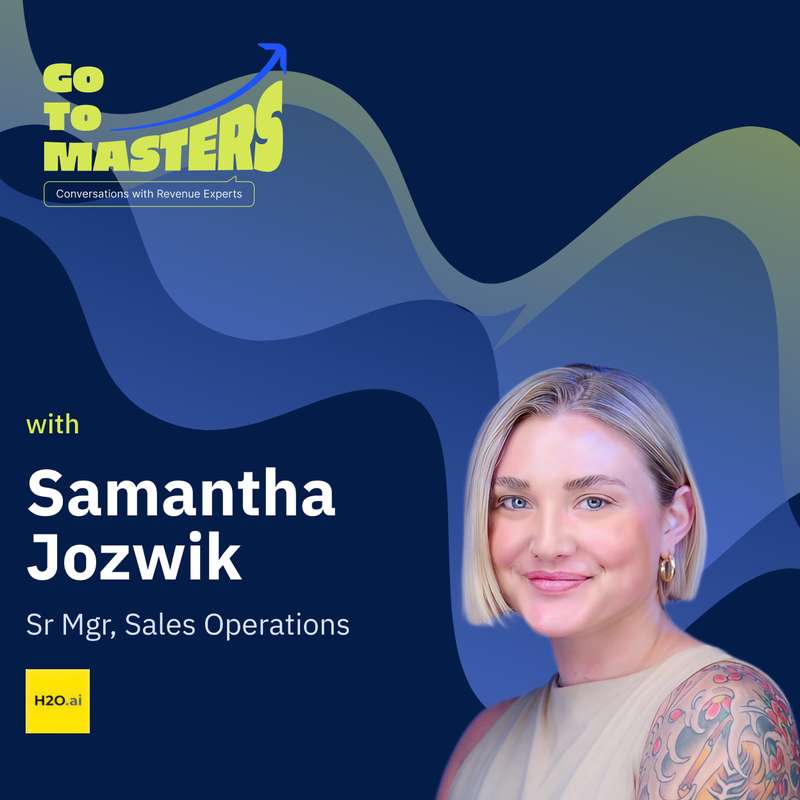
Samantha Joswick is the Senior Manager of Sales Operations at H2O.ai, where she owns the full GTM engine: compensation, deal desk, analytics, and systems. Before H2O.ai, she spent several years at Adobe working on product-level comp plans for the global digital marketing sales organization, and led end-to-end compensation at Intermedia Cloud Communications.In this episode, Samantha talks about how she fell into sales ops by accident, spotted a quota overlap at Adobe that leadership was dismissing as rep complaints, and used data to prove it was structural. She shares her framework for comp design: start with the math, but don’t worship it. Use quantitative models as guardrails, then layer on qualitative context from the field to figure out what’s actually sustainable.She also covers how owning deal desk changed the way she thinks about incentives across the full deal lifecycle, where AI adds real value in sales ops (and where human judgment still has to stay in the loop), and her three pieces of advice for anyone building a career in the space: get close to the field, respect the data without worshiping it, and think in systems.Go To Masters Show is handcrafted by our friends over at: fame.so
Andre Serpa is the Area Vice President for Latin America at ClickHouse, a real-time analytical database company, based in São Paulo. He spent a decade at Microsoft, nearly six years as one of the earliest employees of what became Google Cloud, and then four years each at Elastic and Neo4j, always building LATAM go-to-market operations from the ground up. On this episode of the Go To Masters Show, he shares what two decades of market-building in Latin America actually taught him about partnerships, talent gaps, local nuance, and why the companies that get the region right go partner-first before anything else.Why partner-first isn't optional in LATAM, and the billing, collections, compliance, and talent realities that make going direct alone a costly mistakeThe three lessons from Microsoft and Google he still runs GTM by today: data-driven decisions, measurable goals at every level, and the discipline of execution cadenceHow AI is changing sales operations from the inside, and the real-time backend performance bottleneck that most operators never think aboutConnect with Andre: LinkedIn Follow us: LinkedIn | X

Andre Serpa is the Area Vice President for Latin America at ClickHouse, a real-time analytical database company, based in São Paulo. He spent a decade at Microsoft, nearly six years as one of the earliest employees of what became Google Cloud, and then four years each at Elastic and Neo4j, always building LATAM go-to-market operations from the ground up. On this episode of the Go To Masters Show, he shares what two decades of market-building in Latin America actually taught him about partnerships, talent gaps, local nuance, and why the companies that get the region right go partner-first before anything else.Why partner-first isn't optional in LATAM, and the billing, collections, compliance, and talent realities that make going direct alone a costly mistakeThe three lessons from Microsoft and Google he still runs GTM by today: data-driven decisions, measurable goals at every level, and the discipline of execution cadenceHow AI is changing sales operations from the inside, and the real-time backend performance bottleneck that most operators never think aboutConnect with Andre: LinkedIn Follow us: LinkedIn | XGo To Masters Show is handcrafted by our friends over at: fame.so
Jason Martin is the VP of Credit and Collections at Kaseya, a global IT management software company operating across North America, EMEA, and APAC. He spent 21 years at Datavant, rising from entry-level collector to Head of Finance Operations and watching the industry move from paper records to bot automation to AI. On this episode of the Go To Masters Show Finance Fireside, he shares what finance transformation actually looks like from the inside: why culture is the real barrier to AI adoption, and what it takes to lead global teams through that kind of change.Why 80% of finance use cases are automatable today, and what the companies sitting on the sidelines will face in five yearsThe three-part leadership framework Jason learned from a mentor (command, calm, and candor), and why candor sometimes means walking away from revenueHow he unified distributed teams across three geographies by fixing the one thing most global leaders overlook: inclusion in the same room at the same timeConnect with Jason: LinkedIn Follow us: LinkedIn | X
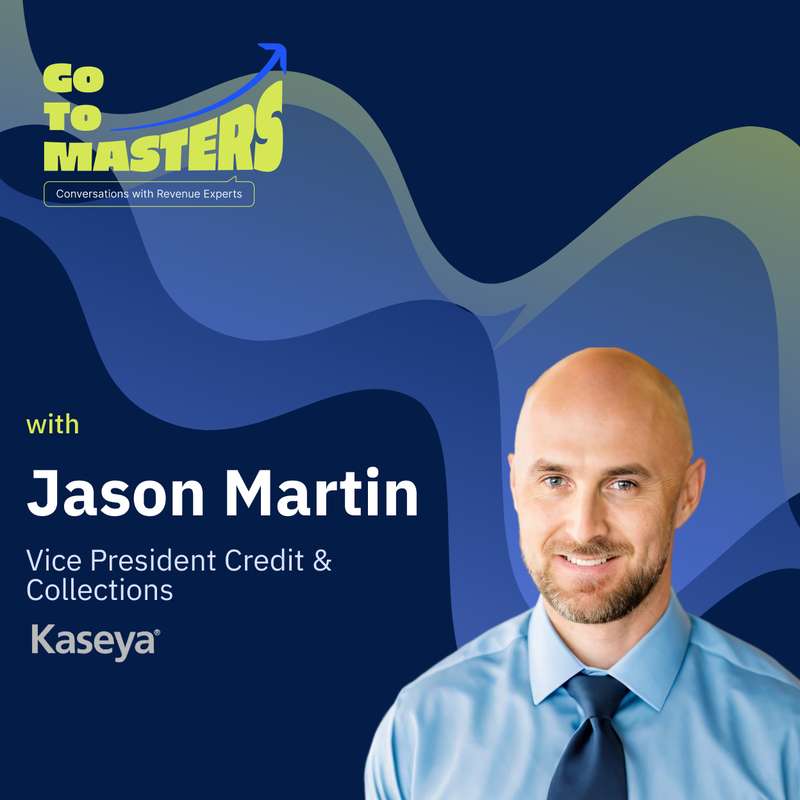
Jason Martin is the VP of Credit and Collections at Kaseya, a global IT management software company operating across North America, EMEA, and APAC. He spent 21 years at Datavant, rising from entry-level collector to Head of Finance Operations and watching the industry move from paper records to bot automation to AI. On this episode of the Go To Masters Show Finance Fireside, he shares what finance transformation actually looks like from the inside: why culture is the real barrier to AI adoption, and what it takes to lead global teams through that kind of change.Why 80% of finance use cases are automatable today, and what the companies sitting on the sidelines will face in five yearsThe three-part leadership framework Jason learned from a mentor (command, calm, and candor), and why candor sometimes means walking away from revenueHow he unified distributed teams across three geographies by fixing the one thing most global leaders overlook: inclusion in the same room at the same timeConnect with Jason: LinkedIn Follow us: LinkedIn | XGo To Masters Show is handcrafted by our friends over at: fame.so
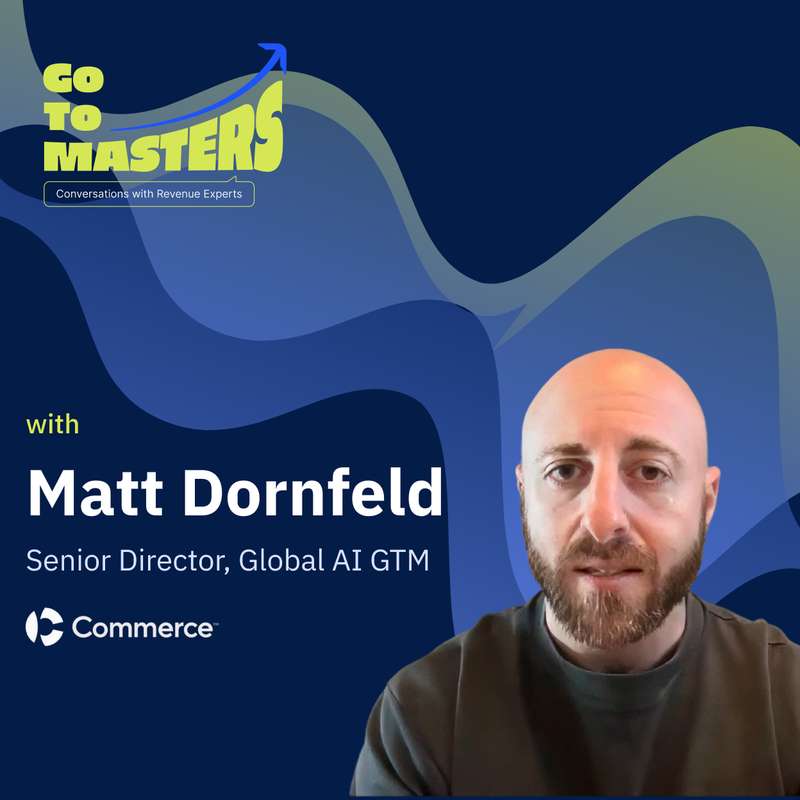
Matt Dornfeld is the Senior Director of Global AI GTM at Commerce, the public holding company behind BigCommerce and Feedonomics, where he leads the effort to embed AI across every workflow in the revenue organization. On this episode of the Go To Masters Show, he shares what building an AI GTM practice from the inside actually looks like. He covers why most teams sabotage themselves before they start, and what separates companies getting real outcomes from those chasing shiny objects.Why doing one AI use case completely beats running 50 halfway, and the FOMO that keeps pushing teams toward the latterThe data-first framework: take stock of what you have, centralize it, connect the sets, and only then ask what becomes possibleHow top brands decide whether a new channel is worth the investment, and why focus is a competitive advantage most teams underestimateConnect with Matt: LinkedIn Follow us: LinkedIn | X
Reviews
No reviews yet.
If you like this...

Gluten Free Unwrapped
Same format · Same audience

The Connection Compass
Same format · Same audience

The Alli Worthington Show
Same format · Same audience

Gates McFadden Investigates: Who do you think you are?
Same format

Something I've Never Said (S.I.N.S)
Same format

Brain Science with Ginger Campbell, MD: Neuroscience for Everyone
Same format · Same audience

Math Ed Podcast
Same format · Same tone
Discussion (0)
No comments yet. Be the first to start the discussion!