6d ago
Year End Planning: RMD Rules for IRAs & Inherited IRAs
In this episode, Roger Whitney walks listeners through the complexities of inherited IRAs, highlighting the impact of the SECURE Act of 2019 and clarifying the distinctions between eligible and non-eligible designated beneficiaries. He explains how these classifications affect withdrawals and tax planning, making the rules easy to understand. Roger also answers listener questions on topics like retirement team selection and funding health insurance with HSA accounts. Beyond the numbers, he shares practical strategies for creating more meaningful holiday conversations, drawing on real-life examples to show how curiosity and intentionality can help you connect more deeply with the people you care about. OUTLINE OF THIS EPISODE OF THE RETIREMENT ANSWER MAN (00:00) This show is dedicated to helping you rock retirement. (00:30) In today’s episode, Roger Whitney covers the rules around inherited IRAs, explores ways to foster deeper and more meaningful conversations during the holidays and beyond, and answers listener questions. RETIREMENT TOOLKIT (01:00) Today in the Retirement Toolkit we're going to talk about the rules around inherited IRAs. (02:40) Differences between eligible and non-eligible designated beneficiaries for inherited IRAs are explained. (14:32) Roger talks about ROTH IRAs and how they work. RETIREMENT LIFE LAB (16:04) Roger explains how approaching conversations with curiosity and intentionality, especially with older family members or those with different interests, can create more meaningful and enriching interactions. LISTENER QUESTIONS (25:37) Ira asks what to ask a financial advisor’s team to understand their retirement planning services and team longevity. (37:02) Mary Jane asks if she can use Health Savings Account funds tax-free to pay for private health insurance premiums before Medicare eligibility. SMART SPRINT (38:42) In the next week, approach holiday or New Year’s gatherings with curiosity by asking questions and engaging with people you don’t see often to create more meaningful interactions. REFERENCES Submit a Question for Roger Sign up for The Noodle The Retirement Answer Man
Dec 10
Year-End Planning: Annual Gifting Rules
In this episode, Roger Whitney, a retirement planner with 30 years of experience, breaks down annual gifting limits and year-end planning. He shares practical strategies for giving that make a real impact and create meaningful experiences for loved ones. Roger also answers listener questions, providing clear guidance to help you navigate your retirement with confidence. OUTLINE OF THIS EPISODE OF THE RETIREMENT ANSWER MAN (00:00) This podcast is dedicated to helping you rock retirement. (00:57) Today Roger talks about annual gifting limits. RETIREMENT TOOLKIT (01:45) In today’s Retirement Toolkit, Roger explores year-end planning by breaking down the 2025 annual gift exclusion. (04:05) Roger discusses giving money during your lifetime and shares the reasons why it can be beneficial. (12:05) Roger shares his observations on giving money, noting that gifts can feel most meaningful when attached to a specific purpose rather than given with expectations. (14:21) Strategies for impactful gifting are explored, including transferring appreciated assets, paying medical expenses, and covering tuition directly, showing ways to help others while maximizing meaning and efficiency. LISTENER QUESTIONS (19:00) Mary shares feedback on qualified charitable distributions (QCDs). (21:27) Lee describes his “shoulder bonus” strategy to spend excess retirement funds while staying within a safe withdrawal rate. (30:10) John asks when to switch from a general financial advisor to a retirement planner (34:19) Rick asks about gifting appreciated stocks to adult children. (35:17) Steve asks about building a resilient retirement plan at age 80. SMART SPRINT (38:13) In the next seven days: Do you want to give? Can you? How much and to whom? Can it have a purpose? Even small gifts can make a big impact. CLOSING THOUGHTS (40:00) Giving money can bring profound joy, often the greatest gift is the one you give yourself by helping others. REFERENCES Submit a Question for Roger Sign up for The Noodle The Retirement Answer Man
Dec 3
Year-End Planning: Tax-Loss Harvesting
💬 Show Notes In this episode, Roger Whitney kicks off a month-long series on year-end planning for retirement. He shares insights on tax loss harvesting, a technique that can help you minimize capital gains tax. Listen in as Roger explains the basics of capital gains, the importance of proactive planning, and the potential benefits of offsetting gains with losses. Plus, he introduces a smart sprint action item to help you optimize your tax strategy before the year's end! OUTLINE OF THIS EPISODE OF THE RETIREMENT ANSWER MAN (00:00) This podcast is dedicated to helping you rock retirement. (01:07) Roger shares that he recently finished George Orwell’s 1984 , his first in a new hobby of collecting classic authors. RETIREMENT TOOLKIT (03:43) Roger breaks down the basics of tax loss harvesting, explaining capital gains, the difference between short-term and long-term gains, and how they impact year-end retirement planning. (09:17) Roger explains how to implement tax loss harvesting by estimating your realized capital gains, identifying losses in your taxable accounts, selling positions to offset gains, and being mindful of the IRS wash sale rule that prevents repurchasing the same security within 61 days. (16:50) Using losses in taxable accounts strategically can help reduce capital gains taxes. ROCKIN’ RETIREMENT IN THE WILD (18:28) Share your story of rocking retirement at askroger.me to inspire others with your confidence and passion. (19:30) Mark plans to pivot into business consulting after retiring so he can keep learning, adding value, and connecting with people while enjoying more freedom and purpose. LISTENER QUESTIONS (21:54) Richard is preparing for retirement at 67 and asks how he should handle his 401(k) and income to make his plan work best. (25:00) Kathy asked how a new bill will affect those 65+ with year-end tax planning, and Roger said he’ll provide a checklist to guide Noodle subscribers through the changes. (25:42) Karen pointed out that annuity payments aren’t inflation-adjusted and emphasized balancing them with other investments. (30:08) Dan asks: “Where should I keep the cash for living expenses and market downturns?” SMART SPRINT (33:59) Smart Sprint: In the next seven days, review your after-tax investment accounts, estimate year-end capital gains or losses, and consider selling positions with unrealized losses to offset gains while avoiding the 31-day wash sale rule. CLOSING THOUGHTS (35:18) Over Thanksgiving, Roger continued his childhood tradition of watching the Lions lose, ending up jumping in a pool after a bet with his nephew Graham, a devoted Packers fan. REFERENCES 1984- George Orwell Submit a Question for Roger Sign up for The Noodle The Retirement Answer Man

Nov 26
Should I Use My Traditional IRA to Fund My Life or Do Roth Conversions?
💬 Show Notes In this Thanksgiving Eve episode, Roger Whitney encourages listeners to carry gratitude into everyday life, emphasizing the value of recognizing specific moments and taking “mental snapshots” of what matters. He also addresses common retirement questions, including how to think about traditional versus Roth IRAs and whether to use IRA withdrawals or pursue Roth conversions. It’s a clear, practical discussion to help you reflect and make informed planning decisions. OUTLINE OF THIS EPISODE OF THE RETIREMENT ANSWER MAN (00:00) This show is dedicated to helping you rock retirement (00:40) Roger reflects on thankfulness and gratitude. RETIREMENT TOOLKIT (08:33) Roger gives a quick refresher on the three main types of accounts used in retirement planning and how each is treated for tax purposes. LISTENER QUESTIONS (14:16) Roger walks through how to approach the common dilemma of using a traditional IRA for living expenses versus doing Roth conversions. (26:49) Dominic asks why qualified charitable distributions can’t be used to fund a donor-advised fund, even though the donation is tax-deductible. (30:31) BB and Shell ask whether contributing to a Roth versus traditional 403(b) and 457 plans makes sense given their high current tax rate and plans to retire and move to a lower- or no-tax state. SMART SPRINT (34:35) This week’s Smart Sprint challenges listeners to make thankfulness meaningful by telling someone specifically why they are grateful for them. CLOSING THOUGHTS (35:18) Roger shares his gratitude for listeners and feedback, acknowledges the complexity of retirement planning, and emphasizes his commitment to providing actionable advice while reminding everyone it’s okay not to have all the answers. REFERENCES Submit a Question for Roger Sign up for The Noodle The Retirement Answer Man

Nov 19
My Advisor Recommended an Annuity. Should I Buy It?
💬 Show Notes In this episode, Roger Whitney dives into the essentials of required minimum distributions, explaining the age thresholds, how the amounts are calculated using IRS life expectancy tables, and how to manage multiple IRAs and 401(k)s. He also answers listener questions, including whether a flexible premium deferred income annuity might make sense and how to determine how much you can safely give to loved ones or charity now. Packed with practical advice and actionable insights, this episode helps listeners navigate the rules and strategies that can impact their retirement planning. OUTLINE OF THIS EPISODE OF THE RETIREMENT ANSWER MAN (00:00) This show is dedicated to helping you have the confidence to rock retirement. THE RETIREMENT TOOLBOX (01:18) In this Retirement Toolbox segment, we take a timely look at required minimum distributions—what they are and how they work for the accounts you own. (03:22) A quick breakdown of the current IRS rules for required minimum distributions, outlining the different start ages based on your birth year. (05:22) How RMDs are calculated using your year-end balance and IRS life expectancy tables. (08:30) When should you take your money out, and what happens if you don’t? (10:48) How to handle RMDs across multiple IRAs and 401(k)s and why long-term planning and account consolidation matter. (14:00) What are some strategies to minimize or mitigate your future required minimum distributions? LISTENER QUESTIONS (15:23) Submit your questions through AskRoger.me, and we’ll help you take a baby step toward a rock-solid retirement. (15:54) Our title question comes from Rich, who asks if a flexible premium deferred income annuity would be a good idea given his retirement savings, Social Security, pension, and minimal debt. (27:14) A listener asks how to determine how much they can safely give to loved ones or charity now, rather than leaving it as an inheritance later. SMART SPRINT (33:22) In the next seven days, estimate your future RMD—even if it’s 10 years away—assuming your IRA or 401(k) grows at a reasonable rate. CLOSING THOUGHTS (34:04) An update on the merger of Tanya Nichols’ and Roger’s advisory firms, with a new unified brand—Retire Agile—coming in 2026 and opportunities for client feedback on branding and design. REFERENCES Submit a Question for Roger Sign up for The Noodle The Retirement Answer Man Schwab RMD Calculator Fidelity RMD Calculator

Nov 12
How Do I Build My Initial Cash Cushion for Retirement?
💬 Show Notes In this episode, Roger Whitney explores the psychology of loss aversion and how it affects financial decision-making. He introduces the new Retirement Toolbox segment, offering practical, actionable tools to help you strengthen your retirement plan. We also cover the benefits of Qualified Charitable Distributions and answer listener questions on retirement planning and asset allocation. Don’t miss this insightful discussion designed to help you confidently navigate and optimize your retirement! OUTLINE OF THIS EPISODE OF THE RETIREMENT ANSWER MAN (00:00) This show is dedicated to helping you not just survive retirement, but rock it PRACTICAL PLANNING SEGMENT (01:00) Roger breaks down loss aversion and how it relates to retirement. THE RETIREMENT TOOLBOX (04:35) Roger launches a new segment on essential financial tools, starting with the Qualified Charitable Distribution, a timely, tax-smart way to give at year-end. LISTENER QUESTIONS (11:53) Wes asks how to build retirement reserves before retirement without triggering higher taxes. (17:12) Roger responds to John’s critique of the “Process Over Panic” episode, clarifying why a retirement plan should be treated as a living, flexible guide rather than a rigid set of rules. (22:52) Feedback from David highlights why factoring early losses in Monte Carlo simulations can boost confidence despite slight double-counting. (26:35) Thoughtful listener disagreements are welcomed as a way to deepen understanding and improve retirement planning insights. (27:43) Thomas has some questions about getting started with a retirement planner. SMART SPRINT (36:07) In the next seven days, anyone within three years of retirement should map out their liquidity and consider reallocating assets to protect against market swings in the early years, avoiding unnecessary risk if funds will be needed soon. CLOSING THOUGHTS (37:05) I've been building a personal library of classics, including fiction and nonfiction, and welcome book suggestions via The Noodle to help expand the reading list. REFERENCES Submit a Question for Roger Sign up for The Noodle The Retirement Answer Man Thinking, Fast and Slow- Daniel Kahneman

Nov 5
The 10 R's for a Joyful Retirement with Cesar Aguirre
💬 SHOW NOTES In this episode, Roger Whitney explores the art of retirement goal setting with his signature blend of practical advice and thoughtful reflection. He sits down with Cesar Aguirre, who shares how leaving a corporate career led to a purposeful and fulfilling retirement, the evolution of his book, and the importance of aligning goals with personal values rather than just chasing big achievements. Roger also addresses listener questions on planning, discretionary spending, and shifting mindsets around money, offering actionable insights to help create a retirement that’s intentional, joyful, and aligned with personal values. OUTLINE OF THIS EPISODE OF THE RETIREMENT ANSWER MAN (00:00) This show is dedicated to helping you not just survive retirement, but rock it (01:07) The cost-of-living adjustment for Social Security was announced. ROCKIN’ RETIREMENT IN THE WILD WITH CESAR AGUIRRE (02:05) Roger talks with Cesar about his book and how he is rockin’ retirement. (02:41) Roger introduces Cesar Aguirre, author of Retirement with Purpose: The 10 R's for a Joyful Retirement. (05:55) At 65, Cesar realized many people approached retirement without a plan, inspiring him to document his process so others could find structure and clarity in their own journey. (08:35) The pandemic slowed Cesar’s busy career, prompting him to shift from focusing on leaving work to discovering what he was retiring to . (11:35) Cesar shares how a five-year assignment abroad led to a permanent move to the U.S. in the early ’90s, marking a pivotal shift in his life and career. (12:25) Cesar reflects on cultural views of retirement, blending Mexico’s family-centered “jubilación” with the U.S. ideal of independence to create a more balanced, proactive approach to this new season of life. (14:51) There are 10 R’s in the book, starting with Review. (17:25) Roger asks Cesar how to answer the question, “What do I want?” (20:17) Cesar explains that creating his book with a service purpose removed pressure, letting him focus on making it useful, reach a broader audience, and now develop a Spanish edition. (21:56) Cesar encourages newly retired listeners to create structure, revisit plans, and embrace retirement as a journey with purpose. LISTENER QUESTIONS (24:18) In an audio question, Gary, who will retire in 2026, shares how managing “old” retirement savings feels different from spending a paycheck and asks for guidance on navigating this shift in mindset. (33:56) A listener, who chose to remain anonymous, asks how to distinguish between the essentials of a “base great life” and the discretionary spending that falls into the “wants” category.’ (35:55) A listener praised Roger’s shift from chasing big goals to focusing on values and creating conditions to explore life personally and meaningfully. (38:20) Dennis asks about the Retirement Podcast Network, and Roger explains that while it’s still active, he and Taylor Schulte decided to prioritize other projects and let this one remain on the back burner. SMART SPRINT (40:01) In the next seven days, reflect on the phrase, “you can’t take it with you.” BONUS (41:03) In this wrap-up, Roger addresses listener feedback from a past episode on organic food. REFERENCES Submit a Question for Roger Sign up for The Noodle The Retirement Answer Man Retirement With Purpose: The 10 R's for a Joyful Retirement: A practical and thoughtful guide to rediscovering yourself and flourishing in the retirement stage. - Cesar Aguirre
Oct 29
Retirement Goal Case Study
💬 Show Notes In this episode, Roger Whitney wraps up our four-week series on smarter retirement goal setting. He dives into the ideas of buoyancy and Maslow’s hierarchy of needs, showing how they play a role in planning a retirement that actually works for you. Using two relatable avatars – the Grinder and the Dreamer – Roger shares practical, real-world strategies to help navigate the twists and turns of retirement planning. Tune in for insights that will help you make your retirement not just secure, but truly rock! OUTLINE OF THIS EPISODE OF THE RETIREMENT ANSWER MAN (00:00) This is the last of a four-week series on better retirement goal setting PRACTICAL PLANNING SEGMENT (01:58) The first concept for today is the concept of buoyancy. (04:50) Roger talks about Maslow’s hierarchy of needs. (07:50) A look inside the Advice Lab Roger runs with his work team. AVATAR CASE STUDY- THE GRINDER AND THE DREAMER (10:10) Introduction of two avatars created by the team — the Grinder and the Dreamer. (10:58) First, Roger breaks down the Grinder. (14:27) What are triggers that might help a grinder reevaluate retirement planning? (16:57) What do Grinders crave? (18:50) How do you navigate as a Grinder or as someone in a relationship with a Grinder? (21:50) The pillars of retirement are a helpful framework when it comes to Grinders. (27:00) Next, Roger breaks down the avatar of the Dreamer. (29:30) What are the triggers that a Dreamer faces? (32:30) Roger breaks down the retirement pillars for Dreamers. (37:00) Roger reflects on how his partnership with Tanya mirrors the Dreamer and Grinder archetypes, showing how balancing vision and execution can lead to better communication and more effective retirement goals. LISTENER QUESTIONS (38:14) You can submit questions at AskRoger.me (38:40) Barbara shares thoughts on a recent episode. (42:04) Roger shares an audio clip from Tom. (44:27) One listener shares that drawing down the accounts is a mental challenge. (45:49) Rod asks what portion of a 71-year-old’s $5–6M retirement portfolio could go into low-risk private credit. SMART SPRINT (48:38) In the next seven days, reflect on where you fall between Dreamer and Grinder and consider that when setting or refreshing your retirement goals, so you can better balance your approach. REFERENCES Sign up for our next Webinar ! Submit a Question for Roger Sign up for The Noodle The Retirement Answer Man Maslow's Hierarchy of Needs
Oct 22
How to Navigate Goals as Life Unfolds
💬 Show Notes In this episode, we continue our four-week series on better retirement goal setting with Roger Whitney. This week, we delve into the dynamics of navigating retirement goals as life unfolds and the concept of opportunity cost. In the second half, Roger has enlightening discussion with Dr. Bobby, where he explores the pros and cons of organic food and its relevance to our health and finances. Discover how to align your retirement goals with your evolving self and make informed choices about your lifestyle. Tune in for practical insights that can help you rock your retirement! OUTLINE OF THIS EPISODE OF THE RETIREMENT ANSWER MAN (00:00) This is week three of a four-week series on better retirement goal setting, plus Roger chats with Dr. Bobby about the cost-benefit of buying organic. (02:55) Roger encourages registration for his next live meetup at livewithroger.com . PRACTICAL PLANNING SEGMENT (03:40) Roger reflects on setting goals that will align with the current version of you and also who you are becoming. (05:44) Roger explores how goals evolve over time, the barriers that make it hard to recognize and adapt to those changes, and a simple protocol to help ensure your goals stay aligned with what matters most. (07:15) Priorities shift over time as what once mattered may lose importance and new values emerge. (10:27) Life events like health changes, family needs, or loss can rapidly reorder goals. (12:41) Common barriers to noticing change include inattention, sunk cost fallacy, and social pressure. (16:01) Regular reflection helps keep goals aligned with what’s truly important. (20:05) Review spending regularly to ensure it reflects your current priorities. CHAT WITH DR. BOBBY (23:20) Roger introduces Dr. Bobby to talk about organic foods. (25:52) What are organic foods? (29:03) Dr. Bobby breaks down the cost of organic food. (33:00) What are the benefits of organic food? Is it worth the cost? (38:15) Roger acknowledges that some people feel strongly about buying organic as a way to take control of their health. (40:57) 80% of the US population doesn't get enough fruits and vegetables. (42:16) Dr. Bobby breaks down the ROI on buying organic. (48:23) If you do buy organic, which products should you buy? (52:20) Bobby talks about his podcast and the power of positive thinking when dealing with illness. SMART SPRINT (53:13) In the next seven days, pull out your retirement plan of record and review your goals. REFERENCES Live Long and Well with Dr. Bobby - podcast Sign up for our next Webinar ! Submit a Question for Roger Sign up for The Noodle The Retirement Answer Man

Oct 15
Building Agile Retirement Goals
In this episode, Roger Whitney continues his four-week series on retirement goal setting, focusing on the importance of building agile retirement goals. He emphasizes creating the right conditions for discovering what you truly want in retirement, rather than fixating on specific desires. Roger shares insights on self-discovery, the anatomy of goals, and the significance of establishing a solid foundation for a fulfilling retirement. Tune in to learn how to navigate your retirement journey with confidence and purpose! OUTLINE OF THIS EPISODE OF THE RETIREMENT ANSWER MAN (00:00) This week Roger talks about building agile retirement goals. PRACTICAL PLANNING SEGMENT (03:10) The intent is to build goals that are more meaningful to you so you can rock retirement. (07:00) How do you set goals that are meaningful to you in an agile way? (07:39) You want to start with self-discovery and establishing or revisiting your values. (09:53) Focus on creating conditions to explore your values and build a life where fulfillment naturally follows. (13:43) You have to experiment to determine what is right for you. (18:30) Roger talks about the anatomy of a goal, specifically low stakes goals that maximize optionality in retirement planning. (21:08) Roger talks about high stakes goals. (25:04) Low-stakes goals help you experiment, make confident decisions, and discover what truly supports a fulfilling retirement. LISTENER QUESTIONS (27:30) Roger answers Melissa’s questions about rolling over an IRA without penalty and whether to trust a flat-fee fiduciary firm that offers to manage her accounts. (33:06) Greg asks Roger to revisit healthcare before Medicare. (34:17) Rob asks about deferring Social Security to age 70 and whether he still receives COLA increases in addition to the 8% delayed retirement credit. (36:03) Chris asks about using only a total world stock and bond index for his portfolio. (40:20) Roger advises keeping a local contingency fund so you always have accessible cash and don’t feel “cash poor.” SMART SPRINT (43:20) Go back to your retirement goals and the plan you’ve put together. Look at them through the lens of our recent discussion RESOURCES Sign up for our next Webinar ! Scarcity Brain: Fix Your Craving Mindset and Rewire Your Habits to Thrive with Enough- Michael Easter Submit a Question for Roger Sign up for The Noodle FOLLOW US ON SOCIALS Follow Us on Facebook! Follow Us on Instagram

Oct 8
Setting Retirement Goals: The Paradox of Knowing What You Want
💬 Show Notes In this episode, Roger Whitney kicks off a four-week series on retirement goal setting, tackling the paradox of knowing what you want in retirement. He discusses the challenges of articulating desires for a life stage that many have never experienced, emphasizing the importance of not oversimplifying retirement goals. Tune in to explore how to set the right conditions for a fulfilling retirement and avoid the pitfalls of external scripts and societal expectations. OUTLINE OF THIS EPISODE OF THE RETIREMENT ANSWER MAN PRACTICAL PLANNING (01:32) We are starting a four week series on retirement goal setting. (02:44) Why “What do you want to spend in retirement?” isn’t the right question. (05:54) Next week, we'll talk about how to be more nuanced when setting retirement goals. (09:40) The problem with following other people’s scripts (13:14) The problem of getting too detailed LISTENER QUESTIONS (16:36) Am I required to keep an Inherited IRA separate from my other IRA's or can it be combined with an existing IRA for simplicity? (19:11) Richard wants to noodle on the retirement distribution order. (23:40) I’m 3-5 years from retirement. Is now the right time to join Rock Retirement Club? (26:29) Estate preparation hint from Jane on the three passwords a family needs SMART SPRINT (28:19) In the next seven days, revisit your retirement goals. EXTRA (29:11) Shauna and I are celebrating our 35th wedding anniversary this week! REFERENCES Submit a Question for Roger Sign up for The Noodle FOLLOW US ON SOCIALS Follow Us on Facebook! Follow Us on Instagram

Oct 1
Simple Isn't Easy: Carl Richards on Life and Retirement
SHOW NOTES In this episode, Roger Whitney sits down with Carl Richards, a financial advisor-turned-artist, to talk about keeping retirement planning simple and meaningful. They dive into the idea of “elegant simplicity,” the importance of knowing your goals, and making decisions that actually work for you. Plus, hear inspiring stories from club members to help you rock your retirement! OUTLINE OF THIS EPISODE OF THE RETIREMENT ANSWER MAN (00:00) The ultimate goal in building a retirement plan of record is elegant simplicity CHAT WITH CARL RICHARDS (02:00) Roger introduces Carl Richards. (03:50) Carl started sketching to help explain complex financial concepts. (07:33) Roger asks Carl about his new book coming out in October. (11:00) Roger and Carl talk about the differences between simplistic and elegant simplicity in retirement planning. (17:55) How do you decide when you have enough information to make a decision? (22:19) There are many different types of decisions that need to be made- Decisions where you need a lot of research versus decisions where you already have all of the information. (26:58) Writing makes decisions tangible versus rehashing them in your brain (28:19) Carl talks about mimetic desire and figuring out what it is that you really want. (39:45) Carl says he loves the idea of experiment design. (41:40) Carl talks about living a life of meaning. (46:50) There is a deep source of identity and purpose that comes from work. When you remove that, what do you replace it with? (52:58) Carl talks about competing values. (55:00) Roger talks about the Retirement Life Lab in the Rock Retirement Club SMART SPRINT (56:43) In the next seven days, review your retirement plan and look for ways to simplify it so it’s easier to manage. CONCLUSION (57:37) Roger says that what stuck out to him from the conversation is how difficult it can be to truly know what we want and how easy it is to just grab someone else’s goals, when what we really need is to slow down and take the time to define our own so we don’t end up living a life that doesn’t fit us. REFERENCES Submit a Question for Roger Sign up for The Noodle The Retirement Answer Man BehaviorGap.com- Carl Richards FOLLOW US ON SOCIALS! Follow Us on Facebook! Follow Us on Instagram
Sep 24
The Difference Between an IRS Late Payment Penalty and Interest
SHOW NOTES In this episode, we tackle the often-overlooked topic of taxes in retirement with expert Erin Coe, an enrolled agent. Discover how to avoid unexpected penalties and interest on your IRA distributions and Roth conversions. We also share an inspiring retirement success story from Lottie, reminding us of the importance of clarity and simplicity in planning. Tune in for practical advice that will help you rock your retirement! OUTLINE OF THIS EPISODE OF THE RETIREMENT ANSWER MAN (00:00) Today Erin Coe joins Roger to talk through penalties and interest during retirement, what those things are. ROCKIN’ RETIREMENT IN THE WILD (01:30) Lottie says she got caught up in ideas about the perfect retirement and it was getting in her way. PRACTICAL PLANNING SEGMENT WITH ERIN COE (03:31) Today we're going to talk about penalties and interest when it comes to taxes. (04:52) Erin explains the difference between a tax penalty and interest. (11:14) Roger asked Erin how to calculate an estimated quarterly tax if not doing safe harbor? (13:55) Erin shares her tips on tax returns. (16:08) Being prepared is always better than being taken by surprise when it comes to taxes. LISTENER QUESTIONS (16:40) Roger makes a correction on a past statement. (17:25) Jeff asks a question about the pie-cake explainer video. (20:30) Dave asks a question about helping his elderly mother with her finances. (26:11) Robert asks about getting two mortgages near retirement. SMART SPRINT (32:15) Over the next seven days, download the 1040 form and review how it applies to your retirement income. Decide whether you’ll handle taxes through estimated payments, safe harbor payments, or automatic withholdings from distributions. REFERENCES Submit a Question for Roger Sign up for The Noodle The Retirement Answer Man IRS.gov Forms FOLLOW US ON SOCIALS! Follow Us on Facebook! Follow Us on Instagram

Sep 17
How to Read Your Social Security Statement
💬 SHOW NOTES In this episode, we focus on empowering you to navigate retirement with confidence. We break down the process of reading a Social Security statement, examining each section and its significance. Additionally, we tackle listener questions regarding retirement strategies, second mortgages, and Roth conversions. Join us for practical insights that will help you make informed decisions as you approach this new chapter in life. OUTLINE OF THIS EPISODE OF THE RETIREMENT ANSWER MAN (00:00) Today on the show we are going to walk through how to read a social security statement. (01:10) Roger talks about doing extensive blood work every year and the similarities between the protocol of blood tests and retirement planning. PRACTICAL PLANNING SEGMENT (09:52) Sign up for the Noodle to watch a video of Roger walking through the Social Security statement. (10:30) Roger breaks down the Social Security statement section by section- go to SSA.gov to get a pdf version of your statement. (17:07) Roger reads through a few of the Important Things to Know bullet points on page two of the statement. LISTENER QUESTIONS (21:21) Jeff asks if there is any difference in retirement strategy if he decides to delay retirement until age 70. (25:22) Mary says she is going through a divorce at age 63 and recently started listening to the podcast to educate herself on retirement and asks for advice for finding a retirement planner. (29:36) Julie says her husband is looking at sudden retirement at age 59 ½. She wants to know if there are any episodes or resources Roger can direct him to to get a great overview of retirement. (32:48) Joy has a question about ROTH conversions. SMART SPRINT (34:18) In the next seven days, make sure you have your most recent Social Security statement. REFERENCES Submit a Question for Roger Sign up for The Noodle The Retirement Answer Man Social Security Administration FOLLOW US ON SOCIALS! Follow Us on Facebook! Follow Us on Instagram
Sep 10
Don't Get Cute with Your Retirement Investments
💬 Show Notes In this episode of the Retirement Answer Man , Roger Whitney sits down with Peter Lazaroff, Chief Investment Officer at Plancorp, for a thoughtful conversation on the power of simplicity in retirement planning. Together, they unpack the common traps of overcomplicating investments and the cognitive biases that often lead us astray. Peter also offers valuable insights into private equity and other complex investment strategies—highlighting when they might help, and when they might hurt. Don’t miss this episode if you're looking to build a retirement plan rooted in clarity, confidence, and peace of mind. OUTLINE OF THIS EPISODE OF THE RETIREMENT ANSWER MAN (00:00) Today Roger chats with Peter Lazaroff about bringing simplicity to retirement planning strategies. (02:44) We tend to overcomplicate everything when it comes to retirement planning. (04:09) Complexity makes us think something is better or more sophisticated. (05:35) “Anything one needs to market heavily is either an inferior product or an evil one.”- Nassim Taleb ROCKIN’ RETIREMENT IN THE WILD (06:22) Todd shares reflections on why he travels in retirement. INTERVIEW WITH PETER LAZAROFF (10:16) Think of your assets that you need to rock retirement in their own bucket, if you have excess- put it in its own bucket. (11:05) Complex investments are just active managers in a different wrapper. (11:45) Peter Lazaroff joins Roger to discuss retirement investing and private equity. (12:25) Peter discusses his books and announces that he has a new one coming out in 2026. (15:00) The core intent of retirement planning is to have core confidence that you can live the life you want now, but also when you're ninety. (15:51) Ultimately the goal in retirement planning is elegant simplicity. (20:00) Peter reflects on the business of investing. (23:02) Investing creates an illusion of control. (26:38) Peter discusses the benefit of simplicity and how it helps living heirs when it is time to settle an estate. (28:33) Roger chats about an executive order paving the way for private equity to become part of 401ks. (30:08) Peter talks about the steps of the probabilistic decision framework. (35:48) From 2020 to present, private equity has not added return over public equity. (38:30) If the yield is high and you can’t find the risk, it doesn’t mean it's not there. (42:08) Private investments are not inherently good or bad, but they are not necessary and can add complications. (42:50) Peter shares an example of complexity that he would be more welcome to. (47:25) If you don’t believe in traditional active management- you should be out on private investments. SMART SPRINT (48:00) In the next seven days, choose one area—retirement planning, investments, or any aspect of life you want to improve. Before adding anything new, ask: What can I remove or simplify first? REFERENCES Plancorp- Your Financial Life Advocate PeterLazaroff.com: Free Book BOOKS Scarcity Brain - Michael Easter Antifragile: Things That Gain from Disorder - Nassim Nicholas Taleb Making Money Simple: The Complete Guide to Getting Your Financial House in Order and Keeping It That Way Forever - Peter Lazaroff FOLLOW US ON SOCIALS! Follow Us on Facebook Follow Us on Instagram

Sep 3
Navigating Medicare in 2025
💬 Show Notes In this episode, we explore the intricacies of navigating Medicare in 2025 with Medicare expert Danielle Roberts from Boomer Benefits. Discover the recent changes in Medicare Advantage and Part D plans that could impact your healthcare decisions. We also share inspiring stories of individuals embracing life in retirement and discuss the importance of reviewing your Medicare options annually. Tune in for valuable insights and practical tips to ensure you make the best choices for your health coverage! OUTLINE OF THIS EPISODE OF THE RETIREMENT ANSWER MAN (00:00) Today on the show, we are going to explore how to navigate Medicare in 2025 ROCKIN’ RETIREMENT IN THE WILD (01:30) Roger shares a story from a listener who was “jolted” into action. (03:00) Jamie says she plays mahjong with a group of retired ladies and started a book club. PRACTICAL PLANNING SEGMENT (04:55) Roger introduces Danielle with Boomer Benefits to chat about Medicare (05:25) What is the state of Medicare right now? (10:25) How important is it to pay attention to the annual notice of change? (12:15) What are the key things to pay attention to when they get these notices? (17:41) Medicare Advantage is heavily marketed and people have strong opinions about Medicare Advantage versus original Medicare. (25:05) Roger talks about the company- Boomer Benefits. (26:40) What is the service level of Boomer Benefits? What kind of support do you get after you enroll? LISTENER QUESTIONS (31:26) Visit Askroger.me to submit questions. (31:46) Terri asks for reputable sources for buying health insurance after retirement. (35:40) Beth asks a question about the Affordable Care Act and putting contributions into an HSA account without an employer deduction. SMART SPRINT (38:36) In the next seven days, put a date on your calendar for October to review your healthcare coverage BONUS (39:30) Roger shares about what he has been doing in Colorado for the last three weeks. REFERENCES Submit a Question for Roger Sign up for The Noodle The Retirement Answer Man Boomer Benefits Medicare.gov Inflation Reduction Act Healthcare.gov FOLLOW US ON SOCIALS! Follow Us on Facebook! Follow Us on Instagram
Aug 27
Should I Do a "Free" Retirement Analysis?
💬 SHOW NOTES In this episode, we explore the implications of the saying 'nothing is for free' in the context of retirement planning. Join Roger Whitney, a seasoned retirement planner, as he shares a heartfelt story from a listener, David, who exemplifies the spirit of 'rocking retirement.' Additionally, Roger tackles the critical question of whether to accept a free retirement analysis from brokers, discussing the potential costs and consequences involved. Tune in for insightful advice on navigating your retirement journey with confidence! OUTLINE OF THIS EPISODE OF THE RETIREMENT ANSWER MAN (00:00) Roger Whitney: This podcast is dedicated to helping you rock your retirement ROCKIN’ RETIREMENT IN THE WILD (01:06) David emailed in saying he and his wife are leaning into rocking retirement. PRACTICAL PLANNING SEGMENT (03:00) Our title question today came from Phil- he wants to know if it is worth going through free retirement analysis. (07:15) What are some of the cautions or things you want to understand about free retirement analysis? LISTENER QUESTIONS (13:37) Doug shares feedback about my Smart Sprint on being present. (15:11) Rick says he'd like to simplify portfolio. (19:30) Cliff sent in a question about stress testing your retirement plan. (27:09) Dave has a question about moving a 401k to an independent advisor upon retirement. (32:55) Bob asks which retirement plan should you use first: Social Security or savings. SMART SPRINT (38:10) In the next seven days, pay attention to “free” offers—whether it’s a retirement analysis, discount, or credit card perk—and notice the hidden costs or unintended consequences that may come with them. REFERENCES Submit a Question for Roger Sign up for The Noodle The Retirement Answer Man FOLLOW US ON SOCIALS! Follow Us on Facebook! Follow Us on Instagram

Aug 20
Direct Indexing vs. Mutual Fund or ETFs
💬 Show Notes In this episode, Roger explores how naming and recognizing the different phases of life can bring clarity to the retirement journey. A listener’s question about inherited money sparks a conversation about direct indexing—what it is, when it makes sense, and what to watch out for. He also shares how to navigate calm, choppy, and rough waters in retirement planning so listeners can move forward with more confidence and control. OUTLINE OF THIS EPISODE OF THE RETIREMENT ANSWER MAN (00:00) Today we will talk about direct indexing and answer some more of your questions. (01:04) Roger talks about acknowledging and naming things in life. (04:19) There are four levels that Roger wants to acknowledge with clients- calm waters, choppy waters, rough waters, and change of course. ROCKIN RETIREMENT IN THE WILD (08:55) Brian says he focuses on spending time with family in retirement. (09:20) Don says electric bikes are game changers. PRACTICAL PLANNING SEGMENT (10:30) John asks a question about direct indexing. (13:17) Direct indexing is when you buy the individual stocks of an index in your own account instead of a fund, allowing for tax benefits and customization but with more complexity. (16:32) Should you do this if you are concerned about taxes? What are the benefits? The drawbacks? (20:38) Roger says exchanging traded funds has some advantages over indexing. LISTENER QUESTIONS (21:20) Scott has a follow up question about getting a mortgage in retirement. (28:45) An anonymous listener says it's too late for long term care and wants a recommendation for a low risk investment. (35:40) Our next question comes from John related to being an executor for an estate. (39:17) Dan asks a question about rebalancing. SMART SPRINT (43:46) In the next seven days, take a small step by naming the season of life you’re in—calm, choppy, rough, or changing direction—so you can better focus your energy on where to lean in right now. UP NEXT (44:40) Next week Roger chats with Tanya Nichols on the show and answers some of your questions. REFERENCES Submit a Question for Roger Sign up for The Noodle The Retirement Answer Man FOLLOW US ON SOCIALS! Follow Us on Facebook! Follow Us on Instagram

Aug 13
Elder Care Options for Singles
💬 Show Notes In this episode, Roger Whitney welcomes elder law expert Kathy McNair to discuss the often-overlooked but crucial topic of elder care, especially for those retiring solo. They explore what elder law really means, how it differs from traditional estate planning, and why having the right legal documents—like healthcare proxies and powers of attorney—is vital for protecting your future and legacy. Alongside practical insights on guardianships and conservatorships, Roger shares a fresh perspective on gratitude and contentment as essential mindsets for a meaningful retirement. Plus, he answers listener questions and wraps up with a special personal announcement. OUTLINE OF THIS EPISODE OF THE RETIREMENT ANSWER MAN (00:00) Today on the show, we are going to start exploring elder care with an expert in the area, Kathy McNair. (01:06) Let’s talk about gratitude and contentment. ROCKIN RETIREMENT IN THE WILD (04:40) Roger and Kimberly are embracing retirement as an opportunity to live fully and give back and reconnect with things that matter most. INTERVIEW WITH KATHY MCNAIR (06:26) Roger introduces Kathy, an elder attorney and founder of seniorsolutionsinfo.com and SoloAllies.com (08:16) Kathy explains elder law and talks about her background. (10:20) What is the difference between a guardianship and a conservatorship? (12:00) Roger says one of his clients has a question about his aging mother and how to approach the situation. (17:26) Is a power of attorney enough when someone is not cognitively capable? (21:33) Kathy talks about starting SoloAllies.com. (25:35) For seniors who are aging without close family, the key is to start building your team while you’re still healthy and capable. (31:30) The hardest role to solve sometimes is the healthcare proxy role. LISTENER QUESTIONS (33:07) Submit questions on AskRoger.me . (35:45) Joe asks a question about the interview with Charles Ellis. (42:30) Joe asks “Can you explain some comments in Charles Ellis book?” (45:00) Brian says he’s thinking of doing an NUA with company stock. SMART SPRINT (49:13) In the next seven days, pick an activity and don’t listen to music or a podcast or anything. Be Present. BONUS (49:00) Roger explains that Agile Retirement Management has merged with Align Financial. REFERENCES SoloAllies.com Kathy McNair- SeniorSolutions.com Submit a Question for Roger Sign up for The Noodle The Retirement Answer Man FOLLOW US ON SOCIALS! Follow Us on Facebook! Follow Us on Instagram

Aug 6
How to Choose a Retirement Coach
💬 Show Notes In this episode, Roger Whitney returns after a month off, ready to help you rock your retirement! He answers listener questions on a range of topics, including the benefits of choosing between Fidelity and Vanguard, the Rule of 55 for 401(k) withdrawals, and inherited IRA distributions. Roger also chats with discusses the importance of finding the right retirement coach. Join us for practical advice and insights to help you navigate your retirement journey! OUTLINE OF THIS EPISODE OF THE RETIREMENT ANSWER MAN (00:00) Roger Whitney answers your retirement questions on today's show ROCKIN’ RETIREMENT IN THE WILD (01:08) Brian says he and his wife are playing pickleball during retirement. CHAT WITH KEVIN LYLES (03:30) Roger talks to Kevin Lyles about a financial advisor versus a retirement coach (06:29) How does someone determine if they need an advisor or a coach? (10:15) Define what you are looking for before finding a coach. (12:44) A good coach will listen and have good intuition about what is really going on. LISTENER QUESTIONS (14:47) Barb says she was thinking of moving her Fidelity assets to Vanguard. (21:44) Mark has a question about the Rule of 55. (25:53) Craig asks a question about an inherited IRA (27:54) Scott says he has discovered something about TSP withdrawals. (30:53) An audio question about my Switzerland interview with Scott from a few weeks back SMART SPRINT (32:05) In the next seven days, define something you would like to do and find one person who has done this thing. BONUS (35:00) Roger reflects on how he is going to spend the next 5 weeks. REFERENCES The Retirement Collective- Book The Retirement Coaches Association Submit a Question for Roger Sign up for The Noodle The Retirement Answer Man FOLLOW US ON SOCIALS! Follow Us on Facebook! Follow Us on Instagram

Jul 30
Replay: How to Manage Your Scarcity Brain
In this episode, Roger Whitney welcomes Michael Easter, New York Times bestselling author of 'The Comfort Crisis' and 'Scarcity Brain.' They delve into the concept of overcoming frugality and the evolutionary mismatches that affect our resource management in retirement. Discover how short-term discomfort can lead to long-term growth, the importance of taking the stairs in life, and the psychological implications of our modern abundance. Tune in for insights that can help you not just survive retirement, but thrive in it! *Episode originally aired March 27, 2024 OUTLINE OF THIS EPISODE OF THE RETIREMENT ANSWER MAN [01:04] Today we have Michael Easter, author of Scarcity Brain, on the show. PRACTICAL PLANNING SEGMENT WITH MICHAEL EASTER [02:20] Roger introduces Michael Easter to the show [03:14] The Comfort Crisis falls into the Energy Pillar- building energy so you can show up for your life. [04:30] Roger asks Michael what his objective was in exploring the Comfort Crisis [09:40] Why is it a bad thing to be comfortable? [12:40] How do we start being more uncomfortable? [16:11] The Scarcity Brain falls into the Vision Pillar. [18:00] Why do we have a constant feeling that we don’t have enough? [25:25] Quantifying goals is not always the best thing to do. [29:01] Michael defines what the scarcity loop is. TODAY’S SMART SPRINT SEGMENT [33:21] In the next seven days, take the stairs! Do something that most people don't do. RESOURCES BOOK - The Comfort Crisis by Michael Easter BOOK - Scarcity Brain by Michael Easter Stutz Rock Retirement Club FOLLOW US ON SOCIALS Follow Us on Facebook! Follow Us on Instagram
Jul 23
Replay: Overcoming Frugality in Retirement with Dr. Dan Crosby
In this enlightening episode, we tackle the often overlooked mental shift required in retirement: transitioning from a saver to a spender. Join us as we revisit a compelling conversation with Dr. Daniel Crosby, Chief Behavioral Officer at Orion Advisory Services. We'll explore the psychological barriers many face in letting go of frugality and how to embrace the resources they've accumulated to enhance their lives. Discover practical strategies to gain confidence in spending, overcome the fear of uncertainty, and ultimately, live a fulfilling retirement without the regret of dying with too much money. Tune in for insights that could transform your approach to retirement! *This episode originally aired March 20, 2024 OUTLINE OF THIS EPISODE OF THE RETIREMENT ANSWER MAN [00:30] Overcoming frugality is a major crisis for many in retirement INTERVIEW WITH DAN CROSBY [01:19] Roger introduces Daniel Crosby. [02:50] How do we overcome frugality? [04:30] There are a lot of behavioral things that change when you leave full-time work. [09:45] How to gain confidence in the midst of uncertainty. [17:22] People are wired to avoid regret. [18:01] What are some basic things people can do to overcome frugality? [22:16] You can't undo 40 years of programming in 4 minutes- experiment with behavior and small commitments. TODAY’S SMART SPRINT SEGMENT [25:15] In the next seven days, I challenge you to examine your retirement plan and ask yourself- is there something else I should add that’s important to my life? RESOURCES BOOK - The Soul of Wealth by Dan Crosby BOOK - The Top 5 Regrets of the Dying by Bronnie Ware BOOK - Die with Nothing by Bill Perkins Rock Retirement Club FOLLOW US ON SOCIALS Follow Us on Facebook! Follow Us on Instagram

Jul 16
Replay: My Experience Moving to a Retirement Community
In this episode, we explore the journey of retirement through the eyes of Brad, a member of the Rock Retirement Club. Brad shares his experience of moving to The Villages in Florida, detailing his decision-making process, the community's offerings, and how it has transformed his retirement lifestyle. Join us as we uncover valuable insights and tips for anyone considering retirement living, all while enjoying the vibrant atmosphere of this unique community. OUTLINE OF THIS EPISODE OF THE RETIREMENT ANSWER MAN A MINI CASE STUDY [01:30] Roger introduces Brad and asks how he discovered The Villages Retirement Community in Florida. [09:30] Roger asks Brad what led them to explore 55+ communities. [11:35] Brad explains how The Villages community is organized. [19:14] Roger asks Brad what advice he would give to someone exploring places to retire. TODAY’S SMART SPRINT SEGMENT [22:09] In the next seven days, think about where you are going to live in retirement. RESOURCES The Villages Community Rock Retirement Club FOLLOW US ON SOCIALS Follow Us on Facebook! Follow Us on Instagram
Jul 9
Replay: The State of Retirement Planning with Michael Kitces
All of July we will be replaying some of our popular past episodes. In this episode, we engage with retirement planning expert Michael Kitces as we explore the evolving landscape of retirement planning. Discover the importance of flexibility in retirement spending and how to select the right retirement planner for your needs. We also discuss the implications of dying with too much money and the critical questions you should ask when interviewing potential advisors. Tune in for insights that will empower you to not just survive, but truly rock your retirement! OUTLINE OF THIS EPISODE OF THE RETIREMENT ANSWER MAN (0:00) The key to finding a retirement planner is to find someone that puts YOU and not your money in the center of everything. (00:45) Today we have a replay of last year's interview with Michael Kitces. INTERVIEW WITH MICHAEL KITCES (02:11) Roger introduces Michael Kitces and chats about flexibility. (13:30) Michael says as a professional, he does not want to have a client fail on his watch. (19:21) Roger says the quote that comes to mind when he thinks about retirement planning is: “You’re never going to be exonerated from uncertainty, pain, or the need to do work” Stutz (24:00) Most people understand that change is to be expected. (29:05) Michael talks about risk tolerance. (32:55) Michael reflects on the question “How do we help clients actually make better decisions?” (33:51) Tips on how to choose a retirement planner. SMART SPRINT (45:55) In the next seven days, evaluate the quality of your process for making decisions in retirement. RESOURCES BOOK - Die with Zero by Bill Perkins BOOK - It’s Not Complicated by Rick Nason Kitces.com BOOK - Rock Retirement by Roger Whitney Roger’s Retirement Learning Center FOLLOW US ON SOCIALS Follow Us on Facebook! Follow Us on Instagram
Jul 2
Replay: How to Retire with Christine Benz
All July long, we’re featuring a special replay series of standout episodes—and this week is no exception. Join us for a special episode as we welcome Christine Benz to discuss her book, "How to Retire." In a captivating conversation in the Rock Retirement Club, we dive into topics like long-term care, the 4% rule, investing strategies, and simplification. Featuring insights from Fritz Gilbert, a member of the club and contributor to Christine's book, this episode offers a holistic view of retirement planning. Discover how to balance financial and non-financial aspects for a fulfilling retirement journey. *Episode Originally Aired December 4, 2024* OUTLINE OF THIS EPISODE OF RETIREMENT ANSWER MAN (00:55) We are going to play some past impactful episodes for the whole month of July INTERVIEW WITH CHRISTINE BENZ (01:28) Today we start off the month with a replay of our interview with Christine Benz. (03:17) Roger asks about the goal for the readers of this book. (04:48) Christine: The goal was to cover retirement in a really holistic way and include as much non-financial as financial information on retirement planning. (06:10) Roger thinks the interview style of the book helped make it more approachable. (08:13) Roger asks Christine about any big, unexpected insights that came up when she was writing her book. (11:12) Fritz Gilbert says I give Christine serious kudos for the approach she took and the amount of homework she did. (12:35) Christine tells Fritz that she loves his methodical approach to dealing with the years leading up to retirement. (14:16) Marla asks Christine if she would change anything if she was writing this book today to accommodate the 2024 election results and also asks about managing portfolios on Morningstar. (18:15) Roger says when it comes to portfolio construction, it's easy to overcomplicate things (21:14) Larry asks Christine what challenges her or confounds her most about her own retirement planning. (23:35) Larry asks “Are you concerned that we may not find people to provide long term care?” (31:08) Kevin Lyles asks Christine about asset allocation in retirement. (37:55) Laura asks: When talking about high quality bond portfolios, do bond funds work? (42:00) Roger asks about indexes and broad diversification. (44:37) Roger says someone had a comment related to some of the research on small cap value and asks Christine her view on having a more diversified small cap value tilt? (48:19) Eric asks “what is the argument for using TIPS (Treasury Inflation-Protected Securities) for retirees?” (51:28) Roger asks Fritz if he has been simplifying his portfolio or working more on optimization since retiring in 2018. (53:52) Roger says the optimization part of retirement sometimes dominates the conversation. (54:44) Roger asks Christine: Have you found in your own life a balance between making sure you don’t get too complicated in investments? (57:55) Brianna asks Christine what question she has been reflecting on after the 20 interviews? (58:45) Christine she’s been thinking more about whether the concept of retirement is flawed. BONUS (01:01:26) Roger reads an excerpt from his grandfather's WWII journal Resources Mentioned In This Episode Wade Pfau Morningstar The Retirement Manifest- Fritz Gilbert Daughterhood.org Christine Benz Six Shot Saturday BOOKS How to Retire: 20 Lessons for a Happy, Successful, and Wealthy Retirement - Christine Benz Being Mortal: Medicine and What Matters in the End - Atul Gawande Keys to a Successful Retirement: Staying Happy, Active, and Productive in Your Retired Years - Fritz Gilbert Rock Retirement: A Simple Guide to Help You Take Control and Be More Optimistic About the Future - Roger Whitney
Jun 25
I Just Lost My Job. Can I Retire Now?
💬 Show Notes This week on the Retirement Answer Man show, we kick things off with a couple of Rockin’ Retirement in the Wild stories from listeners living out their retirement dreams. Then we dive into a mini case study from a listener recently laid off who’s wondering if early retirement is on the table, we’ll walk through the numbers and stress test his plan. We wrap up our month of travel talk with a fun chat with Chris and Cathy about their retirement adventures and how they’re making the most of their freedom to explore. OUTLINE OF THIS EPISODE OF THE RETIREMENT ANSWER MAN (00:00) In this episode, we wrap up our travel reflections and explore a listener's question about the pros and cons of retiring at age 59. (01:40) Looking ahead, July will feature 'Best of' episodes of the Retirement Answer Man podcast and August will focus on listener questions. ROCKIN’ RETIREMENT IN THE WILD (02:50) Rock Retirement Club member, Pete, has a podcast called Retiring with Enough and that podcast just hit episode 150. (04:04) Listener, Adrianne, sent in a letter about rocking retirement. LISTENER CASE STUDY (04:45) An anonymous listener reached out to share that he’s considering early retirement after a job loss caused by the downturn in the automotive industry. Today, we explore whether he can make it work. (09:20) A breakdown of the listener’s financial situation. (13:35) We have to make some assumptions about investment and will use software to simulate different scenarios. (17:00) Let’s look at the results- a feasible plan is not necessarily resilient. (19:40) Let’s do some basic stress testing to see how your plan holds up when life throws curveballs. TRAVEL STORIES WITH CHRIS AND CATHY (24:52) Two recent retirees, Chris and Cathy, have focused on domestic travel now that work is out of the way. (29:10) Roger: What was one moment that stood out from your entire trip that stands out for each of you? (31:45) Roger: Do you two talk when you're on road trips or do you audiobook or something? (32:23) Chris and Cathy said they retired together and knew they wanted to go back to Jersey. (33:21) Roger: How did you adjust to being together 24/7? (34:55) Chris and Cathy discuss how they will approach travel in retirement. (36:17) Roger: Over a twelve month period, what percentage of time do you travel? And what is the pull to travel so much? (39:36) Roger: Do you think this three months a year travel cycle is a season or do you think this is a new identity as explorers? (42:05) Roger: What tips or suggestions would you give to others who have never traveled internationally or have never planned a big road trip? (46:55) Roger: What is it internally that travel you feel adds to your life? SMART SPRINT (48:19) In the next 7 days, confirm that you have at least two years of safe assets, cash or short-term reserves, to cover your lifestyle expenses not covered by income. Even if your plan looks feasible on paper, test its resiliency. Would it hold up if the market took a hit tomorrow? BONUS (48:55) Now that we’ve finished my grandfather’s journal, to end the show I will share things I’m geeking out on. Today: electric bikes. REFERENCES Submit a Question for Roger Sign up for The Noodle The Retirement Answer Man Retiring with Enough Podcast with Dr. Peter Guidry TRAVEL WEBSITES Free Range Fun Hogs - Travel Blog FOLLOW US ON SOCIALS Follow Us on Facebook! Follow Us on Instagram
Jun 18
How to Quality Check Your Retirement Plan
💬 Show Notes In this episode, we tackle the intricacies of retirement planning and the importance of trusting your financial projections. Join us as we explore the concept of 'productive paranoia' and how it can help you avoid costly errors in your retirement strategy. We'll also hear a heartfelt travel story from Scott, who shares how he embraced international travel after a significant life change. Don't miss this enlightening discussion that will empower you to take charge of your retirement journey! OUTLINE OF THIS EPISODE OF THE RETIREMENT ANSWER MAN (00:00) This show is dedicated to helping you have the confidence to rock retirement. (01:15) How do you have confidence in your retirement plan? (04:44) How do you quality check your plan? (05:07) Let’s start by talking about the concept of productive paranoia from Jim Collins’ Great by Choice —a mindset of staying hyper-aware, building buffers, and zooming out for perspective to strengthen your retirement plan even when things seem to be going well. (07:09) Quality checking a retirement plan means making sure the inputs and results align with your goals. (08:33) What are the most common unforced errors? (12:21) What are some of the obstacles to quality checking your plan? (13:30) How do we quality check a retirement plan using metacognition? (19:30) What is the benefit of reading your goals out loud? (22:45) Another tactic is running your plan through another system. INTERVIEW WITH SCOTT (24:40) Roger continues talking about traveling in retirement. (26:20) Roger reads an email from his client Larry, an avid RV traveler. (28:30) Roger introduces Scott for a conversation about international travel. (34:30) Scott shares thoughts about both solo and group travel. (39:30) Scott talks about traveling after his wife of 30 years passed away. (41:25) Some people feel intimidated being the third wheel even when they're invited (43:50) Roger says he is really interested in the micro communities of people who are comfortable enough to travel together. (47:55) Roger asks Scott what advice he would give to people to embrace single traveling. (50:30) Roger reflects on how we often overlook the beauty of our own surroundings and asks Scott what deeper meaning travel holds for him in retirement. SMART SPRINT (53:20) In the next seven days, quality check your plan of record using some of the tools we talked about. BONUS (53:50) Roger reads the last entry in his grandfather’s WWII journal. REFERENCES Submit a Question for Roger Sign up for The Noodle The Retirement Answer Man BOOKS Great by Choice: Uncertainty, Chaos, and Luck- Why Some Thrive Despite Them All - Jim Collins TRAVEL WEBSITES Free Range Fun Hogs - Travel Blog Rick Steves FOLLOW US ON SOCIALS Follow Us on Facebook! Follow Us on Instagram
Jun 11
How to Rebalance Your Portfolio in Retirement
💬 Show Notes In this episode, Roger Whitney dives into the essential elements of not just surviving, but thriving in retirement. We kick off with a listener's story about the challenges of early retirement and the important questions that arise during this transition. Then, we shift gears to a practical planning segment on how to rebalance your retirement portfolio as life and market conditions change. Lastly, we hear from Karen and Shannon, two adventurous retired women, as they share their inspiring experiences traveling internationally and building confidence in their new lifestyles. Tune in for insights that can help you rock your retirement! SUMMARY OF THIS EPISODE OF THE RETIREMENT ANSWER MAN (00:00) This show is dedicated to helping you rock retirement. (00:54) Next week on the show we are going to talk about how to quality check your retirement plan. ROCKIN’ RETIREMENT IN THE WILD (01:34) A listener sent in an email about her retirement experience. PRACTICAL PLANNING SEGMENT (04:50) In the practical planning segment, Roger reviews how to rebalance your portfolio in retirement. (06:30) What is rebalancing, and why does it matter in retirement? (08:30) How often should you rebalance your portfolio? (09:20) Step 1: Review your actual spending compared to your plan of record. (11:03) Step 2: Adjust or update your projected spending for the year ahead. (13:30) Step 3: Refresh your income estimates and update asset values. (15:19) Step 4: Run a feasibility check—use Monte Carlo simulations or your household balance sheet. (16:01) Step 5: Test your plan’s resilience and update your allocation strategy. (18:45) Step 6: Consider your contingency fund—how much cushion do you need, and how will you refill your 5-year income floor? INTERVIEW WITH SHANNON AND KAREN ABOUT TRAVELING IN RETIREMENT (22:51) Roger talks with Shannon and Karen about traveling internationally in retirement as single women. (31:10) You had several hurdles to overcome. (33:13) Karen says she likes traveling with a group and hiring individual guides. (37:05) Newer tours are much more curated and intimate than they used to be. (42:25) What advice would you give to someone who is single and nervous about traveling internationally alone? SMART SPRINT (47:34) In the next seven days, schedule an hour to an hour and a half during the third quarter of the year for a “retirement rebalancing meeting,” clearly outlining your plan on your calendar so you can prepare and follow through effortlessly. BONUS (48:30) Roger reads from his grandfather’s WWII journal. REFERENCES Submit a Question for Roger Sign up for The Noodle The Retirement Answer Man TRAVEL WEBSITES The History Chicks Podcast Zingerman’s Food Tours Road Scholar FOLLOW US ON SOCIALS Follow Us on Facebook! Follow Us on Instagram
Jun 4
How to Improve Your Retirement Travel
💬 Show Notes In this episode, we explore the joys and motivations behind traveling in retirement. Join us as we discuss why travel is a common goal for retirees, featuring insights from Andrew Motiwala, founder of A Good Life Abroad. Discover how to enhance your retirement travel experiences and learn about the various obstacles retirees face when planning their adventures. Tune in for inspiring stories and practical tips to help you feel 'awake' and engaged in your retirement journey! SUMMARY OF THIS EPISODE OF THE RETIREMENT ANSWER MAN (00:35) Today on the show, we're going to talk about how to improve retirement travel. ROCKIN’ RETIREMENT IN THE WILD (02:26) Two quick rocking life in retirement stories. TRAVEL IN RETIREMENT (04:22) Why do we want to travel in retirement? (10:25) When we're thinking about traveling, what are obstacles? (13:11) Roger talks about types of travel to perhaps overcome some obstacles. (14:00) There are lots of travel opportunities in the United States or even regionally if International travel is too much. I NTERNATIONAL TRAVEL WITH ANDREW MOTIWALA (17:22) Roger chats with Andrew Motiwala- the founder of Good Life Abroad. (20:35) The Good Life Abroad helps people live abroad in a vetted curated apartment for a month or two at a time with on the ground support. (24:00) What are the advantages to using The Good Life Abroad versus booking it all yourself? (25:33) Roger asks Andrew his opinion about why people want to travel in retirement. (30:05) Roger asks what people do that take travel to a whole new level? (31:13) What percentage of people who use Good Life Abroad are solo travelers? SMART SPRINT (32:30) In the next 7 days, go somewhere new in your own zip code. Try a new park, museum, trail, or even a local brewery. Step outside your usual routine and give your brain a spark. BONUS (33:01) Roger reads from his grandfather’s WWII journal. REFERENCES Register for my LIVE Webinars Submit a Question for Roger Sign up for The Noodle The Retirement Answer Man The Good Life Abroad FOLLOW US ON SOCIALS Follow Us on Facebook! Follow Us on Instagram Show notes created by https://headliner.app
May 28
Process Over Panic: What You Should Pay Attention To
💬 Show Notes In this episode, we wrap up our series on Process Over Panic by focusing on what truly deserves your attention in retirement planning. Plans change, life surprises us, and retirement is unpredictable. But a solid planning process — one you revisit and refine — will help you rock retirement. Join us for an insightful discussion that includes practical advice, personal anecdotes, and answers to listener questions. SUMMARY OF THIS EPISODE OF THE RETIREMENT ANSWER MAN ( 00:00) In this episode, we wrap up our Process Over Panic series by focusing on what truly deserves your attention in retirement planning. Inspired by Eisenhower’s quote — “Plans are worthless, but planning is everything” — we explore why your process, not your plan, is what will carry you through retirement with confidence. ROCKIN’ RETIREMENT IN THE WILD (01:50) Roger shares a heartfelt retirement message through a set of creative prompts sent by a client PRACTICAL PLANNING SEGMENT (03:40) What should you pay attention to? (04:50) When you are doing retirement planning, you are planning for the future- something totally unpredictable. (06:31) What deserves your attention in retirement planning? (08:04) What is the intent of retirement planning? (09:13) What are the obstacles to achieving our intent? (13:10) Roger talks about how his experience in retirement planning gives him confidence. (13:50) The Four Pillars of Retirement Planning help to build a flexible map for retirement. (17:58) Roger explores the concept of the “Retirement Plan of Record” as a living document—not a one-time decision. Just like in relationships, decisions made once can lose their relevance over time if not revisited and reinforced. (19:25) Roger goes back through the Four Pillars to talk about how often you should revisit them. (24:10) Real-life reactions can reveal mismatches between theory and reality. (25:06) Roger recommends compartmentalizing your retirement planning. LISTENER QUESTIONS (27:30) John says he didn’t like how Roger said “don't follow your retirement plan” in a recent episode. (29:07) Steve asks a question about asset allocation. (31:03) Steven asks which retirement certification to look for in a retirement advisor or coach. (33:02) Anonymous listener says they're looking to purchase financial management software that is secure and does good analysis. (34:41) Susan asks about Medicare penalties and health insurance while still employed after age 65. SMART SPRINT (37:30) In the next seven days, I want you to schedule your retirement planning meetings for the rest of the year. BONUS (38:33) Roger reads from his grandfather’s WWII journal. REFERENCES Register for my LIVE Webinars Submit a Question for Roger Sign up for The Noodle The Retirement Answer Man BOOKS The Retirement Collective: Shared Wisdom From Top Retirement Coaches - Retirement Coaches Association FOLLOW US ON SOCIALS Follow Us on Facebook! Follow Us on Instagram Show notes created by https://headliner.app
May 21
Process Over Panic: Investing with Charles Ellis
💬 Show Notes In this episode, Roger sits down with renowned investment expert Charles Ellis to explore what truly matters in retirement investing. Together, they focus on the key elements investors can actually control, the importance of maintaining cash reserves in retirement, and practical strategies to manage inflation risk. Roger and Charles also revisit timeless lessons from Ellis’s classic book, Winning the Loser’s Game , drawing on his decades of experience in investment management. The episode wraps up with thoughtful answers to listener questions on asset allocation, indexing, and rebalancing. SUMMARY OF THIS EPISODE OF THE RETIREMENT ANSWER MAN (00:00) Today the show is going to focus on investing. (01:15) Roger explains the pie-cake and says there will be a video in The Noodle this week. (02:38) What can we control and what can we not control in regards to investing? (04:55) Let’s talk about building a retirement portfolio. (06:52) What can you NOT control when building out a portfolio? (09:40) What can you control in retirement planning? INTERVIEW WITH CHARLES ELLIS (13:24) Roger introduces Dr. Charles Ellis, author of Winning the Loser’s Game . (18:54) Roger asks Charlie about indexing and passive investing. (24:32) Dr Ellis talks about behavioral economics and recommends the book Thinking Fast and Thinking Slow. (27:20) Roger talks to Dr. Ellis about minimizing unforced errors (30:30) How do things change when you're in retirement and need to draw from assets? (35:32) Roger says for an average person, the concept of having all of their financial assets in equities would be unnerving. What advice would you give to someone who doesn’t understand the financial concepts and the kind of volatility comes with this kind of account? (38:43) Dr. Ellis talks about the current administration and the economy and how difficult times don’t last. (42:02) Roger asks Dr. Ellis about his choice to not retire. (46:34) Roger asks a question: What advice would you give me so I don’t look back with regret when I’m your age? (51:34) Dr. Ellis answers a question about fear and worry regarding the future. (54:22) Roger thanks Dr. Ellis for writing his books and helping so many. LISTENER QUESTIONS (54:52) Today's show will focus on investing questions. (55:11) Kevin says he doesn’t understand Roger’s concept of pie-cake- how to allocate your resources to fund your life. (56:28) Vince submitted an audio question about the retirement floor. (59:42) John asks for Roger’s thoughts on investing in multiple index funds versus all-in-one funds. And what is the difference between a mutual fund and an index? (01:08:07) Ben asks about rebalancing and current market conditions. SMART SPRINT (01:12:30) In the next seven days, take an assessment of the process you use when investing your assets for retirement. BONUS (01:13:28) Roger thanks listeners for their positive feedback. (01:14:13) Roger reads from his grandfather’s WWII journal. REFERENCES Retirement Answer Man Sign up for The Noodle (previously known as Six Shot Saturday) Books Thinking Fast and Thinking Slow- Daniel Kahneman Rethinking Investing- Dr. Charles Ellis Winning the Loser’s Game- Dr. Charles Ellis Show notes created by https://headliner.app
May 14
Process Over Panic: Building a Great Life with Dr. Meir Statman
It’s a super-sized episode today—and for good reason. We spend the bulk of the show in a deep, insightful conversation with Dr. Meir Statman, a leading voice in behavioral finance. I also walk you through the four non-financial pillars of retirement: mindset, energy, passions, and relationships. We'll talk about how to manage what you can control—and how to respond when life throws you the stuff you can’t. Plus, we answer a few of your questions. There’s a lot here, but it’s worth every minute. Let’s get to it. SUMMARY OF THIS EPISODE OF THE RETIREMENT ANSWER MAN (00:00) This podcast is dedicated to helping you survive retirement with confidence (00:34) Today on the show we are going to focus on the non-financial realm as we continue talking about process and things we can control versus what we can’t control. ROCKIN RETIREMENT IN THE WILD (02:14) Roger shares an anonymous message from a listener about her husband retiring and the confidence they have built in their retirement. PRACTICAL PLANNING SEGMENT (04:50) Sometimes in retirement planning, we tend to overemphasize the financial side of things and forget about the rest of our lives. (06:23) Roger identifies controllables and non-controllables within the non-financial pillars of retirement. (14:50) Roger talks about some examples of people who focused on things that they could control and found success. (16:19) Roger says that the Rock Retirement Club has been a source of inspiration for him. INTERVIEW WITH MEIR STATMAN (18:13) Roger introduces Meir Statman, author of A Wealth of Wellbeing. (19:34) Roger asks what motivated Dr. Statman to write his latest book. (22:10) Dr. Statman talks about his relationship with Nobel Prize winner, Harry Markowitz (25:57) Roger talks about behavioral finance and what it means from his perspective. (30:02) We talk about financial wellbeing but you also need to focus on life wellbeing. (31:06) Dr. Statman discusses a u-curve in life wellbeing. (37:25) Roger and Dr. Statman talk about accepting who you are. (39:30) Dr. Statman talks about the components of wellbeing. (41:49) Roger asks about social capital in retirement. (49:00) Starting a conversation is really important, Meir says (51:19) What is cultural capital? (57:32) Developing social, cultural, and personal capital becomes harder as you get older. (01:01:38) What is personal capital? LISTENER QUESTIONS (01:04:42) Listener Brian sends a question about generating his retirement paycheck. (01:17:52) Another listener named Brian asks about investing in annuities. SMART SPRINT (01:22:20) In the next seven days, before you get out of bed, smile and tell yourself it is going to be a great day! BONUS (01:22:48) Roger reads from his grandfather’s WWII journal. REFERENCES Nick Vujicic- Motivational Speaker Nelson Mandela Mier Statman Retirement Answer Man Sign up for The Noodle (previously known as Six Shot Saturday) BOOKS Man's Search for Meaning by Viktor Frankl I Know Why the Caged Bird Sings by Maya Angelou A Wealth of Well-Being: A Holistic Approach to Behavioral Finance by Meir Statman The Second Mountain: The Quest for a Moral Life by David Brooks Bowling Alone: Revised and Updated: The Collapse and Revival of American Community by Robert Putnam The How of Happiness: A Scientific Approach to Getting the Life You Want by Sonja Lyubomirsky Thinking in Bets: Making Smarter Decisions When You Don't Have All the Facts by Annie Duke
May 7
Process Over Panic: Social Security
This week, we continue our Process Over Panic theme by focusing on how to take back control in uncertain times. Learn how to shift your energy toward what you can control—and let go of what you can’t. Plus, Marcia Mantell joins us to break down the latest updates on Social Security and what they mean for your retirement plan. Tune in and take one more step toward a confident, purposeful retirement. SUMMARY OF THIS EPISODE OF THE RETIREMENT ANSWER MAN (00:00) This show is dedicated to helping you not just survive retirement, but rock it! (01:58) We have to focus on things we can control and manage the things that we can’t. (3:08) Today we are going to talk about social security- what we can control and what we can’t. ROCKIN’ RETIREMENT IN THE WILD (03:52) Roger shares a “Rockin’ Retirement in the Wild” story from a listener and member of the RRC. PROCESS OVER PANIC- SOCIAL SECURITY WITH MARCIA MANTELL (06:30) There have been a lot of changes coming out of the Social Security Administration. (07:40) What is controllable with Social Security? (09:56) What are the uncontrollables with Social Security? (13:51) To help us understand the current state of Social Security, we're talking with Marcia Mantell. (15:38) Marcia says facts over fear are SO important and she is not fearful but watchful. (18:49) What changes have happened recently with social security? (23:00) There are different proposals floating around regarding Social Security to improve the implementation of the program. (25:10) Marcia discusses her thoughts on the idea that Social Security will run out by 2033. (28:55) How easy is it to create a sustainable Social Security system? (31:47) The goal of Social Security is to provide a basic income, roof over our head, and food on the table. (33:10) Over 50% of people rely on Social Security for their primary source of income. (36:10) If you are 55 or older, should you make a material change related to what you anticipate your Social Security to be? SMART SPRINT (40:56) In the next seven days, identify one thing in your retirement planning you can’t control that’s draining your energy. Then, take one small action to shift that focus toward what you can control. Awareness is the first step to rocking retirement—and life. BONUS (41:49) Next installment from missions flown by Roger’s grandfather in World War II REFERENCES Retirement Answer Man Sign up for The Noodle (previously known as Six Shot Saturday) Mantell Retirement Consultants Social Security Administration Show notes created by https://headliner.app
Apr 30
Process Over Panic: Why to Resist the Urge to Think It's Different This Time
💬 Show Notes In this episode, we tackle the pressing question, "Is this time different?" as we navigate the complexities of today's political and economic landscape. Join us as we explore the importance of perspective in retirement planning and discuss the basics of structured notes. We'll also introduce our upcoming events and share insights from renowned experts in the field. Don't miss this enlightening discussion that aims to help you not just survive retirement, but thrive! SUMMARY OF THIS EPISODE OF THE RETIREMENT ANSWER MAN (00:00) The narratives that you consume and ultimately create for yourself define your reality (00:45) Today we are going to finish up our basics with the basics of structured notes and also talk about “process over panic” regarding the current state of affairs. IS THIS TIME DIFFERENT? (04:10) Roger discusses whether the issues in the economy are different this time around then in times past. (07:40) The point of this discussion is to identify what is happening and how to respond to it. (08:40) A better question when it comes to planning is “Is this time permanent?” (10:58) Roger talks about the current markets versus historical markets. (11:46) Since 1928, there have been around 26–28 bear markets, averaging a 35% drop and lasting about 9.6 months. They tend to come around every five years—and they’ve never been permanent. (12:47) From presidential elections to battles with the Fed, these cycles may feel chaotic—but they’re nothing new and they’re not permanent. (14:31) Roger talks about “process over panic” STRUCTURED NOTES (21:34) Roger goes over the basics of structured notes. (22:17) Roger uses food as a metaphor to break down investments—organic options like stocks and bonds are simple and transparent. But structured notes? They're the Twinkies of the investment world. (25:50) Structured notes at their core are debt. (26:57) Roger compares structured notes to wine—different types, different flavor profiles, and even the same variety can vary from year to year or region to region. (28:31) What are some types of structured notes? (29:22) What should you know about your structured notes? (32:00) Each structured note has a prospectus, a legal document that investment managers are required to create, but they are very difficult to understand (34:21) Roger sees structured notes as a potential building block for a retirement portfolio but avoids them due to their complexity. SMART SPRINT (36:35) In the next seven days, take five or ten minutes to write out your process for retirement planning. BONUS (37:44) Roger reads from his grandfather’s WWII journal. REFERENCES Retirement Answer Man Sign up for The Noodle (previously known as Six Shot Saturday) Thomas Sowell Wall Street Journal Claude AI ChatGPT
Apr 23
Retirement Basics: Fixed Annuities (aka MYGAs)
💬 Show Notes In this episode, we dig into fixed annuities and U.S. Treasuries—how they can bring stability and income to your retirement. We’ll also discuss Social Security risks and how to stress-test your plan so you can retire with confidence. Let’s get you one step closer to rocking retirement! SUMMARY OF THIS EPISODE OF THE RETIREMENT ANSWER MAN (00:00) Today we talk about the basics of fixed annuities. (00:59) Roger continues the discussion on navigating retirement planning during uncertain times. (02:06) Listener, Christina, asks Roger to consider stress testing including Social Security for the average potential retiree. (07:17) Roger defines fixed annuities and how they fit into the retirement planning process. (07:54) Roger evaluates the similarities and differences between CDs and fixed annuities. (10:08) What are the negatives of fixed annuities? (12:27) How are the rates of annuities determined? (14:08) What are the primary uses of fixed annuities? (15:12) Roger goes through an example of optimization using fixed annuities. LISTENER QUESTIONS (19:38) Listener, Barbara, asks Roger to educate listeners about the basics of treasuries. SMART SPRINT (24:36) In the next seven days, I want you to shift the way you approach your retirement planning. Think of yourself as a scientist—you're on a mission to discover and understand. When we run these stress tests or feasibility tests, the goal is to uncover where potential risks might exist and where opportunities could be hiding. BONUS (25:25) Roger reads from his grandfather’s WWII Journal REFERENCES Retirement Answer Man Sign up for The Noodle (previously known as Six Shot Saturday) Social Security Administration TreasuryDirect Immediate Annuities Books: The Wild Blue: The Men and Boys Who Flew the B-24s Over Germany- Stephen Ambrose Show notes created by https://headliner.app
Apr 16
Retirement Basics: Building Energy
💬 Show Notes In this episode, Roger Whitney takes on one of the biggest challenges facing retirees today: how to plan confidently when the markets are anything but steady. He’s joined by Dr. Bobby Dubois for a thoughtful conversation about building the energy and vitality needed for a meaningful retirement. Together, they share simple, practical steps to help listeners take charge of their physical well-being—so they can show up strong, not just today, but for years to come. Plus, listeners will hear an inspiring story of someone making real progress on their retirement journey. SUMMARY OF THIS EPISODE OF THE RETIREMENT ANSWER MAN (00:00) Retirement planning is about creating a great life. (01:19) Roger celebrates team members Erin and Troy today. (02:08) Roger reflects on the messaging surrounding the current state of the markets. (04:45) What should you do to cope with the turbulent markets and economy? PRACTICAL PLANNING WITH DR. BOBBY (10:16) Today's practical planning is focused on building energy so you can show up for retirement. (11:00) Roger introduces Dr. Bobby Dubois and talks about his podcast, Live Long and Well. (12:10) Dr. Bobby talks about the basics of building energy. (13:30) The power of compounding little consistent habits over time makes a big difference. (15:20) Roger and Dr. Bobby discuss the importance of weight for overall health. (17:55) What basic things can you focus on to help with building energy? (18:05) Dr. Bobby talks about sleep and gives tips on how to improve sleep quality. (22:45) Exercise is important for building energy- focus on cardio, strength, and balance. (35:10) Dr. Bobby talks about optimal weight and two simple yet effective tips to maintain a healthy weight. (40:00) There will be links to specific episodes of Live Long and Well in our newsletter, The Noodle, this week. ROCKIN’ RETIREMENT IN THE WILD (42:28) Roger reads a note from an anonymous listener about rocking retirement. RETIREMENT ANSWER MAN LISTENER SURVEY (44:45) Roger shares some results from The Retirement Answer Man listener survey. SMART SPRINT (47:14) In the next seven days, start by putting a few of Dr. Bobby’s ideas into action—get moving and build some momentum around your physical health. Once you’ve got a little rhythm going, shift your focus to tackling the stress that comes with market uncertainty. One step at a time—that’s how we build a more confident retirement. BONUS (48:24) Roger reads an excerpt from his grandfather's WWII journal. REFERENCES Live Long and Well Podcast with Dr. Bobby Retirement Answer Man Sign up for The Noodle (previously known as Six Shot Saturday) BOOKS: Tiny Habits: The Small Changes That Change Everything - BJ Fogg, PHD Show notes created by https://headliner.app
Apr 9
Retirement Basics: Asset Allocation
💬 Show Notes In this episode, we break down the essentials of asset allocation and time management in retirement planning. Join us as we explore why it's crucial to focus on the basics rather than getting lost in market predictions and investment products. We also share insightful listener questions and another entry from my grandfather's World War II journal. Tune in to learn how to rock your retirement! OUTLINE OF THIS EPISODE OF THE RETIREMENT ANSWER MAN (00:00) This week we continue talking about the basics with asset allocation. (02:00) Time is your most precious resource. (03:36) Retirement planning is a means to an end. (05:45) We don’t want to waste time on trying to predict the future but on more important things like spending time on and in your life. (06:15) Spend time on the basic building blocks of retirement planning. (07:05) How does asset allocation fit into retirement planning? (09:10) Inflation is the natural increase in the cost of living over time. (13:52) What is asset allocation? (16:10) Part of asset allocation is a concept called diversification. (18:48) What is asset allocation best used for? (21:50) Two of the biggest determinants of where your asset allocation should be are your psychological preference and your time horizon. LISTERNER QUESTIONS (24:13) Steve asks whether they should use a single vendor for all their accounts or diversify where they have their money housed in terms of investment firms. (26:29) The next question comes from Nick related to asset allocation. (32:18) Question from an RRC member about Vanguard offering a direct conversion. (35:48) Audio question from Leah about using IRA contributions to start building out a bond ladder or a shorter term allocation. (39:50) Audio question from Patty who recently retired and needs to decide what to do with her 401k assets and how to choose an advisor. ROCKIN’ RETIREMENT IN THE WILD (49:01) James says he is overfunded for retirement even with a 10%-15% market correction but will aim to do better. SMART SPRINT (50:47) In the next seven days, think about your asset allocation and think about it within time segments. BONUS (51:33) Roger reads from his grandfather’s WWII journal. REFERENCES Retirement Answer Man Sign up for The Noodle (previously known as Six Shot Saturday) Show notes created by https://headliner.app --- 🎙️ Thanks for podcasting with Headliner!
Apr 2
Retirement Basics: What Every Spouse Should Know
💬 Show Notes In this episode, we kick off a month-long series on retirement basics, emphasizing the crucial role of partnership in planning for retirement. We discuss why it's vital for both spouses to be actively engaged in financial conversations, ensuring that neither partner feels overwhelmed or excluded. Plus, we hear inspiring stories from a couple of listeners who are thriving in their retirement journeys! Don't miss this episode! OUTLINE OF THIS EPISODE OF RETIREMENT ANSWER MAN (00:38) We're starting a month-long series on retirement basics. (00:56) Today we are going to talk about what every spouse should know about their retirement plan. (01:45) It's important for each spouse to delegate responsibilities when planning for retirement. (03:00) Roger talks about the pressure of being the retirement planner in a couple and the risks of being the non-planner. (05:00) Audio clip from our paraplanner Erin about a recent experience volunteering for Tax Aide. (07:40) What spousal participation should there be in retirement planner meetings? And what meetings need to happen? (08:07) Roger goes through the four initial meetings of building a retirement plan of record. (15:19) At least twice a year, the non-planner spouse should participate in a planner meeting to refresh all of these things. (15:30) What should the planner spouse do to help create a productive meeting? (17:45) What are the risks as the financial manager spouse? (19:29) What should non-financial manager spouses do? (22:50) Roger talks about what the non-financial manager spouses should know. (25:30) What should your advisor do if you are working with one? PUBLIC SERVICE ANNOUNCEMENT RELATED TO SOCIAL SECURITY (27:50) WEP and GPO changes are causing confusion with Social Security recipients. ROCKING RETIREMENT IN THE WILD (29:56) Listener shares about the challenges of decumulation and overcoming a lifetime of frugal habits. (32:28) Listener Kathleen talks about dog-sitting in retirement. SMART SPRINT (33:53) In the next seven days, review the time sensitive action items that may apply to you when it comes to the month of April. BONUS (35:19) Roger reads an excerpt from his grandfather's WWII journal. REFERENCES Retirement Answer Man Sign up for The Noodle (previously known as Six Shot Saturday) Show notes created by https://headliner.app

Mar 26
Is My Retirement Safe? Navigating Financial Security in Uncertain Times
💬 Show Notes In this episode, we embark on a journey of navigating retirement amidst uncertainty. Join us as we explore the importance of taking action, building confidence, and reframing our approach to financial security. Listen in as we share practical steps to manage risks, reassess spending, and make informed decisions in these unpredictable times. With insights drawn from real-life experiences and the wisdom of past challenges, this episode aims to empower you to build a resilient retirement, step by step. OUTLINE OF THIS EPISODE OF RETIREMENT ANSWER MAN (00:35) This week’s show stems from a number of conversations I have had with listeners to the show. (02:35) Today, we’re diving into the challenges of retiring in uncertain times, exploring common concerns, potential risks, and the essential steps you should take to secure your future. (03:12) **Political disclaimer** Today we are going to talk about what is going on in the political world today and how it relates to us in retirement planning. (04:45) Retirement planning should remain as independent as possible from political strategies or opinions. (08:28) What are the dangers that happen during this type of environment? (14:50) The risk lies in how we respond to these dangers and act on our worries. (16:00) We start to let our convictions and opinions about the future bleed into the retirement planning realm and act on the worst fears that we have. (18:00) At the end of the day the questions are: Am I okay? What should I do? (18:55) What you should focus on is what you can do right now to improve your situation. (19:59) First, I’ll chat with those who already have a retirement plan in place, then I’ll turn to those who haven’t gotten around to it yet and share some tips for both groups moving forward. (27:06) Now let's switch gears to listeners who don’t have a plan yet. (32:05) None of these paths that we walked through have anything to do with what the government is doing. RETIREMENT IN THE WILD (33:04) An anonymous listener shared their retirement journey, thanking the podcast for inspiring positive steps. (34:40) New listener says he started listening to your podcast about a year ago and says Roger’s philosophy from 10 years ago still rings true today (35:40) Listener asks if there is an index of episodes he can search. SMART SPRINT (36:52) In the next seven days, take some of the action steps we talked about today. BACKGROUND ON ROGER (37:30) Roger talks about his origin story and financial experience background. (39:25) Roger goes over his practical experience in the industry. BONUS (43:44) Roger reads another excerpt from his grandfather’s WWII journals. REFERENCES Retirement Answer Man Sign up for The Noodle (previously known as Six Shot Saturday) BOOK The Power of Agency: The 7 Principles to Conquer Obstacles, Make Effective Decisions, and Create a Life on Your Own Terms- Paul Napper, Psy. D and Anthony Roo, Ph. D Show notes created by https://headliner.app

Mar 19
Curiosity: The Key to a Happy Retirement
💬 Show Notes In this episode, we explore the importance of cultivating curiosity as a part of the non-financial pillar of retirement planning- mindset. Join us as we discuss how curiosity can enhance your mindset and well-being in retirement, along with practical tools to foster this trait. We also address listener questions about retirement strategies amidst economic uncertainty. Don't miss this insightful episode packed with actionable advice! OUTLINE OF THIS EPISODE OF THE RETIREMENT ANSWER MAN (01:11) Today, we're going to answer some listener questions related to building a retirement plan and focus on one of the nonfinancial pillars- mindset. (02:10) Roger says he has been doing financial planning for over 35 years and noticed that it seems that the happiest and well adjusted people have a healthy sense of curiosity. (02:55) What is curiosity? (04:50) It is easy as we age to naturally fall into indifference, apathy, and close-mindedness. (06:06) Curiosity drives learning, learning creates cognitive resilience, and cognitive resilience enables further curiosity. (07:05) Let's look at some examples of curiosity and recommend some books. (10:17) How do you build curiosity? LISTENER QUESTIONS (19:19) Drew asks a question about gifting. (21:51) Tom asks about permissible investments in ROTH IRAS. (26:55) The next question comes from John related to building a retirement allocation for retirement using the pie cake. (32:16) Mary asks about putting money in an HSA or money market account. (37:22) Our next email is from Nick related to target date portfolios for retirement SMART SPRINT (43:05) In the next seven days, work on cultivating curiosity. BONUS (43:57) Roger reads from his grandfather's WWII journal. REFERENCES Retirement Answer Man Sign up for The Noodle (previously known as Six Shot Saturday) Books “Surely You’re Joking, Mr. Feynman!”: Adventures of a Curious Character - Richard Feynman How to Think Like Leonardo da Vinci: Seven Steps to Genius Every Day - Michael Gelb The Gifts of Imperfection - Brene Brown Blog Rajib Roy- The History of my Future! (First Draft!) Show notes created by https://headliner.app

Mar 12
How to Set Up Your Paycheck in Retirement
💬 Show Notes In this episode, we explore the essential steps to setting up your retirement paycheck to ensure financial stability and confidence in your retirement years. Join us as we discuss the importance of tracking your cash flow, identifying spending trends, and creating a structured paycheck system that mimics the rhythm of a traditional paycheck. We also dive into listener questions about MYGAs, private equity, and inheritance planning, providing valuable insights to help you navigate your retirement journey. OUTLINE OF THIS EPISODE OF RETIREMENT ANSWER MAN (00:00) This show is dedicated to helping you not go bankrupt in retirement! (00:25) Today we'll talk about how to set up your paycheck ahead of retirement (01:16) Sign up for my weekly newsletter- The Noodle. (01:44) In retirement, you lose the natural pulse of income coming into your checking account so it is important to have a system setup. (03:05) What is the intent in setting up a paycheck in retirement? (07:35) Roger talks about a default paycheck structure and how to set it up. (12:30) What should you do about extraordinary expenditures? (13:14) How should you have your pretax account set up for a retirement paycheck? (17:45) Setting up a retirement paycheck helps identify trends in spending or saving. (19:22) There will be an explainer video exclusive in our weekly newsletter- The Noodle LISTENER QUESTIONS (20:00) I got an email from Bill, a demographer, giving me more insight about the question- “how long should we plan to live?” (24:00) Adam sent in a question about MYGAs- Multi-Year Guaranteed Annuities. (28:43) John sends feedback on our private equity episode. (30:32) David asks how to factor a substantial inheritance into his retirement plan. SMART SPRINT (39:35) In the next seven days, look at your payroll system and how you construct it. BONUS (40:25) Roger reads an excerpt from his grandfather’s WWII journal. REFERENCES Retirement Answer Man Sign up for The Noodle (previously known as Six Shot Saturday) The Retirement Answer Man Free Worksheet Library Show notes created by https://headliner.app

Mar 5
What Life Expectancy Should I Use in My Retirement Plan?
💬 Show Notes In this episode, Roger Whitney tackles the critical question of life expectancy in retirement planning. With statistics from the CDC, he guides listeners through the complexities of determining how long they should plan for their retirement. Roger addresses the cognitive bias known as the "curse of knowledge," providing clarity on how to approach life expectancy assumptions. He also shares insights on the importance of using personalized data rather than general averages, and discusses practical tools for assessing longevity. Tune in for valuable advice that can help you plan confidently for your future! OUTLINE OF THIS EPISODE OF RETIREMENT ANSWER MAN (00:00) What life expectancy should you use in your retirement plan? (00:39) We have a change happening to our Six Shot Saturday email. (02:18) Roger discusses the concept of ‘The Curse of Knowledge.’ (03:38) Listener, D.S., sends in a question about life expectancy in retirement. (05:58) Roger discusses how to interpret the data from the Social Security Administration life expectancy calculator. (9:30) Roger uses age 92 for a male and 94 for a female for a base assumption in retirement planning. LISTENER QUESTIONS (11:26) Thrift savings plans will allow Roth conversion starting in 2026. (12:13) Karen asks about the pie-cake and the purpose of a 6 month emergency fund. (15:35) Karen asks a second question about suggestions for saving vehicles that are not US treasury bonds. (17:27) Evan asks “How does a pension figure into a net worth statement?” (22:00) Gene asks how to look at the total allocation of your retirement portfolio. (25:00) Roger reads feedback from listener Scott about last week’s episode. ROCKING RETIREMENT IN THE WILD (27:01) Scott has been helping federal employees think through their retirement plans. SMART SPRINT (30:42) In the next seven days, revisit the age you are going to use in your retirement plan. BONUS (31:12) Roger reads an entry from his grandfather’s WWII journal. REFERENCES Retirement Answer Man Sign up for The Noodle (previously known as Six Shot Saturday) The Retirement Answer Man Free Worksheet Library Social Security Life Expectancy Calculator The Retirement Researcher Show notes created by https://headliner.app

Feb 26
Should I Have Private Equity in My Portfolio?
In this episode, we tackle the complexities surrounding private equity in retirement portfolios. Join Roger as he navigates a listener's inquiry about the necessity and implications of investing in private equity, especially in light of recent discussions and literature on the topic. With insights from investment expert Peter Lazaroff, we explore the pros and cons, the importance of having a solid retirement plan, and whether private equity is truly a beneficial addition to your portfolio. Tune in to gain clarity and confidence in your retirement investment strategy! OUTLINE OF THIS EPISODE OF THE RETIREMENT ANSWER MAN (00:00) Complexity is your enemy. Any fool can make something complicated. It is hard to keep things simple.-Richard Branson (00:38) Today’s episode is about private equity. (01:33) Roger reads an email from listener Dave with a question about investing in private equity. (02:28) Roger says that this episode features his opinion and judgment on private equity. (06:45) Don't think about private equity until you have a vision for what you want your retirement to look like. (10:20) Consider the second order consequence of making an investment. (12:00) Unless you are significantly overfunded and have an interest in private equity- Roger thinks private equity is unnecessary for creating a great life. INTERVIEW WITH PETER LAZAROFF (14:10) Introduction of Peter Lazaroff, author of Making Money Simple (16:39) What is private equity? (17:38) Who is traditionally invested in private equity? (26:12) When markets are under stress, private equity correlations go a lot higher. (27:49) What is the normal fee structure for investing in private equity? (31:15) What you're seeing more often these days are semi-liquid funds that offer liquidity windows. (34:30) There is no evidence to suggest that fewer companies going public is causing an issue. (40:15) We can’t predict when a bad decade of returns is going to come. (41:35) Peter: I am more concerned about implementing a bad idea than missing out on a good one. SMART SPRINT (42:39) In the next seven days, take a moment and remind yourself of the purpose of retirement planning which is to create a great life. BONUS (43:20) Roger reads an excerpt from his grandfather's WWII journal. REFERENCES Tony Robbins Peter Lazaroff Wall Street Journal Book- Making Money Simple Retirement Answer Man The Retirement Answer Man Free Worksheet Library Sign up for 6-Shot Saturday! Show notes created by https://headliner.app

Feb 19
Retirement Plan Live Debrief with Tanya Nichols
💬 Show Notes In this episode, we explore the essential questions of retirement planning with financial expert Roger Whitney and guest Tanya Nichols from Align Financial. They dissect the case studies of Laura and Nick, highlighting their unique approaches to retirement and how their lifestyles influence their financial decisions. Tune in for insights on spending, confidence in planning, and the importance of resilience in your retirement strategy! OUTLINE OF THIS EPISODE OF THE RETIREMENT ANSWER MAN (00:00) Stage one of retirement planning involves answering the central questions (00:54) Today, Roger chats with Tanya Nichols about the Retirement Plan Live case studies. DEBRIEF WITH TANYA NICHOLS (02:40) Roger introduces Tanya Nichols with Align Financial. (03:28) Roger and Tanya discuss Laura’s RPL plan. (05:25) What risks are associated with having a lean spending plan? (08:35) Once people realize they can achieve something, they pause and evaluate reality. (09:58) Roger asks Tanya how she determines how hard to push clients when they're afraid of the next step. (12:10) Tanya and Roger discuss Nick’s RPL plan. (14:50) If you have a plan that is feasible and resilient, you will likely have an inheritance even if it isn't planned for. (17:00) Roger talks about the importance of a resilient plan. (21:18) Roger and Tanya compare/contrast Nick and Laura’s plans (23:10) Roger asks Tanya how she incorporates current world events into retirement and life choices. LISTENER QUESTIONS (25:06) John asks a question about best utilizing extra income. (29:38) Edward asks a question about diversification versus safety. SMART SPRINT (38:21) In the next seven days, I encourage you to start organizing your tax documents and get them to your CPA as early as possible. BONUS (39:34) Next installment of Roger’s grandfather’s WWII journal. REFERENCES Retirement Answer Man The Retirement Answer Man Free Worksheet Library Sign up for 6-Shot Saturday! Retirement Plan Live Replay Align Financial Show notes created by https://headliner.app
Feb 12
Take Action Now for a Resilient Retirement
💬 Show Notes In this episode, we tackle the essentials of retirement planning with an engaging discussion led by Roger Whitney. We explore the importance of prioritizing what truly matters in your retirement journey and how to create a resilient plan that secures your desired outcomes. Roger emphasizes that retirement planning is merely a tool to achieve a fulfilling life, not the end goal itself. Joining him is Nicole Mills, who shares insights and updates on Six Shot Saturday and reads listener questions about retirement. Don’t miss this enlightening episode! OUTLINE OF THIS EPISODE OF THE RETIREMENT ANSWER MAN (00:30) Roger says retirement planning is not that interesting, but a means to an end. (01:41) Roger challenges listeners to take action on what is talked about THIS week. PRACTICAL PLANNING SEGMENT (02:50) Retirement planning is a self-interested process. (05:28) What questions do you want to answer in a healthy way? (06:45) Now is the time to make sure you have a resilient plan. (10:54) How do we make a plan resilient? (18:30) Markets are at an all time high, don’t get overly optimistic. LISTENER QUESTIONS (20:05) Nichole Mills joins Roger on the show. (20:45) We have some changes happening with Six Shot Saturday. (22:22) Listener TJ asks about building a bond ladder as he gets closer to retirement. (28:25) Jeff asks an optimization question about withdrawals from assets in retirement. (31:37) DJ is a new retiree and asks how Roger determines whether to make withdrawals annually, semi-annually, quarterly, or monthly. (36:30) Bill says he interviewed a financial planner and asks for clarification on fiduciary and non-fiduciary advisors. ROCKING RETIREMENT IN THE WILD (39:30) Roger talks about his new segment. (40:45) Listener Jeff talks about his retirement, irrational fears of the unknown, and how his plan gave him confidence. SMART SPRINT (43:50) In the next seven days, if you are within three years of retirement, get a resilient plan of record in place. BONUS (45:40) Roger shares the next mission from his grandfather’s WWII journal. REFERENCES Retirement Answer Man The Retirement Answer Man Free Worksheet Library Sign up for 6-Shot Saturday!
Feb 5
Don't Fly by Feeling in Retirement
💬 Show Notes In this episode, we explore the complexities of retirement planning amidst a rapidly changing economic landscape. Join us as we discuss the importance of having a structured decision-making process and avoiding unforced errors that could jeopardize your financial future. We also share insights on how to navigate uncertainty in the market and the significance of clarity in your retirement planning. Don't miss out on the actionable tips that could help you rock your retirement! OUTLINE OF THIS EPISODE OF THE RETIREMENT ANSWER MAN (00:55) In a couple of weeks Roger will talk with Tanya Nichols and do a recap of the Retirement Plan Live Series (01:49) Roger talks about not flying by feeling through retirement for the practical planning segment this week. PRACTICAL PLANNING SEGMENT (02:15) A few weeks ago we had the announcement of the Chinese AI engine- Deepseek. (03:45) The new presidential team is seemingly focused on a shock and awe strategy in changing the rules of government and economy. (05:45) Roger uses driving to Colorado as an analogy to managing an uncertain economy in retirement. (09:35) “We do not want to fly into retirement just by our gut.” (10:14) What are the causes of unforced errors in general? (13:40) What are some signs that you are not following a good process? (16:00) The process that you have should be focused on defining the true objective. (18:56) Next week Roger will talk about resilience. LISTENER QUESTIONS (19:30) Roger says all of this change is disruptive, and worrisome. (20:00) We are going to share the 2025 important numbers worksheet in Six Shot Saturday. (20:40) Listener Mary says it's better to be alone than wish you were. (21:55) Clem says he learned the hard way that you are replaceable at work. (25:40) Wade asks about managing real estate in retirement and how to find financial advisors. ACTION IN THE WILD (29:45) Roger got an email from listener Todd about the actions he has taken from listening to the podcast. SMART SPRINT (33:13) In the next seven days, write out, as specifically as possible, the pillars and steps in your retirement planning process. BONUS (35:38) Roger reads from his grandfather's WWII journal REFERENCES Align Financial National Association of Personal Financial Advisors Retirement Answer Man The Retirement Answer Man Free Worksheet Library Sign up for 6-Shot Saturday! The Holy Grail of Investing: The World's Greatest Investors Reveal Their Ultimate Strategies for Financial Freedom by Tony Robbins Show notes created by https://headliner.app

Jan 29
Rocking a Solo Retirement: Nick's Views/Laura's Views
In this final episode of the Retirement Plan Live series, we welcome back Laura and Nick to discuss their unique perspectives on investment risk and aging, particularly from the viewpoint of individuals without a traditional support network. They share their insights on how to navigate financial planning while maintaining a fulfilling life in retirement. Join us as we explore the importance of resilience and community in retirement planning, and don't miss the upcoming live events for deeper engagement! OUTLINE OF THIS EPISODE OF THE RETIREMENT ANSWER MAN (00:00) Today is the last in the Retirement Plan Live series with Laura and Nick. (00:45) On this episode Roger will talk about retiring as a single person with no children. LAURA’S VIEWS (01:58) Laura says she doesn’t want to spend her retirement just managing finances. (06:52) Roger asks Laura about her experience with markets and risks in investment. (12:15) Roger asks Laura what her ideal situation would be for housing and how she plans to maintain her home as she ages. (15:50) "As we age, the current pulls us to isolation." Roger talks about Laura’s social plans in retirement. (18:25) One area that Laura is going to have more evolved skills is living alone and navigating socially as a single person. (21:19) On January 30th, Roger and Laura are going to review Laura's vision in a LIVE webinar. NICK’S VIEWS (22:36) Roger asks Nick if there is anything else that has come to mind from previous conversations on the show. (25:30) Roger and Nick talk about investing when it comes to risk in stocks and bonds. (29:05) Roger weighs in on becoming more financially conservative in early retirement. (35:52) Nick reflects on aging and maintaining his home as a single man with no children. (37:45) Nick says he lives in a multifamily home with a robust community with a senior center. (47:50) Roger talks to Nick about living in a metropolitan area and volunteering in retirement. (53:12) On February 3, Roger and Nick are going to review Nick's vision in a LIVE webinar. SMART SPRINT (55:22) In the next seven days, visit the Hartford website link that we share in Six Shot Saturday to explore the MIT Age Lab studies. BONUS (56:58) Roger reads from his grandfather’s WWII journal. REFERENCES Retirement Answer Man Register for the Retirement Plan Live results webinars! The Retirement Answer Man Free Worksheet Library Sign up for 6-Shot Saturday! Meals on Wheels Show notes created by https://headliner.app
Jan 22
Rocking a Solo Retirement: Nick's Resources/Laura's Resources
💬 Show Notes Join us in this episode as we celebrate a special birthday and dive into the intricacies of retirement planning with our ongoing case study featuring Laura and Nick. Discover the unique financial journeys of Laura, who built her assets in the private sector, and Nick, who leveraged his military and government service benefits. We explore the importance of understanding your resources, conducting feasibility tests, and redefining the concept of retirement. Get insights into how setting clear goals, managing assets, and maintaining health and fitness can lead to a fulfilling next phase of life. Plus, learn how to participate in our live results show and open house for the Rock Retirement Club. Tune in for a wealth of knowledge and inspiration! OUTLINE OF THIS EPISODE OF THE RETIREMENT ANSWER MAN (00:00) Today is Roger’s birthday (00:50) Today we talk about the resources that Nick and Laura have (01:40) One thing that's critical in doing a retirement plan of record is knowing what's feasible (04:50) When you work just because you want to, you look at decisions differently. LAURA’S RESOURCES (07:11) Laura talks about care for her elderly mom. (08:00) Laura reflects on her goals and values from last week’s episode. (10:11) Roger and Laura talk about health and fitness. (13:50) Today we talk about how Laura will pay for her goals and the three sources of capital. (19:08) Roger asks about human capital and Laura’s plans. (20:23) Laura and Roger discuss financial assets. (27:05) Roger asks Laura about her house and debt. (28:35) Laura discusses end of life plans for her aging mother. (30:30) Now we need to do a feasibility study. (31:12) Laura asks Roger about taxes. (35:45) Next week we will talk about risks. NICK’S RESOURCES (36:05) Roger asks Nick how the year has started for him and asks what his word for 2025 might be. (37:55) Today Roger and Nick discuss the three sources of capital that are needed to fund Nick’s goals. (42:55) Roger asks Nick if he plans to work at all after retirement. (44:00) They discuss Nick’s financial assets and investments. (47:00) Roger inquires about Nick’s expected inheritance. (50:20) Nick discusses his current debt. (51:08) Roger asks Nick what he splurges on for himself. SMART SPRINT (54:49) In the next seven days, I challenge you to update your net worth statements. BONUS (56:16) Roger reads another excerpt from his grandfather's WWII journal. RESOURCES Retirement Answer Man Register for the Retirement Plan Live results webinars! The Retirement Answer Man Free Worksheet Library Sign up for 6-Shot Saturday! Social Security Administration BOOKS Unreasonable Hospitality: The Remarkable Power of Giving People More Than They Expect - Will Guidara Show notes created by https://headliner.app
Jan 15
Rocking a Solo Retirement: Nick's Goals/ Laura's Goals
Welcome to the latest episode of the Retirement Answer Man Show, where we explore the journey to a fulfilling retirement. Join us as we continue our live case studies with Laura and Nick, who share their goals and aspirations for their ideal retirement life. This episode offers insights into planning for a future that aligns with your values, including discussions on long-term care, financial independence, and the importance of self-reflection. Plus, we tackle a listener's question about retirement planning conferences and share details about our upcoming Rock Retirement Club Roundup. OUTLINE OF THIS EPISODE OF THE RETIREMENT ANSWER MAN (00:30) We are on week 2 of our LIVE case studies with Laura and Nick. (01:30) Question from listener Brad about retirement planning conferences. (03:35) We will share the agenda from the 2024 Roundup in our Six Shot Saturday email. LAURA’S GOALS FOR RETIREMENT (04:30) Laura reflects on talking about herself on the show. (08:30) Laura talks about her mom and helping her navigate old age. (12:20) This week we're going to focus on turning your values into goals. (13:35) Laura shares her estimated monthly expenses to maintain a base great life. (16:07) Laura talks about her transportation and car buying habits (18:40) Laura discusses potential home improvements in the next 10 years. (20:05) Laura estimates the cost for her moms continued care. (23:12) We estimate an annual travel expense for 15 years. (28:00) Next week, we'll examine what resources you have to pay for your life NICK’S GOALS FOR RETIREMENT (28:35) Today we're going to talk about what Nick wants for retirement (30:15) What does it cost to live the life of Nick on an annual basis? (31:24) Nick talks about healthcare costs. (33:25) We talk about other nonnegotiables for Nick. (34:20) Nick talks about travel plans in retirement. (36:33) Nick discusses his desire to be able to leave some money to his nieces and nephews. (39:40) Nick plans to leave some money for the charitable organizations he supports. (41:55) Nick talks about purchasing longterm care as he ages versus joining a continuing care community. (46:25) Are you planted community wise? Is this where you're going to be longterm? (48:17) Was there anything that you wanted to put on that lifestyle design worksheet that you didn’t? SMART SPRINT (50:55) In the next seven days, grab the retirement lifestyle workbook from our Six Shot Saturday email and start to think about what it is that you want in retirement. BONUS (51:55) Roger reads from his grandfather's WWII log. RESOURCES Retirement Answer Man Register for the Retirement Plan Live results webinars! The Retirement Answer Man Free Worksheet Library Sign up for 6-Shot Saturday! Books Die With Zero: Getting All You Can from Your Money and Your Life by Bill Perkins The Five Regrets of the Dying by Bronnie Ware Author- Arthur Brooks Show notes created by https://headliner.app
Jan 8
Rocking a Solo Retirement: Meet Nick/Meet Laura
This episode explores the exhilarating concept of "rocking retirement," inspired by Hunter S. Thompson's famous quote. Join us as we dive into the stories of Laura and Nick, two people on the brink of retirement, each with unique paths and values. Discover how they plan to embrace retirement as single individuals, and learn the importance of identifying your personal values to achieve a fulfilling life. Plus, find out how to participate in our upcoming live events and gain insights into crafting your retirement journey. OUTLINE OF THIS EPISODE OF THE RETIREMENT ANSWER MAN (01:14) Agile Retirement Management focuses on helping people go all in on their retirement MEET LAURA (06:35) Introducing Laura (11:14) Laura is caring for her mother in addition to working full-time (13:07) Her thoughts on living alone from a social standpoint and replacing the social network of coworkers (15:07) Laura’s hobbies (16:13) Laura says she lives within her means and is very frugal (18:18) Laura’s top 10 values (20:00) Her experience and perspective on losing friends to cancer at a young age (22:46) The importance of making your own decisions, not always doing what society says MEET NICK (29:19) Roger introduces Nick (30:26) Why Nick volunteered for retirement plan live (33:00) Nick was a budget analyst in the military for 22 years, then transitioned to civil service (34:49) Nick is ready to leave government work (39:12) What is it about a paycheck that changes Nick’s feelings about work? (41:56) Nick’s values exercise (44:41) Why is travel a common goal in retirement? (47:58) Reading the list of Nick’s values (53:00) Values direct our goals SMART SPRINT (55:01) Grab the values worksheet and complete it BONUS (55:13) Roger’s grandfather's log from World War II Resources: Sign up for 6-Shot Saturday. Register for the Retirement Plan Live results webinars! Book - Essentialism: The Disciplined Pursuit of Less by Greg McKeown The Retirement Answer Man Free Worksheet Library Retirement Podcast Network
Jan 1
Retiring Single with Tanya Nichols, CFP
💬 Show Notes Welcome to 2025! In this episode, we kick off the new year with Tanya Nichols from Align Financial to discuss the unique considerations of retiring single with no children. As part of our January series, Retirement Plan Live, we explore the journey of two individuals, a man and a woman, both navigating retirement alone. From planning for legacy and financial security to building a supportive social network, we delve into the complexities and opportunities faced by singles at or near retirement. Join us as we unpack the essentials of retirement planning for singles and set the stage for the month-long exploration of their stories. PRACTICAL PLANNING SEGMENT (00:00) The show is dedicated to helping you not just survive retirement, but have confidence (01:20) This January, we're focusing on two individuals facing retirement as a single person with no children. (04:02) Tanya Nichols from Align Financial discusses retirement planning for single people (05:30) 90% of the journey is the same but there are just slightly different considerations. (07:15) If you're single and facing retirement, what are some things that are overlaying on top of the normal planning process? (10:20) I think another thing that’s missing is having a thinking partner to exchange ideas and worries with. (12:35) It’s very difficult to make a new, old friend. (15:48) You have to be intentional about making connections and building a network of support. (17:32) When we think about the future, we think about long term care but one thing we don't think about as much is who is going to help with the day to day. (20:35) As you're single and retiring does this lean towards a safety first approach in terms of taking money that you have and turning on guaranteed income? (22:15) As you’re aging by yourself, sometimes you are not aware of cognitive issues. (23:30) Even if you are married, there will be a point in your life where one of you are single LISTENER QUESTIONS (24:51) Lauren asks about a new mortgage product that merges your mortgage with your personal banking. (27:31) Jim asks about tracking down old 401ks. (30:04) Greg asks a question about being the tax preparer for the family and his aging mother. SMART SPRINT (34:10) In the next seven days I want you to establish a file for year end statements from all of your accounts and any tax information you get from those providers. BONUS (35:23) Roger reads another excerpt from his grandfather's WWII journal. REFERENCES Align Financial- Tanya Nichols https://www.align.financial/tanya-nichols/ Roger Whitney https://rogerwhitney.com Book- Gospel of Wealth by Andrew Carnegie https://www.carnegie.org/publications/the-gospel-of-wealth/ Mark's Money Mind Podcast https://marksmoneymind.com Life Changer Loan https://lifechangerloan.com Show notes created by https://headliner.app
Dec 25, 2024
Close Out the Year with Intention
In this special Christmas Day episode, we explore the art of reflection as we approach the end of 2024. Join us as we dive into Tanya Nichols' year-end reflection protocol and challenge ourselves to look back on our successes, failures, and lessons learned. We'll also answer listener questions on topics ranging from Roth contributions to mortgage strategies. Plus, get a sneak peek into 2025 with upcoming episodes focused on retiring single and live case studies. Don't miss this opportunity to glean wisdom and set intentions for the new year. PRACTICAL PLANNING SEGMENT (00:45) It is a good time of year to reflect on 2024 (03:00) Today we are going to work through Tanya Nichol’s end of year 2024 worksheet. (03:47) What are some successes you achieved this year, professionally and personally? (06:15) What are some failures this year that you're not proud of? (06:56) What are some things you wish you had done in 2024? (07:27) What are things that you thought were really critical last year that are meaningless now? (08:03) The next category for 2024 reflection is what made me truly happy in 2024? (09:10) What made you deeply sad this last year? (10:00) Next category. Something new I discovered about myself this year (10:50) What did you love in 2024? (11:12) When you reflect on 2024, what seasons are ending for you? (12:15) What new seasons are coming? (14:20) My theme for 2025 is outdoors. I want to be outdoors more next year. (15:00) Our team word for 2025 is HONE. LISTENER QUESTIONS (15:51) Bob asks about Roth contribution limits as a low earned income household for 2024 (18:11) Listener Brian has found a way to keep his brain active by attending college courses to work on his Mindset nonfinancial pillar. (21:01) Our next question comes from Jim related to paying down a mortgage (26:50) Nancy just wanted to share her gratitude as a long time listener of the show. SMART SPRINT (27:17) Grab the intention worksheet that we're going to share on Six Shot Saturday and reflect on your 2024 BONUS (28:06) Roger shares the next entry from his grandfather's WWII journal Show notes created by https://headliner.app
Dec 18, 2024
Learn What to Ignore with Dr. Daniel Crosby
💬 Show Notes Join us in this episode as we delve into the complexities of retirement planning with Dr. Daniel Crosby, author of The Soul of Wealth. Discover the importance of learning what to ignore and how to trust your inner voice amidst the noise. We also explore the nuances of health management with Dr. Bobby Dubois, discussing how to tailor your health journey to your unique style. Plus, get a sneak peek into the upcoming Retirement Plan Live case study and exciting changes for the show in 2025. (00:30) Today we are going to talk to Doctor Daniel Crosby and Doctor Bobby Dubois (04:20) Retirement Plan Live starts in January. We will have two subjects this go round, both are retiring single, with no children. (05:30) In 2025, the show will be more focused on retirement. INTERVIEW WITH DANIEL CROSBY (06:20) Welcome Doctor Daniel Crosby to the show. (07:00) We are going to focus on a chapter in The Soul of Wealth, Learning What to Ignore. (08:15) Daniel: I feel like our attention is being pulled in negative ways...We live in a world where we are utterly unprepared for the amount of information coming our way. (10:35) Daniel: Going back to the top of your funnel and figuring out what you want can be deeply obscured by focusing on the wrong thing. (12:35) Daniel: The reason that we are at the top of the food chain is our ability to work cooperatively together and part of working together is benchmarking with each other. (13:20) Roger: Whatever your vision is should be a reflection of your values. (17:55) Roger: We have to know what to pay attention to when it comes to practical planning so we don't spend too much time focusing on the wrong thing. What are those filtering questions? (19:05) Question 1: Do you have a reason to believe the accuracy of this information? (21:31) Question 2: What is the motivation of the person giving forecast or information? (26:20) Daniel: That which we obtain too easily, we esteem too lightly. (27:15) Question 3: Will I care about this in the next 5 years? (29:29) Daniel: “Given the state of everything,” is kind of how everyone feels all the time. (30:30) Last question: Does this matter to my finances or my soul? (33:40) Daniel: When people look back on their lives, they don’t care about work and money all that much. INTERVIEW WITH DR BOBBY DUBOIS (35:50) Dr. Bobby Dubois joins us to talk about energy and retirement. (36:41) Today we are going to talk about HOW we approach our health. (38:06) Bobby: One size fits all doesn't reflect our personality types. How things motivate us are not the same from one person to another. (40:02) Roger: Quote from Neal Stephenson might apply to today's longevity discussion. Most of us are too busy living our lives to think about longevity. (41:35) Bobby: There are five different health types and there's a quiz to identify them (42:11) Bobby: The first type is the holistic health hacker, wellness is front and center. (43:52) Bobby: Next is single minded achievers, they focus on one or two things and can get tunnel vision. (45:55) Bobby: Purposeful path planners are folks who are motivated about their health but can get overwhelmed by information. (47:39) Bobby: Contentment creators have mastered the art of enjoying life. Life is front and center and health is secondary. (49:40) The last type is the smallest in my database, hopeful health seekers. They keep at it and don’t give up but they haven’t found the way toward health. (51:17) Bobby talks about Roger being a purposeful path planner. (55:36) Roger: There's a difference between deciding, indecisive, and undecided (59:40) Your health type may change over time. SMART SPRINT (01:05:42) IN the next seven days, I challenge you to use Dr Crosby’s focusing questions to strengthen the muscle around what you should pay attention to and what you should ignore. BONUS (01:06:23) All right, mission number seven and eight, July 8, 1944. Ship number 188, sortie 5th Vienna Show notes created by https://headliner.app Rational optimism ✍️ Episode References Dr. Daniel Crosby https://www.danielcrosby.com/ The Soul of Wealth https://harriman.house/books/the-soul-of-wealth/ Dr. Bobby Dubois https://www.drbobbylivelongandwell.com/ James Clear https://jamesclear.com/ Cal Newport https://www.calnewport.com/books/deep-work/ The Rational Optimist: How Prosperity Evolves- Matt Ridley https://www.amazon.com/Rational-Optimist-Prosperity-Evolves-P-s/dp/0061452068
Dec 11, 2024
Gear vs. Stuff with Michael Easter
In this episode, Roger discusses the impact of our relationship with "stuff" on our retirement journey. With the holiday season upon us, we're all about giving and receiving, but how does this accumulation affect us long-term? Michael Easter, author of The Comfort Crisis and Scarcity Brain , joins the conversation and shares insights on distinguishing between gear and stuff. Michael shares insights on the psychological and societal influences driving consumption and offers practical tips for making more mindful purchasing decisions. We also address listener questions on topics like the tax implications of campaign promises and master limited partnerships. Tune in for a thought-provoking discussion that might just change the way you view your possessions and retirement planning. OUTLINE OF THIS EPISODE OF THE RETIREMENT ANSWER MAN [01:00] Our relationship with stuff can have second and third order consequences in retirement [01:50] How watching the Buy Now documentary inspired Roger to think about possessions [03:10] The impact of clutter on retirement GEAR VS. STUFF CHAT WITH MICHAEL EASTER [05:40] How the amount of items in the average home has changed over time and why [07:36] Michael Easter defines gear and stuff [09:39] Humans evolved to get as much information as possible [12:00] Managing gear vs. stuff in holiday shopping [12:45] How ecommerce platforms have taken features from casinos to help speed purchases [14:25] Strategies to reduce needless purchases [19:50] Roger’s plan for gifts this year LISTENER QUESTIONS [23:45] David’s comment on verse and versus [24:55] Mary on how to ask better questions [26:26] Armand asks why we aren’t discussing potential elimination of income tax on Social Security [30:41] Todd has a question about master limited partnership stocks SMART SPRINT [38:00] Be aware of your purchases this holiday season - are you buying gear or stuff? Resources Mentioned In This Episode Michael Easter Cal Newport Books: The Comfort Crisis and Scarcity Brain by Michael Easter Netflix documentary Buy Now Six-Shot Saturday
Dec 4, 2024
How to Retire with Christine Benz
Join us for a special episode as we welcome Christine Benz to discuss her new book, "How to Retire." In a captivating conversation at the Rock Retirement Club, we dive into topics like long-term care, the 4% rule, investing strategies, and simplification. Featuring insights from Fritz Gilbert, a member of the club and contributor to Christine's book, this episode offers a holistic view of retirement planning. Discover how to balance financial and non-financial aspects for a fulfilling retirement journey. INTERVIEW WITH CHRISTINE BENZ (01:26) Rock Retirement Club welcomes Christine Benz to chat about her new book, How to Retire (02:40) Roger asks about the goal for the readers of this book. (04:00) Christine: The goal was to cover retirement in a really holistic way and include as much non-financial as financial information on retirement planning. (05:09) Roger: I was surprised that you did the book in the interview style, I think it helped make the book more approachable. (07:24) Roger: Did you have any big insights that were unexpected? (10:18) Fritz: I give Christine serious kudos for the approach she took and the amount of homework she did. (11:47) Christine to Fritz: I love your methodical approach to dealing with the years leading up to retirement (13:19) Marla asks Christine if she would change anything if she was writing this book today to accommodate the 2024 election results and also asks about managing portfolios on Morningstar. (17:28) Roger: When it comes to portfolio construction, it's easy to overcomplicate things (20:30) Larry asks Christine what challenges her or confounds her most about her own retirement planning. (22:53) Larry asks “Are you concerned that we may not find people to provide long term care?” (30:11) Kevin Lyles asks about asset allocation when you retire (30:47) Christine: My chapter on asset allocation addresses the bucket approach, which I do find very customizable. (36:56) Laura asks: When you talk about high quality bond portfolios, do bond funds work? (41:06) One question I have when we're talking about indexes is about broad diversification. (43:42) Roger: Now someone had a comment related to some of the research on small cap value. Do you have any view on that research on having a more diversified small cap value tilt? (47:19) Eric asks “what is the argument for using tips for retirees?” (50:24) Roger asks Fritz if he has been simplifying his portfolio or working more on optimization since retiring in 2018. (52:50) Roger: The optimization part sometimes dominates the conversation. (53:38) Roger asks Christine: Have you found, even in your own life, a balance between making sure you don’t get too complicated in investments? (56:45) Biranna asks after 20 interviews, what question now rests in your mind? (57:40) Christine: I've been thinking more about whether the concept of retirement is flawed (58:59) We're going to share a link with members offering a discount to Morningstar. (59:55) Next week on the show, we're going to chat about with Michael Easter about Gear vs Stuff BONUS (01:00:30) Roger reads an excerpt from his grandfather's WWII journal REFERENCES Wade Pfau Morningstar The Retirement Manifest- Fritz Gilbert Daughterhood.org Christine Benz Six Shot Saturday BOOKS How to Retire: 20 lessons for a happy, successful, and wealthy retirement - Christine Benz Being Mortal: Medicine and What Matters in the End- Atul Gawande Keys to a Successful Retirement: Staying Happy, Active, and Productive in Your Retired Years - Fritz Gilbert Rock Retirement: A Simple Guide to Help You Take Control and Be More Optimistic About the Future - Roger Whitney Show notes created by https://headliner.app
Nov 27, 2024
Year-End Planning: Charitable and Family Giving
Welcome to another episode dedicated to enhancing your retirement journey! Today, we wrap up our series on year-end action items with a focus on charitable and family giving. Discover how strategic charitable contributions can optimize your tax plan and learn about family giving opportunities that can make a difference. We also address your questions and share essential updates, including a correction on HSA contribution limits and an exciting upcoming live case study. Plus, get ready for a December packed with insightful guests like Christine Benz and Michael Easter. Dive in and explore ways to rock your retirement with confidence! PRACTICAL PLANNING SEGMENT (00:30) Today we are going to talk about charitable and family giving. (00:53) I misquoted the HSA contribution limits in episode 565 (02:40) In January we are doing another Retirement Plan Live series. 03:50 In December we will have several great guests on the podcast including Christine Benz, Daniel Crosby, Michael Easter, and Tanya Nichols. (04:21) Today we're going to talk about charitable and family giving (05:30) There's no real impact from a tax perspective on charitable giving unless you itemize your tax return. (07:41)What are ways of giving to a charitable organization? (12:00) You can batch your charitable contributions into one year in order to have a significant impact on the tax you pay in reduction. (14:42) Let’s talk about family giving. You can give up to $18,000 a year in family giving. (16:44) You can pay family educational expenses and medical expenses without limit as long as you are paying directly to the institution. LISTENER QUESTIONS (18:00) I had a discussion with a member of the Rock Retirement Club yesterday about moving to a warmer state in retirement and helped analyze the feasibility of their plan in the different states. (25:14) One question related to the upside portfolio, do I have to build a whole asset allocation? (28:45) Our next question is an audio question related to rebalancing. “Hi, Roger. I have a question about the process of rebalancing your pie cake… what process should I use to refill layer two of my pie cake to continually fund the next five years of my life?” SMART SPRINT (37:55) In the next seven days review your charitable and family giving. BONUS (38:15) Roger shares another excerpt from his grandfather's WWII journal. REFERENCES Simon Sinek- Originator of Humble Pie Quote https://simonsinek.com / Red Cross https://www.redcross.org / Schwab Donor-Advised Fund https://www.schwabcharitable.org / Fidelity Donor-Advised Fund https://www.fidelitycharitable.org / Upcoming Podcast Guests: Christine Benz https://www.morningstar.com/people/christine-benz Michael Easter https://eastermichael.com/ Daniel Crosby https://orion.com/thought-leader/daniel-crosby Tanya Nichols https://www.align.financial/tanya-nichols/ Retirement Podcast Network https://retirementpodcastnetwork.com / Six Shot Saturday https://rogerwhitney.com/six-shot-saturday Show notes created by https://headliner.app
Nov 20, 2024
Retirement Year End Planning: Withdrawing from Assets
Join us in this insightful episode as we continue our series on year-end action items, focusing on optimizing your retirement planning. Today, we delve into the intricacies of withdrawing assets, discussing everything from flexible spending accounts to inherited IRAs. We also explore the concept of "gear, not stuff" with insights from Michael Easter, and how making thoughtful purchasing decisions can impact your financial health and the environment. Don't miss our deep dive into tax strategies and the importance of building a resilient retirement plan. Plus, we answer listener questions about decumulation, working with financial advisors, and more. Tune in to take actionable steps toward a secure and fulfilling retirement! PRACTICAL PLANNING SEGMENT (00:00) This week we continue to discuss year end action items to optimize your retirement planning (00:50) We are gearing up for a retirement plan live case study for January. This time we will be focusing on someone who is single with no children. (02:10) Roger shares an anecdote about having his kitchen cabinets painted and discusses gear versus stuff. (05:00) Roger discusses the importance of buying high quality items that last. (07:25) Today we're going to talk about accounts we should consider withdrawing money from before the end of the year. First up are FSA accounts. (08:14) The next accounts we are going to talk about are inherited pre-tax accounts. (09:30) If you inherited an IRA prior to January 1, 2020, your required minimum distribution is required to be taken out by the end of this year. (10:48) What happens if you inherited an IRA after 2020? (12:25) Since the Secure Act 2.0 started in 2023, the penalty for not taking the required minimum distribution is 25% of what you should have taken. (13:35) The next type of required minimum distributions we are going to talk about are those that are age related for original IRA owners. (15:03) Proactively taking qualified distributions can lower your overall tax rate in retirement. LISTENER QUESTIONS (20:44) Next Month, we'll focus on answering some of your questions on AskRoger. (21:12) The first question comes from Scott about principal versus interest and decumulation. (28:59) Next, Joy says she needs help with retirement planning and decumulation of assets. (32:45) Mike asks about decumulation and resilience. How should pre-retirees position retirement assets as they reach the last five years or so before retirement? (39:11) Tom asks about the five year rule for Roth 401k conversions. SMART SPRINT (41:08) Take a look at the items that we talked about in terms of withdrawing assets. BONUS (41:45) Roger reads another excerpt from his grandfather's war journal. REFERENCES Ask Roger https://www.rogerwhitney.com/askroger Michael Easter https://twopct.com Dinkytown Calculators- specifically the 1040 tax estimator https://dinkytown.net Schwab Required Minimum Distribution Calculator https://www.schwab.com/ira/ira-calculators/inherited-ira-distribution-calculator Six Shot Saturday https://6shotsaturday.com Show notes created by https://headliner.app
Nov 13, 2024
Retirement Year End Planning: Contributing to Assets
Join us as we dive into year-end financial planning strategies to optimize your retirement plan. This episode unpacks the essentials of contributing to various accounts like 401(k)s, IRAs, Roth IRAs, HSAs, and donor-advised funds before the year ends. We also discuss Roth conversions and answer listener questions about IRMAA brackets and required minimum distributions. Plus, hear a special tribute to veterans, featuring the first mission of Roger’s grandfather, a WWII bomber pilot. Don’t miss this comprehensive guide to maximizing your retirement savings and honoring those who served! SMART PLANNING SEGMENT (01:01) Rock Retirement Club is having its last open enrollment for the year. (02:26) This month the theme has been to look at year end planning items in order to optimize your plan of record. (03:40) This week we focus on contributing to assets between now and the end of the year. We will start off by discussing contributing to your 401K account. (05:30) The second thing we want to look at is contributing to an IRA or Roth IRA. (08:37) The next account you might consider contributing to is your health savings account. (10:07) Another thing you might consider contributing to is a donor advised fund or any type of charity. (15:03) The next one I’ll talk about today is 529 education plans. (17:00) Another account you might want to contribute to is your after tax investment account. LISTENER QUESTIONS (20:00) Roger talks about 51 missions that his grandfather flew during World War II in honor of Veterans Day. (21:10) Reid is concerned about IRMAA in 2026 regarding Roth conversions. (24:35) David asks a question about projected required minimum distributions for Roth conversions. (28:30) Joe asks about tax brackets and Roth conversions. (31:13) Denise says the more she reads about Roth conversions, the more confused she gets. SMART SPRINT (35:00) If you want to try to do some optimization, grab the worksheets from Six Shot Saturday and go through the lists. IN HONOR OF VETERANS DAY (35:54) In honor of Veterans Day, I'm going to share some missions from my grandfather to thank all of our veterans. REFERENCES Six Shot Saturday Rock Retirement Club Retirement Answer Man- FREE Resource Center Show notes created by https://headliner.app
Nov 6, 2024
Retirement Year End Planning: Tax-Loss Harvesting
Welcome to a transformative episode where we delve into year-end financial strategies to optimize your retirement planning. Join us as we discuss tax-loss harvesting with Erin Coe, a seasoned planner and tax expert. Learn how to strategically sell capital assets at a loss to reduce your tax burden and explore the nuances of capital gains, wash-sale rules, and more. Plus, we answer listener questions about Roth conversions and annuities. Don't miss this insightful guide to maximizing your financial health! PRACTICAL PLANNING SEGMENT (00:25) Today on the show we begin to explore year-end action items. (02:23) So now that we're into tax season, we're going to do a primer on tax-loss harvesting with Erin Coe. (03:59) Tax-loss harvesting is the act of intentionally selling capital assets at a loss (05:25) Defining what a capital loss is (08:42)The intent is to reduce taxable income and reduce taxable liability (10:12) How do you gauge the impact of this? (13:34) Leave some buffer room to be careful on tax cliffs (15:35) The wash-sale rule means you can't sell a capital asset and claim that loss and then repurchase it within 30 days (21:27) What are some gotchas that we need to watch out for when evaluating portfolios? (22:24) Another problem is those carry forwards, you need to track it every year whether you are using it or not. (25:38) Tax loss harvesting is not just a December activity, it’s a year-round sport LISTENER QUESTIONS (28:05) Greg asks a question about Roth conversions for his older relative (34:24) Stanley says his wife has a taxable MYGA, multi year guaranteed annuity, and wants to know if he should take the lump sum or roll it into something else. (40:28) Jay asks about the pie or bucket approach SMART SPRINT (46:50) Review your after-tax accounts looking for unrealized losses and examine whether you can use them productively Join our live event on Roth conversions at livewithroger.com or sign up for the replay at sixshotsaturday.com. REFERENCES Dinkytown.net Turbo Tax Retirement Podcast Network Six Shot Saturday Retirement Answer Man
Oct 30, 2024
Think Smart, Retire Smarter: Razor Sharp- Occam and Hanlon
Welcome to our latest episode, where we focus on empowering your retirement journey with clarity and energy. Today, we delve into two powerful mental models, Occam's Razor and Hanlon's Razor, to simplify your retirement planning and decision-making processes. We also welcome back Dr. Bobby Dubois in our Rock Life segment, where he shares insights on living longer and more energetically. Don't miss our discussion on practical steps to enhance your life and retirement. PRACTICAL PLANNING SEGMENT (00:55) Roger will host a live online meetup on November 7 to discuss ROTH Conversions (02:30) Today we are going to talk about Occam’s Razor and Hanlon’s Razor (04:20) Occam’s Razor talks about when confronted with multiple options, the simplest is the best. Don’t overcomplicate things. (05:20) How to apply Occam's Razor in retirement planning (10:43) Hanlon's razor says never attribute to malice that which can be adequately explained by incompetence or ignorance (12:15) Humans are messy and are usually not trying to harm or cause problems (12:50) How do you apply Hanlon’s Razor to retirement planning? INTERVIEW WITH DR. BOBBY (15:53) Today we are going to focus on building energy and discuss four different studies about inflammation. (17:00) The first study talks about how sleep impacts inflammation. (21:45) The next study discusses measures of inflammation that can be tested in the blood and what they suggest. (26:05) Third study shows exercise can improve our sleep and reduce inflammation (28:20) One study looked at five characteristics of an 80 year old to determine who was more likely to live to 100. (30:54) The takeaways are, there are things we can do that can really help us live long and well. Sleep, exercise, and diet can really make a difference in longevity. SMART SPRINT (32:40) I want you to look for an opportunity to practice Occam’s or Hanlon’s Razor in the next seven days. Six Shot Saturday Email Retirement Answer Man Webinar Registration Books: The Great Mental Models - Shane Parrish Podcasts: Live Long and Well with Dr. Bobby- Episode 3: Sleep

Oct 23, 2024
Think Smart, Retire Smarter: Circle of Competence
In this episode, we delve into the concept of the Circle of Competence, a key principle in the mental mindset arsenal. We also feature Karen's inspiring story of transitioning from accumulation to decumulation, redefining her retirement journey. Join us as we explore the importance of deep knowledge versus surface understanding, and how you can apply these insights to your life. Also, don't miss our upcoming live online meetup on November 7, where we'll discuss Roth conversions and introduce the Rock Retirement Club. Sign up at livewithroger.com and take the first step towards rocking your retirement! PRACTICAL PLANNING SEGMENT (00:00) This week we will talk about the Circle of Competence and decumulation (01:05) Live online meet up 11/ 7 at 7pm central about Roth conversions and RRC Open House (04:33) The internet creates false competence and internet experts (07:05) Circle of competence says individuals should focus their efforts within areas where they have a deep understanding or expertise (07:32) Warren Buffett is a master at staying within the Circle of Competence (12:10) Your competence in retirement is informed by your experience and research (14:00) How do you know who is competent at some level in retirement planning? (15:10) As competence goes up, sometimes confidence can diminish (18:40) If you’re not in your Circle of Competence, what should you do? (21:30) How do you gauge someone's Circle of Competence? INTERVIEW WITH KAREN ABOUT DECUMULATION (24:27) Karen shares her story and journey to understanding decumulation (25:20) Karen became a widow five years before she retired from pediatrics at age 62 (26:50) Karen learned from the RRC about the concept of decumulation (29:30) Second Order consequence of not touching principal (33:00) Karen talked about a degenerative issue from a vision standpoint in your family (35:56) I asked RRC members for recommendations on where to go, what to do (38:00) Karen recaps her travels as a single elderly lady traveling alone and with groups (40:29) So I'm thinking of you in decumulation, that change in conception and seeing in detail that it’s okay to spend x amount of money on various things. SMART SPRINT (43:11) In the next seven days, I want you to think about the distinction between accumulation and decumulation. REFERENCES Great Mental Models - Rhiannon Beaubien Shane Parrish Into Thin Air - Jon Krakauer Live Long and Well with Dr. Bobby Overseas Adventure Travel The History Chicks Podcast Road Scholars The Soul of Wealth - Dr. Daniel Crosby
Oct 16, 2024
Think Smart, Retire Smarter: The Map vs The Territory
Join us in this insightful episode as we explore the concept of 'The Map vs. The Territory' in retirement planning. Discover how mental models can enhance decision-making and lead to a more fulfilling retirement. Our special guest, Dr. Daniel Crosby, discusses his latest book, "The Soul of Wealth," offering profound insights into achieving soulful wealth beyond mere numbers. Learn how to balance maps and reality, and the importance of feedback loops in financial planning. Plus, get practical advice on adapting to the unpredictable nature of life and finances. Don't miss this engaging conversation on rocking retirement with agility and purpose! PRACTICAL PLANNING SEGMENT (00:30) Talking about the map versus the territory and how it applies to retirement (2:00) Personal anecdote about GPS maps (4:00) Maps are a good abstraction to help us navigate things but understand maps are not reality (5:15) Practical example using map versus territory (07:25) Maps can be very useful in retirement planning, but they can also have limitations (9:00) If we view map as reality, it’s easy to create static rules and can reduce our ability to adapt (10:00) In the context of retirement planning, the map is the plan and comes with a lot of limitations. (12:31) There are multiple ways to deal with variability of inflation INTERVIEW WITH AUTHOR DR. DANIEL CROSBY (16:22) Dr. Daniel Crosby is the author of the newly released book The Soul of Wealth (18:25) Use a phrase called soulful wealth to describe what makes life rich (20:00) Retirement is not a spreadsheet (22:48) Martin Seligman is the father of positive psychology and the PERMA Model (29:37) You have to get very specific in what it means to have meaning in life (31:00) The Three B’s of having purpose in life- Believing, Belonging, Becoming (35:26) What is it, especially around retirement, that creates this crisis of confidence with people? (39:25) Identify when you are lying to yourself and it becomes harder to be complacent (40:45) Have a purpose for your money (44:55) One of the most fulfilling ways to spend money is giving it away SMART SPRINT (48:32) In the next seven days, evaluate whatever retirement plan you have in place and identify specifically what is the feedback loop to improve that plan. RESOURCES Dr. Daniel Crosby https://www.danielcrosby.com The Soul of Wealth https://www.amazon.com/Soul-Wealth-reflections-money-meaning/dp/1804090441 Six Shot Saturday https://sixshotsaturday.com Orion Advisor Services https://www.orion.com Martin Seligman https://www.authentichappiness.sas.upenn.edu

Oct 9, 2024
Think Smart, Retire Smarter: Second Order Thinking
Welcome to the second week of our series on improving decision-making skills with mental models to help you rock retirement! This week, we delve into the concept of second order thinking, also known as the law of unintended consequences. Learn how to think beyond immediate outcomes and explore the long-term impacts of your decisions, whether it's buying a new car or helping your child with a down payment. We'll also share insightful stories from RRC retirees who have navigated the transition to retirement, offering wisdom on what they were excited about, what they worried about, and how their perspectives have changed. Plus, we answer your questions and discuss practical applications of second order thinking in retirement planning. Join us for an episode packed with valuable insights and tips to enhance your retirement journey! PRACTICAL PLANNING SEGMENT (00:00) This week's show focuses on improving decision making skills ahead of retirement (01:15) Revisiting inversion thinking with listener feedback (03:18) Shoutout to RRC Member Kevin (5:00) Starting our second mental model: Second order thinking or the law of unintended consequence (9:00) Reflecting on giving money productively to children using second order thinking (12:58) Second order consequence thinking can help you tease out downstream consequences of retirement planning (13:40) Building a retirement plan of record thinking in second order consequence thinking. RRC RETIREE INTERVIEWS (15:20) Talking to our own Kevin Sebesta about retirement (18:09) What is a fun bucket? (23:00) Talking with two-year retiree, Bob, about what his concerns were before retirement and what he was most looking forward to. (27:54) Bob talks about making indulgent purchases in retirement. (30:46) Asking Bob what advice he would have given his younger self. (33:01) Talking to five-year retiree, Becky, about her concerns prior to retirement. (36:06) When you retired, would you say you were overfunded or very constrained? (38:00) How were you comfortable with the unknown going into retirement? (39:30) How important is it to have friends who are on a similar journey? (44:57) Talking to four-year retiree, Jack, about his concerns two years prior to retirement. (48:35) Jack talks about volunteering at food pantries and food banks. (50:46) How do you avoid getting bored in retirement? (52:04) What would you have done differently when it comes to transitioning to retirement? (53:15) Talking with five-year retiree, Chip, about transitioning from professional to retiree. (55:55) A year or two before retirement, what were your biggest concerns? (56:50) “Getting laid off was probably the best thing that ever happened to me.” (59:17) It's been a journey after retirement figuring out how to manage your time (01:03:10) Looking back, is there anything you would’ve done differently? LISTENER QUESTIONS (01:05:14) Mikey asks about withdrawing social security before seventy. (01:09:23) Mike and Bonnie ask about using debt for tax management purposes (01:16:21) Dirk asks about principle protected, structured ETFs (01:17:25) What is principal protection structured ETF? (01:23:59) Tim asks about investing based on newsletters. SMART SPRINT (01:28:59) Use second order thinking to help you make low-stakes decisions REFERENCES Rock Retirement Club https://rockretirementclub.com Six Shot Saturday https://sixshotsaturday.com Roger Whitney https://rogerwhitney.com Catching Up to FI Podcast https://catchinguptofi.com Fooled by Randomness: The Hidden Role of Chance in Life and in the Markets by Nassim Nicholas Taleb https://www.amazon.com/Fooled-Randomness-Hidden-Markets-Incerto/dp/0812975219
Oct 2, 2024
Think Smart, Retire Smarter: Inversion
Welcome to another insightful episode where we kick off a month-long series on improving your decision-making abilities. This week, we delve into the concept of inversion, a powerful mental model that can significantly enhance your retirement planning. Learn how to avoid common unforced errors and make better decisions to ensure a successful retirement. Plus, get answers to listener questions about HSAs, security issues, and investment strategies. Don't miss this episode packed with practical advice and useful tips! PRACTICAL PLANNING SEGEMENT (00:30) This week starts a month-long series on improving your decision-making abilities (04:38) First mental model- Inversion (10:30) Inversion in investing (12:20) Combining inversion with the vision pillar to determine what you want your life to be (15:00) Using things you don’t want to help build goals of what you DO want (15:54) Inversion with energy pillar. What do I need to AVOID to get more energy? LISTENER QUESTIONS (17:55) Jay asks about HSA and transferring funds (21:55) Questions from Connie about password website, onepassword.com, and about securing social security account. (24:55) Question about financial advisors and Dimensional Funds (30:12) Linda asks about asset allocation and optimization. BRING IT ON SEGMENT (33:33) Kevin Lyles comes on to talk about identity (37:15) Identity after retirement and losing your work identity (43:07) Identify what you got from your career identity-wise that you want to continue in retirement SMART SPRINT (52:55) In the next 7 days when faced with a decision, think about inverting the question. RESOURCES Rock Retirement Club https://rockretirementclub.com Six Shot Saturday https://sixshotsaturday.com Roger Whitney https://rogerwhitney.com Vanguard https://vanguard.com Charles Ellis, Winning the Loser's Game https://www.amazon.com/Winning-Losers-Game-Strategy-Investing/dp/1264257697 Bronnie Ware, The Top Five Regrets of the Dying https://www.amazon.com/Top-Five-Regrets-Dying-Transformed/dp/140194065X One Password https://1password.com LastPass https://lastpass.com Login.gov https://login.gov ID.me https://id.me Dimensional Fund Advisors https://us.dimensional.com Avantis Investors https://www.avantisinvestors.com The Retirement Collective- Shared Wisdom from Top Retirement Coaches https://www.amazon.com/Retirement-Collective-Shared-Wisdom-Coaches/dp/1951915186
Sep 25, 2024
CLASSIC EPISODE The 8 Pillars of Rocking Retirement: Passion and Relationships
In this episode of the Retirement Answer Man, Roger Whitney wraps up his series on the eight pillars of a great retirement plan by diving into the last two non-financial pillars: passion and relationships. Discover how your hobbies, curiosities, and social connections can significantly impact your retirement happiness. Roger also shares personal stories and practical tips on maintaining energy, fostering a growth mindset, and building a fulfilling post-retirement life. Tune in for insights and strategies to help you rock your retirement! PRACTICAL PLANNING SEGMENT (00:26) Eight pillars are needed as a foundation for having a great retirement plan (02:50) Importance of showing up and doing the work (04:12) Having projects is a core component of living an enriching, full life (04:49) Passion is our next nonfinancial pillar, find projects you’re passionate about (07:19) What are the obstacles to pursuing passion and projects outside of retirement (08:50) Roger’s personal anecdote about digital obstacles (10:30) Plan for developing passions (11:52) Last of the four non-financial pillars is relationships (15:17) What are the obstacles of building relationships? LISTENER QUESTIONS (18:50) Mark asks about spousal IRA (20:09) Question from Beth: Should I keep 401k or roll over to an individual IRA? (24:28) Fund choices can be a determinant of your 401K success (27:07) Simplification and consolidating your assets into an IRA (30:21) Listener feedback on losing a spouse (34:50) It only takes one account or property to force probate SMART SPRINT (37:20) Identify one thing that you are curious about and pull that thread
Sep 18, 2024
CLASSIC EPISODE The 8 Pillars of Rocking Retirement: Energy and Mindset
This week, we continue our journey through the eight pillars of rocking retirement, shifting our focus to the non-financial realm. We delve into the first two non-financial pillars: Energy and Mindset. These pillars are crucial for showing up fully in life and maintaining a growth-oriented perspective. We'll explore how to overcome obstacles like stress, injuries, bad habits, and the impacts of aging, and discuss actionable plans to boost your energy and cultivate a growth mindset. Additionally, we’ll answer your pressing questions about Roth IRA contributions, tax planning, Social Security spousal benefits, and CD investments. Join us as we build a holistic retirement plan that goes beyond finances to truly rock your retirement! PRACTICAL PLANNING SEGMENT [00:33] Focus on the non-financial aspects of your retirement planning [01:35] Sign up for Six Shot Saturday [03:20] The first pillar that we want to talk about is energy [04:15] Obstacles that we face in having energy in our life [06:05] Plan when it comes to energy [08:43] Pillar number two is mindset [09:53] Obstacles to maintaining and growing a growth mindset [12:45] What is your plan for a growth mindset? [14:17] Reflecting on my father-in-law’s mindset LISTENER QUESTIONS [16:56] Roger answers your questions on how to rock retirement [17:35] Beth: audio question about Roth contributions [20:30] Jim talks about managing taxes in retirement [24:38] Our next question comes from Patrick on Social Security spousal benefits [27:12] Daniel: I was wondering what your thoughts were on CD investments BRING IT ON SEGMENT [31:14] Mark Ross talks about mindset [33:30] I changed my self-talk and it changed the outcome [37:18] Tools to change to an abundance mindset SMART SPRINT [38:55] When you find yourself saying “I can’t,” add the word yet. “I can’t do that YET.” RESOURCES Agile Retirement Management https://www.agileretirementmanagement.com Rock Retirement Club https://www.rockretirementclub.com Six Shot Saturday https://www.sixshotsaturday.com Younger Next Year [ https://www.youngernextyear.com Limitless Mind by Jo Boaler https://www.amazon.com/Limitless-Mind-Learn-Lead-Live/dp/0062851748 Spartan Race https://www.spartan.com
Sep 11, 2024
CLASSIC EPISODE The 8 Pillars of Rocking Retirement: Resilience and Optimization
This month, we're revisiting the eight pillars of rocking retirement. Today, we focus on the second two financial pillars: having a resilient plan of record and optimizing the plan to enhance the journey. Many people are good at setting goals and determining feasibility, but often overlook the importance of resilience in their retirement plan. We delve into how to stress test your plan for various risks like bear markets, health care shocks, and premature death, and how to build redundancies to make your plan more robust. We also discuss optimizing your plan with tax strategies, investment implementation, and legacy planning. PRACTICAL PLANNING SEGMENT -[00:35] - Introduction to the eight pillars of rocking retirement - [04:55] Building a Resilient Retirement Plan - [10:30] Building a funding strategy for the first five years of retirement - [14:38] The fourth pillar: Optimization LISTENER QUESTIONS - [18:55] Mark asks about estimating Social Security benefits - [20:32] Mary inquires about investing in Real Estate Investment Trusts versus private crowdfunding platforms - [27:20] John seeks advice on choosing a retirement planner - [31:58] Tammy's question on whether to sell a high-value home for liquidity BRING IT ON SEGMENT - [36:37] Building relationships and the importance of micro roles SMART SPRINT SEGMENT - [42:50] Assess the resilience of your retirement plan Resources Mentioned In This Episode Six Shot Saturday https://sixshotsaturday.com Jeremy Siegel's "Stocks for the Long Run" https://www.amazon.com/Stocks-Long-Run-Definitive-Investment/dp/0071800514 Roger's YouTube Channel - Roger That BOOK - Rock Retirement by Roger Whitney Roger’s Retirement Learning Center
Sep 4, 2024
CLASSIC EPISODE The 8 Pillars of Rocking Retirement: Vision and Feasibility
This September, we're doing something a bit different. We're revisiting the basics with a refresher on the eight pillars of rocking retirement—four financial and four non-financial pillars that form the foundation for a great life. Too often, retirement planning gets bogged down with too many details and the pressure to get everything right. But in my experience, focusing on the most important things gets you 90% of the way there. This month, we’ll air classic episodes to revisit these pillars, starting today with the first two financial pillars: Vision and Feasibility. The first financial pillar we are going to discuss is VISION. How do you start to figure out your vision in retirement? We would suggest reconnecting with who you actually are outside of your identity as an employee and identifying your core values. The second pillar in the financial realm is having a FEASIBLE plan. The objective is to establish a foundation of a safe path that is feasible given the resources and the choices that you are willing to make. OUTLINE OF THIS EPISODE OF THE RETIREMENT ANSWER MAN PRACTICAL PLANNING SEGMENT - 00:28 September will focus on the eight pillars of rocking retirement - 08:00 First two pillars of rock retirement are vision and feasibility - 08:14 Vision: What do you want when you retire? - 13:28 What are some of the obstacles to creating a vision in retirement? - 17:44 The next pillar in the financial realm is having a feasible plan LISTENER QUESTIONS - 24:10 Listener Scott has a tip about going from two to one - 26:13 Bill discusses piecake - 27:44 Our next question is from Steve related to asset allocation in retirement - 33:53 Another listener, Steve, wants to know if a stable value fund is a good investment BRING IT ON - 38:33 Kevin Lyles talks passion in work and volunteering in retirement SMART SPRINT - 45:55 Think about your life as a clean slate ✍️ Episode References Six Shot Saturday https://sixshotsaturday.com The Top Five Regrets of the Dying- Bronnie Ware https://bronnieware.com/regrets-of-the-dying/ The Retirement Manifesto- Fritz Gilbert https://www.theretirementmanifesto.com/ Stocks for the Long Run- Jeremy Siegel https://www.amazon.com/Stocks-Long-Run-Definitive-Investment/dp/0071800514
Aug 28, 2024
Stories from Unique Retirements
If you are exploring a unique retirement, it is important to do your research. The best way to research something is to talk to someone who has walked the walk. That’s why, on this episode of Retirement Answer Man, I chat with people who are living their own unique retirements. Press play to hear these unique stories. OUTLINE OF THIS EPISODE OF THE RETIREMENT ANSWER MAN TODAY’S SMART SPRINT SEGMENT [6:02] Identify what type of community has served you well in life STORIES FROM AN EXPAT [8:22] Meet Doug living the expat life in Thailand [15:03] How to maintain a US address [21:35] How to handle buying land in other countries [26:41] How does estate planning work? STORIES FROM A PARENT OF A DISABLED CHILD [29:53] Navigating retirement with children with special needs [31:11] How our retirement focus is different from other retirees [38:08] How Special Sitters coordinates care in Omaha, Nebraska [44:35] How they are making sure that their children are cared for [49:49] What else you should remember STORIES FROM A HUB AND SPOKE TYPE OF RETIREMENT [50:35] What Rhoda and Rob are doing in retirement [54:38] How they travel in retirement [1:04:44] How they managed their finances Resources Mentioned In This Episode Special Sitters Rock Retirement Club Roger’s YouTube Channel - Roger That BOOK - Rock Retirement by Roger Whitney Roger’s Retirement Learning Center
Aug 21, 2024
Retire Without Borders: An Expat Primer
Have you ever thought about retiring abroad? It seems like a fun adventure, but how do you begin? On this episode of Retirement Answer Man, expat expert, Jane Mepham from Elgon Financial Advisors , joins me to discuss the financial and nonfinancial considerations of moving abroad in retirement. Press play to learn whether retiring abroad would be right for you. OUTLINE OF THIS EPISODE OF THE RETIREMENT ANSWER MAN RETIRING AS AN EXPAT [3:46] What is the attraction of retiring to another country? [6:18] How to explore whether retiring abroad is right for you [12:01] Should you buy or rent? [14:54] How do you navigate your finances? [22:04] What other considerations should you think about? LISTENER QUESTIONS [37:09] Is it worth selling investments and incurring significant taxes to change firms to reduce fees? [46:03] How to plan retirement without using the 4% rule [52:25] Where to put your contingency fund TODAY’S SMART SPRINT SEGMENT [58:08] Examine the advice you’re getting and your process Resources Mentioned In This Episode Elgon Financial Advisors Rock Retirement Club Roger’s YouTube Channel - Roger That BOOK - Rock Retirement by Roger Whitney Roger’s Retirement Learning Center
Aug 14, 2024
Securing Their Future - Retiring with Special Needs Children
If you have a special needs child, you know that your retirement plan will need to include plans for their future. How do you create a great retirement while honoring and caring for your child with special needs who will most likely live beyond your years? That’s what we’ll be learning today. In this episode, Matt from Haystack Financial Planning joins me to explore this question. His practice specializes in serving the disabled community and he offers years of experience in this area. Press play to learn what you can do to take care of your children while making the most of your retirement. OUTLINE OF THIS EPISODE OF THE RETIREMENT ANSWER MAN RETIREMENT PLANNING WHEN YOU HAVE A SPECIAL NEEDS CHILD [2:30] Why Matt chose this path [4:25] How to plan for your child’s needs [7:40] How to determine the costs needed [12:02] What other tools do these children have available to them? [14:38] What is an ABLE account [20:07] How to approach guardianship [22:42] Resources to help LISTENER QUESTIONS WITH NICHOLE [24:42] How Nichole has been doing [25:25] Maggie’s backdoor Roth conversion question [29:38] On the order of withdrawals in retirement [33:33] How much will I need to self-insure for long-term care? [40:46] How to handle finances as a newly married couple [45:55] My plans with Michael Easter TODAY’S SMART SPRINT SEGMENT [47:39] Limit your exposure to mainstream media related to the election Resources Mentioned In This Episode Haystack Financial Planning ABLE 529 account BOOK - The Special Needs Planning Guide by John Nadworny BOOK - Retire Secure for Parents of a Child with a Disability by James Lange Rock Retirement Club Roger’s YouTube Channel - Roger That BOOK - Rock Retirement by Roger Whitney Roger’s Retirement Learning Center
Aug 7, 2024
Service, Sacrifice, and Second Acts: Military Retirees
Military retirees have a unique set of circumstances and opportunities. In this episode, military retiree and retirement planner Scott Sanborn joins me to explore the financial and non-financial aspects that come with a military retirement. Over the next month, we’ll be exploring different ways of retiring. If you have special retirement circumstances, you won’t want to miss this unique retirement series. Stay tuned for episodes on retiring with special needs children, retiring abroad, and retiring with illness or injury. OUTLINE OF THIS EPISODE OF THE RETIREMENT ANSWER MAN A MILITARY RETIREMENT WITH SCOTT SANDBORN [3:40] Why did Scott become a retirement planner? [5:36] What it means to retire from the military [7:15] How retiring from the military is different [13:18] Understanding the healthcare benefits [17:55] Reimagining your second act LISTENER QUESTIONS [29:40] Penny is trying to decide whether to stay or move closer to family [37:28] How to decide when and how to relocate [39:41] How to pay the tax from my Roth conversions? [41:22] Is the IRMAA surcharge calculated each year? [42:40] How should I create my retirement paycheck? By withdrawing a lump sum or smaller amounts each month? [45:20] Standard deviation and creating an N of 1 TODAY’S SMART SPRINT SEGMENT [47:55] Remember what your intent is Resources Mentioned In This Episode Scott Sanborn Rock Retirement Club Roger’s YouTube Channel - Roger That BOOK - Rock Retirement by Roger Whitney Roger’s Retirement Learning Center
Jul 31, 2024
Roth 401K or Not? When Should I Switch?
So many retirement questions have no right answers. They’re simply judgment calls. In this episode, we’ll explore whether it makes sense to switch to a Roth 401K. Don’t listen to find out the answer. Listen to learn the process to use to come up with your own answer. OUTLINE OF THIS EPISODE OF THE RETIREMENT ANSWER MAN LISTENER QUESTIONS [2:03] Does it make sense to switch to a Roth 401K [13:55] An IRMAA surcharge question [18:18] Can you use the Rule of 55 for a Solo 401K? [20:36] A backdoor Roth question [26:22] A 5-year rule Roth IRA question [28:36] An organized Social Security question WISDOM FROM THOSE ON THE JOURNEY [31:31] What I wish I had known from Elaine [33:27] What a 70-year-old has learned about retirement TODAY’S SMART SPRINT SEGMENT [36:48] Relax and don’t worry about retirement Resources Mentioned In This Episode My recent Forbes article Rock Retirement Club Roger’s YouTube Channel - Roger That BOOK - Rock Retirement by Roger Whitney Roger’s Retirement Learning Center
Jul 24, 2024
What Income Sources are Included for the IRMAA Calculation?
You’ve got questions and we’ve got answers. On this episode of Retirement Answer Man, Taylor Schulte from the Stay Wealthy Podcast joins me to answer your retirement questions. Grab your earbuds and join us for this episode full of your questions. Make sure to listen to the pension or lump sum question to see how Taylor and I arrived at our differing opinions on what this listener should do with his pension. OUTLINE OF THIS EPISODE OF THE RETIREMENT ANSWER MAN LISTENER QUESTIONS [2:11] Which income sources are included in the IRMAA calculation? [10:12] On the retirement podcast network [12:35] How to use home equity as a retirement resource [22:35] Which rules should be used for this inherited IRA? [23:39] Why should I do a Roth conversion if I don’t want to? [30:47] What can I do with my small annuity? [36:01] Are closed-end funds good or bad? [47:10] Pension or the lump sum? TODAY’S SMART SPRINT SEGMENT [57:18] What have you been talking about more than doing? Take action. Resources Mentioned In This Episode Define Financial Stay Wealthy Podcast with Taylor Schulte Retirement Planning Education Podcast with Andy Panko Rock Retirement Club Roger’s YouTube Channel - Roger That BOOK - Rock Retirement by Roger Whitney Roger’s Retirement Learning Center
Jul 17, 2024
Financial Advisor Certifications - What They Mean for You
If you’ve ever searched for a financial professional you may have seen an endless string of letters after their names. Trying to figure out the financial advisor alphabet soup is exhausting. One listener threw his hands up and asked me what all those letters mean. On this episode, we’ll explore the meanings behind those designations and discuss what they mean for you. OUTLINE OF THIS EPISODE OF THE RETIREMENT ANSWER MAN LISTENER QUESTIONS [5:47] Understanding the financial advisor alphabet soup [20:24] Which designations are more important for you [22:58] Does it make sense to pay off the mortgage [31:35] On using a recast to pay off your mortgage ROCK LIFE WITH DR. BOBBY [36:08] How weight relates to health [39:40] Intermittent fasting benefits [45:41] Intermittent fasting dangers? [52:00] On understanding science news articles TODAY’S SMART SPRINT SEGMENT [1:00:47] Go have fun! Resources Mentioned In This Episode Live Long and Well with Dr. Bobby Mark’s Money Mind Podcast Rock Retirement Club Roger’s YouTube Channel - Roger That BOOK - Rock Retirement by Roger Whitney Roger’s Retirement Learning Center
Jul 10, 2024
Steps to Secure Your Personal Information
The moment you’ve been waiting for is here! The Rock Retirement Club has opened its doors once again. Enrollment is open until July 18, so head on over to Rock Retirement Club to sign up today. After you do that, listen to this episode to learn how to protect yourself and your data from scammers. On this episode, Pete, a cybersecurity expert, joins me to discuss ways to secure your personal information. Listen in to hear how you can defend your data. OUTLINE OF THIS EPISODE OF THE RETIREMENT ANSWER MAN LISTENER QUESTIONS [4:51] Are SMA’s the right choice for tax strategies? [10:45] On drawing down an HSA [14:01] How to get unbiased financial information [18:38] How do you define whether someone is overfunded, constrained, or underfunded? PRACTICAL PLANNING SEGMENT [23:20] What Pete does [26:50] What you should do first [41:04] Your level two line of defense [53:05] Level 3 [1:01:44] Final thoughts TODAY’S SMART SPRINT SEGMENT [1:03:12] Take one baby step from the list to protect your data Resources Mentioned In This Episode 1Password LastPass Align.Financial Rock Retirement Club Roger’s YouTube Channel - Roger That BOOK - Rock Retirement by Roger Whitney Roger’s Retirement Learning Center
Jul 3, 2024
Be a Super Communicator with Charles Duhigg
The best predictor of happiness and health at age 65 is how many close relationships you have at age 45. To really rock retirement you need to build quality relationships. To do that you need to learn to be a better communicator. On this episode of Retirement Answer Man, Super Communicators author, Charles Duhigg, joins me to discuss how to become a super communicator. OUTLINE OF THIS EPISODE OF THE RETIREMENT ANSWER MAN HOW TO BE A BETTER COMMUNICATOR [5:10] Relationships are key to stave off loneliness [10:42] What super communicators do [16:47] How to communicate with anyone [21:14] Understand the type of conversion you’re in [24:55] How to take away conversational anxiety [33:00] AI communication LISTENER QUESTIONS [36:31] How to draw money from your portfolio in a down market [47:54] When to switch to decumulation mode in your portfolio TODAY’S SMART SPRINT SEGMENT [53:47] Practice identifying the types of conversations you are having Resources Mentioned In This Episode BOOK - Super Communicators by Charles Duhigg Michael Easter PODCAST - Deep Questions with Cal Newport Rock Retirement Club Roger’s YouTube Channel - Roger That BOOK - Rock Retirement by Roger Whitney Roger’s Retirement Learning Center
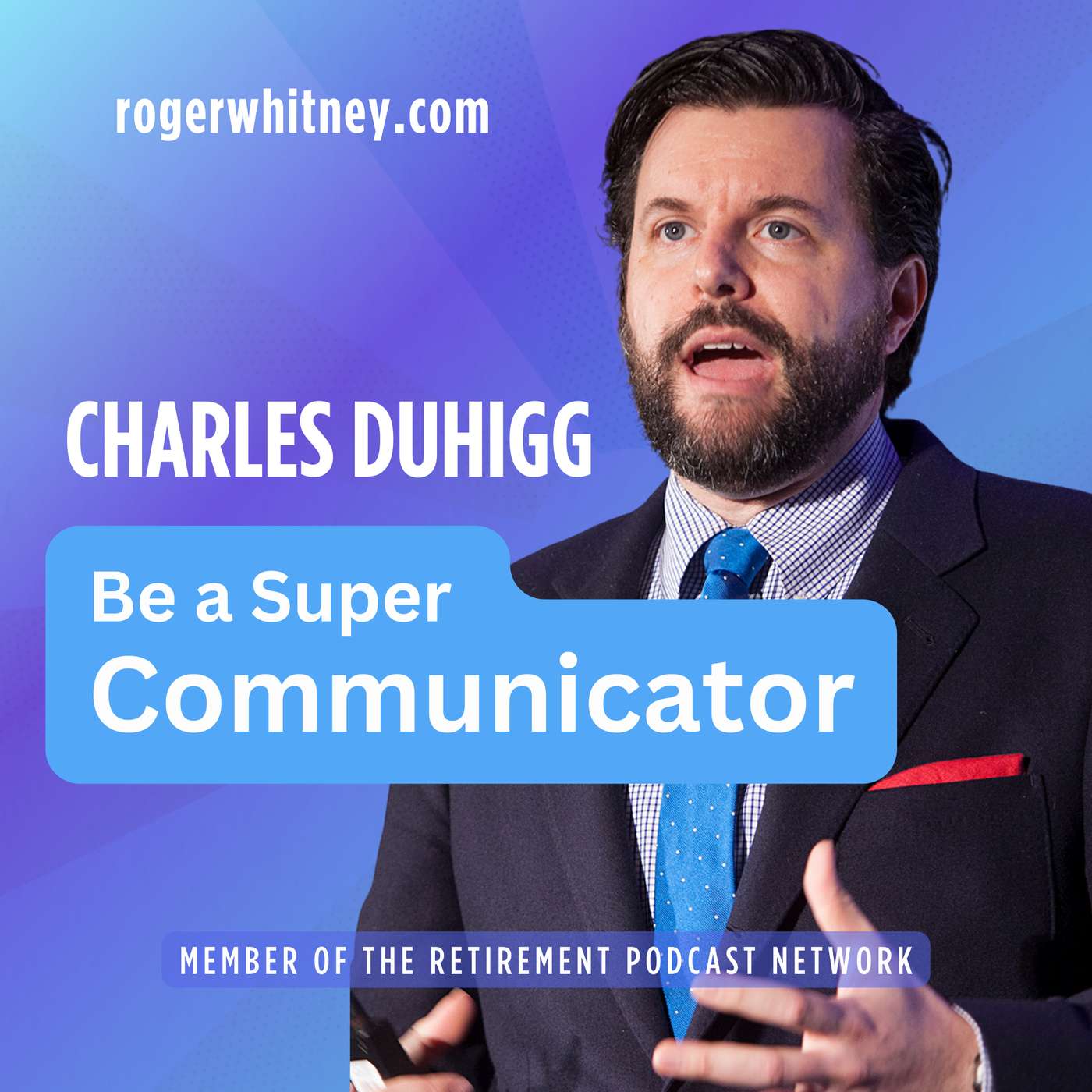
Jun 26, 2024
Lessons from Mike and Judy’s Investment Experience
Every one of us has a different tolerance for risk. We even have different risk tolerances at different points in our lives. In this episode, we’ll learn about Mike and Judy’s comfort level with their investments. Learn how they’ll develop an investment approach that matches their risk tolerance. If you have been enjoying Mike and Judy’s journey crafting their retirement plans, you won’t want to miss their live feasibility test on July 8. Join us on the latest Retirement Plan Live by signing up at LiveWithRoger.com . OUTLINE OF THIS EPISODE OF THE RETIREMENT ANSWER MAN MIKE AND JUDY’S PAST INVESTING EXPERIENCE [2:30] Your investment strategy needs to match your comfort level [5:16] Contemplating Judy’s news [17:19] Their investment philosophy [23:51] What worries them most about retirement [27:59] How will they pay for retirement? ROCK LIFE WITH KEVIN LYLES [31:30] Learning from those who have walked this path [35:33] What you can do to improve your competence in an area TODAY’S SMART SPRINT SEGMENT [37:04] Review the RISA pdf to learn more about your risk tolerance Resources Mentioned In This Episode Rock Retirement Club Roger’s YouTube Channel - Roger That BOOK - Rock Retirement by Roger Whitney Roger’s Retirement Learning Center
Jun 19, 2024
Legal Tender: Tallying Their Resources
#544 - Legal Tender: Tallying Their Resources Planning for retirement isn’t about creating a new job for yourself, it’s about using what you have to create a great life. On this episode of Retirement Answer Man, I’ll help Mike and Judy tally up and organize their resources so they can come up with a feasible plan for retirement. Press play to hear how you can follow along and create your own plan of record. OUTLINE OF THIS EPISODE OF THE RETIREMENT ANSWER MAN MIKE AND JUDY’S RESOURCES [3:40] Some corrections from last time [8:41] Their social capital [12:34] Their estimated human capital [18:18] Their assets LISTENER QUESTIONS [31:33] On investing to only keep pace with inflation [38:14] Should he take his RMDs monthly or yearly [45:16] Funding later in life healthcare costs TODAY’S SMART SPRINT SEGMENT [57:02] Use the worksheet from Six Shot Saturday to organize your resources Resources Mentioned In This Episode Rock Retirement Club Roger’s YouTube Channel - Roger That BOOK - Rock Retirement by Roger Whitney Roger’s Retirement Learning Center
Jun 12, 2024
The Lifestyle We Want in Retirement
We all have our own dreams for retirement and today, Mike and Judy share theirs. On this episode of Retirement Answer Man, you’ll hear Mike and Judy describe their ideal retirement, then in the Rock Life segment, Kevin Lyles will lay out the 4 pillars for a balanced life. As a bonus, you’ll hear Mark Ross interview me about my imperfect journey and the purchases we’ve made in Colorado. OUTLINE OF THIS EPISODE OF THE RETIREMENT ANSWER MAN WHAT MIKE AND JUDY WANT IN RETIREMENT [2:42] Their values [7:27] Their base great life [15:56] Their wants ROCK LIFE WITH KEVIN LYLES [30:33] 4 pillars for a balanced retirement TODAY’S SMART SPRINT SEGMENT [41:35] Think about your ideal retirement MY COLORADO UPDATE WITH MARK ROSS [42:40] Where did the Colorado idea begin? [49:50] How did Roger get to this next step? [54:47] How they ended up with two lots in Colorado [58:14] What are the plans now [1:03:28] How he’s reflecting on what he’s learned Resources Mentioned In This Episode WDW podcast Rock Retirement Club Roger’s YouTube Channel - Roger That BOOK - Rock Retirement by Roger Whitney Roger’s Retirement Learning Center
Jun 5, 2024
The Educator and the Esquire - Meet Mike and Judy
Would you like to have the confidence to know that it is all going to be okay so that you can walk away from your career? So would Judy! In this episode of Retirement Answer Man, you’ll meet Mike and Judy, an educator and an attorney. They are both facing burnout and ready to throw in the towel, but before they retire, they want to make sure they can swing it. Join us over the next 4 episodes, to learn more about Mike and Judy’s journey to retirement. OUTLINE OF THIS EPISODE OF THE RETIREMENT ANSWER MAN MEET MIKE AND JUDY [3:40] Why Judy wanted to join the show [6:42] A bit about Judy and Mike [10:28] What they want to accomplish [15:52] How she is helping with her dad [18:38] Mike and Judy’s ideal retirement date [24:21]Their overall objective ROCK LIFE [28:16] What kind of sun protection do we really need? [29:07] The types of skin cancer and what to do about it [38:06] Who is at the most risk of skin cancer [42:04] Sun protection TODAY’S SMART SPRINT SEGMENT [47:49] Complete the values worksheet from 6-Shot Saturday Resources Mentioned In This Episode Live Long and Well with Dr. Bobby Rock Retirement Club Roger’s YouTube Channel - Roger That BOOK - Rock Retirement by Roger Whitney Roger’s Retirement Learning Center
May 29, 2024
How Can I Get an IRMAA Exception?
Have you heard of IRMAA? IRMAA can be an unwelcome surprise if you aren’t expecting her. On this episode of Retirement Answer Man, you’ll hear what to expect from IRMAA and your Medicare costs. OUTLINE OF THIS EPISODE OF THE RETIREMENT ANSWER MAN PRACTICAL PLANNING SEGMENT [2:14] Recent feedback [6:57] What IRMAA surcharges are IN THE NEWS [14:55] Structured protection ETF [25:06] What the details show LISTENER QUESTIONS [30:23] Should we keep our life insurance policy? [34:42] Will the lack of a bachelor's degree hurt a retirement planning practice? [36:02] Where to get the materials for the Certified Retirement Counselor curriculum ROCK LIFE [37:51] Cultivating a growth mindset through curiosity [40:58] How to cultivate curiosity TODAY’S SMART SPRINT SEGMENT [50:55] Practice asking a dumb question Resources Mentioned In This Episode International Foundation for Retirement Education Form SSA-44 Rock Retirement Club Roger’s YouTube Channel - Roger That BOOK - Rock Retirement by Roger Whitney Roger’s Retirement Learning Center
May 22, 2024
I’m Afraid to Buy Stocks in Retirement! What Should I Do?
What is your risk tolerance? What does risk tolerance even mean? Why does it matter? We’ll explore these questions as I answer one of our listener’s questions on getting back into the stock market with a low risk tolerance. Listen in to learn why he may not need to follow the traditional way of doing things. OUTLINE OF THIS EPISODE OF THE RETIREMENT ANSWER MAN PRACTICAL PLANNING SEGMENT [2:00] How much risk to take in retirement IN THE NEWS [19:10] The AT&T data breach [23:03] What I’m going to do about it [26:00] How are password managers safer options for keeping passwords? LISTENER QUESTIONS [30:53] How does moving a 529 to a Roth IRA work? [33:32] How to know if Johnny should be looking for another financial planner TODAY’S SMART SPRINT SEGMENT [37:35] Rethink your password protection Resources Mentioned In This Episode 1Password Rock Retirement Club Roger’s YouTube Channel - Roger That BOOK - Rock Retirement by Roger Whitney Roger’s Retirement Learning Center
May 15, 2024
Should I Get a Mortgage for My Retirement Home?
Have you thought about getting a mortgage for your home in retirement? If so, have you strategized how you would pay it off? In this episode, we explore Scott’s question about pursuing a mortgage and paying it off early. Listen in to learn some different strategies you could use if you plan to get a mortgage on your home in retirement. OUTLINE OF THIS EPISODE OF THE RETIREMENT ANSWER MAN PRACTICAL PLANNING SEGMENT [2:08] Should Scott get a mortgage to build his retirement home? LISTENER QUESTIONS [12:13] HSA fees can be more expensive than the interest [15:14] What should John think about when deciding on whether to get a mortgage? [19:12] On using reverse dollar cost averaging [22:07] Can we use Roth conversions to do RMDs? [25:29] Understanding investment advisory fees [29:28] Tom’s perspective on his retirement ROCK LIFE [33:41] On cultivating a growth mindset TODAY’S SMART SPRINT SEGMENT [35:00] Take your thought and do it in the moment Resources Mentioned In This Episode Rock Retirement Club Roger’s YouTube Channel - Roger That BOOK - Rock Retirement by Roger Whitney Roger’s Retirement Learning Center

May 8, 2024
Stop Doing These Things in Retirement
Let’s get back to basics—addition and subtraction two ways to get to the same answer. However, we have a tendency to stick with addition. Today we’ll learn how subtraction can help you come out ahead. Why am I talking about elementary math on a retirement podcast? Listen in to find out. OUTLINE OF THIS EPISODE OF THE RETIREMENT ANSWER MAN PRACTICAL PLANNING SEGMENT [2:12] Is scarcity really a negative thing? [6:04] Stop trying to aim for precision [11:17] Stop making retirement planning your new job [14:03] Stop optimizing for returns [17:42] Stop thinking you have to retire to something rather than from something [21:25] Stop thinking you can wait [24:16] Stop thinking you need to resign yourself to what is LISTENER QUESTIONS [27:10] Turn off dividend reinvestment in your decumulation phase [30:00] A rucking comment [31:03] On Social Security survivor benefits [33:26] On inherited IRAs ROCK LIFE WITH DR. BOBBY DUBOIS [35:15] Movement studies [45:05] Why does movement matter? [48:51] Why the Hadza’s sedentary lifestyle is different from ours [50:55] Why vitamin D is or isn’t helpful TODAY’S SMART SPRINT SEGMENT [1:00:34] Find an opportunity to move Resources Mentioned In This Episode YouTube video - What You Should Know if You Inherited an IRA Episode 532 - How To Manage Your Scarcity Brain With Michael Easter Episode 530 - What Is True Retirement Planning? With Christine Benz Rock Retirement Club Roger’s YouTube Channel - Roger That BOOK - Rock Retirement by Roger Whitney Roger’s Retirement Learning Center
May 1, 2024
My Experience Moving to a Retirement Community
Have you ever considered moving to a retirement community? With the freedom that retirement brings, many people begin to rethink their living arrangements. On this episode, you’ll hear how Brad and his wife decided to move to a retirement community. Listen in to hear how they approached their decision, the research they put in on where to retire, and how they enjoy their new locale. OUTLINE OF THIS EPISODE OF THE RETIREMENT ANSWER MAN A MINI CASE STUDY [2:40] How Brad discovered The Villages [10:55] What led them to explore 55+ communities [13:10] How The Villages are organized [20:35] How to explore places to move in retirement LISTENER QUESTIONS [23:50] Should we consider getting I-bonds in 2024 [29:50] Clarifying new catch-up rules in 2026 [32:27] Charlie’s comment on systems thinking [36:18] Where to put taxes in your planning software [38:41] A suggestion for the podcast TODAY’S SMART SPRINT SEGMENT [40:06] Think about where you are going to live in retirement Resources Mentioned In This Episode YouTube video - What You Should Know if You Inherited an IRA After January 1st, 2020 I Bonds Rock Retirement Club Roger’s YouTube Channel - Roger That BOOK - Rock Retirement by Roger Whitney Roger’s Retirement Learning Center
Apr 24, 2024
Can I Do a Reverse Dollar-Cost Averaging for Withdrawals in Retirement?
Does a withdrawal strategy in retirement have to be complicated or can you simply do a reverse of dollar cost averaging? In this episode, we’ll take a look at how reverse dollar-cost averaging would work by using an example and discover who it works for. Click play to learn if this withdrawal strategy would work for you. OUTLINE OF THIS EPISODE OF THE RETIREMENT ANSWER MAN PRACTICAL PLANNING SEGMENT WITH A LISTENER QUESTION [1:44] Is it okay to do a reverse dollar-cost average for withdrawals in retirement? IN THE NEWS [14:30] The rules have changed for Inherited IRAs LISTENER QUESTIONS [18:55] What should Vicky do with the proceeds from the sale of her home? [24:09] What to do with a 10-year inherited IRA [27:55] What is the best way to fund bucket #1 to prep for retirement? [35:10] A topic suggestion TODAY’S SMART SPRINT SEGMENT [36:11] Evaluate the resilience of your plan Resources Mentioned In This Episode Rock Retirement Club Roger’s YouTube Channel - Roger That BOOK - Rock Retirement by Roger Whitney Roger’s Retirement Learning Center
Apr 17, 2024
How Much Money Do I Really Need to Retire?
We would all love to have that magic number–the exact amount we need to retire. However, since there are so many unknowns it is impossible to attain an exact number. This is why the big question of retirement is a complex one. In this episode, I’ll walk a listener through the process of how she can learn how much she really needs to retire. Make sure to stick around to hear about the books I read in March. OUTLINE OF THIS EPISODE OF THE RETIREMENT ANSWER MAN LISTENER QUESTIONS [1:46] How much do I really need to retire? [20:30] A comment on the FIRE movement [22:09] How to change advisors [27:28] How to get into the decumulation state of mind [32:37] Feedback on the Michael Kitces interview BOOKS I READ IN MARCH [34:00] Books I read this past month TODAY’S SMART SPRINT SEGMENT [36:22] Revisit your feasible plan of record to see how resilient it is Resources Mentioned In This Episode BOOK - Gulag Archipelago by Aleksandr Solzhenitsyn BOOK - Tai Pan James Clavell BOOK - Soul of an Octopus by Sy Montgomery The State Of Retirement Planning With Michael Kitces What is the FIRE Movement? NewRetirement.com Rock Retirement Club Roger’s YouTube Channel - Roger That BOOK - Rock Retirement by Roger Whitney Roger’s Retirement Learning Center
Apr 10, 2024
Ask Better Retirement Questions
Have you been wondering what retirement is like for real retirees out in the wild? With the success of our Retirement Plan Live series, we decided to try mini-case studies to learn more about what retirees like you are doing to rock retirement. In this episode, you’ll hear some feedback from Sarah who asked a question on the show about a year and a half ago. Listen in to hear how she responded to the advice I gave. OUTLINE OF THIS EPISODE OF THE RETIREMENT ANSWER MAN A MINI CASE STUDY [2:27] Sarah’s case [8:06] What you can do for you [10:01] A plan of record is the first step LISTENER QUESTIONS [13:00] What should Lucas take into account as he prepares to pay off his mortgage [20:00] Investing in retirement with a pension [26:08] How Joe is incorporating the Die With Zero philosophy by gifting ROCK LIFE WITH DR. BOBBY DUBOIS [28:24] What is rucking? [29:27] Why try rucking? [40:49] How do you get started rucking? [48:44] How to measure the benefits of rucking TODAY’S SMART SPRINT SEGMENT [50:00] Go try rucking by walking with something on your back Resources Mentioned In This Episode Retirement Plan Live: Their Financial Resources - listen to Sarah’s question here Go Ruck BOOK - Die with Zero by Bill Perkins BOOK - The Power of Moments by Chip Heath Rock Retirement Club Roger’s YouTube Channel - Roger That BOOK - Rock Retirement by Roger Whitney Roger’s Retirement Learning Center
Apr 3, 2024
The State of Retirement Planning with Michael Kitces
Michael Kitces is one of the innovators in the retirement planning and financial services space. His blog and ecosystem of resources help retirees and financial advisors gain the base knowledge needed to rock retirement. On this episode of Retirement Answer Man, Michael joins me to discuss the state of retirement planning, how it has changed, and how you can live your retirement to its fullest. Listen to this interview with one of the great minds in retirement planning. OUTLINE OF THIS EPISODE OF THE RETIREMENT ANSWER MAN PRACTICAL PLANNING SEGMENT WITH MICHAEL KITCES [5:20] Trends in retirement planning [22:40] How to avoid dying with too much money [36:51] How to choose a retirement planner [43:38] How does someone choose a retirement planning firm TODAY’S SMART SPRINT SEGMENT [49:04] Evaluate the quality of your process for making decisions in retirement Resources Mentioned In This Episode BOOK - Die with Zero by Bill Perkins BOOK - It’s Not Complicated by Rick Nason Kitces.com Rock Retirement Club Roger’s YouTube Channel - Roger That BOOK - Rock Retirement by Roger Whitney Roger’s Retirement Learning Center
Mar 27, 2024
How to Manage Your Scarcity Brain with Michael Easter
Have you ever wondered why it is so hard for you to spend your money? Even now after all these years of saving you know you have enough, but it’s hard to let go and untie those purse strings. Today, my friend and renowned author, Michael Easter joins me to discuss overcoming frugality from a different perspective. Click play to hear about the evolutionary mismatch that hinders you from spending your money. OUTLINE OF THIS EPISODE OF THE RETIREMENT ANSWER MAN LISTENER QUESTIONS [2:38] Clarification on the 5-year Roth conversion rule [4:36] Simple IRA rules [6:50] The tax impact of waiting to take Social Security PRACTICAL PLANNING SEGMENT WITH MICHAEL EASTER [12:00] Why Michael pursued the concept of the comfort crisis [18:32] How discomfort becomes rewarding [20:20] How we can change our decisions in small ways [24:25] How to manage your scarcity brain in retirement [33:48] We often focus too much on the numbers [36:59] The scarcity loop TODAY’S SMART SPRINT SEGMENT [41:10] Take the stairs Resources Mentioned In This Episode BOOK - The Comfort Crisis by Michael Easter BOOK - Scarcity Brain by Michael Easter Stutz Rock Retirement Club Roger’s YouTube Channel - Roger That BOOK - Rock Retirement by Roger Whitney Roger’s Retirement Learning Center
Mar 20, 2024
Overcoming Frugality in Retirement with Dan Crosby
For the past ten years, we have been exploring how to do retirement right so that you can get down to the business of living a great life. This is why this month we have had a series of special guests. Today’s guest is behavioral investment expert and author Dan Crosby. Together we explore why it is so hard to overcome your money mindset and how you can learn to let go to enjoy the money you have worked so long and hard to save. OUTLINE OF THIS EPISODE OF THE RETIREMENT ANSWER MAN PRACTICAL PLANNING SEGMENT WITH DAN CROSBY [3:38] Overcoming frugality [10:56] How to gain confidence in the midst of uncertainty [19:19] What are things you can do to overcome your frugality LISTENER QUESTIONS [26:52] How do people in retirement spend less money than more money? [33:44] Does it make sense to use money allocated for a 401K for a second home? [37:33] A comment on this past Retirement Plan Live [39:20] How to fund my HSA in retirement [42:13] How to look for blind spots once you have your feasible plan of record TODAY’S SMART SPRINT SEGMENT [47:16] Is there something else important that you could add to your life or retirement Resources Mentioned In This Episode BOOK - The Soul of Wealth by Dan Crosby BOOK - The Top 5 Regrets of the Dying by Bronnie Ware BOOK - Die with Nothing by Bill Perkins Rock Retirement Club Roger’s YouTube Channel - Roger That BOOK - Rock Retirement by Roger Whitney Roger’s Retirement Learning Center
Mar 13, 2024
What is True Retirement Planning? With Christine Benz
Retirement planning has changed over the years, but has the industry evolved to keep up? Your retirement needs are much different from those of your parents' generation. This is why it is important to focus on retirement planning in a holistic way rather than from solely a financial perspective. Morningstar’s Christine Benz joins me today on this episode of Retirement Answer Man. This seasoned retirement journalist shares her thoughts on the state of retirement planning, long-term care, investing in retirement, and what encompasses true retirement planning. Listen in to gain more perspective as you navigate your retirement journey. OUTLINE OF THIS EPISODE OF THE RETIREMENT ANSWER MAN PRACTICAL PLANNING SEGMENT WITH CHRISTINE BENZ [4:55] The state of retirement planning as a process [18:30] The state of investments for retirement planning [22:16] The state of long-term care [25:26] How to begin to plan for retirement decumulation LISTENER QUESTIONS [30:45] About opening a Roth for a child [32:51] How to create a 5-year income floor with financial capital [37:11] On using bonds to fund the 5-year income floor [41:44] Should you keep investment accounts under the FDIC and SIPC limits? [46:30] Should I have a Simple IRA and Solo 401K? TODAY’S SMART SPRINT SEGMENT [50:00] Understand what this year’s retirement contribution levels are Resources Mentioned In This Episode BOOK - More than Enough by Mike Piper BOOK - Die with Zero by Bill Perkins Morningstar Christine Benz The Longview Podcast Rock Retirement Club Roger’s YouTube Channel - Roger That BOOK - Rock Retirement by Roger Whitney Roger’s Retirement Learning Center
Mar 6, 2024
How Systems Thinking Can Improve Your Retirement with Rick Nason
This month we celebrate the Retirement Answer Man’s 10th anniversary milestone with several guests throughout the month. Today we welcome Professor Rick Nason, author of It’s Not Complicated , to discuss complicated vs complex thinking. If that discussion didn’t Stick around for the listener questions with Tanya Nichols and Bring It On with Dr. Bobby Dubois OUTLINE OF THIS EPISODE OF THE RETIREMENT ANSWER MAN COMPLICATED VS COMPLEX THINKING WITH PROFESSOR RICK NASON [4:20] Defining simple, complicated, and complex [9:11] Why it is important to identify whether you’re dealing with complicated vs complex [18:10] How to approach complex problems [29:30] How AI plays into the discussion of complex vs complicated thinking LISTENER QUESTIONS [38:50] On portfolio performance calculations [46:18] How to decide whether to stay with an advisor or move to another firm? [51:38] How to take your RMD [57:02] On the Dying with Zero book [57:31] On Don Quixote BOOKS I READ THIS MONTH [58:56] The books I read this month BRING IT ON WITH DR. BOBBY DUBOIS [1:04:02] Exploring uncertainty [1:09:53] Uncertainty in retirement [1:22:14] How to test anxiety treatments TODAY’S SMART SPRINT SEGMENT [1:25:27] Please fill out our listener survey Resources Mentioned In This Episode Align Financial The Fog of War Trillion Dollar Bet BOOK - Horse by Geraldine Brooks BOOK - Lessons in Chemistry by Bonnie Garmus BOOK - Life of Pi by Yann Martel BOOK - Die with Zero by Bill Perkins BOOK - When Genius Failed by Roger Lowenstein BOOK - It’s Not Complicated by Rick Nason BOOK - The Comfort Crisis by Michael Easter BOOK - The Scarcity Brain by Michael Easter BOOK - From Strength to Strength by Arthur Brooks Rock Retirement Club Roger’s YouTube Channel - Roger That BOOK - Rock Retirement by Roger Whitney Roger’s Retirement Learning Center
Feb 28, 2024
What Can I Learn from the FIRE Movement?
Those who have FIREd like Keven Sebesta are choosing to rock life each day. In this final episode on the FIRE movement, we’ll explore what we can learn from them. Join Kevin and me to discover how you can do what FIRE is doing right. What can you learn from FIRE? Traditional retirement planning is all about achieving the end goal. Climbing the mountain and reaching the summit. However, FIRE embraces life today. Those in the FIRE movement see life as an endless journey to explore. Don’t wait to explore your passions and interests. Do them now. If that isn’t possible, examine how your life is structured and begin to build a life filled with intentionality. Build connections and community based on your interests. Listen in to learn how you can create a rich life now without waiting until retirement. OUTLINE OF THIS EPISODE OF THE RETIREMENT ANSWER MAN PRACTICAL PLANNING SEGMENT [3:55] When I retire I will… [5:10] Lessons to learn from FIRE movement [13:43] What financial lessons to learn from FIREd people [16:23] Planning from the inside out LISTENER QUESTIONS [22:18] What is the payoff/penalty of using my IRA to do a Roth conversion? [30:25] Moving money from an IRA to an HSA [34:07] On refilling the pie cake [38:47] Make sure you have enough taxes withheld when doing Roth conversions [41:39] Can Gail open a Roth for her granddaughter? TODAY’S SMART SPRINT SEGMENT [43:33] Write down one thing that you know well and question it with a mindset of curiosity Resources Mentioned In This Episode Arthur Brooks Cal Newport Designing Your Dream Life with Arthur Brooks Mark’s Money Mind Rock Retirement Club Roger’s YouTube Channel - Roger That BOOK - Rock Retirement by Roger Whitney Roger’s Retirement Learning Center
Feb 21, 2024
The Challenges of FIRE
Over these past few weeks, we have been discussing the FIRE movement with Kevin Sebesta, a coach in the RRC who achieved FIRE some time ago and has been rocking retirement ever since. This week Kevin helps me explore the challenges that retiring early can bring. Listen in to hear if these are similar to the issues you face in retirement. OUTLINE OF THIS EPISODE OF THE RETIREMENT ANSWER MAN PRACTICAL PLANNING SEGMENT [4:58] The challenges of leaving traditional work early [10:55] Healthcare is one of the challenges [17:28] The non-financial challenges of FIRE LISTENER QUESTIONS WITH ANDY PANKO [27:44] Which Social Security benefit should we take? [31:28] Relating to working with a bad financial advisor [36:47] What to do with an overfunded whole life insurance policy [43:07] How are IRMAA surcharges calculated? TODAY’S SMART SPRINT SEGMENT [47:55] When you’re in a disagreement with someone, step out and reset yourself to gain perspective Resources Mentioned In This Episode Retirement Planning Education podcast Rock Retirement Club Roger’s YouTube Channel - Roger That BOOK - Rock Retirement by Roger Whitney Roger’s Retirement Learning Center
Feb 14, 2024
The Benefits of FIRE
Now that we know what FIRE is, let’s learn the benefits. In this episode of Retirement Answer Man, Kevin Sebesta joins me to discuss the benefits of FIRE. Afterward, Mark Ross comes aboard to noodle on why creativity is important in retirement. And finally, Taylor Schulte from the Stay Wealthy podcast helps me answer some listener questions. Don’t miss out on this informative episode! OUTLINE OF THIS EPISODE OF THE RETIREMENT ANSWER MAN PRACTICAL PLANNING SEGMENT [1:41] Life as a journey [3:00] Benefits of retiring early BRING IT ON WITH MARK ROSS [19:09] Why is creativity important? LISTENER QUESTIONS WITH TAYLOR SCHULTE [25:52] About the Retirement Podcast Network [28:43] How to choose between investing in a Roth 401K and a traditional investment account [33:55] Timing a reallocation of assets [39:45] A good, detailed, free retirement calculator [44:55] Why Rosie didn’t hire another financial planner TODAY’S SMART SPRINT SEGMENT [50:28] Define whether your decisions are hats, haircuts, or tattoos Resources Mentioned In This Episode New Retirement Calculator The Retirement Podcast Network Stay Wealthy Podcast Define Financial BOOK - Coaching Beyond Words by Anna Sheather BOOK - How to Think Like Leonardo DaVinci by Michael Gelb BOOK - Atomic Habits by James Clear PODCAST - Choose FI PODCAST - Catching Up to FI BOOK - The 100-Year Life by Andrew Scott and Lynda Gratton BOOK - The Second Mountain by David Brooks Rock Retirement Club Roger’s YouTube Channel - Roger That BOOK - Rock Retirement by Roger Whitney Roger’s Retirement Learning Center
Feb 7, 2024
What Is the FIRE Movement?
Have you heard of the FIRE movement? It’s become increasingly popular in the past few years. Even if you are technically too old to retire early, there is something we can all learn from FIRE seekers. In this episode, Kevin Sebesta, a real live FIREer joins me to discuss what FIRE is, how he achieved it, and what people who retire early do with their time. Make sure to stick around for the Bring It On segment with Dr. Bobby Dubois to learn whether supplements are worth the time and money we spend on them. Dr. Bobby helps us develop a framework for deciding whether supplements are right for us. OUTLINE OF THIS EPISODE OF THE RETIREMENT ANSWER MAN WHAT I READ IN JANUARY [2:02] Books I read last month PRACTICAL PLANNING SEGMENT [5:55] Meet Kevin [9:56] Defining FIRE [15:24] Who enjoys FIRE [21:23] Why FIRE has caught on BRING IT ON WITH DR. BOBBY DUBOIS [26:12] Why are supplements important? [30:54] How should we go about exploring supplements? [39:44] What do the studies show? [44:18] What about multivitamin supplements? [48:20] What supplements does Dr. Bobby support? [52:10] The takeaways TODAY’S SMART SPRINT SEGMENT [53:58] Read a book! Resources Mentioned In This Episode BOOK - Scarcity Brain by Michael Easter BOOK - Moby Dick by Herman Melville BOOK - The Eye of the World by Robert Jordan Rock Retirement Club Roger’s YouTube Channel - Roger That BOOK - Rock Retirement by Roger Whitney Roger’s Retirement Learning Center
Jan 31, 2024
Retirement Plan Live: Mature Marriage - Managing Joint Cash Flow with Separate Assets
How do you manage a joint cash flow with separate assets? In addition to discussing Mark and Mary’s situation, today I chat with Kay about how she and her husband handled finances with their late in life marriage. Kay gives us some insight on how to manage finances in a financially unbalanced relationship. You’ll appreciate her perspective on how to manage the household cash flow when you haven’t always been married. Make sure to stick around to hear an update from Sam, our single Retirement Plan Live case study from 2018. She’ll let us know how she’s been doing, what has surprised her about retirement, and whether her retirement plan has changed. OUTLINE OF THIS EPISODE OF THE RETIREMENT ANSWER MAN RETIREMENT PLAN LIVE [6:40] A comment about this RPL [8:12] How to discuss uncomfortable topics with your partner [13:56] Some examples of how separate assets can work [19:03] Chatting with Kay about her relationship and prenup [25:14] How they managed cash flow after they married [31:40] How they navigated the financial challenges in their marriage CATCHING UP WITH SAM FROM THE 2018 RETIREMENT PLAN LIVE [34:18] What Sam has been up to since we last chatted [38:01] How she has dealt with the ups and downs of the markets [42:26] Does her retirement plan look the same? [44:41] What has surprised her about retirement TODAY’S SMART SPRINT SEGMENT [50:24] Think about how you will manage your cash flow in retirement Resources Mentioned In This Episode 2018 Retirement Plan Live with Sam 219 , 220 , 221 , 222 , 223 Rock Retirement Club Roger’s YouTube Channel - Roger That BOOK - Rock Retirement by Roger Whitney Roger’s Retirement Learning Center
Jan 24, 2024
Retirement Plan Live - Mature Marriage: Shared Resources
We’re back with Retirement Plan Live to explore how two adults who married later in life can share their resources as they age. Last week we looked at their goals both individually and together and today we’ll do the same with their resources. Listen in to hear the different ways that older adults who come together later in life can pool their resources so they can rock retirement. OUTLINE OF THIS EPISODE OF THE RETIREMENT ANSWER MAN RETIREMENT PLAN LIVE [2:55] Let’s look at their resources [8:56] How can they use these resources together and separately [14:22] What to expect next week BRING IT ON WITH MARK ROSS [15:30] How to have a positive attitude while you age [18:02] Developing a purposeful path to aging [20:03] 3 things to consider TODAY’S SMART SPRINT SEGMENT [22:06] Organize and refresh your financial resources Resources Mentioned In This Episode BOOK - Who Do You Want to Be When You Grow Old? by Richard Leider and David Shapiro BOOK - The Comfort Crisis by Michael Easter Rock Retirement Club Roger’s YouTube Channel - Roger That BOOK - Rock Retirement by Roger Whitney Roger’s Retirement Learning Center
Jan 17, 2024
Retirement Plan Live: Mature Marriage - Shared Goals
Do you like lemonade? If so, you won’t want to miss out on the lemonade I make on today’s episode. We’re discussing goals on this episode of the Retirement Plan Live series and we get to catch up with Lori from the 2017 Retirement Plan Live. Find out what she is up to and how to work through shared and separate goals in retirement. OUTLINE OF THIS EPISODE OF THE RETIREMENT ANSWER MAN RETIREMENT PLAN LIVE [3:42] Mark and Mary’s differences developed into a big conversation [9:00] Mark’s values [10:12] Mary’s values [14:01] Inferring their goals [16:03] When they will retire CATCHING UP WITH LORI FROM THE 2017 RETIREMENT PLAN LIVE [22:48] What Lori and Bruce are up to today [27:18] Has their retirement plan changed? [33:01] Their plans for the future [35:15] Her advice for new retirees TODAY’S SMART SPRINT SEGMENT [38:12] Revisit your goals for retirement Resources Mentioned In This Episode RetireAgile.com LiveWithRoger.com 2017 Retirement Plan Live with Lori and Bruce 193 , 194 , 195 , 196 Rock Retirement Club Roger’s YouTube Channel - Roger That BOOK - Rock Retirement by Roger Whitney Roger’s Retirement Learning Center
Jan 10, 2024
Retirement Plan Live: Mature Marriage - Mary’s Story
If you’re married, do you have retirement planning meetings? If you’re single do you plan a time to meet with yourself to plan your retirement? What or whom do you use as a sounding board? In this Retirement Plan Live, we’re getting to know Mark and Mary–two lovely people who have found each other later in life. This mature newlywed couple is trying to iron out the details of their finances. Sit back and enjoy this episode where we meet Mary and learn about her story and the financial challenges she and Mark are facing in their new marriage. As you listen to Mark and Mary’s story maybe you can use it to frame your own retirement planning conversation. OUTLINE OF THIS EPISODE OF THE RETIREMENT ANSWER MAN A BIT OF HOUSEKEEPING [1:50] What is the retirement podcast network? [3:43] Books I read in December [7:00] A correction on a recent question [7:45] Some listener wisdom on what Rojo should do to retire at 60 [13:43] Sign up for the results webinar! MEET MARY [14:38] What motivated her to volunteer for RPL? [19:03] Advice for anyone navigating the online dating world [20:15] How they ended up together [23:31] Mary’s aspirations for their relationship BRING IT ON WITH KEVIN LYLES [37:10] The phenomenon of unretirement [43:44] What to do if you are considering unretirement [45:49] A Social Security tip if you do unretire TODAY’S SMART SPRINT SEGMENT [46:28] Have your retirement planning meeting for the year Resources Mentioned In This Episode BOOK - One Flew Over the Cuckoo’s Nest by Ken Kesey BOOK - Name of the Wind by Patrick Rothfuss BOOK - The Wise Man’s Fear by Patrick Rothfuss Rock Retirement Club Roger’s YouTube Channel - Roger That BOOK - Rock Retirement by Roger Whitney Roger’s Retirement Learning Center
Jan 3, 2024
Retirement Plan Live: Mature Marriage - Mark’s Story
Today you’ll meet Mark–half of our newest case study for Retirement Plan Live. Mark and Mary are a year and a half into their new marriage and are trying to figure out how to plan the rest of their lives. On this episode, you’ll learn about Mark and his aspirations and concerns for their life together. In the next episode, you’ll meet Mary, in week three we’ll discuss their goals, the following week we’ll look at their resources, and finally, we’ll see how they manage their cash flow and learn who pays for what. Make sure that you’re signed up for the live webinar on February 1 at 7 pm CST. In this webinar, you’ll get to see how everything panned out for Mark and Mary. To sign up, head on over to LiveWithRoger.com and mark it on your calendar. OUTLINE OF THIS EPISODE OF THE RETIREMENT ANSWER MAN MEETING MARK [3:30] What motivated Mark to volunteer for this case study [9:15] Mark loves spreadsheets [15:26] How they merged their lives BRING IT ON WITH DR. BOBBY DUBOIS [22:54] Should you do a broad spectrum of tests? [24:10] Why you should or shouldn’t do these tests [38:10] Why I did some screenings [46:51] How to do screenings productively TODAY’S SMART SPRINT SEGMENT [50:24] Organize the tests you’ve had from your doctor Resources Mentioned In This Episode Function Health BOOK - Outlive by Peter Attia Rock Retirement Club Roger’s YouTube Channel - Roger That BOOK - Rock Retirement by Roger Whitney Roger’s Retirement Learning Center
Dec 27, 2023
Should I Withdraw from My IRA to Pay Off My Mortgage?
One of our listeners actually has a better mortgage rate than me! However, as they begin to test their retirement budget they have found that the mortgage payment leaves that budget a bit tight. So they are wondering if they should pay off their mortgage early by withdrawing from their IRA. What would you do? Listen in to hear my response in addition to several other listener questions. We’ll also catch up with Rosie from the last Retirement Plan Live. Press play to learn if she implemented any of the things we discussed and how her retirement has been over the past year. OUTLINE OF THIS EPISODE OF THE RETIREMENT ANSWER MAN LISTENER QUESTIONS [3:30] Should we pay off our mortgage with our IRA? [11:27] An inherited IRA question [17:55] The order of withdrawals in retirement [25:24] The benefits of a continuing care retirement community CATCHING UP WITH ROSIE FROM THE 2023 RETIREMENT PLAN LIVE [27:34] How Rosie’s confidence level is now [29:00] How she implemented some financial changes this year [43:28] Her intentions for her new planner TODAY’S SMART SPRINT SEGMENT [51:27] Refresh your vision, your feasible plan of record, and your resilient plan of record Resources Mentioned In This Episode Retirement Plan Live with Rosie - 468 , 469 , 470 , 471 Rock Retirement Club Roger’s YouTube Channel - Roger That BOOK - Rock Retirement by Roger Whitney Roger’s Retirement Learning Center

Dec 20, 2023
How Can I Reduce the Chances of Running Out of Money in Retirement?
It seems like no matter how much we save we always have that nagging worry about whether it is truly enough. One of our listeners is looking for ways to reduce the chances of running out of money in retirement. My response to his question may surprise you. Listen in to hear what I have to say about improving his retirement trajectory. OUTLINE OF THIS EPISODE OF THE RETIREMENT ANSWER MAN LISTENER QUESTIONS [2:21] What can I do to ensure not run out of money in retirement [8:43] A rental property question [11:52] On Roths being separated in Fidelity [13:30] Can you roll over an old 401K into your current plan CATCHING UP WITH JOELLE FROM THE 2022 RETIREMENT PLAN LIVE [17:05] Joelle has formed a social network in her new town [19:23] How her finances have fared over the past 2 years [24:44] How a 5-year cash cushion has given her peace of mind [30:56] How Joelle has learned to let go of having one right way to do things TODAY’S SMART SPRINT SEGMENT [32:38] Enjoy your family Resources Mentioned In This Episode Retirement Plan Live with Joelle - Relocation For Retirement 416 , 417 , 418 , 419 Rock Retirement Club Roger’s YouTube Channel - Roger That BOOK - Rock Retirement by Roger Whitney Roger’s Retirement Learning Center
Dec 13, 2023
The Ins and Outs of Donor-Advised Funds
Have you ever wondered how the subjects from our Retirement Plan Live series are doing now? Did everything turn out okay for them? Find out how Emma ( from 2019 RPL ) is doing on this episode of Retirement Answer Man. In the listener questions segment you’ll learn about the Rule of 55, donor-advised funds, and contributing to a teen’s Roth IRA. Press play to listen. OUTLINE OF THIS EPISODE OF THE RETIREMENT ANSWER MAN LISTENER QUESTIONS [4:01] Can you directly contribute from an IRA or 401K to a donor-advised fund? [9:37] A rule of 55 clarification [11:41] Can I roll over the portion I don’t want under the rule of 55 provision? [15:19] Contributing to a teen’s Roth IRA [17:09] How to navigate financial planning for a special needs adult child CATCHING UP WITH EMMA FROM THE 2019 RETIREMENT PLAN LIVE [18:33] Having a great retirement after widowhood takes work [24:44] On finding her tribe [31:27] What’s next for Emma [32:48] Advice for others TODAY’S SMART SPRINT SEGMENT [36:10] Embrace the boring Resources Mentioned In This Episode Retirement Plan Live with Emma episodes 289 , 290 , 291 , 292 Rock Retirement Club Roger’s YouTube Channel - Roger That BOOK - Rock Retirement by Roger Whitney Roger’s Retirement Learning Center

Dec 6, 2023
Important Retirement Numbers for 2024
The way does not exist–there is no one correct way to do things. We are all finding our own ways in life and retirement. Working with an agile structure will help give you the scaffolding to create a retirement plan in an organized way. On this episode, you’ll hear how drafting your agile retirement plan can help you discover your unique way to rock retirement. Continue listening to discover the books I read in November, the answers to several listener questions, and the way to create an exercise plan to boost your energy. OUTLINE OF THIS EPISODE OF THE RETIREMENT ANSWER MAN BOOKS I READ IN NOVEMBER [2:40] The books I read in November LISTENER QUESTIONS [9:37] Books I have recommended in the past [12:25] A refilling tax buckets comment [16:50] Can you make a full HSA contribution for 2024? [19:35] A question on car loans [25:06] How do you know if your retirement plan is resilient [28:52] A book recommendation BRING IT ON WITH DR. BOBBY DUBOIS [30:39] How to show up with energy with exercise [35:43] How to set up an exercise program [39:13] Where to start [42:14] Convert your stationary life to a life of movement [50:16] How to fuel yourself for a workout [53:18] How to build a sustainable exercise program TODAY’S SMART SPRINT SEGMENT [57:00] Assess your process and strategy for retirement Resources Mentioned In This Episode Episode 434 - Functional Health To Rock Retirement - Creating The Right Exercise Plan DoRetirementRight.com Episodes with lists of books I’ve recommended - 138 , 206 , 287 , 464 The Retirement Answer Man GoodReads Book Club BOOK - Die with Zero by Bill Perkins BOOK - Be Useful by Arnold Schwarzenegger BOOK - Total Recall by Arnold Schwarzenegger BOOK - Only the Dead by Jack Carr BOOK - I’m Proud of You by Tim Madigan BOOK - The Road to Character by David Brooks Rock Retirement Club Roger’s YouTube Channel - Roger That BOOK - Rock Retirement by Roger Whitney Roger’s Retirement Learning Center
Nov 29, 2023
How Do I Refill My Retirement Income Floor?
Have you been wondering what you’re supposed to do when it comes to refilling your retirement income buckets? So has Michael. In this episode, I’ll go into further detail about how to do that. Stay tuned for the answer to Michael’s question and many others as well as a chat with Kevin Lyles on how to ease into retirement in the Bring It On segment. Press play to get started. OUTLINE OF THIS EPISODE OF THE RETIREMENT ANSWER MAN LISTENER QUESTIONS [4:38] How to reinvest retirement income floor [15:21] Contribute to grandchild’s Roth accounts to teach compounding [16:58] How is a non-deductible IRA contribution withdrawal handled? [19:51] The pros and cons of Everplans [24:26] On organizing books BRING IT ON [25:45] How to ease into retirement TODAY’S SMART SPRINT SEGMENT [33:45] Check your liquidity Resources Mentioned In This Episode BOOK - The Road to Character by David Brooks BOOK - The Second Mountain by David Brooks Everplans.com Episode 473 - How Is Deferred Compensation Taxed When I Receive It? Rock Retirement Club Roger’s YouTube Channel - Roger That BOOK - Rock Retirement by Roger Whitney Roger’s Retirement Learning Center
Nov 22, 2023
My Retirement Planner Said No to a Report Request. What Should I Do?
What would you do if your retirement planner said no when you asked them for a report? I’ll address this question and many more on this episode of the Retirement Answer Man Show. We’ll also discuss the two things you need to find happiness. Are you curious as to what they are? Listen in to find out. OUTLINE OF THIS EPISODE OF THE RETIREMENT ANSWER MAN LISTENER QUESTIONS [2:13] Adding to my partial answer to a question in episode 512 [5:33] What to do when my advisor told me no to a report [11:05] On switching plans in Medicare’s open enrollment [14:41] What training someone should pursue to improve their financial education [18:10] The issues that come with trying to die with zero [21:03] Rules when you return to work [23:22] On securing long-term care insurance [25:51] Are the rules different for 457B accounts? BRING IT ON [29:57] Building protocols to improve your agency TODAY’S SMART SPRINT SEGMENT [34:00] Write 5 things you are grateful for and 5 things you can do to build agency Resources Mentioned In This Episode Huberman Lab Podcast LTCI Partners Episode #281 - Is An Annuity Right For Retirement? The Role An Annuity Can Play In Your Portfolio BOOK - Die with Zero by Bill Perkins Episode #345 - How Does Medicare Work? Making Your Medicare Decision with Danielle Roberts Boomer Benefits Episode 512 - How Should I Pay Taxes On My Roth Conversions ? Rock Retirement Club Roger’s YouTube Channel - Roger That BOOK - Rock Retirement by Roger Whitney Roger’s Retirement Learning Center
Nov 15, 2023
Should I Consolidate My Accounts in Retirement?
If you have different retirement accounts at various brokerage firms, you may wonder whether you should consolidate them. One listener asked me that very question today. I’ll answer it along with several others–don’t miss the one about my finance book recommendations. Are you curious about how you can improve your relationship in retirement? Then, make sure to listen to Mark Ross’s suggestions in the Bring It On segment. OUTLINE OF THIS EPISODE OF THE RETIREMENT ANSWER MAN LISTENER QUESTIONS [5:51] Should Greg and his wife consolidate their accounts? [11:39] Using the Obsidian note-taking app [13:42] Larry’s question on RMDs and down markets [16:34] My recommendation on reading material for Sandy on money management [19:41] What is a LIRP? BRING IT ON WITH MARK ROSS [22:12] The relationship pillar requires communication [25:16] Have a retirement plan of record TODAY’S SMART SPRINT SEGMENT [30:07] Review these end-of-year housekeeping tips Resources Mentioned In This Episode BOOK - The Behavioral Investor by Daniel Crosby BOOK - 48 Days to the Work You Love by Dan Miller BOOK - Don’t Retire, Rewire by Jeri Sedlar BOOK - Younger Next Year by Chris Crowley BOOK - Stacked by Joe Saul-Sehy BOOK - A Simple Plan to Wealth by J.L. Collins BOOK - Winning the Loser’s Game by Charles Ellis BOOk - The Retirement Income Guidebook by Wade Pfau The Retirement Answer Man GoodReads group Notion Obsidian note-taking app Rock Retirement Club Roger’s YouTube Channel - Roger That BOOK - Rock Retirement by Roger Whitney Roger’s Retirement Learning Center

Nov 8, 2023
How Should I Pay Taxes on My Roth Conversions?
“You do not rise to the level of your goals; you fall to the level of your systems.” James Clear I’ve been focusing on building up my systems lately and today I’ll provide you with an example of what that looks like for me. In addition, in this episode, you’ll hear several questions on how to optimize your tax burden. Then in the Bring It On segment, Kevin Lyles joins me to discuss the role of leisure in retirement. Join me today to take a baby step to improve your life in retirement. OUTLINE OF THIS EPISODE OF THE RETIREMENT ANSWER MAN PRACTICAL PLANNING SEGMENT [2:19] Building systems LISTENER QUESTIONS [6:31] How to pay taxes for Roth Conversions [14:44] On new rules for catch-up contributions [17:07] Can Larry contribute to his wife’s HSA? [19:26] The details on the taxes on selling a house BRING IT ON [22:46] The role of leisure in retirement [25:06] The 6 categories of leisure TODAY’S SMART SPRINT SEGMENT [31:16] Look at your after-tax accounts and tally your realized capital gains Resources Mentioned In This Episode BOOK - Atomic Habits by James Clear Sign up for the 6-Shot Saturday newsletter ! Rock Retirement Club Roger’s YouTube Channel - Roger That BOOK - Rock Retirement by Roger Whitney Roger’s Retirement Learning Center

Nov 1, 2023
Should I Continue to Own Bond Funds?
Bonds are a ubiquitous part of a balanced portfolio and in recent years bond funds have become even more attractive to many investors. However, due to rising interest rates, bond funds are now losing their appeal. One listener asks whether she should call it quits on her investment in bond funds. In this episode of Retirement Answer Man, Nichole and I will explore this and other questions from listeners like you. Stick around to hear my conversation with Dr. Bobby Dubois about energy and our relationship with caffeine. Find out once and for all whether caffeine is as bad for you as they say. OUTLINE OF THIS EPISODE OF THE RETIREMENT ANSWER MAN WHAT I READ IN OCTOBER [1:30] Books I read in October LISTENER QUESTIONS [5:01] Will it be a long way to get back to even on bond funds? [10:03] About the recommended withdrawal rate in retirement [12:12] How to figure out the net worth of a pension [14:41] A question about transferring IRA funds to HSA [16:23] Feedback on wisdom for our children [17:14] How far back should a newer listener go in the podcasts? [21:09] A comment on my YouTube video with Joe Saul-Sehy BRING IT ON WITH DR. BOBBY DUBOIS [22:20] 85% of people have caffeinated beverages each day [28:22] How much caffeine should you have each day [30:12] What happens to your brain on caffeine [39:37] What to do with this information TODAY’S SMART SPRINT SEGMENT [44:18] Join the Retirement Answer Man Goodreads group ! Resources Mentioned In This Episode Join the Retirement Answer Man group on Goodreads BOOK - The Count of Monte Cristo by Alexandre Dumas BOOK - The Armor of Light by Ken Follett BOOK - Stillness is the Key by Ryan Holiday Rock Retirement Club Roger’s YouTube Channel - Roger That BOOK - Rock Retirement by Roger Whitney Roger’s Retirement Learning Center

Oct 25, 2023
Wisdom for Our Children - Spending, Saving, and Investing
We often try to overcomplicate finances, but simplicity is the key. That’s not to say simplistic: simple doesn’t equal simplistic. On this episode, we wrap up our Wisdom for Our Children series by exploring your advice for spending, saving, and investing. We have tons of valuable guidance for the young people in our lives. Be sure to listen to hear all the suggestions. OUTLINE OF THIS EPISODE OF THE RETIREMENT ANSWER MAN WISDOM FOR OUR CHILDREN [3:38] Learn to invest in yourself [9:02] How to create wealth [12:52] Some audio advice AN INTERVIEW WITH MARK TRAUTMAN [21:24] Understanding compound interest [31:10] The best place for a young person to save [40:29] How to invest your long-term investments TODAY’S SMART SPRINT SEGMENT [48:44] Get a book for a young person in your life Resources Mentioned In This Episode BOOK - The Daily Stoic by Ryan Holiday BOOK - Areté by Brian Johnson BOOK - The Simple Path to Wealth by JL Collins BOOK - Stacked by Joel Saul Sehy BOOK - Profit First by Mike Michalowicz BOOK - The Scarcity Brain by Michael Easter Rock Retirement Club Roger’s YouTube Channel - Roger That BOOK - Rock Retirement by Roger Whitney Roger’s Retirement Learning Center
Oct 18, 2023
Wisdom for Our Children - Family and Friends
Your family and friends are the people you walk life with, so it is important to choose wisely. In this episode of our Wisdom for Our Children series, Nichole joins me to reflect on what the younger generation should keep in mind when forming these valuable relationships. Press play to hear what it takes to build meaningful relationships. OUTLINE OF THIS EPISODE OF THE RETIREMENT ANSWER MAN PRACTICAL PLANNING SEGMENT [3:17] What you do speaks so loudly I cannot hear what you have to say [8:15] How to love someone [16:55] Have high standards [18:52] Create boundaries with family [20:30] Comments from listeners TODAY’S SMART SPRINT SEGMENT [26:58] Check in on someone Resources Mentioned In This Episode BOOK - The 5 Love Languages by Gary Chapman BOOK Series - The Crucial series by Kerry Patterson and Joseph Grenny BOOK - Boundaries by Henry Cloud BOOK - Necessary Endings by Dr. Henry Cloud BOOK - Love Does by Bob Goff BOOK - The Power of Moments by Chip and Dan Heath BOOK - The 4 Agreements by Miguel Ruiz BOOK - The Courage to Be Disliked by Ichiro Kishimi BOOK - QBQ by John Miller BOOK - 4000 Weeks by Oliver Burkeman Rock Retirement Club Roger’s YouTube Channel - Roger That BOOK - Rock Retirement by Roger Whitney Roger’s Retirement Learning Center
Oct 11, 2023
Wisdom for Our Children - Career and Retirement
This month, as we meander through the different parts of life we are stopping to reflect on certain areas to pass on wisdom to our children. In this episode of the Retirement Answer Man Nichole Mills joins me to discuss career and retirement. Do you have a young person in your life who you would like to pass on some juicy nuggets of wisdom? If so, make sure you are signed up for the 6-Shot Saturday newsletter. At the end of this series, we’ll be sending out a carefully cultivated PDF full of sagacity that you can pass on. OUTLINE OF THIS EPISODE OF THE RETIREMENT ANSWER MAN LISTENER QUESTIONS [3:27] Can you transfer appreciated assets in kind to a charitable giving trust? [9:45] How CDs work and when to use them [13:43] How to manage finances when marrying late in life [18:23] When are HSAs not worth the triple tax advantage? WISDOM FOR OUR CHILDREN WITH NICHOLE MILLS [27:19] Think in 5-year increments [29:26] Build career capital [32:00] Cultivate an authentic network [35:27] Wisdom on retirement [39:43] Play by your own rules [40:21] Advice from our listeners TODAY’S SMART SPRINT SEGMENT [48:10] Cultivate your artistic nature Resources Mentioned In This Episode BOOK - Designing Your Life by Bill Burnett and Dave Evans BOOK - Linchpin by Seth Godin Cal Newport Rock Retirement Club Roger’s YouTube Channel - Roger That BOOK - Rock Retirement by Roger Whitney Roger’s Retirement Learning Center
Oct 5, 2023
Wisdom for Our Children - Energy and Mindset
It is commonly said that youth is wasted on the young. Do you ever wish you could share the wisdom and perspective you have gained with someone young enough to benefit from it? As we approach our sunset years, many of us have a spiritual desire to give back to the next generation. There is an abundance of wisdom within this community which is why over the course of the next several episodes we will collect that wisdom to pass on to our children. Each episode will be designed around a separate area of life. This week we’ll focus on energy and mindset because without energy nothing else can fall into place. Come back next week to hear about career and retirement. Make sure to share this one with your favorite young people. There is a wealth of resources mentioned in this episode, so make sure to scroll down to the bottom of this page for all the links. OUTLINE OF THIS EPISODE OF THE RETIREMENT ANSWER MAN BOOKS I READ LAST MONTH [2:30] The two books I read in September WHAT WE WISH OUR YOUNGER SELVES WOULD HAVE KNOWN [9:20] What we wish we would have known [14:43] Resources surrounding energy and mindset [16:23] Who Brian is [20:29] What does arete mean? [24:49] What Brian was like at 23 [27:44] Advice Brian has for his younger self [41:54] How to gamify self-improvement LISTENER QUESTIONS [53:54] Clarifying my answer to a previous question on HSAs [55:47] Elaborating on not retiring [58:49] Susan’s comment on my interview with the Friends Talk Money podcast [1:01:18] How to look for a retirement planner TODAY’S SMART SPRINT SEGMENT [1:08:48] What is one thing in each of the energy and mindset domains that you could stop doing to build a better life? Resources Mentioned In This Episode Join me October 26 or 28 to discuss The 4 Financial Pillars of a Great Retirement Plan Garrett Planning Network NAPFA Friends Talk Money podcast Episode 499 - Should I Do A Roth Conversion? BOOK - Deep Work by Cal Newport BOOK - Tiny Habits by BJ Fogg BOOK - The Power of Agency by Paul Napper BOOK - The Tools by Phil Stutz and Barry Michels Heroic App BOOK - Bright Line Eating by Susan Pierce Thompson BOOK - The Comfort Crisis by Michael Easter BOOK - Why We Sleep by Matthew Walker BOOK - Outlive by Peter Attia BOOK - 4000 Weeks by Oliver Burkeman BOOK - Undaunted Courage by Stephen Ambrose Rock Retirement Club Roger’s YouTube Channel - Roger That BOOK - Rock Retirement by Roger Whitney Roger’s Retirement Learning Center
Sep 27, 2023
Should I Stop Contributing to My Pre-Tax Accounts?
What is the difference between a passion and an interest? Why is it important to have a passion in retirement? In the Bring It On segment with Mark Ross, we’re discussing passions. You’ve probably heard that it is important to have a purpose in retirement, but today you’ll learn how to develop your interests and turn them into passions. You’ll also hear questions about when to stop contributing to pre-tax retirement accounts, what preferred stocks are, and whether QLACS can be used as QCDs. Press play to listen. OUTLINE OF THIS EPISODE OF THE RETIREMENT ANSWER MAN LISTENER QUESTIONS [3:30] Future pre-tax contributions [13:48] What is the objective of having preferred stocks in a portfolio [17:03] Can a QLACS distribution be treated as a qualified charitable distribution? [18:54] Where should these 34-year-olds save? BRING IT ON WITH MARK ROSS [21:28] Are passions the same as interests? TODAY’S SMART SPRINT SEGMENT [27:00] Update your net worth statement Resources Mentioned In This Episode LiveWithRoger.com BOOK - 4000 Weeks by Oliver Burkeman Rock Retirement Club Roger’s YouTube Channel - Roger That BOOK - Rock Retirement by Roger Whitney Roger’s Retirement Learning Center
Sep 20, 2023
What Is the Ideal Mix Between Before and After Tax Retirement Accounts?
Is there an ideal mix of before and after-tax retirement accounts? If so, what is it? In this episode, we’ll find out. We’ll also explore a number of other questions that have been eating away at listeners like you. Check out this episode to listen to these listener questions and stick around until the end to hear Kevin Lyle’s relief at no longer having to keep up with the Joneses. OUTLINE OF THIS EPISODE OF THE RETIREMENT ANSWER MAN LISTENER QUESTIONS [2:05] What is the ideal mix between before and after-tax retirement accounts? [6:46] What to do about a fee-heavy investment account [11:00] Finding a financial planner [12:09] The impact on energy levels [13:58] Saving for kids’ education [18:17] How to open a Roth with a high-income BRING IT ON [21:05] Keeping up with the Joneses TODAY’S SMART SPRINT SEGMENT [26:08] Check the way you compare yourself to others Resources Mentioned In This Episode Andy Panko’s advisor referral list Garrett Planning Network NAPFA BOOK - Outlive by Peter Attia Rock Retirement Club Roger’s YouTube Channel - Roger That BOOK - Rock Retirement by Roger Whitney Roger’s Retirement Learning Center
Sep 13, 2023
What Should I Consider When Transferring Investment Accounts?
What are you doing to make friends in retirement? Mark Ross and I explore this challenge in our Bring It On segment. Listen in to hear how I made a new friend this week and stick around to hear the listener questions and what you could be doing to improve your social life. OUTLINE OF THIS EPISODE OF THE RETIREMENT ANSWER MAN LISTENER QUESTIONS [2:36] What should Ronnie consider when transferring investment accounts? [14:30] Clarifying the 401K catch-up provision for high-income earners [20:12] Clarifying the 5-year rule with each conversion [22:44] Capital gains strategies for downsizing your primary residence [26:35] Will claiming a personal SS benefit early affect a spousal benefit? BRING IT ON WITH MARK ROSS [30:40] How do we make new friends in retirement? TODAY’S SMART SPRINT SEGMENT [37:57] Take stock of your social network to see how you could improve Resources Mentioned In This Episode The Roth series 494 , 495 , 496 , 497 , 499 BOOK - A Simple Path to Wealth by J.L. Collins Rock Retirement Club Roger’s YouTube Channel - Roger That BOOK - Rock Retirement by Roger Whitney Roger’s Retirement Learning Center
Sep 6, 2023
Should I Borrow Against My Investments to Buy a House?
Did you know that there is another way to borrow money to purchase a home that is not a mortgage? Larry is thinking about using a securities-based line of credit against his after-tax investment account to borrow to buy a house. Discover my opinion on this optimization question on this episode of Retirement Answer Man. Listen in to also hear my August reads and learn about the importance of protein to keep strong as you age. Press play now. OUTLINE OF THIS EPISODE OF THE RETIREMENT ANSWER MAN BOOKS I READ IN AUGUST [2:58] The Wager [6:02] American Prometheus [7:12] Outlive [9:09] The Courage to Be Disliked [10:06] The Big Short LISTENER QUESTIONS [11:14] Should Larry use an after-tax investment account to borrow to buy a house? [21:33] Jennifer wants to hear more about pretirement [26:25] How to get the Roth clock ticking when you don’t qualify for a Roth [28:18] On discussing faith in the RRC [29:20] The costs of alcohol [30:12] Richard’s thank you on 500 episodes [31:34] Do the same (golden) rules apply to Roth 401Ks as Roth IRAs BRING IT ON WITH DR. BOBBY DUBOIS [35:30] Building energy using protein powder [41:00] How much protein people really need [44:02] Negatives of too much protein [48:12] Do people get enough protein? [50:06] More on protein supplements [57:55] How to ensure you are getting enough protein TODAY’S SMART SPRINT SEGMENT [59:01] Keep a captain’s log Resources Mentioned In This Episode BOOK - American Prometheus by Kai Bird BOOK - Outlive by Peter Attia BOOK - The Wager by David Grann BOOK - The Courage to be Disliked by Ichiro Kishimi BOOK - The Big Short by Michael Lewis Episode 502 - Should I Realign My 401K Now That I'm Retired? (with Kevin Lyles) Episode 500 - 500 Episodes and Still Rocking A few episodes in which we discuss retirement - 183 , 214 , 244 , 324 , 430 Rock Retirement Club Roger’s YouTube Channel - Roger That BOOK - Rock Retirement by Roger Whitney Roger’s Retirement Learning Center

Aug 30, 2023
Should I Realign My 401K Now That I’m Retired?
To really rock retirement you have to have the right mindset. On this episode of Retirement Answer Man, Kevin Lyles and I noodle on the power of wonder. You’ll learn why it is important to have a sense of wonder and learn three tips for digging into your own sense of wonder. We also have plenty of listener questions to answer. Press play to hear the answers to questions from listeners like you. OUTLINE OF THIS EPISODE OF THE RETIREMENT ANSWER MAN BRING IT ON WITH KEVIN LYLES [3:44] The power of wonder [7:22] Kevin’s tips for experiencing wonder LISTENER QUESTIONS [12:47] Should Liz reallocate her 401K? [23:28] Should Barry be concerned about his asset allocation? [34:45] A rule of 55 issue [36:30] Getting conflicting answers from the Social Security Administration [40:29] On dealing with FOMO and building healthy cash reserves [43:59] How to get into retirement planning as a career TODAY’S SMART SPRINT SEGMENT [48:40] Find some wonder in the world Resources Mentioned In This Episode RMA Certification MaximizeMySocialSecurity.com Episode 493 - How Can I Reverse Taking Social Security? The Huberman Lab Podcast BOOK - The Power of Wonder by Monica Parker Get inspired by the Free Range Fun Hogs blog Rock Retirement Club Roger’s YouTube Channel - Roger That BOOK - Rock Retirement by Roger Whitney Roger’s Retirement Learning Center

Aug 24, 2023
Historical vs. Projected Returns?
Should you use historical or projected returns in your retirement model? One of our listeners asks this question in a very eloquent way. On this episode of Retirement Answer Man, I’ll spend some time on this question and share my thoughts on which type of model you should use. You’ll also hear the answers to several other listener questions before Kevin Lyles and I discuss tips for having successful conversations with your spouse in retirement. OUTLINE OF THIS EPISODE OF THE RETIREMENT ANSWER MAN LISTENER QUESTIONS [1:30] Should we use historical or projected returns? [20:11] What is the intent? [23:00] What I sound like at 75% speed [24:05] How to rank spending priorities [28:24] Insurance options before Medicare [32:14] On estimating longevity in a retirement plan BRING IT ON WITH KEVIN LYLES [35:48] Conversations to have with your spouse in retirement [38:11] Tips for successful conversations [40:42] Questions to ask each other TODAY’S SMART SPRINT SEGMENT [50:32] Review your capital market assumptions Resources Mentioned In This Episode Viking Cruises Rock Retirement Club Roger’s YouTube Channel - Roger That BOOK - Rock Retirement by Roger Whitney Roger’s Retirement Learning Center
Aug 16, 2023
500 Episodes and Still Rocking
Thank you for hanging in with me for 500 episodes! Today’s episode will veer a bit from the norm as I pause to reflect on our journey and commemorate it with this milestone episode. Listen in to hear my reflections and thoughts from listeners about observations and the meaning of these past 500 episodes. OUTLINE OF THIS EPISODE OF THE RETIREMENT ANSWER MAN PRACTICAL PLANNING SEGMENT [2:33] What I’m proud of from this podcast [6:21] Observations on what it takes to rock retirement LISTENER COMMENTS ON 500 EPISODES [13:24] Jeanie has gained confidence in her retirement [16:11] Eric appreciates the word iterate [17:28] Mary Ellen appreciated the shows on the RV lifestyle [19:38] One listener appreciated the Wings for Widows link [20:53] The pretirement has helped expand John’s vision of retirement [23:48] Elaine appreciates one of my comments [24:11] Kevin’s thoughts BRING IT ON WITH MARK ROSS [25:06] How to navigate retirement without passions TODAY’S SMART SPRINT SEGMENT [30:00] Find something to celebrate today Resources Mentioned In This Episode Wings for Widows Episode 479 - Widowed In Retirement: Creating A New You Episode 442 - Can I Count On Average Returns And Inflation For Retirement? (the interview with Amy Bloom) The RV Series Episode 263 , Episode 264 , Episode 265 , Episode 266 BOOK - Tiny Habits by BJ Fogg BOOK - The Daily Stoic by Ryan Holiday Rock Retirement Club Roger’s YouTube Channel - Roger That BOOK - Rock Retirement by Roger Whitney Roger’s Retirement Learning Center

Aug 9, 2023
#499 - Should I Do a Roth Conversion?
Do you think the Roth conversion question is an essential part of retirement planning? If you do, you haven’t been paying attention to my podcasts! In this episode of the Retirement Answer Man show, we’ll work through how you can build a framework for deciding whether you should do Roth conversions. If you listened to the Roth conversion series you can’t miss this episode. OUTLINE OF THIS EPISODE OF THE RETIREMENT ANSWER MAN PRACTICAL PLANNING SEGMENT [2:30] Books I read last month [5:12] Framework for building a Roth conversion [15:42] Considerations for making a Roth conversions [22:07] How to decide LISTENER QUESTIONS [27:21] Jeffrey appreciated the how of Roth conversions [28:05] A comment on the pro rata rule [29:15] On funding the years between retirement and pension [35:06] On HSA funding strategies in the final year of work BRING IT ON [38:41] On shifting your mindset [42:00] What thread are you carrying on? TODAY’S SMART SPRINT SEGMENT [42:35] Schedule a time to go through an OODA loop to decide on your Roth opportunity Resources Mentioned In This Episode BOOK - Seveneves by Neal Stephenson BOOK - Cryptonomicon by Neal Stephenson BOOK - Reamde by Neal Stephenson BOOK - All Quiet on the Western Front by Eric Maria Remarque BOOK - Dead Fall by Brad Thor Episode 495 - The Rules for Roth Contributions Rock Retirement Club Roger’s YouTube Channel - Roger That BOOK - Rock Retirement by Roger Whitney Roger’s Retirement Learning Center
Aug 2, 2023
The Impact of Alcohol on Rocking Retirement
Are you much of a drinker? Studies show that 60% of Americans are, and an even greater percentage of college-educated Americans are. In this episode, Dr. Bobby Dubois and I reflect on the effects of alcohol on retirement. We’ll get into everything: the good, the bad, and the ugly. Don’t worry, we’re still exploring Roths this week by answering your questions. All of our listener questions are related to Roths. If you have a question about our recent Roth series or anything retirement-related leave a voice recording or an email here . OUTLINE OF THIS EPISODE OF THE RETIREMENT ANSWER MAN LISTENER QUESTIONS [2:51] On contributing to a Roth via 401K [5:02] Getting pushback from advisors on converting a 401K to Roth [14:10] How does the 5-year rule apply to a new Roth account [17:28] On implementing a resilient plan [22:30] Clarification on the pro rata rule BRING IT ON WITH DR. BOBBY DUBOIS [24:17] Who drinks alcohol and how much [32:41] The good and bad of drinking alcohol [38:56] The ugly of drinking alcohol [45:21] How does alcohol affect you? TODAY’S SMART SPRINT SEGMENT [48:52] Experiment with your relationship with alcohol Resources Mentioned In This Episode Podcast - Huberman Lab BOOK - Outlive by Peter Attia Rock Retirement Club Roger’s YouTube Channel - Roger That BOOK - Rock Retirement by Roger Whitney Roger’s Retirement Learning Center
Jul 26, 2023
The Rules for Roth Withdrawals
After listening to the past two episodes you now know how to make Roth contributions and conversions, that was the easy part. Today we discuss the more complicated Roth rules for making withdrawals. To avoid unnecessary penalties and taxes you’ll want to make sure that you clearly understand the regulations surrounding Roth withdrawals. Listen to ensure that you don’t get caught unaware and needlessly get stuck paying avoidable taxes and fees. OUTLINE OF THIS EPISODE OF THE RETIREMENT ANSWER MAN PRACTICAL PLANNING SEGMENT [1:32] Building a target to work for to build healthy habits [6:20] The golden rule of Roth withdrawals [8:58] The order of withdrawals [11:08] How the five-year rule works with contributions [16:41] How the five-year rule works with conversions [19:33] How the five-year rule works with a Roth 401K LISTENER QUESTIONS [27:11] On taking money from a 401K and moving it to a Roth IRA so that someone can manage it [31:34] How to decide whether to convert funds into a Roth IRA [35:03] Estimating Social Security income using the detailed calculator [36:01] Clarifying the five-year rule start date [38:40] Deciding whether to claim Social Security early BRING IT ON [43:14] Intentions vs actions TODAY’S SMART SPRINT SEGMENT [46:42] Catch yourself setting intentions Resources Mentioned In This Episode Dexa Scan BOOK - Outlive by Peter Attia Rock Retirement Club Roger’s YouTube Channel - Roger That BOOK - Rock Retirement by Roger Whitney Roger’s Retirement Learning Center
Jul 19, 2023
The Rules for Roth Conversions
Many of us have missed the boat on Roth contributions, but we have another tool to get into Roths: Roth conversions. If you have been curious about all the hype about Roths you won’t want to miss this series. This month we dive deeper into Roths. In episode 494 we discussed what Roths are, last week we dove into contributions, and this week we demystify conversions. Listen in to learn how you can use Roth conversions to upgrade your retirement. OUTLINE OF THIS EPISODE OF THE RETIREMENT ANSWER MAN PRACTICAL PLANNING SEGMENT [2:44] I try to keep the main thing the main thing [3:49] Many of us have missed the boat on Roth contributions [7:11] How to perform a Roth conversion [8:45] How do you pay the tax on a Roth conversion? [14:05] The pros of paying from after-tax assets [16:22] The downsides of paying with after-tax assets LISTENER QUESTIONS [19:05] A rule of 55 clarification [22:20] What happens if my income is too high to contribute to a Roth [23:52] How to create a 5-year cash bucket in down markets [30:13] On creating a bond portfolio ladder BRING IT ON [38:12] On relationship building TODAY’S SMART SPRINT SEGMENT [43:09] Get out of your normal routine and meet new people Resources Mentioned In This Episode Episode 494 - Roth Opportunity Rock Retirement Club Roger’s YouTube Channel - Roger That BOOK - Rock Retirement by Roger Whitney Roger’s Retirement Learning Center
Jul 12, 2023
The Rules for Roth Contributions
So many economic predictions for the year have proved incorrect. Since even the brightest economists don’t have a crystal ball, planning your retirement based on economic, market, or investment predictions can lead you astray. Instead of basing your retirement plan on wishful thinking, learn how to create a strategic retirement plan based on agency. Today, and during this entire Roth IRA series, we’ll see how you can use Roths to enhance your retirement plan. Listen to this episode to hear whether you should be making Roth contributions to help fund your retirement. OUTLINE OF THIS EPISODE OF THE RETIREMENT ANSWER MAN PRACTICAL PLANNING SEGMENT [5:48] How to make Roth IRA contributions [8:04] How backdoor Roth contributions work [13:47] The difference in the Roth 401K LISTENER QUESTIONS [19:45] Envisioning family legacy options [28:08] Spousal Social Security benefits [31:26] Optimizing taxes and estate planning BRING IT ON WITH KEVIN LYLES [39:20] On designing a phased retirement [45:02] Make sure your phased retirement isn’t an excuse to not retire TODAY’S SMART SPRINT SEGMENT [47:30] Examine whether you should be making Roth contributions Resources Mentioned In This Episode Rock Retirement Club Roger’s YouTube Channel - Roger That BOOK - Rock Retirement by Roger Whitney Roger’s Retirement Learning Center
Jul 5, 2023
The Roth Opportunity
If you’ve been wondering how Roth IRAs work in retirement you’ve come to the right place. All this month we’ll be exploring Roth IRAs–how they work, the 5-year rule, and the differences between Roth conversions and contributions and Roth IRAs and Roth 401Ks. My goal with this series is to level the playing field so that you can understand the opportunities that Roths provide. On this episode, you’ll learn how you can use a Roth to enhance your retirement. If you are ready to start optimizing your retirement press play. OUTLINE OF THIS EPISODE OF THE RETIREMENT ANSWER MAN BOOKS I READ LAST MONTH [2:10] What I’ve been reading and how I read PRACTICAL PLANNING SEGMENT [12:35] Roth accounts in retirement [16:16] What Roths are [20:56] Roth planning opportunities LISTENER QUESTIONS [32:45] A tip for using the detailed calculator on SSA.gov [33:52] How to search for a financial advisor [37:17] On consolidating your IRAs [42:26] Can Kelly roll over her 401K to a Roth IRA or is there a better option? BRING IT ON WITH DR. BOBBY DUBOIS [50:12] How to implement the tools Dr. Dubois gives us [52:32] Assessing your energy levels [59:22] How to start improving your energy [1:04:39] How to improve the mind-body connection [1:12:46] How to experiment on yourself TODAY’S SMART SPRINT SEGMENT [1:14:10] Update your net worth statement and your cash flow statement so you can plan the rest of the year Resources Mentioned In This Episode Episode 487 - The 8 Pillars Of Rocking Retirement: Financial - Resilience And Optimization The Detailed calculator on SSA.gov not My SSA.gov Catching Up to FI Podcast BOOK - Call Sign Chaos by Jim Mattis BOOK - Fooled by Randomness by Nassim Nicholas Taleb BOOK - The Alter Ego Effect by Todd Herman Obsidian note taking app Rock Retirement Club Roger’s YouTube Channel - Roger That BOOK - Rock Retirement by Roger Whitney Roger’s Retirement Learning Center
Jun 28, 2023
How Can I Reverse Taking Social Security?
There are so many questions that come with retirement which is why I focus on answering questions from listeners like you. As you listen to these questions and their answers consider how they fit into your ultimate objective. Listen in to learn why intent matters. In this episode, we’ll explore how to frame retirement questions around your intent, answer listener questions, and in the Bring It On segment you’ll hear a tip about how to rebalance your emotions during stressful conversations. OUTLINE OF THIS EPISODE OF THE RETIREMENT ANSWER MAN LISTENER QUESTIONS [4:12] How to use your 5-year cushion [11:32] Does having a civil judgment against me apply to my accounts in other states? [15:55] Bret wants to know more about how to maximize his accumulation stage [19:35] How to reverse a decision to claim Social Security [22:05] Examples of simplifying a portfolio by using ETFs or other all-in-one funds [26:38] How to diversify an overfunded portfolio [32:59] Should I stop the automatic reinvestment of dividends? BRING IT ON [36:00] A tip to rebalance your emotions in stressful situations TODAY’S SMART SPRINT SEGMENT [37:50] Reexamine your intent when making decisions Resources Mentioned In This Episode Brian Cain BOOK - Call Sign Chaos by Jim Mattis Jeremy Siegel BOOK - Stocks for the Long Run by Jeremy Siegel Rock Retirement Club Roger’s YouTube Channel - Roger That BOOK - Rock Retirement by Roger Whitney Roger’s Retirement Learning Center
Jun 21, 2023
The KISS Concept for Investing
This podcast was created for you–not me. I’m here to help you think differently about retirement and find a concept or tool that will help you take action to rock retirement. I do this by answering your questions and bringing you content that will open your mind and spur you to get started. If you have a question you would like me to answer, head on over to RogerWhitney.com/AskRoger to leave an audio or written question. Investing in retirement shouldn’t be that complex. The simpler you can keep it the less confusion you’ll have. One listener wonders how she can keep her investments simple in retirement. Find out how to take the complexity out of investing in retirement by listening to this episode. Afterward, you can take action by considering how to simplify your own investments and make them retirement ready. OUTLINE OF THIS EPISODE OF THE RETIREMENT ANSWER MAN PRACTICAL PLANNING SEGMENT [1:20] What other listeners say LISTENER QUESTIONS [5:42] What is the difference between a financial advisor and a wealth planner? [12:48] The KISS concept for investing [19:35] On using direct debt lending organizations [25:00] The difference between bank CDs and brokered CDs [30:18] How to make your retirement plan resilient BRING IT ON [39:21] On starting your own business in retirement [45:55] Steps to take to get started TODAY’S SMART SPRINT SEGMENT [47:37] Take action on something Resources Mentioned In This Episode FINRA.org Rock Retirement Club Roger’s YouTube Channel - Roger That BOOK - Rock Retirement by Roger Whitney Roger’s Retirement Learning Center
Jun 14, 2023
How Listener Mike is Finding His Purpose in Retirement
The oldest person is 120 years old, but they probably didn’t have a plan to live that long. Many people don’t have a plan for the decades between 60 and 120. Do you? In this episode of the Retirement Answer Man show, you’ll hear from the CEO of a venture capital firm that funds companies that help people age well, you’ll also hear the answers to several listener questions–including one correction from an incorrect answer last week, and lastly, you’ll hear about developing a learning mindset from Mark Ross in the Bring It On segment. Can you guess which question I answered incorrectly last week? Listen in to find out and to hear it answered correctly. OUTLINE OF THIS EPISODE OF THE RETIREMENT ANSWER MAN AN INTERVIEW WITH ABBY MILLER LEVY [2:30] What it was like to start a firm in the midst of the pandemic [6:35] Examples of their investments [13:24] How to plan for decades 6-12 [21:52] Integrating AI in a human way LISTENER QUESTIONS [25:36] I missed last week’s question - so here’s take two [32:47] How Mike is finding purpose in retirement [33:56] On self-funding long-term care by earmarking accounts BRING IT ON WITH MARK ROSS [40:06] On adopting a learning mindset in retirement [41:18] What you can do today to develop a learning mindset TODAY’S SMART SPRINT SEGMENT [49:15] Stress test your plan against a long-term care event Resources Mentioned In This Episode BOOK - This Chair Rocks by Ashton Applewhite Primetime Partners Rock Retirement Club Roger’s YouTube Channel - Roger That BOOK - Rock Retirement by Roger Whitney Roger’s Retirement Learning Center
Jun 7, 2023
How Does the 5-Year Rule Work for Roth Conversions?
“If you are looking for someone to believe in, believe in yourself. The only authentic authority is your own original nature.” Vernon Howard Are you ready to start believing in yourself enough to rock retirement? If you have been following this show, hopefully, you are doing the work so that you can build the confidence to lean in and really rock retirement. On this episode, we have a guest that may help guide and empower you to do the work that you need to do to rock retirement. You’ll also hear about what I've been reading, Answers to listener questions, and how to use your toolkit to fit disease from Bobby Dubois in our Bring It On segment. Press play to feel empowered OUTLINE OF THIS EPISODE OF THE RETIREMENT ANSWER MAN WHAT I’M READING [1:38] What I’ve been reading lately PRACTICAL PLANNING SEGMENT WITH VERONICA McCAIN [9:12] Who is Veronica McCain? [15:07] What people are lacking in retirement [21:44] Why she wrote a workbook LISTENER QUESTIONS [25:07] How does the 5-year rule work for Roth conversions? [29:43] Michael’s book suggestion [31:40] Focusing on the no-go years [36:27] A story on your legacy BRING IT ON WITH DR. BOBBY DUBOIS [39:25] Our tool kit can help fight heart disease [43:10] Understanding the risk factors of heart disease [57:33] How sleep affects heart disease [59:40] Mind-body work can also improve your risks TODAY’S SMART SPRINT SEGMENT [1:05:57] Pull one thing a day to declutter Resources Mentioned In This Episode SavvyRetirementCoach.com BOOK - My Retirement My Way by Veronica McCain BOOK - Total Recall by Arnold Schwarzenegger BOOK - Limitless Mind by Jo Boaler BOOK - The Alter Ego Effect by Todd Herman BOOK - The 12 Week Year by Brian Moran BOOK - You Learn by Living by Eleanor Roosevelt BOOK - Metabolical by Robert Lustig Rock Retirement Club Roger’s YouTube Channel - Roger That BOOK - Rock Retirement by Roger Whitney Roger’s Retirement Learning Center
Jun 1, 2023
The 8 Pillars of Rocking Retirement: Non-Financial - Passion and Relationships
It’s time to wrap up the eight retirement pillars with the final two non-financial pillars: passion and relationships. In this episode, you’ll learn why happy people always have projects and what you can do to get started building your own passion projects. You’ll also learn why it is so important to develop intentional relationships. Discover these final two non-financial pillars for a rocking retirement. OUTLINE OF THIS EPISODE OF THE RETIREMENT ANSWER MAN PRACTICAL PLANNING SEGMENT [3:15] Projects with purpose [5:43] Obstacles to creating passion projects [8:50] How to build a plan to develop your own passion [10:32] Relationships are an integral part of rocking retirement LISTENER QUESTIONS [17:50] A spousal IRA question [19:17] Rolling over a 401K to an IRA [28:44] A note on my wording [29:28] Feedback from people on going two to one TODAY’S SMART SPRINT SEGMENT [36:27] Go out and take action on something that interests you Resources Mentioned In This Episode Rock Retirement Club Roger’s YouTube Channel - Roger That BOOK - Rock Retirement by Roger Whitney Roger’s Retirement Learning Center
May 24, 2023
The 8 Pillars of Rocking Retirement: Non-Financial - Energy and Mindset
Rocking retirement requires focusing on both the financial and non-financial aspects of retirement. In the previous two episodes we explored the four financial areas that help build a rocking retirement, and today, we begin to examine the non-financial areas starting with energy and mindset. After listening you’ll understand why rocking the non-financial part of retirement starts with building your energy. Learn how to improve your energy and mindset by listening to this episode of Retirement Answer Man. OUTLINE OF THIS EPISODE OF THE RETIREMENT ANSWER MAN PRACTICAL PLANNING SEGMENT [1:30] Energy is the first pillar 4:17] Create a plan to improve your energy [7:10] Develop a growth mindset [12:46] An example LISTENER QUESTIONS [15:38] Do you have to be actively earning income to contribute to a Roth? [18:53] How doing their own taxes saved them thousands of dollars (and not only in tax preparer fees) [22:55] Will my spouse receive the COLA as well? [25:28] Are CDs a good way to invest? BRING IT ON WITH MARK ROSS [29:51] Foster an abundance mindset [35:34] Tools to use to practice an abundance mindset TODAY’S SMART SPRINT SEGMENT [37:24] Be aware of the stories that you tell yourself and how they affect your mindset Resources Mentioned In This Episode BOOK - Limitless Mind by Jo Boaler Rock Retirement Club Roger’s YouTube Channel - Roger That BOOK - Rock Retirement by Roger Whitney Roger’s Retirement Learning Center
May 17, 2023
The 8 Pillars of Rocking Retirement: Financial - Resilience and Optimization
Rocking retirement requires getting your financial and nonfinancial ducks in a row. As we work through the 8 pillars of rocking retirement this month, we’ll explore both the financial and non-financial elements of retirement. This week, we’re reviewing the resilience and optimization stages of the financial side of retirement. If you didn’t listen to the previous episode , make sure to go back and do so first to about the first two financial pillars. In this episode, we’ll be reviewing the next two: resilience and optimization. OUTLINE OF THIS EPISODE OF THE RETIREMENT ANSWER MAN WHAT DOES THAT MEAN? [1:40] What is the debt ceiling? [5:43] What will happen with the debt ceiling? PRACTICAL PLANNING SEGMENT [7:55] Make your feasible plan resilient [14:10] Build a funding strategy [18:07] Now it’s time for optimization LISTENER QUESTIONS [22:45] Estimating Social Security using the detailed calculator [25:02] The pros and cons of investing in REITs and private funds [31:45] Choosing a retirement planner vs. a CFP [36:16] Should Tammy sell one of her rental properties BRING IT ON [41:28] What micro roles can you play in various relationships? TODAY’S SMART SPRINT SEGMENT [47:20] Assess the resilience of your retirement plan Resources Mentioned In This Episode SSA.gov detailed calculator Episode 486 - The 8 Pillars Of Rocking Retirement: Financial - Vision And Feasibility Retirement Plan Live episodes with Rosie - 468 , 469 , 470 , 471 Rock Retirement Club Roger’s YouTube Channel - Roger That BOOK - Rock Retirement by Roger Whitney Roger’s Retirement Learning Center
May 10, 2023
The 8 Pillars of Rocking Retirement: Financial - Vision and Feasibility
If you don't know where you are going any path will get you there. This is why it is so important to have a vision of where you want to go–you don’t want to end up anywhere! This series is dedicated to teaching you the 8 pillars to rock retirement. In this episode, we focus on creating a vision so that you can create a feasible pathway to get you to your vision. Listen in so that you aren’t wandering aimlessly through your retirement. Press play to learn how to visualize your goal and create a way to get there. OUTLINE OF THIS EPISODE OF THE RETIREMENT ANSWER MAN PRACTICAL PLANNING SEGMENT [2:52] What do you want? [6:32] What are your objectives? [8:14] What are the obstacles? [12:39] How to make your plan feasible LISTENER QUESTIONS [18:54] A tip about going from two to one [20:57] A pie-cake baking tip [22:22] How to consider long-term investing when you get older [29:01] Would a stable value fund be a healthy or junk investment? BRING IT ON WITH KEVIN LYLES [34:17] How volunteering can improve your retirement TODAY’S SMART SPRINT SEGMENT [40:38] Think about your life as if it were a clean slate Resources Mentioned In This Episode LiveWithRoger.com BOOK - The Top Five Regrets of the Dying by Bronnie Ware Fences for Fido Rock Retirement Club Roger’s YouTube Channel - Roger That BOOK - Rock Retirement by Roger Whitney Roger’s Retirement Learning Center
May 3, 2023
The 8 Pillars of Rocking Retirement: How to Build a Retirement You Can Rock
This month we’re heading back to basics. All month long we’ll be building your foundational understanding of how to create a rocking retirement. If you’re new to the show, this is a fantastic starting point. If you are a long-time listener you’ll appreciate this review. In this episode, you’ll learn how to solve the essential problems of retirement planning: how to live a life without regret and how to balance squeezing as much out of life as possible today while ensuring that you have enough financial stability so that you won’t be a burden to others in your later years. Listen in to learn how to build a retirement that you can be excited about. OUTLINE OF THIS EPISODE OF THE RETIREMENT ANSWER MAN BOOKS I READ LAST MONTH [1:30] My monthly reading list PRACTICAL PLANNING SEGMENT [8:22] My experience in retirement planning [9:38] The retirement challenges you’re facing [15:35] Problems with traditional retirement planning [19:18] 3 things you need to have hope [21:10] Why I use an agile project management approach LISTENER QUESTIONS [27:33]Could joining the RRC help Matt help his mother-in-law? [30:05] On sharing the results of the survey [31:40] A book recommendation [33:33] How to transition to the decumulation stage BRING IT ON WITH DR. BOBBY DUBOIS [40:33] How exposure to heat and cold can benefit you [42:02] The history of using heat and cold to relax and heal [44:20] Defining heat and cold exposure [47:08] The evidence that supports exposure [53:09] The downsides [55:13] The benefits TODAY’S SMART SPRINT SEGMENT [1:03:50] What is your planning process? Resources Mentioned In This Episode LiveWithRoger.com - Join me on May 11 or May 13, 2023, to learn the 4 phases of great retirement planning and to hear more about the Rock Retirement Club! BOOK - Unreasonable Hospitality by Will Guidara BOOK - The Creative Act - Rick Rubin BOOK - The Tiger by John Vaillant BOOK - What Are People For? By Wendell Berry BOOK - Atomic Habits by James Clear BOOK - Tiny Habits by BJ Fogg BOOK - Why Zebras Don’t Get Ulcers by Robert Sapolsky Episode 481 - I’m in My Fifties and Got Laid Off. What Should I Do? Morning Star’s The Long View Podcast - Retirement Planning Is Not Financial Planning Rock Retirement Club Roger’s YouTube Channel - Roger That BOOK - Rock Retirement by Roger Whitney Roger’s Retirement Learning Center
Apr 26, 2023
How Should Spouses Claim Their Social Security Benefits?
How will Social Security benefits fit into your retirement equation? If you have a spouse, there is an added level of complexity when considering your Social Security claiming strategy. We explore this topic and more through listener questions on today’s episode of Retirement Answer Man. Learn what to consider and how to approach the Social Security question by pressing play. OUTLINE OF THIS EPISODE OF THE RETIREMENT ANSWER MAN LISTENER QUESTIONS [3:49] Kathy shares Soaring Spirits International – a widows' group [4:33] Claiming Social Security strategies [9:55] Non-qualified stock options [18:39] Simplifying your investments going into retirement BRING IT ON [32:19] Having passions or projects to drive you [35:09] Plan your days in retirement TODAY’S SMART SPRINT SEGMENT [36:47] Declutter one thing Resources Mentioned In This Episode Soaring Spirits International SSA.gov Rock Retirement Club Roger’s YouTube Channel - Roger That BOOK - Rock Retirement by Roger Whitney Roger’s Retirement Learning Center
Apr 19, 2023
What Retirement Planning Software Should I Use?
If you are thinking about retiring in the next few years you’re probably wondering what the best tools are to help you plan. Finding the right retirement planning software can not only help you plan retirement but help put your mind at ease so that you can Rock Retirement! One listener asks my opinion on the best retirement software to use. If you are curious about my answer you’ll press play. In this episode, you’ll also hear about the books I read in March, an interview with Steven Chen from the New Retirement Calculator, and learn the benefits of creating horizontal relationships. OUTLINE OF THIS EPISODE OF THE RETIREMENT ANSWER MAN BOOK REVIEWS [1:30] Books I read in March LISTENER QUESTIONS [5:30] Which retirement software should I use? [11:49] On using dividend investing to fund retirement [20:19] On using indexed annuities with downside protection [24:04] A recommendation for my wife, Shawna [24:55] Looking for a financial planner that is a retirement consultant STEVEN CHEN INTERVIEW ON THE NEW RETIREMENT CALCULATOR [26:45] What New Retirement Calculator users think about [33:06] Planning for the future [38:36] What’s new with the New Retirement Calculator BRING IT ON [41:55] The benefits of creating horizontal relationships TODAY’S SMART SPRINT SEGMENT [47:10] Revisit your allocation plan Resources Mentioned In This Episode NAPFA Garrett Planning Network New Retirement Calculator Money Guide Pro Elite Financeware BOOK - The Courage to Be Disliked by Ichiro Kishimi BOOK - Make Your Bed by William McCraven BOOK - Sea Stories by William McCraven BOOK - Build by Tony Fadell BOOK - Top Five Regrets of the Dying by Bonnie Ware Morningstar’s The Long View Podcast - Retirement Planning Is Not Financial Planning LiveWithRoger.com - Register for the webinar on May 11, 2023 to discover the 4 Phases of a Great Retirement Plan Rock Retirement Club Roger’s YouTube Channel - Roger That BOOK - Rock Retirement by Roger Whitney Roger’s Retirement Learning Center
Apr 12, 2023
How Do I Report a QCD on My Income Tax Return?
We continue our focus on you this month as we dive deeper into listener questions. Today we have a range of questions from various aspects of the retirement process. If you have a question you want to be answered, head on over to RogerWhitney.com/AskRoger . You can type in a question or leave an audio recording–those are my favorites! Listen in to learn how to work through the decumulation phase of retirement by developing a withdrawal plan that fits your needs. OUTLINE OF THIS EPISODE OF THE RETIREMENT ANSWER MAN LISTENER QUESTIONS [3:32] What are the advantages or disadvantages to using bond funds to create an income floor? [9:21] How do I report a QCD on my income tax return? [14:50] Can you contribute to a Roth IRA with only a 1099 income? [16:00] On doing a series on grey divorce in the future [17:14] Where to pull money from first in the decumulation phase [23:04] Where to put your passwords BRING IT ON [28:20] Are we ever enough? TODAY’S SMART SPRINT SEGMENT [31:01] Confirm that your spouse knows your passwords Resources Mentioned In This Episode Everplans 1Pass Rock Retirement Club Roger’s YouTube Channel - Roger That BOOK - Rock Retirement by Roger Whitney Roger’s Retirement Learning Center
Apr 5, 2023
I’m in My Fifties and Got Laid Off. What Should I Do?
All month long, I’ll be answering fantastic questions from listeners like you. Today, we’ll explore the steps you should take if you’re in your 50s and get laid off. Have you ever thought about what you would do in this situation? Listen in to find out. In the Bring It On segment, Dr. Bobby Dubois helps us understand the effects of stress and what we can do to combat stress so that we can live longer, healthier lives. You won’t want to miss his four exercises for working through everyday stressors. OUTLINE OF THIS EPISODE OF THE RETIREMENT ANSWER MAN PRACTICAL PLANNING SEGMENT [3:38] Who is listening LISTENER QUESTIONS [6:38] In my fifties and laid off. What should I do? [17:08] Is there a widows group within the Rock Retirement Club? [18:11] What can retirees do to protect themselves from the effects of the government reaching the debt ceiling? BRING IT ON WITH DR. BOBBY DUBOIS [25:05] Another skill to keep you healthy [27:45] Defining mind-body activities [29:22] Defining stress [34:22] Stress affects many areas of our lives [38:35] What you can do to combat stress in your life [44:20] How to try stress relieving exercises to see if they work for you TODAY’S SMART SPRINT SEGMENT [46:40] Assess your situation and do some basic triage Resources Mentioned In This Episode Wings for Widows Rock Retirement Club Roger’s YouTube Channel - Roger That BOOK - Rock Retirement by Roger Whitney Roger’s Retirement Learning Center
Mar 29, 2023
Widowed in Retirement: Wisdom from Those on the Journey
Reimagining life after widowhood can be challenging. In the beginning, it may seem like something that is impossible to imagine. Even if life seems insurmountable at the beginning, it is crucial to remember that someday you will be able to enjoy life again. Just not yet. Yet is an important word. Yet helps you understand that things will not always be as they are now. Today you’ll learn how to change your mindset from I can’t do this to I can’t do this yet. On this episode of Retirement Answer Man, you’ll hear wisdom from those who have traveled this same journey. They open up and share their financial and nonfinancial experiences. You’ll hear what has helped and what hasn’t, their challenges and triumphs, and how they have learned to power through and begin to create new dreams. Listen in to hear these brave widows share their stories so you can understand that a new life after widowhood isn’t impossible. The power of yet can change your mindset and help you rebuild your dreams. OUTLINE OF THIS EPISODE OF THE RETIREMENT ANSWER MAN WIDOWS LIVING A GREAT LIFE [3:20] Emma has had difficulty navigating the nonfinancial side of widowhood [9:30] It has taken time to reimagine her goals [11:20] Insights from the financial side [17:03] Mary needed time to grieve [23:00] How Mary managed the project [25:12] The nonfinancial side of widowhood [28:20] The financial side of widowhood [35:15] A new widow’s perspective TODAY’S SMART SPRINT SEGMENT [42:40] Think about how you can use the word yet to envision what is yet to come Resources Mentioned In This Episode BOOK - Getting Grit by Caroline Miller Everplans Rock Retirement Club Roger’s YouTube Channel - Roger That BOOK - Rock Retirement by Roger Whitney Roger’s Retirement Learning Center
Mar 22, 2023
Widowed in Retirement: Creating a New You
Nobody wants to face life as a widow or widower. However, it is an unfortunate reality that many must face. Successfully navigating widowhood could be easier if you could prepare yourself in advance. In this Widowed in Retirement series, we aim to do just that. Today you’ll learn how you can start life again on your own. Mark Trautman joins me again to discuss his experience moving forward after the death of your spouse. He touches on prioritizing actions to take, setting up a summarized retirement plan, and rebuilding your life as a single person. While we didn’t have time for Listener Questions today, we have a bonus interview with Chris Bentley from Wings for Widows as well as a chat with Lori Mage in our Bring It On segment. Listen in to learn what you can do to rebuild your life and begin again. OUTLINE OF THIS EPISODE OF THE RETIREMENT ANSWER MAN PRACTICAL PLANNING SEGMENT A CHAT WITH MARK TRAUTMAN [5:16] Our time is finite - make use of it [7:42] Could people have reacted better? [10:55] What were short-term actions [18:02] A retirement plan summary document [20:39] Going forward A CHAT WITH CHRIS BENTLEY FROM WINGS FOR WIDOWS [23:04] How he decided to create Wings for Widows [31:52] Working with the financially illiterate [38:02] How to plan for widowhood BRING IT ON WITH LORI MAGE [41:02] On relationships [43:33] What Lori did to build a relationship with herself TODAY’S SMART SPRINT SEGMENT [50:30] When you mess up say it was a mis-take Resources Mentioned In This Episode Lori Mage Heroic App Wings for Widows Foundation for Financial Planning BOOK - The Leadership Challenge by James Kouzes BOOK - After the Death of Your Spouse by Mike Piper BOOK - Option B by Sheryl Sandberg Rock Retirement Club Roger’s YouTube Channel - Roger That BOOK - Rock Retirement by Roger Whitney Roger’s Retirement Learning Center

Mar 15, 2023
Widowed in Retirement: Navigating Financial Changes
If you are married, chances are you or your spouse will have to suffer through widowhood. The Widowed in Retirement series aims to help you navigate this difficult transition as best you can. Today, Mark Trautman joins me again to discuss how to work through the huge financial changes that result from losing a spouse. There are myriad financial considerations to be aware of during this change, so this may be an episode that you want to bookmark to refer back to later or send to a friend in need. Press play to listen. OUTLINE OF THIS EPISODE OF THE RETIREMENT ANSWER MAN PRACTICAL PLANNING SEGMENT [3:26] A common myth of widowhood [5:11] What changes occur when you go from two to one [9:27] Expenses don’t change [16:44] Creating a new financial plan [20:20] Tax planning [25:25] Social Security benefits LISTENER QUESTIONS [36:55] A 59 ½ IRA withdrawal rule question [38:52] How to calculate the 5-year rule for a Roth IRA [40:27] How to handle the cash bucket in a down market [45:03] Healthcare before Medicare BRING IT ON WITH MARK ROSS [49:11] What is passion? [51:23] How to explore your passions [55:15] Building boundaries around your passions so they don’t become work TODAY’S SMART SPRINT SEGMENT [58:45] Put dabble on your calendar Resources Mentioned In This Episode BOOK - After the Death of Your Spouse by Mike Piper BOOK - Taking Stock by Jordan Grumet BOOK - AARP Checklist for My Family by Sally Balche Hurme BOOK - So Good They Can’t Ignore You by Cal Newport BOOK - How to Think Like Leonardo Da Vinci by Michael Gelb Everplans Episode 477 - Navigating Life Changes Rock Retirement Club Roger’s YouTube Channel - Roger That BOOK - Rock Retirement by Roger Whitney Roger’s Retirement Learning Center
Mar 8, 2023
Widowed in Retirement: Navigating Life Changes
Even though it is difficult to think about it, at some point, those of us who are married will have to think about one of you transitioning from two to one. This week we’re exploring the nonfinancial impacts of this transition with someone who has walked this journey. Rock Retirement Club member, Mark Trautman shares his personal journey through his life-changing experience. Mark shares the challenges and the tools that have helped him get through this heartbreaking part of his life so that he can move forward and rock retirement on his own. After the main segment, you’ll hear our listener questions and then we’ll Bring It On with Dr. Bobby Dubois. Dr. Bobby will help us understand why sleep is so important and what we can do to improve the quality of our sleep. Don’t miss out on this important episode. OUTLINE OF THIS EPISODE OF THE RETIREMENT ANSWER MAN PRACTICAL PLANNING SEGMENT [3:27] The more open you are the more you can deal [7:58] What you lose when you lose a spouse [11:38] Redefining goals after widowhood [16:23] Dealing with grief [21:33] Building community LISTENER QUESTIONS [31:20] My response to a scathing review on Retirement Plan Live [34:54] Another Retirement Plan Live review [37:28] How to replenish funds [44:48] A question about Rosie’s HELOC loan [46:31] Insight on huzzah! BRING IT ON WITH DR. BOBBY DUBOIS [48:41] Why is sleep so important [51:52] How to improve sleep [58:33] How to get to sleep [1:04:30] Dealing with chronic pain and sleep TODAY’S SMART SPRINT SEGMENT [1:14:59] Use Bobby’s tips to experiment with your sleep Resources Mentioned In This Episode Examine.com BOOK - Why We Sleep by Matthew Walker Leeds sleep evaluation questionnaire BOOK - Taking Stock by Jordan Grumet Rock Retirement Club Roger’s YouTube Channel - Roger That BOOK - Rock Retirement by Roger Whitney Roger’s Retirement Learning Center
Mar 1, 2023
How to Rock Retirement on Your Own
If you have been listening to this show for a while, chances are you already know how to rock your retirement. However, this can all change with the loss of a spouse. All of your best-laid plans change in an instant. That’s why this month we are focusing on going from two to one. Learn how to navigate your mindset–transition from this sucks, to how I will work through this, to having a great life. Press play to listen. OUTLINE OF THIS EPISODE OF THE RETIREMENT ANSWER MAN PRACTICAL PLANNING SEGMENT [5:47] Announcements [6:44] Books I read in February LISTENER QUESTIONS [11:46] Roth conversions and taxes [17:31] Roth conversions or capital gains? [23:10] How to create a paycheck between ages 62-72 BRING IT ON WITH KEVIN LYLES [29:12] Finding meaning and purpose in retirement [38:52] Create a mission statement TODAY’S SMART SPRINT SEGMENT [41:05] Think about your mindset Resources Mentioned In This Episode Episode 310 - The Pie Cake Andy Panko BOOK - Traction by Gino Wickman BOOK - Be 2.0 by Jim Collins BOOK - Rethinking Positive Thinking by Gabrielle Oettingen TV SERIES - SAS Rogue Heroes on MGM streaming TV SERIES - Shrinking on Apple TV Rock Retirement Club Roger’s YouTube Channel - Roger That BOOK - Rock Retirement by Roger Whitney Roger’s Retirement Learning Center

Feb 22, 2023
Should I Rebalance My Portfolio Now?
Life is what happens to us when we are busy making other plans. This is especially true during transitions. As I transition to adding a new segment to this show, it’s gotten a bit messy. It’s been a bumpy road and not everything has gone according to plan. Listen in to hear how this applies to retirement planning. While you’re at it you’ll hear how to decide whether to rebalance a portfolio and how to nurture relationships. Press play so that you can start rocking retirement. OUTLINE OF THIS EPISODE OF THE RETIREMENT ANSWER MAN PRACTICAL PLANNING SEGMENT [0:39] Life is happening now LISTENER QUESTIONS [5:35] Should I rebalance now? [11:52] Selling rental properties [16:13] Do I take the pension or the lump sum? BRING IT ON WITH NICK KENNEDY [21:28] The 4 quadrants of relational nutrients [29:29] Take action and be present TODAY’S SMART SPRINT SEGMENT [31:50] Get the relational nutrient card and practice it Resources Mentioned In This Episode Pension or Lump Sum on YouTube BOOK - People Fuel by John Townsend Rock Retirement Club Roger’s YouTube Channel - Roger That BOOK - Rock Retirement by Roger Whitney Roger’s Retirement Learning Center
Feb 15, 2023
What are Brokered CDs and How Do They Work?
Do you ever feel like a curmudgeon when you hear about new technology? Listen in to find out what has me putting on my sourpuss hat this week. We have a variety of interesting listener questions this week. Listen in to learn about purchasing brokerage CDs and CDs on the secondary market, how to decide whether to take the pension or the lump sum, and how to determine whether to become a 1099 contractor rather than a W2 employee. In the Bring It On segment you’ll hear about what work looks like in retirement from Mark Ross. Spoiler alert: you can work in retirement! OUTLINE OF THIS EPISODE OF THE RETIREMENT ANSWER MAN LISTENER QUESTIONS [4:06] Brokerage CDs and CDs on the secondary market [9:34] How to decide to take the pension or the lump sum [14:38] What does huzzah mean? [15:18] How to determine whether to become a 1099 contractor rather than a W2 employee BRING IT ON WITH MARK ROSS [22:31] What work looks like in retirement [24:45] How to determine whether you should work in retirement [28:49] 3 categories of work [31:00] What you can do to help you determine your work in retirement TODAY’S SMART SPRINT SEGMENT [31:53] Download the Relational Nutrient Card Resources Mentioned In This Episode Rock Retirement Club Roger’s YouTube Channel - Roger That BOOK - Rock Retirement by Roger Whitney Roger’s Retirement Learning Center
Feb 8, 2023
How Is Deferred Compensation Taxed When I Receive It?
Recently, we had the finale of the Retirement Plan Live series , so I want to share my observations on what we can all learn from Rosie’s experience. There was a lot to unpack from Rosie’s plan. Before we get to the Listener Questions segment, I’ll share my thoughts with you. Make sure to stick around after the listener questions to hear the Bring It On segment with Dr. Bobby Dubois. You’ll hear about building energy in retirement through your emotional, cognitive, and social well-being. Learn how to use these powerful ways to live longer and stay healthier in retirement. My observations on the latest Retirement Plan LIve with Rosie Rosie recently shared her retirement plan with all of us in our Retirement Plan Live series. This is a very public way to plan for retirement, so she was brave to put herself out there to share her situation openly. Unfortunately, Rosie’s current trajectory is not feasible and she and her husband are on track to run out of money within ten years. Coming to this understanding while live in front of 1000+ people is incredibly difficult, but now she can correct course to get back on track. This wasn’t only a learning experience for Rosie, it was for me as well. Here are a few of my takeaways from this experience. A plan must be feasible and resilient Rosie retired in mid-2021 in the middle of a bull market when interest rates were zero. She was working with a financial planner, so there were projections that showed her plan was feasible. However, there was nothing done to make that plan resilient in the face of challenging circumstances. Her withdrawal rate did not match up with the assets they have and nothing was done to compensate when the sequence of return risk reared its ugly head. Without resiliency designed into the plan, it fell apart quickly. They are now in a position where they have to make some tough decisions. A feasible plan is like a lit candle. It can burn; however, a gentle breeze will blow it out. Having a resilient plan is like having a fire. When a wind comes by it won’t go out–it may even gain more strength with the added fuel. An accumulation investment strategy doesn’t work in retirement Going into retirement Rosie and Dwayne were invested in 75% equities. Since they were already constrained as they approached retirement, they needed to be a bit more conservative. Their monthly systematic withdrawals came directly from selling those equities and they had no decumulation strategy. The result is that they are now underfunded. There is a difference between a financial advisor and a retirement planner Even though Rosie and Dwayne were using a certified financial planner, they still got blown off course. A financial advisor is similar to a general practitioner in medicine. They are not retirement specialists, so they may not understand how to build resiliency into a retirement plan. A retirement planner goes deeper on how to create a decumulation plan that has resiliency built in. They also understand that selling equities to meet withdrawals doesn’t work in a constrained retirement situation. Communication is crucial It was clear that there were communication issues between Rosie and her advisor. She assumed there was safe money set aside somewhere while there wasn’t. This incongruence between what she thought and what her advisor understood has also contributed to their current situation. While Rosie had conversations with her advisor, they were surface-level, and she didn’t pose follow-up questions to help improve her understanding of the situation. She didn’t understand the decumulation plan to create her retirement paycheck. This vital detail was missing. One year into retirement and her retirement plan fell apart. They didn’t analyze the opportunities to increase their social capital Both Rosie and Dwayne took Social Security early so that they could try and preserve their assets as long as possible. This was always what they had planned, so they never considered anything else. Had they carefully considered a different strategy for filing for Social Security, it may have made a difference in their trajectory. Have you listened to the latest Retirement Plan Live series? Did you attend the results webinar? If you missed it check out the replay . OUTLINE OF THIS EPISODE OF THE RETIREMENT ANSWER MAN PRACTICAL PLANNING SEGMENT [2:05] My observations from the Retirement Plan Live webinar LISTENER QUESTIONS [11:40] Is deferred compensation considered earned income during the distribution period? [14:17] When can someone collect Social Security survivor benefits? [17:13] On setting aside a 5-year fund as the basis to building the pie cake [25:51] On spending psychology during the go-go years BRING IT ON [30:43] On building energy in retirement through emotional, cognitive, and social well being [32:15] Your sleep, social, mind-body connection, and exposure to extreme climate can greatly affect your well-being in retirement [35:55] Why is sleep so important? [39:10] How social interaction affects your health [42:02] What do we mean by mind-body connection? [43:03] How does exposure help improve energy? TODAY’S SMART SPRINT SEGMENT [47:33] Choose one thing to start doing to improve your energy Resources Mentioned In This Episode The Retirement Plan Live replay Rock Retirement Club Roger’s YouTube Channel - Roger That BOOK - Rock Retirement by Roger Whitney Roger’s Retirement Learning Center
Feb 1, 2023
How Do I Calculate the Decreased Social Security Benefit If I Retire Early?
I’m excited about our newest segment, Bring It On with Kevin Lyles. The Bring It On segment will discuss mindset and other non-financial aspects of retirement. In addition to our newest segment, today you’ll hear about the books I read in January and listener questions. Learn how to calculate a decreased benefit when retiring early, which accounts to draw from to minimize taxes, how to manage 401Ks through a company transition, and what to consider when choosing a financial advisor. Join me for this episode of Retirement Answer Man to explore the latest issues in retirement and beyond so that you can get ready to rock retirement. The latest books I’ve been reading In January I had the opportunity to finish reading four books. Most are nonfiction, but I threw a fiction book in for good measure. How to Think Like a Roman Emperor by Donald Robertson - This book is on stoicism and discusses the qualms we have when contemplating our own death and aging. The fear of death and aging can make us fearful, so by bringing that touchy subject out of the shadows, we can embrace the inevitable and live more fully in the moment. Never Finished by David Goggins - Since this book was written by a Navy SEAL, it has some salty language. However, David is a living example of what you people can endure and do. We have capabilities far beyond what we can imagine. The Boys from Biloxi by John Grisham - John Grisham writes formulaic legal thrillers, but his formula works. I enjoyed the history and background that he included of Biloxi, Mississippi. The Comfort Crisis by Michael Easter - This is another book about getting outside your comfort zone. Michael Easter completed a monthlong hunt in the Arctic–far outside of his comfort zone. This book was my favorite this month–it will challenge your thinking. Michael explores the idea of stretching yourself by doing something you think may not be possible. If you have any book recommendations for me reply to the 6-Shot Saturday newsletter. Why mindset is so important Mindset is the attitude that you bring to your life and retirement. It drives how you respond to the challenges you face when you’re transitioning and living your life. The mindset you bring to those challenges will make all the difference in the world. There is now more data regarding mindset with the science of positive psychology. Science shows that mindset matters and affects not only how you feel but outcomes. People who seek out the bad see more bad things, those who look for the good in the world see things in a more positive light. What to expect from the Bring It On segment In our newest nonfinancial segment, we’ll discuss several nonfinancial issues related to retirement: dealing with boredom, losing status, mindset, attitude, aging, identity, gratitude and so much more. Think about your own attitude about retirement and aging. What are the top five words that come to your mind? Discuss your thoughts with your loved ones. Could your thoughts be improved? Do you need to change your mindset? OUTLINE OF THIS EPISODE OF THE RETIREMENT ANSWER MAN PRACTICAL PLANNING SEGMENT [1:06] The books I’ve been reading LISTENER QUESTIONS [7:42] Addressing feedback on the show [9:32] Feedback from the past Retirement Plan Live [10:36] How to calculate a decreased benefit when retiring early [15:04] Which accounts to draw from to minimize taxes [20:42] How to manage 401Ks through a company transition [22:03] What to think about when choosing a financial advisor BRING IT ON WITH KEVIN LYLES [27:15] Why mindset is so important [32:04] How important a social network is TODAY’S SMART SPRINT SEGMENT [35:50] Write down what comes to mind when you think of aging and death Resources Mentioned In This Episode BOOK - Flourish by Martin Seligman BOOK - How to Think Like a Roman Emperor by Donald Robertson BOOK - Never Finished by David Goggins BOOK - The Boys from Biloxi by John Grisham BOOK - The Comfort Crisis by Michael Easter GoRuck.com Social Security Detailed Calculator Rock Retirement Club Roger’s YouTube Channel - Roger That BOOK - Rock Retirement by Roger Whitney Roger’s Retirement Learning Center
Jan 25, 2023
Retirement Plan Live: The Impact of the Bear Market
Retirement can be tricky. There are so many unknowns, so preparing yourself mentally can be a challenge. Mental toughness is the ability to remain positive and proactive in the most adverse situations. Our Retirement Plan Live volunteer, Rosie, is having to rely on mental toughness to stay on target through an extra challenging early retirement. Join Rosie and me today as we discuss the impact that the bear market had on her finances at the start of her retirement. Rosie is trying to get her retirement back on track Rosie and her husband Dwayne didn’t retire in the best circumstances. Inflation and market fluctuations haven’t been on their side. This sequence of returns at the beginning of their retirement is not faring well for their portfolio. Now they are trying to assess whether they are on a feasible path or whether they’ll need to make some adjustments. Simply by walking through this process they are already being proactive. They are assessing the damage and seeing how they can shape a plan for the future to get back on track. It’s challenging to enjoy the go-go years without a safety net While Rosie is more risk-averse, her husband Dwayne enjoys researching and investing in individual stocks. He uses about 10% of their total savings to play around in the market investing in his favorite publicly traded companies. Rosie estimates that about 75% of their total portfolio is in stocks and this makes her feel a bit anxious especially since their portfolio is down about 20% from last year. She would like to be enjoying her go-go years, however, without a healthy cash reserve in place, or a long-term care plan, she doesn’t have the security in place to let loose and rock retirement. Without a cash bucket set up, their $8,500 per month is coming from a systematic selling of their investments, but she’s not sure where they should go from here. Don’t miss the culmination of the past four episodes If your retirement isn’t going to plan, it is important to acknowledge where you are now so that you can mitigate the damages and reset your course. You can’t simply ignore the situation and wait for someone to tell you that everything is going to be okay. You’ll need to understand the nuances of your financial situation to determine the best way forward. Join us on February 2 at 7 pm CST for the grand finale of this year’s Retirement Plan Live. I’ll walk Rosie through her retirement plan and we’ll determine whether or not it is feasible. Then we’ll look for risks and opportunities. As a participant, you’ll have the opportunity to ask questions and see how the process plays out. After the live meetup, consider joining the Rock Retirement Club. The Club was created to give new retirees a solid framework and trusted tools to use to build a feasible, resilient retirement plan that will give members the confidence to rock retirement. In addition, RRC members have created an amazing, inviting community filled with people on the same journey. Learn more by joining the live meetup. OUTLINE OF THIS EPISODE OF THE RETIREMENT ANSWER MAN RETIREMENT PLAN LIVE [4:47] Rosie’s questions [7:12] Understanding Rosie’s annuity [16:52] Understanding the software we use [18:32] Understanding the sequence of returns risk [27:07] Rosie’s experience with advisors LISTENER QUESTIONS [36:36] Do you calculate using tax-deferred dollars to create a paycheck in retirement? [44:32] Using a draw-down strategy for a 401K [47:57] How to get a better interest rate from cash TODAY’S SMART SPRINT SEGMENT [50:40] Reassess your trajectory to achieving your goals Resources Mentioned In This Episode Join the live meetup on February 2 at LiveWithRoger.com Money Guide Pro Elite retirement tool New Retirement Calculator Rock Retirement Club Roger’s YouTube Channel - Roger That BOOK - Rock Retirement by Roger Whitney Roger’s Retirement Learning Center
Jan 18, 2023
Retirement Plan Live: Their Financial Resources
Take a breath, check yourself, and then observe where things are at. That’s what Rosie and I are doing on this episode of Retirement Plan Live. After the last episode in which Rosie planned out all her hopes and dreams for retirement, today we’re taking a look at her financial picture. We’ll walk through the sources of her social, human, and financial capital to see where she and her husband stand financially. Listen in and create your own plan as we go. Make sure to sign up for 6-Shot Saturday to ensure that you get all the worksheets to work through your own retirement plan with me and Rosie. Sign up for the grand finale on Feb 2, 2023 Have you signed up for the live webinar on February 2? This will be the grand finale to this year’s Retirement Plan Live. We’ll see if Rosie’s dream retirement is feasible with her resources. We’ll also identify potential risks and opportunities that she should watch out for. Head on over to LiveWithRoger to register. How will Rosie pay for those retirement dreams? We can never know anything for certain, about our financial future, but we can build a solid framework to build up our confidence in our plan. Last week, Rosie laid out her retirement goals and as she did so she tied those into her values. Our goals are really just a representation of our values. As we walk through Rosie’s finances we analyze three different types of capital: social, human, and financial. Social capital includes guaranteed payment sources. The most familiar example of social capital is Social Security. Rosie and Dwayne don’t have any pensions, but Rosie is collecting $2200 per month from Social Security. Soon Dwayne will also receive $1800 per month from Social Security as well. In about six years they will begin to receive a small annuity payment. Dwayne is the one providing human capital with his flexible part-time work online. This work contributes between $15-20,000 per year. He plans to continue working part-time for about six more years. Their financial capital includes $30,000 in after-tax assets, $680,000 in pre-tax assets, and $55,000 in tax-free assets. Build your net worth statement as you listen Listen in to hear what other kinds of assets Rosie and Dwayne have as we walk through building a net worth statement. When was the last time you updated your net worth statement? January is a great time to observe where you are financially so that you can marshall your resources to ensure that you can achieve your goals. As Rosie and I build her net worth statement you can too. OUTLINE OF THIS EPISODE OF THE RETIREMENT ANSWER MAN RETIREMENT PLAN LIVE [4:20] Their social capital [6:30] Their human capital [7:35] Their financial capital [9:02] Their other assets LISTENER QUESTIONS [15:54] A Social Security error - who to call? [19:36] What can Sarah do to get closer to retirement under less than ideal circumstances? [24:00] How to know if benefits will continue to increase TODAY’S SMART SPRINT SEGMENT [26:56] Update your net worth statement Resources Mentioned In This Episode SSA.gov - overpayment Social Security episodes 228 , 229 , 230 , 231 , 232 Rock Retirement Club Roger’s YouTube Channel - Roger That BOOK - Rock Retirement by Roger Whitney Roger’s Retirement Learning Center
Jan 11, 2023
Retirement Plan Live 2023: Their Goals for Rocking Retirement
Setting big goals is great, but they have to be the right goals or else they could become a trap. Rosie joins us again today to set her retirement goals. In this episode, you’ll hear her financial goals for her needs, wants, and wishes. We’ll discuss her financial expectations for each of these categories and how her goals fit into her values. Don’t miss out on this second episode of Retirement Plan Live. When you finish listening, head on over to LiveWithRoger.com to register for the live meet-up on February 2 where we will break down Rosie’s plan in detail and decide whether or not she’ll be able to live out her retirement dreams. Goals must be driven by values In the previous episode , you met Rosie and learned about her situation and her values. We start each Retirement Plan Live series with values because values are what drive our goals. If you set your goals up too rigidly or shoot for the wrong goals then you are working toward something without really desiring it. Goals are important to have because they framework of what you are trying to achieve. Listen in to learn how Rosie uses her values to drive her goals. What makes a base great life? What does it take to build a base great life? The base great life is the line in the sand that you can’t cross. It is what you need to have in place to secure a basic life worth living. Rosie estimates that it would take about $5000 per month (excluding healthcare costs) to live her base great life. Listen in to hear what she includes in her base great life and why this doesn’t mean eating rice and beans every day. Rosie’s wants and wishes Rosie values travel and would love to spend about $24,000 per year for the next 5 years on travel expenses. After that, she estimates that she would continue to travel but would slow down on spending but still spend around $15,000 per year for the following 8 years. Other discretionary expenses would include $10,000 per year on eating out more frequently and spending on loved ones. Adding in these extra wants and wishes would take Rosie and her husband about $117,000 per year. Follow along and create your own agile retirement plan This week, I encourage you to look at your retirement goals with fresh eyes so as not to limit your thinking. Really hone in on what it takes to build your base great life, then add in the layers that build up your wants and wishes. Shed away your inhibitions as you consider your wishes category. As you listen to Rosie’s journey, why not follow along for yourself? Make sure you are signed up for the 6-Shot Saturday newsletter to receive the corresponding worksheets for each episode. Every week during the Retirement Plan Live series we’ll send out a worksheet to help you work through each stage in the agile retirement planning process. OUTLINE OF THIS EPISODE OF THE RETIREMENT ANSWER MAN RETIREMENT PLAN LIVE [4:03] What is a base great life? [10:45] Discretionary spending LISTENER QUESTIONS [25:33] Can Tim’s wife retire? [32:37] Can Crimaud collect Social Security without a green card? [35:25] How to work in tithing in retirement TODAY’S SMART SPRINT SEGMENT [40:38] Revisit your needs, wants, and wishes Resources Mentioned In This Episode Collecting Social Security in Canada Rock Retirement Club Roger’s YouTube Channel - Roger That BOOK - Rock Retirement by Roger Whitney Roger’s Retirement Learning Center
Jan 4, 2023
Retirement Plan Live: Meet Rosie and Dwayne
Rosie and Dwayne retired in a bear market and now they wonder if they will have enough money to rock retirement. We will explore that question all month long in this Retirement Plan Live. Over the course of the next few weeks, you’ll learn about Rosie and Dwayne and their journey, their goals, their resources, and their investment strategy. Then we’ll wrap up this series together with a live webinar on February 2. Don’t miss out on the exciting finale, sign up at LiveWithRoger.com . Meet Rosie and Dwayne Rosie and Dwayne live a fairly simple lifestyle. They don’t own a big house or drive flashy cars. They don’t take lavish vacations or eat at fancy restaurants. Although they live simply they do have their own retirement dreams. When Rosie retired a year and a half ago she figured the worst of the Covid debacle was behind her. She had seen the flash bear market, but since then, the markets seemed to be doing well. Unfortunately, within a year of retiring, she watched her assets decrease by 25%. Now she is left wondering if she’ll ever be able to live out her retirement dreams. Rosie and Dwayne both worked in the IT sector before Covid hit. While Rosie was able to work from home, Dwayne was laid off and has since begun flexible part-time work. Working from home simply enticed Rosie to fully dive into retirement. What Rosie loves about retirement Rosie loves the time freedom that retirement brings. She has plenty to do to keep busy: spending her days with her grandkids, at the pickleball court, going to exercise classes, and cooking. Rosie is a natural organizer and creates a weekly plan complete with to-do lists. Enjoying the love of family and friends and traveling are what brings her joy and how she desires to spend her time in retirement. Rosie’s fears about retirement With Covid and the subsequent bear market, Rosie feels that she is missing out on fully enjoying retirement. She is very aware of the passing years and understands that time is precious. She feels frustrated that she may not have enough time to do all the things that she wants to do and go to all the places she wants to go. Her financial situation is much different than it was a year ago although that hasn’t caused her to change her spending habits. She’s trying not to let her emotions drive her decision-making. Rosie understands that she needs a clear mind and that she should stay the course that she and her husband laid out with their financial advisor. While she understands that logically, she is still concerned about their future. Over the course of this series, Rosie is looking for more input and a better understanding of what changes she needs to make to ensure that she can live out her retirement dreams. You can follow along with Rosie by using the Agile Retirement Planning process Follow along over the next four episodes to hear how we use the Agile Retirement Planning process to discover if she and Dwayne are really ready to live out their retirement dreams. As we work through this Retirement Plan Live series you can follow along and participate in your own retirement plan with the same helpful worksheets that Rosie is using to guide you on your way. Make sure that you are signed up for the 6 Shot Saturday email newsletter to get each week’s worksheet delivered to your inbox. OUTLINE OF THIS EPISODE OF THE RETIREMENT ANSWER MAN PRACTICAL PLANNING SEGMENT [1:35] Just say no to New Year’s resolutions RETIREMENT PLAN LIVE [6:05] Let’s meet Rosie [15:17] What Rosie thinks about retirement so far [23:56] What makes her most frustrated [26:54] How retirement has been financially [30:45] Rosie’s top ten values LISTENER QUESTIONS [38:44] Is there an optimal balance among the allocation between tax categories [43:43] How to factor a whole life insurance policy into your retirement plan [47:51] The max limits to a 457 and 403B [50:42] Is it ever better to take Social Security at 62? TODAY’S SMART SPRINT SEGMENT [54:33] Make daily resolutions to improve your energy, work, and relationships Resources Mentioned In This Episode Morningstar The Long View podcast #186 - Roger Whitney: Retirement Planning Is Not Financial Planning Rock Retirement Club Roger’s YouTube Channel - Roger That BOOK - Rock Retirement by Roger Whitney Roger’s Retirement Learning Center
Dec 28, 2022
Should I Take My Pension Lump Sum Now or Wait?
This is our last episode of 2022, so naturally, there will be a bit of reflection alongside the practical planning and your listener questions. Kevin Lyles also joins me in the Coach’s Corner to discuss living your best life in retirement. Let’s noodle on what it means to live authentically and discover the answers to some fantastic questions that will help guide you on your retirement journey. Stick around until the end of the episode to hear my word for 2023 and how I plan to review my year. Be the author of your hero’s journey To be authentic literally means to be your own author. That’s what planning your retirement journey is all about. By building a framework to rock retirement you are writing your own story. I’m excited to wake up each day and help give you ideas to write your retirement story. By being the author of your own life you will be authentic and live without regret. To start the new chapter of your life consider where you are on your journey. The hero’s journey framework can help you navigate so that you can figure out what is important to you. Don’t miss the call to adventure The hero’s journey is a cycle of constant death, rebirth, and renewal. Some version of you has to die before you can become reborn into your new self. If you haven’t retired yet then you are still in Act One of the hero’s journey. In this first act you are being called to something other than your full-time career. Being called to an adventure can be a powerful force. It is a force so powerful that oftentimes our first response is to resist the call. However, if you embrace the call you can find mentors to help you along the way. These mentors can come in the form of books and podcasts and they can be people who are further along in their journey that you can look to answer questions along the way. Act Two requires a leap of faith To step into Act Two you must take the leap of faith. As you journey into retirement this means stepping away from your old life and into the unknown. Along the way, you’ll face allies and enemies, but you cannot know the trials and ordeals you will encounter throughout this adventure. You’ll need a framework to help you navigate Act Three In our Third Act of your hero’s journey, you will overcome the trials and ordeals, but only if you have a framework to help us along the way. This is where I come in. Building that framework to help you through the trials and tribulations of retirement is what this show is designed to help you do. I aim to be your mentor and ally along the way. Some version of this journey plays out in different ways throughout our lives. I’m excited to begin this new chapter with you. We’ll be focusing on building out the financial plan, but as you know, a financial plan alone isn’t the only thing you need to conquer this journey and rock retirement. I look forward to helping you build your retirement in the new year and beyond. OUTLINE OF THIS EPISODE OF THE RETIREMENT ANSWER MAN PRACTICAL PLANNING SEGMENT [3:24] The hero’s journey COACH’S CORNER WITH KEVIN LYLES [9:01] How to live your best life in retirement LISTENER QUESTIONS [19:07] What a yield curve is and why it matters [20:42] Should I take my pension lump sum now or later? [26:35] Ron’s experience living overseas [29:56] Use the Social Security website to help optimize [31:07] Can I take outside IRAs and roll them into my 401K? [35:22] What should Doug do to help his spouse handle finances when he passes [37:51] Whether to take small pensions now or later TODAY’S SMART SPRINT SEGMENT [41:08] Choose your word for 2023 Resources Mentioned In This Episode Joseph Campbell The Heroic App Rock Retirement Club Roger’s YouTube Channel - Roger That BOOK - Rock Retirement by Roger Whitney Roger’s Retirement Learning Center

Dec 21, 2022
Should I Have a Mortgage on My Rental Property?
Do you wonder what you’ll do with all your free time in retirement? Planning your time by filling your days with purpose and passion can help ease the stress that comes with the sudden emptiness of leaving behind a full-time career. On this episode of Retirement Answer Man, we’ll discuss how dabbling in a few different activities can help you find your purpose. You’ll also hear the answers to questions posed by listeners like you. Coming soon to a podcast app near you: Retirement Plan Live! Are you ready for the next Retirement Plan Live? Beginning January 4, we’ll return to our most awaited annual series. The next RPL will feature Rosie and Dwayne, a couple that retired with already constrained assets during a bear market. While helping Rosie create her feasible plan of record, I’ll also help her understand how to handle retirement in a bear market and what she can do next to help her through this challenge. If this will be your first Retirement Plan Live series, or even if you are a veteran RPL listener, I encourage you to listen to the entire series and join us for the live webinar at the end of January so that you can get a true sense of how the agile retirement planning process works. Filling your suddenly empty itinerary in retirement can feel daunting I recently had a conversation with someone who was considering holding off on retirement because they didn’t know what they would do without the routine of work in their lives. We begin our social conditioning from the time we start school. School helps to begin to define the external structures of our lives by giving us a place to go, a reward system, a social network, and a vacation structure. This system continues as we enter our working years which makes it a challenge to suddenly leave this lifelong system and venture into the unknown. Try dabbling in something new Since retirement completely blows up the structure and rhythm of life, it can be intimidating to step out into the unknown and venture forth without a plan. Having a purpose in retirement can help you transition into something new. However, not everyone knows what their purpose will be. Dabbling in a few areas can be one way to try out new interests. In the way that many kids dabble in various sports and artistic activities when they are young, we can do so as well as we approach retirement. By dabbling in a few different activities you can see what fits without becoming overly invested in one particular area. Should Suzy buy out her husband’s portion of their shared rental property? Suzy has been going through a divorce for the past several years and is ready to finally financially settle. One of their shared assets is a $4 million property that could be used as a short-term or long-term rental. The property needs about $500,000 worth of work and it would require a $2 million loan to buy her husband out, so she is trying to decide whether it makes sense financially to take on such a mortgage at this stage in her life. To ensure that Suzy makes the best decision she can, it is important for her to consider what she wants her life to be like in the future. There are multiple pathways we can take in life so it is important to envision your future before jumping into any permanent decisions. OUTLINE OF THIS EPISODE OF THE RETIREMENT ANSWER MAN PRACTICAL PLANNING SEGMENT [3:18] How to rock life outside the financial realm [11:03] What to do to set yourself up for some structure LISTENER QUESTIONS [13:25] What to do with Suzy’s rental property in her divorce [20:24] How the widow’s Social Security works [22:13] If I delay Social Security will I get the COLA increase as well? [23:55] Should I stop contributing to my 401K? TODAY’S SMART SPRINT SEGMENT [30:10] Dabble with something Resources Mentioned In This Episode Rock Retirement Club Roger’s YouTube Channel - Roger That BOOK - Rock Retirement by Roger Whitney Roger’s Retirement Learning Center

Dec 14, 2022
Should I File for Social Security If I’m Still Working?
Are you curious about the changes that are coming next year on the Retirement Answer Man show? Today, you’ll have a sneak peek at one of our new segments: the Rock Life segment. Bobby Dubois joins me to discuss how to ensure that you have enough energy so that you can rock retirement. On this episode, you’ll also hear my holiday gift-buying suggestions as well as the listener questions segment. Don’t miss out on hearing what to do with a settlement, whether to file for Social Security if you are still working, and whether you should simplify your investments in retirement. Don’t miss this episode to hear the answers to these listener questions, get a preview of what’s to come next year, and to get some fantastic gift ideas. My holiday gift guide Buying and receiving gifts later in life can be challenging since many of us already have so much. I prefer to give experiences over anything else, but when an experience isn’t appropriate a game is my go-to gift. These are some of the games that I enjoy playing or might make great gifts for someone you love Sequence - easy enough for the whole family to enjoy Quix - a fast-paced dice game Euchre - a midwesterner’s favorite Left Center Right - this can actually be played with dice or cards Ticket to Ride - a longer board game that’s worth learning Pictionary - great for parties Scattergories - another classic party game Kids Against Maturity - a twist on Cards Against Humanity that might be more appropriate for the family Play Nine - when golf meets cards Tri-Ominos - a triangular domino game Listen in to hear what our listeners recommend. One listener has a fantastic tip for learning new games. Should James apply for Social Security while still working full-time? James is still working and approaching full retirement age. He would like to apply for Social Security but continue to work yet he is confused by the whole process. There isn’t much information about collecting Social Security while working full time. An added complication is that signing up for Social Security will automatically enroll him in Medicare. However, he still has healthcare coverage through his employer and would like to continue his employer’s coverage. James is right. There isn’t much information about collecting Social Security and enrolling in Medicare while still employed full-time. And what is out there is really confusing. You can collect Social Security at full retirement age while still working. The financial ramifications may push you into a higher tax bracket. Boomer Benefits can help you navigate Medicare’s complexities One aspect of choosing to collect Social Security at full retirement age is that it will automatically enroll you in Medicare part A. Parts B and D can be delayed, but they must be turned on within eight months of leaving your employer-sponsored health plan. The good news is that Medicare part A will coordinate with your health insurance if you end up hospitalized. Since there are so many difficulties in navigating this question, I recommend that anyone in this situation contact a Medicare navigator like Boomer Benefits . Boomer Benefits is a company that deeply understands Medicare and the entire enrollment process. They don’t charge the consumer and aren’t trying to sell you anything–they are simply trusted advisors. They have numerous educational resources both on their website and on YouTube . OUTLINE OF THIS EPISODE OF THE RETIREMENT ANSWER MAN GIFT BUYING GUIDE [1:34] Roger’s holiday gift buying guide LISTENER QUESTIONS [10:30] Should James file for Social Security if he is still working? [14:10] What to do with a settlement [23:10] Whether to simplify investments [29:20] If I just retired can I still make a Roth contribution? ROCK LIFE SEGMENT WITH DR. BOBBY DUBOIS [30:37] The 3 pillars to building energy in our lives [34:32] Intentionally observe what works for you TODAY’S SMART SPRINT SEGMENT [45:00] Go buy a game or experiment on yourself Resources Mentioned In This Episode Cozy Earth - enter RAM at checkout to receive a 35% discount! Boomer Benefits Boomer Benefits on YouTube Whoop Oura Ring Stacking Benjamins Rock Retirement Club Roger’s YouTube Channel - Roger That BOOK - Rock Retirement by Roger Whitney Roger’s Retirement Learning Center
Dec 7, 2022
Should I Invest in Individual Stocks or ETFs in Retirement?
Is it worth investing in individual stocks or should you simply go with ETFs? Joe has recently parted ways with his financial planner and is beginning to manage his portfolio himself and was wondering about the benefits of these choices. Tanya Nichols and I will explore Joe’s questions as well as others on this episode of Retirement Answer Man. Listen in to hear the benefits of owning ETFs vs individual stocks, how to structure your Roth conversions, and what to do about health insurance before Medicare. Making decisions is rarely a cut-and-dry process When making decisions, we usually look for a clear answer: yes or no, do it or don’t do it, jump or don’t jump. However, judgment calls are rarely so simple. Usually, we are operating without all of the pertinent information, so we have to make assumptions about how the future will look. The process of brainstorming is messy. There is no crystal clear way to go about making decisions, and once you do you probably won’t know if you chose correctly. When confronted with choices you’ll want to have a framework to explore decisions in an organized way. Then you’ll want to relax and consider all the options. When you take the pressure off you’ll have more opportunities to come to a good decision. Next, dive into the process and see what comes. You may explore several different scenarios before coming upon your final decision. What I’m reading My strategy for reading this year has been to make reading my default activity. Reading is what I go to when I’m waiting in line, have spare time at home, or when I’m taking a walk (via audiobooks, of course!). This new mindset has led me to read 33 books so far this year. Today I wanted to share with you the most recent books I have read and my thoughts on them. Boys in the Boat by Daniel James Brown is an inspiring book that I highly recommend. It chronicles a member of a crew team in the 1920s and 30s and his life journey from childhood and then on to the 1936 Olympics. Quit was written by Annie Duke the author of Thinking in Bets. Annie was a professional poker player turned decision-making expert. In this volume, she examines how hard it is to quit something once you have started. Put Your Ass Where Your Heart Wants to Be by Steven Pressfield is a fast read–you could finish it in a day. This is a great book that helps people work on challenging goals. This book will help you get past the resistance. Courage Is Calling by Ryan Holiday is a book that will enrich your soul. It Takes What It Takes was written by Trevor Moawad who was a performance coach for elite athletes. This book on mental conditioning promotes the thesis that if you want to be great at something you have to make a choice to do the things to make you great. Making the choice to be exceptional clears the path to greatness because it takes everything else off the table. The Dichotomy of Leadership by Jocko Willink was written for leaders on the aspects of finding the virtuous mean. If you have any great book recommendations I’d be happy to hear them. Just head on over the Ask Roger page and leave an audio suggestion or write it in. OUTLINE OF THIS EPISODE OF THE RETIREMENT ANSWER MAN PRACTICAL PLANNING SEGMENT [1:23] On making decisions [4:11] What I’ve been reading LISTENER QUESTIONS WITH TANYA NICHOLS [19:33] Should Joe invest in individual stocks or ETFs [27:36] What to put in Roth conversions [32:45] What should Todd do about insurance between the ages of 58 and Medicare? [42:22] Looking for resources on the ex-pat life TODAY’S SMART SPRINT SEGMENT [44:38] Treat people as they could be Resources Mentioned In This Episode Align Financial BOOK - Boys in the Boat by Daniel James Brown BOOK - Quit by Annie Duke BOOK - Put Your Ass Where Your Heart Wants to Be by Steven Pressfield BOOK - Courage Is Calling by Ryan Holiday BOOK - It Takes What It Takes by Trevor Moawad BOOK - The Dichotomy of Leadership by Jocko Willink Phil Stutz Rock Retirement Club Roger’s YouTube Channel - Roger That BOOK - Rock Retirement by Roger Whitney Roger’s Retirement Learning Center
Nov 30, 2022
Should I Pay Off My Mortgage or Invest?
There comes a time when retirement planning becomes retirement doing. Many people get stuck in that gap between knowing vs. doing. While it is important to learn what you can so that you can make educated decisions, you’ll want to build a foundation to give you the confidence to act. My goal is not only to teach you information but also to help you build the structure you need to go out and rock retirement. On this episode, we’ll discuss how to close the knowing vs. doing gap, answer listener questions, and check out what Kevin has to say in the Coach’s Corner. Listen in to hear a clarification on Social Security and COLA, a new perspective on whether to purchase long-term care insurance and how to find a financial advisor who will simply answer questions. Stick around until the end to hear the Coach’s Corner segment with Kevin Lyles. David is still in the wealth accumulation phase David sounds like a younger listener since he has young children. He’s still in the wealth accumulation stage of life and has a healthy $120,000 emergency fund. He is considering whether he should use that emergency fund to go ahead and pay off his mortgage. The extra money each month could then be used to purchase a rental property or to invest. Consider the big picture Since David still has a long financial journey ahead, it is important to step away from focusing on the financial aspect of this picture for a moment and envision what he wants his life to look like. What is he trying to accomplish? Does he want more financial flexibility? Does he want more time with his young children? Any financial question should be framed with your goals in mind. You want your goals to shape the outcome of your decision rather than the other way around. How important is financial flexibility? By dipping into the emergency fund he takes away the financial flexibility. Having an emergency fund in place limits the number of choices a person has. Another option could be to pay the mortgage off by adding a bit extra each month to the mortgage payment over time. Paying off the mortgage early will improve the monthly cash flow, but at what cost? David needs to assess how he will pay off the mortgage and whether that increased cash flow is important enough to justify the decreased financial flexibility. Once David pays off the mortgage, then he can decide whether rentals or traditional investments would be the best option based on the financial goals he has for the future. Framing these choices within the context of the bigger picture is so important when making these types of decisions. Ask your own question If you would like to have your questions answered go on over to the Ask Roger tab on RogerWhitney.com where you can either submit a written question or an audio question. We love to play audio questions on the show, so if you would like your question answered sooner press record to submit. OUTLINE OF THIS EPISODE OF THE RETIREMENT ANSWER MAN PRACTICAL PLANNING SEGMENT [5:38] Be wary of suspicious text messages and emails LISTENER QUESTIONS [7:34] Should David pay off his mortgage? [15:00] How does Social Security COLA work? [19:52] Beth’s perspective on long-term care insurance [23:31] How to find a financial advisor who will simply answer questions COACH’S CORNER [26:22] On categorizing retirement plans TODAY’S SMART SPRINT SEGMENT [33:50] Set a benchmark for things you want to accomplish in 2023 Resources Mentioned In This Episode NAPFA.org Episode 444 - Will My Social Security Benefit Be Impacted By My Divorce? CozyEarth.com - use the code RAM to get 35% off! Rock Retirement Club Roger’s YouTube Channel - Roger That BOOK - Rock Retirement by Roger Whitney Roger’s Retirement Learning Center

Nov 23, 2022
How Do I Know if an Annuity Is Right for Me in Retirement?
Curiosity is an important quality to nurture as you get older; it can even help you find your purpose in retirement. Today, I’ll help you explore how to use your curiosity to discover your purpose as you embark on the next phase of your life. This episode is packed with questions that could help you rock retirement. Listen in to learn how to know if an annuity is right for you in retirement, how to apply for social security, whether you can contribute to a Roth IRA if you are an independent contractor, how to choose healthcare alternatives before Medicare, and 401K alternatives for the highly compensated employee. Curiosity can help lead you to your purpose in retirement Finding your purpose in retirement can be one of the most daunting tasks that you undertake in your retirement planning. Going from a career and a life that is essentially planned out for you to one that is completely open-ended can even bring on a bit of anxiety. However, if you let it, your purpose will come to you. It simply takes a bit of curiosity. Pulling on the threads of curiosity will lead you down the rabbit hole to the crux of what is essential to you. Listen in to hear how you can use your curiosity to ignite your passions. There is no way to completely remove the uncertainty of retirement Annuities are guaranteed income sources that can remove some of the uncertainty that comes with retirement planning. However, they are not without their downfalls. Using an annuity as a guaranteed income source early on in retirement will help to smooth out sequence of return risk, but it will enhance your inflation risk later on. Buying an annuity to turn on later in life will help with longevity protection, but what if you don’t need it? There is no way to completely remove the uncertainty that comes with retirement–there will always be the element of the unknown. How to know if an annuity is right for you in retirement There are two ways to consider an annuity to help fund retirement: qualitative or quantitative. On the quantitative side, it is easy to use calculators like the Schwab Annuity Calculator . While this can help you predict the math, it is important to remember that the best way to maximize guaranteed inflation-proof income is to fully delay claiming Social Security. To ensure that you are making a decision that is right for you, you’ll want to build a feasible, resilient plan of record that does not include an annuity. Then build out a what-if scenario and compare the two plans side by side. This will give you the context to make the judgment call. Although you will never have a crystal clear answer, this is the best way to work through this kind of question. By using an organized process, you’ll understand what it takes to build a base great life and have the confidence to spend your money and rock retirement. Consider when to turn on the annuity Next, comes the question of when you want to turn on the annuity. Will you want it today or later in life? Giving yourself optionality is important. As you age your priorities will change. It is important to do the research. First consider the quantitative aspects by using calculators and considering the rules, then consider the qualitative side of this decision. Then consider how much you want to go with a safety-first approach. OUTLINE OF THIS EPISODE OF THE RETIREMENT ANSWER MAN LISTENER QUESTIONS [6:10] How to know if an annuity is right for you in retirement [13:50] How to apply for social security [14:55] Can you contribute to a Roth IRA if you are an independent contractor? [16:17] A backdoor Roth contribution clarification [18:11] Healthcare before Medicare [23:15] 401K alternatives for the highly compensated employee TODAY’S SMART SPRINT SEGMENT [26:37] Pull the thread and follow your curiosity Resources Mentioned In This Episode SSA.gov Schwab Annuity Calculator Rock Retirement Club Roger’s YouTube Channel - Roger That BOOK - Rock Retirement by Roger Whitney Roger’s Retirement Learning Center

Nov 15, 2022
How to Rebalance a Bond Ladder
The good life is a direction, not a destination. This is why we are so focused on the process of retirement planning. Rocking retirement is all about having an adaptable process to work through. On this episode of Retirement Answer Man, I answer a few process-based questions. You’ll learn how to work through the steps to rebalance a bond ladder and how to analyze whether you have enough to create a sound retirement. How retirement planning is like meditation Retirement planning has a lot in common with meditation. With meditation, the idea is to sit quietly and focus on one particular mantra or the breath. While this seems like an easy thing to do, the mind constantly wanders to other places, so the meditator has to bring the mind back to the primary focus. Just like with meditation, retirement planning has its own primary focus. The focus of process-based retirement planning is your goals. When you get distracted by the latest problem that you heard on the news, poor market returns, or whichever new, shiny thing comes along it is important to bring your attention back to the plan. We all want to optimize our retirement to achieve the best possible outcome, but we must first see how it all fits within our process. What is a bond ladder? A bond ladder is a great way to prefund consumption over the years. It is created by purchasing a bond portfolio with individual bonds that come to maturity over a period of time. There may be bonds that mature each year over several years. This creates an income floor in a type of stair-step fashion. As each bond comes due then you build out the next step of the bond ladder. How to rebalance a bond ladder As each bond in the ladder comes due you may wonder how and when to reallocate your portfolio. The bond portion of the portfolio is there to help you weather poor markets, so should you sell stocks while they are down to build your bond ladder back up? That kind of defeats the point of building up the bond safety net. Creating an income floor with a bond ladder ensures that you have time to allow your stock portfolio to be successful. There are several ways that you can make this happen. You can moderate your spending so that you lengthen the time period of the bond ladder so that it burns down more slowly or you can choose to only partly replenish it. There is no right or wrong way to work through this. By using a process-based strategy you can create several scenarios to navigate the situation. The benefit of having a structured process is that you can test it to see what works best for you. Think about your own retirement planning process. Do you return back to it when faced with a question or problem? Consider how you can use your planning process to help you reframe questions. You may find that answering those questions gets easier when you use your process. OUTLINE OF THIS EPISODE OF THE RETIREMENT ANSWER MAN LISTENER QUESTIONS [6:33] How bond ladders work [12:29] Should Rich live on dividends and interest or sell? [14:17] How to systematically analyze variables [18:40] Is there a specific set of tests to determine whether a retirement plan is sound? TODAY’S SMART SPRINT SEGMENT [23:46] What is your mantra? Resources Mentioned In This Episode New Retirement Planning Cozy Earth use code RAM to get 35% off anything on the site! Rock Retirement Club Roger’s YouTube Channel - Roger That BOOK - Rock Retirement by Roger Whitney Roger’s Retirement Learning Center
Nov 9, 2022
What Should I Know Before Using 72T to Fund Retirement?
When planning your retirement journey it is imperative that you fully explore and understand the options available. On this episode of Retirement Answer Man, Shane asks about the best ways to access his retirement accounts early. Taylor Schulte from Define Financial joins me in the listener questions segment to discuss Shane’s question by clarifying the rule of 55 and 72(t), the ups and downs of using his fiduciary to prepare Jay’s taxes, and how to fund the first 5 years of retirement. Don’t miss out on the answers to questions from listeners like you. Tune in to hear if Taylor’s response matches my own. Accept where you are now “We must be willing to give up the life that we planned so as to have the life that is waiting for us.”--Joseph Campbell It is easy to look back with wonder at the plans you had for your life. Even if everything is going well, we’ve all had life plans that were interrupted by curveballs. While those curveballs can throw us off course, it’s important to understand and acknowledge where we are now. Rather than ignoring or avoiding your present situation, accept your situation the way it is. Radical acceptance is fully accepting things as they are now. Only when you fully accept what your current reality is can you look forward to creating a fantastic life ahead. Recognize where you are starting from so that you can plan to rock retirement. What is the rule of 55? Shane is currently planning to work until age 55. He would like to use the rule of 55 to access his 401K. The rule of 55 is an IRS provision that allows workers who leave their current job to start taking penalty-free distributions from their current employer's retirement plan upon reaching age 55. Note that the rule of 55 does not apply to IRA accounts. It is only to be used for 401Ks. So if you think you may want to use the rule of 55, then you’ll want to make sure that you don’t roll this account over to a Roth IRA. Although this provision seems cut and dry, there are a couple of things to look out for. First, you’ll want to be clear about whether your employer will allow you to use the rule of 55 for your 401K. Next, you’ll need to see whether the employer will allow you to withdraw the funds on a partial basis so that you don’t have to entirely deplete the account. Lastly, you should note that the current tax filing rate for the rule of 55 is at 20%. The ins and outs of using 72(t) for qualified accounts Shane’s backup plan in case he gets laid off is to use 72(t). Similar to the rule of 55, 72(t) allows workers to gain early access to their 401K or 403B without penalty. Typically 401K contributors cannot access their retirement savings before age 59.5 without penalty. However, the rule of 72(t) allows for 5 equally periodic penalty-free payments. These payments must be made according to the schedule laid out by the IRS. It is essential that the account holder not add or withdraw anything more during this time period. Using the 72(t) rule is tricky and it is critical that you carefully abide by the IRS’s rules. Listen in to hear a tip on what you could do if you only want to access part of the funds in your 401K using rule 72(t). OUTLINE OF THIS EPISODE OF THE RETIREMENT ANSWER MAN PRACTICAL PLANNING SEGMENT [2:01] On radical acceptance in retirement planning LISTENER QUESTIONS WITH TAYLOR SCHULTE [6:40] What should I know before using 72T to fund retirement? [13:25] Jay wonders if there are pitfalls to having his family office fiduciary prepare his taxes [23:49] How to fund the first 5 years of retirement [30:18] Belinda’s question on whether to keep term life insurance in retirement TODAY’S SMART SPRINT SEGMENT [37:42] Radically accept one aspect of where you are now Resources Mentioned In This Episode Taylor Schulte - Define Financial Taylor Schulte’s Stay Wealthy podcast Rock Retirement Club Roger’s YouTube Channel - Roger That BOOK - Rock Retirement by Roger Whitney Roger’s Retirement Learning Center

Nov 2, 2022
Should I Invest in Commodity ETFs to Fight Inflation?
If the bear market and inflation may have you worried, a bit of productive paranoia with a tinge of optimism may see you through. On this episode of Retirement Answer Man, we’ll discuss upcoming monthly themes, the next Retirement Plan Live case study, and ideas for new segments for the show. You’ll also hear answers to several listener questions. Today we’re putting our geek hats on to discuss commodity ETFs, perpetual withdrawal rates, single-pay annuities, and how to mix compounding with growth. Press play to get started. What is a commodity? During this bear market, people are becoming curious about different types of investments. Keith would like to know more about investing in commodity ETFs that follow the indices as a way to hedge against inflation. His big question is, should he invest in commodity ETFs to fight inflation? Before we can answer that question, we need to define what commodities are. A commodity is a hard good with economic value that is used to create products. Commodities are a capital gain type of investment that don’t produce any dividends and therefore don’t have a compounding effect. One of the attractions of commodities is that they aren’t correlated with other types of assets. Since interest rates and inflation are rising, commodities have become more appealing. They have the added benefit of not behaving in the way that stocks behave. How to invest in commodities There are a few ways that people can invest in commodities. They can buy the commodity directly and hold on to it. However, this creates the issue of how to store it. Another way to invest in commodities is to buy shares in companies that manage commodities. One example is Exxon, but since Exxon is an equity as well, that means that shares of Exxon are not pure commodities. To get more purity, people look for ways to follow the commodities’ indices. Since we can’t actually buy an index, we could buy an ETF that replicates the index to gain exposure in that market. Popular ETFs use financial instruments like futures contracts and swaps to simulate ownership Do commodities have a place in a retirement portfolio? While I’m not opposed to having commodities as a part of a diversified portfolio, it is important to first ask yourself a few questions. Which vehicle will you use? Which commodities will you track? Make sure that you don’t just choose one. You’ll want to ensure that you have a basket of commodities even though it will add a bit more complexity. How much do you plan to allocate? What is the right percentage? You’ll want to purchase enough so that it makes a dent in your portfolio, but it is important to recognize that commodities are volatile compared to other asset classes. Commodities can move drastically in one direction or another based on many factors. Allocating 5-10% in a growth-oriented portfolio might work, but will it really make a difference? Understand that adding commodities to your portfolio is a long-term decision. If you do add them then stick to your decision. If you don’t, then you negate the idea of asset allocation. It is important to find a process that is right for you and stick to it consistently. Adding commodities into your portfolio can be a useful hedge against inflation, as long as they are used as part of your long-term investment process. OUTLINE OF THIS EPISODE OF THE RETIREMENT ANSWER MAN LISTENER QUESTIONS [4:40] Should I invest in commodity ETFs to fight inflation? [16:06] Can using a perpetual withdrawal rate increase portfolio security? [21:57] Would a single-pay annuity help David’s situation? [29:20] Barry’s suggestion for a monthlong theme [30:03] Ryan’s correction on NUAs [30:30] Jim’s question on compounding and growth TODAY’S SMART SPRINT SEGMENT [37:15] Grab the checklist from the 6-Shot Saturday newsletter and take action Resources Mentioned In This Episode Cozy Earth - Enter RAM as a discount code to receive 35% off BOOK - Good to Great by Jim Collins BOOK - Antifragile by Nassim Nicholas Taleb Rock Retirement Club Roger’s YouTube Channel - Roger That BOOK - Rock Retirement by Roger Whitney Roger’s Retirement Learning Center

Oct 26, 2022
When Can I Make a Backdoor Roth Contribution?
If you don’t qualify for a Roth IRA you may be interested in using a backdoor Roth to utilize the advantages of a Roth IRA. One listener wonders about the rules for contributing to a backdoor Roth. Today, I’ll clear up his question and answer many more. Other listener questions in this episode cover using RMDs as QCDs, dealing with capital gains, and target date funds. Don’t miss out on discovering the answers to questions from listeners like you. Press play now to listen. Should we be optimists or pessimists right now? Optimism can only get you so far. I tend to be an optimistic person, but that doesn’t mean that I put on rose-colored glasses. I can see that the present situation calls for something more than simply blind optimism. However, that doesn’t mean that we should reverse our stance and become pessimists. Pessimism is the tendency to see the worst aspect of things or believe that the worst will happen. It calls for a lack of hope or confidence in the future. This isn’t what we should strive for at all. So how should we view things instead? “Rather than practice pessimism, perhaps we should practice productive paranoia.” - Jim Collins How about a dose of productive paranoia? Jim Collins, author of Good to Great , helps us understand productive paranoia by explaining that the only mistakes you can learn from are the ones you can survive. Since conditions can change rapidly it is important to build in margins of safety so that you can handle disruptions from a position of strength. This will help ensure that you can mitigate damages or take advantage of opportunities. Use your angst to build structures to help you weather the storms that the market throws at you. Learn more about the Rock Retirement Club at our live meetup Join our live meetup tomorrow, 10/27, or 10/29 to hear how you can handle market disruptions from a position of strength by ensuring that you have an agile retirement plan in place. In the meetup, we’ll lay out how you can work through the process to develop your own agile retirement plan. We’ll also showcase the Rock Retirement Club so that you can gain a better understanding of what the Club is all about. Can backdoor Roth contributions be made throughout the year? Scott doesn’t quite qualify for a Roth IRA, so he has been looking into a backdoor Roth. His question is if he can make backdoor Roth contributions throughout the year or if he can only do them once during the year. Yes, you can make contributions throughout the year; however, there may be a reason that you want to set that money aside and wait until the end of the year to make your contribution. Listen in to hear why. OUTLINE OF THIS EPISODE OF THE RETIREMENT ANSWER MAN LISTENER QUESTIONS [5:30] Can backdoor Roth contributions be made throughout the year? [9:53] Can Dennis use RMDs as QCDs? [15:03] How to deal with capital gains [23:15] Should Marie switch from target date funds to separate funds? [28:08] Do you factor in the cost of Roth conversions TODAY’S SMART SPRINT SEGMENT [37:43] Do something that intimidates you Resources Mentioned In This Episode BOOK - Good to Great by Jim Collins Rock Retirement Club Roger’s YouTube Channel - Roger That BOOK - Rock Retirement by Roger Whitney Roger’s Retirement Learning Center
Oct 21, 2022
RRC Anniversary Special Episode
Oct 19, 2022
Will I Still Get Inflation Adjustments If I Wait to File Social Security?
The latest news in retirement is that Social Security recipients are getting a raise in 2023. While that is helpful for everyone receiving their benefits, what about those who choose to delay taking Social Security? A couple of listeners have been wondering if they, too, will get inflation adjustments if they wait to file for Social Security. We’ll have the answer to that question and many others as well as feedback from recent episodes. If you have been on the fence about whether or not you should delay Social Security, you won’t want to miss out on this episode. It’s hard to be optimistic when you are in the middle of a storm We can all be optimists on a sunny day, but what do we do when we’re in the middle of a storm? It seems we are in the middle of a storm right now. Market downturns, high-interest rates, and high inflation make it difficult to be optimistic about the economic times ahead. Things could get better, or worse, or they could stay the same for a while. Although there is no way for us to know when the economy will get better, there are things we can do to improve our situation. Focus on the micro instead of the macro In a storm, it is important to stay calm, step back, and consider what to do next. You may have the impulse to do many things at once to do all that you can to try and survive the situation, but you’ll spread yourself too thin. Instead, it is important to focus on the micro rather than the big picture. Don’t worry so much about optimizing interest rates and whatnot. Alternatively, identify where you have the agency to make incremental changes so that you can weather whatever the storm may bring. Consider your next baby step to creating the life that you want to live. How will you cover your expenses? You may come out a bit battered and bruised, but if you make compromises, you’ll be able to use your agency to navigate the storm so that you can rock retirement in any weather. Will you still get COLA if you wait to file Social Security? Social Security recipients are in for a big raise again next year, so if you are planning to delay taking it, you may be wondering if you’ll eventually get that raise too. Karen is one listener that has that same question. The answer is yes, for the most part. COLA (cost of living adjustments) are included in your future Social Security payouts. There is only one group of individuals that won’t see a COLA adjustment. Listen in to hear who they are and how COLA works in Social Security. Don’t forget to register for the upcoming webinar on October 27 and 29 where I will share the retirement plan structure I use with my clients. This simple structure will help you gain confidence in your retirement plan so that you can rock retirement. Register at LiveWithRoger.com . OUTLINE OF THIS EPISODE OF THE RETIREMENT ANSWER MAN PRACTICAL PLANNING SEGMENT [1:21] What to do to weather a storm LISTENER QUESTIONS [9:17] 2 Questions on Social Security and inflation [14:01] The best use of a universal life insurance policy [18:14] Should Bill go with a smaller investment vehicle in retirement? [24:25] Retirement Plan Live case study [26:57] Feedback on how to meet people in retirement TODAY’S SMART SPRINT SEGMENT [34:00] Set a meeting with yourself or your partner to review your plan Resources Mentioned In This Episode Retirement Plan Live case studies MeetUp.com Long-term care series episode 311 , 312 , 313 , 314 Hugh Calc retirement calculator ValueYourPension.com retirement calculator Rock Retirement Club Roger’s YouTube Channel - Roger That BOOK - Rock Retirement by Roger Whitney Roger’s Retirement Learning Center
Oct 12, 2022
Should I Switch My Bond Portfolio to CDs?
If you are getting close to retirement you have probably been watching the financial news to help you stay up to date with what is going on in the world. If so, you won’t want to miss out on hearing why this is not a good idea. Today, I’ll also answer questions about bonds, charitable gifting, and how to find a financial advisor. Make sure to stick around until the end to hear about upcoming changes to Medicare with, Medicare expert, Danielle Roberts from Boomer Benefits . Keeping up with the news won't help you navigate your way through retirement Have you read the news lately? It’s not pretty out there. Inflation, bear markets, rising interest rates, political craziness, a poor economy: it’s non-stop fear peddled 24-7. Staying up with the news will not help you navigate your retirement journey. Trying to stay on top of the news will only bring you more stress and worry. You're not going to weather this bear market by keeping up with the headlines. Instead, you’ll navigate it by getting to the bottom of things, relaxing, using a process, and making a judgment call. If you are interested in the process that we teach, join one of our live meetups on October 27 or 29. Register at LiveWithRoger.com Should I switch my bond portfolio to CDs? When choosing which type of investments to own it is crucial to use a process and consider what the money will be used for. You’ll need to ensure that you have an emergency fund and 5 years of prefunded consumption before building your long-term income floor. You can prefund your first 5 years of consumption with individual assets that mature when you need them by using CDs, treasury bills, Treasury Inflation-Protected Security (TIPS), MYA-guaranteed annuities, or individual bonds. Build this income floor by creating an income ladder that matures at the time you will need to use it. The current market is a good example of why you wouldn’t want to use stocks and bond funds for these first 5 years of cash on hand. Beyond the first 5 years, you’ll build a portfolio that contains a mix of stocks and bonds. At this point, rather than buying individual bonds you may want to purchase ETFs and managed index bonds. This way, as interest rates rise, the funds get reinvested back into your portfolio. By ensuring that you won’t need these funds for 5+ years, you don’t have to worry about the markets or rising interest rates. Look out for these upcoming changes to Medicare Medicare’s annual open enrollment period is coming up soon, so Danielle Roberts joins me to discuss the real and potential changes coming to this essential benefit. Listen in to learn about the crucial difference between the annual open enrollment period and the one-time-only initial enrollment period that occurs when you turn 65. You’ll also hear about how recent legislation will change drug coverage for many common drugs. Danielle offers a wealth of information, so you won’t want to miss out on her expertise. Stick around until the end to hear her take on what is happening in Medicare news. OUTLINE OF THIS EPISODE OF THE RETIREMENT ANSWER MAN PRACTICAL PLANNING SEGMENT [2:11] Staying on top of the news will only bring you more stress and worry LISTENER QUESTIONS [7:23] Should I switch my bond portfolio to CDs? [12:07] What to use for your middle bucket [13:48] On using charitable gift annuities in retirement planning [17:27] How to find a financial advisor to help plan retirement [21:44] Should taxable and tax-free assets be weighted differently on a net worth statement? MEDICARE NEWS WITH DANIELLE ROBERTS FROM BOOMER BENEFITS [24:53] Changes to Medicare to look out for [37:30] What to look out for in your mailbox [45:35] Potential changes upcoming in 2023 TODAY’S SMART SPRINT SEGMENT [47:20] Stop trying to stay on top of things Resources Mentioned In This Episode LiveWithRoger.com - Make sure to secure your spot for the live event on October 27 or 29! Boomer Benefits RetireAgile.com NAPFA.org can help you find a fee-only, fiduciary financial advisor Rock Retirement Club Roger’s YouTube Channel - Roger That BOOK - Rock Retirement by Roger Whitney Roger’s Retirement Learning Center

Oct 5, 2022
Which Account Should I Begin Drawing from First in Retirement?
RMD tables, bond classes, international exposure, and 1099s–we’ve got answers to your questions. First up is which account is best to begin drawing from in retirement. Listen to these answers to listener questions and take some time to reflect with me about how too much data can inhibit our ability to make good decisions. Press play to listen. Too much data can hinder your decision-making process There comes a point where more information doesn’t help you make decisions, it can actually hurt your decision-making. A new low in this bear market recently passed taking it down 22.4% for the year. Rather than dwelling on this fact by looking up news articles, try changing your perspective. Use the data to flip the narrative. Instead of focusing on the current downward trajectory focus on the 10 years of growth that we had beforehand. When you have a feasible, resilient plan in place you won’t need to worry about this bear market. Are you curious about the Rock Retirement Club? Have you heard me talk about the Rock Retirement Club in previous episodes but still aren’t sure exactly what it is? The RRC is a group of just under 1000 members from all over the country all within 10 years of retirement. Our focus is on how to live your best life as you make the transition into retirement. We do that with a masterclass that helps you create an agile retirement plan. This isn’t simply a class where you watch videos and take a quiz at the end. This structured masterclass walks you step by step as you build your own agile retirement plan. Once you create your plan, then, you’ll learn how to make it resilient by testing it against common risk factors. Next, you’ll optimize and enhance your plan. In addition to the master class and the camaraderie of the group, you’ll also get the experience of our team of coaches who will coach you through the financial and non-financial aspects of retirement. Our goal is to give you the tools to create the ideal retirement plan for you and lifelines to reach out to when you need help. If you would like to learn more about the Rock Retirement Club sign up for our live meetups on October 27 or 29 at LiveWithRoger.com . Which account should I begin drawing from first in retirement? One of the classic optimization questions is which account to draw from first. Many are often drawn to the after-tax assets first, but if you take all these away, you will only be left with tax-deferred assets. These are subject to RMDs once you turn 72, so you could be left with a situation where you have to take more out than you need. Consider taking advantage of lower tax brackets now to pay today’s low tax rate. Listen in to hear the answer to this retirement question and many others. OUTLINE OF THIS EPISODE OF THE RETIREMENT ANSWER MAN PRACTICAL PLANNING SEGMENT [1:56] More data can cause you to distort your view [6:34] What is the Rock Retirement Club? LISTENER QUESTIONS [12:42] Which account should I begin drawing from first in retirement? [16:46] What are the actual percentages of RMDs taken each year [20:10] Comments on my recent comments on international exposure [21:59] What to consider as a 1099 contractor [26:10] What is the best bond asset class to buy? [28:44] How to take advantage of NUA? [35:49] Do you need a personal financial advisor? TODAY’S SMART SPRINT SEGMENT [39:25] Gain some perspective Resources Mentioned In This Episode Rock Retirement Club Roger’s YouTube Channel - Roger That BOOK - Rock Retirement by Roger Whitney Roger’s Retirement Learning Center

Sep 28, 2022
What Is the Best Way to Save Money for Our Grandchildren?
Many people choose to save money for their kids and grandkids in a 529 account, but one listener wonders if there is a better way to give. Learn the answer to this question and more on this episode of the Retirement Answer Man show. Make sure to stick around until the end to hear the Coach’s Corner segment with Kevin Lyles. Kevin and I discuss growth and accepting challenges in retirement. Find out why it is so important to continue to challenge yourself in retirement. What is the best way to save money for the grandkids? Like many people, Kathy saves money for her grandchildren in a 529 account, but she wonders if this is the best way to save for them. What if they choose not to go to college? Before analyzing the best way to save for the grandkids, consider how you should think through this issue. What are your goals in saving for the grandchildren? What do you want to accomplish? Do you want them to graduate from college without debt? Do you want to help them get launched to give them a great start to adult life? Do you want to buy them their first car or help them put a down payment on their first house? Think about your ultimate purpose for giving. Various methods that can be used for giving If you would like to ensure that the kids graduate without debt, then, the 529 is an excellent vehicle to accomplish this goal. It’s also important to note that by keeping the 529 in your name you can change the beneficiaries from one child to another. Another way to save for the kids is by creating a separate account in your name that you earmark for a specific child in mind. Then later on if that child veers down a wrong path, you can choose not to support their bad decisions. This option also allows for you to have control and you ensure that you aren’t making decisions for them too early. The Uniform Gift to Minors Act provides a way to transfer financial assets to a minor without establishing a formal trust. A UGMA account is managed by you until the minor comes of age, at which point they assume control of the account. At this point, you relinquish all control over the funds. If part of your goal is to help your kids while they raise their kids, then paying for private school or university directly is one way that you could do this. You can even pay directly for medical expenses as well. As long as you are paying the provider directly then you can give unlimited funds. If your goal is to gift your assets as a part of estate planning, remember that you can give up to $16,000 to anyone you want each year. Before gifting anything, understanding your motivation for the gift is essential. Find purpose with action to propel yourself forward Thinking about things is, oftentimes, an avoidance behavior. The only way we discover who we are or the things that we enjoy is by doing them. “A sense of purpose doesn’t come from thinking about it. It comes from taking action that moves you towards the future. The moment you do this you activate a force more powerful than the desire to avoid the pain of loneliness or inactivity. We call this the force of forward motion.” Phil Stutz. Continue to challenge yourself physically, socially, and intellectually. By continually expanding you prevent rigid mindsets from setting in. Without challenge, the status quo sets in and while we may feel comfortable with our lives, before long we may discover that our lives will actually shrink without growth. How will you challenge yourself in retirement? OUTLINE OF THIS EPISODE OF THE RETIREMENT ANSWER MAN PRACTICAL PLANNING [1:10] Find purpose by doing things LISTENER QUESTIONS [2:45] Giving to grandkids [10:44] Is there a list of the major retirement benchmarks? [15:00] Who does the RRC consist of? [17:22] Social Security claiming COACH’S CORNER WITH KEVIN LYLES [24:27] Try new things in retirement [31:55] Developing new routines can help TODAY’S SMART SPRINT SEGMENT [34:10] Do what needs to be done not what you feel like doing Resources Mentioned In This Episode Rock Retirement Club The Retirement Manifesto blog Roger’s YouTube Channel - Roger That BOOK - Rock Retirement by Roger Whitney Roger’s Retirement Learning Center

Sep 21, 2022
Should I Switch My 401K Contribution to the Roth Option Near Retirement?
Life is about events, the challenges we overcome or not, our successes and failures, but, even more, it’s about how we touch and are touched by the people we meet. Nicole is back! She is here this week to help me answer your listener questions. In this episode, we discuss the challenges of making friends in retirement, the value of international diversification, contributing to a Roth 401K vs. a regular 401K, the 4% rule, and much more. I created the Retirement Answer Man show to help you, not just with the business side of retirement, but also to help you build a successful life so that you can lean in and really rock retirement. This month we are answering your retirement questions. If you have a question to submit, head on over to RogerWhitney.com/AskRoger to proffer your questions. Remember, if you want to get bumped to the front of the line and use our fastpass option by recording an audio question. Check out these resources to learn more about inflation in retirement and the RRC Have you been thinking about joining the Rock Retirement Club ? If so, sign up for our updates so that you can be the first to learn about the next online open house. We’ll be opening enrollment at the end of October and plan to have a few open house opportunities between now and then. These open houses will be an informative way to for you to learn more about the club so that you can decide whether it is right for you. Are you worried about inflation in retirement? If so, we have created a resource to help you navigate this worrisome hurdle. Check out DoRetirementRight.com to get this FREE information to help you think strategically about inflation in retirement. Trying to make friends as a single person in retirement can be a challenge In many 55+ communities, it is pretty easy to make new friends. Everyone is a transplant from somewhere else and there are endless opportunities to join activities and clubs. However, if you are single it may not be as easy as it is if you are married. Many retirement activities are geared toward couples so single people can have a harder time getting invitations. Are you single in retirement? What strategies have you implemented to help you make friends? Reply to the 6-Shot Saturday newsletter with your suggestions. Why keep international equities? Many people wonder what the point of keeping international equities in a portfolio is. It seems as though global equities fall at the time when we need them to be stable or growing, so why bother to include them in our portfolios? Traditionally, they do poorly as compared to other markets, yet including international equities is recommended as a part of having a diversified portfolio strategy. I tend to recommend international equities, not for diversification, but for the fact that many fantastic companies aren’t based in the U.S. Think about Toyota, Mercedes, Glaxo, Novartis, and even Ikea. Rather than considering a different asset class to add to your portfolio, choose the best worldwide companies to expand your portfolio to include top-notch mid to large-cap international companies. OUTLINE OF THIS EPISODE OF THE RETIREMENT ANSWER MAN PRACTICAL PLANNING SEGMENT [5:23] On making friends [8:23] The value of international diversification LISTENER QUESTIONS [12:05] Should I contribute to my Roth 401K or just a 401K near retirement [16:12] Are investment advisor fees worth it? [26:00] Why haven’t I heard back from the IRS? [29:06] Where do my 401K profits go when inflation goes up? [32:33] How does the 4% rule apply to dividends? [35:22] Is 15% enough to save for retirement? [37:20] Why is there a disclaimer about indices at the end of the show? TODAY’S SMART SPRINT SEGMENT [40:43] Be inclusive make an effort to reach out to new people you meet Resources Mentioned In This Episode Rock Retirement Club DoRetirementRight.com Roger’s YouTube Channel - Roger That BOOK - Rock Retirement by Roger Whitney Roger’s Retirement Learning Center
Sep 14, 2022
Should We Consider a Mortgage for Building Our Retirement House?
We’re back again answering your retirement questions! On the docket for today are questions like whether should you consider taking on a mortgage in retirement, whether it’s feasible to hold only ESG investments in retirement, and if you need life insurance in retirement. In addition to answering these listener questions, I’ll also share several book suggestions that I got in response to the 6-Shot Saturday newsletter and reflect on insights I learned from my time in Colorado. Don’t miss out on upping your retirement game. Press play to hear answers to questions from listeners like you! Dealing with inflation in retirement Have you been worried about how you will deal with inflation in retirement? If so, you are not alone. That is why my team and I created an Inflation in Retirement Guide to help you understand and navigate inflation as you approach retirement. In this FREE guide , you’ll learn 6 tactics to consider and practical ways to help you think through the issues that rising inflation brings to retirement. 6 insights from my time in Salida, Colorado My goal with the Retirement Answer Man show is to help you navigate not just the financial side of retirement, but also the life side. You need to have both sides in order to really rock retirement. If you have listened to the show in the past you may know that my wife and I go to Salida, Colorado, and rent a house for about a month each summer. We love it up there which is why we purchased a lot there last year with the intention of building a home and eventually splitting our time or relocating in the future. We just returned from our most recent trip, so I thought I would share a few insights that I gained from my time there. Set yourself up to experience the things you enjoy. I realized that one of the reasons that I love Salida is that it sets us up to easily do the things we love to do. We love hiking and mountain biking and these activities are easily accessible as opposed to our home in Fort Worth where partaking in these activities requires more planning. In retirement, consider moving closer to the things you love to do. It’s easier to make friends in Salida. This smaller town has a slower pace and lacks the hustle and bustle of Fort Worth. People are more open to having conversations, so it is easier to make connections. Just do it! Just do the things you enjoy doing. Acting is better than (over)thinking. It is easy to think about doing things rather than acting upon them, but the only thing that will move you forward is actually doing the thing you want to do. It is harder to make decisions when your heart is involved. It is difficult to gain perspective on your own life. Oftentimes, your head goes along with what your heart wants. Listen in to hear how a recent decision backfired on me when I pulled the trigger and acted with my heart. Home is an important base to have. As much as we enjoy our yearly trips to Salida, a month in a rental never feels like home. Spend big on the important things and be ruthless about everything else. It is important to strike a balance in life, so make sure that your spending is aligned with what you care about. Should we take a mortgage to build our retirement dream house? This listener is careful with money and has been mortgage and debt free for over a decade. They are looking to build their dream home their “castle in the sky” and are considering whether they should take a mortgage out to build this home. The mortgage would only take 20% of their retirement pension. Is it worth it or should they pay cash for the home? What do you think? Listen in to hear my answer. OUTLINE OF THIS EPISODE OF THE RETIREMENT ANSWER MAN PRACTICAL PLANNING SEGMENT [3:30] Insights from my time in Colorado [12:38] Listener book suggestions LISTENER QUESTIONS [14:45] Mortgage in retirement [22:00] How challenging is it to control where your retirement investments come from? [32:03] On the necessity of life insurance in retirement [38:41] On credit in retirement [42:12] If relying on a dividend approach they need to be diverse TODAY’S SMART SPRINT SEGMENT [45:54] Think about your affluence - are you protecting it? Resources Mentioned In This Episode DoRetirementRight.com - check out our FREE inflation guide to retirement! BOOK - Red Teaming by Bryce Hoffman BOOK - Building a Second Brain Tiago Forte BOOK - My Dear Hamilton by Stephanie Dray BOOK - Path Between the Seas by David McCullough BOOK - All That Moves Us by Jay Wellons BOOK - Five Presidents by Clint Hill BOOK - The Boys in the Boat by Daniel James Brown Rock Retirement Club Roger’s YouTube Channel - Roger That BOOK - Rock Retirement by Roger Whitney Roger’s Retirement Learning Center

Sep 7, 2022
How Should I Pay for Big Ticket Expenses Near Retirement?
Are you nearing retirement and wondering how you should pay for large out-of-pocket expenses? Should you dip into your emergency fund, take from your retirement savings, or is there another way? We’ll consider this question, hear how Larry is living intentionally, learn how visual aids can help when trying to discuss finances with elderly parents, and discuss dollar cost averaging a lump sum payment on this episode of Retirement Answer Man. All month we’ll be answering your questions. If you have a question that you would like to submit head on over to RogerWhitney.com/AskRoger and type in a question or use the record a question function to shorten the wait. We love audio questions so we bump those to the front of the line! Tune in to hear these listener questions plus a summary of what was on my summer reading list. Make sure that you are signed up for the 6-Shot Saturday newsletter to learn all the details about the books I read this summer. How to pay for big-ticket expenses as you approach retirement One listener would like to know the best way to pay for large expenses as she approaches retirement. She has already retired from her career and is now working (for minimum wage) as a teacher’s aide while her husband still works. They live in a high-cost of living area, and while their home is paid for, it requires a bit to keep it up. Digging into cash reserves for big-ticket expenses can be scary since it is a drain on the assets, so she would like to know if her husband should decrease his 401K contributions so that they can increase their cash flow. This is a good time to ensure that you have enough cash reserves in your after-tax bucket. While you are in the middle of dealing with a large expense it can be challenging to look ahead. But while it is important to meet those immediate needs, it is also essential to plan ahead. Take some time to map out your plans for the near future. How long does your husband plan to work? Do you plan to stay in your high-cost-of-living area? Do you plan to downsize? This way you can explore the options you have to discover how to get on a sustainable path for the future. Building a decision-making framework can empower you to improve your situation and your future. How I approach reading Before I share the books that I’ve been reading over the past couple of months, I wanted to share with you my approach to reading so that you can better understand my system and where I’m coming from. I try to make reading my default activity. Instead of looking at my phone or turning on the TV, if I have some extra time, I grab a book and read. The books I read vary based on my interest at the time, but I mostly read nonfiction books about business and retirement. I always have more than one book going on at a time. I generally have an audiobook and a few different physical books around the house. I learned a few years back that I don’t have to finish a book and that changed my life! Sometimes I don’t read a whole book, rather, I use certain books like reference books and pick and choose what I want to get out of them. I prefer physical books to ebooks. I also write, highlight, and underline in my books so that I can easily refer back to them. Books I’ve been reading Now that you understand how I use books and reading in my life you can check out my summer reading list. The Lost City of Z by David Grann Hero of Two Worlds by Mike Duncan A Tale of Two Cities by Charles Dickens On the Shortness of Life by Lucius Annaeus Seneca The Second Mountain by David Brooks The How of Happiness by Sonja Lyubomirsky Originals by Adam Grant Red Teaming by Bryce G. Hoffman I’d love to hear any book recommendations that you have. You can simply reply to the 6-Shot Saturday newsletter to let me know what you have enjoyed reading this summer. OUTLINE OF THIS EPISODE OF THE RETIREMENT ANSWER MAN BOOK RECOMMENDATIONS [3:30] How I approach reading [6:22] What I’ve been reading this summer LISTENER QUESTIONS [14:32] On making your portfolio an all ETF IRA [20:21] How Larry is living intentionally in retirement [22:39] Dollar cost average or a lump sum [27:02] Using a visual aid to help elderly parents understand overspending [29:15] Large expenses approaching retirement TODAY’S SMART SPRINT SEGMENT [33:54] Instead of taking big actions find tiny actions that you can do consistently Resources Mentioned In This Episode Rock Retirement Club The Pie Cake episode Cal Newport BOOK - The Lost City of Z by David Grann BOOK - Hero of Two Worlds by Mike Duncan BOOK - A Tale of Two Cities by Charles Dickens BOOK - On the S...
Aug 31, 2022
Living a Heroic Retirement: How to Walk the Hero’s Journey
Michael Balchan from Heroic and I have been discussing how to live a heroic retirement for the last several episodes. Today, we wrap up this theme and learn to integrate the subjects we have discussed in the past 4 episodes into rocking retirement. As usual, after the main theme, I’ll answer your listener's questions. If you have a question that you would like answered on the show, now is a good time to ask since next month we’ll focus solely on answering your questions. You can submit your question at RogerWhitney.com/AskRoger . You have the option to either type in your question or leave an audio question. We love audio questions, so leaving an audio recording is like getting a fast pass to the front of the line. Rekindle your best self each morning If you have ever been camping you understand the importance of building a campfire. This camping essential provides heat and a way to cook, however, each night you must turn it off when you go to sleep. In the morning, you rekindle the fire to warm yourself up and start the morning off right. This is just like living your best self. Each morning you must wake up and consciously rekindle your fire. By setting your intentions, you provide a way to set yourself up for success each day. Live each moment to create your best life Since all we have is the now, each moment is an opportunity to live your best life. All you can do is show up one moment at a time to live life fully and completely. Looking back on your life you’ll see a bunch of separate great and not-so-great moments strung together to create a life. If you are prepared to show up one moment at a time and live fully and completely you’ll find that those movements create an amazing life. Rocking retirement is about living heroically while mastering your finances Here on this show, in my book, Rock Retirement , and the Rock Retirement Club , we talk about rocking retirement all the time. So it’s important to understand what I mean by rocking retirement. Rocking retirement is integrating the business of retirement with the act of living a heroic life. The business side of retirement means getting the financial side of retirement correct. With agile retirement management, you’ll adjust your financial plan in a series of little changes so that you can have the confidence to weather the storms that life throws at you By living a heroic retirement, you’ll create an amazing life for yourself each day by showing up and consciously choosing to become a better person. The RRC can help you live a heroic retirement The Rock Retirement Club helps people with both sides of their retirement journey. Marrying the two together is how to really rock retirement. The Rock Retirement Club is a safe place both online and in person to take the baby steps to set you on your way to rocking retirement. In the club, you’ll receive a world-class education from financial and retirement experts while walking this journey with other like-minded individuals who are traveling the same path. Our next enrollment for the RRC is at the end of October, so be on the lookout if you have been considering joining the club. OUTLINE OF THIS EPISODE OF THE RETIREMENT ANSWER MAN PRACTICAL PLANNING SEGMENT [4:38] It can be easy to beat yourself up for being human [9:52] How living your best self has to do with rocking retirement LISTENER QUESTIONS [12:12] Does Social Security count 401K withdrawals as income [14:58] Single retirees are often struggling alone [16:30] Should we charge for the podcast? [17:37] Does it make sense to sell higher fee funds and reinvest in lower fee funds? [24:00] On balancing the portfolio in today’s market COACH’S CORNER WITH KEVIN LYLES [30:45] Finding Kevin’s retirement identity TODAY’S SMART SPRINT SEGMENT [36:00] Discover a morning ritual Resources Mentioned In This Episode BOOK - Atomic Habits by James Clear Episodes on retiring single: 210 , 219 , 220 , 221 , 222 Heroic app Rock Retirement Club Roger’s YouTube Channel - Roger That BOOK - Rock Retirement by Roger Whitney Roger’s Retirement Learning Center
Aug 24, 2022
How to Live a Heroic Retirement Today
“You are who you are here and now” – Bruce Lee We all live life with the best intentions, yet rocking retirement is all about what we are actually doing–not intending to do. Do the things that you say are important to you now. In this episode of the Living a Heroic Retirement series, you’ll learn how you can begin to live a heroic life today. Michael Balchan and I break down what we are doing to live our best lives. We bring the macro level that we have been discussing in the past few episodes down to the micro level. Press play to learn how to embody your virtues by taking baby steps towards your goals. Life is like a game When you are young, you going to school is like a game where you get motivation and rewards for doing well. You get to level up each year and then move on to the next stage. Work is also like a game. There are boundaries, a scorecard, and of course, more leveling up. In retirement, you have a clean slate, but since we are already so gamified you might as well continue playing. The difference is, that now you get to decide the rules of the game you are playing. Take the game and personalize it to your own needs. How to play the game Your virtues are how you want to play the game. Once you decide which virtues ring true to yourself then you can set targets that align with those virtues. Set 3 targets that you can do today to make sure that you are living a life that aligns with your virtues. These targets are a way to make commitments to the behaviors that you want to act upon. When you set your intention your attention follows. Remember that this is your own game so set yourself up for success. Listen in to hear how Michael and Roger play their games differently using the Heroic app . Why celebration is important It is important to celebrate your wins, but many of us have a hard time doing so. Celebrating your wins can feel inauthentic, or manufactured. However, celebrating acting on your virtues use positive reinforcement for your brain. Positive reinforcement creates a reward system for your brain to help you rewire and create positive habits. By celebrating your wins you create an internal sense of joy and satisfaction and therefore become more likely to make positive decisions OUTLINE OF THIS EPISODE OF THE RETIREMENT ANSWER MAN PRACTICAL PLANNING SEGMENT [4:03] In retirement, you get to decide the rules of the game you are playing [8:50] Set targets [18:24] Be excited about showing up in the next moment [19:52] Why is it so important to celebrate the wins? [29:38] The heroic app gamifies living out your virtues LISTENER QUESTIONS [36:09] Bart’s inherited IRA question [38:48] David’s question on the pie cake [47:38] Adam’s simple question [49:51] How to fund a hybrid long-term care insurance policy TODAY’S SMART SPRINT SEGMENT [53:33] Set one target that supports living your best self Resources Mentioned In This Episode The Heroic app BOOK - 12 Rules for Life by Jordan Peterson BOOK - Beyond Order by Jordan Peterson BOOK - Top 5 Regrets of the Dying by Bronnie Ware BOOK - An Audience of One by Robin Dellabough The Long-Term Care series - Episodes 311 , 312 , 313 , 314 Rock Retirement Club Roger’s YouTube Channel - Roger That BOOK - Rock Retirement by Roger Whitney Roger’s Retirement Learning Center
Aug 17, 2022
#448 - Living a Heroic Retirement: The 3 Identities a Hero Should Have
“What one can be, one must be.”--Abraham Maslow Do you know who you want to be in retirement? Here at the Retirement Answer Man, we want to give you the confidence to not just survive retirement but to rock retirement. To truly rock retirement you need to have both a financial and non-financial plan. Over in the Rock Retirement Club, we have licensed Michael Balchan’s Heroic app and in these past few episodes, we have been discussing how to live a heroic retirement. Today we’ll discuss the 3 domains that are important to develop aspirational identities. You’ll learn why this is important and how to create your own aspirational identities in these 3 areas. Make sure you are signed up to 6-Shot Saturday so that you can get the free workbook to help you develop your identity in these 3 domains. Break big things down into smaller chunks How do you run a marathon? One step at a time. By breaking down big things into smaller chunks you can string them together and keep them in motion. It’s okay if you don’t know what you are going to do with your entire life. The goal isn’t to have one giant all-encompassing purpose that you strive towards forever. Instead, aim for Ikigai. Ikigai is the current goal, meaning, or purpose that you are working towards right now. Identity drives behavior Most people think that sour feelings drive our behaviors but this isn’t true. Our identity drives our behaviors which then drive our feelings. Our identities are linked to what we do and who we are is what we repeatedly do. Every behavior we display and action we complete is casting a vote for the person that we want to be. Think about who you are when you are at your best. You can draw from previous experience or visualize the person that you want to be. That exemplar self is who you are striving to be. The 3 identity domains Our identities are so often linked to what we do for a living so when we retire its like we lose a part of our identity. Now that you are no longer the VP of sales, the corporate attorney, or the head of HR, who are you? You have a blank slate to work from and the ability to reinvent yourself in retirement. Breaking identity down into 3 domains helps you understand how the different parts of your life intertwine. Energy is the foundation of everything. Work doesn’t have to mean a traditional career. It can mean your avocation, activities, or hobbies. Love means how you show up relationally with your partner, family, friends, or even acquaintances. When choosing your new identity, it doesn’t have to be set in stone. Pick something that means something and is important to you. If it works well, then that’s great. If not, switch it up. Playing around with your new identity will help you consider how you want to live up to your best self. Listen in to hear how I identify with each of these three identity domains. OUTLINE OF THIS EPISODE OF THE RETIREMENT ANSWER MAN PRACTICAL PLANNING SEGMENT [3:25] the 3 identity domains [6:45] Ikigai - what is the current thing you are working towards? [14:34] Be willing to break big things into smaller chunks [18:56] Identities drive behaviors that drive feelings [30:14] Your work identity LISTENER QUESTIONS [41:00] Should Randy sell his home to enjoy the go-go years? [49:09] Steve’s suggestions [51:46] How to help Cheryl’s parents [56:58] Santiago’s Social Security question TODAY’S SMART SPRINT SEGMENT [1:00:32] What can you be at your very best in energy, work, and love? Resources Mentioned In This Episode Boomer Benefits Heroic BOOK - The Happiness Equation by Neil Pasricha BOOK - Ikigai by Hector Garcia BOOK - Atomic Habits James Clear BOOK - Hero’s Journey by Joseph Campbell Tony Robbins Rock Retirement Club Roger’s YouTube Channel - Roger That BOOK - Rock Retirement by Roger Whitney Roger’s Retirement Learning Center
Aug 10, 2022
Living a Heroic Retirement: The Virtues of a Hero
This month on the Retirement Answer Man we are learning how to live a heroic retirement. Michael Balchan joins me to discuss what it takes to be the hero of your own story. On this episode, we explore the virtues that heroes embody. If you are looking to be an exemplar then you’ll exhibit some core universal virtues plus some that are uniquely your own. Learn about these virtues and what it takes to be a hero on this episode of Retirement Answer Man. Keep striving toward your ideal self Hercules is a typical hero. We often think of him as being a hero because he was strong, but it was because he put himself on the line and faced mythical beasts to help others. Before you can help others you must know yourself and what you are capable of. Striving to be your best self is a heroic act. Self-actualization–expressing the best version of yourself–is impossible yet continually working towards self-actualization will make you a better person. Striving toward your ideal self is an asymptotic act, like the curved line in mathematics that gets closer and closer to another line without ever touching. You may get closer and closer to your ideal but never actually realize it. You may continually advance on your best self but you’ll never actually reach your highest form. What is important to recognize is that even though you will never reach your ideal, it is important to keep striving. 4 Universal virtues Every ancient tradition recognized 4 universal virtues Wisdom is knowing the game you are playing and playing it well. Self-mastery is having the discipline, temperance, and structures in place so that you can pause before responding. Courage comes from the heart and allows you to take action in the place of fear. Love means being present, connected, genuine, and encouraging. Put your virtues into action Rather than seeing yourself as falling short of your ideal self, if you keep doing the hard work involved in self-improvement you will continually improve yourself. Instead of judging yourself based on a past or future outcome, study your process. Are you striving to do your best at this moment? If you didn’t make the right choice, try to do so next time. Keep going and do what needs to be done. Our ideals are like a guiding light rather than a distant shore. You won’t want to miss this episode to hear the rest of the virtues of positive psychology. Listen in to learn how you can apply the virtues and actions test to your heroic retirement quest. OUTLINE OF THIS EPISODE OF THE RETIREMENT ANSWER MAN PRACTICAL PLANNING SEGMENT [3:11] You will never achieve self-actualization [13:53] The 4 ancient virtues [21:12] The 5 virtues of positive psychology [27:52] Personal virtues LISTENER QUESTIONS [32:33] A bucketing question [35:30] A cash value insurance question [39:41] Optionality is undervalued [42:50] A Social Security survivorship benefit question [46:00] How to protect your legacy from financial abuse [51:40] Thoughts on Connie’s question from episode 434 TODAY’S SMART SPRINT SEGMENT [54:24] Be aware of the moment between stimulus and response Resources Mentioned In This Episode Michael Balchan New Retirement calculator Tal Ben Shahar BOOK - Mindset by Carol Dweck BOOK - Rethinking Positive Thinking by Gabriele Oettingen Personal Virtues test Episode 434 with Connie’s question FINRA Brokercheck Rock Retirement Club Roger’s YouTube Channel - Roger That BOOK - Rock Retirement by Roger Whitney Roger’s Retirement Learning Center
Aug 3, 2022
Living a Heroic Retirement: What Is a Hero?
You may be planning a peaceful retirement, an active retirement, or an engaged retirement, but have you ever thought about living a heroic retirement? Over the course of the next several episodes, we’ll explore what it means to live a heroic retirement with Michael Balchan from Optimize . In this series, you’ll learn how to build a framework to lean into the kind of person you want to be every day. I’m excited to bring this teaching that we already use in the Rock Retirement Club to you. Listen to this episode to learn what a hero is and how you can be the hero of your own retirement. Michael Balchan understands the search for meaning Michael Balchan is 36 and not approaching retirement. However, he is working on his second act. His first career was as a commodity options trader and after achieving all of the outward trappings of success he had to reassess his life. He recognized that he had achieved everything he set out to achieve yet he felt that his life was a bit hollow. This led him to explore what would give him true satisfaction. Michael understood that the default path that he had fallen into brought wealth, fame, and popularity. These extrinsic goals were not bad goals to have, but they gave him no inner fulfillment. He then began to recognize that a deeply meaningful life comes from expressing the best version of himself in service of something greater than himself. What is a hero? Oftentimes, people’s second act steps away from the outward displays of success. They shift from a “what can I get” mentality to one that explores “what can I give?” This is why we are exploring the concept of the hero. The word hero comes from the Greek word and means the protector, but not necessarily in the way that you think. Greek heroes are protectors of the values and community that they hold most dearly. Heroes do the hard work by taking courageous action with their secret weapon: love. Heroes live a life of deep meaning by intentionally expressing the best versions of themselves in service of something greater. You can be a hero in your own life by looking for the places where you fall short and taking courageous action to improve them. Lean into the amazing abilities that you already have. Consider how you can help or connect with others. How to find your purpose The top tier in Maslow’s Hierarchy of Needs is self-actualization, however, it is said that there is actually a level beyond self-actualization: self-transcendence. We can go beyond self-actualization in service of something bigger than ourselves. However, being a hero doesn’t mean that you have to set out to save the world. You get to choose your sphere of influence. Being a mentor, a great neighbor, a grandparent, or a spouse are all ways that you can serve others. The size and scope of your impact is up to you. Upon retirement, you may not know your reason for waking up in the morning. Your purpose gives you energy and vitality so it is important to think about what lights you up. To find your purpose it can be helpful to look back at what you have done in the past. Look at your past experiences and consider what brought you meaning. Find the ways in which you already make an impact in what you are doing. How are you already creating purpose and meaning in your life? Start to look for other opportunities to make contributions in the lives of others. Make sure to come back next week to learn the core virtues you can use as guideposts to build intentionality into your retirement. If you found this episode helpful, make sure to share it with a friend! OUTLINE OF THIS EPISODE OF THE RETIREMENT ANSWER MAN PRACTICAL PLANNING SEGMENT [6:00[ What is a hero? [18:48] You get to choose your sphere of influence [21:05] How to find your purpose LISTENER QUESTIONS [30:08] How long does it typically take to recover from a bear market? [35:55] Should Bill’s wife take Social Security now or wait for Bill’s delayed benefit? [38:31] How should Steven allocate his mom’s savings? TODAY’S SMART SPRINT SEGMENT [43:40] Find the ways in which you already make an impact in your life Resources Mentioned In This Episode LTCI Partners Holding Out for a Hero by Bonnie Tyler BOOK - The Second Mountain by David Brooks BOOK - Flourish by Martin Seligman BOOK - The How of Happiness by Sonja Lyubomirsky William Damon Heroic App Maslow’s Hierarchy of Needs Rock Retirement Club Roger’s YouTube Channel - Roger That BOOK - Rock Retirement by Roger Whitney Roger’s Retirement Learning Center
Jul 27, 2022
Dealing with Post-Pandemic Burnout
Dealing with a bear market after the trials and tribulations of the past 3 years may have you feeling like you are being punched while you are down. Many of us are feeling burnt out and are wondering when the punches will ever end. In this episode of Retirement Answer Man, we’ll discuss how we can deal with this issue. Kevin Lyles joins me in the Coach’s Corner to offer his perspective on dealing with burnout. I’ll also answer some fantastic listener questions that range from how to decumulate during a bear market to how to plan for retirement with a disengaged spouse. Don’t miss this episode especially if you feel like you might soon be down for the count. It seems like the world keeps punching us while we’re down The past 3 years have dealt us one blow after another. Covid took us all by surprise in March of 2020 and was followed quickly by the fastest bear market in history, a total economic shutdown, quarantines, work-life disruptions, and so much worry about our health and the state of the world. 2021 wasn’t much better with the political polarization of the election, Covid’s continuation, mask and vaccine questions, and more 2022 brought raging inflation, rising interest rates, war, and worldwide instability. And still, Covid rages on. Our normal rhythm of life has been disrupted. Without that rhythm, it's hard to create stability to ground yourself. No wonder so many of us are feeling burned out. We have more than our fair share of dents in our armor. Incremental changes are often the best course of action It makes sense if you are feeling worn out, but how you respond to these stressors is important. It may seem like drastic action is the best action to take, but during challenging times, often incremental changes are the best course of action. Small changes can help you avoid major unforced errors. You may want to take a cue from Muhammad Ali and take the punches while you are pinned against the ropes and conserve your energy until you have the opportunity to react. Steps you can take to deal with burnout If you are feeling the effects of the past 3 years weighing down on you conserve your energy and then see if you can take these steps to take action. Acknowledge what you have been through. Give yourself some grace for all that you have suffered. Bring past successes to mind. You have the capacity to get through hard things. Think about your past experiences to remind yourself of your resilience. Reexamine those around you. Search for people who are doing what you want to do. You won’t be able to follow their exact path, but you could find ways to integrate some of their strategies into your life. Walk with the wise to become wise. Surround yourself with support. Surround yourself with people who encourage you and are supportive of your journey. This includes your network of friends and acquaintances as well as the media you choose to consume. Build the confidence to punch back. Take care of yourself and your energy. Simple self-care is important when you are getting pummeled. Exercise, practice gratitude, and help others. Self-care will help ground you when you are burned out. Make sure to check out next month’s series on how to build a heroic retirement. Don’t forget to reply to the 6-Shot Saturday newsletter if you have any advice for Anna on planning retirement with a disengaged spouse. OUTLINE OF THIS EPISODE OF THE RETIREMENT ANSWER MAN PRACTICAL PLANNING SEGMENT [1:30] We have all been taking a beating over the past few years [7:23] Rhythms ground us [11:25] Steps to take to deal with burnout LISTENER QUESTIONS [19:38] Should I reallocate during a bear market? [28:50] How to decumulate during a bear market [34:17] How to decide between taking a pension in a lump sum or monthly payments [38:46] How to deal with a disengaged spouse COACH’S CORNER WITH KEVIN LYLES [46:21] Reframe your negative thoughts to find a positive outlook TODAY’S SMART SPRINT SEGMENT [55:14] Acknowledge how much you’ve been on the ropes this year Resources Mentioned In This Episode Boomer Benefits - check them out at no cost to you! BOOK - The Expectation Effect by David Robson Rock Retirement Club Roger’s YouTube Channel - Roger That BOOK - Rock Retirement by Roger Whitney Roger’s Retirement Learning Center
Jul 20, 2022
Will My Social Security Benefit Be Impacted by My Divorce?
Does navigating this bear market in retirement terrify you? If so, you are not alone. No one can (or should try to) predict what will happen next. A financial advisor’s advice during bear markets is often ”stay the course,” however this can leave one feeling powerless. On this episode of The Retirement Answer Man, Tanya Nichols and I analyze what you can do if you are feeling terrified in a bear market, you’ll also learn how to navigate Social Security and an ex-spouse, and how to use retirement funds to self-insure long-term care. Press play to hear Tanya and I answer these listener questions and more. What to do when you are terrified about your financial future It is easy to be terrified about the future when every day you watch the value of your accounts drop precipitously across the board. Everywhere you look the markets are getting worse: the Nasdaq, the S&P 500, and even bonds are plummeting. The vision of the future that seemed so bright just months ago is no longer so optimistic. The words “I’m terrified” are not an overstatement when you are no longer working and you’re living on your life’s savings. What you can do in a bear market besides “stay the course” Tony is worried about the current market volatility and wants to do something besides “stay the course.” He understands that markets bounce back, but he also realizes that his time horizon may be shorter than it takes for the market to bounce back. He feels his dream retirement slipping further and further away. Unfortunately, no one can predict what the future will bring, so it is important to try not to beat the system during a bear market. If you jump out of the market at the wrong time your accounts may never recover. Instead of trying to calculate what will happen, it is important to build a framework to navigate these difficult financial situations. When you are confident in the framework you have built you’ll be able to think through challenges thoughtfully and avoid overreacting one way or the other. Your framework can help you map out where you want to go and how to get there. If you are feeling terrified, now is a good time to revisit your plan of record. Is it feasible? Is it resilient? Making small iterations while sticking with your carefully laid out process will ensure that you make it through these unsettling times. Doing something during a bear market provides a sense of agency Creating an action item can help give you a sense of agency when you have so little control of the big picture. That action item could be something as small as canceling Netflix, checking your net worth statement, or even reassessing your risk tolerance. However you choose to take action, remember to consider how that action fits into your overall financial plan. Using retirement funds to self-fund long-term care Long-term care insurance is expensive which can make planning for a long-term care event challenging. As with any financial plan, it is important to plan for long-term care in an organized way. Rather than writing off long-term care insurance as too expensive, consider all the options. One resource you can use to explore the various possibilities is LTCI Partners . Listen in to hear Tanya’s guidance on rebalancing, Social Security, and tax rates. Don’t miss the answers to all kinds of listener questions. OUTLINE OF THIS EPISODE OF THE RETIREMENT ANSWER MAN PRACTICAL PLANNING SEGMENT [2:08] Feedback from my recent conversation with Amy Bloom [6:48] Why I’m terrified LISTENER QUESTIONS WITH TANYA NICHOLS [15:40] Claiming Social Security based on an ex-spouse’s benefit [17:24] What to do when you are terrified about the future of retirement [26:18] A tax rate question [28:21] What to do with a CD to pay for a parent’s assisted living [30:19] On using retirement funds to self-fund long-term care [37:17] Guidance on rebalancing TODAY’S SMART SPRINT SEGMENT [44:38] Review your net worth statement and think about what you can do Resources Mentioned In This Episode LTCI Partners - take the long-term care insurance questionnaire! Align Financial Behavior Gap with Carl Richards Vanguard white paper on rebalancing Episode 442 with Amy Bloom Rock Retirement Club Roger’s YouTube Channel - Roger That BOOK - Rock Retirement by Roger Whitney Roger’s Retirement Learning Center

Jul 13, 2022
Should I Prepay the Mortgage on My Rental Property Before I Retire?
This month we are answering your listener questions. If you have a question that you would like answered on the show you can jump the line a bit and take the fast track by submitting an audio question. Head on over to RogerWhitney.com/AskRoger and hit record to submit your question. Today I answer questions on a broad range of topics from paying off a mortgage on a rental property to determining the right balance for investment when there is a significant pension to whether to use a loan to pay for life while the market picks back up. Listen in to hear my thoughts on these questions so that you can not just rock retirement but rock life as well. Update your net worth statement (even if it is painful to look at) How often do you update your net worth statement? It is important to do so annually or every 6 months. I recommend this exercise because your net worth statement is a fantastic tool that shows you the financial impact of the decisions you make. However, due to the recent market volatility, opening your monthly investment statements isn’t as much fun as it used to be. Regardless of this fact, it is still important to understand where you stand financially so that you can work to improve your financial decisions. Should Tyler pay off his rental property mortgage? Tyler is still young, has no debt besides his rental property, and is a great saver. He is wondering if he should pay off the mortgage on his rental property. The traditional wisdom is to keep the mortgage. Since he has a low-interest rate, mathematically it doesn’t make much sense to pay it off. But that doesn’t mean he shouldn’t pay it off. These types of decisions are rarely about math. It is important to factor in personal feelings as well. Tyler needs to consider all the factors involved and come to a decision that is uniquely his own. There is no wrong answer to this question. What is most important to consider is which choice will give him peace of mind. Should all of Adam’s investments be in equities since he’ll have a pension? Adam will soon retire from the military with a $70,000 per year pension. He feels that the traditional 60-40 retirement portfolio won’t be aggressive enough since he has such a large pension. So, he is wondering if all his investments should be in equities. Instead of building your portfolio first, start by creating a retirement plan of record to forecast what you need to live a great base life. Consider your income from social capital (Social Security, pension), financial capital (investments), and human capital (work). Once you understand how much financial capital you will need, then you can build your pie cake which consists of an emergency fund and a secure income floor with 5 years of spending. Since you have 5 years of prefunded income, then you can invest as aggressively as you would like. This system is a fantastic way to help guide your spending in retirement. OUTLINE OF THIS EPISODE OF THE RETIREMENT ANSWER MAN PRACTICAL PLANNING SEGMENT [2:25] Opening your monthly statement isn’t as fun as it used to be LISTENER QUESTIONS [5:00] Should Tyler pay off his rental property mortgage? [9:40] Should all of Adam’s investments be in equities since he’ll have a pension? [16:50] Is there a method for deciding the best location to move to in retirement? [23:44] Using a loan vs. cashing out on stocks during a bear market [29:40] On reframing old age [31:38] Pros of cons of timing retirement TODAY’S SMART SPRINT SEGMENT [37:00] Update your net worth statement Resources Mentioned In This Episode Boomer Benefits Ted Lasso Episode 412 - What Is a Retirement Plan of Record? Episode 310 - Investing in Retirement: The Pie Cake Rock Retirement Club Roger’s YouTube Channel - Roger That BOOK - Rock Retirement by Roger Whitney Roger’s Retirement Learning Center

Jul 6, 2022
Can I Count on Average Returns and Inflation for Retirement?
Many people are concerned about markets and inflation right now, but rather than focusing on this in today’s episode, I’ll answer your investment strategy questions. I choose to focus on strategy because if you can create a feasible, resilient retirement strategy, you’ll be able to weather all kinds of economic uncertainties. Make sure to stick around until the end to hear an interesting interview that may challenge you to rethink your preconceived ideas. You won’t want to miss it if you are open to hearing different perspectives. If you are looking for a fast pass to get your retirement question answered, record an audio question at RogerWhitney.com/askroger . Unfortunately, you won’t win retirement I have some bad news for you. You aren’t going to win retirement. There is no way you will figure everything out because there is no right answer. Despite this fact, you will be okay. By intentionally working through your decisions you’ll be able to enjoy retirement to its fullest. Not everything will turn out the way you want, but if you work through the decision-making process with the spirit of a scientist, you’ll continually improve. When faced with the results of a poor decision, take time to dissect what went wrong so that you will be able to improve your decision-making the next time around. Learning from your mistakes instead of stressing over them will help you improve your decision-making process so that you’ll achieve better results in the future. How to account for uncertainty in retirement? When creating a retirement plan, any room for error is scary. Even a 1% uncertainty can be unsettling. So what kind of market returns should one anticipate when using retirement calculators? The problem with retirement calculators is that you can’t believe the calculator. None of the scenarios that the calculator proposes will actually happen. This makes long-term planning hard to predict. It doesn’t matter how much you analyze your future spending, more accuracy will not improve precision. You can’t know what your spending will be in 10, 20, or 30 years, which means that you can’t make life decisions based on an imagined future. Rather than trying to completely remove uncertainty, make reasonable assumptions to manage that uncertainty. Managing uncertainty is the essence of retirement planning. A feasible, resilient plan will see you through retirement Once you figure out the basis that you need to live a great life in retirement then you can organize a feasible plan around that great life. Give yourself optionality by making your plan resilient. With your feasible, resilient plan you can use long-term calculations to plan for the short term. By creating a resilient plan you’ll create slack in the system so that you can change your mind as you change over time. Managing uncertainty instead of trying to eliminate it will give you agency and build confidence in your retirement plan. Listen to the answers to all sorts of retirement strategy questions and make sure to listen until the end to hear the riveting interview with Amy Bloom. OUTLINE OF THIS EPISODE OF THE RETIREMENT ANSWER MAN LISTENER QUESTIONS [4:50] Should Jennifer count on an average market in retirement? [13:52] Should I worry about poor investment returns or look for alternatives? [23:42] What about using laddered ETFs rather than a bond ladder? [25:07] On my language usage [26:40] On using a 72T before age 59.5 [30:45] Should Dan continue to hold a life insurance policy if his house is paid off? [35:03] How to leave behind your life story INTERVIEW WITH AMY BLOOM [40:16] Why did Amy choose to share her story? [43:00] When did Amy and Brian approach this topic? [50:25] How to be helpful with a life-changing diagnosis [51:27] On how to approach this situation [54:30] How they navigated the logistics [1:01:26] How did the family react? [1:04:43] What did Amy learn from this experience? TODAY’S SMART SPRINT SEGMENT [1:09:19] Reassess your relationship with the internet and news Resources Mentioned In This Episode LTCI Partners Dignitas BOOK - In Love by Amy Bloom Episode 441 - How to Leave a Lasting Legacy Fidelity Retirement Calculator Fidelity 72T calculator Dan Miller Rock Retirement Club Roger’s YouTube Channel - Roger That BOOK - Rock Retirement by Roger Whitney Roger’s Retirement Learning Center
Jun 29, 2022
When Is It Time to Switch Advisors and More of Your Questions
If the market outlook has you feeling uncomfortable, you are not alone. This discomfort may cause you to want to change course, but consider that moments of extreme discomfort are often reverse indicators. Extreme discomfort can mean that you are on the right track to grow in a new direction. On this episode of Retirement Answer Man, I answer your questions about choosing a financial advisor, how to weather tumultuous financial markets, and using a Roth 401K. Learn what you can do in the midst of an uncertain future by pressing play. Is this the big one? Weathering market downturns can be like weathering a storm. When you are in the thick of it you may wonder if this is the big one that will wreck your home and change your life. Should you just hold on tight and hope that everything will all work out? No. No one can hold your hand and assure you that your finances will recover. The rules of investing change in retirement The rules of investing when you are in the accumulation period of life don’t work the same in when you are decumulating assets. Since you are nearing or already into retirement you don’t have a 40-year investment timeframe to work with, so you may not be around for the next market upswing. You're in a period of life where you will need money from your investments in a short time frame. This is why you’ll need a well-thought-out strategy that can help you to stay agile. As the situation unfolds, you can make little adjustments as needed. Staying agile will help you maintain flexibility and retain agency. In a situation that feels out of your control, it is important to find ways to retain agency to do what you have to do to control the things that you can. You don’t want to feel powerless, so focus on what you can control. Watch out for false prophets No one can predict what will happen in the future. However, there are many out there that claim that if you follow them they will lead you down the right path. We have to accept our own uncertainty and refrain from trying to figure it all out. Instead of trying to predict the future or following false prophets, it is important to create a plan that you can follow to actively navigate through these tumultuous waters which will see you through any eventuality. How to know when it is time to switch advisors How can you know if your financial advisor is doing a good job? What are some red flags that indicate that you should reevaluate your relationship with your advisor? One listener is concerned about his financial advisor since they had two misunderstandings in the last two years and is wondering if he change advisors. When researching financial advisors look for a specialist that can advise you through your specific financial situation. Consider whether they have the skillset and expertise to handle the problems and opportunities of your specific situation. Do they focus on what you need? Is your advisor an active thinker that makes decisions or do they simply follow a checklist? Since the decisions that you are making aren’t crystal clear, it is important to have a process to think through decisions in an organized manner. Does your advisor help you with this? Do they walk you through the pros and cons of each decision? Is the advisor product-focused or process-focused? If they are product-focused then this is a red flag. Another red flag is if they focus on trying to predict what the markets will do. Since no one can predict the future, it is important to find someone who will focus on the things that are within your control. Listen in to hear what else you should consider when choosing a financial advisor and when to consider finding a new one. OUTLINE OF THIS EPISODE OF THE RETIREMENT ANSWER MAN PRACTICAL PLANNING SEGMENT [3:23] Moments of extreme discomfort are reverse indicators COACH’S CORNER [7:38] Kevin wants to give to the kids while they're still here [12:15] On giving money without strings attached [17:25] Kevin is relearning to show his true colors LISTENER QUESTIONS [19:39] How to know when it is time to switch advisors [34:05] What gives us the confidence that we will recover this time? [41:50] Should Jen switch to a Roth 401K? [48:23] What to use as a yield for net present value calculations TODAY’S SMART SPRINT SEGMENT [50:07] Experiment with digital minimalism for a week Resources Mentioned In This Episode BOOK - The Checklist Manifesto by Atul Gawande Boomer Benefits Rock Retirement Club Roger’s YouTube Channel - Roger That BOOK - Rock Retirement by Roger Whitney Roger’s Retirement Learning Center
Jun 22, 2022
Leave a Lasting Legacy: How to Create Your Legacy Strategy
We all want to leave a legacy to those we love, but leaving a legacy doesn’t mean simply making a will. To create a lasting financial and nonfinancial legacy you need to have a strategy that you can rely on. Today you’ll learn the steps to take to create a lasting legacy. Leaving a legacy is different from estate planning Often times we read about a hot investment or retirement planning tip in an article or hear some equally savory advice in a podcast and we jump to take action on it rather than thinking about how it could fit into our overall plan. I call this letting the tail wag the dog. Instead of letting the tail wag the dog, think about your actions first. Stop for a moment and think about how that new shiny idea or product would fit into your overall retirement plan. When you have a goal-based plan in place, it allows you to think through decisions in an organized way. You’ll want to use similar methods to build a plan to create the most impactful legacy that you can. How to begin creating your legacy plan There are a couple of steps you can take to begin creating a strategy that will allow you to develop a lasting legacy. The first step is to consider what you can afford to do. You can do this by determining how much excess capital you have. This can be a tricky number since there are so many unknowns to consider. These unknowns make it hard to determine how much you will have at the end of your life. Consider what is feasible considering your resources and your projected spending. You can gain a better understanding by using a plan of record. If you have never used a plan of record, keep your eyes open for this week’s 6-Shot Saturday newsletter to get a free template. If you aren’t signed up for the newsletter, head on over to RogerWhitney.com to fill out the form and subscribe. What are your legacy goals? Now that you have determined what is feasible given your life vision and resources you can move on to step 2. Consider what kind of financial and nonfinancial impact you want to have. What do you want to accomplish? Do you want to be able to contribute to your children’s retirement savings? Or maybe you want to help them buy their first home. Do you want to create a nonfinancial impact by developing the tradition of having a weekly family dinner? Do you plan on being an exemplar and coaching them through tough choices? Create intentionality with your legacy strategy by framing it in financial and nonfinancial ways and considering the impact you want to have during and after your life. After these first two steps, you can begin to create your strategy. You’ll want to think about maintaining flexibility with your strategy since markets won’t always cooperate with your plans. Your legacy should be built with discretionary money. The tactics will come easy if you focus on creating a strategy first. Listen in to hear how to build your lasting legacy. OUTLINE OF THIS EPISODE OF THE RETIREMENT ANSWER MAN PRACTICAL PLANNING SEGMENT [2:43] Doctors don’t want you to engage and ask questions [8:00] Leaving a legacy is different from estate planning [13:17] What impact do you want to have during your life? [18:09] Take time making large stake decisions [25:50] The tactics are easy if you take these previous steps first LISTENER QUESTIONS [27:22] The differences between the representative payee program and advanced designation in Social Security [32:20] How to create a discount factor using a household balance sheet [40:09] My thoughts on taking Social Security at 68 instead of 70 [41:25] How the IRMAA brackets work [45:30] Reimbursing your Medicare Part B premiums from your HSA TODAY’S SMART SPRINT SEGMENT [47:05] Map out what kind of financial and nonfinancial legacy that you want to leave Resources Mentioned In This Episode BOOK - Retirement Planning Guidebook by Dr. Wade Pfau SSA.gov/payee SSA-44 How to Be a Better Advocate for Your Health LTCI Partners Rock Retirement Club Roger’s YouTube Channel - Roger That BOOK - Rock Retirement by Roger Whitney Roger’s Retirement Learning Center
Jun 15, 2022
Leave a Lasting Legacy: How to Leave a Nonfinancial Legacy
When you think about leaving a legacy do you immediately think about passing on your assets? What may be more important than passing on money is leaving behind a nonfinancial legacy to those that you love. Have you considered how you will do this? If you would like to leave more than just a trust fund to your family then you won’t want to miss this episode of Retirement Answer Man. You’ll learn about setting a nonfinancial legacy objective, plus strategies, tactics, and more. Should you panic about a bear market? I just want to acknowledge that it can be challenging to have confidence in your retirement plan right now. We are now in a bear market which means that stocks are down 20% from their highs. That can give you plenty of anxiety, but since that bear market is paired with decreasing bond prices, this can lead to outright panic. Now is the time to reflect on your retirement plan. If you have created an objective-based agile retirement plan you will be able to weather this storm. Have confidence in your strategic plan. What is the objective of leaving a nonfinancial legacy? It will be nice to leave money for your loved ones but wouldn’t you like to leave more? To truly leave a legacy you need to be an exemplar. An exemplar is defined as one who serves as a role model or an example. Even if there is a gap in where you are in life and where you would like to be, your children and grandchildren are learning how to navigate the world based on your example. They emulate you, so being an exemplar is the best nonfinancial legacy that you can create. The more you can encourage others the better exemplar you will be. To encourage means to give courage to someone else. Give your loved ones the courage to lead their best lives. Help them on their journey to be their best selves. You can use finances to help others on their journey but encouragement is even more important. Strategies to use to leave a nonfinancial legacy Life is full of the mundane, the day today. But the peaks, pits, and transitions are the flagship moments that we remember. These are the moments that influence how we view the world. If you can help someone during one of these moments in their lives, it may go a long way in transforming their future. You can help your community by looking out for these moments in their lives and accentuating them. During the peaks, help them to put an exclamation point on that moment in time so that they can look back and reflect on that high. You won’t be able to fix their pits, but you can show up and help them through. An encouraging word can help mark transitions in ways that you may not predict. Fill in the pits. Mark the transitions. Celebrate the peaks. This is how to leave a lasting legacy. Listen in to hear how you can help your loved ones be the best versions of themselves through your nonfinancial legacy. OUTLINE OF THIS EPISODE OF THE RETIREMENT ANSWER MAN PRACTICAL PLANNING SEGMENT [3:22] What is the objective of leaving a nonfinancial legacy? [9:05] Strategies for leaving a nonfinancial legacy [17:55] Tactics for creating a nonfinancial legacy LISTENER QUESTIONS [20:52] How to use a solo 401K [28:28] Should you buy one $10,000 Ibond or multiple smaller amounts? [31:02] The pro-rata rule and Roth conversions [35:35] How can non-sporty people add exercise into their lives? TODAY’S SMART SPRINT SEGMENT [39:37] Listen to somebody with full presence Resources Mentioned In This Episode BOOK - The Power of Moments by Chip Heath BOOK - Giftology by John Ruhlin BOOK - Tiny Habits by BJ Fogg IndividualK.com Check out Boomer Benefits , their services are free to you! Rock Retirement Club Roger’s YouTube Channel - Roger That BOOK - Rock Retirement by Roger Whitney Roger’s Retirement Learning Center
Jun 9, 2022
Leave a Lasting Legacy: How to Leave a Financial Legacy
We all want to leave a legacy behind after we pass. The legacy you chose to leave is up to you. This episode is part of a 5 part series on leaving a lasting legacy. Today’s episode focuses on leaving a financial legacy. Make sure to look out for the next episode so that you can learn how to leave a non-financial legacy. Subscribe to 6-Shot Saturday We also have the answers to several listener questions on this episode and many others. To submit your own questions for me to answer on the show simply hit reply to the 6-Shot Saturday newsletter . If you aren't subscribed, consider signing up to receive a weekly summary of the show along with any helpful links or tidbits that I find interesting and want to pass along. The difference between estate planning and financial legacy Estate planning and leaving a financial legacy are not the same. There is a difference between the two. When you pass away you will leave behind property, financial assets, and maybe some liabilities. Estate planning is the official process of closing the books on your financial life. If you leave behind more assets than liabilities then those assets will have to go somewhere. The probate process spells out how that will work. You get to decide how to distribute your assets. When deciding who will receive your assets it is important to analyze the outcomes you are trying to achieve. This process is the way to leave your financial legacy. Planning the outcomes If you are married, it is important to ensure that your surviving spouse financially secure. That is usually the first consideration in leaving a financial legacy. Those that have children often choose to leave their legacy to their children, others choose to leave their bequeath to friends or charitable organizations. It is important to remember that if you don’t approve of the financial trajectory that one of your children is on, you don’t have to enable their poor behaviors. You get to choose who to bless with your assets and how. You do not have to support behaviors that you don’t want to support. There are strategies you can use to help your family while at the same time protecting them from themselves. There are obstacles that could stand in the way of achieving the financial legacy outcomes that you desire. Our culture makes discussing money a taboo subject. This could stand in the way of the outcome you seek. Many people avoid planning their legacy and choose to ignore this type of plan. A lack of planning will mean that you won’t achieve the outcome you seek. Strategies and tools to leave a financial legacy When you pass you’ll want to transfer your assets as efficiently as possible. While a will is the first tool that you should have in place, many people are surprised to realize that a will is not that efficient since it must pass through probate. There are other ways that you can pass your assets on to those you love without having to go through the probate process. A living trust is a revocable trust that bypasses probate. The trust document not only states who receives the assets, but it can also define how those assets are managed. Another way to efficiently manage your financial legacy is through beneficiary designations. By designating your beneficiaries in your IRAs and 401Ks these assets will bypass probate and flow to your chosen beneficiaries. Make sure that you revisit your beneficiaries regularly to ensure that they are up to date. Listen in to hear tactics you can use to leave your legacy both during your life and beyond. OUTLINE OF THIS EPISODE OF THE RETIREMENT ANSWER MAN PRACTICAL PLANNING SEGMENT [3:20] Estate planning and leaving a financial legacy are not the same [6:13] What outcomes do you want? [10:45] Obstacles to the outcomes [12:14] Strategies and tools to use to leave your legacy [17:48] Tactics to use to leave a legacy during your life [23:12] The ways you could give LISTENER QUESTIONS [26:08] Dave’s question on investment classes [35:44] What exactly is the market? [40:11] Carl’s question on selling a large position in one stock TODAY’S SMART SPRINT SEGMENT [44:15] Be courageous. Act in the presence of fear Resources Mentioned In This Episode LTCI Partners Make sure that you are signed up for the 6-Shot Saturday newsletter ! Rock Retirement Club Roger’s YouTube Channel - Roger That BOOK - Rock Retirement by Roger Whitney Roger’s Retirement Learning Center
Jun 1, 2022
Leave a Lasting Legacy: What Is a Legacy?
Have you considered the legacy you will leave to those whose lives you touch? Does leaving a legacy need to be financial or something more? This month we explore how to leave a lasting legacy in an organized way. You’ll learn the ways that you can leave an enduring legacy during your life and beyond. Today we are defining legacy and noodling on what that means both financially and non financially. Next week, we’ll discuss the different strategies that you can use to leave a financial legacy, the following week we’ll explore non-financial legacies, and in the 4th episode of this series, you’ll learn how to create your own legacy strategy. Live a life true to yourself Some people are spurred into retirement because they have trouble compartmentalizing work and so it bleeds into other areas of their lives. They choose retirement to escape the pace of a grueling work life. However, many high performers experience a lot of guilt upon retirement. They may feel an obligation to their team or their clients to continue working and feel held back by other people’s expectations, but living a life true to yourself means letting go of others’ expectations. Learn how to not just survive retirement, but gain the confidence to rock retirement. Sign up for the 6-Shot Saturday newsletter to receive a weekly email with a summary of the answers to the questions from the show, plus links, tools, books, and other resources that will help you on your retirement journey What do you think of when you hear the word legacy? When you hear the word legacy do you simply think of money or does legacy mean something more? My mom died young–she was only 48 when she passed. When I think back on her legacy I don’t consider the check I received from the lawyer a few months later. Instead, I am reminded of our conversations and debates on how best to live life. You could say that this podcast is an indirect result of her legacy. Mom insisted on living a life of delayed gratification so that she could save for the future–a future that she never got to enjoy. I argued that living life in the present was the way to go. However, finding a balance between living well today and delaying gratification is the best way to live a life without regret. Ultimately, that is what this podcast is all aobut. What does legacy mean? The dictionary defines legacy as money or property given in a will, or something handed down from an ancestor. When you die you will leave a legacy. What you choose to leave behind is up to you. A nonfinancial legacy includes lessons, memories, and experiences that you share with others. How are you actively working to build a nonfinancial legacy in retirement? A financial legacy could be money, property, or other mementos that generally come to your loved ones in a sterile way. A financial legacy could give your heirs the financial fuel they need to get started or continue on their journey through life. Make sure to tune in next week to hear what tools you can use to build your financial legacy. OUTLINE OF THIS EPISODE OF THE RETIREMENT ANSWER MAN PRACTICAL PLANNING SEGMENT [5:35] What do you think of when you hear the word legacy? LISTENER QUESTIONS [14:48] A Daily Stoic blog post [16:14] Responses to Wendy’s question about postponing travel [19:03] A Roth conversion question from Joel [22:22] Joe’s question on planning for inflation [27:12] What should Joe’s CFP be doing in response to the current market conditions? [33:02] Where I learned to fly fish in Colorado TODAY’S SMART SPRINT SEGMENT [34:17] Expand your thinking on legacy Resources Mentioned In This Episode Legacy Is Not for You from the Daily Stoic blog Boomer Benefits - check out their FREE 6-day mini-course! Episode 429 - Should I Retire Earlier If I Have Health Issues? IRS Publication 505 Rock Retirement Club Roger’s YouTube Channel - Roger That BOOK - Rock Retirement by Roger Whitney Roger’s Retirement Learning Center
May 25, 2022
Functional Health to Rock Retirement: How to Be a Better Advocate for Your Health
Navigating the healthcare world in this day and age can make your head spin. It is hard to understand what to believe and what not to believe since there are so many voices telling you their interpretation of the facts. This is why it is important to build a healthcare framework from which to operate. Your healthcare framework will ensure that you get your questions answered so that you can make the best decisions for your health. Building a healthcare decision-making framework is similar to the framework we build for making financial decisions. Dr. Bobby Dubois joins me again today for the last episode in the Functional Health to Rock Retirement series to discuss how to approach medical problems both conceptually and with your doctor. You won’t want to miss this important conversation, so press play to listen. Building a relationship with your primary care physician can help you feel confident in your healthcare decisions Whether you are dealing with a small, medium, or large medical problem it is important to ensure that you receive the right care. The right diagnosis leads to the right procedure, but that all begins with ensuring that you have the right healthcare provider. Many of us don’t have relational currency with our doctors anymore. Gone are the days of the doctor who has treated us and our family for ages. These family doctors have been replaced by the managed care model. Even if you haven’t been seeing your primary care doctor for long, you can try and build a relationship with them that puts them in the quarterback position of managing your overall health care. Listen in to hear how. If this isn’t a possibility you may want to look into finding a concierge doctor. Concierge medicine is an emerging industry that may be beneficial to retirees. For an extra yearly fee, these doctors offer personalized care and direct access since they limit their patient load. Use a systematic way to build a healthcare decision-making framework We all want to embrace life physically for as long as possible; however, at some point in our lives, we are all going to face medical challenges. How you choose to confront those challenges could be critical to overcoming them. This is why it is important to have a framework in place for dealing with health issues. It is important to approach medical problems in a systematic way so that you can organize your decision-making. Building a strong framework starts with asking the right questions To ensure that you get the right care you must be more than just a passive patient you need to be an active consumer that asks the right questions. Rather than creating a list of 100 questions, try to boil them down to 2-4 questions. Understand that doctors operate on a tight schedule, so it can be helpful to let them know that you have questions in advance. You can do this by sending them an email or handing your typed questions to the nurse at the beginning of your appointment. This way you are being proactive yet respectful of their time. After receiving a diagnosis ask your doctor these questions: How long will it last? How severe is it? How resilient am I? After discussing treatment options you can ask these questions: Why do I need this (procedure, surgery, medication…)? What happens if I don’t do it? Are there alternatives? What are the risks associated with this treatment? What is the (out of pocket) cost? What are the costs of the alternatives? Asking your doctor, how often do you see this? can help you to decide whether you should get a second opinion. Remember when putting together your framework for answering questions that a good theory is not evidence. Make sure that there is evidence that the treatment will work. A great question to ask is what is the evidence that supports this theory? The journey of rocking retirement starts with your feet–take that baby step in the right direction now to continue toward your goal of rocking retirement. OUTLINE OF THIS EPISODE OF THE RETIREMENT ANSWER MAN PRACTICAL PLANNING WITH DR. BOBBY DUBOIS [4:06] How to approach medical problems with your doctor [12:25] Ensure that you get the right treatment [19:43] Questions to ask to build a framework [25:50] Randomized trials vs observational studies [31:12] A case study to understand how to talk to your doctor [40:02] A summary of functional health to rock retirement LISTENER QUESTIONS [43:33] How to characterize home equity in planning [49:27] On using an advisor for money management vs. keeping assets in a 401K COACHES CORNER WITH KEVIN LYLES [56:47] 4 questions to consider to TODAY’S SMART SPRINT SEGMENT [1:10:30] Brainstorm a few of these steps to integrate into your life Resources Mentioned In This Episode Galleri Cancer test Oura Ring WHOOP Dan Miller 48 Days to the Work You Love BOOK - Younger Next Year by Chris Crowley BOOK - The Expectation Effect by David Robson Andy Panko at Tenon Financial LTCI Partners Rock Retirement Club Roger’s YouTube Channel - Roger That BOOK - Rock Retirement by Roger Whitney Roger’s Retirement Learning Center
May 18, 2022
Functional Health to Rock Retirement: Finding the Right Nutrition Plan
All this month we have been discussing functional health so that you can ensure your body works well enough to rock retirement. Last week we learned how finding the right exercise plan can help you stay strong enough to do all the things that you want to do when you retire. Today, we learn about the opposite side of the functional health coin: nutrition. You probably know that nutrition should be an important part of your overall health plan, but with so many conflicting diets out there how are you supposed to know what you should eat? Listen in to hear what functional health expert, Dr. Bobby Dubois recommends to maintain proper nutrition in retirement. It’s easy to fall into a nutrition rabbit hole If you head to the bookstore or ask a question on Google, you’ll quickly realize that there are tons of rabbit holes that you can fall into when it comes to nutrition. How can there be so many different ’right ways’ to eat? Before starting the cantaloupe diet or another such extreme measure it is important to understand the science that goes into nutrition. Why evidence-based nutrition is important Many fad diets are based on strong emotions and faux science rather than evidence-based science. Science is a process by which scientists answer questions. First, they come up with a hypothesis and then design a study to prove or disprove that hypothesis. Next, they test their study. Just because a scientist may come up with a beautiful theory doesn’t mean that they have any evidence to back it up. For years scientists figured that people with high cholesterol should restrict their cholesterol intake, but science has recently shown that the cholesterol we eat has little effect on the overall cholesterol in our bodies. Unfortunately, nutrition is a field that has been based on a lot of bad science. It has had plenty of strong theories but little evidence to back up those theories. Scientists all agree that obesity can lead to heart disease One area of nutrition that scientists can agree upon is that being overweight or obese can lead to heart disease and, ultimately, death. This is why it is important to maintain a healthy weight. Maintaining a healthy diet can help you stay at a healthy weight and help your body move more easily. Taking control of your diet can give you agency and help you make a change in your life. Rather than focus on the small details of what you should eat or not eat, it is more important to plan a basic diet. Since every person’s body works differently, a great way to choose the ‘right’ diet is to test it out for yourself. What works for someone else may not work for you. How to construct the ‘right’ nutrition plan It is important to have some humility when it comes to understanding nutrition. Scientists don’t know as much as they should and no one has the perfect nutrition plan, so you should be skeptical of anyone that claims to have the perfect nutrition plan. What we do know is that obesity is a big issue. This is why maintaining a balanced diet of ‘real’ foods is important. Try to shop around the rim of the grocery store to avoid the processed foods that lie in the middle. Next week, you’ll learn more about how to build a functional health framework so that you can rock retirement. OUTLINE OF THIS EPISODE OF THE RETIREMENT ANSWER MAN PRACTICAL PLANNING SEGMENT WITH DR. BOBBY DUBOIS [7:10] There are many rabbit holes you can chase surrounding nutrition [14:13] What to focus on in nutrition [16:37] How to know what kind of nutrition is good and what’s bad? [26:58] How the placebo effect can affect diet [31:28] Having proper weight is important [41:20] Takeaways LISTENER QUESTIONS [44:10] A Windfall elimination program question [47:20] A retirement regret observation [50:26] How to prepare a ‘death manual’ for a spouse TODAY’S SMART SPRINT SEGMENT [57:30] Start preparing a nutritional framework using guiding light principles Resources Mentioned In This Episode EverPlans BOOK - Checklist for My Family by Sally Balch Hurme Dan Miller BOOK - How to Lie with Statistics by Darrell Huff Boomer Benefits Rock Retirement Club Roger’s YouTube Channel - Roger That BOOK - Rock Retirement by Roger Whitney Roger’s Retirement Learning Center

May 11, 2022
Functional Health to Rock Retirement - Creating the Right Exercise Plan
You may think that having saved a nice nest egg and having a purpose will ensure that you are all set to rock retirement. Unfortunately, you need to think again. Without functional health, you may not be able to enjoy your retirement savings and purpose. Creating a specified exercise plan can ensure that you develop the functional health necessary to do all the things you want to do so that you can rock retirement. Listen to this episode with Dr. Bobby Dubois to learn how to cultivate an exercise plan that will help you accomplish your goals. Don’t let the economy derail your retirement plan Watching the news these days can derail your confidence in rocking retirement. A combination of continued inflation, rising interest rates, and falling stock prices are downright scary when you’re in or approaching retirement. Uncertainty is not something that pairs well with carefully thought-out retirement plans. Some of us think that more data will help us better our plan for the future. However, no one knows what the future holds. Is this all just a blip on the economic radar or is it the start of something bigger? The only thing that remains consistent over time is our values. We can use our values as a guiding light to help us make decisions–especially when everything else is so unpredictable. Basing your decision-making on your values will help you stay agile and apply the protocols you have laid out that will see you through troubling times. Your values are the key to bolstering your confidence in your plan so that you can relax and rock retirement. Why is exercise important to retirement? You already know that you have to have financial means and meaning to rock retirement, but you won’t be able to enjoy either of these things if you don’t have the ability to do everything you want to do in retirement. Your body changes as you age. It starts to deteriorate and that deterioration is noticeable in the blood vessels, bones, and muscles. The depressing reality is that you are fighting a losing battle with your muscle mass. However, you can get ahead of this decline with exercise. Many people are familiar with the concept of doing crosswords and puzzles to keep their minds agile and you can use exercise much in the same way. By starting the aging process with more muscle strength, flexibility, and cardiovascular endurance you will be ahead of the game once mother nature kicks in. Regular exercise protects your body and makes it more resilient so that you can maintain function as you age. Steps to take to form your exercise plan so that you can rock retirement Developing the right exercise plan starts with envisioning where you want to be in 10-20 years. Think about what you want to be able to do in the future so that you can understand the body that you will need. Consider the muscle groups, strength, balance, and aerobic stamina you will need. Next, analyze what kind of exercise you are doing now to help you reach this goal. Lastly, consider how you can fill in the gaps and start working on the specific movements that will help you achieve your goals. OUTLINE OF THIS EPISODE OF THE RETIREMENT ANSWER MAN PRACTICAL PLANNING SEGMENT WITH DR. BOBBY DUBOIS [9:25] Why is exercise important to retirement? [18:44] Think about where you want to be in 10-20 years [24:44] Generic exercise helps improve the length of life [32:05] Balance is an important area to work on [33:55] How intensely should you focus on this? [36:13] How to factor in limitations to our exercise plan [39:20] Anaerobic strength requires a different set of muscles [42:42] Steps to take to form your exercise plan to rock retirement LISTENER QUESTIONS [45:09] You can withdraw your Roth contributions any time without penalty [47:14] Questions to ask your financial planner as you approach retirement [58:09] My thoughts on the pros and cons of closed-end mutual funds TODAY’S SMART SPRINT SEGMENT [1:12:45] Evaluate your exercise regimen Resources Mentioned In This Episode Don’t miss out on the live webinar on May 19! Register at LiveWithRoger.com Anna Greenberg Yoga LTCI Partners Rock Retirement Club Roger’s YouTube Channel - Roger That BOOK - Rock Retirement by Roger Whitney Work with Roger Roger’s Retirement Learning Center
May 4, 2022
Functional Health in Retirement: What Is Functional Health?
Purpose and finances are two important legs of the retirement stool; however, a stool needs 3 legs. Finances and dreams don’t mean anything if you can’t function well enough to enjoy them. The often-overlooked leg of the retirement stool is functional health–which is why this month we are focusing all 4 episodes on how to improve your functional health in retirement. Since I am not a health expert, I have invited Dr. Bobby Dubois to join me for this relevant discussion. This week Bobby helps me define exactly what functional health is and why it is important to retirement. In week two we’ll explore exercise and movement followed by week three’s examination of nutrition. On the last episode of this series, you’ll learn how to create your own functional health plan to help you navigate this essential part of your retirement plan. Press play to learn how important functional health is in retirement. What is functional health? We have seen a tremendous increase in longevity over the past 50 years. Now, it is not uncommon for people to live 90+ years. While longevity gives people quantity of life, functional health gives quality of life. Without investing in your functional health you will live longer but your life will suck more. When you are young you can do anything–play a round of pick-up basketball, hike up a mountain, or paint your house. But as you age you quickly learn that you aren’t in shape for everything anymore. Since you lose 1-2% of your muscle mass each year starting in your 30s, by the time you reach your 60s you may not be able to do these same activities with ease. The happiest retirees are those that have a high quality of life and the ability to do the things they want to do. Functional health doesn’t train you to run marathons or win bike races–unless those are goals that you have for your retirement. Instead, functional health can help ensure that you can pick up your grandkids, lift carry-on luggage over your head and into the compartment, or climb ancient cobblestone steps in Europe. How to set up a framework for functional health The best part of functional health is that you have control over how healthy you want to be. Setting up a functional health framework is much like the rest of retirement planning. You will begin with the end in mind. Who do you want to be in your last decade of life? What do you want to be doing when you are 90? Do you still want to be able to golf or hike? Or do you just want to be able to make it to the bathroom by yourself? Whatever your goal is, start from there. Be precise in setting your goals and creating your plan. Just like with a financial retirement plan, you’ll want to personalize your plan based on your goals. Traditional advice, like working out 30 minutes a day 3 days a week or walking 10,000 steps, isn’t the way to achieve your functional health goals. A one size fits all plan won’t work for your health plan just like it won’t work for your retirement plan. Next week, we’ll explore ways that you can use exercise and body movement to achieve your functional health goals. If you have a question or thought regarding functional health respond to the 6-Shot Saturday newsletter or hit the Ask Roger button at RogerWhitney.com to leave a voicemail question. OUTLINE OF THIS EPISODE OF THE RETIREMENT ANSWER MAN PRACTICAL PLANNING WITH DR. BOBBY DUBOIS [4:56] Why Dr. Dubois volunteered to discuss functional health on the show [9:54] You have to put money in your physical bank to enjoy the life you want to live [13:05] What is important to physical health? [15:34] What is functional health? [19:07] How to set up a framework for functional health LISTENER QUESTIONS [28:18] When to convert from tax-deferred accounts to Roth [34:45] An SIPC protection question [37:45] Use the Social Security detailed calculator to personalize your earnings [40:07] To pay or not to pay off the mortgage TODAY’S SMART SPRINT SEGMENT [44:37] Think about how well rounded your health regimen is Resources Mentioned In This Episode Register for the live webinar on May 19 at LiveWithRoger.com Boomer Benefits Social Security detailed calculator Episode 407 - Retirement Planning Guidebook With Wade Pfau Rock Retirement Club Roger’s YouTube Channel - Roger That BOOK - Rock Retirement by Roger Whitney Work with Roger Roger’s Retirement Learning Center
Apr 27, 2022
How Do I Inflation Proof My Retirement?
Does inflation have you worried about retirement? If so, you’re not alone. A couple of listeners are looking for ways to inflation-proof their retirement. Can you inflation-proof your retirement? I’ll answer these questions and many more on this episode of Retirement Answer Man. But before we get to our current listener questions we’ll take a look back at a question that was asked earlier this month. I asked you all to help me answer it and today you’ll hear the responses. Listeners’ responses to Wendy’s question On episode 429 , Wendy asked for my thoughts on increasing her savings with the goal of retiring early or whether she and her husband should enjoy life now and travel more given her husband’s recent bout with cancer. After giving my thoughts on the matter, I turned the question over to all of you and I received many responses. One listener remarked that their 1 million dollar savings wouldn’t be enough to fund an early retirement when considering long-term care and health costs. Another listener, Craig, retired early at 62 and regrets not working longer. He feels bored and wishes that he had worked longer while slowing his savings rate. Joe took 3 months off of work, then started back to work part-time. He reminds us that we don’t have to choose between work and retirement. By working a flexible or limited schedule you can take advantage of pretirement and enjoy the best of both worlds. Retirement doesn’t have to be binary. Retirement isn’t about getting to a date–it’s about making the most of the time you have. Kate retired at 56 and is bored. She advises planning how you will create your new life and spend your time in retirement. Choices don’t have to be black and white–find a way to work with the grey areas While Wendy’s question was posed as a choice between two options, it is important to remember that you can go back and forth between the two. Things don’t have to be black and white. You can increase your savings a bit while increasing travel and living life to its fullest now. Don’t wait until retirement to enjoy life since no one is promised tomorrow. We must all live for today while doing our best to make the most out of tomorrow. Listen in to hear Kevin Lyle’s ideas on how to blend work into your retirement plans. Can you inflation-proof retirement? Since inflation has continued to rise more and more people are looking for ways to inflation-proof their retirement. Dave is looking at taking a mortgage on his house so that he can buy rental properties and another listener is curious about using gold as an inflation hedge. A couple of months ago we did a month-long series on inflation in retirement. You can start the first episode of the series here . In episode 423 we explored several inflation-fighting tactics you can use to enhance your retirement strategy. Some of those were I bonds, TIPS, money market funds, and utilizing debt instead of cash to make large purchases. It is important to understand that no retirement plan is inflation-proof. What you can do is ensure that you have a sound retirement strategy in place before rushing into any major decisions. Walkthrough your process and see how the choices align with your values and fit into your retirement plan. OUTLINE OF THIS EPISODE OF THE RETIREMENT ANSWER MAN PRACTICAL PLANNING SEGMENT [3:40] Looking back at your responses to Wendy’s question from earlier this month LISTENER QUESTIONS WITH KEVIN LYLES [11:27] A blended retirement question LISTENER QUESTIONS WITH NICHOLE [20:44] Should Dave take on a mortgage to buy rental properties? [24:30] Is gold a good way to fight inflation? [27:55] The 5-year rule and opening of 2 separate Roth IRAs [29:41] Moving a 401K to a Roth IRA before retirement [31:43] Should Roy liquidate his stock options into cash and buy a 2nd home? [35:55] A rule of 55 question [39:03] Sally wants to consolidate accounts and buy crypto how should she do that/ TODAY’S SMART SPRINT SEGMENT [44:26] When trying to decide how to balance life today with saving for tomorrow remember that tomorrow isn’t promised to anyone Resources Mentioned In This Episode Don’t miss the live webinar on May 19! Episode 423 - What Investments Help Protect Me from Inflation? LTCI Partners Rock Retirement Club Roger’s YouTube Channel - Roger That BOOK - Rock Retirement by Roger Whitney Work with Roger Roger’s Retirement Learning Center
Apr 20, 2022
Are Interest Rate-Hedged ETFs a Good Investment Right Now?
Today we are continuing our month-long series of listener questions. On this episode, you’ll hear questions about Roth conversions, interest rate-hedged ETFs, pension payments, and the value of dividends as a source of income in retirement. If you are ready to gain the wisdom that you need to rock retirement, press play now. Time to pull out your May calendars Next month we will be focusing on functional health in retirement. You’ll learn what you can do now to get your body in the right place so that you can do all the things that you have dreamed of in retirement. You won’t want to miss the interview we have lined up with a functional health expert, so be on the lookout for this series coming up in May. While you’re planning what to listen to in May, mark your calendar for May 19 at 7 pm CDT for our live webinar . During this interactive session, we’ll be chatting about the market and inflation, I’ll answer some retirement questions, and we’ll discuss the Rock Retirement Club’s open enrollment of the spring 2022 cohort. In this live webinar, you’ll learn more about our inclusive online community of more than 800 members where you can create your financial plan, take masterclasses, and attend online meetups on financial and non-financial topics. If you are looking for a way to meet new, like-minded people in the same situation as you and supercharge your retirement, don’t miss out on the May webinar to hear more about the Rock Retirement Club. How to calculate a pension on a net worth statement One listener has a question regarding pensions on their net worth statement. A net worth statement is a financial statement that lists your assets in one column and liabilities in another. By subtracting your liabilities from your assets you can calculate your net worth. Up until now he has included the lump sum of his wife’s pension in the assets column, but she will soon start collecting her monthly pension, so he no longer knows where to calculate the pension. Once you start collecting your monthly pension, you no longer have an asset. Instead what you have is social capital–similar to your Social Security benefit. Social capital doesn’t belong on a net worth statement; rather, it can be included on a household balance sheet. We use household balance sheets in the Rock Retirement Club when calculating projected retirement budgets. Are interest rate-hedged ETFs a good idea? Interest rate-hedged ETFs trade like stocks and hold like bonds. However, rather than being organic financial products, interest rate-hedged ETFs use derivatives to hedge price movements as interest rates rise. While these ETFs are a great idea, in theory, one problem is that much of your cost in buying these funds goes to the derivatives. Since these ETFs are manufactured and don’t naturally occur, they can be quite costly. Try to avoid these synthetic tools in your investments. Instead of using interest rate-hedged ETFs, you can look at purchasing TIPS (Treasury Inflation-Protected Securities) or I bonds. Another way to achieve the same goal is to build a bond ladder. Listen in to hear how a bond ladder works to see if that would be a good solution to building the bond portion of your pie cake. OUTLINE OF THIS EPISODE OF THE RETIREMENT ANSWER MAN PRACTICAL PLANNING SEGMENT [2:47] My recent win [4:46] My morning routine LISTENER QUESTIONS [7:52] Calculating a net worth statement [10:45] Are interest rate-hedged ETFs a good idea? [15:40] Where to put a lump sum payment so that you wouldn’t have to pay the taxes all at once [17:35] Does the 5-year rule apply in a backdoor conversion? [20:12] The value of dividends as a source of income in retirement TODAY’S SMART SPRINT SEGMENT [24:20] Write it out – Today is the day… Resources Mentioned In This Episode Boomer Benefits Rock Retirement Club Roger’s YouTube Channel - Roger That BOOK - Rock Retirement by Roger Whitney Work with Roger Roger’s Retirement Learning Center
Apr 13, 2022
How Do RMDs Work for Married Couples?
This is a fantastic time to enjoy a pretirement tailwind. If you have ever considered using pretirement as a gateway into full retirement, the job market is desperately searching for experienced talent. Listen in to discover how this cultural shift in the workplace could benefit your retirement plans. On this episode, you’ll also hear the answers to a number of questions from listeners like you. If you are worried about how to shift from saving to spending, wondering how to plan for taxes in retirement, or how RMDs work for married couples then make sure to press play to hear the answers to these questions. Retirement is not binary Traditionally, retirement is considered to be the opposite of working. You work 40 years or so then one day you stop and retire. However, in today’s world, this does not have to be the case. There are plenty of ways that people can incorporate a pretirement phase before retiring fully. I like to call part-time work, consulting, or working a flexible schedule before full retirement pretirement. Pretirement can be a great way to ease into retirement while still benefiting from staying engaged in the working world. Companies are more flexible than ever before The pandemic reframed the way people work. Companies experimented with remote work and flexible schedules and many corporations that tried to reinstate traditional office work ended up seeing pushback from employees. This shift has created a talent shortage in many fields which has led to a desperate need for qualified, accomplished individuals to fill various positions. Since corporations are struggling in their search for skilled labor, many are rethinking their cultural rigidness and becoming more flexible. Many companies have realized that employees can be just as productive or even more so by working from home or on a flexible schedule. This corporate cultural shift has led to a huge opportunity for those that are seeking alternatives to traditional retirement. How to explore pretirement If you have been considering retirement, but aren’t sure if you are ready, consider exploring the boundaries with your current employer. You may be able to negotiate a 3 day a week schedule or a 100% remote position. If you have already retired and would like to enjoy the stimulation of working without the limitations of a full-time schedule, now is a great time to cash in on your career capital by reaching out to your network to explore your options. You may discover the right part-time, consulting, or contract position that allows you the time freedom of retirement while enjoying the mental stimulation and income of the working world. How to go from being a saver to becoming a spender? Since you have been saving for retirement your entire working career, making the transition to spending that savings takes a huge shift in mindset. One reason for this is the money scripts that we have ingrained in our minds since childhood. Money scripts are the stories we tell ourselves about money. Changing your money scripts will not happen overnight. In retirement, you will have to transition from saving to spending, but this isn’t as easy as flipping a switch. It is a process that you will slowly become comfortable with as you ease into your new life. It will take time, but slowly you will lean into the changes in your life and you will become comfortable with your new life rhythm. Listen in to hear how you can make the shift in mindset from a saver to a spender. OUTLINE OF THIS EPISODE OF THE RETIREMENT ANSWER MAN PRACTICAL PLANNING SEGMENT [1:30] Enjoy the pretirement tailwind LISTENER QUESTIONS [7:08] How to go from being a saver to becoming a spender [12:55] Why Bob is lamenting being born in 1960 [15:41] How to access a solo 401K plan [17:56] Deciding whether to keep a group universal life plan after retiring [21:10] How to include taxes as future liabilities [24:33] RMDs for married couples TODAY’S SMART SPRINT SEGMENT [25:27] Reframe the idea that retirement is binary Resources Mentioned In This Episode LTCI Partners BOOK - So Good They Can’t Ignore You by Cal Newport Rock Retirement Club Roger’s YouTube Channel - Roger That BOOK - Rock Retirement by Roger Whitney Work with Roger Roger’s Retirement Learning Center
Apr 6, 2022
Should I Retire Earlier if I Have Health Issues? And More Listener Questions
Making retirement decisions brings plenty of questions and over the next month, I’ll be tackling your retirement questions. While I love answering your questions, I also enjoy hearing your thoughts. In today’s episode, there are a couple of questions that I’d love to hear your feedback on. If you have any thoughts to share with other listeners please respond to the 6-Shot Saturday newsletter. If you’re not signed up, head on over to RogerWhitney.com and scroll down to the bottom of the page to get weekly tips, news, and resources in your inbox every Saturday morning. Deciding to spend large sums of money in retirement can be unnerving Early on in retirement is when people want to have the most fun, but it can also be the most daunting time to spend money. Even if the numbers say that you’ll be ok financially, you can never be certain if you may need that cash when you’re 90. Making the decision to spend large amounts of money in retirement can be daunting. I got to thinking about decision-making recently when I wrote the biggest check I have ever written. This check will (hopefully) be an investment in my business, but it was still a difficult decision to make that took a lot of thought and counsel from others. How I employ my own decision-making tactics I actually practiced what I preached and used the same decision-making process that I teach on the show. I started with my vision by projecting where I want to be in the future. I thought about how this decision fits into my long-term goals for myself and my company. Then, I got to thinking about the result that I hoped for as well as the worst-case scenario. I seek the counsel of others Since I know I have blind spots in my own decision-making when it comes to myself and my business, I enlisted the help of others to bounce my ideas off of. I started with my wife, Shawna, then sought counsel from Nichole, and others that understand my situation. I encouraged them to challenge my assumptions and poke at my blind spots. We walked through alternatives and discussed opportunity costs. Ultimately, it was up to me to make the judgment call. I won’t know for quite some time whether I made the right decision, however, I know that the process that I used to make this decision was sound. With the right process, you can be secure in your decision making I share this with you, because you may be wondering if you should spend $30,000 to take an epic family trip next year, buy that vacation home, or RV across the country. The memories you create may be well worth the money, but you won’t know if you made the right choice until you reach the end of the road. Nobody can tell you what the correct decision will be for you, but if you work through your decision in an organized way starting with your vision then you’ll know that you made the best decision that you could. Speaking of big decisions, Wendy is trying to decide whether to increase her savings now that she and her husband will be empty nesters. Or should they continue to save for retirement at the same rate while taking time to travel and enjoy more of life now while they are both still healthy? Listen in to hear the details of her situation and then let her know what you think by responding in our 6-Shot Saturday newsletter. What would you do if you were in her shoes? OUTLINE OF THIS EPISODE OF THE RETIREMENT ANSWER MAN PRACTICAL PLANNING SEGMENT [1:32] My process as I work through a big decision LISTENER QUESTIONS [11:05] Daniel’s comment on needs, wants, and wishes and my response [14:22] A consideration on relocating in retirement [17:10] Travel now or increase savings and retire early? [20:50] Bond accrual structural strategy [22:24] A Roth conversion question [26:06] On retirement regret TODAY’S SMART SPRINT SEGMENT [31:46] Check out our decision-making worksheet in 6-Shot Saturday Resources Mentioned In This Episode Boomer Benefits PODCAST - Deep Questions with Cal Newport Episode 402 - The Tax Toolbox with Andy Panko Episode 416 - Retirement Plan Live: Why We Moved Episode 426 - How to Plan Your Agile Retirement: A Feasible Retirement Strategy BOOK - Wooden: A Lifetime of Observations and Reflections by John Wooden BOOK - Born Standing Up by Steve Martin BOOK - So Good They Can’t Ignore You by Cal Newport BOOK - Unstoppable Teams by Alden Mills BOOK - Antifragile by Nassim Nicholas Taleb BOOK - The Way I Heard It by Mike Rowe BOOK - How to Decide by Annie Duke BOOK - Grit by Angela Duckworth Rock Retirement Club Roger’s YouTube Channel - Roger That BOOK - Rock Retirement by Roger Whitney Work with Roger Roger’s Retirement Learning Center
Mar 30, 2022
How to Plan Your Agile Retirement: Stage 4 - Optimize & Establish Your Plan of Record
“In preparing for battle I have always found that plans are useless but planning is indispensable.” Dwight D. Eisenhower Ike is reminding us that the plan is not as important as the process. It is the practice of planning that is critical to success. You’ll never have everything figured out since the perfect retirement plan doesn’t exist, but by planning and staying agile you will be able to correct your course along the way. This month we have gone from theory to practice to mastery. On this episode of the Retirement Answer Man show, you’ll learn how to optimize your feasible, resilient plan so that you can rock retirement. Have a feasible, resilient plan in place before trying to optimize Most retirement planning blogs and articles focus on optimization since optimizing retirement plans is the bling of financial planning. However, without first having an inspiring goal for your retirement, you wouldn’t have the hope of rocking retirement. It is important to start with a goal at the beginning to ensure that you build a feasible, resilient plan before trying to optimize your retirement plan. Remember that you create a retirement plan to help you focus on achieving the life outcomes that you have envisioned for yourself in retirement not to find the best Roth conversion strategy or qualify for ACA credits. Retirement tax planning is the best way to optimize your retirement plan There are so many ways that you can optimize your retirement plan that it can end up being an infinite pool of possibilities. So you may be wondering what the best way to enhance your retirement journey is. The biggest way you can optimize your retirement journey is through tax management. In retirement, you have more control over your taxes than at any other time in your life. This means that instead of planning your taxes from year to year, you now have the capability to plan for lifetime tax savings. Retirement tax management is not about avoiding taxes, instead, it's about timing your taxes You can plan your withdrawal strategy to optimize for taxes not just for this year but in the future as well. By forecasting your tax rate over the next 5-8 years using a traditional withdrawal approach you can gain an idea of what your RMDs will be once you turn 72. From there you can work backward to see if it would make more sense to do Roth conversions and pay more in taxes now so that you don’t have to withdraw so much later on in life. Listen in to hear how working backward can ensure that you focus on where you are going rather than where you are now. Timing your Social Security benefit is another way to optimize your retirement plan Social Security timing is another area that is important to think through in an organized way. Once you understand your withdrawal strategy then you can analyze where your Social Security benefits fall into your pie cake structure. Establish a retirement plan of record Once again it is important to start with the end in mind. As you revise your retirement plan it is important to create an abstract with a summary of all the decisions you have made so that you can have a log of how everything plays out within the context of your thinking. This method will give you the framework to see how your decisions fit together over time. Every 6 months you’ll want to revisit your plan and ask yourself what has changed. Are your goals still the same? If not, then you can realign as needed. By revisiting your plan you can focus on the risks and opportunities that lie ahead. Try to set action items that focus on 1 or 2 of these risks and opportunities. This will give you an inspiring goal to work toward, the agency to achieve it, as well as the confidence to rock retirement. OUTLINE OF THIS EPISODE OF THE RETIREMENT ANSWER MAN PRACTICAL PLANNING SEGMENT [5:53] What can you do to enhance this journey? [6:12] Tax management is the biggest thing you can optimize [14:42] Should you try to get ACA healthcare subsidies? [16:21] Take a look at Social Security [20:55] The little conversations LISTENER QUESTIONS [23:37] Why should you use your house on your net worth statement? [25:46] On using the strategic assumption of no inflation [28:17] A Social Security timing question [30:08] An observation on inflation [33:23] Using caveats on Roth conversions [36:34] How to report decreased income to Medicare TODAY’S SMART SPRINT SEGMENT [41:04] Map out the process that you want to take to walk through your strategy in a fresh way Resources Mentioned In This Episode Form SSA-44 Episode 402 with Andy Panko - The Retirement Tax Toolbox LTCI Partners Rock Retirement Club Roger’s YouTube Channel - Roger That BOOK - Rock Retirement by Roger Whitney Work with Roger Roger’s Retirement Learning Center
Mar 24, 2022
How to Plan Your Agile Retirement: Stage 3 - Make Your Strategy Resilient
Now that you have come up with a retirement vision and learned to create a retirement plan that reflects your vision it’s time to make your plan agile. On this episode, you’ll learn why you need to have an agile retirement plan and how to make your plan resilient to the unexpected forces that could derail your retirement plans. Make sure to stick around until the end of the episode to hear BW talk about why it’s so important to master the fundamentals of retirement planning. Don’t get overwhelmed by retirement planning Over fast few months I’ve been working with a project manager to create an SOP (standard operating procedure) for Agile Retirement Management. This is such a huge project and it can be easy to get overwhelmed. But just like planning your own retirement can be complicated and overwhelming when you break the giant project into smaller actionable steps, it becomes more manageable. Walking through baby steps one by one takes away a bit of the overwhelm that can come with such a grand project. Creating a resilient plan will help you prepare for the unexpected In the last episode, you learned how to turn your retirement vision into a feasible plan. But just like with any plan, it can be easy to knock your retirement plan off course. This is why it is important to create a resilient plan. Incorporating resiliency into your plan will help you to prepare for the unexpected. What could knock you off course on your retirement journey? There are many things that could derail your retirement. Sequence of return risk is one. The markets don’t provide the same returns each year and these ups and downs can greatly affect your retirement–especially if there are a few bad years at the beginning of retirement. Those bad years could easily knock your retirement plans off course. Inflation is another issue. As we discussed all last month , inflation over time can put a dent in your purchasing power. Unplanned life events have a way of sneaking up and catching us off guard. Illness, death, long-term care events, or children in need are further events that could impact your retirement plan. The most common disruption of retirement plans is you. You may simply change your mind. Since you are always changing your needs, wants, and wishes change over time. Listen in to hear how you can make your retirement resilient against all of these bumps in your retirement road. How to develop slack in your retirement plan It is important to have slack built into your system. Similar to the way that a very taut rope may break if you try to adjust it, we need to ensure that there is a bit of slack in the line of your retirement plan so that you can ensure that your desired life outcomes are feasible. When you press play you’ll hear how building a pie-cake can help you create slack in your retirement plan. OUTLINE OF THIS EPISODE OF THE RETIREMENT ANSWER MAN PRACTICAL PLANNING SEGMENT [3:08] You don’t need to get overwhelmed by retirement planning [5:05] You need to create a resilient plan to prepare for the unexpected [7:10] Why you need slack in your retirement plan [12:12] The difference between the return on your money and return of your money [14:32] How to build resilience into your retirement plan [25:27] How the pie cake can help you build resiliency in your plan COACHES CORNER WITH BW [32:45] Kevin’s experience with pivoting in retirement TODAY’S SMART SPRINT SEGMENT [40:39] Understand how much liquidity you have on your balance sheet Resources Mentioned In This Episode Boomer Benefits DISC assessment Enneagram RISA retirement profile Rock Retirement Club Roger’s YouTube Channel - Roger That BOOK - Rock Retirement by Roger Whitney Work with Roger Roger’s Retirement Learning Center
Mar 16, 2022
How to Plan Your Agile Retirement: Stage 2 - A Feasible Retirement Strategy
“Our mind is dyed with the color of our thoughts”--unknown. If this is true, then how are you thinking about retirement in the right way? To have confidence in your retirement plan you need to be thinking about the things that you can control and focusing on what has the biggest impact on your life. On this episode of Retirement Answer Man, you’ll learn how to create a feasible retirement strategy by analyzing your goals against where you are now. You’ll then learn about the three types of capital and how to build a net worth statement so that you can create a retirement plan of record. You won’t want to miss this important stage in developing your retirement plan, so press play now. Contrast your goal with where you are now According to the latest goal-setting research, merely setting goals alone isn’t that empowering. It is important to cast your vision; however, you also need to contrast your goal with your current state of affairs. This way you can see where the gaps lie. These gaps may make you uncomfortable, but acknowledging the incongruency will help you understand how far you need to go to reach your goals. This way you can also start collecting the little wins that inch you closer to your goals. The 3 types of capital to fund your retirement To create a feasible plan of record, you have to examine the resources that you have to fund your spending. To do this, you need to understand the different types of capital available to you in retirement. The first resource to consider is your social capital. Social capital is the payments you receive from a collective program like Social Security or a pension. These are guaranteed payments for the rest of your life. You’ll need to have a good estimate of what those payments are and when they start. Human capital is next. You may not realize it, but you have used human capital as your primary resource for your entire working life. Human capital is the work you use to create income. Traditionally in retirement, this resource is absent, but many people now choose to work differently during, what I call, pretirement. You may choose to do a bit of consulting, open a small business, or do some part-time work for a few years. No matter how small the income may be, include it in your plan of record. Project when will it start, when will it end, how much you plan to make. Whatever human capital and social capital don’t pay for has to come from your financial capital. Your financial capital is simply your money. You will need financial capital to fill the gap between your retirement goals and your projected income. You can gain a better understanding of your financial capital by creating a net worth statement. Make sure you’re signed up for this week’s 6 Shot Saturday newsletter to receive a net worth statement template that you can use to create your own. How to know whether your plan is feasible To understand whether your plan is feasible you’ll need to create your net worth statement by listing your assets and your liabilities. Even if you have no debt, you’ll want to list your future consumption as a liability to understand how your assets and liabilities balance out. By comparing both sides of the net worth statement you’ll understand your fundedness level. Listen in to hear how I use two ways to calculate fundedness to see whether a financial plan is feasible. On next week’s episode, you'll learn how to make your plan resilient, so make sure to check it out. OUTLINE OF THIS EPISODE OF THE RETIREMENT ANSWER MAN PRACTICAL PLANNING SEGMENT [3:38] Contrast your ideal retirement with your current situation 6:35] How to create a feasible plan of record [14:28] Your assumptions will be incorrect [18:03] How to know whether your plan is feasible [28:20] What does feasible mean? LISTENER QUESTIONS [30:10] Jim’s question on Social Security [34:05] Moving from a balanced fund to a stable value fund [38:30] Mark’s question about using I bonds in bond ladders TODAY’S SMART SPRINT SEGMENT [41:52] Take baby steps to create micro wins Resources Mentioned In This Episode Social Security detailed calculator LTCI Partners Rock Retirement Club Roger’s YouTube Channel - Roger That BOOK - Rock Retirement by Roger Whitney Work with Roger Roger’s Retirement Learning Center
Mar 10, 2022
How to Plan Your Agile Retirement: Stage 1 - Your Vision
Retirement is a journey into the unknown that can be intimidating. This is why you need to build up confidence in your plan so that you can rock retirement. To build your confidence it is important to master the fundamentals which simply means that you must practice them over and over again. Last week you learned to let go of the things that are out of your control and how to concentrate on working with the controllables by using an agile approach. This will give you the agency you need to prosper in retirement. Today we’ll focus on developing an inspiring goal for your future. Over the rest of the month, we'll explore the pathways to get you to your goal. If you are ready to learn how to rock retirement press play now. 4 roadblocks that could hinder fulfilling your vision With retirement on the horizon, you are ready to jump right in, but there can be some things that could hinder your progress. The paradox of choice Who do you want to be when you grow up? This is a challenging question when you are already in your 50s or 60s. You have competency and interest in many domains at this stage of life, so it can be hard to choose what you want for your future. Or you may feel that when you set your goals they are set in stone since there's not a long time to change course. Don’t worry about this because you will change your mind. Life unfolds in twists and turns and plans will change. Don’t let the paradox of choice paralyze you. Start retirement with a clean slate If you are like most of us, your life has been organized around your work or children. When you retire, your commute disappears and your kids are will have been sprung. You can now design your life any way you want. Think about how you can start your new life fresh from a clean slate. The accumulation mindset You have been a good saver your whole life and at this point, you have built up your net worth. Having these assets is comforting, so it can be challenging to begin to use your savings. However, you chose to defer that income to provide for your life in retirement. Eventually, the balance in your retirement accounts will level off or go down. You’ll have to overcome the fact that your savings are no longer growing. It is important to get over your frugality mindset to enjoy all that you have accumulated. Tomorrow is the day We often plan retirement thinking about tomorrow. We think that tomorrow is the day that we will start x, y, or z. But it is important to remember that we are not guaranteed any tomorrows. To truly rock retirement you have to live for today. Today is the day to show up and pay attention to your life. Life is happening now, so rock your life today. How to create a vision for your future Before you begin to financially plan for retirement you need to create a vision for your future. One way to do that is to use the wisdom from those at the end of their lives to make the most of your own. Listen in to hear the top 5 regrets of the dying to help you make the most of your own life. Have you given much thought to your values? Spend some time establishing your values so that you can envision building a life that is true to yourself. Once you have created a vision for your future you can create a plan to make it feasible. Don’t miss next week’s episode to learn how to create the pathways to reach your retirement vision. OUTLINE OF THIS EPISODE OF THE RETIREMENT ANSWER MAN PRACTICAL PLANNING SEGMENT [3:57] Who do you want to be when you grow up? [6:05] Your life is organized around your work [9:07] Tomorrow is the day [12:02] A 3 step process to create a vision for your future [19:10] How to bring these goals into a financial perspective LISTENER QUESTIONS [25:57] A question on the 4% expected return used in the Retirement Plan Live webinar [29:43] Why use a 5% expected return rate? [33:35] A question on delaying taking RMDs [35:50] How I pick case studies for Retirement Plan Live [40:03] What to do with an inherited IRA TODAY’S SMART SPRINT SEGMENT [44:08] Create a compelling vision for your retirement Resources Mentioned In This Episode Check out Boomer Benefits for all your Medicare questions! BOOK - Wooden by John Wooden BOOK - The Top 5 Regrets of the Dying by Bronnie Ware Rock Retirement Club Roger’s YouTube Channel - Roger That BOOK - Rock Retirement by Roger Whitney Work with Roger Roger’s Retirement Learning Center
Mar 2, 2022
How to Plan Your Agile Retirement: Why You Need to Be Agile
We can be easily distracted by the bright shiny objects of retirement planning which is why it is important to master the fundamentals first. Understanding the fundamentals of retirement planning will help you to create a solid foundation so that you can cope with all of the uncertainty that retirement brings. Here on the Retirement Answer Man show, I typically dive into the foundational concepts of retirement planning in bits and pieces by answering questions. However, I haven’t taken a deep dive into teaching the fundamentals here on the show. Over the course of this 5 week segment, we will start at the beginning and explore the fundamentals of retirement planning in greater detail so that you gain a working knowledge that will give you the confidence to execute your plan. If you have been wondering what Agile Retirement Management is this is the perfect time to press play. Areas where traditional retirement planning is lacking There are so many uncertainties surrounding retirement, but most people are worried about just one thing: running out of money. Traditional retirement planning methods help people build a financial plan to ensure that they don’t run out of money. In conventional planning, retirement becomes a one-dimensional math problem to be solved with investment products. Retirees are asked to place all their trust in the numbers of long-term returns and hope that all will be well. These planning methods focus solely on the financial future and without considering the person’s life goals. While it is important to plan for the future, life exists now. Retirement should be about living life to the fullest extent that you can. An agile approach to retirement helps you balance the future while living a great life today. What is an agile approach to retirement? I designed the agile approach to retirement planning by using a project management methodology. Agile retirement management focuses on achieving an objective by focusing on one thing at a time without trying to figure everything out all at once. With this approach, people are able to quickly iterate as needed as their situation changes. The key to an agile methodology lies in understanding the fundamentals of retirement planning so that you can increase your agency and control the controllables. This ensures that you can refine your goals and dreams based on what you can control. The principles of an agile approach to retirement planning An agile approach accepts that you can’t figure out everything. There is no way to predict what will happen with inflation, markets, or even your life in the future. This is why it is important to try not to dial in exactly what will happen 20 years from now. By staying agile, you’ll be able to quickly respond to any shifts in life or the markets and consider how to improve your reactions. These are the principles to developing an agile approach to retirement: Collaboration - It’s important to collaborate rather than delegating someone to plan your retirement. Use your strengths to inform your decision-making. Being creative together allows you to discover joint solutions Flexibility - You can't figure out everything at once, so value optionality and flexibility. Prioritize - Try as you might, you can’t do everything at once. With so many levers to pull, it can be easy to focus on the wrong thing. Prioritize to improve focus and find the areas that will make the biggest impact on your life. Communication - Even if you do it on your own, you still need to have the right communication. Use a series of little conversations to check in with your plan to make sure that you are on the right track. Take action then review the action once it is complete. Periodically evaluate risks and opportunities in your plan. Traditional retirement planning doesn't allow you to explore the things that matter in life. You don’t want to miss out on the ride of life, so master the fundamentals of retirement planning. OUTLINE OF THIS EPISODE OF THE RETIREMENT ANSWER MAN PRACTICAL PLANNING SEGMENT [2:55] Why it is so important to master the fundamentals of retirement planning [9:40] What is an agile approach? [11:50] Principles of an agile approach LISTENER QUESTIONS [19:34] Worries about the long term stability of Anne’s annuity [23:29] Chen was relieved to hear Dom’s story [24:45] A life insurance question [26:41] How to determine payout options when the female has the pension TODAY’S SMART SPRINT SEGMENT [30:28] Review the controllables that were discussed in your last retirement plan meeting Resources Mentioned In This Episode Episode 422 - with Don’s interview LTCI Partners Rock Retirement Club Roger’s YouTube Channel - Roger That BOOK - Rock Retirement by Roger Whitney Work with Roger Roger’s Retirement Learning Center
Feb 23, 2022
What Investments Help Protect Me from Inflation?
Welcome to the last episode in the 4 part series on inflation in retirement. If you are just now joining in, consider heading over to the first episode in this series which covers what inflation is and how to measure it. The second installment discusses the ways that inflation impacts retirement and the previous episode helped you build a framework for combating inflation in your retirement plan. I create these deep-dive series as a way to sharpen my own skills as a financial advisor and to refresh my thinking on a topic. The order of the episodes allows me to think through a subject in an organized way. This is why I encourage you to listen to the series in order so that you can understand the progression of the subject at hand. Press play now if you have already listened to the preceding episodes so that you can learn the tactical ways to fight inflation in your retirement plan. Strategy vs. tactics Before we dive into the tactical ways to fight inflation, it is important to understand the difference between strategy and tactics. A strategy is a framework for how you achieve a long-term goal. Tactics are the smaller steps that have a shorter time frame. Unlike strategy, tactics are easily started and discarded. They are a means to an end that complement and enhance the strategy. Your overall long-term goal is rocking retirement, and hopefully, after the last episode, you have begun to create your strategy to combat inflation so that you can rock retirement. Listen in to learn tactical measures that will enhance that strategy. The current tactical situation regarding inflation We are all wondering where this inflation is taking us. Are we experiencing a monumental shift away from the low inflation and low-interest rates of the past 20 years? At this point, we can’t say for certain that inflation is here to stay, but we can analyze the current situation. In January, we experienced 7.5% inflation. If this trend continues, we will see rising interest rates as a result. Rising interest rates can lead to changes in the financial dynamics across the board. Bond and money market rates will rise, but on the flip side, the cost of borrowing money will rise as well. Rising inflation has a financial impact on every part of the economy and we will see a shift of capital across the world. It is important to understand that we don’t know for certain what will happen in the future. All we can do is educate ourselves and have a sound strategy in place. Tactics to use if rising inflation becomes the new trend If inflation continues to rise there are many ways that you can adjust your tactics in line with your overall retirement strategy. Buy I bonds - These bonds adjust the amount of interest-based on inflation to preserve the purchasing power of the dollar over time Check out Treasury inflation-protected securities (TIPS)- TIPS are more like a traditional treasury bond. They adjust the principal balance of the bond based on an inflation factor to achieve the same goal. The price fluctuates based on interest rates and other factors. Hold money market funds - Hold more money market and cash assets. As interest rates rise you can lock in at higher interest rates. Use more debt to buy things - take advantage of the current low-interest rates to purchase things that are likely to rise in price in the future Buy in bulk - Buy at today’s prices rather than tomorrow’s. Change jobs - The labor market is tight right now and wages have not kept up. This means that companies are starting to bid up. Invest - Investing in real estate, companies with pricing power, and commodities have historically been a good idea during times of inflation. Although there are many tactics you can use to fight inflation risk, it is important to do so with a sound strategy in place. Listen in to hear why you shouldn’t take extreme measures to tackle inflation. OUTLINE OF THIS EPISODE OF THE RETIREMENT ANSWER MAN PRACTICAL PLANNING SEGMENT [4:20] Coming next month… [6:30] Where to go if you can’t afford a full-time financial advisor [8:42] Strategy vs. tactics [12:38] What is the current tactical situation regarding inflation? [20:20] Tactics to use if rising inflation is the new trend [26:55] What I am doing tactically to fight inflation COACH’S CORNER WITH KEVIN LYLES [35:05] How retirement calculators treat inflation [39:34] What else inflates in retirement? TODAY’S SMART SPRINT SEGMENT [43:05] Define the guardrails for your tactics Resources Mentioned In This Episode Check out the Stacking Benjamins book tour –I’ll be at the Dallas event with Joe Saul-Sehy on March 1 Episode 417 with Joe Saul-Sehy Rock Retirement Club Roger’s YouTube Channel - Roger That BOOK - Rock Retirement by Roger Whitney Work with Roger Roger’s Retirement Learning Center
Feb 16, 2022
How Do I Manage Inflation Risk?
Inflation will affect your retirement one way or another. It’s up to you to create a strategy to manage that risk. On this episode of Retirement Answer Man, you’ll learn how you can build your own strategy to deal with the creeping risk of inflation. In the past two episodes, you learned what inflation is and how it can affect your retirement . Next week you’ll learn how to use tactics to tweak your strategy to optimize it for specific situations, but first, let’s go learn how to come up with your own plan to combat inflation. Data vs noise It is important to understand the difference between noise and signals when coming up with a strategy. It’s easy to be distracted by the everyday noise that surrounds us and fail to heed the signals that we should actually be watching for. In today’s overly connected world, we have access to information that is being transmitted instantly. Rather than learning from the signals that can help us create a course of action, we get distracted by the constant noise. As data flow increases, we tend to get overloaded with information. According to Nassim Taleb in his book, Antifragile , data is toxic in large and even moderate quantities because it increases our tendency to overreact to the noise. This is an important factor to recognize when coming up with a risk management strategy which is what a retirement plan really is. Strategies start with vision Coming up with a strategy for retirement planning is like checking a recipe before you go to the grocery store. You want to make sure that you have all the ingredients so that you can put them together in the correct portions to create a meal. If you don’t plan before your trip to the supermarket you could come home with plenty of food but nothing that will help you prepare a healthy meal. To ensure a healthy retirement, make sure that your retirement starts with your vision for life. How to create a strategy to manage inflation Now you understand that you need to have a goal in mind before you create a retirement strategy. The two risks that you must balance in retirement are sequence of return risk and inflation risk. Sequence of return risk is a near-term risk that occurs when your stocks go down in value shortly after you begin withdrawing from your accounts. The risk of inflation means that the value of your dollar decreases over a longer period of time. Your retirement strategy needs to balance these near-term and long-term risks. Listen in to hear how you can manage inflation risk while at the same time considering sequence of return risk. If some of the terminology I use confuses you, make sure to listen in the month of March. I plan to explain the fundamentals of retirement planning in greater detail. You’ll learn about the pie cake, agile retirement planning, and the retirement plan of record. OUTLINE OF THIS EPISODE OF THE RETIREMENT ANSWER MAN PRACTICAL PLANNING SEGMENT [3:29] Noise vs. signals [5:35] What is a strategy? [12:57] How to create a strategy to manage inflation LEARNING FROM DONALD’S SITUATION [20:40] Learning from Donald’s retirement plans [25:46] What happened to Donald’s wife [29:15] How Donald’s perspective has changed [33:08] How Donald’s financial plans have changed [35:20] Use the technology you have to record your loved ones TODAY’S SMART SPRINT SEGMENT [36:47] Evaluate your reaction to inflation Resources Mentioned In This Episode LTCI Partners WSJ article - The Trouble with a Stock Market Bubble by Jason Zweig FILM - The Social Dilemma BOOK - Antifragile by Nassim Taleb Rock Retirement Club Roger’s YouTube Channel - Roger That BOOK - Rock Retirement by Roger Whitney Work with Roger Roger’s Retirement Learning Center
Feb 9, 2022
How Will Inflation Impact My Retirement?
Inflation is on everyone’s mind these days. If you have been wondering how inflation will affect your retirement, you’ve come to the right place. This is the 2nd episode in a 4 part series on inflation. Last week we defined inflation, today, we’re discussing the impact of inflation on retirement, next week we get strategic, and in the final episode, we’ll get tactical and answer your questions on inflation. Press play to learn what you need to know about the effects of inflation on your retirement. Just choose a number Inflation is nothing new. It has been affecting us over the course of our entire lives. This is important to remember when planning retirement so that you don’t overthink how you plan for inflation as you build your retirement plan of record. When building your retirement planning model, you’ll need to assume some number to plan for inflation. This number can be chosen based on history or another method. You don’t need to worry too much about where the number comes from as long as you’ve done a bit of research to get it. The most important thing to remember when choosing a number to assume for inflation is to leave it alone. It’s important to stay agile You’ll be consistently iterating and tweaking your retirement plan of record as your lifestyle changes from year to year. Even though inflation rates will fluctuate over the course of your retirement, leave your assumed inflation estimate alone. You won’t get any more accuracy from your model by tinkering with this number. Instead, you’ll end up tilting the numbers one way or another based on your proximity bias. Iterate based on the reality of your lifestyle rather than some projected assumption. Let your spending habits change based on your life choices. How does inflation impact your retirement? The best way to understand how inflation can impact someone over time is to crunch the numbers. If you spend $9,000 per month today and assume a 3% inflation rate, in 15 years your standard of living will decrease by 36%. If you change the inflation rate to 7%, the standard of living will worsen by 64%. Although these numbers can seem scary, you will have a bit of optionality in the way you spend your money. If inflation is high, you may choose to scale back your spending in many areas. Areas where you can’t scale back There are a couple of areas in life where you won’t be able to scale back spending. A healthcare event is not a choice and will need to be cared for whether you are ready or not. Unfortunately, due to the healthcare renaissance in medical technology, inflation in the medical field has risen by 3 times the average of other goods and services. Healthcare and long-term care are two areas that have higher than average inflation and you have little control over your need for them. Even though inflation will cause prices to rise, you will have a safety feature built into your retirement by way of social capital. Social Security has a cost of living adjustment built into the system based on CPI-W. Listen in to hear how these adjustments in addition to your human capital can help you combat inflation in your retirement. OUTLINE OF THIS EPISODE OF THE RETIREMENT ANSWER MAN PRACTICAL PLANNING SEGMENT [3:30] Be careful with your assumptions [10:01] How does inflation impact your retirement? [21:48] How stocks and bonds react to inflation LISTENER QUESTIONS WITH TANYA NICHOLS [28:40] How Frank can decide if he can continue with his early retirement [35:20] Where can someone with modest means go for retirement advice? [40:02] What is the role of bond funds in a retirement portfolio with a low-interest rate environment? [47:28] Clarification on signature requirements for IRAs TODAY’S SMART SPRINT SEGMENT [51:17] Review your inflation assumptions Resources Mentioned In This Episode Episode 405 - Don’t Let Perfect Be the Enemy of Good Lutheran Social Services Financial Services XYPN Align Financial BOOK - So Good They Can’t Ignore You by Cal Newport BOOK - The Good Entrepreneur by Nick Kennedy Rock Retirement Club Roger’s YouTube Channel - Roger That BOOK - Rock Retirement by Roger Whitney Work with Roger Roger’s Retirement Learning Center
Feb 3, 2022
How to Manage Inflation in Retirement: What Is Inflation and How Is It Measured?
Inflation is quite the buzzword lately. Every news network reports that inflation is on the rise which is apparent at the grocery store, the car dealerships, and even in the housing market. If you are planning on retiring soon, worries about inflation could keep you up at night. This is why over the next 4 weeks, we are going to study how to manage inflation in retirement. Today you’ll learn what inflation is and how it is measured. In week two of this series, we’ll discuss how inflation affects retirement, the following episode will study how to manage inflation from a strategic level, and our last episode on this topic will explore the investment vehicles that are available to help protect our portfolios against inflation. What is inflation? Everywhere you look you can see that inflation is on the rise which is why we are studying this topic in depth. Before we can learn how to battle it, we must first understand what it is. Inflation is the decline of purchasing power of a particular currency over time. This means that over time, your dollar will buy less of a particular good or service. We often reflect on the good ole days when a gallon of gas was less than a dollar, but we can see how inflation occurs across the board. Today a gallon of milk costs $3.59, but in 1995 it cost $2.50. A dozen eggs are $2.80 today, whereas, in 1990, that same dozen was only $1. This is inflation. The way we see inflation from a retirement perspective is that the purchasing power of your dollar buys less over time. A look at average historical inflation rates Since the 1920s, the average rate of inflation has been 2.88%. However, this does not mean that each year the inflation rate has been the same inflation fluctuates from year to year. The highest inflation rate was in the 80s and was 15.61%. In the past 20 years, the inflation rate has been lower than that 100-year average at 2.06%. Over the past 10 years, we really haven’t worried about inflation and we have had the added benefit of enjoying excellent return rates from the market, so if you retired in 2011, there hasn’t been much to worry about. But this isn’t always the case. In the 1970s, inflation was at 7% per year which was coupled with a rough decade in investment returns, this perfect storm could cripple retirements. Inflation risk can be compared to sequence of return risk as you enter into retirement. How inflation affects retirement planning When you are planning your retirement you want to understand how much things cost so that you can predict how much money you will need each year. If you spend $9000 per month now, in 20 years you’ll need much more to have that same purchasing power. No one can predict what will happen in the future, but if you study the past and take measures to protect your portfolio, you can hedge against this ever-present risk. Learn how inflation is measured why that is important to plan your retirement on this episode of Retirement Answer Man. OUTLINE OF THIS EPISODE OF THE RETIREMENT ANSWER MAN PRACTICAL PLANNING SEGMENT [5:00] What is inflation? [12:10] How inflation affects retirement planning [13:46] What causes inflation? [19:00] How do we measure inflation? LISTENER QUESTIONS WITH ANDY PANKO [26:30] Is it better to do a Roth conversion or take advantage of a 0% capital gains tax rate? [34:55] The difference between Roth conversions and Roth contributions [39:59] How to adjust the Social Security calculator for early retirement [46:45] Is inflation risk higher when one retires early? TODAY’S SMART SPRINT SEGMENT [56:55] Think about your optimization to see if you have enough slack in your system Resources Mentioned In This Episode Taxes in Retirement Facebook group with Andy Panko Tenon Financial Group LTCI Partners Watch the Retirement Plan Live replay here! BOOK - Antifragile by Nassim Nicholas Taleb Rock Retirement Club Roger’s YouTube Channel - Roger That BOOK - Rock Retirement by Roger Whitney Work with Roger Roger’s Retirement Learning Center
Jan 26, 2022
Retirement Plan Live: Establishing a New Life
We learned in the first episode of Retirement Plan Live that Joelle and her husband Mike had moved to a new area to pursue their retirement dreams. Joelle and Mike are now learning how to build community and purpose in their new home. Listen in to learn how Joelle plans to make social connections and find purpose in retirement as she creates her new life. The Rock Retirement Club is open The Rock Retirement Club will be open for enrollment for ten days starting on 1/27. If you have been thinking about joining, this is the right time to act. We have implemented this short-term enrollment window so that new members can make connections with each other while working to build their retirement plan of record. This way, RRC freshmen can come in as a cohort and fully participate in their membership by taking full advantage of everything that the club has to offer. New members will participate in meetups and have access to the masterclass, retirement planning tools, and the private RRC podcast. Even if you are too late to join this enrollment, fill out the application and get on the waiting list so that you will be first in line when enrollment opens again. What will Joelle do with her time in retirement? Once you finally reach retirement you have to figure out what to do with all of your time. When Joelle moved to her new home in Washington she knew that she would need to find a way to fill 40 hours of her time that was previously spent working. Joelle has found a new yoga and pilates class to keep fit and connect with others and through these exercise classes, she was even able to connect with a hiking group. Exercise and connecting with others are important components of retirement. However, finding a purpose in retirement is even more important. Joelle understands that the success of her retirement hinges on finding a purpose which is why she sought out a nonprofit organization to volunteer with shortly after moving to her new home. Listen in to hear how Joelle found this organization and what she plans to do with her time in retirement. Making friends in a new place Moving to a new place can be challenging and when you do so upon retirement it is important to get involved in the community. Without workplace interactions, making friends is even more difficult than in the working years. Joelle has thrown herself into participating in her new exercise classes and volunteering with the nonprofit organization. Although she still doesn’t have anyone that she can truly call a friend, she has several acquaintances with whom she is looking forward to making a deeper connection. Do you have any strategies for making friends in a new place? How will you expand your friendship base in retirement? OUTLINE OF THIS EPISODE OF THE RETIREMENT ANSWER MAN RETIREMENT PLAN LIVE WITH JOELLE [1:30] What will Joelle do with her time in retirement? [10:18] Making new friends can be a challenge [16:09] Volunteering will give her a sense of purpose LISTENER QUESTIONS [19:13] Greg is worried that the Social Security system will run out of money [25:04] Strategies to improve the longevity of the Social Security system [27:20] How to find a retirement financial planner [29:58] Roth conversions vs. earned income [30:53] Where to find a retirement plan of record template [32:14] Using human capital and financial capital to retire early and receive ACA credits [36:07] Health savings account beneficiaries TODAY’S SMART SPRINT SEGMENT [38:44] Think about your strategy to create community and connections in retirement Resources Mentioned In This Episode RetireAgile.com LiveWithRoger.com BOOK - How to Begin by Michael Steiner Bungay Rock Retirement Club Roger’s YouTube Channel - Roger That BOOK - Rock Retirement by Roger Whitney Work with Roger Roger’s Retirement Learning Center
Jan 19, 2022
Retirement Plan Live: Creating Our Retirement Paycheck
As you embark on your retirement journey, life’s question changes from what can you do to what will you do? You have so many choices that are available to you that the question of what to do next can be daunting. I explore these questions with Michael Bungay, author of the new book, How to Begin . Michael’s interview isn’t the only thing that’s in store for you today on the Retirement Answer Man show. This is the third installment of Retirement Plan Live with Joelle. Last week Joelle shared her dreams for retirement, so today we crunch some numbers to see how she will create her retirement paycheck. Make sure to sign up for the webinar on January 27 to see whether Joelle’s retirement will be feasible. What will you do next? Often in midlife, you reach a crossroads where you have to decide what’s next. At this age, you have experience, contacts, and resources which opens a wealth of opportunities. So, how can you figure out what you should focus on in your next chapter? Think about what will bring out the best in yourself. Should you create You+ or You 2.0? Michael likes to compare this process of reinventing yourself to technology. You have the choice of creating You+ or You2.0. You+ is like getting a new app on your phone. It will improve your life for a while, but then you begin to plateau and you have to think about what is next. You 2.0 is like getting an entirely new operating system that can last for decades. Take this time to think about what your You version 2.0 will be. Michael’s book, How to Begin , lays out the process to help you figure out how to create You 2.0. You’ll learn how to set a worthy goal and make a difference that lights you up all while moving you towards the edge of what is possible. How to begin the process with fresh eyes? Systems start breaking down once you reach the next level in anything that you do. The same holds true for reinventing yourself. To begin again you need to start by thinking about who you are so that you can set a worthy goal. Your first guess won’t be the best one, but as you work through the process it will help you to polish and refine your goal. The next step is to commit. Before you commit yourself to your goal, you’ll want to weigh your choices. Think about the prizes and punishments for completing or not completing your goal. Finally, it is time to make progress on your worthy goal. Goal setting is a challenging process, that is why it is important not to waste your time on the wrong goals. Your goals should be important to you and make the world a better place. What impact do you want to make on the world? If you are trying to figure out who you will become in the next phase of your life, check out How to Begin by Michael Bungay to help you get started. OUTLINE OF THIS EPISODE OF THE RETIREMENT ANSWER MAN RETIREMENT PLAN LIVE WITH JOELLE [3:37] Joelle feels content with her retirement dreams [7:18] Looking at Joelle’s social capital [12:40] Joelle won’t have any human capital [16:16] Let’s look at Joelle’s financial capital MICHAEL BUNGAY INTERVIEW [25:25] Who is Michael Bungay? [29:36] Michael’s second mountain [32:50] The difference between Michael+ and Michael 2.0 [35:38] How to begin the process with fresh eyes TODAY’S SMART SPRINT SEGMENT [53:46] Challenge yourself to see whether you are improving yourself or can you reimagine a new operating system Resources Mentioned In This Episode BOOK - How to Begin by Michael Bungay BOOK - The Coaching Habit by Michael Bungay PODCAST - 2 Pages with MBS BOOK - The Second Mountain by David Brooks BOOK - From Good to Great by Jim Collins Erin Weed - The Dig Retirement Plan Live Webinar January 27 LTCI Partners Social Security Detailed Calculator Rock Retirement Club Roger’s YouTube Channel - Roger That BOOK - Rock Retirement by Roger Whitney Work with Roger Roger’s Retirement Learning Center
Jan 12, 2022
Retirement Plan Live: Dreams for Our New Home
Welcome to the second installment of Retirement Plan Live. This is the episode where we run the initial numbers for Joelle’s retirement. We’ll walk through the 3 categories to define Joelle’s base needs, wants, and wishes and put number values to each of these areas. In addition to the interview with Joelle, you’ll hear listener questions about how to feel comfortable about retirement, converting 401Ks to Roth IRAs, and how my personal journey finding health insurance has turned out. As a bonus, you’ll hear an interview with Joe Saul-Sehy from the Stacking Benjamins podcast who has written a new book called Stacked . Listen in to hear if it is worth the read. Check your email this weekend to receive a free retirement planning worksheet If you are following along with Retirement Plan Live and creating your own retirement plan, make sure that you are signed up for the 6-Shot Saturday weekly newsletter. In this Saturday’s newsletter, you will receive a link to a simple worksheet that will help guide you through your own retirement plan the way that I am walking through Joelle’s retirement plan. 6-Shot Saturday is full of tips, news, listener questions, and more, straight from the Retirement Answer Man to your inbox. Simply head on over to RogerWhitney.com , scroll down to the bottom of the page, and enter your name and email address to sign up. Financial behavior is at the heart of all money management issues Have you ever listened to the Stacking Benjamins podcast with Joe Saul-Sehy? If so, you’ll want to check out his new book, Stacked . If you haven’t heard his podcast, check it out on your favorite podcasting app. Joe joins me today to discuss why he wrote his new book, how he wrote it, and why it’s important. Did you know that 150 million Americans have cried about money? This number doesn’t only include people who live paycheck to paycheck, people who earn more are also concerned about money. These people aren’t crying about the loss of the mega backdoor Roth or cryptocurrency. They are crying about their financial behavior. Many people who are educated about money and finances still struggle with their financial behavior. Mastering your finances isn’t about what you know, it's about what you do. Stacked helps readers take action to improve their financial situation Traditional finance books often overcomplicate finances or hype certain complicated financial strategies. Stacked helps readers understand what they should be thinking about when it comes to financial matters and why they should think about them. Since Joe discovered that people need actionable items to complete to successfully change their financial behavior he decided that his book should help readers change their financial behavior through action. The book is based on achievements that are built on micro-actions. Its format is award-based, similar to the way that many educational apps gamify learning. Joe begins financial planning with the end in mind Joe’s book begins with the end in mind. It is goal-based and helps readers create a timeline to put their goals in perspective. Since most of us are visual learners, the book helps to plot things visually so that readers can begin to work on their financial problems. As you read, you’ll be able to visualize your goals so that you can put a list together to understand what you truly value and how that applies to your financial plan. Check out Stacked if you are interested in a light-hearted approach to a serious subject matter that gives you actionable items to get you closer to your financial goals. OUTLINE OF THIS EPISODE OF THE RETIREMENT ANSWER MAN RETIREMENT PLAN LIVE WITH JOELLE [3:04] Joelle’s base spending needs [8:50] Joelle’s future expenses [20:25] Budgeting will be a new experience for Joelle and her husband [23:49] Joelle’s aspirations [29:35] They plan to age in place LISTENER QUESTIONS [34:25] A 401K to Roth transfer question [38:39] How to help Tracy’s husband retire again [43:04] My health insurance journey [46:10] Reverse mortgages JOE SAUL-SEHY INTERVIEW [47:09] Money management can be stressful [51:22] How Joe wrote his book [59:23] Begin with the end in mind [1:07:00] Joe’s goals for his book TODAY’S SMART SPRINT SEGMENT [1:10:19] What will you wish you would have done at the end of this year? Resources Mentioned In This Episode BOOK - Stacked by Joe Saul-Sehy BOOK - How to Begin by Michael Bungay Stanier BOOK - Half Time by Bob Buford BOOK - The Second Mountain by David Brooks PODCAST - Stacking Benjamins with Joe Saul-Sehy NeuYear.net Powell’s Books

Jan 5, 2022
Relocation for Retirement: Why We Moved
A new year means a new Retirement Plan Live! Over the course of the next 4 episodes, you’ll hear about Joelle and Mike and their plans for their recent retirement. Then, at the end of the month on January 27, we’ll wrap RPL up with a live webinar that you can participate in. Head on over to LiveWithRoger.com to register. On this episode, you’ll learn about Joelle and Mike’s thought process on moving to a different state for their retirement. You’ll also hear from Kevin in Coach’s Corner as he explains his Zero Based Budgeting process. This episode is jam-packed with information including one correction to an answer that I recently gave to a listener question. Press play to listen now. Coach Kevin’s Zero-Based Budgeting process Creating your financial plan in retirement shouldn’t only include dollars and cents. It is important to build a plan that encompasses your life goals. Most people tackle their retirement budget from the wrong direction which is why Coach Kevin came up with his own budgeting process. Step 1 - Start with 2 major retirement questions. Where will you live? Will you work or generate an income? Both of these questions can drastically change your retirement budget. Think about whether you’ll move somewhere new or whether you’ll stay local and how that decision will affect your budget and your retirement plans. If you choose to work a bit in retirement, that choice won’t simply change your budget; it will also change how you spend your time. Step 2 - What activities will you do? Think about 3-5 activities that bring meaning and purpose to drive your life in retirement. Which activities would you like to build your life around? Set yourself up to do the things that you love to do. Step 3 - What would make retirement special for you? This is where you get to think big. What are your retirement dreams? Would you like to travel to distant lands, buy a boat or RV, or maybe renovate your home? Once you work through these 3 steps then you can begin to create your retirement budget. It is important to start with these steps rather than the money first so that you can ensure that you are making the most out of your retirement. Step 4 - Continue creating your retirement budget by planning your day-to-day activities in retirement. These activities could include gym memberships, golf fees, sporting event tickets, theater tickets, and other areas where you will spend your time in retirement. Step 5 - Finally, you can add in all the other expenses like food, utilities, household expenses, and healthcare. Leaving your comfort zone is always a bit scary Remember that the type of life change that retirement brings can be scary. Any time you disrupt the status quo you leave your comfort zone. The good news is that if you start acting out your retirement plans and they don’t measure up to your vision, you can always change the plans. The trick is to develop a plan where you can pivot. With this Zero-Based Budgeting process, you can iterate as needed rather than being stuck with the same plan over the next 30 years. OUTLINE OF THIS EPISODE OF THE RETIREMENT ANSWER MAN A CORRECTION [2:20] An HSA question correction COACH’S CORNER [3:52] How to create a retirement financial plan that encompasses your life goals RETIREMENT PLAN LIVE WITH JOELLE [19:50] Why Joelle volunteered to be the new Retirement Plan Live subject [24:24] Joelle and her husband have different money styles [29:38] How Joelle’s life was different living in L.A. TODAY’S SMART SPRINT SEGMENT [37:42] Give yourself grace about beginning again Resources Mentioned In This Episode Register for the Retirement Plan Live webinar on January 27 at 7 pm CST LTCI Partners Retirement Manifesto Rock Retirement Club Roger’s YouTube Channel - Roger That BOOK - Rock Retirement by Roger Whitney Work with Roger Roger’s Retirement Learning Center
Dec 29, 2021
Is Cryptocurrency a Good Investment for My Retirement?
Do you own any cryptocurrency? First introduced in 2009, Bitcoin and other cryptocurrencies have exploded in popularity over the past few years. On this episode of Retirement Answer Man, we’ll discuss what cryptocurrency is, how it is revolutionizing the banking system and the drawbacks of this new type of currency. Listen in to learn whether you should add a bit of crypto to your retirement portfolio and you’ll also hear the answers to listener questions about IRA contributions and IRMAA surcharges. What is cryptocurrency? Nan is curious about whether Bitcoin or other cryptocurrencies would be good investments to add to her retirement portfolio to hedge against inflation. Before we get into the answer to that question, we need to understand exactly what cryptocurrency is. Stemming from the word cryptography, the word cryptocurrency means it is a currency that is encoded. This digital currency is secured by cryptography technology which prevents it from getting hacked. Why is cryptocurrency such a big deal? Cryptocurrency is separated into denominations called coins or tokens which are actually cryptographically protected codes. These new currencies are atypical in that they are issued by non-centralized networks or entities and not issued by any government. The value of a cryptocurrency coin or token is stored digitally and managed by a blockchain network that facilitates transactions. Blockchain is basically a digital bank replacement that is virtually frictionless. Transactions are instantaneous and can be confirmed quickly. The promise of cryptocurrency could revolutionize currency transfers and remove the need for a banking system. With encrypted digital currency there is no need for a bank. Transactions bypass the third-party gatekeepers that are typical of traditional banking transactions, so there is no need for any extra fees. How could cryptocurrency help combat inflation? Inflation occurs when a currency loses value over time. We have seen the inflation rate spike over the past year and the more money that comes into the system the less value the dollar will have. Since the US government is printing currency faster than ever, many people are worried that the dollar will continue to lose its value. New crypto coins or tokens can only be released by mining, so the value of the currency is based on a degree of scarcity. The finite supply of the currency’s structure is designed to retain its value over time. What are some concerns over cryptocurrencies? With all the benefits that come with this revolutionary financial technology come some drawbacks. Since it is so new, cryptocurrency has become a craze with new currencies being released each day. Much like the internet craze of the early 2000s, no one knows which currencies will come out on top. The novelty of this new trend has also created volatility in the values of different cryptocurrencies. Currency values can spike up or down 10%-20% in one day. Investing in cryptocurrency is a bit like heading out to the wild west to pan for gold. Since it is so new, there is little to no government regulation which, paired with the anonymity that these currencies provide, can attract bad actors and lead to money laundering and tax evasion. Listen in to hear whether I recommend adding cryptocurrency to a retirement portfolio to hedge against inflation. OUTLINE OF THIS EPISODE OF THE RETIREMENT ANSWER MAN LISTENER QUESTIONS [5:05] Is investing in cryptocurrency a good way to combat inflation in retirement? [11:51] Why is cryptocurrency such a big deal? [17:01] What are some concerns over cryptocurrencies? [22:10] Contribution limitations in the year that you retire [24:41] Appealing the IRMAA surcharge [26:27] What counts as income when calculating ACA credits? TODAY’S SMART SPRINT SEGMENT [28:16] Finalize your 2021 net worth statement Resources Mentioned In This Episode Episode 300 - Medicare and IRMAA Form SSA-44 - Medicare Income-Related Monthly Adjustment Amount - Life-Changing Event Rock Retirement Club Roger’s YouTube Channel - Roger That BOOK - Rock Retirement by Roger Whitney Work with Roger Roger’s Retirement Learning Center
Dec 22, 2021
How Will I Estimate What My RMD Will Be at Age 72?
Do you have a system for estimating what your future RMDs will be? Should you keep a mortgage or pay off the balance of your house in retirement? What should you do with the money that you withdraw to fill up your tax bracket? These are just a few of the questions that will be answered on this episode of Retirement Answer Man. Press play to check it out! My word of the year The end of the year is always a good time to think about beginning anew in the next year. I’m not big on celebrating New Year, but I enjoy the renewal process that comes with the start of the new year. If you have listened to the show in the past, you have heard me discuss my word of the year. I choose a word each year as part of my own process of renewal. I try to use my word of the year as my guiding light to help me stay focused on my goals for the year ahead. Have you ever chosen a word of the year to help you focus on your goals? Listen to this episode to hear what my word is this year. How do you calculate what your future RMDs will be? You know RMDs are coming at age 72, but how can you estimate what they will be? To calculate your RMDs you can create your own spreadsheet to get an estimation. Once you have a feasible retirement plan in place and you know how you will fund your retirement you can use this fantastic exercise to help you optimize your retirement plan. To estimate future RMDs, I set up a simple spreadsheet with these columns: your age, the year, the RMD ratio, the end of the year account value for the prior year, estimated withdrawals, and the year-end value. Once you have these values in place you can take the total and divide it by the value provided by the IRS uniform lifetime table to estimate your future RMD. How estimating your RMDs could benefit your retirement plan One way that this exercise can benefit you is by allowing you to project the risks that you might encounter in retirement. You may realize that you won’t need this much money to live on and decide that it is a good idea to fill up your tax bracket by withdrawing from your IRA sooner so that you can lower your RMD in the future. What to do with the money that you withdraw from your IRA to fill up your tax bracket If you do decide to withdraw from your IRA or 401K to fill up your tax bracket you will have the benefit that you know what your tax rate will be, but what should you do with the money? The way I see it you have 5 options. You can spend it, save it, give it away, invest it in after-tax vehicles, or convert it to a Roth IRA. The most important thing to do when making these arrangements is to think through your process in an organized way. What would you do if you decided to fill up your tax bracket? OUTLINE OF THIS EPISODE OF THE RETIREMENT ANSWER MAN WHAT DOES THAT MEAN? [1:30] My word of the year LISTENER QUESTIONS [6:55] How do you calculate what your future RMDs will be? [15:33] Is it a good idea to keep a mortgage in retirement? [21:34] What do you do with the money that you withdraw from your 401K? [26:20] A suggestion from Mike [28:21] The efficacy of using balanced funds TODAY’S SMART SPRINT SEGMENT [36:18] What will be your word of the year next year? Resources Mentioned In This Episode LTCI Partners Rock Retirement Club Roger’s YouTube Channel - Roger That BOOK - Rock Retirement by Roger Whitney Work with Roger Roger’s Retirement Learning Center
Dec 15, 2021
Are I-Bonds a Smart Investment for My Retirement Portfolio?
Do you have a net worth statement that you update regularly? Whether or not you do, you’ll want to learn about the psychological benefits that this exercise can create. In this episode of The Retirement Answer Man show, we’ll discuss what a net worth statement is and how you can gain from creating one regularly. You’ll also hear several listener questions that range from inherited IRAs to I-bonds, to SPIA annuities. If you are interested in rocking retirement, you’ll need to arm yourself with the knowledge to help you navigate this change in life. Listen in to get started on your retirement education journey. A Rock Retirement Club announcement If you are looking to join the Rock Retirement Club you can sign up for the waiting list until we open enrollment again in late January. We closed enrollment in early December to restructure the club a bit and introduce periodic enrollment so that new members can be a part of a cohort. This will help freshmen members to take full advantage of their membership as they work their way through all the benefits that the club provides. If you are interested in checking out the Rock Retirement Club, head on over to the website and join the waiting list to receive the latest email updates. What is a net worth statement? If you have listened to the Retirement Answer Man show in the past, then you already know that a net worth statement is a statement of the resources you have accumulated with your wealth. Your net worth statement lists all of your assets and their values and your debts and their values. Assets like your retirement accounts, investment accounts, or property are listed on the left side of the net worth statement. These assets can be categorized by whether they are tax-deferred, after-tax, or tax-free accounts. On the right side is the debt column. Total each column up to see the value of each. Once you do that you’ll subtract the debts from your assets and have your net worth. Creating this valuable financial tool is a way to understand the cumulative impact of the financial decisions you have earned. Do you have a net worth statement that you update regularly? The 5 ways you can use your income Since there are only 5 things that you can do with your income, your net worth statement reflects those financial decisions that you have made. These are the 5 ways that you can use your money: Spend it. Pay down debt Give it away. Save it as cash in an emergency fund. Invest for the future. For every dollar you have earned you have made a decision (whether consciously or unconsciously) to do one of these 5 things, so your net worth statement is a reflection of these choices. Creating a net worth statement provides a psychological impact By updating your net worth statement periodically you’ll be able to compare how your finances reflect your values and whether you are using your finances to stay in line with your goals. If you identify any incongruencies then you can address the behavior before it gets out of hand. Have you ever put together a net worth statement? When was the last time you updated it? As a rule of thumb try revisiting it every 6 months. Make sure to listen to the next episode to hear my word of the year! OUTLINE OF THIS EPISODE OF THE RETIREMENT ANSWER MAN PRACTICAL PLANNING SEGMENT [1:56] What is a net worth statement? [4:50] Creating a net worth statement provides a psychological impact LISTENER QUESTIONS [11:21] You can work with LTCI Partners directly [14:45] Mike asks if I-bonds are a no-brainer [20:12] Examples of how people have blended retirement with meaningful work [24:28] A comment about SPIA annuities [32:25] Alternatives for the fixed income portion of assets in retirement [35:27] Navigating the changes to the inherited IRA RMD rules TODAY’S SMART SPRINT SEGMENT [37:51] Consider creating experiences rather than giving gifts for the holidays Resources Mentioned In This Episode BOOK - Retirement Planning Guidebook by Wade Pfau Wade Pfau - Retirement Researcher TreasuryDirect.gov LTCI Partners Rock Retirement Club Roger’s YouTube Channel - Roger That BOOK - Rock Retirement by Roger Whitney Work with Roger Roger’s Retirement Learning Center

Dec 8, 2021
What Is a Retirement Plan of Record?
You have probably heard me refer to a retirement plan of record in the past few episodes, but you may be wondering what exactly this is. I have had several listeners reach out and ask me to define this term, so in addition to hearing listener questions, today you’ll learn exactly what a retirement plan of record is and how it can help you plan your retirement. Press play to check it out. What is a plan of record? The retirement plan of record is something that I work on with my clients and I am in the process of developing a template that will be available in the Rock Retirement Club masterclass. This plan of record will help you create a current representation of your decision-making framework so that you can walk through a decision-making process in an organized way. Why is it important to have a plan of record There is so much to consider in retirement planning--asset allocations, withdrawal rates, Roth conversions, IRMAA, taxes, not to mention who your friends will be and what you’re going to do all day. With all of these considerations, it is easy to become overwhelmed by the choices if you don’t have an organized way to make decisions. Without a clear direction, your decision-making process could have you bouncing around like crazy. The 3 pillars of the agile process When creating a retirement plan of record, it is important to organize your financial goals into 3 pillars so that your plan can remain agile. First, develop a feasible plan, then, make it resilient, and lastly, optimize your plan. If you can arrange your decisions under these 3 pillars, then you can think through the process in an organized way. A retirement plan of record can ensure that your decisions reflect your values and goals. You’ll be able to create feasible spending goals based on your resources. Your plan needs to be resilient so that you can manage risks. Once you have your plan of record in place then you can work through each decision while referring to your plan. You’ll be able to see the changes you are considering within your organized process and create a what-if scenario by making a copy of your plan of record and adjust accordingly. This way you’ll be able to flush out the implications of this new variable so that you can examine the decision in a thoughtful way. The plan of record is a useful tool to accomplish organized thinking that you can execute in a consistent rhythm so that you can stay agile and make the most of your life regardless of what happens. Your plan of record allows you to focus on what you can control. OUTLINE OF THIS EPISODE OF THE RETIREMENT ANSWER MAN WHAT DOES THAT MEAN? [3:50] What is a plan of record? OUR SPONSOR [12:22] Check out LTCI Partners for your long-term care insurance needs LISTENER QUESTIONS [13:31] Lee is worried about inflation--should she work longer? [22:05] Thinking about Social Security claiming strategies [28:18] How IRMAA surcharges work each year [33:26] How to deal with switching from an HSA to Medicare [35:32] Filling up tax bracket buckets TODAY’S SMART SPRINT SEGMENT [39:03] Review your retirement contributions to make sure you are hitting the numbers you want Resources Mentioned In This Episode Episode 385 - The 4% Rule Episode 395 - Retirement Risk Basics Check out LTCI Partners for your long-term care insurance needs Rock Retirement Club Roger’s YouTube Channel - Roger That BOOK - Rock Retirement by Roger Whitney Work with Roger Roger’s Retirement Learning Center
Dec 1, 2021
Overcoming Frugality
Rocking retirement doesn’t mean getting your Roth conversions right, it means minimizing your regrets. At the end of your life, you don’t want to think “yay, I paid fewer taxes!” you want to think “wow, my life was awesome!” Overcoming the frugality that stems from a lifetime of saving is one way to live a life free of regret in retirement. To ensure that you can live life to the fullest, create a retirement plan that can iterate as life unfolds. When you have a feasible, resilient retirement plan that utilizes the resources you have you’ll be able to build the life you want. You’re already well on your way to rocking retirement by listening to the Retirement Answer Man show. On dialing back Recently I committed publicly to publishing 2 episodes per week in an effort to improve the show. However, very shortly after making this change, I realized that it wasn’t a good change for me. For this reason, I decided to pivot back to one episode per week. I realized that it is important to live my life true to myself rather than base my choices on the expectations of others. Have you ever made a decision that you quickly had to undo? Should Gene pay off his house from a pretax retirement account? Gene is considering paying off his house from his 401K account. He owes $200,000 at 2.5% on a 25-year loan. He would like to know what the best course of action would be in his situation. As with any major retirement planning question, my recommendation is to refer to your retirement plan of record. (To get a more detailed understanding of the retirement plan of record, make sure to listen to the next episode!) After walking through that plan with the mortgage in place, then you can create a what-if scenario in which you pay off the mortgage. This way you can compare each choice side by side to see which one would best serve your overall goals. Listen in to hear why I wouldn’t take the funds from my 401K to pay off my house and hear what I would do instead. How to move from accumulation to distribution phase of life You have saved for decades, so when the time comes to start spending that savings it can be a challenge to loosen the purse strings. Retirement is not simply about spending money: it’s about living your life to the fullest. Think about why you chose to save your money and act frugally for so many years. Chances are, you did so to achieve financial security and to pay for the best retirement lifestyle that you could afford. Achieving financial security means that you feel comfortable with your retirement plan. If you don’t have faith in your plan, consider having a professional look over your plan to bolster your confidence so that you can rock retirement. How to improve your life and overcome frugality If you are a naturally frugal person, you may think that you have everything you need at this point in life, so there is no reason to spend more than you do. However, there are many ways that you can improve your life by spending money. Consider whether these activities would enhance your life. Eating out with friends more frequently Attending physical therapy Getting regular massages Hiring a personal trainer to improve fitness Hiring a nutritionist to help you plan meals Overcoming frugality can help you live your life to the fullest and rock retirement. Think about how you could increase your spending to maximize your life. OUTLINE OF THIS EPISODE OF THE RETIREMENT ANSWER MAN LISTENER QUESTIONS [4:00] A correction on QLACs [5:05] Social Security and Cola [9:25] An urgent inherited IRA question [12:30] On dialing back [15:08] Whether or not to pay off the house from a 401K [20:48] One listener appreciated learning about Roth conversions COACH’S CORNER WITH KEVIN LYLES [26:18] On overcoming frugality [29:42] Spending guaranteed income is much easier [31:26] How you can improve your life by spending [34:25] 3 tips to incorporate to spend your money TODAY’S SMART SPRINT SEGMENT [42:55] Look for ways to enhance your life today Resources Mentioned In This Episode Start here to listen to the Retirement Tax Management series with Andy Panko Brian Johnson’s Optimize.me Rock Retirement Club Roger’s YouTube Channel - Roger That BOOK - Rock Retirement by Roger Whitney Work with Roger Roger’s Retirement Learning Center
Nov 24, 2021
The Mechanics of Decumulation
How do you pivot from a moderately aggressive portfolio in the accumulation stage of retirement planning to the decumulation stage? In today’s episode, we tackle two listener questions about the mechanics of decumulation in retirement planning. You’ll also hear a question about using QLACs to reduce RMDs. If you are wondering about the details on how exactly you are going to make this retirement thing work then be sure to press play. Retirement plan live is coming soon to a podcast near you! In January we’ll be hosting the next edition of Retirement Plan Live. Retirement Plan Live is an extremely popular series that we run each year where I walk out the logistics of creating a retirement plan over the course of 4 episodes with a listener. At the end of the series, we host a live webinar where we analyze whether that particular plan is feasible. Our last Retirement Plan Live series dealt with Trish and her unexpected retirement. If you would like to be the next subject of RPL, make sure you are signed up for the 6-Shot Saturday newsletter so that you can access the link to the application form. We’ll choose one listener from the dozens of applications we receive. We will make sure to change the name and details of your situation while at the same time keeping the generalities in check. Listen in to hear the details. How to get the most bang for your buck in your retirement portfolio Steve has invested moderately aggressively, but as he turns 65 and enters retirement he is looking to become more conservative while at the same time getting the most bang for his buck. He is trying to figure out how to structure his portfolio conservatively while providing a bit of growth and income through dividends. The best way to approach this or any retirement planning question is to take a top-down approach. If you start at the bottom and work your way up you miss out on how your question fits into the big picture. Retirement planning starts with your overall goals for retirement. Then you need to understand how this particular question fits into your retirement plan. Once you have a feasible plan, then you can build a cash flow model which plans out your spending over the next 5 years and beyond. Once you have this cash flow model in place then you can make that model resilient. This is where your question comes in. How would you make your plan resilient? Do you want to optimize your portfolio for more money and higher returns or do you prefer to have a high level of confidence in your spending no matter the market? Rather than getting the most bang for your buck, consider what kind of outcome you would prefer to secure. How to simplify retirement accounts without taking a huge tax hit Karen is planning on retiring at age 61, but before she does she would like to simplify her retirement accounts. Currently, she has over 50 different investments. She wants to simplify the accounts into as few funds as possible and rebalance them without taking a huge tax hit. Once again, we must approach this problem in an organized way. When you consider what you are trying to accomplish by simplifying your accounts then you can see how this exercise will fit into your overall retirement plan. How would you approach this question? OUTLINE OF THIS EPISODE OF THE RETIREMENT ANSWER MAN PRACTICAL PLANNING SEGMENT [1:30] News on the show LISTENER QUESTIONS [6:25] Using QLACs in retirement planning to reduce RMDs [11:35] Rita is interested in another series on long term care [12:46] Steve’s question getting the most bang for his buck during decumulation [30:20] Karen’s question about simplifying her portfolio TODAY’S SMART SPRINT SEGMENT [40:14] Go beyond the normal thankful things--think about the things that warm your spirit Resources Mentioned In This Episode Retirement Plan Live 2021 - start here Decumulation series - start here Rock Retirement Club Roger’s YouTube Channel - Roger That BOOK - Rock Retirement by Roger Whitney Work with Roger Roger’s Retirement Learning Center
Nov 17, 2021
Reflections on the Retirement Scene
We often have monthly themes to guide the topics of this show, but this month on Retirement Answer Man we are doing a bit of a mishmash. Today I want to share some thoughts I had on retirement in general and answer a few retirement questions. As you listen, think about which topics apply to you and your situation and see if you can come up with actions that can get you closer to your retirement goals. Overcoming frugality can be a challenge After decades of saving your money and delaying gratification, suddenly letting loose to spend money on the things that make you happy may not come easy. If you have been a diligent saver over the years, you may find it challenging to shift from a saving mindset to a spending mindset especially when that mindset shift is timed with the loss of income from your human capital. The good news is that shifting to a spending mindset doesn’t need to happen like flipping on a light switch. This is a gradual change that can occur slowly. One way to help yourself become more open to spending is to construct a framework to help you make decisions. Becoming a new version of yourself takes time. Give yourself grace and time to make change happen. Retirement planning is complicated If anyone ever tells you that they have all the answers to retirement planning, run in the other direction. This is because no one can ever have all the answers to something so complicated as retirement planning. The way I like to go about planning is by organizing decisions under 3 separate categories. Are your dreams feasible? Consider the life you want and whether it is feasible given your resources. This means that you need to consider your values and what you really want. Next, you’ll want to discuss it with your spouse if you are married and run the numbers to see if your dreams are truly feasible. Is your plan resilient? The winds of change will come and they could take many forms. They could come in the form of inflation, uncooperative markets, death, or healthcare bills. Having a resilient plan will help you stay the course that you set. Ways that you could make your retirement plan resilient could be through cash flow planning, matching your assets, and managing your risks in an organized way. Can your plan be optimized? Optimization is a way to enhance your journey. Tax planning, asset allocation, Roth conversions, ACA credits, and Medicare decisions all fall under the category of optimization. These are ways that you can enhance your plan to improve it. However, it is important to remember that these are the extras, not the plan itself. Organize your retirement planning to stay on track By organizing your retirement planning under these 3 pillars you can ensure that you aren’t letting the tail wag the dog. Having an organized way to deal with your retirement plan will ensure that you aren’t missing out on an aspect of retirement that could have a major impact on your life. Make sure to stick around for the listener questions segment of the show. You’ll hear me answer questions on how to calculate modified adjusted gross income to include capital gains and I’ll even respond to a recent critique that I had from one listener. OUTLINE OF THIS EPISODE OF THE RETIREMENT ANSWER MAN REFLECTIONS ON RETIREMENT [4:35] Overcoming frugality is a challenging thing for many recent retirees [6:50] Retirement planning is complicated LISTENER QUESTIONS [13:07] Modified Adjusted Gross Income [16:33] My response to Janet’s critique [18:57] Otto’s comments on a recent question I answered TODAY’S SMART SPRINT SEGMENT [22:28] Think about something that you need to undo Resources Mentioned In This Episode Rock Retirement Club Roger’s YouTube Channel - Roger That BOOK - Rock Retirement by Roger Whitney Work with Roger Roger’s Retirement Learning Center
Nov 9, 2021
Listener Questions: Which Account Should I Withdraw from to Fill Up My Tax Bracket?
Ever since listeners enjoyed our Retirement Tax Management series with Andy Panko we have received an influx of questions surrounding taxes. I’ll answer several questions today about filling up your tax buckets. I’ll also respond to queries about planning when to take Social Security when you will have excess RMDs and how to incorporate balanced funds into your asset allocation. Don’t miss this episode if you still have burning tax questions left over from last month’s series on retirement tax management. The Rock Retirement Club has so much to offer The Rock Retirement Club recently hosted the Retirement Rodeo Round-Up in Fort Worth, Texas. I was so impressed by the levels of motivation and excitement that I saw from the participants. Everyone who attended was excited to share their knowledge and learn from each others’ journeys so that they could make the most out of their retirement. Have you considered joining the Rock Retirement Club? If so, or even if you just want to learn more about it, check out the virtual open house that we’re having on November 16. At the open house, you’ll get a sneak peek of the Club’s Retirement Master Class and preview member tools like Everplans and the New Retirement Planner Plus calculator. The open house will be a great way to decide whether the RRC is right for you. Register for this event at LiveWithRoger.com . Are you having trouble overcoming frugality? One common concern from the participants at the Retirement Rodeo Round-Up conference was the challenge of overcoming frugality. Like many Retirement Answer Man listeners, RRC members are amazing savers, but after saving and delaying gratification for so many years it is hard to break the habit. There is a mental shift that must take place to switch from saving to spending and shifting your mindset can be difficult. Instead of watching your accounts grow, you now see them stay stagnant or decrease over time and this can set off alarm bells in your mind. Have you experienced difficulty navigating this change? What did you do to shift your mindset from saving to spending? When should Jenny claim Social Security? Jenny has been a diligent saver and will end up having excess RMDs. This issue has caused her to think about the most beneficial time to claim Social Security. She is considering taking Social Security at age 62 to lower her income, but I have another strategy for her to consider. Listen in to hear my thoughts on what you should do if you have substantial projected RMDs. How to fill up your tax bracket bucket in retirement One of the strategies that Andy Panko and I talked about last month in the Retirement Tax Management series was filling up your tax bracket. When filling up your tax bracket you'll want to take funds from your IRAs or other tax-deferred accounts and either spend that money, invest it in after-tax assets, or convert it to a Roth IRA. Work out the best situation for you by creating a retirement plan of record and then test different outcomes. Have you created a retirement plan of record yet? OUTLINE OF THIS EPISODE OF THE RETIREMENT ANSWER MAN LISTENER QUESTIONS [2:40] It takes a big mental shift to stop saving and start spending [4:01] How much to allocate to asset allocation if you have balanced funds in your portfolio? [7:05] How Social Security works with RMDs [13:10] How to fill up the tax bracket bucket [15:15] What to do with the money that you fill up your tax bracket with [16:26] Scott really enjoyed the episodes with Tanya Nichols TODAY’S SMART SPRINT SEGMENT [17:10] Calculate your projected income for 2021 Resources Mentioned In This Episode Register for the Rock Retirement Club’s virtual open house at LiveWithRoger.com Tanya Nichols with Align Financial Check out Tanya Nichols in the Women in Retirement series - Start Here Rock Retirement Club Roger’s YouTube Channel - Roger That BOOK - Rock Retirement by Roger Whitney Work with Roger Roger’s Retirement Learning Center
Nov 5, 2021
Retirement Planning Guidebook with Wade Pfau
Do you wish you could find a comprehensive guidebook to help you plan your retirement? If so, you won’t want to miss this interview with Dr. Wade Pfau. Wade is the founder of the Retirement Researcher website and a retirement income professor at the American College. He is also the author of several books and his newest, the Retirement Planning Guidebook, was recently published. This book is the most detailed retirement guide that you will find, so don’t miss out on this interview to hear what to expect from Wade’s guidebook. There is no one way to plan for retirement Unfortunately, there isn’t a simple answer to how to plan your retirement. The way that works for you may not be ideal for your next-door neighbor. This is why it's important to come up with a strategy first. That way you can build your retirement plan according to your strategy. If you can come up with a flexible solution then you can make iterations based on changes in the world around you. Retirement planning is all about preparing for uncertainty. With the right strategy, you can make educated decisions to carry you through those uncertain times. Retirement choices cause a ripple effect throughout other areas The choices you make in retirement have a ripple effect in many areas and one decision can create unexpected consequences in another part of your retirement plan. This makes it challenging to make any choices and can lead to analysis paralysis. Let’s see how one decision could lead to a domino effect. Say that you are trying to diversify your portfolio. If you sell a major position that you hold then you could end up with capital gains which could push you into another tax bracket which could eliminate the possibility of using ACA credits and so on. Rather than be paralyzed by the fear of making the wrong decision, you need to think in an organized way about what problem you would like to solve. If you are trying to lessen your market risk you will need to sell to diversify your portfolio. However, if you are trying to focus on getting ACA credits the decision to diversify all at once may not be the best strategy. How much should we consider tax policy in retirement planning Taxes are one of the great unknowns in retirement planning. No one can say for certain how tax policy may change in the future. So how much should you try to predict tax policy changes when planning for retirement? It is always good to start with a basis and then test different outcomes. The current tax rates are a good starting point for building your retirement plan of record. Once you build this foundation, you can tease out different outcomes as you learn more information. Retirement tax planning isn’t made on a yearly basis, rather you should plan to try and reduce your overall lifetime tax bill. Learn how to utilize Social Security, plan for the unknown, and lower your lifetime tax bill on this episode of Retirement Answer Man with Wade Pfau. OUTLINE OF THIS EPISODE OF THE RETIREMENT ANSWER MAN WADE PFAU INTERVIEW [3:30] One decision you make in retirement affects others [10:21] There is no one way to plan for retirement [13:31] How much should we consider tax policy in retirement planning? [16:45] Social Security considerations [25:53] Consider the premium cliffs that are out there [31:31] How to factor in a cognitive decline [34:58] How to navigate the lump sum vs. lifetime income decision Resources Mentioned In This Episode BOOK - Retirement Planning Guidebook by Dr. Wade Pfau Retirement Researcher website The American College BOOK - How to Decide by Annie Duke BOOK - Because a Little Bug Went Ka-Choo by Rosetta Stone Rock Retirement Club Roger’s YouTube Channel - Roger That BOOK - Rock Retirement by Roger Whitney Work with Roger Roger’s Retirement Learning Center
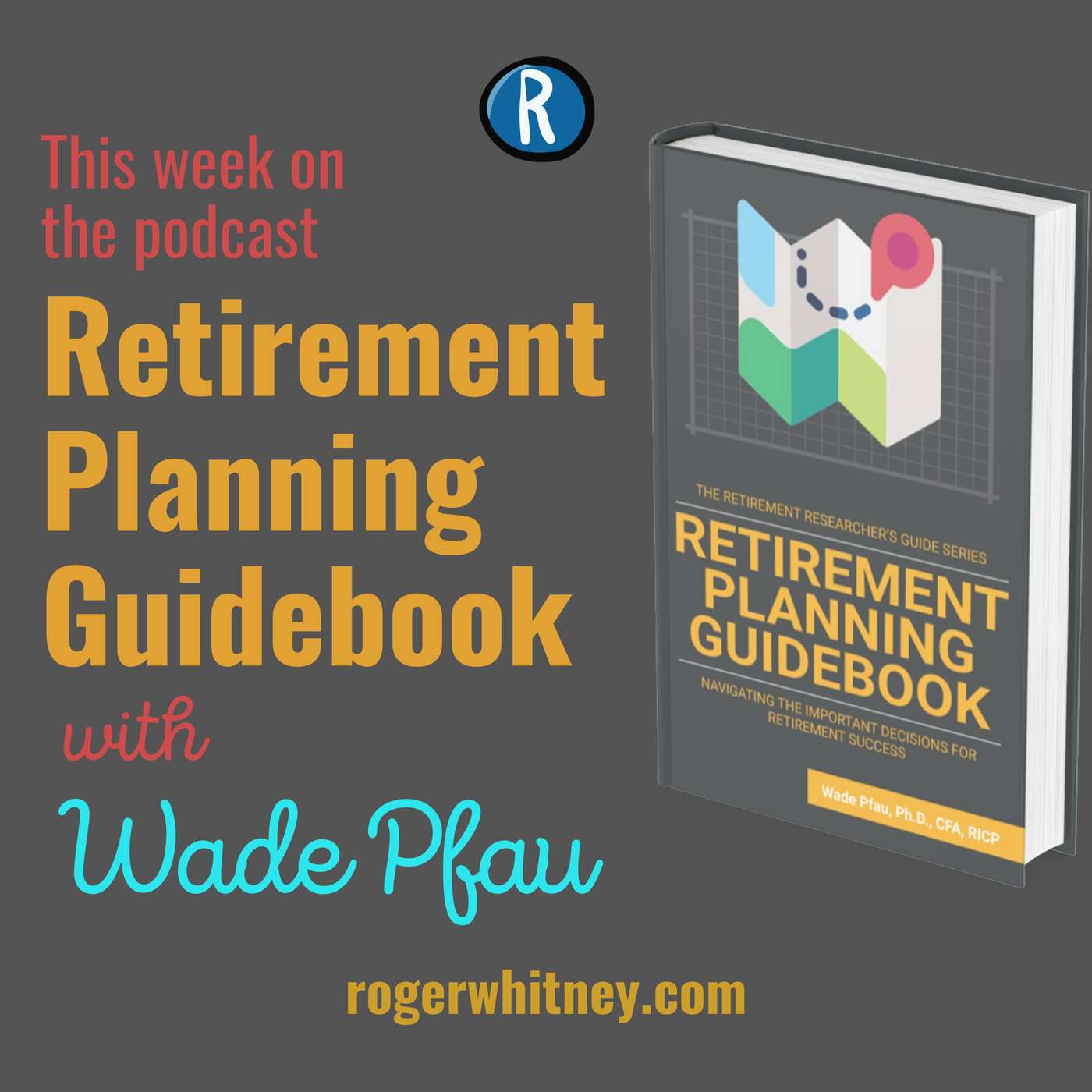
Nov 2, 2021
What the Happiest Retirees Know with Wes Moss
Do you understand what you need to do to build a happy retirement? My guest today has studied the data to tell the story of happy retirees in his new book, What the Happiest Retirees Know . Wes Moss is not only an author of multiple books, he is the host of the live radio show, Money Matters , and the Retire Sooner podcast . Learn the habits to develop now to create a happy retirement by listening to this interview with Wes Moss. Are you retiring to something or away from something? The real-world data shows that 70% of people don’t like their job and 20% of people actively hate their job so much that they want to hurt the company they work for. These sad statistics lead to people thinking that retirement is the answer to their unhappiness. However, it isn’t enough to retire away from something. We must retire towards something to find happiness in retirement. Is your objective to retire away from your job or towards happiness? Think about what you would like to retire towards. Do pre-retirees have misconceptions about what a happy retirement really is? Most people have a preconceived notion about retirement. They believe that once you reach a certain level of financial security, you’ll stop working and then the skies will open up and the world will become a happy place. They feel like retirement will be some version of heaven. However, the reality is much different. There is a period of transition and not an instant magical change. Preparing well in advance will help to create a happy retirement and avoid disappointment. It only takes $75,000 per year to be happy One of the biggest worries in retirement is having enough money, but research shows that it only takes between $70,000 and $80,000 per year to create a happy life. Having more money won’t increase levels of happiness. It doesn’t take as much as you think to avoid an unhappy retirement. Even though many people feel the loss of a sense of purpose and increased loneliness once they retire, with a bit of preparation, anyone can create a happy retirement. Habits to develop to create a happy retirement Wes describes ten categories in his book that contribute to happiness in retirement. These habits include: Money habits Curiosity habits Family habits Love habits Faith habits Social habits Home habits Health habits Investing habits Within these categories, only a few areas actually have to do with money. If you can build up a solid foundation of healthy habits before you retire, you will have a greater chance of creating a happy retirement. What the Happiest Retirees Know can even be used as a workbook. As you read through, find the habits that you want to improve and see how you can stack them to work on 3 or 4 together at the same time. Listen in to hear how golfing is a way that I habit stack areas that I am actively working on in my own life. What are you working on to ensure that you create a happy retirement? OUTLINE OF THIS EPISODE OF THE RETIREMENT ANSWER MAN WES MOSS INTERVIEW [2:30] The data tells the story [3:55] Do pre-retirees have misconceptions about what a happy retirement really is? [11:54] It only takes $75,000 per year to be happy [15:14] If your base is in place then you don’t need to worry so much about money [21:45] How to use Wes’s book as a workbook Resources Mentioned In This Episode BOOK - What the Happiest Retirees Know by Wes Moss BOOK - You Can Retire Sooner Than You Think by Wes Moss Retire Sooner podcast Money Matters BOOK - The Top Five Regrets of the Dying by Bronnie Ware Rock Retirement Club Roger’s YouTube Channel - Roger That BOOK - Rock Retirement by Roger Whitney Work with Roger Roger’s Retirement Learning Center
Oct 29, 2021
Listener Questions: Don’t Let Perfect Be the Enemy of Good
Do you let perfection get in the way of progress? Trying to reach perfection could prevent you from reaching your goals. Retirement coach, BW joins me to discuss forward movement and setting realistic goals. In this episode, you’ll also hear listener questions about claiming spousal Social Security, preparing for retirement after divorce, and annoying financial surprises. You won’t want to miss the differing points of view on benefit protections, so make sure to listen until the end. What can Hazel do to prepare for retirement? Hazel is 51 and going through a divorce. She doesn’t plan to retire until she is age 65 even though she is eligible for a pension at age 55. She is looking ahead to what she should be doing to prepare for her retirement in the midst of her divorce. The first thing that she needs to do is to get through this divorce. Divorces can be messy or they can be amicable. While no one wants to create a messy divorce, it is important to make sure to take care of yourself first. Don’t mistake being nice with sacrificing your own interests. The next thing to do is to continue to save in a 401K. Even though Social Security and the pension will be Hazel’s main income streams in retirement, it is important to continue to build her retirement savings. The last thing that Hazel and you can do to prepare for retirement is to head over to DoRetirementRight.com and download this guide that will walk you through the steps to take in the years leading up to retirement. How to time the spousal Social Security benefit Mike has a question about the timing of his wife’s spousal Social Security benefit. He is considering taking his benefit early at age 62, but his wife is 3 years younger than him. If he takes his benefit at 62, his wife will still not be eligible for her benefit until she turns 62. However, if he waits until full retirement age at 66 then she could take her benefit at age 62. A great way to begin to plan this out is to create a retirement plan of record using the full retirement age as the basis and then to create different what-if scenarios. You can use the Spousal Social Security calculator to help calculate the percentage that your spouse would receive. Check out this recent interview I had with Wade Pfau to hear just how important Social Security is to retirement plans. An annoying financial surprise or spousal protection? Rhonda doesn’t have a question but rather a comment on annoying surprises that she has discovered in her finances. She has a pension and has to decide how she wants to take it. Recently, she discovered that if she decides to take the maximum benefit that only covers her own lifespan then her husband has to sign off on the form to approve this benefit selection. This isn’t the only thing that she has noticed that she needs her husband’s notarized signature for. If she chooses to change her beneficiaries on her retirement accounts she must also get approval from her husband. Rhonda feels like this is one more obstacle for women to overcome to live life in a man’s world, but I have another perspective. These rules (which vary state by state) were actually created to help protect women when men were the main breadwinners. How do you see these rules? Do they protect women or make it more challenging for them to keep their hard-earned money? Don’t let perfect be the enemy of the good As we finish off the month-long series on retirement tax management it can be easy to get caught up in the details of optimizing your situation. However, trying to get something perfect can lead to analysis paralysis. Sometimes we just have to point ourselves in the right direction and move ahead. It is important to be realistic about what is possible. There are so many unknowns when it comes to future tax planning that it is hard to be precise. The most important thing to do is to get the big things right and let the small things take care of themselves. OUTLINE OF THIS EPISODE OF THE RETIREMENT ANSWER MAN WHAT DOES THAT MEAN? [2:30] What can Hazel do to prepare for retirement? [8:30] Mike’s Social Security question [12:36] You don’t need to feel dumb [15:12] Rhonda discovered annoying surprises to deal with as a woman COACHES CORNER WITH BW [21:07] Don’t let perfect be the enemy of the good TODAY’S SMART SPRINT SEGMENT [29:18] Have a safe Halloween Resources Mentioned In This Episode Start listening to the Women in Retirement series here Spousal Social Security calculator Wade Pfau interview DoRetirementRight.com Rock Retirement Club Roger’s YouTube Channel - Roger That BOOK - Rock Retirement by Roger Whitney Work with Roger Roger’s Retirement Learning Center

Oct 26, 2021
Retirement Tax Management: How to Incorporate into Your Retirement Plan
Over the past several episodes you have learned so much about tax planning in retirement. You learned why tax planning is important , all about the hidden tax bombs , and tools that you can use to defuse those tax bombs. Now it’s time to incorporate all of this newfound knowledge into your retirement plan. Andy Panko from Tenon Financial joins me once again to discuss how to incorporate tax planning into your retirement plan. Press play to hear how you can create a retirement plan that incorporates tax planning. How to become comfortable with uncertainty Oftentimes people are looking for a hard and fast rule to follow to make their retirement plan foolproof; however, there is no magical number or rule to create an iron-clad retirement plan. We can’t predict the unknowable, so we have to become comfortable with the uncertainty that retirement brings. To help you conquer that uncertainty, it is important to build a process that will help you make better decisions. The way that you can do this is by creating a retirement plan of record and testing projections and what-if scenarios. By setting up a decision-making framework, you will be able to manage your retirement finances in an uncertain world. Tax planning is a way to optimize your retirement plan Before you can start tax planning you need to ensure that you have the basics in place. As long as you can first map out the fundamentals of retirement planning like your expenses, your retirement paycheck, and your asset allocation you will then be able to optimize your retirement journey with tax planning. Remember that tax planning isn’t the main part of retirement planning, it is simply a way to enhance your retirement experience and financial plan in retirement. Choose a retirement planning tool and stick with it There are plenty of tools on the market that can help you create your retirement plan and projections. In the Rock Retirement Club we use the paid version of the New Retirement Calculator , but there is also a free version that you can use. You may be happy by creating a simple spreadsheet to help guide you. Just like there is no perfect retirement plan, there is also no perfect retirement planning tool. Whatever you decide to use, stick with that tool the way that you stick with the same scale to check your weight. You don’t want to flip flop back and forth between different calculators since the numbers may not look the same. Make an educated guess Even though you can’t predict what will happen in the future with tax legislation, you can make educated guesses about what would work best for you based on your own situation. Educated guesses are not just guesses. By using your retirement plan of record and modeling what-if scenarios you know that you are doing your best to make the best decisions for your retirement. Your decisions won’t always be the ‘right’ decisions, but that doesn’t mean that you shouldn’t plan in the first place. By creating a retirement plan of record and making projections you will be able to create a model that you can work from. Staying agile is the most important way to establish a successful plan so that you can rock retirement. OUTLINE OF THIS EPISODE OF THE RETIREMENT ANSWER MAN PRACTICAL PLANNING SEGMENT [4:30] Build a process to make better retirement decisions [7:52] Create a resilient plan [11:11] What if scenarios are important to creating a retirement plan [17:35] Educated guessing is a big part of retirement planning [24:24] Action items [30:05] How to choose a financial advisor or tool to help you plan TODAY’S SMART SPRINT SEGMENT [31:40] Start the process of getting a plan of record in place Resources Mentioned In This Episode Tenon Financial BOOK - Thinking in Bets by Annie Duke BOOK - How to Decide by Annie Duke The New Retirement Calculator Rock Retirement Club Roger’s YouTube Channel - Roger That BOOK - Rock Retirement by Roger Whitney Work with Roger Roger’s Retirement Learning Center
Oct 22, 2021
Listener Questions: I have Roth Conversion Questions!
Roth conversions, HSAs, pension choices, risk management: these are the topics of today’s listener questions. Susan, Gina, IM, and Daniel all submitted their questions to me via RogerWhitney.com/AskRoger and you can too! If you have any retirement questions, or even if you simply want to leave a comment about the show, click on the link to present your question. Whether you are looking to learn more about HSAs, Roth conversions, or evaluate your pension choices, listening to other listeners’ questions can help you learn how to frame your own questions and consider your options by always keeping your goals in mind. How to evaluate the best way to take a pension? Susan recently asked her financial advisor how she should take her pension and wasn’t satisfied with his answer. There are several options to choose from when deciding how to take a pension. One choice is to take the pension for a larger monthly sum for the duration of the pensioner’s life. Another option is to take a smaller amount over the course of the lives of both the pension holder and their spouse. A third option is to opt for a lump sum payment and forgo the monthly payments altogether. When making this decision there are a few ways to evaluate your choices. Create a what-if scenario to help you compare all the options. Then evaluate them next to your retirement plan of record. Listen in to hear how I perform this exercise with my clients. HSAs after age 65 HSAs are amazing tools that can help you reach your retirement goals. Gina’s question is about HSAs after age 65. She is still employed and plans to continue working for a few more years. She would like to continue to stay enrolled in her high deductible insurance plan so that she can continue to contribute to her HSA, but she isn’t sure how that would affect her Medicare choices. This is a great idea but navigating these waters is tricky since the rules surrounding Medicare are so complicated. Making a mistake could lead to a gap in coverage or even a lifetime penalty on parts B and D premiums. You’ll first want to check the rules surrounding your Medicare eligibility with your employee health insurance provider. Next, you should contact a Medicare navigator like Boomer Benefits . Should IM roll over her 401K to a Roth if she is worried about financial protections? IM writes in with a question about rolling over a 401K to a Roth IRA. She is worried about losing ERISA coverage when transitioning this money. ERISA stands for the Employee Retirement Security Income Act which was put in place to protect workers’ retirement plans. 401Ks are covered under this federal law; however, the protections for IRAs vary wildly from state to state. The first thing to do when considering this question is to check on the rules governing Roth IRA protections in your state. Next, you’ll want to evaluate your personal financial risk and how important this kind of coverage is to you. Make sure to scroll down to the bottom of the show notes to check out all the links to the resources mentioned in this episode. OUTLINE OF THIS EPISODE OF THE RETIREMENT ANSWER MAN LISTENER QUESTIONS [4:41] Which pension choice best suits Susan’s needs? [13:40] A question about HSAs after age 65 [17:23] Do the risks associated with Roth IRAs outweigh the benefits? [22:12] Daniel has a few Roth conversion questions [30:22] Daniel has a few HSA questions Resources Mentioned In This Episode YouTube episode with Andy Panko on retirement tax bombs Boomer Benefits BOOK - Retirement Planning Guidebook by Wade Pfau Interview with Wade Pfau The Retirement and IRA Show NeuYear.net Rock Retirement Club Roger’s YouTube Channel - Roger That BOOK - Rock Retirement by Roger Whitney Work with Roger Roger’s Retirement Learning Center
Oct 20, 2021
Retirement Tax Management: The Tax Toolbox
Are you worried that you won’t be able to live the life of your dreams in retirement? This is one of the main issues facing many people on the cusp of retirement. That’s why I created the Retirement Answer Man Show. I want to help you find the confidence to truly rock retirement. One way that you can become more confident in your retirement plan is by utilizing the tax planning tools that are available to you. Andy Panko from Tenon Financial is here to help you identify all the tools available in your tax toolbox. Press play to open up your tax toolbox and see what is inside. Opening your tax toolbox Before you can pick up a tool from the tax toolbox you must start with a broad understanding of your tax situation both now and in the future. This means that you’ll have to do some educated guessing to figure out what your future tax situation will be. Projecting your tax situation out 10 or 20 years down the road won’t be an exact science, so don’t try to make it so. More accuracy doesn’t mean more precision in future tax planning; there are too many factors at play. Simply because your tax situation won’t be exactly the way that you estimate it to be doesn’t mean that you shouldn’t take the time to map it out. You must take this step to get the framework you need to make educated decisions. This framework will be your basis for making practical decisions. 4 useful tools in your tax planning toolbox Fill up your tax brackets. If you retire before you start taking Social Security you may find yourself in an unusual situation. You may not have any income and therefore you won’t have a tax bill! Rather than marveling at this newfound freedom from the taxman, you may actually want to realize enough income to stay within the 12% tax bracket. By paying a bit in taxes now you could be utilizing an opportunity to lower your lifetime tax bill. Remember that those tax-deferred accounts are sitting there waiting for you to pay taxes on them when you reach age 72. Do Roth conversions. While you’re filling up the lower tax brackets you can convert your tax-deferred assets to Roth. The money will continue to grow, but you’ll be able to rest easy knowing that the taxes have already been paid. By performing Roth conversions you'll ensure that you won’t have all of your assets in tax-deferred accounts waiting for your RMDs. By converting some of your assets into Roth you’ll provide yourself with more flexibility, control, and optionality. Tax-loss and gains harvesting. Tax-loss and gain harvesting is a little-utilized tool that applies to brokerage accounts when you sell a position and realize a gain or a loss. You can use these gains and losses strategically to optimize your tax situation. Listen in to hear how this tool could work for you. Qualified charitable donation. If you are charitably minded QCDs are a great way to give to your favorite charity and save money on taxes at the same time. The trick with QCDs is that they must transfer directly from the IRA custodian to the charity. In retirement, tax planning isn’t the same as in your working years. You need to plan ahead so that you can optimize your lifetime tax bill. Next week you’ll learn how to incorporate all of these tools into your retirement plan so that you can avoid those tax bombs. Don’t miss that episode so that you can build a retirement plan that will give you the confidence to rock retirement. OUTLINE OF THIS EPISODE OF THE RETIREMENT ANSWER MAN PRACTICAL PLANNING SEGMENT [1:30] Financial planning should be a collaborative process [7:25] Opening your tax toolbox [13:29] Filling up your tax brackets should be your first tool [21:44] Roth conversions [29:39] Tax-loss and gains harvesting [39:36] Qualified charitable donation TODAY’S SMART SPRINT SEGMENT [42:03] Map out your future income and build a net worth statement Resources Mentioned In This Episode Tenon Financial Jordan Peterson Rock Retirement Club Roger’s YouTube Channel - Roger That BOOK - Rock Retirement by Roger Whitney Work with Roger Roger’s Retirement Learning Center
Oct 15, 2021
Listener Questions: Is an Immediate Annuity a Good Option for Me?
Do you feel like you are late to the ball game in saving for retirement? Have you ever wondered if an annuity could take some of the stress out of writing your own retirement paycheck? Are you trying to figure out the best way to self-fund long-term care for you or your spouse? All of these questions come directly from listeners like you. If you have questions about retirement, Fridays are a great time to tune in. We are now releasing 2 episodes a week: one focused on the monthly theme and the other focused on listener questions. If you have a query of your own question head on over to RogerWhitney.com/AskRoger to submit your retirement questions. How to maximize retirement savings after getting a late start Catherine writes that this podcast has helped her get over the shame and frustration of not prioritizing her retirement savings earlier. Now that she has worked her way through those feelings she wonders what the best way to increase her retirement savings would be after getting a late start. Catherine is maxing out her 401K, and her husband has a simple IRA and no access to a 401K. However, if he could convince his partners to switch to a 401K he could max out the contributions and begin to expand their savings. Another way to get plenty of bang for your buck is to use an HSA. Many people don’t consider the HSA as a retirement account, but it can be a great way to help play catch up. You can contribute up to $7200 per year to your health savings account if you are enrolled in a high deductible insurance plan. Not only do you get to use pre-tax assets, but you can invest those assets to use in retirement. If you invest your HSA aggressively, it can become like a supercharged Roth IRA. Would an immediate annuity be a good idea for Mary? Mary is considering purchasing an immediate annuity with the proceeds from the sale of her house. She would like to receive between $1000-2000 per month from the $300,000 profit. A single premium immediate annuity (SPIA) could provide this kind of stable return, but before she jumps into such an arrangement she should consider the pros and cons of this type of annuity. The pros and cons of purchasing a SPIA One of the main reasons that people consider purchasing an annuity is their ease. With the SPIA Mary won’t have to manage her investments or worry about the markets. She’ll be receiving a guaranteed income for the rest of her life. There is definitely an advantage to this kind of simplicity. On the other hand, if she passes away shortly after purchasing the annuity then the money will not be hers to pass on to her heirs. By giving up her $300,000 and committing to an annuity she loses out on optionality. One way to combat this would be to make sure to have liquid assets on hand in case of an unforeseen event. Press play to hear my thoughts on purchasing an annuity and to learn how to self-fund for long-term care. OUTLINE OF THIS EPISODE OF THE RETIREMENT ANSWER MAN LISTENER QUESTIONS [2:57] Getting over the regret of not saving better sooner [10:06] Tom wonders if there will ever be an audiobook version of Rock Retirement [11:46] Would an immediate annuity be a good idea? [17:34] How to best self-fund for long-term care Resources Mentioned In This Episode Rock Retirement Club Roger’s YouTube Channel - Roger That BOOK - Rock Retirement by Roger Whitney Work with Roger Roger’s Retirement Learning Center
Oct 12, 2021
Retirement Tax Management: Hidden Tax Bombs
Have you been incorporating tax management into your retirement plan? If you have, you won’t want to miss this series, and if you haven’t, you definitely won’t want to miss this series. Last week we set the stage for this retirement tax planning series when we discussed how planning for taxes can work within your retirement plan. This week we’ll make you aware of the hidden tax bombs that could wreck your retirement plan. In next week’s episode, we’ll learn which tools you can use to defuse those tax bombs, and then in the last week of this series, we’ll learn how to integrate those tax tools into your retirement plan. My goal is to give you an organized way to incorporate tax planning into your overall retirement plan which is why I have invited retirement tax expert Andy Panko from Tenon Financial to join me to discuss the nuances of retirement tax planning. If you are ready to learn about the hidden tax bombs that are awaiting you in retirement then press play now. Required minimum distributions, the tax bomb that begets other tax bombs When you contribute your taxable income into a 401K, 403B, or other tax-deferred accounts your taxable income is reduced in the year that you make that contribution. However, many people forget that they are simply deferring that taxable income until later. Remember that taxes are never a question of if you will pay them, it's always a matter of when. Required minimum distributions (RMDs) are the government’s way of insisting that you pay the piper. RMDs begin at age 72 and at that time you must take 3.9% out of your tax-deferred accounts at this time. The percentage that you must take from these tax-deferred accounts grows each year. The best way to defuse this bomb is to project the total that your tax-deferred accounts will grow to so that you can get a feeling of how much you will need to withdraw when the time comes. Yes, Social Security can be taxed! Did you know that Social Security is taxable? It has been since 1984 and up to 85% of your Social Security benefit can be taxed. Just how much is taxable depends on your other sources of income. The more gross income you have, the bigger percentage of your Social Security benefit will be taxed. If you are curious about the percentage of your Social Security income that could be taxed then make sure that you are signed up for the 6-Shot Saturday newsletter. Do ACA subsidies fit into your retirement plan? If you are in need of health care before the age of 65 you may want to use Healthcare.gov . The way the marketplace works is by using a tax subsidy system. If a person makes between 1-4 times the poverty level ($17,000) then they can qualify for tax subsidies on a sliding scale. If you can keep your income below the threshold, then you could qualify for the ACA tax credits. Keeping your income low needs to be balanced with the rest of your retirement goals which is why it is important to have a retirement plan of record. There are several more tax bombs out there ticking away. To learn what they are you’ll have to press play to listen. If your interest in retirement tax planning has been piqued by this series and you want to learn more, check out Andy’s Taxes in Retirement Facebook group . With over 16,000 members, this group is a great way to exchange ideas with others who are on the same journey. OUTLINE OF THIS EPISODE OF THE RETIREMENT ANSWER MAN PRACTICAL PLANNING SEGMENT [2:50] RMDs are the first tax bombs [11:30] Social Security is the next tax bomb [15:46] Will Social Security go broke? [21:41] Taking advantage of the ACA subsidies [31:00] When you need to watch out for IRMAA [37:50] Do you need to be careful of NIIT? [38:55] A change in marital status could surprise you TODAY’S SMART SPRINT SEGMENT [44:29] Understand the important numbers sheet in the 6-Shot Saturday email Resources Mentioned In This Episode Tenon Financial Andy’s Taxes in Retirement Facebook group Rock Retirement Club Roger’s YouTube Channel - Roger That BOOK - Rock Retirement by Roger Whitney Work with Roger Roger’s Retirement Learning Center
Oct 8, 2021
Listener Questions: How Do I Go from Zero to Retired?
Are you a bit behind on your retirement savings and wondering how you’ll ever be able to retire? One of our listeners feels the same way. In this Listener Questions episode, I’ll answer his question as well as how to handle net unrealized appreciation (NUA), how to shift retirement savings after a job loss, and we’ll wrap it up by discussing the ramifications of taking Social Security early. We’re trying a new format this month and releasing 2 episodes a week. On Tuesdays, we’ll release the main segment which focuses on the theme of the month, and on Fridays, you’ll hear listener the questions. Make sure to check out all the episodes and let us know if you like the new structure. Change is hard! October has been a month full of change for me and change doesn’t always go smoothly. Not only am I publishing 2 episodes per week, but I’ve stopped drinking alcohol and started exercising in the mornings rather than in the afternoons. Any time you bring about changes to the rhythm of your life it can be a challenge. This is why the transition into retirement can bring such trepidation. Even if something new seems daunting, with practice over time the situation will improve. The more you practice the bigger your muscles will get. With a bit of research, planning, and action, you can learn how to create a paycheck for yourself in retirement, how to tackle your taxes, and how to navigate the healthcare system. Listening to retirement podcasts like this one is a great way to get started. How to go from zero to retired Not everyone has a 7 figure retirement portfolio, in fact the majority of the population finds themselves wondering how they’ll ever be able to stop working. One listener asks how he’s supposed to be able to catch up on retirement savings at age 50. The first thing you need to do if you feel behind in your retirement savings is to acknowledge and accept where you are. The next thing you need to understand is that there is only so much catching up that you can do at this point. Social Security will be a large part of your retirement equation After you realize that there is only so much you can do it is time to figure out how to maximize your Social Security benefit. There are a couple of ways that you can do this. The first one is to work longer so that you can increase your benefit. The next idea is to navigate when would be the best time for you to file for your Social Security benefit. If you take it early at age 62 you may see your benefit decreased by 30%. Waiting until the full retirement age at 66 or 67 will ensure that you get your full benefit amount, and each year that you wait to file your benefit will increase by 8%. The beauty of Social Security is that it is adjusted each year for inflation and it lasts for the rest of your life. Retirement is about living out the best version of yourself To create a retirement plan you can live with, you’ll want to increase your income and decrease your monthly obligations as soon as possible. Identify which bills you can pay off and try using the debt snowball method to pay down your debts. The less you can live on the more prepared for retirement you will be. Try to create a living environment that doesn’t require a lot of money. Remember that rocking retirement isn’t about spending loads of money, it’s about creating an environment where you can live the best version of yourself. If you have a question to ask head on over to RogerWhitney.com/AskRoger to send a written question or leave a voice message. OUTLINE OF THIS EPISODE OF THE RETIREMENT ANSWER MAN [5:00] How to go from zero to retired in 10 years [12:08] How to handle net unrealized appreciation (NUA) [20:23] How to shift retirement savings after a job loss [25:25] The ramifications of taking Social Security early Resources Mentioned In This Episode Rock Retirement Club Roger’s YouTube Channel - Roger That BOOK - Rock Retirement by Roger Whitney Work with Roger Roger’s Retirement Learning Center
Oct 5, 2021
Retirement Tax Management: Why It’s Important
Tax planning in retirement isn’t the same as in your working years. This is why we are dedicating an entire series to helping you understand how to manage your taxes in retirement. To help me navigate this complicated topic, I’ve invited retirement tax expert Andy Panko to join me for the whole month-long program. Over the course of this series, you’ll learn why tax planning is important in retirement, which tax land mines to look out for, what tools to include in your tax toolbox, and how to integrate tax planning into your retirement plan. Are you ready to dive deep into retirement tax planning? Press play now to learn why tax planning in retirement is so important. How does tax planning change in retirement? In your working years, tax planning isn’t that complicated. Since your income is based on your wages, you don’t have much control over your tax bracket. However, in retirement, you can control your tax bracket from year to year. Chances are, you have been contributing to tax-deferred accounts like 401K, 403B, or IRAs for much of your life. These have been wonderful vehicles for retirement savings that has allowed you to defer a bit of your taxable income. Now that you are coming to retirement age, it is time to pay the tax man. These retirement distributions will be taxed, but when you decide to take them is up to you--up to a certain point. Use long-term tax planning to save money in retirement In retirement, there are multiple tax planning opportunities that you can take if you plan for the long term. Since you have more control over your sources of income, you have a tax advantage that you didn’t have in your working years. This can make planning complicated and challenging; however, with a bit of research and practice you could end up saving thousands of dollars over the course of your retirement. Taxes aren’t the only thing to consider in retirement Don’t let the tax tail wag the dog. Even though it is important to consider your taxes in retirement it is also important to remember that taxes are not the end all be all of retirement planning. What Andy and I are trying to do is to help you build a framework so that you can consider your tax planning in an organized way. When you come up with a strategy to guide your decisions it will help make the complicated world of tax planning a bit easier to digest. Check out this episode on YouTube Did you know that we are now recording the Retirement Answer Man as a biweekly show? Make sure to check back in on Friday mornings to hear the Q&A part of the show. You can also watch this episode in a video format on YouTube so that you can see the charts and tables that we share. When you are done listening head on over to RogerWhitney.com and scroll down to the bottom of the homepage to sign up for the 6-Shot Saturday newsletter so that you can receive the worksheets mentioned in this episode OUTLINE OF THIS EPISODE OF THE RETIREMENT ANSWER MAN PRACTICAL PLANNING SEGMENT [2:33] What are the changes in taxes in retirement? [7:00] Think long-term when tax planning in retirement [11:36] Taxes are important but not the end all be all [17:17] Trying to understand the tax system TODAY’S SMART SPRINT SEGMENT [28:26] Pull out your tax return to find your AGI Resources Mentioned In This Episode Tenon Financial Andy’s Taxes in Retirement Facebook Group Rock Retirement Club Roger’s YouTube Channel - Roger That BOOK - Rock Retirement by Roger Whitney Work with Roger Roger’s Retirement Learning Center
Sep 29, 2021
Retirement Planning for Non-Planners: 5 Things to Track During Retirement
If you are the non-planning type, it can be easy to worry about whether your retirement plan is on track. How are you supposed to know what is going on and whether you should have the confidence to know if your plan is working? On this episode of Retirement Answer Man, you’ll learn 5 things that you can check periodically to give you an idea if your retirement plan is on the right track. If you are wondering how to investigate whether or not your retirement plan is on track, then make sure to listen to this episode to learn what you need to know. Where does confidence come from? The whole point of retirement planning is to give you the confidence to live life in your retirement without worry. Before you create your retirement plan you need to understand what it is that will give you confidence in that plan. Confidence comes from understanding. To understand your plan you need to first set your goals. What is your vision? Once you have a vision of your ideal retirement then you can deconstruct that vision to map out your journey. That journey will take you from the current version of yourself to the future you. To map your journey you need to have clear action items to lead you along each step of the way. There is no need to look around at others on their journey since each one is personal. Your retirement journey is yours alone. 5 things you should track to feel confident in your retirement plan Have your goals changed? Assess your goals with your significant other or advisor to make sure they still reflect what you really want. Are you still aiming for the same target? Is this still the life you want to build or has anything changed? Check in with your spending. How is your current spending relevant to your overall plan? Track your spending goals to see if they are still relevant. At the end of each year look back at what you actually spent your money on. You’ll want to make sure to track how you did relative to your plan. Sometimes you may deviate from the plan a bit, but by tracking you can identify trends over the long term. Tracking can help you to tease out opportunities and risks Is your plan still feasible? Should you make a change? Big expenditures can pop up, the market could go down, expenses could go up: all of these things could change your plan’s feasibility. One way to check to see if your plan is still feasible is to track your withdrawal ratio. This is the percentage of your assets that you take out of your portfolio each year. Tracking your withdrawal ratio can help you recognize whether your retirement plan is sustainable. Listen in to learn what else you should consider to ensure that your plan will actually work. Make sure your retirement plan is sustainable. Is it resilient? Do you have enough financial nutrients in the near term, midterm, and long term? Check out last week’s episode to hear more about how to plan for the short-term, mid-term, and long-term in retirement. Focus on the WHAAM. Think about what you should do next. Then figure out how to do it, get accountability , take action , and finally, achieve momentum . In your retirement planning, think about how you can shift your focus to best serve yourself. If you want to ensure that you will rock retirement, then continually check in with these 5 areas. Are you ready for more Retirement Answer Man? For the past 7 years without fail, we have brought the Retirement Answer Man to your earbuds on a weekly basis. That is about to change. Starting in October we will be splitting the podcast into two separate parts released on two different days. Coming on Tuesdays you’ll hear the Q&A part of the show. On Fridays, we’ll focus on the monthly theme. This split will allow us to dive a bit deeper into our monthly topics and answer more of your questions. It will also allow you to decide to listen to what you want to hear. We value your feedback, so please let us know what you think of this new setup. OUTLINE OF THIS EPISODE OF THE RETIREMENT ANSWER MAN PRACTICAL PLANNING SEGMENT [6:25] A triathlon story to illustrate how humans overcomplicate things [14:40] Where does confidence come from? [16:13] 5 things you should track to feel confident in your retirement plan LISTENER QUESTIONS [27:00] How does Josh designate pretax and post-tax contributions when they are commingled [33:26] How to understand the options to deal with precious metals COACHES CORNER WITH BW [37:31] What do people need to know about retirement planning the non-financial side of retirement? [39:26] How will you spend your days in retirement? TODAY’S SMART SPRINT SEGMENT [43:34] Get answers to the 5 things we covered Resources Mentioned In This Episode Rock Retirement Club Roger’s YouTube Channel - Roger That BOOK - Rock Retirement by Roger Whitney Work with Roger Roger’s Retirement Learning Center
Sep 22, 2021
Retirement Planning for Non-Planners: Investment Basics
As the non-planner of your family, you may not be interested in all the nitty-gritty details of retirement investments, but it is important to know the basics. That’s why today we will cover the main concepts about investing your assets. Hopefully, my nutrition analogy will help make these financial concepts more understandable. Press play to hear what you need to know about investment basics for the non-planner. Investing in retirement is all about solving for risk Last week you learned how inflation and market volatility are the two risks to overcome when investing in retirement. Solving for these risks are the most important part of creating a retirement portfolio. To explain retirement investing, I like to think of nutrition. When you eat you solve the problem of being hungry now, but you also solve the problem of getting nutrients to your body to help ensure that you stay healthy in the future. Investing also serves to help you in the short and long-term. How are you nourishing your investments in the short-term and the long-term? With every meal you eat you are investing in your short-term energy. The vitamins and minerals that you may take help you invest in your long-term health. We keep enough cash and bonds on hand to sustain ourselves for the next 1-5 years and protect from market risk. Stocks and real estate investments can have ups and downs which can be scary in the short term but in the long-term they help to hedge against inflation. Ask your financial planning partner how you are nourishing your investments in the short-term and the long-term. The building blocks of investment It is important to learn the building blocks of retirement investing. Building a retirement portfolio is much like building a meal. There is the salad, the main course, and the dessert. Short-term investments are the funds that you plan to use within 1-5 years, mid-term investments will be used within 5-10 years, and long-term investments are funds that you don’t plan to use for more than ten years. Listen in to learn how these different investments are like building a meal. Be sure to join us in October for the Taxes in Retirement series Make sure to join us next month as we dive into taxes in retirement. We have certainly covered this topic before, but a lot has changed since the last time we discussed taxes. We’ll explore proposed tax law changes and discuss how that could affect you and your retirement. Andy Panko from the Taxes in Retirement Facebook Group will join me over the course of the entire series. If you are really looking to nerd out on taxes, then don’t miss the episode with Wade Pfau who joins me to discuss his tax management academic research. If you are a part of the RRC you’ll get the added benefit of having both of these guests in the Clubhouse for meetups. OUTLINE OF THIS EPISODE OF THE RETIREMENT ANSWER MAN PRACTICAL PLANNING SEGMENT [3:30] An investment analogy [10:04] How to invest for the short and long-term [18:25] The building blocks of investment Q&A WITH NICHOLE [22:51] What are some solutions to the Social Security funding problem [29:19] The Rock Retirement book has been helpful to Steven [33:32] Why I haven’t covered the sale of a business to fund retirement [35:25] Will Jim’s retirement strategy work? TODAY’S SMART SPRINT SEGMENT [40:24] Think about how you will pay for life in the short-term, mid-term, and long-term Resources Mentioned In This Episode Rock Retirement Club Roger’s YouTube Channel - Roger That BOOK - Rock Retirement by Roger Whitney Work with Roger Roger’s Retirement Learning Center
Sep 16, 2021
Retirement Planning for Non-Planners: Retirement Risk Basics
Are you the person in your family that stays away from financial planning? Do numbers and financial jargon put you to sleep? If so, this is the right retirement planning series for you. This episode is the third in the Retirement Planning for Non-Planners series. In this series, I explain what you need to know without all the financial lingo so that you can understand the most important aspects of retirement planning. In this episode, Fritz Gilbert from The Retirement Manifesto blog joins me to discuss the basics of retirement planning risks. Listen in so that you can understand what to look out for in retirement planning. This is a financial jargon-free series If you aren’t interested in finance it can be difficult to discuss retirement planning with someone who is. They start throwing terms like RMD, sequence of returns risk, and the 4% rule. When people start using these terms it can be easy to become overwhelmed. The purpose of this series is to empower you so that you can have an understanding of what is happening with your money to help make better choices. My goal is to explain retirement planning in a non-geeky way that anyone can understand. What are the financial risks in retirement? Retirement brings different types of risks for your money. Essentially there are two types of risks to be aware of: short-term and long-term risks. Think about a teeter-totter. On either side of the teeter-totter, you have your short-term risk and your long-term risk. The short-term risk is losing money today and the long-term risk is losing money in the future. You need to come up with a solution that balances both of these risks without tilting too much to one side. We lose money in the short term through market risk. If the market takes a tumble, you could lose a significant portion of your savings. The solution to that is to take all of your money out of investments and have it sit in cash. Unfortunately, this solution to the short-term risk doesn’t work in the long term. The long-term financial risk is inflation. You may have noticed gas prices or food prices increasing over time. This means that your dollar today won’t be worth the same as your future dollar. As prices increase the value of your money decreases. We combat long-term inflation risk with investing, however, this solution puts us at risk in the short term. How to balance retirement risk To balance both sides of the risk spectrum it is important to think about how much money you will need to support your lifestyle in the near future. You’ll want to consider how much cash you should have on hand if the market drops. This will help you mitigate the short-term risk while at the same time leaving the rest of your savings to grow in the long term. The goal of balancing these risks is to have the confidence to have money to spend next year and also to spend when you are 80. OUTLINE OF THIS EPISODE OF THE RETIREMENT ANSWER MAN PRACTICAL PLANNING SEGMENT WITH FRITZ GILBERT [2:30] Financial lingo can be intimidating [6:37] Short term risks [10:47] Inflation is a long term risk [18:37] How to deal with spending shocks [25:55] Understand what types of questions to ask [28:39] Catching up with Fritz in retirement LISTENER QUESTIONS WITH NICHOLE [38:24] 6-Shot Saturday drama [42:15] Should Shari take the lump sum or an annuity? [48:20] How do I feel about LIRPs? [54:36] What are the non-financial boundaries of a fiduciary? [1:00:24] A question about my pronunciation of words [1:02:47] A proposal for changing the GAA acronym TODAY’S SMART SPRINT SEGMENT [1:04:34] Organize the strategy that best works for you Resources Mentioned In This Episode Retirement Manifesto Retirement Planning for Non-Planners - start with this first episode Rock Retirement Club Roger’s YouTube Channel - Roger That BOOK - Rock Retirement by Roger Whitney Work with Roger Roger’s Retirement Learning Center
Sep 8, 2021
Retirement Planning for Non-Planners: How to Pay for Retirement
When you hear financial lingo do you immediately begin to tune out? Does retirement planning make you nervous? If so, this is the right series for you. You’re listening to a 5-part series on retirement planning specifically designed for non-planners. The goal of this series is to educate you on retirement planning without all of the confusing lingo. We’re going to keep it simple and focus on teaching you the most important aspects of retirement planning. If you haven’t listened to episode 393 , go back and check it out so that you can understand how to begin planning for retirement. You only need to focus on the important aspects of retirement planning There are many retirement planning geeks out there that love to focus on the economy, markets, and business cycles. They relish mapping out different Roth conversion scenarios to reduce their RMDs. But if you aren’t a planning geek, talking to those people can make retirement planning seem overwhelming. You’ll be happy to learn that to successfully plan for retirement you don’t need to have a degree in economics, you just need to make sure that you focus on the most important things. That is what we are doing here today. I’m here to help you understand what the most important aspects of retirement planning are. Can your retirement dreams come true? During the previous episode, you created a vision of your ideal retirement. Now it’s time to see if you can make your retirement dreams a reality. The biggest question everyone has in retirement planning is will I run out of money? The answer is, no one knows. The economy, life’s surprises, and people’s perpetual habit of changing their minds make it impossible to be sure. There are too many unknowns to be certain about the future. However, it is okay to have that uncertainty. If you can get a good approximation of a retirement plan then you can make adaptations to your plan as life unfolds. I use agile retirement management to help my clients make adjustments to their retirement plan when life shocks or bad markets disrupt their plan. Where will your retirement income come from? When planning your retirement you’ll want to consider the income you will receive from Social Security, pensions, or even part-time work. The rest of your retirement income will need to be covered by your retirement savings. There are many software tools that can help you plan your retirement. It is important to use a retirement calculator to estimate how much money you will need to live out your retirement dreams. In the Rock Retirement Club, we use the New Retirement Plus Calculator . A retirement calculator can give you a long-term projection of your retirement income needs. Have your first 5 years of retirement income readily available While retirement planning software can help you plan out the long-term, you’ll want to understand where your money is coming from in the near term. You should have the next 5 years of spending readily available in accounts that aren’t exposed to the winds of the economy like money market accounts or CDs. Listen in to learn what the most important aspects of retirement planning are so that you don’t get worried about getting caught up in the small details that don’t matter as much. OUTLINE OF THIS EPISODE OF THE RETIREMENT ANSWER MAN PRACTICAL PLANNING SEGMENT [3:51] Can you safely pay for your dream retirement? [6:55] Where will your retirement income come from? [13:45] Recheck your retirement compass periodically LISTENER QUESTIONS [19:31] Does it make sense to make after-tax 401K contributions? [23:14] How to estimate MAGI for an IRMAA appeal? [28:12] Can you start Social Security benefits from one spouse early and then wait for the other spouse’s benefit? [29:35] Should I open a non-retirement account? TODAY’S SMART SPRINT SEGMENT [33:45] Understand the resources you have available to use in retirement Resources Mentioned In This Episode NewRetirement.com Rock Retirement Club Roger’s YouTube Channel - Roger That BOOK - Rock Retirement by Roger Whitney Work with Roger Roger’s Retirement Learning Center
Sep 1, 2021
Retirement Planning for Non-Planners: Setting Goals for Your Retirement
Do your eyes glaze over when your significant other starts talking about money? Or maybe you are single and you know that retirement is coming soon, but you simply can’t get motivated to plan it out? Or perhaps you are the planner of the family and you would like your partner to take an interest in what lies ahead in retirement? If so, then this is the series for you! Those of us who are into retirement planning can quickly overcomplicate things, but to someone that is new to all this or not really into this planning stuff, retirement planning can be overwhelming. In this Retirement Planning for Non-Planners series, I will introduce you to retirement planning in a lingo-free way that won’t put you to sleep. The objective of the Retirement Planning for Non-Planners series My goal for this series is to give you the power to participate in the retirement planning process. If you are planning your retirement on your own I want you to understand what you need to take care of and understand the basics without becoming overwhelmed. You’ll learn the fundamentals and be able to discuss retirement planning in an educated way. Are you ready to get started? Press play now! What do you envision yourself doing after your working life? What do you want for your life after work? Have you thought about this question? This is actually one of the most difficult questions to answer, but it is also the basis for retirement planning. It can be challenging to consider your life after work. There are so many options to consider and you are starting with a clean slate. Many of us treat this question the way we chose a major in college or our first job. But you don’t have to take this so seriously. Your life will not be ruined if you don’t get this question right. Since we use an agile approach to retirement planning, if you want to switch gears you can. Consider your future life after your working years. What can you imagine? The retirement fundamentals Once you know what you want to do in retirement, the next question is can you afford it? After you discover whether you can afford your dream life then you need to learn how to pay for it. You’ll want to find out how you actually create a retirement paycheck. The last question we’ll consider is how to gain the confidence to make it all work. You must have confidence in your plan to rock retirement. Over the course of this series, we’ll be taking a look at these questions so that you can build a retirement plan that works for you. Set your retirement goals To prepare for your retirement you’ll need to forecast your spending. To do so, can create different levels of spending. Your must-haves are things like housing, electricity, water, gas, and food. These barebones expenses are nonnegotiables. In the next category, put the things you would like to do in retirement. Maybe you would like to play golf once a week, travel once a year, or eat out a few times a month. The last level is your unspoken dreams that you like to think about but you may have never written down. This is your opportunity to think big. You’ll want to group these different types of spending so that you can have an idea of how much money each type of retirement would need. Listen in to hear why this type of exercise is so important in your retirement planning. You won’t want to live a life of regret thinking about what you might have been able to do had you thought bigger when planning your retirement. OUTLINE OF THIS EPISODE OF THE RETIREMENT ANSWER MAN WHAT DOES THAT MEAN? [2:55] What are the fundamentals of retirement planning? PRACTICAL PLANNING SEGMENT [5:49] What do you want? [8:34] Setting retirement goals [13:45] Don’t let someone else dictate your life [18:51] What will you do every day in retirement? LISTENER QUESTIONS [22:29] When to apply for Social Security [23:32] How to reduce the effect of inflation in your 5-year income floor [27:48] How to get started early in retirement planning and saving [34:30] My own plans for retirement TODAY’S SMART SPRINT SEGMENT [39:48] Think about your must-haves, like-to-haves, and cool-to-haves Resources Mentioned In This Episode Rock Retirement Club Roger’s YouTube Channel - Roger That BOOK - Rock Retirement by Roger Whitney Work with Roger Roger’s Retirement Learning Center

Aug 30, 2021
Special Episode: Retirement Wisdom from Women Planners
You may notice that this is an extra episode this month. I wanted to make sure that we mark a special ending to the August Women, Money, and Retirement series, so at the beginning of the month I reached out to some amazing female financial professionals. I asked them all for a piece of financial wisdom to share with other women. You can hear their fantastic insight by pressing play now. Cristina Guglielmetti’s words of wisdom Cristina Guglielmettti from Future Perfect Planning offers suggestions about making 401K contributions. She recommends that you update your contributions regularly, especially if your salary has increased. Set a goal for yourself. How much would you like to save each year? Are you reaching that goal? If your goal contribution is more than your current contribution then changing it immediately could eat into your take-home pay and disrupt your budget. Instead of trying to achieve your goal contribution all at once, try increasing your contribution rate a little at a time. Then set a reminder for yourself to increase your contribution quarterly until you reach your target percentage. This way you won’t feel the decrease in take-home pay all at once. Small, repeatable changes are easier to keep up with which makes it easier to maintain your financial plan. Listen in to hear what else you can do to increase your retirement savings. Jane Mepham shares financial advice passed down from her mother Jane Mepham from Elgon Financial Planning grew up in a different country in a male-dominated society which meant that she had to learn a lot to get ahead in life. When she was young, her mother shared financial advice that she uses even to this day. She knows that attitude is the key to mastering money and it will determine the strategies and tactics that you will use to plan your retirement. Enjoy these words of wisdom from her mother. Make sure you can support yourself financially. You don’t ever want to have to rely on someone else to support you. Don’t eat your future today, however enticing it is. Regardless of how tight your budget is, prioritize saving for the future. If something affects you on a daily basis it is important. You need to know enough about it to make independent, smart decisions. The way you spend your money should align with your values Stephanie Sammons from Sammons Financial and Stephanie McCullough from Sofia Financial have similar advice. They want you to identify what is most important to you. They both stress that you need to define your values so that you can align your spending to reflect what you value the most. All your money decisions should be in alignment with your values and your life. Many people often separate their financial decisions from the rest of their life, however, money is connected to everything we do. By aligning your financial life with the rest of your life you will give meaning to your money. OUTLINE OF THIS EPISODE OF THE RETIREMENT ANSWER MAN WORDS OF FINANCIAL WISDOM FROM THE EXPERTS [1:20] Cristina’s recommendation [3:13] Jane Mepham’s words of advice [6:25] Stephanie Sammon’s proactive step to improve your financial life [9:26] Stephanie McCullough Resources Mentioned In This Episode BOOK - How to Be Here by Rob Bell Retirement Money Gal podcast Take Back Retirement podcast Sofia Financial - Stephanie McCullough Sammons Financial - Stephanie Sammons Elgon Financial Planning - Jane Mepham Future Perfect Planning - Cristina Guglielmetti Rock Retirement Club
Aug 25, 2021
Women, Money, and Retirement: How Do I Put the I in Retirement?
We have given the entire month of August to the ladies! Since this is the last Wednesday in August, it is the last episode that we are dedicating to the theme of Women, Money, and Retirement. However, that doesn’t mean we’re going to stop taking questions from women. This is simply the last episode to focus solely on women’s questions. We want to ensure that no matter who you are, you have the confidence to rock retirement. Make sure to come back next month for the series, Retirement Planning for Non-Planners. This series will speak to those who have little interest in retirement. That means we’ll take out all the jargon and focus on the basics of what you need to know. Even if you don’t want to dive into the day-to-day details, it’s important to have an understanding of how to build a retirement plan. If you have any questions related to this theme please ask them at RogerWhitney.com/AskRoger . What does it mean to put the “I” in retirement? We’re closing out this month with an episode titled, How Do I Put the I in Retirement? But what does the I in retirement really mean? Over the course of the retirement planning process, most people focus on their financial situation, but it is more important to understand what you want to do in retirement. When planning your retirement, you are planning the next stage of your life and you have the opportunity to remake yourself to be anything you want. This is a fantastic time to uncover your deepest desires and make your voice heard. Live a life true to yourself The most common regret that people have at the end of their lives is that they wish they had lived a life true to themselves. Many people simply do what is expected of them without ever thinking about what they want for themselves. Retirement is a fantastic time to set aside what others expect of you and explore what you genuinely want to do. Since the human condition tends to work in moderation, sometimes you have to peel away the layers to get to the bottom of what you want. Don’t stuff down your needs, dig deep to discover your true self. Have you lived a life true to yourself or do you have a hard time voicing your desires? How to define what you really want Peeling back the layers can be a challenge, but to live a life true to yourself you’ll have to define what you want out of life. If you don’t voice your desires you’ll never be able to achieve your dreams. Think about what you have always wanted to do that you haven’t had the time or space to think about. If you don’t have a clear vision yet, that’s okay, take the time to consider this question with wide-eyed curiosity. Retirement is a time of experimentation, so if you haven't completely defined what you want you’ll soon have an opportunity to further explore your desires. If you have a partner, explore this question with them in little conversations over time. Those little conversations can lead to big ideas and create the space to open up a world that you might not have dreamed of before. Once you have dreamed up your ideal retirement then you can see how your financial situation fits. You don’t want to go at this from a different perspective. First dream big, then work your retirement plan around your dreams. Why join the Rock Retirement Club? The Rock Retirement Club has everything you need to create your retirement plan. When you join the club, you’ll gain access to education and tools to help you build your own plan. Not only that, the club gives you access to a team of professionals that are dedicated to helping you rock retirement. Last, but certainly not least, you’ll become part of an amazing community. The RRC is filled with a community of like-minded people who all want to rock retirement. When walking through a huge life change it helps to connect with those who are a bit ahead of you on the same journey. Come check out what the Rock Retirement Club is all about. OUTLINE OF THIS EPISODE OF THE RETIREMENT ANSWER MAN WHAT DOES THAT MEAN? [5:40] What does the I in retirement mean? [13:15] You have to speak up and voice what you want LISTENER QUESTIONS WITH TANYA [19:20] What should you be doing within 6 months of retirement? [20:55] Making decisions immediately after the loss of a spouse [22:52] How to balance the load of caregiving [28:14] How to divvy up parental support between siblings [33:22] How to bring up retirement planning without the jargon [35:13] How to deal with an unexpected divorce in retirement TODAY’S SMART SPRINT SEGMENT [43:35] How will you put the “I” in retirement? Resources Mentioned In This Episode Thinking Ahead Roadmap BOOK - Moving Forward on Your Own by Kathleen Rehl BOOKS - Suddenly Single Rock Retirement Club Roger’s YouTube Channel - Roger That BOOK - Rock Retirement by Roger Whitney Work with Roger Roger’s Retirement Learning Center
Aug 18, 2021
Women, Money, and Retirement: How Do I Plan for Retiring Alone?
Women ask many types of questions that men don't, which is why we’re dedicating this entire month to a series on women, money, and retirement. This series gives you the space to dig in, have your voice heard, and your questions answered. You’re listening to the 3rd episode in this series and today we’ll be answering so many of your questions. Tanya Nichols from Align Financial joins me once again to add her womanly input and expertise. There are a lot of women out there with similar concerns. Are you one of them? Find out if your burning questions about retirement have been answered on this episode of Retirement Answer Man. The Rock Retirement Club can help you build confidence in your retirement plan Are you looking for a way to build your confidence in your retirement plan, or maybe you're just looking for ways to create a retirement plan. If so, the Rock Retirement Club is the right place for you. The RRC provides you with everything you need to educate yourself to build your retirement plan, allowing you to rest easy. By joining the RRC you’ll have access to on-demand courses, education, and tools so that you can learn what you need to know to rock retirement. Join now to gain access to this information and our knowledgeable team of experts. In the clubhouse, you can ask questions from our experts and enjoy conversations with hundreds of more people who are riding the same retirement wave. The Rock Retirement Club is a great place to share inspiration and get ideas to create the retirement of your dreams. Should single women with no children consider long-term care insurance? Several women have asked about long-term care insurance. Navigating long-term care is a major concern for women that have no close family or children. They see long-term care insurance as a way to help pay for their care when they may no longer have the capacity to represent themselves. When looking for a long-term care insurance plan, be sure to specifically look for a plan that features a care navigator. Another possibility is to hire a care navigator out of pocket who only works for your interests. This representative can help you navigate the system so that you know that you will be cared for. Long-term care navigators are an emerging field, so it can be hard to find someone that specializes in this industry. One way to find this type of representative is to talk to long-term care providers or even your state health department. Have you ever considered hiring a care navigator for your declining years? What kind of questions do you have about retirement? In this episode, we answer many of your listener questions like what is the difference between a trust and an estate, how to prepare to deal with financial issues during cognitive decline, where to get cash from during the go-go years, the best way to navigate healthcare before Medicare, and many more. Listen in to hear if your pressing questions have been answered. If you have any more questions that weren’t answered in this episode, make sure to join the live meet-up on August 26 at 7 pm CDT. This live webinar will be about an hour long and I’ll be joined, once again, by the lovely Tanya Nichols. We’ll answer your questions live in real-time. These webinars provide a relaxed atmosphere where you can learn the answers to your questions and maybe even hear answers to questions that you haven’t even thought of yet. OUTLINE OF THIS EPISODE OF THE RETIREMENT ANSWER MAN LISTENER QUESTIONS WITH TANYA NICHOLS [5:30] Don’t miss the live meet up on August 26 at 7 pm CDT [6:37] Long term care insurance for those with no close family [11:00] Trust vs. estates [11:50] How to deal with financial issues during cognitive decline [16:11] Where to take cash from in the go-go years [19:02] How to navigate healthcare before Medicare [26:35] How do you calculate the 4% rule? [30:28] Spend less money than you make [32:07] What to look for in a bond TODAY’S SMART SPRINT SEGMENT [37:22] An update on my smart sprint from last week [41:13] Look at your net worth statement history Resources Mentioned In This Episode Align Financial Don’t miss the live meetup on August 26 at 7 pm sign up here Rock Retirement Club Roger’s YouTube Channel - Roger That BOOK - Rock Retirement by Roger Whitney Work with Roger Roger’s Retirement Learning Center
Aug 11, 2021
Women, Money, & Retirement: How Can I Feel Confident Enough in My Plan?
Welcome back to the 2nd episode of the Women, Money, and Retirement series. All month long we will be discussing issues specific to women in retirement. Since I am not a woman, I have invited Tanya Nichols from Aligned Financial to co-host the show with me throughout this series. Tanya is here to provide a woman’s perspective and to help me answer your questions. If you are a woman you won’t want to miss this series that is created especially for you What does it mean to rock retirement? If you have listened to the show before, you know that I frequently use the phrase rock retirement. I even wrote a book called Rock Retirement and I created the Rock Retirement Club , but what do I mean by rocking retirement? When you are rocking retirement that means you are using your resources to live your best-imagined life. I want you to use the assets you have to design your ideal life in retirement. There are so many decisions to make in retirement. Many people mistakenly think that their financial decisions are separate from their life decisions, but life and money are never separate. Your money should be helping you to create the best life that you can imagine. How do women excel in retirement planning? Men and women have different strengths and weaknesses in just about every area of their lives. This is no different in financial planning. As financial advisors, Tanya and I see the differences between the sexes every day. These differences are generalizations, but we have noticed that women excel in several areas of financial planning. Women are more comfortable with vulnerability; they don’t try to control the uncontrollable. Women look ahead toward the outcome. Women realize the value of collaboration. Women are more thorough and take more time to make decisions. Women don’t mind speaking openly about their worries. Think about yourself. How do you excel in financial planning? Is it in one of these areas or in another way? How to confidently plan for retirement when you don’t have much to start with Debbie is worried about retirement. As a single woman without a huge retirement portfolio, she feels overwhelmed and doesn’t know where to start. She feels that financial advisors are only for the wealthy, but she knows that she must start learning about her finances somewhere. The good news is that Debbie is listening to a financial podcast! That means that she has already started educating herself. Unfortunately, the financial planning industry hasn’t done a good enough job of successfully reaching average income earners. However, this doesn’t mean that financial planning is only for the wealthy. In addition to listening to retirement and financial podcasts, there are other ways that people can educate themselves in these matters. Garrett Planning Network and XY Planning Network are 2 networks of more affordable financial planners that work on a monthly subscription basis. Listen in to hear more resources that can help you gain the confidence to truly rock retirement. OUTLINE OF THIS EPISODE OF THE RETIREMENT ANSWER MAN WHAT DOES THAT MEAN? [1:10] What does rocking retirement mean? PRACTICAL PLANNING SEGMENT [3:34] What do women excel at in retirement planning? Q&A SEGMENT [11:04] Women are less prepared for retirement than men [17:12] How to tackle the feeling you aren’t good enough [19:15] How to generate an income stream in retirement [22:20] Are there common pitfalls for women in transition periods? [27:27] A Social Security planning question [33:14] Who gets to keep a death certificate? [36:28] Make sure spouses communicate regularly about finances TODAY’S SMART SPRINT SEGMENT [38:43] Chat with your spouse about your net worth statement and financial plan Resources Mentioned In This Episode Episode 310 - The Pie Cake Social Security Calculators Aligned Financial Garrett Planning Network XY Planning Network BOOK - The Power of Habit by Charles Duhigg Rock Retirement Club Roger’s YouTube Channel - Roger That BOOK - Rock Retirement by Roger Whitney Work with Roger Roger’s Retirement Learning Center
Aug 4, 2021
Women, Money, and Retirement: What’s Different About Us?
With the financial industry being dominated by men, it makes sense to dedicate time to focus solely on financial issues related to women. Since I am not a woman and can’t speak personally about these issues, I have invited my good friend, Tanya Nichols from Align Financial , to help me tackle this month-long series on Women, Money, and Retirement. Tanya is one of Investopedia’s Top 100 financial advisors and she and her firm work mainly with women. I’m excited to have Tanya help me explore this area further. We can tackle your questions and you can gain the confidence you need to live the life you want in retirement. With a bit of education, anyone can learn how to manage their finances in retirement. 3 financial power moves women can take now Women often have their own set of issues surrounding money due to traditional gender roles and a misogynistic financial services industry. But once women face these issues head-on they can trample these hurdles and take control of their own financial situation. Learning these 3 power moves can help you take charge of your financial life. Anyone can learn about money. In years past, finances were often left to the husband to control, so the financial industry has typically been dominated by men. The financial services industry likes to make money sound much more complicated than it is, but financial planning is actually a lot like project management. Learning about money is just like learning about anything else and you can learn about money just as well as you can learn about fitness, nutrition, or child-rearing. You can learn to plan your finances regardless of your background. So if you have an interest in your money, then dig in and start learning. Think of yourself first. Do you often put your family’s needs ahead of your own? Women often sacrifice their entire lives for the ones they love. If you can acknowledge that you should consider yourself first when it comes to finances then you can begin to plan a life that is true to yourself. Before making financial decisions think to yourself: is this at the expense of something that is important to me? You have a rightful seat at the financial advisor’s table and an equal seat at the financial table of your marriage. It is no secret that the finance industry is dominated by men and even has a history of misogyny. You should never have to earn your seat at the table to talk about your money. That seat is already yours. Don’t put up with anyone diminishing you or dismissing your concerns. What to do if someone diminishes your questions or concerns Unfortunately, women’s questions and concerns are often dismissed in financial settings. If this happens to you make sure to address the situation immediately and clearly state how and why you feel diminished or dismissed. If the professional you’re working with doesn’t respond in a satisfactory manner then go somewhere else. It is important to find a financial professional that you can trust. They need to be able to listen to you and hear what your priorities are. Have you ever felt slighted by a financial professional? If you can’t find the right person to work with, don't be afraid to DIY your finances. With a bit of education, managing your own finances is totally doable. Own your awesomeness. You can plan your retirement just as well as the next person. OUTLINE OF THIS EPISODE OF THE RETIREMENT ANSWER MAN PRACTICAL PLANNING SEGMENT [3:30] A disclaimer [6:33] 3 power moves for women [14:50] A 3 step process if someone diminishes your role LISTENER QUESTIONS [19:45] How do bond funds work? [23:22] What to do if almost all your cash is in a 401K [29:30] Should she consider putting her dad in a nursing home? [32:47] Decisions that couples make in their 50s and 60s will affect the women later [35:37] How will I be cared for if my husband dies first? TODAY’S SMART SPRINT SEGMENT [39:11] Plan your seat at the table Resources Mentioned In This Episode Align Financial My Fitness Pal Rock Retirement Club Roger’s YouTube Channel - Roger That BOOK - Rock Retirement by Roger Whitney Work with Roger Roger’s Retirement Learning Center
Jul 28, 2021
Retirement Withdrawal Strategies: Selecting the Right Strategy for YOU
Choosing the right withdrawal strategy is a big part of rocking retirement. Knowing how you will withdraw your money each month will ease the pressure that comes with leaping into retirement and boost your confidence. The right retirement withdrawal strategy for you may not be the same as the one your friend uses, the one you just read about, or even the one your advisor recommends. On this episode of Retirement Answer Man, we are wrapping up our 4 part series on retirement withdrawal strategies by learning how to build a framework to find the strategy that fits your individual needs. Press play to hear how to piece together the information you have learned in the past 3 episodes to create your own income distribution plan so that you can gain the confidence to really rock retirement. Changing the language you use could change your mindset about retirement Planning retirement can be like planning to have kids. You don’t often think of the sticker shock that comes with it. Learning that a comfortable retirement might cost you $5 million might give you heart palpitations. But just like with having kids, you don’t have to pay that amount all at once. This amount is spread out over the years and you have control over how much you may spend. This is why it is important to get into the right mindset. One way you can change your money mindset about retirement is to reframe the way you word things. Yes, you are choosing a retirement withdrawal strategy, but the word withdraw means to take away. That isn’t the most attractive thought. A better way to think about your financial capital is to realize that it is simply deferred income. You have been deferring this income for decades and the time has finally come to access the income that you have already earned. A simple change in wording can completely change your mindset and help you rock retirement. To choose the right withdrawal strategy, first, consider your financial situation The first step to take to build your retirement withdrawal strategy is to consider your retirement situation. Think about whether your retirement is overfunded, constrained, or underfunded. To do this, compare your retirement liabilities to your resources. Consider all of your sources of income including your social capital, human capital, and financial capital. Next, you’ll want to consider the different withdrawal strategies that you have learned about over the past 3 episodes. If you consider each of those retirement withdrawal strategies as being on a dial from 0-10 you can then place your financial situation on that dial. Chances are you land somewhere in the middle of the dial rather than on either extreme. This means that you may want to take a moderate approach to income distribution. Listen in to hear where each withdrawal strategy lands on the dial and how that could affect your personal income distribution plan. Don’t ignore the qualitative aspects of retirement Not everything in life is about numbers and this is true for retirement as well. This means that you’ll need to consider more than just your finances to create your retirement withdrawal strategy. You’ll want to consider your age, life expectancy, and health. Do you need to fit as much living as you possibly can in the next few years? Or do you need to make your money last on the chance that you live to be 100? In addition, you’ll need to consider your family situation. Are you single or married? Do you have children? These external factors will also play a role in your income distribution plan. One last consideration is your personality profile. You may need more security even if you are overfunded. Every person has their own risk tolerance threshold. Whichever way you choose to distribute your income in retirement, you need to feel comfortable and confident so that you can rock retirement. Press play now so that you can learn what you need to know to develop your retirement withdrawal strategy. OUTLINE OF THIS EPISODE OF THE RETIREMENT ANSWER MAN PRACTICAL PLANNING SEGMENT [4:00] How do you find the strategy that fits for you [7:31] The language you use to describe things really matters [10:00] Think about this in an organized way [17:55] What to take into account to help you evaluate all the aspects [24:01] How does your social capital fit into the equation? ANDY PANKO INTERVIEW [30:21] Why do people have so many questions about this? [34:20] How does Andy approach this question with his own clients? [36:54] How does Andy deal with tax planning in retirement? [44:46] Don’t let the internet scare you into doing something you don’t need COACHES CORNER WITH BW [48:38] Choosing the right strategy can give you the permission to spend [52:08] How BW chose his withdrawal strategy TODAY’S SMART SPRINT SEGMENT [59:35] Map out how you think about your quantitative and qualitative aspects of retirement Resources Mentioned In This Episode Check out the Facebook Live in Andy’s Taxes in Retirement group Rock Retirement Club Roger’s YouTube Channel - Roger That BOOK - Rock Retirement by Roger Whitney Work with Roger Roger’s Retirement Learning Center
Jul 21, 2021
Retirement Withdrawal Strategies: Matching Your Assets to Your Spending
When it comes to creating your retirement withdrawal strategy there is no one-size-fits-all solution. You have to determine what is right for you. That’s why we have been exploring different withdrawal strategies this month on the Retirement Answer Man show. If you missed the last couple of episodes go back and listen to learn about the safety-first strategy and safe withdrawal rates . On this episode, we are digging into asset-liability matching. Press play to learn more about this hybrid approach to withdrawing your assets in retirement. What is asset-liability matching? Asset liability matching is a term that is used in the pension planning world, but you can use it to describe your own assets and liabilities. Your liabilities are your spending or the debts that you need to cover. Your assets are your financial capital. If you prefer, you can also think of your 401K as deferred income rather than as your investment assets if that helps you come to terms with spending it. Basically, asset-liability matching is when you match up your deferred assets with your consumption to make sure that you have your spending covered in retirement. Where does this strategy fall among the retirement withdrawal strategies? On one end of the spectrum, the safe withdrawal rate strategy skims along the top of your investments. It only dips into them as needed. On the other side of the coin, the safety-first approach prefunds all or the majority of your retirement journey. Asset liability matching falls somewhere in between these two extremes. I may be biased towards this approach since I use this structure coupled with agile retirement management with my own clients. Since I value flexibility in retirement, this withdrawal strategy fits my ideology. Start thinking about which way you lean on this spectrum, so you can begin to build your retirement withdrawal strategy framework in the next episode. What's your baseline? To execute the asset-liability matching strategy, you’ll first need to establish a contingency fund or a standard emergency fund as a buffer. The next step is to plan your spending over the first 5 years of retirement including your tax estimates. Once you isolate how much you’ll need from your financial capital, then you can build an income floor. The rest of your assets can then go into a core, growth-based investment portfolio. With this strategy, you’ll get a mix of protection against sequence of return risks in the near term and a hedge against inflation in the long term. What are the benefits of asset-liability matching? This is a good strategy to use if you value optionality. Since retirement is such a big life change it is nice to have a lot of liquidity early on. Retirement does not simply mean that you stop working. Your entire life changes and it can be difficult to understand how it will change when you are in the planning stage. Having this liquidity in the income floor can give you confidence and flexibility as you navigate this momentous life change. Another benefit of asset-liability matching is that you mitigate the sequence of return risk. Having an income floor in place can give you many options if the world falls apart early on in retirement. You may want to pivot to a safety-first approach or safe withdrawal rate as you age, but asset-liability matching gives you plenty of room to adjust while you are figuring this whole retirement thing out. I am naturally biased towards matching assets to spending since this is the strategy that I use with my clients, but there is no single best withdrawal strategy to use in retirement. You’ll need to consider what is right for you. Make sure to listen to all 3 Retirement Withdrawal Strategies episodes to consider which strategy fits your needs and come back next week so that you can learn how to create a framework to navigate this crucial piece of retirement planning. OUTLINE OF THIS EPISODE OF THE RETIREMENT ANSWER MAN WHAT DOES THAT MEAN? [2:30] What is asset-liability matching? PRACTICAL PLANNING SEGMENT [6:39] Where does asset-liability matching fall in line with the other withdrawal strategies? [9:20] What is a baseline? [12:50] How will you find adjustments along the way? [13:43] What are the benefits of this strategy? LISTENER QUESTIONS WITH NICHOLE [19:15] How to calm the worry about retirement [25:21] Do I take the pension or the lump sum? [29:55] What happens if your money management platform gets hacked? TODAY’S SMART SPRINT SEGMENT [35:42] Do you know of a void in your first year of retirement? Resources Mentioned In This Episode Rock Retirement Club Roger’s YouTube Channel - Roger That BOOK - Rock Retirement by Roger Whitney Work with Roger Roger’s Retirement Learning Center
Jul 14, 2021
Retirement Withdrawal Strategies: The Safety First Approach
One of the biggest questions of retirement is how to withdraw your money. You can’t have a successful retirement without first planning how to withdraw your money. That is why we are discussing different retirement withdrawal strategies this month. Last week we covered the infamous 4% rule and today you’ll learn about the safety-first approach. In our next episode, you’ll hear about a hybrid approach and in the last episode of this series, you’ll discover how to build a framework for your own retirement withdrawal strategy. Are you ready to educate yourself on the various ways that you can withdraw your money in retirement? Press play to get started. What is the safety-first strategy? In the previous episode, you learned about a safe withdrawal strategy using the 4% rule. Whereas the 4% rule is a portfolio-based strategy, the safety-first strategy takes the opposite approach. Safety first ignores safe withdrawal rates and asset allocation. Instead, it focuses on creating income sources via various guaranteed income vehicles. The idea behind the safety-first approach is that retirement is too important to have variables like sequence of return risk that could ruin your retirement. How to implement the safety-first approach Since you only get one shot at retirement, the safety-first method secures a base income by using the assets you have. Prioritization is a key component to safety first. The first thing one must do to utilize the safety-first approach is to calculate your base needs over the span of your lifetime. Once you have this number, then you’ll subtract the income from your social capital so that you can see what’s left. With safety-first, you will secure your base needs by utilizing bond ladders or income annuities. After creating your income floor, then you can focus on building your contingency fund to help with life shocks. Once both of these bases are met then you can focus on any other retirement goals you may have. What are the advantages to safety-first? The first advantage that comes to mind with safety-first is peace of mind. By using the safety-first approach you won’t have to worry about the markets because you know that no matter what happens your base needs will be met. Another advantage is that this approach is easy to manage. There is not much to do after you have the plan in place but collect your monthly paycheck which makes this plan ideal for later in life. One more advantage is that since your needs are met you can focus on being more growth-oriented with the rest of your portfolio. The disadvantages of this approach The main disadvantage that I see with this approach is the lack of flexibility. If you have listened to the show before, you know that my methodology is all about staying agile. People change their minds a lot and life can completely change after retirement, so tying up your assets in an annuity can take away the power to change your mind. Another downfall to safety first is increased inflation risk. Most annuities do not adjust for inflation, so if there are any spikes in inflation you could be at risk. Listen in to discover if the safety-first approach is the right one for you. OUTLINE OF THIS EPISODE OF THE RETIREMENT ANSWER MAN PRACTICAL PLANNING SEGMENT [1:30] What is the safety-first strategy? [4:35] What are secure assets? [8:06] When to implement the safety-first strategy [10:20] Advantages and disadvantages to the safety-first strategy LISTENER QUESTIONS [17:55] How should I incorporate an inherited IRA into my retirement plan? [20:10] Taxes and Roth conversions [23:45] Does the 4% rule take into account social capital? [24:54] How do bonds work? [28:38] A pro-rata question TODAY’S SMART SPRINT SEGMENT [30:40] Do a basic calculation to figure how much of your base needs will be covered by guaranteed income sources THE FEEDBACK BOOTH [32:43] Women run the finances too [34:35] My 3rd attempt to discuss financial planning fees Resources Mentioned In This Episode Wade Pfau BOOK - Safety First Retirement Planning by Wade Pfau Michael Kitces Rock Retirement Club Roger’s YouTube Channel - Roger That BOOK - Rock Retirement by Roger Whitney Work with Roger Roger’s Retirement Learning Center
Jul 7, 2021
Retirement Withdrawal Strategies: The 4% Rule
Have you considered what kind of withdrawal strategy you plan to use in retirement? There are more to choose from than you may realize. Over the next 4 episodes, we will focus on different withdrawal strategies and how to choose one that fits your needs. On this episode of Retirement Answer Man, we’ll cover the most notorious retirement withdrawal strategy: the 4% rule. In week 2 of this series, we’ll discuss the safety-first strategy. In the 3rd episode of the Retirement Withdrawal Strategies series, we’ll learn how to utilize matching liabilities to spending, and finally, in the last week of July, you will learn how to create a framework to help you decide which retirement withdrawal strategy will work best for you. This episode is packed with information and even includes an interview with Jamie Hopkins, author of Rewirement . Get ready to buckle down and learn what you need to start the decumulation phase of life. There are 3 big rocks in retirement planning It can be easy to get sidetracked when planning for retirement. There are so many different areas that you need to consider. You don’t want to focus on the wrong thing, but how are you supposed to know what the right thing is when there is so much information out there. I believe that you need to focus on the 3 rocks of retirement planning. Feasibility - This means what is possible given your resources. You’ll want to figure out how to squeeze the most life out of the assets that you have to create the best life that you can. Resiliency - You don’t want to get thrown off course by inflation, bad markets, or life. This is where choosing the best withdrawal strategy comes into play. Optionality - This covers the tools you can use to enhance the journey - tax planning asset allocation etc What is the 4% rule? The 4% rule was created by William Bengen in 1994 in a landmark academic article. Mr. Bengen wanted to know if there was a fixed amount of money that you could pull from your assets safely each year and never run out of money. To investigate, Bengen looked at historical data and ran models to search for a percentage rate that one could withdraw safely over a typical lifetime. He learned that 4% is the amount that you could withdraw from a portfolio to stay ahead of inflation yet never run out of money. Over the years the paper has gained momentum until it eventually became a rule of thumb. What are the advantages and disadvantages of the 4% rule? As with any withdrawal strategy or general rule, there will be advantages and disadvantages. One advantage of the 4% rule is that it provides you with a safe withdrawal rate. You can be confident that your portfolio is secure and you won’t run out of money. Another advantage is that this rule is simple. Simplicity is nice because it is easy to follow, however, everyone is different and what works for everyone may not work for you. The 4% rule may be too simplistic and too unbending. The 4% rule also doesn't account for changing market conditions, inflation, and life surprises. Another disadvantage is that you are likely to die with more money than you would like to. This could lead to regret. Please leave a review! If you have been enjoying the show, make sure to leave an honest review on your favorite podcast app. Reviews help to ensure that those who are walking the same path of life can find this podcast easily. If you’d like the resources that go along with this episode and future episodes, make sure to sign up for the 6 Shot Saturday newsletter. OUTLINE OF THIS EPISODE OF THE RETIREMENT ANSWER MAN WHAT DOES THAT MEAN? [2:40] There are 3 big rocks in retirement planning INTERVIEW WITH JAMIE HOPKINS [7:40] Going from accumulation to decumulation can be a challenge [13:30] How to get in the right mind frame to spend in retirement [19:53] Set boundaries at work to create balance [22:45] What can you do to feel better about a decreasing balance sheet PRACTICAL PLANNING SEGMENT [29:48] The 4% rule is a safe withdrawal rate [32:31] Advantages of a safe withdrawal rate LISTENER QUESTIONS [38:15] Mountain bike questions [42:22] Assumed portfolio investment returns [51:24] Can you do Roth conversions if you plan to retire early? [54:44] Does home equity help when considering net worth? TODAY’S SMART SPRINT SEGMENT [58:37] Watch this domino chain reaction video Resources Mentioned In This Episode BOOK - Rewirement by Jamie Hopkins Rock Retirement Club Roger’s YouTube Channel - Roger That BOOK - Rock Retirement by Roger Whitney Work with Roger Roger’s Retirement Learning Center
Jul 1, 2021
Listener Questions: How Should I Incorporate an Inherited IRA into my Retirement Plan?
Welcome back to the last episode in this Listener Questions series. From time to time I step away from our usual monthly themes and dedicate an entire month to answering your questions. This week I have requested help from friends to answer your burning retirement questions. Press play to learn more about the rule of 55, Social Security, using HSAs before Medicare, and more. Will I regret not paying off my mortgage? Mark and his wife are planners. Most of their life has gone according to the plans they made; including their timeline for retirement. However, recently their retirement plans changed. Instead of paying off their house in preparation for retirement, they decided to buy a new home by the beach with a mortgage. After careful assessment, they realized that they have enough money to live comfortably on their pensions with this mortgage payment, but Mark wonders if he will eventually regret the decision to keep the mortgage and not pay off the house. Have you grappled with the decision of whether to pay off your mortgage or not in retirement? Listen in to hear Chad Smith from the Financial Symmetry podcast answer this question. He may provide some insight that you hadn’t considered. Should you use a 3-4% increase in Social Security benefits when planning your retirement? You may have noticed that many financial planning tools default to increasing Social Security benefits 3-4% per year in their projections. While a 3-4% increase is the average cost of living adjustment for the program, it does not increase at the same rate each year. As a matter of fact, There have been many years in recent history when Social Security hasn’t risen at all. Taylor Schulte from the Stay Wealthy podcast prefers to be more conservative in his predictions. He uses a 1% average increase in projected Social Security benefits when helping his clients create their retirement plans. He has found that it is better to be conservative when making assumptions so that his clients are prepared for extreme, unpredictable situations. In retirement, you don’t want to be caught off guard. Meaning and purpose in retirement To have a successful retirement, you must have meaning and purpose in your life. You may agree with this statement, but have you ever defined these terms? Meaning is an internal concept that is important to you and gives you pleasure. Meaning allows you to use your unique gifts and talents to feel useful. Since meaning is internal, it doesn’t matter whether society thinks something is meaningful, meaning can only be defined by you. Purpose is an external concept that involves looking outside yourself to make a difference in the world. It doesn’t matter if that difference is earth-shattering or whether it is as simple as bringing joy to your grandkids. The key to a successful retirement is to find activities that provide both meaning and purpose. Decide which activities are meaningful to you. Look around to see how you can make a difference in your world so that you can attain a sense of fulfillment. What will you do to find meaning and purpose in your retirement? OUTLINE OF THIS EPISODE OF THE RETIREMENT ANSWER MAN LISTENER QUESTIONS [1:30] A rule of 55 question [4:10] The ramifications of the decision to not pay off the mortgage [8:38] A Social Security question [11:27] Using health savings accounts vs. health reimbursement accounts before age 65 COACHES CORNER WITH BW [14:04] Defining meaning and purpose in retirement Resources Mentioned In This Episode Andy Panko, Tenon Financial Group Andy Panko’s Taxes in Retirement Facebook group Chad Smith from Financial Symmetry Taylor Schulte Stay Wealthy podcast Tanya Nichols, Align Financial Rock Retirement Club Roger’s YouTube Channel - Roger That BOOK - Rock Retirement by Roger Whitney Work with Roger Roger’s Retirement Learning Center
Jun 23, 2021
Listener Questions: Should I Pay Off the Mortgage or Keep the Cash if I’m About to Retire?
Welcome back to the Retirement Answer Man show. This month we have stepped away from our typical monthly themes, and instead, we are tackling your listener questions regarding retirement. Make sure to listen in July as we discuss retirement withdrawal strategies and join Tanya Nichols and me in August to discuss women in retirement. Check out this episode to hear how you can create your retirement lifestyle framework, how to source your retirement paycheck, and whether it is best to keep the cash or pay down the mortgage. Finding a retirement lifestyle framework A big part of beginning your retirement planning is finding a retirement lifestyle framework that you agree with. Many are drawn to the simplicity of the 4% withdrawal rule, but it doesn’t take into account your retirement lifestyle. One member of the RRC explained that he was looking to maximize his lifestyle given his assets. This is what we are all looking to do, but it’s not as easy as you think. Many people think that you can simply come up with a base number that you can spend each year, but this is based on the assumption that your lifestyle will not change over time. How to design your retirement lifestyle framework Without a framework in place, people tend to grab onto any random retirement planning strategy and that will drive all of their retirement decision-making. Instead of asking yourself, how much do I need? A better way to design your retirement framework is to ask yourself how much do I need for this lifestyle ? To define this you’ll need to ask yourself more questions. Where do you want to live? Define the location where you will be the happiest. What activities do you want to do in retirement? Asking yourself these questions will help you to create a plan of record. This is a more organized way of considering your life after work. You won’t get it perfect, but it will put you in a much better position to be able to iterate and change your course as needed. How to source your retirement paycheck One listener wants to know how to source her retirement paycheck. Traditional retirement planning dictates that you drain your after-tax assets first, then move to Roth, and lastly, tax-deferred assets. I don’t think this is a very efficient way to source your paycheck. First, determine how much you need from your financial assets over the next 5-10 years. Then, estimate what your required minimum distributions will be. (Check out the 6-Shot Saturday newsletter for a handy RMD calculator. Next, look at your 5-year income estimate. What kind of income will you have each year? You’ll always want to consider multi-year tax planning in retirement. Keep the cash or pay down the mortgage? Another listener wonders whether he should keep the $100,000 in cash that he has or should he pay down his mortgage. It is common to think of these decisions by themselves, however, you should build your retirement framework first. This will help you create a feasible plan for retirement. After creating your retirement framework, then you can create a what-if scenario. Creating the process first will allow you to be able to see the question from a big picture perspective. Listen in to hear why you may not want to zap all of your liquidity. OUTLINE OF THIS EPISODE OF THE RETIREMENT ANSWER MAN RANDOM THOUGHTS [2:30] Find a retirement lifestyle framework that you agree with [8:02] Questions to ask yourself LISTENER QUESTIONS [12:33] Sourcing your retirement paycheck [16:27] Keep the cash or pay down the mortgage? [21:22] Is 3% average return on investment a good conservative average? TODAY’S SMART SPRINT SEGMENT [23:45] Go take a purposeful walk to think about what you want out of life over the next 3-5 years Resources Mentioned In This Episode Cal Newport Rock Retirement Club Roger’s YouTube Channel - Roger That BOOK - Rock Retirement by Roger Whitney Work with Roger Roger’s Retirement Learning Center
Jun 16, 2021
Listener Questions: How Do I Account for My Pension on a Net Worth Statement?
You’ve got retirement questions; I’ve got answers. This month I’m tackling your listener questions. I’m also taking time to reflect on random thoughts I have about the retirement scene. Join me for this laid-back month with no set theme to learn the answers to questions from listeners like you. Random thoughts on the retirement scene Retirement planning is not about optimizing returns. It is about securing outcomes so that you can feel confident that you can live the life you truly want. You can accomplish anything if you can just get over yourself. Life happens in the inefficient moments. Building long-lasting relationships requires making deposits along the way. “If you don’t change direction you may end up where you are heading.” -- Lao Tzu There are quality, highly competent, and collaborative financial advisors out there. The industry is changing away from a salesy, male-centric attitude to becoming a true profession. Life changes, so it is important to stay agile. Make sure to adjust your plan accordingly so that you can adapt. Should you get more conservative with your portfolio as you enter retirement? Conventional wisdom dictates that as you approach retirement you should become more conservative with your investments. In investment speak, this means having a bigger portion of your asset allocation in bonds or fixed income than in equities. However, not every person needs to follow traditional wisdom. Rather than consider your retirement portfolio from an asset allocation standpoint, consider the time frame. In retirement planning, your time frame matters. Think about how to match your assets to your retirement liabilities or yearly expenditures. You’ll want to be more conservative with the money you need in the short term but you can let your long-term assets run wild. Listen in to hear how a bucket or pie-cake strategy can help you plan your asset allocation in retirement. How to calculate pension on a net worth statement in retirement Getting a good overall idea of your financial assets is an important part of the retirement planning process. To help you do so, you’ll want to create a net worth statement so that you can better understand where you stand financially. One recent listener asked where his pension should go on his net worth statement. The answer is nowhere. Since your net worth statement is a list of your assets and liabilities, a pension would not belong. A pension is neither an asset nor a liability, instead, it can be described as social capital. The 3 sources of income in retirement are social capital, human capital, and financial capital. A net worth statement only takes into account financial capital. Rather than include your social capital on a net worth statement, you can instead put it on a household balance sheet where it can be classified as the net present value of cash flow. You can download a household balance sheet by clicking on the resources tab at RogerWhitney.com . While you’re there check out the other resources we have available to help you get started on your retirement plan. OUTLINE OF THIS EPISODE OF THE RETIREMENT ANSWER MAN RANDOM THOUGHTS [2:46] Retirement planning is about securing outcomes [6:22] Have you had a bad experience with a financial advisor? [9:07] If you don’t change direction you may end up where you are heading Q&A SEGMENT [10:26] A withdrawal rates and returns question [21:20] Should you get more conservative with investments in retirement? [27:22] How to calculate pension on a net worth statement in retirement TODAY’S SMART SPRINT SEGMENT [32:50] Go do something fun! Resources Mentioned In This Episode Tanya Nichols Andy Panko Taylor Schulte Benjamin Brandt PODCAST - Wild at Heart , Summer Recovery Plan episode Rock Retirement Club Roger’s YouTube Channel - Roger That BOOK - Rock Retirement by Roger Whitney Work with Roger Roger’s Retirement Learning Center
Jun 9, 2021
Listener Questions: How Do Rental Properties Fit into My Retirement Plan?
This month on the Retirement Answer Man show, we are tackling your listener questions. Although we don't have a monthly theme like we usually do, I am also sharing my random thoughts from the retirement scene. If you miss the monthly theme, you can look forward to July and August. In July we’ll be discussing your withdrawal strategy for retirement and August will be a month dedicated to women in retirement. Since I can’t speak to being a woman, Tanya Nichols will join me then to share her wisdom. Make sure to join us for those month-long topics. If you have been enjoying the show, please head over to your favorite podcast app and leave a review! Random thoughts on retirement Real financial planning takes time and isn’t scalable. Should is a dangerous word. Be careful how you use it. Generating income to live off of is not a good retirement strategy. Rather than thinking about generating income in retirement, think about total return instead. In retirement, taxes are all about timing. Limit your taxes by choosing whether to pay them sooner or later. You can't actually control your emotions, desires, fears. However, you have the choice of whether to nurture them or let them drift by. What about rental properties in retirement? Where do rental properties fit into a retirement plan? Rental properties can be fantastic for generating income, but they can also be a lot of work. Of the many people that have rental properties, some choose to continue renting their properties well into retirement. Whether or not you choose to continue as a landlord in retirement should be based on whether you enjoy the work. If you opt to continue having rentals in retirement, they will have their place in your retirement plan just like any other business. Keep the books in order Just like any business, rentals have revenues and expenses. Make sure to keep a separate set of books on your rentals to understand their cash flow. Keeping the books in order will help you understand the income they generate and how the rental properties fit into your net worth statement. This practice will help you explore how lucrative the properties are and whether you would like to keep them as a way to generate income in retirement. When you understand where you stand with your rental properties you can be more strategic in building your retirement plan. Incorporating rental properties into your retirement plan With the books and net worth statement in order, you can start building your retirement plan. Consider how your retirement plan would look with the rental properties in place and also what it would look like if you sold them. When creating your retirement plan, you’ll want to consider your social capital, human capital, and financial capital. Since the retirement properties are a business that generates income they are considered human capital. This type of planning will give you a framework to consider whether to sell the properties or keep them. You should also consider your experience. Do you enjoy keeping rentals or is it work that you dread? What kind of experience have you had with rental properties? Do you plan on keeping your rental properties in retirement? OUTLINE OF THIS EPISODE OF THE RETIREMENT ANSWER MAN RANDOM THOUGHTS [2:20] Real financial planning isn’t scalable LISTENER QUESTIONS [6:52] What about rental properties in retirement? [12:39] Is it better to buy slower growth dividend stocks now or in retirement? [16:05] What to do with RMDs that are more than you need? [21:05] If you have twice the assets, why pay an advisor twice as much? TODAY’S SMART SPRINT SEGMENT [33:30] Estimate what your RMDs will be with our RMD calculator included in the 6-Shot Saturday newsletter Resources Mentioned In This Episode Rock Retirement Club Roger’s YouTube Channel - Roger That BOOK - Rock Retirement by Roger Whitney Work with Roger Roger’s Retirement Learning Center
Jun 2, 2021
Listener Questions
Over the next several episodes I’ll be answering your questions. Rather than having a central topic for the month, I am dedicating each episode to tackling your burning retirement queries. You can head on over to RogerWhitney.com/AskRoger to leave a voicemail or you can send an email. Enjoy hearing my response to questions like where do I start and how do I max out an HSA in the same year that I retire? Press play to discover the answers. 5 tips from the retirement scene Consistency is key. Do you feel like you jump around from one process to another in your retirement planning? Whether you are changing your financial planning or investment management process, if there is no consistency in your decision making it’s like you have no process at all. It’s one thing to tweak your process a bit to adapt and stay agile, but don’t change the process completely. Trying to estimate future market returns is a fool’s game. It’s impossible to tell what future returns will bring. There is no reason to try and guess what they might be. Instead of trying to predict the market, focus your time and energy on the things you can control. Retirement planning shouldn’t revolve around your investments. Instead, your life should be at the center of your retirement planning. Learn to say no. It’s okay to say that doesn’t work for me. Don’t allow many different things to put demands on your time. Don’t depend on the 4% rule. People tend to focus on the 4% rule since it estimates a sustainable withdrawal rate, but if you base your retirement planning on this rule you’ll likely end up with way more money than you had expected. Not only that, but you’ll miss out on life experiences in the process. Where to start? One listener recently started listening to the show and was wondering where she should start first. It’s hard to say since that all depends on what you’re looking for. One way to begin is to listen to the Retirement Plan Live series . These case studies can help get you thinking about what you should do first in your retirement planning. Do you have any suggestions on where she should begin? Send me an email so I can let everyone know where they should begin listening. Learn from my cautionary tale I have shared the tale of the RV that I purchased with my brother-in-law several years ago on past episodes and now I can finally bring that anecdote to a conclusion. I share my experience with you as a cautionary tale of keeping something around simply because I wasn’t in urgent need to sell it. For 7 years I have been paying to store this RV and not once has it been used. Listen to my story to learn how to recognize the changing seasons of life so that you don’t end up spending $6300 to store something you’ll never use again. OUTLINE OF THIS EPISODE OF THE RETIREMENT ANSWER MAN RANDOM THOUGHTS [3:20] Random thoughts on the retirement scene [9:04] Learn to say no LISTENER QUESTIONS [12:34] What do I do first? [16:10] Steve is excited and scared at the same time [17:17] HSA plans in the year of retirement LESSONS LEARNED [22:20] I just got rid of the RV that I bought 7 years ago [28:25] Lessons learned from my cautionary tale TODAY’S SMART SPRINT SEGMENT [32:37] Identify one thing to clean out this week Resources Mentioned In This Episode Episode 259 - How to Live Without a Paycheck January’s Retirement Plan Live episodes start here BOOK - Basic Economics by Thomas Sowell Rock Retirement Club Roger’s YouTube Channel - Roger That BOOK - Rock Retirement by Roger Whitney Work with Roger Roger’s Retirement Learning Center
May 26, 2021
Your Non-Financial Retirement Plan: Creating Your New Rhythm of Life
Life is like a river that flows and changes over time. There are gradual twists and turns that we make in life and retirement is one of those. To ensure that your retirement flows in the right direction it is important to plan ahead. In this episode, we explore how to create the direction of the new flow of your life in retirement. You won’t want to miss hearing BW from the Rock Retirement Club as he defines the 6 arenas of life that require our time and energy. Listen in to check it out. What does it mean to rock retirement? I am always talking about rocking retirement here and in the Rock Retirement Club, but I haven’t ever defined what that actually means. On a recent live meet-up with 600 of you, we were able to piece it together and create a working definition of what rocking retirement means. Rocking retirement is a verb--an action word that describes a way of being. Rocking retirement is a state in which you work towards aligning your resources to create your best-imagined life. Money is important to rocking retirement, but decisions about money and life are always intertwined, so It’s important to create a retirement plan that helps you create a rocking retirement! What you need to ask yourself to get into the right groove Your life has created a well-defined groove that you have followed for decades and work has been essential to helping create that groove. Now that your working years are slowing down or coming to an end, it’s time to create a new groove that is different from the old one. Think about the direction you want your new life to take. What will your lifestyle look like? What can you afford? When can you start this new journey? What can you afford to do? Defining the answers to these questions is integral to creating the rhythm of your new life in retirement. The phases of retirement There are several stages to retirement and right now you are probably in the planning stage. This is the time when you are trying to get it all figured out. You are trying to envision your retirement journey. The second step of retirement is the honeymoon phase. This stage is a celebration of your new life. Everything you do in this stage is exciting and you will probably be actively enjoying your life. After the honeymoon phase, many retirees reach stage 3 which is a point of inflection. They start to question their choices. They may atrophy a bit and wonder if life will be like this forever. However, this is when it is time to rock retirement! Listen in to learn how you can really rock this sometimes challenging stage of retirement Design your life energy To get intentional about retirement planning you need to consider the 6 life arenas. The first one is labeled career, but this doesn’t have to be a traditional career. It can be whatever gives your life purpose or meaning. Think about what you are trying to accomplish. The next stages are family, relationships, self, spiritual, and leisure. Think about where you are spending your life energy. Is it in line with your priorities? Sit down and think about the direction of your life. Listen to this chat with the RRC head retirement coach, BW to learn how you can get your retirement moving in the right direction. OUTLINE OF THIS EPISODE OF THE RETIREMENT ANSWER MAN WHAT DOES THAT MEAN? [5:03] What is rocking retirement? PRACTICAL PLANNING SEGMENT [6:55] The steps to creating your new journey in life COACHES CORNER WITH BW [11:35] The 6 life arenas [18:35] Think about how you are spending your life energy Q&A SEGMENT [21:22] A question on the Rule of 55 [24:25] How dividend aristocrats can be integrated into your retirement plan [30:10] Share your retirement wisdom TODAY’S SMART SPRINT [31:31] Pick one area of your non-financial life to improve Resources Mentioned In This Episode Rock Retirement Club Roger’s YouTube Channel - Roger That BOOK - Rock Retirement by Roger Whitney Work with Roger Roger’s Retirement Learning Center
May 19, 2021
Your Non-Financial Retirement Plan: People and Play
Our theme this month is your non-financial retirement plan and in this episode, we’ll explore how relationships and play fit into that plan. These are two key components to a happy, fulfilled life. You guys know how important this subject is which is why we had more than 500 people join the webinar last week. If you missed out on that webinar you can watch the recording at RogerWhitney.com/resources . Press play to hear how important people and play are to your non-financial retirement plan. Have your relationships suffered over the last year? Covid has tested many of our relationships over the past year. If you are like me, your family relationships have thrived, yet your friendships have suffered from the lack of in-person connection. With grey divorce at all-time highs, the spousal relationship is essential to remain happy, but friendships matter too. Hopefully, the change in lifestyle that we have all experienced this past year has given you time to reflect on the relationships that matter the most to you. Loneliness disproportionately affects the elderly Loneliness is a major contributor to depression and it disproportionately affects the elderly. As people age, they tend to spend more and more time alone. A recent study showed that time spent alone increases as people get older. People in their 20s and 30s generally spend 4 hours a day alone whereas those in their 60s spend 6 hours a day alone. People in their 80s tend to spend 8 hours a day by themselves and may only spend 1 hour with friends. Cultivate relationships with a younger crowd One way to pursue new friendships is by forging relationships with those that are younger. Not only do younger people tend to be more active, but a younger crowd will likely not leave you as the last man standing as you age. If you don’t have younger friends it is easier to do less and less each day. It can become harder to leave the house and stay active without the motivation of others to help you stay engaged. This can lead to atrophy--mentally, physically, and emotionally. Retirement isn’t a time to just sit around waiting for what is to come. You’ll likely have 30+ years ahead of you. The more you get out and play now the better quality of life you’ll have in the years ahead. Retirement isn’t an event, it’s a transition Our relationships evolve over time, and retirement can change the friendships that you have. Some friendships may fall away as the season of your life changes. However, it’s important to recognize the relationships that are worth preserving. Some friendships should be fostered through the changes in life. Retirement isn’t a single event, it’s a transition. This is a time in life when you can cultivate new relationships. Think about who you choose to associate with foster friendships that will challenge you to be your best self. OUTLINE OF THIS EPISODE OF THE RETIREMENT ANSWER MAN PRACTICAL PLANNING SEGMENT [2:30] As we age our network of people decreases over time [9:40] It’s harder to get out of the house as you age COACHES CORNER WITH BW [12:35] 6 essential characteristics of a healthy relationship [26:02] Grey divorce is more and more common Q&A SEGMENT [30:15] Should Richard take Social Security [31:56] Navigating Medicare after moving to a different state [34:03] Security surrounding online money management platforms [39:07] A word of wisdom from Cynthia TODAY’S SMART SPRINT SEGMENT [42:40] Let what you learned about relationships and play marinate this week Resources Mentioned In This Episode Ted Lasso Boomer Benefits Rock Retirement Club Roger’s YouTube Channel - Roger That BOOK - Rock Retirement by Roger Whitney Work with Roger Roger’s Retirement Learning Center
May 12, 2021
Your Non-Financial Retirement Plan: Identity, Purpose, and Growth
How do you introduce yourself at parties? Do you use your job title or do you define yourself in other ways? Oftentimes, our work becomes part of our identity and we begin to think that our job is who we are. This can lead to an identity crisis in retirement which is why it is important for you to define your identity and purpose outside of your career. In this episode of Retirement Answer Man, we continue to focus on the non-financial retirement plan while homing in on your identity and purpose. Are you ready for some self-exploration? Hit the play button to learn how to define your identity and purpose outside of your career. Does your business card reveal your identity? Do you remember when you got your first business card? That card with your job title let the world know your role in the company and in society. Your business card along with the degrees and certifications that you may have hanging on your office wall can say a lot about what you do for a living, but do those items really reflect your identity? In the work world, titles are important to understanding people's roles that we often never think beyond the traditional symbols of identity. However, when you retire, you’ll leave that work world behind and need to find other ways to express who you really are. How do you define yourself? When you retire you no longer have your career tied to your identity. Your career is no longer the focal point of who you are. If you define your worth by your job title, that can leave you feeling lost when your position changes or disappears. Have you ever thought about who you really are? Think about how you can separate your identity from your job title. Dig deeper to really discover who you are. How do you define yourself? You don’t want to lose yourself when you lose your business card. What is your purpose? One way to begin to identify yourself outside of your career is to define your purpose. Think about what is your purpose now. How will your purpose change once you leave your career behind? To define your purpose, think about what is important to you. Your purpose doesn’t have to be momentous or world, rather, it should be something that is significant to you. Do you want to be an amazing grandparent, an explorer, a creator? Identifying your purpose is a fantastic way to ensure that you don’t get distracted by all the things that can pull you away from your goals. Express your identity to have lifetime growth Retirement can be whatever you want to make of it. If you want this transitional time to be one of growth then think about your identity and purpose. Who do you want to be in this new stage in life? What role will you now play in the world? As humans, we continue to grow and change over time, but to ensure that you are changing in the direction that you want you’ll need to understand your true identity and define your purpose. Once you do, you will be ready to rock retirement. OUTLINE OF THIS EPISODE OF THE RETIREMENT ANSWER MAN PRACTICAL PLANNING SEGMENT [2:00] Separate your identity from your title [9:32] How do you define your purpose? Q&A WITH NICHOLE [17:25] An after-tax catch-up contribution question [24:22] How to save for a child’s upcoming education [29:34] Tips on TIPS TODAY’S SMART SPRINT SEGMENT [32:44] How do you identify yourself? Resources Mentioned In This Episode BOOK - Effortless by Greg McKeown BOOK - Essentialism by Greg McKeown Rock Retirement Club Roger’s YouTube Channel - Roger That BOOK - Rock Retirement by Roger Whitney Work with Roger Roger’s Retirement Learning Center
May 5, 2021
Your Non-Financial Plan: A Great Life Is About More than Money
Retirement is about much more than finances. Money is important to mastering retirement, however, it isn’t everything. To have a successful retirement you must start with a strong financial plan and then begin to consider everything else. Over the next 4 episodes, we will discuss your non-financial plan. You must have a strong understanding of what is important to you before you begin retirement because someone or something is sure to fill your time when you retire. Make your retirement count by identifying your purpose to help you determine your new rhythm of life. This 4 part series will help you realize the importance of your non-financial plan in retirement. Start by getting your money right The key to beginning any non-financial plan is by first ensuring that your finances are in order. You can’t begin to focus on the rest of your retirement without having your financial plan in place. The first step to any financial plan is by separating your desires into needs, wants, and wishes. Think about what a fulfilling life would look like to you and then consider how you will pay for it. There are 3 ways to pay for life in retirement: social capital, human capital, and financial capital. After identifying how much money you will have from those first 2 areas you can then understand how much of your savings--your financial capital--you’ll need each month. The key to creating a financial plan in retirement is by staying agile. What do you lose when you leave full-time work? When you leave your full-time job to retire you lose more than just a paycheck. Many people don’t consider this, but a lot of the anxiety over planning for retirement is about the void that is created by stepping away from the professional world. You will need to learn how to create a paycheck in retirement but you’ll also need to learn how to create structure, social connections, and how to establish an intentional rhythm to your life. Have you considered how you will fill the void that your work life will leave behind? What are the elements of life that will help you rock retirement? What do you need to live a good life? I’m not referring to the material things that surround you, I mean the non-tangible elements in life. Relationships, congruency, self-growth, gratitude, and agency are all examples of these intangible elements that are so important to living a fulfilling life. You’ll need to consider these intangibles if you want to create an amazing life in retirement. Listen in to discover why the intangibles are so important to your non-financial plan. Join me for the live webinar! If you found this episode helpful, be sure to check out next week’s webinar. On May 13 at 7 pm CDT I’ll be hosting a live webinar where you will learn what it takes to build your own non-financial retirement plan. Not only will you learn all about how to use the pie cake retirement investment plan, but you’ll also learn the elements to consider on the non-financial side of retirement. Additionally, you’ll get a sneak peek into the RRC. Click here to register now! OUTLINE OF THIS EPISODE OF THE RETIREMENT ANSWER MAN PRACTICAL PLANNING SEGMENT [6:02] What are the elements of life that will help you rock retirement? [8:45] What do you lose when you leave full-time work? [13:20] Start by getting your money right Q&A SEGMENT [16:58] A question about a 457 plan [18:31] What are the pros and cons of listing your estate as a beneficiary? [21:30] The pro-rata rule TODAY’S SMART SPRINT SEGMENT [23:43] What non-financial elements of your life will change in retirement? Resources Mentioned In This Episode LiveWithRoger.com Rock Retirement Club Roger’s YouTube Channel - Roger That BOOK - Rock Retirement by Roger Whitney Work with Roger Roger’s Retirement Learning Center
Apr 28, 2021
Asset Allocation Ingredients: What Are UITs and Structured Notes?
As you start retirement planning you’ll want to think about using various types of retirement vehicles. This is why we are exploring different asset allocation ingredients in this series. I want you to understand the basics of these investment vehicles so that you can make an educated decision on what to include in your retirement portfolio. Today you’ll learn about closed-end mutual funds, UITs, and structured notes. Listen in and learn why it’s important to keep your investments simple. Don’t need to overcomplicate your investments. What is a closed-end mutual fund? The biggest difference between a closed-end mutual fund and an ETF or open-ended fund is they issue a fixed number of shares. Because of this, closed-end mutual funds act more like individual stocks. They even have an initial public offering just like a stock does. Sometimes they will even roll out a secondary offering. Since there are a limited number of shares, that means there is no more money coming in or out of the fund. Closed-end funds also use leverage as a way to improve returns. What are the advantages of closed-end mutual funds? Open-ended funds and ETFs always trade at net asset value, however, closed-ended funds can trade at a premium or at a discount. They aren’t typically purchased at the net asset value. Closed-ended funds don’t experience cashflow issues since they have a fixed amount they are investing. They don’t have to sell securities just because someone needs the money. People usually buy closed-end funds because of the distribution yields they payout. But it is important to remember that the high yield is usually due to the leverage they use. Discover the disadvantages of closed-end funds by pressing play. What is a unit investment trust (UIT)? A unit investment trust (UIT) is a fixed portfolio. You’ll get a basket of securities in certain percentages that stays consistent over time. At a predetermined date, this trust matures like a bond and you’ll receive the cash value. The benefits of UITs are the costs and the lack of yearly capital gains. Since the trust matures at a certain time you will only need to worry about capital gains taxes at that time. They are also low in cost due to less management. Discover why I haven’t used UITs and why I really don’t like structured funds by listening. Check out the Rock Retirement Club The Rock Retirement Club is our online university that will empower you to rock retirement. The online courses will teach you how to build your retirement plan step by step. You’ll learn how much is enough and when you can retire. In addition to being part of the amazing community of like-minded people walking the same journey, you’ll also gain access to retirement calculators, spreadsheets, and other tools to help you rock retirement. OUTLINE OF THIS EPISODE OF THE RETIREMENT ANSWER MAN PRACTICAL PLANNING SEGMENT [4:38] What is a closed-end mutual fund? [8:31] What are the advantages and disadvantages of closed-end mutual funds? [12:57] What is a unit investment trust (UIT)? Q&A SEGMENT [19:17] How much is too much for a 5-year plan? [25:03] A healthcare before Medicare question [30:34] Self-funding long term care insurance using your home TODAY’S SMART SPRINT SEGMENT [37:13] Think about what you can accomplish between now and the end of the year Resources Mentioned In This Episode Check out the long term care insurance series by starting here Rock Retirement Club Roger’s YouTube Channel - Roger That BOOK - Rock Retirement by Roger Whitney Work with Roger
Apr 22, 2021
Asset Allocation Ingredients: What Is a Separately Managed Account (SMA)?
Retirement planning takes many different forms, but to effectively manage your money in retirement it is important to know the types of investment accounts that are available. This is why I am hosting the Asset Allocation Ingredients series. Over the course of this series, we explore what goes into your investment mix. This episode focuses on separately managed accounts. You’ll learn what they are and their advantages and disadvantages. Make sure to stick around for the listener questions segment to hear answers to questions from listeners like you. What is transformation? Transformation means a dramatic change in form or appearance. However, there are many transformations we can make in life that aren’t physical. Common life transformations occur when we leave school and enter the professional world, go from single to married life, and of course, from working to retired. A transformation can be triggered by a few different things. It could be triggered by a life event, or it could be a gradual change over time, or simply by you looking for a change in your life. Are you working towards any transformations in your life? What is a separately managed account? A separately managed account is a portfolio managed by a third party. Essentially, you are assigning the management of funds to a money manager who is implementing the portfolio that you have hired them for. A separately managed account is different from an ETF or mutual fund in that you open an investment account at a firm and the account manager will build the portfolio based on the strategy you choose. It’s like a mutual fund that is completely unwrapped. You own each individual position in that account rather than in a bundle. What are the advantages and disadvantages of separately managed accounts? Some advantages to SMAs are: You have access to institutional managers that don’t manage mutual funds. You can customize your account by setting restrictions on what is allowed. You maintain better control of the realization of gains and losses. There are a few disadvantages: There are fewer options to choose from. The baseline to open an account is higher. Fees are generally higher than other types of accounts. They add more complexity to your portfolio. Are separately managed accounts a part of your portfolio? What do you like about them? What’s coming up next on Retirement Answer Man Make sure to check out the next episode where we will explore UITs and structured notes. After this deep dive into the financial aspect of retirement, next month our focus will shift to the non-financial side of things. You won’t want to miss out on building your non-financial retirement plan. OUTLINE OF THIS EPISODE OF THE RETIREMENT ANSWER MAN WHAT DOES THAT MEAN? [2:10] What is transformation? PRACTICAL PLANNING SEGMENT [5:49] The basics of a separately managed account [10:08] Disadvantages to this kind of structure for investments Q&A SEGMENT [14:24] A thank you from Dennis [18:21] How to choose mutual funds [21:38] The tax deductibility of long-term care [23:52] How did I calculate the discount rate in the Retirement Plan Live webinar [31:11] What do you do with tax liability on a net worth statement? TODAY’S SMART SPRINT SEGMENT [34:05] Think about a transformation that you are working toward Resources Mentioned In This Episode Rock Retirement Club Roger’s YouTube Channel - Roger That BOOK - Rock Retirement by Roger Whitney Work with Roger Roger’s Retirement Learning Center
Apr 14, 2021
Asset Allocation Ingredients - What is a Mutual Fund?
This month we are discussing the ingredients that make up your retirement portfolio--your pie cake. In the previous episode, we took a deeper look at ETFs, and in this episode, we explore mutual funds. You probably have mutual funds somewhere in your portfolio, but you may not know exactly what they are. On this episode of Retirement Answer Man, we will take a look at what a mutual fund is so that you can determine if you should have one in your retirement toolbox. Is the Rock Retirement Club right for you? To truly rock retirement you need to do 3 things. Build a solid retirement plan that will act as your decision-making framework to help you implement an agile process throughout your retirement. Find a safe place where you can get unstuck whenever you get stuck building your retirement plan. You need a place where you can keep your momentum going and you can get answers to the questions you have. Surround yourself with people who are intentional about living this part of their life. Get inspired by others and inspire others so that you can all rock retirement together. You can find all 3 of these things in the Rock Retirement Club. If this sounds like it could help you plan the next chapter of your life check out RockRetirementClub.com . Have you collected investments and accounts? As you approach retirement, you may notice that you have a lot of financial clutter. You have probably worked a few different jobs and over time, you may have collected retirement investment accounts in various places. You may also have several types of investments in different accounts. When you are approaching retirement this can be a problem. These investments can be a financial mess. The complexity can be confusing and overwhelming. When building a retirement investment portfolio take the time to make it simple. Determine what kind of portfolio you want to build to support your retirement. What are open-ended mutual funds? Mutual funds are similar to ETFs which we discussed in the previous episode . However, in a mutual fund investors pool their money together into an existing portfolio. Mutual funds are priced only once per day based on the net asset value and they are traded only once per day based on that price. What are the advantages and disadvantages of open-ended mutual funds? Just like any other investment, mutual funds are neither good nor bad. They are simply a tool to add to your investment toolkit. One advantage of mutual funds is that there is no tracking error since it is priced on the net asset value. They are easy to invest and there is a huge menu of investment options. Open-ended mutual funds are extremely liquid so you can get in and out of them easily. Listen in to hear what the disadvantages of mutual funds are. You’ll also hear me answer several listener questions with Nichole. Press play now. OUTLINE OF THIS EPISODE OF THE RETIREMENT ANSWER MAN PRACTICAL PLANNING SEGMENT [4:38] Have you collected investments and accounts? [7:25] What are open-ended mutual funds? [9:51] What are the advantages and disadvantages of open-ended mutual funds? [19:07] Open-ended funds are neither good nor bad Q&A WITH NICHOLE [21:52] How to use a set portfolio to build your pie cake? [26:41] Should your withdrawal strategy change if you don’t have kids? [30:37] What to do with a 457B plan? TODAY’S SMART SPRINT SEGMENT [34:36] Question what you are doing--what else could you be doing? Resources Mentioned In This Episode Episode 370 - The recent episode with Fritz Gilbert Episode 372 - Start here if you want to learn more about building your pie cake Episode 363 - The beginning of the Let’s Get Physical health series BOOK - Atomic Habits by James Clear Rock Retirement Club Roger’s YouTube Channel - Roger That BOOK - Rock Retirement by Roger Whitney Work with Roger Roger’s Retirement Learning Center
Apr 7, 2021
Asset Allocation Ingredients: What is an Exchange Traded Fund (ETF)?
If you have listened to this show for a while you know that I like to create a retirement withdrawal strategy based on the pie cake. However, we haven’t discussed what goes into the mix. Over the next several episodes, we’ll dive into the details of asset allocation. You’ll learn a bit about ETFs, mutual funds, separately managed accounts, and UITs. On this episode, in addition to answering listener questions with Andy Panko from Retirement Planning Demystified , you’ll learn about ETFs and their pros and cons. Building your pie cake In retirement, your portfolios need to reflect when you plan on spending those funds. I separate these portfolios into what I call the pie cake. The basis of the pie cake, is of course, the plate. Your plate will contain your contingency fund and emergency fund. The first layer of your pie cake contains the money that you will use to fund your life over the next 4-5 years. The next layer will contain funds that have a different asset allocation. It may contain funds that are more of a mix of stocks and bonds. In your last layer, you have your long-term assets which will consist mainly of stocks. What are the ingredients of the pie? Now that you have the cake set up you’ll need to consider what you’re going to put into each pie. Each layer of the pie cake is different and must be made separately. You’ll want to consider what ingredients you want to add. How many ingredients do you want to have in your mix? I like to have as few ingredients as possible. Try adding complexity to your ingredients by diversification rather than simply adding more ingredients. What would you prefer in your pie--simple ingredients or complex ones with names you can’t pronounce? What is an exchange-traded fund? An exchange-traded fund (ETF) is an instant portfolio. It is different from traditional mutual funds in that an ETF trades like a stock--you can buy call options or put options. They can be highly managed or not depending on what you buy, so pay careful attention to the fees attached. One unique mechanism ETFs have is that the managers buy stocks that represent the portfolio you are trying to match. They track very closely to the net asset value. Learn more about ETFs by listening to this episode of Retirement Answer Man--make sure to stick around for the listener questions with Andy Panko. What are some advantages and disadvantages to ETFs? ETFs aren’t all good or all bad. They have their pros and cons. One advantage to an ETF is that you have an instant portfolio. Another advantage is the clarity. You know what is inside the fund at all times. They are also transferable between different brokerage houses and are quite tax efficient. On the flip side, if you buy an ETF that is focused on an index you may get less diversification than you think. So make sure to dig under the hood a bit to understand what it is that you are buying. ETFs can also be more expensive if it is more actively managed. Press play to hear the difference between an organic and manufactured ETF. OUTLINE OF THIS EPISODE OF THE RETIREMENT ANSWER MAN PRACTICAL PLANNING SEGMENT [1:50] How to build your pie cake [3:23] What ingredients do you need to create your pie? [7:48] What is an exchange-traded fund? [11:28] What are some advantages and disadvantages to ETFs? [15:31] There are organic and manufactured ETFs Q&A SEGMENT WITH ANDY PANKO [19:23] Tax planning in retirement [23:40] Can you use one spouse's HSA to pay for the other spouse’s medical expenses? [26:55] How to balance retiring with college expenses ahead of you [31:30] Roth conversions and the pro-rata rule [38:32] Andy gives me some tax advice [42:28] Can I recommend a First Pen? TODAY’S SMART SPRINT SEGMENT [43:45] Take a look at your portfolios and ask yourself if they are too complex Resources Mentioned In This Episode Taxes in Retirement Facebook group Retirement Planning Demystified on YouTube BOOK - Thinking in Bets by Annie Duke Rock Retirement Club Roger’s YouTube Channel - Roger That BOOK - Rock Retirement by Roger Whitney Work with Roger Roger’s Retirement Learning Center
Mar 31, 2021
What to Do in the 5 Years Before Retirement: Wisdom from Current Retirees
Do you know what you should be doing in the 5 years leading up to retirement? Are you doing everything you can to get yourself retirement-ready? This is the last episode in a 5 part series that expands upon what you need to do in the final push before retirement. If you’d like to start at the beginning of the series click here . Today we’ll hear from the audience. I have asked those that have already retired to share what they wish they would have known before retirement. Listen in to hear their words of wisdom so that you can make sure to rock your retirement. Your mental model can determine your success How do you envision your retirement? Are you stressed about the logistics? Can you visualize yourself living out your retirement dream? Many of us get caught up in the numbers side of retirement planning. And although it is important to have a good financial plan in place, what can be even more important is your model of what is achievable. If you don’t think your goal is achievable you’ll never be able to realize it. One way to adjust your mental model is to hang out with and learn from people that are already there living the way you want to live. Learning from them can help you evolve your own mental model. Listen in to expand your vision of what is possible in retirement. Words of wisdom from current retirees Over the past month, I have been asking listeners who are recent retirees to chime in with pieces of advice that they wish they had known before they retired. I got some fantastic responses via email and voicemail. Chase wishes he had talked with others about their Medicare plans before choosing his own. Even after all his time researching, he felt like he made a poor choice of plans. During his next enrollment period, he’ll go with a different plan that a friend uses. Kyle wishes he had paid more attention to tax brackets. He was a fantastic saver over the years, but didn’t focus on the different types of accounts he was saving in. This won’t be helpful when it comes to tax planning in retirement. On the flip side, Doug is very pleased that he laid out an income strategy in his retirement plan. Tax planning was a big part of the way he planned. Glen recommends paying off the mortgage in the years leading up to retirement. Not only did it feel great to pay off, but this also allowed him to test drive his retirement budget. Listen in to hear how Glen did that. Create your retirement plan and stay agile Looking at the big picture and creating your retirement model will help you envision the life you want. Engage with your spouse if you are married and discuss what life could be like. Knowing where you want to go helps create the mindset you need to move forward with confidence and to live life without regrets. Organization is power, so have a game plan and be ready to execute it. You can always make adjustments as the retirement game unfolds. If you stay agile then you can adjust your plan as needed. Don’t miss out on all the words of wisdom from our listeners. They have some fantastic advice to get you moving on your retirement journey. OUTLINE OF THIS EPISODE OF THE RETIREMENT ANSWER MAN PRACTICAL PLANNING SEGMENT [3:30] Your mental model of what is achievable is just as important as everything else [4:42] Ask others about their Medicare plans [6:36] Building out a retirement helps to picture what could be [8:31] knowing where you want to go creates the proper mindset to move forward with confidence [10:02] Kyle wishes they had paid more attention to tax brackets [11:53] It’s important to have nonwork friends [16:09] You will lose your life insurance if it is through work [18:44] Wishes he put more 401K into Roth [22:02] Allow yourself to relax Q&A SEGMENT [24:29] A long-term care buyout question [30:35] A MYGA fixed annuity question TODAY’S SMART SPRINT SEGMENT [33:11] Think about your mental model -- is it holding you back? Resources Mentioned In This Episode Long-term care series - Start at episode 311 Breaking the 4 Minute Mile from Harvard Business Review Rock Retirement Club Roger’s YouTube Channel - Roger That BOOK - Rock Retirement by Roger Whitney Work with Roger Roger’s Retirement Learning Center
Mar 24, 2021
On Your Mark Get Set Go: How to Gracefully Cross the Finish Line into Retirement
Are you within 5 years of retirement? If so, it’s time to start training. Retirement is like a marathon, and you need to be ready to run it. This episode is part 4 of a 5 part series on what to do in the 5 years leading up to retirement. Today you’ll learn how to properly train for the marathon that is retirement so that you can enjoy the run when you get there. Are you signed up for the 6-Shot Saturday newsletter? Make sure to get on the email list so that you can receive a comprehensive guide that lays out what you need to focus on in the 5 years leading up to retirement. Next week you’ll hear tips from current retirees who are a few steps ahead of you on this journey, so don’t miss it! Expert advice from those who have walked the walk Many of you have wondered how our Retirement Plan Live case study participants have fared in retirement. A few years ago, our first participant, Carl, came out of the closet to let everyone know that he is actually Fritz Gilbert from The Retirement Manifesto . Fritz joins me today to share his experience in writing his blog and what he learned from planning his retirement. Now that he has a few years of retirement under his belt he can reflect on what worked, what didn’t, and what were the integral parts of his retirement planning. Come listen to those who have already walked this walk. Let’s see what we can learn from them. Listen in to hear Fritz’s story. Fritz’s takeaways from his retirement planning So, what did Fritz learn from his retirement planning? He did so much to plan for retirement, but certain things that he did proved more helpful than others. During his one phase of planning for retirement, Fritz created a pre-retirement checklist. He had never made a budget before but knew he had to have an understanding of how much he and his wife spent each month. They successfully tracked their spending by category for 11 months so that they could break those expenditures down into necessities and discretionary spending. After having a better understanding of his spending he was able to lay everything out in a cash flow timeline. Fritz projected his cash flow for the first 5 years of retirement which helped him understand how and where he needed to put his money. What was the biggest adjustment for Fritz in retirement? One thing that people don’t plan for is how they will move from the accumulation phase of investing to the withdrawal phase. This stage of investing requires a completely different approach to managing a portfolio. Your new investment plan must be in place from day 1 of retirement, so it will need to be planned out a few years prior to retiring. Have you considered hiring a financial planner as a consultant to check your retirement plan? The non-financial aspects of retirement are just as important as the financials When people talk about the changes of retirement they are referring to the non-financial aspects of this stage of life, yet most people focus solely on planning the financial part of the puzzle. Your best chance for a great retirement is finding out what gets you excited about life. What will give you purpose when you retire? When you retire you’ll leave your network of friends, the structure, routine, challenges, and rewards of your work life behind. This freedom can be liberating or paralyzing. Think about ways that you can give back and focus on others. Listen in to find out how Fritz’s 10 commandments of retirement helped him stay focused on rocking retirement. OUTLINE OF THIS EPISODE OF THE RETIREMENT ANSWER MAN WHAT DOES THAT MEAN? [1:56] What is a marathon? [4:25] Retirement is like a marathon [12:03] Your marathon should be enjoyable PRACTICAL PLANNING SEGMENT [15:10] Fritz Gilbert aka Carl reflects on his retirement planning [18:12] Fritz was never a budgeter [21:15] Were there any spending surprises? [27:50] Get your investing plan in place [32:14] The non-financial aspects of retirement can be a source of anxiety as well [46:07] Define your values Q&A SEGMENT [49:09] Are there any tax consequences to consolidating your retirement accounts? [51:19] How will Social Security work with a disabled child? [54:30] What are you trying to optimize for in your planning? TODAY’S SMART SPRINT SEGMENT [58:22] Start to put your plan together Resources Mentioned In This Episode Retirement Manifesto Rock Retirement Club Roger’s YouTube Channel - Roger That BOOK - Rock Retirement by Roger Whitney Work with Roger Roger’s Retirement Learning Center
Mar 17, 2021
What to Do in the 5 Years Before Retirement: On Your Mark, Get Set, Go - Your Non-Financial Pit Strategy
Have you ever tried Googling your specific retirement questions? Chances are, those Google searches gave you more confusion than clarity. We all want to rock retirement, but there is a long road from where you are today to the retirement of your dreams. My goal with the 5 episode What to Do in the 5 Years Before Retirement series is to teach you what you need to focus on in those years leading up to retirement. I want you to have the knowledge and power you need to truly rock retirement. If you want to learn what it takes to fulfill your retirement dreams then press play now. Identify your values Many people think that they are most worried about the financial aspect of their retirement but they don’t want to acknowledge the fact that they are worried about other areas of retirement as well. Instead of recognizing these worries, they redirect their worries to the financial areas. One way to begin to get started planning the non-financial side of retirement is by identifying your values. Think about who you want to be. What do you want your life to represent? You can create a new identity for yourself in retirement that reflects your true self. Once you identify your values you can then create your mission statement. Take some time to reflect on what you really want as you work through these exercises. Get off the career treadmill In your career, you have been focused on achievement for decades, but in the last 5 years of retirement, you need to mentally separate yourself from your career. Work has always come first, but it won’t be that way for long. Since you are no longer trying to get that next promotion it’s time to start setting boundaries. Try taking a retirement rehearsal. Think about where you want to live and what you want to do in retirement and take a month off of work to go there and do what you would be doing. Expert advice from those who have walked the walk Listen in to this episode to hear this interview with the Rock Retirement Club’s very own retirement coach, Kevin (Beachwalker) Lyle. He’ll share his experience from his own retirement as well as the wisdom he has learned from others in his time coaching with the RRC. OUTLINE OF THIS EPISODE OF THE RETIREMENT ANSWER MAN PRACTICAL PLANNING SEGMENT [6:39] Acknowledge the stress you feel [8:02] Identify your values [13:22] You need to get off the career treadmill [19:05] Book recommendations Q&A SEGMENT [22:34] Why don’t more planners use a fee-only structure? [33:30] Annuities are now offered in 401K and 403B plans, are there any plans with lower fees? [35:47] Stop looking for a deeper meaning to everything [37:05] Can you use an HSA plan for healthcare premiums? TODAY’S SMART SPRINT SEGMENT [40:23] Think about the non-financial changes that will happen in retirement Resources Mentioned In This Episode BOOK - Halftime by Bob Buford BOOK - Boundaries by Henry Cloud BOOK - The New Retirementality by Mitch Anthony Annuity series Rock Retirement Club
Mar 10, 2021
On Your Mark, Get Set, Go! What to Do in the 5 Years Before Retirement - Your Financial Pit Strategy
Are you trying to gain the confidence you need to rock retirement? If so, you’re in the right place. Welcome to the Retirement Answer Man show, you’ve joined the second episode in a 5-week series geared toward those who are within 5 years of retirement. If you’d like to listen to the first episode of this series head on over to episode 367 . The purpose of this series is to get you to start thinking about the things in the financial realm to prepare yourself for this monumental life transition. Most blogs, podcasts, and other retirement resources focus on the retirement sizzle -- this series will serve you the steak. Press play if you are ready to build a strong foundation to rock retirement. How to build your foundation so that you can rock retirement When you are within 5 years of retirement it's time to start thinking about your retirement plan. This is not the time to get fancy, instead, it’s time to start building your foundation. You can do this by creating your initial plan of record. This is the plan that balances all the cool things you want to do in retirement with all the resources you have available to make it happen. Your initial plan of record will help you start to make decisions. You can use fancy charts and tables to help you build your success ratios, but what is missing is what you can do to make it so. You want to know exactly how your plan is going to work. Where are you going to get your paycheck? Your plan of record is the chart that helps you get into the specifics of how to make retirement work. Is your plan feasible? Once you get it all laid out in your plan of record, then you’ll want to map out your first 5 years of retirement to help you make decisions on where to allocate your resources. It is important to stay agile. You may have to change your plan based on external factors like the markets, your dreams, your health, or whatever obstacles pop up. To check the feasibility of your plan you’ll need to dial in your needs, wants, and wishes and your 3 sources of capital. Once you have determined these things then you’ll begin to build your process to determine the feasibility of your plan. Listen in to hear how. Use the right tools You probably know about many of the retirement planning spreadsheets and calculators that are out there. It can be tempting to jump around and use different sources, but once you find one you’ll want to stick with it. Find a scale that you can use to dial in your information that you use consistently over time in an agile way to make decisions. Map out the first 5 yrs of retirement Now it’s time to think about your income sources and projected spending for the first 5 years of your retirement. Look back at your 3 sources of capital: social capital, human capital, and financial capital. Will you use social capital like a pension or Social Security? Will you work part-time or start a small business? If so, what is your projected income from those sources? Will it cover your spending? If not, the deficit that remains will be covered by your financial capital. Listen to this episode to really dig in and discover how you can build your retirement plan for those first 5 years. OUTLINE OF THIS EPISODE OF THE RETIREMENT ANSWER MAN PRACTICAL PLANNING SEGMENT [3:31] If you are already retired please share your wisdom at RogerWhitney.com/askroger [4:37] Create an initial plan of record [9:12] Is your plan feasible? [12:44] Map it out [16:36] Now is the time to check on your Social Security benefit [22:33] Where do you put your excess cash flow? [25:41] What is liquidity? Q&A SEGMENT [29:57] Isn’t there an exception to the 5-year rule of Roth conversions? [30:35] Are real estate syndications good or bad? [36:14] Pay off the house or make a Roth conversion? [41:00] Are there examples of Retirement Plan Lives with people who have fewer resources for retirement? TODAY’S SMART SPRINT SEGMENT [41:44] Create a simple spreadsheet that maps out the first 5 years of your retirement Resources Mentioned In This Episode SSA.gov If you are already retired please share your wisdom at RogerWhitney.com/askroger Rock Retirement Club Roger’s YouTube Channel - Roger That BOOK - Rock Retirement by Roger Whitney Work with Roger Roger’s Retirement Learning Center
Mar 3, 2021
On Your Mark, Get Set, Go! What to Do in the 5 Years Before Retirement - Start Your Engines
Do you want to have the confidence to truly rock retirement? Are you within 5 years of retirement? If so, this is the series for you. Over the next 5 episodes, we’ll explore what you should be focused on in the years leading up to retirement. Today we’ll explore the opportunities and risks that come within this time frame. Next week, we’ll start setting the stage to prepare you for retirement. After that, we’ll explore the financial and non-financial aspects of preparing for retirement. In the 4th episode of this series, you’ll learn how to put it all into a plan. And lastly, you’ll hear an episode full of wisdom from people who are a bit ahead of you in this retirement journey. Are you ready to get started? Press play now! Preparing for retirement is much like prepping for an adventure In the 5 years leading up to retirement, you need to get ready. It’s as though you are preparing for an adventure. I liken it to a backpacking trip I took a few years back. First, my partner and I had to decide where we wanted to go. Then we had to arrange the logistics. Next, we had to assess whether we had the right equipment for our journey. Then we had to consider both our physical and mental readiness. After that, we had to acquire the things we needed. Once we finally got to our destination we had to assess the trail ahead. We even had to add extra supplies based on those trail conditions. We had to remain agile throughout the course of our journey. The opportunities and barriers to preparing for retirement At this point in your career, you are probably making more money than you ever have before. You have a reputation and a vast professional network. You may even be at the tail end of the various financial engagements that come with raising a family. Now is a good time to evaluate your life. There are some barriers that you may need to overcome as you prepare for retirement. I often refer to the 50s as your not-so-thrifty 50s. It’s easy to save more and spend less now that you are earning more. It’s also easy to create a financial cage for yourself. Be careful of financial obligations like 2nd mortgages, RV or boat payments, or even that adult child that you continue to subsidize. These obligations could force you to work longer than you would like. Listen in to hear about more barriers you might face as you prepare for life in retirement. What can you do now to set yourself up for retirement? There are several steps you can take to begin to set yourself up for retirement. Start to assess your risks and opportunities by dialing in your income, expenses, and savings. Think about your expenses. What does it really cost to live your life? Separate your discretionary and non-discretionary spending to realize what it takes to live a good baseline life. Create your net worth statement listing your assets and liabilities. Assess your boundaries at work. You have worked hard to build your career, but have you built up boundaries between work and home life? Assess your social life. Who would you call to have coffee with tomorrow? Do you need to broaden your social network? Assess your purpose. If you had 2 weeks to not think or talk about work what would you do each day? It’s a great time to join the Rock Retirement Club! Are you signed up for the 6-Shot Saturday newsletter? You’ll want to make sure that you are so that you can get our free net worth and expense worksheets. Have you been on the fence about joining the Rock Retirement Club? Now is a great time to join because on March 16 we are starting a 3-week sprint to assess your needs, wants, and wishes. You can try it out for 30 days with a money-back guarantee. Go ahead and join now to see whether it is right for you. OUTLINE OF THIS EPISODE OF THE RETIREMENT ANSWER MAN PRACTICAL PLANNING SEGMENT [3:30] A Rock Retirement Club update [4:04] The five years leading up to retirement is much like prepping for an adventure [7:27] You have opportunities that you don’t want to miss in the 5 years [11:37] What can you do now to set yourself up for retirement? Q&A SEGMENT [21:51] Using a Roth IRA to fund long term care [27:11] Roth IRAs and the 5-year rule [30:04] Roth IRAs and Game Stop TODAY’S SMART SPRINT SEGMENT [31:57] Start to dial in your expenses and update your net worth statement Resources Mentioned In This Episode Share your wisdom with future retirees! RogerWhitney.com/askroger Rock Retirement Club Roger’s YouTube Channel - Roger That BOOK - Rock Retirement by Roger Whitney Work with Roger Roger’s Retirement Learning Center
Feb 24, 2021
Let’s Get Physical - Creating Your Health Action Plan
Over the past 3 episodes, we have been talking about different ways that you can improve your health in retirement. Today you’ll take action. Choose the habits you want to build and learn how to actually build these habits and set yourself up for success. Learning about health and nutrition is one thing, but taking action is something else entirely. Press play so you don’t miss out on these tips to learn how to create and stick with healthy habits. Do you need to redefine your fitness identity? When we are young it can be easy to take on a fitness identity. I’m a mountain biker. He’s a basketball player. She’s a swimmer. But as we age we can face a fitness identity crisis. Our fitness becomes more about mobility and nutrition. To help yourself create your new fitness identity think about what you want to accomplish. What do you want to improve about yourself? What new version of yourself would you like to see? Think about your motivation. Why do you want to have a healthy body? This is how you can define yourself. Listen in to hear my new motivation for good health. Choose the habits you want to build The power of good (or poor) health comes from habits. Positive and negative habits compound over time so to begin a healthy lifestyle you have to start by building healthy habits. You could start by building a huge meal plan or exercise routine, but that could also set you up for failure. Rather than creating a strict workout routine try tinkering with your movements to explore healthy activities that you really enjoy. How to build a habit and make it stick You may already understand the importance of building healthy habits but some of us don’t know how to make them stick. Many of us try to create a routine but then struggle to maintain the habits we have created. Luckily, starting and keeping up healthy habits doesn’t have to be as complicated as you think. Try using these tips to help you create and maintain your healthy habits. To create healthy habits: Set yourself up for success. Make the habit simple to do. Create friction. Take a bad habit and make it hard to do. Start with a small habit. Plan on starting with 5 or 10 minutes a day. To maintain and build up your new habits: Over time increase your routine in small ways. As you build up your routine, split it up into separate times each day. When you falter restart quickly and don’t beat yourself up about it. You have the opportunity to change your health Retirement gives you the freedom to change your lifestyle. You have the opportunity to structure your day in a more purposeful manner. Think about who you want to be in retirement and get started building the habits you need to become that person. Listen in to the Coaches Corner segment with BW to hear how movement and mindset can shape your retirement. OUTLINE OF THIS EPISODE OF THE RETIREMENT ANSWER MAN PRACTICAL PLANNING SEGMENT [3:30] Most of us have to redefine our fitness identity as we age [7:25] How to build a habit [15:32] Two stories to demonstrate different life views COACHES CORNER WITH BW [19:45] Movement and mindset can help keep you young [26:52] Use technology to improve your health TODAY’S SMART SPRINT SEGMENT [34:36] Start to make a change to improve your health Resources Mentioned In This Episode Streaks app Noom app Peloton app Oura Ring James Clear Habit Guide BOOK - Atomic Habits by James Clear Stride app Leave me a comment! Rock Retirement Club Roger’s YouTube Channel - Roger That BOOK - Rock Retirement by Roger Whitney Work with Roger Roger’s Retirement Learning Center
Feb 17, 2021
Let’s Get Physical - 5 Tips for Excellent Nutrition
If you are interested in living a healthy life you have to consider the food that you put into your body. The food you consume fuels your body and shapes your life. On this episode of Retirement Answer Man, you’ll learn 5 tips for ensuring excellent nutrition. You’ll also discover a few resources that can help you improve your thinking around nutrition. Grab your headphones and dive into this episode so that you can rock retirement by living a healthy life. What is diet? Americans have an interesting relationship with the word diet. The word often invokes thoughts of failure and restrictions and no one likes to feel restricted. However, there are two definitions of the word diet. A diet is a special course of food to which one restricts oneself either to lose weight or for medical reasons and it also means the kind of food a person or animal eats. As we’re discussing diet today we should consider the second definition rather than the first. This definition encompasses our whole lifestyle rather than considering the short term. To rock retirement, we want the cumulative benefits of a healthy diet rather than a short-term fix. When you consider the word diet I encourage you to think of it as a way to reset your eating habits to a healthier version. What is your relationship with food We all have a relationship with food and often that relationship was built when we were young. But you may not want to continue eating the same way you did when you were in your teens and twenties. When we were young we could eat anything without seeing much of a change in our bodies. This is because our metabolism was high. But as we age our body chemistry changes and we don’t burn through calories like we did in the past. Think about your relationship with food. Do you still eat like you did in your twenties? Modern food is made for convenience, not health Everything about modern, industrialized food is created for mass production, shelf life, and consistency of flavor. As a result, modern food is high in fat, sodium, and sugar which makes it unhealthy. Added to the lack of nutrition, our portion sizes have gotten bigger in recent years. It is no wonder that our bodies haven’t adjusted to the modern diet. How to build a healthy diet To create a healthy diet you want to make sure to eat food - not food products. This means eating fresh foods that don’t have a shelf life. Add colors to your plate by eating fruits, leafy greens, and whole grains. Eating well means that you’ll have to plan your meals and give up on convenience food. Are you ready to change the way you eat? Listen to this episode of Retirement Answer Man to learn 5 tips you can use to improve your nutrition. OUTLINE OF THIS EPISODE OF THE RETIREMENT ANSWER MAN WHAT DOES THAT MEAN? [1:30] What is diet? PRACTICAL PLANNING SEGMENT [7:27] We all have a relationship with food [10:02] Modern food is produced to be unhealthy [16:16] Understand how to read labels Q&A WITH TANYA NICHOLS [22:21] How to save later in life [27:55] Feedback on the Parent Project series TODAY’S SMART SPRINT SEGMENT [32:44] Start reading the labels in your pantry Resources Mentioned In This Episode BOOK - The Mind Diet by Maggie Moon PODCAST - The Doctor’s Farmacy by Dr. Mark Hyman Noom App The Parent Project series Align Financial Rock Retirement Club Roger’s YouTube Channel - Roger That BOOK - Rock Retirement by Roger Whitney Work with Roger Roger’s Retirement Learning Center
Feb 10, 2021
Let’s Get Physical: Maintaining Your Strength and Mobility
To rock retirement, you have to have the right tools, and the most important tool you have is your body. To keep up your strength and mobility your body needs to be fine-tuned. On this episode of Retirement Answer Man, we continue discussing your physical health. You’ll learn what you can do to maintain your strength and mobility so that you can rock retirement. What is mobility? Mobility means having healthy muscles, bones, and joints so that you can freely move about. In retirement, it is important to have the mobility to do all the typical things you have to do and also so you can enjoy your favorite hobbies. Staying healthy and fit isn’t the same now as it was in your 20s. Back then you exercised to keep up your good looks, but now, exercise is critical to maintaining mobility so that you can rock retirement and do all of the things you want to do. Health and fitness can be your job in retirement Many people struggle without the routine of work to keep their life in balance in retirement. In the book, Younger Next Year , the author, Chris Crowley, makes the argument that you should make health and fitness your job in retirement. This is an interesting idea that I want you to consider since exercise can provide you with not only structure but goals and rewards as well. When you devote time to your health you can see measurable results. Added to that, exercise can provide you with a social outlet and an ability to connect and work with other people. It can even draw you closer to your partner as you both work to attain your goals. This important job can become the center of your life now that you won’t have the busyness of work life. It may even help give you a new identity to help you transition from your work-related identity. What do you think about making health and fitness the center of your life in retirement? How to build a body to support you to do all the things you want to do You may have heard that you can lose up to 50% of your muscle mass by the time you are 50. However, the aged muscle can be repaired if you are willing to work to maintain it. It is important to build a plan with your doctor and you may want to include a personal trainer and nutritionist to help you build that plan. You’ll also want to work on increasing your flexibility. Your muscles get shorter as you get older causing your flexibility to decline. This can reduce your range of motion and lead to back pain, joint issues, and bad balance. Listen in to hear what apps you can use to help you maintain your exercise plan in retirement. Be sure to check out this week’s 6-Shot Saturday email newsletter! Make sure that you are signed up for 6-Shot Saturday this week. Not only can you complete our annual listener survey, but we’ll have a link to a study guide for you to follow while you read the book, Younger Next Year. This study guide will give you a good idea of the kind of work we do in the Rock Retirement Club. OUTLINE OF THIS EPISODE OF THE RETIREMENT ANSWER MAN WHAT DOES THAT MEAN? [1:30] What is mobility? PRACTICAL PLANNING SEGMENT [3:45] You should make health and fitness your job in retirement [7:25] Use exercise for functional health Q&A WITH TANYA NICHOLS [20:36] Tanya exercises to stay sane [21:44] Can you roll over only part of a retirement account? [25:16] The pros and cons of multi-year guaranteed annuities [32:21] Do I take the pension or the lump sum? TODAY’S SMART SPRINT SEGMENT [38:10] Go buy the book Younger Next Year Resources Mentioned In This Episode Align Financial BOOK - The Power of Zero by David McKnight Episode 310 - The Pie Cake Daily Burn app Apple Fitness Plus FitBit Coach Peloton app Strava app BOOK - Younger Next Year by Chris Crowley Rock Retirement Club Roger’s YouTube Channel - Roger That BOOK - Rock Retirement by Roger Whitney Work with Roger Roger’s Retirement Learning Center
Feb 3, 2021
Let’s Get Physical: The Importance of Healthy Habits
Good health is not something you can buy, but it can be an important savings account for your future. Over the course of the next 4 episodes, we will focus on how to stay healthy and fit in retirement. We’ll discuss exercise, mobility, and nutrition. In the final episode of the Let’s Get Physical series, you’ll learn how to create an action plan to build and maintain healthy habits throughout retirement. Press play to get started on creating a healthy life. What is the difference between hurt and harm? The difference between hurt and harm is somewhat obvious but it may not be readily apparent when it comes to making decisions. You may put off going to the dentist to get your tooth fixed because you know it is going to hurt. We generally try to avoid hurt, but hurt can be beneficial. Hurt itself, isn’t a bad thing. Eating junk food and choosing not to exercise doesn’t hurt, but it does harm you. It is important to recognize the difference between hurt and harm to help you stay healthy. Modern medicine provides longevity, not quality of life Modern medicine is amazing, however, there is a dark underbelly to our healthcare system. Longevity is the goal of modern medicine, not quality of life. If you are unhealthy, medications can keep you alive much longer than you would have ever been alive in years past. You may even be able to live as long as a healthy person. But those additional years that drugs and doctors’ care provide you will not be high quality and productive, instead, life will be painful and stagnant. The costs of being unhealthy Choosing an unhealthy lifestyle ends up being costly. The more unhealthy you are, the more you will pay for healthcare. And although this number can be quantified in dollars, there are other costs as well. These social costs aren’t easily quantifiable, but they will certainly be felt. Rather than being an active participant in life, an unhealthy person becomes a spectator. Their mindset changes and they tend to break from the person they once were. They shift from a growth dynamic to a decaying dynamic. Are you willing to take the risks that come with an unhealthy life? You can’t change the choices you made in the past, but you can change your unhealthy habits now. Good habits compound over time Small habits make us who we are. Just like saving money, our habits (good or bad) compound over time. You can’t buy good health, but you can invest in it. Building healthy eating and exercise habits doesn’t have to be about your weight or how you look. The purpose of creating healthy habits in retirement is to build energy and increase functionality. Listen in to learn how to create healthy habits so that you can rock retirement. OUTLINE OF THIS EPISODE OF THE RETIREMENT ANSWER MAN WHAT DOES THAT MEAN? [1:30] What is the difference between hurt and harm? PRACTICAL PLANNING SEGMENT [4:48] The goal of modern medicine is longevity, not quality of life [8:18] Healthy habits compound over time Q&A SEGMENT [12:20] The keys to ETFs and mutual funds [15:11] A health savings account question [19:11] My thoughts on the 4% rule [22:37] Can Gary’s 401K annuity be moved within the 401K? TODAY’S SMART SPRINT SEGMENT [25:18] Pay attention to your eating and exercise habits Resources Mentioned In This Episode Episode 310 - The Pie Cake BOOK - Atomic Habits by James Clear BOOK - Younger Next Year by Chris Crowley BOOK - Boundaries by John Townsend Rock Retirement Club Roger’s YouTube Channel - Roger That BOOK - Rock Retirement by Roger Whitney Work with Roger Roger’s Retirement Learning Center
Jan 27, 2021
Retirement Plan Live 2021 - Unexpected Retirement: Discovering a New Identity and Purpose
This is it -- the last episode of Retirement Plan Live 2021! We have walked Trish through her unexpected retirement to see if she has what it takes to build the retirement of her dreams. Over the past 4 episodes, we have gotten to know Trish and her situation. We have taken an in-depth look at her goals, resources, and net worth to help her assess whether she is ready to retire. If you would like to start this series from the beginning, head back over to episode 359 , if you’ve already listened then press play now. Don’t miss the live webinar! Please join us tomorrow, January 28 at 7 pm CST, for the live webinar where I’ll help Trish discover if this dream of hers is attainable. We’ll identify the risks and opportunities she has to create a feasible plan to rock retirement. During this live webinar, you can ask questions and have them answered. You can even use Trish’s example as a case study to help you build your own retirement plan. What is identity? Identity encompasses everything about you. It is a mishmash of your memories, experiences, values, and relationships. All together this big pot creates who you are. Consequently, identity is not fixed -- it changes over time. There are pivot points in your life, like those transitions from high school to college, college to career, marriage, and family. We can use these points in life as opportunities to start with a fresh slate and remake our identities. Retirement is another opportunity to start over and remake your identity. If you haven’t spent enough time creating your identity outside of work it can feel scary to think about who this new you is going to be. Have you thought about who you want to be in retirement? Trish lost her sense of control after getting laid off Trish had worked at her job for 29 years. We don’t see that very often anymore. She truly thought that she would work there until she chose to retire at age 55. So when she was laid off unexpectedly this past October, it was like a kick in the gut. She is still reeling from the effects. Every day she keeps the same routine, she gets up, goes for a run, gets dressed, and heads to her home office to search for work from 8-5. Will coming up with a retirement plan help ease her worries? What does this make possible? When we are in the midst of a problem it can be easy to lose perspective. This is why it is important to slow down and make purposeful decisions. One question to ask yourself when dealing with the unexpected is: what does this make possible? Can Trish begin to see the possibilities? Can she start looking ahead? What about you? Do you know how you can create a meaningful life after retiring? Listen in to hear from retirement coach, BW, he has helpful advice for Trish that may resonate with you as well. OUTLINE OF THIS EPISODE OF THE RETIREMENT ANSWER MAN WHAT DOES THAT MEAN? [2:11] What is identity? PRACTICAL PLANNING SEGMENT [7:25] Trish wasn’t happy to get laid off [14:35] Would not needing a job help her relax? [20:53] What is she doing to help herself get through this? COACHES CORNER WITH BW [25.11] Slow down and be purposeful [31:03] Trish can find the balance TODAY’S SMART SPRINT SEGMENT [35:05] Let yourself be happy Resources Mentioned In This Episode Register for the live webinar on 1-28 at 7 pm CST Rock Retirement Club Roger’s YouTube Channel - Roger That BOOK - Rock Retirement by Roger Whitney Work with Roger Roger’s Retirement Learning Center
Jan 20, 2021
Retirement Plan Live 2021 - Unexpected Retirement: Counting It Up - Trish’s Resources
Last week in Retirement Plan Live, Trish dreamed up big dreams for her retirement. In this episode, we are going to outline her resources to see if she has the ability to fund those dreams. Organizing your resources is an important step in retirement planning. Listen in to learn how important it is to plan what you want to use your resources for, and let’s see if Trish has what it takes to build her retirement dreams. What is a resource? A resource is a natural source of wealth or revenue. It is also a natural feature that enhances the quality of life. It’s what you do with your resources that matters. If you are listening to this show you are probably over 50 which means that you have spent decades building your resources. You’ve built up all 3 categories of resources -- human capital, social capital, and financial capital. Human capital includes your skillset and reputation. Social capital includes pensions and Social Security. Financial capital doesn’t only include your money, it also includes houses and boats in addition to your retirement accounts. What will you use your resources for? When you look at your resources in retirement you have to ask yourself to what end are all these resources for? What is this money for? In retirement, your resources are meant to be used to express your values through your goals that you live out in the season of retirement. Dying with too much money is poor stewardship. It means that your resources were never harvested to live out your values. Think about what you want to do with your abundance. Be intentional and create the life that you want. Explore the options you have now so that you don’t leave your resources like a neglected crop left to be absorbed back into the earth. What kind of capital does Trish have? In our last episode, Trish dreamed big -- European vacations, a second and maybe 3rd home, a convertible, the works. Now that we’ve got her thinking big, we have to see what she can afford. It’s time to take stock of her resources. Just like you and I, Trish has social capital, human capital, and financial capital. She will collect Social Security when the time comes and would like to use her human capital in some capacity until she is 59. Listen in to hear how I walk her through her balance sheet and organize her resources. Check out the Rock Retirement Club to help you organize your own resources Have you been enjoying Retirement Plan Live? Would you like to have guidance as you organize your resources? In the Rock Retirement Club, we have a Retirement Masterclass that does just that. We walk you through all of this planning with worksheets and trainings and there is even an entire module that helps you organize all of your capital. Check it out at RockRetirementClub.com . OUTLINE OF THIS EPISODE OF THE RETIREMENT ANSWER MAN WHAT DOES THAT MEAN? [1:30] What is a resource? PRACTICAL PLANNING SEGMENT [11:02] What kind of social capital does Trish have? [15:32] Trish plans on using her human capital [25:35] We organize Trish’s financial capital Q&A WITH NICHOLE [36:10] How did we do on our words for 2020? [37:32] Lisa asks how the 4% rule changes if you retire at 55 [40:35] Should Jackie stop saving in her Roth IRA since her husband got laid off? [44:53] Can Jim’s mother transfer an IRA to him? TODAY’S SMART SPRINT SEGMENT [48:43] What is your word for 2021? Resources Mentioned In This Episode BOOK - So Good They Can’t Ignore You by Cal Newport Social Security Detailed Calculator Rock Retirement Club Roger’s YouTube Channel - Roger That BOOK - Rock Retirement by Roger Whitney Work with Roger Roger’s Retirement Learning Center
Jan 13, 2021
Retirement Plan Live 2020: Unexpected Retirement - Trish and Lynn’s Retirement Goals
Welcome to week 2 of Retirement Plan Live 2021! Last week, in episode 359 , you got to meet Trish who was unexpectedly laid off last year. She had been hoping to retire within 5 years, but with this layoff, she is exploring the idea that maybe she can retire now. Over the next few episodes, we will walk her through the steps I take with clients to create and test a retirement plan. “You are never too old to set another goal or dream another dream,” -- C.S. Lewis. What is a goal? Before we begin, let’s examine what a goal is. Simply put, a goal is something you want to achieve in the future. We often have larger goals and smaller, more immediate goals. They should be a stair step to your bigger vision. All of my goals stem from my values and vision. Before coming up with your goals, it is important to have a clear understanding of your values -- articulate them and define them. The idea is that your goals help you to live out your values. Have you defined your values, vision, and goals? Needs and wants Let’s talk about needs, wants, and wishes. I like to create 3 categories of spending when creating a retirement plan. This way we can determine a person’s level of fundedness. The first category is the needs category. This is what a person needs to live their baseline life. However, it doesn’t mean simply eating rice and beans every day. Trish estimates that she needs $10,000 per month to live comfortably. The next area is the wants category. One of Trish’s wants is a convertible when they move south. What kind of wants would you put under this heading? Can Trish dream big? The last section we examine is wishes. This is where you dream big without holding back. Some people struggle with this, but others take on this challenge whole-heartedly. Are you able to dream big? What are your most extravagant wishes? Listen in to hear what Trish includes in her wishes, and maybe you’ll find some inspiration for your own planning. Create your own retirement plan If you would like to follow along and do these same exercises on your own, be sure that you are signed up for the 6-Shot Saturday email newsletter to receive worksheets each week to examine your own retirement readiness as we work through this Retirement Plan Live with Trish. Are you curious to discover whether Trish has what it takes to retire? Sign up for the live webinar with Trish on January 28 at LiveWithRoger.com . This is when we put Trish’s retirement plan to the test to see if she can retire now or if she needs to continue working for the next few years. Don’t miss out! OUTLINE OF THIS EPISODE OF THE RETIREMENT ANSWER MAN WHAT DOES THAT MEAN? [2:30] What is a goal? PRACTICAL PLANNING SEGMENT [9:10] Trish lays out her needs and wants [20:47] I help Trish dream big Q&A WITH NICHOLE [29:14] An asset allocation question [31:40] Robert asks if he should cash out his mother-in-law’s annuities [35:18] A pie cake question TODAY’S SMART SPRINT SEGMENT [38:25] Think through your spending for the year Resources Mentioned In This Episode Episode 310 - The Pie Cake Sign up for the live webinar with Trish on January 28 at LiveWithRoger.com Rock Retirement Club Roger’s YouTube Channel - Roger That BOOK - Rock Retirement by Roger Whitney Work with Roger Roger’s Retirement Learning Center
Jan 6, 2021
Retirement Plan Live 2021: Unexpected Retirement - Trish Lost Her Job!
Welcome to the Retirement Answer Man show, this month we’ll be doing a Retirement Plan Live! The Retirement Plan Live series allows you to take an in-depth look at a person’s goals, resources, and net worth to determine whether they are ready to retire. At the end of the month, on Thursday, January 28th, we will wrap it all up with a live webinar that you can join to see how it all works out. Register for that event at LiveWithRoger.com . Make sure you are signed up for the 6-Shot Saturday newsletter which will have a summary of my conversation with Trish each week and it will also include worksheets to help you organize your resources to create your own retirement plan. Begin with the end in mind On your last day on earth, the person you become will meet the person you could have become. Will those two people know each other or will they be strangers? When you retire you finally get to organize your life to express the person that you are and want to become. You have worked for decades saving and investing as you built your career. Now you can use those resources to become who you really want to be. You get to magnify your best self. Who is Trish? Trish is 51 years old and her spouse is 60. Her plan was to retire at age 55, however, that plan was foiled since she was recently let go from her job. Trish worked for the same company for 30 years and despite receiving almost 1 year of severance pay, she feels lost. Losing her job has been devastating and she feels like she has lost her identity. How would you feel if you suddenly lost your job? Is your identity tied to your career? What would Trish like to accomplish? Everyone has a dream of retirement, and Trish is no different. She and her partner hope to get a house in a warmer climate and be snowbirds for a bit before finally settling down in that location. She pictures herself going to the beach every day and drinking fancy drinks with umbrellas in them. But Trish doesn’t only think of herself. She and her spouse are very family-oriented and love to take trips with their siblings and nieces and nephews. The real question is how big can she dream? We’ll tackle that question in the next episode. Do you wish you could do your own Retirement Plan Live? The Retirement Master Class in the Rock Retirement Club mirrors what we do here in the Retirement Plan Live series. This master class walks you step by step and helps you build your own retirement plan based on who you want to become. You’ll learn how to identify your goals, organize your resources, and discover what is feasible. We teach you how to dream with the end in mind by focusing on who you want to become. Check out the Rock Retirement Club to learn more. OUTLINE OF THIS EPISODE OF THE RETIREMENT ANSWER MAN WHAT DOES THAT MEAN? [2:14] Beginning with the end in mind RETIREMENT PLAN LIVE SEGMENT [3:44] The Retirement Master Class helps you build your retirement plan [7:28] Who is Trish? [13:08] Losing her job has been like losing her identity [18:10] What would she like to have accomplished at 80? CATCHING UP WITH SAM [22:57] Sam retired early with no regrets [26:58] She has made time for the things she enjoys [30:37] Have her spending estimates been accurate? [35:09] What is she excited about? TODAY’S SMART SPRINT SEGMENT [36:57] Have the courage to live a life true to yourself Resources Mentioned In This Episode LiveWithRoger.com Rock Retirement Club Roger’s YouTube Channel - Roger That BOOK - Rock Retirement by Roger Whitney Work with Roger Roger’s Retirement Learning Center
Dec 30, 2020
The Parent Project: 5 Tips for Managing Your Parents’ Finances
Today we finish up The Parent Project. This has been an important theme to tackle and fortunately, we had 5 weeks to spend learning how we can help our parents age gracefully. If you haven’t listened to the other episodes in this series you can start here . To wrap up The Parent Project, Christine Benz from Morning Star joins me to discuss how you can help manage your parents’ finances. Not only is Christine a financial expert, but she has had firsthand experience taking the reins of her parents’ finances. Stick around until the end to hear how our very first Retirement Plan Live test subject is faring all these years later. What does gracefully mean? At the beginning of this series, we talked about the stages of aging: independence, interdependence, dependence, crisis management, and end of life. We will all go through these steps as we age, but some will pass more quickly than others. Unfortunately, none of us can predict which of these periods may be drawn out over time. As children guiding our parents, we can strive to help them age gracefully. Gracefully means in a respectful and dignified way. A gift we can give to our parents or elders is to give them the opportunity to pass through the stages of aging gracefully. Communication is key There’s that word again: communication. Communication has been a common theme throughout The Parent Project series. The value of communication cannot be overstated when it comes to helping your parents as they age. Christine Benz finds it challenging to find one-size-fits-all advice for everyone when it comes to caring for their parents since every family is so different. The only common thread is communication. Christine feels that it is important to open a dialogue with your parents and siblings as your parents move through the stages of aging. Have you opened a dialogue with your parents about their finances? If you haven’t started yet, listen in to hear a fantastic tip that Christine shares with us. Who will be in charge? When there are multiple siblings involved sometimes you may wonder who will take the reins when mom and dad need help. Oftentimes there is an obvious choice, but the best option may be to divide and conquer. This way you can divvy up the duties. One sibling could be in charge of doctors’ appointments, another in charge of day to day finances, and yet another could handle the investments. Keep the lines of communication open to respect your parents’ wishes and to keep all interested parties up to date. How has The Parent Project helped you? What have you learned in this series that you want to take action on? Have you begun talking to their parents about their wishes? Do you think you have learned something that you can apply to your own retirement? OUTLINE OF THIS EPISODE OF THE RETIREMENT ANSWER MAN WHAT DOES THAT MEAN? [2:30] What does gracefully mean? PRACTICAL PLANNING SEGMENT [4:58] Christine Benz shares her views on managing the parents’ finances [10:23] Have you considered having 2 financial managers? CATCHING UP WITH FRITZ GILBERT AKA CARL [23:02] Fritz Gilbert, aka Carl was the first Retirement Plan Live test subject [25:08] Is Fritz rocking retirement? [31:02] You leave your identity behind when you retire TODAY’S SMART SPRINT SEGMENT [40:29] Let’s just get through tomorrow! Resources Mentioned In This Episode The Retirement Manifesto blog Christine Benz Rock Retirement Club Roger’s YouTube Channel - Roger That BOOK - Rock Retirement by Roger Whitney Work with Roger Roger’s Retirement Learning Center
Dec 23, 2020
The Parent Project: When, What, and How to Take Over When the Time Comes
There may come a time in your parents’ life (and in your own) when they begin to lose their agency. They may no longer have the ability to act upon their own path. Do you know what steps to take if that happens? In this episode of Retirement Answer Man, we’ll investigate when, what, and how to take over when the time comes. Today, I have 2 guests joining me who will share their firsthand experience with the process of caring for a parent. Join me for the 4th installment of the Parent Project series. If you haven’t listened to the first 3 be sure to check those out when you’re done with this one. What does guardianship mean? Guardianship is a legal process used to protect individuals who are unable to care for their own well being due to incapacity or disability. The way it works is that the court appoints a legal guardian to care for a person who needs special protection. First, an attorney must petition the court, and then they must provide evidence as to why the person needs to have a guardian appointed. Then the court decides if the person is sufficiently incapacitated and also if the person requesting guardianship meets the guidelines. Listen in to learn whether having a power of attorney could eliminate the need for guardianship. Is there a better option? Gaining guardianship over your parents or aging family members should be a last resort. Hopefully, your parents have planned ahead and made your situation a bit easier by setting up a legal plan including a power of attorney. Listen in to hear whether joint accounts, power of attorney, or a traunch would be the best course of action when the time comes. Naomi Karp shares her experience Naomi Karp is an attorney and longevity expert that has worked on longevity for over 30 years. Her work has focused on law, aging, and policy and has included research, advocacy, and legislative work. She specialized in elder abuse and cognitive impairment and she is now getting firsthand experience in the caregiving process by caring for her mother. Don’t miss out on learning from her expertise. What would you like to learn about elder care? Family members make a significant portion of elder caregivers. There is so much to learn when jumping into a caretaker role, but it mostly requires on the job learning. Listening to stories from people like Naomi and Sarah can be extremely helpful and lessen the learning curve. Have you had to learn how to care for an aging family member? What is one thing you wish you had known before you started? OUTLINE OF THIS EPISODE OF THE RETIREMENT ANSWER MAN WHAT DOES THAT MEAN? [1:30] What does guardianship mean? PRACTICAL PLANNING WITH NAOMI KARP [4:46] Naomi Karp has both the expertise and the personal knowledge of caregiving [9:52] How do you take over your parents’ finances without being abusive? [14:59] How to choose a power of attorney [20:43] What kind of duty are you taking on if you become a guardian [32:20] Check out the When I’m 64 podcast PRACTICAL PLANNING WITH SARAH [43:20] Sarah started noticing problems with both parents when her dad was hospitalized [46:52] How to know when to take over [50:42] Make sure your siblings and the doctors are on the same page [54:40] Use their tax returns to help you identify their different accounts [1:00:24] Hypotheticals can take you far [1:02:44] Gaining power of attorney is so important [1:09:05] What she wishes she had known [1:13:44] Music is powerful for someone with dementia TODAY’S SMART SPRINT SEGMENT [1:15:04] Check out ElderLawAnswers.com Resources Mentioned In This Episode Naomi Karp When I’m 64 podcast EverSafe Rock Retirement Club Roger’s YouTube Channel - Roger That BOOK - Rock Retirement by Roger Whitney Work with Roger Roger’s Retirement Learning Center
Dec 16, 2020
The Parent Project: Organizing Your Parents’ Finances and Estate Plan
Welcome to the third installment of the Parent Project series. As your parents age, they may need you to pick up the reins and help out a little -- or a lot. Helping your parents get older with grace and dignity can be fulfilling, but at the same time challenging. The more prepared you are for this challenge the easier it will be. After you listen to this episode make sure that you are signed up for the 6-Shot Saturday newsletter so that you can receive all of the FREE resources to help you prepare for this next phase of life. What is preparation? The word preparation means getting ready for an event or undertaking. You prepare for trips, parties, and all kinds of things. When you prepare financially you make financial life more stable, organized, and consistent. You don’t even know if our parents will need help so why should you prepare for it now? You may not think that you need to prepare to manage your parents’ finances but the more prepared you are the more ready you will be if an unforeseen event happens. How can you talk to your parents about their finances? Talking to your parents about finances and estate planning can be uncomfortable. No one wants to sit down and have that big conversation. So instead of having a big uncomfortable conversation try having smaller conversations over time. When you strike up smaller conversations it’s easier to keep the dialogue open. Try opening the door to a smaller conversation the next time you see your parents. The 3 types of aging parents Everyone’s parents are different. Some parents don’t want to deal with any of their finances, this type of parent may need you to be a project manager. Others may want a little bit of assistance, if so, then you could take on the role of a coach. And other elderly parents may want you to take a hands-off approach. They may appreciate you feeding them small pieces of information along the way. What kind of parents do you have? Tips for talking to your parents about their finances Keep the financial conversation separate from family time Don’t have too many cooks in the kitchen Take an inventory of their accounts Create a net worth statement Set up online access for all of their accounts Use a password manager Get organized and create a diagram Have digital records Get introduced to key people Listen in to hear the details about how to create this dialogue so that you can get prepared to help your parents. Whether they need it or not, being prepared for the financial conversation will give you some peace of mind as your parents get older. Make sure to stick around to hear a first-hand story from retirement coach, Mark Ross and catch up with Lori from Retirement Plan Live. OUTLINE OF THIS EPISODE OF THE RETIREMENT ANSWER MAN WHAT DOES THAT MEAN? [1:30] What is preparation? PRACTICAL PLANNING SEGMENT [6:17] Have little conversations [8:05] What kind of parents do you have? [16:30] Create an organizational diagram AN INTERVIEW WITH MARK ROSS [22:02] Mark has been on a long journey with his parent project [24:50] He turned an overwhelming project into an enjoyable journey [25:57] How did he manage the conversations with his parents? [29:37] How did he deal with his siblings? [35:47] It all works out in the end [38:42] What is he doing differently now that he has learned about aging? TODAY’S SMART SPRINT SEGMENT [40:50] Check out Everplan AN INTERVIEW WITH LAURIE FROM RETIREMENT PLAN LIVE [43:04] Bruce has since retired and Lori is still working part-time Resources Mentioned In This Episode Check out Lori’s Retirement Plan Live - start with episode 194 Everplans.com LastPass 1Password Estate Planning in Retirement episodes 332 , 333 , 334 , 335 , 336 BOOK - Built to Sell by John Warrillow Rock Retirement Club Roger’s YouTube Channel - Roger That BOOK - Rock Retirement by Roger Whitney Work with Roger Roger’s Retirement Learning Center
Dec 9, 2020
The Parent Project: How to Have the Talk with Your Parents (and Siblings)
Have you had the talk with your parents or loved ones? You know the one. Maybe it pertains to their driving or their finances, or it could be about their health or living situation. Whatever the conversation is about; it is uncomfortable for everyone involved. What if there was an easier way that you could address these subjects with your parents? On this episode of Retirement Answer Man, you’ll learn how you can talk to your parents or loved ones about the matters that are so important to discuss as they age. What is a caregiver? Generally, when we think of a caregiver we think of a medical professional. (Someone other than ourselves.) However, a caregiver can include anyone who regularly looks after someone that needs help. Caregiving can mean nursing, but it also means cooking, cleaning, paying the bills, etc. Most of the time the caregiver ends up being a family member. As a matter of fact, 29% of the population provides care for chronically ill family members and often those people spend 20 hours per week providing care. Creating an open dialogue is critical We often wait until a big event happens to address important subjects with our parents, but that isn’t the most effective way to address uncomfortable subjects. Instead of waiting until the last minute to bring up a nursing home or another issue, try creating little conversations before a stressful situation arises. Starting a dialogue early with your parents or family member creates an open space to address difficult subjects before they come up. Learn how to open up this conversation by listening to this episode of Retirement Answer Man. What should these conversations be about? Now that you understand the need to have several smaller conversations with your parents rather than a big bombshell, it is important to think about the issues. What do you need to address? There are a number of issues that may arise: driving, finances, housing, health, safety, and cognitive abilities are all factors that may need to be addressed. Remember the earlier that you bring these matters up the better they will go. Tips for bringing these conversations to light It can be challenging to bring up issues that you have never had to address with your parents or family members. Everyone is on their own journey in life and aging can impact one’s ego and sense of privacy. It is important to be empathetic and understanding of their journey. Here are some tips you can remember to help you make the most of the conversation: Choose the right messenger. Use hypotheticals. Test the waters with little things. Bring solutions and resources Don’t give advice, guide them to the answers Listen - choose the right time and place Be empathetic, not condescending After you listen in make sure that you are signed up for the 6-shot Saturday email newsletter to receive all the resources that go along with each episode. OUTLINE OF THIS EPISODE OF THE RETIREMENT ANSWER MAN WHAT DOES THAT MEAN? [1:10] What is a caregiver? PRACTICAL PLANNING SEGMENT [4:43] Create an open dialogue [7:00] What should these conversations be about? [11:21] Tips for bringing these conversations to light A RETIREMENT PLAN LIVE UPDATE [21:16] An update with Emma [29:20] How to say yes to things after a loss TODAY’S SMART SPRINT SEGMENT [30:45] Check out David Solie’s book - How to Say It to Seniors Resources Mentioned In This Episode Episode 289 - Retirement Plan Live with Emma and Luca BOOK - How to Say It to Seniors by David Solie Rock Retirement Club Roger’s YouTube Channel - Roger That BOOK - Rock Retirement by Roger Whitney Work with Roger Roger’s Retirement Learning Center
Dec 2, 2020
The Parent Project: 6 Ways Aging Parents Can Impact Your Retirement
Over the next 5 episodes, we’ll be tackling an important series that I call The Parent Project. No parent wants to be a burden to their children, but as longevity increases with advances in healthcare, your parents may need you to help them out as they age. Are you helping to care for a parent or an aging family member? My goals for this series are to help you help a parent prepare for this stage of life, to help you prepare for this stage in your own life, and to share bits of wisdom along the way. You won’t want to miss this pertinent series, so press the play button now! What is aging? The word aging can be a noun or an adjective. Aging is both the process of getting older and a way to describe the signs of growing old. We all know that aging is a natural process that we go through, but that doesn’t mean that it’s fun. We are aging for a longer period of time due to health and medical advancements. We all go through 5 stages of aging -- although some may happen more quickly than others. The 5 stages of aging are independence, interdependence, dependence, crisis management, and end of life. 6 ways that aging parents can impact your life Diving into the parent project can have a big impact on your life. We want to honor our parents in this vulnerable part of their lives, but we also want to live our own life. Many of you are retired or on the cusp of retirement and caring for aging parents can greatly affect your retirement plans. These are 6 ways that aging parents could impact your life. Retirement date - You may delay your retirement due to your parents’ condition. Living arrangements - You may decide not to move or limit where you can live. Time - The bureaucracy of caregiving, court documents, and everything else can eat into your time. Psychologically - The psychological effects of caring for loved ones can lead to many feelings like guilt and disappointment. Finances - You may need to subsidize your parents’ care. Relationships - How are your relationships with your spouse and siblings affected? What can David’s story teach you? We have a saying over at the Rock Retirement Club, ‘walk with the wise to become wise.’ The RRC is a place to learn from each other to increase our understanding and gain knowledge of a topic. Since I’m not an expert on this topic, I have invited David to come on the show to share his story. David has recently dealt with the incapacitation and passing of his mother while also arranging for the care of his father. He learned a lot about the parent project along the way. Listen in to learn from his story so that you can start considering the different things to keep in mind as you and your parents age. As we work through the different topics over the next 5 episodes consider creating a file of resources for yourself. Sign up for 6-Shot Saturday to get FREE resources to help you prepare for your parents’ and your own aging process. OUTLINE OF THIS EPISODE OF THE RETIREMENT ANSWER MAN WHAT’S THAT MEAN? [3:07] What is aging? PRACTICAL PLANNING SEGMENT [6:39] 6 ways that aging parents can impact your life [13:01] What can you do to ease the transition for your parents and for yourself? AN INTERVIEW WITH DAVID [14:37] How did David’s parent project start? [22:08] How to broach the conversation of moving to a facility [28:11] David knew that he needed an elder law attorney [32:36] How has this event impacted his relationships? TODAY’S SMART SPRINT SEGMENT [37:10] Check out caring.com Resources Mentioned In This Episode Caring.com Rock Retirement Club Roger’s YouTube Channel - Roger That BOOK - Rock Retirement by Roger Whitney Work with Roger Roger’s Retirement Learning Center
Nov 25, 2020
What Are the Chances We Have a Market Crash, and How Do I Protect Myself?
This is a time of year when many people give thanks for what they have. On this episode of Retirement Answer Man, I explore the definition of thankfulness and gratitude with our Rock Retirement Club retirement coach, BW. He even brings us 5 tips that can help us to cultivate gratitude on a regular basis. Tanya Nichols joins me again to help answer listener questions. You’ll learn what you can do if you are worried about a market crash, what to do if you think you are too old for long-term care insurance, and we’ll discuss Roth conversions from a 403B. Press play now to join me to hear the answers to listener questions and more. What are you thankful for? The definitions of thankfulness and gratitude are very similar. Thankfulness is the consciousness of benefit received from others. Gratitude is a thankful appreciation for what an individual receives both tangible and intangible. One way to combat worry is to create a habit of thankfulness. I have done this personally and it has changed my life. Practicing gratitude contributes to greater happiness and it allows us to focus on what we have rather than what we lack. Listen in to hear what I am grateful for this year. 5 tips to help cultivate gratitude on a regular basis Cultivating a gratitude practice can seem like a good idea but it often falls by the wayside after a few days or weeks. The beauty of practicing gratitude is that it shifts your mindset. You can use these 5 tips to help you become more thankful by creating your own practice of gratitude each day. Write and send a thank you note to someone who has had an impact on your life each month. Get in the habit of saying thank you to at least one person each day. Keep a gratitude journal. You get bonus points if you try and come up with different things to be thankful for each day. Pray. If you are religious, praying can help you cultivate gratitude. Meditate. Instead of focusing on your inner self, try focusing on gratitude in the moment. Does sequence of return risk keep you up at night? The world around us seems so unstable right now. Many people worry that we could be at the start of the next big crash. What if we are at the beginning of several years of zero returns? Sequence of return risk is one of the biggest worries of those on the cusp of retirement. Although people worry about sequence of return risk, if you look back at history and study bear markets, youĺl see that even within those years there were good years and bad years. It’s also good to remember that your portfolio won’t directly reflect the S&P 500, we simply use it as a planning tool. How to balance market risk against inflation risk Why do we take market risk when we are worried about sequence of returns? Inflation! Inflation risk is just as big, but it creeps up slowly over time. You have to balance the risk of inflation with market risk. You can take market risk. You just have to know how much you are comfortable with. The first thing you need to do is understand the minimum effective dose of investment risk you need in order to create the life you want. Next, you’ll want to time segment your money by building your cash flow model early in retirement. Plan for statistically probable outcomes and then test for outliers. Listen in to hear the details of how you can protect yourself from both inflation risk and market risk. OUTLINE OF THIS EPISODE OF THE RETIREMENT ANSWER MAN WHAT DOES THAT MEAN? [1:30] What is thankful? PRACTICAL PLANNING SEGMENT [5:02] Is Chris too old for long-term care insurance? [8:11] A 403B and Roth conversion question [12:12] A new learning experience as a couple [14:06] What are the chances that the market crashes? COACHES CORNER WITH BW [22:09] Practice gratitude to improve your happiness [26:17] 5 tips to help cultivate gratitude on a regular basis TODAY’S SMART SPRINT SEGMENT [30:16] Give yourself and everyone around you some grace this Thanksgiving Resources Mentioned In This Episode Align Financial Rock Retirement Club Roger’s YouTube Channel - Roger That BOOK - Rock Retirement by Roger Whitney Work with Roger Roger’s Retirement Learning Center
Nov 18, 2020
How Do I Stop Feeling Guilty About Success So I Can Enjoy Retirement?
There are so many things to take care of in retirement. It can all feel overwhelming. Many people worry about their jobs, the state of the world, retirement, and their uncertain future. On this episode of Retirement Answer Man, you’ll learn what you can do to ease your worries about the unknown as well as discover the answers to questions from listeners like you. Join Tanya Nicols and me as we answer questions about an early retirement package, what to do when you have a significant portion of your net worth in one stock, and how to use second to die life insurance. What is worry? Worry is a noun that means a state of anxiety and uncertainty over actual or potential problems. It can also be a verb meaning to give way to anxiety or unease. Are you a worrier? Although worry is a healthy thing, oftentimes people allow their minds to dwell on difficulties or (perceived) troubles. There is a fine line between healthy worry and overwhelming worry. The fine line between healthy and unhealthy worry can be hard to walk Just like how exercise creates stress in your muscles and grows them, worry can do the same to your mind. Worry can spur you into action causing you to improve your situation. However, worry taken to excess can be paralyzing. It can cause you to lose perspective so that you can no longer see clearly. You can’t let worry overwhelm you so much that it steals your life away. Listen in to hear what you can do to help ease your worries about the state of the world, life, and retirement. How do you perceive the wealth you have created? It is often said that money is the root of all evil, but this isn’t true. The love of money is the root of evil. Do you feel guilty about the wealth you have created? Guilt is a common theme for many successful people. Many create an emotional attachment to their money. Rather than judging yourself for creating your wealth, use that wealth as a tool. How you use it is important. What will you do with your wealth to create an amazing life? What to do when you have a significant portion of your assets in one stock One listener has ⅓ of her net worth tied up in one particular tech stock. She is looking for some guidance on how to handle this. A great question to ask is: what would happen to your net worth if that stock simply vanished? This question can get you thinking about how much you need to have a good life. Once you have thought deeply about your life then you can be methodical about this asset. Set a number to help guide you and don’t let taxes sway your decision. OUTLINE OF THIS EPISODE OF THE RETIREMENT ANSWER MAN WHAT DOES THAT MEAN? [1:40] What is worry? Q&A WITH TANYA NICHOLS [10:56] How do you feel about your wealth? [16:52] What to do when you have a significant portion of your assets in one stock? [22:57] How to balance Social Security, taxes, and an early retirement package [25:46] Second to die life insurance TODAY’S SMART SPRINT SEGMENT [30:47] Control your input Resources Mentioned In This Episode Align Financial BOOK - The Daily Stoic by Ryan Holiday BOOK - The Rational Optimist by Matt Ridley BOOK - The Power of Agency by Anthony Rao Rock Retirement Club Roger’s YouTube Channel - Roger That BOOK - Rock Retirement by Roger Whitney Work with Roger Roger’s Retirement Learning Center
Nov 11, 2020
How Do I Use an HSA for Retirement Healthcare Costs?
Do you use an HSA? If not, you may want to start one after listening to this episode. Find out how you can use an HSA to help lessen healthcare costs in retirement and stick around to hear the answers to listener questions on this episode of Retirement Answer Man. Are you trying to figure out how to deal with an unexpected retirement? Would you like to come on the show? We are looking for a volunteer for the next Retirement Plan Live coming up in January. If you would like some help in navigating your unexpected retirement head on over to RogerWhitney.com/rpl to put your name in the hat and potentially become our next case study for Retirement Plan Live. What is focus? Focus is the act of concentrated activity on something. You choose where to place your focus in your life. What do you choose to focus on? Do you choose to focus on fear, problems, and all that could go wrong? Or do you choose to focus on the present and future excitement? When you focus on a problem does it seem huge and overwhelming? Or do you break that problem up into chunks so that you can determine what to do next? I like to say focus on the WHAM. Figure out what the problem is, how to do it, get accountability , take action , and achieve momentum . In your retirement planning, think about how you can shift your focus to best serve yourself. Can you still contribute to a Roth IRA with only a 1099R? One listener has a question about Roth IRA contributions. He is no longer working and receives a pension, but would still like to contribute to a Roth IRA since he is under the income limitations. Unfortunately, this isn’t allowed since the income must be ‘earned income’ according to the IRS. But the good news is, his wife can still contribute to his Roth IRA since he is considered a nonworking spouse. Learn the specifics of his question and the answer by listening to this episode of Retirement Answer Man. HSAs are like ‘SuperRoths’ Lynn wrote in to encourage us to discuss HSAs a bit more. This is a great idea since HSAs can be like ‘SuperRoths’. I knew I was missing out on having an HSA so when I was shopping for healthcare plans last year I specifically looked for a healthcare plan that was HSA compliant. With an HSA an individual can contribute $3500 per year and a family can contribute $7100. A great way to use an HSA for retirement healthcare costs There are a few things that make an HSA is so fantastic. The money you put into an HSA is tax-deductible and the money you take out is tax-free. HSAs are also extremely flexible. You can pay your healthcare expenses out of pocket now and save the receipts for reimbursement any time you want to. Listen in to find out how you can use the HSA as a medical expense slush fund and grow it in the long term. OUTLINE OF THIS EPISODE OF THE RETIREMENT ANSWER MAN WHAT DOES THAT MEAN? [1:42] What is focus? PRACTICAL PLANNING SEGMENT [11:26] Can you still contribute to a Roth IRA with only a 1099R? [13:38] HSA’s in preretirement [18:46] How valuable is 2 months of your life? [22:26] Fire calc and inflation risks TODAY’S SMART SPRINT SEGMENT [29:37] Realize your focus Resources Mentioned In This Episode BOOK - The Rational Optimist by Matt Ridley FireCalc.com New Retirement Calculator RogerWhitney.com/rpl Rock Retirement Club Roger’s YouTube Channel - Roger That BOOK - Rock Retirement by Roger Whitney Work with Roger Roger’s Retirement Learning Center
Nov 4, 2020
Listener Questions: How Can We Enjoy Life Now and Be Okay When We’re Older?
November is finally here and Nichole is back! That means it’s time for listener questions. This month is my planning month where I take the time to map out the next year so that I’m not just drifting along. I try to be intentional about where the show is going and where my practice and life are going too. Listen in to hear what’s in store for 2021 on the Retirement Answer Man and find out the answers to several listener questions. How to balance enjoying life now with planning for later A listener, who describes herself as being in the constrained category of retirement readiness, asks how she can balance enjoying her life now with saving for retirement. This is a question that everyone struggles with, even those that are overfunded. We all tend to think of saving for retirement like climbing a mountain. This climb is filled with sacrifice and denial of comfort and pleasure. I argue that we must change our mindset when it comes to retirement. We must stop thinking of retirement as a destination and start enjoying this never-ending journey now. It helps to map out your spending and separate it into 3 categories. Listen in to hear what those categories are and how you can map out your cash flow to make you feel more at ease about retirement. How to decide whether to take the full pension or the pension with survivor benefits One listener is faced with yet another retirement decision. Soon he must decide whether to take a full pension or a lesser amount with survivor benefits. How should one decide what to do? Just like with the previous question, it’s important to build a model first. Map out your cashflow and test it out by using different scenarios. This will give you a good idea of how much you really need to live the life you want. When should my spouse collect Social Security if her benefit is based on mine? Mark and his wife have calculated that she will collect a larger benefit it is based on her husband’s earnings rather than her own. Spousal benefits are 50% of the higher-earning partner. However, the secondary partner can’t claim their benefits until the primary spouse claims theirs. So if the primary beneficiary decides to wait until age 70 to collect their benefit, then the secondary must wait to collect as well. Listen in to discover what the secondary spouse can do in the meantime to start the cash flowing in. Julie is looking for a safe investment for her 5 years of cash reserves Julie wants to have 5 years of cash reserves but would like that large chunk of money to be earning a bit as well. It is hard to find a way to do this right now with interest rates so low. High yielding money market accounts may only yield .5%. CD’s aren’t much better and range between .65% - 1%. Individual bonds also have terrible returns. I do have one suggestion if you don’t mind a bit of complexity and paperwork. Listen in to find out what it is. OUTLINE OF THIS EPISODE OF THE RETIREMENT ANSWER MAN WHAT DOES THAT MEAN? [3:06] What is intention? LISTENER QUESTIONS WITH NICHOLE [11:20] How to balance enjoying life now with planning for later [16:46] Deciding whether to take the full pension or the pension with survivor benefits [19:40] When should my spouse collect Social Security if her benefit is based on mine? [23:26] Julie is looking for a safe investment for her 5 years of cash reserves [28:39] How to get a second set of eyes on his portfolio? TODAY’S SMART SPRINT SEGMENT [30:47] Look at your investment assets and see if they are giving distribution estimations so you can do some tax planning Resources Mentioned In This Episode Rock Retirement Club Roger’s YouTube Channel - Roger That BOOK - Rock Retirement by Roger Whitney Work with Roger Roger’s Retirement Learning Center
Oct 28, 2020
Unexpected Retirement: How Do I Find Work to Fill the Gap?
What do you do if you lose your job but you’re still not ready to retire? Whether it’s personally, professionally, or financially, if you’re not ready to retire then you’ll have to take action to find new employment. How do you fill that gap between this job loss and retirement? On this episode of Retirement Answer Man, we’ll brainstorm some ways that you can take action to find your next job. What happens to you when you lose your job? Losing your job sucks. It never feels good to get pushed in a direction that you aren’t ready to take. It can zap your confidence even if the job loss had nothing to do with your performance. There are several things that happen when you lose your job. You lose your connections. You lose the rhythm of your life. You lose the intellectual challenge. And of course, you lose your income. Losing your job can make it feel like all your dreams have been zapped away. What next? While it’s okay to have feelings of anger, sadness, and remorse, you don’t want to wallow in them. One outlet you can take is to journal. When I’m faced with a difficult situation, I like to get all my feelings out on paper. I essentially yell into the page. This form of release can even help me figure out what my next step will be. If you find yourself floundering and you don’t know what to do next, be sure to listen to episode 346 to discover some first steps to take when you lose your job. It’s important to start to get that forward momentum going so you don’t just sit there shellshocked. Ways to fill the income gap quickly What if you are really strapped for cash and you need income right away? If you don’t have the cash reserves to wait out a lengthy job search there are several ways that you can start earning income quickly. File for unemployment Register at temp agencies like Manpower. Declutter your house and sell things on OfferUp or eBay. Deliver groceries or food with UberEats or drive for Uber. Consider a job at Starbucks if you need health benefits. Tutor online or teach English remotely None of these are perfect solutions, but they can help you be proactive and gain forward momentum. How do you move forward in your job search? The first step to take in your job search is to update your resume. It may have been a while since you have done so. Here are some tips for resume writing from an experienced HR professional: Look for keywords in the jobs that you want. Listen in to hear why your resume often won’t make it past the screening stage without these keywords. Have a base resume then tweak it to the specific job. Gone are the days when you only have one resume. Review resume examples for the job you want. Make your resume simple and easy to read. Focus on measurable accomplishments. Put the most important information first and only use the last 10 years of your work history in your resume. Use these action verbs to help your resume stand out. Listen in to hear what you should do after you update your resume to help you take action and find your next job. Stick around until the end to hear the Coaches Corner segment with BW to learn about your changing relationships in retirement. OUTLINE OF THIS EPISODE OF THE RETIREMENT ANSWER MAN PRACTICAL PLANNING SEGMENT [3:52] What happens to you when you lose your job unexpectedly? [10:02] Ways to fill the gap quickly [13:08] How do you move forward in your job search? COACHES CORNER WITH BW [20:20] Changing relationships with your spouse [23:40] What can you do to help your relationship? [28:12] Define your roles [31:04] Communication is key TODAY’S SMART SPRINT SEGMENT [38:47] Pick a couple of ways to take action Resources Mentioned In This Episode 139 Action Verbs Episode 346 - 5 Things to do When You’re Suddenly Retired Rock Retirement Club Roger’s YouTube Channel - Roger That BOOK - Rock Retirement by Roger Whitney Work with Roger Roger’s Retirement Learning Center
Oct 21, 2020
Unexpected Retirement - Do I Take the Retirement Package?
A result of the infamous year 2020 is that companies are looking left and right for ways to cut costs. One way many companies are trimming the fat is by offering early retirement packages to their most experienced team members. There are many questions you should ask yourself if you have received the offer of an early retirement package. Listen in to discover what you need to be thinking about in this situation. Even if you have been planning to retire you may not be ready just yet You may have been considering and planning your retirement for a while now. But even if you are well prepared for that future date, receiving an early retirement offer can still feel like you are being thrown a curveball. You may not feel like you are ready to pack it in just yet. Even after all of your planning, there is an internal struggle. What should you do if you are offered an early retirement package? If you receive an early retirement offer you may have a limited amount of time to make your decision. The first thing you should do is seek counsel. Gather your team together. This should include your spouse and anyone whose opinion you value in these matters. Next, you’ll want to consider how the package can serve you. Will it simply move forward all the things you were planning? Questions to consider before taking the package There are many questions you should consider before coming to a decision. How will this package affect your benefits like pension, life insurance, and your vestedness within the company? How will it affect your healthcare options? Filling the gap between workplace provided health insurance and Medicare is the biggest challenge of early retirement. Listen in to hear all the questions to ask yourself if you are offered an early retirement package. What if you’re still not ready to retire? What should you ask yourself if you say no? Do you want to continue and stay in your role at the company? If you do, what will that look like? Will your job become harder? If you don’t accept the package will that affect workplace politics? Before you come to any decision you need to make sure that you have a feasible plan in place. If you aren’t sure how to create that plan, consider joining the Rock Retirement Club . We have a masterclass where we teach you how to build a plan that is designed just for you. OUTLINE OF THIS EPISODE OF THE RETIREMENT ANSWER MAN PRACTICAL PLANNING SEGMENT [5:07] What should you ask yourself if you receive an early retirement package offer? Q&A SEGMENT [16:08] A question from a listener that received an early buyout package [21:24] A suggestion for a series theme [22:35] How to migrate to a more balanced portfolio [24:20] A bond index question TODAY’S SMART SPRINT SEGMENT [29:46] Work on your retirement planning project Resources Mentioned In This Episode The Pie Cake episode The bond series - Start here Rock Retirement Club Roger’s YouTube Channel - Roger That BOOK - Rock Retirement by Roger Whitney Work with Roger Roger’s Retirement Learning Center
Oct 14, 2020
Unexpected Retirement: Annie Duke on How to Decide
Retirement brings an onslaught of life-changing choices, so one thing you can do to help you rock retirement is to become a better decision-maker. If you are wondering how you can do that, then you’ll want to listen to this interview with Annie Duke. Annie Duke is the author of Thinking in Bets and she just released a new book called How to Decide . She knows that people can improve the quality of their decisions and she’s here to teach us how. Press play to learn how you can make better decisions so that you can rock your retirement. There are 2 things that create a great life There are only 2 things that determine the way your life turns out: luck and the quality of your decisions. You don’t have any control over the luck part, but you do have control over the quality of your decisions. It is important to acknowledge that luck has a role to play in the quality of your life. Once you have come to terms with that then you can focus on improving the quality of your decisions. Decisions are made with incomplete information Unfortunately, this isn’t a perfect world where you have all the information needed to choose wisely. There are so many unknown factors that affect your choices, so how can you possibly choose correctly? Uncertainty, luck, and imperfect information all impact our decisions. But rather than being paralyzed by these factors, you can use probability to help you. Think about how you can get more information. Most of the time we are making our decisions behind a veil of ignorance. This is why it is so important to ask questions. When you ask you are doing something, you are improving your data set. Gain some information but don’t become overwhelmed with information overload. Set some parameters to help guide you in your decision making. Have you defined your values and goals? Before making any major life choices you’ll want to have a clear understanding of your values and your goals. Having well-defined values and goals can help you choose. Think about how positive or negative results of your decisions will move you toward your goals. Don’t just go with your gut So many people use their guts to make decisions, but the gut is not the right tool to use. You can’t measure it. You want to make sure that you use a process, strategy, and tactics to help you decide. It’s also important to examine your decision making by going back and reflecting on your decisions. Learn why this is so important in this interview with Annie Duke. If listening to this episode wasn’t enough and you want to learn more about making better decisions, then make sure you’re signed up for the 6 Shot Saturday newsletter to receive a free chapter of Annie’s new book, How to Decide . You’ll also get an invite for the webinar taking place on October 29 at 7 pm CDT. OUTLINE OF THIS EPISODE OF THE RETIREMENT ANSWER MAN PRACTICAL PLANNING SEGMENT [3:32] There are 2 things that create a great life [6:02] Are high stakes decisions more important than smaller decisions? [12:50] How we judge decisions [21:37] Don’t just go with your gut [27:40] What hindsight can teach us [33:48] A thought experiment [44:23] Use decision tools to help you TODAY’S SMART SPRINT SEGMENT [48:03] Sign up for 6-Shot Saturday to get a FREE chapter of How to Decide Resources Mentioned In This Episode BOOK - How to Decide by Annie Duke BOOK - Thinking in Bets by Annie Duke Rock Retirement Club Roger’s YouTube Channel - Roger That BOOK - Rock Retirement by Roger Whitney Work with Roger Roger’s Retirement Learning Center
Oct 7, 2020
Unexpected Retirement: 5 Things to Do When You’re Suddenly Retired
The Coronavirus pandemic has brought about so many disruptions to our daily lives. In addition to all the health precautions we must take, many of us have had to deal with job loss as well. Whether it was a furlough, layoff, or early retirement, the results are the same. You used to be working and now you’re not. During this entire month, we will discuss what you can do when you are retired unexpectedly. On this episode, you’ll learn 5 things you can do when you are suddenly retired. What is triage? Triage means assigning priority to projects based on where resources can be best used in order to increase the likelihood of success. We often hear the term triage in medical circumstances, but we can use it with financial situations as well. The first thing to do to triage a situation is to assess where you are. Once you do that you can determine what to do first. When life throws you a curveball triage your state of affairs before reacting. 5 things you need to do if you are pulled into retirement When you receive notice that you’ve been laid off or even if you are offered an early retirement package it can feel like the bottom has dropped out from under you. Before you can figure out your next move you need to give yourself some breathing room to contemplate the change. You can follow these 5 steps to give yourself the structure you need to move forward. Get organized. You need to take stock of your financial life. Understand your spending. How much money do you need each month? Take some time to map out the monthly debts you owe yourself over the next 12 months. This step will help you get back on your feet. Check your liquidity. Next you’ll want to map out your income sources for the year. This will help you figure out the deficit between your expenditures and revenue. This is also a good time to reorganize your financial assets and refresh your net worth statement. Reassess what is important to you. Are your priorities in order? Now is a good time to revisit what those priorities are and to make sure that your life is a reflection of those priorities. Gather your team. Now is the time to seek counsel. Talk to your spouse, your advisor, your CPA, and good friends whose opinion you value. It can be hard to gain perspective from where you sit, so having another opinion can help you see things from a different point of view. Determine what to do first. This is the step that most people get stuck on. There are so many decisions to make that it can be overwhelming. Choose one thing to do first, then move on to the next. Don’t try to do everything all at once. Don’t miss the upcoming webinar! Following these steps can help you take control of your circumstances and ultimately make better decisions. If you have been unexpectedly retired recently you won’t want to miss the webinar on October 29 at 9 pm. Make sure you are signed up for the 6-Shot Saturday newsletter to get your invitation. OUTLINE OF THIS EPISODE OF THE RETIREMENT ANSWER MAN WHAT DOES THAT MEAN? [4:06] What is triage? PRACTICAL PLANNING SEGMENT [7:10] 5 things you need to do first if you are pushed into unexpected retirement [21:42] Figure out the next version of you [25:20] Join our live webinar on October 29 at 7 pm central Q&A SEGMENT [26:35] The pros and cons of choosing a certain month to retire [31:02] What to do about an early retirement package? TODAY’S SMART SPRINT SEGMENT [36:09] Try being consciously incompetent Resources Mentioned In This Episode Rock Retirement Club Roger’s YouTube Channel - Roger That BOOK - Rock Retirement by Roger Whitney Work with Roger Roger’s Retirement Learning Center
Sep 30, 2020
How Does Medicare Work? Making Your Medicare Decision
The retirement decisions that you make today will impact you for years to come. This can be a scary thought since we don’t know what the future holds. The Medicare decisions that you make now can affect your future self so you don’t want to take these decisions lightly. For the past 4 episodes, we have discussed the inner workings of the Medicare system which has given us a good basis of knowledge to work from. Danielle Roberts from Boomer Benefits joins us one last time to help us understand how to make Medicare decisions. The retirement choices you make now will affect you for years to come Choosing a Medicare plan is one of the most important and long-lasting choices that you will make in retirement. It’s hard to make these choices that will affect our future selves who may not be as healthy or alert as we are now. It is important to strike a balance between overanalyzing this decision and not analyzing it enough. How to start to make your Medicare decision Thankfully Danielle Roberts has returned to the show with her sage advice on how we can begin to make these choices. She recommends a few things to help you narrow down your choices. First off, start your research early. (Listening to this How Does Medicare Work series is a good start.) Next, you need to decide whether to choose a Medigap or Medicare advantage plan. To help with this decision, start at your doctor’s office. You’ll need to ask whether they accept original Medicare. If they do this means that they accept Medigap plans. Then you’ll want to find out whether they participate in any Medicare Advantage plans. There are many questions that come with Medicare You’ll start thinking of more questions that you want to ask your doctor as you learn more about Medicare so start creating your list of questions to ask your doctor now. There are a lot of considerations when deciding between Medigap or Medicare Advantage. Do you have a lot of different doctors? Do you want inexpensive copays? Do you have the money set aside to afford large deductibles or hospital stays down the road? Consider your future self when making you Medicare decisions It’s easy to choose what’s right for today rather than considering your future self. Ask yourself if you are going to be ok with this coverage not just now, but if you have a year where you aren’t as healthy. Don’t be afraid to ask questions. Sleep on it to see if you have a few more questions. You may want to consider using a broker like Boomer Benefits. Since they are a brokerage there is no cost to the consumer. All costs are worked into the insurance plans. Learn more about the whole Medicare system by listening to the entire How Does Medicare Work series. This will help you make the right Medicare decisions. OUTLINE OF THIS EPISODE OF THE RETIREMENT ANSWER MAN HOT TOPIC SEGMENT [3:03] The latest happenings of the Retirement Answer Man show PRACTICAL PLANNING SEGMENT [9:20] How to make good Medicare decisions [15:30] Should you ask a specialist the same questions you ask your primary care doctor? [21:04] Know the risks of each plan that you are considering [23:08] What about dental and vision plans? [25:46] What are the benefits of using a brokerage? COACHES CORNER WITH B.W. [30:21] Don’t you let your life shrink in retirement TODAY’S SMART SPRINT SEGMENT [39:43] What are you doing to expand yourself? Resources Mentioned In This Episode Rock Retirement Club Roger’s YouTube Channel - Roger That BOOK - Rock Retirement by Roger Whitney Work with Roger Roger’s Retirement Learning Center
Sep 23, 2020
How Does Medicare Work? Common Medicare Mistakes
Danielle Roberts from Boomer Benefits joins The Retirement Answer Man Show again to help us understand the nuances of the Medicare system. She has a new book coming out soon called 10 Costly Medicare Mistakes that you won’t want to miss. In this episode, you’ll learn from Medicare horror stories, the biggest mistakes you can make with Medicare, and why you need to check your plan every year. Make sure to sign up for 6 Shot Saturday to get free resources by Danielle Roberts, our Medicare expert! Make sure you are prepared to jump into retirement Sometimes retirement can come at you suddenly. Are you ready to jump into retirement? You may be suddenly thrust into this whole new world. However, for others, retirement can seem like a cliff where they are standing on the edge. It can be hard to take that leap; some people end up waiting and waiting forever for the right time to jump. Educating yourself and planning ahead can help you prepare for retirement. Listening to Retirement Answer Man can help you prepare to take that leap into this amazing new world. Will dropping Medicare Part D help this listener eliminate IRMAA? One listener got a notification in the mail that he would be charged an IRMAA surcharge for his Medicare Part B and D plans. Since he uses a discount drug plan apart from Medicare Part D he was just thinking of dropping Medicare Part D altogether. He can drop Part D and forgo the IRMAA surcharge on that plan, however, doing so will mean that he has to wait until the next election period if he decides he wants back into the program. Additionally, he will then have to pay a penalty for each month that he went without the Part D drug plan. Listen in to learn how much that penalty is and discover a Medicare mistake that you won’t want to make. Biggest medicare mistake Medicare is a tricky system to learn, especially if you haven’t done any research. The biggest mistake you can make is waiting until the last minute to learn about this healthcare system. Danielle shares that there are many people who are under the impression that Medicare is free and then are shocked to learn that they don’t have enough money saved to cover their healthcare expenses in retirement. Make sure that you don’t make this mistake. Listen to the entirety of the How Does Medicare Work series to help you begin to learn the intricacies of the Medicare system. Check your plan every year Medicare has so many different ‘open enrollment’ periods so it can be confusing to know which ones are the most important. Your plan will change from year to year, so when you get a packet in the mail in the fall pay careful attention to the changes. You can also check your plan changes at MyMedicare.gov and use the plan finder tool to compare your plan with different plans. Don’t miss it when Danielle explains why it is so important to check the different plans that are offered from year to year. OUTLINE OF THIS EPISODE OF THE RETIREMENT ANSWER MAN WHAT DOES THAT MEAN? [1:33] How retirement is similar to hang gliding PRACTICAL PLANNING SEGMENT [9:08] Will dropping Medicare Part D help this listener eliminate IRMAA? [13:35] The biggest Medicare mistake [15:22] Did your job prevent you from paying into Medicare? [17:57] Medicare horror stories [22:19] Why it is important to check your plan every year [26:37] Danielle shares her biggest pet peeve Q&A SEGMENT [30:22] To an RV finance or not to finance [35:54] Renting in retirement? TODAY’S SMART SPRINT SEGMENT [39:03] What will it take to make you jump into retirement? Resources Mentioned In This Episode BOOK - 10 Costly Medicare Mistakes by Danielle Roberts Boomer Benefits Rock Retirement Club Roger’s YouTube Channel - Roger That BOOK - Rock Retirement by Roger Whitney Work with Roger Roger’s Retirement Learning Center
Sep 17, 2020
How Does Medicare Work? Medigap and Medicare Advantage
Over the past few weeks, we have talked about the different pieces that make up our Medicare system. Medicare is a fairly complex system with a lot of nuances to be aware of. One of the things you may have noticed is that there are some gaps in Medicare coverage. Today Danielle Roberts from Boomer Benefits is back to help us understand these gaps and what we can do to fill them. Medicare isn’t the only place we see gaps in retirement. Often time there are other places where we have gaps in our retirement planning. Listen in to discover how to fill these gaps in Medicare and elsewhere in retirement. Analyze your gaps in retirement In project management, there is something called gap analysis which helps project managers identify gaps. Gap analysis has 5 basic steps. Identify the area to be analyzed and identify the goals to be accomplished in that area. Establish an ideal future state. What is the ideal outcome? Analyze the current state. What is it like now? Compare the ideal state to the current state, Identify the gap between the current state and the ideal state so that you can begin to close that gap. Gaps in retirement planning In retirement planning, people often skip step 2 when analyzing their own gaps. Rather than identify the ideal state for their retirement, they only analyze their current state. I argue that the project management method of gap analysis is a much better way to approach retirement. When you first establish what your ideal retirement will look like and then figure out the rest you start with a blank slate. Isn’t that what you are looking for in retirement? Learn how you can start your retirement off right. Start with a blank slate rather than limit yourself by where you are currently. Filling the gaps that Medicare leaves If you have been listening to the past few episodes, you probably noticed that there are some gaps in the Medicare system. If you have been wondering how to fill those gaps, then you’ll definitely want to listen to one of the top Medicare experts in the country, Danielle Roberts, from Boomer Benefits. Medigap and Medicare Advantage plans There is a difference between traditional Medigap plans and newer Medicare Advantage plans. Medigap plans are generally more expensive but they offer more flexibility and a wider variety of plan choices. Medicare Advantage plans cost less and sometimes they are even free, however, these plans come with many more limitations. These plans are gaining popularity over the past few years. Listen to Danielle’s expert analysis of these different types of plans to help you decide the best way to supplement your Medicare coverage. OUTLINE OF THIS EPISODE OF THE RETIREMENT ANSWER MAN WHAT’S THAT MEAN? [1:48] What is a gap? PRACTICAL PLANNING SEGMENT [6:43] Check out Danielle’s new book ! [8:22] How does Medigap insurance work? [14:29] What you need to consider when choosing a Medigap provider [19:08] What do Medigap plans cost? [25:30] What is a Medicare Advantage plan? [31:16] How does Medicare work while traveling? Q&A SEGMENT [35:25] You could lose your coverage if you are still working [36:52] A Roth 401K question TODAY’S SMART SPRINT SEGMENT [45:49] Let me know if you are experiencing challenges in unexpected retirement Resources Mentioned In This Episode BOOK - 10 Costly Medicare Mistakes You Can’t Afford to Make by Danielle Roberts Boomer Benefits Rock Retirement Club Roger’s YouTube Channel - Roger That BOOK - Rock Retirement by Roger Whitney Work with Roger Roger’s Retirement Learning Center
Sep 9, 2020
How Does Medicare Work? Part D and What Medicare Doesn’t Cover
Medicare Part D has similarities and differences to Parts A and B. On this episode of our How Does Medicare Work? series, we’ll explore Part D. We’ll also discuss what Medicare doesn’t cover. How much do you know about Medicare and how it works? Are you trying to figure out how this new type of insurance will be different from what you are used to? Make sure to listen to the whole series to help you understand the changes that enrolling in Medicare will bring to your life. Live a life without regret The number one regret that people have upon death is that they say they wish they would have had the courage to live a life true to themselves. During most of our lives, we have a series of obligations that make it hard to really live a life true to ourselves. Retirement is a time when we can finally shed those obligations. What will it take for you to live a life without regrets? Think about what living a life that is true to yourself really means for you. What is Medicare part D? Danielle from Boomer Benefits joins me again today to help us understand Medicare part D. Danielle has a knack for explaining the complexities of Medicare in a way that laypeople can understand. Medicare part D is the prescription drug coverage portion of Medicare. It actually wasn’t rolled out until 2006. Since prescription drug coverage wasn’t typically covered in the 1960s, it wasn’t included in the original Medicare plans. Can you imagine what Medicare was like before Part D? How does Medicare Part D work? Medicare Part D is a bit different than parts A and B but it does have some similarities. It’s a voluntary plan that you have to opt into. But unlike parts A and B, you don’t enroll in part D at the Social Security office. Each state has private insurance companies that offer Medicare part D. Just like Medicare parts A and B, there are 4 stages to the plan. The first is the deductible. There is a deductible set by Medicare each year and the drug companies are allowed to build that into their plan how they choose as long as it is within the parameters. After your deductible has been met then you’ll move into the second stage of the plan which is the copay. Listen in to discover how Medicare part D works and why your choice in pharmacy could really affect your drug costs. Where are the gaps in Medicare? Medicare isn’t perfect, there are still gaps to consider. We are often used to our employer-sponsor health plans covering dental and vision, but along with hearing, these services aren’t covered under Medicare. In a subsequent episode, we will discuss the Advantage plans that can help you bridge these gaps. It’s also important to remember that Medicare doesn’t pay for long-term care. To ensure that you are fully prepared, you’ll have to plan on how you’ll handle a long-term care event. Discover why it is important to review your Medicare plan each year by listening to Danielle on this episode of Retirement Answer Man. OUTLINE OF THIS EPISODE OF THE RETIREMENT ANSWER MAN WHAT’S THAT MEAN? [1:32] Let’s define regret PRACTICAL PLANNING SEGMENT [5:24] Part D is a relatively new option [7:12] How does Medicare Part D work? [15:34] What is the total out of pocket you could pay? [19:32] Are there drug assistance programs within Medicare part D? [20:33] Where are the gaps in Medicare? Q&A [29:12] How to fund a special needs trust? [31:31] What is the benchmark for decide when there is a gain or loss to fill your bucket? [35:52] How to easily settle an estate TODAY’S SMART SPRINT SEGMENT [38:35] What does being true to yourself really mean? Resources Mentioned In This Episode The Pie Cake episode Long term care episodes - Start here MyMedicare.gov Boomer Benefits Rock Retirement Club Roger’s YouTube Channel - Roger That BOOK - Rock Retirement by Roger Whitney Work with Roger Roger’s Retirement Learning Center
Sep 2, 2020
How Does Medicare Work? - Part A and Part B with Danielle K. Roberts
I cannot believe that this is our first time doing a monthlong series on Medicare! Thankfully, this is a five-week month, so we can really dive deep into this complex topic. Let me lay out the month for you. This week we’re talking about Medicare Part A and B. During the next episode we’ll discuss part D and all the things that Medicare doesn’t cover. Following that episode, we’ll discuss Medigap and Medicare Advantage as well as mistakes we can make with Medicare. Finally, we will dive in deep to help build a framework that we can use to best serve ourselves when it comes to Medicare. Are you ready to start your Medicare learning journey? Press play to start your Medicare education now. How does Medicare work? Danielle K. Roberts is a Medicare expert from Boomer Benefits. She helps people educate people on their Medicare journey all the time and she has even helped out in the Rock Retirement Club. I have invited her on the show to help all of us better understand Medicare. Today she is helping us learn about Medicare Part A and B. Medicare benefits can be so confusing, especially since most of us are coming from a completely different system of insurance. Are you ready to hear what is covered, what is not covered, what requires copays, and if you can ever fully exhaust your benefits? Well then, start listening now. What is Medicare Part A? Medicare Part A started in the 1960s and was modeled after the old Blue Cross Blue Shield health insurance. Part A covers inpatient hospital stays and outpatient medical care related to a hospital stay. Included in Part A coverage are the hospital room, doctors, nurses, drugs, nursing facility visits, and hospice care. Medicare Part A does have its limits in coverage which could result in expensive copays and eventually exhausting the benefits fully. Listen in to find out what those limits are. What is Part B? Whereas Medicare Part A covers your hospital stays, Part B covers all that other stuff. For example, Part B covers chemotherapy, radiation, blood work, and doctor visits. However, Part B has a completely different deductible and coinsurance setup than Part A. The good news is that the deductible is only $198. The bad news is that there is no cap on the 20% coinsurance. Who do you pay? Doctors’ visits can be so confusing. Should you pay the doctor at the time of your visit? Should you wait for the bill to come in the mail? What about those statements that Medicare sends? Danielle’s advice is to wait for Medicare to process the doctor’s bill before you pay. The doctor will then bill you if there are any excess fees. She also advises to ask plenty of questions and become an advocate for yourself. Even though Medicare can seem confusing at first, this system has been in place for a long time and actually runs quite well. If you are interested in receiving resources to help you make your own Medicare decisions, sign up for 6-Shot Saturday at RogerWhitney.com OUTLINE OF THIS EPISODE OF THE RETIREMENT ANSWER MAN WHAT DOES THAT MEAN? [1:13] What is fear? PRACTICAL PLANNING SEGMENT [5:05] Our plan for the month [7:14] What is Medicare Part A? [11:30] What should people be aware of? [13:32] What is Part B? [16:12] Who do I pay? Q&A SEGMENT [26:58] Place yourself in the future when making a decision [31:02] A Social Security survivor benefit question [33:34] Comparing a first position HELOC instead of a mortgage TODAY’S SMART SPRINT SEGMENT [43:09] Sign up for 6-Shot Saturday at RogerWhitney.com to get a Medicare resource packet Resources Mentioned In This Episode Boomer Benefits MyMedicare.gov Rock Retirement Club Roger’s YouTube Channel - Roger That BOOK - Rock Retirement by Roger Whitney Work with Roger Roger’s Retirement Learning Center
Aug 26, 2020
A Framework for Better Decision Making
This whole month of August we have talked about improving decision making. Retirement brings about hundreds of choices. If you aren’t well-prepared to make those decisions you might simply revert to the default choice. Do you really want your retirement to be set to default? In this episode, you’ll learn how to create a framework to make tactical decisions. If you’re ready to learn how to make decisions that will help you rock retirement then press play now. What is the difference between strategy and tactics? A strategy is an overarching plan to help you achieve the kind of life you envision for yourself. Strategies don’t change very often. Tactics are the specific actions or steps you take to accomplish the strategy create an amazing life. This sequence can be hard to achieve because we often jump straight to the tactical decisions without thinking about the strategy first. It’s important to keep in mind your strategy first. Have you thought about the strategy that you want to use to create the retirement of your dreams? Retirement changes the trajectory of your life The trajectory of your life is changing in retirement. Your life is coming off autopilot and so that leads to hundreds of small decisions. It can be hard to adjust to making all these new decisions, we often just resort to the default choice. But if you can change the way you make decisions it can have a huge impact on your life. Think about the butterfly effect that has led to the life you live right now. One tiny change in the state of your life can really make an impact in the long term. If you are wondering how you can improve your decision-making press play to hear how. Use a process-strategy-tactics approach Before learning to make tactical decisions it is important to have some other things in place before jumping into making decisions. It is important to start with your values. Once you have a clear vision of your values then you can set goals that align with those values. After you have clear goals in place then you can develop a strategy to achieve your goals. Finally, within that strategy come the tactics. You’ll use these tactics to execute the strategy to achieve your goals that are in line with your values. How do you make tactical decisions? Once you have your goals and strategy in place you can make the most of your decisions by using this decision-making framework. Ask yourself these questions before making any decisions. Try it out on small decisions first before jumping into the bigger ones. What is your objective? What does success look like after you make the decision? What is the ideal outcome if you make this decision? What is the worst-case scenario? What are the consequences of the decision? What are the effects of this decision? Test it out. Use first-order and second-order thinking tease out what those effects might be. Listen in to hear how some real-life retirement decisions could play out using this framework. OUTLINE OF THIS EPISODE OF THE RETIREMENT ANSWER MAN WHAT DOES THAT MEAN? [1:20] What is the difference between strategy and tactics? PRACTICAL PLANNING SEGMENT [5:50] If you can get just a little better at making tactical decisions it can have a huge impact on your life [9:52] How do you make tactical decisions? [16:45] A framework for tactical decision making COACHES CORNER [24:44] Choosing leisure activities to add spice to your retirement TODAY’S SMART SPRINT SEGMENT [35:31] Test out this decision-making framework Resources Mentioned In This Episode Rock Retirement Club Roger’s YouTube Channel - Roger That BOOK - Rock Retirement by Roger Whitney Work with Roger Roger’s Retirement Learning Center
Aug 19, 2020
Process, Strategy, Tactics: A Formula for Better Decisions
We’ve been talking about decision making for the past several episodes and today I want to help you build a framework to rely upon when making decisions in retirement. This framework for better decision making will help ensure that you are living the life you really want. If you are ready to create a strategy that reflects your values so that you can rock retirement then press play now. Why do you need to build a decision-making framework? Have you really thought about your values? A person’s values are their principles or standards of behavior. Values are what you feel is important to your life. If you want to build a retirement and a life that you love then you need to live a life that reflects your values. The life that you lead is based on the decisions that you make. So if you want to enjoy a life that stays true to your values you need to put some thought into the decisions that you make. Having a decision making framework in place will help you stay true to your values. How to create a strategy that reflects your values So now you know why you need a decision-making framework, but how do you build one? You can create a strategy that reflects your values in just 4 easy steps. Step one is easy to remember. Start with your values! Before you can begin to build your framework you need to establish what is important in your life. What are your values? Create a vision of what you want your life to look like. This may sound a bit cheesy, but try and picture what you want your life to look like. It doesn’t have to be perfect. It just has to be important to you. Try asking yourself this question: at the end of your life what would make you think that your life was amazing? What’s your mission? This question leads to the how. How you are going to achieve your vision? Create strategic objectives that follow your mission. What strategic objectives will you focus on first? How will you focus on your mission? Build your decision-making framework today. That’s it! Your framework can be as detailed or loose as you need it to be. But if you start taking these 4 steps you can build the strategy to make decisions that will reflect your values. Stay true to yourself and rock your retirement by creating a decision making strategy that you can implement. The ideal framework will reflect your values and set you up to live a life you truly love. Some real-life examples If you are curious about how these steps play out in the real world listen in to hear a couple of examples. You’ll discover how I started my firm and how my values are reflected in what I do. You will also hear how this strategy can be applied to life in retirement. You also want to listen in to hear Tanya Nichols help me answer some listener questions. OUTLINE OF THIS EPISODE OF THE RETIREMENT ANSWER MAN WHAT’S THAT MEAN? [1:31] Values are your judgment of what is important to you PRACTICAL PLANNING SEGMENT [4:31] Build your framework [6:30] Some examples of building a framework [9:44] An example of how you can build your framework in retirement Q&A SEGMENT WITH TANYA NICHOLS [12:28] What is the best and worst decision Tanya has made [15:21] Does it make sense to have a trust as a beneficiary? [17:52] How to predict taxable investment income from year to year [26:55] What is a good strategy for asset allocation after taxes? TODAY’S SMART SPRINT SEGMENT [34:12] Sign up for 6 shot Saturday to help you figure out your top 10 values Resources Mentioned In This Episode Holistiplan Align Financial Rock Retirement Club Roger’s YouTube Channel - Roger That BOOK - Rock Retirement by Roger Whitney Work with Roger Roger’s Retirement Learning Center
Aug 12, 2020
48 Days to the Work and Life You Love with Dan Miller
What is your retirement strategy? Do you have one? A strategy is born from a process and tactics are born from that strategy. This is why it is so important to make sure that you have a process and strategy in place when planning for retirement. Your strategy will help you drive those important decisions. Your decisions during the accumulation phase of life were much different than they will be in retirement. This is why I’ve got Dan Miller joining me to discuss his book 48 Days to the Work and Life You Love . Why did Dan decide to change the title of his book? Dan Miller recently changed the title of his best-selling book from 48 Days to the Work You Love to 48 Days to the Work and Life You Love . He changed the title to reflect the fact that work is just one tool in a successful life. What people really want is a successful life. His book can help you discover what drives you and how to dig in and strive toward building a life you love. Why 48 days? Dan mentions that although 48 is a somewhat arbitrary number, it is enough time to get you on the road to change your life. No, it isn’t scientifically tested, but if you work at it those 48 days can give you a roadmap to build a life you love. It is enough time to assess where you are, create a plan, and act on it. When making decisions and changes in your life it is important to have constraints. It is much too easy to sit back on your heals and wait for changes to act upon you. By setting a deadline of 48 days you are able to take control of your life. How do you deal with your identity when you leave your work behind? Our identities are so wrapped up in the titles of our jobs. In retirement or upon leaving any job, it can often feel like we are leaving our identity behind. But this shouldn’t be the case. Who you are should include more than just the work that you do. I t is important to realize the difference between these three things: vocation, career, and job. Your vocation is who you want to be remembered for, this should include your mission, your purpose, your destiny, and your calling. Your career is simply a subset of that vocation. Your job has an even smaller role; it is just what you do from day to day. So, what is your identity? How do you define your vocation? There are 3 main problems in retirement In retirement, three of the biggest problems that people experience are no friends, no money, and no purpose. The lack of money and friends can easily be changed, but what about the lack of purpose. It’s important to really define what your purpose is and what it will be in retirement. You can use your background, training, and network to help you figure out what you really want to do, who you really want to be in retirement. OUTLINE OF THIS EPISODE OF THE RETIREMENT ANSWER MAN PRACTICAL PLANNING SEGMENT [7:31] Why did Dan Miller decide to change the title of his book? [12:12] Why is there a deadline of 48 days? [16:20] How do you deal with your identity when you leave your work? [27:32] Procrastination is the enemy of change Q&A SEGMENT WITH FRITZ GILBERT [34:07] Fritz’s spending process in retirement [40:40] An planned early retirement question [52:35] Should they stop saving in pretax assets [57:30] A five year ladder strategy question TODAY’S SMART SPRINT SEGMENT [1:09:45] Do you have a strategy in place? Resources Mentioned In This Episode Episode 45 - Can Carl Retire? Retirement Manifesto Resources 48Days.com/Roger BOOK - 48 Days to the Work and Life You Love by Dan Miller Rock Retirement Club Roger’s YouTube Channel - Roger That BOOK - Rock Retirement by Roger Whitney Work with Roger Roger’s Retirement Learning Center
Aug 5, 2020
Better Retirement Decision Making - The Retirement Choices You Have to Make
I’m excited to share with you this next series of episodes. Over the next 4 episodes, we will explore how to make better decisions for yourself in retirement. Today we’ll examine what a decision is and think about all the different choices you have to make in retirement. Learn how to evaluate your decision-making process and discover how to make better retirement choices on this episode of Retirement Answer Man. Decision fatigue can wear you down Every day we are faced with so many choices. Have you ever looked at the number of different kinds of toothpaste there are to choose from? Even that small choice is overwhelming. If you don’t have a framework in place to help you make decisions you can easily get worn down. This type of exhaustion is called decision fatigue. The more decisions you have to make the more your willpower becomes depleted. When decision fatigue sets in people often turn to the choices they have always chosen in the past. What do you do when you become overwhelmed by choices? There are so many decisions you face in retirement Think about all the decisions you need to make surrounding retirement. When are you going to retire? Will you retire fully or ease into it? What will your spending look like? How will you create a paycheck for yourself? How will you protect against inflation? How will you pay taxes? Who will you spend your time with? Where do you want to live? The list goes on and on. And with each of those big decisions a decision tree with massive roots and limbs sprouts with new questions. It becomes easier to simply ignore all of those retirement choices and stick with the status quo. Is there a better way to make decisions? The goal of this series is to help you build a framework to harness decisions. You’ll learn how to make good incremental decisions so that you don’t become overwhelmed. You’ll discover how to focus on the right decisions, the ones that really impact your life. You will develop a structure to get to the result that serves you the best. As a result, this framework will help you improve the quality of your life in retirement. Are you ready to learn how to start making better decisions? Don’t miss this series, it could change the course of your life in retirement! OUTLINE OF THIS EPISODE OF THE RETIREMENT ANSWER MAN WHAT'S THAT MEAN? [2:16] What is a decision? PRACTICAL PLANNING SEGMENT [3:55] There are so many choices to make [9:04] Set some rules to combat decision fatigue Q&A WITH CHAD SMITH [16:10] What is the Financial Symmetry podcast about? [18:12] Does it make sense to have a high yield savings account? [27:45] How you can access webinar replays [28:41] What about the SWAN ETFs? [37:36] Jane did a direct transfer from a 401K to an IRA [41:16] What’s on Financial Symmetry this month? TODAY’S SMART SPRINT SEGMENT [42:30] Premake one decision for yourself Resources Mentioned In This Episode PODCAST - Financial Symmetry with Chad Smith BOOK - The Behavioral Investor by Dr. Dan Crosby Rock Retirement Club Roger’s YouTube Channel - Roger That BOOK - Rock Retirement by Roger Whitney Work with Roger Roger’s Retirement Learning Center
Jul 29, 2020
Estate Planning in Retirement: Lessons from Handling My Parents’ Estate
Have you ever had to deal with closing an estate? Mark Ross happens to have the unfortunate experience of helping to close out 4 different estates in a short period of time. Since experience is the best teacher, Mark joins me today to discuss his experience with the probate process. He’ll share how he dealt with his feelings during the process, how long it took, how he managed, and what he thinks you can do to organize your own estate. Give your heirs the gift of an organized estate by learning all you can now to help ease the probate process. Organization can be a gift to your heirs In helping to close out 4 different estates in a short amount of time, Mark Ross learned a lot about the differing levels of organization in estate planning. Probate is a long and complicated process that can be even more challenging if you don’t have all of the pieces of the puzzle. Mark learned that when an estate is well organized the process is so much easier. He feels like that organization was a gift that helped him through the probate process. How should you organize your own estate plan? Mark’s main piece of advice in organizing your own estate plan is to get an attorney that is a good fit for you and your personality. He also recommends that you keep meticulous records of all conversations regarding your estate. Since family dynamics can play a role when money is involved it is important to be clear about the flow of money. One last piece of advice he has is to never be a coexecutor. He found that that situation could drag out the emotional journey even longer than it needs to be. An executor needs to be able to have the accountability to make difficult decisions. How organized is your estate plan? Is it updated to reflect your current situation? 3 things you can do to gain confidence in your financial plan in retirement If you don’t have confidence in your financial plan you won’t be happy in retirement. There are 3 things you can do to gain more confidence in your plan. Understand how your financial plan reflects your personality. There are a couple of different ways that you can go about planning your finances in retirement. With a probability-based or investment based plan, you will have a portfolio that generates enough income to live on. The second style is the safety-first style. This means having your basic expenses covered by guaranteed income like social security or a pension. These two very different planning styles optimize for different things. Make sure the style you choose to follow reflects your personality. Educate yourself. Many families have one who invests and the other doesn’t. Both partners need to be educated to have enough understanding to be confident in the financial plan. Hope isn’t good enough. Get a plan you are both comfortable and have confidence in. Have an emergency fund and a “fun” fund. Sure, this is just a psychological trick but it could give you peace of mind. How confident are you in your retirement plan? OUTLINE OF THIS EPISODE OF THE RETIREMENT ANSWER MAN WHAT’S THAT MEAN? [2:07] What is the difference between information and knowledge? PRACTICAL PLANNING SEGMENT [7:41] How do you balance the obligations of the estate with your feelings? [13:04] They have been able to learn and prepare for the estate closure over time [14:36] How should you organize your own estate plan? [16:54] How to deal with differing interests? COACHES CORNER WITH BW [20:27] If you don’t have confidence in your plan you won’t be happy in retirement [23:01] Paying off your mortgage can mean so much to some people [27:45] Have an emergency fund TODAY’S SMART SPRINT SEGMENT [33:03] Think about the past year: what were the best and worst decisions you made Resources Mentioned In This Episode Rock Retirement Club Roger’s YouTube Channel - Roger That BOOK - Rock Retirement by Roger Whitney Work with Roger Roger’s Retirement Learning Center
Jul 22, 2020
Estate Planning in Retirement: Organization and Communication
By now you know how important estate planning is in retirement. But what is also important is to organize and communicate your wishes to your loved ones. In this episode, you’ll learn how to organize and communicate your estate planning wishes. We’ll chat with Sarah Bunnell from Everplans who will let you know how and why organization and communication are so important. Listen in to hear her expert take on these matters. And make sure you are signed up for the 6-Shot Saturday email so that you can receive an essential document checklist. An estate plan that is not organized or communicated correctly misses the point Let’s say that you have just finished your estate plan. Congratulations on putting that all together! Now that you have completed this first step it is imperative that you take that next step and communicate your wishes to your loved ones. Once you get your financial assets and legal records organized then you’ll want to ensure that your loved ones know about them. The probate process is very involved so the more information that you can give them now will save them time and worry during an already stressful period. Who should you communicate your estate plan to? Once you get your estate plan set up you’ll need to think about who you want to share it with. Do you have a trusted financial advisor? A CPA? An attorney? Who will be your point person? You’ll also want to make sure that you tell more than one person in your family. What would happen then if the family member that has all the information was involved in an accident with you? If you are single you’ll also want to consider who your trusted team may be. What about organizing your digital life? Almost everybody knows that you should have a will and a medical directive. But what about your digital estate? How will your family access your digital files? Is your digital estate a mess? In these modern times of paperless statements, your heirs may not know what kind of accounts, insurance policies, or even properties you own. Without the passwords to the myriad online accounts, they won’t be able to make the payments or changes that they need to in the event of your passing. A bit about Everplans Everplans is an online digital vault that we use in the Rock Retirement Club. This online organizational tool stores all the estate information you would need to have organized. Everplans allows you to share information on a piece by piece basis either now or after death to the important people in your life. You can store funeral plans, wills, trusts, financial statements, even recipes, and videos. Learn more about Everplans and organizing and communicating your estate plan on this episode of Retirement Answer Man. OUTLINE OF THIS EPISODE OF THE RETIREMENT ANSWER MAN WHAT DOES THAT MEAN? [1:50] What is an emergency plan? PRACTICAL PLANNING SEGMENT [4:18] Why is the organization of your financial assets and legal records so important? [6:50] What are the essential elements of an organized estate plan? [14:30] How important is it to organize [19:45] A bit about Everplans Q&A SEGMENT [26:10] You can do qualified charitable distributions at age 70.5 [28:08] A state pension offset question [29:38] Baby boomers retiring and taking money out of the market [33:21] What did I end up doing for medical insurance? TODAY’S SMART SPRINT SEGMENT [39:20] Lessen the impact of loneliness in the pandemic by calling a loved one Resources Mentioned In This Episode EverPlans.com Rock Retirement Club Roger’s YouTube Channel - Roger That BOOK - Rock Retirement by Roger Whitney Work with Roger Roger’s Retirement Learning Center
Jul 15, 2020
Estate Planning in Retirement: Giving to Charity
Many people choose to give to charity as a way to give back to their community. If you are overfunded you may decide to give to charity while you are still alive as well as part of your estate after you pass. On this episode of Retirement Answer Man, we’ll continue the estate planning series to discuss different ways that you can give charitably now and as part of your estate. Stick around to hear the Q&A session with my esteemed guest Peter Lazaroff. What is a charity? U.S. citizens are known for being extremely charitable people. Although many people help others as individuals, a charity is an organization that uses money and human capital to make a greater impact in the world. Different charities have different motivations and missions. When choosing a charity to give to it is important to look at its mission but also to make sure that the organization is a good steward of the money it receives. What motivates you to give? Each of us has a different motivation to give to charity. Maybe your reasons are personal, or perhaps your life was affected by a certain event. Some people practice charitable giving as a way to model good citizenship to their family. Others are overfunded and use charitable donations to help ease their tax burden. For whatever reason you choose to give to charity it is important to make sure to find organizations that match your values. Why do you choose to give to charity? How you can give to charity in life There are several ways to give to charity now while you are still alive. If you are over 72 you may find that your RMD is more than you need. You can solve this problem and reduce your tax burden by making a qualified charitable distribution. You can give to one organization or spread out your contribution among several charities. You can donate appreciated assets and avoid capital gains. If you donate all or a portion of appreciated assets directly to a qualified charity you can avoid capital gains. This could help you rebalance your portfolio or reposition your assets. Use a donor-advised fund (DAF) like your own charity. With a DAF you can donate cash or assets. It’s like a simple version of a private foundation. You can choose one or many different charities to give to. Listen in to hear how you can involve the family in your charitable giving. Use a trust in tandem with your charitable giving. Charitable remainder trusts or charitable lead trusts are a bit more complicated and require the help of an attorney. How to give in an estate after you pass There are basically 2 ways that you can give to charity in your estate once you pass. You can either make a bequest in your will or name the charity as a beneficiary of an asset. The most simple and direct way is by making a bequest in your will. If you chose to name a charity as a beneficiary in an IRA asset then the charity would pay no income tax on that asset. How would you prefer to give to charity? OUTLINE OF THIS EPISODE OF THE RETIREMENT ANSWER MAN WHAT DOES THAT MEAN? [3:08] What is charity? PRACTICAL PLANNING SEGMENT [7:04] What motivates you to give to charity? [9:30] How to give to charity while you are still alive [22:44] How you can give your estate Q&A WITH PETER LAZAROFF [26:44] Peter describes when decided to create his own estate documents [30:38] Will a Roth conversion send your assets over the income limit? [33:33] How to become a financial planner later in life [44:30] How to navigate stock risk with your company TODAY’S SMART SPRINT SEGMENT [52:52] Examine your charitable giving to look for planning opportunities Resources Mentioned In This Episode XY Planning Network PeterLazaroff.com Rock Retirement Club Roger’s YouTube Channel - Roger That BOOK - Rock Retirement by Roger Whitney Work with Roger Roger’s Retirement Learning Center
Jul 8, 2020
Estate Planning in Retirement: Giving to Family
Retirement is often the time when people begin to think more about estate planning. On this episode in the Estate Planning series, we’ll talk about giving. You want to be able to give to your loved ones but you also don’t want to rob them of their problems. That’s why we’ll discuss how you can give without enabling and you’ll discover how to optimize the impact of your gift. You’ll also learn how to decide whether you have enough to give. When you begin to think intentionally you’ll see that there are so many ways to give. Do you have enough to give? It would be amazing to be able to give to your loved ones before you pass, but how will you know whether you have enough? The first hurdle in giving is being comfortable giving away your assets. What if you need that money later on? Actually that’s not so hard to figure out. Often times you’ll see that deciding how to give is less a money question than a mindest question. To be comfortable giving away assets you need to understand your level of fundedness. Are you underfunded, constrained, or overfunded? Once you understand this then you can begin to put a plan in place for giving. How can we give intentionally? We give for many reasons. A gift is an item that you give someone without an expectation of payment in return. Giving is a way to express feelings and emotions and share those feelings with the receiver. You may not want your gift to your heirs to come in the form of a check from an attorney several months after your death. There are more intentional ways that you can give so that your family can feel the love behind that gift. Enhance don’t enable As parents, we would love to solve all of our children’s problems for them, but then we would be robbing them of that learning opportunity. One of the best gifts we can give our kids is not robbing them of their problems. We need to find ways to help them but also allow them to figure things out for themselves. There are ways that we can give to them that enhance their lives rather than enabling them. There are many ways to give before you pass Create memories - I think this is a fantastic way to give and to be able to enjoy that gift as a family. You could rent a house at the beach and help subsidize the family trip. Spend money to bring the family together. Annual gifting - You can give anyone $15,000 per year without reporting it. You could help fund their Roth IRA or help buy them a house. You might be surprised when you find out how much the lifetime gift exemption is. The gift of education - There are many ways to give for education. You can pay for college tuition directly. You could fund the grandkids 529 plan and allow the money to grow tax-free. You can also use up to $10,000 per year to fund a pre-college education if your grandkids are in private school. OUTLINE OF THIS EPISODE OF THE RETIREMENT ANSWER MAN WHAT DOES THAT MEAN? [2:20] What is a gift? PRACTICAL PLANNING SEGMENT [6:50] How do you give more intentionally? [10:45] We don’t want to enable we want to enhance [14:55] Retain optionality [16:12] Ways to give [27:43] What is a trust? Q&A SEGMENT WITH TAYLOR SCHULTE [36:59] Should we be investing in ESG funds in the “new normal”? [44:08] A rainy day fund question [52:18] A tax bracket question TODAY’S SMART SPRINT SEGMENT [60:06] How do you want your assets to be distributed? Resources Mentioned In This Episode Stay Wealthy podcast with Taylor Schulte Define Financial CuriousHistory.com Rock Retirement Club Roger’s YouTube Channel - Roger That BOOK - Rock Retirement by Roger Whitney Work with Roger Roger’s Retirement Learning Center
Jul 1, 2020
Estate Planning in Retirement: The Basics
One important aspect of retirement that not everyone is prepared for is estate planning. People avoid estate planning for various reasons, but a properly done estate plan is more than just documents. An estate plan is a way of continuing relationships and loving those people you leave behind in ways that you may not even imagine. Today we are kicking off our monthlong series on estate planning and we are starting with the basics. Listen in to hear what kind of documents you should have in place but also why they are important. What is estate planning? Everyone knows they should have an estate plan, but very few have or understand what estate planning really is. Estate planning is the process of anticipating and arranging the management and disposal of your financial and legal life. The good news is that if you don’t have an estate plan the government has one for you. The bad news is that it probably won’t reflect your wishes. Done correctly, estate planning can be an important gift that you leave to those you care about. Why have an estate plan? Some people may be fine without a plan and having the state doling out their worldly possessions. The purpose of an estate plan is to close out your financial life. When you pass away you probably don’t want to leave your loved ones with a financial and legal mess. Planning your estate in advance is one way to give a gift of elegant simplicity to your family. What does an estate plan involve? Probate - When you pass away the process by which the state goes through closing out your legal and financial life is called probate. A will - A last will and testament is a document that designates where your assets will go, but there is quite a bit of paperwork involved so an executor is named to manage the paperwork and distribute the assets based on your wishes. Beneficiary driven accounts - These accounts have beneficiaries chosen when you set up the account. Beneficiary driven accounts include 401K’s, 403B’s, IRA’s, etc. The benefit of having a beneficiary listed on these accounts is that they get out of probate quickly and transfer quickly and directly. Power of attorney - Another important document to have in place is a durable power of attorney. This gives a specified person the power to make decisions for someone who is incapacitated. Healthcare power of attorney - This document allows you to appoint someone to make healthcare decisions for you should you not be able to. If you don’t have one in place it could delay treatment. You can also specify specific situations in which you may not want life-saving actions. How often do you review your estate plan? There is more to estate planning than just having these things in place. I am not a professional estate planner. Think about talking to an estate planner to help you plan your estate. And remember that it is important to periodically review your will and beneficiary driven accounts. Do you have an estate plan in place? When was the last time you reviewed it? OUTLINE OF THIS EPISODE OF THE RETIREMENT ANSWER MAN WHAT DOES THAT MEAN? [3:06] What is estate planning? PRACTICAL PLANNING SEGMENT [4:34] An example of why estate planning is important [9:14] What are the basics of estate planning? Q&A WITH TANYA NICHOLS [21:58] Should a woman seek to work with a female financial planner? [26:49] Should you plan leveled withdrawals in retirement? [35:09] How to factor secure income [45:41] Why do we use average rather than the median in market assumptions? TODAY’S SMART SPRINT SEGMENT [51:02] Review your estate planning documents Resources Mentioned In This Episode Align Financial Rock Retirement Club Roger’s YouTube Channel - Roger That BOOK - Rock Retirement by Roger Whitney Work with Roger Roger’s Retirement Learning Center
Jun 24, 2020
Oh, Behave! Behavioral Finance and Retirement: Investment Management
Do you think your own behavior affects your retirement investment management? If you said no, you may want to think again. The most significant risk to your finances is not market volatility or inflation, it’s your own behavior. Over the past several episodes we have explored how our own cognitive biases affect our financial choices and this episode continues that journey. On this episode, you will learn what you can do to make better decisions to ultimately protect your money from its own worst enemy: yourself. What is heuristic? A heuristic is a psychological term for a mental shortcut that allows an individual to make a decision, pass judgment, or solve a problem quickly with minimal mental effort. Our brain constantly uses so much energy that it always looks for shortcuts. Renowned behavioral finance expert, Dr. Dan Crosby, calls this bumper sticker thinking. The 4% rule is a good example of a heuristic used in retirement planning. We need to learn to work around our mental shortcuts and truly think things through. Behavioral risk is the most significant risk to your finances In finance, there are many kinds of risks. We often worry about volatile markets or inflation. We use diversification to help us lessen the market risk but we often ignore the greatest risk to our finances. The biggest risk to your financial security in retirement is your own behavior. If you can’t control your investment behavior especially during challenging times then your retirement portfolio will suffer. Listen in to learn how to manage your cognitive biases and set yourself up for financial success in retirement. Tips for managing investment behavior Investing is a crapshoot. That’s why we diversify, in essence, diversification is an act of humility. When you diversify you are admitting that you don’t know what will happen. Put a premium on optionality. As life unfolds you need to have the ability to make changes to your plans. Don’t white-knuckle it. If you can’t sleep during volatile times then you are taking too much risk. Listen to differing points of view. Cultivate a knowledge base with diverse opinions. Redirect your energy. Once you identify your cognitive biases, set up systems to redirect your natural tendencies. Consistently receive feedback from others with different points of view. Be careful to cultivate diverse opinions. Force yourself to consider the opposite case of any decision you make. Learn to see an issue more fully from both sides. Use personal benchmarking to compare your finances to a set standard. This will allow you to look inward at what matters to you personally How I manage behavioral risk with clients When I work with my clients I have to help them manage their own behavioral risks. I do this by considering process, strategy, and tactics. Consider what you want your life to look like. What is important to you? Before making any decision, slow down and ask yourself some questions. If you slow down and center yourself you can think through any decision. Think about the decision from all sides. What does success look like? What does failure look like? What are some alternatives that you can consider? Listen to this episode of Retirement Answer Man to hear how you can manage your own behavioral risks. OUTLINE OF THIS EPISODE OF THE RETIREMENT ANSWER MAN WHAT DOES THAT MEAN? [1:20] What is heuristic? PRACTICAL PLANNING SEGMENT [3:45] Managing behavior is the most significant risk you have to your finances [7:04] Be nimble as life unfolds [12:36] Create personal benchmarks [14:23] How I manage behavioral risk with clients as well as with myself COACH’S CORNER WITH B.W. [21:41] What is the Rock Retirement Club? [22:35] Do we make rational decisions? TODAY’S SMART SPRINT SEGMENT [34:02] Practice your decision-making framework Resources Mentioned In This Episode My article on Kitces.com Rock Retirement Club Roger’s YouTube Channel - Roger That BOOK - Rock Retirement by Roger Whitney Work with Roger Roger’s Retirement Learning Center
Jun 17, 2020
Oh, Behave! Behavioral Finance and Retirement: Retirement Planning
We all have cognitive biases that we have to account for when retirement planning. Although we can never shed ourselves of these biases we can manage them. In this episode of Retirement Answer Man, we continue to explore behavioral finance and how it affects retirement planning. Our minds like to play tricks on us and prevent us from making rational decisions. Listen to this episode to learn how to be aware of those tricks and overcome them so that you can rock retirement. What does bias mean? Before we further explore the subject of the cognitive bias we need to have a clear understanding of the term. Bias means that we prefer one side over the other. We all have our preferences for certain things, sometimes we aren’t even aware of them. Cognitive bias is a systematic error in thinking when people are processing or interpreting information. Cognitive bias can affect our judgment. It is especially important in finance to be aware of these errors in thinking. The biggest obstacle to rocking retirement is a cognitive bias. These 7 types of cognitive bias can impact your retirement planning There are several different types of cognitive biases that can affect our decision making and impede our judgment. Confirmation bias is when we look for information to support our conclusions rather than looking at all the arguments in an objective way. Our minds are often overloaded with information and use confirmation bias to make decisions easier. Confirmation bias provides the mind with a quick shortcut to come to an answer that you already ‘know’ to be true. Loss aversion explains people’s tendency to avoid loss rather than seek a gain. Psychologically the pain we feel when we lose outweighs the joy we feel when we gain. Oversimplification tendency helps us to find simple explanations for complex matters. Retirement planning is one of those complex problems. It takes a lot of energy to think out complex solutions to complicated issues. We love those rules of thumb to help us simplify matters, but the truth is we need to seek to understand the complexity. Only then can we discover the elegant simplicity of our own unique retirement plan. Memory bias impairs us from understanding past lessons. Instead of looking back in the long-term, we look to more recent decisions to guide our plans. Recency bias is similar to memory bias. Recency bias is the reason most people buy high and sell low even though they ‘know better’. When the markets are up we become more optimistic about life. Information bias brings out our tendency to continually seek out information even when it doesn’t affect the action. It becomes a way of procrastinating to delay making decisions. Parkinson’s law of triviality means that we spend more time focusing on trivial details rather than the important issues at hand. Good investments plus good behavioral habits will help you rock retirement The worst part about these biases is we don’t even realize that we have them. The first step in overcoming a problem is to realize that the problem exists. None of us have this retirement thing all figured out. But if you can create good behavioral habits and pair those with good investments you will rock retirement. Be sure to tune in next week to learn how to create a framework to manage your cognitive biases and become a better critical thinker. OUTLINE OF THIS EPISODE OF THE RETIREMENT ANSWER MAN HOT TOPIC SEGMENT [1:52] Check out the Grandpad to stay in touch with elderly family members WHAT DOES THAT MEAN SEGMENT [4:35] What does bias mean? PRACTICAL PLANNING SEGMENT [6:40] You have so much information coming to you [13:43] The goal of retirement planning is to find the elegant simplicity [16:48] We become optimistic when the markets is doing well [21:21] Good investments plus good behavioral habits can help you rock retirement Q&A SEGMENT [23:44] What can you expect to pay as an individual for Medicare? [26:55] The number of publicly traded companies has declined over the past few years [34:10] Be cautious of booking travel due to the potential of travel company bankruptcies TODAY’S SMART SPRINT SEGMENT [35:40] Examine a past investment decision you have made to look for one of these biases Resources Mentioned In This Episode Grandpad Rock Retirement Club Roger’s YouTube Channel - Roger That BOOK - Rock Retirement by Roger Whitney Work with Roger Roger’s Retirement Learning Center
Jun 10, 2020
Oh, Behave! Behavioral Finance and Retirement: Life Planning
Life planning is one of the hardest things about retirement. Deciding when to retire can be challenging and is a decision based on more than just money. There are various types of mind tricks that we play on ourselves to talk ourselves out of making life big changes. In this episode of Retirement Answer Man, we continue the behavioral finance series by taking an in-depth look at rational decision making. Come join me to learn how you can make more rational decisions so that you can rock retirement. Our biases often get in the way of our life planning There’s a difference between being rational and rationalizing. We, humans, tend to choose the latter. Our minds often play tricks on us. Instead of making simple choices, we tend to complicate things by letting our biases get in the way. We use different types of biases like status quo bias, anchoring bias, information bias, and sunk cost fallacy to guide our decisions. Many times you know that change is coming, you can see it a mile away, but you still have a hard time navigating that change. Retirement is one of those changes. You have been preparing for it all of your life, but leaving the safety of what is known and what is easy can be hard to do. Don’t let yourself get lulled into the status quo. Has anchoring bias got you stuck in the same place? Anchoring bias is another common bias seen in retirement. People often don’t know how to live a life without constraints so they simply choose to stay in place. They choose not to see the myriad possibilities that are out there. Embrace the total freedom of retirement by exploring all of your options. Listen in to hear an interesting parable to help you understand all the opportunities you have waiting for you on the other side of retirement Are you waiting for more information? Other people are always seeking information to guide their choices. While making informed decisions is important, some keep delaying their decision to retire due to their lack of information. They think that once they have all the information they will finally be able to pull the trigger and retire. But the reality is, we will never have all the information. There is always a gap between the known and the unknown. Do you want to create memories or regrets? The sunk cost fallacy is another way people tend to rationalize themselves out of making good decisions. At your age, you have a lot of sunk costs. Don’t let those get in the way of living your life to its fullest. In the Rock Retirement Club, one of the first things that we discuss with new members is the 5 most common regrets from people on their death beds. Those regrets are: I wish I had the courage to live a life true to myself. I wish I hadn’t worked so hard. I wish I had the courage to express my feelings. I wish I had stayed in touch with my friends. I wish I had allowed myself to be happier. You don’t want to die thinking about all of those things you wish you had done. Using rational thinking and consciously stepping away from your biases can help you live your life to its fullest so that you can look back at a life full of memories rather than regrets. OUTLINE OF THIS EPISODE OF THE RETIREMENT ANSWER MAN PRACTICAL PLANNING SEGMENT [1:58] The more difficult the decision the more likely you are to choose the status quo [9:02] Sunk cost fallacy can also influence our decisions Q&A SEGMENT [13:24] The transition from an employer-sponsored account to your money can be scary [17:20] Do you still need an emergency fund in retirement? [22:00] The difference between Medicare and Medicare Advantage [25:05] Concerns about municipal bonds TODAY’S SMART SPRINT SEGMENT [31:37] Read Who Moved My Cheese? by Spencer Johnson Resources Mentioned In This Episode PODCAST - Retirement Starts Today with Benjamin Brandt BOOK - Who Moved My Cheese? by Spencer Johnson Rock Retirement Club Roger’s YouTube Channel - Roger That BOOK - Rock Retirement by Roger Whitney Work with Roger Roger’s Retirement Learning Center
Jun 3, 2020
Oh, Behave! Behavioral Finance and Retirement: Are You Rational?
This month on the Retirement Answer Man show we are diving deep into behavioral finance. Do you consider yourself a rational person? Most of us think we are rational people, but according to Frederick Nitzsche rationality is impossible. However, without rationality, we are bound to make poor financial decisions. That’s why today we’re going to explore our humanness and focus on how we can make better decisions. Listen in to learn how to make better financial decisions so that you can rock retirement. What is behavioral finance? Behavioral finance is an area of finance that attempts to understand and explain observed investor and market behaviors. One question behavioral finance seeks to answer is why do investors sell during bear markets and buy during market peaks? Behavioral finance tries to explain how our humanness affects the markets. When we study behavioral finance we have a better understanding of those things about investing that don’t make sense. How do traditional finance and behavioral finance differ? On the flip side, traditional finance assumes that investors are rational, optimizing market players. Modern portfolio theory is based on the premise that every investor is going to try to maximize returns and minimize losses in their portfolio. The sweet spot that every investor seeks is called the efficient frontier. So, according to traditional finance thinking, an investor would never deviate from the efficient frontier. Traditional finance assumes that an investor can filter information and assess the tradeoffs in order to maximize utility. But the reality is, self-deception and social influence have a huge impact on our decision making. What does Maslow’s Hierarchy of Needs have to do with finance? Maslow’s Hierarchy of Needs plays a role in our decision making as well. Many of us have learned how quickly we can move down the pyramid from self-actualization to base needs during the recent turn of events in the world. Our own pessimism and optimism have so much to do with where we lie on this psychological chart. We use self-deception, irrationality, and bias to block our ability to make rational decisions. This month my goal is to help you learn to make reasoned decisions even with all of your cognitive biases. Should market volatility affect plans to rebalance? A listener asks if she should continue her plans to rebalance her portfolio amid the recent market volatility. There are two different ways to approach rebalancing. Some choose to rebalance according to a date on the calendar. Others choose the threshold approach which means they rebalance when their portfolios begin to tip too far in one direction or the other. David Stein recommends choosing one approach and sticking with it. Listen to this episode to see what he has to say about rebalancing, taxes, and other listener questions. OUTLINE OF THIS EPISODE OF THE RETIREMENT ANSWER MAN WHAT DOES THAT MEAN? [1:11] What is behavioral finance? PRACTICAL PLANNING SEGMENT [2:05] Why is behavioral finance important to understand? [8:12] Maslow’s Hierarchy of Needs Q&A SEGMENT WITH DAVID STEIN [16:25] David Stein thinks that loss aversion is the most prevalent bias that people have [18:54] Should Wendy take a lump sum or payments? [23:40] A rebalancing question [27:22] What could John do to lower his capital gains tax? TODAY’S SMART SPRINT SEGMENT [32:30] Read The Behavioral Investor Resources Mentioned In This Episode BOOK: The Behavioral Investor by Dr. Daniel Crosby BOOK: The Laws of Wealth by Dr. Daniel Crosby Money for the Rest of Us podcast with David Stein BOOK: Fix This Next by Mike Micalowicz Rock Retirement Club Roger’s YouTube Channel - Roger That BOOK - Rock Retirement by Roger Whitney Work with Roger Roger’s Retirement Learning Center
May 27, 2020
Setting Your Retirement Assumptions: 5 Rules to Follow
It’s easy to say don’t live your life based on assumptions. But how can we do that in retirement when assumptions are our way of managing uncertainties? Assumptions are basically just guesses at things we don’t know. And we need to make some assumptions to create a retirement plan. So today we’ll finish off the setting your retirement assumptions series by exploring 5 rules for setting and managing retirement assumptions. Join me to learn how you can make good assumptions so that you can rock retirement. 5 Rules for making and managing assumptions Recognize the assumptions you need to make. Even if you don’t like to make assumptions, you still have to make some to effectively plan your retirement. It’s important to recognize the assumptions that are important to retirement planning. There are obvious ones like inflation, rate of return, and longevity. But some may not be as obvious. Spending rhythms are difficult to understand in retirement and challenging to predict. You also may not understand how to live a life without the boundaries that have constrained you for your whole life. Investigate the data surrounding your assumptions. Don’t just assume blindly. Do your research. It’s good to start with historical data, but you can also think about more personal factors. One example is with longevity. You should consider your personal health and family history when estimating your own longevity. Beware of making extreme assumptions. This one can be challenging in the times of COVID-19. We tend to start believing in extremes when faced with extreme situations. Determine which assumptions have the biggest impact on your life. Next identify which ones you can control. Where those two meet is precisely where you want to focus your time and energy. Don’t trust your assumptions. Although we need our assumptions to help plan for retirement, we can’t trust them fully. This is where being agile comes into play. When you are agile you can find the blips on your dashboard and then readjust your model accordingly. Agile retirement planning can help you keep your model up to date and relevant as life changes. Why is identity such a big issue for retirees? When you retire you lose your work identity and your identity as a wage earner. It can be easy to become lost. But instead of lamenting the loss of what was you can instead take this opportunity to create a new identity that you choose. You can create this identity based on who you really are. So give it some thought, who do you want to be in retirement? OUTLINE OF THIS EPISODE OF THE RETIREMENT ANSWER MAN PRACTICAL PLANNING SEGMENT [3:00] 5 Rules for making and managing assumptions COACHES CORNER [16:10] Why is identity such a big issue for retirees? TODAY’S SMART SPRINT SEGMENT [28:00] Go through these rules think about how you will manage your retirement assumptions Resources Mentioned In This Episode Rock Retirement Club Roger’s YouTube Channel - Roger That BOOK - Rock Retirement by Roger Whitney Work with Roger Roger’s Retirement Learning Center
May 20, 2020
Setting Your Retirement Assumptions: Markets
Once again we are tackling your retirement assumptions on Retirement Answer Man. This week we’ll discuss market assumptions. You are modeling 30 years out, so the market assumptions that you make can easily overestimate or underestimate the amount of money you will need. What kind of market assumptions have you been making with your models? What are capital market assumptions? Capital market assumptions are the assumptions that investment managers or asset allocation software use to design your pie chart. It will include what the expected returns are for the asset class. The factors include what the return assumption is, what the standard deviation is, and how each ingredient reacts with each other. We can refer to these factors as return - volatility - correlation. We try to manipulate these assumptions and put our own views on top of them. It is important to note that these are the components of your pie chart asset allocation forecast. It’s different this time… We always think that this time is different. Each major crisis has been unique. The Great Recession of 2008 hit us all hard and changed paradigms. During The New Economy of the 90s, many threw caution to the wind because they just knew that returns were always going to be 20%. But this time is different, right? This pandemic, it’s personal. The safety of our families is at stake. You can’t leave your house. But this time just like all the rest one thing stays the same. It is difficult just to try and be reasonable. What kind of historical market assumptions do you use to plan your retirement? Many people like to use the 10% number to plan their retirement model. But why do they choose 10%? Is it a nice round number? The last 5 years’ stock market returns were 7.7%. During the past 10 years, they were 15%. Over 50 years that number drops to 8.4%. And over 94 years it averages 10%. We often use these historical numbers in our models, but these numbers don’t factor in the lumpiness. These numbers vary wildly from year to year which is why linear models fall apart over time. Find the answers to your retirement questions In our Q&A segment, you’ll hear the answers to questions like, should you consolidate all of your assets in one place? How should you rollover your pretax and post-tax dollars? How hard is it to get a mortgage in retirement (even if you have a pension)? Should you use withdrawal strategies in retirement? Listen in to the end to hear all of these questions answered on this episode of Retirement Answer Man. OUTLINE OF THIS EPISODE OF THE RETIREMENT ANSWER MAN WHAT DOES THAT MEAN? [1:02] Capital market assumptions PRACTICAL PLANNING SEGMENT [2:50] It’s different this time… [7:05] What are your assumptions that the stock market will do going forward? [10:32] It is easy to overestimate the viability of your plan Q&A SEGMENT [19:15] Should you consolidate all of your assets in one place? [23:30] Is qualifying for a mortgage in retirement challenging with a pension? [29:16] Should you use withdrawal strategies in retirement? TODAY’S SMART SPRINT SEGMENT [31:20] Reexamine your market and inflation assumptions Resources Mentioned In This Episode Rock Retirement Club Roger’s YouTube Channel - Roger That BOOK - Rock Retirement by Roger Whitney Work with Roger Roger’s Retirement Learning Center
May 13, 2020
Setting Your Retirement Assumptions: Costs
One of the biggest assumptions you can make in retirement is in your spending. Spending is one of the greatest financial pieces of retirement planning. On this episode, we’re talking about spending. How do you track your spending? How do you know how much you will spend in retirement? Will your spending change after you retire? Listen in to hear how to break free from your retirement assumptions so that you can not just survive retirement but rock retirement. Americans want to keep working remotely American views are changing amid this Corona disruption. According to a recent study done by IBM, 54% of Americans would like to continue working from home and 70% would like to retain the option to work at home. Major events like the one we are experiencing accelerate social trends. We are all learning a new rhythm of life and many of us like it. If you are enjoying working from home it’s time to consider, what does this make possible? Would working from home give you access to more time freedom? Would it cut down on your wardrobe and commuting costs? Listen in to brainstorm with me how you can use this new trend to perhaps extend your working life. You can’t rely on averages to plan your own spending There is a rule of thumb in retirement spending. People who make close to $50,000 per year spend about 70-80% of that in retirement. But conversely, as your wages go up your retirement spending goes down. Those making over $100,000 per year spend only about 55% of that in retirement. Another generalization about spending in retirement is household spending by age group. People under 55 spend about $57,000 per year. Ages 55-64 spend approximately $59,000 each year. But then the numbers begin to go down once people reach ages 65-74. This demographic spends $47,000 and finally those in their golden years who are 75 and older only spend $35-37,000 per year. We can look at averages and facts and figures all day long but they don’t mean anything. These averages aren’t yours. The data is a good place holder to use as you plan far into the future but in the short-term, the only figures you should be concerned with are your own. We all have different categories of spending Everyone has different ideas about what essential spending entails. I like to customize retirement spending into 3 categories: needs, wants, and wishes. Obviously the needs category includes food, clothing, shelter, and healthcare. But it is important to include a bit more than the basic rice and bean budget. Your needs category is your firewall. You want to make sure that you can really live your life on this level. The wants category may include more travel and discretionary spending. The wishes category is where you get to dream big. I encourage you to create different retirement budgets based on these 3 categories. Two ways to estimate your budget There are two approaches to create a retirement budget. If you are still a way out from retirement, one easy way to project your spending is to do a top-down budget. A top-down budget is where you estimate all of your income sources and then subtract the money you save. This will give you a ballpark figure for your current budget. As you get closer to retirement you’ll want to create a more accurate model. You can do this by forming a bottom-up budget. This is where you will get a real handle on each category of your spending. This type of budget takes a lot of work, but it’s important to be as accurate as you can as you approach retirement. One way you can really dial in your budget is to live on your projections for a year and see how that works for you. OUTLINE OF THIS EPISODE OF THE RETIREMENT ANSWER MAN HOT TOPIC SEGMENT [1:21] Americans want to keep working remotely PRACTICAL PLANNING SEGMENT [10:45] Spending assumptions [15:56] You can’t rely on averages to plan your own spending [17:20] Health care costs vary per age as well [23:45] We have different seasons of life [35:36] Healthcare assumptions [39:35] Two ways to estimate your budget Q&A SEGMENT [43:49] An asset dedication question [47:41] An IRMAA correction [49:02] RMD’s for 2020 TODAY’S SMART SPRINT SEGMENT [52:33] Revisit your retirement cost assumptions Resources Mentioned In This Episode Jasnon Aten’s article in Ink magazine Rock Retirement Club Roger’s YouTube Channel - Roger That BOOK - Rock Retirement by Roger Whitney Work with Roger Roger’s Retirement Learning Center
May 6, 2020
Setting Your Retirement Assumptions: Life Assumptions
What retirement assumptions do you have? In retirement planning, we rely on assumptions for just about everything. This may seem like a small thing, but this topic is so big that we are taking the whole month of May to talk about it. Today we tackle the life assumptions: how much you plan to spend, how long you plan to work, how long you think you’ll live. Join me as we consider the different assumptions we all make when planning for retirement. What is an assumption? Your assumptions are your windows on the world. An assumption means assuming something is true, taking it for granted. In retirement planning, we must make assumptions. Assumptions must be made to plug into the models. We assume for inflation, spending, costs, markets, longevity, and health. As you plug these numbers in, the range of potential outcomes gets wider and wider the farther out you project. And often in retirement planning, we plan as far as 40 years out. You can never get the assumptions just right but you can try to get as close as possible. We often have incorrect assumptions about how we will spend money We need to make assumptions about how we will live in retirement to be able to plan accordingly. One of the biggest inputs into the retirement plan is spending rhythm. Many people assume that they will continue to spend in retirement as they do now. But retirement spending is lumpy. It doesn’t have an even flow. In the go-go years at the beginning of retirement, we often spend a lot, then that spending slows down as life slows down. It’s hard to imagine yourself at age 70 or 80. But try to think about how you’ll be living your life at that age. We assume that retirement is like turning off a light switch One day we’re working and then the next day we stop. Right? Wrong. Retirement doesn’t have to be that way. Most people actually work for a period of time in retirement. You can take that light switch and make it a dimmer switch. If you are willing to rethink work and rethink income then you can still work and have the time freedom that you seek. You can choose pretirement and slowly But oftentimes it’s not that way. And it doesn’t have to be that way. How will longevity affect your plans? Be careful with statistics, they can fool you. We often look to statistics to plan our longevity outlook. But your health is not average and it’s not based on statistics. You need a more personalized plan. Consider where you really fall on the longevity timeline based on health, fitness, and family history. We also often assume that our mental capacity will remain the same. You may want to factor in some kinds of systems to help keep your finances running smoothly if your mental function begins to diminish. These aren’t things we have fun thinking about but they are important. OUTLINE OF THIS EPISODE OF THE RETIREMENT ANSWER MAN WHAT’S THAT MEAN SEGMENT [2:54] What is an assumption? PRACTICAL PLANNING SEGMENT [6:00] We often have incorrect assumptions about how we will spend money [10:02] We assume that retirement is like turning off a light switch [14:32] Is your plan dependent upon you working in retirement? [17:07] Will helping your kids impair your retirement plans? [18:38] How will longevity affect your plans? [23:44] You also need to consider your mental capacity [26:02] Consider your assets Q&A SEGMENT [29:20] A super backdoor Roth question Resources Mentioned In This Episode John Hancock longevity calculator Nova Article by Kate Becker Rock Retirement Club Roger’s YouTube Channel - Roger That BOOK - Rock Retirement by Roger Whitney Work with Roger Roger’s Retirement Learning Center
Apr 29, 2020
Beachwalker (The Retirement Coach) is in the House
Beachwalker, the rockin’ retirement coach is in the house today. He joins us once a month on the show to give some helpful tips on how to create an awesome retirement. Today we’re talking about attitude. Attitude makes a huge impact on your retirement, your health, and even your longevity. Listen in to hear how a positive attitude can affect your life and stick around for the Q & A segment to hear the answers to questions you didn’t even know you had. Attitude isn’t everything, but... It’s a huge component of rocking retirement. Attitude is an important determinant of the quality of your life now and it will be so even more in retirement. The definition of attitude is a settled feeling about someone or something that is reflected in behavior. So what comes first the chicken or the egg - a great retirement or a positive attitude? What do you think? Attitude has an even bigger factor on longevity than your health People are living so much longer than they used to. 80 is the new 60. With this newfound longevity, it’s important to create a positive mindset. You can’t let every ache and pain get you down, find a way to deal with that so you can move on and make the best of your life. Studies have shown that a positive attitude impacts your balance, your mental health, and even your longevity. Aging is inevitable, being old is a choice. Robo advisors and target-date funds in retirement If you are young and accumulating your savings, target-date funds are totally fine (even though I like allocation funds better). And robo advisors are able to put your portfolio on autopilot by automatically rebalancing whenever you need it. But these tools are not set up for managing your assets in or nearing retirement. In retirement, they can lead you astray since they are not geared for distribution. How do you determine whether to take a lump sum or an annuity? Choosing between taking a pension or a lump sum is a tough call. There are many factors to consider. One factor you should think about is what other assets do you have? A pension offers flexibility if you have other assets in place. But if you are underfunded for retirement taking a lump sum would create investment risk at a time when you need to have guaranteed income sources. When planning for retirement, I like to first create a process, then a strategy, and lastly, I choose the tactics to use. You can create your own model at home using your own process, strategy, and tactics. Try modeling both choices and see where you end up. OUTLINE OF THIS EPISODE OF THE RETIREMENT ANSWER MAN WHAT DOES THAT MEAN SEGMENT [3:00] Attitude isn’t everything COACHES CORNER SEGMENT [5:22] People who have a more positive perception of aging live longer Q&A SEGMENT [10:30] Robo advisors and target-date funds in retirement [12:43] Why isn’t catastrophic long-term care a thing? [14:30] Lump sum or annuity? TODAY’S SMART SPRINT SEGMENT [19:27] Ask yourself, what does this make possible? Resources Mentioned In This Episode BOOK - Younger Next Year by Dr. Henry Lodge Rock Retirement Club Roger’s YouTube Channel - Roger That BOOK - Rock Retirement by Roger Whitney Work with Roger Roger’s Retirement Learning Center
Apr 22, 2020
5 Ways Retirement Planning Will Never Be the Same
Retirement planning will never be the same. Actually there are many aspects of our lives that will never be the same. The Coronavirus disruption has been exactly that, a disruption of our everyday lives. It has affected everything from education, to work life, to retirement planning. Find out how staying intentional and agile will help you rock retirement on this episode of Retirement Answer Man. Disruption causes trends to accelerate Normally we see new trends happening but they take time to really take root. But once some kind of disruption takes hold those trends begin to accelerate. Remote working and online learning were two trends that were coming along in the world but they never really took hold until the Coronavirus disruption. These two trends have been fueled by this disruption and education and the workspace will never be the same. How do you define retirement? If you look retirement up in the dictionary it can mean several things. But none of those ring true for most people in the various stages of retirement planning. We all have our own definitions, our own versions of how we want to spend our golden years. Many of us feel that the most important thing to consider in retirement is time freedom. We want to have control over our own schedules. Plenty of people want to continue to work, but for a different purpose. The compensation may not be the same. Instead, they choose to work to give or to make an impact in the world. So what does retirement mean to you? 5 ways retirement planning is changing School and work aren’t the only aspects of life that are changing. Retirement planning is changing as well. This field has its own trends that will be accelerated by the Coronavirus disruption as well. Here are 5 trends that I see changing retirement planning. I think we were all starting to value experiences over things and that will continue to accelerate when all this is said and done. Retirement planning generally starts out as a mathematical formula and we often forget life outcomes. I think retirement planning will become less investment-focused, and more focused on creating the outcomes that are right for you. Matching our assets with our liabilities will increase in importance in retirement. This is what retirement planning actually is. People will become more focused on short-term volatility risk and may forget about long-term inflation risk and decreased buying power. Since inflation has been so low for so long we frequently ignore its risk. Pretirement will boom. Pretirement is an excellent bridge between full-time work and retirement. It doesn’t just give you cash flow in retirement it also gives you: Time freedom A purpose or something that interests you A way to help mentally ease into retirement A transition in your social network Agency and a sense of power What trends do you think might accelerate from all of this? Let me know by responding to the 6 Shot Saturday email. OUTLINE OF THIS EPISODE OF THE RETIREMENT ANSWER MAN HOT TOPIC SEGMENT [0:40] Disruption causes trends to accelerate WHAT DOES THAT MEAN? [3:20] What does retirement mean? PRACTICAL PLANNING SEGMENT [5:35] 5 trends in retirement planning Q&A SEGMENT [20:28] How should Mitchell roll his pension so that he doesn’t get taxed for the lump sum? [22:00] What kind of stress tests can we do to prepare for retirement? [25:38] How to prioritize what’s important in stressful times [30:28] How to pursue a second act TODAY’S SMART SPRINT SEGMENT [33:24] What can you do to treat yourself? Resources Mentioned In This Episode Rock Retirement Club Roger’s YouTube Channel - Roger That BOOK - Rock Retirement by Roger Whitney Work with Roger Roger’s Retirement Learning Center
Apr 15, 2020
How to Navigate a Recession in Retirement
So, we’re not in a recession yet, but these are definitely challenging times. Now is a great time to learn how to navigate a recession in retirement. A recession is a temporary economic decline with a fall in the gross domestic product over successive quarters. Although we technically aren’t in a recession right now, we can stay agile by preparing ourselves for what is to come. Join me today to learn how you can navigate a recession in retirement. You’ll learn 6 areas in which you can play offense or defense to help you be prepared for what may lie ahead. 6 areas of defense or offense to prepare yourself for a recession in retirement Maintain a mental edge - What do you do to stay mentally agile? Self-care is so important during challenging times. Exercise and journaling are 2 great ways to practice self-care. Find a healthy way to vent if you need to let off steam. It’s also important to limit the news you watch and avoid the bait of commercials and sales pitches. Be careful with those sales pitches, everyone is trying to take advantage of the situation to make a buck. Evaluate what is important to you - Right now we are experiencing unprecedented times where we have an opportunity to really think about what is important to us. So give it some thought. What are your life goals? What is important to your life? Consider your cash flow - Another opportunity presents itself to stress test your retirement plan. Review your liquidity. Do you have enough laid out in cash reserves? Take this time to evaluate the sustainability of your retirement plan. Build a cash floor, moderate your wants and wishes Look for opportunities - Since interest rates are at an all-time low, consider refinancing your mortgage. Now is also a great time to find flexible travel deals look for travel deals. Examine your portfolio - This is a good time to simplify your investments in a tax-efficient way. Examine your asset allocation. Is your portfolio doing what you expected? You don’t need to take action right now if you want to change, just make a note of it for better times. Examine your risk tolerance. We’re used to riding risk while accumulating assets, not while we’re in the decumulation stage of life. You also have an opportunity to do some tax planning this year. You may be able to take advantage of tax loss harvesting. Also consider whether it makes sense to do some Roth conversions. Help the family - Now is a great time to gift shares of stock or cash. Many people are experiencing challenging times with job losses. Remember you can gift $15,000 per person. You could also consider making an interfamily loan to someone who just needs help weathering this storm. These loans have no requirements other than you must charge a minimum applicable interest rate which is low right now. How will you stay agile? You may never be 100% prepared for a recession in retirement, but you can be agile. Think about the ways you can maneuver and look for opportunities. Although it is important to consider how to defend your assets it’s also important to stay on your toes and be proactive. So what will you do to stay agile in the coming weeks and months? OUTLINE OF THIS EPISODE OF THE RETIREMENT ANSWER MAN WHAT DOES THAT MEAN? [2:00] What is a recession? PRACTICAL PLANNING SEGMENT [3:22] 6 areas to help you navigate a recession THE Q&A SEGMENT [24:30] Where should you invest a chunk of money? [28:40] Evaluate the things you own [31:55] How to best utilize tax brackets [34:33] No one knows how to file for unemployment as a contract worker TODAY’S SMART SPRINT SEGMENT [38:00] Do something to manage your stress and anxiety Resources Mentioned In This Episode Rock Retirement Club Roger’s YouTube Channel - Roger That BOOK - Rock Retirement by Roger Whitney Work with Roger Roger’s Retirement Learning Center
Apr 8, 2020
Retirement Planning Overload: Don’t Think too Much!
If you are nearing retirement you may be hyper-aware of the corona disruption. With all this extra time on your hands, you may want to spend more time planning your retirement. But don’t overthink this. Listen to this episode to hear my take on 6 years of Retirement Answer Man plus hear the answers to several listener questions. 6 lessons from 6 years of Retirement Answer Man Thanks for 6 years of Retirement Answer Man! Last week I entitled the episode 6 Retirement Lessons from 6 Years of Retirement Answer Man and then I forgot to mention the lessons or the fact that 6 years have gone by. So here are 6 of my takeaways after 6 years of producing the show. It’s all about the money. Many think of retirement as being a math problem, but it’s not. There are too many unknowns for retirement to be as easy as a math problem. Retirement is the problem that cannot be solved that easily. Going from accumulation to decumulation is hard. After saving your whole life, switching gears is a challenge. Not only are you no longer earning, but so much else in your life is changing as well. Your social networks, your purpose, your relationship are just some of the things that change alongside transitioning from being an earner to living off your savings. Your attitude is critical to your success. Attitude is everything. You can have the attitude: what does this make possible? Or, why is this happening to me? Don’t let the circumstance determine the attitude, let the attitude interpret the circumstance. The traditional system of retirement planning is broken. This system is based on sales of products and investment portfolios. Financial planning is evolving though Little actions are critical. What can you do next? Create the momentum to take advantage of opportunities and mitigate risk. Agile financial planning is a journey. Trust that everything will be ok. Take action, but understand that your path will be revealed. What retirement lessons have you learned on your journey? Let me know! How to time the bottom of the market One listener writes in with a question about timing the bottom of the market. He had the foresight to pull out when the virus hit China. But now he wants to get back in near the bottom. He is worried that he might miss the upswing. Planning the bottom of the market is pretty challenging. I am not a market timer. I prefer to have a process and strategy where I develop my tactics. Without a process, our choices are fueled by emotion rather than logic. Do you have an investment process? Listen in to this episode to hear more listener questions OUTLINE OF THIS EPISODE OF THE RETIREMENT ANSWER MAN HOT TOPIC SEGMENT [2:45] 6 lessons from 6 years of Retirement Answer Man PRACTICAL PLANNING SEGMENT [13:43] Recommendations on buying gold [19:12] How to time the bottom [23:40] How to build a fixed income source for your pie cake TODAY’S SMART SPRINT SEGMENT [28:02] What are you going to learn over the next 7 days? Resources Mentioned In This Episode Rock Retirement Club Roger’s YouTube Channel - Roger That BOOK - Rock Retirement by Roger Whitney Work with Roger Roger’s Retirement Learning Center
Apr 1, 2020
6 Retirement Lessons from 6 Years of The Retirement Answer Man
Making the choice to retire and actually stepping away from the comfort of your long-time career can be so difficult. It takes a lot of courage to make that leap. On this episode of Retirement Answer Man, we’ll be analyzing how you can create a strategy to step off that train and get started on your retirement. Listen in to hear how to start planning for the retirement that you know you want. But first, let’s talk about this stimulus package. What does the CARES Act mean for you? In a landmark piece of legislation, the CARES Act was recently signed into law. Roughly 90% of the population will be receiving a direct deposit into their bank account courtesy of Uncle Sam. The qualifications will be based upon your most recent tax return. If you are married and made less than $150,000 then you will qualify. Another perk of the CARES Act is that in 2020 there will be no required minimum distributions. Listen in to hear about 401K loans and hardship distributions which were also covered in the bill. It can be hard to retire Sure retirement sounds exciting, but actually stepping away from a longheld career and living off your savings can feel like jumping off a cliff. At this point in your life, you are probably at the top of your game. You are probably making more money than ever before. You are the captain of your universe. How can you step off that money-making train and into the unknown? Some strategies to help you prepare to retire So how do you garner the courage to give up your income, live off your savings, and step into this unknown world? There are some tactical strategies that you can use to help you prepare for this change in life. Set a deadline for retirement - not just in general, set a specific date to pull the plug. Create a compelling vision of where you want to go - Use process strategy tactics to prepare and organize your resources. Pretire - set yourself up to make a little bit of income. Now is a great time to prove to your employer that you can work remotely. Pretirement can be a great way to gain time freedom without giving up all of your income Flock with birds of the same feather - get to know people that are walking the same path but a bit ahead of you in their journey. The Rock Retirement Club is a great way to share ideas and conversation with people in the same boat. Now more than ever it is important to remain agile in your retirement planning. Listen in to hear listener questions and to find out how you can prepare to retire. OUTLINE OF THIS EPISODE OF THE RETIREMENT ANSWER MAN WHAT DOES THAT MEAN? [1:18] What does the CAREs Act mean for you? PRACTICAL PLANNING SEGMENT [7:41] It can be hard to retire [13:43] Some tactical strategies LISTENER QUESTIONS [17:10] This whole month is dedicated to your questions [18:00] Will the stimulus package end up causing inflation? [21:54] How to rebalance at this time TODAY’S SMART SPRINT SEGMENT [28:35] This is the perfect time to get ready Resources Mentioned In This Episode Rock Retirement Club Roger’s YouTube Channel - Roger That BOOK - Rock Retirement by Roger Whitney Work with Roger Roger’s Retirement Learning Center
Mar 27, 2020
Fritz Gilbert's Keys to a Successful Retirement
We chat with Fritz Gilbert, founder of the Retirement Manifesto blog and author of Keys to a Successful Retirement, Staying Happy, Active and Productive in Your Retirement Years.
Mar 25, 2020
Where to Live in Retirement: Steps to Navigate the Transition
Choosing where to live in retirement can seem daunting to some and exhilarating to others. On this final episode of the Where to Live in Retirement series, we hope to teach you how to take steps to navigate a transition to create the retirement and the life that you really want. If you listen to this show that means that you are preparing to rock retirement. Listen in to this episode to hear how to take intentional action to plan where you really want to be in retirement. Let’s acknowledge the crazy things going on We can’t begin this episode without acknowledging the crazy life-changing events that are happening all around us as we live through this Coronavirus disruption. I have talked to so many worried people in the past few weeks; clients, Rock Retirement Club members, and listeners who are all concerned about the effects of the Coronavirus. They want to know what they can do to mitigate the financial damage. To address everyone’s concerns, share tips, and answer questions, I’m hosting a town hall tomorrow 3/26 at 7 pm central. You can sign up for this webinar at my website: rogerwhitney.com just click the ad at the top of the page to register. How to avoid bad decisions during the Coronavirus disruption Stop! Don’t do that! It’s important that you don’t make large, rash decisions in the middle of a crisis. Unfortunately, the Coronavirus has disrupted many aspects of our lives. Although you shouldn’t make big decisions at this time, you can take small actions. Cut some discretionary expenses, have a positive attitude, bring in some extra income. Most importantly, ask yourself what does this make possible? Find out what is possible during this challenging time and lean into it. Open your mind to the possibilities of where to live in retirement How to begin to decide where to live in retirement? First of all, you need to open your mind to the myriad possibilities. The world is your oyster. Where can you envision yourself living? Try this exercise separately from your spouse. Have a seat and write down 3 places to live or even styles of living that you would enjoy. List the pros and cons of living in each place. Then each of you can present them to each other. This is an exercise in healthy communication. How can you have the best of both worlds? You and your spouse may not have the same lifestyles or places written on your list of places to live. Think about how you can have the best of both worlds. Could you rent a place a few months out of the year? Buy a second home? It’s important that both of you make your voice heard. Think about the creative ways that you can live your ideal retirement. Listen in to hear how you can navigate the transition into retirement and decide where to live. You’ll also hear listener questions that could help you up your retirement game. OUTLINE OF THIS EPISODE OF THE RETIREMENT ANSWER MAN COACHES CORNER [3:30] Open your mind to possibilities [7:45] How to avoid bad decisions Q&A SEGMENT [12:10] How to verify expense ratios? [15:24] Should he track information in a spreadsheet? [19:35] Cash value or pension? [20:34] An unusual retirement plan TODAY’S SMART SPRINT SEGMENT [28:58] Realize you have choices to create the type of environment you want Resources Mentioned In This Episode Dan Crosby Rock Retirement Club Roger’s YouTube Channel - Roger That BOOK - Rock Retirement by Roger Whitney Work with Roger Roger’s Retirement Learning Center
Mar 18, 2020
Where to Live in Retirement: Experiment and Decide
Over the past several episodes we have been discussing how to decide where to live in retirement. After listening to the previous episodes in this series, you have been able to acknowledge your own status quo and build a framework to decide the kind of place that you want to live in retirement. Now is the time to experiment and decide what makes the most sense for you and your situation. Listen in to hear different ways you can experiment and choose the right place to retire. Is the grass really greener somewhere else? All this talk of packing up and moving can get you ready to pack your bags and drive across the country to start a new life. But before you do that, think about if that is what you really want. Our thought experiment is really meant to get you thinking. So now examine where you are right now. What would happen if you decluttered the house or even remodeled it? Would it feel more liveable? What if you reexplored your own city? Check out the museums, parks, and trail systems. You may find there is more to love than you thought. How to experiment and decide where to live in retirement How do you know where to even begin? Deciding the right place to retire can seem like a daunting task, but just like any other research project, you can start with the internet. Think about the aspects of a place that are important to you to get a profile of what you are looking for. Country or city? Beach or mountains? North or south? You’ll also want to think about factors such as affordability, proximity to airports and family. Keep your ear to the ground Once you find a place that intrigues you start chatting with friends and colleagues about that location. Keep your ears open and you’ll hear plenty about that place. Another way to investigate places to live in retirement is to test the waters. Use your vacations to explore the places you are thinking of. Instead of buying a new place right away consider renting for a year to see if it’s somewhere that really suits your needs. Test the waters Remember the whole point of this exercise is to have you analyze your status quo to see if it will still fit your desires in retirement. After doing this you may find that you are exactly where you want to be. So build your framework and put it to the test. Test the waters to see what may work for you. Continue to flush out your living profile to research and experiment on where you are thinking of settling. Try booking a vacation there or testing the waters. This will help you decide what is right for you. OUTLINE OF THIS EPISODE OF THE RETIREMENT ANSWER MAN WHAT DOES THAT MEAN? [2:00] What is huzzah? PRACTICAL PLANNING SEGMENT [3:00] Is the grass really greener somewhere else? [7:44] How do you research and explore [11:45] How these decisions are made in my home Q&A SEGMENT [17:45] How to evaluate when you will be ready to retire [25:35] Should you hold onto a stock? [30:55] How to protect yourself against identity theft when working with a planner? TODAY’S SMART SPRINT SEGMENT [38:15] Continue to flush out your profile to research and experiment Resources Mentioned In This Episode Rock Retirement Club Roger’s YouTube Channel - Roger That BOOK - Rock Retirement by Roger Whitney Work with Roger Roger’s Retirement Learning Center
Mar 13, 2020
Special Commentary on This Week's Markets
In this episode, I share some perspective to help you navigate this crazy market
Mar 11, 2020
Where to Live in Retirement: Creating the Ideal Living Profile
Creating an ideal living profile will help you build a vision of your retirement. On the Where to Live in Retirement series, we’re not giving you a list of top places to retire, instead, you will learn how to build a framework to help you understand where is the right place for you . On this episode, you’ll consider questions to ask yourself and your spouse to create the ideal living profile for your retirement. Listen in to learn how to build a vision of what you want your retirement environment to look like. Would you move across the country if it meant you could retire 2 years early? Moving can often lead to a completely different lifestyle. If you live somewhere with a high cost of living then moving to a state with a lower cost of living could completely change when and how you retire. Some people are completely happy with where they live and even identify with that place, and if that is you, then great! But for those that may be considering a change, make your decision intentionally. Don’t base your choices on the status quo. Consider your right answer. How to create your retirement living profile How do you feel about your living environment? Our living environment sets us up for success and happiness. To create an ideal living profile there are many things that you can consider. Consider the climate. Do you like consistency or do you like change? Are you someone that wants to see the seasons change or would you prefer warmer weather all year long? Would you prefer to live in the city, suburbia, or out in the country? Would you enjoy the conveniences of a planned community? What kind of amenities do you like to be near? Listen in to hear what you should consider when creating your ideal living profile. What tools can you use to create your ideal living profile for retirement? Now that you know what kind of questions to ask yourself, it’s time to actually build your living profile. There are many different ways that you can do this. One way is to create a vision board. A vision board is a way to use pictures, words, and ideas and arrange them in a visual way. You could also use a mind map to help you create your retirement living profile. I use a mind mapping app called Mind Node that helps me create mind maps. Make sure you’re signed up for 6 Shot Saturday to receive a mind map example. Create a conversation When considering where to live in retirement it is important to check your status quo at the door. As you work through this exercise of creating your living profile make sure to do it separately from your spouse. Define what is important to you individually. After you have both created your living profiles you can use them to spark an ongoing conversation. You want to make sure that both of you express your feelings. Use this exercise as your Smart Sprint this week and start the conversation with your spouse. OUTLINE OF THIS EPISODE OF THE RETIREMENT ANSWER MAN WHAT DOES THAT MEAN? [1:40] What is a bond ladder? PRACTICAL PLANNING SEGMENT [3:38] Would you move across the country if it meant you could retire 2 years early? [7:07] How to create a living profile [15:44] What are some tools you can use to create your living profile? [19:42] Next week: how do you experiment with your decision? Q&A SEGMENT [21:50] Roth conversions and making use of your tax brackets [27:15] What are the pros and cons of using a bond fund vs. using a bond ladder? [31:15] Target-date funds TODAY’S SMART SPRINT SEGMENT [35:06] Start thinking about the environment where you want to retire Resources Mentioned In This Episode The Pie Cake episode Mind Node Rock Retirement Club Roger’s YouTube Channel - Roger That BOOK - Rock Retirement by Roger Whitney Work with Roger Roger’s Retirement Learning Center
Mar 4, 2020
Where to Live in Retirement: Avoid a Common Mistake - Getting Trapped by What Is
Retirement is one of those life changes that gives you the opportunity to reevaluate and set yourself up for the next stage of life. On this monthlong Retirement Answer Man Series, we’re going to think about how to decide where to live in retirement. This will not be a list of the top ten places to go, but instead, I want to help you build a framework to weigh your decisions. In this episode, we’ll get you thinking about your own status quo so you can evaluate whether it’s right for you. Listen in with an open mind and really think about whether your in the right place or if you’re just comfortable. The Coronavirus and market corrections I can’t sit by and ignore the recent market correction due to the Coronavirus. The whole situation can seem scary, While I can’t assess the health risk of the illness, I can discuss the market risks. Nobody knows how this event will slow down our economic system overall or how it will affect the profits, growth, and earnings of individual stocks. What you can do is consider whether you have the right structure in place. If you have done your planning then you need to sit down and remember that the money you have in the market right now won’t be touched for 5+ years. Relax and remember that this too shall pass. Are you getting trapped by what is? The status quo can be quite comfortable. But instead of sitting back and letting life pass you by you can use the status quo as a baseline to help you consider what could be. How did you come to live where you do? Think about what that journey was like. Have you lived there long? What ties you there now? Retirement is a unique time in life where you don’t have the ties of work or kids to influence where you should live. Acknowledge your status quo but don’t simply accept that life must remain the same. Consider whether a change would improve your life. What are the pros and cons of selling stock by specific shares? I recently got a great question about selling individual stocks by specific shares to manage one’s tax bracket. If you are looking to manage your tax bracket when selling stocks that were bought at different periods of time then it’s a good idea to do multi-year tax projections. Think about what your spending will be like and what your income will be. Where will you obtain that income? What will your tax bracket be? Map it out and model it. Listen in to hear the full explanation of how you should handle selling stocks by specific shares. What can average people do about long-term care? Another listener sees long-term care insurance as a luxury since prices range from $3000-$7000 per year. He is wondering what people with average incomes can do to help with long-term care. Unfortunately, there is no good answer. First off you need to really consider if it is a luxury for you. Can you exchange a different expense like life insurance for long-term care insurance? Is there a way you can mitigate the odds and make some lifestyle changes? You’ll also need to begin discussing this issue with your family. Find out why having this discussion sooner rather than later is important by listening to this episode of Retirement Answer Man. OUTLINE OF THIS EPISODE OF THE RETIREMENT ANSWER MAN HOT TOPIC SEGMENT [2:53] The Coronavirus and the markets WHAT DOES THAT MEAN SEGMENT [10:00] What is status quo bias PRACTICAL PLANNING SEGMENT [11:02] How did you come to live where you do? THE Q & A SEGMENT [17:08] What are the pros and cons of selling stock by specific shares? [23:50] Buying long-term care is a luxury, what can average people do? [27:55] The goal is to not use long-term care insurance TODAY’S SMART SPRINT SEGMENT [29:44] Start having this conversation about where to live with your spouse Resources Mentioned In This Episode Ask me a question! - RogerWhitney.com/AskRoger Rock Retirement Club Roger’s YouTube Channel - Roger That BOOK - Rock Retirement by Roger Whitney Work with Roger Roger’s Retirement Learning Center
Feb 26, 2020
Hybrid Long-Term Care Insurance Explained
Today as we close out the long term care planning month, Steve Cain returns to the show to discuss hybrid long-term care insurance policies. On the previous episode ( #313 ), Steve Cain gave us the key facts about traditional long-term care insurance and today we explore some alternatives to the traditional long-term care insurance route. This episode will help you understand different options in the long-term care insurance realm. I’ll also answer some listener questions and have our retirement coach, B.W., The subject of long-term care can be a tough one to address This entire month we have discussed how to cope with long-term care risk. While this is not the most exciting or even upbeat topic to learn about it is something to consider. It’s important to address potential risks while we are still of sound mind rather than while we are dealing with them. Examining your options now will lead to better decision making and peace of mind. Listen to this conversation with Steve Cain to arm yourself with knowledge so that you can better weigh your options when it comes to long-term care. Hybrid long-term care insurance policies manage risk from a different angle The long term care insurance industry has had a lot of trouble in the past and they don’t have the best reputation. But the hybrid long-term care insurance policies are an alternative to the traditional long-term care insurance policies. These policies don’t really have a proper name and can be called a number of things like; hybrid, life with long-term care, asset-based long-term care, or combination long-term care. Even though they don’t have a decent name in place they are an exciting change from traditional long-term care insurance. These policies are life insurance-based products with long-term care riders or additions. Unlike traditional long-term care policies, with these, you are more likely to get something in return for your money. There are different types of options in hybrid long-term care There are many different types of hybrid long-term care options on the market. One is a long-term care solution that is actually rolled into a life insurance policy. Essentially it is whole term life insurance with a separate long-term care component. This insurance has separate buckets of money designated for different purposes. It is a bit more expensive than a traditional long-term care insurance policy but the benefits are guaranteed. Listen in to hear more about this type of hybrid long term care insurance policy and a few others. Who needs long-term care insurance? Long-term care insurance isn’t for everybody. There are some who are affluent enough to be able to self-insure, many more won’t be able to afford this type of insurance. But there are plenty in between those extremes that can consider this type of insurance. There are many different types of insurance and ways to plan for your potential long-term care needs. The key is to have a plan. Be sure to include your family in this discussion, since long-term care is an issue that affects the whole family. OUTLINE OF THIS EPISODE OF THE RETIREMENT ANSWER MAN PRACTICAL PLANNING SEGMENT [3:05] Hybrid policies approach long-term care insurance from a different angle [6:30] The long-term care solution atop a life insurance policy [16:38] What is the return to the premium option? [19:22] Can you repurpose your traditional life insurance policy? [24:35] Who needs long-term care? COACHES CORNER [27:25] What to do when you are thrown into the role of caregiver LISTENER QUESTIONS [36:00] A question about annuities [44:10] How to handle holding onto stuff in retirement [49:44] How to evaluate a portfolio manager TODAY’S SMART SPRINT [60:03] Think about your potential long-term care needs Resources Mentioned In This Episode BOOK - Winning the Losers Game by Charles Ellis To check out the annuity series start here Steve Cain Steve Cain on Twitter @SteveCainLTC Rock Retirement Club Roger’s YouTube Channel - Roger That BOOK - Rock Retirement by Roger Whitney Work with Roger Roger’s Retirement Learning Center
Feb 19, 2020
Traditional Long-Term Care Insurance Key Facts
You may know that I am not a fan of traditional long-term care insurance. But that is why we are exploring this topic together. It is important for me to reexamine my biases periodically to see how they hold up. On this episode of Retirement Answer Man, Steve Cain, from LTCI joins me to examine traditional long-term care insurance. I have plenty of questions for him so that we can learn how traditional long-term care insurance works and examine our own risks. Join me by listening to this conversation to learn more about long-term care insurance so that you’ll have the tools to determine if it is right for you. How to plan for risk There are 5 basic strategies to address a risk and shockingly, ignoring the risk is not one of them. No one likes to think about long-term care, but instead of burying our heads in the sand we need to think about how we will confront this risk. These are the 5 strategies that risk management professionals consider. Retain the risk - this means dealing with it yourself Avoid the risk - not really a possibility in this situation Mitigate the risk - lower the odds of the risk Share the risk - use insurance to help to share the risk Transfer the risk by using insurance to own all of the risk. Keep these strategies in mind as you listen to the show so that you can begin to consider which one you’ll want to use to consider long-term care. Is traditional long-term care insurance right for you? Deciding whether to use traditional long-term care insurance is a difficult decision. The long-term care insurance industry is still in its infancy and there are many factors to consider as a consumer. The industry doesn’t have the best reputation, but Steve Cain is here to help us consider whether traditional long-term care insurance is the best option for our potential long-term care needs Will the long-term care insurance company be around when we really need it? We’ve all seen the headlines, long-term care insurance companies raising their rates, or even worse, companies going out of business. How do we know if the insurance company is going to be around when we really need it? Despite the history of problems in the industry, Steve Cain feels that the newer generation of long-term care insurance policies are more stable than the first generations. He feels that the industry has evolved and adapted by learning from the mistakes of the past. Find out why Steve feels the newer insurance policies are more stable than those of the past. How are the policies structured? To get a long-term care insurance policy you’ll have to go through several steps. The companies want to ensure that you won’t need long-term care for a number of years, so they do check your medical history. There are many factors to consider when choosing your policy. The amount you can afford is an important factor. But you’ll also want to consider your lifetime maximum benefit, the maximum benefit amount per month, and you’ll also want to factor for inflation. Find out what else you should consider before you think about getting long-term care insurance. OUTLINE OF THIS EPISODE OF THE RETIREMENT ANSWER MAN WHAT DOES THAT MEAN SEGMENT [3:00] Lifetime maximum benefit PRACTICAL PLANNING SEGMENT [7:53] The long term care insurance industry is in its infancy [14:40] What happens to a policy when the company becomes insolvent? [20:30] How does a long-term care policy get crafted? [29:17] The elimination period used to be bigger than it is now [37:14] What is the average premium? LISTENER QUESTIONS SEGMENT [40:44] Tax diversification in retirement [47:44] A sequence of return risk question TODAY’S SMART SPRINT SEGMENT [51:30] Consider your long-term care risk Resources Mentioned In This Episode Steve Cain Steve Cain on Twitter @SteveCainLTC Rock Retirement Club Roger’s YouTube Channel - Roger That BOOK - Rock Retirement by Roger Whitney Work with Roger Roger’s Retirement Learning Center
Feb 12, 2020
Mitigating Your Long-Term Care Risk with Dr. Marc Milstein
There is a 50% chance that you’ll need long-term care at some point in your future so let’s learn how to mitigate your long-term care risk. Sure, you can always try the long-term care insurance route, but with it being an emerging industry, the underwriting doesn’t have enough data to provide the insurance that you need at a consistent cost you can afford. Long-term care insurance policies still aren’t as robust as home owner’s insurance policies. If you plan to self-insure against long-term care you’ll need to know the risk factors and what your personal risk of needing this type of costly care will be How to determine your long-term care risk and build a financial framework One of the scary parts about needing long-term care is that your resources are finite. At that point in life, you won’t be able to fill the gap by working if something happens to you. When self-insuring for long-term care you’ll need to start with the worst-case scenario. The worst-case scenario in a long-term care situation generally means dementia or Alzheimer’s. Alzheimer’s care can cost up to $350,000. So this worst-case scenario is how we’ll start to build our framework to self-insure. Next, you need to consider your risk factors to determine the likelihood of the worst-case scenario happening to you. After that, you’ll want to build a plan and stress-test it. Listen in to hear how I simulate financial plans and stress test them. What is the difference between dementia and Alzheimer’s? For years, Alzheimer’s and dementia were terms that were used interchangeably, but finally, we have gotten to the point where we clarify them. When discussing dementia, we are describing symptoms. But there are more than 200 diseases that can cause symptoms of dementia. Alzheimer’s is a specific disease that presents with symptoms of dementia. How to lower your risk for Alzheimer’s Everyone wants to know what they can do to minimize their risks for Alzheimer’s. The good news is that dementia and memory loss doesn’t happen overnight. Since it is a long, slow process there are little changes we can make to combat the risks. Unfortunately, no one knows what to believe since there is so much fake science on the internet. That’s why Dr. Marc Milstein has joined me today. He is here to give us some actionable items that we can implement to lower our risk for Alzheimer’s. 5 keys to lower your risk for Alzheimer’s Sleep is an essential piece of the puzzle. Without proper sleep, our brains build up a type of trash. Proper sleep washes away that trash build up each night. But constant disruption impedes the brain’s ability to get a good cleaning. Learn difficult things. Any learning is great, but when you learn something difficult your brain really gets a workout. Challenge your brain in a different way: try learning a foreign language, a new sport, or a new instrument. Train your brain the way you would your muscles at the gym. Hearing is important too. If someone is not hearing they are not learning and they are not engaged. Over time the person becomes isolated without even realizing it. Hearing loss is easily treatable with a hearing aid. It helps you stay engaged. Stay engaged. Social interaction is good for the brain. Treat inflammation. Inflammation is like a fire in the body. Many of us experience inflammation due to poor diet or autoimmune conditions. This inflammation can cause the brain to become inflamed and damaged as well. If you have an autoimmune condition then do whatever you can to lessen the inflammation. Listen to this fascinating interview with Dr. Marc Milstein to hear more about what you can do to lessen your chances of getting Alzheimer’s. OUTLINE OF THIS EPISODE OF THE RETIREMENT ANSWER MAN WHAT DOES THAT MEAN SEGMENT [1:30] What is underwriting? PRACTICAL PLANNING SEGMENT [3:33] Let’s build a framework [8:45] Long-term care insurance is still an emerging industry [12:43] How powerful is the Alzheimer’s gene? [15:33] What is dementia? [19:00] What can you do to take action to lower our risk of dementia and Alzheimer’s [31:25] What is a good implementation plan? Resources Mentioned In This Episode DrMarcMilstein.com Rock Retirement Club Roger’s YouTube Channel - Roger That BOOK - Rock Retirement by Roger Whitney Work with Roger Roger’s Retirement
Feb 5, 2020
Will I Need Long-Term Care? Reviewing the Statistics with Christine Benz from Morningstar
Long-term care is an issue that is really hard to grapple with and talk about. Yet it is an important one that we all need to think about. You may have dealt with it with your own parents or you may be dealing with it now. On this episode, Christine Benz, director of finance with Morningstar and author of 30 Minute Money Solutions , joins me to discuss long-term care, long-term care insurance, and what’s in store for the baby boomers who are now living longer than anyone in history. What are ADLs? When discussing long-term care and long-term care insurance you may hear the term ADL thrown around. Checking someone’s ADLs is a great way to assess if someone is really up to independent living or if it is time to seek assisted living. ADL means activities of daily living. They include tasks such as; personal hygiene, dressing, eating and preparing food, maintaining continence, and mobility. Not only are these indicators an important way to decide if you or a loved one needs long-term care, but they are also used by insurance companies in the same capacity. What is a long-term care event? Often when we think about long-term care we may immediately jump to thinking about dementia, but the reality is that long-term care is needed by people in many different situations. Since the daily care of an ailing elderly male is often shouldered by his spouse, women tend to have more need for long-term care than men. We also tend to think of a long-term care event as being a sudden thing, but more often than not, people graduate up through different levels of care. Let’s talk long-term care insurance The obvious answer to the exorbitant costs of long-term care is to purchase insurance. But the reality is that it’s a broken marketplace. Long-term care insurance holders can suddenly find their rates increasing by 30%-50% or more after paying in for many years. Long-term care insurance is still a relatively new product and the insurers discovered that they initially underpriced their product. Learn about what the future of long-term care insurance may look like and some long-term care insurance alternatives by listening to this interview with Christine Benz. Long-term care is scary Yes, the thought of needing long-term care is scary on many levels. The thought of becoming vulnerable and losing control of your functions at the end of life scares the wits out of us all. But the financial ramifications can be just as scary as well. One way to help ease your mind into this fearsome territory is to plan for it in advance. Listen to this series on long-term care to help you prepare for any eventuality. OUTLINE OF THIS EPISODE OF THE RETIREMENT ANSWER MAN WHAT DOES THAT MEAN? [2:45] What are ADL’s? PRACTICAL PLANNING SEGMENT [5:44] Christine Benz joins me to discuss long-term care [8:07] What is a long-term care event? [16:35] Let’s talk long-term care insurance [19:40] We’re at the beginning of the wave of baby boomers LISTENER QUESTIONS SEGMENT [26:45] How can Charlotte minimize health insurance costs before Medicare kicks in? [29:21] Can the inherited IRA RMD amounts over 10 years be different or do they have to be the same over that stretch of time? TODAY’S SMART SPRINT SEGMENT [31:56] Check out the link in 6-Shot Saturday that contains all the data that Christine Benz refers to Resources Mentioned In This Episode Healthcare Before Medicare (If you have questions about this topic, start here!) BOOK - 30 Minute Money Solutions by Christine Benz Rock Retirement Club Roger’s YouTube Channel - Roger That BOOK - Rock Retirement by Roger Whitney Work with Roger Roger’s Retirement Learning Center
Jan 29, 2020
Crashes, Retirement, and Bears, Oh My! Investing in Retirement: The Pie Cake
Investing in retirement is different than any investing you’ve ever done. The asset allocation that you’ve been doing your whole life won’t cut it in retirement. On this episode, you’ll learn what comes after asset allocation. You’ll also learn how to manage market risk. And BW joins us in the Coaches Corner to discuss how to survive bear markets in retirement. You’ll definitely want to listen in to hear my pie-cake analogy, don’t miss it! What is asset-liability matching? Have you ever heard of the term asset-liability matching? This is a term typically used in the pension management world but we can apply it to our own retirement. Asset liability matching is the process of investing in a pool of assets so that cash is available when you need it to cover consumption. It is when you take a pool of assets to cover the short-term but you also need that pool to cover expenses in the long-term as well. This is a good term to refer to how we must cover our retirement expenses. Asset allocation is not the only way of investing in retirement You’ve been told your whole life that you need to focus on your asset allocation when investing. Asset allocation is so important to the accumulation stage of retirement planning. But in retirement, asset allocation is not the only thing to consider. Rather than sowing your seeds for growth, in retirement, you are now reaping the rewards from a lifetime of hard work. So now is the time to rethink your asset allocation strategy. The pie-cake analogy We often refer to asset allocation as a pie. You’ve seen all of those pie charts with different percentages of stocks, bonds, and cash. But instead of a pie, in retirement, what you really need is a cake. One of those big, multi-tiered cakes, like a wedding cake. But the cake you need is actually made of pies. Yep, that’s it! A pie cake! You’ll want to create your cake with 3 or 4 layers and the pies will be made of different things. You really need to listen to hear how amazing this analogy is. What should your pie-cake look like? So you’re all ready to build your pie-cake, but what should it look like? Sure there are layers, but layers of what? Layer 1 - this bottom layer is full of funds that are to be used in the next 2 years so it needs to be made of cash or cash-like investments Layer 2 - this second tier will be funding years 3-6 You’ll want some stability in this layer, but also some income. It could be made of bonds that will be maturing, stable value funds, and some cash. Layer 3 - this layer will have a very different looking pie than the bottom layers. The time frame of this layer is 6-10 years. There will be growth but it will be moderate growth. The objective here is income. A good mix could include bonds, real estate equities, but also consider growth. Layer 4 - now we are talking 10-15+ years ahead. This is the pie where you can get aggressive. You’ll want this pie to be growth-oriented with more risk and less bonds and cash. Listen in to discover how you can build your cake-pie and eat it too! OUTLINE OF THIS EPISODE OF THE RETIREMENT ANSWER MAN WHAT DOES THAT MEAN SEGMENT [2:12] Asset liability matching PRACTICAL PLANNING SEGMENT [3:55] Why asset allocation is not the only way to invest in retirement [6:46] How to figure your asset-liability matching COACHES CORNER SEGMENT [12:50] How to survive a bear market in retirement [16:26] How we live our life can reflect how we react to a bear market [19:22] What can we do in a bear market? TODAY’S SMART SPRINT SEGMENT [22:00] Relisten to the pie-cake analogy and think about the tiered approach Resources Mentioned In This Episode Rock Retirement Club Roger’s YouTube Channel - Roger That BOOK - Rock Retirement by Roger Whitney Work with Roger Roger’s Retirement Learning Center
Jan 22, 2020
Crashes, Retirement, and Bears, Oh My! How to Protect Your Retirement Lifestyle
Protecting your retirement lifestyle is an important part of retirement planning. You want to know that if everything falls apart you’ll still be able to live the life you want. Well, unfortunately, nothing is absolutely certain and there is no way to protect yourself against everything. However, proper planning can help give you peace of mind. If you’re wondering what on earth you’ll do in the event of a bear market or market crash, listen to this episode to help you understand how to set yourself up for success in retirement. Retirement is asymmetrical The 4% rule looks great on paper, but it really isn’t practical when applied to life. Retirement is lumpy and asymmetrical and returns on investment are asymmetrical as well. There are always going to be unexpected expenses. Sometimes expenses will come in the form of opportunities and sometimes the expenses won’t be as much fun. The only thing that is certain is that life is always uncertain. So it is important to prepare for the unexpected. When planning your retirement, you need to remember that life will get in the way. It’s all about finding balance In retirement, you need to find that balance. On one end of the spectrum, you have that near-term market loss and on the other end, you have a loss of purchasing power. Let’s learn how to keep the tension between the two of them. Know what your spending forecast is. Understand your needs, wants, and wishes. Build a model retirement budget and then categorize your spending in those 3 different categories. Determine your fundedness. Are you underfunded, constrained, or overfunded? Know where you fall on this spectrum. The strategies you take will depend on how funded your retirement savings are. Listen in to hear the different strategies to use based on your fundedness. The best way to protect your retirement lifestyle How can you protect your retirement lifestyle? Try using your superpower longer. What is your superpower, you ask. Your human capital. The longer you can continue to bring in income the better off you’ll be. Retirement doesn’t have to be like a light switch. You don’t have to simply turn off the work button. Try pretirement to gain time freedom and flexibility while still maintaining a bit of an income. Pretirement is the best strategy you can use to protect yourself from whatever life throws at you. How much is enough? A listener writes in with a question, how will he know when he has enough to retire? This is such an important question and one that we all struggle with, but it’s not only an external question of how much you have in the bank. You need to go through a process to determine the retirement that’s right for you. Here are some steps you can follow to help: Determine how much the retirement lifestyle you want will cost. Create a model retirement budget based on your needs, wants and wishes. Know what your resources are and strategize from there. OUTLINE OF THIS EPISODE OF THE RETIREMENT ANSWER MAN HOT TOPIC SEGMENT [1:06] Retirement is asymmetrical [3:03] How do we balance near term market loss on one end with loss of purchasing power on the other end? [10:28] Tips to protect yourself LISTENER QUESTIONS SEGMENT [13:44] BC is wondering whether he should pay off his mortgage [16:50] How much is enough? [24:02] Should gold be a part of your portfolio? TODAY’S SMART SPRINT SEGMENT [28:05] Revisit your premise that retirement is binary Resources Mentioned In This Episode BOOK - Stillness is the Key by Ryan Holiday Rock Retirement Club Roger’s YouTube Channel - Roger That BOOK - Rock Retirement by Roger Whitney Work with Roger Roger’s Retirement Learning Center
Jan 15, 2020
Crashes, Retirement, and Bears, Oh My! Market Crashes, What They Are and How They Work
Market crashes are black swans. No, not those black swans, unpredictable events beyond what is normally expected with potentially severe consequences. You can probably name all of the market crashes in the past 100 years since they have had an impact on the way we invest. On this episode of Retirement Answer Man, we’re learning about market crashes and the lasting impact they can leave on our psyches. Market crashes can leave you with emotional scars Even though market crashes are not as important to worry about in retirement as bear markets. The real problem with market crashes is the effects they leave behind. Whereas bear markets are long and drawn out, market crashes are sudden and devastating. Similar to a car crash, a market crash can leave emotional scars. We haven’t had many market crashes in recent history, but the ones we have had have left an imprint on our collective memory. Market crashes are certainly memorable You may have seen the long-lasting effects of the 1929 market crash on your parents or grandparents. It changed the way people thought and behaved. The ‘Black Monday’ crash of 1987 drove the market down by 23% in one day. The NASDAQ fell from 5000 to 1000 during the bursting of the dot com bubble in 2001-2002. And of course, more recently, there was 2008 of which many of us still haven’t recovered. In retirement, market crashes can be even more traumatic Does your retirement plan prepare you for a market crash? In retirement, we need to build a system to where a market crash won’t derail our lives. That system should give us enough emotional currency to help us understand that we will be okay no matter what. You don’t want to let a market crash derail your decision making. Does your financial plan account for market crashes? How would I design a high school finance course? One listener who is a high school teacher asks, how I would design a financial literacy course for high schoolers. This was a fun question to answer. I hope that financial literacy becomes a course that every high schooler can take. There are several fabulous resources out there that teens can enjoy and learn from. I don’t necessarily think that teaching stock market training is as important as building healthy financial habits. Find out which resources I recommend by listening to the Listener Questions segment of this episode. OUTLINE OF THIS EPISODE OF THE RETIREMENT ANSWER MAN WHAT DOES THAT MEAN? [2:20] What is a black swan? HOT TOPIC SEGMENT [3:30] Let’s talk about market crashes [9:37] In retirement market crashes can be even more traumatic LISTENER QUESTIONS SEGMENT [11:10] A listener correction about Social Security and COLA [13:08] A question about all Roth contributions [16:20] How would Roger design a high school course? SMART SPRINT SEGMENT [21:40] Increase your savings rate (or lessen your spending rate) by 5% Resources Mentioned In This Episode BOOK - Atomic Habits by James Clear BOOK - The Richest Man in Babylon by George Clason BOOK - The Black Swan by Nassim Nicholas Taleb Episode 306 Rock Retirement Club Roger’s YouTube Channel - Roger That BOOK - Rock Retirement by Roger Whitney Work with Roger Roger’s Retirement Learning Center
Jan 8, 2020
Crashes, Retirement, and Bears, Oh My! Bear Markets: What They Are and How They Work
The thought of bear markets in retirement can be so scary, but they can be a bit less frightening if you have a plan. That’s why we’re taking this month to discuss market downturns and how they affect retirement plans. Every couple of years there will be a 10% correction in the market but this isn’t a bear market. A bear market is at least a 20% decline in the markets. The more you learn the more you’ll be prepared for any eventuality in retirement. Listen in to learn more about bear markets and how they could affect your retirement investments. What is a bear market? You may have heard the term bear market thrown around loosely, so before we dive in to discuss how they’ll affect you we need to define what a bear market really is. A bear market is a condition or period of time when securities fall 20% or more from recent highs. There is usually a lot of negative sentiment surrounding bear markets. The stock market is usually what we’re talking about when we discuss bear markets but we could be discussing any kind of securities. There are 2 types of bear markets that we usually talk about. The cyclical bear market is the more common type. This signifies a short term downturn. There is also a secular bear market which refers to a long-term timeframe of below-average returns. A history of bear markets We have had 12 bear markets since 1945. The average drop was 33%. The most famous bear market was during the great depression and suffered an 86% decline over a 34 month period. The most recent bear market is still fresh for many of us. The 2008 crash lasted 17 months and saw a 56% decline in values. Unfortunately, bear markets don’t all perform the same since past performance is not an indicator of future results. But there are some things we can learn by looking back at history. Listen in to find out what you can learn by looking at bear markets throughout history. Bear markets and investing for retirement The 4% rule is talked about all the time as a retirement strategy. It’s popular because it works very well in a spreadsheet. On this episode, I’ll compare how the 4% rule holds up throughout different bear markets throughout history. Listen in to learn how the 4% rule holds up through various historical models. You’ll learn what you can do to reduce your risk and lessen the impact of a bear market in retirement. When to dial back risk Cathy has an audio question for me. She has enough assets to cover her retirement expenses already, so she wants to know when is the right time to dial back her risk. Obviously, this is a matter of personal opinion and risk tolerance. But there are some things you can consider to gauge how much is enough. First, you should consider if you really have enough. Enough for what? Think about how you could live your best life. Next, you should isolate the excess. During the listener questions segment, you’ll hear the full answer to Cathy’s question as well as 2 more listener questions. Discover whether you should pay off the house or do a Roth conversion and how to assess when it’s time to consider a long term care facility. OUTLINE OF THIS EPISODE OF THE RETIREMENT ANSWER MAN WHAT DOES THAT MEAN SEGMENT [2:20] What is a bear market? PRACTICAL PLANNING SEGMENT [4:20] A history of bear markets [8:02] what does this mean for you in retirement? [15:50] what lessons can you learn from history? THE LISTENER QUESTION SEGMENT [17:41] When to dial back risk [25:14] Pay off the house or do a Roth conversion? [29:35] Bill asks how to assess when to enter a long-term care facility TODAY’S SMART SPRINT SEGMENT [32:33] What is your asset allocation? Resources Mentioned In This Episode Morning Star’s Instant X-Ray tool WealthOfCommonSense.com Rock Retirement Club Roger’s YouTube Channel - Roger That BOOK - Rock Retirement by Roger Whitney Work with Roger Roger’s Retirement Learning Center
Jan 1, 2020
Crashes, Retirement, and Bears, Oh My! How Investing Changes in Retirement
The way you invest changes in retirement. Rather than being in the accumulation stage of life, now it’s time for the decumulation stage. But how do you flip that switch? How should your investment strategy change to reflect this new period in your life? During this monthlong series, we’ll be learning how to deal with bear markets and crashes in retirement. You may be thinking, why should I worry about bear markets when 2019 was so hot? Well, that is precisely why you should begin to consider how you would handle a bear market or a crash in retirement. Learn to be prepared for any eventuality by listening to this episode of Retirement Answer Man now. Are you trying to fit a square peg into a round hole? Certain decisions are larger and more important than others. Retirement is one of those high stakes decisions. You’ve got a lot to learn if you are going to get it right. Investment strategy is typically built on the idea of accumulating wealth. That’s what you’ve been trying to do your whole life, right? But investing in retirement is quite different than any other kind of investing. When investing in retirement people often try to fit a square peg into a round hole. Listen in to learn why investing the same way you have for your entire adult life won’t work in retirement. 5 ways that investing in retirement is different than any investing you’ve ever done The math changes. You have had plenty of time to invest which has allowed you to outperform by investing your money consistently. Unfortunately, retirement turns the tables. Now, instead of investing systematically, you are taking money out of the market systematically. You have lost your superpower. You no longer have the ability to earn income. This can really affect you psychologically. When you were working you could simply earn your way out of many financial missteps. Fear of missing out. Do you feel like you're missing out on the next best thing? Statistics are good at lying. We tend to think in statistics, but unfortunately, statistics aren’t very good for decision making. You only get one shot at this. Unlike the accumulation phase of life, there are no do-overs. The Secure Act passed! In a rare act of unity Congress actually got something done! We’ve discussed what the Secure Act might mean for you in previous episodes, but now it has officially become law. This means that there are changes coming to a retirement near you. This bill has changed RMD’s, IRA limits, 401K’s, and done away with Stretch IRA’s. Find out what the Secure Act could mean for your retirement by listening to this episode of Retirement Answer Man. What does sequence of return risk mean? When researching retirement you may have heard the term sequence of return risk thrown around. But do you really know what that means? You may plan on getting 5% returns, but steady returns on investment rarely happen. You could get 0% one year and 12% the next. Find out how bad returns at the beginning of your retirement can impact the viability of your overall retirement plans. Make sure you’re signed up for 6-Shot Saturday to see plenty of examples of sequence of return risk. OUTLINE OF THIS EPISODE OF THE RETIREMENT ANSWER MAN HOT TOPIC SEGMENT [4:28] 5 ways that investing in retirement is different than before PRACTICAL PLANNING SEGMENT [18:05] Our words for the year [23:06] The Secure Act passed! LISTENER QUESTIONS [27:48] How to maintain a balanced portfolio in a bear market WHAT DOES THAT MEAN? [34:43] Sequence of return risk SMART SPRINT SEGMENT [37:25] What is your word for the year? Resources Mentioned In This Episode Rock Retirement Club Roger’s YouTube Channel - Roger That BOOK - Rock Retirement by Roger Whitney Work with Roger Roger’s Retirement Learning Center
Dec 25, 2019
Travel in Retirement: Hacks to Save Money
This is the episode to listen to if you are looking for hacks to save money on travel. You’ll hear my personal travel tips, as well as tips from the Rock Retirement Club, and international travel hacks. BW also joins in for the Coach’s Corner segment to enlighten us on his own views on how travel can benefit your retirement. You won’t want to miss this episode. Make sure to take notes on these travel hacks that will save you money. Hacks to save money on your retirement travel Where will you go in your retirement? Have you already started planning your retirement trips? Planning the logistics of travel can be tricky but I like to use Google Flights to help me search for the best prices. Google Flights can be dynamic and your flexibility can really save you money. Use the alert function to set price alerts for places you want to go. I also use my network of friends and acquaintances to get tips on where to go and what to do when I’m planning a trip somewhere. The people you know can really enhance your travel experiences. You never know who has been to the places you want to go. Travel tips from the Rock Retirement Club The Rock Retirement Club is an amazing hive of knowledge. I love tapping into this invaluable resource. The members of this club have some great tips to share with you. Here are a few. Utilize Costco Travel, Scott’s Cheap Flights, or your favorite airline’s credit card. If you visit a place annually make a checklist to make it easy to remember things you want to do or places you love to go. Sign up for TSA Precheck or Global Entry to fly through those lines Plan ahead, especially for popular national parks Don’t overschedule your time. You need downtime and flexibility. Learn how to improve your travel experience in retirement by listening to this episode to hear all our collective travel tips. Hacks for international travel Retirement is a great time to finally experience the world. But planning international travel can be daunting. You’ll be in a foreign place where you don’t understand the language or customs. Some of these travel tips can ease your worries about international travel. Purchase travel insurance. You never know when you’ll need to use it. Get your cell phone service in order. Listen in to find out how I ended up with a $1000 phone bill after one international trip! Sign up for the Smart Traveler Enrollment Program through the U.S Embassy. Check the CDC for vaccine information and health risks if you plan to go to some exotic locales. Get a medical pack from your doctor to be prepared for any situation This episode is chocked full of travel hacks and you’ve got to listen to hear them all. What will the Secure Act mean for you? It looks like the Secure Act will pass and become the law before the end of the year. This will mean significant changes are coming to retirement planning. This Act contains 29 provisions, some of which will be big changes, but others won’t have much of an impact. Here are a few changes you might see in the coming year. Required Minimum Distributions will move from age 70 ½ to 72. The RMD life expectancy table will change as well. The Secure Act will repeal the maximum age to contribute to an IRA The new law will get rid of the Stretch IRA. Find out what that means for you and your heirs by listening in! I’m so excited that it will be easier for small businesses to offer 401Ks to their employees. You’ll have to listen in to hear the rest of the ways that the Secure Act will change saving for retirement. OUTLINE OF THIS EPISODE OF THE RETIREMENT ANSWER MAN HOT TOPIC SEGMENT [2:33] Tips on how to save money on travel [7:45] Why it is important to tell your network of your travel plans [9:23] Tips from the RRC [14:30] International travel tips WHAT DOES THAT MEAN SEGMENT [19:40] What will the Secure Act mean for you? COACH’S CORNER SEGMENT [27:00] The anticipation of travel can be a lot of fun TODAY’S SMART SPRINT SEGMENT [35:15] Think about the person you want to become next year Resources Mentioned In This Episode Rock Retirement Club Roger’s YouTube Channel - Roger That BOOK - Rock Retirement by Roger Whitney Work with Roger Roger’s Retirement Learning Center
Dec 18, 2019
Travel in Retirement: Mapping Out Your Journeys
Where will your journeys in retirement take you? Now that you’ve learned about dreaming up your retirement travel plans and how to pay for it all, it’s time to get to work mapping out your journeys. On this episode, I’ll walk you through how to choose where to go for those initial travels in retirement. You’ll also find out why you shouldn’t lump all of your 401K contributions into the first few months of the year. And finally, I answer a listener question on a topic that I thought I covered but hadn’t. We’ve got lot’s of fantastic information for you so grab your headphones and press play! Why does travel always get pushed aside? There is always something more important than travel. Even when we have the time, money, and opportunity we still sometimes miss out on traveling. Sure, we all have good reasons for doing so, but we may not have this window of opportunity again. The beginning of retirement is the ideal time to pursue your travel dreams. This is the perfect time! You have the time, the money, and the opportunity. Go now! Don’t miss out. How do you prioritize your journeys? Hopefully, after listening to episode 302 , you’ve already created your bucket list separately from your spouse. Now it’s time to get together and create a master list and prioritize the trips that you want to do together. The first thing you need to think of is, which places are physically strenuous? You’ll want to put those places at the top of the list since you are as healthy and mobile as you are going to get. Next, think of creating a list of places that you want to go together with your spouse. Then create another list of places you want to go, but your spouse doesn’t. You can choose to go to those places on your own, with friends, or with other members of your family. Finally, pick which one you want to do first and book it! Seriously, put the dates on the calendar now. Block out those dates and begin creating a research folder on that location. Listen in to hear why you’ll want to start chatting with your friends immediately about your next trip. Reflections on our word of the year If you have been a long-time listener, you know that Nichole and I chose a word at the beginning of each year to be our guiding light throughout the year. That word becomes the focus of our energy, and we try to keep it at the forefront of our minds. Now that 2019 is coming to a close we’re taking a moment to reflect on how we did with our words. The word I chose for this year was Embrace. I chose this word so that I could embrace the moment of life that I am in right now. Nichole chose Flow since she wanted to learn how to go with the flow. Did you chose a word this year? Let us know how you did with it, we’d love to hear! Why you should consider Roth conversions A dear listener commented recently on the fact that I didn’t really touch on Roth conversions during the Retirement Tax Management Series. The bad news is: I was wrong in thinking that I had already covered Roth conversions in depth. The good news is: we will have a whole monthlong series on Roth conversions in 2020. But if you can’t wait that long then you’ll want to listen in to find out 2 reasons why you should consider Roth conversions. By listening you’ll also learn how to avoid a costly mistake with your 401K contribution. OUTLINE OF THIS EPISODE OF THE RETIREMENT ANSWER MAN PRACTICAL PLANNING SEGMENT [3:30] There’s always something more important than travel [7:56] Making connections is important in travel planning LISTENER QUESTIONS [18:30] How did we do with our words of the year? [24:53] It’s not wise to max out your 401K contributions [27:40] I haven’t deeply covered Roth conversions on the show TODAY’S SMART SPRINT SEGMENT [39:25] Decide on your word for 2020 Resources Mentioned In This Episode Michael Kitces Podcast Surfin bird video Rock Retirement Club Roger’s YouTube Channel - Roger That BOOK - Rock Retirement by Roger Whitney Work with Roger Roger’s Retirement Learning Center
Dec 11, 2019
Travel in Retirement: Creating a Budget
If you want to travel in retirement then you’ll have to go about creating a budget first. In this episode of Retirement Answer Man, I’ll walk you through the basics of creating a travel budget. You’ll learn how to categorize the types of travel you envision and then you’ll discover how to break down your expenditures. Check out this episode to get into the traveling mindset so that you can travel without the worry that you’re doing something you can’t afford. How can creating a budget for retirement travel allow you to travel without regret? You know you want to travel in retirement, but how much should you spend on travel? One way to begin to budget for travel is to divide your retirement travel into separate categories. First, you have car trips, plane trips, and weekend getaways. Next, come the annual vacations. Then you have your extraordinary trips or bucket list items. Once you have your travel categories laid out then you can take a SWAG (A sophisticated, wild, awesome guess!) at how much they may cost. At this point in time, there is no need to dive too deeply into counting the cost. Top-down or bottom-up? What is a reasonable amount you can expect to spend over life’s normal expenditures? And just how do you go about budgeting for a trip you have never taken? Well, there are 2 ways you can choose from. The top-down approach is taken when you find an amount that you are comfortable spending and you fit your trip into that financial constraint. The choices you make will be influenced by the amount you decide is right. If you like a more detailed analysis you may prefer the bottom-up approach to budgeting. This involves estimating your expenses for each individual line item. You consider the costs of transportation, lodging, eating, and entertainment and then build your budget around those factors. The advantage of this method is that it is specific and you will understand how much you spend on each. How do you traditionally budget for vacations? How do you pay for vacations in retirement? So now that you understand how to create a budget for your retirement travels, how do you actually pay for it? In retirement, the only paycheck you have is the one that comes from your savings. There are a few ways you can go about paying for your trips in retirement. You can add the amount you need for next year’s travel to your cash reserves. Some people opt to do part-time work with their paychecks earmarked for travel. This gives them peace of mind that they aren’t dipping into their nest egg. How will you fund your retirement travel? What do you do if you suddenly come into money? On our new listener questions segment, one listener asks what she should do now that she has suddenly and unexpectedly come into a large amount of money. People are quick to offer advice and want to help you decide what to do if you come into newfound wealth. But my first piece of advice is to take some time and breathe. Just let the money sit in the bank until you are ready to decide what to do. When you’re ready, then you can choose a team to help advise you on taxes and finance. Check out 6-Shot Saturday to find the questions you should be asking when you interview potential candidates. And listen in to find out why you need a fiduciary on your side to help you come up with a financial strategy that matches your goals. OUTLINE OF THIS EPISODE OF THE RETIREMENT ANSWER MAN HOT TOPIC SEGMENT [3:12] How do we budget retirement dreams to travel without regret? [14:00] How do you pay for the trip? LISTENER QUESTIONS SEGMENT [21:10] What do you do when you suddenly come into money? [29:11] Fund 401K each year? [30:00] How to determine the value of a pension? WHAT DOES THAT MEAN? [34:45] What is the difference between social capital, human capital, and financial capital? TODAY’S SMART SPRINT SEGMENT [37:00] Start thinking about your ‘word’ for 2020 Resources Mentioned In This Episode Rock Retirement Club Roger’s YouTube Channel - Roger That BOOK - Rock Retirement by Roger Whitney Work with Roger Roger’s Retirement Learning Center
Dec 4, 2019
Travel in Retirement: Dreaming Up Your Vacation Vision
Is there anything more exciting than planning your travel in retirement? During our recent listener survey, we asked you what you were most excited about in retirement. Number one on the list was time freedom and number two was travel. December is the perfect time to plan your travels for the next year which is why we decided to explore travel in retirement over the course of this month-long series. Learn how to dream up your ideal vacation on this episode of Retirement Answer Man. What is our most precious resource? Do you think money is your most precious resource? What about time? We always feel like we have an endless supply of time until we get sick or someone around us passes away. When we are young time feels infinite, but as we age we realize that it’s not. Time is something we always feel we don’t have enough of, we can’t store it, rent it, or buy, it. Yet we all seem to waste time in different ways--from watching TV, to browsing social media, or aimlessly searching for distraction. Do you value time over money? Do your choices reflect your values? Would you walk away from a million dollars to gain more time with family? How to create your ideal vision for travel in retirement Sure you know you want to travel more in retirement, but how do you begin to plan what you want to do? First, you need to discover what you want to do. You need to get a good idea of your vision. You can think creatively about what it is you really want to do to create the rich life you envision for yourself in retirement. There are 2 types of travel people usually think about: the normal yearly vacations and the bucket list travel goals. Learn how to plan both by listening in and learning the questions you should be asking yourself about how you want to travel in retirement. Define your travel goals Think about how you want to travel. Where do you want to go? Do you prefer rural or urban locations? Sun or snow? Beaches or mountains? Do you prefer to travel with a group, alone, or just you and your spouse? Do you need to have everything planned out for you, or do you prefer to just go with the flow? Do you crave leisure, activity, or fitness? You can use these questions to create a vision for where and how you want to travel in retirement. Learn what else you can consider when mapping out your travel goals in retirement. What tools can you use to help you plan to travel in retirement? Now that you know what to consider when dreaming up your ideal vacation, you need some tools to help you plan. I love my giant NeuYear wall calendar, it helps me quickly see where my vacations fall amidst the rest of my year. One way to begin brainstorming is to create a mindmap. This allows you to take an idea and then expand upon it by adding new layers and ideas. If you are a visual person, you may enjoy creating a vision board. How will you begin to plan your retirement travel? OUTLINE OF THIS EPISODE OF THE RETIREMENT ANSWER MAN HOT TOPIC SEGMENT [3:02] What is our most precious resource? PRACTICAL PLANNING SEGMENT [8:44] How to create your vision for travel in retirement [11:00] What kind of travel suits you? [23:12] Tools you can use TODAY’S SMART SPRINT SEGMENT [26:50] Start mapping out your retirement travel Resources Mentioned In This Episode MindNode NeuYear Wall Calendar BOOK - The Effective Executive by Peter Drucker Rock Retirement Club Roger’s YouTube Channel - Roger That BOOK - Rock Retirement by Roger Whitney Work with Roger Roger’s Retirement Learning Center
Nov 27, 2019
Retirement Tax Management: Withdrawal Strategies
After all of the retirement tax management topics over the past few episodes, today we finally get to withdrawal strategies. We are wrapping up our monthlong series on retirement tax management, so make sure you listen to the previous 3 episodes to get the scoop on managing your taxes in retirement. This is a huge topic that we will definitely revisit in the future. But today you can get some great tips on how to manage income in retirement, dangers to look out for, and withdrawal strategies. When you’re done listening, head on over to RogerWhitney.com and take our listener survey to give us your input on the show. Christmas gift ideas for those that have everything NeuYear Calendar - This is a great idea if you are within 5 years of retirement. I have this huge 5-foot wall calendar. It’s a great way to plan your vacations, your countdown to retirement, or you can use it as a jumpstart to a vision board. Everplans - This is a $75/year subscription service that is a platform where you can store all of your important documents and passwords together online. The online portal can help you organize everything you need. The beauty of this service is that you can assign delegates to see as much or as little as you choose. Or they can access it only when you pass away. *If you are an annual member of RRC you get a subscription to Everplans included with your membership. Smart plugs - These are really cool plugs that can connect to your phone via an app and you can control your lights from different locations Away Luggage - Great for all that traveling you have planned in retirement. Airpods Pro - A great gift for Apple enthusiasts. Give’r gloves - Outdoor gloves that last, you can even have them branded for a more personal touch. Perini Steaks - Who doesn’t love a good Texas steak?! Cutco Knives - Sure, we’ve all heard the sales pitch, but seriously these are fantastic knives! Get them engraved to add a personal touch. Meet BW, our host of the new Coaches Corner segment We’re starting a new once a month segment that includes coaching tips for the theme of the month. These tips aren’t on the financial side of things, but rather the more personal side. BW is a certified retirement coach who is also the head of the education department at the Rock Retirement Club. BW will bring research and coaching tips to help you learn to ease into and then thrive in retirement. Topics may include work reorientation, replacing work functions, life meaning and purpose, family and relationships, how to fill your day in retirement, or health and leisure. Listen to the new Coaches Corner segment to meet BW and hear his tips on tax management in retirement. Taxes to be aware of in retirement Tax management in retirement is a multi-dimensional puzzle. There is so much to consider, but that’s why you’re planning ahead by listening to this show! Let’s look at some taxes you need to be aware of in retirement: Social Security taxes IRMAA surcharges - Remember these reflect 2 years in the past. Income taxes and income tax brackets - Become more familiar with them since you now have more control of your income in retirement. Required minimum distributions - Once it starts it never stops! Withdrawal strategies you can use to help plan your taxes in retirement Even though there are lots of scary new taxes to be aware of in retirement. It’s actually an exciting time, tax-wise, because you have much more control of your taxes than ever before. You are in control of your income and you can time it in ways you never have been able to before. And there are plenty of other strategies you can use to help you manage your taxable income. Consider doing Roth conversions, strategic gifting, and timing your Social Security to help you manage your taxes in retirement. Listen in to learn how to create a dashboard and plan your taxes year by year. OUTLINE OF THIS EPISODE OF THE RETIREMENT ANSWER MAN HOT TOPIC SEGMENT [2:30] I am thankful for all of you [4:25] Christmas gift ideas for those that have everything COACHES CORNER [14:00] Meet BW, Retirement Coach Extraordinaire PRACTICAL PLANNING SEGMENT [20:38] Taxes to be aware of in retirement [23:49] Dangers to be aware of [29:32] The tools we have in our toolbox to battle the tax giant [33:49] Create a dashboard THE THANKFUL LAB SEGMENT [39:43] I’m thankful for the Detroit Lions TODAY’S SMART SPRINT SEGMENT [41:30] Start thinking about your withdrawal strategy Resources Mentioned In This Episode Perini Steaks Give’R gloves EverPlans NeuYear Calendar Rock Retirement Club Roger’s YouTube Channel - Roger That BOOK - Rock Retirement by Roger Whitney Work with Roger Roger’s Retirement Learning Center
Nov 20, 2019
Retirement Tax Management: Medicare and IRMAA
There is a lot to consider when planning tax management in retirement. You’ve got to think about RMD’s, tax brackets, Medicare, and IRMAA. You may have heard of IRMAA and been wondering just what this mysterious acronym is. On this episode of Retirement Answer Man, you’ll learn about Medicare and IRMAA and how exactly this all fits into your retirement tax management plan. You need to understand all the levers available to make the most of tax management in retirement. Highlights I’ve learned over the past 300 episodes Consistency is so important. My daily habits keep me on track You all have helped me learn how to define the agile retirement planning process. My team is amazing! Listeners provide the ultimate feedback loop. We have created a safe place to interact and have discussions surrounding retirement. We have listeners from all over the world! I know my purpose and I’m acting it out each day. Can this exercise help you consider if you are ready for retirement? I recently had a client that didn’t think he was ready for retirement. He thought there would be a huge void in his life. How would he spend his days? So to get an idea about this he decided to make a list. Not a bucket list, but a list of things he wanted to do with his time. Things like: practice playing guitar, learning to play golf, mentoring kids. These were just some of the day to day items he considered. Next, he decided to map out an ideal schedule for an entire month. Find out what he discovered by listening in! Who is this IRMAA, and why is she in my Medicare? In 2007 Congress passed a law allowing a surcharge on part of your Medicare benefit if you make over a certain amount. IRMAA is that surcharge on Medicare Part B and Part D. If you make over $85,000 if you are single or $170,000 if you are married then IRMAA will apply to your Medicare Part B and D. One important aspect about IRMAA is that it considers your income, not from last year, but from 2 years ago. Listen in to find out how much this surcharge is. What are some tax strategies you can implement to avoid IRMAA? The number one rule of tax management is: don’t let the tax tail wag the dog! You will need to consider if IRMAA is worth all the trouble to avoid. Consider these strategies to see if they can help you avoid the IRMAA surcharge. Be aware of temporary spikes in income, be more thoughtful about how you spend money as you approach Medicare age. Be aware of your required minimum distributions (RMD). You’ll want to be aware, from a tax perspective, but now you can consider IRMAA as well. Use Partial Roth conversions now to try and minimize your RMD later on Multi-year tax planning so important in retirement because you finally have ultimate control over your taxes Start to build some balance in your balance sheet. Consider funding your HSA early on. You can keep the bills for years and create a tax-free slush fund. If you don’t need the extra income, but have to take it due to RMD, do a qualified charitable distribution to minimize your income. How will IRMAA affect you? Will you jump through hoops to avoid it? OUTLINE OF THIS EPISODE OF THE RETIREMENT ANSWER MAN HOT TOPIC SEGMENT [3:30] Highlights I’ve learned over the past 5 years [6:12] Do I really want to retire? PRACTICAL PLANNING SEGMENT [9:30] Who is IRMAA? [16:00] How will IRMAA affect you? THE THANKFUL LAB SEGMENT [21:56] I’m thankful for being brave TODAY’S SMART SPRINT SEGMENT [24:02] Take our annual listener survey! Resources Mentioned In This Episode Rock Retirement Club Roger’s YouTube Channel - Roger That BOOK - Rock Retirement by Roger Whitney Work with Roger Roger’s Retirement Learning Center
Nov 13, 2019
Retirement Tax Management: Social Security and Taxes
Nobody likes taxes, but tax management in retirement doesn’t have to hurt so bad. During this Retirement Tax Management series, you’ll learn about tools and tricks you can use during retirement to lessen your tax burden and make paying taxes as painless as possible. On this episode, we’ll focus on Social Security and how it affects your tax burden. You’ll also hear retirement tax tips from a variety of other professionals. Make sure to listen to the whole series to learn as much as you can and when you’re done be sure to take the listener survey so that we can get your opinions to refine the show to cover topics that interest you. Tax management tips from a variety of professionals When looking for good advice it helps to crowdsource to hear a variety of tips. Check out these ideas to help you lessen your tax burden in retirement. CFA, CFP and writer, Peter Lazaroff, focuses his advice on limiting your RMD liability. He encourages listeners to minimize their RMD liability early on, prior to age 70 ½, by doing partial Roth conversions. It’s important to remember all of those pretax dollars will be taxed eventually. Think about it early on so you won’t get stuck with a huge tax bill at age 70 ½. Julie is currently maxing out her husband’s 401K to save for retirement, In addition, she is funding an HSA with pre-tax money. She is paying cash for her medical bills now and saving those receipts to withdraw from the HSA in retirement. She is using the HSA like a slush fund. Julie also uses a donor-advised fund for charitable giving. Brandon Renfro Ph.D. encourages you to consider your multi-year tax rate. In retirement, income is multi-dimensional and you can manage when you Michael Hennessy, CFA, CFP, recommends using a qualified charitable distribution if you are charitably inclined. When having to take your RMD, if you don’t need the full amount of money, give it away. This will help with IRMA as well as help you manage your tax brackets. Michael Molitoris suggests auto-withholding a portion of your IRA distribution for tax purposes. Make sure to also withhold taxes from your Social Security check. This will help save you from filing quarterly taxes and it will further save you from a huge tax bill. Ashley Daniels use your tax return as a tool to help you think about tax brackets, IRMAA, and Social Security. What can you do to help you get ready to plan for your Social Security benefit? As you are sitting here thinking about Social Security and retirement, you might be wondering what you can do to be proactive. There are 2 things you can do right now. First, go to ssa.gov and set up your login to begin to manage your account. Review your earnings history, give it a once over to make sure it is reported correctly. Your benefit is based on the reported earnings history so you’ll want to make sure they are in the right ballpark and act early if something is amiss. Secondly, check out the retirement estimator calculator . This is a great tool to help you with multi-year tax planning which is imperative in retirement. Are your social security benefits taxable? Wait! I already paid taxes on my Social Security benefits, why are they taxing me again? This is why we’re learning about retirement tax management now. So there won’t be any surprises later. Your Social Security benefit is taxable but only up to a certain amount. It really depends on your adjusted gross income (AGI) and your nontaxable interest accounts. Make sure you listen to the examples I give to fully understand when and how your Social Security benefits are taxed. What can you do now to help manage future taxes? In your working years, you don’t really have control over your tax bracket or how much you will owe, but in retirement, you can have a lot of control if you are proactive. Multi-year tax planning is so important and that’s why you are listening to Retirement Answer Man now. There are several strategies that you can think about using to manage your taxes. Consider these: Delay Social Security while you take distributions from your IRA’s or earn income in pretirement Start converting your IRA’s to Roth IRA’s early Consider multi-year tax strategies to think about your IRA withdrawals Fill your tax bracket Make sure to listen in next week to meet our old friend IRMAA and find out how she could affect your Medicare premiums. OUTLINE OF THIS EPISODE OF THE RETIREMENT ANSWER MAN HOT TOPIC SEGMENT [4:00] Tax tips from financial advisors PRACTICAL PLANNING SEGMENT [11:40] How does the tax scheme work in retirement for your Social Security benefit [14:07] Are your Social Security benefits taxable? [17:45] Let’s look at an example [23:22] What can you do now to plan for the future? THE THANKFUL LAB SEGMENT [26:30] I’m thankful for the listener interaction we get TODAY’S SMART SPRINT SEGMENT [28:14] Go register at SSA.gov and check out the new retirement calculator Resources Mentioned In This Episode SSA.gov Retirement Estimator Calculator IRS Publication 915 BOOK - Making Money Simple by Peter Lazaroff Rock Retirement Club Roger’s YouTube Channel - Roger That BOOK - Rock Retirement by Roger Whitney Work with Roger Roger’s Retirement Learning Center
Nov 6, 2019
Retirement Tax Management: The Opportunity to Manage Tax Brackets
Wait, did you think that tax management would become easier in retirement? That’s hilarious! Managing your taxes in retirement can be a scary endeavor. There are new terms popping up at you from every direction. That’s why we’re taking this whole month to discuss retirement tax management. With a little bit of education, you won’t find tax management in retirement that daunting. Start your education in retirement tax management by listening to this episode of Retirement Answer Man. Should we all jump on Michael Kitces’ rising equity glide path? Last month we presented Michael Kitces’ argument for the rising equity glide path. This academic theory of investing goes against everything that seems natural to an investor. The idea is that the investor should get more aggressive as they get older since that is when the sequence of return risk is the greatest and they have the longest amount of time ahead of them. A listener was wondering why we would air this on the show if we weren’t advocating that our listeners go out and try this with their own investments. Remember, I am here to present research to help you all stay informed and so that you can understand and identify risks. I am not advocating that you do anything. I don’t know you and cannot give you advice on this show. Don’t miss this opportunity to save money! Retirement tax management is one of the most missed opportunities in retirement. It is commonly missed because it is so confusing to advisors. In addition, financial advisors can’t give tax advice, we can only be tax-aware. Most CPAs aren’t as familiar with all of the tax opportunities in retirement either. They are so used to recommending deferring taxes for as long as possible. And while that’s a great plan for the accumulation stage of retirement planning, once you retire you need to come up with a new tax strategy. Do you have a tax strategy that you plan to use in retirement? How is it different from your tax strategy in your working years? Why is multi-year tax planning important in retirement? In retirement, it’s time to stop thinking of your taxes one year at a time. Multi-year retirement tax planning will save you money in the long run. Small things can add up to make a big difference over the long-term. One of the coolest things about retirement is your flexibility in realizing income. There are also actions you can take now to help your future self out from a tax perspective. Do you have a plan to manage your assets in retirement? Have you thought about tax planning in retirement? Retirement tax management starts with knowing the different tax brackets It’s important to become familiar with the different tax brackets. Retirement is probably the only time in your life where you can actively manage your income. Retirement income is usually a combination of after-tax assets, pretax assets, tax-free assets, and income. These are the raw resources you can use to create a retirement income. Once you know the different tax brackets you can understand where you want to fall and how much wiggle room you have to continue to stay in the tax bracket that you want to be in. Find out what other tools you have to manage your taxes in retirement by listening to this episode of Retirement Answer Man. OUTLINE OF THIS EPISODE OF THE RETIREMENT ANSWER MAN HOT TOPIC SEGMENT [2:56] A listener had a question about the rising equity glide path PRACTICAL PLANNING SEGMENT [10:25] Retirement tax management is one of the most missed opportunities in retirement. [12:34] What materials do you have to manage your taxes in retirement? [14:00] What are the tax brackets? [17:35] What opportunities can you take to manage taxes in retirement? THE HAPPY LAB SEGMENT [19:48] It’s easy to assume the worst, but try not to TODAY’S SMART SPRINT SEGMENT [22:03] Focus on not predetermining the outcome of things. Just let it flow Resources Mentioned In This Episode Rock Retirement Club Roger’s YouTube Channel - Roger That BOOK - Rock Retirement by Roger Whitney Work with Roger Roger’s Retirement Learning Center
Oct 30, 2019
Classic Episodes: What’s Wrong with Index-Based Investments?
Do you use index-based investments? There is a trend towards passive investing as people are stepping away from high fee managed funds. There are many positives in passive, index-based investments, but there are some downsides too. In this classic episode, we explore the downfalls that can come with index-based investments. If you are on the passive investing bandwagon you’ll want to discover what the negatives are to have all the information and make intelligent decisions. Should we all move to passive investing? Passive based investing seems to be taking over the investment management world. In 2000 only 12% of stock market investment assets were passive based. In 2005 that number rose to 17%, in 2010 it rose again to 25%. In 2016 the percentage of passive based investments rose to 42%. Although the number of passive investments has still not caught up with active investments, the trend is heading that way. Over the past 10 years, the S&P 500 outperformed hedge funds. Active stock managers have failed to beat their indexes over the previous years and they continually lose money. Since they charge high fees and lose money does that mean we should all move to passive investing? Does index-based investing make the market less efficient or more efficient? We know how efficient index-based investments can be. Taking out the middle man of stock managers streamlines the entire process and make investing much less expensive. But is it actually more efficient? Might passive investing be less efficient because if so much of every dollar is going into the same indices? The average buyer is buying without respect to any fundamentals of investing. We also need to consider that all of this money is going to the same companies. The largest companies have the largest influence on the index. 20-30 companies influence the whole index. More and more money is flowing to fewer and fewer stocks as index-based investing gets bigger. What will happen when we enter a bear market? We all know that markets rise and fall. After being in a bull market for so long we know that a bear market is sure to follow. But if all of our assets are funneled into fewer and fewer stocks what will happen when the bottom falls out? In bad markets investors sell. This will cause these large companies’ stocks that are tied to these investments to all even further. You’ll want to consider a solution I have for continuing small-fee, indexed based investing. Make sure to listen in to find out what you can do to protect yourself in a bear market and still passively invest. Should Tyler use future raises to pay down debt? What should you do when you get a raise? How do you allocate that money to support your family? One listener is considering what to do with new income when he gets a raise. I encourage you to think about income from a net worth perspective. There are only 5 things you can do with money: spend it, give it away, pay down debt, save it, or invest it. It’s helpful to think of things in that order. Look at your net worth statement ot identify where the imbalances might be. Focus on what you can control because we will always be living in uncertain political times. Listen to this episode to hear more great listener questions. OUTLINE OF THIS EPISODE OF THE RETIREMENT ANSWER MAN HOT TOPIC SEGMENT [3:36] Should we all move to passive investing? [8:00] Does passive investing make the market less efficient or more efficient? [10:59] What will happen when we enter a bear market? [12:45] What are the solutions? PRACTICAL PLANNING SEGMENT [16:32] Should Tyler use future raises to pay down debt? [22:45] What are red flags to look for when hiring a financial advisor? [32:22] Should Keith pay off mortgages or save for retirement? [34:33] Timothy has an RMD question Resources Mentioned In This Episode Rock Retirement Club Roger’s YouTube Channel - Roger That BOOK - Rock Retirement by Roger Whitney Work with Roger Roger’s Retirement Learning Center
Oct 23, 2019
Work and Retirement, A Match Made in Heaven?
Are work and retirement mutually exclusive? Here at the Retirement Answer Man world headquarters, we don’t think so. On this classic (throwback?) episode, we revisit the idea of pretirement. Pretirement is the concept that you can work and retire at the same time. If you aren’t ready to hang up your hat and sit on the park bench of life, you’ll want to explore the concept of pretirement. Listen to this vintage episode of Retirement Answer Man to ponder the idea of work and retirement and discover if this is the right concept for you. Hard-at-work-October is progressing beautifully Are you ready for the most amazing, comprehensive retirement course ever created? All of us here at Retirement Answer Man HQ are busy creating a life-changing course that will help you rock your retirement. The good news is, this retirement course will be an exclusive benefit for everyone that has joined the Rock Retirement Club. If you’re not a member yet, make sure to join before November 1 to lock in your low lifetime price. Are you one of the millions of Americans in a sad state of retirement readiness? Pick up any news article on retirement and you are bound to read about the fact that Americans don’t save or invest enough to support themselves over the course of retirement. We are healthier and living longer than ever before and our savings numbers just don’t work. But what is the right amount of money to have saved anyway? Whether you are worth $50,000, $500,000, or $5 million there will still be the feeling that you just don’t have enough. Do you think of retirement as a light switch between work and retirement? According to a recent survey among Retirement Answer Man listeners, freedom is the number one aspect to retirement that you all look forward to. Be strategic about how to put a plan in place to slow down your working pace. Pretirement is the strategic phase in which you still earn income (maybe less than before) but you gain the time freedom that most seek from retirement. Rather than seeing retirement as an off-switch to working, pretirement is more like a dimmer switch. What are some benefits of pretirement? It takes the pressure off of you to save everything you can It takes away the worry about the economy At the beginning of your retirement, your skills are still relevant and you still have a network of work contacts Your longevity risk and market risk are the greatest at the beginning of retirement. Pretirement eases these risks The retirement transition is a period of significant change, pretirement can ease you into that change You don’t have to dip into your savings so soon so your investments can continue to grow You can delay taking Social Security which increases your benefits You may experience a reduction in healthcare costs OUTLINE OF THIS EPISODE OF THE RETIREMENT ANSWER MAN HOT TOPIC SEGMENT [6:46] Most Americans feel that they are not retirement ready PRACTICAL PLANNING SEGMENT [9:15] What excites you most about retirement? [16:09] Why is pretirement important? [19:42] What are the benefits of pretirement? [27:22] What are some qualitative benefits of pretirement? [33:28] Tips to start planning pretirement [36:48] Some examples of pretirement work TODAY’S SMART SPRINT SEGMENT [38:09] Think about what you might want to do for pretirement work THE HAPPY LAB SEGMENT [38:58] You have a choice about how you respond to things Resources Mentioned In This Episode BOOK - The 100 Year Life by Andrew Scott and Lynda Gratton BOOK - Built to Sell by John Warrillow Couple Money Podcast Stacking Benjamins Rock Retirement Club Roger’s YouTube Channel - Roger That BOOK - Rock Retirement by Roger Whitney Work with Roger Roger’s Retirement Learning Center
Oct 16, 2019
Classic Episodes: How Personal Values can Affect Your Happiness in Retirement
In all of your planning, have you planned for happiness in retirement? Many people just look at the facts and figures in their retirement and they don’t stop to think about how they will create their own happiness in retirement. On this classic episode of Retirement Answer Man, we revisit an oldie but goodie. Listen to this episode to see if you can discover why this was the one that made Nichole decide once and for all that she wanted to come work with me! Are you ready for the most epic retirement course ever? During this hard at work October the Retirement Answer Man team is busy creating The Most Comprehensive Retirement Course EVER! (Yes it’s that great that it needs to be capitalized!) Our Rock Retirement Course will be the most comprehensive retirement course in the history of retirement courses. This course will be your roadmap for creating a rockin’ retirement. Also, don’t forget that we are in the last few weeks for you to take advantage of the low price of the Rock Retirement Club. Starting November 1 the price for the Rock Retirement Club goes up, so sign up today to become a member of the most awesome group on the internet. Why planning for happiness in retirement is even more important than financial planning When you sit down and plan for retirement most people consider the normal questions. How much do I have? How will I disperse my money? This is what we think of when planning for retirement. Most people don’t stop to think how will I be happy? Retirement is a time of great change in your life. It is much like leaving college to start your career. The trajectory of your life will completely change. So this makes it a great time to consider who do you want to be for the rest of your life? Once you know that then you can think about how you are going to build the life that you want to build. Discover how to map out a meaningful life in retirement on this episode of Retirement Answer Man. Why you need a life of congruence Congruence means the state achieved by coming together. It is a state of agreement. If you say you value A, B, and C are you living your life that is congruent with your values? In my younger years, my actual life did not reflect my values at all. I had a great job, wife, and kids. But I was often a jerk to those I loved the most. I had to sit down and define my values before I could begin to live a life that was congruent with them. Have you sat down to define the values in your life? Now is the time to consider your core values so that you can live a life that aligns with your values and find real happiness. How I define my top 10 values God - I have a strong relationship with God and talk to him every day. Quality relationships - I value deep friendships. I love listening and going deeper with my friendships rather than just brushing the surface. Adventure - I love being open to new experiences, ideas, and emotions. I always strive to experience new things. Service - I believe I was put on earth to help change the concept of retirement. This is my service to others. Continuous improvement - I don't want to have a fixed mindset, a growth mindset helps me continuously improve as a person.. Fitness - Staying fit helps me not just physically but mentally. Laughter - Although I am intense, I love to laugh. I am more engaged and optimistic when I laugh more. Positive attitude - A positive attitude is empowering. It can help create an incredible life. Freedom - I value living life on my own terms. Bravery - Bravery gives me the strength to live out my values even when it is easier not to. OUTLINE OF THIS EPISODE OF THE RETIREMENT ANSWER MAN HOT TOPIC SEGMENT [3:34] Who do you want to be for the rest of your life? THE HAPPY LAB SEGMENT [13:39] What happens when you live a life congruent with your values? PRACTICAL PLANNING SEGMENT [18:24] How I brought my life into alignment with my personal values [20:02] My 10 personal values TODAY’S SMART SPRINT SEGMENT [34:15] Identify your personal values Resources Mentioned In This Episode Rock Retirement Club Roger’s YouTube Channel - Roger That BOOK - Rock Retirement by Roger Whitney Work with Roger Roger’s Retirement Learning Center
Oct 9, 2019
Classic Episodes: Michael Kitces and the Rising Equity Glidepath
Have you ever heard of the rising equity glidepath? If not, you’ll definitely want to listen in to this interview with Michael Kitces where he debunks a common retirement myth. Michael Kitces is the man behind the Nerd’s Eye View , a financial planning blog that seeks to improve your financial situation no matter where you are in life. Michael Kitces shares with me on this Retirement Answer Man classic episode recent research which debunks common retirement planning advice. You’ll definitely want to listen to this interview and consider whether his advice lines up with your own retirement asset allocation strategy. Hard at work October During this whole month, we are hard at work here at the Retirement Answer Man world headquarters. We are busy planning for the next year as well as working on the Rock Retirement Course. This will be the most epic course on retirement and you won’t want to miss it. We are also giving our listeners a heads up. The price for the Rock Retirement Club goes up November 1. So if you have been thinking about joining head on over to Rock Retirement Club and join now to ensure that you get your membership costs locked in at the current price. Do you follow the conventional wisdom regarding asset allocation? During the withdrawal stage in life, people want to take less risk with their money. 100 minus your age is what you should have in equities. Right? That is the traditional asset allocation benchmark. As you age the amount that you own in stocks should decline, or so goes conventional wisdom. Really what this means, is that you should own your age in bonds and less in equities. This is one of those general rules of thumb that sounds great but then when you break it down it doesn’t hold water. Is there ever a good time in retirement for the market to head south? The first 5-10 years of retirement are crucial to your future financial security. Markets go up and down, so your retirement savings will go one of 2 ways. The market will go down then up or up then down. The order in which the markets go up and down can drastically change your financial situation in retirement. The problem that crops up is that you take distributions out as you proceed through retirement. So if you get bad returns for a decade and then good returns and you took out too much money during the negative return years then you will run into trouble. You are much better off if you have a good market at the beginning of retirement and then it goes down toward the end of your lifespan. What is the rising equity glidepath? Using the traditional asset allocation advice if you have bad returns early on in retirement you will feel a double whammy when the markets finally bounce back. Instead of using conventional asset allocation wisdom, what happens when you flip it on its head? What if you start your asset allocation at a more conservative level and then work your way up as you age? Listen to Michael Kitces explain an alternative to the traditional advice as he describes the rising equity glidepath and how it can help you achieve financial security in retirement. OUTLINE OF THIS EPISODE OF THE RETIREMENT ANSWER MAN [3:55] How will you allocate your investment assets in retirement? [8:05] You will be much better off if you have a good market at the beginning of retirement [16:34] What is an equity glidepath? [20:39] The rising equity glidepath is a risk minimization strategy Resources Mentioned In This Episode Nerd’s Eye View Should Equity Exposure Decrease in Retirement? What Returns Are Safe Withdrawal Rates Really Based On? Rock Retirement Club Roger’s YouTube Channel - Roger That BOOK - Rock Retirement by Roger Whitney Work with Roger Roger’s Retirement Learning Center
Oct 2, 2019
Retirement Answer Man Classic Episodes - Your Net Worth Statement: The MVP of Managing Your Finances
Your net worth statement is the first building block for creating a great life in retirement. On this episode of Retirement Answer Man, we revisit a classic episode to reiterate the importance of net worth statements. You’ll learn the importance of having a net worth statement, how to create a net worth statement and how to determine your own net worth. Listen to this episode to find out why having a net worth statement is the foundation for creating your ideal retirement. Have you joined the Rock Retirement Club yet? If you have been thinking of joining the RRC now’s the time to act. Not only are we putting together the Rock Retirement Course which will be the most comprehensive course on retirement ever created, but starting November 1 the membership price will go up. The added benefit of joining now is that you can join us on November 2 for the Retirement Rodeo Round-Up. We have over 30 people joining us for fellowship and retirement education. Join before November 1 to lock in your membership price for a lifetime. What exactly is a net worth statement? A net worth statement is basically a statement of your financial health on one simple page. This document can provide you with a brief look at your financial situation any time you need it. You can easily see where you stand by tracking your assets and expenses. With your net worth statement in hand, you can get a real look at where you stand on achieving your retirement goals. Are you ready to learn how to create your own net worth statement? Listen in to find out how. Creating your own net worth statement is easy To create a net worth statement you will list all the things you own that have value as your assets. You can further categorize those assets by whether they are tax-free, tax-deferred, etc. Then you will include your liabilities. Subtract your debt from your assets to find your net worth. With a net worth statement, your financial well-being is right there at your fingertips. Use it as a dashboard to examine your financial health. Check out the ‘Build Your Net Worth Statement’ worksheet in the Retirement Learning Center to help you get started on building your own net worth statement. How do you use a net worth statement to help you plan your retirement? Your net worth statement is a snapshot in time with which you can measure your progress. This document is your starting place. Once you understand your net worth you can then begin to plan how to rock your ideal retirement. You’ll understand just how far you have to go to achieve your financial goals. Your net worth statement won’t lie to you. It cuts through your best intentions and shows you where your values truly lie. Use your net worth statement to get intentional about your financial decisions. OUTLINE OF THIS EPISODE OF THE RETIREMENT ANSWER MAN HOT TOPIC SEGMENT [7:20] What exactly is net worth? [11:55] How can you use your net worth statement to plan retirement? PRACTICAL PLANNING SEGMENT [17:40] What does Kim’s net worth statement look like? THE HAPPY LAB SEGMENT [49:15] Be careful how you handle stress TODAY’S SMART SPRINT SEGMENT [47:10] Make a note of where you keep your important documents Resources Mentioned In This Episode Rock Retirement Club Roger’s YouTube Channel - Roger That BOOK - Rock Retirement by Roger Whitney Work with Roger Roger’s Retirement Learning Center
Sep 25, 2019
Retirement Plan Live 2019 - How to Navigate Uncertainty
Welcome to the last episode of Retirement Plan Live 2019. If you are new to the show, go back and start with episode 289 . Retirement Plan Live is a series within the show where we take live case studies with listeners and walk through their retirement dreams and then tackle their finances to see if they can make their dreams a reality. In this Retirement Plan Live, we have met Emma and she and her husband have been facing a difficult situation. On Thursday, October 10 we’ll have their live results meeting. We’ll walk through their ideal retirement and learn if their retirement plan can become a reality. Be sure to sign up for 6-Shot-Saturday on the homepage of RogerWhitney.com so that you can get the link to the live results webinar. How do you move forward? Christopher McCluskey joins me from the Professional Christian Coaching Institute as we discuss how to move forward in hard times. When life deals us a big blow we can get stuck in one place. This is when we need to think about how we approach life rather than how we control it. In hard times, our mindset becomes our reality. That is where the battle is won or lost. There is a period of grief and we should embrace that grief. Grieving is good for you, and without healthy grieving first, you won’t move forward. Eventually, you need to wrestle through to accepting. That is when you grow. Coping with a new reality Coping with a new reality is hard. But none of us truly knows when our last day will be so we need to adopt a mindset of living. Live like you are dying. We can all fritter away at our own lives and sometimes our new reality opens our eyes. Focus on what you can do rather than what you can’t do. And try to discover what is possible with your new life. Try not to give in to despair since we can always hope for something. How does Emma navigate being the one left behind? Emma is in a tough space since she needs to be there to care for Luca, but she also needs to prepare for life alone. She is living a life in limbo. Her support network is both near and far with a brother traveling and a sister nearby. She also has good friends and great neighbors. Emma has managed by advocating for Luca and getting her own support. She understands the importance of self-care but it can be a challenge to work on that at times. What would Emma like clarity on in her retirement plan? On October 10 we’ll have the live webinar with Emma and Luca where we go over their retirement plan. Make sure you’re signed up for 6-Shot Saturday to get the link for the webinar. It is important for Emma to have an agile retirement plan that covers the different scenarios in which she might see herself. She knows there is still plenty that could go wrong. OUTLINE OF THIS EPISODE OF THE RETIREMENT ANSWER MAN HOT TOPIC SEGMENT [4:12] Christopher McCluskey discusses how to move forward [11:25] How do you navigate being the one left behind? [15:56] What is the difference between hope and false hope? [24:20] How do you support someone with their struggles? PRACTICAL PLANNING SEGMENT [28:06] How is her support network? [35:02] How does she manage it all? [37:45] What could go wrong? [45:05] How does she define herself? THE HAPPY LAB SEGMENT [51:45] Emma has given us some perspective TODAY’S SMART SPRINT SEGMENT [52:52] Reply to 6-Shot Saturday with a message to send to Emma Resources Mentioned In This Episode BOOK - Thinking in Bets by Annie Duke Professional Christian Coaching Institute Rock Retirement Club Roger’s YouTube Channel - Roger That BOOK - Rock Retirement by Roger Whitney Work with Roger Roger’s Retirement Learning Center
Sep 18, 2019
Retirement Plan Live 2019 - Counting What You Have
Welcome back to Retirement Plan Live 2019. During this Retirement Plan Live, we look at Emma and Luca who have recently been thrown a curveball and need to adjust their retirement plans. In this episode, we will be counting what they have to see if they will be able to make their retirement dreams a reality. While they are counting what they have, take the opportunity to sit down and consider what you have. We’ll include worksheets you can use in the 6-Shot Saturday email so be sure to sign up for it at RogerWhitney.com . Counting what you have It’s time to think about what resources you have to live the kind of life you want. By sitting down to examine where you stand you can see where there are opportunities to improve as well as looking at where your risks are. Sign up for 6-Shot Saturday to receive a summary of everything we have covered on Emma’s journey in Retirement Plan Live as well as worksheets to help you plan your retirement. Just head over to RogerWhitney.com and enter your email and you’ll receive the 6-Shot Saturday in your inbox every Saturday. What kind of social capital do you have? There are 2 ways that you can consider social capital. You can think of the traditional form of social capital which includes your family, friends, your church community, and colleagues. This sort of social capital is there when you face hard times. The other type of social capital is the financial term which means any sort of money that is a guaranteed payment to you. Social Security is the most common example of social capital. A pension or an annuity are other types of social capital. Do you plan to use human capital in your retirement? Another resource we consider in retirement planning is human capital. Human capital is you. Your ability to earn an income is your human capital. Many people choose to work part-time or take a pretirement so they can continue to earn money and still have the flexibility and time freedom that they are looking for from retirement. Flexibility is a key component of an agile retirement. Are you planning to use your human capital in retirement? Do you have a net worth statement? Financial capital is what we traditionally think of using when we think of retirement. This is the money you have saved up. We can measure the money you have in a net worth statement. It is important to get organized so you can figure out what you have to work with and what the biggest risks are and you can plan what to do next. Emma has enjoyed taking the time to organize her information and ideas to help her see where they stand in their retirement plans. Have you organized your information so that you know where you stand? OUTLINE OF THIS EPISODE OF THE RETIREMENT ANSWER MAN HOT TOPIC SEGMENT [2:28] What resources do you have? [5:45] What is the financial definition of social capital? [6:39] What kind of human capital do you have? PRACTICAL PLANNING SEGMENT [10:30] What is Emma’s social capital? [22:33] What human capital do they have? [27:17] What is their financial capital? THE HAPPY LAB SEGMENT [36:49] It is easy to compare the present with the past. Think about where you are and focus on what is possible instead TODAY’S SMART SPRINT SEGMENT [38:50] What do you need to reframe to think about what is possible? Resources Mentioned In This Episode Rock Retirement Club Roger’s YouTube Channel - Roger That BOOK - Rock Retirement by Roger Whitney Work with Roger Roger’s Retirement Learning Center
Sep 11, 2019
Retirement Plan Live 2019 - How to Move Forward
Even when life throws you a curveball you still have to figure out how to move forward. This Retirement Plan Live series is a bit different than the previous ones. We are working with Emma and Luca who are dealing with an unexpected hitch in their retirement. On the last episode, we learned about their situation. On this episode, we’ll discuss their needs, wants, and wishes. And in the following episode, we’ll look at the numbers and discuss how they plan to pay for it all. Listen to this episode to hear how to move forward when life throws you a curveball. How to move forward with the 5 stages of grief There are different kinds of loss. Loss of a relationship, loss of a child, loss of a friend loss of trust, and loss of identity are just a few. Whenever we experience any kind of traumatic loss we experience grief. And everyone handles grief differently both outwardly and inwardly. There are 5 stages of grief: denial, anger, bargaining, depression, and finally acceptance. These stages aren’t necessarily linear and many people never reach the acceptance stage. Some people never move past their grief and they get stuck in one of the stages for the rest of their lives. 7 Tips that have helped me when dealing with grief Lean into your feelings. Don’t wallow in your feelings but do allow yourself to feel your feelings. Act out safely. It’s ok to act out, you can rant and rage, but don't burn bridges or hurt others when acting out your emotions. Don't be so hard on yourself. Give yourself grace. It's ok to have negative thoughts just don’t nurture them. Reach out. You're not an island your friends and family are there for you. Try journaling. Even if you aren’t a journaling type of person, give it a try. Affirm that you are going to create a great life. You can still have a great life regardless of your situation. What can you do next? Think about how you can improve your situation What are their base needs? Emma estimates that they need about $65,000 to cover their base needs excluding healthcare. Healthcare has been a big expense for them since the diagnosis. She estimates they spend about $12,000 per year on insurance, premiums run between $12-20,000 per year, and drugs are another $12,000. Thankfully they have always been savers and had money set aside. They also have a sinking fund for home repairs. At the moment they don’t spend much on entertainment but they will begin to travel soon. Sign up for 6-Shot Saturday to get all the updates on Retirement Plan Live 2019. Their wants and wishes Travel is a big part of their retirement dreams. They love camping and being outdoors and have bought a camper. They didn’t travel much in the past due to lack of free time, but now they have the time to do it. Emma estimates that they will probably spend $10,000 a year on travel. Some other wishes are home improvement projects, a fun sports car, and a garage to restore an old car. Make sure to listen to next week’s episode to find out how Emma and Luca plan to pay for all of their wants and wishes. OUTLINE OF THIS EPISODE OF THE RETIREMENT ANSWER MAN HOT TOPIC SEGMENT [2:05] What are the 5 stages of grief? [8:20] Tips that have helped me when dealing with grief PRACTICAL PLANNING SEGMENT [11:45] Emma has plans to dream big [14:56] What are her base needs? [19:26] What are Emma’s wants? [27:42] How does Luca feel about their circumstances? THE HAPPY LAB SEGMENT [31:44] It’s important to take action TODAY’S SMART SPRINT SEGMENT [33:36] Think about someone you know that is dealing with something Resources Mentioned In This Episode Rock Retirement Club Roger’s YouTube Channel - Roger That BOOK - Rock Retirement by Roger Whitney Work with Roger Roger’s Retirement Learning Center
Sep 4, 2019
Retirement Plan Live 2019 - When Life Disrupts Retirement
Welcome to a new Retirement Plan Live. If you this is your first time listening to one, be sure to sign up for 6-Shot Saturday to get all the updates. On this Retirement Plan Live, we’ll be working with Emma and Luca. Life has thrown them a curveball and we’ll see if they can still make their ideal retirement a reality given their current situation. Week by week we’ll walk through their situation. On this episode, you’ll hear what happened and what their retirement goals are. Next, you’ll hear about their financial resources. Then we’ll discuss how they can remain agile given their situation. We’ll also discuss their opportunities and the risks that surround them. Each week you’ll get an update in 6-Shot Saturday. Then in October, we’ll have a webinar where we lay it all out on the table to see if they can make their revised retirement dreams a reality. Make sure to listen to the whole series and sign up for 6-Shot Saturday to get all the updates. Even with the best-laid plans, things can go wrong Even for those of us who plan and plan and try to prepare for everything, things can go wrong. Life can throw us curveballs from out of nowhere. Your friends, your parents, your kids, your partner and even you can get sick. Death is another curveball that can derail your plans. Divorce, addiction, depression: these can all disrupt our best-laid plans. How do you rock retirement if you don’t even want to get out of bed? Over the next few episodes, we’ll be exploring how you can learn to change your plans to adapt to a new reality. Who are Emma and Luca? Emma and Luca have been married for 40 years. She is turning 65 soon and he is 66. They envisioned their retirement to be a combination of work with a bit of flexibility. Travel was a big part of their retirement plans. They enjoy camping and are avid cyclists. Luca is a bit of a workhorse and could never imagine stopping work completely. They are good savers and their ideal retirement didn’t seem too far-fetched. But then one day Luca got sick. What derailed their retirement plans? Luca has always been very healthy and was never one for doctors’ visits. But after he got sick and became jaundiced Emma convinced him it was time to see a doctor. Pancreatic cancer was the diagnosis. They didn’t realize it but their retirement plans had changed overnight. With his illness surgery and extensive chemotherapy would be necessary. And even if all went well there is still only a 10% 5-year survival rate. It took them both a while to realize that things would never be the same and their retirement plans would need to change drastically. How do they deal with all this? Luca tried returning to work briefly this year but it didn’t last long. Emma’s employer has been considerate of their situation and she has taken some time off as well. It is hard for a man who values work so much to suddenly stop working when he isn’t ready to. Your outlook can become very negative in this situation. They know they can’t go back and change the past so now they must consider what they can do next. They have to balance whether to spend or regret not spending. Emma knows that her retirement plans now must include 2 different versions. Find out what will happen with Emma and Luca by listening to this Retirement Plan Live. OUTLINE OF THIS EPISODE OF THE RETIREMENT ANSWER MAN HOT TOPIC SEGMENT [2:49] Even with the best-laid plans, things can go wrong PRACTICAL PLANNING SEGMENT [10:57] What were their previous retirement plans? [14:36] What derailed their plans? [19:32] It took them a while to realize that things will never be the same [20:54] How do you plan for retirement in this situation? [26:50] They need to create 2 sets of plans THE HAPPY LAB SEGMENT [29:10] It’s only when we cannot change the experience that we look for ways to change the view of the experience TODAY’S SMART SPRINT SEGMENT [30:27] Apply that quote to one situation Resources Mentioned In This Episode Rock Retirement Club Roger’s YouTube Channel - Roger That BOOK - Rock Retirement by Roger Whitney Work with Roger Roger’s Retirement Learning Center
Aug 28, 2019
Whooooo Are You? (In Retirement) Who? Who? 5 Steps to Creating Your Retirement Identity
Over the past month, we have been exploring an important topic in creating your retirement. We have been discussing you. Retirement is another giant life change that can be compared with ending school or beginning a career. This momentous occasion is a great time to give pause and think about who you really are. If you haven’t listened to the previous episodes in this series, you’ll want to go back and listen to episodes 285 , 286 , and 287 . On this episode, you’ll learn 5 steps for creating your retirement identity. Steps for creating your identity in retirement Retirement is a long time. You’re starting an entirely new step in life and walking away from the life you once had. This is a great time to think about who you really are and who you want to become. Here are steps you can take to help you create your new identity Acknowledge who you currently are. What is your current identity? Reconnect with who you really are via self-examination. Discover what makes you tick. Examine the past and all the things you built up. Decide what to keep and what to let go. Begin to test. Play with new ideas and hobbies to discover which ones are a good fit. Choose. Lean into a new reality that revolves around your interests. Enjoy the process. Don’t put pressure on yourself to choose, this isn't a race. What are you going to be when you grow up? We are asked from the youngest age, what are you going to be when you grow up? People have been focused on their career for so long that once they come to retirement they don’t really know what to do. If you have focused solely on your career then retirement will really be a challenge. It’s time to start focusing on the right things and becoming more self-aware. Get to know yourself better and find your passions so that you know what you want to do when work isn’t there anymore. How can we become intentional about finding our passions? Most people aren’t proactive about discovering themselves. Life moves quickly and work, family, and other things get in the way of discovering who you really are. Think beyond money. What motivates you, what makes you tick? What are your drivers? Do you want to belong, to be valued, to be recognized? Start thinking about how you can lead the life that you really want. How do you build your tomorrow today? Once you discover what motivates you then you can start to fulfill yourself. Take some time to sit down and analyze your life. Use today to build your tomorrow. Think about how you want to fill your time. Doing the prework of understanding yourself will lead to a fulfilling retirement where you retire towards something, rather than away. OUTLINE OF THIS EPISODE OF THE RETIREMENT ANSWER MAN HOT TOPIC SEGMENT [3:49] A framework for navigating the new you in retirement PRACTICAL PLANNING SEGMENT [10:00] People don’t focus on the right things [18:49] What kind of framework can we use to become intentional about passions? [26:20] Where are you going to get your fulfillment in retirement? THE HAPPY LAB SEGMENT [36:56] Fall is coming! TODAY’S SMART SPRINT SEGMENT [38:58] Part A: Use the framework to figure out who you will be in retirement Part B: Sign up for 6 Shot Saturday Resources Mentioned In This Episode APP - Carrot Weather BOOK - Atomic Habits by James Clear BOOK - Love Does by Bob Goff BOOK - The Book of Mistakes by Skip Prichard BOOK - Necessary Endings by Henry Cloud PODCAST - The Enneagram in Your ReaLife with Teresa McCloy BOOK - The Longevity Economy by Dr. Joe Coughlin BOOK - Don’t Retire, Rewire by Jeri Sedler Rock Retirement Club Roger’s YouTube Channel - Roger That BOOK - Rock Retirement by Roger Whitney Work with Roger Roger’s Retirement Learning Center
Aug 21, 2019
Whooooo Are You? (In Retirement) Who? Who? How to Determine What’s Next with Skip Prichard
Do you know what’s next for you in retirement? We continue our exploration of self-reinvention and self-discovery today as we have during this whole monthlong series. On this episode, you’ll learn an important step in the process of self-discovery, which is how to close the book on the past. Before you retire you will want to ask yourself who you really are and who you want to be in the coming years. I interview Skip Prichard, author of The Book of Mistakes, to learn tools we can use to help reinvent ourselves. Learn how to close the door on the past and create your new identity for that new season in life on this episode of Retirement Answer Man. A booklist to help you determine what’s next for you The Longevity Economy by Dr. Joseph Coughlin. Dr. Coughlin approaches the subject of longevity with an economic spin. This help will help you deconstruct your internal narrative on growing old. How to Live Forever by Martin Freedman. This book helps you to ponder what life is really about. It connects great stories and gives examples of how to create a meaningful life. Halftime by Bob Buford. This book is about changing your game plan for success. It will help you reset your new vision and connect with what's driving you. This is an excellent framework to help you reflect on what you can do next. Don't Retire, Rewire by Jeri Sedler and Rick Miners. Jeri and Rick provide exercises throughout the book to help you find work and a life that is fulfilling in retirement. Love Does by Bob Goff. This treasure of a book is a call to action to lean in to do amazing things. The Book of Mistakes by Skip Prichard. You’ll hear more about this one in the Practical Planning segment. Necessary Endings by Dr. Henry Cloud. We all know that there are different seasons to life, but finding closure can be a challenge. This book will help you identify and navigate the difficult conversations and actions to help you close out seasons of your life. How do we define success? The subtitle of Skip Prichard’s The Book of Mistakes is 9 Steps to Creating a Successful Future. But how do we define success in retirement? Making money is no longer a factor. What are other ways we can define success? Skip believes that success can be defined by the maximization of all of your God-given talents. He thinks the trickiest part of success is finding a balance between peace and aspiration at the same time. We’re not meant to be stagnant. We need to continue to aspire for more but still have peace in our lives. What is your why? There is so much you can do in retirement. You are no longer bound by the confines of work or family life. Now it’s time to work on your why. One idea is to take a year just to try new things. Learn an instrument, go to shows, look for the things that really drive you. This is your opportunity to design your life to your specifications. But before you do that you need to stop and reflect. Is this really where you want to go? The most important thing you can do in retirement is move toward something, not away from something. How do you define yourself in retirement? As a society, we have attached ourselves to our labels of what we do for work. But what do you do when you stop working? You don’t want to refer to yourself as a retired lawyer for the rest of yourself. Think about creating your own mission statement. What do you want to be known for? How do you achieve those things? It’s important to plan how you will go about achieving your goals and define the true you. OUTLINE OF THIS EPISODE OF THE RETIREMENT ANSWER MAN HOT TOPIC SEGMENT [1:58] A book list for the new you in retirement PRACTICAL PLANNING SEGMENT [10:55] Why did Skip choose to write The Book of Mistakes in parable form? [14:05] How do we define success in retirement? [23:44] What is Skip working towards? [28:48] How do you define yourself in retirement? [32:54] How do we limit distractions? THE HAPPY LAB SEGMENT [39:34] Sometimes we think things are mistakes when they really aren’t TODAY’S SMART SPRINT SEGMENT [42:22] Identify what you need to do to give yourself closure Resources Mentioned In This Episode BOOK - The Longevity Economy by Dr. Joseph Coughlin BOOK - How to Live Forever by Martin Freedman BOOK - Halftime by Bob Buford BOOK - Don't Retire, Rewire by Jeri Sedler BOOK - Love Does by Bob Goff BOOK - The Book of Mistakes by Skip Prichard Rock Retirement Club Roger’s YouTube Channel - Roger That BOOK - Rock Retirement by Roger Whitney Work with Roger Roger’s Retirement Learning Center
Aug 14, 2019
Whooooo Are You? (In Retirement) Who? Who? Rediscovering Your Authentic Self Using the Enneagram with Teresa McCloy
As you approach retirement, take time to reconnect with your authentic self. We continue with the ‘who are you in retirement’ series by learning how to connect with your authentic self using the Enneagram. Today we welcome Teresa McCloy from the Enneagram in Your Real Life podcast. Teresa is here to show you how the Enneagram can help you rediscover your authentic self. Teresa is an Enneagram expert that teaches people how to apply the Enneagram intentionally to create a better life. Listen to this episode to learn how to use the Enneagram to rediscover your authentic self. Do you have many low stakes casual friendships? Low stakes casual friendships are those relationships with people that we see in passing. Consider the barista from the coffee shop, your hairdresser or the waitress at your favorite restaurant. They are the people you know a little bit about but you wouldn’t call at 3 a.m. with a problem. A recent study was done on the importance of low stakes relationships in our lives. We need social attachments. We feel comfortable when we go places where we are known and recognized. As you create your deeper social network don’t forget the community around you. You never know where these casual friendships may lead How can the Enneagram help you discover your authentic self? The first step in rediscovering your authentic self is to do some self-examination. This will help you to create your identity in retirement You need to identify what drives you and gives you pleasure. There are plenty of personality assessments you can take like the DISC assessment or Meyers Briggs, but the Enneagram can be an even more powerful tool for self-discovery. The enneagram is different from the rest because it speaks more to the heart. It gives us insight into becoming our best selves by connecting the head, heart, and gut. How can the Enneagram help you in retirement? When you retire you may be at the top of your game in whatever it is you do to earn money. But that area may not be where your authentic self lies. Retirement gives you another opportunity to reconnect with your true self. The Enneagram gives us insight into becoming our best self through these three centers: the head, the heart, and the gut. With this tool, you can reconnect with all three. The Enneagram gives you the language you can use to connect with others as well. It can also help give you grace and empathy to understand how to communicate with those around you. How can the Enneagram help you connect with your spouse? The divorce rate for couples over 50 is at an all-time high. Once you and your spouse are home all day, every day you may have trouble connecting. Many people find that when they retire they no longer feel a connection to their significant other. The Enneagram can help you discover your authentic self but it can also give you an understanding of how you relate to others and understand that others communicate differently. It can give you the language to use with your spouse and help you have grace and empathy. After you listen to this episode check out Teresa’s podcast and give the Enneagram a try. OUTLINE OF THIS EPISODE OF THE RETIREMENT ANSWER MAN HOT TOPIC SEGMENT [2:49] The importance of the low stakes relationship PRACTICAL PLANNING SEGMENT [7:46] Teresa McCloy discusses how to use the enneagram intentionally to create a better life in retirement [20:14] How can the Enneagram help you find your authentic self? [28:16] How does the Enneagram help couples? THE HAPPY LAB SEGMENT [31:49] Who are your low stakes friends? TODAY’S SMART SPRINT SEGMENT [33:33] Check out the Enneagram in Your Real Life podcast Resources Mentioned In This Episode PODCAST - Enneagram in Your Real Life with Teresa McCloy Rock Retirement Club Roger’s YouTube Channel - Roger That BOOK - Rock Retirement by Roger Whitney Work with Roger Roger’s Retirement Learning Center
Aug 7, 2019
Are You Ready to Redefine Yourself in Retirement? with Dr. Joe Coughlin from the MIT Age Lab
How are you going to redefine yourself in retirement? Retirement means making the life transition from a full-time career to full-time living on your own terms. Although this is exciting, it can also be scary. During this series, you’ll learn how to create a framework to do this successfully. Learn how to figure out your identity and who you want to become. Are you ready to redefine yourself in retirement? Listen to this episode of Retirement Answer Man to begin to make this huge transition in your life. Who are you? We get so wrapped up in our professional titles that now in retirement you have a void to fill. Not only do you have to figure out the logistics of money, healthcare, where you’re going to live, now you’ll have to figure out your identity. Some people can lose direction when they retire. They think about who they were rather than who they want to become. Creating an identity from a completely blank slate can be a challenge. People don’t do well with blank slates. We prefer multiple-choice questions and don’t have the skills required to choose from such a broad palette. Do you know who you are? Do you know who you want to become? Why did I shift the focus of this series from finding your purpose? I had originally planned for this month to be all about finding your purpose in retirement, but then Mike the listener had an objection. Mike feels that there is too much pressure in finding your purpose of retirement. You probably won’t solve the problem of world hunger. Retirement is like the start of college, it’s the beginning of another round of self-exploration. Unfortunately, the analogy ends there since college has a structure and pressure. A well-funded retirement is free of pressure and structure. How will you grow and change in the absence of pressure? How can you hack longevity? It used to be that you might get 10 years of retirement in to simply sit on the park bench. Nowadays ⅓ of your adult life consists of retirement. The pattern written by previous generations doesn’t hold up for this new generation of retirees. This new stage of life has to be reinvented. Just because you stopped working doesn’t mean that you stop everything. People are beginning to hack their longevity by identifying their interests early on in retirement. These interests will carry them for the years of their retirement. Are you ready to redefine yourself in retirement? When you retire, you can’t just run away from work, you need something to run to. It's not the absence of work that people desire in retirement, it’s the flexibility. Before beginning your retirement it’s time to start thinking about who you really are. What’s your reason to get up in the morning? What will be your storyline? How can you use the skills you have accumulated over a lifetime and translate them into the new game of retirement? OUTLINE OF THIS EPISODE OF THE RETIREMENT ANSWER MAN HOT TOPIC SEGMENT [3:45] We get so wrapped up in our professional titles [8:14] Blank slates can be a challenge [9:00] Why we aren’t searching for a purpose this month [17:55] What is going on in the Rock Retirement Club this month? PRACTICAL PLANNING SEGMENT [19:08] Dr. Joseph Coughlin is the director of the MIT Age Lab [25:22] People are hacking their retirement [31:55] How can we build support networks in retirement? THE HAPPY LAB SEGMENT [34:44] Axe throwing is really hard to do TODAY’S SMART SPRINT SEGMENT [36:56] Identify your identity right now Resources Mentioned In This Episode BOOK - The Longevity Economy by Dr. Joseph Coughlin Rock Retirement Club Roger’s YouTube Channel - Roger That BOOK - Rock Retirement by Roger Whitney Work with Roger Roger’s Retirement Learning Center
Jul 31, 2019
Is an Annuity Right for Retirement? Your Annuity Questions Answered
You may still have some questions about annuities so in this episode I answer your annuity questions. We have had several listeners ask some great questions which will help clarify how annuities work. After diving deep into annuities during this 5-week long month, we can all look forward to the next series where you will learn how to figure out who you will be in retirement. But before that, listen to this episode to get all of your annuity questions answered. Why can’t people just self-annuitize? Ryan asks: why don’t individuals self-annuitize by using the IRS required minimum distribution (RMD) tables. This way they can keep control of their assets with the additional benefit of being able to leave the assets as an inheritance. This is actually a great idea and the idea that the IRS has behind the RMD. The primary difference between this example and an annuity is the risk factor. In an annuity, the risk has been removed in exchange for your loss of control of assets. So in this example, you would still maintain control of the assets but you would still need to factor in market risk and execution risk. Would you prefer to use your IRA in this way or get an annuity? Do RMD’s play a factor in annuities? Another listener is curious about the role that RMD’s play in annuities. Her husband recently bought an annuity and was told that he would have to begin the annuitization phase at age 70 ½ due to the RMD. The reason that he has this stipulation is that he must have bought the annuity using tax-deferred assets. If you have other tax-deferred assets you could postpone the annuitization period as long as you are still taking the RMD from other sources. If you have bought an annuity, did you use pre-tax or post-tax assets? Why do insurance companies handle annuities, and how do they make money? Insurance companies handle annuities instead of banks or investment firms because they are pooling risk from a large group of individuals to spread the risk in a similar way as that of an insurance policy. But the insurance company makes money much like a bank. They collect money from thousands of individuals and then they are able to invest it and earn a larger percentage than that of their policy payout. It’s like you going and buying a cd. It is important to remember that an annuity shouldn’t be seen as an investment but rather as a pre-purchased pension. What if you don’t want to know all the details surrounding annuities? One listener thinks that annuities sound like an excellent option for her retirement but she doesn’t want to know about the fees and charges. With an annuity, it is important not just to read but also understand the contract which is no easy task. The way the contracts are written could cause you to accidentally break the contract if you aren’t careful. If you aren’t looking to be swamped by details, a fixed annuity is much more straight forward than a variable annuity. If you are considering an annuity you need to first think about your overall retirement strategy. Let the process drive decision making. Consider why you are interested in annuities. Are you looking to insure longevity risk, simplify your financial life, or buy a pension? Remember that you are not buying an investment. So what do you think of annuities? Do they seem like a good option for you? OUTLINE OF THIS EPISODE OF THE RETIREMENT ANSWER MAN HOT TOPIC SEGMENT [2:18] Who are you going to be in retirement? PRACTICAL PLANNING SEGMENT [6:50] Why wouldn’t people just self-annuitize? [8:55] Do RMD’s play a factor in annuities? [10:54] Why do insurance companies handle annuities? [13:40] What if you don’t want to know all the details surrounding annuities? [16:06] Are insurance companies selling off their annuity lines because they feel they can’t be profitable? THE HAPPY LAB SEGMENT [20:24] I am excited about next month’s series that focuses on who you will be in retirement TODAY’S SMART SPRINT SEGMENT [21:14] Eat the frog - do the thing you don’t want to do first thing in the morning Resources Mentioned In This Episode BOOK - Eat that Frog by Brian Tracy Rock Retirement Club Roger’s YouTube Channel - Roger That BOOK - Rock Retirement by Roger Whitney Work with Roger Roger’s Retirement Learning Center
Jul 24, 2019
Is an Annuity Right for Retirement? The Pros and Cons of Variable Annuities
In this episode of the annuity series, we’ll discuss the pros and cons of variable annuities so that you can learn whether a variable annuity should be a part of your retirement plan. During the Hot Topic segment, we’ll discuss the Rock Retirement Club since enrollment just opened back up. Then in the Practical Planning segment, we jump back into our discussion on annuities. You’ll learn all about variable annuities to help you become more informed. Listen to this episode to learn the pros and cons of variable annuities. Is the Rock Retirement Club right for you? The Rock Retirement Club has opened its doors once again! Now with over 200 people, the RRC was created last fall as a safe space to help others in various points along their retirement journey. The motto of the Rock Retirement Club is, “Walk with the wise and become wise.” Check out the RRC if you are interested in these 3 things: Get a world-class education on how to ‘do’ retirement. We do this by creating educational courses, workshops run by experts, and meetups on how to do specific things. Take action. We have a monthly action plan to help you take baby steps towards your retirement goals and we give you the tools to take action. It is a safe place to walk with others along this retirement journey. What is the difference between a variable annuity and a fixed annuity? There was $200B in annuity sales in 2018. Of that, $100B was in variable annuities. Since variable annuities are such a big part of the market, we should learn more about them. How is a variable annuity different than a fixed annuity? There are still the 2 phases of annuities: the accumulation period and the annuitization or distribution phase. In a fixed annuity you are paid based on a fixed rate specified in the contract. In a variable annuity, you are able to choose from a menu of mutual fund clones then when you go to annuitization you are paid based on what the portfolio was able to grow to. Basically, the case for variable annuities is that you’ll be able to potentially build a bigger pot to annuitize from. Pros and cons of variable annuities Variable annuities have many riders to choose from Another thing variable annuities have are riders. There are a lot of riders that are designed to provide you with income at some level without having to annuitize first. But the devil is in the details with these riders. You can often get a death benefit rider or a long-term care rider. There could be a guaranteed withdrawal benefit which may give you some guarantee about how much you’ll be able to withdraw. A lifetime income benefit rider can provide you with a guaranteed lifetime income. There could be a guaranteed minimum accumulation rider and so many others to choose from. Check out the Good Financial Cents website to learn more about the different types of riders you may come across with variable annuities. What are some disadvantages to variable annuities? Since you are investing in markets you could end up with a lower payout. If you do well and the assets grow they will be taxed as ordinary income rather than capital gains. Then there are the fees. There is a mortality expense, an investment expense, a manager expense, a surrender fee, and then, of course, the riders. There could be anywhere from 2.5% - 4% in annual fees, but if you get any riders attached then those fees could bump up to 6%. These types of products are usually sold rather than being sought out. The people that are selling annuities aren’t fiduciaries so they don’t have your best interest at heart. OUTLINE OF THIS EPISODE OF THE RETIREMENT ANSWER MAN HOT TOPIC SEGMENT [3:31] The Rock Retirement Club has opened its doors once again PRACTICAL PLANNING SEGMENT [10:01] How is a variable annuity different than a fixed annuity? [14:20] Variable annuities have many riders to choose from [16:35] What are some disadvantages to annuities? THE HAPPY LAB SEGMENT [22:45] To be happy we need to minimize confusion TODAY’S SMART SPRINT SEGMENT [24:35] What can you simplify in your life? Resources Mentioned In This Episode GoodFinancialCents.com/annuity-riders Rock Retirement Club Roger’s YouTube Channel - Roger That BOOK - Rock Retirement by Roger Whitney Work with Roger Roger’s Retirement Learning Center
Jul 17, 2019
Is an Annuity Right for Retirement? The Pros and Cons of Fixed Annuities
On today’s episode of Retirement Answer Man, we’ll consider the pros and cons of fixed annuities. During this series on annuities, we are discussing whether annuities are right for your retirement. Many people choose pretirement as an income floor for their first few years of retirement to help them ease into the lifestyle and decrease financial risk. An annuity can be considered a backend floor to cover your retirement spending in your 80’s, 90’s and even 100’s. We all know that longevity is a big factor in retirement planning and a fixed annuity could help supplement your social security income in old age. Listen to this episode to help you consider the pros and cons of fixed annuities so that you can judge whether an annuity is a good choice for your #retirement. What are the pros and cons of fixed annuities? What are the pros for a fixed annuity? Since an annuity is like a pension that you pay for in advance, you get a guaranteed income for the rest of your life. Once you buy it and put it in place you can‘t really mess it up. It also offers protection for your future self. You may not be as astute in your later years and an annuity can help protect you against fraud, poor judgment, etc. An annuity also gives you a kind of longevity insurance since you get payments for your entire life whether you live until 80 or 110. Although an annuity can simplify things, you must give up some things in return. First of all, you give up your lump sum. In doing so, you lose the opportunity to use the money in a different way. You don’t really know how much you will get in return since it is gone if you die the next day. Another potential downside is inflation. By the time you actually begin annuity payments, the inflation can lower your purchasing power by 20% or more. You also give up the opportunity to leave a legacy with the money. Why did B.W. choose to purchase an annuity? B.W. is a member of the Rock Retirement Club and has recently retired at age 55. He has decided to dive headfirst into retirement financial planning. Since he chose a bucket strategy for retirement expense planning. He has 10 years of spending set aside until he reaches the age of 65. At age 65 he’ll receive Social Security and a pension which will cover 75% of his costs. He decided to find an annuity to cover the other 25%. B.W. chose a deferred annuity since he doesn’t need the money until the age of 65. He looks at purchasing an annuity as an insurance policy rather than an investment. Listen to this episode to hear why B.W. chose to purchase an annuity to cover his retirement expenses. How did B.W. determine which annuity to buy? B.W. started searching for annuities by considering the amount of money that he wanted to cover. He also knew how much he was willing to spend. This led him to explore the options that he could afford. He narrowed his selection down to one consideration: What would be the guaranteed joint life income stream from the annuity? He looked at just about every annuity there was and considered various sources. B.W. ended up choosing a deferred fixed annuity called SPDA (single premium deferred annuity). He chose an annuity that would cover both the lives of he and his wife. Are you considering an annuity as a way to provide income in retirement? Listen now to hear how B.W. figured out which annuity would work best for his goals. OUTLINE OF THIS EPISODE OF THE RETIREMENT ANSWER MAN HOT TOPIC SEGMENT [4:10] Have you considered a backend floor to cover your retirement spending? [8:25] What do you give up with an annuity? PRACTICAL PLANNING SEGMENT [21:28] Why did B.W. choose to purchase an annuity? [24:22] How did he determine what to buy? [27:37] What class of annuity did he end up with? [30:10] What were the options that he considered? THE HAPPY LAB SEGMENT [39:26] I’m happy that my friend Vinny started the Total Life Freedom podcast TODAY’S SMART SPRINT SEGMENT [41:40] Go to RockRetirementClub.com and check us out Resources Mentioned In This Episode PODCAST - Total Life Freedom Episode 280 Rock Retirement Club Roger’s YouTube Channel - Roger That BOOK - Rock Retirement by Roger Whitney Work with Roger Roger’s Retirement Learning Center
Jul 10, 2019
Is an Annuity Right for Retirement? The Role an Annuity Can Play in Your Portfolio
This week on Retirement Answer Man, we define what role an annuity could play in your portfolio. Annuities can be a polarizing topic in the financial world but we need to think critically with a curious and open mind rather than vilify or glorify these investment tools. I’m checking my own biases at the door to bring you the most reliable information I can. Annuities may not be the most exciting topic, but we want you to rock retirement with intentionality so let’s dive in and learn as much as we can. Rock Retirement Club enrollment is back Last year we opened the Rock Retirement Club as an online space where you can get your retirement questions answered and engage with people like yourself. Everyone in the club is learning as much as they can so that they can rock their retirement. You’ll also find resources to take action so that you have all the tools you need to rock your retirement. Our little club has grown over the past year and we only open enrollment during certain periods. This subscription-based club will be open for enrollment soon. Check out RockRetirementClub.com and put yourself on the waitlist so that you will be notified as soon as enrollment is open. In retirement, you have true freedom Retirement is a special time because you finally have the ability to organize your life however you want maybe. You can do what you want, live where you want, and hang out with whoever you want without a job or social constraint tying you down. I recently read an article which proposed that college towns make a great place to retire. The author had 6 reasons to justify her theory: Cost of living is generally less expensive, so your retirement fund may stretch farther. There are exciting events, museums, and culture. College towns are diverse both ethnically and politically. There is usually great access to healthcare. You can be surrounded by youthful energy. There are plenty of opportunities to get involved in the community. What do you think of this idea? Would you consider retiring to a college town? How can you make your retirement funds last as long as you? The biggest question in retirement is how to make your money as long as you do. The problem is; no one knows how long they may live. In addition to unknown longevity, market risk, cognitive and physical decline, inflation are other unknown issues that we may experience in retirement. That is why we are exploring the topic of annuities. With the unknown of the future, it can be nice to have a certainty to help you through as you age. Let’s explore how an annuity can help you to maintain your lifestyle as you get older no matter what life throws at you. What roles annuities can play in your portfolio? Longevity insurance. In this changing world where most people don’t have pensions, an annuity can act as a substitute for the typical employee pension. The difference is that you have to buy it yourself rather than getting it from the company you work for. Guaranteed income. We underestimate the importance of social security. An annuity can be a second source of social capital. It can replace your pretirement income and help support your lifestyle later in life. It has the added benefit that you can’t overspend or mismanage it Help to supplement your no-go years. You could plan your annuity to turn on at age 80 or so. This in addition to social security can support your needs as your life slows down. Simplify things for your future self. You don’t know where you will be in 30 years. By buying an annuity you are securing another source of income that you won’t have to worry about or even think about. This can help protect you from fraud, cognitive decline or even greedy kids. Have you thought about the roles an annuity can play in your portfolio? What do you think? Do these benefits outweigh the costs? Listen in to hear the positives and negatives involved in getting an annuity in retirement OUTLINE OF THIS EPISODE OF THE RETIREMENT ANSWER MAN HOT TOPIC SEGMENT [4:40] You have the ability to organize your life however you want PRACTICAL PLANNING SEGMENT [13:16] How can you make your retirement funds last as long as you? [16:43] What roles annuities can play? [36:33] What are the costs of an annuity? THE HAPPY LAB SEGMENT [40:56] I’m reading a book I really love TODAY’S SMART SPRINT SEGMENT [42:56] Check out Atomic Habits by James Clear to prepare for our series in August Resources Mentioned In This Episode Market Watch article - 6 Reasons a College Town is the Perfect Place to Retire BOOK - Atomic Habits by James Clear Rock Retirement Club Roger’s YouTube Channel - Roger That BOOK - Rock Retirement by Roger Whitney Work with Roger Roger’s Retirement Learning Center
Jul 3, 2019
Is an Annuity Right for Retirement? Annuity Basics
Do you know the annuity basics? Over the next 4 episodes, we will explore annuities to see if they have a place in your retirement journey. We’ll discover how they work and if they can help you rock retirement all the way into your 80’s, 90’s, and beyond. On this episode, we’ll start from the beginning and explore our own biases and then cover the annuity basics. By the end of this series, you can decide whether annuities are the right choice for you. Are you ready to get your financial geek on? Strap on your headphones and get ready to explore annuity basics so you can rock retirement. Annuities: love them or hate them? Just like in politics, finance has its own polarized camps of thinking. There is an active management camp and a passive management camp. The passive camp says that lower cost is always better and the active camp says the opposite is true. Annuities also have their own love them or hate them camps. Before we begin to have a discussion on annuities it’s important to acknowledge your own biases. I want you to come to this discussion with an open mind. Many of us use positional thinking and believe there are only 2 sides of the coin. But the downside to positional thinking there is that no curiosity remains to explore other ideas. Over the next 4 episodes try to remain open to critical discussion so that we can start a dialogue about annuities. Understanding annuity basics An annuity is a contract that you make with an insurance company. When considering an annuity it is important to read and understand the prospectus. The details are extremely complicated, not just for the layman but for financial advisors as well. Every insurance company is different and so are the features and the contracts they offer. When it comes to taxes, annuities can be tricky. You’ll want to consult your tax advisor before locking yourself into an annuity. The most important consideration is that the contract controls everything. Annuities have 2 phases The 2 phases to an annuity are the accumulation phase and the annuititzation phase. The accumulation period is the period in which the money that you put in is being put to work. The annuitization period is when you start to receive payments which typically occur monthly until the time of death. There is often a death benefit in the case of unexpected death if you are to pass away before the annuitization period begins. What are the 3 types of annuities? A Fixed Annuity earns a fixed interest rate that is predetermined. The payments will be fixed when you annuitize. These can include 2 types: an immediate annuity which starts right away or a deferred annuity. The deferred annuity starts at a later date at which time you can decide to take it all back or get an income stream from the money invested. A Variable Annuity is less secure and has a menu of investment options similar to mutual funds. These go up and down with the performance of the investment. These have higher fees and your annuity payments can vary based on performance. An Equity-Indexed Annuity has money invested in a fixed account. You could earn additional interest based on the contract. The potential benefits of annuities are tax deferral, guaranteed income stream, and creditor protection. They guarantee against loss and income. Over the next few episodes, we will explore whether they are worth the cost of the extra fees, the time costs, and the lack of flexibility. Be sure to listen as we dive into the question of annuities with an engineering approach to see if annuities would be a good tool for you to use to rock your retirement. OUTLINE OF THIS EPISODE OF THE RETIREMENT ANSWER MAN HOT TOPIC SEGMENT [2:55] Annuities: love them or hate them? [8:10] My feelings on annuities PRACTICAL PLANNING SEGMENT [12:33] What is an annuity? [22:00] What types of annuities are there? THE HAPPY LAB SEGMENT [28:47] How are you doing with your chosen word of the year? TODAY’S SMART SPRINT SEGMENT [31:13] Identify a bias you have Resources Mentioned In This Episode Episode 252 Rock Retirement Club Roger’s YouTube Channel - Roger That BOOK - Rock Retirement by Roger Whitney Work with Roger Roger’s Retirement Learning Center
Jun 26, 2019
Longevity and Retirement: Working to Make Your Money Last as Long as You Do in Retirement
How to make your money last as long as you do is the biggest question in retirement planning. And now that people are living longer lives your money has to stretch farther than ever before. Today’s retirement is a brave new world and the problems you will encounter haven’t been experienced by any previous generation. Are you ready to learn what you can do to make your money last as long as you? Check out this episode of Retirement Answer Man as we dive into this important question. Is there a right way to retire? Do you think there is a right way to retire? Do you think that there is a secret formula waiting for you? The truth is that nobody has the recipe for the secret retirement sauce. That’s because no one has done it before. You’ll live longer than ever, you’ll live more years in retirement, you’ll be more active, you’ll spend more, and you probably don’t have a pension. This is all still so new to all of us. So don’t be fooled by someone who thinks they have all the answers, because they don’t. This should challenge you to make small smart decisions since there is no big “right decision.” How to make your money last As you now know, there is no perfect model for making your money last. The most important thing to consider is to be agile in your decision making to keep many options open. Since there is no clear path ahead, you just have to stay agile. It's better to acknowledge that and to build a framework that allows you to make lots of little decisions correctly. That way you can react to opportunities and risks quickly as life unfolds. Key areas to be intentional about in retirement planning When you are thinking about how to make your money last in retirement there are some key factors that you can consider. Your lifestyle choices. These have a huge impact on the longevity of your money. You can examine what is a need vs. want? Think about your discretionary and non-discretionary expenses. How you define these terms is important. Lifestyle choices are critical to making money last. Social capital. Social capital includes social security and annuities. Annuities can guarantee payment to you for the rest of your life. We’ll dive more into annuities in July so be sure to listen to episodes 280-283 when they come out. Human capital. Your human capital is you. I call this pretirement. Most people who retire really want more time freedom to pursue things they enjoy rather than simply not working. Every year that you continue to work it not only gives you some money, it also gives you socialization, purpose, and fulfillment. The longer you work the longer it takes for you to tap into your financial assets Turn your use assets into productive assets. Use assets are assets that don’t produce anything for us. They give us enjoyment instead. Your home, car, boat, and collectibles are examples of use assets. You reversible mortgage. Agile retirement planning helps you keep your options open Agile retirement planning is all about keeping your options open. You want to have the ability to reevaluate everything as life unfolds. Create a stress test and make small changes along the way. Find risks and opportunities to improve your plan. A bit of intentional action will take you a long way. Check out my book to learn more about agile retirement planning. If you read it and leave an honest review on Amazon I’ll even send you a signed copy! OUTLINE OF THIS EPISODE OF THE RETIREMENT ANSWER MAN HOT TOPIC SEGMENT [2:40] Nobody knows the right way to retire PRACTICAL PLANNING SEGMENT [13:36] How to make your money last? [15:30] There are key areas to keep in mind THE HAPPY LAB SEGMENT [29:02] Nichole learned how to ride a bike! TODAY’S SMART SPRINT SEGMENT [31:00] Do something that you have been wanting to learn Resources Mentioned In This Episode Rock Retirement Club Roger’s YouTube Channel - Roger That BOOK - Rock Retirement by Roger Whitney Work with Roger Roger’s Retirement Learning Center
Jun 19, 2019
Longevity and Retirement: Professor Andrew Scott on the Positive Impact of Longevity
Do you think that extended lifespans will have a positive impact or a negative impact on your life? We all know that people are living longer than ever before, many people see this as a negative, but have you considered the positive impact that this could be on society? Andrew Scott, coauthor of The 100-Year Life joins me to discuss longevity and adding purpose to life. He has some fascinating ideas about longevity and the role of older people in society, so grab your favorite headphones and join me on this episode of Retirement Answer Man. The House of Representatives just passed the Secure Act Exciting news for everyone that likes to see work getting done in Congress. The House of Representatives recently passed the Secure Act and it is now going to the Senate. If passed, The Secure Act is likely the most significant change to retirement planning since 2006. Here are a few of the details in the bill. The bill suggests repealing the maximum age of retirement contributions which is now 70 ½. Since people are working longer they would be able to save longer. It plans on increasing age of required minimum distribution (RMD) from 70 ½ to 72. It will lett long-term, part-time workers participate in 401K’s Parents will be able to withdraw up to $5000 from retirement accounts penalty-free within a year of the birth or adoption of a child. The bill will allow the withdrawal of up to $10,000 from a 529 plan to help repay student loans. How can we discover the positive impact of longevity? As we have seen over the past few weeks, people are living longer than ever before. There are many implications to longevity but some people only look at the downsides. However, there are many positive aspects to living longer. How do we embrace the positive aspects of longevity? Even though not all the long years are healthy ones we are, on average, living longer, healthier lives than the previous generations. When people are more forward-thinking they can have an active, healthy life. Late middle-age has become longer. A longer life also means that you need to invest more in your future. Not just financialilly, invest more in your skills, in your health, and in your relationships. The 100-year life is a multi-stage life When we look at having a long life we look at that life in stages. The first part is focused on learning, the next is more career-centered, and in the past the third stage was focused on resting. Today’s modern retiree isn’t necessary looking to rest, they just want more time freedom. Finding purpose in retirement is important to living a happier, healthier life. The more purposeful your life is the longer it tends to be. We now need to find fulfillment in somewhere other than the workplace. So look around you to see how you can invest in yourself and find your purpose in retirement. What habits is Andrew working on to create a long, healthy life? Andrew Scott is in his 50’s so he knows that it is important for him to invest in physical and mental health as well as in relationships. He approaches life with curiosity and is focused on growth and exploration. He knows that since age is more malleable than ever before that he needs to be forward thinking. He sees retirement as a time to create a vision to see what all the possibilities are. He thinks that the future is exciting and that once again the baby boomers are here to blaze the trail ahead. What do you think? Are you excited about the prospect of an extended life? OUTLINE OF THIS EPISODE OF THE RETIREMENT ANSWER MAN HOT TOPIC SEGMENT [6:25] The House of Representatives just passed the Secure Act PRACTICAL PLANNING SEGMENT [10:06] Dr. Andrew Scott is the co-author of the book the 100-year life [14:53] Longevity is not just about how long you live but about how well you live. [23:11] What kind of habits is Andrew working on to create a long, healthy life? [26:04] What is different about the newest generation? THE HAPPY LAB SEGMENT [32:14] My biking accident caused me to be thankful TODAY’S SMART SPRINT SEGMENT [37:44] See if you can react positively to a negative situation Resources Mentioned In This Episode BOOK - The 100-Year Life by Lynda Gratton and Andrew Scott Rock Retirement Club Roger’s YouTube Channel - Roger That BOOK - Rock Retirement by Roger Whitney Work with Roger Roger’s Retirement Learning Center
Jun 12, 2019
Longevity and Retirement: 8 Great Habits to Age Well
Are you creating healthy habits so that you can age well? Since we are going to live longer lives we want to make sure that we live well not just live long. On this episode of the Longevity and Retirement series on Retirement Answer Man we dive into how to create great habits so that we can age well. What kind of healthy habits have you created to ensure that you age well? Find out which 8 habits can help you improve your life as you age by listening to this episode of Retirement Answer Man. Are subscription services helpful or a waste of money? What kind of subscription services do you have? Subscription services are a great way to pay money for things that you truly value. But they can add up if you aren’t careful. Many of us have several different kinds of subscription services ranging from Netflix to gym memberships to the Rock Retirement Club. If you aren’t careful subscribing to multiple services can get out of control and you can even forget that you signed up for something. It's a good idea to periodically review your credit card and bank statements for these recurring charges. Learn 3 steps you can take to ensure that you aren’t paying for services that you don’t use by listening to the Hot Topic segment. Habits make us who we are What habits are important to you? The idea of creating good habits becomes much more important as we age. Habits make us who we are but they can also prolong your life. As we age we can experience a cognitive and physical decline. But if you create healthy physical, mental, emotional, and relational habits now they can serve you in later years and help you age well. Some habits can even help you lengthen your lifespan. These 5 habits have been proven to help you live longer. Not smoking Moderate alcohol intake Regular exercise of 30 minutes or more per day A healthy diet Maintaining a healthy normal weight These 8 habits can help you live better and help you age well Most people don’t have a goal of living to be 100. The thought of living 20 years or more in old age can be frightening. You don’t have control over how long you will live but you do have control of how well you can live. Consider these 8 habits to help you age well. Exercise. Your exercise habit should include stretching, strength training, and endurance training. Have a purpose in life. Do something that is meaningful to you whether it is volunteering or even being a fantastic grandparent. Make sure you have a reason to get out of bed in the morning. What is your purpose? Cultivate a purpose Train your mind. Training your mind is just as important as training your body as you age. Challenge yourself to learn something new. Maintain a healthy weight. Eat well. Cultivate a positive mental attitude. Seniors that think of a time of wisdom and satisfaction are 40% more likely to recover from a disability than those who see aging as synonymous with helplessness. Improve your mood. This can affect so much more than you realize. Stay social. Create positive social networks that go down the age spectrum. You can keep the friends your age of course, but try to befriend those younger than you as well. Be a participant in life, not a spectator. Stay out and about, don’t just watch other people do things. OUTLINE OF THIS EPISODE OF THE RETIREMENT ANSWER MAN HOT TOPIC SEGMENT [2:53] Subscription services are a way to pay money for things you care about PRACTICAL PLANNING SEGMENT [14:41] Habits make you who you are [17:50] 5 habits that could help you lengthen your lifespan [20:11] 8 habits to live and age well THE HAPPY LAB SEGMENT [35:04] Create an environment that brings people to you TODAY’S SMART SPRINT SEGMENT [36:38] Pick one of the 8 habits to help you age well Resources Mentioned In This Episode Wall Street Journal Article about subscriptions Rock Retirement Club Roger’s YouTube Channel - Roger That BOOK - Rock Retirement by Roger Whitney Work with Roger Roger’s Retirement Learning Center
Jun 5, 2019
Longevity in Retirement: How Long Will You Live in Retirement?
How long will you live is one of the trickiest questions in retirement planning. During the Longevity in Retirement series, we will take a look at this question and try and figure out if we can come up with an answer. Chances are it’s longer than you think! Learn how you can try and calculate your longevity, what other wild cards might factor into longevity, and discover some money misconceptions on this episode of Retirement Answer Man. What are some common misconceptions about money in retirement? There are plenty of misconceptions about money in retirement. Let’s jump in and find out what some of them are. The average return on the S&P 500 has been about 10%. Sure this is true, but if you look at the past 93 years you will only find 6 instances where the returns were actually within 2% of that 10%. So although 10% is the average return that is a bit misleading. The S&P 500 is actually up and down and all over the place. We spend consistently in retirement. The problem with retirement planning is we don’t spend consistently. Our spending is lumpy. You need to plan out your cash flow management in retirement. We overestimate inflation. Front load Using average returns in planning. We often base our projections at 6% or 7%. But it’s dangerous to make decisions based solely on that. There are better ways to plan for retirement. Depleting your portfolio is the worst thing that can happen. It’s surprising, but there are worse things than running out of money You're going to be fulfilled by not working. You need to be retiring toward something not away from work. You won’t be tempted to by an RV. Just listen to the RV Virus series to understand that’s not true! Taxes will be lower. Sorry, but that’s not typically the case Retirement is purely a financial decision. There is so much more to consider Your portfolio needs to be more conservative. Medicare is free. Sorry, that’s only true for part A. You’ll still have part B and copays. How long will you live? This question is one of the oldest questions we have. But it becomes more important in retirement planning. You want to plan so that you won’t just survive retirement, but rock retirement. A person that has already reached the age of 65 is expected to live until 84. Surprisingly, the older you get your life expectancy actually increases. There are many factors that influence longevity. Of course, there are genetic factors, and everyone knows that women live longer. But did you know that prenatal and childhood conditions also have an impact on your longevity? Married people live longer. Socioeconomic status, education, ethnicity, and lifestyle choices are all considerations for calculating longevity. What are some wild cards that may affect your longevity? You may have heard that the human lifespan is getting longer. Right now the maximum human lifespan is 125 years, but where do the wild cards fit in? Science is continually coming up with new ways to extend our lives. How quickly will scientists extend the human lifespan and how long will humans live in the future? Gene therapy can knock out 2 genes that are affected by aging which can cause you to live longer. There are now rejuvenation technologies and artificial reconstruction. Scientists are trying to grow our own body parts so that we don’t have to get transplants. But until then there are already robotic replacement parts like artificial knees and hearts. Improvements in diagnostics help doctors detect diseases early. How long do you think you’ll live? OUTLINE OF THIS EPISODE OF THE RETIREMENT ANSWER MAN HOT TOPIC SEGMENT [3:01] What are some common misconceptions about money in retirement? PRACTICAL PLANNING SEGMENT [15:25] How long will you live? [21:09] What are some wild cards that affect longevity? THE HAPPY LAB SEGMENT [28:04] How will Nichole adjust to becoming old? TODAY’S SMART SPRINT SEGMENT [31:30] How will you handle the natural progression of getting older? Resources Mentioned In This Episode Livingto100.com Rock Retirement Club Roger’s YouTube Channel - Roger That BOOK - Rock Retirement by Roger Whitney Work with Roger Roger’s Retirement Learning Center
May 29, 2019
Retirement of the Future: How to Harness Technology as You Age
Do you feel like you can harness technology in this brave new world? All month we have been discussing how technology can help you in retirement and on this episode of Retirement Answer Man we’ll discuss how you can harness technology without it harnessing you. This can be a tricky task in this age of the attention economy. There are so many forces that vie for our attention. Learn how to use technology to its fullest without it taking advantage of you on this episode of Retirement Answer Man. How can you harness technology without becoming a slave to it? I recently read a book called Digital Minimalism that really helped open my eyes to the distractions in my life. There are so many forces that are vying for our attention in today’s society. There has even been an increase in anxiety and depression. This book gave me some great ideas on how I can continue to harness technology without letting it take advantage of me. Here are a few: Dumb down your smartphone. Take all the social media apps out. You can engage in the apps when it serves you rather than becoming distracted by all of the notifications. Keep your phone on the do not disturb mode. This removes the temptation for distraction. Turn your devices into single-use machines. Multitasking and multi-purposing are a myth. When you switch between tasks constantly you can never give anything your full attention. Try the Freedom App on your computer in your Chrome browser. This app can block access to time-sucking sites like Amazon, Twitter, etc. Use social media like a pro. Social media pros are those that use it from time to time to check in on family, friends, and news. The goal is not to use social media as entertainment, instead be intentional about it. How can you use technology to help you in retirement? When choosing which technology to use to help you in your retirement think about what it can do for you. What technology will you use to be more social? What technology will you use to be healthier? What will help you with transportation? Having intentionality about how you use technology will help you a lot. I recently permanently deleted my Facebook page, I even deleted the Retirement Answer Man Facebook page. This is shocking to some, but it wasn’t that hard for me. I have more time to focus on what I want and I’m happier because of it. How will you choose technology wisely in your retirement? How will AI help people as they age? Richard Caro from Tech Enhanced Life joins me to discuss how we can harness technology as we age. Tech-Enhanced Life evaluates technology to help people decide what they can use to best help them in their life. He has found that the myth that older people are slower to adopt technology is not true. He thinks that people are happy to learn something that will help them out if someone can teach them. AI is an example of that. Alexa is the most recent mainstream form of AI technology. Alexa has become very popular in the past couple of years now that people understand its capabilities. How can Alexa and other technology help combat loneliness? The Echo Show has Alexa as well as a screen which can be used for video chatting with friends. Alexa is easy to use and many people enjoy using it to turn on the lights, listen to the weather, or play music. Wearable gadgets are beginning to replace medical alert technology. Many people hesitate to wear medical alert necklaces since they seem bulky or unattractive. Devices like the Apple Watch are cool and trendy. They have evolved to be able to help in an emergency. OUTLINE OF THIS EPISODE OF THE RETIREMENT ANSWER MAN HOT TOPIC SEGMENT [5:46] How to harness technology without becoming a slave to it PRACTICAL PLANNING SEGMENT [18:10] Meet Richard Caro creator of Tech Enhanced Life [21:43] What is the power of Alexa and AI as people age [25:32] How can AI help to combat loneliness? [35:40] How do you choose what is worth the time and money to learn? THE HAPPY LAB SEGMENT [39:20] I permanently deleted my Facebook page TODAY’S SMART SPRINT SEGMENT [42:05] Try putting your smartphone on do not disturb for a while Resources Mentioned In This Episode BOOK - Free to Focus by Michael Hyatt Tech-Enhanced Life Freedom App BOOK - Digital Minimalism by Cal Newport BOOK - Deep Work by Cal Newport Rock Retirement Club Roger’s YouTube Channel - Roger That BOOK - Rock Retirement by Roger Whitney Work with Roger Roger’s Retirement Learning Center
May 22, 2019
Retirement of the Future: How Technology Will Keep You Healthier
What will the future of retirement look like? Like it or not we will live longer than any other generation that has ever lived. If you aren’t investing in your health now you may still live a long time, but it probably won’t be very fun. If you want to have a greater quality of life in retirement you have to take your health seriously now. The good news is, there is loads of technology that can help you stay healthy. Listen to this episode to hear about the latest in health technology and how you can use it to live a healthier life as you age. What technology do I use to stay healthy? I use technology every day to help me stay healthy and keep fit. Here is a list of my favorite healthy tech items: Bicycle - You may know that I’m an avid cyclist. My bike provides me with mobility, socialization, physical health, and mental health. But you may be thinking that a bike is not very technologically advanced. Bikes today are quite advanced. I just bought a new bike that was fitted for me that sits me more upright and allows me to ride more comfortably while still being fast and efficient. Massage chair - My massage chair is a bit of a luxury but it allows me to work out the knots after a long day and to loosen my muscles. If you don’t want to spend as much, try using rollers. There are a lot of great exercises you can do with them to keep your muscles loose. Yoga studio app - This is a great app for those of us that want convenience and don’t want to go all the way to yoga classes or feel a bit self-conscious about going to classes. The app has different focuses and levels and can be customized to meet your needs. Standing desk - The standing desk is a game changer. It allows me so much mobility throughout my day. I’m constantly adjusting it as I change positions. Mine is adjustable,it goes up and down from standing to sitting, I can even use a stool. Since switching to the standing desk I have experienced fewer problems with my hip flexors and back Online networks - The Rock Retirement Club is an example of how connecting with people in the same season of life can provide you with an encouraging attitude. Technology can connect us through distance. Dog leash - Ok, this may be low tech, but walking the dog each day keeps me active, connected with my wife, and provides me an opportunity to be social. Apple Watch - There are numerous ways the Apple Watch can help you stay healthy. There is a pedometer and there are even settings to remind you to stand up or breathe. It encourages you to work out and can even track your heart rate. What are the different kinds of advances in the future of health technology? Technology is advancing at an astounding rate everywhere including in different areas of health technology. Obviously, we have advanced a great deal in medicine from genome sequencing to knee replacements. The 6 million dollar man is here. But there are also advances in telehealth and telemedicine. You can now call a doctor or health professional and get advice over the phone without having to leave your house. Many people use pacemakers and defibrillators. Remote monitoring allows healthcare professionals to be alerted if there is a sudden change. Electronic health records allow doctors to share information with each other and you can keep the records to have on hand for yourself. Health technology will have a huge impact on our lives as we age. Brain health is just as important as physical health To age well in the future, it is important to pay attention to cognitive health as well as physical health. We can use different exercise, movement, and nutrition apps to help us stay fit and build healthy habits. But its also important to do what we can to exercise our minds. We can use technology to improve our cognitive skills and keep dementia or Alzheimers at bay. We can learn new languages through apps and personalized online classes. You can even take online music lessons. There are games that get progressively harder to keep your mind engaged. What kind of mental exercise are you using to grow your mind? OUTLINE OF THIS EPISODE OF THE RETIREMENT ANSWER MAN HOT TOPIC SEGMENT [3:45] What technology do I use to keep myself healthier? PRACTICAL PLANNING SEGMENT [21:18] What is some technology for investing in your health? [25:30] Genome sequencing will allow for more personalized healthcare [28:25] There will be cognitive advances as well THE HAPPY LAB SEGMENT [33:51] Nichole and I both have recent graduates at home TODAY’S SMART SPRINT SEGMENT [36:15] Do 1 thing to invest in your health Resources Mentioned In This Episode Rock Retirement Club Roger’s YouTube Channel - Roger That BOOK - Rock Retirement by Roger Whitney Work with Roger Roger’s Retirement Learning Center
May 15, 2019
Retirement of the Future: How Technology Will Help Keep You Independent
The decisions you make now can affect how you age. Most people would prefer to age in their own home. There’s something about living in our own homes that provides comfort and peace and we want to hold on to that for as long as we can. On this episode, we will explore how technology can help keep you independent longer. We will check out the different technologies that exist already as well as what is in store for us in the future. Join me to discover the exciting world of technology and learn how it can help you rock retirement. What is it about owning a home that makes us feel independent? Do you remember when you finally bought your own home? You could finally paint it however you wanted (with your wife’s permission, of course!). Having our own home creates a sense of privacy, self-determination, and control over our environment. Living alone ensures that we are not a burden to anybody else. Nobody wants to be institutionalized. We don’t want other people to control our routine and invading our space. Listen to this episode to discover how technology can help keep you in your own home longer. What are some benefits of aging in place? Living out your golden years in your own home is not only preferable to you but there are added benefits that you may not have considered. Aging in place can cost less than assisted living, nursing home or a retirement community. It’s more comfortable. You are surrounded by all of your favorite stuff and you know where things are. It helps slow the advancement of memory loss. Since you know where everything is already you are less apt to forget things. Living at home strengthens your social network. There is a comfort in seeing those you know around you. Not just your friends, but neighbors and others in your community as well. You have a higher sense of self-determination. 40% of baby boomers expect to remodel their homes in the future or near the time of their retirement. If you are considering remodeling your home or updating it, listen to this episode to hear how to harness technology to set yourself up for aging in place. How can you harness technology now to set yourself up in the future? We are living in exciting times. There has been an explosive growth in technology since the revolutionary “I’ve fallen and I can’t get up” commercial. Grocery delivery or curbside pickup allows you to skip the trip to the grocery store if you aren’t feeling up to it. If you feel insecure about living alone you can get a camera security system around your house complete with a video doorbell system. The Nest or programmable thermostat can understand your habits and keep your home comfortable. The Roomba vacuum can help you tidy up. When you are considering updating or remodeling your house consider the upgrading to the latest technology, whether you get an easy loading washer and dryer, a smart refrigerator, smart lights and activity sensors. You may not need it now but this technology can help you age in place. What does technology have in store for us in the future? Robotic lawn care will be like a Roomba but for your lawn. Can you imagine that they are creating mirrors that assess your health? They will look for warning signs of illness. If that’s not crazy enough, they are creating toilets that analyze the contents! Pill management can be confusing especially if you have more than one prescription. They are creating pill bottles that can help you keep track of when they have been used. In Japan, there is a large aging population already and they have developed carebots. Carebots are robots designed to help older people. They can do many things from carrying you, to turning from a bed to a wheelchair, to fetching things for you. Listen to this episode to hear what the future may bring to help you age in place. OUTLINE OF THIS EPISODE OF THE RETIREMENT ANSWER MAN HOT TOPIC SEGMENT [3:20] Most people would prefer to age in their homes [6:12] What are some benefits of aging in place? [12:06] The decisions you make now will affect your future PRACTICAL PLANNING SEGMENT [14:56] How can you harness technology now to set you up in the future? [23:54] What technology is coming in the future? THE HAPPY LAB SEGMENT [30:05] Prioritize your happiness TODAY’S SMART SPRINT SEGMENT [32:25] What can you do to prepare your home to age in place? Resources Mentioned In This Episode Rock Retirement Club Roger’s YouTube Channel - Roger That BOOK - Rock Retirement by Roger Whitney Work with Roger Roger’s Retirement Learning Center
May 8, 2019
Retirement of the Future: How Technology Will Keep You Connected
On this episode in the Retirement of the Future series, you will learn how technology will help keep you connected and strengthen your social networks in your retirement. We also discuss why it is important to stay socially connected, how to stay connected, and how to use technology to help you find your tribe. Listen to this episode of Retirement Answer Man to learn how to stave off loneliness and stay connected to your social circle in person and by harnessing the power of technology. Why is it so important to stay connected? We all know that loneliness sucks. But did you know loneliness can actually cause health problems? A vibrant social network can reduce the odds of addiction, Alzheimer's, and even early death. Studies have found that loneliness is actually a predictor of poor health. As you age it can become more challenging to stay connected to your social network. Many elderly become more isolated due to physical restraints or even because they have become the last person standing. How can you continually renew your social circle? Maintaining a vibrant social network takes work. But it is important to continually renew your social circle to include people younger than yourself. Having younger people in your group of friends helps you to stay fresh and allows you to bestow your wisdom on another generation. When you focus your friendships on common interests those connections transcend chronological age. There are many ways to stay active and connected. You can take classes, join a club, volunteer, and attend church or music practice. These activities help you to broaden your circle of friends and often include people from many different age brackets. How can technology help you maintain your social networks? Technology allows people to stay connected in ways that we had never imagined. Who would have thought years ago that your phone would become such a powerful tool that you carry in your pocket? Today we can use Facetime, Zoom, or Skype to connect face to face with people from around the world. Social media sites like Facebook, Twitter, and LinkedIn allow us to connect with people we know or have known years ago. Through these sites, we can have conversations with friends in a digital way even if we aren’t able to connect with them directly. Those digital conversations can spill over to create offline conversations as well. With social media, you can feel like you are a part of someone’s life even over great distances. Even texting is a powerful tool that helps you stay connected. Group texts are a fun way to keep us connected when everyone is too busy for real conversation. How do you find your tribe? Years ago it used to be that you were only able to create friendships with those who lived nearby. Long distance phone calls cost a fortune and conversations with those far away had to be kept short and sweet. Nowadays you aren’t relegated to friendships with only those who live in your neighborhood. Through apps like MeetUp, Our Time, and Connected Living you can find people that share similar interests with you. Meeting people online makes it easy to spark up friendships with people who love what you love. You can build deep connections with people regardless of distance. We have more power than ever before to connect with people in meaningful ways. And technology is just becoming more advanced. Who knows how technology will advance in the future. Listen to this episode to hear how technology is advancing and sign up for 6-Shot Saturday to get a list of online resources to help you find your tribe and stay connected. OUTLINE OF THIS EPISODE OF THE RETIREMENT ANSWER MAN HOT TOPIC SEGMENT [2:28] Loneliness should be targeted in ad campaigns [5:58] Focus on renewing your social circle PRACTICAL PLANNING SEGMENT [8:07] How can technology help you maintain your social networks? [12:28] How do you find your people? [16:54] What will the future bring? THE HAPPY LAB SEGMENT [22:15] Seek out your crowd TODAY’S SMART SPRINT SEGMENT [25:31] Reconnect with someone and create a budding friendship Resources Mentioned In This Episode Connected Living App Our Time App MeetUp App BOOK - 48 Days to the Work You Love by Dan Miller Rock Retirement Club Roger’s YouTube Channel - Roger That BOOK - Rock Retirement by Roger Whitney Work with Roger Roger’s Retirement Learning Center
May 1, 2019
Retirement of the Future: How Technology Will Keep You Mobile
We are surrounded by technology, but do you really think technology will benefit you in retirement? During this month-long series, we will look into the future to see how technology will change the picture of your retirement. Will it add years to your life? Will technology help you live a richer life in your golden years? How will technology serve you in your retirement? Find out by listening to this episode and this entire series as we explore the retirement of the future. There is freedom in mobility Driving gives you a sense of freedom. Remember when you first learned how to drive? It was a milestone in life that gave you access to the whole country. The first big step you took toward independence as a young adult was learning how to drive. But as you get older your vision, hearing, and reaction times worsen. Medications can also inhibit your reflexes. Older drivers are more fragile and much more likely to be killed in crashes. Everyone wants the ability to move where they want to go when they want to go. And losing your ability to drive can greatly diminish your sense of freedom. Automotive technology is changing the way we drive Self-driving cars are no longer a pipe dream. We are well on our way to seeing self-driving cars on the road. As a matter of fact, we will probably live through that transformation. Technology in the past 10 years has greatly enhanced the driving experience to make driving much safer. Think about it. Your car may not be driving itself yet, but many cars have blind spot sensors, automatic emergency braking, adaptive cruise control, and even self-parking. These incredible advances can help people stay more mobile longer. Because of this current technology and technology we haven’t even thought of yet, you will probably be able to stay on the road longer. What are other ways that technology will help you stay independent longer? Lyft and Uber ride services allow people to get a ride for a fairly reasonable price. The ride will come to pick you up quickly and you can choose the level of ride service you want. You can even choose whether you want to share a car with someone else. The benefit of these services is that you can get a reliable ride in minutes without having to bother someone you care about. So when you start feeling unsafe or uncomfortable driving you can still stay independent. Another benefit of affordable ride services is that you can give up the cost of owning a car. You’ll no longer have to pay for insurance or upkeep.We associate the freedom with driving but technology can provide us with freedom without the burden of driving. What will the future bring? Self-driving cars are coming. We’ll probably see them in the commercial realm first. They could be here in the next 10 years. Other exciting transportation technologies include flying cars, floating trains, and hyper loops. We may see a road system that talks to cars. All of this innovative technology is being tested in some way or another. The most exciting part is that people will be able to maintain a sense of control over where they go and when they go. The pace of change is happening so quickly that we don’t even really notice it. How do you think technology will change your retirement? OUTLINE OF THIS EPISODE OF THE RETIREMENT ANSWER MAN HOT TOPIC SEGMENT [3:38] How technology is changing so rapidly PRACTICAL PLANNING SEGMENT [12:10] How will technology transform your mobility? [18:22] How ride-sharing apps can keep you independent longer [22:50] Meals on Wheels story [25:54] What will the future bring? THE HAPPY LAB SEGMENT [31:35] Technology is a tool, but don’t let it become a distraction TODAY’S SMART SPRINT SEGMENT [34:55] Put your phone away and say hello to someone Resources Mentioned In This Episode BOOK - Digital Minimalism by Cal Newport Rock Retirement Club Roger’s YouTube Channel - Roger That BOOK - Rock Retirement by Roger Whitney Work with Roger Roger’s Retirement Learning Center The Retirement Answer Man Facebook Page
Apr 24, 2019
You’re Retired! How to Use Your Accounts: Listener Questions, IRA, Roth, and 401K Management
IRA, Roth and 401K management can be confusing, that’s why I answer listener questions in the Practical Planning segment of this episode. This is the last episode of the How to Use Your Accounts series. You’ll definitely want to go back and listen to the entire series to help you familiarize yourself with the different types of retirement accounts and how to finally use them in retirement. Next month we’ll dive into how technology improves retirement. But for now, listen to these listener questions about account management in retirement. How to make money simple for someone in your life Peter Lazaroff joins me on the Hot Topic Segment. He recently wrote a fantastic book called Making Money Simple . Since graduation season is coming up, I highly recommend this book for any graduate. Many financial advisors and Wall Street bigwigs want you to think that saving money and building wealth is complicated, but that’s not true. It’s easy to make good choices with money if you can just get out of your own way. Peter teaches how to build a system that works around our human nature to complicate money choices. He shows that finding small sustainable habits that you can automate will lead to financial success. What do you do if you miss taking the RMD? One listener asks what would happen if you forget to take your required minimum distribution (RMD) one year. You really don’t want this to happen! The IRS imposes a 50% penalty on the amount you didn’t take. For instance, if you have an RMD of $20,000 but you only took $10,000 the penalty would be $5,000. The first thing you need to do if you miss your RMD is talk to a tax advisor. Then take the distribution as soon as you figure out your mistake. Do it alone and maintain records. You will need to file the form 5329 for the year in which there was a shortfall either with your tax return or separately. If you missed it multiple years then you need to file a form for each year. The IRS has grated redemptions from this so it is important to keep records and let them know why it happened and how it was remedied. Are there any options for tax-free growth investments if your income is a bit higher than the Roth income eligibility? One listener is looking for options on tax-free growth investments. Since he lives in Minnesota he feels that the 403B isn’t his best option because the state loves to tax retirement accounts. One option is a back door Roth IRA. The way to do this is to make a nondeductible contribution to an IRA and then immediately convert it to a Roth. Saving money in an HSA is a good option as well. When you save in an HSA this money is pretax. You can allow it to accumulate and even invest it. It comes out tax-free as well but it can only be used for medical expenses. However, if you keep a record of your expenses you can submit an expense for reimbursement several years later. One last option to ease the tax burden is to move to a different state in retirement. Basic retirement tax tips Start diversifying your balance sheet between taxable, tax-free, and tax-deferred accounts as early as you can. Dial in what it costs for you to live comfortably. You can better control your taxable income when you understand your costs. Consider delaying taking your pension (if you have one) to do Roth conversions. Consider taking distributions from tax-deferred accounts. Move to a lower tax state. Be charitable. Build your balance sheet in a way to give you options. Maximize how you withdraw money. OUTLINE OF THIS EPISODE OF THE RETIREMENT ANSWER MAN HOT TOPIC SEGMENT [2:56] Peter Lazaroff discusses his new book Making Money Simple PRACTICAL PLANNING SEGMENT [21:17] What do you do if you miss taking the RMD? [26:05] Mike wants to know how to hide his money from RMD’s [27:56] Are there any options for tax-free growth investments if you are a bit higher than the Roth income eligibility? [31:41] When does it make sense to roll over a traditional IRA to a Roth while still working? [34:15] Basic retirement tax tips THE HAPPY LAB SEGMENT [36:55] Play your own game and set your own rules, don’t be worried about what others are doing TODAY’S SMART SPRINT SEGMENT [38:32] Have an awesome week! Resources Mentioned In This Episode Morningstar article about the missed RMD BOOK - The Elements of Investing by Burton Malkiel BOOK - 30 Minute Money Solutions by Christine Benz BOOK - The Richest Man in Babylon by George Clason BOOK - Making Money Simple by Peter Lazaroff Rock Retirement Club Roger’s YouTube Channel - Roger That BOOK - Rock Retirement by Roger Whitney Work with Roger Roger’s Retirement Learning Center The Retirement Answer Man Facebook Page
Apr 17, 2019
You’re Retired! How to Use Your Accounts: Should I Convert My IRA to a Roth? And Other Conversion Questions
You may be wondering, should I convert my IRA to a Roth? It’s hard to know when the time is right for a Roth conversion. So today we continue the discussion on how best to use your retirement accounts and plan your tax strategy. But first, in the Hot Topic session, you’ll learn how important vision is to planning your retirement. So many people are stuck in the prison of their mindset. Listen to this episode to hear more about how important tax strategy is, whether you should convert your IRA to a Roth, and how to break free from your institutionalized mindset and really rock your retirement. Do you have a lack of vision about your retirement? When many people make their retirement plans they are still institutionalized. We have been working our whole lives. That every day 9-5 stunts our creativity and many can’t really visualize what to do with all the time freedom that retirement entails. To simply stop working takes much more forethought than you think. This is why so many people change their retirement plans drastically after they retire. You are only limited by your creativity and your resources. Do you have the vision to dream big? A Roth conversion can help you balance your tax equilibrium At this point in your life, you have probably accumulated plenty of assets in tax-deferred IRA’s and 401K’s. You have set yourself up well for retirement, but you know there is a big tax liability looming ahead of you. At the age of 70 ½, you’ll have to take the required minimum distribution (RMD). If you have a lot saved in tax-deferred assets your tax liability could be significant. This is why proper tax planning could lessen your burden significantly. One possible solution to balance your tax load could be to do a Roth conversion. Should I convert my IRA to a Roth? If you have money in an IRA that you haven’t paid taxes on you can take all or part of that and convert it into a Roth IRA. The catch is, you have to pay taxes on the income the year that you do the conversion. Then the money can grow tax-free for the rest of your life and you won’t have to worry about the RMD. In effect, you are pre-paying your taxes. That is what a conversion is. Taxes are at an all-time low and many believe they will only increase in the future. Some people choose to do a Roth conversion all at once but others choose to do a partial Roth conversion. By studying your modified adjusted gross income with an online income calculator you can choose the amount of money in your IRA that you want to convert that will not push you into the next highest tax bracket. Careful tax strategy can be even more effective than an investment strategy When deciding how to convert your savings into a Roth you need to consider your tax strategy. Do you want to be aggressive about converting the money into tax-free assets? Or do you want to do rolling Roth conversions and think about your tax burden year by year? Here are some things to consider when planning your tax strategy: How will your income change impact your ACA premiums? Use an online calculator to realize your effective federal income tax. How might your savings impact your social security? How will it affect your tax rate What is the time frame for your money, is it multi-generational wealth? If you plan well you can save a significant amount in taxes. If you can convert and save 10% of a million dollars that’s $100,000! Talk about your tax strategy with your financial advisor to decide what the best choice is for you to start planning how you will begin filling your retirement income buckets OUTLINE OF THIS EPISODE OF THE RETIREMENT ANSWER MAN HOT TOPIC SEGMENT [2:10] Do you have a lack of vision about your retirement? PRACTICAL PLANNING SEGMENT [9:15] A Roth conversion can help you balance your tax equilibrium [13:19] What are some strategies you can use? THE HAPPY LAB SEGMENT [19:10] Treat yourself even if it is spontaneous TODAY’S SMART SPRINT SEGMENT [20:45] Start looking at potential Roth conversions the year after you retire Resources Mentioned In This Episode Rock Retirement Club Roger’s YouTube Channel - Roger That BOOK - Rock Retirement by Roger Whitney Work with Roger Roger’s Retirement Learning Center The Retirement Answer Man Facebook Page
Apr 10, 2019
You’re Retired! How to Use Your Accounts: Creating a Withdrawal Strategy to Fund Your Retirement
You have been diligently saving in tax-deferred accounts for years and you finally have enough squirreled away to fund your retirement. But we need to discuss the elephant in the room. You have a looming tax burden that if not handled correctly can really mess up your retirement plans. On this episode, I’m going to teach you how to come up with a withdrawal strategy to help you fund your retirement. Are you ready to learn how to withdraw from your retirement accounts without Uncle Sam getting more than his fair share? Then listen to this episode of Retirement Answer Man to help you plan your retirement withdrawal strategy. The looming tax burden Your money has been growing tax-deferred year after year. This is a great way to get you to save for retirement, but now it’s time to pay the piper. Do you know what your tax liability is? If you have $1 million in tax-deferred accounts and you take it all out in one year then you’ll have to pay 30% in taxes. Your million dollars just shrank to less than $700k. The good news is that you can minimize your tax liability in how you withdraw from your accounts. The great thing about retirement is that you have more control than ever in deciding which tax bracket you will fall under. You can manage how much you take out and where that money comes from. You need to be more tax aware than ever before How do we take advantage of the tax system to maximize the amount of money that we put in our pockets? Early on in retirement is when you start to think of spending in big ways. You may want to buy an RV or a vacation home or remodel your current home. Many people spend on these extraordinary expenses with little thought as to how they should withdraw the money for these projects. You want to be aware of the tax brackets when you decide how you withdraw your income. Thinking about tax strategy is not nearly as exciting as when you think about investment strategy. It’s not glossy and sleek, but having the right tax strategy is even more important at this point in your life and having the right strategy to fund your retirement can save you thousands of dollars down the line. What are your income sources in retirement? There are usually 3 sources of income to fund your retirement. There is social capital like pensions and Social Security. Next, you have human capital, which is the income that you may earn in pretirement. Lastly is financial capital or the money you have saved in various accounts. Your financial capital is then broken up into 3 categories. The money you have already paid taxes on, money from tax-deferred assets (401K’s and IRA’s), and tax-free assets (Roth IRA’s). You have to have a strategy on how to manage all of these buckets of differently taxed assets. Having the 3 buckets gives you some flexibility on how to pull money out of these accounts. What can you do to frame your withdrawal strategy to fund your retirement? Retirement tax strategy can get really complicated. That’s why it is so important to have a plan. Follow these steps to help you minimize your tax burden. Know your income sources. Figure out what your social capital, human capital, and financial capital are and identify where you have control. Know your planned spending. This sounds simple but you should understand the sequence of your spending and plan for the lump sum expenses. Decide how you will pay for them. Model how to find tax equilibrium. You need to look at your tax bracket and plan year by year. Think about where to put your investment assets. Think dynamically to stay agile and flexible each year. OUTLINE OF THIS EPISODE OF THE RETIREMENT ANSWER MAN HOT TOPIC SEGMENT [2:20] That looming tax burden [6:33] Be aware of your tax bracket as you withdraw your income PRACTICAL PLANNING SEGMENT [9:25] A correction from a previous episode [10:53] Have a withdrawal plan [16:45] RMD is waiting for you [19:02] The ACA adds another element of complexity to your withdrawal strategy [23:12] What can you do to frame your withdrawal strategy THE HAPPY LAB SEGMENT [26:02] Human connection is awesome to see TODAY’S SMART SPRINT SEGMENT [28:05] Outline how you will withdraw money in your first 2-3 years of retirement Resources Mentioned In This Episode Rock Retirement Club Roger’s YouTube Channel - Roger That BOOK - Rock Retirement by Roger Whitney Work with Roger Roger’s Retirement Learning Center The Retirement Answer Man Facebook Page
Apr 3, 2019
You’re Retired! How to Use Your Accounts: The Basics of IRAs, Roth IRAs, and 401Ks
You have been saving into your IRA’s, Roth IRA’s and 401K’s for years. But once you retire how should you get money out of them? Over the next few episodes, we are going to dive into your different retirement accounts so that you can fully understand them. It’s important to understand the difference between these accounts so that you can create a withdrawal strategy to minimize the tax implications. Are you ready to learn about the different types of retirement accounts so that you can rock retirement? Listen in to this episode of Retirement Answer Man, to hear the basics of IRA’s, Roth IRA’s, and 401K’s so that you can understand how to create a sound withdrawal strategy. To click, or not to click? The secret your financial advisor doesn’t want you to know. . . With all the uncertainty in the current markets. . . Massive returns with no risk at all. . . Do these sound like headlines you’ve seen on the internet? We are all looking for the secrets to investing. Although we are all looking for the best return on our investment and we understand that there is no such thing as no risk, it can be hard not to click just to see what they are talking about. There must be some secret to what the rich are doing, right? But once you click on these ads you are put into a hard push sales cycle. If you see these catchphrases, run in the other direction. What are the basics of IRA’s? You’ve been contributing to an IRA for years, but what is it exactly? When you make a contribution to an IRA you can deduct it from your taxes. This money is tax-free when you put it in the account. It grows in the tax-deferred account for decades. At age 59 ½ you can take the money out, either a little bit at a time or all at once. This is when you will pay the taxes on the money. This type of account works well because you are usually in a much lower tax bracket once you retire. But the taxes can be tricky if you have been a great saver. The IRS wants you to take the money out eventually so that they can tax it. This is why they have a Required Minimum Distribution at age 70 ½. The Required Minimum Distribution is a certain percentage that you are required to take out of the IRA each year. And each year the percentage goes up. So if you are overfunded the RMD can be a tricky tax issue. What is the difference between Roth IRA’s and IRA’s? With an IRA you get the tax benefit when you put money into the account, with a Roth IRA you have already paid taxes on the money. The beauty of the Roth is that all the growth that the money earns in the account over time does not get taxed. It’s a great deal. Before you take money out of the Roth IRA it’s important to understand the 5-year rule. The 5-year rule states that 5 years must have passed since the tax year that you have made your first contribution before you can withdraw any earnings from the account tax-free. If you don’t follow the rule and you are under 59 ½ then not only is the growth taxable, but you have a 10% penalty as well. Another important difference to understand about the Roth IRA vs. the IRA is that there is no Required Minimum Distribution. What is a 401K? A 401K is an employer savings plan. Again you must be 59 ½ to withdraw from your 401K without a penalty. You can roll it over or transfer it into an IRA. You may want to look into starting a post-tax Roth 401K. These are bound by the same 5-year rule as the Roth IRA. Listen to this episode to learn more about the rules surrounding 401K’s, Roth IRA’s and traditional IRA’s. OUTLINE OF THIS EPISODE OF THE RETIREMENT ANSWER MAN HOT TOPIC SEGMENT [3:46] Should you click on that ad? PRACTICAL PLANNING SEGMENT [12:08] What are the basics of IRA’s? [17:46] What’s so great about Roth IRA’s? [21:15] Understanding the 401K THE HAPPY LAB SEGMENT [25:35] What are your spring vacation plans? TODAY’S SMART SPRINT SEGMENT [27:40] Get your tax papers to your CPA now Resources Mentioned In This Episode Retirement Starts Today with Benjamin Brandt Mark Lehman 228Main.com Wealth Care for Women Money for the Rest of Us Rock Retirement Club Roger’s YouTube Channel - Roger That BOOK - Rock Retirement by Roger Whitney Work with Roger Roger’s Retirement Learning Center The Retirement Answer Man Facebook Page
Mar 27, 2019
#266 - The RV Virus Road Trip Edition: Real Stories from the Rock Retirement Club
After this month’s RV virus series, I’m sure you are all ready for a road trip! Ty and Larry join me on this episode to share their wisdom from more than 7 years on the road. This couple is truly inspirational and will have you rethinking your purpose and what it means to retire. Listen to Larry and Ty discuss what it means to retire with purpose and how their life looks after 7 years on the road. Are you planning a retirement with purpose? Retirement is a dream that comes after years of hard work and planning. You wait so long for that magical day to come. But what if all of a sudden the day comes and you discover that you don’t have a reason to get up in the morning? So then what are you going to do? You can only golf or fish or ride your bike for so many days. Ty and Larry realized that a lack of purpose in retirement leads to a lack of meaning in their lives. They found purpose in getting out of the house and helping others. Have you thought about what your purpose will be in retirement? Modern retirement isn’t about spending your golden years resting on a park bench The modern retiree has so much time, capital, and wisdom to share with the world. Retirement isn’t about finally reaching the day where you have nothing to do with your life. It is a major life change where you get to redefine what life is all about. This is the opportunity for you to redesign your life around what you are passionate about. What will be your purpose in retirement? Will you volunteer? Devote time to the grandkids? Write your memoirs? It doesn’t matter what it is, it just matters that you have a purpose. Think about what your purpose will be and who you will spend your time with. An RV road trip with a purpose Larry and Ty quickly realized after they retired that they needed a purpose. It was important for them to serve others. 7 years ago they discovered Habitat for Humanity and have been active Habitat RV Care-a-vanners ever since. With the Care-a-vanners they have a mobile community where they can be of service to others. Their purposeful road trip takes them all over the country building homes and serving different communities. They love the work they do and find that it helps to keep them young. What is the cost of living their RV lifestyle? Ty and Larry drive a 38 foot Class A Winnebago diesel. These rigs can run anywhere from $250,000-$2 million when purchased new. They found a good deal on a lightly used model. Their rig is self-contained and has a washer and dryer and even a satellite dish for watching tv. They spend about 250 nights a year on the road and maintain a home base in Illinois. They find places to stay through their work with Habitat for Humanity and often stay 2 months at a time in a single location. Often these sites are discounted or even sponsored by generous donors. They also utilize a senior pass that allows them discounted rates at national parks and Army Corps of Engineer sites OUTLINE OF THIS EPISODE OF THE RETIREMENT ANSWER MAN HOT TOPIC SEGMENT [3:46] Some comments about purpose in retirement PRACTICAL PLANNING SEGMENT [11:08] How Larry and Tai have lived the RV lifestyle and coupled it with purpose [21:01] What is the cost of living? [26:07] Working keeps them young THE HAPPY LAB SEGMENT [28:43] What can you do next to improve your health? TODAY’S SMART SPRINT SEGMENT [33:44] What sense of purpose will you have in retirement? Resources Mentioned In This Episode Habitat for Humanity Winnebago Group WIT club Habitat RV Care-a-vanners National Parks Senior Pass Rock Retirement Club Roger’s YouTube Channel - Roger That BOOK - Rock Retirement by Roger Whitney Work with Roger Roger’s Retirement Learning Center The Retirement Answer Man Facebook Page
Mar 21, 2019
#265 - The RV Antivirus: How to See America Without Adding a Motor to Your Home
So are you still curious about how to see America but maybe a bit worried about jumping into an RV? All month long we have been discussing the RV lifestyle. In the first episode of the series (263) we discussed how to diagnose the virus. The next covered how to afford it, and on this episode, we discuss the alternatives to RV’s that are out there. If you have the RV virus you might be overly focused on the romanticized dream of owning an RV and you may not have considered any alternatives. We’ll also chat with Fritz who comes with experience in RV ownership and he shares his expertise with the RV lifestyle. Listen to this episode to discover if there may be an antidote to the RV virus lurking inside of you. Do you have tunnel vision? Once we get this RV virus it can be hard to think of much else. It starts with an innocent RV show. It’s just a fun weekend activity, you think. But that innocent day out plants a bug inside of you. You start getting the magazines, reading the blogs, watching the YouTube videos and pretty soon you are eating and drinking RV’s. When you have this kind of tunnel vision it can be hard to picture a future that doesn’t involve an RV. But before you jump in with both feet (and all your money!) consider some alternatives. How to see America without an RV You may think that there is no cure other than getting an RV but that’s not the case. There are other alternatives that you need to consider before going all in. I offer you these 4 antidotes to see if they can cure the RV virus: Rent an RV for a month. There are plenty of RV rental sites that you can check out so that you can rent the dream RV that you have romanticized. This way you can really see if the romanticized version you have in your head matches the actual experience. Rent or borrow a friend’s RV. We all know people that have RV’s sitting in storage that they never use. Do both of you a favor and borrow theirs. This is a great way to test the waters. Start small. Try buying a used smaller RV, maybe even a pop-up to see if the lifestyle really suits your vision. This way if it doesn’t work out you won’t be out an arm and a leg. Frequently you can sell these for what you paid for them. Rent a home instead. Sometimes it’s not really the RV virus you have, but maybe it’s just an itch to travel more. Think about how to see America without an RV. Try renting a home somewhere you have been wanting to visit for a month. With VRBO and AirBnB finding a vacation rental has never been easier. I’m not saying that you shouldn’t get an RV, but that it’s important to make the right decision. It’s ok to go all in but be intentional about your choices. You need to be honest with yourself about the cost of ownership and the way you will use the RV. Why did Fritz choose a 5th wheel? Fritz and his wife have had a love of camping since childhood. They also enjoyed camping with their daughter and have enjoyed backpacking, car camping, and they had a small trailer for years. The decision to buy a 5th wheel was not one they took lightly. They visited RV shows for years to really understand the features of all the different types of RV’s that are out there. They ultimately chose a 5th wheel based on comfort and the realities of having an engine in your house. Fritz also knew that he wanted to have a truck in retirement, so a 5th wheel was the obvious choice for them. What are their RV plans? Fritz has been retired 8 months now. They took some short trips over the past summer and really got comfortable in their 5th wheel. This summer they are taking a Great American Road Trip with their 4 dogs. They are planning to head from Georgia up to Seattle and back. They are in the planning stages right now securing campsites and mapping out how to see America. They understand the logistics of this epic journey and are planning to take it nice and slow traveling no more than 300 miles a day. Listen to Fritz discuss the excitement of how they are creating their plans on this episode of Retirement Answer Man. OUTLINE OF THIS EPISODE OF THE RETIREMENT ANSWER MAN HOT TOPIC SEGMENT [4:25] What are some antidotes to the RV virus? PRACTICAL PLANNING SEGMENT [14:16] Fritz’s journey with the RV virus [17:38] How did they get to the 5th wheel? [22:14] Why did he get a 5th wheel? [28:20] What are there plans? [33:22] Do they have any concerns? THE HAPPY LAB SEGMENT [36:22] Are you happy about getting checkups? TODAY’S SMART SPRINT SEGMENT [38:23] Get a health screening or take an antidote for the RV virus Resources Mentioned In This Episode RV Share RV America Outdoorsy Rock Retirement Club Roger’s YouTube Channel - Roger That BOOK - Rock Retirement by Roger Whitney Work with Roger Roger’s Retirement Learning Center The Retirement Answer Man Facebook Page
Mar 13, 2019
#264 - Living with RV Virus: How to Live the Retirement RV Life Without ‘Braking’ the Bank
Now that the thought of the RV life has fully got you hooked. It’s time to figure out how much this life will cost you. This episode is the second in the RV virus series. On episode 263 we diagnosed the symptoms of the RV life, and over the next 3 episodes, we will delve in deeper to this potentially costly yet fun virus. If you are ready to jump into the RV life with both feet, you’ll want to listen to this series first to arm yourself with as much knowledge as possible before you ‘brake’ the bank. Do you know all of the different types of RV’s? Before you rush off to buy the first RV you come across you’ll want to learn a bit more about the different types of RV’s that are out there. Class A - This is the big daddy of RV’s both in size and in cost. They can run from $100,000-$1 million. The class A can be around 45 feet long and can come full of all the amenities you didn’t know existed. These are the ones you see with the flat front ends often towing a car behind. Class B - This one is more of a camper van. It has a van-like chassis with a sleeping space above the cab. Although the living space is much smaller, this one is much easier to drive than the larger class A. And in general, it is easier to set up than the class A. Class C - The class C is more of a combination between the class B and A. Like the class B, it has a van-like chassis. But there is lots of room for extra sleeping. This is a good option for families since it usually has several sleeping spaces. It is easier to drive than class A and is not as small as the class B. Travel trailer - Travel trailers are the ones you hitch up to truck or an SUV. This is a nice option because you still have a vehicle to drive around town. Travel trailers are much easier on the budget maintenance-wise. Since the vehicle is separate from the camper part the maintenance is easier and not as costly 5th wheeler - This option is similar to the travel trailer in that it is towable. But unlike the travel trailer, it has a gooseneck connector. You need a pickup truck with a 5th wheel connection. The 5th wheeler has more space than a travel trailer and is more expensive. Pop-up - The pop-up trailer is often referred to as the gateway drug of RV’s. This is often the first step people take to get into the RV life. How much does the RV life cost? The costs of RV’s vary greatly both between the classes and within the different classes themselves. The class A can average $280,000, a class C can be around $65,000, and a class B can be $100,000 and. A travel trailer can be as little as $13,000 and a 5th wheeler can be around $50,000. It is important to remember that smaller doesn’t necessarily mean cheaper in the RV world. Another important thing to consider is the additional costs. If you go with a trailer, then you will need a vehicle to pull it. While you aren’t using your RV the storage can cost between $50-$500 a month. Gas mileage can be between 5-8 mpg, so you need to consider extra fuel costs. It is important to think about maintenance costs as well. The quality of build in an RV is not like that of a house and with all the movement things get jostled around. And don’t forget those campground fees while you can find free places to camp, you may pay as much as $50 per night for some campgrounds. Where to begin? Start your RV life journey by checking out RV shows. These are great places to begin to dream. Although dreaming is a lot of fun, it is extremely important to do your research. You need to know what you are getting into so that you don’t make costly mistakes. Don’t jump right in and buy the first RV you see. You may want to consider renting for a month or so first. There are sharing platforms for RV’s similar to VRBO. These are a good place to start. It may seem costly to rent an RV since this can cost between $5000-$8000 for a month, but when you consider the fact that you will be spending $100,000-$200,000 this could be a good investment to ensure you are doing the right thing. Learn from Josh’s full-time RV experience Josh and his wife have been full-time RVers for more than 2 years. He was initially not excited about the thought of RVing, but a weeklong trip in an RV for his wife’s birthday was all it took to catch the virus. He and his wife like to boondock. This is self-contained camping where the RV isn’t hooked up to anything. Boondocking is also referred to as dry camping. Before transitioning to a full-time RV life he and his wife downsized considerably and unburdened themselves from a lot of stuff. He attributes their ease at transitioning to the RV lifestyle to downsizing first. Learn more from Josh’s experience as a full-time RVer by listening to his story in the Practical Planning segment of this episode of Retirement Answer Man. OUTLINE OF THIS EPISODE OF THE RETIREMENT ANSWER MAN HOT TOPIC SEGMENT [2:42] A review of the different classes of RV’s [9:38] What are the costs of these RV’s? [13:35] Where to begin? [17:18] How do you buy one? PRACTICAL PLANNING SEGMENT [19:51] How long has Scott been RVing? [26:21] What kind of gear does he have? [31:58] How did he plan it out? [34:44] What has brought the most joy? [38:04] When do they think they will settle down? [39:07] How do they stay connected with friends? [41:38] How did he start researching? THE HAPPY LAB SEGMENT [44:18] Do something silly TODAY’S SMART SPRINT SEGMENT [45:20] Be a bit more intentional about counting the costs Resources Mentioned In This Episode BOOK - Spark Joy by Marie Kondo BOOK - The Life-Changing Magic of Tidying Up by Marie Kondo Campendium.com FreeCampsites.net (to learn about boondocking) RV-Dreams.com CamperReport.com Rock Retirement Club Roger’s YouTube Channel - Roger That BOOK - Rock Retirement by Roger Whitney Work with Roger Roger’s Retirement Learning Center The Retirement Answer Man Facebook Page
Mar 8, 2019
The RRC: Walk with the Wise and Become Wise
Mar 6, 2019
#263 - The Retirement RV Virus: Symptoms and Prognosis
Has the retirement RV virus infected you? This virus is very dangerous; it could cost you tens of thousands of dollars, but it could be a lot of fun too. Are you a baby boomer contemplating retirement? Are you excited by the thought of freedom and travel? If so, then this series is important for you. Over the next 4 weeks, we will cover how to diagnose the virus, what to do if you succumb to the virus, and what are some alternative treatments other than buying an RV. You’ll also learn from the experience of others living with this virus. Are you ready to learn more about this potentially fun and exciting virus? Then listen now to this episode of Retirement Answer Man. Why do so many baby boomers have the retirement RV virus? The retirement RV virus is spreading like wildfire among baby boomers. 75 million households across the country are active campers. And the fastest growing group of RV owners are baby boomers. If you read any article on retirement, you’ll discover that freedom and travel are the top priorities among new retirees. This is what makes the retirement RV virus so contagious. Do you have the itch to set out on the open road? Find out all that you can about the RV life before jumping in with both feet by listening to the retirement RV series here on Retirement Answer Man. How do you diagnose yourself with the retirement RV virus? So how do you diagnose yourself with this potentially expensive virus? First, you need to understand what is driving you. Is it the lifestyle that you are looking for, or do you just want to travel more? It is easy to romanticize the RV lifestyle. If you go to any RV show you can start dreaming big. Next, you need to understand that there are different strains to this RV virus. People have different ideas when they think of RV life. There are the weekend warriors, those looking for short weekend getaways Others would like to travel a week or so a few times a year There are the long-term travelers that would like to travel for an extended period, perhaps a few months at a time. Then there are the full-timers. These are the ones that give up their home and hit the road permanently. So which prognosis best describes you? Learn how you can live with this virus especially if you have the right treatment plan in place, by listening to this episode of Retirement Answer Man. Michael and Mona explain firsthand what RV life is all about Michael and Mona have always been the outdoorsy type, they even camped on their honeymoon. They loved taking their grandkids for weeklong trips in their pop-up trailer, but they soon discovered that 2 weeks a year wasn’t enough for them. They recently set out on a long-term trip to test the waters to see if the full-time life might be in store for them. He loves the idea of full-time living, but she prefers having a home base. Learn what Michael and Mona wish they had known before they bought their RV as well as what they love about the RV life on this episode of Retirement Answer Man. What is the true cost of RV living? Costs between RV’s vary greatly. You can jump into a new RV for as little as $60,000 or you can go all out and spend upwards of $200k. Campground costs are another factor that can quickly add up. Some can cost $30-40 a night or more, but there are less expensive options if you stay in a place long-term or become a part of a membership program. Even with today’s low gas prices, at 6-8 MPG fuel costs can quickly add up. Other costs to consider are maintenance issues, they tend to pop up when you least expect them and they can be expensive. OUTLINE OF THIS EPISODE OF THE RETIREMENT ANSWER MAN HOT TOPIC SEGMENT [2:19] The RV virus is particularly acute among baby boomers [6:03] There are different kinds of RVers [7:05] How do you diagnose yourself with the RV virus? PRACTICAL PLANNING SEGMENT [10:24] Learn from Michael and Mona firsthand what the RV life is all about [18:39] What is the true cost of their RV? [23:25] What have they enjoyed the most so far? [28:00] What would they have done differently if they had known more? THE HAPPY LAB SEGMENT [31:02] The RV virus is a vehicle for you to create happiness TODAY’S SMART SPRINT SEGMENT [31:54] Take a self-exam. Do you have a bit of the RV virus? Resources Mentioned In This Episode Rock Retirement Club Roger’s YouTube Channel - Roger That BOOK - Rock Retirement by Roger Whitney Work with Roger Roger’s Retirement Learning Center The Retirement Answer Man Facebook Page
Feb 27, 2019
#262 - How to Live Without a Paycheck: The Upside of Building an Income Floor
How can building an income floor ease your worries about life without a paycheck? If you are worried that having a 2-year cash reserve won’t give you enough security then you may want to build an income floor to help ease your concern. Over the past few episodes, we have been discussing how to live life without a paycheck and you have learned how to build a bucket system. But some of you may feel that this isn’t quite enough to help you weather the times of market uncertainty. Listen to this episode to hear how building an income floor can give you more peace of mind. 8 ways to make retirement too complicated Do you like to make easy things difficult? We often make retirement more difficult than it needs to be. Here are 8 ways people often complicate retirement. We make decisions in isolation. We don’t think of the broader perspective of our financial lives when making a financial decision. We focus on tactics rather than the big picture. It’s important to have a process that follows a system that creates a strategy that leads to tactics rather than the other way around. You have too many accounts. People collect things over time and that includes 401K’s, and IRA’s and various other retirement accounts. Make life easier by consolidating your accounts. You may have too many investments even in one account. Having too many investments makes managing the risk/return allocation too difficult. Think, does this extra investment add value? Does it serve a purpose in the overall scheme of things? You may have too many advisors. You chase the markets. Are you chasing investments as the market fluctuates? It creates a lot of unnecessary activity. It may feel like you are more in control, but it actually makes things more complicated. You change your process too much. The key to having a solid process is to only have one. You can’t hop around. Stick with one process. It can evolve but don’t change gears completely. You think more information will give you more clarity. But more information can actually be very distracting. Overplanning and analyzing are not giving you more clarity. How do you refill your bucket in bad years? After listening to this month-long series on how to live life without a paycheck you know how to fill your bucket with 2 years of cash reserves. But is 2 years really enough? What do you do in the bad years? What happens if the markets take a turn for the worse? Here are 3 ways that you can adjust your approach. You could batten down the hatches. Slow down in your wants and wishes categories to reduce discretionary spending. Fund your base lifestyle only. Ramp up pretirement. Focus on your human capital until the markets bounce back. Readjust your long term goals. Agile retirement planning is all about making adjustments along the way. What is an income floor? What if you want more clarity? If you still feel that 2 years of cash reserves won’t be enough to give you the peace of mind you need then you can create an income floor for the following 3 years. An income floor overlays on top of your cash reserves. The income floor is built by bonds that mature like a ladder or it can be created by ETF’s or other funds. An income floor can give you more room for success by reducing your risk of overspending and reducing your behavioral risk. How do you determine whether you should add this income floor on top of regular cash reserves? Do you feel like you need an income floor? You can think about the level of your base needs that are funded by social capital. Social capital is guaranteed income sources like social security and pensions, income sources that don’t depend on the markets. The higher amount you have here the more confident you may be with only 2 years of cash reserves. You can also consider what level of human capital do you have like income from consulting or royalties. It is also important to consider how well funded you are. If you are underfunded then you will definitely need human capital. Learn how to create your system and keep your rhythm on this episode of Retirement Answer Man. OUTLINE OF THIS EPISODE OF THE RETIREMENT ANSWER MAN HOT TOPIC SEGMENT [2:55] Do you like to make easy things difficult? PRACTICAL PLANNING SEGMENT [14:52] Is 2 years enough cash? [19:10] How do you refill your bucket in bad years? [20:44] What is an income floor? [23:24] How do you determine whether you should add this income floor on top of regular cash reserves? THE HAPPY LAB SEGMENT [28:01] How do you maintain sanity in the chaos? TODAY’S SMART SPRINT SEGMENT [29:15] Identify 1 thing that you are overcomplicating Resources Mentioned In This Episode Rock Retirement Club Roger’s YouTube Channel - Roger That BOOK - Rock Retirement by Roger Whitney Work with Roger 3-video Series: 5 Minute Retirement Makeover Roger’s Retirement Learning Center The Retirement Answer Man Facebook Page
Feb 20, 2019
#260 - How to Live Without a Paycheck: Building a Bucket System
You may have heard me talk about the bucket system on previous episodes. People often wonder how they will tap into their funds when they retire. They wonder if they should just sell assets when they need some money. Well today, I teach you how to live life after your paychecks stop coming. You’ll learn the process on how you create your own bucket system so that you can create your own steady paycheck. Are you ready to learn how to set up your retirement paycheck so that you can be intentional about creating a great life? Listen to this episode to learn how to build your own bucket system so you can rock retirement. 5 retirement tidbits that I have picked up along the way Working with retirees causes me to do a lot of research about retirement. Here are 5 tidbits I have learned over time. Our perception does not always line up with reality. Loneliness will shorten your life as much as smoking and drinking. Loneliness is scary because it creeps up on you. It is so important to continue to generate new friendships and connections. Friendships increase the quality of your life. Transitioning from the accumulation phase of life to the decumulation phase can be a challenge. You can look at the decumulation period like a vegetable garden. You have watered your garden over the years and now it is time to harvest. Spreadsheets can’t give you the whole picture. Many of you are orderly people that like to research and plan. Just remember that the art of all of this planning gets lost in spreadsheets. Retirement is so much more than just numbers on a page. Extensive social media use can lead to depression. Remember that what people post on social media is a fictionalized version of their life. Its like looking at the cover of a fashion magazine, all glossy and perfect. This is not the reality of people’s lives. What is a bucket system? In the past people just sold assets as they needed when they retired. But there is a better way to organize your finances. A bucket system creates cash reserves to fund consumption over and above what you keep in your normal emergency fund. It is the process by which you create your own paycheck in retirement. You create a payroll ‘bucket’ funded with 2 years of spending needs. You set up a way to pay yourself on a regular basis into your checking account. Creating a bucket system gives you clarity when you wonder where the money will come from in retirement. It can help you navigate this major change in your life. Listen to this episode of Retirement Answer Man to learn more about creating a bucket system to fund your retirement. What are the advantages and disadvantages of the bucket system? The bucket system has both advantages and disadvantages. Having this system in place can help you control your spending. Oftentimes when people retire they have a lot of liquid assets on hand, maybe even more money than they have ever had access to. Couple that with newly acquired free time and you could run into a big problem. The bucket system helps control a natural flow of money into your checking acount. It helps you work in an automatic fashion. The bucket system also provides visibility in a volatile world. It can give you some leeway to make adjustments as you need them. If you have a growth mentality the bucket system may seem inefficient. When the markets are hot you can feel like you are missing out. This cash flow system can force you to be more conservative that you may want to be. On the other hand, 2 years of cash reserves can feel a bit tight in a major financial crisis like that of 2008. How do you set up a bucket system? How do you put this bucket system together? First of all, you need 2 years of your base needs that you have already counted the cost for. You also need 1-2 years of your wants and wishes. When setting up your bucket, remember your social payment and your income from other sources. You can subtract these from how much you need in your account. Step 1 - to identify the deficit after adding up your various income. Step 2 - fund your cash reserves by creating a payroll account. Pro tip- don’t have it in the same place as your checking account. Step 3 - set up a payment system from your cash reserve payroll account to your checking account. By creating a bucket system you recreate that rhythm you get from having a paycheck. You want to have that rhythm in place so that you don’t have any missteps. OUTLINE OF THIS EPISODE OF THE RETIREMENT ANSWER MAN HOT TOPIC SEGMENT [3:02] 5 Retirement tidbits that I have picked up PRACTICAL PLANNING SEGMENT [14:37] What is the bucket system? [16:55] How does a bucket system help you control spending? [18:34] What are the disadvantages to the bucket system? [20:44] How do you set up a bucket system? THE HAPPY LAB SEGMENT [25:43] Understand how to communicate with those you love TODAY’S SMART SPRINT SEGMENT [28:02] Go tell your loved ones that you love and appreciate them [28:41] Fund your emergency fund Resources Mentioned In This Episode BOOK - The Noticer by Andy Andrews Rock Retirement Club Roger’s YouTube Channel - Roger That BOOK - Rock Retirement by Roger Whitney Work with Roger 3-video Series: 5 Minute Retirement Makeover Roger’s Retirement Learning Center The Retirement Answer Man Facebook Page
Feb 13, 2019
#261 - How to Live Without a Paycheck: Keeping Your Buckets Full
Now that you have your buckets full do you think the retirement planning is over? Sorry, but no, it’s not. 6 months later you have to do it all over again. The problem is life keeps changing. Expenses keep changing. So how do you overcome this? How do you constantly adjust? Constantly adjusting to new conditions is what retirement is. Agile retirement management means you can’t put financial management on autopilot. Learn how to set yourself up for success so that you can make the best of the only life you have on this episode of Retirement Answer Man. How to set yourself up for success in managing change Working with an advisor is like working with a doctor who is trying to diagnose an ailment. The doctor is really smart and well trained to try and figure out what is wrong and what the best course of action may be. But only you know your body. The same is true with your finances. A financial advisor is very well trained and can help you plan your future, but only you know what is truly right for you. When you abdicate everything to an advisor it can lead to poor solutions that aren’t in your best interests. Financial advisors have never dealt with the baby boomer generation before, so they are working with a blank slate. Delegation vs. collaboration One way to take more control of your finances is to collaborate with a financial advisor rather than delegate all the financial decisions. Collaboration means that you aren’t handing over all the control. It means that your retirement planning is an ongoing project. The client works alongside the advisor in a collaborative role. You are the expert in you. You know what your needs, wants, and fears are. And only you understand your changing priorities. An advisor has gained wisdom over time. They are the expert in the journey, you are the expert in you. Don’t delegate your retirement planning, collaborate. What happens once you begin to drain the cash reserves that you have set up? It is important to make sure the wind is at your back. Your cash reserves don’t have to be just sitting there doing nothing. They could be in a high-yield money market account, CDs or high-quality short-term bonds. You should also think about the different tax types of accounts from which you will fill your bucket. You have much more control now over which tax bracket you will be in. Filling your buckets from the right sources is important in controlling how much you will pay in taxes, not just now, but in the years to come as well. How do you refill your buckets? It is important to refill your buckets twice a year. Its good to revisit your finances in retirement every 6 months since this is all new to you. After a while, you might find your sea legs and fine tune your spending. But life has a way of throwing us curve balls just when we think we have things all figured out. How do you refill your buckets if the markets are performing poorly? If the markets take a nosedive it is important to mitigate the damage. There is a reason that you count the costs as needs, wants, and wishes. If the markets aren’t doing so hot you can slow down your discretionary spending. You can also decrease how often you refill the buckets in order to let the markets bounce back. Learn how to manage your money in retirement so that you don’t just survive retirement, but rock retirement on this episode of Retirement Answer Man. OUTLINE OF THIS EPISODE OF THE RETIREMENT ANSWER MAN HOT TOPIC SEGMENT [5:23] How to set yourself up for success in managing change with an advisor [9:50] Delegation vs. collaboration PRACTICAL PLANNING SEGMENT [12:40] What happens once you begin to drain the cash reserves that you have set up? [17:32] You have much more control now over which tax bracket you will be in [21:14] When should you refill your buckets? [23:00] How do you refill your buckets if the markets are performing poorly? THE HAPPY LAB SEGMENT [25:56] Add some time in your calendar TODAY’S SMART SPRINT SEGMENT [28:17] Schedule sometime next week to work on you Resources Mentioned In This Episode Rock Retirement Club Roger’s YouTube Channel - Roger That BOOK - Rock Retirement by Roger Whitney Work with Roger 3-video Series: 5 Minute Retirement Makeover Roger’s Retirement Learning Center The Retirement Answer Man Facebook Page
Feb 6, 2019
#259 - How to Live Without a Paycheck: Making Sure You Have Enough Money in Retirement
Everyone’s biggest worry is if they will have enough money in retirement. Are you prepared to live life without a paycheck? Over the next month, we will explore how to get you ready to live your life without a paycheck. A paycheck can be like a security blanket and learning to live life without it can be scary. That’s why it’s important to prepare for life without a paycheck now. Learn how to make sure you have enough money in retirement by listening to this episode of Retirement Answer Man. Is your paycheck your superpower? Do you remember your first paycheck? Do you remember the power you felt when you had that money in your hands? Your paycheck equals power, so what happens when it disappears? With a paycheck you earn money, you can save money, and watch your wealth grow. Once your paycheck disappears it can be like stripping away a superpower. Your wealth begins to dissipate as you withdraw from your savings each month. This can scare anyone. Learn how to gain your powers back by planning for life without a paycheck. Don’t fall for the scarcity mindset Many people enter a mindset of scarcity even if they have plenty of money tucked away for retirement. A scarcity mindset can zap away all your fun retirement plans. There is a tipping point at which you realize that you won’t run out of money. Unfortunately, by the time this usually happens, most are too old to really enjoy their money. Learn how to manage your money in retirement so that you can partake in all the retirement fun on this episode of Retirement Answer Man. Is your systematic withdrawal strategy your behind the times? The first step in learning how to live without a paycheck is to plan how you will pay for your lifestyle. In the past calculating your retirement was a simple math equation. Figure out how much you have and divide equally to plan your yearly withdrawal amount. This system of retirement planning is one-dimensional and antiquated. It may not serve your ideal retirement lifestyle very well. A one-dimensional withdrawal strategy could lead to underspending in the go-go years. Is your withdrawal strategy set up to ensure that you can make the most of your retirement? Why you need an agile retirement plan to manage money in retirement With an agile retirement plan, you don’t have a set withdrawal ratio each year. Some years you may have a 10% withdrawal ratio and then there will be others in which you have a 2% withdrawal ratio. Gone are the days when you simply sell stocks when you need the money. You can now create clarity on how you will pay for your retirement lifestyle. With an agile retirement plan, you can plan each year differently. Do you want to take all the grandkids to Disney World, or plan an epic trip around the country? Will you have a low key year after a year of spending big? With an agile retirement plan, you can take advantage of the go-go years to spend big when you have the opportunity. OUTLINE OF THIS EPISODE OF THE RETIREMENT ANSWER MAN HOT TOPIC SEGMENT [3:02] Your paycheck equals power PRACTICAL PLANNING SEGMENT [10:05] A systematic withdrawal strategy can be dangerous [15:19] We need a withdrawal system that gives us more clarity [20:13] Over the next few episodes we’ll be talking about creating these systems THE HAPPY LAB SEGMENT [21:28] Find people that you resonate with TODAY’S SMART SPRINT SEGMENT [22:25] How will you pay for retirement? Resources Mentioned In This Episode Rock Retirement Club Roger’s YouTube Channel - Roger That BOOK - Rock Retirement by Roger Whitney Work with Roger 3-video Series: 5 Minute Retirement Makeover Roger’s Retirement Learning Center The Retirement Answer Man Facebook Page
Jan 30, 2019
#258 - Tips from the Rock Retirement Club
On this last episode in the counting the costs series of the Retirement Answer Man Show, the Rock Retirement Club steps in to provide some tips on how to make the best of all this work. Counting the costs of retirement can be intimidating. It can cause stress and worry. In this episode, those that have counted the costs of retirement and thrived step up to provide tips on how to handle this stressful part of retirement planning. Listening to the experience of others who have not only walked the walk but done so successfully can ease some of the worries that come with crunching the numbers while planning for retirement. Listen to this episode to hear tips from members of the Rock Retirement Club. Don’t let the stress of retirement planning overwhelm you There are so many unknowns to retirement, it is easy to become overwhelmed by the enormity of it all. But worry, stress, and fear can become debilitating. Allowing yourself to become overwhelmed by the enormity of the financial side of retirement planning can lead to poor decision-making. Stress can further impact your financial planning by influencing how you make decisions. You may think that it is easier to stick your head in a hole and ignore the counting the costs step. Or you may try and patch together an easy financial solution together rather than implement a well-thought-out retirement plan. Don’t let worry overwhelm you. Planning your retirement costs will pay off in the end. What can you do to combat the stress of retirement planning? Regain perspective - Change the conversation in your head. It’s easy to dwell on the enormity of planning for retirement. It’s easy to lose your mental game. Coach yourself to make it to the next step rather than concentrate on the big picture. This helps you feel as though you have made progress. Realize there are many adjustments to make in retirement, but you don’t have to make them all today. Everything you worry about you create yourself. Your big worry might not be a big deal if you are intentional. Surround yourself with the right people. Having a supportive crowd surrounding you can help you celebrate the small wins along the way. It helps to talk with people that are on the retirement journey. There is something to learn from those ahead of you in the process as well as those that are behind you. Some tips from the Rock Retirement Club Rock Retirement Club members have an Intentional spirit and are community-oriented. The club motto is “Walk with the wise and become wise.” We have had many productive and active conversations. Here are some tips from others that are on the same journey as you: Estimate your expenses in Excel. Look for variances year to year. One RRC member helps the elderly plan their budgets. This volunteer has created a win-win situation. Budgeting with the elderly helps her learn from others while teaching them. Not only does it help her get a handle on her own financial situation. She can also learn what the costs are from others that are further down the road. One member has realized that spending can increase from before retirement. More free time equals more opportunities to spend on entertainment, shopping, gas, and eating out. How will you spend your time once you retire? Another member is trying to live on his proposed retirement budget before he retires to get a feel for what that would be like. Jon created multiple spending scenarios through a flexible retirement planner Listen to this episode to hear all the tips from our Rock Retirement Club members and discover which ones can help you on your own journey in counting the costs of retirement. OUTLINE OF THIS EPISODE OF THE RETIREMENT ANSWER MAN HOT TOPIC SEGMENT [3:53] Don’t let the stress of retirement planning overwhelm you [8:35] What can you do to combat the stress of retirement planning? PRACTICAL PLANNING SEGMENT [16:20] Advice from Rock Retirement club members THE HAPPY LAB SEGMENT [27:15] Thanks to Nichole TODAY’S SMART SPRINT SEGMENT [28:30] Listen to the tips and figure out which one fits your life Resources Mentioned In This Episode Flexible Retirement Planner Good Budget App Rock Retirement Club Roger’s YouTube Channel - Roger That BOOK - Rock Retirement by Roger Whitney Ask Roger a question Work with Roger 3-video Series: 5 Minute Retirement Makeover Roger’s Retirement Learning Center The Retirement Answer Man Facebook Page
Jan 24, 2019
#257 - The Bare Necessities: Tallying the Cost of Your Needs in Retirement
Over the past few episodes we have been counting the costs of your wants and wishes in retirement and on this episode, we get down to basics. What are your needs? You may think that defining your needs is the easy part: food, water, shelter, clothing, and healthcare, right? Well, it’s actually a bit more complicated than that. As a matter of fact, defining your needs can be much more complicated than coming up with your wants and wishes. Everyone has different needs in their life. What one may consider a need, someone else may scoff at. Listen to this episode of Retirement Answer Man to help you count the costs of your true needs in retirement. How do you decide what your needs are? Defining your needs is not as easy as it seems. To define your needs you have to consider what the deal breakers are. What can you really not live without? Everyone has different needs. For example, consider a golf club. Many would consider a golf club membership a want or wish, but for others, this is their primary social outlet. For these people, a golf club membership is a need. On one hand you need to be practical and consider what you truly need, but on the other hand, you don’t want to build a cage around yourself. Complicating your needs can actually lead to a very sad life so think carefully about what is important for you to live a happy life. Why do we break things down this way? You may be thinking, why do I need to define my needs, wants, and wishes? You may think that moving through these exercises is a waste of time. But defining these categories is a way to help when you come to a crossroads. When it is time to dial things down as you take away income sources, or maybe when the markets are performing well and you have a bit extra you can examine these categories and decide how to negotiate with yourself. Having everything broken down into categories allows you to consider more choices. Defining your needs, wants, and wishes is an important first step to rock retirement. What is your baseline? To consider what your needs are you have to think about your baseline. There are 2 ways to determine your baseline. You can look at it from a top-down perspective. To do this, take your income and subtract your savings. This equals your consumption. You can also come at it from a bottom-up point of view. With the bottom-up way determine what your costs will be for healthcare, housing, taxes, utilities, food, transportation, and basic fun. You can either jot these costs down on paper or make a spreadsheet. Having an idea of what your baseline costs will be can really help you gain perspective on how you will rock retirement. What are the average costs of basic needs in retirement? The costs of basic needs change quite a bit from state to state and from lifestyle to lifestyle. The costs of taxes also vary greatly between the states. Some states are trying to become more baby-boomer friendly to attract retirees. These states have low taxes on things like pensions and property. Here’s the breakdown of average costs in other categories: Housing: $1322/month Transportation: $550/month Healthcare: $500/month Food: $500/month Entertainment $200/month Whether you use a top-down approach or a bottom-up method, begin to calculate the costs of what your basic needs will be in retirement. Don’t worry about getting it perfect, costs will change over time. Counting the costs is an important step in learning how to rock retirement. OUTLINE OF THIS EPISODE OF THE RETIREMENT ANSWER MAN HOT TOPIC SEGMENT [4:28] How do you decide what your needs are? PRACTICAL PLANNING SEGMENT [12:25] Never take a risk that will jeopardize your baseline [14:24] What are the basic needs? [22:34] What are the average costs of needs in retirement? THE HAPPY LAB SEGMENT [25:20] Get your body moving to make you happy TODAY’S SMART SPRINT SEGMENT [27:09] Go dance! Resources Mentioned In This Episode Healthcare Before Medicare Series: Episode 211 , Episode 212 , Episode 213 , Episode 214 BOOK - Good to Great by Jim Collins Rock Retirement Club Roger’s YouTube Channel - Roger That BOOK - Rock Retirement by Roger Whitney Ask Roger a question Work with Roger 3-video Series: 5 Minute Retirement Makeover Roger’s Retirement Learning Center The Retirement Answer Man Facebook Page
Jan 16, 2019
#256 - Wants and Wishes: How to Make Room for Important Extras
How are we supposed to dream big when we are so unsure of how to provide for ourselves in the future? The future seems so unsure after the terrible month of December. Some may be tempted to give up and just put all their money into a safe money market account or cd. You know for certain that you will get 2.5%-4% returns and life wouldn’t seem so scary. On today’s episode, you’ll learn why you want to have an agile retirement plan in place to help you through the rough patches so that you can rock retirement and get back to dreaming of those retirement wants and wishes. Finally, we get to the wishes On the previous episodes this month we discussed how to budget for your needs and wants in retirement and on this episode we finally tackle the wishes. Wishes can seem extravagant whether you are overfunded or underfunded in your retirement. Those that are overfunded may find it hard to dream big after years of being good stewards of their money. Those that are underfunded may balk at the idea of having so much leftover that they should shoot for the stars. Whichever category you fall into you should still go through this exercise as an expression of your values and to really shoot for the stars. Whether it's leaving an inheritance, gifting your grandkids with a college education, planning an epic trip, buying a home for your whole family to enjoy, or setting up a charitable foundation, dreaming big can be a wonderful way to start rocking your retirement. Inheritance planning There are many ways that you can leave money at the end for family members that you care about. A trust can be formed that will help protect the money after you pass. For instance, if you leave someone $500,000 it could be misspent, lost in a divorce, or lost by a spouse that overspends. By setting up a trust the money is protected in these cases. Another way to leave a legacy to those you love is by gifting it now. You can gift $15,000 each year without any tax consequences and your spouse can gift the same amount. You can even gift your child’s spouse an additional $15,000 without tax consequences as well which brings the total to $60,000 per year of tax-free gifting. Another way to give to those you love is by setting up a 529 savings plan for your grandchildren. These plans are highly flexible and you can even switch the beneficiaries or split it between multiple grandchildren. Have you thought of the legacy that you want to leave your loved ones? 3 Protips on dreaming big There is a fine line between helping someone that is doing well continue on their path and enabling someone that is not heading in the right direction. They need to learn to own their own problems. Think about whether you are supporting or enabling before you give. Make sure you are giving your loved one fuel to go the right direction. It doesn’t have to be fair. You don’t have to be consistent with your giving. One child may be heading in the right direction and the other one may be making poor choices. Trust planning could help make your giving more equitable or it can be a smart choice to have an intermediary. You don’t have to give 15 k a year. Don’t lead them to expect. These things could gain momentum as you age. Giving unexpected gifts can be fun. Don’t lead your heirs to believe they will be getting yearly gifts if that is something that you can’t provide. Gifting to charity Just like there are many ways to give to your heirs, there are several ways that you can give to charity. One way is to create a donor-advised fund. This is a fund that you can create where you can help manage the investments and annually you can decide what you want to give and to which organizations. You can even use it as a foundation and plan the distributions as a family. With the new tax rules consider lumping your gifts into specific years to get the maximum tax write-offs. There are so many ways that you can leave a legacy behind. It all depends on your values and the kind of legacy you want to leave. So how will you dream big? OUTLINE OF THIS EPISODE OF THE RETIREMENT ANSWER MAN HOT TOPIC SEGMENT [2:23] How can we dream big when we are so unsure of how to provide for ourselves in the future? [9:52] How do you count the costs of the things you want and need? [11:19] Evaluating performance can be tricky if you don’t have the right perspective PRACTICAL PLANNING SEGMENT [20:56] Finally we get to dream big and focus on wishes [22:34] Inheritance planning [28:55] How can you help grandkids plan their college education? [31:23] How can you create experiences with those you love? [33:05] 3 Pro tips [37:02] Gifting to charity [39:42] Other considerations THE HAPPY LAB SEGMENT [42:25] What are some things that can make you happy that don’t cost any money? TODAY’S SMART SPRINT SEGMENT [45:15] Start to brainstorm what the spice of your life would be Resources Mentioned In This Episode Rock Retirement Club Roger’s YouTube Channel - Roger That BOOK - Rock Retirement by Roger Whitney Ask Roger a question Work with Roger 3-video Series: 5 Minute Retirement Makeover Roger’s Retirement Learning Center The Retirement Answer Man Facebook Page
Jan 9, 2019
#255 - Wishin' and Hopin': Dreaming Up Your Big Retirement
What are your wants and wishes in retirement? This generation is redefining retirement. In the past retirement meant sitting on the park bench of life and taking it easy in the golden years. Today’s retirees are active and involved. They are living longer than ever and usually doing so without the safety net of the pension plans that were common in past generations. Since today’s retirees enjoy a longer period of health, retirement is an excellent time to live it up. How will you rock retirement? Discover ideas on how to pursue and fund your retirement dreams on this episode of Retirement Answer Man. Think big when planning your wants and wishes Whether your retirement fund is tight or grandiose, don’t be afraid to dream big. Living big shouldn’t be confused with spending big. Think about what you do for enjoyment now. How would you like to spend your time when you have more of it? Do you want to travel, learn to play an instrument, take cooking classes, or go back to school? The options are limitless and they don’t have to be costly, there are usually many different price points to having fun with your hobbies. How will you dream big to rock retirement? You don’t have to be trapped in your current life Our lives are arranged a certain way due to the limiting factors of our lives. But now those limitations may no longer be there. Upon retirement, you can rearrange your life the way you want. Think about what you want to be doing on a daily basis in retirement. Who will you be spending time with? Perhaps you want to be near grandkids, family, or maybe you want to move to a place with a certain type of people. What is your ideal climate? What is the size of your ideal town? Is it rural, urban, or suburban? You don’t have to be trapped by what is. Do you dream of a change of scenery with your retirement? How do you define what is important to you? You have been toiling in the fields of the workplace during your entire life, but retirement is your harvesting time. This is your time to define what is really important to you. To really rock retirement you need to give some thought on how to make the most of it. Travel is a goal for many retirees, but travel itself is too broad. You need to define it further, how exactly will you travel? Internationally, throughout the U.S., or locally? Once you start narrowing down what is really important to you-you can plan to rock retirement. So what do you envision for yourself in your retirement? 4 pro-tips on planning your wants and wishes Figure out how to make your hobbies more social. You can increase your social activities and make friends of all ages with similar interests. Think about joining a cycling club, a knitting group, or a book club. Plan for the seasons of retirement. Many of the activities you may have in mind are best-suited for the go-go years while you are still healthy and active. When financially planning your retirement think about how long you will want to be involved in your hobbies. How long can you realistically travel internationally? Will you need a country club membership for your entire life? Be creative in how you want to go about attaining your wants and wishes. Instead of buying a second home think about renting for a season instead. If you are considering RV travel rent one for a month and see if you still have the itch afterward. There are many creative ways that you can fulfill your dreams without breaking the bank. Think about how you can set yourself up to enjoy your wants and wishes before you retire. If you do buy a second home, a motorcycle, RV, or boat do so while you still have the income from your job. OUTLINE OF THIS EPISODE OF THE RETIREMENT ANSWER MAN HOT TOPIC SEGMENT [2:35] This generation is redefining retirement [4:25] When planning your wants and wishes think big PRACTICAL PLANNING SEGMENT [10:30] Retirement is your harvesting time [15:34] How to define what is important to you [20:00] Pro tips on planning your wants and wishes THE HAPPY LAB SEGMENT [24:24] Retirement planning can be scary, take a cue from Nichole and laugh more! TODAY’S SMART SPRINT SEGMENT [26:23] Start to define your costs for retirement Resources Mentioned In This Episode Rock Retirement Club Roger’s YouTube Channel - Roger That BOOK - Rock Retirement by Roger Whitney Ask Roger a question Work with Roger 3-video Series: 5 Minute Retirement Makeover Roger’s Retirement Learning Center The Retirement Answer Man Facebook Page
Jan 2, 2019
#254 - Know Your Numbers: Will You Have Enough Money in Retirement?
As the markets worsen and the talk of recession begins are you wondering if you will have enough money in retirement? Are you wondering what you should start doing now to ensure that you can live the life you want? On this episode of Retirement Answer Man, I encourage you to take intentional action so that you can rock retirement. Today you will learn to count the costs so that you can know how much it will cost to live the life you want after you leave full-time work. Listen to this episode to hear how you can start planning now to rock your retirement. Are you experiencing the not-so thrifty 50’s? I read a study recently where a group of people in their 80’s and 90’s were surveyed. The age most said they would like to return to is their 50’s. Your 50s can be a time of great abundance. Many of us are earning the highest income we’ve ever had. In addition to that many in their 50’s are left with empty nests as our children transition into adulthood. Is all this extra money going to fuel your retirement fund or are you buying all the toys of adulthood? Have you stopped budgeting now that you know that you’ll have enough money to cover it all? Be wary of creating a financial cage for yourself. What can you do now to ensure you have enough money in retirement? I have a few tips for you to act on now to ensure that you’ll have enough money to rock your retirement. If you’re married make sure both voices are heard. Usually, one spouse takes over the financial management of the household and this is the spouse that leads the retirement planning as well. Oftentimes we think we know what our spouse wants, but what they really want is much different. Ensure that both of you get some of what you want by having open discussions. Give each other space to express yourselves. Don’t confuse wants with needs Budget. Many of us have fallen out of the habit of budgeting. It’s time to flex your budgeting muscle. Look backward first, then forward. Look back at your last 3 months of spending and analyze it. Now you can look forward. After analyzing your prior 3 months of spending make a budget for the year. Understand which payments are fixed, which are, variable, and which are discretionary. Label these accordingly. Map out your spending with spreadsheets until age 92. Having a guide to help you will ensure that you are more focused and in control of your spending. Act now! If you are ready to rock your retirement then now is the time to start. Start out by analyzing your spending so that you can create your budget. Count your costs now and identify your wants and needs. This way you can know how much it will cost to rock your retirement. Your most valuable asset, human capital, is starting to diminish. So it is important to know exactly how much you need to live the life you want. One more thing you can do to help you on your retirement journey is to join the Rock Retirement Club. Enrollment is open until January 3, 2019, so make sure you get in before it closes! OUTLINE OF THIS EPISODE OF THE RETIREMENT ANSWER MAN HOT TOPIC SEGMENT [3:08] Are you experiencing the not-so thrifty 50s? PRACTICAL PLANNING SEGMENT [11:35] Make both of your voices heard [14:40] Flex your budgeting muscle [15:35] Map out your spending [18:54] What will we be talking about over the next few episodes? THE HAPPY LAB SEGMENT [20:23] Join the Rock Retirement Club! TODAY’S SMART SPRINT SEGMENT [22:30] Do a 3-month study on your spending Resources Mentioned In This Episode Rock Retirement Club Roger’s YouTube Channel - Roger That BOOK - Rock Retirement by Roger Whitney Ask Roger a question Work with Roger 3-video Series: 5 Minute Retirement Makeover Roger’s Retirement Learning Center The Retirement Answer Man Facebook Page
Dec 26, 2018
#253 - Are You Using the Wrong Age to Plan Retirement?
What age are you using to plan retirement? When we think of age we usually think of the number of years that we have lived and not the physical state of our bodies. But maybe we should rethink the way we use age to plan retirement. I recently attended a fascinating seminar about the science of aging that has me rethinking age and retirement. During the Practical Planning segment, I discuss the merits of telomere testing while in the Hot Topic segment we talk about the Baader-Meinhof phenomenon. Listen to this episode to discover whether you are using the right age to plan retirement. Is your glass half full or half empty? The Baader Meinhof phenomenon is what we call our tendency to see things with uncommon frequency after we start thinking about something. Internet advertising has begun to take advantage of this and now repeatedly shows us all the things we have been thinking of buying. I liken this to our tendency to see the glass half full or half empty. You will find what you look for. People that are always looking for negative things to happen end up finding negativity. How are you viewing your retirement plans? Are you hoping to just scrape by and survive retirement or are you preparing to rock retirement? Are you ready to rock retirement? What are you doing to prepare yourself for retirement? Are you setting yourself up to simply survive retirement or are you ready to rock retirement? The Rock Retirement Club is now open for enrollment for a short time only. Head over to the website to take a peek. We have events and tours of the clubhouse that you can take before the enrollment period ends on January 3. The 60 founding members are all ready to welcome you and spread their knowledge. Joining the Rock Retirement Club is a fantastic way to gain insight and really connect with others on the same journey. Check out the Rock Retirement Club now before the enrollment period ends. What is biological age? The entire system of retirement is based on thinking about chronological age. We use chronological age to tell us when to take social security and our chronological age decides when we can withdraw from our Roth IRA without penalties. But what if you are physically much younger than the years that you have lived? Would that affect your decision on when to collect social security? If you knew that your body was that of a 55-year-old when you are 65 would you delay in taking social security? Your biological age may be different than your chronological age. Listen to this episode to hear more about the difference between the two. How can knowing your biological age help you plan retirement? There may be a better way to measure age. Scientists have developed a new test that measures the length of your telomeres which can help determine the biological age of your body. This could be very useful in your retirement planning. Living a long life would be a blessing, but it is one that you need to be prepared for. The older you become the more money you will need. If there is a probability of living a long life then you may want to use your human capital for a longer period than you thought. Are you curious about your biological age? Do you think knowing your biological age would change your views on pretirement? OUTLINE OF THIS EPISODE OF THE RETIREMENT ANSWER MAN HOT TOPIC SEGMENT [2:58] What is the Baader-Meinhof phenomenon? [5:53] Are you preparing to survive retirement or rock retirement? PRACTICAL PLANNING SEGMENT [10:15] What is biological age? [11:45] Is chronological age the best way to make retirement decisions? [13:22] A better way to test longevity [17:54] How long should you use your human capital for? THE HAPPY LAB SEGMENT [20:25] Finding out my biological age will make me happy TODAY’S SMART SPRINT SEGMENT [21:28] Find the word that will be the guiding light for you for the next year Resources Mentioned In This Episode Teloyears.com Rock Retirement Club Roger’s YouTube Channel - Roger That BOOK - Rock Retirement by Roger Whitney Ask Roger a question Work with Roger 3-video Series: 5 Minute Retirement Makeover Roger’s Retirement Learning Center The Retirement Answer Man Facebook Page
Dec 19, 2018
#252 - What’s Your Word? Whittling Your Resolutions to a One-Word Goal
Each year I choose one word to be my guiding light throughout the year. On this episode of Retirement Answer Man, I will help you understand why choosing one word can help you rock your retirement plan in the upcoming year. Many people choose the New Year as a time to make resolutions for the year ahead. But narrowing your resolution to concentrate on one word can help you improve your focus so that you can stay on track to reach your goals. Listen to this episode of Retirement Answer Man to hear how choosing one word can help you narrow your focus and achieve your retirement goals. So what’s your word going to be? Why choose one word? Many people make resolutions at the start of each year. I have found that the problem with New Year's resolutions is that no one seems to keep them. We often set the bar so high or focus on goals that are too far ahead that the resolutions become impossible to keep. They seem to always result in failure. Instead of making a resolution this year try shifting your focus to choosing one word to serve as your guide over the next year. This word can really help better yourself or help you plan to rock your retirement. What’s your word for the new year? How do I choose my word for the year? I say I choose a word each year, but really it chooses me. A few years ago I quit the practice of making a New Year’s resolution each year. My whole life was really changing. I wanted to become more intentional and focus my skills in a new way. I began to focus on agile retirement management and I started this podcast. I realized that God was never going to come down and hold my hand through my life changes. I knew that I had to simply trust that I was doing the right thing. That is how trust became the word of the year that first year. Are you shifting your focus toward retirement? How will you choose your word? How will it impact your retirement plans? What’s your word? Think about your own life. Has your focus begun to shift? What do you want to work on over the next year? If you think about these things your word will naturally find you. Use your word as your guiding light throughout the year. I try to ensure that it naturally comes into my consciousness each day. One year I had my word stitched into my sports coats. Another year I used it in the signature line of my emails. Think about what your word will be and how you will remind yourself of your focus. Let your word become a filter for all the opportunities and situations that come up throughout the year. What’s my word for the upcoming year? Last year, Nichole’s word was simplify. She wanted to simplify her life a bit more and not get bogged down with so many commitments. She didn’t feel that she did the best job with her word this year. Maybe next year she will do better, she chose flow as her focus for next year. Hopefully, she can learn how to go with the flow. This past year my word was celebrate. I often don’t pause to celebrate my accomplishments, especially when it comes to working. I am always driven to focus on the next thing. I did celebrate my life more by taking some big trips and doing more things with my wife. Listen to this episode to hear the word I chose for the upcoming year. OUTLINE OF THIS EPISODE OF THE RETIREMENT ANSWER MAN HOT TOPIC SEGMENT [2:11] The importance of one word to narrow your focus [4:09] How I began my one-word focus [9:37] Tips for keeping your word relevant in your life PRACTICAL PLANNING SEGMENT [11:50] How did I do this year with my word? [14:15] How did Nichole do this year? [18:06] What are their words for 2019? THE HAPPY LAB SEGMENT [21:32] Reflect on what made you happy in 2018 TODAY’S SMART SPRINT SEGMENT [23:10] What will your word be in 2019? Resources Mentioned In This Episode Parenthood Movie The Trashmen Surfin’ Bird Rock Retirement Club Roger’s YouTube Channel - Roger That BOOK - Rock Retirement by Roger Whitney Ask Roger a question Work with Roger 3-video Series: 5 Minute Retirement Makeover Roger’s Retirement Learning Center The Retirement Answer Man Facebook Page
Dec 12, 2018
#251 - Behave Yourself: An Interview with Dan Crosby, Author of The Behavioral Investor
Welcome to the Retirement Answer Man show. On episode 251 we discuss what you can do to battle Alzheimer’s in the Hot Topic segment and Dan Crosby joins me to discuss behavioral investing in the Practical Planning segment. This is the podcast dedicated to helping not just survive retirement, but rock retirement! One way to really rock retirement is to surround yourself with people that are in the same boat. If you are surrounded by people that are motivated and intentional and working toward the same goal then that is a great way to ensure that you will rock your retirement. Join the Rock Retirement Club waitlist to arm yourself with the best retirement resources and community. What can you do to keep Alzheimer’s at bay? Increasing longevity is a scientific marvel. While it is exciting that people are living longer and longer, longevity can be a source of worry as well. Alzheimer’s disease is now battling heart disease for the rank of the top killer of the elderly. One way that you can combat this scary disease is to keep learning. People that are continually learning are exercising their mental muscles. Work is another fantastic way to keep the mind active. Work actually creates a type of cross-training for your brain. Find out why work could be just what the doctor ordered to combat Alzheimer’s disease on the Hot Topic segment. Why don’t we talk about the behavioral aspects of investing? People are always discussing active vs. passive investment strategies, but no one ever brings up the behavioral side of investing. Making better financial decisions depends on much more than just whether one is passively or actively investing. Behavioral investing actually requires something more from people. You have to stop and consider how your behaviors really affect your choices. Debating passive vs. active is a much easier debate. Considering investor behavior requires sacrifice and introspection. Listen to Dan Crosby describe why it is not easy for us as humans to change our behaviors even when it’s for the best. What are the 4 tendencies that impact investor behavior? There are 4 tendencies that impact investor behavior. They are conservatism, attention, emotion bias, and ego. Conservatism is an overreliance on the status quo. We as humans love to stick with the way things already are. Attention means that we tend to confuse sensationalism and the lure of the improbable with the probable. Emotion bias means we think that things that we like must be safe. Ego means that we have a tendency to be overconfident. We think that we are smarter than we are, and we think that we are luckier than we are and we also think that we can be more precise than we actually can. Find out why intelligence is not a factor in good investing. The decumulation phase of investing is the least understood Pending retirement means you are going from the accumulation phase of investing into the decumulation phase. This can be a scary and disempowering feeling to go from saving to withdrawing assets. Not only that, but retirees entire life purposes are changing and they are no longer generating income. This shift in mindset can cause people to feel out of control. Dan feels that you have to be just as diligent as putting your psychological realities in order as your finances. Discover how the PERMA model for happiness can help you prepare for the psychological realities of retiring by listening to Dan Crosby on the Retirement Answer Man show. OUTLINE OF THIS EPISODE OF THE RETIREMENT ANSWER MAN HOT TOPIC SEGMENT [3:21] Alzheimers and longevity can be scary thoughts [4:45] What can you do to lessen your chances of Alzheimer's PRACTICAL PLANNING SEGMENT [8:17] Dr. Dan Crosby is here to discuss the behavioral aspects of investing [10:05] Why don’t we talk about behavioral aspects of investing enough? [14:14] The 4 tendencies that impact investor behavior [21:55] The decumulation phase is the least understood [24:46] The PERMA model for happiness THE HAPPY LAB SEGMENT [29:24] Acknowledge that stress can cause a temporary decrease in intelligence TODAY’S SMART SPRINT SEGMENT [31:08] Go check out Dan Crosby’s book, The Behavioral Investor Resources Mentioned In This Episode BOOK - The Behavioral Investor by Dan Crosby BOOK - The Laws of Wealth by Dan Crosby Rock Retirement Club Roger’s YouTube Channel - Roger That BOOK - Rock Retirement by Roger Whitney Ask Roger a question Work with Roger 3-video Series: 5 Minute Retirement Makeover Roger’s Retirement Learning Center The Retirement Answer Man Facebook Page
Dec 5, 2018
#250 - Is Global Diversification Worth It?
On episode 250 of Retirement Answer Man we investigate the investment strategy of global diversification. With the U.S. stock market on a tear, is global diversification really worth it? In 2018 international investing has been a drag on our portfolios. As with everything, there are positives and negatives to investing internationally, but it is important to diversify your portfolio. David Stein, from the podcast Money for the Rest of Us, and I discussed the pros and cons of holding international stocks at FinCon recently and I share a bit of our conversation with you all. Listen to our discussion and hear some interesting facts about longevity on this episode of Retirement Answer Man. Longevity is here to stay Longevity is a big issue if you are approaching retirement since you will probably live longer than you think. This increase in longevity is important to consider when planning your retirement. Longevity has grown so much that the fastest growing population is that of centenarians. Between 2001 and 2015 deaths due to heart disease decreased while Alzheimer's deaths increased. As of now, the natural life expectancy seems to peak at 120 years old, but scientists are constantly looking for ways to increase it. The truth is we are getting healthier and staying productive for a longer time. Listen to the Hot Topic segment to find out what increasing longevity means for your retirement. Pretirement is a great way to redefine retirement Gone are the days when you can just stop working and do nothing. If you may live another 40 or so years after your retirement then pretirement is a great way to gain time freedom and it combats your feeling of having little or no control over your income and your time. If you simply stop working it can be much harder to jump back into the workforce if you ever need or want to. Pretirement helps to keep the mind active which is an important way to combat Alzheimer’s disease. Learn how to redefine retirement by listening to this episode of Retirement Answer Man. Why do we need global diversification in our portfolios? The S&P 500 has been on a roll over the past ten years while developed international markets have performed quite poorly. So if global markets are doing so badly, why should we even have them in our portfolio? There are positives and negatives to global diversification. There are quite a few quality companies that are traded overseas, like BMW, Shell and Volvo which you may want to invest in. Limiting your portfolio to companies that are only traded in the U.S. limits the reach of your portfolio. While holding international equities can be more complicated and take more research they can be a great way to bring balance to your portfolio. Discover the pros and cons of global diversification on this episode of Retirement Answer Man. A conversation with David Stein on the pros and cons of global diversification I recently chatted with David Stein from the Money for the Rest of Us podcast. We discussed whether global diversification is really worth it. The question of holding international investments is important to consider since the U.S. market has been outperforming global markets for over 10 years. David pointed out that if we want to hold a truly diverse portfolio then it should reflect the fact that over 40% of companies are held abroad. With a diverse portfolio it can always feel like you are missing out on something and that you have holdings which are dragging you down. How do you feel about your portfolio? Is it globally diverse? OUTLINE OF THIS EPISODE OF THE RETIREMENT ANSWER MAN HOT TOPIC SEGMENT [3:42] Longevity is a reality [8:33] Why is pretirement so important? PRACTICAL PLANNING SEGMENT [12:10] What are the positives and negatives of holding international equities? [16:07] Some data from the MSCI-EAFE index [22:26] Why you still should hold international investments [24:08] What does David Stein think of international diversification? THE HAPPY LAB SEGMENT [27:55] Longevity can lead to loneliness--so make some younger friends TODAY’S SMART SPRINT SEGMENT [29:10] Review your asset allocation and identify your exposure to global markets Resources Mentioned In This Episode David Stein Money for the Rest of Us BOOK - The 100 Year Life by Andrew Scott Rock Retirement Club Roger’s YouTube Channel - Roger That BOOK - Rock Retirement by Roger Whitney Ask Roger a question Work with Roger 3-video Series: 5 Minute Retirement Makeover Roger’s Retirement Learning Center The Retirement Answer Man Facebook Page
Nov 28, 2018
#249 - How to Prepare for the End of Days in 2018
The end of days is coming! Well, at least the end of days in 2018. This can be a time of year of frantic holiday spending, but you shouldn’t let holiday shopping blow the budget. On this episode of Retirement Answer Man, you’ll learn how not just to rock retirement, but to rock the holidays as well. In the Hot Topic segment, I’ll give you some strategies on how to control your holiday spending. And in the Practical Planning segment, we’ll go over an end of year checklist to help you plan for the end of the year. If you’re ready to rock the holiday season listen to this episode for tips on how to prepare for the end of days in 2018. You can’t let Christmas shopping blow the budget Not surprisingly, Americans will be spending more on Christmas gifts than they did last year. The average holiday spending amount is between $800-900 per family. We seem to spend more and more on the holidays every year. There always seems to be the next new thing that you just have to buy. People (especially kids) have gift expectations that can really blow the budget. Do you have a Christmas budget? How do you plan your holiday spending? Listen to this episode to hear 5 ways you can prepare your budget and rock the holidays. 5 things you can do to prepare for the holidays and save your budget Avoid temptation. When you are out shopping a lot you tend to see things you want to buy. Shopping online and staying out of stores can help ease the temptation to buy more. Think personally. just buy to give, a random gift. Try and think of a gift that is meaningful for the recipient. Avoid the fallacy of the deal. Black Friday, Cyber Monday, the day after Christmas sale--these are all just ways to get you to spend more money. You’re not saving any money if you weren’t planning on buying that thing to begin with. Pick one splurge. The splurge will depend on your specific financial situation. Choose where to spend your money. You can splurge, but do it in a meaningful way specific to your financial situation. Make a list of people you want to buy gifts for. Once you know who you’re buying for then set a dollar amount that you want to spend this year. Deposit that money in a separate account for Christmas. And be intentional on how you spend the money. An end of year checklist to take advantage of time-sensitive opportunities The end of the year is a wonderful time to take advantage of time-sensitive opportunities that can save you money and leave you more financially prepared for retirement and the coming year. This is the perfect time of year to revisit y our retirement contributions to your Roth IRA, 401K, and HSA. Analyze whether you can add a bit more. If you have a student in college now is the time to reimburse yourself for those approved college expenses from your 529 plan. You’ll also want to take advantage of your flexible savings account dollars. You need to listen to this episode to hear the entire checklist and learn more about donor-advised funds, tax harvesting, and tricks for the self-employed. OUTLINE OF THIS EPISODE OF THE RETIREMENT ANSWER MAN HOT TOPIC SEGMENT [1:56] Gift giving expectations can really blow the budget [3:03] What can you do to control your budget and still rock the holidays PRACTICAL PLANNING SEGMENT [7:43] Time sensitive opportunities for the end of year checklist THE HAPPY LAB SEGMENT [14:56] What can we do to make interactions with people more enjoyable TODAY’S SMART SPRINT SEGMENT [17:32] Create a list of those to buy for and preplan what you want to buy Resources Mentioned In This Episode Roger’s YouTube Channel - Roger That BOOK - Rock Retirement by Roger Whitney Ask Roger a question Work with Roger 3-video Series: 5 Minute Retirement Makeover Roger’s Retirement Learning Center The Retirement Answer Man Facebook Page
Nov 21, 2018
#248 - How a Spirit of Gratitude Creates Your Best Life & Retirement
Is thankfulness the key to a happy life and retirement? It seems like everything I read about happiness contains the common theme of gratitude. Being a thankful person can greatly increase your happiness and the Thanksgiving holiday is a wonderful opportunity to give thankfulness a try. So this Thanksgiving edition of Retirement Answer Man focuses on being thankful to help you create your best life and retirement. If you are trying to maintain a thankful perspective in this harsh world, this is the episode to listen to because I’ll give tips on how to be more thankful. So listen in while you prepare that holiday dinner or get ready for the onslaught of holiday guests. 3 forces that pull us away from the spirit of thankfulness You have to maintain constant vigilance on your spirit of gratitude. Society always seems to be pulling us away from thankfulness by encouraging us to want the next best thing. Marketing messaging constantly tells us that we are inadequate in some way. The news media exposes us to the horrors of modern society which can lead us to be less appreciative of our own good fortune. Social media compels us to compare ourselves with others in a way we can never measure up to since people only post the best version of themselves. Although it can be challenging there are ways to become more thankful. Tips on how to become more thankful Surrounding yourself with positive people makes it easier to maintain a thankful attitude. I know it can be hard to be thankful if you are truly depressed, but sometimes if you fake it until you make it, this can lead to an attitude of gratitude. Volunteering or attending a group activity where people share information about themselves is a wonderful way to gain perspective of what others go through and can really increase your level of gratitude. Journaling is a powerful way to channel your thankful thoughts. As a matter of fact, you can go to RogerWhitney.com/thankful and tell us what you're grateful to enter to win a free journal. What are Nichole and I thankful for? Nichole joins me to discuss thankfulness and share what she is thankful for. We both have God at the top of our lists. I have so much to be grateful for including family, health, and an amazing work life that I don’t have to separate from my home life. My work gives me a way to connect with wonderful people and gives me a creative outlet. Plus I get to work with Nichole! Nichole is also grateful for family and work, but she has a female spin on her gratitude list. If you’re curious to hear her gratitude list listen in to this Thanksgiving edition of Retirement Answer Man. What are you grateful for in your life and retirement? As you prepare for the holiday madness try and maintain a spirit of gratitude. Really give a thought about what you have to be thankful for not just on this Thanksgiving, but throughout the year as well. One important key to happiness is maintaining a spirit of gratitude. Let us know what you are thankful for at RogerWhitney.com/thankful and you’ll have an opportunity to win a free gratitude journal. OUTLINE OF THIS EPISODE OF THE RETIREMENT ANSWER MAN HOT TOPIC SEGMENT [1:55] Thankfulness seems to be the key to happiness [3:43] 3 forces of anti-thankfulness [6:55] 5 Tips on how to be more thankful PRACTICAL PLANNING SEGMENT [12:10] Some things Nichole and I are thankful for TODAY’S SMART SPRINT SEGMENT [19:58] Don’t beat yourself up about what you eat today Resources Mentioned In This Episode Roger’s YouTube Channel - Roger That BOOK - Rock Retirement by Roger Whitney Ask Roger a question Work with Roger 3-video Series: 5 Minute Retirement Makeover Roger’s Retirement Learning Center The Retirement Answer Man Facebook Page
Nov 14, 2018
#247 - 10+ Gifts That Keep On Giving
November is that time of year when we gear up for the holiday season. Although the season seems to start earlier and earlier each year. Now that we’re in full consumerism mode, it’s great to have some gift ideas to help ease the stress of the holidays. So this year, we’ve come up with 10 gift ideas for gifts that keep on giving. They are not too expensive and have a personal touch that you can apply. I have found that the best gifts aren’t the ones with a high dollar value but that are personal or have experiences attached to them. Listen to the Hot Topic segment to hear our 10 gift ideas for gifts that keep on giving then stick around to hear the answers to listener questions in the Practical Planning segment. 10 personalized gift ideas that keep on giving Fracture Me is a company that mounts pictures on glass. It is a beautiful way to display photos, you could send photos of a race or event, or maybe a vacation memory. Just send them your high-resolution photos and they will mount it directly on the glass. The Yootech wireless charger can wirelessly charge your phones. It works with both Android and iPhones. Your loved one will never have to look for their charger again. Cutco knives are a lovely gift for anyone that appreciates a quality knife set. You can add a personal touch by having them engraved. Do you know someone that is approaching retirement? My book, Rock Retirement, is a great gift to help guide their transition. Tom Podnar from Tennessee makes gorgeous barn wood signs. A handmade personal gift is always something special. Do you have a meat lover in the family? Perini Ranch has an amazing mesquite-smoked peppered tenderloin that you can have delivered to your door. Try it out, you won’t be disappointed. Booking an experience like tickets to a show, a weekend getaway, or a golf outing is always meaningful for the recipient as long as you consider their tastes and you actually book the experience. (Don’t simply give them a note that you plan to do it!) Board games are fun for the whole family. Board games are ta great way to spend time with those you love. Stick with simple ones that everyone can enjoy like Sequence, King Domino, or Stockpile. Even a deck of cards with a book of card games is a fun gift idea. Do you always mean to go on a date night with your partner but never find the time? One idea is to buy a gift card to a favorite restaurant and plan regular weekly date nights. If you have already spent the money on the experience then you’ll be less likely to skip it. Are you curious about the last one? It’s really a good one and a gift that keeps on giving. Nichole joins me to share this fantastic idea to share with your family. Listen in to hear the best one on the list and let us know what you think. Which one is your favorite? On the Practical Planning segment, I answer listener questions on social security, how to withdraw your money, and leveraged ETF’s. You’ll want to listen in as I describe how retiring early can affect your social security benefit and how to plan the best way to withdraw your yearly expenses during retirement. OUTLINE OF THIS EPISODE OF THE RETIREMENT ANSWER MAN HOT TOPIC SEGMENT [3:22] 10 personalized gift ideas to help you through the season [15:56] Nichole joins me for the last awesome gift idea PRACTICAL PLANNING SEGMENT [19:42] A social security question [22:10] A question on withdrawal rules [26:15] An aggressive investor wants to know more about leveraged ETF’s THE HAPPY LAB SEGMENT [32:23] Less materialistic gifts are more fun to give and more fun to get TODAY’S SMART SPRINT SEGMENT [33:17] Share your gift ideas Resources Mentioned In This Episode BOOK - When Genius Failed by Roger Lowenstein Social Security Administration detailed calculator Story Worth Perini Ranch - the mesquite smoked tenderloin is the best! Tom Podnar The Furniture Guy - he makes beautiful barn wood signs Cutco knives Yootech wireless charger Fracture Me Roger’s YouTube Channel - Roger That BOOK - Rock Retirement by Roger Whitney Ask Roger a question Work with Roger 3-video Series: 5 Minute Retirement Makeover Roger’s Retirement Learning Center The Retirement Answer Man Facebook Page
Nov 7, 2018
#246 - Gabbing with Gretchen Rubin: Your Personality and How it Plays into Your Retirement Planning
With the holidays coming up shortly it can be a troubling time of year for many as they gather together with family that they may not see often. One way to make family time less stressful is by trying to understand differences in personalities. Everyone approaches life differently and it can be a challenge to understand why some people make the choices they do. Gretchen Rubin is the author of the book The Four Tendencies and joins me on episode 246 to discuss the four personality types that she outlines in her book. Understanding these can help you understand family around the holidays and even help prepare you for your retirement planning. What are the 4 tendencies? There are many personality tests that people and organizations use to help understand personal behavior. These can be great tools to help inform us of our own behavior and that of others. Gretchen Rubin has laid out 4 tendencies that help explain why people behave the way they do. The 4 tendencies are the upholder, the obliger, the rebel, and the questioner. Upholders meet outer expectations and inner expectations they set for themselves. Obligers meet outer expectations but struggle to meet inner expectations. Rebels resist both inner and outer expectations, and questioners question all expectations, even their own! Listen to this episode to help you understand which tendency you are. How do the 4 tendencies differ from other personality tests? Each personality test is different and can teach you something about yourself and others. They all have their own vocabulary and pinpoint different aspects of people’s nature. Each one can tell you something about yourself. They will all tell you something but none of them will tell you everything. Understanding your tendency can help you understand how to achieve a goal or decide what type of accountability you need to get things done. When creating your retirement plan you can use your tendency to help you harness your strengths and understand your weaknesses. How can understanding the 4 tendencies help your retirement planning? Planning your retirement is really planning a change in your lifestyle. Attaining more time freedom leaves you time to pursue your dreams. But having more time freedom doesn’t necessarily mean that you will achieve all of your hopes and dreams. Understanding your tendency can help you meet your retirement goals. For example, obligers often feel that they will be able to tackle everything once they have more time. But then they find that they disappoint themselves because without external accountability they often have a hard time attaining their goals. Have you ever set a goal for yourself that you didn’t achieve? Should you moderate your tendency or own it? Each tendency comes with its strengths and weaknesses. Understanding your strengths and weaknesses as well as those of your family members can help you relate to others. Learning how to harness your strengths can help you achieve your goals. Once you understand more about yourself then you can find tools that help you move forward to achieve your goals. You will still have weaknesses but knowing how to navigate them and create solutions will help you do all the things you want to do. Listen to this episode to hear how to apply the 4 tendencies to your life and relationships and rock retirement. OUTLINE OF THIS EPISODE OF THE RETIREMENT ANSWER MAN HOT TOPIC SEGMENT [3:24] People approach life and their problems differently [5:45] Nichole and Roger took the personality test PRACTICAL PLANNING SEGMENT [9:49] How do the 4 tendencies differ from other personality tests? [13:37] What are the 4 tendencies? [15:47] Understanding these can help you better yourself [17:43] How can understanding the tendencies help someone navigate change? [22:08] Should you moderate your tendency or own it? [24:53] Know yourself and your partner THE HAPPY LAB SEGMENT [27:48] What are you going to do to be happy over the holidays? TODAY’S SMART SPRINT SEGMENT [29:56] Learn more about yourself and your spouse Resources Mentioned In This Episode The Four Tendency Quiz BOOK - The Four Tendencies by Gretchen Rubin Roger’s YouTube Channel - Roger That BOOK - Rock Retirement by Roger Whitney Ask Roger a question Work with Roger 3-video Series: 5 Minute Retirement Makeover Roger’s Retirement Learning Center The Retirement Answer Man Facebook Page
Oct 31, 2018
#245 - 4 Scary Retirement Stories
Welcome to the Halloween edition of Retirement Answer Man. On this spooky episode, I regale you with 4 scary retirement stories that will haunt you. You’ll want to make sure that you don’t end up living one of these retirement nightmares. You can begin by listening to the Hot Topic segment to discover what solutions you can begin implementing if you are behind in your retirement savings. Listen to this episode now to hear 4 scary retirement stories to use as a cautionary tale for you to avoid a similar fate. Are you one of the many that are behind in saving for retirement? 1 in 3 people has less than $5,000 saved for retirement! The ‘experts’ recommend that you have 1 million in savings by the time you reach retirement age. If you are in your 40s and 50s and you are behind in saving for retirement, then you know its too late now to really take advantage of compound interest. You may feel doomed, but there are ways that you can begin to turn your nightmare into an amazing retirement. If you are feeling a bit behind the retirement 8-ball then make sure to listen to this episode of Retirement Answer Man to hear 3 things you can begin doing right now to prepare for an awesome retirement. What is the best investment that you can make? Many couples get divorced in the empty nest cycle of life and even more wait until the retirement phase. Once they realize that they have 20-30 long years ahead with their spouse they head for the hills. As bad as a divorce is, it is even worse later in life. Not only is there the huge emotional toll but the older you are the bigger the financial ramifications are as well. Your earning power is quite limited and having to split your savings can bring about financial ruin. Invest in your relationship now to ensure a happy retirement is in your future. Have you built yourself a financial cage? Our economy is scientifically designed to suck money out of your wallet. Advertisers manipulate your emotions to get you to spend money. With the ease of Amazon Prime and Apple Pay, there’s no more distance between the thought of buying something and actually doing it. Many buy the toys to create all the fun right before retirement. You then have to end up working longer because you become a slave to your stuff. Vacation homes, outdoor kitchens, and RV’s bring about dreams of good times, but make sure you can actually afford them before you end up trapped in a scary retirement story of your own. Natural savers are used to delaying gratification, but for how long do you delay? Automatic savers sometimes have trouble easing themselves into retirement. When you are used to constantly saving and delaying gratification, making the transition to spending your savings can be scary. Many natural savers end up working longer because they can’t bear the thought of dipping into their hard earned savings. But then they wake up one day and realize they won’t be able to spend all of their money. It can be a challenge to find the right balance between saving and spending, but in order to rock retirement, you’ve got to learn how. Listen to all the spooky retirement stories on this special Halloween edition of Retirement Answer Man. OUTLINE OF THIS EPISODE OF THE RETIREMENT ANSWER MAN HOT TOPIC SEGMENT [3:38] Do you have the ‘recommended’ amount saved for retirement? [5:51] How to turn your nightmare into an amazing retirement PRACTICAL PLANNING SEGMENT [9:24] Many get divorced in the empty nest cycle of life [14:56] Have you built yourself a financial cage? [19:07] Baby boomers have student loans [21:54] Vacation homes are something people buy right before retirement [23:59] Natural savers are used to delaying gratification THE HAPPY LAB SEGMENT [26:08] Eat some Halloween candy to cheer up from those scary stories! TODAY’S SMART SPRINT SEGMENT [27:07] Spread your candy eating out over the next 7 days Resources Mentioned In This Episode Roger’s YouTube Channel - Roger That BOOK - Rock Retirement by Roger Whitney Ask Roger a question Work with Roger 3-video Series: 5 Minute Retirement Makeover Roger’s Retirement Learning Center The Retirement Answer Man Facebook Page
Oct 24, 2018
#244 - Listeners Weigh in on Retirement Hopes and Fears
As exciting as it is, the thought of retirement can be a scary one. By the time you reach retirement age, it seems like you have life all figured out. Now you’ll have to start all over again in the big, scary unknown. Why should you leave the comfort, income, and respect that you have in your career for a life of instability and the unknown? Listeners share their worries as well as their hopes for retirement in the practical planning segment and I discuss the sunk cost fallacy and how it pertains to retirement on the hot topic segment. Listen to this episode of the Retirement Answer Man to ensure that you don’t fall for the sunk cost fallacy. What is the sunk cost fallacy? Have you ever held onto a stock that was tanking? Even though you knew you should sell, you just couldn’t let it go for pennies on the dollar. Sometimes we feel that because we put money, time, or effort into something that we value more than it is really worth. The truth is we only have what we have today. What something was worth yesterday, last week, or last year doesn’t matter anymore. Listen to this episode to hear what the sunk cost fallacy has to do with you and your retirement. How sunk cost bias can color your decisions to retire We all have a sunk cost in where we live, where we work and in our status quo. It can be hard to let these things go and embrace the unknown of retirement. It's easier to just keep working, it’s the known thing, people respect and like you, and you have a steady paycheck. When you retire you give up a great income, friendships, and the respect of your colleagues. Don’t let the sunk cost bias influence your decision on retirement. Position your life so that it is where you want to be. Even though you’ll never feel 100% ready, retirement awaits. Are you worried about increasing life expectancy? Increasing longevity brings about an interesting paradox in retirement planning. On the one hand, living longer would be great, but on the other hand, how are you going to pay for it? Increasing life expectancy is actually one of the main concerns for many that are about to retire. People are worried that their money will run out before they do. Another concern for future retirees is health care, if you are interested in retiring before 65 then figuring out how to pay for health insurance is a big consideration. Many have even opted to just wait to retire until they are eligible for Medicare. What is your biggest retirement worry? Pretirement can be a solution to many retirement worries Increasingly people are looking to find a pretirement solution to ease their worries of too much freedom, not enough money, or health care woes. Pretirement appeals to those looking for more flexibility yet who are not ready for full-on retirement. One listener mentions that he’s not looking to retire by sitting on a beach in Florida. Retirement in this day and age is a whole different ball game. That’s why it’s comforting to have a tribe of people that are walking the same walk. Be sure to hop over to the Rock Retirement Club and get on the waiting list to join the club to help you ease your retirement worries. OUTLINE OF THIS EPISODE OF THE RETIREMENT ANSWER MAN HOT TOPIC SEGMENT [2:12] The sunk cost bias [8:14] You’ll never feel 100% ready to retire PRACTICAL PLANNING SEGMENT [10:56] Wendy is in the pretirement phase of life [13:36] Pretirement is a great way to ease retirement worries [17:01] What do people miss about working? THE HAPPY LAB SEGMENT [22:27] The Rock Retirement Clubhouse construction is going well TODAY’S SMART SPRINT SEGMENT [24:31] Who is in your fab 5? Give them a call! Resources Mentioned In This Episode Rock Retirement Club Roger’s YouTube Channel - Roger That BOOK - Rock Retirement by Roger Whitney Ask Roger a question Work with Roger 3-video Series: 5 Minute Retirement Makeover Roger’s Retirement Learning Center The Retirement Answer Man Facebook Page
Oct 17, 2018
#243 - Real Conversations with Listeners About Retirement Hopes and Fears
Have you ever wondered what recent retirees wish they had known before they retired? Recently I asked a group of listeners what kind of resources they would get the most value from to help them prepare for retirement. I am creating an online club that will help you Rock Retirement. On this episode, I share with you conversations that I had with listeners about retirement hopes and fears. These listeners are close to retirement or recently retired. They discuss what they are most excited about and what their retirement worries are. Listen in to hear about retirement hopes and fears from real listeners as well as the exciting news about the Rock Retirement Club. What is the Rock Retirement Club ? Coming in January 2019 is the Rock Retirement Club. This club is created for people just like you, people that like to do things for themselves, but don’t want to go it alone. This will be a premier platform where people can talk freely about retirement. Rock Retirement Club will be a community of like-minded people that share their dreams, aspirations, and fears about retirement. The Rock Retirement Club is meant to be an inspirational community where you don’t have to worry about a sales pitch at the end of the deal. Check out the website and entire your email to get on the waiting list for the open enrollment period to join the club. What are people looking forward to in retirement? In my discussions with newly retired folks and those that aren’t quite there yet I always wonder what they are looking forward to the most in their new phase of life. Ray is excited about the freedom it will bring. Stephanie is looking forward to following her passions. Paulette can’t wait to spend more time with family. Lee is simply looking forward to not having to manage people all the time. Listening to others’ excitement is so contagious. What are you looking forward to in your retirement? What are people anxious about as they approach retirement? Retirement is a time to live it up, enjoy freedom, and fulfill lifelong dreams, but it can cause a lot of anxiety too. Many people worry about how to make their money last. A huge worry for those that would like to retire early is healthcare. It’s such a big worry that some simply continue working. Lee worries that he will have too much idle time on his hands and be bored. Do you have any worries about retirement? Listen to this episode to hear if you can learn from others as they share their hopes and fears about retirement. How do you know when enough is enough? One question I ask those that I meet is: how do you know when you have enough? One of the biggest worries among retirees and future retirees is if their money will last them their lifespan. So how do they figure out when the right time to retire is? Some people are very calculated and have their savings and spending all mapped out. Others simply hope for the best. Figuring out how much you need to retire is a huge aspect of retirement. What about you? How will you know when enough is enough? OUTLINE OF THIS EPISODE OF THE RETIREMENT ANSWER MAN HOT TOPIC SEGMENT [2:22] What is the Rock Retirement Club? PRACTICAL PLANNING SEGMENT [4:21] Gary shares what he wishes he knew before he retired [6:47] George discusses what surprised him about retirement [10:07] Ray is excited about the freedom [12:05] Stephanie can’t wait to follow her passions [13:49] Paulette is looking forward to spending more time with family [16:50] Susan is looking forward to more flexibility [18:25] Lee is excited about not having to manage people anymore THE HAPPY LAB SEGMENT [21:12] Nichole has a fun fall tradition TODAY’S SMART SPRINT SEGMENT [23:25] Spend a bit of time acknowledging what you might be anxious about or excited about in retirement Resources Mentioned In This Episode Rock Retirement Club Roger’s YouTube Channel - Roger That BOOK - Rock Retirement by Roger Whitney Ask Roger a question Work with Roger 3-video Series: 5 Minute Retirement Makeover Roger’s Retirement Learning Center The Retirement Answer Man Facebook Page
Oct 10, 2018
#242 - You Asked: Should I Pay Off My House Before I Retire?
Debt is not a new invention, it has been around for thousands of years. But the modern idea of debt really came into being during the baby boomer generation. The availability of credit has made it so easy for anyone and everyone to get into debt. It comes as no surprise then, that debt among the 65 and over crowd is on the rise. The age-old question of whether you should pay off your house before retirement remains. On this episode, I attempt to answer this question to the best of my ability. If you have been wondering whether you should pay off your house, then you will definitely need to listen to this episode of Retirement Answer Man. Debt has become the new norm The availability of credit skyrocketed during the baby boomer generation. Suddenly everyone could buy anything they wanted on credit. People began to finance houses, cars, electronics, and education. Once you reach your 60’s your timeline of earning potential decreases and it is important to become intentional on how you use debt. Managing debt wisely can have a huge impact on your life. You don’t want to become one of the rising population of 60+ that has filed for bankruptcy. Listen to this episode to hear how to become intentional about debt. Should I pay off my house? Paying off the mortgage is a dream for many, but why? Many people have finally paid off all of their debts when they reach retirement age, so this leaves them with the question: should I pay off my house? On the one hand, there is one less payment to make each month. On the other hand, paying off the house takes away your savings. If there is a catastrophic event, then you may have to go back into debt to pay for it. Why do you want to pay off your house? Can you really afford it? Where will the money come from? Listen to this episode to hear what you should consider if you are thinking of paying off your house. Should you pay down your mortgage and refinance? Craig has come up with a strategy to pay down his mortgage and then refinance his home in the next 4 years. He is 62 years old and knows that there is no way he can pay off his house in the next 4 years, so he thinks that this could be a good plan. Some things he should consider are: what kind of house is it? Could he resize his house and maybe relocate? Does he have a decent amount in a tax-deferred account? He also needs to consider that he needs to refinance before he retires to make sure he has an income. Listen to this episode to help you develop your strategy for paying down your mortgage. If an asset is tapped for providing an income stream, is it removed from your net worth statement? Once an asset is tapped to provide an income stream it still has the potential to provide wealth. It should not be removed from your net worth statement. Part of agile retirement planning means that you should be tapping different assets to help you manage your pretax and post-tax assets. Another listener asked a great question about whether you should reinvest dividends, capital gains, and interest or leave them as cash in retirement. Listen to the answer to this question and more listener questions on this episode of Retirement Answer Man. OUTLINE OF THIS EPISODE OF THE RETIREMENT ANSWER MAN HOT TOPIC SEGMENT [2:22] The availability of credit skyrocketed during the baby boomer generation PRACTICAL PLANNING SEGMENT [6:56] Paying off the mortgage is a dream for many, but why? [9:40] Should Craig pay down his mortgage? [14:17] If an asset is tapped for providing an income stream, is it removed from your net worth statement? [16:03] Texas teachers plan question [18:02] Should you reinvest dividends, capital gains, and interest? THE HAPPY LAB SEGMENT [20:00] The 2018 annual pumpkin carving contest announcement TODAY’S SMART SPRINT SEGMENT [21:05] What is your mortgage pay down strategy? Resources Mentioned In This Episode Roger’s YouTube Channel - Roger That BOOK - Rock Retirement by Roger Whitney Ask Roger a question Work with Roger 3-video Series: 5 Minute Retirement Makeover Roger’s Retirement Learning Center The Retirement Answer Man Facebook Page
Oct 3, 2018
#241 - You Asked: Is Meaningful Work After 50 a Possibility or a Pipe Dream?
You Asked is back! On this episode of Retirement Answer Man, a listener asks an excellent question about ageism and whether it is possible to find meaningful work after 50. You may not have experienced ageism directly, but that doesn’t mean that it isn’t a problem. With the United States experiencing an increasingly aging population, there is a large percentage of the population over the age of 50 and that percentage will continue to increase. Listen to this episode to learn about ageism and what you can do to protect yourself against this form of discrimination. With the American population increasing in age, ageism is a problem Discrimination comes in all shapes and sizes and age is one of them. Ageism is discrimination that is specifically based on age, whether old or young. Finding a job after 50 can be a challenge. On average it takes someone over 55 3 months longer to find a job than a younger person. There can be all kinds of difficulties involved in trying to find work as an older person. An older person can be less likely to highlight all of the positives that they bring to the workplace. Listen to this episode to find out what you can do to be proactive about ageism and find or continue meaningful work after 50. How can you be proactive in protecting yourself against ageism? Some older individuals are less likely to highlight the amazing qualities they bring to the workplace. One way to ensure that you continue to stay employed is to make sure that you are appreciated in your work. Ensure that from an outward perspective people see all the good you do in your workplace. Another way to protect yourself is to expand your network to include those that appreciate you. Make sure that your resume and LinkedIn profile are always up to date. You will also want to continue your career development. This makes you more valuable to the company you work for. Listen to this episode to hear all the tips on how you can be proactive in protecting your future employment opportunities. What are the differences between a SEP IRA and a solo 401K? A SEP IRA stands for a Simplified Employee Pension plan. With a SEP IRA, you can contribute 25% of your total compensation up to $25,000. A SEP IRA is managed just like a traditional IRA. A solo 401k is a little bit different and you can’t have any employees with this 401k. It is like a regular 401k you in that you can make the typical contribution, but you can contribute up to $60,000. So you can defer a lot more with the 401k. If you are looking to shelter as much as you can then the 401k is a good idea. If you are a bit behind in planning then you may want to choose the SEP IRA. Listen to this episode to find out why. How can one learn about asset-based long-term care insurance? One listener asks about long-term care insurance. He would like to find an impartial website to learn more about it. There are two ways to buy long-term care insurance, you can either buy it as a rider to a life insurance policy or as its own separate entity. Unfortunately, everyone seems to have skin in the game so it can be hard to find an impartial source to learn more about long-term care insurance. If you sign up for 6 Shot Saturday, I’ll be sure to send you a link to what I have found. Listen to this episode to find out what I know about asset-based long-term care insurance. OUTLINE OF THIS EPISODE OF THE RETIREMENT ANSWER MAN HOT TOPIC SEGMENT [1:22] With the American population increasing in age, ageism is a problem [8:25] How do you fight potential agism? PRACTICAL PLANNING SEGMENT [15:57] What are the differences between a SEP IRA and a solo 401K? [20:33] Is meaningful work too hard to find after age 50? [24:55] Where can one find an impartial website to learn about asset-based long-term care insurance? THE HAPPY LAB SEGMENT [28:31] Never stop learning TODAY’S SMART SPRINT SEGMENT [30:02] What can you do to make yourself more marketable? Resources Mentioned In This Episode BOOK - Lynchpin by Seth Godin Roger’s YouTube Channel - Roger That BOOK - Rock Retirement by Roger Whitney Ask Roger a question Work with Roger 3-video Series: 5 Minute Retirement Makeover Roger’s Retirement Learning Center The Retirement Answer Man Facebook Page
Sep 26, 2018
#240 - Relocation in Retirement: Making the Most of Your New Locale
Do you have too much stuff? Are you like me? Have you lived in your home for several years and have a lifetime supply of clutter? If you are planning on moving in retirement then you must purge some of this stuff. On the Hot Topic segment, I provide tips on purging. In the Practical Planning segment, I help you discover how to make the most of your new locale. Listen to this episode for valuable tips on decluttering your life, exploring whether relocating is right for you and learning how to make the most of your new locale. How can you purge your stuff to set yourself up for a successful transition? Purging is a must. Not only will you help with staging your house, but you will also have less to pack, you might earn a few bucks, and it will bring less stress in your move. It’s important to start decluttering early, it is too stressful to wait until the last minute. I’m trying to tackle purging a room a month, I don’t want to try to do too much all at once. Here are some questions to ask yourself when sorting through a lifetime of memories. When is the last time you used it? If you haven’t used it in the last year you probably don’t need it. Can you digitize it? Do you really need it? Has that season passed in your life? Listen to how I set up my 3 box system so you can learn to organize your purge on this episode of Retirement Answer Man. How can you make a successful transition? Combining two of the most stressful transitions in life together could be a bad idea. You may want to take them one at a time. Retiring will bring about a big change in lifestyle and it could be overwhelming to throw in a move on top of the new life dynamic. You could consider slowing down first and adjusting to retirement then relocate at a later time. This way you pace yourself as you tackle these transitions. Listen to this episode to hear how to make your transition to retirement and a new locale as seamless as possible. How will you pay for it? If you are looking to get a mortgage on your new home you need to be able to qualify for it. Mortgage companies use incomes as the primary factor in deciding who qualifies for a mortgage and many people get denied for mortgages even when they have a hefty net worth. Find out if a manual underwriter is what you need by listening to this episode. If you decide to pay cash how will you fund it? Should you draw from a retirement account? Do you sell your current home and use the funds from the sale to purchase the new home? Should you buy another home while you still own the home you're in? Listen to this episode of Retirement Answer Man to find out what the best way for you to pay for your next house Are you sure you have chosen the right area? Sometimes people buy the land to build a house or a retirement home early and then realize that they don’t really want to be in that area. Think to yourself if you really want to retire to that chosen locale. Have you spent enough time in the area to know the about community, the taxes, and the facilities? There is a lot to consider when choosing a new locale. You also need to think hard if your current house and neighborhood are that bad. Listen to this episode of Retirement Answer Man to help you choose your new locale, or even if relocating is the right choice for you. OUTLINE OF THIS EPISODE OF THE RETIREMENT ANSWER MAN HOT TOPIC SEGMENT [2:19] Do you have too much stuff? [4:58] How can you purge to set yourself up for a successful transition? [11:02] Should you sell or donate? PRACTICAL PLANNING SEGMENT [12:45] How can you make a successful transition? [14:26] How will you pay for it? [19:55] Are you sure this is the right area? THE HAPPY LAB SEGMENT [26:01] Think about your needs vs. wants are your wants distractions? TODAY’S SMART SPRINT SEGMENT [28:00] Take the purge challenge Resources Mentioned In This Episode Roger’s YouTube Channel - Roger That BOOK - Rock Retirement by Roger Whitney Ask Roger a question Work with Roger 3-video Series: 5 Minute Retirement Makeover Roger’s Retirement Learning Center The Retirement Answer Man Facebook Page
Sep 19, 2018
#239 - Relocation in Retirement: Finding the Perfect Place to Retire
Where you live in retirement does not depend on the school district, your job, or having a bigger house for the kids. For the first time in your life you can live anywhere you want with no restrictions. If you are thinking of relocating in retirement then you’ll definitely want to listen to the Relocation in Retirement series of this show. On this episode, we’ll be discussing what the considerations are to finding the perfect place to retire. If you have been thinking that you may want to relocate when you retire then you will definitely want to listen to this episode and discover how to find the perfect place to retire. Retirement and moving are among the top ten stressors, so why do both? Most people decide to age in place, but there are many people that do wish to relocate as part of their retirement plan. Both retirement and moving among the top ten stressors that you can have in your life. So when you are talking about doing both and at the same time it can be a rough ride. This is why it is so important to go about retirement and moving with the right attitude. If you let the stress get to you it can be overwhelming, but if you bring the right perspective then relocation in retirement can be a wonderful choice. Listen to this episode to help you learn how to find your happy place to retire. What are the motivators for moving in retirement? People choose to move in retirement for a number of reasons. The home equity accrued can make up a large portion of your net worth. Your mortgage is probably pretty well paid down and in addition, right now, most home markets are doing quite well. This can be a big motivator to sell the house. Some people feel the need to ‘right-size’ their house. After the kids are grown many people end up with too much house, and along with that come big taxes and upkeep. By downsizing, you can save a substantial amount of money. What are your motivators for moving in retirement? What should you look for in a forever home? Once you make the decision to sell your house, what should you look for in a house where you plan to live for the rest of your life? You shouldn’t think about what suits your life just now, but how it will suit you on down the road when you become less mobile. Does it have attributes for you to age in place? You don’t want to have to deal with stairs as you age, so a multi-story home could be a challenge. You should also consider if the doorways are wide enough to accommodate a walker or wheelchair. Listen to this episode to hear all the considerations you may not have thought of when moving to a forever home. What type of community are you looking for? When choosing a different community to live in there are many things to consider. How close is it to the family? Kids and grandkids can be a big draw, but what happens if they decide to move? Cost of living is also a huge consideration. You probably don’t want to live somewhere that will break the bank. Living somewhere with a lower cost of living can completely change the way you live your retirement. You could stop working sooner, travel more, or spend money on extras. Another consideration is, what kind of community services are there? Look at hospitals, doctors, assisted living centers, or churches. Listen to this episode of Retirement Answer Man to find out all the things you need to consider when looking for the right place to retire. OUTLINE OF THIS EPISODE OF THE RETIREMENT ANSWER MAN HOT TOPIC SEGMENT [2:45] Retirement and moving are among the top ten stressors [3:26] What are the motivators of moving in retirement? PRACTICAL PLANNING SEGMENT [8:21] Does it have attributes for you to age in place? [9:55] Where are the kids? [11:35] What is the cost of living? [13:57] What type of environment are you looking for? [17:13] What is the tax situation like? THE HAPPY LAB SEGMENT [18:38] What is the happiest thing about a relocation? TODAY’S SMART SPRINT SEGMENT [20:18] Think about where you would live if there were no constraints Resources Mentioned In This Episode Roger’s YouTube Channel - Roger That BOOK - Rock Retirement by Roger Whitney Ask Roger a question Work with Roger 3-video Series: 5 Minute Retirement Makeover Roger’s Retirement Learning Center The Retirement Answer Man Facebook Page
Sep 12, 2018
#238 - Relocation in Retirement: Getting the Most Out of Your Home Sale
Although most retirees choose to retire in place, I have seen a significant number of my clients choose to move as they retire. Over the next three episodes, we will be discussing relocation in retirement. Retirement and moving are both on the list of top 5 most stressful life event so I want to arm you with as much information as possible to help you get through the challenge of moving in retirement. On this episode, we’ll discuss how to make the most out of the sale of your home. Listen to this episode to hear my special guests, Joe from the Stacking Benjamins podcast, and Mindy Jensen, from the Bigger Pockets podcast, they both give great advice on your home sale. What are the motivations of wanting to move? Why do some people choose to move at an already stressful time in their life? There are many possible reasons. Often the house they were living in was the one that they raised their children in and is now too big for the next stage in life. Now with retirement ahead, proximity to work or being in the right school district doesn’t matter. Some move to be closer to adult children and grandkids. And some people just want to be in a more desirable location. Listen to this episode to hear why many retirees choose to pack up and relocate Tips for moving Mindy Jensen, the author of How to Sell Your Home, joins me on the Practical Planning segment of the show to give tips on how to get the most out of your home sale. There are a lot of little things you can do to maximize the price and make a quick sale. A great way to start preparing your home for sale is to clean and declutter. No one wants to look at a dirty, cluttered house. If you can’t bear to part with your treasures, renting a storage unit is a great way to hang on to your memorabilia and keep a tidy, depersonalized home. Mindy has some great money saving tips on how to spruce up your house to get the most out of your home sale. Why are you selling? To maximize everything about your home sale you first need to understand why you are selling. If you want to sell your home quickly you should use a real estate agent. If you have plenty of time and want to do things your way you could try to sell your home on your own. Once you understand your reasons you can decide how to choose an agent if you choose to use one. Before listing your house you also need to do your own homework. Learn which agents are the best in your area to help you decide whether you want to go with a big name or whether you should choose someone that can devote more time to you. Listen to this episode of Retirement Answer Man to hear how to go about choosing a real estate agent. To rent or not to rent One of the trickiest parts of moving is the timing. How do you know when to look for a new house? Should you wait until after you’ve already sold your home? What if you have found the perfect house and your house isn’t even on the market yet? Should you rent a house while you look for the right one? There are so many questions involved when trying to figure out how to relocate. Unfortunately, there is no one size fits all answer, but there are some tricks to making the timing of the sale of your home as painless as possible. Listen to this episode of Retirement Answer Man to discover how to get the timing right on your home sale. OUTLINE OF THIS EPISODE OF THE RETIREMENT ANSWER MAN HOT TOPIC SEGMENT [3:30] What are the motivations of wanting to move? [8:50] Joel Saul Sehy makes an appearance [15:33] The Stacking Benjamins world tour [20:33] Most people want to stay in place, but why would someone want to move [25:30] Tips for moving PRACTICAL PLANNING SEGMENT [29:38] Mindy Jensen cohosts the Bigger Pockets Money podcast [31:23] Should you use a realtor? [38:01] What do you do to improve to sell your house? [44:55] Take honest photos [47:33] Pricing the house correctly is important [50:45] Should you sell then rent? THE HAPPY LAB SEGMENT [54:52] I try my hand at some jokes TODAY’S SMART SPRINT SEGMENT [56:10] Share some funny jokes with us on Facebook or Twitter Resources Mentioned In This Episode Stacking Benjamins Tour Bigger Pockets Money Podcast BOOK - How to Sell Your Home by Mindy Jensen Roger’s YouTube Channel - Roger That BOOK - Rock Retirement by Roger Whitney Ask Roger a question Work with Roger 3-video Series: 5 Minute Retirement Makeover Roger’s Retirement Learning Center The Retirement Answer Man Facebook Page
Sep 5, 2018
#237 - An Interview with Mike Michalowicz: How to Walk Into Retirement with a Business that Runs Itself
For many retirees, retiring is more about time freedom rather than not working. This is why so many people decide to become entrepreneurs and enjoy a pretirement phase of life. My guest on episode 237 is author Mike Michalowicz who helps entrepreneurs learn how to step away from their business. He is the author of three fantastic entrepreneurial books and he has a new book that just released called Clockwork. Clockwork is a book that helps entrepreneurs design a business that runs itself. If you are thinking of starting your own business or are already in your pretirement phase, you’ll want to hear this interview. Listen now to hear Michael explain why you should be able to step away from your company by designing a business that runs itself. How to automate your business To run a business on automatic you first need to train your mindset. Without the proper mindset, you won’t be able to spark the idea of automating your business. To get the business to move forward to where you really want it to be you have to get other people to do work in the business. Running a business on automatic doesn’t necessarily mean that there are robots involved, although there are many automated systems that can help achieve this. An automated business means that there is a consistent, predictable outcome without effort from the owner. Listen to this episode to hear why the entrepreneur’s job should be to achieve the predictable outcome achieved by automating the business Why do entrepreneurs end up working harder than if they just had a job? Many entrepreneurs start a business with everything they’ve got. They work so hard to get their business off the ground that they think they must continue to do everything on their own. This isn’t true. Oftentimes, the owner’s way of doing things isn’t even the best way. As your business grows it is important to be able to hire people to specialize in certain areas so that you don’t have to be the one doing everything all the time. Being able to remove yourself from your business for a period of time is a great way to determine just how successful the business really is. Listen to this episode to hear Michael Michalowicz describe why it is important to learn how to step away and create a business that runs itself. The 4-week vacation Just about every element of most businesses happens during a 4-week period of time. This is why Mike suggests that preparing your business for a 4-week break from you is a great way to judge if you really have freedom from the business. This means there are several aspects to your company that must become automated. If an owner can remove him or herself for this amount of time then it is a business that can run itself. While you are taking this vacation, the time off can give you a completely different perspective on your business. Listen to this episode to hear how Michael Michalowicz describes why a 4-week vacation is exactly what an entrepreneur needs. Your business is only worth what someone is willing to pay for it Many entrepreneurs are so involved in their business that there is no way to extract the owner from the business itself. This makes the company worthless from a sales standpoint. By making the company all about the owner, you are actually making it impossible to sell. When entrepreneurs go to sell their business they often think of the blood, sweat, and tears that went into it and base their sale price on that. But this is not the true value of the business. The only amount a business is worth is the amount that someone is willing to pay for it. Listen to this episode to hear how Michael Michalowicz explains how to increase the value of your business. OUTLINE OF THIS EPISODE OF THE RETIREMENT ANSWER MAN [2:22] The earlier you start getting your business processes in place the better off your business will be [6:28] Mike Michalowicz discusses his new book, Clockwork [8:10] Why do entrepreneurs end up working harder than if they just had a job? [10:08] Mike defines the term “automatic” [11:18] The 4-week vacation [20:46] Your business is worth only what someone is willing to pay you [23:40] What makes 4 yr olds happy? [25:06] What can you do to start extracting yourself from your business Resources Mentioned In This Episode BOOK - Clockwork by Mike Michalowicz BOOK - Profit First by Mike Michalowicz BOOK - The Pumpkin Plan by Mike Michalowicz Roger’s YouTube Channel - Roger That Ask Roger a question Work with Roger 3-video Series: 5 Minute Retirement Makeover Roger’s Retirement Learning Center The Retirement Answer Man Facebook Page
Aug 29, 2018
#236 - You Asked: Tips for Renting a Vacation Home
Have you ever rented a vacation home for a large family gathering? Or have you invited friends to come to visit you while you’re in a vacation rental? That is what my wife and I have decided to do next summer. On this episode of Retirement Answer Man, I give tips for finding and renting a vacation home. During the practical planning segment, I answer several listener questions since this is the last episode of the 5-week You Asked series. Listen to episode 236 to hear the answers to thoughtful listener questions as well as tips for renting a vacation home. What kind of experiences have you created with your loved ones? When all is said and done and you have left this earth, what will your loved ones remember of you? We would all like to leave something behind for our children to enjoy, but nothing can be as important as wonderful memories. If you know that you will be able to leave your children a bit of inheritance, why not take some of that money and create beautiful experiences with them. One way to do that is by taking trips as a family or setting up a way to enjoy your loved ones in a fun setting. My wife and I have recently booked a vacation home for rent in Colorado next summer. Listen to this episode to hear how we did it and the experiences that we are trying to create. Tips for finding a vacation home to rent Finding a vacation home to rent is much easier than it used to be. There are many different websites that you can use to find a vacation rental. Look at as many different resources as you can, like HomeAway, Airbnb, and VRBO. Make sure you book in advance to ensure availability during the time you would like. One way to save money is to plan your vacation just before or just after the peak season. This way you can usually still enjoy the great weather and activities that a place has without the crowds and the hefty price tag. Another thing you may want to consider is the logistics of travel. How easy is this place to get to? Will your family be able to come? Listen to this episode to hear these tips and more for renting a vacation home. What do you do if there is a market correction right before you decide to retire? One listener asks how they can prepare for a market correction that may occur right as they get ready to retire. This is where agile retirement management plays a big role. With agile retirement planning, you are always testing your retirement plan. Another way to prepare for this scenario is to have plenty of cash reserves built up before you reach the time of retirement. Another way to be prepared is to become increasingly conservative with your investments during this time of change. This will help to ease your worries in case anything should happen. Listen to this episode to hear more ways to prepare for any eventuality during your transition to retirement. What can you do when you inherit a large sum of money? If you inherit or receive a large sum of money it is important to think tactically. Using a process strategy leads to tactics that you can use to plan what to do with the money. First, you should think about where are you in your life and what you want to accomplish in the next 3-5 years. What does your net worth statement look like? After thinking about these things then you really only have 5 choices. You can spend it, put it in cash savings, pay down debt, give the money away, or invest it. Any time a client receives a lump sum I walk them through this process to help them move forward. Listen to this episode to hear how I help clients strategize what to do with their money. OUTLINE OF THIS EPISODE OF THE RETIREMENT ANSWER MAN HOT TOPIC SEGMENT [2:23] A great way to spend time with loved ones is by creating experiences [7:00] Tips for finding a vacation home to rent PRACTICAL PLANNING SEGMENT [14:36] What tax strategies can one use to lessen the burden of taking 2 RMDs? [16:50] Confidence ratio is good but then there is a market correction [20:14] What can you plan for when you inherit a large sum of money? [23:50] What is Roger’s take on annuities? THE HAPPY LAB SEGMENT [27:30] Let’s think about our first cars TODAY’S SMART SPRINT SEGMENT [30:22] Know what your realized capital gains are in your taxable accounts Resources Mentioned In This Episode Roger’s YouTube Channel - Roger That BOOK - Rock Retirement by Roger Whitney Ask Roger a question Work with Roger 3-video Series: 5 Minute Retirement Makeover Roger’s Retirement Learning Center The Retirement Answer Man Facebook Page
Aug 22, 2018
#235 - You Asked: My Wisdom For Adulting
On Episode 235 of Retirement Answer Man, I share helpful tips on adulting. Some of us in our 50s and 60s may not have everything in life figured out quite as much as we thought we would by now. I discuss an article that I read recently that has adulting tips that actually include great advice and I add in some (expert) advice of my own. This episode is the third episode in the You Asked series and our listeners continue to ask fantastic, intelligent questions. To hear the answers to these interesting listener questions as well as hearing some great life tips, listen to this episode now. Adulting tips You would think that by the time we are in our 50s and 60s we would have this life thing all figured out. Well, sometimes I do feel that way and sometimes I don’t. It’s great to be reminded of what we can do to make the most out of the one life we have. Number one on the list is: what you do every day is more important than what you do once in a while. What are you doing every day to improve your life? Listen to this episode to hear more tips like how every medicine can become poison, why you should play your own game, and how you will find what you seek. What questions do I wish a prospective client would ask? We have a list of questions on our resources page that you can use to ask potential advisors in your interviews with them. But one listener asks what I would like a prospective client to ask me in our initial interview. Truthfully, I would like potential clients to listen more than ask. Listen to your advisor's worldview. Do their views line up with your own? Are they talking gloom and doom or rainbows and butterflies? You also need to find out how they view retirement. Are they speaking purely in numbers, or do they take a holistic view in retirement planning? Listen to this episode to hear how to listen to your potential financial advisor. What steps should someone put in place for late retirement years? One listener asks an important question in regards to late retirement years especially as cognitive control may diminish. They ask how one can plan for decreased cognitive function in later years. What can we do to prepare our finances and our well being? This is a great question that I would like to explore deeper in a separate series. There are some things that you can do in advance to prepare for this eventuality. You can start by researching your healthcare network, touring care facilities before you need them, and finding a trusted third party to become involved in financial decisions. Listen to this episode to hear the full answer to this important question. Where should you invest when stocks and bonds are questionable? Nothing is certain about investing. This is why it is so important to diversify. One listener is worried about investing in stocks and bonds and would like to know where else they can invest. It is important to remember to always think about your balance sheet and not simply about asset allocation. First ask these questions, how much cash reserves do you need? How much money do you need to pay yourself? How much extra do you need? What are your long-term assets and how do you allocate them? Then you can look at how well you are diversified. There are different classes of stocks and bonds that can give you a large variety. If stocks and bonds still worry you then you can look into real estate. Listen to this episode to hear the answer to all the different layers that there really are to diversification. OUTLINE OF THIS EPISODE OF THE RETIREMENT ANSWER MAN HOT TOPIC SEGMENT [2:42] Tips for being a better adult PRACTICAL PLANNING SEGMENT [11:55] What questions does Roger wish a prospective client would ask? [15:03] What steps should someone put in place for late retirement years? [20:17] Where to invest when stocks and bonds are questionable? [25:33] Some social security calculators you can use THE HAPPY LAB SEGMENT [27:22] Get outside and socialize and get dirty TODAY’S SMART SPRINT SEGMENT [28:33] Get the social security calculator from 6 Shot Saturday to help you calculate your Social Security benefit Resources Mentioned In This Episode Roger’s YouTube Channel - Roger That BOOK - Rock Retirement by Roger Whitney Ask Roger a question Work with Roger 3-video Series: 5 Minute Retirement Makeover Roger’s Retirement Learning Center The Retirement Answer Man Facebook Page
Aug 15, 2018
#234 - You Asked: The Sobering Stats of Alcohol Abuse in Retirement
August is listener question month on Retirement Answer Man. The You Asked series devotes the entire 5 weeks to answering listener questions. During the hot topic segment, I discuss an interesting article that I read recently about the stats of alcohol abuse in retirement. You may be surprised to find out that over 3 million older adults abuse alcohol. You may even know someone that abuses alcohol yourself. Alcohol abuse is a concern for many retirees, listen now to hear many fantastic listener questions and to hear the main reasons that older adults abuse alcohol. The main reasons for alcohol abuse among retirees 3 million Americans over age 65 abuse alcohol. There are many different reasons that may contribute to alcohol abuse among retirees. Studies have found that involuntary retirement leads to excess drinking. If you weren’t ready to retire or forced out of your job, you may be apt to drink too much. Another reason for alcohol abuse is your social network. If you live a party lifestyle then your friends may drink more and lead you to drink more. There are many retirement communities that enjoy that party atmosphere. Listen to this episode to hear the other reasons that may contribute to the high stats of alcohol abuse among retirees. What is the best way to buy a home in cash? One listener asks how to buy a home in cash when using the assets of the house he is in. He is trying to not be limited by the time frame from the sale of his house. There are a few ways around this. One way is to sell your home first and then live with relatives or find a rental. Another way is to take out a bridge loan. If you have a relationship with your bank or credit union this may be a good choice. Another way is to obtain a line of credit on your current home. Listen to this episode to hear if the last way is the right way for you. How do you make your 401k and IRA into an income stream? Be careful when thinking of creating an income stream from your 401k or IRA. Creating an income stream is traditionally how we think about getting income from a portfolio. But that is a dangerous way for baby boomers to think about retirement income because it can lead to investments that may have a lot of yields but have their own risks associated with them But on the other hand, if you just start taking funds out of the IRA or 401k the money could eventually run out. The core investments in your portfolio need to be about total return rather than income investments. This will help you grow your assets. Listen to this episode to hear how to take a more holistic approach to your retirement spending. What are the pros and/or cons of setting up a gift annuity for charitable giving? Just what is a charitable annuity? A charitable annuity is usually created after someone receives a large, highly-appreciated, taxable asset. One way to give to a favorite charity and get more from a tax perspective is to gift the asset to a charity and in turn, receive an annuity for the expected duration of your life. This is really a legacy issue and could be considered if you have the desire and wherewithal to do it. The annuity is taxed in different ways, but you would get a sizeable deduction for a portion of the gift. Listen to this episode to hear more about annuities and a lengthy answer to a tricky bond question. OUTLINE OF THIS EPISODE OF THE RETIREMENT ANSWER MAN HOT TOPIC SEGMENT [2:17] What are the main reasons for alcohol abuse in retirement? [7:55] Almost half of Americans shop online while drunk PRACTICAL PLANNING SEGMENT [10:24] What is the best way to buy a home in cash without having to wait for the sale of the other home? [13:34] A social security clarification [14:49] How do you make your 401k and IRA into an income stream? [18:18] What are the pros and/or cons of setting up a gift annuity for charitable giving? [22:02] A bond question THE HAPPY LAB SEGMENT [29:54] Treat people the way you want to be treated TODAY’S SMART SPRINT SEGMENT [31:20] How can you practice self-control? Resources Mentioned In This Episode Retirement and Alcohol Abuse article Roger’s YouTube Channel - Roger That BOOK - Rock Retirement by Roger Whitney Ask Roger a question Work with Roger 3-video Series: 5 Minute Retirement Makeover Roger’s Retirement Learning Center The Retirement Answer Man Facebook Page
Aug 8, 2018
#233 - You Asked: Investing for Retirement “Given This Market”
Episode 233 is the second episode in the You Asked series. During the entire month of August, I answer listener questions. In the hot topic segment, I confront the constant precursor that begins every financial conversation - “Given this market.” What does this phrase really mean? Why are people suddenly concerned with the markets now, should they be, and just what markets are they talking about? During the practical planning segment, I get the opportunity to answer several interesting listener questions. You won’t want to miss this episode. Listen now to learn about ‘this market’ and investing for retirement. Given this market . . . People think there’s something special about the markets right now, but the truth is, there has always been something going on with ‘this market.’ We had inflation in the 80s. The early 90s presented us with massive corporate layoffs. In the late 90s, we had the tech boom. Real estate was down, then it was up, then it was way up, then down again. We will always feel worried about the things that we can’t control. The most important way to combat ‘this market’ is by diversifying and managing your balance sheet, not just your investments. Listen to this episode to learn why you should be mindful of ‘this market’ all the time and to hear what you should be doing to help you in ‘this market.’ What market are you talking about? When you preface the investment question with ‘given this market,’ just which market are you talking about? The market is not just the S&P 500. There are so many different markets out there. If you have a well-diversified portfolio then you should have investments in a range of markets. Yes the S&P 500 has had an average rate of return of over 10% over the past 10 years. It has been a nice long run. But this only includes U.S. stocks. The global market has only had an average rate of return of over 2.8%. It is important to know where your money is invested and just how diversified your balance sheet really is. Listen to this episode to hear why it is so important to have an agile approach when investing for retirement. Why is it so important to have an agile investment practice? The first thing to consider when investing for retirement is to know what kind of life you want to live in retirement. Next, you need to be agile. Your investment practice should be agile enough so that you can move with ease and without worry when one market gets a bit hairy. Lastly, you must pay attention. Paying attention to what is going on with your balance sheet will allow you to make little adjustments along the way. Investing for retirement is not a sure thing which is why it is so important to diversify and to stay on top of what is happening in ‘this market.’ Listen now to find out how to keep your retirement investment practice an agile one. My listeners ask the best questions Are you curious about 401k’s or Roth IRA’s? Do you know about the backdoor Roth IRA? One listener asks about the best way he should be investing for retirement. Have you ever considered buying a small home overseas to use for part of the year? Is this a good idea? When is it a good time to take social security early? What should you do if you get laid off at age 60? I answer all of these questions and much more on the practical planning segment. Listen now to hear my best answers to interesting listener questions. OUTLINE OF THIS EPISODE OF THE RETIREMENT ANSWER MAN HOT TOPIC SEGMENT [2:39] Why do we always preface our investment questions with ‘given this market’? [4:14] What market are you talking about? [7:18] Why is it so important to have an agile investment practice? PRACTICAL PLANNING SEGMENT [12:15] Should we put more into Roth than 401K? [16:59] How to invest a large lump sum for retirement? [19:33] How to purchase a small apartment overseas [22:08] When is it a good time to take social security early? THE HAPPY LAB SEGMENT [25:38] Think about what does this make possible? TODAY’S SMART SPRINT SEGMENT [27:54] Respond to our email so we can work to serve you better Resources Mentioned In This Episode Episode 231 on Maximizing Social Security Roger’s YouTube Channel - Roger That BOOK - Rock Retirement by Roger Whitney Ask Roger a question Work with Roger 3-video Series: 5 Minute Retirement Makeover Roger’s Retirement Learning Center The Retirement Answer Man Facebook Page
Aug 1, 2018
#232 - You Asked: Social Security Facts
This month on Retirement Answer Man we are focusing on you! We will be answering listener questions all month long. Since we just finished the Maximizing Social Security series I will answer some social security questions on this episode while the information is still fresh in our minds. If you had any more questions after listening to the Maximizing Social Security series then you will definitely want to listen to this episode to hear some excellent listener questions that I answer to the best of my abilities. Listen now to learn more about social security benefits. Why should you have an agile retirement plan? Have you ever wondered how are you doing relative to your peers? We all want to know how we are doing in comparison to our peers. When it comes to retirement savings sometimes it can be hard not to compare ourselves to others. But the truth is other people are on a completely different journey in life. It is important to be agile in your retirement planning so that you are ready for whatever obstacles may arise. Almost half of people end up leaving the workforce earlier than they had planned. This can be due to disability or a layoff from a decline in their field. Listen to hear some interesting facts about retirement to help you understand that it is important to have an agile retirement plan in place. How do you calculate opportunity costs? When trying to plan your retirement one challenge is factoring in when to claim social security and when to begin drawing on your own investments. One listener would like to know how to calculate these costs. No one can predict exactly what the market will do, but you need to look at specifically where the money is coming from. The first thing you should think about is: is the money coming from pretax assets or is it taxable? Another factor is whether you are married or not since this will bring spousal benefits into play. Listen to this episode to hear what else you should consider when calculating opportunity costs. When is the best time to take survivor benefits? A listener whose husband passed early on asks about survivor benefits. She is only 50 and wonders when the best time to draw survivor benefits is. The answer is different in each situation. Survivor benefits can start at age 60, but it may be a good idea to wait and claim it until full retirement age. You could claim your own benefits at age 62 and then wait until 66 to get the survivor benefits. Or you could do the reverse, you could claim survivor benefits starting at age 60 and then wait up until age 70 to claim your own benefits. One thing to remember is that you cannot double dip. Listen to this episode to hear more about social security benefits. Can my husband file for social security and then suspend? One listener asks about the file and suspend strategy for social security that has been used in the past. The social security administration has closed many of the loopholes that were once in play. File and suspend was one of these, so this strategy is no longer an option. Now your spouse must wait until you claim your benefits to receive spousal benefits. Another listener asks about inflation. Inflation is calculated into social security, but I’m not sure exactly how. Listen to hear the answers to all of these excellent listener questions and more on this episode of Retirement Answer Man. OUTLINE OF THIS EPISODE OF THE RETIREMENT ANSWER MAN HOT TOPIC SEGMENT [2:06] How are you doing relative to your peers? [8:02] Almost half of people leave the workforce earlier than they planned PRACTICAL PLANNING SEGMENT [12:00] If I defer my social security benefit until full retirement age can my wife claim half at 62? [13:23] Is your social security income adjusted for inflation? [14:58] How do you compare taking social security early as to withdrawing from investments? [19:37] Can my husband file for his benefit early and then suspend it after I start receiving spousal benefits? [21:32] A question about survivor benefits THE HAPPY LAB SEGMENT [24:35] If you want to live a happy sometimes you have to laugh at yourself TODAY’S SMART SPRINT SEGMENT [27:00] There is always someone that needs a little more grace, give it to them! Resources Mentioned In This Episode 20 Retirement Stats That Will Blow You Away article Roger’s YouTube Channel - Roger That BOOK - Rock Retirement by Roger Whitney Ask Roger a question Work with Roger 3-video Series: 5 Minute Retirement Makeover Roger’s Retirement Learning Center The Retirement Answer Man Facebook Page
Jul 25, 2018
#231 - Maximizing Social Security: When to File, When to Relax, and When to Worry
Welcome to the final episode of the Maximizing Social Security series. In this episode, we get down to business. When do you file? How do you make this decision? If you are wondering these things then you need to listen to this episode. During the Practical Planning segment, I welcome social security guru, Devin Carroll. He has been studying social security for years and even has a book dedicated to learning the basics of social security. You won’t want to miss this final episode which answers your big questions about social security: when to file, when to relax, and when to panic. Listen now help you discover your best social security strategy. How do you make the decision of when to file for social security? The big question is when do you file for social security. Unfortunately, there is no easy answer. There are many things to consider, but ultimately you need to think about what your ultimate goal is. It’s not just math. What is your confidence level in your retirement? Taking full retirement social security benefits can give you more confidence in retirement. Understand what it is that you are trying to accomplish when considering whether to file early or wait until full retirement age. When you factor in your big picture then when to file could be a game changer. Listen to this episode to help you understand this multidimensional issue and help you rock your retirement. What are some things to consider when trying to decide the best time to file for social security? There are many factors to consider when trying to decide the best age to file for social security benefits. Some considerations are: will you have additional income? How is your health? How is your spouse’s health? What is the age difference between spouses? Do you really need the money? There are also tax implications to consider. If you fall into a certain income class then you could be taxed on 85% of your social security benefits. This could really affect your taxes and your IRAs. Before you decide when to file for your social security benefits, be sure to consider all of these questions. Listen to this episode to get a boost in your social security education. In what situation would it be smart to file for social security benefits as early as possible? You can file for social security benefits as early as age 62. You will not receive your full retirement benefits at this age, but there are some situations where this may still be a good choice. One mistake some people make is that they file for their social security benefits rather than disability if they can’t keep working due to a disability. If a disability is keeping you from working, be sure to file for disability benefits instead. If you really need an income, then filing at age 62 is a smart choice. Listen to this episode to hear all the reasons that you may consider filing for social security as early as possible. How does retiring while in your peak earnings years impact your social security benefit? Many people want to retire early. But does retiring while you are in your peak earning years impact how much you will receive for your social security benefit? Most of us still have 35 years of work history behind us by the time we are considering taking an early retirement, but these years often include low wage jobs. Retiring early can impact your social security benefit. But unfortunately, there is not a good way to estimate how it would affect your benefits. Devin would love to create a calculator to help others estimate the difference in benefits to help others. Listen to this episode to hear how your benefits could be affected by retiring early. OUTLINE OF THIS EPISODE OF THE RETIREMENT ANSWER MAN HOT TOPIC SEGMENT [2:32] How to make this decision for you? [7:18] What are some things to consider? PRACTICAL PLANNING SEGMENT [8:28] How does Devin Carroll help people choose social security strategies? [11:00] What situation would it be smart to file as early as possible? [15:39] How do you navigate who takes what benefit when in a spousal situation? [17:34] There are some uninformed reasons to file early [19:08] Survivor benefits [27:04] How does retiring while in your peak earnings years impact your social security benefit? THE HAPPY LAB SEGMENT [31:22] Nichole is reading Oola For Women TODAY’S SMART SPRINT SEGMENT [32:55] Send us a question that you want to be answered Resources Mentioned In This Episode Devin’s website: Social Security Intelligence BOOK - Social Security Basics by Devin Carroll Devin Carroll’s podcast - Big Picture Retirement BOOK - Oola For Women by Dave Braun Roger’s YouTube Channel - Roger That BOOK - Rock Retirement by Roger Whitney Ask Roger a question Work with Roger 3-video Series: 5 Minute Retirement Makeover Roger’s Retirement Learning Center The Retirement Answer Man Facebook Page
Jul 18, 2018
#230 - Maximizing Social Security: How Earning Income Impacts Your Benefit Amount
This month on Retirement Answer Man we are maximizing social security benefits. All month long we are discussing the ins and outs of social security. The government doesn’t make anything simple, and social security is no different. So be sure to catch the entire series, beginning with episode 228 to fully understand the complexities of social security and how to maximize your benefits. This episode is dedicated to learning how earning income during retirement can impact your social security benefit amount. Listen to this episode to help you learn how to maximize your social security benefit and rock retirement. This feature of social security is underappreciated Did you know that social security is adjusted for cost of living? This added benefit was added in 1975. Each year social security is increased by COLA or cost of living adjustment. Since 1975 the average COLA increase has been 3.9%. This sounds awesome, right? The past 20 years the inflation increase has only averaged 2.1%, and in the past 10 years, we have only seen an increase of 1.7%. Well, at least it’s something! Listen to this episode of the Maximizing Social Security series to learn more about your social security benefit. What happens if you take social security prior to your full retirement age? Not everyone wants to work until the full retirement age of 66. The goal for many of us is to retire early. If you decide to retire early and take social security benefits starting at 62 or any time before age 66 you will receive less than the full retirement amount. Another penalty that you will incur is that if you earn over $17,040 your benefit will be reduced by one dollar for every 2 that you make over that amount. The government will eventually make it up to you over time, but of course, it will be rather complicated and paid out over 15 years. Listen to this episode to help you understand the social security complexities of taking early retirement. If you work until full retirement age you could get the best of both worlds Ideally, social security is not to be drawn until the full retirement age of 66. You will receive a higher benefit and you can earn as much as you want without a benefit reduction. This is why I am a huge proponent of pretirement. Taking on some sort of pretirement work like consulting, part-time work, or starting your own business offers an alternative to taking your retirement early and reducing your benefits. Are you ready to rock retirement? If so, listen to this episode to begin maximizing social security benefits. What happens to your social security after full retirement age? Although you receive your full benefit amount at age 66 this doesn’t mean that it’s all yours free and clear. Part of your benefit is taxable if you earn over certain amounts. For example, if you earn between $25-34,000 you will be taxed on half of your social security benefit. If you earn more than $34,000 then you will be taxed on 85% of your social security check. Each situation is different, so that is why it is so important to use more than simply numbers to decide when you want to start rocking your retirement. Start your social security education today by listening to this episode of Retirement Answer Man. OUTLINE OF THIS EPISODE OF THE RETIREMENT ANSWER MAN HOT TOPIC SEGMENT [2:17] This is a feature of social security that most don’t think about [6:46] How is cola calculated? PRACTICAL PLANNING SEGMENT [10:05] What happens if you take social security prior to your full retirement age? [14:55] If you work until full retirement you could get the best of both worlds [15:30] What happens to social security benefits after full retirement age? THE HAPPY LAB SEGMENT [19:40] Go get a little kookie TODAY’S SMART SPRINT SEGMENT [21:14] Evaluate what type of income you may earn from age 62 on Resources Mentioned In This Episode Social Security Administration website Roger’s YouTube Channel - Roger That BOOK - Rock Retirement by Roger Whitney Ask Roger a question Work with Roger 3-video Series: 5 Minute Retirement Makeover Roger’s Retirement Learning Center The Retirement Answer Man Facebook Page
Jul 11, 2018
#229 - Maximizing Social Security: The Best Social Security Benefits Calculators
Social security is an important part of retirement even if you have plenty of assets. That is why we are dedicating the whole month to learn how to maximize your social security benefits. This is the second episode in the four-episode series in which we discuss the best social security benefits calculators. This may not be the most exciting topic, but it is important to learn how to get the most out of your social security benefits. Listen to this episode to hear how to find the best social security calculators as well as how to use them. How to protect your social security Protecting your social security number is so important to keeping your identity and benefits safe. 158 million people had their social security number exposed just last year. That’s half the population of the country! There are a few protective measures that you can take to guard your social security number. You don’t need to carry your social security card with you at all times since it can easily get stolen. Instead, leave it at home in a safe place. Some organizations like medical offices ask for your social security number but don’t actually need it. You don’t have to give it to them. Listen to this episode to hear more tips on how to keep your social security number safe. How to calculate your benefits The social security administration is a great resource you can use to calculate your benefits. They send you a yearly statement with your lifetime earnings as well as a projected benefit amount. The important thing to remember is that the benefit amount they use assumes that you will continue to earn the same amount that you are earning right now all the way until you reach full retirement age. So if you plan on retiring early or taking a pretirement phase where you are not earning much then that number will change. Listen to this episode to hear how you can calculate your benefits if you plan to retire early or enjoy pretirement. If you download your statement make sure to encrypt it You can download your social security statement to your computer by going to the social security administration’s website. If you choose to do so, it is important to protect the file. Your social security statement is a treasure trove of information. It has such goodies as your name, address, the last four digits of your social security number, and your earnings from an entire lifetime. If you have your statement downloaded on your computer it is important to password protect the file to avoid all of that information being stolen by hackers. Learn how to password protect it on a Mac by listening to this episode. What kinds of calculators should you use? Ssa.gov has benefits calculators that can help you estimate your benefits based on your earnings. If you are going into pretirement or plan on retiring before full retirement age you will want to use their detailed calculator. This will give you the most precise estimate of what your benefits will be. You actually have to download the calculator onto your computer which brings another layer of complexity to things as only the government can do. The detailed calculator can help you decide when would be best for you to retire. There are several other calculators both on the social security administration website as well as through private organizations. Listen to this episode to hear which calculators you should use to help you understand when the ideal time to retire will be for you. OUTLINE OF THIS EPISODE OF THE RETIREMENT ANSWER MAN HOT TOPIC SEGMENT [2:52] Protecting your social security number so important PRACTICAL PLANNING SEGMENT [11:04] How to calculate your benefits [15:08] If you download your statement password protect it [16:22] What kinds of calculators should you use? [19:56] A lot of financial planning is about maximizing the numbers [23:55] What are some other websites that can help calculate your social security benefits? THE HAPPY LAB SEGMENT [26:13] Hobbies can make you happy TODAY’S SMART SPRINT SEGMENT [29:22] Check out one of the social security calculators or make time for your hobby Resources Mentioned In This Episode Roger’s YouTube Channel - Roger That BOOK - Rock Retirement by Roger Whitney Ask Roger a question Work with Roger 3-video Series: 5 Minute Retirement Makeover Roger’s Retirement Learning Center The Retirement Answer Man Facebook Page
Jul 4, 2018
#228 - Maximizing Social Security: How it Works and Will It Be There When You Need It?
The Retirement Answer Man theme for July is how to maximize social security. On this episode, we’re covering the basics: how it works, and are social security benefits even going to be there when you retire? This can be a bit of a dense subject, but I will do my best to make the topic as fun and interesting as possible. You may think that social security won’t play a very big role in your retirement if you have a lot of assets, but after listening to this series you’ll see that social security is more important to your retirement than you think. Get started with your research on social security by listening to this episode today. What are the benefits of social security? Even if you have plenty of assets, social security benefits are an important part of retirement. As with any benefit you need to learn how to maximize it to its fullest. There are different branches of benefits through the social security system; disability benefits, dependent benefits, and survivor benefits. The one we think the most about though, is retirement benefits. You pay into the system year after year and can begin to receive the benefits at age 62. Social security is a fantastic resource that helps many retire with dignity. You need to learn how to get the most out of it and can start learning as much as you can by listening to this episode of Retirement Answer Man. Will social security be there when you need it? Social security is 90% of income for about a third of American retirees, and for 50% of retirees, it consists of half of their income. So it is scary to think that this benefit could be exhausted as soon as 2022. Fortunately, according to the social security administration website, the fund will not completely disappear at this time. It will only cover about 75% of what it needs to, but it will not totally vanish. The reason there is a problem with funding is that there are more baby boomers retiring and receiving benefits than there are people contributing to the system. Listen to this episode to find out if you need to worry about vanishing social security and how that could affect your retirement plans. How to fix social security Since there is a maximum amount that you can receive, social security is a bit of a redistribution system. It is a highly politicized topic, but if it is to continue, a solution must be found to funding social security in the future. There are several ways that we could continue to fund social security in the years to come. Being that it is a significant income source for many retirees, finding a solution is important. Some ways to solve the funding issue are by increasing social security taxes on incomes, eliminating the maximum deposit, reducing benefits, modifying the cost of living adjustments, raising the retirement age, and closing loopholes. Listen to this episode to hear about the many different ways that we could easily help fund social security in the future. How are benefits calculated? How do you qualify for social security benefits? Social Security is earned over a 35-year work history. You earn credits each quarter and you need 40 quarters of wages to qualify to receive benefits. The amount you receive is determined by your work and earnings history. If you retire before retirement age the amount calculated will add zeros to your average. This will bring down your average earnings and reduce your benefits. The way they average the amount earned is called the AIME: or average indexed monthly earnings amount. It is important to consider your AIME if you are planning to retire early. Listen to this episode to hear how to download your latest social security statement and check your earnings record so that you can begin to calculate your estimated benefit amount. OUTLINE OF THIS EPISODE OF THE RETIREMENT ANSWER MAN HOT TOPIC SEGMENT [2:25] What are the basics of social security? [5:54] Will social security be there when you need it? [7:33] How to fix the social security problem PRACTICAL PLANNING SEGMENT [11:11] How are benefits calculated? [16:05] What is the eligibility for spousal benefits? THE HAPPY LAB SEGMENT [18:38] The next time that someone slights you, respond with grace TODAY’S SMART SPRINT SEGMENT [20:15] Go to my YouTube channel and subscribe to find some fun bits of retirement wisdom and info Resources Mentioned In This Episode Social Security Administration Website Roger’s YouTube Channel - Roger That BOOK - Rock Retirement by Roger Whitney Ask Roger a question Work with Roger 3-video Series: 5 Minute Retirement Makeover Roger’s Retirement Learning Center The Retirement Answer Man Facebook Page
Jun 27, 2018
#227 - Entrepreneurship in Retirement: Lessons From Those Who Launched and Lived the Dream
Welcome to the last episode in the Entrepreneurship in Retirement series on Retirement Answer Man. We have been discussing the dream of entrepreneurship after retiring during the past three episodes of this series. This episode closes the series as I interview 3 different entrepreneurs that got sick of the rat race and struck out on their own. These entrepreneurs have very different stories about how they launched and lived their dream. They share what motivated them to entrepreneurship, how they started, and what their lives look like now. Listen to this episode to learn from their retirement lessons as you embark on your own entrepreneurial journey. Vinnie quit his dream job to strike out on his own and now has so much time freedom that he never wants to retire Have you ever heard about people that say they never want to retire? That is the case of my friend Vinnie. Vinnie was a sports photographer. He had a dream job at a newspaper traveling the world and photographing major sporting events. Vinnie won several awards for his photography but still only made about $15 an hour. Once his wife got pregnant with his first child he realized that his dream job was unsustainable for a family. This spurred him to pursue opening a freelance photography business of his own. After several years Vinnie pivoted his business to something that would free his time more than his wedding photography business. Listen to the valuable lessons Vinnie relays and hear why he doesn’t plan to ever retire. Is entrepreneurship right for you? Carey Green doesn’t think it’s for everyone After more than 20 years as a pastor, Carey Green lost his passion for his career. He knew he needed to start his own business after discovering that a change in career fields wouldn’t pay enough money to support his family. He did some audio editing for an online friend and soon discovered his niche. Carey has learned to scale his business slowly over time by implementing systems that will allow him to step away from the day to day operations. This will allow him more time freedom as his podcast company grows. Listen to this episode to hear why Carey feels that entrepreneurship is not for everyone. Mark Ross helps those that are considering a pretirement stage to their retirement Mark Ross worked for 30 years in public service at the parks department. At age 58 he retired after realizing that he should be doing something else with his life. He just wasn’t quite sure what it was. Mark says that letting go of a steady paycheck was the scariest thing he has ever done. Although he wanted to work, he wanted to do so on his own terms. This transition has led Mark to become a coach to those in their 40's and 50's who are contemplating pretirement. He has so much to teach his clients about how to discover the possibilities of pretirement and how to implement them. Listen to Mark’s retirement lessons for those considering a pretirement phase of their retirement. What can these guests teach you about entrepreneurship? All three of my guests come from very different backgrounds and have pursued their entrepreneurial dreams for different reasons. They each have valuable lessons to teach our listeners about many aspects of entrepreneurship. If you are considering opening any sort of business in retirement you’ll want to listen to the entire Entrepreneurship in Retirement series starting with episode 224. The lessons over the past four episodes are a great start to the research you will need to begin to get started on your own entrepreneurial journey. OUTLINE OF THIS EPISODE OF THE RETIREMENT ANSWER MAN [2:22] In July we will tackle social security so be sure to listen in if you have any questions HOT TOPIC SEGMENT [3:14] Meet Vinnie, a sports photographer, turned wedding photographer, turned writer [22:33] Meet Carey Green, pastor turned podcast editor [39:05] Welcome Mark Ross, a solopreneur after 30 years in public service THE HAPPY LAB SEGMENT [60:46] If you really want to pursue the entrepreneurial journey then meet some other people taking that journey TODAY’S SMART SPRINT SEGMENT [61:58] Vince Pugliese has a group for those that are entrepreneurs, join it! Resources Mentioned In This Episode Next Thing Group with Mark Ross - get his free PDF to help you decide what to do next! Email Mark Ross Carey Green’s - Podcast Fast Track website Vinnie’s website: The Freelance Tribe BOOK - Freelance to Freedom by Vincent Pugliese BOOK - 48 Days to the Work You Love by Dan Miller BOOK - Don’t Retire Rewire by Jeri Sedlar BOOK - Will it Fly by Pat Flynn BOOK - Rich Dad Poor Dad by Robert Kiyosaki BOOK - Lynchpin by Seth Godin BOOK - Total Money Makeover by Dave Ramsey Roger’s YouTube Channel - Roger That BOOK - Rock Retirement by Roger Whitney Ask Roger a question Work with Roger 3-video Series: 5 Minute Retirement Makeover Roger’s Retirement Learning Center The Retirement Answer Man Facebook Page
Jun 20, 2018
#226 - Entrepreneurship in Retirement: The Pros and Cons of Buying a Franchise
So you want to start a business, but starting everything from scratch seems like so much work. Isn’t there an easy way to buy into an already proven system and execute it? If you think this sounds like a good way to start a business, then buying a franchise might be right for you. On this episode of Retirement Answer Man franchise attorney Josh Brown joins me to explain the pros and cons of buying a franchise. He is a leading expert in national franchise law that can explain how to create a franchise as well as how to purchase one. You’ll want to listen to this episode if you have ever thought of buying a franchise, or even if you want to pursue any form of entrepreneurship in retirement. What exactly is a franchise? The franchise idea sounds interesting, but what exactly is a franchise? A franchise is a system that has everything you need to start a business based on the model of a certain business. When most people think of franchises, they think of the gold standard: McDonald's. There is a good reason for this: fast food is the leading industry for franchises. Franchises don’t come cheap. The upfront cost of a franchise system can range from $100,000-1 million. For this cost, you get the entire business system which generally includes uniforms, payroll, and even coaching. Statistically, franchises fare much better than a private entrepreneur that strikes out on their own. Listen to this episode to learn more about the pros and cons of buying a franchise and begin your research into whether a franchise may be right for you. Who is a franchise good for? A franchise needs a strong leader who is an implementer and an excellent communicator. You may want to buy a franchise if you would rather implement a system than create your own. It is important to note that if you buy a franchise you will be able to use little to none of your own creative expression. If you do want to pursue this option you will need to have plenty of capital and time. This will not be a side-hustle as a franchise does not allow you much time freedom. A franchise requires a lot of hard work, but you could eventually get someone to operate it for you or sell it later on down the road. Franchises are not for the faint of heart, listen to this episode to find out if you may be a good candidate for buying your own franchise. What should you evaluate when you are thinking of purchasing a franchise system? The first thing you should think about when contemplating purchasing a franchise is yourself: is this the right form of entrepreneurship for you? Do you have the mentality to work within a franchise system? The way franchises are set up you don’t call the shots; you must follow their rules. If you are thinking of setting up your own business you need to think about whether you really want to follow someone else’s rules. It is extremely important to enter a franchise with your eyes open. It can be 18 months after you open your first store that you begin to bring in money. Listen to this episode of Retirement Answer Man hear the pros and cons of buying a franchise and to learn how to decide if a franchise is right for you. How do you know the good franchises from the bad? Of the thousands of franchises available in the United States, there are good ones, bad ones, and terrible ones. So how do you know the good from the bad? You need to look at the system that they have in place and decide, is this a good system? One way to do this is to talk to franchisees. There is a lot of good information in the legal documents if you know how to look for it. You can discover how many people have left the system and contact them to find out why. A good system will provide community and make you feel part of a team. Listen in as franchise expert, Josh Brown explains how to tell the good franchises from the bad. OUTLINE OF THIS EPISODE OF THE RETIREMENT ANSWER MAN HOT TOPIC SEGMENT [2:14] What is a franchise? [9:38] Who is a franchise good for? PRACTICAL PLANNING SEGMENT [11:48] Meet Josh Brown [12:46] What should you evaluate when you are thinking of purchasing a franchise system? [24:12] Let’s discuss cash flow THE HAPPY LAB SEGMENT [30:35] It’s easy to get excited and plan, but make sure it’s the journey you want to be on TODAY’S SMART SPRINT SEGMENT [33:04] Do some soul searching on what kind of journey you want to be on, ask yourself: to what end? Resources Mentioned In This Episode Josh F. Brown’s email , his phone number - 317 688 9111 Josh’s website TV show - Alone BOOK - The E-Myth Revisited by Michael E. Gerber MOVIE - Founder (about the McDonald’s franchise) Roger’s YouTube Channel - Roger That BOOK - Rock Retirement by Roger Whitney Ask Roger a question Work with Roger 3-video Series: 5 Minute Retirement Makeover Roger’s Retirement Learning Center The Retirement Answer Man Facebook Page
Jun 13, 2018
#225 - Entrepreneurship in Retirement: Harness the Mindset and Retire Like a Boss
On this episode, we explore the aspect of mindset and explore the question: What are some of the mindset attributes of a successful entrepreneur? Mindset is a huge hurdle for so many entrepreneurs. You need to get into the mindset right before you ever consider entrepreneurship. At this stage in life, you don’t have the time to make up for any mistakes the way that you would if you were in your 20s. This is your one shot at becoming an entrepreneur, so you must make the most of it. If you are considering entrepreneurship in retirement you definitely don’t want to miss this episode to hear how you can adjust your mindset for success. What are some bad reasons to start a business? You need to think about whether you are starting a business for the right reasons. Just because you can start a business doesn’t mean that you should. If you are planning to open a business simply because you need a change, then you need to rethink. Starting a business isn’t a great way to run away from a bad job. This mindset won’t set you up for success. Boredom is another bad reason to become an entrepreneur. There are much less expensive ways to fill your time. Are you starting a business simply because you have a good idea? Well, I have bad news for you, ideas are the easiest part of entrepreneurship. Make sure you listen to this episode if you are thinking of starting a business. Money won’t solve mindset problems Becoming an entrepreneur in your 50s and 60s is much different than in your 20s. Most people have more money at this time in their lives than they have ever had before. Just because you have the money doesn’t mean you should throw it all at your new business venture. Some people get caught up in looking the ‘right’ part. They spend too much money on all the shiny things that they think they need when just starting out. The truth is you need to bootstrap as much as possible when beginning a new business venture. That way if you fail, you will fail cheaply. Listen to this episode to hear why having more money can actually lead to the wrong money mindset. What are some mindsets of unsuccessful entrepreneurs? There are many reasons that most new businesses fail. The biggest reason is the business owner has the wrong mindset. Most new business owners do not have the right mindset to create a successful business. If you are becoming an entrepreneur for the first time in your 50s or 60s then you must step away from the employee mindset and switch gears to that of a successful entrepreneur. Unsuccessful entrepreneurs often get stuck in the same routines. They are unable to pivot when something doesn’t work out. Listen to this episode of Retirement Answer Man to hear what kind of mindset it takes to become a successful entrepreneur. How do successful entrepreneurs think? Successful entrepreneurs come from many different walks of life, but successful ones share similar mindsets. A successful entrepreneur is action-oriented. When there is a problem with their business they don’t sit around pondering the situation. They are agile; after taking action a successful entrepreneur can quickly adjust to any situation and pivot as needed. Successful entrepreneurs are overly optimistic, yet always worried about what will happen next. Do you have the mindset needed to become a successful entrepreneur? Listen to this episode of Retirement Answer Man to find out. OUTLINE OF THIS EPISODE OF THE RETIREMENT ANSWER MAN HOT TOPIC SEGMENT [3:11] What are some of the bad reasons to start a business? [12:10] What are some bad mindsets for entrepreneurship? [13:43] The curse of capital [14:41] You can stick to your dreams too long PRACTICAL PLANNING SEGMENT [16:57] Mindset attributes of a successful entrepreneurs [18:11] Be an optimist, yet be scared THE HAPPY LAB SEGMENT [27:58] Watch The Greatest Snowman movie TODAY’S SMART SPRINT SEGMENT [30:08] Go to my YouTube channel and watch the interview with Fritz Resources Mentioned In This Episode The Greatest Showman The Retirement Manifesto Blog BOOK - EMyth Revisited by Michael E. Gerber Roger’s YouTube Channel - Roger That BOOK - Rock Retirement by Roger Whitney Ask Roger a question Work with Roger 3-video Series: 5 Minute Retirement Makeover Roger’s Retirement Learning Center The Retirement Answer Man Facebook Page Intro music by bensound.com
Jun 6, 2018
#224 - Entrepreneurship in Retirement: The How, When, and What The Heck Am I Doing?
Why do people start businesses in retirement? Over the next few weeks, we explore this question in the Entrepreneurship in Retirement series. Just because you retire doesn’t mean that you stop living. Many people have so much to give back after they retire that they choose to start their own business. This episode will cover the whys, the ways, and the hows of beginning entrepreneurship in retirement. If you are thinking of starting your own business or having a pretirement phase to your retirement you won’t want to miss this series. Listen to this episode to get started planning your own entrepreneurship dreams. Why do people start businesses in retirement? More people between the ages of 55 and 64 start businesses than people under the age of 25. This fact surprised me. Why do baby boomers want to pursue entrepreneurship in retirement? There are several reasons. Just because we retire doesn’t mean we stop living. We still have a purpose. Many people start a business in retirement to pursue their passions. Some people want a bit more money to supplement their lifestyle, others find it a great way to give back to their community. Many want to share their expertise with the world. Why are you thinking of entrepreneurship in retirement? Listen to this episode to hear the many reasons people start businesses in their retirement years. What are you trying to accomplish? Before you start a new business you should ask yourself, what are you trying to accomplish? Are you strictly looking to supplement your income? Are you looking to follow your passions? Are you trying to give back to your community? The reason that you choose entrepreneurship in retirement is important. This will shape how you form your business. You don’t want to start a business where your goal is to have flexibility and then find yourself working 60 hours a week. Listen to this episode to hear why it is important to think about why you want to start a business first before you actually begin. What are the different ways to start a business? There are many different ways to start a business. A solopreneur is someone who wants to strike out on their own. A solopreneur could make crafts to sell, have a coaching business, or pursue a passion. Usually, a solopreneur doesn’t want to grow too big. A franchise is a way to buy a ready-made business that already has a plan and structure in place. A service business is a business where you can serve others. These different types of businesses have different structures and varying start-up costs. Listen to this episode to help get you thinking about the type of business you would like to start. Be careful that you don’t commit financial suicide When you retire you probably will have access to more money than you ever had before. This can be tempting when you want to start your own business. You may want to start your business small so that you can see if it is actually a viable business plan. Test your idea to ensure that it fits your finances as well as the market. You may find that your passion may not be the passion of others. If you start out small you can always find a way to pivot your business without committing financial suicide. Listen to this episode to hear why it is so important not to throw all of your money at your new business. OUTLINE OF THIS EPISODE OF THE RETIREMENT ANSWER MAN HOT TOPIC SEGMENT [2:49] Why do people start businesses in retirement? [8:54] What to expect in this series of episodes of Retirement Answer Man PRACTICAL PLANNING SEGMENT [9:51] What are the ways that you could start a business? [12:20] What are you trying to accomplish? [15:50] Be careful that you don’t commit financial suicide [19:55] Make sure that your business idea fits the market [21:17] What are some tools you can use to help you get started? THE HAPPY LAB SEGMENT [23:20] Change your mindset to control your life TODAY’S SMART SPRINT SEGMENT [25:10] Go to the resource section and get a book to help you get started Resources Mentioned In This Episode BOOK - 48 Days to the Work You Love by Dan Miller BOOK - The Lean Start-Up by Eric Ries BOOK - The Pumpkin Plan by Mike Michalowicz BOOk - The E-Myth Revisited by Michael E. Gerber Roger’s YouTube Channel - Roger That BOOK - Rock Retirement by Roger Whitney Ask Roger a question Work with Roger 3-video Series: 5 Minute Retirement Makeover Roger’s Retirement Learning Center The Retirement Answer Man Facebook Page Intro music by bensound.com
May 30, 2018
#223 - Retirement Plan Live: Flying Solo Edition, Your Most Stressful Retirement Questions Answered
Welcome to the last episode in this Retirement Plan Live series. This is the Flying Solo Edition where you can learn how to rock single retirement. Several listeners offer fantastic retirement questions and comments that I answer on this episode and the answers will interest you. On the practical planning segment of the show I am joined by Herb who gives us a male perspective on retiring single, so you won’t want to miss that. Be sure to listen to this episode as well as the webinar on June 7th to hear the grand finale and find out what happens to Sam’s retirement plans. How do you save your own retirement funds from an ill spouse? The first retirement question is actually from a married person, but she brings up an interesting point. Jackie is concerned that she and her husband’s shared retirement funds may run out with his exorbitant end of life medical expenses. She would like to know if there is a way to protect her own IRA account so that she will have enough money for herself to live on after he passes. End of life medical expenses can be incredibly costly, so this is a valid question that affects so many. Singles may not realize that this question is one advantage of being single. Listen to the hot topic segment to hear my answer to this challenging retirement question. What inflation rate should be used for retirement planning? Another listener has a retirement question about inflation rates. It is important to hedge against inflation when planning retirement. I use a rate of 4% even though there has only been a 2% inflation rate over the past 15 years. It is important to use all the available data over a long period of time to get a better idea of what inflation could do. If one only relies on 15 years of data to plan then it doesn’t paint a complete picture of what could happen. Listen to this episode of Retirement Answer Man to hear retirement questions and why and how I calculate inflation for retirement planning. What can you learn from my aunt and uncle about retirement planning? My own aunt and uncle join me on the practical planning segment to give us their perspective on retirement issues that you may not have considered. Recently after my aunt had surgery they were surprised to find that Aunt Patty needed 24-hour care for a whole week after a routine surgery. This brings about the retirement question: how do you plan for 24-hour care? This is hard enough for a married couple to plan for, and if you’re single it may take serious consideration. If you are considering moving to a new area after you retire you may also want to consider the medical facilities available. Listen to this episode as my aunt and uncle share insight that only comes with hindsight. Finally, a single man volunteers to represent half the population! Herb steps up to give a male perspective on retiring single. He recently contacted me and was the only male to volunteer to share his point of view on retirement. Thankfully Herb is a great candidate to represent half the single retirement population. Herb is 55 and planning on retiring in 3-5 years. Since he lives where there is a high cost of living he would prefer to move when he retires. One of the benefits of retiring single is that the choice is all his, and he won’t have to compromise. Herb is great at getting out of his comfort zone and feels that this will help him to create a network of friends wherever he decides to land. Listen to the practical planning segment to hear Herb’s perspective on retiring single. OUTLINE OF THIS EPISODE OF THE RETIREMENT ANSWER MAN [1:22] Find out about the webinar where you discover the results of Sam’s retirement conundrum HOT TOPIC SEGMENT [4:08] Jackie has a question about how to save her own retirement funds from her husband’s medical expenses [6:39] Carla asks: what inflation rate should she use for retirement planning? [7:40] Scott would like to know: Why does Roger use such a high inlfation rate? [10:10] Mark remarks on travel plans [11:40] K.J. asks where can she find affordable financial planning [13:27] Sarah feels less weird about being a happily single woman after listening to this series PRACTICAL PLANNING SEGMENT [15:10] My aunt and uncle join me on the show to discuss healthcare [27:27] Herb joins me to give a male perspective on retiring single THE HAPPY LAB SEGMENT [36:02] Embrace life, be adventurous TODAY’S SMART SPRINT SEGMENT [37:10] Go buy my book, it really will help give you a better perspective Resources Mentioned In This Episode Roger’s YouTube Channel - Roger That BOOK - Rock Retirement by Roger Whitney Ask Roger a question Work with Roger 3-video Series: 5 Minute Retirement Makeover Roger’s Retirement Learning Center The Retirement Answer Man Facebook Page Intro music by bensound.com
May 23, 2018
#222 - Retirement Plan Live: Flying Solo Edition, Is Retiring Single Risky?
On this episode of Retirement Plan Live: Flying Solo Edition we tackle a challenging question. Is retiring single risky? This episode is all about risk and the special or riskier situations that retired singles may find themselves in. Single people have different considerations than married people and may need to plan their retirement in more detail. I ask Sam, my guest, and case study for this edition of Retirement Plan Live, about what types of concerns she has retiring single. You’ll want to make sure that you listen to this episode so that you can begin to think about all of the circumstances you may encounter when retiring single. Should you embrace risk or hide from it? There are risks to everything in life, but to live a full life you have to take on a certain amount of risk. If you run away from risk entirely you end up living a smaller life. The more you embrace risk the more it can broaden your life. There is a certain amount of freedom that comes with being a single person. You don’t have anyone that you need to check in with, you can travel whenever and wherever you want. But there are situations that a single person needs to prepare for more than a married person. Listen to this episode of Retirement Answer Man to start thinking about how much risk you are willing to take in your retirement and your life. What are some of the normal risks that are increased for singles? Retired singles have an increased chance of loneliness as they age. You can begin to combat loneliness in your elderly years by establishing a strong network of friends now. Making friends with similar interests is easy to do. There are groups and clubs for just about every hobby, even solo activities like knitting and fishing can be enjoyed with others. Another consideration you may not have thought of is whether or not you have someone to use as a sounding board for big decisions. Making life altering decisions can be a challenge and it is always helpful to have someone you trust to help you talk things out. Listen to this episode to hear several considerations that you may not have thought of that you will need to plan for as a single person. How do you plan your estate when you’re single? If you don’t have any heirs you may think that what happens to your estate doesn’t really matter, but you do need to think about who you would like to be the executor of the estate. There are professionals that can be hired to do this job if you don't have anyone to ask. Long-term care insurance is a good option when thinking about what will happen when to you when you are no longer able to care for yourself. But have you considered who will have power of attorney and can handle the personal medical decisions that may be faced if you are incapacitated? This episode may not be as fun as the dreaming big episode, but it is important nonetheless. Listen in to hear many of the significant considerations that you may not have thought of when retiring single. What are Sam’s worries about retiring single? Sam has been considering retirement for quite some time and has put a bit of thought into many things. She has been working with a financial planner whom she trusts for many years. He has helped her weather the financial upheaval of 2008. Sam thought it was important to purchase long-term care insurance, so as not to burden her daughters with caring for her if she becomes unable to care for herself. Sam considers herself pretty conservative and not much of a risk taker, so listen to her concerns as she considers retiring single on the practical planning segment of this episode. OUTLINE OF THIS EPISODE OF THE RETIREMENT ANSWER MAN [2:42] The live results webinar is on Thu June 7 HOT TOPIC SEGMENT [6:22] What are some of the normal risks that are more heightened for singles? [17:22] How do you plan your estate when you’re single? PRACTICAL PLANNING SEGMENT [21:21] How does she handle her investment accounts? [27:21] What are her worries as a single person? [32:03] How did she find her investment professional? THE HAPPY LAB SEGMENT [40:02] How do you balance taking risks and staying safe? TODAY’S SMART SPRINT SEGMENT [42:39] What risks am I allowing to restrict my life? Resources Mentioned In This Episode Roger’s YouTube Channel - Roger That BOOK - Rock Retirement by Roger Whitney Ask Roger a question Work with Roger 3-video Series: 5 Minute Retirement Makeover Roger’s Retirement Learning Center The Retirement Answer Man Facebook Page Intro music by bensound.com
May 16, 2018
#221 - Retirement Plan Live: Flying Solo Edition, 5 Must-Have Resources for Single Retirees
Welcome to Retirement Plan Live: Flying Solo Edition. On each Retirement Plan Live, I walk prospective retirees through the same agile retirement planning session that I do with my clients. This edition is created by popular demand for singles who are planning to retire. There are so many retirement planning resources out there geared toward married couples, but hardly any are focused on singles. This series hopes to change that. Listen to this episode of Retirement Answer Man as Sam and I discuss the resources she has at her disposal to help us plan her ideal retirement. What resources do you have to achieve your ideal retirement? The last episode in this series focused on dreaming big. Sam shared her retirement dreams and I dared her to dream even bigger. We start to come back down to earth in this episode as we focus on what resources she has to plan her retirement. It’s great to dream big, but then you have to find a way to fund it. The next step in creating a retirement plan is uncovering what resources are available to you. Resources are any income sources you may have, these may include income, pension benefits, social security, etc. Listen to this episode to discover how to take the next step in your retirement plan. Create an action plan When you create an action plan you have to organize yourself and your finances. Luckily on this week’s 6 Shot Saturday I include a heap of resources for you to use to create your own action plan. This action plan will help you consider all of the income streams that are available to you that you may not have even thought of. Your action plan may include pretirement income, downsizing your home, or even social security from an ex. Be sure to listen to this episode so that you can begin your action plan to help you plan your ideal retirement. Do you have a net worth statement? Many people have never even heard of a net worth statement, and many more haven't created one. I’m here to tell you: you need one! A net worth statement can seem intimidating to create, but you will feel much better once you have one in place. It will help you become more intentional in your retirement planning. A net worth statement gives you an easy snapshot of all of your available resources. I love net worth statements so much that I am including a worksheet to help you create your own in this week’s 6 Shot Saturday. So make sure you are signed up to get all the goodies that I have coming your way to help you build your ideal retirement plan. Does Sam have a net worth statement? Last week Sam got to dream big, but this week we come back to earth a bit and discuss how to make those dreams happen. Sam has heard of a net worth statement but has never created one herself. I walk her through a series of questions to build an understanding of her assets and debts so that I can create an accurate net worth statement for her. We also discuss her different income sources, inheritance, pensions, and pretirement options. Listen to the practical planning segment as I walk Sam through the steps to build her net worth statement and action plan. These steps will help you build your own agile retirement plan. OUTLINE OF THIS EPISODE OF THE RETIREMENT ANSWER MAN HOT TOPIC SEGMENT [3:22] What resources do you have to identify your ideal retirement? [8:02] Do you have a net worth statement? PRACTICAL PLANNING SEGMENT [[12:00] How did it feel to hear herself on the podcast? [14:35] What are Sam’s income sources? [18:23] Sam and I build a net worth statement [31:22] Next week we’ll discuss risks THE HAPPY LAB SEGMENT [32:59] Building a net worth statement can be intimidating, but it helps you be more intentional TODAY’S SMART SPRINT SEGMENT [33:47] Get the resource in 6 shot Saturday to build your own net worth statement Resources Mentioned In This Episode Roger’s YouTube Channel - Roger That BOOK - Rock Retirement by Roger Whitney Ask Roger a question Work with Roger 3-video Series: 5 Minute Retirement Makeover Roger’s Retirement Learning Center The Retirement Answer Man Facebook Page Intro music by bensound.com
May 9, 2018
#220 - Retirement Plan Live, Flying Solo Edition: How to Make Multiple Goals for a Single Retirement
Retirement Plan Live is flying solo this time around. Retirement Plan Live is a series of episodes on the Retirement Answer Man podcast designed around real, live case studies with listeners that would like to retire in the near future. This time I looked high and low for the perfect single potential retiree. Sam agreed to come on the show and share her retirement dreams, goals, and aspirations as well as her financial realities. This conversation focuses on the fun stuff. We envision what her ideal retirement would look like. Listen to this episode of Retirement Answer Man to hear Sam’s retirement dreams so that you can get some great ideas on how to plan your own single retirement. How do we deal with this retirement dilemma? The age-old retirement dilemma is how do you have as much fun as you can while you still can and have enough left over to see you through the rest of your life? So many of us worry about spending anyways, and once we stop working the anxiety can worsen. When you’re single this can prove even more challenging. You don’t have anyone next to you help you bring balance to your financial planning. You won’t want to miss the Retirement Plan Live: Flying Solo series if you are planning a single retirement. So make sure you listen to this episode to help you get started in your retirement planning. Are you looking for tips on how to plan your retirement? When you are planning for a single retirement it can be a challenge in many ways. There is only one income and you don’t have anyone to bounce ideas off of. A great way to get started planning your single retirement is to draw your own retirement vision board. Think of what your ideal life would look like. Concentrate on these aspects: environment, relationships, hobbies, and health. Thinking of these categories will help you negotiate and prioritize where your money should go and keep your eye on the fun. Listen to this episode of Retirement Answer Man to hear some great tips on your retirement planning. Start retirement planning by focusing on your ideal retirement What would your ideal retirement look like? If you could have anything you want in the world and money was no option, what would you do? Would you have a garage full of fancy cars, travel around the world, or maybe spend quality time with family? The best way to get started planning your retirement is by shooting for the stars. After you have really dreamed big, then you can start trimming away to find a balance between the dream and the perfect lifestyle that is within your reach. Make sure you are signed up for 6 shot Saturday to get a worksheet to help you begin to plan your retirement fun. Listen to this episode to hear more about how you can begin planning your single retirement. What does Sam’s ideal retirement look like? Sam joins me for a fun conversation on the practical planning portion of the show. She and I discuss what her ideal retirement would look like. We plan big trips, work on her house, family time, healthcare and more. She gives me some ideas on how much her ideas cost and I help her guestimate some expenditures. This is the fun part of planning for retirement and you won’t want to miss hearing what Sam is envisioning in her single retirement. Tune in to the practical planning segment to hear what Sam’s ideal single retirement sounds like and to get some great ideas on how to begin planning your own retirement. OUTLINE OF THIS EPISODE OF THE RETIREMENT ANSWER MAN HOT TOPIC SEGMENT [3:55] How do we deal with this retirement dilemma? [10:43] Tips for dealing with the retirement dilemma PRACTICAL PLANNING SEGMENT [18:38] Sam defines her ideal lifestyle [26:22] What are Sam’s big expenditures? [29:29] What does her travel look like? [34:38] All of the other extras Sam may want in retirement THE HAPPY LAB SEGMENT [39:19] Planning your ideal retirement can be fun TODAY’S SMART SPRINT SEGMENT [40:33] Sit down and dream up your ideal retirement Resources Mentioned In This Episode Roger’s YouTube Channel - Roger That BOOK - Rock Retirement by Roger Whitney Ask Roger a question Work with Roger 3-video Series: 5 Minute Retirement Makeover Roger’s Retirement Learning Center The Retirement Answer Man Facebook Page Intro music by bensound.com
May 2, 2018
#219 - Retirement Plan Live, Flying Solo Edition: 5 Ways to Retire Solo
Can you be single and still rock retirement? This Retirement Plan Live series focuses on a single person. Over the next four weeks, I’ll help Sam make up her personalized retirement roadmap based on her individual needs. Being single in retirement is a topic that isn’t covered by me or by other retirement resources nearly enough, so I’m glad to be investigating retirement as a single person over the next four episodes. If you are flying solo and ready to rock retirement, you won’t want to miss this episode or the ones to come. There are few retirement resources geared toward singles You can look high and low, but there isn’t much out there to help single people plan for retirement. Just about everything is geared toward married couples. Single people have different concerns than married couples when planning their retirement. Listen to the Hot Topic segment to meet Sam, the subject of this Retirement Plan Live and then stick around for the Practical Planning segment as I interview several other singles that are embarking on their retirement planning journey. Meet Sam, the next subject of Retirement Plan Live We don’t talk about single people enough in the retirement planning industry. That is why I decided to focus this series on a single retiree. Sam is the subject of this month’s Retirement Plan Live. Sam is 59 and lives in Arizona. She is trying to figure out what kind of lifestyle she can afford in retirement with the amount of money that she has. Her goal for this series is to find out how she can balance lifestyle, money, and longevity. If you are single and thinking about retirement you won’t want to miss this series, so listen to episode 219 to begin. What are the biggest worries as a single retiree? In the Practical Planning segment, I chat with several different singles to get a feel for what their concerns are as they plan for retirement. The biggest worry for each of them seems to be when they reach old age. As a single person, this brings on different types of worries than a married couple. It may be advantageous to start planning for old age while you are still relatively young and have all of your faculties. You’ll want to hear how these people are planning to handle old age in different ways. Use this episode as a starting point for your retirement plan as a single retiree. Planning for retirement as a single person doesn’t have to be scary, it can be quite exciting Planning for retirement isn’t all gloom and doom. Think about it: what are you excited about when you think about retiring as a single retiree? I ask several different people this question. The answers range from freedom, to travel, to giving back to the community. This episode of Retirement Answer Man is all about planning your retirement as a single person. Get started planning now by listening to the Retirement Plan Live series so that you can enjoy all the freedoms that retirement brings just as soon as you are ready. OUTLINE OF THIS EPISODE OF THE RETIREMENT ANSWER MAN [1:22] Retirement Plan Live is back! HOT TOPIC SEGMENT [5:05] Let’s meet Sam and hear why she chose to do this [6:59] What are we trying to figure out? PRACTICAL PLANNING SEGMENT [11:27] What are Elizabeth’s biggest worries as a single person? [20:29] How is Lisa planning her retirement? [27:18] Kirbie would like to hear more about possible paths forward for single people [32:54] Jen lives in a high cost of living area and wants to connect in her community [39:44] What does Twila think is different between retirement planning when you are single vs. when you’re married? THE HAPPY LAB SEGMENT [46:14] Don’t mislabel things, they can be pretty cool if you make them your own TODAY’S SMART SPRINT SEGMENT [47:49] Sign up for 6-Shot Saturday Resources Mentioned In This Episode BOOK - The One Thing by Gary Keller and Jay Papasan BOOK - AARP Guide: The Single Woman’s Guide to Retirement by Jan Cullinane Roger’s YouTube Channel - Roger That BOOK - Rock Retirement by Roger Whitney Ask Roger a question Work with Roger 3-video Series: 5 Minute Retirement Makeover Roger’s Retirement Learning Center The Retirement Answer Man Facebook Page Intro music by bensound.com
Apr 25, 2018
The Q Factor: Bond Gadgets That Could Stop Rising Rates From Kicking Your Assets
Episode 218 is the final episode in the April Bond series. We’ve walked through all the benefits and dangers of bonds over the past few weeks. In this episode, we talk about some gadgets that could help you save your portfolio against a couple of evil villains. You’ll want to hear about all the gadgets that will serve you and your portfolio as you plan for your retirement years. Make sure you listen to this episode to hear about all the coolest gadgets that are out there to help you fight rising rates and avoid getting your assets kicked. Who are the villains in this investing mission? There are two villains to be fought when planning for retirement. And just like James Bond, you need tools to fight the bad guys. The first villain is inflation. You have to keep up with inflation because it will zap your purchasing power and steal your lifestyle away over time if you let it. Volatility is the second villain. There’s always the chance of losing your money because you were too aggressive in your investments. So where do bonds stand against these bad guys? Well, bonds generally stink at fighting inflation, so they are definitely not the gadget you want for that job. They do a great job at fighting volatility though. If you want to hear about how a few bond gadgets can help you fight off the evil villains listen to this episode of Retirement Answer Man. There is such a thing as too many gadgets How subtle do you want your gadgets to be? Think about what the mission is that you’re on with your investing. It’s easy to get caught up in the excitement and potential of certain proposals. When you look at the possibility of returns it can be exciting. However you have to remember that it is a proposal, and proposals are meant to sell you something. All you should care about is whether they can deliver what they promise. You need to investigate further to see if they can actually replicate past results. Listen to this episode to hear about some of the coolest gadgets in the investment world and how you to make sure they are right for you. What are a few of the gadgets that Q has in store for you? There are many kinds of gadgets you can use to help battle against rising rates. Lower duration or maturity bond investments can help with volatility. Even foreign bonds can play a role in your portfolio. Different economies are in different economic cycles, so when one goes down the another may be going up. Another gadget you can use is to buy individual bonds rather than a portfolio. These will mature, whereas bonds in a portfolio will never actually mature. These are just a few of the gadgets that a bond investor can use to battle the bond villains. Listen to this episode to hear all of the gadgets that I employ and see if some are a good fit for you. How gadgety do you want to be? Think about what you are really trying to accomplish with your bonds before you come up with a strategy to use. Are you looking to be subtle with your gadgets like James Bond, or flashy like Ironman? Before you use any gadgets make sure you understand what you’re getting into. I like to use a fixed and flexible approach to investing and try an maintain 50% passive investments and about 50% using gadgety strategies. Adding complexity to your portfolio can be as easy or as complicated as you make it. Listen to this episode to hear how you can employ some awesome gadgets in your portfolio. OUTLINE OF THIS EPISODE OF THE RETIREMENT ANSWER MAN HOT TOPIC SEGMENT [4:55] What is the mission that we’re on with our bonds? [7:22] Who are the villains on this mission? PRACTICAL PLANNING SEGMENT [11:29] You can spend so much money on gadgets [14:44] Lower duration or maturity bond investments can help with volatility [16:22] Foreign bond can play a role in a diverse portfolio [20:10] A bond ladder [22:15] High yield bonds [26:01] Stable value funds [27:49] What is a barbell strategy THE HAPPY LAB SEGMENT [31:58] Who are the Q’s in your life that help make your life awesome? TODAY’S SMART SPRINT SEGMENT [33:42] Look at your asset allocation and see if it’s working for you? Resources Mentioned In This Episode Roger’s YouTube Channel - Roger That BOOK - Rock Retirement by Roger Whitney Ask Roger a question Work with Roger 3-video Series: 5 Minute Retirement Makeover Roger’s Retirement Learning Center The Retirement Answer Man Facebook Page Intro music by bensound.com
Apr 18, 2018
#217 - Rising Interest Rates: The Ultimate Bond Villain?
This is the third episode in our April series on bonds. On this episode, we discuss interest rates and how they affect bonds. One question we explore is, are interest rates the nemesis of bonds? To help me explore this question and explain a bit about bonds Chief Investment Strategist, John Lynch of LPL Financial joins me. Together we discuss rising inflation and interest rates and find out what this all really means for the economy and your portfolio. If you are worried about what rising interest rates mean for your portfolio then you’ll want to listen to John’s explanation Interest rates are rising, but what does that mean? Now that interest rates are rising everyone is in a panic, but the reality is that interest rates have been at a historic low and were dropping for more than 30 years. We still aren’t even back to normal levels. The Fed’s job is to control the rate at which interest rates rise and it ensures that they don’t rise too high too fast. So even though interest rates are rising it’s not the end of the world. Learn more about what rising interest rates mean to you by listening to this episode of Retirement Answer Man. How do rising interest rates affect bonds? Interest rates and bonds have an inverse relationship. When interest rates drop, bond returns increase. So now that interest rates are on the rise again after 37 years of falling, bond prices will probably fall. According to Bloomberg Barclays U.S. Aggregate, interest rates may continue to increase. These rising interest rates can seem scary for the bond market, but it may not be as scary as you think. Listen to this episode of Retirement Answer Man to learn how rising interest rates may affect the bonds in your portfolio. Bad news for interest rates leads to good news These rising interest rates seem like really bad news, but rising interest rates and inflation are actually good news for the economy. The economy is growing and employment rates are on the rise. Inflation means growth for the economy. The interest rates have been artificially low to stimulate the economy but now that the economy is moving again the Fed doesn’t have to keep interest rates artificially low. The Fed can now help them to rise slowly back to normal rates. Listen to this episode of Retirement Answer Man to hear how this bad news is actually good news all around. What is duration? Duration is the mathematical formula that indicates the value of a bond. It is the amount of time that an investor has to receive coupon payments to and get the principal back. It is a useful tool that investors use to measure risk or volatility. The benchmark used by financial professionals is Bloomberg Barclays U.S. Aggregate. Barclays predicts that long-term investors should not have a problem with interest rates and duration as long as bonds are used in a balanced approach to your portfolio. Listen to this episode of Retirement Answer Man to hear how and why you should still add bonds to your mix. OUTLINE OF THIS EPISODE OF THE RETIREMENT ANSWER MAN [1:22] Are rising interest rates the villains of bonds? HOT TOPIC SEGMENT [5:36] Interest rates may rise faster than we are used to [7:26] Meet John Lynch [13:29] What do interest rates mean in terms of bond performance [15:15] Bad news leads to good news PRACTICAL PLANNING SEGMENT [22:44] What is the relationship between bonds and interest rates [27:40] What is duration? THE HAPPY LAB SEGMENT [33:03] Who is your favorite villain? TODAY’S SMART SPRINT SEGMENT [34:49] Look at where you keep your cash reserves so that you don’t leave money on the table Resources Mentioned In This Episode John Lynch on LinkedIn BOOK - Rock Retirement by Roger Whitney Ask Roger a question Work with Roger 3-video Series: 5 Minute Retirement Makeover Roger’s Retirement Learning Center The Retirement Answer Man Facebook Page Intro music by bensound.com
Apr 11, 2018
#216 - Shaken, Not Stirred: What Bonds Add to the Investment Cocktail
Why would you ever add bonds to your portfolio if their return is so low? This is the second episode in the April bond series. This month we are learning all about bonds. On this episode, we delve into the question: why do we even have bonds in our asset allocation? I really get into the science behind why bonds are in our portfolios. If you are planning on retiring soon your role as an investor is changing and you may want to have more bonds than you think. Find out why you need bonds in your mix and what bonds add to your portfolio by listening to this episode of Retirement Answer Man. What is the difference in investing when you’re younger vs when you’re older? When you’re younger you have a lot of time for your investments to work for you. When you’re in the wealth accumulation mode of youth you’re on autopilot, socking away money each month without even paying attention. This strategy no longer serves you when you are preparing to retire and you stop accumulating wealth. Now your role is changing, soon you will start tapping your wealth. So when the markets dip you will actually feel it in your portfolio. Psychologically you will feel more vulnerable because the market volatility becomes pretty scary. This changes the way you think about markets and investing. Listen to this episode to understand how your role as an investor has shifted with age. What can bonds add to your investment cocktail? Bonds add more than you think to your portfolio. Soon you will stop adding to your portfolio and you will be taking money out of it. Now that you don’t have as much time to play the markets, the security that bonds bring to your investments will provide peace of mind. And a healthy mix of bonds in your asset allocation can actually bring about good returns while also providing stability and less risk. It may be time to start thinking about managing your assets differently. Listen to this episode to understand how bonds can lead to the perfect investment cocktail. What is the science behind asset allocation? Let’s get to the science behind why we have different asset classes and what their benefits are. The modern portfolio theory is considered the best practice in portfolio management. This theory states that for a given level of return you will try to minimize as many risks as possible. And that for a given level of risk you will try to optimize returns and get the most bang for your buck. We measure this by using standard deviation. Is this bringing on flashbacks from college? Listen to me explain standard deviation in a way that you can finally understand, I promise there won’t be a pop quiz at the end! What does modern portfolio theory mean for your assets? Modern portfolio theory is great for helping to measure your risk tolerance. And this is the whole reason that your financial planner asks you to fill out risk tolerance questionnaires. The problem with all this science is that once you reach your 50’s and 60’s everything changes. You should no longer be measuring your maximum amount of risk tolerance, but how to live the life that you really want to. This episode will help you to understand how much science and how much art you should apply when managing your money, so grab your favorite pair of headphones and listen in. OUTLINE OF THIS EPISODE OF THE RETIREMENT ANSWER MAN [1:22] What can bonds add to your investment cocktail? HOT TOPIC SEGMENT [4:00] What happens when you accumulate assets when you’re younger? PRACTICAL PLANNING SEGMENT [11:02] What role do bonds have in your investment cocktail? [12:25] Let’s understand the science behind different asset classes [17:28] Why are risk tolerance questionnaires are so important? THE HAPPY LAB SEGMENT [24:42] Try a new cocktail (or a new recipe!) TODAY’S SMART SPRINT SEGMENT [26:13] What is the role of the bonds in your portfolio Resources Mentioned In This Episode BOOK - Rock Retirement by Roger Whitney Ask Roger a question Work with Roger 3-video Series: 5 Minute Retirement Makeover Roger’s Retirement Learning Center The Retirement Answer Man Facebook Page Intro music by bensound.com
Apr 4, 2018
#215 - The 007 Effect: Why Everyone Loves a Good Bond
April is Bond Month on the Retirement Answer Man podcast. Over the next four weeks, we will be discussing all things bonds. This is the first episode in the bond series in which we will discuss what exactly a bond is and why we all love them. You’ll want to listen to this series to find out what a good bond is and how to get one. Start learning about bonds by listening to this episode to find out exactly what a good bond is, how to buy them, and what the future holds for bonds. Is our love affair with bonds coming to an end? We have had a love affair with bonds for the last 30 years, but is the love affair with bonds coming to an end? The reason we have had such a good run with bonds is that they have had great returns while at the same time being a pretty low risk. Over the past 37 years, bonds have yielded an average of 8% a year. The worst year in bonds has brought -10% profit. Let's compare bonds with the stock market during the same period. The stock market yield has averaged 10.4%, not much higher than bonds. But the stock market low was -50%! Listen to this episode of Retirement Answer Man to find out if the stability and high rate of return of the bond market are at the beginning of the end. What do interest rates have to do with bonds? Interest rates may end up spoiling our love of bonds. Interest rates and bonds have always had an inverse relationship. As interest rates have dropped, bond returns have increased. Over the past 37 years, interest rates have dropped steadily, but it looks like that time has come to an end. According to Barclays, interest rates may continue to increase. These rising interest rates can be scary for the bond market. Listen to this episode of Retirement Answer Man to learn how rising interest rates may affect the bond market. What is a bond? A bond is basically a loan to someone else. Different bonds have different ratings depending on the borrower’s credit rating. The coupon rate is the amount of interest that the borrower pays depending on their credit rating. The maturity date is the length of time that the money is borrowed for. There are many different types of bonds including treasury bonds, corporate bonds, municipal bonds, and international bonds. All of these different types have various characteristics. If you want to learn all about bonds you need to listen to this episode of Retirement Answer Man. How do you buy a good bond? There are a couple of different ways that you can go about buying good bonds. You can research the kinds of bonds that you are interested in and have your broker find them for you. The pricing of bonds is a bit shady and not as straightforward as with stocks and it’s hard to tell whether you are getting a good deal. Make sure to diversify your bond portfolio. Mutual funds and exchange-traded funds are ways to diversify. By buying mutual funds your portfolio never really matures like with buying individual bonds. But they make it easy to reinvest the interest payments. Listen to this episode of Retirement Answer Man to hear about the various ways to buy good bonds so that you can decide what’s right for you. OUTLINE OF THIS EPISODE OF THE RETIREMENT ANSWER MAN [0:52] This month we explore bonds HOT TOPIC SEGMENT [4:01] We have seen a steady decrease in interest rates for 37 years [6:29] Let's look at bond returns [9:19] Is the love affair with bonds coming to an end? PRACTICAL PLANNING SEGMENT [10:40] What is a bond? [15:23] What are the different types of bonds [16:57] How do you buy a bond? [20:06] Next week we discuss what role bonds play in your portfolio THE HAPPY LAB SEGMENT [21:05] What is your favorite James Bond theme song or soundtrack? TODAY’S SMART SPRINT SEGMENT [21:58] Identify what kind of bond investments are in your portfolio Resources Mentioned In This Episode Listen to listener questions on Retirement Answer Man on YouTube BOOK - Rock Retirement by Roger Whitney Ask Roger a question Work with Roger 3-video Series: 5 Minute Retirement Makeover Roger’s Retirement Learning Center The Retirement Answer Man Facebook Page Intro music by bensound.com
Mar 28, 2018
#214 - Healthcare Before Medicare: Part-time Work With Benefits
This is the fourth and final episode of the Healthcare Before Medicare series. On this episode, we discuss two more options to consider when thinking about healthcare before Medicare: taking on a part-time job for the insurance benefits and COBRA. We also answer some listener questions and comments in the practical planning segment of the show. Learn more about which companies are the best for part-timers to receive healthcare benefits as well as whether COBRA may be a good option for your healthcare coverage needs listen in to gain more knowledge about how to maneuver our complex medical insurance system. Have you thought about pretirement? Will you take a pretirement phase of retirement? Would you enjoy finding low-key meaningful work to ease yourself into full-blown retirement? I often refer to this option as pretirement. A part-time job can be a fun way to work your way into retirement and it could also provide you with insurance benefits. You could find something fun that you enjoy doing as a part-timer. One example of this is if you enjoy handy work you might enjoy a part-time position at Home Depot. You’ll definitely want to factor in your physical limitations and you certainly don’t want to go back to the grind of full-time employment. Listen to this episode to find out which companies offer benefits to part-time employees. Would COBRA work for you? You can maintain COBRA coverage for up to 18 months after leaving your work so if you are close to Medicare age you may want to consider COBRA. COBRA is also a good option if you don’t qualify for ACA subsidies. The good news is that you have 60 days to notify the insurance company that you would like to elect COBRA coverage. COBRA is probably the closest you will come to your current healthcare coverage, so if you have many healthcare needs you may want to consider this option. There are a lot of great benefits when choosing COBRA, listen to this episode to hear them all. How do you decide what the right choice is for you? Are you curious to find out which healthcare option I will choose? This entire series has come at a great time for me since my wife recently left her job and we are seeking alternative healthcare options. The ACA is a nonstarter for my family due to the exorbitant costs for us without a subsidy. We have narrowed our choices down to Medishare and COBRA. Planning for every eventuality is challenging, especially since no one wants to think about a catastrophic medical event happening to them, but that is the point of having medical insurance. Listen to this episode as I walk through my thought process in making this decision for myself and my family. Who knows, maybe my process may help you with a difficult decision of your own. Who do you turn to help you figure out health insurance? As usual, my listeners have some fantastic questions and comments. One listener asks, who can help you figure insurance out? An insurance broker, a financial planner, a tax consultant? That’s a tricky question! Listen to the answer to this question and a few others during the practical planning segment. There are so many different factors to consider when choosing the right healthcare option for you before Medicare kicks in, be sure to listen to the whole 4-part series to help you make your healthcare before Medicare decision. OUTLINE OF THIS EPISODE OF THE RETIREMENT ANSWER MAN [1:22] April’s theme will be all about bonds HOT TOPIC SEGMENT [3:55] Will you take a pretirement phase of retirement? [5:12} What kind of work might you enjoy? [9:12] Would COBRA work for you? [12:24] What are my options? [22:21] How do you decide? PRACTICAL PLANNING SEGMENT [24:46] A listener comment from a health insurance broker [28:55] Who is the best person to talk with about healthcare? [31:48] A customer comments about their Medishare experience [34:41] What are some other options and ethical questions? THE HAPPY LAB SEGMENT [38:30] Check out the think up affirmation app TODAY’S SMART SPRINT SEGMENT [40:14] Identify one area where you need to be healthier Resources Mentioned In This Episode careerpivot.com Forbes Article on benefits for part-time workers Think Up App BOOK - Rock Retirement by Roger Whitney Ask Roger a question Work with Roger 3-video Series: 5 Minute Retirement Makeover Roger’s Retirement Learning Center The Retirement Answer Man Facebook Page Intro music by bensound.com
Mar 21, 2018
#213 - Healthcare Before Medicare: Getting Creative
Over the past few weeks on the Healthcare Before Medicare series, we have been exploring the different ways to solve the question of how to pay for medical insurance before you reach Medicare age. On this week’s episode, we are getting creative. We are thinking outside the box of regular insurance and we are exploring medishare arrangements. Medishare is not typical insurance, so we will learn what the difference is between these programs and traditional medical insurance. I continue my discussion with Keith and Linda to hear more about their research into healthcare and I also have Michael Gardner from Christian Healthcare Ministries on to get the details on this medishare program. If you are thinking of retiring before retirement age or simply interested in insurance alternatives you will want to see if this is a good option for you. Listen to this episode as we explore all the options on how to get healthcare before Medicare. What is medishare? Medishare is an alternative to traditional health insurance. Medishare is a medical cost-sharing program, an arrangement between a group of people to share medical expenses. Although it is not traditional health insurance, there are some similarities between the two. There is a monthly fee similar to a health insurance premium and there is a yearly out of pocket portion that your family is expected to reach before asking the medishare community for help. Listen to this episode to hear about the medishare option when researching healthcare before Medicare. Medishare is not insurance, it’s a community The biggest difference between health insurance and a medishare ministry is that the money you pay each month goes to help another member of your community. When you pay your monthly share amount this money goes directly to another member who needs care. Healthcare sharing companies are nonprofit Christian based cost-sharing programs. Being part of this community is just one benefit of the medishare model. Listen to this episode to hear Michael Gardner discuss all of the benefits of joining the Christian Healthcare Ministries community. What about the ACA? If this isn’t insurance, how do people stay in compliance with the ACA? Medishare communities are insurance alternatives that have been around for about 30 years. Being as such, there is a provision in the ACA for these health sharing communities. Since these organizations are faith-based they can get around the religious loophole in the law that was put in place. These faith-based organizations require a statement of faith that must be signed as well as certain agreements to live a healthy lifestyle. Listen to this episode of Retirement Answer Man to hear all the details about medishare programs and how they can help in your search for healthcare before Medicare. Why would you not want to participate in a medishare community? During the Practical Planning segment, I continue my discussion with Keith and Linda. They were on the show last week to discuss their research into the ACA. This week Keith shares all that he has learned about medishare communities in his research into the subject of healthcare before Medicare. Keith discovered many great reasons to use a medishare community, but he also encountered some downfalls. I know you’ll want to hear why they decided not to go with this option, so listen to the show to discover the lowdown on medishare communities. OUTLINE OF THIS EPISODE OF THE RETIREMENT ANSWER MAN HOT TOPIC SEGMENT [2:32] Alternative to health insurance [6:06] Michael Gardner shares the basics of what medishare is [9:09] What are some distinctions between the Christian Care ministry and insurance [15:52] How efficient is the system? [22:28] Extra perks from medishare PRACTICAL PLANNING SEGMENT [26:15] What does Keith think about medishare? [31:42] What was the application process like? [35:43] Why did they not choose it? [41:55] What are the benefits of each company? THE HAPPY LAB SEGMENT [52:50] My book Rock Retirement is officially out! TODAY’S SMART SPRINT SEGMENT [54:30] If your mom is around, call her! Resources Mentioned In This Episode Christian Healthcare Ministries Medishare Liberty Health Share Samaritan Ministries BOOK - Rock Retirement by Roger Whitney Ask Roger a question Work with Roger 3-video Series: 5 Minute Retirement Makeover Roger’s Retirement Learning Center The Retirement Answer Man Facebook Page Intro music by bensound.com
Mar 16, 2018
Chat with John Leland, Author of Happiness is a Choice You Make: Lessons From a Year Among the Oldest Old
John Leland is a New York Times columnist and best-selling author of Happiness is a Choice You Make . He spent a life-changing year talking to six really old people. John thought that the year would be somewhat depressing, but it turned out to be quite different than he expected. He gained a lot of insight from his interactions with his subjects. Each person was quite different and they came from all walks of life. But even though they were such different people they shared the knowledge that they defined themselves by the choices they made. He learned so much in writing his book, mostly he learned how to live in the present moment and not worry about the future. His book is a fascinating insight into the wisdom of people that have so much life experience. You’ll want to hear this interview with John as he discusses some of the more memorable subjects in his book. Listen to this great interview to hear wonderful tips on happiness from those who know how to enjoy life. OUTLINE OF THIS EPISODE OF THE RETIREMENT ANSWER MAN [1:22] On this special bonus episode I chat with John Leland [3:25] What was it like hanging out with really old people? [5:44] John discusses one of his subjects, John [10:42] Lessons from Ping, who worked hard her whole life [13:48] Lessons from Fred who really chose happiness [16:48] Jonas was a fascinating case filled with wisdom [19:10] Some commonalities between the subjects in the book [21:12] John used this experience to make a choice to be happy Resources Mentioned In This Episode BOOK - Happiness is a Choice You Make by John Leland BOOK - Rock Retirement by Roger Whitney Ask Roger a question Work with Roger 3-video Series: 5 Minute Retirement Makeover Roger’s Retirement Learning Center The Retirement Answer Man Facebook Page Intro music by bensound.com
Mar 14, 2018
#212 - Healthcare Before Medicare: ACA and COBRA
This is the second episode in our Healthcare Before Medicare series and one you will not want to miss! This episode covers ACA and COBRA and we have a lot of ground to cover. The whole point of this series is to help you guys (and myself) figure out how to afford medical insurance before Medicare kicks in. If you have ever considered early retirement this is an important series for you to listen to since the healthcare system in the United States can be extremely confusing. So grab your headphones and a pen and paper to take notes because you’ll want to take in all the information you can in this important episode on the ACA and COBRA. The ACA is a mess! But is it a mess that you need to consider? The Affordable Care Act or Obamacare is a mess. I mean a political mess, no one knows what the next year, or 2, or 5 will bring for this attempt at healthcare reform. Even with the political turmoil that surrounds it, the website is actually quite good and the support staff is very well trained. The ACA is set up differently in each state. All the plans have gold, silver, and bronze categories. Obamacare covers young adult kids up to age 26 and chronically ill people or those with pre-existing conditions can’t be denied. The cost of premiums depends on a person’s modified adjusted gross income, or MAGI. Listen to this episode to hear how your MAGI drastically affects your premiums when dealing with the ACA. How does the ACA work? The ACA was created to help people that couldn’t afford health insurance be able to afford it. This is why 85% of ACA users have some sort of subsidy or advanced premium tax credit. The amount a person pays for coverage depends on how much they make. Take for example a random couple aged 55 that lives in Texas and makes $100k annually would pay $1660 per month, reduce that income to $75k and they would pay $1440 per month, but if you reduce that income to $50k then the couple would pay only $350 per month! The trick here for retirees is all about where your money is coming from. Listen to this episode to hear the details about how where you should be taking money from to fully benefit from the ACA tax credits. Have you considered balancing self-insuring some things to help keep costs down? My guests Keith and Linda have been down this road recently. They are aged 53 and 58 and recently retired. Keith started researching the ACA two years ago and has learned a lot. As an engineer, it was only natural that he tried to break down this decision into a spreadsheet, but he soon realized that part of this health care decision is emotional and doesn’t simply come down to numbers. He and his wife had to decide how important it was to them to keep all of their beloved doctors. Keith also considered the costs in self-insuring some procedures since convenience and familiarity come at a high cost with the ACA. Listen to this episode to hear Keith’s insight after two years of painstaking research into the ACA and COBRA. What do you need to consider when checking into the ACA? After all his research Keith feels that spending lots of time on the ACA website really helped him find clarity in the muddy pool of the U.S. healthcare system. What Keith realized is that there is no one size fits all solution to the healthcare system. The biggest factors in premium costs are your income, whether you’re rural or urban, and which state you live in. If you want to get the best deal that works for your family it will take a lot of diligent research. Listen to this episode to get started in your research into the ACA and COBRA and hear about all the things you need to consider. OUTLINE OF THIS EPISODE OF THE RETIREMENT ANSWER MAN [1:22] I want to make sure that you can afford healthcare before you get to Medicare age HOT TOPIC SEGMENT [3:22] The ACA is a mess! [5:12] Here’s what I can explain to you about how ACA works [12:53] Here’s an example of a hypothetical couple that wants to sign up for ACA [15:43] Here’s what it would cost me to be insured through ACA PRACTICAL PLANNING SEGMENT [18:20] Keith and Linda have been down this road [22:12] How important was keeping their Dr. or self-insuring [24:03] Have you ever tried to get a quote for a procedure? [28:13] Keith’s perspective on the ACA [36:10] What do you need to consider with the ACA THE HAPPY LAB SEGMENT [40:23] Nicole’s cell phone fast has really made her happy TODAY’S SMART SPRINT SEGMENT [41:58] What is one step you can take to better your health Resources Mentioned In This Episode BOOK - Rock Retirement by Roger Whitney Ask Roger a question Work with Roger 3-video Series: 5 Minute Retirement Makeover Roger’s Retirement Learning Center The Retirement Answer Man Facebook Page Intro music by bensound.com
Mar 7, 2018
#211 - Healthcare Before Medicare: My Wife Quit Her Job!
This is it, the long-awaited beginning of the Healthcare Before Medicare series!! I’ve been meaning to cover this topic on the show for awhile and the timing couldn’t be better because I’m now deep in the search for my own insurance. So as I dive in to research this topic for all of you I will be looking to cover my wife and I as well. I think together we can get this insurance quandary all figured out. I am no insurance expert so you’ll have to take everything I tell you with a grain of salt. If you are one of the 67% of Americans that retire before the age of 66, or even if you are part of the 100% of Americans that are confused about the insurance system then you will want to listen to this episode and the whole series to come about insurance before Medicare. What are all the health insurance options? Searching for insurance can be so confusing! So, what are the options that are out there for those of us looking for medical insurance before we reach Medicare age? Basically, there are 4 options for people that haven’t reached Medicare age and need to find insurance solutions. We will be delving into some of these options in greater detail over the next few weeks. The ACA or ‘Obamacare’ is the first option. There are also alternative Medishare programs out there as well. Another option is to work part-time for a large company primarily for the health insurance. The fourth option isn’t much of one, but some people choose it, and it’s simply being uninsured. Listen to this episode and the rest of the episodes in this series to hear greater details about all of the healthcare options that you have available to you before you reach retirement age. Are you one of the 67% of Americans that will need alternative insurance solutions? Health insurance is a big issue for so many people. 67% of the American population retires before the Medicare retirement age of 66, so that means that 67% of Americans will need alternative insurance solutions at one time or another. The ACA can be a quagmire for just about anyone, but thankfully the website is much improved from the early days. There is actually some great information on there that can be very helpful. When choosing to go the ACA route there are many considerations. Listen to this episode to hear about what you need to think about when considering the ACA. What are some of the challenges facing the ACA? The ACA is a challenge to plan for since no one knows what the future of the health exchanges will look like. This brings up so many questions when one tries to plan for the future. There are plenty of ways to improve the program, but unfortunately, no one knows what the politicians and insurance companies will choose to do with the program.The different health insurance companies involved in ACA either drop off or raise their rates sky high each year. There is no clarity as to the future of the program, and no one is quite sure as to what will happen in the next year or two. The average cost of an ACA premium is a staggering $1000 or more a month. Listen to this episode as we discuss the ups and downs of the health insurance beast. What types of insurance are there for the nomads? Our listener questions are all about health insurance. The first one is about what type of health insurance is available to retirees without a permanent address. More and more retirees are hitting the road and choosing to enjoy the nomadic life for a while after retiring. Is there any sort of insurance available to those who wander? Another listener wonders if there will be a multi-state health exchange in the future. If you have any questions of your own or perhaps some helpful experience to share make sure to leave a comment on our website so that we can address it during this month as we explore healthcare before Medicare. OUTLINE OF THIS EPISODE OF THE RETIREMENT ANSWER MAN [1:22] Time stamped outline according to the “segments” of Roger’s show HOT TOPIC SEGMENT [3:36] My own search begins for health care before Medicare [5:02] What are all the options that we have before Medicare? PRACTICAL PLANNING SEGMENT [11:12] What sources or funds are not included in the calculation for ACA [12:52] What health insurance is available to retirees without a permanent address [17:45] Will there be a multistate exchange in the future? THE HAPPY LAB SEGMENT [19:27] Try and figure out whether you should fix it or feel it TODAY’S SMART SPRINT SEGMENT [21:04] Send us an email with your comments and questions about health care before Medicare Resources Mentioned In This Episode Healthcare.gov BOOK - Rock Retirement by Roger Whitney (Pre-Order this book now!) Ask Roger a question Work with Roger 3-video Series: 5 Minute Retirement Makeover Roger’s Retirement Learning Center The Retirement Answer Man Facebook Page Intro music by bensound.com
Feb 28, 2018
#210 - How to be Single, Retired, and Happy
Many of my listeners have remarked about how I am always giving advice for married couples, they feel that some of my information may not be directed toward them. But what about those of you who are single? I have plenty of listeners that are single, widowed or divorced. Are you wondering what you need to consider to retire as a single person? On this episode, we will discuss special considerations for single people; the costs, networks, and networking as a single retiree. Retired singles, this episode is just for you! Listen to this episode to hear how to rock being single in retirement. There may be some extra considerations that retired singles may not have thought of Did you know that half of the women over 65 are likely to be single? Way more women than men are single in their retirement years. Being single in retirement is not a negative and there is so much freedom to be enjoyed. But being single means there is more pressure on you to build your resources to support yourself during retirement. Just because you are single doesn’t mean that your cost of living is half as much as a married couple. There are many things to consider as a single retiree such as life insurance, long-term care, and medical decisions. Listen to this episode to hear all of the considerations that you may not have thought of as a single retiree. What kind of network do you have in place to help you? Being single is great for the freedom to drop everything and fly off to Rome at a moment’s notice, but what about the dog? As a single retiree, it is even more important to have a strong network to support you. Whether it’s a handyman, a driver, a pet sitter, or just an ear to talk to, you will need to have a support system in place as you get older. Having a network of friends and confidants can help you make difficult decisions and support you during challenging times. Listen to this episode to hear how to build your support network to help you in your golden years. How to rock being at being retired and single You can rock being a retired single person, but it takes planning. You will need to be extra diligent when planning your income streams to ensure that you have a consistent cash flow to sustain you throughout your retirement years. Without a spouse, you will need to have an emergency plan and trusted proxy in place for whatever emergency may arise. You won’t have the need for life insurance but you may need to consider long-term care insurance. Long-term care can be an important consideration for single retirees. Listen to this episode to hear how to plan your retirement well so that you can rock being a single retiree. How do you find a financial advisor? During the Practical Planning segment, a listener asks how to find a financial advisor. This can be tricky since financial advisors like myself cannot ask for testimonials from clients. Many people choose their advisors through a referral from a friend. This is a great way to find someone, but you need to make sure to use due diligence. When choosing a financial advisor it is important to be armed with the right questions. You can get the Retirement Answer Man advisor interview worksheet in the Learning Center . These questions will give you a framework to find someone to serve you the way that you need. One benefit of living in the modern age is that you have a huge selection. You can hire someone anywhere in the country and meet with them virtually. Listen to the Practical Planning segment to hear more fantastic advice on how to find a financial advisor that best suits your needs. OUTLINE OF THIS EPISODE OF THE RETIREMENT ANSWER MAN [0:22] What are some considerations to being single and retired? [1:34] Are you single and interested in becoming the next case study for Retirement Plan Live? HOT TOPIC SEGMENT [4:10] How to rock being single in retirement [5:58] What are some considerations if you are thinking of retiring single? [13:48] Who is your network? PRACTICAL PLANNING SEGMENT [17:13] How do you find an advisor? [21:55] A cash flow bucket question [25:05] When are we going to discuss healthcare before Medicare? THE HAPPY LAB SEGMENT [27:26] Learn to be happy without someone else - Own your happiness TODAY’S SMART SPRINT SEGMENT [28:42] Are you owning your own happiness? Resources Mentioned In This Episode Advisor Interview Worksheet Episode #204 - Is Your Financial Advisor Worth the Cost? BOOK - Rock Retirement by Roger Whitney Ask Roger a question Work with Roger 3-video Series: 5 Minute Retirement Makeover Roger’s Retirement Learning Center The Retirement Answer Man Facebook Page Intro music by bensound.com
Feb 21, 2018
#209 - Making Friends in Retirement
We need to have a social network in retirement. A good network of friends can help you live your life to its fullest and expand the quality of your life. Retirees with the most robust network of friends are happier, healthier and more engaged than those who are lonely. Your social network doesn’t have to be a huge group of friends. Making new friends will also help you figure out who you are as you enter this new phase of your life. Listen to this episode to hear how to find some great ways to embark on new friendships. Making new friends can help you define who you are Who are you? It is easy to label yourself in your younger years. You are what you do, right? When you hit retirement the previous label you gave to yourself no longer applies. So you need to base your answer on what your interests are and exactly who you really are. Think about how you will spend your time in retirement. These thoughts can help you discover how and where to look for a new circle of friends. Making new friends will help you figure out who you are and who you want to be in this next phase of your life. Listen to this episode of Retirement Answer Man to get an idea of how you can start defining yourself and finding new friends in retirement. Don’t be left lonely On a previous episode, I touched on loneliness and how vulnerable the elderly are to loneliness. Our circle of friends can shrink as we get older as people move away or pass away. Sometimes if our spouse passes away then we can be left even more lonely. Our circles of friends get even smaller as we age and become more sedentary. This is why making a solid friend base early on in your retirement years is vital to combating loneliness as you age. I give some fantastic tips for combating loneliness in your retirement years on this episode of Retirement Answer Man so listen to the full episode to hear them all. How do we make friends in retirement? Sometimes it’s harder to make friends when you’re older. If you’re not in school or working where do you even begin to make friends? One way is to follow your passion. What do you like to do? Passion brings a commonality. If you’re a knitter, join a knitting group. If you’re a reader, join a book club, If you enjoy yoga, hang out after class and get to know other yogis. Get outside. Become a joiner. Make acquaintances first and see if they turn into friendship.People crave human connection and are often looking for new friendships. Build friendships with those that are younger than you and this will support you in the years that lie ahead. Listen to this episode of Retirement Answer Man to hear how you can get out there and make some friends. What can you do in pre-tirement? On the Practical Planning segment, we discuss pre-tirement. Pretirement is that sweet spot when you are still working but maybe not full time. It’s like a dimmer switch, where you plan your life to slowly move from full-time work to part-time work to full-time retirement. The time to think about pre-tirement is while you're still working. Do some research to discover what you might like to do. Research who you want to serve and what problem they are trying to solve and help them solve it. Listen to this episode to find out if pre-tirement is right for you. OUTLINE OF THIS EPISODE OF THE RETIREMENT ANSWER MAN [1:22] What is an introvert? HOT TOPIC SEGMENT [4:46] Our circle of friends can shrink as we get older [6:25] How do we make friends during retirement? PRACTICAL PLANNING SEGMENT [14:02] What are some ideas for pre-tirement? [20:58] Can you earn money and defer it to retirement accounts while not having your social security benefits reduced? THE HAPPY LAB SEGMENT [26:29] We define who we are by what we do TODAY’S SMART SPRINT SEGMENT [27:44] Who are you? Resources Mentioned In This Episode BOOK - Building a Story Brand by Donald Miller Pretirement Episode BOOK - Rock Retirement by Roger Whitney Ask Roger a question Work with Roger 3-video Series: 5 Minute Retirement Makeover Roger’s Retirement Learning Center The Retirement Answer Man Facebook Page Intro music by bensound.com
Feb 14, 2018
#208 - Happy Spouse, Happy Retirement
Let’s talk marriage! On this episode of Retirement Answer Man, I want to spark a discussion on how to have a happy marriage so that you don’t spend your retirement years alone. People with happy marriages live longer and are healthier than single retirees. Divorce in the retirement years can completely destroy your finances and even your social life. So having a healthy marriage comes with a lot of benefits. Listen to this episode to discover how to help your marriage thrive so that you can make the most of your retirement and your life. The hidden benefits of a healthy marriage Retirement can be an inflection point in a marriage because you are really There with that other person. One of the most common times that divorce happens is when couples hit retirement. But did you know that people with great marriages live longer, have fewer rates of heart disease, stroke, and advanced cancer at diagnosis? Married retirees are generally happier and don’t suffer the same rates of depression as their single counterparts. It turns out that having a healthy marriage leads to a healthy life overall. Listen to this episode of Retirement Answer Man to hear all of the health benefits that having a great relationship can bring you. Are you familiar with the law of familiarity? The law of familiarity states that when you become too familiar with someone you dismiss all their greatness and instead focus on their small annoyances. Because we're so familiar with our spouses over a long-term relationship we take for granted their good stuff. That is the natural battle to fight in the flow of relationships. When was the last time that you noticed something special about your spouse? This episode of Retirement Answer Man can help you learn not to take your spouse for granted, so listen in! What can you do to create a better relationship? Having a great marriage is good for your health, your mental health, and even your finances. So, how can you make the best of your relationship? One way is to learn to have fun together and share some common interests. If you are having trouble in your marriage give pause and appreciate your spouse and all of their good traits. Do you want some great tips to help your marriage not just survive but thrive? If so, you'll want to hear some more of these great ideas to bring back that spark and enjoy each other again. My listeners ask the best questions Once again my listeners have asked some excellent questions. I take some time in the Practical Planning segment to answer two great questions. The first is a very important question about the role of bonds in asset allocation. Here’s the question -- Nobody talks about what kind of bonds you should invest in. They just tell you to invest in bonds. Does it matter what type of bonds you should invest in? Another listener asks about low cost investing and using robo-accounts to manage your asset allocation. Listen to the Practical Planning segment to hear the answers to these interesting listener questions. OUTLINE OF THIS EPISODE OF THE RETIREMENT ANSWER MAN [1:22] What are the danger zones for marriages HOT TOPIC SEGMENT [4:39] How do you make your marriage thrive? [6:40] What is the law of familiarity? [9:25] Intentionally of make a better relationship PRACTICAL PLANNING SEGMENT [14:01] What type of bonds should you invest in? [28:33] What is my opinion on robo accounts? [32:03] I have some general comments on investing THE HAPPY LAB SEGMENT [38:52] What does your spouse want to receive from you? TODAY’S SMART SPRINT SEGMENT [40:36] Think about what your spouse needs from you Resources Mentioned In This Episode BOOK - Rock Retirement by Roger Whitney Ask Roger a question Work with Roger 3-video Series: 5 Minute Retirement Makeover Roger’s Retirement Learning Center The Retirement Answer Man Facebook Page
Feb 7, 2018
#207 - Loneliness Can Be a Retirement Killer: Here’s How to Combat It
On this great episode of Retirement Answer Man I touch on the recent developments in the markets, but I'm here to really discuss loneliness. Loneliness can be a limiting factor during the retirement years. It can seriously degrade quality of life and even lead to an untimely demise. Loneliness can be caused by many different reasons and if you don’t begin to take action now you could end up alone at a time of life when you are most vulnerable. Listen to this episode to hear some great ways to begin to combat loneliness right now so that this doesn’t become a problem for you in your retirement years. How not to be lonely in retirement Loneliness may be an aspect of retirement that you haven’t thought of before, but it actually can threaten not only your quality of life but your life itself. Loneliness is a leading cause of death in those over 60. It can cause depression and isolation from the world around you. Loneliness affects the elderly more than any other demographic. If you are looking for some ways to stay active and combat loneliness in your retirement then starting now is key. Listen to this episode of Retirement Answer Man to hear how not to be lonely during your retirement years. What are some causes of loneliness? There are many causes of loneliness in retirement. Work has a built-in social aspect. It gives you a social network to foster relationships, but once you stop working you may lose the network of friends that you once had. Loneliness can also be caused by the loss of a spouse. Oftentimes your entire social realm is created by your marriage and the loss of a spouse can lead to the loss of all of your social outlets. Immobility is another cause of loneliness, as you get older this can lead to loss of physical mobility or the decreased ability to travel by car or plane. Listen to this episode to hear how you can combat loneliness as you age. How to combat loneliness Combating loneliness can be an intimidating endeavor. It might put you out of your comfort zone. The key is finding a way to meet people with similar interests. This can be done by finding a book club, a meetup, taking crafting classes and opening yourself up to meeting new people. Building connections with younger people can guarantee that you are not the last man standing so to say. Another way to combat loneliness is to cultivate your purpose. We often lose our purpose when we stop working. Find out now what gets you out of bed in the morning. Listen to this episode to hear some great ways to cultivate friendships with people either your age or younger Be intentional about fostering relationships As we get older we begin to have more and more limitations that play a factor in our lives. But you can’t control everything that your body does. Instead, you can change what can you control and free yourself from the burden of the things that you can't control. Be intentional about fostering relationships with new and interesting people. If you only see the limitations that you have you will not give yourself an opportunity to create new relationships. Create a happier retirement by learning how to combat loneliness now. Listen to this episode to hear some fantastic tips on how to be proactive about creating a diverse network of friends that will take you into retirement and beyond. OUTLINE OF THIS EPISODE OF THE RETIREMENT ANSWER MAN [0:22] Let’s talk about the recent markets HOT TOPIC SEGMENT [4:10] Loneliness can kill you [10:02] How to combat loneliness PRACTICAL PLANNING SEGMENT [15:40] I correct an error I made - the best way to track non deductible contributions [17:40] Merriman’s ultimate buy-hold allocation [19:19] Vanguard’s payout fund [21:21] Some comments on mortgages THE HAPPY LAB SEGMENT [23:55] I have rebuilt my network to create a happier life TODAY’S SMART SPRINT SEGMENT [25:20] Take an inventory of your social network Resources Mentioned In This Episode Merriman’s blog BOOK - Rock Retirement by Roger Whitney Ask Roger a question Work with Roger 3-video Series: 5 Minute Retirement Makeover Roger’s Retirement Learning Center The Retirement Answer Man Facebook Page

Jan 31, 2018
#206 - My Reading List 2018
What are you filling your head with? The "Facebook effect" or "social media effect" can lead us to be mentally consuming more junk than we would like. That’s why now it is even more important than ever to be intentional about what you read. Each year I buy dozens of books to line my bookshelves. This year I have compiled a list of books that I would like to read over the year. I'm sure I will read more than just these books, but I created this list of books as a way to ensure that I will get to them. If you have ever wondered what is on my bookshelf, then listen to this episode to hear my book list for this year. Upgrade your beliefs by changing what you read You are what you eat. We’ve all heard that expression our whole lives, but the more accurate description is that we are what we read. My intentional book list for this year covers a variety of genres, one is finance related, one is about growing my business, another is a cookbook, one will help me practice agile thinking. I also have a few books that I have enjoyed so much that I reread them each year. Are you curious to hear about what I am reading? Listen to this episode to hear which books are on my nightstand and then you can create your own intentional reading list. What is a melt-up and do you need to worry about one? In the news recently there has been a hubbub of an impending melt-up. Have you heard this worrisome term being thrown around on various media outlets? Are you curious about what it actually means? One listener heard about a melt-up that happened in Japan and is concerned that the same thing could happen here in the U.S. A melt-up is a dramatic and unexpected improvement in the performance of an asset class driven by a stampede of investors. Listen to this episode to hear if a melt-up is something that you may need to worry about. Social security can leave us with a lot of questions - here’s one from a listener One listener asks about social security, his spouse isn’t eligible to draw on social security as a survivor, so should he go ahead and draw on it early? The government never makes these questions easy to answer; you can’t just do the math and simply figure it out. While mathematically you can figure out the break-even point, there are other considerations to take into account like what are your other income sources in early retirement. What do you need the income for? Listen to this episode to hear all of the questions you should ask yourself when considering this question. Choose what you read Live life more intentionally by choosing a personal reading list this year. I’ve chosen to live my life more intentionally by removing social media from my constant attention and in doing so I have been able to consume content that I have deliberately chosen. This book list will give me a broad range of reading material that may even help me better myself. If you would like to find out what’s on my book list and why then listen to this episode to hear the full reading list, you’ll even get to hear what Nichole is reading too! OUTLINE OF THIS EPISODE OF THE RETIREMENT ANSWER MAN [1:22] What are you filling your head with? HOT TOPIC SEGMENT [2:02] Some new books that I am going to read this year [10:21] Books that I reread every year PRACTICAL PLANNING SEGMENT [13:54] What’s on Nichole’s book list [15:29] What is a melt-up? [21:33] A social security question [26:34] How can you tithe from investments THE HAPPY LAB SEGMENT [29:07] What happened when I deleted social media from my phone? TODAY’S SMART SPRINT SEGMENT [31:22] Create an intentional reading list for the year Resources Mentioned In This Episode BOOK - Washington: A Life by Ron Chernow BOOK - The Daily Stoic by Ryan Holiday BOOK - The One Thing by Gary Keller and Jay Papasan BOOK - Essentialism by Greg McKeown BOOK - Necessary Endings by Henry Cloud BOOK - Your Best Year Ever by Michael Hyatt BOOK - The Advisor Playbook by Duncan MacPherson BOOK - The Back of the Napkin by Dan Roam BOOK - The Mind Diet by Maggie Moon BOOK - QBQ! by John G. Miller BOOK - Great by Choice by Jim Collins BOOK - Checklist for My Family by Sally Balch Hurme BOOK - The Automatic Millionaire by David Bach BOOK - Rock Retirement by Roger Whitney Ask Roger a question Work with Roger 3-video Series: 5 Minute Retirement Makeover Roger’s Retirement Learning Center The Retirement Answer Man Facebook Page
Jan 24, 2018
#205 - How to Make 2018 Your Best Year Yet
Sometimes people use retirement as a reason to stop planning. This is a bad idea. The purpose of my retirement planning services is not simply to manage your money. My goal is to give my clients the best retirement that they can have. But without planning this can’t be done. Planning helps people make great things happen. Without a plan people often find themselves drifting through life without anything meaningful to work towards. This episode of Retirement Answer Man is your gentle reminder that you need a plan. Listen to this episode to hear why you don’t ever want to stop planning and making goals. Don’t just wait for your retirement to happen Hopefully, this podcast has helped you understand that you can’t just sit back and expect to live a perfect retirement without proper planning. You should have a good vision of the meaningful life that you want to work towards. If you don’t start planning for your retirement and stay on top of your financial goals there’s no way you will be able to make your retirement the best that you can. When you plan on the best you can achieve the best. Listen to this episode to hear how proper planning can help you achieve your retirement goals. Make this year your best year ever Have you ever found that if you sit back on your heels and just let life happen then you are not at your best? Being intentional and setting an action plan helps you move forward and keeps you happy and connected. I’m reading a great book that has helped me reconnect and reassess my life. This is a great time to think about how you can continue to move forward in your life by reassessing your goals and finding something meaningful to work towards. Listen to this episode to hear some great tips on how to set goals and to plan for the best year ever. If you sign up for 6 Shot Saturday you will even get a worksheet to help you assess your life and see where you can make some improvements. How to upgrade your belief system Part of reassessing life and making future plans can include reassessing your old belief systems. I went through a process of upgrading my beliefs and making myself a better man a few years ago. This completely changed my life and made me the man that I am today. I had to shed my limiting beliefs about the world, other people and about myself. I have since surrounded myself with people that help support a growth mindset and because I did all this I am more connected, happy, and my life has a purpose. How are your current beliefs limiting the way you think? Listen to this episode and sign up for 6 Shot Saturday to hear how upgrading your belief system can help you change your mindset. Some fantastic listener questions My listeners have some great questions, and unfortunately, those questions have backed up over the past months. I examine a few listener questions on this episode of Retirement Answer Man. One question covers how much you can put into a Roth IRA without penalties. Another listener is curious to find out if his cash reserves could be put into short-term bond funds. Another asks about passive investments. Listen to the practical planning segment to hear the answers to questions about Roth IRAs, cash reserves, and passive investments. OUTLINE OF THIS EPISODE OF THE RETIREMENT ANSWER MAN [1:18] To have the best retirement you have to be intentional HOT TOPIC SEGMENT [3:13] Make this your best year ever [6:33] A quick book recommendation [9:13] Upgrade your belief system PRACTICAL PLANNING SEGMENT [14:55] Backdoor Roth IRA [16:52] Cash reserves vs. short-term bond funds [22:55] What do I mean by passive or side investments THE HAPPY LAB SEGMENT [26:35] Find something meaningful to look forward to TODAY’S SMART SPRINT SEGMENT [28:53] Sign up for 6 Shot Saturday to get the wheel of life worksheet Resources Mentioned In This Episode BOOK - Your Best Year Ever by Michael Hyatt BOOK - Rock Retirement by Roger Whitney Ask Roger a question Work with Roger 3-video Series: 5 Minute Retirement Makeover Roger’s Retirement Learning Center The Retirement Answer Man Facebook Page
Jan 17, 2018
#204 - Is Your Financial Advisor Worth the Cost?
The cost of financial advisors vary greatly, but so does the value that they provide. On this episode of Retirement Answer Man, I address the question, is a financial advisor worth the cost? This is a tough question to answer, especially since I am a financial advisor myself! In this episode, you will learn about an important tool to measure the overall cost of your financial advisor and some ways that your advisor may be helping you. These areas will help you see if he or she is providing the best value for your investment management. Listen in to the episode so that you can fully understand how to measure their worth. The financial advising world is changing The world of financial advising is changing from investment management to client lifestyle planning. A financial advisor no longer simply invests your money. Good advisors bring the whole package to the equation. They are able to advise you on spending, risk management, forecasting, retirement planning and much more. The question remains, are advisors really worth their value? Is a financial advisor worth the money spent on them? Different advisors provide different values for their services and either they are a colossal waste of money or the best money you’ve ever spent. Listen to this episode of Retirement Answer Man to learn how to determine the qualities of a great financial advisor so that you can make the most of your money. How can you quantify the value of a financial advisor How do you determine whether an advisor's services are worth the investment and whether it is cost-effective to utilize their services? Determining the value of a financial advisor's service can be a challenge, but luckily Vanguard provides a process in which the layperson can help determine this value. Vanguard's Advisor Alpha Study actually breaks down the value of a financial advisor into six different areas. During this episode, I describe each of the six steps and how the Vanguard index can help you to measure your financial advisor’s worth. You probably have not thought of all of these points when considering whether or not to hire a financial advisor. Listen to this episode of Retirement Answer Man to hear all the different indexes that the Vanguard Advisor Alpha Study uses to measure the cost of a financial advisor. You will learn how you can assess whether your financial advisor is providing the optimum value that they should. What are other areas where advisors can add value If you use an advisor the value shouldn’t be in investment management alone. Your financial advisor should also provide the holistic strategizing and wisdom that can help you see your assets through the retirement years. It is also important that your financial advisor gets to know you so that they have a history with you and understand the vision that you see for your life and future. A holistic advisor understands more than just the markets, they understand their clients, and how they desire to live their lives. This type of value is hard to quantify and something that you can’t simply measure with an index or measuring tool. Listen to this episode to see if your financial advisor is providing the type of value that you really need. Is your financial advisor providing you with a good value? Weighing the cost and benefits of your financial advisor can be a challenge, but determining whether or not you are benefitting from their services is an important way to stay on top of your investments. Use the knowledge you gain from this episode along with the tools that I give you in this 6 Shot Saturday to decide whether your financial advisor is a good fit for you. Together these tools will give you an excellent reference to check whether you are getting the value you deserve from your financial advisor. Listen to this episode to hear all the details about how you can measure the performance of your financial advisor and whether or not they are worth the investment. OUTLINE OF THIS EPISODE OF THE RETIREMENT ANSWER MAN [1:22] How can I justify the cost of a financial advisor HOT TOPIC SEGMENT [5:46] How to quantify the worth of a financial advisor with Vanguard’s Alpha Study [17:38] What are other areas where advisors can add value? PRACTICAL PLANNING SEGMENT [21:38] Life distractions, spend time on what is actually important to you [22:47] How to take equity from a house, if needed [33:34] On staying active in later years [36:30] Target date funds THE HAPPY LAB SEGMENT [39:39] My new favorite app - Sticky TODAY’S SMART SPRINT SEGMENT [40:55] If you use an advisor, evaluate the value that they add Resources Mentioned In This Episode Vanguard’s Advisor Alpha Study Sticky App BOOK - Resilience by Eric Grietens BOOK - Rock Retirement by Roger Whitney Ask Roger a question Work with Roger 3-video Series: 5 Minute Retirement Makeover Roger’s Retirement Learning Center The Retirement Answer Man Facebook Page
Jan 10, 2018
#203 - Why the Great and Powerful Oz Won’t Save Your Retirement
There are many big questions that don’t get touched on in portfolio management sessions. Instead of asking the important questions, you and your advisor may be solely focused on market performance or market projections during these annual meetings. But what do these things actually have to do with your life and your retirement? On this episode of Retirement Answer Man, we discuss the important questions. We will find out what you should really be asking yourself, your advisor, and your money! Grab a pencil and listen to this episode to get the answers to the questions that you really should be asking. Don’t become distracted by the details When dealing with investments and money managers it is easy to get distracted by the details. Investment managers tend to overcomplicate money matters and rather than advising you on the things that really make sense, they focus on the small details of the markets, market performance, and market projections. Their talk can be a distraction from what you should be thinking about. This can be overly complicated and without the answers you are actually looking for. This doesn’t add any value to your situation and the conversations become too technical. Keep the main thing the main thing. The main thing is how can you live your best life now and in retirement. Listen to this episode to hear what you should be talking about with your investment manager, or the questions you should be asking yourself if you manage your own investments. What is the purpose of your investments? Often advisors want to become portfolio managers. While attempting to do so they often begin diversifying assets. But over-diversification can be a distraction. This adds no value to the situation and can be intimidating. And you should never feel intimidated when discussing your money. Investment managers often get focused on pulling all the strings, being the manager, instead of the purpose of your investments. Portfolio management will not save you and advisors can’t portfolio manage your life. Think about what the purpose of your retirement investment is. On this episode of Retirement Answer Man, we discuss the questions that you should be asking, like when can I retire? If you’d like to hear all the questions you should be focusing on with your retirement investments, listen in to hear. What kind of investment questions should you be focused on? On the practical planning segment of this show, I answer some listener questions. One listener asks about using the Sortino ratio vs. using the Sharp ratio to measure returns. He asks what these are and which he should use to measure his returns. While this is a great question which I answer fully, my real advice is to focus on the questions that really matter to your retirement. Try not to get bogged down with overly complicated measures and investment strategies. It is easy to get distracted from the business of living your fullest life now and in retirement when you get overloaded with the heavy questions of the investment industry. Listen to the full episode to hear all the listener questions that I answer. Focus on living your best life The purpose of your retirement investments is to create a process for having a great life now and a great life later. Don’t lose focus on the real questions which are: when can I retire, how can I live now and how can I live better in retirement? By focusing on these questions during every strategy session you can stick to what really matters rather than the minutiae of typical strategy sessions with financial advisors. This keeps both you and your advisor focused on the real goal, which is living your best life. Listen to this episode of Retirement Answer Man to find out more questions that you should be asking yourself and your financial advisor to keep you and your money both focused on living your best life. OUTLINE OF THIS EPISODE OF THE RETIREMENT ANSWER MAN [1:22] Time for an annual review - what are the questions you should be asking in your review HOT TOPIC SEGMENT [7:49] Don’t become distracted by the details [10:05] When your investment advisor tries to become a portfolio manager PRACTICAL PLANNING SEGMENT [15:55] Geeky question time [16:32] What do Sortino ratio and Shark ratio mean, and which should you use? [21:10] What are the pros and cons of QLAC [25:53] Is eating healthy really more expensive? THE HAPPY LAB SEGMENT [26:35] Celebrate, my word for 2018 - what is your word that guides you this year? TODAY’S SMART SPRINT SEGMENT [28:18] Get a pre-release copy of my book, Rock Retirement Resources Mentioned In This Episode BOOK - Rock Retirement by Roger Whitney Ask Roger a question Work with Roger 3-video Series: 5 Minute Retirement Makeover Roger’s Retirement Learning Center The Retirement Answer Man Facebook Page
Jan 3, 2018
#202 - Market Correction Fire Drill Step 3—Having Enough Cash Reserves
This is the third episode in the Market Correction Fire Drill series. On this episode, we discuss how much cash you need to have on hand to be prepared for the inevitable market correction. When investing for retirement it is imperative to keep thinking about your long-term goals. It can be easy to lose sight of this if and when the markets take a tumble. One way to always focus on the long-term is by making sure that you have liquidity on your balance sheet to get you through the short-term. This ensures that your investment strategy has the time to make a recovery in the event of a market correction. My goal today is to ensure that you have enough cash reserves on hand in your retirement investments to help you ride out a market correction with grace. If you’re curious to hear how much cash you need to have on hand, then you’ll need to listen to the full episode. What is the magic number you need to have in liquid assets? How much cash reserves do you really need to have on hand? The basic rule of thumb is that you need to have 3-6 months of cash on hand for an emergency. This money is specifically for an emergency. The exact number really depends on the stability of your income and employer. In the next bucket of cash, you’ll need the extraordinary cash reserves that will be needed within the next year. For instance, a child going off to college or a new roof for your house. Listen to the full episode to learn how to calculate just how much liquid assets you need to have to be prepared for any eventuality. You can’t use short-term thinking for long-term assets By having cash reserves, you can appropriate your long-term investments exactly how long-term investments need to be managed. If you constantly have to worry about the next eventuality, you won’t have the piece of mind to manage your investments the way that they need to be. By having a reserve set aside for the short term you’ll be able to concentrate on getting the most out of your retirement investments. Remember that you can’t use long-term assets in the short term. Learn how to make the most out of your retirement investments on this episode of Retirement Answer Man. The real return on cash reserves The ROI of cash on hand doesn’t come from the cash itself obviously. The real return comes from the power of not having to sell investments that are down or not having to pay extra taxes or capital gains because you weren't prepared. The real return on having cash on hand is having emotional resilience and flexibility in financial decision making. Life is not a simple math problem and neither are your investments. You must be able to position yourself to create the kind of lifestyle that you really want in your retirement. If you want to be able to invest your long-term assets in a way that is free of worry then you’ll need to hear about the real return on investment of having cash reserves in this episode. Achieving a happy balance with your investments Thinking about a market correction can be a daunting thought when planning for retirement, but being well prepared mitigates the risk. Just because the S&P is at all time highs does not mean that you should get comfortable. If your investments are going well and have been over the past few years, that’s great! But, having enough cash on hand to see you through everything that may pop up at you over the next couple of years will ensure that you will be able to make the most of your long-term investments. If you want to invest your long-term assets in a way that is free of worry then you’ll need to hear how to achieve the balance that I lay out in this episode. OUTLINE OF THIS EPISODE OF THE RETIREMENT ANSWER MAN HOT TOPIC SEGMENT [3:31] When investing for retirement keep the long term in the long-term [5:13] The first line of defense [7:00] The next line of expenses [11:18] What is the ROI for cash reserves? PRACTICAL PLANNING SEGMENT [16:02] How to repurpose a nondeductible contribution to an IRA? [18:32] What are the risks of the lump sum vs. single life annuity? [20:33] What is the best vehicle to save when you have a pension? [22:25] When you should consider purchasing earthquake insurance THE HAPPY LAB SEGMENT [24:18] What can you reflect on with pride from the past year Resources Mentioned In This Episode Ask Roger a question Work with Roger 3-video Series: 5 Minute Retirement Makeover Roger’s Retirement Learning Center The Retirement Answer Man Facebook Page
Dec 20, 2017
#201 - Market Correction Fire Drill Step 2
This episode of Retirement Answer Man is the second in the Market Correction Fire Drill series. After listening to the previous episode you know that a market correction is inevitable and how to measure your risk tolerance to help you become prepared for every eventuality. On this episode, we discuss how to rebalance your portfolio. Are you wondering why all of this is important to your retirement planning? Listen to this episode so that you fully understand how important rebalancing your asset allocation is to your portfolio, being prepared for the market correction, and your future lifestyle. Apply your risk tolerance to your portfolio Last week we discussed how to measure your risk tolerance and how to connect that tolerance to the life you want to live. On this episode, I cover how to implement what you learned in the Market Correction Fire Drill Step 1. Hopefully, you have been able to analyze your risk tolerance and discover how much risk you are comfortable with and match that risk accordingly to the life that you desire. When you listen to this episode, you will learn how to rebalance your portfolio to match the risk level that you have set for yourself. Listen to this episode to hear how regularly rebalancing your portfolio can help you keep in line with your risk tolerance. What does rebalancing mean? I know you are wondering what I mean by rebalancing your portfolio. Rebalancing means adjusting your portfolio to reflect the risk level that you have intentionally set for yourself. The better your stocks are faring the more off balance your portfolio can become, which means that you may be taking on more risk than you are comfortable with. As with all of your investment strategies, always keep your future retirement lifestyle in mind. Listen in to the full episode to hear examples so that you can truly understand what a rebalanced portfolio looks like. How often should you rebalance your portfolio? Remember to rebalance according to your retirement goals. If you don’t rebalance your assets could be out of balance and set up for more risk than you want. As the markets rise your assets can get out of balance. When your investments grow you’ll need to step back and analyze your portfolio. That way you can adjust your asset allocation so that you can get back on track and back into your comfort zone. The questions of when and how often you should do this can be challenging. While it might be different for each individual, if you listen in to this episode I’ll give you a good rule of thumb about when to do this and how often. Rebalancing can be harder than you may think It is hard to sell when you are doing well in the markets, sometimes you just want to ride the wave. When we rebalance regularly we ensure that you are thinking about how far you want to ride each particular investment. This can be very counterintuitive. We tend to want more of the good and less of the bad. But rebalancing regularly helps ensure that you sell high and buy low, which is what investing is all about. Listen to this episode to hear more detailed advice on how and when you should be buying and selling. OUTLINE OF THIS EPISODE OF THE RETIREMENT ANSWER MAN HOT TOPIC SEGMENT [2:56] Rebalancing your portfolio [5:52] How often should you rebalance [7:02] Rebalancing can be harder than you may think PRACTICAL PLANNING SEGMENT [10:26] How can a portfolio of pure stocks have a probability of success so close to a 50/50 stocks/bonds [13:54] Is there a benefit to paying your January mortgage in December? [14:59] How do you decide between an annuity and a lump sum? THE HAPPY LAB SEGMENT [18:02] What is the key to a Merry Christmas? TODAY’S SMART SPRINT SEGMENT [20:23] Rebalance your asset allocation that is tied to your goals Resources Mentioned In This Episode Ask Roger a question Work with Roger 3-video Series: 5 Minute Retirement Makeover Roger’s Retirement Learning Center The Retirement Answer Man Facebook Page
Dec 13, 2017
#200 - Market Correction Fire Drill - Step 1
Talking about a market correction can either seem scary or far-fetched in this economic climate. But it is important to understand that a market correction will happen. And it is important is to know what to do when the market correction does happen. On this episode, we will go over how to prepare for when the market correction happens. This episode explains step one of a multi-step process. You will want to make sure to listen to this episode and all the episodes in this series to help you prepare for the impending market correction. Don’t let the market catch you off guard! What are the most important things to do to help prepare your portfolio for any eventuality? How do we fortify our investments when the market correction happens? If you are near retirement assessing your risks is one of the most important things you can do to prepare yourself for retirement. On this episode, we go over two important questions to have in mind to see if you are really prepared for any eventuality. As you get closer and closer to retirement age you need to reassess your risks and their connection to how you hope to live in your retirement. Listen to this episode to find out which questions you should be asking yourself to prepare yourself for the inevitable market correction. How do you measure your risk tolerance? Have you really thought about your risk tolerance when it comes to your retirement investments? This episode will make you think again. You need to make sure you know how much risk you are taking in your investments. The investment industry maximizes your risk tolerance, but the last time you thought about risk may have been some time ago. Sign up for 6-Shot Saturday to get the PDF tables that I have created to help you really analyze your risk. You’ll want to listen to this episode to understand how to ensure that you are taking the right amount of risk for your comfort. Is your risk tolerance tied to the life that you want to live? Make sure your risk tolerance is actually tied to the life that you want to live in retirement. Sometimes the risks you can tolerate may have no actual connection to the lifestyle that you hope to live in retirement. Take some time to this week to really analyze the risks that your portfolio is set up to take. Are these the risks that you are willing to withstand, and how could these potential risks affect your retirement? You can use the PDF models that I will send out in 6-Shot Saturday to help you analyze your risk tolerance. Be sure to listen to the full episode to find out what else you should be thinking about to prepare for the market correction. Find your balance As you begin to move from the accumulation phase to the distribution phase of your investing your risk-taking behaviors may need to be tweaked. Finding the right balance that you are looking for is the first step in preparing for a market correction. The PDF models that I use will really help you get a grasp of your risk tolerance and help you visualize your chances of success with different planning models. These models will help you strike the balance that you are looking for in your investments. Make sure you listen to this episode to hear how mitigating your risk can help you prepare for any market correction and be sure to sign up for 6-Shot Saturday to get the free PDF model to help you make the right choices for your investments. OUTLINE OF THIS EPISODE OF THE RETIREMENT ANSWER MAN [1:22] A market correction hasn’t happened for eight years, how will you handle the next one? HOT TOPIC SEGMENT [4:52] What to do when the market correction will happen [9:20] Let’s learn about risk tolerance PRACTICAL PLANNING SEGMENT [18:47] I answer questions on health insurance costs [21:50] What are some book recommendations for retired people THE HAPPY LAB SEGMENT [26:11] On self talk becoming your reality TODAY’S SMART SPRINT SEGMENT [28:21] Understand how much investment risk you are taking and analyze whether that is the risk you are willing to take Resources Mentioned In This Episode BOOK- Essentialism by Greg McKeown BOOK- The Slight Edge by Jeff Olsen BOOK - Investing for a Lifetime by Dr. Richard Marston BOOK - Rock Retirement by Roger Whitney Ask Roger a question Work with Roger 3-video Series: 5 Minute Retirement Makeover Roger’s Retirement Learning Center The Retirement Answer Man Facebook Page
Dec 6, 2017
#199 - Market Correction Fire Drill Starts Here
What can we control in life? How can we identify factors beyond our control? The trouble with retirement planning is that so much of it relies on factors beyond our control. Join me today as I discuss the impending force of a market correction and answer some listener questions from our Retirement Plan Live Webinar. We must learn to accept that there are things beyond our control. Once we do that and we learn to only worry about the things that are within our power to change we begin to feel much freer. So listen in to today’s episode to find out how to identify forces that are within your control to free yourself of inner turmoil about your retirement. Market corrections may not be all that scary Vanguard published a report recently stating that there is a 70% chance that there will be a stock market correction. I’m here to tell you that that’s not true, there is a 100% chance of that happening! Unfortunately, no one can accurately predict when this will happen. There is so much concern that head of Goldman Sachs feels unnerved by things going on in the stock market. Listen in to hear what his 8 reservations are. As scary as market corrections are, they can be healthy, similar to a forest fire. They help to burn off the excess, weaker growth in the markets. Find out what I mean by this by listening to this episode of Retirement Answer Man. What can we control? We know a correction is going to happen but not when or how extensive it will be. So, knowing all this, what do we do with this information? We can’t control or predict when a market correction will happen, but we can control how we allocate our assets to work towards a life that we want. Right now is the best time to discover how to control your balance sheet and make sure that your financial plan is fully in order. Listen in as I discuss how to financially weather a market correction and what you should be doing to prepare yourself for the inevitable market correction. How do taxes affect your retirement plan? Are you curious as to how to apply what you learned in the Retirement Plan Live Webinar to your own retirement plan? You guys chimed in with some incredible questions about our Retirement Plan Live webinar. On this episode, I address some listeners’ questions and make things clearer on how we can take Lori and Bruce's situation and apply it to you. Listen in as I answer some fantastic listener questions about taxes and retirement. We discuss state income tax and when to contribute to a Roth IRA. Listen to the Q&A portion of the show to find out to what extent the planning tool takes taxes into account and how moving states can affect your retirement plans. What you can do to raise your confidence level in your retirement plan Are you concerned about confidence levels in your own retirement plan? One listener is. Listen to this show as I address this question. You may feel concerned that your money could run out. But what can you do to up your confidence level in your retirement plan? Think of the all the levers you could pull; work longer, spend less in retirement, save more, take more risk. What could you do to become more confident in your retirement? I get down to the heart of this question so listen in to hear my thoughts on this matter and discover why is an 80% confidence level ok when talking about retirement. We must make smart, balanced choices to live a great life today but be confident about tomorrow. OUTLINE OF THIS EPISODE OF THE RETIREMENT ANSWER MAN [1:22] Today I discuss market corrections and answer some questions from listeners HOT TOPIC SEGMENT [3:36] Vanguard says there is a 70% chance for a stock market correction [4:42] The 8 worries that the head of Goldman Sachs has for the stock market [8:42] What can we control in the market? PRACTICAL PLANNING SEGMENT [12:52] Listeners comments and questions about Lori and Bruce [13:52] Listener questions about taxes [20:10] Confidence scores in retirement THE HAPPY LAB SEGMENT [27:56] On Christmas decorating and allowing yourself to fully celebrate events TODAY’S SMART SPRINT SEGMENT [30:02] Make a list of events to celebrate at a higher level than in the past Resources Mentioned In This Episode Ask Roger a question Work with Roger 3-video Series: 5 Minute Retirement Makeover Roger’s Retirement Learning Center The Retirement Answer Man Facebook Page
Nov 29, 2017
What a 34 Year Old Can Teach You About Retirement
This may surprise you, but there are youngins out there that we can learn from! My guest today is only 34 years old, but he knows quite a bit about retirement. Deacon Hayes is the author of a new book called You Can Retire Early and he has a fantastic website full of resources that can help you start planning your early retirement. Don’t let his age fool you, Deacon is full of great retirement advice. Listen to today’s show to hear about some innovative ways to prepare for your retirement. Find your why It’s not just me! I’ve been telling you guys all along that you need to find your why. Deacon Hayes agrees that finding your why is so important. Deacon advocates early retirement, but having a reason to get out of bed and have a goal is important to everyone. Whether you're 35 or 65 you need to focus on your why to help you stick to your financial goals. Without your why behind you, it’s easy to lose focus and get off course. Listen to this conversation to hear Deacon’s point of view on finding your why. Retire towards something, not away from something Do you have antiquated ideas about retirement? Just like workplaces, retirement is evolving. These days retirement doesn’t mean that you stop working and sit on your couch watching the news for the rest of your life. Like me, Deacon feels that retirement is an opportunity to live your life with purpose. He says that you should retire towards something, not away from something. Deacon shares with me a wealth of excellent information on today’s show about how retirement is changing and the traditional way of spending our golden years may be a thing of the past. I think you’re going to like what he has to say, so listen in to hear more! Do you really need millions of dollars in the bank to retire? So now that we know that you won’t be spending your retirement the same way that your parents and grandparents did, how will you fund this new form of retirement? Maybe you don’t need to have millions of dollars saved up in your 401k. I love talking to Deacon since he really thinks outside the box. Listen to this discussion to hear about some innovative ways of making money in your twilight years. How to deal with life outside the paycheck Since Deacon advocates early retirement and finding different ways of making money, how does he deal with the instability of not having a steady paycheck? It’s tricky when you are living life outside of the box, but by diversifying your income streams you can find a bit more stability when hard times hit one sector. Listen to our discussion to find out how to handle your finances without a biweekly paycheck. Deacon has some great strategies that you can use to transition into a life without a steady paycheck. OUTLINE OF THIS EPISODE OF THE RETIREMENT ANSWER MAN [1:22] Welcome Deacon Hayes HOT TOPIC SEGMENT [2:44] The webinar replay is available, email me your questions and comments PRACTICAL PLANNING SEGMENT [4:03] Let’s meet Deacon Hayes [4:32] How does Deacon define retirement [11:32] Build a nest egg but also build skill set [12:01] What will Deacon’s retirement look like? [13:29] How do you deal when you don’t have a consistent income [17:12] Understanding the choices that we make that impact your long-term financial goals THE HAPPY LAB SEGMENT [22:58] Turn things off and be with the people you love TODAY’S SMART SPRINT SEGMENT [23:54] Sit down and write 5 things that you are going to stop doing in 2018 Resources Mentioned In This Episode Deacon’s website - WellKeptWallet.com BOOK - You Can Retire Early! By Deacon Hayes Ask Roger a question Work with Roger 3-video Series: 5 Minute Retirement Makeover Roger’s Retirement Learning Center The Retirement Answer Man Facebook Page
Nov 22, 2017
#197 - How to Take Your Retirement Travel to the Next Level
Many people love to travel, as a matter of fact, it is at the top of just about everyone’s list of things to do when they retire. Usually, when we think of travel we think of stays in 4 or 5-star resorts and all-inclusive hotels. But what if you could find a deeper meaning to travel? Chris Niemeyer joins me today as we discuss meaningful travel. On this show, Chris and I discuss how you can create more meaningful experiences through travel. When you travel with focus and meaning you can incorporate my favorite acronym -- FOR, family, occupation, and recreation all in one fantastic experience. If you are looking for some insider secrets on how to incorporate meaningful travel into your retirement then listen in to this show to get the scoop. What is voluntourism? Is it possible to have a mission trip and a vacation all in one? Is voluntourism only for Christian missionaries? The answers to these questions and more are on this show! My guest, Chris Niemeyer, specializes in voluntourism. Chris is the founder of Mission Travel, a website that helps people find real travel volunteer opportunities all over the world. Would you like to find out how to incorporate helping others into your next trip? Listen to this conversation to find out some excellent insider tricks to plan how to volunteer to help others on your next vacation. How to plan a multigenerational trip Have you ever thought about traveling with your family? Enjoying travel with grandkids creates an incredible common bond with them that no Christmas toy ever will. Would you like your family to discover and learn about different cultures all while helping others? My guest, Chris Niemeyer, founder of Mission Travel, helps people do just that. As a matter of fact, he has taken his four young children all over the world to learn about and experience different cultures all while assisting those in need. Find out some fantastic ways to plan your next multigenerational travel experience by listening to my interview with Chris. Live like the locals Have you ever wondered what it would be like to live like the locals whenever you travel abroad? Travel expert, Chris Niemeyer, gives me some excellent ideas on how to travel and learn more about local cultures by actually living like them. Chris teaches us how we can expand our comfort zones to go deeper and have a richer travel experience. Chris describes how connections with locals have been the best part of his travels. Listen in to our conversation to understand how traveling like a local can provide you a more authentic experience How can you save money when you travel Are you looking for some money saving ideas for your next vacation? Travel expert, Chris Niemeyer, gives me some insider tips on how to do just that! Listen to the show to find out how traveling during ‘shoulder’ seasons can save you money and give you a richer experience on your next vacation. Find out which websites and apps are helpful to saving money by listening to my chat with Chris. OUTLINE OF THIS EPISODE OF THE RETIREMENT ANSWER MAN [0:58] Register for the free webinar on Monday to hear how I walk through Lori and Bruce’s retirement plan HOT TOPIC SEGMENT [4:08] What do you want in your pretirement and retirement years [5:02] FOR - what does this stand for PRACTICAL PLANNING SEGMENT [7:12] How can we combine family occupation and recreation through travel to create meaningful experience [13:48] How can you travel more like a local [17:58] Experience of missions [20:52] How can you find purposeful travel [22:53] Multigenerational travel [26:02] Chris’s mission podcast THE HAPPY LAB SEGMENT [27:03] Living up to our values TODAY’S SMART SPRINT SEGMENT [28:54] Play a game with someone Resources Mentioned In This Episode Mission Travel Podcast Mission Travel Website Ask Roger a question Work with Roger 3-video Series: 5 Minute Retirement Makeover Roger’s Retirement Learning Center The Retirement Answer Man Facebook Page
Nov 15, 2017
#196 - How to Manage Retirement Risks
This is my third episode of the Retirement Plan Live case study. Over the past few weeks, we have gotten to know Lori as she has shared many details of her finances, lifestyle, and how she and Bruce have begun to prepare for retirement. Today we continue our journey by delving deeper into their finances and learning how they have prepared for the unexpected. Listen to hear how Lori and Bruce have prepared for some major retirement risks and to see if you have considered these risks when planning your own retirement. How much money does the average American retiree live on? The answer may surprise you! Some of you have emailed me with concerns that Lori and Bruce may not be the best examples to use as my case study. Many feel that this couple doesn’t best represent the average American retirees. On this episode I address these concerns, we discuss how much money the average American retiree lives on, and we discuss how to manage retirement risks. You’ll want to listen to this episode since you may be surprised by some of the answers. You also need to listen to find out how to register for the live webinar where I break down the details of Lori and Bruce’s retirement so that you can learn how to do this to plan your own retirement. Have you planned for the financial surprises that can pop up in retirement? What lessons can we learn from Lori and Bruce? I realize that they may not represent what Your financial situation looks like. But regardless, we Can learn something from them. You can use their situation to consider your needs vs wants. Everyone’s financial profile is unique, and each situation is different, so use this information to help you decide what is best for you. Listen in to hear how Lori handles the little extra financial surprises as well as how they plan for the big surprises. Do you plan for the car breaking down? How about major illness? Listen in to hear about these and other retirement risks that are important for everyone to consider. How well do you track your spending? It is important to track your spending well. You must really pin down your spending numbers to accurately plan your retirement. Since Lori and Bruce have such a low overhead I drill Lori on the details, how they track their budget, how they have their money invested, and whether or not they still have life insurance. Listen in to find out all the small details you need to be keeping track of when planning your retirement budget. What are the three biggest risks to your retirement? Do you need to continue a life insurance policy after the rates go up? Have you thought about this? I ask Lori about their insurance policy and if they are financially prepared for long-term specialized care. These are important things to consider when planning retirement. Listen in to today’s podcast so you can discover the three major risks to your retirement and how to prepare for them. OUTLINE OF THIS EPISODE OF THE RETIREMENT ANSWER MAN [1:22] I read a few emails I have received about whether Lori and Bruce are good examples of the average American retirees HOT TOPIC SEGMENT [5:32] What is the average retirement cost for the average American couple [9:32] Needs vs. wants when it comes to retirement [11:52] Make sure you register for the webinar PRACTICAL PLANNING SEGMENT [13:39] I ask Lori about the details of how they live on 24k a year [19:53] We discuss inflation and how that may impact their retirement plans [20:45] How Lori invests her money [24:35] We discuss the major risks to Lori and Bruce‘s retirement THE HAPPY LAB SEGMENT [34:02] On being grateful TODAY’S SMART SPRINT SEGMENT [35:10] Write a sentence describing these 3 risks to retirement Resources Mentioned In This Episode Ask Roger a question Work with Roger 3-video Series: 5 Minute Retirement Makeove r Roger’s Retirement Learning Center The Retirement Answer Man Facebook Page Try the online Rubik's Cube simulator ! Set up a random scramble then try to figure out the solution!
Nov 8, 2017
#195 - Organizing Your Financial Resources for Retirement
No matter how much money you may have, worrying about money is part of human nature. We all worry that we may not have enough no matter what our tax bracket is. Even though that is the case, I still say money does not come first when planning retirement. When planning out your financial resources to prepare for retirement, first think about the life you want, then think about the money. This is the second episode in a four-part series where I use Lori and Bruce as a case study to help you to discover how to plan your own retirement. You will want to make sure that you listen in to the full series to understand how to plan your retirement. Do you have a net worth statement? On this episode, I discuss what a net worth statement is and why you need one. Make sure you listen so that you can find out how to prepare one for yourself. This tool is indispensable when tracking your financial resources. You definitely want to make sure that you have one of these prepared when you begin thinking about retirement. A net worth statement is a financial dashboard that lists all your assets and debts so that you can understand your worth and work towards planning a great retirement. Are you curious as to what a net worth statement is and how to build one? Listen in today to find out how to use this invaluable tool to help you plan your retirement. What is the next step of Your financial plan for retirement? On this episode, I continue my discussion with Lori and we move on to the next step of her and Bruce’s plan for retirement. Last week we discussed what their ideal retirement lifestyle would look like and in doing so we talked about Family, Occupation, and Recreation. This is the FOR part of my acronym FORM. Today is we get to the M part -- Money. Lori discloses her financial resources so that we can get a better feel for how well they are prepared for their impending retirement. How are you preparing your life for retirement? Find out how Lori and Bruce downsized their life in preparation for retirement. They used to have the large house and dual incomes and decided that they needed to start preparing for retirement by downsizing their house. Lori gives us the nitty-gritty about their financial resources so that we can discuss their financial plans for retirement. Lori also tells us how she got started as a virtual assistant and how this has been like a pre-tirement phase in her life. If you've been thinking of having a transition period between full-time employment and retirement, you will want to listen to this episode as we discuss Lori and Bruce's preparations for full retirement. Have you thought about at what age you would like to retire? Will you wait until age 65, or retire a bit early? Do you need to wait a bit longer? These questions cannot be answered entirely until you have a full grasp of your financial resources. The first step in understanding your financial resources is to have a net worth statement. Make sure you listen in to this show to hear the case study of Lori and Bruce and to learn what a net worth statement is and how and why you need to prepare one. OUTLINE OF THIS EPISODE OF THE RETIREMENT ANSWER MAN [1:02] Money doesn’t come first HOT TOPIC SEGMENT [2:57] Nobody feels like they have enough money [3:57] FORM- Family, Occupation, Recreation, and lastly, Money [5:32] What is a net worth statement [7:02] The difference between a use asset and a productive asset [8:56] Six shot saturday is where you can find the tools to help you build a net worth statement PRACTICAL PLANNING SEGMENT [9:39] Lori explains how they downsized their life to prepare for retirement [13:56] We discuss the possibility of full retirement at the age of 66 for both of them [19:15] We discuss their assets [21:52] Lori discusses how she got started as a virtual assistant THE HAPPY LAB SEGMENT [29:03] Find a way to reach out to someone that may need some help, however little TODAY’S SMART SPRINT SEGMENT [31:50] Create a net worth statement Resources Mentioned In This Episode Ask Roger a question Work with Roger 3-video Series: 5 Minute Retirement Makeover Roger’s Retirement Learning Center The Retirement Answer Man Facebook Page
Nov 1, 2017
#194 Dream Up Your Ideal Retirement
On today’s show, I interview Lori and we begin to plan her ideal retirement. There is no one size fits all retirement plan out there. Everyone’s ideal retirement will look different since we all have different priorities and financial goals. Listen in on this show to find some excellent resources to plan your own retirement. You’d be surprised to hear where the challenges are in planning this important stage of your life. Planning is the first step in ensuring that you are not left in the dark for what may be a thirty to forty year period. Listen in for important tips today as I walk Lori through the first steps that I take with my clients as we begin the retirement planning process. What are the barriers to retirement? There are many out there who claim that retirement is dead. This doesn’t have to be true. It’s important to have a plan in place so that you can enjoy this time of your life without the worry that you’re overspending. Planning for retirement can be a daunting process. There are a few challenges that we face when retirement planning that you need to pay attention to. Listen in to today’s show to learn what the obstacles to planning a sound retirement are and how to address them. You don’t want to get stuck on the last barrier when planning your retirement! It’s OK to dream big when planning your retirement! When planning your retirement it’s important to think of your needs, your wants, and then your wishes. Dreaming and wishing for things to do in your retirement is OK! But first, you must plan what you need. What are your basics for everyday living? After you get that down then you can start thinking bigger. Listen in on today’s story to hear how we can plan your retirement step by step. You’ll learn what the acronym F.O.R. is for and how thinking about it can help you with your planning process. How will you spend your retirement? We met Lori on last week’s episode, and this week we delve into her needs and wants to try and learn how best to prepare her and Bruce for the next thirty years. One of the problems they had when planning their ideal retirement was thinking big. They have lived frugally for so long that dreaming big didn’t come naturally to them. How about you? Do you have trouble thinking of big ways to spend your retirement? Listen in today to find out how I helped Lori think big when planning her golden years. Are healthcare fears preventing you from retiring early? Have you thought about healthcare if you plan on retiring before the age of 65? Is this stopping you from retiring early? Retiring before 65 can happen, but healthcare is a big priority when planning your retirement. Find out the creative way that Lori and Gene have discovered to cover their health insurance needs by listening to today’s episode. If you are at all considering retiring before the age of 65 you will really want to listen to Lori’s solution to this important issue. OUTLINE OF THIS EPISODE OF THE RETIREMENT ANSWER MAN [1:22] The benefits of enrolling in 6 Shot Saturday HOT TOPIC SEGMENT [4:20] Barriers to retirement [11:38] How do we get over those barriers PRACTICAL PLANNING SEGMENT [18:14] Lori's ideal perspective of retirement [21:54] What Lori and Bruce's basics are [26:56] Insurance needs [31:52] Their wants and needs THE HAPPY LAB SEGMENT [39:46] Define and envision your future TODAY’S SMART SPRINT SEGMENT [40:29] Define your needs, wants, and wishes for retirement in the worksheets from 6 Shot Saturday Resources Mentioned In This Episode Roger’s Kindle Book Rock Retirement Ask Roger a question Work with Roger 3-video Series: 5 Minute Retirement Makeover Roger’s Retirement Learning Center The Retirement Answer Man Facebook Page
Oct 25, 2017
How to Avoid This HUGE Threat to Your Retirement #193
Planning for the future has many challenges and you may not know what could be a threat to your retirement. There’s something you may not have thought about when planning your retirement. Over the next four weeks, we’ll be learning about Lori and Bruce in my Retirement Plan Live case study. By studying them you will gain great insight into how to prepare for your own retirement. Listen today as I introduce Lori and we discuss marriage and how a healthy marriage can lead to a healthy retirement. Investing in your marriage is an investment in your retirement. You may not think about this as a threat to your retirement, but divorce, especially when you are close to retirement age, can have a huge impact on how you retire. You’d be surprised by how many people get divorced in their fifties and sixties. Why would this be a threat to your retirement? What are some great tips for a healthy marriage? Listen in on this episode of Retirement Answer Man to find out how a healthy marriage can help ensure a financially healthy retirement. Have you ever thought of investing in your marriage? What are the 3 phases of life in which people think about divorce? I’m no expert, but I have noticed that there are three seasons in life where couples begin to contemplate divorce. I have Ted Lowe, a Real marriage expert, and author of Your Best Us, here with me to see if we can come up with some everyday ideas that you can use to invest in your marriage. Many people have thought about divorce at times, even in a healthy marriage. However, they may not think about how divorce affects their finances and how that could affect their retirement. Listen in on my discussion with Ted Lowe as we talk about how to invest in a strong marriage. Is fun an important part of marriage? What marriage tips and strategies can you learn from Ted Lowe? Ted gives us some wonderful advice on how to maintain a great relationship each day so that you don’t have those big blow-ups that can lead to divorce. Does your wife want to be heard or helped? This can be a challenging question, and knowing when she wants help is important. Do you think fun an important part of marriage? Listen to what Ted Lowe has to say about these questions and other fantastic tips on marriage on this episode of Retirement Answer Man. Words don’t lead to connections, connections lead to words. We all think about ourselves, that’s natural, but should we bring the “Me” mindset into marriage? Connection is a huge part of marriage and Ted gives us some great advice for learning how to connect with our spouse during the different seasons of marriage. Listen now to hear how you can make real connections with your spouse. A stronger marriage can lead to a stronger place in retirement. I gained so much insight in my chat with Ted Lowe, I can’t wait to implement his suggestions in my own marriage! OUTLINE OF THIS EPISODE OF THE RETIREMENT ANSWER MAN {00:05] Investing in your marriage [00:30] Reasons for NOT getting a divorce in your 50’s and 60’s HOT TOPIC SEGMENT [3:15] All about Retirement Plan Live case study to learn how to help yourself [5:43] Let’s meet Lori [7:32] We discuss longevity and life quality [9:20] What Lori and Bruce will be excited about in retirement PRACTICAL PLANNING SEGMENT [13:32] Let’s discuss marriage and divorce [17:00] Meet my guest, Ted Lowe, author of Your Best Us [23:10] How can we diffuse difficult situations in marriage [27:30] How can we manage our marriage through the stages of life [32:30] Where will our connections lead us THE HAPPY LAB SEGMENT [40:51] What can we do to make each other happy TODAY’S SMART SPRINT SEGMENT [41:53] Sign up for Six Shot Saturday and start thinking about your retirement RESOURCES MENTIONED IN THIS EPISODE Ted Lowe Your Best Us: Marriage is Easier Than You Think by Ted Lowe The Slight Edge by Jeff Olson Ask a question Work with Roger 3-Video Series: 5 Minute Retirement Makeover Roger’s retirement learning center The Retirement Answer Man Facebook page
Oct 18, 2017
#192 - Should You Worry About a Market Crash?
My grandmother lived through the great depression. She was 10 years old when it started and remembers the struggle. What she went through during those years has shaped her decision-making process. She is very frugal. I can remember her saving small bits of wrapping paper when I would have thrown them out. For many of us, we have been affected similarly by the Great Recession and make decisions based on that experience. Many of you might be asking the question, “Is another crash just around the corner?” Tune in to this episode of the Retirement Answer Man to find out. Focus on what you can control, not on what you can’t. The ever-present question looms in the back of our minds, “Will the markets crash again?” No one knows the answer to this question. Many financial forecasters are very vocal about their opinions warning about the impending crash. Some people are making extreme future decisions based on those forecasts. How smart is that? Should we rest our future on such forecasts? Maybe the best plan is to worry about what we can control, not stress about the things we can’t. Insurance premiums are rising, what should I do? As the market changes many people are falling victim to the ever-rising premiums of Long Term Care policies. On this weeks show a listener writes in with this very concern and wants to know what options they have. They could always drop the plan. But then they would have to self-insure. They could lower their coverage to keep their lower premium which might leave them without needed coverage. Or they could suck it up and pay the higher premiums. It’s a tough decision. Listen in to this episode to hear my thoughts. My House is Leaking! Nichole walked into her home the other day to find water soaking her closet. Her AC system had sprung a leak and soaked a hole through her ceiling. Her in-laws came to visit and help fix the damage. Family in the house can be uncomfortable at times but they can often line a huge helping hand. It’s often good to live near family to have a support network. If you live with or near family and often find it challenging, take time this week to look for the good in the situation. Could the data breach cost me my house? With this Equifax data breach, our imaginations can run wild with possibilities our information could be used maliciously. It’s possible someone could steal your identity and take out a loan on your home causing you to possible lose it. There is a service being advertised that monitors the title of your house for any fraudulent filings and notifies you. While this might seem like an easy hands-off way of staying proactive, it could be just as easy to check on your title yourself. Make sure to catch this episode to hear more. OUTLINE OF THIS EPISODE OF THE RETIREMENT ANSWER MAN [0:29] My grandmother lived through the Great Depression [1:37] Nowadays many of us have lived through the Great Recession and it has laid the foundation for our decision making. [2:00] Is another recession just around the corner? HOT TOPIC SEGMENT [4:17] We are in the 2nd longest Bull market in S&P 500 history. [6:30] Are you asking the question, “Is another crash on the horizon?” [8:54] Making extreme decisions on forecasts is not the wisest move. [10:38] What do we do? [10:50] Focus on what you can control not on what you can’t. [14:00} What investment actions can we take? PRACTICAL PLANNING SEGMENT [17:11] Listener questions with Nichole. [17:15] Our new voice coach. [20:11] I am self-employed. Should I set up a company 401k plan? [27:20] The premiums on my long-term care plan are going up. Should I continue to pay the premiums or should I lower my coverage? [33:18] Is Title Lock Insurance worth the investment? THE HAPPY LAB SEGMENT [37:22] Nichole’s house is leaking! [37:30] It’s great to live around family and have them as a support network. TODAY’S SMART SPRINT SEGMENT [39:16] Take the time this week to check your title and see in anything has been filed against it. [40:00] The subject for Retirement Answer Man Live has been chosen. Sign up for Six Shot Saturday to receive all the details. RESOURCES MENTIONED IN THIS EPISODE Ask a question Work with Roger 3-Video Series: 5 Minute Retirement Makeover Roger’s retirement learning center The Retirement Answer Man Facebook page

Oct 11, 2017
191 - What Your Financial Advisor Should Be Doing
I’ve been married to my wife for 27 years. That’s a long time! I have noticed that there has been a rhythm within our relationship over the years where, as we have become more comfortable with each other, we begin to become disengaged. Not disengaged in a spiteful way but simply not as focused as a team. This happens in any relationship whether it be a parent and a child, the relationship between spouses, or even between you and your advisor. Listen to this episode of Retirement Answer Man to hear my tips for staying on track in your relationships and keeping your advisor on the same page. An advisor in Colorado Springs has allegedly stolen millions from clients. This financial advisor seemed like a great person. There was no past history of dishonesty or crime and no red flags seemed to pop up. It seems very easy to be fooled into a bad relationship like this one. Are there ways you can stay on top on the relationship and catch the red flags if they arise? There certainly are and I will outline 4 steps you can take in your relationship with your financial advisor to keep the relationship healthy. Pursuing purpose in retirement On this episode of Retirement Answer Man, I’ll interview a friend of mine, Jeff McManus, who is turning his passion into an income stream he can benefit from during retirement. Jeff is the director of Landscape services to the University of Mississippi. He has a wealth of horticultural knowledge and has found joy in applying it to his career. Now, as he is nearing retirement and thinking of the future he is applying that knowledge in unique ways to grow opportunities for himself in retirement. Listen to this episode to hear his story. Don’t wait for Retirement to pursue your joy, start now! My books are finally here!! I’ve been working on my book for about 4 years and I just got the call that it is ready. Since I contractually have to buy 2500 copies I decided to have them all sent to my house so I could see what that many books looked like. I didn’t rationalize it, I just dove in and ordered them. They arrived on 2 pallets and have taken over a room of my house. It's been so fun looking over them and signing them for friends and family and even for the delivery lady. Is there something you think will bring you joy? Are you waiting for the perfect moment? Are you waiting for retirement? Don’t! Jump in now and experience the joy, don’t wait until it is too late. Tune in to this episode to hear all about the book delivery. This time of year is a great time to get on the same page with your financial advisor. As we near the end of the 4th quarter a great opportunity to refocus is presented. Take the chance to have a quarterly meeting with your advisor and refocus on your goals and make sure you both are on the same page. Trust me, you don’t want to begin the new year without being unified on your savings and the direction of your retirement. OUTLINE OF THIS EPISODE OF THE RETIREMENT ANSWER MAN [0:33] It’s easy to become disengaged after many years of marriage. [1:00] Constant vigilance is needed to keep a good relationship of any kind. [1:40] The same goes for your relationship with your advisor. HOT TOPIC SEGMENT [3:25] An advisor in Colorado Springs has allegedly stolen missions from clients. [4:00] The longer a relationship continues the more likely you are to become disengaged and draw apart. [6:00] If you have quality meetings with your advisor you will have a better idea of what is happening with your money. [6:30] Keep it formal. [7:00] Have an agenda. [7:50] Have an agreed upon plan. [9:30] Make sure your goals are mutually agreed upon and addressed in order of importance. PRACTICAL PLANNING SEGMENT [12:05] One baby boomer is making a change and living his dream! [14:50] We all want some measure of control and freedom in our life. [17:00] Cultivate a culture of teamwork and collaboration and grow a mutual passion. [19:27] Setting up a passion and source of income you can devote yourself to during retirement. [23:19] A vision for retirement. [25:19] Get your foot in the door of your passion. THE HAPPY LAB SEGMENT [28:15] My book is finally here!! [29:11] Hear about the delivery ladies response in Six Shot Saturday [29:30] What can you do that may not be practical but will bring you joy. TODAY’S SMART SPRINT SEGMENT [29:54] It’s nearing the end of the 4th Quarter. Make sure you have a 4th Quarter meeting to stay on track. RESOURCES MENTIONED IN THIS EPISODE Ask a question Work with Roger 3-Video Series: 5 Minute Retirement Makeover Roger’s retirement learning center The Retirement Answer Man Facebook page Get Jeff’s book here on Amazon

Oct 4, 2017
#190 - How much you should have saved for retirement by now
Several years ago I participated in an Ironman Triathlon. I didn’t win, not even close. I finished in the 77th percentile. Turns out, the winner could have started 6 ¼ hours after me and still beat me. So was this experience a failure? It depends on how you look at it. I enjoyed the experience, I loved the cycling and felt refreshed by the countryside surroundings. So for me, this was definitely not a failure. Comparison is important to keep us on track with our goals but when we put all of our focus on our performance v.s. someone else's performance...we often become unhappy. Regardless of where you are in life or how much you have saved for retirement, comparison could be the death of joy. Listen to this week’s episode to hear my thoughts on how to stay on track without letting go of your joy. A Fidelity study shows exactly how much you should have saved for Retirement A recent Fidelity study lays out exactly how much you should currently have in savings for retirement based on your age. They say that by age 30 you should have 1x your annual income in savings, 3x at age 40 and 7x at age 55. For some of us on the journey to retirement that may feel like a daunting task. Many of us don’t start saving as early as we should, I know I didn’t. But are these numbers really where we need to be? Can we make it work with less? Join me this week on the retirement Answer Man show to hear my thoughts. Are my assets safe in the hands of my advisor? Recently a financial advisor absconded with over 1 million dollars of their client's money. The advisor had no history of fraud and seemed to be a good person. If anyone can snap and steal from us, how can we trust our advisor? In this episode, I’ll dive into a few things to look for in your advisor to help you decide whether or not they are trustworthy. I’ll also outline some red flags that signal something fraudulent might be happening with your money. If you want to make sure your advisor can be trusted with your money, listen to this episode of Retirement Answer Man. How should I allocate my 401K contributions to provide future security? A listener called in with a question. He is making contributions to his 401K and wants to know how he should allocate his assets. Of course, I can’t give him specific advice but I can give guidelines of how you should think of your contributions based on your retirement goals. Make sure you catch this episode to hear my advice. Life is full of changes. Go along for the ride and have fun. Fall has come to Texas. It’s not as unbearably hot and pumpkins are selling in all the stores. I love the change of seasons, the change of pace and the excitement. Life, like the earth, often has many seasonal changes as we get older and they can be exciting as or sometimes challenging. Whether or not you are ready for the next season of life remember that there is nothing you can do to stop it so you might as well go along for the ride and focus on being happy. OUTLINE OF THIS EPISODE OF THE RETIREMENT ANSWER MAN [0.28] Several years ago I participated in an Ironman Triathlon [3:29] I finished behind many. But was it a failure? HOT TOPIC SEGMENT [6:38] Fidelity study shows what you should have saved for retirement. [7:50] Regardless of where you are, you compare yourself to others. [9:01] By age 50 you should have 6x your annual salary saved for retirement. [11:57] Many of us start saving late. [12:00] Many of us make bad savings and investing decisions. [13:50] Comparison can be the death of joy. PRACTICAL PLANNING SEGMENT [14:33] Listener questions with Nichole. [16:04] How safe is my money with a financial advisor? [20:00] How can I verify an advisor’s trustworthiness? [27:00] Be wary of private investment opportunities. [28:01] How should I allocate my 401k contributions? [32:08] I have 80% of my 401K in stock. How can I balance my investments? THE HAPPY LAB SEGMENT [37:57] Fall has come to Texas [38:39] The seasons are changing. Whether you like it or not, try to enjoy the ride. TODAY’S SMART SPRINT SEGMENT [39:22] Look at all of your investment assets and see, based on Fidelity’s study, where you are based on your age. RESOURCES MENTIONED IN THIS EPISODE Ask a question Work with Roger 3-Video Series: 5 Minute Retirement Makeover Roger’s retirement learning center The Retirement Answer Man Facebook page

Sep 27, 2017
#189 - How Indexes and Bear Markets Can Make a Bad Mix
Indexes are comprised of many companies. Yet only the top few companies drive the index. What happens if we hit a rocky patch in the markets and those companies falter? On this episode of the Retirement Answer Man, I dive into the pros and Cons of investing passively v.s actively and what might happen if a Bear Market does indeed come. Bear Markets might be bad news for your Retirement. A Bear Market is a self-sustained drop of the market and if one of these shifts does happen, it might impact your ability to retire. Passive based investing becoming very popular nowadays, but if the majority of your strategy is comprised of these kinds of investments you might be in for trouble if a Bear Market shift happens before or during your retirement. A shift like this would affect the big companies in the major indexes, causing the index to drop. A drop like this could negatively affect your investments. You could always wait for things to stabilize but you may not have the luxury of waiting. In this episode of Retirement Answer Man, I’ll give you a rundown on what you can expect in a Bear Market and how you can act wisely to mitigate your risk. Passive based investing is sweeping the nation. What is passive based investing? Well, whatever it is it makes us more than %40 of the nation's investments. In this episode of Retirement Answer Man, I’ll dissect the differences between active and passive based investing and which one might be the best for you and your retirement. I also talk about how a market downturn affects them and what steps you can take to be safe. Should I use my raise to pay off debt or add to my investments? A raise can make your year! Not only does it say “good job” it gives you options to change aspects of your lifestyle, investment strategy or even the lives of someone you know. There are many things we could do with a raise. You could spend it, invest it, pay down debt to free up future cash, or even give a gift to someone in need. In this episode of Retirement Answer Man, I’ll expound on the options a raise make possible and give you a framework for deciding what is the financial priority in your life. I’m looking to work with a retirement advisor, what red flags should I look for? On this week’s episode of Retirement Answer Man a listener writes in with a question about an advisor he is looking to work with. The advisor has worked for many firms and not stayed long at any one. Is this a red flag? Should he be worried? Tune in to this episode to hear my thoughts and get tips for asking your advisor the right questions. OUTLINE OF THIS EPISODE OF THE RETIREMENT ANSWER MAN [0:26] Would you like to place a wager against Warren Buffett? [2:00] Should we all switch to passive investments? HOT TOPIC SEGMENT [2:59] Passive based investing is taking over the investing world. [4:47] Does passive make the market more or less efficient? [5:33] Passive investing is driven by the “hot” sectors of the market. [6:50] Jim Rogers says Bear Market is coming! [8:50] We are down to the wire in Retirement, there is no more time to wait. PRACTICAL PLANNING SEGMENT [12:27] Should I allocate my raise into my investments? [14:50] What should I do with a raise? [17:50] How does unstable politics affect my investment strategy? [19:58] Ed’s question about advisor research. [24:40] Think of an advisor as an investment. How can you have the best returns? [28:50] Should I pay off debt or fund a 401K? RESOURCES MENTIONED IN THIS EPISODE Ask a question Work with Roger 3-Video Series: 5 Minute Retirement Makeover Roger’s retirement learning center The Retirement Answer Man Facebook page
Sep 20, 2017
#188 - Worried about the Equifax Data Breach? Here’s Your Protect Your Credit Action Plan
Have you ever had your identity stolen? I have. It’s not fun. It can leave you feeling helpless and frustrated as you try to prove who you are and undo the false financial claims against you. In this modern era data is everything. Your life is wrapped up in one 9 digit code, your Social Security Number. If someone were to get that number they could open credit cards in your name, access your life savings, and even take out a mortgage. While the dangers are high, there are effective ways to protect yourself and your assets. I will outline some of the most effective ones in this episode of the Retirement Answer Man. Equifax has been breached by hackers Equifax has been breached by hackers. Almost 60% of the American population’s cyber data is in the wind. For many of us, this is a fearful thing. We have spent our whole lives planning for our future. As we draw near to retirement we can see the light at the end of the tunnel as all our hard work starts to pay off. Identity theft could put a serious damper on those retirement plans and could take years to recover from. Luckily, you are not at the mercy of these hackers. There are steps you can take to ensure that your data stays safe. Listen to this episode of Retirement Answer Man to hear my simple steps to guard your identity. 5 simple steps to guard your identity With the daily increase of cyber threats facing our modern world, it is essential that you know what to do if your information is compromised. Over 100 Million Americans were affected by the Equifax breach. Odds are you are probably one of them. It’s never too early to take offensive steps to make sure your credit is monitored and you will be alerted to any suspicious activity. Is new technology all it’s cracked up to be? Apple has just announced the release of a few new devices, an Apple watch that can be used as a cell phone and the new I Phone X. The ads for these devices portray them as just what you need to fill the technology gap in your life. Having the new I Phone will make your life easier, safer, and on the cutting edge. Are these claims true? Think back to the last time you got a new device. It feels great and it’s exciting, but after a few days or a week, the excitement fades away. It becomes normal. Did it really bring you joy? We might be better off searching for joy in an area that doesn’t put a dent in our bank account. Don’t let your identity fend for itself. I’ve created a Free Credit Breach Protection Plan that you can find on my website. It gives simple instructions to help you take steps to protect yourself, your assets and your loved ones. Don’t wait until it’s too late, be proactive and protect what you have worked so hard for. Don’t miss this episode of the Retirement Answer Man. OUTLINE OF THIS EPISODE OF THE RETIREMENT ANSWER MAN [0:25] Have you ever had your identity stolen? [1:50] It can be difficult to regain your footing after an id breach. HOT TOPIC SEGMENT [3:47] Hackers infiltrated the Equifax database. [4:20] The information of 60% of the American population has been compromised [5:49] There's a way you can know if you have been affected by this breach. [6:00] What does this mean for me? PRACTICAL PLANNING SEGMENT [8:24] Protecting yourself without becoming a cybersecurity expert. [9:18] Credit Protection Action Plan [9:50] 5 Basic ways to protect your cyber data. [14:24] The best ways to respond to this data threat. THE HAPPY LAB SEGMENT [21:39] The new Iphone X [22:08] The “new” is overrated TODAY’S SMART SPRINT SEGMENT [23:45] Download the Free Credit Breach Action Plan
Sep 13, 2017
#185 - Should My Advisor Have Access to My 401(k)? And Other Listener Questions
My listeners have been asking great retirement questions, and this podcast episode is focused on giving answers to some of those. I’m excited today to bring on my awesome sidekick, Nichole, to play the part of the listener and ask the questions. One really important question is whether your financial advisor should have access to your 401(k), including your username and password. While this can be convenient for you and for your advisor, it’s not a good idea and is typically not allowed. Listen to today’s episode to find out why. Important differences in spending cycles for single and two-person households Spending habits change for people, depending on age and household size. The changes in spending habits are important for each household to understand, because they affect planning for retirement. In the Hot Topic section of this episode, I explain why the changes are quite different for single and two-person households, and how each needs to consider how this affects their retirement planning. Listen to find out how spending cycles might affect your household and hear answers to other retirement questions, and then follow up with today’s Smart Sprint and get clear about your financial needs in retirement. Should I lower 401(k) contributions to build up my emergency fund and college savings? Bill is 59 ½ and has all his savings in his 401(k). He puts in 9% with an employer match of 3% and has a son going to college. His retirement question is whether he should lower his contribution to 6% to start building his emergency fund. On this episode, I explain several reasons why it would be a good idea to lower his contributions even further to give him more flexibility in how he makes financial decisions, and Nichole and I have a conversation about whether or not parents should cover college expenses from their retirement account and what other options might be available. When thinking about jobs for pre-tirement, be sure to consider the work environment Mark Miller at careerpivot.com sent in a helpful comment about pre-tirement jobs. He suggests that people carefully consider the physical aspects of the job, such as whether their body can handle walking on cement floors all day. There is also a concern for retirees working in retail environments where the schedules are not given with advanced notice, which creates problems for the time-freedom someone might be expecting in pre-tirement. On this episode, you can hear the details about these considerations, and also get answers to other retirement questions. Listener ideas for pre-tirement Quite a few listeners have chimed in with comments or questions about the pre-tirement episode a few weeks ago. On this episode, we’ll take another look at the math from that show, and demonstrate how numbers significantly lower than the ones we used can still work for you. We’ll also hear the ideas that various listeners have for jobs they would like to do in pre-tirement. Listen in to hear their thoughts and also get answers to other listeners’ retirement questions. OUTLINE OF THIS EPISODE OF THE RETIREMENT ANSWER MAN [0:00] Equifax data breach. Action plan - six steps you can take to minimize credit fraud and stay vigilant. [1:02] To get to great, you have to blow up what’s good! [1:44] Intro this episode - listener questions with Nichole Mills. [2:49] Disclaimer - Don’t take financial advice from me on this show. This is tips and education. HOT TOPIC SEGMENT [3:12] Important differences in spending cycles for single and two-person households. PRACTICAL PLANNING SEGMENT [7:17] Bill’s question: Should I lower my 401(k) contribution to start building my emergency fund? [9:47] Should parents consider covering college expenses with their retirement account? [11:47] Should my advisor have access to my 401(k)? [14:08] Mark Miller: When thinking about jobs for pre-tirement, be sure to consider the work environment. [16:16] John: Is the math in the pre-tirement episode a little high to be realistic? [18:36] When is your book coming? [19:26] Ideas for pre-tirement jobs from Michael, John, and others. THE HAPPY LAB SEGMENT [21:51] You can even make a commute happy as long as you are intentional about it. TODAY’S SMART SPRINT SEGMENT [23:33] 7-day goal: Dial in what your financial needs are for retirement RESOURCES MENTIONED IN THIS EPISODE Free Credit Action Plan for those affected by the Equifax breach Episode #183 - How PRE-tirement could save your retirement Ask a question Work with Roger (now accepting new clients) 3-Video Series: 5 Minute Retirement Makeover Roger’s retirement learning center The Retirement Answer Man Facebook page
Sep 6, 2017
Retirement Travel - One Way to Fund Your Dreams
#186 - Retirement Travel - One Way to Fund Your Dreams Do you have dreams for traveling in retirement? Everyone’s dreams are different, but every dream is going to cost some money. On today’s episode of The Retirement Answer Man, my friend Jamie joins me to talk about one creative way to fund your travel dreams. Discover how you can use your home to produce income when you’re not there, so that you can enjoy your travels. Learn what a sharing economy is and how it can benefit you and fund your dreams for retirement travel. What is a sharing economy, and how can it help fund my retirement dreams? A sharing economy is an economic system in which assets or services are shared between private individuals for a fee. Uber is one example. AirBnb and VRBO are systems that can work for you to fund your retirement travel by renting out your house, earning money when you are not there. It allows you to monetize your home as an asset to fund your retirement travel dreams. My friend Jamie has had great experience with AirBnb, and joins me on today’s podcast to discuss how it works. The benefits of renting out your home while you travel Renting out your home to fund retirement travel takes a bit of preparation and work. But the benefits are worth it. Not only do you create income while you are away, but you also have someone staying in your home without paying a house-sitter. And, in my friend Jamie’s experience, you have the opportunity to build clients and become friends with repeat guests. Listen to today’s podcast episode to hear Jamie’s story of how renting out their home has benefitted his family. How to prepare your home for rental when you are away Sharing your space with other people may seem overwhelming at first. But you can start small and acclimate to the process as you go. To get started, check your local listings on AirBnb and VRBO to see what is available in your area and what the prices are. On this episode, my friend Jamie describes some of the things he has done to prepare his family’s home to be shared. From buying fresh linens to learning how to effectively advertise his home, Jamie’s insights will help you get started on this new adventure. How do you vet who will stay in your house when you rent it out? Many people have concerns about renting their home to strangers. But my friend Jamie’s experience is that people will actually take very good care of your home. On this episode, Jamie shares how he has found that the way you advertise your property and the price you set has a lot to do with who will rent it. Listen in to hear Jamie’s perspective on getting the right clients to rent your home and getting the best price for your rental as well. OUTLINE OF THIS EPISODE OF THE RETIREMENT ANSWER MAN [0:27] Regardless of what your dream is, you will need a way to fund it. HOT TOPIC SEGMENT [5:06] What is a sharing economy? [6:23] In terms of funding retirement travel, how might the sharing economy help you? PRACTICAL PLANNING SEGMENT [10:46] My friend Jamie’s vacation experience in Mexico, and how he funded it. [17:24] How to prepare your home for rental when you are away. [19:30] How do you vet who is going to stay in your house? [20:29] If you’re going to rent out your house, how can you get top price? [23:55] How renting out your house opens up possibilities of owning a second home. [24:58] You can rent our your home even just once or twice a year. [26:58] Building clients and return guests. [27:58] What are the downsides of renting out your home? [29:21] What are the next steps to get ready to rent out your home? THE HAPPY LAB SEGMENT [30:52] Blow up what is to start working towards what could be. TODAY’S SMART SPRINT SEGMENT [31:46] Plan a weekend trip and rent something on AirBnb or VRBO. RESOURCES MENTIONED IN THIS EPISODE AirBnb VRBO Shure TalkShoe Ask a question Work with Roger (Currently accepting clients) 3-Video Series: 5 Minute Retirement Makeover Roger’s retirement learning center The Retirement Answer Man Facebook page
Aug 30, 2017
#185 - Don’t Be Like Wimpy! How Spending Can Ruin Your Retirement
In the news today, credit card debt has reached over 1 Trillion dollars. In addition, we have 1.2 Trillion dollars in auto debt, 13% above the previous record. Impulse shopping is easier than ever, and this can be bad news for your retirement! On this episode of The Retirement Answer Man Podcast, I talk about spending and some safeguards you can put in place so that you don’t overspend on things you don’t need and may not even really want. Listen in and learn to differentiate between needs and wants, and get some great tips to help you avoid unnecessary impulse spending. You don’t want to be one of those people who are over-leveraged on their debt As you are heading into your retirement, you don’t want to get over your head into debt because of personal spending. Lifestyle choices are crucial. In retirement, how much money is needed for your needs, wants, and wishes? On this episode, I describe how you can avoid unnecessary debt and save that money for the things that really matter to you. The happiest clients I have seen are those who value experiences over things. Listen to today’s podcast and start thinking clearly about what you value most and how your spending reflects it. To prevent overspending, differentiate between needs and wants We have grown into a society where things that technically are wants are considered needs. On this episode, I talk about defining for yourself what is a need and what is a want. Keeping this distinction clear can help a great deal with reducing unnecessary spending and credit card debt. Listen in to start thinking about needs and wants and how they affect your spending and your retirement lifestyle. To prevent overspending, build friction into your ability to do transactions Shopping used to be more difficult. You had to plan out how to get what you wanted, get in the car, drive to a store, find what you wanted, and write a check for it. Now, all you have to do is click and you can have it in an hour. Marketers are experts at taking away the friction and making impulse purchases seem normal. On this episode, I suggest several ways that you can build friction back into your shopping so that you have more opportunities to make wise spending decisions as you approach your retirement. Listen in and take back control of your spending. The Retirement Answer Man Responds to Listener Questions Today in the Practical Planning Segment, I respond to questions sent in by listeners like you: Should I pay off my mortgage first, or max out my 401K first? What are the pros and cons of rolling over a 401K to an IRA upon retirement? Should I include my home equity in the asset pool for tapping living expenses in retirement? On this episode, I clarify the considerations that need to be taken into account when making these decisions for your retirement. Listen to today’s questions and answers and then feel free to send in a question of your own. OUTLINE OF THIS EPISODE OF THE RETIREMENT ANSWER MAN [0:40] Shopping used to be more difficult. [3:22] Don’t take financial advice from me on this show. Consider it as helpful tips and education. [3:50] The 5-minute retirement makeover HOT TOPIC SEGMENT [4:48] In the news today, credit card debt has reached over 1 Trillion dollars. [6:43] You don’t want to be one of those people who are over-leveraged on their debt. [7:44] To prevent overspending, differentiate between needs and wants. [9:06] Build friction in your ability to do transactions. Here’s how. [12:22] Value experiences, not things. PRACTICAL PLANNING SEGMENT [13:35] Answering listener’s questions today. [14:20] Current plan is to hit the mortgage hard and pay it off in two years, then transfer that effort into maxing out that 401K. Is that the right thing? [19:46] What are the pros and cons of rolling over a 401K to an IRA upon retirement, vs keeping it in the 401K? [29:46] Should I include home equity in the asset pool for tapping living expenses in retirement? TODAY’S SMART SPRINT SEGMENT [37:05] 7-day challenge: Come up with one way you can increase some friction in your life of commerce. THE HAPPY LAB SEGMENT [37:55] Listening to the audio book Steve Jobs , by Walter Isaacson. Commencement story. “Remembering that I’ll be dead soon.” We’re all going to leave this world. Be as intentional as possible on how we live our life, invest our assets, and make little decisions. We don’t want to wake up and say we didn’t follow our heart because we were living for other people’s expectations. RESOURCES MENTIONED IN THIS EPISODE TheStreet.com Book: Steve Jobs , Walter Isaacson Ask a question Work with Roger 3-Video Series: 5 Minute Retirement Makeover Roger’s retirement learning center The Retirement Answer Man Facebook page
Aug 23, 2017
#184 - Passive Investing: What You Should Understand
Passive investment management has taken over the world. Nine of the top ten mutual funds are based on passive investing. On this episode, I explain what passive investing is and how it works, the top two indices that most funds are based on, and the advantages and disadvantages of investing based on those indices. I also take some time today in the Practical Planning Segment to answer listener questions. Listen in to expand your understanding of passive investing and hear answers to questions that you might be asking. The two indices that most passive investment portfolios are trying to model Eight of the top ten passive investment funds are focused on the S&P500 and the Total Market Index. On this episode, I describe asset allocation within these funds and how the funds are weighted. Is this model an efficient way to for you to implement a passive investment strategy? I’ll fill you in on the advantages and some of the questions around these funds on today’s episode of The Retirement Answer Man. Are market indices focused on a smaller segment of the market than it first appears? The S&P 500 and the Total Market Index have, respectively, 500 and 3600 individual equities. So at first it appears that passive investments that mimic these indices would be spread out among those equities. On today’s episode, I explain how the equities are weighted and the percentage of the indices that are in large or giant companies. Listen in to get a clearer picture of these two popular indices and to think about whether or not that is an efficient way for you to implement a passive investing strategy. Index rebalancing on fixed dates is like the Nike store on Black Friday. Have you seen the videos, or experienced in person, what it is like to shop for great deals on Black Friday? When the indices rebalance on fixed dates three times each year, any funds invested to mimic the index will be moved as quickly as possible. Everybody is running in the exact same place at the same time. Kind of like the Nike store on Black Friday. On this episode, I talk about this downside of passive investing based on the two most popular indices. Listen in to learn why I’m a fan of passive investing but wonder if there could be a more thoughtful way of doing it. Answers to listeners’ questions I’m always glad when listeners send in their questions. On the Practical Planning segment of today’s episode, I respond to questions that have recently come in. “What about the ‘Equal Weight’ S&P 500?” “What happens with a 401K loan if your company switches you to independent contractor status?” “Should I adjust my asset allocations as I head into retirement?” and “Should I empty my retirement account to pay off my credit card debt?” Listen in for answers to these questions and an invitation to send in questions of your own. OUTLINE OF THIS EPISODE OF THE RETIREMENT ANSWER MAN [0:24] Black Friday madness [2:33] Disclaimer - Don’t take advice from me on this show. [2:50] Today’s topic: Mutual Funds that mimic indices HOT TOPIC SEGMENT [3:22] Passive investment management has taken over the world. [5:13] What hypothetical portfolio is a passive investment trying to model? [7:13] If we accept that passive investing makes sense, what passive investment strategies make the most sense for us? [8:00] Understanding the Total Market Index [9:45] Understanding the S&P 500 Index. [11:46] Index rebalancing on fixed dates is like the Nike store on Black Friday. [14:43] Does passive investing have to track one of the most popular indices? PRACTICAL PLANNING SEGMENT [16:24] The “Equal Weight” S&P 500 index gives you broader exposure, but here’s why I’m not a fan. [19:31] Be aware of 401K loan penalties if you leave employment or change to independent contractor status. [22:00] A balanced approach to taxable and non-taxable asset allocations for retirement. [27:53] Paying off credit card debt without dipping into your retirement account. TODAY’S SMART SPRINT SEGMENT [31:16] Go to RogerWhitney.com and ask a question. THE HAPPY LAB SEGMENT [32:09] Do what’s right for you, not what’s expected of you. RESOURCES MENTIONED IN THIS EPISODE Ask a question Work with Roger 3-Video Series: 5 Minute Retirement Makeover Roger’s retirement learning center The Retirement Answer Man Facebook page
Aug 16, 2017
#183 - How Pre-tirement Could Save Your Retirement
Pre-tirement is that phase between full-time work and what we think of as traditional retirement, and it could be the key to you having a great retirement. Traditional retirement planning that focuses only on investing just doesn’t work. It doesn’t inspire much confidence or clarity about what your future could be. On this episode, I explain the advantages of pre-tirement and give you some ideas to get you started thinking about it. Listen in to learn why you should consider pre-tirement before retirement! Why is pre-tirement important? Saving and investing for retirement is extremely important. But it is not all of the story. Your nest egg cannot be all of it. It just doesn’t work. As you think about your retirement, consider pre-tirement as part of your plan. It takes some pressure off of the saving mentality and allows you to build a better life when you do reach full retirement. On this episode, I give you a number of reasons why pre-tirement is important, explain the advantages, and suggest ways you can go about it. Listen in and get started on planning your pre-tirement! Pre-tirement offers numerous financial benefits Pre-tirement (thinking of retirement like a dimmer switch) offers numerous financial advantages over full retirement (the on-off switch). On today’s episode, I will explain how pre-tirement benefits you in terms of preserving investments, delaying Social Security, reducing health-care costs, and moderating spikes in post-retirement spending. Listen in to learn what you need to know about pre-tirement and how it could save your retirement! Pre-tirement offers qualitative advantages that you could miss out on with full retirement As you are planning your retirement, qualitative considerations are as important as financial ones. When you treat retirement like an on-off switch, you miss out on a number of qualitative advantages that come with treating retirement like a dimmer switch, by embracing pre-tirement. Join me on this episode to learn about the difference that pre-tirement can make in your social network, your sense of purpose, and in your mental and physical health and motivation. What can I do to start exploring pre-tirement? You want to start planning your pre-tirement sooner than later. On this episode, I describe several steps you can take to get started and provide a few questions you can begin thinking about. Should you stay in your same industry or do something different that you love? How do you go about building a new network? What opportunities should you consider? Listen to this episode of The Retirement Answer Man Podcast for answers to these questions and more. OUTLINE OF THIS EPISODE OF THE RETIREMENT ANSWER MAN [0:24] What is pre-tirement? [0:33] Why do I need something different than traditional retirement planning? [2:23] Disclaimer HOT TOPIC SEGMENT [3:04] Why Americans are still not confident or ready for retirement. PRACTICAL PLANNING SEGMENT [5:38] What excites you most about retirement? [7:30] What does pre-tirement look like? [12:24] Why is the pre-tirement phase important? [14:57] Transitioning into retirement is a period of significant change. [15:35] Pre-tirement preserves your savings. [17:29] Pre-tirement allows you to delay Social Security and keep your full benefit. [19:49] Pre-tirement can reduce health-care costs. [21:34] Pre-tirement can help you moderate post-retirement spending. [23:45] Pre-tirement helps you maintain a robust social network. [26:42] Pre-tirement can help you maintain a sense of purpose. [28:25] Pre-tirement supports your mental and physical health. [29:10] Getting started tip #1 - Start planning earlier than later. Questions to ask. [31:09] Getting started tip #2 - Build your networks. [32:19] Getting started tip #3 - Be open to opportunities. [32:50] A few ideas for pre-tirement work TODAY’S SMART SPRINT SEGMENT [34:17] Think about what you might do in a pre-tirement phase. (Share it with me so I can share the ideas on another show). THE HAPPY LAB SEGMENT [35:12] Want to be happy? Focus on how you respond to things. RESOURCES MENTIONED IN THIS EPISODE Book: Built to Sell , by Book: The One-Hundred Year Life by Lynda Gratton and Andrew Scott Martin Miller, Career Pivot Episode 98 with Michael Kitces Ask Roger a question Abe & Louie’s Steakhouse , Boston 3-Video Series: 5 Minute Retirement Makeover Contact Roger Joe Saul-Sehy of Stacking Benjamin’s - hosting podcast meet-up at McFadden’s Anaheim on Tuesday, August 22 at 7:30 pm Six-shot Saturday (Scroll down to a box on the right to subscribe to this weekly e-mail). Roger’s retirement learning center The Retirement Answer Man Facebook page
Aug 9, 2017
#182 - Want a Great Retirement?
If you want a great retirement, you don’t need better answers, you need better questions. Pretty much everyone in financial advice and the media want us to stay with tactical questions like “How should I allocate my investment account?” “Are interest rates going to go up soon?” and “Am I saving enough?” These tactical questions are like tools in a toolbox that can’t be used well until after you decide what you are building! On today’s episode, I’m going to suggest some better questions that will help you make better decisions. You’ll learn to start with the design and work your way down to the tactical decisions for a great retirement. Address the incongruence between your financial worries and what you are actually doing A recent Gallup poll pointed out the top three financial worries in America. On this episode, I’ll share those with you and point out the ways that our actions tend to be incongruent with what we are concerned about; how we often are not actually doing anything that addresses the concern about not having enough money for a great retirement. Listen in and get motivated to take specific steps that can actually help to mitigate the financial worries that you have. Power questions you can ask when you’re feeling stuck on a decision When you’re feeling stuck on a decision, it’s important to be able to step out of the immediate moment and ask questions that will help you move forward. On today’s episode, I’ll share a couple of power questions that can help you get unstuck and get a clear vision of what really matters to you. Don’t look for better answers, listen in and start asking better questions so that you can move forward towards a great retirement. Key questions to ask when you’re thinking about your future When you are thinking about your future and a great retirement, it is important to ask yourself some good questions that will help you envision what you really want. On this episode, I’ll give you some key questions to ask, not only as you are planning your retirement, but also along the way into and through retirement as your goals and priorities change. Listen to learn the questions that matter far more than just what you should do with your portfolio. Keep good questions in front of you to help you make better decisions Asking good questions is essential to a great retirement. On this episode, I’m sharing what I think are the important questions to have in front of you. This week’s Smart Sprint is to write those questions on a card and keep them top of mind for a week so that you can refer to them whenever you are in a quandary and use them to help you make better decisions. Listen to today’s podcast to start asking yourself good questions and taking steps to get out of the tactical world and start taking intentional action to build the life that your 90-year-old self is going to be proud of. OUTLINE OF THIS EPISODE OF THE RETIREMENT ANSWER MAN [0:27] Tactical, transactional questions are great, but should never be discussed first . [2:32] Disclaimer. Don’t take advice from me on this show. HOT TOPIC SEGMENT [3:02] The 5-minute Retirement makeover - not your parents’ retirement planning. [3:53] America’s top three financial worries. [5:09] The incongruence between financial worries and what people are actually doing. PRACTICAL PLANNING SEGMENT [8:36] Design first, and work your way down to tactical. [12:16] Question #1 - “If I knew the answer (hypothetically), what would it be?” [14:00] Question #2 - “What would my 90-year-old self want me to do?” [16:19] Question #3 - Do I still want to do this? [17:30] Question #4 - What does this make possible? [18:40] Question #5 - How does this help me towards my goal? [20:08] Question #6 - What can I do next? [21:24] Get out of the tactical world and start taking intentional action that to build the life that your 90-year-old self is going to be proud of. TODAY’S SMART SPRINT SEGMENT [22:08] 7-day goal: Keep the focusing questions top of mind and refer to them to make better decisions. THE HAPPY LAB SEGMENT [23:04] In a dinner group, try to get everyone focused on one conversation instead of all the side conversations. RESOURCES MENTIONED IN THIS EPISODE 3-Video Series: 5 Minute Retirement Makeover Contact Roger: http://www.rogerwhitney.com/retirementanswers/ Roger’s retirement learning center: www.RogerWhitney.com/learn The Retirement Answer Man Facebook page: www.Facebook.com/RetirementAnswerMan
Aug 2, 2017
#181 - Stop Financial Stress Now!
The top financial stress in America, according to a Gallup poll, is not having enough money for retirement. Some people choose to ignore it to avoid the stress, but for others, the worry is a motivator to be proactive and get moving in the right direction. In this podcast interview with Emily Guy Berkin, we will discuss why there is so much financial stress, how to get a better understanding of your relationship with money, and specific steps you can take to decrease your stress about money. Listen in and stop financial stress now! What does money mean to you? Money is just little green pieces of paper. It doesn’t have any meaning except for the meaning that we humans assign to it. In today’s podcast interview, Emily Guy Berkin gives us tools to help us start thinking about what money means to us, how our relationship with money changes over time, and the influence of our culture on how we think about money. Listen in and begin to identify the meaning of those little green pieces of paper in your life. How has your relationship with money changed over time? Your relationship with money changes throughout your life. One really big change in your relationship with money is when you retire and no longer have a job. We often don’t prepare for the emotional stress that comes with this change in relationship. Listen to this episode of The Retirement Answer Man podcast to learn to identify your relationship with money, manage the change in your relationship with money, and decrease the financial stress that often comes with retirement. Financial security is a myth Financial security is a myth, and pursuing it can be destructive. Find out why on this episode of the Retirement Answer Man podcast, where I talk with Emily Guy Berkin about how the idea of financial security can actually contribute to our financial stress and be counterproductive. Listen in to learn about what matters more than building a big nest egg and how you can take steps to reduce your financial stress regardless of how much money you have saved up. How to decrease your financial stress What would it mean to you and to your family if you could stop the financial stress that you are facing as you head into retirement? In today’s interview with Emily Guy Berkin, we will discuss how to identify what money means to you and to recognize when you are doing things that are counterproductive. Listen in to learn how to bring your mind back into the way you use money and to recognize when your emotions about money may be leading you down the wrong path. If you want to stop financial stress, then this episode is for you! OUTLINE OF THIS EPISODE OF THE RETIREMENT ANSWER MAN [0:24] Financial stress comes when life seasons change. [2:37] Disclaimer - Don’t take advice from Roger Whitney on this show. [3:12] Getting confidence and clarity about managing your financial life in retirement. HOT TOPIC SEGMENT [4:05] The top financial worry in America is not having enough money for retirement. PRACTICAL PLANNING SEGMENT [6:54] Introducing Emily Guy Berkin. [7:26] Emily’s experience with financial stress. [10:00] The meanings we put on money cause our financial stress. [11:49] How has your relationship with money changed over time? [13:59] The messages of our culture influence the way we use money. [16:56] How to decrease financial stress. [19:32] Financial security is a myth. [22:33] How to manage the day-to-day spending. [24:43] Helpful tools can be found in Emily Guy Berkin’s book, End Financial Stress Now. TODAY’S SMART SPRINT SEGMENT [25:21] Identify one area of your life where you have financial stress, and take one proactive action to deal with it. THE HAPPY LAB SEGMENT [26:12] It’s a great feeling when you can help direct a young life. RESOURCES MENTIONED IN THIS EPISODE Book: End Financial Stress NOW by Emily Guy Berkin Emily Guy Berkin on Twitter Emily Guy Berkin’s website Mint financial management app 3-Video Series: 5 Minute Retirement Makeover Contact Roger: http://www.rogerwhitney.com/retirementanswers/ Roger’s retirement learning center: www.RogerWhitney.com/learn The Retirement Answer Man Facebook page: www.Facebook.com/RetirementAnswerMan
Jul 26, 2017
#180 - Should You Retire Overseas?
Have you ever considered that it might be advantageous to retire overseas? Where your home will be when you retire can dramatically change what the landscape might look like financially. There is a growing trend of Americans retiring outside of the country. Should you be one of them? That’s the topic of today’s episode and interview with Keith & Tina Paul, who are retired and living in Cuenca, Ecuador. Listen in to get a glimpse of what it is like to retire overseas and find out how you can begin exploring the idea. The top ten countries for retirement living There can be some huge advantages from a financial perspective if you have the spirit to do something like retiring in another country. On this episode, we’ll talk about those advantages and I’ll tell you the current top ten countries for retirement and give examples of how much it costs per month to live there. If you think, even for a moment, that you might like to retire overseas, then this episode of the Retirement Answer Man podcast is for you! A window into overseas retirement living What would it be like to retire in another country? How would you go about finding a place? Keith and Tina Paul, of RetireEarlyandTravel.com, are retired and enjoying life in Cuenca, Ecuador. On today’s episode, they share their story of how they planned, researched, and found their new home and what it is like for them to live there. Listen in and enjoy this glimpse into what it is like to retire overseas, and then take my Smart Sprint challenge to dream a little! I’d like to retire overseas, but what about . . . ? If you are thinking about retiring outside of the US, you likely have a number of questions and concerns. What about health care? Would I feel isolated? Is it safe? These questions and more are addressed in today’s podcast interview with Keith and Tina Paul. Listen in to find out why they think the health care is even better, their experiences in connecting with people, and what the crime rate is like where they live. If you have questions about the wisdom of a decision to retire overseas, you will love this episode of the Retirement Answer Man! Home is where the heart is Do you feel that a different house in a different location will never feel like home? I know exactly what that is like. On today’s Happy Lab segment of The Retirement Answer Man podcast, I’ll tell you my story and how I found out that home really isn’t a house. It’s where your heart is. And your heart can change locations. If you’re feeling concern about moving to a different home or a different country, today’s episode just may give you the encouragement that you need. OUTLINE OF THIS EPISODE OF THE RETIREMENT ANSWER MAN [0:24] Choosing to live somewhere less expensive can buy you retiring 3-4 years earlier. [3:25] Have you watched the 5-minute makeover videos yet? HOT TOPIC SEGMENT [4:16] There is a growing trend of Americans retiring outside of the country. [5:08] The top ten places to retire overseas. [06:30] Use your vacation to explore places you might like to live. PRACTICAL PLANNING SEGMENT [08:15] Introduction to Keith and Tina, bloggers of RetireEarlyandTravel.com. [9:14] How did two American professionals end up moving internationally? [11:01] Keith and Tina’s criteria, research, and visit to find a place to retire overseas. [15:27] If you retire overseas, what about health care? [17:04] Does retiring in another country make you feel isolated? [20:27] Do you feel a lack of purpose because of the overseas retirement lifestyle? [22:23] The financial aspects of overseas retirement. [23:34] What to look for when considering retirement outside of the US. [25:11] Is it safe to retire overseas? [26:30] You need a bit of a sense of adventure. [27:45] Do I need to know the language? [29:29] What about 15-20 years later, when you are starting to slow down? [30:58] To do this, you don’t actually have to retire. THE HAPPY LAB SEGMENT [32:03] Home is where the heart is. THE SMART SPRINT SEGMENT [34:22] 7-Day Challenge: “What if?” questions to get you started talking. RESOURCES MENTIONED IN THIS EPISODE 3-Video Series: 5 Minute Retirement Makeover Keith & Tina’s Blog: Retire Early and Travel International Living - Short list of best countries to retire in. Contact Roger: http://www.rogerwhitney.com/retirementanswers/ Roger’s Retirement Learning Center The Retirement Answer Man Facebook page
Jul 19, 2017
#179 - A Simple Tool to Estimate Retirement Spending
Do you want to have a great retirement? Make sure you value the right things. It is possible to make a million dollars and feel poor, or to make $60K and live a rich and full life. On today’s episode, Jason Parker joins me to talk about how to calculate your retirement spending and make wise choices that will benefit you long-term in your retirement years. Listen in to learn about the new software tool that Jason has developed that helps with this process and to find out how you can get started on counting the cost of retirement. The empty-nester lifestyle can be wonderful . . . and dangerous As empty-nesters, there are many opportunities for us to spruce up our homes and enjoy some time freedom that we have not had in years. But there is a danger with the spending increase that can come along with this life phase as well. On today’s hot topic segment, I’ll explain what I mean by this danger, and how you can avoid falling into it. Listen in to learn to count the cost and prepare well for retirement spending. Understanding your spending is key to your retirement cash flow plan Did you know that the more income people have, the worse they are at understanding what they are spending? As Jason Parker says in this episode, one of the most important pieces of a good retirement cash flow plan is understanding your spending. Listen to today’s interview to find out why you need to count the cost on your lifestyle, how you can get a clearer picture of your spending, and where to find a great software tool that will help simplify the process. A simple tool to estimate retirement spending Jason Parker, host of the Sound Retirement Planning podcast, has developed a software tool that can help you understand your current spending and help you plan for retirement spending. On this episode, Jason talks with me about how this new tool came about, how it works, how it is different from other budgeting tools, and where you can get it. My listeners will get 50% off, so be sure to listen to the podcast and get the coupon code. It’s never too soon to start planning for retirement costs Whether you are retiring next month or in 20 years, getting a clear understanding of your spending is an important part of your overall financial well-being. On this episode, Jason Parker and I talk about the importance of calculating your spending and your retirement costs and explain how to do it. We cover how to account for costs that don’t fall into your monthly expenses and how to balance your money so that you don’t run out too soon. Listen in and then take my seven-day challenge to begin getting a clear picture of your spending. OUTLINE OF THIS EPISODE OF THE RETIREMENT ANSWER MAN [0:24] Make sure you value the right things. Don’t build a financial cage that gives you no options in life. You can make a million and feel poor and scared, and make 60,000 and live one of the richest lives. Conversation on spending and counting the cost for retirement. Jason Parker [3:13] Disclaimer [3:53] Traditional retirement planning doesn’t work. Doesn’t give you much confidence about the future. Just completed a 3 video series called the 5-minute retirement makeover. Go to fiveminuteretirementmakeover.com. HOT TOPIC SEGMENT [5:09] How empty nester lifestyle creep can mess up your retirement. Kids are leaving, you’re making more money than you ever have, starting to define your life without kids. Can also be dangerous. You have more time freedom. Can explore other activities. Can update the house, etc. Re-nesting as an empty nester. But, when you increase your lifestyle, it’s always hard to scale back again. You can expand your lifestyle in your 50’s and then it’s hard to maintain when you retire. PRACTICAL PLANNING SEGMENT [09:49] How do you count the cost on your lifestyle? [10:57] How accurate are you when it comes to what you think you spend? [14:49] How to account for costs that are not included in your monthly spending. [19:34] Can you afford “Go-Go” years? [20:21] The Retirement Budget Calculator is different from other budgeting tools. [23:53] How you can approach using the budget calculator without being overwhelmed. [25:05] When should someone start counting the cost for expenses in retirement? [27:39] How safe is the data on the Retirement Budget Calculator software? TODAY’S SMART SPRINT SEGMENT [30:23] 7-day goal: Get a clear picture of your monthly spending. THE HAPPY LAB SEGMENT [31:31] Get excited about your purpose instead of your things. RESOURCES MENTIONED IN THIS EPISODE Sound Retirement Planning podcast RetirementBudgetCalculator.com (50% discount with coupon code “Roger”) Roger’s Five Minute Retirement Makeover videos Contact Roger: http://www.rogerwhitney.com/retirementanswers/ Roger’s retirement learning center: www.RogerWhitney.com/learn The Retirement Answer Man Facebook page: www.Facebook.com/RetirementAnswerMan
Jul 12, 2017
#178 - The Science of Index-Based Asset Allocation
There is a lot of weird science out there when it comes to investment management. But if we’re going to be successful in investing for retirement, we need sound science. Last time we talked about asset allocation for the flexible portion of your portfolio. Today we’re going to talk about the science behind the fixed portion. Index-based investing is currently the popular way to manage this side of your investments. But remember, you want to “know what you own and know why you own it” (Peter Lynch). Listen to this episode and follow through with the 7-day goal to gain a better understanding of what you own and why! What is an investment index? Index-based investing is taking over the world. But what, exactly, is an index? It is not something you can invest in directly. It is a mathematical model that represents a broad swath of the US equity markets. Index-based investment products try to mimic the model. On this episode, we’ll use the S&P 500 index as an example and explain how it works. Listen in to learn more about what the index is and how it affects asset allocation in your portfolio. Following an index when allocating assets might boost your retirement Index-based investing has a few distinct advantages, one of them being lower cost. As I explain the science behind an index, using the S&P 500 as an example, I will describe the factors that reduce costs for index-based investments and make them more efficient. Listen in to learn how index-based asset allocation can benefit your portfolio. Your retirement might suffer if you follow the S&P 500 When looking at index-based investments, there are nuances to consider that may be disadvantages. On today’s episode, I will explain how the S&P 500 index works, and why it can be great when huge companies are doing well, but concerning if they are not. I’ll also describe how the changes made annually to the index can result in inefficient trading and higher prices. Listen in to learn about index-based asset allocation so that you can know what you own and why you own it. Are there options other than an index-based product for the fixed portion of your portfolio? It is important to carefully consider your options when investing. While index-based products are the popular “go-to” for the fixed portion of your portfolio, there are other options out there. On this episode, I’ll talk about these options, which for some people may be a smarter way of investing. Listen in to learn about index-based asset allocation, other options, and what you can do in the next seven days to get a better understanding of what you own. OUTLINE OF THIS EPISODE OF THE RETIREMENT ANSWER MAN [0:25] There is a lot of weird science when it comes to investment management. [1:04] How do you go about thinking about the fixed allocation to index-based portfolios? HOT TOPIC SEGMENT [2:22] Index-based investing is taking over the world. PRACTICAL PLANNING SEGMENT [6:28] How do we choose managers to invest the passive/fixed part of a portfolio? [8:08] What is an index? [9:42] What are the advantages of following an index like the S&P 500? [11:09] What are the potential disadvantages of following an index like the S&P 500? [18:29] Are there other options out there? [20:09] Focus on the things you can control. [21:21] Please send me your questions about this topic or series. TODAY’S SMART SPRINT SEGMENT [21:58] Get a better understanding of what you own by looking at the fact sheets. THE HAPPY LAB SEGMENT [23:06] Take some time to appreciate someone else and to acknowledge appreciation you receive. RESOURCES MENTIONED IN THIS EPISODE The Five-Minute Retirement Makeover Contact Roger: http://www.rogerwhitney.com/retirementanswers/ Roger’s retirement learning center: www.RogerWhitney.com/learn The Retirement Answer Man Facebook page: www.Facebook.com/RetirementAnswerMan
Jul 5, 2017
#177 - The 5 Ps of a Good Investment Philosophy
David Booth once said, ““The important thing about an investment philosophy is that you have one.” But how many people who are actively planning for their retirement actually DO have one? You’d probably be surprised to know that much of the planning side of “retirement planning” is pretty haphazard. Even among investment advisors. But I've learned that it’s vital to know what your goals are and WHY you invest in certain types of investments so that you can know if what you’re investing in will get you to your goals. Does that make sense? On this episode of The Retirement Answer Man, I’m going to walk you through “5 Ps” of a good investment philosophy that you need to consider in order to make the best choice for reaching your goals. When it comes to investment philosophy, all we care about is repeatability. When you assess the investment opportunities before you, there’s really only one thing you should care about in the long run. That’s what I call “repeatability.” Will the investment you’re considering continue to perform at the rate and along the line of what it’s done in the past? That’s a pretty difficult question to answer when you get right down to it. That’s why I have decided to publish this episode of the show, to walk you through the things I consider when doing my “due diligence” part of helping a client determine their investment philosophy. It takes some time, but it’s worth it to ensure that what you’re investing your money in is actually going to give you the outcome you want. To assess an investment philosophy, look at People, Parent, Process, Performance, and Product. When it comes to the analysis of a potential investment you need to look deeper than the returns it’s currently getting. There are a number of factors that impact that return and looking deeper will provide you the opportunity to see patterns in a number of areas that will indicate whether that return is normal, will continue or can be expected to taper off. So what should you look at to make your decision? I call them “5 Ps” - People, Parent, Process, Performance, and Product. You can hear what I mean by each of those and even how I go about assessing them, on this episode of The Retirement Answer Man. Why it’s important to know something about the people behind an investment fund. One of the things most investors don’t think about when it comes to assessing an investment fund is that they need to keep abreast of the goings on within the company that is managing their investment. That means knowing something about the individuals who manage the fund and make the decisions about how it will be run. If you’re able to see patterns in the behavior and decisions of those individuals, or if you see that personnel changes have taken place within the investment firm, you’re able to pay closer attention to see how or if that change is going to impact your investments. But if you aren’t paying attention in the first place, you could experience outcomes you weren’t expecting. Find out more about how to assess the people behind your investments, on this episode. I don’t consider any investment that has less than 10 years of track record. Your investment philosophy needs to be built on a solid set of data, clear numbers that indicate why the investment choices you make are good choices for your goals. One of the things I have made a rule of thumb for myself (and therefore my clients) is that I won’t even consider an investment possibility that has a track record of fewer than 10 years. Why? Because there’s simply no way I can tell how the investment will perform. Any recommendation I make to a client in that scenario is nothing more than a guess.... And my clients deserve better than that. On this episode, you can hear how I go about assessing an investment’s track record to help my clients attain their retirement goals. OUTLINE OF THIS EPISODE OF THE RETIREMENT ANSWER MAN [0:31] My decision to get on the “smart thermostat” bandwagon! [4:30] Considering your investment philosophy decisions in the same way: not always the best approach. HOT TOPIC SEGMENT [7:53] The 2017 Mutual Fund Landscape Report - the highlights. [12:37] Taking a look at the winners in the report and how they did the next year. PRACTICAL PLANNING SEGMENT [16:15] How DO you actually choose the right strategy for your “flexible” investments? [19:30] Things to be aware of when it comes to making your decision. [22:00] Most advisors don’t have a detailed “due diligence” process they use to assess investment options. [23:56] Learn about the people behind the investment. [26:11] It’s vital to know something about the “parent” company behind the investment. [27:52] What type of process is used to manage the portfolio? [32:10] What role does performance play in assessing an investment philosophy? [35:04] What is the specific product you’re looking at? [36:16] An example from the 1990s to show you why these things are important. TODAY’S SMART SPRINT SEGMENT [38:35] Look at your holdings and write out why they make sense: Are they helping you achieve your goals? THE HAPPY LAB SEGMENT [39:08] Two friends who experienced abrubt changes in their lives and how they reacted postively. RESOURCES MENTIONED IN THIS EPISODE Nest Thermostat EcoBee Thermostat Contact Roger: http://www.rogerwhitney.com/retirementanswers/ Roger’s retirement learning center: www.RogerWhitney.com/learn The Retirement Answer Man Facebook page: www.Facebook.com/RetirementAnswerMan
Jun 28, 2017
#176 - The Role of Asset Allocation in Retirement Planning
“Learn the rules like a pro so you can break them like an artist” (Pablo Picasso). When I was taking a math refresher course for my certification, I had to memorize and practice calculating investment specific formulas. I have never had to use that skill again. But it did serve a purpose in giving me a greater appreciation for the rules as well as an understanding of where those rules are useful and where they are not. It’s important to understand the rules. In this episode on the role of asset allocation in retirement, I’ll talk about how we also need to break some of the rules to serve us in creating a great life. Why is asset allocation what everyone uses if it doesn’t really work 100% for retirement? Asset allocation is focused on maximizing return for a given level of risk. It is not tied to your retirement goals or your life. So why does almost everyone use asset allocation in retirement planning? On this episode, I’ll explain how asset allocation works, its benefits, and its downsides. Now that we’re not dealing with accumulation of assets but are starting to deal with decumulation of assets (retirement), we are starting to see that asset allocation may not be the entire answer. That doesn’t mean we throw it out. Listen to today’s podcast to find out what I do to balance it with more flexibility. Tie your investment strategy to the goals that you want to achieve Asset allocation builds a solid foundation for making better investment decisions. But you also need to have an investment strategy that is tied to the goals you want to achieve during the retirement (decumulation) stage. On this episode, I help you understand the need for more than just asset allocation in retirement planning. Listen in to hear how I implement portfolios with clients as they are entering and in retirement. The “Fixed and Flexible” approach to retirement investing The way that I have come to manage assets with clients is what I call “Fixed and Flexible.” It starts with fixed allocation as a foundation and then adds actively managed investment vehicles for more flexibility. On this episode, I describe how to choose where you want to be in the “river” of capital markets, and I clarify the difference between actively managed vehicles that are flexible and those that are not. Listen in to learn how to develop an approach that has both stability and flexibility. Evaluate your investment types according to your retirement goals In the next seven days look at each of your managers, ETF’s, mutual funds, whatever it is you own and identify what type of investment mandate they have. Are they passive, active, or flexible managers? Why do you have these different types and these different portions and how does that relate to what you are trying to achieve for your family? Listen to today’s podcast to get the information you need to ask and answer these important questions about your investment portfolio. OUTLINE OF THIS EPISODE OF THE RETIREMENT ANSWER MAN [0:27] Why learn the formulas? [4:03] How do we break some of these rules to serve us in creating a great life? [4:20] Disclaimer. HOT TOPIC SEGMENT [5:05] Why is asset allocation what everyone uses if it doesn’t really work 100% for retirement? [8:56] What are the benefits of the asset allocation model? PRACTICAL PLANNING SEGMENT [14:03] Asset allocation is a sound framework for investment decisions, but not the entire solution. [15:52] The “Fixed and Flexible” approach - asset allocation. [21:56] The “Fixed and Flexible” approach - Actively managed investment vehicles. TODAY’S SMART SPRINT SEGMENT [32:46] Identify what types of investment mandates your funds have. THE HAPPY LAB SEGMENT [34:04] Scott & Jeannine Fitzgerald. Children’s Book - Buddy Pegs podcast. Kickstarter for new book Buddy Pegs Taking the Lead . RESOURCES MENTIONED IN THIS EPISODE Buddy Pegs Taking the Lead , Scott and Jannine Fitzgerald (Kickstarter) Contact Roger Roger’s retirement learning center The Retirement Answer Man Facebook page
Jun 21, 2017
#175 - Market Forecasting: Who Can You Trust To Tell You What to Expect During Retirement?
What you base your assumptions on when it comes to market forecasting and retirement planning will determine the course of action you take. Forecasting typically comes from respected “experts” who we all look to for advice, but here’s the problem: None of them are 100% accurate. In fact, even with all their knowledge and experience, they are often way off in what they predict. How can you plan for retirement when you don’t know which market forecast to rely on? That’s the topic of this episode of The Retirement Answer Man. Imagine trying to track your weight when every scale gives you a different number? I experience this every time I go to my Doctor. The nurse takes me to the scale before I take a seat in the exam room and it almost always shows me to weigh 8 to 10 pounds heavier than my scale at home. Naturally, I wonder: “Which scale is right?” To me, that’s the same thing we all experience when it comes to looking at the market forecasts the experts make. They all tell us something different is going to happen. Sometimes the differences are negligible, but other times they are huge. Who should we trust? I don’t think we can fully trust any of them, and on this episode, I tell you why - and what I do instead. Assumptions about investment returns are one of the ways market forecasting goes awry. Every market forecaster has to make assumptions. It’s the only way they can have any sense of continuity to their predictions that are tied to reality. But notice, their predictions are only TIED to reality, they’re not reality itself. In order for a market forecast to be reality itself, we’d have to have a crystal ball that could tell us exactly how investments are going to perform in the future, and none of us has that kind of foresight. But there are ways you can use the historic data to inform predictions that don't require you to follow a given expert in lock-step. Find out how on this episode of The Retirement Answer Man. Are your investment decisions for retirement tied to your lifestyle goals? They should be. One of the things that happen when using return assumptions to plan for retirement is that our fear of pessimism prompts us to make decisions based on those assumptions (whether accurate or inaccurate) instead of on what really matters: the type of lifestyle you want to have during retirement - and what is needed to provide it. It’s a nuance you’ll have to have explained a bit more in order to understand, but you’re in luck! That’s what I address on this episode of the podcast, so I hope you take the time to listen. How much of your investment portfolio is based on market guesses? I know that's an odd question, but it’s one that reveals a lot about how you’ve approached investing up to this point. If you’re making investment decisions based on what you or some expert THINKS is going to happen, you’re simply guessing. Yes, it may be an educated guess, but it’s a guess nonetheless. What’s the alternative? This episode of the Retirement Answer Man is an introduction to a more agile way of retirement planning that I believe you’ll find helpful. Be sure to listen. OUTLINE OF THIS EPISODE OF THE RETIREMENT ANSWER MAN [0:30] The thing I don’t like most about going to the Doctor: weighing myself. [3:41] The benefit of one consistent source of data when it comes to asset allocation. HOT TOPIC SEGMENT [5:30] How forecasters view the art of forecasting markets (not like you might think). PRACTICAL PLANNING SEGMENT [8:49] The wrinkles that come into play using investment return assumptions for retirement. [11:07] What return assumptions should you use in retirement planning? [14:48] A look at the results of some of the more respected market forecasters. [20:34] How I approach retirement planning in light of market forecasting. [22:16] Why my approach doesn’t solve the problem, but does help make better decisions. TODAY’S SMART SPRINT SEGMENT [23:00] Your 7 day goal: Identify the parts of your portfolio that are based on market guesses. THE HAPPY LAB SEGMENT [23:46] Games I learned to play at my friend Joe’s house. Maybe some of these can put a little enjoyment into your life. RESOURCES MENTIONED IN THIS EPISODE Stacking Benjamins Podcast Games I learned at Joe’s place: Code Names Game Ticket To Ride Game Puerto Rico Game Memoir ‘44 Game Viticulture Game Contact Roger: http://www.rogerwhitney.com/retirementanswers/ Roger’s retirement learning center: www.RogerWhitney.com/learn The Retirement Answer Man Facebook page: www.Facebook.com/RetirementAnswerMan TWEETS YOU CAN USE TO SPREAD THE WORD #MarketForecasting: Who Can You Trust To Tell You What to Expect During #Retirement? Imagine trying to track your #weight when every scale gives you a different number? Assumptions about #investmentreturns are one of the ways #MarketForecasting goes awry Are your #investment decisions for #retirement tied to your #lifestyle #goals? They should be How much of your #investment #portfolio is based on #market guesses?
Jun 14, 2017
#174 - Does the Institutional Approach to Asset Allocation For Retirement Work These Days?
Part of my job as the Retirement Answer Man is to help you face the current issues that impact your retirement planning decisions. Part of that is the non-glamorous task of assessing the traditional approaches to retirement planning to see if they still work. So on this episode, I’m going to take a fairly deep dive into the institutional approach to asset allocation that has been the basis for retirement planning for many years - and I think once you understand the premise behind it, you’ll see that it’s a bit antiquated for modern retirement planning purposes. But never fear, I’m also going to point you in the right direction regarding how you can make up for the deficit! An institutional approach for retirement asset allocation doesn’t work because YOU are not an institution. I say that with my tongue planted firmly in my cheek, but I also really mean it. Institutions do a very good job of allocating their assets for THEIR particular goals, but YOUR goals for retirement are vastly different than theirs, don’t you think? So following their pattern may be helpful (and it is, in some ways) but it’s not enough. You need to know the potential pitfalls of following an institutional lead and how to avoid them. That’s why I’m here. :) This episode of The Retirement Answer Man will point you in the right direction and then next week, we’ll follow up with some more practical tips to get your retirement planning mindset up to date! A Nobel Laureate says we have a problem with decumulation when it comes to retirement. What? I think he made up the word but, Nobel Laureate William F. Sharpe of Stanford University has determined that things in our modern society have changed so much that we need to reassess how we approach retirement planning. A big part of the problem (he says) is that we have a phenomenon happening called “decumulation.” It’s what happens when we hit retirement with resources that are inadequate to match our expected lifespan. As you can see, you’ll eventually run out of assets in that scenario. What’s he doing about it? He’s begun a study, naturally. On this episode of The Retirement Answer Man, I’m going to walk you through his premise and tell you how I approach the same problem, so be sure to listen. Institutions are not emotional. You are. How does that impact your retirement planning? As I’ve said before, we’ve long followed an institutional approach to asset allocation when it comes to retirement planning simply because the rationale was that the managers of financial institutions manage assets for a living, so they must know what they are doing. Generally speaking, that’s true - but the real issue is that institutions have different investment goals than individuals do, and they approach those goals non-emotionally - which individuals do NOT do. That alone makes a huge difference in how you are going to make decisions and could set you up for some serious disappointments. On this episode, I address those difference and give you some tips for how to offset them. What IS your desired outcome for retirement… hmmmmmm? As Zig Ziglar famously quipped, “If you aim at nothing, you’ll hit it every time.” It’s so obvious you probably laugh when you hear it said so bluntly. I do too. And I think part of why I laugh is because I see how applicable it is to retirement planning. If you don’t know what you really WANT for your retirement, how will you be able to plan in a way that enables you to accomplish it? You probably won’t even get close - which would be tragic. So, on this episode’s, “Smart Sprint” segment I have a challenge for you. Are you up for it? Listen to find out. OUTLINE OF THIS EPISODE OF THE RETIREMENT ANSWER MAN [0:40] Personal accountability, potato chips on the couch, and other vices we want to change. HOT TOPIC SEGMENT [3:16] News that “decumulation” is a problem that smart minds are trying to address. [4:44] Longevity’s role in decumulation - and don’t forget about inflation and the timing of retirement income and spending patterns. [6:25] My take on how to handle this decumulation issue. PRACTICAL PLANNING SEGMENT [7:05] Is asset allocation alone enough to deal with decumulation? [8:43] The differences between your private situation and how institutions handle investments. [12:24] Does the institutional approach to asset allocation fit today? [16:25] Looking at historic averages for rolling returns. [19:25] When the magical power of dollar cost averaging starts to work in reverse. Uggg. TODAY’S SMART SPRINT SEGMENT [24:46] Start asking yourself, “What is my desired outcome for retirement?” THE HAPPY LAB SEGMENT [25:45] My experience doing a “breakout” session at the mall. It was a blast! RESOURCES MENTIONED IN THIS EPISODE Contact Roger: http://www.rogerwhitney.com/retirementanswers/ Roger’s retirement learning center: www.RogerWhitney.com/learn The Retirement Answer Man Facebook page: www.Facebook.com/RetirementAnswerMan The Retirement Income Scenario Matrix Project - through Stanford University
Jun 7, 2017
#173 - Investment Risk Management for Regular People
Get ready for part three of our Retirement Investing series. On this week’s episode of the Retirement Answer Man, we’ll talk about risk management, types of risk to watch out for, and why the common approach to managing risk might not be a good fit for you. This one will be a lot more technical than our previous two shows, so get ready to get your geek on! You can’t get something from Nothing As my mother always said, “You can’t get something from nothing.” This rings true especially in the world of investing. You can’t expect to reap the rewards of your investments unless you are willing to give up something. For most that sacrifice comes in the form of risk. All investing has risks and the better you understand those risks and know which are worth taking, the better prepared you will be to invest wisely for your retirement. Stay tuned to get a glimpse of the different risks you might have to face. Diversify your portfolio to fit your goals Investment risk is very real, but if you are wise about how you invest your assets, you can reduce that risk. However, a diversified portfolio that eliminates risk might not help you meet your investment goals. It’s important that you become clear on what you want out of your retirement investments so that you can know how to diversify your assets in order to meet those goals. Join me in this episode of the Retirement Answer Man to hear my tips on how to create a good balance. Mainstream risk management might not be right for you Risk management is a topic we hear a lot about in our modern investing culture. There’s even a common method used to discern how much risk it too much. In this episode of the Retirement Answer Man, I'll discuss why I think the mainstream view of risk management falls short and how you can develop a balanced view that will help you achieve your retirement goals. Don’t listen to the Investment Professionals There is a huge disconnect between investment professionals and the regular person. Most people think of risk as losing money and are more concerned about what their investments can do for them to create their ideal retirement than they are about optimizing their portfolio. The professionals on the other hand look at risk management based on statistical factors in order to create an optimized portfolio. Often times an optimized portfolio has nothing to do with the life goals you and your family may have. In this episode, I dive into the thinking behind the professionals so we can figure out if the standard approach is right for you. OUTLINE OF THIS EPISODE OF THE RETIREMENT ANSWER MAN [0:30] You can’t get something for nothing. [0:45] In order to reap the benefits of potential investments, you have to be willing to give something up. HOT TOPIC SEGMENT [2:24] Markets are at an all time high and risk is being more sensationalized than ever before. [3:00] Mainstream Risk management. [4:00] Types of risk that are not talked about very often. [5:00] The Risk of Longevity. [6:00] The risk of Inflation. [6:45] Managing the boogie-man of risk. WHAT’S THAT MEAN SEGMENT [6:55] What is an index? [8:27} What is standard deviation? [12:08] What is a correlation? PRACTICAL PLANNING SEGMENT [14:00] “Between calculated risk and reckless decision making lies the dividing line between profit and loss.” [14:50] There is a huge disconnect between investment professionals and regular people. [16:55] 2 Major types of risk that we are affected by. [17:00] Risks can be reduced by the diversification of assets. [19:00] Systematic and Market risk. There is no way to eliminate these risks. [26:50] How do I know what my risk tolerance is? [27:00] The disconnect. TODAY’S SMART SPRINT SEGMENT [33:30] Figure out what the asset allocation is in your portfolio, and why. THE HAPPY LAB SEGMENT [34:28] I’m happy that we got through this discussion of risk. If you are having a hard time explaining something, hit the big points and tell stories. RESOURCES MENTIONED IN THIS EPISODE Contact Roger: http://www.rogerwhitney.com/retirementanswers/ Roger’s retirement learning center: www.RogerWhitney.com/learn The Retirement Answer Man Facebook page: www.Facebook.com/RetirementAnswerMan
May 31, 2017
#172 - Building A Strong Foundation For Your Retirement Investments
Hello everyone and welcome once again to the Retirement Answer Man Show, I am your host Roger Whitney and I am the Retirement Answer Man. This show is part 2 in our series on investing. Today we will look at why maintaining a strong investment foundation is so important as you enter retirement and what steps you can take to build it. We’ll walk through three major types of investments, their average returns and how inflation can affect them. It may have more of an impact than you realize. Keep listening to hear the details. Investing during retirement is like riding into the wind When we were younger, working in our career, and contributing regularly to our investments, we enjoyed a bit of flexibility. Flexibility to adapt to market downturns or to our own bad investment decisions because we had a constant flow of money going into our investment plan. However, now that we are nearing retirement, that flexibility is fading and will eventually be gone. We will no longer be working a job that allows us to contribute to our portfolio and we will most likely be drawing on our investments in order to sustain the life we desire in retirement. This loss of flexibility makes it crucial to have a strong investment foundation when you enter retirement so that you can pivot your investments to work for you instead of you working for your investments. Listen to this episode to hear how to build a great foundation. Common asset classes, their returns, and what history reveals There are three main asset classes we think of when we talk about investing. Cash or Cash-like assets, Bonds, and Stocks or equities. More than likely your portfolio is made up of a collection of these three classes. Some are useful in generating income for your retirement and some are not. In today’s episode, I want to dive into each of them and look at the historical returns to get a rough idea of how we can expect each of these asset classes to perform in the future. In addition, I’ll factor in inflation and see where that leaves these common three. Make sure you listen to this episode to get my thoughts on the usefulness of each of these assets. Taking steps towards Retirement Success In last week's show, I challenged you to gather up all of your investment statements into one place so that we could work on them together.. Well, the time has come. Go grab those statements and get ready to analyze them with honesty and discernment so that you can begin taking steps towards building a foundation for a great retirement. Don’t over rationalize happiness! If you are anything like me, there are activities you do that make you happy. For me, it is mountain biking. The feeling of a good workout, the exhilaration of pushing my limits, and the peace of relaxing in nature brings me a lot of happiness. The other day I was planning on going out for a ride, but as the time approached I found myself trying to talk myself out if it. I came up with some pretty good reasons why I shouldn’t go but in the end, I went anyway. When I finished, I realized that the happiness it brought me was worth it and I should try to not over-rationalize it again. Do you have something that brings you joy, that you often talk yourself out of? Don’t! OUTLINE OF THIS EPISODE OF THE RETIREMENT ANSWER MAN [0:30] The weird science of Investing. [2:56] Building a good investment foundation. HOT TOPIC SEGMENT [4:42] Investing wisely when you are nearing retirement is more important than ever. [5:00] When you need your investments to work for you to generate the life you want, you need a specialist to aid you. [7:00] When you are entering retirement, you have less ability to absorb market fluctuation. [8:45] Without the ability to continue contributing to your investments, it might feel like you are riding against the wind. [11:00] Investment mistakes become a much bigger deal once you reach retirement. One small fumble can have huge impacts on your quality of life. [13:00] IT’s time to get your investments working for you! WHAT’S THAT MEAN SEGMENT [14:00] What is an asset class? [15:52] What are returns? [16:43] What are Capital Market Assumptions? PRACTICAL PLANNING SEGMENT [10:20] Roadmap of the coming weeks. [19:27] The Bruce Lee philosophy. [20:00} Three main asset classes and what history teaches us. [21:00] Cash-like investments. [22:55] Bonds. [26:30] Stocks or equities. [30:25] How does inflation change this? THE HAPPY LAB SEGMENT [34:08] Are things you enjoy doing that you talk yourself out of? You shouldn’t. TODAY’S SMART SPRINT SEGMENT [354:15] Take out your investment accounts that you gathered in the last episode. Look at them while asking the question “Is this weird science or does this investment get me where I need to go?” RESOURCES MENTIONED IN THIS EPISODE Contact Roger: http://www.rogerwhitney.com/retirementanswers/ Roger’s retirement learning center: www.RogerWhitney.com/learn The Retirement Answer Man Facebook page: www.Facebook.com/RetirementAnswerMan
May 24, 2017
#171 - J. David Stein on How Not To Gamble Your Retirement Away
Welcome back to the Retirement Answer Man show. Today begins a new series on Investing. I am very excited about being able to offer you this series and I hope you will find some value that fits your situation. In this week’s episode, we are chatting with a great guy, David Stein. He has many years of experience in the financial investing world and has seen it all. Today he shares some simple advice to help you not gamble away your retirement but rather approach your investing with clarity and confidence. Join me as I unpack the knowledge he has to offer. Stay tuned as well for a helpful tool I have found that makes your internet experience virtually ad free. Here we go! The Difference between Investing, Speculating, and Gambling Investing, Speculating, and Gambling are very different things. While all three can make you money, Speculating and Gambling have a much higher possibility of costing you your retirement. Our special guest today is David Stein, a former financial adviser and the host of the Money For The Rest Of Us podcast. David knows the risks that are inherent in investing, he worked through the 2008 market crash and was able to come out the other side on top. His mentality when it comes to investing later in life for retirement is to take a more passive approach. When you were young and frequently contributing to your investments was the time to have riskier investments, but now may not be the best time to take those chances. Rather, you should make your investments work for you to generate the life you want. David walks through a few questions to consider when investing to determine what a healthy risk level may be. Make sure you listen to this episode to hear this fantastic conversation. Marketplace trends and how to adjust to them The Marketplace has trends, and David Stein says that understanding these trends and recognizing them is key to investing. If we are aware of what the markets are doing and what they might do in the future we can make educated decisions instead of gambling on the unknown hoping for a favorable outcome. Make sure you listen to this whole episode to hear David’s helpful tips on how to avoid being a gambler. Moderating activity as you age to safeguard your happiness I was recently out mountain biking and having not done it in a while I was taking it slow. I avoided a few challenging routes until I felt comfortable in my abilities. When I finally attempted to traverse a challenging section, I crashed hard and banged myself up! Now I could have let that discourage me from going riding again, but instead, I went out again and moderated the risk by taking it slow. If you can do this in all areas of life as you get older, you will feel empowered, capable, and happy. Easy tool to keep your internet browsing ad free I came across a tool the other day that you can add to your web browser. It will blocks ads from showing on the web pages you visit. I am currently looking at the homepage of Yahoo Finance and it’s telling me it is blocking 44 ads. WOW! I can finally find what I am looking for without the distraction of ads and this may help me save a bit of money as well. I’ll tell you all about it in this episode. OUTLINE OF THIS EPISODE OF THE RETIREMENT ANSWER MAN [0:31] When my mother died, I took my inheritance and bought my first investments [2:00] Your investment mindset needs to change when you near retirement [3:00] It’s time to stop accumulating wealth and start making that wealth work for you [3:30] Our special guest David Stein HOT TOPIC SEGMENT [4:47] Your internet experience [5:00] Adds are pervasive and companies are great at tracking your activity. [6:40] Adblock will automatically block ads on the sites you visit PRACTICAL PLANNING SEGMENT [8:36] Conversation with David Stein [10:25] Investment presentations [11:47] Difference between Investing, Speculating, and Gambling. [16:53] Fundamental questions to consider when investing [21:25] Trends in the markets and adjusting your risks to fit them [22:00] We should balance a generational view of our investing with a lifetime view [24:40] Pros and Cons of using an active manager [31:50] How to be an investor instead of a Speculator or Gambler THE HAPPY LAB SEGMENT [34:45] Learn to moderate your activities as you get older. Don’t stop doing just find a healthy balance TODAY’S SMART SPRINT SEGMENT [37:30] Gather your investment accounts and organize them. Figure out how you are allocated. This will get you ready for upcoming steps in future shows. RESOURCES MENTIONED IN THIS EPISODE Contact Roger: http://www.rogerwhitney.com/retirementanswers/ Roger’s retirement learning center: www.RogerWhitney.com/learn The Retirement Answer Man Facebook page: www.Facebook.com/RetirementAnswerMan David’s podcast Money For The Rest Of Us
May 17, 2017
#170-Learn From Your Mistakes To Create A Great Retirement
Welcome back to the Retirement Answer Man Podcast. My name is Roger Whitney and I am the Retirement Answer Man. On this week’s episode, I will be answering several listener questions about dementia, HSA’s, and next level investing. I’ll also outline the road to “brokesville” so that you can steer clear of catastrophe in your retirement planning. Come along with me as we discuss how to learn from your mistakes to create a great retirement. Stay tuned to this episode to hear it all! The Road to “Brokesville” Not many people choose to be broke, but we often walk down paths that lead us straight to “brokesville” and a stressful retirement. In this week’s episode of the Retirement Answer Man, I’ll outline 7 major mistakes that can lead you down this road. Listen up and take notes, you’ll want to make sure you avoid these pitfalls and learn from your mistakes. Protect your retirement from dementia As we get older our memory isn’t always what it used to be. For some, it can go as far as full blown dementia. How can you safeguard your investments or your parent's investments from lapses in judgment or memory? Well, a listener wrote in with this very question. I’ve got some practical tips for him to protect the security of his family's investments. Make sure you listen to this episode to find out how. Work on your strengths, delegate your weaknesses I’m sure you have heard it said, “Identify your weaknesses and work on them.” This is often a good idea in order to grow as a well-rounded individual, but in the area of retirement I say work on your strengths and delegate your weaknesses. Our strengths are what make us happy and keep us feeling fulfilled while our weaknesses often times do the opposite. If you can find someone who is strong in areas in which you are weak and delegate to them, you will find yourself feeling happier and more optimistic about your future retirement. Ask yourself hard questions to protect your retirement. This week I challenge you to have a hard conversation with yourself. Walk through each of the steps to “brokesville” and ask yourself if they are true of you. You may find that you are making some of these mistakes right now. Face the hard truths and make the changes necessary to build a better future. Make sure you listen to this entire episode of Retirement Answer Man to hear what to avoid. OUTLINE OF THIS EPISODE OF THE RETIREMENT ANSWER MAN [0:29] Looking back in life on our mistakes. [1:30] Life is messy. [1:30] Planning for retirement is like riding a bike. HOT TOPIC SEGMENT [3:47] The road to “brokesville.” The 7 biggest mistakes. [6:03] Buying a big house. [8:13] Taking an 8-year car loan. [9:00] Flawed investment strategy. [10:18] Paying Uncle Sam too much. [11:11] Getting divorced. [12:28] Keeping up with the Joneses. [14:00] Cosigning on a loan. PRACTICAL PLANNING SEGMENT [17:00] Listener questions. [17:00] How do I lovingly help my elderly parent with dementia let go of managing his investments. [27:43] Is an HSA right for me? [30:00] Advanced savings steps. THE HAPPY LAB SEGMENT [33:16] Work at your strengths and delegate your weaknesses. TODAY’S SMART SPRINT SEGMENT [36:00] Walk through the 7 mistakes that lead to “brokesville” and see which ones you need to work at avoiding. RESOURCES MENTIONED IN THIS EPISODE Contact Roger: http://www.rogerwhitney.com/retirementanswers/ Roger’s retirement learning center: www.RogerWhitney.com/learn The Retirement Answer Man Facebook page: www.Facebook.com/RetirementAnswerMan
May 10, 2017
#169 - A Business Exit Strategy That Creates Family Legacy With Randy Long
I love being an entrepreneur! Not only does it give me an avenue to exercise my creativity it gives me the flexibility to live the life I desire, work the way I want to work, and build a legacy for my family. The value of your business can be put into three categories: Cash flow, Lifestyle, and Enterprise value. On this week’s episode of the Retirement Answer Man, we will be talking with my special guest Randy Long about building your business in a way that grown its enterprise value. Having a strong enterprise value will enable you to create a successful business exit strategy that will help you create a lasting legacy for your family. Stay tuned to hear Randy’s helpful tips. Your internet provider might be selling you out! We all know that the internet can be dangerous, but now it might become riskier than ever. Congress recently lifted restrictions that required your internet provider to get your permission before selling your data. So now your browsing history, online habits, and who knows what else might be up for grabs to the highest bidder. There’s no doubt this could pose a security threat to people like me who work with very sensitive financial information. However, there is a solution, a way you can protect your data from the prying eye. Make sure you listen to this episode to hear how I keep my info secure online. Extracting enterprise value with Randy Long Today’s guest is Randy Long a certified exit planner and CEO of Long Business Advisory LLC. He has patented a Braveheart Planning Process where he works with entrepreneurs to help them maximize the value they can get from their business. In our conversation, we will discuss how to transition from building a business to building a legacy and how to structure your business to be appealing to buyers. There are some great tips that you won’t want to miss so stay tuned. Quantity time might be better than Quality time I just returned from a vacation with my wife in the Caribbean. We were gone for 8 days and at times that felt a bit too long and we laid around a lot without much to do. However, it afforded us time to connect and have some important conversations. We’ve all heard the term “Quality Time” and while I agree that you need to seek quality in the time that you have I also believe that you can’t have Quality time without Quantity time. Quantity time gives you the flexibility to create moments that you otherwise wouldn’t have been able to. Creating a Business Exit Strategy is an important step towards the future but it won’t bring you lasting joy. Quality relationships with the ones you love will bring you that joy! Listen to this episode to hear more of my thoughts on creating a happy life. Markets are at an all-time high, it’s time to assess your investment risk The markets are continuing at a record high since the election. Things are sunny in the investment world. This is the time when you need to make repairs and tweaks to your investment plan. Don’t wait for a drop in the market to reassess your risk tolerances, do it now while everything is good. If you need help with this assessment I can lend you a hand. Listen to this episode to hear how. OUTLINE OF THIS EPISODE OF THE RETIREMENT ANSWER MAN [0:26] I love being an entrepreneur. [1:43] Three ways you get value from a business you own. [2:18] What is enterprise value? HOT TOPIC SEGMENT [4:43] My Vacation to the Caribbean. [5:54] Your Internet service provider can legally sell your data. [7:28] What is a VPN and why should I use one? PRACTICAL PLANNING SEGMENT [9:28] There’s a difference between Knowledge and Wisdom. [10:10] Why do you build a business? [13:00] Transitioning from building your business to building a legacy. [16:10] Moving towards exiting your business. [19:10] Things that make a business appealing to buyers. [22:10] Making your business valuable apart from the cash flow. THE HAPPY LAB SEGMENT [30:45] Quantity time is better than Quality time. TODAY’S SMART SPRINT SEGMENT [33:29] Markets are at an all-time high which means it is time to assess your investment risk. RESOURCES MENTIONED IN THIS EPISODE Contact Roger: http://www.rogerwhitney.com/retirementanswers/ Roger’s retirement learning center: www.RogerWhitney.com/learn The Retirement Answer Man Facebook page: www.Facebook.com/RetirementAnswerMan The BraveHeart Exit :: 7 Steps to Your Family Business Legacy Built to sell : Creating a Business That Can Thrive Without You Cloak Keep yourself safe with this Virtual Private Network tool
May 3, 2017
#168 - Using Your HSA To Slay The Health care Dragon
Hello everyone and welcome! I am Roger Whitney the Retirement Answer Man and today on the show we are talking about the Healthcare Dragon and the threat that it poses to your retirement as well as the lives of your family. It’s no surprise to hear that health care costs are rising, each year this beast continues to grow and unless you do something to combat it now, you might be in for a rough retirement. Tune into this episode to get some actionable tips to arm yourself against the Healthcare Dragon. The Healthcare Dragon might burn up your retirement. It’s growing, it’s hungry, and it eats retirement savings for breakfast! A recent survey showed that the average couple retiring in 2016 will need approximately $260K for health care costs during their retirement years. That’s a lot of money and can bite a sizeable chunk out of your retirement savings. If we are not proactive, our retirement savings could fall prey to this Healthcare Dragon. We have the perfect weapon to combat this threat, the Health Savings Account. Unfortunately, in our modern world, this sword is a bit dull. Join me on this episode of Retirement Answer Man as I discuss some practical ways to sharpen your HSA sword and defend you family and your retirement. 80% of people don’t plan for long-term health care. Our special guest Margie works with people who are in need of long-term health care in their later years, whether that be because of an accident or simply old age. She walks families through the challenges of long-term care and has seen how being prepared can save you a lot of heartache. She estimates that 80% of her clients are unprepared for long-term care. Having no plan puts stress on the individual as well as on the family and friends. If you want to avoid stress and have confidence in the midst of a health crisis, listen to this episode to hear Margie’s suggestions. Why you MUST understand your healthcare plan. If old age strikes or you are injured and in need of long-term health care there will be many things that need to be paid for. Some will be covered by your medical plan, some won’t. Being knowledgeable of your plan and knowing what it covers will help you prepare for the possibility of long-term care, giving you and your family peace of mind. Our guest Margie walks us through many of the aspects of health care that may not be covered by your plan. Listen to this episode to hear them all. Invest in yourself for a secure retirement. With health care during retirement requiring such a sizeable amount of money, it is wise to start preparing now. Starting an HSA or maximizing your current HSA can work wonders but that is not the only thing you can do. Investing in your health and your relationships can minimize the need of future long-term care and give you a strong community of people to turn to in your time of need. Click play on this episode of Retirement Answer Man to learn how to prepare. OUTLINE OF THIS EPISODE OF THE RETIREMENT ANSWER MAN [0:29] The Live Dragon of long term Health Care HOT TOPIC SEGMENT [2:20] Dragon slaying weapons [3:16] How a savings account works. [4:41] Our HSA sword is dull. [6:17] Steps we can take to improve our HSA. PRACTICAL PLANNING SEGMENT [9:37] Conversation with Margie about helping families navigate long-term care. [11:09] 80% of Margie’s clients have no long term care plans in place. [12:05] The benefit of thinking ahead. [15:15] The potential dangers of living independently. [21:35] Preparing for retirement and long-term care if you have no family. [23:17] The importance of understanding your medical plan. [26:07] How do people generally pay for long term care? [28:27] Do long-term care policies make the transition easier? TODAY’S SMART SPRINT SEGMENT [32:05] Look at your HSA. What is the maximum you can contribute and can you make that happen? If you don’t have an HSA, give some thought as to whether or not it would be a smart move for you and your family. THE HAPPY LAB SEGMENT [32:56] The average couple will need $260K for health care costs in retirement. [33:33] Take small steps to get an HSA if applicable, invest in your health, and invest in your life to make you feel more empowered to face the future. RESOURCES MENTIONED IN THIS EPISODE Contact Roger: http://www.rogerwhitney.com/retirementanswers/ Roger’s retirement learning center: www.RogerWhitney.com/learn The Retirement Answer Man Facebook page: www.Facebook.com/RetirementAnswerMan TWEETS YOU CAN USE TO SPREAD THE WORD Using Your #HSA To Slay The #Healthcare Dragon #RetirementAnswerMan The #Healthcare Dragon might burn up your #retirement #RetirementAnswerMan 80% of people don’t plan for long-term #healthare #RetirementAnswerMan Why you MUST understand your #healthcare plan #RetirementAnswerMan #Invest in yourself for a secure #retirement #RetirementAnswerMan
Apr 26, 2017
#167 - Should I use Social Security Income To Fuel My Retirement Investments?
Welcome to another episode of the Retirement Answer man, as always I am Roger Whitney the retirement answer man. This week's show is a hodgepodge of great actionable content that might give you the edge you need in your retirement plan. We’ll discuss why alcohol abuse is a problem for many people in retirement and lay out the reasons why. Listen as I answer listener questions and give my tips for investing your Social Security income. Stay tuned to hear it all! Alcohol abuse is a huge problem in retirement. Studies are showing that Alcohol abuse is the number one substance abuse problem for older adults. As Billy said in this episode, retirement almost turned him into an alcoholic. Alcoholism is not an inescapable fate. There are several reasons why one might abuse alcohol once retired. In this episode, I will talk about 6 factors that contribute to retirees drinking too much. Don’t miss this episode of the Retirement Answer Man. Refinancing your home can be a benefit and a curse. Noni wants to know if it would be a good idea to refinance her home and take money out to pay off credit card debts and put her kids through college. Although refinancing a home can be a smart move and paying off debt is almost always a good idea, there are situations where you should use caution. I’ll share my ideas with Noni as to whether or not her situation would benefit from a refinance and borrowing against her house. Stay tuned to hear my warnings so you don’t make a potential mistake. Does taking Social Security early mean more money to invest? Conventional wisdom would say that investing money annually at a good interest rate will bring you out on top. This is not always the case. On this episode of the Retirement Answer Man, Ruth asks for my thought on taking Social Security early in order to invest it. Her calculations show that she will reach age 80 with substantial financial growth having invested her Social Security instead of spending it. Stay tuned to see me run her figures through an investment forecast report taking into consideration the historical changes in the market. You might be surprised at the outcome. A plan is no good if you don’t live long enough to retire After exercising on Sunday, my back became extremely sore and stiff. It has been a struggle to go about daily life. Yet feeling this discomfort makes me thankful that I do not deal with an illness that puts me in a constant state of pain. The condition of our bodies is important. We cannot hope to live a full life if we are neglecting our health. Join me in this episode of the Retirement Answer Man to discuss listening to your body and doing what is best for it. Your retirement will thank you. OUTLINE OF THIS EPISODE OF THE RETIREMENT ANSWER MAN [0:29] Retirement almost turned billy into an alcoholic. [2:05] Stay tuned for listener questions. HOT TOPIC SEGMENT [3:35] Alcohol abuse is a big problem with older adults. [7:15] The quality of your marriage will contribute heavily to your happiness in retirement. PRACTICAL PLANNING SEGMENT [8:46] Should I refinance my house and borrow money for credit card debt and children’s educations? [4:35] Should I take social security and invest it? [19:42] Investment projection reports. [25:43] How safe are the password managers? [28:48] Is retirement is all about math? TODAY’S SMART SPRINT SEGMENT [3:29] Check the interest rates on all of your loans, house, car, credit cards. See if it would be prudent to refinance them. THE HAPPY LAB SEGMENT [31:22] Take care of yourself. Listen to your body. RESOURCES MENTIONED IN THIS EPISODE Contact Roger: http://www.rogerwhitney.com/retirementanswers/ Roger’s retirement learning center: www.RogerWhitney.com/learn The Retirement Answer Man Facebook page: www.Facebook.com/RetirementAnswerMan Sara’s book A Couple’s Guide to Happy Retirement.
Apr 19, 2017
#166 Holistic Retirement Planning
After my last knee surgery, my doctor told me that I should NEVER AGAIN attempt to run like I have previously. That’s when it hit me, my best days physically are behind me. That was a sobering thought and a bit depressing. Thinking like this has a tendency to affect how we live and can very easily seep into every aspect of life; it could affect how I relate to my family, do my job, or how I view retirement planning. When it comes to retirement...are our best days behind us? Are we approaching a time where we are unproductive, broken, and tired? Dan Miller doesn’t think so! Listen to this episode of the Retirement Answer Man to hear why and to hear my guest Dan explain how to start living a fulfilling retirement now. We’ve got retirement planning all wrong. With the current life expectancy and medical care, we will live longer and healthier in retirement than ever before. This is a great thing but it presents a problem. A problem known as the retirement crisis where many Americans will not be able to save enough for retirement. Because of this very real issue, our cultures main goal in retirement planning is to save and invest and hopefully have enough when we retire. Doing so is stressful and can cause our relationships to suffer. When all we can think about is working as much as possible to provide for the future, we forget to think of the present. When retirement arrives, you are worn out and may have damaged your relationships to such an extent that there is not much to live for. Dan Miller, my guest on this episode, thinks there is a better way to approach retirement planning. Don’t miss it! Why wait for Retirement to start doing what you love? Dan Miller believes that a retirement of ease and relaxation is short lived. Even if you have managed to save enough to lounge on a beach, you may be lacking in purpose. Our purpose is what drives us, what keeps us breathing. If we have built great financial assets and are able to live it up but don’t have a purpose, life becomes depressing. Dan is convinced that the key to a happy retirement is to fill it with financially productive endeavors that bring you joy and ignite your passion. Having these sources of income will relieve much of the stress we often feel in the years leading up to retirement and can save us from the heartaches of misplaced priorities. But why wait until you retire to find those things that make you happy AND earn you money? Dan says we shouldn’t wait, and in this episode, he gives a simple framework to help you find your passion and start pursuing it now. Retirement isn’t a time, it’s a lifestyle. Our culture thinks of retirement as a time when you are free of your lifelong career and hopefully have the financial assets to enjoy a lifestyle you couldn’t previously. While this is true in many cases, it doesn’t have to be. Dan Miller wrote a book entitled 48 Days to the Work You Love. Through this book, he teaches you how to find something that you are passionate about and turn it into a revenue stream. By making a switch from your current career to a job that fulfills you and that you work on your own time you can start living that retirement lifestyle now. Tune into this episode to hear Dan share stories of how people have done this. Holistic retirement planning gives you power. The binary view of retirement as a set time for which we have to plan and save can rob us of our joy and our ability to be creative. A holistic approach to retirement as a lifestyle gives you the freedom to pursue your dreams and passions and express your creativity. You could even start today. This does away with stringent and stressful retirement planning and gives you the ability to live. OUTLINE OF THIS EPISODE OF THE RETIREMENT ANSWER MAN [0:27] My best days are behind me! HOT TOPIC SEGMENT [3:06] The problem with retirement. [4:42] Our number one focus is on saving and investing. [5:35] The numbers don’t work. We can’t continue to think of retirement as a time of inaction. [5:49] Thinking of retirement in such a binary way stifles our creativity and ability to problem solve. [7:09] What resources do we have to solve this retirement crisis? [9:23] Most retirement advice you are getting falls short and limits your ability to create a great life. PRACTICAL PLANNING SEGMENT [10:16] Conversation with Dan Miller. [14:00] Why would you wait for retirement to start doing what you love to do? [17:45] If retirement is less of a date and more of a pivot into living your passion, how do you make that change? [20:32] Examples of people following their dreams. [25:11] You might have to change your expectations in order to do what makes you happy. [28:35] Going through the process and finding what you love gives you control of your life. TODAY’S SMART SPRINT SEGMENT [33:50] Listen to Dan Miller’s podcast. THE HAPPY LAB SEGMENT [34:30] We are more creative than we give ourselves credit for. Thinking holistically about life and retirement gives you back the power to create an awesome life. RESOURCES MENTIONED IN THIS EPISODE Contact Roger: http://www.rogerwhitney.com/retirementanswers/ Roger’s retirement learning center: www.RogerWhitney.com/learn The Retirement Answer Man Facebook page: www.Facebook.com/RetirementAnswerMan Dan Miller’s Site: http://www.48days.com Dan Miller’s Podcast: http://www.48days.com/category/48-days-podcast Dan’s book: 48 Days to the Work You Love TWEETS YOU CAN USE TO SPREAD THE WORD #Holistic #RetirementPlanning #RetirementAnswerMan @DanMiller48days We’ve got #retirementplanning all wrong #RetirementAnswerMan @DanMiller48days Why wait for Retirement to start #doingwhatyoulove? #RetirementAnswerMan @DanMiller48days #Retirement isn’t a time, it’s a lifestyle. #RetirementAnswerMan @DanMiller48days #Holistic #retirementplanning gives you power. #RetirementAnswerMan @DanMiller48days
Apr 12, 2017
#165 - Retirement Crisis: Why Work You Love Might Be The Answer
Welcome to another episode of the Retirement Answer Man podcast. I am Roger Whitney the Retirement Answer Man and this weeks' topic is all about working during retirement. We all can agree that saving and investing are important but they often prove to be challenging. I believe there is another option a more fulfilling one. Work. On this episode, we will talk with Marc Miller, an author, and coach, about how we can structure our retirement to be both fulfilling and productive - and avoid the so-called retirement crisis altogether. Listen to this episode to hear Marc’s tips on working during retirement. You can’t save your way into a good retirement. It’s becoming clear that many Americans will not be able to save enough for retirement. The average American makes $50,000 per year, and with the cost of living in our economy, there is little to no room for retirement savings. This is what many are referring to as the “retirement crisis.” Is there another way or are we destined to live on the street? Marc Miller gives us hope in this episode of the Retirement Answer Man that there indeed is a way to have a great retirement by finding a way to work on your own terms at a job that you love. Stay tuned to hear how you can make the transition from your current career into your dream job. My goal is to never retire. Marc Miller doesn’t want to retire. He wants to live to the end of his life pursuing the things that make him happy and helping others do the same. He plans on doing this by pursuing a job that he can work on his own schedule. This will give him income late into his life as well as purpose and fulfillment. He figured out how to be his own boss and you can too. Listen to this episode to find out how you can avoid what many are calling the “retirement crisis.” The thing that fulfills you might be the answer to your retirement questions. If you are in the same boat that many Americans are and won’t be able to save enough for retirement, you’ll most likely need to have a job in retirement. The conventional full-time or part-time job can be taxing and deplete you emotionally and physically. A better option is to work for yourself doing what you love or find your dream job. But how can you find that thing you love? In this episode, I issue a challenge for the week that can help you identify what it is that you might pursue as an income generating activity in retirement. Listen to this episode to hear how. Are you your biggest cheerleader? I realized this last week that I tend to put myself down. I don’t give myself credit where I should and I belittle my abilities. Even though I have been doing this subconsciously, it still takes a toll on my motivation and how qualified I feel to accomplish my goals. I realized that I need to be my biggest cheerleader to encourage myself into greater opportunities and accomplishments. Are you your biggest cheerleader? Listen to this episode to hear more. OUTLINE OF THIS EPISODE OF THE RETIREMENT ANSWER MAN [0.27] About 40% of the US workforce has no retirement savings. [1.06] Is saving the only way to avoid this retirement crisis? HOT TOPIC SEGMENT [2.47] Saving and investing is not the only answer to the retirement planning question. [5.05] For many people, working during retirement will be a requirement. PRACTICAL PLANNING SEGMENT [9.10] Conversation with Marc Miller. [9.36] Marc’s goal is to NEVER retire. [13.28] How do I change things so that I can work on my own terms and generate more time freedom. [17.26] What skills do you want to continue to use and what skills do you want to leave behind? [18.13] The first step is self-awareness where you see whether or not your current lifestyle is meeting your needs and goals. [27.19] Marc’s book creates a framework to guide you through making a pivot towards working on your own terms. TODAY’S SMART SPRINT SEGMENT [32.48] What are you passionate about? What do you enjoy doing most? What gives you fulfillment? This week I want you to start thinking about these questions and come up with answers for them. THE HAPPY LAB SEGMENT [33.47] I tend to put myself down and I realized this week that I need to be my biggest cheerleader. RESOURCES MENTIONED IN THIS EPISODE Contact Roger: http://www.rogerwhitney.com/retirementanswers/ Roger’s retirement learning center: www.RogerWhitney.com/learn The Retirement Answer Man Facebook page: www.Facebook.com/RetirementAnswerMan Marc Miller’s book Repurpose your Career TWEETS YOU CAN USE TO SPREAD THE WORD #RetirementCrisis: Why Work You Love Might Be The #Answer #retirementanswerman @CareerPivot You can’t save your way into a good #retirement. @retirementanswerman @CareerPivot My #goal is to never #retire. #retirementanswerman @CareerPivot The thing that #fulfills you might be the answer to your #retirement questions. #retirementanswerman @CareerPivot
Apr 11, 2017
#164 - My adviser stole my money! A simple way to avoid investment fraud.
Last week I got a call from a good friend. His sister-in-law believes her financial advisor has been stealing from her. I offered to help them get to the bottom of this and figure out what exactly what has been happening. Investment risk is a very real threat in today’s world. Scam artists are everywhere and many of them are very good at appearing legitimate. There are several ways to research a potential investment or adviser that will give you insight into whether or not they are trustworthy. Join me in this episode to hear my tips on how you can be confident you are working with a trustworthy advisor or find out if your current advisor is not what he seems. Avoid the most common types of investment fraud. Investment fraud is very common. Many of us don’t know what to look for in potential investments to verify whether it is trustworthy or not. You may not understand how everything works and feel unqualified to assess the legitimacy of the investment. However, there are a few telltale signs that will tell you whether or not you should trust the investment opportunity or advisor. In this episode, I will explain 4 of the most common types of investment fraud and walk you through how to identify them. You don’t want to miss this! Simple ways to make sure your advisor won’t steal from you. It’s our worst nightmare, and for some of us, it has come true. Having your financial advisor, the one you have trusted with your money, steal from you can ruin your life. With so many different types of investment opportunities available today it is easier than ever to get scammed. How can you make sure the financial advisor you are considering is who they say they are and won’t steal from you? It’s actually quite easy. Stay tuned to this episode of the Retirement Answer Man to hear me explain how to check the legitimacy and trustworthiness of you advisor. Your beliefs will dictate how you react to crises. Believe it or not, your beliefs dictate your responses; in the easy times as well as in the hard times. While you may not wake up to find that you have been a victim of investment fraud, chances are, something will go wrong today. Rather than reacting negatively to the hardships that are inevitable, you could react with joy and happiness choosing to have a good day regardless. Do you want to know how to do this? It starts with telling yourself what you believe about the day. First thing in the morning, set your belief to be positive and you will naturally tend to react in a positive way. Listen to this episode to hear a great and simple way to do this. Are Password management services a safe choice? Passwords are a pain, but they are essential. In today’s world, we have more passwords than ever. Netflix account password, online banking password, cell phone account password and the list goes on and on. How do you remember all of these passwords and keep them safe? Today on the Retirement Answer Man show I interview TJ from 1Password, a top notch password management service. He explains how password managers work and why they are far more secure and easy to use than a spreadsheet or physical file. He also talks about the possible vulnerabilities of using a password manager and gives practical advice on avoiding huge password mistakes. I am confident you will learn a lot from what TJ shares, make sure you listen to the whole interview. OUTLINE OF THIS EPISODE OF THE RETIREMENT ANSWER MAN [0:23] My advisor has stolen all of my money. [1:24] How should you begin researching a potential advisor? HOT TOPIC SEGMENT [7:45] The most common types of investment fraud. [9:20] How can you avoid a Ponzi scheme? [12:26] Avoiding an affinity fraud. [13:10] Life settlement fraud. [17:03] Unregistered investment fraud. [17:43] How do you avoid becoming a victim of fraud? PRACTICAL PLANNING SEGMENT [20:27] Interview with TJ from 1Password. [21:24] How does 1Password work? [31:02] What are the vulnerabilities of 1Password? TODAY’S SMART SPRINT SEGMENT [36:25] Perform a thorough check of your advisor this next week. THE HAPPY LAB SEGMENT [37:04] The trick to having a great day. RESOURCES MENTIONED IN THIS EPISODE Contact Roger: http://www.rogerwhitney.com/retirementanswers/ Roger’s retirement learning center: www.RogerWhitney.com/learn The Retirement Answer Man Facebook page: www.Facebook.com/RetirementAnswerMan Online password management service: 1Password.com TWEETS YOU CAN USE TO SPREAD THE WORD My #investor stole my money. A simple way to avoid #investment #fraud. #retirementanswerman @tjluoma Avoid the most common types of #investment #fraud. #retirementanswerman @tjluoma Simple ways to make sure your #advisor won’t steal from you. #retirementanswerman @tjluoma Your #beliefs will dictate how you react to #crises. #retirementanswerman @tjluoma Are Password management services a safe choice? #retirementanswerman @tjluoma
Mar 29, 2017
#163 Will The Trump Bump Continue?
The election of President Trump was unexpected, and there is no denying that it has affected the markets. But instead of a crash, we are seeing all time highs. Since the election, the market has been accelerating like never before until last week when we saw it slow down. This begs the question, Will the Trump bump Become the Trump Dump? In this episode, I seek the opinions of two of my favorite people, Joe Saul-Sehy of Stacking Benjamins and Burt White of LPL Financial. They will tell us what they expect to see in the markets and how we should plan our investment and retirement, and if this Trump Bump will continue. This episode is fun, fast-paced, and full of great advice, make sure you join us. President Trump’s election has led to an all-time high in the markets. Since the election, we are seeing all-time highs in the market. US Equity Indexes have been on a tear. The S&P 500 has set multiple all-time highs and the Dow Jones has hit 20000 which it has never hit before. This growth is exciting and is giving many people hope for the next 4 years. People are taking action based on what we are seeing in the markets, but is this the right move? Stay tuned to hear my tips on how to react to these market changes. Should we take action on current market changes? Markets surged after the election of President Trump, until last week where we had the worst week since the election. Does this bode ill for the Trump administration? Should we take steps to mitigate this risk now before something terrible happens? On today’s show, we have my good buddy Joe Saul-Sehy of Stacking Benjamins. He has great tips for us about how we should think regarding the changes we are seeing. Is it prudent to sell as soon as the markets begin to drop significantly? Based on personal experience, Joe says “No.” It’s best to keep a level head and be smart with your investments. The markets will rise again, we don’t know when but we don’t want to sell if it will jump back up tomorrow. Will President Trump’s agenda of growth make us stronger? President Trump has an agenda of growth and many of us were not aware just how much growth might be possible. In the past growth has been driven by the consumer but with our president focused on nationwide growth, businesses may be gaining confidence that they previously have not had. It’s easy to invest in new employees if things go bad you can let them go. But it's another thing entirely to invest in a new factory or distribution system. If you do that, you are committed on a far deeper level. Burt White from LPL Financials believes that President Trump’s agenda of growth might give businesses the confidence to invest in themselves. He predicts that this may drastically increase not only the taxable income of the government but also the number of jobs. The Seas are calm, it’s time to swab the deck. During a storm is not the best time to make repairs and adjustments to your ship, calm seas are much better suited for that. The same is true for our economic ship. Market downturns are not the time to rethink your investment strategy or reallocate funds to fit your changing risk tolerance. It is a much better idea to make those changes when the markets are good like they are now. On this week’s show, I encourage you to have those little conversations with yourself and make those changes to repair and maintain your ship while the seas are calm. Make sure you listen to this week’s Retirement Answer man Show to find out how. OUTLINE OF THIS EPISODE OF THE RETIREMENT ANSWER MAN [0:28] Market bump since election day [1:20] Will this bump last? HOT TOPIC SEGMENT [3:15] Joe Saul-Sehy and his thoughts on the market jumps we are experiencing. [6:15] Are the changes that are happening actionable? [8:33] Indexes are created to be positive machines. [10:06] The best time to rethink your investment strategy is when times are good. [12:23] Should I sell when the market begins to fall? PRACTICAL PLANNING SEGMENT [14:19] Burt White thinks market drops are inevitable. [15:56] President Trump’s plan is growth based and the market is beginning to focus on that. [18:05] Businesses may gain confidence to invest in their own growth. [20:35] How does someone working toward retirement structure their investment? [24:20] How do bonds fit into my investment plan? TODAY’S SMART SPRINT SEGMENT [29:26] Times are good, it’s time to check your investment strategy and make sure everything is Ship Shape. THE HAPPY LAB SEGMENT [30:47] Little conversations and the value of having them. [32:05] I found my dream mountain bike! RESOURCES MENTIONED IN THIS EPISODE Contact Roger: http://www.rogerwhitney.com/retirementanswers/ Roger’s retirement learning center: www.RogerWhitney.com/learn The Retirement Answer Man Facebook page: www.Facebook.com/RetirementAnswerMan Stacking Benjamins Facebook Page: https://www.facebook.com/IStackBenjamins/?ref=br_rs
Mar 22, 2017
#162 - The Problem with Retirement Planning and How to Fix It
Welcome back to the Retirement Answer Man Show. I’m Roger Whitney and I’m sad to say it, but Retirement Planning is broken! The mainstream retirement planning method that has worked for years is falling short in our modern world. It is frustrating, disappointing, and fails to give you the leverage you need to create a great retirement. In this episode, we will dive into the good, the bad, and the ugly of modern retirement planning and you will see why it no longer offers an empowering course of action. Fear not. There is a better way and I will tell you what it is in this episode. Make sure you listen to this one. Modern Retirement Planning is broken. Mainstream retirement planning is based on numbers, not people. You, your lifestyle goals, and your assets are plugged into a formula. The outcome is a rigid plan based solely on the numbers. It rarely offers you an encouraging plan and you are left with next to no levers to pull to create your ideal retirement. Change is inevitable. We must adapt to it. But the modern retirement plan is not flexible and you might end up without options. An effective retirement plan is one that looks at each person as what they are, a person. You are not a number in a formula, you are a human being and you have unique goals, desires, and beliefs that need to be considered while planning for your future. Modern planning is rigid and impersonal but there is a better way. Listen to this episode to learn more. Hiring a retirement planner is not always a recipe for success. We can all agree that using an online retirement planning service will result in an impersonal plan, but is working with a retirement planner a better option? Sometimes it can be, but often times it won’t result in a flexible and encouraging plan. Planners will listen to you and hear your goals and dreams but in the end, you are still plugged into a formula and have to deal with the rigid outcome; an outcome that does not inspire action, is not flexible enough to adapt to change and does not encourage you to chase your dreams. Working with a retirement planner might give you an educated prediction of the future, but it’s only a guess. Listen to this episode to discover a better way! What worked for your parents might not work for you. Mainstream retirement planning was once effective. It worked for our parents, but it’s not working for our generation. Why? There are many reasons, one of which is pensions. Our parents had pensions and they provided for most of their retirement years. Some of you have pensions and that’s great. But we are faced with an average of 30 years of life after we retire that we have to plan for. A pension won’t fully cover it so we need to get creative with our assets and goals. Our parents also lived more simply that we do. Retirement often consisted of sitting on the porch watching the neighborhood children play. Today we are presented with the opportunity to live our lives in ways that we have not been able to previously, and that costs money. Creativity and flexibility are the keys to a good retirement plan and on this episode, I’m going to give you an idea what that could look like for you. Don’t miss it! Agile Retirement Planning may be the key Agile Retirement planning is a method I have developed to work with the challenges of our modern world and provide you with options to create an ideal retirement. It’s adaptive and focuses on managing change rather than predicting the future. This will give you flexibility and hope when challenges present themselves. It allows you to be in control of your retirement rather than putting your trust entirely in chance or in your retirement planner. I’m going to dive deep into the 4 main impacts that I have seen in my client's lives as we have worked through the agile retirement method. Make sure you listen to the whole show to get it all. OUTLINE OF THIS EPISODE OF THE RETIREMENT ANSWER MAN [0:30] Today’s retirement planning method is broken. [1:00] Stan and Barbara’s retirement plan [10:49] Why mainstream retirement planning falls short. PRACTICAL PLANNING SEGMENT [12:36] Will a retirement planner help you create a reasonable solution? [16:30] Working with a retirement planner usually yields the same results as doing it yourself would. [19:50] Mainstream retirement planning is “rigid” and has a negative impact on you. [21:10] What worked for your parents probably won’t work for you. [25:45] Agile retirement planning and why it works. [29:07] Real life impacts of Agile Retirement planning. RESOURCES MENTIONED IN THIS EPISODE Contact Roger: http://www.rogerwhitney.com/retirementanswers/ Roger’s retirement learning center: www.RogerWhitney.com/learn The Retirement Answer Man Facebook page: www.Facebook.com/RetirementAnswerMan
Mar 15, 2017
#161 - Simple Living In Retirement
We all have heard the term living simply and possibly associate it with a minimalistic lifestyle. Is there a way we can take the concepts of simple living and apply that to our retirement plan without compromising what is important to us? On this episode of the Retirement Answer Man, we will look at the costs of a large lifestyle and the benefits of simplifying. We all know that a larger house costs more, not only up front but also in the day to day maintenance. Not only that but it is human nature to acquire “stuff” to fill the space in which we live. The larger our house, the more “stuff” we collect. Listen to this episode to hear my advice on how approaching retirement planning with a simplicity mindset can give you amazing confidence and stability. Home Ownership is great, but it doesn’t define us. Home ownership and the American Dream go hand in hand, don’t they? We are taught that one of the first steps, after embarking out on your own or getting married, is to buy a house. In my case, it was a 1600 square foot home. From there I soon felt the need to upgrade to a larger house with a larger back yard that I could outfit for the kids and give us space to grow. This might sound like a common situation and it is. Many Americans go through this same journey and it’s not always a bad journey. However in my case, by following the path of our culture we ended up building a cage that trapped us financially. In this week’s show, we’ll address whether or not Home Ownership as our culture sees it is best for retirement and if there is a better way to go. Stay tuned! I’m not rich, is there a normal person’s retirement plan? Some of you might be saying, “Roger, I’m not rich. The retirement plans you have been outlining don’t fit me.” You are totally correct, what we have outlined so far on this show is not the average American retirement. That is why I will be creating a “normal” person's retirement plan with someone who might not have as many assets or an adequate nest egg. If you feel something like this would help you in your journey towards retirement, make sure you listen to this episode as well as future episodes to find out what I’m planning. Buying my home limited my ability to build wealth. Building wealth and acquiring assets is arguably one of the biggest parts of planning for retirement. Without adequate savings or a means of sustainable income, we can’t expect to retire and keep our desired lifestyle. When my family and I upgraded to a larger home we essentially built a cage around us, a cage of financial obligations. The yard needed to be maintained, the house needed to be cleaned, and the mortgage and taxes had to be paid. These obligations limited my ability to build future wealth for my family and lessened the effect with which I could create assets. If our mindset had been different, we could have enjoyed close to the same lifestyle without the possibility of compromising our future. Listen to this episode to hear a better solution. Living simply gives us the ability to say “yes.” Every decision we make in life comes with its own set of obligations. When we choose to live largely we often find ourselves obligated to maintain our lifestyle, or at least pay for it. This can limit our ability to be spontaneous and enjoy the experiences of life. Living simply can reduce the number of obligations in our life, freeing us up to say “yes” to those opportunities that we might otherwise have had to forgo. OUTLINE OF THIS EPISODE OF THE RETIREMENT ANSWER MAN [0:31] Home ownership and the American Dream [2:34] My average housing expense. [3:30] Bobby’s housing change. PRACTICAL PLANNING SEGMENT [5:21] SJ and her simplified retirement plan. [7:22] Getting an accurate idea of your living expenses. [9:31] Is living in a trailer bad? [12:46] My housing choices hurt my ability to build wealth. [14:43] Simplifying our lives can enable a successful retirement. THE HAPPY LAB SEGMENT [20:21] Living simply gives you flexibility to say “Yes” [21:00] My trip to Mongolia TODAY’S SMART SPRINT SEGMENT [21:15] Look for ways to say “Yes” RESOURCES MENTIONED IN THIS EPISODE Contact Roger: http://www.rogerwhitney.com/retirementanswers/ Roger’s retirement learning center: www.RogerWhitney.com/learn The Retirement Answer Man Facebook page: www.Facebook.com/RetirementAnswerMan
Mar 8, 2017
#160 - Certainty Is Absurd: How To Deal With Uncertainty.
Welcome back to the Retirement Answer Man show. I am Roger Whitney and I’m so excited to have you with me. Today we will be talking about certainty in retirement and how it is, in fact, absurd! The only thing that is certain in life is uncertainty. No matter how hard we try to plan for the future we can never be 100% certain things will turn out the way we’ve hoped. Things will go wrong and we have to find a way to deal with uncertainty. If you follow the guidelines I lay out in this episode, you can feel confident in your future retirement and your ability to cope with the changes ahead. Be sure to tune in to hear this great advice. You’ve planned well for retirement. GREAT! You may still have to live in a trailer. Regardless of how well we plan for our future retirement, the unexpected can always happen. Interest rates may fall, taxes may skyrocket, your health may decline, and the government might go bankrupt. If these things happen, your well thought out plan is worthless. You may be forced to live in a trailer. Uncertainty is the only thing we can accurately plan for. But don’t doubt the importance of a retirement plan. Having a plan and being ready for the possibility of unexpected changes will help you cope with them when they come. If you remain willing to make small changes the big disasters will not affect you as drastically as they may affect others. Dealing with uncertainty comes down to being willing to compromise in little areas all through life. Doing so will allow you to be flexible and keep your priorities where they need to be even if things go horribly wrong. Our world is changing rapidly, how can we ever hope to plan for the future? In the last several decades we have seen the decline of the physical retail market and the rise of the online market. We have seen the birth of mobile technology that makes it possible to work from home and stay connected on the go. There is no denying that change in our modern world is real and is drastically reshaping our economy and life. On this episode of the Retirement Answer Man, a listener wants to know how we can effectively plan for retirement in light of the massive change we see around us. Many of you may doubt that a reliable plan can be created, but I encourage you to not give up hope. In this episode, I talk about how to keep your mind set on your priorities and be flexible so that you can adapt to the change. The verdict is in, will Kim and Joe be able to retire? We just held the Retirement Plan Live Webinar with Kim and Joe and we found out if their ideal retirement plan will work or not. Make sure you listen to this show to find out the details. Many of you wrote in with questions and observations about the live webinar and its outcome. Today I will share a few of those questions and hopefully give you some answers. Listen to this episode to learn how the concepts we applied to Kim and Joe can help you in your retirement planning. Go deeper to avoid a catastrophe. This week I received some heartbreaking news regarding an acquaintance. It’s possible the situation could have been prevented if little problems were taken care of early on. Often times we never know how big of a problem something is until it has blown up and forever changes our lives. Our culture often tends to steer us away from digging deep into our life and relationships to find the hidden problems. If it appears fine on the surface we don’t see a need to look any further. Listen to this episode of the Retirement Answer Man to hear my advice on how to find those small problems and stay vigilant in the face of uncertainty. OUTLINE OF THIS EPISODE OF THE RETIREMENT ANSWER MAN [0:30 ] Living in a Trailer [2:31] The power of managing change. HOT TOPIC SEGMENT [4:43] Kim and Joe’s retirement plan did not work. [7:23] Info on how you can get access to the replay of the webinar. [12:05] Why is managing change so important? [15:05] Is our inflation projection accurate? [19:50] Is a rollover from a 401K to an IRA a good strategy? [25:28] Change is occurring so rapidly, how can we plan our future in light of the change? PRACTICAL PLANNING SEGMENT [8:17] Do most aspects of retirement turn out as expected? THE HAPPY LAB SEGMENT [37:08] Are we intentional on a deep level, with our relationships and with ourselves? TODAY’S SMART SPRINT SEGMENT [39:15] Go have and earnest conversation with someone you love.
Mar 1, 2017
#159 - Make your net worth work for your retirement not against it!
Hey, there, and welcome back to the Retirement Answer Man show. I’m Roger Whitney and I am THE Retirement Answer Man. This week’s show is all about Net Worth. Today I answer several listener questions regarding net worth statements. I also offer a caution about the dangers of comparisons in your retirement planning and how they can ruin your well-made plans. I’ll help you set your focus where it should be so that even though you can’t fully avoid comparisons, you can assure they will have minimal effect on you and your retirement. Make sure you take the time to catch this episode, your retirement will thank you! Playing the comparison game could cost you your retirement. We all do it. We compare ourselves to others. We compare our car, our job, even our net worth. While this is a natural part of human nature, it can be a very dangerous game to play. Comparing ourselves to others takes our focus off of our goals and what we need to do to accomplish them and puts the focus on our perceived value in relation to others. Comparing ourselves to someone with a higher net worth can make us feel discouraged, hopeless and possibly cause us to give up. On the other hand, if we compare ourselves to someone who’s net worth is lower than our own, we may feel so proud of our achievements that we stop working hard towards our goals. Even though comparisons are inevitable, there is a way you can focus on what is important. Listen to this episode to find out how. I have a negative net worth, is there any hope for me? Many people find themselves in this situation. It has become normal in our culture to live our lives without thinking of retirement only to find ourselves getting older with little savings and next to no assets. This is a scary situation to be in, and one that a listener finds himself in. He asks a question about planning for retirement and working with an advisor even though he has a negative net worth. He wants to know if there is a way to succeed. While the road to retirement is much more difficult when you are in this type of a situation, fear not, it is not hopeless. Listen to this episode to hear the advice I give this listener. Will Kim and Joe be able to afford their ideal retirement? Find out tonight! Tonight is the Retirement Plan Live webinar where I walk Kim and Joe through the conclusions of our planning and we find out together if they can afford their ideal retirement. You don’t want to miss the exciting end to this year’s Retirement Plan Live. But not everyone can join the webinar, you have to be invited. Listen to this episode to find out how you can get one of these special invitations. I hope to catch you tonight! Taxes. Who likes Taxes? Is there anything I can do to lessen the impact of taxes on my investments? Taxes aren’t fun, but we can’t escape them and we are forced to deal with them. A listener on today’s show is feeling the tax burden. He has done a good job of building assets but knows that he’ll be forced to draw taxable income during retirement which he fears might push him into a higher tax bracket. He wants to know if there is anything he can do to protect his IRA from heavy taxes. My answer, YES! There are some completely legal steps you can take to lessen the weight of taxes on your investments. You’ll hear my suggestions of how he can convert or draw from his IRA in order to make taxes easier to deal with during retirement. RESOURCES MENTIONED IN THIS EPISODE Contact Roger: http://www.rogerwhitney.com/retirementanswers/ Roger’s retirement learning center: www.RogerWhitney.com/learn The Retirement Answer Man Facebook page: www.Facebook.com/RetirementAnswerMan
Feb 22, 2017
#158 - How Binary Thinking Can Ruin Your Retirement Goals
Hey, hey - it’s great to have you along for another episode of The Retirement Answer Man. I’m Roger Whitney and I am THE Retirement Answer Man. This episode of the show is all about how the habit of binary thinking can derail your retirement planning goals. What is binary thinking? I’m glad you asked! On this episode, I’m going to walk you through a couple of examples of binary thinking, including one I experienced with a friend of mine in years past, to show you exactly what it is and how it can be detrimental to your life - and your retirement planning. And… I’m going to answer some listener questions about this year’s Retirement Plan LIVE. I hope you’ll make the time to listen. You’ll want to hear this one! What is binary thinking and how can it negatively impact your retirement planning? On. Off. On. Off. That’s essentially what binary thinking is. It’s thinking in terms of one thing, or another - and nothing else. When you get into the habit of thinking in a binary sort of way, you can miss a whole world full of options that might otherwise be open to you. I hope you can see how bad that can be when it comes to the way you approach retirement planning. This episode, I’m going to give you some example of how you can avoid binary thinking. Is retirement preparation only about saving and investing? Nope. That’s too binary. On this episode of The Retirement Answer Man, I highlight some good news that comes from the latest stats about retirement savings. Fidelity says that the average household savings rate has gone up to 8%. Wooohoooo! That’s always a good thing. BUT, it’s not the only thing that matters. You can’t ONLY save and invest and expect that you’re going to be all set for retirement. You need to think more broadly, less binary. That way you can make the most of every option you have. On this episode, I’m going to highlight some of the ways you can do that, so be sure you hear these great tips. What are the old stories you need to stop telling yourself? All of us have, what a colleague of mine calls, “old stories.” They are the things about ourselves that perhaps USED to be true but are no longer true - but we continue to talk (and think) as if they are still true. For example, you’ve heard me talk on the show about how I almost ruined my marriage because of the self-centered way I was living. If I continue to think of myself in those terms even though I’ve changed, I could sabotage my own ability to move my life forward. When it comes to our ability to build a great retirement, those old stories can be especially damaging. On this episode, we’re going to dive into what you can do to avoid living according to your version of those old stories. You’ll want to hear this one. Don’t miss this year’s Retirement Plan LIVE webinar. Here’s how you can get in on it! We’ve wrapped up the podcast episodes of this year’s Retirement Plan LIVE, and like we do every year, we’ll be summarizing and revealing the actual retirement plan for this year’s participants (Joe and Kim) in a LIVE webinar. It’s a fun way to wrap up and for you to see how retirement planning is actually done. You can get in on it via personal invitation. How do you get one of those golden tickets? Listen to this episode to find out! OUTLINE OF THIS EPISODE OF THE RETIREMENT ANSWER MAN [0:29] The story of Ralph - and the trap of binary thinking. [2:47] The solution to the retirement crisis is somewhere in between the extremes. HOT TOPIC SEGMENT [4:51] Retirement savings are at an all time high (according to Fidelity)! [6:15] Savings and investing are only part of the retirement equation. PRACTICAL PLANNING SEGMENT [8:52] Q & A about Kim and Joe’s case study from Retirement Plan LIVE. [11:01] One listener’s concerns about Kim and Joe’s retirement situation. [13:35] Will Social Security really increase like Kim expected it to? [17:10] Would it be best for Joe and Kim to knock out their mortgage before retirement? [20:08] Is it possible to live off $24K a year as one financial guru suggests? [24:00] How you can get access to the LIVE webinar of this years Retirement Plan LIVE. TODAY’S SMART SPRINT SEGMENT [24:54] Continue to organize your online passwords - and are the password managers really that safe? THE HAPPY LAB SEGMENT [27:21] A group call experience I had… and woman who says she’s too gruff with others. [28:47] The old stories we tell about ourselves and why we need to STOP. RESOURCES MENTIONED IN THIS EPISODE www.RogerWhitney.com/blog - find my core values as shared on this episode. 1 Password LastPass Contact Roger: http://www.rogerwhitney.com/retirementanswers/ Roger’s retirement learning center: www.RogerWhitney.com/learn The Retirement Answer Man Facebook page: www.Facebook.com/RetirementAnswerMan
Feb 15, 2017
#157 - Mitigating Retirement Risks as You Plan For Your Future (Retirement Plan Live Session 3)
Well, here we are - at session number three of Kim and Joe’s 2017 Retirement Plan LIVE experience. Today we reach the topic nobody enjoys talking about but that we HAVE to talk about anyway: Retirement Risks. There are many things we need to consider on this episode of the Retirement Answer Man in order to think about retirement realistically and Kim does an amazing job of thinking soberly about the risks that she and Joe will face when they reach retirement. Our goal is to assess them and then address them in their retirement plan. Want to hear how we do it? You can, on this episode. It’s wise to address retirement risks - but they don’t stay addressed. One of the problems with trying to predict what could happen in the future is that the picture keeps changing. You can address things the way it makes sense today but if the markets change (and they will) or if your financial or health situation changes (and they could), you’re going to have to reassess and re-address the risks you’ve identified. Heck, there could even be new risks by the time you get there. So what do you do? You keep working at it. There’s really no other option. On this episode, I chat with Kim about the risks she sees ahead when it comes to her retirement and we make some tentative plans for the ways those risks might be addressed. I’ll reveal my full suggestions in the upcoming RPL webinar, which you can get in on. Find out how, on this episode. Duct tape solutions to the retirement risks you see are not the best answer. Do you know what a duct tape solution is? It’s a solution that seems effective at the time but by nature of what it is, it won’t last very long. It’s like putting duct tape on a hose in your car that has sprung a leak. It may get you to the next town but it’s not going to last for a cross country trip. On this episode, Kim and I talk about the possible solutions to some of her retirement risks and discover that some of the things typically used to address those risks may not be the best options. You’re going to enjoy thinking through these issues, so be sure to listen. One of the biggest retirement fears is that you’ll outlive your money. Almost everyone I talk with about retirement planning has one risk in mind far above all the others when it comes to their retirement: They are afraid that they might outlive the money they have to live on. It’s a very real concern since the longevity rate in our day continues to rise. Are there ways to address this concern other than saying, “Set aside more money?” Kim and I discuss that on this episode as we walk through her Retirement Plan LIVE session today, so be sure you take the time to listen. What if you need expensive medical care, die, and leave your spouse broke? There is a very real and tragic scenario that happens over and over in modern day America. A married couple plans for their retirement, retires, and is enjoying the fruits of their many years of employment or work, and then one of them is struck with a very expensive disease or medical condition. They use up all their hard-earned money on medical care, and then the ailing spouse dies, leaving the surviving spouse almost penniless. What can be done to mitigate THAT kind of risk? Kim and I talk about the possibility on this episode of the show. OUTLINE OF THIS EPISODE OF THE RETIREMENT ANSWER MAN [0:23] My introduction to this “Step 3” of this year’s Retirement Plan Live. HOT TOPIC SEGMENT [4:14] Why retirement is riskier than ever before. [6:00] How income helps us mitigate risks for now. And how it changes in retirement. [7:26] Watch out for duct tape solutions. PRACTICAL PLANNING SEGMENT [12:04] This conversation about the scary stuff: retirement risks. [13:43] The issue of market risks and how Kim and Joe have typically handled them. [16:20] Kim’s current mix of stocks VS bonds - and looking toward retirement. [18:33] Should retirees live on the income of their investments? [21:17] Fears about inflation and market instability. [23:25] Is Social Security going to be there for Kim and Joe? [25:39] What if one spouse dies earlier than expected? [30:20] The fears of long term care and a surviving spouse’s needs. TODAY’S SMART SPRINT SEGMENT [32:09] Your assignment: Clarify how to access your digital life. THE HAPPY LAB SEGMENT [35:44] Unaddressed risks can make you unhappy, but a repeatable process to address them regularly can give you peace of mind. RESOURCES MENTIONED IN THIS EPISODE LastPass 1Password Roger(at)wwkwealth.com Contact Roger: http://www.rogerwhitney.com/retirementanswers/ Roger’s retirement learning center: www.RogerWhitney.com/learn The Retirement Answer Man Facebook page: www.Facebook.com/RetirementAnswerMan
Feb 8, 2017
#156 - How Your Personal Net Worth Statement Can Inform Your Retirement Decisions - Retirement Plan LIVE Ep. 2
Planning for retirement will be next to impossible if you don’t have some sort of barometer of your financial situation - and that’s why I always create a personal net worth statement with my clients to have a starting point for retirement planning. On this episode - the 2nd in the 2017 Retirement Plan LIVE sessions - I’m talking with Kim about her and her husband’s financial status, and you’ll hear us go item by item through their financial situation to build their net worth statement. It’s the first step, and one you can take easily enough on your own. Find out how on this episode of The Retirement Answer Man. What the HECK is a personal net worth statement? Your net worth statement is a document that will provide you a quick look at your financial situation at any point in time. By calculating your net worth you’re able to see what all the work you’ve done in your life has provided for you - as well as what you’ve spent so far. But tracking your net worth over time gives you even more insight into your financial picture. On this episode, I’m talking with Kim about the current assets and expenses she and her husband have right now, a few years before retirement. This will enable them to know where they are starting from as they begin to set retirement goals. You’ll see how applicable the net worth statement is to retirement planning, on this episode. Here’s the simple way to create your own net worth statement. You can calculate your own net worth statement pretty simply with very little effort. The hardest part is assembling all the facts and figures that go into a simple subtraction problem. Here’s how you do it: Total up all your assets (things you actually own that have value, including cash accounts at the bank), total up all your liabilities (the things you owe money on) and then subtract your liabilities FROM your assets. That will give you a net worth figure. Now that you have it, how do you use it to plan for retirement? I’m glad you asked because that’s what I’m covering with Kim, on this episode. How can you use a net worth statement to plan for retirement? When you’re planning for retirement you have to do more than just dream up fancy things in regard to your future without knowing how those fancy things are going to be funded. Your personal net worth statement will enable you to know what resources you have available to build upon in order to fund your retirement plans. Think of it as a starting place, the dot on the map where you are now. Once you understand that figure you’ll be able to see how far you are from the ideal retirement you’ve imagined. If you’d like to build your net worth statement with a little help from a retirement planner, here’s your chance. One of the things I love about what I do is that I’m able to help people accomplish financial goals through the creation and use of simple tools that are truly helpful. One of those is my “Build Your Net Worth Statement” worksheet - which is yours for free if you want it. If you’d like to get your own copy and find out how to get started with your own net worth calculations you can find it on my learning center page. OUTLINE OF THIS EPISODE OF THE RETIREMENT ANSWER MAN [0:30] My introduction to this “part 2” episode of the Retirement Plan LIVE. HOT TOPIC SEGMENT [2:43] What IS your net worth and how is it calculated? PRACTICAL PLANNING SEGMENT [12:30] Looking at Kim and Joe’s personal net worth statement to plan for retirement. TODAY’S SMART SPRINT SEGMENT [42:39] Identify the location of all your important documents and write down those locations for your loved ones. THE HAPPY LAB SEGMENT [44:20] Mishandling stress is a bad way to build happiness in relationships. RESOURCES MENTIONED IN THIS EPISODE Contact Roger: http://www.rogerwhitney.com/retirementanswers/ Roger’s retirement learning center: www.RogerWhitney.com/learn The Retirement Answer Man Facebook page: www.Facebook.com/RetirementAnswerMan LastPass 1Password
Feb 1, 2017
#155 - Retirement Wishes Start With Good Planning (Retirement Plan LIVE 2017)
What are your retirement wishes? Do you have any? This episode of The Retirement Answer Man is all about retirement wishes - dreaming up the kind of retirement you really want to live (forget about what seems practical for now). I’m walking through an initial retirement planning conversation with Kim and Joe - this year’s participants in my Retirement Plan LIVE event. In this conversation, you’ll hear how I help clients think through retirement needs and wishes and in coming episodes we’ll begin planning for how to accomplish them. It’s a hands-on conversation, so jump in to hear how we do it. Can you think a little bigger about your retirement? What are your wishes? For many people, the word “wishes” equates with the word “unrealistic.” But that’s not what we’re shooting for on this episode. In this conversation with Kim and Joe I’m trying to dig deep - to find out what they really want to be able to do during their retirement years so that we can create a plan that makes it possible once they get there. It’s a practical and exciting process and I hope you learn from this example so that you can start creating YOUR version of an ideal retirement in the future. Learning to dream bigger is not all that easy, but we need to do it. Most of us have a hard time envisioning what it’s going to be like during our retirement years. We hope for the best but often don’t know how to plan for it. Part of that struggle is that we have a difficult time knowing how to dream bigger, how to think of the things we really WANT to do during retirement instead of being limited by what we think will be realistic. On this episode of The Retirement Answer Man, I’m helping Kim expand her thinking when it comes to her retirement plan so that we can figure out now how to make her retirement wishes come true. Are you interested? It’s a great conversation. It’s impossible to forecast every retirement need, but you still need to do it. None of us know the future so it’s reasonable to think that retirement planning is a hopeless cause. Afterall, you can’t predict every expense you’re going to have, right? Well, sort of. On this episode of the show, you’re going to hear how I help Kim think through the needs she and her husband might have during retirement and establish a baseline budget that they will be able to live on but will also afford them some of the finer things in life. And we take into account many of the “unforeseen” issues as well. You’ll need to hear it in order to totally grasp it, and you can do that by listening to this episode. Your retirement dreams need some “placeholders” in your retirement plan. None of us truly knows what retirement is going to hold. Are we going to be healthy or are we going to face a health crisis? Are we going to be able to travel or will we feel like we want to be a homebody? But you can’t let the lack of certainty keep you from planning for the retirement wishes you have. That’s why you need to plan on some of the fun things you think you may want to be in your retirement by adding “placeholders” for those expenses. On this episode, I help Kim create some placeholders - and it will serve as a great example of how you can do the same. OUTLINE OF THIS EPISODE OF THE RETIREMENT ANSWER MAN [0:28] My welcome to this first conversation of the 2017 Retirement Plan LIVE! [1:10] Learning to dream bigger is not all that easy - but we need to do it! [2:50] How you can get your summary of the Retirement Plan LIVE sessions. PRACTICAL PLANNING SEGMENT [4:07] Getting the lay of the land in Kim and Joe’s situation - when will they retire? [7:18] What will be Kim’s purpose after they retire? [11:00] Dealing with a long retirement timeline from a financial perspective. [16:50] The conversations Kim and Joe have around finances. [19:30] Adding the spice of life to retirement (and planning for it). [24:57] The importance of adding “placeholders” to your future retirement expenses. [27:08] The possibility of caring for aging parents - and major purchase possibilities. [35:42] The struggle to get the big dreams down on paper. TODAY’S SMART SPRINT SEGMENT [40:31] The 2nd part of your I.C.E. Plan: Record the passwords and codes for all devices. THE HAPPY LAB SEGMENT [43:05] Getting back into my exercise program and how it’s impacting my happiness. RESOURCES MENTIONED IN THIS EPISODE LastPass OnePassword Contact Roger: http://www.rogerwhitney.com/retirementanswers/ Roger’s retirement learning center: www.RogerWhitney.com/learn The Retirement Answer Man Facebook page: www.Facebook.com/RetirementAnswerMan
Jan 26, 2017
#154 - Introducing Kim and Joe, the Couple Planning For Retirement via Retirement Plan LIVE.
Every year I conduct a grand experiment in internet broadcasting that features everyday people like you. It’s called Retirement Plan LIVE and it’s my attempt at helping you know the ins and outs of effective retirement planning - and I do it by inviting listeners to take part in a to-be-aired set of conversations that walk through their actual financial situation. If you would like to take part, all you have to do is listen to this episode. It’s going to be a fun ride! Fast moves by our new President. What does it mean for you as you plan for retirement? Donald Trump is now President of the United States and his first weeks in office have brought a flurry of activity that directly impacts the financial markets. If you are looking toward or planning your retirement in such tenuous times, it can be a bit overwhelming trying to figure out exactly what you should do. So what SHOULD you do? On this episode’s “Hot Topic” segment I’m addressing my view on such things and I hope you’ll see that you don’t need to worry or fret if you adhere to some simple principles. Meet Kim and Joe: this year’s Retirement Plan LIVE participants. Today we get to meet Kim and Joe, the kind and generous souls who have agreed to come on the show and bare all (except their identities) to help you see how I go about walking a family or individual through the monumental task of wisely planning for their retirement. These two are a great example of everyday folks who are beginning to consider the important things that need to go into making their retirement the best it can be. You’ll enjoy getting to know them, hearing about their hopes and dreams for retirement, and learning how you can take the first steps toward planning for YOUR retirement just like them. Do you have an I.C.E. plan for your personal finances? Why not? Do you know what a financial I.C.E. plan is? It’s the way I refer to an “In Case of Emergency” plan - something that your loved ones need to have in the unfortunate case of you being seriously injured or killed. Creating an I.C.E. plan is one of the most compassionate, caring things you can do for your loved ones and sadly, most people wait until it’s too late and never create it. On this episode, I’m going to give you a homework assignment: your first step in creating your own personal I.C.E. plan. If you are serious about caring for your loved ones even after you may be done, this plan is for you! Are you signed up for “Six Shot Saturday?” Join the few, the proud, the financially astute! Every week I send out an email to those brave and daring souls who are eager to receive that little bit extra in terms of financial information, tips, and strategies to help them maximize their efforts at planning for retirement. I only send it out to people who really want it - those action-takers who are willing to go the extra mile. Is that you? I’d love to send it to you so be sure you listen to this episode to find out how you can get on the list! OUTLINE OF THIS EPISODE OF THE RETIREMENT ANSWER MAN [0:30] Meet Kim and Joe - this year’s participants in Retirement Plan LIVE! HOT TOPIC SEGMENT [2:22] Fast moves by our new Commander in Chief. Wow! [4:29] What do you if you are planning for retirement in such an uncertain time? PRACTICAL PLANNING SEGMENT [8:25] Meet Kim and Joe - this year’s RPL participants. [9:52] Why Kim wanted to do RPL with me this year. [12:46] General ideas that Kim has of what she’d like to see her retirement look like. [15:00] Meet Joe: his perspective on their financial situation. [17:24] Joe’s reaction to being on the podcast in such an open way. [19:03] Joe’s conception of retirement - and planning toward it. [24:00] What Joe wants his retirement to look like. TODAY’S SMART SPRINT SEGMENT [25:31] What is the I.C.E. plan and why should you have one? [27:25] The first step to developing your I.C.E. plan: make a big contact list. THE HAPPY LAB SEGMENT [30:09] A new relationship that made me happy - and he’s a great example of finding happiness through making the world a better place. RESOURCES MENTIONED IN THIS EPISODE www.Give-r.com (use the code “AnswerMan20” to get 20% off) Contact Roger: http://www.rogerwhitney.com/retirementanswers/ Roger’s retirement learning center: www.RogerWhitney.com/learn The Retirement Answer Man Facebook page: www.Facebook.com/RetirementAnswerMan
Jan 18, 2017
#153 - Real Life Personal Growth And Finance Stories with P.T. Money
Every one of us has a Facebook face - right? It’s that face we put on for the Facebook watching world (at least we HOPE they are watching). Here's what it looks like: We have a great life, great relationships, new car, enviable vacation pictures - you know the drill. It’s the adult way of impressing our friends and family. But the problem is that it’s not entirely true. On this episode of The Retirement Answer Man, I’m talking with a friend of mine, P.T. Money about the real life personal growth stories we all have related to our finances. It’s seldom pretty. We all have fits and starts in the journey. P.T. has a new podcast featuring those stories and I want you to hear about it, on this episode. None of us get our finances right in the beginning. It’s OK. It’s personal growth. I remember when I started out as a young adult - at least I thought I was an adult. I was doing the things I wanted to do, thinking I knew everything I needed to know, doing what came naturally and easily. I made a LOT of mistakes, with money and with my relationships. But it was those mistakes that woke me up to the needs in my own life, to the areas of growth that I needed to take seriously in my own life. On this episode, I’m trying to point us toward the real life struggles we all face so we can understand that none of us is alone on the journey. We all make the bone-headed mistakes that grow us up over time. Did you know what you wanted to do right out of high school? Me neither. Very few of us do. But we have this crazy-headed notion that if we don’t know what we’re going to do for the rest of our lives by the time we are 18, something is wrong with us. And even worse, we think that once we are in that career or in a serious vocation, that’s it. We’re stuck there for life. My guest today is P.T. Money - he’s a guy who almost literally fell into being an accountant because it was the family trade, so to speak. But by the time he was 30 years old he discovered that it actually WASN’T what he was wired to do. You can hear his story, how he discovered the bad fit, and what he did to pivot away from accounting and build a happier and more profitable career, on this episode. The growth curve exists all throughout life. Get used to it. Early on in life, I believed that one day I’d arrive, I’d get to the place that my personal growth would taper off. But that’s not at ALL what’s happened. I turn 50 this next week and one of the many things I’ve learned in my time on the planet is that the growth curve never stops, no matter how old and experienced you become. So if that’s true, how can we maximize the learning curve to amplify personal growth and make the most of the years we have? That’s the topic of discussion on this episode, with my guest P.T. Money. Building toward your retirement through a side-hustle is an incredible idea. We’re all hoping for the best retirement possible. That includes plenty of money to know that we’ll be comfortable and secure for the years we have left after leaving our full-time employment or career. But I want to challenge you to think a bit bigger than that. What can you do to put together a side hustle based on an area of interest or passion, and use it to make a bigger difference in the world - both now and during your retirement? What would that look like? I bet you could make it happen. My guest P.T. Money and I talk about that possibility on this episode of The Retirement Answer Man. OUTLINE OF THIS EPISODE OF THE RETIREMENT ANSWER MAN [0:29] My introduction to this episode about life evolutions and personal growth. [5:02] What happens with something (someone) who evolves. HOT TOPIC SEGMENT [6:18] Burnout is evolution gone wrong. [9:00] How to pivot your work to serve you rather than the other way around. PRACTICAL PLANNING SEGMENT [9:40] My guest, P.T. Money - and why I’ve invited him on the podcast. [12:15] Why P.T. left the accounting practice. [13:34] How P.T. defaulted into accounting and realized it wasn’t for him. [14:59] Changing emphasis and career - and the financial growth ensued. [20:03] What P.T. sees for himself in the next few years, and regarding retirement. [23:10] How to find and work toward “your thing” to build a side hustle. [27:00] P.T.’s goals for his podcast and the types of conversations he wants it to provide. [30:02] How you can get in touch with P.T. TODAY’S SMART SPRINT SEGMENT [30:28] Your baby step for this week: Start your own “In Case of Emergency” plan. THE HAPPY LAB SEGMENT [33:25] Play this episode of the podcast at ¾ speed and let me know what you think! It’s a riot! RESOURCES MENTIONED IN THIS EPISODE www.PTMoney.com Podcast: The Masters of Money FinCon conference Get in on “6 shot Saturday” - sign up on the website. Contact Roger: http://www.rogerwhitney.com/retirementanswers/ Roger’s retirement learning center: www.RogerWhitney.com/learn The Retirement Answer Man Facebook page: www.Facebook.com/RetirementAnswerMan TWEETS YOU CAN USE TO SPREAD THE WORD #153 - Real Life #PersonalGrowth And #Finance Stories with @PTMoney None of us get our #finances right in the beginning. It’s OK. It’s #PersonalGrowth @PTMoney Did you know what you wanted to do right out of #HighSchool? Me neither @PTMoney The#GrowthCurve exists all throughout life. Get used to it @PTMoney Building toward your #retirement through a #SideHustle is an incredible idea @PTMoney
Jan 11, 2017
#152 - Financial Forecasting: 2017 Predictions And The Impact They Have On YOU
Financial forecasting season is upon us! It’s the new year and there’s always a handful of predictions you see regarding politics, markets, social trends, and much more. If you spend much time listening to the talking heads out there you can come away very confused. Why? Because you’ll hear as many opinions and forecasts as there are talking heads! On this episode of The Retirement Answer Man, I’m going to talk a bit about the role financial forecasting should play in your financial decisions. You’re going to find out what I think of all the expert advice out there, so be sure you give this one a listen. Financial forecasting is often primarily about attention, not truth. Don’t get me wrong, the people out there making their financial forecasts truly believe that what they are saying is really going to happen. But they’re not making their forecasts solely for the sake of helping you know what to do. They are trying to get attention, to get eyes on themselves and their organizations. That enables them to be positioned as an expert in the field and hopefully (they are hoping) they will get some clients or business as a result. So how should YOU take action based on the forecasts? I’m going to tell you what I think, on this episode. What is a donor advised fund and how can you use one? On this episode of The Retirement Answer Man, I received a question from a listener about the wisdom of putting some assets into a “donor advised fund.” What is that you may ask? A donor advised fund is essentially a philanthropic financial vehicle established at with some public charity. It allows you - or any donor for that matter - to make a charitable contribution, receive an immediate tax benefit and then recommend grants from the fund over time. So in this way, as a donor, you are able to also be an advisor to the fund regarding what they do with the money that's given. So in answer to my listener’s question I dive into those types of funds and give a bit of advice about how you can wisely contribute to and participate in them. Do you have retirement funds in an ESOP? Is there any way to move them out? One of the things I love to do on The Retirement Answer Man show is answer listener questions - and on this episode, I got a great one about ESOP accounts. An ESOP is an employee stock ownership plan. It’s a qualified plan designed to invest primarily in the stock of the company where you are employed. ESOPs are "qualified" in the sense that the ESOPs sponsoring company, the selling shareholder and participants receive various tax benefits. But the listener who asked the question wants to diversify the account. Is it possible? I’ve got some suggestions for him on this episode, so be sure you listen. Are you device-addicted? You should take the question seriously. I recently saw a video created by a very thoughtful and wise guy named Simon Sinek. He was talking about the tendency among Millennials to be “device addicts.” He pointed out that the “ding” of a device notification stimulates the very same chemicals in the brain as shot of cocaine. That means we are able to become physically addicted to the sensation on certain levels. Why am I asking the question? Because I’m concerned not just about retirement planning, but retirement planning that leads to a HAPPY life. And if you’re addicted (to anything) I doubt you’re going to be your happiest. Find out how I suggest you go about answering the question on this episode. OUTLINE OF THIS EPISODE OF THE RETIREMENT ANSWER MAN [0:32] My introduction to this episode of the podcast and an invite to check out the blog. [2:31] Retirement Plan LIVE begins February 1st with a new couple! HOT TOPIC SEGMENT [4:26] The issue of predictions for the markets for 2017. [6:49] How I think about predictions (it’s all about attention). [9:10] What you have to do practically in light of predictions. [14:13] High value activities regarding your portfolio. PRACTICAL PLANNING SEGMENT [15:45] QUESTION: How wise are donor-advised funds and how should I approach them? [22:01] QUESTION: My portfolio is full of company stock only by requirement (ESOP). Is that legal? [26:06] QUESTION: Can a spouse take an early SS benefit on their own then “upgrade” to the higher benefit of their spouse when the time comes? TODAY’S SMART SPRINT SEGMENT [30:06] In the next 7 days, update your net worth statement for 2016. THE HAPPY LAB SEGMENT [31:15] Do you have a device-addition? Do a self examination. RESOURCES MENTIONED IN THIS EPISODE Contact Roger: http://www.rogerwhitney.com/retirementanswers/ www.RogerWhitney.com/blog - check out my new blog! Roger’s retirement learning center: www.RogerWhitney.com/learn The Retirement Answer Man Facebook page: www.Facebook.com/RetirementAnswerMan TWEETS YOU CAN USE TO SPREAD THE WORD #152 - #FinancialForecasting: #2017Predictions And The Impact They Have On YOU #FinancialForecasting is often primarily about #attention, not #truth What is a #donor advised #fund and how can you use one? Do you have #RetirementFunds in an #ESOP? Is there any way to move them out? Are you #DeviceAddicted? You should take the question seriously
Jan 4, 2017
#151 - Setting Retirement Goals and Working Toward Them: How One Couple Is Doing It
Welcome, welcome welcome! It’s 2017 and time to address those retirement goals you’ve been putting off. And I’m here to help. I’m Roger Whitney, otherwise known as The Retirement Answer Man. I’m here every week to help you think through, plan for, and take action toward a better retirement than you can conceive! Well, maybe not that extreme but I do want you to have a happy and healthy retirement that is personally rewarding for you and yours. This podcast is all about that end goal. On this episode, I’ve got a lot to share about where we’re headed in the next year and we talk with our very first participant in the Retirement Plan Live event from a few years ago, Carl. I hope you’ll take the time to listen. I’m now BETTER EQUIPPED to help you with your retirement goals. As I was looking toward 2017 and trying to focus on the things that I believed would help me serve you and my clients better, I decided that I needed to make a huge change in my life. I dropped some of the licenses that I’ve held for over 20 years. Why would I do that? Because now there is a lot less government regulation inhibiting the kind of things I can talk about on this podcast and on my blog. Now I can actually mention common retirement vehicles like "mutual funds" and others. I’m better equipped to help you navigate your retirement goals and am eager to do so. Find out how I do it week to week on this episode of the Retirement Answer Man. Retirement goals are not something you should put off. Most people wait far too long to begin setting retirement goals. It’s easy to think that you have plenty of time but the sad reality of the way life goes is that time sneaks up on you and retirement is here before you know it. You’ve got to start setting goals and reaching for them NOW so that your retirement is a happy, secure, and meaningful one. On this episode, I’m talking with the very first person who participated in my annual Retirement Plan Live event, Carl - and he’s going to share how he’s doing with his retirement plan and the enthusiasm that has come into his life from doing so. You’re going to want to hear this one. How sharing your story could help someone else navigate their own retirement. In this episode of The Retirement Answer Man, I talk with Carl. He and his wife were two of the very first people I worked alongside in my Retirement Plan Live event a few years ago. Carl has begun to share his own story of planning and moving toward retirement in his own blog. What he’s discovered is that his story is beneficial to others who are on the same path he is - and I would venture to say that every one of you has the same ability to impact others with YOUR story. So what are you waiting for? Listen to this episode to find out how you can tell your story among the Retirement Answer Man community and see how it encourages others. Our very first Retirement Plan Live participant is on the way to his retirement goals. Carl and his wife are just a few years away from retirement. They’ve got their retirement goals laid out before them and are systematically ticking them off the list, one at a time. In this conversation, Carl and I talk about their recent move from their long-time home to a cabin in another community 100 miles away. The transition has gone well and Carl points to a few things they did that he believes made the transition less of a hassle than they expected. He also shares how he’s built a “bridge” into his retirement and why he recommends that everyone who is a few years away from retirement do the same thing. Carl’s a wise man and you’ll learn a lot from his experience, so be sure you listen. OUTLINE OF THIS EPISODE OF THE RETIREMENT ANSWER MAN [1:51] My word for the year that I’m going to be focusing on: Focus [1:30] What is YOUR word that you want to focus on this coming year? HOT TOPIC SEGMENT [2:20] Why 2017 is the year the gloves are coming off. [4:15] Why I’ll be talking a bit more freely and why investment management will be a topic of conversation. [6:18] How you can ask your questions. PRACTICAL PLANNING SEGMENT [7:44] Our first ever Retirement Plan Live participant: Carl. [9:10] How sharing our stories helps other people plan their retirement. [9:45] How Carl is doing with his retirement plans as highlighted in RPL. [12:10] The transition from one home to another as part of the retirement plan. [16:30] The current retirement plan Carl is working through - and where he is in it. [18:11] Plans to quit work earlier and why Carl is not doing it. [21:40] Discussions about how they will be husband & wife in the retirement years. [24:00] Carl’s blog and the enthusiasm that has come from it. [28:00] Why it’s important to build a bridge into your retirement years. THE HAPPY LAB SEGMENT [33:21] Finding dreams to fuel you while you still have time. TODAY’S SMART SPRINT SEGMENT [35:13] In the next 7 days, subscribe to this podcast and leave some comments on the blog posts - OR ask your own question. RESOURCES MENTIONED IN THIS EPISODE www.TheRetirementManifesto.com - Carl’s blog about retirement Leave your questions: http://www.rogerwhitney.com/retirementanswers/ Roger’s retirement learning center: www.RogerWhitney.com/learn The Retirement Answer Man Facebook page: www.Facebook.com/RetirementAnswerMan
Dec 21, 2016
#150 - Dealing With Failure By Seeing It As Feedback
Dealing with failure is never an easy thing. We all have things we regret, wish we could do over, or would like to have never done in the first place. This episode of The Retirement Answer Man is filled with YOUR feedback to this show - over 220 responses you sent in at my request, responses to my annual listener survey. And you didn’t hold back! There was lots of great advice for making the show better and a few criticisms that I have to admit stung a bit. But I’m not going to take it personally - I’m making the choice to deal with the potential failures revealed in your feedback as exactly that - feedback. I’m going to use it to become better! I hope you listen in. The Retirement Answer Man 2016 Listener Survey - the results are in! I am one of the few podcasters I know who actually does a listener survey each year - and I do it for a very specific reason. I honestly feel that the podcast is about you. I want to talk about the things that YOU feel will be most helpful to you, so I need to hear how the things I’m doing are impacting you on a practical level. As a result of the excellent feedback I received this year, I have some changes to announce and some promises to make about the show going forward. If you want to know what’s coming on the RAM show in the next year, take a listen to this episode! Could you use some practical case studies of real-life retirement issues? Apparently, all of you who listen to The Retirement Answer Man show are a practical bunch. The listener survey reveals that you want me to do more case studies - you know, the practical stuff that helps you apply retirement strategies and principles to real-life situations. And because you asked for it, that’s exactly what I’m going to do in 2017. In addition to my annual “Retirement Plan Live” (which is coming up after the first of the year), I’m going to do a few more case studies of various sorts throughout the year. I want the show to be as helpful to you as possible, so thanks for letting me know what you want! Do you feel like a failure when it comes to your retirement planning? Many people wait far too long to start planning for a happy and healthy retirement. It takes time to build up the funds needed for a secure retirement and you know, time has a way of sneaking up on us all too quickly. If you’re feeling fearful about your retirement I want to encourage you that it’s never too late to start. There are some important things you can begin to do today to mitigate the damage of procrastination and get moving in the right direction. Don’t worry about what’s coming in the future. Start focusing on what you can do now to make your future better. These are the top fears people have when it comes to retirement. The 220 participants in my 2016 Listener survey were very clear and honest when it came to expressing their top fears relating to retirement. Would you like to hear what they said? Number one on their list of fears was the rising cost of healthcare. That makes complete sense because our senior years are often years of rising medical costs. A close second on the list is a related issue in a sense, and that is that they will run out of funds to live on before they run out of life! What can you do to offset your fear and ensure that they never come true? One thing you can do is listen to The Retirement Answer Man podcast. Each week I’m aiming at helping you prepare for the happy and healthy retirement of your dreams. You could learn a lot by listening. OUTLINE OF THIS EPISODE OF THE RETIREMENT ANSWER MAN [0:24] The quote I’ve learned to live by and how we need to think about failure and feedback. [1:15] A personal example of my first major failure: debate class. HOT TOPIC SEGMENT [3:20] The responses I received from 220 of you on my annual listener survey! [7:15] Your most enjoyed segments of the show! [8:31] The things you want to see more of on this podcast. [9:15] What excites you most about retirement - survey responses. [10:35] The things you are most worried about when retirement comes. [11:34] Your comments and ideas about how the show can become better. [15:51] The changes you can expect for the 2017 version of The Retirement Answer Man. PRACTICAL PLANNING SEGMENT [21:20] The end of the road map personal planning option I’ve been providing and the advent of something new. [24:58] Book recommendations from listeners like you! [30:30] How you can leave a book review. TODAY’S SMART SPRINT SEGMENT [30:43] Your 7 day goal for this week: Make a commitment to take a step back and not worry. RESOURCES MENTIONED IN THIS EPISODE BOOK: Bounce Back: Overcoming Setbacks in Business and Life BOOK: Winning the Loser’s Game BOOK: Outwitting the Devil BOOK: Living Forward Roger(at)wwkllc.com - reach out to Roger if you want to be on retirement plan live. www.RicherSoul.com - Rocky’s site. Contact Roger: http://www.rogerwhitney.com/retirementanswers/ Roger’s retirement learning center: www.RogerWhitney.com/learn The Retirement Answer Man Facebook page: www.Facebook.com/RetirementAnswerMan
Dec 14, 2016
#149 - How The Temptation of Hyperbolic Discounting Can Bite You In the End.
You may not even know what “hyperbolic discounting” is. But it’s something we all fall prey to numerous times, at least weekly. It’s the temptation to do something now that you know is not the best long-term. On this episode, I tell the story of how I bought a set of noise canceling headphones even though I knew that the money spent on them could have been invested more wisely in other ways. It’s an example of hyperbolic discounting that I use to show you how you and I need to be careful that we’re not making decisions today that will come back to bite us tomorrow. Is your retirement fund really going to be there when you need it? As human beings we have this amazing capacity to convince ourselves that the decisions we’re making are the best decisions we could make, when in fact, they simply aren’t. It’s called self-deception and it’s part of being human. One of the ways we do that is by giving in to the temptation of hyperbolic discounting - justifying a choice that’s a short-term gain at the expense of a bigger long-term payoff. It’s why we eat the cookie now rather than “being good” for the sake of reaching that ideal level of fitness that we really want. On this episode, I’m talking about the role that hyperbolic discounting plays in retirement planning and why it’s important to have the outside perspective and help of a qualified advisor. I hope you’ll take the time to listen - for the sake of your long-term goals. My 3rd annual Retirement Plan LIVE will begin in February. Do you want in? One of the most popular and helpful things that I do on The Retirement Answer Man podcast is the annual Retirement Plan LIVE. It’s where I take a real-life person (maybe you) and work through their financial situation alongside them to devise a plan toward the things they want to have in place when they reach retirement. But I can’t do it alone. I need someone who’s willing to be the subject of the plan. Is that you? You can find out who I’m looking for and whether you’d be a good fit on this episode of The Retirement Answer Man! Anytime an advisor makes recommendations before he understands your situation, you should run! A listener wrote to me to ask what the difference is between annuities and a whole life insurance policy. It turns out her questions stem from a conversation she’s been having with an insurance advisor who’s encouraging her to look into the possibility of whole life insurance instead of annuities. I don’t know enough about her situation to say that he’s giving her bad advice but I do know this: Anytime and advisor begins to point you in a certain direction without having assessed the entire situation, you need to be very, very careful. Find out why I’m so cautious, on this episode. One way you can avoid hyperbolic discounting is by taking a small step of immediate action. Hyperbolic discounting is when you choose a small benefit today at the expense of a larger benefit later. It’s the opposite of practicing delayed gratification. On my smart sprint segment of this podcast episode I give you a simple, easy plan to increase your retirement contributions that you won’t even feel month to month but that will enable you to avoid the temptation of doing nothing at all to increase your retirement. You can find out what it is on this episode. OUTLINE OF THIS EPISODE OF THE RETIREMENT ANSWER MAN [0:27] The struggle with temptation we all face and the cost they can have on life.. HOT TOPIC SEGMENT [3:00] Beginning 2/1/2017 - The 3rd annual Retirement Plan LIVE begins! [5:00] What it takes for YOU to be my RPL subject for this year! WHAT DOES THAT MEAN? SEGMENT [8:30] What is Hyperbolic discounting? PRACTICAL PLANNING SEGMENT [12:37] How should you evaluate your insurance needs in light of current insurance plans? [17:05] Why a second opinion on issues is important. [19:40] QUESTION: How should you evaluate annuities VS insurance solutions? [21:38] QUESTION: What should I do with extra money each month? TODAY’S SMART SPRINT SEGMENT [25:33] Go to your retirement accounts and review your allocations, then increase your contributions by 1%. THE HAPPY LAB SEGMENT [26:21] The importance of having little conversations all through life - and why you need more positive things to keep you on track. RESOURCES MENTIONED IN THIS EPISODE Roger’s email: Roger(at)wwkllc.com - submit yourself for Retirement Plan LIVE Contact Roger: http://www.rogerwhitney.com/retirementanswers/ Roger’s retirement learning center: www.RogerWhitney.com/learn The Retirement Answer Man Facebook page: www.Facebook.com/RetirementAnswerMan TWEETS YOU CAN USE TO SPREAD THE WORD #149 - How The #Temptation of #HyperbolicDiscounting Can Bite You In the End Is your #RetirementFund really going to be there when you need it? My 3rd annual #RetirementPlan LIVE will begin in February. Do you want in? Anytime an #advisor makes recommendations before he understands, you should run! One way you can avoid #HyperbolicDiscounting is by taking a small step of immediate #action
Dec 7, 2016
#148 - Maximizing Social Security For Your Best Retirement Ever!
You want to get the most out of your Social Security benefits, right? I’m with you, maximize Social Security as much as you can! But there’s a lot of conflicting advice out there about what you should do to make that happen. Some advisors are saying you should take early but reduced benefits in view of life expectancy while others are saying the early benefit is wise because social security is not a very stable system and it may not be around by the time you can take the increased benefits. What should you do? On this episode I’m going to walk you through the outline of a presentation I gave on this very subject, so grab your thinking cap and let’s get to work! Why are more retirees taking their early, reduced social security benefits? It’s more common than ever in recent years that people who qualify for taking social security are doing so at the earliest possible moment. It’s totally legal and OK to do, but when you do you get a reduced rate of benefit - and you’re locked into that rate for the rest of your retirement years. If you get less money, why are more people doing it? On this episode of The Retirement Answer Man, I’m going to explain it to you and even walk you through a few scenarios of what the numbers look like if you take the early benefit VS waiting. I think you’ll be surprised at the difference! Is social security even going to be around when you reach your maximum benefit age? There are many people who take the early but reduced benefit on their social security because they are not confident that the social security system is stable enough to last until their full benefit age. I get that. There’s been lots of scary prognosticating surrounding the viability of social security that’s made the rounds over the years. Coupled with that is the sentiment many people have that they’ve worked hard all these years to fill their social security fund so the minute it’s available, they want it! On this episode, I’m going to give you my opinion about whether or not the good old SS administration will be around for very long. I hope you listen. Before you decide to take your social security benefits at the earliest date, think of your family. I totally get the eagerness many people have to tap into their social security benefits the moment they can legally do it. But when you do so you need to realize that the decision you make will not only impact you, it will also impact your spouse and possibly your surviving children. On this episode of The Retirement Answer Man, I’m going to walk you through a scenario or two to show you what could happen by taking your benefits early and give you some things to consider about whether it’s the best move or not. If you want to maximize social security maybe you should work some during early retirement. I know, it sounds crazy to work during retirement. But on this episode, I’m going to show you the huge financial difference it could make if you simply work a small amount during the earliest years of your retirement. It will not only help you maximize social security for your own benefit but will also dramatically change the quality of life you enjoy during the later years of your retirement. Interested? I think you will want to hear this perspective. OUTLINE OF THIS EPISODE OF THE RETIREMENT ANSWER MAN [0:21] My introduction of this episode about maximizing your social security benefits. HOT TOPIC SEGMENT [4:04] Michael Hyatt’s “Your Best Year Ever” course and why I’m promoting it! PRACTICAL PLANNING SEGMENT [6:04] My whirlwind tour of Texas, speaking to CPAs. [8:08] Something important to consider about social security. [10:55] Why you need to review your SS earnings statements. [13:15] How some people take a reduced rate on Social Security benefits. [15:40] Calculating the “break even” age to decide if a reduced rate makes sense. [17:00] How longevity statistics impact the decision. [20:00] Why the decision is not only about your life but those of your family members too. [22:05] Why working during early retirement is making more sense all the time. [24:55] How it could be a bad decision to take early, reduced Social Security benefits. [27:04] A quick example of what could happen in either case. TODAY’S SMART SPRINT SEGMENT [33:18] Choose a word to guide you in making decisions this coming year. THE HAPPY LAB SEGMENT [34:36] What I did yesterday that made me very happy! I didn’t get out of bed until 1 PM - and I didn’t guilt myself out! RESOURCES MENTIONED IN THIS EPISODE Michael Hyatt’s Best Year Ever Course Contact Roger: http://www.rogerwhitney.com/retirementanswers/ Roger’s retirement learning center: www.RogerWhitney.com/learn The Retirement Answer Man Facebook page: www.Facebook.com/RetirementAnswerMan
Nov 30, 2016
#147 - Avoid The Retirement Crisis By Building Retirement Dreams
I’ve been hearing a lot lately about the so-called retirement crisis that’s happening in the United States. And what I think has happened is this - a long-held belief that rising costs and the decreasing value of the dollar make retirement more and more difficult - has conditioned us to think in terms of survival instead of in terms of possibility. We approach retirement planning with a crisis mindset instead of taking the time to dream about what might be possible. On this episode, I walk you through how I would advise one of my clients to dream up their ideal retirement to avoid any crisis thinking and live their best life as a result. Why you need to ignore the news about the so-called retirement crisis. It’s easy to get into negative ways of thinking without even knowing it. Pessimism comes naturally to people who want to think wisely, which most people who actually engage in retirement planning are. How do we get out of the pessimism trap when it comes to our retirement planning? I think first off we have to realize that there IS no retirement crisis. It’s really a crisis in how we think about retirement. I’ve got some ideas about how you can plan for your ideal retirement from a place of possibility and dreams instead of a place of pessimism. Listen to this episode and you’ll get an earful of how I have seen it happen. Learn to dream about your retirement to open the door to possibilities. One thing I’ve learned from taking trips is this: you aren’t able to see the next mile down the road until you first travel the mile you’re on. It’s a simple and obvious truth about the way life is. When it comes to retirement planning you’re not going to know what’s possible unless you first take steps toward those possibilities - and one of the primary ways you can do that is by dreaming. I mean the nothing-off-limits dreaming we're often afraid of. It helps you set the stage for what your ideal retirement could be. On this episode of The Retirement Answer Man, I walk you through how I advise my clients to dream up an incredible retirement and then show you how we plan for it practically. It’s not theory or rainbows and unicorns, it’s real life planning that makes for a great retirement. Avoid the retirement crisis by getting your financial spaghetti in order. I like to think of retirement planning like a plate full of delicious spaghetti. There are 3 primary things that go into the dish. The pasta, the sauce, and the spices that give it the “zing” you want in a good Italian dish. If you miss any of those things you won’t have the flavor you want and won’t be very satisfied as a result. Too many people approach their retirement planning with a focus on only one of the very important things that go into a great retirement. Can you guess what that is? On this episode, I’m going to tell you what it is - and tell you how to avoid the kind of thinking that gets you into that situation in the first place. Your retirement is YOUR retirement. Make it what YOU want it to be. As I work alongside clients I see it time and time again - people who are concerned that they have the same kinds of things their parents had during retirement, or that they are able to maintain a standard of living comparable to a friend who just retired. You know, I get that way of thinking but I can’t say it’s the best approach. That’s because your retirement needs to be exactly what YOU want it to be, not some vague standard set by somebody else who traveled the road before you. On this episode, I want to say few words about this important issue because if you can make the switch to think of your retirement as truly YOURS, you’re going to discover a retirement that makes you truly happy. OUTLINE OF THIS EPISODE OF THE RETIREMENT ANSWER MAN [0:28] Why I’m going to emphasize how you can think bigger and thrive in retirement. HOT TOPIC SEGMENT [2:58] Michael Hyatt’s “Best Year Ever” event is coming up. [4:35] Custom conference calls we can use together after attending the event. PRACTICAL PLANNING SEGMENT [5:24] Dream up your ideal retirement life when you meet with your financial planner. [8:01] Don’t be reasonable - just WAG a number. [9:23] Retirement planning is not just about the money (the numbers). [12:02] Why investing in relationships is more crucial than ever before. [13:41] Figuring out your purpose in life and what that really means. [15:53] Dealing with the financial part of retirement planning - it’s like spaghetti. [22:35] Why you need to separate your retirement planning into 3 categories. TODAY’S SMART SPRINT SEGMENT [27:18] How you can get Michael Hyatt’s free assessment (6 shot Saturday). THE HAPPY LAB SEGMENT [28:52] My recent experience getting a manicure and what it teaches me about being open to new experiences. RESOURCES MENTIONED IN THIS EPISODE Text “Sixshot” to “33444” to get 6 Shot Saturday The Rusty Lion Academy Contact Roger: http://www.rogerwhitney.com/retirementanswers/ Roger’s retirement learning center: www.RogerWhitney.com/learn The Retirement Answer Man Facebook page: www.Facebook.com/RetirementAnswerMan
Nov 23, 2016
#146 - The Strength of the Dollar, The Forex Market, and Listener Questions About Asset Allocation
In case you haven’t noticed, the recent election has had a pretty significant impact on the strength of the dollar worldwide. The U.S. dollar is actually gaining strength in the world economy - it’s at a 13 year high - and it’s in large part because of what financial gurus around the world believe is going to happen in the U.S. economy because of the election of Donald Trump. But do you know what impact the growing power of the dollar will have on you? If you want to hear how this phenomenon happens, why it happens, and what it means for you, I’ve got you covered on this episode of The Retirement Answer Man. Do you understand what the FOREX market is? The term “FOREX” stands for “Foreign Exchange Market” and it’s where people worldwide trade in currencies. You may not have even known such a thing happens. But anytime you go to another country and you have to trade U.S. dollars for another currency, you’re taking part in a FOREX style trade - one currency value compared to another and exchanged in kind. With the rising value of the dollar these days the FOREX market is going a bit nuts at the moment. Find out why and what it means for you on this episode. Is your long-term care policy safe even if your company is no longer providing long-term policies? After my comments on the last episode of the podcast about John Hancock’s announcement that it will be getting out of the long-term care business, some of you were a bit concerned. You have JH long-term policies so you’re wondering what’s going to happen to that policy. On this episode, I walk you through the scenarios of what typically happens when a large insurer like John Hancock makes an announcement of this type, including how they take care of the policy holders they already have on the books. I think you’ll find that it’s not as bad for you as you may be fear. Should long-term market averages impact the way you draw cash from your retirement account? A listener to the podcast wrote to me this last week pointing out that long-term averages indicate that market downturns are almost always corrected over time. Looking at that fact he suggested that because the market will correct itself in time we shouldn’t be so concerned if we are living through a market downturn during retirement. But I’ve got a slightly different take on the issue simply because even though the facts and figures do add up just like he’s saying, we are emotional creatures and aren’t always able to live with the reality of what’s happening around us. You can hear my entire train of thought about the subject clanking along the tracks, on this episode. What retirement-related issues do you want to hear on this show? It’s time once again for my annual listener survey. It may not sound like a very exciting thing for you to take part in but the responses I receive from the listener survey are the primary way I determine what I’m going to be talking about over the next year’s episodes of the podcast. I’d really love to get your feedback and input. It’s a great way that you can help me help you! If you’d like to know how you can take part in this year’s survey I cover it step by step on this episode of the podcast so set aside some time and give it a listen. OUTLINE OF THIS EPISODE OF THE RETIREMENT ANSWER MAN [0:29] My introduction to this Thanksgiving episode - and my plans for the show moving forward. [1:19] My 2nd annual listener survey - would you help me create better content? WHAT DOES THAT MEAN? SEGMENT [3:34] What is the Forex market? HOT TOPIC SEGMENT [5:27] The 13 year HIGH the U.S. Dollar is on right now. [6:45] How President-elect Trump’s policies are stimulating this change. [7:52] The impact of a high priced U.S. Dollar, worldwide. PRACTICAL PLANNING SEGMENT [9:48] Mike asks, “We are concerned about John Hancock’s future when it comes to our long-term care insurance. Can you help us understand what might happen?” [12:49] John asks, “How do I know the best way to manage my cash reserves and investments in bad markets?” [15:42] Eric asks, “Since market downturns usually average out over time why not invest entirely in equities?” [29:39] Why are bonds typically included in investment portfolios? TODAY’S SMART SPRINT SEGMENT [33:54] Two steps this week: #1 - Complete my survey in the 6 Shot Saturday email. #2 - Look for the ebook in 6 Shot Saturday, take a look at it. THE HAPPY LAB SEGMENT [35:20] Take some time to interact with family this holiday instead of getting stuck in front of the football games. RESOURCES MENTIONED IN THIS EPISODE Sign up for 6 Shot Saturday - text “SixShot” to “33444” Contact Roger: http://www.rogerwhitney.com/retirementanswers/ Roger’s retirement learning center: www.RogerWhitney.com/learn The Retirement Answer Man Facebook page: www.Facebook.com/RetirementAnswerMan
Nov 16, 2016
#145 - Year End Financial Issues You Should Consider
It’s almost time for that year end tax planning. 2017 is going to be here before you know it! Over the past few weeks, I’ve been talking with quite a few of my clients about their year end financial planning and realized that the things I’ve been talking about week after week these days could also be of help to YOU! So on this episode, I’m going to walk you through some of the most common things I suggest to my clients at the end of the year that can put them in a better tax and financial position as the end of the year approaches. I hope you find it helpful! The year ends with some BIG NEWS from John Hancock insurance. Did you hear the latest news from John Hancock insurance? The company announced just this month that they will no longer be offering long-term care insurance. That may not sound like such a big deal to you but with the rising cost of healthcare, and especially the type of care that’s often needed in the later years of life, this is a big deal - because John Hancock is one of the biggest players in the insurance industry. Does this indicate a move that other insurance carriers will be making in the future? You can hear my thoughts on the subject on this episode of The Retirement Answer Man. Are embedded capital gains going to mess up your year end financial planning? You have those investments that you never think about - they’re often part of a retirement or investment package that you have in your company plan. Part of the perk you get from those kinds of investments is that they accrue investment profits (hopefully) without you even having to give them a second thought. BUT, when it comes to your year end planning and trying to offset your tax liability you can often get a bite from those plans because the gains you've accrued through them are more than you expect - or you forget about them altogether. On this episode, I explain what embedded capital gains are and how you can take them into account for better year end planning. Don’t forget about managing your gains and losses to minimize your liability. It happens every year. I see it again and again. Someone comes to me eager to reduce their tax liability just before taxes are due and they did nothing before the previous year ended to effectively manage their losses and gains to offset their tax liability. Folks, you’ve got to start thinking about those things now, before the year ends to ensure you’ll be able to do the smartest things you can before you have to pay your taxes. That’s just one example of a handful of things you can keep in mind as you do your planning for the next year. Be sure to listen, I share the most common ways you can make better year end decisions, on this episode. Do you have a flexible savings account with cash in it? Use it up before you lose it! Many people don’t realize that flexible savings accounts - though a great financial tool to use - are typically set up in a way that you have to use the cash in it before the calendar year ends. So if you don’t use it - that’s right - you lose it! On this episode, I give you some suggestions (not advice mind you) about the kinds of things you could do to make the best use of those funds before your time runs out. OUTLINE OF THIS EPISODE OF THE RETIREMENT ANSWER MAN [0:34] My welcome to this episode! HOT TOPIC SEGMENT [3:36] Big economic news: John Hancock will no longer be selling traditional long term care insurance. [6:15] The rise of hybrid policies and what it means for you and me. [7:31] Why traditional policies have plummeted in popularity. [9:45] How I typically deal with long term care issues with clients in my practice. WHAT DOES THAT MEAN? SEGMENT [11:26] Today’s term: Embedded Capital Gains PRACTICAL PLANNING SEGMENT [13:52] Items you should think about when you do year-end planning. [14:30] Charity giving before the end of the year. [15:40] Managing gains and losses to reduce your capital portfolio. [17:00] Required Minimum Distributions and inherited IRA issues. [18 :05] Giving to individuals is a significant way to reduce tax liability. [20:53] Prepaying items you’ll need to pay eventually anyway. [20:53] You might want to use up your flexible savings account cash. [21:51] Health savings account contributions can be a big deal. [22:52] Reviewing your 401 K and considering an increased contribution amount. [23:32] How would a Roth IRA transfer impact your situation? THE HAPPY LAB SEGMENT [24:06] The mean video my wife sent me. TODAY’S SMART SPRINT SEGMENT [25:24] Determine which of the things I’ve mentioned apply to you and get started with your year end planning. RESOURCES MENTIONED IN THIS EPISODE www.Morningstar.com Text “6 shot” to “33444” to get the listener submitted reading list. Contact Roger: http://www.rogerwhitney.com/retirementanswers/ Roger’s retirement learning center: www.RogerWhitney.com/learn The Retirement Answer Man Facebook page: www.Facebook.com/RetirementAnswerMan
Nov 9, 2016
#144 - The Power of Reading For Life, Success, and A Better Retirement.
The power of reading is something you shouldn’t underestimate. Even if you don’t enjoy reading. That’s because there’s no other resource in the world where you can spend $20 and get a potential return of thousands of dollars, increased happiness, greater success, and a whole lot more. I’ve been thinking about this a lot lately because I’m discovering that the older I get the more I appreciate books. On this episode, I’m going to let you listen in on a conversation I had with Jeff Brown, the guy behind the Read to Lead podcast. He’s got some great insights into the power of reading, what it can do for you, and even gives us some tips on how to get more out of our reading. I hope you take the time to listen. 42% of college graduates will never read a book after graduation. Can you believe that? It’s really a shocking statistic but apparently, it’s how the world is going these days. I think it’s a tragic sign of the passive way people are going about life in the modern era. People appear to be losing their motivation to make something of their lives - and it may seem strange that I’m making that conclusion based on stats about the decline of reading, but it’s really common sense. Reading is one of the primary ways anyone can increase their knowledge and improve their life without having to depend on anyone else. But it requires initiative, doesn’t it? On this episode I hope to challenge you to pick up a book and get busy learning, growing, and making more of yourself. It doesn’t matter if you’re retired or not, you can always learn something and make your life happier by reading a book. You’ve heard it said that leaders are readers, right? It turns out it’s true. Every successful person you can think of is a purposeful reader. Warren Buffett, Bill Gates, Mark Zuckerberg, Elon Musk, Jeff Bezos, Mark Cuban, and many other highly successful people have openly shared that they read significant amounts every day. In fact, when Elon Musk was asked how he learned to build rockets his answer was, “I read books.” On this episode my guest, Jeff Brown is going to share what he’s discovered about the importance of reading on his path to entrepreneurship after years in the corporate work world. He says it's imperative that you be a reader if you are going to develop the new mindsets you need in order to make a change for the better in your life. And we all want to see “better” happen in our lives, right? Would you like to know how you can better tap into the power of reading? On this episode of The Retirement Answer Man, my goal is to challenge you to increase your happiness and quality of life both before and after your retirement by becoming a more effective reader. Toward that end, I’ve invited Jeff Brown on the show to share some insights from his experience in reading great books and interviewing the people who have written them. You’re going to find yourself not only challenged but also inspired by what Jeff has to share. He’s got some great tips for how you can get even more out of your reading. I hope you’ll take up his challenge to be more intentional about the way you read. My listener recommended book list is ready for you! Here’s how you can get it. For the past few months, I’ve been compiling a list of book recommendations that listeners to my podcast have submitted. The books on the list cover all sorts of topics, from financial planning to personal development and growth. If you’d like to see the top books that my very intelligent and world-changing listeners recommend, you can get them free of charge. All you need to do is sign up for my “6 Shot Saturday” emails - and you can find out how to do that by listening to this episode where I chat with Jeff Brown from the Read to Lead podcast. OUTLINE OF THIS EPISODE OF THE RETIREMENT ANSWER MAN [0:22] The impact of my discussion with Dr. Andrew Scott a few weeks ago. [2:12] A peek into this episode with Jeff Brown from “Read To Lead.” HOT TOPIC SEGMENT [3:10] Stats about reading in the United States. [4:22] How does reading connect to success? WHAT DOES THAT MEAN? SEGMENT [6:24] The word for today: APPLICATION PRACTICAL PLANNING SEGMENT [9:49] My introduction to Jeff Brown and his podcast, “Read to Lead.” [10:55] Why Jeff began his podcast, Read to Lead. [15:15] New books VS old books - is there a difference? [18:27] How reading helped Jeff build the entrepreneurial life he enjoys now. [21:46] Research proves a powerful way to extract more from books: take notes. [25:50] How Jeff journals through books (taking notes). [28:15] Three books Jeff found helpful as he transitioned to his entrepreneurial life. THE HAPPY LAB SEGMENT [30:10] Some stuff I’ve recently learned about state of mind, happiness, and confidence. TODAY’S SMART SPRINT SEGMENT [32:05] A challenge for you to highlight 10 books you’ll read next year. RESOURCES MENTIONED IN THIS EPISODE BOOK: The 100 Year Life Jeff Brown’s “Read To Lead” podcast. www.StatisticBrain.com BOOK: Rich Habits BOOK: Essentialism BOOK: Purple Cow BOOK: The 5 Dysfunctions of a Team BOOK: Good to Great Michael Hyatt’s blog BOOK: Linchpin BOOK: 48 Days to the Work You Love BOOK: Die Empty BOOK: Louder Than Words BOOK: The Art of Work Contact Roger: http://www.rogerwhitney.com/retirementanswers/ Roger’s retirement learning center: www.RogerWhitney.com/learn The Retirement Answer Man Facebook page: www.Facebook.com/RetirementAnswerMan
Nov 2, 2016
#143 - Sunk Cost Bias and How It Makes YOU Your Biggest Retirement Obstacle
Do you understand the concept of sunk cost? It refers to anything you’ve invested time or money in and afterward discover that the thing is not going to play out the way you thought. It could be an investment, a hobby, a project of some kind, a purchase, even a political candidate. The tendency we have when this happens is to stick with the unproductive thing simply because we’ve sunk so much into it already (the sunk cost). In the long run, it may be better to cut those losses and move on. On this episode of The Retirement Answer Man, I’m going to walk you through a number of areas where you might be your biggest retirement obstacle because of a bias you have regarding sunk costs. Intrigued? I hope so. Let’s do it! Sunk cost bias can keep you stuck when you don’t need to be. There are many reasons we won’t give up on things that are clearly not taking us in the direction we desire, but one of the most prevalent is what is called “sunk cost bias.” It’s when we have invested so much in the direction of a failing effort that we’re unwilling to give up all that investment. In reality, that’s probably the very best thing we could do because it will enable us to move on to more profitable things. If you’re unwilling to admit it you might be holding yourself back from the opportunity to make a bad situation into a better one. This episode is full of examples of how sunk cost bias can cost us and includes a couple of tips to help you get past the losses and move ahead to your goals. Do you need to cut a loser investment out of your portfolio? Sometimes sunk cost bias can be an issue when it comes to investing. Maybe it’s a particular stock or opportunity that we spent a lot of time researching or examining and then finally took the plunge to invest in. But over time it’s become apparent that the investment we thought was going to be such a great opportunity has turned out to be a real loser. It’s hard to cut that investment loose because it reminds us that we misjudged it in the first place - and to cut it loose would be an admission of failure. But hey, we all make mistakes, right? Maybe it’s time to cut it loose, get out of your own way, and start using the funds you have left to build something better? Are you being loyal to your company or are you holding yourself back? Many people stay at the company they’ve been at for years simply because they have invested a good deal of their life in it. I understand that, but when you do so - no matter how you’re treated, no matter what changes have come to the company in terms of compensation, benefits, leadership, training, and more - you may be sticking around because it’s easier to stay than it is to go - and that’s a form of what is called “sunk cost bias.” I think you deserve more than that so on this episode I’m going to give you some ideas of how you can get past those kinds of SCB obstacles to move yourself, your career, and your life forward. To overcome sunk cost bias, get yourself some clear goals. Nothing helps you unpack the baggage that comes with sunk cost bias (the belief that you’ve put too much into something to give up on it now) than having clearly defined goals. Once you’re able to say exactly what you’re shooting for you’ll be able to look at the things that pertain to that category and evaluate whether they are serving your goal or keeping you from it. You’ll be surprised how the simple act of setting clear goals can help you clarify what’s holding you back so you can get rid of it. Sunk cost bias is my topic on this episode of The Retirement Answer Man. OUTLINE OF THIS EPISODE OF THE RETIREMENT ANSWER MAN [0:28] A personal example of why you are your biggest obstacle to a successful retirement. WHAT DOES THAT MEAN? SEGMENT [4:46] What are “sunk costs?” [6:13] An example of sunk cost. HOT TOPIC SEGMENT [9:07] The sunk cost issue even impacts the current Presidential election. PRACTICAL PLANNING SEGMENT [10:32] What is sunk cost bias and what can you do about it? [13:46] How sunk cost bias can impact the realm of investing. [19:19] Career choices can be impacted by SCB as well. [20:34] Your lifestyle decisions can also be negatively impacted by sunk cost bias. [22:20] The power of goals in overcoming sunk cost bias. [23:37] Accepting your own mistakes and proneness toward them is powerfully important. [24:15] Discover your perfect picture of what you want to happen so you can build a plan based on possibility. TODAY’S SMART SPRINT SEGMENT [27:03] In the next 7 days identify something you’ve avoided that no longer fits where you are headed. THE HAPPY LAB SEGMENT [28:18] Dealing with your SCB can make you internally happier, step at a time! RESOURCES MENTIONED IN THIS EPISODE Test “6 shot” to “33444” to get the “6 Shot Saturday” email series. Contact Roger: http://www.rogerwhitney.com/retirementanswers/ Roger’s retirement learning center: www.RogerWhitney.com/learn The Retirement Answer Man Facebook page: www.Facebook.com/RetirementAnswerMan
Oct 26, 2016
#142 - How Do Financial Markets React To Presidential Election Cycles?
The 2016 Election in the United States is being hailed as one of the WORST campaigns in American history. It’s pretty bad but historically it’s actually not the worst that has happened. The election of 1828 between John Quincy Adams and Andrew Jackson was truly vicious and I for one am thankful that we’ve come a long way from those days. But in every Presidential election cycle, the financial markets are impacted no matter if it’s a good campaign or an ugly one. On this episode, I want to walk you through some of the statistics of how the financial markets react during Presidential election cycles. America’s practice of peaceful transition of power enables a healthier economy. In the U.S. we often take for granted this thing we call a “peaceful transfer of power.” But we shouldn’t. The absence of coups and hostile revolutions has enabled our country to maintain a fairly healthy economy over time due to the consistency that the peaceful transition provides the financial markets. On this episode, we’re going to think together a bit about what happens to the financial markets during a Presidential election cycle so that we can identify the upturns and downturns and do what we can to insulate our investments and finances from the down times. Did you know that financial stress can make you feel older? It seems like common sense but it’s recently been shown that worrying about the financial markets puts a stress-load on your body which in turn causes you to age faster. Sometimes you can look in the mirror to see the evidence (more wrinkles, more gray hair), but other times you notice it in how you feel physically. On this episode, I want to give you 3 strategies for insulating yourself from the ups and downs of the financial markets so that you can live more of a stress-free life. If you want to insulate your finances from market volatility, here are some tips for you. It may not seem like rocket science, and I guess it isn’t, but by having an emergency fund in place you can take a HUGE step toward alleviating the stress that comes from the ups and downs of the financial markets. A well-funded emergency account enables you to stop worrying about whether the car or water heater breaks down because you know that you’ve saved up the cash to take care of those kinds of things. That fund alone will keep you from derailing your carefully crafted plan for income and expenses and investments. You can hear a couple of other ideas for insulating yourself from volatility, on this episode. There will always be financial ups and downs. Should they dictate your happiness? One of the realities of life is that the financial markets will always be volatile. The markets are like the waves of the sea - driven and tossed by any number of things. It’s just how life is. But you and I can take steps to insulate ourselves from those variables so that we don’t have to bear the weight of stress that can come from not having a good, solid strategy in place. On this episode, I’m going to walk you through what typically happens to the markets during a Presidential election cycle and give you some approaches you can adopt to make sure you don’t suffer because of any ups and downs that may come. OUTLINE OF THIS EPISODE OF THE RETIREMENT ANSWER MAN [0:34] My thoughts about our current election and some thoughts from what I’ve read this week. [1:26] The election of 1828 between John Quincy Adams and Andrew Jackson. WHAT DOES THAT MEAN? SEGMENT [5:23] What is a peaceful transfer of power? [6:17] The U.S. holds the record for the longest running peaceful transfer of power. [6:53] How this practice impacts financial planning. HOT TOPIC SEGMENT [8:30] How financial stress can make you older. PRACTICAL PLANNING SEGMENT [12:04] What can you do to insulate your investments from market downturns? [14:42] The reality of market turmoil and the need for insulating your finances. [15:09] How do markets react during an election cycle? [17:50] What happens internationally during U.S. election cycles? [19:07] What happens in emerging markets during U.S. Presidential election cycles? TODAY’S SMART SPRINT SEGMENT [23:23] Look at your taxable investment assets and identify your realized gains for the year so you can offset gains if you need to do so. THE HAPPY LAB SEGMENT [26:46] How we do some fun things for Halloween and my remote control fart machine. [29:40] Why it’s good to be goofy as you grow older. RESOURCES MENTIONED IN THIS EPISODE Market Watch article on financial stress and aging: http://www.marketwatch.com/story/stress-about-money-can-make-you-look-older-2016-10-24 Text “6 shot” to “33444” to get 6 Shot Saturday Contact Roger: http://www.rogerwhitney.com/retirementanswers/ Roger’s retirement learning center: www.RogerWhitney.com/learn The Retirement Answer Man Facebook page: www.Facebook.com/RetirementAnswerMan
Oct 19, 2016
#141 - Why Longevity Makes Retirement a Whole New Game
I love putting out episodes of the Retirement Answer Man podcast because you don’t think about your retirement every day of your life, but I do! I get to experience varied conversations with people from all walks of life about their retirement goals, every day of the work week. That’s a lot of varied experiences - and I love to share them with you on the show. One thing that’s been coming across my desk a lot lately is the very real issue of how life expectancy is going up these days. Why is that a retirement planning issue? Because if you’re going to live longer your retirement goals need to be tweaked a bit to accommodate that expectation. On this episode of the show, I’ve got some things to share about how the retirement landscape is changing, both because of increases in life expectancy and because of cultural shifts that have taken place almost unnoticed. And I’ve got a special guest to introduce you to as well. I hope you take the time to listen. Financial planning is good, but is it the only kind of retirement planning you need to do? When we mention retirement planning we immediately think of finances. That’s a good thing because, without the finances to support yourself in even a meager way, you simply won’t be able to survive. But beyond that, the advances we’re seeing in nutrition, exercise, and medicine are making longevity a reality for more and more people - so you might be living even longer. Sure, that impacts your finances, but it also impacts the number of years you’ll actually be in the retirement stage of life. So you’ve got some new questions to ask yourself that have nothing to do with finances - such as “What will I DO for those extra years, what will my life be about?” On this episode of the podcast, we’re diving into that subject with my special guest, Andrew Scott, co-author of “The 100 Year Life.” How is longevity going to affect your retirement? If you’re going to live longer, then naturally you’ll have more years to enjoy your life - so it’s important that you plan on enjoying it by getting a clear vision of what you want to do and should do for that extra time on the planet. But you also need to consider that it’s quite possible that your retirement age will shift to a later point in your life, allowing you to be a full-time income earner for longer than has been the case in the past. Or, you could decide to do what more and more people are doing these days and take your normal retirement and choose to then spend your time building your own business, based on your experience and interests. It’s like a second career that you actually love even more! More ideas are ahead, on this episode. Are you still living in a 3-stage approach to life? In days gone by we’ve been taught to look at life through what many are calling a 3-stage approach. All that means is that there are three main segments or seasons of life - education - work - retirement. Makes sense, right? The problem these days is that life in the modern world isn’t fitting so nicely into those neat compartments anymore. Longevity for many people is becoming a real thing, and therefore they have the health and stamina to continue contribution to society as bread-winners, innovators, and company-builders. As a result, retirement age is stretching into the late 60s and early 70s. That means that more of life is consumed with production and contribution to society, which is a good thing. The point is that the 3-stage approach isn’t working so well anymore - and my guest today, Andrew Scott has a good deal of solid insights to share from his research into the impact of longevity on the culture. You can hear it on this episode. Retirement is about the experiences of life as much as it is the financial security. I’m the first person to say that you need to be financially secure during your retirement years. But financial security is not the only consideration - and I’d even say it’s not the most important consideration. What’s more important? Let me get to it by asking you a question… What good would it do you to be financially secure in retirement but to have a life that’s not very enjoyable or that you feel is being wasted? It’s more important that the quality of your life is what it needs to be - and what you want it to be - than the amount of money you have to fall back on. The younger generations are getting this one right in a lot of ways. They are buying experiences and finding ways of making meaningful contributions more than working to accumulate wealth. I don’t believe it’s an either-or thing, but I do think we’re a bit out of balance on this one. You can learn more about how I see the issue on this episode. OUTLINE OF THIS EPISODE OF THE RETIREMENT ANSWER MAN [0:25] Reasons it was easier for our parents and previous generations to retire. [1:40] One of my biggest beef to financial and retirement planning. [2:32] The story of “Who Moved My Cheese?” HOT TOPIC SEGMENT [6:20] Is there a retirement crisis in the United States? Recent reports say there is. WHAT DOES THAT MEAN? SEGMENT [8:49] Today’s term: Thrive - what does it mean for today in this retirement environment? PRACTICAL PLANNING SEGMENT [10:25] Why the “paint by numbers” approach doesn’t work - and the reason I invited author Andrew Scott to be on the show. [12:40] Is it a bit scary to you to think of living 100 years or more? [14:10] Learning to live all of life fully instead of shooting for retirement as your goal. [16:09] What’s wrong with a 3-stage model of life (education - work - retirement) in this new age we live in? [18:20] How the concept of retirement is changing and the implications it has on how you plan for it. [21:40] Why the 3-stage model of life can become a curse in today’s world. [26:38] Why the 40s are a great time to reassess and re-strategize for retirement. [29:43] How younger generations are learning a better approach to life, work, and retirement. [31:02] Be aware that there’s more to consider regarding retirement than finances. TODAY’S SMART SPRINT SEGMENT [32:24] Read: “Who Moved My Cheese?” - Think about it from the standpoint of what has moved on you. THE HAPPY LAB SEGMENT [33:22] My 26th wedding anniversary celebration - my lesson learned from not reading the card carefully - and the importance of laughter and giving grace. RESOURCES MENTIONED IN THIS EPISODE Email Roger your book recommendations: roger(at)wwkllc.com BOOK: Who Moved My Cheese? BOOK: The 100 Year Life Roger’s retirement learning center: www.RogerWhitney.com/learn The Retirement Answer Man Facebook page: www.Facebook.com/RetirementAnswerMan
Oct 12, 2016
#140 - Do You Have The Courage To Color Outside the Lines?
When I think about the way the American Dream is typically carried out, it looks like a “Paint By Numbers” exercise. We’re given specific things we’re supposed to do in life - graduate High School, go to college, get a job, work a long time, save up for retirement, retire. But is that really the way it has to be? And does it NEED to be that way? What if you don’t want it to be that way? What can you do to make the life that you want in retirement? One thing it’s going to take to live the way you want to live and retire in the way you want to retire is courage. On this episode I’m going to walk you through some of the ways I think you can apply courage in everyday things so you can head where you want to go. Find a way to live a life of courage. It will keep you young longer. My friend Dan Miller says that the minute you begin settling down to live a life of ease is the minute you begin to die. That’s because you don’t have any obstacles or challenges to face. You’re going to get soft, flabby, and weak - and potentially lose your motivation for life in the end. And it doesn’t matter how much money you’ve saved up for those retirement years, you’ll fall prey to the same cycle if you’re not living a life of courage. Find out more about the path to retirement that is traveled on a road of courage, on this episode. The Social Security Administration has changed a few things, and you may not like it. There are some rather complicated changes going on in terms of social security policies surrounding the receipt of future benefits. There are some categories of people - about 30% of current SS recipients - who could see their benefits go down in 2017. It sounds scary and really is a concern for many people, so listen to this episode as I try to explain what’s going on. You’ll want to know about this if you depend on social security income in any way. Courage my friends - courage! What’s the real value of having a financial advisor? When you head toward retirement it’s like you’re going on a long backpacking trip. You’re going to be leaving many comfortable things you’ve become accustomed to - such as your career, your regular (larger) income, medical benefits, and more. It’s going to take courage for you to face those changes and it's helpful if you have someone in your corner who understands the road ahead and can give you advice and encouragement about what you’re going to go through. An advisor is a guide, a person who can lead you through the path so you avoid the dangers and make the most of your retirement journey. Should I take my pension or a lump sum amount? This is a question I get often. Many companies do this sort of thing and there isn’t a paint-by-numbers approach that fits every person. If you ever face this scenario there are a lot of things you need to consider - the amounts you’ll receive from each option, what your personal history is with being a disciplined spender, your expectations about the rate of return you could get on the money if you take it in a lump sum, your age and your spouse’s age, and more. It’s yet another place on the path to retirement where you’re going to need to face things that are uncertain and bolster up your courage to make a good choice. I expect many of you will be helped by the options I lay out for this listener, so be sure you listen. OUTLINE OF THIS EPISODE OF THE RETIREMENT ANSWER MAN [0:27] My Paint-by-Number story, and how it applies to this episode about courage. WHAT DOES THAT MEAN? SEGMENT [3:22] What is “courage” anyway? HOT TOPIC SEGMENT [5:56] Your reminder to get 6 shot Saturday. [7:42] Why you may experience a decrease in your Social Security benefits. PRACTICAL PLANNING SEGMENT [9:40] Listener question from Howard: What is the value of an advisor? [16:23] Question from Jack: Should I take my pension or a lump sum amount? [25:32] Bob’s question: Can my wife do profit sharing, etc. as a freelancer? [28:33] Another Bob asks another question: Should I add bonds to specific accounts within my portfolio? RESOURCES MENTIONED IN THIS EPISODE Get 6 shot Saturday by texting “Planning to “33444” Street article about SS amounts changing. Contact Roger: http://www.rogerwhitney.com/retirementanswers/
Oct 5, 2016
#139 - The #1 Fear About Retirement: Losing My Mind
When I speak to clients and potential clients it’s amazing that the #1 fear they have about retirement is not how they are going to support themselves financially, where they are going to live, or what their standard of living will be. The #1 fear I hear from clients is the fear of losing their minds. Dementia, Alzheimer's, and other mental conditions are top of mind for those nearing retirement because they impact the person’s ability to be themselves. On this episode, I’m facing the subject head-on and even have a guest with me to help us understand what we can do things to prevent the onset of those mind-related diseases and conditions. What IS dementia, anyway? On this week’s, “What does THAT mean” segment I’m pulling out the dictionary to discover exactly what it means that a person has “dementia.” I want to take the stigma out of the term so that we can rightly assess how to deal with it and even prevent it if possible. I think you’ll be encouraged by what I discovered as I pondered the possibility of losing my mind. It’s all on this episode. Every single one of us needs to deal with the possibility of losing our minds. None of us can escape aging in spite of the efforts we may have made to avoid it. It’s part of the natural journey of life. But we can do things right now that impact the WAY we age and the type of life we are able to enjoy in the future. One of the things we can address is whether or not we lose our minds through a condition like dementia. On today’s show, I feature a guest, Maggie Moon to talk about what dementia is, how we can prevent it, and why it’s such an important issue to think about now while we still can. I hope you’ll take this issue seriously because aging is not something you can avoid - but some of its effects are things you CAN potentially avoid. The primary way to avoid losing your mind: DIET. You knew it was coming, didn’t you. When it comes to preventing those mind altering conditions like Alzheimer’s and Dementia (and many others) the only thing you can truly do to prevent yourself from experiencing them is to give your brain and body what they need to be strong - and that comes through good nutrition. Today’s guest is Maggie Moon, a registered dietitian and researcher who has extensively studied the issue of diet as it relates to the brain. You’ll find Maggie very engaging and quite helpful in the way she describes the things you can do to ensure that your brain is as healthy as it can be as you head into your retirement years. Happiness is forged one day at a time. If you think of the concept of happiness as something that can exist both now and in the future, you begin to realize that tomorrow’s happiness depends, to a large extent, on the actions you take today. If you’re going to enjoy a fulfilling and meaningful retirement then you have to think ahead and actually DO things today that will lead you there. That’s why I’m talking about a difficult condition that none of us wants to happen to us (dementia) on this episode of the podcast. I want you to be equipped for the happy retirement you’ve always wanted. OUTLINE OF THIS EPISODE OF THE RETIREMENT ANSWER MAN [0:50] My introduction to this episode’s topic: The biggest fear people have. WHAT DOES THAT MEAN? SEGMENT [3:40] What IS dementia? [4:52] Symptoms of dementia & forms of dementia. HOT TOPIC SEGMENT [6:34] Dementia facts and figures. PRACTICAL PLANNING SEGMENT [8:34] My guest today, Maggie Moon, and the prevention of dementia. [12:20] What is the M.I.N.D. diet and why is it important for mind health? [14:02] How Maggie started researching brain and mind health. [18:12] The importance of whole grains in the diet. [20:12] How to understand and implement proper serving sizes. [21:33] The easiest way to make meal planning work for you. [23:36] The intimidation of the kitchen and how to get past the fear. THE HAPPY LAB SEGMENT [25:55] You create a happy life one day at a time. TODAY’S SMART SPRINT SEGMENT [28:03] The challenge to keep a food log. RESOURCES MENTIONED IN THIS EPISODE BOOK: The Mind Diet Book www.MindDietMeals.com Contact Roger: http://www.rogerwhitney.com/retirementanswers/ Roger’s retirement learning center: www.RogerWhitney.com/learn The Retirement Answer Man Facebook page: www.Facebook.com/RetirementAnswerMan
Sep 28, 2016
#138- 10 Powerful Book Recommendations For Investing And Personal Growth
Anyone who is a reader would be happy to give you their “top 10” list of book recommendations. But today’s episode is not about my top 10 - it’s simply a list of books that have had a great impact on my life through the years. Your list will by default be different than mine and that’s OK. I just wanted to put these books on your radar so that if you’re not familiar with them, you might consider them as a resource for your growth as an investor and as a human being. So grab a pen and paper so you can jot down these titles and the synopsis I give of each one - OR you can sign up for my Six Shot Saturday emails and you’ll get them sent directly to you. Either way, I hope this list of influential books is helpful to you. Today I’m giving you 5 investing book recommendations and 5 “other” book recommendations. You’d expect a guy called “The Retirement Answer Man” to give you a list of financial or investment related books for you to read. But those aren’t the only types of books I think you should be reading. There’s a ton of great insight out there into what it takes to be a better and more productive person who makes greater contributions to the world we live in. So I also wanted to give you some recommendations of books that could help you in that realm. And if you’ve got books that didn’t make my list, that’s great! Listen to the episode to find out how you can recommend your favorites to the entire listener community! If you’re not a reader, you’re missing out on a lifetime of education. I get it. For various reasons reading may be difficult for you. But I’m often reminded of the people all over the globe who literally CAN’T read and would give anything to be able to learn the skill. Most of them feel that way because they know that reading and the knowledge that comes from it can change their lives. This episode is an encouragement for you TO read as much as it is my recommendations of WHAT you should read. And don’t forget, audiobooks are now an option for you, so there’s really no excuse to be busy about the work of growth, education, and development in your own life. One of the ways you have to be careful about what you read these days. We are in a new era of publishing. Have you noticed? Now it’s possible for anyone to publish a book of their own making without any gatekeepers at a huge publishing house telling them they can or cannot publish their book. It’s a wonderful opportunity for us regular guys and gals to share the insights we’ve learned throughout life. But just like it’s wonderful that anyone can publish a book these days, there’s also a downside: anyone can publish a book these days. That means there’s a whole lot of junk out there you’ve got to wade through in order to find the good stuff. That’s one reason I’m giving you my book recommendations for investing and personal growth, on this episode. I trust it will be helpful. Do you have book recommendations the listening community might enjoy? Inevitably, when someone shares their recommended reading list with an audience (like I do on this episode) there’s going to be somebody who says, “What? I can’t believe you didn’t include (insert book title)!” It’s impossible to share every influential book, especially because books can have a particular impact on each of us at different times and seasons of life. So I invite you to listen to this episode to share your personal book recommendations in the areas of finance and personal growth. I will compile the list, create a PDF resource, and share it with the community in one of my 6 Shot Saturday emails. Are you game? OUTLINE OF THIS EPISODE OF THE RETIREMENT ANSWER MAN [0:25] My introduction to this episode about books I’ve read (that you should read). WHAT DOES THAT MEAN? SEGMENT [3:38] What is a “book” these days? [4:50] Some of the disadvantages of the self publishing movement (for readers). HOT TOPIC SEGMENT [6:22] According to PEW Research less Americans are reading these days. [7:29] The age group breakdown: younger folks are more likely to be readers. PRACTICAL PLANNING SEGMENT [8:49] My book list for your consideration, dear listener. :) [10:33] 5 books that have impacted me in terms of investing. [18:59] 5 non-investing books that have helped me. TODAY’S SMART SPRINT SEGMENT [27:52] Email me an investing book and another book that has impacted you. I’ll compile all the recommendations and share them with you via “6 Shot Saturday.” RESOURCES MENTIONED IN THIS EPISODE PEW Research study on American’s and Reading BOOK: Winning the Loser’s Game BOOK: The Rational Optimist BOOK: The Behavior Gap BOOK: How to Lie With Statistics BOOK: Stocks For The Long Run BOOK: Great By Choice BOOK: 20,000 Days And Counting BOOK: Necessary Endings BOOK: Essentialism BOOK: Living Forward Contact Roger: http://www.rogerwhitney.com/retirementanswers/ Roger’s retirement learning center: www.RogerWhitney.com/learn The Retirement Answer Man Facebook page: www.Facebook.com/RetirementAnswerMan
Sep 21, 2016
#137 -How To Become A Better Decision Maker, Even In The Small Things
All of us can become better decision makers but we often don’t realize that one of the most important realms of life we need to do that in is relating to the small things. Small things add up over time to become really big things. Just ask the alcoholic or an inmate in a penitentiary. They’ll tell you that what I’m saying is true. On this episode, I continue my thoughts about how to make better decisions with a focus on the small decisions in life - and I respond to some listener feedback from last week’s episode of the show. I hope you’ll MAKE THE DECISION to listen. :) Are you aware of the compounding effect of small decisions? Every one of us is a decision maker. We decide about things all the time and act on them. Getting out of bed each day. Brushing our teeth (or not). Eating healthy or unhealthy. Every one of these actions flows out of a decision we’ve made. But it’s important that we understand that small decisions like these are not actually small in the long run. They will each have their own little impact that contributes to the whole of our lives. Today’s episode is all about how we can take control of those little decisions that compound over time to ensure our lives benefit from them instead of suffering from them. If you want to be a better decision maker, it helps to define the issue. After last week’s show, a listener wrote me to say that one of the most important parts of his decision making paradigm comes at the very beginning of his process. He takes the time to clearly define the issue he’s dealing with and why it’s important. I see the logic and the wisdom of what he’s saying - do you? If we don’t know exactly what it is we’re dealing with and why it matters we may not be as motivated to make effective decisions about it. That could result in us putting off the decision, or neglecting it. You can hear more helpful listener comments like that and my responses to them on this episode. When making decisions, Tony Robbins suggests you have a conversation with your older self. One of the tips Tony Robbins often gives to people about the topic of decision making is to imagine yourself near the end of your life. You’re still healthy, still looking good, and still have all your wits about you, but you're looking back on a lifetime of experience. What would that older self say to you about the decisions you’re making right now? Is there any wise counsel to be found from that version of you? I can see how this could be a helpful way to get outside the limitations of your current thinking so that you can approach the situation with a fresh perspective. What do you think about this approach? I’d love to hear your thoughts! Decision makers who are effective usually set deadlines for their decisions. When you’re faced with a decision it’s easy to get caught up in the minutia of what it takes to understand the situation and actually make the decision. It’s a paralysis of analysis that we all fall prey to now and then. Effective decision making requires that you set a deadline by which time you will make your decision so that you can avoid that trap. You should be wise about that timeframe so you don’t cut your time frame too short, but a deadline needs to exist. This gives you some internal accountability to not only make the decision but to do the research and investigation it takes to make it wisely. That was a concept one of my listeners sent to me after last week’s episode - and you can listen to today’s episode to hear more listener suggestions just as good as this one. OUTLINE OF THIS EPISODE OF THE RETIREMENT ANSWER MAN [0:24] My introduction to this episode of the show. WHAT DOES THAT MEAN? SEGMENT [2:39] Today’s word: COMPOUNDING [4:07] The concept of compounding when it comes to decision making. HOT TOPIC SEGMENT [6:13] CNBC reports that a librarian built a huge fortune. PRACTICAL PLANNING SEGMENT [8:58] Listener questions and comments about decision making. [10:15] The importance of defining the issue. [11:41] What would your older self say you should do? [14:25] Making the decision about adjusting your retirement plan due to changes. [17:31] Why deadlines for decisions can be a powerful help. THE HAPPY LAB SEGMENT [20:57] How decision making can improve your happiness. TODAY’S SMART SPRINT SEGMENT [22:29] Make a decision in the next 7 days (big or small). RESOURCES MENTIONED IN THIS EPISODE CNBC article about the Librarian who built a fortune Text “Planning” to “33444” to get “6 Shot Saturday” Contact Roger: http://www.rogerwhitney.com/retirementanswers/ Roger’s retirement learning center: www.RogerWhitney.com/learn The Retirement Answer Man Facebook page: www.Facebook.com/RetirementAnswerMan
Sep 14, 2016
#136 - Decision Making: Getting It Right For Retirement (and the rest of life)
Decision making: It’s been said that not making a decision is actually making a decision. But we tend not to think of it that way because it doesn’t feel like we’re making a decision. It feels safer to go on the way things have been instead of making a change. But is that true? On this episode of the Retirement Answer Man, I’m excited to share some of the things I learned from a recent event I attended that have to do with making decisions that move you toward the goals and results you want to see happen in your life. What I learned is a 10 step approach to decision making that I think will benefit you greatly, so please - for your own sake - please take the time to listen. How inertia can be an enemy to good decision making. I’m no physics professor but I know that inertia has to do with the movement of things that are already in motion. You may not think of it this way but there are many things in your life that are already in motion. Your career. The direction your family is headed. Your financial condition. And much more. Many times the existing inertia in various areas of life becomes an enemy to making good decisions that could move our lives into a better place. On this episode, I’m going to talk about how you can avoid the trap of inertia and make decisions that set you up for a happier and more secure retirement. Intentionality about life is the friend of good decisions. Many times, the reason we don’t make decisions is that we’re not committed to actually DOING the things that are best for our own lives, families, and futures. We’ve got vague ideas of good things we’d like to see happen, but we haven’t committed ourselves to actually seeing them happen. Before you will be able to make good decisions about your future you have got to become intentional about it. You’ve got to become committed. Listen in as I ramble a bit about the importance of intentionality in decision making and give you 10 steps you can use to evaluate and make the best decisions for your life. If a decision moves you away from the vision you have for your life, well... Doesn’t it make sense that if a decision is going to move you away from your life vision, you shouldn’t do it? “But wait a minute Roger, what’s all this talk about life vision? I don’t even know what that is!” Yeah, I get it. Most people don’t have a life vision. On a previous episode, I talked about the importance of having a life vision and how you can go about creating a clear and compelling vision for the rest of your life. And believe it or not, it’s an important compass for the rest of life, including this issue of making good decisions that I’m dealing with on this episode of the podcast. Why don’t you create a good old “pro and con” list for each decision? Many things that we might consider “old” ideas are still around for a reason. They work. One of the 10 steps I give for making good decisions on this episode - it’s #9 - is to put together your own “pro and con” list regarding the decision. Brainstorm it. Write down every advantage and disadvantage to the decision you can. Sometimes this step alone brings enough clarity that you are able to see exactly what you should or should not do. And like I said, that’s just one of 10 steps I share on this episode so be sure you listen. It could help you make the best decision about that thing you’re contemplating right now! OUTLINE OF THIS EPISODE OF THE RETIREMENT ANSWER MAN [0:29] What is your decision making framework? HOT TOPIC SEGMENT [4:54] How do we make a choice about the current election situation? [5:50] Is the situation corrupt or crude? (from an article I read) WHAT DOES THAT MEAN? SEGMENT [7:03] What is inertia? [7:53] How inertia can be an enemy to good decision making. PRACTICAL PLANNING SEGMENT [13:27] A framework for making important decisions. [15:14] Why intentionality is an important beginning step. [17:19] #1 - Trust your gut (at least to admit what it says to you). [18:20] #2 - Does the decision align with the vision for your life? [19:32] #3 - Do your homework. Research what the outcome could be. [20:00] #4 - Consult the important, trusted people in your life. [20:51] #5 - Does a certain decision make you passionate. [21:29] #6 - Do you have the strength to do it? [24:08] #7 - Is it the right timing? [27:09] #8 - Does this align with my personal values? [28:49] #9 - Create a pros and cons list. [29:40] #10 - Ask, “What’s the worst that could happen?” [32:16] How you can get the worksheet for these steps. RESOURCES MENTIONED IN THIS EPISODE Get “6 shot Saturday” by texting “planning” to “33444” www.StrengthLeader.com - Deb’s website Episode about Life Vision Episode about Personal Values Episode about Choosing a Financial Advisor Contact Roger: http://www.rogerwhitney.com/retirementanswers/
Sep 7, 2016
#135 - Why People In The Financial Services Industry Are Freaking Out!
It’s not a good things when the financial services industry is freaking out. I mean really - these are people who are giving advice to you about your finances and retirement. Does it make YOU feel good when you see them freaking out? You might be wondering what in the world I’m talking about. It all has to do with a new regulation that’s being passed regarding how people who work in the financial services industry serve their clients and customers - and the people who have the most to lose because of this new regulation are those who haven’t been doing the best job all along. So… there are plenty of people freaking out. You can get the details on this episode because I’m going to tell you about them. :) Do you know what the term “fiduciary” means? The new rule that’s causing such a stir in the financial services industry is aimed at making sure that people who are advising you what to do with your money are only able to directly benefit from the advice they give you when the advice is in your best interest. Serving a client in that way is serving as a “fiduciary.” In other words, these rules are trying to keep advisors from giving you advice solely because it will make them more money. That sounds like a good thing, right? Why you should hold everything close to the vest when you begin a conversation with a financial advisor. On this episode, I’m laying out a handful of tips that I suggest you take into consideration when you’re interviewing a possible fiduciary (financial advisor). I want you to find the exact right person, a financial artist who is able to help you reach your goals for retirement and a happy life. The first of those is that you should hold your details and your situation close to the vest at first. The reason? You want to find out from them who their ideal client is before you reveal much about yourself. When you’re able to do that you’ll know right away if they are describing you or not - and whether there could be some ways that the relationship is not a good fit. Find out more on this episode. Has your financial advisor (or a potential advisor) jumped from company to company? What’s the big deal if a financial advisor you’re considering has jumped from company to company? Well… it could show that the person has functioned as more of a salesperson than an actual fiduciary who works in the best interest of their clients over the long haul. It’s not the only thing you should look at but it could be a tell-tale sign. As I walk through a handful of things you should consider when looking for a financial advisor you should write down a few things so you’ll know the right questions to ask when you need to have that important conversation. Why somebody who is providing you financial services should have an optimistic view on life. Think about this for a minute. What kind of advice will you receive from somebody who works in the financial services industry who has a pessimistic view of the world, or of life? They may be ultra conservative (not a bad thing, but possibly not a good fit for everyone). They may not be willing to make you aware of certain opportunities simply because they don’t think it’s a true possibility. Think it through… there are lots of potential issues. On this episode I want you to follow along as I walk through some potential “red flags” when you start interviewing potential financial advisors. You can thank me later. OUTLINE OF THIS EPISODE OF THE RETIREMENT ANSWER MAN [0:28] Recommended things to do in Chicago and an amazing painting I saw there. [2:35] Comparing the artist to the painter. [4:00] How do you find the artist (perfect financial advisor) to help you manage your investments? WHAT DOES THAT MEAN? SEGMENT [5:08] Today’s word: Artist (when it comes to financial advisors). HOT TOPIC SEGMENT [7:32] Why people are freaking out in the financial industry: new fiduciary rules. PRACTICAL PLANNING SEGMENT [10:24] A few reasons you may - or may not - want a financial advisor. [20:25] 3 guidelines to help you identify a great financial advisor. [25:06] 15 questions you should use to interview a potential fiduciary. [28:36] Why YOU typically do a poor job interviewing potential financial advisors. RESOURCES MENTIONED IN THIS EPISODE Contact Roger: http://www.rogerwhitney.com/retirementanswers/ www.Finra.org - type in the name - get a report. www.SEC.gov - look up professional and disciplinary history.
Aug 31, 2016
#134 - Is Economic Growth Always A Good Thing?
Economic growth is always a hot topic when election year rolls around. The candidates make it sound like a lack of growth is the worst thing that could ever happen during any President’s term. But is that true? And furthermore, are there actually benefits to having times of economic slowdown or even recession? On this episode of The Retirement Answer Man, I’m answering a handful of listener questions and one of those asks this exact question, “Is economic growth always best for the country?” If you want to hear why I think this listener could be onto something, you’ll have to listen to this episode of the podcast. Nature isn’t always in growth mode, why should the economy always be in growth mode? Part of my philosophy about what we should look for in a healthy economy has to do with the natural cycles that happen all around us. I don’t see many really good things that are always in a state of incredible growth. Every year the seasons change and most plants and even some animals go dormant for a season. It’s a time to refresh, rest up, and reset for a period of rapid growth ahead. Is it possible that a healthy economy is going to have those same up and down times? If so, why should we be so concerned about it? On this episode, you’ll get to hear me wax philosophical about such things and give you some mindsets you can carry into those less than optimal economic times. What to be careful of when combining IRA accounts As most of you know an IRA is a type of investment account that’s referred to as a “qualified plan.” It means that the government has qualified it as an investment you can do where the growth it experiences is tax deferred. It’s a benefit to you in many ways - but that’s not the issue I’m addressing at the moment. Right now I want to point out that if you move money that’s already in an IRA into a different IRA, you need to be careful how you do that. If you don’t you could cause yourself some tax consequences that you didn’t expect and definitely don’t want. I’m going to walk you through it in this episode - including some new guidelines from the IRS that make it a bit easier for you. Should you quit a job you hate or wait it out for the sake of your pension? Most of us know what it’s like to feel stuck in a job that makes you feel miserable. But one of my listeners has it really bad because she’s only a handful of years away from retirement, which would provide a fully vested pension. But she’s not sure if she wants to endure more years of a job she really hates. How should you make a decision like that? As you might suspect I’ve got some thoughts on the situation - and I share them on this episode of The Retirement Answer Man. How would it impact your life if you could invest in deep work? One of the things I’ve been learning lately is that I can be a pretty distracted guy. My smartphone notifications, email sounds, computer pop-ups - all of them contribute to me being “off task” more than I would like. Toward that end, I’ve been reading a book called, “Deep Work” by a guy named Cal Newport, and it’s challenged me to rethink the priority that I give to insignificant little things like smartphone notifications. On this episode, I want to share my thoughts with you about how we can get out of the “Pavlov’s dogs” cycle of responding to every notification and focus more on the things that matter. OUTLINE OF THIS EPISODE OF THE RETIREMENT ANSWER MAN [0:28] What should we be thinking about a slowing economy? WHAT DOES THAT MEAN? SEGMENT [3:10] What is an “IRA Rollover?” [4:05] The importance of understanding the tax “gotchas” relating to rollovers. HOT TOPIC SEGMENT [6:20] New IRS guidelines for IRA rollovers. PRACTICAL PLANNING SEGMENT [8:53] QUESTION ONE: What are the issues to consider when dealing with a job we don’t love? [12:26] QUESTION TWO: Is it always best for us to have economic growth? [15:03] QUESTION THREE: Should I combine all of my IRAs? [17:48] QUESTION FOUR: Should my wife and I have different financial planners? [19:49] A love-hate relationship I have with writing and publishing (and my upcoming book). [21:10] How you can get my “6 shot Saturday” emails (and give your ideas for titling my new book). THE HAPPY LAB SEGMENT [21:36] What IS deep work? TODAY’S SMART SPRINT SEGMENT [23:08] A day challenge: Turn off the notifications on your smart device so you can focus on what’s important. RESOURCES MENTIONED IN THIS EPISODE Contact Roger: http://www.rogerwhitney.com/retirementanswers/ BOOK: Positive Intelligence www.CareerPivot.com BOOK: Deep Work
Aug 24, 2016
#133 - Economic Growth, the Upcoming Election, Life Satisfaction!
Economic growth is the hot button topic during this election. Have you noticed? When politicians, analysts, and talking heads on the news use that term “economic growth” - what do they really mean by it? It’s easy to make assumptions and easy to get lost in the verbiage because it sounds like something we all want. But what if everyone who’s using the term is not meaning the same thing by it? On this episode, I’m going to clue you in on what economic growth really means, how it’s measured year by year, and whether or not we’re in as bad a situation as the politicians are making it out to be. I think you’ll get a lot out of this one. Does a slow period of economic growth make investments more risky? It kind of seems like it would, but is it true? Some very reputable organizations out there do very careful analysis of these kinds of things, taking many different variables and factors into account. On this episode, I’m going to walk you through the findings of one of those outfits to give you an idea of whether or not your investment strategy should change during a time like this when everyone is decrying the poor economy. You might be surprised by what they say. ;) Productivity during retirement is one thing - but I want to enjoy my retirement! I got a little bit of push-back this week from a listener who has heard me talk a lot about being purposeful during retirement as an antidote to a non-enjoyable life. But he’s coming back at me with a different perspective. He actually LIKES being a bit more uninvolved and laid back because he worked so many years non-stop. You might be interested to hear this little one sided exchange as I reply to his reply about my emphasis. Does that make sense? I think you’ll get it so be sure to listen. Should you keep some cash on the side to buy stocks during down times in the market? I think one of my listeners has me confused with somebody else. :) He thought he heard me say that having some cash on hand during bad economic times so that you could buy up underperforming stocks was a good idea. Honestly, I can’t even IMAGINE that I’d say such a thing and am pretty sure I never have. That’s because I don’t feel that having that cash on hand is a good idea - at least not for those reasons. So listen in to my response to this listener so you can know what to do with your cash during down economic times - like this one. I don’t have any trouble setting aside 20% for savings, but where should I put it? I’m very proud of this listener. He’s got no problem living on 80% and saving 20% - he’s just a bit unsure what to actually DO with the 20% he’s setting aside. It’s a great problem to have and an even better question - and I’m going to answer it in a number of ways on this episode. So be sure you listen to learn some of the options for those savings that allows it to be liquid enough for you to access when needed but not so liquid that it’s not doing anything for you. It’s in this episode. OUTLINE OF THIS EPISODE OF THE RETIREMENT ANSWER MAN [0:29] My introduction of this episode of the podcast. WHAT DOES THAT MEAN? SEGMENT [2:52] What does “economic growth” or “GDP” actually mean? HOT TOPIC SEGMENT [4:22] How is the GDP doing in the United States? [5:50] The reasons why interest rates are low and stimulus packages are a topic of discussion. [6:40] The impact of slow economic growth on the markets. PRACTICAL PLANNING SEGMENT [8:42] QUESTION ONE: How realistic is it to talk with family about “personal values” and how can you state them openly without setting yourself up for failure? And what about contentment in retirement instead of staying busy? [12:39] QUESTION TWO: A listener correction to one of my answers to a listener question about retirement qualifications. [14:06] QUESTION THREE: Is keeping cash on the side in order to buy stocks really a good idea? Isn’t that cash losing more than it’s potentially going to gain? [19:12] QUESTION FOUR: Where do we put the extra 20% we’re saving? It’s hard to know where to allocate it. [21:39] QUESTION FIVE: I only have a bit over 2 years before retirement but I really don’t like my job. Any ideas? THE HAPPY LAB SEGMENT [26:21] Making the life that you want because life doesn’t come to you. TODAY’S SMART SPRINT SEGMENT [28:04] The 7 day challenge: brainstorm one area of your life (an area that’s frustrating you) and figure out what YOU can do to improve the quality of your life in that area. RESOURCES MENTIONED IN THIS EPISODE Text “planning” to “33444” to get 6 shot Saturday What does that mean resource: http://www.investopedia.com/terms/g/gdp.asp Hot Topic resource: http://www.cnbc.com/2016/07/29/gdp-us-economic-growth-is-close-tozero.Html Work with Roger: http://rogerwhitney.com/work-with-me/
Aug 17, 2016
#132 - How Personal Values Can Impact Your Level Of Happiness In Retirement
Personal values are really important. Do you know what yours are? It’s easy to respond immediately to the question with a “Sure, I know what my personal values are.” But do you really? I didn’t until I was challenged by my life coaches - Robert Mallon and Bill Watkins - to write down my top 10 personal values. It was HARD, but so helpful. The reason it’s important to write them down is because you don’t know what you’re aiming at if you don’t clearly identify it. But you’ll also tend to live inconsistently from what you truly believe deep down if you don’t clarify the personal values that matter the most to you. On this episode I’m going to walk you through a way that you can identify and establish your top 10 core values and begin to shape your life around them. It will benefit you personally and set you up for a greater sense of happiness as you enter retirement. My early adult years were not lived congruent with who I wanted to be. From early on as a young adult I would have told you that I wanted to be bold, brave, compassionate, loving, a family man, and many other virtuous sounding things. But my wife and kids can tell you that even though I said those things, I didn’t do a very good job at living them out. In fact, I was quite a jerk to the people I loved the most. It took some hard knocks to my hard head to wake me up to the fact that I was not living in congruence with my inner personal values. One of the main reasons was because I hadn’t defined them. On this episode you’ll get to hear the story of my earlier years and what made the difference in the way I see and live my life. And more importantly I’m going to share how YOU can make the changes needed in your life to live in greater congruence with your own set of core values. Why do you do what you do? It’s an important question. It’s one I hadn’t given much thought to until my coaches challenged me to answer it - specifically. When I dug deeper to discover the things that motivated my actions I didn’t like everything that I saw. That’s because I wasn’t always acting in a way that was congruent with my core beliefs. So let me ask you again, why do YOU do what you do? If you would like some help in getting to the bottom of that question this episode of The Retirement Answer Man should prove helpful. If you follow through with the suggestions I make on this episode I believe you’ll come away satisfied and more purposeful for the years ahead. Which is first on your list of personal values, your money or your family? It may sound ludicrous to even ask the question (I hope so) but you don’t really know the answer until you take the time to decide. Many of us work all of our lives to accumulate money and stuff and leave the relationships in the dust. By our actions someone looking on could easily come to the conclusion that we care more about the money than we do the people. If that sounds “off” to you, it should - and on today’s episode I’m going to give you access to a fillable PDF that you can use to determine and write down your top 10 personal values so that you can be SURE you’re living consistent with what you really want out of life. There are lots of things I value in life. But these are my top 10. It may sound a bit artificial to prioritize the top 10 things I value in life - but I did it - and I did it at the suggestion of a couple of life coaches who are helping me get my living (actions) aligned with my beliefs (personal values). On this episode of The Retirement Answer Man I decided to share the results of my “top 10” list with you - not because I have the perfect list of personal values… in fact, yours should be very different than mine - but because my list may serve to help you think through your own list so that YOU can live more congruently with what you truly care about. And I believe that will enable you to live a much happier retirement. OUTLINE OF THIS EPISODE OF THE RETIREMENT ANSWER MAN [0:27] Why many retirement conversations include “Who do I want to be for the rest of my life?” HOT TOPIC SEGMENT [4:10] The distaste for both major candidates in the Presidential race. [5:59] Do these two candidates best represent who WE are as individuals? WHAT DOES THAT MEAN? SEGMENT [6:36] Todays term: CONGRUENCE: The state achieved by coming together. [7:35] Why congruence in life is so important to a happy life. THE HAPPY LAB SEGMENT [10:33] What happens if you start to live a life more congruent with your beliefs and values. PRACTICAL PLANNING SEGMENT [12:44] Why personal development is a focus of this podcast - and why you should focus on it as part of your journey. [15:05] The first steps I took to come into alignment with my own personal values. [16:43] My top 10 personal values (Maybe my example will resonate with you). TODAY’S SMART SPRINT SEGMENT [30:09] A worksheet you can use to identify your top 10 personal values. RESOURCES MENTIONED IN THIS EPISODE www.rustylionacademy.com/answerman Stacking Benjamins Contact Roger: http://www.rogerwhitney.com/retirementansewers/ Roger’s retirement learning center: www.RogerWhitney.com/learn The Retirement Answer Man Facebook page: www.Facebook.com/RetirementAnswerMan
Aug 10, 2016
#131 - How To Detect Burnout and Fix The Cause Of It, with Dr. Clark Gaither
Burnout may not be top of mind for you when you’re thinking about retirement. But maybe it should be. After all, you won’t be as productive in your pre-retirement years if you’re subject to job related burnout all along the way. Toward helping you think about your retirement planning in a healthier and more productive way I’ve asked Dr. Clark Gaither to join me. He’s known as “Dr. Burnout” and has studied and become an expert on the topic of burnout. He’s going to help us think through the causes, symptoms, and prevention of burnout and get us on the right track. What IS burnout anyway? Dr. Clark Gaither is an expert on the subject of burnout and says that it comes into our lives often when we are overworked, unsatisfied in our work, and a variety of other things. But what is it, really? It’s that sense of lethargy or weariness you feel - on a chronic basis - that keeps you from being your most productive. On this episode we’re going to dig into the causes of burnout and I’m going to challenge you to check yourself carefully to assess whether or not you’re at risk of burning out anytime soon. And if so, we’ll give you some ideas for what you can do about it. What are the reasons for burnout? Are you experiencing any of them? When I asked Dr. Gaither about the reasons for burnout he walked me through a handful of things that most of us experience at some time or another in our lives. But burnout sets in when they gang up on us and we experience many of them at once. On this episode we’re going to talk through all of Dr. Gaither’s reasons for burnout and I bet you find some of them present in your life right now. If so, what can you do about it? You’ll find out as you listen to Dr. Clark Gaither’s sound advice. What can you do if you’re on the verge of burnout (or smack dab in the middle of it)? Experiencing burnout can be one of the most frustrating and difficult things we go through in life. When you get to that place you’ve definitely got to do something about it - and quick. My guest today, Dr. Clark Gaither is known as “Dr. Burnout,” and he’s got a great set of suggestions for how you and I can address the burnout issues we’re facing and how to put some prevention steps in place to keep burnout at bay and provide a greater sense of satisfaction in our lives. Are you ready? Let’s find out together. Here’s a very practical thing you can do over the next 7 days to assess your level of burnout. On this episode Dr. Gaither shares some of the primary symptoms that people feel when they are experiencing burnout. On my SMART sprint segment of the show today I give you a very practical thing you can do to assess whether or not you are experiencing burnout so that you can have a better idea about what can be done to get relief and experience a fuller life as you head toward retirement. It’s not a hard homework assignment, so make sure you listen and find a way to fit it into your schedule this week. OUTLINE OF THIS EPISODE OF THE RETIREMENT ANSWER MAN [0:39] My introduction to this week’s topic: Burnout - and my special guest. WHAT DOES THAT MEAN? SEGMENT [2:11] What is burnout? HOT TOPIC SEGMENT [4:06] The top 10 most stressful jobs and the 5 LEAST stressful jobs. PRACTICAL PLANNING SEGMENT [7:01] Dr. Clark Gaither: who is he and why is he a specialist on the topic of burnout? [8:00] How Dr. Gaither discovered his own level of burnout and what he did to help. [13:07] Job related burnout symptoms you should know about. [16:20] The things people do to “act out” when they are experiencing burnout. [17:45] The good news and bad news with job related burnout. [19:23] The 6 main causes for job related burnout. [22:43] How to reignite yourself if you’re facing job related burnout. [30:27] How to learn more about Dr. Gaither. TODAY’S SMART SPRINT SEGMENT [32:25] Today’s challenge: For 7 days, write down what burnout symptoms you have. THE HAPPY LAB SEGMENT [31:13] Self care is important to prevent burnout… what can you do? RESOURCES MENTIONED IN THIS EPISODE www.DrBurnout.com - Dr. Gaither’s website Dr. Gaither’s BOOK: Powerful Words Burnout Inventory Contact Roger: http://www.rogerwhitney.com/retirementanswers/ Roger’s retirement learning center: www.RogerWhitney.com/learn The Retirement Answer Man Facebook page: www.Facebook.com/RetirementAnswerMan
Aug 3, 2016
#130 - Retirement Age Is Approaching! Are You Going to Be Secure In Your Older Years?
Retirement age is approaching faster than most of us want to admit. It will be here before you know it - and one of the most common things I hear from people who have moved into their retirement years is this: “I don’t feel very secure.” I used to think of retirement age security as an issue of dollars and cents, but it’s more than that to me now. I’ve come to understand that whether or not you feel secure during retirement has more to do with the way you’ve approached your retirement planning. On this episode I’m going to chat with you about what it means to have a secure retirement, unpack some distressing news about a pension fund company going belly up, and give you some homework for what you can do to toward more security in your retirement years. A huge pension insurer is now broke! What now? Well the news came out this last week that a major insurer of pension funds all across the United States is now broke . Now we could discuss how something like that is even possible but in the end we’d only be more frustrated. I think it’s a better approach to figure out what we do now that it’s happened. It is reality after all. So on this episode I walk through 6 possible options that will be tried to fix the problem this news reveals and will show you why I think it’s going to take a combination of all 6 to right the ship. You can hear it by clicking “play” on this episode. What is YOUR ideal retirement age? So many people look forward to retirement - and who can blame them? A lifetime of hard work and providing for a family definitely puts a person in a place where they’re ready for a break. But it’s a common thing for the retirement age of many people to be delayed simply because they’ve not done adequate planning for the inevitability of retirement. I’m here to help you avoid that if I can. On this episode we’re addressing the subject of having a secure retirement and I’ve got some suggestions that may be of interest to you, so I hope you take the time to listen. SIPC insurance? FDIC insurance? What the heck does that mean? On this week’s “What does that mean” segment I’m diving into the insurance ocean to give you an idea of what all these acronyms and insurance companies do, why they exist, and the difference it makes to your investments and bank accounts. If you’ve ever wondered about the limits on these insurances - I’m going to tell you. If you’ve ever asked yourself if you should have multiple accounts to keep them all under the limits - I’m going to give you my take on that as well. I think you’ll learn a lot from this one, so be sure to listen. Regular conversations and adjustments make for a more secure retirement. The clients I’ve worked with who make a regular commitment to discussing and tweaking their retirement funds and investments are the ones who typically seem to be more content and happy during those golden years. If you are concerned about whether or not you’ll have a secure retirement, you might take a page from these experienced retirees. They know that communication and planning can do a lot to alleviate fears because it helps them know the facts about their retirement to counterbalance the fears. You can hear more about how these savvy retirees handle things in stride, on this episode. OUTLINE OF THIS EPISODE OF THE RETIREMENT ANSWER MAN [0:32] The issue of security during retirement: more than dollars and cents. [2:59] Today’s episode will cover insurances, etc. to help you be secure during retirement. HOT TOPIC SEGMENT [4:11] A huge pension insurer is now broke. Liabilities are 27% over assets. Ouch! [6:15] The implications and consequences of the news. [8:20] The possibility of a government bailout (or a combination of various options). WHAT DOES THAT MEAN? SEGMENT [10:24] Today’s term: SIPC Insurance (Securities Investor Protection Corporation). [13:20] Examples of how SIPC protection might be protected. PRACTICAL PLANNING SEGMENT [14:44] Three listener question. [15:00] QUESTION ONE: Can you explain the limits on FDIC insurance? Should I break up my accounts for the sake of insurance? [23:02] QUESTION TWO: Social security benefits for spouses when one takes the benefit early and the other spouse passes away? [24:40] QUESTION THREE: Can my wife access her 401K now that she’s 55 even though she lost that job at age 54? THE HAPPY LAB SEGMENT [26:03] My happiest clients are the ones who make adjustments as they go. TODAY’S SMART SPRINT SEGMENT [27:52] Get out your calendar and schedule a series of conversations with your spouse or yourself about what you’re trying to accomplish. RESOURCES MENTIONED IN THIS EPISODE www.FDIC.org Contact Roger: http://www.rogerwhitney.com/retirementanswers/ Roger’s retirement learning center: www.RogerWhitney.com/learn The Retirement Answer Man Facebook page: www.Facebook.com/RetirementAnswerMan
Jul 27, 2016
#129 - How to Avoid the Trap of Emotional Investing, with Dr. Daniel Crosby
One of the biggest pitfalls of being an investor is that we tend to make emotional investing decisions. What does that mean? Take a scenario for a moment: the market takes a serious dip and stock prices plummet. The tendency the majority of investors have is to rush to their advisor and try to make changes in order to mitigate the impact of the downterm. But if that investor was guided wisely in the first place their investment strategy should have taken into consideration that downturns would happen. That means there’s no need for an emotional reaction that could cause more harm than good. On this episode of The Retirement Answer Man I’m chatting with Dr. Daniel Crosby about his book, “The Laws of Wealth” and we’ll unpack the best ways to avoid making emotional investment decisions. Behavioral Finance: What the heck is that? The field of behavioral finance is a fairly new area of study that endeavors to make sense out of the actual behaviors we humans engage in within the financial realm of our lives. And naturally, it includes the issue of emotionally driven decisions we make about our finances. As behavioral finance experts like today’s guest, Dr. Daniel Crosby investigate the things that go into our financial decisions they’re discovering many helpful principles that we can apply to keep ourselves from making decisions that feel like they are in our best interest, but really aren’t. I hope you listen to this episode. There’s lots of insight into the reasons behind our financial decisions in it, and you can make better decisions as a result of applying what you learn. You control what matters most when it comes to your money. One of Dr. Daniel Crosby’s laws of wealth that can go a long way toward helping you avoid emotional investing decisions is that you are able to control the things that matter the most when it comes to your money. It’s not about the economy and things outside your control, it’s about your end goals - those things you’re aiming at over the long haul. Your decision to create an investment strategy and stick to it day by day even in the face of economic issues that arise, can help you to stay in control over the long haul and actually reach those goals. Dr. Crosby shares a wealth of good information on this episode to help you improve your financial mindset, so be sure you listen. Emotional investing is why you need to remove yourself from the process. It may sound counterintuitive for me to say that you need to remove yourself from the investing process - but I really mean it. I don’t mean that you should just hand all the decisions over to someone else. What I mean is that once you have determined a process that makes the most sense for your investment goals, you should get out of it and let it run independent of you. That’s where your advisor or financial professional comes in. They are the ones who stick to YOUR plan, at your direction, without you having to think about it. They are also there to caution you when the urge to step in and change things arises. Those are the kinds of emotional decisions you don’t want to make so that you can reach your long term financial goals. You need a financial advisor, but not for the reasons you think. Most people tend to think that financial advisors are better at predicting the future of the markets or possess specialized knowledge that will help you make better stock picks and investment decisions. While there may be a very small amount of that involved, most of the time it’s not the case. A good financial advisor should be in the loop simply because you need them to be your point of accountability and voice of reason in the event that you want to make an emotional decision based on current conditions. They are there to talk you down from the ledge and keep you on track with the financial plan you’ve established. Think of them like a personal trainer. They are there to keep you going when you want to quit or make a change. You can learn more tips like this on this great episode, so take the time to listen. OUTLINE OF THIS EPISODE OF THE RETIREMENT ANSWER MAN [0:47] How life is about moving onward and upward. HOT TOPIC SEGMENT [4:10] CNN’s “Fear and Greed” index is pretty high right now. WHAT DOES THAT MEAN? SEGMENT [6:00] What is “Behavioral finance?” [7:00] Why the optimism investing is usually based on is not a trustworthy metric. PRACTICAL PLANNING SEGMENT [8:53] My introduction of Dr. Daniel Crosby and today’s topic. [10:03] Why do we make poor decisions when it comes to money? [12:11] The way things used to be in the investing world and how we need to retrain ourselves. [15:46] Stepping past the emotional components of investment decisions. [20:16] Dr. Crosby’s 10 guidelines for managing wealth. [29:03] Why Dr. Crosby is often asked to say stupid things that he won’t say. [31:23] What investors should do to invest wisely for the future. THE HAPPY LAB SEGMENT [33:32] How we react to things that happen… and how it impacts happiness. [37:11] How being present during a difficulty impacts the way we react. TODAY’S SMART SPRINT SEGMENT [37:53] Write down your investment process - a step by step process you always follow. RESOURCES MENTIONED IN THIS EPISODE Contact Roger: http://www.rogerwhitney.com/retirementanswers/ Roger’s retirement learning center: www.RogerWhitney.com/learn The Retirement Answer Man Facebook page: www.Facebook.com/RetirementAnswerMan CNN Money Fear & Greed Index Behavioral finance definition Dan Crosby’s book “The Laws of Wealth”
Jul 20, 2016
#128 - Here’s How Technology Will Help You Combat Loneliness in Retirement
One is the loneliest number, right? It’s hard to think about retirement without honestly assessing the possibility that loneliness could be a very real aspect of it. But does it have to be that way? Not if I can help it! I’m Roger Whitney, the Retirement Answer Man and on today’s episode of the podcast we’re veering away from our normal financial topics to continue investigating the ways that technology can help us during our retirement years. Today’s topic is how we can combat loneliness by the use of technology - and we’re not talking about robot companions here, we’re talking about how tech can help you build true connections with real people. This one is going to be fun! What is chronic loneliness? Could you experience it as you grow older? Fortune Magazine recently published an article that demonstrated that the chronic loneliness (ongoing loneliness) is becoming epidemic in certain demographics of the population. It only make sense that as we age - and those closest to us may be passing away - we could be left right in the middle of those statistics. I don’t want that to happen to you, so I’ve asked my friend Doug Goldstein to brainstorm with me a bit about how technology can be a helpful tool in keeping us out of the pit of loneliness as we enter and live in our retirement years. If you find yourself resistant to the topic of technology, this conversation will be a bit different, so I dare you to give it a listen. Have you considered how Facebook can help you stave off loneliness? With all of the things you see on a typical Facebook feed - from stupid cat videos to inspirational quotes - it’s easy to forget that it is part of what’s called “social” media. The original intention was to help people connect with each other, to amplify existing relationships. And user stats show that the over 65 crowd on Facebook is growing. That’s really good news. It means that you can use that simple platform to stay connected with friends, family, and even find groups of people that share the same interests as you - both now and as you enter and thrive during retirement. Find out how my friend Doug and I view that possibility, on this episode of the Retirement Answer Man. Are you ready for a baby step into the realm of technology - for the sake of beating loneliness? A couple of weeks ago I was eager to see the deck that my son-in-law has been building so he did something really amazing - he invited me to a video call so I could actually get a digital tour of the work he’d been doing. It was great - and easy - for me to be a part of his life in a way I couldn’t have just a few years ago. Video calling is pretty mainstream these days and the learning curve is actually quite low. If you want to learn a bit about technology you might want to consider Skype or Facetime as video options that are easy to learn and can help you stay connected to the people who care about. Social media won’t help if you aren’t social in the first place. My friend Doug Goldstein makes a great point on this episode of The Retirement Answer Man - if you are not skilled at good communication and personal interactions, improving those skills is really the first step you need to take in order to combat the possibility of loneliness during your retirement years. Relationships are built on communication, so it only makes sense that improving your ability to connect with others through communication will make your ability to connect via social media or other technologies that much easier. You can find out more about this topic of technology, retirement, and loneliness by listening to this great conversation. OUTLINE OF THIS EPISODE OF THE RETIREMENT ANSWER MAN [0:46] I’ve often felt lonely during my life - and how it relates to this episode. WHAT DOES THAT MEAN? SEGMENT [3:54] Today’s term: Chronic loneliness. [5:15] Why chronic loneliness is one of the biggest risks of retirement. HOT TOPIC SEGMENT [5:56] A Fortune Magazine article about the chronic loneliness epidemic. PRACTICAL PLANNING SEGMENT [8:22] Introduction of Doug Goldstein and the subject of technology and retirement. [9:55] The reality of retirees who become the “last man standing.” [12:19] The importance of renewing and refreshing networks of friends. [15:20] How Facebook helps the over 65 crowd stay connected. [21:45] The usefulness of meetup.com. [26:40] The first baby step into the world of technology: video calls. [29:00] Looking at virtual reality technology. [33:23] The importance of basic communication skills. THE HAPPY LAB SEGMENT [33:59] Go out and make some friends! TODAY’S SMART SPRINT SEGMENT [34:28] Call one of your best friends you’ve not spoken to in a while. RESOURCES MENTIONED IN THIS EPISODE Fortune Magazine article on chronic loneliness Goldstein on Gelt Podcast www.MeetUp.com - search for groups in your area by location Strava App Fitbit Skype or Facetime Contact Roger: http://www.rogerwhitney.com/retirementanswers/ Roger’s retirement learning center: www.RogerWhitney.com/learn The Retirement Answer Man Facebook page: www.Facebook.com/RetirementAnswerMan
Jul 13, 2016
#127 - Here’s How Technology Will Impact Your Mobility During Retirement
Do you remember your very first car? Do you remember the feeling of freedom and responsibility it gave you? The kind of mobility that comes from having and driving your own vehicle is something that many of us have been enjoying for 30 to 50 years. Have you taken the time to consider the impact that it could have on your life if you were to suddenly (or eventually) be limited in those ways because of declining eyesight, medications, hearing issues, etc.? Those are not things we enjoy thinking about but that we have to consider when it comes to planning for retirement. On this episode I’m chatting all about mobility in retirement and how technology can impact that need in the future. Ride Sharing may sound strange, but it really works! I was recently in Chicago for a conference and whenever I had to go anywhere I used a service called Uber . It’s a way to use a smartphone app to make a connection with a driver in the area who is willing to take me where I need to go. It was a great experience overall and there are many safeguards, including reviews, that enable the service to be trustworthy and dependable for you and can save you the hassle of having to drive or removing the actual need to drive. The reality is that if you’re willing to learn a very simple app, you can have a great opportunity for mobility as you enter retirement even if you’re not able to drive. Hear more about how it can work for you, on this episode of The Retirement Answer Man. Retirement cost savings because you don’t need your own automobile. Betcha didn’t think about that. If you are willing to embrace and use services like Uber and Lyft to remain mobile as you move into retirement you may be able to save money in other areas that you haven’t considered. If you don’t need an automobile, you’ll save on title and registration fees, safety or emissions inspections, auto insurance, gasoline, and the actual cost of purchasing the vehicle. Those savings could not only add to your checkbook but could also increase your quality of life because you have less income tied up in things you don’t really need. I’m going to chat a bit about that on this episode so I hope you’ll listen with an open mind that is looking at the possibilities. Self Driving cars are not the wave of the future - they are here now. I’m not quite sure that I’m ready to jump into a self driving car just yet, but they are out there on the streets already. In fact, Google has been working on this for many years and has had a fleet of self driving cars that have logged hundreds of thousands of miles on California roadways. In the near future it’s quite possible that self driving cars are the norm rather than the exception and it would be good for us to think now about how we are going to respond when that day comes. Are we going to take advantage of the benefits such technology could bring, or are we going to be a stick in the mud. Afterall, air travel was once unheard of and considered unsafe… but look at us now! Will you embrace the benefits technology can bring to your retirement or will you be the one to hate it because it’s new and unfamiliar? The stereotypical impression people have of us “old folks” is that we’re resistant to technological changes - like computers, smartphones, etc. I wonder if that’s really true? The wisdom we, as the older generation, have could enable us to see that the benefits of many of the technologies that are on the horizon far outweigh the learning curve or risk factors that we think are involved in adapting ourselves to this “new age.” I wonder if you will be willing to learn, to grow, and to benefit from it as you enter your retirement years? I plan on doing my best to stay flexible, learn, and get the most out of the options that come my way. Who knows, it might even make me happier and enable me to enjoy retirement all the more. OUTLINE OF THIS EPISODE OF THE RETIREMENT ANSWER MAN [0:33] Roger’s introduction to this episode of the podcast. WHAT DOES THAT MEAN? SEGMENT [4:13] Today’s term: Driverless Car HOT TOPIC SEGMENT [6:04] The first death from a driverless car. [7:17] The autopilot system involved in this accident PRACTICAL PLANNING SEGMENT [8:32] Most of the things I’ve mentioned so far are already here. [9:21] The need for mobility in the retirement years and how it impacts quality of life. [11:10] The devastating impact of losing mobility. [12:32] How technology can improve mobility in our cars. [18:15] Car sharing options that exist now and will be prevalent in the future. [25:20] How driverless cars could be a solution to mobility issues. [28:30] Grocery getting services you may be interested in. [32:35] Are you going to embrace these new technologies to make your life easier? [33:45] Emails from listeners. RESOURCES MENTIONED IN THIS EPISODE The MIT Age Lab Uber Lyft Instacart Peapod Contact Roger: http://www.rogerwhitney.com/retirementanswers/ Roger’s retirement learning center: www.RogerWhitney.com/learn The Retirement Answer Man Facebook page: www.Facebook.com/RetirementAnswerMan
Jul 6, 2016
#126: Here’s to the Future: How Technology Will Change Your Retirement
It seems funny to think about but those old Jetsons cartoons from the 1960s and 1970s are actually becoming more and more reality in the present day. More and more opportunity and concern is arising from the advances in technology that we see happening around us. I believe that many of these advances can be used to maximize our lives during retirement, giving us a happier and more comfortable life in those years when most people think of life winding down. For the next few episodes of The Retirement Answer Man I’ll be chatting about some of those technological advances and giving you thoughts about how you can take advantage of them to make your retirement the best it can be. What the HECK is the Internet of Things? Have you heard the term, “Internet of Things?” It’s a phrase that’s used these days to talk about many of the technological devices that are created to work together through computer networks to do all kinds of convenient and helpful things - from turning on your lights automatically, to adjust the temperature in your home, to keeping an inventory of the items in your refrigerator. It may sound strange to think of your home being automated in that way but as you move into retirement, it may not be such a bad thing. On this episode I’m going to walk you through some of the ways those kinds of advances can benefit you, giving you a happier and safer retirement season. Samsung has invested $1.2 million in the Internet of Things. Why would such a large company invest such a huge amount of money into this “Internet of Things” thing? It’s because the IOT is truly the wave of the future. Things we use every day are becoming more and more interconnected (it’s like a television remote times 100) and the leadership of Samsung sees the potential for new products and services that will not only help the consumer but will also increase their bottom line. This episode of The Retirement Answer Man begins a short series focusing on the technological advances that will be a significant part of our retirement years, with a focus on the things that could give us greater security, mobility, and independence during those years. Is technology our friend or an enemy to be avoided? We’ve all seen those doomsday movies ( Terminator , The Matrix ) where technology has become “alive” and the machines have taken over the world. Those movies represent the fears that many of us feel about the path technological advances could take us - but it’s only one perception of what could occur. I tend to think there will be many more benefits to the rise of technology than we are even able to imagine… and that there’s no reason to be afraid. On this episode I begin a series of episodes highlighting some of the ways I see the advances in technology that are happening all around us becoming a benefit to us in the retirement years ahead. You might be surprised at some of the things that already exist and the ease with which they could help you maintain mobility, independence, and personal safety as you age. Interested? Be sure to listen. Today’s S.M.A.R.T. Sprint: Try out at least one automated service. As human beings we often become afraid as the comfort of what we know is disrupted by change. But if we never change then we never grow - and I for one don’t want to stop growing. On this episode of The Retirement Answer Man I describe many automated services or products that improve the quality of life of their users and could be of great benefit to retirees. My challenge today is for you to choose one of the services or products I mention and give it a try. I believe that as you experience the benefits of some of these services or products for yourself, you’re going to find the benefits far outweigh the fears you might have. So be sure to listen, pick out a product or service you are willing to try, and give it a shot! OUTLINE OF THIS EPISODE OF THE RETIREMENT ANSWER MAN [0:24] My welcome and introduction to this episode of the podcast. [3:00] A preview of the next few episodes. WHAT DOES THAT MEAN? SEGMENT [4:00] Today’s term: “Internet of Things.” HOT TOPIC SEGMENT [5:37] Samsung is investing $1.2 million in the Internet of Things. [6:00] Why would such a large company make that kind of investment? PRACTICAL PLANNING SEGMENT [7:44] Why do you enjoy technology? (or do you?) [9:13] The MIT Age Lab - a look at technology for older people. [9:55] 3 questions that predict the quality of your life in the future? [12:22] How is technology going to help us maintain independence in our own homes? [23:30] Services that could help us remain independent as we age. [33:00] Tying things together: Amazon Echo. THE HAPPY LAB SEGMENT [37:33] What’s the PURPOSE of living longer? [38:45] Purpose can be large or small. TODAY’S SMART SPRINT SEGMENT [39:55] Test out a couple of the services I mentioned on this episode. RESOURCES MENTIONED IN THIS EPISODE The MIT Age Lab The NEST Thermostat A Smart Mattress Smart Doorbells (with cameras) Smart Lightbulbs Smart Carpet Smart Refrigerators Roomba Automatic Lawn Mowers Task Rabbit Blue Apron UberEats HelloAlfred www.JoinHonor.com Amazon Echo Contact Roger: http://www.rogerwhitney.com/retirementanswers/ Roger’s retirement learning center: www.RogerWhitney.com/learn The Retirement Answer Man Facebook page: www.Facebook.com/RetirementAnswerMan
Jun 29, 2016
#125 - 5 Ways BREXIT Could Impact You and Your Retirement
Hey, it’s me, Roger Whitney - the Retirement Answer Man - and I’m here to help you not only plan for a happy and healthy retirement season but also to live a happier and healthier life now as you move toward retirement. On this episode we’re going to tackle the volatility in the markets as a result of the news that Great Britain has voted to leave the European Union.There are many things to consider having to do with lifestyle, investing, and retirement planning that you need to think through, and I’m going to help you do that on this episode of The Retirement Answer Man podcast. BREXIT is in the news. A surprise vote that has turned the markets on their heads (if markets had heads). As you probably know, the United Kingdom’s vote to leave the European Union was a surprise to almost everyone. Even the betting pools got this one wrong. And if there’s one thing the markets hate - no, they despise - it’s surprises of this nature. That’s why everything is in turmoil and why the financial commentators can’t stop talking about it. So what does it mean for you and your retirement planning? That’s what really matters to me, so I want to address some of the things I see on the horizon because of this vote and help you think through the issues that could most impact you. Uncertainty may not sound like a financial term, but it impacts almost everything about financial planning. Almost everything that financial experts and prognosticators do for their clients is aimed at culling uncertainty from their investment strategies. I think we can all understand that - we all want to know for sure that something good is coming our way - but the sad truth is that it simply doesn’t work that way. In light of that fact how should we view the issue of uncertainty in financial and retirement planning? I’m going to take on that subject on this episode to enable you to make wiser decisions with your overall investment and retirement planning strategy, on this episode. In light of the uncertainty in the financial markets here are 5 things you can do to maximize your own retirement. BREXIT is just one example of the kind of things that can happen to throw the financial markets into a tizzy at any moment. It’s those kinds of things that get us thinking seriously about the security and stability of our retirement funds. But it’s not only our retirement finances that we should be thinking about, this kind of uncertainty can point us toward wise planning in other areas of our lives as well. On this episode I walk you through the basics of a presentation I recently gave that encourages you to implement some SMART sprints in your life - small steps that make big impact - to prepare for retirement more wisely even in the face of uncertainty. It pays more than ever to work part time during retirement. Most people retire because they are ready to be done with the 9 to 5 rat race that they’ve been about for the past 30 to 40 years. But keeping a part time job that fits your particular criteria is actually one of the most logical and powerful things you can do to fuel a happy retirement. That may sound counterintuitive but if you stick with me through this episode I’ll show you exactly what I mean. It’s on this episode of The Retirement Answer Man. OUTLINE OF THIS EPISODE OF THE RETIREMENT ANSWER MAN [0:31] My introduction to this episode and the topics discussed. [1:30] How to get “6 Shot Saturday” from me. WHAT DOES THAT MEAN? SEGMENT [2:56] Today’s term, “Uncertainty.” [5:16] How uncertainty impacts your employment. [6:48] 90% of the financial industry capital is spent trying to avoid uncertainty. [7:31] Why your advisor needs to quit trying to give you perfect clarity and instead help you manage it. HOT TOPIC SEGMENT [10:16] The United Kingdom voted to leave the European Union. [12:15] Why did Britain vote to leave the EU? [13:55] Why I say that the markets hate surprises like this. [15:04] What happens now? [16:57] What worries are coming up as a result? PRACTICAL PLANNING SEGMENT [18:57] 5 things the BREXIT means for your retirement. [19:45] Why uncertainty is here to stay and we need to deal with it. [20:22] SMART sprints where we can make changes. [22:22] Focusing on the relationships in your life. [24:30] Health is a second area for a SMART sprint. [26:53] A SMART sprint in your professional life. [28:49] The financial area needs a SMART sprint of its own. [30:30] Why cash is now king. [34:08] It pays more than ever to work part time during retirement. [36:46] The European markets may be a great buy. [38:14] How you manage risk could be impacted by BREXIT. THE HAPPY LAB SEGMENT [51:30] Who cares about the stuff? TODAY’S SMART SPRINT SEGMENT [53:00] Monitor your spending over the next week to assess your vanity level. RESOURCES MENTIONED IN THIS EPISODE The Cliff Ravenscraft Show Contact Roger: http://www.rogerwhitney.com/retirementanswers/ Roger’s retirement learning center: www.RogerWhitney.com/learn The Retirement Answer Man Facebook page: www.Facebook.com/RetirementAnswerMan
Jun 22, 2016
#124 - Why You Should't Be Afraid of Yes
Today is a day to say “Yes” to something. I mean it. There are so many opportunities out there, so many experiences to enrich your life. What could happen if you took the time to say “yes” to one of those opportunities? You’ll only know if you do it. I’m so thankful you’ve joined me today. We’re going to cover some listener questions today about caring for a dependent adult child as retirement nears, combining retirement accounts, and taking distributions from retirement accounts when you’re blessed to retire before the normal retirement age. And of course, we’re going to talk about the power of saying, “yes.” The term, “Brexit” is in the news lately. What is that all about? You may have heard that the nation of Great Britain is considering a move away from the European Union, an economic affiliation of nations that use a shared currency, the Euro. The voters of Britain are set to vote this week as to whether their country will remain in the union. Today I’m going to cover a small bit of how this is impacting the markets and how I think we should all think about this event. That’s in my “What Does that Mean” and “Hot Topic” segments, so be sure to listen if you’re concerned about those issues (and even if you’re not). I’m nearing retirement and have a developmentally delayed adult son. How do you recommend I think of retirement in light of that responsibility? This real world question came from a listener to the Retirement Answer Man and I’m happy to give the answer my best shot. It’s a matter close to my heart because I once had a relative in the same situation, but it was back in the early to mid part of the previous century when people born with disabilities were often shuffled off to an insane asylum. But that’s not what happened in my family, I had a valiant grandmother who took on the responsibility of caring for that relative and it changed the lives of everyone in the family. I give my best, most heart-felt suggestions to this listener today and think there are some lessons to be learned for all of us regarding how we care of those we love even when we’re retired and beyond. Can you combine your retirement accounts? And should you? On this episode of The Retirement Answer Man a listener wrote in to ask if he should combine his retirement accounts. He’s near retirement and doesn’t believe he’ll be making any additional contributions to any of the accounts, so he’s curious if there are advantages or disadvantages to putting all of those funds in one pot. It’s a great question and I recommend that he does combine them, for a handful of reasons. You can hear what those reasons are and how I got to that conclusion on this episode of the show. Retiring before the legal age for retirement account withdrawals? What do you do? On today’s episode a listener asks what he can do to make withdrawals from his retirement accounts since he’s been blessed to retire before the age he can legally make withdrawals from those accounts. That’s a situation most of us have never even thought about. There are actually some legal ways to make withdrawals from retirement accounts in a situation like that, and I cover them on this episode. But I also throw another consideration into the mix and challenge this listener to evaluate the ways he can continue to add value to society and provide a greater amount of security for his retirement at the same time - all while remaining flexible and “retired” in ways that matter. Curious? Take some time to listen to this one. 5 benefits that come from saying, “Yes.” There are two schools of thought on the issue of saying yes to things. Some people feel that they say yes to far too many things, stressing themselves out and overloading their schedules. Others, out of fear, don’t say yes to enough things, cloistering themselves away in a self-protective shell. As retirement nears, either one of these could happen and it really depends on your personality and background as to which you might do. On this episode I briefly tell of some of the great experiences I’ve gotten by saying “Yes” to things that I might not have normally said yes to. I end up with a challenge you won’t want to miss, so be sure you listen. OUTLINE OF THIS EPISODE OF THE RETIREMENT ANSWER MAN [0:24] Welcome to this episode of The Retirement Answer Man. [1:04] How you can get in on my Six Shot Saturday email resource. WHAT DOES THAT MEAN? SEGMENT [2:24] Understanding “Brexit,” a combination of “Britain” and “exit.” HOT TOPIC SEGMENT [3:47] Britain is set to vote about staying in the European Union or not. [4:37] The primary concerns relating to Britain’s possible move. PRACTICAL PLANNING SEGMENT [6:01] Listener question: Caring for a disabled adult child as retirement nears, any thoughts? [14:44] Listener question: 3 retirement accounts: I won’t be making any more contributions, can I combine all three? [17:03] Listener question: Can I access retirement accounts if I retire before 55 ½? THE HAPPY LAB [22:21] The power to say “Yes” and 5 great things that come from saying yes. TODAY’S SMART SPRINT SEGMENT [28:01] Say yes to something, even something you’re not quite sure about. RESOURCES MENTIONED IN THIS EPISODE Andy Traub’s Take Permission podcast Contact Roger: http://www.rogerwhitney.com/retirementanswers/ Roger’s retirement learning center: www.RogerWhitney.com/learn The Retirement Answer Man Facebook page: www.Facebook.com/RetirementAnswerMan
Jun 15, 2016
#123 - How to Make the Most of Social Security with Emily Guy Birken
For as long as I’ve been aware of Social Security there’s been concerned that there won’t be enough funds to support future retirees. Well here we are in 2016 and the Social Security system is going along as it always has. Today’s guest is an expert on the topic, which is why I’ve invited her to be a part of this show. Emily Guy Birken is going to help us understand the changes that have happened in Social Security recently, why we should not put all our eggs in the SS basket, and what we can expect from the system for the next 75 years. It’s all on this episode. The largest U.S. Pension fund cuts its retirees benefits. When something like that happens it’s enough to make anyone a bit skittish about whether their own retirement funds are safe or not. And for me, it’s a lesson in why each of us need to be a bit more proactive in creating our own retirement rather than waiting on someone else (like a pension fund) to do it for us. On this episode I tell you what I think about the defunding of a pension fund, how Social Security feeds into the concerns surrounding it, and how I would advise one of my clients to view the situation. I hope you take the time to listen. In the midst of writing a book about Social Security, the Social Security system changed. Emily Guy Birken had just finished her book about the Social Security system and sent it off to her publisher when the announcement came that some major changes were being made to the way the Social Security system works for beneficiaries. She had to recall the book, make the needed changes, then resubmit it - all in time for her deadline. On this episode you’re going to hear about that testy time in her book writing career, how Emily has come to be one of the foremost experts on the Social Security system, and why she recommends that nobody depend on Social Security as their sole source of retirement income. Isn’t Social Security there to help you retire comfortably? The operative word in that sentence is “help.” My guest on today’s episode says that Social Security was never created to be a sole source of income for anyone. Instead, it’s supposed to serve as a safety net, a small stipend to ensure that nobody is going hungry during their retirement years, but it’s far from something you could or even should depend on. Emily has lots of advice on what you should do in light of the small role Social Security really plays in the retirement of most people, on this episode of The Retirement Answer Man podcast. Are there more big changes ahead for Social Security? According to Emily Guy Birken, the answer is, “Definitely, Yes.” Emily says that SS has some very serious problems still, and the powers that be over the Social Security Administration have already announced the issues that will be on the chopping block within the next few years. Some of them will have a significant impact on the benefits and income of retirees, so we should expect that. The main problem is that we don’t know when the changes are slated, and the SSA is not telling. All the more reason to have more control and more diversification in your retirement strategy, and we’ll cover that on this episode of the podcast. OUTLINE OF THIS EPISODE OF THE RETIREMENT ANSWER MAN [0:24] My introduction to this great episode. HOT TOPIC SEGMENT [2:12] The largest U.S. Pension cuts retirement benefits. [3:54] What this news says to all of us who are in a pension fund. PRACTICAL PLANNING SEGMENT [4:26] My introduction to my guest, Emily Guy Birkin. [5:20] Emily’s struggle to write the book given recent changes in Social Security benefits. [7:17] The real purposes and uses of Social Security: a safety net. [11:07] Why changes in Social Security show us that we need to make other plans as well. [11:53] Things people do wrong when planning in light of Social Security. [14:05] When some Social Security benefits could be taxed. [15:59] Does it make sense to “spend down” assets in light of Social Security? [17:50] Are more big changes in Social Security ahead? [19:46] Should Baby Boomers be concerned about Social Security? [21:14] Where you can find Emily’s book. RESOURCES MENTIONED IN THIS EPISODE Pension fund cuts link: http://www.zerohedge.com/news/2016-04-20/going-be-national-crisis-one-largest-us-pension-funds-set-cut-retiree-benefits www.EmilyGuyBirken.com Emily’s book: Making Social Security Work For You Roger’s retirement learning center: www.RogerWhitney.com/learn The Retirement Answer Man Facebook page: www.Facebook.com/RetirementAnswerMan
Jun 8, 2016
#122 How the Wisdom of Chess Can Make You a Grandmaster of Investing With Doug Goldstein
I invite you to engage with the audio on this page, for the sake of your future, your happy retirement, and your overall happiness in life. That’s because the Retirement Answer Man is not just about numbers and figures, it’s about building a life that you can be proud of and satisfied with once you do retire. On this episode I’m going to talk with a man who has spent a good deal of time alongside Chess Grandmasters to apply the lessons learned to their investment strategies. You’re going to get a fresh perspective - no doubt about that - so be sure you listen. What do YOU think you’ll miss most relating to work after you retire? That is a very interesting question, and one that was asked in a recent study and survey. Those who responded or not yet retired mentioned that one of the things they would miss, although a minor thing, would be the personal interactions with coworkers. By comparison, those who were actually retired already said that the personal interactions with co-workers was one of the things they missed most. What will it be for you? On this episode I give you a quick suggestion on how you can maximize relationships now, before you retire. Investment strategy is more than thinking ahead. How many people hear the words, “investment strategy” and immediately think of planning ahead? Doug Goldstein, today's guest, says that investment strategy is much more than thinking ahead. It’s looking at the overall picture, not just the individual components that make it up. On this episode Doug shares insight he discovered when researching for his new book, “Rich As A King, “ a comparison of the game of chess to the act of investing. You are going to want to take notes on this one because Doug has some great things to share. Watch out for those things that initially look like great opportunities. There are many great investment opportunities out there. But many times the things that sound like great opportunities are nothing but a trap in disguise. Doug Goldstein discovered this as he was researching for his new book that compares chess-playing and chess strategy to the act of investing. many of the promises are there in the world of investing are like an opponent’s feigned “mistake” on the chessboard. It’s a ruse to get you to commit, then you get in trouble. Find out more of Doug’s insights on this episode. Have you signed up for my “Six Shot Saturday” list yet? Why not? Every Saturday I send out a brief email outlining some of the main resources I’ve discovered, used, or recommended over the past week, including many that I never mention on the Retirement Answer Man podcast. I also allow recipients of that email to respond to me directly with any questions or scenarios and I respond personally. If you’d like to get on my Six Shot Saturday email list, you can find out how to do it on this episode of the show. OUTLINE OF THIS EPISODE OF THE RETIREMENT ANSWER MAN [0:25] My welcome to you! Thanks for listening. [0:50] How you can get my “Six Shot Saturday” each week. [1:48] My mindset about the resources I share on this show. HOT TOPIC SEGMENT [3:53] A study asking people about what they will miss most after retiring. [4:45] The comparison between those respondents and actual retirees. THE HAPPY LAB [6:20] My personal experiment to build relationships. [9:01] The will to be uncomfortable for the sake of building relationships. WHAT DOES THAT MEAN? SEGMENT [9:35] What does “strategy” mean? PRACTICAL PLANNING SEGMENT [11:57] My introduction to Doug Goldstein. [15:25] Why strategy is more than thinking ahead. [18:25] Looking at the whole board is a powerful way to look at investing. [19:40] How chess mimics diversification and asset allocation. [22:01] Why flexibility is a powerful tool for investments and chess. [25:43] Watching out for the ruses and scams. [29:35] The primary take aways from Doug’s book. [30:48] 64 strategies to make you as rich as a king. [31:16] How you can connect with Doug. TODAY’S SMART SPRINT SEGMENT [32:08] Write out your investment strategy - and sent it to me if you would like! RESOURCES MENTIONED IN THIS EPISODE www.RichAsAKing.com and www.GoldsteinOnGelt.com Doug’s BOOK: Rich As A King BOOK: Half Time Contact Roger: http://www.rogerwhitney.com/retirementanswers/ The Retirement Answer Man Facebook page: www.Facebook.com/RetirementAnswerMan
Jun 1, 2016
#121 - What You Should Know About Risk Management and Insurance
Risk Management: It’s a boring topic most of the time, but not this time - I guarantee it! Welcome back to this episode of The Retirement Answer Man. I’m happy you’re here (I’m Roger Whitney, by the way). I hope that you’re ready for an important conversation today. And I mean that, it really is a vital conversation when it comes to safeguarding your assets and preparing you for retirement in a way that fits where you are at now and where you will be in the future. It has to do with risk management - which is the way in which you assess the amount of risk to your financial portfolio and life that exists, and what you’re going to do about it. Be sure you listen. This could save you thousands of dollars. What exactly IS Risk Management? The very term “risk management” sounds like an oxymoron. I mean, how can you really expect to manage all the risks that exist in life? When we talk about risk management we’re not saying that you can manage all the risks of life, what we ARE saying is that you should manage those that you ARE able to manage. So proper risk management begins with assessing what you actually have that is at risk in terms of assets - your financial portfolio, your health, your income, and other important things. On this episode we go deep into the subject but keep it at a level that you can easily digest, so make sure you stick around for this episode. Why I’m talking with an insurance agent about risk management. When it comes to managing the risk you have in terms of asset risk, you are either going to bear all of that risk yourself or you’re going to pay someone else to take on some of the risk. That’s where insurance, and a good insurance agent, comes into the picture. Today I’m chatting with Brian Certain. Brain is an experienced Allstate insurance agent in my neck of the woods and I haven’t met a person who’s a better resource for helping us understand this whole topic in layman’s terms. He brings it down to a level that anyone can understand on this episode so be sure you take the time to learn what you need to know about protecting your assets from the risks of life. You probably know that your insurance needs will change over time, but do you know why? Most of us understand that our insurance needs change as we go through life. For example, a married father of four needs a different type and amount of life insurance than a retired widower of 84. But there’s another reason insurance needs change that has to do with your assets. As you accumulate more and have more net worth in particular, you have more to lose if you were to be sued. That’s where having a great insurance agent in your corner is of paramount importance. Your insurance agent knows the details of risk management like nobody else, but also is able to help you assess your needs at the various stages of your life. On this episode we’re going to give you some great tips to help you assess whether your assets are adequately protected and the S.M.A.R.T. spring segment is going to give you a simple assignment that will help you take the first steps to making sure they are. Are you risking hundreds of thousands of dollars over $100 a month? On this episode of The Retirement Answer Man my guest is Brian Certain, an experienced insurance agent from the state of Texas. Brian said that he often hears people say something like this, “I don’t really like or trust my insurance agent but his price is $100 a month less than the closest competitor, so I stick with him.” Think about that reasoning for a minute as it relates to your homeowners insurance. Why are you willing to risk an investment of $200,000 or more for the sake of $100 a month by placing it into the hands of a guy you don’t trust? That doesn’t make much sense. You need an agent who you KNOW is giving you sound advice and on this episode we’re going to walk you through the “gotchas” you should look out for when dealing with agents and insurance. OUTLINE OF THIS EPISODE OF THE RETIREMENT ANSWER MAN [0:26] Roger’s introduction to this episode of The Retirement Answer Man. [1:39] Roger’s experience with Brian Certain WHAT DOES THAT MEAN? SEGMENT [3:04] Today’s term: Risk Management. [3:44] Identifying and prioritizing the risks in life (and in retirement). [4:20] The key to the risk management process - mitigation. [5:39] Transferring risk to others (companies). HOT TOPIC SEGMENT [8:02] Auto insurance rates are rising at rapid rates. [8:30] How claims are driving costs up. [10:13] The possibilities of insurance costs changing further. PRACTICAL PLANNING SEGMENT [10:50] Brian Certain’s approach to risk management and liability. [12:42] Assessing where your assets are for the sake of risk management. [14:30] How a normal person approaches auto insurance amounts. [17:22] What is a personal umbrella policy and what is it for? [21:16] What sort of “net worth” are we talking about when doing risk management? [22:05] Understanding deductibles and why they are in place. [22:50] Looking at additional forms of insurance. [24:26] How to avoid the “gotchas’ when it comes to insurance. [29:53] Why a trustworthy agent is such a vital piece of the decision-making process. TODAY’S SMART SPRINT SEGMENT [31:34] Connect with your insurance agent to assess your situation AND get some independent quotes. THE HAPPY LAB [32:42] How risk management has impacted happiness: a perceived overload of risk. [34:04] The little things we can do to remain happy in dealing with risk. RESOURCES MENTIONED IN THIS EPISODE Brian Certain’s website: https://agents.allstate.com/brian-certain-arlington-tx.html Texas Department of Insurance Comparison Tool Contact Roger: http://www.rogerwhitney.com/retirementanswers/ Roger’s retirement learning center: www.RogerWhitney.com/learn The Retirement Answer Man Facebook page: www.Facebook.com/RetirementAnswerMan
May 25, 2016
#120 - How to Use the Sharing Economy in Retirement
It’s that time of the week again - time for another episode of The Retirement Answer Man featuring your very own Retirement Answer Man, Roger Whitney (that’s me). On this episode I’m going to introduce you to the concept of what is being called the “sharing economy” (in case you didn’t know what it was already), and give you some tips about how you can take the steps to utilize the various aspects of the sharing economy in your retirement years. I think you’re going to find this episode to be chock full of great, actionable stuff that you can use. So be sure you take the time to listen. The sharing economy is here. Are you willing to be a part of it? Do you know what the sharing economy is? It’s the idea that people with excess resources (like a spare room, an empty garage, or even an extra seat in your car) make those resources available to others who have a need for that resource on a temporary basis. I believe that there are many, many opportunities for those moving into their retirement years to supplement their retirement income and build a better life. If you’re curious what’s possible in your situation, you’ll be surprised by the things I chat about with my friend Glenn, from the Casual Capitalist. You could get income from things you already have that you’re not using. One of the big concerns for those who are moving into retirement is whether they will have adequate income for the expenses it will take to live a comfortable and happy life. Today’s episode is focused on ways that retirees can utilize the sharing economy to build new avenues of income using things they already own or possess. You could rent out your car, a spare room in your home, extra storage space, or even drive people around your area for a fee. You can find out about many of the opportunities out there on this episode of The Retirement Answer Man. The sharing economy could help you stay connected to people during retirement. While more and more Baby Boomers are working within the sharing economy to build their income, many of them are finding an unexpected benefit: they are enjoying the relationships they are having with people they serve. It’s a surprising way that many are keeping themselves engaged in society and out of their homes, avoiding the danger of becoming isolated and lonely. Today’s guest on The Retirement Answer Man is Glenn, from the Casual Capitalist and he’s got loads of great information to share about what the sharing economy is, how it works, and what you can do to get involved for the sake of increasing your income and even building new relationships during your retirement years. Interested? Be sure you listen. Would you like some simple, actionable retirement tips sent to your inbox every Saturday? I’ve recently put together a new offering that’s absolutely free, designed to help you discover ways to make the most out of your retirement years and build a great life even though you’re out of the workforce. The things I share are not shared anyplace else, so I encourage you to sign up for my “6 Shot Saturday” emails to get practical help every, single week. If that sounds of interest to you, go to www.RogerWhitney.com and sign up today! OUTLINE OF THIS EPISODE OF THE RETIREMENT ANSWER MAN [0:28] Roger’s introduction to this episode. [0:46] The Retirement Answer Man has just broken the Top 10 in iTunes! [2:00] How you can get your 6-shot Saturday episodes. THE HAPPY LAB [3:26] What do you do when you haven’t been doing the things that bring you enjoyment. [5:15] THE CHALLENGE: Identify the things that make you happy and figure out how to do them. HOT TOPIC SEGMENT [5:38] How Baby Boomers are moving into the cities from the suburbs. [7:22] Why older folks are moving into the cities: My ideas. WHAT DOES THAT MEAN? SEGMENT [9:24] What is “ the sharing economy ?” [10:25] An example of the sharing economy in action. PRACTICAL PLANNING SEGMENT [12:48] Roger’s introduction to Glenn Carter from The Casual Capitalist - and this topic. [13:50] What Glenn means when he talks about “The sharing economy.” [15:57] How can the sharing economy be an opportunity for Baby Boomers? [18:30] How the sharing economy helps meet a fundamental need for Baby Boomers. [20:52] Income averages for people who are “sharing economy workers.” [21:58] Examples of sharing economy platforms. [34:27] Tips for using the various platforms that exist. [35:40] How you can use the quiz Glenn offers. TODAY’S SMART SPRINT SEGMENT [36:57] Check out the sharing economy websites so you can learn how they work and what they are. RESOURCES MENTIONED IN THIS EPISODE Contact Roger: http://www.rogerwhitney.com/retirementanswers/ Roger’s retirement learning center: www.RogerWhitney.com/learn The Retirement Answer Man Facebook page: www.Facebook.com/RetirementAnswerMan www.TheCasualCapitalist.com/DigitalSenior - Glenn’s website and his offer for you. www.AirBNB.com - Housing www.AirDNA.co - Housing reviews and needs www.Uber.com - Driving and transportation www.TaskRabbit.com - Handyman or task based services www.WiseAnt.com - tutoring and teaching www.Upwork.com - freelancers or virtual assistants
May 18, 2016
#119 - What You Need to Know to Invest in Bonds
Welcome back to another episode of The Retirement Answer Man podcast, I am Roger Whitney, your host. In a financial climate like the one we are currently living in, when interest rates are low, how should you think about those fixed-income investments in your portfolio such as bonds? On this episode of the show I am going to take a deep dive into bonds of various sorts the help you navigate the treacherous waters of fixed-income investing. One of the ways I’ve noticed that people are happier about their investing? When it comes to people who actually take the time to invest as they should there are two types of investors I have met over the years. The first are the ones who entrust their investing to an advisor and don't bother to ask him out the details very much at all, and the second are people who have at least an elementary knowledge of their investment strategy and understand why they're doing what they're doing. In my experience the second group of people are the ones who tends to be happier overall and are actually a bit more successful in their investing as well. On this episode I want to encourage you to be this type of investor. Do you really understand what a bond is? Most people have at least an elementary understanding of what a bond is when it comes to government issued bonds. But did you know there are other types of bonds as well? And do you really know how bonds work? When this episode of the podcast I am taking a deep dive into the issue bonds and talk about why you should still invest in them when interest rates are so low as they are now, and how you should go about doing that in a wise and prudent manner. It's all on this episode of The Retirement Answer Man podcast. The major risks of investing in fixed income investments (like bonds). Most financial advisors recommend that every investment portfolio contains fixed income investments, like bonds. But one of the more obvious risks to this kind of investment is that when interest rates are low they don't typically get a very good return for the investor. On this episode of the podcast I'm going to walk you through some strategies that can help you mitigate those risks and feel better about the fixed-income investments in your own portfolio. It may not sound possible, but I assure you that it is. When is the last time you assessed your fixed income strategy? On every episode of The Retirement Answer Man podcast I walk you through what I call my “Smart Sprint” segment where you are encouraged to take small, actionable steps to advance your retirement goals. On this episode my challenge surrounds your fixed-income strategy and how you're managing it in your current portfolio. It's time to a set, it's time to make those small adjustments that can make a big difference. I'm going to walk you through it on this episode. OUTLINE OF THIS EPISODE OF THE RETIREMENT ANSWER MAN [0:25] Roger’s intro to the show. THE HAPPY LAB [1:50] Those who are engaged in some way with their investment strategy and the “why” behind it tend to be happier. HOT TOPIC SEGMENT [3:10] The recent bad news from the FED, and whether rates will rise in June. [4:30] What’s the outlook on equity shares in light of this news? WHAT DOES THAT MEAN? SEGMENT [7:03] What exactly IS a bond? [7:50] The unique terms and structures related to bonds. PRACTICAL PLANNING SEGMENT [12:26] The major risks of investing in “fixed income” (bonds). [21:30] A listener question about cash “buckets” available for retirement. [25:00] The other possibilities for retirement “cash reserves.” [26:30] The wrong options for cash reserve strategies. [27:40] How can I invest in bonds when they don’t seem profitable? [29:57] Why the pure science of asset allocation is not enough. [31:28] Things you can do to mitigate the risks. [35:02] The strategy of using “floating rate” bonds. [36:56] What about a “bond ladder?” [39:15] Roger’s thoughts about a “barbell” approach to bonds. TODAY’S SMART SPRINT SEGMENT [40:50] Today’s challenge: Assess your fixed income investments. RESOURCES MENTIONED IN THIS EPISODE Contact Roger: http://www.rogerwhitney.com/retirementanswers/ Roger’s retirement learning center: www.RogerWhitney.com/learn The Retirement Answer Man Facebook page: www.Facebook.com/RetirementAnswerMan Marketwatch article mentioned in the show
May 11, 2016
#118 - 3 Action Steps to Maximize Your Social Security Benefits.
If you want to learn how to maximize both your preparation and enjoyment of retirement, you’ve found the best way to do that. It’s here on The Retirement Answer Man podcast. This episode is focused on a very important issue - understanding the Social Security system (which is no small task). I’ve got a great guest on the show today - Devin Carroll - who is one of the best sources of understanding on this issue of anyone I know and you’re going to get some very actionable things you can do to not only understand your Social Security benefits but also to make the most of them now and in the future. Do you worry too much? As we grow older we begin to move into a time of life where we naturally understand less and less about the world and the way things are going. It’s a time when worry can start to creep in and get the best of us. But worry is never, ever a good idea. In fact, it’s been shown to be one of the most detrimental internal behaviors. On this episode I’m going to lead you through a few questions to help you assess your level of worry and adopt a mindset to help you offload your worry and get into a healthier mental place. Ready? Let’s do it! Complexity can be the enemy of wise retirement planning. It befuddles me to no end when I see financial advisors come up with retirement plans that are hundreds of pages long. What in the world?!!! There’s no reason for a retirement plan to be that complex. Complexity is our enemy because it keeps us from looking at the simple, bare facts of a situation and taking correspondingly wise action. On this episode I’m going to show you how you can adopt a simpler, easier to understand approach to your retirement planning so that you not only understand what you should do to plan for retirement, but can actually do it. How to navigate the complex Social Security System. If you go to either of the Social Security websites you’ll find over 10,000 pages of content having to do with what the system is and how it works. Even experts on the system, like my guest today, Devin Carroll, have to refer back to those sites over and over in their lifetimes. On this episode Devin and I chat about the 3 most important things that you can do in order to make sure you’re getting the most out of your Social Security benefits. Talk about simplicity, this conversation is aimed at being exactly that! If you need help with your Social Security benefits, Devin’s the man! My friend Devin Carroll has devoted a good deal of his life to understanding the Social Security system and has positioned himself to help everyday Americans utilize the benefits of the SS system that was created for their benefit. If you have a Social Security related issue (disability, survivor benefits, or retirement benefits) that you need help with, I recommend you contact Devin and his team. You can find out how to do that on this episode of The Retirement Answer Man as we talk about 3 ways you can maximize your Social Security benefits. OUTLINE OF THIS EPISODE OF THE RETIREMENT ANSWER MAN [0:30] Roger’s introduction to this episode of the show. THE HAPPY LAB [2:24] The question of the day: “Do you worry too much?” [3:42] The power of “Cest La Vie” [4:22] The benefit of letting stuff roll off of you: saving your mental and emotional energy. HOT TOPIC SEGMENT [5:07] Warren Buffett’s annual shareholder meeting. [9:00] How Warren Buffett sees the manner in which Wall Street makes money. WHAT DOES THAT MEAN? SEGMENT [9:46] Today’s term: Complexity. PRACTICAL PLANNING SEGMENT [14:13] Roger’s conversation with Devin about maximizing Social Security. [15:45] Survivor benefits and disability benefits. [16:57] The process of getting qualified for Social Security disability. [18:35] 3 things to do regarding your Social Security benefits. [21:54] How you can check your SS earnings every year. [24:00] Will Social Security be around in years to come? [29:08] Understanding how Social Security is taxed and why it’s important. TODAY’S SMART SPRINT SEGMENT [33:52] Register and get your Social Security earnings history. RESOURCES MENTIONED IN THIS EPISODE www.SocialSecurityIntelligence.com - Devin’s website. Set up your own SSA account: https://secure.ssa.gov/RIL/SiView.do Contact Roger: http://www.rogerwhitney.com/retirementanswers/ The Retirement Answer Man Facebook page: www.Facebook.com/RetirementAnswerMan
May 4, 2016
#117 - How to Break Free and Live a Life True to YOU
Retirement Planning is what thisshow is about, and I’m glad you’re here to be a part of theconversation. I’m Roger Whitney, The Retirement Answer Man and thisis the show where I seek to guide you through my years ofexperience as a retirement planner into not only planning for theretirement of your dreams but toward living the life of your dreamsnow. On today’s episode I want to chat a bit about the #1 regretpeople have when they are coming to the end of their lives - and Iwant to do it so that you can think about the kind of life you’reliving and make course corrections now so that you can be true toyourself.What does it mean to live a life that is true toyourself? Many people have dreams anddesires when they are young about what they want to do and bethrough the course of their lives. But things come up -expectations, responsibilities, needs, tragedies, and the course oflife gets reshaped over time. On this episode we’re going to lookinto the question of what it would mean to live a life true to whoyou are and discover some ways that you could be living to pleaseothers instead of living out the purpose for which you are on theplanet. Sounds a bit deep, but trust me - it is a conversation thatcould reshape the way you think about retirementplanning.Life is meant to be lived, not tiptoedthrough. It is vitally important in lifeto care about people. You might even say it’s the reason we’re onthe planet in the first place. But sometimes caring out what peoplethink of us and the things we are doing in life can lead us down apath of “people pleasing” instead of doing what we are meant to do.On this episode I’m going to dig into some of the expectations thatare placed on us during the seasons of our lives and how each ofthem could prevent us from living out our true calling, if we’renot careful. I think you’ll have some great food for thought fromthis episode.Retirement Planning is all about positioning yourselfto truly live. Many people approach retirementplanning as a sort of exercise in fear-avoidance. They plan aheadto avoid the pitfalls and fears that could happen during theretirement years. That’s great, and well worth doing - but you’rebeing underserved if all you’re being advised to do is stockpilethings so that you can be comfortable during your retirement years.I think it’s wise to approach retirement planning with a view towhat you want to be doing in the later years of your life that willallow you to continue being a blessing and contributor to theworld. When you have that kind of larger view, a world ofpossibilities open up. Do what you can to make some time to listento this episode. You’ll be glad you did.Maybe, just maybe the economy is on therise. Many companies are beginning topost their earnings right here after the first quarter of 2016, and74% of them are posting gains. That’s good news for the Americaneconomy overall, but there are some very interesting things withinthose numbers that give a bit of concern. For example, for thefirst time in 9 years, Apple computer posted a loss for the firstquarter with iPhone sales being down significantly. What does itmean for the economy? I’ve got some thoughts about it (as you mighthave guessed) and I’m going to share them with you on this episodeof the podcast.OUTLINE OF THIS EPISODE OF THE RETIREMENT ANSWERMAN [0:24] Roger’s introduction to this episode andwhat you can get from “Six Shot Saturday.” THE “BE HAPPY” SEGMENT [2:43] The biggest regrets of those about todie: a summary. [4:35] Many people say, “I wish I’d lived trueto myself, not what others expected.” [9:34] What are the expectations YOU are tryingto live up to? [12:32] How retirement planning enables you tobe true to yourself and the life you are meant to live. [14:50] The courage to let others bedisappointed in us. TODAY’S SMART SPRINT SEGMENT [15:41] What are you doing based on others’expectations? [16:32] How can you extract yourself from thosethings? HOT TOPIC SEGMENT [16:54] 74% of companies are showing earningshigher than expectations. [18:00] Apple Computer is down for the firsttime in 9 years. WHAT DOES THAT MEAN? SEGMENT [19:14] What is a benchmark? [21:00] Why benchmarks can be misleading and abad source for good decisions. PRACTICAL PLANNING SEGMENT [23:28] John asks about creditor protectionwhen rolling over funds. [24:47] A recent Supreme Court ruling regardingIRA protection against creditors. [25:23] How do widower benefits for SocialSecurity work? [26:45] A young listener asks about hisinvestment strategy. RESOURCES MENTIONED IN THIS EPISODE Contact Roger: http://www.rogerwhitney.com/retirementanswers/ Roger’s retirement learningcenter: www.RogerWhitney.com/learn The Retirement Answer ManFacebook page: www.Facebook.com/RetirementAnswerMan Happy Lab link: http://www.theguardian.com/lifeandstyle/2012/feb/01/top-five-regrets-of-the-dying Hot topic Link: http://www.factset.com/websitefiles/PDFs/earningsinsight/earningsinsight_4.29.16 What’s That Mean link: http://www.investopedia.com/terms/b/benchmark.asp www.SocialSecurityIntellegence.com
Apr 27, 2016
#116 - 6 Mistakes You Need to Avoid in Retirement
Are you ready to make the most of the life you have? I’m Roger Whitney and I’m here to help you do exactly that - not just for your retirement years, but for your entire life. On today’s show you’ll have the opportunity to dive into all kinds of good stuff, including my weekly happy lab, hot topics, practical planning tips, and the top 6 mistakes I’ve seen retirees make during their retirement years. You’ll get a lot of great tips from this episode so I hope you take time to listen. Why are you working so hard? I’m the last person to say that you shouldn’t work hard. Hard work is one of the hallmarks of living a responsible life. But it’s interesting to note that we often get out of balance when it comes to work. We invest too much of our identity and worth in what we do, to the exclusion of more important things. On this week’s Happy Lab I’m going to give you a couple of suggestions about balancing that for the sake of your happiness - both now and in your retirement years. Being “present” is one of the greatest gifts you can give your family. If you’re going to make the most of your life now and in the future, you need to realize that one of the biggest components of the happy kind of life you want is the quality relationships that you develop over the course of your life. Naturally, that includes your family and the friends you meet along the way. It’s important, for the sake of those relationships, that you learn how to put down your smart phone, disconnect from work, and be present for the people who are closest to you. It’s a decision you have to make and stick to and on today’s episode of The Retirement Answer Man I’m going to give you some thoughts to ponder along that line. Why you need to learn from the mistakes of others - before you retire. We all make mistakes, and we should be learning from them when we do. But as you near retirement a lot more is riding on you making the right choices simply because you have less time to make up for the mistakes and adjust your course. On this episode I outline the top 6 mistakes that I’ve seen retirees make over the course of my retirement planning career, in hopes that I can give you a heads-up about the pitfalls ahead so that you can adjust your mindset, prepare for what’s coming, and make wise decisions now, before you retire. Should you be maximizing your wealth? That may sound like a an odd question. Don’t we always want to maximize wealth? Prior to retirement, yes. But once you hit retirement your mindset needs to adjust. Retirement is the time of life that all your wealth maximization effort were aimed toward. It’s the time for you to benefit from all those years. But it’s not an easy transition to make and the adjustment can be more than a little uncomfortable. On this episodes Practical Planning segment I’m going to walk you through this one and help you make some mental notes that will help you enter retirement with the right mindset and approach so that your retirement years can be some of your happiest yet. OUTLINE OF THIS EPISODE OF THE RETIREMENT ANSWER MAN [0:45] Welcome to this episode! THE HAPPY LAB [2:31] People about to die often wish they hadn’t worked so hard. Really? TODAY’S SMART SPRINT SEGMENT [6:16] The task of being “present” with those you are with (kids, spouse, etc.) HOT TOPIC SEGMENT [7:58] Jobless claims and the participation rate are improving. WHAT DOES THAT MEAN? SEGMENT [9:42] What are “Fund Flows?” [11:40] Understanding Fund Flows is important to understand for long term investors. [15:01] The Fund Flows of U.S. equity strategies over a 5 year period. PRACTICAL PLANNING SEGMENT [16:54] Learning from the mistakes of others. [19:48] Why learning from others’ mistakes during retirement is so important. [20:14] Don’t neglect your spending plan (budget). [22:47] Is wealth maximization the right focus for a retiree? [27:38] Do you really need to support those adult children? [29:55] Is that big home still necessary? [32:10] The ostrich is the only one who should have his head in the sand. [34:34] You’ve got to learn not to run for the exits so quickly. RESOURCES MENTIONED IN THIS EPISODE Contact Roger: http://www.rogerwhitney.com/retirementanswers/ Roger’s retirement learning center: www.RogerWhitney.com/lear The Retirement Answer Man Facebook page: www.Facebook.com/RetirementAnswerMan Hot Topic link: http://www.marketwatch.com/story/jobless-claims-fall-to-42-year-Low-2016-04-21 What Does That Mean Link: http://www.investopedia.com/terms/f/fund-flow.asp
Apr 18, 2016
How to Decide Whether to Rollover your 401(k) to an IRA
Should I rollover my 401(k) to an IRA? Most advisors say yes, but It’s not always the best idea. In this episode we share what you should consider to make the choice that’s right for you. Listen to the Audio Happy Lab Over the last few weeks we’ve been reviewing the top 5 regrets people have at the end of their life. Here's the list so far; #5: I wish I had allowed myself to be happier #4: I wish I had stayed in touch with my friends And this week, #3: I wish I had shared my feelings more. S.M.A.R.T. Sprint Stay connected with people you care about. In the next 7 days, call a friend you haven’t spoken to in awhile. What’s That Mean?? Style Drift. Why do you buy an investment strategy? The obvious question is to make us money. But one investment strategy is typically part of an overall portfolio is designed to work together. Each piece of the portfolio (or asset allocation) has a role to play. Much like each contractor used to build a house does. The plumber, put in the plumbing. The landscaper, puts in the landscape. And so forth. As long as they execute their roles, you can get a great house (or portfolio). If, however, the plumber starts to putting flowers in your pipes you may not notice right away, but you’ll have a problem. Likewise, if that small cap strategy starts buying large caps, you won’t notice at first but eventually you’ll have a different experience than you bargained for. That’s style drift. It’s the same with your portfolio. Each investment strategy has a role to play. Hot Topic This Week Last week major world oil producers met in Qatar to discuss a production free. News of the upcoming discussions helped stabilize oil markets in recent weeks. Unfortunately, as expected, they were unable to come to an agreement. We'll discuss the possible implications it could have global equity markets. Practical Planning On this week's show we answer listener questions including: •Does it matter when I rollover my 401(k) to an IRA? What should I consider when making this decisions? •When designing a balanced portfolio, should I count my company pension plan (which gives me $100,000 a year) as part of my bond portfolio? •In retirement, is retail income considered earned income? Would rental income factor into whether my Social Security would be taxed? Have a retirement question you’d like answered? Ask it here!
Apr 11, 2016
#114 What You Need to Know About the World Economy
If you're investing for a great retirement, the state of the world economy can have a big impact on your success. This week, we go around the world updating you on Asia, Europe and the Americas. Listen to the Audio In This Episode We Cover Happy Lab “I wish I had stayed in touch with my friends” is #4 on the top 5 list of regrets people have at their death. Make sure you invest in your relationships. Close friends will make your retirement more fulfilling. Don't lose touch with them. [bctt tweet="Let's face it. #Friends make life a lot more fun. Keep yours as you grow old." username="@roger_whitney"] S.M.A.R.T. Sprint Stay connected with people you care about. In the next 7 days, call a friend you haven’t spoken to in awhile. I'll admit, I'm not the best at this. It's something I'm working on. What’s That Mean?? Fiduciary is a term we’ve seen in the press a lot lately. If your advisor is a fiduciary it means they are legally required to give advice in the client’s best interest and disclose any conflicts of interest. You may not realize that when you work with an advisor on a commission basis, they don't have a legal duty to recommend investments in your best interest. Here's a great definition from Investopia. [bctt tweet="Learn why you want your advisor to be a #fiduciary http://bit.ly/1VgLSkH" username="@roger_whitney"] Hot Topic This Week Marketwatch.com reported last week that the Department of Labor’s released new rules for Financial Advisors who serve retirement accounts. The new rules could change the way you work with advisors to create a great retirement. Practical Planning Briana Giuliano, CFA, Senior Strategist Brandywine Global Investment Management and I go around the world to explore current economic conditions in Asia, Europe, and the Americas. We also discuss the potential benefits and risks of investing internationally in bonds and stocks. Ask a Question Have a retirement question you need answered? Ask your retirement question below and I'll respond personally. [ninja_forms id=1]
Apr 5, 2016
#113 - How a Personality Assessment Can Help You Make Better Money Choices
Thank you for joining me on The Retirement Answer Man show today. I am Roger Whitney and I am truly blessed to know that you are interested enough in this podcast to track down this show notes page. On this episode of the show we are going to focus in on happiness, the things that keep us from it, the things we can do to maximize it in our retirement years, and how personality assessments can help us to be a happier person. That’s a lot to promise but I’m certain you won’t be disappointed, so take the time to listen. The top 5 regrets people have in old age. I recently read an article that was written by a woman who has worked with aging and elderly people for many years. In her experience she’s heard many older people express regrets about their lives - the “I wish I had” statements that none of us want to be true of us when we reach our golden years. In the “Be Happy” segment today and over the next 4 weeks I’m going to cover the top 5 things she mentions and give you some tangible steps you can take to ensure that you are not living out your older years with the same regrets! “Rich Dad” Author Robert Kiyosaki is STILL predicting a market meltdown this year! It was in MarketWatch this week, a follow up to Robert Kiyosaki’s prediction a few years back that by 2016 the economy will crash. Robert’s a respected figure in the financial industry. Many people just love his perspective and approach to building wealth. What should we think about situations like this when a well known and well respected person predicts such dire things? As you might suspect, I have some opinions about this kind of thing and share them with you on this week’s “Hot Topic” segment of the show. I hope you find my thoughts valuable. Have you heard anyone “Talking Their Book” lately? You may have and not realized it… that’s because “talking your book” is a phrase that makes total sense once you know what it means, but if you don’t - well, you’re going to be scratching your head a bit when you hear it. “Talking your book” is a phrase used to describe someone who is talking right in line with their philosophy about the subject, and even in a way that promotes their philosophy or approach above others. As I unpack the term on this episode I’m also trying to help you develop a healthy and balanced approach to understanding what’s going on when others are talking their book. It’s all on this episode. Did you know that a good personality assessment could help you make better financial choices? It’s true. When you know your own personality better and are able to understand your tendencies when it comes to making decisions, dealing with money, and how you view the prospects of the future, you’ll have a clearer idea of how to handle the decisions that come your way day in and day out. On this episode I’m chatting with my friend Jill Davis who is a DISC assessment practitioner and avid proponent of personality assessments. You’ll find the conversation fascinating and helpful. OUTLINE OF THIS EPISODE OF THE RETIREMENT ANSWER MAN [0:31] My welcome and introduction to this episode of the show. THE “BE HAPPY” SEGMENT [2:44] My 5 week experiment: The top 5 regrets people have in old age. [4:03] Regret #5: People wish they had let themselves be happier. TODAY’S SMART SPRINT SEGMENT [5:52] This week’s S.M.A.R.T. sprint: Write a journey each day recapping the highlights of your day and identifying habits that have prevented your happiness. HOT TOPIC SEGMENT [8:15] Robert Kiyosaki has predicted a 2016 stock market collapse. [9:48] What should you do in light of articles like this? [13:12] Huge predictions like this need a more well-rounded perspective. [13:35] Remember that these predictions are focused as a promotional piece around someone’s brand. WHAT DOES THAT MEAN? SEGMENT [14:17] What does it mean when we say, “Talking your book?” PRACTICAL PLANNING SEGMENT [16:03] Jill Davis is my guest today - an expert in personality assessments. [17:13] Why would anyone want to do a personality assessment? [19:08] The reason for finding clarity about your personality. [19:28] What is the DISC theory of personality assessment? [21:41] My results from taking the DISC assessment. [22:29] How it’s good to have a partner who is opposite of you. [24:03] Understanding others through a personality assessment. [26:09] The benefits of couples and partners understanding each other’s personalities. [26:58] The ways personality assessments can be misused. [29:20] How personality impacts communication and sharing. [31:57] How to connect with Jill. RESOURCES MENTIONED IN THIS EPISODE www.TheWorkshopBox.com - Jill’s website AND Jill(at)JillDavis(dot)com The MarketWatch article by Robert Kiyosaki www.RogerWhitney.com/RPL - Find out more about retirement plan live! Contact Roger: http://www.rogerwhitney.com/retirementanswers/ Roger’s retirement learning center: www.RogerWhitney.com/learn The Retirement Answer Man Facebook page: www.Facebook.com/RetirementAnswerMan
Mar 29, 2016
#112 - What you Should Know About Investing in Real Estate
Welcome once again to another great episode of The Retirement Answer Man, I’m Roger Whitney, your host. I have been getting a lot of questions about real estate investing and I have to admit that I am not the expert on that subject. So, what I decided to do was to reach out to someone who was. On today's episode you are going to hear from Mark Ferguson, a real estate investor from Colorado who has been doing this stuff for a very long time and really knows what he's talking about. So if you've got real estate investing questions as it relates to retirement planning, this is the episode for you to listen to. How you can stop, drop, and roll for more happiness in your life. I have noticed a tendency in my own life, where I get excited about the things that I want to purchase and the moment I get it my interest in it seems to wane. It's almost like the purchase itself decrease is the urgency with which I felt I needed that item. On this week’s “Happy Segment” of the show I'm going to suggest a three-point strategy for how you can address issues like that and I call it “stop, drop, and roll.” I think you'll find this very helpful. Have you ever considered “I” bonds as part of your financial portfolio? You don't hear investment advisors talking a lot about the treasury issued “I” bonds. Why don't people talk about them? I think it's because nobody is making money from them. You can only purchase them from the United States Treasury. But that doesn't mean it's a tool that is worthless. On today's episode I am going to give you the background on what these bonds actually are, how they work, and why they might be a great tool for you to consider for certain aspects of your financial management. Real Estate Investing for the rest of us. Late night infomercials and reality TV flipping shows lead us to believe that real estate investing is one of the best ways to make a lot of money. And I get lots of questions about this aspect of investing almost every week. I decided that since I don't know a lot about the subject I would talk to someone who does. On today's episode of The Retirement Answer Man I'm going to chat with Mark Ferguson, an expert on real estate investing who is going to give us the pros and cons of using rental properties as an investment strategy. This episode is full of great information that I know will benefit you. Be sure you take the time to listen. Why are rental properties such a great investment? Today’s guest, Mark Ferguson, is convinced that investing in rental properties as part of your financial plan is a great way to generate cash flow and profit in the long run. On this episode I get into the details with Mark about how to purchase properties with the right margins and numbers in mind, what to consider when you think about expenses and costs to the whole arrangement, and how rental properties can serve as a casual opportunity now and a great investment for the future. Mark's expertise is so helpful to hear and learn from so I encourage you to listen in to our conversation to get an idea how you can get started in real estate investing. OUTLINE OF THIS EPISODE OF THE RETIREMENT ANSWER MAN [0:32] My welcome to you, to this episode of The Retirement Answer Man! [1:00] Introduction to today’s episode on Real Estate Investing. THE “BE HAPPY” SEGMENT [2:15] The tendency to buy instantly and never follow through on the promise behind the purchase. [5:40] The need to stop, drop, and roll. :) HOT TOPIC SEGMENT [6:37] The positive turn on the S&P 500 and the price of oil. [7:46] The political climate is beginning to calm down. [8:10] What does all of this change mean to us? [9:26] The reality that there will always be drops and corrections. WHAT DOES THAT MEAN? SEGMENT [10:46] What is an “I” bond? [12:30] The two ways “I” bonds pay interest. [14:11] The maturity range of “I” bonds and what happens if you get out early. [15:50] Why would you even consider an “I” bond? PRACTICAL PLANNING SEGMENT [16:40] Learning about Real Estate from Mark Ferguson. [18:15] The basics of investing in real estate. [19:32] How rentals can make you money (being cash flow positive). [20:19] Where most of the mistakes happen. [21:34] How to buy rental homes that are cash flow positive. [22:58] The costs on rentals that can eat up your profits. [23:45] The biggest mistakes investors make on rental properties. [25:54] The necessary checks you MUST MAKE when finding tenants. [26:48] What you can do if you’re not in a great rental market. [28:06] The biggest problems with investing in rentals in unfamiliar areas. [29:56] How Mark handles properties in other areas that he’s interested in. [31:12] How to find the right team to help with necessary things. [32:19] The WRONG person to get into real estate rentals. [34:40] What Mark means when he says you have to “buy it right.” [36:20] Mark’s articles and resources to help people learn how to invest in real estate. TODAY’S SMART SPRINT SEGMENT [37:57] What is an “affirmation” and how can they be used effectively? [39:53] What truthful mantra could you come up with to set you up for a great day? RESOURCES MENTIONED IN THIS EPISODE www.TresuryDirect.gov - where you can purchase I-bonds www.InvestFourMore.com - where you can connect with today’s guest, Mark Ferguson Mark (at) InvestFourMore (dot) com Contact Roger: http://www.rogerwhitney.com/retirementanswers/ Roger’s retirement learning center: www.RogerWhitney.com/learn The Retirement Answer Man Facebook page: www.Facebook.com/RetirementAnswerMan
Mar 22, 2016
#111- Why You Shouldn’t Fall into the Market Timing Trap
I’m so thankful - SO THANKFUL - that you have joined me once again for The Retirement Answer Man show. I’m Roger Whitney, certified financial planner and your host for the show. If you’re new to the show, I’m glad you dropped by and encourage you to dig into the many resources I have available on the website for your retirement education and planning needs. On this episode I’ll answering a listener question about paying off his mortgage when retirement is looming, what it means to approach your investments from a “market timing” perspective, and how you can be happier by preparing for future growth. All that and even more, on this episode. If we’re going to be happy in retirement we have to prepare for the inevitable losses that will come. The older I get the more I realize that things are going to change - and not always for the better. I’m already feeling that I’m losing my ability in various areas that are important to me, most notably in the endurance and strength I have when doing some biking. I’ve also been reminded lately through the experiences of some friends that people, pets, and other things are going to pass on as life continues. Have you ever considered what effect those things are going to have on you during retirement? More importantly, have you considered how you’re going to deal with them and still remain happy? On this episode of the Retirement Answer Man I’m going to give you my approach to that issue and how I think it could help you be happy during your retirement years. It appears that the Federal Reserve has changed its mind - again! You likely remember the big news a few months back when the FED finally raised interest rates - the first increase in a very long time. At that time they also forecast how often they anticipated raising rates in the future, and it wasn’t a very happy looking forecast. Well, this past week the announcement was made that the predicted increases are actually a bit more aggressive than the powers-that-be at the FED think is wise, so they are scaling back their estimation of how frequently they’ll be increasing interest rates - and that will impact how we strategize for investing and retirement. On this episode, I’m going to give you my take on this news. Should you pay off your home with retirement funds if retirement is almost upon you? A listener will be retiring in the next 5 years - congratulations for sticking it out, by the way - and he asks me if it’s a smart thing to use some of his retirement funds to pay off his mortgage so that he won’t have that large expense to deal with once his retirement date arrives. There are good arguments on both sides of this decision and on this episode of The Retirement Answer Man I’m going to walk you through both scenarios and give you my thoughts on what I would do were I in his shoes. It’s time to start S-T-R-E-T-C-H-I-N-G for your better health! This show is not focused on physical health per se, but is definitely aimed at helping you achieve the healthiest retirement you can, and we have to admit that a huge part of that puzzle includes the gigantic piece of physical health. On this S.M.A.R.T. sprint segment of the show I’m giving you my suggestion that you should begin stretching every day - and tips on what it will do for you, how you can get started, and why it matters. It sounds small, but it can produce world of benefits! OUTLINE OF THIS EPISODE OF THE RETIREMENT ANSWER MAN [0:24] My welcome to you, my honored guest to this episode! [1:16] How you can make a comment or ask a question. THE “BE HAPPY” SEGMENT [3:20] How negative situations impact our ability to be happy in life. [5:00] How can we deal with the losses that will happy in life? [5:55] My approach: a growth mindset is powerfully important. HOT TOPIC SEGMENT [6:22] The FED has dropped its expectations regarding future rate increases. WHAT DOES THAT MEAN? SEGMENT [8:56] What does “market timing” mean? [9:37] An example of market timing. [11:00] Why trying to predict through market timing doesn’t work too well. [16:13] How does a market timing approach fit into your investing goals? [16:50] The downside of a market timing approach. [21:19] Why investing is only a tool in your entire life maximization strategy. PRACTICAL PLANNING SEGMENT [25:50] A listener question: 5 years from retirement - should I pay off my mortgage with retirement funds? TODAY’S SMART SPRINT SEGMENT [28:41] Start stretching! Really, I mean physical stretching! RESOURCES MENTIONED IN THIS EPISODE www.RogerWhitney.com/RPL - Find out more about retirement plan live! Contact Roger: http://www.rogerwhitney.com/retirementanswers/ Roger’s retirement learning center: www.RogerWhitney.com/learn The Retirement Answer Man Facebook page: www.Facebook.com/RetirementAnswerMan
Mar 15, 2016
#110 - What You’d Better Understand About Diversification and Indexes
Welcome once again to another episode of the Retirement Answer Man podcast. I recognize that time is your most valuable commodity, and they don't take it lightly that you are spending a significant portion of it listening to this podcast. Thank you! Thank you for the trust and confidence you are expressing in me by listening to what I have to say about retirement planning and finances. On this episode we're going to take a deep dive into the issue of diversification to help you understand how the practice is beneficial at some points in history and not so beneficial and others. The political scene is heating up. What impact does it have on the economy? It is March of 2016 and it looks like we are headed towards some certain to you regarding the political candidates for this election year. If things continue to go as they seem, we're going to have some very interesting choices to make. When I'm getting too political, let me just say that the economic choices in this election are very clear-cut. Should we subscribe to the “lifting up” philosophy of economics or the “leveling down” view? On this episode I'm going to give you my thoughts about both of those a purchase. You can’t play catch up in the most important areas of life. A book I've been reading recently has reminded me of a very practical and helpful truth that impacts the way we look at retirement planning and investments. The lesson is this: you can't play catch-up in the most important areas of life. That means wise planning ahead of time is the best course of action in many of the most important things we care about. On this episode I'm going to chat briefly about what that means to me, especially in the realm of retirement planning. Transparent conversations and the road to happiness. One of the reasons I do my podcast is to encourage you to think about the level of happiness in your life. Retirement planning is not just about money, it's also about having a great quality of life during those retirement years. One of the things that enables you to have a happy retirement is to have happy relationships. Transparent conversations are part of building those kinds of relationships, and in this episode I share a quick story with you about how my transparency got me into trouble, but then led to a very valuable and important conversation. Is diversification really all it’s cracked up to be? For many years the concept of diversification has been one of the foundational principles upon which retirement planning and investment strategies have been built. There is a reason for that. It makes sense to have your Investments spread out over many different markets and niches, that way you can endure the ups and downs of the market that may come to one particular area but not to others. But lately there have been a lot of questions about whether or not diversification is really such a great idea. On this episode we're going index to look at the concept of diversification, how it is connected to the various index is, and what you should be thinking in terms of your retirement planning. OUTLINE OF THIS EPISODE OF THE RETIREMENT ANSWER MAN [0:24] My welcome to this episode of The Retirement Answer man [0:53] A deep look at a foundational concept this week. HOT TOPIC SEGMENT [2:24] The political scene and how it impacts the financial and economic scene. [4:19] Should we follow the “lifting up” strategy or the “leveling down” strategy? PRACTICAL PLANNING SEGMENT [5:19] The fact that you can’t play “catch up” on the most important areas of your life. [7:00] The reality of cumulative impact on these kinds of issues. THE “BE HAPPY” SEGMENT [9:33] How my transparency got me into trouble, but also brought about a good thing. [11:56] What conversations do you need to have to set the stage for happiness and harmony? WHAT DOES THAT MEAN? SEGMENT [12:04] What is diversification and why is it important? [13:30] How diversification addresses risk. [14:20] Does passively following the S&P 500 diversify your investments enough? [16:20] Examples from the 1990s and the 2000s. [17:40] How diversifying into world economies could be an even riskier approach. [20:00] Why people are questioning the practice of asset diversification. [22:59] Lessons we can learn from what we are seeing in diversification. TODAY’S SMART SPRINT SEGMENT [26:38] Do your own “Instant Xray” on www.MorningStar.com RESOURCES MENTIONED IN THIS EPISODE Contact Roger: http://www.rogerwhitney.com/retirementanswers/ Roger’s retirement learning center: www.RogerWhitney.com/learn The Retirement Answer Man Facebook page: www.Facebook.com/RetirementAnswerMan BOOK: Ask It by Andy Stanley www.MorningStart.com - do your own Instant Xray Get in on the “ 6 Shot Saturday ” email list with exclusive content.
Mar 8, 2016
How to Make a Successful Career Pivot with Mike Kim
Welcome to another episode of The Retirement Answer Man, with me, Roger Whitney! My goal is that you’ll walk away inspired and ready for action. On this episode, I am your guide to financial bubbles and the preservation of your long term investments. I will also pick the brain of marketing consultant and communications strategist, Mike Kim, to identify your skill set and package your passions to pivot your career. Listen in to his calculated transition from a corporate career to an entrepreneurial endeavor. We have loads of wisdom on this episode you’ll want to tune in to! Investment strategies in lieu of wacky elections. We survived Super Tuesday with wild cards on all sides of the election. The lack of clarity and uncertainty can send investment markets spiraling. What are we to do with our investment strategies? Do we rush towards predictions of where the change is headed? I want to reinforce what you have already heard: put your financial airbags in place. Today, I’m talking about the return on investment of an emergency fund and the protection it offers. I want to ensure you have the flexibility to respond and not blow up your long term investments or lifestyle. Find out how to take the minimum investment risk to position yourself to achieve your goals, on this episode. What is a financial bubble? In our lifetime there have been financial, or economic, bubbles influencing our investments and financial stability. The difficult part is of financial bubbles is they are usually defined after the fact, because they expand beyond their norm and then blow up. Think back to the technology stocks increase from the dot-com explosion, or the real estate rise and burst, or the massive lending that crashed. These are economical cycles characterized by a rise and excess that end in a burst. Are we in the midst of one? And how do you get ahead of retrospect and capitalize on a bubble? Tune in to visualize these bubbles patterns. Planting one foot to pivot. Today, I talk with Mike Kim, a marketing consultant, communications strategist, and writer, about his personal pivot from a 9-5 corporate grind to an independent career of serving small business owners in strategy and marketing. Mike offers insight to a career transition that starts with self-assessment of what value you are bringing to your current corporate job. Listen to Mike’s breakdown of his corporate job description versus what experience he actually gained from his day to day actions. A pivot is picking a pillar foot to turn the rest of your body based on where you foot is planted. How did Mike do it? And how can you? Listen in to how you can design your plan to pivot and work more independently. Strategizing your side hustle. Mike Kim has made all the mistakes so you don’t have to. Today, I ask him for a plan that we can all learn from. Mike has a “Pivot Pathway Process” to establish perimeters you can live and thrive within. Do you have a viable business plan? Do you have accountability? Listen in to get on track in projecting your progress. Take what you have learned from your day job and apply it to your hustle. If we take actions, we will get results. I love Mike’s strategy and approach to take control of your own life and find the freedom you desire. Tune in to get a taste of what you’re truly hungry for. OUTLINE OF THIS EPISODE OF THE RETIREMENT ANSWER MAN [0:27] Roger’s introduction to this episode. THE HAPPY SEGMENT [2:08] Rogers’s perspective shift on annoyances from loved ones. HOT TOPIC SEGMENT [4:53] Top stories this week: the election [5:07] Post Super Tuesday [6:40] Taking appropriate financial measures in light of the elections. [8:48] The right amount of risk. [9:37] Slowing down spending during times of uncertainty. WHAT DOES THAT MEAN? SEGMENT [10:07] Financial bubbles. [11:00] What is a financial bubble in our economy? [11:53] Getting a bubble right. PRACTICAL PLANNING SEGMENT [13:00] Introduction of guest, Mike Kim. [14:08] Conversation with Mike about pivoting. [15:39] How do you decipher your pivot when you’re in the corporate grind? [17:02] Assessing your value in your corporate job. [18:43] An example of analyzing your job description and what you actually do. [21:32] Identifying your skill set and packaging your passions to pivot. [22:43] How to plan a pivot with a S.M.U.G. plan. [25:34] Where to focus your side income to make a pivot. [27:00] Comparing asking for a corporate raise to an entrepreneur’s beginning side income. [28:40] You do not have to hate your day job to want control and freedom. [29:13] The key is initiative. [31:46] A change in Mike’s strategy. [33:10] Clues, testing, and moving forward while being unsure. [36:20] Common mistakes on the pivoting pathway. [43:13] Connecting with Mike Kim TODAY’S SMART SPRINT SEGMENT [44:53] Brainstorming homework for your week. [46:00] Roger’s wrap up and contact information. RESOURCES MENTIONED IN THIS EPISODE www.RogerWhitney.com/RPL - Find out more about retirement plan live! Contact Roger: http://www.rogerwhitney.com/retirementanswers/ Roger’s retirement learning center: www.RogerWhitney.com/learn The Retirement Answer Man Facebook page: www.Facebook.com/RetirementAnswerMan Roger’s email: roger@wwkllc.com Mike Kim’s website: www.thepivotcourse.com
Mar 1, 2016
#108 - This is What the Market Thinks About Presidential Elections
Welcome once again to another episode of The Retirement Answer Man with Roger Whitney...me! It’s my goal to help you prepare for your retirement in a way that equips you to be happier, healthier, and more “on purpose” during your retirement years than you ever thought possible. On this episode I’m going to walk you through a number of things that should help you down your retirement path, including a discussion of what the term “index” means, what history has to tell us about investments during election years, and 3 listener questions that hit on very practical issues when it comes to retirement planning. It’s an election year! How does that impact your investments? In light of this being a Presidential election year, some polling has been done recently to assess how people are feeling about government overall. It appears than more people than ever are in a place where they mistrust or even hate the government. There may be valid reasons for that sentiment, maybe not. But the point that I want to make in response to those polls is that none of us should allow our hatred or disdain for the government to impact our retirement strategy. It’s not a good investment plan for a lot of reasons and I’m going to tell you why on this episode. What is an “index” anyway? There are a variety of financial indexes that you hear mentioned off and on, the main one being the S&P 500 index, but what do they actually mean? On this episode I’m going to explain to you why these indexes are actually imaginary portfolios and how they are designed to help us get a general feeling for what the market is doing in light of the performance of certain companies that may be contained within that imaginary index. Confused yet? You won’t be if you listen to this section of the show. I just received an inheritance and wonder what I should do with it? A listener to the show asks the question today, about an inheritance they received and what they should do with it. There are all kinds of options, paying off debt, investing in IRA or retirement accounts, setting aside money for that rainy day, and even more. What I suggest on this episode is that your first step should not be any of those. Instead, I advise patience. You can hear why I think patience is the greatest first step when it comes to an inheritance or some other financial windfall, on this episode. Why is it a bad idea to simply invest according to the S&P 500? Many investment advisors, including me, often point out that the S&P 500 index average is much higher than most investment portfolios out there. On today’s show a listener asks why it is not a good idea to simply invest along the lines of what the S&P 500 index does. He knows it wouldn't be a perfect investment strategy but it would at least be 80% of the way there. I've got some thoughts about this, and share them with you on this episode, because I don't want you to fall prey to the natural weaknesses of human nature. What does that mean? You'll have to listen to find out. OUTLINE OF THIS EPISODE OF THE RETIREMENT ANSWER MAN [0:27] Welcome to this episode! [0:56] Why I want you to sign up for Six Shot Saturday! HOT TOPIC SEGMENT [2:16] Presidential elections and how it impacts the market. [3:28] Why hating the government is not an investment strategy. [4:01] What history has to say about investments during the political cycle. WHAT DOES THAT MEAN? SEGMENT [8:44] What is an “index?” [10:29] How indexes work and why it matters to you. [12:37] How various companies within an index have varying impact on the index. PRACTICAL PLANNING SEGMENT [15:20] QUESTION: What should I consider when I receive a windfall or inheritance? [21:29] QUESTION: Should I start increasing cash reserves now in anticipation of retirement? [25:31] QUESTION: What is wrong with putting all of my investments in the S&P 500? TODAY’S SMART SPRINT SEGMENT [33:08] A great way to clear out your email inbox from all the trash! THE “BE HAPPY” SEGMENT [34:44] Creating room for activities that help you enjoy your retirement. RESOURCES MENTIONED IN THIS EPISODE www.RogerWhitney.com Text “Six Shot” to “33444” to get signed up for Six Shot Saturday Want to talk to me about becoming a client? roger (at) wwkllc.com http://www.rogerwhitney.com/learn/ - get your “Advisor checklist” www.unroll.me - clean out your inbox
Feb 23, 2016
#107 - Why You Should Stop Worrying So Much
Welcome back to The Retirement Answer Man Podcast, I am your host, Roger Whitney. Some people know me as THE Retirement Answer Man and I’m here to help YOU make the most of your retirement years, not only through wise financial planning, but also through maximizing your life to be exactly what you want it to be. On this episode I’ve got some thoughts that I think will help you simmer down the worry kettle that may be cooking inside you. I hope you take some time to listen to this episode to understand how you can remove some of the worry and stress you may be feeling. We love low gas prices, but what impact is it having on the global economy? I’m sure you’ve been to a gas station lately. The low prices at the pump are a welcome relief, to be sure. But the thing we don’t think about is that our little corner of the world is benefitting from gas prices at the expense of those who produce it. Some stats are showing that major petroleum producers have seen a 70% drop in profits recently. What impact does that have on us (besides the lower gas prices)? I’m going to fill you in on the worldwide implications of low oil prices and give you some thoughts to consider about your response to them. Have you heard the term “black swan” in financial talk lately? Isn’t it great how the powers that be in the financial industry like to come up with all these dramatic names to describe certain phenomena? The term “black swan” is one of those that you hear now and then, especially in times when world events are a bit hectic or volatile. What does it mean, and more importantly, why should you care? I’m going to fill you in, on this episode of the podcast, and I’m going to point you toward an understanding of world events that can help you feel a bit more at ease. How confident and at peace do you feel in light of what’s happening in our country and in the world right now? If you’re like most people, world events like hunger, wars, terrorism, elections, and a host of other things can get you kind of wound up inside. There appears to be every reason to be stressed, worried, and concerned about the future in light of what’s happening now. Whenever I feel that way I find it’s very helpful for me to take a look backwards, at similar times in the past. What good does that do me? You’ll find out by listening to this episode of The Retirement Answer Man, and I hope you’re helped by it. Here’s a practical SMART Sprint you can do today! Every week I bring you a short, timely, practical thing you can do to take better control over your financial future a small step at a time. I call it the SMART Sprint and today’s has to do with your retirement accounts, the amount you’re having taken out from each paycheck, and a simple way you can get ahead of the game so that come the end of the year, you’re not in a panic about contributions and deductions. Are you interested? Be sure to listen. OUTLINE OF THIS EPISODE OF THE RETIREMENT ANSWER MAN [0:27] Roger’s introduction to this episode. [0:50] How you can get in on “6 Shot Saturday.” HOT TOPIC SEGMENT [2:33] Announcements from the oil industry attempting to stabilize the oil markets. [4:30] The impact the oil market downturn is having on the world. WHAT DOES THAT MEAN? SEGMENT [6:55] What is a “black swan?” PRACTICAL PLANNING SEGMENT [8:48] How confident do you feel in light of what’s happening in our world and in our country? [10:55] A historical look at similar world and financial issues. [18:31] Is the U.S. in its “twilight” economically? [22:48] What is with all the global violence? THE “BE HAPPY” SEGMENT [27:03] One way to leverage yourself toward happiness this week - “Time Will Tell.” [26:34] Happiness for you is different than it is for another person. TODAY’S SMART SPRINT SEGMENT [27:43] When’s the last time you’ve checked your contribution account amounts? RESOURCES MENTIONED IN THIS EPISODE Text “Sixshot” to “3444” and get Roger’s Six Shot Saturday emails. Contact Roger: http://www.rogerwhitney.com/retirementanswers/ Roger’s retirement learning center: www.RogerWhitney.com/learn The Retirement Answer Man Facebook page: www.Facebook.com/RetirementAnswerMan
Feb 16, 2016
#106 - This Market SUCKS: What to Expect for the Rest of the Year
I am so thankful, yes THANKFUL that you have decided to take the time to join me for another episode of the Retirement Answer Man. This show is a labor of love to me and I can’t express how wonderful it is for me to know that you’re finding value in what I’m sharing. On this episode we’re going to chat a bit about the markets. Man, they’re really stinky right now. But what does that really mean? While we can’t predict the future, there IS something we can do to help us get our bearings in such terrible markets, and I’m going to share that, some listener questions, and some thoughts about being happy in retirement, on this episode of the Retirement Answer Man. Are you signed up for my “Six Shot Saturday” email list? I’ve begun a new email list that features six simple, short, actionable tips you can use right away to help you better position yourself for retirement, plan your life, and live a better life. You’ll get those every Saturday, right in your email inbox, and I’m certain they’ll be a great asset to your life. You can find out how to get on that email list (and get some special content you can’t find anywhere else) by listening to this episode. Inflation is a buzzword we hear all the time, but do you know how it impacts you? It seems that ever since the 1970s the word “inflation” has been added to everyone’s vocabulary. The first thing we think of when we hear it is increases in the price of goods we purchase. But there’s more to inflation than just that, and on this episode of the Retirement Answer Man I’m going to walk you through what you should be thinking about when it comes to the issue of inflation and how you can better address your particular situation in light of it. What do you think, is the stock market going to stay this bad all year? The 2016 stock market has started out with a very loud “THUD.” It’s terrible, the worst returns we’ve seen in years. The financial analysts and talking heads on the news channels are talking the possibilities of a bunch of doom and gloom for the rest of the year as a result. But does a bad start like this necessarily mean that we’re going to have a terrible year in the markets? On this episode I’m going to look at some historical data about situations just like this to help you get out of the emotional response and into a data driven way of thinking about it. I think this will be very helpful. What kind of person do you want to be in retirement? You know, retirement has more to do than being off work and playing on the beach or at the golf course. It’s really about quality of life and one of the main things you need to consider when you think about that is the kind of person you are. This week I noticed some older pictures on my Facebook wall and it reminded me of some of the adventurous things I’ve done in years past. It got me thinking about the future and the person I want to be when I get there. I think this edition of my happy segment will give you a bit of inspiration for your retirement years, so be sure to listen. OUTLINE OF THIS EPISODE OF THE RETIREMENT ANSWER MAN [0:24] Roger’s welcome to this episode of the podcast. [0:58] Can you share the show with someone? [1:34] Sign up for the “Six Shot Saturday” email. WHAT DOES THAT MEAN? SEGMENT [3:27] What does “inflation” actually mean? [4:20] How inflation is tied to the Consumer Price Index. [6:07] The things the CPI impacts. HOT TOPIC SEGMENT [7:36] Is the stock market going to stay this stinky? [9:20] The predictions the financial media is making. [9:43] What history shows us about years like this. [10:53] Roger’s calculations compared to history. [12:52] Roger’s download you can get through the Six Shot Saturday list. PRACTICAL PLANNING SEGMENT [13:43] QUESTION: Does inflation have less impact on retirees? [18:51] QUESTION: How to handle the stresses of the market. THE “BE HAPPY” SEGMENT [23:23] Facebook, memories, and happiness. [24:50] The power of keeping focused on who you want to be in years to come. RESOURCES MENTIONED IN THIS EPISODE Text “SixShot” to “33444” to get on the “Six Shot Saturday” email list www.RogerWhitney.com/RPL - Find out more about retirement plan live! Contact Roger: http://www.rogerwhitney.com/retirementanswers/ Roger’s retirement learning center: www.RogerWhitney.com/learn The Retirement Answer Man Facebook page: www.Facebook.com/RetirementAnswerMan The Real Britain Index Article in New Economics
Feb 9, 2016
#105 - Why You Should Ignore All Market Predictions
Welcome once again to The Retirement Answer Man show. I’m Roger Whitney, AKA the Retirement Answer Man. This episode of the show is one where I really get to live up to that name, because I’m answering two very practical listener questions covering how to figure out your “risk tolerance” in light of the different types of investment vehicles you have in your portfolio, AND whether or not it’s smart to get your money out of the financial system altogether by investing in real estate. As you can see, there’s some great stuff on this episode, so be sure you take the time to listen. What is “risk tolerance” and what’s wrong with the way we assess it? You may have heard the term “risk tolerance” before. If you’ve got any experience in the investments arena you surely have. But what does it mean? In short, it’s the amount of risk you’re willing to endure in order to potentially get greater returns on your investments. But I have to admit that I’ve got a pet peeve about this whole concept… and I’m not really sure it’s the best way to go about assessing what you should be investing in. Why? I’d love to fill you in, and I will on this episode. Should you be following the advice of those making market predictions? The very short answer is “no,” you shouldn’t. But do you know why? It’s almost every day that you hear somebody espousing another “new” way to invest that gives greater returns, do you know why it would be a mistake to follow the advice of these people? It’s because I have a quarter that has a better chance of determining the right investments for your money. Really, I do! If you’re confused, that’s OK, I’ll unpack all of that and more as I tell you why those making market predictions are not to be trusted, on this episode. Should you take money from your retirement accounts and put it into real estate investments? On this episode a listener admits that he’s very skeptical of the whole investment scene because of Madoff and other scandals. He simply doesn’t trust it anymore. Instead, he’s considering putting his money into real estate in the form of rentals. Is that a good idea? I’m not one to discourage real estate investing by any means, but I’m also not sure that taking all of his money out for that purpose is wise. And I’m not sure that skepticism is the best reason to do so, either. You can hear why I say both of those things, on this episode. Should you treat your various retirement accounts the same when it comes to risk assessment? One of my listeners today asks this great question. It’s great because it’s taking into consideration the things that should be considered. Think about it. You have varying investment vehicles that you use - IRAs, 401K, bonds, stocks, etc. Each of them has their own unique characteristics, including time frames and investment strategies. Doesn’t it make sense that you’d want to have a unique approach to your risk assessment in light of those kinds of characteristics? On this episode I’m going to walk you through the basics of how to think about those kinds of issues! OUTLINE OF THIS EPISODE OF THE RETIREMENT ANSWER MAN [0:26] Roger’s thanks and introduction to this great episode. [1:20] How you can get Roger’s “6-shot Saturday” emails. WHAT DOES THAT MEAN? SEGMENT [2:45] Today we define the term “risk tolerance.” [3:20] Questionnaires you may face when determining risk tolerance. [5:41] The problems Roger has with some of the “best practices” behind risk tolerance. HOT TOPIC SEGMENT [11:11] A confession from Roger. [12:05] Should we listen to market forecasts? Why not? [14:19] Forecasting isn’t about predicting the market, it’s about marketing the prediction. PRACTICAL PLANNING SEGMENT [17:26] QUESTION: Does it make sense for us to redirect some of our 401K money into rental properties? [26:55] QUESTION: Should I handle my risk tolerance allocations the same in all my various accounts? TODAY’S SMART SPRINT SEGMENT [31:35] A question to ask when you make a purchase anytime this next week. THE “BE HAPPY” SEGMENT [32:16] Some insight from a friend of Roger’s about the issue of happiness in spite of difficulties. RESOURCES MENTIONED IN THIS EPISODE www.RogerWhitney.com/RPL - Find out more about retirement plan live! Contact Roger: http://www.rogerwhitney.com/retirementanswers/ Roger’s retirement learning center: www.RogerWhitney.com/learn The Retirement Answer Man Facebook page: www.Facebook.com/RetirementAnswerMan http://www.nolo.com/legal-encyclopedia/is-that-residential-real-estate-investment-property-worth-it.html
Feb 2, 2016
#104 - Is tax deferral really the best way to save for retirement?
Welcome back to the Retirement Answer Man… my name is Roger Whitney and I am a certified financial planner, and your host of every episode of the show. This show is all about you - your retirement, your future, and your life. I want to help you think about your finances and retirement planning in a way that enables you to make wise decisions that lead to the kind of lifestyle that best fits the future you want to enjoy. On this episode I’m going to answer some listener questions, fill you in on the impact of “negative interest rates,” and give you some thoughts from my own life about a happiness perspective that can make your life much more peaceful. Interested? Be sure to listen. Be sure you get in on my next free webinar! If you’re at the stage in life where you need to begin putting together an investment portfolio, you’re reading this at exactly the right time. Coming up in March of 2016 I’m going to be doing a free webinar that addresses how to construct and manage an investment portfolio. It’s going to be packed full of valuable information and allow for questions and answers at the end. If you’d like to be a part of that helpful webinar, I’d love to have you attend. Just listen to this episode of the show to find out how you can get signed up. Negative interest rates? Is that even a thing? Believe it or not, yes - negative interest is a real thing and we just found out about it in the real world right here at the end of January, 2016. Japan’s central bank announced that it is putting a “negative interest” policy in place in an effort to prop up the country’s economy and get a recovery of sorts underway. The move allows for banks and lending institutions to actually charge depositors for putting their money on deposit with the bank. That sounds crazy, doesn’t it? Why would anyone pay to have their money in a bank? I’m going to walk you through it and tell you how it could impact you, on this episode. Did you know there’s a point where tax deferred investments are NOT the best way to go? It’s true. Depending on quite a number of variables, you may not want to put your retirement savings, or at least a portion of it, into tax deferred accounts like IRAs. It has to do with tax brackets and income levels during retirement, and it’s an important thing for you to understand so you don’t put yourself in a position where your tax deferred accounts are actually hurting you financially. Find out the details on the Q&A section of this podcast episode as I respond to listener questions about the topic. One way to increase your happiness is through trust. You don’t have to be a religious person to benefit from learning to trust. There are simply too many things in life that are difficult to comprehend and impossible to predict for us to go around trying to figure them all out. There comes a point where we simply have to trust that things are going to work out for the best. In this week’s “Be Happy” segment, I share my own trust journey with you and ask you to consider, “Where could you learn to trust in a way that benefits your journey?” OUTLINE OF THIS EPISODE OF THE RETIREMENT ANSWER MAN [0:21] Roger’s introduction and welcome to this episode. [0:44] Thanks to all the Retirement Plan Live participants! [1:14] An upcoming webinar: Constructing and Managing an Investment Portfolio. WHAT DOES THAT MEAN? SEGMENT [2:41] What are negative interest rates? [4:40] Why would a bank charge negative interest rates? HOT TOPIC SEGMENT [6:14] Why are negative interest rates of interest to you and me? PRACTICAL PLANNING SEGMENT [9:39] 3 listener questions… [10:15] Advice for people who want to pull everything out of the stock market. [18:06] What is better financially, tax-deferred investments or something else? [24:55] Should I be investing in IRAs at my age? [27:20] How to ask your questions. TODAY’S SMART SPRINT SEGMENT [27:31] An easy sprint: create a folder! THE “BE HAPPY” SEGMENT [28:23] RESOURCES MENTIONED IN THIS EPISODE Contact Roger: http://www.rogerwhitney.com/retirementanswers/ Roger’s retirement learning center: www.RogerWhitney.com/learn The Retirement Answer Man Facebook page: www.Facebook.com/RetirementAnswerMan
Jan 26, 2016
#103 -How Will You Manage These Risks During Retirement?
Good day to you gain, my friends, and welcome to this edition of The Retirement Answer Man, my name is Roger Whitney, your host! Today we are smack in the middle of our “Retirement Plan Live” event and you’re going to get to hear another conversation I had with Linda (of Linda and James) about their retirement planning. My hope is that our conversations spur you to consider your retirement planning and can help you make some adjustments that set you up for a better future and a happier life. Listen in as we tackle the issue of risk management. What IS risk management? Risk management is not a term that is only used in the investment realm, companies of all kinds try to manage their risks. But what does it really mean to engage in risk management? In this episode’s “What does that mean?” segment, I’m going to define risk management and let you in on a little secret: it’s not what many people think it is. You’ll have to listen to find out. Risk Management and Planning for Retirement. As I talk with Linda today about her retirement plan, we get into a lot of very detailed thoughts she’s been having about the investments she and her husband have made toward their “happily ever after” retirement. We talk about bonds VS bond funds, health care risks, long term care, elder care for her aging mother, college education for their kids, and a whole lot more. You’ll be impressed at how astute Linda is with this stuff, and I’m pretty sure you’re going to learn something from her questions, so be sure you give it a listen. What would happen if you could get out of “what if” thinking and into “what can I do” thinking? I’ve spent a good deal of my life worrying about things. It’s very sad, but entirely true. I had to learn (the hard way many times) that the “what if” thinking that I tend to get into only generates anxiety. There’s nothing helpful about it in most cases. The key is to turn my thinking toward, “What can I do?” thinking instead, and in today’s “Happy Segment” I want to show you how that one little adjustment can help you get out of victim mode and into action mode, which adds up to much more peace and satisfaction in life. It’s not too late (at least not today as I write this)! The final webinar of this year’s Retirement Plan Live event happens in two days from the publication of this episode, and the only way you’ll get to hear how Linda and James’ retirement plan comes together and whether or not it looks like they’ll be able to reach their ideal retirement goals, is to be a part of that webinar. You’re going to be able to ask questions of your own as well as learn from the things I advise Linda and James to do… but not if you don’t sign up. Go to www.RogerWhitney.com/RPL to sign up! OUTLINE OF THIS EPISODE OF THE RETIREMENT ANSWER MAN [0:25] Roger’s personal “Thank You” - for everything you do to encourage the show! [1:21] The introduction of today’s episode of Retirement Plan Live, and your invite to the LIVE webinar! HOT TOPIC SEGMENT [3:32] What’s going on in the markets - the S&P Index. WHAT DOES THAT MEAN? SEGMENT [8:01] What is risk management? [8:42] Why you can’t remove risk altogether. PRACTICAL PLANNING SEGMENT [13:10] Linda and James’ risk management assessment. [18:00] Bonds VS Bond Funds [25:16] Health risks. [27:56] Long term care risks. [31:14] College and education expenses. [37:03] Supporting an elderly parent. [41:21] Adjustments Linda and James have made in their investment strategy in the past. TODAY’S SMART SPRINT SEGMENT [45:48] Identify 1 risk that you feel you have in your life and go through the checklist of what you could do about it. THE “BE HAPPY” SEGMENT [47:27] Why it’s helpful to accept that you can’t figure it all out. [48:25] Why risk is not always an intellectual conversation. [49:03] Changing from “what if” questions to “how can I” questions. RESOURCES MENTIONED IN THIS EPISODE www.RogerWhitney.com/RPL - Find out more about retirement plan live! Contact Roger: http://www.rogerwhitney.com/retirementanswers/ Roger’s retirement learning center: www.RogerWhitney.com/learn The Retirement Answer Man Facebook page: www.Facebook.com/RetirementAnswerMan
Jan 19, 2016
#102 - Want to Retire? Stop Watching the Markets, Watch This
Hey there, welcome back to another episode of The Retirement Answer Man. I’m Roger Whitney - THE Retirement Answer Man - and in case this is the first time you’ve ever wandered over to my show, welcome! I’m so glad you’re here. You’ve jumped right into the middle of my “Retirement Plan Live” series, where I’m helping a real life couple, James and Linda, do their very own retirement plan on the podcast for everyone to hear. You’ll hear lots of interesting things to consider as well as find out how you can play along and receive your own downloads to do your own retirement planning right alongside us. Find out more on this episode. The financial markets are a bit frightening right now. The talking heads are saying that we’ve had the worst financial start to a new year since the great depression. That’s a comforting thought, isn’t it? But all kidding aside, an unstable time like this can be very unsettling on the average investor, and for all you above average folks too! So what should you think about a time like this? More importantly, what should you do? On this episode I’m going to walk you through a few things you should consider and give you some practical steps you can consider as well. Have you ever drawn up your own “net worth” statement? In my humble opinion, your net worth statement is one of the most vital documents you can use for your financial and retirement planning. It’s a quick, year to year snapshot of your financial picture that enables you to quickly see if you’re getting ahead or falling behind. On this episode you’re not only going to hear me explain what a net worth statement is, but I’m also going to do a real live example of how to create one, so make sure you listen to this episode. Today’s S.M.A.R.T Sprint: Update your net worth statement. If you don’t have an updated net worth statement, today is your lucky day. On this episode I walk Linda through the variables that need to be considered in calculating a net worth statement and I also share where you can get a handy dandy worksheet to help you create your own net worth statement. The New Year is a great time to get this document created so that you can begin to use it on an annual basis to keep track of your financial health. A great tool for happiness as you move into retirement. Many people (me included) get so busy with their careers and the responsibilities of life that they forget to invest in one of the most important, long-lasting resources they could have: friendships. I’d hate to see you facing retirement all alone, without a support system of good friends in place. On this episode I tell you my brief story of how I’ve begun to surround myself with friends and build good friendships, and how it can serve to equip you for the retirement stage of life. OUTLINE OF THIS EPISODE OF THE RETIREMENT ANSWER MAN [0:32] Roger’s welcome to you and the introduction to this episode. HOT TOPIC SEGMENT [2:18] What’s going on with the markets these days? [4:20] How oil prices impact the political situation. [8:01] How the current Presidential race impacts investment planning. [9:20] Things to consider during tumultuous times like this. [14:41] What should you do? WHAT DOES THAT MEAN? SEGMENT [19:29] What is a “Net Worth” statement? [20:22] Why a “net worth” statement is one of the most critical documents you can have. PRACTICAL PLANNING SEGMENT [20:50] Retirement Plan Live is on! - Creating a net worth statement. [22:36] Current income for Linda and James. [25:11] Retirement income resources. [26:26] Additional income sources from work during retirement. [30:40] Current debt and terms. [32:12] Assets to consider. [37:50] Tax deferred investments and retirement plans. TODAY’S SMART SPRINT SEGMENT [47:00] Today’s S.M.A.R.T. SPRINT: Update your net worth statement. THE “BE HAPPY” SEGMENT [48:13] How to find a band of brothers (or sisters) who can support you. RESOURCES MENTIONED IN THIS EPISODE www.RogerWhitney.com/RPL - Find out more about retirement plan live! Contact Roger: http://www.rogerwhitney.com/retirementanswers/ Roger’s retirement learning center: www.RogerWhitney.com/learn The Retirement Answer Man Facebook page: www.Facebook.com/RetirementAnswerMan www.RogerWhitney.com/35 - The episode on market corrections.
Jan 12, 2016
#101 - How to Dream Up Your Ideal Retirement
It’s here! You know you’ve been waiting for it and now I’m able to bring it to you… this year’s installment of Retirement Plan Live! This is YOUR opportunity to hear me walk through a real life, honest to goodness retirement plan with a very real couple - Linda and James. Today we’re going to start dreaming big with Linda to discover all the things that the two of them desire to go into their retirement. And you can play along if you like by downloading my free resources to help you dream up your own grand retirement as well. Just listen to this episode to hear how you can get involved in Retirement Plan live! There’s a free Q & A session about retirement planning as part of this RPL event! I want the Retirement Plan Live event to be the most practical, helpful, empowering session of podcast audio you’ve ever listened to (at least when it comes to retirement planning), so I’ve packed this event with resources for your benefit and consideration. One of those is an upcoming LIVE Q & A session where you and all the other RPL participants can get on a video chat with me, Roger Whitney, to ask your retirement related questions. Nothing’s off limits, so be sure you listen to find out how you can get into that free Q & A session. Why you should stick to your plan when the markets look so bad. Well the henhouse is clucking… it’s all the financial analysts and talking heads, telling us that the first week of 2016 is the worst we’ve seen since 21008. When that sort of news comes out, everyone gets up in arms. So what should you do? How does it impact your investment strategy? On this episode I’m going to unpack what you should do, and it begins with that well-conceived plan you’ve already come up with! Be sure to stick around for that portion of the show. When missing your retirement goals are not a failure. Goals are important. They’re the things we aim at when we’re trying to accomplish those big retirement dreams we’ve come up with. But did you know that missing a retirement goal does not mean you’ve failed? On this episode of The Retirement Answer Man I’m going to tell you why goals are desires and not predictions, and when it’s entirely appropriate for you to let go of at least some of your retirement planning goals. You might be surprised at what I have to say. What goes into a good retirement plan? It all starts with a dream. It’s impossible for anyone to project every expense that’s going to come up during the retirement years. But you’ve got to start somewhere… and I’ve learned that the “somewhere” you need to start is with a dream of what you want your retirement to be like. On this episode of the Retirement Answer Man, I’m chatting with one of our Retirement Plan Live participants, Linda, about what she and her husband James desire their retirement to look like. It’s a great peek into what this essential first step looks like, and can help you do the same thing for yourself. OUTLINE OF THIS EPISODE OF THE RETIREMENT ANSWER MAN [0:30] Roger’s introduction of today’s episode and the topic of today’s episode. [1:20] How you can plan alongside James and Linda with free resources. HOT TOPIC SEGMENT [2:16] The worst, first week of the year since 2008. [3:22] The need for caution. [3:40] What contributes to such a bad start? [5:40] What should WE practically do in light of these things? 3 things… WHAT DOES THAT MEAN? SEGMENT [9:37] A very fancy term: GOALS (in terms of dreaming up your retirement). [10:48] When missing a goal is NOT a failure. PRACTICAL PLANNING SEGMENT [12:15] It all starts with a dream of what you want. [13:54] Dreaming up a retirement plan with Linda and James. [15:06] The ideal date Linda and James want to retire. [17:05] The worst case acceptable retirement age. [18:06] An idea lifestyle budget. [20:22] Things Linda and James desire for their retirement (goals). [24:75] Automobile expense planning. [25:30] Major purchases. [27:01] The “spice” part of the budget. [28:05] Living arrangements for retirement. [30:18] Subsidizing parent care. [31:15] College expenses for the kids. [33:35] “I don’t want to die broke.” [35:00] Health care expenses. TODAY’S SMART SPRINT SEGMENT [37:39] Do your own retirement plan. [41:37] The live Q & A session. [42:04] How you can get involved. THE “BE HAPPY” SEGMENT [43:27] Roger’s “Be Happy” goal for this year. [44:00] The Daily Journal. RESOURCES MENTIONED IN THIS EPISODE www.RogerWhitney.com/RPL - Find out more about retirement plan live! Contact Roger: http://www.rogerwhitney.com/retirementanswers/ Roger’s retirement learning center: www.RogerWhitney.com/learn The Retirement Answer Man Facebook page: www.Facebook.com/RetirementAnswerMan BOOK: 20,000 Days And Countin g
Jan 5, 2016
#100 - How to Become a Super Saver in 2016
Happy 2016 to all of you retirement interested folks out there, this is Roger Whitney, and in these parts I’m known as The Retirement Answer Man. I do a podcast each week to help you think about, plan for, and maximize your retirement years so that you can enjoy life, live to the fullest, and be the greatest blessing you can be to the world. I’ve got another great episode of the show today, including a short chat about the various interest rates that impact you and your monthly budget, a conversation with two friends of mine from the Stacking Benjamin’s website team about how you can save 50% of your income, AND the latest news on my upcoming Retirement Plan live event. Be sure to listen, there’s lots of good stuff in store. Retirement Plan Live starts next week! If you haven’t heard, you need to know: Beginning last year I created an annual “Retirement Plan Live” event that is aimed at helping you see how a professional retirement planner like me goes about helping an average Joe like you, plan for and execute a retirement plan. It’s packed full of all kinds of insights I can’t even begin to describe here. But in addition to all that goodness, you can plan alongside us using a ton of free resources that I’m providing for this year’s event. If you’d like to sign up to “plan along” with me and my RPL participants this year, listen to this episode to get the details on how you can do that. The FED raised interest rates. So which rate are they talking about? A few weeks ago the Federal Reserve Bank raised interest rates after a very long time of not touching them. That step is all abuzz in the news lately, but I wonder, do you know what rate it is they’re talking about and how it impacts you and your money? On this episode of The Retirement Answer Man I’m going to walk you through the 3 main rates that affect you, tell you what each of them is, how they impact each other, and what you need to be thinking about in light of this recent rate hike. Sound like something you’d like to know? Then be sure to listen. Interest rates went up… but not the ones you were hoping for. Yes, the Federal Reserve did increase the major interest rates a few weeks back, and that means you’ll be seeing higher rates when you want to buy a home, finance a car, or get a credit card. But it DOESN’T necessarily mean that you’ll see the interest rates offered for savings accounts, money markets, or CDs going up anytime soon. Why is that? In this episode of The Retirement Answer Man I’m going to explain that little known business practice to you and fill you in on what you can expect to see happening in savings interest rates over the next few months and years. Sounds crazy, but you could save up to 50% of your income. The #1 thing most Americans surveyed say they’d like to change about their financial practices is that they’d like to put more of their hard earned cash into savings. That’s no surprise, but what might surprise you is that there is actually a way that you can save as much as 50% of your income each and every month. I know it sounds crazy, but my guests on this episode of the podcast - Kathleen and Joe - from the Stacking Benjamins team are going to fill us in on how their new program, Save50, could help you do exactly that. You won’t believe what you’re hearing, and how simple it really is. Be sure to give this conversation your attention. OUTLINE OF THIS EPISODE OF THE RETIREMENT ANSWER MAN [0:30] Happy New Year and Happy 100th episode, from Roger! [1:10] Roger’s introduction to this episode and our guests. [1:33] Next week, Retirement Plan live begins: here’s how you can play along! WHAT DOES THAT MEAN? SEGMENT [4:15] An interest rate primer. [4:49] The 3 basic interest rates and how they can affect you. [5:10] The FED Funds Rate. [6:03] The Prime rate. [7:11] The Libor rate. HOT TOPIC SEGMENT [8:34] Why the increase in the Prime rate is important and how it could impact you. [10:38] Why you shouldn’t expect savings rates to go up as a result. PRACTICAL PLANNING SEGMENT [11:31] The top financial resolution of most people: Saving more money. [12:42] Why savings is an important component of a retirement plan. [13:10] How to start a super saver program: with Kathleen and Joe of Stacking Benjamins. [14:30] The campaign Joe and Kathleen are working on in 2016! [15:57] How Kathleen discovered she could save half her income. [18:19] How is it even possible for the average person? [20:42] Forgiving yourself for where you are at as the first step. [22:03] Two things to do to take the next step. [27:00] Why there’s only so much “frugaling” you can do. [29:00] The outline of the course. [30:40] How systems and community can make a huge difference. [32:12] What you can do if you’re behind the eight ball on this? TODAY’S SMART SPRINT SEGMENT [33:44] Today’s smart sprint: staying off of social media. [34:58] The value of limiting social media time and how you could benefit from it. THE “BE HAPPY” SEGMENT [37:01] A TED talk by Dr. Robert Waldinger about a study on adult happiness. [38:20] The 3 discoveries that determined the happiness of the men studied. RESOURCES MENTIONED IN THIS EPISODE www.Save50.org - The Save 50 Program www.StackingBenjamins.com www.RogerWhitney.com/RPL - Find out more about retirement plan live! Contact Roger: http://www.rogerwhitney.com/retirementanswers/ Roger’s retirement learning center: www.RogerWhitney.com/learn The Retirement Answer Man Facebook page: www.Facebook.com/RetirementAnswerMan
Dec 29, 2015
#99 - Five Reasons to be Thankful Interest Rates are Going Up
Welcome, welcome, welcome - to another episode of The Retirement Answer Man. My name is Roger Whitney and I am your host, companion, and guide to this episode, where we are going to navigate the farthest reaches of retirement theory and financial planning to help YOU create the retirement and future of your dreams. (Wow, that was a lot). On this episode I’ve got a bunch of good stuff for you, including the definition of a VERY important term (maximum drawdown), my take on the decision the FED made to raise interest rates, and I also get the great honor of introducing you to this year’s participants in my Retirement Plan Live event - James and Linda (not their real names). It’s packed, as you can see… so let’s get into it! What in the HECK does “maximum drawdown” mean? One of the features I’ve added to the Retirement Answer Man podcast recently is the “What Does That Mean” segment, where I explain sometimes complicated and other times boring terms that you really do NEED to know in order to plan wisely for retirement. This week, at the suggestion of a listener (Thank you, Rocky), I’m going to unpack the term “maximum drawdown.” You’ll not only hit the “stop” button at the end of this episode having learned what the term means, you’ll also know why it’s important in thinking through your retirement planning strategy when it comes to risk. Well they finally did it. The Federal Reserve raised interest rates. It’s been an unprecedented time of low interest rates for far longer than is normal, but just recently that came to an end as the FED finally decided to raise rates. It’s bad news for homebuyers but for everyone else it could actually be some very good news? Why? I’m going to tell you why. In fact, I’ve got 5 reasons for you to consider the interest rate hike a very good thing. It’s on this episode of the Retirement Answer Man, along with a lot of other goodies, so make sure you set aside the time to give it a listen. This year’s participants in the Retirement Plan Live event are… (drumroll, please) James and Linda! This couple has graciously agreed to lay their financial lives bare before the world as we do a few weeks of live planning sessions using their real numbers and situation. It’s an opportunity for them to get help and for you to learn a ton as I take them step by step through the things they’re looking to do towards retirement, saving for their children’s college educations, and supplementing an aging mother’s income. It’s a load of stuff and I’m eager to get into it with them. You can join us by doing your own planning right alongside… and you can get free resources to help you in the process. Give this episode of The Retirement Answer Man a listen so you can find out how to get the resources and when you can join us for the RPL sessions. Instead of a New Year’s resolution, how about a whole life challenge? Since New Year’s resolutions typically don’t stick, how about trying something different. Beginning in January I’m going to be taking part in a “whole life challenge,” a methodic way to intentionally work toward improvement in a handful of life areas. I’ve done this particular program before and found it very helpful. I’d like to invite you to join me this year as I start the program again. It’s a paid program (I’m paying, too), but I think you’ll discover that the support and accountability of doing it together will make it more than worth the cost. If you want to find out more… listen to my explanation of it near the end of this episode of The Retirement Answer Man. OUTLINE OF THIS EPISODE OF THE RETIREMENT ANSWER MAN [0:24] Roger’s introduction to this episode. [0:40] What to expect from Linda and James, this year’s Retirement Plan Live participants. [1:35] Get your own resources to work alongside this year’s Retirement Plan Live (it’s free). WHAT DOES THAT MEAN? SEGMENT [3:58] Why Roger is talking about “maximum drawdown” - a listener question from Rocky. [5:47] What IS maximum drawdown? HOT TOPIC SEGMENT [9:50] The FED has finally raised interest rates…what’s it mean for you? [11:06] Reason #1 to like the rate hike: We now KNOW what’s happening. [11:52] Reason #2: The economy is progressing. [12:56] Reason #3: Savings accounts will yield more interest. [14:13] Reason #4: Corporations may begin to merge or acquire other companies. [14:46] Reason #5: This could be a benefit to quality companies. [16:09] BONUS REASON: The more they raise rates, the more we’ll be able to fight an economic shock in the future. PRACTICAL PLANNING SEGMENT [17:14] Roger’s introduction to Linda and James, this year’s Retirement Plan Live participants. [17:34] Why Linda has agreed to have her financial life exposed on the podcast. [18:45] What Linda’s hoping for through her participation. [19:17] Linda’s biggest fears regarding her involvement. [19:47] What Retirement Plan Live is going to look like. [20:09] Linda and James’ situation: what they’ll be dealing with in RPL. TODAY’S SMART SPRINT SEGMENT [23:01] Why Roger doesn’t want you to make any resolutions this year. [24:02] Would you like to be a part of the Whole Life Challenge with Roger? THE “BE HAPPY” SEGMENT [25:16] Finding your own path to happiness. [26:34] Happiness for you is different than it is for another person. RESOURCES MENTIONED IN THIS EPISODE www.RogerWhitney.com/RPL - Find out more about retirement plan live! Contact Roger: http://www.rogerwhitney.com/retirementanswers/ Roger’s retirement learning center: www.RogerWhitney.com/learn The Retirement Answer Man Facebook page: www.Facebook.com/RetirementAnswerMan The Whole Life Challenge Website
Dec 23, 2015
Is Your Asset Allocation All Wrong During Retirement??
One hundred minus your age in equities. This is is the rule of thumb for asset allocation we've all heard. Recent research, however, has questioned the logic of whether during retirement you should become more conservative in your investment allocation. This best practice may not be best after all. Michael Kitces, the chief nerd at the Nerd's Eye View, discuss: The difference between achieving life goals vs. wealth maximization. Why it may make sense to get more aggressive in your allocation as you age. How the return sequence of your portfolio is more important than your average return during retirement. The equity glide path. The danger years for every retiree. You can get links to the sources mentioned in the show at rogerwhitney.com
Dec 15, 2015
#97 - How to Build Wealth with Todd Tresidder, The Financial Mentor
Good day to you once again and welcome to this show notes page for the Retirement Answer Man podcast. I’m Roger Whitney, your host… and I’ve once again been blessed to put together a great episode of practical information for you, to help you get underway on the retirement journey. On this episode there’s lots of good stuff, almost too much! You’ll hear about my upcoming Retirement Plan Live session that begins in 2016 and how you can be involved in that event in some very practical ways, you’ll learn what “High Yield Bonds” are and how they’re in the news these days, and a bit from my guest, Todd Tresidder of www.FinancialMentor.com . All of that is crammed into this ONE episode of the show, so be sure you listen! Retirement Plan Live is ready to go! Coming up in January 2016 I’ll be hosting my second Retirement Plan Live, where I’ll be leading a couple of volunteers through an actual retirement planning session - as an example for you to learn from as we walk through each step. This multi-session event is going to allow you to be involved in some conference calls where you can ask questions, create your own retirement plan with the free worksheets I provide, and follow along as we navigate the various real life hurdles our demo-couple brings to the table. You won’t find a more practical way of learning about and planning for your retirement needs as you will as a part of this free event. If you want to find out more, go to www.RogerWhitney.com/RPL What are “High Yield Bonds” and why should you know about them? The “why” is the easy part… because high yield bonds are in the news today and are going to be impacting many, many investors who have tried to benefit from them. A company just this week announced that they are not allowing the investors in their high yield bonds to cash out their bonds, and that they will be liquidating their bonds for whatever price they can get to pay back their investors. That means that a lot of people will be out a lot of money. But what ARE high yield bonds? They’re an investment vehicle that you need to know about… and you can learn all about them by listening to this episode of The Retirement Answer Man. Todd Tresidder’s amazing journey to early retirement at 33 years of age. I think you’d agree with me that 33 is not only young to retire, but it’s young to be ABLE to retire. Todd achieved that amazing feat because he learned some non-intuitive ways to go about building wealth and on this episode we’re going to dig into his expertise and strategies, including a discussion about why neither of us agree with the “retirement number” way of approaching retirement planning. And true to form, Todd’s going to give you an alternative to what he suggests instead. You’ll not only get to hear Todd’s incredible journey into retirement and how he got there, you’ll also get to hear what he experienced once he got there, and how he’s had to adjust things as a result. It’s all on this episode! Today’s smart sprint is simple: Beneficiaries. Each week I give you a small chunk of action you can take to put some smart things into practice in your life and this week I’m focusing on all those tax-deferred accounts you’ve got. IRAs, 401Ks, others… and I want you to consider looking into the beneficiaries you’ve designated for each of those. It’s not uncommon for people to have no beneficiary set, or to have people receiving their investments upon their death who they don’t want to receive those funds any longer. So take a little bit of time to check on that information and you could save your family a ton more grief than they’ll already have because of your passing. Find out how I advise going about it, on this episode. Stress is one of the biggest detriments to true happiness. I know that’s an obvious statement, but sometimes we need the obvious to shake us into reality. Overwhelm is one of the main things that causes stress in modern society and the happy reality is that you can actually take control of your life to a degree that you remove that sense of overwhelm from your experience. How? By managing your responsibilities and activities to a greater degree, by keeping tabs on how you’re feeling about the load you’re carrying, and by adjusting things as you begin to feel that sense of overwhelm creeping higher on your emotional thermostat. That’s the focus of today’s “Be Happy” segment on the Retirement Answer Man, and I think you’re going to like it! OUTLINE OF THIS EPISODE OF THE RETIREMENT ANSWER MAN [0:24] A Christmas Gift idea! [1:15] The upcoming Retirement Plan Live and an introduction to this year’s participants. [2:09] How you can plan your retirement alongside this year’s example and how you can sign up. WHAT DOES THAT MEAN? SEGMENT [3:41] What are “High Yield Bonds?” (Junk bonds) [5:46] Reasons you might consider purchasing a high yield bond. [7:39] The risks involved with high yield bonds. HOT TOPIC SEGMENT [9:35] How high yield bonds are in the news today. [12:48] Steps you might want to take in light of the high yield blowups happening now. PRACTICAL PLANNING SEGMENT [13:28] Introduction of today’s guest, Todd Tresidder. [14:07] Why Todd began his Financial Mentor website. [16:27] The unconventional things Todd thought would earn him pushback. [18:12] Why a “retirement number” is not a reality. [19:40] The difference between the simple answer and the more advanced answer. [20:54] How to approach retirement from a fuller perspective. [23:10] One of the greatest deceptions in the world of investing. [26:20] How Todd goes about creating range of outcomes for retirement planning on the asset based side of retirement. [28:35] An example of how there are a variety of things you can think about for retirement. [30:35] Why lifestyle design for retirement is just as important as the financial side. [32:32] Todd’s story of creating his early retirement. [35:39] What people can do to get started planning on a more realistic level. [43:01] Todd’s website and what you can find there. TODAY’S SMART SPRINT SEGMENT [45:10] Renew the beneficiaries of your IRAs, Annuities, 401Ks and and other retirement investments. THE “BE HAPPY” SEGMENT [46:46] The importance of not allowing yourself to be overwhelmed… a key to happiness. RESOURCES MENTIONED IN THIS EPISODE www.RogerWhitney.com/RPL - sign up to be considered for Retirement Plan LIVE Contact Roger: http://www.rogerwhitney.com/retirementanswers/ Roger’s retirement learning center: www.RogerWhitney.com/learn The Retirement Answer Man Facebook page: www.Facebook.com/RetirementAnswerMan BOOK: Essentialism: The Disciplined Pursuit of Less Todd’s website: www.FinancialMentor.co...
Dec 8, 2015
#96 - How to Evaluate When to Take Your Pension
Hello, it’s Roger again, and welcome, welcome, WELCOME to this episode of the Retirement Answer Man. I’m so happy you’ve joined me! In this edition we’re going to talk about lots of great things that you can learn to help you understand and navigate the time of life we call “retirement” and I’m going to do with a bit of humor and make it fun (I hope). But before we get into all of that make sure you listen carefully for the information about my upcoming “Retirement Plan Live.” It’s where I take someone through their very own, situation-specific, retirement planning session, episode after episode of this podcast. This year, I’m adding lots of bells and whistles to the project so make sure you listen in to get all the details on how you can be involved in the most beneficial way. Do you know when it’s time to begin withdrawing your pension? It’s not a real intuitive decision to make, so I don’t blame you if you’re a bit confused about it. One of my listeners asked my advice about that issue, and I don’t give financial advice on this show, but I did tell him some mindsets and considerations that would be wise for him to ponder if he’s going to be making a decision about his pension. There’s a lot to consider - much more than you’d think on the surface, so you have to take it slowly and carefully. On this episode I’m sharing those considerations and mindsets about withdrawing a pension, so I hope what I share with this listener will also be helpful to you! Rebalancing: A financial term you hear, but what exactly is it? Most financial professionals use the term “rebalancing” so regularly it’s like they’re talking about something you do to the tires on your car. But when it comes to financial planning, rebalancing is a very important concept that has to do with how your portfolio is divided, and how you keep it arranged over time. On this episode of The Retirement Answer Man I spend a considerable chunk of time walking you through the basics of rebalancing, why it’s important to you, and provide a handful of things you need to be aware of that will affect your decisions about rebalancing your investment portfolio. I think you’ll get a lot out of this segment. What’s the emotional component of the financial decisions you make? Did you even know there’s an emotional component? There is, almost always. For example, in the discussion I have regarding rebalancing I demonstrate how looking at your returns, you will no doubt see that the very things listed that make you excited (your assets that are performing nicely) may be the very things you have to sell in order to keep your portfolio balanced. But your emotions will get involved and try to talk you out of the wisely and carefully considered decision you made at the outset about the balance levels you wanted to keep. How do you handle that emotional component? I’m glad you asked, because I tell you on this episode! What’s the impact of a simple smile? Smiling doesn’t directly relate to retirement planning, unless you’ve got some kind of windfall that made you happy for the moment, but smiling does have a lot to do with overall happiness. Research is showing that the physical act of smiling releases certain “happy” chemicals in the brain that enable you to actually feel happy as you look happy. I’ve been thinking about the happiness level of my life and wanted to address this issue, simply because if I’m not smiling, I’ve been told that I look like I’m kind of ticked off. Give the “Be Happy” segment of today’s show. I think it will make you happy. :) OUTLINE OF THIS EPISODE OF THE RETIREMENT ANSWER MAN [0:29] Welcome to the episode. [1:01] The Retirement Plan Live begins next month! [1:40] Get updated information, resources, and video from Roger for the ongoing Retirement Plan Live! HOT TOPIC SEGMENT [3:39] ROGER MADE A MISTAKE! [4:07] When should someone withdraw their pension? JARGON TALK SEGMENT [8:56] What does “rebalancing” mean? It has to do with asset allocation! [10:50] Why should be concerned about rebalancing? [12:37] An example to consider. [15:36] Considerations surrounding rebalancing. PRACTICAL PLANNING SEGMENT [ 20:36] Carl shares his experience, 1 year after his participation in the first Retirement Plan Live event, last year. TODAY’S SMART SPRINT SEGMENT [33:28] The challenge to you this week: track every penny you spend for 7 days. THE “BE HAPPY” SEGMENT [35:01] The “neutral face” and how you should adjust it, a bit. RESOURCES MENTIONED IN THIS EPISODE www.RogerWhitney.com/RPL - sign up to be considered for Retirement Plan LIVE Contact Roger: http://www.rogerwhitney.com/retirementanswers/ Roger’s retirement learning center: www.RogerWhitney.com/learn The Retirement Answer Man Facebook page: www.Facebook.com/RetirementAnswerMan www.FreeErisa.org - get from 5500 on your company pension www.PensionRights.org - Learn how to read form 5500
Dec 1, 2015
#95 - Make Sure You Know This About Your Inherited IRA
Well hello and welcome to the Retirement Answer Man. I am your host, Roger Whitney and today’s show is packed full of great retirement information for you to use to educate yourself on your own retirement planning. But make sure you know this: The things I talk about on this show are purely for entertainment and informational purposes. I’m not able to give you specific retirement advice because I don’t know you. If you need that kind of advice, go to your local tax accountant or financial planner, someone who knows you a heck of alot better than I do! Alright, enough of that stuff… on with the show! Retirement Plan Live is going to be happening in the new year! Help me make it great! I’m soon going to be rolling out the 2nd edition of “Retirement Plan Live,” a live workshop where I use the financial situation of one lucky listener as an example so that everyone in the listening audience (that’s you) can follow along and do your own retirement planning at the same time. Last year I provided some handouts and other nifty things but I know there’s probably some additional things I could do to make this year’s RPL even better. So if you’ve got any ideas on how I can provide you great resources to make it a practical and helpful resource for you, go to www.RogerWhitney.com/RetirementAnswers and let me know what you’d like to see. Thanks! Standard Deviation: What in the heck is that? In the “Jargon Talk” segment of today’s show I’m going to do my utmost to unpack the concept of “standard deviation.” It’s a term that has to do with comparing investment portfolios and the way in which they might perform in either volatile or non volatile ways. It’s a bit much for me to put in one little paragraph on a show notes page like this, so take a bit of time and listen in to this segment. It just might help you get a better handle on your portfolio. And if not, you’ll learn a little bit about weather and whitewater rafting (those are the examples I use). A great idea to set yourself up for a very merry Christmas. For the first time ever I did something to help my family prepare for the Christmas season and it gained me $1400, took only a little bit of time, and involved some exercise equipment and a pool table. Can you guess what it was? You got it! I sold some things that were sitting around my house to scrape together a bit of extra cash to pay for Christmas. On this episode I’m going to tell you exactly how I did it and give you a couple of handy safety tips to help you sell your stuff without putting yourself or your family at risk. A listener inherited some funds in an IRA. What’s he got to do to remain legal? I just love answering questions from listeners. There’s nothing more practical and helpful than real life scenarios. In this episode I actually have two listener questions. One of them has to do with some money that was inherited from an IRA account of the deceased family member. Are there timelines and procedures that have to be followed in order to keep the funds tax free or tax deferred? Does the money have to be moved into a special kind of IRA account? If you don’t know the answers to those questions, that’s OK. I’m going to tell you how it all works on this episode of The Retirement Answer Man. OUTLINE OF THIS EPISODE OF THE RETIREMENT ANSWER MAN [0:29] Welcome to the episode. [1:01] The upcoming Retirement plan live is going to be happening soon. Roger needs your help in knowing how to make this year’s event the best ever! JARGON TALK SEGMENT [3:50] Today’s “jargon”: Standard Deviation - what in the heck is that? [4:39] The boat trip VS whitewater rafting analogy. [5:40] The temperature analogy. [7:53] How these analogies relate to financial investments. HOT TOPIC SEGMENT [8:23] Christmas shopping has begun… now is the time to consider what you might be able to repurpose or sell, in order to pay for Christmas. [10:23] Tips for how to resell items you don’t need anymore. [12:22] Craigslist tips for the sake of safety. PRACTICAL PLANNING SEGMENT [14:45] A 25 year old needs info on how to use her IRA more effectively. [19:30] Steve has a question about handling an IRA he received in an inheritance. TODAY’S SMART SPRINT SEGMENT [24:08] Today’s S.M.A.R.T Spring challenge: Get a realized gain and loss report. Identify the losses, and consider selling to offset gains. [26:27] What could you do if you only have losses? THE “BE HAPPY” SEGMENT [27:27] Avoiding the “3 Ps” when hard times hit - What? [29:30] The “personal” hurt rejection brings. [30:05] The temptation toward believing one rejection is “pervasive.” [30:23] Don’t believe that the bad situation is “permanent.” RESOURCES MENTIONED IN THIS EPISODE www.RogerWhitney.com/RPL - sign up to be considered for Retirement Plan LIVE Contact Roger: http://www.rogerwhitney.com/retirementanswers/ Roger’s retirement learning center: www.RogerWhitney.com/learn The Retirement Answer Man Facebook page: www.Facebook.com/RetirementAnswerMan TWEETS YOU CAN USE TO SPREAD THE WORD How to legally handle funds inherited from an #IRA, on this episode of The Retirement Answer Man Do you know what #StandardDeviation means for your investment portfolio? Find out… When hard times hit, you want to avoid the 3 Ps. Find out how on this episode How you can fund your Christmas buying and simplify your life at the same time #RetirementPlanLive is coming up in the new year. Here’s how you can be involved
Nov 24, 2015
#94 - How to Save on Taxes and Pay for Christmas
Welcome once again, to the only retirement focused show that gives you ME - Roger Whitney, the Retirement Answer Man. In this episode I’ve got a ton of great things to share with you - everything from a super announcement about our second annual “Retirement Plan LIVE” event that will be going on, to a quick definition and discussion of capital gains and dividend distributions, Christmas planning and tax savings, a conversation with a great guest, Emily Birkin, and a smart sprint tip that involves time travel. Honest, I wouldn’t make this stuff up. It’s on on this episode so make sure you set aside some time to give it a listen! Would YOU like to get a free retirement plan done by THE Retirement Answer Man? One lucky listener will be chosen to participate in the 2nd annual “Retirement Plan LIVE,” a real-life retirement planning session that I record and publicize to help everyone out there who’s looking to plan their retirement know the kinds of things they need to look out for and consider when they’re doing their plan. The only requirements I have is that you’re within 5 to 10 years of retirement, that you don’t have a huge pension (because I’d like to make this a bit more interesting), and that you’re willing to allow me to record our conversations to air for the retirement planning LIVE event. Your name would be kept out of it for the sake of confidentiality and you’d be helping a TON of people with your generosity and daring! If you’d like to be considered as a candidate, got to www.RogerWhitney.com/RPL A mutual fund mistake I made years ago that I want you to avoid! When I first started out as a retirement advisor - you know, way back before I was THE retirement answer man - a client I’d just advised to invest in some mutual funds gave me a very frustrated call. Well, he wasn’t just frustrated, he was downright angry? Why? It had to do with the mutual funds he’d just purchased at my suggestion. It seems that I hadn’t checked a very important thing and he was already having to pay taxes on his income through that mutual fund when he hadn’t actually made any gains. Can you guess what my mistake was? You’re going to hear it in this “true confession” time on this episode. You can save for Christmas by saving on your taxes. I’m going to show you how! The holiday season is upon us and it’s only a few days before Christmas shopping starts in earnest. Did you know that there is a way you can get all of your Christmas shopping expenses paid for through wise financial planning? Really, it’s true! The way you handle your tax liabilities before the fiscal year ends could enable you to save enough money on your taxes that your Christmas shopping would be a wash, of sorts. Are you curious? On this episode of The Retirement Answer man I’m going to give you 3 ways that you can do that. Take a listen! A “S.M.A.R.T. Sprint” for the Thanksgiving season. I’ve begun sharing what I call “S.M.A.R.T. Sprints with you over the past few episodes. They’re small things you can begin to do that bring about large changes in your life. In today’s smart sprint I’m going to air some dirty laundry by telling you 4 of the worst times in my life that have taught me lessons that I’m thankful for. I’m doing it to give you some examples of how you can turn this season of Thanksgiving into an opportunity to count your blessings for the lessons learned from your own hard times. It’s not easy to go through that stuff - as you’ll see from my examples - but if you’re able to come out on the other side with some experience and wisdom under your belt, you’re going to be way ahead in this game we call “life.” Hear it all on this episode. OK, so what’s with the “time traveling” reference? No, I haven’t gone out and bought the “Back To The Future” Delorean. I’ve learned to think about a very common practice that we all do, in a very different way. It has to do with regrets, hurts, offenses, bitterness, worry, and all the other things that get into our heads and cause us to live anywhere but in the present. When we do that we actually make ourselves unhappy - because we’re focusing on things that we can’t do anything about. What I’m learning is that I can keep myself in the present moment, focusing on the things in my life that are going well, and keep myself from “time traveling” to those places that do nothing but bring harm to my life. Want to know more? You can, by listening to this episode. OUTLINE OF THIS EPISODE OF THE RETIREMENT ANSWER MAN [0:29] Welcome - and Happy Thanksgiving! [0:39] A HUGE announcement - the 2nd edition of “Retirement Plan LIVE” [3:10] How you can connect with Roger to be considered as a candidate for the RPL. JARGON TALK SEGMENT [4:32] DEFINITION: Capital gains and dividend distributions. [6:47] Why you need to understand what these terms mean! HOT TOPIC SEGMENT [8:03] Christmas is right around the corner! [8:15] How would you like to have a free Christmas? It only takes some wise tax planning in many cases. [9:10] Review how you could offset your realized capital gains. [11:58] Contribute to a charity or make gifts to family to offset taxes. [12:41] Maximize your IRA contribution. PRACTICAL PLANNING SEGMENT [13:06] Introduction of today’s guest: Emily Guy Birkin [13:25] What can people learn about retirement from Emily’s book? [14:42] Coming to terms with where you’re at in your retirement goals. [16:42] How does “dreaming big” figure into the retirement picture? [18:44] Learning how you are wired when it comes to money. [20:47] How your wiring can impact your close relationships. [23:58] The biggest retirement myths that impact how you plan for retirement. [25:47] The many aspects of retirement beyond saving and investing. [27:49] The reason great balance is needed in retirement planning. [28:49] TODAY’S SMART SPRINT SEGMENT [29:49] What lessons are you thankful for that came from bad things that happened? [30:43] The lesson Roger learned when his mother died young. [31:22] What Roger’s marriage problems taught him. [32:22] How almost bankrupting his family taught Roger good things. [33:21] Losing big clients taught Roger some great lessons. [34:04] The lesson learned when Roger hurt his back (numerous times). THE “BE HAPPY” SEGMENT [35:06] A concept Roger just “got” that is helping him become more happy. [35:38] “Stop Time Traveling?” What’s that all about? RESOURCES MENTIONED IN THIS EPISODE www.RogerWhitney.com/RPL - sign up to be considered for Retirement Plan LIVE Contact Roger: http://www.rogerwhitney.com/retirementanswers/ Roger’s retirement learning center: www.RogerWhitney.com/learn The Retirement Answer Man Facebook page: www.Facebook.com/RetirementAnswerMan Emily’s book: Choose Your Retirement
Nov 17, 2015
#93 - How to Be Happy: It's Easier Than You Think
Hey there all you retirement-interested listeners out there, welcome to another episode of The Retirement Answer Man, with yours truly, Roger Whitney. I’m so thankful you’re taking the time to listen today and want to do everything I can to make that investment of time worth your while. On this episode I have a great chat with the “Doctor of Happiness”, Dr. Sonja Lyubomirski . She has scientifically researched the issue of happiness and it’s going to give us some very interesting insights into the issue of happiness. I’m also going to debunk some financial jargon that you’ve probably heard, AND I’m going to introduce you again to the concept of SMART SPRINTS, simple tricks you can do that can rejuvenate or revitalize your retirement strategy. So grab a cup of your favorite beverage, a pen or pencil and something you can write on… because nothing I share is going to make a difference in your life unless you make a point of taking action on it! What is a S.M.A.R.T. Sprint and how can you use them in life? One of the things I’ve discovered, not just in my retirement planning practice but in all of life, is that long terms goals can become draining. I get that… the long haul is sometimes very, well, long. :) But that doesn’t mean you have to give up on goals that might take longer. You can break them up into what I call “S.M.A.R.T Sprints.” What’s a sprint? It’s something you focus on for a shorter period of time and as you do so, you give it all you’ve got. You’ll be surprised how much a time of focused intensity can help you overcome some obstacles or set some new habits that will enable you to progress faster over time. Today I’m going to explain that topic a bit more clearly than I did last week and show you why these S.M.A.R.T. Sprints are a great idea. Do you know the difference between various types of financial services people - and why it’s important? Do you know how the various people who work in the financial services industry are paid? Do you know the legal standards they are under when it comes to how they do their job and how they relate to you? If you’re going to make decisions that you are confident is truly in your best interest, then you really need to know those difference and rules. So today, I’m filling you in on all of that so you can know the difference between someone who is trying to sell you a financial product and someone whose main job is to give you investment advice. You’re going to find some very practical tips in this section, so make sure you give this show a good listen. Today’s S.M.A.R.T. Sprint is one we all need. Today’s S.M.A.R.T. Sprint is a life oriented project, and after you hear what it is you’re going to see why it’s such an important personal skill we all should develop. Here’s a little hint as to what I’m talking about… there’s an old quote and we’re not exactly sure who originally said it, but it’s value is unmistakeable. Here’s the quote: “Be kind, for everyone you meet is fighting a hard battle.” That’s a very insightful statement that we can all relate to simply because we’ve hard times in our lives when we fought our own hard battles that others knew nothing about. My challenge in today’s S.M.A.R.T. Sprint segment is one that I’m asking you to participate in… and to connect with me and other listeners on the Retirement Answer Man Facebook page to keep each other accountable. Are you up for the challenge? Do you know what true happiness is? Today’s episode makes me really, really happy? Why? Because Dr. Sonja Lyurbomirski did a great kindness to me by agreeing to be my guest on the show. She’s known as the “Happiness Doctor” because she’s done extensive research on the issue of personal happiness - and she’s got some great insights to share with us. In particular, I was eager to hear her thoughts on how planning toward important things such as retirement, figure into our happiness quotient, and how we should be thinking about those things in light of her research findings regarding what truly makes people happy. Is that intriguing? It should be because it’s a great conversation, so be sure to listen. OUTLINE OF THIS EPISODE OF THE RETIREMENT ANSWER MAN [0:29] Welcome to this episode of the Retirement Happy Man. [0:35] A summary of our guest and things covered on this episode. JARGON TALK SEGMENT [3:14] DURATION: What is it and what is it all about? [4:22] How to use the concept of “duration” when you manage your portfolio? PRACTICAL PLANNING SEGMENT [6:26] A great illustration from a family road trip. [8:17] What IS a SMART sprint and how can you use them in your retirement planning? [10:37] Places in your life you can set some SMART sprints. [12:11] How long should a SMART sprint be? HOT TOPIC SEGMENT [12:32] The tendency toward skepticism even when we want to trust people. [13:28] What is a fiduciary standard and why is the current debate going on? [15:05] Product based financial businesses VS advisory based financial businesses. [18:12] The current battle going on surrounding this issue. [18:38] Simple fixes to resolve the issues (my take on it). TODAY’S SMART SPRINT SEGMENT [20:04] The things we all face. [21:59] Today’s SMART sprint: Show somebody some grace. THE “BE HAPPY” SEGMENT [23:34] My conversation with “The Happiness Doctor” - Dr. Sonja Lyubomirski [23:44] What makes us happy? - Research suggests 3 things. [24:22] How retirement plans are related to desires to be happy. [26:14] Why happiness is not an achievement, but a lifetime of growth. [27:54] The relationship between happiness and contentment. [28:54] Scientifically proven steps we can take to increase happiness. [30:59] Why the cliches are not cliches. [32:12] The Happiness Doctor’s view of retirement as it relates to happiness. RESOURCES MENTIONED IN THIS EPISODE Dr. Sonja’s book: “ The How of Happiness .” Another of her books: “ The Myths of Happiness .” Contact Roger: http://www.rogerwhitney.com/retirementanswers/ Roger’s retirement learning center: www.RogerWhitney.com/learn The Retirement Answer Man Facebook page: www.Facebook.com/RetirementAnswerMan
Nov 10, 2015
#92 - Goodbye File and Suspend: What You Need to Know
Hello there and welcome to this show notes page for episode 92 of the Retirement Answer man, I’m Roger Whitney, THE retirement answer man and on this episode I’m shaking it up a bit, throwing in some new segments that I believe are going to simplify and energize your retirement planning. I’d love to hear your feedback on this episode’s new format, so feel free to shoot me a note or record a message to me at www.RogerWhitney.com/RetirementAnswers . I LOVE to hear from listeners to the show… and if you leave a question or comment that seems particularly helpful to the rest of the listeners, you just may hear yourself “on the air” on an upcoming show. So don’t be shy… let me know what you think! Are you tired of all the JARGON yet? To be topped only by the U.S. Government, the financial planning industry has more than its fair share of jargon and acronyms. Because of that I’m bringing you my new “Jargon Talk” segment each week to break down the terms you may have heard repeatedly, but were too embarrassed to ask, “What in the HECK does that mean?” In today’s segment I’m going to address a phrase that’s gone around a lot over the past 4 to 5 years and that is “interest rate risk.” Do you know what that means? If so, good for you! But do you know what impact it has on your retirement planning and why you should be concerned? I’m going to unpack it on this “Jargon talk” segment for you, so stick around to listen to the show. You can optimize your retirement planning by doing a number of smaller, “SMART sprints.” You may have heard the acronym S.M.A.R.T. It stands for Specific - Measurable - Actionable - Realistic - and Time-bound. Most of the time people use it in referring to goal setting or planning. Since we’re addressing retirement planning it fits very well. This is yet another new feature I’m bringing to the show starting today because I want to be as much service to you as I possibly can by providing practical things you can put into action right away. Today, on the very first “SMART Sprint” I’m laying down a challenge to you.. something that could save you $5000 in one year’s time and allow you to make serious headway toward your retirement goals. It’s so simple, it makes me hungry… that’s a hint. Listen in to find out what I’m talking about. More Social Security Changes are coming… and you need to know about this one! In last week’s show I spoke about the changes that the Budget Reconciliation Act is having on the way you’re able to maximize the use of your Social Security retirement fund. A listener took me to task for only focusing on one aspect of those changes so today I’m bringing you another element of the changes that could have a huge impact on your future plans. You see, in the past you could File for SSI benefits prior to actually retiring so that the non-bread-winning spouse could begin receiving spousal benefits - then you were allowed to suspend your filing. That allowed the spouse to get the benefits and the bread winner to wait before drawing theirs. But the Budget Reconciliation Act is taking that loophole out of the picture. In today’s episode I cover that and outline what it might mean for the way you plan for your retirement. Are you interested? Find out more on this episode. A listener mentions “Preferred Stocks” as a great strategy his father used in his retirement planning. Is it still as good an option for modern investors? Once upon a time there was a great benefit to using what is known as “Preferred Stocks” to set yourself up for retirement. But as is often the case with long-lasting financial instruments, preferred stocks have changed over the years. Nowadays they are so tied to interest rates (for reasons I’ll cover in this episode) that they’re not necessarily the best way to go, especially in an economy like ours where everyone is concerned about interest rates going higher any day. You can listen in as I answer this listener’s question - and you can ask a question of your own so that I can answer it on future episodes. I tell you how on this episode. OUTLINE OF THIS EPISODE OF THE RETIREMENT ANSWER MAN [0:01] Kevin’s retirement announcement! [0:57] Congratulations to Kevin! [1:37] How you can leave a message for Roger. [2:31] A different format today... JARGON TALK SEGMENT [3:53] Introduction to the new “Jargon Talk” segment. [4:32] What is “interest rate risk” and how does it impact the value of your fixed income portfolio? TODAY’S SMART SPRINT [6:22] Intro to the “SMART Sprint Segment.” [7:35] What is a “Smart Sprint” when it comes to retirement planning? [9:33] Roger’s first “sprint” challenge: Take your lunch to work every day this week. HOT TOPIC SEGMENT [11:58] The changes to Social Security law and the “file and suspend” aspect. [12:53] What is the “File and Suspend” aspect of Social Security law? PRACTICAL PLANNING SEGMENT [17:56] Listener Question: How does it work to take out money from my 401K without penalty after I’m 55, but before I retire? [20:59] Listener Question: Why don’t I hear more advisors talking about “preferred stocks” as a retirement planning option? THE “BE HAPPY” SEGMENT [30:36] What is this new segment about? [31:46] The power of gratitude in being happy. RESOURCES MENTIONED IN THIS EPISODE http://www.RogerWhitney/com/retirementanswers - leave your question for Roger Contact Roger: http://www.rogerwhitney.com/retirementanswers/
Nov 3, 2015
#91 - Chris Hogan Wants You to Know This About Retirement
Hey friends, Roger here, and I want thank you - truly THANK YOU - for being a part of the Retirement Answer Man community. My greatest hope is that the information I share on this podcast enables you to retire happily and wisely so you can make the most of your future. I kind of consider this episode to be a “star studded” episode because I’m featuring two powerful guests who you should get to know if you don’t know them. First, in the “hot topic” segment I have a great conversation with Joe of “Stacking Benjamins” who has some important updates about changes in federal laws regarding social security benefits and then, in the main topic segment I chat with Chris Hogan of the Dave Ramsey group about his upcoming book, “Retire Inspired.” You’re going to hear some great information on this episode, so stick around. Many people have taken advantage of a Social Security loophole… but it’s soon going away! The recently passed Budget Reconciliation Act is like your typical legislation - there’s pages and pages of stuff that is irrelevant to the average citizen. But down deep in the verbiage is a section that addresses some loopholes in Social Security law that made it possible for retirees to get as much as $60,000 more from their SS retirement than if they didn’t use it… and that issue is changed in the legislation. It’s going to make a big impact on retirement planning from here on out so it would do you good to hear the details… and thankfully, I’ve got Joe from “Stacking Benjamins” with me to go over the specifics. There is a difference between retiring and retiring inspired. In my main segment today I’m thrilled to have Chris Hogan with me. Chris is one of the big shot guys at Dave Ramsey’s organization and he specializes in the area of retirement. He’s got a new book coming out in January 2016, “Retire Inspired.” He’s trying to make sense of the retirement scene with the same clarity and life inspiring challenge that is characteristic of the Ramsey group, so I’m eagerly awaiting his book’s debut. In this episode we cover some of the topics he addresses in his book and chat about why it’s important to aim for a specific number, not a specific year for your retirement. What’s that all about? You’ll have to listen to get the specifics. One of the biggest tips for retiring inspired… Don’t go it alone. There are probably hundreds of thousands of people who simply put their cash into a 401K or IRA and expect that they’ve done the best they can do toward their retirement. But the reality is that very few of us are a retirement expert so our efforts, however good or well intentioned they may be, are likely going to fall quite a bit short of what is possible. As a result we won’t maximize our retirement through better investments, better strategies, or better planning. It may sound like a simple thing (and it is on one level) but it’s one of those simple things in life that makes a huge difference. Chris Hogan spells out that issue for us on this episode of The Retirement Answer Man and gives practical tips on how you can take advantage of the expertise of others to help you retire inspired. If you’ve not maximized your retirement planning and you’re getting up in years, it’s not too late. In this conversation with Chris Hogan, of the Dave Ramsey group, I had a great time hearing his thoughts on the place many people find themselves: They’re past 55 or even 65 and haven’t done a very good job of planning for retirement. As a result it looks like they may not get to retire at all. Chris gives a very encouraging example of a woman he worked with who discovered (through his counsel) that she could put aside an extra $600 every month toward her retirement, which created a very positive snowball effect to build her retirement quickly and effectively. It’s just one example, and of course, every situation is different. But it serves to show that if you take a close look at your situation with the right kind of help, you can carve out small steps that make a difference and turn into big steps in time. Listen to this episode to hear more of Chris’ advice on this important topic. OUTLINE OF THIS EPISODE OF THE RETIREMENT ANSWER MAN [0:27] Welcome to this star-studded episode of the RAM, featuring Joe (host of Stacking Benjamins) and Chris Hogan (of the Dave Ramsey Group). [1:37] Roger’s thanks to the participants of the live webinars - and the introduction of “The Retirement Master Class” (enrollment ends Nov. 7, 2015. ) HOT TOPICS SEGMENT [3:48] A big change for filing Social Security from the Budget Reconciliation Act. [5:36] A story that illustrates the changes this legislation enacts. MAIN SEGMENT [10:05] Introduction of Chris Hogan, today’s guest. [10:49] The habits Chris saw that motivated him to focus on retirement issues. [13:19] Why retirement is not an age, but a certain number. [15:08] The value of intention in retirement planning. [15:50] The biggest question for people planning for retirement. [16:37] How you can feel confident planning your retirement amount. [18:51] How to play “catch up” at an older age. [19:51] How taking small steps can empower you to change your financial future. [21:37] The self-sabotaging behaviors that Chris has seen. [22:31] How to get out of the credit card debt trap. [23:47] The difference between retiring and retiring inspired. [25:49] What is YOUR plan to retire inspired, Chris? [27:10] Roger’s thanks to YOU, for joining him on this episode. RESOURCES MENTIONED IN THIS EPISODE Register for the Retirement Master Class: www.RogerWhitney.com/RMC Get your copy of Chris’ free tool “The RIQ” - www.ChrisHogan360.com Contact Roger: http://www.rogerwhitney.com/retirementanswers/
Oct 27, 2015
#90 - How to answer the question, "When Can I Retire?"
Hello friends, Roger here. Today’s podcast is going to be a bit unusual, but not too unusual. I’m going to strictly be answering listener questions about the question I’ve been dealing with all month long, “When I Can I Retire?” We’ve got questions about taxes, balancing portfolios, average expenses for the various stages of retirement, and a little bit of a rebuke to me about my comments from a few weeks ago when I was talking about buying a brand new automobile. You’ll find lots of good stuff in this episode so let’s get started! How are taxes figured into my retirement number? One of the questions I got over the past few weeks had to do with figuring taxes so that the “retirement number” can be nailed down nice and pretty. But the problem I have with the question is that I’m not so sure that figuring a “retirement number” is the best way to go about it. In fact, I don’t know that you really CAN calculate any retirement number. There are just too many variables. But that doesn’t mean I didn’t give an answer about taxes, which was the gist of the question in the first place. So listen in to hear who I advise to consider the tax liabilities you might have during your retirement years, on this episode of The Retirement Answer Man. An investment company has advised me to balance my portfolio? Is this a good time to be buying bonds? That’s the question a listener asked after chatting with someone from their investment company. The company was concerned that the investor’s portfolio had too much equities and not enough bonds to achieve a 75% equity to 25% bond balance. But is this a good time to be buying bonds? Well, it’s not quite that simple to answer unless you first understand and accept the principles behind portfolio theory, which I do… but I also believe from my experience that there’s an art to it as much as their is a science. So... the answer is, maybe. You can hear my response in its entirety (and I do say more than just “maybe”) as you listen to this episode. What are you thinking, Roger? Wanting to buy a brand new car!??? OK, I deserve this one. A listener heard me mention a couple of weeks back that I was considering buying a brand new Jeep Cherokee (they’re really nice). He wrote me an email to chide me for making such a rash and thoughtless comment, after all, the depreciating value of a brand new vehicle can be demonstrably shown to be a bad investment. Agreed. This listener’s rebuke is well founded and I deserved his rant. However, I just want to say… a guy can dream a bit, can’t he? You can hear my full response in today’s episode. Are you signed up for my upcoming webinar yet? Coming up on October 21st and October 22nd I’m hosting a real live, in person webinar to walk you through the 4 steps you need to consider when answering the question, “When can I retire?” It’s not a complex question to answer IF you have a wise approach, and I’m going to do my best to give you that in these free webinars. You can be a part of these webinars, which will include Q & A, by going to www.RogerWhitney.com/4steps and registering. And even if you can’t be there at the exact time of the webinars, go ahead and register. I’ll offer a 7 day replay for those of you who sign up but don’t attend. OUTLINE OF THIS EPISODE OF THE RETIREMENT ANSWER MAN [0:24] Roger’s introduction to today’s episode. [1:52] Still time to register for the upcoming webinar! LISTENER QUESTION SEGMENT [4:32] Question #1: How are taxes figured into the retirement number? [9:46] Question #2: Is this the time to be buying bonds? [19:52] Question #3: What are the average expenses for people in the go-go, slow-go, and no-go stages of retirement? [22:30] Question #4: What are you THINKING by considering buying a brand new car, Roger? RESOURCES MENTIONED IN THIS EPISODE Register for the retirement webinar: www.RogerWhitney.com/4steps Contact Roger: http://www.rogerwhitney.com/retirementanswers/
Oct 20, 2015
#89 - 5 Impacts Longevity Could Have on Your Retirement
You know, there’s a lot of talk these days about the human lifespan being extended because of medical breakthroughs. Is it really going to happen? I tend to think that it’s likely just because of all the advances in nutrition, medicine, and even DNA research. If it does, what are the impacts that living longer is going to have on your retirement? In case you hadn’t noticed, I’ve been doing a bit of thinking on the topic and believe it’s worth sharing. So on this episode of The Retirement Answer Man, you get to hear me, Roger Whitney, wax philosophical and retirement investing as it relates to your later years… which could be longer than you expect. HOT TOPIC: Oil prices are low… way low. What impact does it have on you? Yes, the immediate answer is that decreased oil prices mean savings at the pump and on your utility bills, and with winter already hitting some parts of the Unites States that’s nothing but good news to your monthly budget. But oil prices being this low have other effects that aren’t so easy to spot because they are international effects that have to do with countries, governments, politics, and lots more. That, in turn, can impact your investments. I’ve been giving this some thought and want to give you some insights into those global issues and share with you how it could affect the decisions you make about your investments and your retirement… so give this episode of The Retirement Answer Man a listen. If you live longer, your income level during retirement could increase. For some of you that’s a no-brainer. You understood it the moment you read it. But for others, you’re kind of scratching your head. So let me explain… The assumption I’m making is that if you’re living longer, it’s because overall, you’re healthier. And if you’re healthier, you’re going to be able to generate income longer, even if it’s just a part time job you love or a hobby you turn into an online venture. Either way, you’ll have the potential to not only live on your retirement savings and investments, but also to add to the household budget by bringing in additional income on the side. That’s just one of the impacts longevity could have on your retirement. You can hear the rest on this episode of the show. OK, I’ll give you one more impact longevity could have on your retirement: your monthly spending. Why would living longer impact your monthly spending? There are actually a number of ways but let me give you just one. If you’re living longer because of the advances in medicine and science that we’re hearing so much about, it will mean that you’re generally healthier at an older age than has traditionally been the case. That means that instead of slowing down, you may be in better physical shape to enjoy the first season of your retirement years. You could be more active, more eager to get out and do things you always wanted to do, to see the world, see the grandkids, and all kinds of other great things. And all of those things take what? Money. So do you see how that could impact the amount you need to save for retirement? In this episode of the show I’ll be giving some of my thoughts on how you can plan for that possibility. When can you retire? I’m doing a free webinar to help you figure that out. It’s not a very smart idea to simply retire from your job because you’re 65, or because it’s traditional. You need to know that you will have enough money saved up to last you for your projected lifetime. That makes answering the question of when you’ll be able to retire much more difficult. Coming up on October 28th and 29th I’ll be doing a free webinar to educate you on all the variables involved in setting a retirement date. It’s going to be an interactive, fun, hands-on process where you can figure out the formulas using your own income and information. If you want in on this webinar, you can register for it by going to www.RogerWhitney.com/4steps - and if you can’t make the live webinar, I’m going to have a limited time replay available, so be sure to sign up anyway. OUTLINE OF THIS EPISODE OF THE RETIREMENT ANSWER MAN [0:24] Welcome and intro to this episode: Current oil prices, how Longevity can impact your retirement, and a couple of listener questions. [2:40] Roger’s upcoming webinar October 28th & 29th! THE HOT TOPIC SEGMENT [13:00] The dangers associated with low oil prices. [18:31] What should you do in light of lower oil prices, as an investor and as one preparing for retirement? PRACTICAL PLANNING TIP SEGMENT [12:09] The 5 major impacts longevity could have on your retirement. [13:39] Life expectancy continues to rise in the Unites States. [16:15] Spending issues impacted by longevity. [19:27] Income potential could increase because of longevity. [23:27] The impact on mind and body. [27:45] Lifestyle choices are impacted by longevity. [30:10] Your investments can be impacted by longevity issues. RESOURCES MENTIONED IN THIS EPISODE Register for the retirement webinar: www.RogerWhitney.com/4steps Contact Roger: http://www.rogerwhitney.com/retirementanswers/
Oct 13, 2015
#88 - The 6 Biggest Expenses During Retirement
Hey folks, Roger here… Do you know what the 6 biggest expenses are that you’ll face during retirement? In this episode of the Retirement Answer Man, I want to walk through those expenses for a couple of reasons: 1) You need to have a clear picture of where you’re headed so that you can be prepared when you get there. 2) Because in keeping with the theme of my show this month, WHEN you can retire could depend on whether you actually make those preparations or not and on the decisions you make about the expenses you’re going to have to support during retirement. I’ve put together a great show for you, so I hope you’ll hit the play button, listen in, and give me your feedback to this episode. In our “Hot Topic” segment: Is a Qualitative Easing 4 coming? In case you’re not familiar with the term “Qualitative Easing” let me put it in a nutshell for you. Simply put, QE is when the government, for various reasons, decides to put more money into the economy. How do they do that? Basically, by printing more money and making it available. Their hope is that the new money they pour into the economy goes into the investing and business development sectors, thereby boosting the economy. There’s been a lot of talk lately about whether or not another QE is coming and in today’s hot topic segment I’m going to tell you what I think about the possibilities and give you a small bit of practical mindset advice about how you should think about it. You don’t have to be at the mercy of your retirement expenses. While it’s true that you won’t likely have the same amount of income during retirement as you have pre-retirement, you don’t have to feel like your lifestyle and ability to live is being ripped out from under you. I’d suggest that one of the main ways you can take control of those things is by examining and planning the expenses you’re going to face during retirement. You’ll have some big ones to contend with: Housing, Health care, Automobile expenses, and three others, but the choices you make about those could determine what your lifestyle is like during retirement AND whether you might be able to retire a bit earlier. In this episode I spend a good deal of time walking through each of those expenses so that you can not only go in with your eyes open, but also make good decisions ahead of time to enable you to make the most of your retirement dollars. Give it a listen. Do you know what the #1 biggest retirement expense is? You probably guessed it, it’s your housing. It makes sense that the biggest expense you have before retirement is going to be the same after retirement. But when you think about the cost of your housing during retirement it’s always helpful to keep in mind all the things related to housing that could impact the costs you pay. For example, I often see clients make the choice to downsize their home or even to move to another state where property taxes aren’t as high. Those are not necessarily easy decisions to make but can dramatically impact the amount of money you’re paying out each month so that you can keep a bit more in your pocket or to support the lifestyle you want to have in your later years. I’ve got lots of tips for you about how to plan for and mitigate your retirement expenses in this episode. When can you realistically retire? I’ve got a free webinar coming up to help you figure it out. To culminate my October theme of “When can you retire?” I’m going to be hosting 2 identical webinars to help you answer that question. I’m going to walk through a 4 step method you can use to answer the questions, “When can I retire and what will my retirement look like?” I I’m excited to bring you this informative and practically helpful webinar to help you discover the most things that will determine the answers to those questions. The webinars are coming up on Oct. 28th and Oct. 29th, 2015, and I’d love to meet you on that platform. To register or find out more about my free upcoming webinar go to www.RogerWhitney.com/4steps . Choose the date that’s best for you… and even if you can’t attend go ahead and register because we’ll have a replay that you can watch later at your own convenience. OUTLINE OF THIS EPISODE OF THE RETIREMENT ANSWER MAN [0:27] Preview of this episode: QE4, When can I retire?, the 6 biggest costs of retirement [1:14] 2 live webinars coming up: a 4 step method to determining your retirement timing THE HOT TOPIC SEGMENT [3:15] Is “Quantitative Easing 4” coming? [3:45] A good working definition of quantitative easing. [5:06] How the economic data impacts rates and QE. [6:04] What happens if quantitative easing is implemented? [8:06] The bottom line whether QE happens or not. [9:14] What to do if QE4 happens. PRACTICAL PLANNING TIP SEGMENT [10:11] Taking control: acknowledging and managing the 6 biggest costs of retiring. [10:47] The mindset that impacts the decisions you make about when to retire. [15:46] The number one biggest cost in retirement: Housing. [22:01] The second biggest cost in retirement: Healthcare. [26:28] The third biggest expense in retirement: Taxes. [31:35] The fourth biggest cost in retirement: The car you drive. [35:52] The fifth biggest expense in retirement: Travel. [37:54] The sixth biggest cost in retirement: Caring for our children. RESOURCES MENTIONED IN THIS EPISODE Register for the retirement webinar: www.RogerWhitney.com/4steps Contact Roger: http://www.rogerwhitney.com/retirementanswers/
Oct 6, 2015
#87 - 4 Myths That Could Ruin Your Retirement and How to Avoid Them
If you’re in your 40s or 50s you’ve probably started to wonder when you can retire and what your retirement lifestyle might look like. You’re ready to be free from the set schedule of work and have more control over how you send your days. You’re ready to spend more time with your family and travel more. Maybe you’ve even played around with online calculators to see what your retirement might look like. So why do you avoid putting together a plan to work towards the retirement you’ve dreamed about? Let me guess: You feel you haven’t saved enough and are afraid of what type of retirement is truly possible. You have a awesome concept of what you want retirement to look like but you’re not sure how to put it all together. You want help, but you’re not sure where to turn or who to trust. It’s on your to do list, but somehow it never gets treated as a priority. Busy people (like you and me) can easily get trapped in the urgent demands of day to day life. When we do have time to plan for our future, it’s easy to seek out quick, simple solutions rather than being intentional about creating a great retirement. In my experience, I’ve found four major myths embedded in “simple” retirement plans are to blame for many people sacrificing too many of their retirement dreams. I’m going to debunk those myths for you and show you how to work towards a better life in retirement. Myth #1: Your Retirement is a Number True. You need to save for retirement, but it’s not as simple a specific amount of money. You don’t have a retirement “number.” Saving and investing is just part of the process of creating a great retirement.. If you make it your only focus, you're placing the success of your retirement on things you can't control or predict (the markets). In short, finding your retirement number may feel good in the moment but does little in helping you create a great retirement. How to Avoid A truly effective retirement planning process involves implementing strategies in 6 areas: Setting meaningful priorities (needs, wants, and wishes). Planning lifestyle expenses in retirement (see myth #2). Planning future income sources (see myth #3). Managing your balance sheet (assets and debts) not just your investments. Having the right “little conversations” to manage the uncertainties in your life and in the world. Investing in your health and relationships. Myth #2 You’ll Spend a Consistent Amount Throughout Retirement In reality, spending in retirement typically goes through 3 stages. In the “go go” years of retirement, your spending may be at its peak. This is the time for travel, activities, adventures and family. in the “slow go” years, your spending may slow as you become more settled. In the “no go” years, you may spend even less as you settle in even more. Absent, unforeseen health issues, these stages are becoming more the norm. A “simple” retirement plan, just assumes you spend the same amount each year, adjusting for inflation. This seemingly reasonable assumption can drastically overestimate how much money you’ll need during retirement potentially forcing you to work longer or lower your lifestyle during retirement. How to Avoid Start by having a realistic discussion of how you'd like each phase of retirement to look like. Then put reasonable estimates of what each phase would cost on an annual basis. Some questions to ask yourself are: Do you want to front load your travel why you're healthy? Do you want to extend the time in your home before downsizing? Do you want to create experiences with your kids and grandkids while their less busy. Are you willing to live more simply later in life to experience more now? Are you willing to live more simply now to have a more consistent lifestyle throughout retirement? Once you've defined the spending estimates for the different phases of retirement, you can start to create a more thoughtful plan to work to achieve the things you care about most. Myth # 3 Retirement Means Not Working In the past, retiring meant quitting the rat race and never working again. Today, more and more people are finding ways to transition from a full time career to a more independent style of work. They’ve seen the benefits physically, mentally, socially and financially. Whether it’s freelancing, consulting, advising or normal part time work, the trend is to stay engaged….and earn some income. Earning even small amounts of income early in retirement can have a big impact on what you can achieve during retirement. If you see yourself always doing something, then factor this into your planning. Doing so could allow you to take less investment risk, save less now, retiree earlier or increase your lifestyle during retirement. How to Avoid Stop thinking of retirement as an event and approach it as gradually transitioning to a more independent lifestyle. Think about what you enjoy doing that you could earn income doing. Nearly everyday, I hear of unique ways people are turing their interests it to money making ventures. Some questions to consider are: Can you become a consultant for your current employer? Could you transition to working from your home? Is there a side business you start now to discover what you'd enjoy? What skills could you use to do freelance work? Do you have a skills you could use to teach others? Myth #4 Having a Financial Plan is Enough Sure having a financial plan is important but it’s just the starting point. As soon as the ink is dry on your plan, everything starts changing. Your life starts to unfold in unexpected ways. Interests change. Family priorities change. spending patterns change Employment and income change. Health changes. Inflation changes. Taxes change. Markets move through cycles of bull, bear, and flat markets. EVERYTHING changes, most times quicker than we think How to Avoid The secret to creating a plan to help you work towards your ideal retirement is not figuring it all out in one, hundred page document. It’s faithfully implementing a process to make sure you’re having the right “little conversations” as your life unfolds so you can make LOTS of minor adjustments along the way. Learn From Other's Retirement Mistakes I’ve been creating financial plans for over 20 years now and have witnessed MANY mistakes along the way. You don’t need to do the same. I've created a cheat sheet on the 3 Talks You Should Be Having Now to Work Toward a Great Retirement (and How to Have Them). Click Here to Get the Cheat Sheet
Sep 29, 2015
#86 -You Are Enough For Today
This episode of the Retirement Answer man is filled with some debt-crunching, retirement building, volatile market enduring advice to help you put your financial life in order. The feature segment of the show features the story of Jamie and Ruth, a couple who paid off over $83,000 in debt in just over 30 months. 30 MONTHS! It’s a testimony to what a unified goal and lots of hard work can do. You’ll hear Jamie’s account of how that one decision has changed the course of their lives and set them up to have a greater vision for their future! What should you do when the markets are so volatile? The recent roller coaster that has been the S&P 500 has a lot of people in a conundrum. Do you change your retirement plan when the markets fluctuate so much, or do you stay the course? Roger Whitney says you have to keep your overall strategy in mind when making any decisions during volatile times. If your goal is to set aside money for retirement, you should be very slow to make changes in your strategy because of a temporary spate of volatility. The long term historical averages show that your investments are more than likely going to be alright by the time you retire. Find out a couple of other tips Roger has for you in this episode of The Retirement Answer Man. When it comes to retirement and financial planning it’s so tempting to feel like you don’t measure up. Think about it. We’ve all made those bad financial decisions. None of us has done everything we could have to save up for our retirement. What do you do when you realize that you haven’t measured up to the ideal you held out for yourself. Roger Whitney advises that you’ve got to come to grips with the truth that you are enough. What you’ve been able to do is enough. You can’t go back and change things. All you can do is to make changes moving forward, and you can do that, because you are enough. Hear more of Roger’s thoughts on this episode. 30 months to pay off $80,000 in debt. An amazing story! When Jamie and Ruth made the decision to do everything they could to pay off their debt as fast as possible, Jamie didn’t even have a job. He’d been laid off and they didn’t really know how they were going to be able to accomplish such a crazy goal. But they were determined. Throughout the 3 years they worked to pay down their debt, Roger took all kinds of extra and radom jobs, and their income actually went up! They hammered away at their debt until they were able to pay it off. Now their future is different and their attitudes about life and what they can do in the near future to make the world a better place has grown. Hear their story as Jamie tells it, on this episode of The Retirement Answer Man. Coming in October 2015: Group coaching based around the question, “When can I realistically retire and what will it look like?” Roger is super excited to announce that coming up next month he’ll be starting some group coaching relationships to help you develop a plan for your retirement that is practical, simple, and doable. The space for these groups will be limited, but Roger’s convinced that anyone who participates will get a ton of value out of the time they spend in these groups. If you’d like to be a part of these groups, contact Roger at Roger@wwklc.com OUTLINE OF THIS EPISODE OF THE RETIREMENT ANSWER MAN [0:24] Overview of today’s show. [1:47] Thanks to iTunes reviewers! And could you leave yours? [2:23] Thanks to you for leaving your feedback on the listener survey. [2:48] The focus of October’s shows: When can I realistically retire? and what will it look like? [4:13] November’s new program to coach you toward retirement. THE HOT TOPIC SEGMENT [5:46] The markets are still volatile: What are basic things you can do? [6:25] The importance of cash reserves. [7:40] A quick best case VS worst case scenario to consider. [13:59] The importance of understanding the historical averages. PRACTICAL PLANNING TIP SEGMENT [14:35] Roger’s thoughts after visiting his grandmother who recently passed away and what it has to do with his contentment. [16:50] Why it’s OK to not be enough. MAIN TOPIC SEGMENT - Listener Questions [18:01] Jamie and Ruth’s “get out of debt” story, as featured on the Dave Ramsey show . [21:49] The key to paying off tons of debt in a short time. [22:42] Jamie’s story as told to Roger. [23:45] What Jamie thinks of when he hears the word “retirement.” [24:33] Is peace an internal state regardless of what you’re doing financially? [25:43] Why retirement will not be sitting around and playing golf for Jaime. [27:28] The “We’re debt free scream” story, from Jamie’s lips. [28:38] How aggressive Jaime and Ruth were in paying off their debt. [31:27] What worries Jamie about retirement and financial independence now that their debt is paid off. [32:20] How do you know when you have enough? [34:42] It’s never too late to start. [34:47] What is the worst financial decision you’ve ever made? [37:03] The hardest thing to manage in the financial realm. [37:47] How hard was it to become united in their communication as a couple. [38:25] The resources that have impacted Jamie the most. [40:23] How do you want to be remembered Jamie? RESOURCES MENTIONED IN THIS EPISODE BOOK: QBQ: The Question Behind the Question BOOK: The Millionaire Next Door Financial Peace University Contact Roger at Roger@wwklc.com
Sep 22, 2015
#85 -9 Books to Help You Live a Great Life AND invest Smarter, Plus Listener Questions on Social Security and ROTH IRAs
Congratulations to YOU, the listeners of the Retirement Answer Man! Why are we congratulating you? Because you are the reason behind the recent honor Roger and the RAM show received at the FinCon Confernence. Roger received the equivalent of an Emmy award for broadcasters in the Financial Services Industry - a Plutus Award. He couldn’t have done it without you, your great questions, and the great guests who have come on the show to tell their inspiring stories and share their expertise. Thank you for supporting the show! What happens historically after markets take a big drop? Back in August 2015 we saw 4 days straight where the S&P 500 was very, very low. But it seemed to bounce back. What typically happens to the markets after a series of down days like that, and what impact should it have on your investments and investment decisions? In this episode of The Retirement Answer Man Roger gives the stats on that phenomenon and his advice on how you should respond to the information. 9 Books that have helped Roger invest and live with wisdom and confidence. In the “Practical Planning” segment of today’s Retirement Answer Man show, Roger is talking about books. In particular, the 9 books that have most recently had an impact on how he lives and how he works. These 9 books range from financial and investing topics, to books on life, mindset, and how you arrange it all together. You’re sure to find something that is intriguing to you as you listen to this episode. Can you work now to increase the amount of Social Security Benfits you’ll receive when you retire? The answer is yes! Social Security is calculated based on your highest earning 35 years in the workforce. What that means is that if you’re nearing retirement and would like to increase the amount of benefit you will receive after you retire, you can intentionally take on more work (in order to generate more income) so that you’ll have another higher-income year to add to the average. In this episode Roger gives his advice on how to go about making that decision, including how to have a conversation about it with your local Social Security Administration office. STRETCH IRAs: How can you roll them into ROTH IRAs? A listener asks Roger a question about how to maximize the advantages of us stretch IRA when rolling it into a ROTH IRA and as always, Roger has some great advice. There are a lot of particulars and exceptions in how to handle a situation like this, so make sure you listen to this episode and take some good notes so you’ll know exactly how to ask your investment adviser about doing the same thing should you need to. OUTLINE OF THIS EPISODE OF THE RETIREMENT ANSWER MAN [0:24] Welcome and CONGRATULATIONS for helping the Retirement Answer Man win a “Plutus Award” at the recent FinCon conference . [1:34] Preview of the episode [1:59] Ways you can help get the word out about the Retirement Answer Man. THE HOT TOPIC SEGMENT [3:37] What happens to markets after a big drop? [4:32] Was the August 2015 drop in the S&P 500 a market correction in 4 days? Apparently so… [6:07] How has the S&P done after large drops, historically? [7:41] What are the takeaways for us? The importance of knowing the truth about market reactions. You need to be proactive in your investment decision making. Be slow in changing strategies. Remember that you can’t believe all statistics. PRACTICAL PLANNING TIP SEGMENT [14:28] 9 books that have helped Roger invest with wisdom and confidence. [16:19] The How of Happiness [18:11] Love Does [19:15] Essentialism: The Disciplined Pursuit of Less [20:19] A Million Miles in a Thousand Years [21:40] Winning the Losers Game: Timely Strategies For Successful Investing [22:11] The Truth About Money [23:10] The Investment Answer [23:37] The Millionaire Next Door [25:32] Q.B.Q.: Practicing Personal Accountability At Work and In Life [27:23] Share your favorite books with Roger at Roger@wwkllc.com MAIN TOPIC SEGMENT - Listener Questions How are Social Security benefits calculated and how can I improve the amount SS will pay me? How does a Stretch IRA work with a ROTH IRA? RESOURCES MENTIONED IN THIS EPISODE The Retirement Planning Center - Text “Planning” to “33444.” The How of Happiness Love Does Essentialism: The Disciplined Pursuit of Less A Million Miles in a Thousand Years Winning the Losers Game: Timely Strategies For Successful Investing The Truth About Money The Investment Answer The Millionaire Next Door Q.B.Q.: Practicing Personal Accountability At Work and In Life
Sep 15, 2015
#84 Learn How to Career Pivot to a More Independent Life During Retirement
In today’s podcast Roger hosts a terrific conversation with Marc Miller. Marc is a veteran of the corporate world, having worked for IBM for many years. He ‘s made what he calls a “pivot” in his career journey by exiting the corporate world and starting up his own consulting and coaching business to help others pivot their lives into something more satisfying and enjoyable for the later half of their lives. You’ll hear all kinds of great topics in this chat as Roger asks Marc about how he made the transition, whether he truly IS happier now, and what others can do to position themselves for a great pivot of their own. Be sure to listen in to this episode of The Retirement Answer Man, with Roger Whitney. Help Roger help you, by taking part in the annual listener survey One of Roger’s greatest desires is to help you position yourself for retirement so you don’t find yourself facing financial hardship as you approach the last stage of life. Toward that end he wants to make this podcast the most helpful it can be. He’d love to hear what you like about the show and what you think has room for improvement. You can take part in the 2015 Listener Survey by texting “RAMSurvey” (all one word) to “33444.” Please take just a few moments to let Roger know what you think of the show. Has your insurance company or investment advisor informed you that your insurance policy could be bought out? There are a number of big name insurance companies that have decided that the “income products” they’ve offered as part of insurance packages were not such a good idea. As a result they’re offering to “buy out” those policies from policy holders. But something Roger’s noticed that irks him a bit is that some of these companies are offering a “bonus” of sorts for investment advisors who take the time to help their clients make the decision TO sell out their policy. It may be the best decision for the client, but Roger’s concerned that providing a bonus may produce a conflict of interest for some advisors, and that many clients could be misguided as a result. Find out the details on this episode. 10 rules for retirement planning In the “Practical Planning” segment of this episode, Roger covers a handful of the 10 rules for retirement planning. In particular, he refers to the old adage, “Pay Yourself First” and points out that it not only means setting aside the first part of your income for your savings or investments, but also that “lifestyle creep” could also be a factor in not setting aside enough of your income. What is “lifestyle creep?” Find out as Roger explains the concept and its effect on this episode of The Retirement Answer Man. Marc Miller has made the pivot from corporate career to entrepreneur and he’d like to help you navigate those waters too. After years of working at IBM as an engineer, Marc moved out of the corporate world in favor of building his own business and the life of his dreams. He’s achieved great success and now serves people who were once in the corporate shoes he wore, helping them discover the way forward that uniquely fits them and positions them best for their retirement years. Listen to this great conversation between Marc Miller and Roger Whitney to hear Marc’s story, the lessons he’s learned, and how he helps his clients navigate out of the corporate world. OUTLINE OF THIS EPISODE OF THE RETIREMENT ANSWER MAN [0:24] Welcome to this episode - where we work together to create not just a healthy retirement, but a healthy life. [1:57] Help Roger help you… by taking part in the 2015 Listener Survey - text “RAMSurvey” to “33444” THE HOT TOPIC SEGMENT [4:29] Welcome to “Roger’s Rant” about a subject that came across his desk this week. [5:09] The “income products” being offered by insurance companies, and the buy-out options the companies are offering. [6:32] Why Roger’s so angry… the letter he received from a major insurance company. [9:26] How you should evaluate a “buy out” option on an insurance product. PRACTICAL PLANNING TIP SEGMENT [15:33] 10 rules for the retirement realm… a few tips to help you. [16:06] The importance of paying yourself first, and what it really means. [18:26] Don’t rob tomorrow [18:44] Put time on your side - today’s the best day to start. [19:08] Don’t count on social security. [19:45] Be slow to borrow from your investments. [20:00] If you’d like access to the Retirement Learning Center to get the rest of these 10 rules, text “Planning” to “33444.” MAIN TOPIC SEGMENT - A CONVERSATION WITH MARC MILLER [21:03] Marc’s journey so far. [23:30] How Marc’s thoughts on retirement changed once he got out of a major corporation. [24:23] The thing that excites Marc the most about pivoting toward retirement. [25:08] Does Marc think his story is a “special case” that others can’t duplicate? [26:25] The comparison between Marc’s life when he was 30 or 40 and his lifestyle now. [27:01] The things that worry Marc the most about being in his new stage of life. [29:09] Marc’s assessment of how he’s doing in his “independent” stage of life. [29:31] The transition from a big company to an entrepreneurial lifestyle. [31:24] The worst financial decision Marc ever made. [33:29] The biggest struggle Marc has managing his own finances. [35:58] The two books that have impacted Marc most. [37:38] How Marc wants to be remembered. [38:56] Marc’s new e-book - Personal Branding for Baby Boomers [40:53] How to connect with Marc Miller. RESOURCES MENTIONED IN THIS EPISODE The Retirement Planning Center - Text “Planning” to “33444.” Marc’s book: Personal Branding For Baby Boomers - https://careerpivot.com/personal-branding-baby-boomers/ Marc’s website: www.CareerPivot.com Marc’s email: Marc@CareerPivot.com
Sep 8, 2015
#83 When You Feel Like Your Plan to Retire is Screwed
Here’s how to start fixing your retirement plan
Sep 1, 2015
#82 Worried About the Markets? Don’t Change a Good Strategy Now
One of the most tempting but dangerous things investors (and investment advisors) do is to react in light of what current markets are doing. Don’t misunderstand, it’s always wise to make adjustments when needed, but not to your overall strategy or plan. You put together that strategy to accomplish certain goals within certain timeframes, and over the long haul, it should accomplish your goals given the expected amount of time. When you change your investment strategy because of the markets, you’re changing horses midstream, and you could wind up in deep water! Roger’s got some great advice about how to stick to your plan even though the current market situation seems shaky, on this episode of The Retirement Answer Man. Do you know what a STRETCH IRA is, and how it can benefit you and your loved ones? When making investments for retirement, one of the oft overlooked issues has to do with what happens to the investment should you pass away. If you neglect to designate a beneficiary of your IRA for example, the money will simply pass into your estate upon your passing, and will be taxed almost immediately. That’s not a very good use of the money you worked hard to earn and save, is it? A Stretch IRA enables you to designate beneficiaries and actually S-T-R-E-T-C-H the tax benefits of that investment beyond your lifetime, into the expected lifetime of your beneficiary. Find out how this works on this episode. Do you know how to choose an investment advisor wisely? That issue alone could make or break your retirement investment strategy. You’ve got to know that the person advising you on your retirement is not only experienced, but the right fit for you and the goals you have. What should you ask a potential investment advisor to see if there’s a good fit? Do you know? In this episode of the Retirement Answer Man Roger spends a good deal of time discussing what you should look for in a good retirement investor and how you can ask the right kind of questions to discover if that advisor is the one for you. Listen in to hear Roger’s hard-learned advice. How should a small company go about setting up retirement plans for employees? There are many options out there, and sometimes the administrative costs make it very difficult to set up a plan that is generous to employees but also affordable for the business owner. In today’s episode Roger fields a “live” question from his friend Mark about how to assess the various retirement plan options, how to educate employees on the options without boring them to tears, and how to find the right investment advisor to guide the company and the employees through the process of setting up what is best for each individual. It’s a valuable conversation about retirement plans and small business. Listen in to hear the entire chat. Did you know that Roger would love to answer your questions about retirement? That’s what the Retirement Answer Man podcast is all about. You can ask your specific, personal question and Roger could answer your question on the air. It’s as easy as clicking a button and talking. Go to http://www.rogerwhitney.com/retirementanswers/ to record your question and Roger may address the issues you raise on the next episode. Where else can you get free, experienced, trusted advice on something as vital to your future as retirement planning? Don’t wait. Ask your question now! Free Resources to help you do your retirement planning wisely. Roger is an investment advisor. That means he makes his living advising people about how to wisely make investments for their future. But beneath that is a deeper motive to help people. One way that Roger is doing that is by creating his “Retirement Learning Center.” It’s a free resource on his website ( www.RogerWhitney.com ) where you can find all kinds of resources - from how to interview a possible financial planning partner (discussed on this episode) to caring for Elderly parents, to wise estate planning. You’ll be amazed at the valuable resources Roger has packed into the learning center, so make sure you get over there to check it out! OUTLINE OF THIS EPISODE OF THE RETIREMENT ANSWER MAN [0:32] Roger’s welcome [1:00] Roger’s daughter turned 18 years old - got a tattoo - and why it matters! [3:06] Thanks to some iTunes reviewers! [4:24] Constructive feedback from a listener (Rick) and a great resource shared from another listener (Mark). THE HOT TOPIC SEGMENT [6:38] Still talking about the markets! [7:00] A conversation Roger had and what he realized from it about asset allocation. [9:40] The temptation to change or alter your investing strategy during down times in the market. PRACTICAL PLANNING TIP SEGMENT [13:00] What is a STRETCH IRA? [15:00] The tax benefits of setting up a Stretch IRA correctly. [16:27] Advanced strategies for IRAs. [17:23] The Retirement Learning Center resource concerning these IRA options - text the word “planning” to “33444.” TODAY’S LISTENER QUESTION [17:52] An email from Elliot: 3 questions about recording income in a consulting business, setting up lifestyle expenses, and dividends from retirement accounts! [22:50] A question from Mark: How should I set up a small business retirement plan for my employees? RESOURCES MENTIONED IN THIS EPISODE The upcoming Investing Seminar - Text “Ram Webinar” to “33444.” The Retirement Planning Center - Text “Planning” to “33444.” “ How To Find a Financial Advisor ” worksheet Mark Menard’s “Elevating Beyond” podcast TWEETS YOU CAN USE TO SPREAD THE WORD Use a #StretchIRA to maximize #TaxDeferred benefits for loved ones How should you account for #consulting income? Find out on this episode #SmallBusiness TIP: How to set up employee #RetirementPlan benefits Ask your #retirement related investment questions from a pro! Find out how, here Free resources to help you make wise #RetirementPlanning decisions
Aug 25, 2015
#81 How to Find a Good Charity in Your Community
Today’s episode of The Retirement Answer Man debuts a brand new format that will help you make even more of your retirement and financial planning. From here on out all episodes of RAM will be consist of 3 segments - The Hot Topic, where Roger addresses current issues on the financial horizon - The Practical Planning segment, where Roger gives you practical, actionable tips to help you get your retirement planning headed in the direction you desire - and the Listener Question, where Roger answers YOUR questions about retirement related issues. Listen in to get a feel for the new format and to hear how Roger can help you get your retirement planning well in hand before it’s too late. HOT TOPIC - A market correction or a bear market? Last week’s market closed with some alarming numbers and as always, many people are speculating what it means. Is this nothing more than a natural market correction? It could be… it’s been a very long time since the market corrected. But it’s always possible that it’s the beginning signs of a “Bear Market” that could turn things in a very negative direction. Which is it? Nobody can say for certain but the advice Roger has for you in today’s show applies no matter which it turns out to be. Don’t miss this solid, practical tip. THE KEY to being a great investor! Nobody invests their money to get small returns. We all want our investment dollars to do the very most for us possible. In this episode of The Retirement Answer Man, Roger addresses the current market situation by advising you how to become the great investor you want to be, no matter what the economic climate. Listen in to find out what Roger believes to be THE KEY to becoming a great investor. The retirement planning center is available for you - free of charge. Whether you’re a seasoned investor with a solid track record of investments behind you, or are just getting started on the retirement investing journey, Roger has compiled a treasure trove of resources for you in his free Retirement Planning Center. It’s a quick and easy resource from an experienced retirement advisor that will get you moving in the right direction. If you’d like to gain access, listen to this episode to find out how you can! What is a Community Foundation and how can it help you with charitable giving? In today’s main segment Roger has a very informative conversation with Nancy Jones of the Community Foundation of North Texas. Nancy’s experience in dealing with both donors and charities, as well as her interest in finding worthy and trustworthy charities for the foundation’s members, make her a great resource for the topic of today’s show. In this episode you’ll learn what a community foundation is, how it can help you identify charities in your own community that may be the exact fit for your charitable desires, and how the vetting process a community foundation does can help you rest easy, knowing that your charitable contributions are being used well. Find out more about community foundations on this episode of The Retirement Answer Man. OUTLINE OF THIS EPISODE OF THE RETIREMENT ANSWER MAN [0:32] The theme of today’s show - giving to others without worry. [1:12] Thanks to Allen for the great review. [1:42] A new structure to the podcast - Hot topic - Practical Planning Tip - Main Segment THE HOT TOPIC SEGMENT [3:35] A market correction or the next phase of a Bear market? [8:47] The key to being a great investor. [10:08] Roger’s seminar to help you plan out your investing goals - 8/27/15. Text “RAMWebinar” to “33444.” PRACTICAL PLANNING TIP SEGMENT [12:00] The basics of giving to causes and people. [15:18] Get a free retirement planning learning center - text “Planning” to “33444.” TODAY’S LISTENER QUESTION [16:13] What are ways I can find a “good” charity to support? [17:08] Roger’s introduction of his conversation with Nancy Jones from “The Community Foundation of North Texas.” [21:20] How a community foundation can benefit a person looking for somewhere to give. [23:56] How does a person with charitable intent manage the worry they might have about running out of money? [26:36] The current IRA rollover provisions, a new possibility. [28:11] What are the minimums required to set up a relationship with a community foundation? [29:15] The benefit of creating experiences for your kids rather than leaving them cash. [32:07] How a community foundation can match you with groups you would be interested in, but don’t know about. [34:39] What’s so important about a “community foundation?” RESOURCES MENTIONED IN THIS EPISODE The Community Foundation of North Texas - Nancy’s organization - http://www.cfntx.org/ The upcoming Investing Seminar - Text “Ram Webinar” to “33444.” The Retirement Planning Center - Text “Planning” to “33444.”
Aug 19, 2015
#80 Why Smart People Can Be Stupid with Money Too
Roger starts the show off with a bang today by answering a listener question: “I’m a smart guy. So why do I make such stupid decisions when it comes to money?” Feel familiar? We’ve all made our share of mistakes in the financial areas of our lives, and that pattern never really changes unless we come to grips with the REASONS we make those decisions in the first place. As you listen to Roger’s response to the listener’s question, see if you can pick out the main reason dumb financial decisions are made, and a handful of ways you can put safeguards in place to keep yourself from them. What worries you most about retirement? Have you given that question much thought? In today’s episode of Retirement Answer Man Roger speaks with Darryl Lyons, author of “Small Business, Big Pressure” and asks him that very thing. Darryl’s answer is reflective of many people in our day, concerned about whether or not he’ll have the amount of retirement funds set aside to truly achieve the things he wants to do in his “life pivot” (Darryl prefers to think of retirement that way). It’s a refreshing interchange between two swell guys, and you can hear it on this episode. Is a college education really an important thing for your kids? In modern America, it’s almost heretical to even ask a question like that, but Darryl Lyons not only asks it, he’s come to a a definitive “NO” answer. It’s not that Darryl is opposed to education, he just believes that education is not the most important thing to him, especially as he considers the amount of money he’ll have to save to put his 3 girls through college. He’s not at all interested in paying that kind of money for an education that is top notch if the environment of the school isn’t supporting and promoting their character at the same time. Hear Darryl’s thinking on that and many other issues on this episode of Retirement Answer Man. Is paying tens of thousands of dollars for your kids’ college education equipping them, or enabling them? That’s the spirit of a question Roger asks his guest, Darryl Lyons on this episode of Retirement Answer Man, and Darryl’s answer is very intriguing. He’s convinced that much of the money spent on education today is wasted, and he’s got very strong reasons why he says that. Listen in to the conversation as Roger asks Darryl about that topic and many more, and see if you agree with Darryl. Would you like to know what your Retirement Personality Profile is? Roger’s been learning that when he helps his clients know themselves better, they are better able to know what they want and need in their retirement. That mental picture is what Roger is calling their “Retirement Personality Profile,” and Roger’s created a tool to help people (even you) get a clearer idea of what they value in retirement, and what is just wishful or romantic thinking that has no basis in reality. Want to get your profile? You can. Go to www.RogerWhitney.com/profile to get your Retirement Personality Profile now. OUTLINE OF THIS EPISODE OF THE RETIREMENT ANSWER MAN [0:27] Welcome and introduction to the episode. [1:37] Introducing the Retirement Personality Profile! Take yours today! [8:33] A listener question: “I’m a smart guy. So why do I keep making stupid financial decisions?” [17:30] The retirement journey of Darryl Lyons - Darryl’s story. [19:20] What does retirement mean to you? The most important question. [20:42] Darryl’s greatest area of excitement about his future retirement. [23:03] What worries you most about retirement? Have you considered the question? [24:23] Where is the line between supporting your kids and enabling your kids? [26:28] Darryl’s thoughts about why his kids’ education is not the most important thing. [27:11] Where Darryl is on the retirement road. [28:13] How a business that is growing can be a form of retirement. [29:16] Darryl is a financial planner… so does HE use a financial planner? [30:14] The worst financial decision Darryl has ever made. [31:52] The power of unwise counselors to ruin your life. [33:05] The hardest things Darryl’s had to do to manage his money wisely. [34:11] Darryl’s favorite resources and powerful inspira [35:53] “Small Business, Big Pressure” - Darryl’s book. [37:50] How you can have your question answered on the Retirement Answer Man. LINKS MENTIONED IN THIS EPISODE The Retirement Personality Profile on Roger’s website - www.RogerWhitney.com/profile The Retirement Learning Center - www.RogerWhitney.com/learn How to leave your question for Roger to answer - www.RogerWhitney.com/retirementanswers Contact Roger via email - roger@wwkllc.com http://www.smallbusinessbigpressure.com - Darryl’s Lyon’s book! TWEETS YOU CAN USE TO SPREAD THE WORD Sometimes it’s better to be a smart idiot, than a stupid genius #RetirementAnswerMan http://www.RogerWhitney.com/80 When it comes to our OWN #RetirementPlanning, we’re motivated by emotion http://www.RogerWhitney.com/80 Want to make smarter #FinancialDecisions? Put controls in place. Find out how on this episode http://www.RogerWhitney.com/80 Use your spouse to help you make better #FinancialDecisions - #RetirementAnswerMan http://www.RogerWhitney.com/80 #SmallBusiness, BIG pressure - the author speaks on this episode of #RetirementAnswerMan http://www.RogerWhitney.com/80
Aug 11, 2015
Want to Start a Business? Learn How to Fail Forward
Retirement planning is as much about additional sources of income as it is about investments. Roger’s guest today, Matt Miller, has built a company that offers savvy retirement planners a legitimate way to add an additional stream of income to their current situation - either on the side or with hopes of it moving toward a full time business. It’s entrepreneurial to the core; becoming a business owner, making your own rules, living the life you want now, instead of waiting for retirement. But it builds toward retirement as well. Matt’s story is inspiring… and you’ll hear it all on this episode of Retirement Answer Man. From the military, to corporate, to entrepreneur - Matt’s story Matt Miller was a pilot in the U.S. Military, and when he decided to step out of that life the transition was more difficult than he thought it would be. Though the government had spent plenty of time and money giving him outstanding skills, potential employers seemed hesitant to give him a chance because they weren’t sure he’d stick with them. They thought he was likely to return to the military instead. As Matt dealt with the corporate politics and the difficulties of achieving the freedom and levels of success he wanted, he realized that his future retirement AND the life he wanted now were things he’d have to go for on his own. Get more details on this episode. Retirement planning is about more than just amassing a pile of cash - it’s about making a meaningful life That’s a mindset that many people planning for their eventual retirement don’t cultivate enough. Your life after retirement can be, and should be rich with activity that makes a difference in the world. Matt Miller (today’s guest on the Retirement Answer Man) says he could never see himself sitting on a beach doing nothing. He doesn’t want to be that person. He’s got to be busy investing himself in causes that are important to him, no matter his age or degree of physical stamina, and he’s built a business that makes it possible for him to do that, and empower others to have the same opportunity. If you’re tired of the rat race and want something different for your future, you should check out Matt’s great opportunity. Find out more by listening to this episode. A listener question: Can I contribute to my ROTH IRA even though I’m not eligible to do so? ROTH IRAs do have some limitations on when and how contributions can be made, especially if you’re single and make over a certain amount of income in the year you want to make a contribution. In this episode of Retirement Answer Man Roger fields a question from a listener who is in that exact situation and in doing so sheds light on the ways contributions can be made in that situation, and whether they will be tax free contributions or not. If you’ve got questions about your ROTH IRA, you should listen to this helpful Q&A with the Retirement Answer Man. Do you have a question for Roger Whitney, the Retirement Answer Man? Roger would love to hear from you and answer your question on an upcoming episode of RAM. You can easily submit your question in one of two ways: 1) Visit the website at www.RogerWhitney.com/retirementanswers . You’ll be able to leave your own voice message for Roger, asking your retirement related question. Or if you prefer to send in your question in writing, you can email roger at Roger@wwkllc.com . He’d be happy to hear from you! OUTLINE OF THIS EPISODE OF THE RETIREMENT ANSWER MAN [1:20] The revamp of the Retirement Answer Library - easier to use and to find what you need - www.RogerWhitney.com/learn [3:35] How you can leave your question for Roger - www.RogerWhitney.com/retirementanswers or send Roger an email - roger@wwkllc.com [5:27] LISTENER QUESTION: How can I make a contribution to my ROTH IRA given that I am single and make too much money to contribute? [12:03] Introduction of today’s guest - Matt Miller. [14:00] The obstacles Matt discovered transitioning out of the military and into the corporate world. [16:20] It’s not just about building a pile of cash for retirement, it’s about a meaningful life. [17:09] What Matt’s business does that creates his personal income (and income for franchisees) and adds great value to the world. [19:22] The dangers of getting into the vending industry (where Matt’s company operates), and how Matt’s company is different. [21:46] Raising up generations of entrepreneurs. [22:57] Why mindset is most important for Matt’s franchisees - and what that looks like. [24:48] Matt’s view of retirement - what it means to him and how he thinks about it. [26:43] How Matt is living on his own terms now rather than waiting for retirement. [28:10] What kind of business should you start? How Matt made those decisions. [30:07] The one trait that enables Matt to be successful. [30:55] 13 years to overnight success - the power of continued iterations. [32:42] Get in touch with Matt Miller. LINKS MENTIONED IN THIS EPISODE The Retirement Learning Center - www.RogerWhitney.com/learn How to leave your question for Roger to answer - www.RogerWhitney.com/retirementanswers Contact Roger via email - roger@wwkllc.com Get in touch with Matt Miller - matt@ssvbusiness.com Matt’s company website - www.SSVBusiness.com
Aug 3, 2015
See, Retirement Planning Can Be Fun!
I've been hacked!!!! To prove that talking retirement planning doesn't have to be dull, Joe Saul-Sehy from the Stacking Benjamins Show hacked into this week's show. We were all set for another super serious retirement planning show when Joe from Stacking Benjamins hacked in and took over. Evidently Joe thought I was getting a bit too serious and wanted to lighten up the show a bit. Although he made every attempt to suck the wisdom from the show, I was able to sneak in some great retirement planning lessons as he told stories, ranted and joked about personal finance. If you listen closely, you'll there's some great lessons about: Financial Pornography: The dangers of listening to financial news. How everyone is marketing something Everyone presents themselves as financially savvy Why not to believe your friends investing stories. Don't count on your advisor to predict the future. The true role of an excellent financial advisor. Why humility is key to making good financial decisions. Joe's admits his worst financial decision. How to judge the competency of your financial advisor. As light hearted as Joe is, he really knows his stuff. If you're looking for an entertaining personal finance show, check his out here . Tell Me What You Think Joe thinks I'm too serious in my show. Joe's a good friend and I respect him. You're a friend to so I'd love to get your feedback. What do you like most about the show? What would you change? Is my show too serious? Would you like to hear more about current events and the markets? Is it too long (or too short)? TELL ME HERE
Jul 23, 2015
How NOT to Be A Terrible Husband
It's easier than ever to become a terrible husband. Our connected world has caused the outside world of news, work and friends to compete for the limited attention we have when we're at home. If you're not careful e-mails, status updates and the internet can rob your wife of her rightful place as the center of your life. This year my wife and I will celebrate our 25th wedding anniversary. I'm happy to say our relationship has never been stronger. This wasn't always so. For much of our marriage, I was a terrible husband. I allowed the pressures of work and the outside world to dominate my attention at the expense of my wife. Luckily, I woke up, got my priorities straight and can now say we have an awesome marriage. I want this for you too. In this week's episode, Nick Pavlidis shares his journey from terrible husband to husbandly awesomeness (He wouldn't say this, but I will). We discuss: Signs you could be a terrible husband. The importance of taking inventory of your actions and priorities. How to apply workplace leadership skills at home. Ways to make your wife your top priority. Why it all starts with you. How to walk your talk. The benefits of investing in your marriage. The magic of continually asking yourself, "What is the next right thing?" Join Nick in Becoming a Better Husband Nick is, admittedly, a work in progress. If you'd like to join him on his journey towards being more intentional in marriage here's how: Read Nick's new book Confessions of a Terrible Husband: Lessons Learned from a Lumpy Couch . Listen to his podcast . Connect with him via: Facebook Twitter Question What is your nest advice for improving your relationship with your spouse? Tell me here
Jul 10, 2015
The Mid Year Outlook for Investing
What do you think the midyear outlook for the market is? Greece, is all over the news (what is it with Greece, anyway?), markets in China are crazy and here in the U.S. everyone is freaked out about when interest rates will rise. What is an investor to do? In this episode, we'll discuss the midyear outlook for the markets as well as the importance of managing your assets in a consistent well thought out way. Your Investment Assets Should Be Aligned with Your Financial Priorities. All to often, we collect investments over time just like we collect "stuff" in our closet. As we walk through life, we see an interesting investment, buy it and repeat again and again. Over time, many end up with an investment portfolio that looks more like a storage closet than a well structured portfolio laser focused on helping achieve goals. Over the years, I've seen some horrendously constructed portfolio (by Advisors as well as individuals). I recall one IRA that had over 45 different managed portfolios! All actively managed by an advisor. Geez!!! Collected portfolios pose some serious risks to your long-term investment experience. Such portfolios make it very difficult to evaluate: the individual and aggregate risk you're taking. whether each manager is performing adequately. the appropriateness of the fees you're paying. Whether you're portfolio allocation is aligned with your family's priorities. Much better, in my opinion, to have your portfolio, and your balance sheet, laser focused on helping you achieve things you know you care about. In short know: what you own. why you own it. how to evaluate it. how it helps position you to achieve your family's priorities. It is Essential That You Stick with ONE Well Thought Out Investment Process. This is such an important point I need to do an entire show on it. If you switch from process to process you really don't have any process at all. This can be DISASTROUS to your long-term performance. Decide on a well thought out strategy and stick to it. Stick to it even when it feels uncomfortable; especially when it feels uncomfortable. Stay tuned for a future show focused on investment process. Highlight's From LPL Financial's Midyear Outlook In this week's episode, I speak with LPL Financial's Anthony Valeri, C.F.A. about LPL's midyear outlook for the world economies and markets. Anthony and the entire LPL team are sharp cookies. More importantly though, because LPL does no investment banking or selling of proprietary products, they're investment opinions are not tainted by the normal conflicts of interest you see at major firms. Anthony is a Senior Vice President, Investment Strategies and sits on LPL's tactical allocation committee. Get LPL's Midyear Outlook for Investing The economy has helped deliver six consecutive calendar years of positive returns for stocks since the end of the 2008 – 2009 Great Recession, as measured by the S&P 500 Index; however, constructing a strategy for the remainder of the economic expansion will require a tricky assembly. Divergent monetary policies reveal an uneven global recovery that has triggered an uptick in stock market volatility. A few important pieces requiring assembly for the remainder of 2015 include: How the U.S. economy pieces together the components needed to bounce back from a lackluster start of the year. The U.S. economy hit an unexpected soft patch to start the year due to a severe winter freeze, the West Coast port strikes, ongoing effects of lower oil prices, and the surging U.S. dollar. Returning to a more normalized 3% growth level will be crucial to build further upon the market’s first half gains. After successfully delivering the U.S. economy out of the recessionary “warehouse,” how does the Federal Reserve (Fed) assemble an exit strategy from its six-year policy of zero interest rates? With unprecedented levels of accommodative monetary policy rendering any traditional instruction manual pointless, the Fed will have to use its entire toolbox to construct a delicate increase in interest rates without disrupting the fragile economic growth and the wavering confidence of businesses, consumers, and investors. Corporate earnings growth continues to search for that spark to ignite equity advances. In the U.S., lackluster profits aligned with weak first quarter 2015 economic growth to produce the lowest level of year-over-year corporate earnings growth in 11 quarters. Overseas markets are looking for a power boost from the very accommodative monetary policies of global central banks across Europe and Asia, in an attempt to spur sustainable growth, improve earnings, and avoid deflationary forces. Although many packages are still in transit as we approach the midpoint of 2015, the biggest challenge for the market is putting the necessary pieces together to construct the backdrop for solid global economic growth, stable prices and currencies, and expanding corporate profits. The task is complicated by the Fed’s expected first interest rate increase in nine years later this year. The assembly will not be an easy one, but the LPL Research Midyear Outlook 2015: Some Assembly Required provides the investment instruction manual, tools, and tactics to construct portfolio strategies that may flourish in a market that remains in transition. If you're an auditory learner, here's a link to their midyear outlook video . Enjoy the Podcast? Please Help Others Find it in iTunes By Leaving a Review Click HERE o leave a review.
Jul 5, 2015
Starting a Family and Planning for Retirement? I Got This
Many say the American dream is dead. That getting married, starting a family and building for the future is no longer possible. Unfortunately, many others believe it when they hear it. All the while though, there are people with "normal" jobs building the American Dream step by step. One such person (or couple) is Molly and her husband. He works as a teacher. She works part time. They have a home and young daughter but still safe 15% of their gross income. From our conversation, they don't seem to do anything magical. They simply work at being intentional with how they spend money. Lessons I Learned From Molly's Story The word retirement is changing. It's becoming more about working on your own terms than leaving the workforce. This is significant, and if you share this vision you can use it to plan more intelligently of your future. It's important to be careful about what you spend on your education. According to Career Builder , over half of college grads are in jobs that don't require a degree. Education is important, but it may lead you to work you hadn't considered. It is possible to start a family, build a life and save for the future in "normal" paying careers. It takes being very intentional about your spending and working together. It's important to learn about the time value of money and investing early. Although parents and schools, generally, do poorly at this, there are lots of great resources for those that want to learn. In fact, today I had a perfect example. A 19 year old called me to discuss how to start saving for the future. This young man is working, going to school and has extra money he wants to start saving and investing with. Where'd he learn this attitude? Books and podcasts! It's so easy to buy things that we forget about the great free resources available to us. Whether it's on the internet or at the local library, there are free resources to help you learn about nearly anything. Molly gives a great example of this in her quest to learn Spanish. Rather than buy a expensive (highly marketed) language program, she found free resources at the local library. Molly Early 33’s Married 5 years A toddler daughter (20 months) Registered nurse What Does Retirement Mean to You? “In my 20’s it was this nebulous way in the future concept that happens to other people, but would never happen to me because I’m never going to grow old." "Retirement to me would be a continuation, where I’m able to work just the amount that I want to. Maybe some of that is paid. Maybe some of that is volunteered. " "I think of retirement as the point that we hit financial independence, so that I’m not just working because I have to. I’m working because I want to." What Are You Most Excited About Retirement? “The flexibility to do whatever I want to do with my time.” "I would love to live close to my children, when they have children.” What Worries You Most Worried About? “Unexpected future expenses (home remodeling, more kids) could push back the date of our financial independence.” “I spend most of my time focusing on what I can control.” How Do You Think You're Doing on Your Journey Towards Retirement? “If you’re looking at the average American in their mid-30’s I think we’e ahead of the curve.” “We’re saving about 15% of our gross income towards retirement.” Do You Use a Financial Planner? “I took a Retirement Planning Today class at a local community college. They offered a free consultation. It was very sales oriented.” What is the Worst Financial Decision You’ve Ever Made? “I got an undergraduate degree that I’m not using. I got a teaching credential that I’m not using. I even went back to school to start to get a masters in nursing (and then dropped out). So, I’ve spent a lot of money on education that I’m not using.” “I didn’t pay more attention and try to learn about investing in my 20’s.” What Do You Struggle With When Making Financial Decisions? “I would probably say, I’ve gotten borderline obsessed with learning about personal finance.” What is Your Number One Resource? “The Library .” “I am in love with the public library.” How Do You Want to Be Remembered? Well, I think I want to be remembered by what kind of relationships I had with people in my life.” Question: What is the One Thing You Can Do Today to Be More Intentional With Your Money? For me, it is having better conversations about money with my wife Shauna. Lately, we've gotten a little lazy in our spending. Actually, I've gotten a little lazy with our spending. Not crazy lazy. More like I've become less intentional than I'd like about my spending decisions. Sorta like there's a hole in my pocket that bits of money falls though. I know it's there, I just haven't gotten around to fixing it yet. My wife helps me stay focused and fix these little things. What About You? Let me know here.
Jun 25, 2015
From High School Sweethearts to Retirement
Do you remember your high school sweetheart? I remember.....all of them. Young "love" is exciting how often does it turn into true love, that lasts into retirement? I found my true love, Shauna, in college. This year, we'll celebrate our 25th anniversary. When did you meet your true love? In this week's journey to retirement story, we hear from true high school sweethearts, John and Patti. Lessons Learned Your story matters. It’s great to hear couples have conversations based on the stories you share on this podcast. Retirement is more about having flexibility in what you do than simply not working. Fixing things yourself can save a lot of money and keep you engaged. Not knowing when retirement is possible and what it could look like is a central issues people struggle with. You and your retirement goals will evolve over time. It's important you have a nimble process to help you make good retirement decisions along the way. John and Patti Patti age early 50’s and has worked for the same company of 28 years John works in the technical field They've dated since age 17 (how sweet is that??) Two grown Daughters Gearing up for retirement What Does Retirement mean to you? Patti: Retirement means doing a lot more things, doing the things I want to do. I don’t think I could not do something. It’s flexibility at an age when you can still enjoy it. John: I’m kind of a do it your selfer. There’s really a lot of money to be saved by fixing things yourself. Retirement for me is going to be doing the things I want to do, on my terms. That in a nutshell is what I’m hoping for. I’ve got a laundry list of things I want to do. What are you most excited about? John: Right now I commute an hour each way. I’ll have 2 hours my day back just like that. There are some things I’ll probably be doing in my 70’s that I could never think I would do. Patti: Moving to a warmer climate in the winter. Maybe downsizing our main home. What are you most worried about? John: Do I have enough money. Am I going to run out of money. That kind of thing. I have a lot of things I’m planning on doing. Am I going to be able to do them? Is my health going to be okay? Patti: The worry for me would be managing the money properly so we have enough. We always worry about the health care costs. I think that will be a major cost that’s hard to predict. How do you think your doing? Based on the calculators we’ve run, I guess, we’re not panicking. We’re doing the best we can. If it means working longer that’s what we’ll do. If it means retiring earlier, that’s what we’ll do. Do You Use a Financial Planner? We do a lot ourself. What I’m looking for is someone to help me with a plan to move forward, give us recommendation and Patti and I execute them. A lot of the places say we need to transfer all our money to this financial institution in order for them to manage it. What is the worst financial decision you’ve ever made? John: Before we got married…I read a book on penny stocks and I proved that book wrong. What are some of the things you have to deal with personally when your managing your finances? John: I think the biggest thing is…it’s (financial planning) not exciting. You can see it’s important but it’s not urgent so it doesn’t get the attention it desereves. Patti: The budget part. John wants to stick to it more than I do. He wants it all documented whereas I know more of what I spent and what I didn’t. What is the one resource that has had the most impact on your lives? Patti: My parents. I think being brought up in a modest home and working at a young age…has made me into a conscientious spending adult. How do you want to be remembered? Patti: I’d like to be remembered for helping others and being a core part of the family. John: For the positive experiences we’ve had together. Have a question or want to share your story? Click Here.
Jun 25, 2015
Don't Make This Stupid Retirement Investment
You'd never intentionally make a stupid investment for your retirement. Yet, most of us do everyday. We invest or should I say digest horrible things into our body. Over time these bad "investments" rob us of the most important thing in retirement, our health, and potentially give us a huge negative return in the form of high health care expenses. Luckily, there are some simple things you can do now to create a healthy retirement. Simple Investments to Create a Healthier Retirement. Pharmacist, Phil Carson of carsonnatural.com has counseled patients for years on medications to treat their health problems. Over those years, he's seen the long-term effects of treating symptoms and not the causes of common health issues. In this episode he shares his simple advice to create a healthier retirement. Highlights From Our Conversation "I want to help those that are half living to learn that they can live fully alive." "You get to that point when your retired and you don’t want to end up spending all of your money on health care. You have this nice nest egg and they start to see it dwindle away because they have to spend so much on healthcare because they didn’t do what was necessary before hand." "Be proactive. Don’t wait until your dealing with a health issue like high blood pressure or cholesterol ." "What I see a lot are people at retirement age that have been working to build up that nest egg, waiting to retire. When they finally retire and then they get sick because they’ve pushed themselves so hard. They failed to stop to thing and be proactive in taking care of their body." "When your talking about health and being proactive and taking care of your body, I look at that as an investment in your future." "It’s not just about the quantity of life, you’ve got to think about the quality." "A lot of medications are designed to just treat symptoms. They’re not designed to treat the underlying cause." Don’t just look at treating symptoms, treat the cause." "The majority of people with high chlorestorol issues, its because of their lifestyle problems" 5 Simple Health Investments to Make Now DRINK WATER (one half your body weight in ounces). Get source minerals from spring water or supplements. Replace electrolytes. Eat more food instead of food products. Exercise. Diagnosed with Diabetes or Pre-Diabetes? Facts From Dr. Phil Carson 29 million diagnosed with diabetes 86 million diagnosed with pre-diabetes Statistics show that if within 5 years, these folks don’t make some type of lifestyle changes they will be in a diabetic state. Making lifestyle modifications can help turn things around for most that have been diagnosed with pre-diabietes. A health coach can make all the difference in helping you make lifestyle habits. A lot of times we need that person to come along side us to give us that nudge and help keep us on track. Find More From Phil Carson Here
Jun 24, 2015
Dying Ain't Cheap: The Emotional and Financial Costs of End of Life Care
IS ANYONE THERE??? I ask because, no one wants to talk about dying or end of life costs. Seriously, when does one bring this subject up? At a family dinner?? Maybe on your Saturday date night??? Most likely the subject is broached when you bear witness to the devastating effects it has on someone you know. The Emotional and Financial Costs of End of Life Care I've learned a lot about the devastating costs of end of life care lately. Over the last year, there's been a lot of death in my family. Last year my sister, Barbara passed away at age 51 and my aunt Nicola passed too. Now, at age 96, my grandmother is tiring out and is in hospice. When someone you love is dying, it takes a toll on everyone close to them. If you're not careful the emotional and financial toll can be devastating. In this episode, We'll discuss: How to manage the emotional cost of end of life The role of family in end of life The average cost of end of life care The uncertainty of the end of life process Ways to plan for end of life costs The importance of good estate planning documents How to write a family love letter Listener Question After listening to episode #69 I have had a question I have needed answered for a while.. . Quick background Im 33yrs old have no retirement working on life/work balance. Married 3 kids Built my own business for last 8 years best profits have come last 2 years and current year. I have no debt personally besides my mortgage. I have some business debt im paying off over next 2 years. My question is how much should I start investing in retirement vs reinvesting into my company to help it grow. Up until age 30 I have had the mindset that ill invest in my retirement later and building the company Great question! I struggled with this question as well and work with many owners that have the some issue. We business owners tend to be very confident in our abilities and company. Most business owners have the majority of their assets tied to their business. Makes sense, since typically the best return on investment is investing in themselves. If we're not careful, though, we can become addicted to fueling our business and fail to diversify our assets outside our business.We'll discuss: The difference between a cash flow business and enterprise. How to decide when to start diversifying your assets outside your business. The difference between wealth creation and wealth preservation and growth. The importance of not getting "addicted to the deal." How to separate your business and personal finances. The importance of "don't go broke" money.
Jun 16, 2015
Don't Miss Your Life While Planning for Retirement
You may die tomorrow. You may get sick. There's no way to predict it and there's nothing you can do about it. Yeah, It sucks, I know. I've got the same deal. As important as planning for retirement is, its just as important...no, more important....you make the most of the only life you have. The one that's happening right now! The frailty of life is so easy to forget. We're so busy planning, worrying and doing we can miss enjoying the here and now. Lately, I've had lots of reminders of how important enjoying today is. Last year, my sister passed and aunt passed away, my grandmother (age 96) is in hospice and a old neighbor was just diagnosed with MS. I think of events like these as taps on the shoulder. God reminding me, that I was created to live NOW. Don't just plan a great retirement. Not at the expense of living today. To create a great life, you need to find that balance between living well today AND planning for tomorrow. I know, it's a hard balance to achieve. It might be impossible. You still need to try though. And don't wait, as many do, for a health issue to force your hand. Start today to: Dream up, plan out and begin living an amazing life. In this week's episode, we here Amy's journey to retirement and how health issues helped bring into focus the need to find better balance between living today and planning for retirement? Lessons Learned From Amy's Story Don’t postpone living. Tomorrow is promised to no one. Health issues can hit at any time. Resist the urge to inflate your lifestyle as your income rises. Society has trained us to be consumers and it can rob us of our financial security. Even after financial ruin, you can have a great life. Who is Amy? 46 married 15 years Two children, 19 and 20 Owned our own business, CPA Teaches part time at a local university Shares the same financial philosophy as her spouse Very debt adverse What Does Retirement Means to You? “I enjoy working. I consider being a professor being retired from being a CPA.” “I don’t see us every not doing anything.” “We envision traveling and work camping to help pay expenses.” “I am disabled and my mobility has gotten worse as I’ve gotten older.” What Are You Most Excited About Retirement? “Not having to worry about the money” “Being able to travel” “Retirement means being able to go do what I want to do.” What Are You Most Worried About Retirement? “My health.” “It (health issues) kinda opens your eyes that you’re not promised tomorrow.” How Do You Think You’re Doing? “My grandparents were always a good role model.” “Being a CPA and seeing a lot of people struggle. I didn’t want to structure.” What’s the Worst Financial Decision You’ve Ever Made? “One thing we both regret, as the careers were lifting off…you always think you’re supposed to have that next big thing. The Cars the boats, the house…So we traded in this really nice house for this big mammoth..house. We got into it thinking that is what we were supposed to have.” What has been the Hardest Thing to Deal with Personally in Managing Your Finances? “I think telling myself that we have enough….because we had nothing and I never we want to go back there.” “For the past 40 years we’ve been accumulating and accumulating. It’s hard now to decompress and flip that switch.” What Resources Have Had the Most Impact in Your Life? It comes from your multitude of experiences. Mr. Money Mustache Financial blogs How Do You Want to Be Remembered? “Just a good mother, wife and someone that gave back.” “I just want to be happy and for my family to be happy. That’s how I want to be remembered.” I Need Your Help Many of you have asked questions about Social Security benefits. Smart move. Your Social Security benefit may be the most important retirement assets you have. I'm in the process of creating educational materials on how to maximize your Social Security benefits. What are the 3 things you'd like to learn about taking your Social Security benefit? Click here and let me know .
Jun 10, 2015
WARNING: Investment Talk Radio May Be Hazardous to Your Retirement
If you're working to build a great retirement, stop listening to weekend investment talk radio. The economics of these local shows encourage the sale of investment product rather than offering sound investment advice. In this week's episode, I answer listener questions and talk about the difference between investment and investment product and why too much worry will rob you of your life. Brenda asks: "What do you think about those weekend radio shows where they talk about "no risk investing" and how their clients "never lose money"? Are they legit?" In my answer I discuss: The economics of weekend investment talk radio. Why you should be careful in responding to messages playing off your fear or greed. The differences between investments and investment products. How to make smarter investment decisions. Janie Asks: Question: My husband and I are both self-employed. (I am 35, he is 40). I am paralyzed with stress about retirement. We save about $20,000 per year, max out Roth, remainder in mutual funds. In addition. we also save for college funds (3 kids) and paying $350/month extra towards 30yr fixed mortgage. (Really have only been able to save like this for past 5 years--prior to that paying off student loans, building business etc.) We have no credit card debt and no car payments. What stresses me out, is that I don't have a traditional 401K so I don't know what is "normal" amount saved. I guess my question is. . . . . is 20% the right amount? Is it WAY low? Way high? Frankly, I want to be safe. I had a very uncertain, unstable childhood. I've built a great life for myself but I find myself not being able to enjoy my efforts because I'm constantly worried about the what ifs. (Are you a financial planner and a shrink. . lol). In my answer I discuss: Why Janie needs to STOP worrying and start living more (I say it with love). Why Janie and her husband should be PROUD of their progress. The dangers of constant financial worry. How a having sound plan can help lessen financial worries. How a good financial planner might bring needed perspective and structure to their financial life. Want to Make Smarter Financial Decisions? Get free access to resources to help you: Create a net worth statement Manage cash flow if you hate to budget Understand the basics of Social Security Click here and get access to these and over 30 other retirement resources.
Jun 3, 2015
Retirement Means the Freedom to What I Want, When I Want
Have you noticed how these Journey to Retirement stories have little to do with money? Each listener story has focused on freedom and experiences. Favorite Quote From This Week's Story "It (retirement) means the freedom to do what we want, when we want and where we want.” Lessons Learned It’s important to think about what financial situation your spouse will be in when you pass. Pay attention to fees and make sure the fees pay are adding value to your financial life. Brake the habit of using consumer debt. It can be a major drag on building wealth. Who is Harold Age 56 Retired Air Force Current civil servant Married 23 years Goal to retire in 6 years What Does Retirement Means to You? "It means the freedom to do what we want, when we want and where we want.” "Our big hold up is not having the time to do the things we love." “Our time is limited and everything we want to do feels rushed.” What Are You Most Excited About Retirement? “I’m excited about…well, see above answer.” “Traveling is our big thing.” What Are You Most Worried About Retirement? “My main worry is...if something happens to me that she is taken care of.” “I used to assist widows and widowers upon the death of their spouse. I saw so many times when the main breadwinner died and they were in horrible financial straights. I want to assure my wife is not in the same boat.” “I want to make sure she knows where everything is because I don’t want her to feel paralyzed if something happens to me.” How Do You Think Your Doing? “I’m feeling very good.” Who Do You Use in Your Life to Help Make Smart Financial Decisions? “I have not and I’ve come close on three different occasions.” What Has Been Your Worst Financial Decision? “I really don’t have a big financial mistake, but I have several small ones.”“Prior to my wife coming into my life, I was not at all bothered by carrying debt. After she came into my life, she put a stop to that quickly.” “I never used to pay attention to fees on the mutual funds I would get into.” What has been the Hardest Thing to Deal with Personally in Managing Your Finances? “The 2001-2002 and 2007-2008 markets were very hard to watch the bottom fail out of the market.” “Putting money in is easy to me. Taking money out (in retirement) I think will be mentally a little more difficult.” What Resources Have Had the Most Impact in Your Life? “The Truth About Money” by Ric Edelman “Buckets of Money” by Ray Lucia How Do You Want to Be Remembered? “Well Roger, I’d like to think of myself as a loyal, kind family man.”
May 29, 2015
Intentional Decisions Can Lead to a Great Retirement
Ask anyone and they'll most likely say they want to have a great retirement. But looking at the day to day financial decisions of most people might tell a different story. What you do speaks so loud that I cannot hear what you say. Ralph Waldo Emerson It's not enough to want a great retirement. You need to decide what it will look like, create a plan to work towards it and execute your plan day by day. In short, you need to live an intention life. This was the message I heard loud and clear from this week's listener story. Favorite Quote From This Week's Story "To this day, when I want something, I think through it and make sure I want it" Lessons Learned From Ken, Jr. Intentional decision making helps you think ahead and avoid rash decisions. Don't overthink investing. Patience is a key to success. Parent's play a big role in shaping how kids think about money Not letting your lifestyle creep up as your income grows is essential to wealth creation Who is Ken Jr. Ken, Jr. was a Corporate computer guy for almost 20 years Married 20 years No Kids Average age late 40’s Both retired What Does Retirement Means to You? “I think mostly the freedom to set my own schedule. To enjoy anything I want to do." “I do computer consulting on the side.” “I do volunteer presentations at senior centers on technology.” “I loved my day job, its just I wanted all of my own schedule." The truth is, I feel much busier now that I can’t catch up with all the things I saved up wanting to do.” What Are You Most Excited About Retirement? “Actually, part of it is the challenge of planning money over time.” “I just like doing whatever we want to do that week we’ve planned.” What Are You Most Worried About Retirement? “The usual three things, investment return income, expenses and inflation and longevity.” Who Do You Use in Your Life to Help Make Smart Financial Decisions? “It’s been on my list to do”. I planned aggressively for retirement 8 years before I retired.” “I need to…to give me a checkpoint, an alternative view and to help me check in every year or two.” "Mine wasn’t how to get to retire, it’s how to manage the puzzle into the future.” What Has Been Your Worst Financial Decision? “Was not knowing about Total Market Indexes, 20 years ago.” What has been the Hardest Thing to Deal with Personally in Managing Your Finances? “It has been the fine tuning and optimizing…” What Resources Have Had the Most Impact in Your Life? ”My parents led by example. They lived below their means. They lived on one salary. They tracked their spending every day.” "My parents taught me patience." "Clarke Howard" How Do You Want to Be Remembered? “As a whole, I just want to be a good, helpful person.”
May 17, 2015
Yes, 27 Year Olds Think About Retirement Too
"The younger generation is ruining this country!" This was said about the baby boomers. Now it's said about the millennials. The fact is, each new generation brings a fresh perspective that helps our society and country renew itself. Recently I spoke with a "millennial" who, like you and I did, is working to raise a family and save for the future. Want to Learn How to Draw From Your Savings During Retirement? I'll show you the system I use with clients during a free webinar on May 26th at 2:00 pm CST. A free replay will be available to all that register. CLICK HERE to register Favorite Quote "My goal is to get compound interest on my side as quickly as possible." Lessons Learned From Jordan's Journey Millennials are rejecting debt and working hard There's a big difference between being frugal and cheap. It's important not to rush into big purchases. How important it is for couples to walk together as they manage their finances. About Jordan 27 years old Married, one child and one on the way Very cheap or frugal School teacher Loves working with kids What Does Retirement Means to You? The idea if being a millionaire really struck me That idea of being wealthy sounds good The idea of traveling a lot is wonderful What Are You Most Excited About Retirement? What Are You Most Worried About Retirement? Health, obviously I think my biggest worry right now is will I have enough money. I think that’s what drives me to save. The other thing that scares me….is the idea of inflation. What inflation will be like in 30, 40, 50 years. My goal is to get compound interest on my side as quickly as possible. How Do You Think You’re Doing? “Based on where most people are, I’d give myself an A” Do You Use a Financial Planner? “I do but probably not as well as I should.” What has Been Your Worst Financial Mistake? Being cheap rather than frugal when buying their home. What Do You Struggle With When Managing Your Finance? She (my wife) just wishes we could spend a little more money and I ‘m just more on the frugal side. …I wish I was a little bit less frugal, but then again I wouldn’t be in the situation I’m in now.” What Resources Have Had the Most Impact on Your Life? Dave Ramsey Rick Edelman Podcast How Do You Want to Be Remembered? The most important thing to me is to be a good father and husband
May 12, 2015
Jen's Retirement Journey: Rising From the Ashes
We all screw up along the way to retirement. We blow all our earnings. We accumulate a pile of debt. We dig a hole so deep, we wonder if we can every get out and prosper financially. In my 20's I bought a nice BMW and my wife and I built a fancy custom home. Both of us were earning good money and our prospects for future increases were great. I thought this adult career thing was easy. Projecting "normal" wage increases on our income, meant that we would be on easy street. I mean my income could never go down could it? Lets just say I spent my 30's learning hard lessons and cleaning up the mess I made in our 20's. Jen's Journey to Retirement In this week's journey to retirement story, we here from a smart lady that screwed up with debt, dug herself out of her hole and is now prospering. If you're feeling like you're in a financial hole, listen to her story. She dug out and so can you. About Jen Native Californian Divorced Mid-40’s (aka 29) No children Works in middle management What Does Retirement Mean to You? “I do believe that as we’re exposed to new ideas…our values shift” “I didn’t realize how much debt could be shackles to your future” “Retirement is freedom for me. Freedom in terms of my determining where I want to spend my time” “Maybe for me it’s not really retirement, it’s financial freedom and independence” What Are You Most Excited About Retirement? “That ability to make spur of the moment decisions” How Would You Have Changed Your 20’s? “I would not have lived what I thought a typical american lifestyle was. I would not have lived beyond my means.” What Are You Most Worried About Retirement? “That I’m not going to make it and if I do my health won’t be there.” “What am I missing now since I’m deferring so much for this date in the future.” “The fact that maybe it’s too late. That I won’t be able to make that catch up date.” “Retirement is the language I grew up hearing. We all work until we’re 65 and then we collect Social Security”. “I don’t want to be that person that I have to augment my retirement.” “You can’t bank on the fact that you have good health in retirement and that you’ll be able to work” How Do You Think You’re Doing? “I would love it if someone could look into their crystal ball and say I’m okay.” Do You Use a Financial Planner? “I’m afraid I’m going to choose someone that is inexperienced or has dealt with a situation similar to mine” What is the Worst Financial Decision You’ve Ever Made? “Oh there are SO many” The decision to be a self employed individual and I was ill prepared with what that meant”. “I got into something like $40,000 of credit card debt”. "“I understand depression. When you wake up and there’s nothing and there is nothing I can do to get out of this mess.” What Has been the Hardest Thing to Deal With Personally in Managing Your Finances? “There’s a fear that any moment now my good fortune could disappear.” What Resources Have Had the Most Impact on Your Life? The Little Engine That Could Young, Fabulous and Broke , by Suzi Orman Why you need FU money, Jlcollinsnh.com Mr. Money Mustache How Do You Want to Be Remembered? “I’m hoping who ever I meet…that I impact them positively.”
May 3, 2015
Rick's Journey to Retirement: Steady as It Goes
Despite what the media and some financial advisors tell us, preparing for retirement isn't about fancy strategies or the best investment. This week listener "Rick" shares his story of how he became a 401(k) millionaire by using a simple but powerful strategy. "Rick" was the first listener to share his story. Rick isn't his real name and in order to present you a better image of who he is, I asked him what his financial "spirit animal" was. After an awkward pause he replied tortoise and after hearing his story, I thought it was perfect! As you listen to Rick's story, you may feel like I did...a little jealous. Rick grew up with a sound financial basis from his parents. As you heard last week, I didn't. In fact, I think most of us didn't. If you're like me, don't worry. Regardless of where you are, you can begin a journey towards financial independence. About "Rick" Age 59 Has worked for the same company for 30 years Married 30 years Same House 30 years 3 grown kids Shares hobbies with spouse What Does Retirement Means to You? “I found it a little bit frightening" “I love my work…though I;m caught between the parts I like and the parts I don’t like” “I’ve always had a big lazy streak…work has so much structure and so many demands that it keeps me going”. What Are You Most Excited About Retirement? “The lack of stress!" "That I’ll have time to do the things I like to do”. What Are You Most Worried About Retirement? “I think it would be health issues”. “I’ve seen a lot of healthy people get hit with significant deseases out of the blue.” “Nobody lives for every but I’d love to have 20-30 years of health left in my life.” How Do You Think Your Doing? “We probably have saved 20% of more of my pay since day 1.” “Even in the early years when my income wasn’t anything special we saved.” “We’re 401k millionaire now.” “Money doesn’t come into our lives just so we can get as many toys as possible, it’s there to help people.” “If you don’t save it, it doesn’t matter what your rate of return is, you’ll never have much.” What Has Been Your Worst Financial Decision? “I didn’t make many money mistakes because my parents were kinda Dave Ramsey people, long before Dave was born.” "When we first got enough money to afford cars, we bought new cars”. What has been the Hardest Thing to Deal with Personally in Managing Your Finances? “I really don’t know an answer to this one.” What Resources Have Had the Most Impact in Your Life? How to Win Friends and Influence People . "That ability to communicate and sell my ideas had as much to do with my intellect when it came to the success of my career.” What Do You Want to Be Remembered By? “I think really all I really want is my kids to remember me a certain the way, like I remember my parents.” “Someone that is honest, generous and was a loving father.” Want to Share Your Story? Tell me below. I'll send you the questions and details on how it will work. As a thank you for contributing to the community, you'll receive a free 30 minute consultation to address any financial planning issue you want.
May 1, 2015
Aaron Walker Wants You to Be Extraordinary
There are plenty of people around today that will offer their services as a “life coach” or “business coach.” Few have the demonstrated history of success as businessman, family man and friend to man as Aaron Walker. Register for May 26th's Webinar: How to Manage Cash Flow in Retirement Click Here to Register In this episode, Aaron shares his Journey Towards Retirement. Below are some notable quotes from our talk. Aaron Walker's Journey to Retirement What Does Retirement Means to You? “I won’t ever retire. I may slow down but I love building…” “Retirement means, I just want to be safe because I may not be able to work” “I don’t want to quit, but I do believe we should have common sense” What Are You Most Excited About Retirement? “I’m excited I’m able to help ordinary men become extraordinary….pouring knowledge and whatever little bit of wisdom I have into others” What Are You Most Worried About Retirement? “What creeps up sometimes is the fear of not being healthy” “Recently I started paying attention to my health…I’ve lost 40 lbs since November 1st” How Do You Think You're Doing? “I’m a big real estate guy, 75% of my retirement is in real estate” “I wish I’d saved a little more cash” “I worry sometimes if I’m balanced properly” Who Do You Use in Your Life to Help Make Smart Financial Decisions? “For the most part, I’ve done it for myself, that’s the reason I’m not as balanced as I should be” What Has Been Your Worst Financial Decision? “I’ve never blown money, I work to hard to make it” “Its simultaneous with one of my biggest successes. It was when I was 27 years old and I sold my business” “Looking back now, I think I probably could have parlayed that into something larger”. “I didn’t know I was going to get bored as fast as I did” “I came from a very poor family…when to opportunity came along, it was the most money I could ever imagine” What has been the Hardest Thing to Deal with Personally in Managing Your Finances? “In managing my finances, I’m self reliant and I probably should have been looking outward more and seeking more expert advice” What Resources Have Had the Most Impact in Your Life? Essentialism: The Disciplined Pursuit of Doing Less How to Win Friends and Influence People The Bible TED Talks Mastermind groups “absolutely a game changer for me” What Do You Want to Be Remembered for? “I want to be remembered as the guy that helped other achieve their goals and dreams” ‘I want to be remembered as the guy that stops waiting to talk and fully engages” Free Resources From Aaron Walker to Help you Find Meaning Click Here to Get Aaron's Free Resources A Personal Assessment What Do I Want? Steps to a Productive Day
Apr 22, 2015
Tell Your Money & Retirement Story
At the end of day, all that matters is what retirement means to you. Forget what the commercials say. Forget what the brochures say. Forget much of what your advisor may say. You don't have a "number", you have a life that you get to define and live. This week, I'm starting a new series called Retirement to Me, where you, the listener, get to share the lessons you've learned along your journey and what retirement means to you. Your Story is Important. Each of you have unique experiences, knowledge and perspective about money and retirement. By sharing your story, you can have a positive impact on other's journey and help them view retirement from a fresh perspective. My guess is, by telling your story you'll learn more about yourself as well. Here's How it Works I'll interview willing listeners for approximately 20 minutes about their money and retirement story. Our conversation will be just that: an informal conversation (no fancy interview structure). I'll ask the same 10 questions (see below). You'll get the exact questions beforehand. Our talk will be prerecorded to allow for review and editing before publishing on the podcast. You can share as much or as little as you're comfortable with. In order to protect your identity, you can change your name and/or elements of your story. As a thank you, any participant whose talk is aired will receive a 30 minute planning call with me to address any financial issue they'd like to discuss. Interested? Let me know here (remember to include your e-mail!) I'll Go First To start things off, here is my money and retirement story.
Apr 16, 2015
Want to Retire? Why Smart isn't Enough
If you want to retire and are looking for guidance don't just find someone smart. There are plenty of smart advisors with plenty of smart ideas. It's been my experience that smart by itself, isn't enough. If you want to retire successfully, it's better to seek out wisdom. "It ain't what you don't know that gets you into trouble. It's what you know that just ain't so." In this episode, I discuss some of the value a wise advisor can bring to your financial life. Including: Finding blindspots in your retirement plan Bring perspective learned from walking the journey with others on the same path Creative solutions to your unique life Manage emotions that can derail the best laid plan to retire Diligence to help you address the right issues, Consistent communication to assure the right conversations happen in the right frequency so you can make adjustments as your life unfolds Listener Question One question I had is if the Monte Carlo model factors in the different investment bucket assumptions. My assumption is it assumes the regular draw out amounts occurs evenly between the buckets in good times and bad. If this is the case then not drawing on the equity bucket during bad time will help to increase the likelihood of not running out of money in retirement. Please clarify. Thanks, Monte Great observation Monte. How you manage drawing from your assets during retirement is critical. Do it wrong and you could seriously handicap your chances of maintaining your lifestyle. In this episode, I answer your question directly. How to manage drawing from your assets during retirement is one of the most common questions I get. To help you understand, it will be the focus of my next webinar. How to Manage Cash Flow in Retirement Webinar During the webinar I'll show you how to: Draw from your assets for income Set up and manage your cash flow reserve buckets Manage cash flow during down markets evaluate the best strategy for you When: Tuesday, May 26th Time: 2:00 CST Click Here to register
Apr 9, 2015
Should I Take a Company Buyout Package? with Marc Miller
If you work for a company you're a cog in the machine. You're a replaceable part, easily eliminated or replaced if it suits the needs of the company. Sorry to be so blunt. I'm not trying to hurt your feelings. It's just important you accept this if you're going to thrive in the years ahead. Marc Miller is the founder of Career Pivot , which helps Baby Boomers design careers they can grow into for the next 30 years. Miller authored the book “ Repurpose Your Career: A Practical Guide for Baby Boomers .” You can follow Miller on Twitter or Facebook . In this episode we discuss: What to do when you're offered a buyout What is negotiable How to evaluate a buyout package How to maintain your professional network The loss of the "social contract" How to succeed in the freelance economy Why everyone is an entrepreneur
Apr 2, 2015
You Can't Frugal Your Way to Retirement With Paula Pant
Most of the personal finance blogs you read focus on how to be more frugal. How to cut costs so you can safe and invest for retirement. it's important to be frugal but frugal only goes so far. I've invited Paula Pant from Afford Anything to chat about frugality and what might be a better place to focus your time if you're saving for retirement. Paula, is a thirtysomething that has chosen a unique path for her life. She's rejected the "normal" work path baby boomers learned and has embraced the opportunities of the growing freelance economy. Us "old folks" can learn from this sharp lady. Show Topics Include: The diminishing returns of frugality The opportunities to earn income A different way to approach retirement Understanding the new freelance economy What side hustle is How to find income opportunities Her article Flex Your Hustle Muscle PLUS Listener Questions & Webinar Feedback What are the actual mechanics of drawing money from my accounts during retirement? Can you explain return sequence risk? Is iCloud storage save for my In Case of Emergency plan? How do distributions work from an inherited IRA
Mar 25, 2015
Solving Your Retirement Puzzle
Just because Bill & Sally can't achieve their ideal retirement, doesn't mean they can have a great retirement. In this episode, we'll discuss: Why it's okay to not be able to achieve an ideal retirement Common ways to adjust your retirement plan Uncommon ways to adjust your plan How to gauge how much investment risk to take during retirement Preview tomorrow's webinar results show How to Access Tomorrow's Free Webinar If you've signed up to plan alongside Bill and Sally, you'll receive an e-mail with all the details. Thursday, March 26 at 7:00 pm CST Webinar replay available to those that register If you haven't and want to attend... Click Here
Mar 18, 2015
NO Ideal Retirement for YOU, Bill & Sally
Yeah, you read that right. Bill and Sally cannot achieve their ideal retirement. That really sucks....or does it??? Remember in episode 55 , when I outlined Bill and Sally's ideal retirement? I said "too many people are being too reasonable when setting their retirement goals" and challenged you to think BIG about yours. Well, that's what Bill and Sally did. The fact that they can't achieve their ideal demonstrates that they did it right. They thought BIG about what their life could be. Now that they realize that "ideal" isn't reasonable, they can begin the work of prioritizing what matters most to them. That's an awesome accomplishment. Only by thinking BIG first were they able to identify everything they might want. Now they can choose the most important things. In this episode, I review their ideal retirement goals, financial resources and the results of their ideal retirement analysis. Here Are Your Action Items for the Week: Listen to the episode and think creatively about how we can build a plan for their retirement Review the ideal retirement analysis, are we missing anything? Answer the challenging questions. This is important because YOUR input will be used in our live webinar on March 26th. Help Create Their Retirement Plan What possible changes can they can make? What changes would have the most impact? What are some "outside-the-box solutions you've seen? If they are unwilling to take more investment risk, what is the impact on their life goals? Go Here and submit your answers and I'll work to incorporate them into next week's webinar. Bill & Sally Want to Retire Webinar, March 26th at 7:00 CST If you're not already signed up to plan along side Bill and Sally sign up for the webinar here.
Mar 11, 2015
Bill & Sally Created a Net Worth Statement, Have You?
If you asked me what was the most important item you should do to track your financial health I would tell you to track your net worth. A net worth statement is the most powerful tool you can use to track your financial progress over time. This simple one page document represents the sum of all your financial decisions over time. There's no hiding with good intentions on a net worth statement. Ultimately, I think, it reflects what you value most. Organizing Your Financial Resources Now that Bill and Sally have dreamed big and identified their needs, wants and wishes for retirement, it's time to see what resources they have to work with. This week, we review their cash flow (income sources and expenses) and create a net worth statement to see their assets and debts. If you've signed up to plan alongside Bill and Sally, here are your action items for the week. (Haven't signed up yet? see the bottom of this post) Here’s Your Action Items for This Week: Make sure to listen to the episode. I review your comments and walk through Bill and Sally's financial situation. Review Bill and Sally’s cash flow summary and net worth statement. This will give you a snapshot of what the end result can look like. Watch the short video. I walk you each step of identifying your income sources and creating your net worth statement. Complete these worksheets. It might take a little homework to get the estimated value of your social security, pension, assets and liabilities. It’s worth the effort. Your net worth statement will be the key document you use to track your financial life. Estimate future retirement income sources Build your net worth statement Manage your current lifestyle and cash flow Challenging Questions of the Week Should they pay off their car loans? Why or why not? Should they contribute to ROTH IRAs? Why or why not? Are they saving enough? Why or why not? Respond with your answers here . It's Not Too Late Get All the Free Resources and Access to the Webinar on March 26th Click Here to Sign Up
Mar 4, 2015
How to Dream Big About Your Retirement with Bill and Sally
Too many people are being too reasonable when setting their retirement goals. STOP! When you start your planning for retirement it is critical that you think big. There's time enough later to be reasonable. Right now, focus on what your ideal life would look like....what would your life be if you could "have it all"? I know, thinking big about your future, is much harder than it seems, especially when it comes to retirement. That okay, I'll help you snap out of it. Dream Up Your Ideal Retirement In this first step of planning with Bill and Sally, I personally challenge you to suspend our reasonableness. Sit down with your spouse and a glass of your favorite beverage (for these talks, this is mine ) and dream big. Your Action Items for This Week: (For those of you that signed up to plan along) Listen to this episode. You'll learn what their ideal retirement looks like and some issues they face. Review Bill & Sally's Ideal Retirement Summary (If your not signed to receive it go here ). Watch the short video. In it I give quick tips on how to think BIG about your retirement. Complete your own IDEAL retirement worksheet. Start off with your needs, dream a little and jot down some wants and then dream a lot more and add your wishes. DON'T BE REASONABLE, just put down needs, wants and wishes that would truly be meaningful to you. Ask questions. Having trouble dreaming big about your retirement? Shoot me an e-mail. I’ll do my best to answer your question. Send me an e-mail or go here. Challenging Questions of the Week How should Bill and Sally address their personality differences? How have you dealt with a similar issue? What other potential issues do you see in their ideal retirement? Send me an e-mail or go here to give my your answers. It's Not Too Late to Get All the Free Resources to Plan Too Just Click Here
Feb 25, 2015
Buy Cars Better With James Kinson
Want to retire a year earlier? Maybe have a bigger lifestyle budget for travel? You might be able to if you change your relationship with your car. "According to Edmunds.com, the average monthly payment on a new vehicle is $479. Considering your existing car is trouble-free, saving that $479 per month means an annual savings of $5,748 by postponing the purchase of a new vehicle" ( bankrate.com ). In this episode I talk with James Kinson from Cash Car Convert . James is on a mission to change how people think about and buy cars. What to look for when you're buying a used car. The value of buying used The dangers of long car loans How to buy a used car The value of buying a used car from a new car dealer How long a car can last (and still look great) Why you should do all the schedule maintenance In the Market for a Car? Connect with James and learn how to do it right The Cash Car Convert blog The Cash Car Convert podcast Bill and Sally Want to Retire Based on your feedback from January's Can Carl Retire series, I've created a case study for us to work through in the month of March. Meet Bill and Sally : Bill is 58 years old. Sally is 59 They've been married for 13 years (their 2nd marriage) Both work outside the home Each has an adult child from a previous marriage Neither has a pension Both started saving later in life (early 40's) Bill is very worried about the markets and world economy Sign up and plan alongside Bill and Sally and get access to an exclusive retirement planning webinar rogerwhitney.com/billsally
Feb 18, 2015
What Do You See for YOUR Retirement?
Okay, you're planning for retirement, but what exactly are you planning for? I don't think most of us think about this. We work and save and work and save, but spend little time figuring out what we'll actually do when we retire. In this episode, I interview Tom Schwab of Goodbye Crutches and Inbound for eCommerce . Tom is a great example of someone that overcame a potentially devastating business set back to build a build a business that he can enjoy well into retirement. There are a lot of great lessons we can learn from his story. Such as: How your lifestyle choices can set the tone for your entire life Why we're created to serve The importance of focusing on people and experience rather than things How to organize your life to stay engaged well into "retirement" How to think intentionally about your career
Feb 11, 2015
A Kitchen Table Talk with Carl and Jane About Retirement
I'm still amazed at the level of engagement and transparency "Carl" has had throughout the process of creating his retirement plan on the show. I'm just as amazed at how much the series has resonated with you, the listener. Your questions, comments, suggestions and thank you's made the series better. In this episode, you'll get to hear directly from Carl and Jane as we discuss the Can Carl series, retirement, planning, investing and where they go from here. Recently, while on a business trip, I had the privilege of spending an evening with Carl and Jane at their home. After a great dinner (thank you Jane), we sat together and I recorded our conversation. Lots of pearls of wisdom here, so it's worth a listen. A Personal Reflection on “Can Carl Retire”…. On September 5th, 2014 a listener to The Retirement Answer Man wrote the following email to Roger: Roger, New to you, impressed. Spent 30 mins in your library today - well done. Wondered if you'd be interested in doing a "deep profile" as a blog? I could share all my detail, you could use as a case study for a blog (keeping me anonymous, preferably?). I'm 51, manage my own $, have ~ $1.8 M net worth and pension, looking to sell house to downsize to cabin (2nd home at the moment), have a detailed tracking of actually spending by month. Question: Out by 54, 55, or 56? How much "cushion" is worth the extra time being a corporate rat vs pursuing our dream of RV'ing and working seasonal jobs in National Parks. I could share any level of detail you'd ask for to build an interesting case study. Interested? That listener was me, who you all now know as Carl. Three nights ago I had the wonderful experience of sharing dinner in my home with Roger and my wife (who you know as Jane), and found it to be a perfect celebration of success. Success via an innovative podcast series which grew from that seed of an idea first planted in that email 5 months ago. It’s personally very rewarding to have conceived of an original idea and participated as the idea grew to a beneficial fruition, and I’d challenge all of you to seek similar opportunities. So….. ……What worked? Beneficial: To me (free retirement review), The Retirement Answer Man (interesting podcast fodder) and The Listener (education and free resources). Find something that brings value to folks beyond yourself. Mentally Stimulating: The podcast recording sessions with Roger were a blast. I’ve been 100% “Self Studied” until now, having the opportunity to banter with a pro was stimulating. Find something that stimulates your mind. Assuring: Having a professional review of this critical question (Can You Retire?) goes a long way in steading nerves as you approach perhaps the most important decision in your working career. Find something that answers that “nagging question” in your life. Relationships: They’re important, and a new relationship was built between Carl and Roger that I am confident will continue for years to come. Find ways to build relationships. To close: Carl didn’t do anything extraordinary. He came up with an idea (case study), identified the right platform (podcast), then approached the right person for the concept (The Retirement Answer Man). Any of you can do the same, and I hope this series encourages you to try. Your Feedback [feature_box style="2" only_advanced="There%20are%20no%20title%20options%20for%20the%20choosen%20style" alignment="center"] From Dave "After living through the dot com downturn in 2000-2001, I never really recovered in my ability to deal with the market volatility and staying the course in downturns. As a result, I have generally stayed out of the market for many years. I know that inflation risk is an issue so I am slowly getting back into the markets. I would like to see you cover a case study or set of recommendations / strategies that would address these issues." From Kevin "I’ve been enjoying your blog & podcast for the last three months, your content is interesting especially for finance geeks like me. I would be interested in either another real world example or case study of a plan you've previously worked on that does not include a large pension." From Ken "I really enjoyed the podcast series with Carl.......I would like for you to do another with someone that isn't perhaps as well off financially and much closer to retirement... I think this would prove beneficial to all age groups." You Get to Help Me Answer: Can Bill and Sally Retire? Starting March 4th, I'll start a new series with a fact set based on your feedback. And the best part is, this time, YOU GET TO HELP. Just like last time, you'll have the chance to sign up to plan along side Bill and Sally and attend a live webinar at the end of the month. Unlike last time, this will be a pure case study (no live subject) and you'll get to help build the plan for Bill and Sally. Each week, as we walk through each step of process, I'll ask you to brainstorm solutions to help Bill and Sally get close to their IDEAL retirement. I'm still working out some of the details but here are the basic facts: Bill is 56, Sally is 57 Married 13 years (2nd marriage) Both work and their household income is $180k 2 children, age's 20 and 25 (one his, one hers) No pension Started saving late (late 30's) Worried about the markets and economy More Details Soon (I think this is going to be great!)
Feb 4, 2015
Listener Questions From the Can Carl Retire? Webinar
WOW, your response to the Can Carl Retire? series in January and last Friday's results webinar were off the charts. I received so many kind comment and sharp questions from you. In today's episode, I'll answer a portion of your questions and will work to get to the rest of them in next week's episode. Please keep them coming. If you're wondering, no doubt thousands of others are too. Want to Watch the Webinar Replay? The webinar replay will remain available until Sunday, February 8th (11:59 pm). You can watch it by clicking below. rogerwhitney.com/webinar Listener Questions Answered in This Episode From Ken "I didn't see you mention an emergency fund, why is that?" From Ken "What provision is made to pay for taxes on his 401(k) plan when required minimum distributions are required since most of his wealth is in tax-deferred plans?" From Randy "Quicken sells software, called "WillMaker Plus", to create "a Will, Health Care Directive, Durable Power of Attorney for Finances and other essential documents". Do you have an opinion on the value of such software?" From Joe. "I appreciate the webinar yesterday; helps me in thinking thru retirement planning. The question came up around pensions and taking a lump sum vs. taking annuity payments. You said something to the effect of "99% of the time it's better to take the annuity." That's one of my central planning questions, as I have a company pension that I will eventually be drawing from. From Ken. (Ken was getting into this) "I just listened to the replay and thought it was very informative and provided a nice example of the process. As you mentioned during the webinar, given Carl is lucky enough to have a healthy pension which is rare these days, it would be interesting to know what the equivalent lump sum in current investable assets would need to be to get him to the same answer if he did not have the pension." From Dave. Good podcast and interesting information about Carl's situation. I am wondering whether your estimated returns for Carl were too aggressive. Where the estimated returns (8+%) that you were showing after tax returns? It just seems, while the portfolio would be a nice blend, that the return estimates were higher than I have been estimating in my personal returns. Regards, Dave Question for You: What do you want next? The Can Carl Retire? series really resonated with most of you. It's been exciting to see you participating and asking question. What would you like me to focus on next: Another real world example? Case studies of plans I've worked through (good and bad) What to do if you're behind on savings? More webinars? If so, on what? Social Security Maximization, goal planning or understanding market returns are some topics that come to mind Click here and let me know
Jan 27, 2015
Will You Leave a Mess When You Die? Step 4 of Can Carl Retire?
Don't Skip This Step! Sign Up for Friday's Webniar Here One of the most heartbreaking things I've seen over 24 years advising families is a surviving spouse or family member dealing with an unorganized estate. Not having your affairs in order, puts a huge burden on your family and compounds the stress of there loss. According to a recent survey, 61% of people don't have a will. Even those that have a will, have failed to organize their financial information to make it easy for their loved ones to act. Don't be one of them. Leaving a big mess of your affairs and estate plan will make life suck for your family when you die. A messy estate can take major financial and emotional tolls on your family. Take the simple steps outlined this week and give a beautiful gift to those you leave behind. Here Are Your Action Items for the Week Listen to episode 50. We discuss, the basics of organizing your estate. Review these worksheets. These 3 worksheets will give you the basics to make things easier for your heirs: 9 Important Estate Planning Steps What Your Survivors Need to Know What to Do When A Loved One Dies Compete these to give your spouse or family the gift of an organized estate. Organizing Your Financial Life Create an I.C.E. Plan Family Love Letter Ask questions. If you're stuck or unclear about something, shoot me an e-mail. I'll do my best to answer your question. Simply click here and ask your questions. Don't Miss Friday's Webinar Don't forget to tune in to the Can Carl Retire? Results Webinar this Friday at 3:00 CST. You'll watch live as Carl finds out whether he can achieve his ideal retirement. Plus, you see live as I stress test Carl's plan against the most common worries in retirement: Bad market returns High inflation Long-term care costs Outliving his assets
Jan 20, 2015
I Want to Retire, But What About...?!?: How to Manage Risk in Retirement
Risks can rob you from living a great life. Focus too much on them and you can miss out on a full life. Ignore risks and you can destroy your family's financial security. If you've started planning for retirement, you're probably overwhelmed with all the things you should worry about. This week, we'll address, head on, some of the biggest risks during retirement and help you assess how to handle them. Important Note: If you haven't listened to step 1 or 2 of Carl's Plan you'll want to start there: Step 1 Imagine Your Ideal Retirement Step 2 Identify and Organize Your Financial Resources This week, you'll focus on identifying and managing some of the big risks we all face during retirement. Longevity risk--Will you live to 100? Here's a calculator to estimate our chances Inflation risk--What could the cost of living be 15 years from now? Find out here Market risk Tax risk Health care risk Long-term care risk Here's Your Action Items for This Week Make sure to listen to the episode. I discuss each one of these retirement risks and provide some insights into how you can plan for them. Review Carl's health care cost estimates. This will give you some insight into what you can expect. Review worksheets. Review the Facing the Complexities of Medicare and Choosing Long-Term Care Insurance worksheets. These will give you the basics on how to address each area. Complete the Will I Live to 100? calculator . The odds might be greater than you think. Complete the Retirement Health Care Cost Estimator (optional). If you submit it, you'll receive a free personalized estimate of your retirement health care costs to help you plan for the future. Finally, ask questions. If you're stuck or unclear about something, shoot me an e-mail. I'll do my best to answer your question. Simply click here and ask your questions. In week 4, we'll discuss how to organize your affairs and set a gifting strategy for those you love. Want Access to the Free Resources to Plan Along Side Carl? It's Not Too Late to Create Your Ideal Retirement Sign up ( rogerwhitney.com ) and you'll receive: All the retirement planning resources from week 1 and 2 This week's resources Access to next week's webinar to find whether Carl is positioned to achieve his ideal retirement.
Jan 14, 2015
Step 2 Identify and Organize Your Financial Resources
Well, Were You Able to Dream Up Your Ideal Retirement? It can be hard to think big. Hopefully, you stretched yourself. No worries, if you're not finished. Your life is always a work in progress. Important Note: Sign up late? If you'd like the resources from week one, replay and let me know. This week, you'll focus on identifying and organizing your financial resources. In this step you'll create a clear snapshot of your current financial situation. This is a critical step. Don't get bogged down in getting every number right. You can fine tune things later on. Just focus on getting a read on your current financial picture. For some, this can be hard to look at. If that's you, please relax. We've all walked a similar road (including me!). If you've made mistakes (maybe BIG mistakes), forgive yourself. The fact that you're receiving this e-mail proves, you are working to create the best life you can. Here's Your Action Items for This Week (To get assess to these resources sign up at rogerwhitney.com) Make sure to listen to the episode. There are a number of subtle points made that will help you as you plan. For example, Carl made an important statement early in our talk. He said "Retirement planning should be about running to something, rather than running away from something." Review Carl's cash flow summary and net worth statement. This will give you a snapshot of what the end result can look like. Watch the short video. In it I give quick tips on how to think BIG about your retirement. Complete these worksheets. It might take a little homework to get the estimated value of your social security, pension, assets and liabilities. It's worth the effort. Your net worth statement will be the key document you use to track your financial life. Estimate future retirement income sources Build your net worth statement Manage your current lifestyle and cash flow Finally, ask questions. If you're stuck or unclear about something, shoot me an e-mail. I'll do my best to answer your question. In week 3, we'll discuss some of the financial risks during retirement and ways to decide what to do about them. It's Not Too Late to Create Your Ideal Retirement Sign up (rogerwhitney.com) and receive weekly e-mails with all the resources we've covered.
Jan 4, 2015
Step 1 Identifying My Ideal Retirement
Are you ready to dream up your IDEAL retirement? This is week one of the Can Carl Retire? virtual retirement planning event. If you signed up for the free resources, you should an e-mail with all the items you need to complete this first important step. Haven't signed up yet??? No worries, there's still time. Click here and learn how you can plan along with us. Dream Up Your Ideal Retirement In this episode, you'll listen is as I help Carl clearly defines his IDEAL retirement. This is the week you get to think BIG about your future too. Don't worry about getting it all right. Your goals will change countless times. Focus on identifying what you care about right now. We'll discuss a process later, on how to adjust them as your life unfolds. Your Action Items for This Week Make sure to listen to the episode. There are a number of subtle points made that will help you as you plan. For example, Carl made an important statement early in our talk. He said "Retirement planning should be about running to something, rather than running away from something." Review Carl's Ideal Retirement Summary. This will give you a snapshot of what the end result can look like. Think BIG. Not thinking big enough could rob you of your dreams. Suspend your reasonable attitude and focus on what "having it all" might look like. There will be time later to see what is actually possible. For now, focus on creating your IDEAL. Watch the short video. In it I give quick tips on how to think BIG about your retirement. If you're married, include your spouse. Each of us have our own dreams of the future. You're spouse's may be similar but different. Now is the time to hear each others dreams and to create dreams together. This way, the two of you will be in harmony about the future. This is crucial to a great marriage and a great retirement. Complete the worksheet. Start off using scratch paper and go crazy with your dreaming. No filters here. Then, identify the goals that truly mean something to you. Don't forget to rate them as described in the worksheet. This will be important later on. Finally, ask questions. If you're stuck or unclear about something, shoot me an e-mail. I'll do my best to answer your question. Simply hit reply to the e-mail I sent you with the resources. It's Not to Late to Plan Alongside Carl Click here
Dec 31, 2014
Lady J Can Help You Get Unstuck in 2015
It's New Year's Eve and I've got two important items to help you create a great year in 2015. So let's get to it. Item 1 Get Your Retirement On Track Starting January 7th, I'll be creating a retirement plan for a listener, "Carl", of the Retirement Answer Man Podcast ON THE SHOW. The best part is, you can plan along with Carl and I!!! Click here to find out all the details. Item 2 Start Making Your Dream a Reality (with Lady J) Tonight a special lady, Jevonnah Ellison, is hosting her book launching party. On January 19th, her book, You Have What It Takes: How to Finally Start Making Your Dreams a Reality , hits book stores. If you're feeling stuck and want to jumpstart your 2015, please listen to our talk and consider buying her book. She has an amazing message and spirit that just might start you on your journey. You can visit her blog and get a free worksheet to help you discover your purpose here . THANK YOU A big thank you, for all your e-mails, phone calls and messages. You're encouragement and content suggestions are great. I've got a lot of cool stuff planned for 2015 to help you find that balance between living well today and securing a great tomorrow.
Dec 29, 2014
See the Retirement Planning Process in Action
One of the most common comments I get from readers is how hard it is to get straight answers to their most important retirement planning questions. "When can I retire?" "What lifestyle can I expect?" "Will I run out of money?" What am I missing???" Starting January 7th, I'll answer these questions for a fellow reader (Carl). You'll get to listen in as we create his retirement plan each week, culminating in a LIVE webinar where you (and Carl) will hear the results for the first time. NOTE: check out the bottom of this post for an opportunity to plan alongside Carl Who is Carl? 51 years old Married 27 years with a 19 year old child 29 year corporate executive What He Wants From the Plan: When can I get out? Will I run out of money? How do I plan for worst case scenarios? How do I handle healthcare? During the webinar, you and Carl will watch LIVE as I stress test Carl's plan against the most common retirement worries: Bad market returns High inflation Long-term care costs Outliving his assets Here's the Schedule January 7th Defining Carl's ideal retirement January 14th Reviewing Carl's financial resources January 21st Identiflying risks to Carl's plan January 28th Reviewing Carl's estate and giving wishes January 30th LIVE webinar presentation giving Carl his results Register now and create your plan alongside Carl You'll get: Weekly summaries of Carl's plan Free worksheets and checklists to plan alongside Carl Free video tutorials to help you in each step of the process Registration to the LIVE webinar on January 30th Go to www.rogerwhitney.com/rpl
Dec 24, 2014
How to Launch Yourself to a Great Retirement
"Why won't someone give me a straight answer?" This is the comment I get most from listeners trying to find answers to their most pressing retirement planning questions. In 2015, I'm stepping up my game to help you find the answers to your most pressing retirement planning questions. Announcing Retirement Plan Live Want to find the answers to the most common retirement planning questions? Can I retire? What the risk is that I'll run out of money? What lifestyle can I expect during retirement? What risks could blow up my plan? Starting January 7th, you'll get the chance to listen in as I work with a fellow listener, "Carl" , to answer these very questions as we create his retirement plan. You'll listen in, as I walk Carl through each stage of the planning process culminating with a LIVE webinar in which I present the results of Carl's plan. Who is Carl? Carl is a listener to the show. He reached out to me earlier this year with a fantastic idea. He said, "What if, you work with me to create a retirement plan and recorded the whole process so listeners can hear how it works?" "BRILLIANT", I said, "I don't think it's ever been done". So we did it. Carl and I have never met and have only interacted for this project. Each week, we'll play our meeting for each stage of the planning process. On January 30th, we'll have a LIVE webinar where you can watch and listen as I present the results of Carl's plan. Frankly, I haven't done the analysis yet, so even I don't know the results. This is your chance to get a demonstration of the retirement planning process and hopefully see how your most important retirement questions can be answered. Want to Create Your Plan Along with "Carl"? Sign up for weekly e-mail updates and launch yourself towards a great retirement. Each week during the month of January you'll receive a worksheet along with an instructional video to walk you through each step of the process. How to Launch Yourself to a Great Retirement with Stacking Benjamins My favorite financial podcast (besides my own ;-) ) is Joe Saul-Sehy's Stacking Benjamins . It's informative, fun and often times just goofy. To quote his site, " In a world of hard-hitting, deep-thought financial stories, SB’s goal is lighter, more relaxed entertainment about money." In this episode, Joe and I discuss his recent white paper, "Why You Shouldn’t Follow Dave Ramsey, Suze Orman or the Motley Fool". Joe doesn't argue that you shouldn't follow a money guru, just that it's important you follow the right one. The right one depends on what stage you're your at in your money journey. He says there are three stages of your financial journey and an appropriate guru for each stage. Stage One (Launch) Getting off the ground Stage Two (Orbit) Achieving financial freedom Stage Three (You could die) Build serious wealth. Create an awesome legacy To get a copy of his free white paper click here .
Dec 17, 2014
Stop Watching the Market and Create a Great Life
Seriously, does watching the market and comparing your investment performance to some benchmark help you create a great life??? Of course it doesn't. So stop. Stop worrying about "keeping up with the market" and get down to the important work of creating a great life. INVEST WISELY Segment If you are investing without trying to achieve some greater goal, you're setting yourself up for disappointment. Comparative investing is a losers game. It can: create a never good enough mindset cause you to over trade and chase investments make you susceptible to product sales pitches cause you to take too much investment risk (for no reason) increase your stress cause you to become disillusioned with investing Last week, I asked a recently retired couple what they wanted. Did they want to keep up with the market or have confidence that they could maintain their lifestyle? You guessed it, they didn't care about the market, they cared about their life. Smart ones, they are. PLAN WELL Segment During working years a lot of our purpose comes from our job, but once we stop working nothing will automatically replace them. Unless we are intentional and planful, retirement can feel like a big let down. John Knowlton, CFP just launched beerandpeanuts.net to help you avoid this big letdown. He's created resources in 3 areas that research has shown are critical to a healthy retirement: Purpose (a reason to get out of bed) Meaning (what if leisure isn't enough?) Social contact (people to connect with) Listen to our great conversation for key insights into how to create your own fulfilling retirement. Want to Learn to Retire with Confidence? Get ready for a special never before seen event coming in January. Get Ready for Retirement Plan LIVE. Sign up at rogerwhitney.com for free updates on this special month long event.
Dec 10, 2014
7 Super Simple Tasks to Complete Before You Rock in the New Year
Yeah, there are lots of articles this time of year talking about year-end tasks to complete, but mine are Super Simple ones. Okay...maybe it's just my way of trying to sound different. Still, these ARE 7 relatively simple tasks that could make a big difference in your financial life (so indulge me). Invest Wisely When Should I Rebalance My Portfolio? Today I read an article on market watch titled " The Hidden Truth About Rebalancing Your Portfolio " on marketwatch. The article discussed a recent study that argues that rebalance can actually increase the risk in your portfolio. In this episode, I discuss my observations on their conclusions and my "best practices" for rebalancing a portfolio during retirement. Plan Well 7 Super Simple Tasks to Complete Before You Rock in the New Year Pay your real estate tax bill, before year-end if you want to deduct it on your 2014 taxes. Get your RMD done. If you are over 70 1/2 or have inherited an IRA you need to do this before year-end to avoid a huge IRS penalty. Click here to learn more. Identify opportunities to harvest tax losses. If you have realized gains for the year, look for current positions with losses that you can use to offset your gains. I discuss a few strategies for doing this. Conduct an annual beneficiary review. Even if you know the primary beneficiary is correct, you still need to make sure you have contingent beneficiaries. There is a worksheet to do this in the Retirement Toolbox Consider year-end giving. You can give $14,000 to any individual without tax consequence. If you have charitable intent, consider making charitable gifts before yearend. Change your important passwords. Changing your passwords is like locking your door at night. It's just common sense. This is so important and almost no one does it. The holidays are a perfect time to do this. I use a password manager (1Password) to create and track complex passwords. Consider diversifying your tax liabilities. The pressure to save on taxes each year can cause you to save too much in tax-deferred accounts. It's important that you have assets in taxable, tax-deferred and tax-free account. When you retire, you'll have more flexibility to manage your cash flow and tax bracket. If all you do is save in tax-deferred account (like most people), you could end up staying in a high tax bracket during retirement
Dec 3, 2014
3 Habits to Help You Make Smarter Money Choices
You'd think that with all the great information and tools available today that making smart money choices would be easy. The fact is, it's harder than ever before. We live in a world designed to get us to "buy now" or "avoid that". These messages are designed by savvy marketers to get us to take action. Take action, when most of the time, doing nothing is the best course to take. Recently I fell pray to one of these "buy now" messages and made a really poor money choice. Two weeks ago, I was in Charlotte working on a project when a e-mail arrived announcing the closing of registration for a $2,000 training program. It was a program I really wanted to take (I'm a sucker for learning) but I'd already determined I didn't have the time or the budget this year. The e-mail offer included extra valuable resources if I registered before the deadline. I fell for it. In the middle of my meeting, while focused on the task at hand, I clicked on the link and bought it. What a sucker. Later that night, as I was driving home from the airport literally pulled over on the freeway and requested a refund. In this episode, I outline 3 habits that will help you (and me!!!) make smarter money choices. They are simple and organized around the acronym R.A.W. Think R.A.W. Plan Well Segment “We no longer live life. We consume it.” Vicki Robin The next time you feel the pull of a marketing message remember R.A.W. Remember to review your 1 year financial priorities every week. this will keep your "why" top of mind. Avoid marketing messages. Don't browse in stores or online, unsubscribe from sales e-mails. Work your plan. Have a plan for how you make money decisions and stick to it. It can save you. Invest Wisely Segment Economist Paul Samuelson reminds us, “investing should be more like watching paint dry or grass grow. If you want excitement, take $800 and go to Las Vegas” or Wall Street." The next time you feel the urge to react to market news remember, R.A.W. Remember why you are investing. Your purpose for investing should drive your decisions. Avoid market messages. Financial media does not help you invest wisely. Avoid it. Work your investment plan. Have an investment plan based on facts and stick to it. It can save you Want Free Checklists to Help You Make Smarter Money Choices? Click Here
Nov 19, 2014
How to Ride the Rapids Towards Retirement
Working towards retirement can feel like rafting a river full of dangerous rapids. As you flow down the river of your life, your constantly having to navigate events that threaten to turn your life upside down. Unemployment, death, divorce, college costs, healthcare, recessions, corrections, inflation and countless others can put you on the rocks. This week, I discuss how to "self rescue" if the rapids of life put you into the water. INVEST WISELY The Folklore of Finance: Beliefs That Contribute to Investors’ Failure Last week I read article in the New York Times discussing the release of a study by the State Street Center for Applied Research . It's titled: The Folklore of Finance: Beliefs That Contribute to Investors’ Failure The 2 year study tried to answer the question: "What does true investment success look like?" Interestingly, according to the article, instead, they found "that the way individual and professional investors made investment decisions was so skewed that achieving both high returns and long-term objectives was nearly impossible." In the Podcast I discuss some of their findings, including Overconfident in abilities Unable to stay focused on long term objectives Short term noise Investors want to invest with a long time horizon yet react to short-term swings that derail the strategy Come to distrust their advisors Focus on the noise Focus on short term results A Culture of “beating the markets” The study found that financial services firms spent 60 percent of their capital expenditures on resources to help generate short-term high performance. 60 Percent!! As a veteran of a major financial firm, I can attest that the value proposition of most major firs is that they can predict markets and guide you through them. I've always found this funny...having a value proposition based on predicting the future. Better, I think, to accept the uncertainties of the world, have a prudent process and focus having lots of little conversations so you can adjust as life unfolds. PLAN WELL How to Ride the Rapids Towards Retirement If you've every been on a rafting trip you're probably familiar with the term "self rescue". How to self rescue is a talk given by your rafting guide before you venture onto the river. The Guide makes it very clear. If you get thrown into the what, do NOT wait to be rescued. It is YOUR responsibility to rescue yourself. Self rescue involve 4 steps that you can use to rescue your financial future: Get to the Surface Stabilize your cash flow Self assess your financial health (skills, assets, debts) Clearly define your 1 year objective Take a deep breath (you may be pulled down again) Build some cash reserves create margin in your cash flow (increase income/cut expenses) Float down river Take a little time to reflect. Set clear 1, 3, and 5 years objectives Identify initial action steps Start to Swim Learn from others Seek out fellow travelers that you can emulate Learn from online resources and books Find a guide to help you navigate the rapids Being thrown into the rapids by life can be scary. It's okay. You can self rescue. I know you can. What Rapid Are You Most Afraid of? Tweet to @roger_whitney
Nov 13, 2014
7 Investing Lies We Tell Ourselves & How to Avoid Them
If you're working towards retirement you know that investing wisely is a key part of reaching your goals. The problem is, investing means putting your money at risk. That's stressful. As a result, many of us tell ourselves lies or believe "trues" that can be dangerous to our financial future. In this episode, I'll discuss 7 lies we tell ourselves about investing and how to avoid them. INVEST WISELY The 7 Lies We Tell Ourselves About Investing There is too much uncertainty right now to invest I'm not wrong, the market is Thinking the current trend will continue I just need to hold a losing investment until I get back to even Past performance can predict future results I just need to find an investment guru Investing alone will make me wealthy How to Avoid Them Come to peace with the fact that the future is unknowable Educate yourself about how investment markets work Use a sound process for investing Diligently monitor and adjust your plan as your life unfolds PLAN WELL Last month I conducted my 1st annual listener survey. A big thank you to all that participated. Here are some interesting facts about you: 100% of you are male (do ladies not take surveys!!!) 73% of you are over 50 (makes sense) 73% of you have been married over 20 years (great job!!) On average you have 3 children 42% of you say you never plan on retiring (I'm with you on this) Top retirement concerns include Investing and the economy Healthcare costs Running out of money Top retirement goals include Spending time with spouse Spending time with family Travel Some of your top questions you need answered are: What's the best way to invest for income? When is a will sufficient (without a trust)? When should I start social security? How do I create passive income? What is the right portfolio mix during the different stages of retirement? Will the popularity of index investing cause more investment bubbles? In future episodes, I'll work to answer each one of these questions. What is the #1 Thing You Struggle with As You Work Towards Retirement? Tell me in the form below and I'll try to help.
Nov 5, 2014
My #1 Retirement Planning Tool to Help People Find Balance
I'm convinced that the most stressful part of planning for and living in retirement is that we don't know how to balance living well today, while not sacrificing tomorrow. As a result, most of us live out of balance. Some of us are so worried about tomorrow that they sacrifice their current life in order to be "prudent". Others "live for the day", assuming without a thought for their future. both are wrong. In this episode, I talk about my #1 retirement planning tool to help other find this delicate balance. Invest Wisely--Investing Potholes in November and December If you're planning on making large investments in your taxable accounts be careful. In December, most pooled investments, like mutual funds, distribute to shareholders the capital gains and dividends they've accumulated throughout the year. If you buy one of these products in a taxable account before this distribution, you could have a tax liability for capital gains that were realized before you even owned the fund. In this episode, I discuss how this works and some things you can do to avoid a potential nasty tax surprise. Plan Well--My #1 Retirement Planning Tool to Help People Find Balance Can I afford to retire a year earlier? Do I need to change my spending plan after this market correction? Can I save less now and still retire comfortably? Do I need to take so much investment risk? These are some of the frustrating questions that people struggle with every day as they plan for retirement. About 16 years ago, I discovered a tool to help me help people answer these questions and confidently live a more balanced life.It's called Monte Carlo engine. Today, I've integrated it into my Plan Well process to help other make smarter financial decisions and find some balance between living well today without sacrificing their tomorrow. Like most tools, some are better than others and much of it's usefulness is dependent upon the skill of the user. In this episode, I use a planning example to demonstrate how I use it and some of it's advantages and drawback. Note: Normally just read these show notes, it's best to listen to this one. Just click on the audio play at the bottom of this post. Here is the Fact Set for John Smith Age 55 Retirement goal 60 Investment assets $2,000,000 Retirement lifestyle goal, $100,000 annual Retirement lifestyle goal #2, $70,000 RV at age 60 Life expectancy, age 90 Target Portfolio, balanced II To see the full report that I discuss, click here. How Not to Use It It's not a one time evaluation tool (you can't set it and forget it) It does not determine or predict results It can't overcome bad inputs or assumptions How to Use It As a important part of your annual financial review As a tool to help you prioritize competing goals As a tool to help you evaluate tradeoffs between competing priorities Spending/Saving Working/Retiring Risk/Reward College/Retirement Giving/Investing As compass to help evaluate and correct course as your life unfolds As a guide an warning system to help you know when your plan may be unsustainable To provide more color on the long-term impact of today's financial choices There is no tool that will solve for all the uncertainty in your life or the world. The best we can do is acknowledge what we don't know (can't know) and use a sound compass to help guide our life's journey. "He who is enslaved to his compass, will enjoy the freedom of the seas" Ken Davis Are You Confident in Your Compass?
Oct 28, 2014
Kary Oberbrunner Wants You to Ignite Your Soul
Is your soul on fire? Too many of us live in a prison within our mind. We are trapped by our past choices, not realizing that today, right now, we can start a new journey. If you feel stuck, you can create a new life. You can ignite your soul and live your own hero's journey. Invest Wisely You'll Never Get the Average One of the biggest roadblocks to setting good expectations about investing is focusing on average returns. We financial planners are the biggest abusers of this. No one get's average returns. By focusing on them, we set unrealistic expectations on what the experience will actually be. Look at the returns of the S&P 500 stock index over the last 15 years. How often did it hit it's average return? In this episode I discuss this and how to develop a better understanding of what to expect (and not expect) from your investment assets. Plan Well How to Live an Intentional Life with Kary Oberbrunner Kary Oberbrunner is like you or I. He went to school, got a job, got married and lived a normal life, until something happened inside him. His soul ignited. Today, he is living a more intentional life and is on a mission to help you ignite your soul and do the same. Kary's message really resonates with me. Much of my life, I was blind to the choices I had. I felt imprisoned by my past decisions. I think many of us feel this way. We're not. Our prison is in our mind. If we break free from our past self, we can create the life we desire. Kary and I discuss: The roadmap from Day Job to Dream Job How to get unstuck from your past stuck self How day jobs are killing people Why it's so hard to leave a day job How to go from prison, to plan, to payoff How to design your story Why it's important to go through your own hero's journey How to change your life in a half hour a day Dream Job Boot Camp Take the assessment and let's compare results on twitter Tweet to @roger_whitney
Oct 20, 2014
7 Steps to Help You Fight Through a Market Correction
You don't like to lose money. Nobody does. That's one reason it is so hard to stick to a long-term investment plan when we feel like we're getting punched in the face by the markets. Just like a boxer, it's natural to want step back and protect ourselves. This natural reaction, however, has caused most investors to underperform the very assets they invest in. In this episode, I discuss 7 steps to help you fight through a normal market correction. Invest Wisely: 7 Steps to Fighting Through a Market Correction A 2014 Dalbar Study once again showed that average investors drastically underperform the very assets they invest in. Over the last 10 years the average investors, investing in a mix of stocks and bonds, had an average annual return of 2.6%. Over that same period, the S&P 500 had an average return of 7.4% and fixed income averaged 4.6%. One of the biggest contributors to this is our natural reaction to run from pain. It's a strong instinct that I struggle with during every market downturn. In this episode, I introduce 7 steps you can take to help fight through a market correction so you can invest wisely for retirement. STOP listening to financial media and market "experts." They only magnify your fear Learn the nature of the markets you invest in. Develop a clear understanding of how they work Determine your appetite and need for market risk. How much volatility can you stomach? How much market risk do you need to achieve your goals? Set a portfolio allocation that fits your needs. Rebalance it religiously to manage your risk and potential return goals Maintain enough cash reserves. This will help your long-term assets be focused on long-term objectives Revisit steps 1 thru 7 religiously to adjust as your life unfold. Not sure how? Find someone to help . Investing wisely is easy to understand. The hard part is sticking to a well thought out plan when you get punched in the face by a market correction. Plan Well: Budgets That Work With Jim Munchbach Recently I had the pleasure of talking with Jim Munchbach from imakeyourmoneycount.com about how to find a budget that works for you. Jim is a Certified Financial Planner, State Farm agent and instructor of Introduction to Personal Finance at the University of Houston. Here are some of the topics we cover: Why it's important to track your spending Finding the truth about your financial behavior A budget that works , if you hate to budget How a budget helps you create free cash flow in order to save The value in learning to track your spending It's not the tool that is important, its the goal How to manager your cash flow like a business The law of spending and saving Retirement Toolbox: Retirement Planning Worksheet This worksheet may help you determine if your current retirement savings effort is on course or if you need to chart a new direction to help reach the retirement destination that you desire. To help you, I’ve added a new worksheet to the Retirement Toolbox titled Retirement Planning Worksheet. Click Here to Access
Oct 12, 2014
#35 4 Benefits of Forest Fires and Market Corrections [Podcast]
It's natural to fear a market correction. Losing money (even if on paper) sucks. News reports, act as if market corrections are bad. That's not true. The economy and the markets don't function well without corrections. Just as there are benefits to a forest fire, a market correction is an essential element of a strong economy and market. Invest Wisely 4 Benefits of a Forest Fire and Market Correction Are we headed for a market correction? Last week the S&P 500 was down 3.4%. It's been over 34 months since we've had a correction in the S&P 500 of over 10%. Normally we experience one every 18 months. I've always likened market corrections to forest fires. Both cause some short term pain but are essential to the long-term health of the forest (or market). I've used this analogy for years. Sure enough, if you read the Benefits of Fire from the California Department of Forestry and Fire Protection, the 4 benefits of forest fires parallel to the benefits of a market correction. In this podcast I explore these 4 benefits of forest fires and market corrections: Cleans the Forest Floor "Fire clears the weaker trees and debris and returns health to the forest" Provides for More Habitat "When fire removes a thick stand of shrubs, the water supply is increased. With fewer plants absorbing water, streams are fuller, benefiting other types of plants and animals." Kills Disease "Fire kills diseases and insects that prey on trees and provides valuable nutrients that enrich the soil. Fire kills pests and keeps the forest healthy." Provide Room for New Generations "Without fire, these trees and plants would eventually succumb to old age with no new generations to carry on their legacy." Plan Well Kim Blanton From the Center for Retirement Research at Boston College Recently I had the pleasure of talking about the retirement landscape with Kim Blanton. Kim works with the Center for Retirement Research at Boston College and writes their Squared Away Blog . Her Blog is about financial fehavior as it relates to working, saving and retiring. Kim and I discuss the changing landscape of retirement and how we can plan for it. How retirement is changing The impacts of being responsible for your own retirement savings More than half of Americans are on track to have their standard of living decrease during retirement The benefits of working longer The benefits of taking Social Security later Retirement: a Good State of Mind The danger of consumerism during retirement Stark Differences in U.S. Cost of Living How to better plan for retirement Retirement Toolbox: Retiring to a Different State If your family is considering retiring to a different state, there are some important planning items to consider. To help you, I’ve added a new worksheet to the Retirement Toolbox titled Retiring to a Different State . www.rogerwhitney.com
Oct 6, 2014
#34 Healthcare Options Before Age 65
Medicare eligibility starts at at 65. If you're blessed to be able leave your career earlier, you'll need to evaluate your healthcare options until then. This week I talk with health insurance guru, Misty Kimbrough about your healthcare options before age 65. Invest Wisely 3 things you can do to ignore the voices in your head I'm starting to hear voices in my head. Maybe you are too. They're asking "Should I move to the sidelines? Should I wait to invest?" Certainly we've heard these voices on our beloved financial media outlets. Over the last 3 weeks or so, equity markets have had some big down days and it's making people nervous. Don't base your investment strategy off of intuition, regardless of how well reasoned you think it is. The fact is professional investors struggle with timing markets. Even those that have great "market calls" can't do it consistently enough to be of much use to you or I. Stop chasing rainbows. Turn off all financial that peddles predictions, forecasts, etc. Don't fall for the siren sound of predicting the future. It's hard to tune out. We all want certainty. We crave it. It's uncomfortable to sit with not knowing. You must though if you are going to focus on the things you can control Revisit your cash reserves. Having enough cash so your long-term investments can be long-term. Selling at the wrong time because you need the money can be a disastrous to your portfolio.. Initially target 3 months lifestyle expenses and increase it if your income is less certain. For retirees, we target 18 months of expected lifestyle expenses. Rebalance your portfolio. If you haven't rebalanced your portfolio to your target risk/return profile, do it. Part of investing wisely is consistently rebalancing to your targeted risk/return profile. Plan Well Health Insurance Options Before Age 65 This week I talk again with Misty Kimbrough from Red Apple Insurance. She and I discuss the insurance landscape if you've been blessed to retire early. We discuss: How COBRA coverage works Insurance options before you're eligible for Medicare Individual insurance plans (Bronze, Silver & Gold) How to structure your individual policy Should you go on your spouse's plan Insurance add on options. Retirement Answers How Do I Choose Long Term Care Insurance This week I added a 2 page fact sheet to give you the basics on long term care insurance. You can access it for free by clicking the cool button below
Sep 29, 2014
#33 5 Steps to a Healthier LIfe
If you're planning on living a long life, make investing in your health a priority. USA Today recently reported that the top retirement concern for people over age 50 is healthcare costs. Growing older and being unhealthy can be financially disastrous. It just makes sense, to take a proactive approach to investing in your health. INVEST WISELY: 5 Steps to a Healthier Life with Corbin Links Corbin Links not only talks the talk, he has walked the walk. His 12 year journey to living a healthy lifestyle included tons of research on nutrition, slowly creating healthier habits that helped him lose over 80 lbs. Today, his is a walking encyclopedia of health and nutrition. In this episode we explore his 5 steps to living a healthier life. We discuss: How to approach your journey to living healthier Why it's important to get out in front of your health issues How to simply evaluate your current health condition (beyond physical fitness) The value of making small incremental changes His 5 steps to living healthier today (and the science behind it) Mineralized water Green juice Sleep Probiatics Magnesium How to learn more: Corbin's Podcast His book Up Your Health Game PLAN WELL: How does working affect Social Security Survivor Benefits? Last week I a listener e-mailed me this question. Here are the facts about Social Security Survivor Benefits that we discuss in this episode The Social Security Administration's resource on the topic If you are under Full Retirement Age (FRA) and receive a survivor benefit it can be reduced based on the income you earn. Here is the current table Once you reach FRA, your survivor benefit will not be reduced A spouse survivor can receive 100% of the worker's benefit at Full Retirement Age (FRA) If you are 60 or over but under FRA, you'll receive between 77-99% of the benefit A surviving spouse of any age with children 16 or under can receive 75% of the worker's benefit Question: What steps are you taking to invest in your health? Tweet to @roger_whitney
Sep 23, 2014
32 Career Pivot: How to Change Careers When You're in Your 50's
Are you in a career that matches your God given talents? Most of us are in careers that we were trained to do. Not careers that centered on our talents. After college, we start work and our careers generally progress on their own, without much intentional direction from us. If you're in your 50's and this fits you, it's not too late to begin to pivot you're career towards something you have natural talents for. In this episode, Career Pivot 's Marc Miller, outlines how to start your pivot. INVEST WISELY: Things to Consider Before You Buy Alibaba Interesting. Over the last few days I've heard more people talking about the blockbuster Alibaba IPO than the new iPhone 6. As a result, I've gotten more than a few inquiries asking whether Alibaba is worth buying. Now, I would not dare to recommend the purchase of any investment on this blog. That would be silly. I know nothing about you or your situation. In fact, please RUN from any site that makes such recommendations. If you are considering buying Alibaba stock, ask (and answer) yourself these questions: Are you gambling or investings? If you're gambling, treat it as such and make sure you are only using excess funds that you can afford and are willing to lose. If you say you are investing, then do your homework and evaluate for yourself: Is Alibaba a well run company? Is it profitable? What is the competitive environment? What is the regulatory environment? Does Alibaba have a solid balance sheet (that can survive growing pains)? Are you paying a discount, premium or fair value for the projected growth? What is your exit strategy? How does this help you Retire Well? PLAN WELL: Doing What You Love: A Conversation with Marc Miller from careerpivot.com Marc and I discuss: The origins of the “retirement” concept and why it’s outdated How Baby Boomer’s view of themselves is changing the concept of retirement The importance of having a purpose during retirement How the social contract has changed between employers and employees How to pivot your career even in if you’re in your 50’s The difference between skills and talents How to make the transition from doing what you’re trained for to doing what you love The importance of relationships in your career pivot The value of simplifying your life as you pivot You can connect with Marc at careerpivot.com Question: If you're in your 50's, do you plan to work during retirement? Let me know on Twitter Tweet to @roger_whitney
Sep 16, 2014
31 What You Can Learn From the Retiree Next Door
Wouldn't it be great to learn about retirement from those that have retired successfully? Here's your chance. Today at FinCon , the national conference for money media, moneytips.com is releasing the book, The Retiree Next Door. The best part is you can get it for free . Over the last year, the folks at moneytips.com conducted a survey of over 500 successful retirees. Their objective: to identify clear traits and strategies they used to do so. Recently, I spoke with Moneytips.com's Michael Dubrow about the project and some of the lessons learn for those working towards retirement. Take a listen and learn: Where you can get your free book How to use the research to plan well for your retirement How the research was conducted What the biggest surprises were How you have more control over your retirement then you may think The wisdom learned from those surveyed These projects are great because they help us learn from those that have walked before us. No theory here, just practical incites into the Retiree Next Door.
Sep 14, 2014
30 How to Invest in Your Marriage with Jackie Bledsoe
Have you ever felt distant from your wife? I sure have. In my 23 years of marriage, there were times my wife and I drifted apart. It's easy to do. Work, kids, hobbies, etc. can cause a man and wife to drift apart. We eventually learned we needed to be intentional about nurturing our marriage. Plan Well: Invest in Your Marriage In this week's episode Jackie and I discuss how married men can become the leaders they want to be. Jackie helps husbands and fathers learn how to lead and love their families so they can have lasting, fulfilling marriages and meaningful influence on their kids. How to be the leader you want to be Husband as a servant leader The G.E.T. strategy: Give, Encourage, Teach How to control your inner voice The importance of having a date night with your wife The top ten dates to improve communication How to have date nights that fit your time and budget Lessons he learned from his parents 50 year marriage Why you need to know the 7 Rings of Marriage Want to be a better husband and father? Check out Jackie's great resources: His blog at jackiebledsoe.com Date Night in a Box The 7 Rings of Marriage Invest Wisely: Should I Worry About Big Bad Events? The recent anniversary of the 9/11 terrorist attack reminds us that big bad events can happen in the world. There always seems to be some catastrophic event "just around the corner": Russian and the Ukraine ISIS Syria Terrorist threats China Should you worry about these as you invest for your future? It sure seems so. This week, I take a look at how markets have acted after some of the biggest "big bad events" over the last 75 years. It's easy to act emotionally with investing. Our emotions drive most decisions. If you are going to Invest Wisely for your future, it's important you focus on facts and process. This will help you make smarter financial decisionsHere's a table to give you some perspective:
Sep 7, 2014
Should I Convert to a ROTH IRA? A Talk with Ed Slott
Taxes suck. They erode away your income, savings and investments. One strategy to maximize your retirement savings is to convert your IRA to a ROTH IRA. ROTH IRAs are a powerful tool to help you do this but there are lots tax and planning issues to consider first. That's why I turned to Ed Slott , America's IRA expert. He is a nationally recognized IRA-distribution expert, a professional speaker, and the creator of several public television specials, including the most recent, Ed Slott’s Retirement Rescue! Investing Corner--The Importance of Dividends When most people thing of making money in equities, they think of buying low and selling high. That's a great strategy, but it's only part of the story. This week I explore the importance dividends can have in any investment portfolio. I discuss these 5 reasons dividend can be a benefit to any portfolio: How dividends have comprised over 50% of the total return of the S&P 500 index The favorable tax treatment dividends can receive How dividends can be a good hedge against inflation Why dividends can help you control risk in your portfolio What are the attributes of most companies that pay dividends Retirement Tip of the Week During my conversation with Ed Slott, we cover: Best places to save for retirement The benefit of contributing to a ROTH IRA Ed's "Forever Tax to Never Tax" strategy using a ROTH IRA The importance of understanding the ROTH IRA conversion rules When it doesn't make sense to use a ROTH IRA How to use ROTH IRAs as an estate planning vehicle The types of people that should consider converting to a ROTH IRA The order to draw from your taxable, IRA & ROTH IRA accounts during retirement The benefits of drawing from your IRA in order to delay Social Security during retirement Biggest mistakes people make with IRAs Have you considered converting to a ROTH IRA? If you have a question, ask me at rogerwhitney.com
Sep 1, 2014
#28 4 Strategies for Beating Retirement Planning Stress
Stressed about planning for retirement??? Your not alone, most of use (including me) freak out when we look at what it could take to provide for our family in retirement. Don't believe all the statistics, you can take control. Investing Corner Listener Question Wayne Asks My question is are there hidden risks doing my diversifying on top of diversity that I do not realize, other than my time for managing, and the loss of opportunity of my conservative and explore portfolio $s? Wayne has multiple portfolios, each with it's own allocation Large aggressive portfolio Small moderately conservative portfolio Explore portfolio (where he invests based on his economic views) Hidden risks might include: You are 55, and close to the danger zone. A time 5 years before and after retirement when big investing mistakes can have the most impact on your retirement. The retirement danger zone is a time to focus on consistent investment returns. Not having a consistent risk profile of your investments based on what you are trying to accomplish Not having a process for evaluating the value, performance of each bucket. (no bonus points for complicated investments) Chasing returns or safety at the cost of focusing on your lifestyle goals for retirement Retirment Planning Stress: How to take control No Wonder We're Stressed: 60% of all works have less than 25k saving for retirement (USA Today) Only 22% of workers have over 100k saved for retirement Only 28% of current retirees have over 100k in savings and investments 4 Strategies for Beating Retirement Planning Stress: Forgive yourself--We've all made financial mistakes. Stop with the coulda/woulda/shoulda's and own where you are now and focus on the future. Don’t stick your head in the sand--Don't get discouraged by the statistics about retirement. Regardless of your financial situation, you CAN make progress. Take control of your financial decisions Think creatively about your future rogerwhitney.com
Aug 26, 2014
#27 Screw Retirement Goals, Here's a Better Way
Setting retirement goals can be a big waste of time. In my 23 years of advising individuals and families, I've rarely found someone that had clear retirement goals. Guess what? They were still able to live a great life and retire comfortably. In this episode I'll explore the problems with setting retirement goals and offer a better way to plan. Retirement Tip of the Week How to Prepare for the Unthinkable: a House Fire Recently someone close to me went out for a movie and returned to find their home burnt to the ground. They lost everything, including their dog. In a few short hours they had no home, no clothes, no furniture, no family photos, no records, no nothing. This is the type of thing that can never happen to us, right? It's the type of thing that happens to "other" people. Think again. Here are some simple tips to help you prepare for this unthinkable crisis. Complete a Video Inventory Work room to room Narrate, describing items (brands, models, amounts) Specifically document valuables (jewelry and artwork) Don't forget the garage Keep copy of video outside the home Update annually Back Up Important Documents Tax returns Photos Contracts Estate plan Financial information Keep back up offsite (loved one's safe or safe deposit box) Update Annually Understand Your Home Fire Coverage Full replacement cost coverage Market value coverage Personal property coverage Valuables rider for expensive items such as Jewelry, etc. After the Fire contact insurance agent immediately Ask for advance on your claim to cover short-term costs Secure your property File claim right away Keep track of all living expenses (with receipts) Don't stop paying your homeowners insurance premium Don't close your claim out too fast Get grief counseling Feature Presentation: Screw Retirement Goals, Here's a Better Way Retirement Goals. In my experience, few people set them and even fewer stick to them over the long-term. Retirement goals are something we are told we need to have so we can plan for them. Traditional planning forces them upon you and then shows you all the saving and sacrificing you'll have to do to achieve them. No wonder nobody plans. Recently a mentor of mine, Michael Hyatt, wrote a great blog about the problem with the traditional concept of retirement ( Why Retirement is a Dirty Word ). I agree with him. If retirement and retirement goals are outdated concepts than how do you plan for the future? In this episode, I'll explore some of the problems with setting retirement goals and show you a more productive way to plan for the the future. I discuss: The problem with traditional retirement goal setting Why we don't stick with retirement goals How you might be limiting your future How you might be limiting your current life The importance of priorities How to turn your financial priorities into actions How to negotiate with yourself How to live a more balanced life QUESTION: Do you have retirement goals? If so, are they meaningful? If not, Why? Let me know via Twitter Tweet to @roger_whitney
Aug 19, 2014
What You Need to Know Before Investing in Rental Properties
If you chose to invest in real estate as part of your retirement plan, you better understand what you're signing up for. Most "educational" classes, workshops etc. focus on all the benefits of real estate and gloss over the realities of doing it. Buying, owning and operating rental properties is hard work. This week, I talk with Philip Wetzel about the real work that goes into investing directly in real estate. Retirement Tip of the Week 3 lessons from Jim Collins ' books Good to Great and Great By Choice that you can use to make smarter financial decisions. Two of my favorite business books are Great By Choice and Good to Great. Last week, I had the pleasure of hearing the lead author of each, Jim Collins, speak. It was awesome. The lessons learned from his research on what made companies great can easily be applied in managing your financial life. Here are 3 that you should start using today... First who, than what Confront the brutal facts (yet never lose faith) Fire bullets, then cannonballs Feature Presentation: What You Should Know Before Investing in Real Estate Investing in real estate can be a good thing-as long it fits your situation, you truly understand the risks and work involved and stay diversified. There are plenty of workshops, classes, seminars, infomercials systems, etc. out there to "teach" you how you should do it. Unfortunately, they are typically strong on the benefits and light on all the work needed to position yourself for success. In this episode, I start to give you the rest of the story. Some of the topics we cover are: Why you need to run it like a business How to do your homework before you buy your first home Why passive real estate investing is not really passive The difference between flipping house and real estate investing The importance of having cash reserves The advantages of being a handyman The advantages and dangers of using leverage Why you need to put 20% down when you buy a property The importance of finding quality tenants How management companies work
Aug 13, 2014
#25 How to Organize Your Financial Records
My financial records are a mess. Are yours? In this episode, I'll outline the framework I'm going to use to get my recording keeping in order. Could you find that important docuement if you needed to? If not, listen and we can get organized together. In the Retirement Tip of the Week, I'll give you a framework for lending money to friends or family so you can help out without ruining the relationship.
Aug 5, 2014
#24 Strategies for Handling Market Corrections
Is the stock market correction here? In the last week of July the S&P 500 index lost 2.7%. The worst weekly loss in over two years. It didn't take long for the sensationalist headlines to pop up. Here are two of my favorites. Warning: That plunge in stocks is just the beginning MarketWatch.com 3 market warning signs predict 20% stock tumble Insight: When these indicators flash together, it’s time to sell MarketWatch.com Strategies to Help You Handle Market Corrections I'm all about investing wisely for retirement. If you are a trader, market timer, trend follower, etc. you might want to click away. For the rest of you, here are my suggestions to help you invest wisely and sleep better at night. 1. Have a Plan Sounds simple but most people don't. They invest based on intuition, emotion and trust rather than facts, process and purpose. Your plan doesn't have to be elaborate it just needs to be clear and actionable. It should include: Goal for investment assets Investment timeframe Risk/reward target Target investment allocation Rebalancing policy Communication and evaluation schedule 2. Have adequate cash reserves More than anything, this may the most practical strategy to weather market corrections. One of the biggest mistakes you can make is to sell an investment at the wrong time because you need the money. With interest rates on savings accounts near 0%, it is tempting to put all your money "to work". Don't. Cash reserves give you the flexibility to weather uncertain times in your life as well as the markets. ( in episode #17 I discuss cash reserves ). Here are the basics of cash reserves Emergency fund (3 months to 2 years living expenses) + Expected expenses within the next 12 months=Less emotional decisions 3. Have at Least a 3 Year Investment Timeframe Anything under a three year time frame is speculating not investing. Investing wisely requires time. 4. Be Well Diversified Every time I say this I feel like the teacher in the Peanuts cartoons...Blah, Blah, Blah. Diversification and asset allocation help you avoid the trap of trying to pick winners and losers. They position you to participate in the economic growth of the world. That is the point of investing. The more you try to game the system, the more likely you'll miss out ( Here is a recent episode on investing mistakes ). One thing you can do right now is make sure your allocation is rebalanced back to the target you should have set in the beginning. Over the last 4 years, the stock markets have done quite well. If you haven't rebalanced to your target you probably have a lot more equities than you originally intended. This could mean you have more volatility than you bargained for. Studies have shown that rebalancing your portfolio regularly helps you achieve better results. Rebalancing Feels bad, but works good. 5. Understand Market Corrections are Healthy for the Markets and Your Portfolio You've heard it said that investing is like gambling. In a sense that's true. If you invest based on intuition, emotions and the advice of the financial press, you're just one of the suckers walking into the casino. If, however, you invest based on history, research, process and prudence you are more likely to have the odds of the casino over the long-term. That is investing wisely. Retirement Tip of the Week Try it Before You Buy it You need to be very careful when you are in the Retirement Nesting stage of life. Retirement Nesting occurs during the 3 years prior to retirement and the 2 years after you retire. This is the time of retirement lifestyle dreams. AND a time when you are susceptible to marketers selling the retirement dream. The Retirement Nesting stage is a danger zone for poor financial decisions. Don't fall for the emotional urges to buy an R.V., vacation lot, condo or big toy. They can be great but you need to be certain, very certain, that it is something you will truly use. Just recently, I had to help a gentleman unload a beach condo he purchased on a whim 5 years ago. He lost over $100k on the deal (and only used once). Don't be that guy. Here are some tips to avoid the same mistake: Do LOTS of research over a 12 month period before you buy Always pay cash. Rent the object of your desire for the first 2 years to see how much you actually use it. It is easy to rent anything anywhere nowadays. Test drive vacation homes, R.V.s and resorts over the first 5 years of you retirement. It can be great fun and save you from making a costly mistake. Resources Discussed A Field Guide to Market Corrections Vacation Rentals By Owner (VRBO) Episode on the Importance of Cash Reserves Common Investment Mistakes
Jul 25, 2014
7 Ways You Can Screw Up Your Retirement
The cost of a financial misstep in retirement can be devastating. During retirement it is hard to "earn" your way out of poor decisions. Poor planning or a big loss during retirement can ruin your financial security. In this episode I discuss the most common retirement "screw ups" I've seen and how you work to avoid them. 7 Ways to Screw Up Your Retirement Having unrealistic return expectations for your investment assets (too high in 1990s, too low in 2007-08) Crazy as it sounds, in the 1990s people retired thinking they could earn 15%-20% per year and take 10% from their assets for retirement income. Today, we see the opposite extreme. After 2008-07, people aren't so optimistic about retirement. In fact, they are down right pessimistic. Not sticking to a spending plan and reviewing it annually When you retire it is essential that you become more intentional about your spending. In retirement your earnings power diminishes. You'll have less opportunities to earn your way out of poor spending choices. Set a spending plan and review it annually. This will allow out adjust as your situation changes. Falling in love with an investment or investment strategy Real estate; Gold; Rental houses; Tech stocks; Dividend stocks. I've seen it all over the last 23 years. Just because you've had great success with a particular investment or strategy doesn't mean it is the be all end all. Managing assets during your retirement years is more about consistency and protection than stellar returns. The past is littered with "sure thing" investment that have gone bust. Just look at the list above. Financially supporting/enabling adult children I'm not sure where the line is between occasionally helping a child out and enabling them. We've seen retired parents destroy their financial security by bailing out their children from there poor choices. A good litmus test is to ask yourself: Are you preparing your children for the path, or the path for the child? Starting or investing in a small business Starting a business or investing in a new venture is exciting. Be careful. They all sound exciting at the start but most small businesses fail. Retirement is not the time to invest a lot of money in an entrepreneurial dream. Buying expensive lifestyle toys (vacation home, R.V. or land) Go ahead and dream big but be careful about spending big money on your retirement toy. It's very common to see older retirees saddled with debt on an expensive R.V. or vacation lot that isn't used and worth a fraction of the loan amount. Sticking your head in the sand when it comes to your financial life Not being aware and willing to address the financial realities of your retirement is a sure way to screw it up. Retirement Tip of the Week Complete your estate plan. Yeah it's boring and can cause some uncomfortable conversations, but get it done. Please Tips to getting the estate planning questionnaire done: Don't try to do it at home Set an appointment with your spouse outside of the house to complete Have your advisor or a trusted friend interview to complete it Tips for Keeping it up to date: Review it once a year with your spouse and trusted advisor Review the same time each year (like a holiday or annual family gathering) [button_2 color="red" align="center" href="https://itunes.apple.com/us/podcast/plan-well-invest-wisely/id834314596"]Subscribe in iTunes[/button_2]
Jul 17, 2014
Invest Wisely: LPL's Investor's Almanac: Mid-Year Outlook
This week I speak with Burt White , Chief Investment Officer of LPL Financial. Burt and I discuss LPL's mid-year outlook Titled: The Investor's Almanac. Burt and his team do a great job simply communicating the economic and investing environment. Their Investor's Almanac is a great tool to help us invest wisely. No bold predictions or market calls here, just easy to understand insights you can use to make better informed investing decisions. If you'd like a free copy of their Investor's Almanac you can access it in the Retirement Answer Library . In this episode we discuss: how to use investment outlooks to Invest Wisely where the U.S. is in the economic cycle where they see potential risks and opportunities how international markets are not in sync with U.S. markets why you should consider harvesting high quality bonds possible alternatives to traditional fixed income places to find income super themes that should provide a benefit the U.S. economy the importance of turning off the worry factory of financial media Retirement Tip of the Week: Designating a Trust as a Beneficiary of an IRA Last week a client called requesting the beneficiary of his Individual Retirement Account (IRA) be changed to a trust. This planning strategy has become more popular over the last few years. This strategy for IRAs can has some benefits if the ultimate beneficiary is: a minor child someone with special needs a spouse from a second marriage a spendthrift with poor financial skills The trust can help protect the inherited assets and better control how those funds are used by the beneficiary of the trust. Be careful using this strategy though. Done incorrectly, the strategy could conflict with IRS rules and possibly create big tax problems. It is important the attorney drafting the trust be familiar with certain aspects unique to inherited IRAs. Some things to consider are: Make sure the beneficiaries of the trust are people. They cannot be non-persons (like a charity) Consider adding language specifically prohibiting distributions to non-persons Make sure it is a Conduit Trust. It should include language that requires the distribution from the trust to the beneficiaries of the Required Minimum Distributions coming from the inherited IRA. If there is more than one beneficiary, consider having a separate trust for each. This will also each trust beneficiary to use their own age for required minimum distributions
Jul 14, 2014
#21 How to Accept the Worry and Start Planning for Retirement
In this episode, I'll show you how to come to terms with your worry and the uncertainty about retirement. "I worry" I talk to a lot of people about retirement. Not only clients but most everyone I meet over age 50. I'll always ask them what their #1 thought is on retirement. I've learned a lot from this exercise. The most important thing I've learned is that people worry about retirement....alot!. They worry about: all the uncertainty living without a paycheck inflation running out of money maintaining my standard of living my health and healthcare costs being a burden to my children long-term care costs losing money in the markets the economy my country In this episode, I'll show you how to come to terms with your worry and the uncertainty about retirement. Once you've done that, you'll be free to build a system to manage through the uncertainty in your life. I discuss: Market uncertainty Economic uncertainty Uncertainty in your life How to begin to manage it by: Scheduling "little conversations" Using checklists Making lots of little adjustments as your life unfolds during retirement Building this structure is really what this blog, the Retirement Answer Library and podcast is all about. Retirement Tip of the Week The importance of tax diversity on your balance sheet as you near retirement. If you're within 5 years from retirement, why it may make sense to significantly lower the amount you save in your 401(k) retirement plan. Resources Discussed The Retirement Answer Library Tax Deferred vs. Taxable Savings Calculator Enjoy the Podcast? A big THANK YOU to Dean for sending me your kind note, thanking me for the podcast and Retirement Answer Library. So glad it's been helpful to you. It really means the world to me. [button_2 align="center" href="https://itunes.apple.com/us/podcast/plan-well-invest-wisely/id834314596"]Subscribe in iTunes[/button_2]
Jul 7, 2014
Unwrapping Medicare: The Basics
“How do I understand Social Security and Medicare?” This is a question I hear most often from people planning for retirement. It's understandable. Social Security and Medicare benefits will play a big part in your retirement. In this episode we begin to unwrap both and begin to build a framework for you make decisions about your Social Security and Medicare benefits. I say we “begin” intentionally. These are BIG subjects. In future episodes, we’ll continue to improve your understanding of your Social Security and Medicare. Announcements If you enjoy the podcast, I would consider it a great favor if you subscribed in iTunes and leave a review. This helps others discover the show. Last week I announced my Retirement 2.0 project. This is an initiative to redesign the retirement planning process to serve you better. To help, go here and share your thoughts on retirement. Retirement Tip of the Week I suggest you visit and explore our government's Social Security website. It is an easy to navigate, useful resource to help you manage your Social Security benefits. YES, I just said “useful” and “government” in the same sentence. They did a great job designing the site. You can easily: Apply for benefits, Check the status of an application Set up direct deposit Estimate your Social Security Estimate your spouse’s benefit Sign up for your Social Security benefit Set up direct deposit Access their Retirement Toolkit (a great PDF document that outlines key dates for Social Security and Medicare) Unwrapping Medicare: The Basics This week I talk with Misty Kimbrough , a local insurance expert about the basics of Medicare. She outlines the basic parts of Medicare and the 3 most common missteps people make when planning medicare benefits for retirement. Part A “major medical” coverage covering health care costs at hospitals Part B Covers the costs of health care outside of a hospital. Doctor visits, outpatient procedures, x-lab test and related services Medicare Supplements (Medigap) Part C Medicare Advantage Plan Part D Prescription Drug Plan 3 Common Medicare Missteps Resources Discussed Social Security website Medicare website Medicare Plan Finder Retirement Answer Library Red Apple Insurance
Jun 30, 2014
Hate Keeping a Monthly Budget? Here is an Easier Way
I Hate Keeping a Monthly Budget. Yes, I know that keeping a monthly budget is personal finance 101. Over the years I've tried, repeatedly, to track every expense in a monthly budget. Each time I failed after a few months. It's just too much work. I have better things to do than be a part-time bookkeeper. Do You Hate to Keep a Monthly Budget? Tracking all your expenses is easier than ever. Programs like Quicken and Mint have powerful accounting tools in simple to use packages. Still...most of us don't track monthly expenses or keep monthly budget for one simple reason; We have better things to do than being a part-time bookkeeper. In this episode, I walk you through my budget system which gets you 80% of the benefits of detailed budgeting, without all the work. In just four easy steps you can take control of your spending and capture the excess income as savings. I Call It the Cash Flow Bucket System. The advantages of the Cash Flow Bucket System: 1. You don’t waste time tracking every transaction. 2. You have less stress deciding how to spend money each month. 3. You don’t spend money just because it’s there. 4. You easily capture (save) excess income as savings. 5. You can make smarter decisions on allocating savings. 6. You maintain flexibility for unexpected expenses. Try It and Stop Feeling Guilty About Not Keeping a Monthly Budget I've added a worksheet to the Retirement Answer Library to walk you through the process. It's free, just sign up here . The Retirement Tip of the Week I give you Sammy's 5 secrets to living a happier retirement. These are worth listening to!
Jun 23, 2014
Deal With Death By Celebrating Life
Deal with Death By Celebrating Life Last week, I wrote about my sister's passing and her wish that her family have a "Celebration of Life" picnic ( you can read it here ). In this podcast, I share my thoughts on my sister's choice and how you can do the same. How to Overcome New Car Fever New car fever is a difficult bug to beat. Everyday, driving, you window shop as you drive, imagining yourself in the car models you see whizz by. Once you're bitten, the fever typically ends in you in a shiny new car. Remember your priorities Detail your car at least every other month Pay for a complete car wash once per week Buy a some key accessories to refresh your cars look A Useful App to Help You Identify Spending Habits Once every two months you should track your spending habits with an app like Expensify to: Create an opportunity to discuss spending habits Reconcile your spending habits with your stated financial priorities Identify wasteful spending habits Keep you and your partner accountable to each other Resources Discuss Storyline 2.0 , by Donald Miller Expensify How to Budget How My Sister's Death Became a Celebration of Life
Jun 16, 2014
Managing Cash Flow During Retirement
This week we discuss: Why you should ask your advisor about their succession plan How to manage cash flow during retirement Less Than 10% of Advisors Have a Succession Plan This is a scary number considering that if your advisor is unable to serve you due to injury or death, the retirement plan you’ve put in place could be in jeopardy. Who will service you? Who will advise you? What communication will you receive? Who will manage your assets? These are just some of the important questions that need to be asked by you to assure your retirement plan is not disrupted. I discuss: the importance of asking your advisor about their written succession plan what items to look for the communication plan that should be in place how to protect your retirement plan in the event your advisor is suddenly unavailable. This month, I’ll post a checklist in the Retirement Library of items you should look for in your advisors succession plan to assure some continuity of service. Listener Question: Lynn asks, “How do I manage my cash flow during retirement? How to manage cash flow during retirement is one of the questions I’m asked most. Not receiving a monthly paycheck during retirement can be unnerving. In retirement, it is important to have a system to create a paycheck to pay your monthly retirement expenses. I outline the Cash Flow Reserve system we use to help clients cover their retirement expenses. The Benefits of the System It can help you feel safer about meeting your needs It provides a margin of safety during turbulent markets It positions you to make smarter financial decisions It gives you more flexibility to adjust as conditions change It helps you sleep at night How It Works Checking Account—To pay your lifestyle expenses Cash Reserve Account—maintain 2 year’s expected living expenses, distributing a monthly “paycheck” to your checking account Extraordinary fund—Maintain cash reserves for extra expenses you will incur over the next 12 months Long-term Investment—Long-term investment assets that include bonds maturing in 3-5 years Review and adjust every 6 months This week I’ll post a detailed outline on how to build your Cash Flow Reserve system in the Retirement Answer Library. Resources Discussed Retirement Answer Library Enjoy the Podcast? You can do me a big favor by subscribing in iTunes and leaving your honest review. This would help bring more listeners and questions so we can all work together to PLAN WELL and INVEST WISELY for retirement.
Jun 8, 2014
Second-Act Careers: The Benefits of Working During Retirement
Working during retirement could be the best thing you do to find meaning, stay healthy and earn money while doing what you love. In her book, Second-Act Careers: 50 Ways to Profit from Your Passions During Semi-Retirement , Nancy Collamer has created a great resource for anyone wanting to take their passion and earn income from it during retirement. Nancy Collamer is a speaker, career coach, and author who writes a semi-monthly career column for NextAvenue.org (PBS) and Forbes.com. Her home on the internet is mylifestylecareer.com . In This Podcast We Discuss: Why second-act careers are a second chance to do what you love How Baby Boomers will change the concept of retirement Why it is important to fill your days with meaning How to blend your passion and work to live more fully during retirement How part-time income during retirement can allow you to retire earlier How to take things you love (like travel) and make money doing it during retirement How to test drive retirement work options before committing Examples of others that are doing what they love during retirement and earning an income Common mistakes retirees make with second-act careers Also, 4 Reasons You Should Completely Ignore Extreme Market Predictions Want access to the free Retirement Answer Library? Last week, I introduced a great resource to help you find the answer to your retirement questions. The Library includes worksheets and checklists to help you plan for and live in retirement. Each month new resources are added based on client and reader questions. Together we can build a library to Plan Well and Invest Wisely for retirement. Gain Access Here Resources Discussed My Lifestyle Career website Second-Act Careers: 50 Ways to Profit from Your Passions During Semi-Retirement , by Nancy Collamer The Retirement Answer Library Nextavenue.org , online magazine for people over 50
Jun 1, 2014
Jeff Goins Doesn't Want You to Miss Out on Your Life
Jeff Goins doesn't want to miss his life. And he doesn't want you to either. His latest book, "The In-Between: Embracing the Tension Between Now and the Next Big Thing" serves as a reminder to himself, and everyone that most of our lives are spent "in-between" the big things. It is in these moments we can find opportunities to live more fully. In This Podcast We Discuss: Practicing being present in your life Regrets and how they can lead to positive change Managing the natural tension between living well today and planning for tomorrow Jeff's retirement plan The portfolio of life concept of living The prediction that, by 2030 over half of the population will be working as freelancers Embracing that life is a journey, not a destination Also, I answer a listener question When Should I take Social Security? Want access to the Retirement Answer Library? Last week, I introduced a great resource to help you find the answer to your retirement questions. The Library includes worksheets and checklists to help you plan for and live in retirement. Each month new resources are added based on client and reader questions. Together we can build a library to Plan Well and Invest Wisely for retirement. Gain Access Here Resources Discussed When to take Social Security The In-Between , by Jeff Goins The Retirement Answer Library The Age of Unreason , by Charles Handy
May 26, 2014
14: Jon Chevreau: Discusses His Book Findependence Day and Host Roger Whitney Talks About a Recent Cyber Attack on His Practice
Want a great gift for a graduating high school or college senior? Jon Chevreau’s book, Findependence Day , is a great gift that teaches important financial lessons within an interesting fictional story of a young couple walking through life. We discuss: The definition of financial independence Life energy and the cost of spending The war against consumerism Why it’s harder to save than it used to be The danger of paying too much attention to financial media The call to action of “Freedom Not Stuff” The secret costs of moving homes Are Your Password Safe? Last week a client of ours had his e-mail hacked. The hacker then requested a wire from the client's account. Our security measures prevented it (Thankfully). The story should make you seriously consider being more diligent about using strong passwords. I explain how I manage my passwords. Want access to the free Retirement Answer Library? This week we introduced this great resource to help you find the answer to your retirement questions. The Library includes worksheets and checklists to help you plan for and live in retirement. Each month new resources are added based on client and reader questions. Together we can build a library to Plan Well and Invest Wisely for retirement. Gain Access Here Resources Discussed The Retirement Answer Library Money Sense Magazine Findependence Day 1Password In Honor of Those That Serve A big thank you this week to Frank Gustafon of One Bold Move for his service and for leaving a review of the podcast in iTunes. Frank is a Marine and has a great podcast for Service Members. Lead like a Marine is a weekly podcast focused on helping Marines and other Service Members translate their leadership skills and abilities as they transition back into the civilian job market. We interview those who “have been there and done that”. Great stories of successful transition into the civilian marketplace. If you enjoy the podcast and are so moved, I sure would appreciate a honest review in iTunes . It would help us build the Plan Well community which helps everyone make smarter financial decisions Happy Memorial Day Friends
May 19, 2014
Retirement & Planning for Housing
Johns Hopkins University's Center for Innovative Care and Legg Mason recently issued a study titled "Aging and It's Financial Implications: Planning for Housing. Kathleen Pritchard, Managing Director with Legg Mason, talks with host Roger Whitney about the importance of planning ahead for housing during retirement There are three typical phases during retirement. The: Go Go Years--when you are healthy and active (60s & 70s) Slow Go Years--when you slow down due to health issues (70s & 80s) No Go Years--the late retirement years (80s & beyond) By planning ahead for each of these phases, you can make smarter financial decisons and maintain control over your lifestyle choices. There are five basic housing options for retirees: Aging in place 55+ independent living communities Continued care retirement communities (CCRCs) Assisted living facilities Skilled nursing facilities You can find due diligence worksheets to help you find the option that is right for you at rogerwhitney.com/worksheets
May 12, 2014
Do You Have a Question About How to Plan for Retirement? [Podcast]
"He who asks a question is a fool for five minutes; he who does not ask a question remains a fool forever." - Chinese proverb There really are no stupid questions. We're told this all the time but I don't think most of us truly believe it. As a result, we leave many very important questions unasked. When your planning for your financial future this can be, at best, an inconvenience, at worst, financially devastating. The mission of this blog and my podcast, PLAN WELL INVEST WISELY , is to help you make smarter financial decisions and answer those retirement planning questions that keep you up at night. Have a question? Ask me here In this week's episode, I answer questions from three listeners. Sam Asks “How do you even go about coming up with a plan to pay down debt when the future holds student loan debts for two children in the next few years? Basically, What realistic steps could a family take without completely changing their lifestyle?" Lisa Asks “I wondered if at some point you might touch upon establishing the necessary documents for elderly parents?” Kevin asks "What is the best way to consolidate all of the retirement accounts I've accumulated over the years and find good advice to help me plan for retirement? Resources Discussed Dave Ramsey's Seven Baby Steps How to Pay For College HQ Debt Free U: How I Paid for a Great College Education without Loans, Scholarships or Mooching Off My Parents AmeriCorps Creating an In Case of Emergency (ICE) Plan Nine Important Estate Planning Steps How to Choose a Financial Advisor Have a retirement planning question you'd like answered? Ask me here.
May 4, 2014
Do You Make These Mistakes When You Invest?
Over the last 20 years studies show that the average investor greatly under performances the stock and bond markets. Why do investors underperform virtually every capital market? In this week's episode, I speak with Weston J. Wellington a Vice President with Dimensional Fund Advisors about how you can make smarter investment decisions and possibly improve your investment success. Mr. Wellington is an expert in behavioral finance and investing with over 35 years of experience in the investment industry. We discuss: How the daily diet of investment news can hurt your investing success Why it's nature to want to know what will happen next in the investment markets The affect our ingrained "fight or flight" response has on our investment decisions during stressful market periods Why your behavior as an investor can be the biggest determinate of your investment returns Why this time is not "different" Like living a healthy lifestyle, investing is not complicated it is just hard to do consistently Why using a competent Financial Advisor can help you make smarter investment decisions How an investor can increase their chance of having a successful investment experience Why you should ignore most market information and news driven investment predictions Resources Discussed Dimensional Fund Advisors Random Walk Down Wall Street Weston Wellington Articles Surprise! No Sell of in 2013 , "You Have to Be in Gold" , He Called the Crash
Apr 22, 2014
How to Plan Your Walt Disney World Vacation with Lou Mangello
Walt Disney World is the classic family vacation. If you’re planning on visiting Walt Disney World, you’re going to love this week’s PLAN WELL INVEST WISELY podcast. I speak with Lou Mangello, an internationally recognized expert on the Walt Disney World Resort. Lou is a former attorney from New Jersey who has made his lifelong passion ( Walt Disney World ) his full time career. His website wdwradio.com is an amazing resource for all things Disney. In this episode we discuss: His book, 102 Ways to Save Money for and at Walt Disney World How to safe money on your Disney World vacation The best and worse times to visit Walt Disney World When Walt Disney World is busiest When it costs less to go to Walt Disney World How to begin planning your Walt Disney vacation How to maximize your time and still have fun Discount ticket sources The advantages of the Disney annual pass How to get discounts on food and lodging Things to consider when buying your ticket package (to park hop or not?) Whether to stay on or off property Simple strategies to save money on food and drinks at Disney Saving on Souvenirs What to pack to make your day at Disney World comfortable Resources Discussed wdwradio.com The book, 102 Ways to Save Money for and at WaltDisney World Disney Authorized Vacation Planner Mouse Fan Travel For a TON of resources to help plan your trip to Walt Disney World visit wdwradio.com
Apr 20, 2014
How to Pay for College with Celest Horton
How to pay for college is one of the most frequent questions I get from parents. This week I interviewed Celest Horton from How to Pay For College HQ to learn about the great resources to help parents pay for college. Celest knows it's possible to pay for college without student loans (she did it). Each week, on her How to Pay for College HQ podcast she interviews industry experts to help listeners learn what is necessary to plan, prepare and pay for college without the assistance of loans. In this episode we discuss: The need for your teenager to be engaged in the process of selecting a college and applying for aide The importance of your teenager to show a "demonstrated interest" in schools they want to go to so they can improve their chances of receiving merit aide. They can do this by following a school on social media and intreating with the admissions department. How a high school senior could graduate with 1 or 2 years of college credit by taking duel purpose classes in high school to earn college credit. What the FAFSA form is and why its important to complete in January each year. The importance of researching potential college's average SAT scores, tuition and how generous they are with merit aide. Resources Discussed Scholarshipopportunity.org Online resource for scholarship opportunities to help pay for college College Navigator Online resources to research average tuition, SAT and aide for colleges College Data Online resources to research average tuition, SAT and aide for colleges Visit How to Pay for College HQ to receive the free report : Top 5 Things Every Parent Should Know To Pay for College Without Loans
Apr 10, 2014
Lauren Gaggioli Discusses Preparing for the SAT and the Selecting the Right College
In this Plan Well Invest Wisely podcast, Roger Whitney interviews Lauren Gaggioli, founder of Higher Test Prep Scores . They discuss the importance of the SAT and how to help your child select the right school for them. Here are some of the topics Lauren and I covered: The importance of taking college preparatory tests such as ACT, SAT, PSAT. Determining which test(s) to take when choosing a college. The advantages of taking both ACT and SAT tests. Motivating students to take responsibility in preparing for college. Why some students should consider taking an intentional "gap" year between high school and college. With their parents' help, students should examine themselves (passions, strengths, personality) to discover which college may be a best fit for them. Various kinds of financial aid, including need-based and merit-based. Why students should diversify their college options. To learn much more about ACT, PSAT and SAT test prep, listen to Lauren's free podcast called The College Checklist. Lauren is offering a FREE video on her website at Higher Test Prep Scores .
Apr 7, 2014
10 Things to Consider Before You Purchase an RV
It's spring and the desire to spend time outside with the family is blooming. Before you allow that budding desire to lead you to buy an RV, boat or other recreational item make sure you closely look at the potential pitfalls of ownership. In this episode, host Roger Whitney tells his story of how he did everything wrong when he purchased an RV. He also outlines 10 things you should consider before you purchase your RV. This is the REST of the story not told in the RV brochures and outdoor shows that are springing up this time of year. Have a retirement or personal finance question? Ask Roger here and he'll answer personally.
Apr 2, 2014
15 Questions to Ask When Choosing a Financial Advisor
How do you find the right financial advisor for you and your family? In this special mid-week edition, host Roger Whitney gives you a framework for how to interview a financial advisor candidate and 15 questions you should ask to help choose the right financial advisor for you. In this episode he covers: Why it is important to interview multiple financial advisors What to look for in a financial advisor Pre-work you can do before you meet the financial advisor 15 questions to ask to help you find the right financial advisor for you and your family For a Trusted Advisor worksheet to use in your interview process go to rogerwhitney.com/worksheets
Mar 31, 2014
Do I Have Enough Money to Maintain My Lifestyle in Retirement?
This Week, Roger Whitney introduces a new service YOU ASK I ANSWER , where you can ask your retirement planning questions and receive a response. Then he begins to answer the question, will I have enough money to maintain my lifestyle during retirement? The first step to answering this question is to determine what your retirement lifestyle will be. You do this by breaking your retirement lifestyle into three buckets: Retirement Essentials. Those retirement expenses needed to maintain your household (housing, utilities, food, insurance, etc.) Retirement Lifestyle. Those retirement expenses for things that enrich your life (travel, entertainment, home improvements, hobbies, etc.) Retirement Dreams/Legacy. Those special things that you would like to accomplish (major travel, gifting, purchasing a second home, etc.) Breaking your retirement lifestyle into these three buckets gives you the flexibility to adjust your retirement lifestyle each year based on how your retirement unfolds. Once you do this, you need to consider how you will spend during retirement. For example inflation. Consider what your personal inflation rate is based on your spending habits. Also consider closely whether you want to spend more earlier in retirement with the understanding that you will lower spending in later years. In essence, buy yourself more lifestyle now, while you are younger and healthier. Once you've completed this step you are well on your way to determining how much money you will need to maintain your lifestyle in retirement. In future podcasts, he'll address the next steps in this process.
Mar 24, 2014
INVEST in Your Health
This episode is based on Roger Whitney's new report INVEST in Your Health: 72 Tips to Living a Healthier Retirement. You can download the report for free at rogerwhitney.com Investing in your healh may be the best investment you can make to living well in retirement. The quality of your health has major financial implications to your financial wellbeing in retirement. In this episode we outline the financial benefits of investing in your health and the six areas of your health that you should invest in. Physical Intellectual Emotional Social Spiritual Occupational
Mar 17, 2014
Episode #3 Amazon Prime & Your Emergency Fund
In this week's PLAN WELL INVEST WISELY podcast, we talk about Amazon Prime's recent price increase and how having a funded emergency fund helps you make smarter financial decisions. Rethinking Amazon Prime For those who don’t know, Amazon Prime is a membership program which gives members unlimited free two-day shipping on millions of items on Amazon.com and instant access to over 40,000 hit movies and TV episodes streamed directly you TV, computer, or tablet. The benefits of my Amazon Prime membership are clear. Recently, when Amazon Prime increased its annual fee by $20, it made me stop and examine how I use it. I found some negatives. It’s too easy. Amazon Prime is too good at tempting me. I’m weak. It’s a family affair. Let's talk About Emergency Funds. Your emergency fund acts as a shock absorber in your financial life. In this podcast, I discuss: What an Emergency Fund is. Why some people might not have one. Why you need one. What your options are when you don’t have one. How much you should have in your emergency fund and why. Click here to subscribe to the PLAN WELL INVEST WISELY podcast in iTunes I appreciate your iTunes Reviews!!! Your reviews help build the audience and I truly appreciate your feedback and support. Together, we can help others make smarter financial decisions.
Mar 10, 2014
Episode 2 The Importance of Tracking Your Net Worth
In episode 2 Roger Whitney talks about the importance tracking your net worth, how you can use it to make smarter financial decisions and rethinking your perspective about the purpose of investing. PLAN WELL Segment Your net worth statement is an essential tool for making smarter decisions. Your net worth statement: gives you your entire financial picture in one place equals the sum of all of your financial decisions over time allows you to identify risk and opportunities in your financial life is a much better tool to track your financial progress over time than your investment accounts You should update your new worth statement every six months and use as part of your process for making big financial decisions. INVEST WISELY Segment Over the last 25 years investing has been about "creating wealth."This has led to many people investing too aggressively. Historically, the creation of wealth came from hard work, enterprise, creativity, disciplined spending and savings. The purpose of investing was to preserve and grow the wealth WE created. This perspective is important for you to consider. It: keeps the focus on the true driver of wealth creation.....YOU may allow you to invest less aggressively positions you better to invest more consistently over time
Mar 4, 2014
Creating An ICE Plan And 4 Reasons Why You Should Ignore Market Predictions
Welcome to PLAN WELL INVEST WISELY , the podcast dedicated to helping you make smarter financial decisions so you can live well today without sacrificing tomorrow. Each of these 30-minute weekly podcasts will be posted on Tuesdays. All the episodes will have two separate segments: PLAN WELL - This segment will include basic financial planning concepts to help you make smart financial decisions that are aligned with the things you care about most and the flexibility to adjust as your life unfolds. And INVEST WISELY - This segment will show you how to grow your assets and work towards your objectives. Our INVEST WISELY process gives you the framework to make smart investment decisions that are aligned with your long-term objectives. Episode #1's PLAN WELL segment covers creating an ICE Plan (in case of emergency plan). Here is a free worksheet to help you do that. You'll also learn more about secure password managers like 1Password. Episode #1's INVEST WISELY segment covers four reasons why you should ignore extreme market predictions. If you’d like to receive my podcasts automatically, go to iTunes.com and subscribe . RESOURCES MENTIONED IN THIS EPISODE Roger’s YouTube Channel - Roger That BOOK - Rock Retirement by Roger Whitney Ask Roger a question Work with Roger Roger’s Retirement Learning Center The Retirement Answer Man Facebook Page